Hannah Alvarez
I’m a young designer driven by the belief that spaces have the power to shape how people feel, connect, and belong. My work is rooted in thoughtful storytelling balancing clarity of form with richness of experience through light, material, and human centered detail. I’m especially interested in projects that serve communities, where design becomes a tool for care, dignity, and cultural preservation. Whether developing concepts, producing graphics, or supporting construction administration, I approach each stage with curiosity, precision, and a deep commitment to craft.
han.alva@icloud.com
University of Texas at San Antonio
School of Architecture and Planning
Master of Architecture (M.Arch2)
University of Texas at San Antonio
School of Architecture and Planning
Bachelor of Science in Architecture
AUTODESK REVIT
MICROSOFT OFFICE
Aug 2024- - May 2026
Aug 2020 - May 2024
ADOBE INDESIGN
ADOBE LIGHTROOM
ADOBE ILLUSTRATOR TWIN MOTION
ADOBE PHOTOSHOP LUMION
RHINOCEROS 7 & 8
AUTOCAD BLUEBEAM GRASSHOPPER
PBK Architects Inc. Oct 2023 - Present Multi-disiplinary firm
Collegiate Itern
PHOTOGRAPHY - ADAPTABILITY - CRITICAL
THINKING - CLIENT COORDINATIONMULIDISCIPLINARY COLLABORATION
“The sun never knew how great it was until it struck the side of a building.” — Louis Kahn
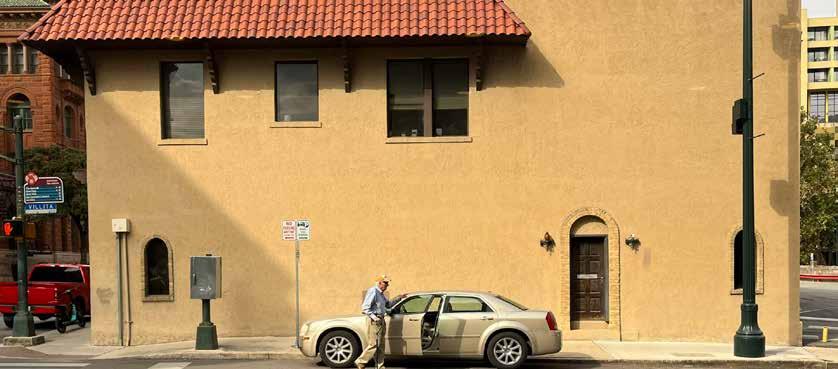
A welcoming space defined by layered materials and simple, protective design
INTERWOVEN
A community-centered design that fosters connection, engagement, and shared experience
A restorative space that reconnects people with community, culture, and place
Contributing to architectural projects through documentation, graphics, and coordinated design
REROOT 01 04 02 05 03
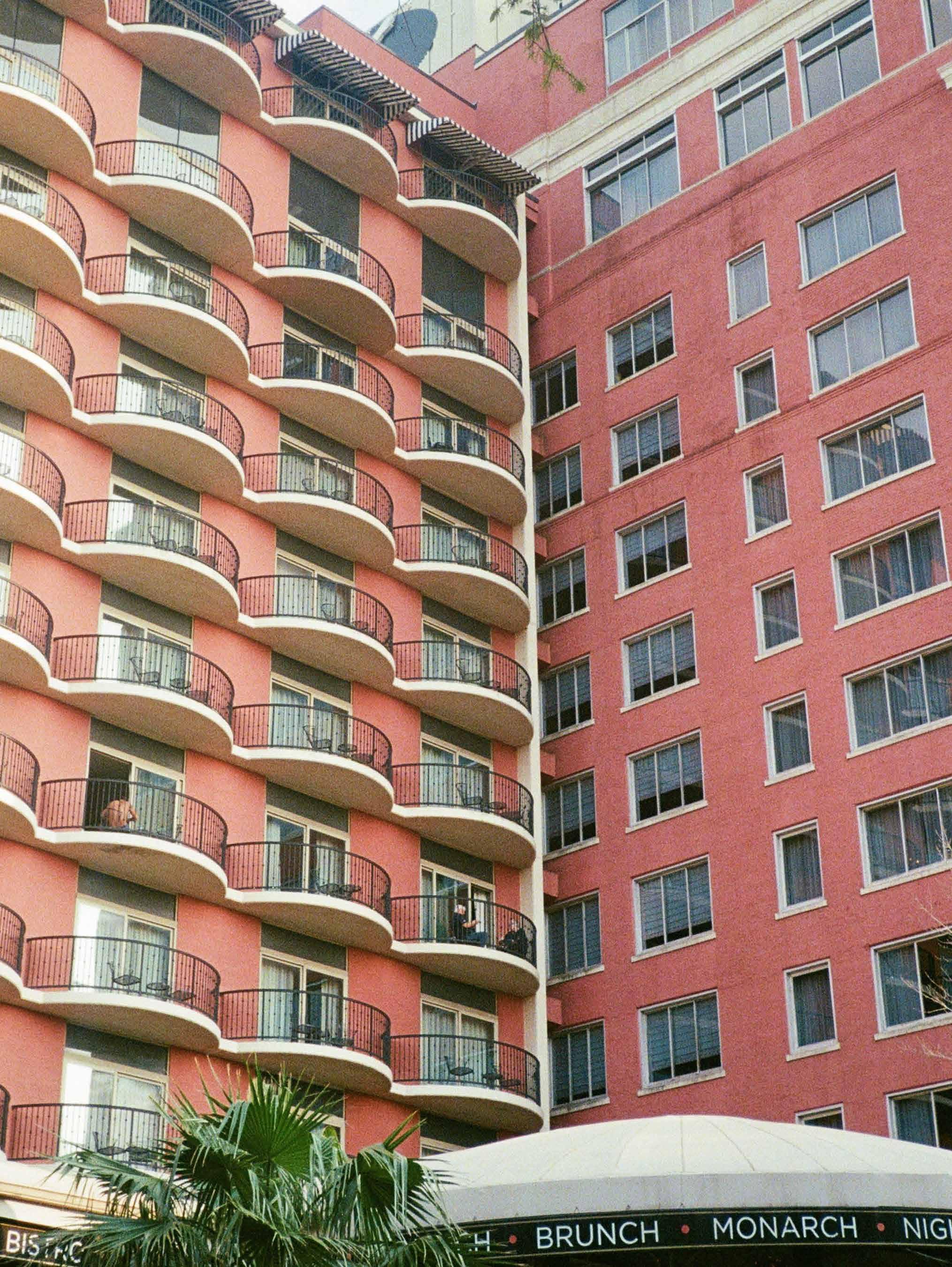
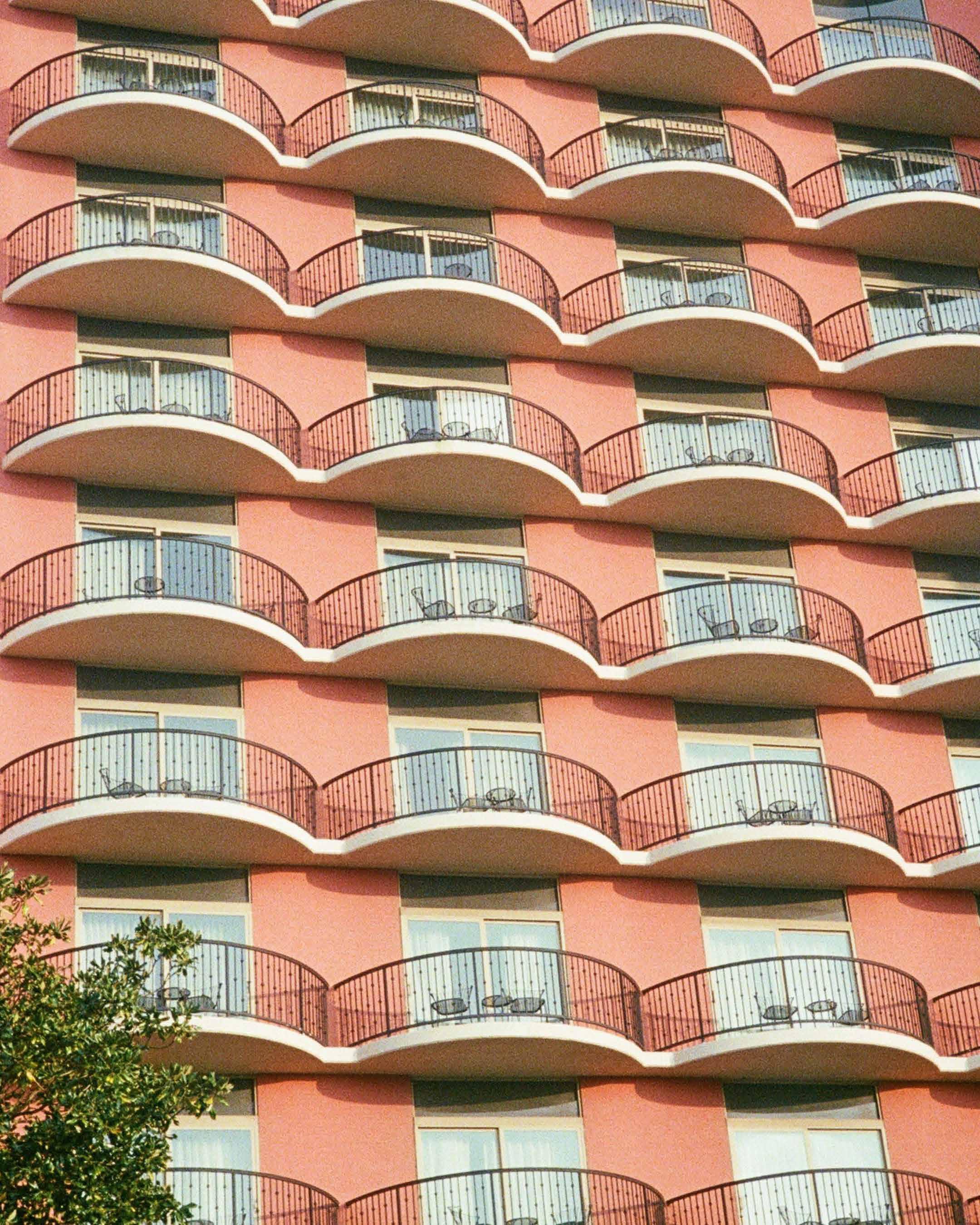
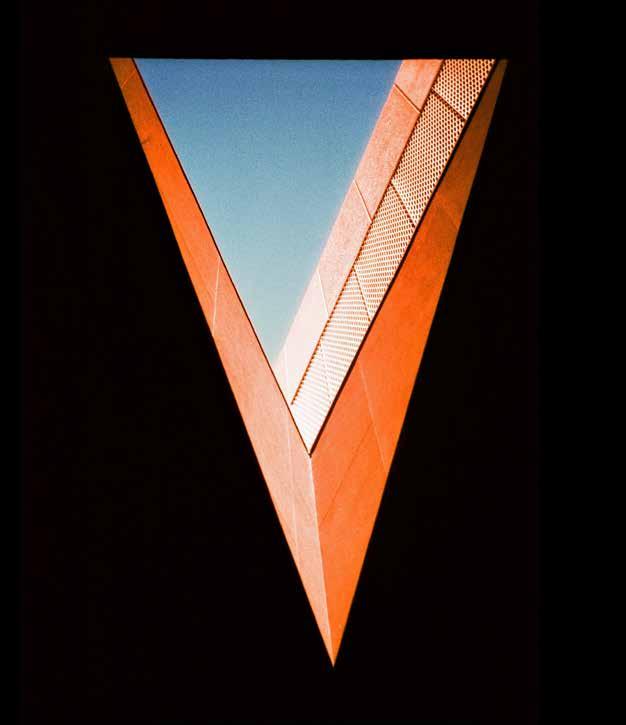
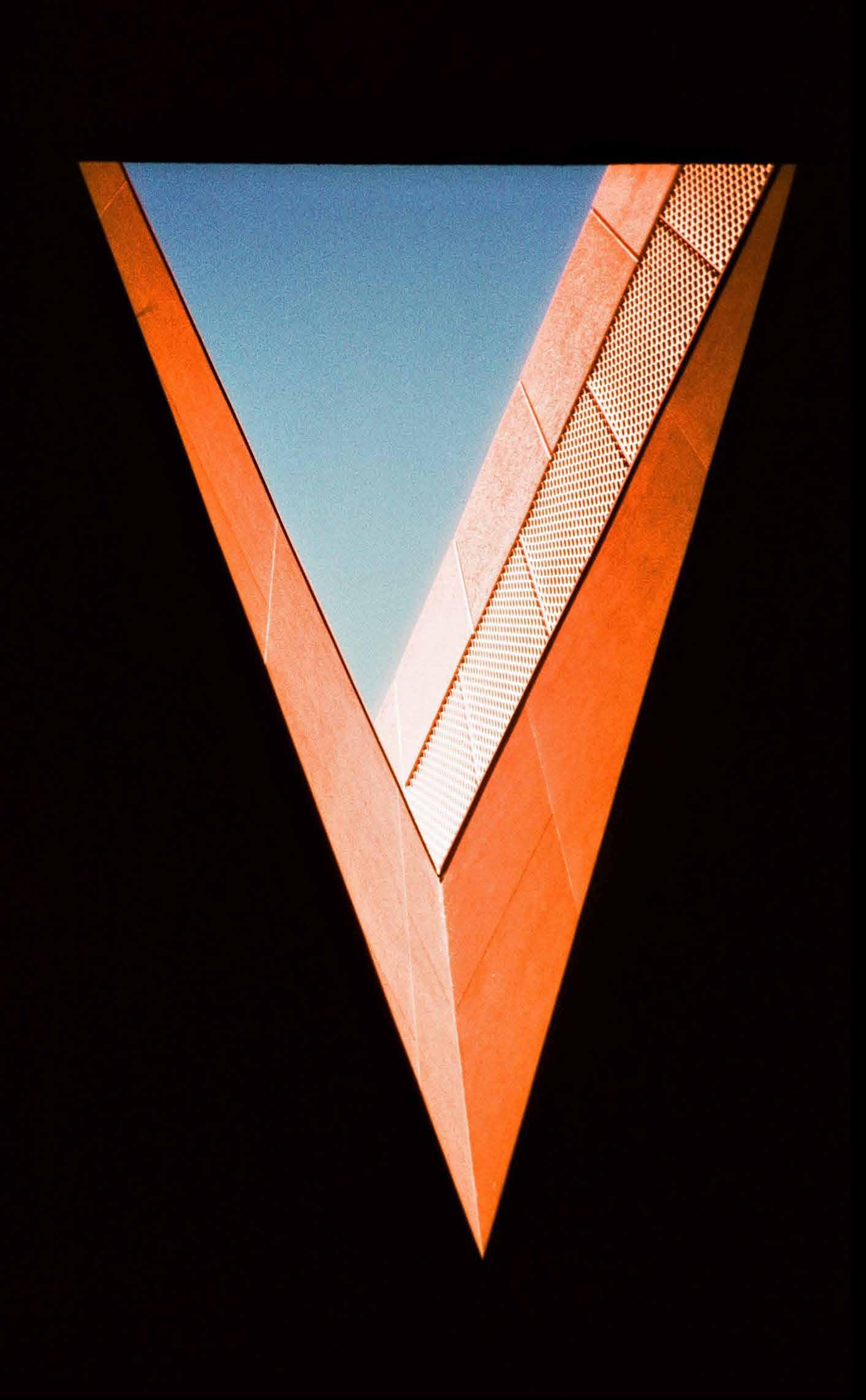
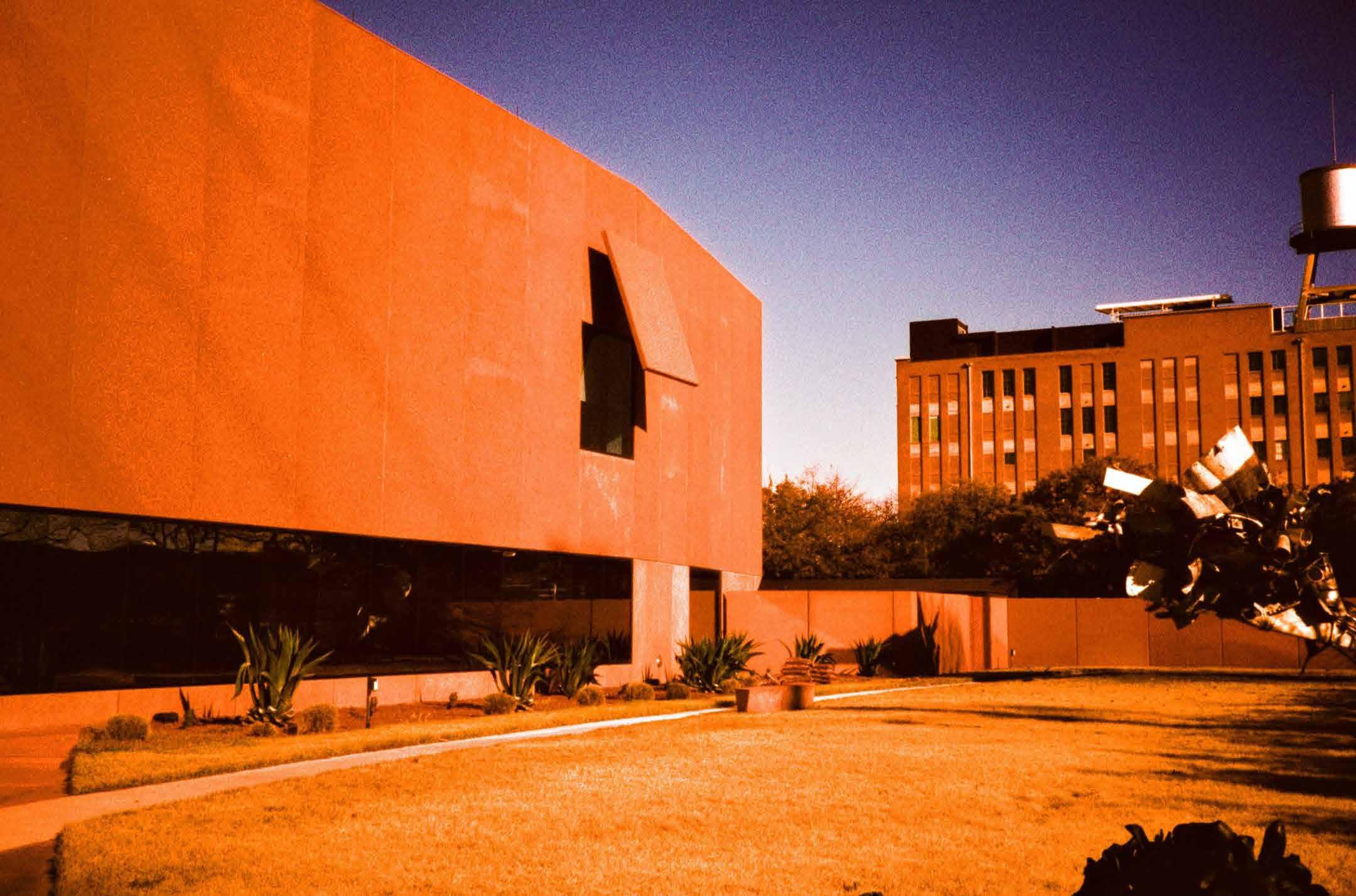
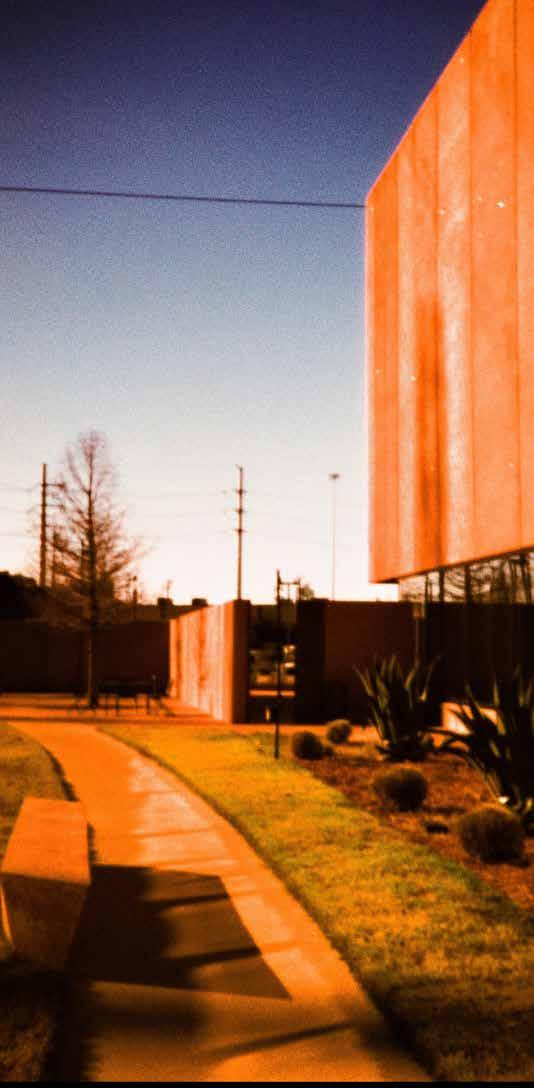
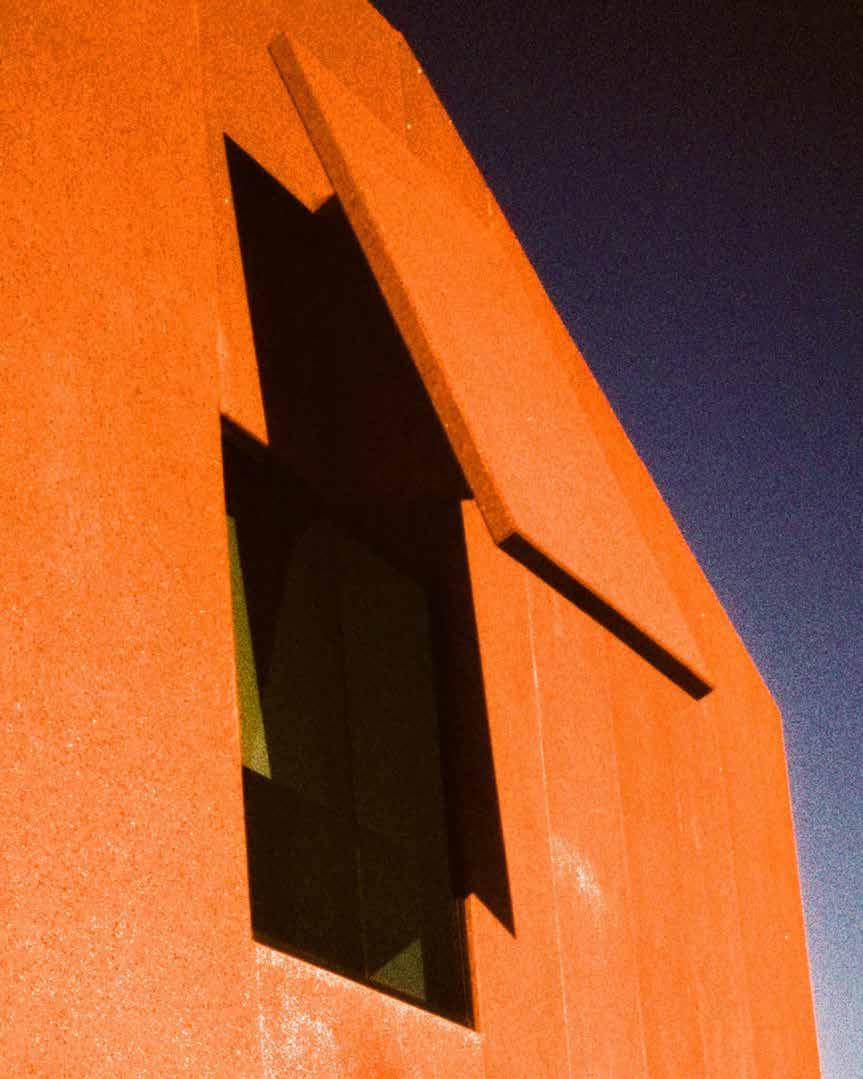
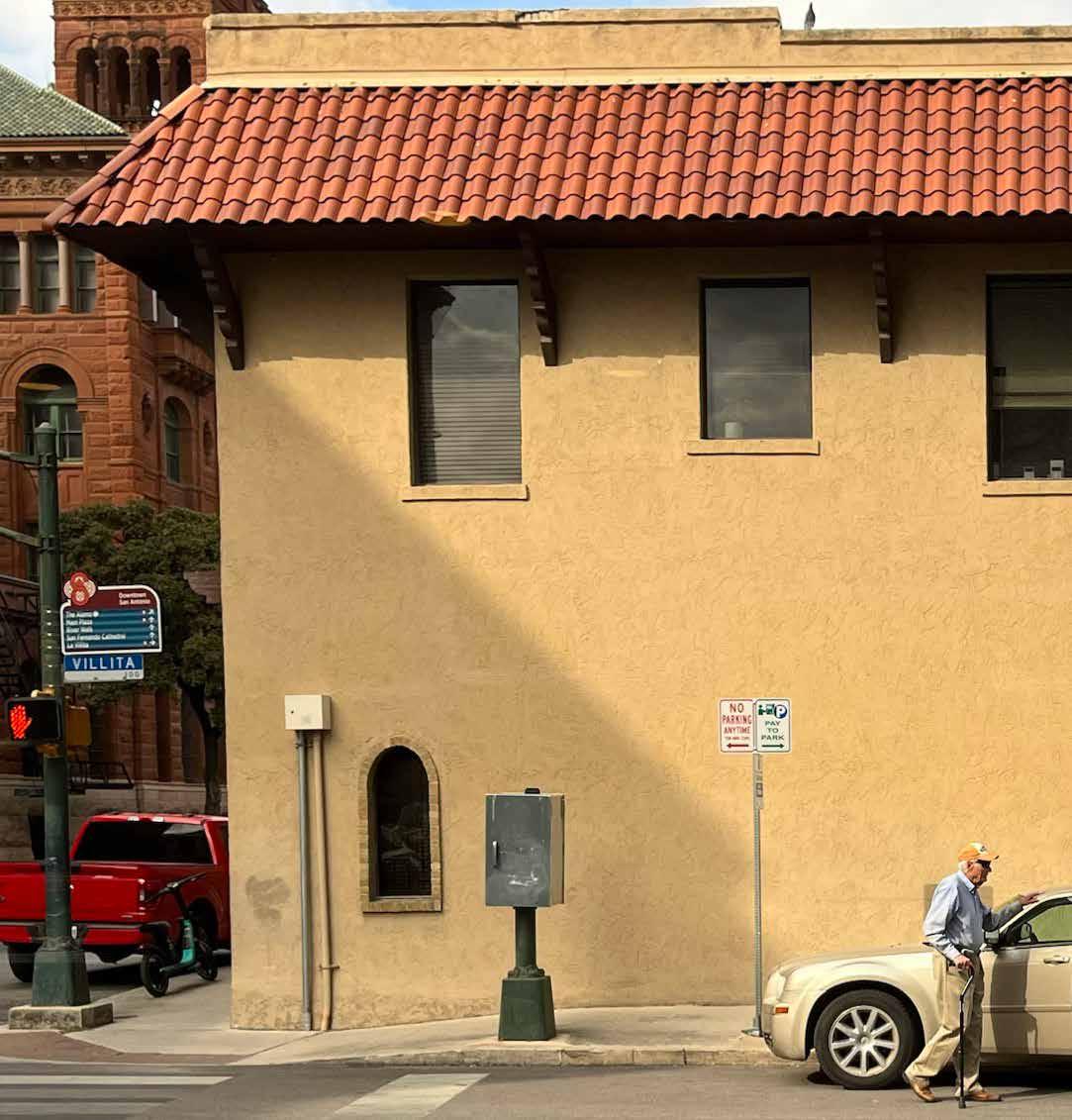
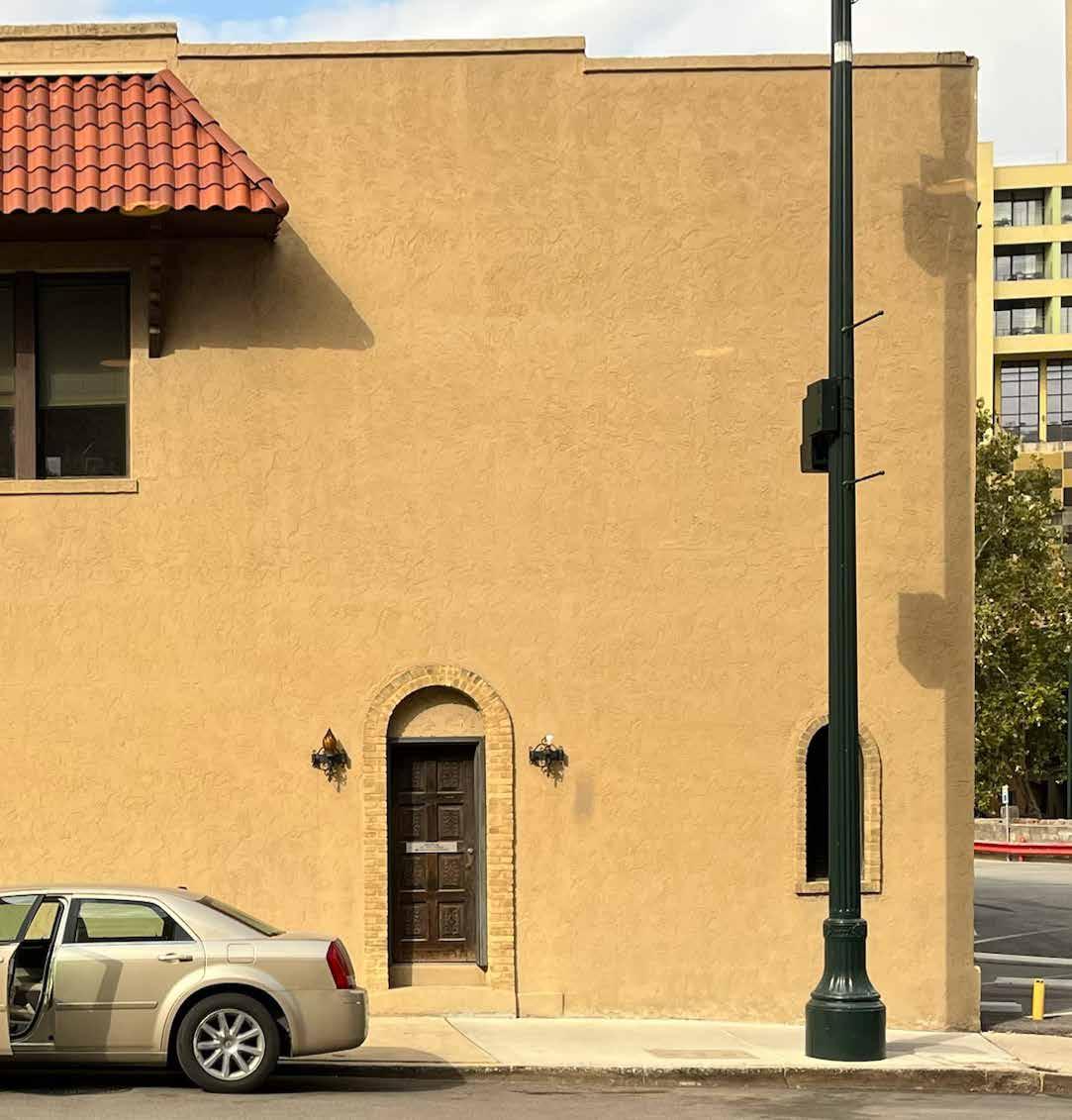
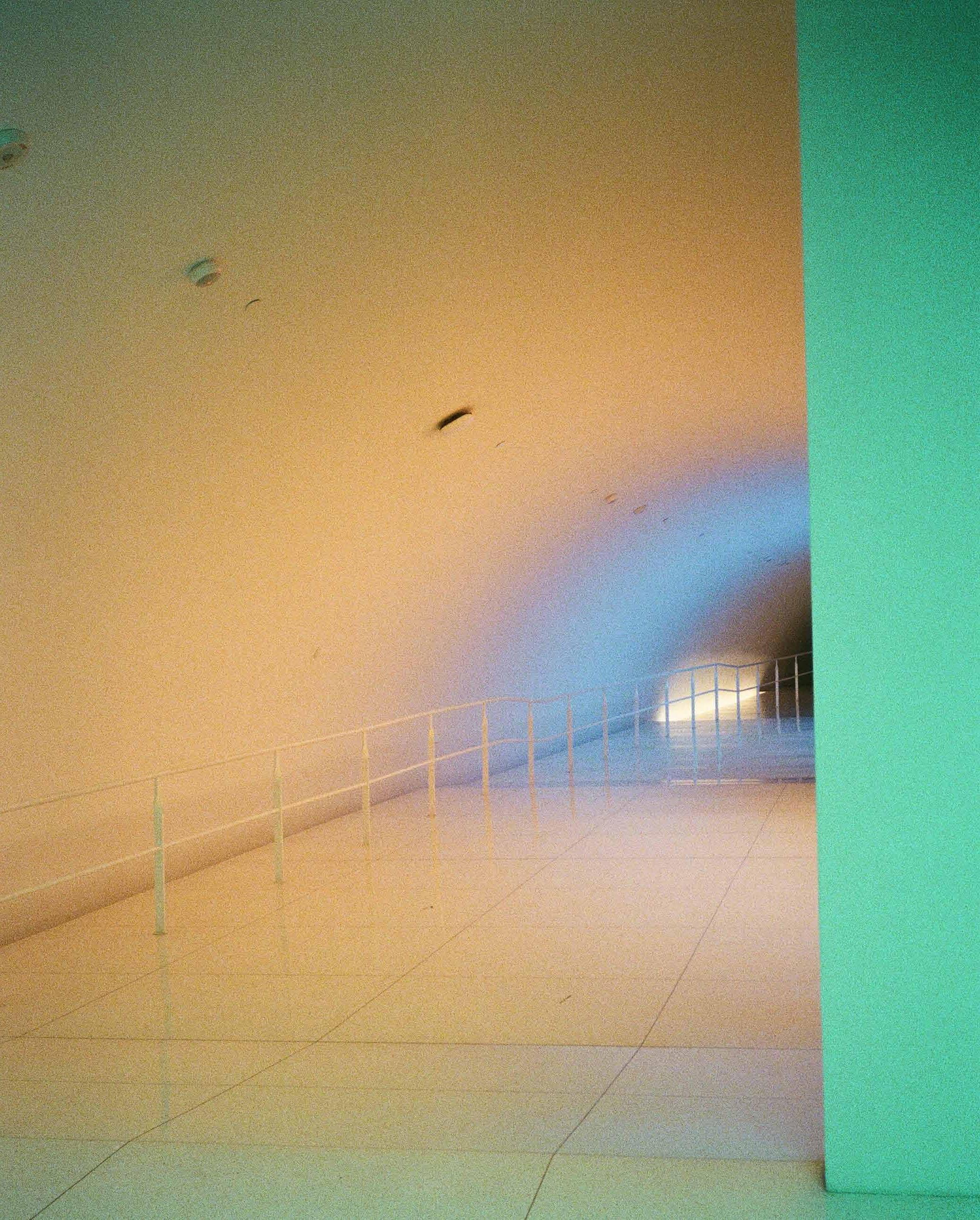
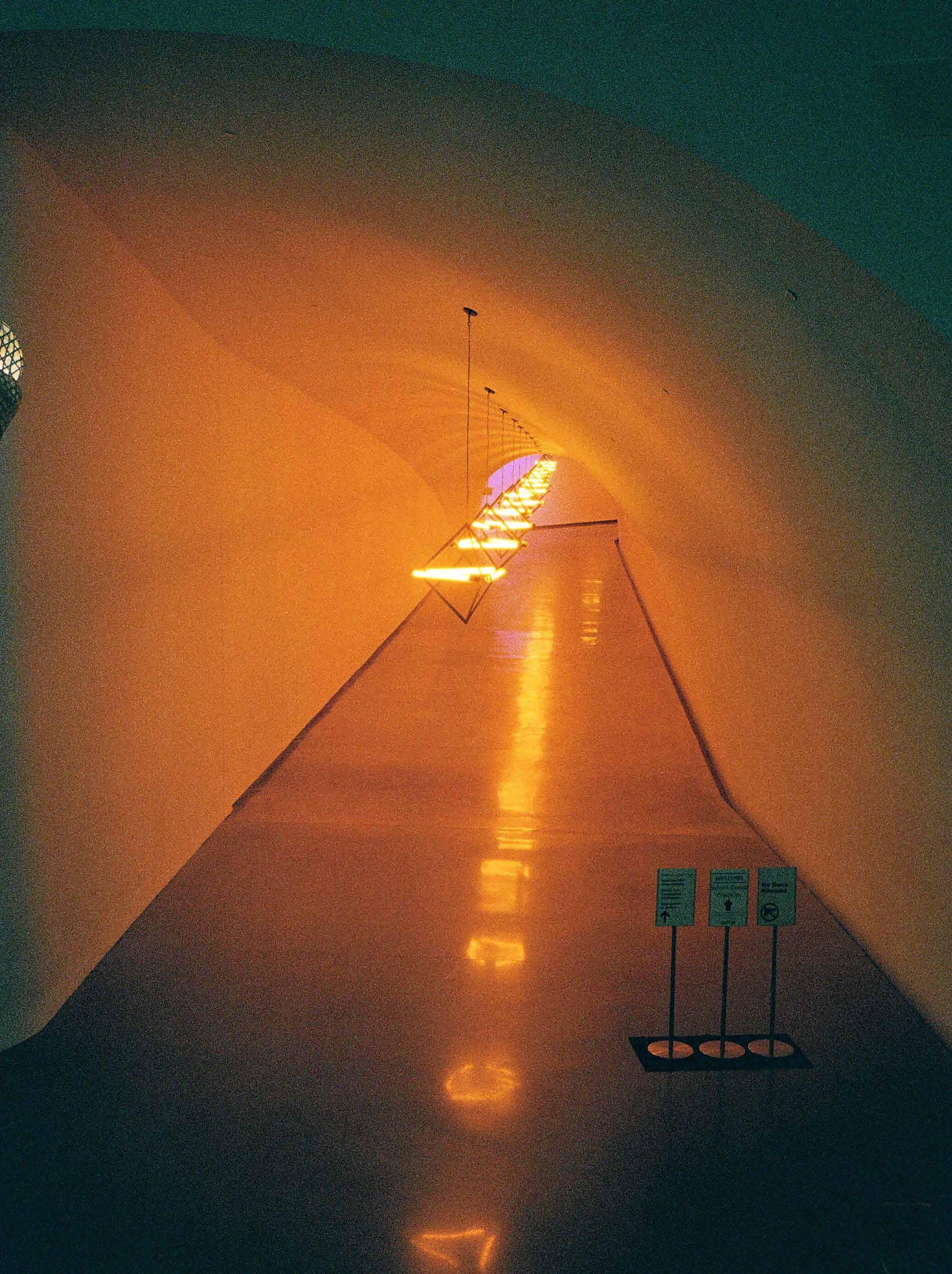
PHOTOGRAPHY
Exploring moments, people, and places through thoughtful and intentional photography.
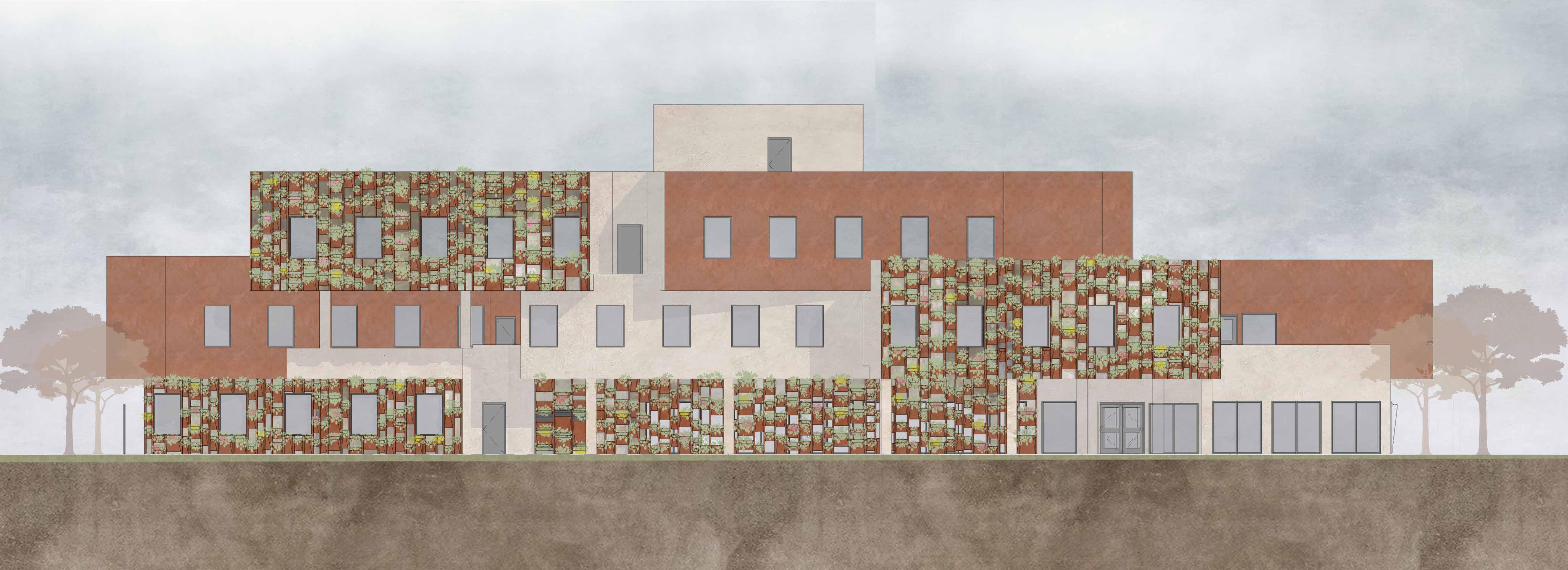
Trauma Informed Design, Green Healing, Short Term Housing, 80 Beds
Status: Graduate Project
Partner: Angel Ramirez
Year: 2025
Typology: Residential
Location: San Antonio, Texas
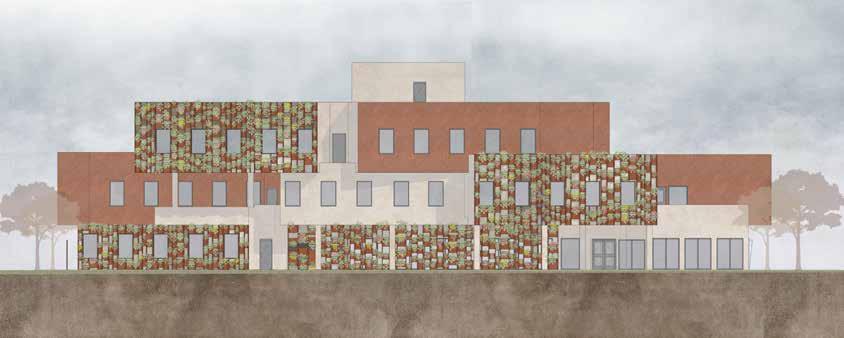
This project envisions a dedicated young adult housing facility within the Haven for Hope campus that creates a safe, empowering environment for individuals transitioning out of homelessness. The architecture is driven by a deliberate contrast between complexity and clarity: the buildings are carefully positioned in a layered, interlocking arrangement, and the exterior is composed of overlapping materials and planted elements that form a protective buffer from the surrounding campus and outside stressors. This outer complexity acts as a physical and psychological barrier, reinforcing safety and privacy. In contrast, the interior floor plans are intentionally simple, legible, and easy to navigate, reducing anxiety and allowing residents to move through the spaces with confidence and independence. The program is organized into three identity-specific residential wings LGBTQ+, women, and men each housing 80 residents with individual rooms, shared amenities, and lounges that balance privacy with community. Dedicated courtyards extend each wing into sheltered outdoor spaces for reflection and connection, while shared programs Including a library, life-skills classroom, culinary learning space, and laundromat support personal growth and long-term stability, positioning the project as both a protective refuge and a clear pathway toward new beginnings.
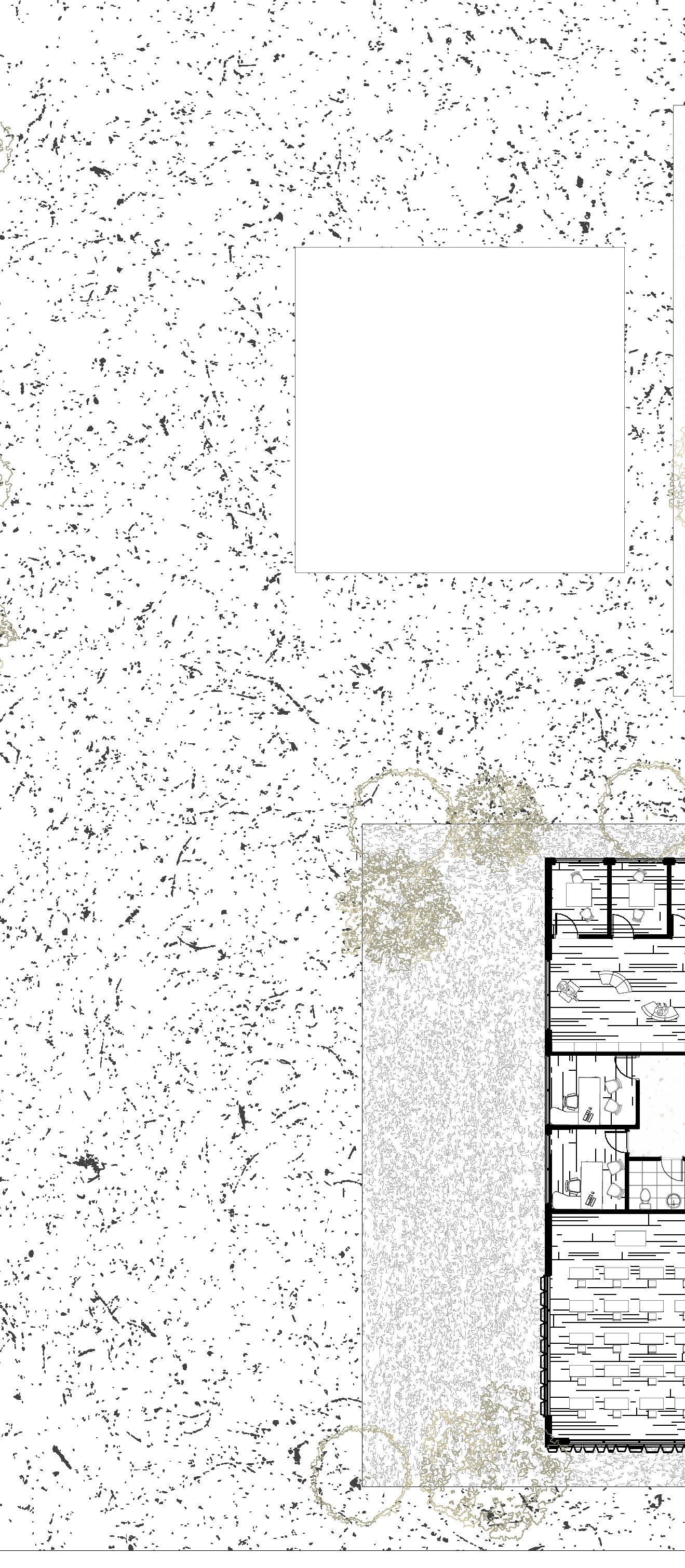
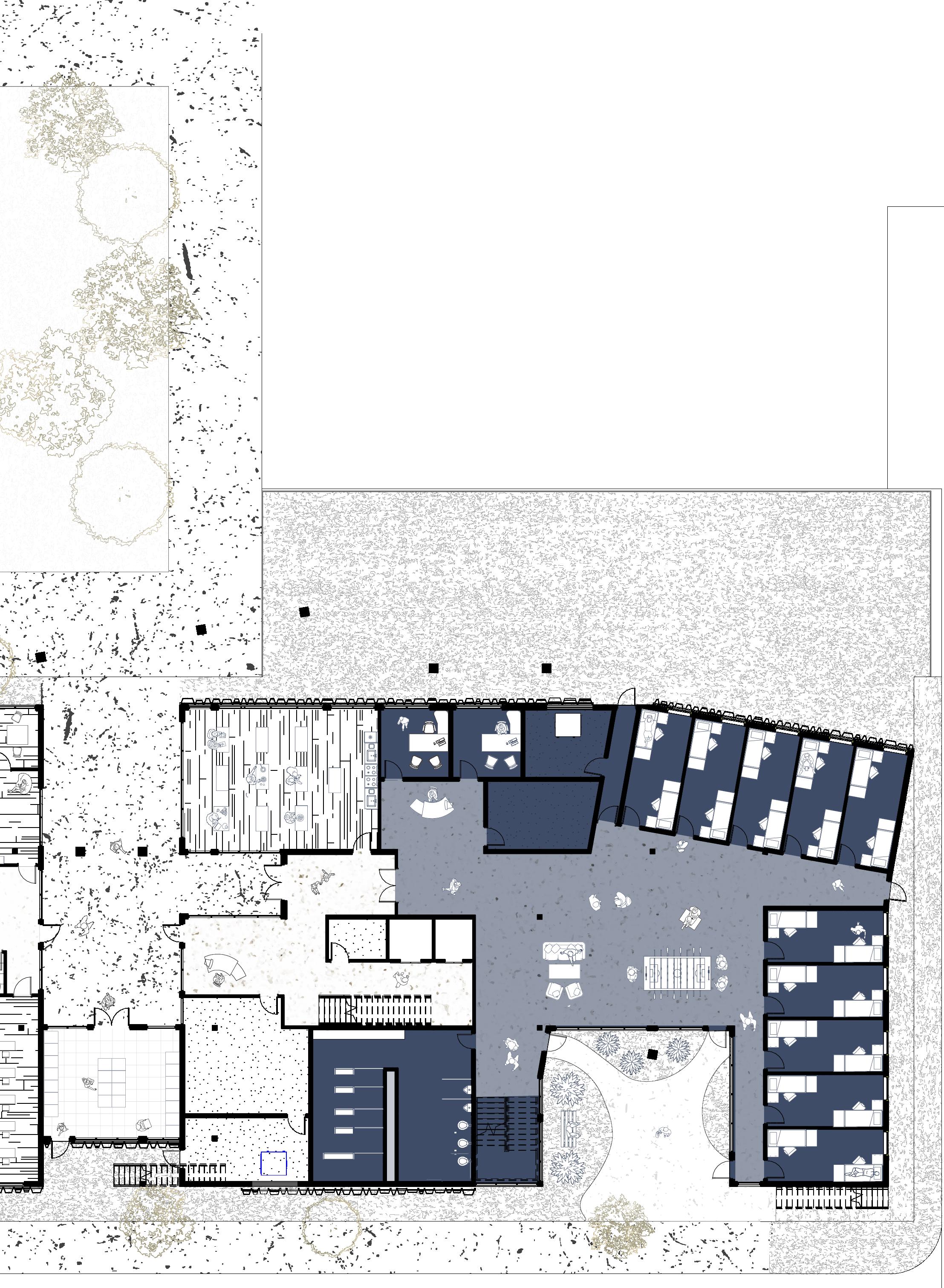
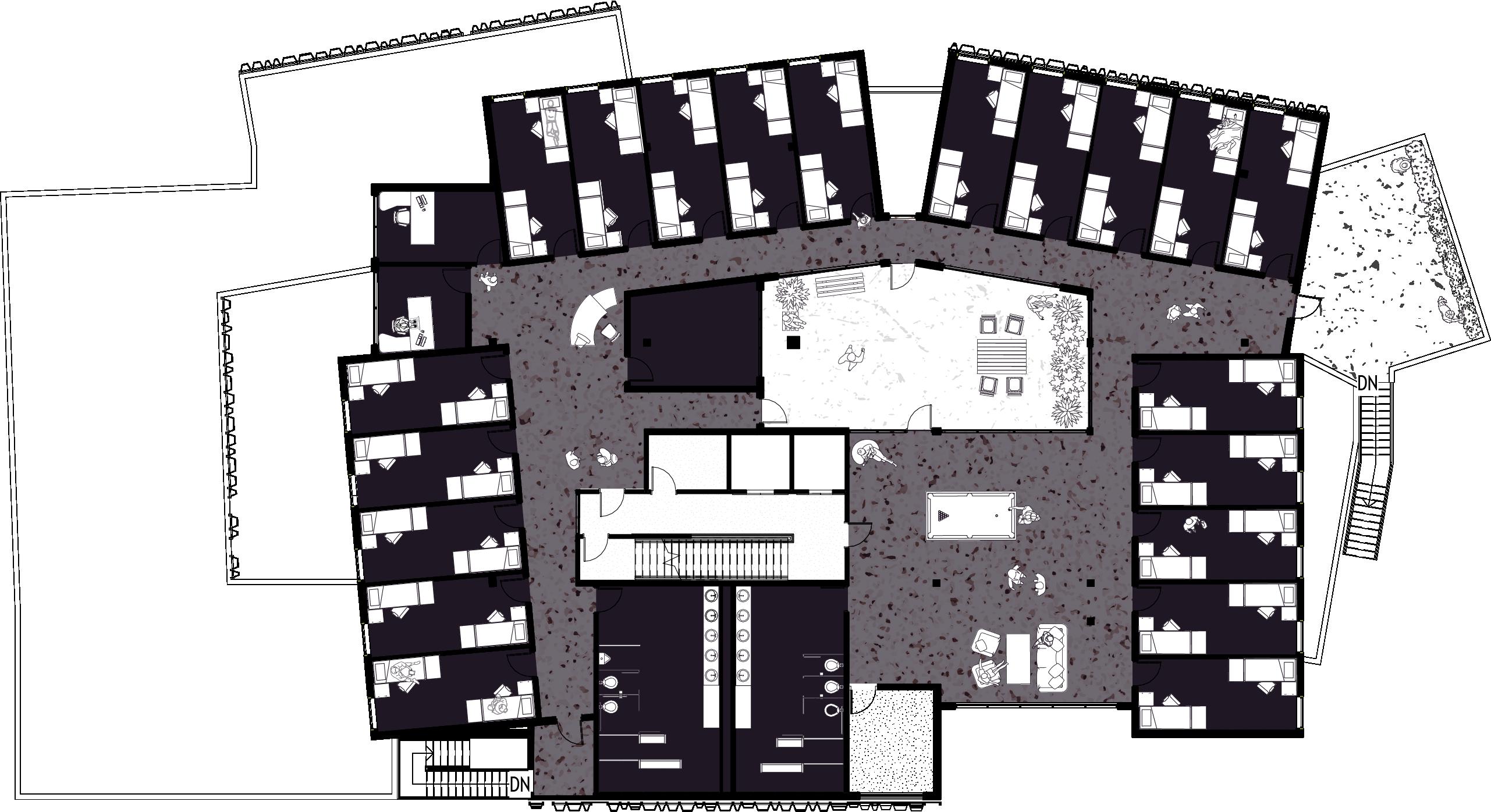
First Floor Plan
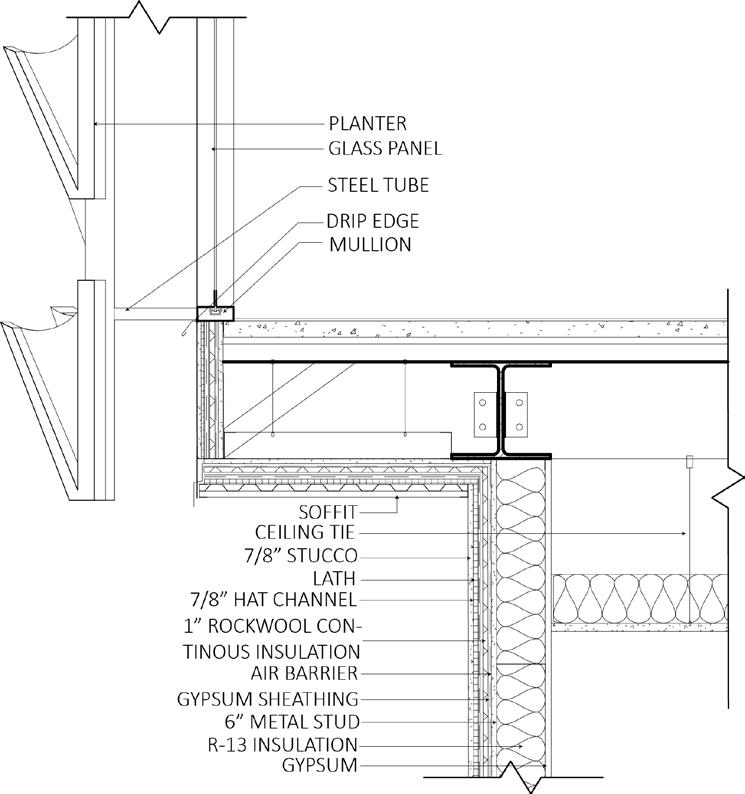
The project prioritizes open space by ensuring all occupiable areas receive natural light and maintain views to greenery, supported by planter façades that also provide shading.
Security and sightlines guide our floor plan: the receptionist always has a clear view of the entry, main circulation, storage area for belongings, and all gendered spaces.
Circulation is simplified with a central core that directs residents to their areas, making navigation easy despite the complex massing and floor plans.
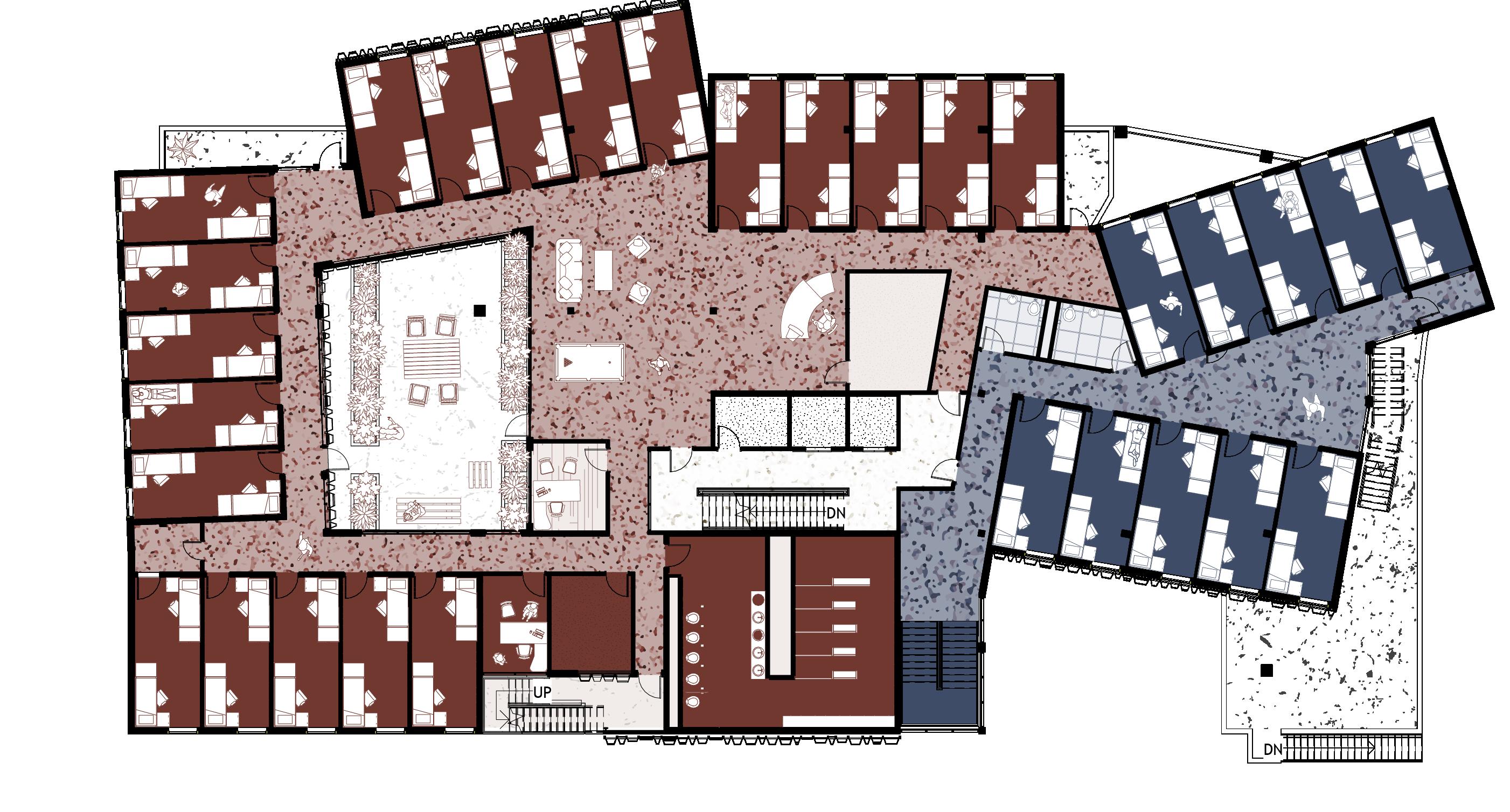
Security and sightlines guide our floor plan: the receptionist always has a clear view of the entry, main circulation, storage area for belongings, and all gendered spaces.
The massing and façade are intentionally complex and textured, creating a playful, ambiguous exterior that protects young adults and LGBTQ+ residents from targeting, while the interior remains clear and easy to navigate once inside.
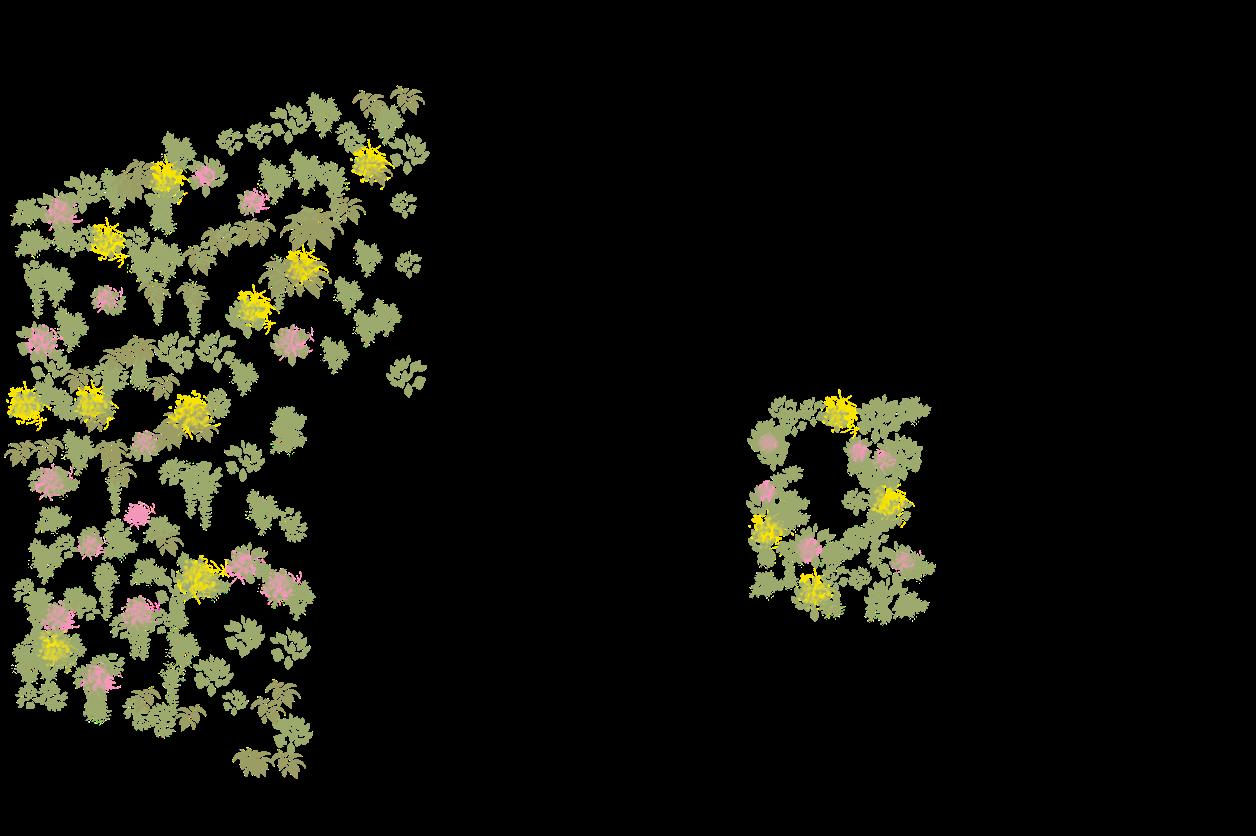
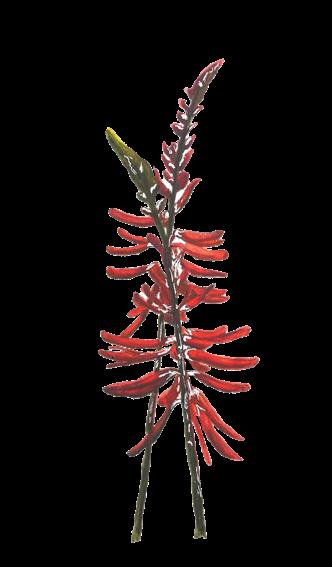

Coral Bean (Erythrina herbacea) is a drought-tolerant Texas native that thrives in San Antonio’s heat. Its bright red flowers attract hummingbirds and pollinators, adding seasonal color, ecological value, and a strong sense of place rooted in South Texas.

Carolina Snailseed (Cocculus carolinus) is a hardy, fastgrowing Texas native vine that thrives in heat and drought. Its dense foliage provides natural shading and privacy, while red berries support birds and local ecology, helping create a resilient, climate-responsive landscape suited to South Texas.
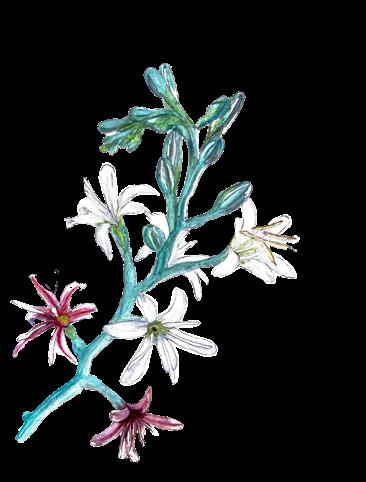
False Aloe (Manfreda maculosa) is a drought-tolerant Texas native with sculptural spotted leaves and tall flower spikes. Thriving in sun and heat, it adds strong visual texture, supports pollinators, and provides a low-maintenance, waterefficient fit for South Texas landscapes.
Preserving Existing Trees – Most trees on the site have been kept and preserved as part of the existing landscape to promote greener and a more shaded environment along with adding more plants to compensate for the removed trees.
A solar water boiler sits above the stacked restrooms, creating an efficient plumbing route and providing a practical, sustainable way to heat water.
Sustainable and High-Quality Materials - Primary steel structure that can be reused or recycled at the end of the building’s lifespan, and durable materials that minimize maintenance and replacement.
Solar Panels - Coverage of 10,000 sq ft to harness renewable energy, help reduce the reliance on the grid, and power the building more sustainably
Passive shading - Building has lots of cantilevers, overhangs, and shading from plants, that help reduce heat gain to create pleasant exterior and interior environments, reducing cooling loads during the summer.
Green walls and courtyards provide shading, evaporative cooling, collect rainwater for irrigation, and create open exterior spaces for outdoor activities.
Vernacular Architecture, Community, Nursery School
Status: Kaira Looro - Architecture Competition
Partner: Hadeel Aljubouri, Andrea Ortiz
Year: 2025
Typology: Nursery School
Location: Senegal, Africa
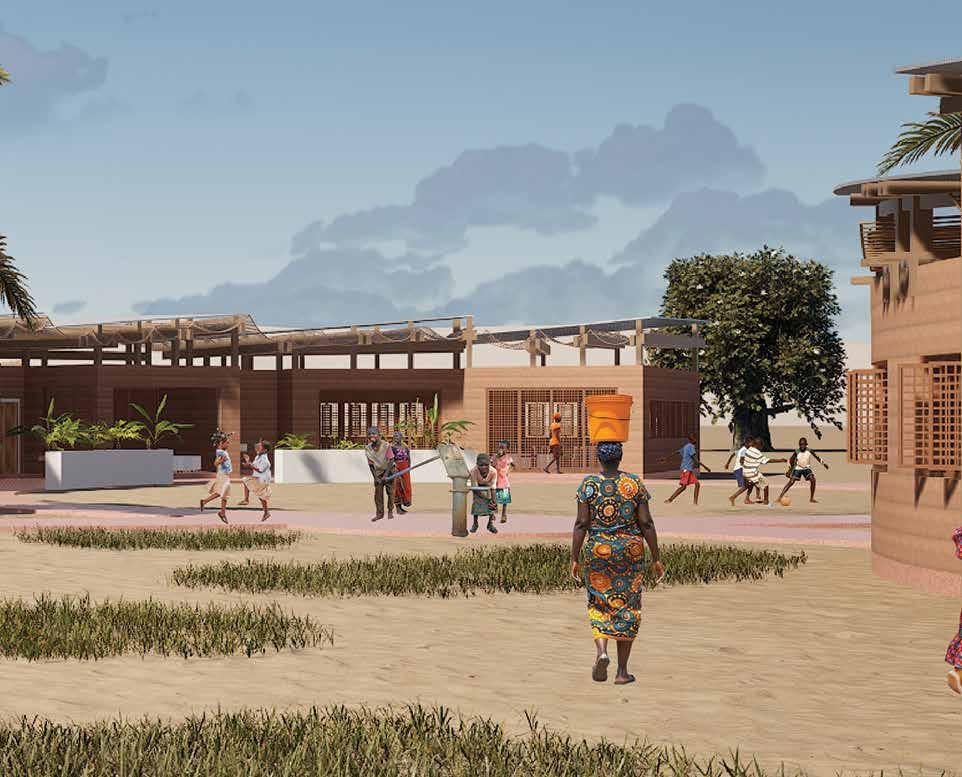
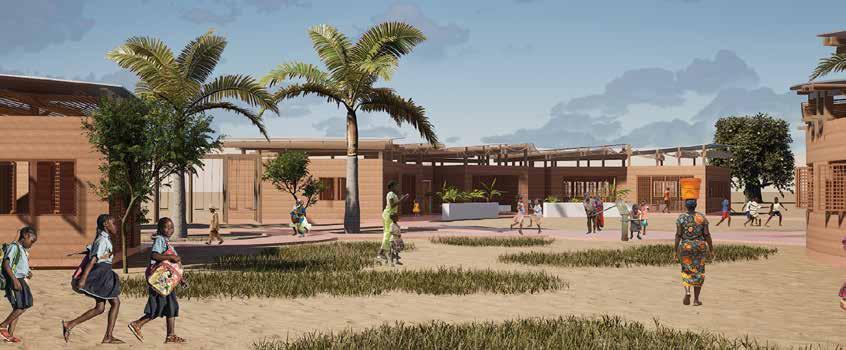
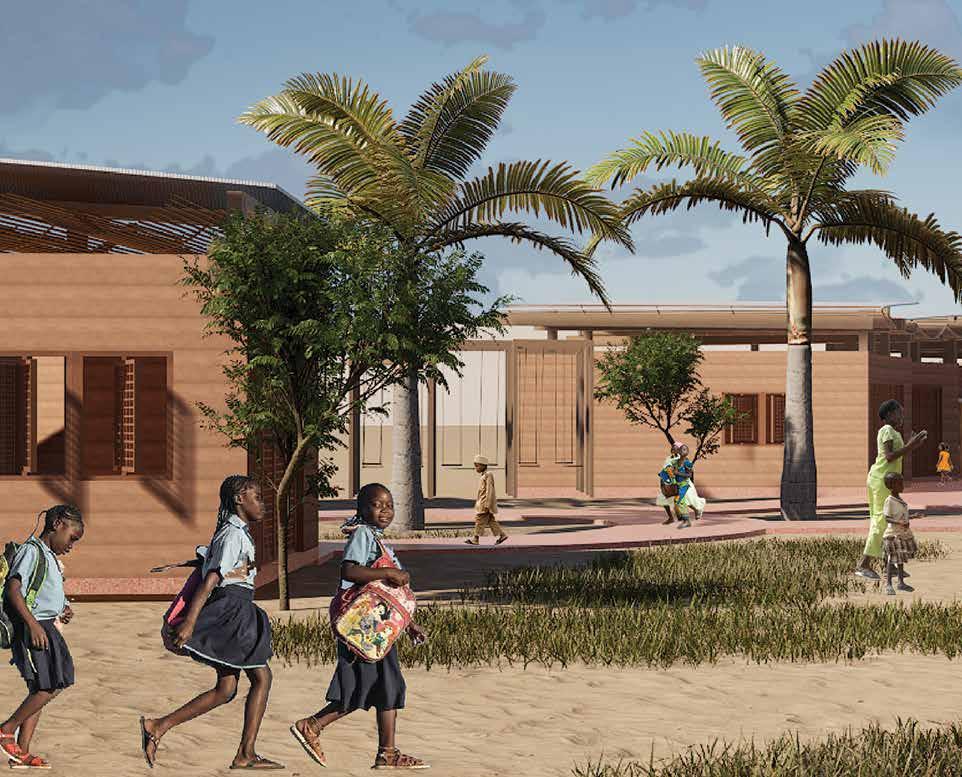
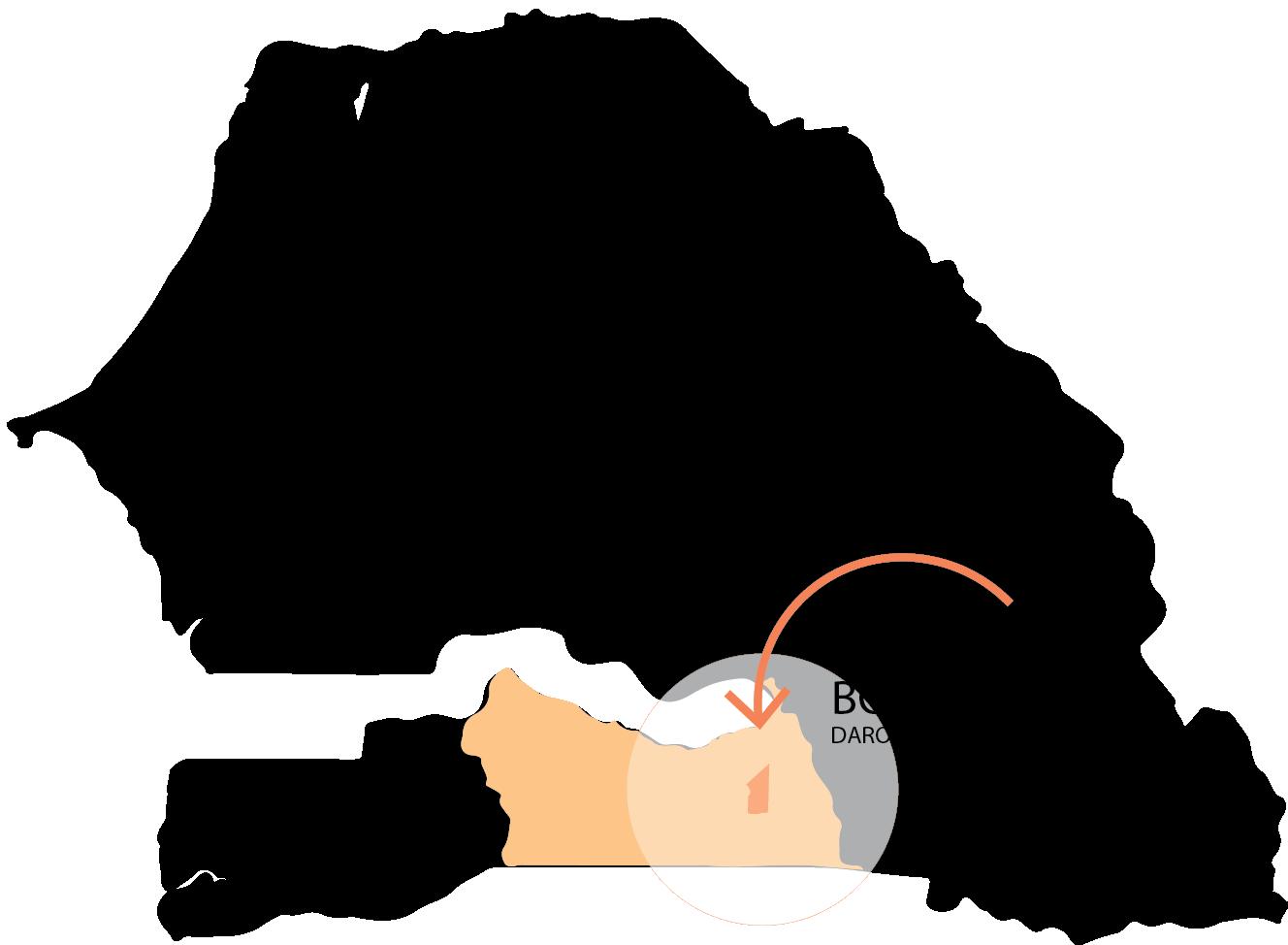
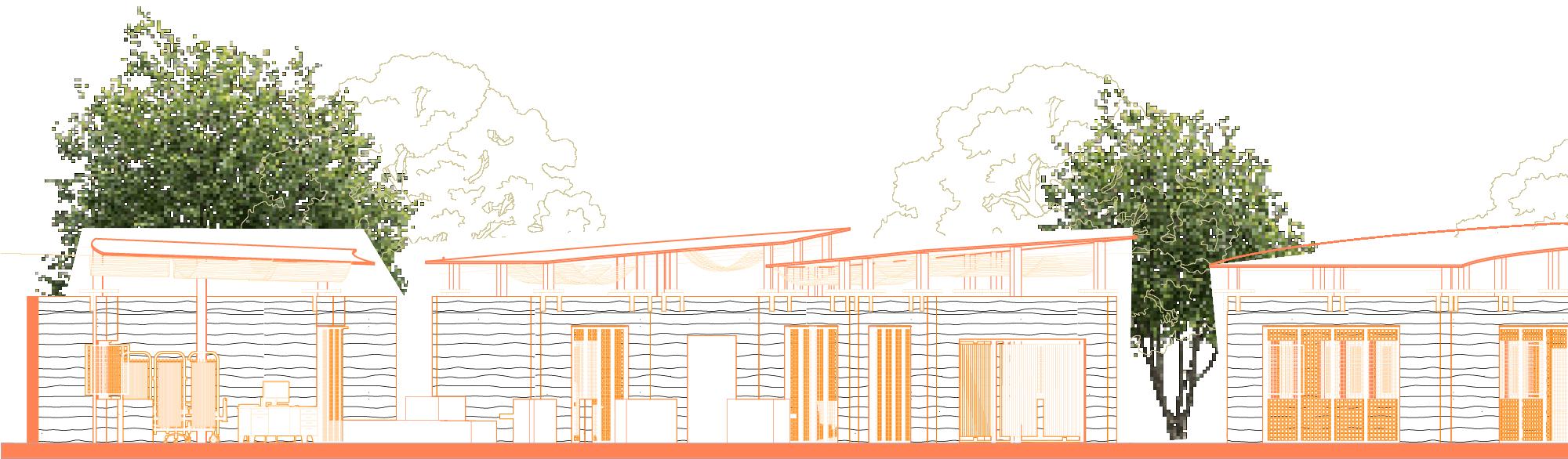
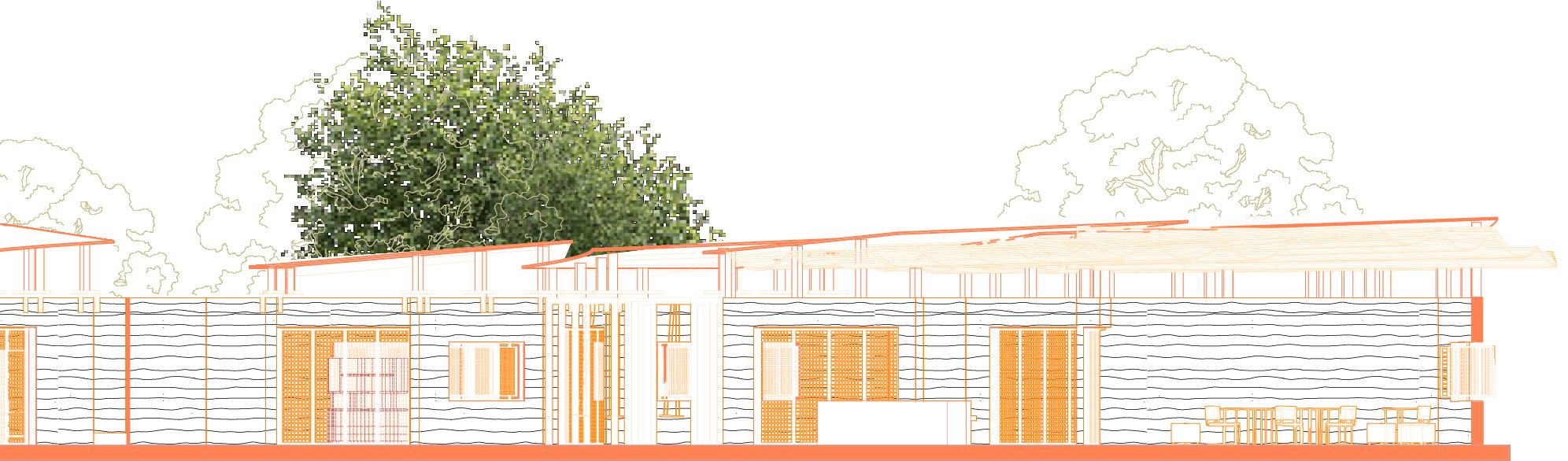
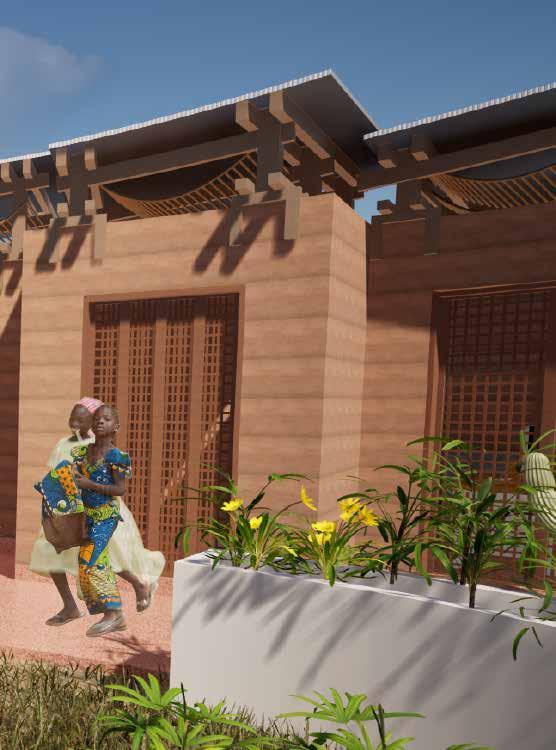
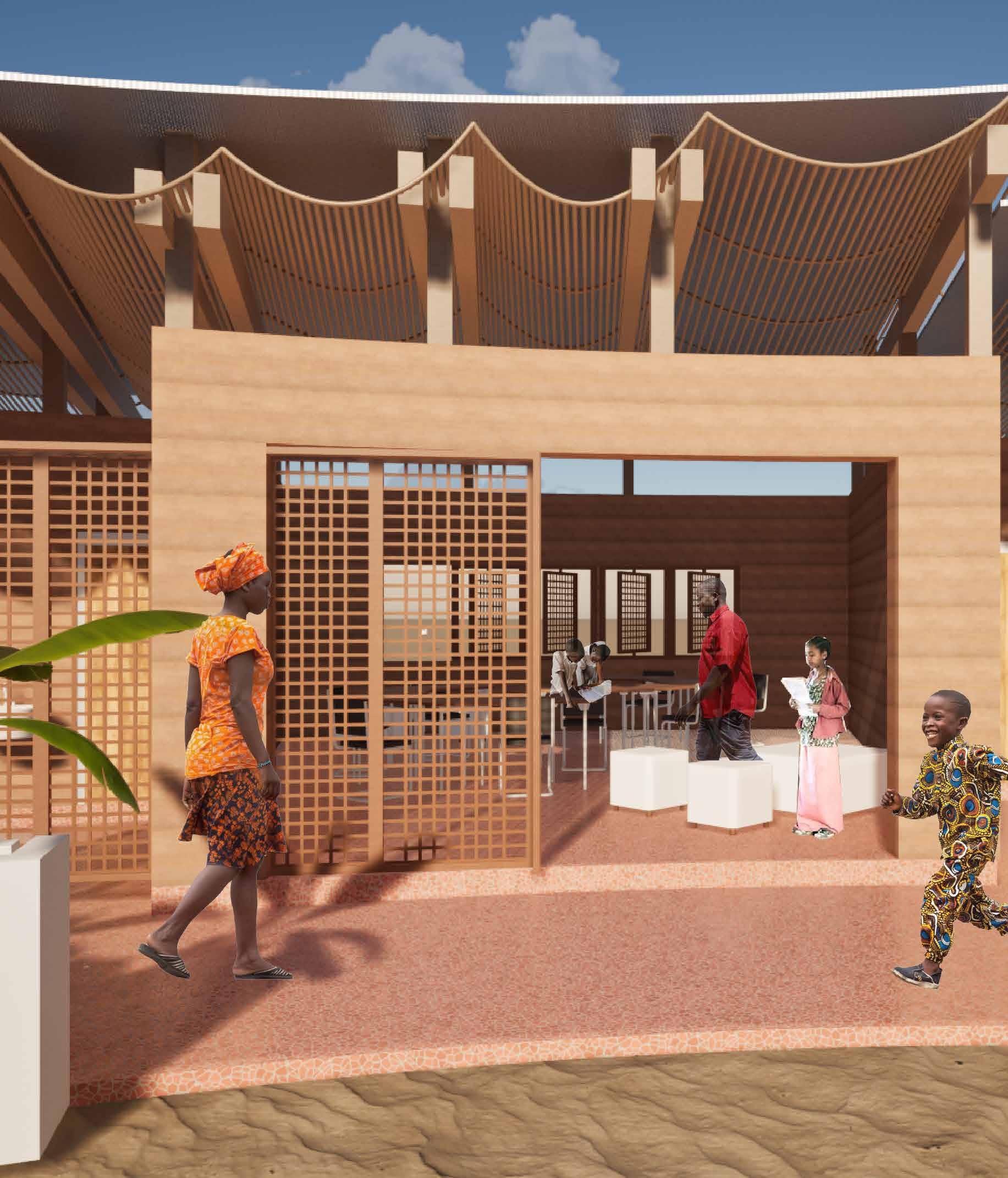
This project is designed and built to create a safe place, inclusive and developmentally enriching nursery school in the Kolda region of Senegal, connecting the rural communities in Darou Hidjartou. Rooted in cultural, vernacular, and religious sensitivity, the project aims to foster the holistic growth of children ages 3-5 by enhancing motor, emotional , social and cognitive development through play, exploration, and community engagement. This initiative goes beyond education. It is a humanitarian effort to empower young mothers by providing day care that enables them to continue their education, and to support local families through sustainable, selfconstructed infrastructure that includes water filtration systems and disaster resilient architecture. By integrating recyclable materials and traditional construction methods, we aim to create a space that belongs to the community, reflects their identity and promotes long term self reliance. This project aims to provide a nurturing environment where trust, serenity, and opportunity thrive, laying the foundation for a more inclusive, educated and resilient future.
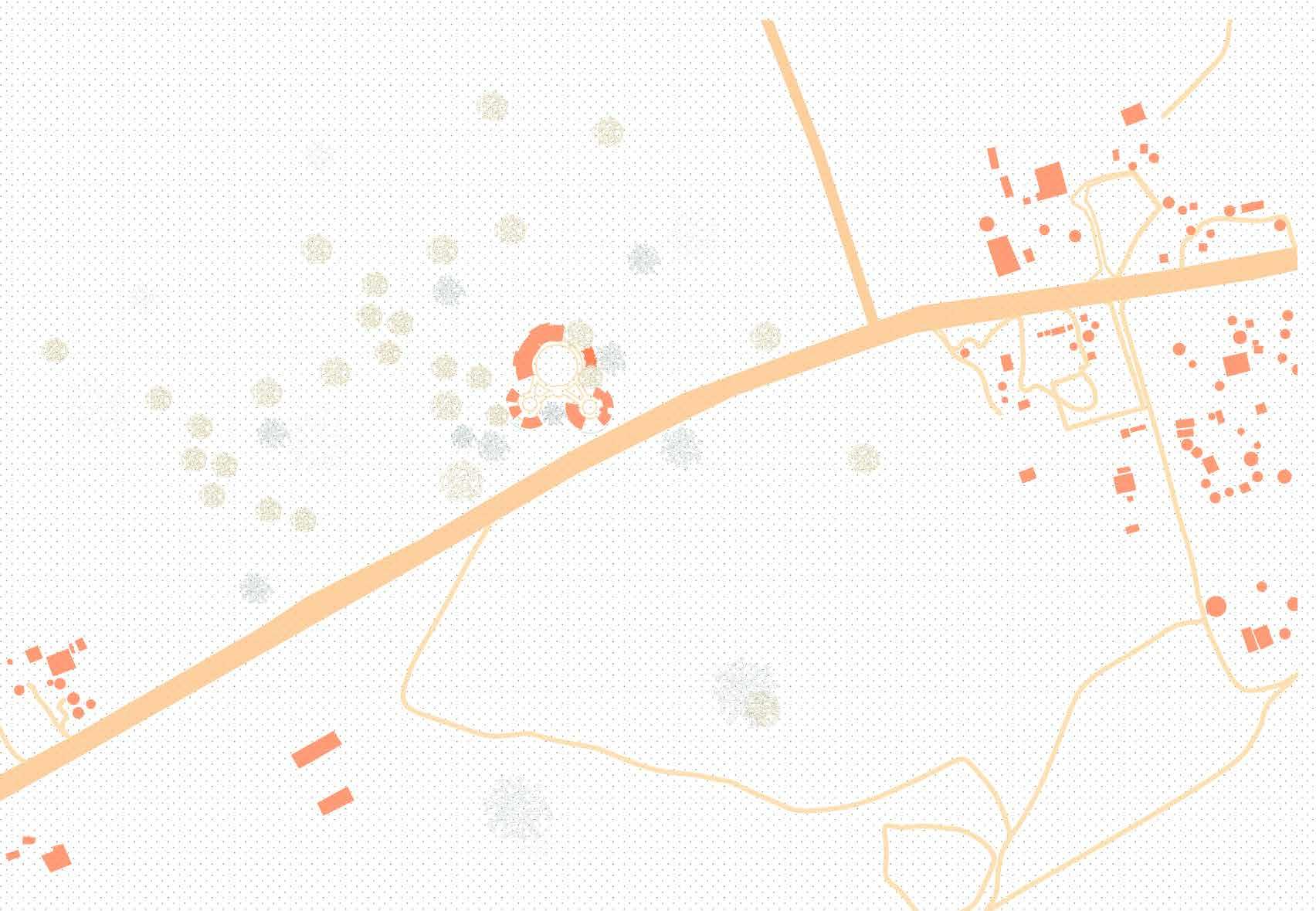
The building’s form emerges directly from site analysis in Kodal, a location positioned between two neighboring communities roughly a 15-minute walk apart. This in-between condition informs a design that prioritizes connection and flow. The form began as a simple circle symbolizing unity and shared space which was then strategically carved and shaped to align with existing pedestrian paths and the natural movement of people approaching from both communities. These cuts transform the pure geometry into a responsive, porous form that guides arrival, frames entry points, and reinforces the building’s role as a connector within the social and spatial landscape.


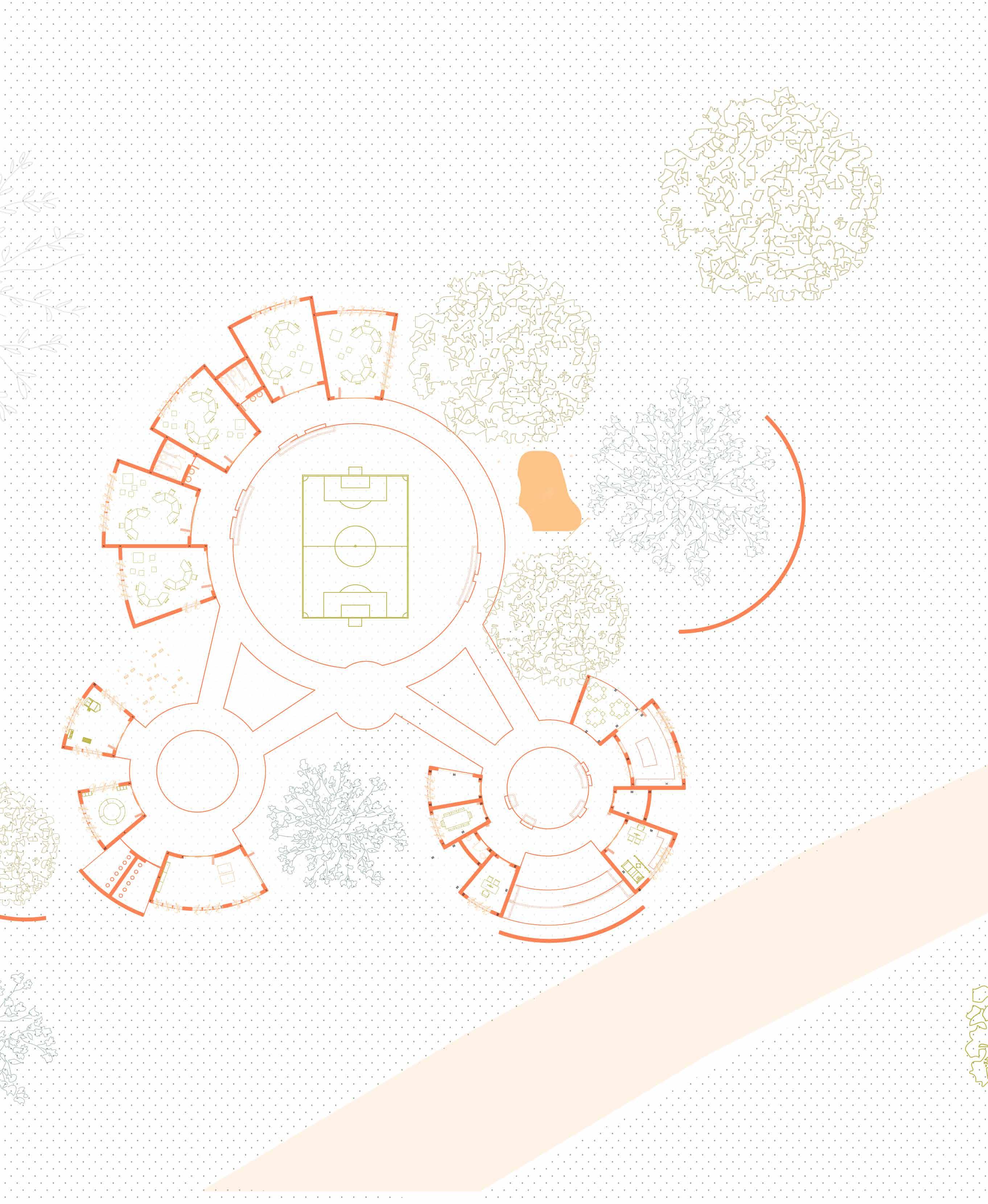
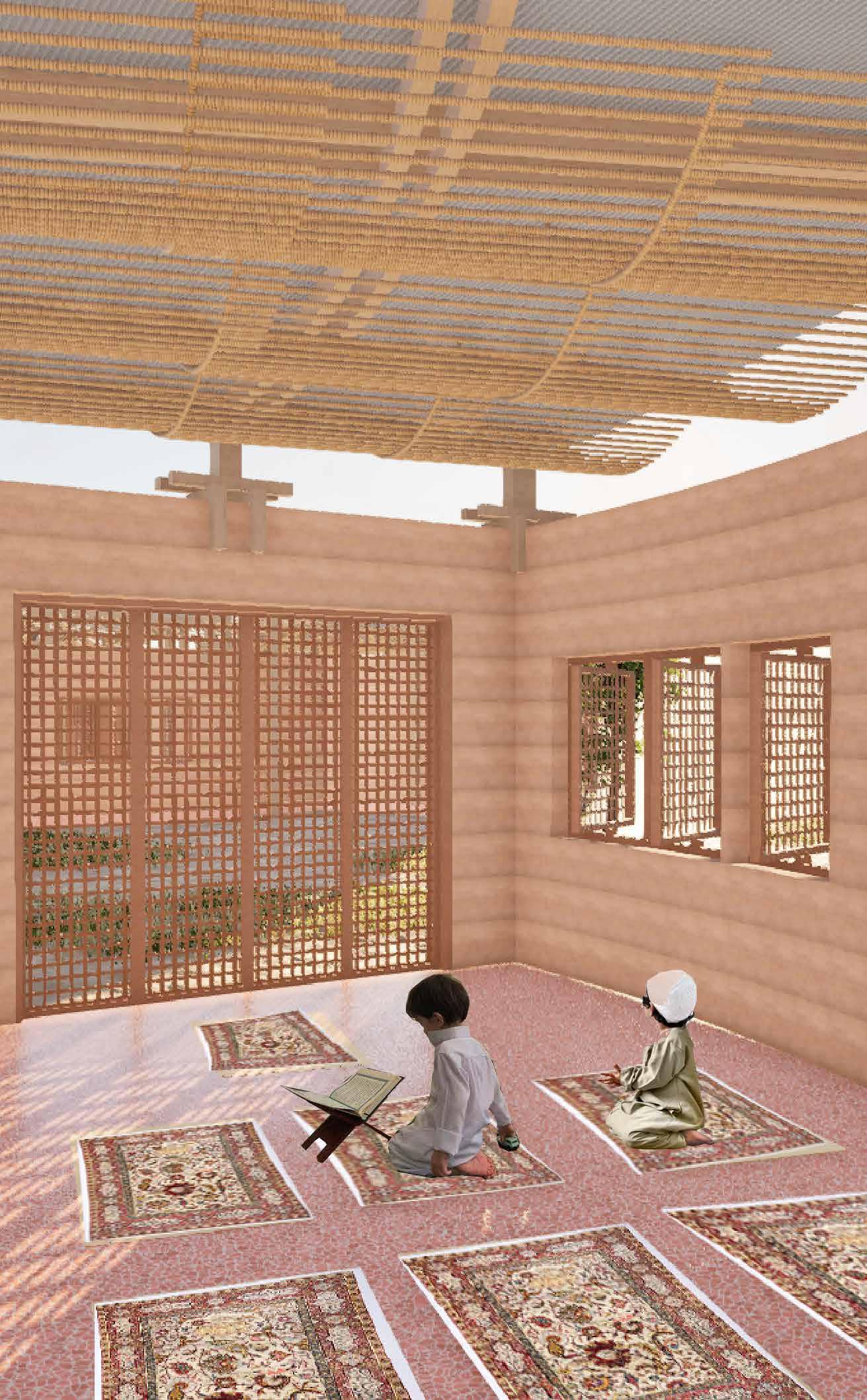
The roof uses recycled corrugated metal to protect the building from heavy monsoon rains, while bamboo beneath it reduces heat transfer and helps keep the interior cool.
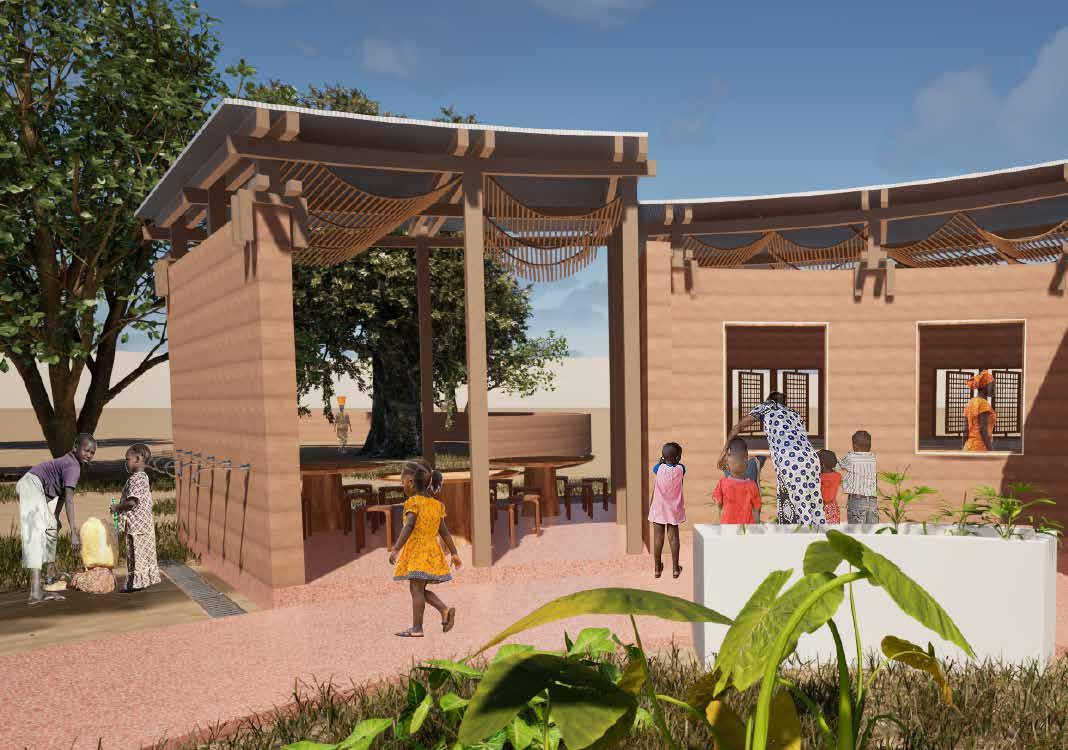
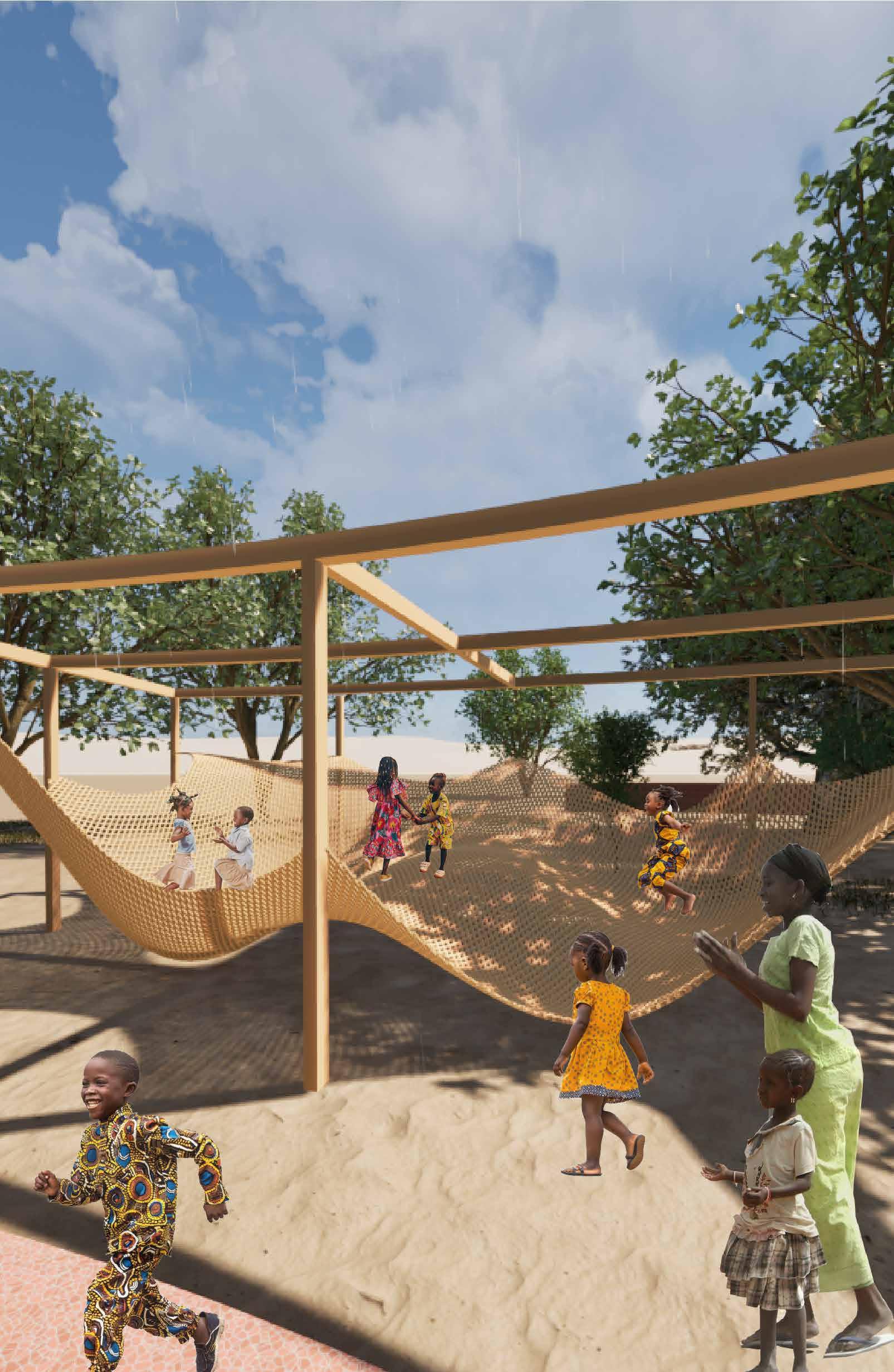
A versatile space for play, workshops, and physical activity constructed from woven plastic using traditional basket-weaving techniques.
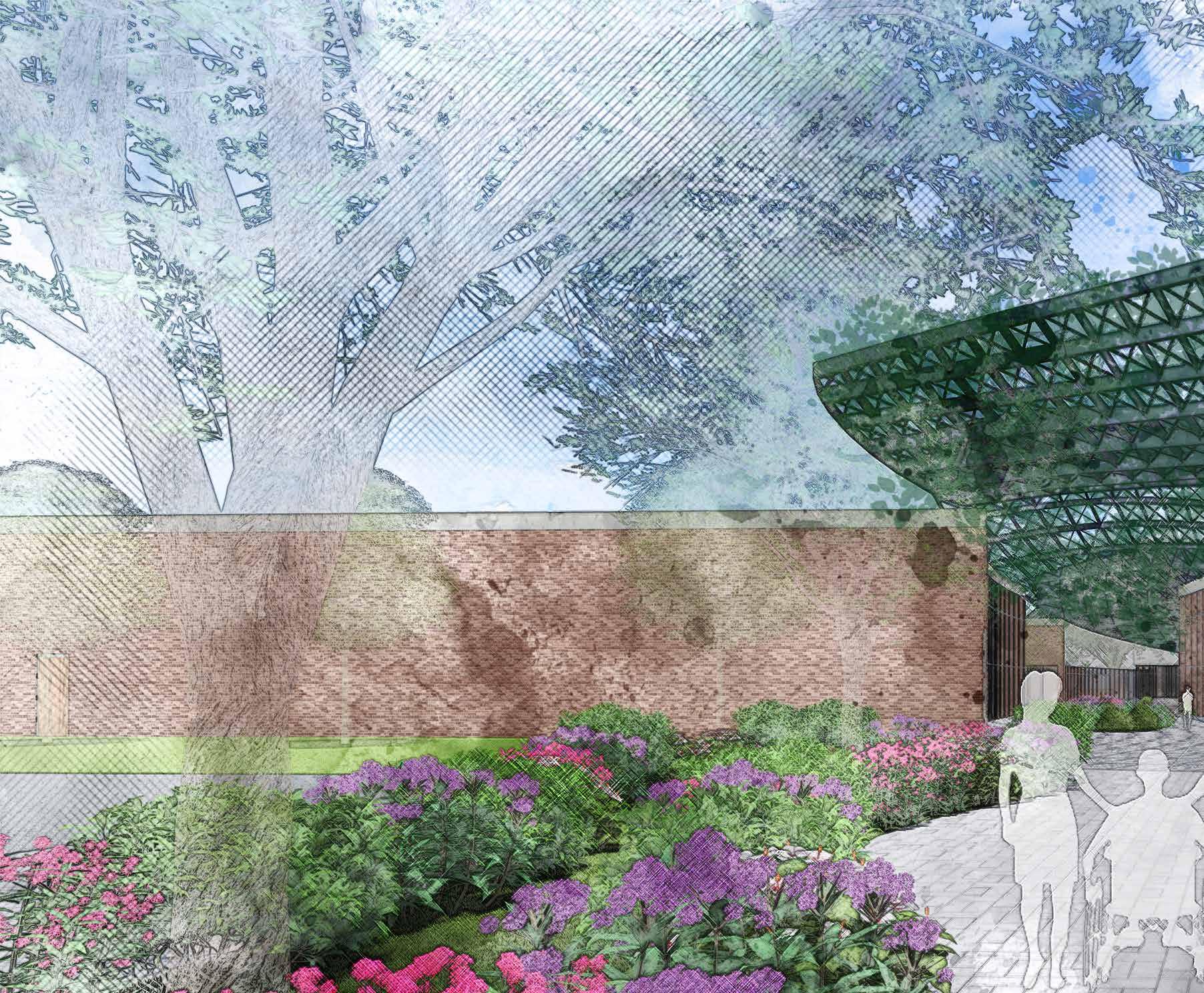
Adaptive Reuse, Community Center, Library, Wellness
Status: Graduate Project
Partner: Mark Lopez, Marissa Rodriguez
Year: 2025
Typology: Community Hub
Location: San Antonio, Texas
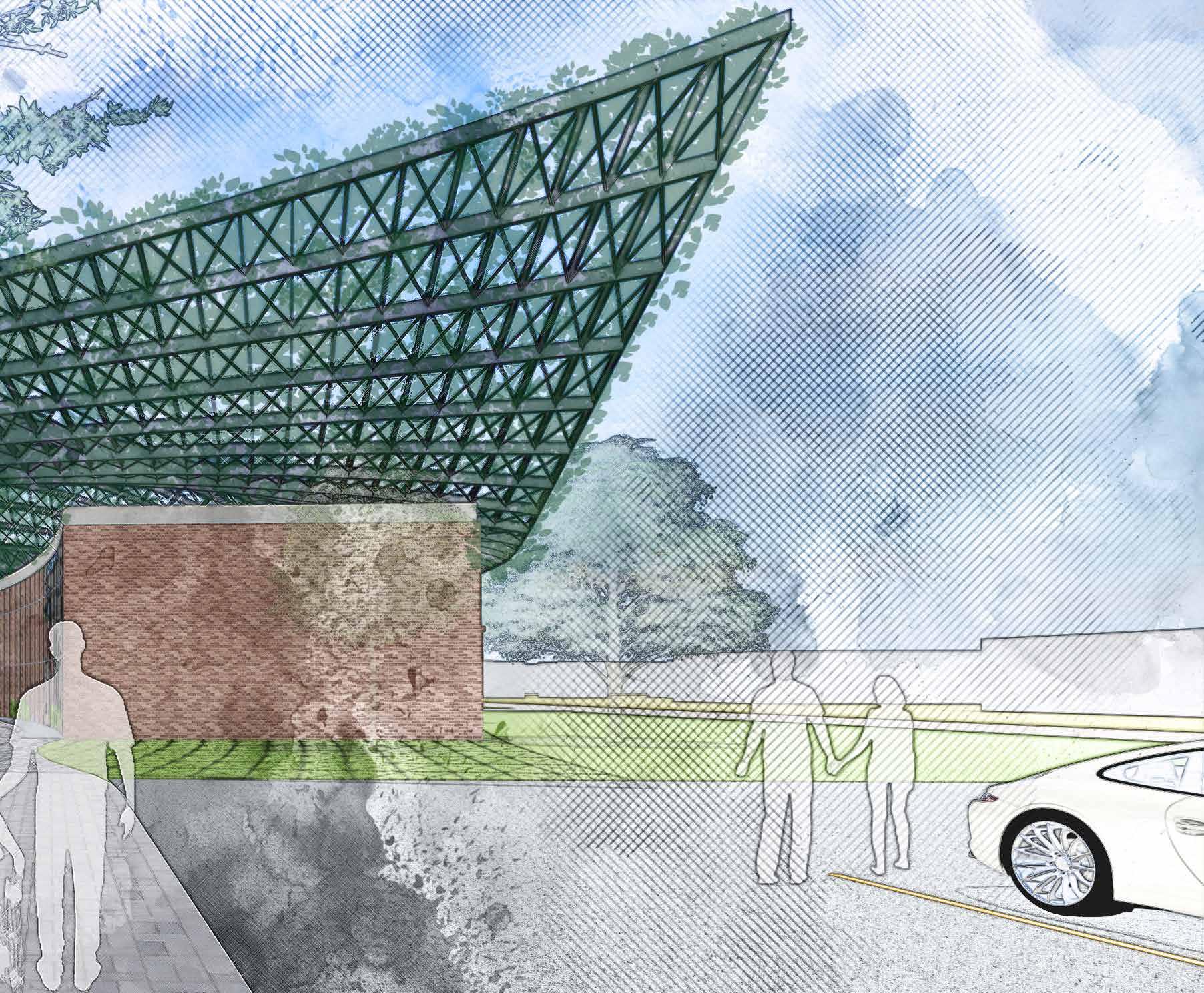
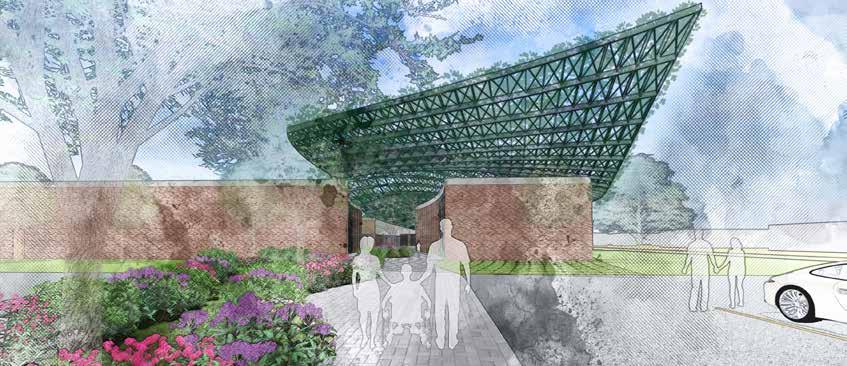
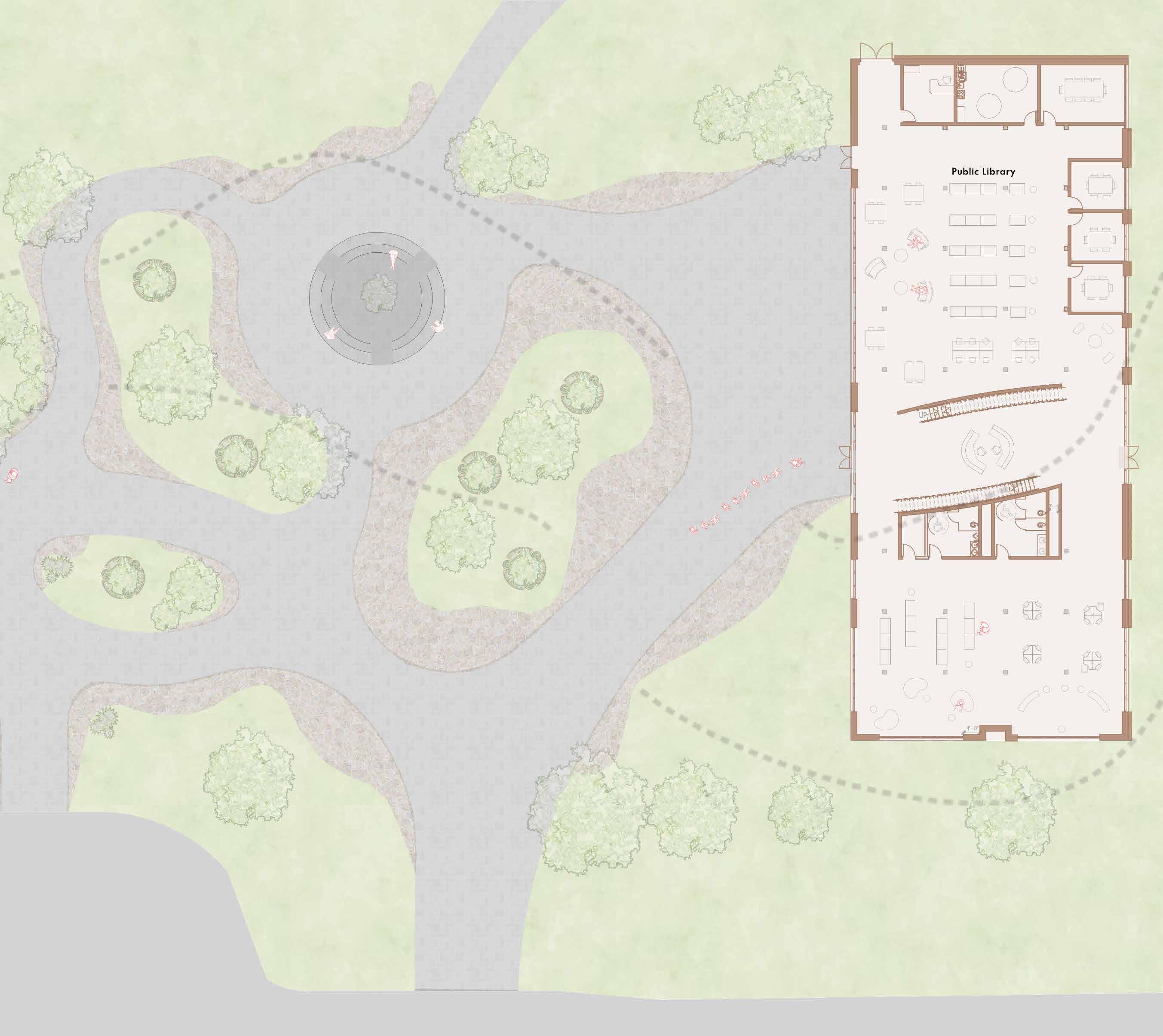
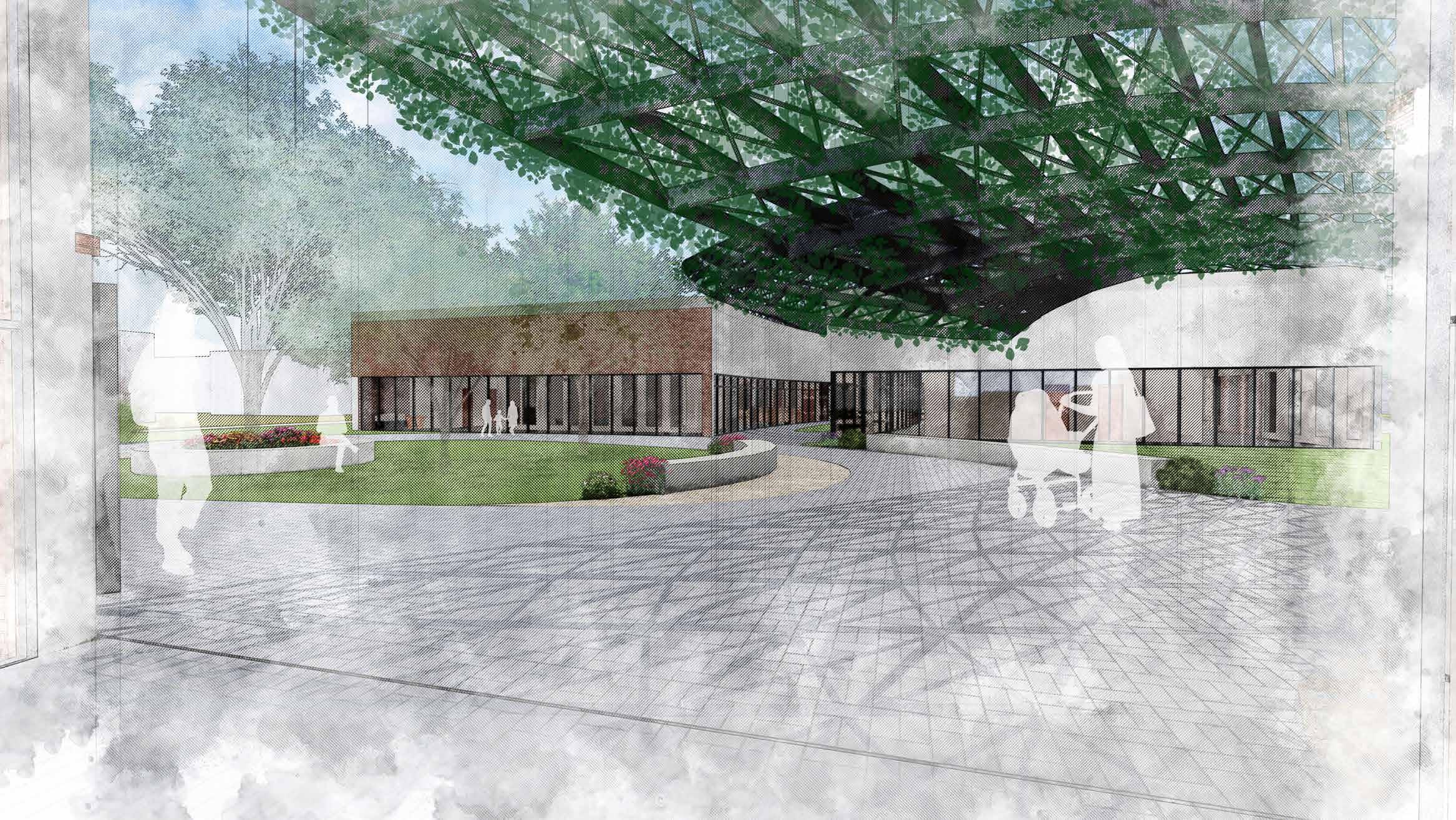
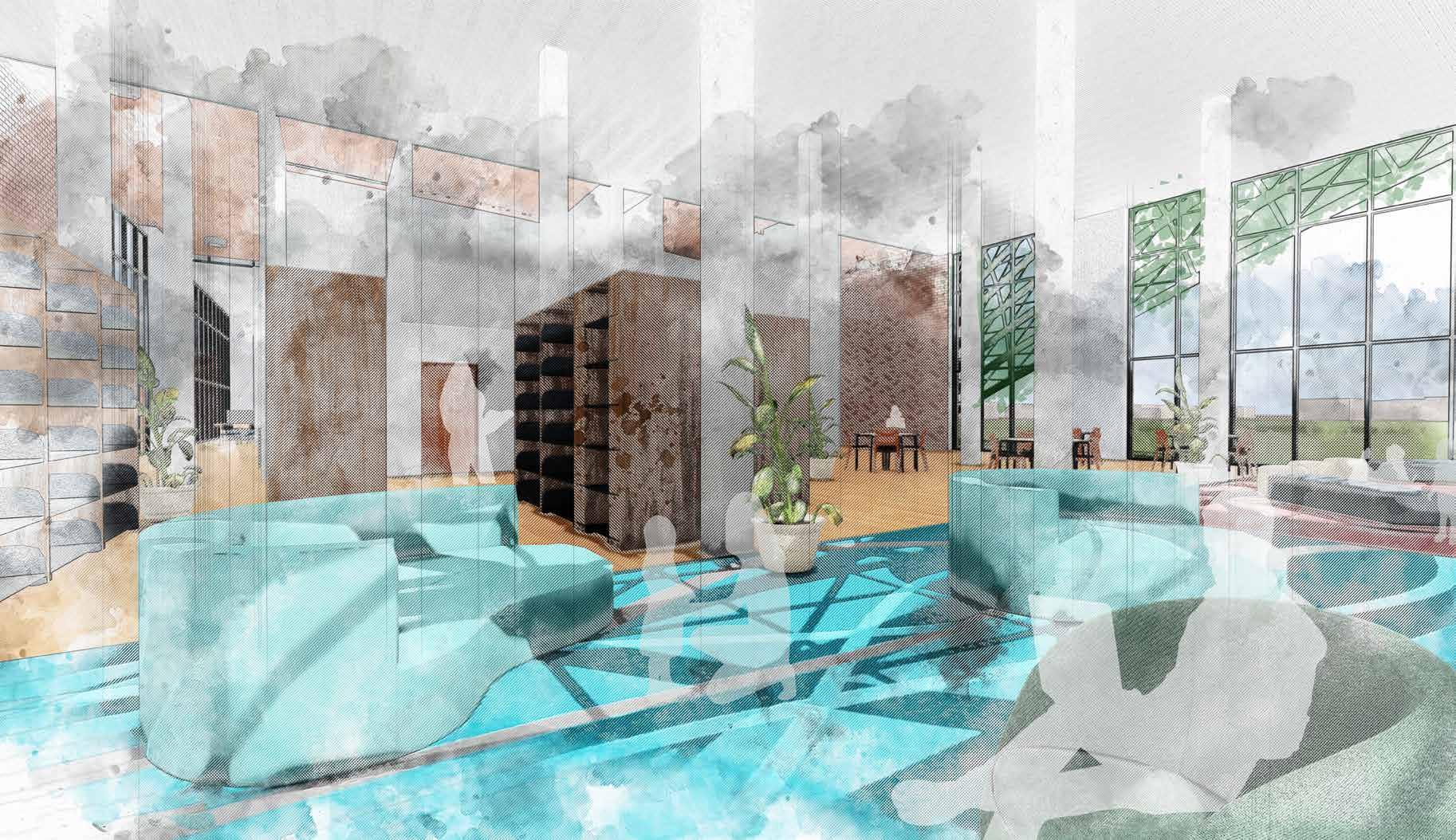
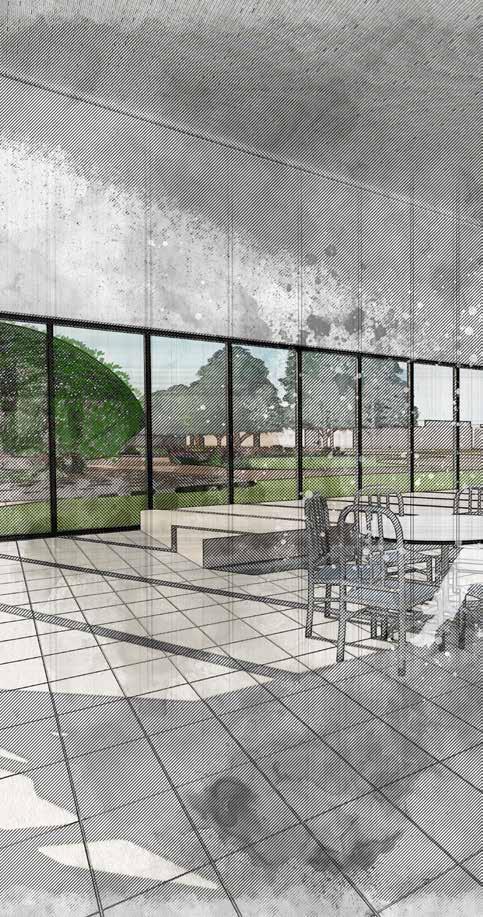
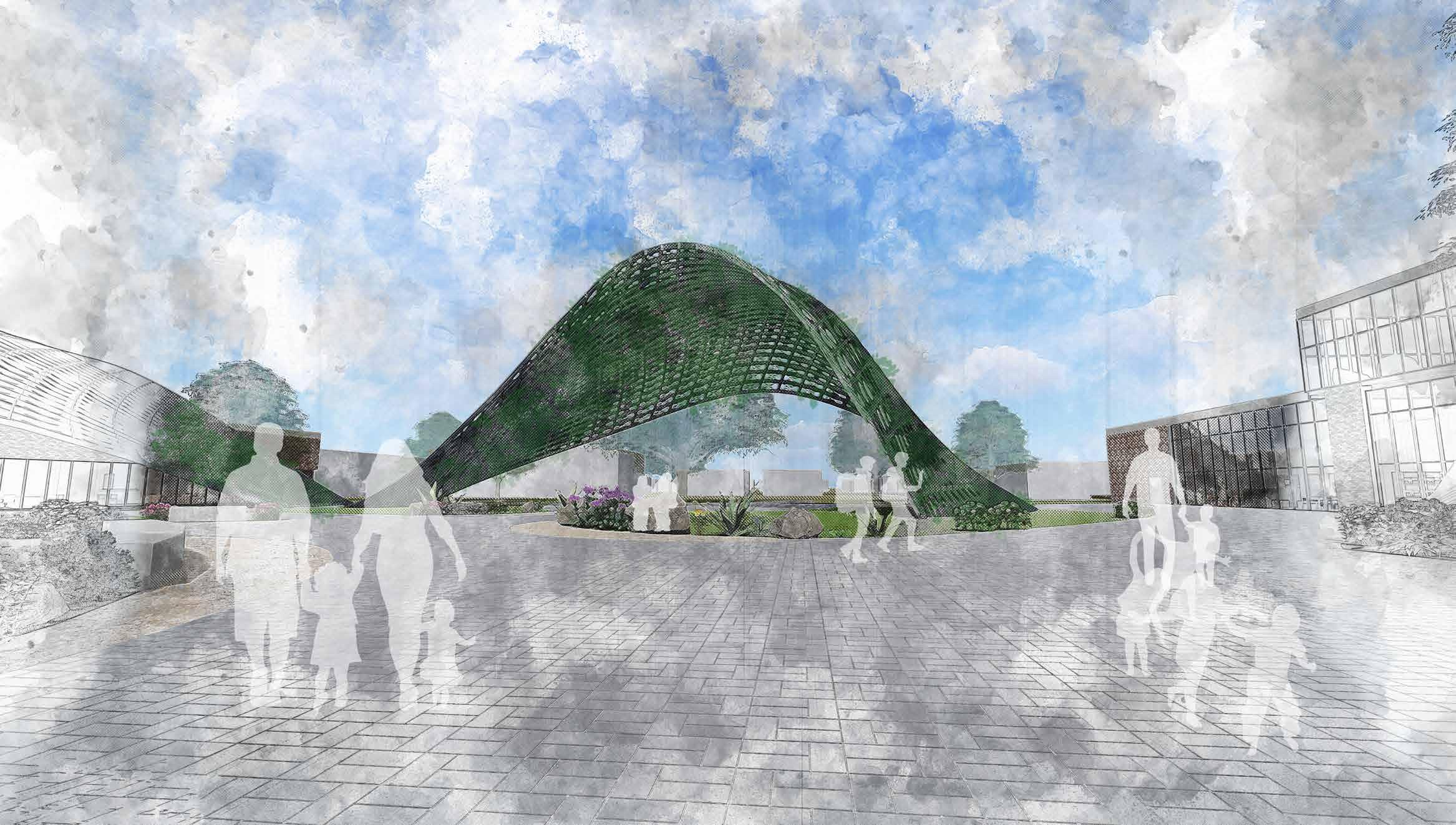
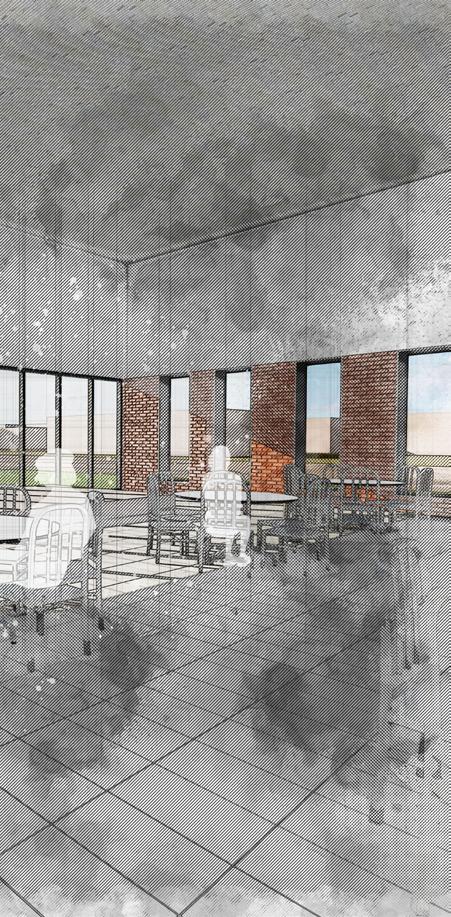
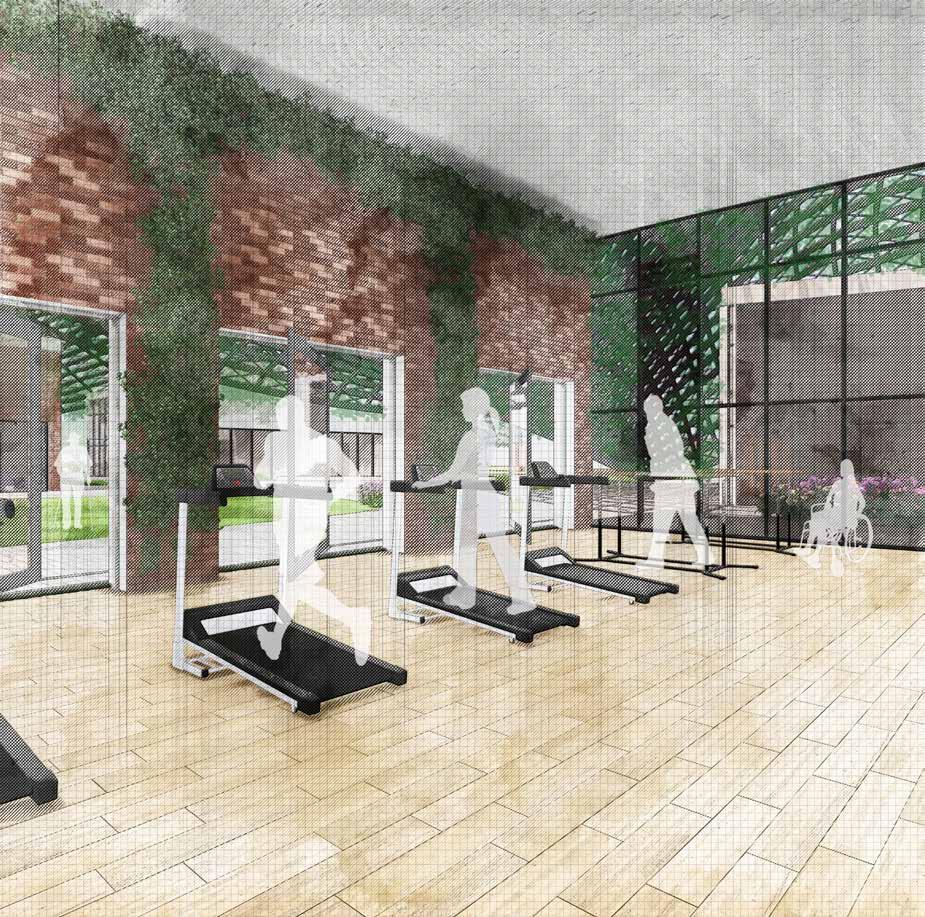
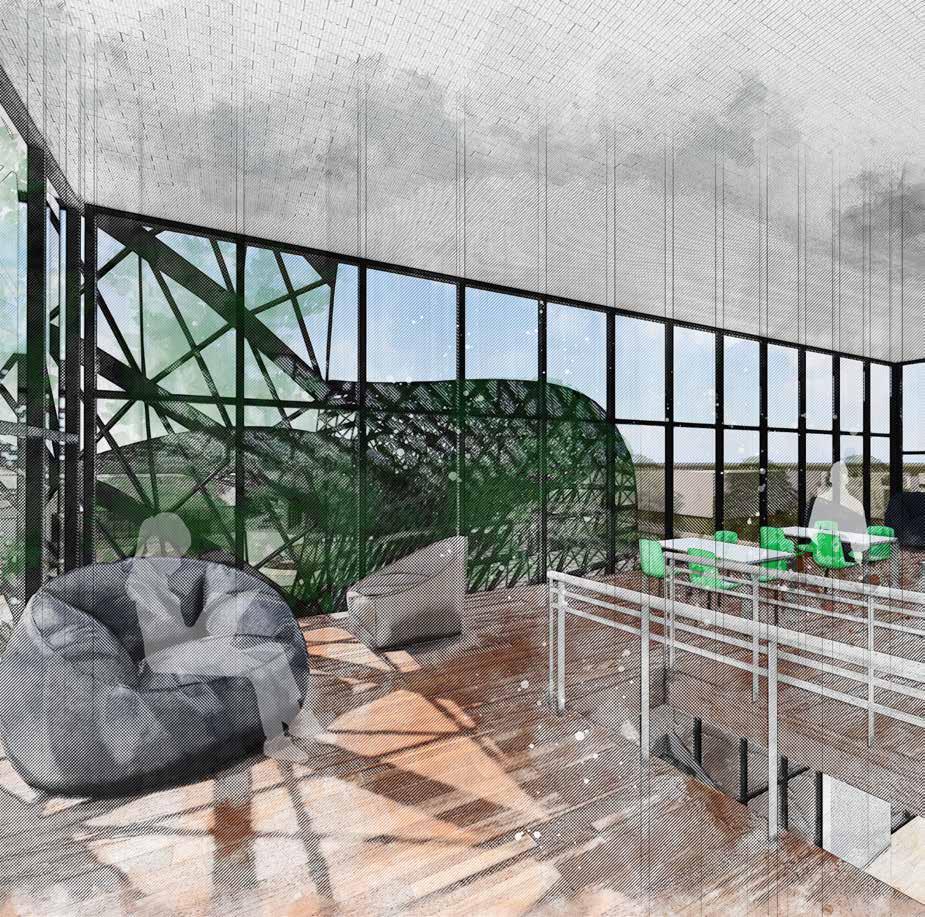
This community hub is designed to be a place of connection, healing, and growth for San Antonio’s Harlandale and McCollum neighborhoods. With limited access to healthcare and public spaces, this project creates a much needed anchor for wellness and support. At its core, a behavioral wellness center will offer therapy, physical therapy, providing essential care for those struggling with anxiety, depression, and other mental health challenges. Alongside a public library and flexible gathering spaces, the hub will serve as a resource for learning, collaboration, and community-building. More than just a building, this space is designed to empower, heal, and bring people together in a way that reflects the strength and resilience of the community.
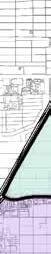
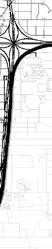
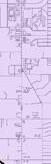
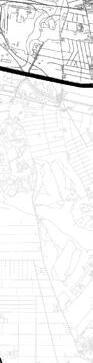
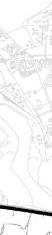
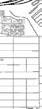
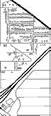
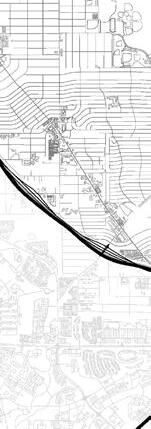
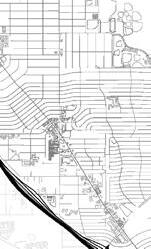
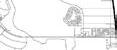
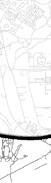
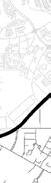
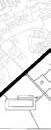
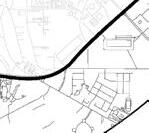
Region
Southside, San Antonio, Texas










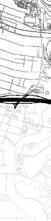


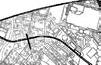





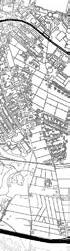
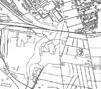



















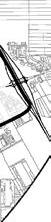
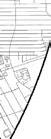
Neighborhoods
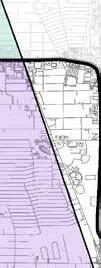
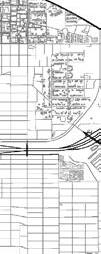
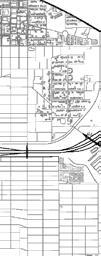
Harlandale
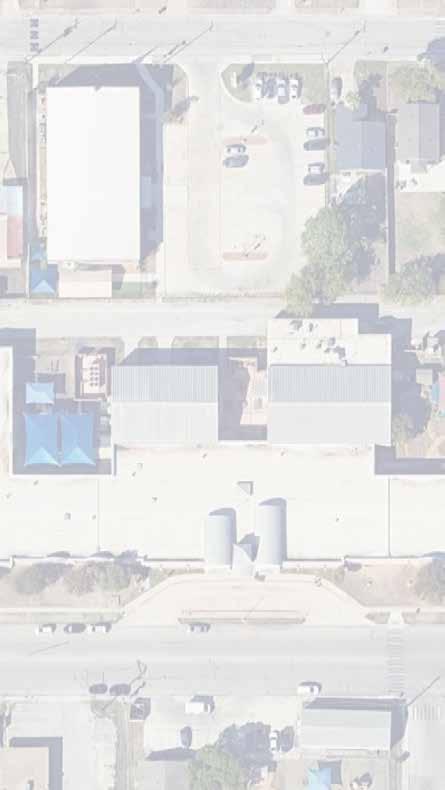
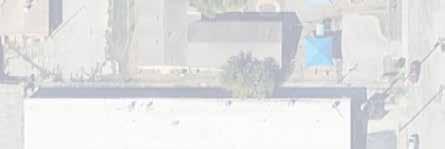
McCollum Site
Rayburn Elementary
36%
Of people in the neighborhood are ambulatory

58%
Of youth report that their family negatively affects their mental health

3 out of 4 Are economically disadvantaged

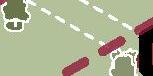
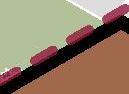

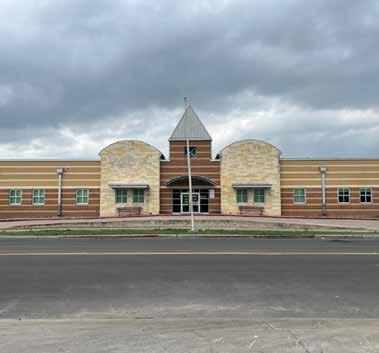
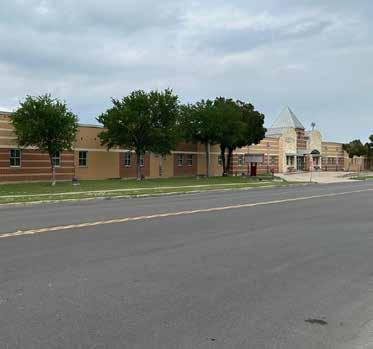
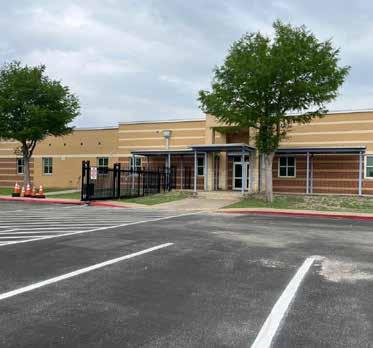
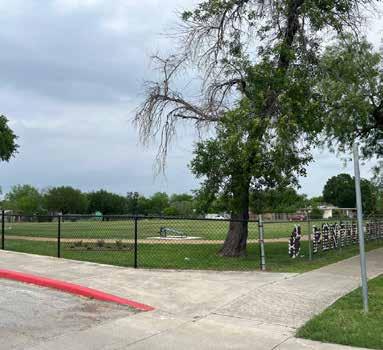
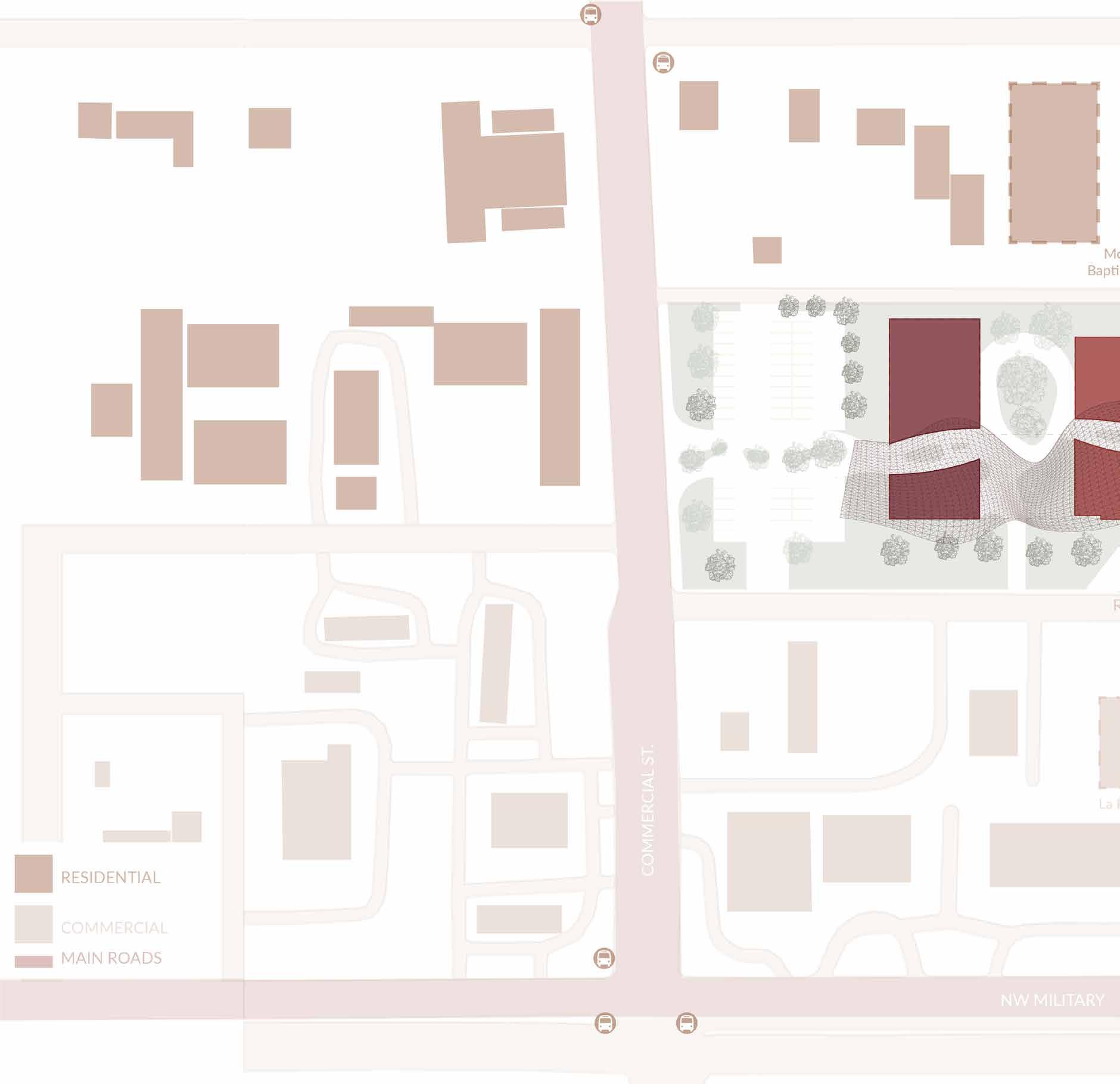
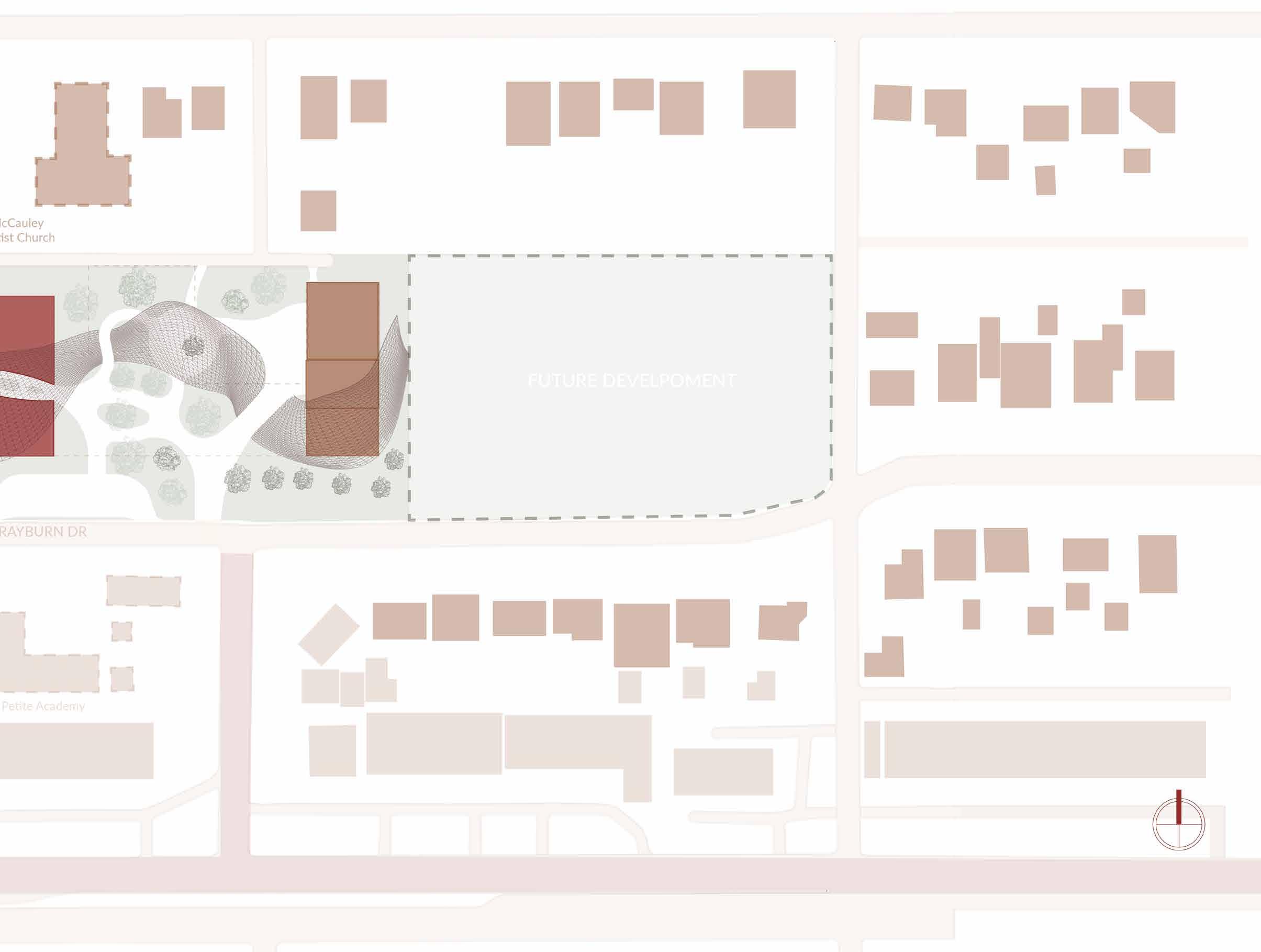
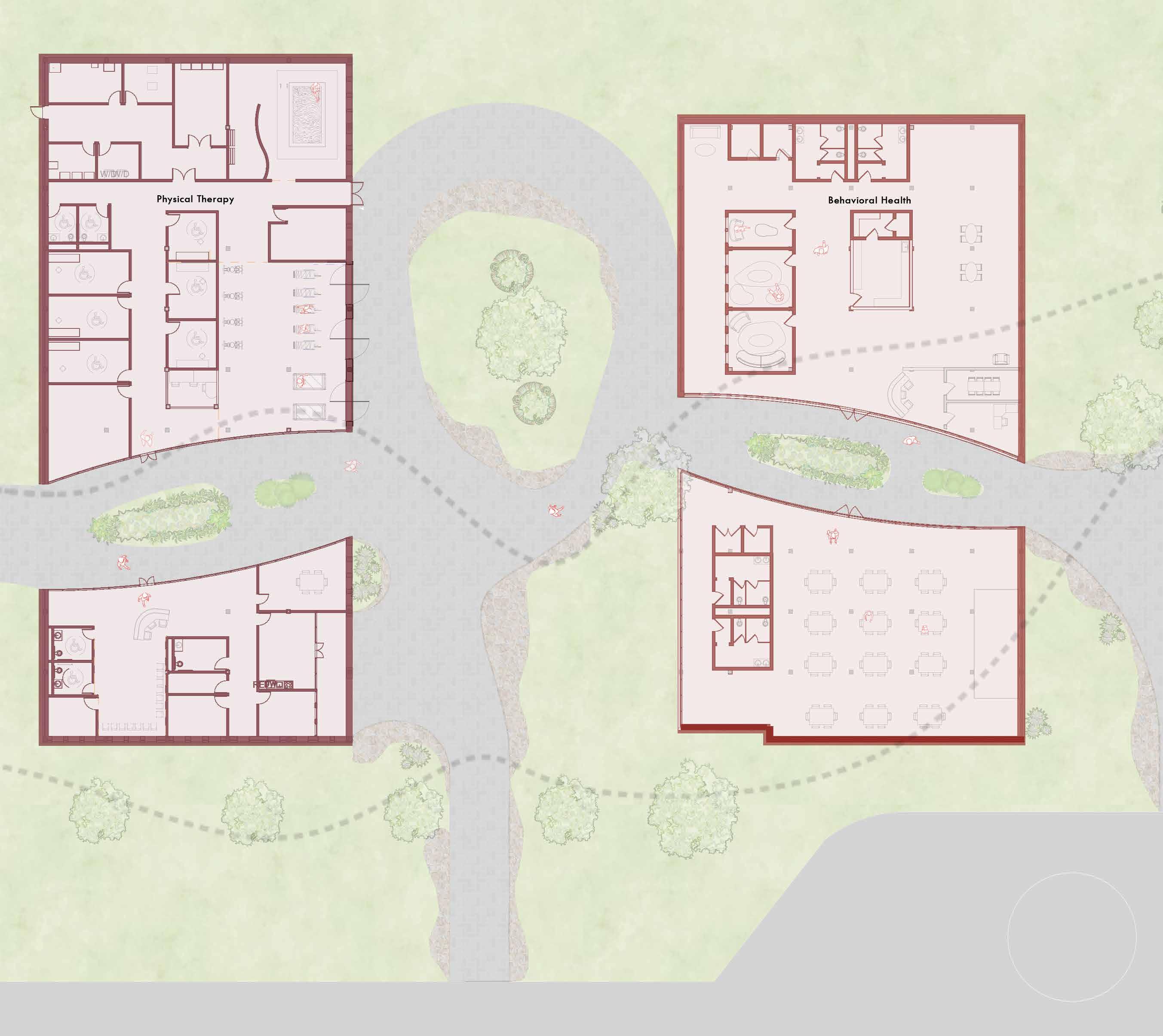
Floor plan of the former Rayburn Elementary School showing new pathways that cut through the campus, creating accessible routes and outdoor spaces that support healing and community gathering.


Steel shading structure supports a biophilic framework of climbing plants, providing shade and strengthening the connection between the built environment and nature.
Renovation, Higher Education
Architectural Lead
Status: PBK Architects
Year: 2025
Typology: Lecture Hall
Description/Role
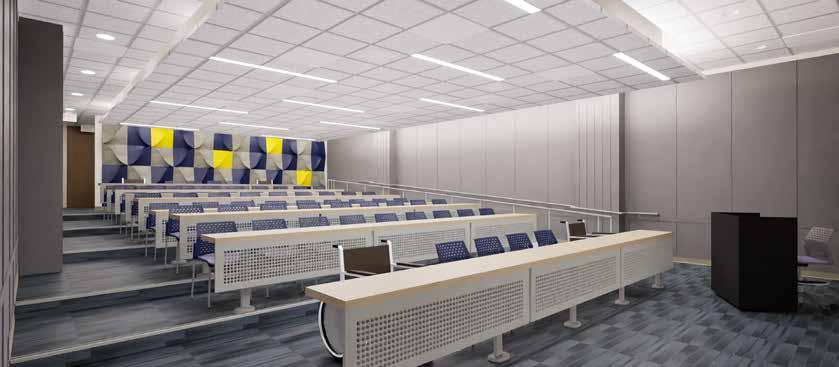
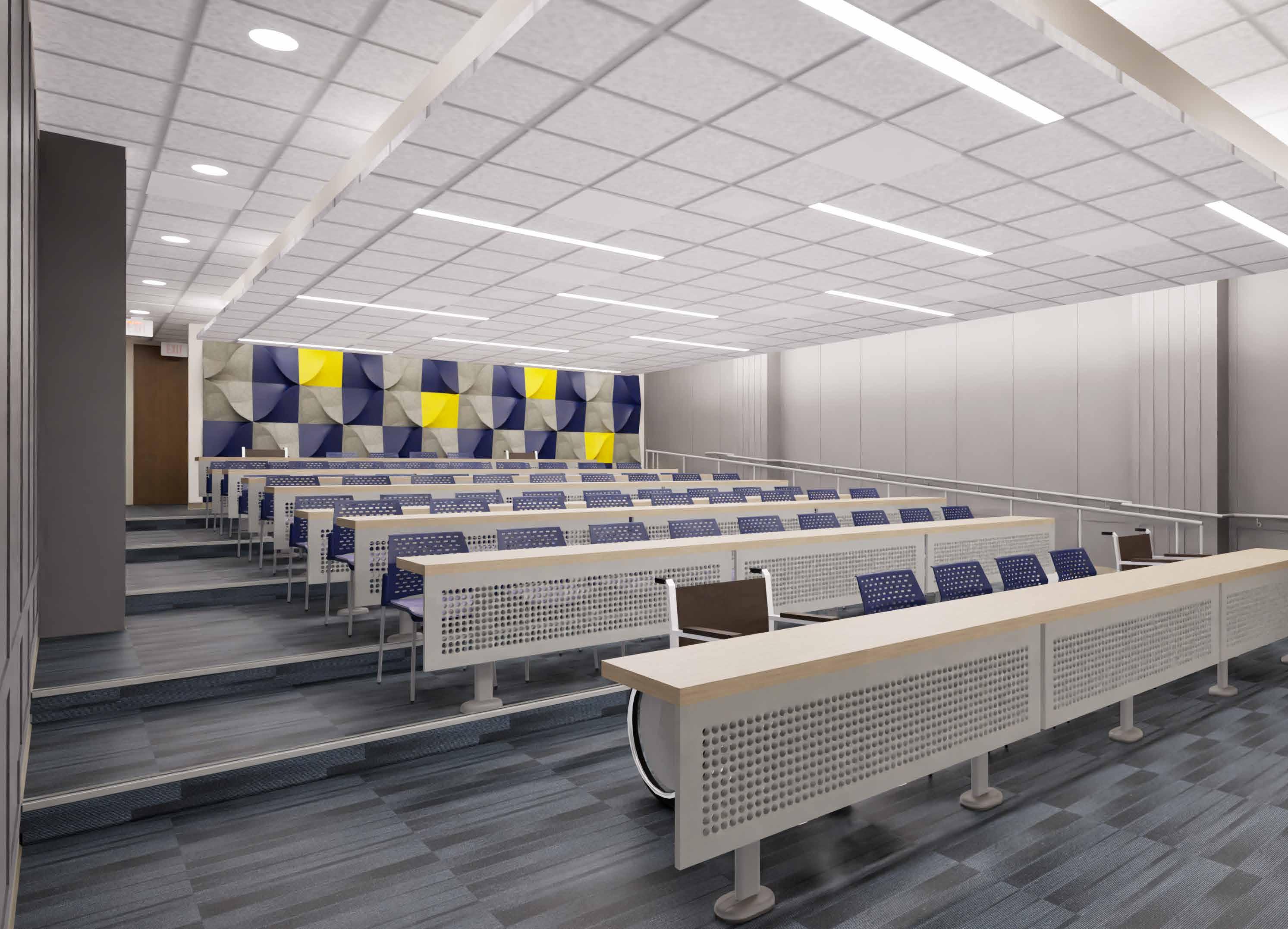
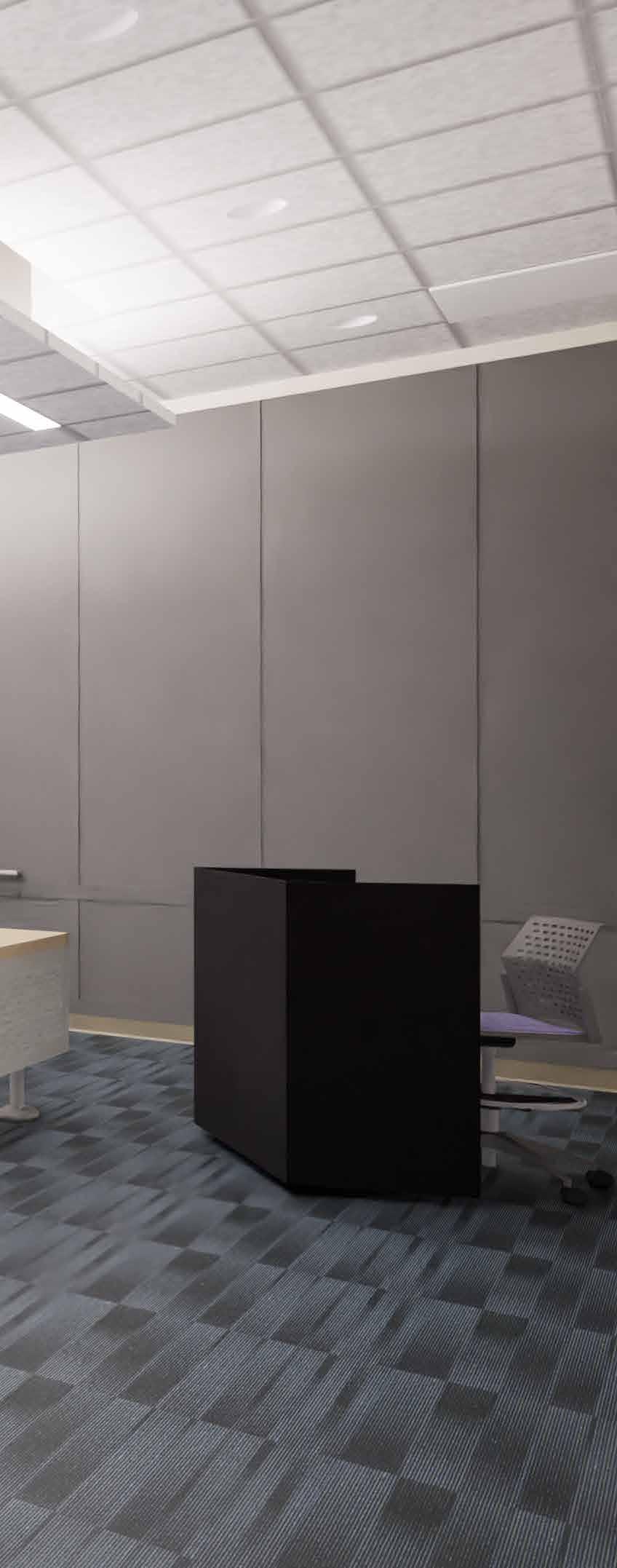
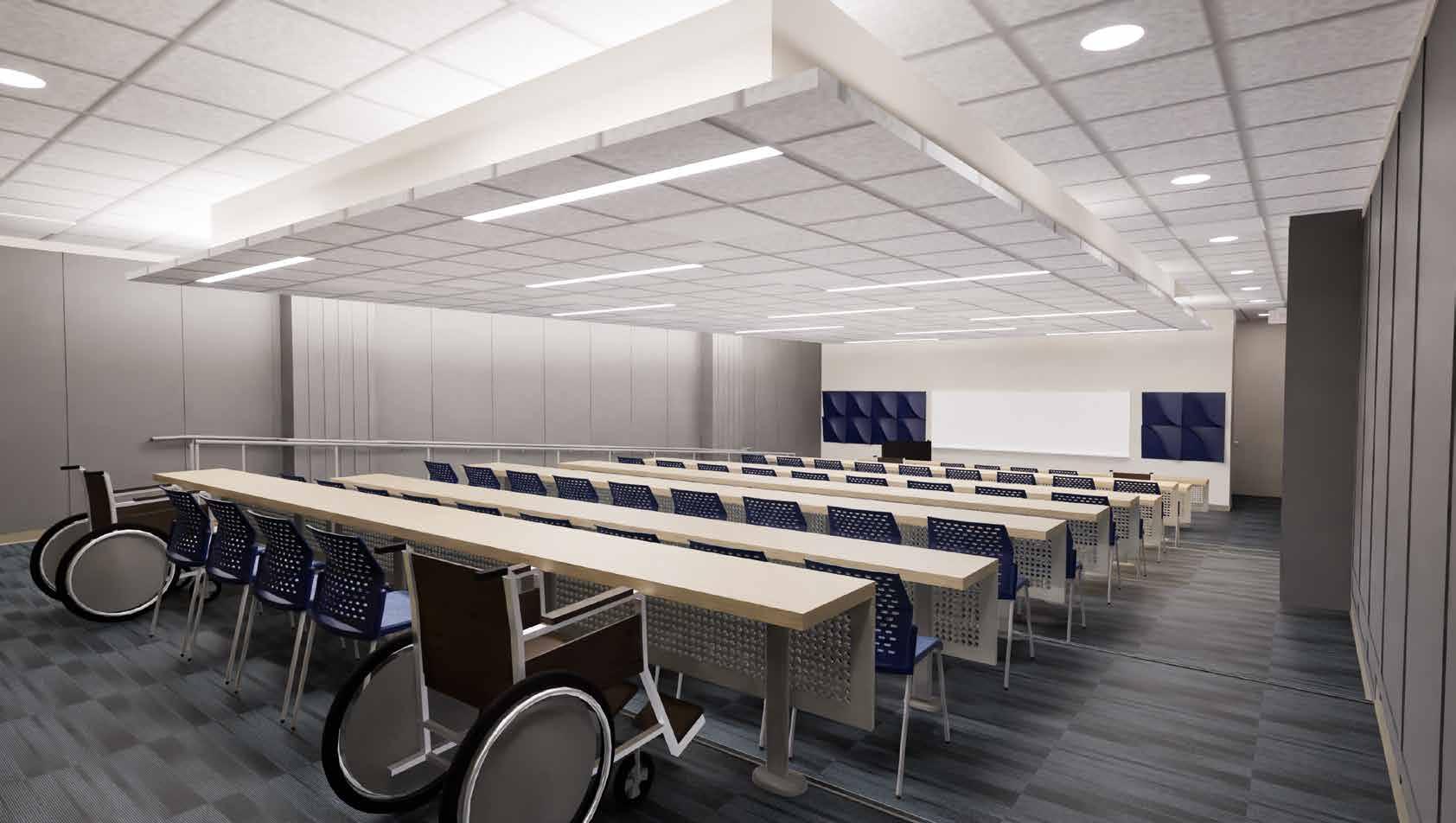
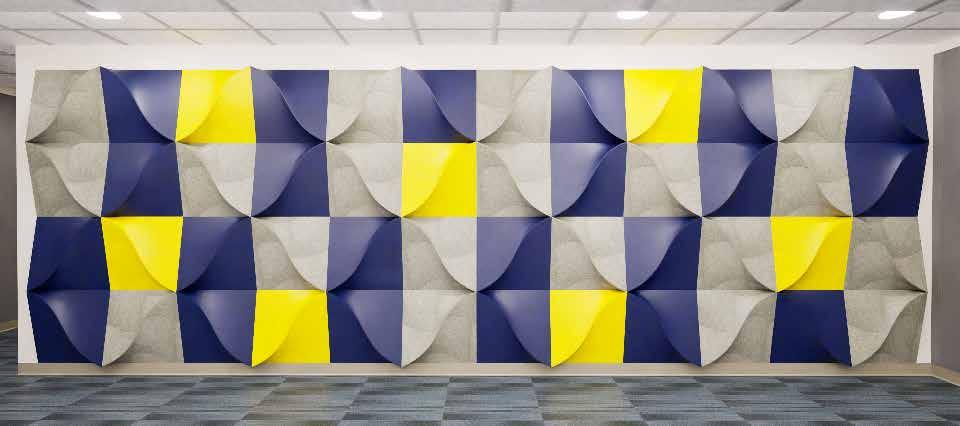
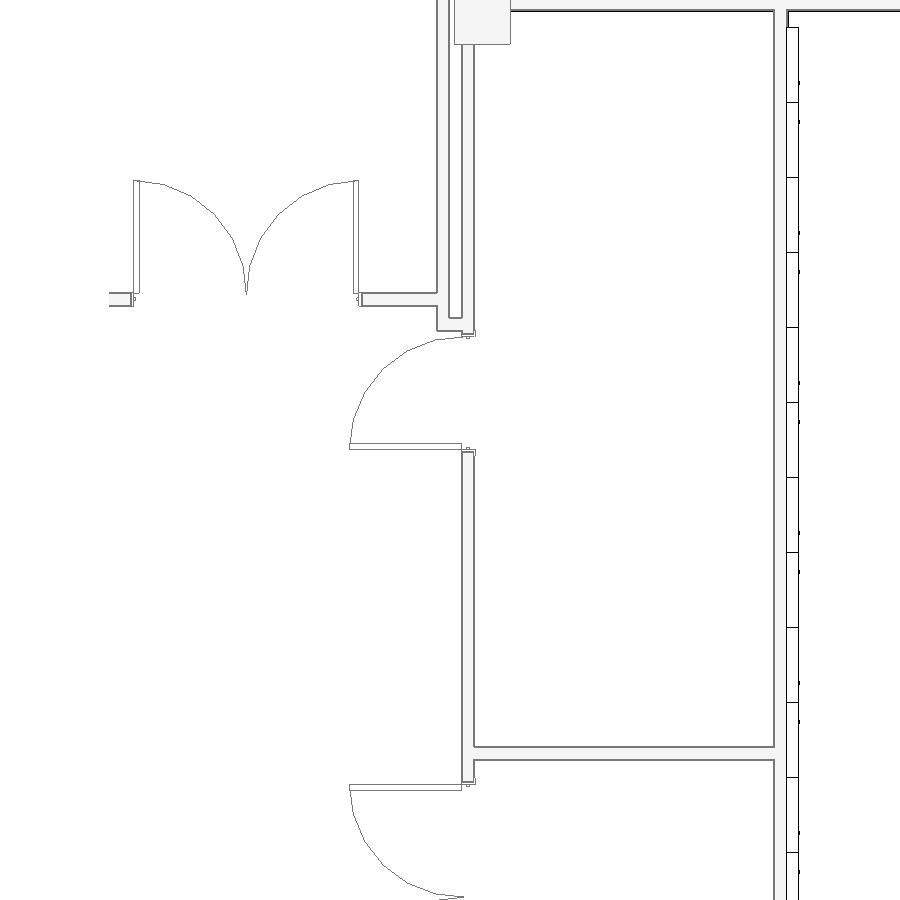
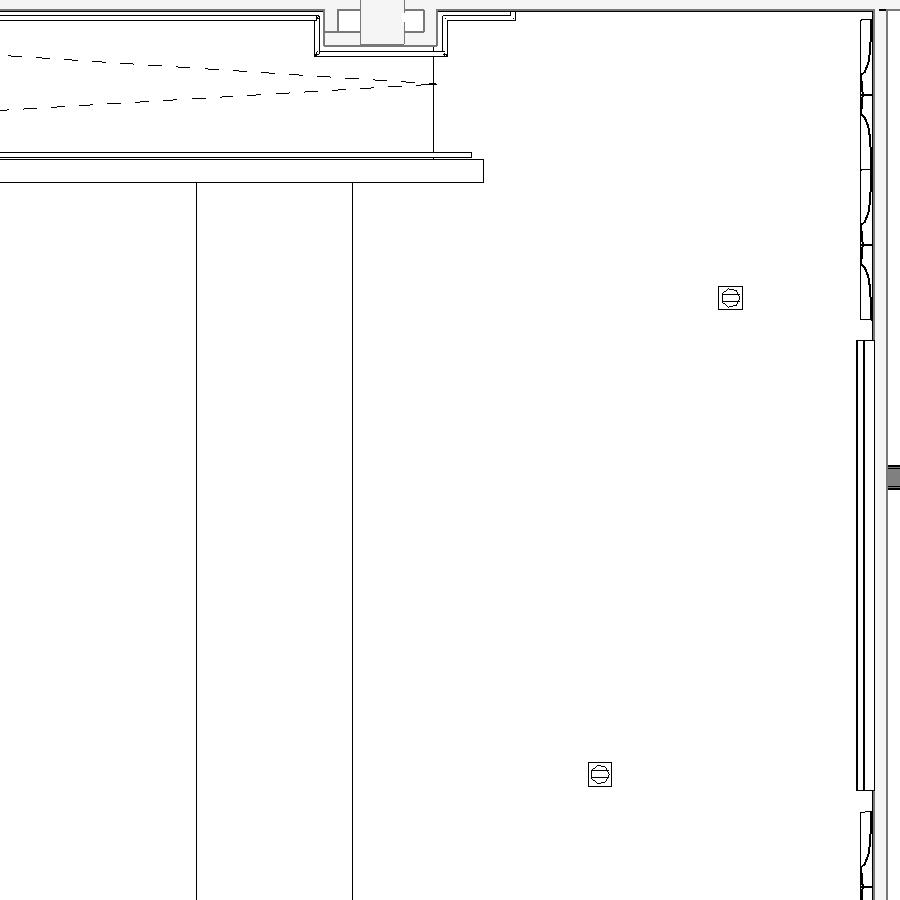
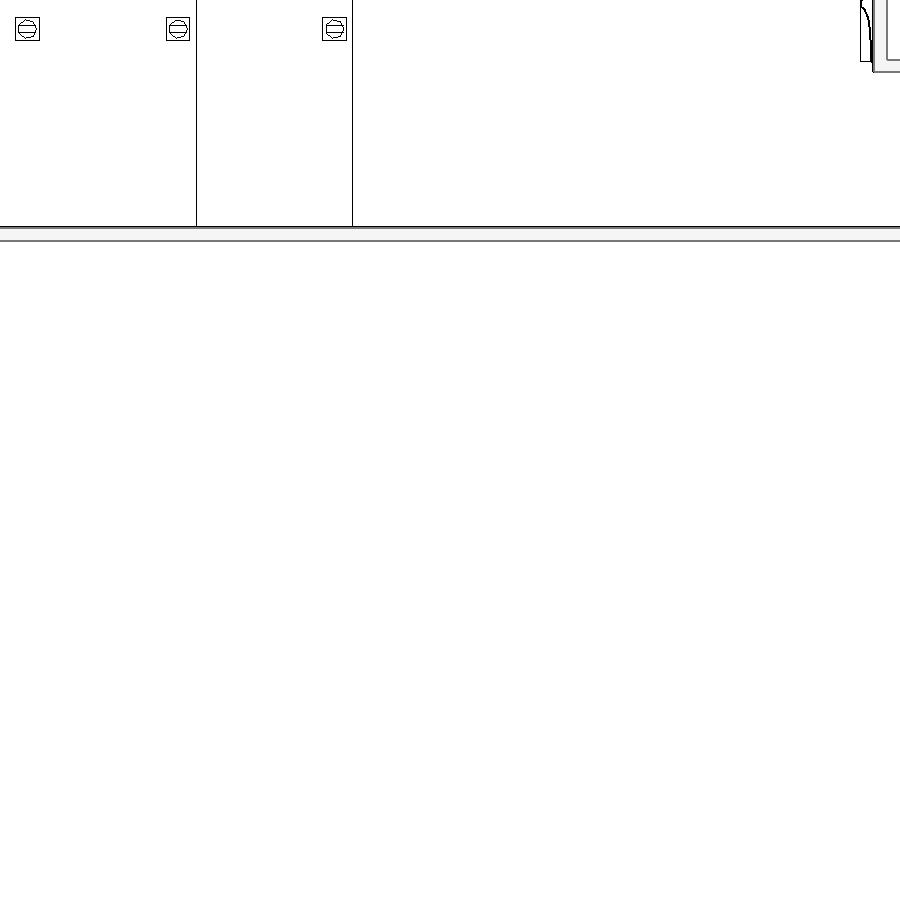
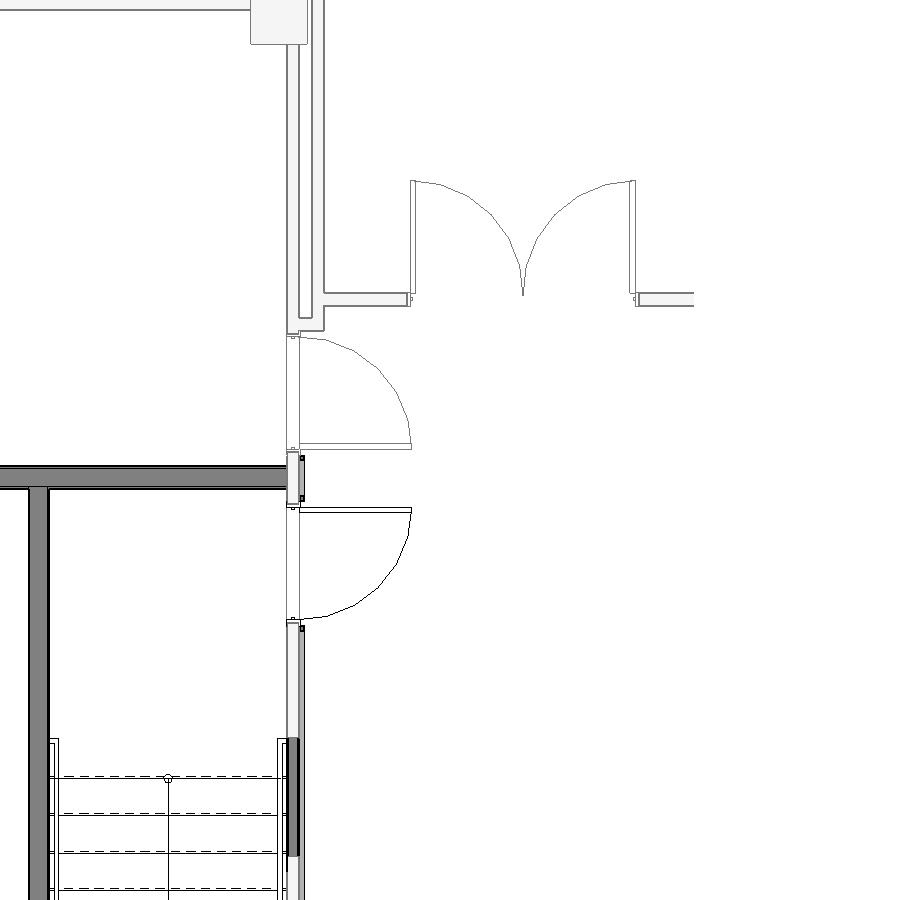
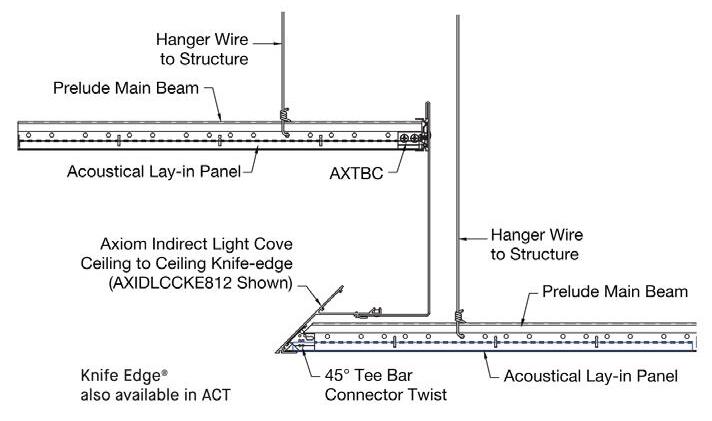
Served as Architectural Lead for a lecture hall renovation, managing design coordination and leading production of the full construction document set. The scope included reconfiguration of seating through new concrete tier infill, selective demolition of existing wood paneling, integration of new furniture, and accessibility upgrades such as a ramp, additional doors, and a new study room. Contributed to interior and exterior finish enhancements, including wood paneling and acoustical wall panels, and produced all project renderings and visualizations. The project is currently in the Construction Administration phase, where I continue to support the team through submittal review and coordination.



No.DescriptionDate

05 Photography
THANK YOU!