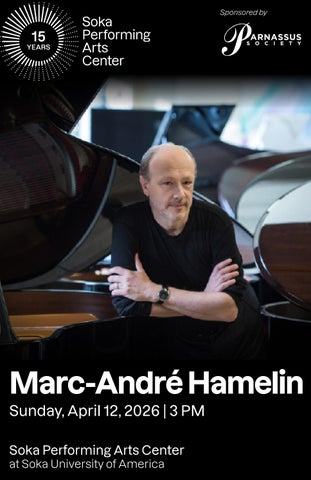

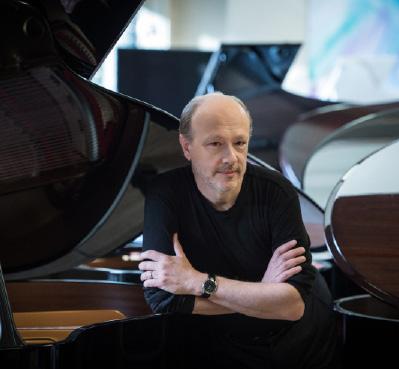
Sunday, April 12, 2026 | 3 PM
PROGRAM
HAYDN
Sonata in D major, Hob. XVI:37
Allegro con brio
Largo e sostenuto
Finale: Presto ma non troppo
BEETHOVEN
Piano Sonata in C major, Op. 2, No. 3
Allegro con brio
Adagio
Scherzo: Allegro
Allegro assai
INTERMISSION
MEDTNER
Improvisation in B-flat minor, Op. 31, No. 1
MEDTNER
Danza festiva, Op. 38, No. 3
RACHMANINOFF
Étude-Tableau in E-flat minor, Op. 39, No. 5
RACHMANINOFF
Piano Sonata No. 2 in B-flat minor, Op. 36 (1931 version)
Allegro agitato
Non allegro - Lento
Allegro molto
Piano Sonata in D Major, Hob. XVI:37
FRANZ JOSEPH HAYDN
Born March 31, 1732, Rohrau
Died May 31, 1809, Vienna
WHaydn’s 104 symphonies and his 83 string quartets have become–generally–part of the repertory, but his 62 keyboard sonatas remain much less familiar. These sonatas span his creative career: he wrote the earliest about 1750, the last in 1794 when he was 62. They have made their way into the repertory very slowly–as late as 1950, the distinguished piano pedagogue Ernest Hutcheson suggested that it did no real harm to the music if performers played individual movements from the sonatas rather than playing them complete.
The Sonata in D Major is one of a group of six sonatas published in 1780, at a moment when Haydn was on the verge of new directions. The previous year his employer, Prince Nikolaus Esterhazy, had given the composer permission to publish his work (previously, everything Haydn had written belonged to the prince). Now 48 and the composer of seventy symphonies, Haydn was intent on finding a larger audience, and he turned to the Viennese publisher Artaria for this set of sonatas. Artaria, which would later publish Mozart and Beethoven’s music, brought these sonatas out as Haydn’s Opus 30.
The six sonatas of Opus 30 are mixed in style and in their technical demands, and there has been debate about the sort of performer
Haydn was writing for and even about the instrument he was writing for. Were these sonatas intended for the growing number of amateur pianists at the end of the eighteenth century? Did Haydn write them for his students? Did he write them for himself? (Haydn was an able pianist but by no means a virtuoso, and these sonatas are at times very difficult.) Which instrument did he have in mind when he wrote them? Artaria offered no help with this question: their title page says that these sonatas are “Per il Clavicembalo o Forte Piano.” But while Haydn’s early keyboard sonatas may have been composed for clavichord, these sonatas have dynamic markings that suggest that he was writing them for the piano.
The opening movement is marked Allegro con brio, and Haydn really means the con brio stipulation: the opening sizzles along happily, enlivened by its many grace notes and trills, and the second subject, also full of grace notes and trills, arrives quickly. This music is so brilliant–and so much fun–that it is easy to miss the unusual key relationships as its races past. After all this sparkling energy, the movement comes to a quiet, almost breathless, close.
In sharp contrast, the Largo e sostenuto seems to take a step back into an earlier era. Haydn moves to D minor here, and his somber central theme is slow and made ornate by its many rolled chords. And then comes another sharp contrast: Haydn goes back to the spirit of the first movement for
the rondo-finale. Its main theme has a nice delicacy, and Haydn varies this subtly as the sonata proceeds.
Piano Sonata in C Major, Opus 2, No. 3
LUDWIG VAN BEETHOVEN
Born December 16, 1770, Bonn
Died March 26, 1827, Vienna
Haydn returned to Vienna in August 1795 after his second visit to England, and shortly thereafter–at one of Prince Lichnowsky’s Friday morning concerts–the young Beethoven played three piano sonatas for him. These were Beethoven’s first piano sonatas (they would eventually comprise his Opus 2), and evidence suggests that he had written them somewhat earlier and then performed them privately for friends and refined them over a period of time. When the sonatas were published in March 1796, they bore a dedication to Haydn, but Beethoven would not identify himself as a “Pupil of Haydn” on the title page, as the older composer wished him to do: he may have respected his former teacher, but he remained ambivalent as to how much he had learned from Haydn and refused to acknowledge the connection in the published score.
The three sonatas of Opus 2 have their roots in the classical piano sonata, but already Beethoven is willing to experiment with the form: these sonatas are in four movements rather than three, and the “extra” movement–the third–is in the second two sonatas a scherzo rather than the minuet of classical form. And beyond this the
sonatas are notable for their scope and difficulty: the Sonata in C Major heard on this concert stretches out to nearly half an hour in length and is written in a virtuoso manner that almost tends toward concerto style at moments. This music is also notable for its many surprising (and often piquant) modulations. These may be Beethoven’s first sonatas and he may still be working to master the form, but already he is willing to make it his own.
The Allegro con brio opens with a pregnant figure, full of pauses; this is soon succeeded by the flowing and aristocratic second subject, and Beethoven even hints at a third theme. The treatment of the opening material is virtuosic, and the music reaches an unexpected conclusion: Beethoven drives to a climax, then the music falls away into a series of filmy arpeggios. Gradually these accelerate in the manner of a cadenza and then crest in a great flourish before picking up the opening subject and driving to the close. This episode is very much like a cadenza in a concerto: it occupies the same position formally and requires the same sort of virtuosity.
The Adagio opens in E major with a noble but halting episode, full of stops between its brief phrases. Beethoven soon modulates to E minor for a quiet interlude that might almost be described as moonlit in its silvery, subdued expressiveness. Soon there are outbursts, and the opening material returns and threatens to become violent; Beethoven
to become violent; Beethoven combines these two themes over the second half of the movement before it trails off into silence.
The Scherzo, with its neatlyterraced entrances, is attractive, but the real surprise comes at the trio section, which is brilliant: triplet runs rip stormily across the range of the keyboard. This episode is very exciting–and over almost too quickly: Beethoven rounds things off with a da capo repeat and a brief coda in which the scherzo rhythm gradually dissolves. The Allegro assai finale dances agreeably. The surprise here is that much of this graceful music is chordal and requires an accomplished touch to make it sound as effortless as it should. A second subject, marked dolce and also chordal, makes brief appearances in the general rush of things. Beethoven concludes with a coda that seems suspended on a series of trills; gradually the opening rhythms assert themselves, and the sonata rushes to its vigorous close.
Improvisation in B-flat Minor, Opus 31, No. 1
Danza Festiva, Opus 28, No. 3
NIKOLAI MEDTNER
Born January 5, 1880, Moscow
Died November 13, 1951, London
The name–and music–of Nikolai Medtner have almost vanished from contemporary concert life, but in the first decades of the twentieth century he was one of the most respected pianists before the public. He trained at the Moscow Conservatory, where he studied piano with Safonov and
composition with Taneyev, and then embarked on a career as both pianist and composer. He taught briefly at the Conservatory, but–like so many other Russian artists–chose to leave his homeland in the years after the revolution. He settled first in Paris but found himself more comfortable in England, where he spent the final two decades of his life. Medtner’s music has sometimes been compared to the music of his good friend Rachmaninoff (who dedicated his Fourth Piano Concerto to Medtner), yet Medtner went his own way as a composer. He wrote three piano concertos and fourteen piano sonatas, but his most popular works are probably the many short pieces he wrote for keyboard, a number of them published under the titles Fairy Tales and Sketches
Improvisation is the first of Medtner’s Three Pieces, published in 1914. It opens with a wistful melody marked Andantino, gracile, but this melody, engaging as it is, is simply the starting point for a sequence of incredible variations (or “improvisations”) on that gentle tune. The music races ahead at the Allegretto capriccioso danzando, and from then on this piece becomes almost a study in fiery virtuosity, whipping across the keyboard in great torrents of sound, then stopping and starting in entirely new directions. A section marked Quasi Valse leads to a return of the quiet opening, and the Improvisation concludes quietly, deep in the piano’s lowest register.
In the years 1918-20, just as he was
leaving Russia, Medtner composed three collections of short pieces for piano that he called Forgotten Melodies. That title refers to the fact that he based these pieces on themes (or motifs) that he had written much earlier, then rediscovered as he consulted his old notebooks. The first set begins with the one-movement Sonata Reminiscenza, which is then followed by seven pieces that take the form of either songs or dances. These are for the most part very quickly paced and beautifully written for the piano, and all have evocative titles. Danza Festiva depicts (very generally) a village celebration. It begins with the sound of ringing bells and then takes wing on music of incredible rhythmic vitality that sends the pianist to the extremes of the keyboard. A return of the ringing bells from the opening helps propel Danza festiva through a final section marked giubiloso
NOTE: Medtner made many recordings over a great span of years (1894 to 1950) and recording techniques, from early acoustic recordings through piano rolls and then on to mono recordings. He recorded both the Improvisation and Danza festiva multiple times, and those performances reveal how incredible a pianist Medtner was.
Étude-Tableau in E-flat Minor, Opus 39, No. 5
SERGE RACHMANINOFF
Born April 1, 1873, Semyonovo
Died March 28, 1943, Beverly Hills
Rachmaninoff composed two sets of Études-tableaux: the
first–consisting of eight brief pieces–as his Opus 33 in August 1911, and the second–of nine pieces–as his Opus 39 during the 1916-17 season, just as he turned 44. The latter set was completed during the dark days of World War I, when Rachmaninoff was performing benefit concerts for wounded Russian soldiers. The communist revolution came later that year, and in December 1917 Rachmaninoff would leave Russia, never to return. The title of this collection of brief piano pieces needs some explanation: Étudestableaux means “picture-studies,” piano etudes that are meant to be expressive but not pictorial–Rachmaninoff does not set out in this music to paint exact musical portraits. In response to a question about what this music depicted, he replied: “I do not believe in the artist disclosing too much of his images. Let them paint for themselves what it most suggests.”
The one thing clear about this music is how difficult it is, and that may also be a clue to its character. The Études-tableaux are evocations of mood and atmosphere that depend more on pianistic brilliance, complex textures, and rhythmic subtlety than on the memorable tune–listeners will come away from this music not humming their favorite parts but instead struck by the atmosphere Rachmaninoff is able to create in these pieces (and it is worth noting that eight of the nine are in minor keys). The composer did not regard these nine pieces as a unified set and would sometimes perform individual
pieces on his recitals. No. 5 in E-flat Minor, marked Appassionato, combines powerful triplet rhythms with a wistful, haunting quality.
Piano Sonata No. 2 in B-flat Minor, Opus 36
SERGE RACHMANINOFF
Born April 1, 1873, Semyonovo
Died March 28, 1943, Beverly Hills
Though he was famed for performances of music by other composers, Rachmaninoff made a point early in the twentieth century of playing recitals only of his own music. By 1913, when he was 40, Rachmaninoff felt that he needed new repertory and decided to compose a new piano sonata. He took his family to Rome that summer, and–working in a room that Tchaikovsky had once occupied–he sketched two works: a choral symphony based on Edgar Allan Poe’s The Bells and the Piano Sonata No. 2. Late that summer he returned to the family estate at Ivanovka, near Moscow, and completed both works.
Rachmaninoff’s setting of The Bells met with success (the composer called it his own favorite among his compositions), but the sonata–which Rachmaninoff premiered in Moscow on December 3, 1913–had a cooler reception. Audiences and critics alike found it difficult–reserved, detached, intellectual–and the composer himself came to agree with them: after performing it for several seasons, he withdrew it from the stage.
But Rachmaninoff remained interested in this sonata, and in 1931 he decided to revise it, believing that he had located the source of the problem: “I look at my early works and see how much there is that is superfluous. Even in this sonata so many voices are moving simultaneously and it is too long.” Rachmaninoff cut the original version severely, removing altogether passages that he believed “superfluous” and clarifying textures. This was mostly a matter of shortening and focusing the development sections, and the revised version is about six minutes shorter than the original. Rachmaninoff had little success with this version, but another Russian pianist did. Vladimir Horowitz, acting with the composer’s approval, created his own version by reincorporating some of the passages Rachmaninoff had excised from the original version. The Second Sonata is extraordinarily difficult for the pianist, and Horowitz made performances of it a real occasion; he recorded his revised version (as well as a later one that he made in the 1960s).
At the present concert, the Second Sonata is performed in Rachmaninoff’s 1931 revision. The three movements are played without pause, and the movements depend on musically-related ideas: themes from the opening Allegro agitato reappear in later movements. Listeners who come expecting the big Rachmaninoff “tune” may be disappointed, for this dramatic music makes
for this dramatic music makes its case through the logic of its musical argument rather than with engaging melodies. The sonataform first movement opens with a great downward flourish that leads immediately to the main theme; the more lyric second subject, marked meno mosso, arrives in a dotted 12/8 meter. The main theme will reappear in both the wonderful, dark slow movement (Non allegro) and the dynamic finale (Allegro molto).
Throughout, this music demands a pianist of transcendent skill, able to cope easily with complex technical problems yet still generate the vast volume of sound this sonata demands. Many have noted that this music seems full of the plangent sonority of ringing bells, and this is only natural, given Rachmaninoff’s fondness for the sound of bells in general and the fact that he was working on the Poe setting at the same time he wrote this sonata.
Program notes by Eric Bromberger © 2025.
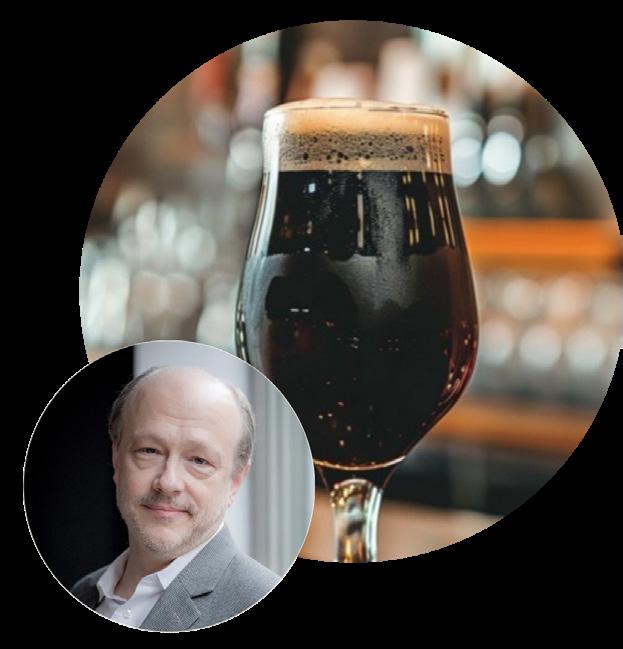
MARC-ANDRÉ HAMELIN PIANO
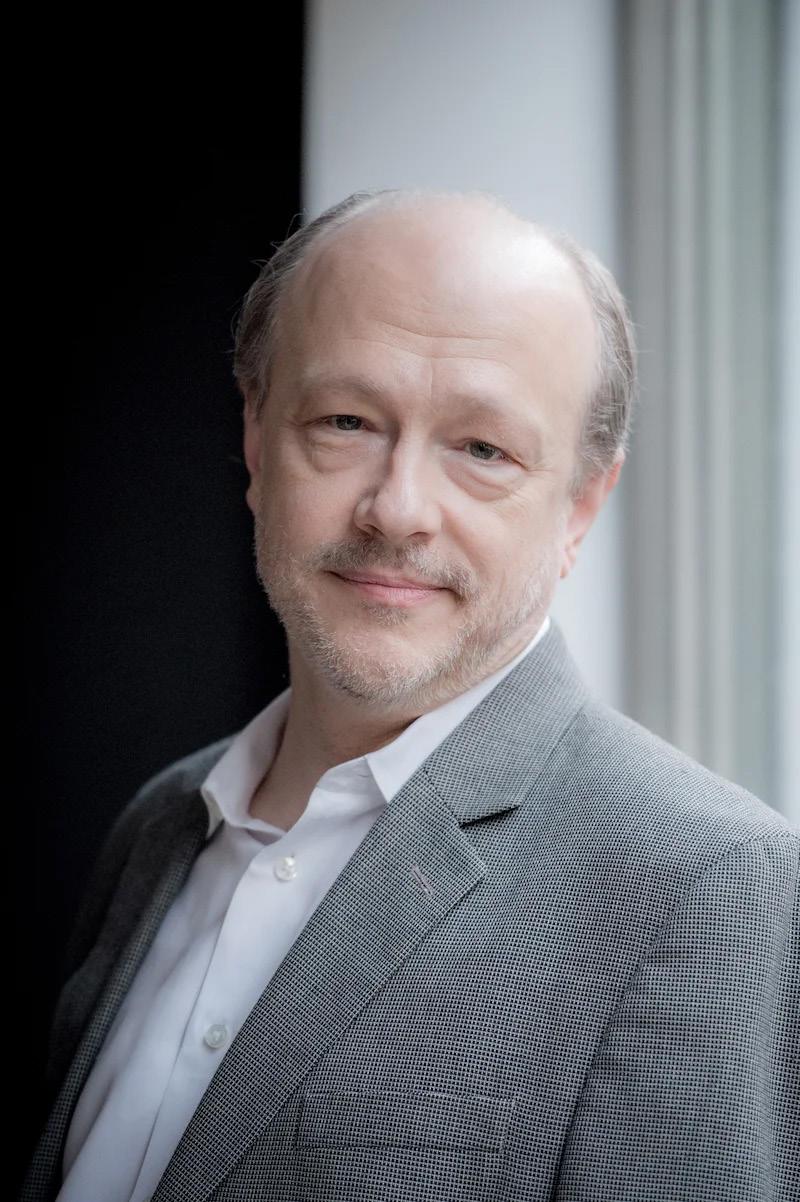
Pianist Marc-André Hamelin, a “performer of near-superhuman technical prowess” (The New York Times), is acclaimed worldwide for his unrivaled consummate musicianship. He continues to amass praise for his brilliant pianism in the great works of the repertoire, and for his intrepid exploration of the rarities of the 19th, 20th, and 21st centuries. He regularly performs around the globe with the leading orchestras and conductors of our time, and gives recitals at major concert venues and festivals worldwide.
Hamelin’s 2025/2026 season spans North America, Europe, Asia, and Australia, with a dynamic mix of orchestral, recital, and chamber music engagements. He opens the season with a tour of Australia and Asia, featuring concerto and recital appearances with the Sydney Symphony under Sir Donald Runnicles, concerto engagements with the Wuxi, Ningbo, and Shenzhen symphonies, and solo recitals in Adelaide, Xiamen, and Shenzhen.
In North America, Hamelin appears with the Philadelphia Orchestra and Yannick Nézet-Séguin, the San Diego Symphony with Thomas Guggeis, the Los Angeles Chamber Orchestra with Jaime Martin, and with the Orpheus Chamber Orchestra, on tour. Recital highlights include Chicago Symphony Presents, San Francisco Symphony, Chamber Music Pittsburgh, Keyboard Concerts in
Fresno, and Soka Performing Arts Center. In duo with Maria João Pires, he is presented by The Cleveland Orchestra, the Gilmore Piano Festival, and the Fortas Chamber Music Series at the Kennedy Center.
European appearances include Rhapsody in Blue with the Bayerisches Staatsorchester and Vladimir Jurowski, the Marx Piano Concerto with the TonkünstlerOrchester Niederösterreich and Fabien Gabel, and performances with the Bremer Philharmoniker, Wigmore Hall, the Schubertiade, MDR Wartburg, and the Chipping Campden Festival. Additional recitals take place in Italy, the Netherlands, and Berlin, along with an extensive duo tour with Maria João Pires to the Philharmonie de Paris, the Barbican, The Hague, Martigny, Toulouse, and Berlin.
Chamber music highlights include the Chausson Concert with Augustin Hadelich and members of the Boston Symphony Orchestra, and the Franck Piano Quintet with the Juilliard String Quartet for the Philadelphia Chamber Music Society. With Canadian pianist Charles Richard-Hamelin, Hamelin tours to Koerner Hall in Toronto, Salle Bourgie in Montréal, Club musical de Québec, and the Isabel Bader Centre in Kingston.
An exclusive recording artist for Hyperion Records, Hamelin has released 92 notable recordings of a broad range of solo, orchestral, and chamber repertoire. In October 2025, Hyperion releases Found
Objects / Sound Objects, a recording of contemporary works. Recent acclaimed recordings include Beethoven’s Hammerklavier Sonata, Op. 106, and Sonata in C major, Op. 2 No. 3, as well as the Dvořák and Florence Price quintets with the Takács Quartet.
Also a noted composer, Hamelin has written more than 30 works. Many, including his Études and Toccata on “L’homme armé”— commissioned by the Van Cliburn International Piano Competition— are published by Edition Peters. He performed the Toccata in 2023 on NPR’s Tiny Desk alongside works by C.P.E. Bach and William Bolcom. His most recent composition, Mazurka, was commissioned by the Library of Congress to celebrate 100 years of concerts and premiered in April 2024. Featuring nine original pieces, Hamelin’s 2024 album New Piano Works is a survey of some of his own recent works, exhibiting his formidable skill as a composerpianist whose music imaginatively and virtuosically taps into his musical forebears. “His previous offerings of his own music were rich, but his latest self-portrait album is on another level,” wrote The New York Times. It was Hamelin’s first album of all original compositions since Études (2010).
Hamelin is the recipient of a Lifetime Achievement Award from the German Record Critics’ Association, and over 20 of its quarterly awards. Other honors include eight Juno Awards, 11 Grammy nominations, the 2018 Jean Gimbel Lane Prize from Northwestern University, and
the Paul de Hueck and Norman Walford Career Achievement Award from the Ontario Arts Foundation. Hamelin is an Officer of the Order of Canada, a Chevalier de l’Ordre national du Québec, and a member of the Royal Society of Canada. Born in Montreal, Hamelin lives in the Boston area with his wife, Cathy Fuller, a producer and host at Classical WCRB.

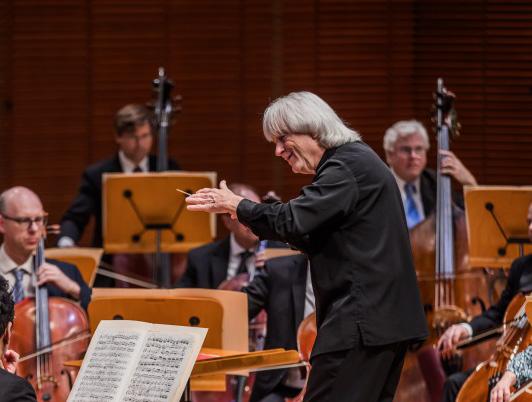
Pacific Symphony plays Haydn & Mendelssohn with Carl St.Clair cond., feat. Vitaly Starikov, piano
SUNDAY, APR. 26, 2026 | 3PM
HAYDN Symphony No. 88 in G Major
MENDELSSOHN Piano Concerto No. 1 in G Minor, Op. 25
After years of unforgettable performances and passionate artistry, Carl St.Clair takes the podium to lead a program that promises brilliance, beauty, and a touch of legacy.