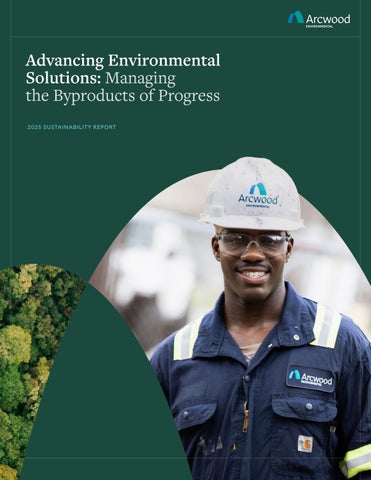
Advancing Environmental Solutions: Managing the Byproducts of Progress


![]()


Every product that is manufactured — from pharmaceuticals to technology — helps our society advance. But this progress also inevitably leaves something behind.
For over 55 years, Arcwood Environmental has managed these byproducts of progress in order to protect human health and the environment.
We partner with our customers to safely manage, reclaim, and recover hundreds of thousands of tons of complex hazardous waste each year.
This enables them to move forward safely and confidently, knowing that these byproducts are managed with care and expertise.


2025 was a year of meaningful progress and continued transformation for Arcwood Environmental. As our industry rapidly evolves, our customers rely on us to responsibly manage complex waste and the byproducts of progress — reducing and reclaiming, where possible, then safely managing what remains. Our guiding principles of safety and compliance shape every decision we make.
Last year, we continued raising our ambition around sustainability with new investments and improvements. Our focus is on providing services that are reliable, responsive, and easy for our customers. This commitment guides how we help our customers operate responsibly so they can meet their sustainability goals with confidence and clarity. Throughout the year, we strengthened our role as a partner in waste management. Our teams kept hundreds of thousands of tons of hazardous materials out of our communities, protecting people and the environment. This is demanding work, and it matters deeply.
As part of our transformation, we strengthened our commitment to sustainability and business performance by adding a C-suite sustainability leader to drive our strategy forward. Over the course of the year, we modernized operations, expanded capabilities, and invested in both the people-driven expertise and technological innovations that help us work even more effectively.
Innovation played a central role in this progress. We advanced new technologies, including upgrades to our internal Materials Management System (MMS), that help us respond faster, operate with greater precision, track impact, and simplify complex waste challenges.
We invested in facility upgrades and ongoing operational improvements that are continuing to reduce our environmental footprint across the business – for example, generating value for customers through our fleet optimization efforts and hub-and-spoke model.
Targeted acquisitions expanded our geographic reach and technical expertise across the United States. These integrations strengthened our network by bringing talented teams into the Arcwood family and broadening the solutions we can offer. Each acquisition was guided by a clear principle: enhance our ability to help customers manage waste responsibly and sustainably.
Alongside this growth, we continued investing in our people. We expanded our workforce across commercial and operations, and our employees remain the reason we can deliver on our promise. Their dedication shows up in every facility, on
every route, and in every customer interaction across our growing network.
Our aspiration to grow is rooted in a desire to expand our positive environmental impact. By 2030, we aim to responsibly manage 50% more waste than our 2024 baseline. We will reach this goal by investing in new service offerings, advancing recycling technologies, continuing to upgrade our operations, and expanding our sustainability capabilities.
Throughout this growth, we will stay true to our guiding principles — putting customers first and delivering solutions that are innovative, sustainable, and grounded in operational excellence. We are dedicated to building a company that is easy to work with, responsive, and reliable as we help customers successfully navigate the challenges of managing the byproducts of progress responsibly.
Thank you for your continued trust and partnership. Together, we are building a safer and cleaner future for the communities we serve and for generations to come.

HP Nanda Chief Executive Officer


Over the past year, Arcwood Environmental has expanded its capabilities in ways that clearly demonstrate our ability to invest strategically, respond quickly, and deliver environmental solutions that create real value for our customers and communities. A major driver of this progress has been our increased focus on mergers and acquisitions, which strengthen the foundation of our business and accelerate our growth in sustainable waste management.
The acquisition of MXI in December 2025 marked a significant step forward in our recycling strategy, and the additions of IRT and ERG further expanded our reach into specialized wastestreams. Together, these acquisitions enhance our ability to reclaim resources, reduce disposal, and offer customers more comprehensive and environmentally responsible solutions. This reflects our approach in action: expanding our capabilities with purpose, building strength where it matters most, and positioning Arcwood as a company to lead the future of responsible waste management.
The integration of MXI, IRT, and ERG has also accelerated our long-term sustainability strategy. By expanding our resource recovery capabilities, we are increasing the volume and variety of materials we can manage across industrial, commercial, and household wastestreams. MXI’s closed-loop solvent and chemical recovery processes, combined with IRT’s expertise in recycling consumer products and ERG’s advanced treatment technologies, allow us to capture materials that would otherwise be lost to disposal. This includes household wastestreams— such as paints, cleaners, and consumer chemicals. These capabilities complement our existing strengths and create a more reliable network across our organization. We continue to build out this platform and, as we do so, are improving operational efficiency through new technologies and processes that reduce waste and enhance throughput. These improvements reinforce our belief that sustainability and operational excellence go hand in hand.
As we advance our recycling capabilities, it is also important to provide insight around our landfill data. A few years ago, Arcwood played a critical role in the environmental response in East Palestine, Ohio. When the community faced an unprecedented challenge, our teams stepped in with the expertise, discipline, and transparency needed to manage hazardous materials safely and responsibly. The volume of material handled during that one-time event temporarily increased our landfill tonnage from prior reporting years. As those volumes normalize, our current landfill data appears to decline more sharply than it otherwise would. Acknowledging this dynamic is essential to maintaining clarity in our reporting and trust with the communities and customers we serve.
As we expanded our recycling platform and strengthened our reporting transparency, we also continued investing in the foundation of our
business. We focused on our people, our operations, and our technology to ensure we can deliver consistent, high-quality service across every facility and every route. Our employees remain the driving force behind our progress. The way they solve problems, support customers, and uphold our standards every day is the reason why we can deliver solutions that are not only effective but easy for our customers to work with. Thanks to them we continue to deepen our engagement with customers, regulators, and community partners to ensure that our expanded capabilities translate into meaningful environmental outcomes. Our goal is not simply to process more material—it is to create measurable, positive impact. Whether we are helping a manufacturer reduce waste, supporting a community through a challenging environmental event, or developing new recycling pathways for complex materials, we approach every challenge with the same commitment to safety, transparency, and responsible stewardship.
Arcwood Environmental is a company built for the future. Our combination of technical expertise, responsive service, and unwavering commitment to safety, positions us to lead our industry through a period of rapid change.
With the strength of our people, the trust of our customers, and the capabilities we continue to build, we are shaping a more sustainable materials economy and delivering meaningful impact for the communities we serve.
We are grateful to all our partners for the collaboration and the confidence you place in us as we move forward on this important journey.

Ernie Walker President


“ Across economies, innovation and progress also create waste. Arcwood’s purpose is to manage this waste — the inevitable byproducts of progress — to protect the environment and human health. Doing this well requires proven experience, technological expertise, and a strong commitment to making responsible choices.”


Carol Roos Chief Communications and Sustainability Officer

371,888
Sustainably managed waste (tons)
13,102
Recycled waste materials (tons)
The equivalent of removing 10,880 gasoline powered passenger vehicles from the road for one year
326
CDP Intensity Metric
Disclosed a Scope 1 and 2 GHG emissions intensity of 326 mt CO₂e per $ million revenue through CDP
In a year of progress and transformation, we made significant investments that strengthen our business, our ability to deliver solutions for our customers, and lay the groundwork for the future. Our goal is not simply to process more material— it is to create measurable, positive impact.
138,011
Avoided Emissions (MT CO2e)
21.5M
Returned treated wastewater for reuse (gallons) The equivalent water usage of 197 homes for one year
Invested in Energy Reduction Projects (total)


0.9
Total Recordable Incident Rate (TRIR)
Advanced new technologies, including upgrades to our internal Materials Management System (MMS), that help us respond faster, operate with greater precision, track impact, and simplify complex waste challenges.
• Expanded Arcwood’s resource recovery capabilities and also accelerated our long-term sustainability strategy through the integration of MXI, IRT, and ERG.
• Strengthened workforce capabilities through ongoing investment in wages and training, supporting employee skills and career growth.
• Increased community contributions, expanding support for local organizations through financial and volunteer support.


Arcwood Environmental is built on a simple and enduring purpose: to protect human health and the environment while enabling industrial and economic progress. For more than five decades, we have supported highly regulated industries with safe, compliant, and reliable waste management solutions.
Established in Indianapolis, Indiana, Arcwood has deep ties to our home state. Our founding in the 1970s coincided with the early environmental movement. The company grew from an early mission to help industries responsibly manage hazardous waste — an effort that has continued to evolve and is now carried forward under our new name, Arcwood Environmental. The business operates a national network of permitted facilities, logistics assets, and specialized treatment capabilities designed to manage the full lifecycle of complex wastestreams. At the heart of Arcwood's culture are four core values that guide our decision making: Lead with Safety, Solve Problems Creatively, Own It Together and Deliver Value for Customers. These principles are embedded into daily operations, performance metrics, and leadership expectations. They shape how we anticipate customer needs, manage risk, collaborate, and continuously improve waste handling practices.
Our focus in 2025 was to make key investments in people, systems, safety, and operations — laying the groundwork for the next phase of our measurable impact.
Since EQT Partners took majority ownership of Arcwood Environmental in 2024, we have begun to strengthen the strategy and infrastructure that will allow us to further embed sustainability as a driver of our company’s growth.
EQT shares our ambition to become the most trusted partner in the environmental services sector. With their investment, Arcwood is growing organically, as well as continuing to complete acquisitions which expand the company’s offerings and geographic reach, upgrading and expanding facilities, growing the workforce and leadership team, and supporting industryleading innovation.
Our focus is on managing our customers' industrial, commercial, and municipal waste in a safe and sustainable way. We maintain a strong compliance record, industryleading safety performance, and the capacity to support large-scale, multi-site customers. Our operations rely on advanced tracking, reporting, and quality systems that provide transparency and regulatory confidence.
We are continually focused on finding sustainable, compliant and cost-effective solutions. We partner with customers to evaluate on-site solutions, alternative treatment pathways, and recycling or beneficial reuse opportunities where appropriate. This approach reduces total lifecycle cost while improving environmental outcomes and has a proven track record of delivering value without compromising safety or compliance.
Innovation at Arcwood is practical and execution-focused. We continuously invest in reliability, process improvement, and safety across our asset network, including recent capacity and infrastructure enhancements at facilities in Orange, Texas; East Liverpool, Ohio; Joplin, Missouri, Indianapolis, Indiana, and Benton, Arkansas.
With more than five decades of experience, a strong capital partner, and a culture built on safety and integrity, Arcwood is uniquely positioned to support long-term, mission-critical waste management needs with the reliability, transparency, and technical expertise our customers expect.
Establishment

1970 Environmental Regulation
The Company was founded after EPA (1970), Clean Air Act (1970), RCRA Act (1976) and CERCLA (1980) were passed.
1978 Indianapolis Plant
Opened facility to address and treat contaminated materials / waste.
1980 Landfill
New hazardous waste landfill is sited in Putnam County, IN, four years following implementation of RCRA.
1983 Transportation Segment Augmentation
Indiana Liquid Transport is acquired to enhance waste transportation services.
1986 & 1998 Treatment Facility Expansion
Addition of the Kansas City, MO and Coolidge, AZ facilities.
2000 East Liverpool Incinerator Acquisition
Acquired East Liverpool, OH, incinerator, fueling continued growth and increased scale.
2017 Fuels Blending Facility Acquisition
Acquired Rineco, in Benton, AR, expanding fuels blending and increasing scale.
2020 Orange Incinerator Acquisition
Acquired Orange, TX incinerator, expanding capacity to serve the Southwest and Gulf regions.
2022 Transportation Bolt-on Acquisition
Acquired Frank's Vacuum Truck Service, expanding transportation network.
Scaled Provider

2024 Acquired by EQT Infrastructure EQT Infrastructure acquired a majority stake in Arcwood from The Heritage Group
2024 New Leadership HP Nanda becomes CEO, previously worked as CEO of Grundfos Water and DuPont Water
2024 Joplin Incinerator Acquisition
Acquired Joplin Incinerator, an energetic waste disposal facility from General Dynamics
2025 Complementary Bolt-on Acquisitions
Completed acquisitions of Innovative Recycling Technologies, ERG Environmental and MXI.

Arcwood is poised for continued long-term growth with multiple actionable avenues for expansion and value creation.
Mission
Our mission is to protect human health and the environment.
Vision
Our vision is to be the most trusted partner in the environmental services industry. We put our customers first and deliver agile, sustainable, and innovative solutions. We commit to nurturing top talent and creating lasting value for our customers, shareholders, communities, and the planet.
Values
Our values shape our ambition, our culture, and how we work together every day.
Lead with Safety
We uphold the highest safety and compliance standards to protect our teams, our customers, and the communities that count on us.
Solve Problems Creatively
We push for better – advancing technologies, processes, and ideas that protect human health and the environment.
Own it Together
We are individually and collectively accountable for our work and our impact, knowing that progress is only achieved by working together – with our customers and with each other.
We put customers at the center for all we do.
Our services and capabilities provide tailored solutions along every point of the waste management continuum including training, prevention, reduction, recycling, energy recovery, treatment and disposal.
Transportation & Disposal
• Fuels Blending
• Incineration
• Nationwide Service Centers
• Rail Transportation
• Stabilization and Landfill
• Transportation Logistics
• Wastewater Treatment
Technical Services
• Compliance Assistance
• Customized National Programs
• DEA/Controlled Substance Management
• Household Hazardous Waste
• Lab Moves/Closures
• Lab Packing
• Onsite Environmental Assistance Programs
• Regulatory Training
Sustainability Services
• Battery Recycling
• Commodity Recycling
• Ethanol Recycling
• Research and Development
• Sustainability Consulting
• Total Waste Programs
• Waste Minimization
• Waste-to-Energy Programs
• Zero Waste to Landfill Programs
Field Services
• Confined Space Entry
• Emergency Response
• Industrial Cleaning
• Onsite Program Management
• Plant Decommissioning
• Site Remediation
• Creates deeply embedded customer relationships
• Establishes control of the waste flow


10-day Network Value-add
• Flexible and compliant staging
• Faster, optimized sorting and routing for downstream processing
• Efficient aggregation and transport of small-volume waste
Disposal Value-add
• Vertical integration through ownership of diverse disposal options
• Provides certainty to customers and enhances margins
• Waste stabilization and treatment for secure disposal

Secured Staging and Regulated Transport
Our facilities are distributed geographically across the United States in 9 fully permitted treatment, storage and disposal facilities (TSDFs), 29 service centers, 4 recycling facilities and our corporate headquarters based in Indianapolis, Indiana. We operate key regional hubs
Abington, VA
Benton, AR
Bowling Green, OH
Bristol, TN
Coolidge, AZ
East Liverpool, OH
Indianapolis and Rochdale, IN
Joplin, MO
Kansas City, MO
Langhorne, PA
Orange, TX
to maximize the proximity of our services to our customers’ operations. This hub and spoke model advances our sustainability goals by improving safety and efficiency, lowering costs and reducing emissions from transportation.

Our service centers are regional hubs within our waste management network, receiving, consolidating, and routing industrial and hazardous materials to the appropriate downstream treatment or recovery solutions— enabling efficient, sustainable and compliant solutions for our customers.
• Abington, Virginia
• Albany, New York
• Alvarado, Texas
• Bristol, Tennessee (Dynamic Recycling)
• Charlotte, North Carolina
• Danvers (Boston), Massachusetts
• Farmington, Connecticut
• Fontana, California
• Golden Meadow (Fourchon), Louisiana
• Hammond, Indiana
• Hayward (San Francisco), California
• Lemont, Illinois
• Langhorne, Pennsylvania
• Lindenhurst, New York
• Livonia, Michigan
• Louisville, Kentucky
• Niagara, New York
• Orlando, Florida
• Seattle, Washington
• Signal Hill (Los Angeles), California
• Telford, Pennsylvania
• Toledo, Ohio
• Tulsa, Oklahoma
• Wood River, Illinois
• Wauseon, Ohio


Sustainability is intrinsic to our business and our mission to protect human health and the environment. We focus on the core elements of people, planet, and prosperity, grounded in a foundation of good governance. A customer-centric focus drives our service, culture, and growth.

Our Approach and Strategic Focus
Our approach to sustainability is a value driver for our customers and our organization. The benefits of our approach touch every part of our business, from helping grow our revenue and reducing operational costs to opening access to capital and improving team performance. This enables us to provide a wider array of services and tap into a broader base of customers.
We integrate sustainability directly into the design and execution of our solutions for customers and our waste management operations. This approach accounts for natural resource stewardship, toxicity mitigation, and harnessing energy potential. We evaluate all opportunities to reduce, reuse and recycle where possible, ensuring that environmental benefits are achieved through permitted infrastructure, diversified outlets, and disciplined logistics planning.
While our operations consistently meet all regulatory requirements, we extend beyond simple compliance by taking action and partnering in initiatives that help shape stronger, more effective policies for our industry. We deliver these results without introducing operational risk, capacity constraints, or reliance on unproven solutions.
Our most recent formal materiality assessment was conducted in 2021 and has informed the direction of our priorities and sustainability initiatives since that time. Our reporting has been broadly organized under the topics identified through this effort and also form the core of our Safety, Environmental, Sustainability, Quality Policy (SESQ), a company-wide effort developed to embed safety in every part of the company.
While our approach has continued to evolve in response to stakeholder engagement, regulatory changes, and ongoing risk management, the 2021
assessment has served as the primary reference point for identifying and managing our most significant sustainability topics.
Now, Arcwood is in a new phase, with new ownership, enhanced investment, and value-added acquisitions. Recognizing the importance of having a more robust and transparent methodology, Arcwood will undertake a comprehensive double materiality assessment in 2026. This process will evaluate material issues from both impact and financial standpoints. It will also map the most important sustainabilityrelated risks and opportunities that impact our business, ensuring our sustainability strategy remains aligned with evolving stakeholder expectations and best practice. The double materiality assessment, and the engagement that is part of that process, will lead to a refreshed sustainability strategy and opportunities for greater alignment and integration of our sustainability efforts across our entire company.


Arcwood’s governance policies, procedures and oversight create the framework that supports our commitment to long-term value creation, compliance, ethical conduct, and transparency. We embed organizational integrity, accountability, risk management, and regulatory compliance into every level of our organization. We reinforce this through ongoing training and controls that help us to build and maintain trust and the support of our stakeholders.

Arcwood is led by an experienced executive team and governed by a highly credentialed board with deep backgrounds in environmental services, regulated industries, operations, finance, and public-company leadership. Together, this leadership structure ensures disciplined decision-making, strong oversight, and a long-term approach to safety, compliance, and customer stewardship.
Arcwood's Board of Directors, comprised of eight members, seven of whom are independent directors, is intentionally composed to balance operational expertise with governance rigor. Board members bring experience in law and executive-level government service, from global industrial services companies, complex logistics environments, and highly regulated sectors, providing meaningful oversight across risk management, audit, sustainability, and executive compensation.
All board committees operate with formal charters and conduct regular reviews to ensure accountability, transparency, and alignment with best-in-class governance standards.
The Sustainability Committee is chaired by Elliot P. Laws, member of the Board, and spearheaded by the Chief Communications and Sustainability Officer, Carol Roos, who was appointed in 2025. The Committee is made up of senior leaders from key functional areas who bring regulatory, public affairs, industry and operational expertise. It is supported by subject-matter experts who are invited to provide technical insight and guidance as needed. The Committee meets on a quarterly basis and operates under direct oversight of the Board, ensuring alignment with enterprisewide strategy and enterprise risk management.
The Committee is responsible for defining Arcwood’s sustainability strategy and priorities, including environmental stewardship, community investment, and assisting the Enterprise Risk Committee of the board by leading ESG risk mitigation and oversight. It approves the Company’s environmental policy, objectives, and management systems, and monitors performance against established targets.

Arcwood maintains a comprehensive Code of Business Conduct and Ethics that establishes the standards of integrity, accountability, and lawful conduct expected of all employees. The Code reinforces our commitment to ethical business practices, including strict prohibitions against bribery and corruption, avoidance of conflicts of interest, fair competition, appropriate business gifts and entertainment, and the accurate and timely maintenance of financial and operational records. It promotes the protection of confidential information, responsible use of company assets and information technology systems, and adherence to all applicable safety and environmental regulations.
The Code reflects our commitment to honesty, integrity, and high ethical standards in all that we do. It furthers our commitment to social responsibility by promoting fair treatment and respect for employees, working with our suppliers, encouraging community engagement, and fostering a culture of transparency, including through established and confidential channels, for reporting and investigating suspected violations. All employees are expected to understand their responsibilities under the Code, and accountability measures are in place to address non-compliance. Through these governance structures and ethical standards, Arcwood strengthens risk oversight, reinforces stakeholder trust, and supports long-term sustainable performance.
Using the Code of Business Conduct and Ethics alongside Arcwood’s other policies and procedures, and applicable federal and state regulation, also supports employees in their exercise of good judgment while fulfilling their daily responsibilities.
Arcwood is committed to respecting and promoting human rights in all aspects of our operations and business relationships. We expect our employees, contractors, and business partners to act ethically and to avoid any involvement in human rights abuses or violations, including forced labor, child labor, and human trafficking. We encourage open communication about concerns, monitor for human rights impacts within our operations and supply chain, and are prepared to address issues quickly if they should arise and continually work to improve our practices.


This Artificial Intelligence Acceptable Use Policy (AI AUP) establishes standards for the responsible, secure, and ethical use of Artificial Intelligence (AI) technologies within Arcwood. It aligns with the Arcwood Artificial Intelligence Standards (AIS) and applicable frameworks including the NIST AI Risk Management Framework, ISO/IEC 42001:2023, the CISA AI Governance Framework, and emerging global regulations such as the EU AI Act. This policy ensures that all AI systems and their users operate with integrity, transparency, accountability, and a commitment to innovation while minimizing adverse impact, including but not limited to environmental impact.
Arcwood Environmental maintains a mature, risk-based IT Security program designed to align with customer needs and enable the business. Our program ensures resilience, regulatory compliance, and informed decision-making. It is governed by a System Security Plan (SSP) with policies and procedures that address all 110 NIST 800-171 requirements across 14 control families. We are also committed to achieving Cybersecurity Maturity Model Certification (CMMC) 2.0 certification in 2027.
Arcwood’s security posture is strengthened by robust processes, best-in-class tooling, and strong governance, including regular reporting to our Board. To validate control effectiveness, we undergo regular third-party assessments, including external audits, vulnerability scans, and penetration tests. In addition, we complete formal self-attestation
under the applicable Joint Certification Program (JCP) framework. Our 24/7 Security Operations Center (SOC) provides continuous monitoring and threat detection.
Recognizing that human error remains a significant security risk, our cybersecurity awareness training program is mandatory for all employees. The training covers phishing detection, secure password practices, data handling, and incident reporting. This program is delivered through interactive modules and real-world simulations to ensure that employees are well-equipped to act as the first line of defense against cyber threats. For targeted groups, such as IT staff, system administrators, and development teams, we require specialized training tailored to their roles. These programs include advanced courses on threat hunting, secure coding practices, vulnerability management, and compliance requirements specific to CMMC 2.0 and NIST standards. By fostering a culture of continuous learning, we empower our teams to mitigate risks and support the organization’s security objectives proactively.
Protecting both internal and customer data remains a cornerstone of our security strategy. We leverage a multilayered security approach that includes advanced encryption, endpoint protection, network segmentation, and continuous monitoring through Security Information and Event Management (SIEM) systems. Our scalable infrastructure, built on cloud-native and hybrid solutions, supports our growing company initiatives by ensuring agility and resilience.


Our team is the foundation of our performance and purpose. We prioritize a culture of safety and foster engagement to support operational excellence and long-term growth across our organization nationwide. In 2025, we invested significantly in our people across all levels and functions through initiatives that strengthen total rewards, organizational culture and communications, training, career and leadership development.
Safety is fundamental to Arcwood’s operations and decision-making. We operate with a single, uncompromising objective: zero incidents. We believe safety incidents are never abstract metrics. They represent real people, families, and communities. Our responsibility is to ensure every employee and contractor returns home safely at the end of each day, without exception.
Our safety management approach directly impacts customer operations, business continuity, and reputation. We reinforce safety continually into our culture, capabilities, and leadership accountability. Safety is treated not as a compliance exercise, but as a condition of employment and a core operational discipline across all facilities and service lines.
Safety governance is led from the top of the organization. Arcwood’s CEO and COO bring direct safety leadership experience from prior roles at leading global companies, and safety performance reporting flows directly to the COO. This structure ensures visibility, accountability, and rapid decision-making at the executive level.
Safety expectations are reinforced through formal systems, leadership behaviors, and daily operating practices, including:
• Safety moments to open every meeting
• Stop work authority empowered for any employee
• Root cause investigations conducted for every incident
• Behavior-based safety programs embedded at the site level
• Daily “Gemba” walks at the locations to observe operations, engage with employees, identify opportunities for improvement, and reinforce operational discipline
• Housekeeping excellence standards across all facilities
• Quarterly safety recognition awards celebrating exemplary performance
• Zero-overdue corrective action culture with active tracking and accountability
SOSPES Reporting*
SOSPES is a mobile-first EHS software that streamlines reporting, tracking, and analyzing of workplace incidents, near-misses, and hazards in real time.
Created in 2009, the 6Safety Program is designed to improve safety culture by increasing awareness of the activities with the highest potential of serious injury and/or death and training about the behaviors and actions employees should take to prevent them. This program has been tailored for Arcwood employees over the years and is foundational to our core value “Lead with Safety.”

• Stop Unsafe Work
• Avoid Pain
• Follow Procedures
6 LIFE SAVING RULES
• Lock Out/Tag Out
• Examine Concerns
• Take Steps to Be Healthy
• Yield the Rewards
* Ratings are a standardized benchmark used to evaluate performance across comparable providers based on a weighted set of criteria such as quality, consistency, responsiveness, and user satisfaction.
Our score is +35% higher than the SOSPES benchmark average, reflecting materially stronger performance across the core rating dimensions. This differential indicates above-average results and a consistent outperformance across key drivers of quality rather than a single isolated metric.
• Confined Space
• Fall Protection
• Hot Work
• Line Breaking
• Driving
In the Joplin, Missouri facility, our automation and engineering team has developed a process for munition disassembly that improves throughput, increases uptime, and keeps our employees safer in the process. The standard process for munition treatment often requires that energetics be detonated. These detonations cause significant wear on the equipment which contains these forces. By making specific changes to these munitions using automated equipment, Joplin engineers have found a way to significantly reduce these forces. These changes improve uptime by as much as 25%, increase throughput by up to 20%, and most importantly, improve the overall safety for our employees.

Transportation safety on rail and road is critical when handling hazardous materials to protect communities, employees, and the environment. Rigorous protocols, training, and regulatory compliance minimize risk, prevent incidents, and ensure responsible stewardship throughout the supply chain.
Arcwood’s Driver Safety Recognition Program supports employees who are out on the road to always prioritize safe driving practices. It also recognizes colleagues who achieve a superior safety record. The program is anchored in our value to Lead with Safety and by Arcwood’s 6Safety Program which provides a practical framework to underscore that it is the responsibility of every Arcwood employee not to take part in any job or task that cannot be done safely and compliantly.
We were pleased to again be recognized among the recipients of the CSX Chemical Safety Excellence Award for our commitment to safely transporting hazardous materials across the CSX rail network. To qualify, customers must ship at least 600 carloads of hazardous materials with zero nonaccidental releases of regulated substances during the year. The award highlights the importance of accident-free shipments and aligns with broader industry standards aimed at preventing accidents.
Arcwood is a recognized partner in the US EPA's SmartWay Transportation Program, which helps companies advance supply chain sustainability by measuring, benchmarking, and improving freight transportation efficiency. The program has been instrumental in preventing the release of millions of tons of harmful emissions and saving over $55 billion in fuel costs. Arcwood’s commitment to sustainability in transportation includes use of alternative fuels and focus on reducing the carbon footprint of our fleet and operations.
Celebrating Excellence 2025 Safety Winner Awardee
When Laura Layton noticed the markings on shells that were imminently scheduled to be processed that day, she immediately called for a stop work. Her careful eye had spotted something wrong — the projectiles about to be processed were not the ones that the facility had been contracted to receive. In fact, the facility had received the wrong shipment.
Arcwood’s Joplin, Missouri site specializes in demilitarization and explosive waste disposal services. Given the nature of the material, the team is highly trained in protocols to ensure the safe disposal of explosive and hazardous materials.
When demilitarizing projectiles, one wrong cut can have severe consequences. If shells had been processed in equipment that was not designed to receive them, the result could have been significant harm to people and equipment.
Laura’s safety training and her good judgement is embedded in a culture that encourages employees to prioritize safety above all else. For her keen eye and swift decision-making, Laura was recognized as Arcwood’s 2025 Grand Prize Safety Winner.


Safety is a team effort. A consistent record of no recordable injuries, year over year, is a testament to a collaborative culture of care and attentiveness.
Arcwood’s Orange, Texas plant has operated for over 15 years without a recordable injury. The plant was acquired in May 2020 and underwent a very complex 60-day turnaround in 2025. Throughout this transformation, the team continued to uphold the highest standards and ensured that no injuries occurred. The
Notably, the Toledo Service Center has operated without recordable injuries since August 2019, setting the standard for Service Delivery. Arcwood also recognizes two other facilities with no recordable injuries — Signal Hill (since September 2019) and Wood River (since October 2019).
Each day, more than 1,900 Arcwood team members bring dedication, expertise, and purpose to solving the complex environmental challenges our customers face. Across more than 36 locations nationwide, our people are united by a single mission: protecting human health and the environment.
Backed by decades of experience, our team is united by a shared belief that environmental stewardship starts with empowered people. Whether responding in the field, delivering technical expertise, supporting onsite operations, or driving sustainable innovations, our employees make the difference. Their commitment strengthens long term customer relationships, fuels continuous improvement in our industry, ensures collaboration and compliance with regulators, and builds a cleaner, safer future together with communities.
2025 was a year of transition, change and investment. Our decisions were guided with input from across the business as we conducted a comprehensive employee survey to better incorporate workforce perspectives, experiences, and priorities. To complement the quantitative insights of a company-wide survey, we also held a series of focus groups that explored issues in greater depth. These conversations provided valuable, actionable feedback to approaches and policies while also reinforcing programs that are working well.
The survey revealed an overwhelming sense of purpose and pride in Arcwood’s mission and in doing work that protects people and the planet. This is a cornerstone of our culture and values.
Other key themes related to the dynamics of organizational transition, including: ensuring physical and psychological safety, building connection within a “new” organization, and caring for personal well-being. The insights included opportunities to create greater consistency of experience across our different locations. Also, the discussion touched on how to ensure clarity around new roles and responsibilities, career progression with a focus on total rewards (compensation), transparent communication regarding advancement opportunities, and performance recognition.
These insights guided both strategic and targeted initiatives taken in 2025 to strengthen engagement, support professional growth, and enhance communication across the organization.
We outlined a refreshed compensation philosophy, creating a cohesive framework for our entire organization and ensuring alignment and transparency as our company grows. This strategic review was informed by a comprehensive industry compensation benchmarking exercise, including comparison of hourly bonus program, which validated that we continue to be strongly competitive in the industry. We evaluated market competitiveness alongside elevated performance expectations.
As a result of this work, we made a further investment of $3 million in wage increases, beyond additional annual merit increases.
We refreshed our long-term incentive plan for directors and above, encouraging retention. We also launched our first ever total rewards statement, allowing employees to have transparency over their complete compensation package. One direct result of employee feedback is our Dependent Scholarship Program which offers up to 10 scholarships of $5,000 each for college-bound high school seniors.
In addition, we trained all managers on this compensation approach through the Enhanced Performance Management Program, ensuring alignment with performance appraisals and helping to strengthen a culture of goal setting, continual improvement, recognition and advancement within the company.
With the expansion of Arcwood’s team, learning and development efforts in 2025 concentrated on building essential capabilities, strengthening our culture, and supporting employees through organizational transitions. This has included a new employee onboarding program. Leadership training supports setting expectations on company values and the recently developed Employee Value Proposition (EVP) — named Arcwood for All, in the Arcwood Way. RISE represents the type of leaders we aim

to develop — those who take Responsibility (R) for their teams, Inspire (I) strong performance, lead through Servant Leadership (S), and Empower (E) employees to take ownership of their growth and development. It reflects our commitment to building leaders who elevate both people and performance.
The Human Resources and People leaders also collaborated on a refreshed approach to reducing voluntary turnover through a variety of training and retention initiatives.
We supported team effectiveness by rolling out Culture Index assessments, involving over 200 employees and leaders for greater insight into work styles, communication preferences, and individual strengths. These assessments helped teams understand how to collaborate more productively, bridging differences in work style and enabling teams to function with greater alignment, trust, and complementary strengths. The collective findings are also discussed at the leadership level to inform policy and programs more broadly.
A major focus this year was modernizing our performance management process. We integrated performance reviews into our workforce management system, making the entire process digital, centralized, and accessible. To support successful adoption, we delivered training to:
• People leaders on how to convey the new performance system, how to give clear, constructive feedback and use the new tools effectively
• Leaders on how to navigate, rolling out new rating scale and performance distribution model, rationale behind that, what to expect with it
• Team members on completing self-evaluations, setting meaningful goals, and demonstrating alignment with company values
• Salaried team members on how to think critically about established goals and self-assessment
The transition to a new performance measurement system has simplified the process and created a more consistent, transparent and growth-oriented approach to evaluating performance. This new approach includes: effective conversations between people leaders and team leaders, more aggregate data to show progress, set up platform for skills inventory and broadened what we can share with people leaders.


While this was a year of focused, foundational development, targeted investments strengthened our culture, improved operational processes, and increased organizational readiness. By equipping team members and leaders with essential skills, we have laid the groundwork for more scalable and strategic learning opportunities in the years ahead.

“ Our workforce is growing and so is our company. We are focused on helping build the functional and leadership skills necessary to have a long-term career at Arcwood.”


Caitlin Hacker Learning and Development Manager
Arcwood operates on a simple truth: every individual deserves to be treated with dignity, respect, and compassion. We know our collective strength depends on our willingness to create space for every individual to be valued. That commitment is part of who we are and part of the future we’re building together.

As we transitioned to a more in-office work model, we supported leaders with focused training. These sessions provided practical strategies for encouraging connection, maintaining morale, and supporting teams through change. This training helped leaders create a positive employee experience during a period of significant adjustment.
We also streamlined company-wide processes by consolidating travel and expense management into a single platform. Employees received training on the updated policies and tools to ensure consistent usage and support efficient, compliant expense processes across the organization.
Environmental services is a fast-growing sector that draws on a range of technical, operational and management skill sets. Our Early-in-Career Program is designed to support young professionals interested in entering the field. Our programs are comprised of our internship and emerging talent programs. Both are designed to help entry-level talent gain exposure to various aspects of the business. The programs encompass professional development opportunities, mentorship, leadership exposure, and real-world experience. Participants also take part in local volunteer opportunities and recruitment efforts focused on local universities helping to broaden our community impact.
The Emerging Talent Program brings together participants from multiple locations and functional areas (including Operations & Center of Excellence, Service Delivery, Safety & Compliance, Marketing, Human Resources, Strategy, Finance, and Accounting). The rotational program includes developmental assignments and offers broad functional exposure and individualized mentorship over 2-3 years. The program emphasizes team - building and community engagement activities that reinforce a culture of collaboration and responsibility.
The 12-week summer Intern Program provides hands-on experience, networking, as well as professional and functional area development. In 2025, this included five undergraduate interns: IT-Cybersecurity, IT-Applications, Marketing, Accounting, and Procurement. Interns completed impact projects that addressed real business challenges while delivering organizational value. Four interns continued part-time during the school year, and two will be returning next summer, highlighting strong engagement and sustained community connection. Together, interns contribute to the spirit of community service and even devoted more than 80 hours of volunteer time during the program.
As our new brand rolled out, we recycled our old hardhats and marked the milestone with a variety of activities to celebrate the contributions that many people have made to building the company over the years.

In 2025, the Arcwood Environmental name and brand identity took root, marking the next step in our company’s evolution and creating a powerful new unifying platform. The new name draws inspiration from arc, symbolizing movement along a curved trajectory and signaling our drive toward innovative solutions, and from wood, which reflects our connection to the natural environment. We celebrated the change across our organization, spending time discussing how the change reflects our mission and values. This is more than a visual change — creating this new identity reaffirms our commitment to growing in ways that are responsible and sustainable, and to building the strategies, partnerships, and trust that allow us to make positive progress.

At Arcwood, the work we do matters— every day. We protect human health and the environment in real, measurable ways. We are trusted by organizations across the country to safely and responsibly manage the byproducts of progress, and that responsibility shows up in all of the work we do. From pioneering waste management technologies to hands-on operations in the field, Arcwood offers purposeful work our employees can take pride in knowing their efforts help protect communities, support critical industries, and step up when it matters most.

Our culture is built on trust, teamwork, and pride in doing the job right.
We move forward together, one team with a shared purpose, counting on each other every day. Safety comes first, expectations are clear, and accountability runs both ways. When the work gets tough, we don’t back down. We lean in, rely on our skills, and show what we’re capable of, shoulder to shoulder. Every role matters here. Whether the work is complex or routine, it’s essential, respected, and done with care. This is a place where challenges bring out our grit, teamwork isn’t just a value, it’s how the work gets done, and moving forward together is how we rise to what’s next.

With more than 55 years of experience, Arcwood offers stability our employees count on and opportunities to grow. We provide steady work and competitive pay and benefits that reflect the importance of what we do, giving our employees the chance to grow skills, take on new challenges, and build a career. Arcwood employees are part of a team that honors its legacy, values hardworking people, and shows up every day to protect people, communities, and the future we share.


rotecting the environment and human health is our mission. As an environmental management company, we take responsibility for managing others’ waste—and the associated emissions—safely, compliantly, and efficiently. Our environmental efforts include initiatives to lighten our impact while advancing circular economy, protecting biodiversity, and working with industry leaders to continually innovate in our field.
Arcwood is strengthening our approach to environmental performance, with a clear focus on reducing emissions across our operations and value chain. We are prioritizing measurable reductions in greenhouse gas intensity, tracking robust data and aligning business growth to the expectations of a low-carbon future.
Arcwood is committed to reducing greenhouse gas emissions intensity within its operations and value chain in line with a low- carbon future, while continuing to grow the business responsibly. We use the CDP intensity metric (mt CO 2 e Scope 1 and 2 GHG per million $ revenue) to track our impact. This metric measures a company’s GHG emissions relative to economic output. It helps us distinguish operational improvements from changes driven purely by business growth or contraction. It gives us a measure of how efficiently we are generating revenue relative to emissions. It also enables clearer benchmarking against peers and sector pathways, informing where to prioritize investments in efficiency, cleaner energy, and process innovation.
Avoided emissions are the greenhouse gas emissions that do not occur because a lower-emitting solution is used instead of a higher-emitting option. This aspect of our operations is a unique and important contribution of the waste management industry to decarbonization efforts and climate progress. Arcwood is committed to tracking and quantifying avoided emissions to create understanding and action leading to positive climate impact and circularity. Methodologies around the concept of avoided emissions continue to evolve through research, policy and industry initiatives. The U.S. EPA, the World Business Council for Sustainable Development (WBCSD), and the Net Zero Initiative have all underscored the importance of distinguishing avoided emissions from direct Scope 1, 2 and 3 emissions.
CDP Intensity Metric
• mt CO2e Scope 1 and 2 GHG per million $ revenue
Over the years, we have partnered with research and environmental consulting firms to use our own experiences and data from our operations to refine methodologies and work toward accounting that is verifiable and captures the positive impacts of our services.
We have focused on two aspects of our business where avoided emissions may be significant. First, we continue to assess emissions avoided through processes that destroy ozone-depleting substance (ODS).

Arcwood’s East Liverpool, Ohio facility provides a unique combination of environmental performance and operational reliability. The facility is permitted as a rotary kiln with an integrated heat recovery boiler, enabling recovery of energy generated during the incineration process. The heat recovery system produces high-pressure steam used to:
• Enhance combustion efficiency and stability
• Support air pollution control systems
• Heat plant infrastructure and processing equipment
• Eliminate the need for a fossil-fuel-powered auxiliary boiler
This design avoids approximately 13,500 metric tons of CO2e annually while simultaneously improving process stability and destruction efficiency for uninterrupted waste treatment.

Second, for high-BTU hazardous wastestreams, Arcwood aggregates material into Hazardous Secondary Material (HSM) fuel used in cement kiln operations. This process converts waste energy content into productive use, displacing virgin fossil fuels while maintaining strict compliance with regulatory and operational requirements.
Arcwood is further enhancing transportation efficiency through the implementation of a hub-and-spoke logistics model supported by an advanced Transportation Management System (TMS). This system dynamically optimizes routing, improves on-time performance, and reduces total miles driven, all while increasing responsiveness to operational variability. This model contributes to reductions in transportation-related emissions across Arcwood’s network while strengthening service continuity.
Protecting human health and the environment means finding the highest and best use of every unit of waste we manage, all while ensuring it is safely handled and kept out of our air, forests, streams, and rivers.
Working with our customers, we determine the highest and best process for customer wastestreams during the profiling and approval process. At this stage, we evaluate waste for potential reuse, recycling, waste to energy, hazardous secondary material fuel for cement kiln, and wastewater treatment options (in this order) before a destruction or disposal option is chosen.
Waste to energy options, for example, are available for eligible non-hazardous wastestreams that can be burned to generate electricity. Certain high heat value (BTU) wastestreams can be blended to produce hazardous secondary materials that are used as a replacement for fossil fuels in cement kilns. Similarly, our wastewater treatment processes separate hazardous constituents from wastewater, allowing the treated water to be safely discharged to a publicly owned treatment works facility for further treatment prior to returning to the environment.
463 , 379
Rail Transport (miles)
Saving 30,037 gallons of diesel fuel
As metrics and reporting standards continue to evolve and mature, Arcwood is committed to advancing our knowledge of how accounting for avoided emissions helps to drive responsible waste management and to drive innovation with focus on sustainability. Our goal is to show not only how we are reducing our own emissions, but helping to show how responsible waste management is an important enabler of decarbonization and circularity.
In addition to identifying the highest and best use for each wastestream, Arcwood evaluates the most efficient logistical facility, prioritizing locations that minimize transportation distance and reduce the carbon footprint associated with moving materials.
These processes ultimately reduce landfill volumes, recover value from materials, and lower emissions from incineration and transportation.


Together with Purdue University’s faculty, we’re helping shape the next generation of leaders who care deeply about the long-term effects of waste on communities and how it is managed. Arcwood is proud to continue its collaboration with Purdue’s School of Sustainability Engineering and Environmental Engineering (SEE) Senior Design Projects by offering real-world business problems where students can apply their research and problemsolving skills.
Over the past year, Arcwood experts partnered with SEE seniors on in-depth research to assess the environmental and human impact of hazardous wastestreams. By comparing untreated waste to Arcwood’s treatment methods, the team confirmed how responsible waste management benefits both people and the planet.
In the past, the Arcwood/Purdue team has also developed a framework for a “toxicity credit” using the EPA’s Tool for Reduction and Assessment of Chemicals and Other Environmental Impacts (TRACI). Our continuing collaboration with academic partners supports data integrity and continuous improvement.

Our East Liverpool facility utilizes a stormwater management system to collect naturally occurring precipitation throughout our facility and utilize it in our operational processes. Collected stormwater is used in lieu of purchased city water in the incineration process, which uses up to 90 gallons of water per minute.
We work toward the stewardship of water by implementing responsible treatment and management practices that reduce potential impacts on water resources, including permitted handling and processing of regulated wastewaters and contaminants such as heavy metals and cyanides. By enhancing treatment capabilities, strengthening compliance systems, and expanding services, we support customers’ environmental goals while safeguarding water quality in the communities where we operate.
Arcwood’s hazardous waste and wastewater treatment services include removing heavy metal constituents and destroying cyanide at our Indianapolis, Indiana facility. Arcwood removes hydrocarbons, such as glycols, oils and solvents from wastewaters at our Benton, Arkansas facility. Arcwood can stabilize heavy metals in solids at our Indianapolis, Indiana facility designed to handle such complex waste.
These facilities work to remove heavy metals and other regulated contaminants from hazardous wastewaters before they are discharged to publicly owned treatment works or other approved recipients, ensuring that our water treatment solutions help to protect waterways and minimize environmental impact.
Arcwood has more than three decades of experience managing fluorinated and other highly complex wastestreams at its East Liverpool facility. This includes long-standing treatment of ozone-depleting substances under internationally recognized protocols requiring stringent destruction efficiencies and third-party verification.
Arcwood’s systems are engineered to safely manage halogenated combustion byproducts and routinely process high-fluoride wastestreams at scale. This capability allows our customers to responsibly manage complex materials without introducing environmental, regulatory, or reputational risk to manufacturing operations. The East Liverpool facility has consistently met all requirements for these destruction events. This facility is uniquely
designed to address the combustion product from halogenated waste, including hydrogen fluoride (HF). The facility routinely processes more than 500 lbs./hr. of fluoride.
Arcwood’s sustainability outcomes are achieved through infrastructure strength, operational discipline, and network flexibility. All proposed environmental benefits rely on existing, permitted assets, diversified disposal outlets, and redundant logistics pathways.
21 , 537,623
Treated Wastewater Returned for Reuse (gallons) Average water usage of 197 homes for one year
For our customers, this means environmental performance that reinforces uninterrupted operations, supports long-term growth, and avoids the introduction of operational risk, ensuring sustainability is delivered as a byproduct of reliability, not at its expense.

The Clean Water Act, or CWA, was passed in 1972. Arcwood Environmental upholds the values of the CWA, restoring and maintaining the integrity of the Nation’s waters every day. Arcwood maintains multiple permits associated with water, including National Pollutant Discharge Elimination System (NPDES) and Publicly Owned Treatment Works (POTW), throughout the country. Specifically, in Indianapolis, Indiana and Benton, Arkansas, Arcwood utilizes thermal and aerobic process to sustainably and compliantly process industrial wastes, keeping it in the environment’s natural Water Cycle. Employing multiple Certified Wastewater Operators, Arcwood cleaned over 21,000,000 gallons of water in 2025 at these two facilities. This means that, in total, 21 million gallons of treated water are returned to the environment, rather than being isolated through underground injection and effectively removed from the natural water cycle. Arcwood plays a crucial role in wastewater treatment, protecting ecosystems by removing pollutants, releasing treated effluent back into nature.


During 2025, our Benton, Arkansas facility installed a new aerosol can crusher recycling unit. This unit is fully enclosed and enables the safe and compliant management of aerosol cans by separating the propellants, which are predominantly propane and butane, the liquids, and the steel cans. The propane and butane are collected as Liquefied Petroleum Gas (LPG) and used to fire the onsite boiler for the wastewater treatment system as a replacement for fossil fuels. The steel is sent offsite for recycling. The liquids are blended into the hazardous secondary material fuel which is sent to cement kilns.
PFAS (per- and polyfluoroalkyl substances) pose a complex waste management challenge for many customers due to growing scientific understanding, changing regulations, and increasing scrutiny from regulators, investors, insurers, and communities.
While attention in the U.S. has focused mostly on the presence of PFAS in drinking water, PFAS waste originates from industrial processes and improper disposal can lead to other forms of contamination. Regulatory frameworks are fragmented across jurisdictions, but stakeholder expectations and public attention are growing. Solutions to address the risks of PFAS should account for the operational, financial, and reputational considerations of managing this hazard.
Arcwood approaches PFAS as a closed-loop waste management challenge, working with customers to design compliant, transparent and traceable management options that address not only removal but also safe disposal and destruction via incineration.
Potentially harmful materials and acutely hazardous materials (e.g. fireworks, munitions or explosives) that become waste, can be managed safely with proper controls and without causing downstream harm to the environment.
While most open burning or open detonation of surplus energetics (OB/OD) has been prohibited since the early 1980’s, an exemption allowed the practice to continue in instances where no safe alternatives existed. The EPA 2024 proposed rule (89 FR 19952) focuses on further limiting OB/OD by defining how generators of this waste would be required to evaluate safe and available alternative technologies.
Arcwood’s Joplin, Missouri, facility is one of those safe and available technologies. The Joplin facility focused the use of their available technologies on providing complete demilitarization and energetics waste disposal services primarily for military defense customers. The facility assets including a one rotary kiln incinerator, one car bottom furnace, 11 thermal treatment units, and several automated demilitarization lines have provided this highly advanced specialty waste disposal since 1995.
OB/OD lacks any environmental controls of the emissions allowing the release of heavy metals, perchlorates, particulates, PFAS, dioxins/furans, explosive compounds and other toxic contaminants. Communities around the OB/OD facilities are concerned with contamination of air, soils, surface waters, sediments, and ground water through air releases and deposition. The number of OB/OD facilities in the US have reduced from (according to some estimates) over 200 facilities in the 1980s to less than 70 today and
with one-third of these being private companies, with the rest as government entities.
In comparing the Joplin processes to OB/OD, the primary difference is our consistent focus on downstream impacts. At our Joplin facility, our equipment design and engineering controls focus on the capture of almost all effluents before anything is released to the environment. All incineration and thermal treatment processes are designed and operated to efficiently treat explosive waste, capture the emissions, and remove harmful contaminants. All operations meet or exceed The Clean Air Act's Maximum Available Control Technology (MACT) standards for Hazardous Waste Combustors (HWCs).

Arcwood celebrates Bat Week each October, combining large-scale restoration—like the Indiana Bat Habitat project—with local efforts. In 2025, the Coolidge, Arizona team raised funds and built a bat habitat, while the Roachdale, Indiana facility protects land and conducts annual monitoring.
Arcwood is committed to managing lands and areas surrounding our operations in ways that support healthy ecosystems and biodiversity.
We take care to regularly review our biodiversity efforts and ensure that our operations are not causing specific threats to any individual species. We monitor to ensure environmental compliance and implement efforts to improve biodiversity at our sites.
A limited number of our facilities are located within or near areas that support sensitive habitats or protected species. As part of our environmental management practices, we assess potential impacts on nearby ecosystems and implement operational controls designed to protect land, water, and wildlife. Through responsible land stewardship, regulatory compliance, and site-specific environmental management practices, Arcwood works to minimize potential impacts and support the long-term health of the natural environments surrounding our operations.


Prosperity means creating shared value for customers, communities, and suppliers. We believe that financial sustainability and environmental sustainability work hand in hand. Working closely with customers, suppliers, and communities we strive to deliver the services, build the trust and foster the collaboration that drives positive economic benefit, social impact, and sustainable business practices across all our operations.

Arcwood has decades-long relationships with Fortune 100 and highly regulated enterprises. These customers rely on us to ensure business continuity, navigate unpredictable or novel wastestreams, support during regulatory scrutiny and solve problems that require coordination across multiple disposal pathways and jurisdictions.
Arcwood supports the progress of many of the nation’s most complex enterprises — across energy, life sciences, manufacturing, and consumer goods — by responsibly managing the byproducts of their progress. Our work strengthens customers’ operational resilience by providing the waste infrastructure, technical expertise, and reliability required to support expanding production demands. We ensure, in turn, that our customers are helping to safeguard human health and the environment as they utilize resources as effectively and sustainably as possible. Many of these relationships span decades, reflecting our track record of consistent execution, transparent communication, and the ability to meet stringent regulatory and operational requirements.
We measure customer satisfaction through our Net Promoter Score (NPS), which provides insight into customer loyalty and service quality. In 2025, our NPS was 62.4, reflecting continued focus on safe, reliable, and responsive service delivery. An NPS rating between 50-75 is considered "World Class."
Arcwood delivers consistent, dependable service through an integrated, nationwide network of permitted facilities and infrastructure. Safety, sustainability, and environmental compliance are embedded in how we operate, guiding every decision we make and standard we follow. Our teams depend on each other, and customers, in turn, rely on this foundation for stability and confidence in critical environmental work.
As customer and environmental needs evolve, Arcwood’s ambition is to always respond with the balance of speed and quality to meet our customers’ needs. Close, real-time coordination across our teams enables fast decisions, clear ownership, and rapid problem solving — so customers experience responsiveness when it matters most.
Arcwood delivers a seamless, end-to-end customer experience. Clear communication, simple processes, and consistent followthrough reduces friction in complex, regulated work. Through our comprehensive services and industry leading digital platforms, customers can trust their work is being handled with excellence.
The local suppliers that help to keep our operations running smoothly have often been our partners for decades. Through industry shifts and growth, our trusted partnerships with many family-owned, local businesses endure and contribute to local jobs, revenue, and a shared commitment to thriving communities. From parts for our machinery to the boots we wear, we are grateful for the many partners that make our work possible, safe and continuous.

Suppliers play a critical role in the success and growth of Arcwood. Arcwood values these existing and potential supplier relationships and selects suppliers based on the principles of integrity, respect, and trust.
We have the expectation that all suppliers integrate Environmental, Social, and Governance (ESG) principles into their daily operations. The implementation of ESG principles requires conducting business in a manner that exhibits commitment to the ideals of environmental protection, value of team members, and sound governance. Suppliers are required to maintain safe and respectful workplaces, provide proper training, prevent discrimination, harassment, or forced labor, and comply with labor laws. Ethical business conduct is critical, including accurate recordkeeping, avoidance of bribery or corruption, fair competition, protection of sensitive data, and disclosure of conflicts of interest.
Arcwood also emphasizes environmental stewardship, expecting suppliers to manage waste, emissions, and wastewater responsibly while minimizing their environmental footprint. Suppliers are responsible for cascading these principles to subcontractors to ensure alignment throughout the supply chain.
Robust reporting mechanisms, including direct contacts, procurement leadership, and an independent Ethics Helpline, allow suppliers and stakeholders to raise concerns confidentially or anonymously. Noncompliance may result in corrective action or loss of business, reinforcing Arcwood’s commitment to ethical, safe, and sustainable supply chain practices.
Arcwood actively participates in industry events, conferences, and training forums to share best practices, stay ahead of emerging regulatory trends, and collaborate on innovative approaches to sustainable waste management. In 2025, the team participated in a number of events to present industry insights and engage with stakeholders including at the Association of State and Territorial Solid Waste Management Officials (ASTSWMO), the EPA e-Manifest Advisory Board, The Pesticide Stewardship Alliance (TPSA) and through the Environmental Technology Council which has quarterly meetings with the EPA, DOT, and DOJ.
> Hazardous Materials Events
We share our industry knowledge at local events, providing information about the proper ways to safely handle and dispose of common household chemicals.


Arcwood has the industry knowledge and team to help customers capture the value of sustainable solutions. This isn’t only about risk management and future-proofing our customers’ businesses — it’s also the role we play in providing sustainable solutions for the total lifecycle of our customers’ products. We’ve found ways to create more profitability that we can invest in growing our business, for the benefit of all our stakeholders.
Arcwood has supported a major global energy company for many years, from routine operations to large-scale emergency response, including rapid mobilization following a nationally significant incident.
During the incident, Arcwood personnel were both continually on site and, in the case of emergency response also embedded for extended periods. This allowed colleagues to design and execute waste management plans in real time that prevented harm and coordinated disposal pathways across multiple facilities.
The deep partnership with this customer allows us to work together to find opportunities for safe disposal and for innovative opportunities for circularity. For example, as in reusing caustic sulfide byproduct (whitings) as a product for paper mill’s paper whitening process, rather than as waste for incineration
When a large national retailer identified gaps in its hazardous waste management program, Arcwood partnered closely with its corporate EHS team to redesign processes, implement training, and embed on-site support. When regulatory scrutiny followed, Arcwood’s documented proactive measures and compliance framework were instrumental in resolving the matter without enforcement action—protecting both the customer's operations and brand reputation.
We work to support our customers’ sustainability goals and strategies to help them not only meet regulatory requirements but also to support their ambition as industry leaders in sustainability. Our work with a global consumer goods company to achieve their goal of sending zero manufacturing waste to landfill.


Arcwood welcomed Indiana’s Secretary of Energy & Natural Resources, Suzanne Jaworowski, and Indiana Department of Environmental Management Commissioner, Clint Woods, along with their teams, to our Indianapolis facility. Visits are an important opportunity to show our impact in action and to discuss ways to continue strengthening our commitment to Indiana’s environmental priorities.
By partnering with local nonprofits and community initiatives, we live the Arcwood values beyond our workplace. Our culture is strengthened by the ways we give back and volunteer in our local communities. By doing so, we support and honor each other, foster compassion, and create meaningful, hands-on impact.
On Earth Day, people around the world mark a renewed commitment to caring for our environment. Arcwood sites organized a variety of events to highlight ways we can all take steps for safety and sustainability in our daily lives.
• Teams in Indianapolis, Indiana conducted White River water sampling, road and trail cleanups, birdhouse building, and campus beautification.
• In St. Louis, Missouri colleagues held an e-waste drive, cleaned storage areas and outdoor spaces.
• Team members in Coolidge, Arizona participated in Adopt-a-Highway and planted on-site.
• Together with local business, Arcwood team members in Orange, Texas joined forces for an early-morning site cleanup.
• In Seattle, Washington and Signal Hill, California, colleagues cleaned up in their neighborhoods and joined local celebrations.
AMERICAN CANCER SOCIETY RELAY FOR LIFE
Arcwood has been a corporate sponsor of the American Cancer Society’s Relay for Life for a decade. This annual event honors, supports, and builds ties among the cancer community in Indianapolis. Proceeds from the event support vital programs such as Hope House, which provides free lodging for families during treatment; free rides to treatment; a 24/7 cancer support hotline and survivor connections and peer support.
The Lakeland Center is an adaptive, therapeutic horseback riding center that offers innovative healing and educational, inclusive, community-focused programming. Founded in 2000, and previously known as Hope Haven, the Lakeland Center is located west of Indianapolis with property in Putnam, Hendricks, and Morgan Counties. The facilities host an indoor and outdoor arena, 10 acres of pasture, and rural community farm buildings. Arcwood’s support of the Lakeland Center began in 2011 and has since grown with further donations, volunteer time, donated equipment and participation by team members’ children.
GLEANERS FOOD BANK
With 1 in 8 Hoosiers facing food insecurity, it is more important than ever to take action. The Gleaners Food Bank of Indiana provides food to thousands of local residents through pantries, mobile delivery, and home services. Arcwood volunteers were able to sort and pack 6,707 pounds of food, enough for 5,589 meals.

Arcwood volunteers and interns brought joy to individuals in hospitals, nursing homes, and health care facilities by creating arrangements from donated flowers, working with Random Acts of Flowers, an Indianapolis nonprofit. The arrangements brighten someone’s day — a valuable experience rooted in compassion, connection, and community impact.

• In Benton, Arkansas our team joined the Saline County Library’s Battle of the Businesses and donated 605 pantry items, earning 3rd place in the annual drive! Together, the community collected nearly 7,000 items, doubling last year’s drive.
• In Boston, Massachusetts the team gathered clothing and shoes for Lifebridge North Shore in Salem, donating an incredible 250 lbs. of items to help those in need.
• In Indianapolis, Indiana, the team stocked up supplies for The Julian Center by donating diapers, hygiene products, cleaning supplies, and medicine during the holiday season.
• In Roachdale, Indiana, our grants supported students and student athletes in their education and early career development, including fields of environmental science and agriculture.

In July, fifty-three Arcwood volunteers came together for a total of 205 hours at our Indianapolis Plant to participate in a Habitat for Humanity Panel Build. This marks our 15th consecutive year supporting Habitat for Humanity, an organization whose mission to expand access to safe, affordable housing aligns closely with our commitment to strengthening the communities where we live and work. Throughout the day, team members from across the plant, transportation, service delivery, and the corporate headquarters collaborated to construct the wall panels that form the structural framework of a future home for a family in the Greater Indianapolis Area. Once completed, these panels were transported to the build site, where they will be assembled into a fully finished home.

Fresh evergreens have been used, for centuries, to honor and pay tribute. Wreaths Across America encourages laying of wreaths as a gesture to honor veterans, active-duty military, and their families, creating a powerful remembrance of service that spans generations.
Each year, Arcwood sends two trucks to pick up full loads of wreaths from Maine and to participate in the Wreaths Across America honor fleet. Our drivers make the journey to Maine and back – driving more than 5,133 miles home – to pick up and deliver wreaths. Our team members participate in local wreath laying ceremonies near their homes and spent over 120 volunteer hours in service to honor veterans at six locations. Our activities are part of National Wreaths Across America Day which mobilizes millions of volunteers, placing over 3.1 million wreaths at 5,598 locations nationwide.

Arcwood’s 2025 interns rolled up their sleeves with The STEM Connection, a local nonprofit that inspires kids to explore science through outdoor learning. Interns helped with day camp activities, joined a nature walk, and assembled STEM education kits for local classrooms. Arcwood also was a sponsor of the annual Sunflowers at Sunset event, which helped raise $106,000 in support of STEM programs for youth who are underrepresented in key STEM fields.
Arcwood is proud to support the work of Horizon House of Indianapolis, whose mission is to provide housing, resources, and hope to those experiencing homelessness. It is a mission that resonates with colleagues who have experienced housing insecurity themselves or have been close to the issue. Actively participating in the work of community organizations is a way to live the Arcwood values. For example, living Proud Purpose means being there to really support people in our community with intention, heart and action.
W


This Sustainability Report has been published to transparently disclose Arcwood Environmental’s sustainability vision, strategies, key initiatives, and major achievements to stakeholders. It aims to systematically manage the company’s sustainability agenda and communicate its efforts and progress toward achieving its sustainability goals.
Reporting Scope
Reporting Period
The reporting period of this report is from January to December 2025. This report is published on an annual basis.
Abbreviation Definition
AI Artificial Intelligence
AI AUP Artificial Intelligence Acceptable Use Policy
BTU
British Thermal Unit is a unit of measurement for heat energy, specifically defined as the amount of heat required to raise the temperature of one pound of water by one degree Fahrenheit
CAA Clean Air Act
CERCLA Comprehensive Environmental Response, Compensation, and Liability Act
CISA Cybersecurity and Infrastructure Security Agency
CDP Carbon Disclosure Project
CMMC Cybersecurity Maturity Model Certification
EHS Environmental Health and Safety
ESG Environmental, Social, and Governance
EU European Union
GHG Greenhouse Gas
HSM Hazardous Secondary Material
IEC International Electrotechnical Commission
ISO International Organization for Standardization
MACT Maximum Available Control Technology
MMS Material Management System (Arcwood internal data system)
MPG Miles per gallon
MT CO2E Metric Tons Carbon Dioxide Equivalent
MWH Megawatt Hour
NIST National Institute of Standards and Technology
NOX Nitrous Oxide
OB/OD Open Burning / Open Detonation of energetic wastes
ODS Ozone Depleting Substances
RCRA Resource Conservation and Recovery Act
REC Renewable Energy Certificates
SCOPE 1
SCOPE 2
SCOPE 3
A measurement of direct emissions from sources owned or controlled by a company, such as fuel combustion in company vehicles or emissions from on-site industrial processes
A measurement of indirect greenhouse gas (GHG) emissions from the generation of purchased electricity, steam, heat, or cooling that a company consumes
A measurement of all indirect greenhouse gas (GHG) emissions that occur in a company’s value chain, but outside of its direct control, including upstream and downstream emissions
SESQ Safety, Environmental, Sustainability, Quality Policy
SIEM Security Information and Event Management
SOSPES A cloud-based Environmental, Health and Safety (EHS) management software platform
TCO2E Tons Carbon Dioxide Equivalent
TSDF Treatment, Storage & Disposal Facility
TMS Transportation Management System
TRACI
U.S. EPA’s Tool for Reduction and Assessment of Chemicals and Other Environmental Impacts
TRIR Total Recordable Incident Rate
U.S. EPA United States Environmental Protection Agency
Emissions
Intensity Metric (mt CO2e Scope 1 and 2 GHG per million $ revenue)

Reclaim. Arcwood Environmental will continue to turn today’s challenges into tomorrow’s opportunities by managing the byproducts of progress responsibly, and continually working to protect human health and the environment. Our strength lies in the expertise, integrity, and shared values of our employees, who drive consistent, high-quality outcomes across every operation. Together, we are building a future defined by leadership, accountability, and lasting impact. For