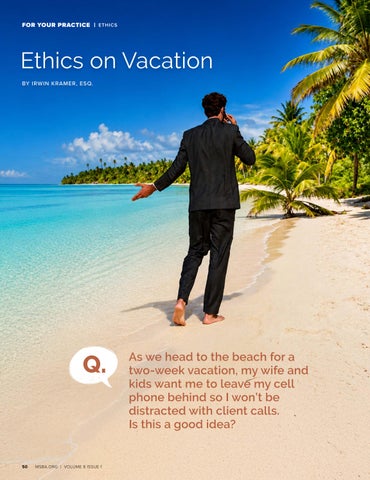
Ethics on Vacation
BY IRWIN KRAMER, ESQ.

Q. As we head to the beach for a two-week vacation, my wife and kids want me to leave my cell phone behind so I won’t be distracted with client calls. Is this a good idea?

A.Taking a well-deserved break from law practice is an excellent idea. Time away lets you decompress, avoid burnout, and reconnect with the family you may have neglected during that hectic divorce trial. And if you don’t want to trigger a divorce of your own, leave the work at home.
THAT SAID, EVEN IN PARADISE, a lawyer remains subject to the Rules of Professional Conduct. We aren’t required to be on call around the clock, but Rule 1.4 requires us to “promptly comply with reasonable requests for information.” Most clients can survive two weeks without us—but a little planning before you leave can prevent a grievance when you return.
SET BOUNDARIES
Let your clients know when you’ll be on vacation and that your access to email and other communication will be limited or unreliable. If they don’t already have your cell phone number, this is not the time to share it—unless a genuinely urgent matter requires your attention while you’re away.
RECORD A VACATION VOICEMAIL
Before you leave, record a greeting that tells clients you’re on vacation, when you’ll return, and that you’ll call them back promptly. Include instructions for reaching someone in a true emergency. A clear message sets expectations and spares clients unnecessary anxiety.
DESIGNATE COVERAGE
Like physicians, lawyers can’t always control when a crisis demands immediate attention. If you practice in a firm, brief your colleagues on any pressing matters and let them assess the need for your personal involvement. If you’re a sole practitioner, a well-trained assistant may be able to screen calls and make the same judgment.
SET AN OUT-OF-OFFICE REPLY
Your email response should carry the same information. Many lawyers say they are “out of the office” but stop short of saying they’re “on vacation,” as though that admission undermines their dedication to client service. It doesn’t. Let your clients, opposing counsel, and others know that you are human and that you need time away.
Technology makes it easy to take the office with you everywhere. That may help you respond to emergencies, but it makes it harder to recharge—and harder to resist the urge to check your phone throughout the trip.
Do I practice what I preach? In my earlier years, I always took my work with me. Today, I keep interruptions to a minimum. When I have a reliable connection, I check email twice a day— enough to respond to clients who simply cannot wait two weeks. Given the nature of my practice, I often work with lawyers in crisis, for whom two weeks away can feel like an eternity. A brief check-in usually lets me offer a word of reassurance that puts us both at ease until I return.
Legal ethics never takes a holiday. But to serve our clients well over the long run, lawyers must first take care of themselves.

Irwin Kramer is the managing attorney at Baltimore’s Kramer & Connolly, where he represents attorneys facing disciplinary action. He publishes a popular blog on ethical issues at AttorneyGrievances.com.