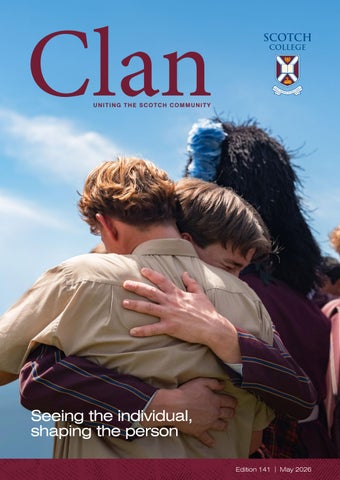
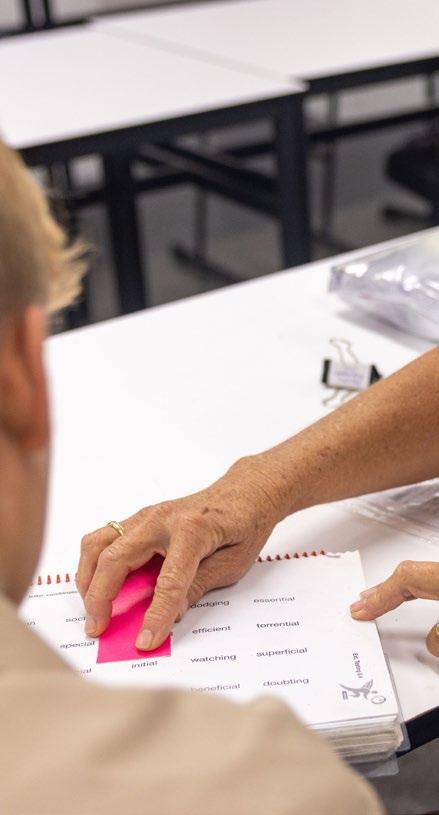
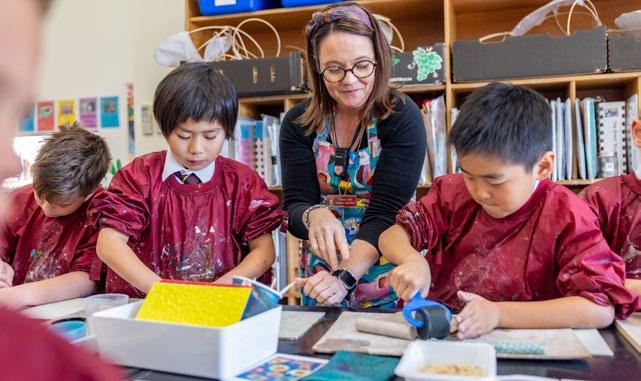
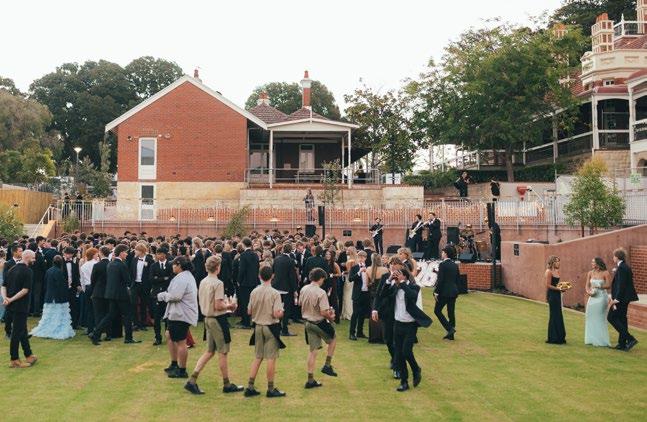
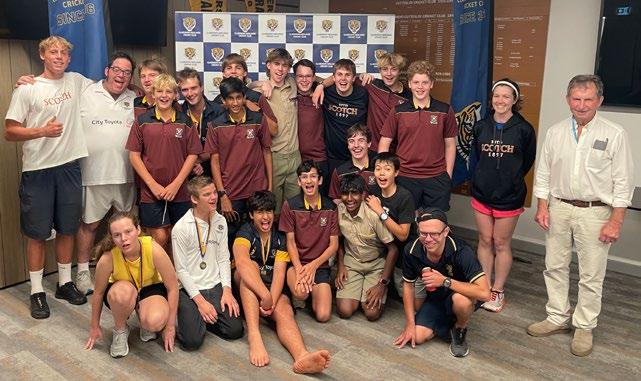
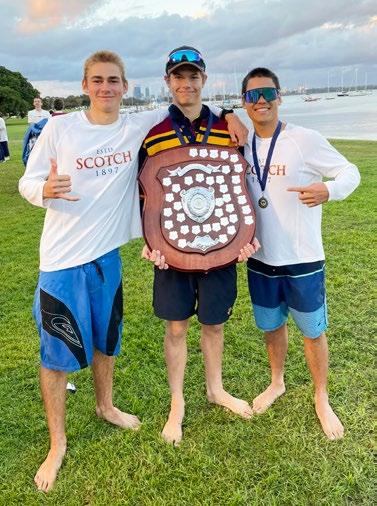
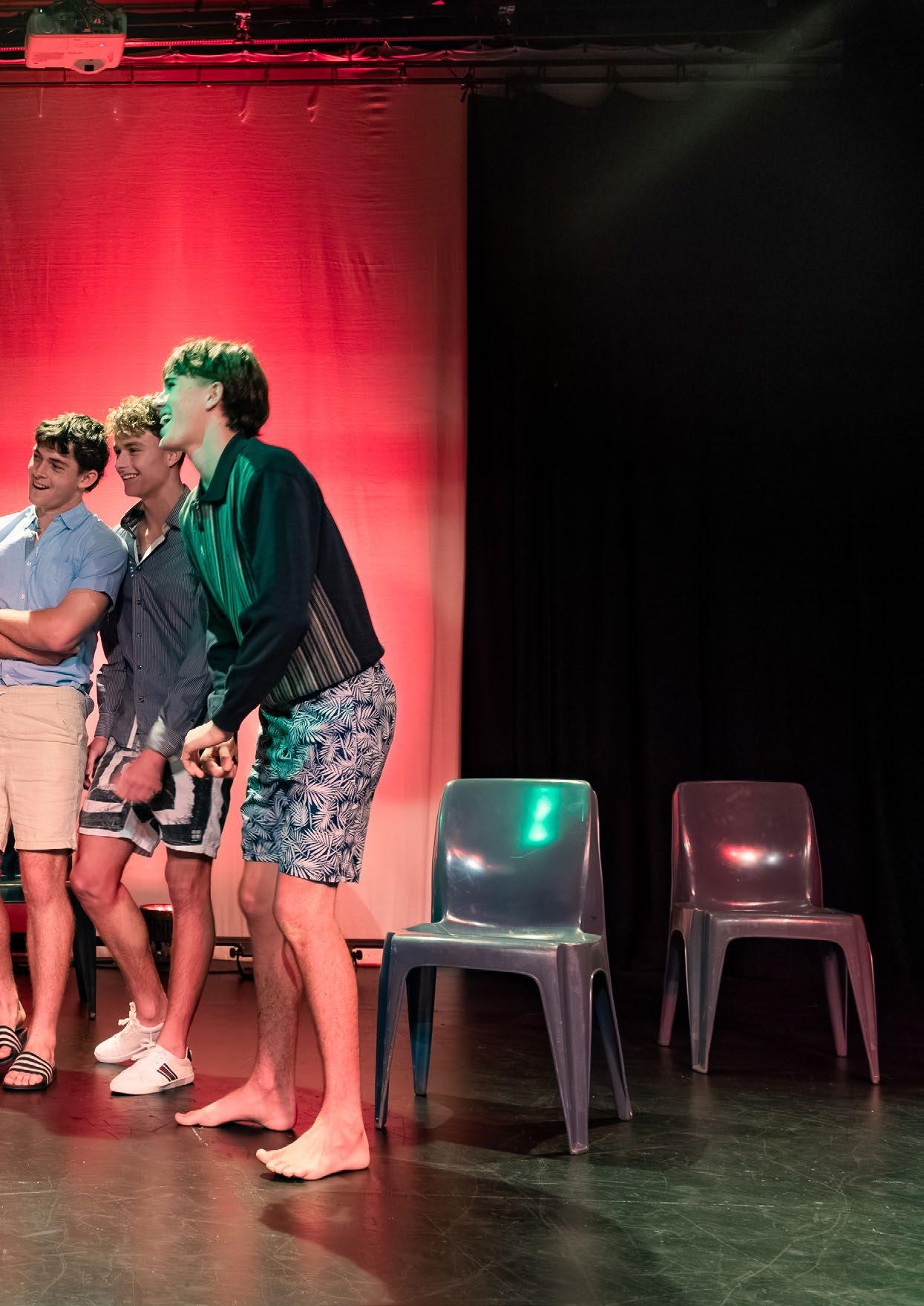
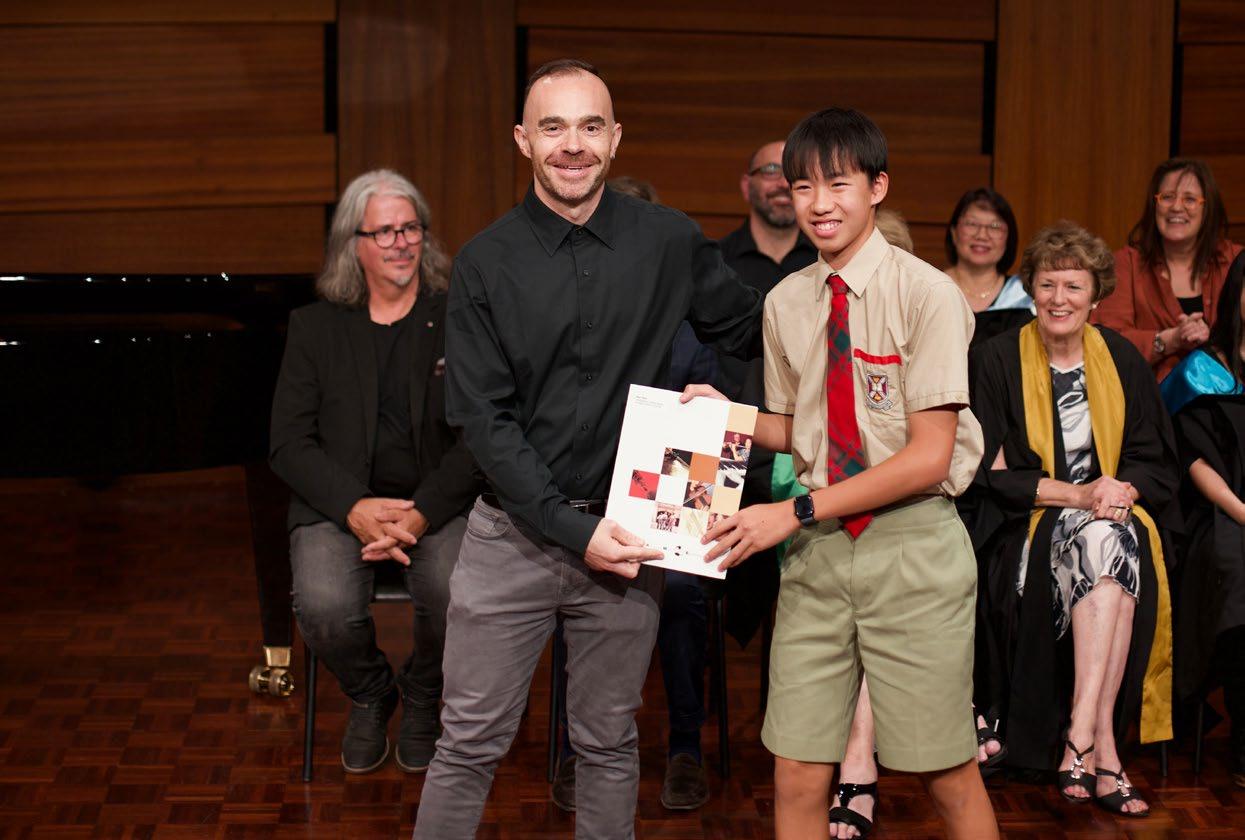
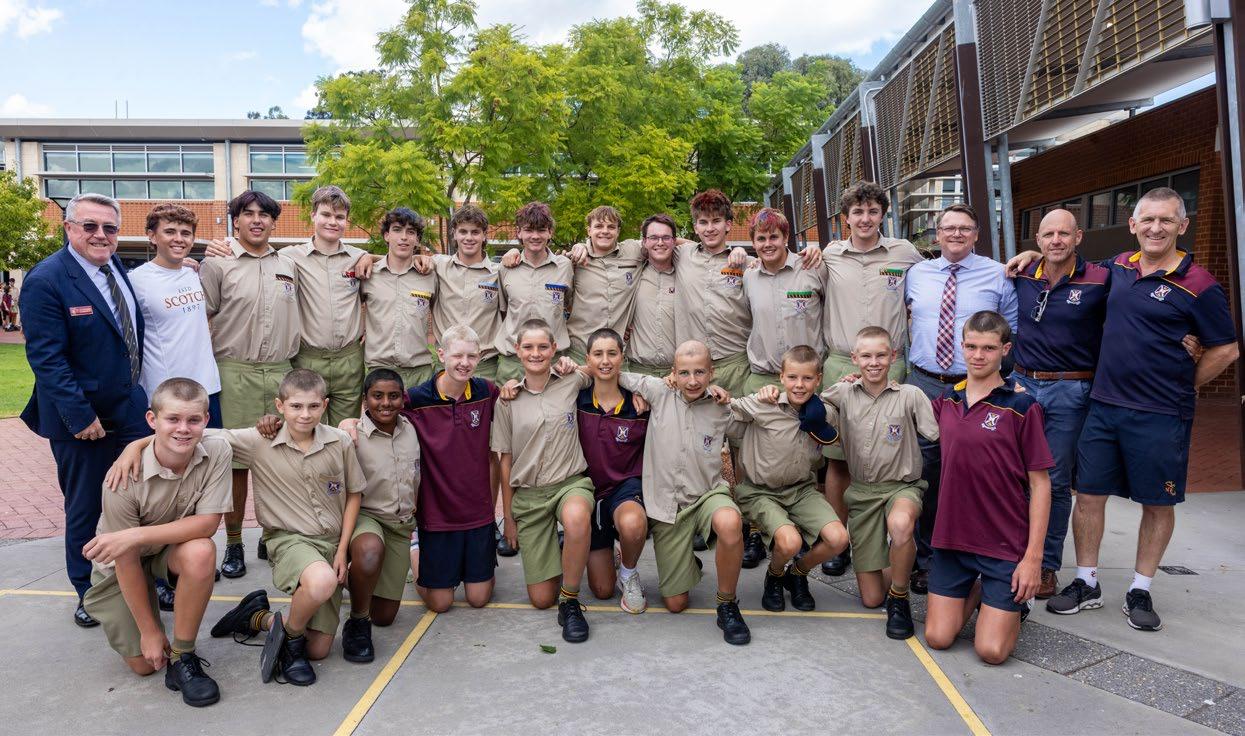
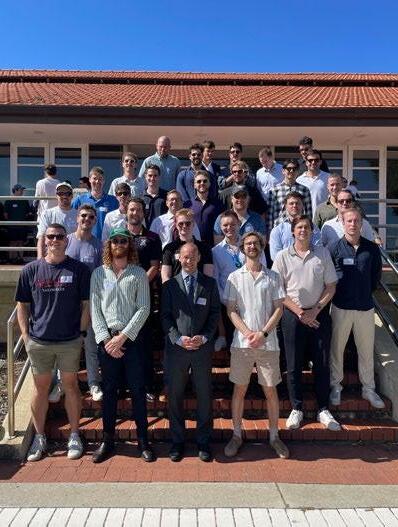
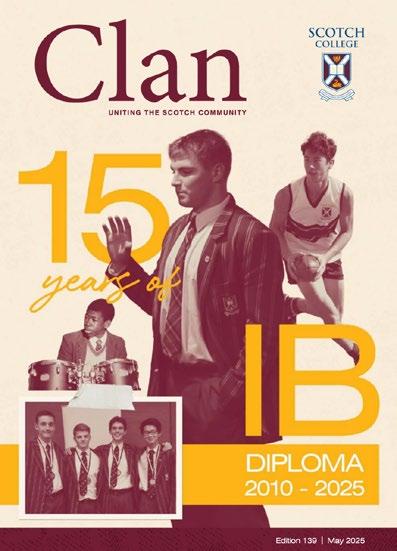
On the cover: Henry Dyke (OSC 2025) and Jarra Mallard embrace at March Out 2025.
Knowing the boy
Dr Alec O’Connell Headmaster
Before stepping into the role as Head of an organisation, one must first understand its ‘true north’.
This is not found solely in balance sheets, KPIs or glossy strategic plans, but in the cultural and values-driven claims that reveal who the organisation aspires to be.
For Scotch, the central question is: how do we focus on developing our students so that each graduate is a young person of character, able to navigate the world with purpose, confidence, and a clear sense of identity?
Before commencing at Scotch, I spent considerable time researching what the College stood for. During that time, I encountered the phrase “Knowing the Boy”, which I mistakenly assumed was the College’s main tagline. It immediately struck me as the most powerful phrase capturing a core value of the College. Even fifteen years later, it still sits at the heart of my understanding of Scotch’s mission. For me, “Knowing the Boy” captures the essence of what we strive to do: to understand each student deeply, who they are, who they might become, and what they need to flourish.
As I approach the conclusion of my fifteenth year as Headmaster, I reflect on this phrase. To guard against complacency, I asked a simple but significant question: How does our school make “Knowing the Boy” real, visible and lived, rather than allowing it to drift into pleasant but untested rhetoric?
Schools, like all institutions, must treat slogans carefully. They are easy to proclaim and far harder to inhabit. The question therefore becomes: does this
phrase truly manifest in tangible ways, or has it simply become a comforting sentiment that sounds good in prospectuses and speeches?
I have always preferred realism to idealism and remain wary of aspirational language not grounded in action. Scotch is not perfect, no school is, and a relentless pursuit of perfection is both unhealthy and unrealistic. Yet striving for clarity, consistency and authenticity remains within reach, even if achieving them for every student at all times is not possible. In the complexity of a large school, we will not always please or satisfy every family, nor will we get every pastoral interaction exactly right. But it is our responsibility to keep our intentions pointed toward care, understanding, and purposeful connection.
In my experience, a small minority of parents will always challenge a school’s claim that their child was genuinely known. Sometimes these concerns arise from miscommunication, misalignment of expectations, or simply the reality that adolescents do not always share their school experiences at home. Yet year after year, as our Year 12s cross the stage at Valedictory, I see a different truth. The speeches, stories, and gratitude expressed reflect how countless boys did in fact feel known, understood and supported. The relationships formed between students and staff are often rich, enduring and meaningful. Despite occasional doubts or critiques, I remain convinced that being “known” at Scotch is not just rhetoric but a reality for the vast majority of our graduates.
Still, conviction alone is not enough. The more important task is understanding how we make “Knowing the Boy” visible and measurable. How do we show, through systems, culture and relationships, that we genuinely know the boys entrusted to us? And how do we continue strengthening this commitment as society, adolescence and schooling evolve?
To move beyond sentiment, we must show that the phrase carries substance in the daily life of the College, in the decisions
we make, in the curriculum we design, in the pastoral structures we build, and in the way every boy is supported. Only then can “Knowing the Boy” be a lived experience for students and their families rather than a theoretical ideal.
What follows is an exploration of how we operationalise this idea. These strategies, practices and cultural structures are not exhaustive, nor are they fixed. They are dynamic, continually refined, and deeply interconnected. Together, they show what “Knowing the Boy” looks like in practice within our community.
A school built around human relationships
The foundation of “Knowing the Boy” is human connection. Students thrive when adults around them notice, listen and respond thoughtfully. At Scotch, relationships are not incidental to learning; they are decisive. Through Mentor Groups, House structures, classroom interactions and co-curricular engagement, boys encounter adults who become role models, guides and anchors.
Our pastoral team, Heads of House, classroom teachers and coaches all contribute to this web of relationships. What makes it powerful is not the number of touchpoints but the consistency of care. We aim for every boy to have at least one adult who genuinely knows him well, his strengths, quirks, aspirations, worries, friendships and emerging identity. When this happens, boys gain security. They know they are not invisible in a large school; they are seen.
Creating structures that support individuality
Connection cannot rely solely on goodwill; it must be built into the architecture of the school. Our pastoral structures aim to balance continuity with adaptability.
In Senior School, Mentor Groups provide
Knowing the Boy captures the essence of what we strive to do: to understand each student deeply, who they are, who they might become, and what they need to flourish.
a daily point of contact where boys are checked in with, guided and supported. Houses give each boy a place of belonging, a smaller community within the larger school.
In Middle and Junior School, there are different structures, where the Pastoral Care Group teachers, Year Level Coordinators, and class teachers perform a crucial role in knowing a boy.
Academic structures matter too. Teachers collaborate to track progress, anticipate needs and intervene early when issues arise. The focus extends beyond academic performance to attitudes to learning, wellbeing indicators and character development. These structures ensure that knowing the boy is not left to chance; it is systematic.
Culture as a lived expression of “knowing the boy”
Culture speaks through behaviour, not posters or brochures. A school’s culture becomes evident in how students treat one another, how staff speak to students, and how the community responds during times of challenge or change. At Scotch, our culture aims to affirm that every boy belongs here, not when he is perfect, but as he is.
We encourage boys to bring their whole selves: their talents, vulnerabilities, questions and emerging understanding of who they want to be. When boys learn that the school values authenticity over performance, they develop trust. And trust is the soil in which relationships deepen.
The learning environment as an extension of pastoral care
Learning is personal. Students engage more deeply when teachers design environments that recognise differences in pace, interest and style. Knowing the boy academically means understanding how he thinks, where he struggles and where he excels.
Whether through differentiated instruction, feedback cycles, support services or extension opportunities, our intention is to ensure that every boy feels that his learning journey matters. This does not remove challenge; rather, it guides boys through it so that struggle becomes part of growth, not a source of shame.
Co-curricular life: seeing boys in their element
Some of the most authentic moments of connection happen outside the classroom, on sporting fields, in music rooms, on outdoor expeditions, in service programmes and during cultural activities. Boys reveal different dimensions of themselves in these environments: perseverance, teamwork, creativity, leadership, humour, frustration and joy.
Staff who coach, mentor or guide in these settings gain insights into boys that complement classroom interactions. This widens our understanding of each student, ensuring that our knowledge of him is holistic rather than academic or behavioural alone.
Families as partners, not clients Knowing the boy strengthens when we also understand his family context. Parents and guardians provide crucial insight into what motivates their child, what worries him, and how he experiences the world. Partnership does not mean always agreeing, but it does require mutual respect, open communication and shared intent.
In moments of tension, our commitment remains the same, to act in the best interests of the boy, individually and as part of our community. Even difficult conversations can affirm connection when they are handled with transparency and care.
A commitment to continuous improvement
Our claim to know the boy must be tested, reviewed and renewed continuously. Adolescence evolves, society shifts, pressures change, and schools must adapt. Reflecting honestly on our practices, gathering feedback, analysing student data and challenging complacency helps ensure we continue improving.
After fifteen years in this role, I have learnt that the work is never finished. Each cohort of boys brings new dynamics, needs and possibilities. And each year, we recommit ourselves to the task of understanding, supporting and guiding them.
Making the invisible visible “Knowing the Boy” is only meaningful if it is lived, not simply declared. A tagline can be printed. A philosophy must be practised. For me, this phrase remains both a challenge and a promise, a challenge to continually refine how we know, support and develop every boy and a promise that no student should ever feel unseen in our community.
If, at the end of his time at Scotch, a boy can say someone here truly knew him, his strengths, struggles, hopes and emerging identity, then we have done more than educate. We have formed a young person who understands that he matters, that he belongs, and that he can shape his future with integrity and confidence.
That is why this phrase still matters to me as much as it did on the day I arrived.
As the social commentator, Hugh McKay so aptly states:
“The greatest gift we can give others is our undivided attention. It shows them that they matter.”
At Scotch we genuinely believe that every boy matters, and in turn, we hope they feel valued and known for their unique charisms and character while at school, and well after they have graduated.
Council The strength of community
Mr Tim Wiese Chair of Council
Following a welcomed Christmas break and some valued time spent with family and friends, the business and reason for being of Scotch College has resumed.
The year kicked off for me with a welcome for new staff in relative calm before they began their teaching duties and the return of students.
Having students back on campus was a hard deadline for the completion of the new green space at the southern end of the site that once was M Block. The result has been a fantastic addition that offers flexibility and opportunity to teachers and students alike. Only time will reveal the full spectrum of its possible uses. Also hitting a hard deadline was the refurbishment of the boarders’ dining room. A significant refresh of facilities front and back of house was completed over the Christmas break just in time for the start of the school year.
In 2026, the Council has been joined by Mr Tim Bult, a current parent and Old Scotch Collegian who has made positive contributions previously in evaluating investments in both the Middle School development and a major solar installation for the College. He has had a long career with Wesfarmers and is currently Managing Director of their Safety and Industrial Division. I welcome Tim to Council and look forward to working with him further.
As a past parent and old boy, my present engagement with the College is in a governance role, rather than “having skin in the game” as a current parent or student. But nonetheless I have a great appreciation for being part of the Scotch community. Whether it’s catching up with the gracefully middle-aged 1988 cohort of old boys, bumping into friends made while our two boys went through Scotch or making new acquaintances through my role on Council, the broader Scotch community is one to be cherished and valued. As you go through life, you will be a member of a whole range of communities. Any time you move house, take up a new sport or activity or change your working arrangements, chances are you will become part of a new community.
A strong community has a few key traits that members of that community will benefit from, sometimes unknowingly. It
will have a range of social connections and support networks, high levels of participation and volunteering, and people willing to “go the extra mile” for others. Newcomers are welcomed. Leadership is strong at the top and many people step up in informal roles. People are supported when difficulties arise. Members of the community feel they have input into decisions. The Scotch community ticks all these boxes and more.
The strength of the Scotch community was on display with the introduction and acceptance of the policy on e-rideables. While I do not imagine for a moment that the introduction of this policy was universally celebrated, the feedback has been overwhelmingly positive. On behalf of Council, I would like to thank everyone for their support on this issue.
I recently had need to call in help from another community that I am part of. Just prior to Christmas, as part of harvesting operations, we had a fire ignite and accelerate beyond a point that we could control. Good communication, 80 spirited volunteers, excellent leadership, access to increased resources in the form of water bombers and plenty of good-natured support literally saved the day. Volunteers turned out over the following days to assist with mop-up and monitoring. Again, the same traits of a strong community were exhibited in spades, and I was humbled to be on the receiving end of some generous acts of service.
2026 will have its highs and lows like any year. Global issues are resulting in a great deal of uncertainty, particularly within our boarding and regional families. So, lean into your communities. Communicate early and often, accept help graciously and be tolerant and kind. The Scotch community is a strong and resilient one, with great expertise to be tapped into.
Steady hands, lasting legacies
Ben Bartholomaeus Chair of Foundation
As I prepare this, I am struck by the uncertainty that continues to shape the world around us.
Global markets remain turbulent as inflation persists, geopolitical tensions particularly in the Middle East have escalated, and expectations for growth and interest rates remain unstable in Australia and abroad. In times like these, Scotch Foundation’s role is especially important: to remain calm and disciplined, and to steward the College’s capital with a clear focus on the long term, for generations to come.
The Foundation’s long-term purpose That long-term perspective sits at the heart of Foundation. We exist not only to support the College’s immediate priorities, but also to build enduring strength through philanthropy, prudent investment, and
careful stewardship. Our Constitution also emphasises the importance of attracting and encouraging bequests and deferred gifts as part of this mission.
A bequest is one of the most thoughtful and meaningful ways someone can support Scotch’s future. It is a gesture of confidence in generations to come, affirming that the opportunities, values, and sense of belonging that shaped our own experience at the College are worth preserving for others.
Bequests are also deeply personal. For some, they are a way to express gratitude; for others, they honour a family connection to the College, reflect appreciation for a formative education, or simply represent a desire to make a difference beyond one’s lifetime. Whatever the motivation, each bequest becomes part of a larger story— one of continuity, generosity, and care for the future.
Impact of bequests through the Foundation and Alexander Society
Through the Foundation, bequests can support scholarships and bursaries, staff development, educational initiatives, and the facilities that enable the College to flourish. Every gift, regardless of size, can make a lasting difference; and, over time,
even modest bequests can grow into support of enduring significance.
Bequests are recognised through membership of the Alexander Society, named in honour of William and Jane Alexander, whose £500 donation in 1896 made the founding of the College possible. Most recently, the Society was honoured to welcome Dr Alec O’Connell and Janny O’Connell as members.
Philanthropy: annual giving and bequests
As we look ahead to the launch of this year’s Annual Appeal, it is helpful to think of philanthropy as a continuum. Annual giving enables us to meet current needs and priorities; bequests help protect the future. Together, they are vital expressions of belief in the College and its mission.
For anyone considering a bequest, I offer this thought: what matters most is not the size of the gift, but the spirit in which it is given. A bequest to the Foundation is more than a financial contribution, it is a lasting vote of confidence in Scotch College, and in the generations of students who will one day take their own important steps on their journey through the College.
In uncertain times, that kind of long-term generosity matters more than ever.
Bequests are so important to the future of the College and will leave a lasting impact on our whole community. The Alexander Society is growing, and we would love you to join too.
All those who have made a bequest are welcomed to join The Alexander Society and we are eager to increasingly engage with the group in coming years.
Please contact Mel Colling, Advancement and Philanthropy if you have included the College in your will or are interested in doing so on +61 8 9383 6987 or philanthropy@scotch.wa.edu.au
To arrange a free will or receive advice on wording for an existing will contact Pragma Lawyers via +61 8 6188 3340 or hello@pragma.law
Learn more
scotch.wa.edu.au/giving
Lessons from the wilderness: a Lenten reflection
Revd Gary van Heerden Chaplain
Reading: Matthew 4:1–11
As we look back on the season of Lent and the weeks leading into Easter, our community had the opportunity to pause, reflect, and engage more intentionally with faith, service, and stillness. The Lent period, beginning on Ash Wednesday, mirrors Jesus’ forty days in the wilderness surrounded by temptation (Matthew 4:1–11). The season offering us space for growth and grounding.
Traditionally, Lent is associated as a time of sacrifice, but this Lenten season I encouraged our students to view that time as an opportunity to live positively with intention, purpose, and reflection.
…the Spirit led Jesus up into the wilderness so that the devil might tempt him. After Jesus had fasted for forty days and forty nights, he was starving. The tempter came to him and said, “Since you are God’s Son, command these stones to become bread”. Jesus replied, “It’s written, People won’t live only by bread, but by every word spoken by God” (Matthew 4:1–4)
The wilderness is not a comfortable place and seems an unlikely place to seek renewal. Despite discomfort, the wilderness removes noise and distraction, revealing what is real and essential. There is no hiding, no pretending, no false sense of control. It is often in these uncomfortable spaces that clarity, courage and direction emerge. That is why Jesus went there and at times, it is why we must go there too.
Within our school community, many of us may experience our own ‘wilderness moments.’ These might come through pressure, transition, uncertainty, or high expectations.
When things feel difficult, the temptation to pull back, take shortcuts, or regain control
After that the devil brought him into the holy city and stood him at the highest point of the temple. He said to him, “Since you are God’s Son, throw yourself down; for it is written, I will command my angels concerning you, and they will take you up in their hands so that you won’t hit your foot on a stone. Jesus replied, “Again it’s written, don’t test the Lord your God.
(Matthew 4:5–7)
can be strong. But as Jesus did, we often grow the most in these challenging moments, which strengthen character, build resilience, and help us discover the right path forward.
Then the devil brought him to a very high mountain and showed him all the kingdoms of the world and their glory. He said, “I’ll give you all these if you bow down and worship me. Jesus responded, “Go away, Satan, because it’s written, You will worship the Lord your God and serve only him.” The devil left him, and angels came and took care of him.
(Matthew 4:8–11)
At Scotch, during the season of Lent, I encouraged the boys not simply to ‘give something up’, but to engage intentionally. To pause, reflect and allow the quieter spaces of life to bring clarity. Whether through acts of service, moments of stillness, or renewed commitment to our values, the season of Lent offered us an opportunity to grow.
As we navigate through the remainder of the year, may our community carry forward the lessons that Lent offered, where resilience grows in challenge, clarity emerges in the quiet and that God walks with us even when the path feels uncertain.
Lessons from leadership
Ben Hofmann Captain
of School
Being a leader is about how we interact, learn and teach within our own communities.
As the new year began, the routines of the school fell back into place. From the outside, the 12-month cycle had once again restarted, but inside the school much more began to unfold.
For the Year 12 students, the concept of leadership had begun to take root. A badge and a new title worn by the Class of 2026 who were now asking themselves, “What do these symbols mean and what do they carry in the wake of being and acting as a leader?”
Over the last two terms, my role as School Captain has broadened my understanding of what being a leader really means.
Representing the College and student body is an important part of the leadership role, but fundamentally to me, it’s the connections we make with those around us that shape and characterise a leader.
Walking around the Junior, Middle and Senior Schools, I hear the names of Year 12s spoken about by younger students. They talk about what their House Captain said in House meetings, or a recent chat or words of advice from a Year 12 they spoke to in Mentor Group.
At first it was strange to hear this, but it quickly turned into pride and excitement in seeing the peers you’ve spent the last six years with growing into roles of leadership and connecting with students across our College.
At one stage we were all the younger students, learning from the older boys and taking their advice from their experiences at Scotch. As we grew physically, socially and emotionally, so did our ability to problemsolve and connect with those around us, a crucial skill of being a leader.
We learnt how to handle ourselves in challenging situations, knowing when to speak up for others or simply listen. These are just a few of the skills that form the foundations of a leader.
For me, being a leader is about how we interact, learn and teach within our own communities. With 1,600 students across Pre-Kindergarten to Year 12, there are so many opportunities for a Scotch boy to lead. From acting as a role model, to listening to the diverse stories of our community, and equally as important, being a friend to those around us.
Every boy at Scotch is a leader, and so far our students have made the most of so many amazing opportunities across our College.
From the Year 5 Leadership Day at the start of Summer Term, to weekly Monday mornings where the Year 8 and Year 12 students immerse themselves in our Junior School classrooms, connecting with the younger students and helping them settle in for the week. Similarly, the Year 12s have been spending time forming friendships with students in the Middle School during lunch.
As much as the past two terms have taught me about representing a community, the opportunity to lead our College has equally taught me the importance of connection and the joy derived from getting to know the faces and people at our College and beyond.
Teaching and Learning
The Early Years done right
Mrs Maria Hodges Head of Junior School
Mrs Racquel Cumming Early Years Coordinator
At Scotch Junior School, we believe the Early Years are not simply preparation for “real learning” but rather the foundation upon which a lifelong love of learning is built.
Early Years, defined as Pre-Kindy to Year 2, represent a remarkable window in a child’s development: a time of curiosity, imagination, rapid growth and limitless possibility. When approached thoughtfully, these years ignite a spark that shapes how boys see themselves as learners for years
to come. When not done well, learning switches off and school is no longer seen as an exciting place but rather a place where children don’t want to be.
Lighting the fire for learning Young boys arrive at school naturally curious. They question, build, experiment, imagine and explore our world with energy and wonder. Too often, traditional schooling unintentionally narrows this curiosity by prioritising compliance over exploration or outcomes over discovery. At Scotch Junior School, we work differently.
Our focus is lighting the fire for learning, and keeping it burning. Rather than shutting down creativity and wonderings, we nurture them. We recognise that deep learning happens when boys are engaged, emotionally connected and actively involved in their experiences. By honouring how young children naturally learn, we create an environment where curiosity and wonder become the drivers of growth.
Seeing the child as capable
Our philosophy is that every child is capable, competent, rich in potential and uniquely themselves, arriving with his own strengths, interests, culture and ways of
understanding the world. These differences are not obstacles; they are assets that enrich our learning community.
Through the International Baccalaureate Primary Years Programme, cultural identity and diversity are respected and reflected, encouraging a global outlook whilst valuing each child’s personal story. Boys learn not only about themselves, but also about others, developing empathy, respect and a broader understanding of the world around them.
Teachers who make the difference Exceptional Early Years education depends on exceptional educators. Our teachers are hand-selected, highly experienced and leaders in their profession. They understand child development deeply and know how boys learn best, through movement, inquiry, collaboration and purposeful play.
Rather than simply delivering content, our educators observe, listen and respond, designing learning experiences that challenge thinking, encourage independence and support each child’s individual journey. Their expertise ensures that learning is intentional, meaningful and joyful.
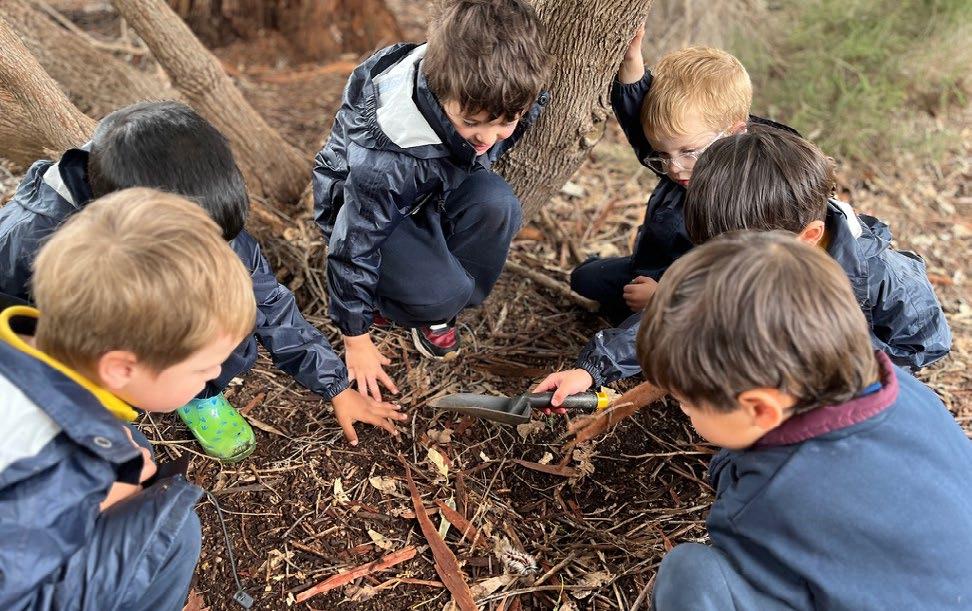
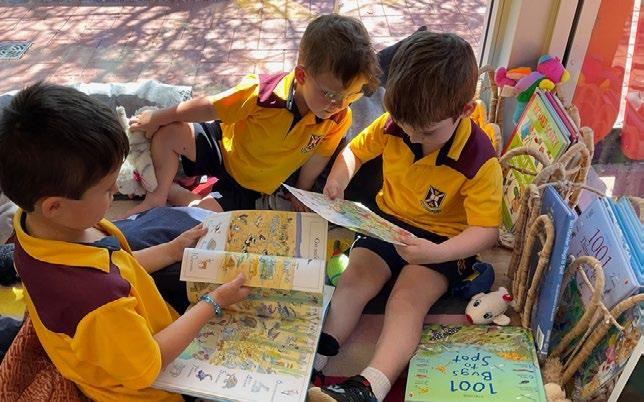
Kindergarten students exploring our on-campus Bush School
Exploration, experimentation and investigation allow children to test ideas, solve problems and develop resilience.
Inquiry through play, exploration and investigation
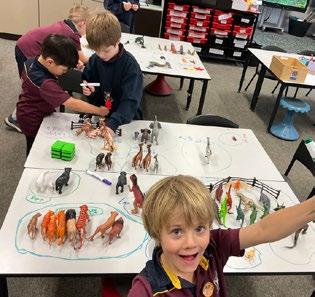
Children learn best when they are active participants. Through carefully designed provocations, boys are empowered to think independently and become active inquirers. Play is not separate from learning; it is the vehicle through which learning happens.
Exploration, experimentation and investigation allow children to test ideas, solve problems and develop resilience. These experiences build critical thinking, creativity and confidence, essential skills that extend far beyond the classroom.
It is important to note that at Scotch College, we do not leave our boys’ learning to chance. To ensure each child develops the skills required to become a lifelong learner, we closely track and monitor progress. In addition to the pedagogy outlined above, our teachers utilise developmentally appropriate, explicit teaching strategies.
The classroom environment
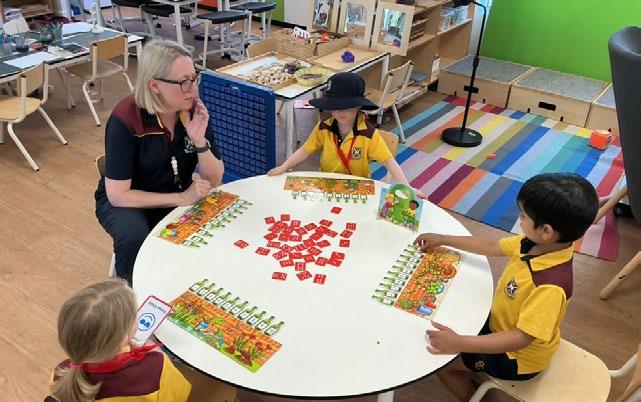
Our learning spaces are mindfully coconstructed with children to inspire curiosity and engagement. We view the environment as the “third teacher,” alongside educators and peers. Classrooms are dynamic, flexible and rich with authentic materials that invite discovery and collaboration.
These environments encourage boys to ask questions, revisit ideas and take ownership of their learning. When children feel a sense of belonging within their space, they become more confident learners, willing to take risks and try new things. Learning beyond the classroom: Nature Pedagogy
Understanding the interconnectedness of the world begins with experiencing it firsthand. Through our Nature Pedagogy, children regularly learn outdoors, investigating their environment and engaging with the natural world.
Nature awakens children’s innate sense of wonder. It invites curiosity, problemsolving and imagination while fostering responsibility and care for the environment. Outdoor learning supports physical development, emotional wellbeing, social connection and skill development, whilst fostering a deeper appreciation for the world they live in.
Partnership, resilience and belonging Education works best when school and home work together, supporting children as they grow in independence and confidence. We form a strong partnership with families and connections to the broader community from the beginning of your son’s journey at Scotch.
Through everyday experiences, boys learn resilience, perseverance and self-belief. They are encouraged to try, to fail safely, to try again and to celebrate progress along the way. Our priority is that every child feels safe, secure and supported within a fun, dynamic and holistic learning community.
A foundation for lifelong learning
When Early Years education is done right, children leave with more than early academic skills. They develop curiosity, confidence, empathy and a genuine enthusiasm for learning. They see themselves as thinkers, creators and problem-solvers.
“High-quality programs complement and motivate children’s natural curiosity, sense of fun and zest for learning. Educators provide active, engaging and challenging opportunities for children to learn through an orchestrated blend of play-based learning with intentionality, deliberate and intentional teaching, and spontaneous experiences and interactions.” SCSA Kindergarten and PP Statement, 2026.
Teaching and Learning
Purposeful and powerful differentiation
Mrs Rebecca Hocking, Mr Alek Horenko and Mr Thomas Lebreton, Year
4 Teaching Team
“Differentiation is not simply good practice: it is a promise. A promise that every boy will be understood, stretched and supported to become the very best version of himself.”
At Scotch, differentiation is not a strategy we “add on” to learning; it is the very fabric of how we design it.
In the Junior School, everything begins with one core belief: to teach well, we must first Know the Boy. When we truly understand each boy’s strengths, challenges, passions and motivations, differentiation in the classroom becomes purposeful and powerful.
Knowing the boy starts with careful screening. From the moment a student enters our Junior School, we gather rich data to identify his points of need. This includes academic screening, formative classroom assessment, observation and ongoing conversations with families. We don’t wait for gaps to widen or talents to plateau; rather, we proactively identify where each boy sits in his learning journey and respond accordingly. Screening is not about labels; it is about clarity. It allows us to meet a boy exactly where he is and then help him progress.
In literacy and numeracy particularly, boys are grouped flexibly based on their current points of need rather than their age alone. These groups are fluid and responsive. As progress is made, adjustments follow. This ensures that every boy experiences both challenge and success, the ideal conditions for growth. In one room, you might see targeted skill consolidation alongside advanced problemsolving investigations. Both are equally valued because both represent growth.
Support and extension are embedded within and beyond the classroom. In lessons, teachers differentiate learning through tiered tasks, purposeful questioning and targeted feedback. Beyond the classroom, boys may receive focused support to strengthen foundational skills, while others engage in extension opportunities that promote
complex thinking through competition mathematics, writing workshops and specialist programmes. What sets Scotch apart is that extension is not simply “more work”; it is deeper work. Likewise, support is not remedial; it is empowering.
Inquiry-based learning exemplifies how knowing the boy and differentiation intertwine. Opportunities for personal projects allow boys to pursue genuine interests within structured frameworks. Through a transdisciplinary approach, concepts are explored across subjects, allowing boys to encounter ideas through different lenses and add another layer of differentiation. Whether investigating sustainable design, exploring historical perspectives, or designing innovative solutions to real-world problems, boys take ownership of their thinking. Choice within inquiry enables teachers to observe dispositions alongside content mastery, informing planning and grouping.
Understanding different types of learners is central to our practice. Some boys process verbally, others spatially. Some require movement; others flourish in quiet focus. We design learning experiences that incorporate discussion, hands-on exploration, visual modelling, digital integration and reflective practice. In doing so, boys are not confined to a single mode of learning but stretch themselves to grow in versatility and resilience.
An exceptional feature of the Junior School at Scotch is the breadth of teacher expertise boys experience. Specialist teachers in areas such as Music, Physical Education, French, Drama, Art and STEM bring varied pedagogical styles. Even within core subjects, collaboration among staff ensures
When we truly understand each boy’s strengths, challenges, passions and motivations, differentiation in the classroom becomes purposeful and powerful.
boys experience different approaches to instruction. Exposure to multiple teaching styles builds adaptability and broadens perspective. Boys learn that there is not one way to think, solve or create, and that diversity in teaching mirrors diversity in thinking.
Differentiation at Scotch is not about separating boys; it is about seeing them. It is about recognising that excellence looks different for each learner and committing to the structures that make that excellence attainable. By intertwining rigorous screening, responsive grouping, targeted support, meaningful extension, inquiry-driven projects and diverse teaching approaches, we create optimal learning environments where boys feel known, challenged and inspired.
Differentiation is not simply good practice: it is a promise. A promise that every boy will be understood, stretched and supported to become the very best version of himself.
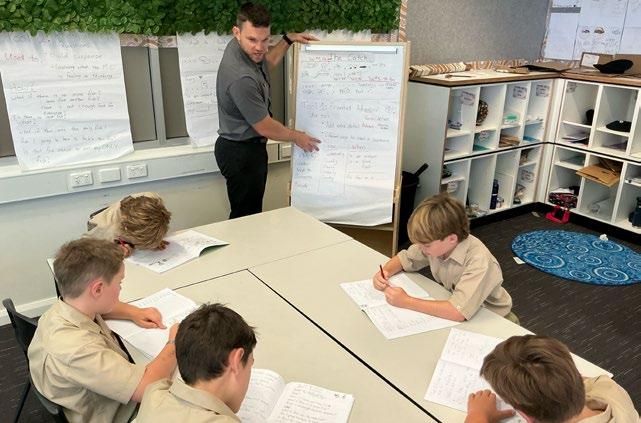
Mr Alek Horenko running a Year 4 differentiated literacy group.
Building movement through confidence
Physical activity is critical to the development and maintenance of a healthy lifestyle.
At Scotch, the goal of Physical Education is to develop physically literate individuals who have the knowledge, skills and confidence to enjoy a lifetime of healthy activity. Research shows that a growing issue affecting young people’s willingness to participate in physical activity is a lack of competent, fundamental movement skills. Without Fundamental Movement Skills (FMS), it becomes difficult to engage in games and sports. When a child feels uncertain about their physical abilities, they are more likely to become a reluctant participant in physical activity.
With this in mind, our Junior School Physical Education Department addresses this issue head on. We want all boys to feel confident in their physical abilities and to fully experience the enjoyment of active participation. In the Early Years, our students commence their sporting journey at Scotch through a tailored
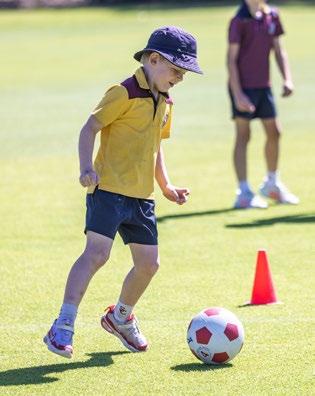
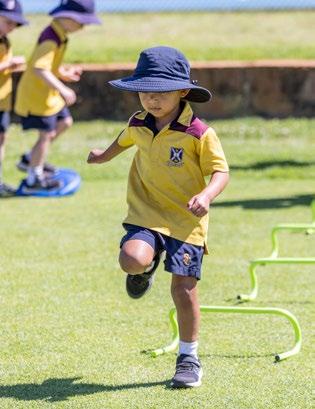
programme focusing on building their Fundamental Movement Skills. These skills are the building blocks of all movement and, once established, can be applied in more formal physical activities and sports. These skills allow children to move confidently and competently and include locomotor skills (running and jumping), stability skills (balancing, twisting and landing), and object control skills (throwing, catching and dribbling).
The programme places a strong focus of building proficiency in the Early Years, helping our youngest learners become confident participants in a wide range of physical activities as they progress through the school.
As your son progresses through the Junior School, he will be given the opportunity to apply his skills in year-level JPSSA (Junior PSA) Interschool carnivals. In Year 3, boys begin their JPSSA journey, participating in four carnivals throughout the school year, where they test their movement and game strategy skills in modified games of basketball,
hockey, touch rugby and cricket. In Year 4, the opportunity increases to six carnivals annually, reflecting the seasonal sports offered as part of the Year 5 and 6 JPSSA Interschool competition. Beyond interschool opportunities, boys continue to grow through our bi-weekly Physical Education programme, which includes opportunities to expand his capabilities in areas such as swimming, gymnastics and athletics.
From experience, we find that active boys are better prepared to learn, more engaged at school and more confident on the playground and sports field. At Scotch, sport remains a valued and important part of school life, providing boys opportunities to succeed, experience challenges and grow, all of which are important aspects of continuing to create the best possible environment for our students’ future success.
Mr Steven Goodall, Ms Rebecca Vincent and Mr Scott Whiston, Junior School Physical Education Team
The importance of handwriting in the age of AI
Mr Richard Spence Director of Teaching and Learning (PK–12)
The value and importance of handwriting is complex and multifaceted.
Each Christmas I handwrite a letter to my 94-year-old aunt in the UK who has admirably avoided being drawn into any form of electronic communication.
It’s letters and cards all the way with her. A pleasant task, but one that over recent years has left me with an increasingly aching hand. This feeling will not be uncommon to adults reading this who were once able to write fluently by hand in their youth, negotiating handwritten essays and exams without a second thought.
The fact is, in adult life most of us simply do not handwrite and thus our skills and stamina in this domain have atrophied. This may seem an unusual opening to this article given its title and the arguments I will make for the importance of handwriting for our boys; however, I strongly believe that a continued focus on handwriting for students is vital. The value and importance of handwriting is complex and multifaceted.
In an era where digital devices are ubiquitous, most educational institutions, including Scotch, have pivoted to delivering programmes and large parts of our pedagogy via digital devices. We must prepare our students for the world beyond school, and the future is undoubtedly digital. The introduction of large language model AI, and teaching boys how to most effectively use this powerful new technology, is also a key focus; however, the danger of an overreliance on AI is that boys will outsource the thinking process, and these shortcuts will detract from their cognitive development.
While technologies such as AI offer speed and convenience, there is now overwhelming evidence from educational practice and research that indicates handwriting is more than an outdated practice; it is a highly valuable cognitive tool that supports memory, thinking and academic performance. At Scotch, we are committed to the maintenance and development of handwriting skills from the Early Learning Centre all the way through to Year 12, and below are three key findings from recent educational research that explain why:
Handwriting and memory retention
One of the most compelling reasons for prioritising handwriting in schools is its unique impact on the brain’s learning processes. In an Italian study from 2025, The Neuroscience Behind Writing: Handwriting vs. Typing—Who Wins the Battle?, researchers found that handwriting activates a broader network of brain areas involved in motor, sensory, and cognitive processing, leading to deeper engagement with material and enhanced memory retention
compared with typing. Similarly, research in Norway recorded brain activity in 36 university students and showed that handwriting activates far more elaborate connectivity patterns than typing – a difference linked to stronger memory formation.
Handwriting and academic success
In our Junior School, extensive time and effort are devoted to developing each boy’s handwriting skills to ‘automate’ transcription. When transcription, referring to the physical act of writing, is automatic, learners can focus on idea generation and expression rather than struggling with letter formation. Proficiency isn’t about neatness; it directly influences academic outcomes.
Research demonstrates that students who can write fluently and legibly are better positioned to demonstrate their knowledge in tests, assessments and handwritten exams. Despite the gradual move to online assessment for NAPLAN, in Year 12 all exams remain offline and handwritten, and this will remain the case for the foreseeable future.
Handwriting and study skills
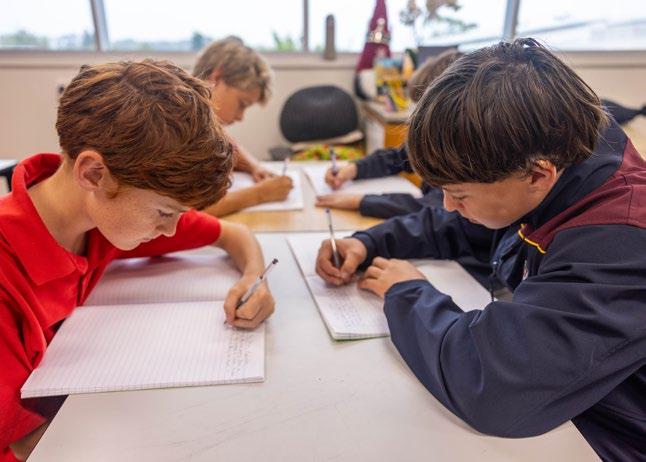
The physical act of forming letters by hand helps develop fine motor control, handeye coordination, spatial awareness and attentional focus, all which are foundational skills that benefit academic and everyday tasks. For teenagers, handwriting can also serve as a cognitive organiser. The engagement of pen and paper helps reduce distraction and creates a mental space for reflection—a contrast to the rapid, often fragmented engagement typical of digital typing. Handwriting’s slower pace encourages students to process information more deliberately, summarise content in their own words and strengthen the neural pathways that support effective study skills.
At Scotch, we assert that maintaining a robust handwriting programme is not merely nostalgic, it is an important educational tool. By valuing handwriting and digital literacies in tandem, we equip students with complementary skills that enhance their understanding, communication and lifelong learning.
Help at home
Whilst at Scotch we prioritise the maintenance and development of handwriting, it is equally important that families reinforce this at home. Making pens and paper available in the house and encouraging writing in everyday life where possible will help. You can even encourage your sons to write Christmas thank-you letters to loved ones!
Known, valued and seen
Mr James Hindle Head of Middle School
Ms Amanda Marocchi Deputy Head of Middle School – Pastoral Care
“The world is full of miracles, but none greater than how far a young person can be carried by someone else’s belief in them.”
‘Knowing the Boy’ is a phrase I first heard used by former Headmaster Bill Dickinson. At Scotch, this is the foundation of developing positive relationships. It is about making every student feel known, valued and appreciated for the person they are. We want them to understand we see the person they might become and the good they might do.
Richard Ledger, a former Head of our Middle School, said that whilst knowing the boy involves knowing a student’s name and using that name on a regular basis, it is also about face-to-face interaction. Everyone loves to be acknowledged and to hear their name. It is a basic building block of human relationships and, when combined with a smile and a
simple ‘hello’, you have the beginning of something meaningful. From something as simple as asking how they are, how their day is going, what they have planned for the weekend or how they went in sport, music or an activity outside of school – all of these take our connection to another level, recognising them as a multi-dimensional person rather than just a student. Knowing the boy is more than knowing someone’s name; it is about knowing what makes them tick.
It’s also about recognising that people change. The boy who starts at Scotch is a very different person from the one who finishes. There is one constant – that he knows we care about him and want him to become the best person he can be. He might not always like what we do, or what we expect of him, but if we have a strong relationship with him, he will hopefully understand that what we are doing is in his best interests.
This concept runs through everything we do at Scotch, from the classroom to the playground, from the sports field to the stage.
The phrase underpins our weekly Turas Programme (Gaelic for ‘journey’), a wellbeing programme run through Years 6 to 8. Turas has been designed to teach and practise important life skills as boys shift from being dependent to independent by learning how to manage themselves, work with others and back themselves when things get tough.
The programme is built around the pillars of Relationships, Respect and Resilience, which we believe are central to becoming a
good person. Our aim is to develop the whole boy, both inside and outside of the school gates, so that he can exercise core skills and cultivate characteristics that we know will strengthen his resilience and mental health.
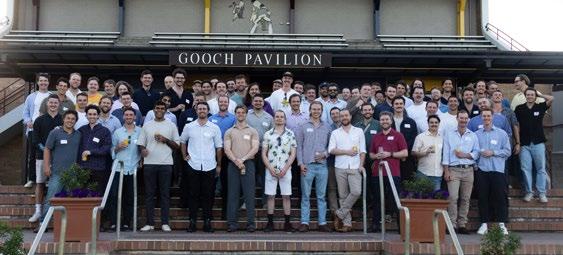
Building on tradition, at the very start of Year 7 during their Welcome Week, we begin with a ceremony at the Gooch Pavilion where the boys are piped up to school, mirroring their final day of Year 12 at March Out, when they are piped out through that same gate at the Gooch. Welcome Week is designed to build a sense of belonging, connecting students to something larger, enabling them to focus on understanding the College’s expectations around learning, behaviour and participation.
Throughout his time in Middle School, we provide multiple opportunities for each student to reflect on the person he wants to become by the time he graduates from Scotch.
The ages of 10 to 14 are a critical time in a young person’s life. During Middle School, boys are dealing with a great deal of change – physically, mentally, socially and emotionally. We recognise this and, it is no coincidence, that we place significant focus on building resilience and character to help them cope with future challenges in life.
At Scotch, we know that we see the best of our students when they feel ‘seen’ and useful and, because of this we know we should never underestimate the power they draw from our support.
Teaching and Learning
The ‘Manosphere’: an influence misguiding boys into their understanding of manhood
Recently, the Netflix documentary Louis Theroux: Inside the Manosphere has brought renewed public focus to an influential online culture often referred to as the “manosphere”.
While the term may be unfamiliar to some, the ideas circulating within these digital spaces, often amplified through platforms such as TikTok, are increasingly shaping how young people encounter concepts of masculinity, identity and belonging.
In the documentary, Louis Theroux gains access to online influencers and communities who promote rigid and extreme ideas about masculinity and women. The documentary highlights how these messages are reaching boys at young ages, shaping beliefs about relationships, self-worth and what it means to be a man. For schools and families alike, this raises important questions about how boys are engaging with modern narratives of manhood, and what unmet needs may be driving that engagement.
When conversations about these influences arise, there is often an assumption that boys engaging with such content are simply “rebelling” or “rage-baiting” adults. However, this framing risks overlooking something far more human. What both the documentary and broader research consistently reveal is that many boys drawn into these spaces are searching for belonging, purpose and clarity at a time when identity is still taking shape.
Evidence – including boys’ own accounts –shows internalising messages from adults, peers and social media that frame them as “bad”, “wrong”, or inherently problematic. Some report feeling unfairly targeted because of their gender, without having access to balanced or nuanced conversations about responsibility, respect and agency. The manosphere capitalises on this vulnerability, offering what appears to be a clear pathway to confidence, status, success and belonging. In doing so, it provides simplistic answers to complex emotional experiences.
Within these online spaces, emotional expression is frequently dismissed or reframed as weakness. Boys are told that emotions such as sadness do not exist, or that acknowledging them is a failure of strength. At the same time, girls and women are often reduced to narrow and harmful stereotypes, centred on serving men and characterised using derogatory language. These ideas reinforce damaging gender hierarchies and undermine the development of empathy, respect and healthy relationships.
As explored in the documentary, many manosphere influencers promote the idea that rapid financial success is readily achievable through their platforms, positioning themselves as leaders or mentors. Ultimately, however, these influencers profit from the attention and vulnerability of young boys and men. When examined more closely, the sense of belonging offered by the manosphere comes at a significant cost: the erosion of empathy, respect and psychological wellbeing.
For many young men during adolescence, the appeal of these spaces lies not in extremism itself, but in a desire for brotherhood, certainty and direction, coupled with confusion about contemporary masculinity and a lack of safe, trusted spaces to explore vulnerability. The behaviours that emerge from engagement with manosphere culture are often signals of deeper unmet needs.
For this reason, the documentary offers a valuable lens through which families and educators can better understand the cultural landscape boys are navigating. Watching the documentary is not about fear; it is about understanding the landscape that our boys are being exposed to and the messages they may feel compelled to navigate.
This reality challenges schools and families to look beyond surface behaviours and to consider how boys are being supported to make sense of their experiences. Awareness of the cultural narratives shaping older boys is important, as these ideas inevitably filter
down to younger students. By developing understanding early, we allow for proactive, informed conversations that emphasise curiosity, reflection and guidance.
At Scotch College, there is a deliberate commitment to ensuring that boys are exposed to healthier, evidence-based narratives around masculinity. Across the College, students are supported through classroom learning, pastoral care structures and access to professional staff who understand the social and emotional complexities of boyhood. Complementing this are reputable external resources1 that support boys’ mental health and emotional literacy, including research-based organisations and local support services tailored to young people.
Ultimately, supporting boys in navigating these influences is not about having all the answers. It is about remaining open, engaged and willing to listen without immediate judgement. Creating spaces where boys can talk honestly about respect, relationships and identity – and where healthy male role models are visible and valued – is essential.
As schools work in partnership with families and the wider community, the task remains clear: to guide boys towards a more thoughtful, compassionate and grounded understanding of manhood, one that equips them not only for success, but for meaningful connection and contribution in an increasingly complex world.
Mr Jon Marginis Lead Psychologist, Endorsed: Clinical Psychologist & Counselling Psychologist
1School TV, available through the Scotch College App and home.scotch; Movember, which provides research and practical tools supporting boys’ mental health and emotional literacy; Dr Zac Seidler, a leading Australian voice in men’s mental health; and Western Australian youth services including Mens Talk, Youth Focus and Headspace.
A different approach to education
Mr Brendan Zani Head of IB
The AI revolution
Five years ago, few could have predicted the speed and scale of the Artificial Intelligence revolution. Today, it is shaping how we work, learn and access information. These changes cannot simply be ignored or waited out. As technology advances and reshapes the world around us, the question is not whether students will be affected by it, but whether they will be equipped to navigate what comes next.
More than just the next stop
At Scotch, education has always been about more than reaching the next destination. It takes a holistic approach, developing the whole boy and preparing him for life beyond the College.
For that reason, we offer the International Baccalaureate (IB) Diploma. We recognise that students learn in different ways and benefit from different approaches to learning.
In a rapidly changing world, knowledge alone is no longer enough. Preparing a boy for life requires developing skills such as learning how to learn, thinking critically, solving problems and collaborating with others.
These are the skills at the heart of the International Baccalaureate framework and are woven through your son’s educational journey at Scotch.
Designed to be different
The IB education framework is designed to nurture curiosity and critical thinking, giving students real agency in solving complex problems.
Designed to be different, the IB Diploma encourages curiosity, independence and intellectual exploration. Its distinctive elements; the Extended Essay, Theory of Knowledge, and Internal Assessments – are key points of difference promoting meaningful inquiry and developing thinking.
Take Noah, who graduated in 2024. Through the IB Diploma, he developed a strong interest in global politics and the
Middle East. This curiosity extended beyond the classroom when Noah and a friend launched a podcast exploring global affairs. Their conversations led to interviews with figures such as Ukrainian Ambassador to Australia Vasyl Myroshnychenko and local federal member Kate Chaney.
In his Extended Essay, Noah analysed postArab Spring political trajectories of Egypt and Tunisia. This was a unique educational opportunity for Noah, stoking his curiosity and providing the opportunity to apply realworld tools of a political scientist.
Another student, budding tech-entrepreneur Ethan, explored the virtual reality industry and Meta’s monopoly over the market.
In his Extended Essay, he examined how market influence affects competition within the sector, combining his interests of technology and economics. When reliable data proved difficult to access, Ethan had to develop his own analytical approach using industry estimates, and analysing patterns of market behaviour and competition. This process challenged Ethan to think critically, solve problems and adapt in his research methods as new questions emerged. Alongside the Extended Essay, students undertake Internal Assessments within each subject. These research projects allow students to pursue areas of personal interest whilst developing essential academic skills.
Knowledge about knowledge
In a world saturated with online information and increasingly shaped by AI-generated content, the ability to evaluate knowledge has become essential.
In Theory of Knowledge, a compulsory component of the IB Diploma, we provide students with the map, compass and tools required to navigate a resource-rich world; from these tools students learn to question sources, assess reliability and understand how knowledge is created.
Students explore questions such as:
• What makes knowledge reliable?
• What role do experts play in influencing our consumption of knowledge?
• How does historical context influence the knowledge we inherit?
• Do certain forms of knowledge carry ethical responsibility?
So how is this a different approach to education you may ask? As one of the three pathways offered at Scotch, the Diploma is different in the sense that it encourages students not simply to absorb information, but to question it, explore it and apply it.
Rather than directing students to what they must learn, the IB Diploma develops curiosity and the ability to think critically about the world around them. Capabilities that will help students navigate an increasingly complex and rapidly evolving future.
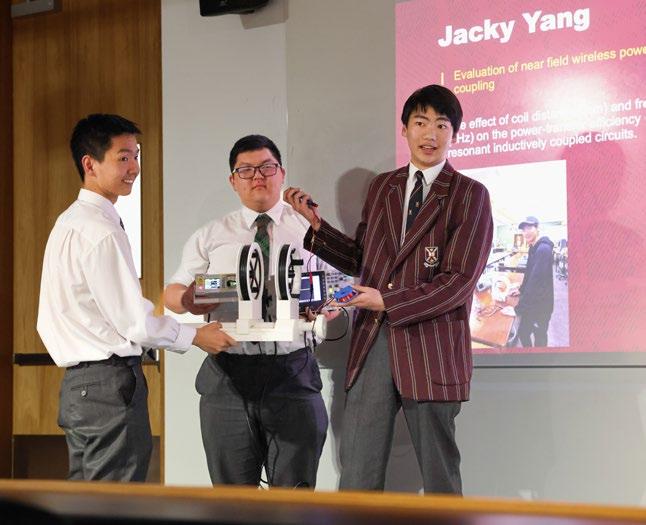
Jacky Yang (OSC 2025) presenting his Extended Essay topic
Teaching and Learning
Data driven enrichment and support
Mr Sam Sterret
Head of Enrichment (PK–12)
Ms Gill Youngleson
Head of Inclusive Education
(Y6–12)
At Scotch College, we draw from a rich suite of academic, cognitive, behavioural and observational data to build a deeper understanding of each Scotch boy.
This data does not replace professional judgement but rather strengthens our ability as educators to build supportive relationships and respond to each student accordingly.
Over the last decade, the College has seen significant growth in the enrolments of high-ability students as well as students with learning diagnoses. Supporting an increasingly diverse student body requires a multi-pronged approach.
From this growth, both the Inclusive Education and Enrichment teams have expanded across Pre-Kindergarten to Year 12. Both teams are highly collaborative, drawing on data points including standardised assessments, classroom performance, teacher observations and external reports to
guide the identification of students who may require learning support and enrichment.
Using data effectively in identification?
A cornerstone of our system is the aptitude and performance data we receive from Academic Assessment Services. This data provides longitudinal insights through Standard Nine (or stanine) profiles in general reasoning, reading, writing, spelling and mathematics provided to the College.
From this data, we can identify and interpret growth trends, discrepancies between domains, and areas of exceptional performance where a student may require enrichment and extension beyond the mainstream curriculum.
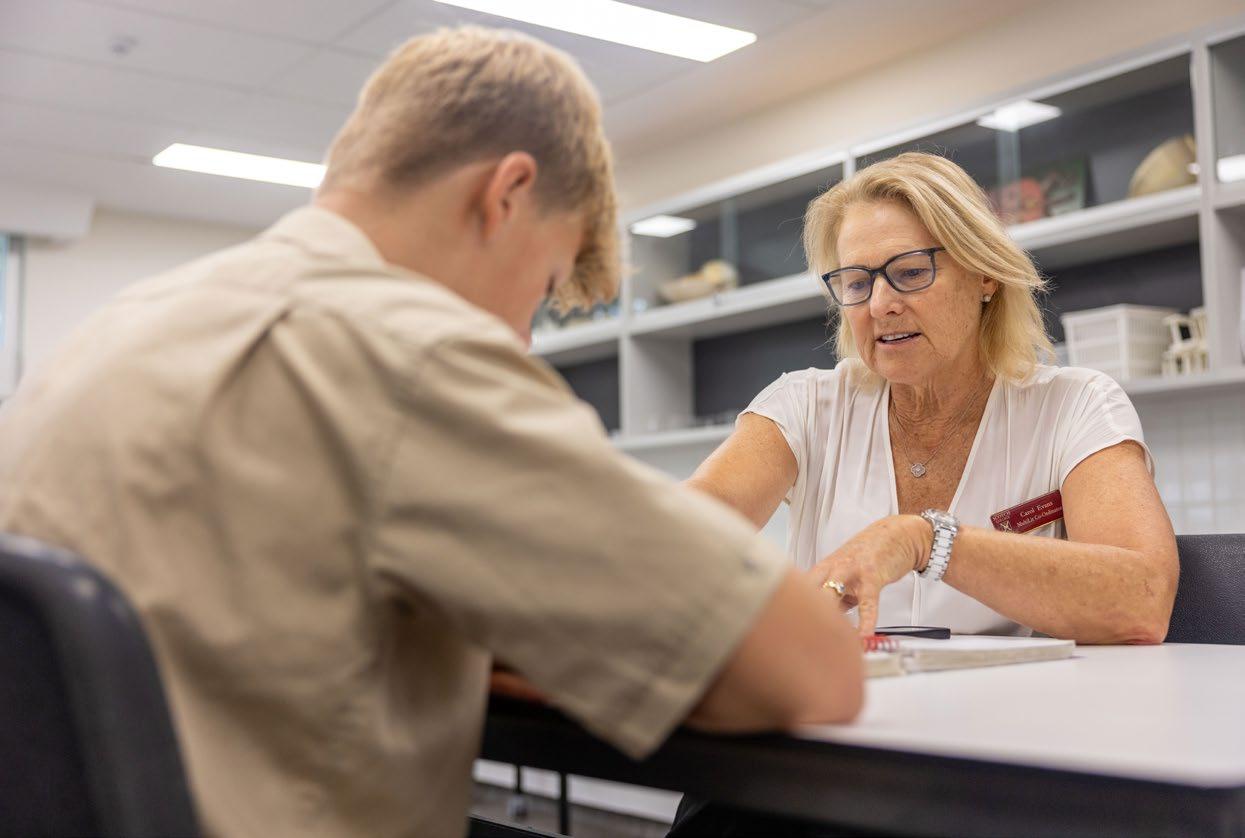
Coordinated by our Inclusive Education Team, when data indicates lower reading stanines in our Middle School students, we follow up with diagnostic assessments such as MultiLit and the York Assessment of Reading Comprehension. These assessments help to determine the source of difficulty and further inform intervention.
MultiLit Coordinator, Carol Evans, running a MultiLit session
Scotch triangulates the same data sets within a three-tiered enrichment model to balance inclusion, talent development, and excellence.
Beyond the use of data to identify students, data is also used at Scotch to ensure your son is placed in an environment where he is challenged to grow. When it comes to the placement of English and Maths Essentials, decisions are guided by triangulated evidence drawn from a combination of Allwell testing, NAPLAN testing, reporting, teacher judgement and external assessments, ensuring targeted instruction and skills consolidation.
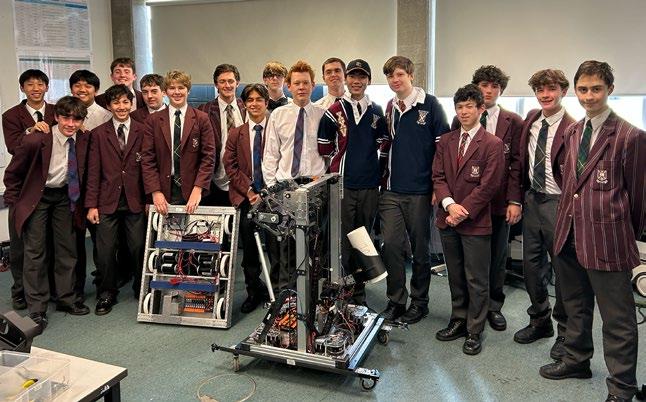
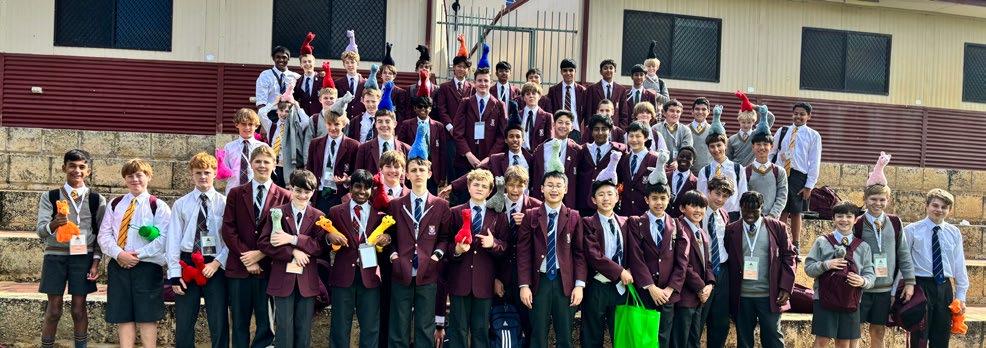
An inclusive approach to enrichment Scotch triangulates the same data sets within a three-tiered enrichment model to balance inclusion, talent development, and excellence. The first tier uses broad data points such as classroom performance, teacher observations, student curiosity, creativity, motivation, and self-nominations to identify a wide range of students for general enrichment opportunities, ensuring access to enrichment programmes is not limited to only the highest performers. The World Scholar’s Cup and our STEM Robotics programmes are flagship examples, providing rich and challenging learning opportunities open to many boys.
The second tier draws more on targeted data such as grades, classroom assessments, elective choices, and teacher recommendations to match students with subject-specific enrichment aligned to their strengths and passions. For example, students who excel in writing may be involved with the Young Writers Programme.
The third tier uses high-performance data such as standardised test results, competition outcomes, academic rankings and strong evidence of advanced readiness to select students for highly competitive opportunities such as the Have Sum Fun maths competition and the Da Vinci Decathlon. Used in this way, data helps us create a layered enrichment pathway that broadens participation, nurtures emerging talent, and identifies students ready for the most demanding academic experiences.
Multi-exceptionality: two departments, one shared goal
Some students present with complex profiles—high ability paired with ADHD, ASD, or other diagnoses. These twice or ‘multi-exceptional’ students often show asynchronous development, the uneven development across intellectual, emotional and physical skills, and this pattern is commonly seen in gifted learners.
For example, a student may participate in debating, presenting high verbal reasoning skills coupled with dysgraphia, a diagnosis where the individual finds written expression extremely difficult. This requires a dual-lens approach that acknowledges the challenges this student will face in written assessments and finds opportunities for this student to showcase and develop their advanced oral skills.
While Inclusive Education focuses on reducing barriers to learning through executive functioning support, organisation, and engagement strategies. Enrichment ensures students remain intellectually stimulated and extended where appropriate. Together, the complementary approaches create a balanced programme nurturing strengths while supporting challenges. By bringing together long-term data, specialist assessment, teacher expertise and interdepartmental collaboration, Scotch ensures that every boy—whether high performing, highly able, needing support, or navigating multiple complexities—is seen and has the ability to thrive at Scotch.
Top: 2025 WA Robotics Playoff Team Above: Students who participated in the World Scholar’s Cup
Applying curriculum to the real-world
Mrs Lisa Palmer ASDAN Coordinator
At Scotch, we recognise that not all learners are the same. As a result, our Inclusive Education Team proudly offers the ASDAN Programme as a meaningful and engaging way for students to develop essential skills while exploring realworld learning experiences.
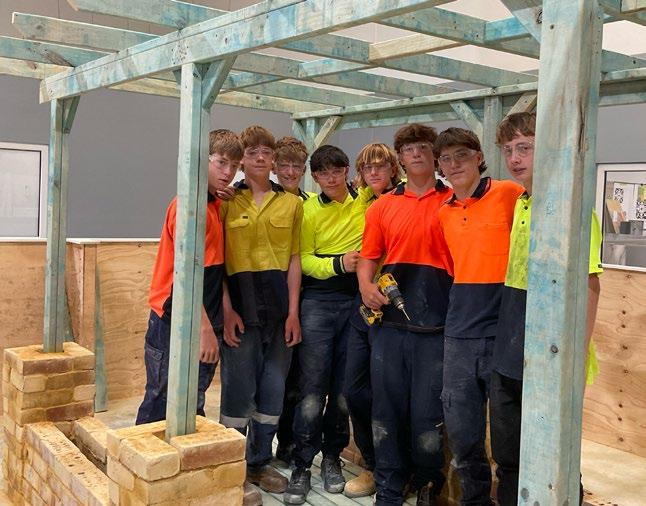
This School Curriculum and Standards Authority (SCSA) endorsed programme is offered to students in Year 10, providing a structured yet flexible framework that builds readiness and confidence for Year 11, VET training, and future employment. Among the successful offerings is the Careers and Experiencing Work course, a programme that integrates literacy, numeracy, and personal development into practical, handson tasks directly connected to workplace expectations.
ASDAN Short Courses are designed to be accessible and strength-based programmes that value practical learning just as highly as academic achievement.
For many students who thrive in applied learning environments, these courses provide authentic opportunities to use curriculum skills in real contexts.
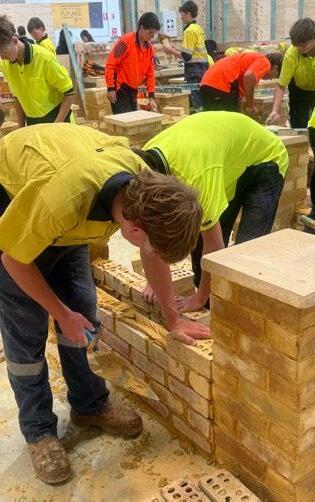
Applying curriculum to hands-on learning Numeracy is embedded throughout the programme, particularly through practical trade-related learning. Students use measurement, number, estimation, and scheduling to complete tasks required in the building and construction industry. For example, carpentry and bricklaying activities draw on essential maths skills such as using the 3–4–5 method (based on Pythagoras’ Theorem) to ensure walls meet at perfect right angles. Students also apply measurement and number to calculate rafter lengths, work out surface areas for materials, estimate quantities, sequence tasks in a project schedule, and budget for tools or supplies. These experiences show students how mathematics is used daily in real trades and why accuracy matters.
Literacy skills are equally central to the ASDAN Programme, with students reading workplace instructions, safety guidelines, and tool manuals alongside active components such as completing workplace-style forms, writing reflections, and communicating professionally with supervisors. These literacy experiences help students build the clarity, precision, and confidence required in real workplaces, whether they are reading plans, documenting tasks, or seeking clarification during a job.
Each short course is built around a selection of modules, tasks, and challenges that students complete at their own pace. Reflection, evidence gathering, and
goal setting are embedded throughout, encouraging students to take ownership of their learning and see the connection between curriculum skills and everyday work practices.
Adding tools to the toolkit
A key component of the ASDAN Programme at Scotch is the creation of a portfolio, which forms part of the SCSA endorsed programme. This portfolio allows students to compile evidence of their learning in a meaningful and organised way. Whether through photographs of practical work, written reflections, supervisor feedback, or samples of workplace-style tasks, the portfolio demonstrates not only what students have accomplished but also how they have engaged with each activity.
For many Year 10 students, this becomes their first experience developing a body of evidence similar to that used in workplace training or VET pathways. It is an excellent preparation tool, building independence, accuracy, problem-solving, and reflective learning habits – all essential skills for future success.
Scotch continues to receive outstanding feedback from industry partners and supervisors who work with our students during these excursions. Staff regularly comment on the boys’ maturity, politeness, curiosity, and willingness to take direction, qualities that leave a lasting impression. These positive interactions have, in several cases, led to students being informally approached about future apprenticeship opportunities or encouraged to consider specific trades based on their natural aptitude and work ethic.
Connect to Create
Mr Sam Sterrett Head of Enrichment
(PK–12)
Mrs Alison Webster Enrichment Coordinator
- Junior School
There is something uniquely powerful about the culture of education at Scotch when boys of very different ages come together, not simply to sit alongside one another, but to design, build, solve and create together. That is the spirit of Connect to Create.
The Connect to Create Programme emerged in response to COVID-19 restrictions, which limited travel and interschool opportunities. During this unprecedented time the question became: how do we create in-house enrichment opportunities at the same calibre? Working together, the Enrichment Team utilised the College’s Pre-Kindergarten to Year 12 intake to strengthen cross-campus connections and create something beyond a buddy system, something that was rare in schools: a structured space where older and younger boys could collaborate around shared interests.
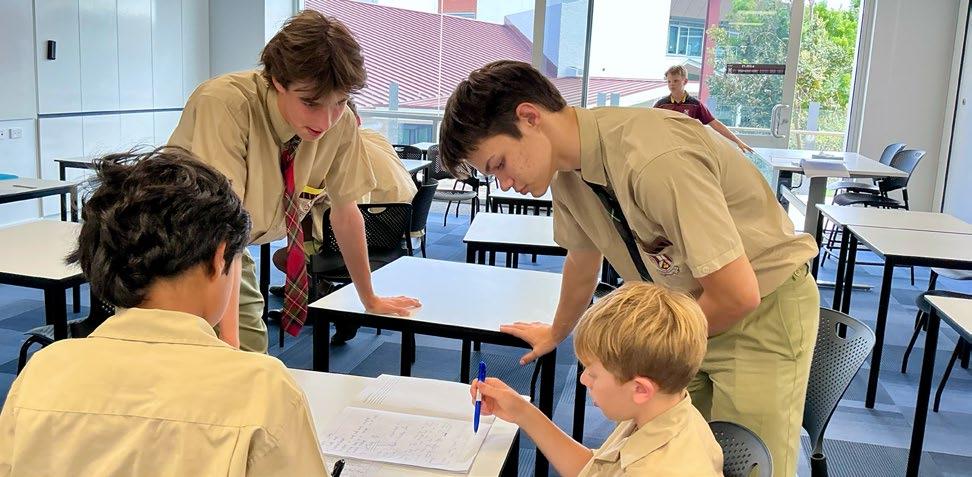
Now in its seventh year, what began as a creative response to circumstance has developed into something more enduring. At the heart of the programme is a simple but powerful model. Aligning with the Creativity, Action, Service (CAS) experience of the IB Diploma, Year 11 students design, organise and deliver a series of workshops for Junior School students, culminating in an ‘end of year’ showcase for families.
An example of these workshops or interest groups is coding. In this group, our senior students set out to teach critical thinking through the design and coding of a video game. Their ambition was not merely to run an enjoyable activity, but to equip the younger boys with enough knowledge of coding and game design to continue independently and ultimately present a game of their own to their parents.
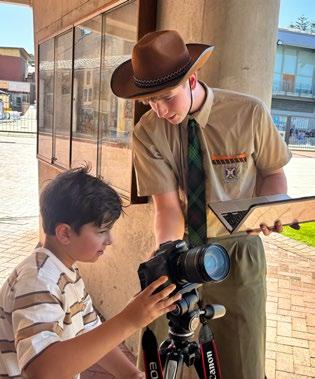
In the photography interest groups, Junior School students moved beyond clicking a button; learning foundational production skills including camera settings, lighting, storytelling techniques and post-production, culminating in an opportunity to showcase their skills through exhibition and reflection.
These are just a couple of the interest groups offered as part of our Connect to Create Programme, with a plethora of other workshops, such as Maths, Music Composition and Engineering. Across all groups the same pattern emerged: enthusiasm transformed into mentorship, and shared interest transformed into authentic connections between students.
For our Senior School students, the experience challenges their ability to lead with patience and humility, quickly learning that teaching requires more than subject knowledge; it demands empathy, adaptability and the ability to bring others with you.
For our Junior School students, the impact was equally significant. Not only were they introduced to new skills and ideas, they were given a vision of their potential journey ahead. Seeing the Year 11 boys instilling confidence, the encounter with the Senior School shifted their perspective from something distant to something they could connect to their own story.
It is particularly magical when we see a Year 12 and Year 5 student who were in the same group stop for a chat long after the programme has finished.
Connect to Create captures what is great about Scotch as one connected learning community. When boys are encouraged to connect across ages and create around shared passions, they not only produce impressive projects in a short space of time but also strengthen the service and community-oriented culture of our College itself.
Ezekiel Ritchie and Christian Capogreco running a ‘Mathletes in Motion’ workshop
Felix Munro mentoring Logan Formosa as part of the ‘Intro to Photography’ workshop
Leadership, more than authority
Jack Mayo Vice Captain of School –Service
Leadership can involve personal sacrifice and the courage to turn compassion into action.
For the role of Vice Captain of School –Service, I had an interview with Dr O’Connell and the panel about the concept of servant leadership. It was a concept I had heard before, but speaking about it in that setting made it resonate more deeply and shaped how I hoped to approach the role. As the year has progressed, I’ve returned to that idea often and wanted to share what servant leadership means and how it is already being lived out within our school community.
When people, especially younger students, are asked what is leadership, the answer often involves someone in charge, directing others and making decisions. While technically correct and sometimes necessary, this view alone overlooks an important aspect of leadership.
Some of the most powerful acts of leadership begin with a genuine desire to serve. Servant leadership reminds us that the purpose of leadership is not status or authority, but the growth and wellbeing of others.
The term servant leadership was first coined in the 1970s by Robert K. Greenleaf, a former AT&T executive who studied leadership and management. In his essay, The Servant as Leader, Greenleaf argued that leaders should place the needs and development of others above their own. The test of a servant leader is whether those they serve “grow healthier, wiser, freer, more autonomous and more likely themselves to become servants.”
Greenleaf was inspired by the German-Swiss novelist Hermann Hesse’s 1932 novel Journey to the East, where a group of travellers are supported by a servant named Leo who sustains them with encouragement and spirit. When Leo disappears, the group falls apart, and it is later revealed that Leo was actually a great leader who had chosen to serve. The story reminds us that leadership does not always come from status or authority, but often from the willingness to support the success of others.
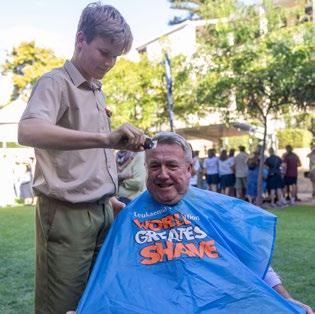
At Scotch, the qualities associated with servant leadership; empathy, awareness, stewardship, and community are already visible in many of our initiatives, including the World’s Greatest Shave and the All-Abilities Cricket programme.
Each year the College, as a whole, raises funds for the Leukaemia Foundation through the World’s Greatest Shave. In 2026, approximately 200 students and staff across Years 12, 8, and 5 participated in the World’s Greatest Shave.
Our goal as a community was to raise $150,000 for the Leukaemia Foundation, with the funds supporting research, patient care, and families facing blood cancer. The generosity of our community was remarkable, with Scotch College exceeding its goal by more than $75,000.
As Mikayla Denny, a representative from the Leukaemia Foundation, shared “shaving your head is the symbol, but the funds raised are the impact.” For many facing cancer, hair loss is one of the most visible and emotionally difficult aspects of their journey. In solidarity, by shaving our heads and fundraising, we hope to show empathy and support of those affected by blood cancer.
I hope that students take away that leadership is more than authority, and can involve personal sacrifice and the courage to turn compassion into action.
Likewise, if Greenleaf argued that the true test of servant leadership is whether “those served grow as persons”, then among our Service initiatives nothing embodies this better than AllAbilities cricket. This is a Claremont-Nedlands Cricket Club initiative that Scotch helps facilitate through coaching support. Here leadership is shown through patience and encouragement, helping participants with varying disabilities and special needs develop belonging, confidence, and joy in sport.
As the year continues to progress, I hope more students across our College see leadership not simply as ‘being in charge’, but as serving.
For me, that would be the most meaningful legacy to leave as Vice-Captain of School – Service: a culture where leadership is measured not by position or recognition, but by the willingness to support others and make a difference.
References; Hesse, H. (1932). Journey to the East. Translated by H. Rosner. New York: Farrar, Straus and Giroux. Greenleaf, R. K. (1970). The Servant as Leader. Indianapolis: Robert K. Greenleaf Center.
Summer sports: A season of resilience and momentum
Mr David Gault Head of Sport
The conclusion of the 2025/26 summer sport season provides an opportunity to reflect on a term defined by effort, persistence, and steady progress.
Across all codes, Scotch teams demonstrated commitment, resilience, and a clear sense of momentum that bodes well for the seasons ahead.
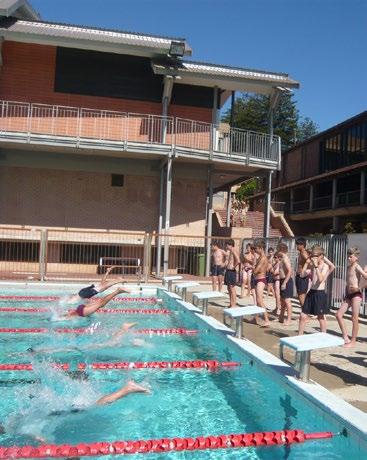
The first PSA trophy contested during the summer was swimming, and the performance of the Scotch team was outstanding. Head Coach Ryan Steenkamp described it as the best all-round team performance by a Scotch squad during his time at the College. After making up the points differential from the previous season against Christ Church Grammar School, the team pushed strongly throughout the competition, finishing second overall. Hale School claimed the title after climbing from third the previous year, with Christ Church finishing third. Multiple PSA records were set by Scotch relay teams, highlighting the depth, preparation, and quality within the programme.
In cricket, the 1st XI finished third, with Hale School securing the Darlot Cup following a dominant season. While the final placing reflected some missed opportunities against the top two sides, the season showcased the grit and competitiveness of the group. There were several moments that illustrated the team’s potential, and the experiences gained will be valuable as the squad continues to develop.
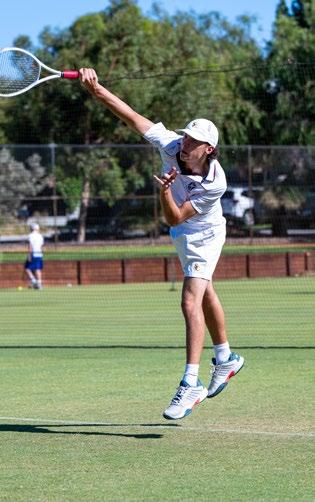
Tennis recorded one of the most encouraging progressions of the summer, with the 1st team climbing from fifth in the previous season to an equal third-place finish. A young side, with many players set to return,
showed consistent improvement across the campaign. The lessons and experience taken from this season place the boys in good stead as they aim to challenge higher up the ladder in future years, following Wesley College’s success in claiming the Corr Cup.
The basketball season was defined by fine margins for the 1st V, who finished equal third with a 6–6 record. Notably, the team was the only side to defeat Hale, the eventual Blackwood Trophy winners. However, a series of narrow defeats, including two overtime losses, ultimately shaped the final standings. Despite this, the resilience and competitiveness displayed throughout the season were commendable.
Rowing once again brought the summer sport programme to its conclusion, with Scotch finishing fourth in both the 1st VIII race and the Hamer Cup standings. Encouragingly, the College was placed second in the Hamer Cup after the Year 9 and 10 events, underlining the strength and depth emerging through the rowing programme. With strong participation numbers across the squad, the future looks promising. Aquinas College claimed the Challenge Trophy in the 1st VIII, while Trinity College secured the Hamer Cup overall.
Volleyball achieved its highest final placing in many years, finishing equal fourth. Several matches were decided by narrow margins, including fifth-set losses, which ultimately influenced the final ladder positions. Aquinas
and Hale shared the title, and the fact that Scotch took sets from both highlights the team’s competitiveness against the competition’s leading sides.
The water polo squad, one of the youngest in the competition, finished fifth. While inexperience showed at times, the boys produced strong performances, particularly against unbeaten premiers Christ Church. With almost the entire team returning, the experiences gained this season will be invaluable moving forward.
Following the PSA season, our sailing team competed in the WA Schools State Teams Sailing Championships. After training hard throughout the season, two teams represented Scotch, with one team finishing first overall. This outstanding result has seen the team invited to represent Western Australia at the National Titles in July, to be held in Sandy Bay, Tasmania.
The scale of summer sport at Scotch is only possible thanks to the dedication and commitment of staff, coaches, and managers. Each week, more than 100 teams represented the College across PSA and JPSSA competitions, and the programme simply could not operate without the support of all involved.
As summer sport concludes, winter sport training has commenced, with teams already preparing for the season ahead.
7 September
Year 11 and 12 Drama Showcase
6.00pm
Foundation Theatre
8 September
Senior School Art & Design Exhibition
Opening Night
6.00pm Maths and Commerce
Building
10 September
Director’s Cut Media Night
6.00pm
Memorial Hall
11–12 September
Year 11 and 12 IB Diploma and ATAR Music Recitals
7.00pm
Memorial Hall
22 September
Kindergarten to Year 2 Solos
3.45pm Chapel
5–7 November
Middle School
Production
Various times
Foundation Theatre
11 November
Junior and Middle School Spring Soiree 5.30pm
Chapel/Memorial Hall
Check out the calendar
A mark of musical excellence: from first notes to national recognition
For Year 10 student Max, music has become a defining part of his time at Scotch College shaped by daily practice, thoughtful instruction, and a growing confidence as a performer.
Since first picking up the clarinet in Year 6, he has developed as a musician, as well as a disciplined and reflective learner who values the process as much as the performance.
This year, through the Australian Music Examinations Board (AMEB), Max was the recipient of the Christopher Latham Memorial Award for Most Musically Outstanding Performance (Grade 5 Clarinet), presented to him in March at the UWA Music Conservatorium.
This prestigious award recognises exceptional musical artistry at the highest level of AMEB performance examinations and is not awarded lightly. Recipients are selected from among top-performing candidates nationally and assessed not only on technical mastery, but also musical insight, interpretation, and expressive maturity.
Winning the award represents more than examination success; it is a recognition of Max’s ability to communicate meaningfully through music, reflecting both talent and sustained dedication.
Max’s Scotch musical journey began at the Year 6 Orientation Day, when students were introduced to a variety of instruments. Drawn to the clarinet, what began as an introduction soon developed into a sustained interest, built steadily through regular lessons, ensemble participation, and personal commitment.
Max reflects on the opportunities available to him as a music student at Scotch. “At Scotch, I really value the large number of opportunities that music students have to perform… During my time at Scotch, I have performed on a variety of stages in different settings for both large and small audiences—from the termly Soirées, to the Kirk@Scotch services, or Wesley At One”.
In addition to individual performances opportunities, performance experiences occur across all levels, with extensive co-curricular ensembles that further enrich classroom learning, such as choirs, string ensembles, concert bands, contemporary bands, guitar ensembles, and the collaborative Scotch/PLC/MLC Jazz Programme.
Max also highlights “the offering of a variety of courses such as Music Specialist Studies and Certificate courses” available to students in Years 11 and 12.
The Music Programme at Scotch provides boys with a holistic and integrated approach to music education. From the Every Day Music Programme in Early Learning, to the Year 3 String and Year 6 Band Programme, the programme expands further in Year 7 Music Pathways and General and Specialist courses in Years 8 to 10. In his final two years of schooling, boys can pursue music through the ATAR, IB, and Certificate pathways, allowing students with different aspirations to continue their musical growth.
Scotch College also offers a comprehensive music tuition programme, with weekly lessons delivered throughout the school year by a faculty of highly experienced practitioners. For Max, this tuition has been a consistent part of his musical development since beginning the clarinet in Year 6. Students who participate in the programme, including those undertaking vocal studies, are supported as they develop their skills and become part of the broader Scotch Music community.
Since first picking up the clarinet in Year 6—introduced to woodwind during Orientation Day under the guidance of Ms Suzanne Wydra—Max’s self-driven discipline and passion for music are evident. “For me, a typical practice schedule is daily. I aim to practise for at least 40 minutes”.
Congratulations to Max on this outstanding achievement. We look forward to following his continued development as a musician as he progresses through his final years of schooling at Scotch College.
Arts without boundaries
Ms Sarah Combes
Curriculum Leader –
The
Arts
Across the creative industries, the boundaries between artistic disciplines are dissolving. Musicians collaborate with filmmakers, visual artists work with performers, and creative projects increasingly exist at the intersection of multiple artforms.
At Scotch, we encourage our students to experience the reality of multidisciplinary collaboration through Intersection, an annual arts event where students collaborate across music, film, drama, and visual art.
More than a showcase, it is an opportunity for our community to experience fresh collaborations, bold ideas, and share in the creative journey of the Arts students as they reach the midpoint of the academic year. An interactive element of the event allows the audience to choose their own adventure, moving through various performances and exhibitions, transforming our College into a vibrant festival environment.
In 2026, Intersection saw performances across all three learning pathways (ATAR, IB and AAP/VET), with these works standing as a testament to the skill of our students and the value we place on the creative process.
A glance at the contemporary arts landscape shows how frequently artists combine multiple disciplines within their work. Intersection creates an exciting space for this to grow, particularly for the IB Music collaborative project, which blends sound, visual, and performing arts.
Preparing work for Intersection encourages students to explore beyond their comfort zones, developing capabilities increasingly valued in the creative industries, including creative agility, interdisciplinary collaboration,
and the ability to manage complex projects with multiple contributors. In a digital world shaped by instant gratification and the increased loss of creative thought from the emergence of artificial intelligence, students can sometimes expect creative outcomes to appear quickly, bringing immediate satisfaction. Yet meaningful artistic work rarely happens this way. The process of experimentation, development of ideas, and practice of technique is where the deepest learning occurs, ultimately leading to a genuine sense of accomplishment.
As the creative industries continue to evolve, arts education must create spaces where experimentation, collaboration, and interdisciplinary thinking can flourish. Intersection offers exactly that: a place where students not only present their work, but experience the creative process as artists increasingly do in the world beyond school.
Students showcasing their talents at the 2026 Arts Intersection
Collective action, lasting impact: The World’s Greatest Shave
Led by students and supported by the wider community, Scotch College and Presbyterian Ladies’ College’s (PLC) World’s Greatest Shave has once again united compassion with action, delivering a powerful outcome for the Leukaemia Foundation.
From the buzz of the clippers to the cheers of support, this year’s event was a defining moment of service across the College. Students and staff from Junior School through
to Senior School came together in support of the Leukaemia Foundation, reaffirming a longstanding tradition that places empathy, courage and action at its heart.
Each year, students and staff at the College volunteer to shave their heads, turning a simple but brave act into a visible statement of solidarity with Australians living with blood cancer. Surrounded by peers, families and staff, the event was marked by a strong sense of shared purpose and community pride.
The impact of this collective effort has been extraordinary. Scotch College was the #1 fundraiser in Australia for the World’s Greatest Shave, raising an incredible $231,877*. When combined with the efforts of PLC, a total of over $300,000 has been raised, representing the largest combined result from a school in the event’s 28-year history. This milestone has been achieved through generosity, commitment and partnership.
Beyond the numbers lies a deeper significance. Blood cancer has affected people within our College communities, reinforcing the importance of the cause and the need for meaningful support.
Student leadership played a central role throughout the campaign. Jack Mayo, Vice-Captain of School – Service, reflecting on the importance of action informed by understanding: “Hearing from members of our community who have faced this diagnosis shows just how vital the Leukaemia Foundation’s support is for families at every stage.” Staff involvement further strengthened the event, standing alongside students in encouragement and example. Notably, Headmaster Dr Alec O’Connell, and husband and wife teachers Mrs Jen George from Scotch and Mr Stephen George from PLC also took part.
As the event concluded, its message endured. When students lead with purpose and a community rallies behind them, remarkable outcomes are possible.
Those wishing to continue supporting the cause can do so by visiting the World’s Greatest Shave website or scanning the QR code.
*As of April 2026
Year 8 students after their shave, supported by Year 12 leaders and staff
Strengthening community through Clans
Mr Kristian Leeson
Head of Middle School Residence
and intentional. The Clan structure was designed to create smaller communities within the Robinson Residence, linking Year 7 and 8 boys together.
The structure provides our youngest boarders with:
• a clear identity within a larger boarding house
• natural mentoring relationships between year levels
• defined leadership opportunities for Year 8 students
• a shared framework for events and challenges across the year
Community sits at the heart of boarding. When boys live, learn and grow together, culture is shaped not just by rules and routines, but by connection.
A strong boarding experience depends on boys feeling known, supported and part of something larger than themselves.
In 2026, the Robinson Residence has strengthened that sense of belonging through the establishment of Campbell and Drummond Clan. At first glance, the idea of “clans” might sound simple. Two teams. Two colours. Some friendly competition. But underneath that structure sits something far more important: belonging.
Belonging is what allows a Year 7 boy to step confidently into boarding life, knowing where he fits. It gives a Year 8 boy the opportunity to lead with purpose. It turns a residence into a genuine community rather than a building or simply shared accommodation.
As the Robinson Residence continues to grow, the Boarding Team at Scotch wanted to ensure that connection remained personal
By allocating boys into Clans, we reduce the risk of anyone sitting on the margins, with every boy belonging to a team and having an equally valued voice.
Each Clan is led by Year 8 Captains, supported by Year 12 Vice-Captains. These leaders are expected to model standards daily. At Scotch, leadership is more than a title, and this is also the case for our Boarding leaders. Leadership is seen in how boys carry themselves in shared spaces, how they respond to responsibility and how they support their peers.
The Clan structure strengthens pastoral care by embedding connection within smaller groups. This smaller structure allows our leaders and staff to monitor wellbeing more closely. Year 7 boys have older students they can turn to, where conversations develop naturally and relationships are established earlier and at a greater depth.
Belonging is protective. When boys feel part of something, they engage positively, contributing rather than withdrawing,
and recover from setbacks with greater confidence. This approach aligns with Boarding’s vision to create an environment where boys are supported and prepared for life beyond Scotch.
Through the annual presentation of the Robinson Clan Shield, we reinforce Scotch’s values of Integrity, Service and Stewardship within daily boarding life. Points are awarded throughout the year for positive contributions, effort and for upholding the Robinson Residence.
These values are not abstract ideas but lived expectations. Integrity is shown in honest competition and personal accountability. Service is demonstrated when boys support younger peers and contribute to the smooth running of the residence. Stewardship is evident in the pride boys take in shared spaces, routines and standards. The Shield makes these values visible, but its true purpose is to reinforce the culture we expect to see every day.
Middle School boarding is a formative stage. It is where habits are formed, confidence develops and leadership begins for our boarders. The Clan system helps guide that development by ensuring every boy has a place within the community and an opportunity to contribute.
In time, traditions will form around each Clan. Rivalries will grow and stories will be told. But at its core the purpose remains simple: to create an environment where every boy belongs and where young men begin to lead with integrity, service and stewardship.
That is the value of community in Robinson Residence.
Clan Captains Angus McTaggart, Logan Macnamara, Archie Camac and Thomas Cooke
Staff spotlight
Introducing our wonderful Heads of Senior School Residence, Mr Michael Ninkov and Mr Rowan Ullman, working across the Boarding School and Day School we sat down with both for a chat.
Michael Ninkov
Rowan Ullman
Michael, tell us a bit about yourself for those who may not have met you!
My name is Michael Ninkov, and I was born and raised in Perth. I come from a close and supportive family who have had a profound influence on who I am today. I’m also incredibly fortunate to share my life with my fiancé, Julia, who remains one of my greatest sources of support and encouragement.
Sport has always been a major part of my life. If you ask my friends, they would say I’m slightly addicted to golf – and they wouldn’t be wrong. Growing up, I played a lot of rugby and cricket, and I remain a passionate Carlton supporter.
In boarding, I currently serve as a Head of Senior School Residence – Blair Clan. I first joined the Boarding community in 2021 and have developed a genuine passion for working with boarders, their families, and the wider community. Within the day school I teach Commerce and Humanities specialising in Economics; a subject I’m deeply passionate about as it helps students understand the world around them and their place within it.
If you could escape to any regional area, where would you go and why?
While it may not feel entirely regional anymore, Dunsborough and Margaret River have always been a special place for me. My family has holidayed there throughout my life, and many of my happiest memories come from time spent in that part of Western Australia. For me, it represents relaxation, connection, and perspective.
What makes Scotch Boarding different?
At Scotch, we focus on preparing your son for life beyond the College. Our aim is not simply to guide students through school, but to prepare them to step confidently into the world beyond them.
We want our boarders to graduate with clarity, confidence, independence, and strong character – leaving the school as young men who contribute positively to society and embrace the challenges of an ever-changing world.
Everything within our boarding structure is designed around this philosophy. We support boys rather than simply provide answers, encouraging independence while ensuring strong academic guidance, healthy routines, and responsible technology habits. The goal is to create an environment where boys feel supported, challenged, and prepared for life beyond school.
What is something you’d want a Scotch Boarder to know before graduating?
Be interested, and be interesting. In a world that has become increasingly digital and fast-paced, take the time to be curious about people. Ask questions, build friendships, and step outside your comfort zone. Try things you never imagined you would do.
Rowan, for those who may not have met you could you share a little bit about yourself.
My name is Rowan Ullman, and my primary position is working in our Boarding School as a Head of Senior School Residence – Stirling Clan. I live onsite in boarding with my wife, Rachel, who also works at the College. I’m also a Physical Education teacher in the Senior School. I’m passionate about all things sport, particularly footy and cricket, and get to connect with boarders over this. Often the heart of small country towns are the sporting clubs, so I understand how pivotal a role sport and being physically active in a community can be.
My boarding journey has taken myself and Rachel all over Australia, starting in Perth and then spending six years working in boarding interstate in Victoria and Queensland before returning home to WA. Rachel and I have lived amongst boarders for the last eight years, so it has become not just a career, but a way of life for us.
Having spent so many years working in Boarding, what keeps drawing you back?
I was drawn to boarding through my eagerness to work with country kids. While working in sport at another PSA school, I got to know several boarders whose independence and character stood out. Encouraged by a friend, I began working casually as a boarding supervisor and quickly saw the vital contribution boarders make to a school community. Their resilience, adaptability, and strong sense of mateship, developed through time away from home, are qualities that cannot be replicated.
Having worked here for over a year now, what makes Scotch Boarding different?
Scotch has been a wonderful place to live and work. A workplace is only as good as its people, and a school is only as good as its students, and Scotch has been amazing on both counts.
At Scotch, the student leadership is a real point of difference and is a great strength to be celebrated. Each night our Seniors lead the house in a meeting and become the example our younger boys look up to.
At our recent Country to Campus event, tours of our boarding houses were led by our students taking the visiting families around, providing a genuine and authentic feel that people really appreciate. This sense of leadership is one of the fundamental qualities that develops organically in boarding at Scotch preparing our boys for the world so well.
What is one thing you’d want a Scotch Boarder to know before graduating?
Although it may not feel like it, one thing I’d like a Scotch boarder to know before graduating is how much one day they’ll miss waking up to the bagpipes!
Rowan (left) and Michael (right) at Wagin Woolorama
Staff spotlight
We are excited to introduce Ms Karen Yates, the newest member of our Middle School Leadership Team! With over 15 years of experience in education, Karen joins us from the United Kingdom taking on the role of Deputy Head of Middle School – Teaching and Learning.
Karen Yates
Hi Karen, thanks for joining us. Could you tell us a little bit about yourself and your journey this far!
I moved to Perth from the UK in August 2025 with my fiancé, Simon, and our much-loved fur baby, Rupert (a large and very fluffy Pomeranian). Simon was the driving force behind the move; he had spent time in Western Australia previously and completely fell in love with the lifestyle. So, after talking about it for several years, we finally decided to take the leap in 2025.
The transition itself was quite chaotic! We moved house four times in three months, including two hotels, an Airbnb, and a short-term rental. We are now settled in Mindarie. Although the commute is long, we love being close to the marina and finally feel like we’re starting to put down roots.
You’ve had such a vast career in education, could you share a little bit about your professional journey.
Professionally, I am an English teacher by trade and have worked in education for almost 15 years across a range of school contexts in the UK. Over that time, I have held a number of leadership roles including Curriculum Leader, Senior Leader, Trust Director for English, and Year Lead for Pastoral and Behaviour.
I have also overseen whole-school responsibilities in the UK such as careers and post-16 progression, teaching and learning, and curriculum development. I was originally drawn to teaching through a deep love of my subject and a genuine desire to make a positive difference in the lives of young people. That motivation hasn’t changed.
“For families, my key piece of advice is simple: encourage your son to read more. ”
As you mentioned you have quite the commute, tell us about what drew you to Scotch! What drew me to Scotch was the School’s reputation for academic excellence and innovation, combined with the opportunity to step into a truly unique role. This position allows me to bring together my passions for teaching and learning, curriculum, and pastoral care in the Middle School - an age group where I believe meaningful impact can be made. I also value the breadth of opportunities Scotch provides to help develop all aspects of a young person.
From a teaching and learning perspective, the most important thing to know about me is that students will always come first. Regardless of any title on my badge or email signature, I will always be an English teacher at heart, and the wellbeing and progress of my students will always remain my priority.
If you could provide one piece of advice to families, what would you tell them?
For families, my key piece of advice is simple: encourage your son to read more.
Reading has profound benefits, not only for academic achievement, but also for mental health and overall wellbeing. It is one of the most powerful things that can be done at home to support your son.
engagement can help reduce risk and uncertainty over time. A recurring theme was the value of coordinated advice, with effective wealth strategies typically involving collaboration between financial advisers, legal professionals and other specialists.
Open to all Scotch families, past and present,
Scotch Business Directory
Open to the wider school community
Supported by the Old Scotch Collegians, our Business Directory has proudly featured local, regional, national and global businesses founded by our alumni. The directory is open to the wider school community, including past and present families, and those with significant connection to Scotch College.
Submit your business or visit the directory at scotch.wa.edu.au/scotch-business-directory
We encourage our community to support locally owned businesses as much as possible. Check in to the directory before making your next purchase or booking a service, and you might just find some great deals too!
The enduring importance of alumni
Dr Alec O’Connell Headmaster and Patron
of the Old Scotch Collegians
For our College, the Old Scotch Collegians (OSC) and its alumni are more than former students.
They are the custodians of the College’s identity, values, and future direction. Across generations, the OSC has carried forward an ethos shaped by the hope, vision, and courage of our founders, most notably Jane Alexander and her family, and strengthened by the leadership of our foundation Headmaster, Mr Sharpe, and his staff.
As each cohort graduates, they enter a community for life, becoming a vital bridge between past and future, keeping the College’s story dynamic and relevant, and grounded in its heritage. To move forward, we must understand where we have come from, not to remain in the past, but to be strengthened by it.
Our alumni embody the enduring legacy of Scotch. Through lived experiences, OSCs offer insights that complement the written and oral records we preserve. Together, these stories capture the struggles, moments, educators, and traditions that have shaped thousands of young men.
Through reunions, mentoring, philanthropy, and professional networks, our alumni sustain the culture first imagined in 1897, modelling what it means to live the College’s values in contemporary society. Their stories give life to the College motto, demonstrating how character, service, and excellence extend far beyond the classroom and become a fabric for life.
The role and purpose of a Patron
Within the OSC, the Patron holds a unique and deeply symbolic role. As the current Headmaster and Patron, I am acutely aware of the responsibility this dual role carries.
A Patron is not merely a figurehead. A Patron serves as a moral and cultural anchor, their presence affirms that the College exists within a broader narrative, one that honours its foundation, serves its present purpose, and looks confidently to the future.
Why have a Patron? Institutions founded over a century ago require a guiding figure who reflects their gravitas, longevity, and commitment to service. The Patron provides continuity across generations, reminding the
community that they belong to something larger than themselves. In many ways, the Patron embodies the spirit of the founders, safeguarding the College’s mission, upholding its traditions, and ensuring its values remain undiluted.
The Patron also plays a vital role in reconnecting alumni to the heart of the College. Attending dinners, ceremonies, commemorations, and milestone events, the Patron becomes a focal point for unity. They help articulate the College’s story, where it began, what it has endured, what it has achieved, and where it is heading. In a school with a long and proud history, this stewardship of narrative is essential.
A shared responsibility for the future
The roles of the OSC and the Patron are intertwined. OSCs carry the story into the world; the Patron safeguards and honours it. Together, ensuring the College remember its origins and grows from them, strengthened by heritage and guided by values.
Being the Patron of the OSC represents a special chapter in my own journey at Scotch. It will endure long after my time as the seventh Headmaster concludes and I hand the baton to my successor.
For now, it remains a profound honour, and the gravitas of stewarding our history while planning for our future is never lost on me.
Ian Saggers (OSC 1950) and Dr Alec O'Connell at a recent Seniors Luncheon
In conversation with Alex Aberle-Leeming (OSC 2008)
2026 President, Old Scotch Collegians
The OSC extends its sincere thanks to former president Aaron McDonald (2001) for his outstanding energy and unwavering commitment during his tenure. His leadership in implementing the Business Directory and the Members’ Wellbeing Programme, to name a few, has left a lasting and meaningful impact on our community.
In 2026, Alex Aberle-Leeming (OSC 2008) stepped, into the role of President of the Old Scotch Collegians, succeeding Aaron McDonald (OSC 2001). Having served as Vice President, Alex brings both continuity and fresh perspective to the role. Early into his presidency, we spoke with Alex about his journey since leaving the College, his connection to the Scotch community, and his vision for the Old Scotch Collegians (OSC).
Alex commenced at Scotch in 2003 as a Year 7 student and completed his schooling in 2008. Reflecting on his time at the College, he speaks warmly of the breadth of opportunities on offer and the lasting impact they have had on his life.
“I had an absolutely wonderful time at the College, and a huge amount of what I’ve gone on to do—the skills I have and the opportunities I’ve had—can be traced back to my experiences at school,” he says.
Many of Alex’s strongest memories are tied to experiences that felt uniquely Scotch. Marching remains a standout, alongside formative trips to Canberra, India, Réunion Island and Moray. Yet it is just as often the everyday moments that resonate most clearly.
“There were countless memories in the regular rhythm of school life— debating, sport, music,” Alex reflects. “Even now, walking around the grounds as an alumnus, it’s easy to remember exactly what it felt like to be a student in those spaces.”
Following his time at Scotch, Alex spent a short period studying at the University of Western Australia before relocating to Canberra to complete a degree in computer science at the Australian National University. He lived on campus for several years, worked in government, and returned to Perth around 11 years ago. Today, Alex works in technology sales and lives in Cottesloe with his wife, Lauren, and their German Shepherd.
Outside of work, much of Alex’s time is spent on or in the water. He is a cofounder of WreckSploration, a not-for-profit organisation dedicated to the preservation and documentation of historic shipwrecks. He is also a volunteer Surf Life Saver and instructor, with over a decade of service within the Surf Life Saving movement.
Alex’s involvement with the Old Scotch Collegians began after being approached by Dr O’Connell at his 10-year reunion. He joined the OSC Committee as a general member, later becoming Vice President, and now steps into the presidency.
For Alex, the OSC represents a continuation of the relationships and shared experiences formed at school. “It’s about maintaining those bonds and extending them out into the world—building a community for life,” he says.
Looking ahead, Alex is focused on deepening engagement across the Scotch, OSC and wider communities. “The Committee is here to represent the OSC community,” he explains. “To do that effectively, we need to hear from you—your ideas, feedback and aspirations.”
He is optimistic about the year ahead, noting the strong foundations already in place. “Engagement has grown, the initiatives we support have expanded, and our financial position is stronger than ever. We are in an excellent position for 2026 and beyond.”
With a clear focus on strategic planning, transparency and meaningful impact, Alex is eager to build on this momentum. “I’m really looking forward to spending time with Old Scotch Collegians at events throughout the year,” he says. “Bring on 2026.”
Alex welcoming the 2025 graduates into the Old Scotch Collegians
Alex mentoring students as part of the Senior School Pathways Breakfast
Exploring potential, one stride at a time
When Old Scotch Collegian Max Shervington left Scotch College in 2020, athletics was only one of many interests he had pursued during his time at school.
Graduating with the International Baccalaureate Diploma, alongside music honours, a St Andrew’s Cross, and a range of commitments that reflected a genuine willingness to explore broadly.
Running was simply part of that mix
Six years later, the sport has gradually taken on a greater role in his life. Max is now among Western Australia’s leading middle-distance runners, having represented Australia at the World University Games, and continues to test himself at increasingly competitive levels. For him, however, the journey has been less about rapid success and more about steady development.
A foundation of breadth
During his time at Scotch, Max embraced the school’s encouragement of breadth through the pursuit of a wide range of interests. Alongside academic demands of the IB Diploma, Max played as part of several music ensembles, competed in golf, cross country and hockey, and served as part of the student council in a leadership role.
At the centre of that experience was the St Andrew’s Cross, awarded to students who demonstrate achievement across Arts, Sport, Leadership, Service and Academics. For Max, the award represented an approach to school life that valued balance and curiosity, the idea that developing across several areas could be just as important as specialising early.
The IB Diploma reinforced that philosophy. By design, it asks students to maintain breadth across subjects and commitments. Retrospectively, Max credits this environment with helping him become comfortable managing competing demands, a skill that has proven invaluable in the years since.
A difficult decision
After graduating, Max initially continued along the musical path he had followed throughout school. His first year of university was spent studying music while performing with the Western Australian Youth Orchestra, including concerts at Perth Concert Hall.
At the same time, running, which had grown steadily during his later school years, was beginning to demand greater attention. By his second year of university, it became clear that pursuing both at the level he hoped for was no longer realistic.
Stepping away from music, after years of dedication, was not an easy decision. In 2022, however, Max chose to focus solely on athletics.
Building momentum
The years since have brought steady progress. By 2025, just four years after committing to the sport, Max became the first Western Australian athlete to win the State Championship titles in the 800m, 1500m, 3000m and 5000m in the same season.
Even so, he tends to see results simply as milestones along a longer path. Middledistance running rewards patience, and improvement often unfolds across seasons rather than months.
Max’s progress has taken place alongside demanding commitments away from the track. Currently completing a Master of Mechanical Engineering at the University of Western Australia while working part-time as an undergraduate engineer with a Perthbased firm.
Training fits around these responsibilities. A typical week can include up to 15 sessions, from track intervals to recovery runs and strength work, totalling around 130 to 145 kilometres.
Competition adds another layer. During the Australian season from February to April, Max travels interstate to race. In the Northern Hemisphere summer, he spends several weeks in Europe competing in higher-level international meets.
Looking ahead
In 2025, Max represented Australia at the World University Games in Germany, gaining valuable experience on the international stage. Later that year he placed eighth in the 1500 metres at the Australian Championships and recorded a personal best of 3:38.88.
His focus for 2026 is straightforward: continued improvement.
Breaking 3:35 in the 1500 metres would place him among Australia’s stronger middle-distance runners, and he hopes to pursue that progress through another European racing campaign.
For Max, the approach remains much the same as it was at school, working steadily, balancing commitments, and seeing how far consistent effort might take him.
The Old Scotch Collegians and College wish Max the best of luck with his future endeavours, and we are excited to watch him grow as an individual and an athlete.
Those interested in knowing more about his 2026 European racing campaign can do so by scanning the QR code.
What
Gavin Leong | 1975
After leaving Scotch, I enrolled at the University of Western Australia in 1976 and completed my medical degree. I then spent several years working at a number of hospitals, including Royal Perth Hospital, King Edward Memorial Hospital for Women and Princess Margaret Hospital for Children.
I later moved into general practice in Perth’s southern suburbs, while also working part-time as a surgical assistant at St John of God Hospital. After many rewarding years in medicine, I retired early last year and am now enjoying the opportunity to travel and spend more time on the golf course.
Peter Larsen | 1975
Since leaving Scotch in 1975, I held a variety of jobs — from aircraft refueller to running a successful lawn-mowing business — before enlisting in the RAAF in 1986. I trained as a Police trainee, qualified as an investigator and went on to serve for nearly 33 years, with postings across Australia, including roles in the Offices of the Director of Military Prosecutions and the Inspector-General ADF. I retired as a Warrant Officer in 2019.
During this time, I met my wife, Margaret. We have now been married for almost forty years and are
Greg MacKenzie | 1975
I spent my entire career working with Pharmacy 777 as a pharmacist and business owner. I started while I was a student at university and now, I am happily retired.
Since retiring, I have never been short of someone asking for a hand, or me offering to help when I can. These days I mostly do property maintenance and repairs, along with gardening and landscaping for family and friends.
Glenn Paterson | 1976
After six years in the boarding house at Scotch College, I completed a commerce degree at UWA and returned to the family farm in Pingrup. The farm was sold in 1989 and, after four years living in Perth, I moved to Busselton.
Now happily retired in Busselton, I am a golf tragic and travel far and wide, keeping in touch with many old mates, including a few from the Class of 1976.
Julian Hewitt | 1995
After graduating from Scotch, I did some travelling before completing a law and commerce degree at UWA. I then spent much of my twenties in Melbourne playing in bands, with mixed results, before moving into entertainment and music law.
I met my wife, Margot, in Cape Town in 2008 and we have a daughter, Mitzi. We currently live in Sydney but spend a portion of each year in Cape Town.
proud parents of two accomplished daughters. After retiring from the RAAF, we settled in Townsville where I trained as a Care Assistant and spent five fulfilling years working with Ozcare before fully retiring in 2024.
These days I enjoy reading, caring for our two local magpie families, tackling the occasional odd job, listening to talkback radio and travelling to visit family. I also recently completed my autobiography, Raising My Half Full Glass.
I married Sue in 1979; we have three successful children and are lucky enough to have two grandsons whom we spend as much time with as possible. We also have a place near Busselton, on the beach, which I’d like to say we live at while returning to an apartment in Perth a few days a week.
I spent many years involved with running, then triathlon, then Ironman, before returning to marathons, and now I manage a few half-marathons each year. I have always loved feeling fit.
I truly enjoyed my time at Scotch, especially my years in the boarding house. Since graduation, I have coordinated our 1976 alumni group and enjoy keeping in touch with many from the cohort.
Each year we hold drinks at the Ocean Beach Hotel on the fourth Wednesday of November, and it’s terrific to see 20 to 30 familiar faces. I’m also very much looking forward to our 50-year reunion on 11 September this year.
Alongside family life, I remain deeply engaged in the music industry, running the firm Media Arts Lawyers and being involved in a number of other musicrelated ventures.
Worms, Wine and Jazz: Remembering Dr Bruce Barblett (OSC 1950)
Worms, wine and jazz – just three of the conversation topics
Dr Bruce Barblett enjoyed. If you were sitting in his dentist’s chair, your stilled jaw and voice would prevent participation until treatment was over.
Vermiculture? “Controlled cultivation of composting worms, usually red wigglers,” an efficient method for recycling kitchen scraps and manure. Upbeat music? He enjoyed membership of the Fremantle Jazz Club and Perth Jazz Society. As for wine, he and his wife Beryl were generous dinner hosts, contacting guests in advance to seek their tipple preference. Rhonda Wallman, a close friend, recalls the Barbletts’ careful domestic consideration and their keen participation in long weekends away with friends. “Overall, conviviality and loyalty were two of Bruce’s many virtues,” she says.
Dr Max Trott, a former partner at Cottesloe Dental, opened his eulogy at January’s memorial service with smiles and laughter: “2.30. Yes, tooth hurty.” By widespread account, Bruce replaced “hurty” with a gentle touch. “Last year, the Australian Dental Association WA branch presented my friend and colleague with an award for 70-year membership – the first ever given. Bruce’s approach to dentistry was intense and passionate. Years ago we were mainly known to ‘drill, fill and bill.’ Dentists like Bruce helped broaden the scope of the profession.”
Celebrating lives
Michael (John) Charlton 1944
John Thompson 1944
Gordon Medcalf 1946
Charles (Ross) Robinson 1947
John Gillett 1948
Brian Swan 1949
Geoff Vincent 1949
Alexander (Sandy) Swan Small 1950
Brian Pope 1950
Bruce Barblett 1950
Graham Melrose 1950
David Sadleir 1952
Gilbert Gardiner 1952
Ian Morton 1952
Rodney Roberts 1952
Desmond Broad 1953
John Clark 1954
Gerard Bruce Bartlett was born on 17 March 1933, younger son of Helena (née Hemingway) and Percival Barblett. Rather than follow his father and elder brother into law, he chose dentistry, attending Nedlands State School and Scotch College, where he captained tennis in 1949 and 1950. A foundation member of the Alexander Society, he retained lifelong school links.
Graduating in dental science from the University of Western Australia in 1955, Bruce briefly worked at Perth Dental Hospital before heading to England in 1956. There he worked for the NHS and completed a two-year appointment at the Eastman Dental Institute in London, working mainly in the area of denture construction. Teaching would eventually become a priority for Bruce, especially after visiting the United States. Paris, city of many romantic meetings, always meant plenty for Dr Bruce and theatre nurse Beryl Moffatt. They first met on the Eiffel Tower viewing deck and liked what they saw. They married in London in July 1958.
The couple returned to WA in 1959 and at the invitation of Professor Ross Taylor, Bruce accepted a one-year full-time teaching position at UWA. In the next year he joined Cottesloe Dental, staying as partner for 39 years.
His calm, authoritative presence was valued in numerous dental organisations, including Delta Sigma Delta, the Dental Study Group of
WA, the Australian Society of Prosthodontists, and the Australian Endodontic Society. Bruce won awards, held committee positions with the UWA Dental Alumni Council and National Dental Foundation, and served on the Dental Board of WA (1993–1999). He remained a part-time lecturer until fully retiring in 2010.
With more time for hobbies, he explored soil chemistry for winemaking, travelled internationally, gardened, played tennis at Nedlands, joined Cottesloe Probus Club, and enjoyed comprehensive lunches at the Weld Club.
Bruce died on 4 January, survived by sons Ross, Ian, Hamish, and four grandchildren. Beryl Barblett died in December 2022.
Kindness lay at the heart of Bruce’s interactions, says Kate Quinn, forever grateful for his counsel during her 15 years at Scotch College, where she was Director of Development with responsibilities in philanthropy and mentorship.
“Bruce was the model gentleman who helped me in dozens of ways. An Alexander Society booklet quotes an old proverb: ‘The true meaning of life is to plant trees under whose shade you do not expect to sit.’ That was Bruce.”
Written by Patrick Cornish (OSC 1965) and published in The West Australian on Friday, 27 February 2026.
Victor Hartley 1954
Geoffrey Wheeler 1955
Chris Fisher 1957
Malcolm McColl 1957
Rob Foulds 1959
Graeme Scott 1960
Keith Butcher 1961
Michael Hector 1962
Peter Edwards 1963
Philip (Phil) Ellingworth 1963
Ronald (Ron) Gilmour 1963
John Silcock 1964
Robert (Bob) Atkinson 1965
William (Neil) Bartholomaeus 1965
Keith Ford 1966
Richard Manning 1969
Noel Murray 1970
Warrick Ingram 1970
Derek (Jeremy) Frankpitt 1973
Christopher (Chris) Clements 1976
Colin McLeod 1976
Randall Field 1976
Steven Bakker 1987
Justin Jefferys 1991
Saul Hawkins 1992
Jaxon Peakall 2008
Leo Pinto (Teacher) Former Staff
Lynnette Errington (Teacher) Former Staff
Brian Waterer Former Staff
In the previous edition of Clan, we advised that Rodney Tyrrell (OSC 1970) had passed away. We have since been informed that this information was incorrect. We sincerely apologise to Rodney, his family and our community for the error, and for any confusion or distress this may have caused.
Wine
SEPTEMBER
Class of 1976
50
OCTOBER
March Out Fri 16 Oct
Founders Day Dinner
Fri 23 Oct
Class of 1986
40 Year Reunion
Sat, 24 Oct
PSA Golf Day Fri 30 Oct
NOVEMBER
Class of 2006
20 Year Reunion
Fri 13 Nov
Class of 2016
10 Year Reunion
Fri 20 Nov
St Andrews Day Vale Mon 30 Nov
Dr Alec O’Connell with guest speaker and mentors
Students with “Law” mentor Lachlan Pethick (OSC 2014)
Matthew Pavlich delivering his address to students
Participants at Pathways Breakfast
Class of 2005
Twenty Year Reunion
On 31 July, the Old Scotch Collegians hosted the annual Pathways Breakfast in the Boarders Dining Room, where Year 11 and 12 students met OSC mentors and guests to discuss life after school, study options and careers. Thank you to Matthew Pavlich and the mentors for sharing their time and insights, supporting students as they prepare for a bright future.
The Class of 2005 came together on 1 August for a relaxed and memorable 20Year Reunion Sundowner at the Gooch Pavilion. The day began with a morning tour of the College, where guests were welcomed with a Smoking Ceremony in recognition of NAIDOC Week.
Laughter echoed and memories flowed throughout the evening as classmates reconnected and reflected on their journeys since leaving Scotch. Special thanks go to William Johnson and the reunion committee for their outstanding efforts in bringing the Class of 2005 back together and making the reunion such a wonderful occasion.
1. David Pullin, Cam Sinden, Hugo Gilmour and Johnathon Willis
Alex Bierwirth and Jeremy O’Neill
David Scaife and William Johnson
Tom White, Brett Kelly and Nick White
Wine Tasting
The Old Scotch Collegians Annual Wine Tasting was held on 28 August and, in keeping with previous years, OSCs filled the tasting room at …by Old Bridge Cellars in North Fremantle.
Hosted by Juniper Wines CEO Tom Hill (OSC 2002), the tasting journeyed through
Margaret River’s celebrated varietals, with brilliantly paired canapes elevating each glass. Sincere thanks to Tom Hill, Juniper Wines, and Jay Beeson (OSC 2001) and his team at Old Bridge Cellars, along with our wonderful Old Scotch Collegians community for making it such a fun event.
Business Directory Event
The Scotch Business Directory Networking Drinks, “Mining Full Cycle”, held on 4 September, proved to be a highly successful evening of connection and conversation.
The event was generously hosted by Tim Bunny (OSC 2005), Richard Gardner (OSC 2000) and the team at Euroz Hartleys, who welcomed members of the Old Scotch Collegians Business Directory community. Guests enjoyed an engaging discussion led by an expert panel including Amber Banfield, Rhys Bradley (OSC 2004), Fiona Hick and Ben
MacKinnon (OSC 1997), with Mark Paganin facilitating.
It was also wonderful to welcome a number of new attendees, including past and current parents, highlighting the growing strength of the Scotch business community.
If your business is not yet listed on the Scotch College Business Directory, visit the College website to get involved and stay connected via OSC social media for future networking opportunities.
1. Jamie Roberts and Callam McElhinney
2. Amber Banfield and Brett Willmott
3. Ian Harrison and Mark Clements
4. Ben MacKinnon, Fiona Hick, Rhys Bradley and Amber Banfield
1 and 3: Attendees at the Old Scotch Collegians Wine Tasting
2: Tom Hill and Blair Seaby (winner of the door prize)
Founders Day Dinner
Old Scotch Collegians and their guests gathered for the annual Founders Day Dinner on 24 October, enjoying a special evening of celebration and tradition.
Guests heard an engaging keynote address from The Honourable Robert French AC, former Chief Justice of the High Court of Australia, who reflected on his distinguished
legal career and spoke about his current work as Chair of the Constitution Education Fund Australia, promoting civic education and understanding of Australia’s democratic institutions.
A special thanks to Glenn Longmire (OSC 1967), who led the much-anticipated countdown with great spirit and enthusiasm.
OSC golfers successfully defended their title at the 2025 PSA Golf Day, delivering an outstanding performance on the greens.
With 140 Old Boys from all seven PSA schools taking part, the day celebrated both impressive golfing skill and the spirit of camaraderie.
Thanks to organisers Phil Willis and Mick Stroud, who do a fantastic job every year. Registrations for this year’s tournament open soon, so don’t miss your chance to be part of this popular event. Here’s to chasing a threepeat in 2026!
1. Ron Aitkenhead, James Major, Mike Hodge
2. Phil Jefferies, John Kirkwood, Mark Langridge
3. Peter Plaisted, Graham Watson
1. The playing group
2. Richard Basham, Ron Rafferty and John Snell
3. Team Scotch
Class of 2015 Ten Year Reunion
Members of the Class of 2015 gathered for their ten-year reunion sundowner at the Gooch Pavilion, marking a decade since graduating from the College.
The day began with a morning tour of campus, offering a chance to revisit familiar spaces and reflect on how much has changed since their school days. As the evening unfolded, classmates caught up,
Class of 2010 Fifteen Year Reunion
swapped stories and enjoyed plenty of laughs. The relaxed setting made it easy for everyone to reconnect and celebrate the friendships and experiences that continue to link the Class of 2015.
Thank you to the Oliver Heath and the reunion committee for their efforts in organising a memorable evening and bringing the year group back to celebrate this milestone.
Fifteen years on from their graduation, the Class of 2010 gathered at the Ocean Beach Hotel for a long-awaited reunion. Originally planned as a ten-year celebration, COVID-19 lockdowns had delayed the milestone, making this year’s catch-up an especially welcome opportunity to reconnect.
The Ocean Beach Hotel buzzed with energy as classmates shared stories, laughter, and highlights from the fifteen years since leaving the College.
Special thanks to Hugo Breakey and the reunion committee for organising such a memorable celebration.
1. Morning tour attendees
Declan Hollingsworth, Alex Blaikie
Angus Campbell, Matthew Cushion
Class of 2010
1. Class of 2015
2. Daniel Wee, Louis Taylor, Harry Milne, Hamish Blanchard
3. Andrew Jenkins, Peter Matthews, Austin Gear
4. Brayden Panting, Mackenzie Ratten, Oliver Heath, Christian Francois, Sam Owen and Eamon McKiernan
Donations
NORTHWOOD FAMILY
Peter Northwood and his family donated his uncle, Tom Rintoul’s (OSC 1936), 1935 Head of the River oar. Tom attended the College between 1935-36.
The oar travelled all the way from family in Kalgoorlie up to Swanbourne, in perfect condition. A blazer pocket square with colours for rowing, the First XVIII football team and athletics, alongside a clipping featuring the 1935 Head of the River crew were also donated.
The Northwood family kindly to the College on 29 January 2026.
MAL HORDERN (OSC 1965)
Mal attended the College briefly for a few months in 1961.
He donated a biography titled ‘Googlyman: The Story of HV “Ranji” Hordern’ about his grandfather and famous Australian cricketer, Herbert Vivian Hordern, who played 7 test matches in 1910-11, before 5 against England from 1911-12.
Mal kindly donated to the College on 27 August 2025.
ANDREA GILLETT
Donated two postcards that belonged to her grandfather Eric Gillett (OSC 1917) who attended the College between 1914-17.
The first postcard features a group of students photographed by the old Main Block building during the time of Eric’s attendance, dressed in blazers and straw boater hats. He is positioned standing in the back row, to the far right.
The second postcard features a group of cadet boys in army uniforms and holding rifles, titled “’D’ Co 86th Premier Co Easter Camp 1918”. This photograph would have been taken after Eric’s time at Scotch.
Andrea kindly donated to the College on 18 August 2025.
BEVIS GREAY (OSC 1963)
Donated a collection of items from his time at the College between 1959-63, as well as a few objects belonging to his brother Donald Greay (OSC 1959), who attended from 1956 until 1959.
The donation consists of blazer pocket squares, a range of photographs featuring football matches, drama productions, and student life, as well as a series of certificates and book prizes.
Bevis kindly donated to the College on 9 November 2025.
Group standing by Main Block Building, c. 1914-17
Peter Northwood and his grandsons, Jack and Henry, with Tom Rintoul (OSC 1936), 1935 Head of the River oar
Tom Rintoul (OSC 1936) Pocket Square, c. 1935-36
'Head of the River' Newspaper Clipping, 1935
’D’ Co 86th Premier Co Easter Camp 1918
Football Match, c. 1959-63
From its earliest editions, the publication sought to document and celebrate life at Scotch.
CLAN60 Years of
July 2026 marks the 60th anniversary of Clan, Scotch College’s much-loved and long-standing community newsletter.
For six decades, Clan has played a central role in connecting the College community and sharing its story.
As stated in its inaugural July 1966 issue, “the dictionary tells us that a clan is ‘a group of people united by some common interest,’ and we like to feel that this is a neat description of the Scotch College family of present boys, parents, and friends of the School.”1
As the College community expanded, so too did the importance of clear, consistent communication.
Established to highlight the many aspects of College life, Clan aimed to showcase Scotch’s history, the achievements of Old Boys, activities across the campus, and future developments of interest to the wider community. From its earliest editions, the publication sought to document and celebrate life at Scotch. It was initially printed by S.H. Lamb Pty Ltd., Perth and Fremantle, who had also produced earlier College publications such as Reporter and Records of the Scotch College 1897–1910.
The first issue discussed ‘The Tradition of Scotch’ written by then Headmaster, Dr. G. Maxwell Keys, ‘First Old Boys met in 1904’, ‘Sport at Scotch’, and ‘Do you Remember...When Scotch had a film production unit?’.1 Together, these articles set the tone for a publication grounded in tradition, reflection, and community memory.
required the College to maintain accurate and up-to-date records of current students and Old Scotch Collegians alike.
To ensure Clan remained a reliable means for OSC members to stay connected and informed, Merv Matthews (OSC 1946), OSC Council representative from 1978–84 and later OSC Administrator in 1987, undertook the significant task of researching alumni origins and coordinating reunions.
The publication was formerly released at the beginning, middle, and end of each year. Today, it is issued biannually in May and October.
Clan consistently features key contributions from the Headmaster, Chaplain, Council, Foundation, Captain of School, Teaching and Learning, the Arts, Service, Community, Sport, Old Scotch Collegians, Archives, and Philanthropy. Special editions also acknowledge significant anniversaries and milestone moments within the life of the College.
Today, Clan continues to be an important source of insight for Scotch, helping its readers deepen their understanding of the College, its approach to education, and engage more fully with its vibrant community. As it marks 60 years since its first publication, Clan remains a trusted record of the people, values and experiences that shape Scotch College.
References
Clan was continuously published from 1966 to 1971 before pausing, and later was revived in 1975 to coincide with the College’s fundraising appeal for that year. The publication was first edited by John Inverarity (OSC 1962), followed by Elizabeth Millett. By 1986, responsibility for editing and producing Clan had transferred to the Development Office. As the College community expanded, so too did the importance of clear, consistent communication. Effective engagement with the extended Scotch community and particularly strong “friend-raising” 1 Keys, 1981 interview, op. cit.
Gregory, J. (1996). Building a tradition: A History of Scotch College, Perth, 1897–1996. University of Western Australia Press.
Building a legacy of success
At Scotch, success has never been defined by results on a scoreboard.
It is measured in pride forged through effort, perseverance tested over time, and excellence pursued not for recognition, but because it is who we are. Few places on campus embody this more powerfully than the school pool.
Since its construction in the early 1970s, for generations of boys, the pool has been a constant; a place where boys learned to swim, where they discovered discipline and resilience, where mornings began before sunrise and afternoons ended with encouragement from teammates.
For some, it became a pathway to elite performance. For others, it was simply a place that shaped character, built confidence, and instilled a deep sense of belonging.
“There aren’t many facilities at the school that the whole community shares, but the pool is one of them.”
Peter Burt
At the heart of our school
Today, that same pool stands in its original location at the heart of our College. Serving as both a training ground for excellence and a meeting place for community. From Learn to Swim participants taking their first strokes, to PSA competitors striving for marginal gains, to Old Scotch Collegians returning as masters swimmers, coaches, or mentors, the pool connects past, present, and future in a way few facilities can.
“You see boys come back years later, training, coaching, helping. Full circle. That’s community for life.”
Peter Burt
The result of a culture deliberately built and carefully sustained, one that values relationships as highly as results and understands that excellence is collective. After a succession of hardworking coordinators, the Scotch Swimming Programme found passionate Head of Swimming, Ryan Steenkamp, in 2019.
Under Ryan’s vision, the Programme has flourished, not simply talented athletes, but because of an environment that encourages every boy to contribute what they can, at whatever level they are able, and seek personal excellence.
Ryan’s emphasis on connection, meeting boys where they are, understanding their broader commitments, and asking them to give what they can for the good of the school, has helped foster a culture in which swimming is something boys want to be part of. Success has followed, taking home the Tregonning Cup in 2023, after a 38-year drought, but it is rooted in something deeper: pride in representing Scotch and responsibility to those who came before, and those yet to come.
“There’s a real culture at Scotch where you care about how the future of the school is going and you want to be involved in it.”