JUNE-JULY 2026


Paul Middleton | SCCI
Inside the strategy of our 2026 Great British Fleet Awards winner
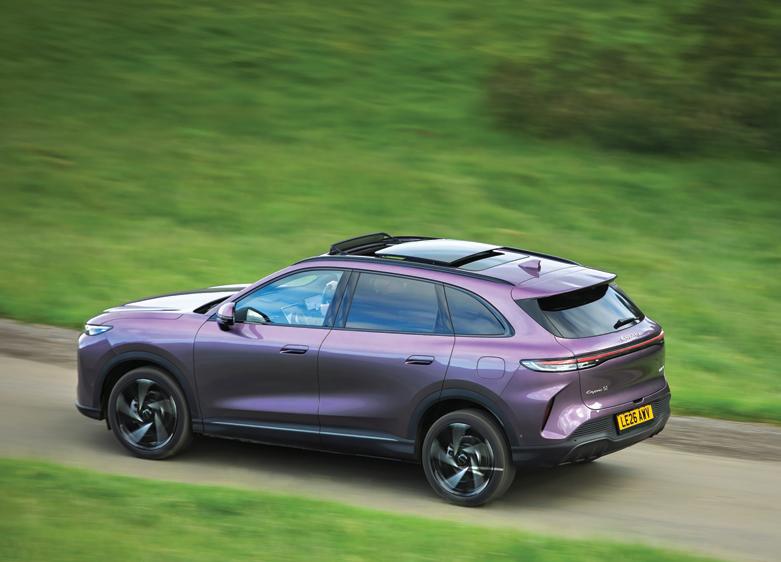
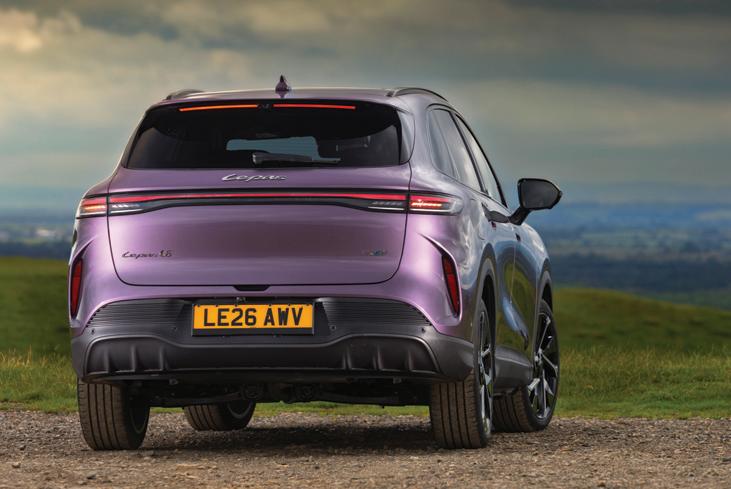
FANTASTIC FOUR Chery, Omoda and Jaecoo are joined by Lepas
How to manage the shift to electric

GBFE 2026
Highlights from the Masterclasses

JUNE-JULY 2026
Paul Middleton | SCCI
Inside the strategy of our 2026 Great British Fleet Awards winner
FANTASTIC FOUR Chery, Omoda and Jaecoo are joined by Lepas
GBFE 2026
Highlights from the Masterclasses
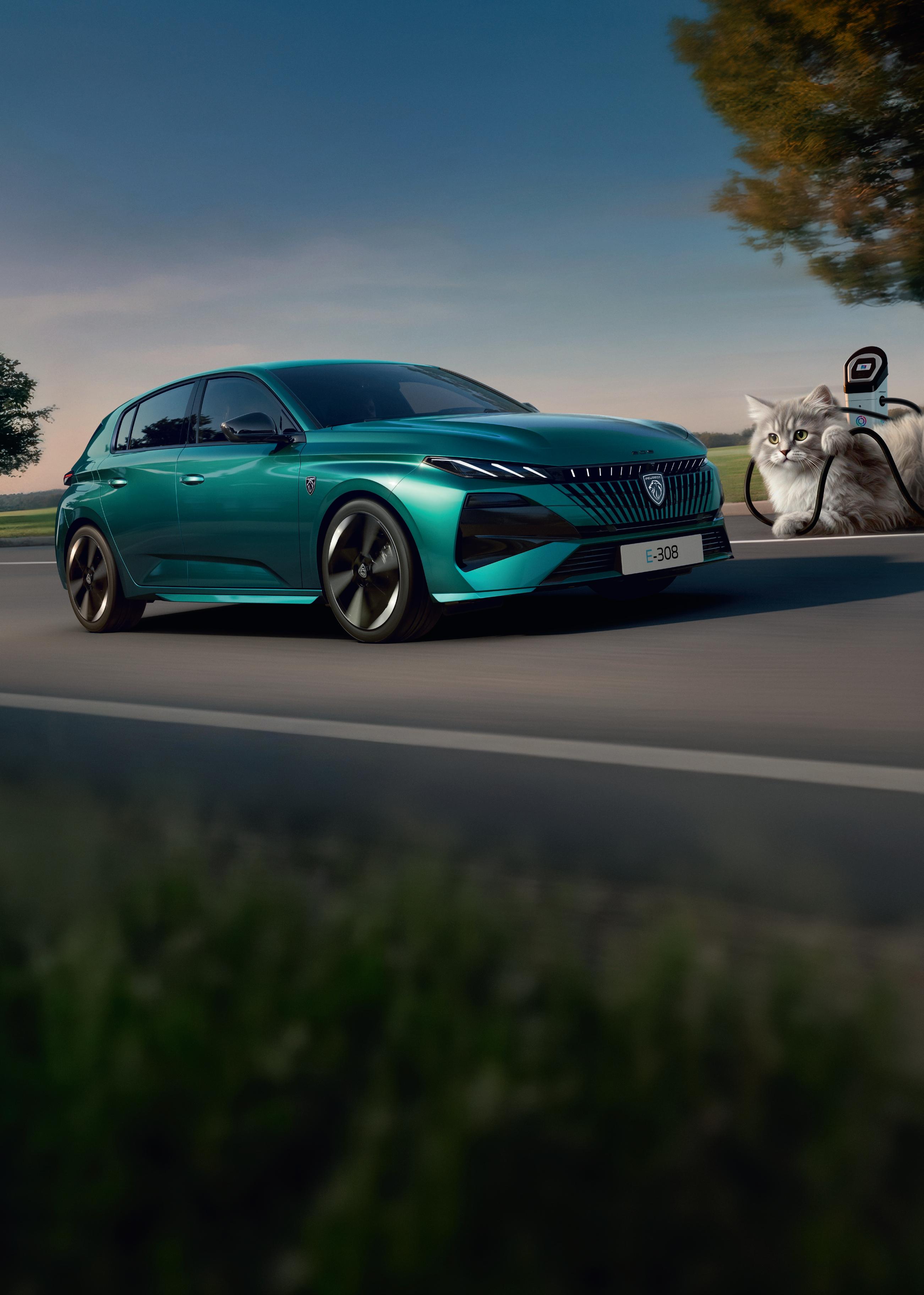
P11D from £30,930 4% BiK rate
Contact Peugeot Fleet today on 02476 016391
The P11D values and BiK% shown above are for a standard vehicle. The fuel consumption or electric range achieved, and CO 2 produced (where applicable), in real world conditions will depend upon a number of factors including, but not limited to: the accessories fitted (pre and post registration); the starting charge of the battery; variations in weather; driving styles and vehicle load. The E-308 is a battery electric vehicle requiring mains electricity for charging. The WLTP (Worldwide Harmonised Light Vehicles Test Procedure) is used to measure fuel consumption, electric range and CO 2 figures. Figures shown are for comparison purposes and should only be compared to the fuel consumption, electric range and CO 2 values of other cars tested to the same technical standard. Official Fuel Consumption in MPG (l/100km) and CO 2 emissions (g/km) for the E-308 range are: Combined N/A (N/A) and CO 2 0g/km. Equivalent All Electric Range: 279 miles.
ˆPeugeot Care consists of 3 years standard manufacturer’s warranty plus up to 5 years of special coverage. Please see full T&Cs. Visit Peugeot.co.uk.










publisher Jerry Ramsdale
jerry@fleetworldgroup.co.uk
editor Fleet World
Simon Harris
simon@fleetworldgroup.co.uk
editor-at-large
Alex Grant
alex@fleetworldgroup.co.uk
business editor Natalie Middleton
natalie@fleetworldgroup.co.uk
editor Van Fleet World
John Kendall
john.kendall@fleetworldgroup.co.uk
account
claire@fleetworldgroup.co.uk
Tracy Howell tracy@fleetworldgroup.co.uk
Lloyd Ramsdale lloyd@fleetworldgroup.co.uk
head of production
Luke Wikner
luke@fleetworldgroup.co.uk
designers Victoria Arellano Dan
web


Simon Harris editor
In our corner of the corporate world, we are conditioned to look for the spectacular. We gravitate towards massive infrastructure headlines, disruptive technology platforms or grand announcements that promise to revolutionise how we move people or assets from A to B. It is an industry that often operates at a high-pitched, frantic volume. But if you spend your days observing the sector from a distance, you notice a recurring theme. The real, enduring success stories in fleet management are rarely spectacular. They are remarkably quiet.
Right now, the background noise is deafening. With Prime Minister Sir Keir Starmer's sudden resignation in front of 10 Downing Street on the day of writing, the country has been thrown into another twist of political uncertainty. For fleet operators, this political shift lands at an exceptionally delicate moment, raising immediate questions about regulatory continuity. Just a week earlier, reports emerged that the Government was poised to dilute the Zero Emission Vehicle (ZEV) mandate, with Starmer approving the move to reduce the EV new registrations target by 2030. It looks like we will be treated to a coronation rather than a leadership battle, but should the new PM be Andy Burnham, he will undoubtedly want to put his own stamp on this opportunity to run UK PLC. This leadership transition could bring an entirely new set of regional transport priorities or legislative adjustments to the table, leaving businesses to decipher a shifting rulebook once again.
Amid volatile EV residual values, shifting procurement
policies, as well as broader macroeconomic and political uncertainty, it is incredibly easy for an organisation to become trapped in a cycle of constant firefighting. Operational panic rarely yields positive commercial results, and reactive policy shifting only serves to alienate drivers who require consistency from their employers.
Resilience is found in those taking the long view and resisting the urge to sprint in a completely different direction every time a headline shifts. The most successful operations will take a more measured, highly analytical approach to risk, balancing current cost constraints against future legislative realities. Success is found in the unglamorous, deliberate work of human-centric planning. It is found in listening to all the stakeholders in a business, assessing real-world duty of care, and ensuring drivers are properly equipped to adapt when they need to, rather than forcing top-down operational mandates that look good on paper but fail on the road.
As our theme for this 'EV ready' issue suggests, most fleets deploy long-term, strategic thinking rather than reactive guesswork. True readiness is about building an operational foundation that can withstand external shocks, regardless of who holds power in Westminster or how public charging tariffs fluctuate. Governments might change leaders, and targets may be redrawn by successive administrations. But there is immense value in tuning out the shouting, taking a step back and focusing entirely on getting the operational fundamentals right.











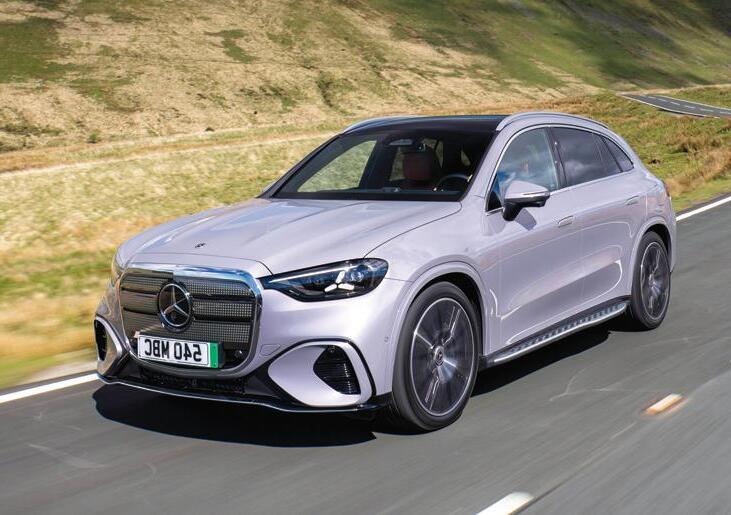
Discover the all-electric GLC. With indulgent space and refined comfort, a smooth, near-silent ride and up to 405 miles* electric range. Speak to us about our multi-car offers today^.

UK spec may vary. *Max. range for the GLC 400 4MATIC Electric Sport based on 100% battery charge. Charging to 80% is recommended to maintain battery health. ^Exclusions and T&Cs apply. Subject to status, availability and change. Official government electric power consumption figures in wh/km for the new all-electric GLC combined 164-173. CO2 emissions of 0-0g/km. Figures for comparison purposes only and may vary with external factors such as driving styles, environmental conditions, road conditions and accessories fitted. Further information about the test used can be found at www.mercedes-benz.co.uk/WLTP
Correct at time of print 05/26.

Simon Harris editor, Fleet World | EV Fleet World
What is your ambition in your current job role?
To ensure Fleet World engages more with its audience, and to ensure it remains a useful tool to help them do their jobs.
What job did you want to do when you were growing up?
I quite liked the idea of being a scientist after getting a chemistry set, aged seven.
The best takeaway food? Pizza.
What’s the proudest moment in your career?
I’ve won a few awards in my time, but perhaps a news story of mine influencing a council election way back in the 1990s. I’m also grateful to my Guild of Motoring Writers colleagues for electing me its 54th chair.
What’s your favourite film and why?
Lots of favourites, but I suppose I’ve rewatched Galaxy Quest more than any other. It gently mocks Star Trek while also respecting it.
If money was no object, what’s the first thing you would buy?
A time machine. Or a cloning machine. Too much to do and so little time.
Name three cars in your dream garage?
Ferrari 288 GTO, Aston Martin V8 Vantage, Rolls-Royce Camargue.
What are the biggest challenges facing fleets at the moment?
Escalating fuel costs, managing EV transition and ensuring compliance.

You’re on your dream holiday. Where are you?
Vancouver Island. For the tranquility, the rainforest and the wildlife.
Night in or night out?
Night in. Nights out are too much effort.
Supermarket of choice? Sainsbury’s.
What car do you currently drive?
In addition to a Kia EV5... a current Mini Cooper SE (electric) and a 1993 Jaguar XJ12.
Tea, coffee or other?
Tea. Decaf coffee if I must.
Books, mags or podcasts?
Books. I’m writing one on the history of the company car, so hopefully other people still like reading them.
Who is your idol in life and work?
Not sure about an idol, but I admire Michael Palin as a writer and observer, and his self-deprecating wit. Also Victoria Wood –probably our most brilliant comedy writer.

Reports early in June suggested a review of the ZEV mandate and its timeline might come sooner than expected. Then the Prime Minister resigned putting all major policy announcements on hold. By Simon Harris.
The Zero Emission Vehicle (ZEV) mandate was already under pressure in June. Now, with Keir Starmer’s resignation adding a layer of political uncertainty to an already contested policy landscape, the fleet sector faces a period in which the direction of travel on EV regulation may be genuinely unclear for the first time in several years.
Reports emerged in June that the Government was preparing to significantly dilute the mandate’s 2030 target, cutting the required proportion of zeroemission car sales from 80% to 50%. The Sunday Times reported that Starmer was ready to overrule Energy Secretary Ed Miliband on the issue, responding to sustained lobbying from automotive manufacturers, the Unite union and MPs on the Business and Trade Committee, who had warned of an existential risk to the UK’s car industry if the current framework remained unchanged.
The pressure was not without foundation. The mandate currently requires 33% of cars and 24% of vans sold by each manufacturer to be zero-emission in 2026, scaling sharply to 80% and 70% respectively for 2030. While regulatory flexibilities – including credit banking, trading and cross-fleet averaging – effectively lower the real 2026 car target to around 24.6%, the trajectory beyond this year becomes significantly steeper. With

some manufacturers warning they would stop selling vehicles in the UK rather than face fines of £15,000 per noncompliant car, the Government appears to have concluded that acceleration of the review was unavoidable.
For fleet operators, the prospect of a softer mandate is a double-edged development. On one hand, easing pressure on manufacturers reduces the risk of supply constraints and distorted pricing that have characterised parts of the EV market as OEMs have managed compliance costs. On the other, weakening the target risks undermining the investment confidence that the charging infrastructure sector depends upon. ChargeUK has projected £15.5bn of economic contribution and thousands of jobs from EV charging over the next decade – a figure that assumes a policy environment giving investors reason to commit.
Starmer’s resignation has not resolved that tension; if anything, it has sharpened it. Downing Street has announced there will be no major policy announcements while the Labour Party searches for a new leader, and with submissions for candidates interested in standing in a leadership election open until 16 July, it could be September before normal government business is running again.
Whoever succeeds Starmer faces the same structural problem: a mandate that
was always running ahead of retail consumer demand, a manufacturing sector under genuine financial stress, and a charging network that needs longterm policy certainty to attract capital.
Paul Hollick, chair, AFP, said: “When looking at the impact of any political change in Westminster, it’s always worth bearing in mind that fleets work in vehicle replacement cycles of around four years for cars and longer for vans. This means short-term political shifts tend to have limited effects. Most of our members will be sticking to their existing plans in the short to medium term, whatever new policies emerge.
“That said, we are very much looking for a stable and realistic approach from the new Prime Minister. Probably the main subject for the Government’s intray from an AFP perspective is the potential introduction of eVED, which we believe could be hugely damaging to the future adoption of electric vehicles by both fleets and consumers. The consultation closed in March and we await the Government’s findings.
“Also, we’ll be watching carefully for news about revisions to the ZEV mandate. A balance needs to be struck here between adopting achievable targets and a firm, ongoing commitment to electrification, especially given the huge investments in electric vehicles made by the UK motor industry.”
“A balance needs to be struck here between adopting achievable targets and a firm, ongoing commitment to electrification.”





Paul Hollick chair, Association of Fleet Professionals

It’s probably not controversial to say the US war in Iran has turned out to be not quite the fast and easy success President Trump hoped. Gains have been few but a huge negative impact has been felt over a lot of the world in the form of much higher oil prices.
Whether the military aspect of the conflict is over or not – a question unresolved at the time of writing – pump prices are likely to stay high for months and even years, a fact that impacts directly on the operating costs of fleets running internal combustion (ICE) engined cars and vans.
Oil shocks of this kind are a periodic risk for fleets, dating back to at least the OPEC embargo of the early 1970s, and have sometimes proven influential on how fleets operate, at that time prompting interest in smaller vehicles with better fuel efficiency. However, it was historically impossible to avoid the fact that moving people or goods always meant relying on petrol or diesel, and there would sometimes be unpredictable pricing.
This time around is fundamentally different though, because it is now possible to go electric. Over the last few months, there have been some signs this is
“There have been few or no signs of sudden, widespread changes in vehicle acquisition.”
happening in response to the situation in Iran, at least in the consumer sphere. Brego has identified a sudden jump in used electric car sales as a direct result of pump prices, for example, but has something similar happened to fleets?
The simple answer is no. While there certainly have been discussions within the Association of Fleet Professionals (AFP) about the advantages of running electric vehicles at this moment in time, there have been few or no signs of sudden, widespread changes in vehicle acquisition.
There are several obstacles. Firstly, fleets tend to have three- to five-year procurement strategies but, more pertinently, we are now at a point in time when much of the low-hanging fleet electrification fruit has been picked. Company car drivers who can charge a vehicle on their drive and choose a model that meets their range needs are probably already driving an EV. It’s arguable that most of the easy choices have been made.
Instead, we’re in a phase – and the distance between current new EV sales and the Zero Emissions Vehicle (ZEV) mandate reflects this – where further progress is
about covering some hard yards. For example, there remains no widespread, simple charging solution for the roughly half of the population who live in terraced houses or apartments. Developments such as crosspavement cable gullies and our own shared charging scheme provide at least partial answers, but these options are very much in their infancy. Especially, progress in the electric van sector remains slow, simply because the available models often do not meet the range, payload and charging needs of operators. This is changing but relatively slowly.
However, these difficult problems do not mean the current oil shock hasn’t, in a more subtle manner, facilitated the long-term fleet shift towards EVs. While vehicle operators haven’t made instant decisions in response to unexpected jumps in pump prices, the increases have served as a stark reminder that the consistently low cost and strong reliability of power supply from going electric are huge advantages. As some of the remaining issues associated with electrification are resolved in the coming years, vehicle operators are primed more than ever to make that move.


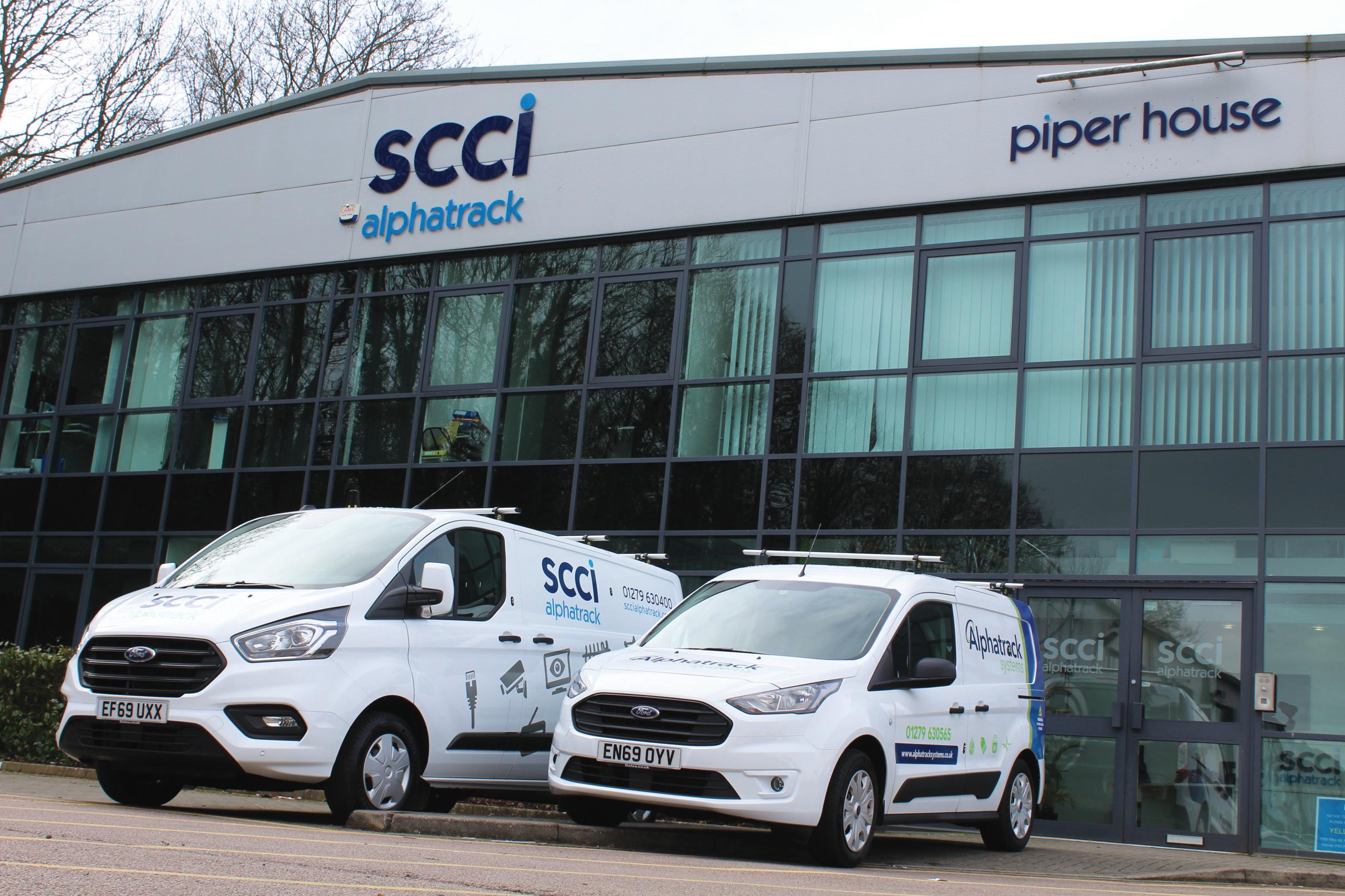
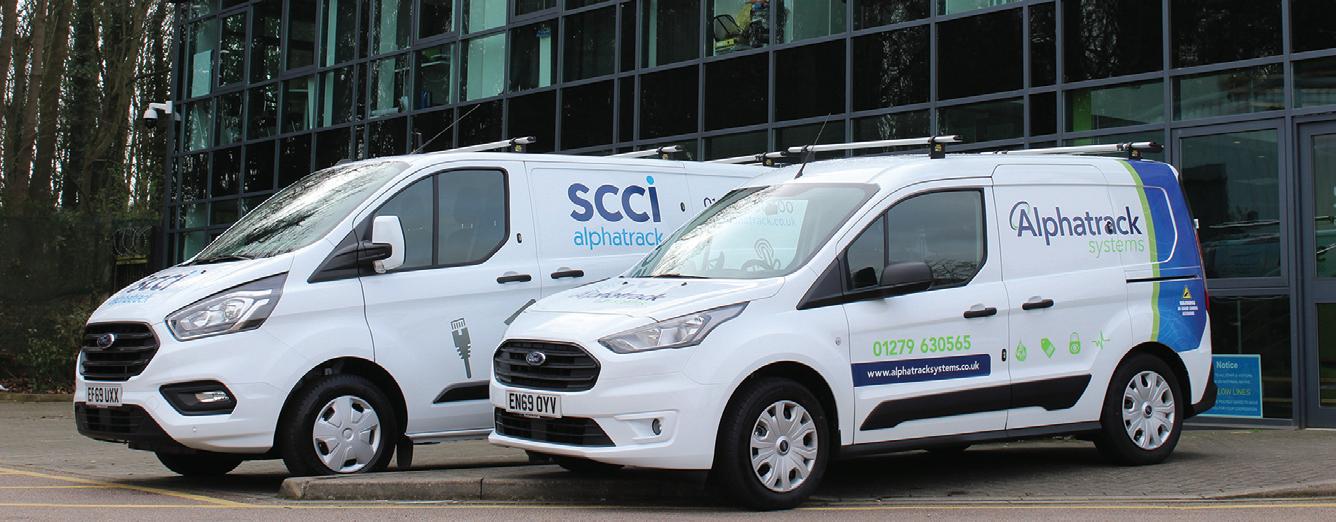
When Paul Middleton arrived at SCCI Alphatrack as fleet manager, he inherited a fleet that had grown without a dedicated hand on the tiller. Insurance costs were climbing, driver behaviour was an afterthought and there was plenty of work to do. Eight years on, he has cut accidents, transformed driver culture, saved the business more than £200,000 on its insurance in a single year, and taken home the Financial Superstar Award at Fleet World’s Great British Fleet Awards 2026. He spoke to Simon Harris about how he did it.
Paul Middleton is not shy about where he found the fleet when he joined SCCI Alphatrack. The vehicles sat within the health and safety department, driving was considered secondary to everything else, and there was no induction process for drivers at all. For someone who had spent his career running minicab fleets, chauffeur fleets and rental operations – where the

vehicles are the business – it was a significant adjustment.
“Where I had worked before, the vehicles actually generated income, so were much more of a priority,” he says. “Here, hiring the right engineer is important, but there was less of a focus on driver behaviour.”
The consequences were showing up in the insurance figures. Accidents were

Our Driving for Work course gives your drivers the skills to stay safe, reduce incidents and protect your business.
frequent, costs were rising, and Middleton could see the trajectory. He made the case to the business in the starkest terms he could find.
“I had to try to convince everyone that as our insurance costs were increasing, we might end up in a situation where we could no longer get insurance and need to self-insure,” he says. “Once I put that point across, it settled in. We had experi-












enced a difficult year of accidents and insurance costs. And I think that’s when they realised how serious it could be.”
Getting driver buy-in, he says, came down to a simple philosophy. “I’m a true believer in that you catch more flies with honey than you do with dung. If you put incentives in to reward the drivers they tend to respond positively and understand what you’re trying to achieve, rather than just punishing the ones that don’t perform well.”
Changing the broker relationship
Driver behaviour was only part of the problem. The insurance and broker arrangements were also falling short, and Middleton was carrying the consequences largely on his own. “I’ve got 250plus vehicles to look after on my own. I cannot do all of that. I can’t do everything. And they’re not supporting me,” he recalls telling his bosses.
The breaking point came when a vehicle went through a house and the broker’s response fell well short of what the situation demanded. The managing director got involved and, as Middleton puts it, was “fuming”. New brokers were brought in. This time, Middleton sat down with them and set the terms himself.
“I’ve been a fleet manager for maybe 20 years. I’ve done this at every company that I’ve been with. I’ve never failed to save the money on insurance – in many places, halve the cost,” he told them. “This is the only company I’ve ever been to where the insurance has actually gone up.”
The new broker’s response was simple: tell us what you want and we’ll do it that way. Middleton then brought the insurer in directly, walked them through his concerns, and agreed a new way of work-
ing. Accidents would be reported immediately via a driver app he had developed with FleetCheck. Footage and incident details would reach the insurer within an hour. Local body shops were brought in that recycled parts where possible rather than automatically ordering new ones. Spare fleet vehicles were used in place of hire cars wherever feasible.
“It’s about trying to make the whole process run as quickly, as smoothly and as simple as possible,” he says. “And doing it as cheaply as we can.”
The £200,000 saving The results came faster than Middleton had expected. Training videos were introduced to communicate risk to drivers. A monthly league table of safety scores was circulated to all engineers and their managers, showing not just overall scores but top speeds, harsh events and speeding percentages broken down by severity. The top three drivers each month received vouchers. A separate end-of-year draw offered five prizes of £1,000 each to any driver who had maintained a safety score of 80 or above every month, had no penalty charge notices, no

“If you put incentives in to reward the drivers they tend to respond positively and understand what you’re trying to achieve.”
accidents and no upheld complaints.
“We ended up with 11 who met that criteria,” he says. “I was quite surprised, actually. I didn’t think we’d get that many. We put them in a hat and drew five. For the remaining ones, we sent them a voucher anyway to say well done – it wasn’t £1,000 but it was a thank you and a recognition for their hard work.”
Last year all of this paid off. The fleet saved more than £200,000 on its insurance through a combination of a large rebate on unclaimed insurance and a drop in the per-vehicle premium from around £1,000 to £600, driven by two years of significantly improved accident records.
“It happened a lot quicker than I anticipated,” Middleton says. “I was expecting it to be another couple of years before we were there.”
The excess was doubled as part of the new insurance arrangement – from £500 to £1,000 per incident – but Middleton introduced a scheme to soften it. Drivers who reported an accident immediately via the app would have half their excess paid by the company. Those who did not would pay the full amount.
“The drivers have kind of responded,” he says. “We have one or two that still didn’t play ball, and then they have to pay the £1,000 excess.”
Cameras, culture and the long game
One of the more instructive episodes in Middleton’s tenure involved a driver who had been particularly vocal in his opposition to the Samsara cameras introduced to replace an older, easilytampered-with system. The driver had unplugged the old cameras, as many had. When the new tamper-proof units went in, he complained loudly.

Then someone hit his van while it was parked, damaging the entire side from front wing to rear. He phoned Middleton expecting bad news. Middleton let him sweat for a moment before telling him the camera had caught everything, including the registration of the vehicle that drove away.
“I said, the main reason that we have these cameras is for your protection,” Middleton recalls. “It’s only the people that are doing things wrong that have got anything to worry about.”
For drivers at the other end of the scale – those with persistently poor safety scores – the process is graduated. Three consecutive months of poor scores triggers a driver training session. If scores do not improve the following month, a dual-

facing camera is installed. If there is still no improvement, disciplinary proceedings begin. In practice, Middleton says, it rarely gets that far.
“What generally happens is they think you’re bluffing, you put it into one or two and then word spreads,” he says. “It only takes one engineer for it to happen to. They tell their mate, they tell two of their mates, and suddenly it’s all over the fleet.”
He is also clear with drivers about what the cameras are not for. “I’ve worked here for nearly eight years now. Since we brought this system in six years ago, I’ve never looked at a particular driver’s camera footage for no reason. I’ve got 250, 300 vehicles to look after. I don’t sit there and go, ‘I wonder what Stuart’s up to.’”
What comes next?
With the Financial Superstar Award now on the shelf, Middleton is already looking at what comes next. The driver incentive scheme is being extended, with quarterly awards planned that recognise not just safety scores but everything from van cleanliness to going above and beyond on the road. He is also working towards a standardised company car list to consolidate purchasing power and extract bigger fleet discounts – a move that mirrors the logic behind switching van suppliers from Ford to Toyota, which he says delivered a saving of around £7,000 per vehicle across a batch of 30.
Dual-facing cameras across the whole fleet remain on his radar for when the current camera contract expires.
And through all of it, he says, the lesson is the same one he has applied since the beginning. “Listen to your engineers. They face challenges that we are not aware of. It’s all very well pointing fingers, but if you can’t listen to what they want and try to achieve a goal through helping them, you’re not going to get very far.”
He pauses, then adds: “I’ve been doing this for 20 years. Every day is a school day. You’re always learning something new, no matter how long you’ve been doing it.”


Our industry insider lifts the lid on everyday fleet issues.
Our drivers have not been the quickest to join the EV club. They have continued to be happy driving their petrol and diesel cars up and down the country. But a couple are now due to change their vehicles and looking seriously at electric cars, and also considering plug-in hybrids.
They have done their homework, and are now pretty clued up on them, to the point where they are becoming experts and, frankly, quite boring on the subject.
I too have been looking at the pros and cons, maybe a bit late to the party, but there is still tea, sandwiches and cake left. Doing the resea rch, I’m beginning to think there are some really good electric cars, some good, some average, some not so good, and some, well, why did they bother –did they make cheap ones just for the sake of making them, just to get to the numbers?
Everyone talks about EVs, but in my humble opinion, there are EVs
and there are EVs, with some technology miles apart, and very different things, despite all being called EVs.
I’m working on a choice list, and its working title is: The Good, The Bad and The Ugly. But there have always been good and not so good cars for as long as I can remember.
The recent substantial increase in fuel costs has hit us hard financially, and I keep thinking we probably should have insisted our drivers move into EVs earlier, but who was to know that a conflict overseas would have such an effect, with no real chance of petrol and diesel prices coming down any time soon. Prices rocket up quickly enough, but the lag before they come down again is something fleet managers have had to live with, very reluctantly, for as long as any of us can remember.
Keys, tyres and service receptionists continue to play a large part of my life. If I’m not battling with a service receptionist, then I’m trying to find lost keys remotely, or trying to
fix a simple puncture, but these days there is no such thing as a simple puncture. It can be a day’s job to get a flat tyre fixed, and a day’s lost work for the driver. And guess what, it always seems to be my fault.
Lost or misplaced keys also continue to amuse me. I shouldn’t find it funny, but some of the situations they describe are genuinely baffling. They seem to think that by calling me, I have magic powers in locating their keys, as though they have watched too much Britain’s Got Talent and think I fall into the same category.
Just last week a driver was in a panic, he couldn’t find his keys anywhere. The car had keyless entry, and no key was needed to start it, the key fob just had to be in the car. He said the car did start, so we established the key must be in the car. I told him to look everywhere, in between the seats, in his pockets. After taking up 20 minutes of my time, he found it in a supermarket shopping bag.

“I keep thinking we probably should have insisted our drivers move into EVs earlier.”


Fuel and EV charging, unified.
Vehicles maintained.
Every mile, every cost, under control. All brought together in one strategic platform.

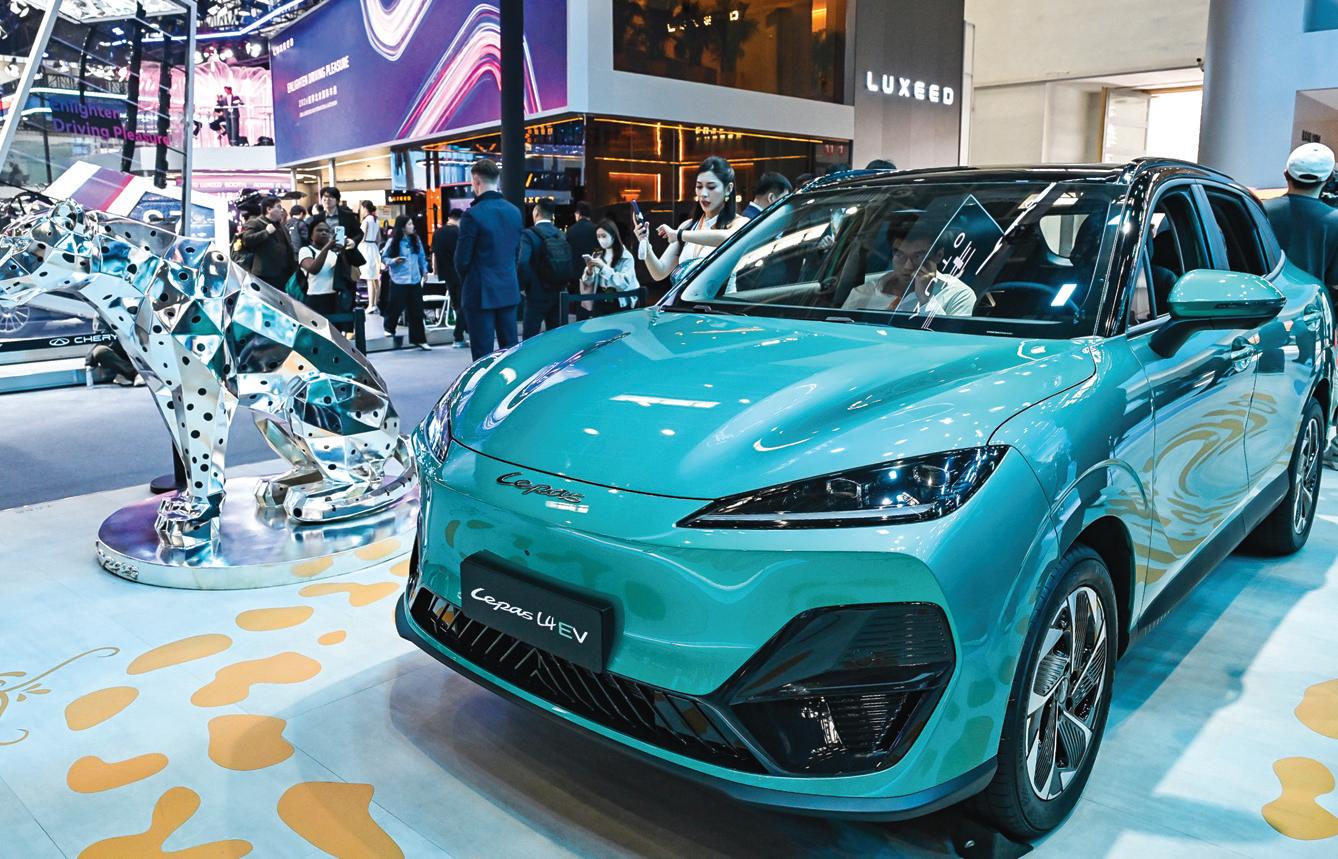
Chery International is officially launching its fourth brand in the UK this summer. Chris Clayton – fleet sales director for Omoda, Jaecoo, Chery and the newly introduced Lepas nameplates – speaks with Natalie Middleton about the brand’s strategic rollout and Chery’s burgeoning UK presence.
The rapid expansion of Chery International takes another major leap forward this summer as the Chinese automotive giant introduces Lepas to the UK, arriving 18 months after the group first sought to disrupt the UK market with Omoda and Jaecoo. This latest launch signals an increasing pace of growth as Chery International’s multibrand rollout continues, with its arrival following Omoda in August 2024, Jaecoo in January 2025 and the Chery brand itself last summer.
First announced in April 2025, Lepas unveiled its inaugural vehicle, the L8 large hybrid SUV, shortly after. The Lepas branding is a portmanteau of Leopard, Leap and Passion, and Chery says it “not only addresses a market gap but also redefines elegant mobility with its philosophy of ‘colourful life, masterful drive’”.

Its arrival follows a period of remarkable growth: the group claims the fastest-ever rise from 0-5% market share in the UK, with a 6.73% combined share achieved as of mid-2026.
Designed specifically with European buyers in mind and positioned as a more lifestyle-led, premium option, Lepas will focus on electrified powertrains – including plug-in hybrids and full EVs – unlike its sister brands that debuted with petrol variants. Rollout starts with the flagship L8 plug-in hybrid family SUV (on sale now), followed quickly by the mid-size L6 crossover in PHEV and pure electric form, and the L4 small SUV as both a plug-in hybrid and EV. Plans for next year could see the sporty L2 hatchback and the top-tier L9 three-row SUV added to the UK line-up.
Chris Clayton, fleet sales director for all four brands, explains that Lepas will sit at the pinnacle of the group’s brand hierarchy, above Chery, a family-focused value-driven brand, as well as Omoda and Jaecoo. He notes that the group is becoming something of a specialist at UK brand launches.
“I don’t want to say we have done it all before but we have learnt, so we can be more efficient with it. In addition, the dealer partners that are signing up know how to be onboard with the brand, because the majority of them are already working with us.”
Clayton joined Chery International in November 2023 to establish the group’s UK fleet foundations ahead of their official vehicle rollouts. He brings more than 18 years of automotive industry experience, including the role of contract hire and leasing manager at Hyundai Motor UK and over a decade at Toyota GB in various fleet, remarketing and vehicle logistics roles.
While Lepas and the other badges are new to the UK, Chery International, which is China’s largest car exporter, has decades of automotive experience behind it – and Clayton says it is a key
“Chery, we can see, is growing in the same way that Omoda and Jaecoo did, if not faster, and Lepas will be exactly the same.”
Chris Clayton, fleet sales director – Omoda / Jaecoo / Chery / Lepas
–
selling point when talking to fleets.
“It’s the first slide in our deck. We’re new to the UK, but we’re not new. We’ve been doing this on other continents for years, so even when we launch a new brand to the group, its bones are still tried and tested.
So it’s absolutely something we do.
“From a fleet perspective, no matter the value they see in a brand, there’s always going to be a nervousness around someone new. And quite rightly, they want to try and test these cars and have their teams try and test them before they’ll be comfortable to really expand the mix of our cars into their fleet, which we’re seeing in Omoda and Jaecoo now; we’ve got over a thousand corporate and SME customers buying our cars. Chery, we can see, is growing in the same way that Omoda and Jaecoo did, if not faster, and Lepas will be exactly the same.”
Fleet will be a core focus for Lepas, with a 50/50 split between fleet and retail sales targeted, aided by the brand’s strong electrified lineup. Clayton is particularly enthusiastic about the brand’s corporate appeal.
“I personally think that Lepas has a much stronger fleet proposition because it’s got that plug-in hybrid, which, as we know from our other group friends, works
really well in every single channel. But we also have two EVs coming this year.”
The brand is beginning to recruit dedicated fleet staff, initially focusing on leasing brokers and rental, while public sector and salary sacrifice business will be managed in the interim by the existing Omoda and Jaecoo fleet team. Clayton says Lepas will ultimately target all fleet channels, though rental is unlikely in the short term.
“We want to have partners in every channel aware of our product. We’re not trying to force cars into people that don’t want them, because that has the ability to damage our RVs in the future.”
To help drive corporate adoption, the group is fast-tracking a hands-on fleet marketing strategy to get buyers behind the wheel before the end of the year.
“We’re quite aware that brand awareness is key here and I think getting bums on seats, getting people to touch and feel, has been extremely beneficial to the previous brands, where they can actually go, they can do the door slam test, and hear the quality, but also sit in it and try and touch and feel it. So, from my perspective, we need to demonstrate the models, we need to get people seeing them.”

Managing competition between four brands in the same market is, by Clayton’s own admission, an ongoing challenge. “I think it’s nearly impossible to avoid it, but it’s a daily, weekly focus for us to avoid it; whether we position certain models into specific channels just so that you don’t have an Omoda 7 and a Jaecoo 7 or a Lepas L8 and an Omoda 9 fighting. The UK has 63 other brands – we’ve got enough people to fight with; we don’t want to fight with ourselves. So it’s a constant talk. Even if we’re looking at partnering with different people, we make sure that we’re doing accurate benchmarking.”
The approach extends to the dealer network, with standalone sales and aftersales showrooms being implemented for all brands since 2023.
Aftersales is identified as the group’s most critical priority, with Clayton pointing to strong dealer partnerships, overnight parts delivery through DHL and air freight capability for urgent requirements. The group is also increasing its regional aftersales managers and continuously reviewing parts stock levels.
“Mostly, the cars will sell themselves if we get the pricing and the discounts right – and the brand awareness in the market.
The cars will sell themselves, but aftersales is always the strongest thing. We need to make sure that we have oversupply, so that it’s not something that affects our brands.”
On residual values, Chery is currently trialling buyback business for the first time, with results expected by September. Clayton sees it as a stepping stone towards guaranteed RVs, particularly for EVs.
“Guaranteed RV is an interesting concept. It’s not something that we currently are doing across any brands. We’ve just started to explore buyback business because we have to explore every channel. Buyback is not something that is done in any other country we operate. It’s a very new concept that I’ve said is really positive because if we’re buying these cars back, we can help control the

remarketing of them, the resale of them and help go to the data providers and boost our residual value. If they’re saying that it’s 40%, we can go back with that data, that we’re remarketing these at 50%, they will listen to that and they have to listen to that to help grow our RV. Guaranteeing the RV is probably the next step on that. With EVs, it’s definitely something that a lot of partners are interested in, and I think we will absolutely trial it.”
Clayton is equally focused on operational infrastructure, investing in systems and processes to support the group’s remarkable pace of growth. Drawing on his experience at Toyota and Hyundai, as well as a wider team drawn from Mercedes-Benz, Suzuki, Genesis and Mazda, he is selective about which
industry conventions to follow and which to discard.
“If we look at previous people that entered the UK – the Koreans or even other Chinese brands – we’ve had probably two decades of growth in two years. I like to say I’ve made my way through Asia, because I’ve started in Japan, gone to Korea, I’m now in China. The UK is complicated, and fleet is even more complicated. However, I have experience of how brands that sell 100,000 cars a year operate. What I’m learning is that there has been a rule book established by the traditional manufacturers, but you can rip up the rule book for certain things. I’m trying to take the good things that I see and adjust them for our culture, our business, to make them work even better, because if we do what everyone else has done, we’re not going to grow as fast as we want to.”
With Lepas now on its way and three further brands already establishing themselves in the market, that combination of experience, pace and strategic discipline looks set to be one of Chery International’s most significant competitive advantages in a complex and crowded market.


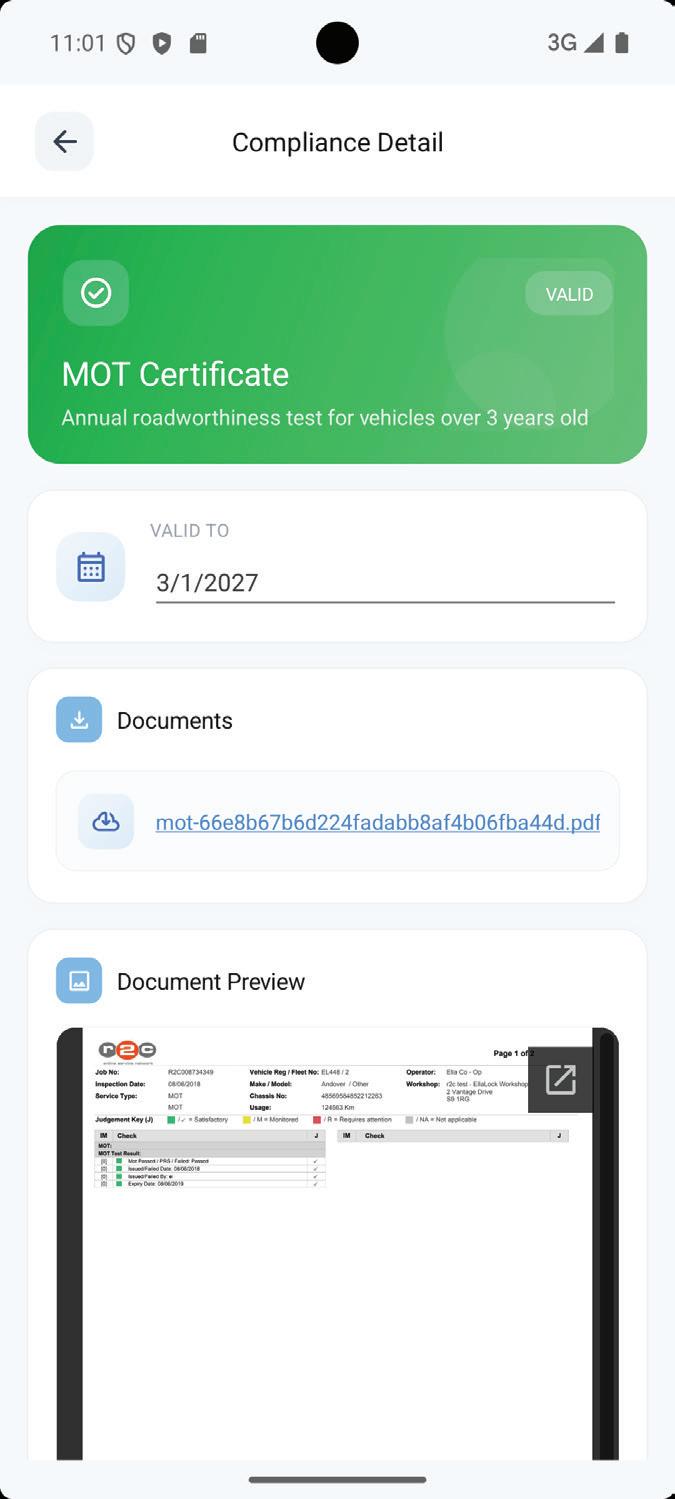
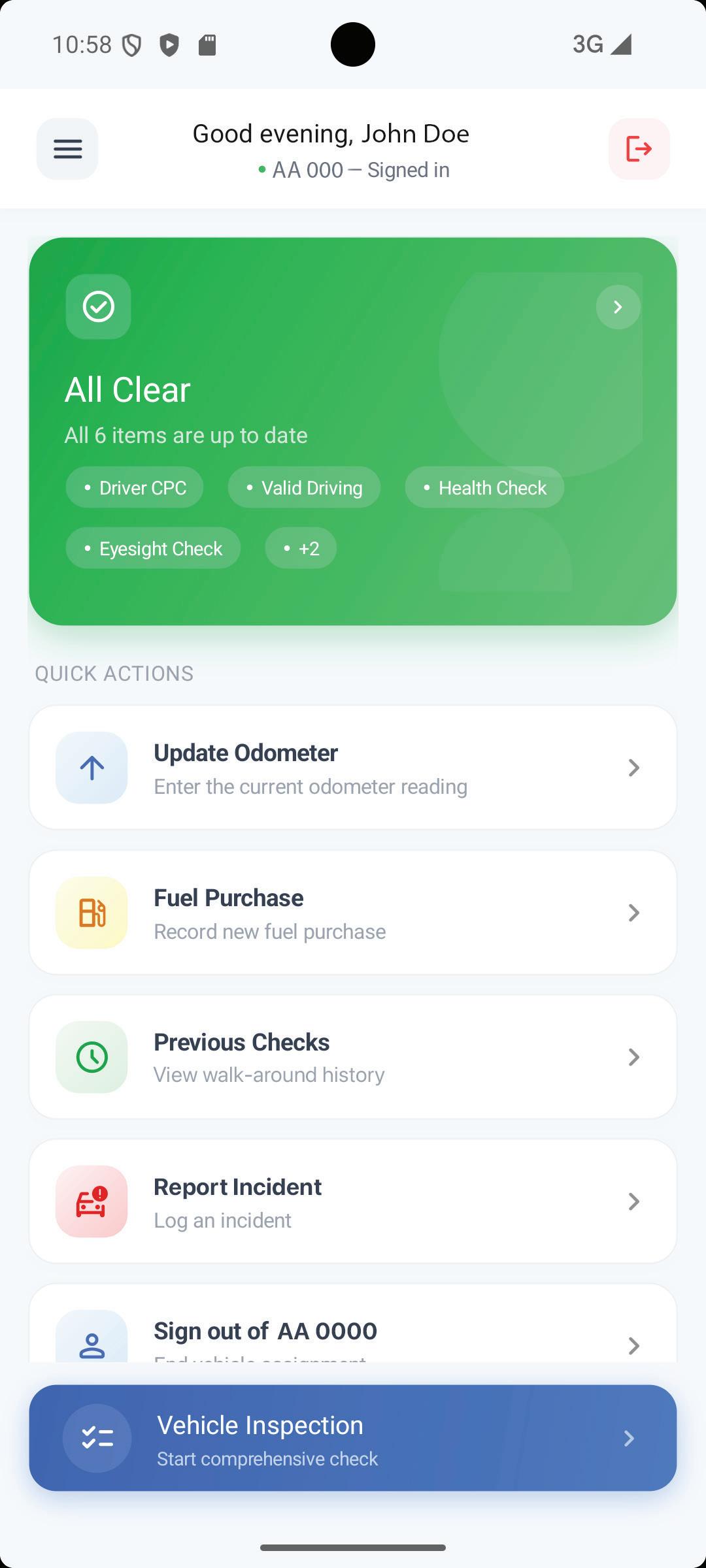





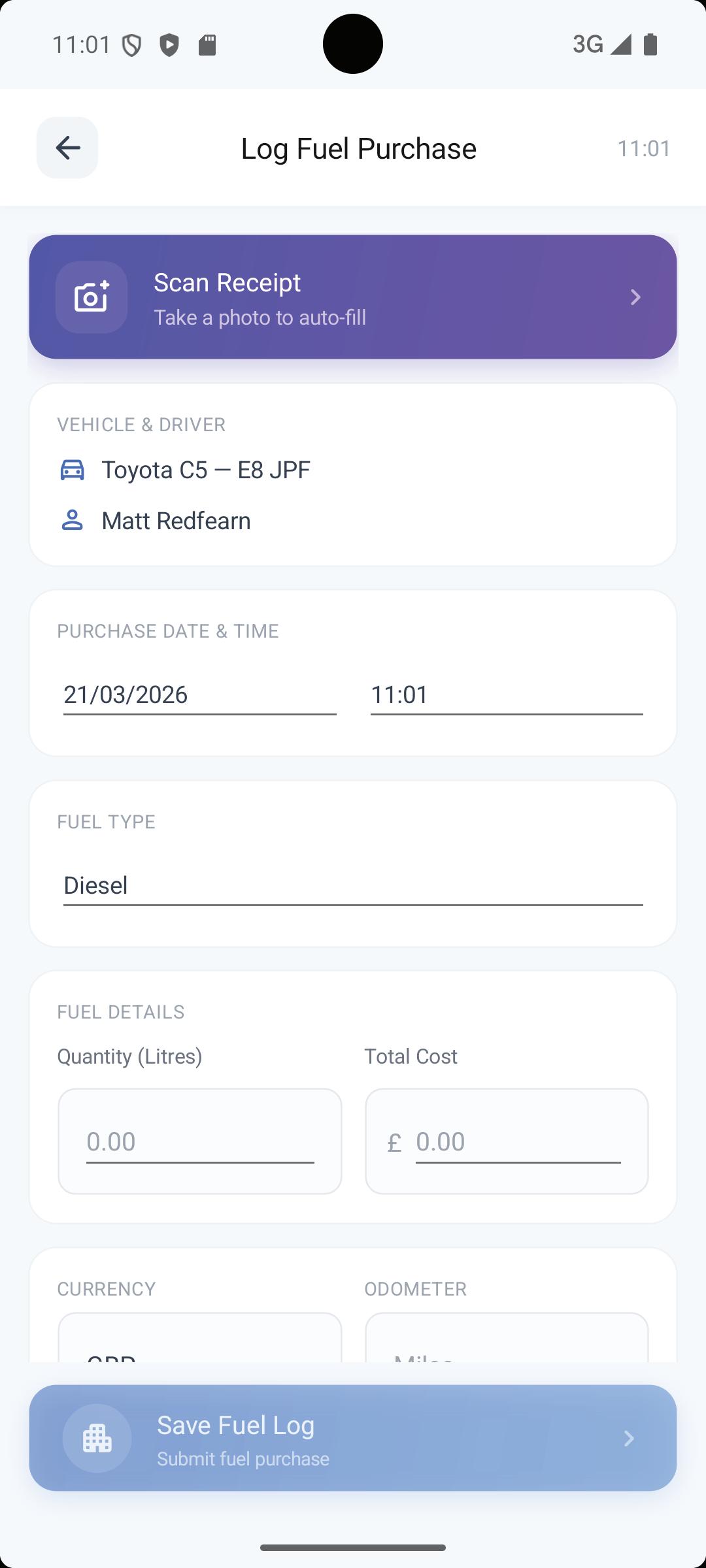


Fleet management has never been more complex and, according to IFM commercial director Shaun Redhead, that complexity is precisely why businesses are increasingly turning to specialist providers rather than trying to handle everything in-house.
Twenty years ago, managing a fleet was relatively straightforward. Fleets negotiated discounts with manufacturers, set their grade limits, kept vehicles serviced and moved on. Today, a fleet manager is expected to be a tax specialist, a legal expert, a health and safety authority, an infrastructure planner and an EV strategy consultant, all at once. For larger fleets, the dedicated
fleet manager role remains, but even those individuals need specialist support to keep pace with the breadth of what is now required. For smaller fleets, the role has often disappeared altogether, landing in the lap of a procurement manager, an HR director or a finance team that simply does not have the time or expertise to do it justice. That is where IFM comes in.
Our funder-agnostic model means we can manage vehicles regardless of how they are funded – contract hire, outright purchase, finance lease, salary sacrifice –treating every vehicle and every driver consistently. This matters particularly when businesses are in transition, running legacy contracts alongside newer arrangements, or managing a blended fleet of company cars, vans and salary sacrifice vehicles simultaneously. Rather than dealing with multiple suppliers and chasing multiple points of contact, our customers come to one place.
The personal service model is the foundation of what we do. When a driver calls IFM, they speak to someone who knows their account, understands their fleet, and can give them a straight answer. We are not hiding behind a ticket system or a complex call centre. That philosophy was never seriously debated when we went through our proposition review last year. It is the DNA of the business, and it will stay that way regardless of how much we invest in technology.
And we are investing significantly in technology – we are now 15 months into what was planned as an 18-month development programme, with a further nine months recently signed off. The purpose of that investment is not to reduce headcount or replace our people. It is to free them up to do the things that add genuine value, by removing the friction from routine processes and making our operations faster and more efficient.
Our ARC platform is central to that. ARC stands for Advanced Remote Connectivity. It is a proactive service, maintenance and repair solution developed by Grosvenor –IFM’s parent company – in partnership with Targa Telematics. By connecting directly to vehicles, ARC gives us real-time dashboard visibility of warning lights, service countdowns and vehicle health, without requiring any physical device installation in most cases. Rather than relying on drivers to act on a warning light – which, as any fleet manager knows, they often do not – our team sees the alert and acts on it. That reduces the risk of something minor becoming something catastrophic, protects warranty validity and, crucially, keeps vehicles on the road. With daily hire rates now running at £50 and above, minimising downtime is a direct and measurable saving.
The basics, done consistently and done well. That is what fleet management should look like.
The conversation surrounding fleet electrification has officially broken past its first major milestone. For years, ‘EV readiness’ was measured by a relatively straightforward set of metrics: vehicle availability, initial battery range and the upfront capital cost of switching from internal combustion engines. But as corporate deployments scale up into high-volume, multi-vehicle realities, a sharp divide has emerged between theoretical policy ambitions and daily operational friction.
True readiness is no longer just about getting keys into drivers’ hands. It is about the invisible architecture that keeps those vehicles moving efficiently, predictably, and cost-effectively.
In this special feature, four industry experts pull back the curtain on the silent variables and operational bottlenecks currently defining the front lines of fleet management. As our contributors reveal, the modern fleet manager must now transition from a buyer of electric vehicles into an optimiser of complex digital, financial and mechanical ecosystems.
To successfully navigate this next phase of the transition, the fleet industry must confront four interconnected challenges: Infrastructure as an asset: Dealerships and fleet hubs are facing critical charging bottlenecks. Simply adding more hardware is no longer sustainable; sites must shift from viewing chargers as a sunk operational cost to deploying smart, datadriven software that treats power capacity as a dynamic commercial asset.
Policy vs operational reality: New regulatory frameworks, such as the Electric Vehicle Road Tax (eVED), are introducing steep administrative hurdles. By forcing operators to forecast unpredictable vehicle mileage 12 months in advance, policy
designs are actively colliding with the need for real-world operational flexibility.
The payment fragmentation crisis: While targeted updates like HMRC’s dual advisory electric rates accurately reflect the price chasm between public and domestic energy, they add intense complexity. Small-to-medium business (SMB) managers are now drowning in administrative hours, tracking multiple platforms and payment methods just to keep their drivers on the road.
The physics of total cost of ownership (TCO): Beyond the digital and financial friction lies a physical reality. The massive weight and instant torque of battery electric vehicles alter how rubber meets the road, making an independent, data-backed EV tyre strategy a vital variable in protecting range and preventing premature replacement cycles.

The consensus across the market is clear: we have moved past the debate over whether to electrify. The challenge now lies in engineering the operational simplicity required to support long-term growth. From integrated payment networks and independent component validation to smarter onsite energy management, the future belongs to fleets that can seamlessly bridge the gap between policy mandates and real-world execution.


Kelly Pinner, head of business development, Jaama
t’s becoming clear that eVED brings challenges that extend beyond the tax itself. For fleet operators trying to navigate an already complex transition to electric vehicles, this represents another layer of uncertainty at a time when clarity matters most.
The forecasting challenge
One of the most fundamental problems with eVED is that it asks fleet operators and drivers to predict their mileage a full year in advance.
On the surface, forecasting mileage a year in advance might sound straightforward, but the reality of fleet operations is almost non-existent existent. Vehicles get reassigned between contracts, routes shift based on demand and business priorities change, most times with little warning, which is just the nature of running an efficient fleet.
The idea that an operator can sit down in January and confidently declare what a vehicle will have covered by the following December is quite detached from how the industry truly works.
While the impact varies depending on the size of your operation, it is felt across all. If you’re running a complex mixed fleet with HGVs and specialist vehicles for example, your routes might be more predictable, but your compliance burden is already significant.
If you’re managing hundreds of leased cars and vans across a dispersed workforce, like the emergency services, mileage forecasting becomes almost impossible. And if you’re in the public sector, this adds another layer of administrative cost at a time when budgets are already under pressure. None of these scenarios are well served by eVED as it stands.
policy built in a vacuum
To run a fleet successfully, you need flexibility from the beginning. Getting the right vehicle on the right route with the right driver, at the right time does require forward planning but also the ability to be reactive when things inevitably change. Being able to make those calls dynamically, not six months in advance, is the essence of a great fleet manager, responding to real-world conditions rather than forecasts made months earlier.
eVED almost goes against that approach. Instead of enabling smarter decision-making, it adds on additional administrative burden with no operational benefit. Compliance becomes harder because paperwork demands have grown, and workflows are constantly elongated.
It also raises a question that I suspect many in the industry are quietly asking: did those who designed this policy truly understand how fleet operations function day to day? Because some of the assumptions baked into the structure suggest they may not.
A tax that works against itself
Perhaps the most serious concern of all, though, is what this policy signals to the market at this moment.
Fleet operators have been at the forefront of EV adoption in the UK. Many have made significant investments in
vehicles and driver training based on a reasonable expectation that the policy environment would remain broadly supportive. For a significant number of operators who are still on that journey, cost remains the single biggest barrier to making the switch.
Introducing a new charge targeted specifically at EV drivers does not instil further confidence. If anything, it risks undermining the commercial case for electrification at exactly the point when we need more operators to commit, not fewer. The momentum that has been building in the fleet sector is valuable and policy decisions like this one put it at risk.
The road ahead
None of this is an argument against EVs paying any road tax at all. As electric vehicles become mainstream, questions about how to fund road infrastructure fairly are entirely legitimate. But the answer must be a policy that is workable in practice, fair in its design, and timed with some awareness of the market. eVED may be one policy shift, but its impact on fleet confidence shouldn't be underestimated. As the market continues to evolve, clarity and consistency will be just as important as the policies themselves.
“Instead of enabling smarter decision-making, eVED adds on additional administrative burden with no operational benefit.”



MRC’s decision to maintain separate advisory electric rates for home and public charging is the right one. Public charging costs have diverged significantly from domestic electricity prices and reimbursement frameworks need to reflect that reality. For drivers covering long distances away from base who are relying on rapid public charging rather than a home charger, the gap between the two rates is material. A single flat rate no longer served anyone fairly and HMRC has been right to acknowledge that.
But for the SMB fleet operators managing drivers who charge across multiple locations, every day of the working week, this update also adds another layer of complexity to an already fragmented payment environment. And fragmentation, as anyone running a small commercial fleet will tell you, is already one of the defining operational challenges of the transition to electric.
The admin burden is already significant
Before this update, the picture was already difficult. Allstar’s SMB fleet research, which surveyed 300 UK SMB owners and directors managing fleets of between four and 20 vehicles, found that 97% reported feeling anxious about managing fuel and EV charging payments. That is the overwhelming majority of small fleet operators telling us that something most people
regard as a basic operational task has become a genuine source of stress.
The reason is not hard to identify. Eight in 10 SMB fleet operators already use more than one payment method or platform just to keep vehicles moving. Nearly half, 48%, spend between four and six hours a month on fuel and EV charging payment admin alone. That is time and resource being pulled away from running the business, managing customers and keeping vehicles productive.
When reimbursement rates, charging costs and payment systems all vary depending on where a driver happens to plug in, that administrative burden grows.
What the dual rate reveals
The industry often measures EV readiness through vehicle availability, charger deployment and policy support. Those factors matter but readiness is also determined by whether fleets can operate electric vehicles efficiently day-to-day, without introducing additional administrative burden, uncertainty or cost.
Right now, for many SMB fleet operators, that operational readiness is not there. Almost all of the businesses we surveyed told us that managing fuel and charging payments affects driver productivity or time back on the road. That challenge is around systems rather than technology or infrastructure problems and
it sits squarely in the gap between policy ambition and operational reality.
Every new variable in the reimbursement landscape, however well-intentioned, adds to that uncertainty for operators already managing multiple payment methods, multiple providers and multiple charging scenarios across a mixed fleet.
The industry has the technology to solve this. A single payment solution that works seamlessly across traditional fuel and EV charging, that provides real-time visibility of fleet spend and that handles the complexity of different charging locations and reimbursement rates without placing that burden on the fleet operator is what 98% of the SMB fleet operators we surveyed said they need.
For many SMBs, becoming EV-ready is no longer a decision about whether to electrify, we’ve moved past that. Now, it’s about ensuring the systems that sit behind those vehicles are simple enough to support growth. Charging infrastructure remains essential, but so too are the payment, reimbursement and management tools that allow fleets to use that infrastructure efficiently. Until those elements work together seamlessly, true EV readiness will remain out of reach for many operators.

ealerships are under increasing pressure to support higher EV volumes, yet much of the industry conversation still centres on vehicle supply and public charging infrastructure. Far less attention is being paid to how dealerships are expected to make EVs work onsite.
Vehicles need charging throughout the day, whether they are being prepared for handover, moved through the workshop or allocated to a driver for a test run. At many sites, charge point numbers and site capacity are already struggling to keep pace with demand. OEM requirements are only adding to that pressure, with dealer groups being asked to roll out more charging provision without always having a clear long-term plan for how it will be managed.
Charge points have often been added in response to immediate operational needs. Over time, that has created charging setups that are difficult to manage efficiently, with some charge points heavily relied on, while others sit unused for most of the day.
The problem usually becomes clear during busy trading periods. Sites with high fleet activity or large EV volumes can quickly run short of enough charging capacity, forcing teams to rely on expensive public charging networks to keep vehicles moving. In other cases, customers collect new vehicles with very little battery charge because dealerships do not have the capacity or visibility needed to manage turnaround efficiently.
That has a direct impact on customer experience. Vehicle handover remains one of the most important moments in the ownership journey. Asking customers to search for a rapid charger after collection undermines the experience dealerships are working hard to deliver.
The right charging experience also gives customers another reason to return.
Declining traditional values, eg SMR revenues generated by ICE vehicles, are pushing dealerships towards new income streams, create as many opportunities for customer engagement and encourage footfall. As servicing requirements change in the EV market, many dealerships are looking for new ways to increase repeat visits and maintain customer relationships. Wellmanaged charging help bring customers back more regularly while creating additional opportunities for engagement.
Charging needs to become part of the business model
Despite that, many dealerships still view charging infrastructure as a cost, rather than a commercial asset. Investment decisions are often driven by the upfront expense of hardware and installation, particularly at a time when retailers are already managing significant investment pressures from OEM requirements and facility upgrades. Yet many sites still overlook the commercial opportunity sitting
within their existing charging setup.
Most dealership sites already have charge points that sit unused for significant parts of the day. Some are dedicated to workshop operations, others to staff or courtesy vehicles. But usage is rarely managed across the full site. Without the right software, general managers are unable to see charger usage and they can’t analyse peak demand data. They also can’t effectively manage billing and revenue. That makes it hard to use existing capacity efficiently, means they’re probably spending more on energy costs and potentially investing in chargers they don’t need.
Smarter charging management will define EV readiness
As charging demand grows across dealership sites, managing charger access, usage and energy costs will become increasingly important. Dealerships that manage charging well will be in a far stronger position as EV adoption continues to grow. Simply installing more chargers is not enough. The real challenge is making sure charging supports the day-to-day running of the site, improves customer experience and delivers long-term value from the investment already being made.


The battery electric vehicle market remains volatile. Despite OEMs competing on price and creating downward pressure on new EV list prices, BEVs still cost more than their equivalent ICE vehicles. Manufacturers and leasing companies have years of experience with ICE vehicles. There is an air of stability. Everyone knows roughly what they cost, what they will be worth at the end of a three- or four-year lease cycle, and whether buying or leasing makes more sense for a given use case. Petrol stations are ubiquitous and generally reliable. Service and maintenance intervals are predictable.
A three-year lease with a Total Cost of Ownership based on last year’s fuel prices once felt like a sure thing. But as we are seeing, fuel prices are far from immune to volatility. Military action across the Middle East and Strait of Hormuz disruption have demonstrated that oil prices can move sharply and without warning, meaning the TCO agreed 12 months ago may already be more expensive than planned.
ICE vehicles still hold a meaningful advantage in range and capability, particularly for commercial vehicles. No matter the projected WLTP range of an EV, real-world performance is affected by
speed, load weight, temperature and elevation – factors that affect ICE vehicles too, but to a much lesser degree.
The good news is that there are companies whose job it is to help fleets steer through these choppy waters. No two fleets are the same, from model mix to last-mile use to financing structures. Look for partners that recognise this and have the flexibility to provide appropriate support across vehicle leasing and finance, fleet management, short-term rental, accident management and mobility as a service. Any fleet leasing or management company using the Bynx modular solution can deliver a solution that fits your specific needs. We are happy to put you in touch.
What if there were a way to make EVs more cost-effective for fleets? If drivers can charge at home or at work, EVs become significantly cheaper to run than ICE vehicles, particularly as fuel prices remain elevated. Servicing is simpler and cheaper. Regenerative braking extends brake pad life dramatically. There is no gearbox oil change or timing belt replacement. And the most expensive component – the battery – typically carries a warranty of eight years or more,
well beyond the average ICE vehicle.
With this in mind, should fleets consider adding used EVs? Vehicles doing frequent shorter journeys that can charge overnight are ideal candidates. With BEV residual values having declined significantly across European markets – and that decline expected to continue into 2027 and 2028 – used BEVs represent compelling value right now. But the window may be closing. As new BEV registrations slow, the supply feeding into the used market will reduce and choices will become more limited.
Retail customers have already spotted this opportunity, and they are spending their own money. As professional fleet operators, the advantages of used BEVs deserve serious attention. Fewer moving parts mean fewer breakdowns and longer service intervals. Updates are deployed over the air. There are no wet belt failures. A used BEV, already past its steepest depreciation, combined with financing that is not tied to restrictive mileage and short-term residual value management, offers exceptional whole-life value.
There has never been a better time to onboard used electric vehicles – but act quickly, as retail buyers are already reducing available stock.
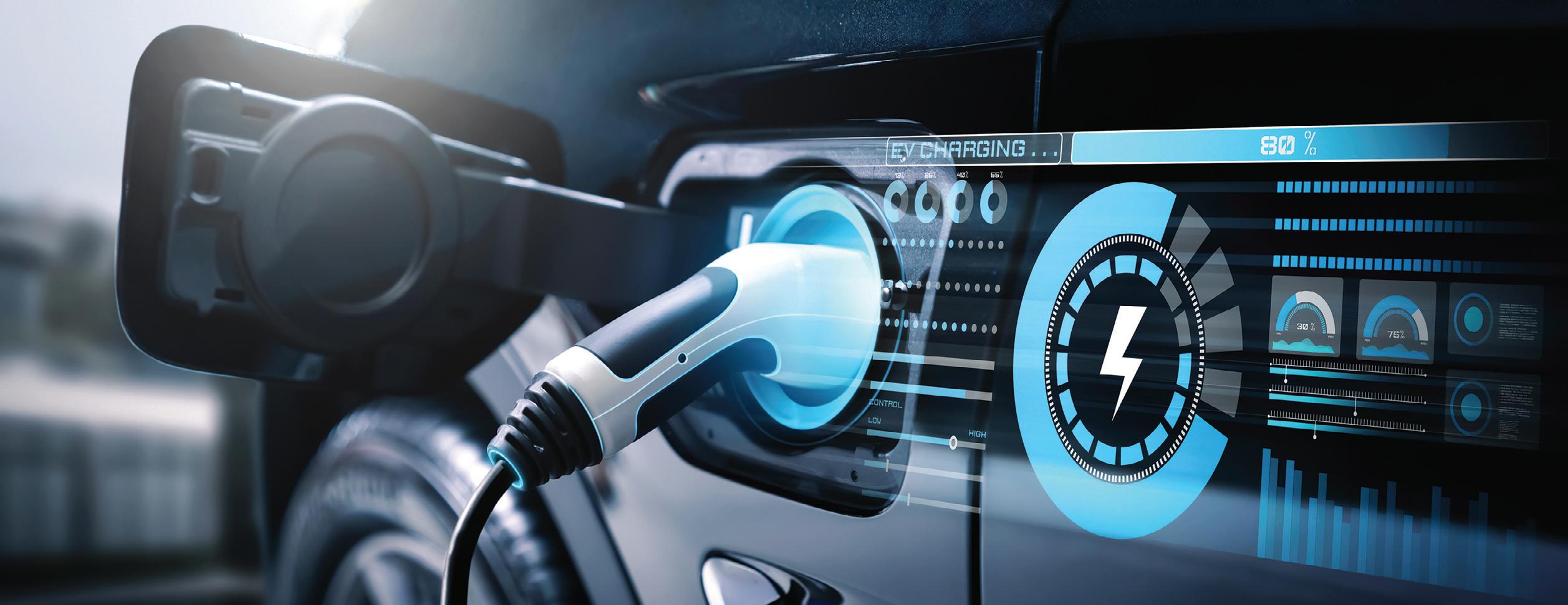


FWhy tyre specification dictates the real cost of fleet electrification. Stephen Graham, tyre training manager at Sailun, explains all...
leet managers transitioning to battery electric vehicles typically focus on a well-established financial calculation: offsetting a higher upfront capital outlay against projected running savings. Charging infrastructure costs, routine servicing intervals, residual values and asset utilisation are all meticulously mapped out. Yet a critical variable is frequently left out of this primary calculation: a dedicated, electric-focused tyre strategy.
As corporate operations scale up zeroemission deployments in distinct stages, establishing an ironclad tyre specification policy early is paramount. Drivetrain shifts fundamentally alter how a vehicle interacts with the road surface, making tyre choice a material cost variable that directly dictates whole-life costs.
Electric and hybrid vehicles place entirely unique physical stresses on rubber. Primarily, they are substantially heavier than internal combustion alternatives, which inherently accelerates tread wear rates. Furthermore, electric motors deliver maximum torque instantly from a standstill, placing massive mechanical shear strain on the tyre’s tread blocks.
Operational efficiency also shifts into a critical metric. Because real-world battery range must remain entirely predictable to match daily commercial mileage, tyre rolling resistance becomes an essential performance factor. If a fleet calculates its long-term total cost of ownership based on original manufacturer range assumptions, fitting replacement tyres that fail to match those rolling criteria entirely subverts the financial model. The operational penalty is clear: premature replacement cycles, unexpected vehicle downtime and realworld efficiency figures that routinely miss corporate targets.
To neutralise these deployment risks, fleet operators must look toward objective, independent technical validation
rather than subjective marketing definitions. Robust data from accredited testing bodies demonstrates how modern rubber engineering can balance low rolling resistance with dependable wet weather grip, casing durability and cabin refinement.
Independent data illustrates this performance balance clearly. In public European summer tyre tests, modern electric-ready compounds have demonstrated an ability to secure top 10 finishes, delivering shorter dry braking distances alongside quiet rolling noise signatures. Similarly, continental evaluations have awarded positive ratings to these new-generation patterns, highlighting that modern liquidphase mixing compound technologies can successfully harmonise environmental efficiency metrics with strict dynamic safety thresholds. Publicly available docu-
mentation further confirms even tread wear characteristics under heavy testing cycles, which is a vital metric for tracking fleet replacement frequency.
Operational complexity can also be streamlined by considering seasonal and segment-specific specifications. For regional operators facing varied UK weather patterns, modern all-season options can eliminate seasonal changeover downtime. Verified independent testing has recorded up to a 12% reduction in rolling resistance against competitor averages for all-weather lines, demonstrating how year-round utility can coexist with energy efficiency. For pure electric vehicle operations, dedicated premium lines incorporate specialised acoustic tread block sequences to suppress interior resonance, directly supporting


“Electric and hybrid vehicles place entirely unique physical stresses on rubber.”
driver comfort and retention. Finally, mainstream specifications offer a versatile blueprint for broader vehicle mixes, balancing wet and dry control across mixed combustion and electric pool fleets.
Implementing a robust strategy requires three practical actions. First, explicitly specify tyres engineered for the heavy weight and high torque curves of electrified drivetrains. Second, utilise recognised independent test metrics to validate claims regarding braking, wear and rolling resistance. Third, consolidate the tyre matrix across a coherent product range to simplify procurement and unify performance expectations. Ultimately, tyre specification must be treated as an essential, transparent component of the total cost of ownership model, rather than a simple aftermarket replacement decision.



As fleet electrification scales up, the metric for success has shifted from vehicle acquisition to operational optimisation. True EV readiness requires fleet operators to transition from buying cleaner vehicles to actively managing complex digital, financial and mechanical ecosystems. Navigating this next phase demands a focus on four distinct operational pillars: infrastructure intelligence, regulatory agility, financial consolidation and specialised asset maintenance.
1 ) Shift from asset installation to capacity management:
The reality: Simply bolting more charge points to the wall creates unmanaged, underutilised infrastructure that causes localised power shortages during peak trading hours.
The action: Deploy smart, data-driven management software to gain complete visibility over peak demand, automate internal billing and turn stagnant chargers into dynamic commercial assets.
2 ) Build administrative buffers for regulatory friction:
The reality: Legislative changes like the new eVED framework clash with realworld fleet dynamics by demanding rigid 12-month mileage predictions.
The action: Establish robust internal tracking workflows to absorb the heightened compliance burden without derailing the daily operational flexibility required to reassign vehicles and shift routes dynamically.
3 ) Eradicate payment fragmentation to protect productivity:
The reality: While accurate, nuanced policies like HMRC’s dual advisory electric rates create an administrative nightmare for SMB operators, forcing them to juggle multiple payment methods and lose valuable weekly business hours to fuel admin.
The action: Demand and implement unified, single-payment solutions that seamlessly merge traditional fuel, public charging and domestic reimbursement into a single dashboard.
4 ) Treat tyres as a core financial variable, not an afterthought:
The reality: The extreme weight and instant torque curves of heavy EV drivetrains accelerate tread wear and can completely subvert initial TCO models if range-efficiency standards drop.
The action: Build a rigid, EV-focused tyre policy early. Utilise independent, objective European test data to select compounds that successfully balance low rolling resistance with maximum dynamic safety and acoustic refinement.





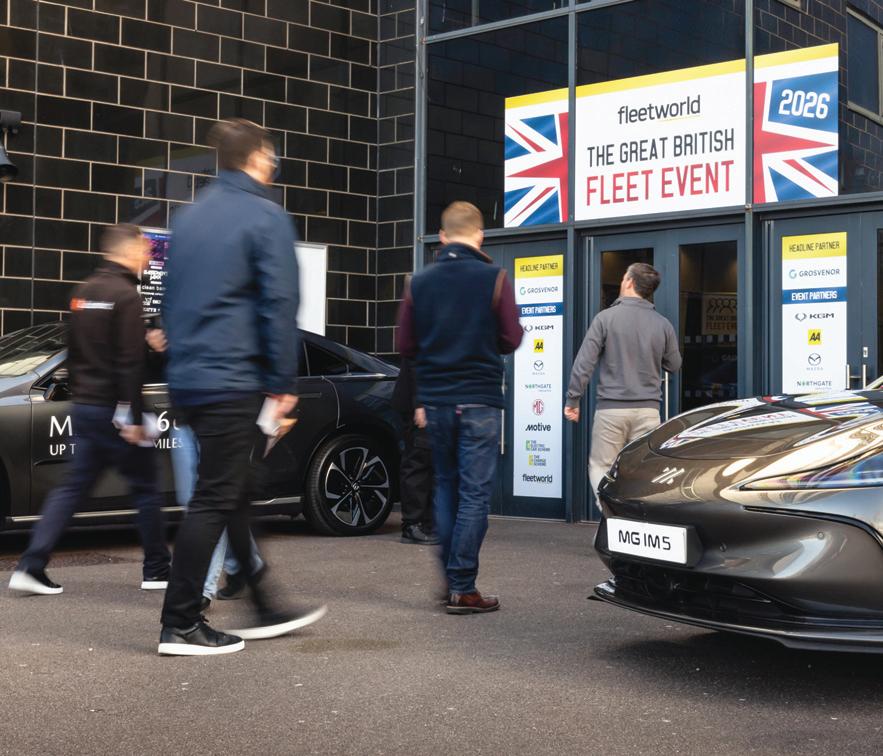


The Great British Fleet Event 2026 delivered a vast range of insights from expert speakers in its Masterclass sessions. We highlight some of the best points from this year’s sessions, but make sure you register next year to gain access to this invaluable intelligence and expertise. By Simon Harris and John Kendall.
The Fleet Management Fundamentals
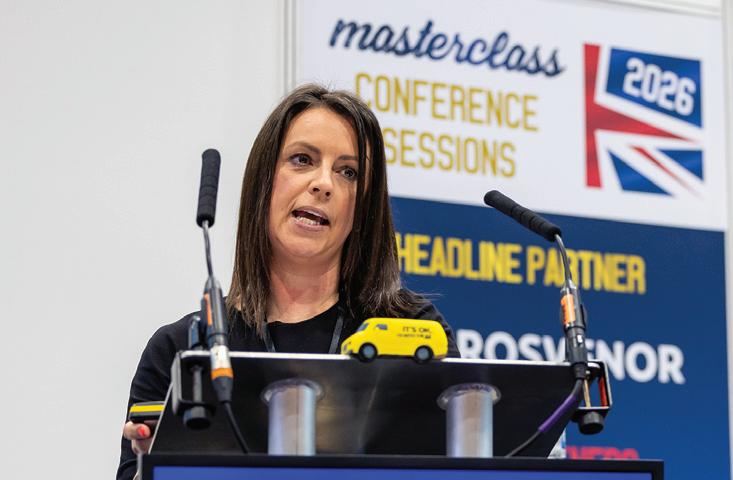
Masterclass at the Great British Fleet Event opened with a characteristically direct assessment from Lorna McAteer, head of fleet at National Grid, which operates 10,000 vehicles in the UK and a further 10,000 in the US.
McAtear urged fleet managers to resist panic and return to first principles. “The right vehicle, the right fuel type, the right time,” she said, adding that EVs are not the answer for every operation today – a candid admission given her employer’s own green credentials. With a fleet of more than 1,500 4x4s and a rapidly growing driver base adding 50 to 60 people a month, she spoke from hard-won experience about the importance of consistency, fairness and long-term infrastructure planning. Her message to fleet managers was equally clear on the strategic dimension: the role has never been more important, and those running fleets must now engage boards with data, myth-bust media noise and think like energy planners — not just vehicle administrators.
Matthew Waller, general manager of the Charge Scheme, followed with a detailed examination of EV business mileage reimbursement, which he described as one of the most pressing and underestimated challenges facing fleet managers today. With nearly two million electric cars now on UK roads, the existing Advisory Electric Rate (AER) of 7p per mile for home

charging and 15p for public charging leaves many drivers significantly out of pocket, he argued, potentially discouraging business travel altogether.
Waller introduced Reimburse, the Charge Scheme’s new reimbursement product, designed to calculate the true cost of charging for each driver using real public charging data, with a monthly submission process taking no more than 30 seconds. Free to employers already using the Charge Scheme, it provides a full audit trail for HMRC compliance and removes the administrative burden that has made accurate reimbursement impractical at scale.
McAtear then joined AFP board members
Martin Edgecox and James Pestell for a panel discussion and Q&A – one of several sessions at the event where the conversation in the room proved as valuable as the content on stage.
RISK MANAGEMENT & DRIVER WELLBEING
The Risk Management and Driver Wellbeing Masterclass brought together three perspectives on keeping fleets safe and compliant.
Professor David Crundall, CTO and cofounder of Esitu Solutions, made the case for hazard perception training, presenting research showing it reduces speeding, harsh braking and collision risk, while also
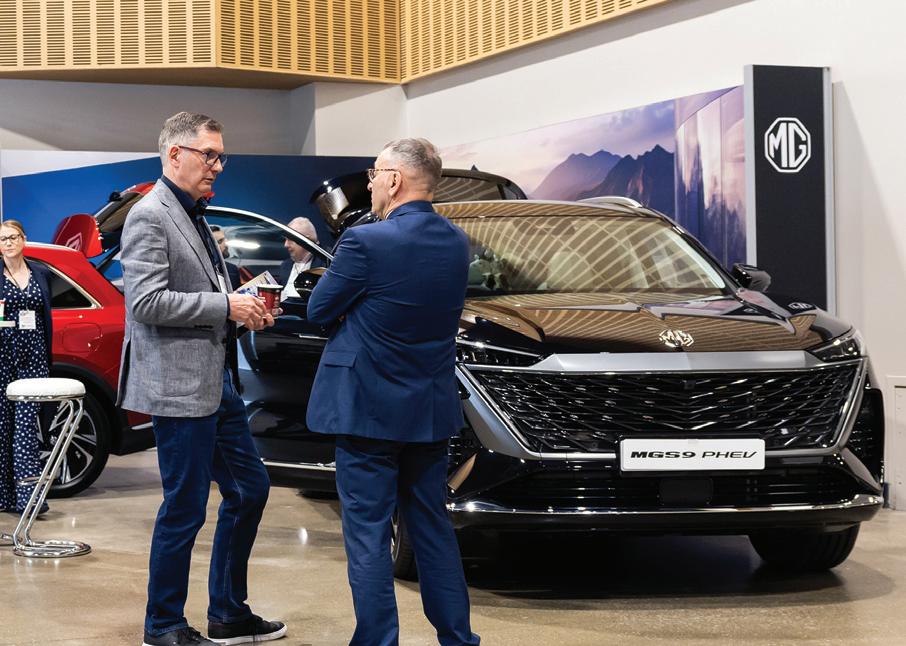





cutting fuel and maintenance costs. He challenged the assumption that such training is only useful for learner drivers, arguing that vehicle-specific and jobspecific hazard clips, delivered via VR, microlearning or classroom sessions, can sharpen the skills of experienced professional drivers too.
Charlotte Le Maire, founder and partner at LMP Legal, addressed operational resilience with a stark warning: poor evidence of driver health checks, drug and alcohol policies, and incident response procedures can expose companies and senior managers to prosecution. She urged delegates to treat the ‘golden minutes’ after a collision with the same seriousness as the incident itself, ensuring drivers know to give only their name and vehicle details at the roadside.
Representing Jaama, Michelle Batty, head of marketing, presented findings from a new fleet compliance benchmarking report, revealing that while driver risk investment is rising, only 17% of fleets have fully integrated their compliance data, leaving most reacting to incidents rather than predicting them.
The Technology, Data and AI Masterclass examined how artificial intelligence is reshaping fleet safety and security.
Gonzalo Escobar, senior solutions engineer at Motive, outlined the company’s focus on driver safety, tracking and workforce management, highlighting new camera hardware developed with Falcom and Motive AI Coach, which delivers automated, bespoke coaching conversations to



drivers via avatar based on detected unsafe behaviours such as tailgating.
Ken Munro of Pen Test Partners delivered a sobering survey of automotive cybersecurity failures, demonstrating how vulnerabilities in telematics platforms, aftermarket car alarms and EV chargers have allowed researchers to compromise
vehicle networks, steal cars and even take control of corporate systems through a single compromised telematics control unit.
Ryan Naughton, head of B2B connected car & european relations at the AA, detailed how predictive AI models built on data from 3.5 million annual breakdowns have improved battery failure prediction to 80% accuracy and reduced the AA’s own fleet downtime by 40%, with vehicle availability now running at 97% compared with an industry average of around 85%.

A common thread across all three presentations was the importance of accuracy and trust: unreliable alerts or insecure systems erode the value of any technology investment, regardless of how sophisticated the underlying AI.
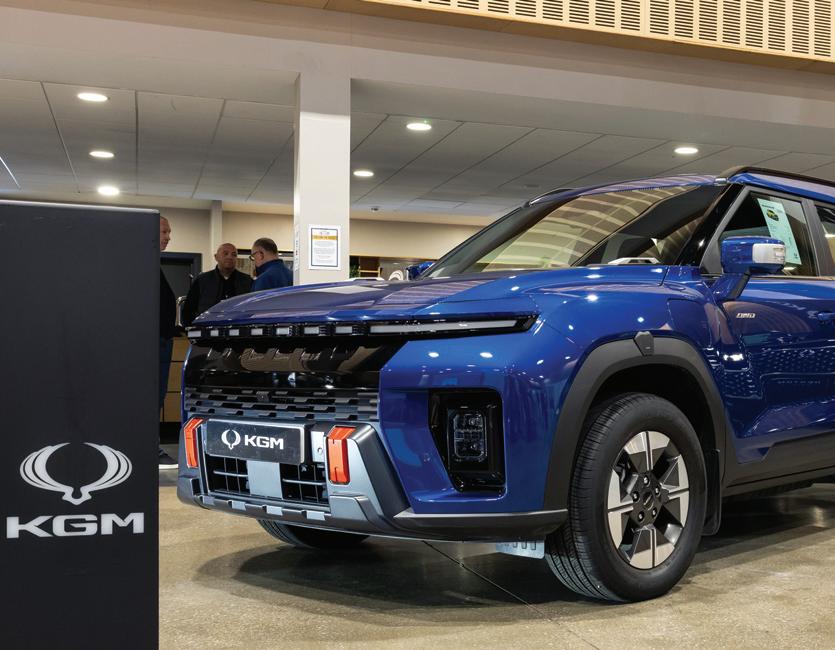


The EVs and Sustainability: From Ambition to Execution Masterclass offered practical guidance for fleets at every stage of electrification.
Mel Creedy of Northgate Vehicle Hire outlined the Drive to Zero programme, which has analysed over 3,000 customer vehicles and identified more than half as EV ready, representing potential savings of nearly 10,000 tonnes of CO2. She emphasised that successful transitions depend on driver engagement and tailored implementation rather than blanket electrification.

Dan Lawrence-Eyre, co-founder of Diode, illustrated how data analysis serves different fleet priorities through a series of customer profiles, from cost-focused operators seeking financial justification to sustainability managers under pressure to demonstrate measurable carbon savings to their supply chain.

Csaba Vincze, representing Volteum, argued that electrification’s real complexity lies in daily operations rather than initial

vehicle selection, citing customers including Royal Mail and Dundee City Council, which have achieved savings exceeding £600,000 through avoided infrastructure investment and operational efficiency.
Matthew Waller of the Charge Scheme detailed how salary sacrifice and dedicated charging reimbursement products can save employees up to 50% on EV costs, addressing the affordability barriers that remain the biggest obstacle to adoption, particularly for drivers without home charging access.
VANS & LCV FLEETS
Unsurprisingly, electrification featured heavily at the LCV Masterclass. Addressing the issue of which fuel was best for fleets, Gareth Jones of Speedy Hire said that whatever fuel delivers the best efficiency was the right choice. He also advised that rapid acceleration in an electric vehicle could reduce daily range by 10% to 20%, noting that using fleet management software to limit heavy-footed driving would pay dividends. Other challenges for electrification were limited infrastructure for vans and limitations from landlords on rented properties.
Speedy Hire’s experience with Ford ETransits in London was that drivers like the vehicles and are finding ways to extend

daily range. The company is experiencing 12V battery drain due to continuous power demands from vehicle ancillaries such as beacons and tail-lifts. Speedy Hire’s solution has been to fit solar panels, which tricklecharge the battery through the day.
Mark Horton, enforcement policy manager at the DVSA, raised the issue of compliance with LCVs. He said that around 3,000 people are killed each year by LCVs, much higher than the more regulated HGVs.
He noted that overloading is the biggest issue in roadside checks, with 54% of vehicles stopped being overloaded. Insecure loads are another issue and the DVSA ran Operation Mamba which finished in March this year, targeting the car transport and construction sectors because of their poor compliance. As he pointed out, a 3,500kg GVW car transporter cannot carry many modern cars and remain compliant. The operation will be repeated.



The Fleet World audience joined a Fleet Management webinar in the spring, with expert speakers from Webfleet and Jaama.
Fleet management in 2026 is facing a new level of complexity, and a recent Fleet World webinar brought together experts from Jaama and Webfleet to address the challenges head-on. From commercial vehicle compliance to electrification and driver safety, the session covered ground that is increasingly relevant to fleets of all sizes.



Closing the productivity gap Webfleet’s James Odell, key account manager, opened by addressing how telematics is helping fleets squeeze more value from existing assets. The focus has shifted from simply tracking vehicles to understanding utilisation in detail –identifying dwell times, analysing where jobs are taking longer than planned and optimising routes dynamically. With 58% of fleet decision-makers in Webfleet’s recent UK Fleet Safety Report citing AI as a key driver of operational improvement, Odell argued that automation is increasingly central to productivity gains.
Kelly Pinner, head of business development at Jaama, picked up the compliance thread, explaining how the jump into the 7.5-tonne bracket represents a governance and culture change as much as an operational one. Jaama’s Key2 platform standardises asset profiles, automates inspection scheduling, ensures digital walkaround checks are completed consistently and provides a single audit trail that fleet operators can demonstrate to regulators. Integration with telematics partners such as Webfleet means data flows into one central view rather than sitting in silos.
On the question of EV transition, Odell was candid about the scale of the challenge. With only 3-4% of LCVs currently electric and the zero emission vehicle mandate (ZEV) requiring 24% of van sales to be zero emission in 2026, rising to 70% within four years, the pressure is building. Webfleet’s approach is to analyse at least 90 days of telematics data – ideally a full year to capture seasonal variation – to identify which vehicles are genuinely suited to electrification and model worst-case range scenarios before any purchasing decision is made.
Pinner added that whole-life cost visibility remains the critical challenge, with EV TCO still difficult to pin down given variables around energy, tyres, infrastructure and end-of-life values. Jaama’s platform centralises supply chain data to give fleets benchmarked, real-world cost comparisons rather than estimates, enabling genuinely data-led procurement decisions.
Driver safety and grey fleet
AI camera technology was presented not as surveillance but as driver protection, with Webfleet’s coaching tool Opti-Drive building individual risk profiles and enabling targeted interventions. The combination of in-cab feedback, forward-facing footage and behavioural coaching is, Odell argued, shifting the conversation from punitive monitoring to genuine safety improvement.
Grey fleet emerged as a recurring concern, with poll results showing 80% of attendees have grey fleet in their business but fewer than half applying rigorous checks. Both speakers agreed that culture and clear communication are as important as technology in this space, with Jaama’s platform enabling drivers to self-serve compliance documentation and Webfleet able to ingest OEM data from vehicles without fitted hardware.
The session underlined that the gap between compliance ambition and operational reality remains significant – and that closing it requires data, integration and the right partners.

Fleet decision-makers are navigating a period of exceptional uncertainty, and the recent Fleet World Agile Mobility webinar brought together experts from Quartix, Drax and Europcar Mobility Group to address two of the most pressing challenges: operational resilience and total cost of ownership.

Amber Shanahan, senior field account manager at Quartix
Opened by explaining how telematics data helps fleet managers identify which vehicles are genuinely earning their keep. The most common revelation, she said, is the gap between what fleet managers believe their vehicles are doing and what the data actually shows. Underutilised assets sitting idle in yards, vehicles running with the engine on during working hours and mileage being accumulated outside core working hours are all patterns that only become visible with reliable telematics. Shanahan also outlined how mileage and shift pattern data can be used to identify which vehicles in a fleet are genuinely suited to electrification, taking seasonality into account by looking back across 12 months of historical data. A forthcoming partnership will allow Quartix data to be overlaid with a live map of the UK public charging network, giving fleet managers real-time visibility of charge point proximity alongside vehicle location.

Stuart Russell, business development director at Europcar Mobility Group UK
Made the case for flexible rental as a way of managing fleet size without long-term exposure. With economic volatility now the default condition rather than the exception, he argued that the traditional three- to fiveyear lease was designed for a world that no longer exists. Europcar’s onemonth-plus flexible offering allows fleets to scale up or down as business needs shift, and increasingly to trial electric vehicles before committing to permanent contracts. Russell cited a local authority that had moved 60-70 electric vans into service during a cold December spell. Drivers reported the vehicles were unfit for purpose and needed constant charging. The data told a different story: average daily mileage of around 25 miles, with charging taking place four or five times a week – well within the vehicles’ capability. That data, Russell said, ended the resistance almost overnight.

Naomi Nye, head of sales at Drax
Reframed energy as the new fuel and urged fleets to think about electrification as a whole-site strategy rather than a vehicle procurement decision. Shifting charging to off-peak times, using load balancing technology, integrating solar or battery storage and planning infrastructure in phases are all practical steps available now. The most common misconception, she said, is that grid capacity is simply there to be accessed. In practice, capacity is often fully allocated on paper, DNO applications can take months, and reinforcement works involving substations and transformer upgrades add further delay. Her advice was to start early, engage experts and use the dig-once principle – installing cable infrastructure for future charge points even if only a fraction of them are needed immediately.
All three speakers closed with the same message: Start now, use the data available and do not wait for perfect conditions that may never arrive.
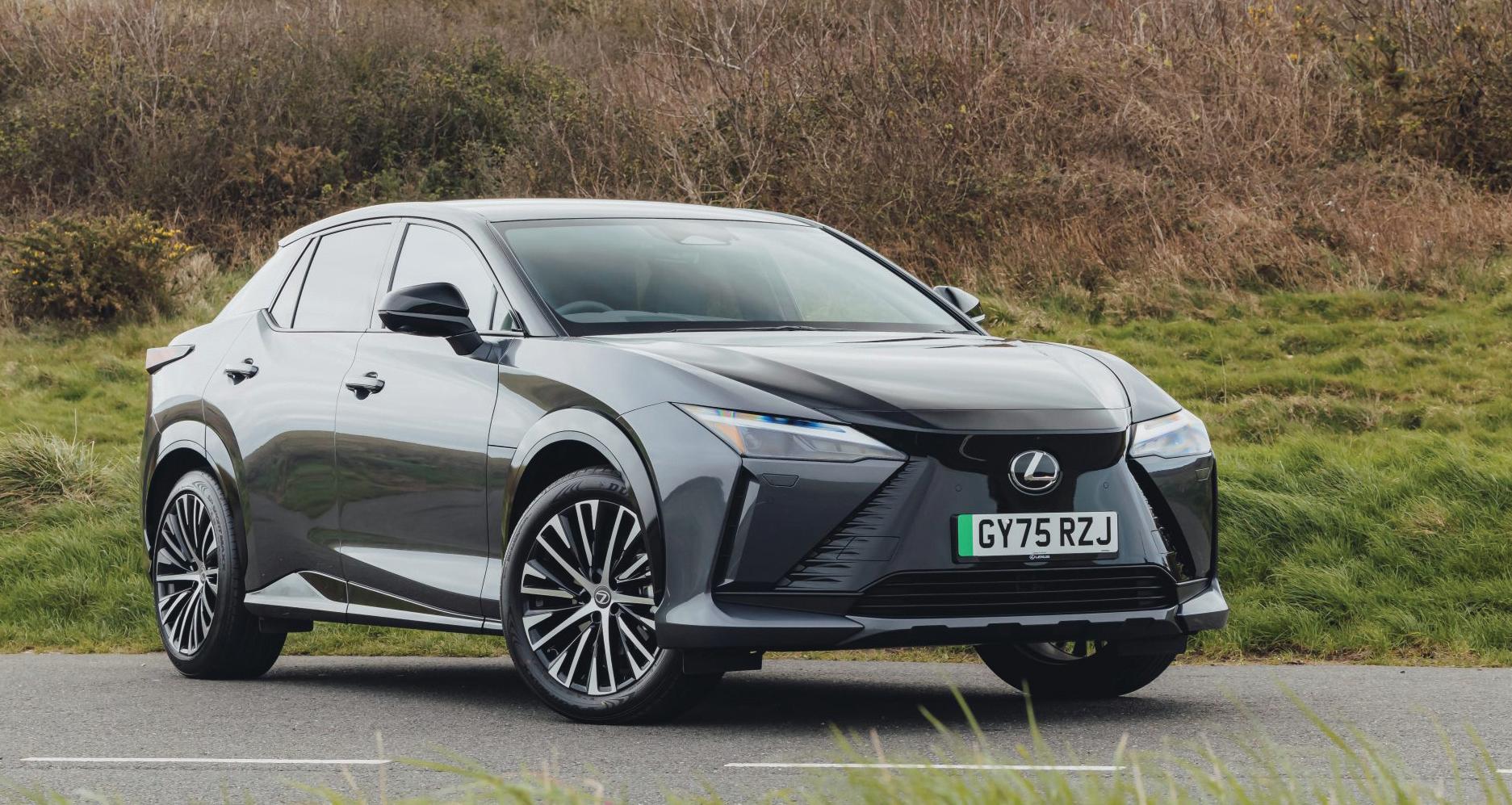
Can a major update make the RZ more tempting for user choosers? By
Simon Harris
.
Lexus has long set the class-leading benchmark for automotive refinement.
The brand’s primary challenge with its dedicated electric vehicle platform was porting that quiet DNA into a world without engine noise to mask other sounds.
Fleet World reviewed the RZ range when it was first introduced in 2024, but this provided our first opportunity to try the recently updated version. Tested here in front-wheel-drive RZ 350e guise, this large luxury SUV is an incredibly serene motorway cruiser, though a few ergonomic issues slightly mar an otherwise impressive premium contender.
On the road, the RZ 350e excels exactly where high-mileage drivers need it most.
At rapid motorway speeds, the vehicle delivers exceptional refinement. Wind noise is virtually non-existent and tyre roar is heavily suppressed through clever use of acoustic glass and active sound cancellation. It isolates the driver from the outside world better than almost any rival in its class, vastly reducing fatigue on long-distance trips. The steering is smooth and the motorway ride is composed. However, fractured British urban environments expose a minor flaw. Over sharp low-speed bumps, sunken ironwork drains and deep potholes, the firm EV suspension can struggle, translat-
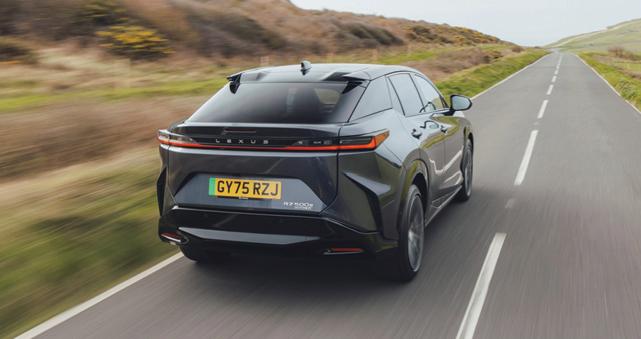
ing a noticeable, rather noisy thud directly into the cabin.
Inside, the cabin layout represents a philosophical split from its premium German rivals. While Audi, BMW and Mercedes-Benz consistently dazzle buyers with expansive digital real estate and sprawling panoramic dashboards, Lexus has opted for a strictly minimalist approach. The driver information display sitting directly behind the steering wheel is surprisingly small.
Lexus expects you to rely heavily on the windscreen’s crisp head-up display instead, but tech-focused drivers may find this small instrument cluster a bit old-fashioned.
“The cabin represents a split from its premium German rivals.”
The central 14-inch touchscreen offers clarity, but the user interface suffers from a frustrating lack of intuition. Shortcuts are not obvious and vital daily functions are buried deep within submenus. A prime example is the driver monitor alert. This safety system frequently chimes if you glance away from the road for a split second. Turning it off completely requires
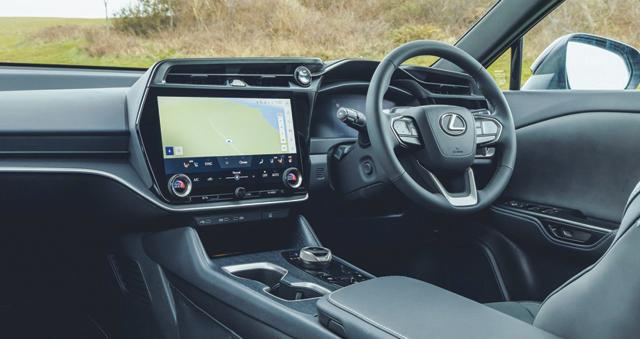
tapping through four separate menu layers.
As UK safety mandates dictate that this intrusive system resets every time the car starts up, drivers face a tedious menu ritual before starting every single journey.
The touch-sensitive haptic pads on the steering wheel are less helpful, as they require looking at the display just to see what functions are selected.
Thanks to a strategic pricing realignment, this single-motor variant sits comfortably beneath the crucial £50,000 threshold, successfully avoiding the expensive car VED supplement. With greatly improved real-world driving range over the original launch models (especially on standard 18-inch wheels), it represents a strong choice. If you can forgive the fussy touchscreen ergonomics and occasional low-speed urban thud, the updated Lexus RZ 350e rewards with peerless longdistance comfort, making it a highly compelling, deeply refined alternative to the clinical premium choices.
WHAT IS IT? Large electric SUV
HOW MUCH? From £48,300 (P11D)
ECONOMY? 3.8mpkWh
RANGE? 316 miles
Key fleet model RZ 350e Premium Plus Refinement, sub-£50k, improved range
Firm low-speed ride, ergonomic issues
7-word summary Refined luxury and comfort with frustrating quirks
Also consider Audi Q6 e-tron / BMW iX3 / Mercedes-Benz EQE
In my role as an Account Manager, I visit fleet operators across the country. Quartix supports more than 35,000 businesses, and the conversations I have on the road all point the same way: costs are up, margins are tight, and the pressure isn’t letting up.
What I find, though, is that many of the savings fleet managers are looking for are already within reach. The data is sitting right there in their telematics system.
Mileage and fuel: the quiet cost leaks
In mixed-use fleets, unverif ied mileage claims are common. Without GPS-verified journey logging, separating business miles from personal use is guesswork and the grey areas add up fast. Automated trip categorisation removes that uncertainty, creating a clean, auditable record managers can trust and defend. Fuel is the same story. Driving habits like harsh acceleration, excessive idling, and poor routing quietly inflate fuel consumption across a whole fleet. Telematics data surfaces those habits clearly, giving managers the evidence they need to coach teams and track real improvement over time.
Claims and downtime: avoiding the budget shocks
It’s the unexpected costs that tend to hit hardest. Dashcams and GPS data have saved many of my customers from a claim they didn’t cause and couldn’t otherwise disprove. The value is clear - disputes are resolved faster, exoneration is straightforward, and the insurance impact is minimised. Cameras also change driving behaviour for the better and can lower premiums over time. Downtime can derail your operations. Digital daily vehicle checks, integrated with tracking data,
Amber Shanahan
Senior field account manager, Quartix





can catch defects early - before a vehicle off the road creates a knock-on effect across the whole operation.
Strategy: making your data work harder
What I find most rewarding is helping customers move beyond using telematics as a reporting tool. Utilisation data shows which vehicles are costing money without earning their keep. Route and job data makes procurement and forecasting decisions more grounded. It also supports smarter EV transition planning, grounding those decisions in real duty cycle data rather than assumptions. Even resale value improves when you can provide a continuous, verified mileage history for every asset.
The data is already there. Quartix makes it straightforward to act on it: no autorenewals, no hidden costs, and a UK support team behind you every step of the way.


























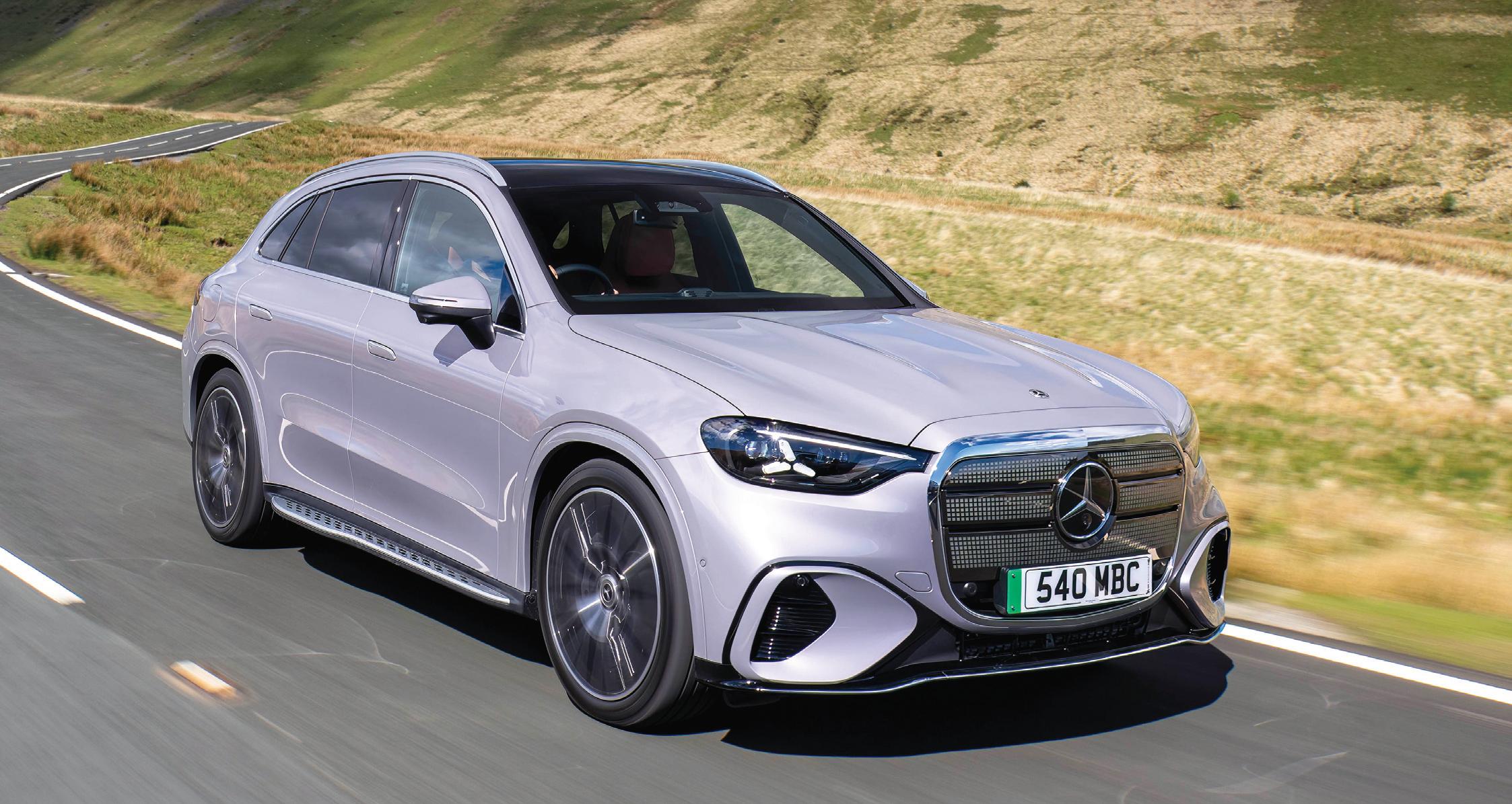
We drive the first ground-up, bespoke large electric SUV from Mercedes-Benz. By Simon
Harris
.
The premium SUV segment has entered a new era of fierce competition. Mercedes-Benz has launched its first bespoke, ground-up electric contender in this crucial category.
The GLC Electric marks a significant departure from the brand’s early, converted internal combustion efforts. Engineered as a dedicated EV, it targets premium rivals by focusing on exceptional charging efficiency, luxury comfort and long-distance road manners.
Available to order in the UK, the dualmotor GLC 400 4Matic launches across five specifications, opening with the Sport grade at £60,350 and climbing to the Premier Edition at £73,350.
Crucially for fleet operators who experienced the reliability issues and coolant leaks that plagued the adapted EQC platform, this ground-up architecture represents a vital mechanical reset. Mercedes-Benz has also avoided a recent engineering misstep; unlike the smaller CLA Electric, which drew criticism for omitting a DC-to-DC converter, the GLC Electric features a 400V transformer right out of the box. This ensures seamless compatibility with the UK public charging network, allowing drivers to utilise rapid chargers without restrictions.
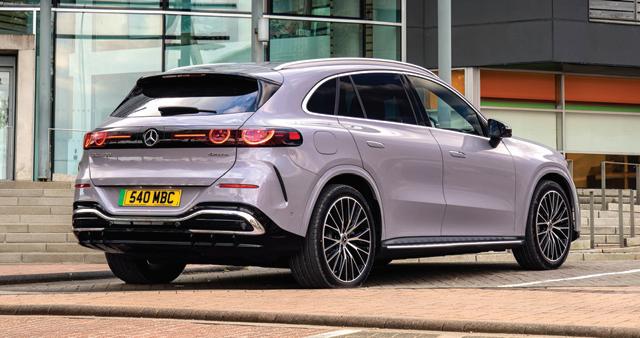
The powertrain features dual electric motors to produce 490hp and 800Nm of torque through all four wheels. Unusually, the rear axle features a two-speed gearbox to maximise cruising efficiency, paired with a front motor that automatically decouples during steady driving.
“The stretched wheelbase creates 50mm more legroom.”
A brief 60-mile evaluation on mixed UK roads revealed that performance is both effortless and refined. The vehicle handles the 0-62mph sprint in 4.3 seconds, but the overriding impression is one of serenity. Extensive noise isolation and acoustic glass keep wind and tyre roar to a minimum. All but the base specifications feature adaptive air suspension and rear-axle steering, making the substantial 4.85-metre vehicle agile in tight urban environments.
Equipped with a 94kWh usable battery pack, the GLC Electric achieves an official WLTP range of up to 406 miles. On the road, its advanced 800V electrical system supports ultra-rapid DC charging up to 330kW, allowing a 10% to 80% replenishment in 22
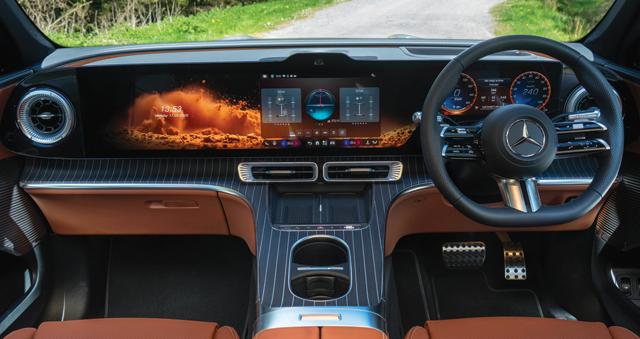
minutes. Inside, the flat floor transforms interior packaging, stretching the wheelbase to create an additional 50mm of rear legroom.
The cabin is dominated by a seamless 39.1-inch curved glass display screen running the latest AI operating system, which can take some getting used to. The 520-litre boot expands to 1,690 litres with the rear seats folded, complemented by a useful 100-litre front storage compartment for charging cables. It offers a 2,400kg braked towing capacity.
While the GLC Electric faces formidable competition from the BMW iX3 and forthcoming Volvo EX60, it delivers an impressive combination of build quality and mechanical refinement. For drivers seeking a premium, zero-emission vehicle that prioritises long-distance comfort and ultra-rapid charging, the GLC Electric represents a highly polished and uncompromised choice.
WHAT IS IT? Large electric SUV
HOW MUCH? From £60,285 (P11D)
ECONOMY? 3.6-3.8mpkWh
RANGE? 393-406 miles (WLTP)
Key fleet model 400 AMG Line 4Matic
Refinement; space; technology
High P11D; infotainment learning
7-word summary Much improved large SUV for senior management
Also consider BMW iX3 / Audi Q6 e-tron / Volvo EX60
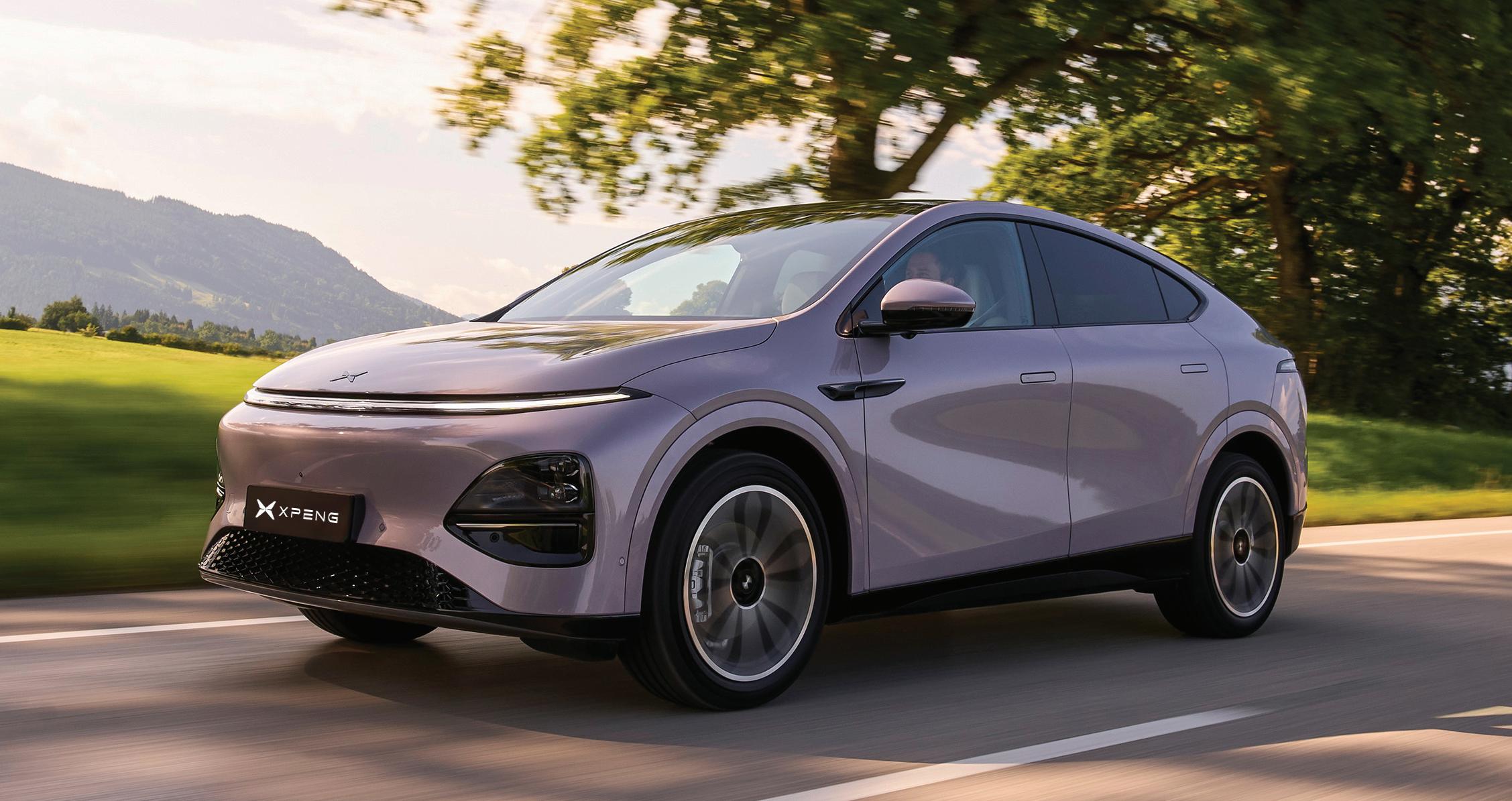
XThe Xpeng G6 underwent a thorough facelift after less than a year on sale in the UK. By John Kendall. handling and ride. Obviously, the Performance Black Edition is more fun to drive and quicker, but for optimum range the rear-wheel-drive Long Range model would be the fleet pick.
peng is not another new Chinese entry into the UK car market. The company was launched here in February 2025, with IM Group as its importer. That was a shrewd move on Xpeng’s behalf as the company has a long track record importing brands such as Subaru and Isuzu as well as GWM, formerly known as Great Wall Motors, another Chinese brand.
When Xpeng arrived, its launch model was the G6, an electric-only five-seat SUV, looking not dissimilar to other five-seat electric SUV models. Now, a year on, the company has re-launched the G6, claiming more than 20,000 incremental engineering refinements. Xpeng says the changes are the result of feedback from use, and gathered technical knowledge.
As part of the re-launch, the range now includes a dual-motor, AWD Performance Black Edition, which adds £10,000 to the £39,990 starting price for the G6 standard range model. This gives the G6 a threemodel line-up with £5,000 steps between each: Standard Range, Long Range and AWD Performance Black Edition.
External changes include a full-width LED light bar at the front, revised rear with what Xpeng describes as a ‘ducktail’ design as well as body-coloured wheelarches and re-positioned badging. For
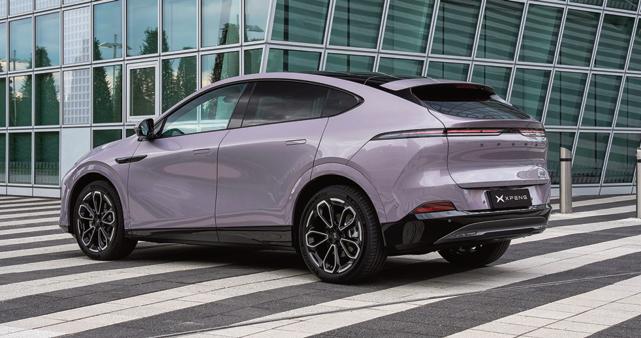
the Performance Black Edition, there are dark exterior details, black wheels and brake callipers. There’s a new colour too, Stellar Purple.
Inside, the changes include new dashboard finishes and trim materials around the cabin, new steering wheel design, configurable ambient cabin lighting and front seats that now include a massage function and lumbar support as well as heating and ventilation. Xpeng claims faster system performance from the touchscreen and digital instrument display, as well as smoother interface transitions and more responsive voice control.
“Xpeng claims battery lifespan has been increased by 30%.”
Under the skin, there is a new lithium iron phosphate battery and 800V architecture, capable of delivering faster charging. Xpeng claims that battery lifespan has been increased by 30%, which ought to help RVs. Claimed ranges of up to 326 miles for long-range variants and up to 316 miles for AWD models are good, rather than exceptional.
On the road, the Xpeng has a lot going for it. It is pleasant to drive with good

The steering wheel controls are more European than in some Chinese brands, but the interior felt a bit bland, particularly with the two-tone grey dashboard.
Perhaps it’s the absence of dashboard switches that makes the difference. While it gives a clean appearance, it feels a bit characterless. At least there are soft keys on the central screen to take you direct to things like heating and ventilation, so you don’t have to scroll through menus to get to things that you use regularly. It is well equipped.
There is good space for rear seat passengers and it would be a comfortable four-seater for touring. This is one of the more desirable Chinese cars, but there is a fair bit of competition in this price range from all established car manufacturers.
WHAT IS IT? Large electric SUV
HOW MUCH? From £39,990 (P11D)
ECONOMY? 3.5-3.6mpkWh
RANGE? 316-326 miles
Key fleet model G6 long range
Specification; value; interior
Charging capabilities; space
7-word summary Offers value for money and selection simplicity
Also consider BYD Seal / Hyundai Ioniq 5 / Tesla Model Y
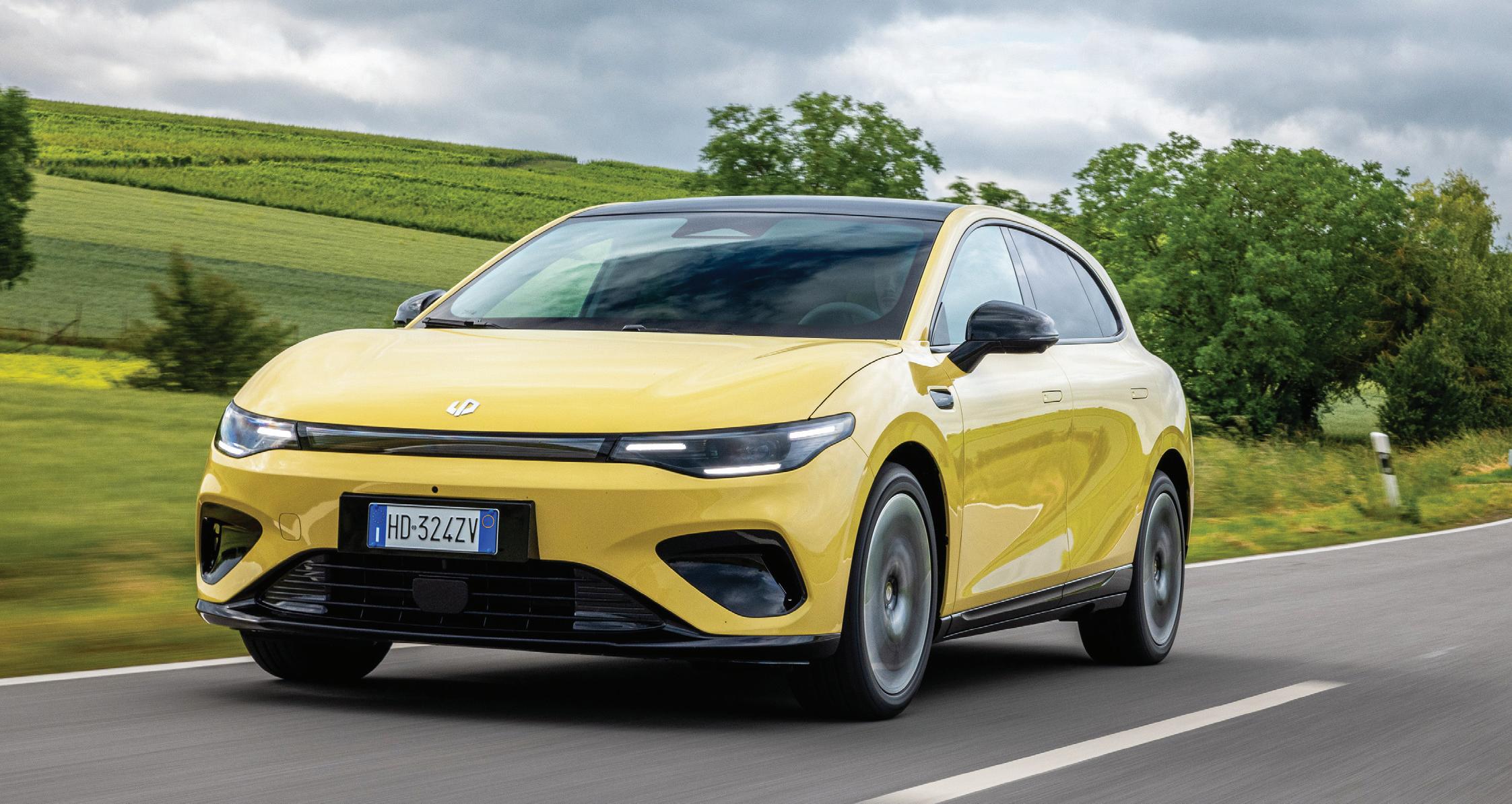
With so many companies sheltering under one enormous Stellantis group umbrella, design sophistication and brand equity are vital to the success or failure of each manufacturer.
Leapmotor enters the burgeoning C-sector EV hatchback market with its sharply styled B05. By Pete Tullin. required to get the nose of the car to change direction, but despite this, the B05 is an easy car to pedal along a country road in a spirited manner and maintain an intuitive, easy-flowing equilibrium, simply by varying the electric motor’s strong torque output.
Despite having zero heritage kudos though, Leapmotor remains confident it can command a preeminent position in the Stellantis portfolio, thanks to its fleetfooted model development, cost-effective Chinese manufacturing techniques and agile, can-do mentality.
It may lack pedigree, but there’s nothing naive about the B05’s design, which avoids the cliched renderings associated with many pile-high, sell-cheap Chinese offerings, in favour of a more sophisticated silhouette. Complete with coupéstyle frameless windows and elegant proportions, it is therefore even more disappointing that the interior doesn't share the same level of panache.
Awash with swathes of grey-on-grey materials, this rather dour setting is underlined by a couple of bolt-on infotainment screens complete with many emaciated icons, and a rather clunky-looking steering wheel. Consequently, the B05’s interior wow factor isn’t in the same league as stablemates Peugeot 308 or Vauxhall Astra.
That said, overall material quality is more than passable, while the rear accom-
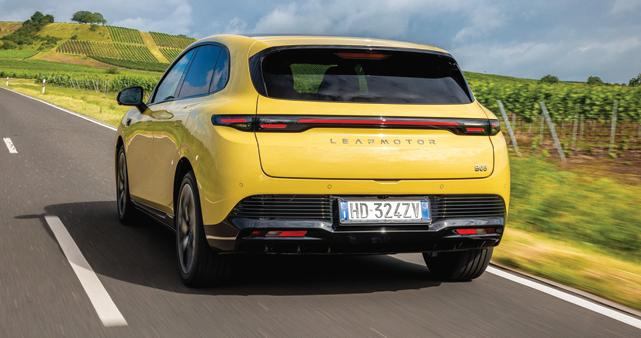
modation provides a completely flat floor, above average kneeroom and a raised rear bench seat to provide a light and airy viewing perch for rear-seat travellers.
At 345 litres, load space is slightly below the class norm and there is quite a high load lip to overcome, making it difficult to avoid scraping the painted bumper when loading heavier items, and this isn’t helped by a substantial drop from the bumper to the boot floor.
“There's nothing naive about the B05's design.”
From a driving perspective, the B05 is one of the more relaxing hatchbacks currently on sale. At town speeds, the suspension is compliant and sweetly damped, while the brake pedal is reassuringly precise and allied to an appropriate level of electric motor retardation, it is child’s play to exact seamless, chauffeur-like braking.
At 1,850kg, the B05 is no lightweight but even with a modest 215hp to call upon the electric motor that drives the rear wheels is more than man enough to cope with the cut and thrust of daily commuting. Granted, a fair bit of elbow twirling is
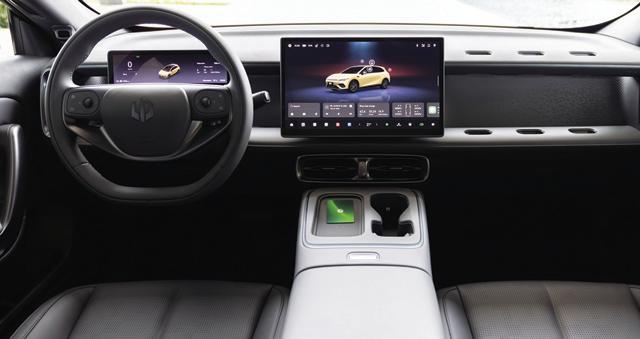
If you fancy a wee bit of traffic-light top trumps, you can tap into the launch control system, which drops the 0-62mph sprint time to 6.7 seconds, but our guess is you’ll use this once to impress the kids, then never again.
Ordering a B05 couldn’t be more straightforward. The P11D value for the one and only substantially loaded spec and single 67kWh battery pack, which provides a range up to 300 miles, is £27,930. This undercut rivals such as the new VW ID.3 and Vauxhall Astra E by around a grand and gives you a slightly greater range potent but it’s not that difficult to see where the savings have been made. You pay your money etc.
WHAT IS IT? Medium EV hatchback
HOW MUCH? From £30,440 (P11D)
ECONOMY? 3.9mpkWh
RANGE? 300 miles
Key fleet model B05
Standard equipment; range; comfort
Interior flair; not much cheaper than rivals 7-word summary Stylish family hatch from outside, lacklustre inside
Also consider MG4 / Vauxhall Astra Electric / Volkswagen ID.3
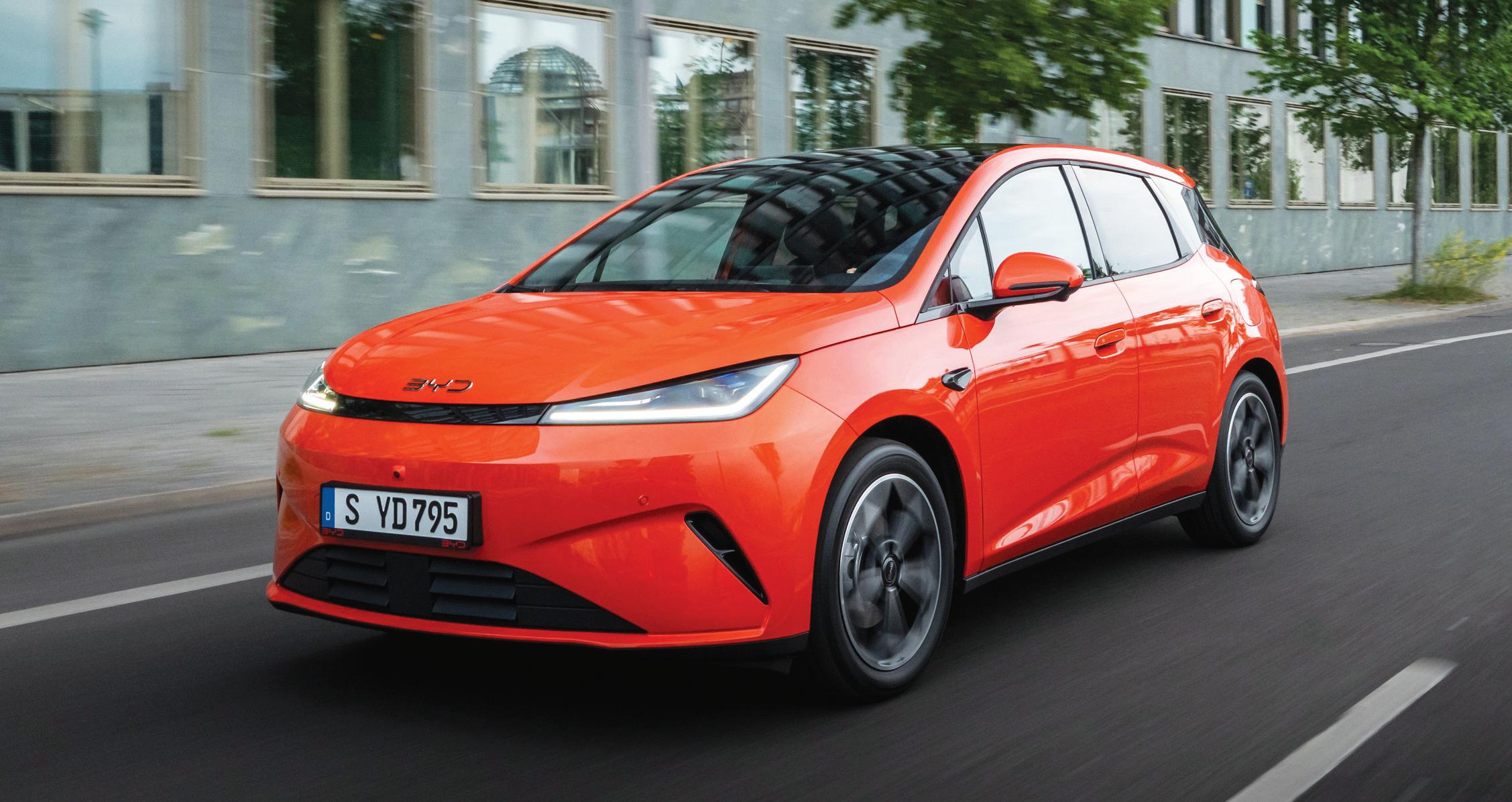
Plug-in hybrids are getting smaller, it seems, as BYD launches the latest Dolphin variant. By Simon Harris.
The small car sector is about to witness an unusual competitive experiment with the arrival of the BYD Dolphin G DM-i. While the commercial landscape for compact hatchbacks is currently populated by a handful of full-hybrids, mild hybrids and standard petrol engines, BYD is attempting to break new ground by introducing a full plug-in hybrid powertrain to this specific segment.
Official prices have not yet been revealed ahead of the autumn launch, but early indications suggest the range will span from roughly £20,000 to £24,000. It is worth pointing out that the entry-level Active model features a notably small 7.42kWh battery, limiting its pure electric range to just 25 miles. However, BYD UK anticipates that the higher-specification Comfort grade will be the most popular choice by far. This version steps up to a much more substantial 18.3kWh pack, pushing the zero-emission range to a highly competitive 65 miles.
Behind the wheel, the initial driving experience feels pretty good. The powertrain relies on a naturally aspirated 1.5litre petrol engine that functions primarily as a generator for a frontmounted electric motor. Because the engine is rarely tasked with driving the wheels directly, BYD has avoided a tradi-
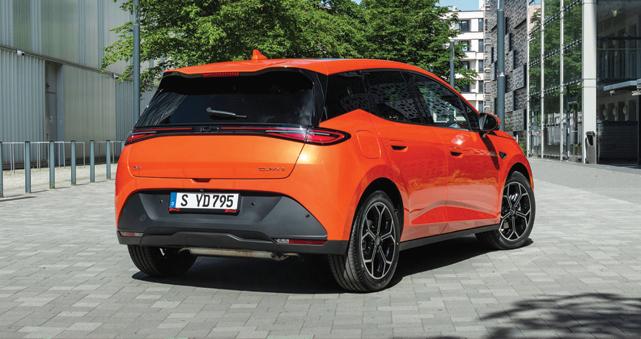
tional turbocharger in favour of ultimate thermal efficiency. It operates on the Atkinson cycle (as with Toyota hybrids) and runs an exceptionally high 15.5:1 compression ratio. This setup ensures the car delivers an EV-led driving style, pulling away from a standstill with smooth, quiet authority. The transition between electric power and petrol intervention is remarkably seamless, making it a relaxed commuter tool.
“The switch between electric power and petrol is seamless.”
Spending time with the car reveals a couple of distinct quirks. The most noticeable interior anomaly is the indicator noise. Instead of a standard, monotonous click, the system emits a dual tone that alters its pattern based on your intention. It switches from a high-low chime to a low-high sequence depending on whether you are signalling left or right, a trait that once noticed, becomes a focal point.
We also discovered during the launch that the G in the nomenclature stands for ‘genius’. Whether that title is fully justified remains to be seen, not least because BYD’s current product strategy in this
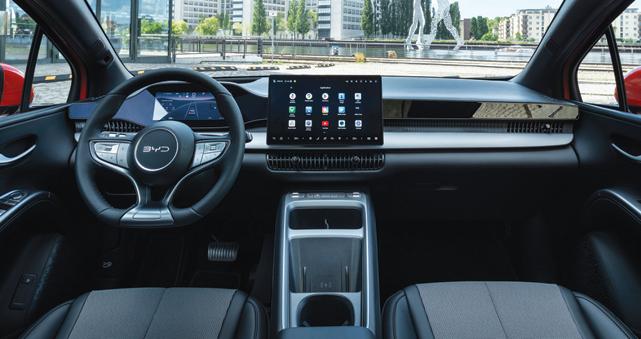
segment looks slightly puzzling. Filling the compact car market with three separate models all carrying the Dolphin badge, including the standard Dolphin EV, the smaller Dolphin Surf city car, and now this Dolphin G DM-i, creates potential risk of customer confusion.
The positioning of this new hybrid becomes easier to understand if you look further down the line. We anticipate that the original Dolphin EV is the next model due for a significant makeover. A subsequent refresh could push the pure-electric version slightly higher up the price and specification ladder, which would finally allow the hybrid Dolphin G to make more structural sense in its market positioning.
The true potential for this vehicle lies with urban fleets. For operations requiring predictable, zero-emission city mileage without the immediate need to install a costly workplace charging grid, this competitively priced plug-in hybrid makes absolute sense.
WHAT IS IT? Compact plug-in hybrid HOW MUCH? From £20,000 (est.)
ECONOMY? 108.6-201.8mpg
EMISSIONS? 32-60g/km
Key fleet model Comfort
Competent; comfortable; EV range
Small battery version; confusing strategy
7-word summary First compact hatch plug-in hybrid impresses
Also consider Honda Jazz / Renault Clio / Toyota Yaris
Fleet electrification keeps accelerating, but the transformation doesn’t hinge on the vehicles. The depot is key to success. A Freedom of Information request showed 284 applications to the pilot phase of the Government’s Depot Charging Scheme. Those applications saw private organisations leading the interest with local authorities close behind, signalling a nationwide shift: fleets across sectors now view depot charging as the core of a successful transition. With a new £170m multi-year funding programme running through to 2030, organisations have a real opportunity to get the support they need. Here we look at some of the considerations when looking to implement an electrification strategy.
Data creates the blueprint
Before specifying a single chargepoint, fleets need a clear picture of how their vehicles actually operate. Without this, infrastructure decisions are based on assumptions rather than evidence, and that can lead to overspend or under delivery. Telematics data is the most detailed starting point, revealing journey patterns, daily mileage, dwell times and periods of downtime.
In many cases, the process reveals that vehicles spend longer stationary at depot than fleet managers assume, which changes the equation on charging speed and infrastructure scale entirely.
Know your energy
Next comes the site itself. Knowing what your site can actually support is just as important as knowing what your fleet needs. A professional site assessment clarifies what the
Naomi Nye Head of Sales, Drax Electric Vehicles


grid can support today, how demand will grow and where smart charging or a connection upgrade makes sense. Understanding this data keeps projects on track with no unexpected surprises.
With their data and capacity understood, fleets can start to shape their infrastructure strategy around the workings of their sites. Single shift operations could benefit from slower, low cost overnight charging, whilst depots with unpredictable returns may need targeted fast charging. When fleets align charging with actual movements, they strengthen uptime and cut energy costs through offpeak scheduling.
Think smart, build for tomorrow
Smart energy management helps compliment an electrification strategy. Intelligent platforms can control distribution, reduce demand spikes and unlock long term savings. When fleets build in extra ducting and physical space for future charge points, they protect themselves from disruption and scale. Battery storage and renewables can add even more energy resilience.
Depot charging sits at the centre of electrification success. When organisations base their choices in data and design around their operations, they gain control, cost certainty and confidence for the road ahead.
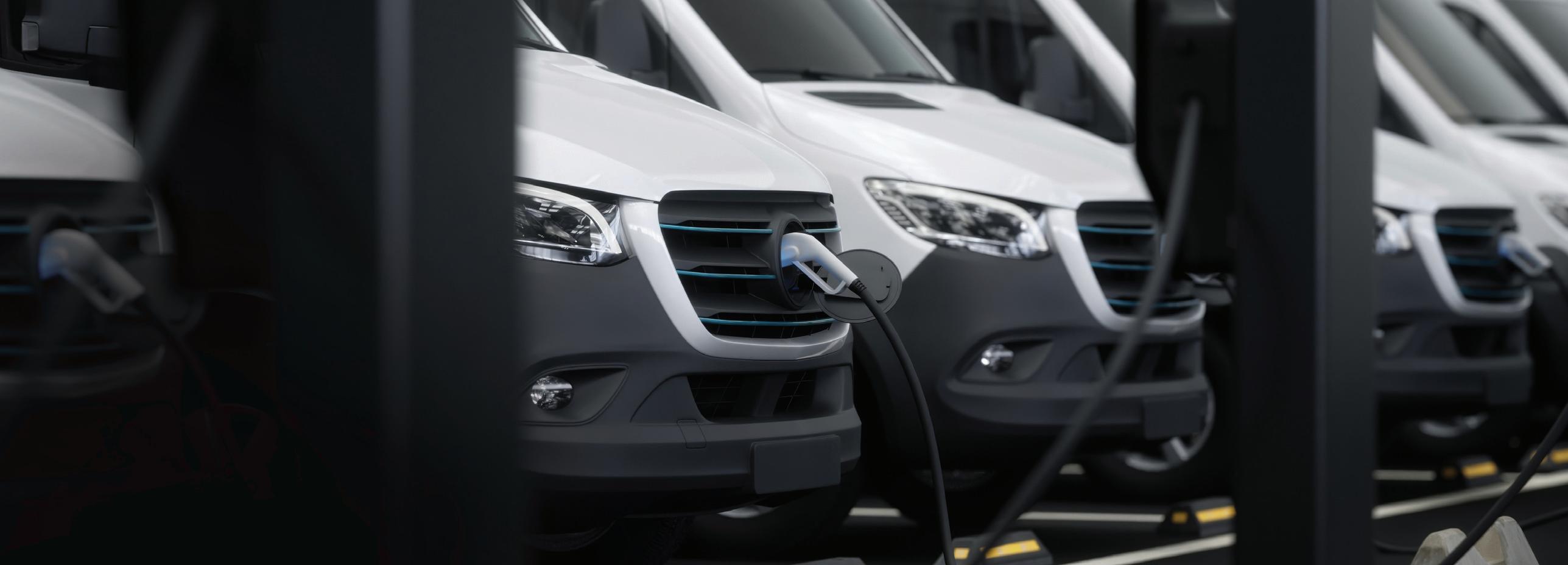
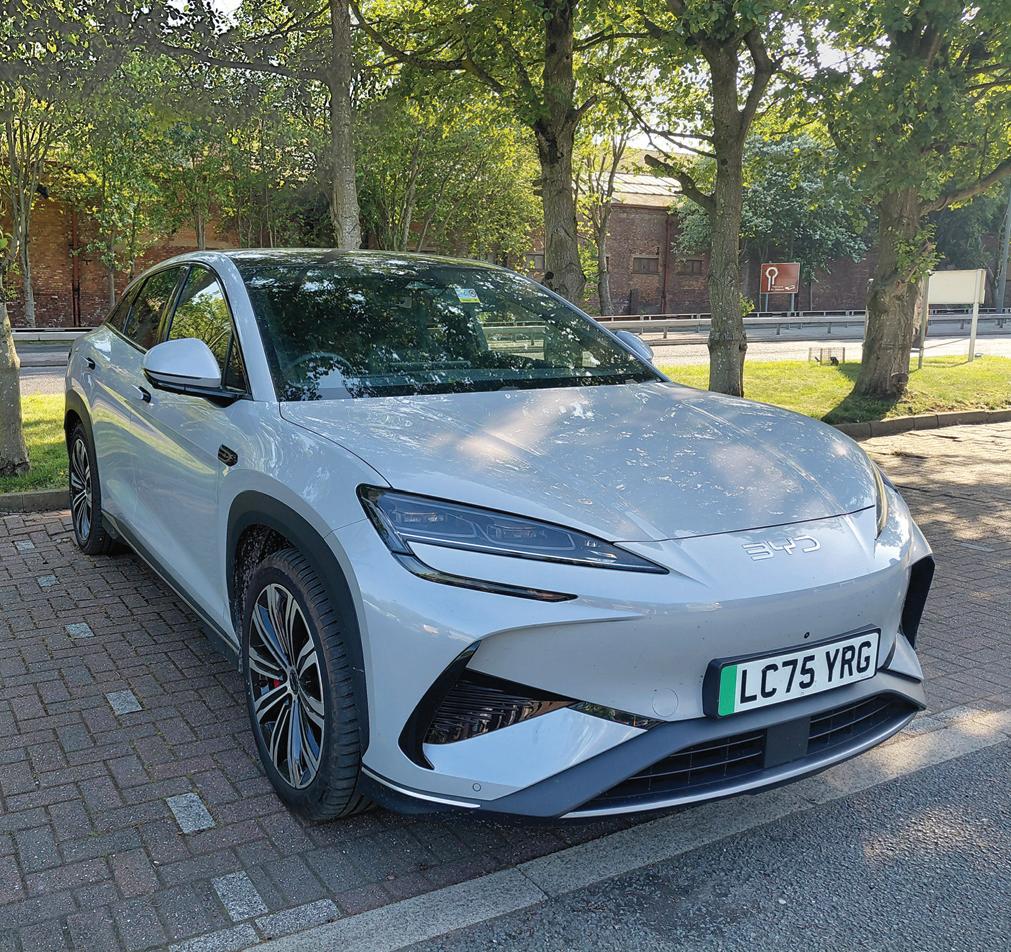
The past few weeks have seen me tackle my first batch of longer journeys in the BYD Sealion 7 Excellence AWD, the longestrange model in the Sealion 7 line-up. It features a 91.3kWh battery and a dual-motor powertrain producing 530hp, with a claimed combined WLTP range of 312 miles.
Naturally, I was keen to put those claims to the test. Over eight drives covering around 600 miles, I set off with a mixture of full and half charges to see whether the car's predictions stacked up. The result? The BYD finished 12 miles in the black overall.
Interestingly, the most accurate estimates came when setting off with a full battery, which isn’t always the case with EVs. In fact, on two separate 100-mile-plus journeys, I arrived with exactly the amount of range the car had predicted before I left. Absolutely on the button.
The public charging network has improved dramatically in



recent years, but there’s still real value in a car that allows you to plan charging stops on your terms – or skip them altogether – rather than its own.
Next, I’m interested to see how the Sealion 7 copes with lots of shorter 20- to 50-mile trips, where efficiency can often tell a very different story. Richard Bush








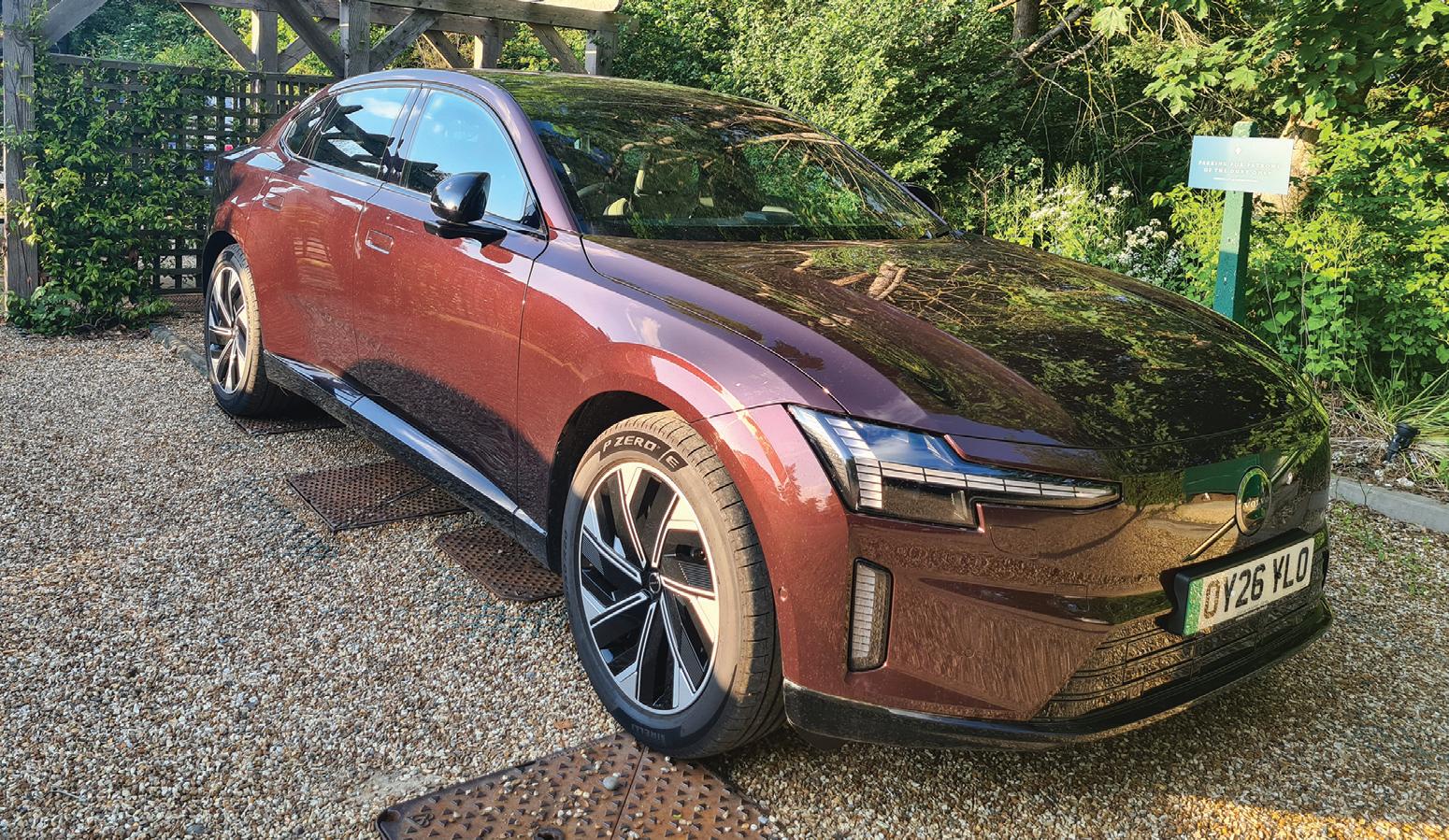
The sleek exterior looks of Volvo’s electric saloon have already turned heads during our test but its serene, minimalist cabin is really stealing the show.
At 5m long – beaten only by the BMW i5 in the electric executive car class – the ES90 offers
limo-like levels of rear space and a completely flat floor.
That vast rear legroom does slightly shrink the boot space, with the Volvo falling slightly behind its rivals in terms of outright space, however it still has a respectable 424 litres up for grabs.
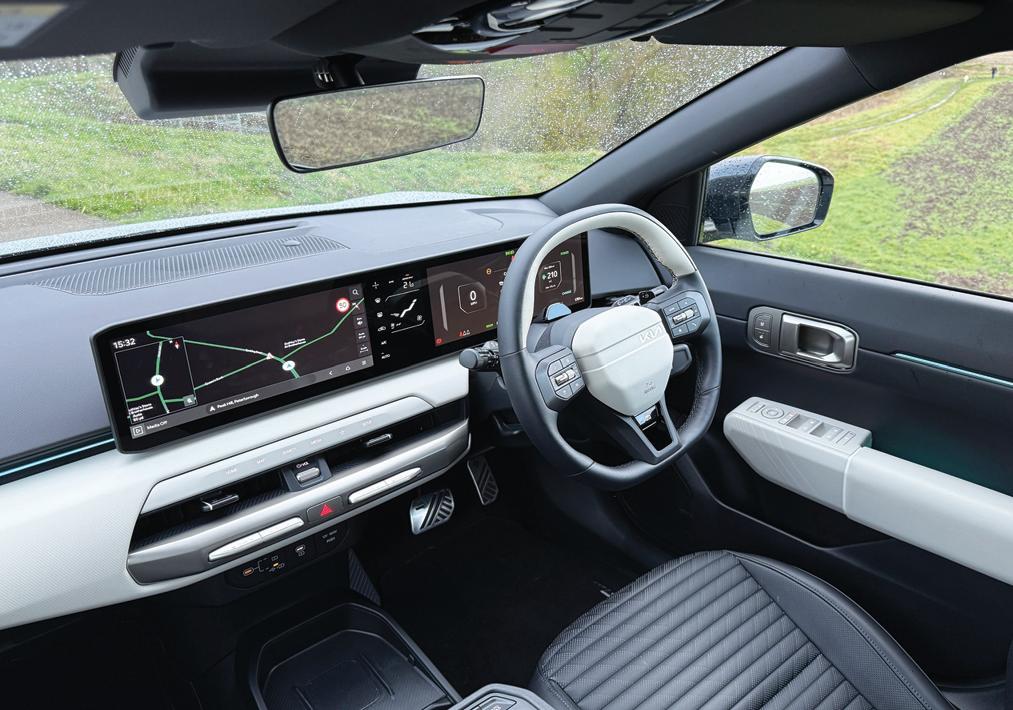
The sub-zero starts earlier in the year have given way to longer, warmer days and perfect conditions for EV battery efficiency.
A comparison is the percentage of range used during my 85-mile office commute. In the winter, I was using 31% of my battery on the mainly motorway journey (with the usual couple of congested, lowspeed zones), and more recently I’ve seen this reduce to 25%.
That fits in with the rule of thumb 20% reduction in total range between winter and summer, and range predictions in the Kia have been fairly reliable. You know that you’ll be penalised with harsh acceleration, so it pays to drive smoothly. I’ve never really taken the car out of ‘eco’ mode as the performance from the 204hp motor is more than adequate when under
For those wanting maximum versatility, the ES90 is actually a hatchback in disguise, allowing you to fold down the rear seats for extra cargo to deliver up to 1,427 litres of cargo space.
I’m a big fan of our test model’s optional £845 Mulberry Red paint-
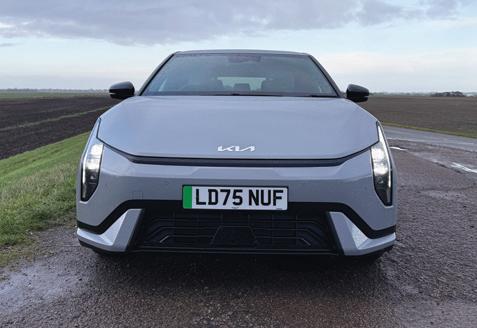
the restraints of the energysaving programme.
This particular sector of the market is becoming more crowded. Volkswagen Group has three contenders – the VW ID.3, the Cupra Born and (although they pretend it’s an ‘SUV’) the Škoda Elroq. Stellantis has the Vauxhall Astra, Peugeot 308 and soon the Leapmotor B03. Other Chinese models in
P11D
£69,140
BiK* 4% I £46 (20%) / £92 (40%)
RANGE 411 miles
ON FLEET RANGE 350 miles
EFFICIENCY 3.9mpkWh
work, which shines like a polished gemstone in bright sunlight. This pairs well with the £800 ventilated Nordico interior, which is the only other option on our model and delivers a warm, minimalist vibe and ventilated seats in both rows. With another summer heatwave hitting right now, I’m becoming a big fan of the latter.
With a bit of careful driving, we’re currently getting around 350 miles of range out of our ES90, equating to some 3.9mpkWh in mixed conditions.
All in all, our first few weeks with the Volvo show it’s a package thoroughly worthy of its class.
Natalie Middleton
3.8mpkWh
the segment include the MG4 and BYD Dolphin, while the Renault Megane and Nissan Leaf are familiar contenders.
Novelty value less than a year into the lifecycle of the EV4 helps, but according to Cap HPI, the EV4 is among the best performers in the class to retained percentage of its value, comparable to the Volkswagen Group products, and streets ahead of the soon-tobe-updated Stellantis rivals.
The last five months in the EV4 have been comfortable, smooth and predictable, and for anyone looking for their first electric car, you can’t ask for more than that. Simon Harris

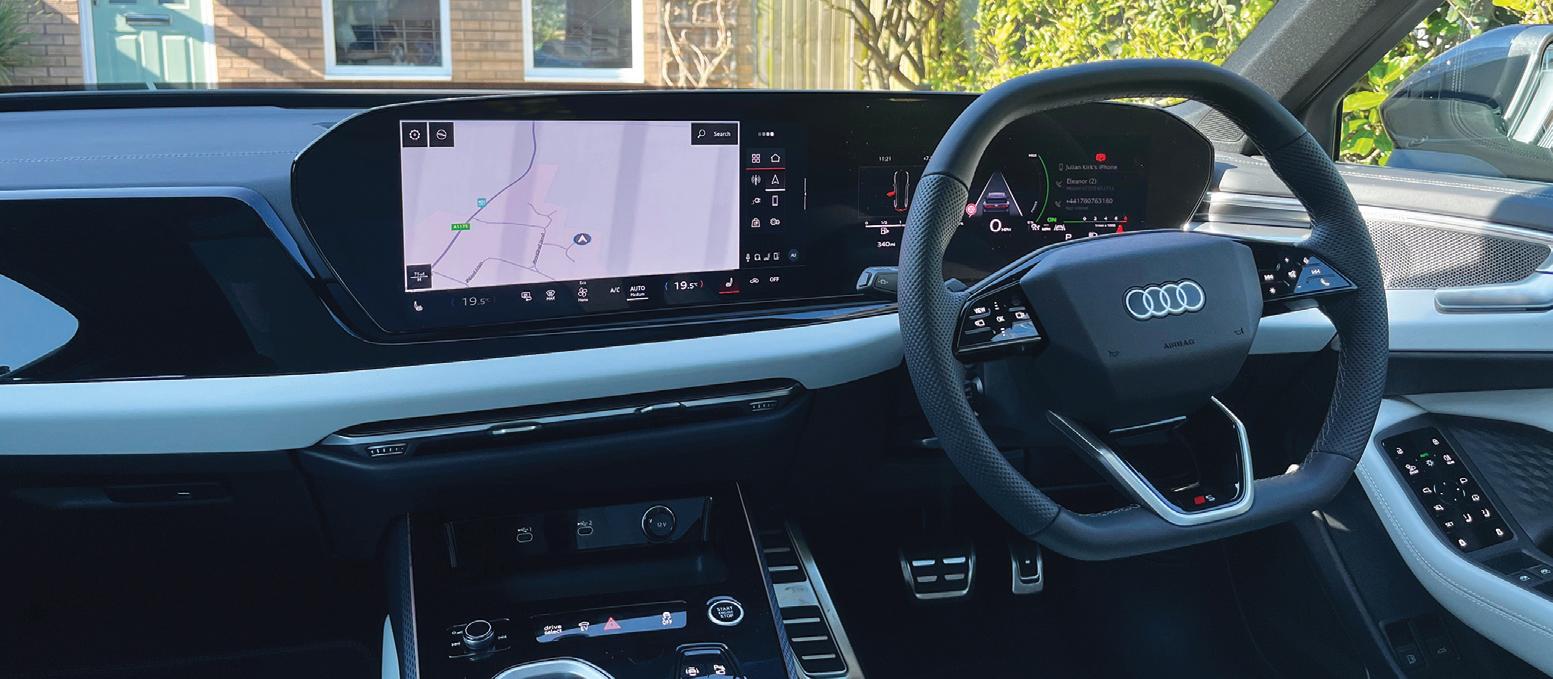
When I introduced our A6, I extolled its credentials for being a great high-mileage business express and the past month has seen this fully put to the test.
A series of long motorway runs have reinforced my view that this A6 is a great choice if you’re covering big mileages – around 400 miles of range and, despite the S line specification and 20-inch wheels, decent ride comfort.
At motorway speeds the cabin
insulates you from wind and road noise and the A6’s large footprint imbues a real sense of stability at higher speeds.
Of course, these sort of runs don’t do a hybrid car’s economy much good, resulting in our average economy dropping to 63.3mpg – still impressive for a big ICE vehicle, but short of the claimed 100mpg-plus.
However, balancing this is the e-hybrid’s effectiveness on shorter
urban runs – a four-hour charge liberates around 55 miles of pure EV motoring, meaning I can go almost a week on my average commuting regime. To put that in to perspective, on my 17p/kWh home tariff, that’s about £4.
The aforementioned long motorway trips have also given me the chance to assess some of the options fitted to our test car. The 20-inch RS alloys are a decadent £2,300 option which you

It’s been very much windowsdown the last few weeks, and on those odd occasions where I’ve preferred to fire up the climate control in our Arona, it has delivered an icy blast on demand. This is lucky really, as a recent lower back issue and the ensuing sciatica has meant that the heated driver’s seat has been working nearly as hard as the air-con.
It’s also highlighted how much we take getting into and out of
cars on a regular basis for granted. It’s been something of a blessing that the Arona’s highish seating position – which I have made higher than I normally would to ease ingress and egress – has made things much more bearable. I’m all about the comfort these days, and the seats are still great, though it remains to be seen if the light fabric will cope well with any cabin spillages – none yet!
Less great is the extra £110-230 or so BiK bill per month, depending on whether you’re a 20% or 40% taxpayer, compared to our previous Cupra Leon eHybrid. That’s a reasonable chunk of cash every 30 or so days, and there would be a greater differential if the Arona’s list price wasn’t £10k less. In addition, that extra BiK might make user-choosers sceptical about plug-in hybrids (and indeed fully electric vehicles) sit up and take notice.
On a practical level, recent exhibitions and events that the Fleet World Group team were involved in required a fair bit of mileage and it was quite nice to not have to think at all about where we would recharge etc, and this has all been part of getting back into the ICE mindset.
Our Arona has just ticked past 2,700 trouble-free miles as we speak, with only one real slight quirk (read annoyance), which relates to the parking sensors front and rear. There may be a
can obviously do without, but they really enhance the stance of the A6. Likewise the metallic blue paint, although this is a much more affordable £775.
The one option that is almost impossible to justify is the fulllength panoramic sunroof with switchable transparency. Once you have marvelled at the ability to change the opacity from clear to opaque, and giggled at the striped opacity function, you’re left with a large glass roof which you just wish you could open. A cheaper opening glass roof would be a much better choice, although Audi does not offer this.
Julian Kirk
setting somewhere to override this, but said sensors go a bit crazy if there is a car or those space-invading Lime bike users close to you in London traffic. This automatically lowers the volume of whatever you might be listening to, and flashes a warning on the display.
I fully get this from a safety point of view – the volume also dips when reversing – but the incidences in traffic mean you then have to reset the screen, and manually increase the volume again. It’s an incredibly minor gripe, granted, but there ought to be a way to override it.
Luke Wikner

The turn of the millennium marked a radical transformation for Volvo. Historically famous for producing dependable, aggressively boxy estate cars, the Swedish manufacturer entered the 21st century with a burning ambition to challenge the dominant German executive saloons.
Arriving in late 2000, the first-generation Volvo S60 was the catalyst for this change. It completely rewrote the brand’s position in the corporate car park and unlocked unprecedented fleet success.
Before the S60, choosing a mid-sized Volvo saloon was an explicitly conservative decision. The outgoing S70 was little more than a visually refreshed 850. While the 850 had introduced slightly softer edges than the razor-sharp 740 and 940 models before it, the car remained distinctly boxy overall and appealed primarily to traditional retail buyers.
The styling revolution had actually begun to take shape slightly higher up the range in 1998 with the launch of the flagship S80. Under the design direction of Peter Horbury, the S80 used cues from the 1992 ECC concept car to introduce pronounced curves and strong horizontal side shoulders to the brand.
The S60 took this newly established design language and refined it into something much more dynamic. By adopting a sweeping, shoulder-heavy silhouette and a heavily raked C-pillar, the four-door saloon took on the distinct aesthetic profile of a coupe. It looked aggressive and contemporary, providing user-choosers with a genuinely stylish alternative to the omnipresent BMW 3 Series and Audi A4. Crucially, the S60 was the right car at the
We look back on some of the most important company cars of the last six decades
VOLVO S60
right corporate moment. Following Ford’s acquisition of Volvo in 1999, the Swedish brand was absorbed into the Premier Automotive Group. This ownership structure provided a massive commercial advantage in Great Britain. While the loadlugging V70 estate remained a firm favourite for retail buyers, the S60 was specifically deployed to break open the highly lucrative UK fleet sector.
To do this, it bypassed Volvo’s historically low-volume dealer channels and plugged directly into Ford’s formidable fleet sales back-office infrastructure. This integration gave Volvo immediate access to Ford’s established corporate sales teams and processing power.
Suddenly, the S60 was actively pitched to major blue-chip operations, successfully securing a spot on company choice lists that had previously been closed to the brand. Once on those lists, the car’s distinctive coupe styling made it an incredibly
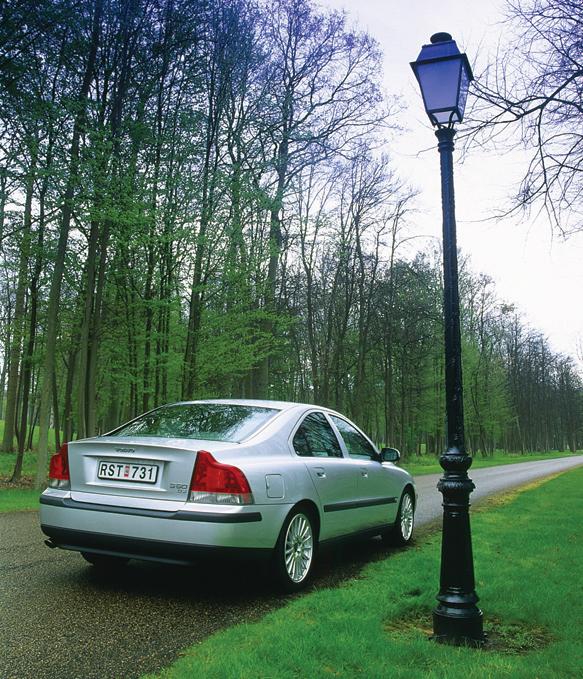
easy sell to style-conscious user-choosers.
However, the final piece of the puzzle was missing at launch. In 2000, the S60 arrived as a petrol-only line-up, powered by a range of smooth, transverse five-cylinder units. While highly capable, a premium petrol saloon was a tough sell for highmileage business drivers balancing strict tax thresholds from 2002.
The breakthrough came later in the vehicle’s lifecycle with the introduction of the D5 engine. For years, Volvo had relied on external partners for its diesel power, famously sourcing industrial engines from Volkswagen and Audi to fill gaps in its lineup. The D5 changed everything. Engineered entirely in-house by Volvo, this 2.4-litre, five-cylinder turbodiesel was a masterpiece of aluminium construction.
When the 163hp D5 dropped into the S60 engine bay, it transformed the car into an instant fleet icon. It delivered a healthy 350Nm of torque, pulling with an effortless authority that made it an exceptional motorway cruiser. Rather than the harsh four-cylinder rattle common among its rivals, the D5 produced a highly characterful, off-beat five-cylinder snarl when pressed. More importantly for userchoosers, it delivered outstanding fuel economy alongside highly competitive CO2 emissions.
By marrying Ford’s corporate sales reach with bespoke, highly efficient Swedish hardware, the first-generation S60 accomplished its mission. It successfully transitioned Volvo from a builder of sensible family boxes into a legitimate player in the executive car sector, earning its rightful place as a true fleet icon.


















evfleetworld.co.uk
vanfleetworld.co.uk









John Kendall
VFW editor


“Technology is shifting the security narrative from reactive recovery to proactive deterrence.”


Operating a modern light commercial vehicle fleet requires a constant balancing act between safeguarding your current assets and preparing for an inevitable powertrain transition.
Our lead feature in this issue tackles a problem that continues to plague operators across the UK: the sophisticated rise of van theft. As organised criminal groups increasingly target vehicle contents rather than the vans themselves, the financial knock-on effect is staggering. Recent data highlights that the average value of stolen tools has surpassed £2,400, frequently forcing days of costly operational downtime.
While the good old mechanical lock-and-key remains an essential physical baseline, we explore how today’s technology can help beat the crooks. From discreet dual-lens cabin and cargo cameras to Bluetooth asset trackers hidden directly inside power tools, technology is shifting the security narrative from reactive recovery to proactive deterrence. However, as our feature highlights, hardware is only as good as driver habits; basic security procedures and safe parking remain your first line of defence.
Beyond security, the broader LCV market faces the ongoing challenge of mapping out a realistic, cost-effective timeline for decarbonisation. This duality of choice is perfectly reflected in our vehicle review section this month, where we put two distinct flavours of a legendary workhorse through their paces. We take a detailed look at the ninth-generation Toyota Hilux, where the 48V mild hybrid system is now the only diesel variant in the UK, arriving in a more refined and better-integrated form. Simultaneously, we evaluate the operational capabilities of the new Hilux BEV, which makes its electric debut with a powertrain built around a 59.2kWh watercooled lithium-ion battery. It provides a fascinating snapshot of where fleet propulsion stands today, showing a genuine working vehicle that happens to be electric, rather than an electric vehicle attempting to be a Hilux.

TO


Van theft is becoming more sophisticated. Organised criminal groups increasingly target commercial vehicles for tools, generators and specialist equipment that can quickly be resold online. In many cases, thieves are not stealing the van itself but targeting its contents, meaning fleets need to think beyond vehicle recovery and focus on protecting cargo and equipment. Matt MacConnell reports.
According to Volkswagen Commercial Vehicles, the value of stolen tools rose by over 40%, averaging £2,433 in 2024. A quarter of tool theft incidents were valued at £3,500 or more, compared with just 10% in 2023. As a result, some 86% of tool theft victims were forced to take an average of four days of downtime to
repair locks and restock vans. The knock-on effect is increased insurance premiums, meaning the financial implications can stretch beyond the cost to replace the stolen tools
According to Travis Perkins, more than 105,000 tool thefts have been reported to UK police forces since 2020, while Direct Line claims that around
£40m worth of tools were stolen in 2024, resulting in £16m in lost earnings and disruption. Therefore, some insurers may also look more favourably on fleets that use approved tracking systems, immobilisers and camera technology, particularly if these measures improve recovery chances or reduce claims costs. That said, technology is only effective if drivers use it properly. Fleet operators should ensure staff understand basic security procedures, including doublechecking locks, parking in well-lit areas, avoiding overnight tool storage where possible and reporting suspicious activity quickly. Even advanced tracking systems can be undermined by poor day-to-day habits.
From the 1990s to the early 2010s, vans were protected from prying eyes and

sticky-fingered thieves by mechanical locks. Even today, many fleets that carry expensive essential equipment use mechanical locks, including deadlocks, slamlocks, steering locks and reinforced door shields. But can today’s technology help beat van theft, or should you stick with the good ol’ lock-and-key?
Many tech firms claim their products deter thieves, but much of this depends on the crook and their ability to have noticed the product. For example, having a simple forward- and rearfacing dash camera fitted could act as a physical deterrent for some, but it might not deter a masked individual. It’s a bit like having a ‘Warning CCTV’ sign on your property.
Camera systems are becoming smaller and more discreet, while the
“Cameras are just one part of the security picture. Fleet management systems can help operators to see where their vans are and how they are being used.”
software behind them is becoming more sophisticated.
Founder and CEO of dash camera company Vantrue George Chen says: “I can’t guarantee that installing a dashcam will definitely pay for itself – ideally, you’ll never have to use it. But risks are everywhere, and it’s better to be safe than sorry.”
Vantrue offers an array of camera systems, including the Nexus N5S, N4 Pro, S1 Pro Max, N4S, E360 ACE and more. Most of Vantrue’s cameras have two lenses: one for recording the road and the other for capturing the cabin. Similarly, the 5S includes motion detection, Wi-Fi, built-in GPS, parking monitoring and voice control. It also comes with an additional 2.7K camera that can be placed in the van’s loading area. Combined with Vantrue’s software, you can track trips and your current location, access mileage stats and check the van’s speed.
Pairing a system like Vantrue’s with a traditional lock is a good idea, as it stacks the van’s security, making the thief’s life more difficult. Increasing the difficulty level far enough may force the crook to give up. However, fleets can take additional measures to protect their vehicles and goods.
“Cameras, however, are just one part of the security picture. Fleet management systems can help operators to see where their vans are and how they are being used. Geofencing, for example, can alert managers if a vehicle leaves a predefined area or is used unexpectedly outside of working hours. Location data
can then help fleets to act more quickly if a van is stolen.
No single measure on its own offers a silver bullet to van security. Strong locks and other physical deterrents make vehicles harder to access, while fleet technology helps operators see what’s happening and gather the evidence they need to respond swiftly.
It should be remembered that drivers also have a vital role to play by choosing safer parking spots, locking vans properly, keeping their tools out of sight, and reporting anything suspicious. By providing greater visibility, fleet technology should help support these good everyday habits,” says Alex CraneRobinson, Webfleet UK and Ireland regional director.
Running a telematics system will not only give you essential information, such as fuel usage, driver speed and location, but can also help tie together a more secure fleet. Webfleet offers a demo of its fleet management product, allowing fleet managers to try before they buy.
Brigade Electronics says that some cameras can be linked with a door or vibration sensor, which is then set up to record unauthorised access or tampering. However, this is a more reactive option, capturing footage after a breakin and providing police and insurance with evidence. As mentioned earlier, cameras can be removed, but the device could be set up with a secondary batterypowered tracking device.
While cameras are important, other technologies can help track a van’s stock.
For now, much of this will require storehouse operative or fleet operator intervention, as items will need to be scanned to record quantity.
Geotab sales manager Oliver Holt says: “Geotab is not just simply vehicle tracking and video tracking; it’s really an open platform, and that allows us to integrate with various asset tracking providers, giving us the flexibility to track assets at an individual tool level within a single pane of glass.”
Holt adds: “Geotab is investing quite heavily in the asset tracking journey. It has a Go Anywhere family, which is predominantly aimed at tracking larger assets such as trailers and even midsized tools; think generators and such. That’s why the Go Anywhere asset-tracking tool is invaluable. This is more for the

recovery side of theft. Onboard power is not needed for these systems, either.”
To track tools, the item must have something attached, such as a QR code or similar. Therefore, wouldn’t this be easy for the thief to remove?
“What we can integrate via partnership, and the open system, is the smaller, more discreet Bluetooth and batterypowered asset trackers. These can be discreetly installed on handheld tools. Security and installation method are the same. If you can install it discreetly within a handheld tool, it will be more difficult to remove.”
More fleets are returning to sleeper devices to provide an added layer of protection against thieves locating and removing hard-wired tracking units. These units often remain dormant
until the primary device is tampered with or removed.
“Moving forward, Bluetooth mesh tracking will also offer an effective and affordable way of tracking and recovering stolen tools, equipment and cargo,” says Queclink.
While traditional locks still play an important role, modern fleet security increasingly relies on connected technology. Cameras, telematics and assettracking systems may not stop every theft attempt. Still, they can improve visibility, accelerate recovery and help operators build a clearer picture of how their vehicles and equipment are used. For many fleets, the future of van security is likely to combine old-fashioned physical deterrents with smarter digital tools.
“More f leets are returning to sleeper devices to provide an added layer of protection . ”



When Toyota’s engineers set out to develop an electric Hilux, they gave themselves a clear brief: not a BEV that looked like a Hilux, but a Hilux that was a BEV. It is a distinction that matters, and one that shapes everything about this vehicle.
The ninth-generation Hilux range makes its electric debut with a powertrain built around a 59.2kWh watercooled lithium-ion battery mounted within the frame, driving permanent four-wheel drive through front and rear eAxles producing a combined 196hp and 473Nm of torque.
That permanent AWD is actually an advantage over the diesel variant, which requires the driver to engage four-wheel drive manually. What the BEV loses is the ability to lock the differentials, a limitation worth noting for those whose working lives take them into genuinely extreme terrain.
For the core audience Toyota has in mind, however, that is unlikely to be a dealbreaker. This is not primarily a vehicle for remote expedition work. It is aimed at airside duties, highway maintenance operations and urban fleets where low emission zone restrictions are making diesel increasingly difficult to justify. For those applications, the
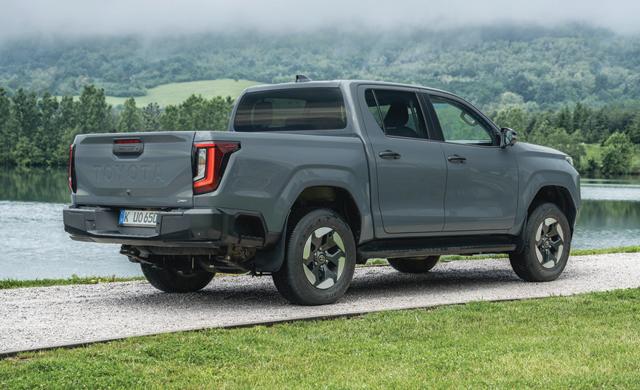
Hilux BEV makes a compelling case. On the road, the experience is immediately striking. The Hilux feels exactly as solid and purposeful as any diesel variant, the body-on-frame construction, the commanding driving position, the sense that this vehicle will absorb whatever is asked of it, but the soundtrack has changed entirely. Wind and tyre noise aside, it is close to silent, the only intrusions being the now-mandatory audible alerts for lane keeping assist and speed limit warnings. For drivers spending long shifts in the vehicle, that quiet is not a small thing.
Our test route pushed the BEV well beyond urban comfort, taking in a steep hillside track and deep, rutted terrain that would have tested any vehicle on standard road tyres. The Multi-Terrain Select system, five modes covering rock, sand, mud, dirt and mogul, the last of these a first for a Toyota BEV, proved its worth here, adjusting torque delivery and braking with precision that gave genuine confidence on shifting surfaces. The vehicle felt thoroughly at home, the electric motors’ instant torque responding cleanly to the demands of the terrain.
The lower ground clearance relative to the diesel did make itself known occasionally in the deepest ruts, brushing the
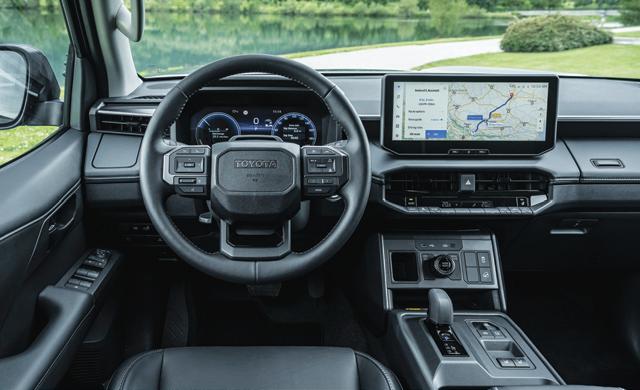
surface lightly. It is a real, if minor, compromise. The 700mm wading depth and 29° approach angle are matched to the diesel, but those seeking the absolute maximum off-road capability will want to factor the reduced break-over angle into their thinking.
Range is the other consideration. Toyota quotes approximately 160 miles on the WLTP combined cycle from the 59.2kWh battery, with DC fast charging to 80% available in around 30 minutes. For depot-based operations with predictable daily mileages, that is workable. For anyone expecting to cover the same ground as a diesel Hilux on a single charge, it is not.
Prices start at £57,845 for the Icon grade and £60,695 for the Invincible, though both qualify for the Government’s £5,000 plug-in van grant, bringing the entry point to £52,845. Customer deliveries began this month.
The Hilux BEV is a genuine working vehicle that happens to be electric, rather than an electric vehicle attempting to be a Hilux. For the right operator, it makes a strong and increasingly relevant case.
WHAT IS IT? Electric AWD pickup
HOW MUCH? From £57,845 (inc VAT)
GROSS PAYLOAD? 715kg
EFFICIENCY? 3mpkWh
DRIVE? Front/rear electric motors, 194hp




The ninth-generation Hilux Hybrid 48V is the most capable and refined version yet. By
Simon Harris
The Toyota Hilux has been many things to many people across more than five decades: farm workhorse, construction site staple, expedition vehicle and, until recently, a company car taxefficient choice for business users.
For its ninth generation, the 48V mild hybrid system is now the only diesel variant, but arrives in the all-new model in a more refined and better-integrated form. The result is a vehicle that retains everything the Hilux faithful expect while addressing some of the rougher edges that have always been the price of admission.
Power comes from Toyota’s wellproven 2.8-litre DOHC diesel, producing 204hp and 500Nm of torque between 1,600 and 2,800rpm. As before, the 48V hybrid system adds meaningful benefit: smoother, quieter stop-start, a regenerative braking function that recovers energy on the overrun, and electric assistance to the engine under load. WLTP combined fuel consumption is quoted as 28.2-29.1mpg, which some might find a bit disappointing for a version with the word ‘hybrid’ in its name.
The mild hybrid components have been positioned to avoid compromising off-road capability. The motor-generator sits high to maintain the 700mm wading depth, and its drive belt incorporates a

fabric layer that absorbs water and maintains consistent tension in wet conditions.
Our test route made the point clearly. Driven in Invincible specification with the automatic gearbox, the Hilux tackled a steep hillside track and deep, rutted terrain on standard road tyres without hesitation. Ground clearance is a genuine 309mm, and on the most demanding sections of the route, that margin made itself felt. Its approach and departure angles of 29° and 24° respectively, combined with 500mm of wheel articulation, meant it always had something in reserve.
Low range was needed for the most challenging sections, which made any assessment of real-world fuel economy irrelevant in the context of this test. What was clear was that the Hilux felt thoroughly at home, the diesel pulling cleanly through the low-range ratios with the kind of unhurried confidence that has always been the model’s calling card.
On smoother surfaces, the improvements in refinement are immediately apparent. Cabin noise is noticeably reduced compared to the previous generation, and the new interior raises the quality bar significantly. The instrument panel takes its cues from the Land Cruiser, with a 12.3-inch Toyota Smart Connect multimedia display and a
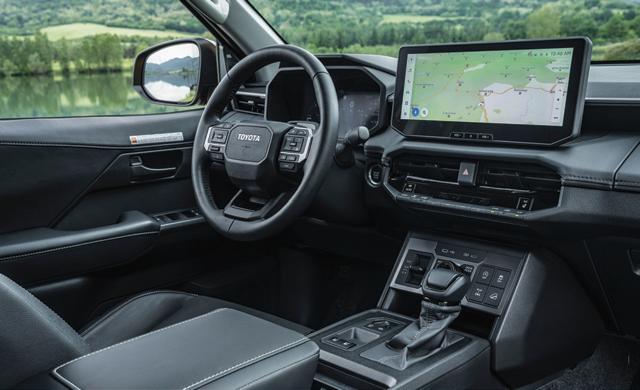
matching 12.3-inch digital combimeter.
One decision Toyota has taken with the ninth-generation Hilux is worth understanding for fleet buyers. The model is now produced exclusively in double-cab format. A two-seat conversion kit will be available, enabling compliance with LCV tax rules, and Toyota is expected to offer in-house conversions optimising the space behind the seats for operators’ specific requirements.
Payload is in excess of 1,000kg and towing capacity for braked trailers is 3,500kg, both figures that put it among the most capable vehicles in the doublecab segment.
Four grades will be offered, with Active at the entry level, then Icon, Invincible and invincible X. No plans yet for a GR Sport, which might not materialise as the sector is less appealing to lifestyle users now.
The ninth-generation Hilux Hybrid 48V is the most complete version of one of the world’s most trusted working vehicles, with meaningful improvements in refinement and technology that do nothing to diminish its exceptional capability.
WHAT IS IT? Double-cab pickup
HOW MUCH? From £42,845 (inc VAT)
GROSS PAYLOAD? >1,000kg
ECONOMY? 28.2-29.1mpg
DRIVE? 2.8-litre DOHC diesel / Part-time 4WD