For over 40 years, the largest mining companies in the world have put their confidence in Richwood’s innovative material handling solutions.
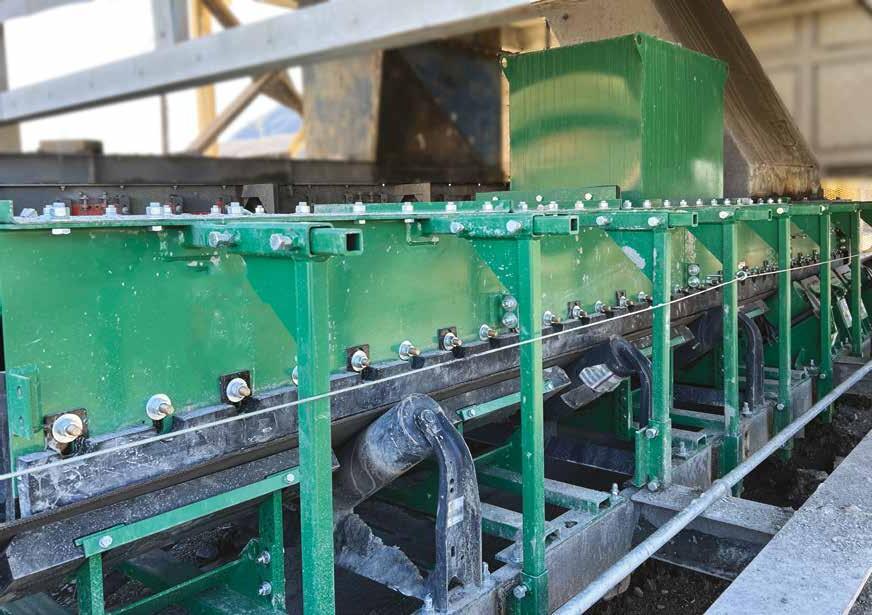
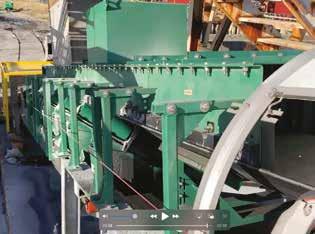
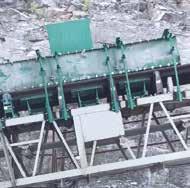
When it comes to solving problems with dust and material containment, Richwood achieves success with engineered passive dust containment systems. Application-specific solutions optimize efficiency through sealed and protected load zones without the need for vacuums, filters or other additional equipment. The reduced wear and tear on equipment and controlled dust and spillage create a safer and more productive work environment. Worry-free load zones are designed and built by Richwood every day.
What would it mean for your productivity if dust and spillage issues were eliminated? Contact Richwood today for a review of your application.
Rely on Richwood!
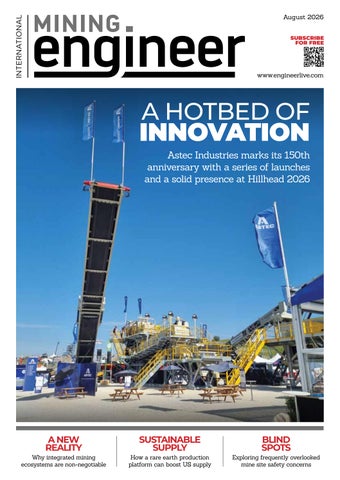
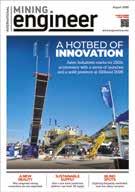
The August 2026 edition of International Mining Engineer has been influenced by many recent events: Hillhead 2026, a return to Ireland’s crushing and screening roots and a look at the US’ urgent search for domestic rare earth supply, to name a few.
In June, the team at International Mining Engineer brought their boots to Hillhead Quarry for the UK's largest quarrying, construction, and recycling equipment exhibition. Here, we spoke with companies such as Astec, WEG, Powerscreen and Finlay. All of these companies showcased their latest innovations, reflecting on where the industry is taking them and what will come next. You can find more about Hillhead and these companies on pages 6, 8 and 42.
A topic that came up repeatedly at Hillhead is the definition of the modern machine. What makes it modern? While many answers thrown around, one trend we spotted was integration of real-time data and use of intelligent analysis to improve the safety and efficiency of mine sites. This is reflected in our August 2026 edition of International Mining Engineer in pages 14, 20 and 22.
Another timely story in the August edition is about American rare earth metals company Phoenix Tailings (page 38). Beginning as a startup in 2019, the company now operates a fully integrated rare earth production platform spanning extraction, separation, refining and metallisation with a zero waste and zero emissions philosophy. As the US is seeking to break foreign monopoly on rare earth processing, companies such as Phoenix Tailings provide intriguing alternatives.
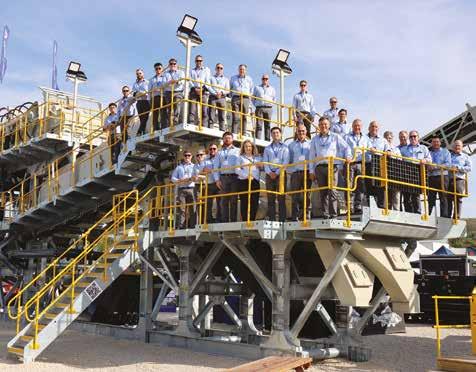
Saskia Henn Editor
Driving reliability Shotcrete machine optimisation with sensors
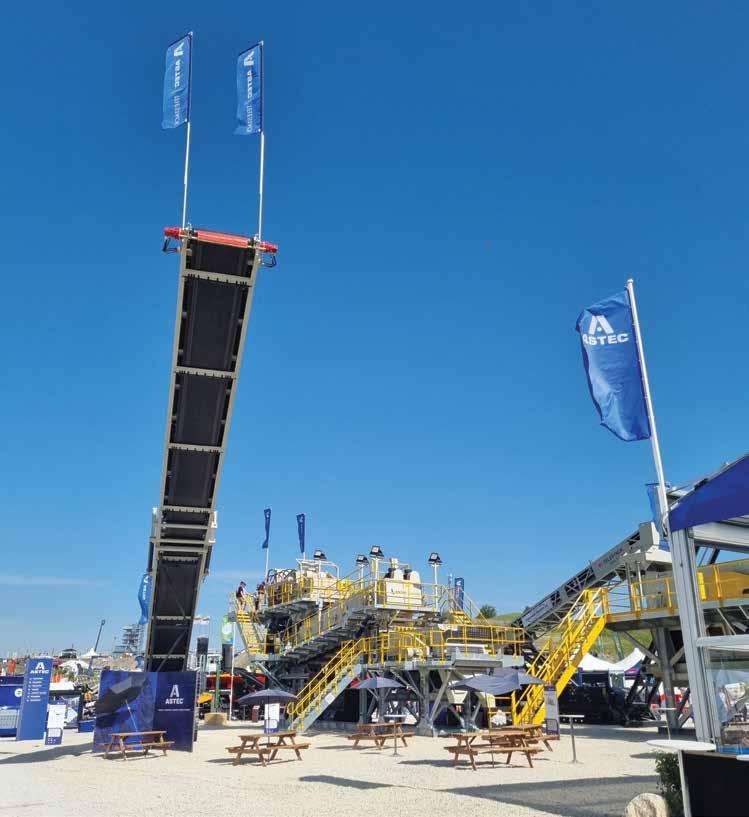
look at Astec’s many launches unveiled at Hillhead 2026
Actionable insights Measuring flush water data efficiently
Intelligent analysis Encoder-based monitoring in modern plant performance
The hidden key Intelligent water pumping can measure success
How an Indigenous partnership is boosting a nearby
Examining common but overlooked mine site safety concerns
The device that offers both legacy radio and 4G LTE
The key to increasing domestic rare earth processing in the US
PUBLISHER
Jerry Ramsdale
EDITOR
Saskia Henn shenn@setform.com
DESIGN – Dan Bennett, Jill Harris
HEAD OF PRODUCTION
Luke Wikner production@setform.com
HEAD OF SALES & PARTNERSHIPS
David Pattison
ACCOUNT DIRECTORS
John Abey | Peter King
SENIOR ACCOUNT MANAGERS
John Davis | Darren Ringer | Roy Glasspool
ACCOUNT MANAGERS
Paul Maher | Iain Fletcher | Marina Grant e advertising@setform.com
Diverse learning preferences can shape your introduction to mining
Latin America takes centre stage
Located in the mineral rich country of Peru, Expomina together technical specialists, business leaders, investors and suppliers to explore the future of mining
Electra Mining Africa will highlight manufacturing innovations, power solutions, automation, machinery and equipment for around 40,000 industry players
Setform’s international magazine for mining engineers is published four times annually and distributed to senior engineers throughout the world. Other titles in the company portfolio focus on Process, Design, Transport, Oil & Gas, and Power.
The publishers do not sponsor or otherwise support any substance or service advertised or mentioned in this book; nor is the publisher responsible for the accuracy of any statement in this publication. ©2026. The entire content of this publication is protected by copyright, full details of which are available from the publishers. All rights reserved. No part of this publication may be reproduced, stored in a retrieval system, or transmitted in any form or by any means, electronic, mechanical, photocopying, recording or otherwise, without the prior permission of the copyright owner.
Setform Limited | Suite 3.10, Ellisse by Spacemade, 10 St Bride Street, London EC4A 4AD t +44 (0) 207 253 2545 e mail@setform.com
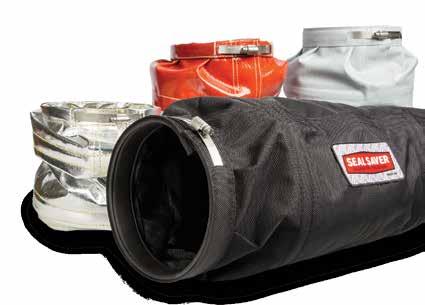
Protect your hydraulic cylinders from abrasive wear and premature failure with Seal Saver.
Seal Saver designs custom-fitted, lightweight flexible protective boots to keep your hydraulic equipment running efficiently in tough mining conditions. Each protective boot is resistant to debris, minerals, abrasions and installs in minutes.
Minimize Rod Scoring
Prevent Chemical Wash Pitting
Protect Cylinder Seals
Four Material Options Including Kevlar & Ballistic Nylon
10 Minute Install - No Disassembly Required

Astec Industries marks its 150th anniversary with a series of product launches and a solid presence at Hillhead 2026
The sun shone brightly across Derbyshire for all three days of Hillhead 2026. Over 620 exhibitors showcased their mining, quarrying, recycling and construction innovations alongside live working demonstrations and talks.
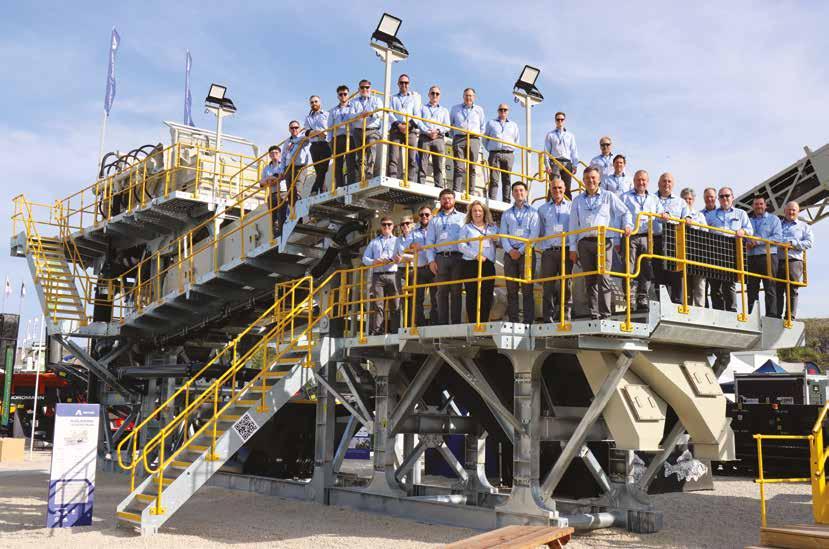
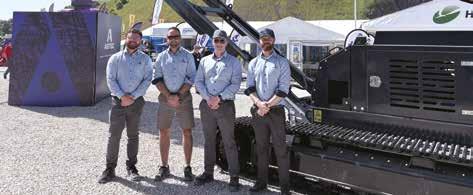
Marking its 150th anniversary, Astec Industries dominated Hillhead’s ‘Crusher Alley’, featuring eight new products and a series of technological innovations.
Astec’s engineering history began in 1876, with its American legacy brand Telsmith, a prominent crushing and screening equipment manufacturer. Since then, Astec has continued innovating heavy equipment,
infrastructure and materials solutions for many industries, including mining and quarrying.
Sitting in the shade cast by Astec’s newly launched modular washing solution Eco-Scrub, International Mining Engineer spoke with Andy Jackson, Astec’s product manager of mobile plants and materials solutions.
“Northern Ireland is essentially the birthplace of mobile crushing and screening, so there’s a lot of industry knowledge there,” says Jackson. “About five years ago, we created a plan to develop a new line of mobile crushing and screening plants manufactured in Northern Ireland as opposed to North America.” This plan followed Astec’s purchase of Irish materials handling company Telestack about 12 years ago.
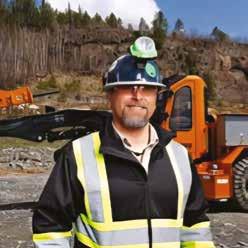
Andy Jackson is the product manager of mobile plants and materials solutions at Astec
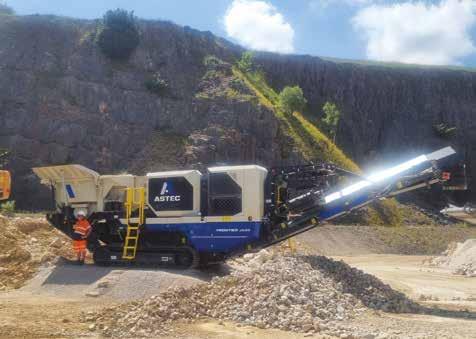
Astec’s newly launched mobile crushing and screening products could be found across the company’s two Hillhead stands, as well as at Crusher Alley’s Rock Processing Demo Area. Here, the company executed the European launch of its Frontier tracked mobile crushing and screening range, designed for high performance production in hard rock environments.
“They’ve been really well received,” says Jackson. “We have been taking a lot of components from our legacy products. We were very good at individual components but now we’re focusing on how we can package each of our proven components into something that’s easier for our customers to purchase.”
In Hillhead’s Demo Area, Astec’s Frontier JA45 Mobile Jaw Crusher worked alongside the Frontier SDF16 Mobile Scalping Screen to showcase high-capacity screening and efficient primary crushing for demanding material processing applications.
Flexibility is the key feature of the SDF16 Mobile Scalping Screen. Its two decks and multiple conveyors deliver consistent throughput across demanding applications. Configurable operations and media choices enable the screen to adapt to specific mining and quarrying operations. These features help to separate large, raw materials from smaller debris before further processing.
Meanwhile, the JA45 Mobile Jaw Crusher offers high-capacity production of up to 336mtph, featuring a 205kW power unit output for optimal performance. Its Telsmith 2238 crushing chamber enables the flexibility of either a hydraulic or mechanical toggle to suit a variety of applications.
In addition to its Frontier range, Astec introduced its blinding minimisation technologies to European markets. The company showcased Vari-Frequency technology on its Pioneer 6203LPV horizontal screen to demonstrate how it minimises blinding and maximises output.
Likewise, Astec’s Multi-Frequency Screen, which is available on tracks, wheels or static, significantly reduces blinding, even with sticky materials.
“Our customers are not having to stop and change mesh or clean mesh,” says Jackson. “The screen has a live bottom deck that excites the screen media more than just the eccentric drive in the middle of the screen.” As the screen box moves in its primary oval stroke, these tensioned cables generate secondary, rapid reverberating g-force spikes across the screen media. This helps to prevent downtime and its related costs.
The modular nature of these products is a cornerstone of Astec’s approach to innovation. Astec’s modular jaws, screen plants, impact plants and cone plants enable easier transport to different sites.
“I think the modular aspect gives
customers a lot of flexibility. A little bit of custom work is right up our alley,” says Jackson.
In addition to a more modular approach, Astec is putting energy efficiency on its roadmap. The company’s jaw crushers and cone crushers are already some of the most productive in the world and it plans to expand on this strength.
“It will come further down the line in our mobile crushing and screening portfolio, but we definitely have those development plans in motion,” says Jackson. “When you look at the cost of fuel these days, it’s driving everybody to come up with ways to produce a more efficient product.”
In line with these energy goals is the intended expansion of Astec’s washing portfolio, which has already become the company’s second most focused area behind mobile crushing and
screening. “There’s a lot of opportunity when it comes to saving water and natural organic materials in general,” says Jackson. “We will continue to expand our washing portfolio.”
Hillhead 2026 was teeming with innovation and connection. As Astec continues its expansion into Europe, some of its best kept secrets are coming to light, and Crusher Alley was a fitting place to display them. With so many future plans and launches under its belt, the mining industry will just have to wait and see what Astec has in store for Hillhead 2028.
For more information visit: www.astecindustries.com
How WEG’s W22 Prime motor supports efficiency in demanding mining and quarrying applications
Electric motors are increasingly being used across mining operations. Conveyors, crushers and screens, pumps, compressors and fans are just some of the technologies that use a motor to function. Because these applications often run for long periods of time, even small efficiency gains can help mine sites save money and energy.
The benefits of energy-saving motors was a topic heavily featured at Hillhead 2026, the UK’s largest quarrying, construction, and recycling equipment show. Electric motor manufacturer WEG had a substantial presence at the show, located indoors away from the worst of the summer heat.
WEG was founded in 1961 in Jaraguá do Sul, Brazil, and initially produced electric motors. The company expanded its activities in the 1980’s, making electrical parts, industrial automation products, power and distribution transformers, liquid and powder coatings and electrical insulating varnishes. Since then, WEG has become one of the largest manufacturers of electric equipment in the world.
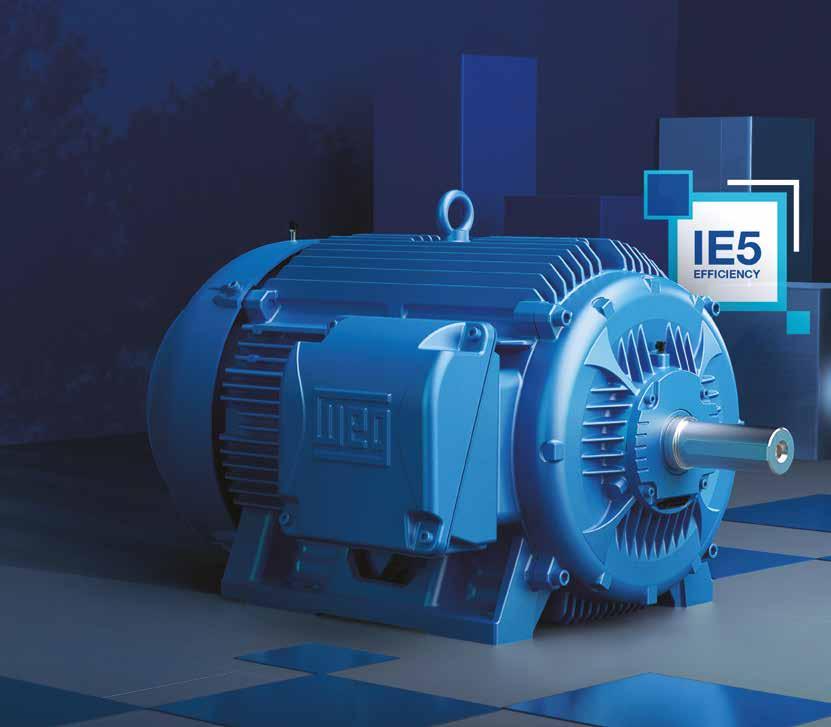
One of the main showstoppers at WEG’s stand was its W22 Prime, the next generation of the company’s W22 induction motor range.
“The main advantages of the W22 Prime are efficiency, reliability and ease of integration,” says Marek Lukaszczyk, marketing manager for Europe and the Middle East at WEG. “By reducing motor losses, W22 Prime
can help lower energy consumption and operating costs, particularly in applications with long running hours.”
W22 Prime delivers IE4 and IE5 efficiency levels without an inverter, something that is normally required with permanent magnet or synchronous reluctance technology. This makes it well suited to quarrying and aggregate applications, where equipment must withstand heavy loads, dust, vibration and long operating hours. In suitable fixedspeed applications where an inverter is not required, upgrades can be simpler and more cost effective.
However, W22 Prime is also compatible with variable speed drive operation (VSD). The International Energy Agency (IEA) identifies VSDs as a route to savings in variable-load applications. Mining operations often rely on variable frequency drives to adjust the speed and torque of alternating current electric motors. This enables heavy mining machinery to run at the exact capacity required to optimise energy efficiency and extend equipment lifespan by preventing unnecessary wear.
The W22 Prime has been engineered to replace low-efficiency motors and integrate into existing installations.
“In sectors such as mining and quarrying, where motors can operate continuously and often in harsh environments, efficiency is not enough,” says Lukaszczyk. “Operators also need equipment that supports reliable operation, straightforward maintenance and practical installation.”
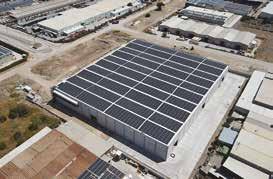
WEG’s investment in the Turkey gearbox plant will increase gearbox manufacturing outside of Brazil
• 1961: WEG was founded by Werner Ricardo Voigt, Eggon João da Silva and Geraldo Werninghaus.
• 1973: Exportation of motors reached 20 countries.
• 1991: First WEG branch in USA was opened.
• 2006: Motor number 100,000,000 was produced.
• 2026: WEG launched W22 Prime induction motor range globally, with rollout phases still expected.

A key advantage of W22 Prime is its ability to deliver higher efficiency without requiring significant changes to existing setups. The line is designed to match standard IE3 frame sizes for easy upgrade to IE4. IE5 is also available in many of the same frame sizes.
“W22 Prime is based on proven squirrel-cage induction motor technology, so it retains a familiar design for engineers and maintenance teams,” says Lukaszczyk. “Its optimised electromagnetic design and thermal performance help the motor run reliably, while compatibly with directon-line starting, star-delta starting and VSD operation gives users flexibility across different applications.”
The multi-voltage capability of W22 Prime is particularly useful for OEMs and companies operating across several regions.
A key advantage of W22 Prime is its ability to deliver higher efficiency without requiring significant changes to existing setups

By reducing the number of motor variants required, W22 Prime can support equipment in a diverse range of supply conditions without specification, stocking or integration challenges.
W22 Prime is being introduced in phases. The first stage covers International Electrotechnical Commision (IEC) frame sizes 225 to 315. From October 2026, further stages will extend the platform to IEC frame sizes 160 to 225 and 315 to 450. Smaller frame sizes from 63 to 160 are due to follow in 2027. The already established W22 range will still be available for at least three years going forward. When complete, the W22 Prime platform will span outputs from 0.12
to 1,000kW and IEC frame sizes from 63 to 450.
The phased rollout is part of a greater plan for WEG to support customers moving from efficiency targets to practical upgrades WEG plans to continue consolidating its portfolio to provide high-efficiency upgrades and integrated support for its mining and quarrying customers.
“For mining, quarrying and aggregates, our focus is on reliability, safety and uptime,” says Lukaszczyk. “These are demanding environments where equipment must withstand heavy loads, dust, vibration and long running hours.”
WEG is investing in manufacturing capacity to support that growth. The company has invested €28 million in a new gearbox plant in the İzmir region of Turkey which is expected to be
completed by 2027. The new plant will be established in a 12,000m2 building in Manisa. This plant will benefit from the synergies with the gearbox plant currently located in Austria, as well as the possibility of integrating the sales with the industrial electric motors manufactured in the country.
As WEG creates high-efficiency solutions, its innovation does not forfeit reliability. As seen at Hillhead 2026, the company’s technology remains consistent in its performance, which the mining industry needs now more than ever. For
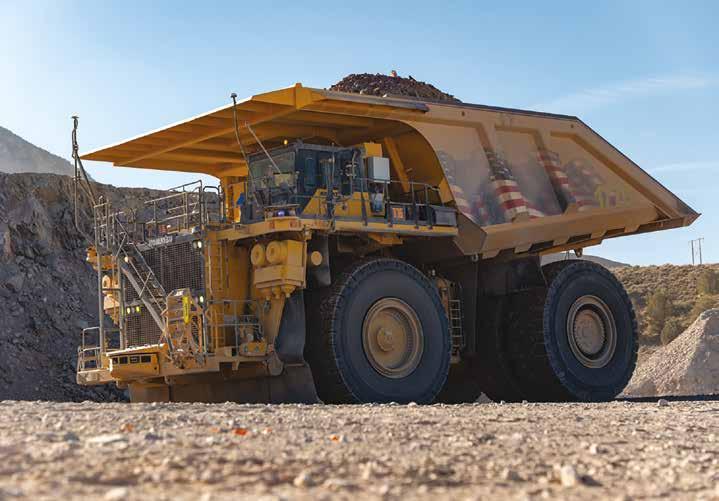
Today’s mining engines are more advanced than earlier versions of the same platforms, with many upgrades that support dependable performance, improve fuel economy and ultimately help lower total cost of ownership (TCO). At the same time, leading mining original equipment manufacturers (OEMs) continue to introduce truck technologies that influence engine performance and enhance fuel economy. That makes close first-fit integration between engine and vehicle more important than ever.
When Cummins works closely with OEM partners like Komatsu, miners get more than a strong engine or capable truck. They get an integrated system designed to help major components
work together more efficiently.
Mining engine and equipment technology keeps evolving. Today, the engine is part of a larger ecosystem that connects with cooling systems, fuel delivery, air handling and lubrication. It takes everything working together to support efficiency and reliability.
Cummins continues long-standing partnerships with leading OEMs. These close engineering relationships help ensure the engine is fully integrated and optimised within the vehicle from the start. That first-fit approach matters because fuel economy and
TCO improvements often come from the interaction between systems – not one component alone.
For example, Komatsu’s 930E-5 is delivering a 15% fuel consumption advantage over the previous 930E4 model through engine/equipment synergy. Komatsu’s Fuel Saver 2 software helps optimise fuel economy and torque management for electricdrive mining haul trucks, while Cummins developed a custom engine calibration for the truck to work with those vehicle-level features. As a result, the full fuel-saving benefit of the 930E-5 package is realised with Cummins engines because the engine calibration and truck systems were optimised together.
Other vehicle systems, such as ondemand wheel motor cooling, also help
reduce energy loss from constantly running fans. These improvements may sit outside the engine itself, but they still affect how efficiently the complete truck operates.
While some fuel economy improvements are due to vehicle integration advantages, much come from continued innovation within the engine itself. Over time, Cummins has advanced fuel systems, calibration strategies, service interval planning and connected monitoring tools to help mining engines operate more efficiently.
Since 2008, the Modular Common Rail Fuel System (MCRS) has been standard on Cummins highhorsepower mining engines. Some operators may still run older fleets – and may be more familiar with the earlier HPI fuel system – but today’s engines use MCRS technology to deliver more precise fuel control, stronger combustion performance and measurable TCO improvements.
With higher injection pressure and larger accumulator volume, MCRS enables better fuel economy, reduced particulate matter, enhanced engine performance, extended engine life, quick start capability, improved transient response and smoother, quieter operation. In fact, Cummins customers report fuel savings in the field between 3% and 5%.
For years, mining engines were delivered with relatively standardised fuel calibrations designed to perform across a wide range of sites and duty cycles. Today, calibrations are increasingly application-specific, matching horsepower, torque curves and fueling strategies to real mine conditions such as elevation, ambient temperature and haul profile. That alignment helps improve combustion efficiency, reduce unnecessary thermal loading and support better fuel economy and performance.
In 2022, one Cummins mining customer realised a 7% fuel economy
gain through custom calibrations across the fleet, saving 17 million litres of fuel and $16 million per year.
Maintenance schedules have historically prioritised protection through fixed intervals. Today, Cummins is using field data and customer input to refine those strategies – helping extend service intervals and, in some cases, eliminate certain requirements. For example, in the latest QSK60 platform scheduled for a 2027 release, there is no longer a requirement to change the injector at mid-life, based on operator input from the field.
Connected engine data expands that opportunity. Cummins PrevenTech, combined with FleetguardFIT filtration and fluid-monitoring insights, gives operators and service teams visibility into engine health, oil condition, filter life and other indicators. That condition-based data can help mines better understand when service is needed, reducing unnecessary maintenance, protecting uptime and optimising TCO.
The future of engine and equipment manufacturing will bring technologies even closer together. As operators work to improve efficiency and optimise TCO, it will be more important than ever to consider the latest engine and vehicle models –particularly from partners focused on first-fit optimisation.
Cummins and Komatsu are continuing their collaboration into hybrid development, working together to engineer an integrated powertrain and vehicle system, helping miners pursue lower fuel consumption, improved productivity and reduced total cost of operations. When the engine, vehicle and supporting technologies are developed to work together, operators are better positioned to get the full value from every upgrade.
For more information, please visit: https://link.cummins.com/ ww8dz4
The mining automation market is growing, projected to increase from USD 5.94 billion in 2024 to USD 9.92 billion by 2030 according to recent market research.1
Recent energy volatility, labour constraints and critical mineral demand are crucial drivers for automation. Mining companies are increasingly prioritising operational resilience, fuel optimisation and workforce-risk reduction to protect the profitability of their sites.
Autonomous haulage and AI-driven fleet systems recover up to 18.4% of equipment utilisation losses across high-volume mining operations. AIdriven routing systems are reducing non-productive equipment movement by 16.7%, generating measurable fuel-recovery gains across repetitive transport corridors.
Many companies are pursuing the use of AI in haulage as haulage is often the single largest expense in mining, consuming 40% to 60% of total running costs in open-pit operations.2
A single 400t haul truck can consume up to USD 2 million in diesel annually, and tires can cost USD 600,000 despite wearing out quickly.3
Cutting down on idling and optimising haulage pathways through autonomous haulage systems can increase fleet use while improving hourly operating costs by 20% to 30%.4 Unnecessary transport movement, idle cycles and inefficient routing practices across large extraction zones are all reduced because of AI-driven fleet optimisation.
At the hard of AI-driven mine sites is their software. AI-based minecontrol platforms and predictive fleet intelligence systems account for 34.9% of market demand, according to the report. This will continue to be important as global electrification and battery supply chain investment
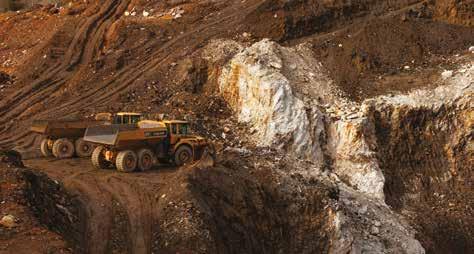
• AI-driven fleet optimisation
• Predictive maintenance analytics
• LiDAR-guided navigation
• Real-time ore-routing intelligence
• Digital twin mine planning systems
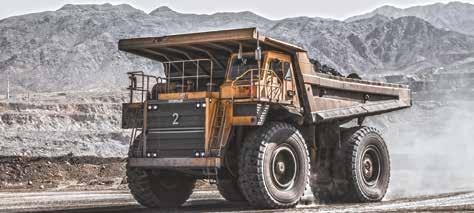
Mine operators are moving toward ‘remote-first’ operational models coordinated through centralised control environments rather than site-dependent workforce deployment
increase and demand resources such as lithium, copper and nickel.
The trend of increased AI use in haulage systems and operations is not specific to one region. Around the world, mining companies are realising the importance of digitalisation and intelligent operations, particularly within haulage.
Asia-Pacific is the largest regional market, with 31.8% share. The region demonstrates the fastest deployment growth, supported by large-scale mining digitalisation across Australia and China. As the USA explores the domestic production of copper, coal and rare-earth, its intelligent mine modernisation and autonomous fleet deployment is also rising. Throughout Europe, sustainability mandates and worker-safety regulations are
driving the adoption of predictive maintenance and remote mining technologies.
Looking ahead towards 2030, autonomous haulage, AI-driven mine coordination, predictive maintenance and digital-twin mine planning are likely to become part of the industry’s foundation. Mining companies that integrate autonomous equipment are expected to gain substantial productivity and cost advantages.
REFERENCES
1 https://www.strategicmarketresearch.com/market-report/miningautomation-market
2 https://globalroadtechnology.com/the-fascinating-world-of-mininghaul-roads/ 3 https://www.sunhunk.com/about/groupnews-detail-588.htm 4 https://theintelligentminer.com/2020/05/27/the-rise-ofautonomous-mine-haulage/

Today’s mining landscape requires a sustainable competitive advantage, according to industry experts
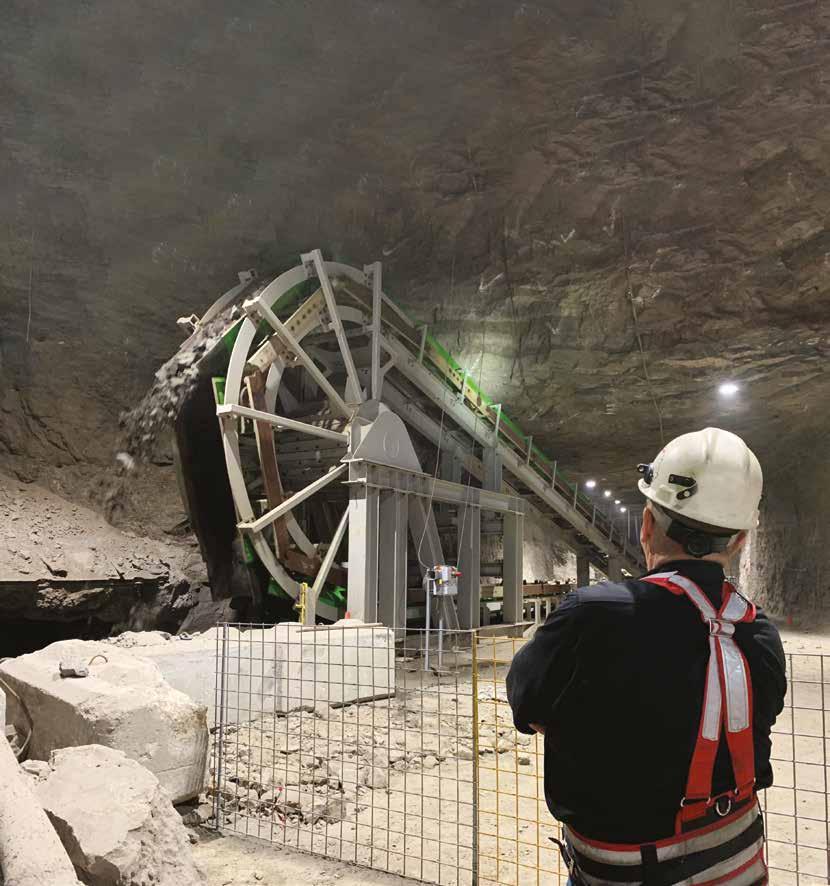
Mine development has never been simple, but the current operating environment has fundamentally redefined the risk profile for early-stage projects – demanding that developers engineer resilience across an extended, capitalintensive lifecycle.
Today’s mining climate is shaped by a convergence of structural pressures: geopolitical instability, cost volatility, tightening ESG expectations and a
constrained talent pipeline. At the core lies what can be described as the industry’s “decade problem”: a tenyear development horizon requiring sustained capital deployment before revenue generation.
Over this period, developers must simultaneously navigate permitting, community engagement, environmental compliance, engineering design and workforce continuity. At the same time, they
must manage investor expectations in an inherently uncertain venture.
Compounding these risks is a historical pattern of cost overruns and schedule slippage. External shocks – whether financial crises, pandemics or energy market disruptions – further erode planning certainty. The result is a structurally fragile development model where margin for error is minimal and execution risk is magnified.
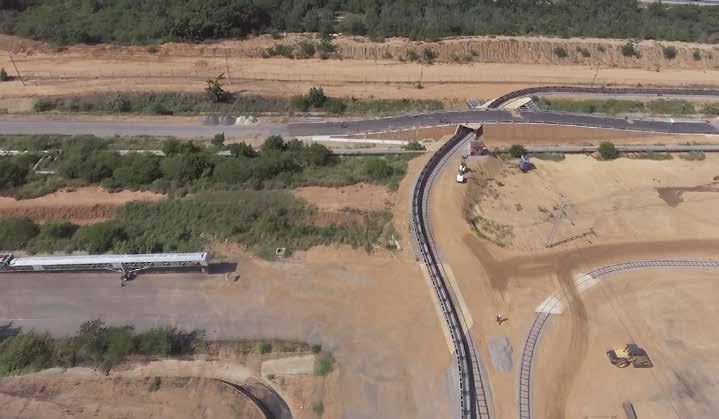
Against this backdrop of complexity, the strategic importance of mining has never been higher – particularly in critical minerals.
Global supply chains are being reconfigured under the pressures of energy transition, electrification and geopolitical fragmentation. Governments are increasingly viewing mineral supply as a matter of economic security, not just industrial input. This has triggered a structural shift: mining is no longer purely marketdriven, it is now policy-supported and geopolitically prioritised.
This manifests in three key ways, starting with direct government intervention. Public capital is entering projects through equity participation and funding mechanisms designed to de-risk development. Secondly, permitting frameworks are being accelerated through the streamlining of regulatory pathways to fast-track domestic supply chain development.
A third trend is innovation in financing structures, where we are seeing expanded use of royalties, streaming and early-stage off-take agreements to reshape how projects are capitalised.
This creates a paradoxical environment where risk is elevated, as is strategic relevance and access
to capital. For projects that can demonstrate robustness across ESG compliance, cost discipline and technical credibility, the current market represents a window of unusual opportunity.
Supply-demand imbalances in key minerals are widening, and pricing signals are beginning to reflect structural scarcity. The implication is clear: capital is available, but it is selective, disciplined and increasingly contingent on execution certainty.
In this environment, traditional
Global supply chains are being reconfigured under the pressures of energy transition, electrification and geopolitical fragmentation
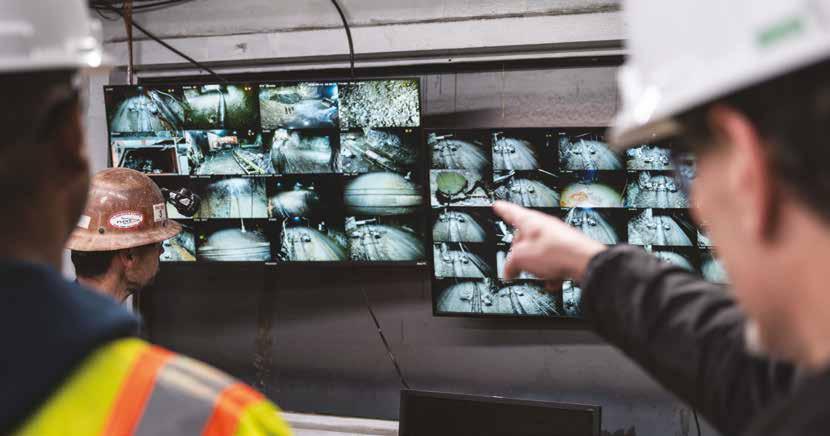
development models are no longer sufficient. The pathway to success is not incremental optimisation but intentional system-level innovation from day one.
To remain competitive, early-stage mines must be designed around integrated system thinking, ESG as an economic driver (not a constraint) and a disciplined adoption of proven innovation, which we explore below.
Mine plans must move beyond siloed equipment selection toward fully integrated operating ecosystems. Decisions made at the design stage –particularly around haulage, energy systems and automation – lock in long-term cost structures and ESG performance.
The cost of trying to upgrade suboptimal systems later is prohibitive. Competitive projects are those that engineer efficiency, scalability and optionality into the foundation of the mine plan.
ESG is no longer a compliance exercise; it is a core determinant
of project viability and access to capital. Energy efficiency, emissions reduction and safety are now directly linked to the cost of capital, permitting timelines and the social license to operate,
Projects that embed electrification, automation and reduced environmental footprint early will go beyond meeting expectations; they will also outperform economically over the life of mine.
Mining’s historical reluctance to adopt new technologies is understandable, but increasingly untenable. The opportunity today lies in deploying proven, wellevidenced innovations that deliver measurable improvements in cost and efficiency. Incremental gains, when compounded over decades of operation, translate into material competitive advantage.
Developers who can clearly quantify these benefits within their technical studies and communicate them effectively to investors and EPC partners will differentiate themselves in a crowded capital landscape.
The mining industry is entering a new phase, defined not just by resource scarcity but by execution excellence. The winners in this environment will not simply be those with the best ore bodies. They will be those who de-risk early in the project life cycle through integrated design and credible expertise. They must also align with macro trends in critical minerals and domestic supply security, as well as leverage innovation to simultaneously deliver ESG outcomes and economic returns.
In short, the competitive frontier has shifted. The question is no longer whether a mine can be built, but whether it can be built intelligently, efficiently and sustainably enough to justify its place in a rapidly evolving global market.
Rotech Systems has an excellent worldwide reputation when it comes to rotation monitoring. We have been in business for over 40 years, ser vicing many different industries from the food Industr y to the mining sector. Our products are extremely robust Guaranteeing the end user a trouble free solution, to all their monitoring applications.


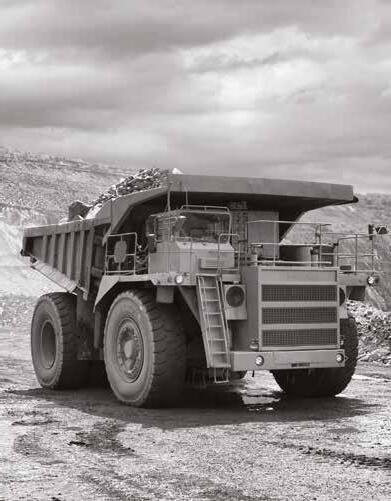
Mining equipment needs components that stand up to harsh conditions. TLX Technologies delivers custom solutions for the most challenging applications.
+ Custom electromechanical solutions + Low power consumption
+ Engineered to withstand debris, vibration, & extreme temperatures
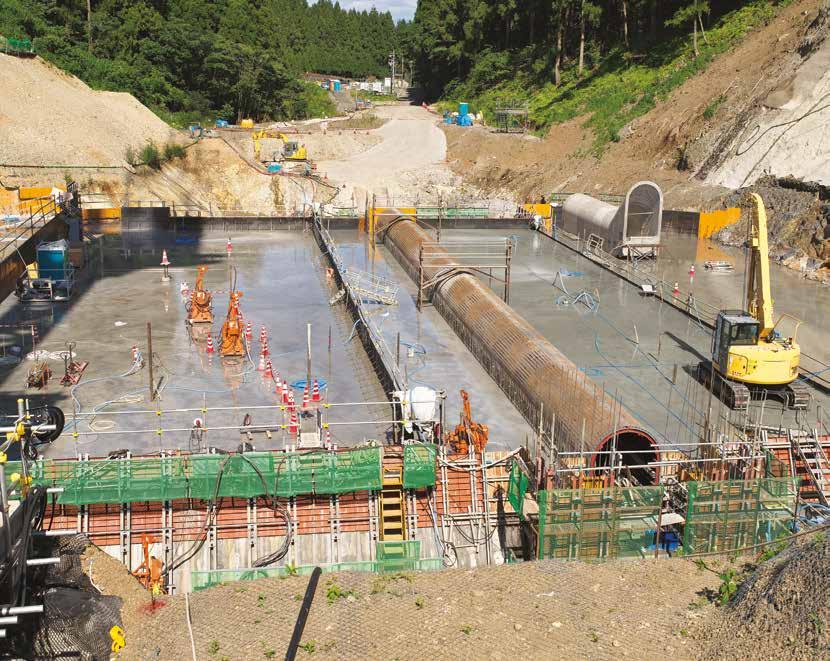
Machine uptime is becoming more crucial than ever for mine sites
A look at ASC inertial accelerometers for shotcrete machine
Mobile concrete spraying units – or shotcrete machines – used in mining are leveraged for the rapid and safe reinforcement of rock in underground adits, mines and tunnels. Their primary purpose is to stabilise tunnels and shafts by precisely applying shotcrete to the exposed rock. They often operate in confined spaces under extremely rough conditions. High-performance inertial sensors like German specialist ASC’s low-noise accelerometers help optimise the longevity and performance of these specialty vehicles supporting successful mining projects.
Unlike truck-mounted concrete pumps used in standard building construction, underground vehicles are significantly lower to the ground, more manoeuvrable (often equipped with articulated chassis) and built to be more robust so they can navigate tight spaces. Typically, concrete spraying units combine an allterrain carrier vehicle with a flexible, remotely controlled spray arm, a high-performance concrete pump and mechanisms for the application and dosing of setting accelerators.
This allows the concrete not only to be pumped, but also to be sprayed in layers onto walls and ceilings. Before a new specialty vehicle goes into serial production, however, manufacturers rigorously evaluate prototypes through elaborate test series both in the lab and the field. These trials help optimise the dimensioning of components, select appropriate materials and improve damping measures to keep the impact of vibrations to a minimum. This process is vital, as a long service life is of particular importance for machinery and vehicles subjected to high levels of stress. In addition, to
meeting customer expectations in terms of performance, quality and longevity, vehicles, equipment and components must be continuously improved and innovated.
The demands placed on these vehicles continue to increase as mining operations become deeper, more automated and more productivity driven. Operators expect maximum machine availability while minimising maintenance requirements and unplanned downtime. As a result, manufacturers place greater emphasis on understanding the dynamic loads acting on the vehicle throughout its entire operating cycle. Detailed vibration analyses during development provide valuable insights that enable engineers to optimise structural design, reduce fatigue on welded joints and mechanical assemblies and improve overall durability before production even begins.
In these nuts-and-bolts testing and innovation cycles, producers of shotcrete machines can rely on the quality of robust yet precise and flexible sensors from ASC.
“The pumping and spraying process induces shocks and vibrations in the structure and chassis of these machines,” says Renate Bay, ASC Sensors general manager. “This gets compounded by the uneven ground, potholes and other obstacles when the carrier vehicle drives to and around the underground mining sites.”
To precisely record and evaluate these impulses in the product development process, triaxial ASC 5511LN accelerometers are installed on the prototype frame and in other places.
The ASC 5511LN accelerometer is based on proven MEMS technology and the capacitive operating principle. It comes with a broad measurement range of 2-400g. The integrated electronic circuitry enables a differential analogue voltage output (±4V FSO) and flexible power supply from 6 to 40VDC. All LN (Low Noise) accelerometers by ASC feature an outstanding signalto-noise ratio, which is essential for demanding measurements of smallest frequencies and amplitudes in all three degrees of freedom.
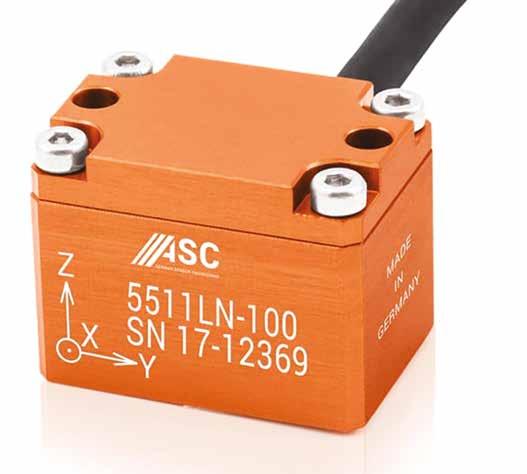
An advantage of the compact sensor design is the ability to install accelerometers close to critical components, allowing engineers to capture highly localised vibration signatures. Measurements from multiple sensor locations can then be correlated to create a comprehensive picture of how forces propagate through the vehicle during driving, pumping and spraying. Not only does this data validate simulation models; it also shortens development cycles by enabling targeted design improvements and reducing the need for costly prototype iterations.
“Based on precise measurements, despite the harsh environmental conditions typically prevalent in underground mining sites, the magnitude, duration and direction of forces occurring during the driving, pumping and concrete spraying process can be accurately determined,” says Bay. From that, the medium and long-term effects of these loads on the vehicle and all critical components are calculated. This helps select and verify damping methods and materials, to ensure operational safety of the machine overall and to protect its onboard electronics.
As underground mining projects become increasingly demanding, vehicle manufacturers must balance performance, reliability and cost while meeting ever-higher expectations for machine uptime. High-quality inertial measurement technology provides the data needed to make informed engineering decisions, transforming vibration from an unknown variable into a measurable design parameter. By accurately characterising realworld operating conditions, ASC’s lownoise accelerometers enable engineers to develop shotcrete machines that are more durable, easier to maintain and better equipped to withstand years of continuous operation in some of the world’s harshest environments. Ultimately, precise vibration measurement is not simply a tool for testing – it is a key enabler for building the next generation of safer, longer-lasting and more productive underground mining equipment.
If you cannot measure your flush water data, you cannot protect it
In mining, some of the most expensive failures begin with something almost invisible. A gradual reduction in flush water. A plugged sensing line. A restriction that develops over time until a pump or gland seal begins operating outside of its intended conditions. The equipment doesn’t fail because the technology wasn’t available—it fails because no one knew there was a problem until it was too late.
The old management saying, “you can’t manage what you don’t measure,” is particularly true when it comes to flush water systems.
Traditional mechanical flow meters often require operators to stand directly in front of them to determine whether flow is acceptable. In many mining operations, those meters are mounted on elevated pipe racks, catwalks or in difficult-to-access locations where obtaining an accurate reading is challenging.
As a result, operators frequently rely on experience or quick visual checks rather than precise measurements. Unfortunately, “looks okay” is not always enough when protecting critical rotating equipment.
A large digital display allows operators to verify flow from across a catwalk or operating aisle. Rather than climbing closer to equipment or interpreting a small analogue scale, personnel can immediately see the actual flow value while remaining on their normal inspection route. The improvement is not just one of convenience; it enhances safety by reducing unnecessary exposure around operating equipment.
Visual indication is equally important. A simple green light confirming flow is within specification or a red light identifying an out-of-range condition provides instant awareness. Operators must no longer decide whether a needle is slightly above or below a mark. The equipment communicates its condition immediately.
One of the most overlooked problems with conventional flow monitoring is the instrument itself. Many traditional flow devices rely on small sensing passages that are susceptible to plugging with debris, scale, or sediment. For mining operations handling process water, slurry environments, or water with suspended solids, this is a significant concern.
Modern digital monitoring systems that use clog-resistant measurement technology greatly reduce this risk. By minimising the opportunity for debris to obstruct the sensing mechanism, plants gain confidence that the value being displayed is the value reaching the equipment. Reliable measurement is only possible when the instrument itself remains reliable.
Today’s operations increasingly expect instrumentation to communicate with centralised control systems. Remote monitoring allows maintenance and operations personnel to observe changing conditions without waiting for the next inspection round. Small deviations can be identified early, allowing intervention before they become equipment failures, unplanned downtime or costly repairs.
One processing facility recently experienced this firsthand. After installing two digital flow monitors on critical equipment, operators quickly recognised how much easier it was to verify operating conditions from a distance while also benefiting from clear visual status indicators and remote monitoring capability. The results were compelling enough that the facility immediately purchased additional units and has since begun expanding the technology throughout the plant.
Whether protecting slurry pumps, process pumps, or other critical rotating equipment, knowing that flush water is flowing at the correct
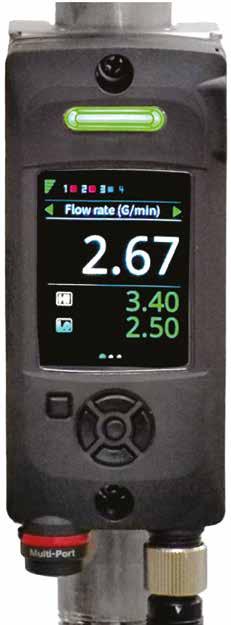
The digital display is easy to read so operators can verify flow from a safe distance
rate can mean the difference between months of reliable service and an unexpected shutdown.
The lesson is simple: measurement creates visibility, visibility drives action, and action prevents failure. In an industry where every hour of uptime matters, having accurate, clog-resistant, easy-to-read flow information is no longer just an operational convenience. It is becoming a cornerstone of equipment reliability.
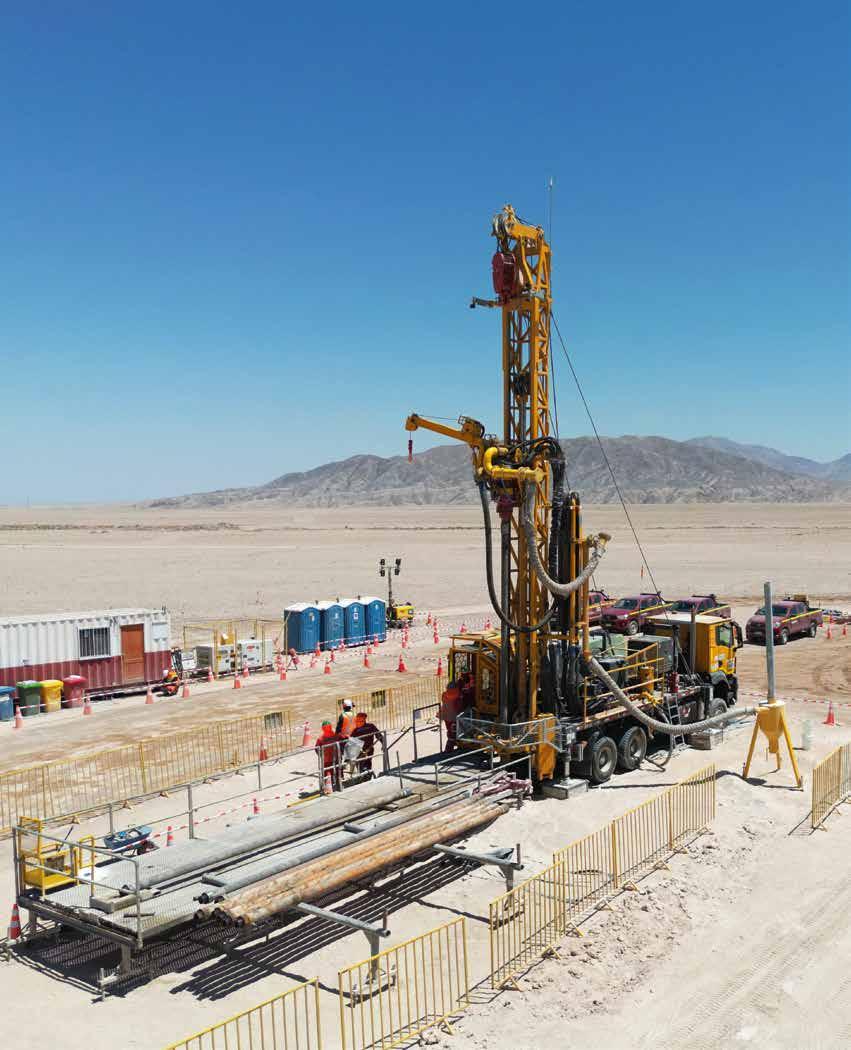

Mobile multi-purpose drilling rigs for water well and mining applications. Engineered to drill large diameters and reach exceptional depths, even in the most challenging geological conditions, helping customers unlock essential water and mineral resources.


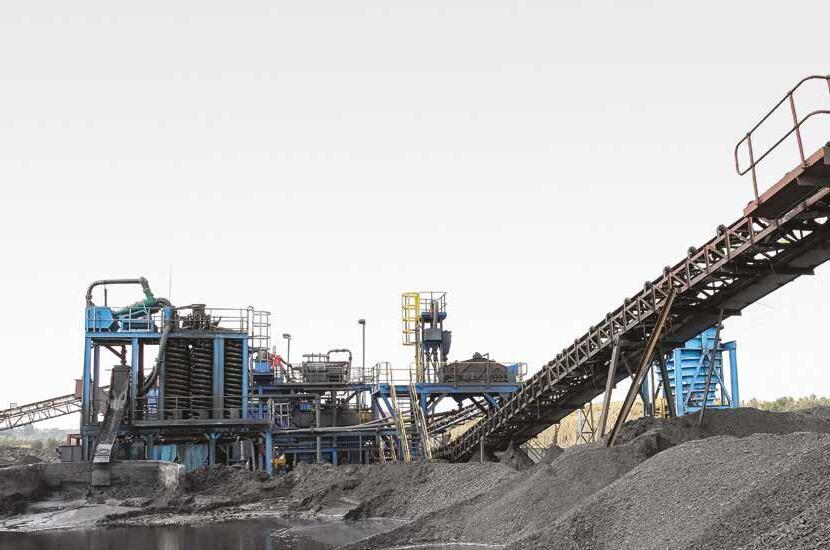
role of encoder-based monitoring in modern plant performance, according
In mining and quarrying operations, reliability is not a luxury - it is fundamental to productivity, safety and profitability. Conveying systems, crushers, screens and bulk handling equipment operate under continuous stress, often in harsh and unpredictable environments. Under these conditions, even minor performance deviations can escalate quickly into costly downtime.
For engineers working in these sectors, the challenge is clear: maintain consistent throughput while minimising unplanned stoppages. Increasingly, the solution lies in robust condition monitoring and preventative maintenance strategies, underpinned by reliable sensing technology. This is where monitoring equipment from Rotech Systems and Encoders plays a critical role.
Encoders are essential for measuring rotational speed, direction and position; these parameters are central
to the operation of conveyors and rotating machinery. In mining and quarrying, these measurements are not simply for control purposes; they are key indicators of system health.
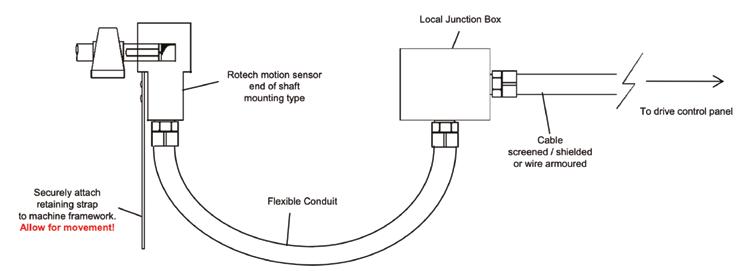
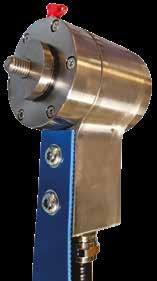
Rotech encoders are designed specifically for heavy-duty industrial environments. Installed directly onto conveyor pulleys, shafts or drive systems, they provide continuous, high-resolution feedback on equipment performance. This data forms the foundation of effective condition monitoring.
Unlike traditional approaches that rely on periodic inspections, encoderbased monitoring delivers real-time insight. This allows engineers to identify emerging issues before they develop into failures.
Material handling systems in mining and quarrying are particularly susceptible to three operational risks: spillage, slippage and stoppage. Each has direct implications for efficiency, safety, and maintenance costs.
Rotech encoders address these challenges by continuously monitoring conveyor speed and rotation. Any deviation from expected performance parameters is detected immediately.
For example, belt slippage can be identified through discrepancies between drive speed and actual belt movement. Similarly, unexpected slowdowns or irregular rotation patterns can indicate mechanical issues such as bearing failure, misalignment or material build-up.
By detecting these conditions early, operators can take corrective action before they result in significant disruption.
One of the defining characteristics of Rotech encoders is their maintenancefree design. In mining and quarrying environments where dust, vibration, moisture and temperature extremes are constant factors, this is a significant advantage.
Traditional sensing equipment often requires regular inspection,
In demanding environments such as mining and quarrying, the importance of reliable monitoring equipment cannot be overstated
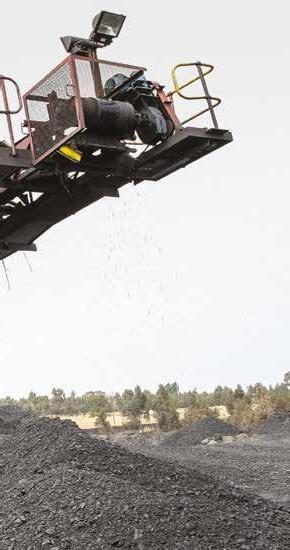
• Spillage results in material loss, environmental concerns, and additional clean-up requirements
• Slippage reduces conveyor efficiency and accelerates belt wear
• Stoppage leads to production losses and potential downstream disruption
calibration or replacement. Accessing these components can involve working at height, isolating equipment and interrupting production. Each intervention introduces cost, risk and lost time.
Rotech encoders eliminate this requirement. Engineered for durability and long-term reliability, they operate without the need for ongoing maintenance or adjustment. This not only reduces operational overhead but also improves safety by minimising the need for manual intervention.
For engineering teams, this translates into a more predictable maintenance schedule and fewer unexpected tasks.
Encoders alone provide valuable data, but their full potential is realised when integrated with dedicated monitoring equipment. Rotech offers solutions that combine encoder inputs with intelligent analysis, enabling comprehensive condition monitoring. These systems continuously evaluate performance data against predefined thresholds and operational norms. When anomalies are detected, such as underspeed, overspeed, or zero-speed conditions, alerts can be triggered automatically.
This level of monitoring is particularly valuable in mining and quarrying, where equipment is often distributed across large sites and operates continuously. Centralised
monitoring allows engineers to maintain visibility across the entire plant, reducing reliance on manual checks.
Furthermore, the data generated supports trend analysis. Over time, engineers can identify patterns that indicate gradual wear or performance degradation, enabling more informed maintenance planning.
Preventative maintenance is a well-established principle, but its effectiveness depends on accurate and timely information. Without reliable data, maintenance schedules are either too conservative, leading to unnecessary work, or too reactive, resulting in unexpected failures.
Rotech encoder systems provide the data needed to strike the right balance. By continuously monitoring equipment performance, they enable condition-based maintenance rather than time-based interventions.
In high-throughput mining and quarrying operations, even small improvements in uptime can have a substantial impact on overall productivity.
Automation is increasingly being adopted across the mining and quarrying sectors to improve efficiency and reduce manual
intervention. However, the success of any automated system depends on the reliability of its input signals.
Inconsistent or inaccurate sensor data can lead to false alarms, unnecessary shutdowns or incorrect system responses. This undermines the benefits of automation and can introduce additional complexity.
Rotech Systems encoders provide stable, accurate and repeatable measurements, ensuring that automated control systems receive dependable input. This supports smoother operation, reduces the risk of nuisance trips and enhances overall system reliability.
In practical terms, this means automation can be implemented with confidence - without introducing additional downtime risks.
The ultimate objective in mining and quarrying operations is straightforward: maintain continuous, efficient production with minimal disruption. Achieving this requires a combination of robust equipment, effective monitoring and wellinformed maintenance practices.
• Maintenance activities are carried out only when required
• Component life is maximised without compromising reliability
• Unplanned downtime is significantly reduced
• Resource allocation becomes more efficient
Rotech Systems encoders contribute directly to this objective. By delivering reliable, maintenance-free performance and enabling real-time condition monitoring, they help ensure that critical systems operate within optimal parameters.
The result is a more stable and predictable operation. Conveyors run at the correct speed, material flow remains consistent and potential issues are addressed before they escalate. From an engineering perspective, this reduces uncertainty and allows for more proactive decision-making.
The maintenance-free design of the encoders, combined with accurate and continuous data output, enables
engineers to detect issues early, prevent operational disruptions and optimise plant performance.
As the industry continues to prioritise efficiency, safety and automation, technologies that support seamless, uninterrupted operation will remain essential. Rotech Systems encoders are a clear example of how well-designed components can deliver significant operational benefitsquietly, consistently and without the need for constant attention.
Bauer’s Ulrich Schoepf explains why successful projects will no longer be defined by how much water they pump, but by how intelligently they manage it
The global mining industry is undergoing a profound transformation. Growing demand for critical raw materials, increasingly challenging deposits and stricter environmental expectations are changing how mines are planned and operated. While discussions often focus on ore grades, automation and decarbonisation, one factor increasingly determines whether a project becomes technically and economically viable: water.
Groundwater can be both a valuable resource and one of mining’s greatest challenges. Successfully managing it requires an integrated approach that combines hydrogeology, groundwater control and specialist foundation engineering – not just a focus on dewatering. This is where Bauer supports mining projects throughout the entire mine
life cycle, delivering complete water management solutions ranging from hydrogeological investigations and dewatering wells to groundwater monitoring, seepage control and cutoff wall systems.
One of the major challenges facing modern mining operations is the growing demand for large-diameter dewatering wells capable of handling increasing groundwater inflows. As open pits become deeper and hydrogeological conditions become more demanding, conventional well construction methods often reach their technical and economic limits. Large-diameter wells enable efficient groundwater control while reducing the number of wells, associated
infrastructure and long-term maintenance requirements.
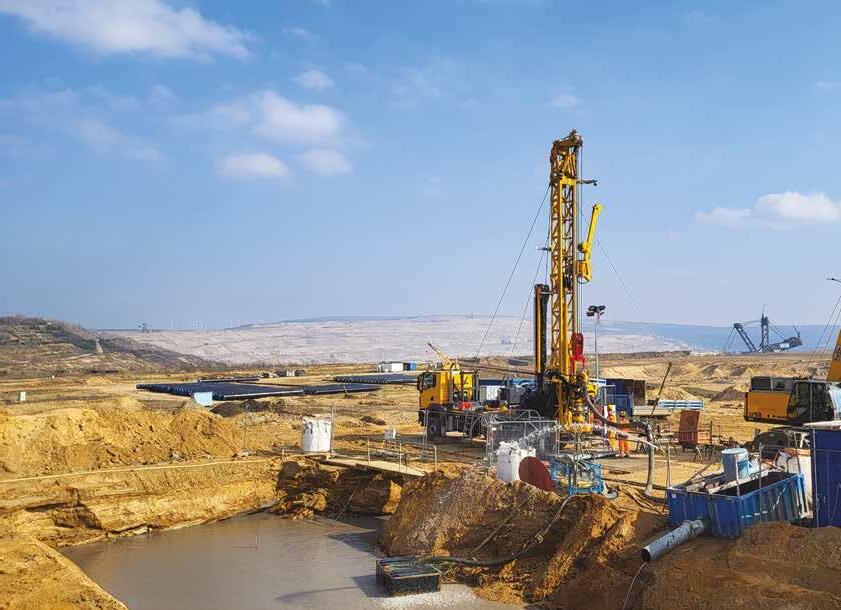
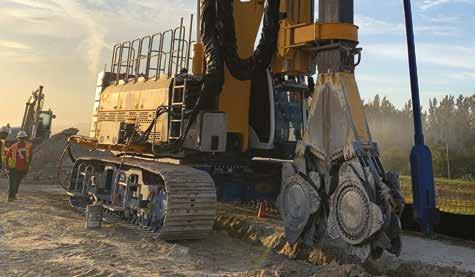
This is one of the areas where Bauer combines drilling expertise with advanced equipment to deliver integrated solutions. The RB series comprises multipurpose drilling rigs capable of all established drilling methods. For large-diameter dewatering wells, however, Bauer places particular emphasis on flooded reverse circulation (RC mud rotary air-lift drilling).
Flooded reverse circulation combines high drilling productivity with superior borehole quality. Unlike conventional direct circulation drilling, drill cuttings are continuously transported to the surface inside the drill string, ensuring excellent borehole cleaning, borehole stability and minimal formation damage by preserving the aquifer’s natural
permeability. This creates ideal conditions for installing largediameter gravel packs and well screens, resulting in high-capacity water and mine dewatering wells with improved hydraulic efficiency, easier well development, higher pumping capacities and extended service life.
A good example is the construction of dewatering wells at the Hambach open-pit coal mine in Germany. Using Bauer RB 65 drilling rigs, boreholes with a diameter of 1,200mm were drilled to depths of 400m using flooded RC mud rotary air-lift drilling. The wells were completed with DN 750 glass fibre reinforced gravel filters, demonstrating the method’s capability for demanding groundwater control applications.
Building on this experience, Bauer is currently developing the next generation of large-capacity drilling rigs capable of constructing 1,200mm diameter dewatering wells to depths exceeding 700m using flooded reverse circulation drilling, opening new possibilities for future deep mining projects.
While dewatering wells are often the most visible element of groundwater control, successful mine water management requires a much broader approach.
Hydrogeological investigations define groundwater conditions
before mining begins. Production wells provide reliable water supplies for mineral processing and site infrastructure, while monitoring wells continuously observe groundwater levels and water quality throughout the mine life cycle. Existing wells can often be rehabilitated instead of replaced, extending their service life and reducing project costs.
In many cases, however, the most sustainable solution is not to pump more groundwater, but to prevent groundwater from entering the excavation in the first place.
Specialist foundation technologies are becoming increasingly important in modern mining projects, particularly during mine development and infrastructure construction.
LIGHT
walls, cutter soil mixing and grouting systems, allowing the optimum solution to be selected for virtually every ground condition.
C0.M56.Y92.K0
Cut-off wall systems create hydraulic barriers that control groundwater movement around open pits, shafts, tailings storage facilities and processing plants. They reduce groundwater inflows, minimise seepage losses and improve environmental protection while significantly lowering long-term pumping requirements and energy consumption.
Depending on the geological conditions, Bauer offers a comprehensive portfolio of cut-off technologies, including diaphragm
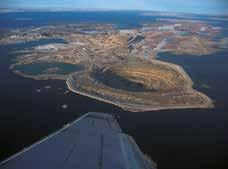
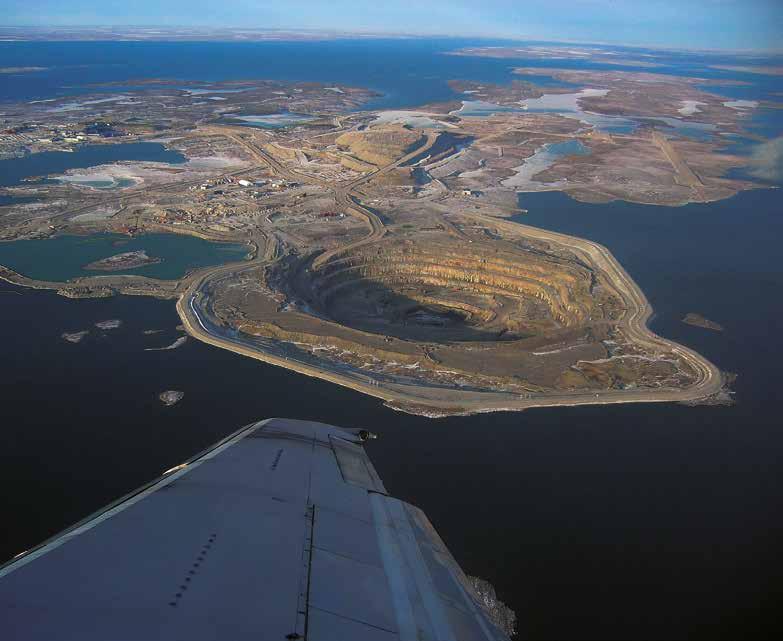
One of the most impressive examples of integrated groundwater control is the Diavik Diamond Mine in Canada’s Northwest Territories. Located beneath a large lake, the diamond-bearing kimberlite pipes could not be mined by using only conventional methods. Bauer equipment and specialist foundation technologies were used to construct the cut-off wall system for the surrounding water-retaining dikes, creating a watertight enclosure around the orebodies. This made largescale dewatering technically feasible and economically viable, allowing mining operations to proceed under dry conditions in an area that had previously been inaccessible.
For
SILVER = C0.M0.Y0.K30
LIGHT BLUE = PMS285 or C91.M53.Y0.K0
Modern mine water management is no longer about selecting individual technologies. The greatest value is achieved by understanding the complete hydrogeological system and combining the most appropriate solutions – from groundwater investigation and high-capacity wells to dewatering, monitoring and cut-off systems. Looking at the overall picture rather than individual disciplines enables mining projects to be developed more safely, efficiently and sustainably.
As water becomes one of mining’s most critical resources, successful projects will no longer be defined by how much water they pump, but by how intelligently they manage it.
The Diavik project demonstrates how integrated groundwater management and specialist foundation engineering can fundamentally change the feasibility of an entire mining project.
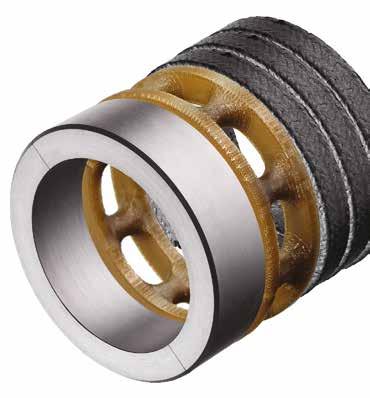
• PackRyt® BRG Bearing for shaft stabilization
SealRyt’s patented SLR® (Structural Lantern Ring)
Resists clogging and is removable for easy cleaning and maintenance
Non-collapsible design won’t crush or shift inside the stuffing box

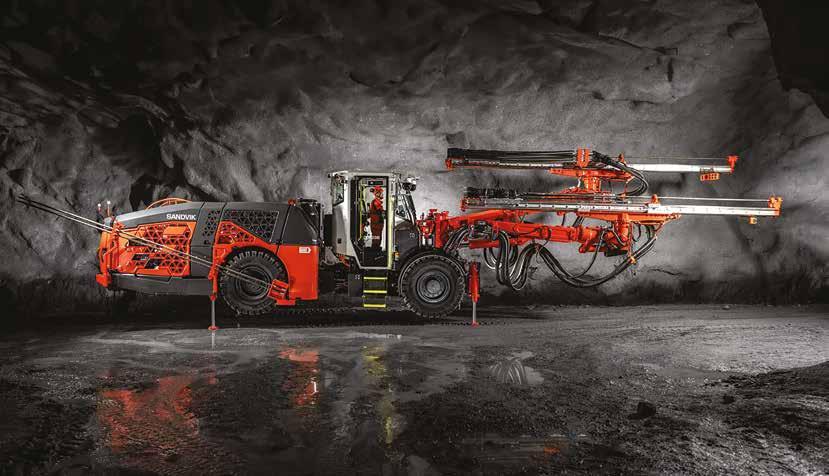
Battery-electric drills are increasingly being used on drill sites due to their many benefits. In addition to reducing on-site noise levels, batteryelectric drills also lower heat and fire risks, which is particularly important in confined mining environments.
Zero emissions produced by these drills eliminates the risk operators face of inhaling toxic diesel exhaust fumes and particulate matter. Fewer emissions also mean lower ventilation expenses and operating costs toward engine parts, oil overhauls and filters.
Overall, battery-electric drills can support worker health, lower costs and contribute to a mine site’s sustainability goals.
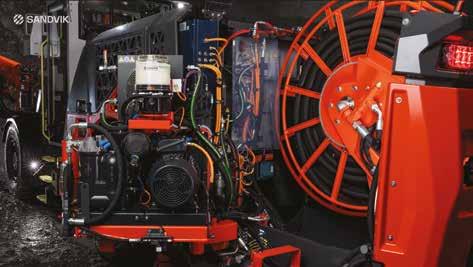
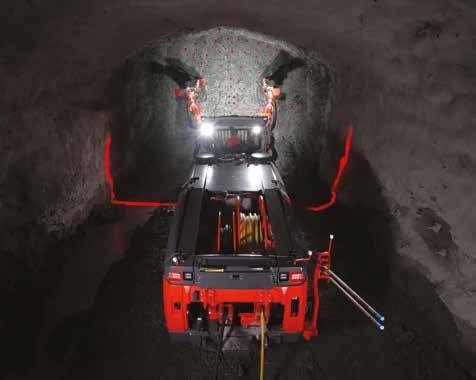
Sandvik has recently launched its DD423iE battery drill, an underground development drill rig for mining and tunnelling. The battery-powered device delivers a 50% increase in battery capacity and tramming range compared to previous models, according to the company. Sandvik also increased the drill’s tramming speed by 30% to reduce idle time.
“The DD423iE combines our industry-leading drilling expertise with the clear benefits of electrification,” says Simon Morrissey, product manager for
development drills at Sandvik. “It allows our customers to maintain high performance while lowering operating costs and supporting their sustainability targets.”
The DD423iE can offer over triple the charging power while drilling, enabling a full 0–100% state of charge (SOC) in approximately two hours. With less time required to complete a full drilling round, the drill significantly improves operational efficiency.
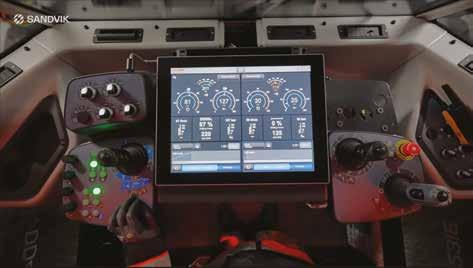
Since they are confined, underground spaces invite many risks, the battery-electric drill features multiple layers of monitoring and protection to support safe operations.
Sandvik conducted field testing at
Agnico Eagle Finland’s Kittilä mine. Kittilä mine is located 93mi from the Arctic Circle and is the largest primary gold mine in Europe. Since open-pit mining was completed there in 2012, the mine is now purely an underground operation.
“Sandvik DD423iE’s performance and range were quite impressive, especially compared to previous models, and it can also compete with 6-cylinder diesel engines,” says an Agnico Eagle Finland representative.
The battery-electric drill is based on its diesel counterpart, the Sandvik DD423i. Both versions of the drill offer improvements from previous models. According to Sandvik, this includes 34.5% greater drilling
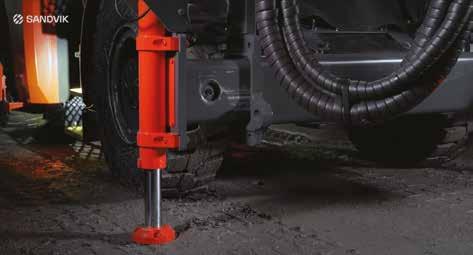
Expandable jacks for increased stability with a span of 2800 mm
• IMPROVED WORKING CONDITIONS UNDERGROUND: zero emissions, low noise level while tramming
• CHARGING WHILE DRILLING: can maintain optimal battery state of charge while operating and in normal operation, there is no need for recharge outside of duty cycle
• BETTER FOR OFF-GRID OPERATION: unaffected by power supply interruptions
• SMARTER INTEGRATION: often have simpler parts
• Lower operating costs and total cost of ownership
coverage, 48% improved cross-cut performance, 55% increased visibility and the integration of new SB75i booms with double roll-overs.
The SB75i booms enable superior reach in confined spaces, such as room-and-pillar applications. Automatic boom movements and integrated boom-collision avoidance support faster and safer drilling cycles.
As the blueprint for the batteryelectric drill, the Sandvik DD423i underwent field testing in Boliden, located in the Skellefteå region of Sweden.
“The Skellefteå region is known for its extremely hard and abrasive geological conditions. It is one of the toughest areas for rock drilling in Scandinavia and therefore provided the ideal testing conditions for the DD423i,” says Morrissey. Drilling into hard rock is difficult because it can require immense compressive strength, which can wear tools down and create heat, friction and debris.
During field testing, however, the DD423i achieved over 95% machine availability.
The electrification of underground equipment is on the rise. Building a battery-electric models based on successful diesel equipment is a way to gauge the safety, performance and savings expected from electrification.

The Duparquet Gold Project is on its way to discovery, thanks to an indigenous partnership
First Mining Gold Corp has begun its drill campaign at its Duparquet Gold Project in the Abitibi region of Quebec. First Mining has partnered with Indigenous-led drilling company Forage Anicinape to advance the exploration while prioritising relationships with nearby Indigenous communities and businesses.
“We are pleased to partner and be an out-of-the-gate client with Forage Anicinape as we continue advancing the Duparquet Project,” says Dan Wilton, CEO of First Mining. “Developing strong partnerships with Indigenous communities and businesses is an important part of how we operate and how we advance our projects with a responsibility directly aimed at seeking meaningful Indigenous participation.
Forage Anicinape was established through a partnership between Forages Rouillier and the Coopérative de solidarité de Pikogan, representing the Pikogan First Nation.
“We are proud to begin this partnership with First Mining at the Duparquet Project,” says Kenny Ruperthouse, the general manager of Coopérative de solidarité de Pikogan. “Forage Anicinape was created to build meaningful opportunities for Indigenous workers and communities through responsible mineral exploration activities. This partnership represents an important step in strengthening Indigenous participation in the mining sector while contributing to economic development and workforce growth in the region.”
First Mining’s initial 2026 drill campaign at Duparquet is expected to total about 12,000m and will focus on increasing resource confidence, advancing exploration of resource growth opportunities and supporting future economic and technical studies.
The 2026 drilling programme commenced in Q2 2026 and will advance using two diamond drill rigs
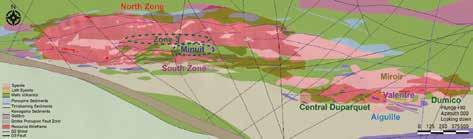
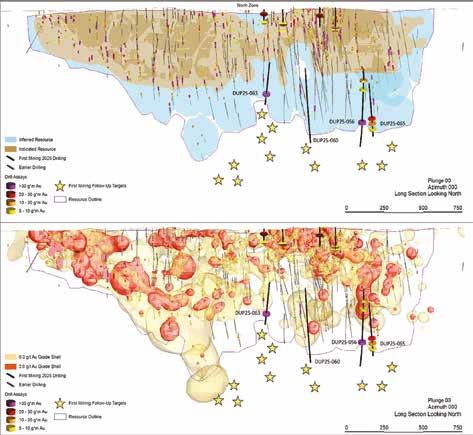
throughout the year. The programme will also include follow-up drilling at the Miroir target, a key priority area and growth target following the 2025 drilling programme released in March.
The Duparquet Project is located in the southern part of the Abitibi Greenstone Belt 50km northwest of Rouyn-Noranda, Canada. The existing workforce and infrastructure, which includes road, rail and hydroelectric grid power, make it a suitable location.
The Duparquet Project totals approximately 5,800ha focused on an area of 19km of strike length along the prolific DestorPorcupine Fault Zone, along with numerous mineralised splays and influential secondary lineaments. The Duparquet Project includes the past-producing Beattie, Donchester and Duquesne mines as well as the Central Duparquet, Dumico and Pitt Gold deposits.


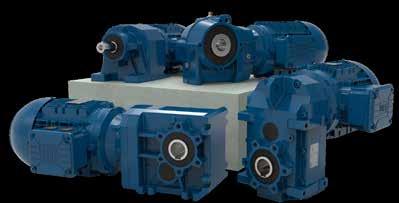
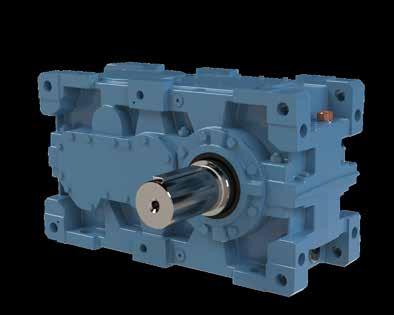
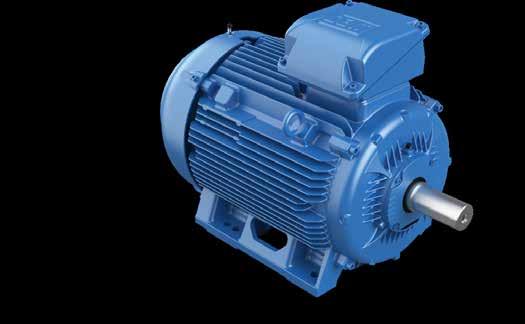
Designed for demanding mining applications, WEG W22 Prime motors combine high performance with outstanding energy efficiency, with models available in IE4 and IE5 ratings. Suitable for operation across a wide range of installations, they can start with DOL, star-delta starters, or variable speed drives (VSDs).
Complementing the motor range, WEG also offers industrial gearboxes up to 290,000 Nm, together with the WG20 helical, helical bevel, parallel shaft and worm gear units up to 18,000 Nm, providing a complete drive solution for mining and material handling applications.
To learn more, contact WEG today or visit www.weg.net.
How two mining companies addressed common, but frequently overlooked
Investments in operational digitisation can add structure to a mine site, potentially reducing downtime, operator intervention and accidents
In recent months, deadly accidents at coal mines in China, Russia and Colombia as well as an illegal gold operation in Sumatra offered tragic reminders that mines remain among the most dangerous industrial environments.1,2,3
These incidents, all of which occurred at operations with troubled compliance records or no legal standing at all, are not reflective of the industry as a whole. The long-term safety record has genuinely improved: in the United States, the mining sector recorded 28 fatalities in 2024, one of the lowest totals in history.4 Several
major producers have sustained zero fatalities over long periods.5 The industry’s progress on safety is real, and it has been hard-won.
Yet even at well-run, fully licensed mines with committed leadership, certain categories of operational risk remain underappreciated: those in which a process exists, possibly a rigorous one, but one that provides little operational visibility and limited opportunity for continuous improvement.
Shift handovers provide a case in point. Occurring two or three
times a day at every mine, they are the moments at which knowledge of equipment status, outstanding maintenance tasks, ongoing process anomalies and safety conditions must transfer from one crew to the next. This makes the content of a handover a trove of information for process improvement and risk visibility. However, that transfer has historically been unstructured, often relying on a mix of oral communication and unspecialised tools, such as emails and spreadsheets.
Companies that have challenged this state of affairs have seen
significant benefits. At the Aktogay copper mine in easter Kazakhstan, operated by KAZ Minerals, communication between day and night shifts had long depended on paper notes, verbal briefings and scattered email exchanges.6
Yerbol Abutaliyev, concentrator operations manager at KAZ Minerals Aktogay, describes the result: “Paper notes were often lost or incomplete. Verbal handovers lacked consistency, with key details missed or interpreted differently. There was no audit trail, no reminders and no structured way to track outstanding tasks.”
The site deployed Octave’s
Tempo Operations Management platform across both concentrators at Aktogay 1 and Aktogay 2. The system introduced consistent digital templates and workflows, replacing fragmented communication with a unified operational logbook accessible to operators, supervisors and engineers across shifts. “Tempo Operations Management has enhanced operational discipline and shift transparency,” Abutaliyev says. “Rather than increasing data volume, it transforms operational records into actionable information.”
The outcome was a structural redesign of the handover process,
which had been a recurring source of information gaps, with direct consequences for both continuity and safety.
Alarm management is another critical component of safe mining operations where key information can get lost. Modern process control systems generate enormous volumes of alerts that tend to persist and accumulate, even when they are no longer relevant. Phenomena such as chattering alarms, which repeat excessively within a

short interval, as well as stale or duplicate alarms, overwhelm operators with noise, burying the signals that require immediate attention.
When alarm rates reach the point at which operators cannot meaningfully respond to all of them, the system works against itself and operators may become desensitised. That problem, sometimes called alarm normalisation, is a significant one. Operators becoming accustomed to ignoring warning signals as false or irrelevant has been a documented factor in major industrial incidents, including at Pike River, where frequent methane alarms went unaddressed in the months before the 2010 explosion that killed 29 miners.7 The problem does not stop at operators: when alarms are not consolidated, prioritised and rationalised, it also prevents effective management response.
Solutions exist, and the difference they can make is significant. One of the world’s largest gold mining companies was facing alarm rates exceeding 100,000 per day, or 69 alarms per minute, handled by just three console operators. The volume was clearly unmanageable: as operators could not distinguish a critical process deviation from a nuisance alert, this led to emergency shutdowns, resulting in costly production downtime and extensive manual intervention.
Octave’s Tempo Control System Effectiveness was used to perform alarm documentation and rationalisation across the plant. The outcome was a 98% reduction in alarms per day. State-based alarming allowed the plant to isolate equipment
and sustain operations during shutdowns rather than halting entirely. The project also identified more than 200 discrete engineering actions, reduced manual operator interventions and measurably improved situational awareness and operator confidence in the system.
Improving safety not only protects workforce wellbeing and boosts morale, but also serves as a crucial competitive advantage in sustaining operations
Mining companies operate in a market where commodity prices are largely outside their control. Net profit margins among the top 40 global miners fell from 25% in 2010 to 11% in 2024, and rising energy, labour and maintenance costs continue to erode profitability.
8
In this environment, operational performance is the primary lever available. McKinsey’s Global Materials Perspective found that between 30% and 50% of total shareholder return outperformance among mining companies is attributable to operating decisions rather than commodity price exposure.9 Top-quartile productivity is the mechanism by which companies protect and grow margins when prices are flat or falling.
Investments in operational digitisation, including structured shift handovers, rationalised alarm management and integrated process data, contribute directly to that performance. They reduce unplanned downtime, improve throughput consistency and lower the frequency
and severity of incidents. They also create the audit trails and performance records that regulators, insurers and institutional investors increasingly expect to see.
The mining industry has made genuine progress on safety over the past generation. The next step is not a different ambition, but better management of the remaining risks, by using available technology to make a meaningful difference in both safety and financial performance
[REFERENCES]
1 https://www.bbc.co.uk/news/articles/ c893543gn20o
2 https://www.bbc.co.uk/news/articles/ cdxpe02y05go
3 https://news.mongabay.com/2026/05/ nine-killed-at-illegal-mine-in-latest-sumatralandslide-tragedy-as-gold-surge-continues/
4 https://e-t-c.com/2024-2025-safety-reviewmining/
5 https://www.globaldata.com/store/report/ safety-trends-in-mining/
6 https://www.octave.com/learn/resources/ case-studies/aktogay-copper-minestrengthens-shift-continuity-and-operationalvisibility
7 https://nzhistory.govt.nz/page/pike-rivermine-disaster?__cf_chl_f_tk=ddmjt84hm_hF NIxAXtp91Wyr3AaW7O7wx2f08zZa5uY1783433744-1.0.1.1-p8xFQDDA1tXgzKciQH8N XWSU5RP4BvaFbVOy0aybQ54
8 https://www.statista.com/topics/1143/ mining/
9 https://www.mckinsey.com/industries/ energy-and-materials/our-insights/globalmaterials-perspective
Familiar feel. Unlimited reach. This new 4G radio makes the switch effortless.
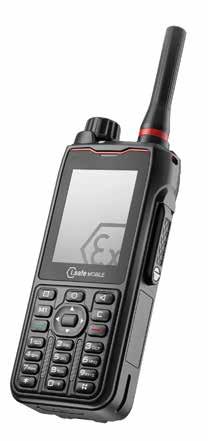
Android-based 4G radio – combines telephony and push-to-talk (PTT) in one handy device
Familiar two-way radio design – enables easy transition from classic radios to the IS380.M1
Supports MCPTx communication – compliant with the 3GPP standard
Replaceable battery – enables continuous operation readiness
Rotary switch for channel selection or volume control – enables quick and safe handling System integrated i.safe MOBILE App World – enables the use of certain applications for PTT & LWP

isafe-mobile.com

The network is ready for a controlled software environment. Is your device?
Most mining operations have more network capability than their current devices can access. The IS380.1 from i.safe Mobile closes that gap, without replacing the infrastructure or workflows already in place.
Ask a communications manager what keeps them up at night, and it’s rarely “the radio doesn’t work”. VHF and UHF networks remain reliable for voice. What they cannot do is tell you where a lone worker stopped moving or push a digital permit to a haul truck driver. That capability gap is widening and closing it requires a device that survives a Zone 1 hazardous area and a full shift underground without demanding retraining.
The IS380.1 does not force a choice between legacy radio and 4G LTE - it runs both simultaneously. Via Radio over IP (RoIP) gateways, users communicate in real time with colleagues on conventional VHF/ UHF handhelds, same channel, no perceptible delay, no rip-and-replace. For sites mid-migration or running hybrid fleets, this bridging function is the architecture, not a stopgap, letting the transition happen on the mine’s own timeline.
The leaky feeder cable, which has long been the backbone of underground communications, now carries LTE frequencies alongside, or instead of, conventional radio signals. Private LTE base stations feed the network, and the IS380.1 connects as a standard endpoint. Push-to-Talk over Cellular (PoC) and 3GPP-compliant Mission Critical PTT (MCPTx) add network-level call prioritisation, dedicated emergency channels, and end-to-end encryption. GPS tracking, lone worker
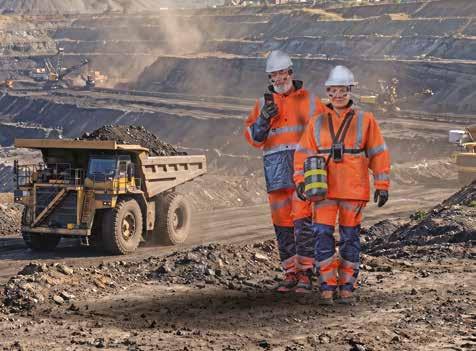
monitoring, digital permits, and realtime data integration with surface systems run on the same device. The form factor doesn’t change. This is a major factor in adoption. For operations planning a private 5G future, i.safe Mobile’s IS440.M1 offers a migration path within the same product family.
ATEX and IECEx Zone 1 and Zone 21 certification covers the baseline requirement for hazardous area deployment, and the IS380.1 holds both, alongside IP68 and MIL-STD 810H ratings for dust, immersion, impact and temperature extremes. Building on that foundation, the IS380. M1 is the dedicated mining variant, developed specifically for underground and surface mining applications, including coal environments, where certification requirements go furthest.
A side-mounted PTT button sits where a radio user’s thumb naturally
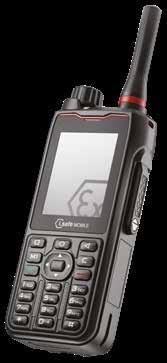
rests, while a programmable rotary switch handles channel and volume without screen interaction for ergonomic ease.
An amplified loudspeaker cuts through high-ambient noise; A 13-pin ISM interface supports approved audio equipment. To the workforce, the device feels familiar. To management, it does considerably more.
The IS380.1 ships with the i.safe Mobile App World pre-installed: a curated, hardware-validated application environment hosted on German servers, covering PTT, lone worker protection, MDM, and maintenance tools. For IT teams managing safety-critical fleets, that means validated apps, predictable updates, and no unmanaged consumer software introducing risk.
For more information visit: www.isafe-mobile.com

As the US aims to increase domestic rare earth processing, collaboration is key, reports Saskia Henn
In 2024, the United States relied on imports, rather than domestic production, for 100% of 12 critical minerals on the 2022 USGS list.1 In the same year, it had an import reliance of 50% or more for an additional 28 listed minerals.1
Some of the top critical mineral exporters to the United States were found to be China, Canada, Japan, and South Africa.1.
Because China processes about 90% of the world’s rare earths, the country’s recent restrictions have highlighted the US’ vulnerable reliance on foreign processing.2 In response to restrictions, the US government is exploring partnerships, acquisitions and strategic investments to strengthen its domestic rare earth supply chain. Likewise, existing mining and technology companies are aiming to expand their reach in midstream processing.
American rare earth metals company Phoenix Tailings is pursuing strategies aimed at filling the domestic supply gap. The company began as a startup
in 2018, founded by MIT alumni CEO Nick Myers, CTO Tomás Villalón, CCO Anthony Balladon and Michelle Chao. Phoenix Tailings operates a fully integrated rare earth production
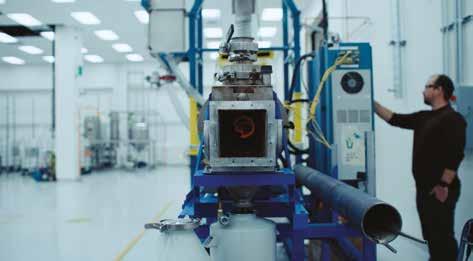

Tailings has been scaling up its domestic rare earth metals production through a $1 billion financial initiative
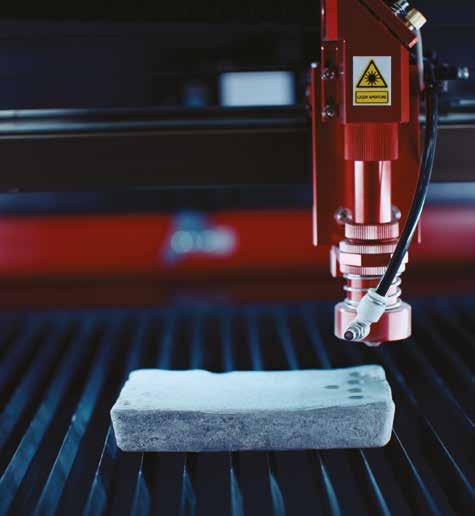
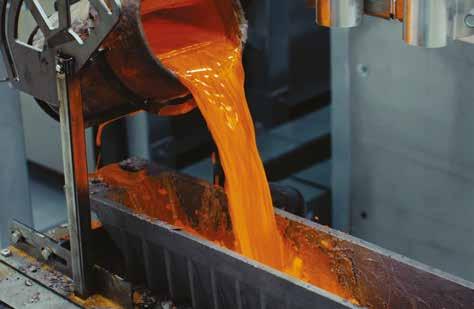
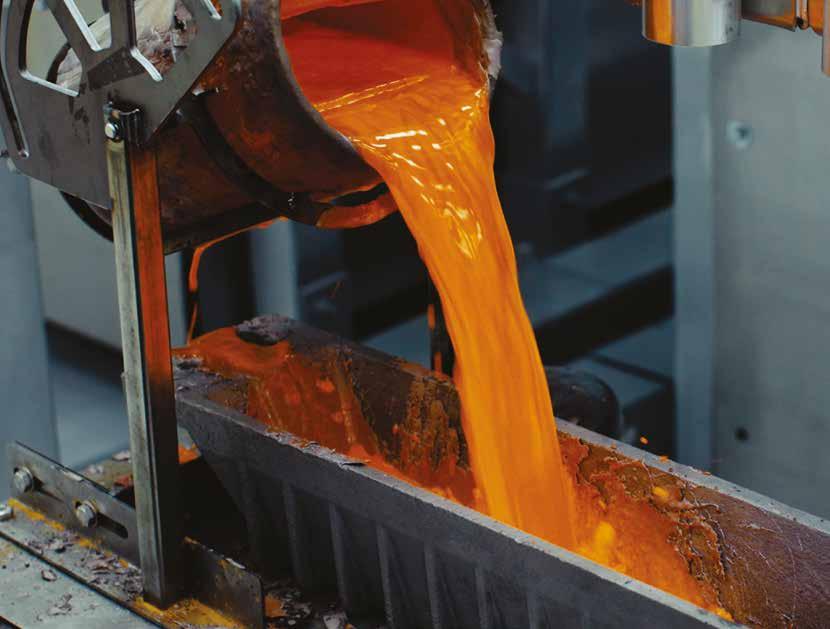
platform spanning extraction, separation, refining and metallisation with a zero waste and zero emissions philosophy. Its technology extracts critical rare earth metals from mining waste using an emissions-free, acid-free molten salt electrolysis (MSE) process.
“We dissolve rare earth oxides into a molten salt bath, a mixture of dissolved salts, and pass electrical current through it. The current drives an electrochemical reaction that reduces the rare earth ions directly to their metallic form,” says Villalón. “It’s a continuous, closed-system process that takes oxide feedstock in and produces purified rare earth metal out.”
Traditional rare earth processing relies on chemistry that generates highly hazardous emissions and consumes large amounts of energy. It is dependent on unique metals and unique plastics that are only found in very select parts of the world.
“We’ve developed fundamentally different underlying chemistry that avoids those problems entirely. That’s
not an incremental improvement; it’s a different approach to the problem at the chemistry level,” says Villalón.
The result is a cohesive and resilient supply chain fully contained within the US.
Phoenix Tailings has been scaling up its domestic rare earth metals production through a $1 billion financial initiative. The initiative comprises private capital and a $500 million conditional loan agreement from the US Department of War’s Office of Strategic Capital (OSC).
The OSC’s loan will go towards one of the initiative’s key elements: the building of Phoenix Tailings’ Freedom Facility, a major midstream processing plant in the US.
“Supporting domestic processing for critical minerals and rare earths is a key focus for OSC, and the rare earth midstream processing capabilities that Phoenix Tailings represents are key
shortage areas that need to be rapidly addressed,” says David Lorch, director of the Office of Strategic Capital and senior advisor to Steve Feinber, deputy secretary of war.
Using domestically controlled technology and intellectual property, the facility will produce light and heavy rare earth metals from a diverse range of feedstocks, including concentrates, recycled materials, and secondary sources. Initial operations are targeted for 2028.
“By creating a midstream facility like this, we are empowering virtually every part of the market and rebuilding the rare earth sector as a truly collaborative industry,” says Balladon.
“We will ensure end customers get access to the rare earth metals they urgently need, while helping mines and recyclers get up and running by purchasing their output, which would otherwise have to move through other nations. The Freedom Facility is designed to serve as the backbone of a resilient Western rare earth supply chain.”
In addition to the conditional loan agreement from the OSC, Phoenix Tailings has also recently received a funding award from the Department of Energy. The $134 million funding went to the Colorado School of Mines and Phoenix Tailings
The portion of funding for Phoenix Tailings will design, construct, commission and operate a demonstration-scale facility to produce high-purity rare earth metals from domestic industrial wastederived feedstocks. Demonstrating this process will establish a new commercial pathway for domestic production of heavy rare earth metals.
“To achieve energy independence, the US needs to find value in overlooked resources,” says Audrey Robertson, assistant secretary of energy. “By expanding our capabilities to recover and process rare earth elements from waste products, these projects will reduce America’s dependence on foreign sources and improve the resilience of our supply chains.”
For the project, Phoenix Tailings is partnering with the Massachusetts Institute of Technology and the University of Minnesota.
Phoenix Tailings is also pursuing an emphasis on digital infrastructure, AI and automation. Earlier this year, Phoenix Tailings acquired Bostonbased technology company Machinery Partner. Machinery Partner has built advanced software and operational systems deployed across hundreds of US industrial sites.
“Historically, Phoenix Tailings has been based on two technological pillars: stabilised chemistry and industrial hardware. The acquisition of Machinery Partner gives us a third: digital infrastructure which creates a unified platform that enables rapid deployment, optimisation, and scale,” says Villalón. “This enables Phoenix to combine automation, AI and process engineering to create an operating system that actually improves with every production run.”
Through AI-assisted chemistry optimisation, Phoenix Tailings aims
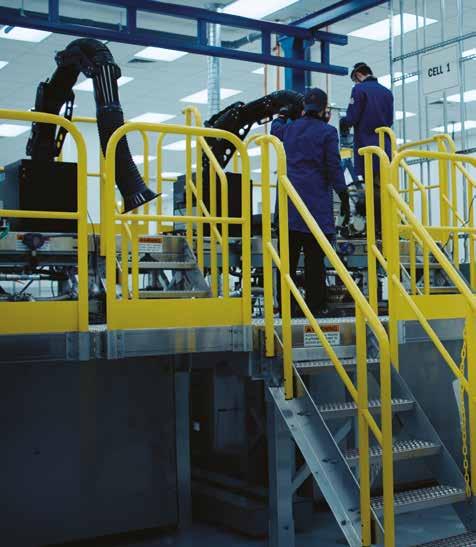
To achieve energy independence, the US needs to examine overlooked resources
to achieve higher production yields while keeping production costs low through automation and process efficiency. Predictive monitoring and diagnostics will help to increase equipment uptime, while standardised digital infrastructure will enable faster deployment of refining systems. According to Villalón, the acquisition is already yielding results.
“We have begun to see meaningful operational impact already and have done since the first few weeks, specifically in our ability to commission production-scale reactor systems faster,” he says. “The integration of digital systems and AI to increase cell uptime, reaction controllability and future cell design is already paying dividends.”
Breaking the foreign monopoly on rare earth processing will be a long
and challenging task. However, partnerships, acquisitions and strategic investments can help to build resilient midstream supply chains. Phoenix Tailings’ pursuit of such strategies demonstrates how the future of US rare earth processing can succeed through deliberate cooperation and an open mind towards budding technologies.
[REFERENCES]
1 https://www.eesi.org/papers/view/issuebrief-critical-minerals-and-the-u.s-cleanenergy-transition
2 https://anderseninstitute.org/chinas-exportcontrol-architecture-and-its-use-of-criticalminerals-as-strategic-pressure-points/
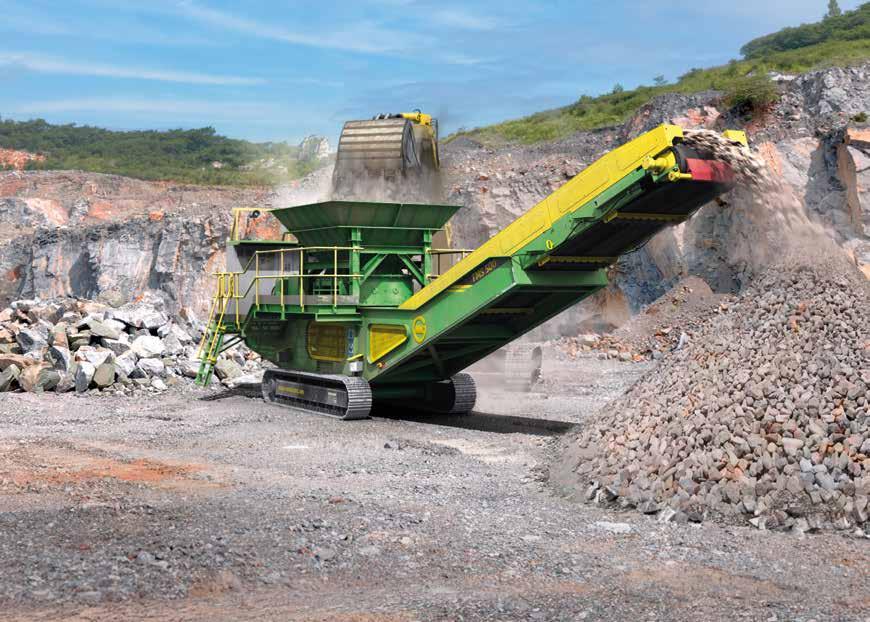
For over 45 years, we’ve been at the forefront of innovation, providing advanced Sizer technology to industries around the globe. Whether it’s soft, sticky material or hard abrasive rock, our tailored Sizers and complete Sizer Stations, powered by cutting-edge technology, offer reliable and efficient solutions to simplify the complexities of modern mining operations.
As a turnkey provider, we bring both the expertise and the equipment to deliver end-to-end solutions — from initial concept and design, through to manufacturing, installation and ongoing aftersales support.
We’re not just a supplier; we’re your partner on a sustainable journey, committed to helping you optimize performance, reduce costs and achieve long-term success.

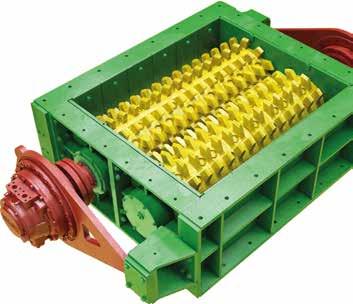
Despite this year’s intense heat, Hillhead 2026 attracted 25,878 visits.
Attendees came seeking the latest innovations in mining and quarrying, and did not leave disappointed. In particular, Crusher Alley was swarmed with visitors viewing live demonstrations and taking a first-hand look at the machinery on display.
Finlay had a strong lineup in Crusher Alley. Finlay ran live demos throughout the day featuring a full crushing and screening spread with the J-1170+ Jaw Crusher, C-1540+ Prototype Cone Crusher and 694 Inclined Screen. A raised viewing platform overlooked the demo area, giving visitors a clear vantage point.
A major highlight was the I-130RS Impact crusher, making its Hillhead debut on static display. Often used in quarrying, the crusher features a large, two-deck afterscreen and an onboard recirculation system. A direct-drive system with soft-start maximises fuel efficiency, and the heavy-duty VGF with optional independent pre-screen improves material flow and reduces chamber wear.
There are a lot of options to configure the machine to suit the different setups and different applications so it’s quite flexible,” says Finlay product and applications manager Alan Witherow. “It’s a little more complicated to operate but if you’re able to look after it properly it does perform very well and does deliver what you need it to do.”
The I-130RS Impact crusher is lighter than Finlay’s A140 making it more efficient to transport.
Finlay also displayed the Scalping Screen, TC-60 Tracked Conveyor and J-1280 Jaw Crusher, shown publicly in the UK for the first time since its 2025 launch.
Another company with a large presence at Crusher Alley was Powerscreen. Powerscreen marked its 60th anniversary at the show alongside long-standing UK distributor Blue Group. The stand
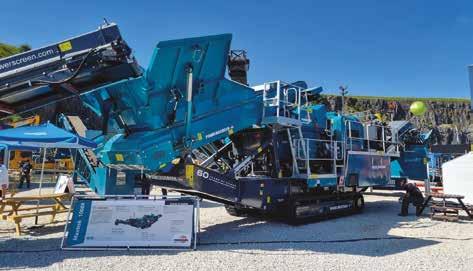
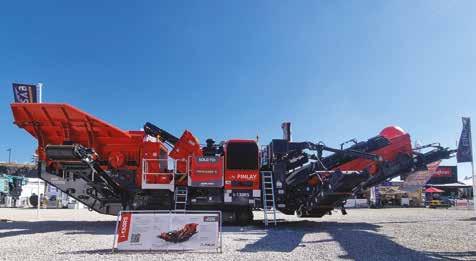
There are a lot of options to configure the machine to suit the different setups and different applications so it’s quite flexible
featured the fully refurbished MK1 screening unit, as well as the Premiertrak R450 jaw crusher for quarrying and mining applications.
Powerscreen also showcased a prototype of the 1000X Maxtrack cone crusher, due to launch Q2 2027. The 1000X Maxtrack is a small-to-medium sized track mobile cone crusher suited to secondary or tertiary applications. It excels in the production of aggregates, providing cubicitiym throughput and reduction ratios.
“The 1000 Maxtrack has been in the industry for over 25 years and it is the contractor’s choice because it is so versatile for so many different
applications. We just wanted to refine it, and just make a few more enhancements to serviceability, productivity and the reduction of fuel consumption says Mark Ferguson, regional sales manager at Powerscreen. “We’ve got one working in Ireland at the minute and customer feedback’s been very positive.”
Powerscreen also displayed the Chieftain 2200 triple deck screen and the Premiertrak R450 jaw crusher at its Hillhead 2026 stand.
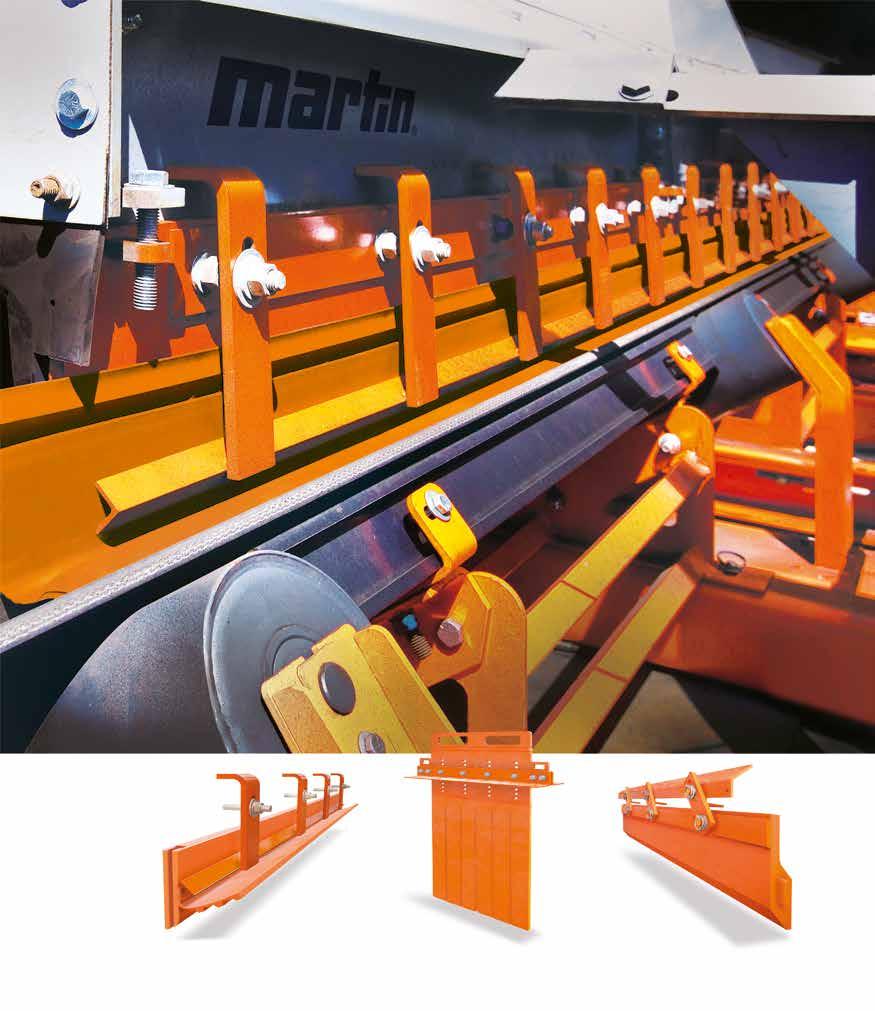
t quarries, mines and bulk material processing plants, dust and spillage escaping from conveyor transfer points can create costly production and compliance challenges. Martin's easy-to-install Modular Transfer Point Kits combined with our enclosure-to-belt skirting options and dust curtains effectively arrest fugitive material at the source while maximizing material flow. These field-proven Martin components limit material loss and reduce dust emissions while improving overall operation efficiency.
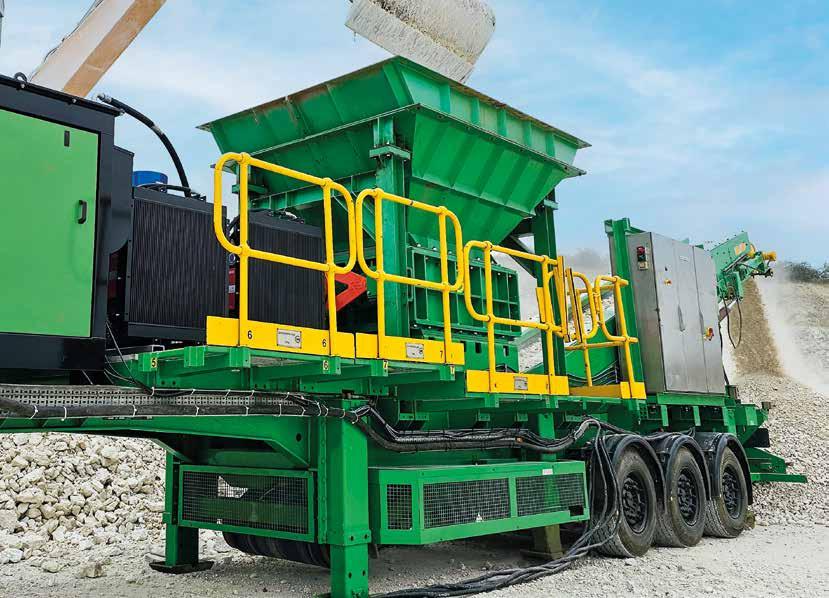
In modern material processing, the most effective solution is not always the largest or most powerful machine, but the one that best matches the duty and the material being processed. As operators continue to focus on total value and lifecycle efficiency, equipment selection is becoming more precise. This is particularly important in crushing and sizing applications, where performance is closely linked to how well the machine is matched to the material characteristics and the demands of the operation. Throughput, reliability, installation requirements, maintenance, as well as capital and overall operating cost are all very important factors when
selecting the right sizer.
For demanding hard rock environments, heavy-duty sizing solutions remain essential. Abrasive materials, high impact loads and continuous operation require machines engineered to perform reliably under extreme conditions. In these applications, heavy-duty twin shaft sizers continue to provide reliable performance, particularly where wet, sticky or difficult materials must be processed while still delivering a controlled product size with reduced fines.
Not all operations place the same demands on equipment.
Many materials and industries involve softer, friable or more variable materials, often requiring a different equipment approach to heavy-duty mining operations. However, regardless of the application, selecting the correct machine is about understanding the material characteristics, duty requirements and operating conditions to ensure the equipment is properly matched to the process. Getting this balance right has a direct impact on efficiency, uptime and lifecycle.
An important aspect of equipment selection is understanding how different materials behave during the sizing process.
Since introducing the mineral sizer
more than 45 years ago, MMD has continued to develop sizing technology for a wide range of mining, quarrying and material processing applications. This experience is supported by specialist sizer testing facilities, where material characteristics are analysed specifically in relation to sizer operation. Testing enables engineers to understand material behaviour, validate performance and support equipment selection using measured data rather than assumptions.
Application knowledge is equally important. Material characteristics and operating conditions can vary significantly between regions and industries, making local engineering expertise an important part of the equipment selection process. Combining specialist testing with local application knowledge helps ensure machines are correctly matched to the material, duty and operational objectives.
A recent example of this tailored approach is the HYD 500 Sizer.
Evolved from the proven and widely used MMD 500 series range, it has been specifically engineered for applications such as recycling and processing of softer, friable materials. It delivers efficient sizing performance in a more streamlined design, purpose-built for its intended duty rather than scaled down from heavy mining equipment. This approach gives MMD greater flexibility to optimise equipment selection, machine investment and customisation for individual applications, while maintaining the quality, reliability and performance standards expected from MMD solutions.
A key development in the HYD 500 sizer is the use of hydraulic drives, where each breaker shaft is independently powered by hydraulic drives mounted directly to the shafts. By removing spur gears, couplings and internal oil chambers, the drive train contains fewer mechanical components, simplifying the overall design while reducing maintenance complexity.
Practical design features such as
simplified installation interfaces, lighter wear components further enhance usability and operational efficiency.
Importantly, the HYD 500 still delivers the core benefits expected from MMD sizing technology, including effective handling of wet and variable feed materials, controlled product sizing and consistent throughput performance.
As material processing requirements continue to evolve, developments in application designed equipment demonstrate the value of matching machine design to the material and operating duty.
By combining sizing technology with targeted engineering innovations, operators can achieve more efficient, reliable and cost-effective material processing through equipment that is engineered for the demands of the application.

John Barickman of Martin Engineering completes his two-part series on conveyor belt transfer point maintenance
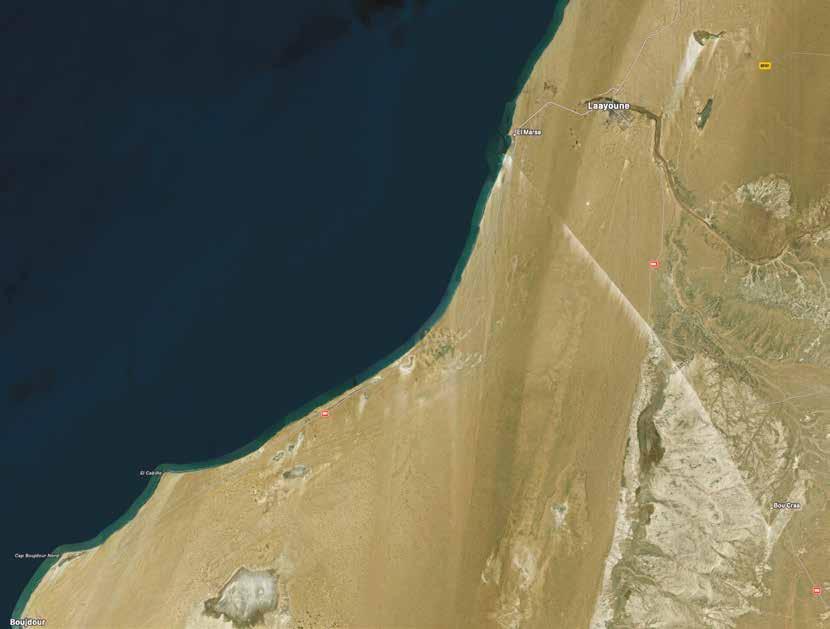
Transfer chutes can experience build-up due to material properties, such as particle size, moisture content, temperature, abrasiveness and corrosiveness. When clogs happen, production stops fast and backflow fouls components in the discharge zone and spills over the edges of the system. If that happens on a major plant, teams can be on hand quickly to fix the issue. But on extended conveyor lengths, due to the transport and equipment needed, unscheduled downtime can become very costly.
“Quality and durability are key elements for a sustainable remote transfer point,” says Andrew Timmerman, global engineering manager at Martin Engineering.
“Getting to the work site alone increases the cost of maintenance, so calculating the ROP on low maintenance equipment may be a
better metric than ROI.”
Equipment geared towards mitigating common transfer point issues can include service-friendly
primary and secondary cleaners, autonomous tensioners, belt alignment devices, self-adjusting skirting and engineered vibration.
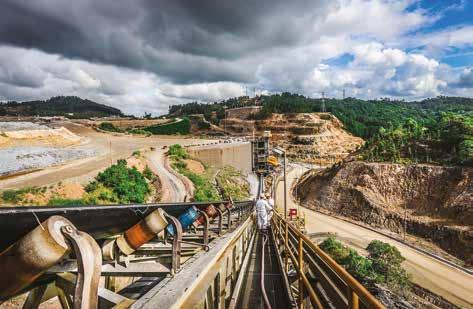
Service-friendly primary and secondary cleaners made from urethane can be track-mounted components that pull away from the stringer for safe service outside of the system. After performing the proper isolation procedures, a single worker has easy access to safely service the blades using basic tools. Stepping up durability and longevity even further, some of the most innovative primary belt cleaner designs can be tensioned upon installation and need virtually no further adjustment – ideal for remote locations. Positioned at an angle across the discharge pulley, these designs have a rubber strip embedded with tungsten carbide tips, requiring far less maintenance and delivering as much as four times the blade life of conventional designs (with some installations lasting many more times that).
Autonomous tensioning is a relatively new concept that monitors the blade’s contact with the belt and automatically adjusts the tension. This ensures consistent pressure and optimum performance, reducing the amount of spillage and carryback. It eliminates the need for ongoing tensioner maintenance, reduces the amount of spillage from carryback and lowers dust emissions along the belt path.
Belt alignment devices ensure that the belt and the cargo remain centered, which is especially critical in loading and discharge zones. Standard belt training devices either impede the belt from drifting into the stringer or react to the belt drift [Figure 2]. On long conveyors, belt trainers are required along the belt path both on the carrying side and the return to mitigate mistracking.
Self-adjusting skirting rides the belt to create an effective seal automatically. Historically, skirting had to be adjusted when excessive dust and spillage escaped from the loading zone. Self-adjusting designs prevent spillage and equipment breakdown caused by fugitive material, creating a constant tight seal to the belt. The unit self-adjusts to rubber skirt wear,
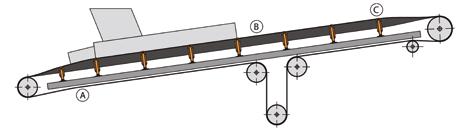
Typical tracking installation points include: A) just before the tail pulley, B) right after the loading zone, C) shortly before discharge © Martin Engineering 2026
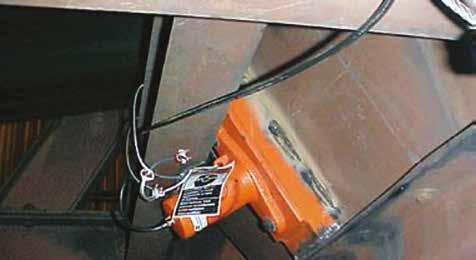
Engineered vibration can help prevent material accumulation, clogging and unplanned downtime © Martin Engineering 2026
regardless of material volume and size diversity, delivering an adaptable and low-maintenance solution.
Engineered vibration helps prevent the build-up of material and fines on the inner walls of the transfer chute. Clogging can bring the entire operation to a stop, causing excessive downtime, but dislodging stuck material helps prevent accumulation over time, eliminating the risk of a more serious blockage which can lead to backflow and a more serious spillage issue.
In addition to cameras that provide an overall view of conditions, sensors monitor operations and flow, delivering important data. One thing to keep in mind is the need to relay the information to a central control center via Global System for Mobile Communications (GSM), which requires the proper equipment and power.
A position indicator is an intuitive sensor that allows remote monitoring of the belt cleaner blade position and remaining service
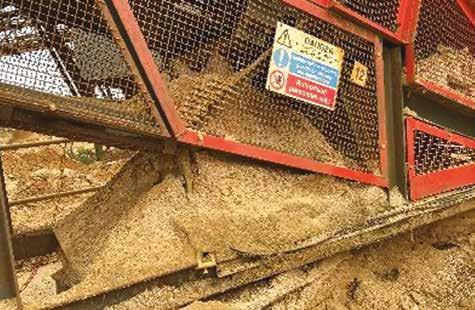
on addressing root causes © Martin Engineering 2026
life, notifying operators when retensioning or blade replacement is required. A position indicator can be mounted anywhere from three to 800m from the cellular gateway, and the robust, sealed construction means it is virtually immune from damage. Up to 50 units can be monitored by a single gateway connecting to the Internet, usually located at the highest point in the plant, where the cell signal is strongest. The system does not require a cellular line for each PI, instead communicating via radio frequency from each sensor to the gateway.
Each piece of equipment associated with transfer points requires a knowledgeable and trained technician for safe service. Many mine operators turn to specialty service contractors who are trained and equipped to safely conduct regular inspections, provide maintenance and offer recommendations. Such highly trained and certified technicians can identify and solve root causes of spillages and blockages, rather than simply addressing the symptoms. They can also help reduce replacement equipment lead times and perform maintenance tasks faster, minimising overall downtime.
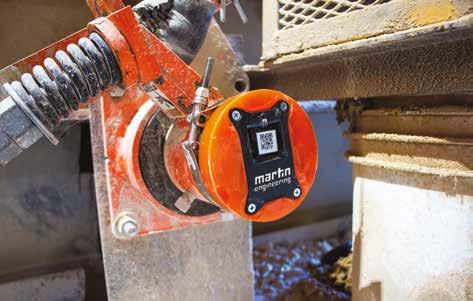
The N2 Position Indicator monitors belt cleaner performance so maintenance teams know when to inspect, re-tension or replace © Martin Engineering 2026
In today’s data-driven world, service contractors are increasingly maintaining detailed logs on mine operators’ conveyors, recording system specifications, status details and service procedures performed. This collected information is helpful in scheduling future preventive maintenance visits as well as determining when outside resources should be deployed – using data to better manage an operation’s equipment and budget.
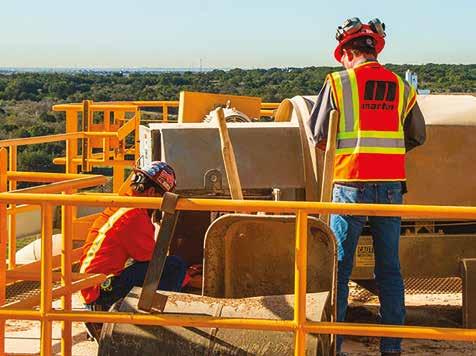
Although there are numerous considerations and challenges associated with operating and maintaining long conveyor systems, improved safety, productivity and long-term cost savings over vehicle transport makes conveyors a compelling choice. Once the conveyor system is built, material transport is more predictable and easier to control and maintain, which reduces the cost of operation and improves the bottom line.
Additionally, well-monitored autonomous devices can make remote transfer points more costeffective to operate. ROP-minded design and maintenance performed by trained service technicians can mitigate many of the disruptive issues and downtime associated with transfer points.
“Long conveyors with multiple transfer points have been around for several decades, and equipment designs for this unique environment have evolved in recent years,” Timmerman concluded. “By focusing on safety, ease of service and reduced risk exposure, operators are realising that many of the most troubling issues can be effectively resolved.”
A case study performed by Nasaco examines whether BetacolCZZ1 can operate at natural pH
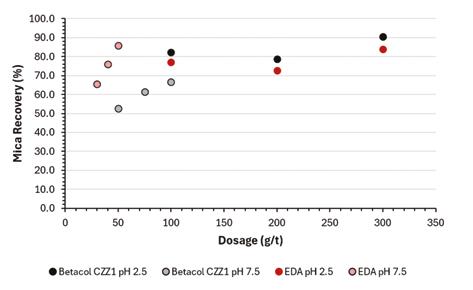
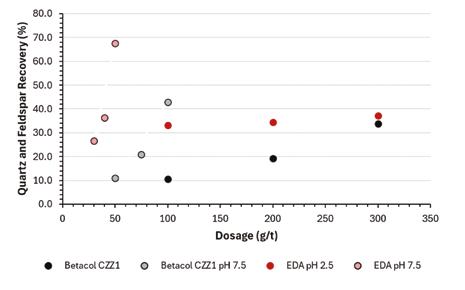
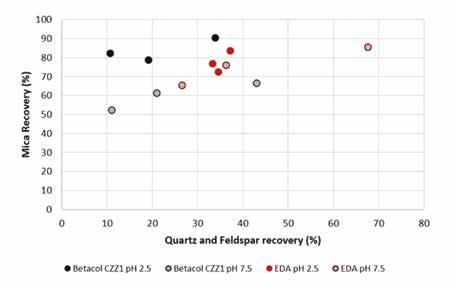
In spodumene flotation, mica is commonly removed in a prefloat stage before the main fatty acid spodumene float. This is necessary because mica can report to the final concentrate and reduce product grade. The challenge, however, is not simply to remove mica, but to remove it selectively.
Conventional amine collectors, such as Ethylenediamine (EDA) can float mica effectively, but they also tend to recover quartz and feldspar. This increases mass pull to the mica prefloat concentrate and can carry additional spodumene into the prefloat through entrainment and entrapment. A good mica collector should therefore recover as much mica as possible while limiting quartz and feldspar recovery.
Mica preflotation is often carried out at low pH, typically around pH 2.5, using sulphuric acid. The pH is then raised again for the downstream fatty acid spodumene circuit. Avoiding this low-pH step would be operationally attractive, as it could reduce acid consumption, caustic demand and the complexity of pH control.
The key question is whether mica can still be recovered selectively at natural pH. In this work, Nascol CZZ1 was compared with EDA at both pH 2.5 and pH 7.5.
Nascol CZZ1 performed best at pH 2.5. Under these conditions, it achieved high mica recovery with comparatively low quartz and feldspar recovery, confirming its role as a selective mica collector under acidic conditions. At pH 7.5, the response changed. Nascol CZZ1 still recovered mica, but mica recovery was lower than at pH 2.5. Increasing the dosage improved mica recovery only modestly, while quartz and feldspar recovery increased more strongly.
This indicates that the selectivity advantage of Nascol CZZ1 is reduced at natural pH, particularly if the dosage is pushed too high.
A practical implication is that natural-pH operation should not be treated as a direct dosage-for-dosage replacement for the low-pH condition. At pH 7.5, considerably lower amine dosages should be used to control quartz and feldspar recovery.
EDA at pH 7.5 could achieve high mica recovery at relatively low dosage. However, this was accompanied by significantly higher quartz and feldspar recovery. In practical terms, EDA can remove more mica at natural pH, but it does so by pulling more non-mica gangue into the prefloat concentrate.
The selectivity plot shows the difference clearly. Nascol CZZ1 at pH 2.5 sits in the most favourable region, with high mica recovery at low quartz and feldspar recovery. At pH 7.5, the CZZ1 response shifts closer to the EDA selectivity trend, meaning it no longer shows the same separation advantage.
At lower natural-pH dosages, Nascol CZZ1 can still limit quartz and feldspar recovery, but this comes with approximately 10-20% lower mica recovery. This may be acceptable where reduced acid use, lower caustic demand and lower reagent dosage are the main priorities, but it does not provide equivalent mica removal to the low-pH condition.
The spodumene recovery data supports this interpretation. As quartz and feldspar recovery increase, spodumene recovery to the mica prefloat also increases. This suggests that spodumene loss is largely driven by mass pull, entrainment and entrapment, rather than true selective flotation of spodumene in the prefloat stage. Conditions that recover excessive quartz and feldspar therefore carry a higher risk of spodumene loss.
Nascol CZZ1 is most selective when dosed at pH 2.5. At natural pH, its selectivity advantage is reduced and its performance moves closer to that of EDA. Therefore, for the same mica recovery, more quartz and feldspar are
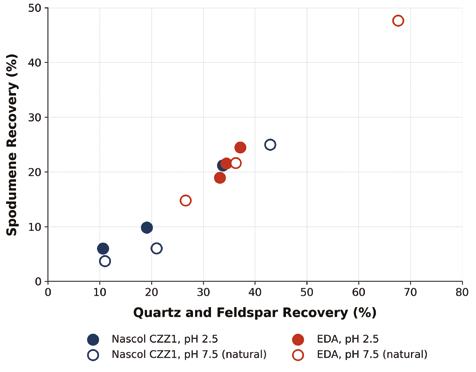
4: Relationship between spodumene recovery and quartz and feldspar recovery at pH 2.5 and pH 7.5, for Nascol CZZ1 and EDA
5: Relationship between spodumene recovery and mass pull at pH 2.5 and pH 7.5, for
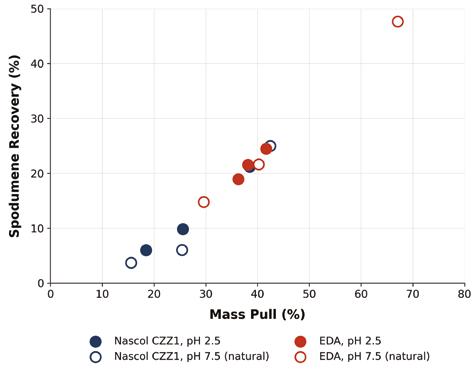
recovered, and subsequently spodumene losses are greater. Natural-pH operation may reduce acid and caustic requirements, but this should be paired with substantially lower amine dosages to avoid excessive quartz and feldspar recovery. The trade-off is simpler pH control and lower reagent dosage, but lower mica recovery and selectivity
closer to a conventional amine. For optimum mica removal and minimum spodumene loss, low-pH operation remains the preferred condition.
For more information visit: www.nasaco.com
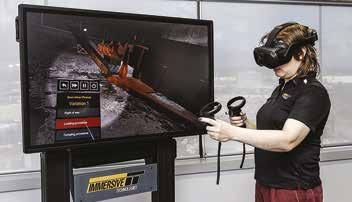
Some mining situations do not appear until the stakes are high and time is limited
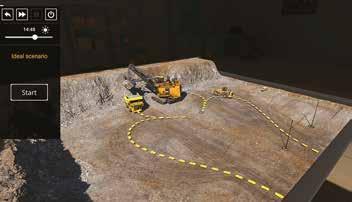
Simulations can train supervisors to optimise operations, notice potential risks earlier and make better decisions under pressure
Now more than ever, the mining industry offers diverse ways of learning before entering the pit
Historically, training within the mining industry has been constrained by many factors. Site-specific liabilities, remote logistics, evolving digital requirements and the mass retirement of veteran mine operators all impact the development of safe and ethical training methods. Despite these difficulties, or perhaps because of them, training methods are diversifying.
One way of keeping operations stable during learning is through the gamification of skills. An example of this is the Global Drone Operations Awards by SPH Engineering.
“Drones are no longer just cameras in the sky,” says SPH CEO Alexey Dobrovolskiy. “In demanding industrial environments, they are becoming professional tools for collecting data that directly supports business and operational decisions. With these awards, we want to recognise the teams proving what advanced drone workflows can achieve, and help more industries understand the value of these methods.”
The competition features an entire section dedicated to mining and exploration, welcoming entries for subsurface investigation, mineral exploration, methane inspection, monitoring and research.
An expert jury will award projects demonstrating advanced workflows through specialised sensors, integrated systems, complex field execution and
measurable outcomes to encourage the practical impact of drones in real-world mining conditions. The award celebration event will take place in Budapest in October 2026, where the community will discuss best practices, field-proven workflows and industry lessons they learned through the process.
To address the mining worker shortage, digitalisation can also play a role in attracting new talent. As experienced supervisors retire, younger people are being promoted earlier than previously to fill the gap. However, some mining situations do not appear until the stakes are high and time is limited and those with limited experience may struggle.
As a result, immersive learning is becoming an increasingly common way to accelerate skills development and prepare supervisors for onsite scenarios. Immersive Technologies, an advanced equipment simulator provider, offers virtual reality tools such as Mine Standards Training and MineAdvantage which can train supervisors to optimise operations, notice potential risks earlier and make better decisions under pressure.
Industry crossovers could help mining to gain exposure and garner interested
in people from adjacent fields. An example of this is CPaT Global, a provider of distance learning for the airline and aviation industry. CPaT is planning to extend its training, compliance and qualifications approach into rail and mining.
“CPaT continues to lead aviation training while expanding the application of our proven training expertise into additional safety-critical industries,” says CPaT Global president and CEO Dave Rapley. “Rail and mining are a natural first step for us. The operational demands of these markets closely align with the expertise we have developed through decades of serving the aviation industry.”
All three of these industries operate under similarly critical safety, standardisation and workforce readiness criteria. Bringing mining under the same umbrella as similar industries could help to normalise mining as a potential career opportunity for a generation inclined to avoid it.
As training methods diversify, those in the mining industry are finding new ways to develop their skills without risking safety.
For more information visit: www.sphengineering.com, www.immersivetechnologies.com and www.cpat.com
Peru is currently experiencing an historic surge, with its mining sector recording investments of over USD 2 billion since January 2026. This is a 44% increase compared to the same period in 2025.

The country is a mineral-rich nation, primarily mining copper, zinc and silver, gold, lead and tin. This makes Peru a fitting place to host Expomina 2026, a trade fair bringing together mining industry players from around the globe.
Expomina is expecting over 1,250 booths across nearly 50,000 square metres showcasing the latest in mining machinery, technology and services. Thousands of visitors from Brazil, Chile, Germany, Mexico and the USA, among others, will be attending.
Networking is one of the main perks of this show, bringing together technical specialists, business leaders, investors and suppliers to explore topics such as innovation, sustainability, exploration, copper and women in mining.
Expomina Peru will take place 9th-11th September at the Jockey Exhibition Centre in Lima.
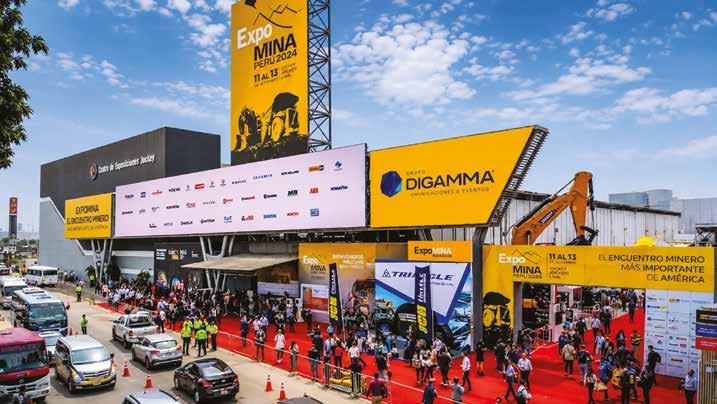
The biannual mining exhibition Electra Mining Africa is back and preparing to welcome over 1,000 exhibitors and around 40,000 industry players to this year’s show.
Attendees can expect to gain insight across the mining and industrial value chain. Manufacturing innovations, power solutions, automation, machinery and equipment will be highlighted through exhibitor showcases, live demos and technical seminars.
New to the 2026 show is Electra Mining Africa’s Orange Zone. The Orange Zone offers the chance to see large-scale equipment, yellow metal, machinery and live demos up close in an outdoor space.
“The new Orange Zone provides the additional space needed to accommodate more companies that want to showcase their equipment and innovations outside,” says Charlene Hefer, portfolio director at Montgomery Group Africa, organisers of the show.
“There will be more original-equipment manufacturers than at previous shows and this level of representation will be of benefit to visitors interested in this particular sector as they are able to view, compare and evaluate the offerings all in one place. The Orange Zone complements the existing Red, Blue, Green, and Yellow Zones, creating an even more dynamic outdoor showcase.”
Each day will highlight a key industry theme through the seminar
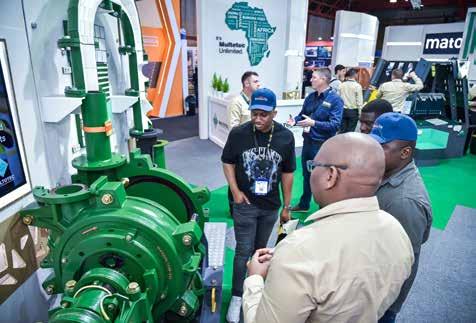
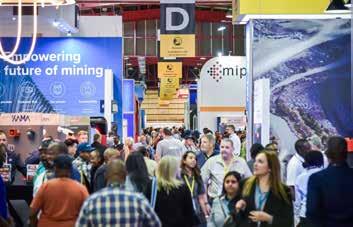
programme and themed activations:
• Monday: Future skills and careers day focuses on developing future talent, professional growth, and collaboration between industry and the education and training sector.
• Tuesday: Automation and digital day examines how smart technologies including automation, AI, robotics and digital tools are transforming mining.
• Wednesday: Sustainability and energy day highlights renewable energy solutions, efficiency innovations, environmental practice and the shift toward more sustainable operations
• Thursday: Women in mining and engineering celebrates the achievements of women in the sector and promotes leadership, mentorship and representation across technical fields.
• Friday: South Africa Day showcases South African companies, innovations and locally manufactured solutions that support national industry growth
Electra Mining Africa will take place 7th-11th September at the Johannesburg Expo Centre in Nasrec.
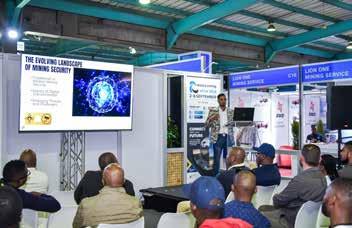

At Cirrus Research, we specialise in the design, manufacture, and distribution of high-quality noise measurement instruments and solutions.
T +44 (0)1723 891655
E sales@cirrusresearch.com
W www.cirrusresearch.com

Conn-Weld Industries, LLC is an engineering firm and 400,000 sq. ft. manufacturing facility providing a full product line of vibrating screening equipment, sieves, and various components serving the mining industry.
T +1 304 487 1421
E sales@conn-weld.com
W www.conn-weld.com
Hilliard offers a diversified product line for industrial applications in a wide variety of industries. Hilliard products are designed, manufactured and sold according to our customers' applications.
T +1 607 733 7121
E sales@hilliardcorp.com
W www.hilliardcorp.com
Celebrates their 80th anniversary of serving the underground mining industry. Fletcher world renowned roof support, is accompanied by an entire product line, which serves the coal, industrial mineral, metal, and construction industries.
T +1 800 543 5431
E sales@jhfletcher.com
W www.jhfletcher.com

Richwood designs innovative solutions for the worldwide bulk material handling industry. Clean conveyors and sealed and protected load zones from site specific solutions mean lowered maintenance costs, safer work areas and more productive operations.
T 304-525-5436
E info@richwood.com
W www.richwood.com
Founded in 1983, Rotech Systems manufactures robust industrial monitoring solutions, including encoders and motion sensors, delivering reliable speed and position monitoring that reduces downtime and protects critical rotating machinery worldwide.
T +44 (0)151 356 2322
E sales@rotechsystems.co.uk
W www.rotechsystems.co.uk
Diemme Filtration has the widest range of filter presses available on the global market in terms of size, design and technical characteristics. The equipment is tailor made and designed according to the needs of the specific application.
T +39 0545 20611
E info@diemmefiltration.com
W www.diemmefiltration.com

The UK’s leading ISO 9001-accredited manufacturer and supplier for the complete temperature chain. From Temperature Sensors, Thermocouple Connectors and Cabling to supporting instrumentation and components, we are the GO-TO people.
T +44 (0) 1243 871280
E Sales@labfacility.com
W www.labfacility.com
e advertising@setform.com
t +44 (0)207 253 2545




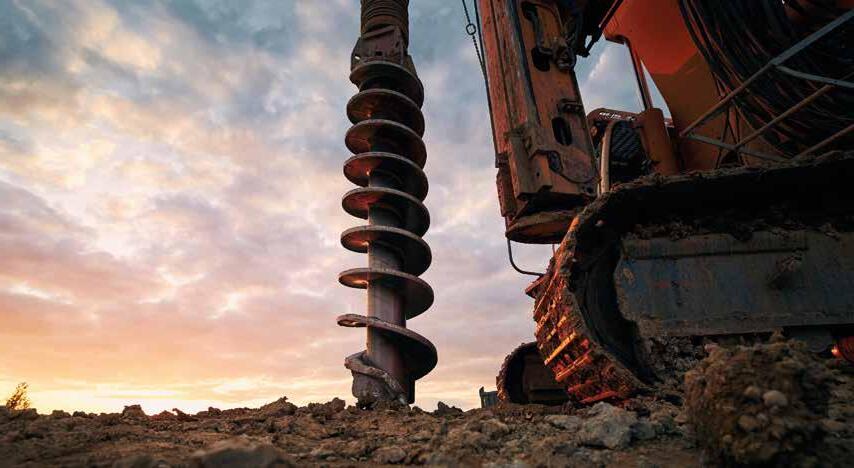
asc-sensors.de
Drilling down several thousands of meters requires high-tech tools and equipment. Equally crucial is the appropriate sensor technology, to keep to the exact drilling path for precise results. So are shock and heat resistance to prevent strong vibrations and high temperatures from skewing measurement outcomes while drilling through the rock strata.
For the geothermal energy industry, this is enabled by ASC inertial sensor technology. Our portfolio includes high-end JAE quartz-based JA-5 and JA-25 accelerometers particularly suitable for this purpose. In addition, MEMS-based ASC OS-series accelerometers conduct accurate, stable vibration analyses on machines like hydraulic deep drilling vibrators for soil inspection and preparation, to keep them running smoothly and prevent damage.
When can we convince you?
Examples of our product portfolio:
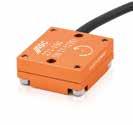
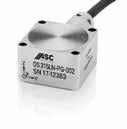
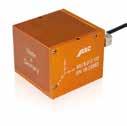
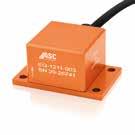

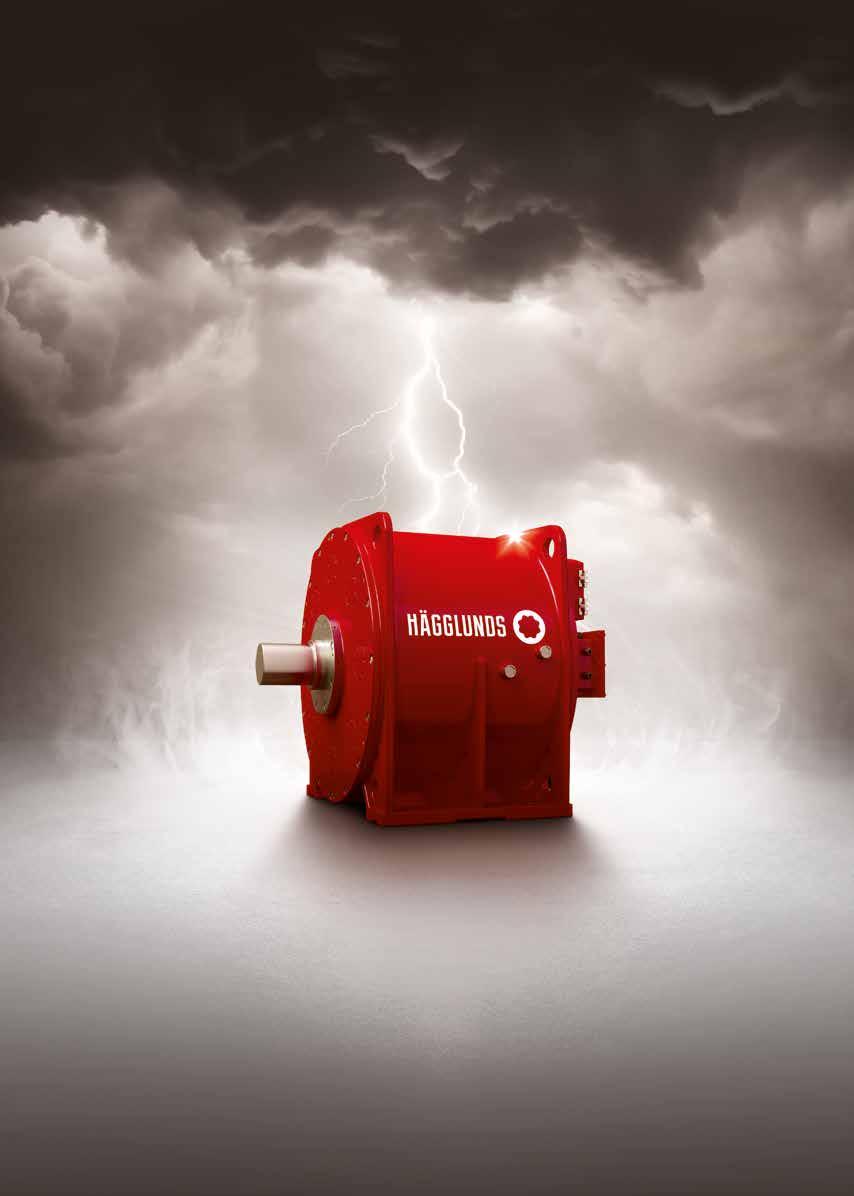
That’s more than a sound you hear. It’s expectations being shaken. One small change that sets the stage for so much more. When the new Hägglunds Thunder resonates with your needs, the result is electrifying. Learn what a difference a single difference can make at www.hagglunds.com.
Hägglunds is a brand of Rexroth. An electric start to a lasting boom.