

THROWING WASTE INTO SPACE
- JOHN BHANG
COMMON MYTHS OF THE SPACE - GWENN VALERIE QIU
THE SEARCH FOR SIGNALS FROM ALIEN CIVILIZATION - MINCHAE KIM IS THERE A POSSIBILITY OF MULTIPLE UNIVERSES? - MANYA SHIVHARE 24 28 31 35
THE SCIENCE INVOLVED BEHIND AND THE POTENTIAL SIGNIFICANCE
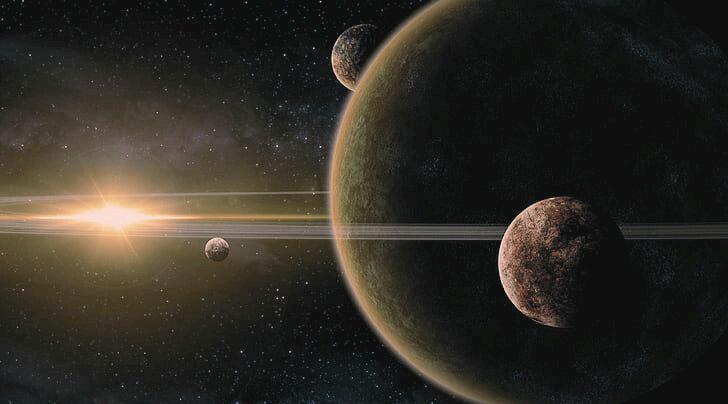

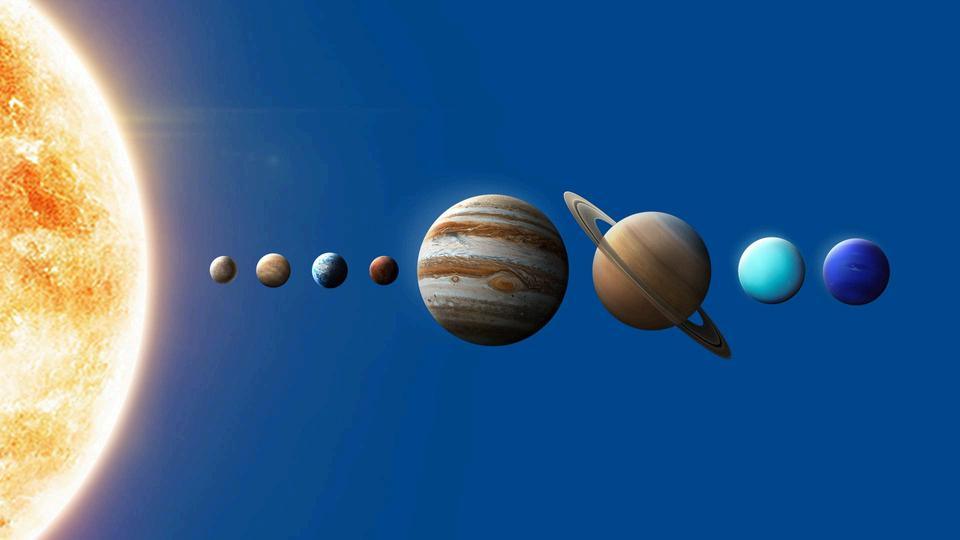
Every few years, stargazers have had the opportunity to witness a remarkable celestial event known as the Planetary Parade. Also referred to as the planetary alignment, the planetary parade allows individuals to see four, or even five luminescent celestial bodies with their naked eyes - as stated by NASA.
The event, however, is referred to as ordinary and insignificant by a number of astronomers and scientists - specifically in regards to the fact that the event is simply characterized by the alignment of multiple planets’ at one side of the sun Despite this scientific viewpoint, the cosmic display still possesses immense cultural significance. For instance, in Greek mythology, the forces generated from planetary alignment allowed Zeus to overthrow the reigning king and become the king of the gods In other customs, these alignments served as signals of imminent major changes on Earth. Moreover, recent scientific discoveries suggest that planetary alignments may influence solar activity, hinting at their potential to transform our understanding of the cosmos This article will explore the science behind planetary parades, their potential impact on the solar system, and their significance to modern scientific research
To further understand the Planetary Parade, it is important to delve into the science behind the event - ranging from optical perspectives to concepts within the field of physics in regards to speed
To truly understand the Planetary Parade, it is crucial to consider how the event is viewed from earthly perspectives Optical perspectives, a scientific phenomenon that characterizes human illusions, are fundamental for the reason behind the “aligned” appearance of the planets when viewed with the naked eye from Earth With Earth serving as the vantage point, or the place where individuals view an object from, the planets - despite the fact that they are more than millions of kilometers away from one another - appear to be right next to each other to an extent where they seem to touch one another
From this, a key question arises: How do planets with different orbital speeds align on the same side of the Sun? Each planet in the solar system moves at a unique orbital speed, which determines how long it takes to complete one revolution around the Sun Indeed, the 7 different planets of the solar system all have different orbital speeds. This can easily be understood by analyzing the number of days each of the planets has in one year, which is also the number of days it takes for a planet to complete one full orbit around the sun.
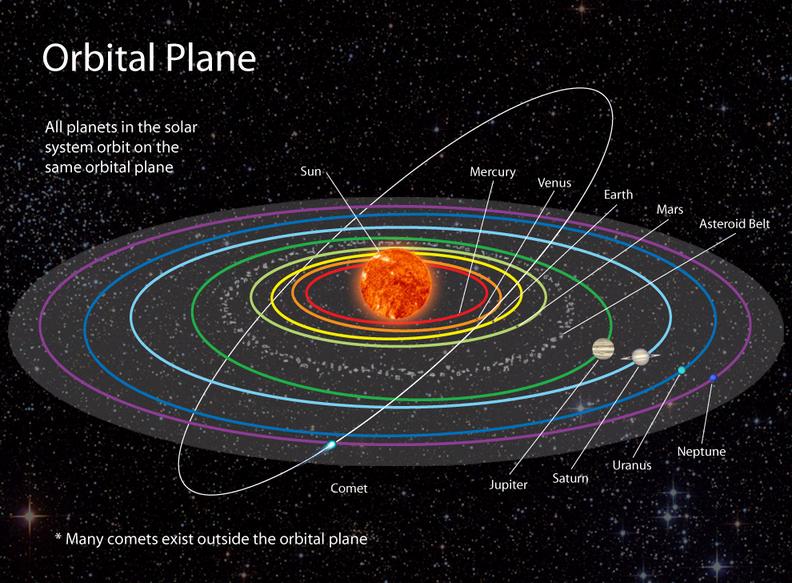
A correlation can be observed between the distance of the planet from the sun and the rate of the orbital speed Planets that are especially close to the sun are fast-moving planets due to their extremely high orbital speeds. This can be noticed with Mercury - the closest planet to the Sunwhere it takes approximately 88 Earth days to complete its orbit around the Sun On the other hand, those that are farther away from the sun, such as Neptune, take 60,190 Earth days to complete its orbit around the sun. These immense disparities indicate the rarity of the direct alignment of the planets of the solar system, and yet, despite the substantial differences, the planets temporarily stay on the same side from the sun - with further help of optical perspectives - allow stargazers to awe and enjoy the parade
Recently, new discoveries have been made that proposed the correlation between tidal forces - a gravitational effect that is a result of the difference in gravitational forces of two celestial bodiesand the 11-year sunspot cycles Before diving in, it is important to consider if solar activities are influenced by planetary gravity. Primarily, it is that solar gravity is the one responsible for pulling the planets towards the sun itself - resulting in the orbiting motion of the planets, along with minute effects of planetary gravity towards the sun. However, a study - as illustrated by Science Alert - discovered how the alignment of Jupiter, Earth, and Venus occurred every 11 07 years with an extremely powerful tidal force. The study further implies on how there are potential correlations between the alignment and solar maximum, an 11-year period where solar activity reaches its zenith - posing substantial influence to space weather
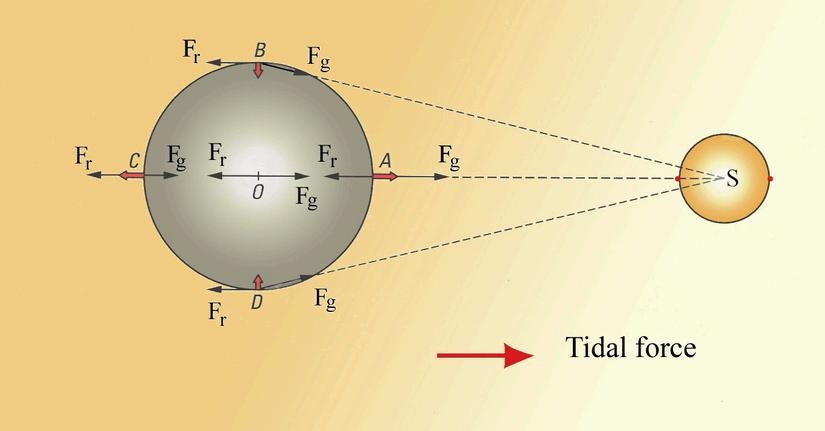
Despite the effect being minimal, further observations indicate how the tidal forces can potentially affect the magnetic field and reverse it When the magnetic field of the sun is reversed, it often results in the transition to solar minimum and a reduced solar activity - further reinforcing the correlation between the Planetary Parade and the solar system while highlighting the multifaceted nature of space science
Altogether, what seems to be an ordinary and insignificant celestial phenomenon rather possesses deeper significance Not only does it leave the stargazers amazed, but the parade also has the potential to leave the scientific community astonished with its fundamental role in the advancement of modern scientific research Who knows? One day, thanks to the advanced research and discoveries that stem from the Planetary Parade, we will be able to live on one of the planets that we once looked up at and gazed at the night sky during the parade
SOLAR WIND, A WORLD SET ABLAZE
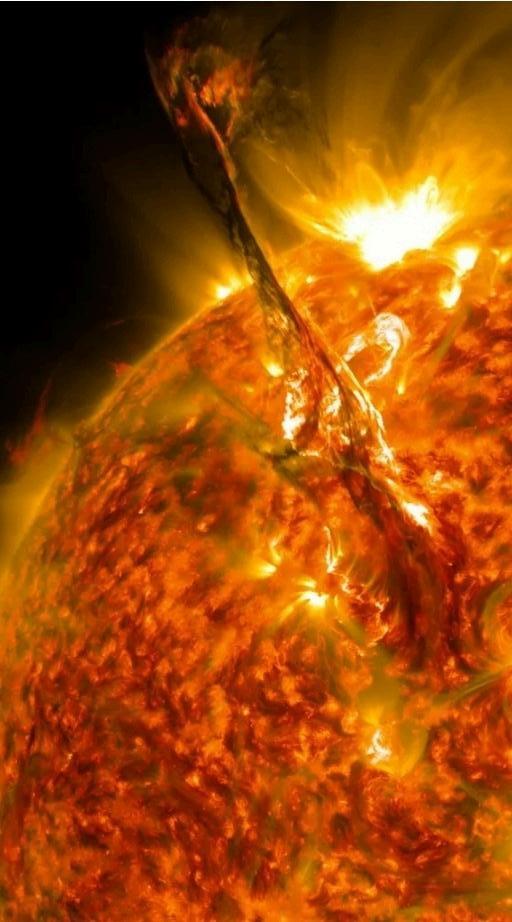
The night should’ve been dark. Instead, the sky burned with eerie crimson and emerald light, rippling like ghostly fire across the heavens Telegraph wires sparked violently, sending electric shocks through the hands of operators. Machines ignited without warning, setting post offices and telegraph stations ablaze The world was not at war, but an unseen force had launched an attack One that no one had expected and no one could stop.
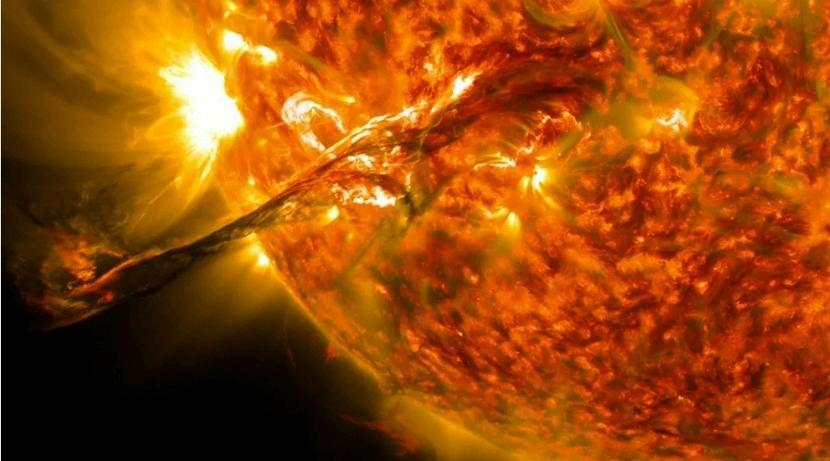
September 1859, the Sun had declared its power A massive explosion on its surface had ejected a surge of supercharged particles hurtling toward the Earth at astonishing speeds. When they struck, the air became electrified, compasses spun wildly, and entire communication networks collapsed Across continents, people awoke in terror, believing the end of the world had come
The Carrington Event was the most powerful geomagnetic storm ever recorded, but it won't be the last. If a similar event were to strike today, the consequences could be far more catastrophic due to our increased reliance on technology that is vulnerable to solar activity When a solar flare or coronal mass ejection (CME) from the Sun interacts with Earth's magnetic field, it generates powerful electromagnetic pulses (EMPs) that can disrupt satellite communications, GPS signals, and power grids Satellites, which rely on delicate electronics and signals from Earth, could be knocked out by these intense EMPs. GPS systems, which depend on constant communication with satellites, could falter, making navigation and timing systems unreliable
On the ground, the intense solar radiation could induce voltage surges in power lines, potentially causing transformers and entire power grids to fail In major cities, this could result in widespread blackouts lasting for days or even weeks. Air travel would be disrupted because planes rely on satellite communications and precise GPS data, while the radiation could also pose a health risk to passengers The internet, which depends on undersea cables and satellites for global connectivity, could flicker and fail as satellites are knocked offline and communications infrastructure is damaged The Sun’s solar flares and CMEs, while happening far from Earth, can still send massive bursts of energy that disrupt the systems we ’ ve built to function within our modern, tech-dependent world The world as we know it could suddenly come to a halt, all due to the Sun's unpredictable and powerful activity
This storm from the past offers a crucial warning for the future Though distant from the Earth, the Sun is not a passive star It is an unpredictable, irresistible force that sends out waves of destruction, challenging the very foundations of human civilization. The question is not: “if it will happen again?” but “When?”
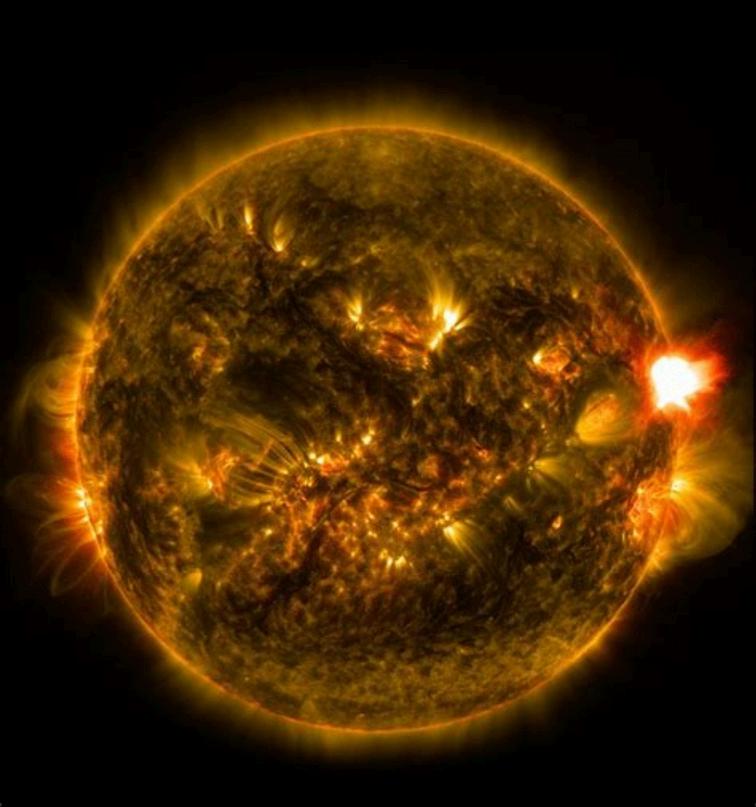
To understand this threat, we must first unravel the mysteries of the solar wind, explore how it interacts with our planet, and examine the ways it can both be dazzling and destroying. Only then can we prepare for the day when the Sun shows its fury towards the Earth once again
The Sun is far from just a silent, burning sphere in the sky Beneath its roiling surface, nuclear reactions rage with an energy so immense that even a fraction of its fury could devastate our living planet This ceaseless turmoil sends a continuous stream of high-energy particles outward into space. This invisible yet relentless outpouring is known as the solar wind; a river of charged particles, mainly electrons and protons, surging from the Sun’s outermost layer: the Corona
Unlike the gentle breezes that sweep across Earth’s landscapes, solar wind travels at blistering speeds ranging from 300 to 800 kilometers per second, fast enough to circle the planet in moments It does not stop at Earth but extends beyond Pluto, defining the heliosphere, the vast bubble of space influenced by the Sun’s presence.
Solar wind is not always a steady stream; at times, the Sun erupts with intense and sudden bursts of energy. Solar flares release massive amounts of electromagnetic radiation, while coronal mass ejections (CMEs) send huge clouds of charged particles through space If a CME is directed at Earth, it can cause a geomagnetic storm by interacting with our planet’s magnetic field These storms can induce electric currents in power lines, potentially damaging transformers and causing widespread blackouts
Satellites, which depend on precise communication with ground stations, can experience disruptions or be permanently damaged by the intense electromagnetic radiation from these events. GPS systems, which rely on satellite signals, would fail to function, affecting navigation and timing for everything from aircraft to financial transactions Essentially, many of our technological systems are vulnerable because they rely on signals that can be disrupted or destroyed by the charged particles from a CME, which interfere with both communication and electrical systems on Earth
However, this doesn’t mean that Sun’s activity is purely random. Its activity follows an approximately eleven-year cycle, rolling between periods of calm and intense solar storms Sunspots become more frequent during solar maximums, solar flares more explosive, and the solar wind more turbulent It is during these peaks that the Earth faces its greatest risk of a direct hit from the sun
Earth may seem insignificant and vulnerable across the endless space, but it possesses an invisible shield that protects life from the Sun’s fury This magnetosphere, a massive magnetic field generated by the molten iron churning within our planet’s core, acts as a natural force field against the oncoming tide of solar wind. Most of the Sun’s charged particles are deflected, guided harmlessly away from Earth’s surface
But the shield is not impenetrable. When solar wind intensifies, it compresses the magnetosphere, forcing charged particles deeper into the atmosphere If a powerful coronal mass ejection strikes Earth, the force can temporarily disrupt and weaken this barrier, allowing solar radiation to penetrate areas it would normally never reach
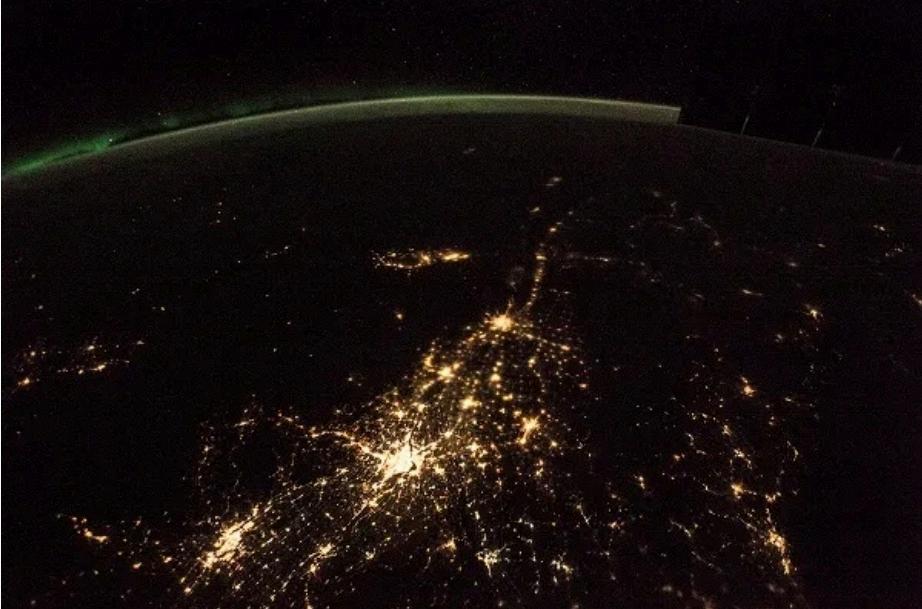
While this interaction threatens technology, it also produces one of nature’s most breathtaking spectacles The auroras, known as the Northern Lights (Aurora Borealis) and Southern Lights (Aurora Australis), are the result of solar wind particles colliding with atoms in Earth’s atmosphere These interactions excite oxygen and nitrogen molecules, causing them to glow in brilliant displays of green, red, purple, and blue
During strong geomagnetic storms, auroras become visible at much lower latitudes than usual In 1859, during the Carrington Event, they were reported as far south as Cuba and Colombia, painting the skies with an unearthly glow While beautiful, such events signal immense solar disturbances warnings that something powerful is at work in the cosmos
The Carrington Event was not the only time the Sun reminded humanity of its might. In March 1989, another geomagnetic storm delivered a devastating blow to modern infrastructure A powerful solar storm struck Canada’s province of Quebec, generating electrical currents so strong they overloaded the power grid, plunging millions of people into darkness in an instant Entire cities were without electricity for hours, proving that even in the modern age, a single surge from the Sun could cripple daily life.
More recently, in July 2012, a solar superstorm erupted from the Sun’s surface. This coronal mass ejection was as powerful as the Carrington Event, but Earth was spared by sheer luck. Had it occurred just one week earlier, it would have struck directly, causing widespread electrical failures, crippling satellite communications, and potentially costing the global economy trillions of dollars in damages Scientists estimate that we only narrowly avoided disaster
These near-misses raise a chilling question: What happens when the next Carrington-class storm does not miss?
Experts warn that our modern world is more vulnerable than ever. Power grids, which form the backbone of civilization, are particularly at risk A strong enough solar storm could induce electrical currents in power lines, overloading transformers and causing continent-wide blackouts that could take weeks or even months to repair fully
Satellites, responsible for everything from GPS navigation to weather forecasting, would also be endangered. A major solar storm could disable or destroy these satellites, cutting off communications, disrupting global transportation networks, and making even simple tasks like financial transactions impossible.
High-altitude flights, particularly those near the poles, would be exposed to increased radiation, forcing airlines to reroute flights or delay operations altogether. Astronauts aboard the International Space Station would be in grave danger, potentially facing levels of radiation that could cause severe health effects or even be fatal
The worst-case scenario? A storm is so powerful that it cripples technological infrastructure on a

Though the Sun’s power cannot be controlled, its effects can be predicted and mitigated Space weather monitoring agencies, including NASA, NOAA, and the European Space Agency, have deployed advanced satellites to track solar activity in real-time. These observatories provide early warnings, allowing power companies, airlines, and government agencies to prepare for an incoming storm.
Power grids can be reinforced with shielding to protect transformers from damage during geomagnetic storms. These storms induce electric currents in power lines, which can overload and burn out transformers To prevent this, grids can be designed with fail-safes that disconnect parts of the system before dangerous currents cause harm. Some areas, like parts of Canada and the U S , have started implementing these protections, but widespread adoption is limited due to high costs and the unpredictable nature of solar storms
For satellites, advancements in radiation shielding and automated shutdown protocols can help protect critical systems from being disabled by solar storms The aviation industry can adjust flight paths to minimize radiation exposure for passengers and crew
Perhaps most importantly, global cooperation is essential. Since solar storms do not respect borders, nations must work together to develop policies, response plans, and emergency communication systems in the event of a severe solar storm The more humanity understands about space weather, the better prepared we will be when the next major storm inevitably arrives
THE SUN’S UNPREDICTABLE FUTURE: WHEN WILL THE NEXT STORM STRIKE?
The Sun, for all its brilliance and warmth, remains an unpredictable force Though space agencies track their cycles and behaviors, no technology exists to fully prevent or neutralize the impact of a massive geomagnetic storm. The Carrington Event, the 1989 blackout, and the near-miss of 2012 serve as stark reminders that Earth remains at the mercy of its parent star
The question in all our minds is not "Will another catastrophic solar storm occur?" but "When will it inevitably happen?" Scientists estimate that storms on the scale of the Carrington Event strike approximately once every 100 to 200 years, meaning the next one may already be on its way.
Understanding solar wind is no longer just a matter of scientific curiosity It is a necessity for the survival of our modern world. The same forces that create the ethereal beauty of the auroras also hold the power to cripple global civilization in an instant
The Sun has sent warnings before The only question is: Will we be ready when it strikes again? February 14, 2025 / Yena Yoon / yena.yoon27@stu.siskorea.org
CHALLENGES AND POSSIBILITIES OF SPACE MINING: WHAT SHOULD WE DO?

JAEHWAN KIM
Throughout the history of civilization, the universe has always piqued human curiosity. Gazing at the night sky, we have fueled our imaginations about new worlds beyond Earth, continuously using science as a tool to explore these realms The current efforts to send satellites to various celestial bodies in the solar system for environmental studies, as well as to focus on the distant voices of the universe through radio telescopes, are part of our endeavors in space exploration and observation. Now, humanity is poised to move beyond mere observation to actively utilizing various celestial bodies
During the Cold War era of the 20th century, human scientific and technological advancements progressed remarkably. The development of rocket technology laid the groundwork for venturing into outer space, and advancements in satellite communication allowed us to gain detailed insights into the appearances and properties of various celestial bodies in the solar system Against this backdrop, the possibility of opening a new frontier in ' space resource mining' is emerging. This article aims to explore what Space Mining is, why it is necessary, and the challenges we must address in the process
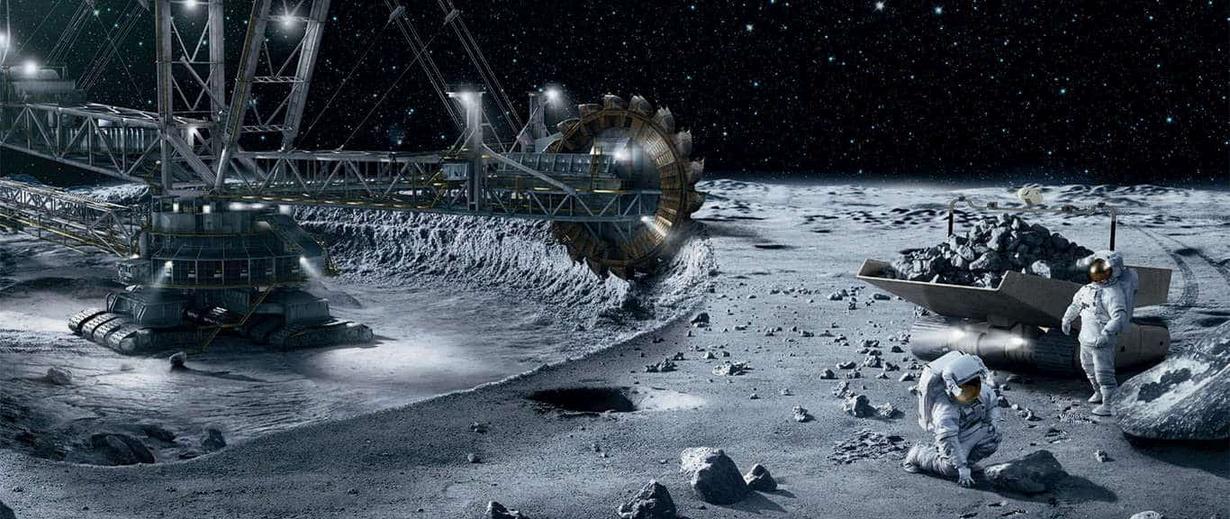
Space Mining refers to the technology of extracting resources from celestial bodies, including those in the solar system. One can think of it as expanding terrestrial mining on a cosmic scale. But why should we venture into space when we can simply extract resources from Earth? The reason lies in the inherent critical issues associated with mining on Earth
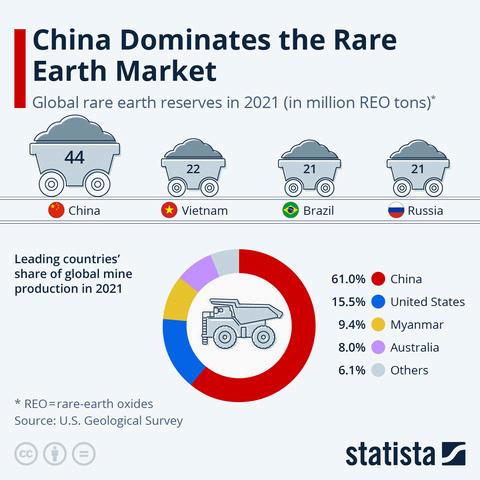
Earth's natural resources are limited, and their availability varies significantly by region. As humanity's indiscriminate resource usage leads to the depletion of natural resources, geopolitical tensions arising from resource scarcity are intensifying. A prominent example is China's restrictions on rare-earth element exports Currently, China produces the majority of the world's rare-earth elements, and it sometimes leverages this to politically pressure certain countries by restricting exports. Furthermore, terrestrial mining has severe environmental impacts that deteriorate ecosystems and generate harmful byproducts To address these crises while preserving the Earth’s environment and alleviating future global conflicts, responsible resource extraction methods like Space Mining are essential.
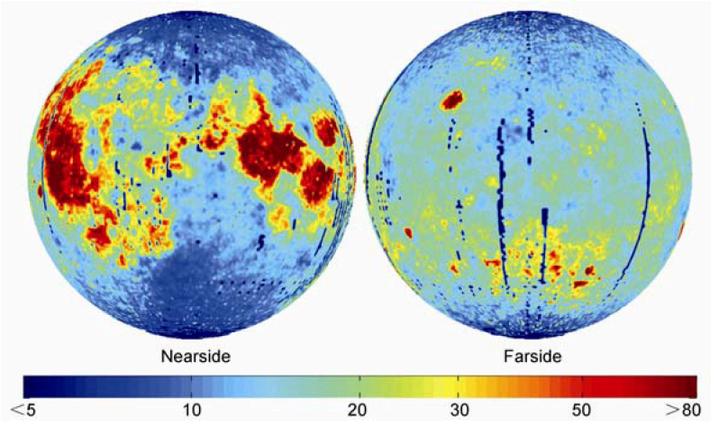
There are compelling reasons to believe that Space Mining can help solve these problems, with the Moon serving as a prime example Various countries have conducted research indicating that significant amounts of He-3 may be present on the Moon’s surface. An example of this is China's Chang’e 1 satellite He-3 is an isotope of helium, differing from ordinary helium, consisting of two protons and one neutron Its importance lies in the potential use of He-3 as fuel for future nuclear fusion reactors Unlike nuclear power, which generates energy from the fission of heavy elements, nuclear fusion produces energy by fusing light elements, making it a highly efficient power source with minimal concerns regarding radioactive materials and carbon emissions Therefore, if we can extract He-3 from the Moon through Space Mining technology, it could lay the foundation for an energy revolution for humanity
Another significant example is the metals found in asteroids. Most asteroids contain metals in quantities that exceed those found on Earth, which can be extracted through surface mining. This difference arises from the initial formation processes of these celestial bodies; unlike Earth, where metals sank to the core due to intense heat from collisions, asteroids retained their metals on the surface. Notably, asteroid Psyche 16 is believed to contain large amounts of gold, platinum, iron, and nickel, with its value estimated to exceed quadrillions of dollars If we can develop mining operations on Psyche 16 and other asteroids, we could potentially reap unimaginable economic benefits.
As previously discussed, Space Mining could provide critical resources for various advanced industries. Additionally, it offers the opportunity to reduce the reliance on environmentally harmful mining practices on Earth, thus preserving ecosystems and mitigating pollution However, alongside these clear advantages, the limitations of this technology are also significant The time and costs associated with launching rockets and traveling to other celestial bodies are substantial, and developing infrastructure optimized for low gravity and extreme temperature variations also incurs significant expenses Given our current technological capabilities, launching Space Mining efforts immediately would likely be financially unfeasible, even with the potential profits from the extraction process
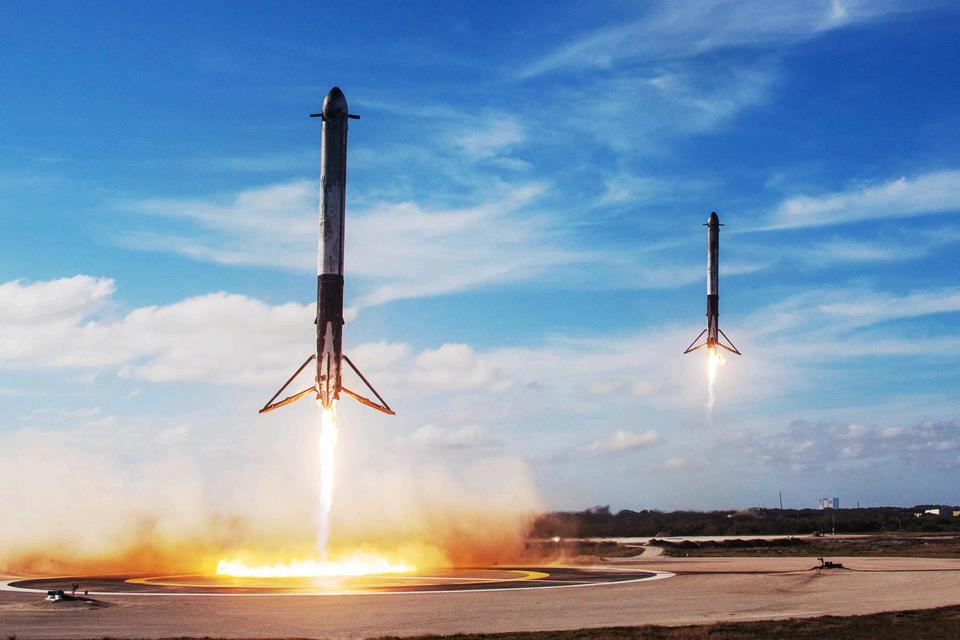
To address these challenges, we need to develop efficient transportation and processing systems Establishing technologies for rocket reuse can help reduce launch costs, and implementing in-situ resource utilization (ISRU) systems to produce necessary materials from local resources in space will be essential Private space companies like SpaceX have already made meaningful progress in developing such technologies, and if humanity collaboratively tackles these challenges, we could lay the groundwork for the commercialization of Space Mining.
In summary, Space Mining holds great potential for securing humanity's future resources and achieving sustainable development beyond Earth. However, realizing this potential requires ongoing research, international collaboration, and innovative policy and technological development As the world stands on the brink of this new era, could the collective efforts of scientists, policymakers, and industries pave the way for a better future through sustained interest and support for space exploration? The answer lies in our collective efforts to embrace and support space exploration.
February 23, 2025 / Jaehwan Kim / official jaehwan@gmail com
PHARMACEUTICAL PHARMACEUTICAL PHARMACEUTICAL INDUSTRY GOES TO INDUSTRY GOES TO INDUSTRY GOES TO SPACE SPACE SPACE
SPACE-BASED DRUG DEVELOPMENT- WHAT’S HAPPENING?
JOOWON LEE
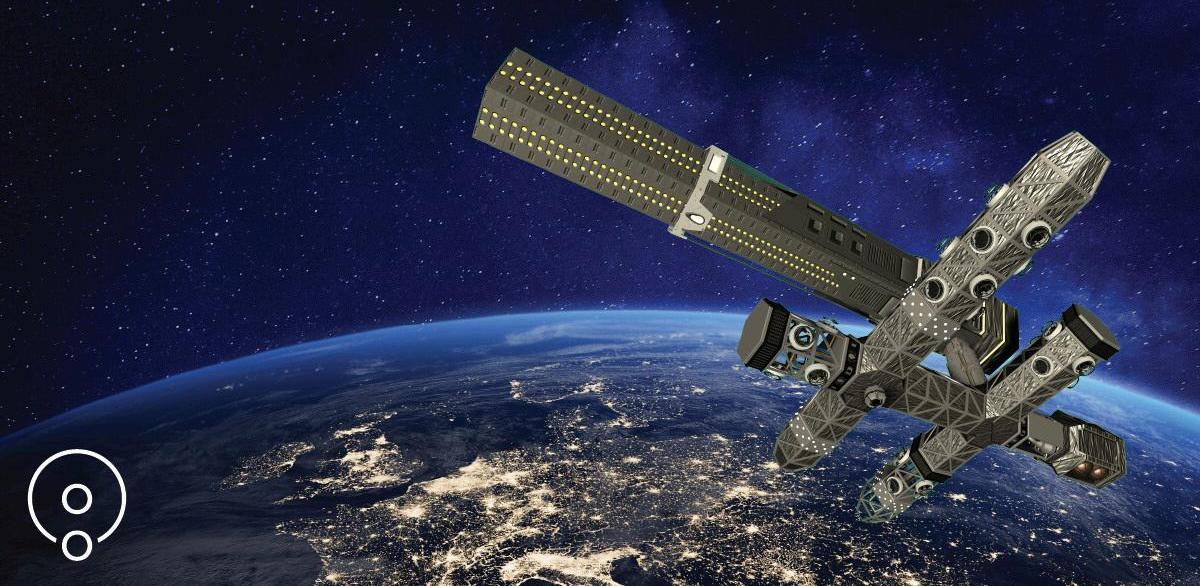
Industries have already started to utilize space ’ s special environments for scientific & technology innovation Among many, the pharmaceutical sector has taken a surprising turn by conducting space-based drug developments Due to space ’ s unimaginable future prospects, nations like China, Japan, India, and the UAE are joining the competition which was once dominated by the US and the Soviet Union, making the space industry expand rapidly, and more dynamic than ever As we all know, aerospace, IT and vehicle companies have held prominent control of this industry, but recently, pharmaceutical companies have joined in utilizing space ’ s unique conditions, such as microgravity and low sedimentation to enhance drug developmentespecially in the protein stabilization stage. Even space laboratories have been established, marking further advancements in this promising field
In order to understand the importance of pharmaceutical research in space, we must first examine its unique circumstances that were mentioned earlier. You may already be familiar with some of these, so let’s delve into it!
In the state of microgravity, things or people appear weightless Objects and humans floating freely in space demonstrate the consequences of microgravity For example, astronauts can move even very heavy equipment with ease by just using a fingertip in this setting. Though frequently used, the term " zero gravity" is deceptive, since even though gravity still exists, its effects are far less pronounced, hence the name "micro"-gravity
One of the basic processes on Earth is convection, which is the process of heat transfer in fluids (liquids and gasses) due to the movement of the fluid itself. It occurs because of the changes in temperature and density
Convection, however, is essentially nonexistent in the microgravity environment of space, providing a convection free lab!
Finally, sedimentation is absent. Sedimentation is the process by which particles in a liquid settle to the bottom over time due to gravity It commonly occurs in natural and industrial processes For example, have you ever left a glass of fresh orange juice for a while? If you don’t stir it, you’ll see the pulp starting to sink to the bottom This factor allows the experimental setting to be more stable and regulated.
These three key factors(microgravity, lack of convection and absence of sedimentation) contribute to creating the ideal conditions for conducting pharmaceutical experiments in space MICROGRAVITY
Protein crystallization is among the most exciting uses of space-based research This procedure is essential to drug discovery because it enables researchers to thoroughly study protein structures Researchers can more successfully design targeted drug candidates by identifying active regions within a protein structure through the use of 3D protein modeling.

When researchers conduct protein crystallization in space, the lack of gravitational disturbances greatly improves accuracy Formation of larger and more organized crystals are able to be produced, which leads to clearer and structural data. Additionally, the reduced presence of convection and sedimentation enables scientists to observe proteins in their most stable condition. Ultimately, these advantages result in increased efficiency and maybe a quicker time-frame for drug development
Though seemingly out of reach, the applications on real world problems are already underway The advancements are already being achieved in a plethora of places Winnebago, for one, recently announced its successful drug development project conduct result. On the other hand, there is a company with the name of ‘Rocket Lab’ that actively concentrates on launching out labs for biotechnological and pharmaceutical space-based research

Although still in its early stages, this industry is expected to expand significantly in the coming years, as made evident by the clear benefits it offers to drug development and biotechnology.
Despite its advantages, there are significant challenges in space-based pharmaceutical research Compared to conventional research activities, the financial burden of sending laboratories and personnel into space is astronomical – pun intended! This is one of the key causes of the reluctance of many companies to even start funding the development of drugs in outer space
However, as the “New Space” movement rises – private companies are engaging more in space exploration, some even leading the trend – this limitation might soon cease to be a barrier Space-based drug development may become more practical and popular as industries improve and start to provide more affordable solutions, and if the pharmaceutical companies also advance their technological capabilities
As exemplified above from its numerous benefits, space-based medication research should not be disregarded The potential breakthroughs in speed and efficiency are very significant – humans have only just begun to explore what space offers us, and there are numerous steps ahead This kind of protein research mentioned above is just one example of how this industry can benefit from space.
Imagine us, evolving from apes, and now consuming the pills from the space With continuous technical developments and sufficient investments, this field has enormous potential to grow. The question now is no longer whether space-based research can occur - rather when its full potential will be realised
February 23, 2025 / Joowon Lee /eeuudaemonia@gmail com

JOHN BHANG


The world today is facing an overwhelming waste crisis. Landfills are filling up at alarming rates, and concerns are rising about whether there will be enough space to dispose of all our trash in the future Burning waste releases harmful chemicals and greenhouse gases, worsening climate change. One unconventional solution that has been proposed is disposing of waste by sending it into space. This idea, while ambitious, raises important questions about feasibility, cost, and longterm consequences This essay explores the feasibility, benefits, and drawbacks of space waste disposal "

Growing concerns about pollution and land overuse have led some to propose disposing of waste in space Proponents argue that launching hazardous waste, like nuclear material, into space could protect the environment. The Pacific Garbage Patch, a massive accumulation of plastic waste in the ocean, is a glaring example of the pollution crisis. According to estimates, this floating mass of trash covers an area of approximately 1 6 million square kilometers more than twice the size of Texas With global waste production expected to reach 3 4 billion tons by 2050, the problem is only getting worse. Given these alarming statistics, some argue that looking beyond Earth for solutions might be necessary.
There are some clear advantages to disposing of waste in space. First, it would significantly reduce land and ocean pollution, preserving natural ecosystems and preventing further microplastic contamination The Earth's environment would be much cleaner, benefiting wildlife and human populations alike
Second, nuclear waste, which poses serious long-term risks to the planet, could be eliminated entirely. Currently, radioactive waste is stored in secure underground facilities, but leaks or failures in containment could have catastrophic consequences If nuclear waste were safely transported and disposed of in space, particularly by directing it toward the Sun, it would be permanently neutralized without posing a danger to future generations.
Finally, exploring this method could drive advancements in space technology. The challenge of safely launching waste into space could lead to innovations in rocket technology, potentially making space travel more efficient This progress could support future space exploration, including the search for habitable planets or asteroid mining. By investing in these technologies, humanity could gain both environmental and scientific benefits.
Despite these potential benefits, the idea of sending waste to space presents several serious challenges The most obvious is the cost Launching a single kilogram of material into space costs thousands of dollars. With global waste production in the billions of tons, the cost of space disposal would be prohibitively high The energy and resources required would make this solution highly impractical, especially when more cost-effective waste management methods exist on Earth
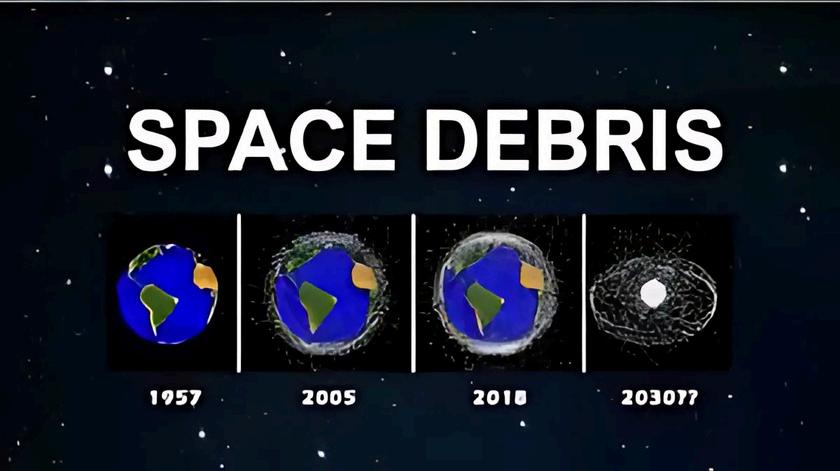
Another major concern is the risk of creating space debris. If rockets carrying waste were to malfunction or explode, they could scatter hazardous debris into Earth's orbit. This could endanger satellites, space stations, and future missions The presence of nuclear waste in these launches raises even greater risks an accident could result in radioactive contamination falling back to Earth.
Finally, there is an ethical and philosophical argument against this approach Instead of finding sustainable ways to manage waste, dumping it into space could be seen as an irresponsible shortcut. The focus should be on reducing waste production, improving recycling systems, and developing biodegradable materials rather than relying on extreme measures to dispose of waste. If we cannot manage waste properly on Earth, it raises concerns about how humanity would handle waste on a future space colony

While intriguing, space waste disposal is fundamentally flawed While it offers potential solutions to Earth's pollution crisis, the high costs, risks, and ethical concerns outweigh the benefits Space disposal is neither a feasible nor a sustainable long-term solution Instead, humanity should focus on improving waste management on Earth, investing in recycling, and finding innovative ways to reduce waste production Although it may seem like an easy fix, sending trash into space is not the answer to our growing waste problem Instead, we must ask ourselves: how can we better manage waste here on Earth before looking to the stars for solutions?
February 27, 2025 / John Bhang /junhyuk bhang27@stu siskorea org
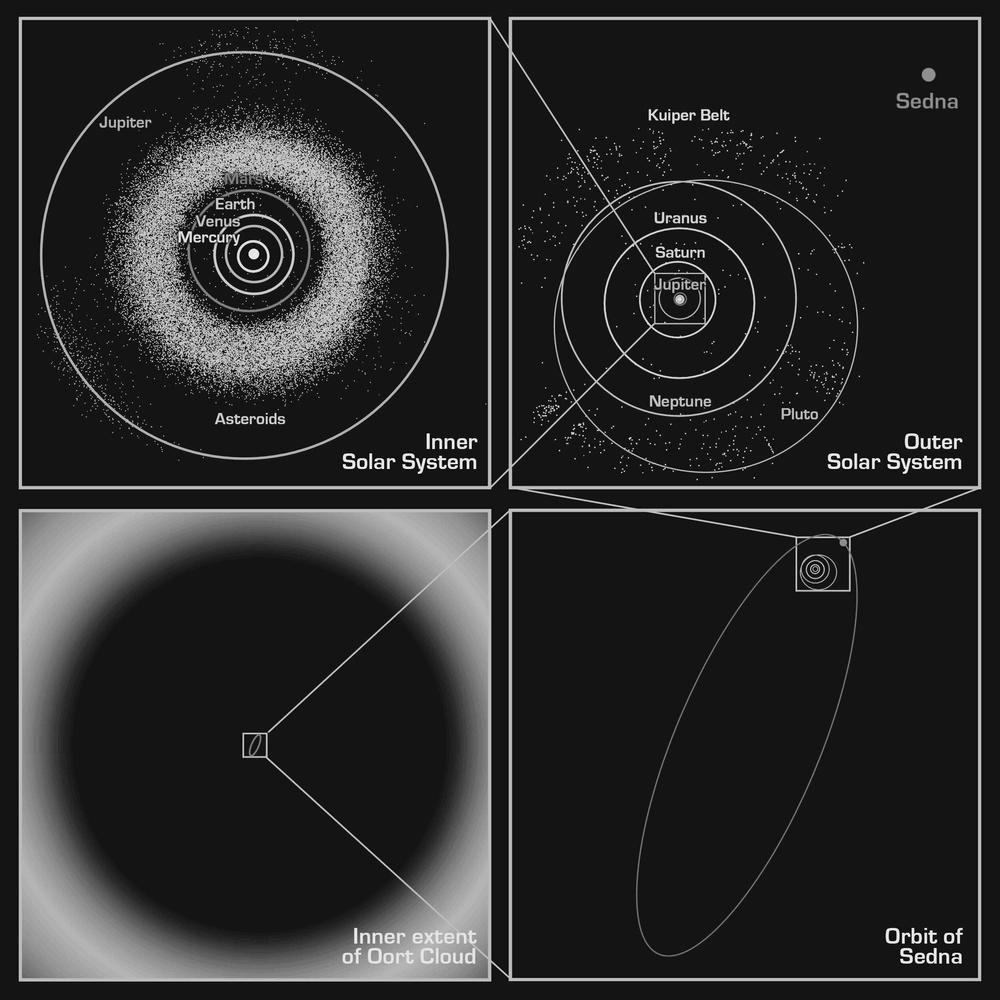
Ever wondered if summer heat is simply due to the Earth being closer to the Sun? Or perhaps you ' ve always pictured the Sun as a vibrant yellow orb? Space exploration has revolutionized our understanding of the universe, yet some misconceptions persist despite these advancements Join us as we debunk common space myths and unveil the fascinating truths behind them.

MYTH 1 : THE SUN IS CLOSER DURING SUMMER, THEREFORE SUMMER IS HOTTER THAN WINTER
The common myth that summer ' s warmth is due to Earth's proximity to the Sun is false While it's true that Earth's orbit is elliptical, causing a variation in distance from the Sun throughout the year, this difference isn't the primary cause of the seasons. Earth reaches perihelion, its closest point to the sun, in January, and aphelion, its farthest point, in July
The real reason for seasons is Earth's axial tilt of approximately 23 4 degrees relative to its orbital plane. This tilt causes different parts of Earth to receive the Sun's direct rays at different times of the year. During summer in the Northern Hemisphere, the North Pole tilts towards the Sun, resulting in more direct sunlight and longer days Conversely, in winter, the South Pole tilts towards the Sun
Scientists believe Earth's tilt resulted from a collision with a large object, Theia, early in Earth's history. This impact also created dust and rubble that eventually formed the Moon.
The common myth that the Sun is yellow is incorrect In reality, the Sun emits a spectrum of colors that, when combined, appear white to our eye The yellow or orange hue we sometimes perceive is due to the Earth's atmosphere scattering shorter wavelengths of light, like blue and viole. This effect is more pronounced during sunrise and sunset, when sunlight travels through more of the atmosphere, leading to the scattering of even more blue light and causing the Sun to appear more yellow, orange, or even red The true color of the sun, when viewed from space or when the sun is directly overhead, is white.
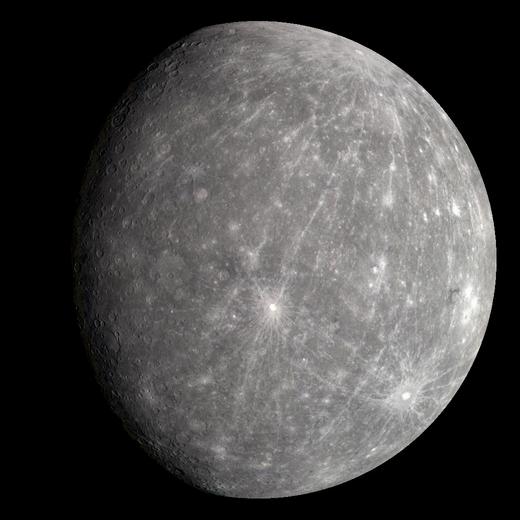
The misconception that Mercury is the hottest planet in our solar system stems from the fact that it's the closest to the Sun While it's true that Mercury experiences extremely high temperatures during the day, planetary temperatures vary greatly between day and night. Despite Mercury's proximity to the Sun, Venus reigns supreme as the hottest planet due to its dense, thick atmosphere primarily composed of carbon dioxide, a potent greenhouse gas This atmosphere traps heat, creating a runaway greenhouse effect that results in a scorching average surface temperature of 867°F (464°C). Additionally, Mercury lacks a substantial atmosphere to retain heat, causing temperatures to plummet dramatically during its long nights, reaching as low as -290°F (-180°C) Venus's atmosphere also minimizes temperature differences between its day and night sides February 28, 2025 / Gwenn Valerie Qiu /gwenn
IS THERE A IS THERE A POSSIBILITY OF POSSIBILITY OF MULTIPLE UNIVERSES? MULTIPLE UNIVERSES?
MANYA SHIVHARE
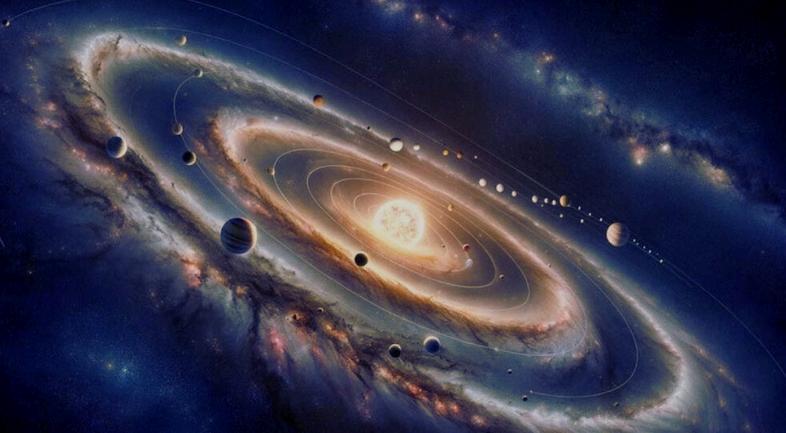
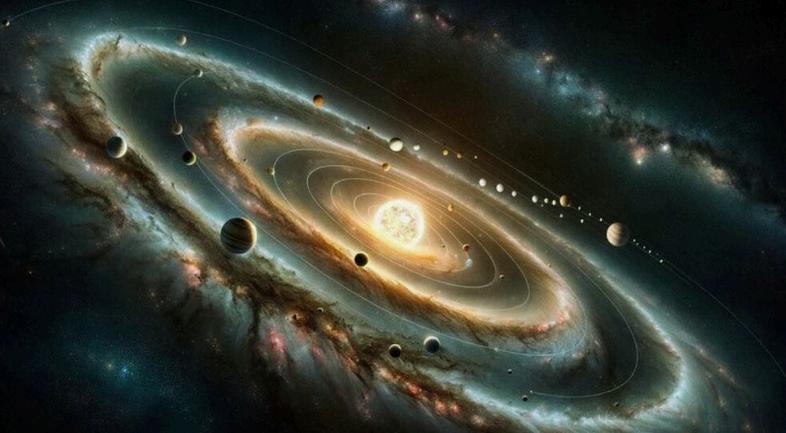
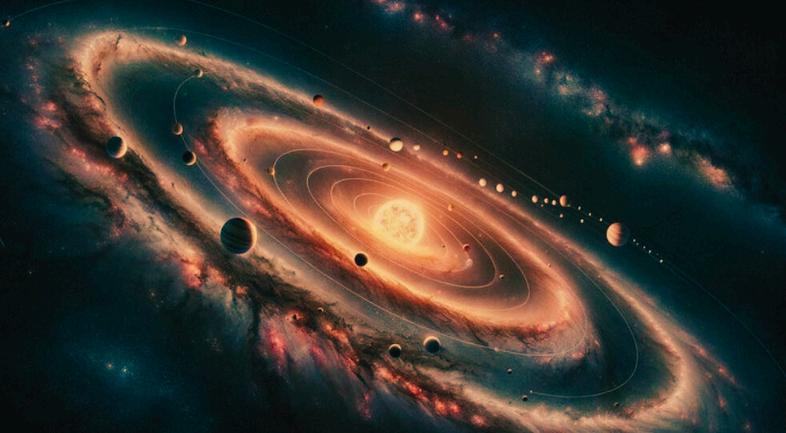
Are we living in a single, solitary universe, bound by the laws of physics we have come to understand or is the multiverse a real phenomenon that challenges everything we know about existence and our position in the meaning of life? The notion of the multiverse implies that our world may not be the only one Rather, there might be a number of separate worlds, each with its own set of physical rules, situations, and possibly living things This concept contradicts conventional understandings of existence and represents a significant shift in how we think about the universe. This article explores the idea of numerous universes and how the idea of multiverse may transform our view of reality, the cosmos, and our role within it
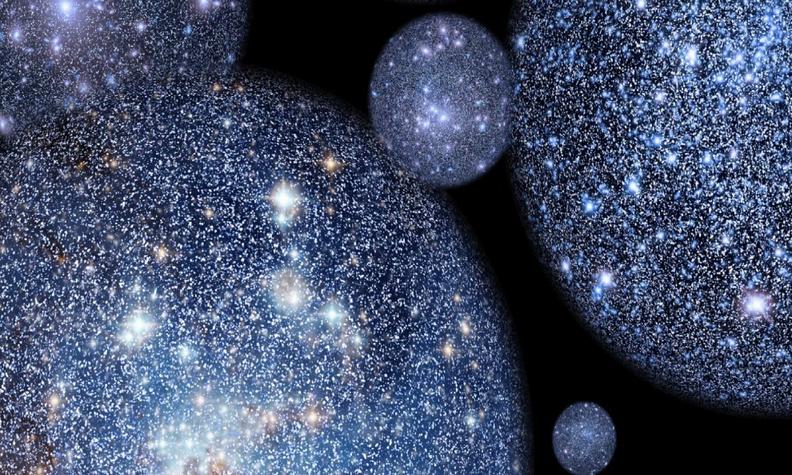
It will dive into scientific and philosophical research, examining their contributions to the theory and analyzing their impact on its credibility. In the following sections, we will explore both sides of the discussion: examining the scientific theories that support the existence of multiple universes, while also addressing the criticism that questions its plausibility Philosophical perspectives will even be examined, shedding light on the implications of a multiverse for existence, reality, and ethics.
To begin with, scientific research suggests four forms of evidence: the Many-Worlds Interpretation, String Theory, Inflationary Cosmology and the Brane Theory
The Many-Worlds Interpretation was presented by Hugh Everett III in 1957, arguing that every quantum event causes a branching of reality, resulting in parallel worlds for each potential conclusion This theory challenges established concepts of reality by proposing that infinite versions of ourselves exist in other domains. However, while the idea remains captivating, MWI lacks empirical proof and is primarily philosophical because it cannot be examined or witnessed firsthand
Further, the String theory, which was developed in the 1970s by physicists such as Leonard Susskind and Yoichiro Nambu, holds that the basic particles of nature are one-dimensional strings rather than point-like objects. String theory proposes the presence of numerous worlds, each with distinct physical rules based on how these strings vibrate Although it is an appealing paradigm for a multiverse, its lack of empirical predictions and experimental backing has led to criticism.
Followed by, Alan Guth suggested Inflationary Cosmology in the 1980s, arguing that the cosmos expanded exponentially immediately following the Big Bang. This fast growth might have resulted in the emergence of "bubble universes," each with its own set of physical rules Andrei Linde later built on this theory, proposing a continuing inflationary process that creates endless worlds. While certain findings, like patterns in the Cosmic Microwave Background (CMB), provide validity to the hypothesis, it remains theoretical because we cannot directly view these universes
Finally, in the 1990s, Edward Witten and others suggested Brane Theory, which holds that our world resides on a three-dimensional "brane" within a higher-dimensional realm, with other universes possibly existing on distinct branes These worlds may interact, but this is only a theory The hypothesis is part of M-theory, which seeks to unite all natural forces, however it also lacks empirical proof and is difficult to confirm with present technology. Scientists argue that some of these theories are unfalsifiable, making them speculative rather than scientific. Nonetheless, these theories continue to optimize interest as they challenge our understanding of reality
Besides the research which the scientific community adhered to, there is potential evidence supporting the multiverse theory today.
One of the most fascinating pieces of evidence that some scientists believe might hint to the possibility of many universes is the Cosmic Microwave Background (CMB) radiation. Irregularities in the Cosmic Microwave Background (CMB), notably cold regions, have led some scientists to speculate that these may represent evidence of interactions with other universes During the inflationary phase, our world may collide with other universes, causing these unforeseen events. While this theory is fascinating, it is still hypothetical owing to a lack of clear proof

It is also possible that black holes and wormholes operate as gateways between universes. Black holes might link worlds, whereas wormholes could provide shortcuts through space-time. While these concepts are intriguing, they have not been observed and remain purely speculative
One of the most significant obstacles to the multiverse idea is the limitations of observational technology. Telescopes and particle accelerators are examples of current scientific equipment and procedures used to examine events inside our observable universe The concept of many universes implies that there are regions of space-time beyond our observation, which means we cannot directly detect or quantify these other worlds. The multiverse theory is difficult to evaluate because it proposes that other worlds exist in a way that our instruments cannot access. Without direct observation or empirical data, most of the multiverse idea is hypothetical, and its scientific validity is debatable
Another issue arises from the mathematical models that drive multiverse theory, notably in string theory and cosmology While the mathematics underlying string theory and other multiverse-related ideas is advanced, many may believe these models are faulty or incomplete In particular, the models' assumptions may be inaccurate or not generally applicable.
In addition from the scientific evidence presented, individuals outside of the scientific community argue that if a multiverse exists, it might indicate that countless versions of us exist across different universes, each living different lives with different choices This raises significant concerns about the meaning of life and our place in the larger scheme of things The essential question is, if there are infinite universes, each with its own set of physical principles, what does this tell us about the nature of reality? Philosophical perspectives on the multiverse are frequently subjective and influenced by personal worldviews This can make it difficult to create a shared or mutually agreed-up perspective Communities often direct their engagement on the topic through a religious framework However, many religious and cultural perspectives on existence do not align with the concept of multiple universes, viewing it as incompatible with established beliefs about creation and the nature of the soul undoubtedly.
The scientific method provides validity and reliability to the fundamentals of knowledge production in the natural sciences. It exhibits in depth understanding of repeatedly tested hypotheses and involves conclusions drawn based on objective, which braces the research and theories with sufficient empirical evidence for the scientific community, along with the general public to agree on mutually. Deviating from the scientific method, in the case of personal perspectives, can lead to wrong or biased results, make it hard to repeat experiments, and cause confusion between true findings and false information It can also raise ethical problems and fail to gain the trust of the normal public Scientists and philosophers continue to dispute whether we live in a single universe or an extensive multiverse. Theories such as the Many-Worlds Interpretation and inflationary cosmology have intriguing possibilities, but they are hampered by a lack of actual data Philosophically, the multiverse calls into question our notion of existence, posing issues of meaning, reality, and accountability While evidence for the multiverse exists, it i till th ti l d h th ti l
, p p
comprehension, prompting us to reconsider the basic fabric of existence and our position in the universe Although the question still stands if our universe is unique or one of many, it leaves us to ponder deliberately: could there be countless realities, each with its version of our lives and choices parallel to our, challenging our morals and roles?
DO LIFE BEYOND OUR EARTH EXIST DO LIFE BEYOND OUR EARTH EXIST
KIM MINCHAE KIM
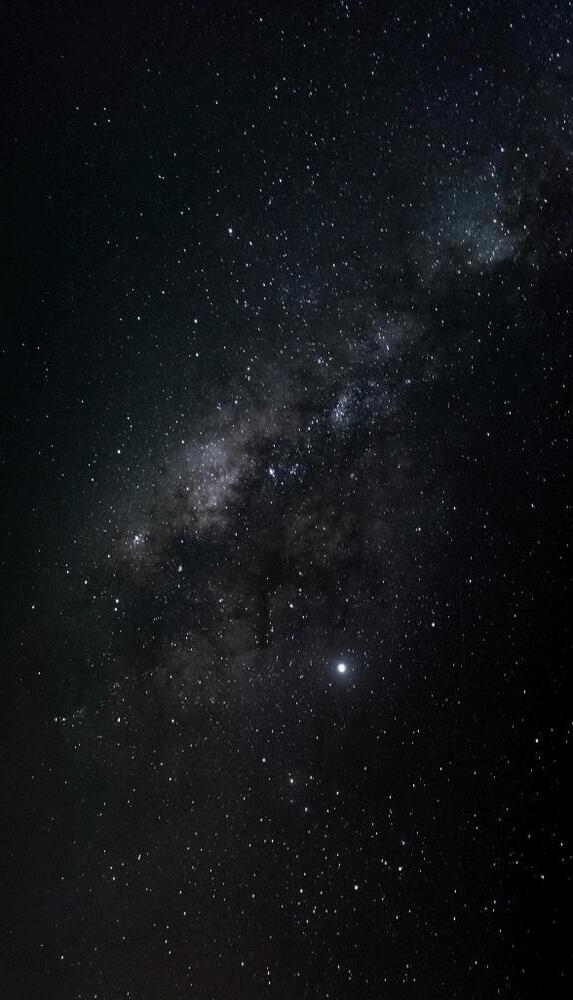
Most fiction movies, comics, and films about space all share one thing: aliens Exposed to us from a young age, the question of ‘Are aliens real?’ has been lingering around us, and humans have yet to find the answer. Alien civilisation refers to a hypothetical or fictional society of intelligent beings existing outside this Earth Ever since the mid-20th century, the exploration and detection of external life have continued So the question is: do aliens exist?
From late 1959 to early 1960, during the era of SETI (Search for Extraterrestrial Intelligence) a research organization searching for microbes to alien intelligence Frank Drake, an American astrophysicist, conducted the first SETI search SETI focuses on detecting evidence of civilisations that may exist elsewhere in the universe, particularly our galaxy. However, they have yet to find evidence that supports life outside the Earth. Another project started in 2015 is the Breakthrough Listen, which searches for intelligent extraterrestrial communications in the universe Both SETI and Breakthrough Listen focus on finding living organisms or related substances that are beyond the Earth.

If scientists are making an effort to find living life outside of Earth, how is it found?
There are various ways used to find life outside of Earth The most evident one would be using space observatories. The James Webb Space Telescope, launched in 2021, is considered to be the largest and most powerful telescope launched into space. In 2024, the JWST found black holes, a galaxy which existed 600 million years after the Big Bang, and gravitationally bound star clusters when the universe was 460 million years old The JWST functions through giant mirrors to see the universe as it focuses light from distant stars. Additionally, it orbits the Sun, 1.5 million km away from the Earth. Other methods scientists use to find life outside Earth include searching for signals such as listening to radio waves with radio telescopes or detecting light signals through optical methods that monitor flashes
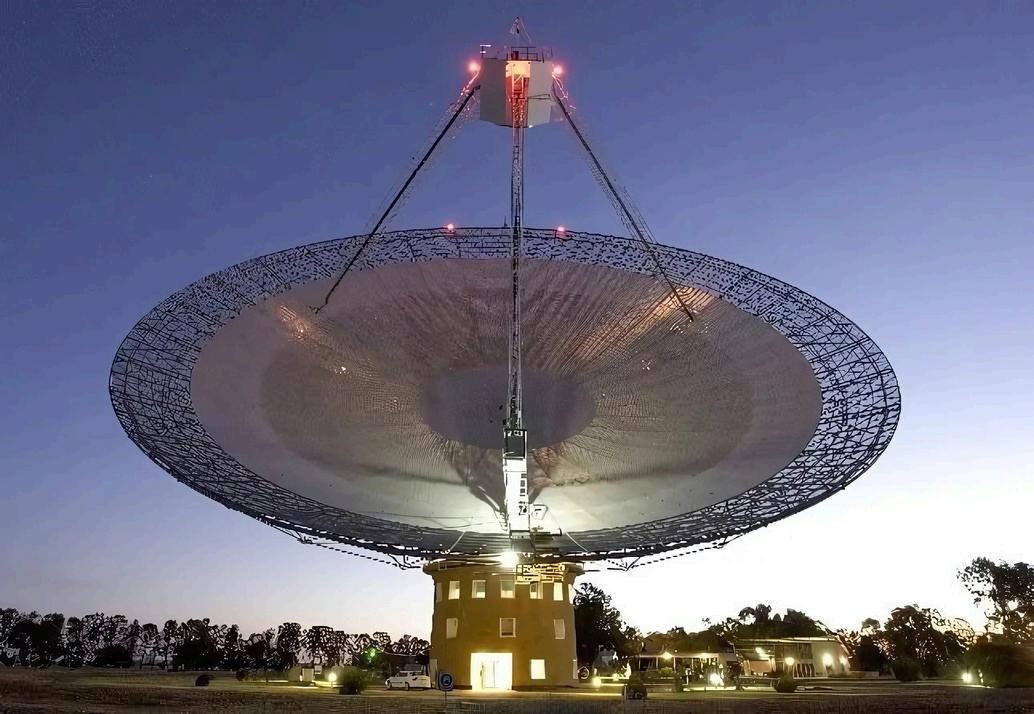
Radio telescopes use radio waves, turning them into signals Through this, we can see distant pulsars (rotating neutron stars emitting beams of electromagnetic radiation), star-forming regions, and supernova remains. Radio telescopes consist of an antenna to collect radio waves, a receiver and amplifier to boost weak radio signals to a measurable level and a recorder to record the signals Radio emissions that come from space are emitted by electrons moving through magnetic fields; thus we can detect signals from space. Through signal detection and a wide frequency range, scientists can explore a broad spectrum of potential signals that could indicate the presence of life.
If scientists are making an effort to find living life outside of Earth, how is it found?
There are various ways used to find life outside of Earth The most evident one would be using space observatories. The James Webb Space Telescope, launched in 2021, is considered to be the largest and most powerful telescope launched into space. In 2024, the JWST found black holes, a galaxy which existed 600 million years after the Big Bang, and gravitationally bound star clusters when the universe was 460 million years old The JWST functions through giant mirrors to see the universe as it focuses light from distant stars. Additionally, it orbits the Sun, 1.5 million km away from the Earth. Other methods scientists use to find life outside Earth include searching for signals such as listening to radio waves with radio telescopes or detecting light signals through optical methods that monitor flashes
Radio telescopes use radio waves, turning them into signals Through this, we can see distant pulsars (rotating neutron stars emitting beams of electromagnetic radiation), star-forming regions, and supernova remains. Radio telescopes consist of an antenna to collect radio waves, a receiver and amplifier to boost weak radio signals to a measurable level and a recorder to record the signals Radio emissions that come from space are emitted by electrons moving through magnetic fields; thus we can detect signals from space Through signal detection and a wide frequency range, scientists can explore a broad spectrum of potential signals that could indicate the presence of life.
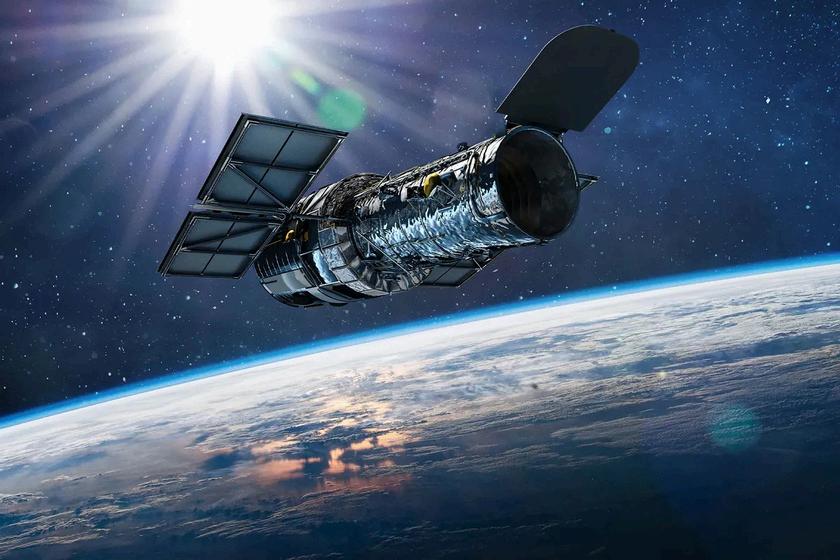
An alternative to radio telescopes is through light signals. The Hubble Space Telescope can detect a portion of infrared and ultraviolet wavelengths, as well as visible light. The Hubble Space Telescope uses two mirrors to collect and focus light These telescopes fly around or orbit high above the Earth’s atmosphere Digital images and spectra stored in Hubble’s solid-state recorders convert into radio waves The Hubble Space Telescope is an essential tool in the research of astronomy, helping to discover the age of the universe, the two moons of Pluto, and the rate at which the universe is expanding If life were to exist outside the Earth, the chances of receiving light signals to our Earth, where our telescopes detect the signals, could help prove the existence of extraterrestrial life
Although we are still far away from proving that alien life exists outside our Earth, the possibility alters our current perception of science. For example, it would modify our understanding of the factors of life and the requirements to consider what is living. Most scientific inquiries into life are based on what we found on Earth, focusing on carbon-based life which utilises DNA and RNA. Additionally, the debate on whether or not ‘aliens’ exist may lead to a reevaluation of what it means to be human, where division based on differing beliefs about extraterrestrial life occurs Through this, our understanding of sociology may change with how these developments affect social structures and intergroup relations The discovery of exoplanets has already transformed our understanding of planetary systems; however, as we learn more about the diversity of systems and planetary formations, it influences theories about habitability regarding planetary systems which may be vastly different from our solar system
Through the search for signals from Alien Civilisation, the conclusion of this study is nowhere close and is just the beginning The advancements in modern technology allow for the future of this exploration to be hopeful and through the enhancement of observational capabilities improve our chances of identifying signals from extraterrestrial civilisations
So, do you believe in aliens?
Dyches,P,&Dyches,P(2025,February5)PlanetaryalignmentsandplanetparadesNASASciencehttps://sciencenasagov/solar-system/skywatching/planetaryalignments-and-planet-parades/
O’Callaghan,J(2025,January26)Planetaryalignment2025:Thisiswhatitreallymeanswhensevenplanetslineupinthesky https://wwwbbccom/future/article/20250117-planetary-parade-what-the-alignment-of-seven-planets-really-means-for-science Starr,M.(2019,May30).OurSun'sMysterious11-YearCycleAppearstoBeDrivenbyAlignmentofThePlanets:ScienceAlert.ScienceAlert. https://wwwsciencealertcom/the-sun-s-11-year-cycle-have-may-have-something-to-do-with-the-gravity-of-the-planets
VitoTechnology,Inc(2025,February24)7PlanetsalignonFebruary28,2025:Howtoseethe“GreatPlanetParade”StarWalkhttps://starwalkspace/en/news/what-isplanet-parade
Pic1ImageofthePlanetaryParadewhenall7planetsoftheSolarSystemAlignedCredit:VitoTechnology Pic2ImageoftheOrbitalPlaneandofhowplanetsofsolarsystemorbitsaroundthesunCredit:NationalGeographicEducation Pic3ImageoftheTidalForcesCredit:RogerWilliamsUniversity
THEPERIODICFURYOFTHESUN:SOLARWIND,AWORLDSETABLAZE-YENAYOON
Boteler,DH(2019)A21st-centuryviewoftheMarch1989magneticstormSpaceWeather,17(10),1427–1441https://doiorg/101029/2019SW002278
Carrington,R.C.(1859).DescriptionofasingularappearanceseenintheSunonSeptember1,1859.MonthlyNoticesoftheRoyalAstronomicalSociety,20,13–15. https://doiorg/101093/mnras/20113
Hodgson,R.(1859).OnacuriousappearanceseenintheSun.MonthlyNoticesoftheRoyalAstronomicalSociety,20,15–16.https://doi.org/10.1093/mnras/20.1.15 Liu,YD,Luhmann,JG,Kajdič,P,Kilpua,EKJ,Lugaz,N,Nitta,NV, &Vourlidas,A(2014)Observationsofanextremestormininterplanetaryspacecausedby successivecoronalmassejections.NatureCommunications,5,3481.https://doi.org/10.1038/ncomms4481
Odenwald,SF,&Green,JL(2008)BracingthesatelliteinfrastructureforasolarsuperstormScientificAmerican,299(2),80–87 https://doi.org/10.1038/scientificamerican0808-80
Tsurutani,BT,Gonzalez,WD,Lakhina,GS,&Alex,S(2003)Theextrememagneticstormof1–2September1859JournalofGeophysicalResearch:SpacePhysics, 108(A7)https://doiorg/101029/2002JA009504
Imagecredit:SummitEntertainment,NASA/GoddardSpaceFlightCenter,NoppawatTomCharoensinphonviaGettyImages,CanadianHistoryEHX
Mmta“SpaceMining:TheChallengeofGoverningFutureMiningFrontiers”MMTA,6Dec2016,mmtacouk/space-mining-the-challenge-of-governing-futuremining-frontiers/
“We’reGobblinguptheEarth’sResourcesatanUnsustainableRate”UNEP,3Apr2019,wwwuneporg/news-and-stories/story/were-gobbling-earths-resourcesunsustainable-rat
Armstrong,Martin“Chart:ChinaDominatestheRareEarthMarket|Statista”Statista,13Jan2023,wwwstatistacom/chart/29114/rare-earth-reo-reserves-andproduction/ Raupe,Joel“Chang’E-1MapsMoon’sHelium-3Inventory”LunarPioneer,16Dec2010,lunarnetworksblogspotcom/2010/12/change-1-maps-moons-helium-3inventoryhtml
Kiger,PatrickJ“WhyIsanAsteroidWorth$10,000,000,000,000,000,000?”HowStuffWorksScience,HowStuffWorks,15Aug2023,sciencehowstuffworkscom/psyche16-asteroidhtm
Allain,Rhett.“ThePhysicsofSpaceX’sWickedDoubleBoosterLanding.”Wired,CondeNast,8Feb.2018,www.wired.com/story/the-physics-of-spacex-falcon-heavywicked-double-booster-landing/ Pic1:StatisticsfocusingonChinaintheglobalrareearthmarketin2021.Credit:statista Pic2:ThedistributionofHe-3reservesonthesurfaceofthemoonCredit:LunarPioneer Pic3.SpaceX'sreusablerocketboosterlanding.Credit:WIRED
PHARMACEUTICALINDUSTRYGOESTOSPACE-JOOWONLEE https://cenacsorg/pharmaceuticals/drug-development/Pharma-goes-space-drug-development/100/i40AzizS,RazaMA,NoreenM,IqbalMZ,RazaSM Astropharmacy:RolesofPharmacistinSpaceInnovPharm2022Dec12;13(3):1024926/iipv13i34956doi:1024926/iipv13i34956PMID:36627911;PMCID: PMC9815863https://thehustleco/news/to-the-pharmacy-and-beyond-drug-development-goes-to-space https://cenacsorg/pharmaceuticals/drug-development/Pharma-goes-space-drug-development/100/i40https://3dproteinimagingcom https://storesteampoweredcom/app/2055380/OnOrbit VirtualSpaceLab/
THROWINGWASTEINTOSPACE:APLAUSIBLESOLUTIONORAFUTILEIDEA?-JOHNBHANG USDepartmentofEnergy"3ReasonsWhyWeDon'tLaunchNuclearWasteintoSpace"Energygov,USDepartmentofEnergy,wwwenergygovAccessed6Feb 2025 WorldNuclearAssociation."RadioactiveWaste–MythsandRealities."WorldNuclearAssociation,www.world-nuclear.org.Accessed6Feb.2025. Siegel,Ethan"ThisIsWhyWeDon’tShootEarth’sGarbageIntotheSun"Forbes,20Sept2019,wwwforbescomAccessed6Feb2025
NASA."RisksofNuclearWasteDisposalinSpace.III–Long-termOrbitalEvolutionofSmallParticleDistribution."NASATechnicalReportsServer,1980,ntrs.nasa.gov. Accessed6Feb2025
Kratochvil,Katy."HumanityHasaTrashProblem;LaunchingItIntoSpaceIsn'ttheSolution."DiscoverMagazine,23Aug.2023,www.discovermagazine.com.Accessed6 Feb2025
https://en.wikipedia.org/wiki/Seasonhttps://spaceplace.nasa.gov/seasons/https://www.eoas.ubc.ca/books/PracticalMeteorology/prmet/PracticalMetWholeBookv100pdfhttps://wwwrutgersedu/news/earth-sun-distance-sharply-alters-seasons-tropical-pacific-22000-year-cyclehttps://wwwck12org/flexi/earth-science/localwinds/it-is-hotter-in-the-summer-because-the-earth-is-closer-to-the-sun-true-by-false/https://news.fsu.edu/news/science-technology/2022/12/20/researchreveals-new-insights-into-how-earths-orbit-influences-seasonal-cycles/https://tea4avcastroteastatetxus/thl/THLG12Phase2Cpdf https://www.weather.gov/cle/seasons
https://eclipse2017nasagov/what-color-sunhttps://wtamuedu/cbaird/sq/2013/07/03/what-is-the-color-of-the-sun/https://wwwspacecom/what-color-is-the-sun https://wwwsciencefocuscom/science/what-colour-is-the-sunhttps://byjuscom/physics/sunlight-white-coloured/http://wwwseiliasgr/erasmus/spectrum/en/ https://solar-centerstanfordedu/sid/activities/GreenSunhtml
https://wwwskyatnightmagazinecom/space-science/venus-hottest-planet https://sciencenasagov/resource/solar-system-temperatures/ https://wwwforbescom/sites/startswithabang/2016/06/02/why-mercury-isnt-the-solar-systems-hottest-planet/ https://sciencenasagov/solar-system/temperatures-across-our-solar-system/ https://wwwuclacuk/culture-online/case-studies/2022/sep/what-are-temperatures-different-planets https://sitesuniedu/morgans/astro/course/Notes/section4/new18html
https://byjuscom/question-answer/venus-is-hotter-than-mercury-although-it-is-far-from-the-sun-than-mercury/ https://www.researchgate.net/publication/369470558ComparisonOfFormationAtmosphereandHabitabilityforMercuryandVenus https://wwwspacecom/space-myths-busted
https://spaceplacenasagov/seasons/en/#::textHowever%2C%20in%20the%20Northern%20Hemisphere,different%20reason%20for%20Earth's%20seasons https://solar-centerstanfordedu/sid/activities/GreenSunhtml#::text=It%20is%20a%20common%20misconception,Sun%2C%20separated%20into%20its%20colors https://sciencenasagov/mercury/facts/#::text=Despite%20its%20proximity%20to%20the,Sun%20every%2088%20Earth%20days https://wwwforbescom/sites/startswithabang/2016/06/02/why-mercury-isnt-the-solar-systems-hottest-planet/ https://wwwgooglecom/url?
sa=i&url=https%3A%2F%2Fenwikipediaorg%2Fwiki%2FMercury%2528planet%2529&psig=AOvVaw36rtkriciVdo5vazk0matL&ust=1740902587941000&source=images&c d=vfe&opi=89978449&ved=0CBQQjRxqFwoTCJi29dO16IsDFQAAAAAdAAAAABAE https://wwwgooglecom/url?sai&urlhttps%3A%2F%2Fwwwquantamagazineorg%2Fwhat-is-the-sun-made-of-and-when-will-it-die20180705%2F&psig=AOvVaw0u2tvREa3cwhT4AiFg8Ew&ust=1740901796998000&source=images&cd=vfe&opi=89978449&ved=0CBQQjRxqFwoTCJCTqd616IsDFQAA AAAdAAAAABAL https://wwwgooglecom/url?sa=i&url=https%3A%2F%2Fwwwspitzercaltechedu%2Fimage%2Fssc2004-05d-orbitcomparisons&psigAOvVaw2pnRv9KWgKMAQiEQnXealN&ust1740902648836000&sourceimages&cdvfe&opi89978449&ved0CBQQjRxqFwoTCNjOvC16IsDF QAAAAAdAAAAABAE
Guirre,A(2025,January16)MultiverseEncyclopediaBritannicahttps://wwwbritannicacom/science/multiverse Polchinski,J(2019,October14)BraneEncyclopediaBritannicahttps://wwwbritannicacom/science/brane Ellis,GFR(2011)DOESTHEMULTIVERSEREALLYEXIST?ScientificAmerican,305(2),38–43http://wwwjstororg/stable/26002750 StanfordEncyclopediaofPhilosophy(nd)Themany-worldsinterpretationofquantummechanicsStanfordEncyclopediaofPhilosophy https://platostanfordedu/entries/qm-manyworlds/ Orzel,C.(2016,January5).Whatthemany-worldsinterpretationofquantumphysicsreallymeans.Forbes.https://www.forbes.com/sites/chadorzel/2016/01/05/whatthe-many-worlds-interpretation-of-quantum-physics-really-means/ AmericanMuseumofNaturalHistory.(n.d.).Cosmicmicrowavebackgroundradiation.https://www.amnh.org/learn-teach/curriculum-collections/cosmic-horizonsbook/cosmic-microwave-backgroundradiation#::text=The%20cosmic%20microwave%20background%20radiation%20is%20the%20faint%20remnant%20glow,courtesy%20of%20the%20BOOMERA NG%20Project
Luntz,S(2013,May17)Canblackholestransportyoutootherworlds?LiveSciencehttps://wwwlivesciencecom/32164-can-black-holes-transport-you-to-otherworldshtml
Springer(2019)PhilosophiaScientiaehttps://linkspringercom/article/101007/s10516-019-09466-7 NationalGeographic(nd)Whatisthemultiverse?https://wwwnationalgeographiccom/science/article/what-is-the-multiverse PicturesReferences: https://www.nbcnews.com/mach/science/cosmic-bruise-could-be-evidence-multiple-universes-ncna771076 https://wwwpinterestcom/pin/945193040525205042/ https://www.pinterest.com/pin/994662267699571977/ https://wwwpinterestcom/pin/15199717490357539/ https://www.pinterest.com/pin/27232772740899530/ https://wwwpinterestcom/pin/50735933297850294/
THESEARCHFORSIGNALSFROMALIENCIVILIZATION-MINCHAEKIM Astronomy(ASTRON)<UniversityofWisconsin-Madison.”Wisc.edu,2024,guide.wisc.edu/courses/astron/ BreakthroughInitiatives”Breakthroughinitiativesorg,2019,breakthroughinitiativesorg/initiative/1 Brennan,Pat“SearchingforSignsofIntelligentLife:Technosignatures-NASAScience”Sciencenasagov,11July2023,sciencenasagov/universe/search-forlife/searching-for-signs-of-intelligent-life-technosignatures/ CSIRO“WhatIsRadioAstronomy?”Wwwcsiroau,CSIRO,8Mar2021,wwwcsiroau/en/research/technology-space/astronomy-space/what-is-radio-astronomy NASA“CanWeFindLife?-NASAScience”Sciencenasagov,sciencenasagov/exoplanets/can-we-find-life/ JamesWebbSpaceTelescope-NASAScience”Sciencenasagov,NASA,25Dec2021,sciencenasagov/mission/webb/ Observations:SeeinginRadioWavelengths.”Www.esa.int,www.esa.int/ScienceExploration/SpaceScience/ObservationsSeeinginradiowavelengths RoyalMuseumsGreenwich“WhatHastheHubbleSpaceTelescopeDiscovered?”Wwwrmgcouk,RoyalMuseumsGreenwich,2022, www.rmg.co.uk/stories/topics/what-has-hubble-space-telescope-discovered Scoles,Sarah“TheSearchforExtraterrestrialLifeasWeDon’tKnowIt”ScientificAmerican,vol328,no2,1Feb2023,wwwscientificamericancom/article/the-searchfor-extraterrestrial-life-as-we-dont-know-it/,https://doi.org/10.1038/scientificamerican0223-32 SETI,theSearchforExtraterrestrialIntelligence”ThePlanetarySociety,wwwplanetaryorg/sci-tech/seti Sutter,Paul“5TimestheJamesWebbTelescopeRewrotePhysicsin2024”Livesciencecom,LiveScience,28Dec2024,wwwlivesciencecom/space/5-times-the-jameswebb-telescope-rewrote-physics-in-2024Accessed14Feb2025 Skyatnightmagazinecom,2023,wwwskyatnightmagazinecom/space-missions/nasa-james-webb-space-telescope-observe-universe ISTHEREAPOSSIBILITYOFMULTIPLEUNIVERSES?-MANYASHIVHARE
Publication: Synthify (instagram: @synthifyofficial )
Editor: Hajin Ra, Ayeon Cho, Hiseo Shin, Teresa Nam, Aaron Cha, Arij Bouchhioua, Sanjana PB, Pramith Bhandari
Writer: Ryan Ahn, Yena Yoon, Jaehwan Kim, Joowon Lee, John Bhang, Gwenn Valerie Qiu, Manya Shivhare, Minchae Kim
“The Earth is a pale blue dot in a vast and unforgiving universe”
-Carl Sagan