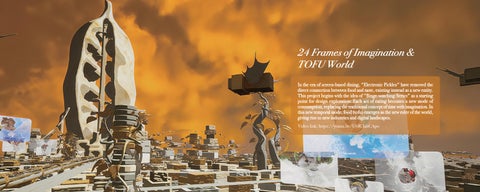
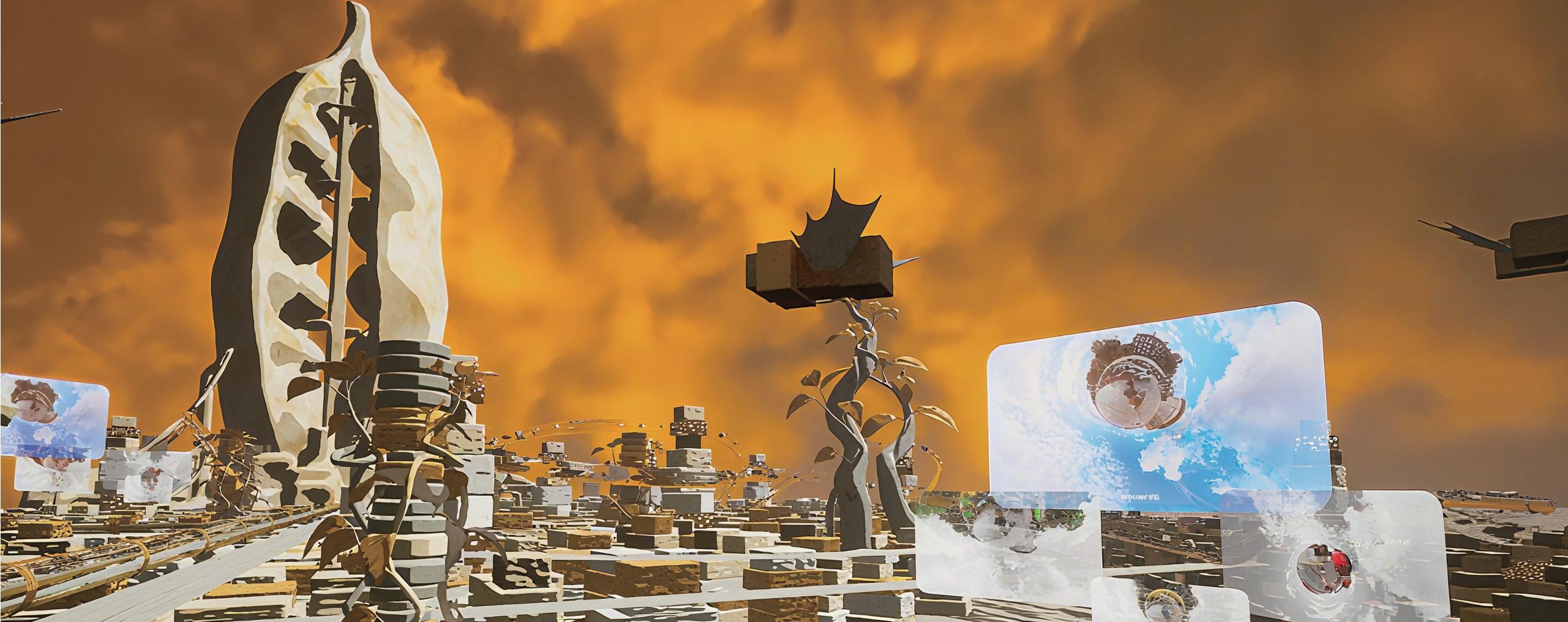
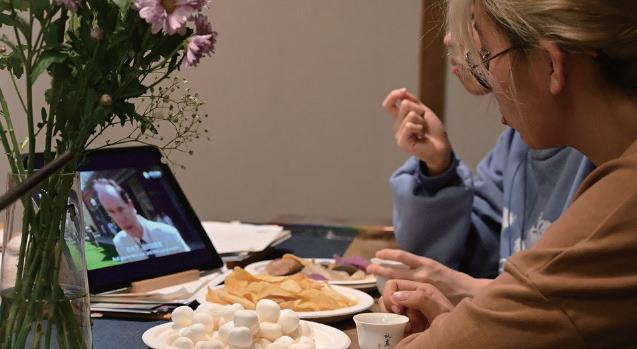
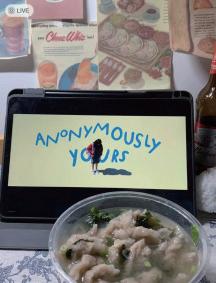
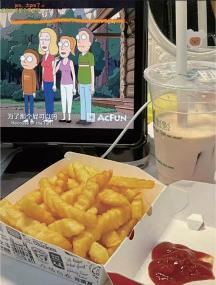
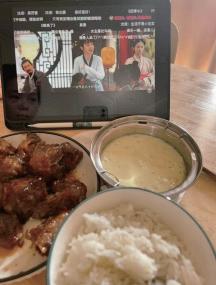
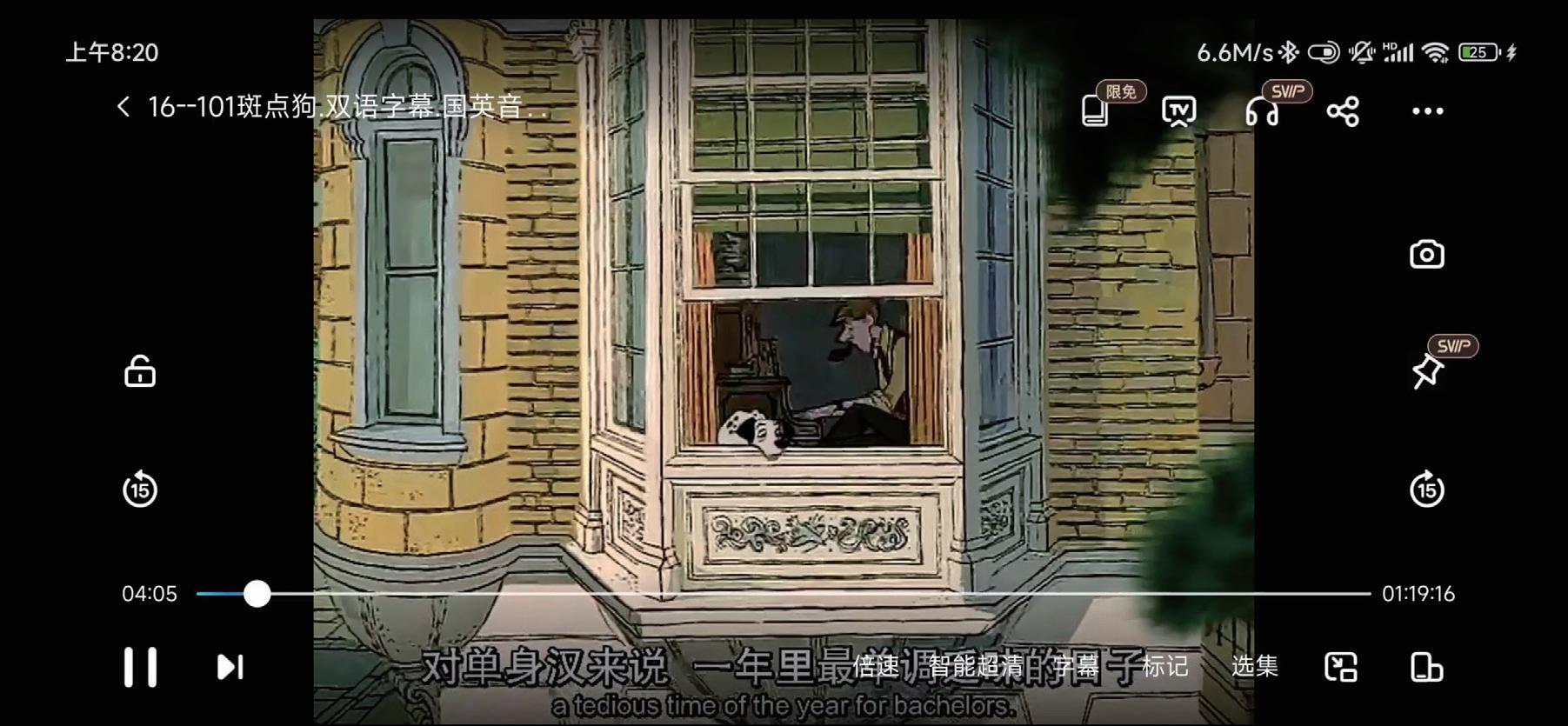
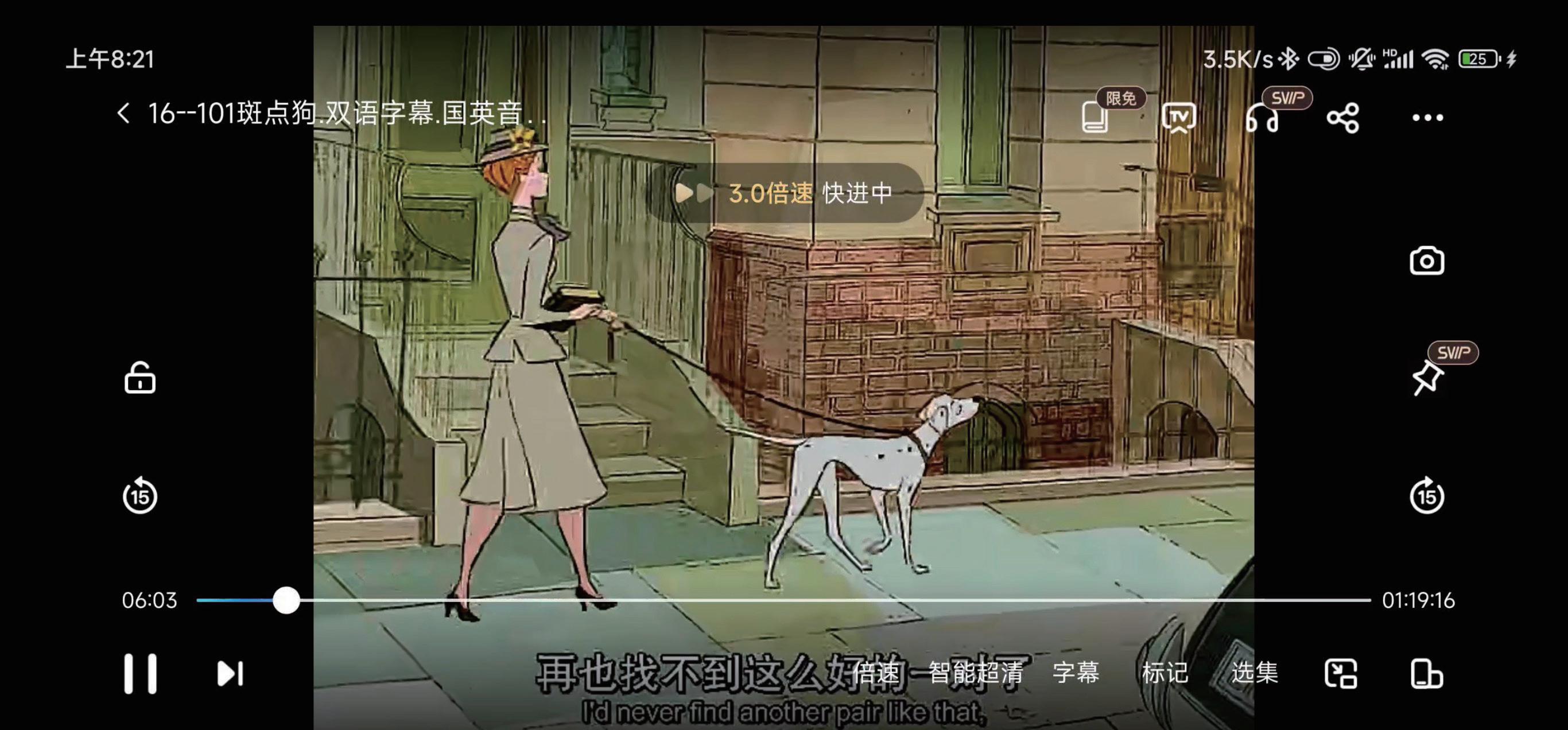
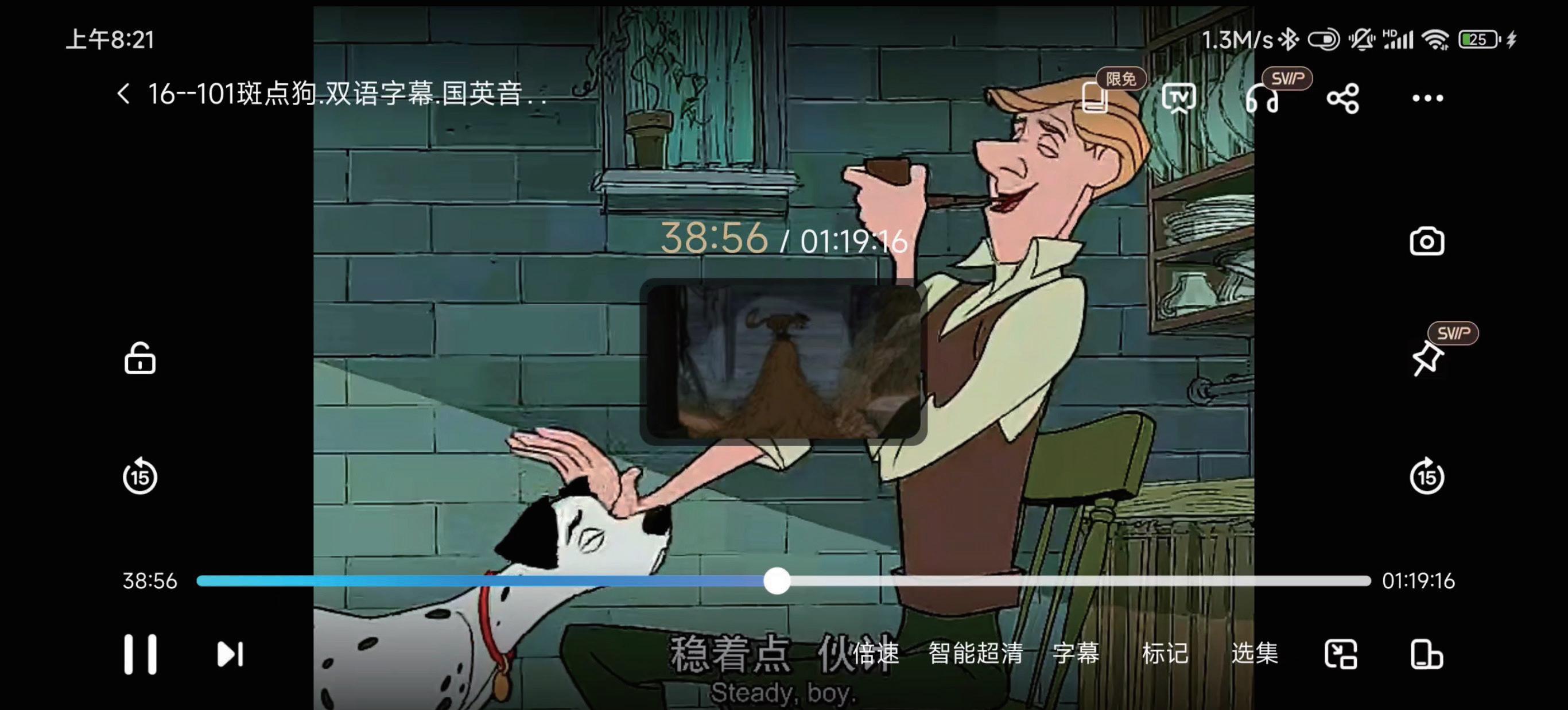
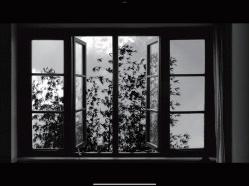
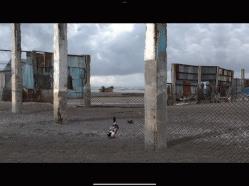
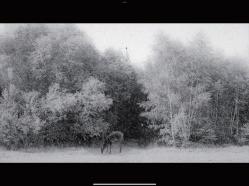
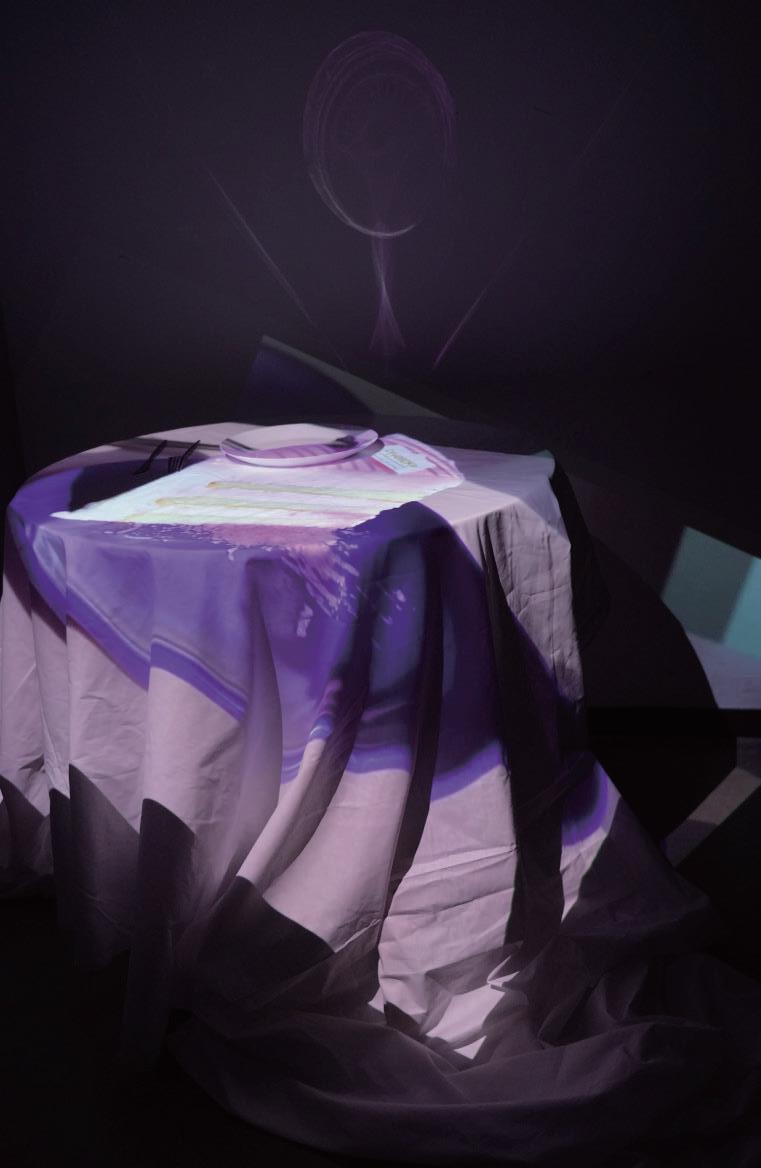
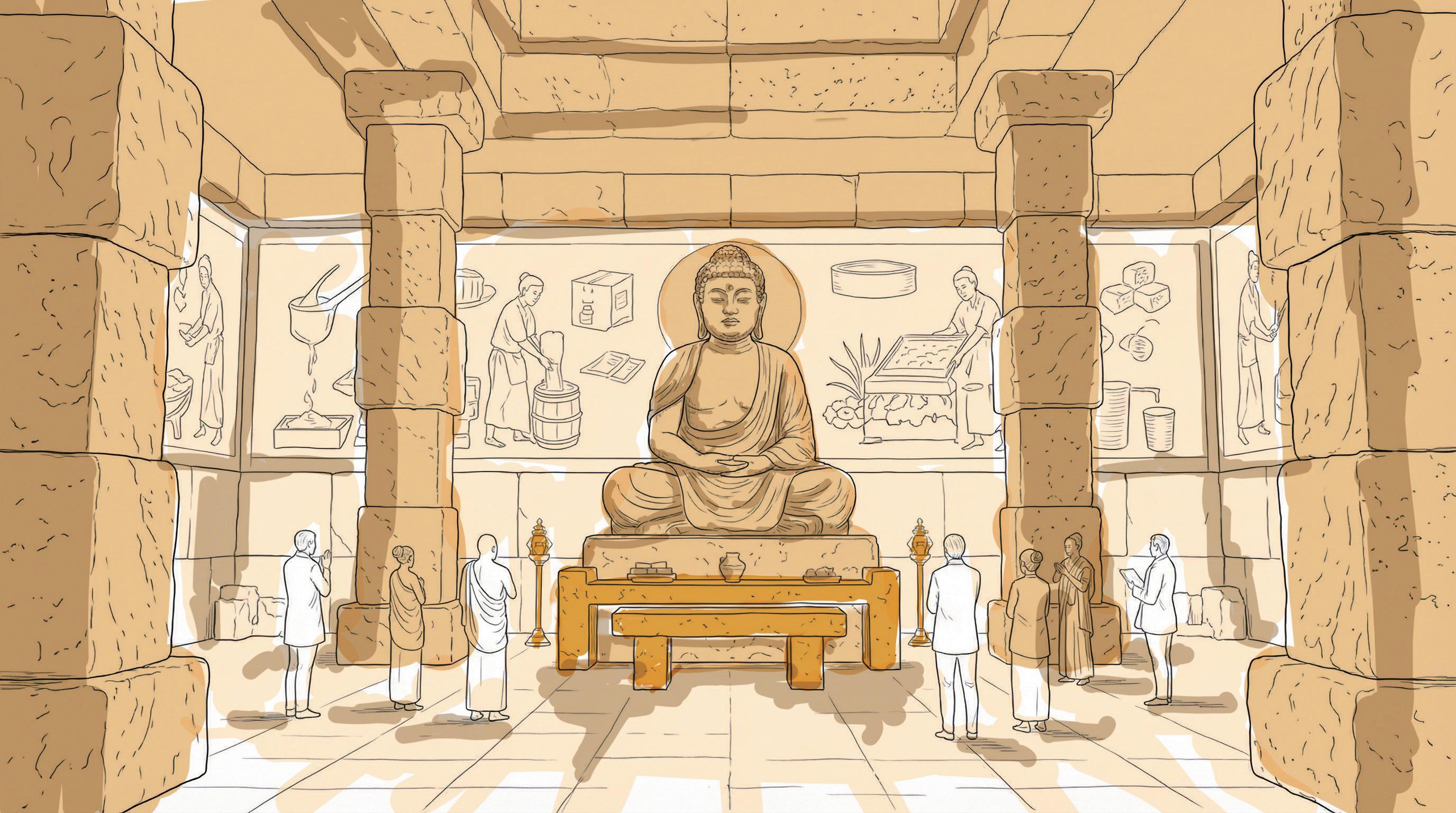
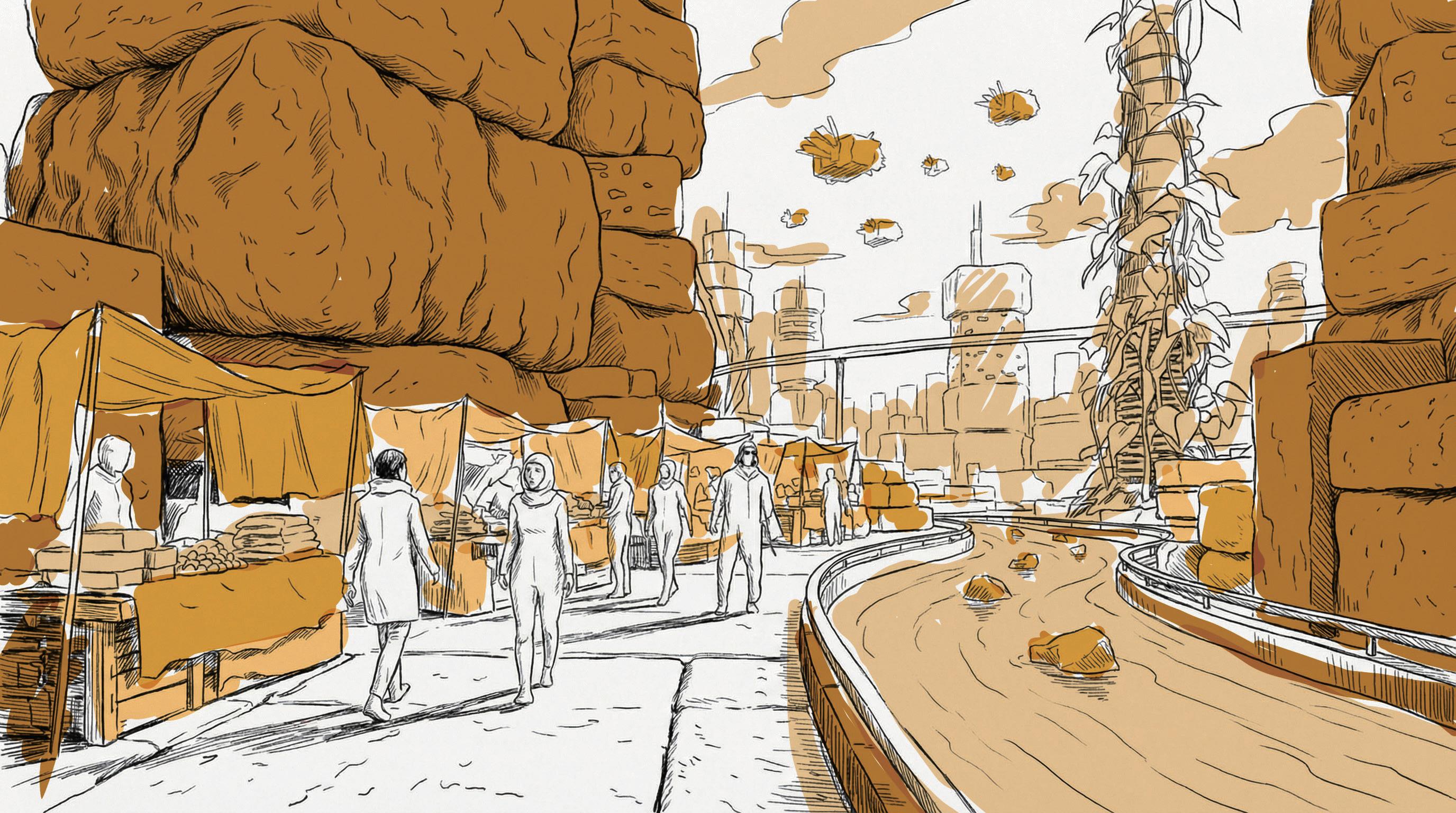
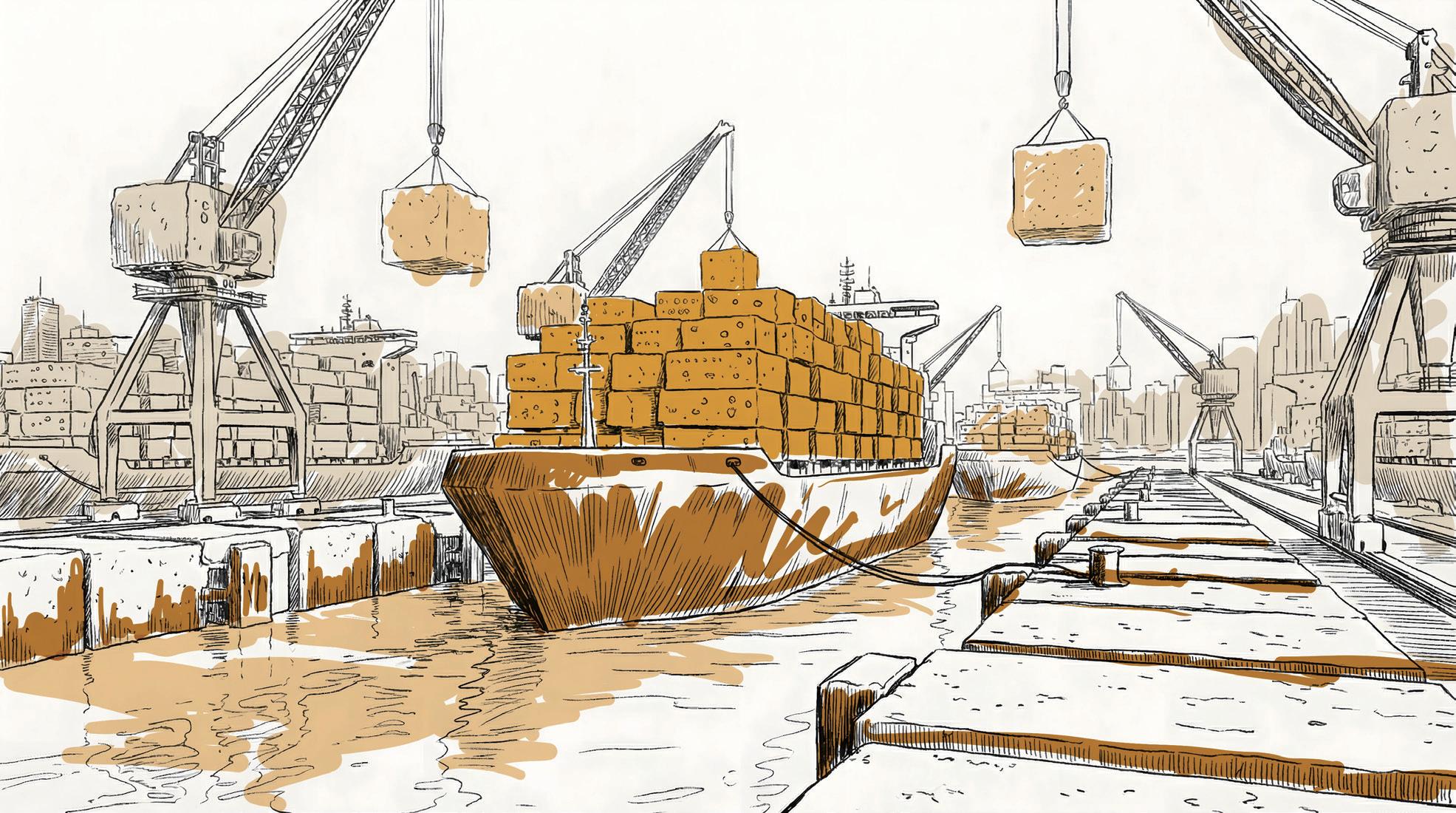
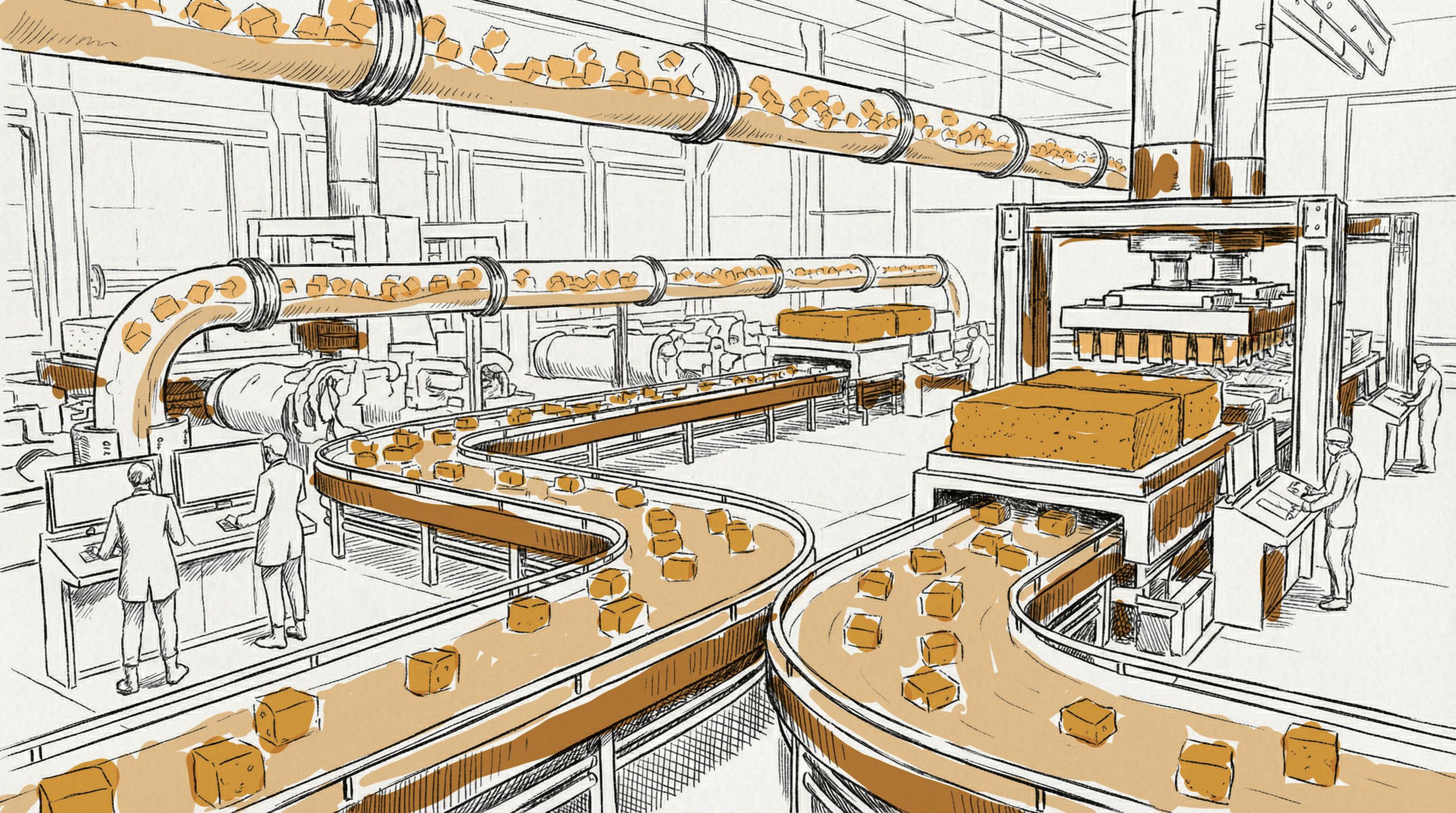
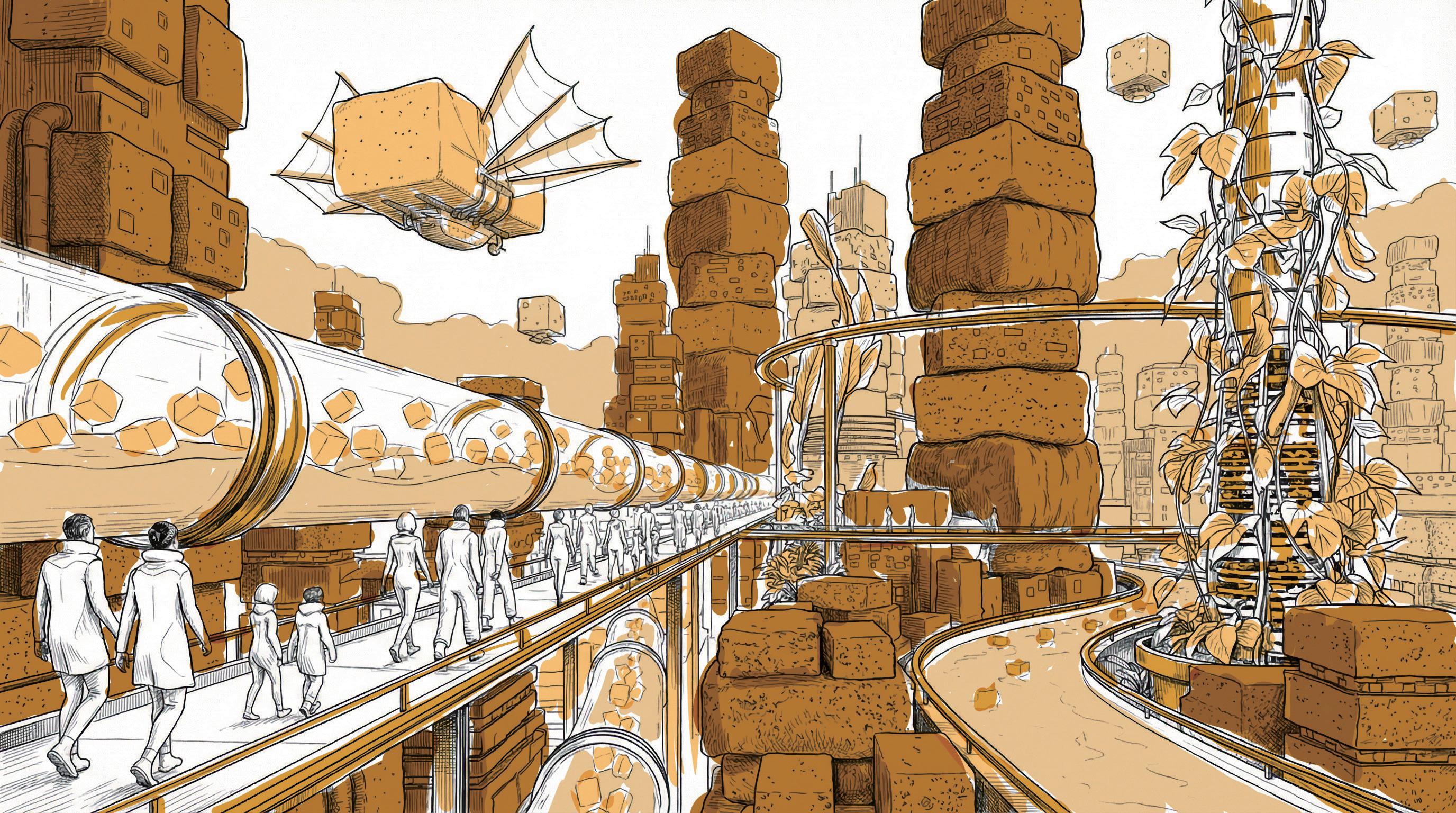
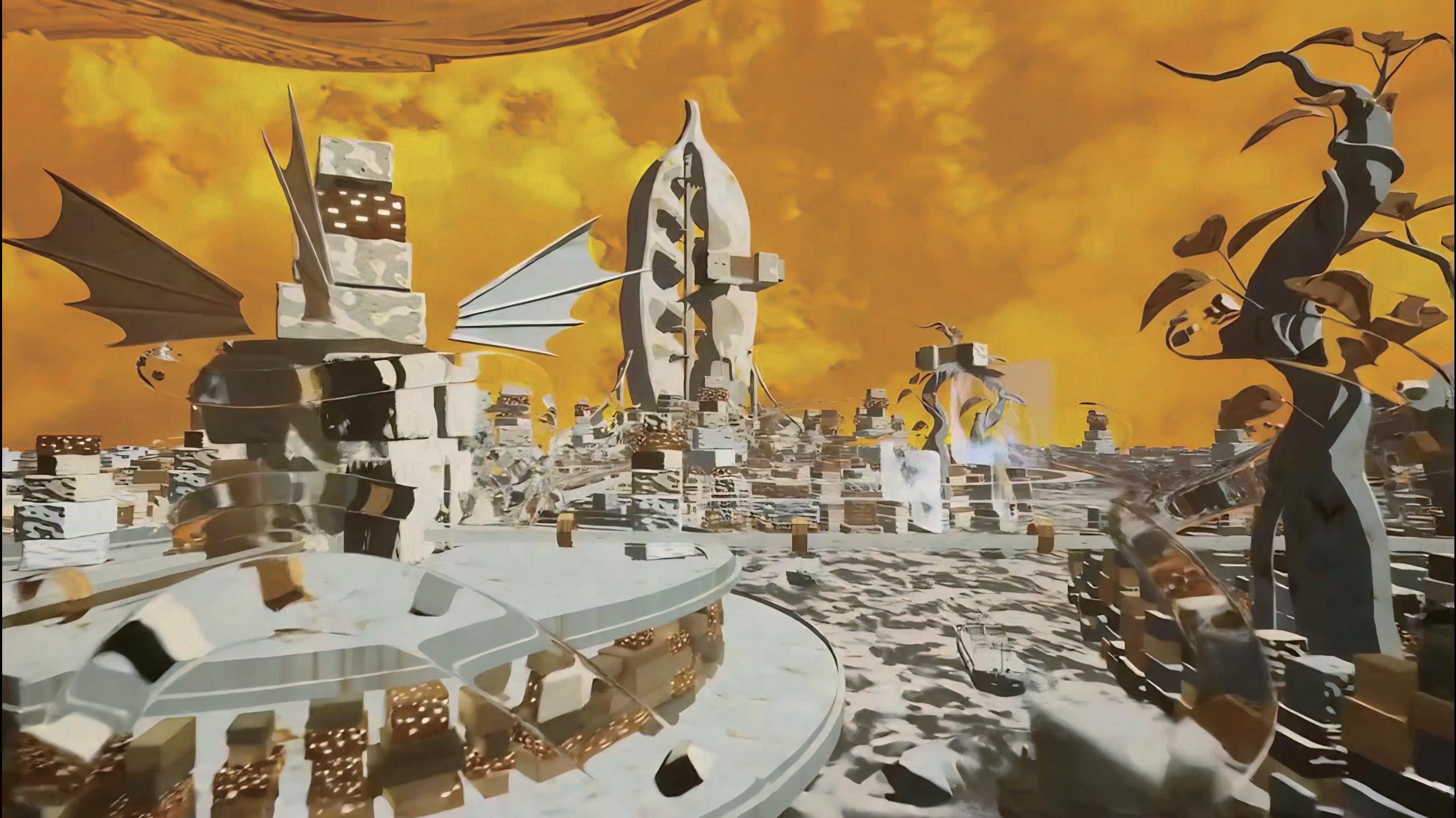
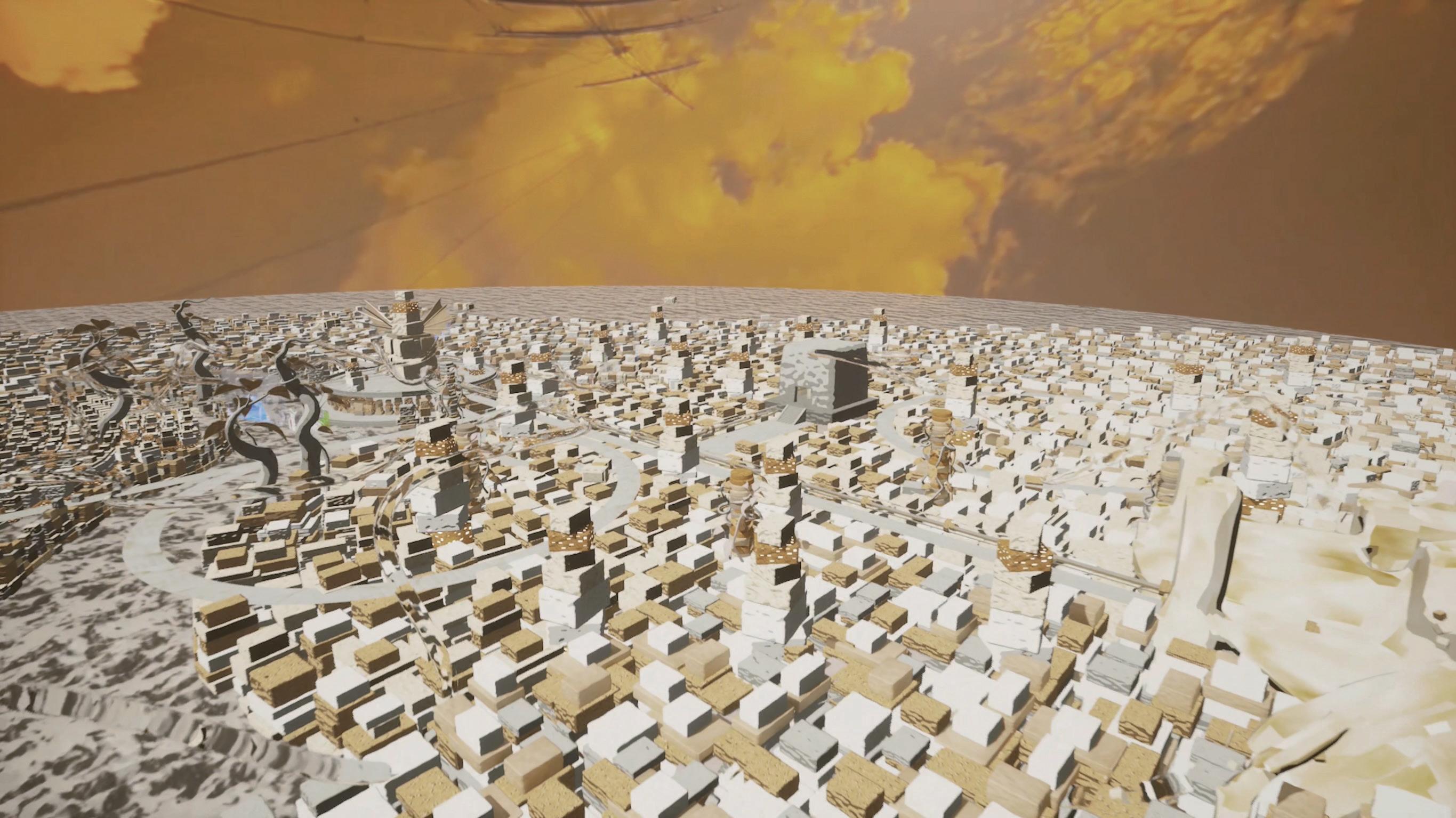
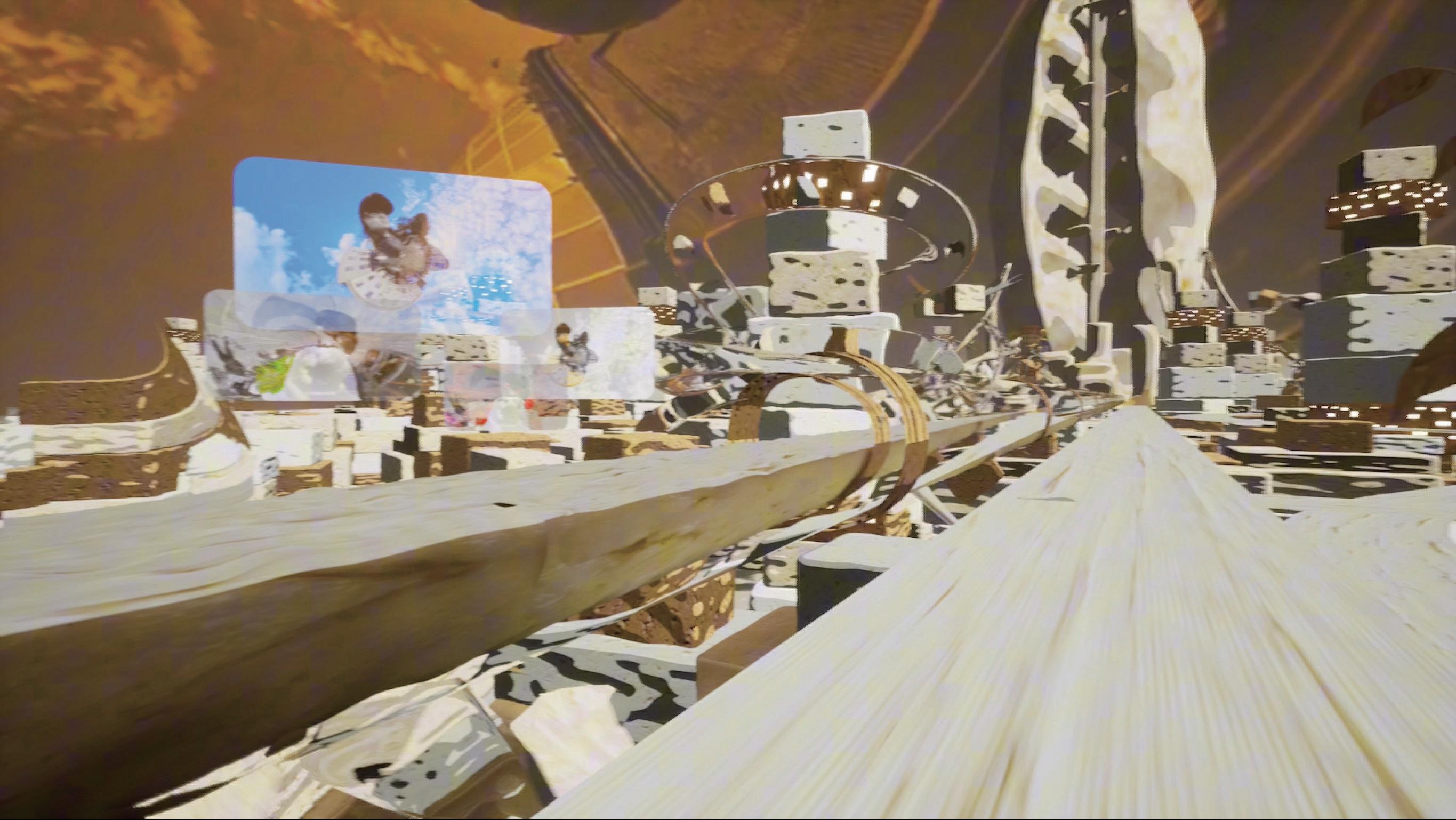
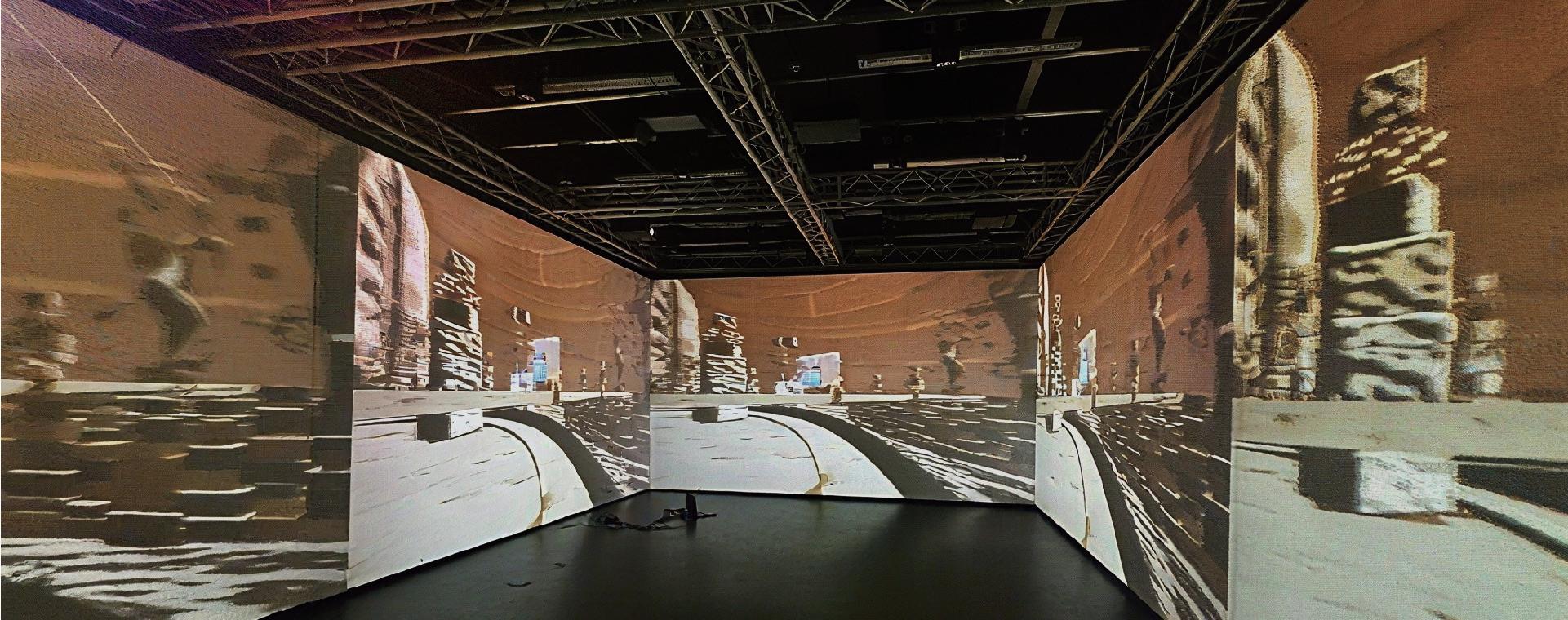
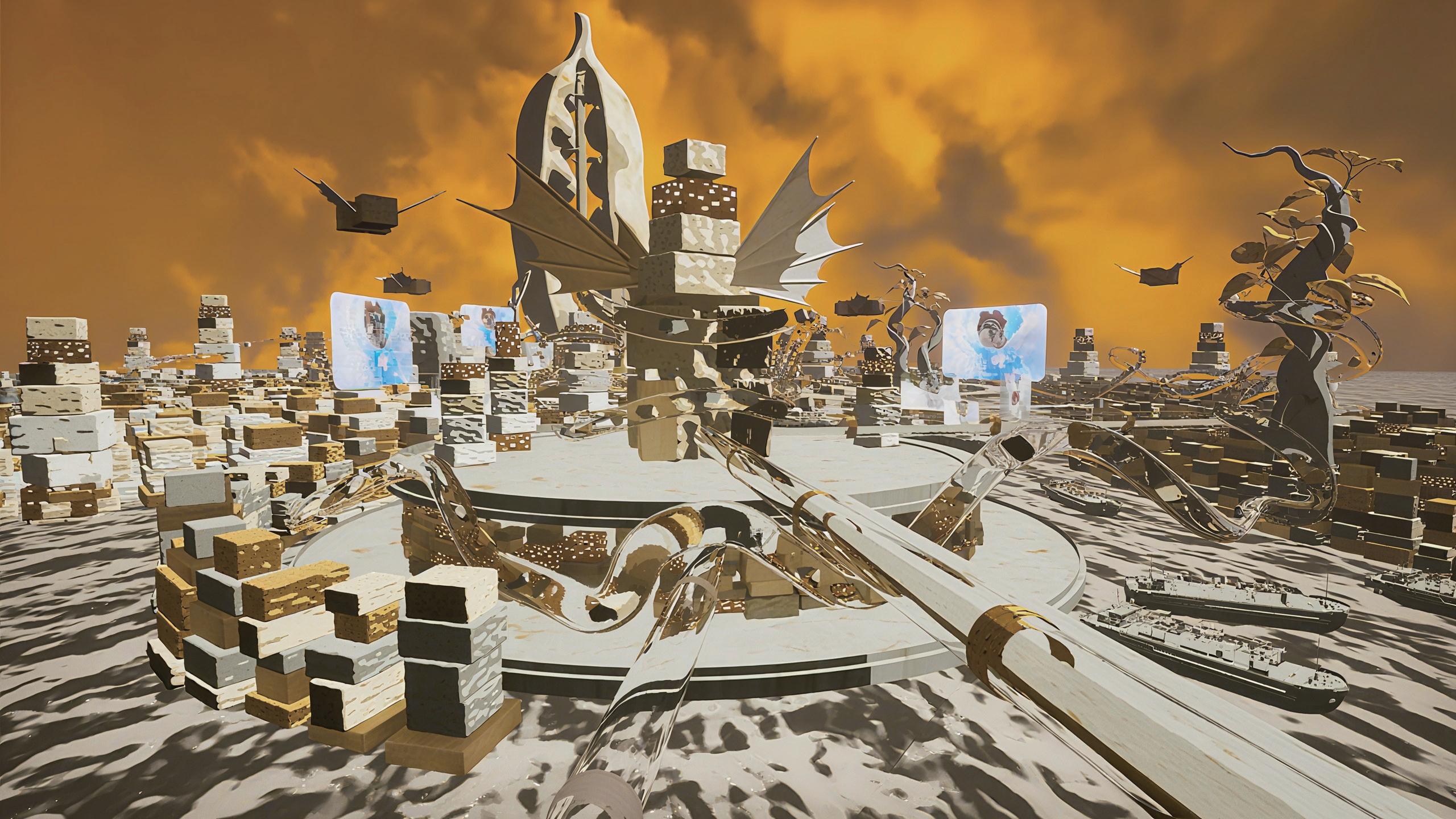
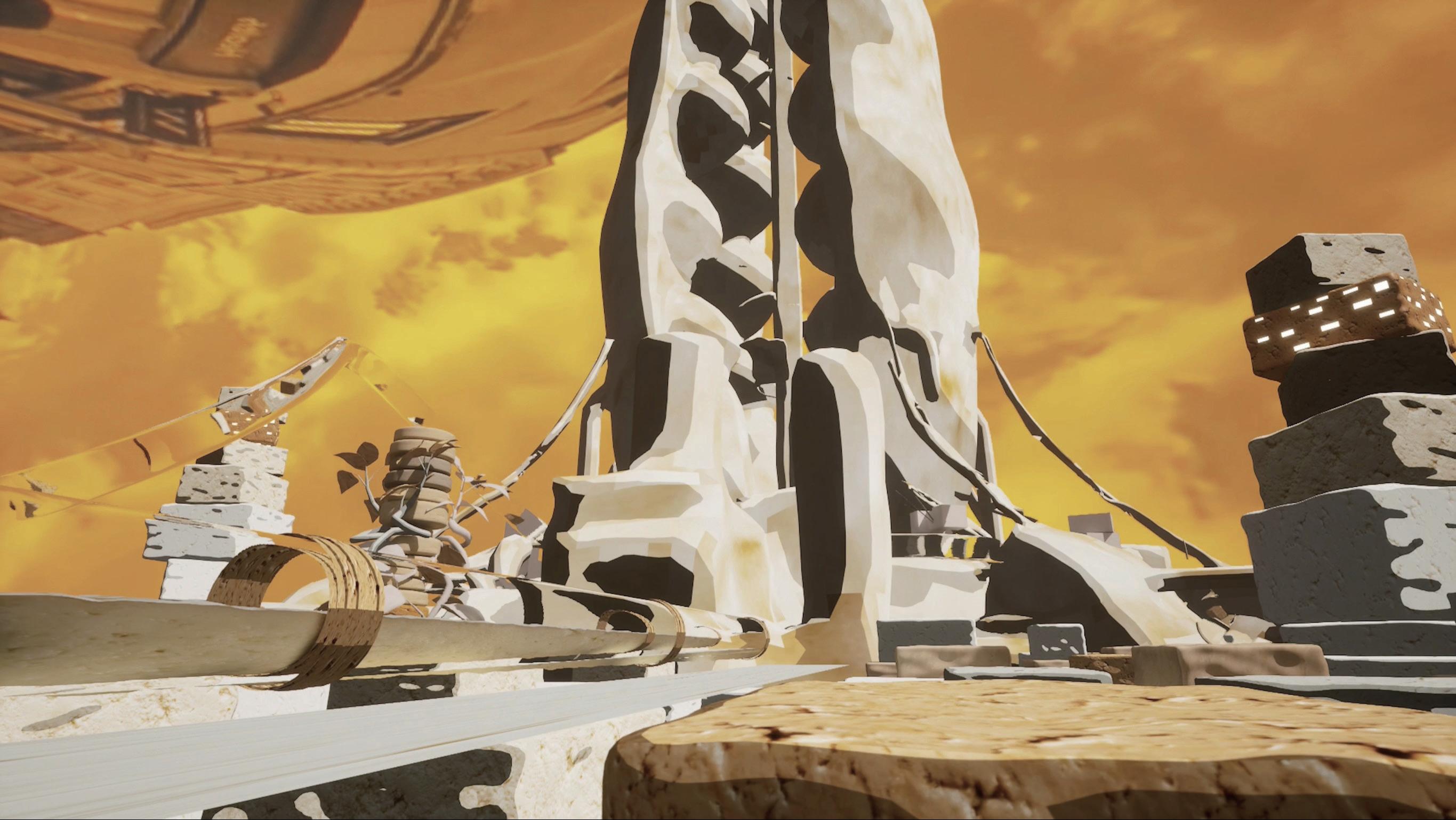
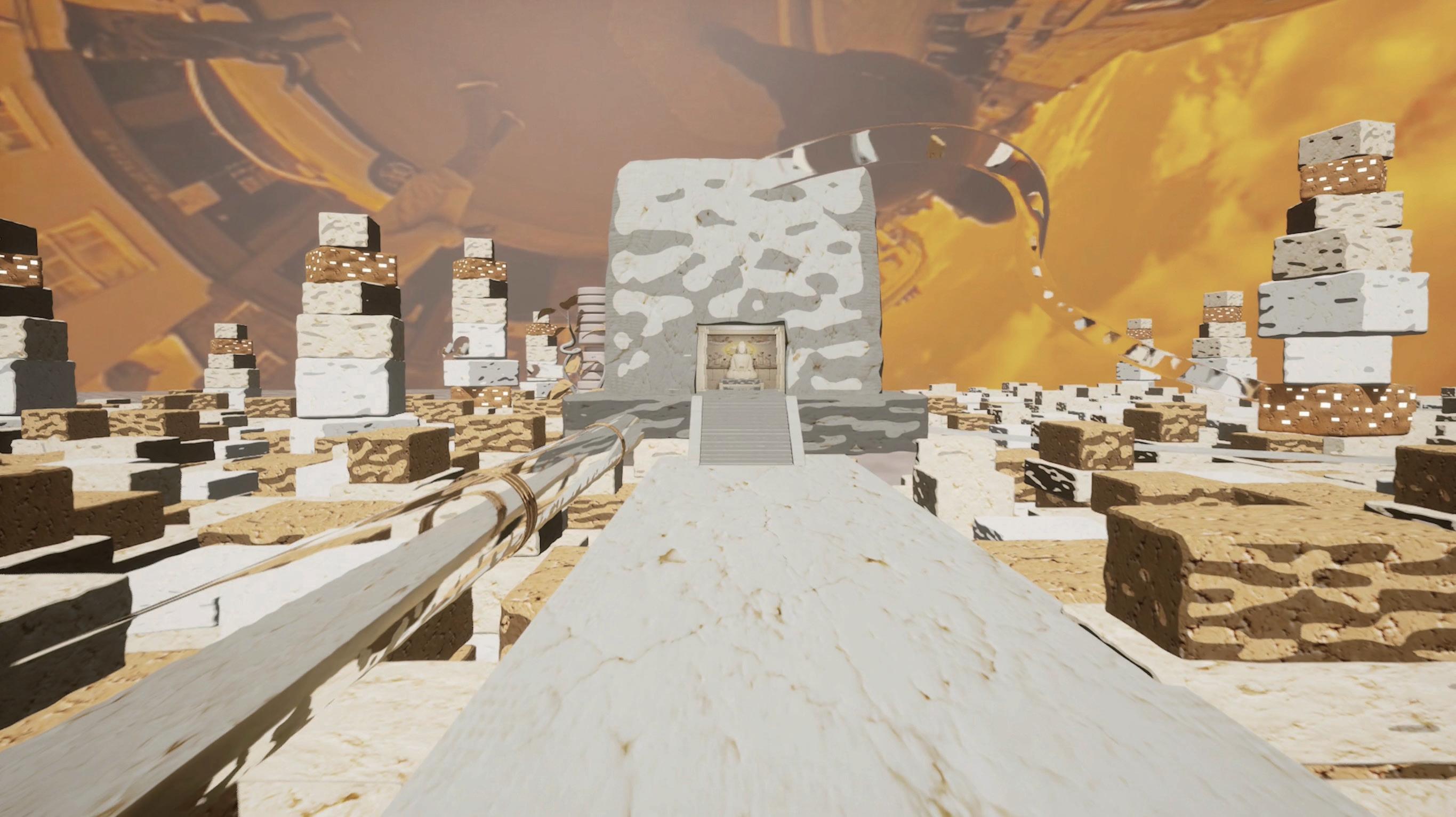
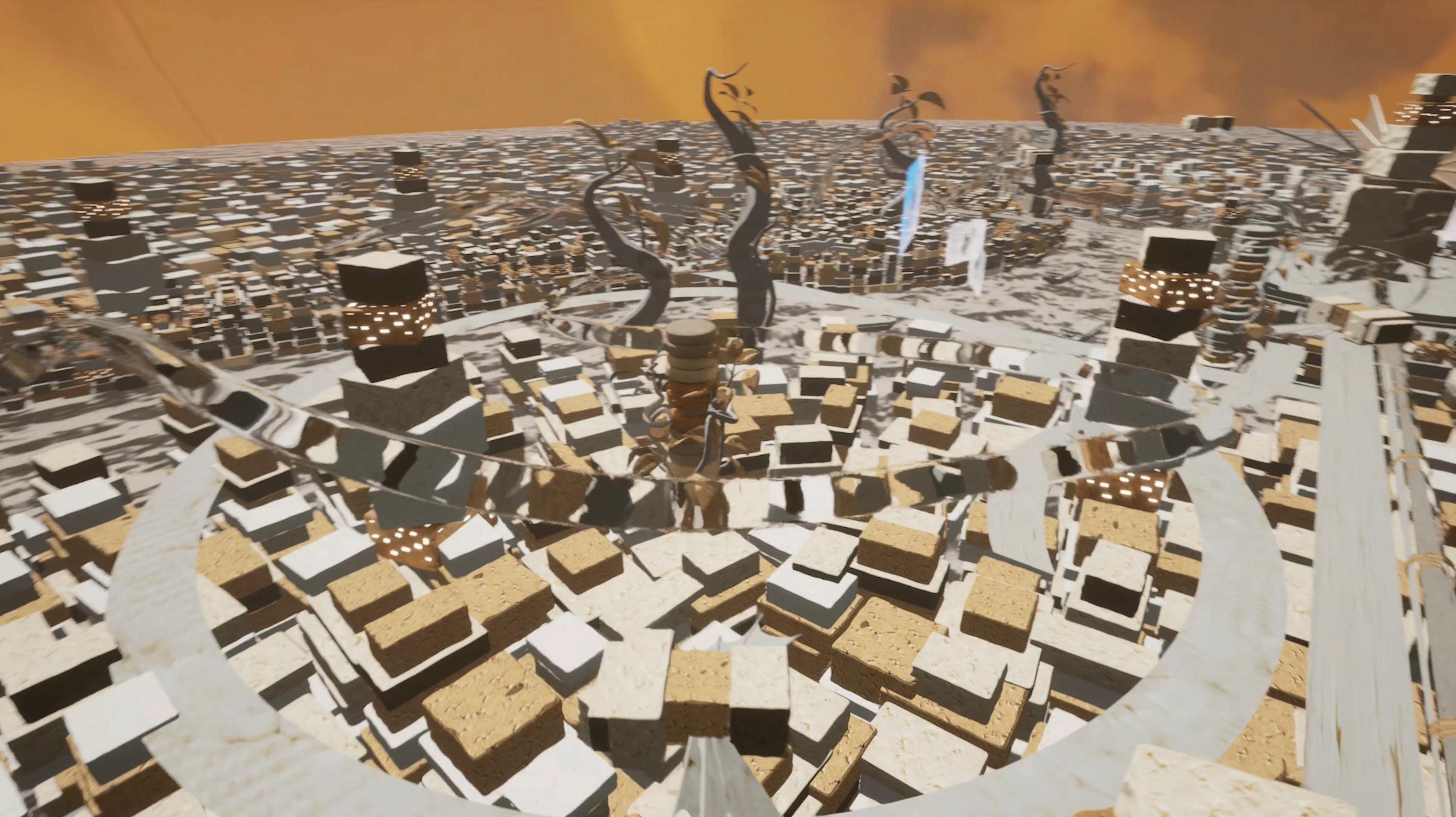
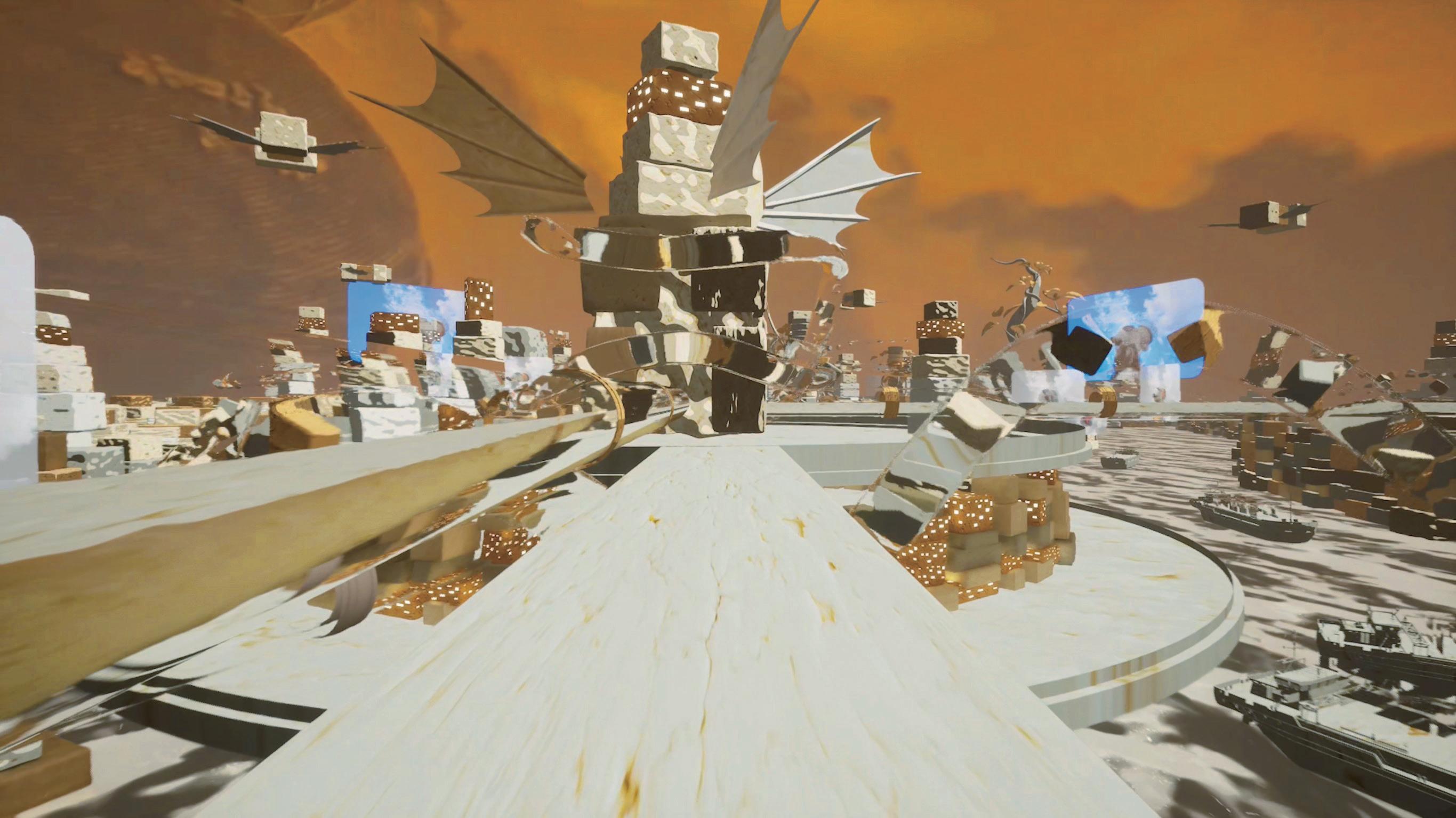
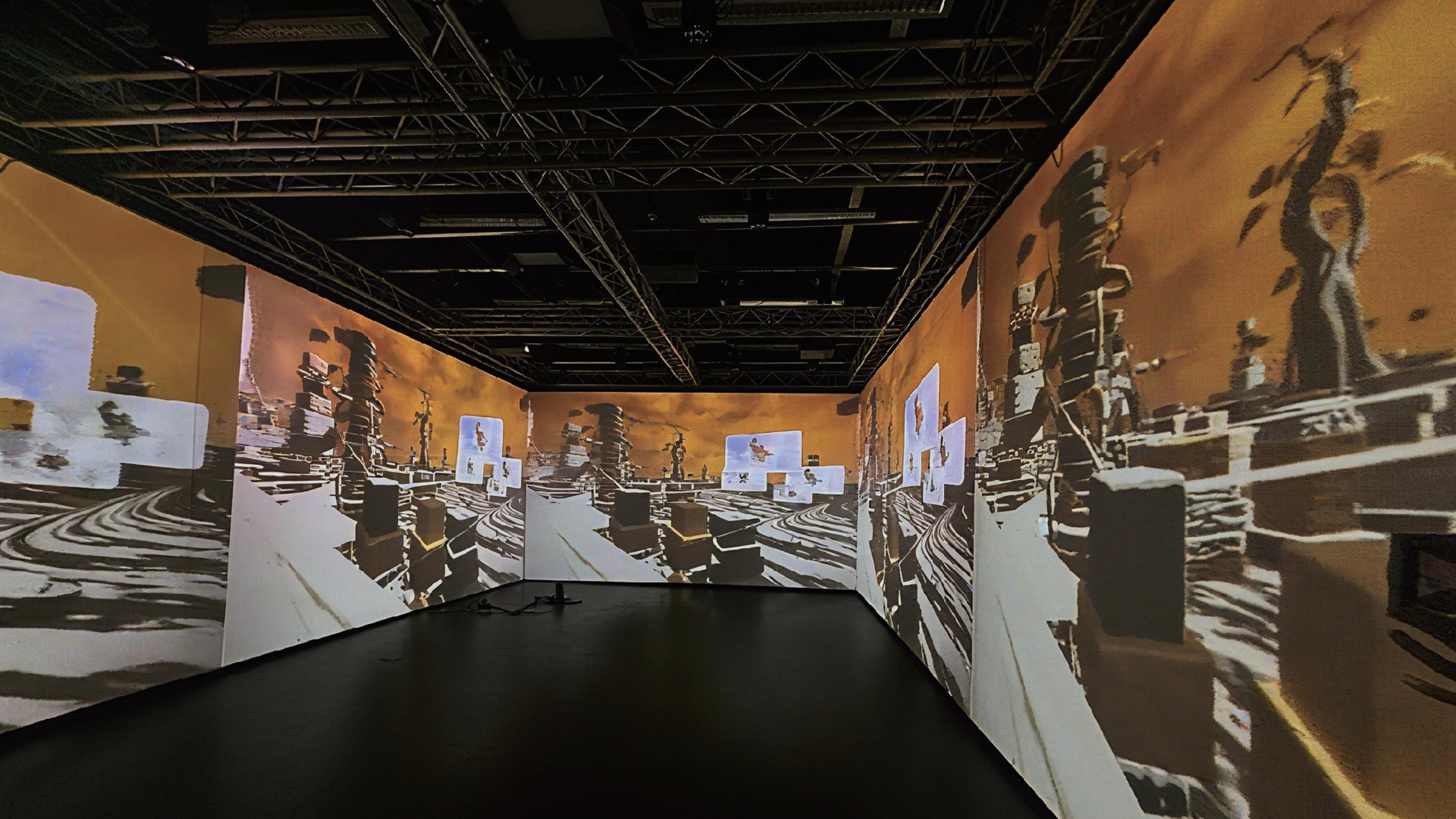
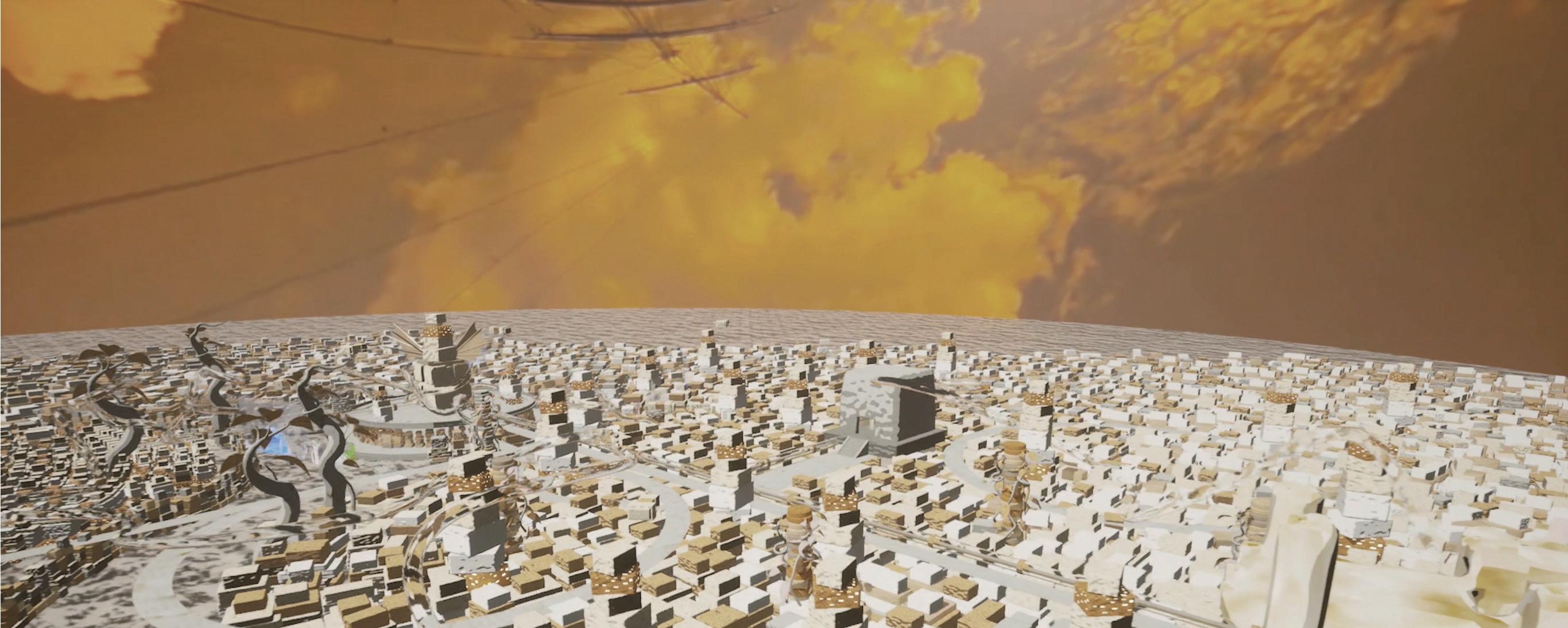
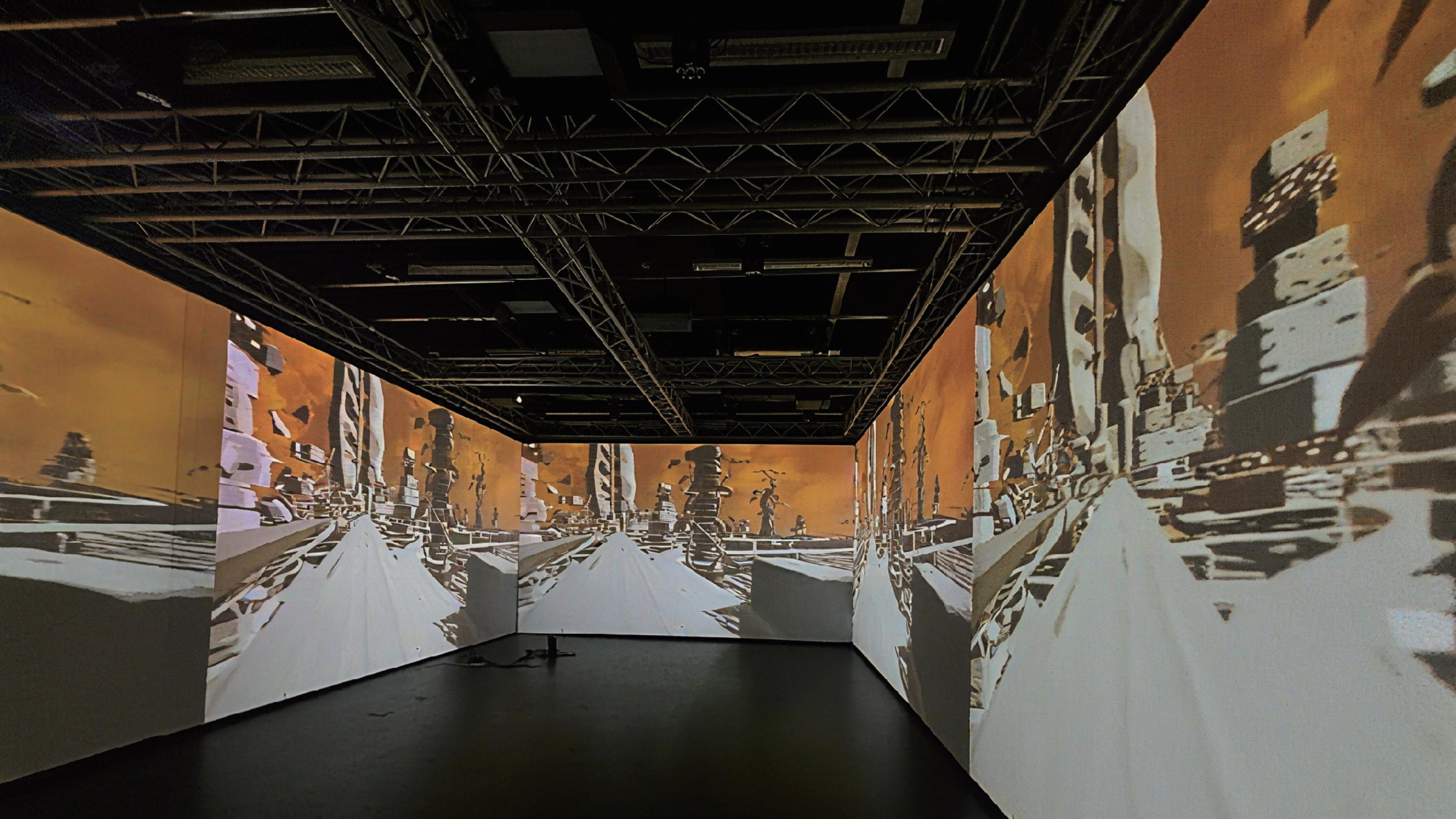
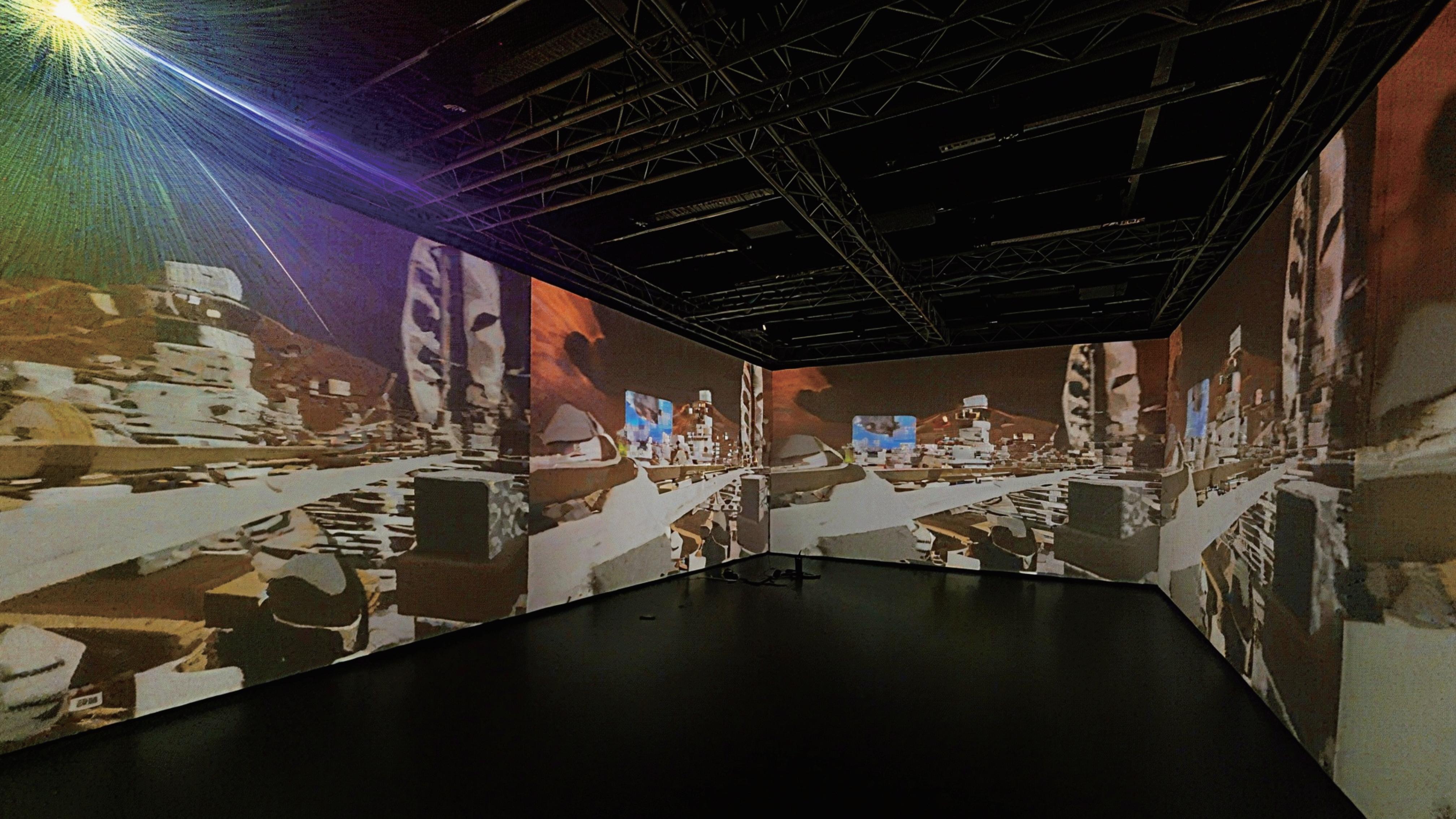
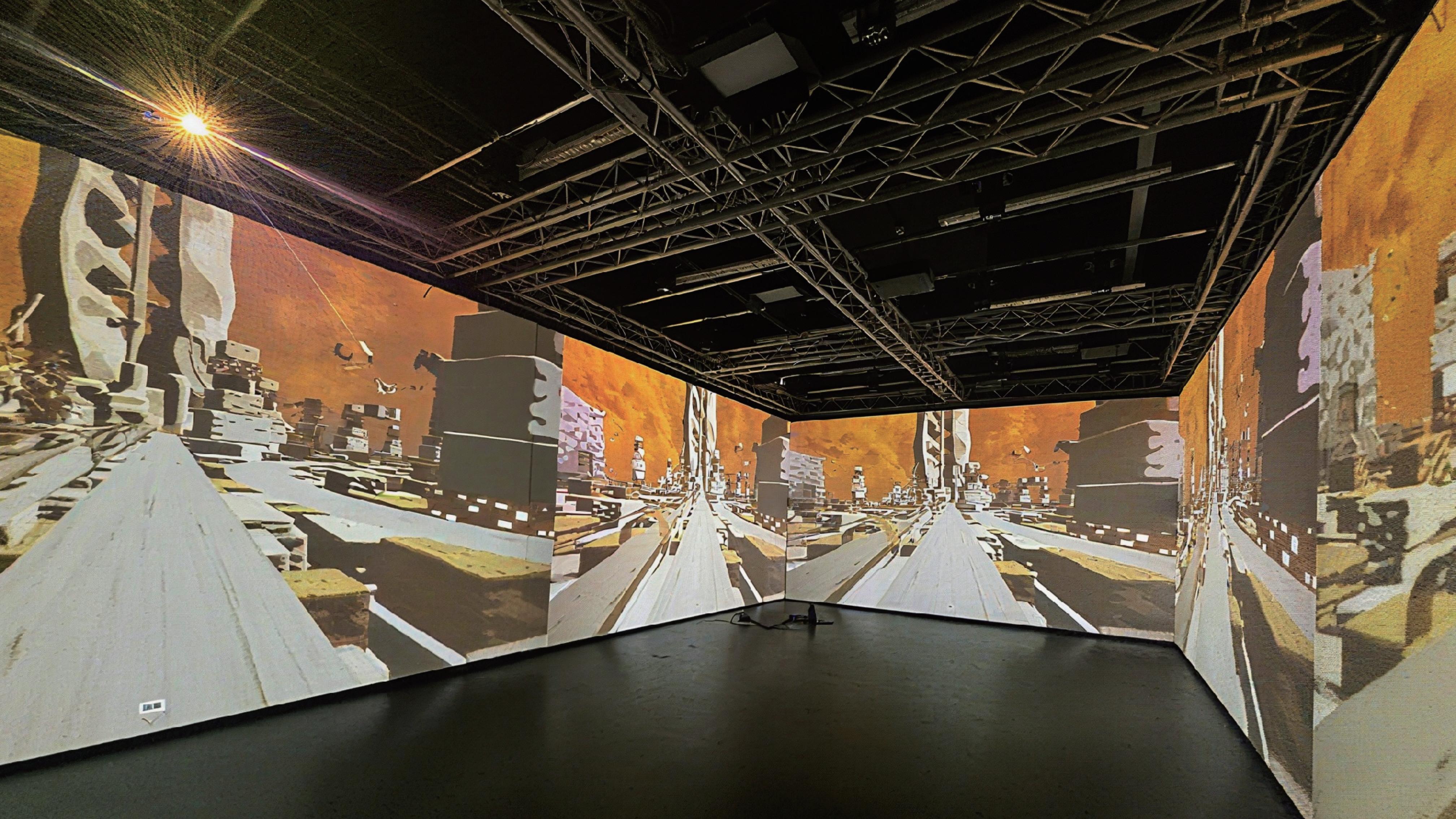
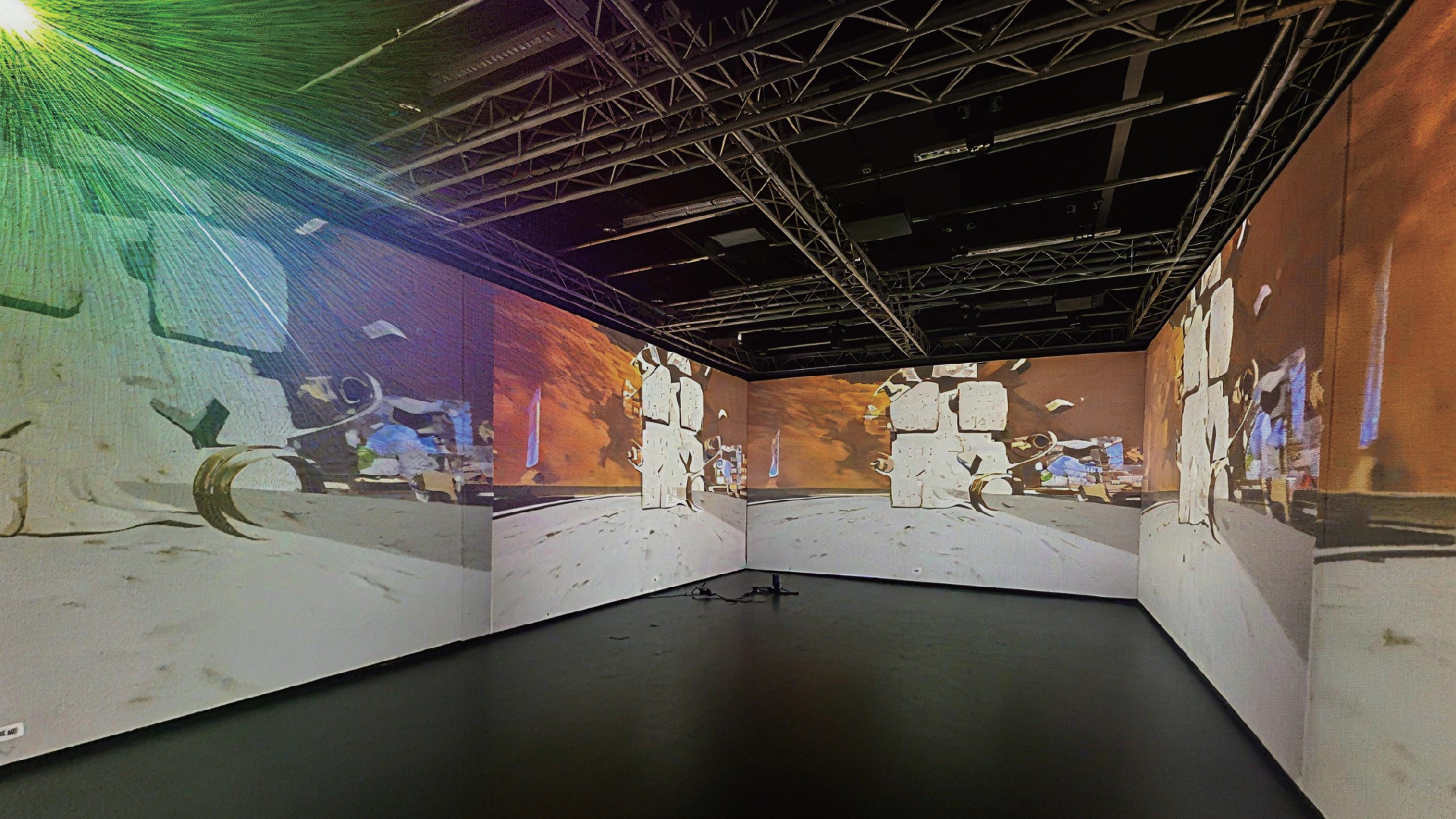
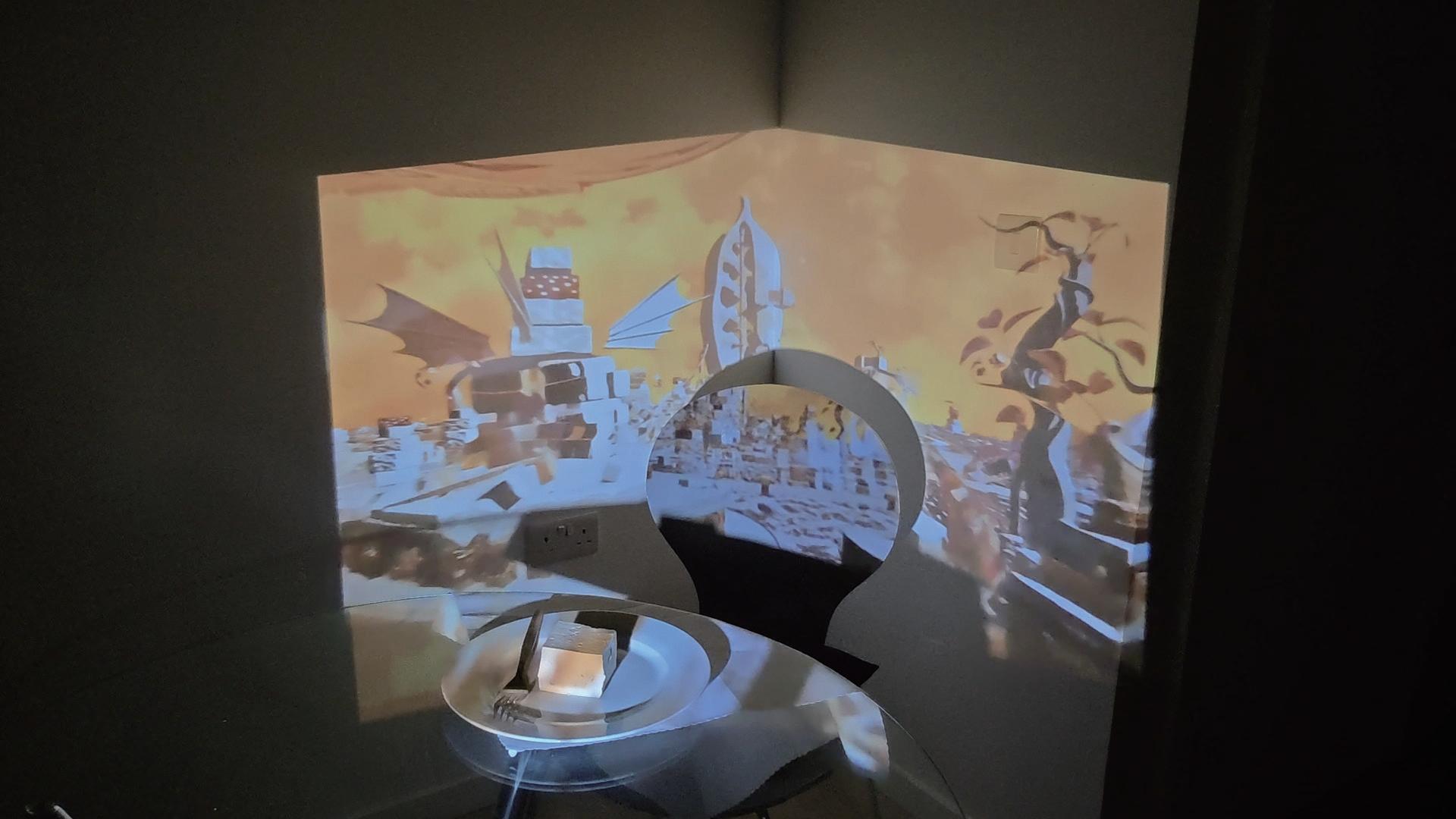
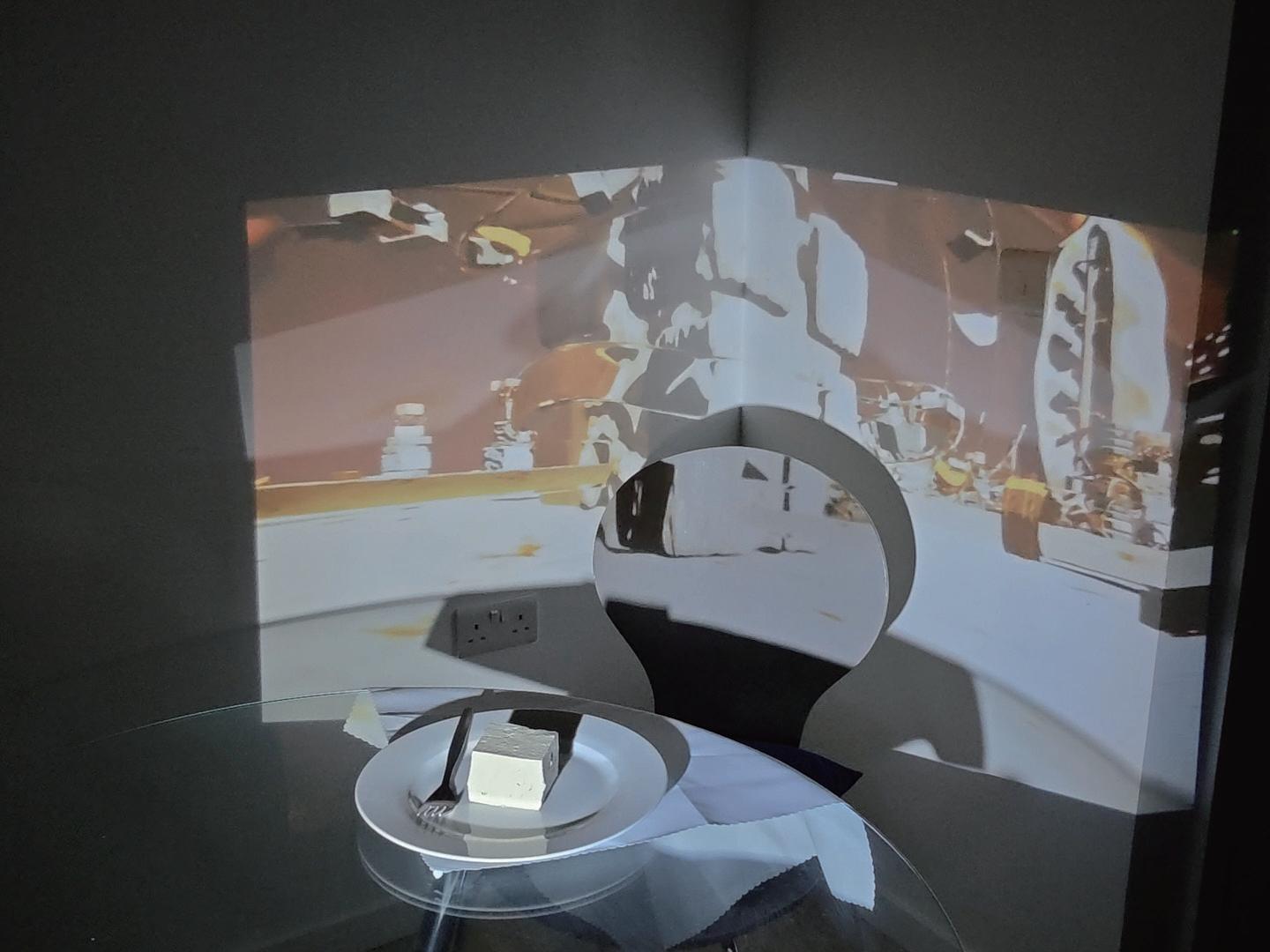
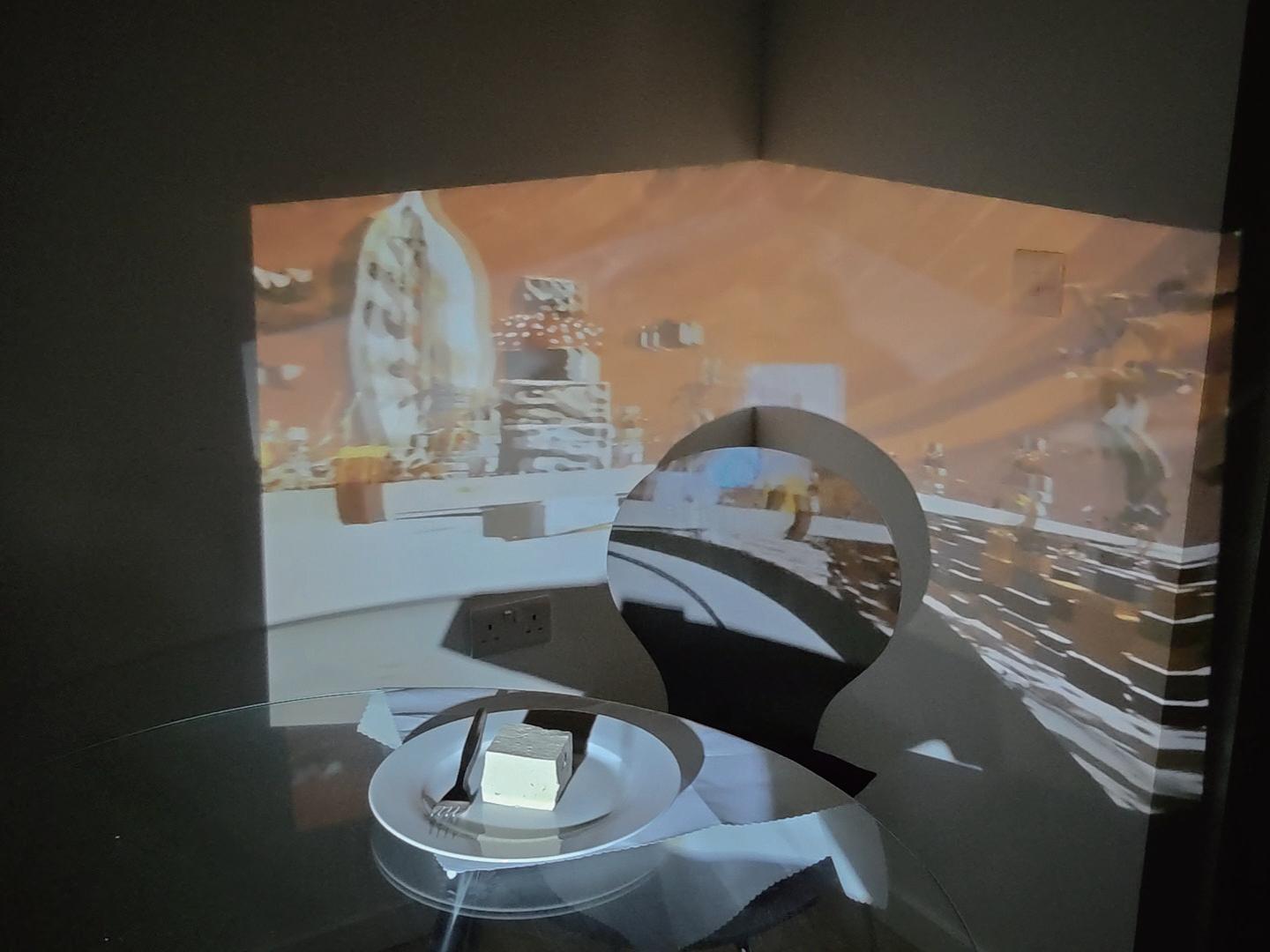
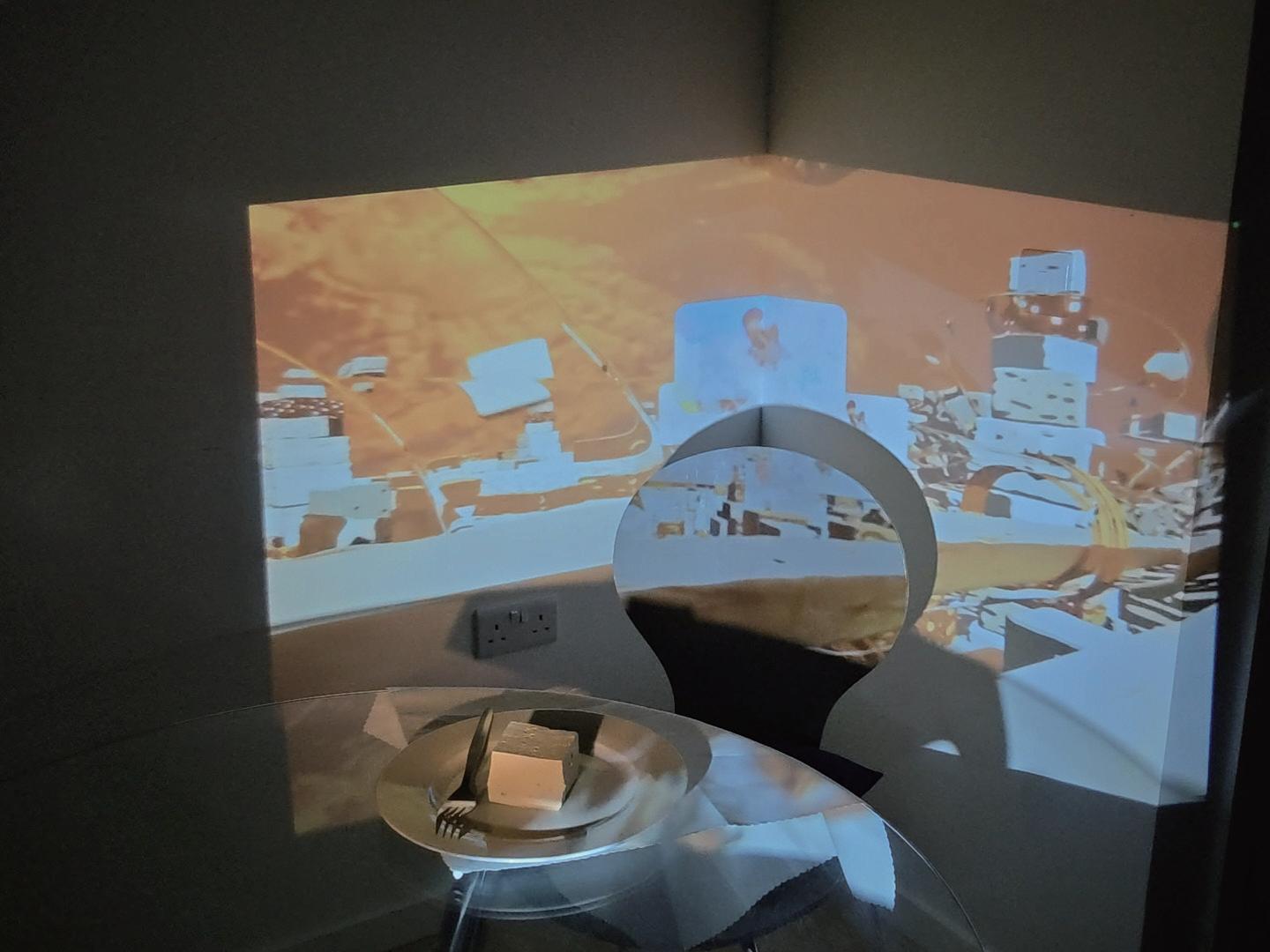
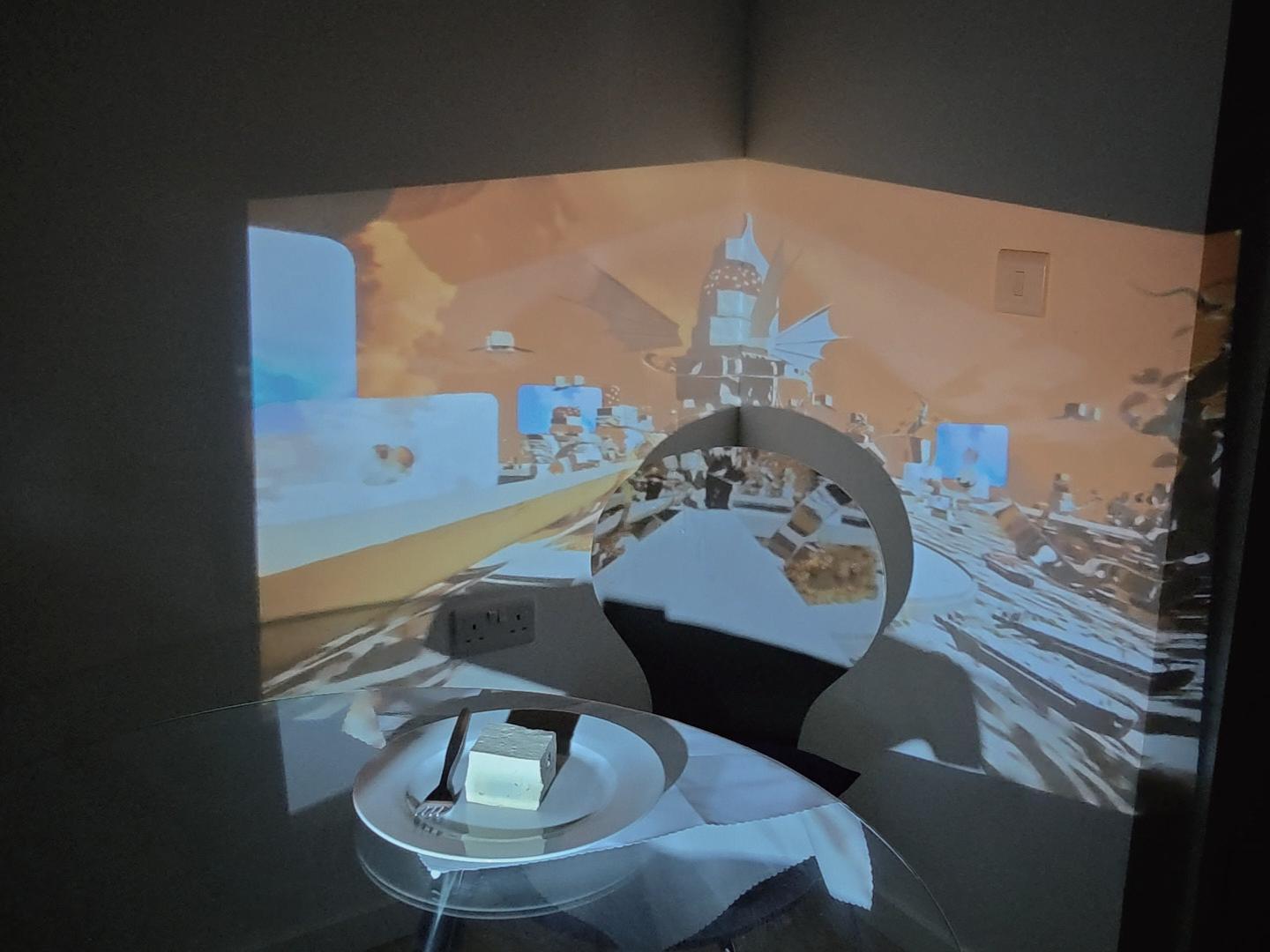
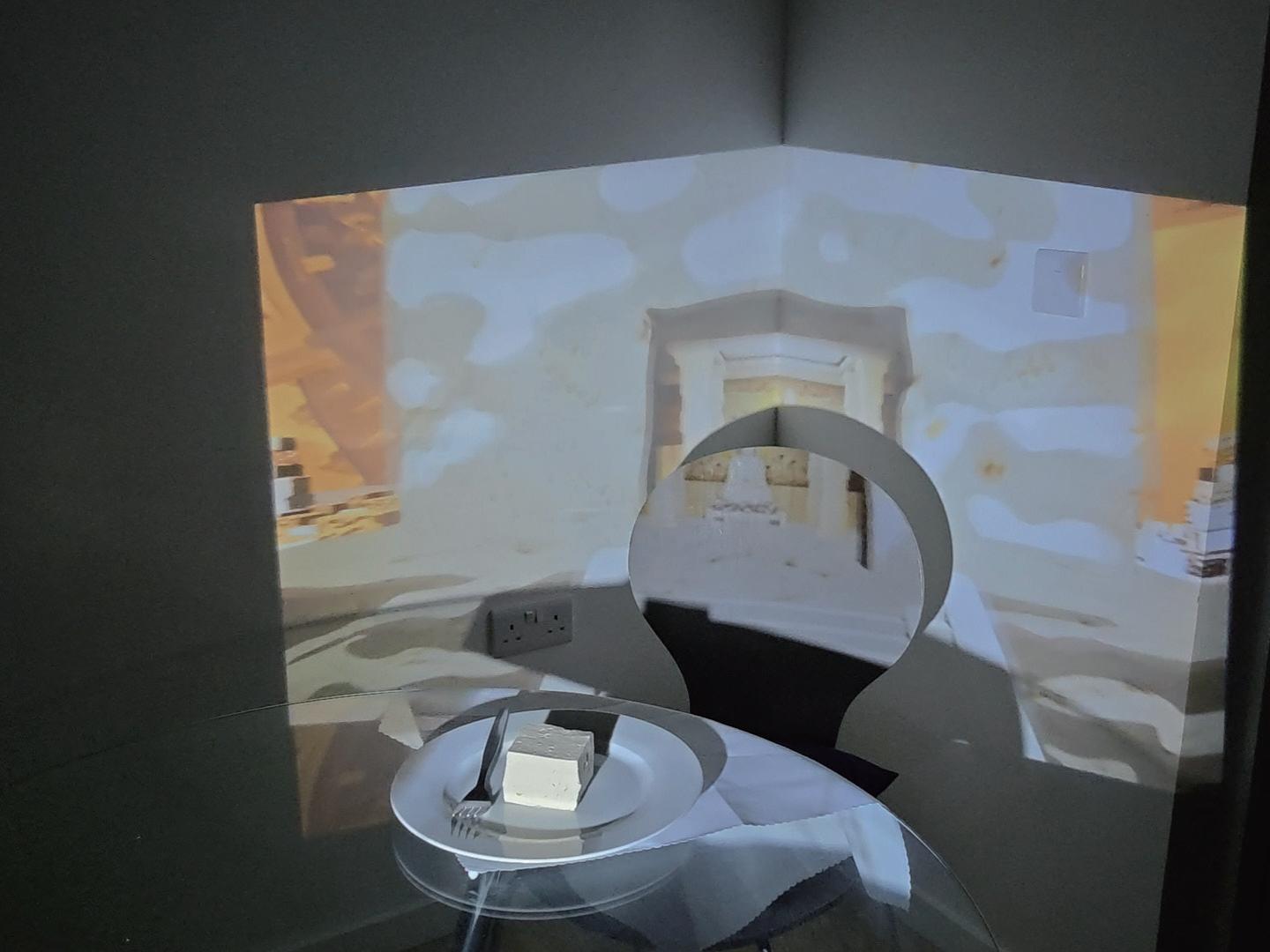
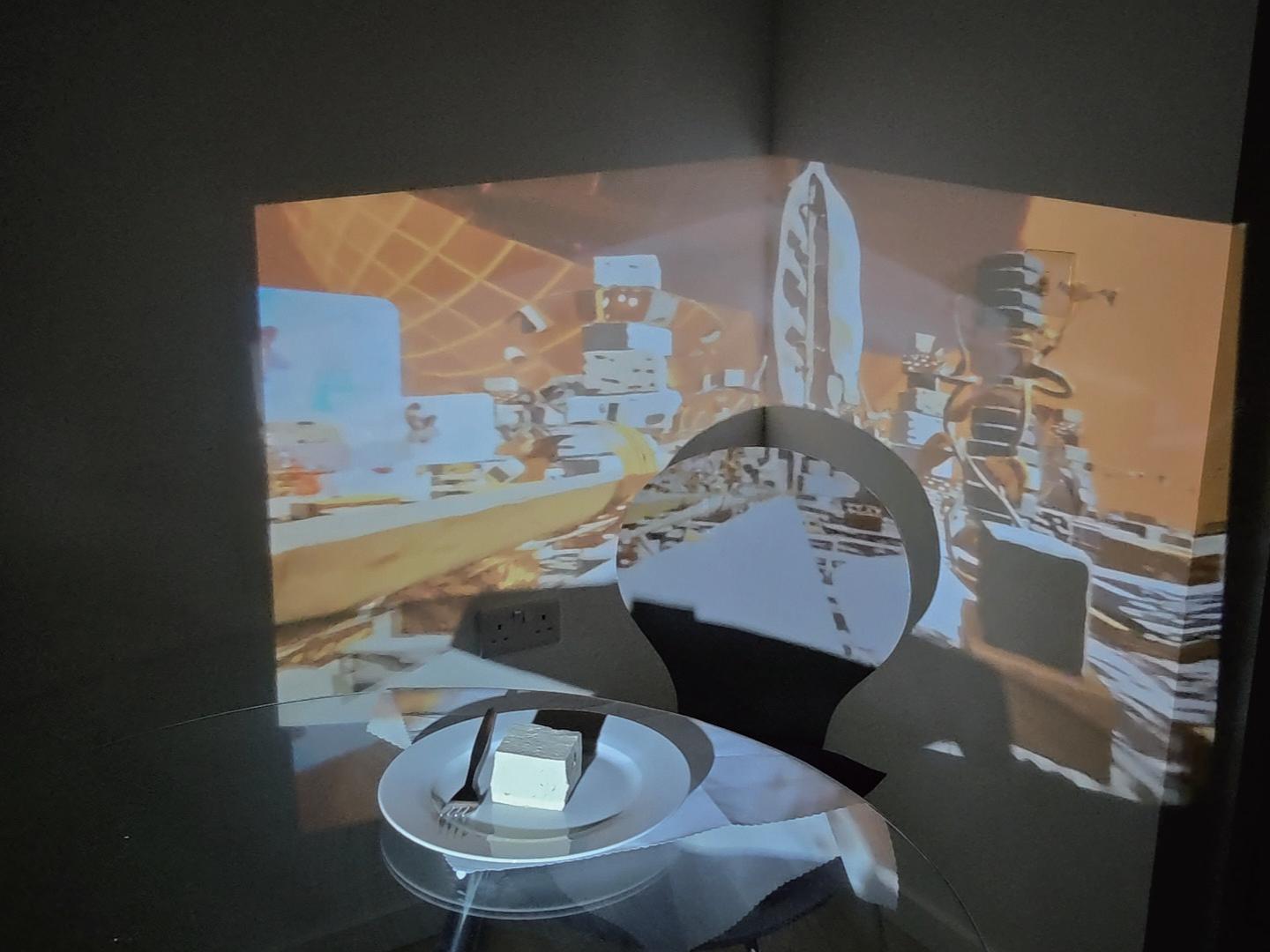
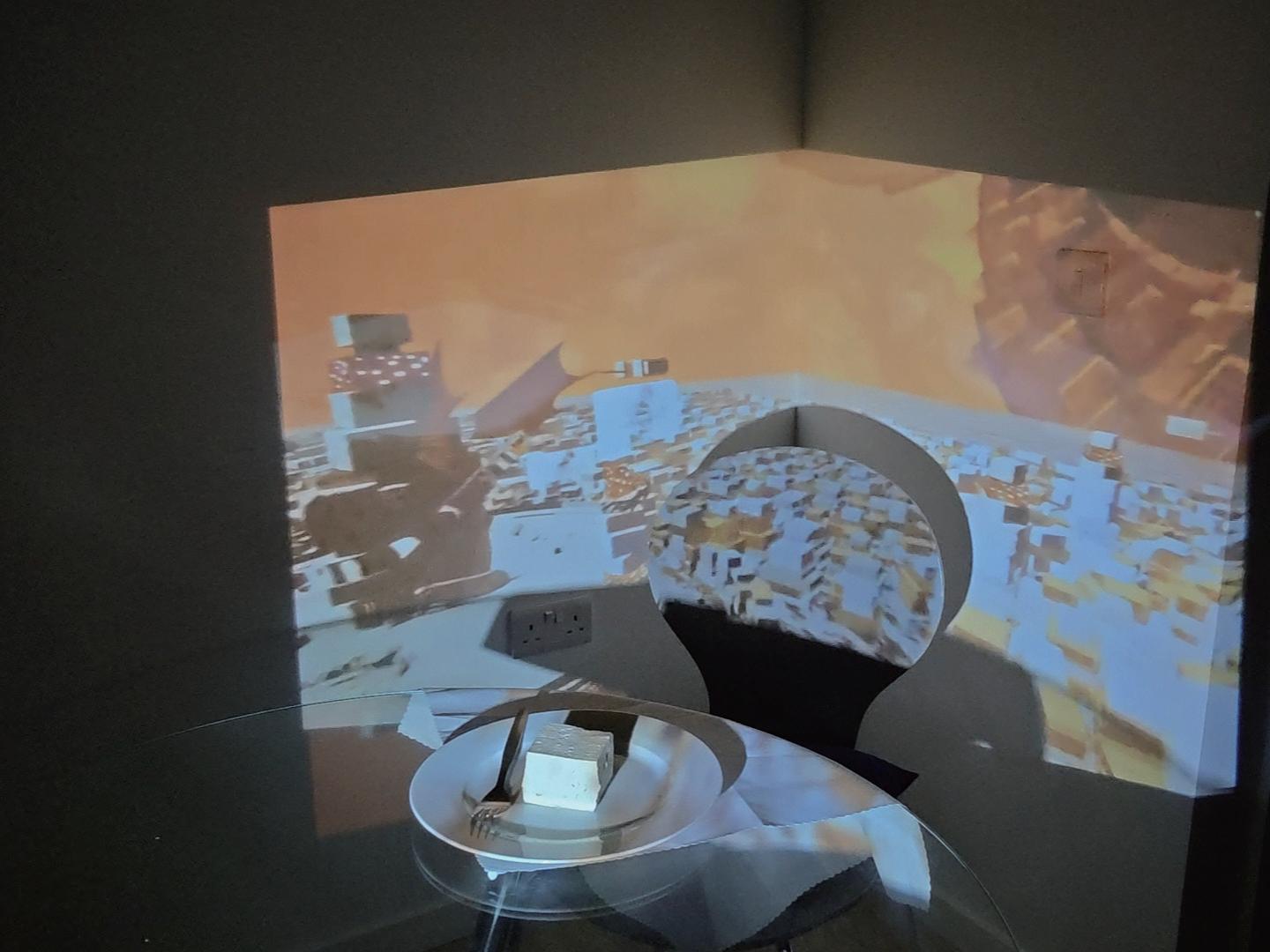
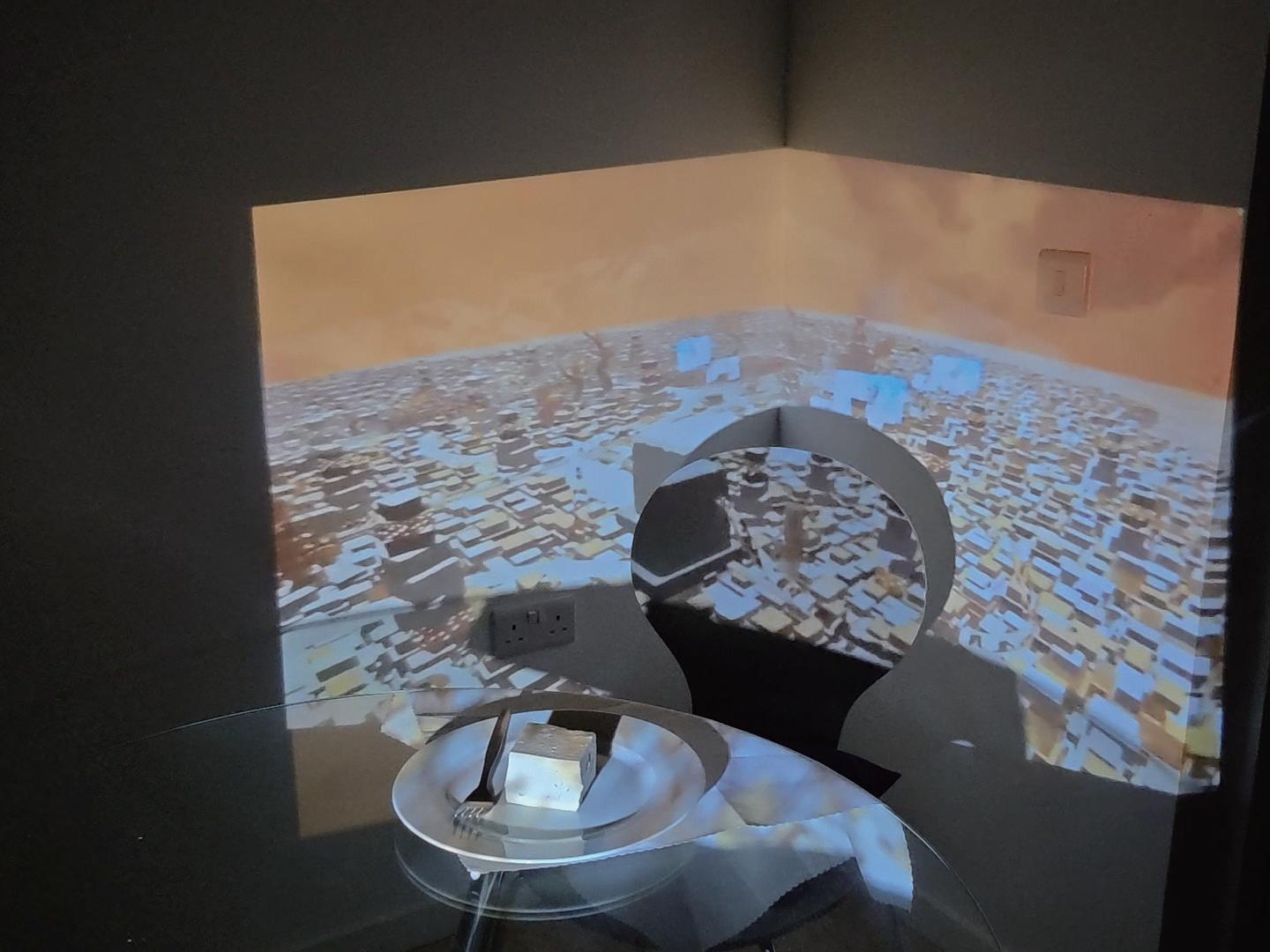
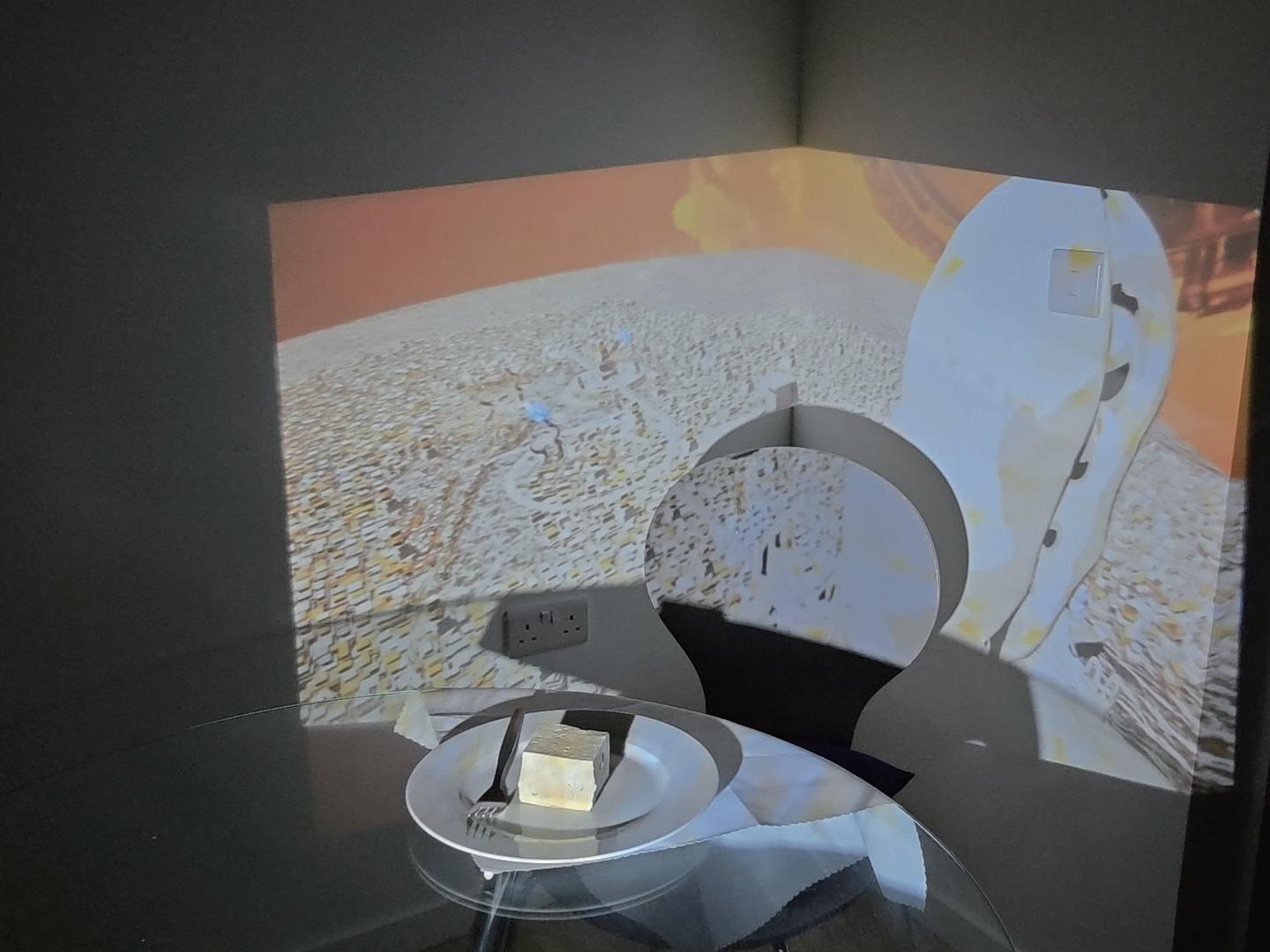
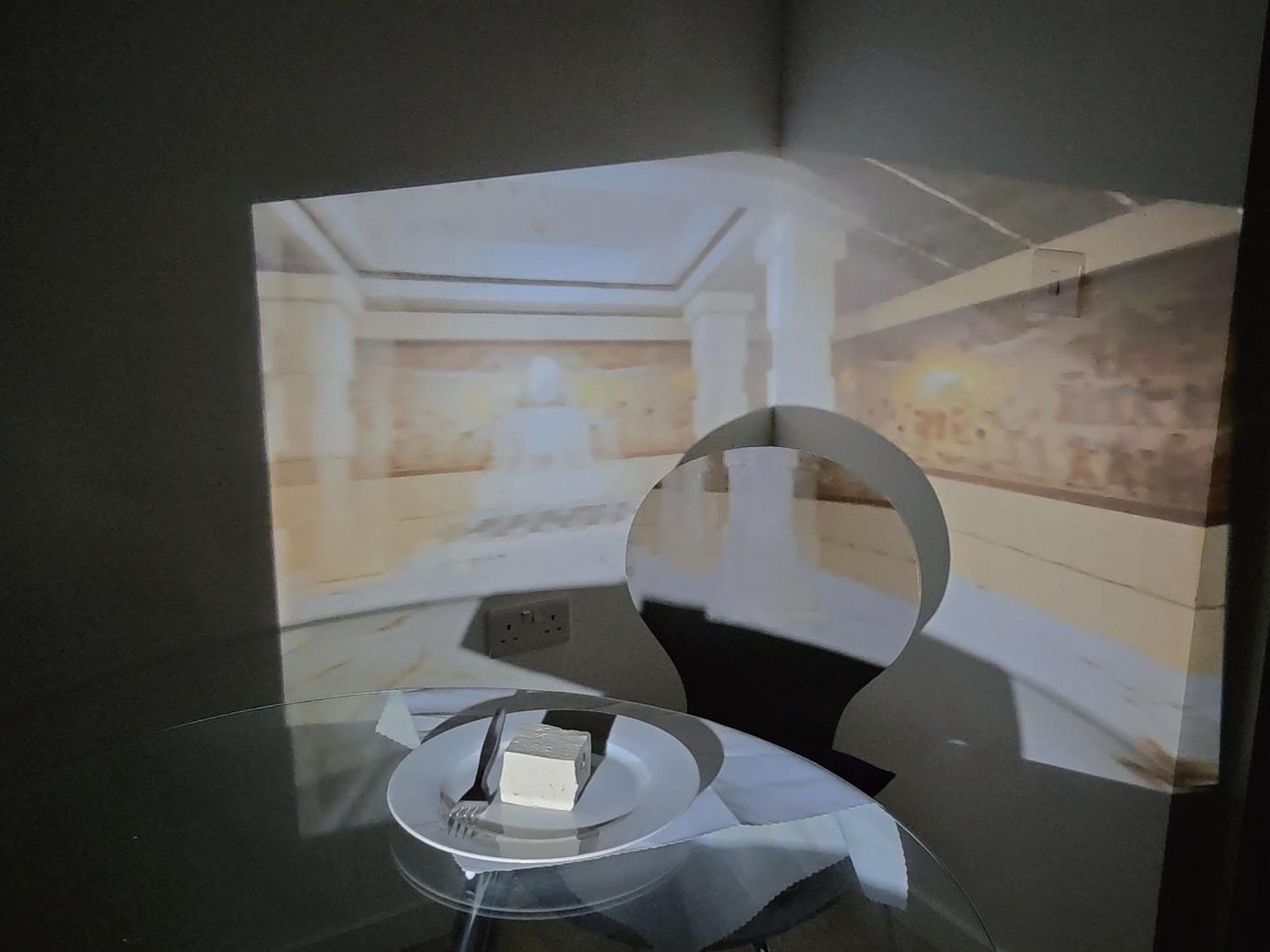
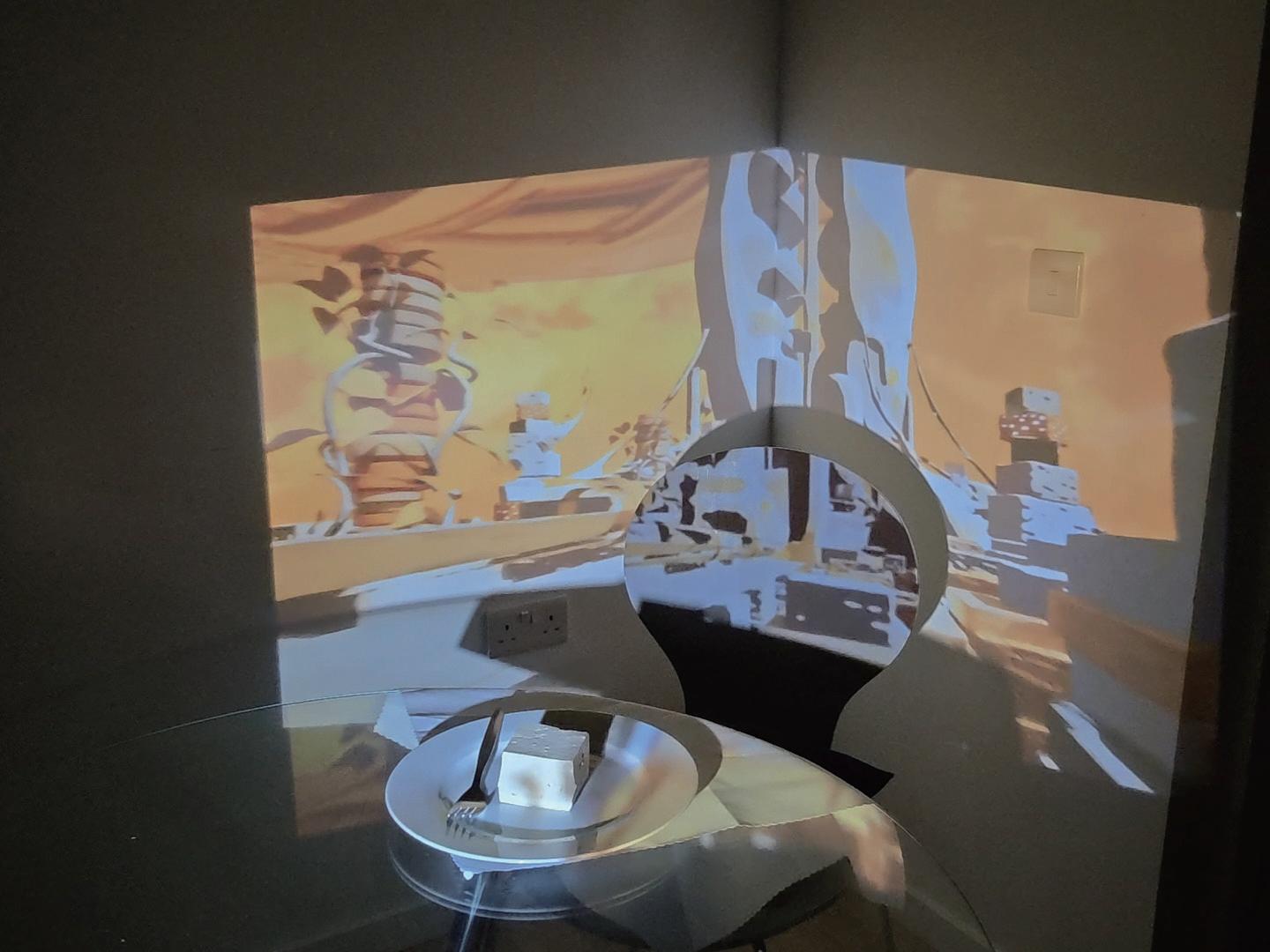
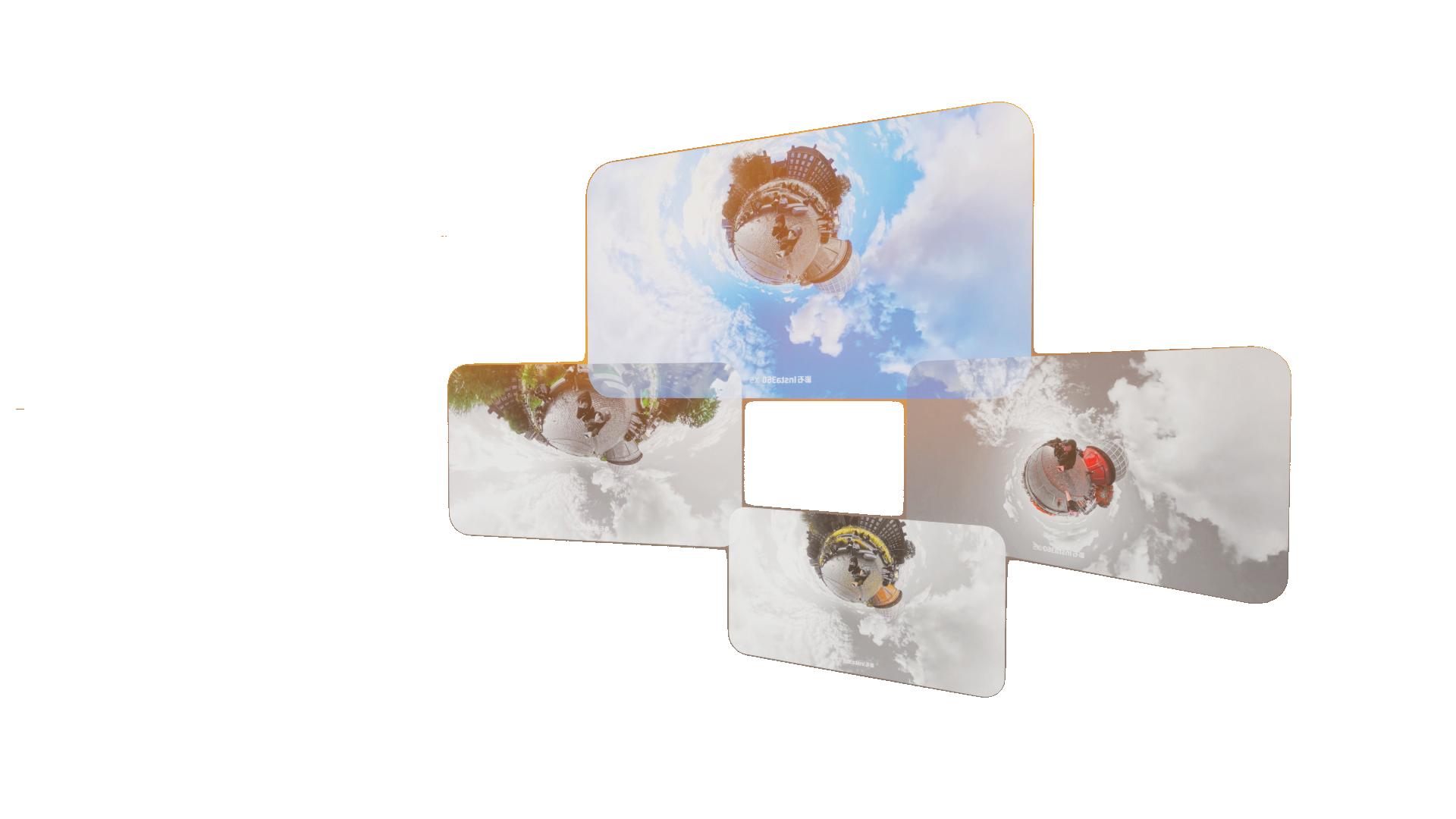
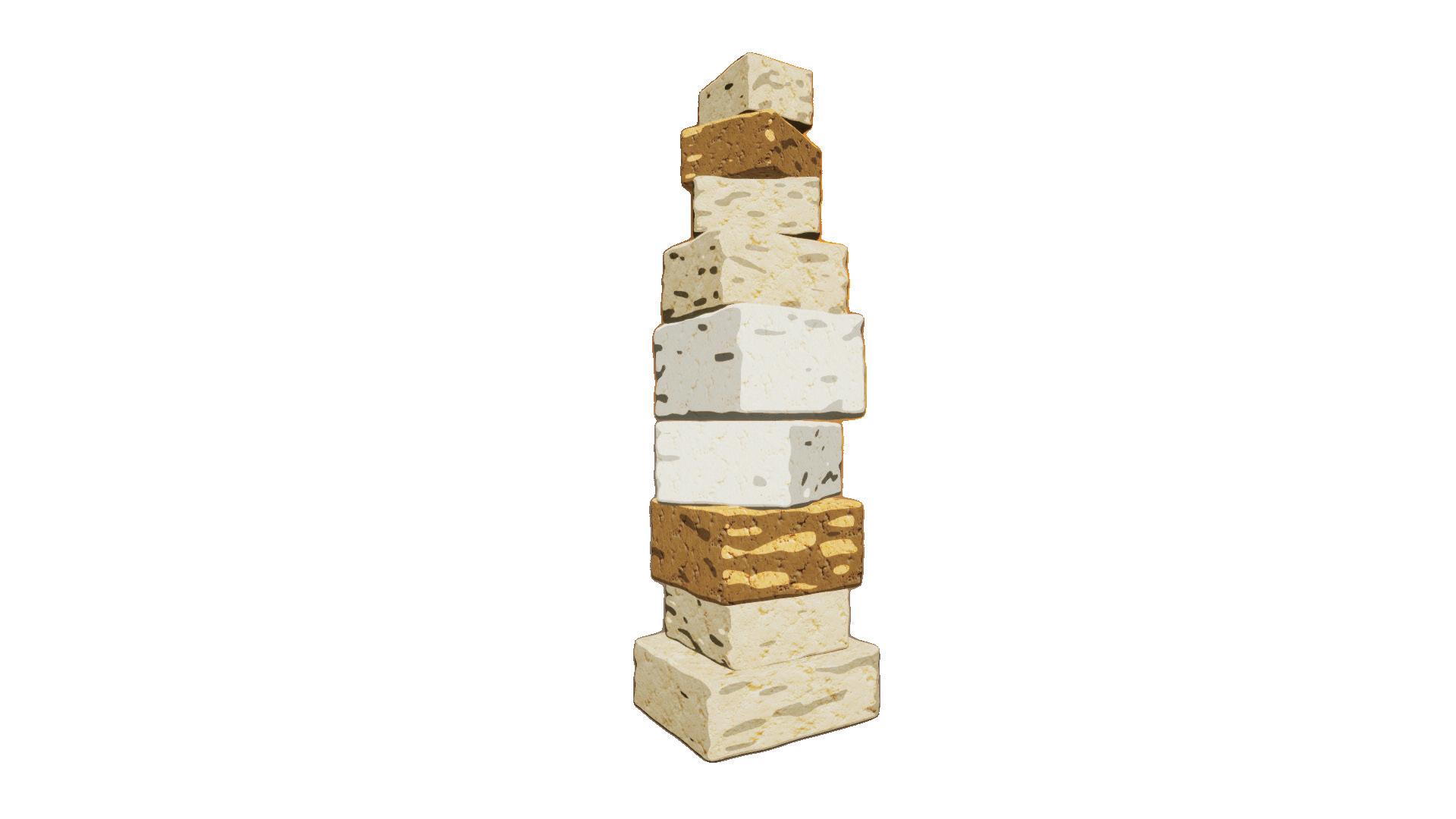
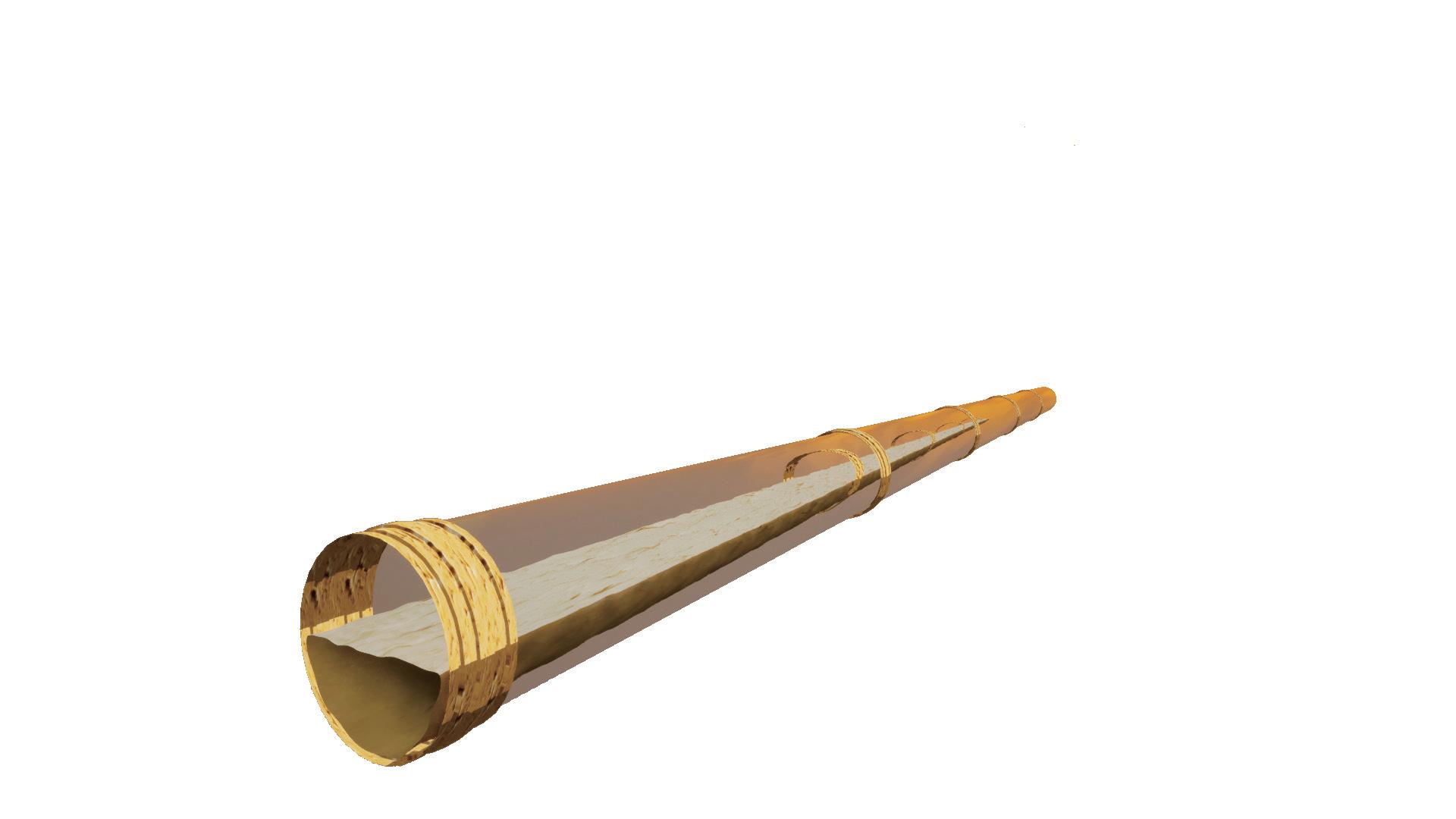
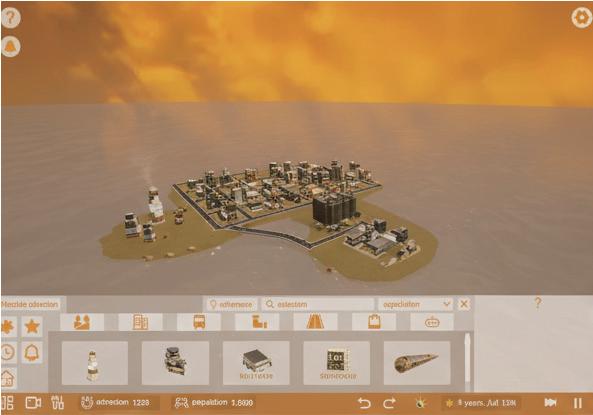
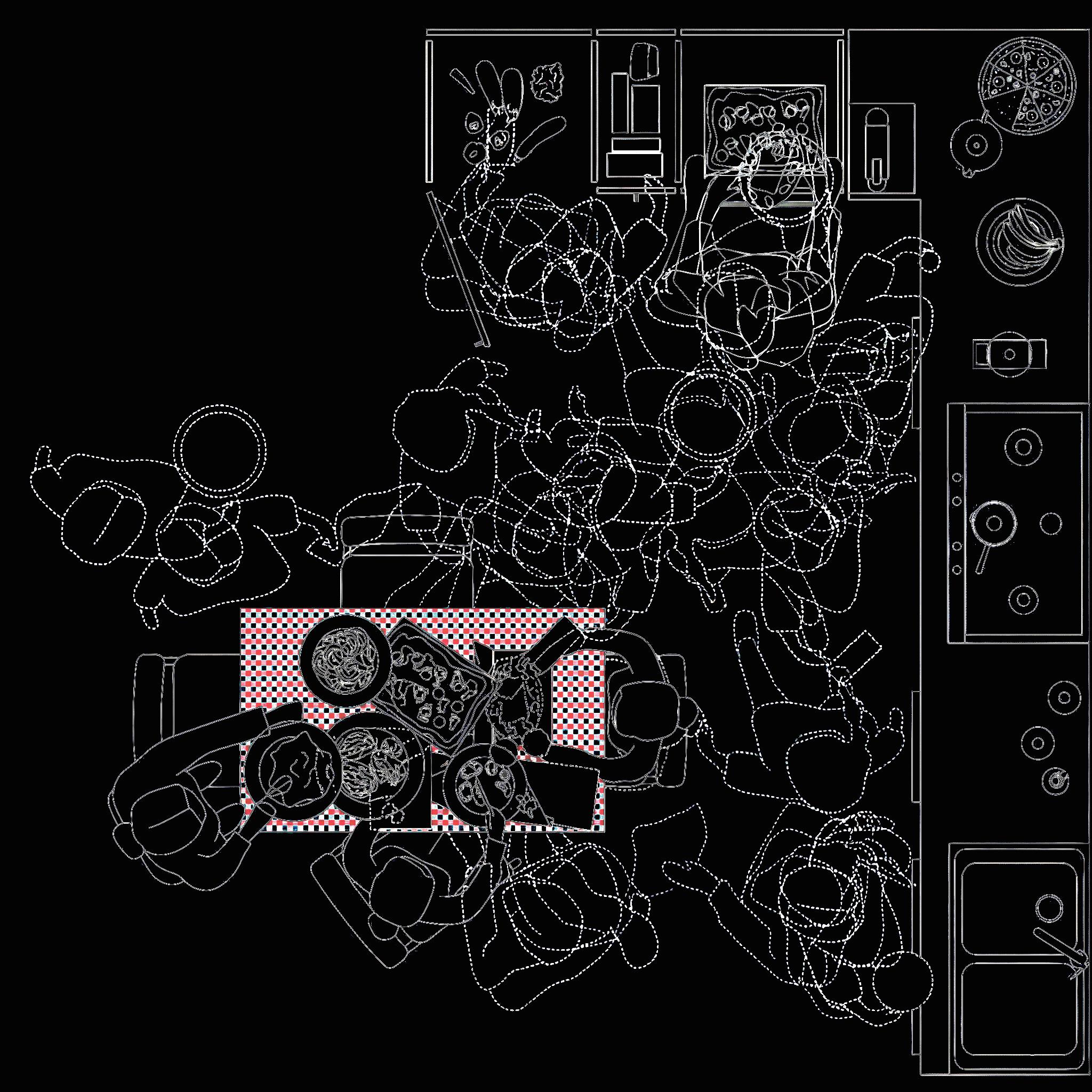
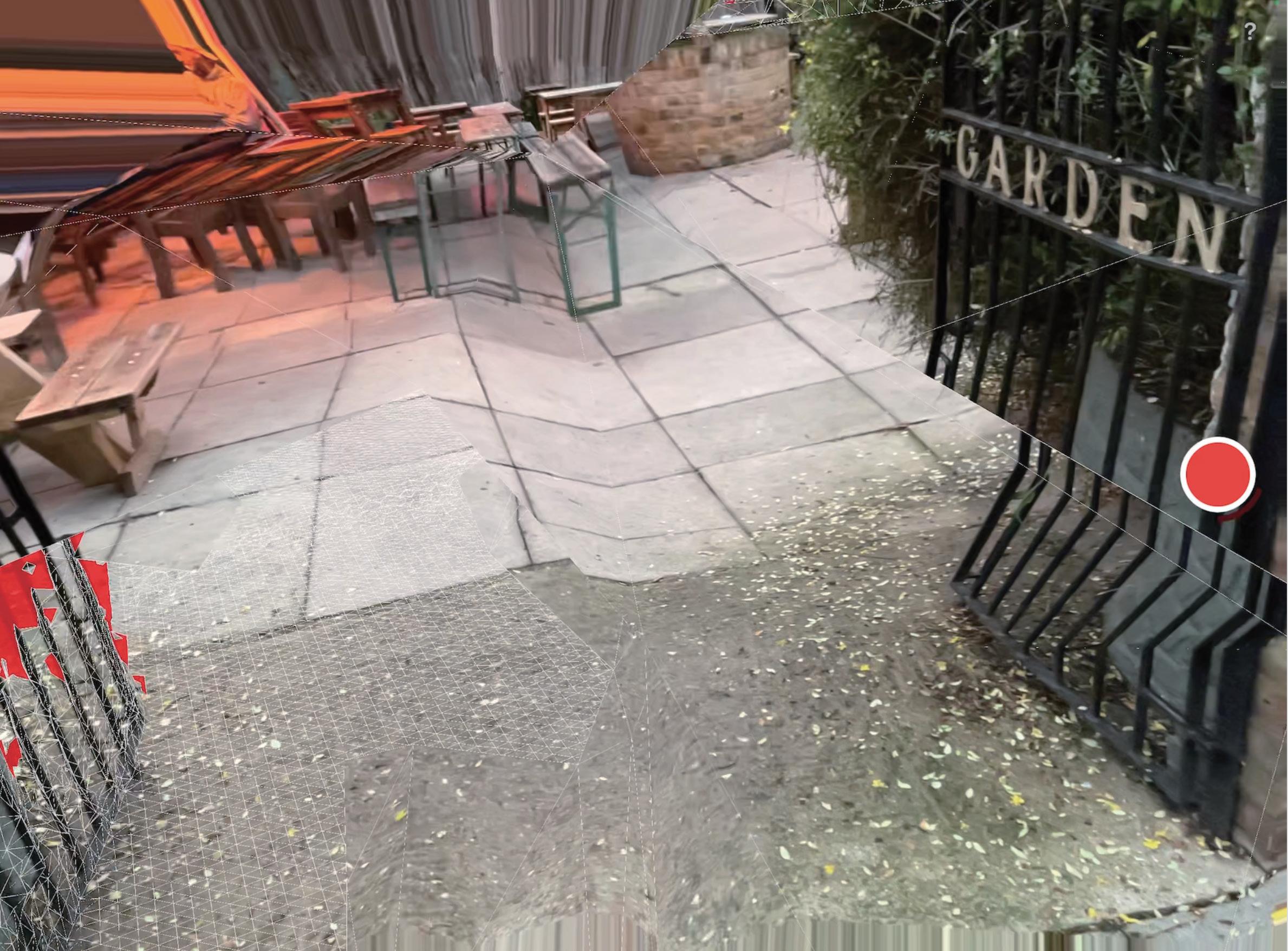
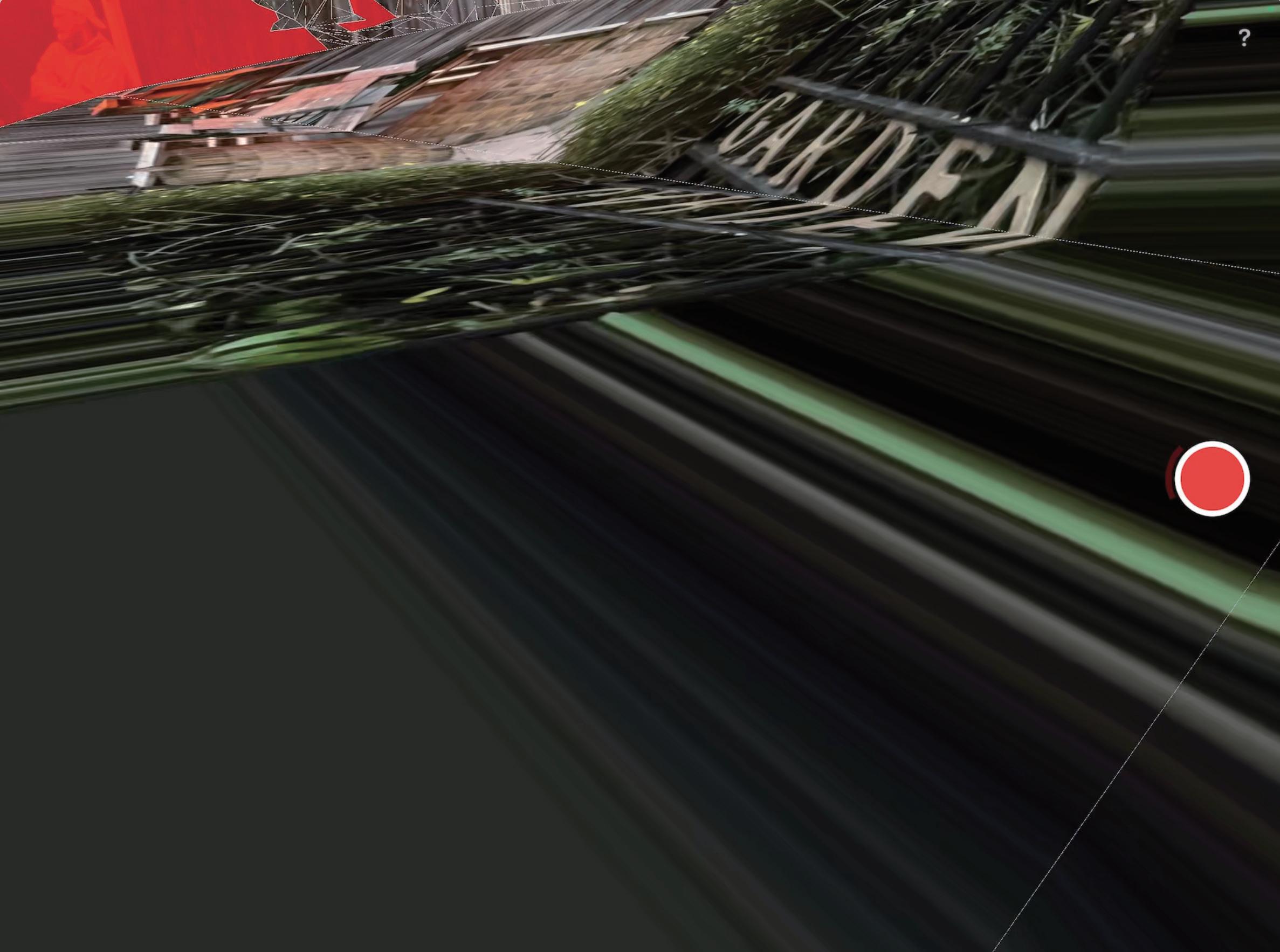
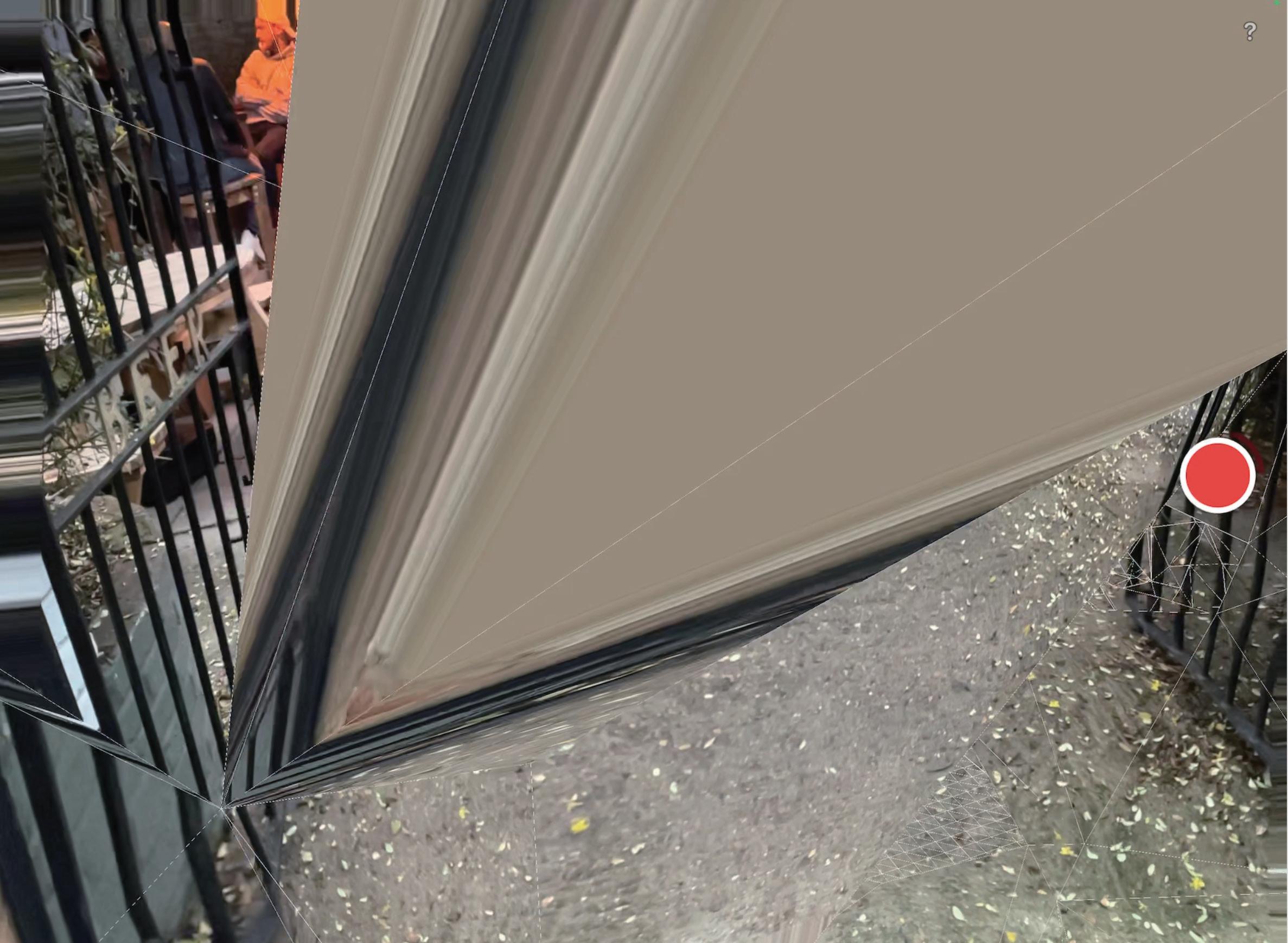
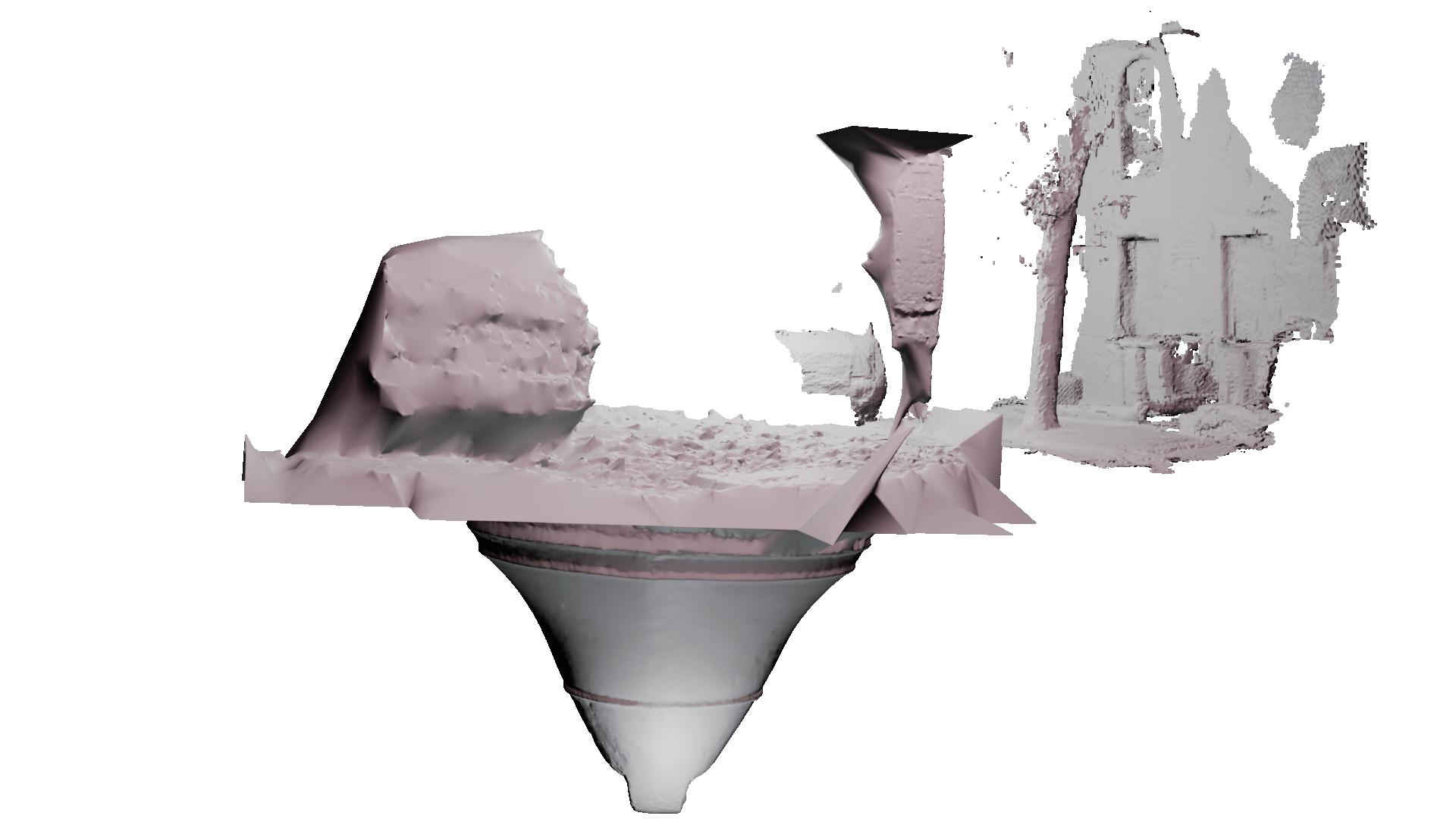
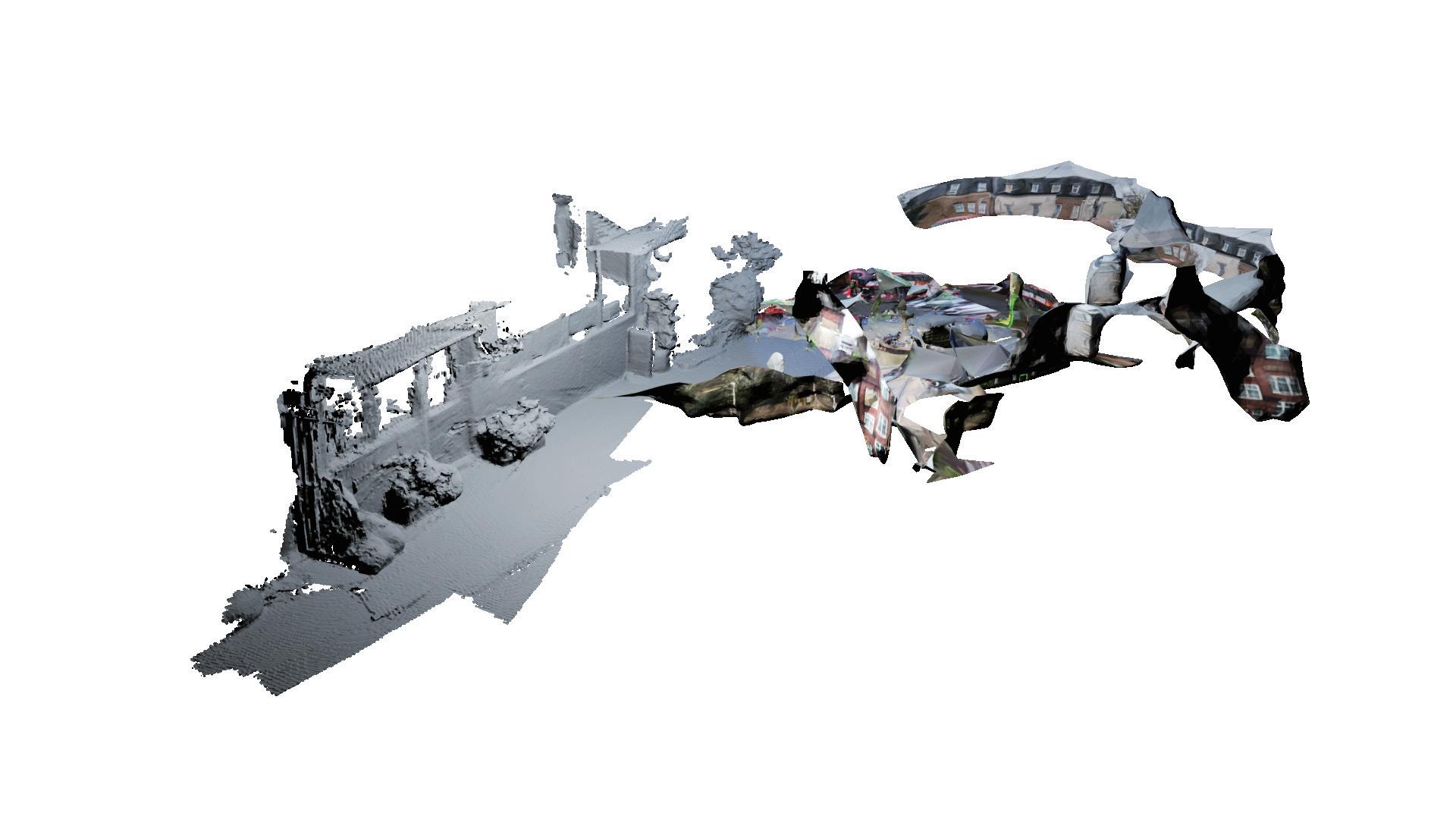
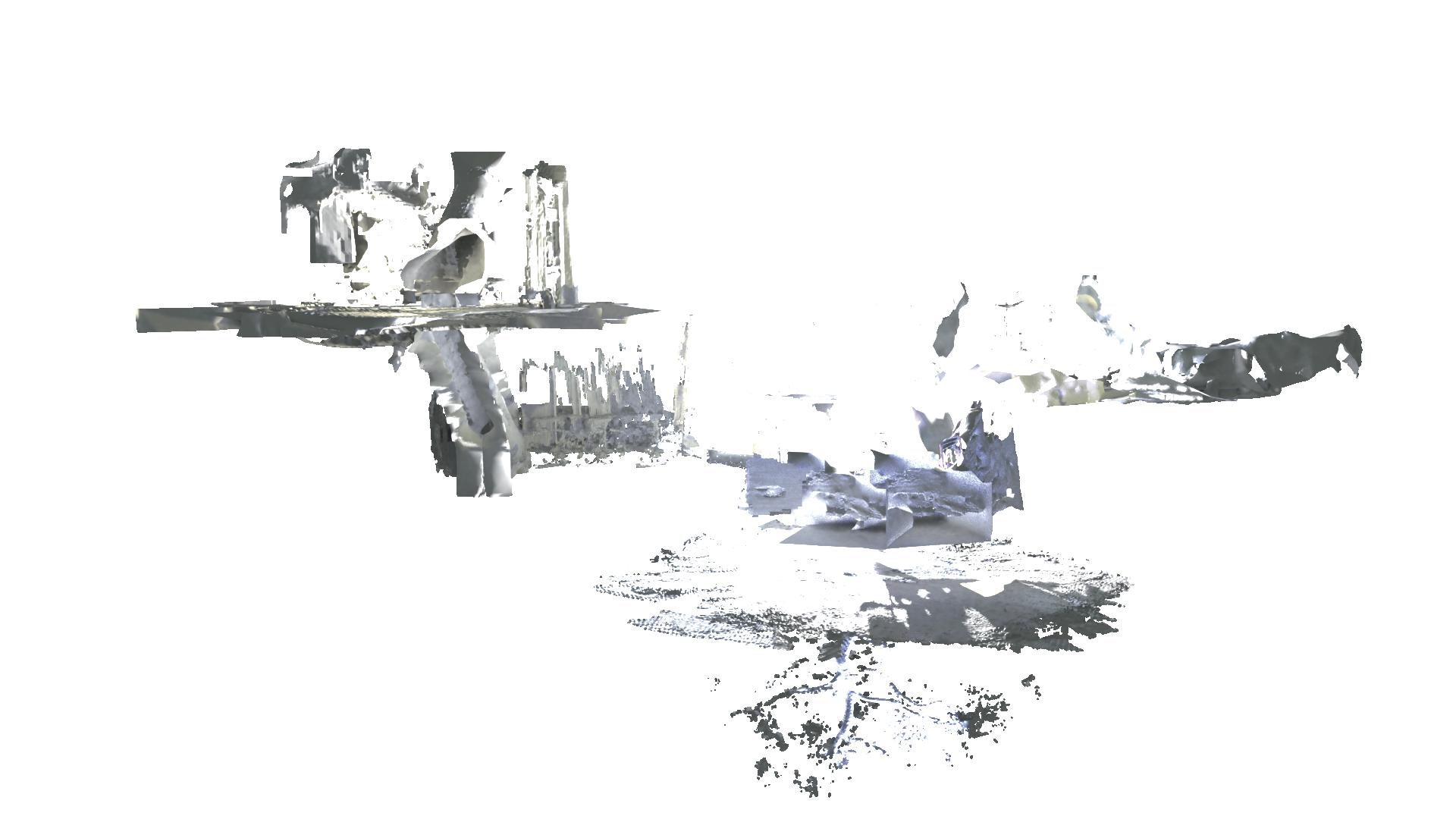
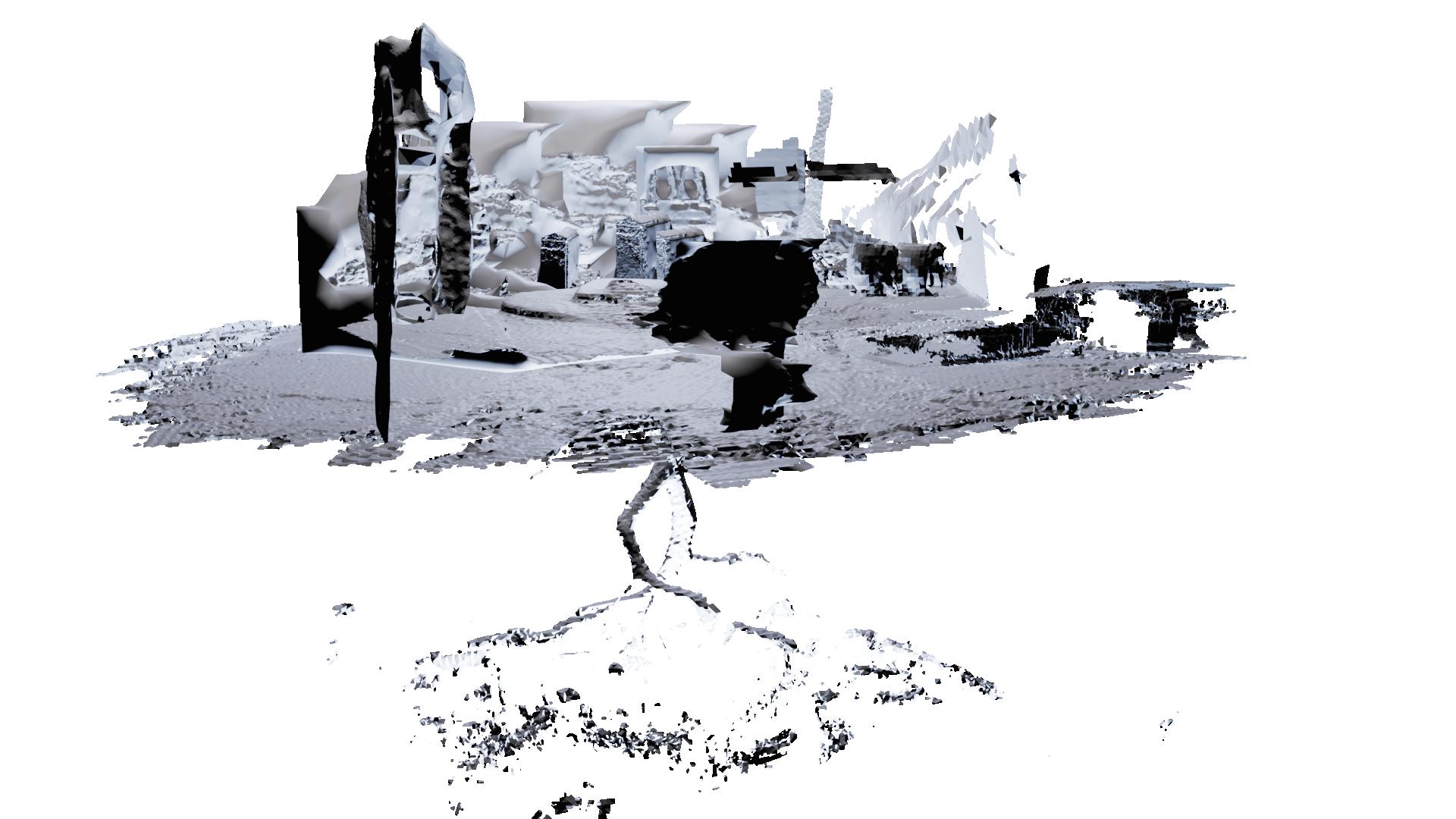
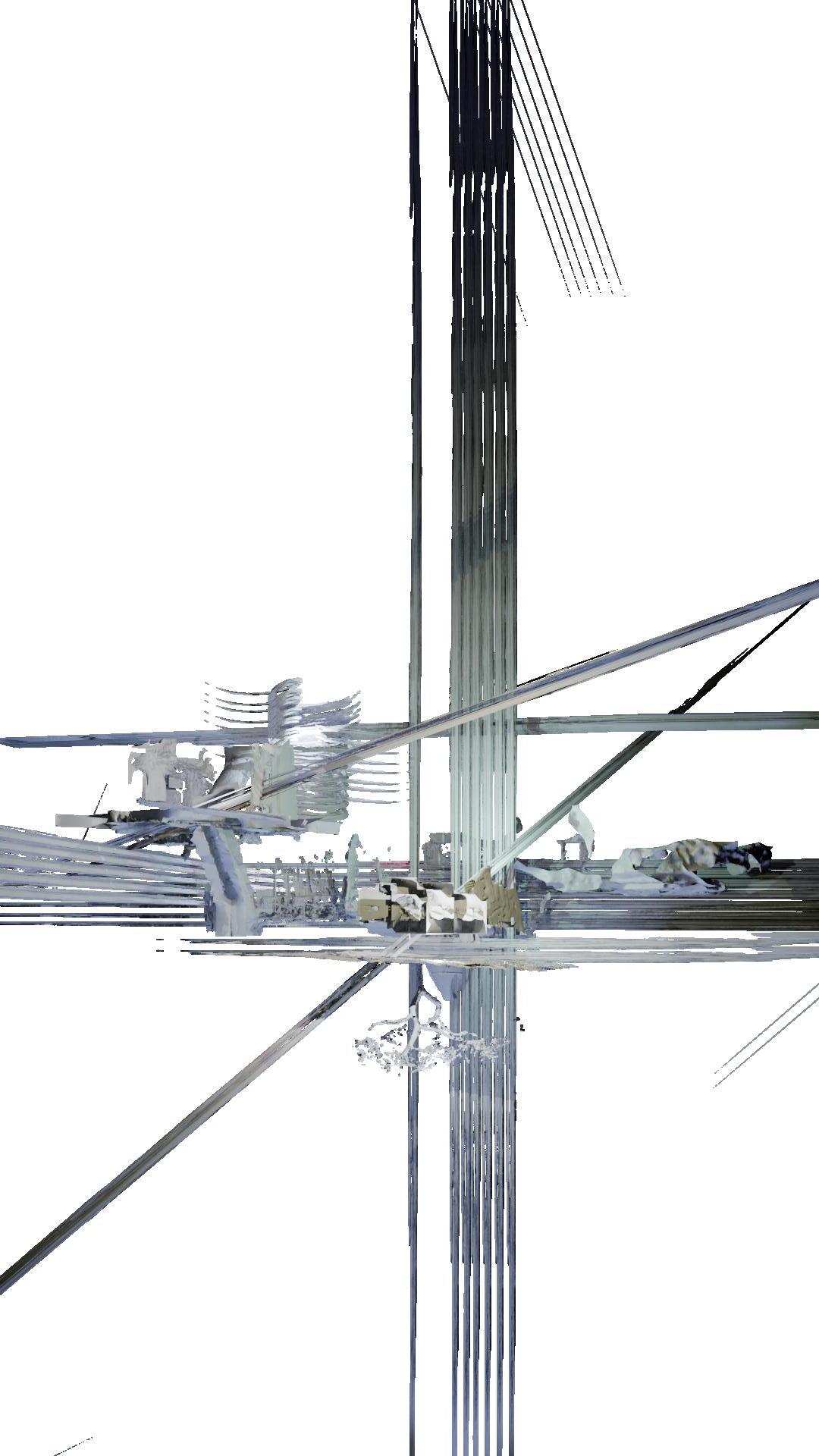
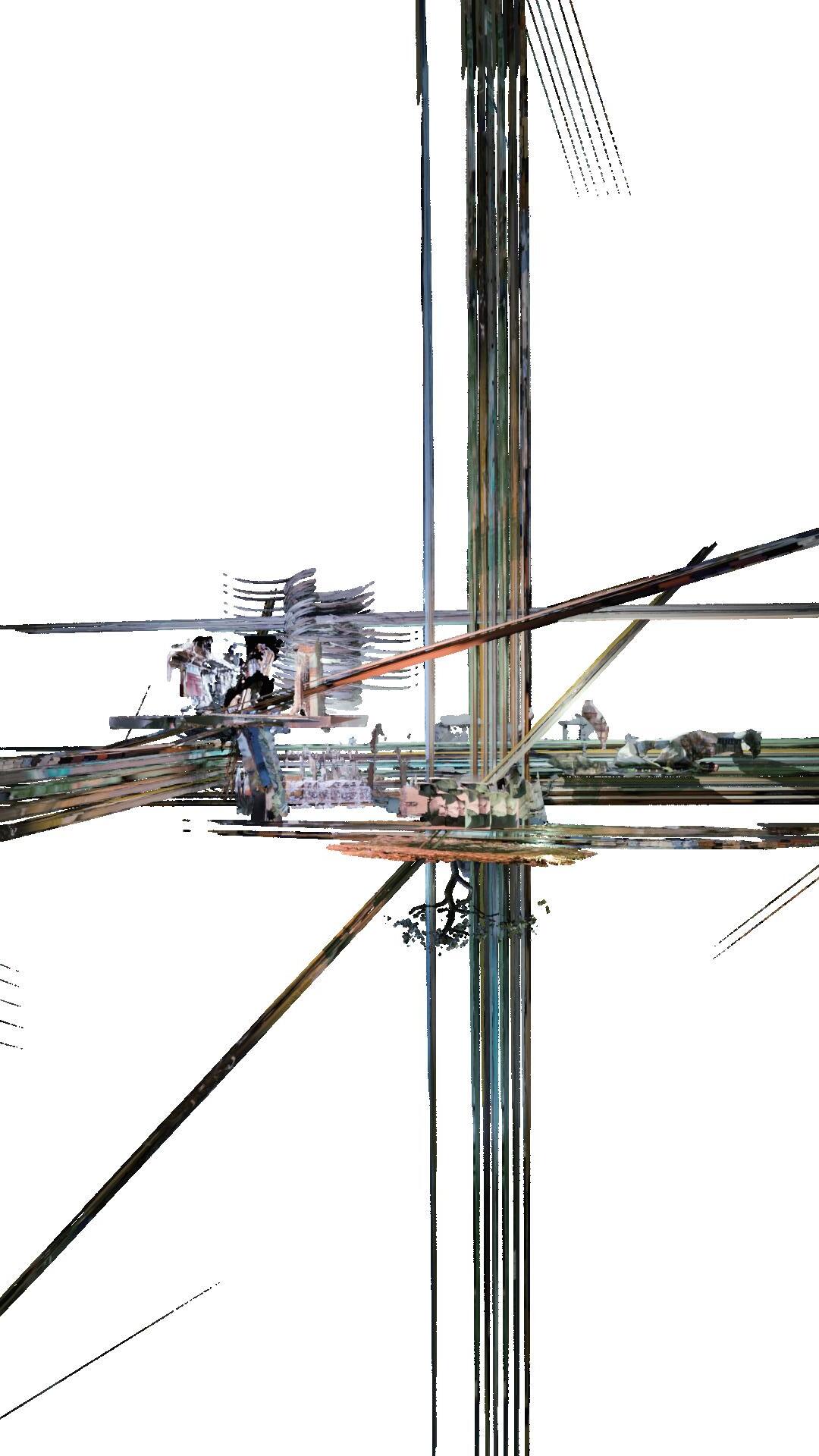
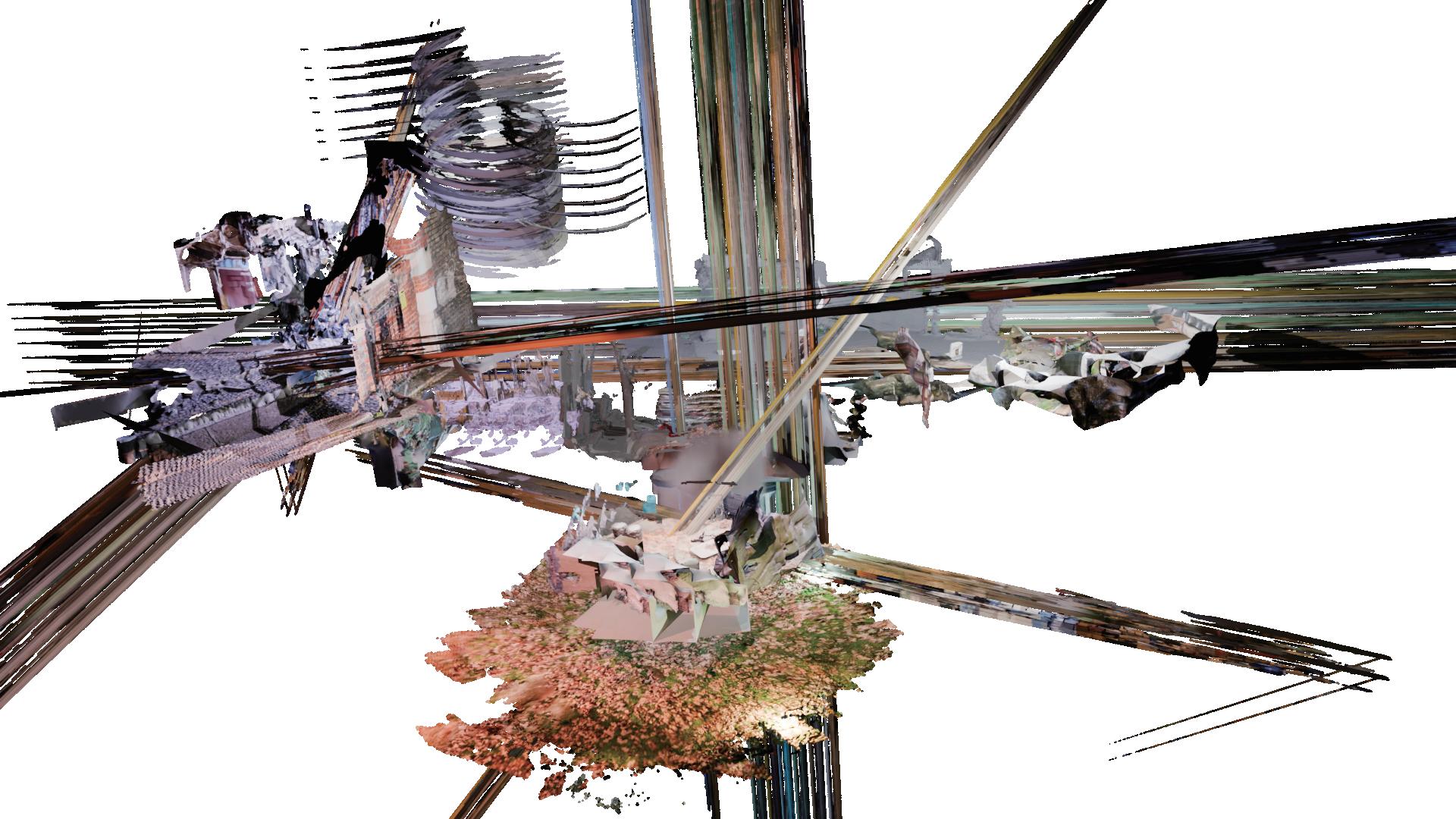
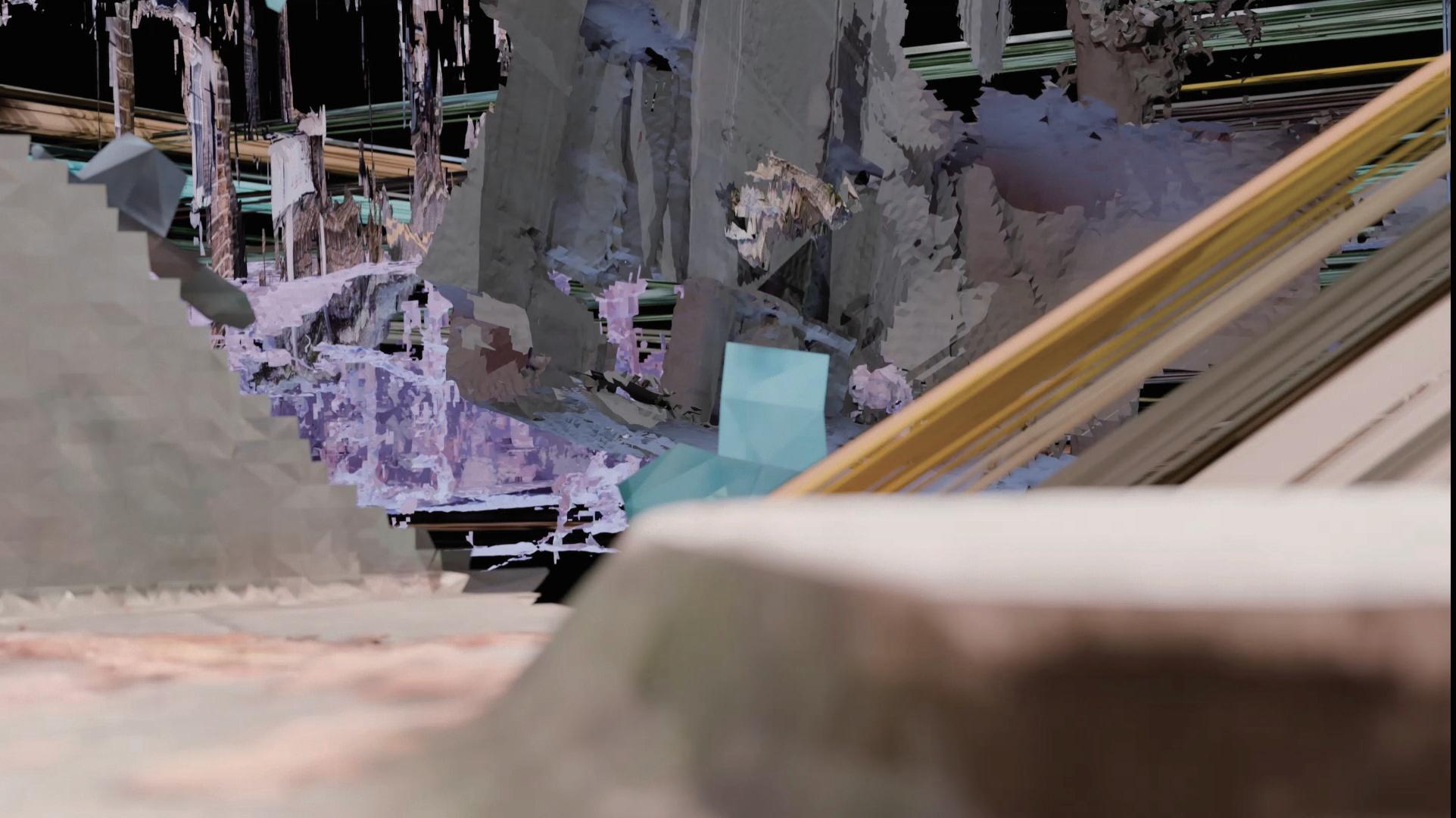
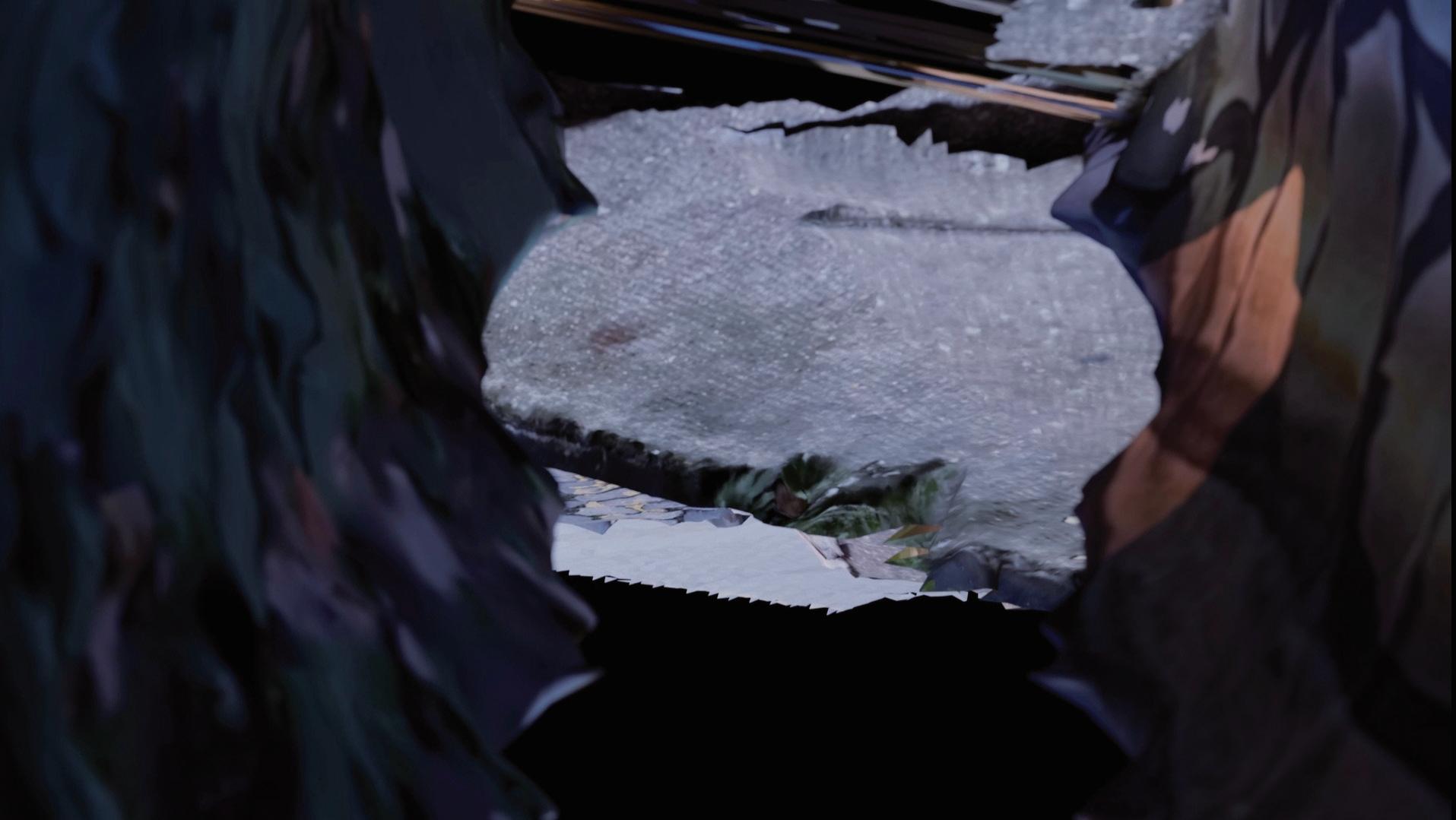
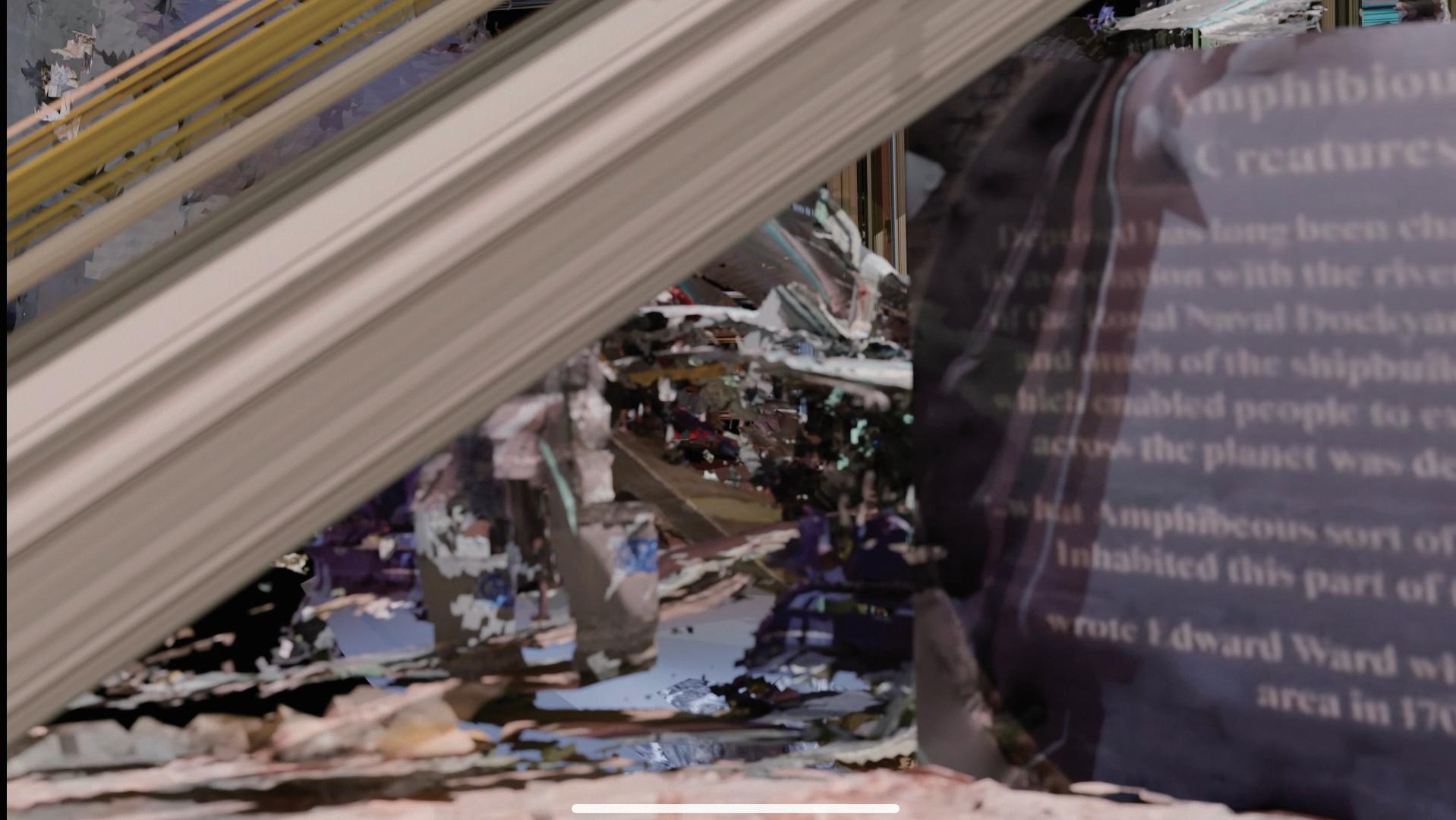
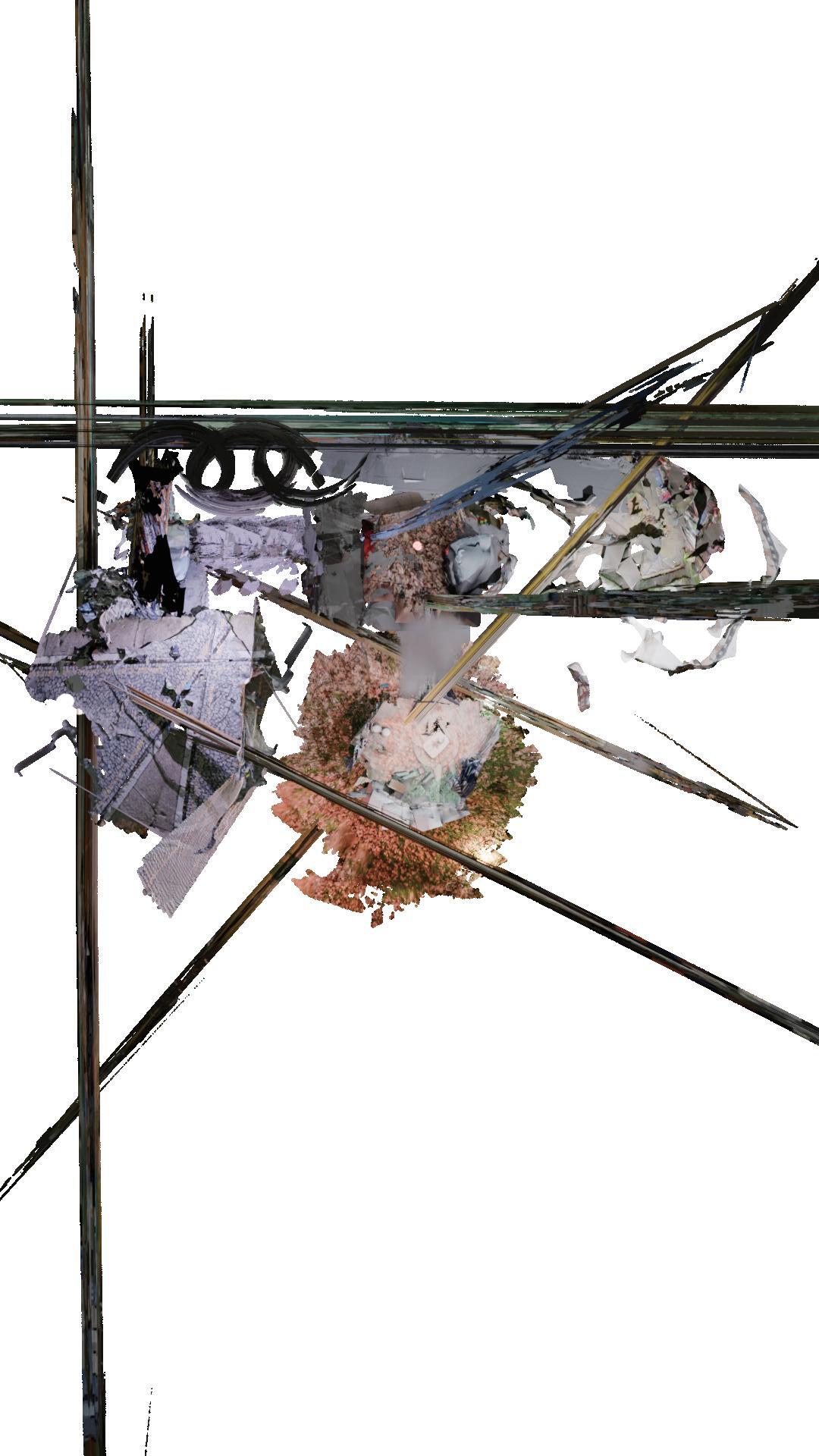
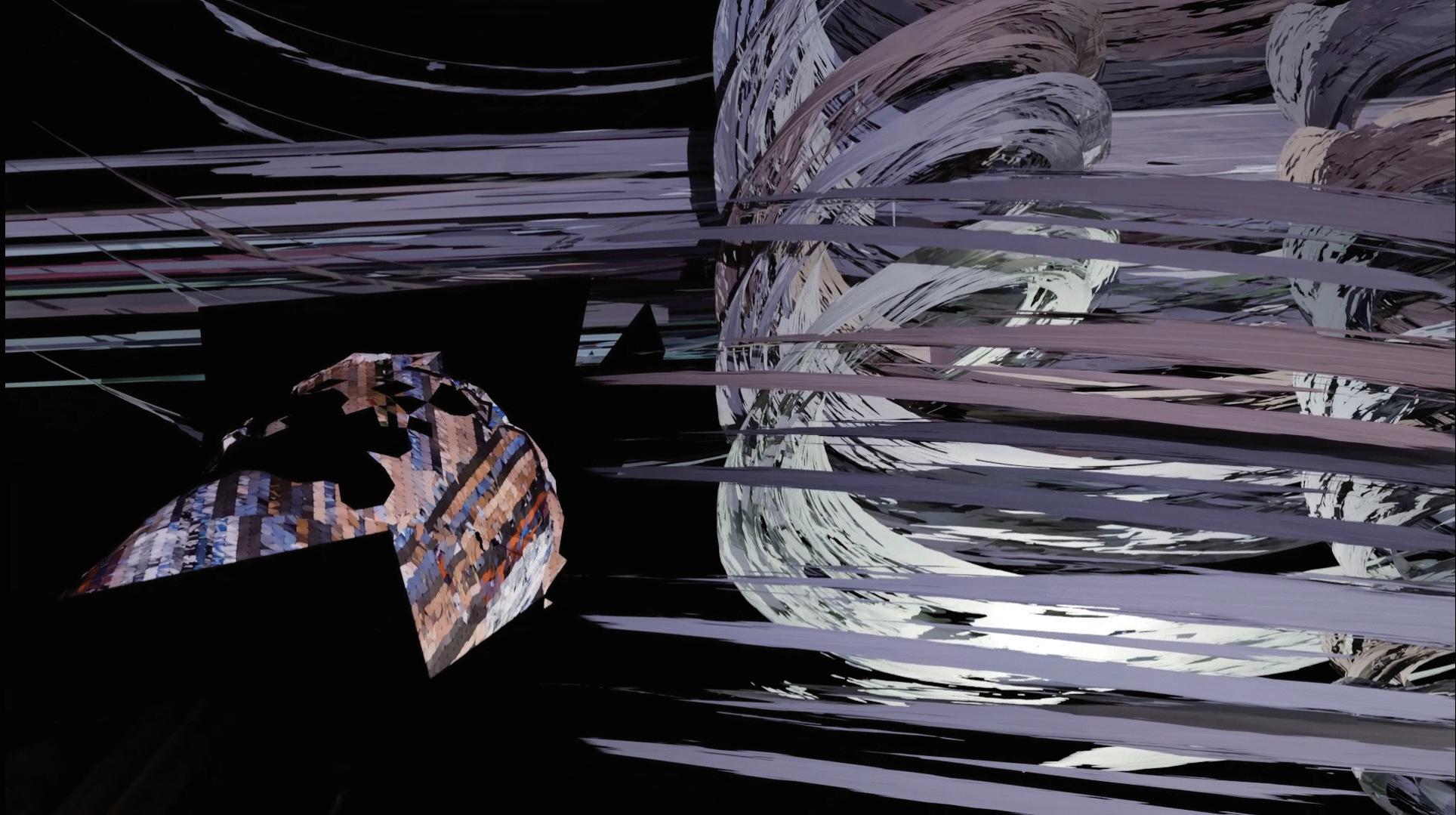
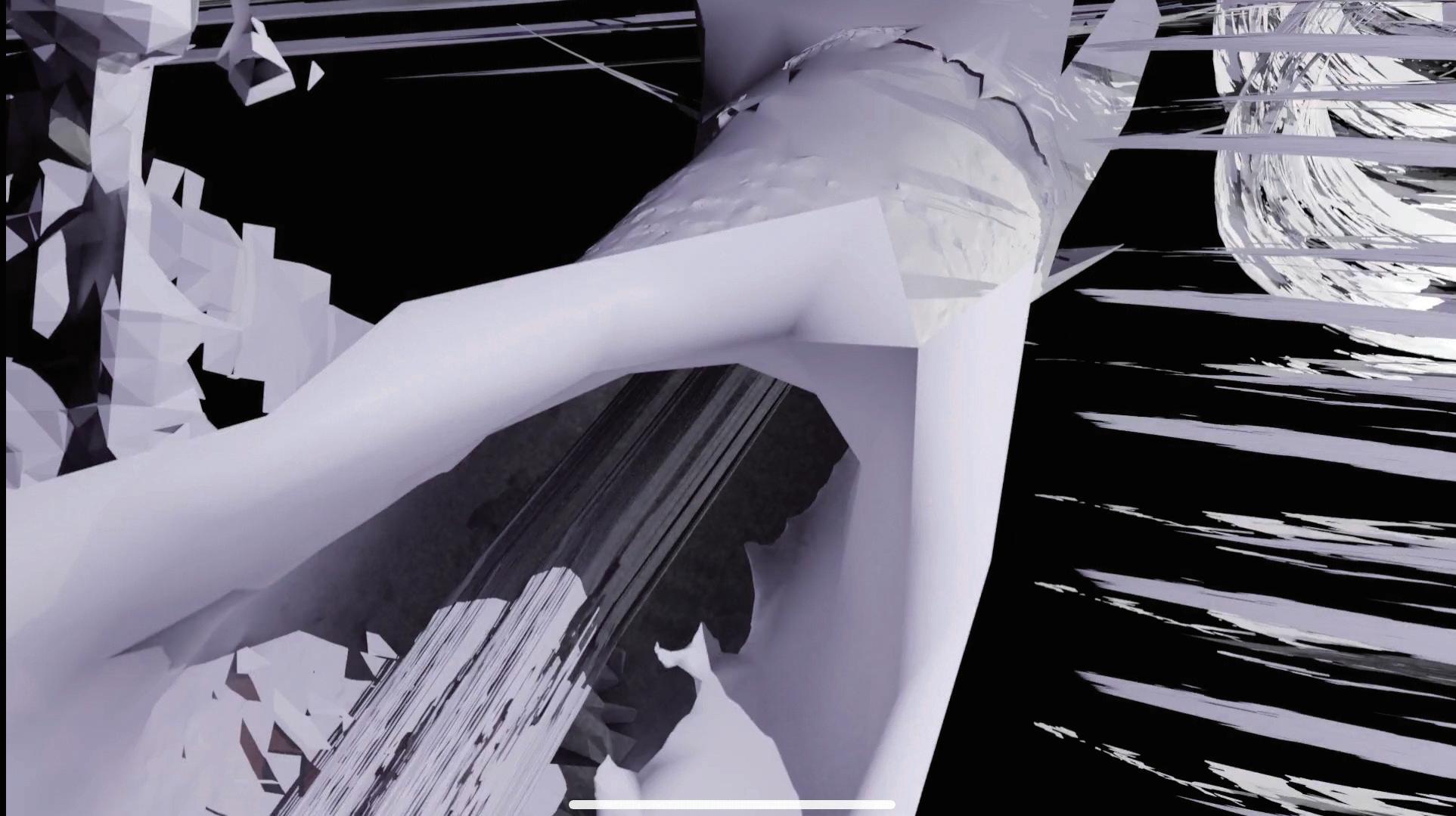
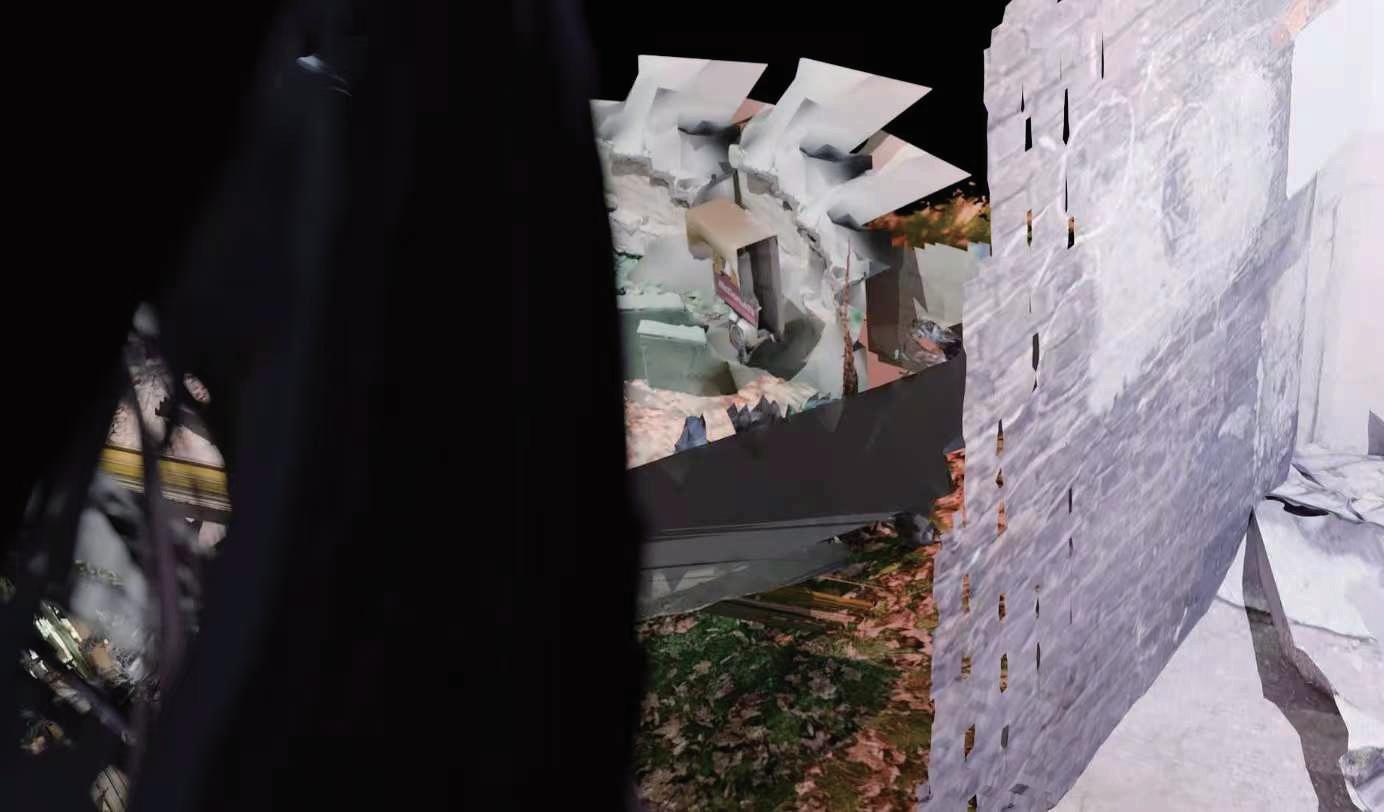
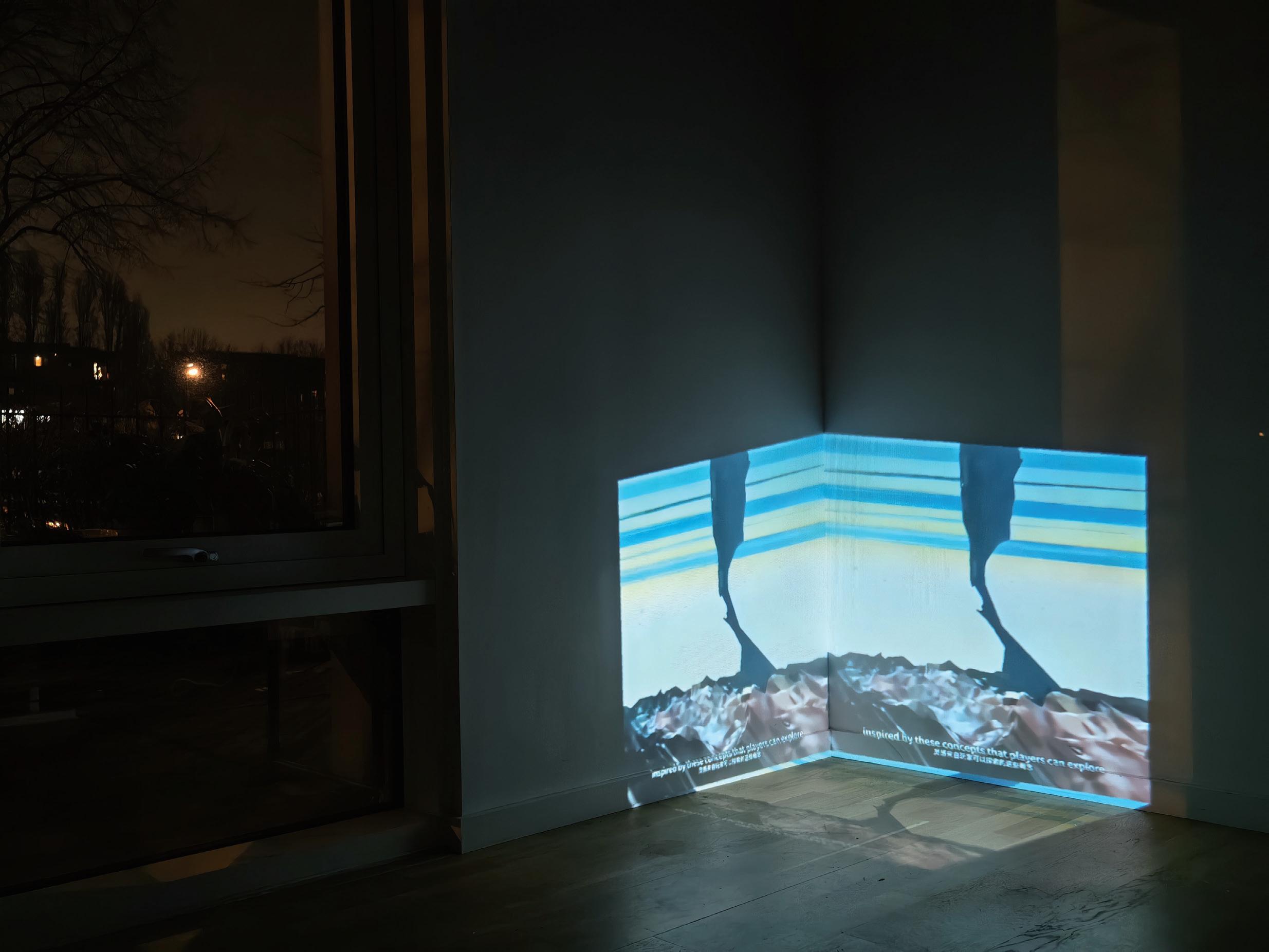
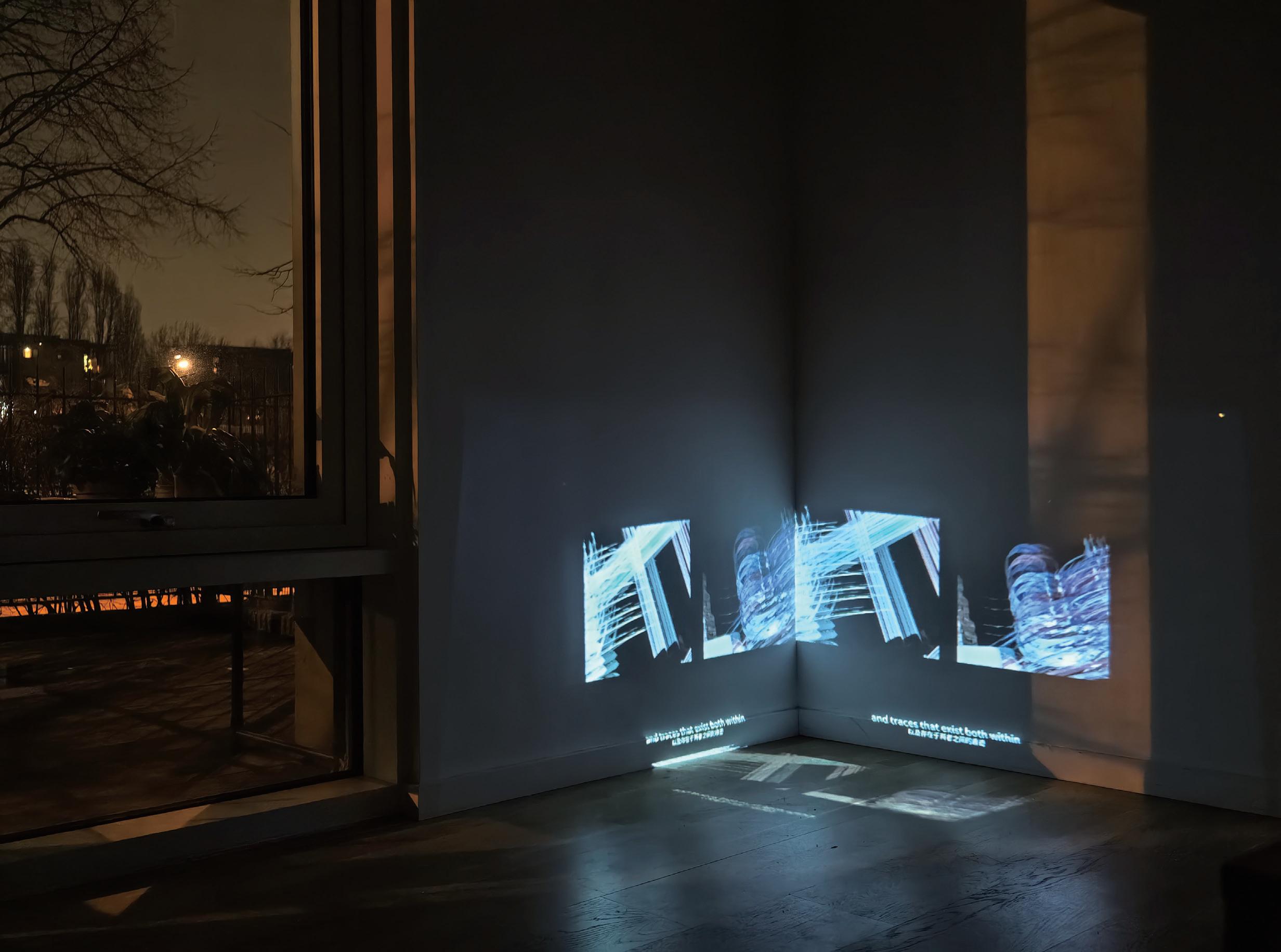
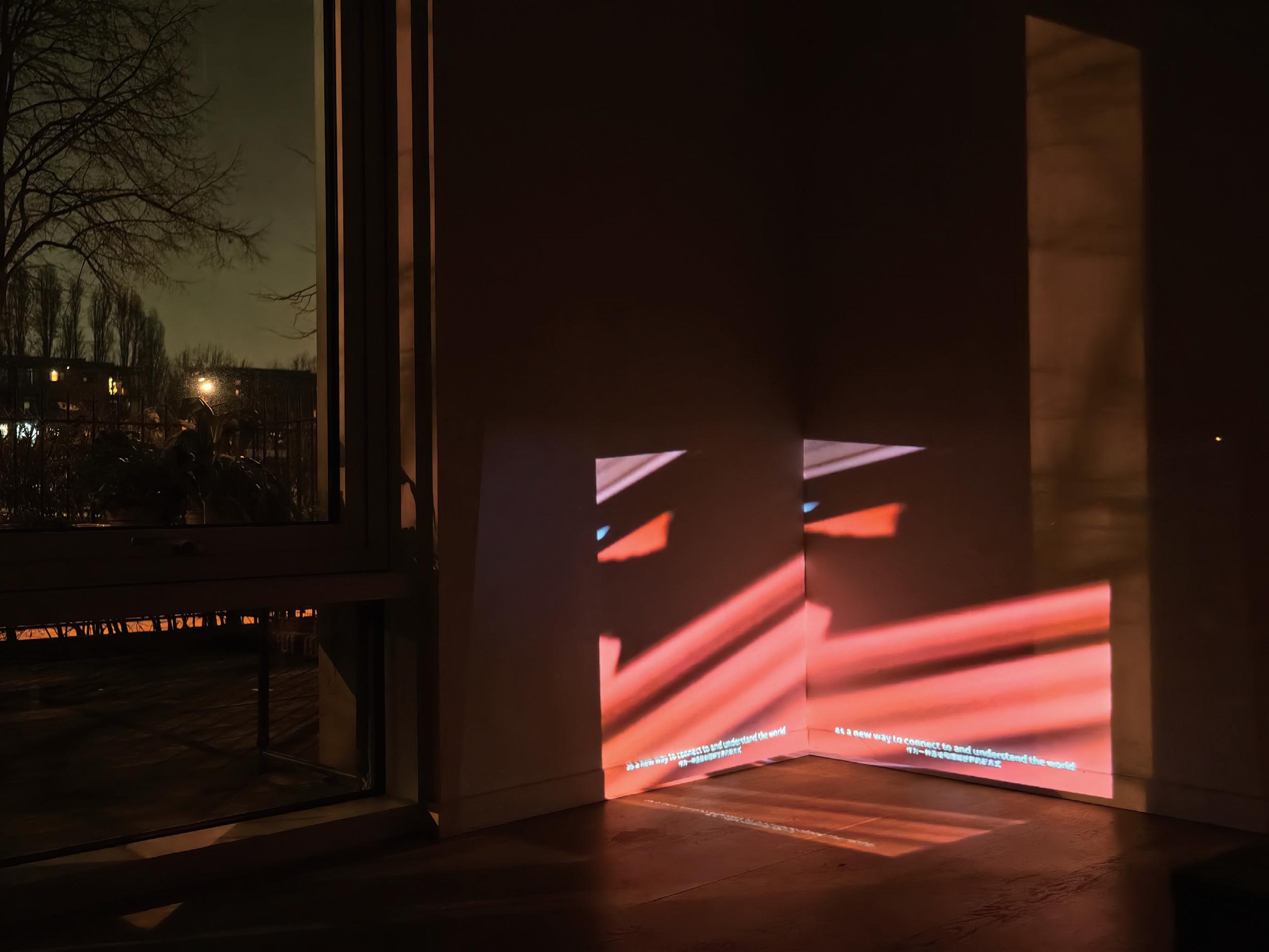
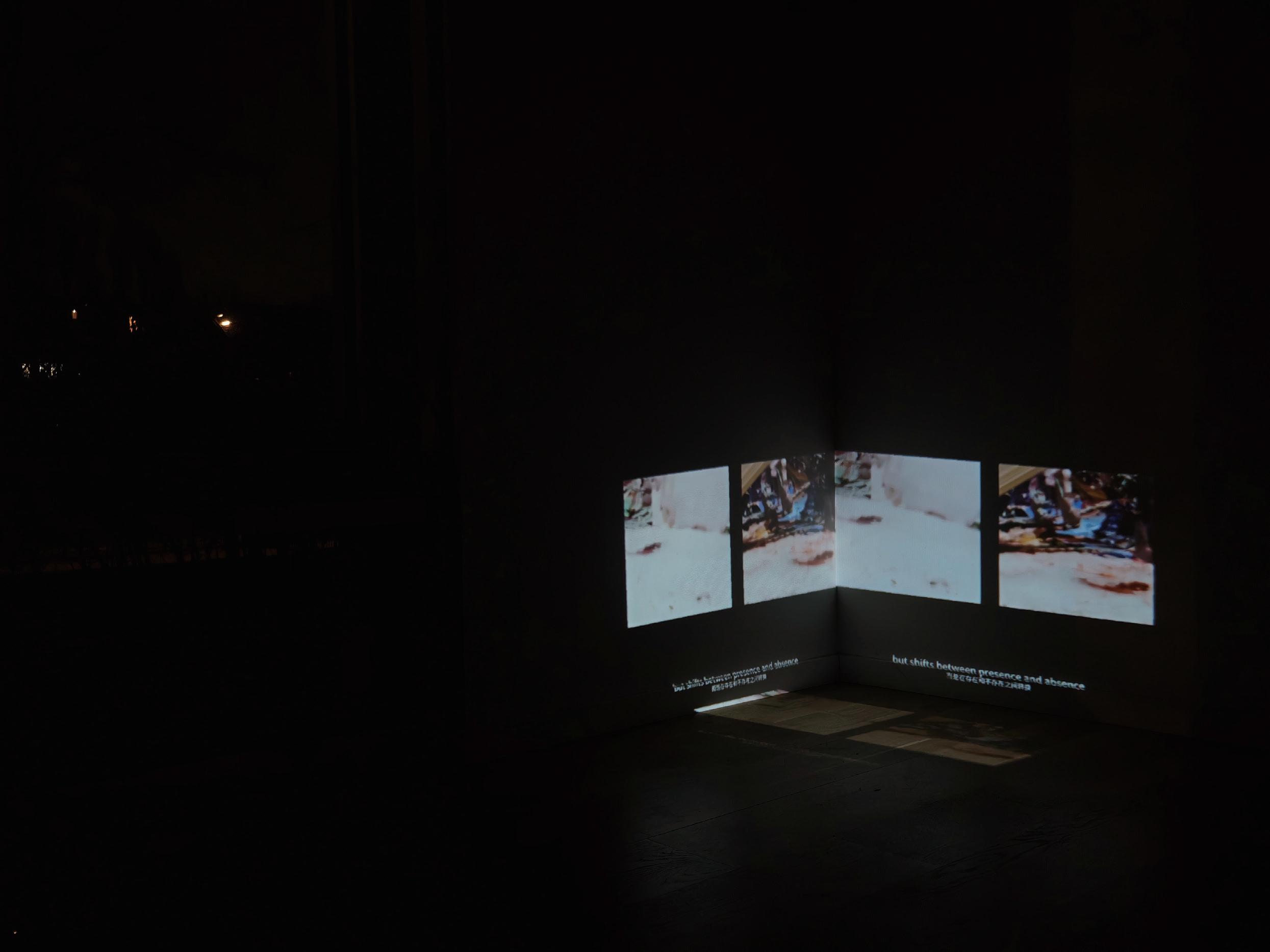
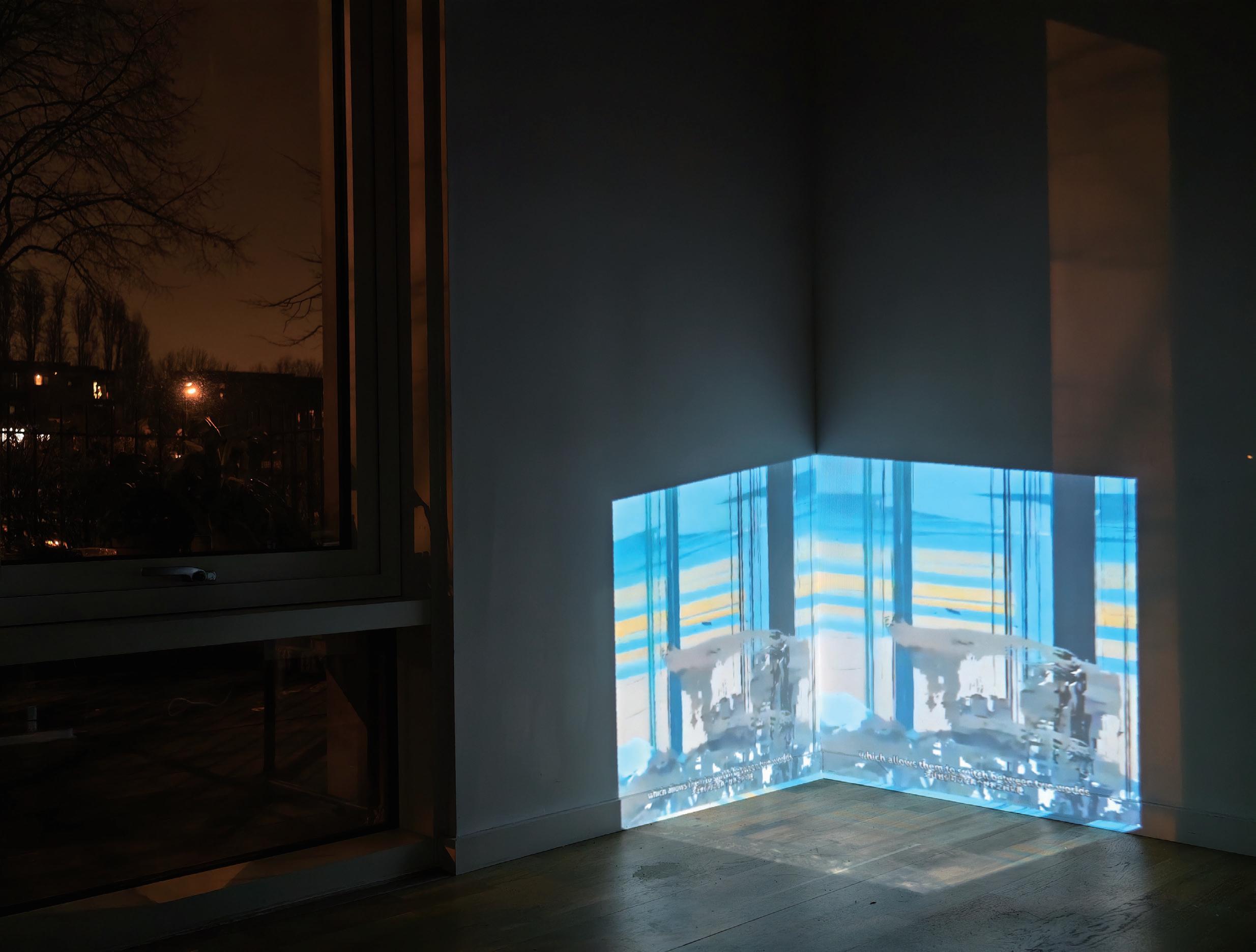
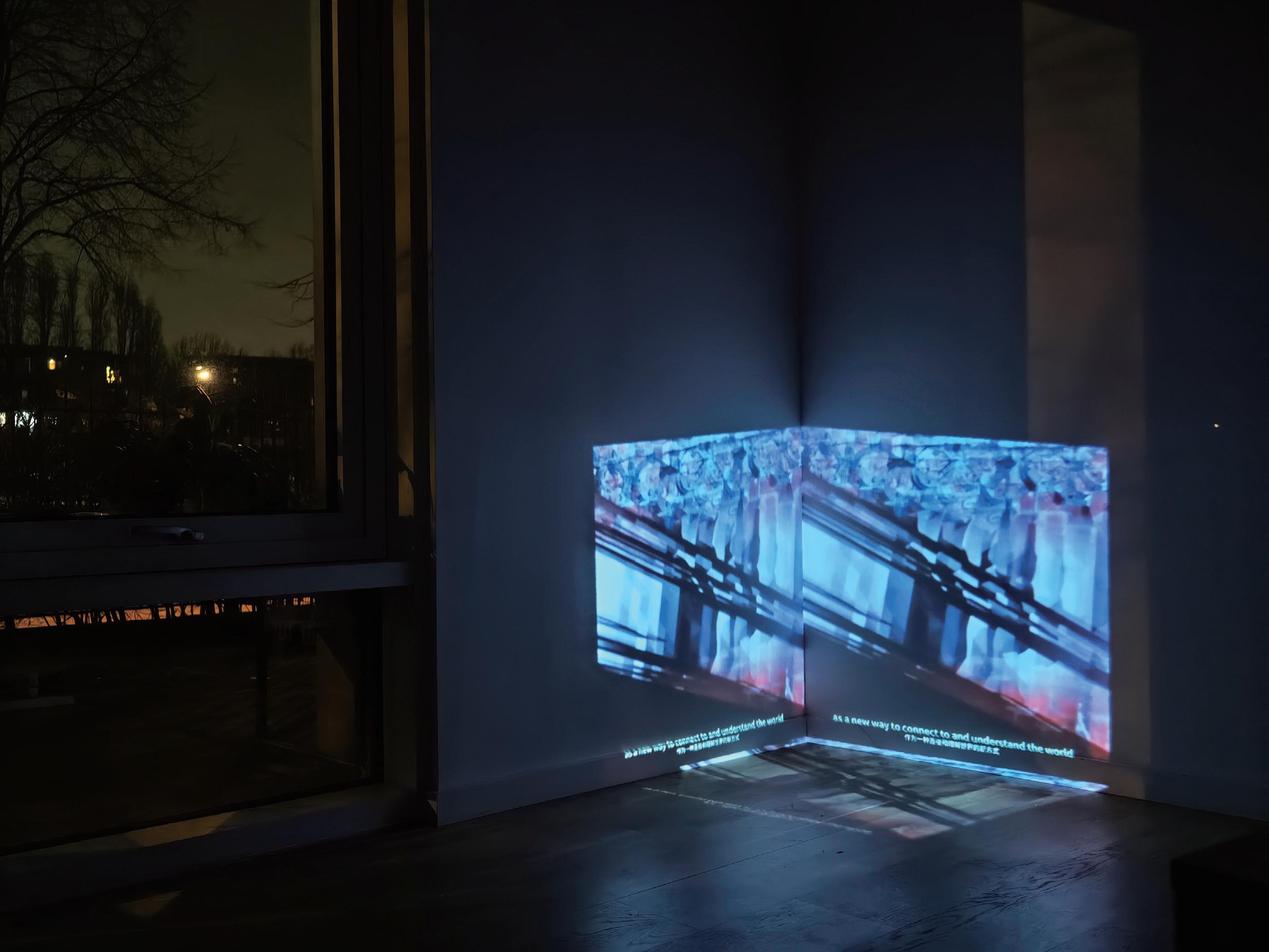
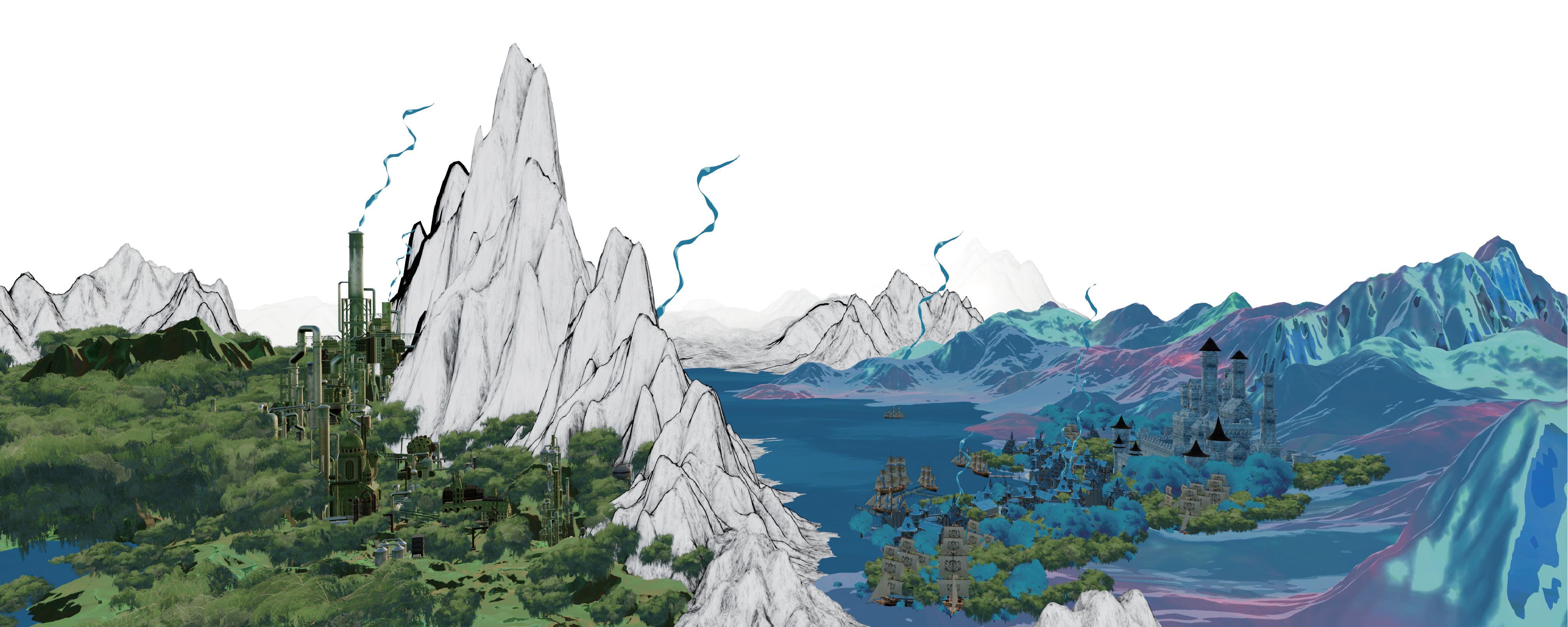
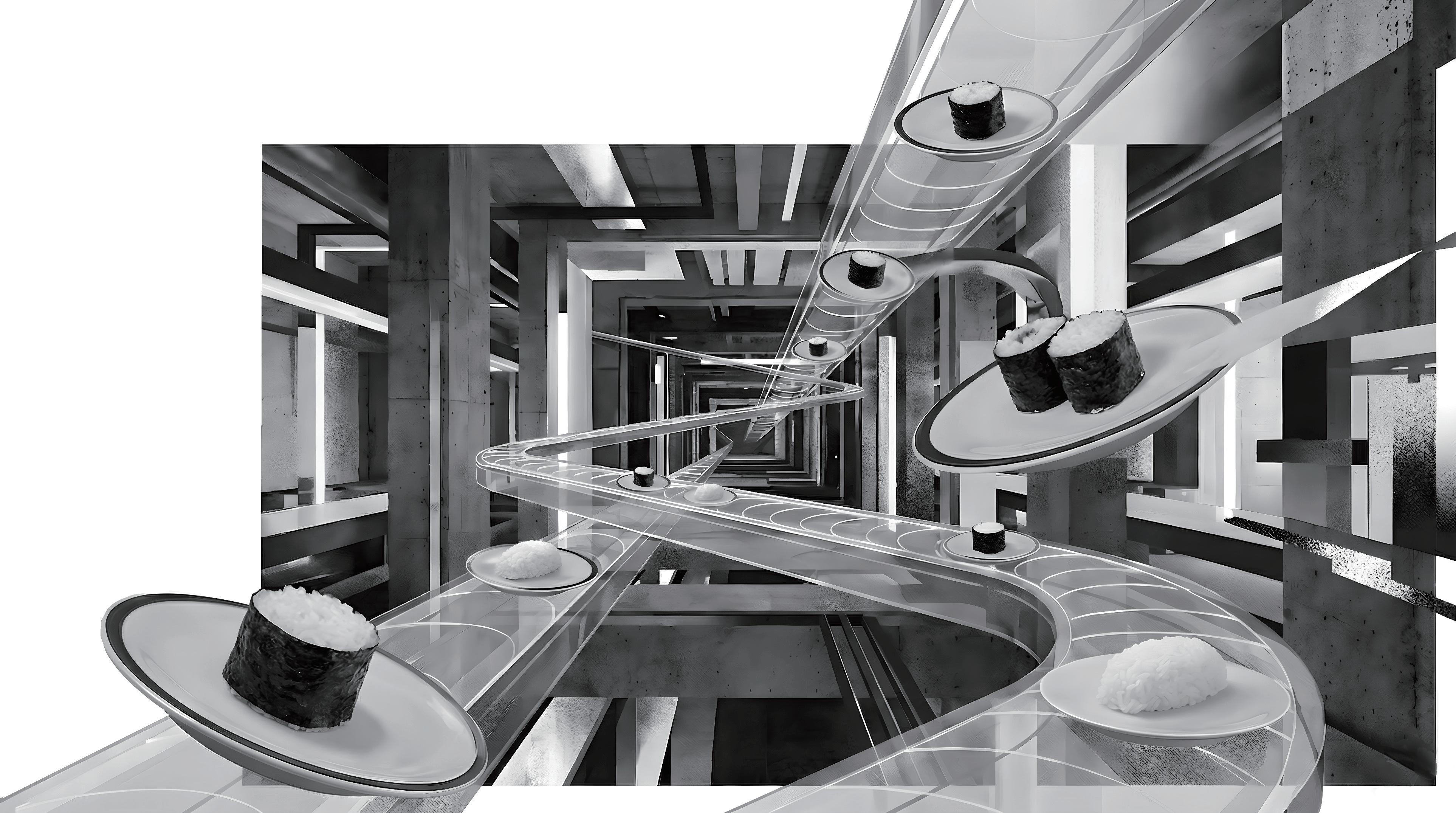
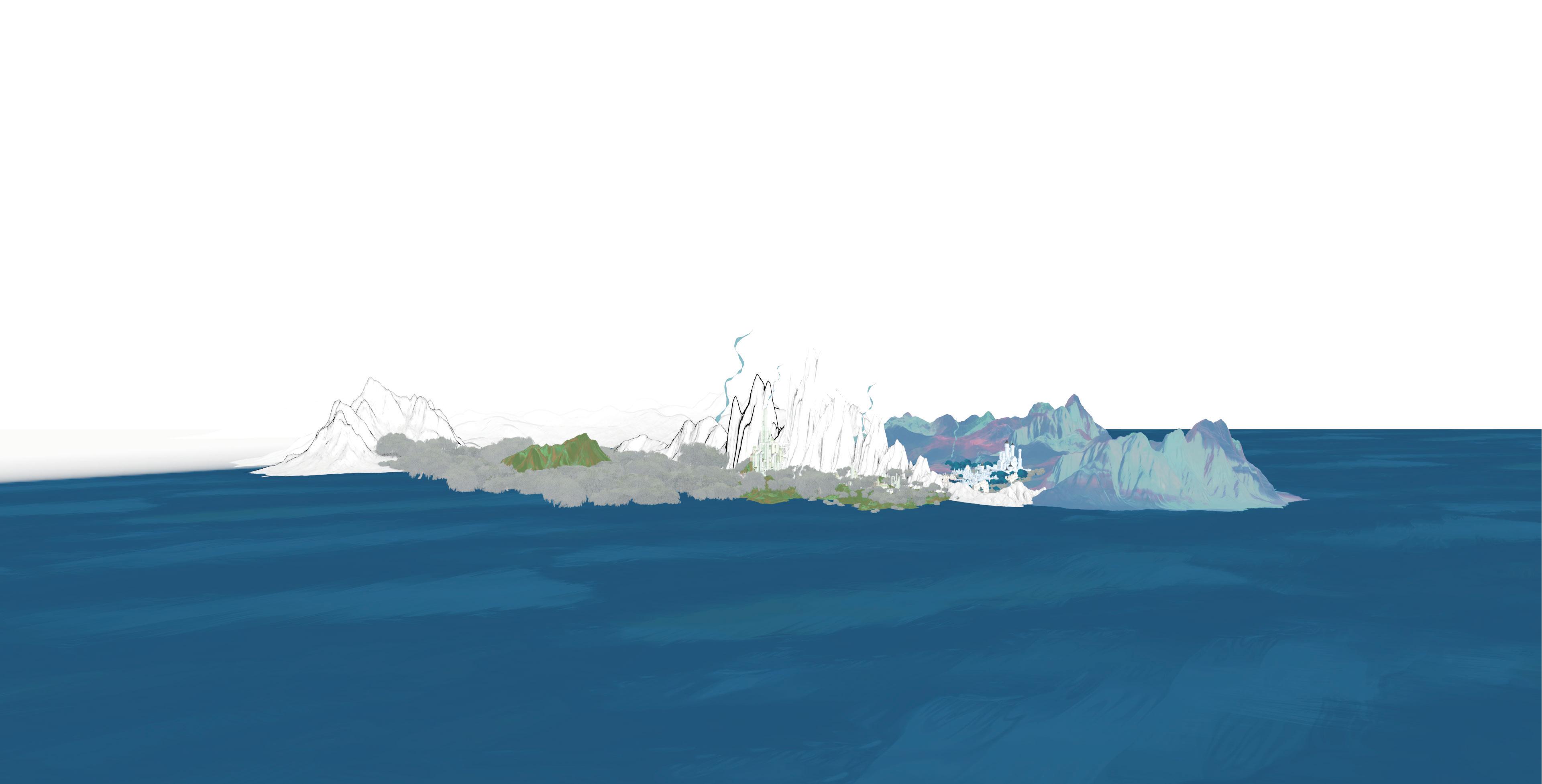
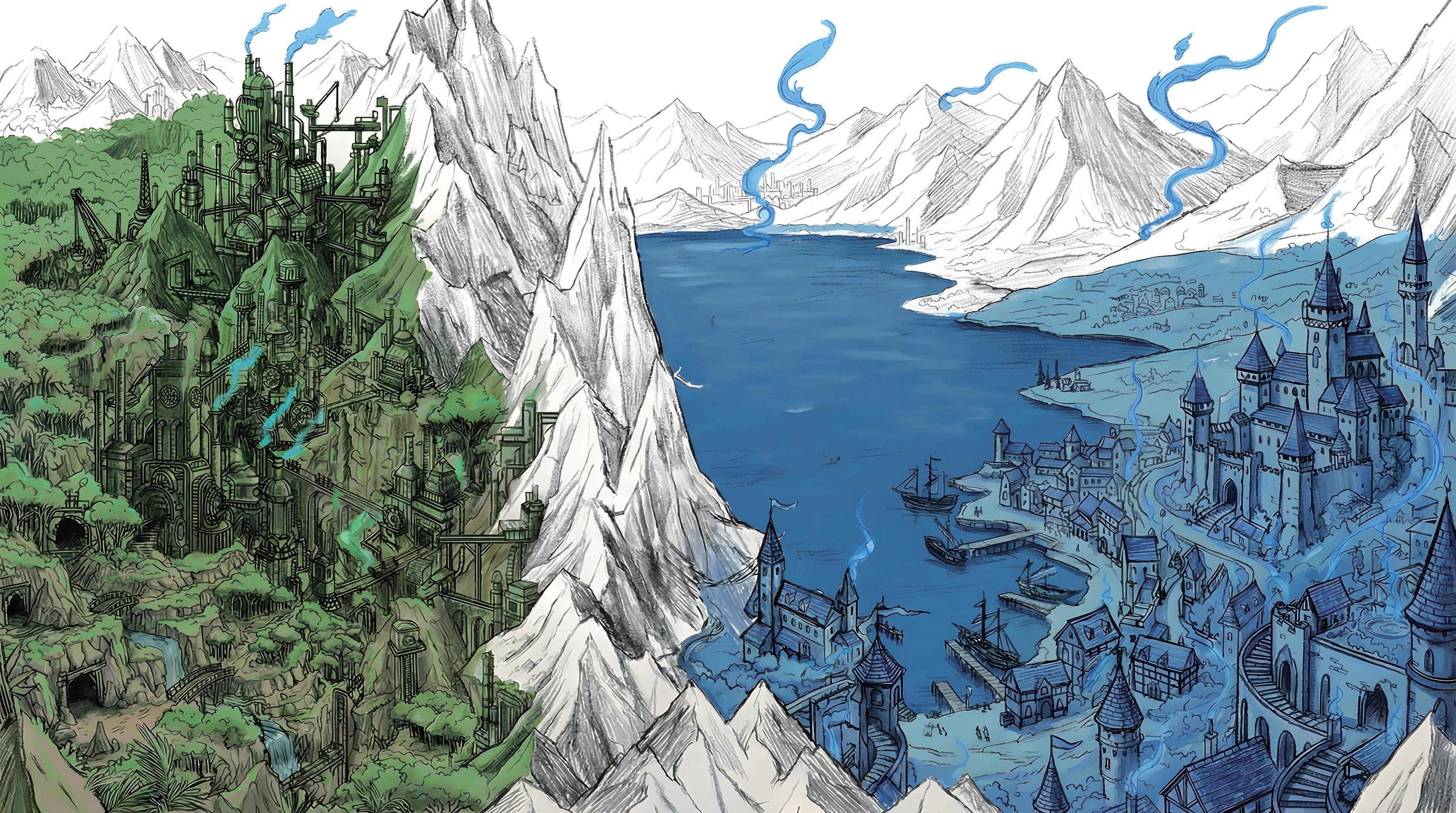
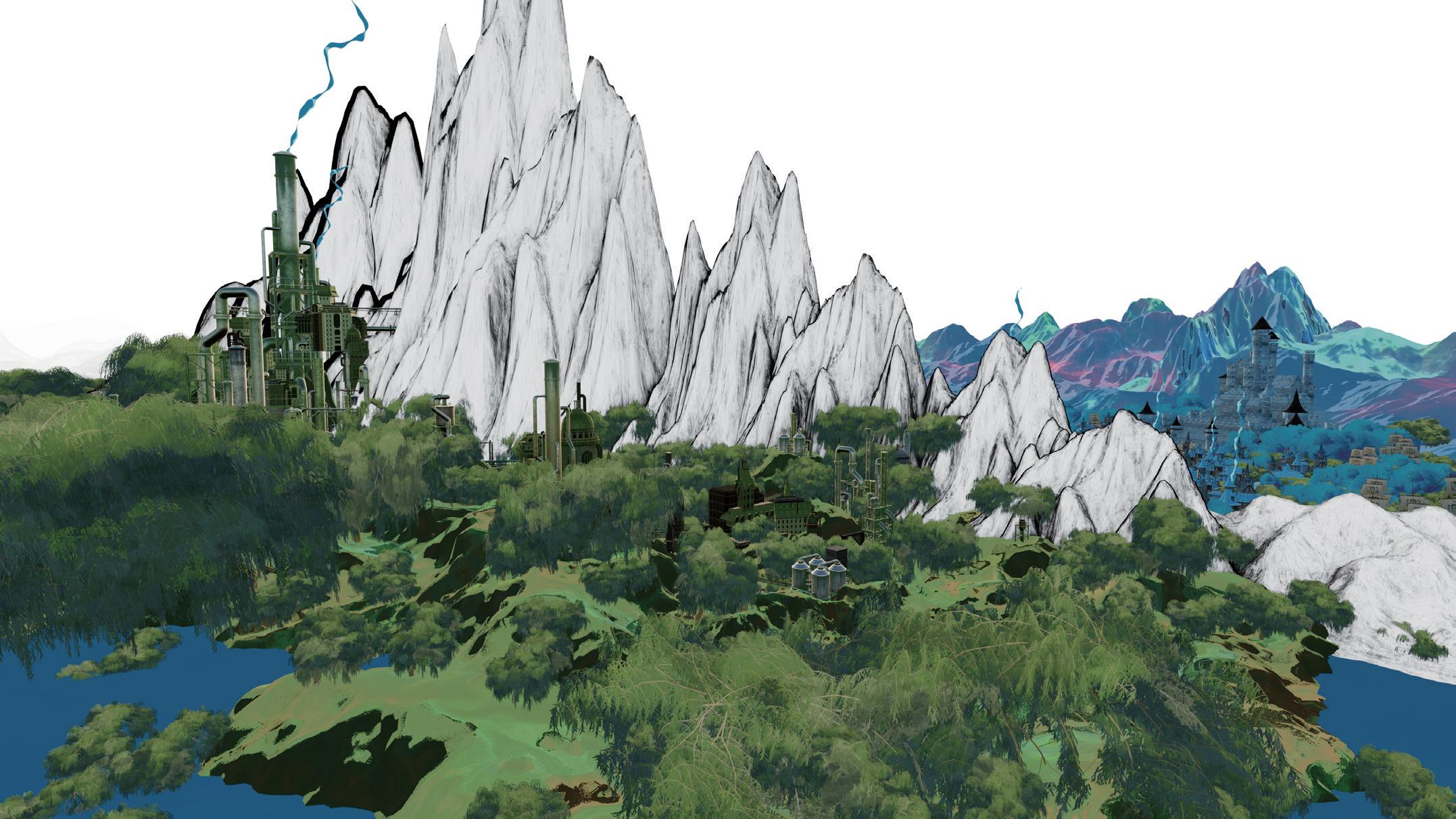
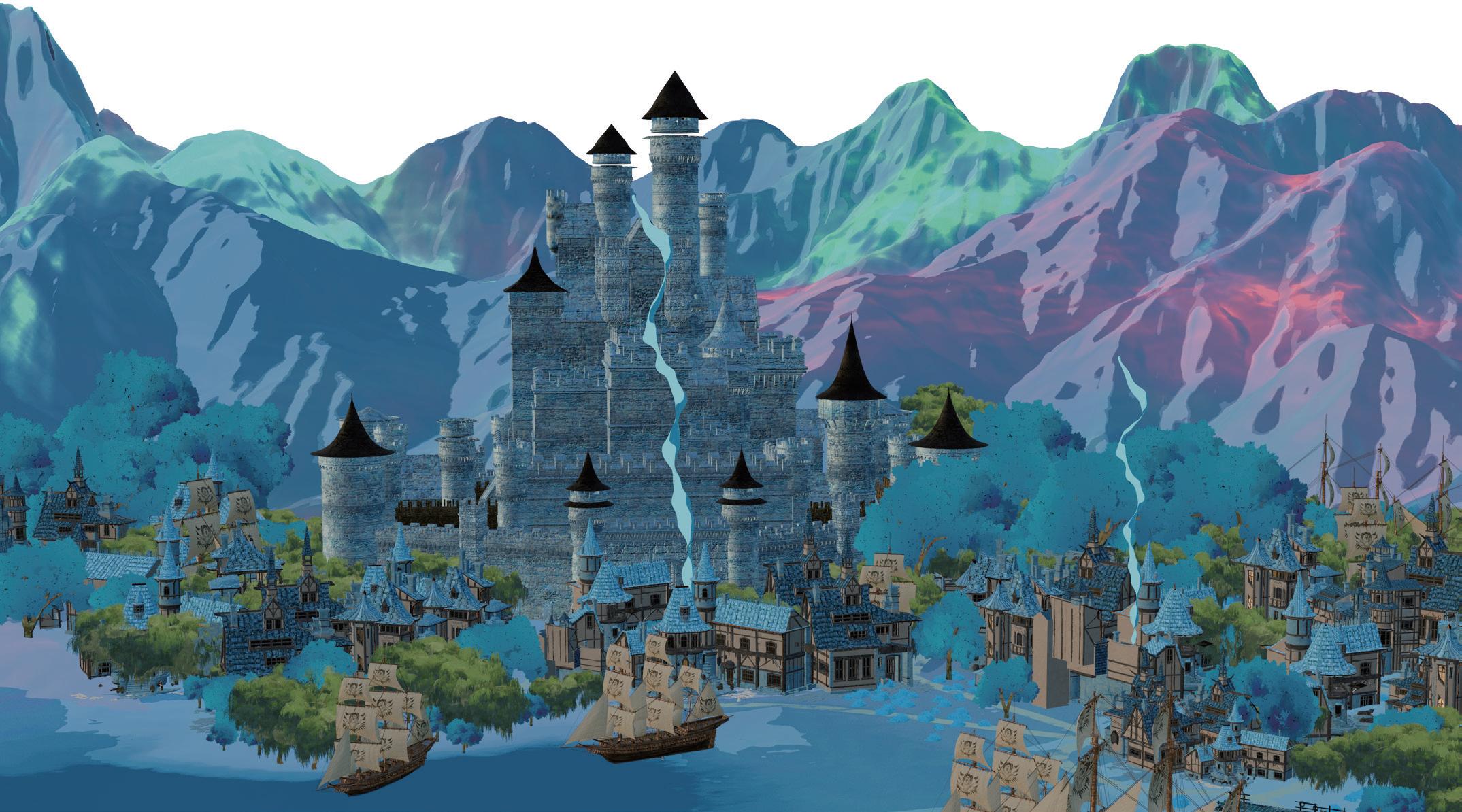
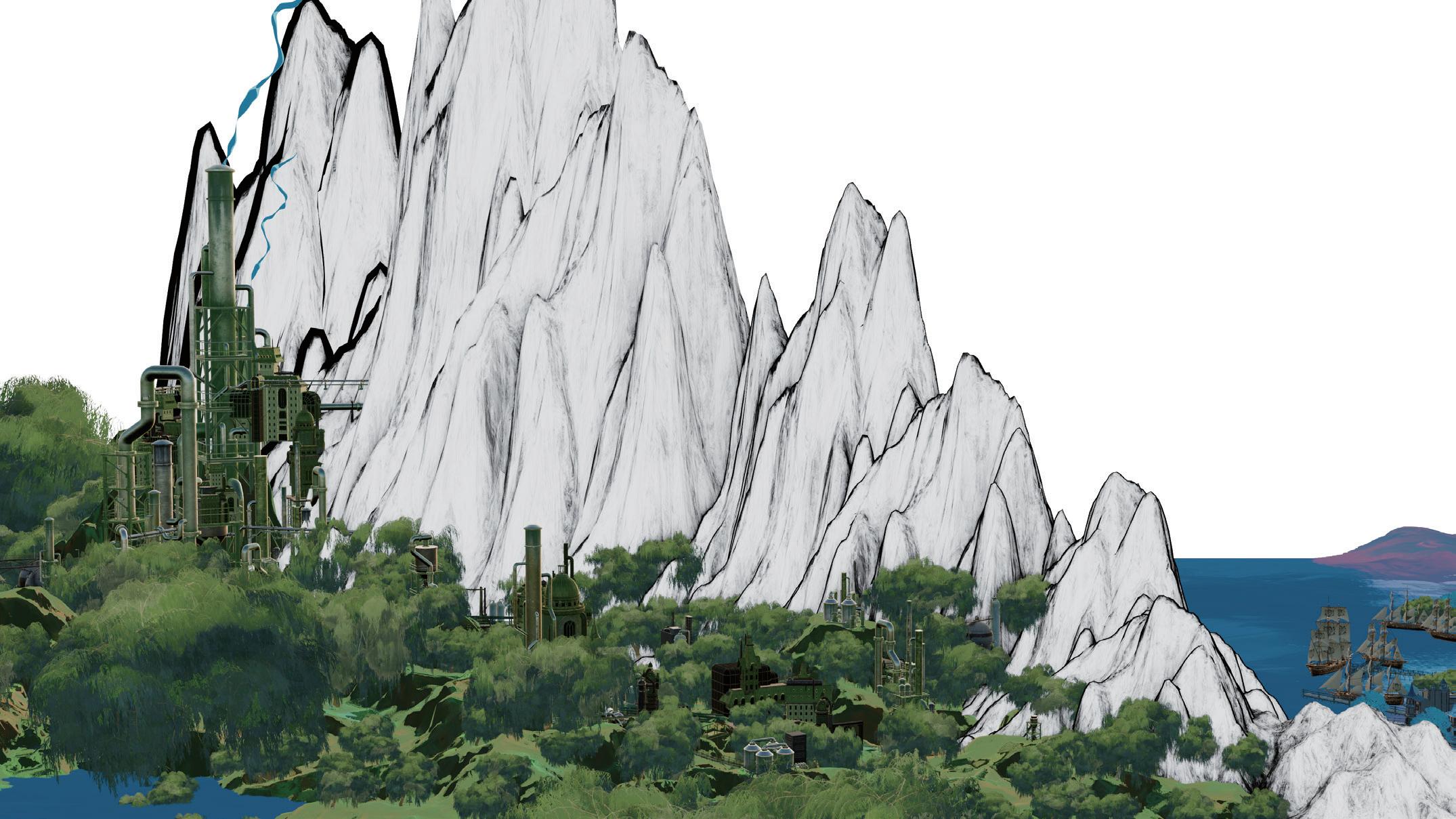
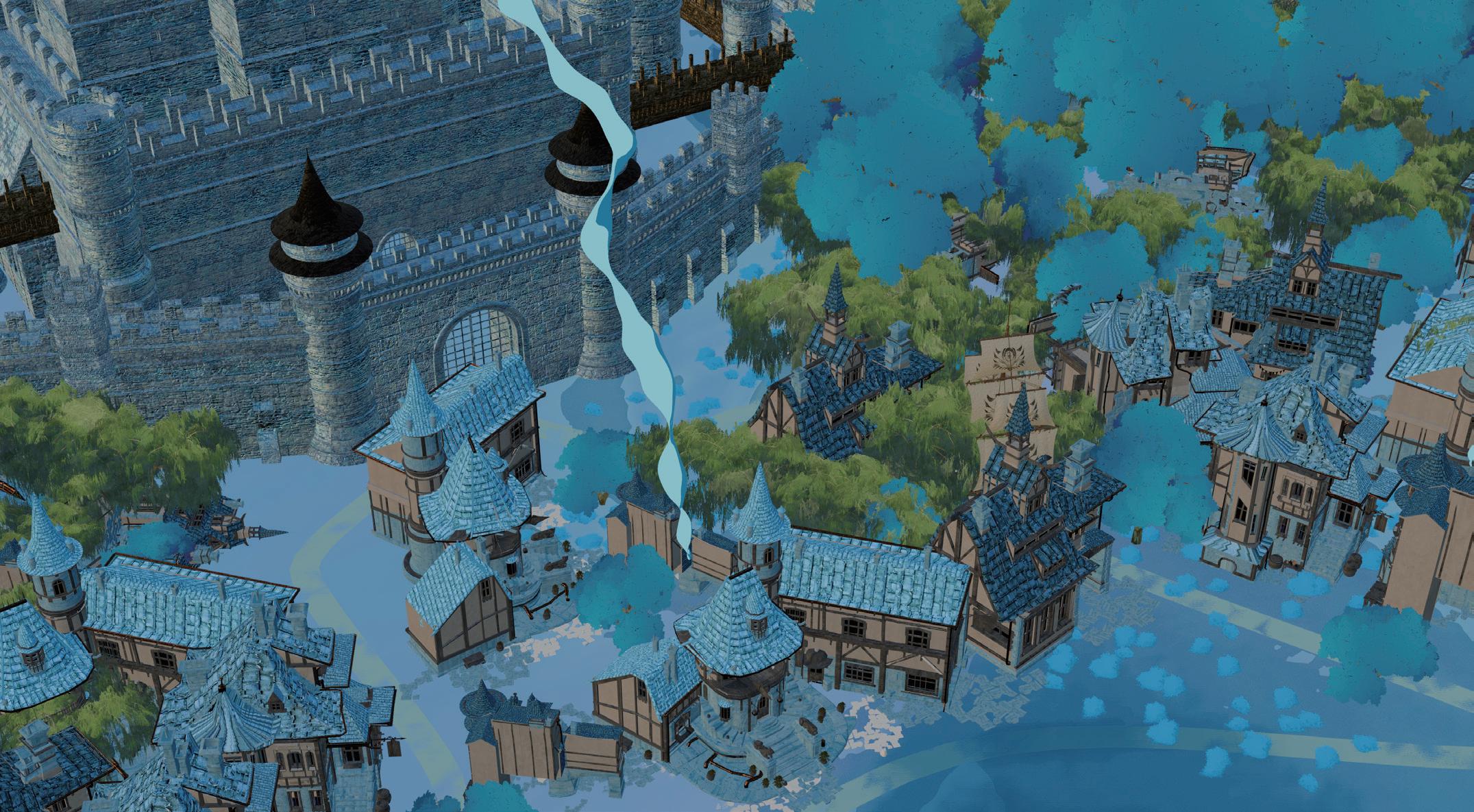
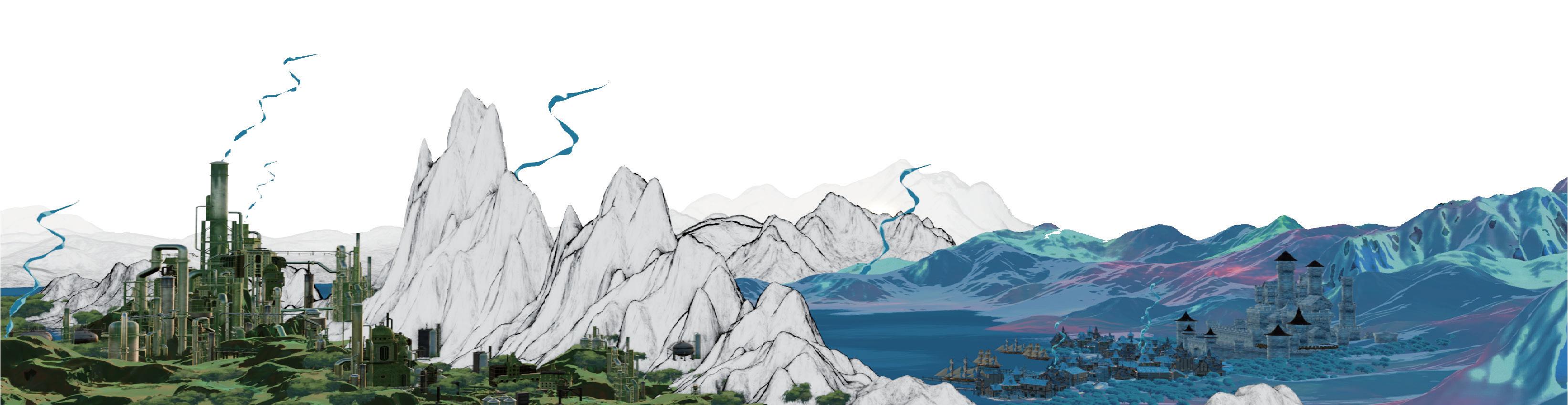
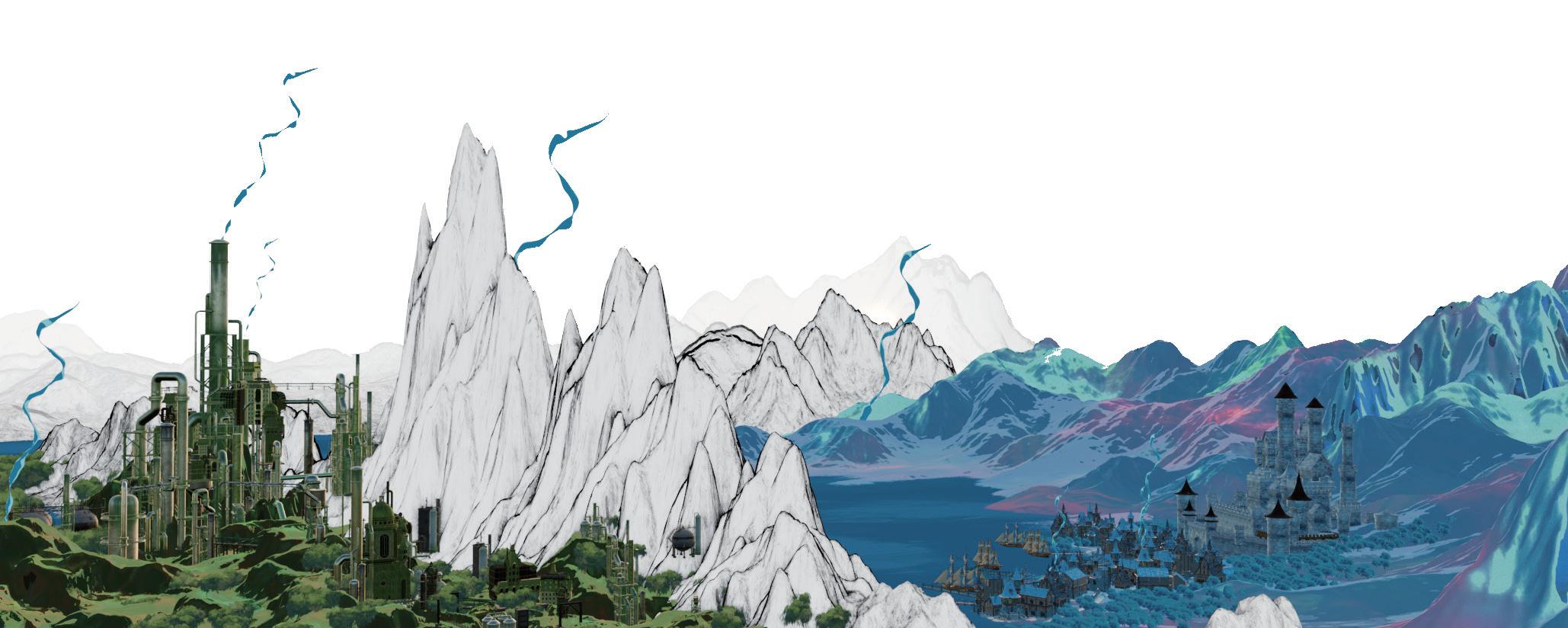
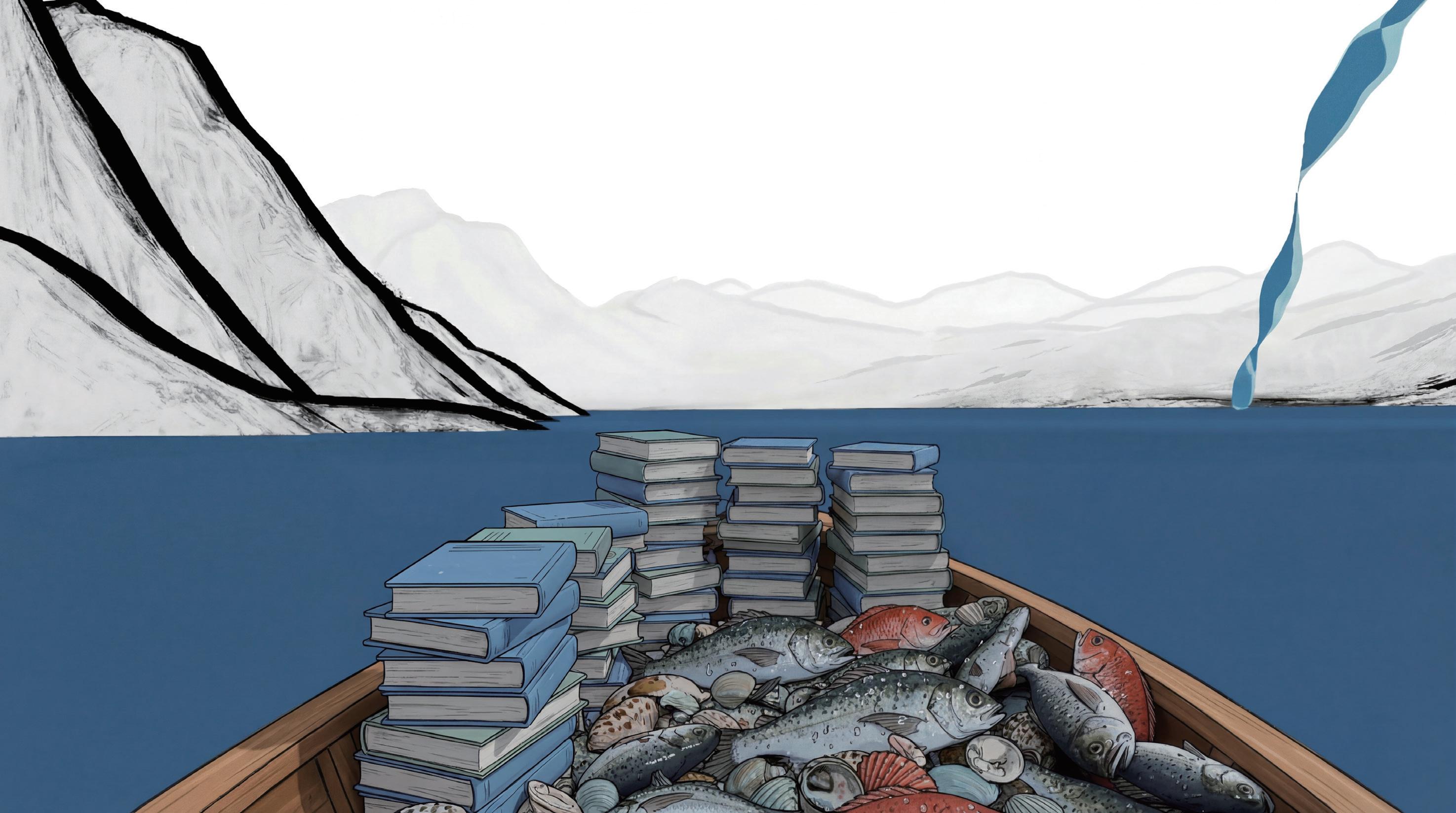
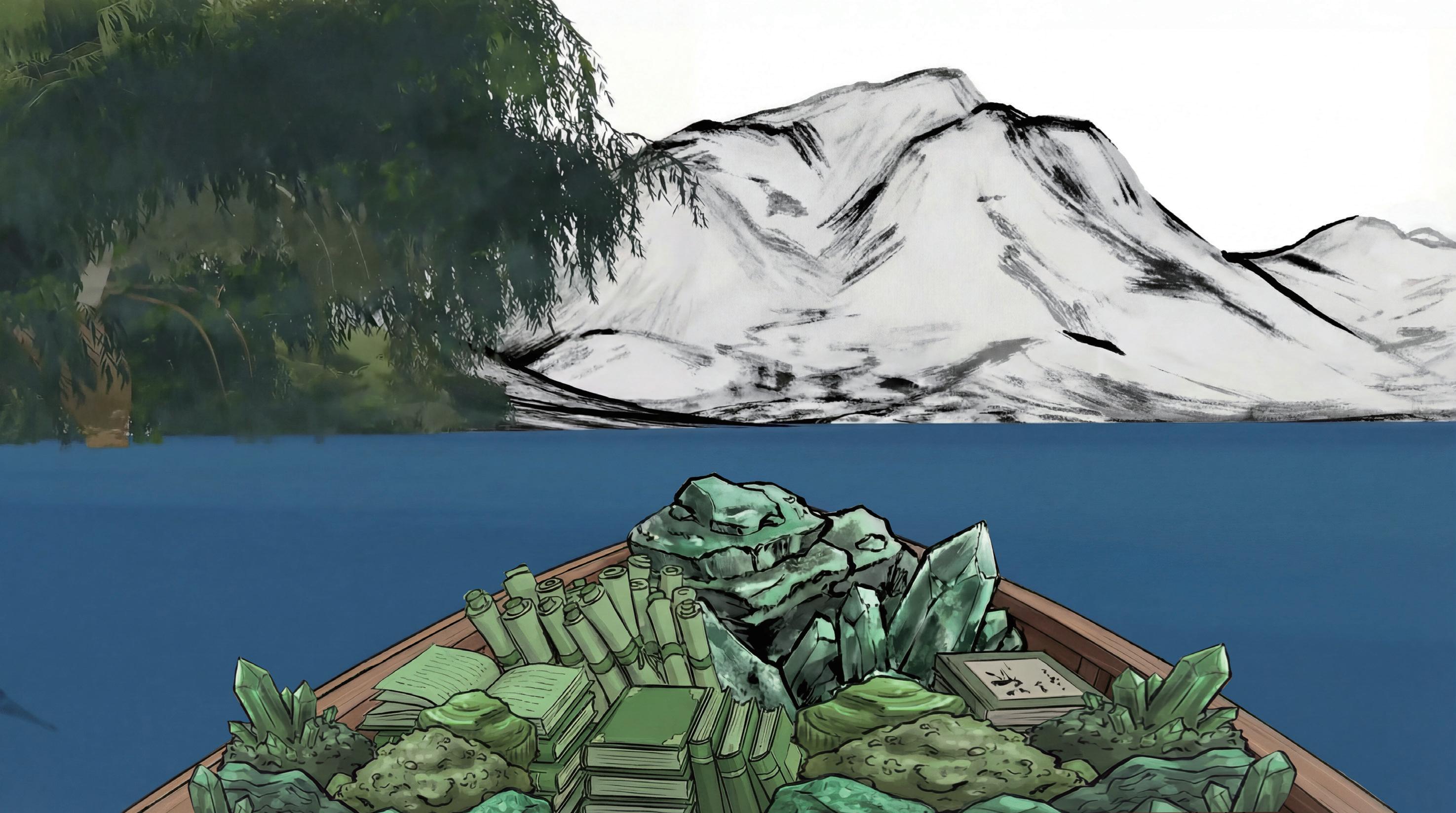
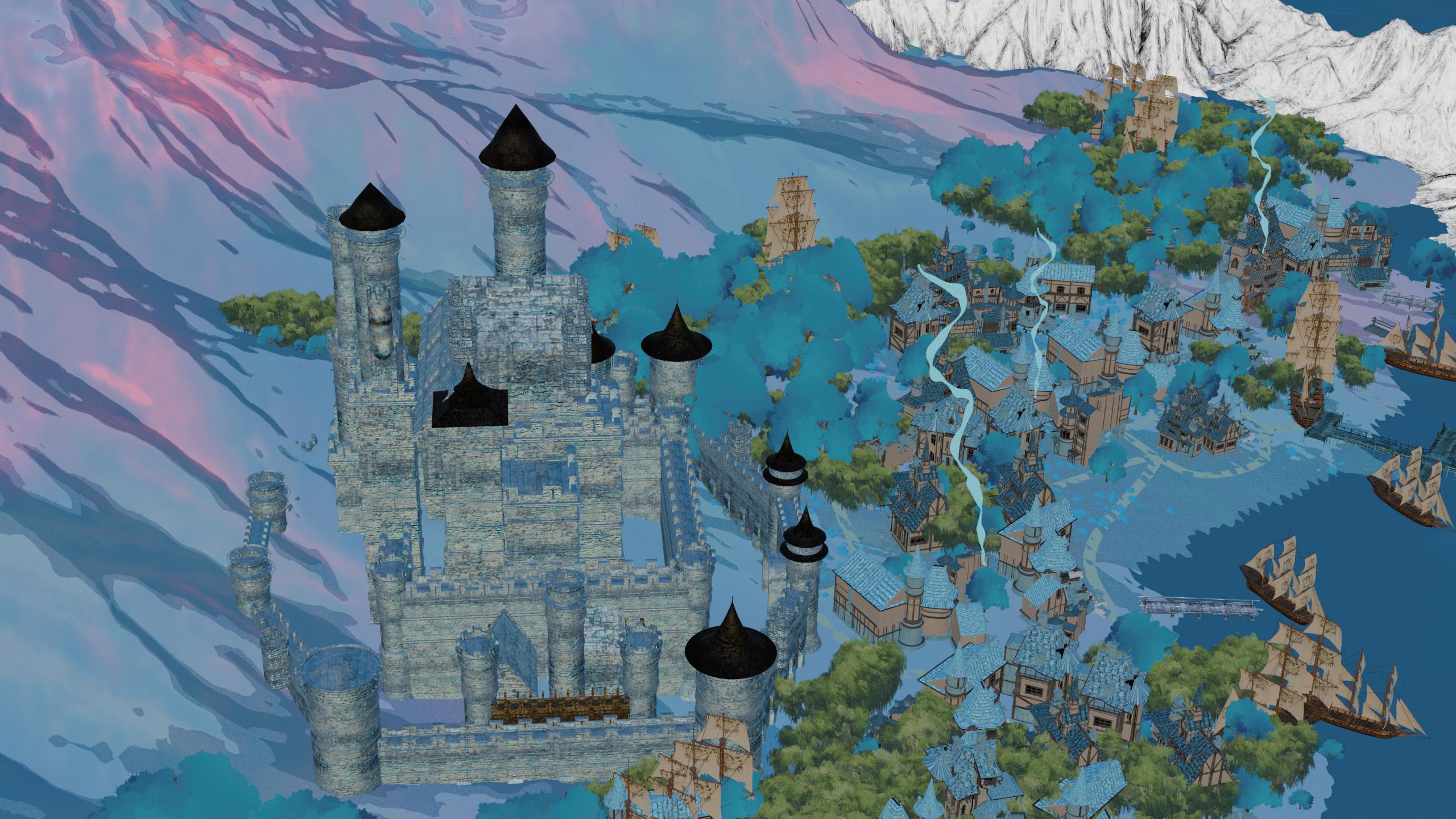
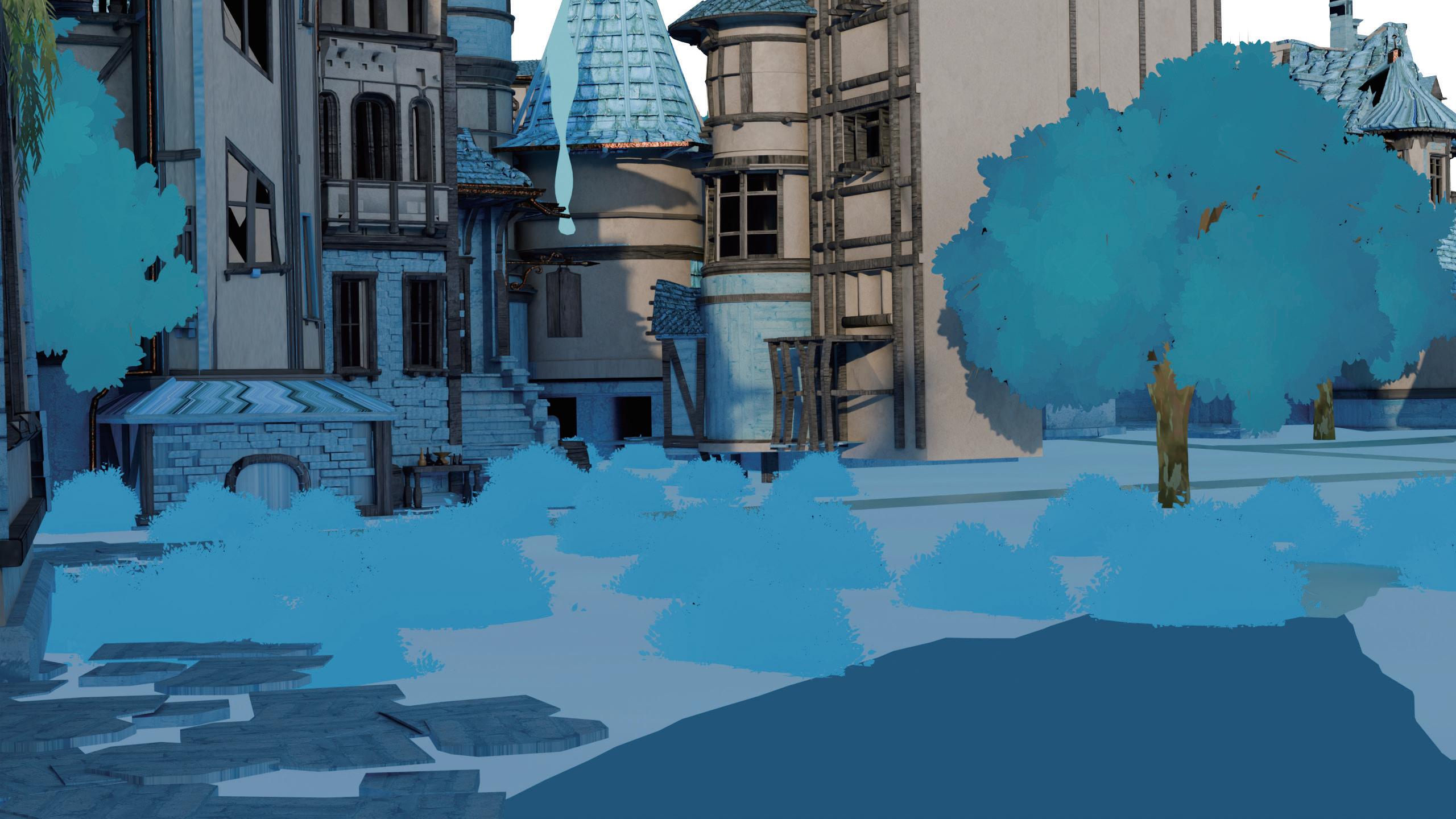
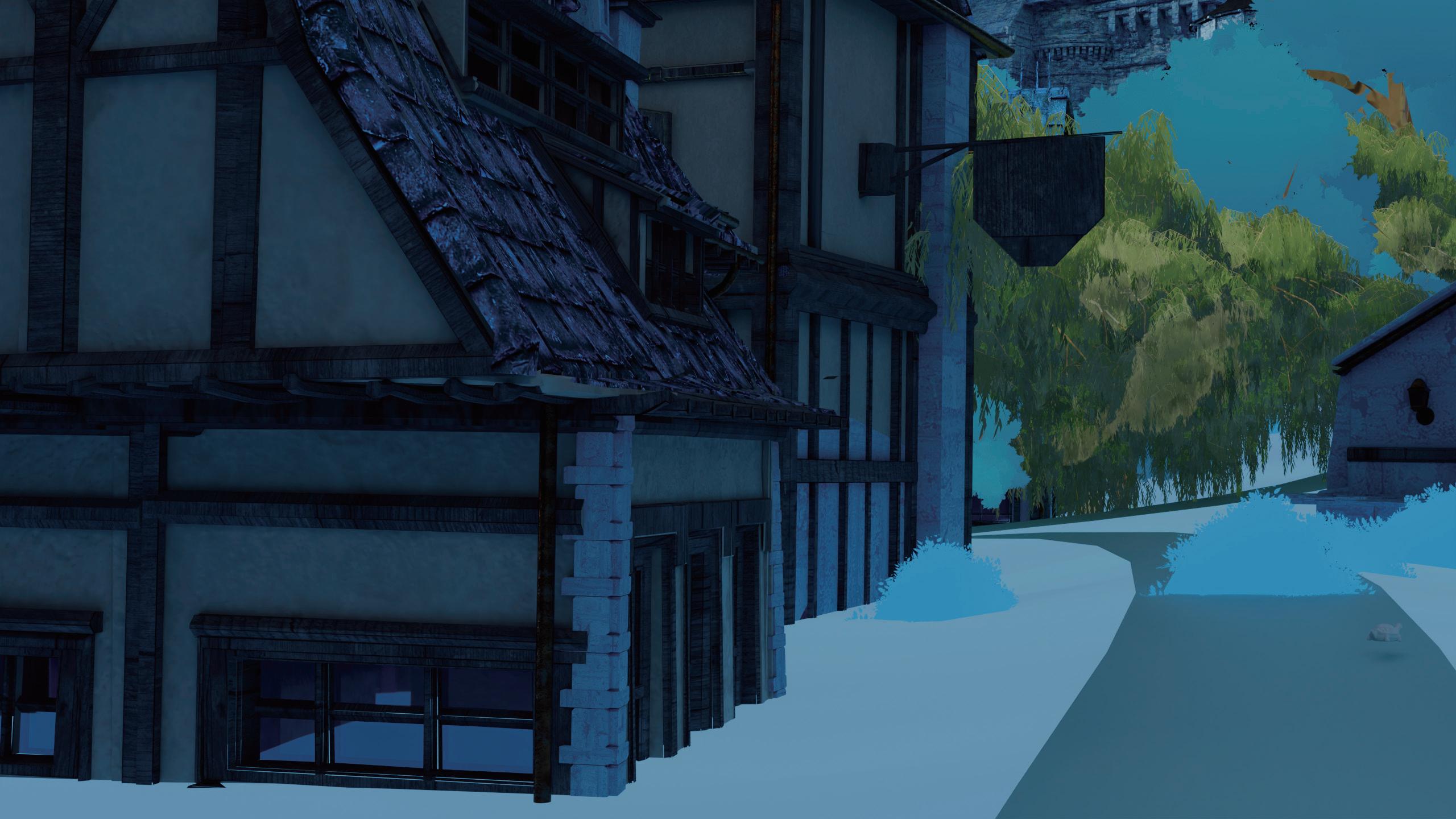
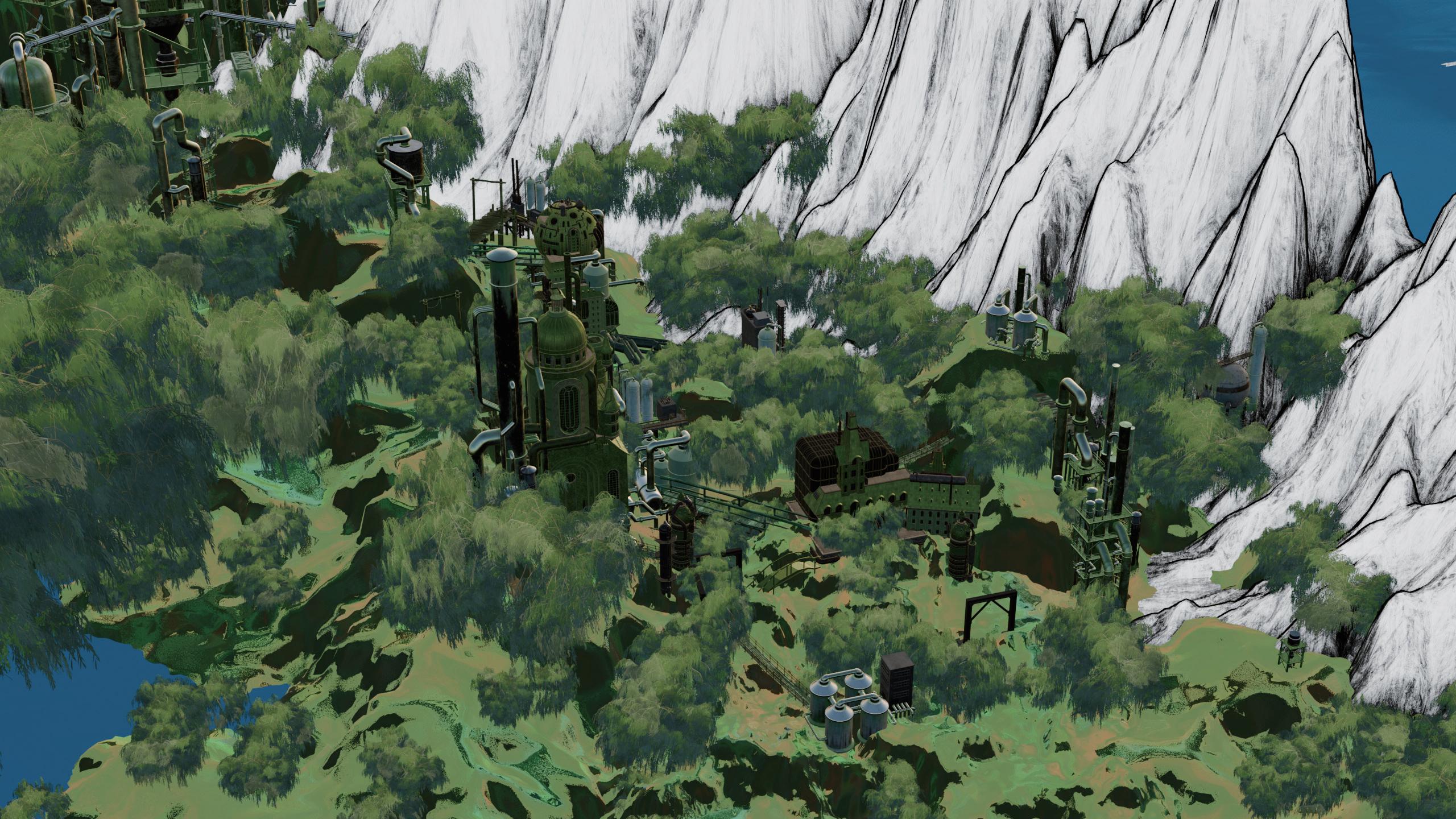
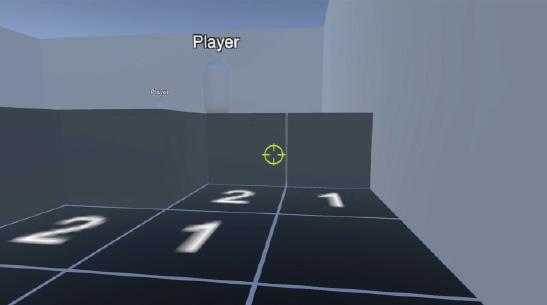
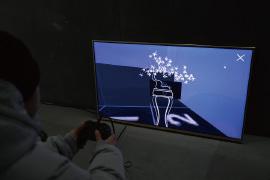
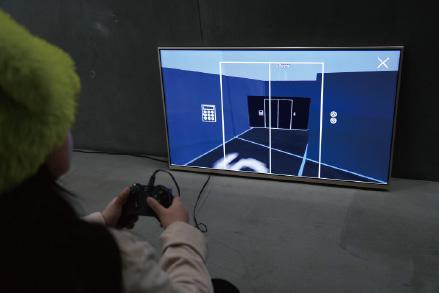
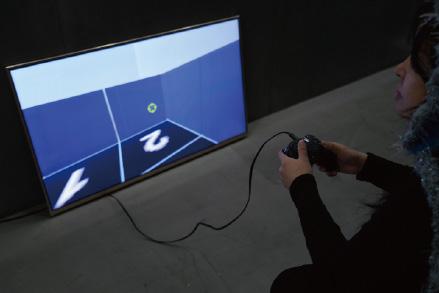
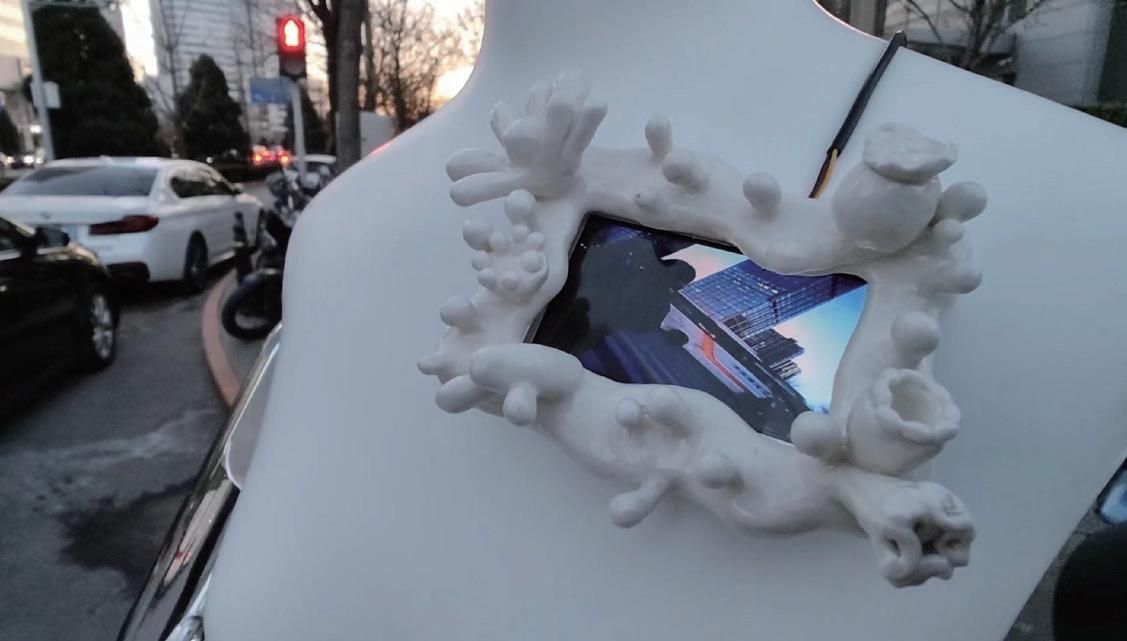
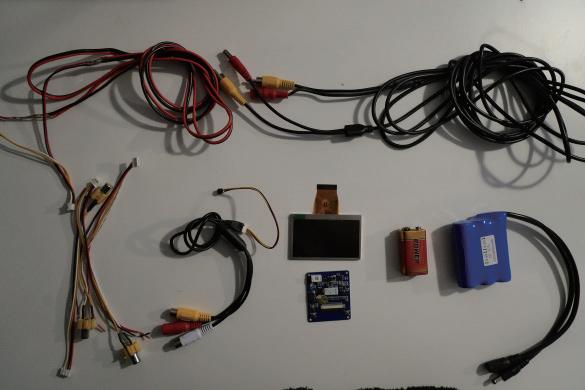
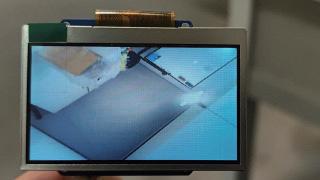
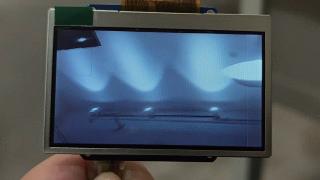
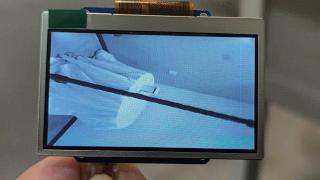
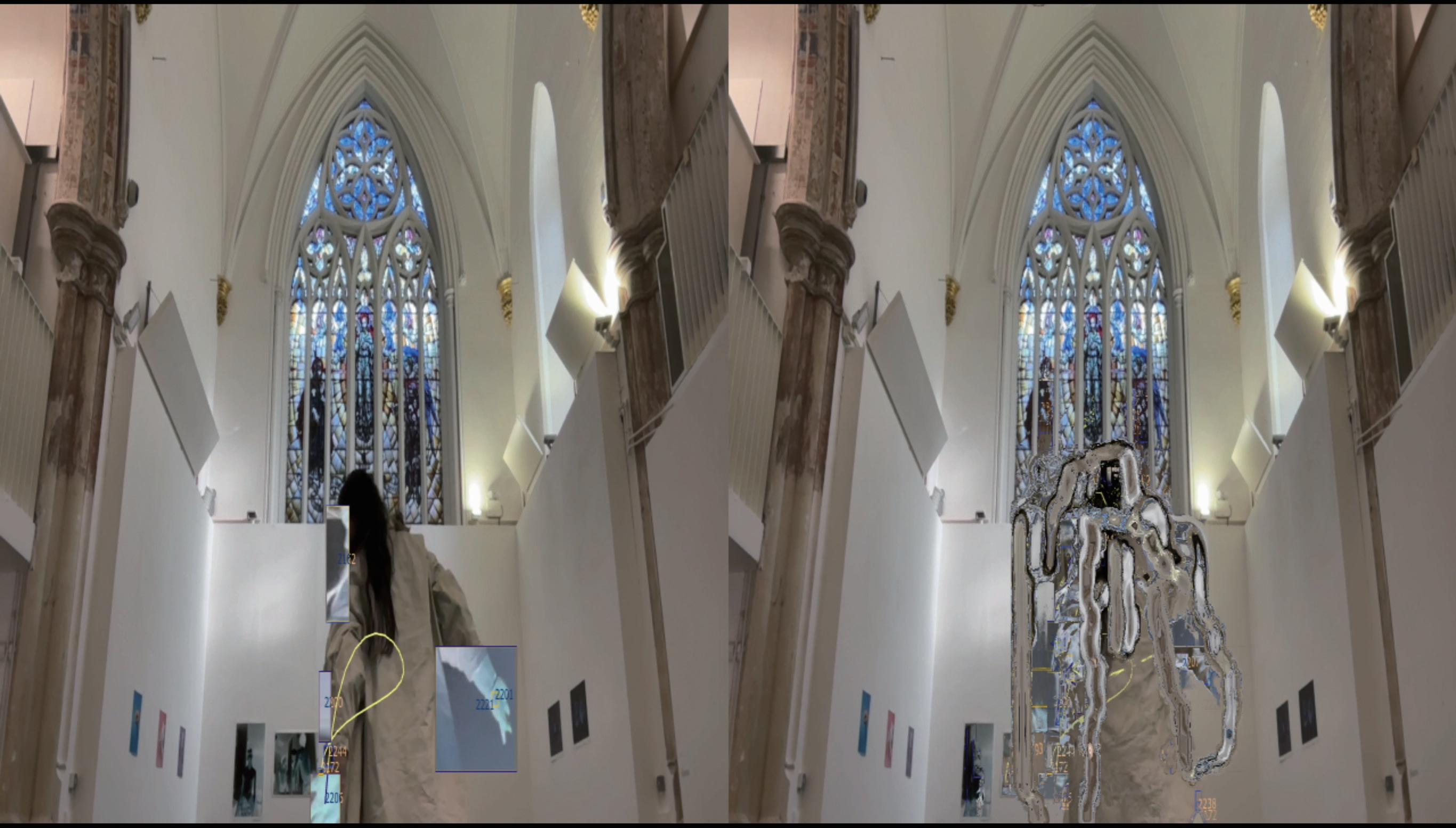
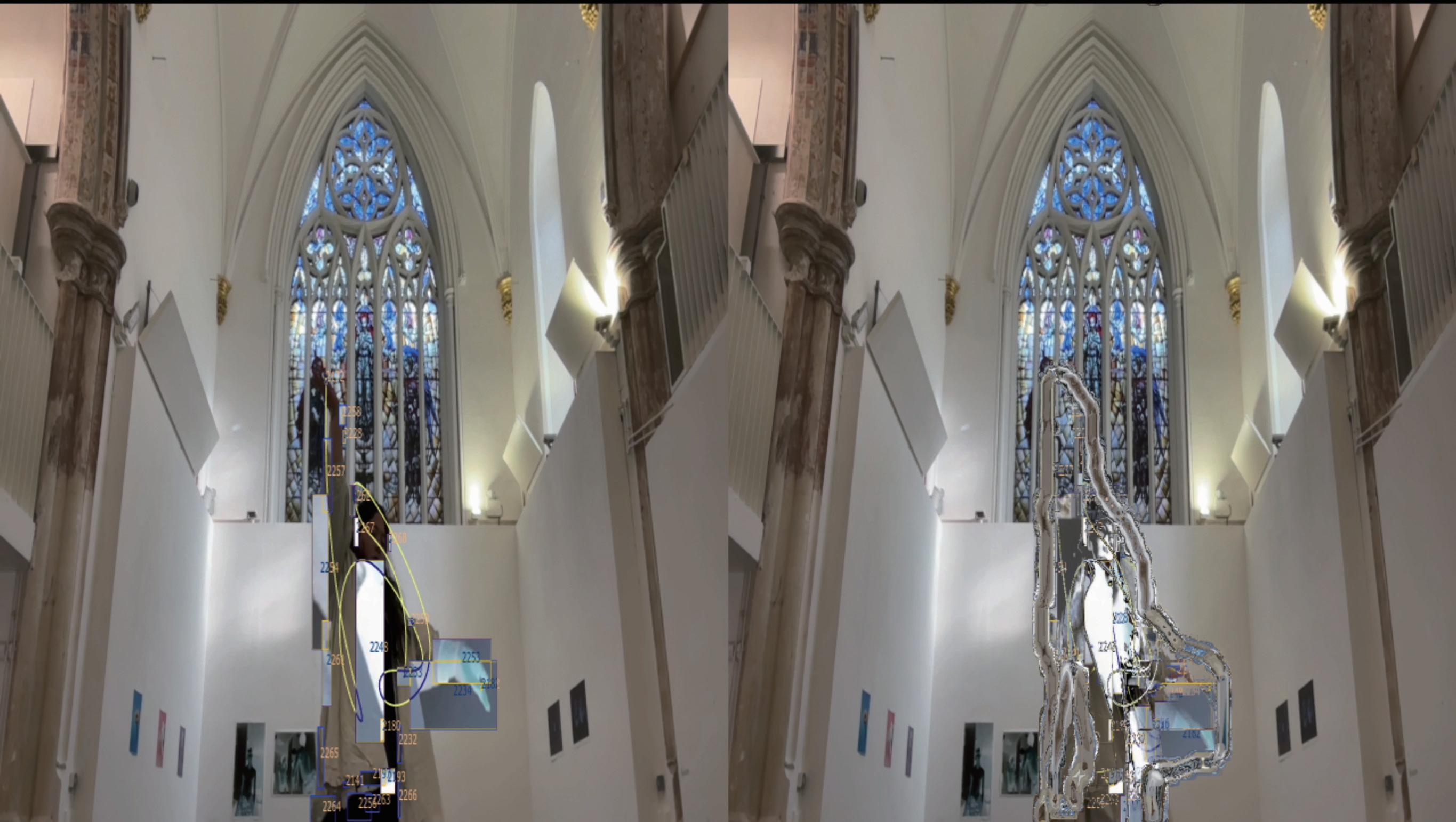
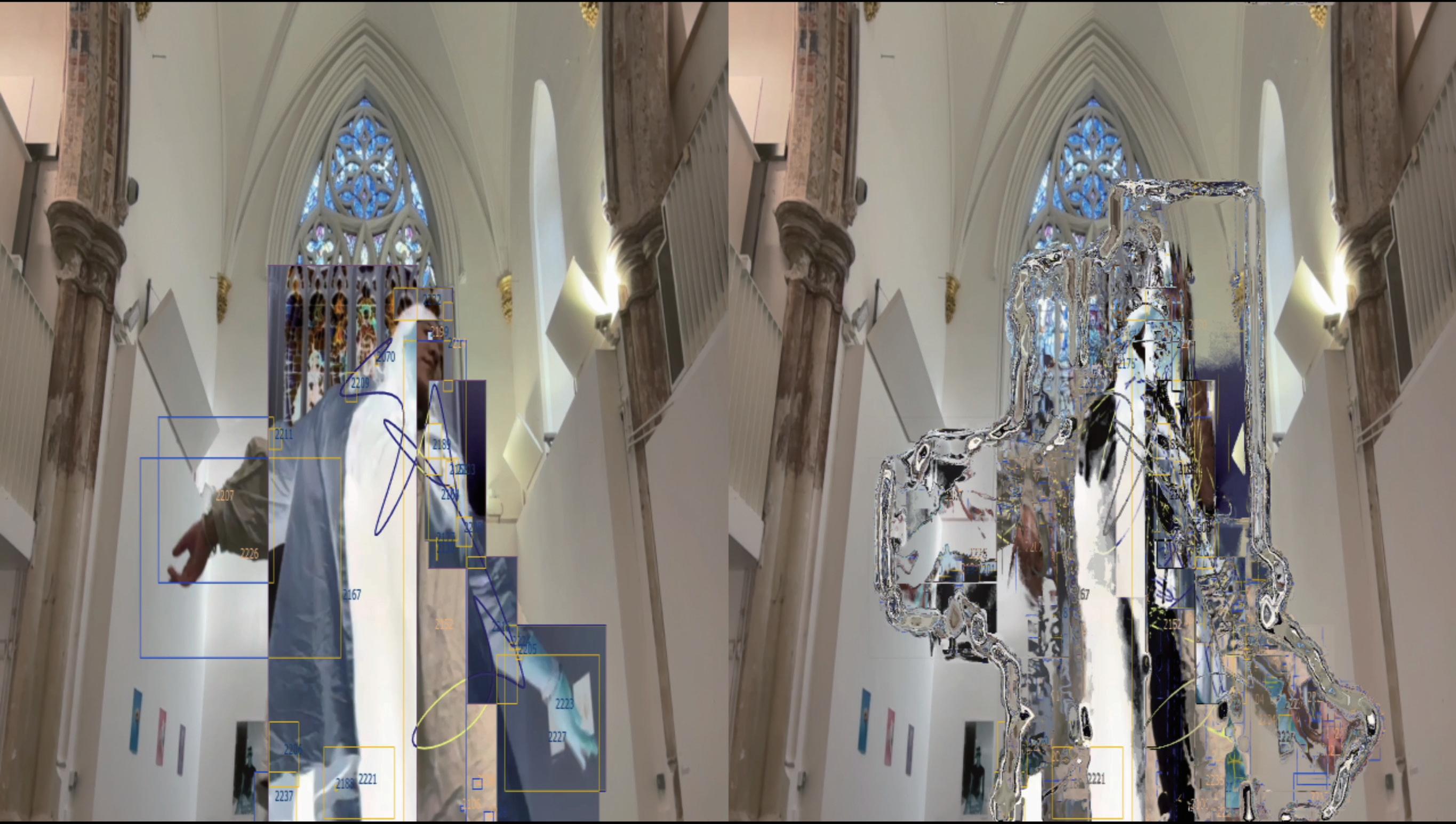
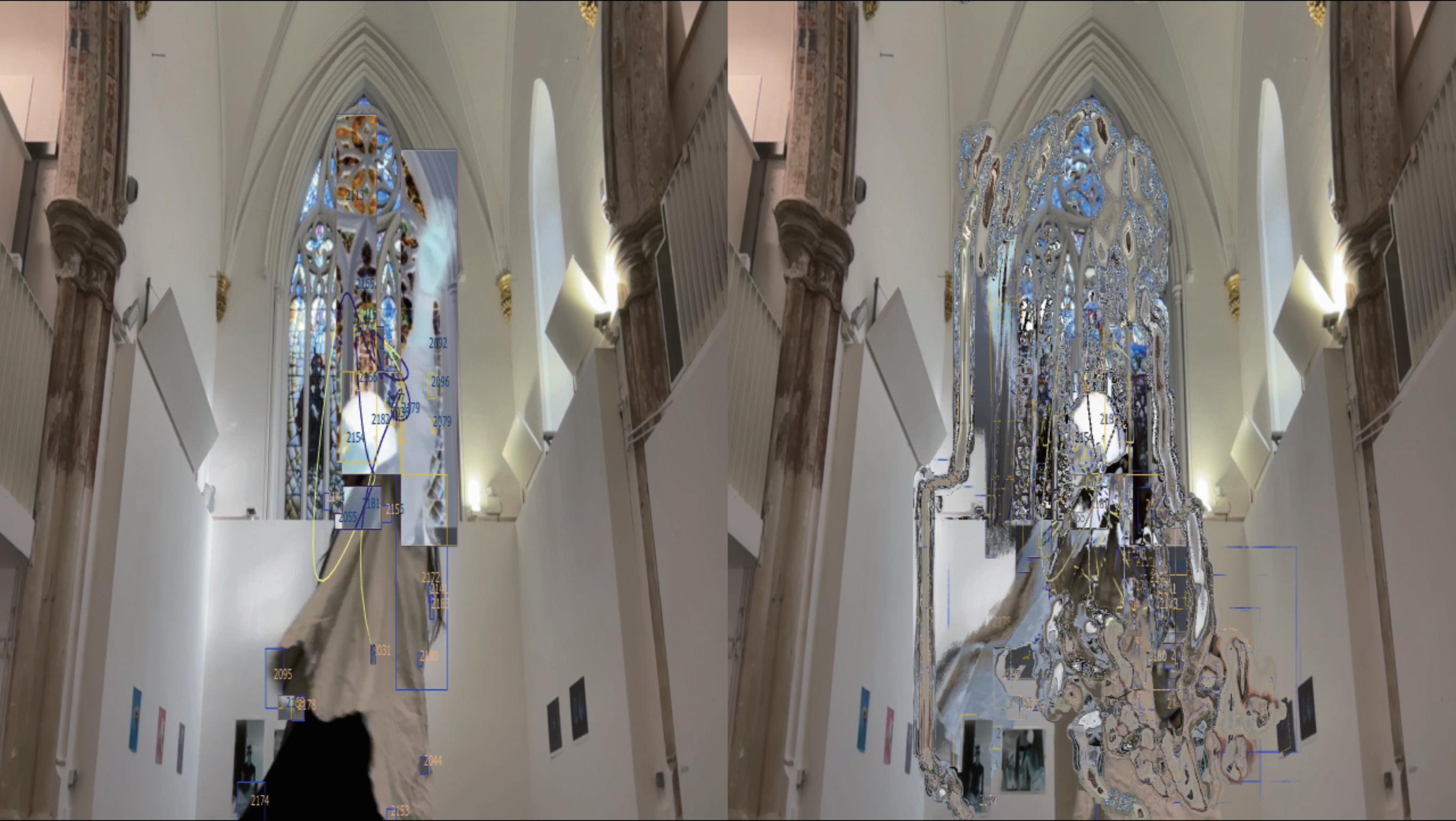
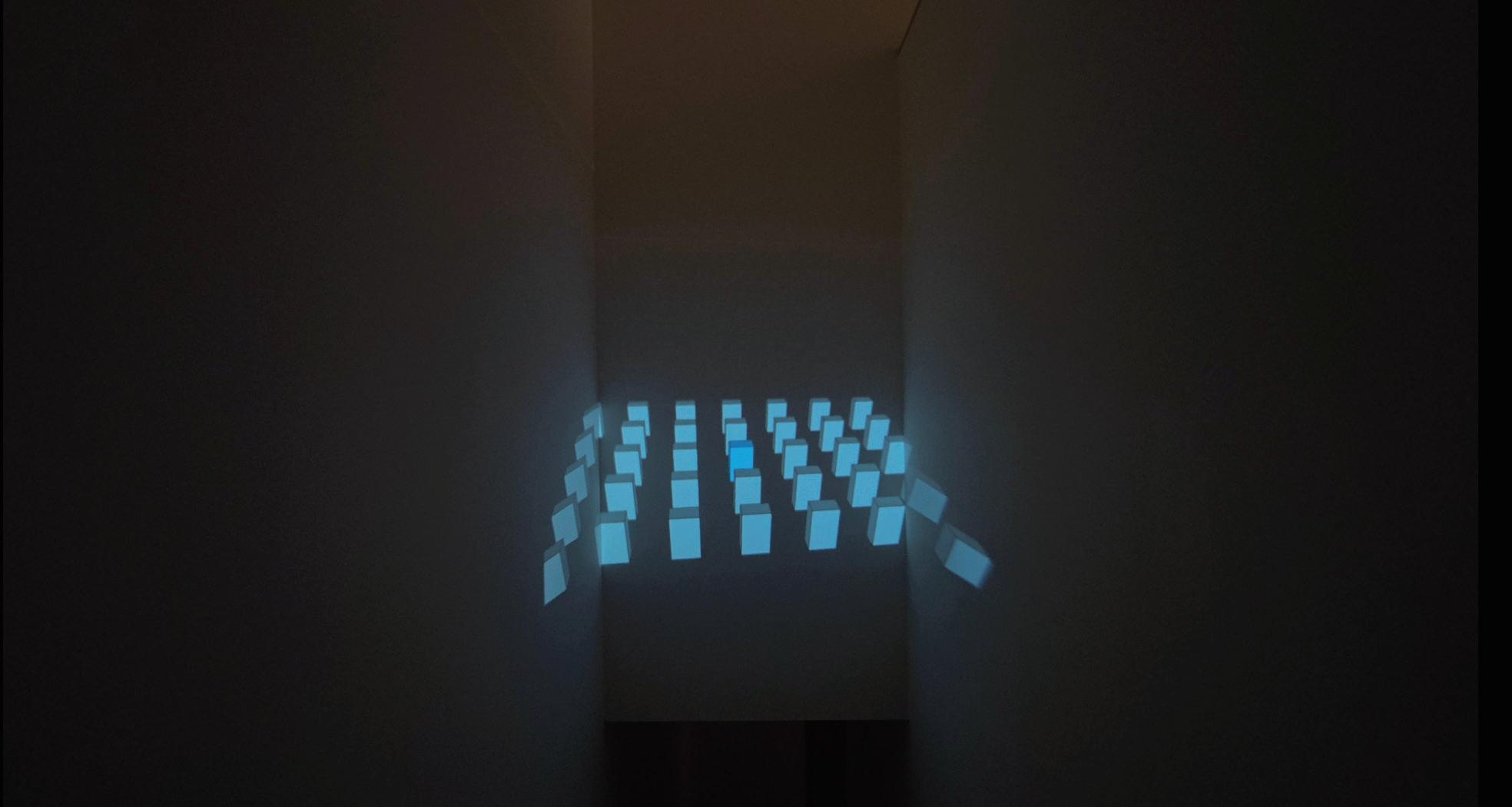
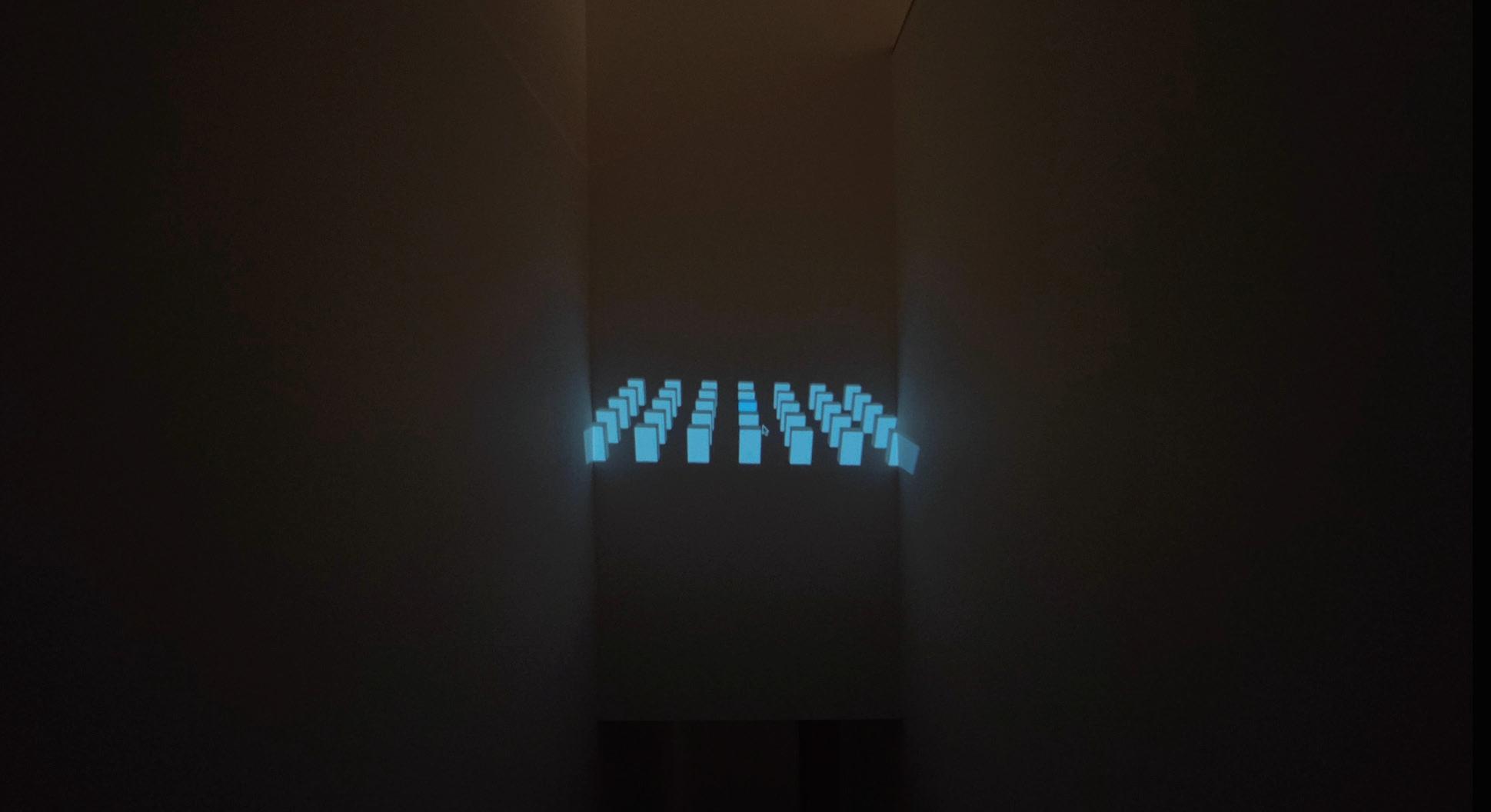
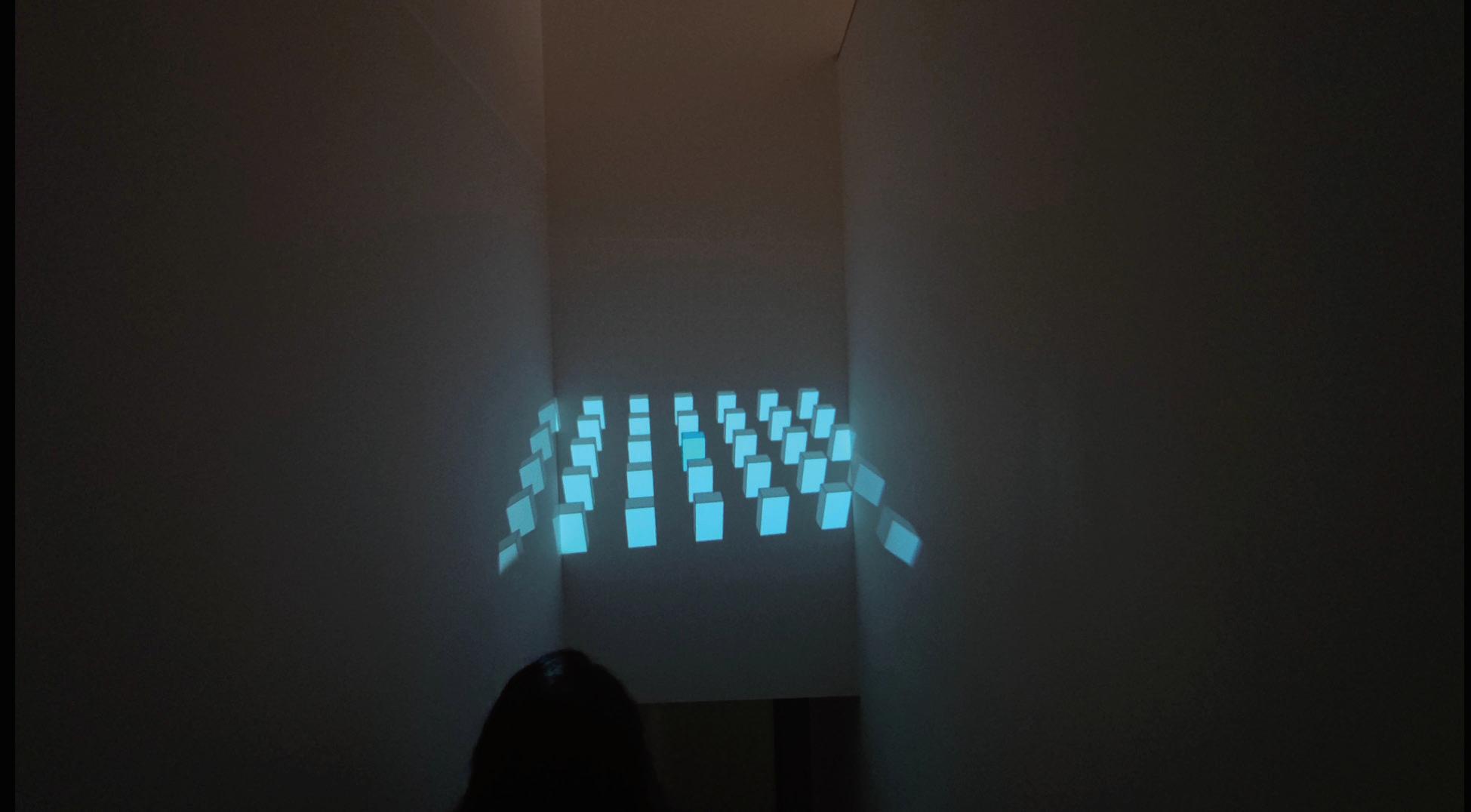
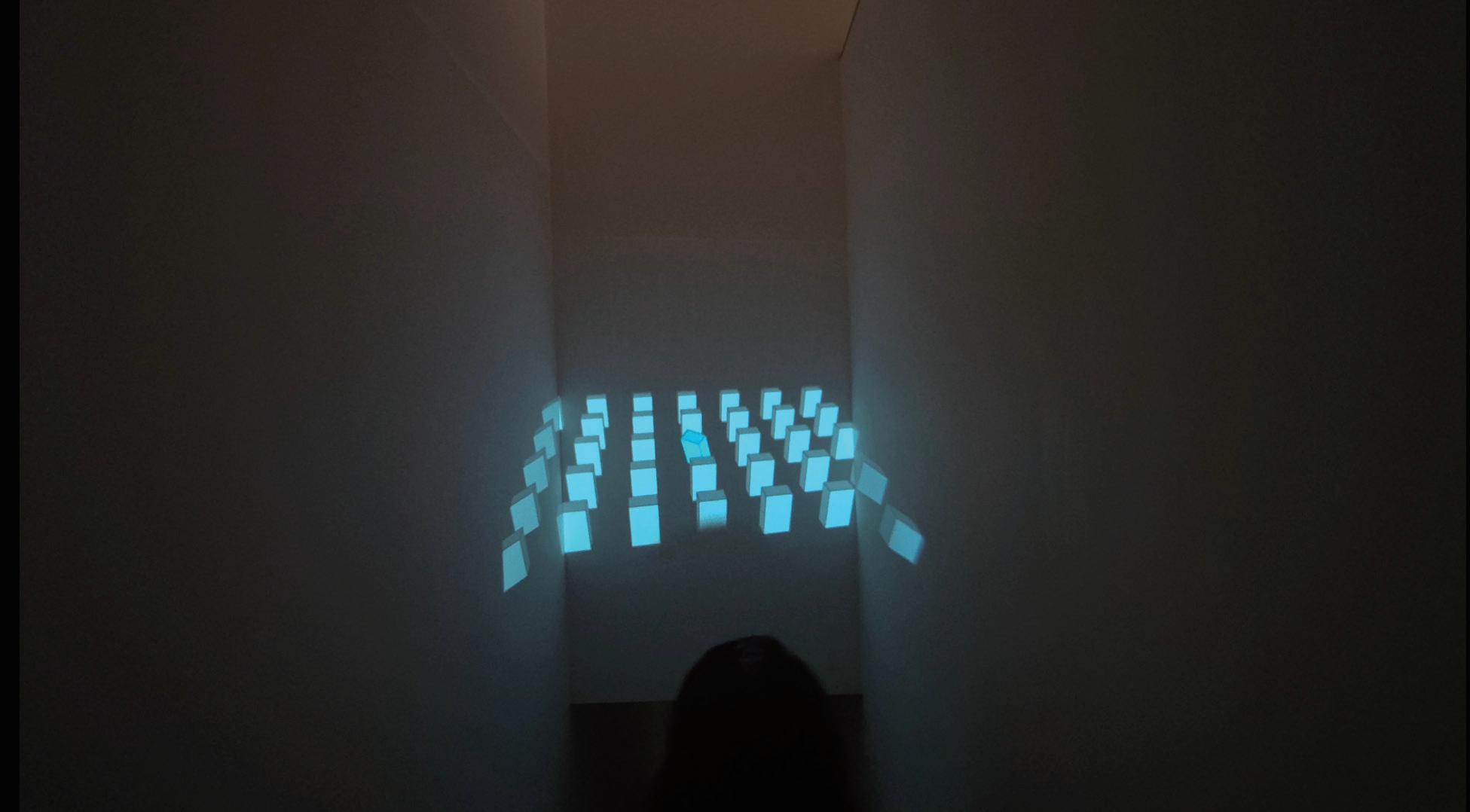
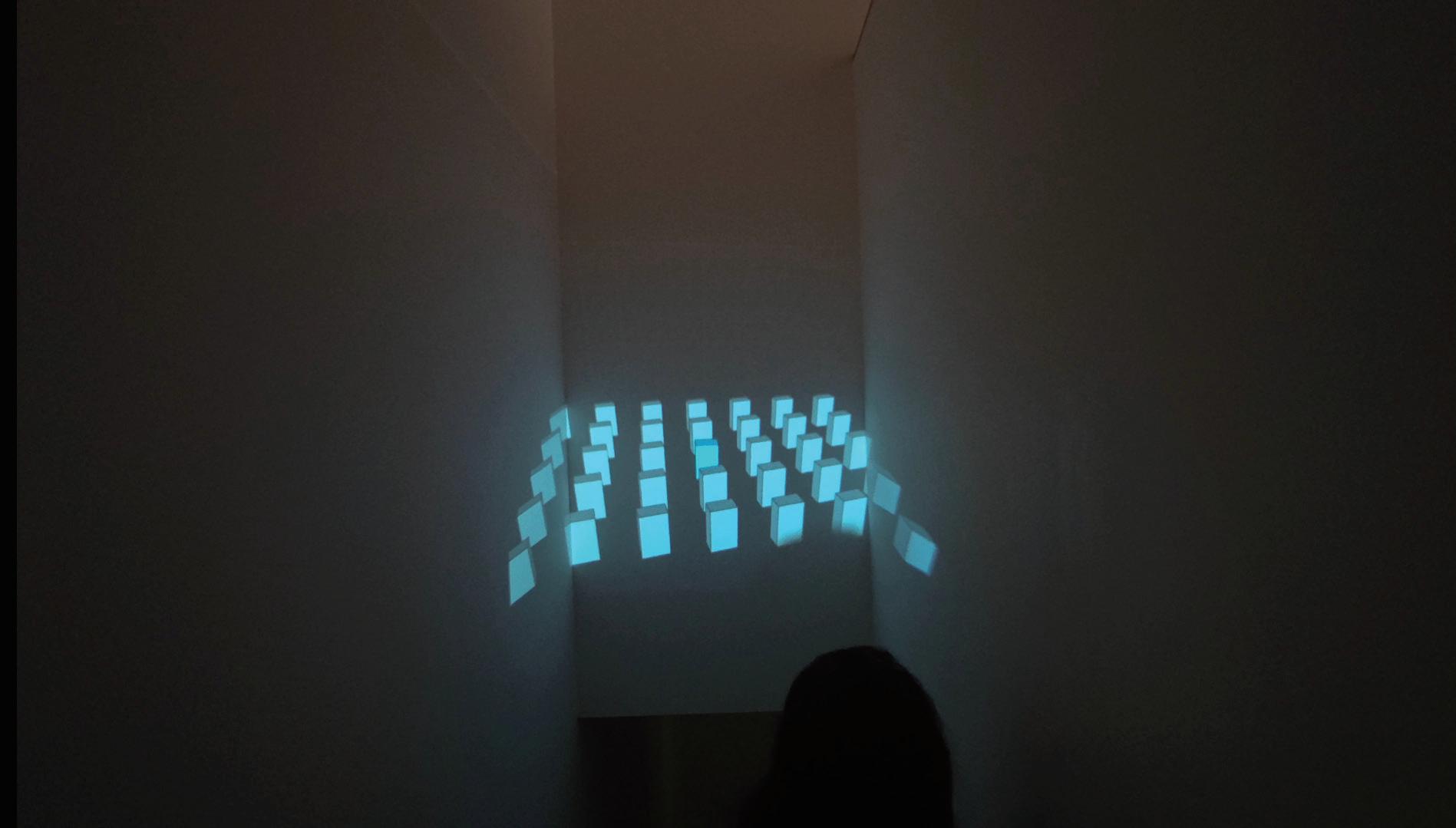
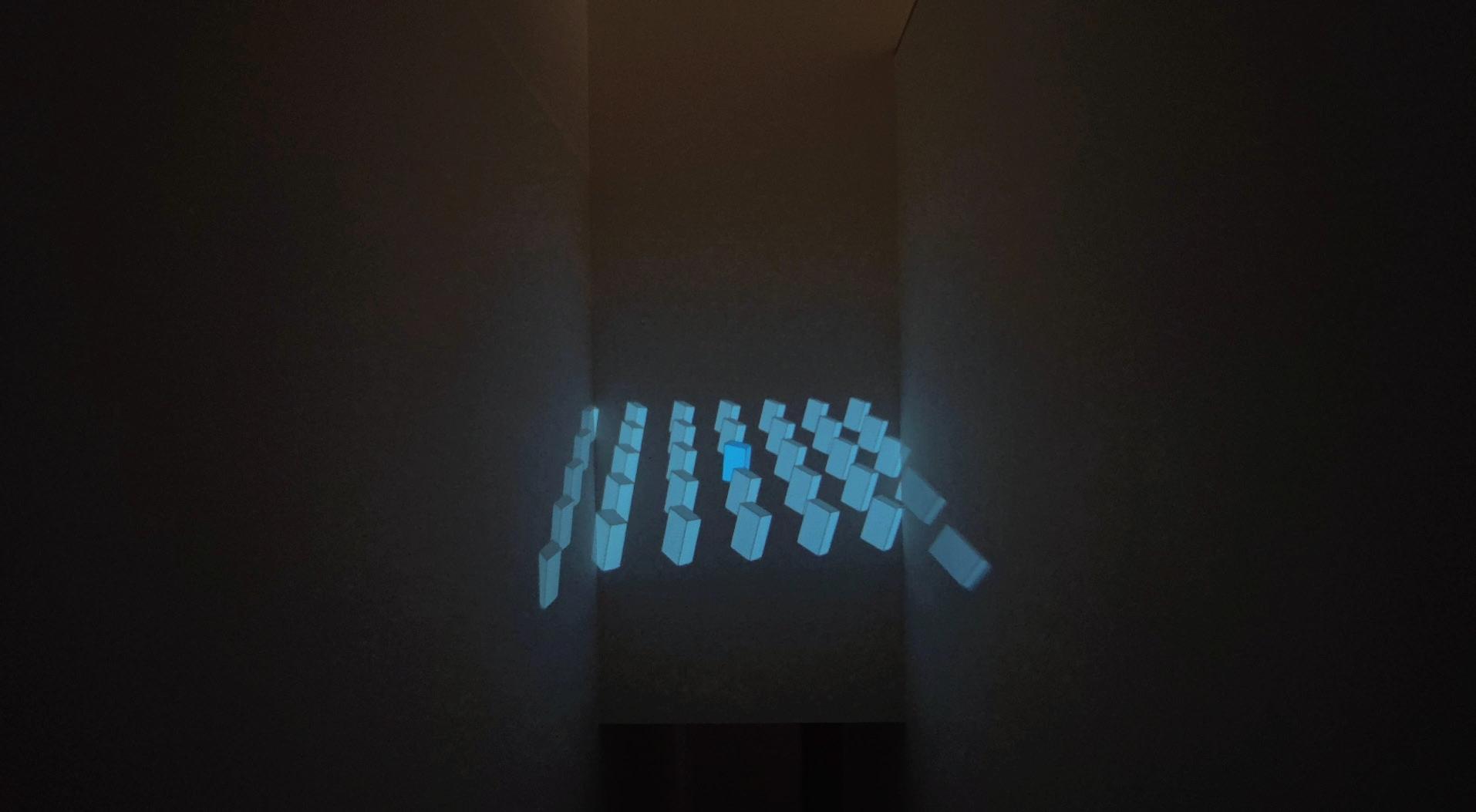
In the era of screen-based dining, "Electronic Pickles" have removed the direct connection between food and taste, existing instead as a new entity. This project begins with the idea of "Binge-watching Series" as a starting point for design exploration: Each act of eating becomes a new mode of consumption, replacing the traditional concept of time with imagination. In this new temporal mode, food (tofu) emerges as the new ruler of the world, giving rise to new industries and digital landscapes.
Video link: https://youtu.be/UvdCIabCApo
In my junior year, I noticed that when eating in my dorm, I always had to pick the right binge-watching series to accompany my meal. Eating without it felt bland and uninteresting. I considered the two (screen/series and eating) to be inextricably linked, even expressing surprise when I saw friends eating without watching something, asking them, "Don't you watch something while eating?"
This observation led me to question the behavior of pairing meals with binge-watching series: What new role do plots/screens play in the act of eating? What are the identities and roles of people in this scenario?
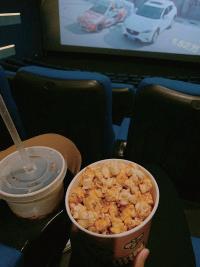
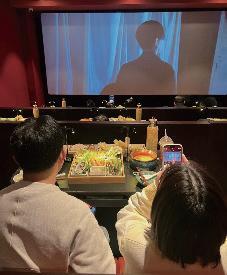
In July, when I went to the movies, I realized that my friends and I subconsciously purchased popcorn to accompany the film, recognizing a bundle relationship between movies and popcorn, like a combo meal. But why has no one questioned this "bundle relationship"? Everyone, including myself, seems to take the existence of this "combo" for granted.
In fact, it does not matter whether it is popcorn, the package is constantly iterated: Imax screen & hot pot.
Timeline Mealline
7:02min 3:51min 9:15min 10:07min 15:39min
Imagineline
In fact, the dramas I choose to watch while eating are often mindless. I feel guilty about spending specific times on such content, yet I enjoy immersing myself in the relaxed state they offer. Eating time is mandatory, giving me a proper reason to watch these shows. In this context, eating becomes a mere accompaniment to watching. At this moment, what I'm consuming isn't just the food but the drama, the imagination crafted by the screen/series. Throughout this process, I found myself brainwashed by my own imagination, trapped in a digital panorama prison of my own making, unable to escape the addictive fantasies brought by binge-watching TV shows.
So, what special experiences do these mindless dramas create for this eating experience?
In my research, I came across an article "Mediatization of Everyday Life: Thoughts Based on 'Electronic Pickles'," suggesting that without electronic pickles, the time spent eating stops when the food is finished. But with electronic pickles, the eating time is replaced by the duration of an episode, or rather, the duration of imagination. I believe this is where the timeline becomes the mealline and then the imagineline.
Electronic pickles/binge-watching series create a simulated feast of flavors, becoming a new "time" mode, where people complete a delicious imagination of eating.
Abbas's 2017 film "24 Frames" reimagines famous paintings or photographs using digital imagery, exploring their past and present and the emotions they evoke. Each of the 24 frames per second expresses a possibility, an expansion of imagination for a static image, a potential imagination of the world.
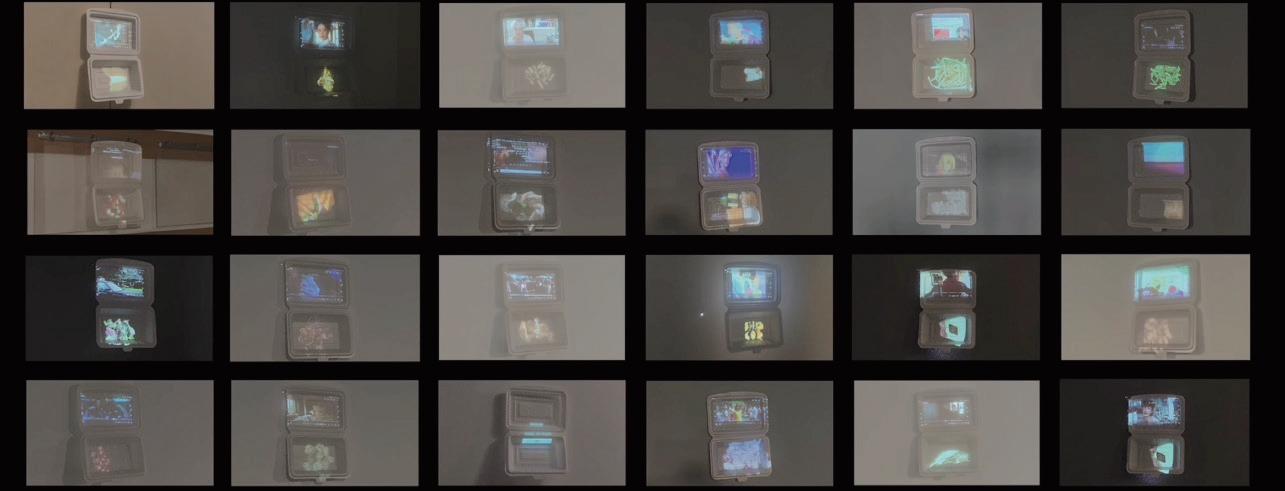
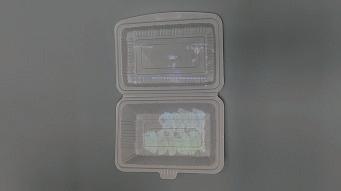
I was inspired by "24 Frames" and attempted to use 24 sets of images to project food and plot onto meal boxes, creating a sort of 'race meal.' The narrative ups and downs of the images and the speed of eating were synchronized to represent a new intermodality. The eating time was replaced with the imaginative time of watching the show, where one completes a delicious imagination of eating. This idea was realized through the project, but after completing it, I realized my understanding of "24 Frames" was superficial. I believe Abbas expanded the photos in a state of computer-controlled confinement and production, extending his imagination of the pictures. I am more interested in the idea of using image expansion to represent imagination.
24 frames of imagination ( iteration)
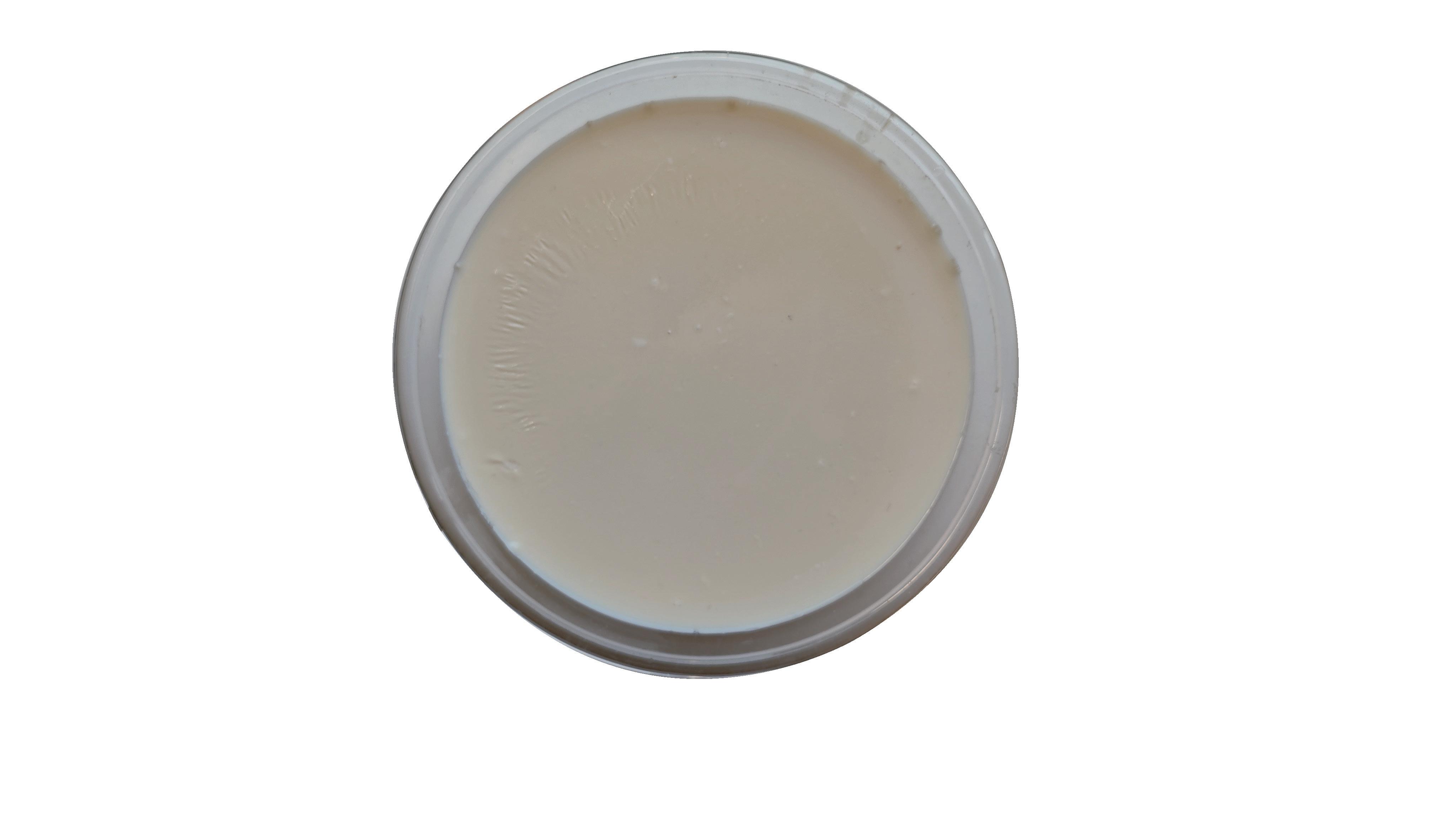
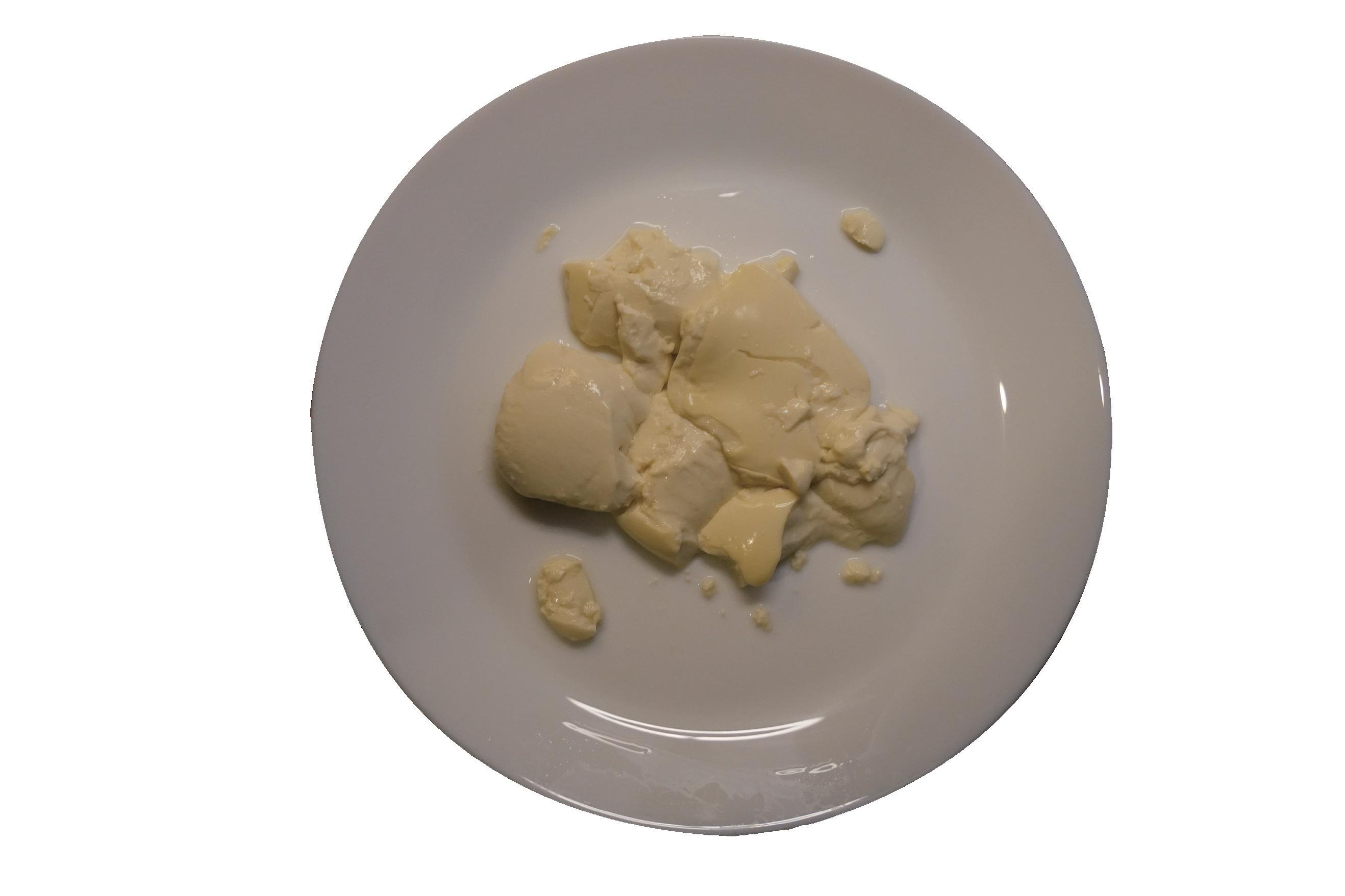
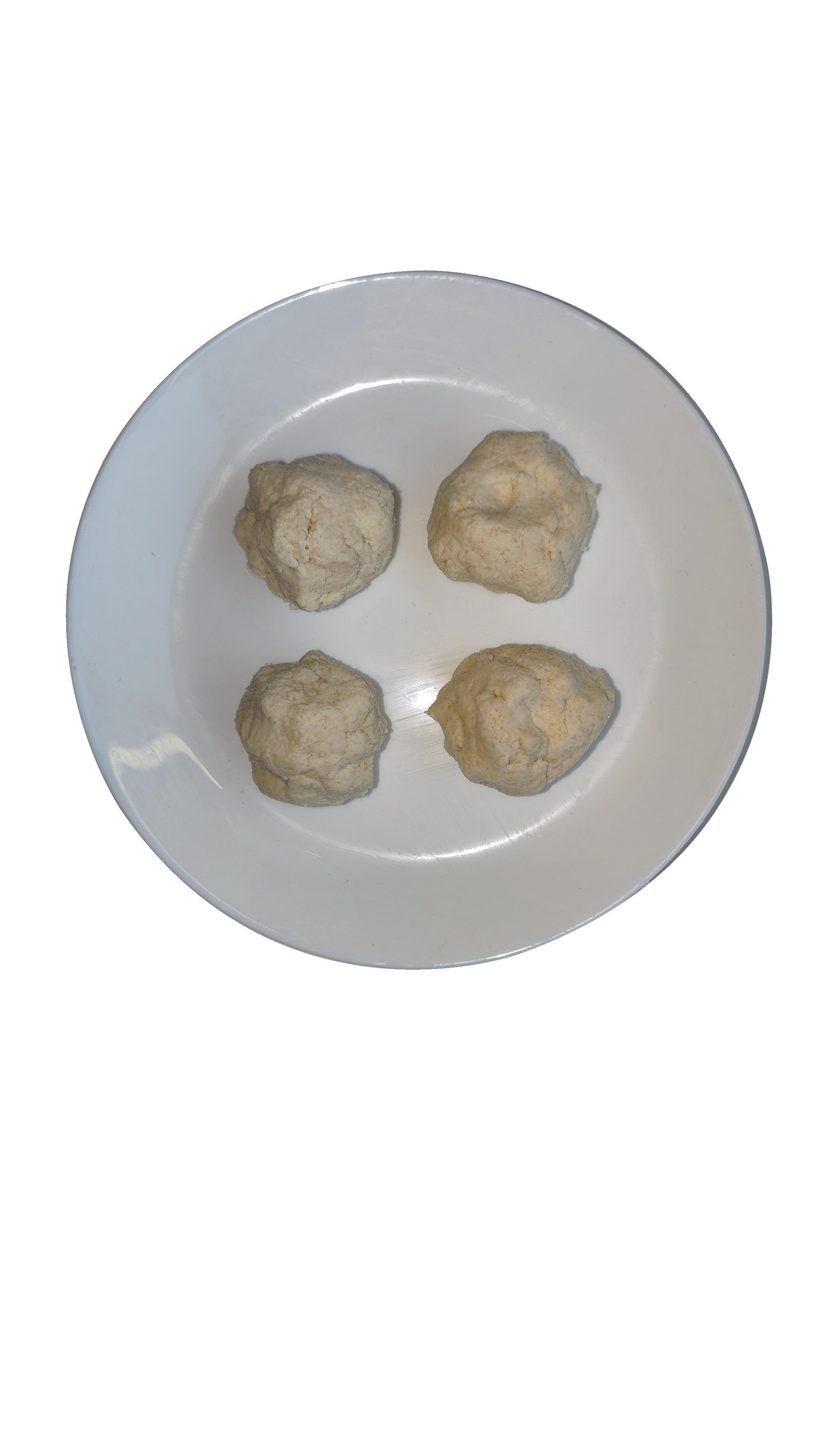
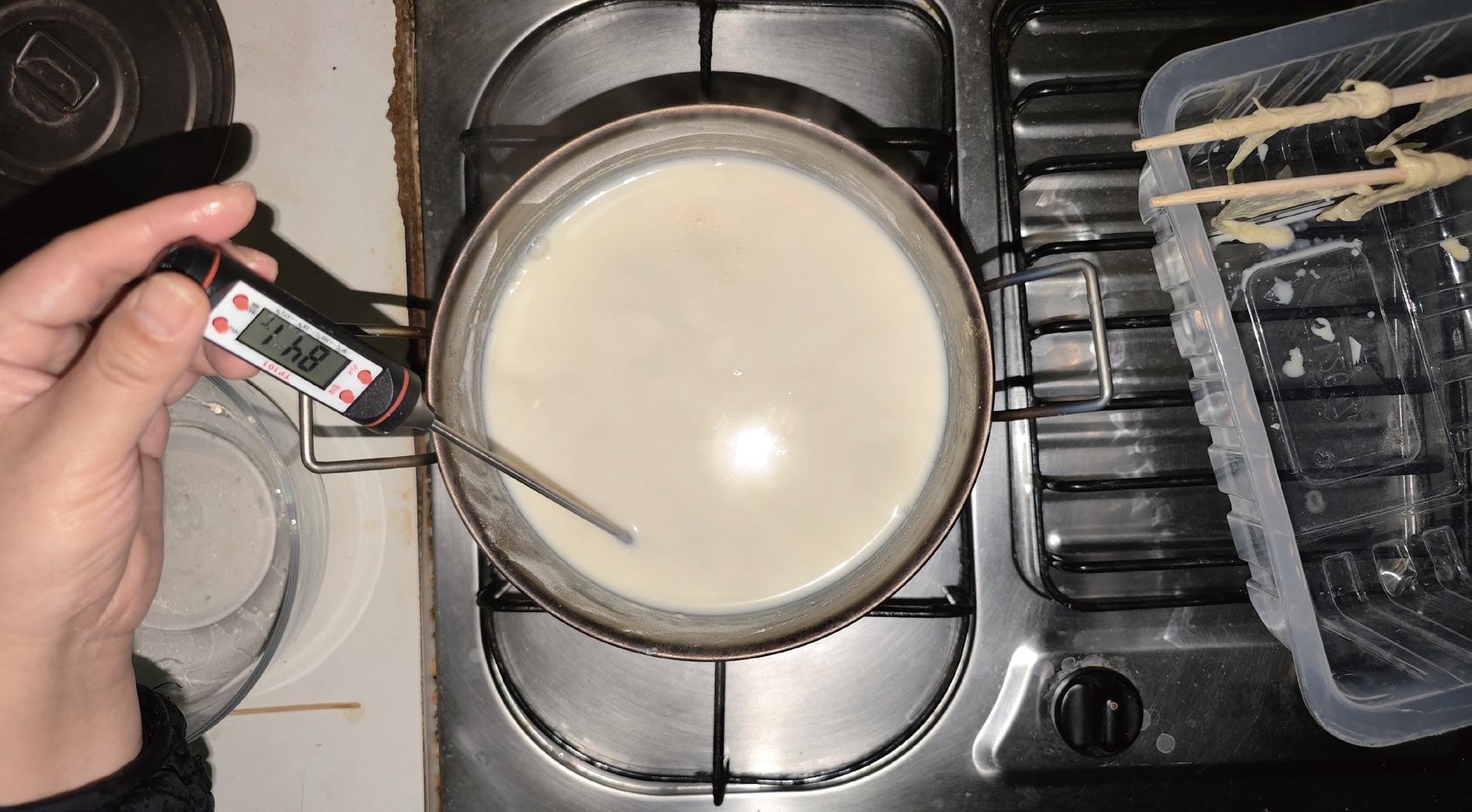
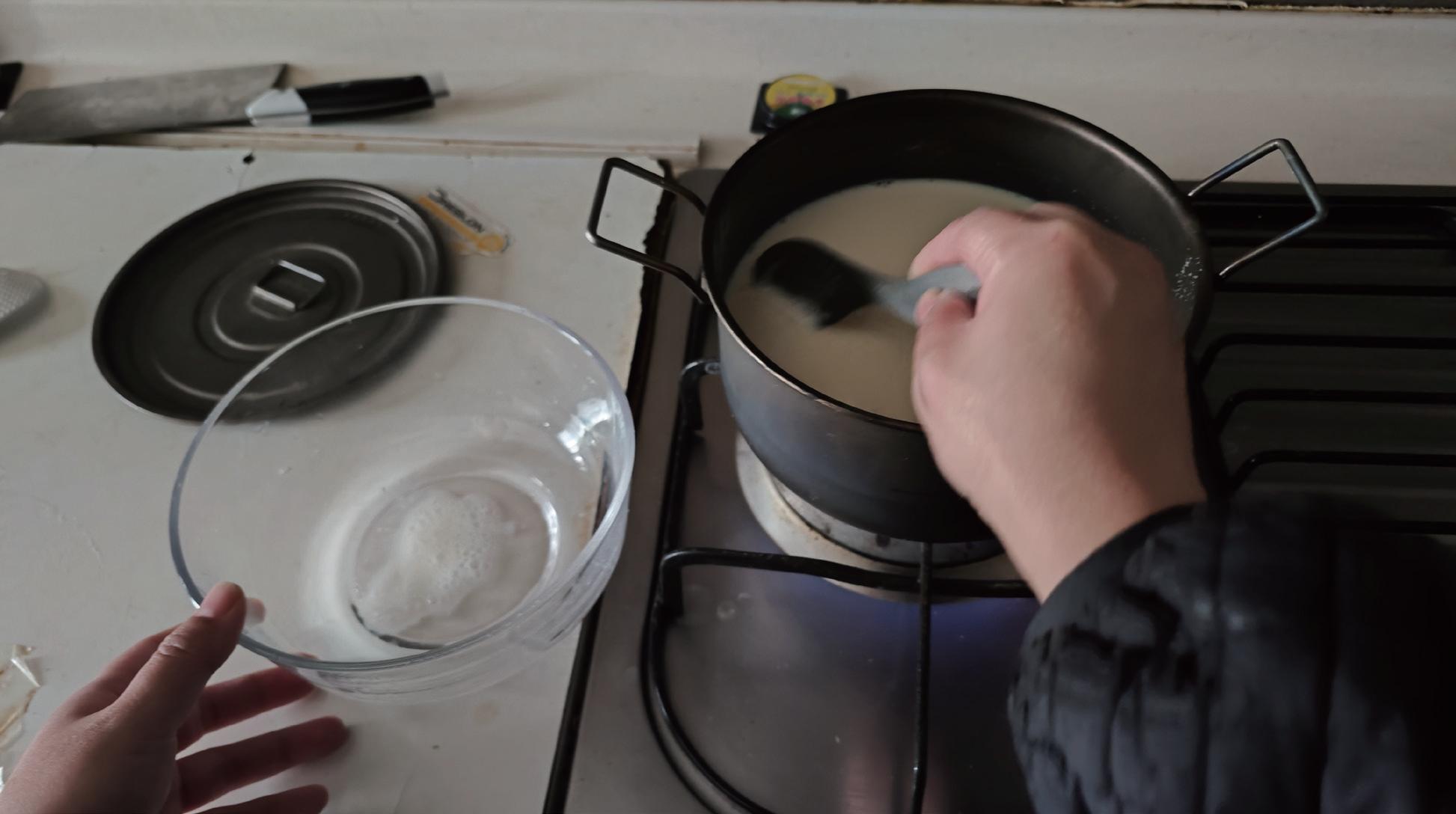
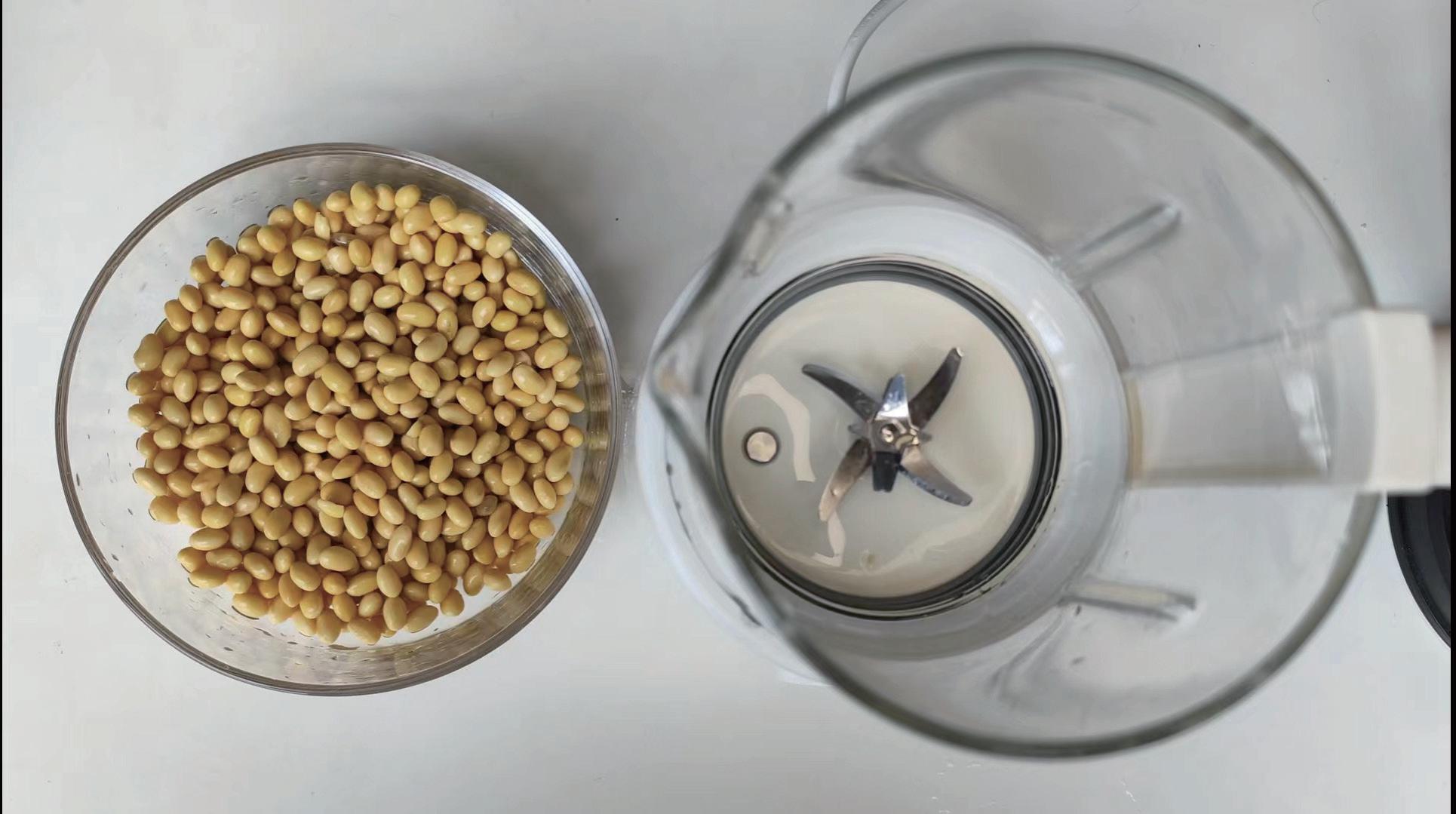
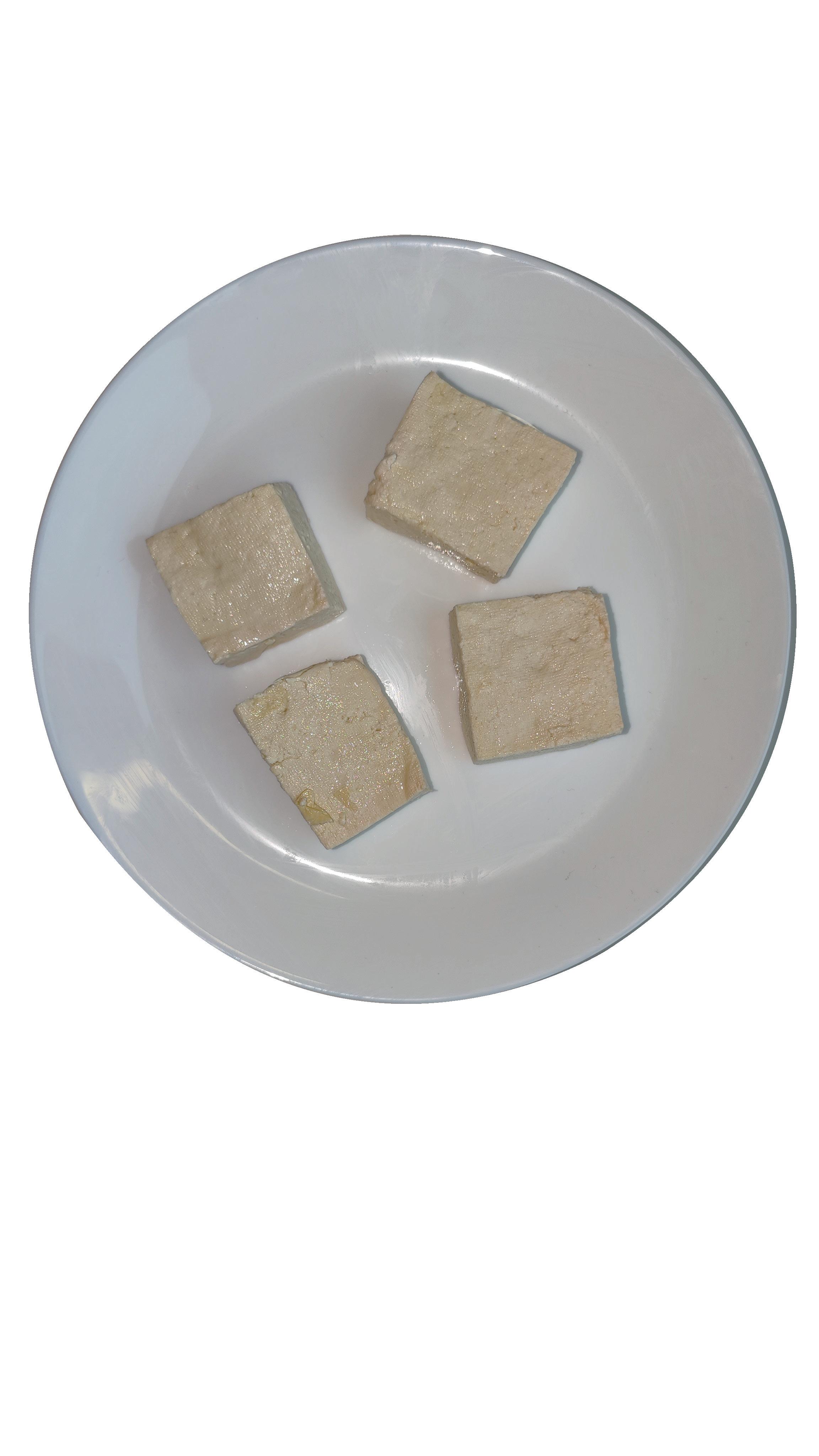
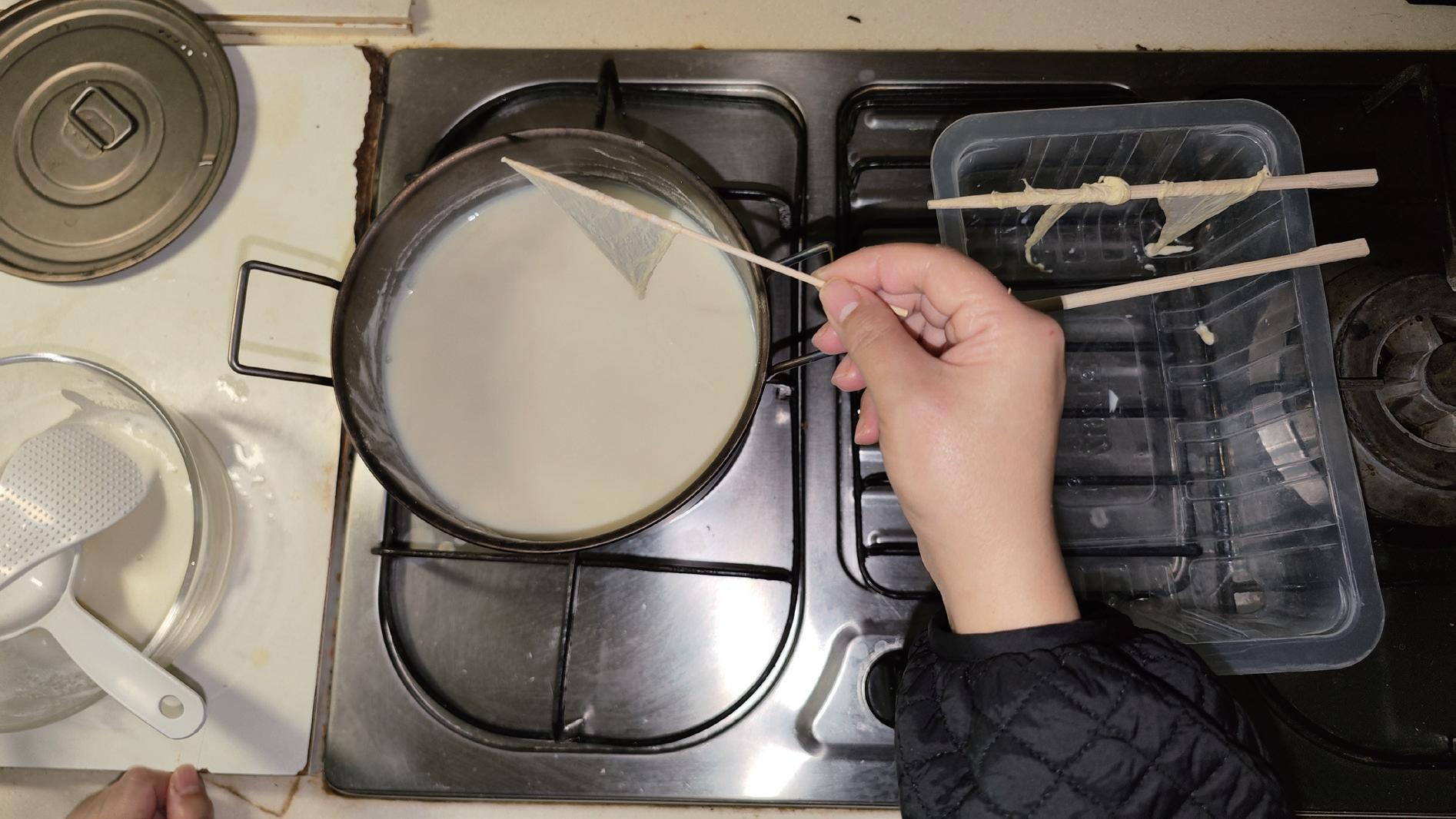
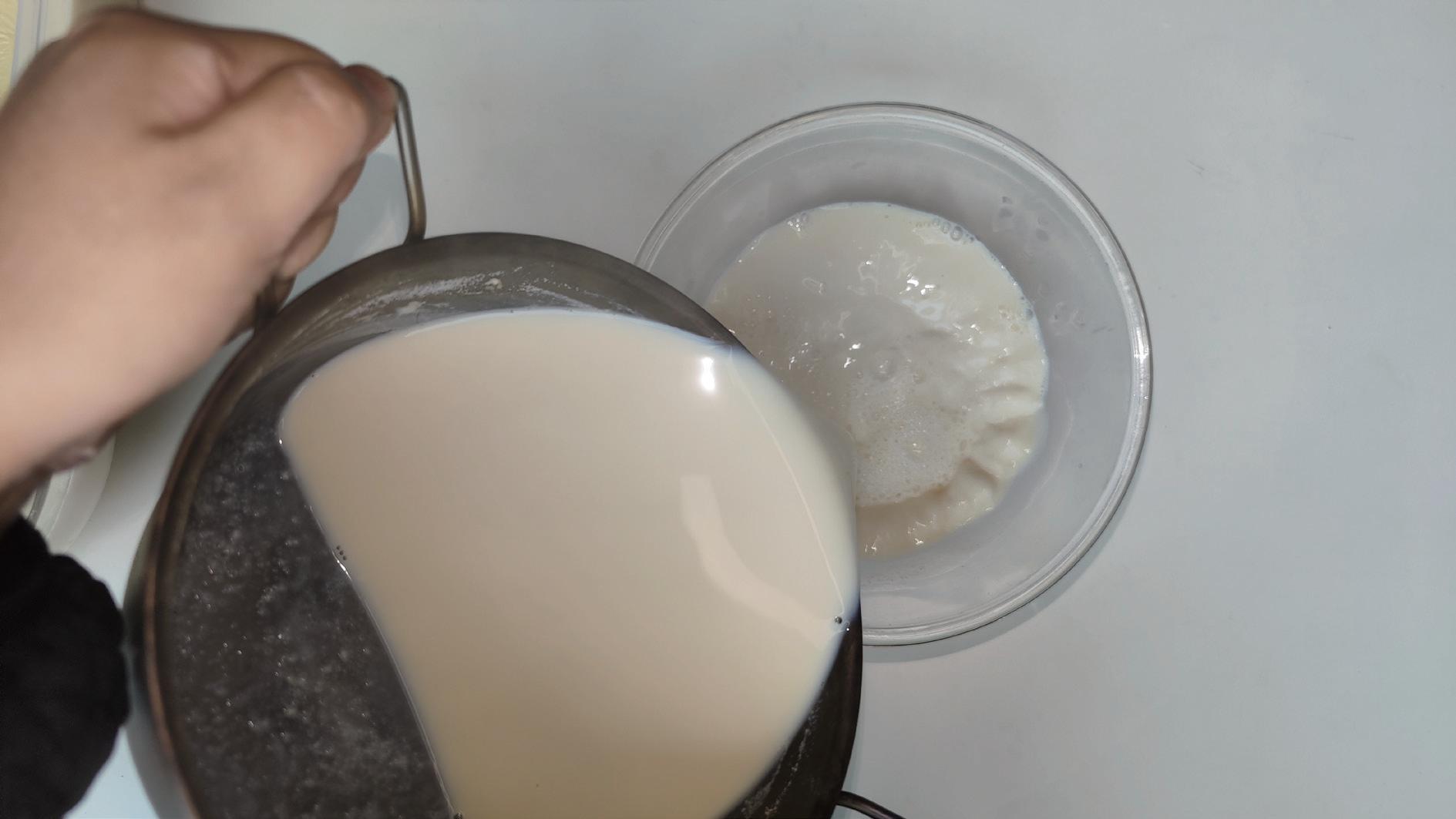
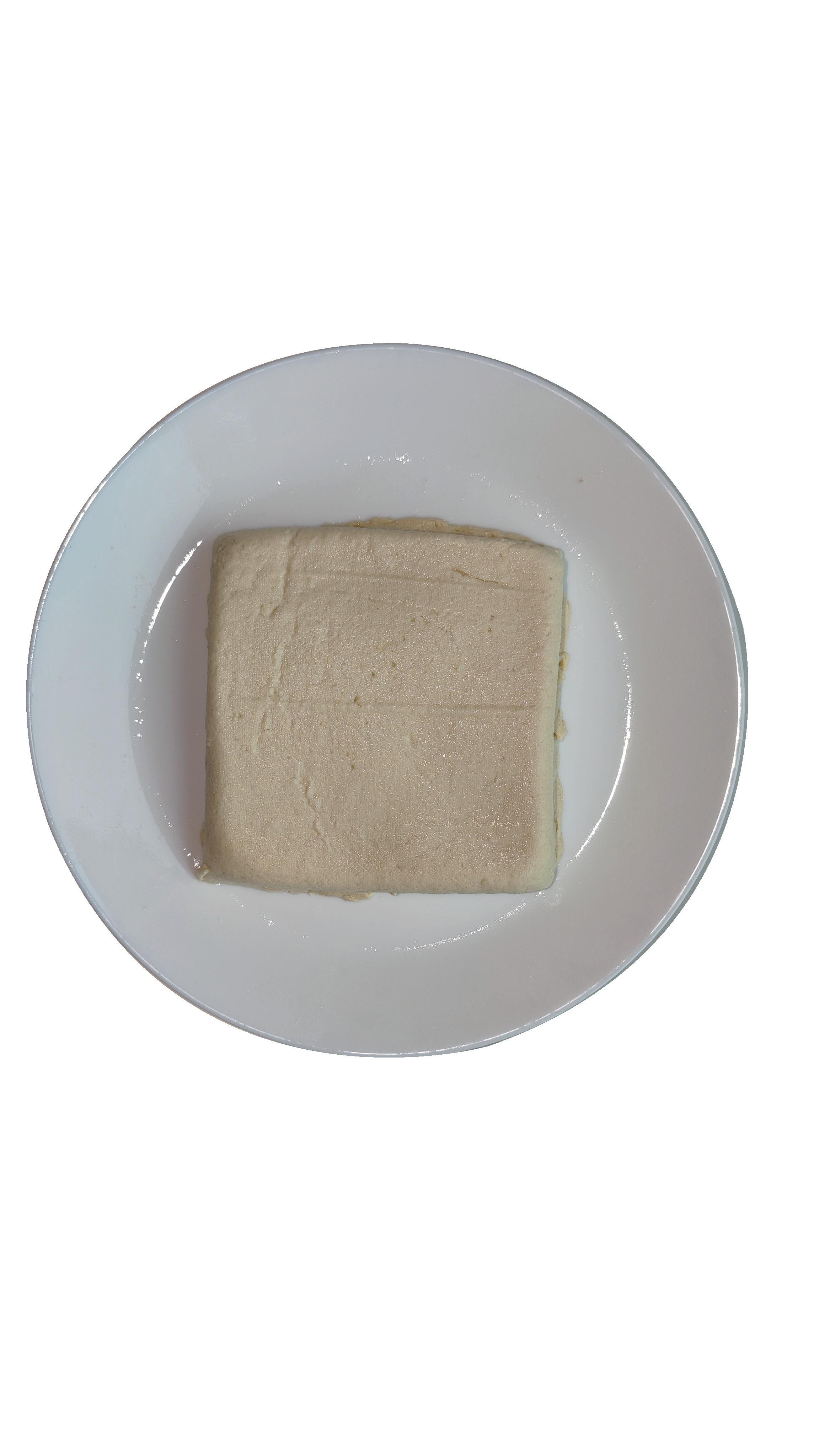
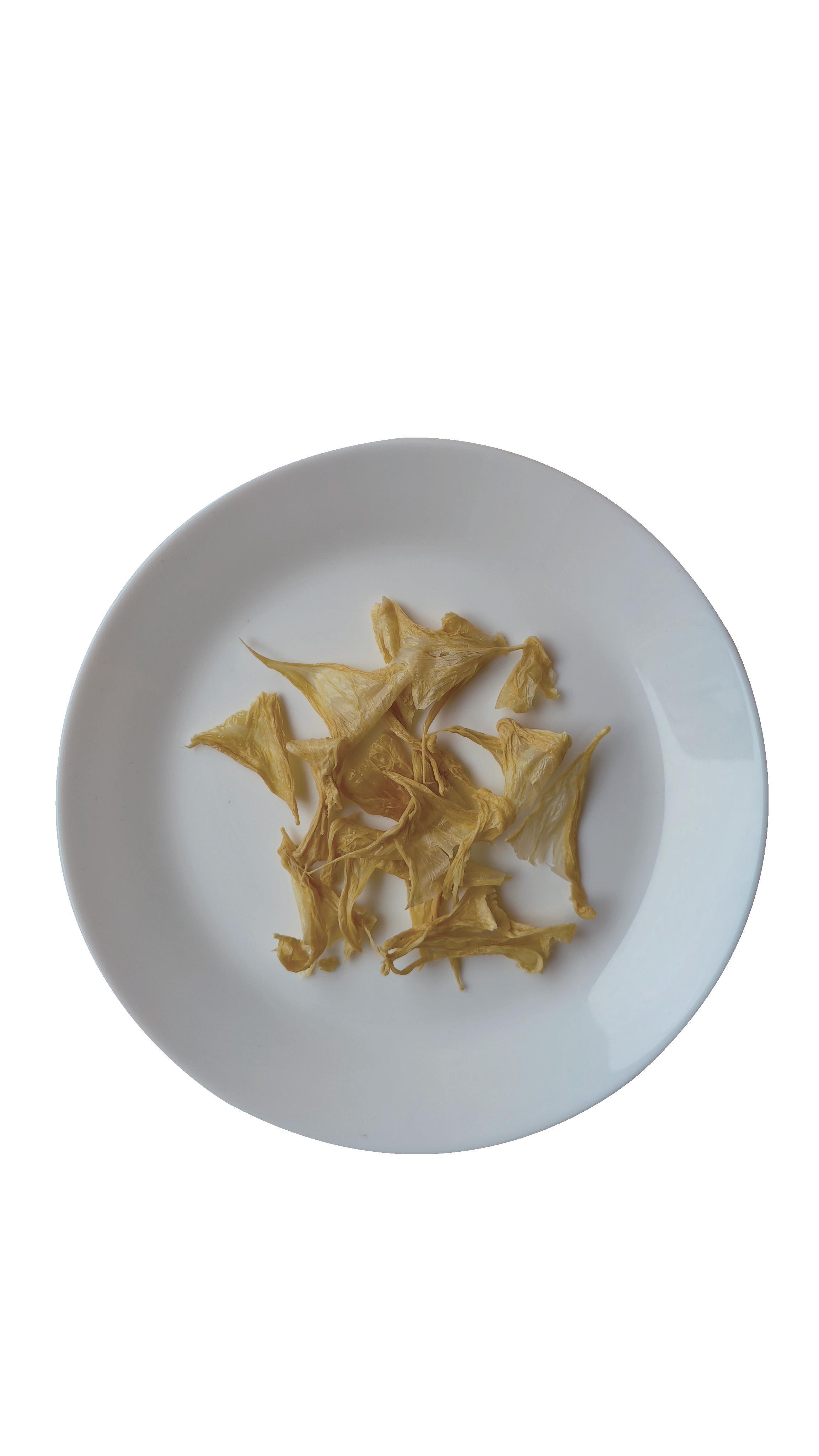
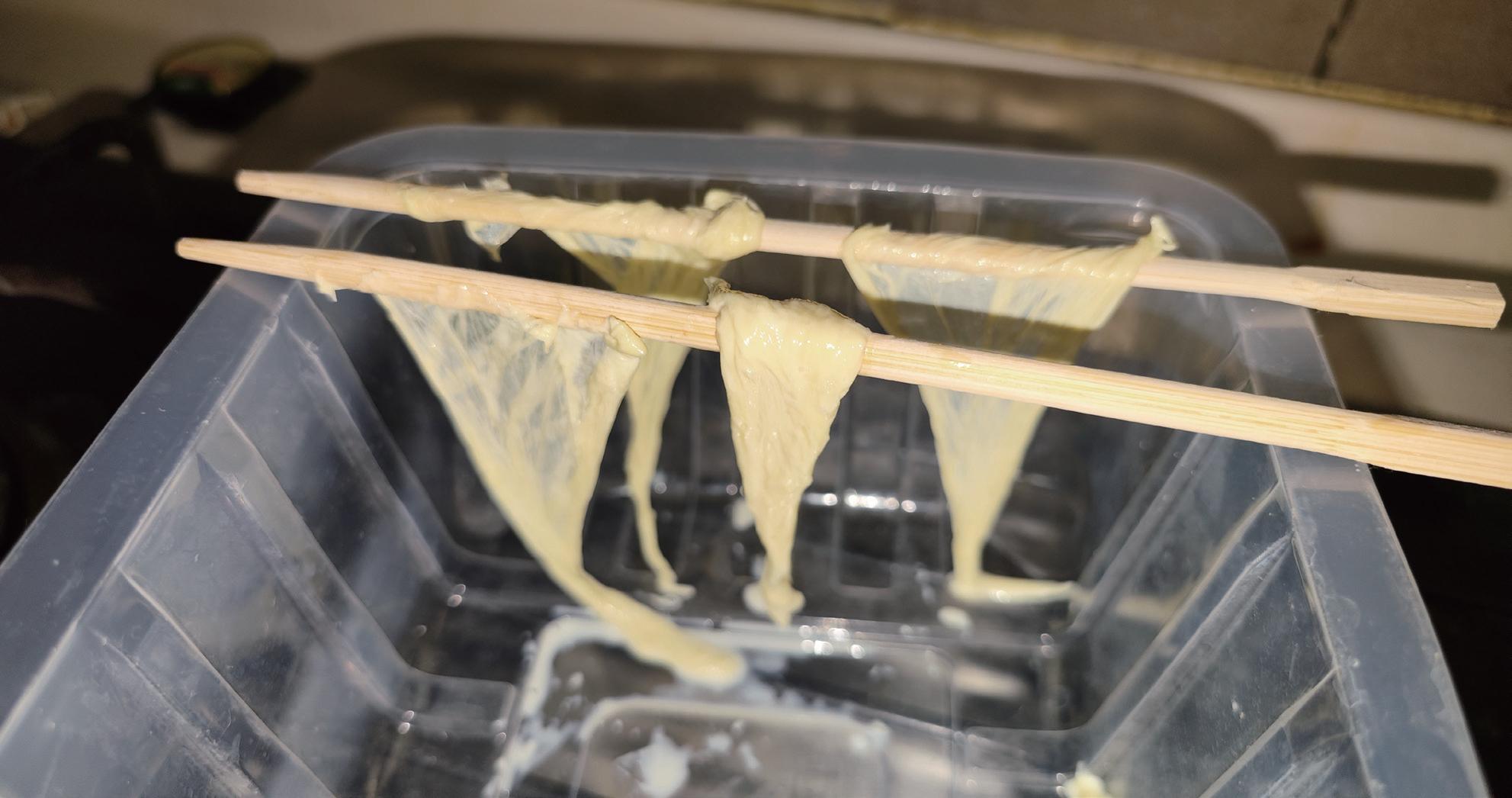
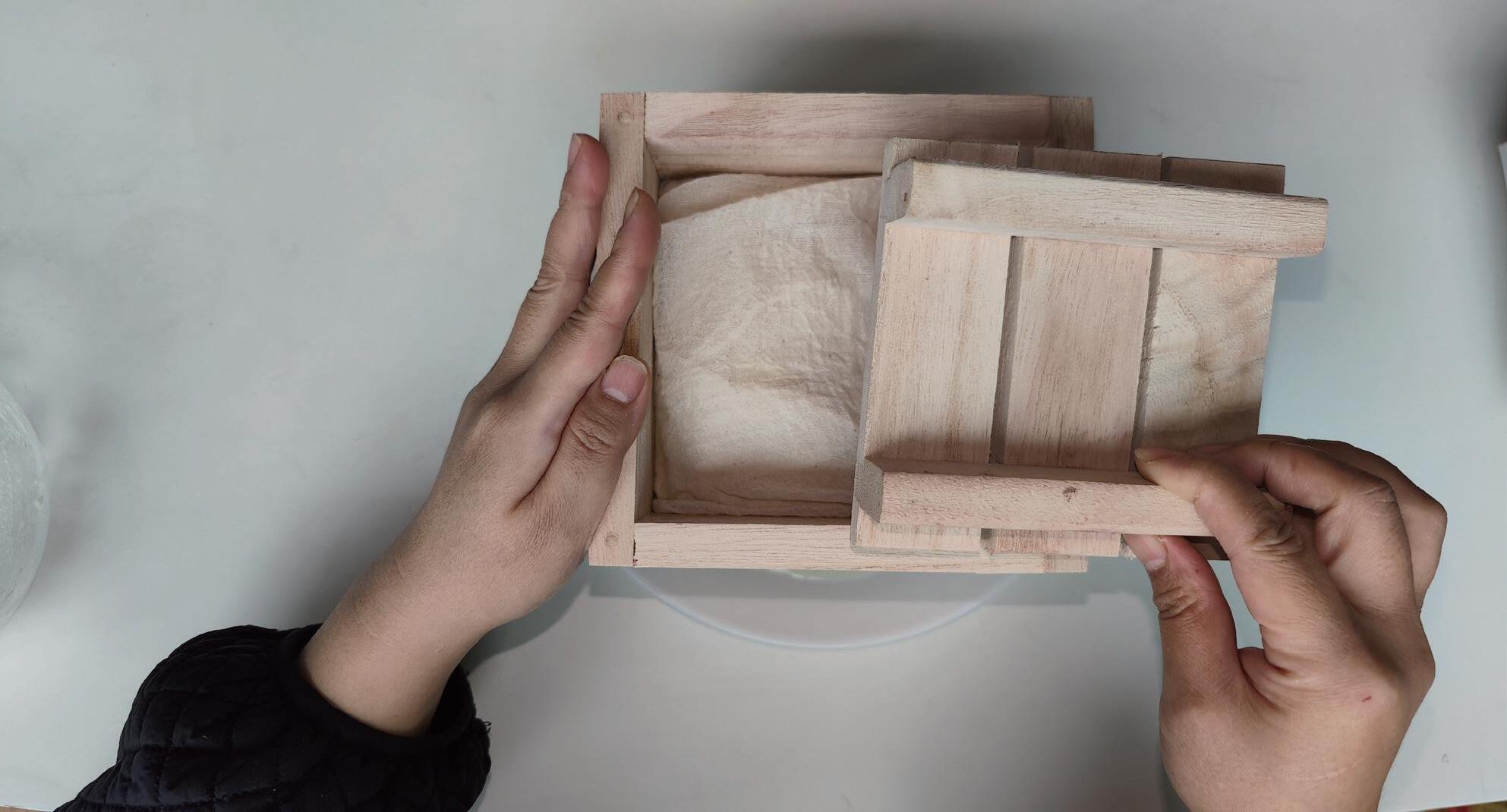
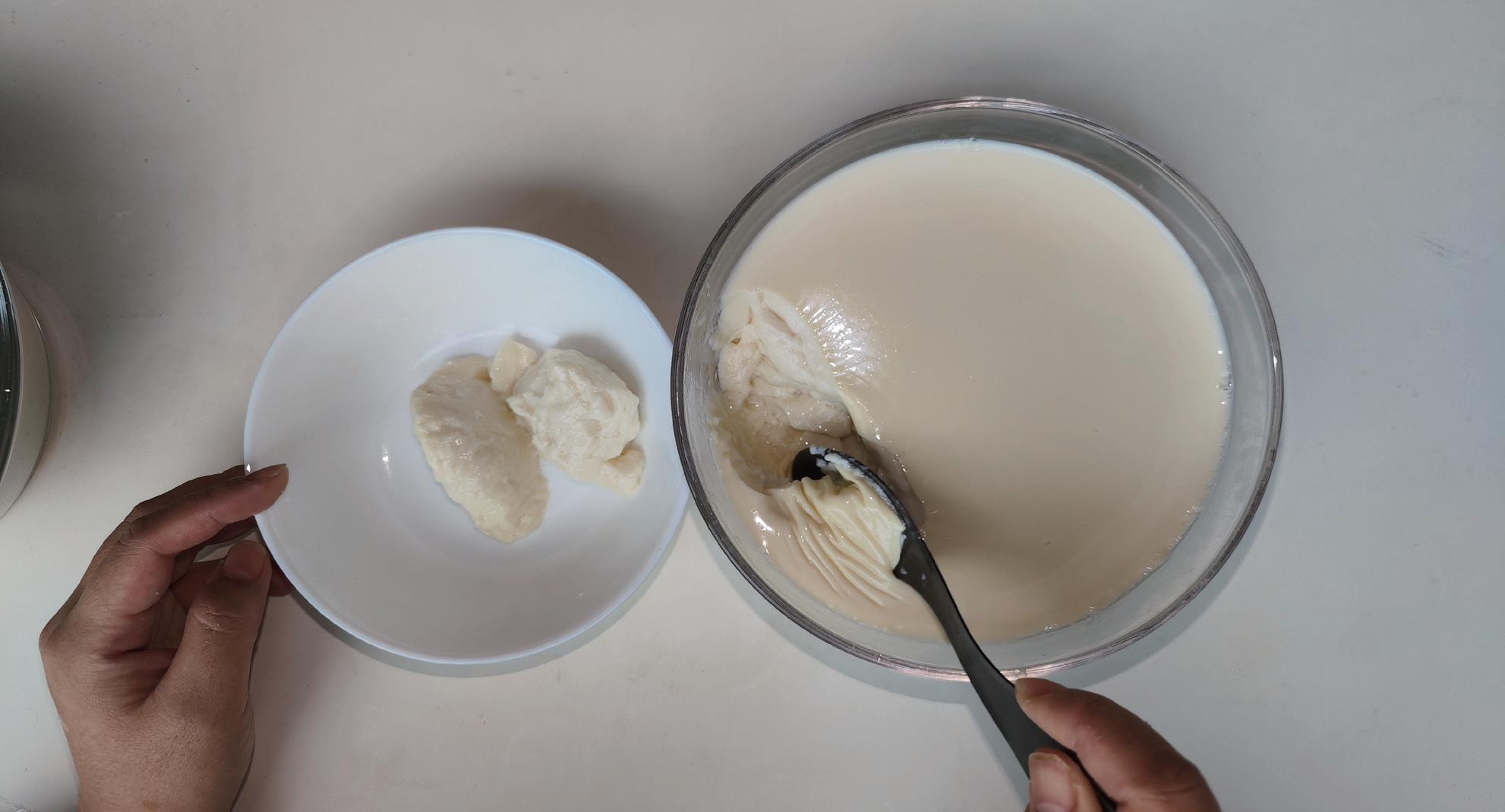
Learn about the process of making tofu and try to make different forms.
“It's still safest to make tofu!
When it's hard, it's dried tofu, When it's thin, it's bean curd, The thin skin is beancurd, No more soy milk, It's stinky tofu!
Make sure you don't lose money!”
———
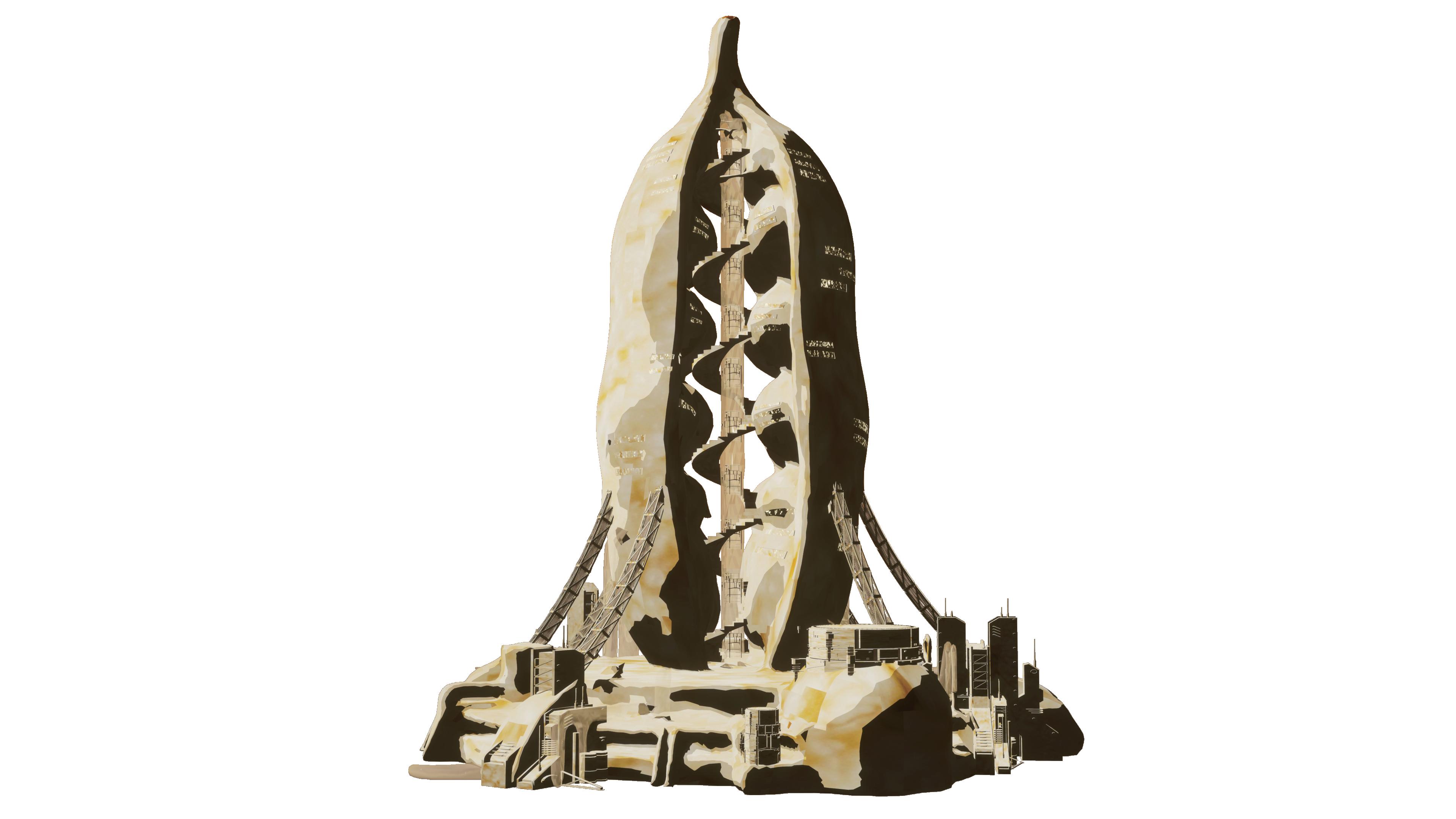
when imagination becomes the new temporal mode, when eating has entirely become an act of imagination, the taste provided by food itself becomes irrelevant. In the end, the demand for visual and auditory stimulation will be immense! In such a scenario, will new kinds of food emerge? Hence, I began to envision the possibilities of new foods.
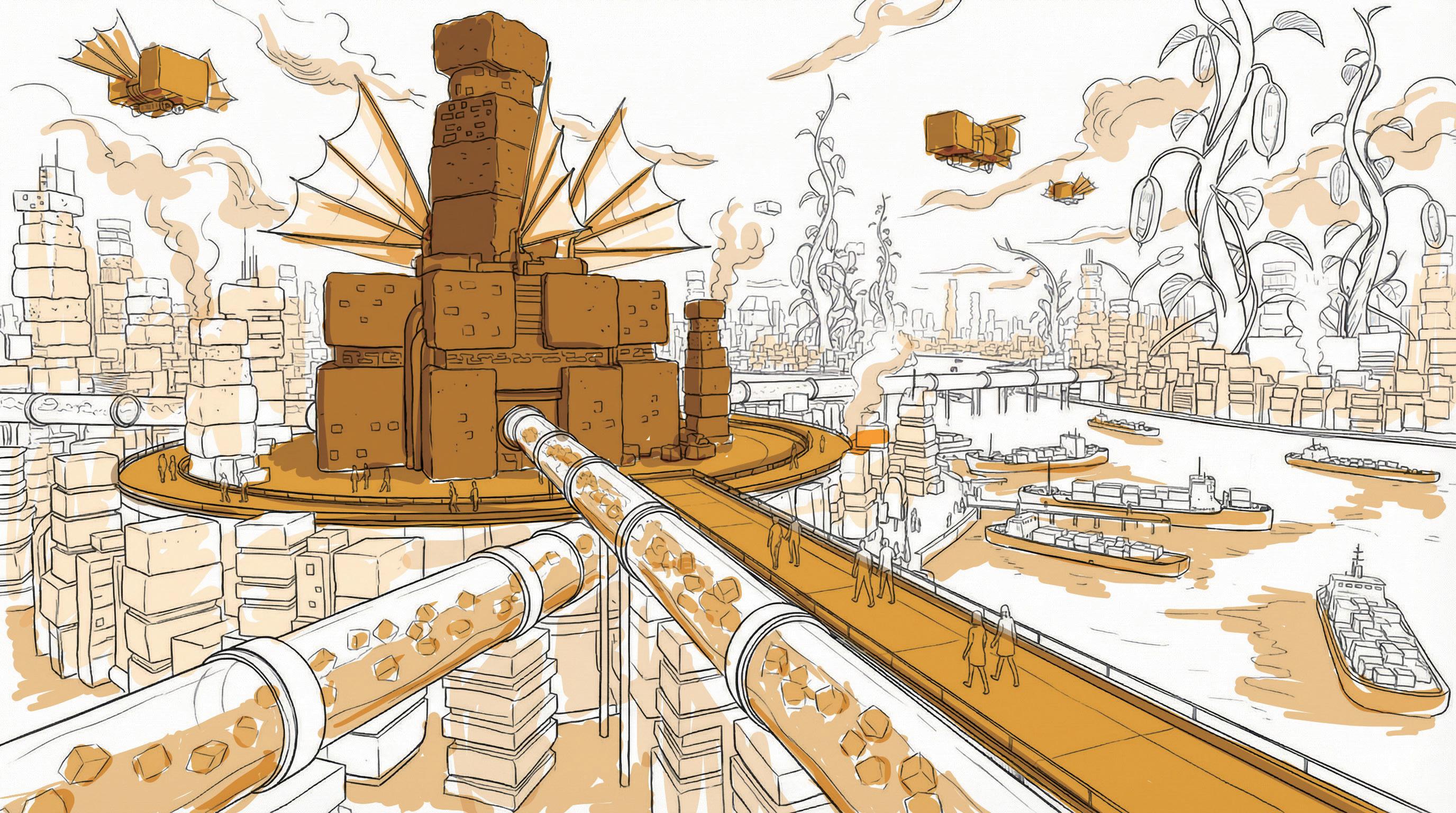
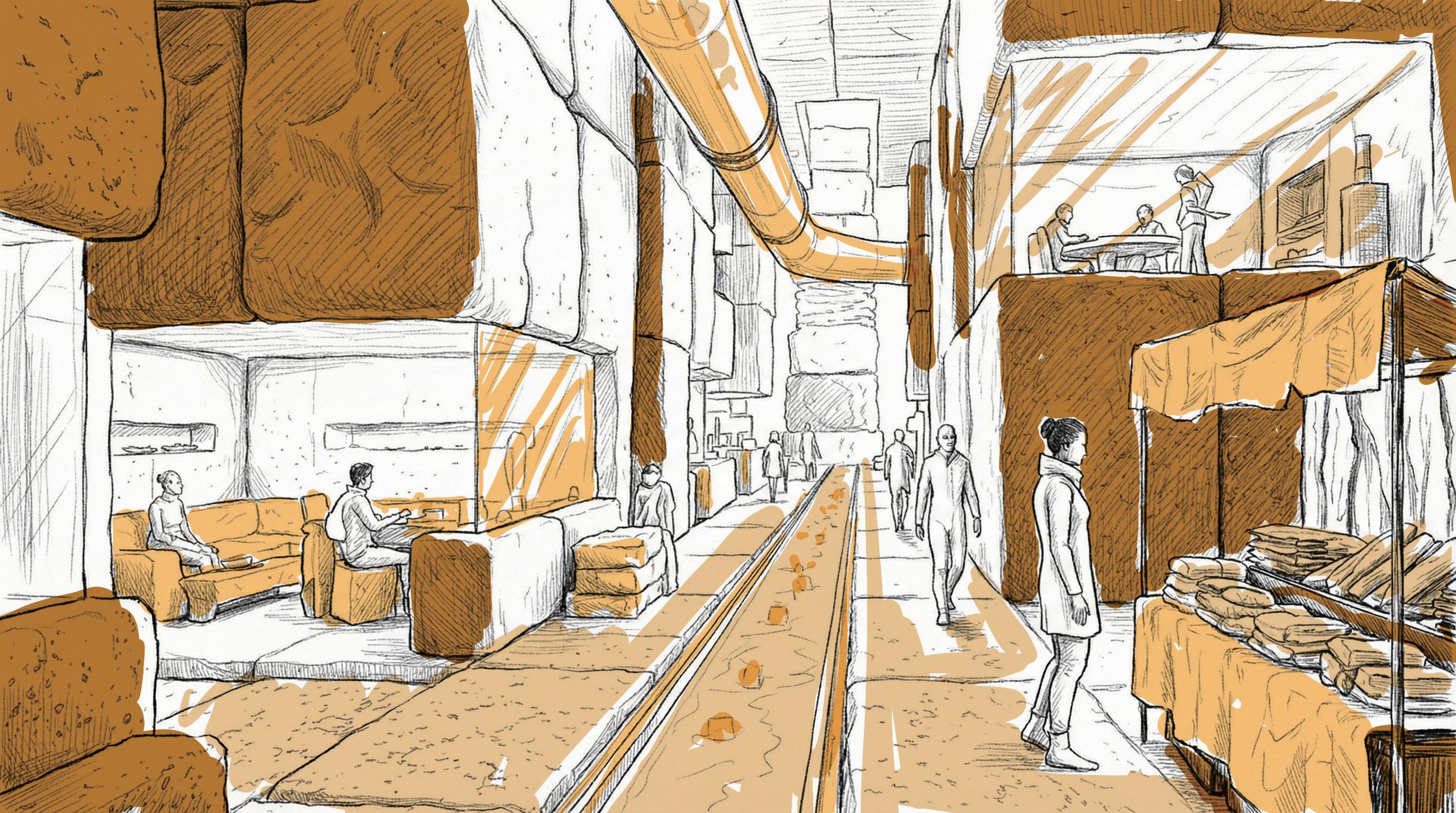
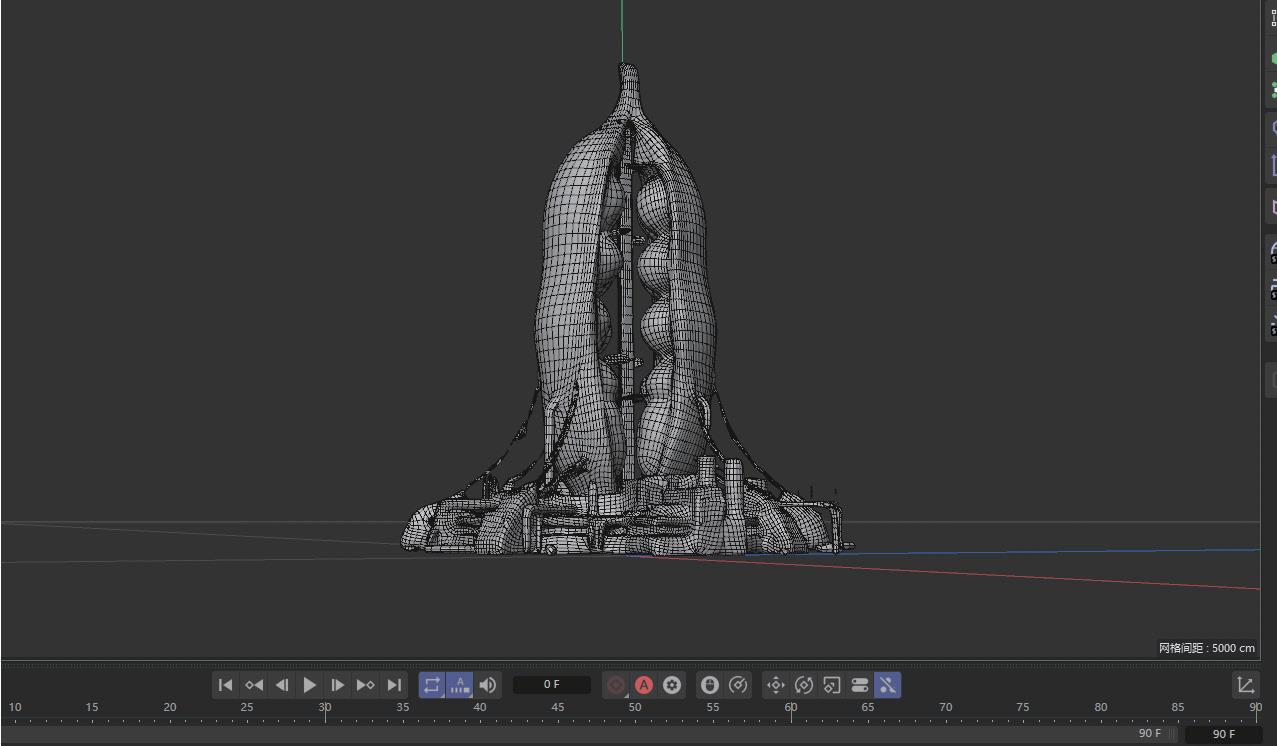
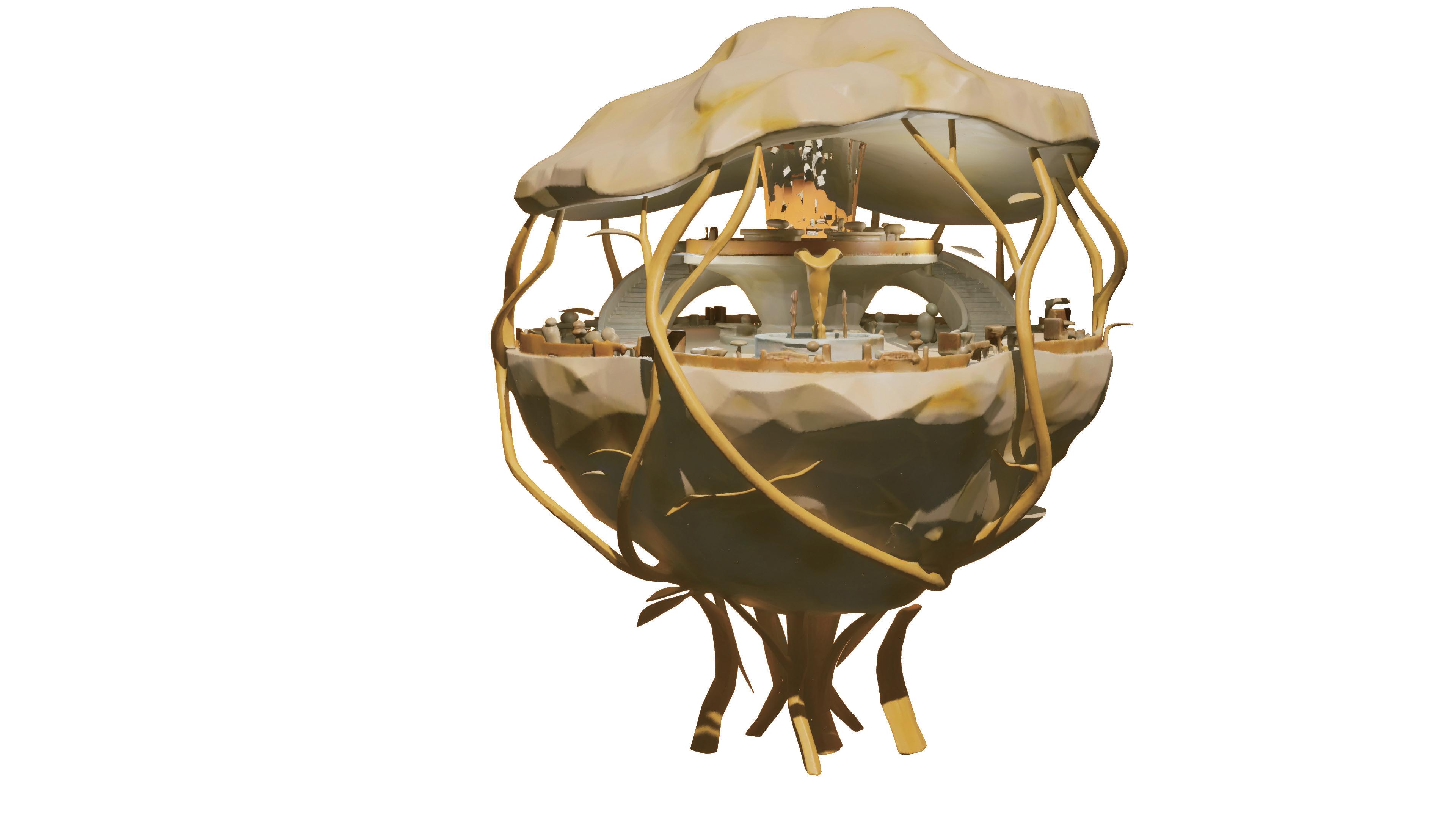
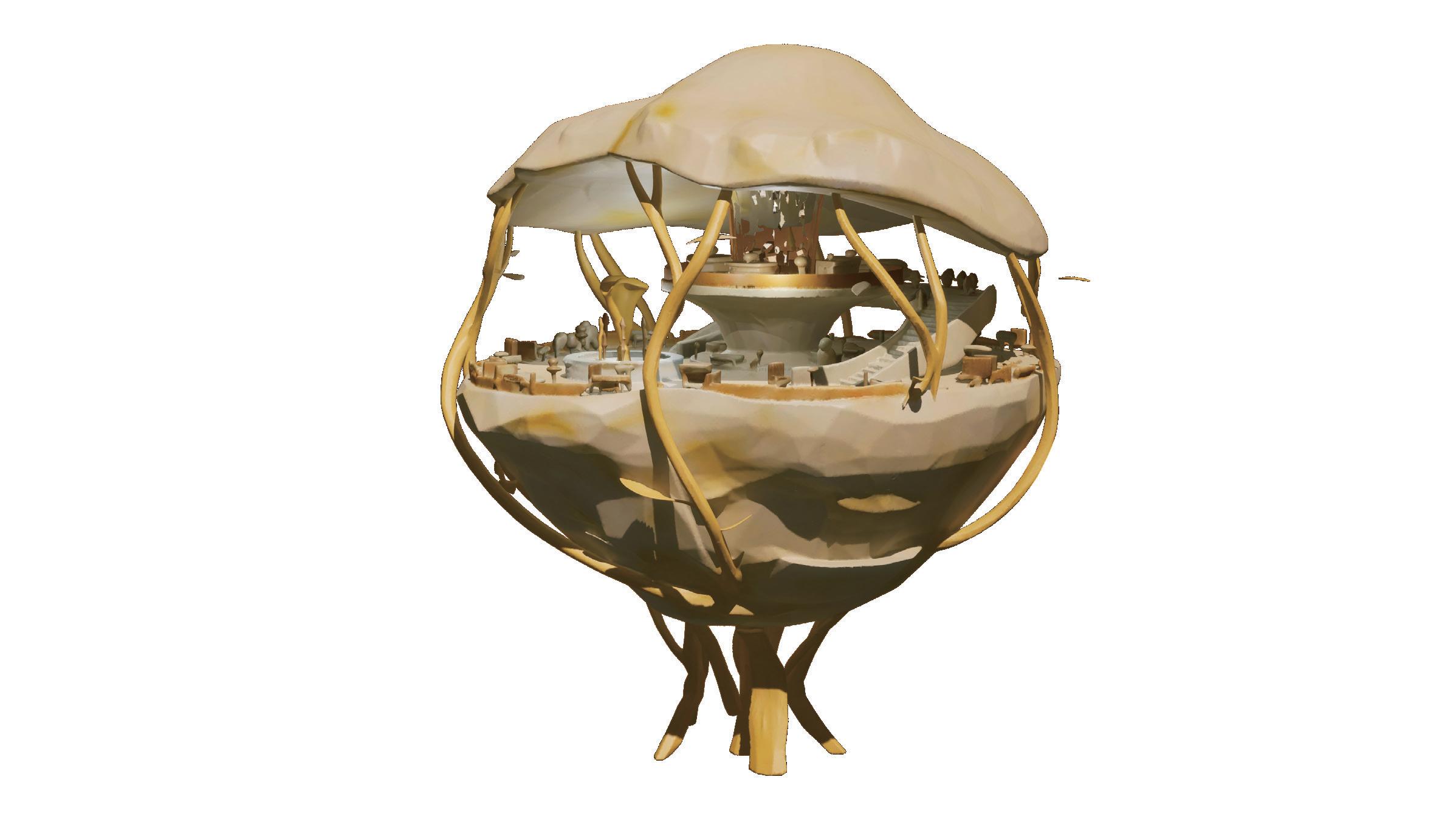
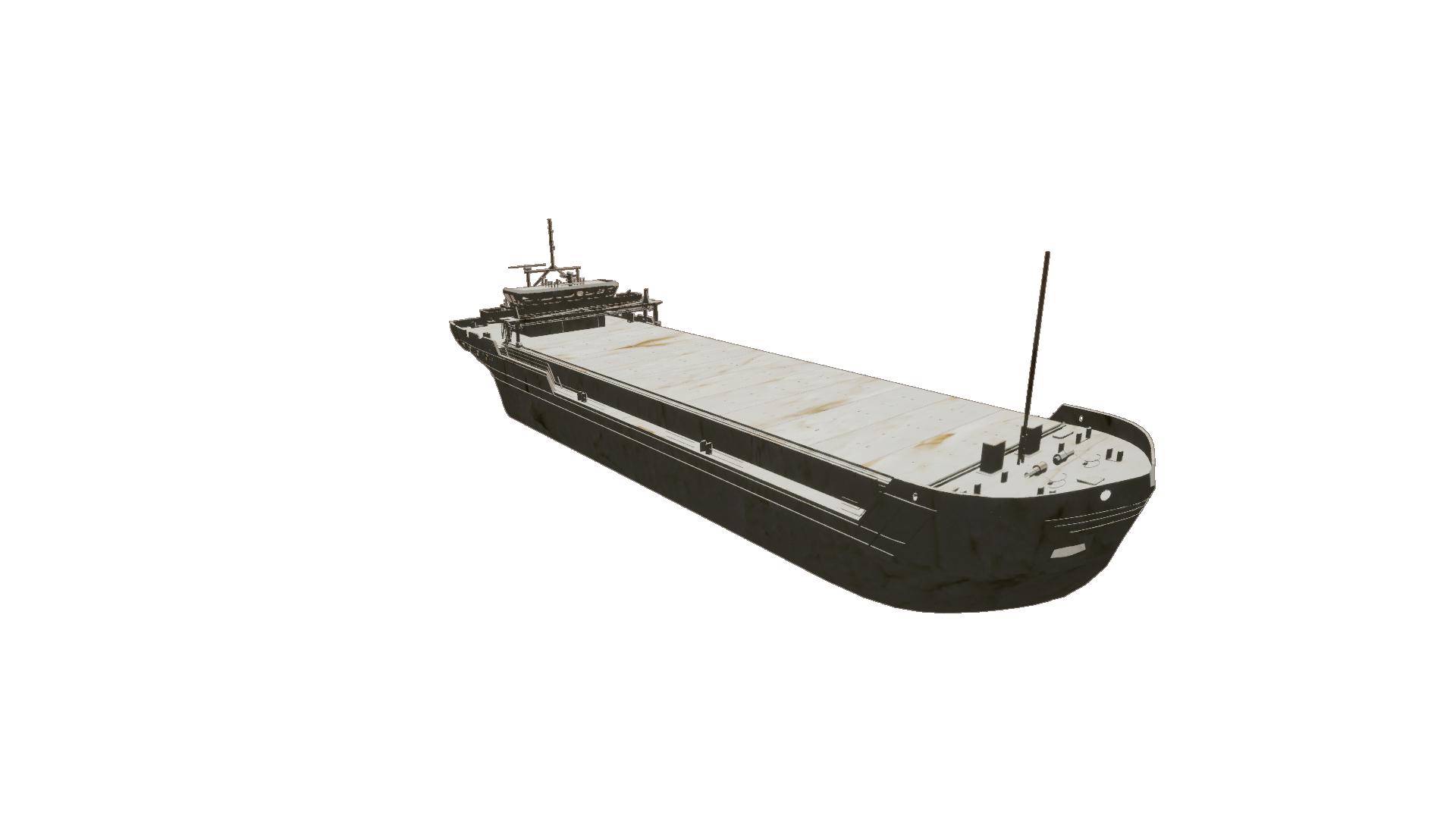
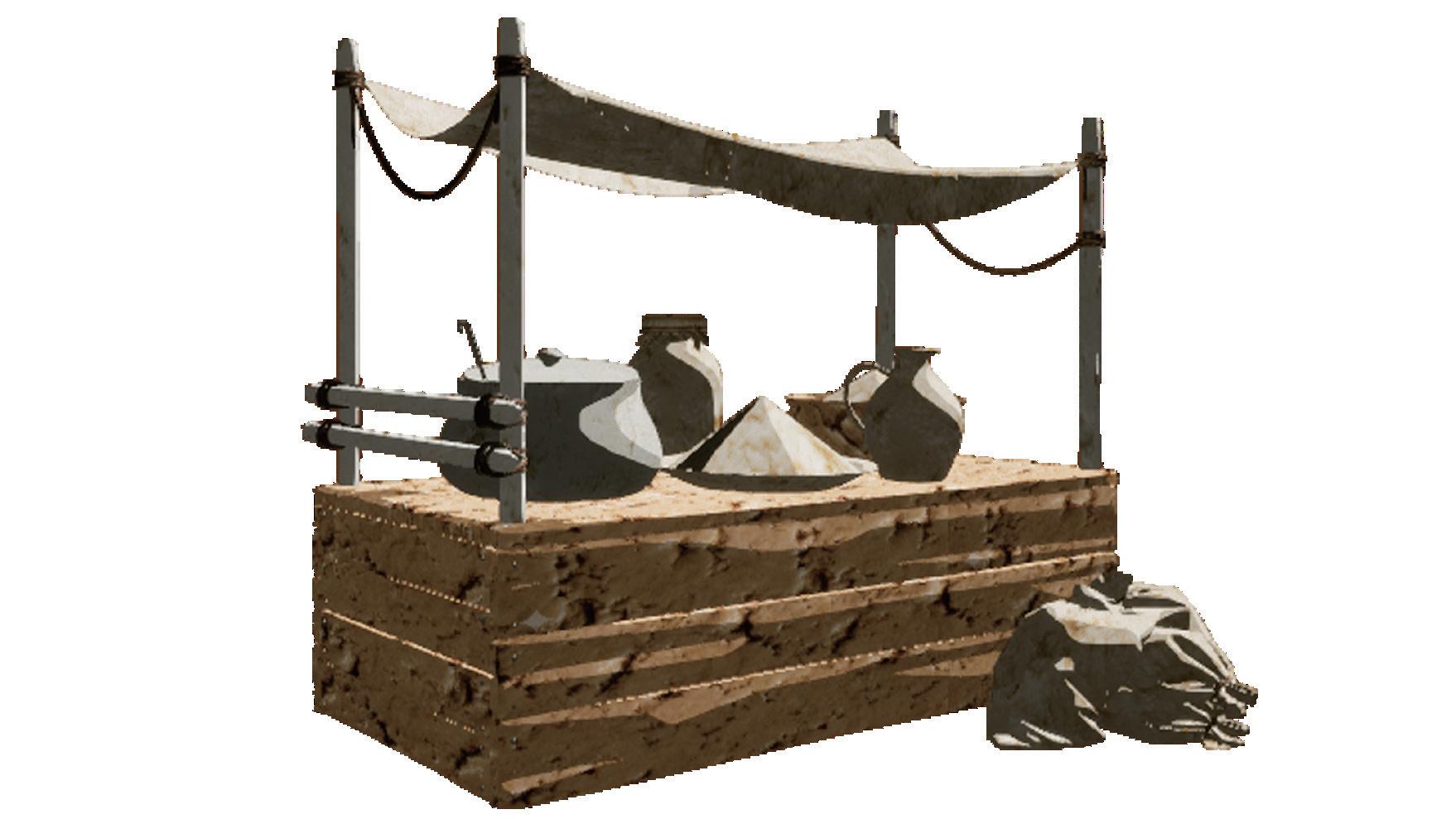
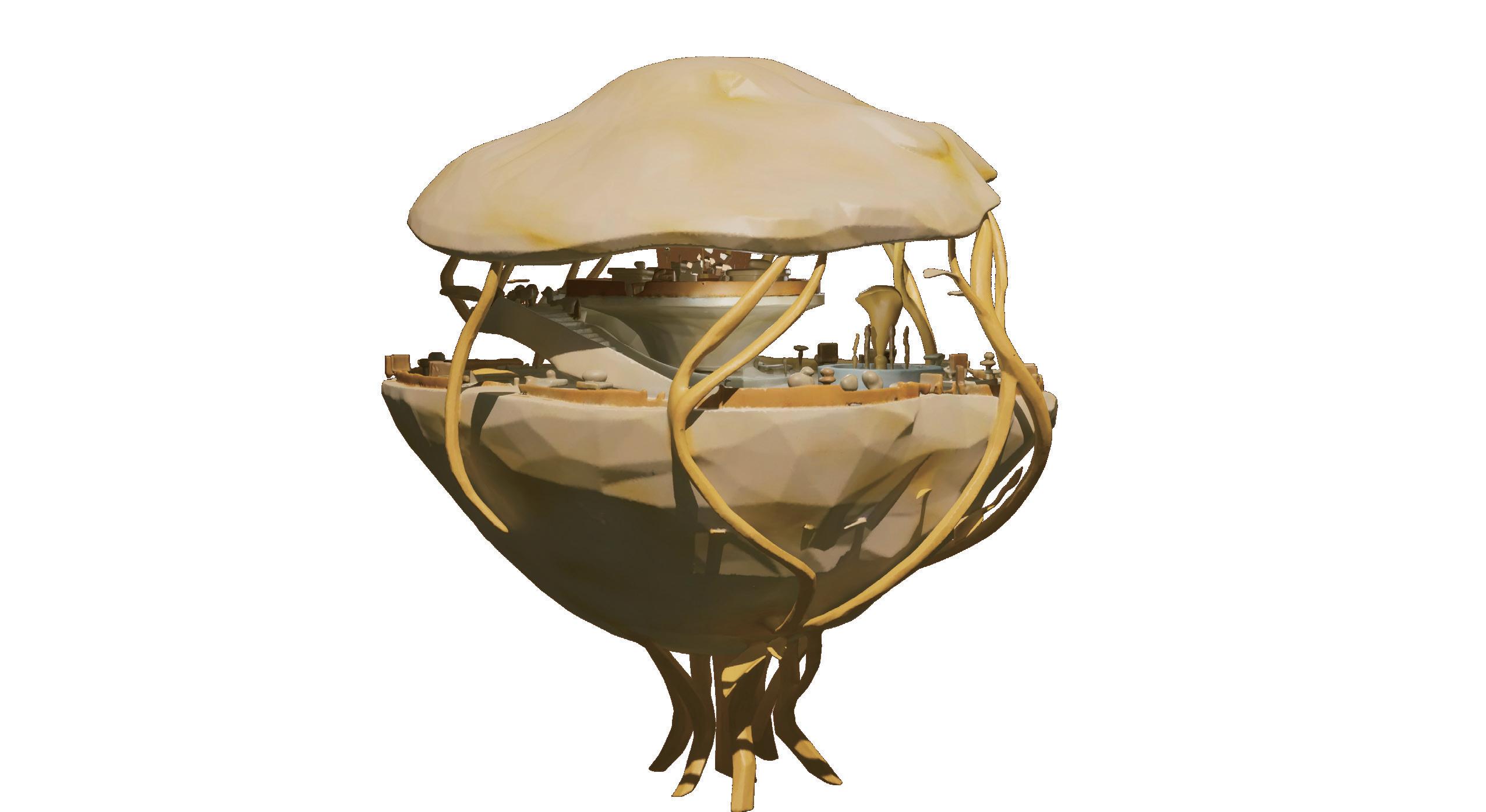
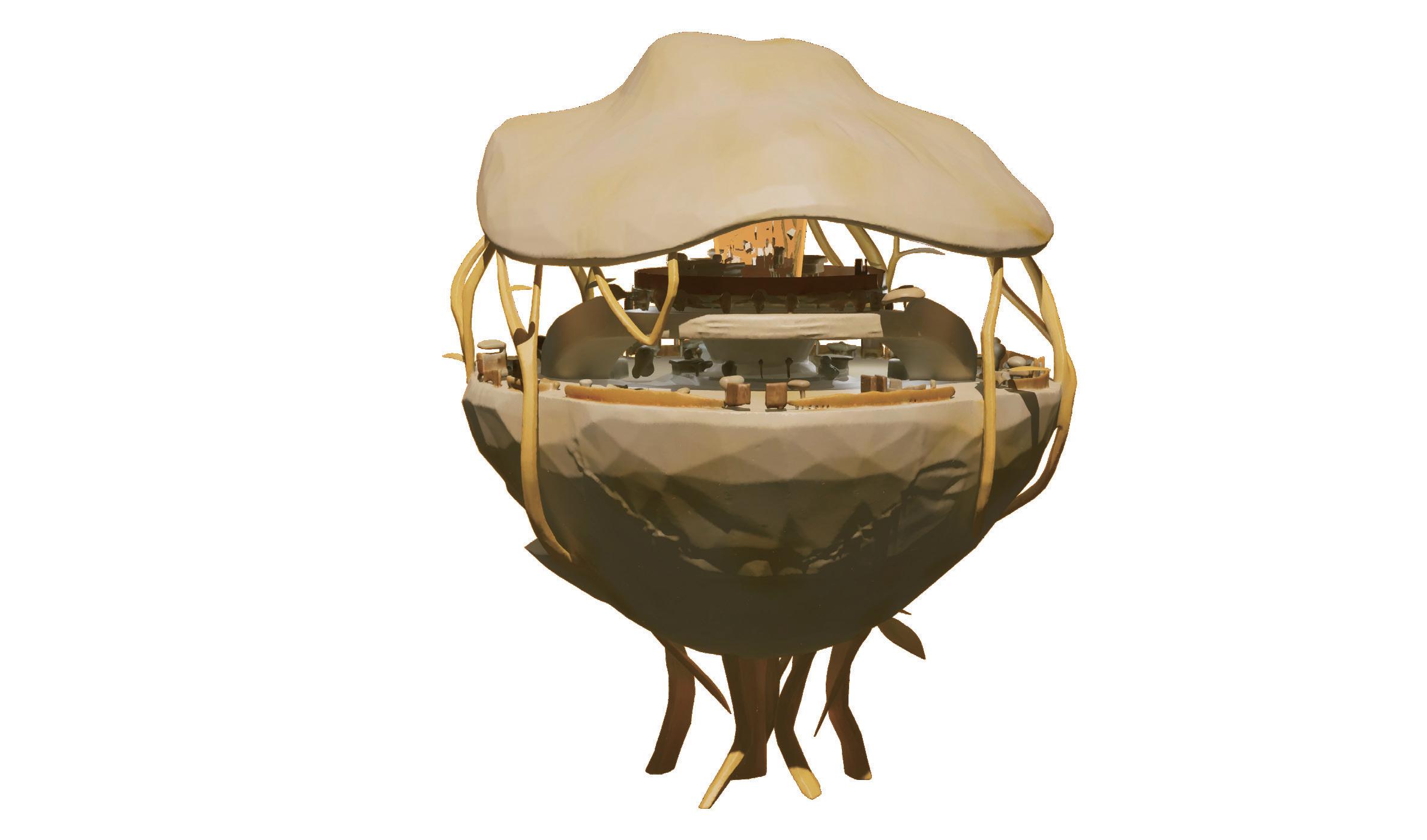
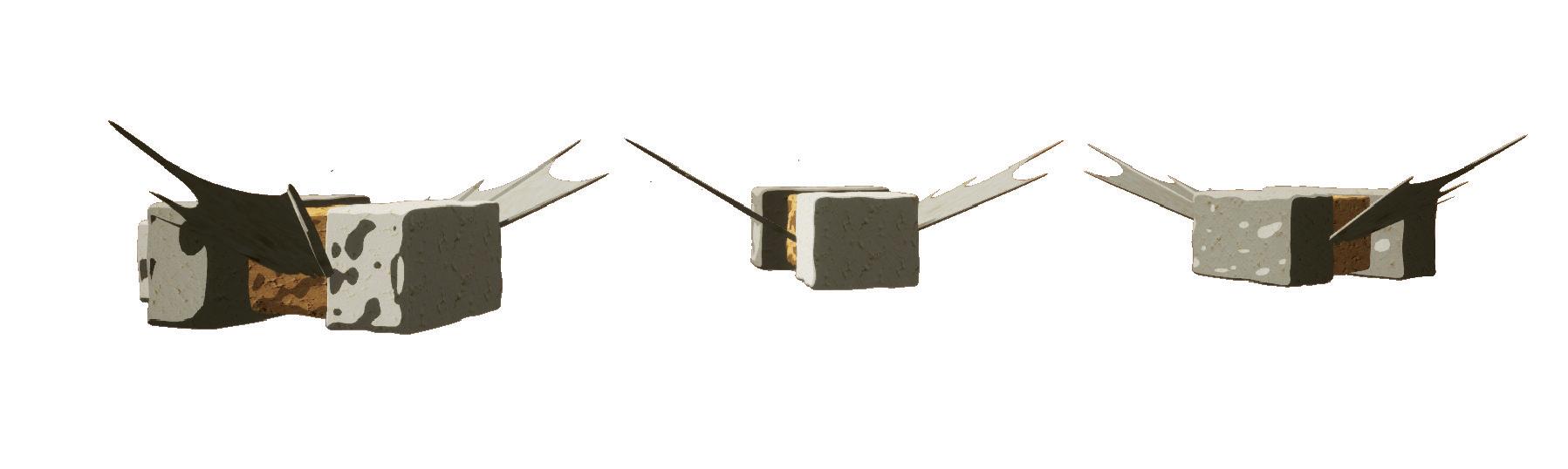
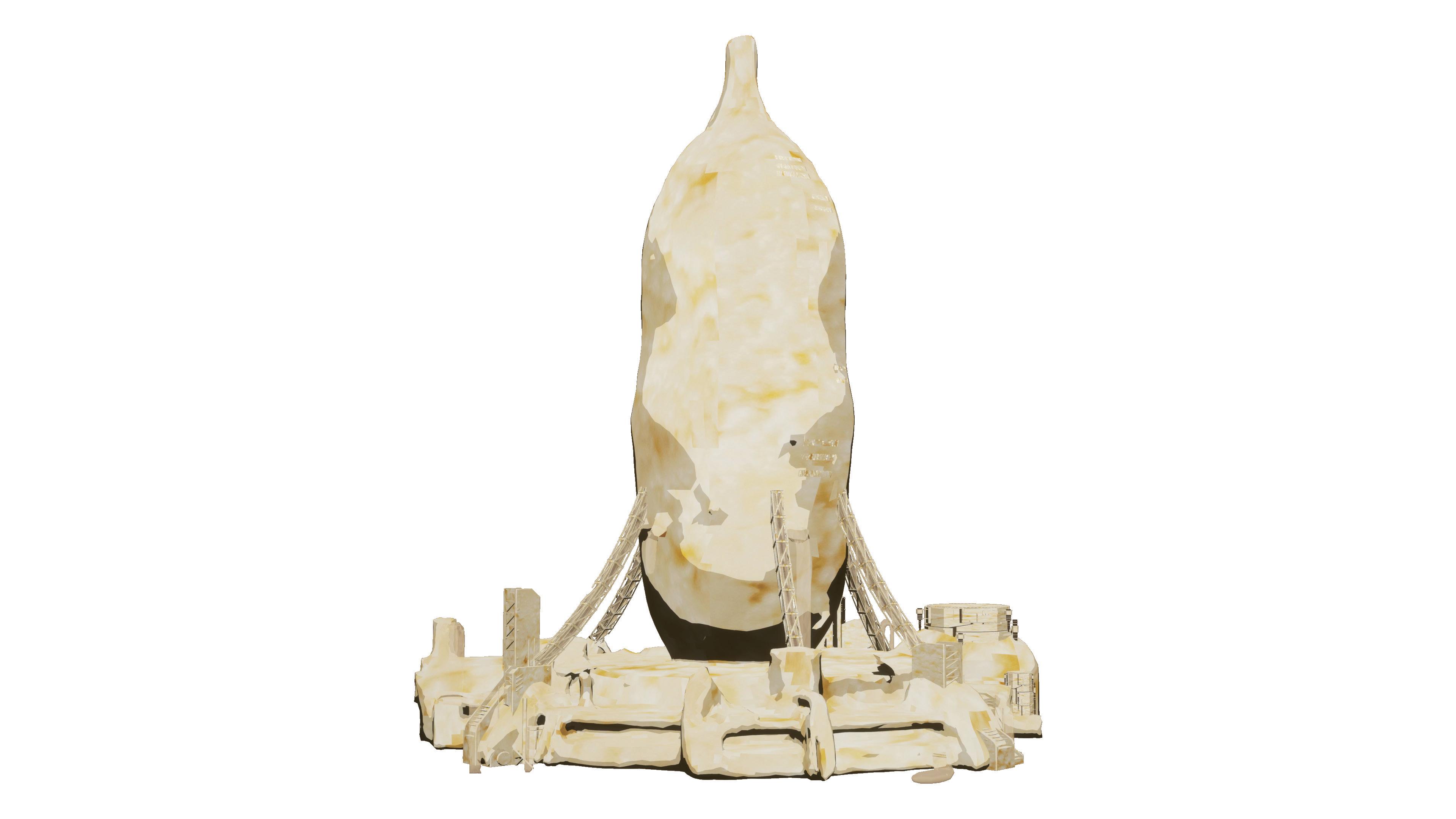
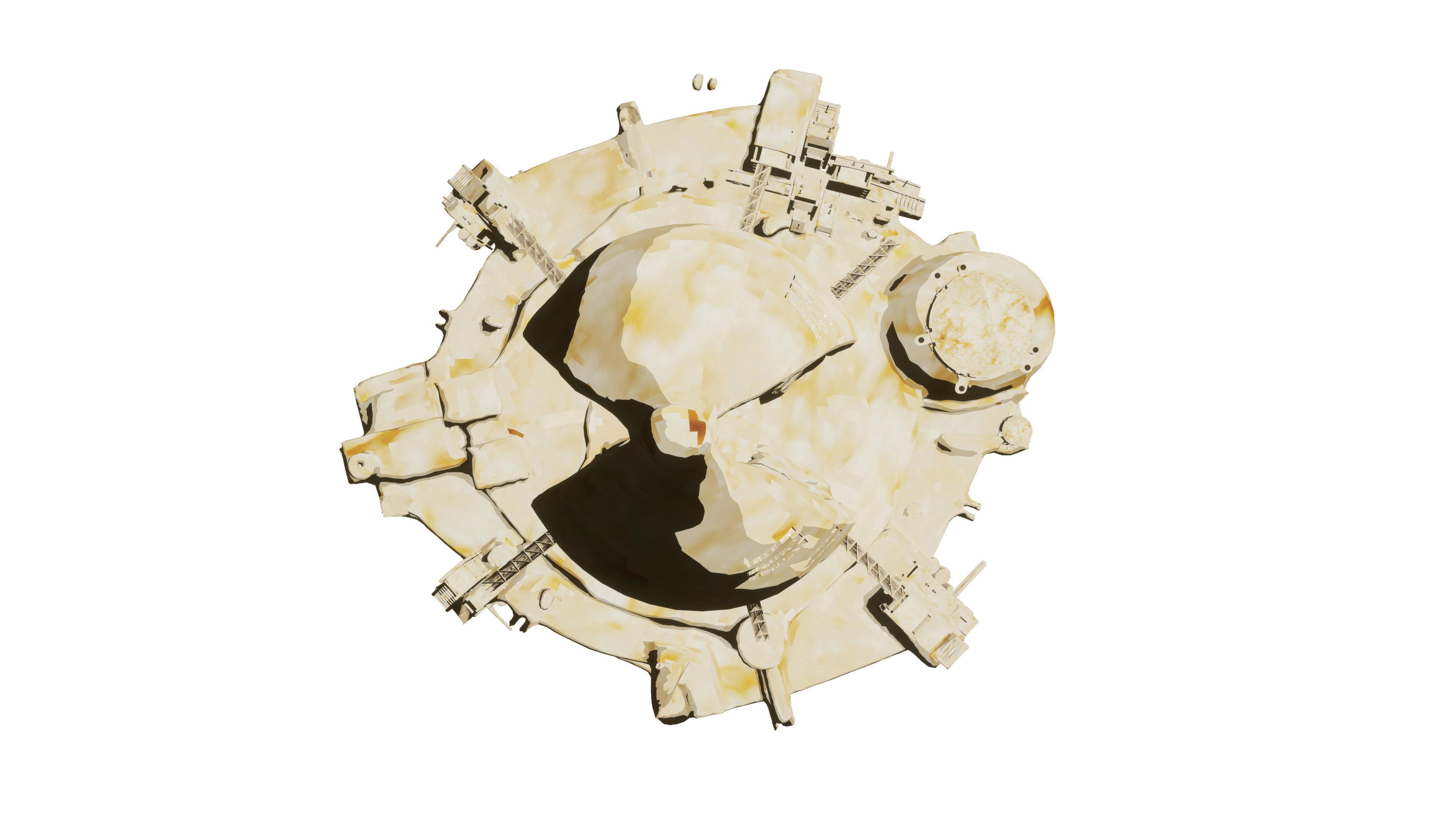
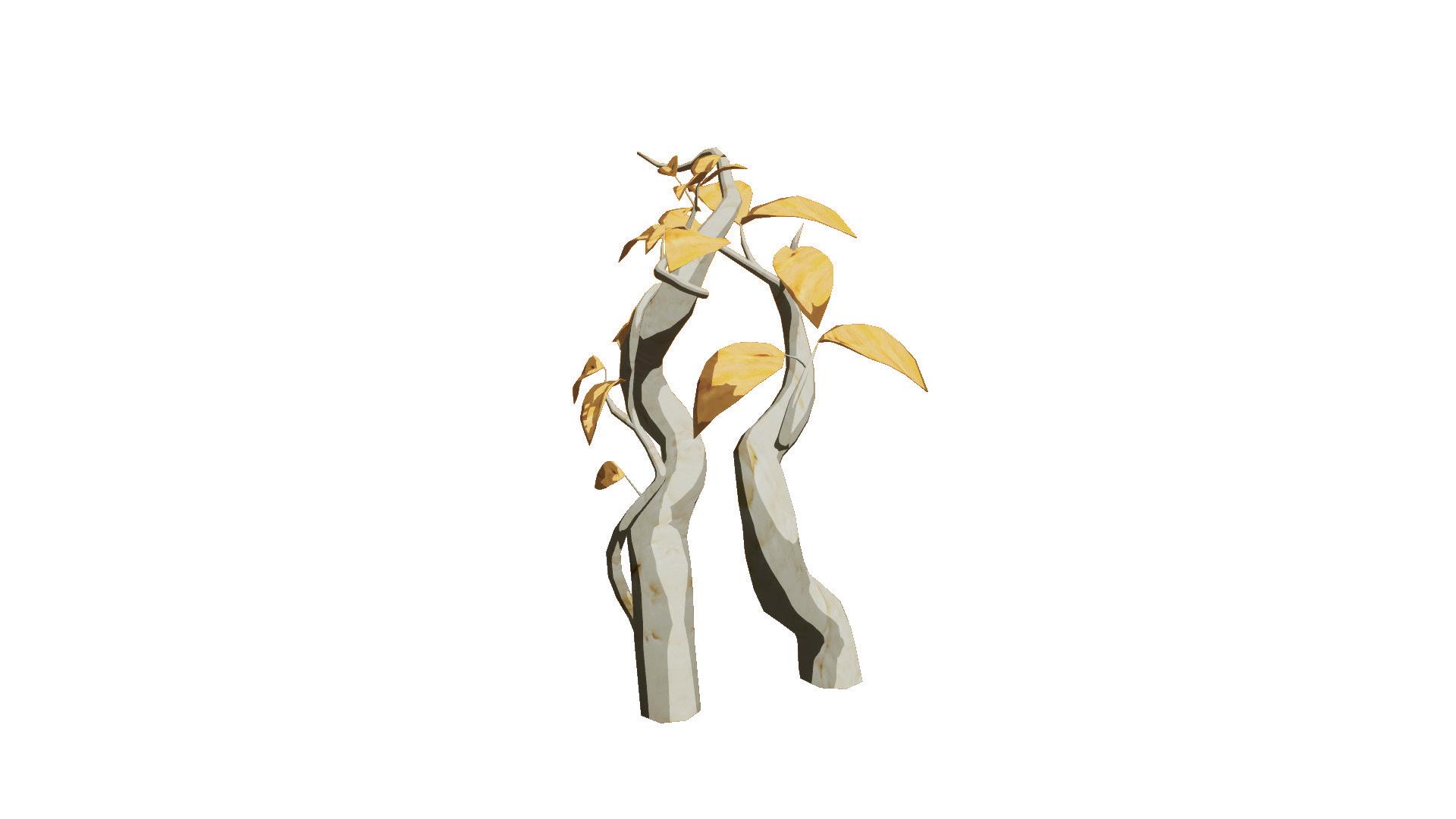
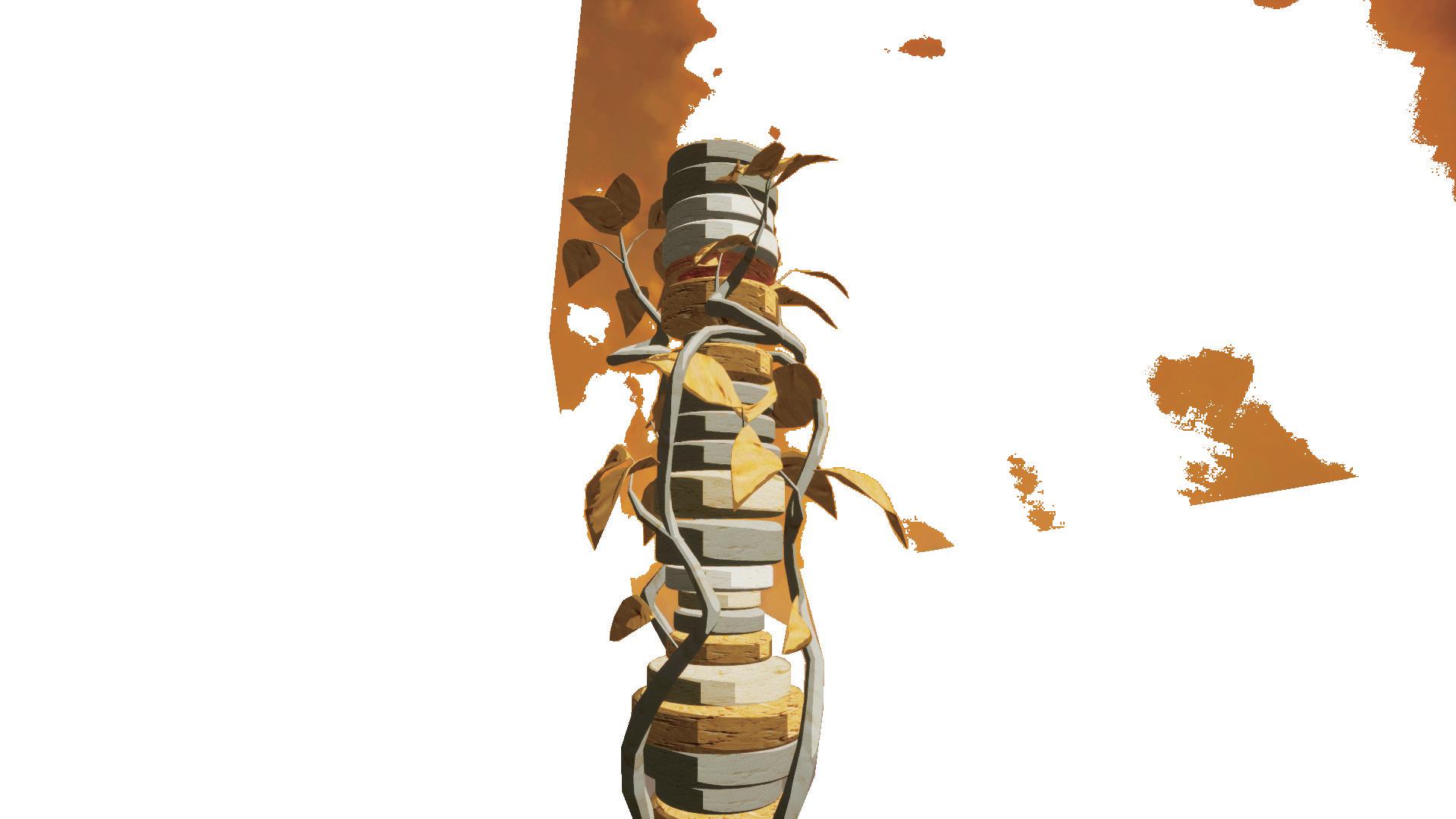
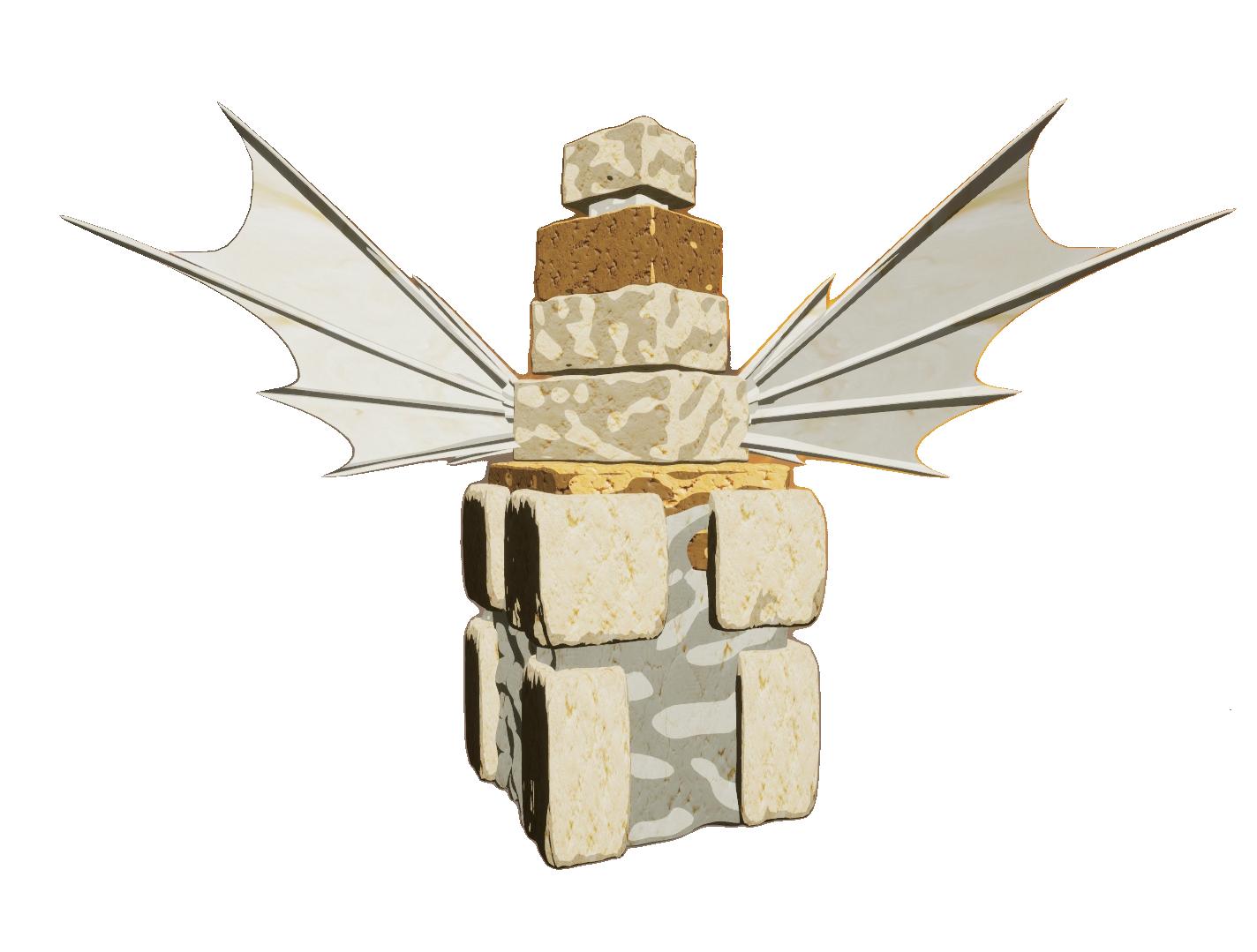
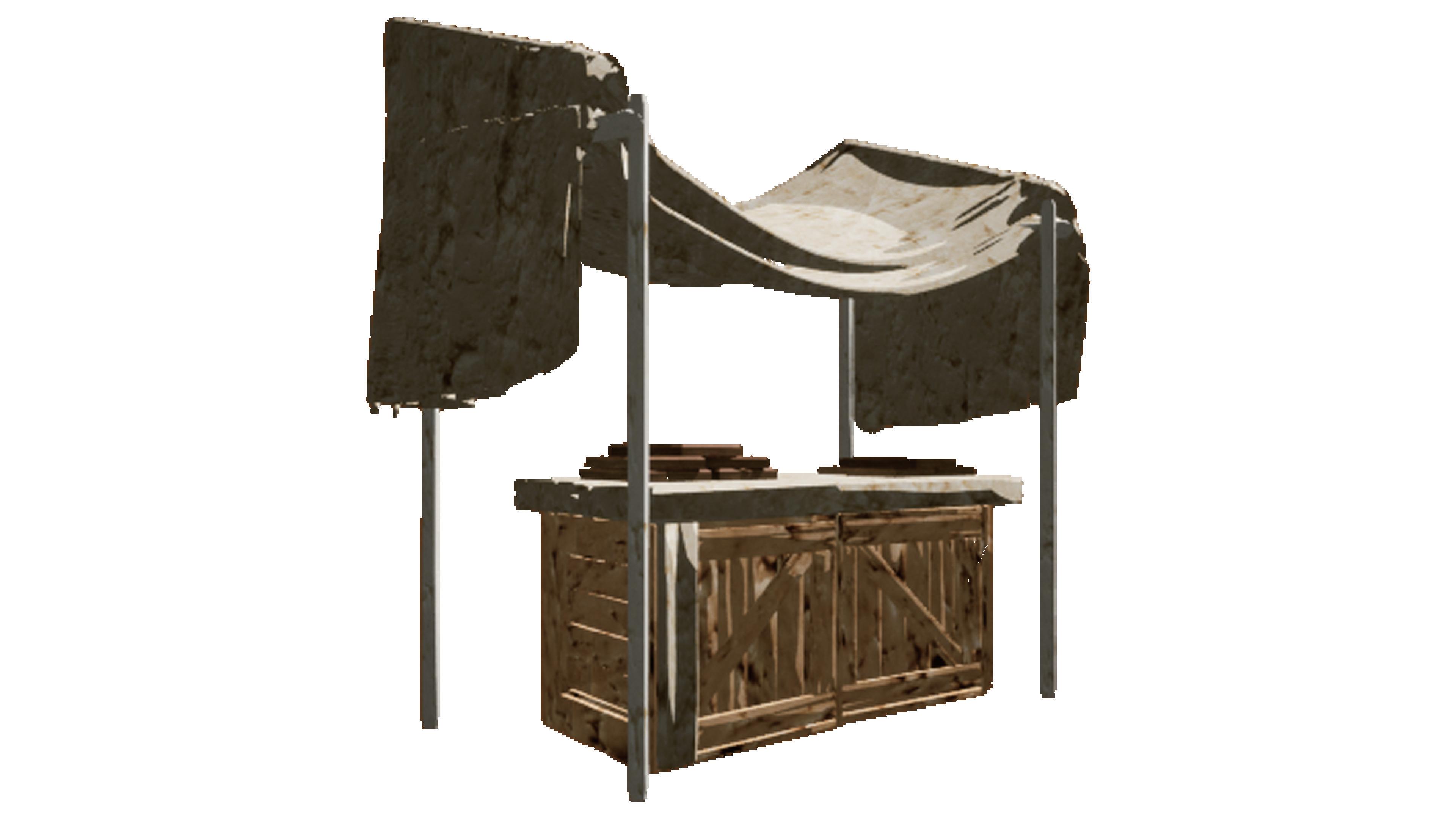
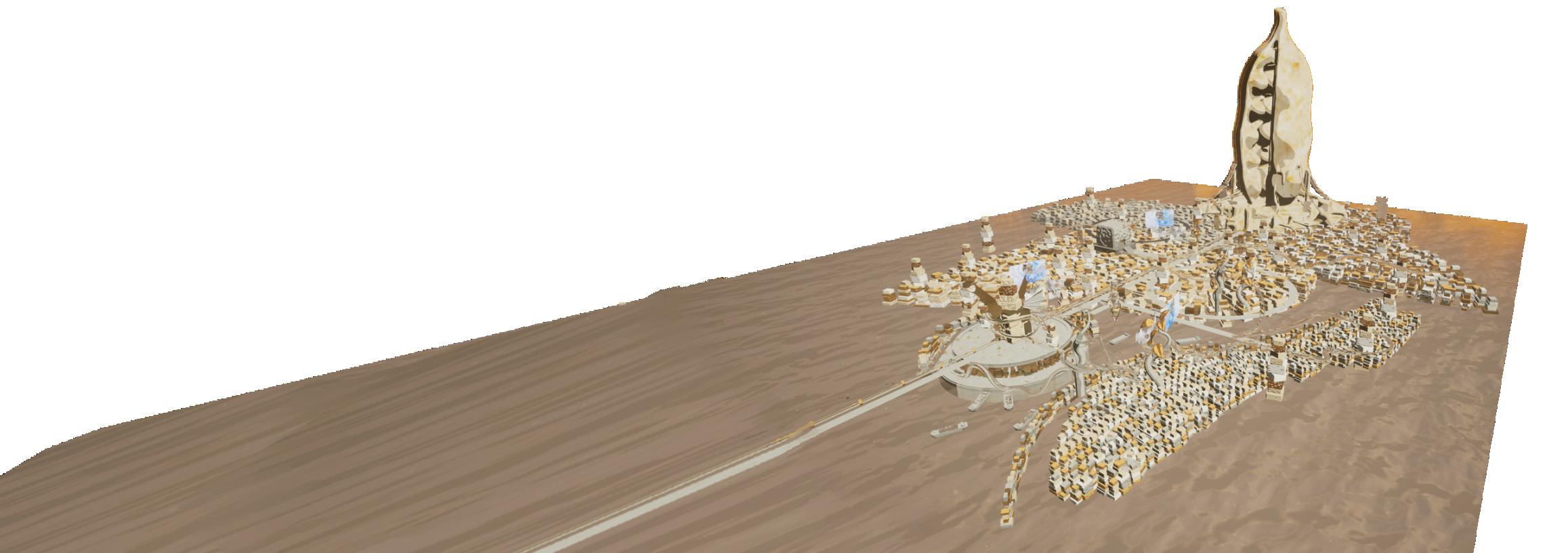
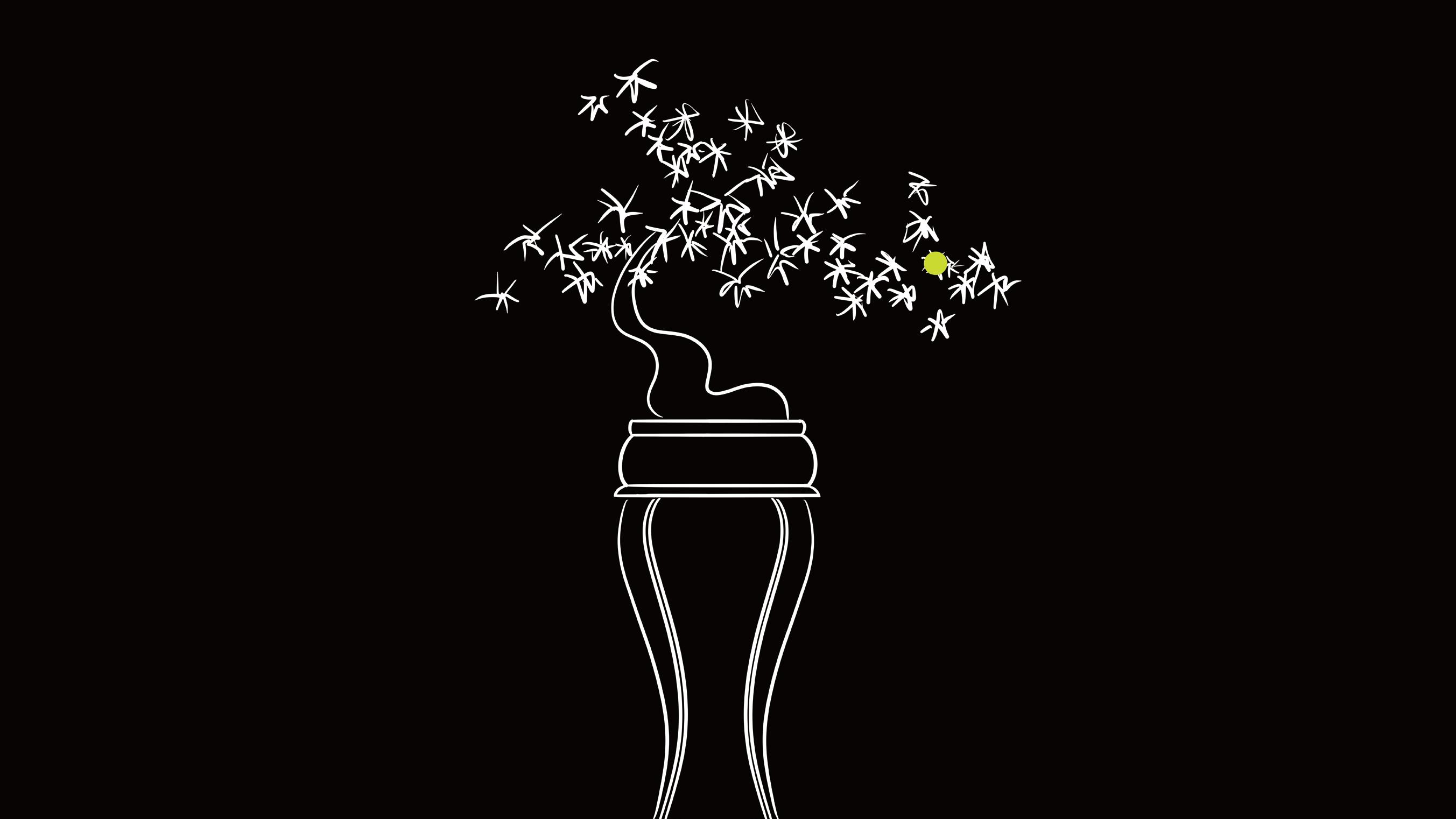
This reminded me of when I was learning to make tofu by following online tutorials. I feel tofu can be presented in various forms, including dried tofu, tofu skin, tofu pudding, soy milk, stinky tofu, etc. Its versatility and its deceptive nature, often used to mimic meat in vegetarian dishes, lead me to believe that tofu could replace other foods and become the most prevalent mainstream food in the future. From this, I began to conceptualize: when tofu becomes the mainstream food of the future, will a tofu world emerge from this?
Yingchun Zhu, 2022,"Tofu".
TOFU World Sketch
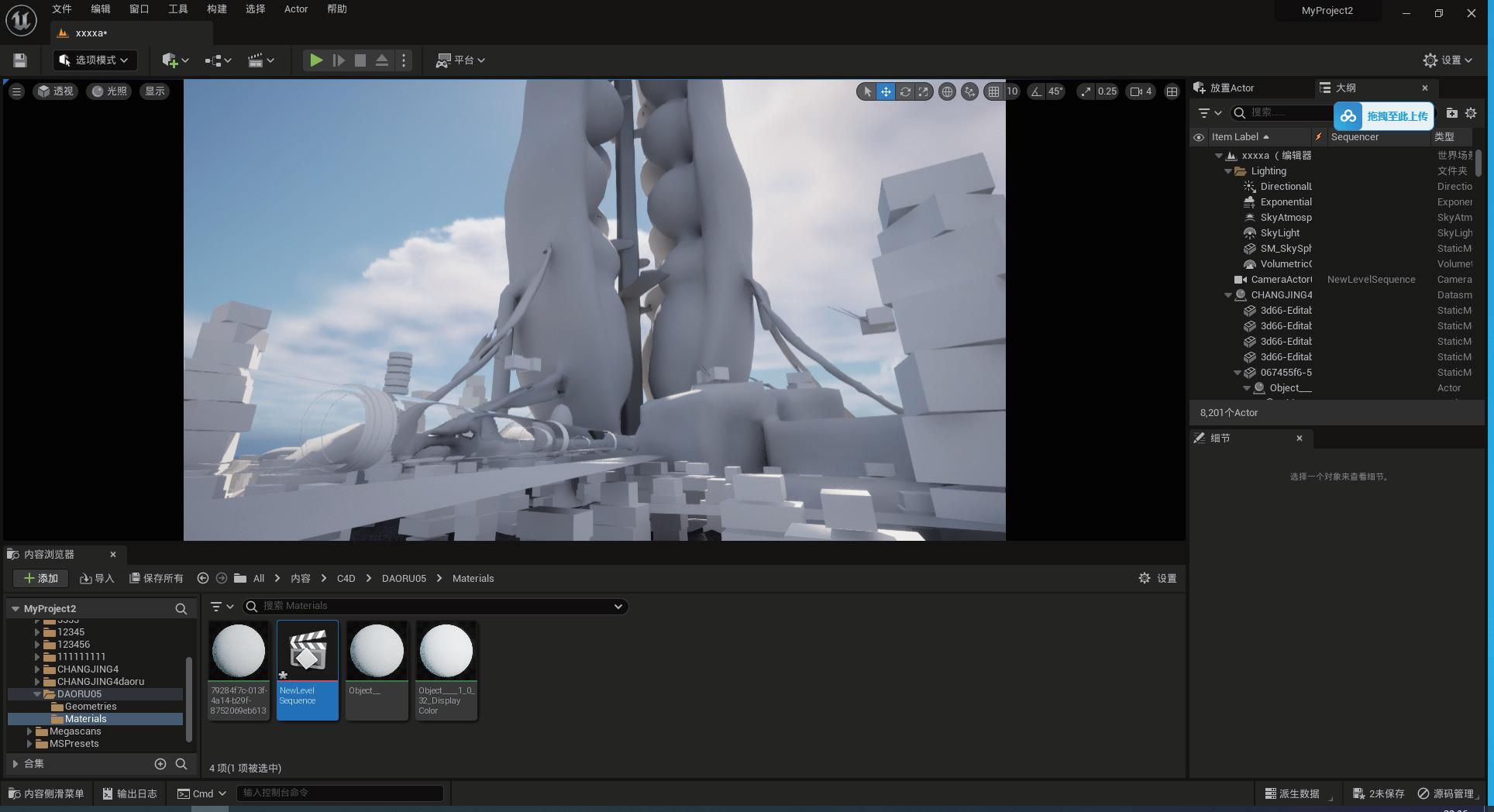
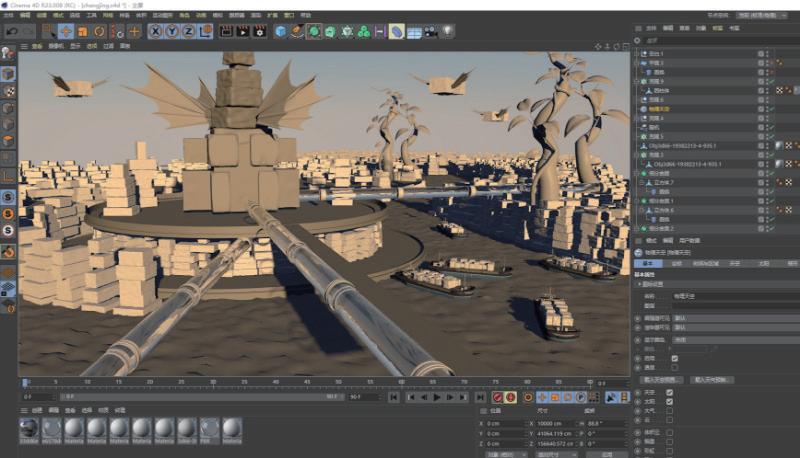
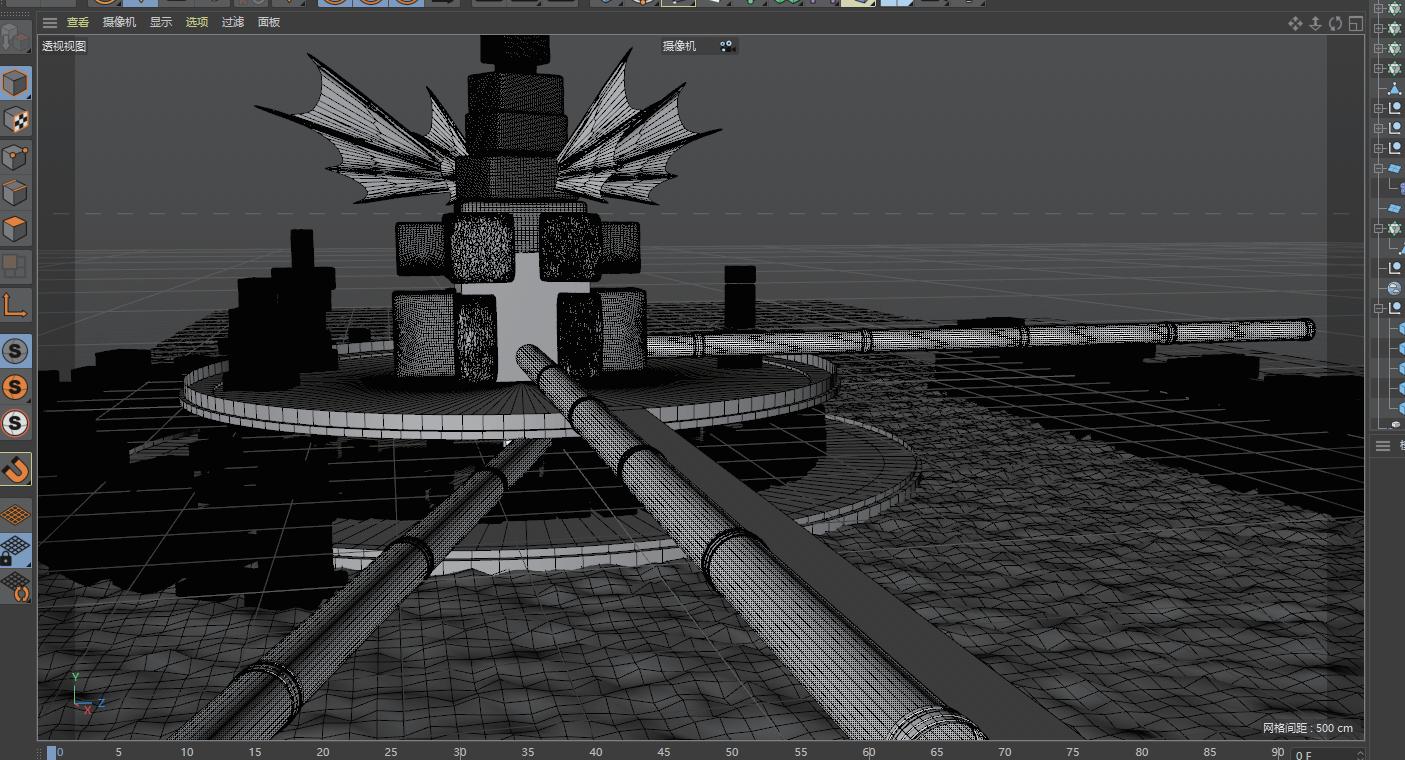
Modeling Process
Video link: https://youtu.be/UvdCIabCApo
Humans, yet, continuously create these endless cycles of fantasies, but what is real in this constant loop?
As people become accustomed to the orderly structure of the Tofu World, we will continue to hypothesize the next world's food mainstream (waffles or whatever).
Video link:https://youtu.be/puT7ePWs4kE
Finally, as a response to "24 frames of imagination," I have realized this audiovisual banquet of tofu within the projected realm of the tofu world.
Game References
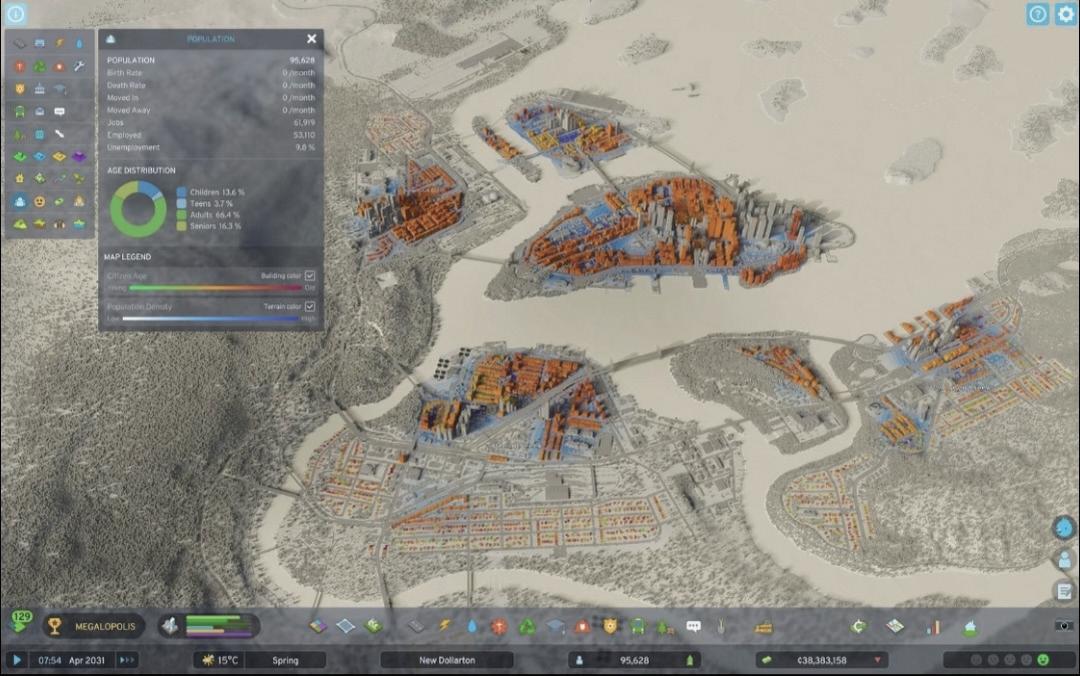
“Cities:
Skylines”
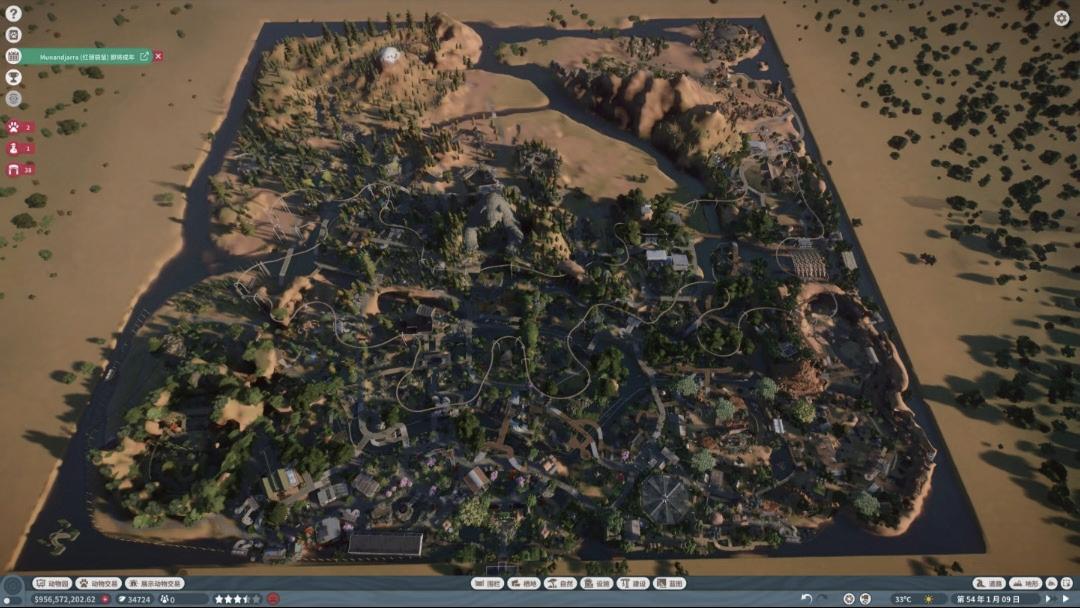
“Planet
Zoo”
During the game design phase, sandbox-style games provided me with considerable inspiration. Initially, I envisioned a logistics-focused concept, such as playing the role of a tofu delivery driver. However, I later became more interested in enabling players to actively participate in shaping the tofu city themselves within the game. Hence, I ultimately decided to design it as a sandbox-style game.
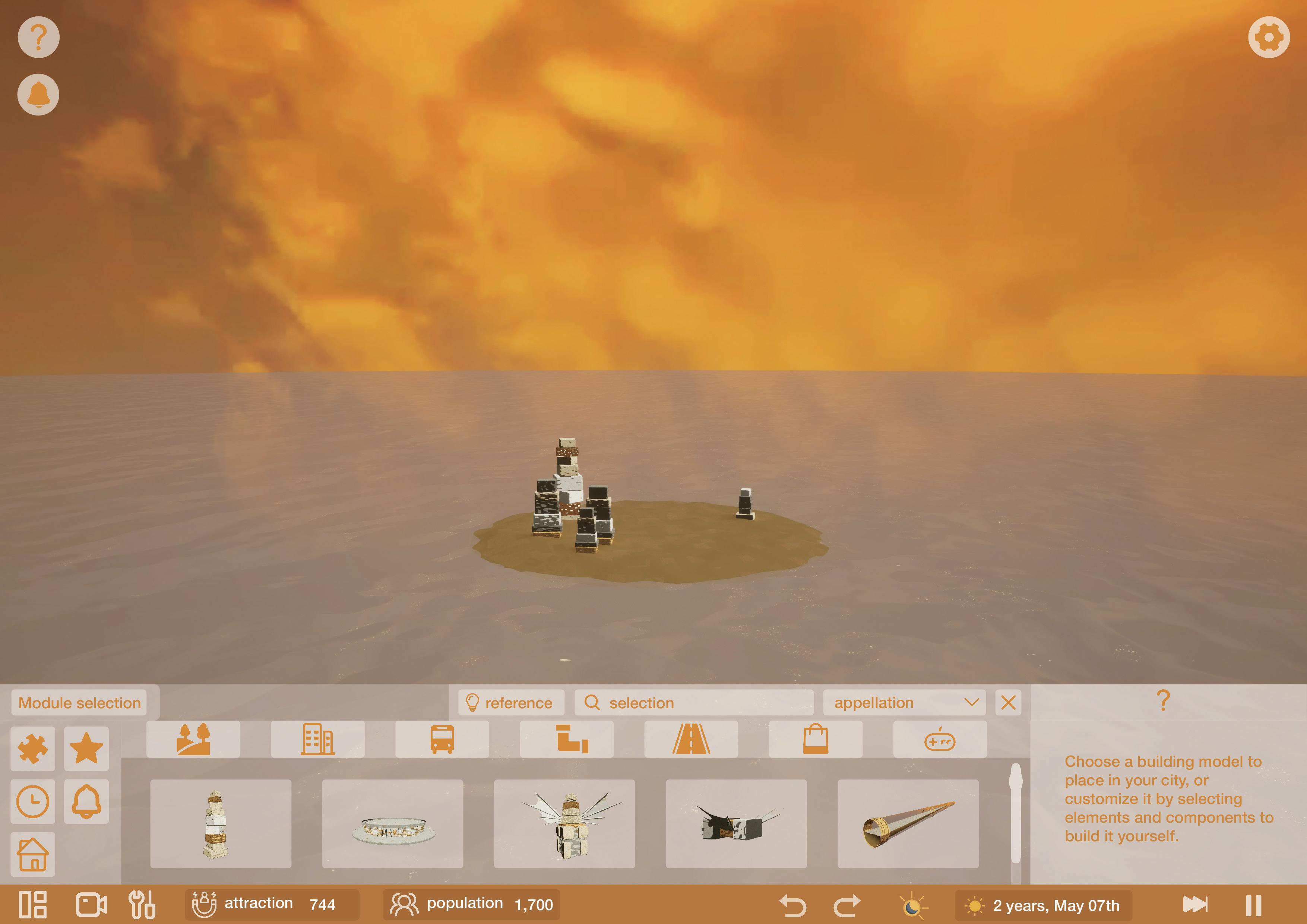
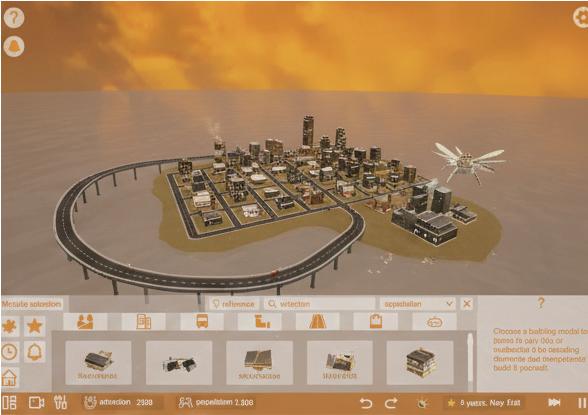
TOFU City - Game Interface
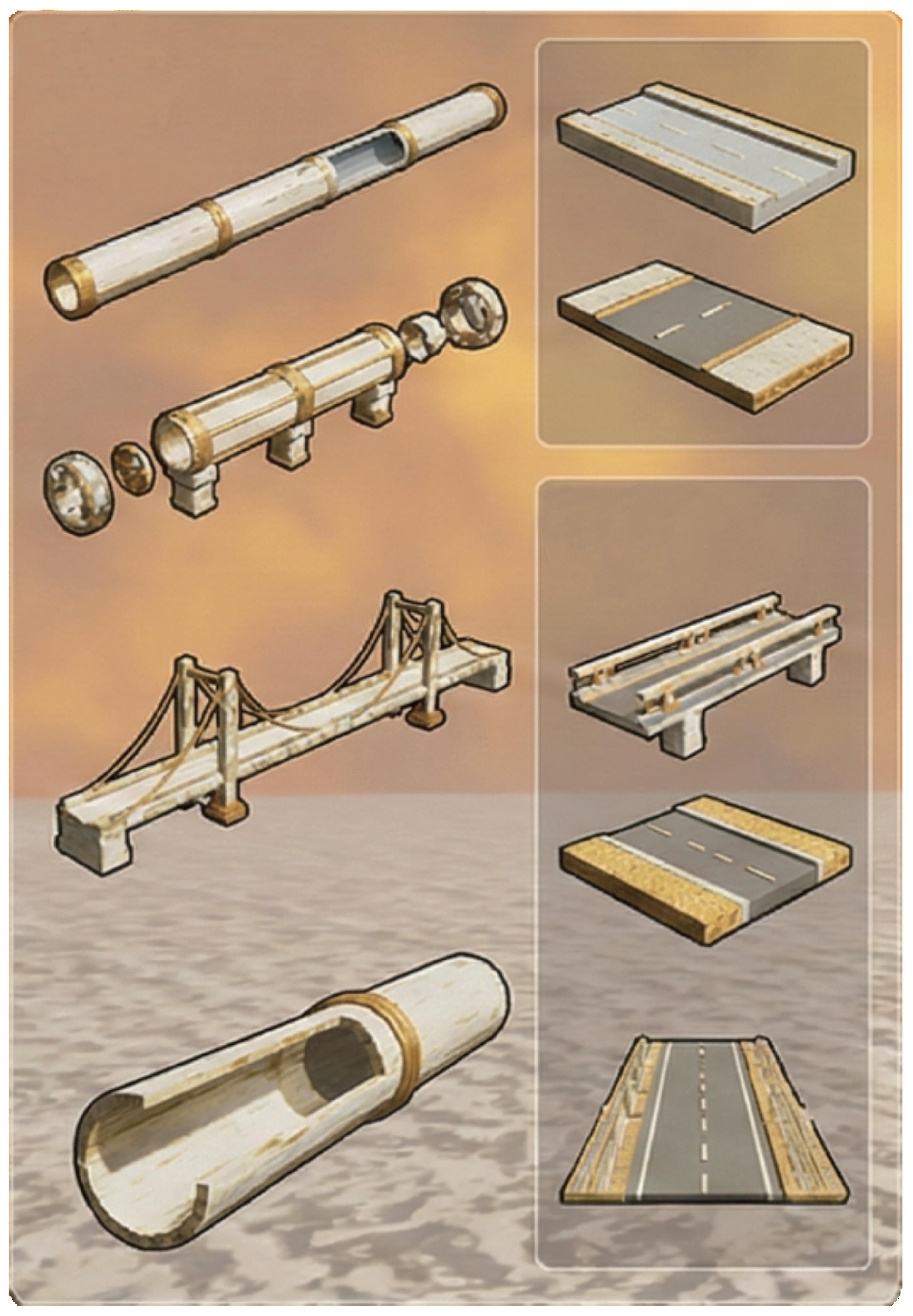
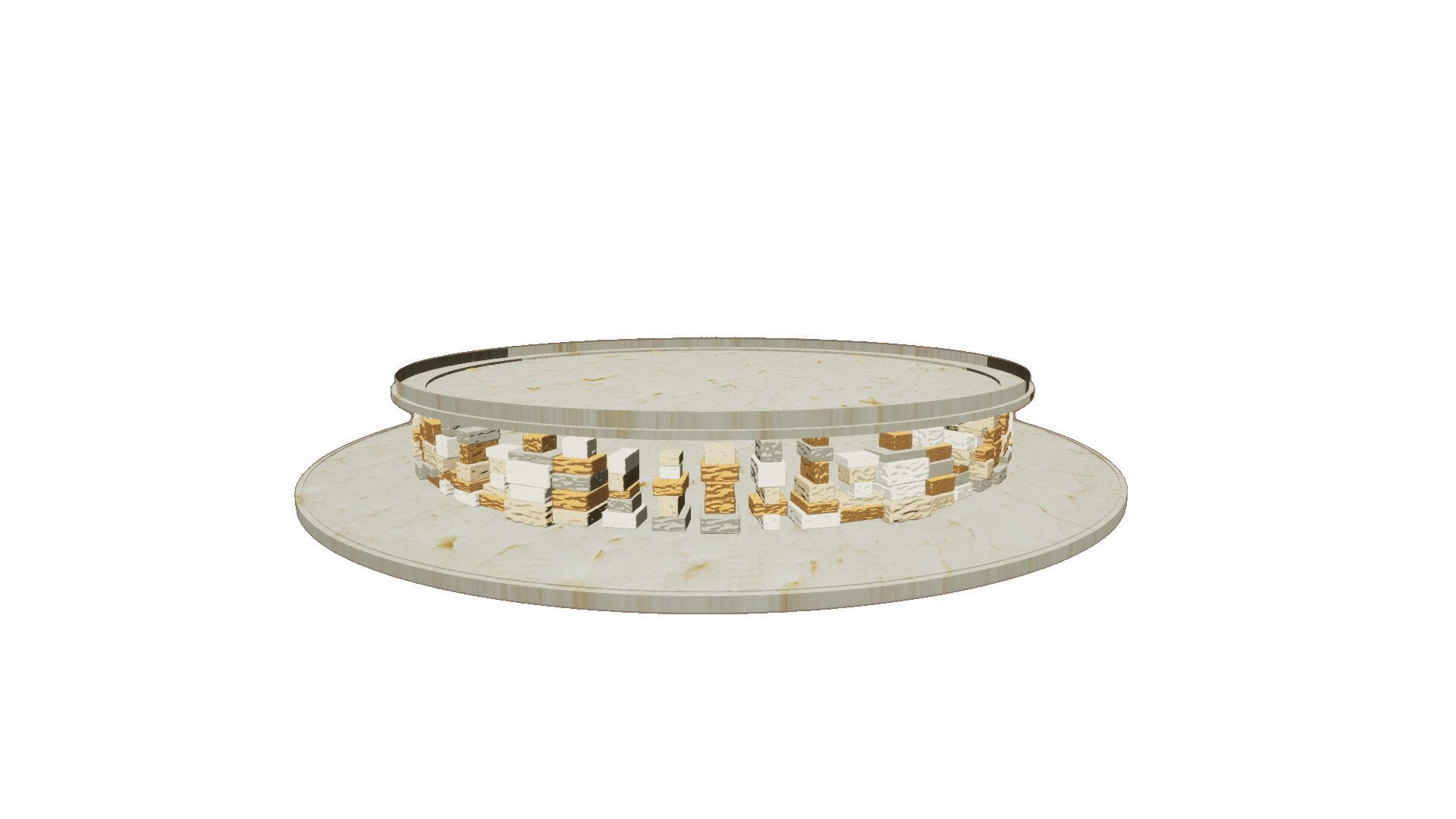
The game begins with an empty plot of land, where players must use the limited initial resources and modular components to construct their tofu city. Players can open their created city to attract visitors. The fluctuation in visitor numbers can be converted into appeal, and if any visitors decide to stay and become residents, the growth in population is also converted into appeal.
Once appeal is acquired, it can be used to purchase additional modules and combine elements to construct new buildings, landmarks, and more. Upgrading modules further refines and develops the tofu city.
TOFU City - Game Design
After completing the game demo, two players provided me with feedback, sharing their impressions, observations, and suggestions regarding the demo. In their responses, I was both surprised and delighted to discover that some modules were used in unexpected ways that went beyond their intended design. For instance, the originally planned pedestrian flow within buildings was influenced and altered by newly assembled modules placed by players. Through modifications at the architectural unit level, the overall state of the city was further affected. Many specific elements extended beyond the initial design parameters, as reflected in their created maps.
I noticed that they attempted to construct buildings not available in the preset library by combining modules such as roads, plants, and pipelines to create personalized blueprint structures. As a result, each player's tofu city became more distinctive, unique, and randomized. This insight will influence my approach to optimizing the game in the future, encouraging me to incorporate a wider variety of modular components rather than simply offering complete new buildings directly.
Player Record 1 Player Record 2
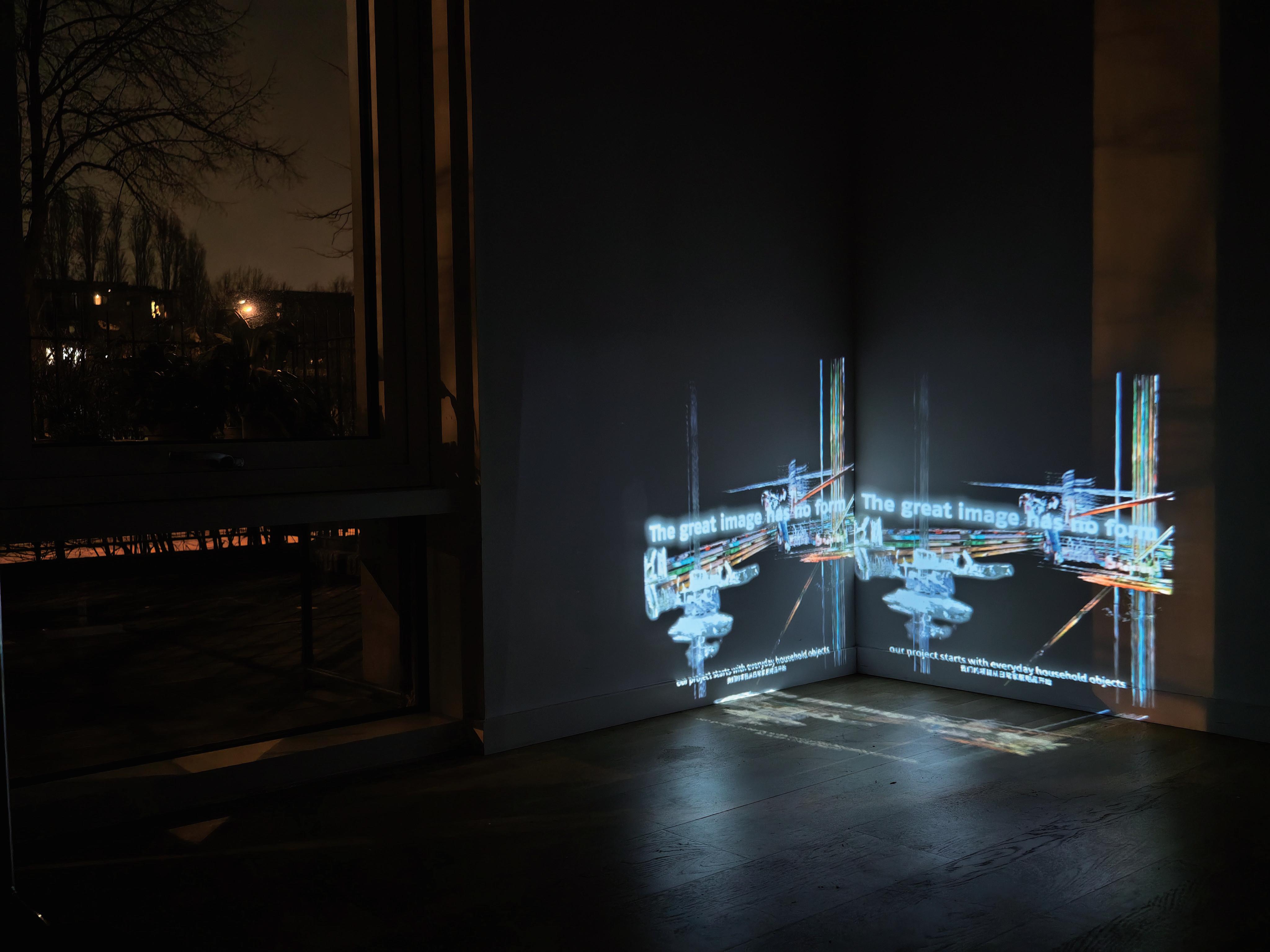
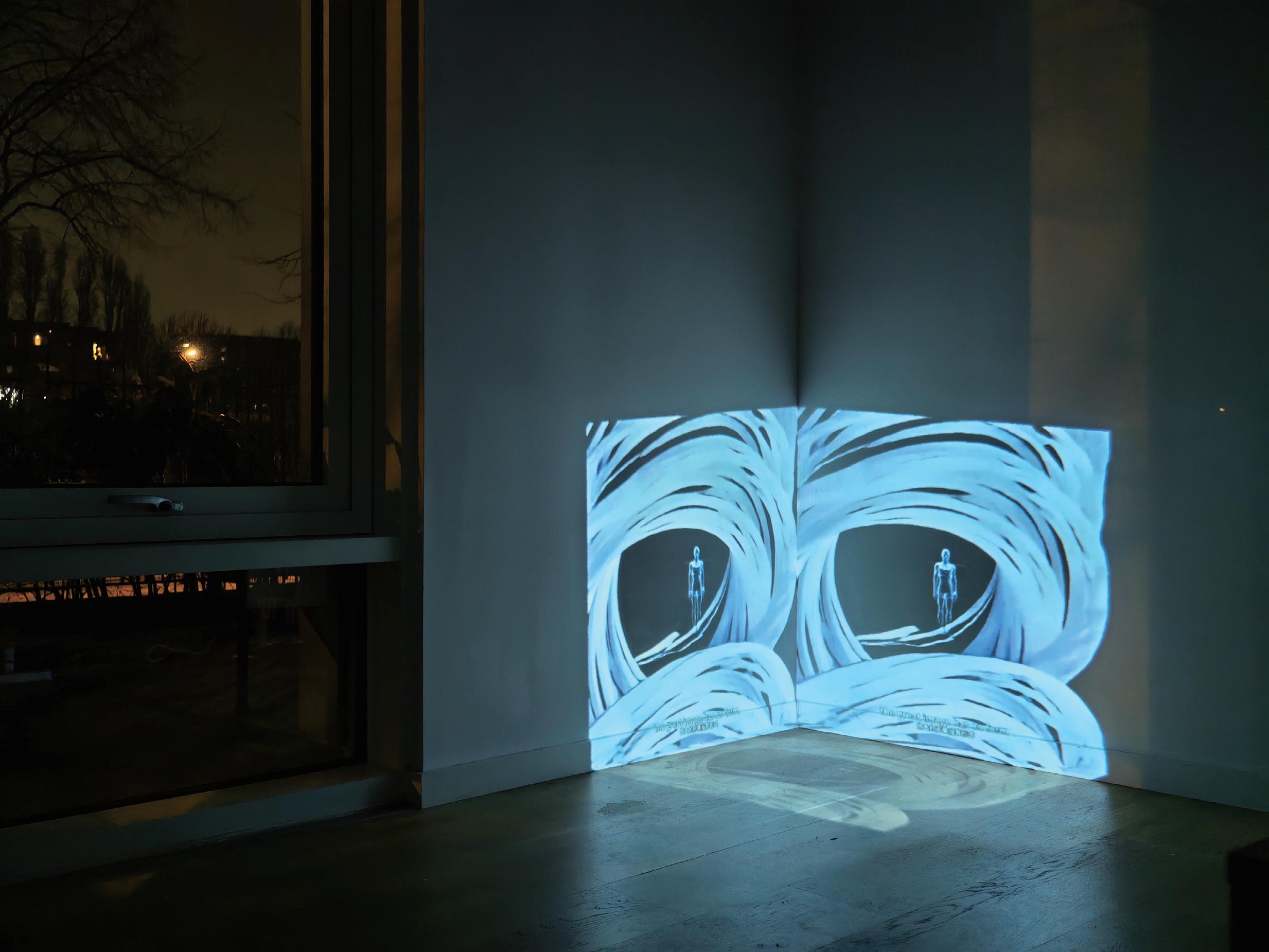
The great image has no form
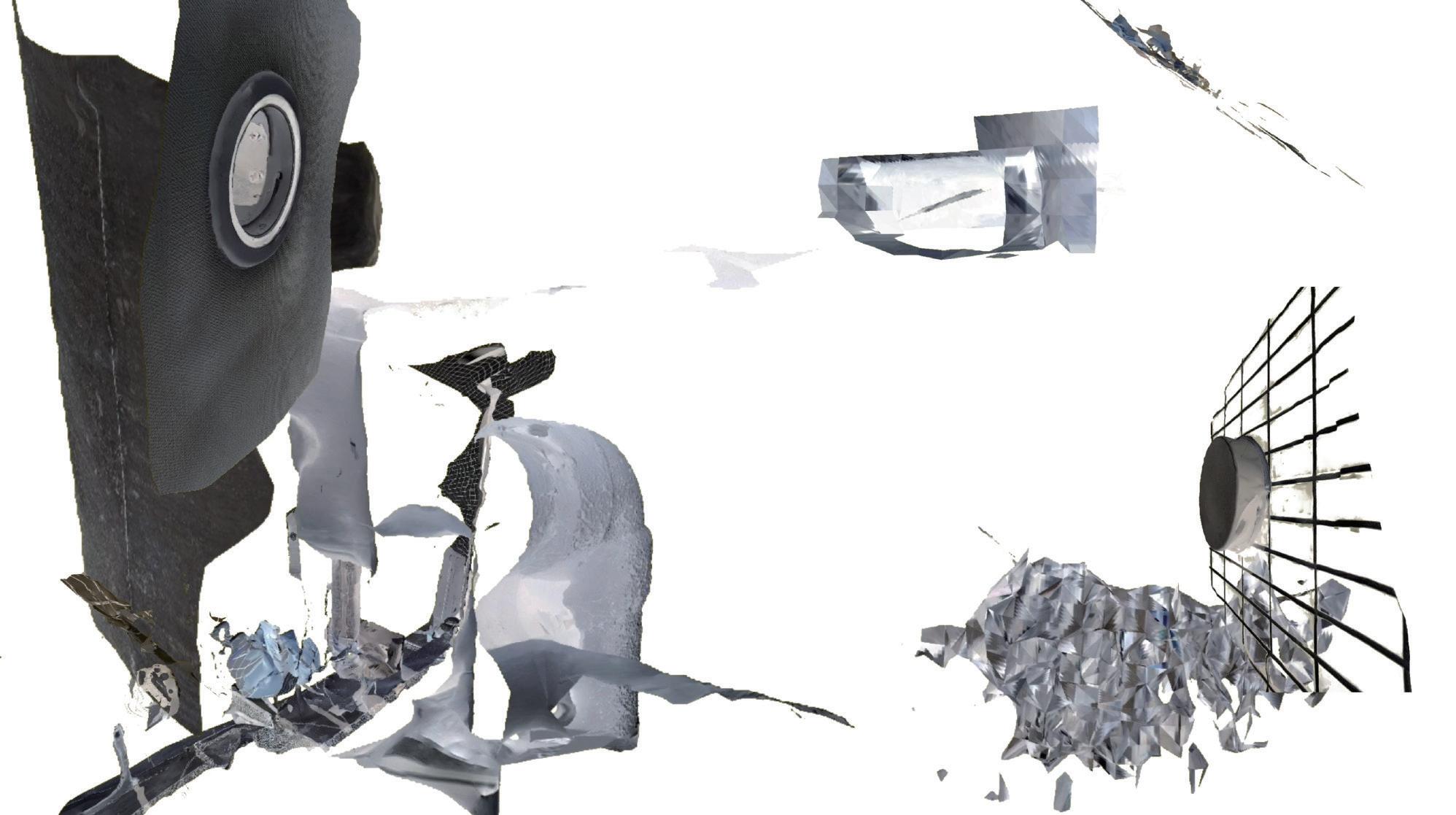
Contemporary everyday life is no longer organised primarily around solid, durable things, but around screens, data streams and networked devices. A world that used to be centred on “objects” is increasingly restructured around “information”.
In the contemporary infosphere, how does machine perception diffract and reconfigure the ontology of everyday objects, and how can this reconfiguration be visualised and spatialised as an experiential interactive environment?
Video link: https://youtu.be/IBil7ypH1kg
Contemporary everyday life is no longer organised primarily aroundsolid, durable things, but around screens, data streams and networkeddevices. A world that used to be centred on“objects” is increasinglyrestructured around “information”.In the contemporary infosphere, how does machine perception (taking 3D scanning as a key example) diffract and reconfigure the ontology of everyday objects, and how can this reconfiguration be visualised and spatialised as an experiential interactive
(New-objects)
Michel Foucault reminds us that “objects" are not naturally given; theyare produced within specific epistemes through discourse,classification and representation.In parallel, Byung-Chul Han arguesthat in the present, “it is not objects butinformation that rules the livingworld; we inhabit the Cloud." Communication, he suggests, hasdegenerated into an accelerated exchange of information thatgenerates connection rather than genuine relation. For this project, thisimplies that objects once functioned as fixed points or anchors oflife:they carried history and atmosphere and
As life becomes more driven by information however, thisanchoring function is gradually dematerialised. Non-Objects
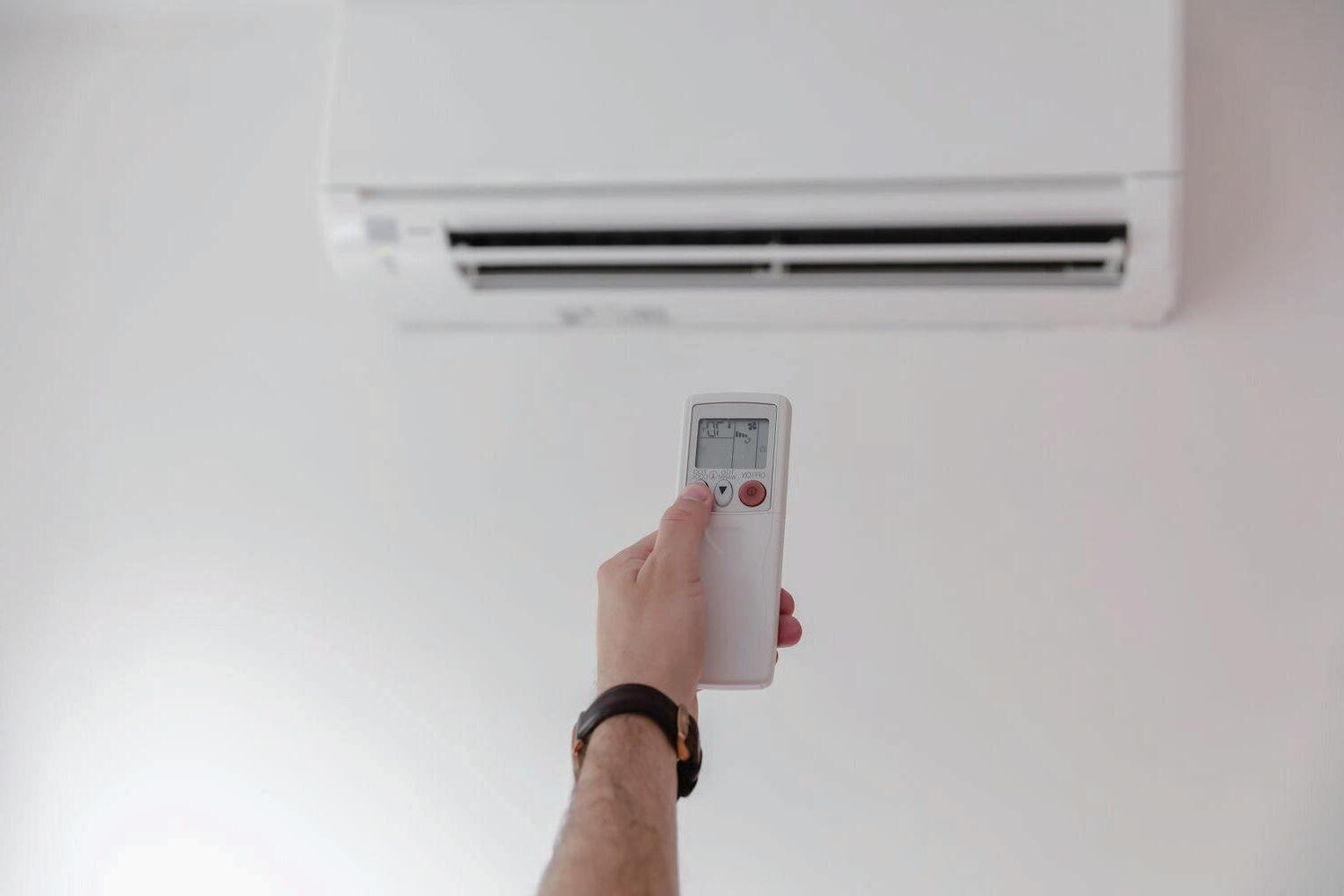
Wang Min’an’s discussion of household appliances provides a concrete scene for this shift. In On Household Appliances he notes that televisions, fridges, air conditioners, washing machines and computers are not simply tools that assist life, but apparatuses (dispositifs) that are embedded into domestic space and “constitute life itself”.
They are not neutral instruments, but choreographers of domestic space–ethics–power that co-shape daily habits: they allocate time (laundry cycles), organise paths (from fridge to dining table) and gather the gaze (towards the TV or screen). The “home” that we see with our eyes as a commodity-like physical space is in fact layered on top of this apparatus-based ordering of domestic life.
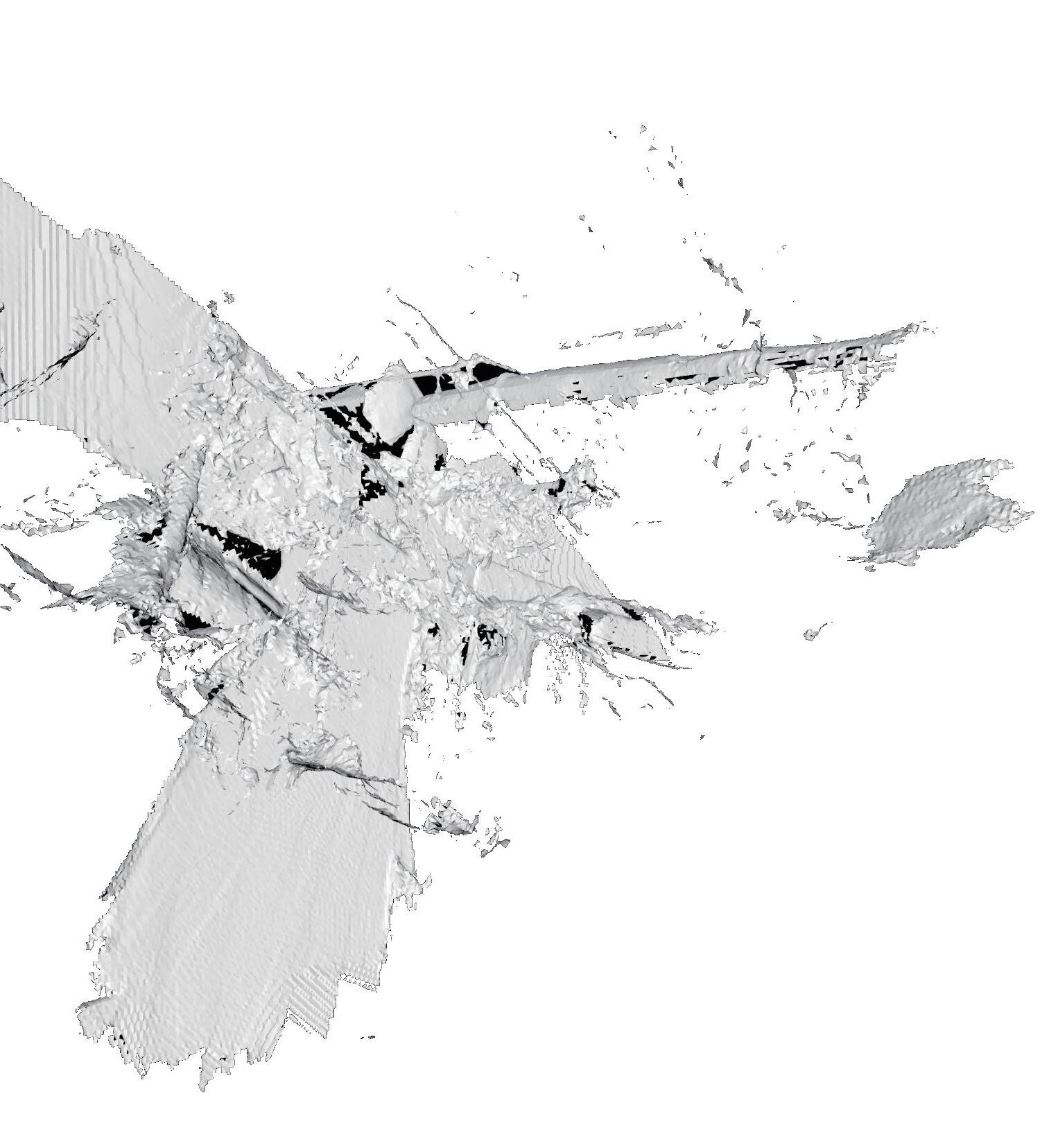
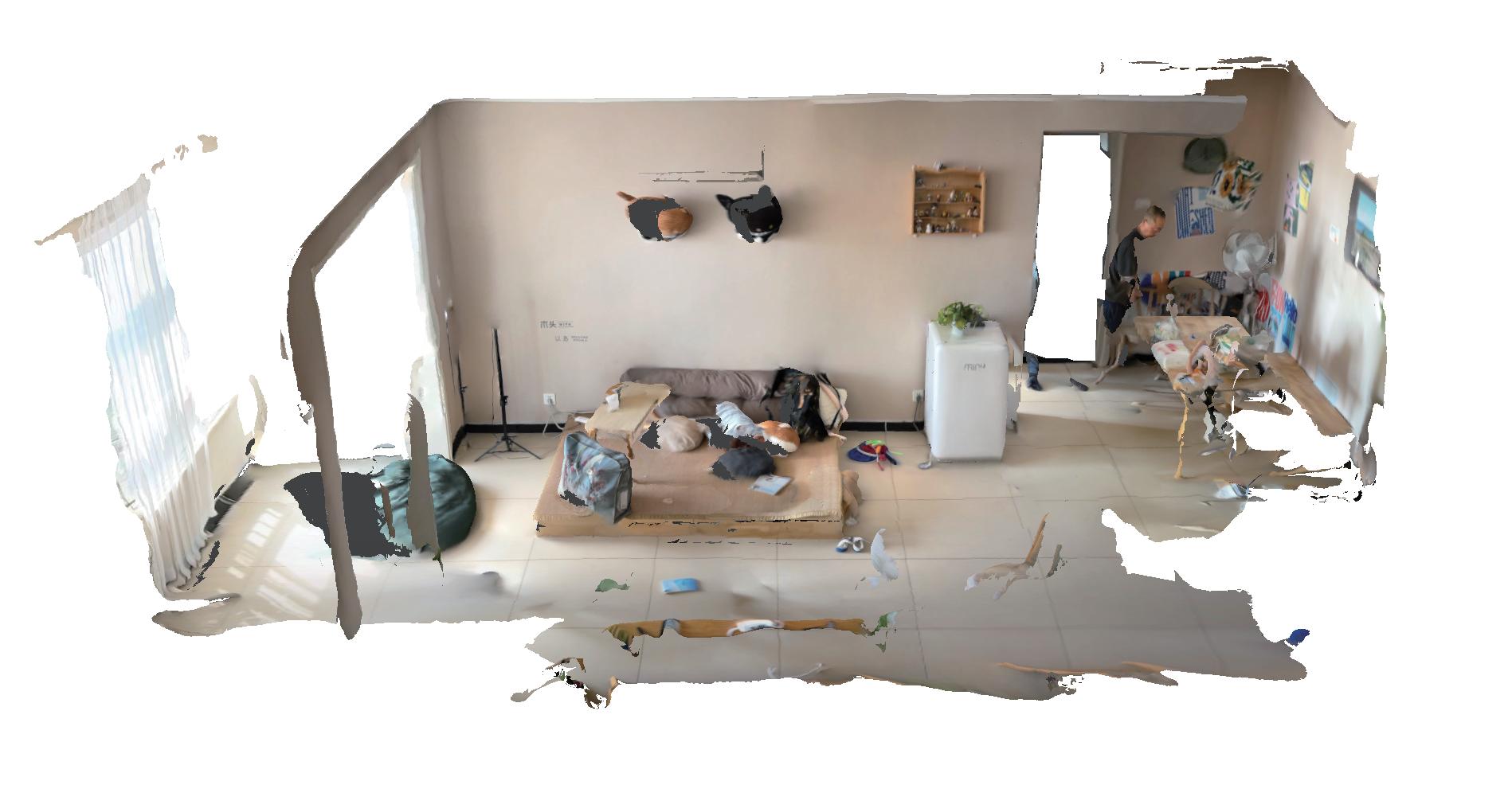
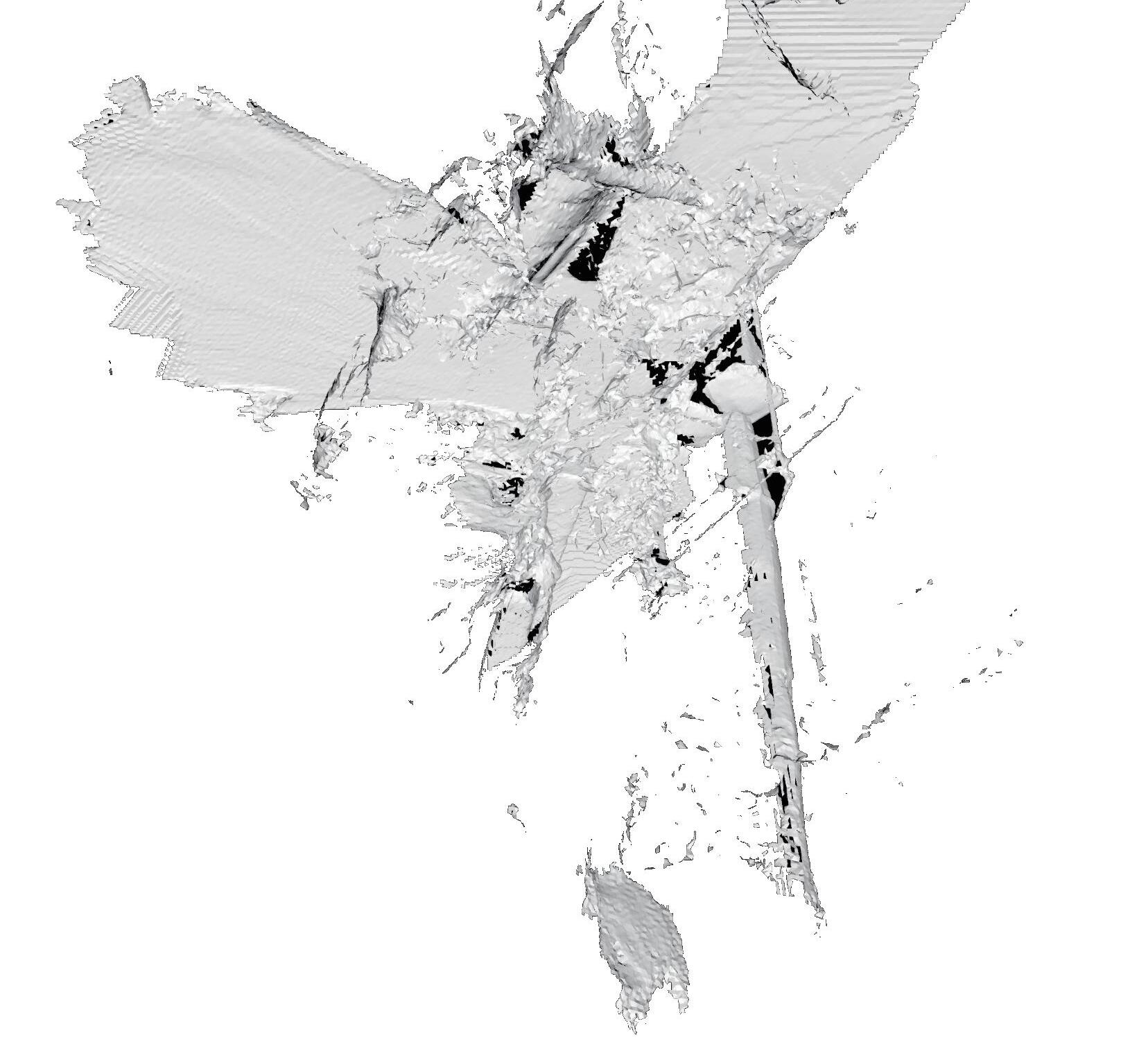
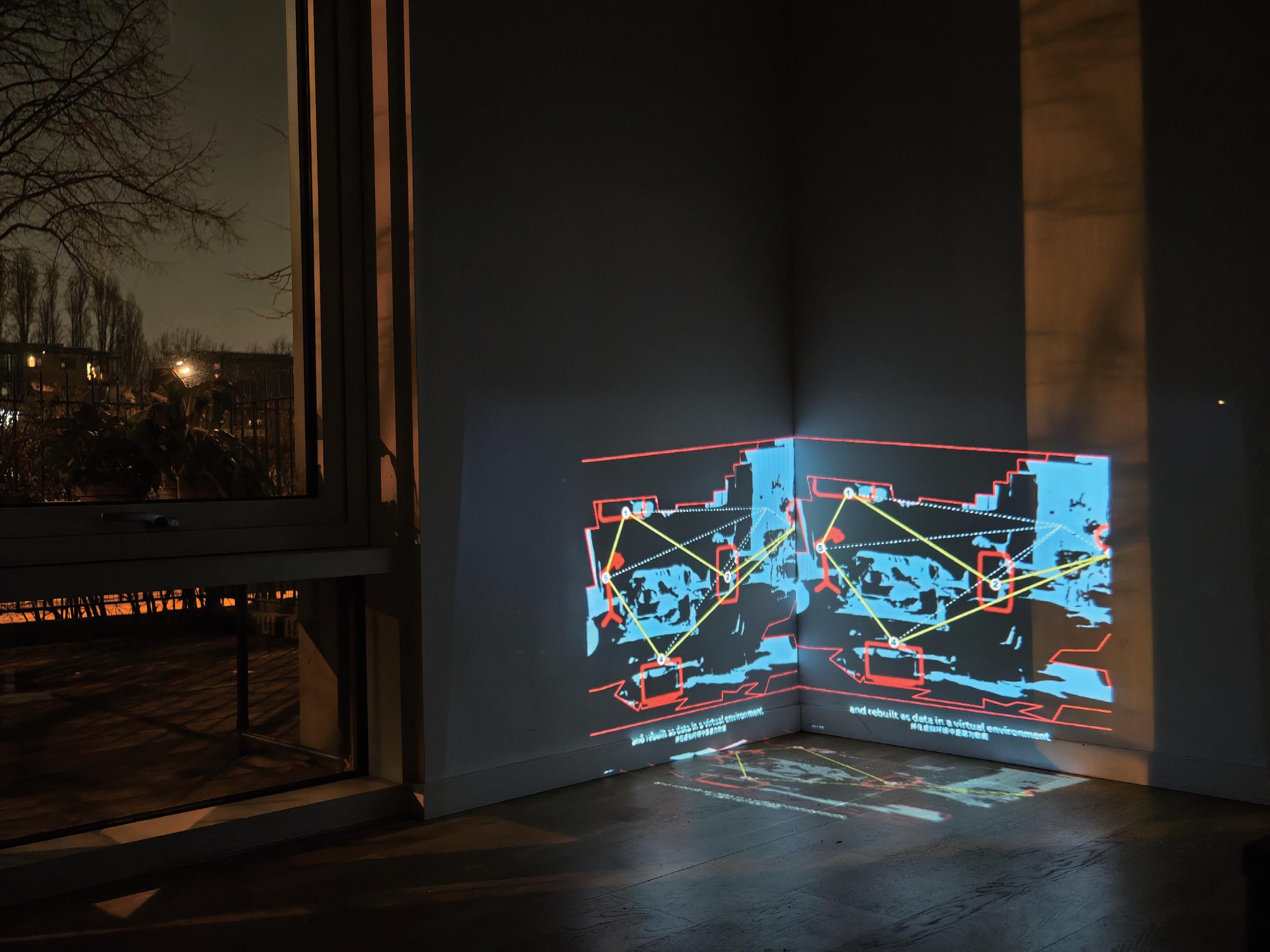
Against this background, our project takes everyday household objects as its starting point and asks: what happens when these objects further enter the disciplinary regime of machine perception? We focus on 3D scanning—one concrete instance of machine perception—as an operation through which objects are captured, translated and rebuilt as data in a virtual environment.
Spatial transformation caused by 3D scanning
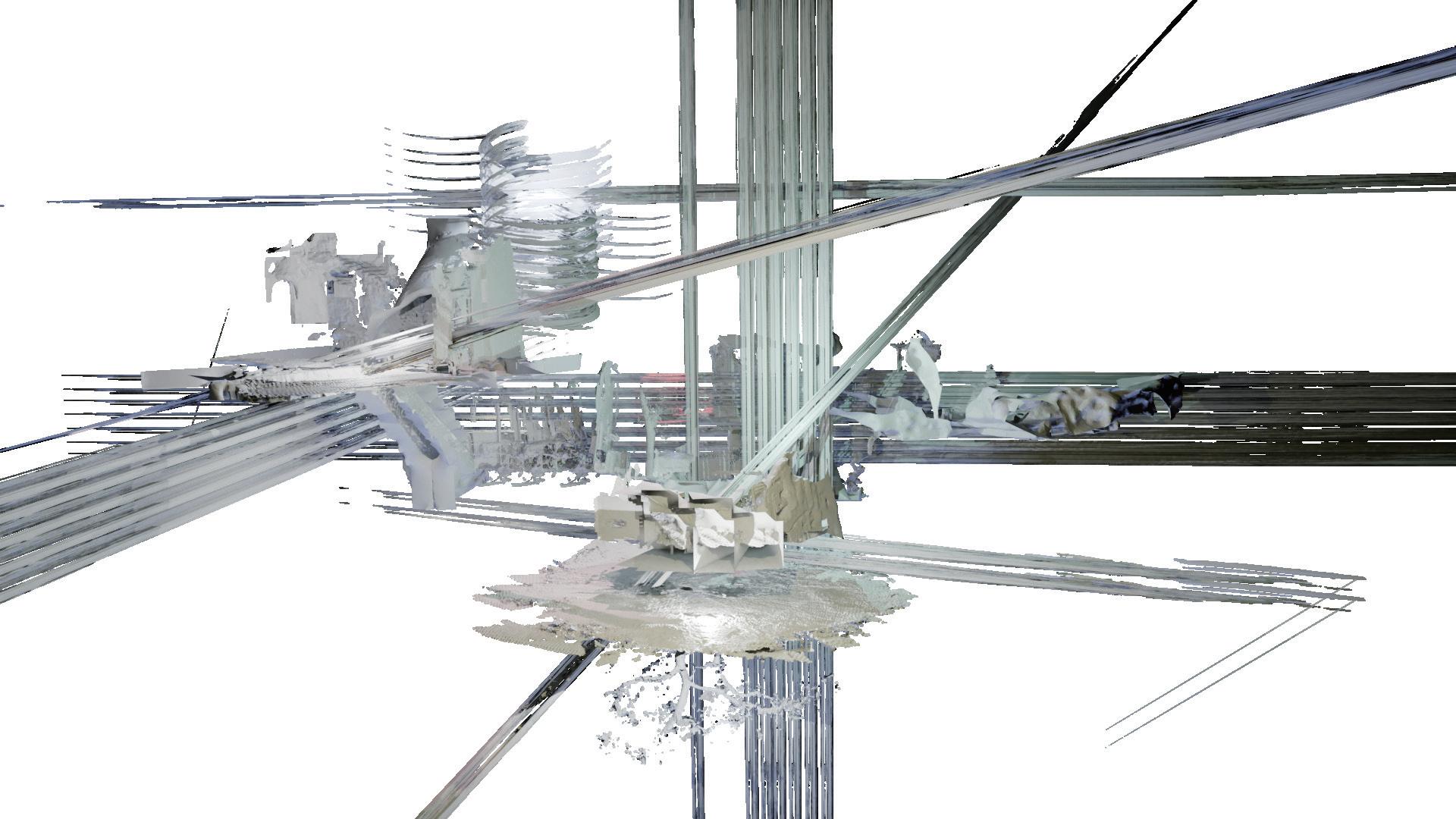
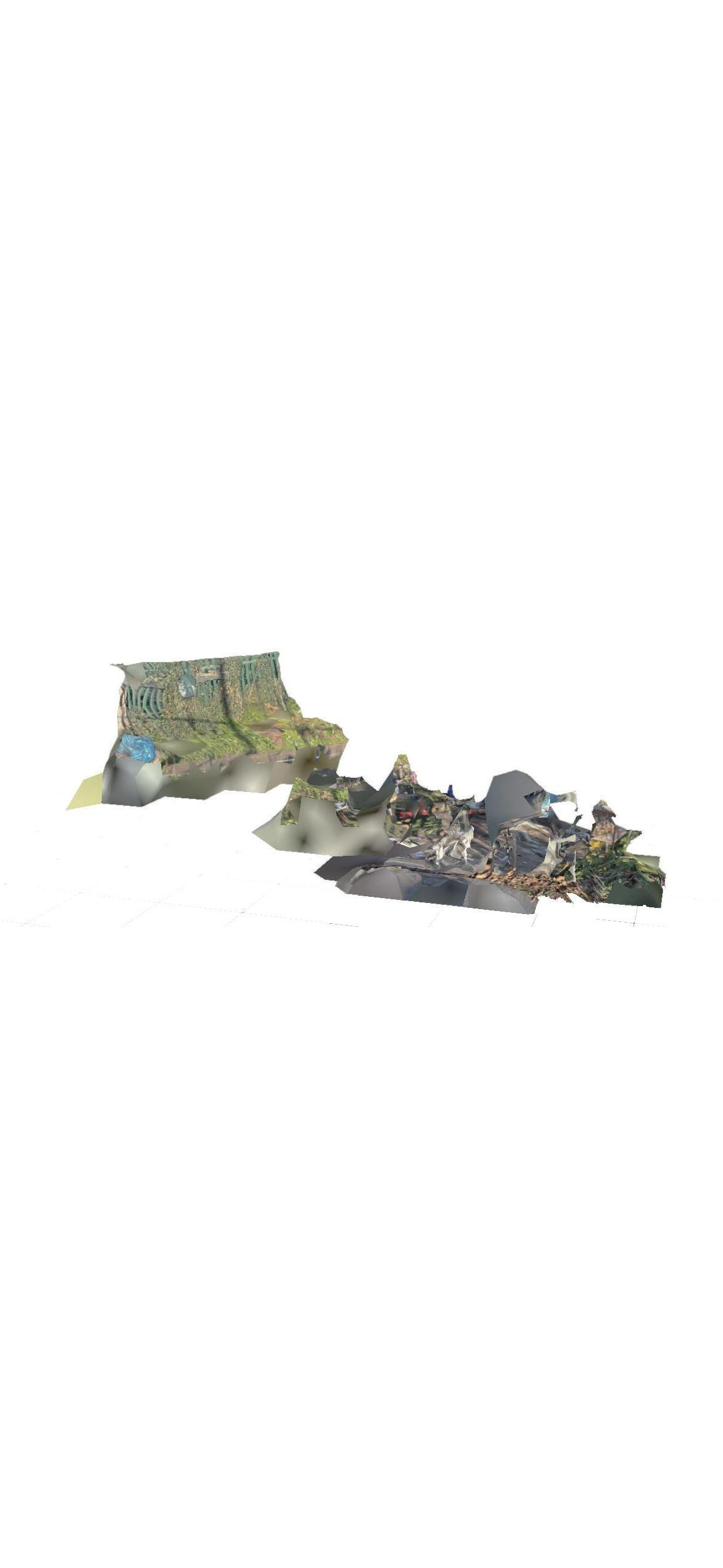
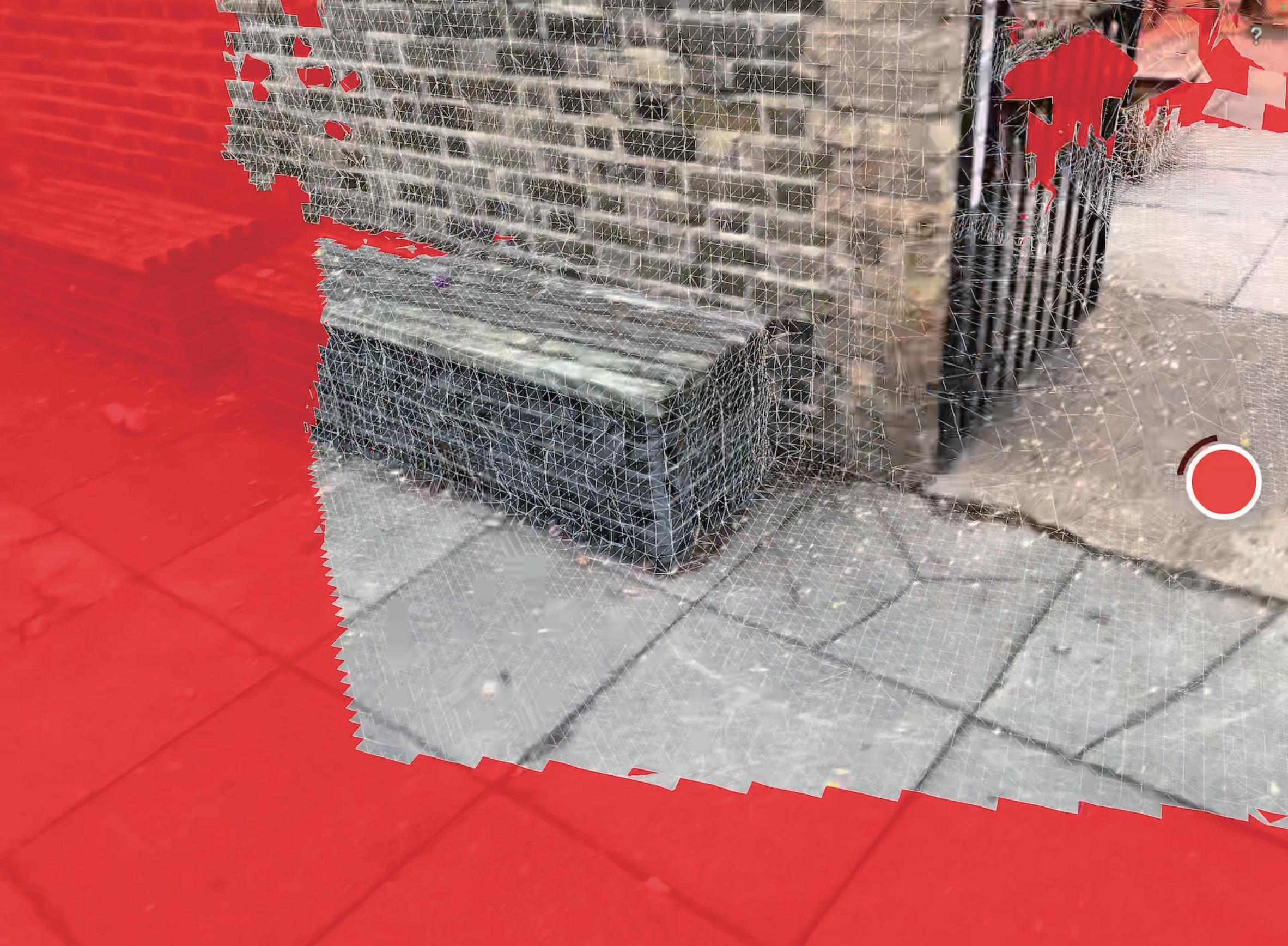
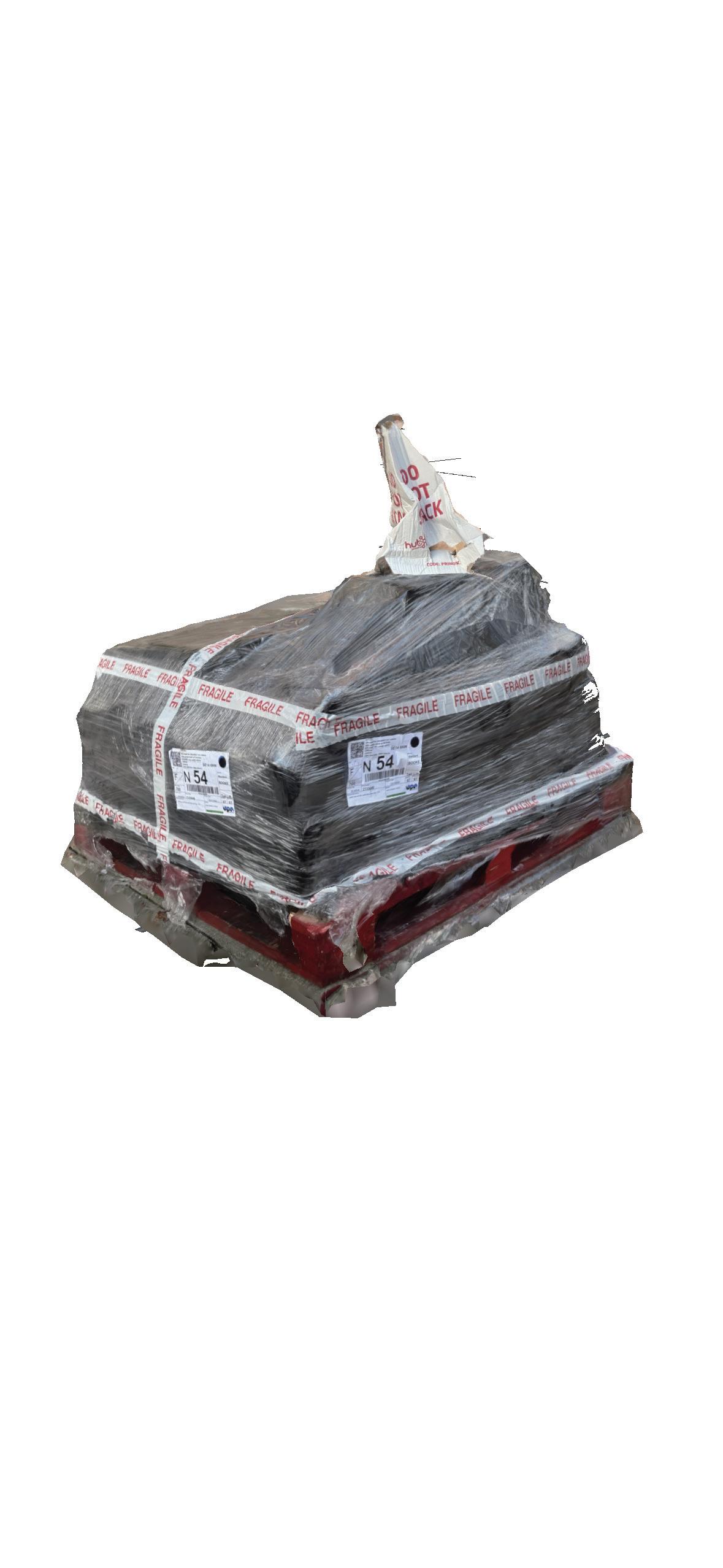
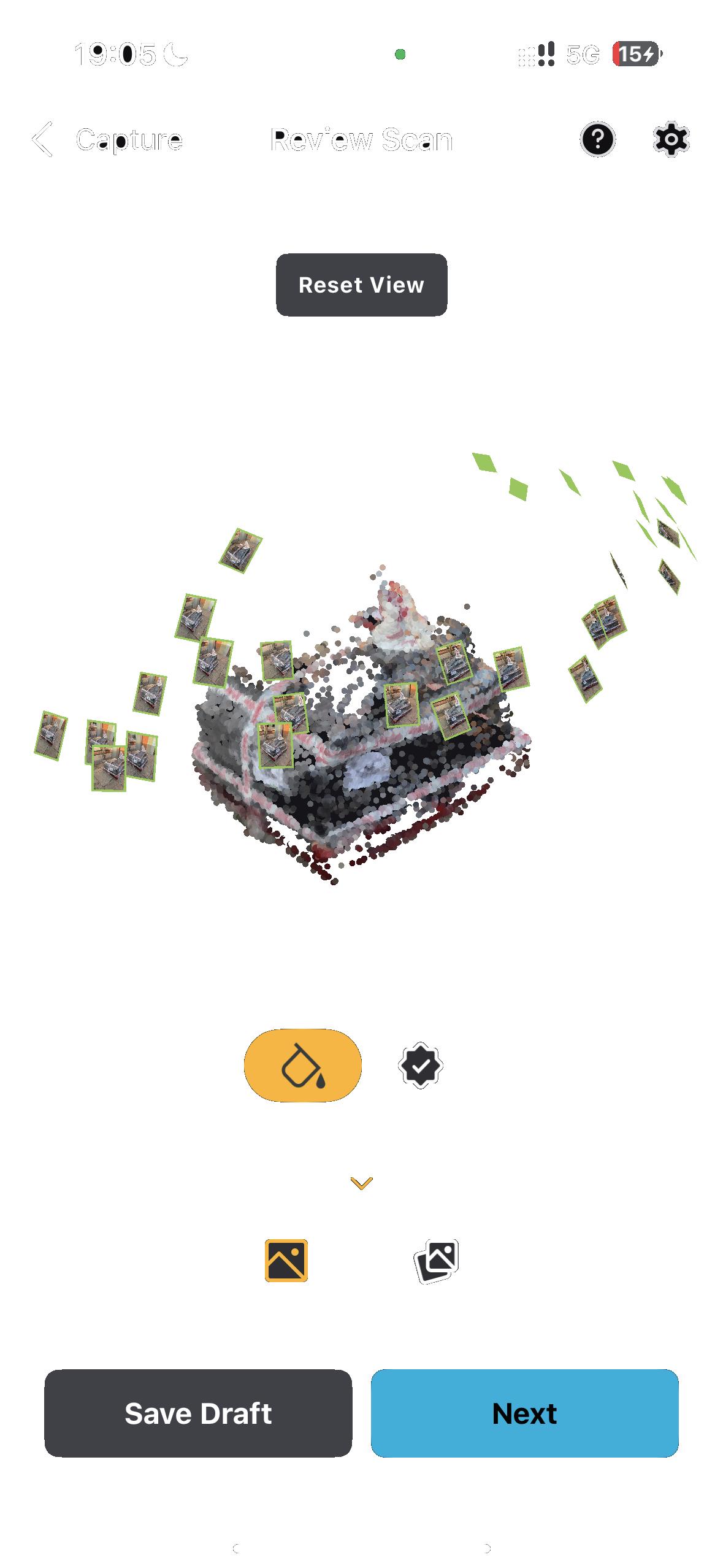
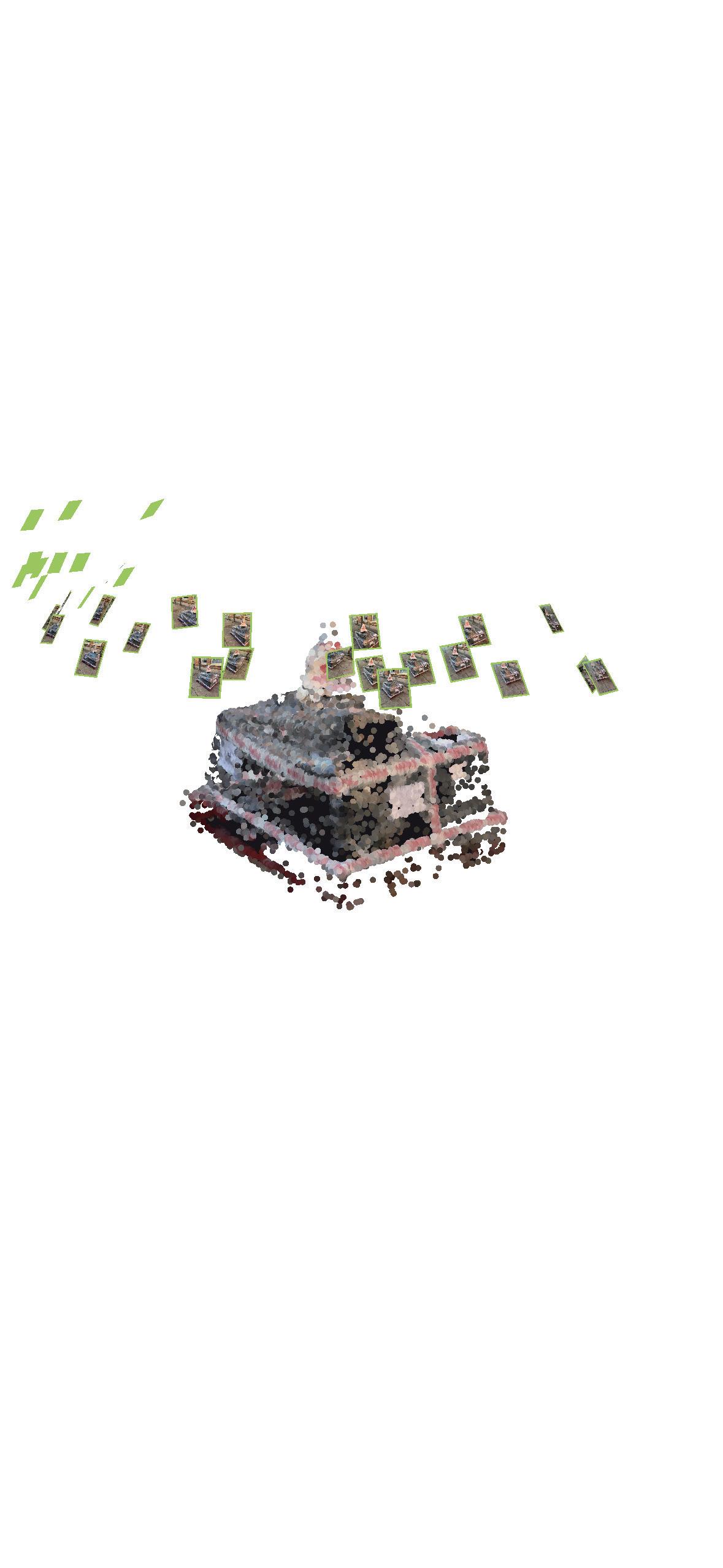
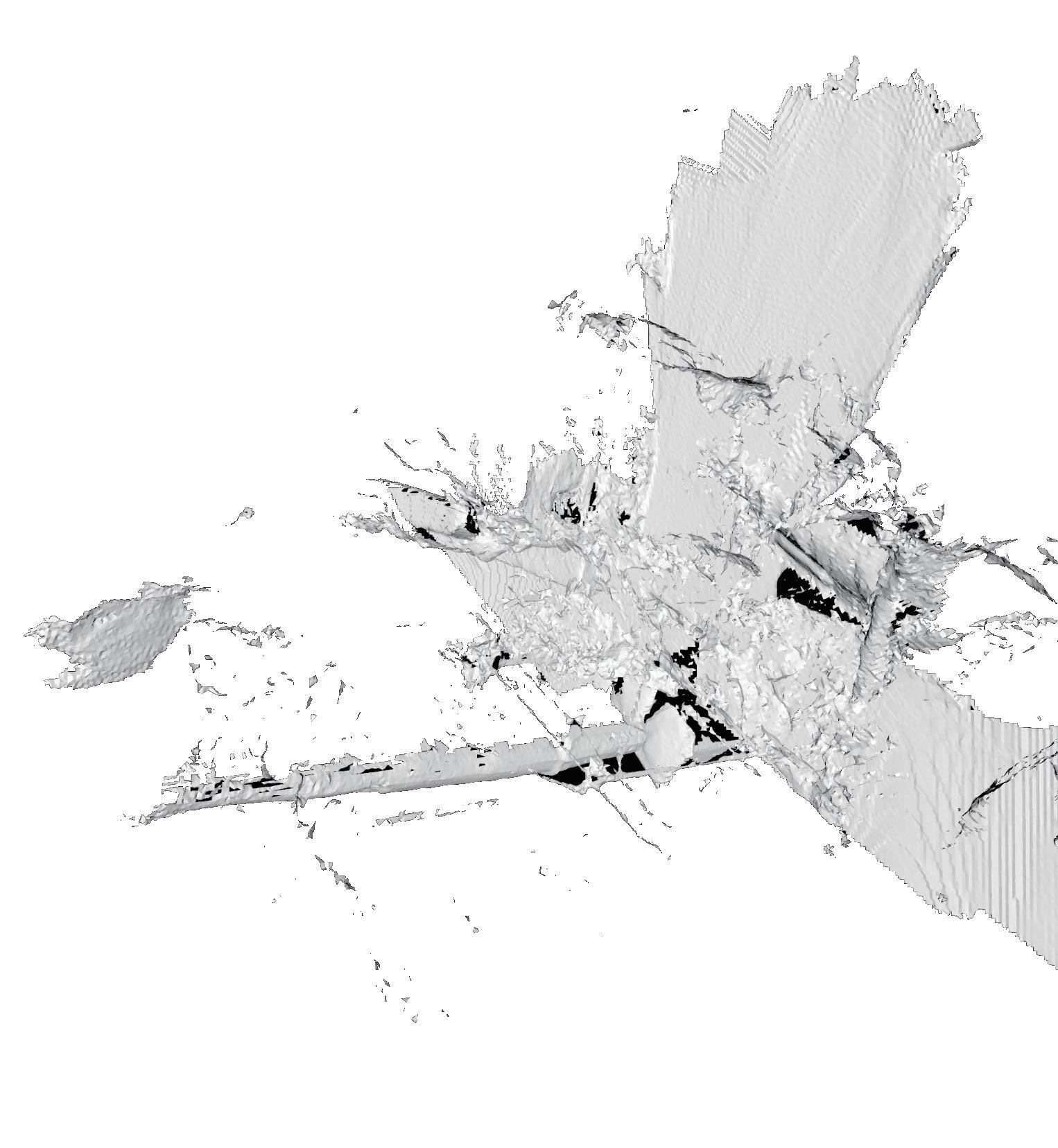
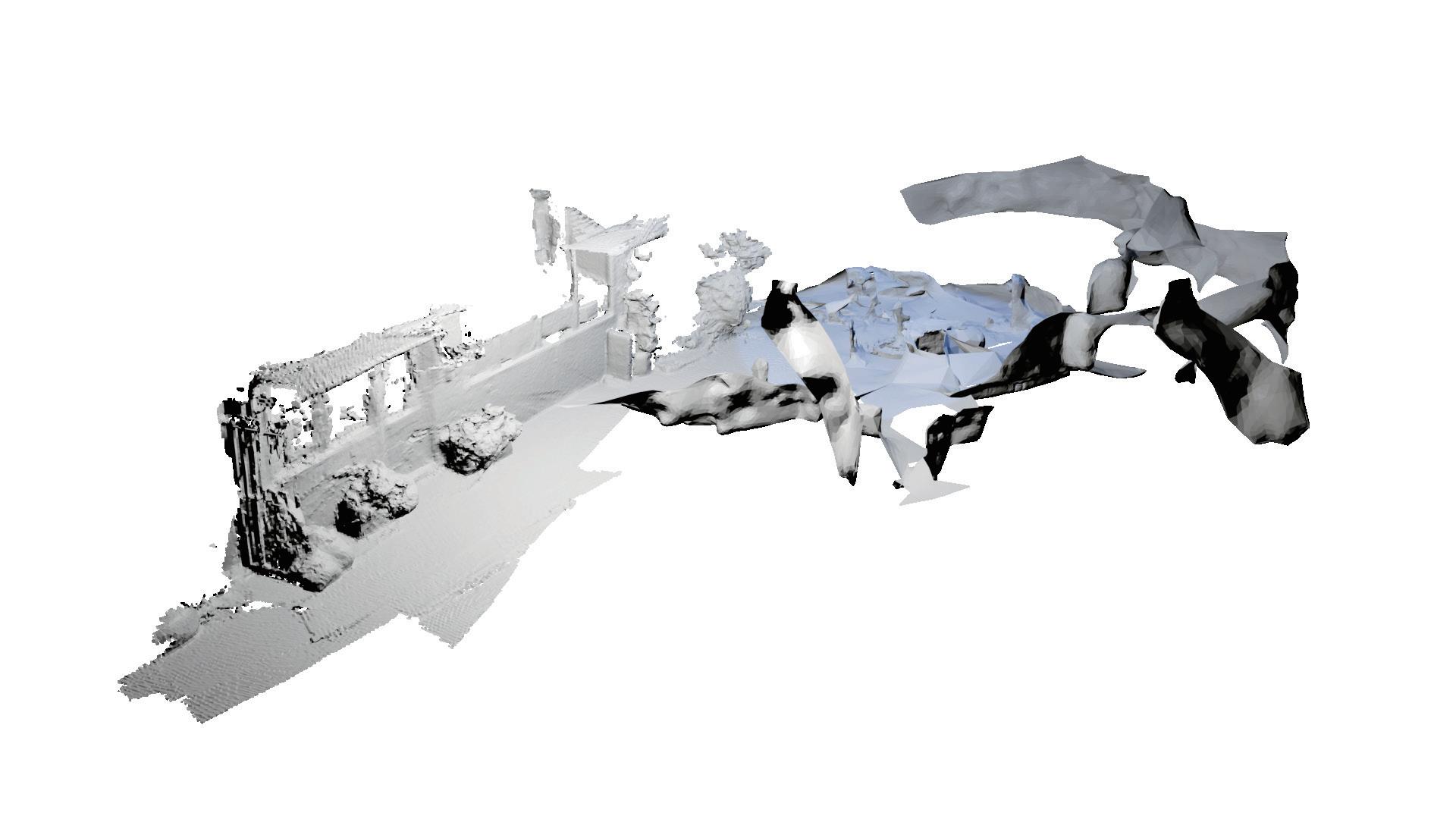
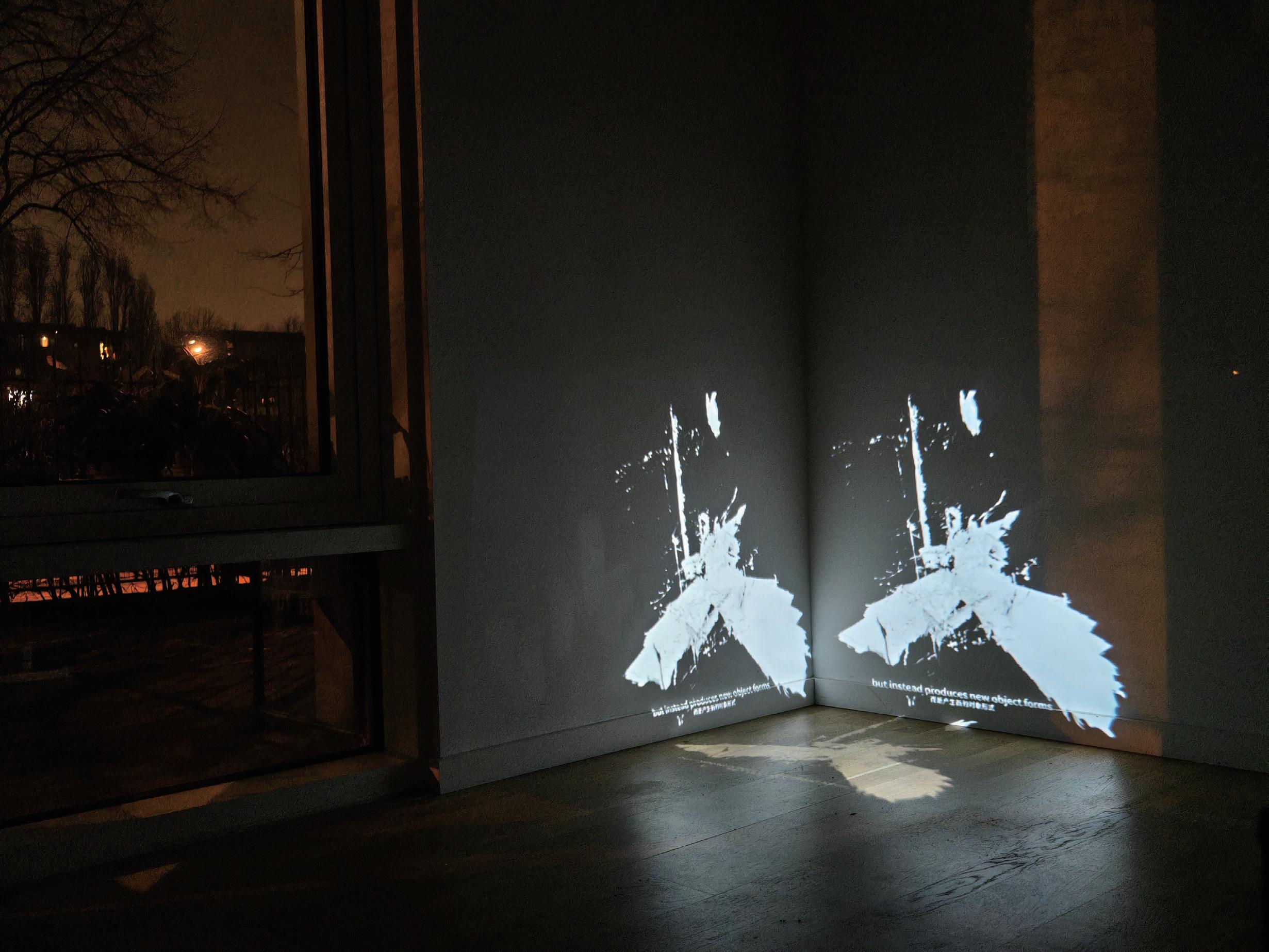
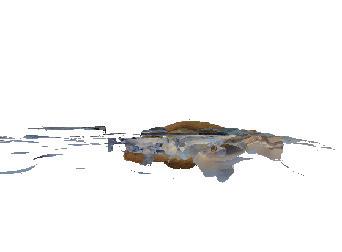
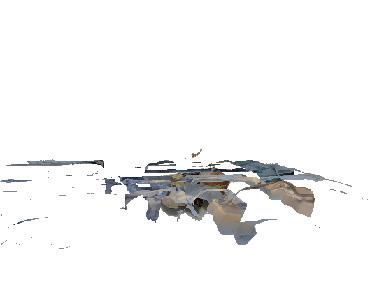
However, when we review the scanned models, we find that the machine does not simply copy these objects. Instead, it generates “new object-forms” marked by noise, gaps, traces, trajectories and fractures. The familiar cognitive pathway through which we understand objects—based on visual appearance, manuals and patterns of use—is interrupted. We become aware that the space in which an object is situated, and the way it is translated into “non-object” form as data, also become part of the object itself.
practising “seeing is believing” through the
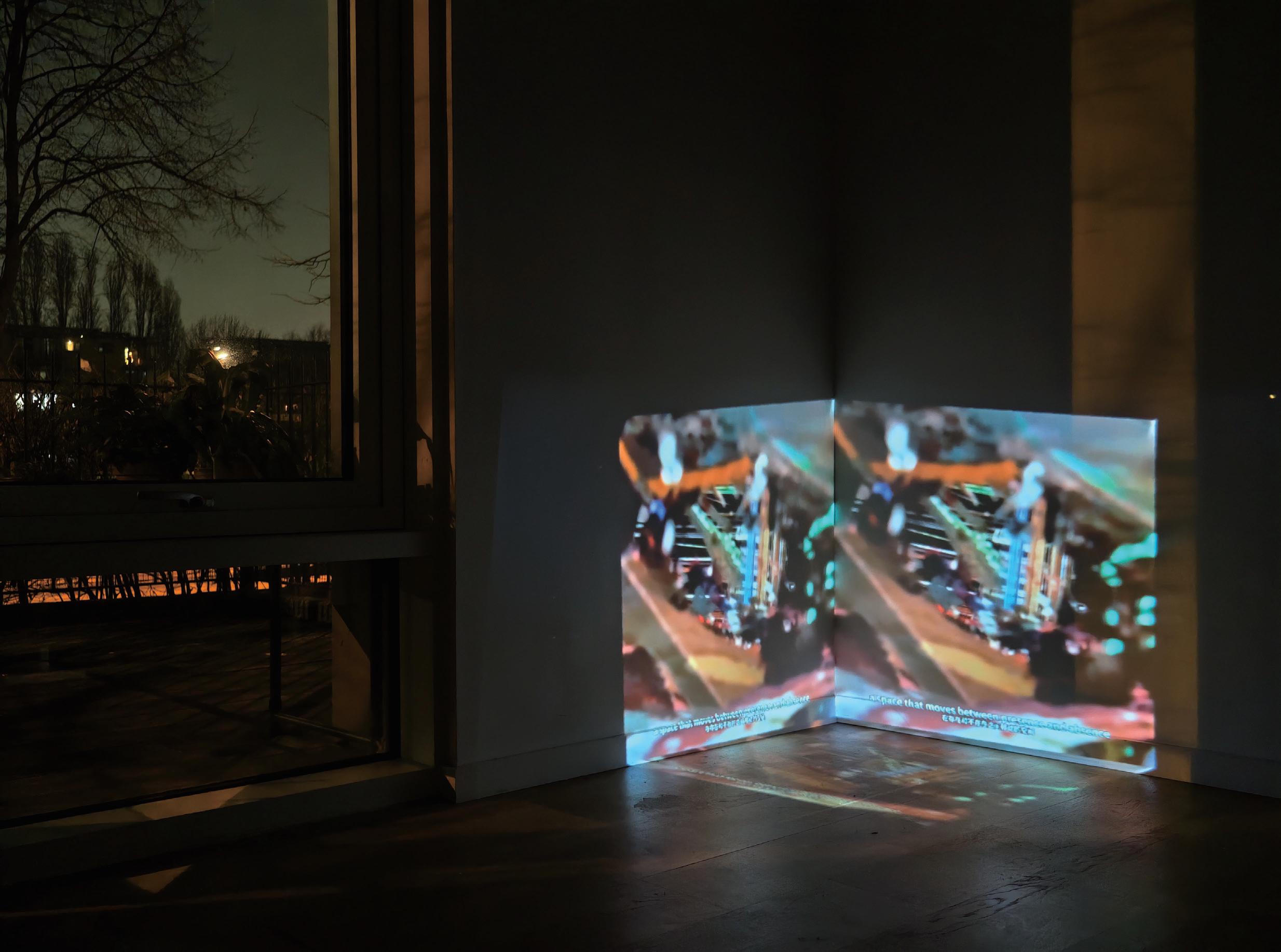
Within this context, the definition of the “object” is further expanded. It is no longer confined to a three-dimensional physical contour, but comes to include ‘temporal and spatial perspectives’ according to Merleau-Ponty, as well as aura, traces, and the power relations that organise domestic life—both “within” and “beyond” physical space. The object thus slides towards the “non-object”: it is no longer fixed as a measurable entity, but oscillates between presence and absence, between manifestation and concealment.This understanding resonates with the Daoist phrase “the great image has no form”, pointing towards an overflowing of perception and a holistic, vital flow.
By considering whether the virtual space is a euclidean space, we are drawn to the idea that it does not need to be bound by the rules of our physical world. Objects and our perceptions of them, can be distorted and re-imagined. As Von Uexkul states ‘the subject controls the time of its environment … without a living subject, there can be neither space nor time’. In a virtual environment, it becomes possible to redefine our realities and even our concept of time and space, based on our own individual perceptions.
Humans and machines, recognizing the environment, redefining objects.
Time (usage traces)
The
Understanding the objects through written information, such as the instruction manual
Point cloud Understanding
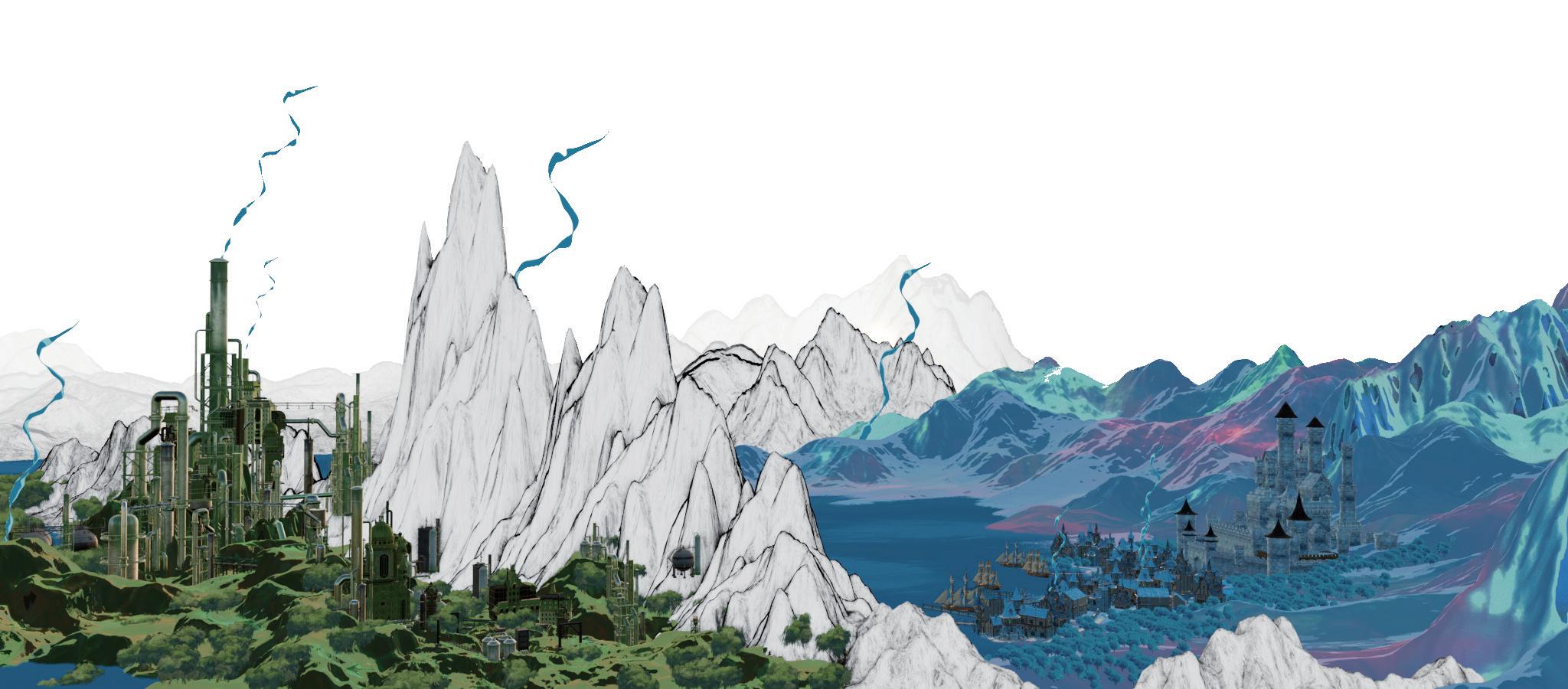
In this world, its foundation is no longer a fixed or measurable thing. Instead, it moves between presence and disappearance, clarity and invisibility. For this reason, we use a “labyrinth-like virtual space” as a new way to connect to and understand the world.
The medium for this world is a “game,” which similarly exists between presence and absence, allowing this new world to be experienced.
Gameplay
Players move through the game by interacting with “new-objects,” which allows them to switch between the two worlds. By collecting clues in both worlds, they decode information (currently planned as simulated photos) to explore the world further.
The two worlds are the “colour world” (representing the past and present) and the “white world” (representing the future and the “unknown” - things beyond our realm of perception). Switching between them shows the coexistence of presence and absence, while also reflecting how the mapping of the “new-object” breaks their original understanding of time, trace and purpose.
Video link: https://youtu.be/IBil7ypH1kg
Output Description
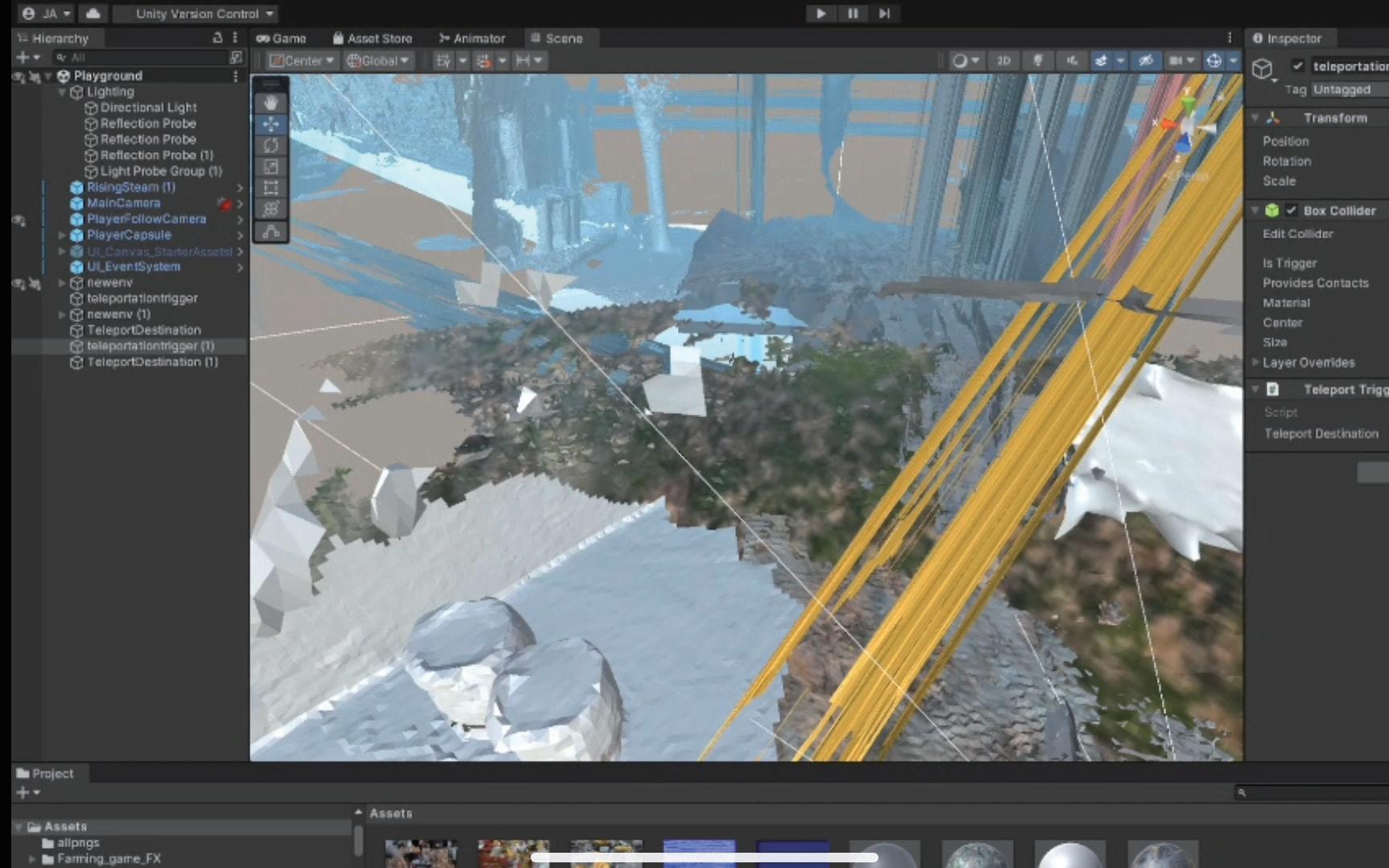
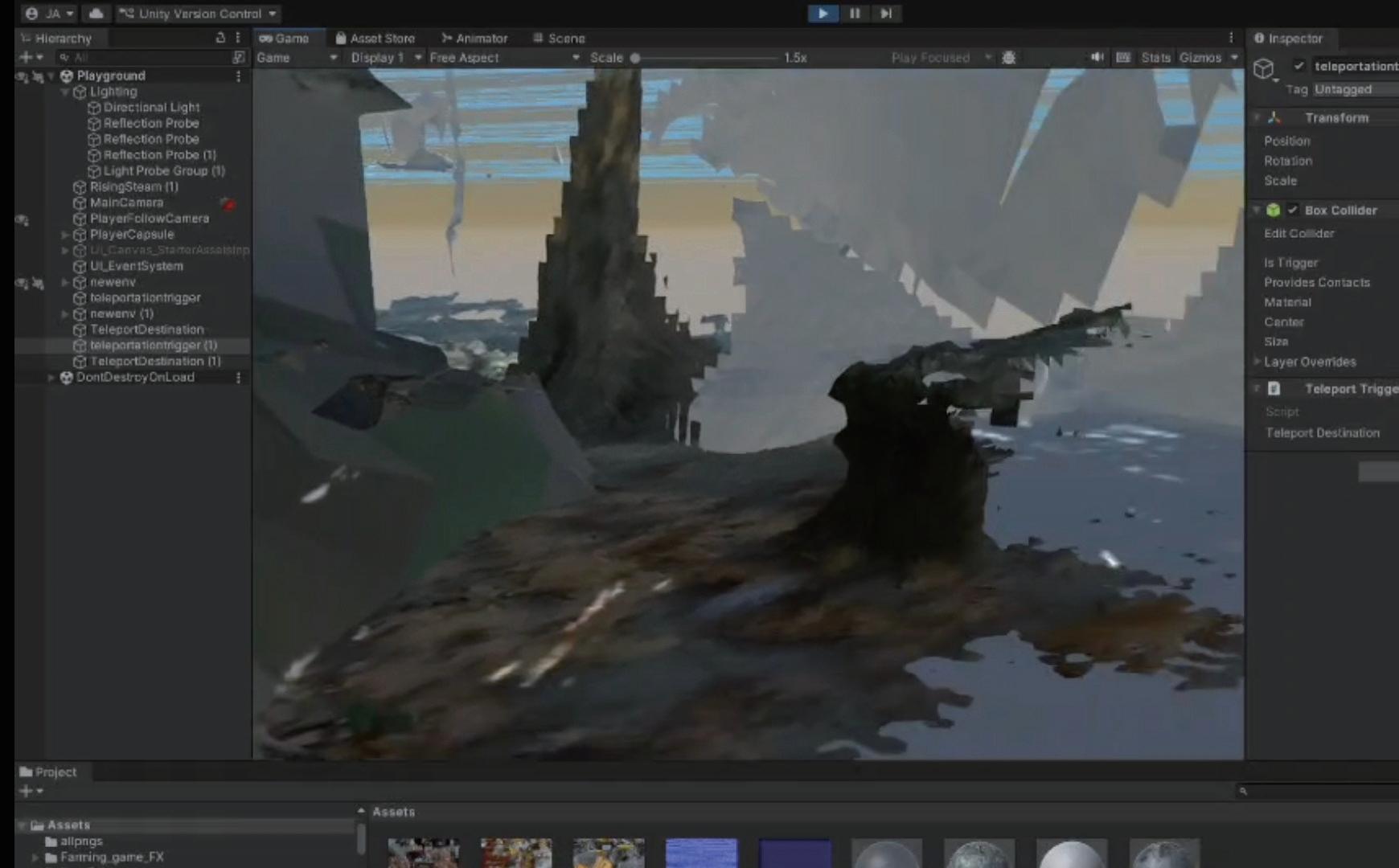
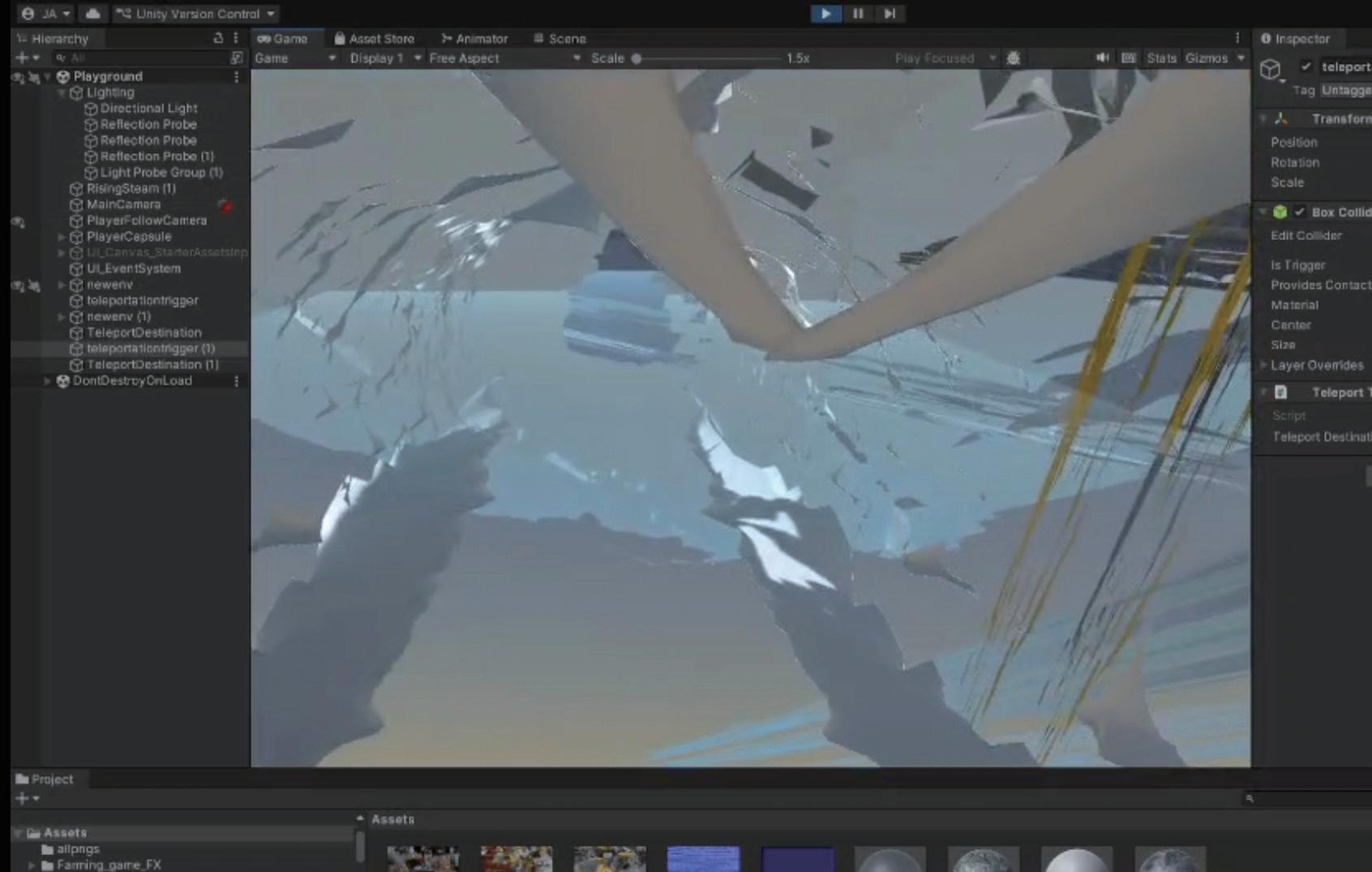
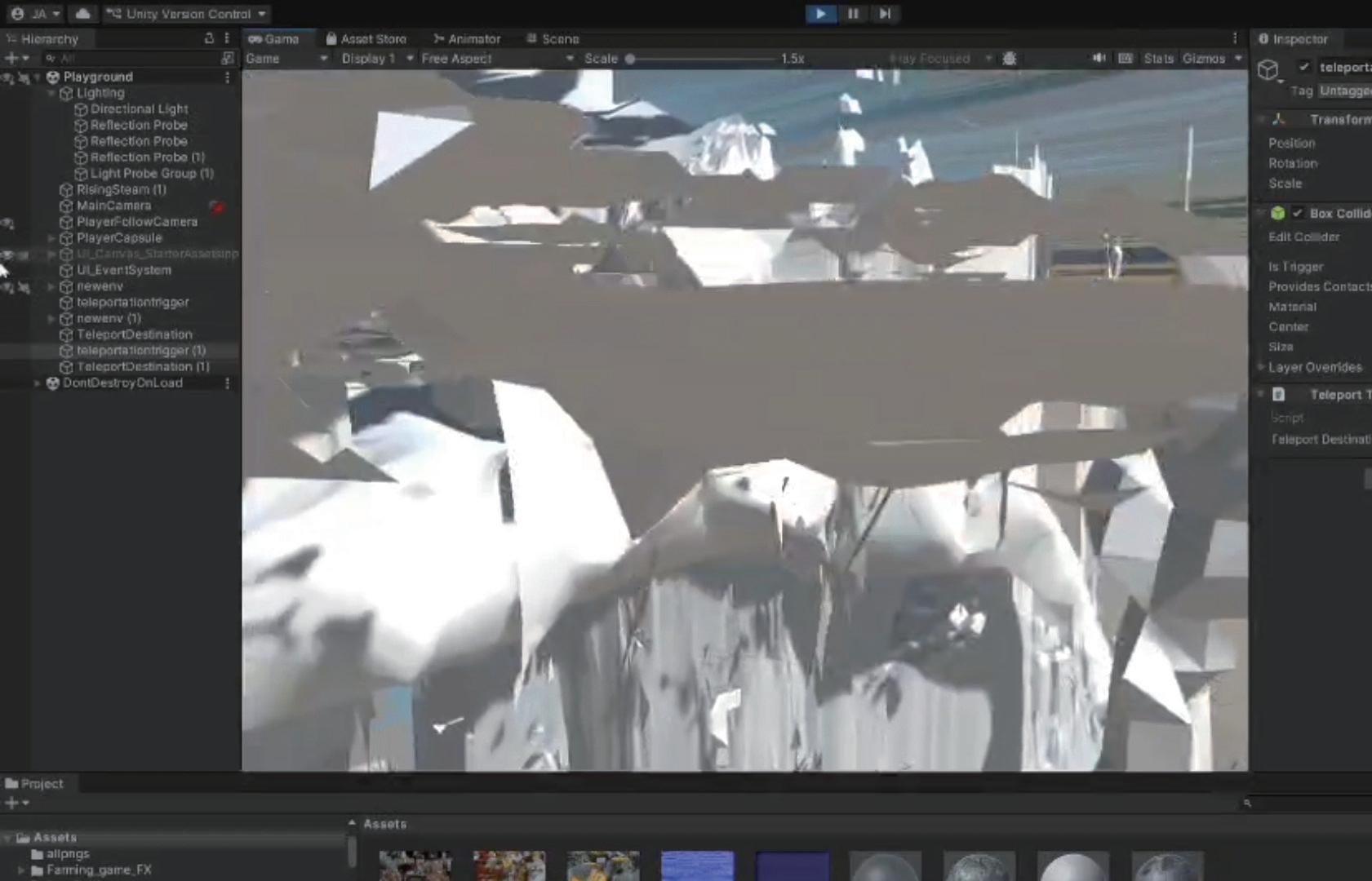
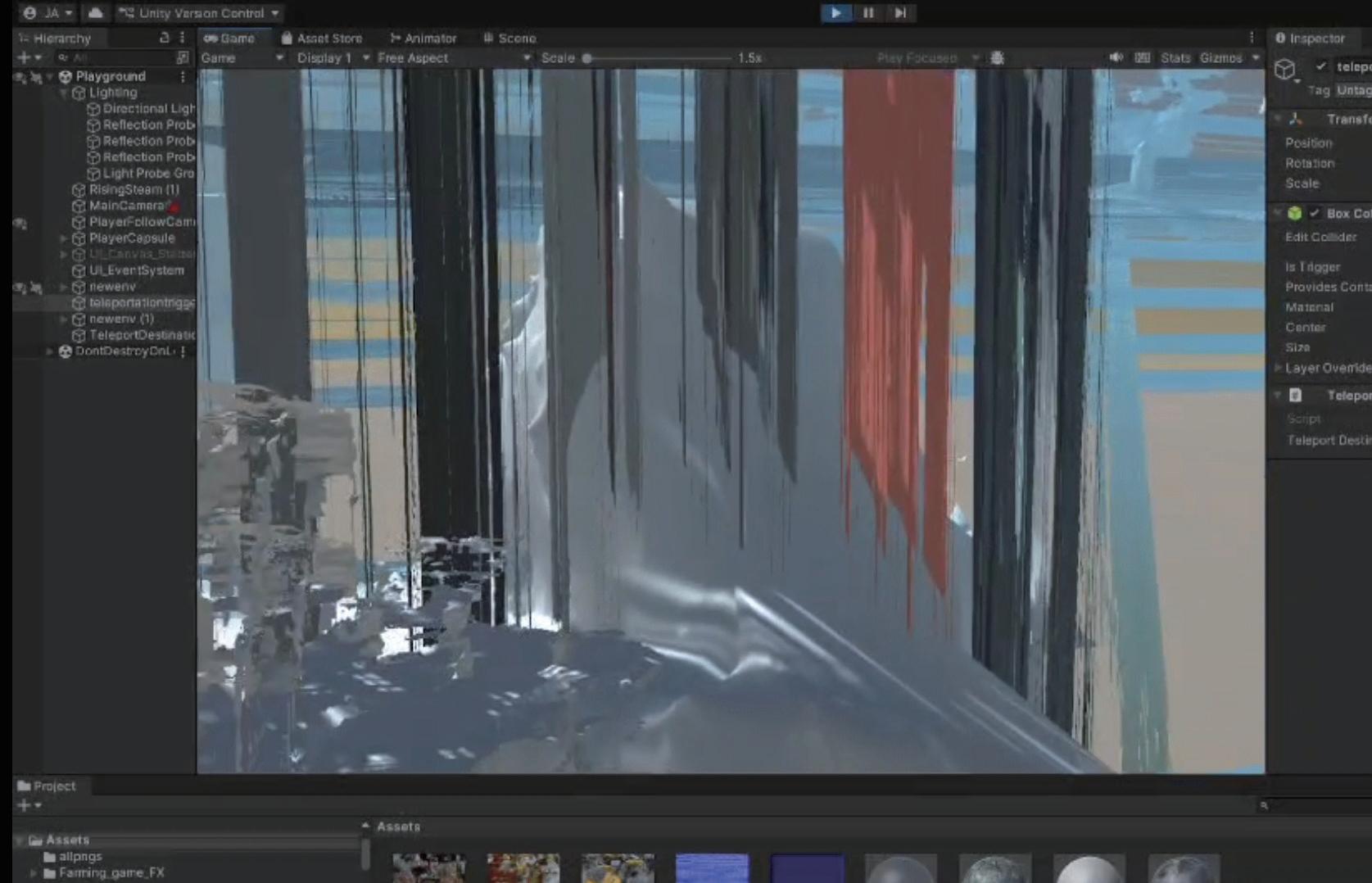
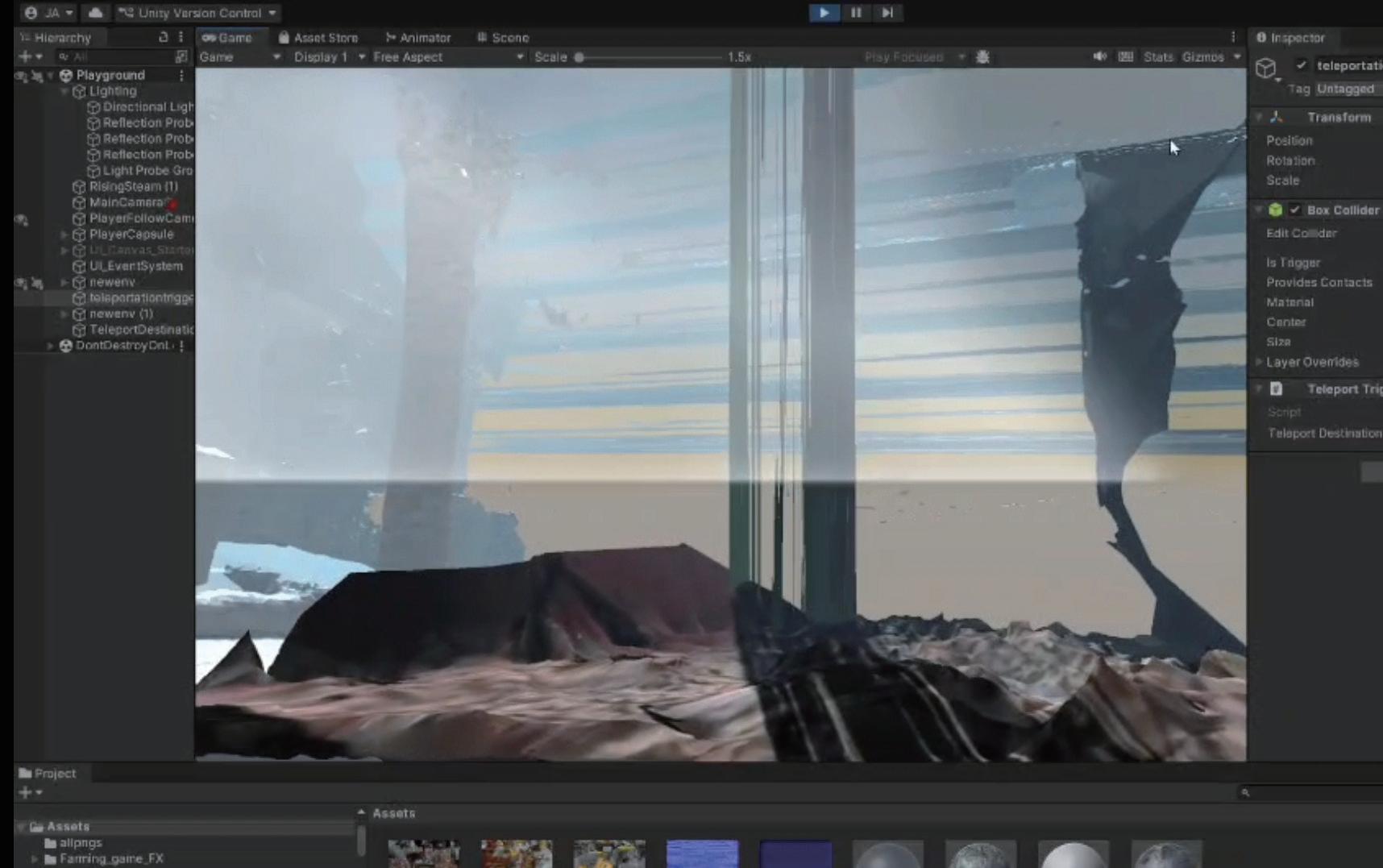
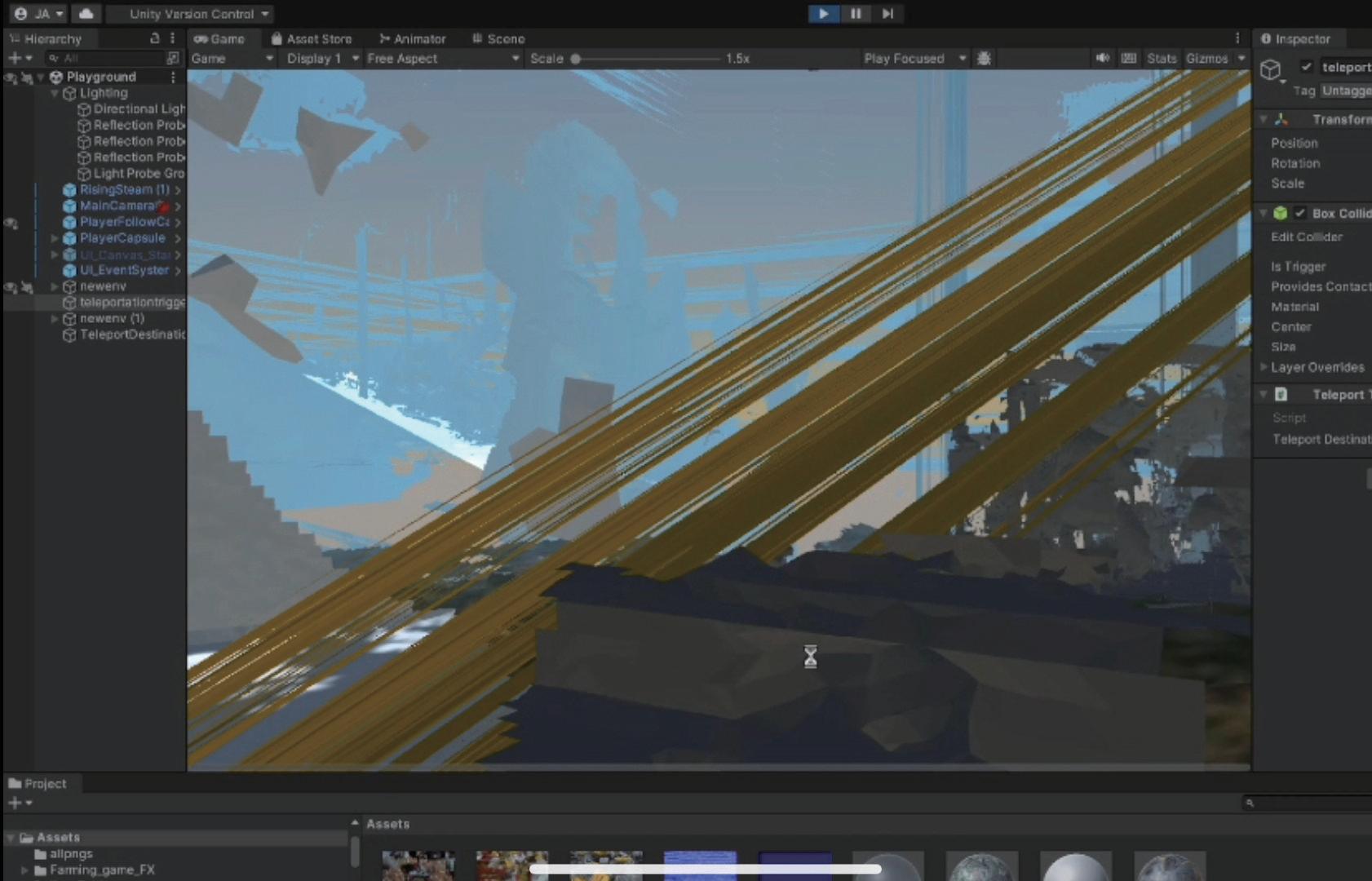
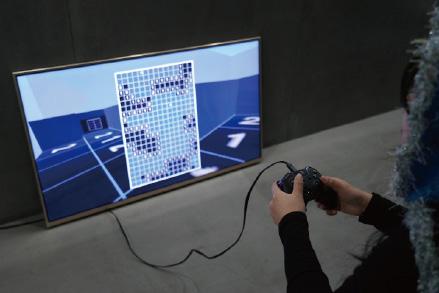
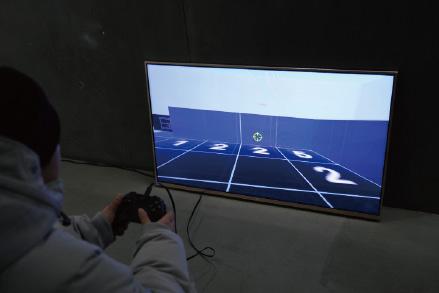
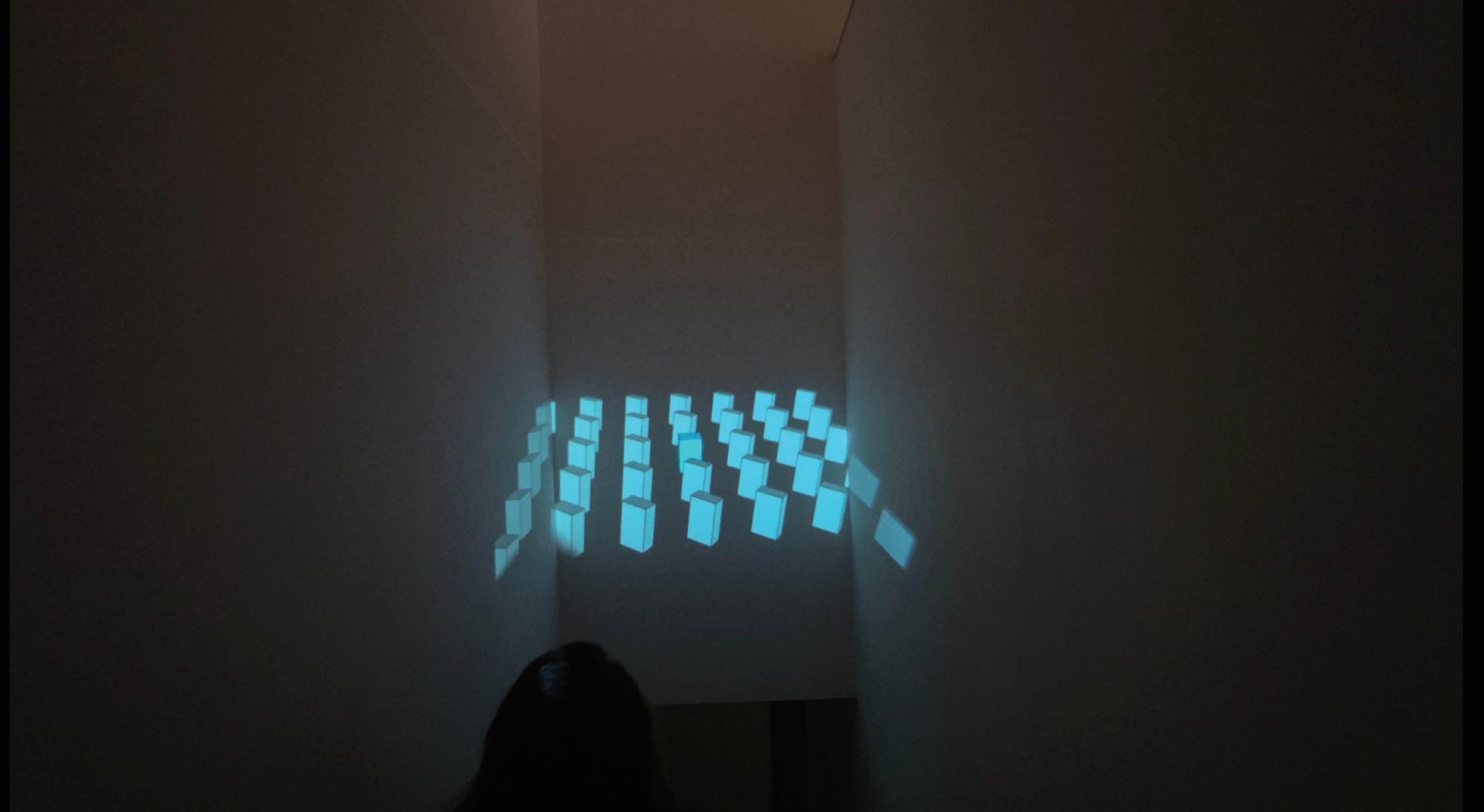
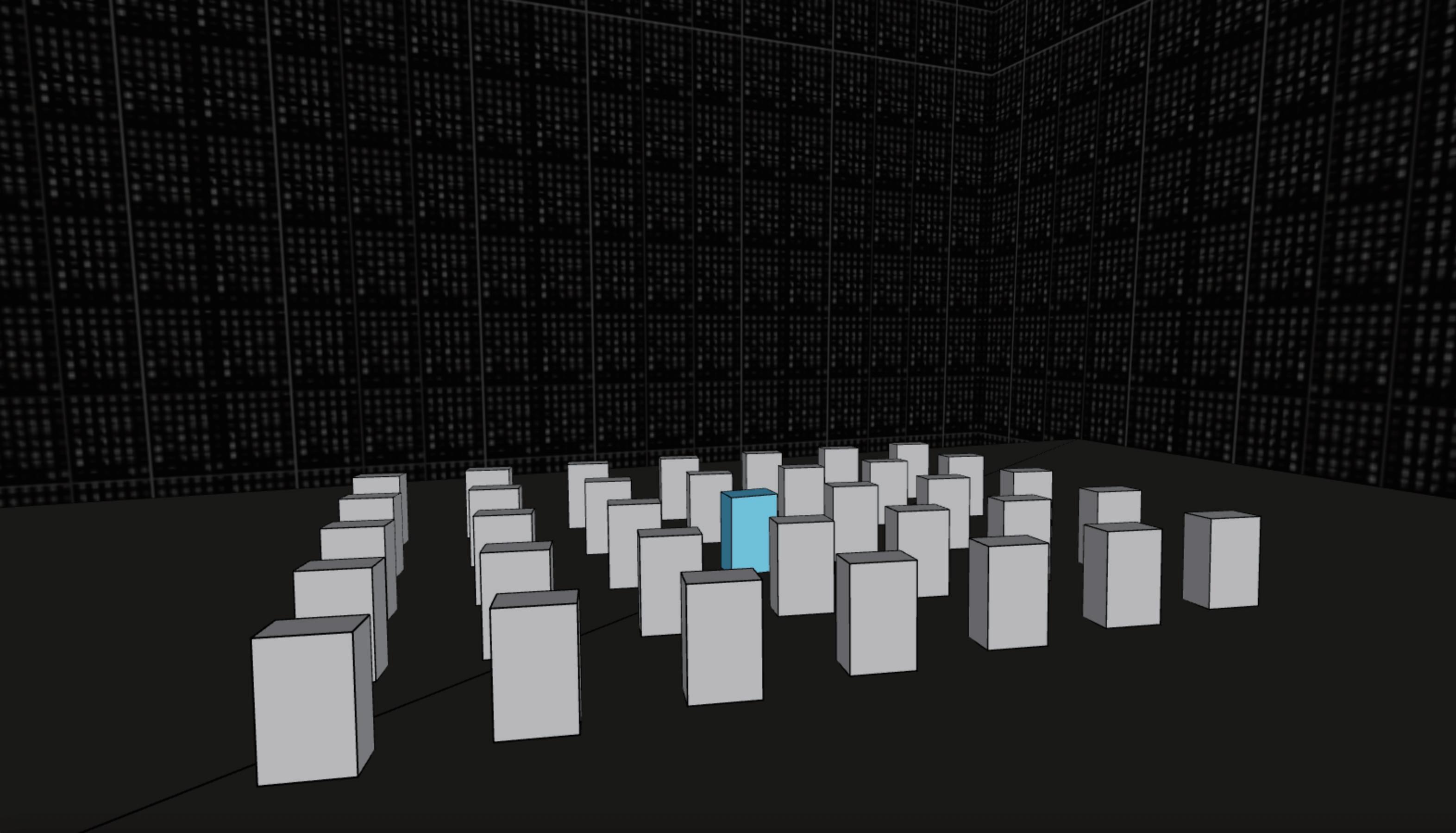
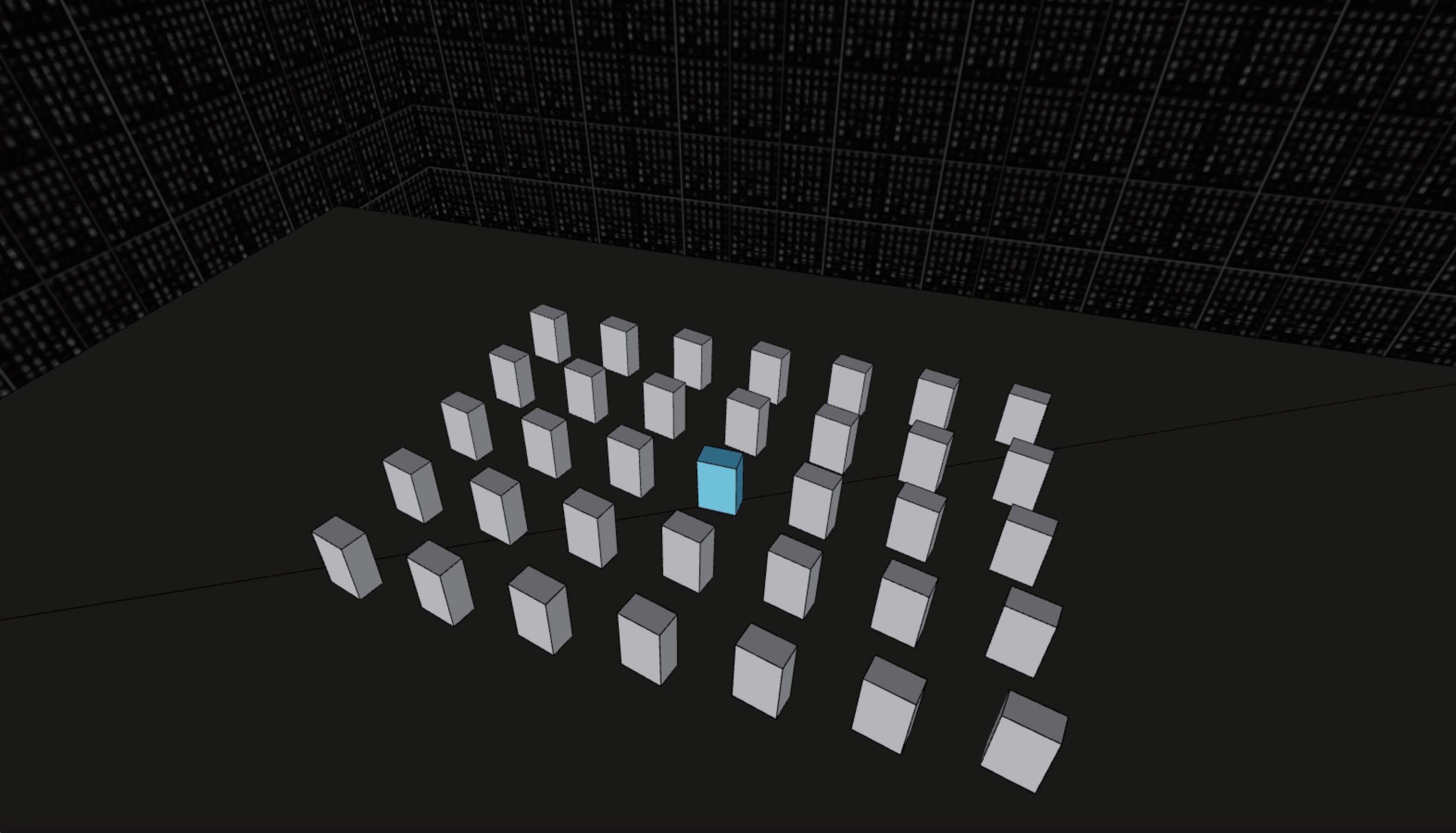
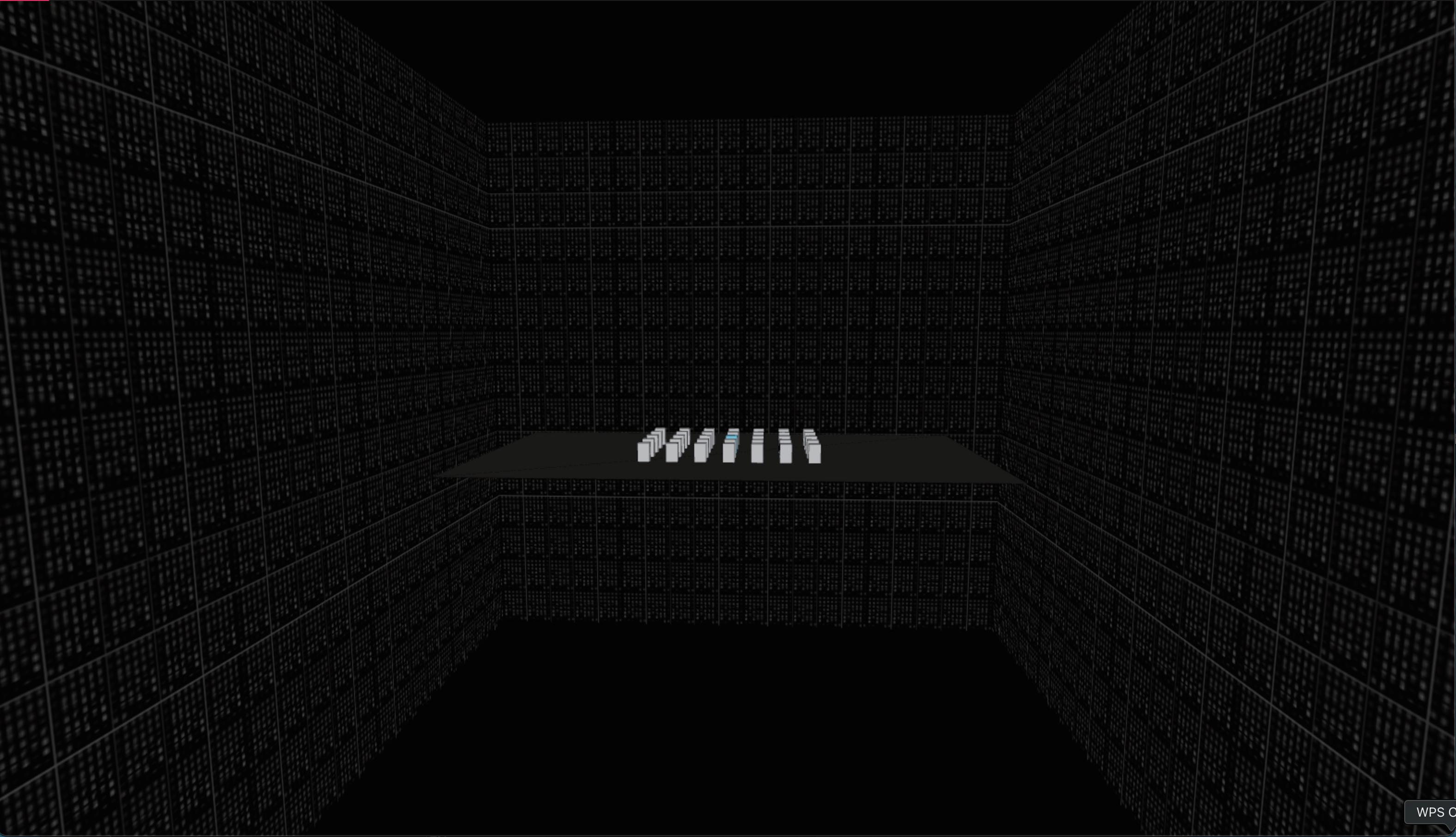
Our main output is a small labyrinth-like interactive game made in Unity. It is built from 3D scanned models of household objects, and players enter these “new-objects” by walking, turning, and pausing inside the space.We want players to experience two shifts while exploring this game.
First, a new understanding of objects - no longer just shapes, but things that hold time, traces, and purpose. Second, a new awareness of everyday order - patterns normally shaped by objects and daily movement become visualised and walkable inside the virtual labyrinth.
Game Design Notes
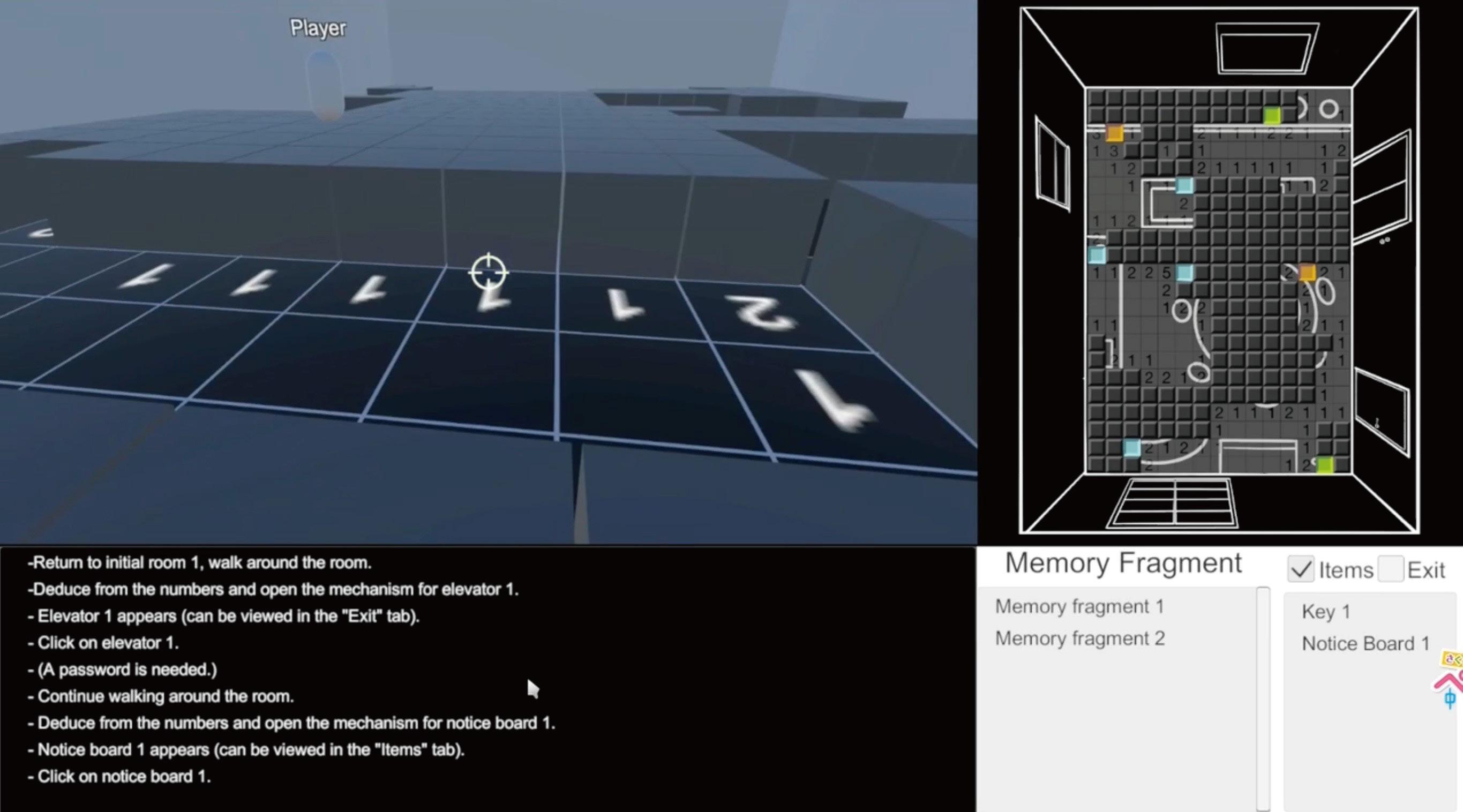
In this game, players sense and touch the boundaries of "new-bjects" to switch between two chromatic worlds, traversing reality and unreality, presence and absence, the present, past, and future. Through this mechanic, they search for clues, piece together narrative threads, and explore the world.
Unity Interface
Game Design Notes
FRAMED Collection inspired me with the notion that, much like early film editing, rearranging the sequence of images and footage—even when using the same raw material—can construct entirely different narratives and environments, potentially leading to completely divergent plot developments. Therefore, I intend to extend this method of narrative reconstruction, allowing players to perceive not only the paths of recognition and physical actions but also the moment-to-moment decisions made in the game, all of which may reshape the narrative flow and influence the overall experience.
The process through which players recognize and identify "new-objects" can be automatically recorded by the system without the players' awareness—such as actions (moving forward, reaching out) and movement paths. The coordinate data of the players' hands in Unity can be transformed into sound. During the initial exploration and recognition of "new-objects," the recorded changes in hand movement paths are converted into sonic symbols, thereby forming an "authentic" record of the exploratory process.
(X2, Y2, Z2)
(X1, Y1, Z1)
(X1, Y1, Z1)
(X2, Y2, Z2)
“FRAMED Collection”
FRAMED Collection inspired me with the notion that, much like early film editing, rearranging the During the editing process, players reconstruct their experience by using photo clues related to objects collected while identifying "new-objects." This act of editing involves recalling and re-examining the process of engaging with the "new-object"—retracing the moments of contact and touch. However, such recollection is often incomplete or altered, and thus, in the editing phase, missing or distorted corresponding sounds are also reassembled and reworked—for instance, syllables may be abruptly interrupted or fail to connect seamlessly.
Projection device
Iterative Process
PIPE EMPIRE
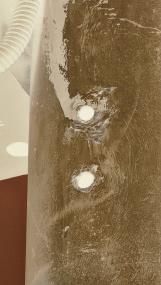
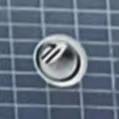
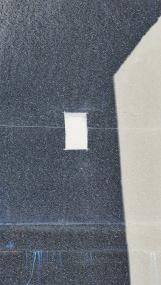
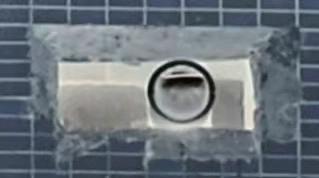
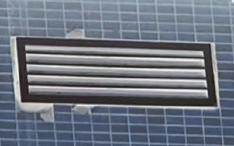
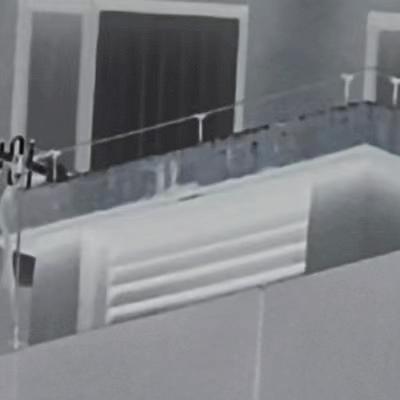
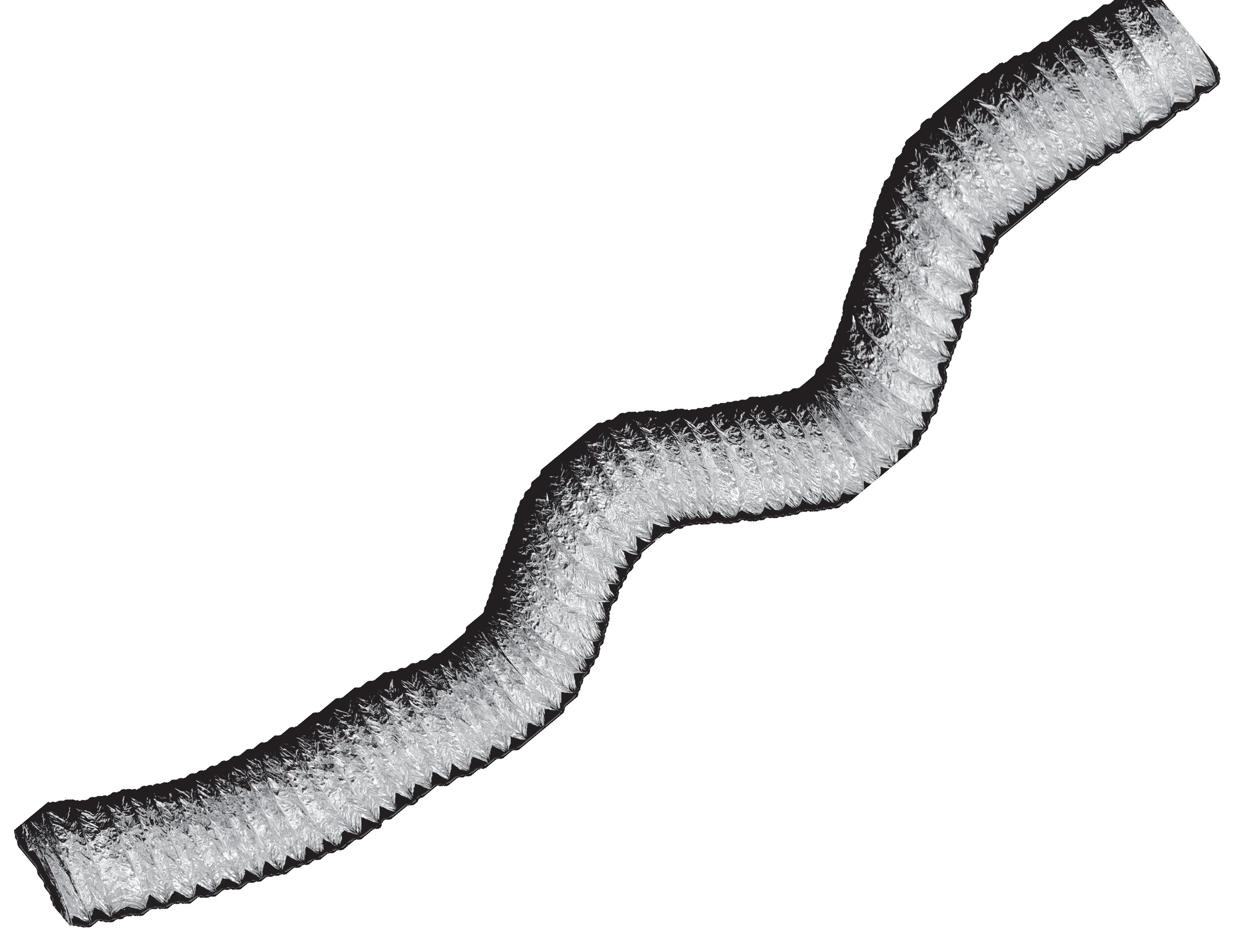
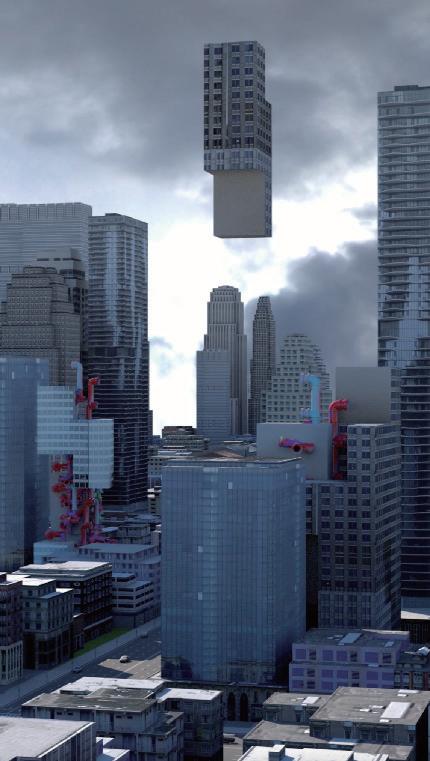
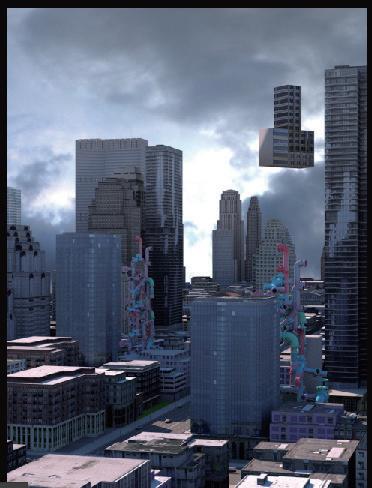
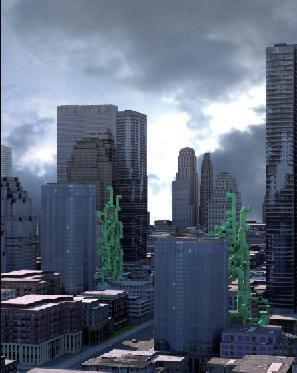
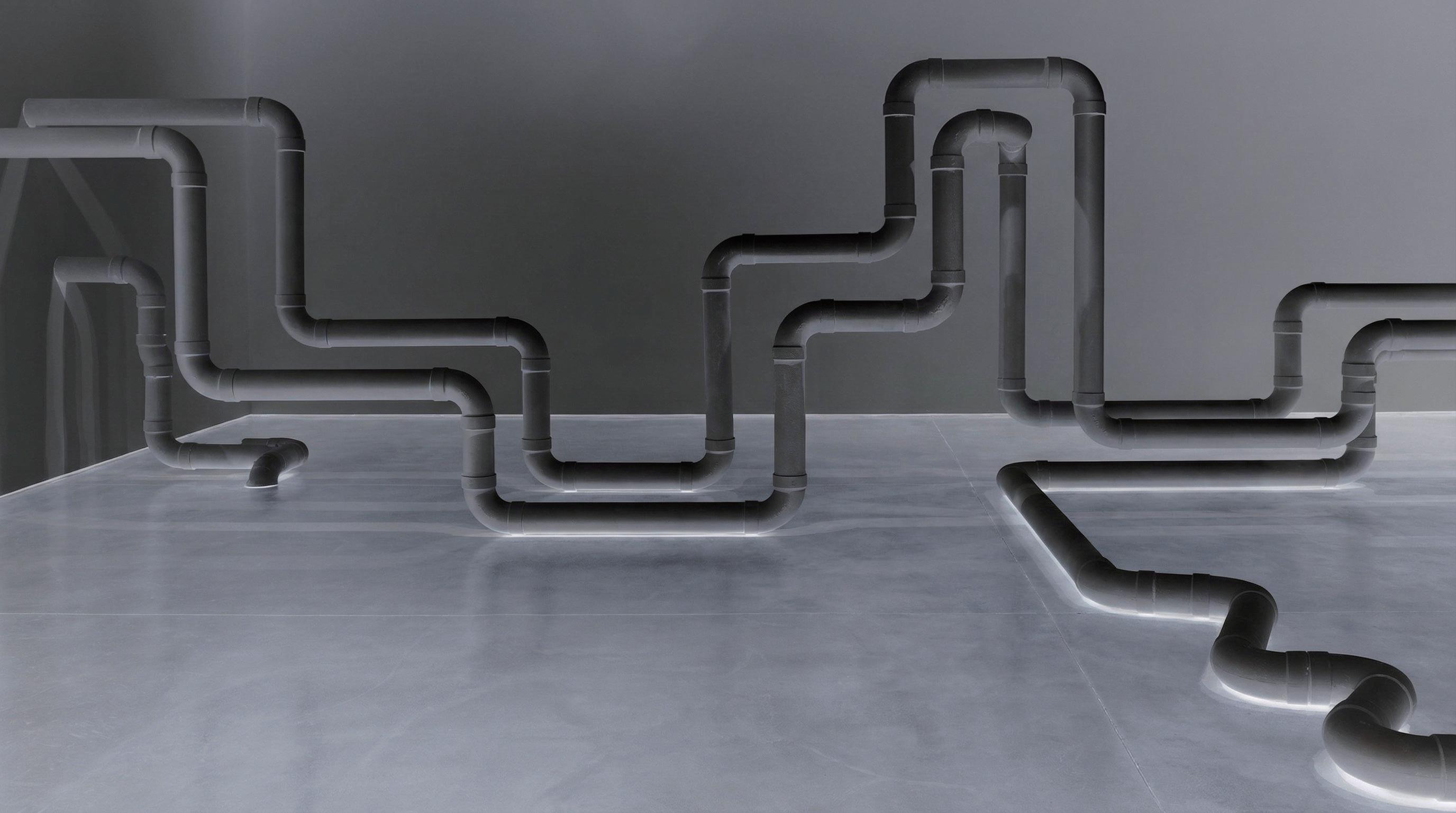
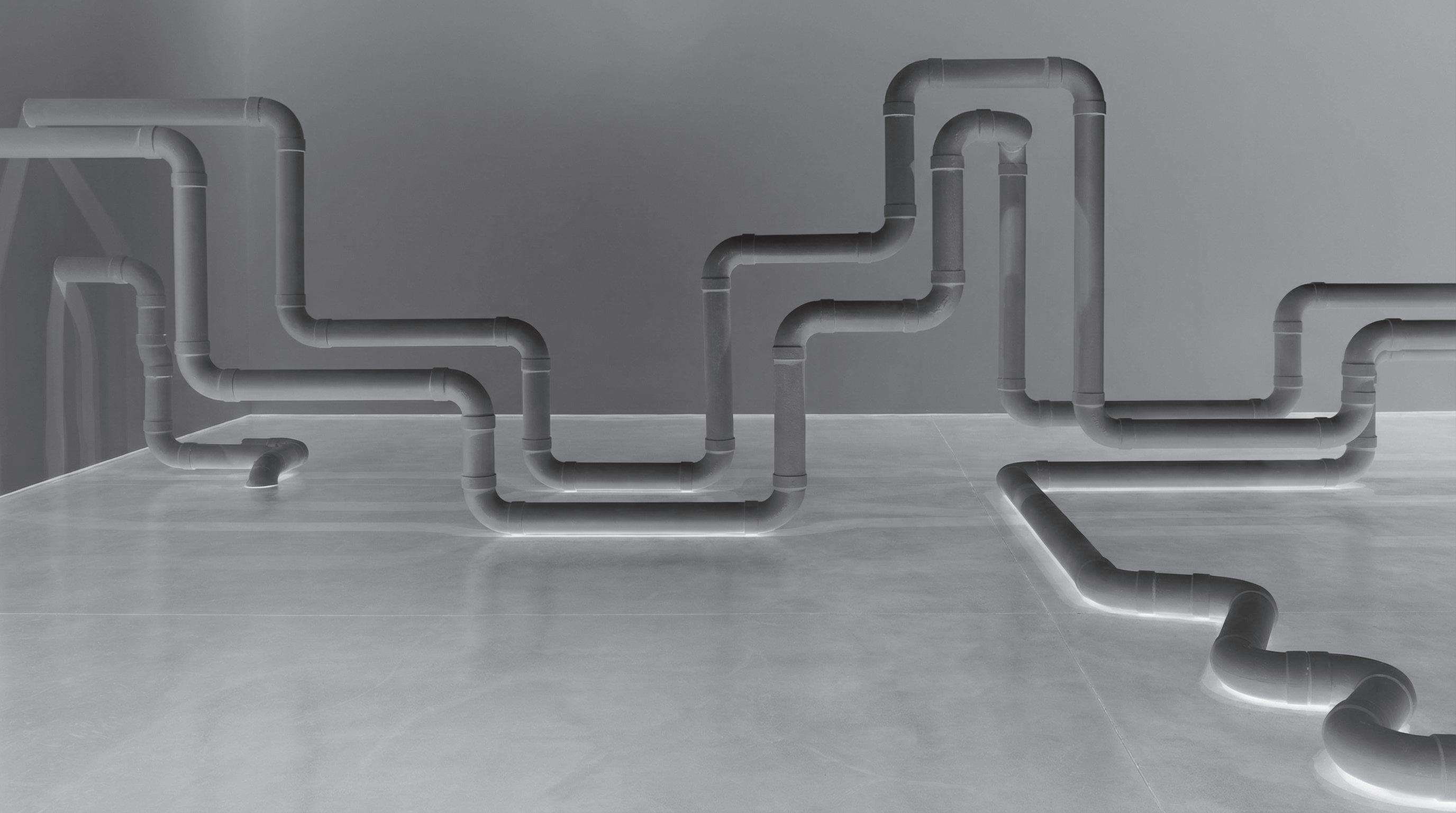
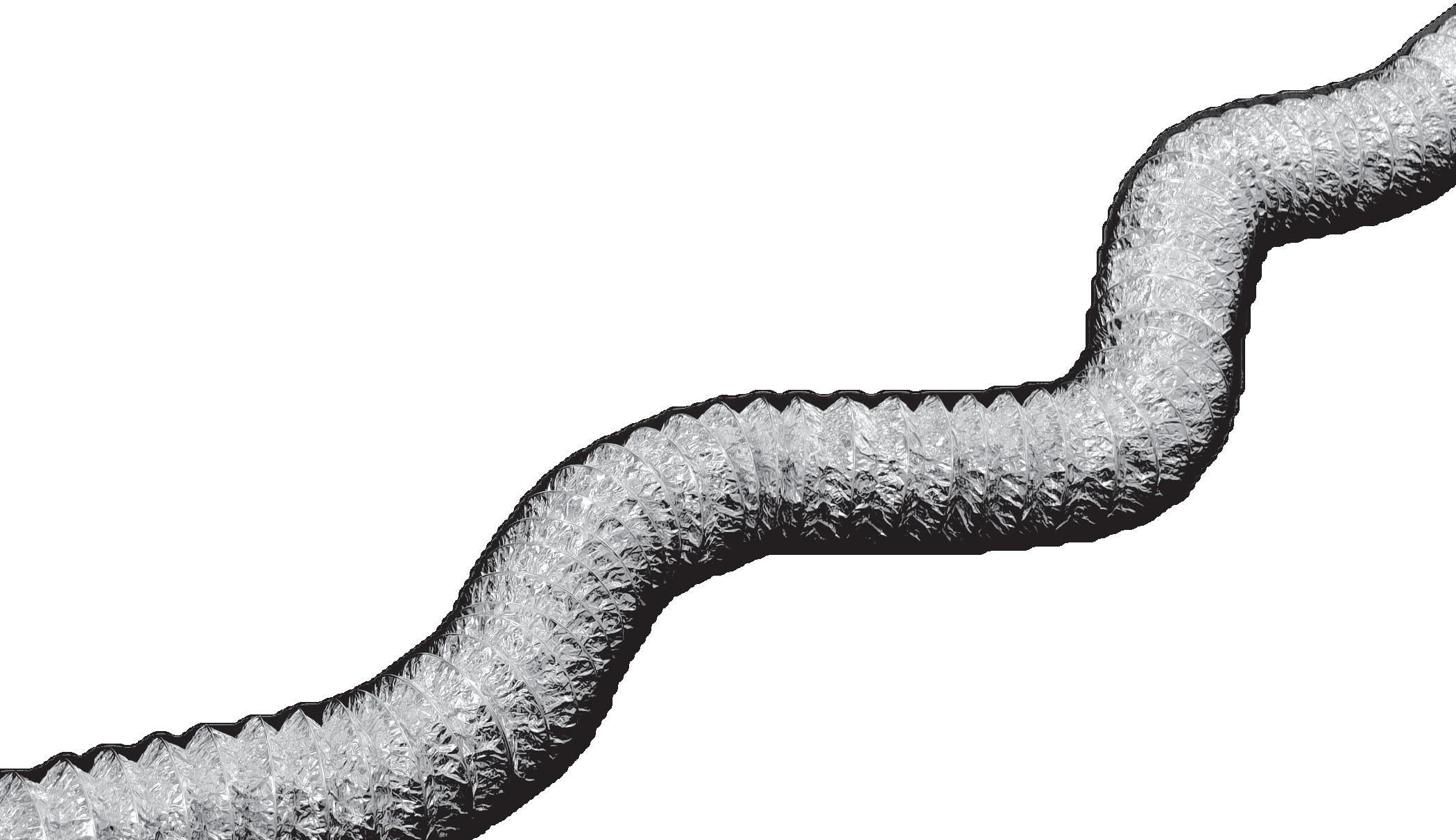
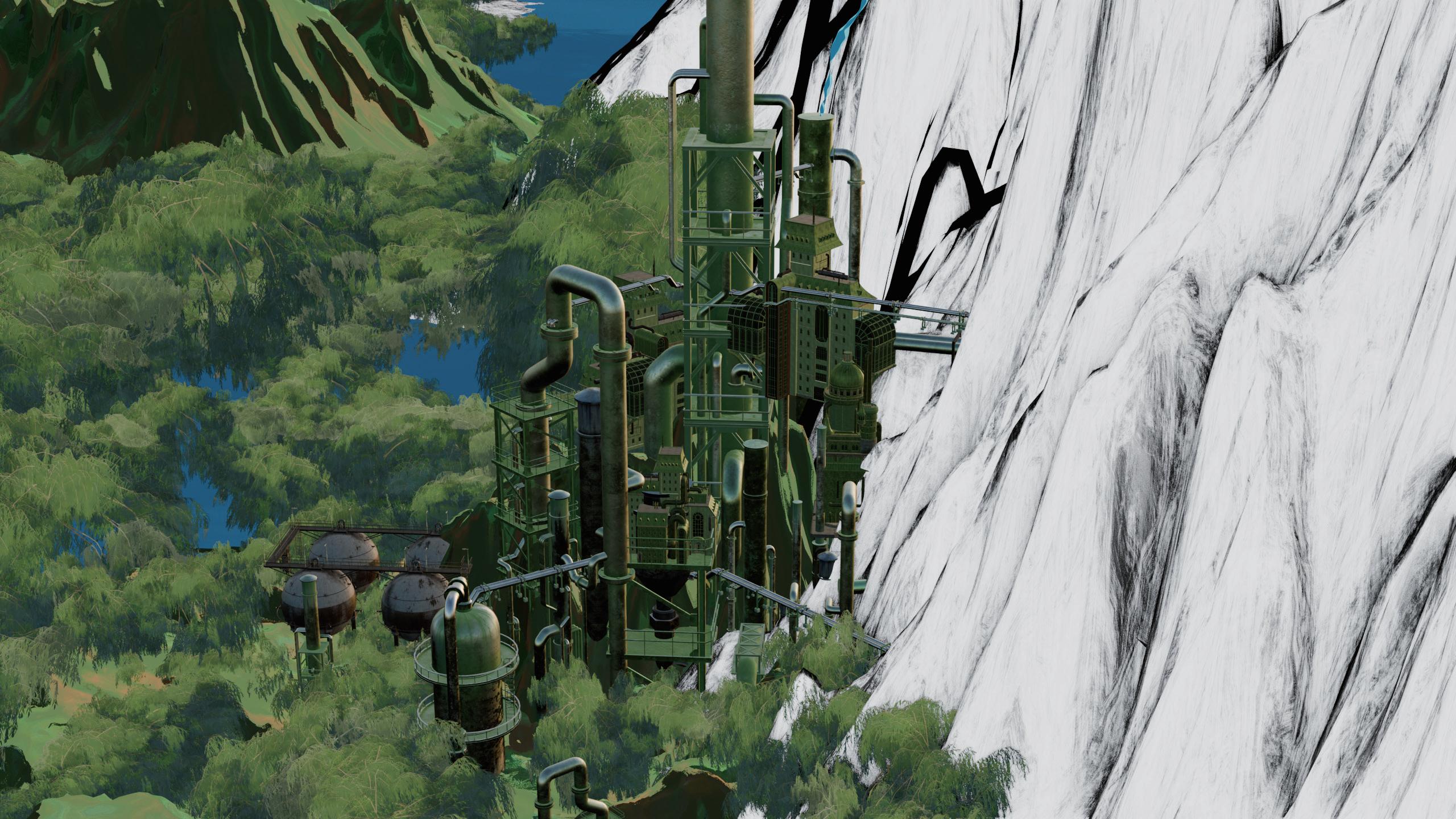
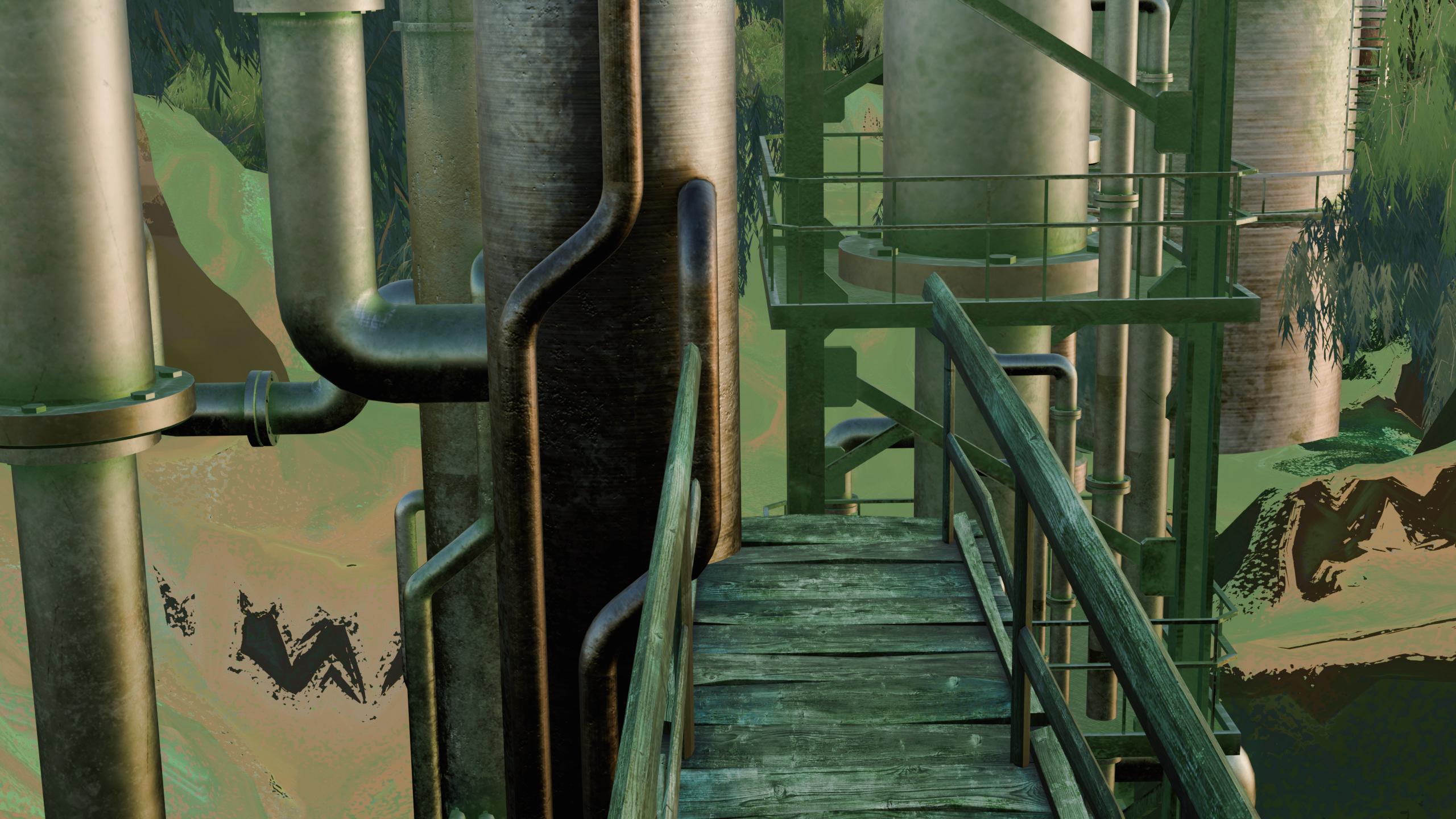
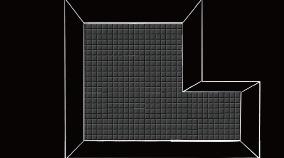
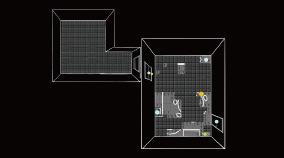
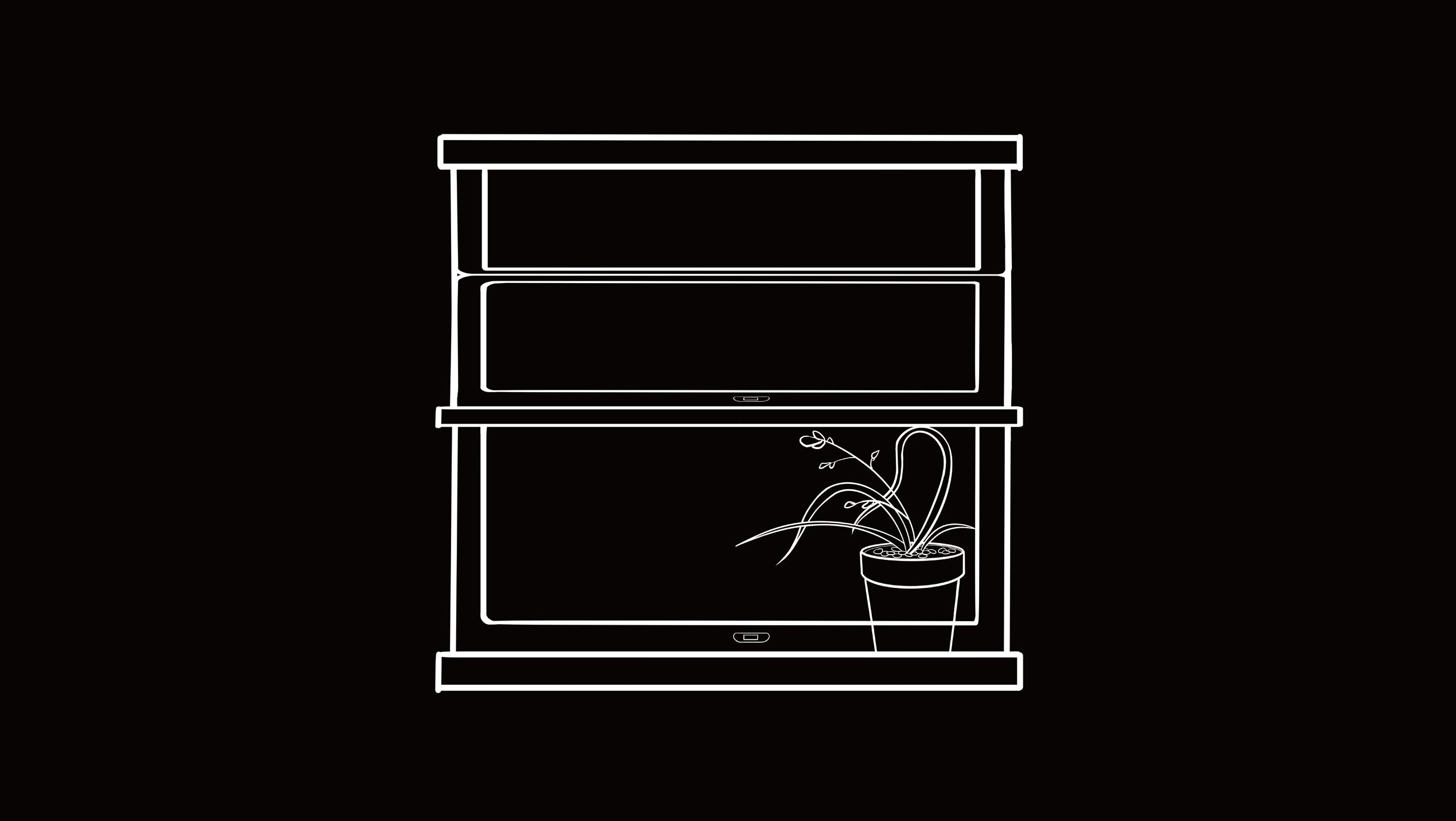
Looking out my window, I noticed that there were many holes in the exterior walls of the city buildings, they could be the exits of the air conditioners or anything else, it could be the beginning or the end. The invisible part of the wall is the pipe that leads to nowhere, the wall creates a slice of the pipe, and the essence of the building is to hide the pipe.
GAME START
RULES SETTING
Video Link: https://youtu.be/JPw-0eYPAMc
Video Link: https://youtu.be/zMTY6Qt9BkE
Pipes are far more meaningful than what we see.
Outcome - Pipe Empire Game
-As the beginning and hub of the entire pipeline empire
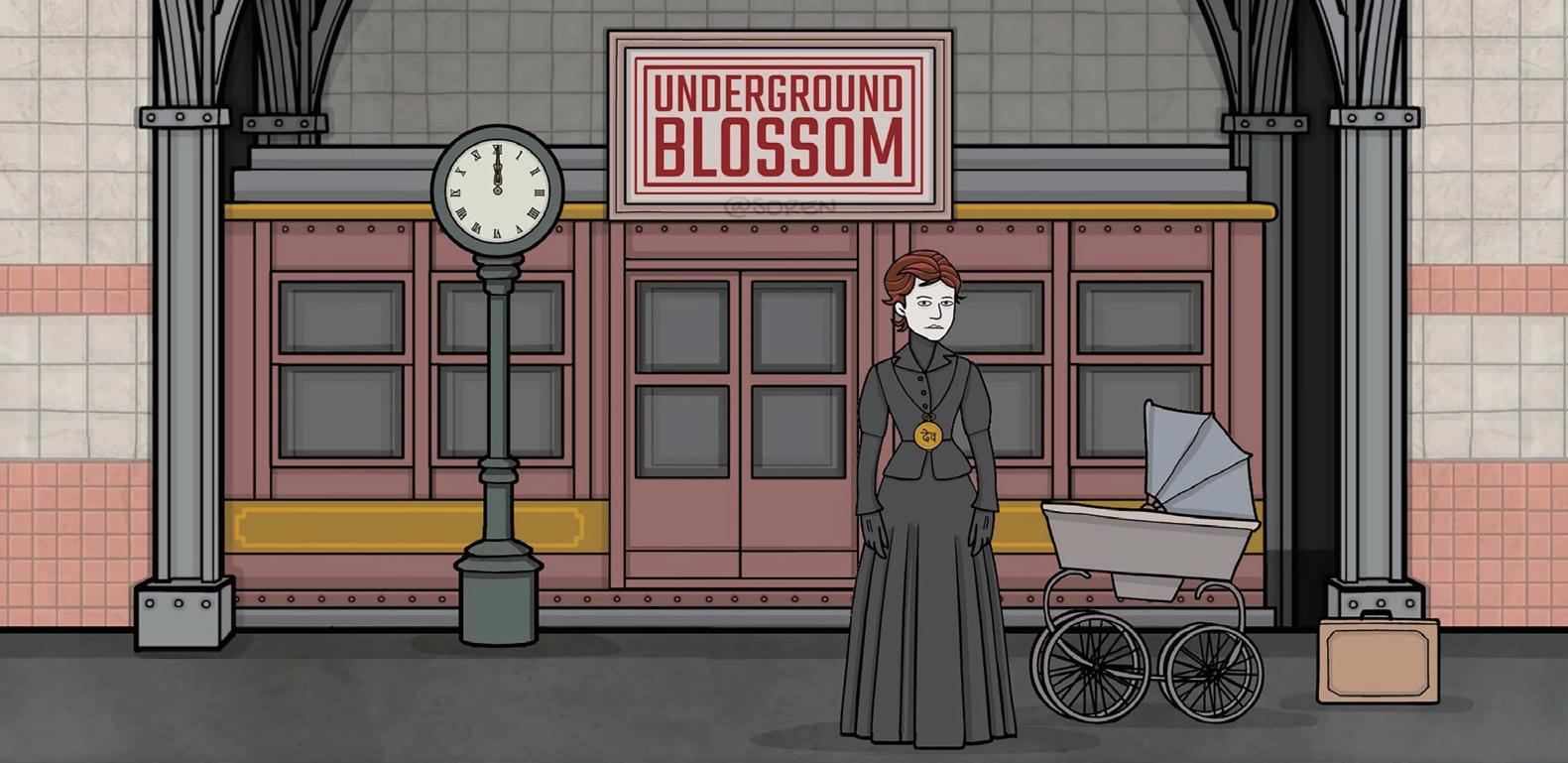
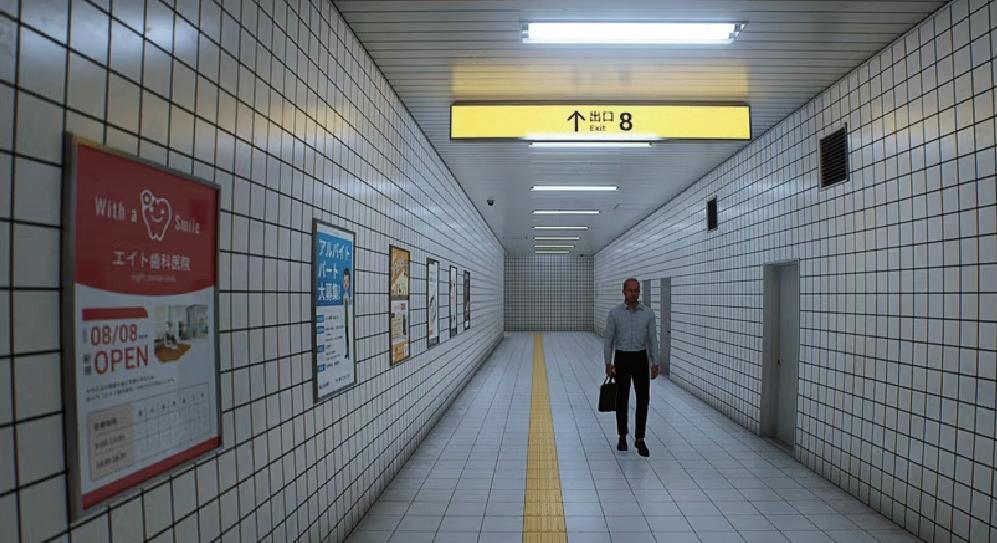
Game References Underground Game
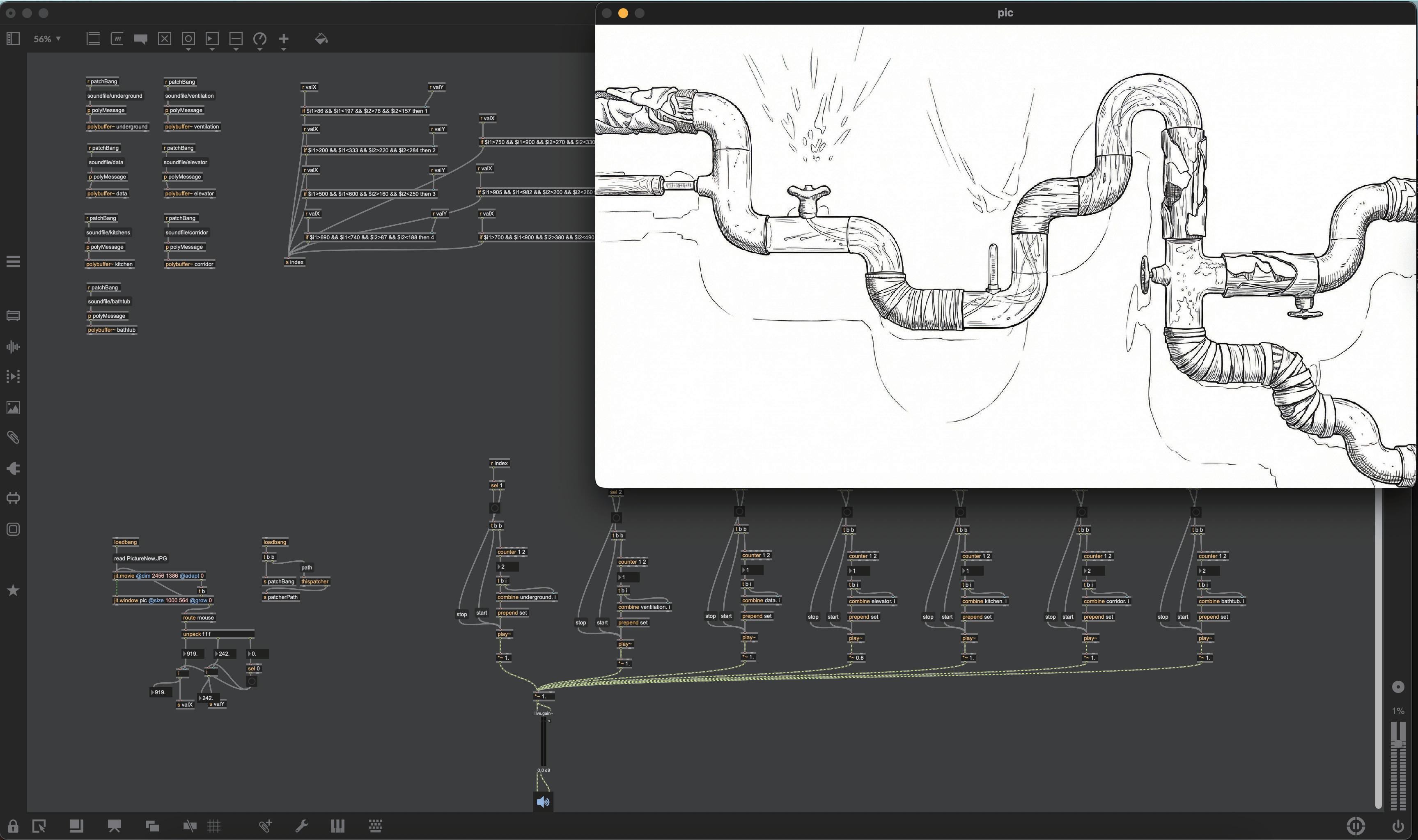
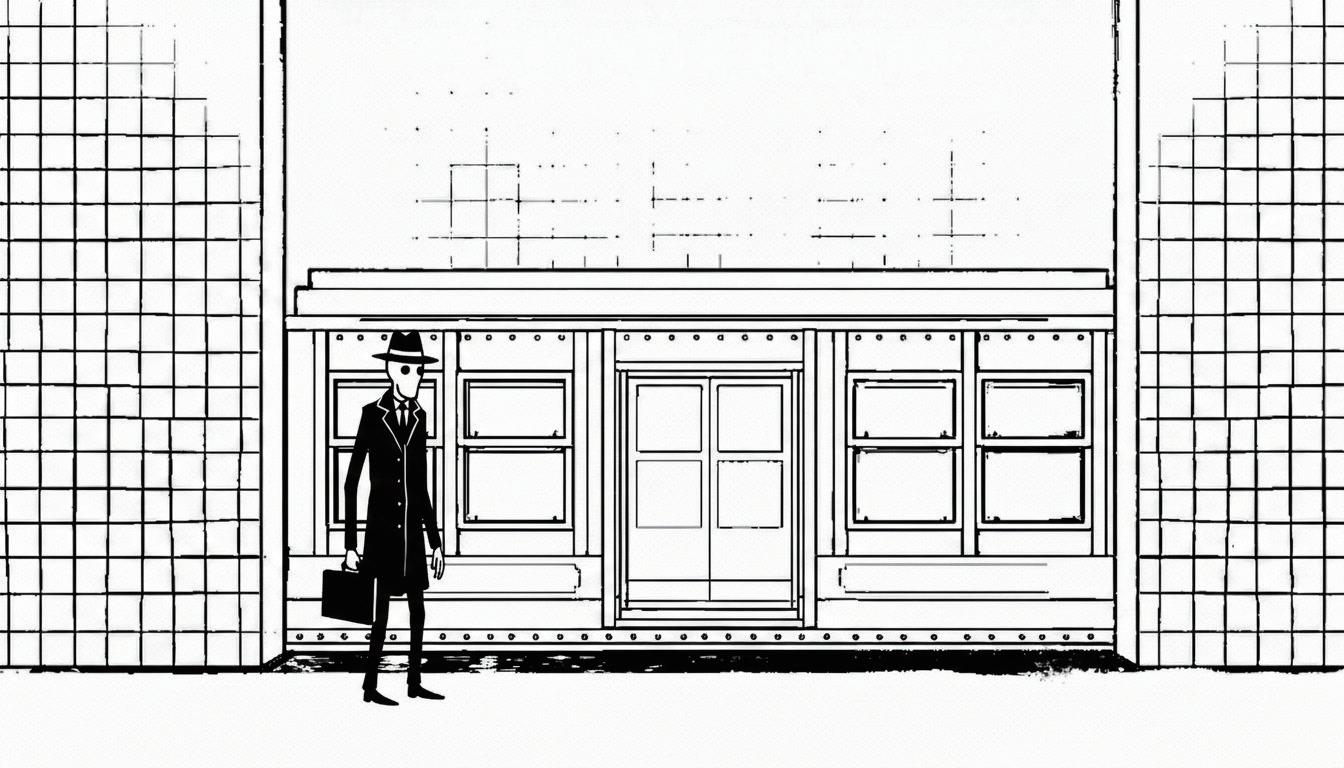
Upon completing each game level, the player will enter a new subway station with a distinct visual style. Returning to the subway station from a level may unlock new clues for exploring the world.
Data Game-Use the mouse to control image changes and find clues.
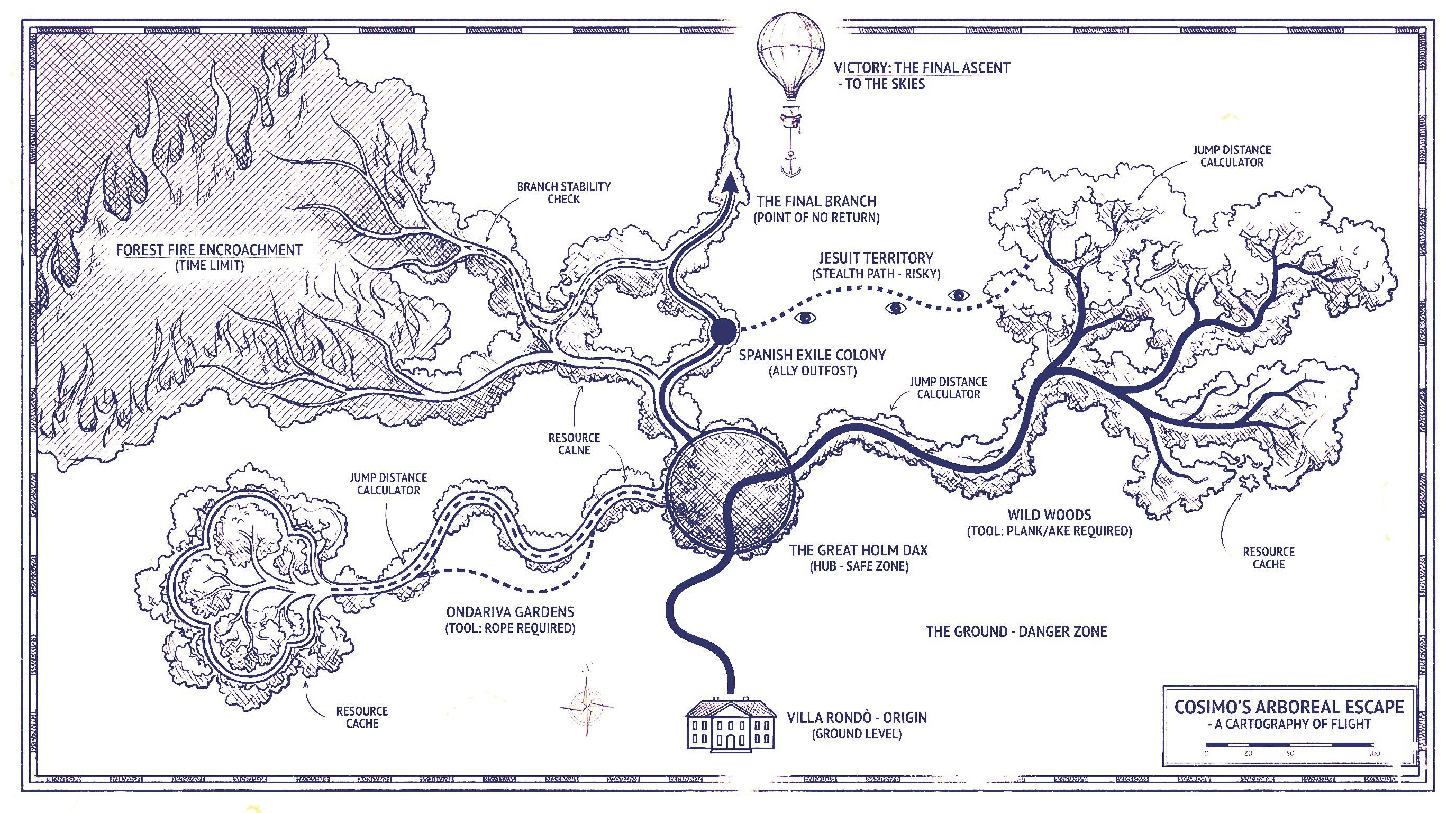
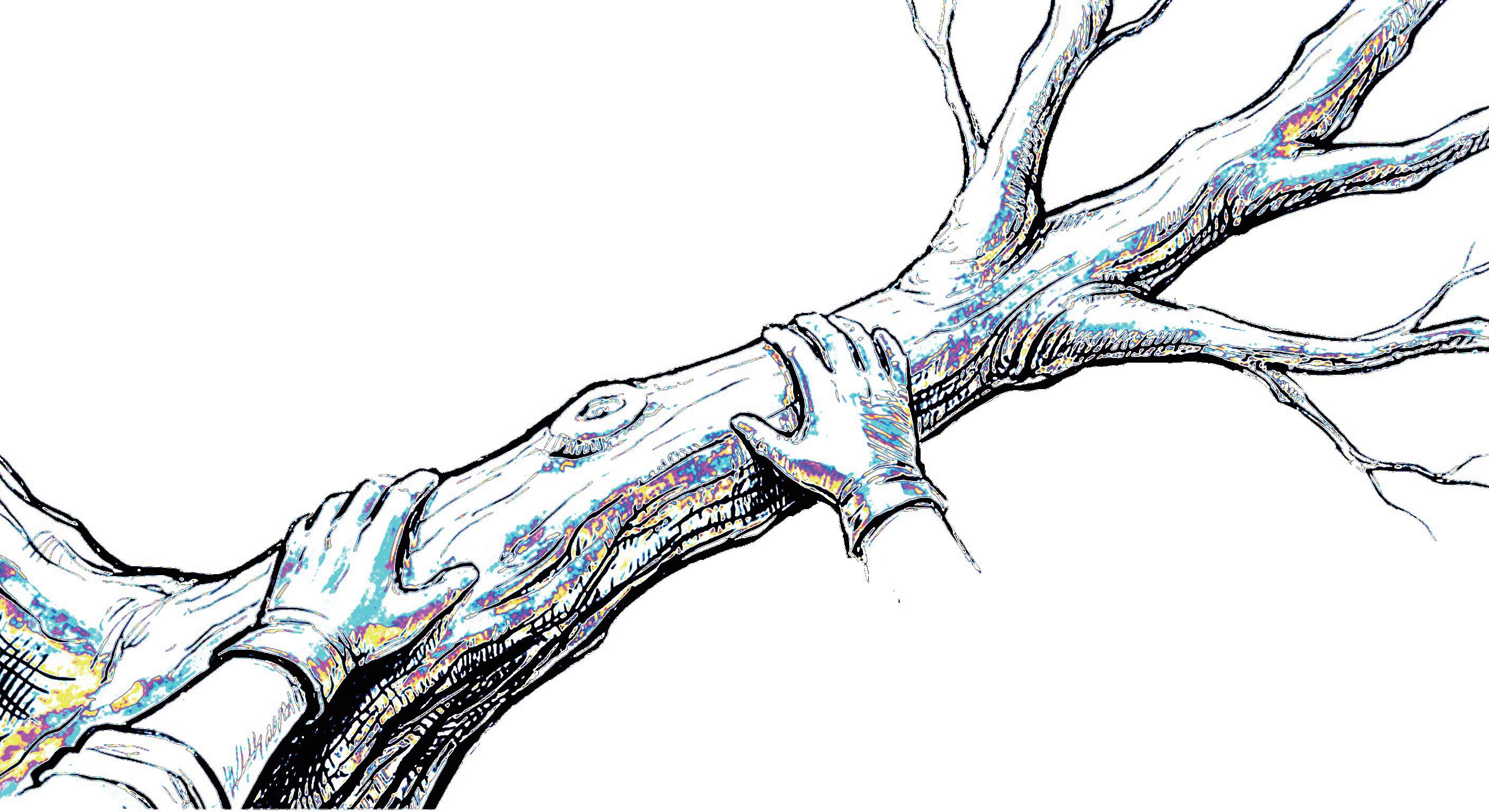
Explore and escape along the oak tree trunk and core.
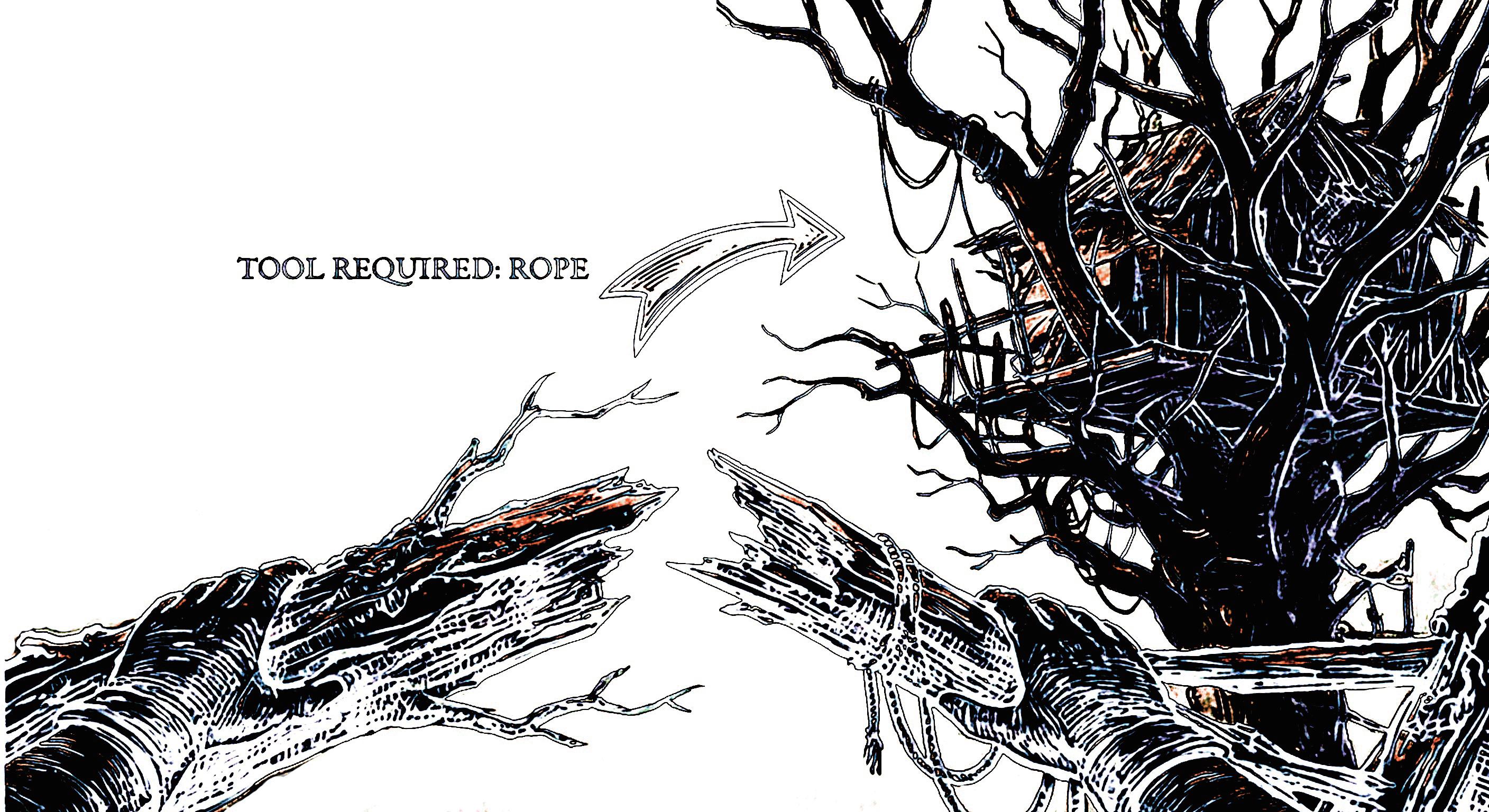
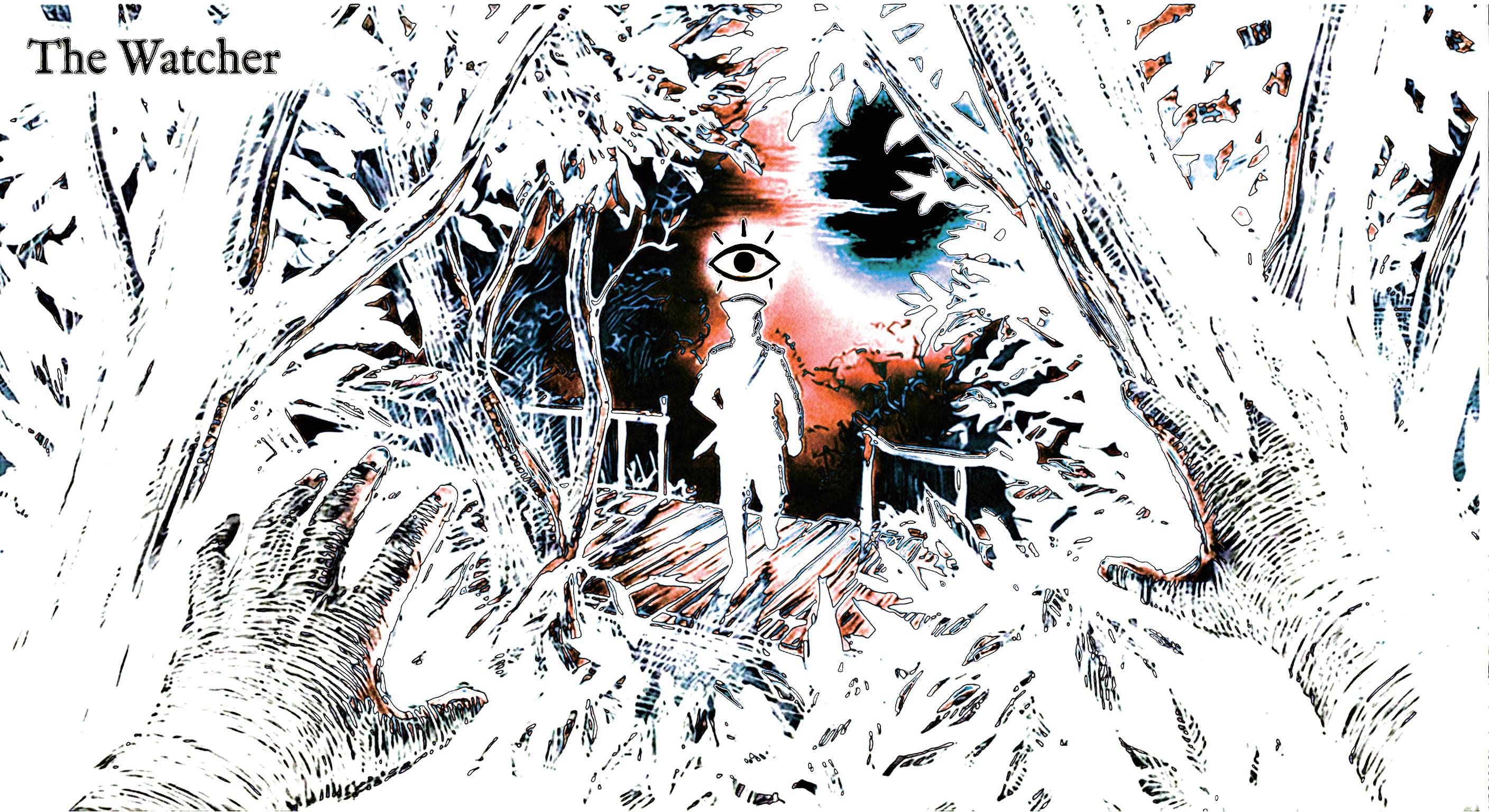
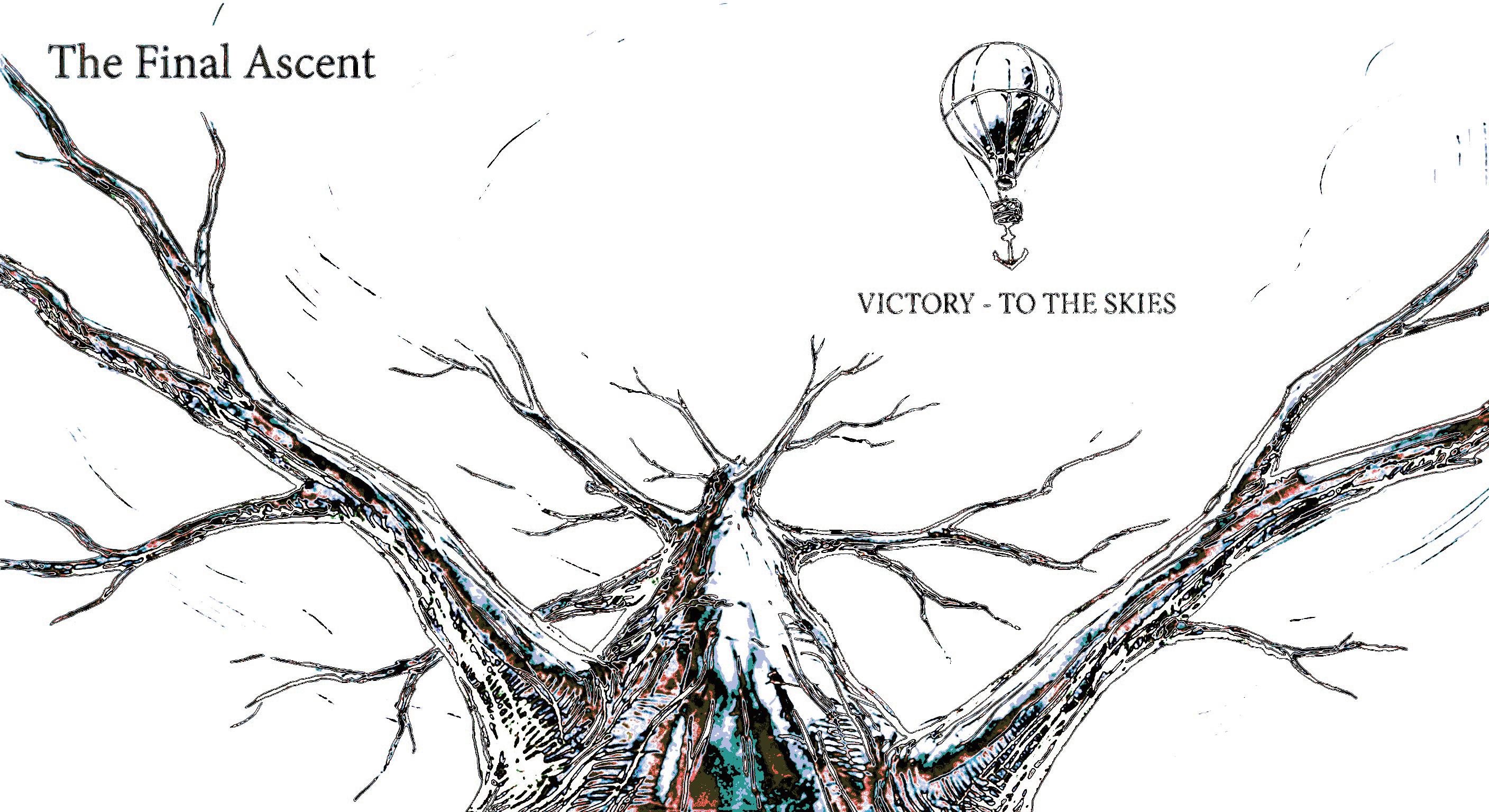
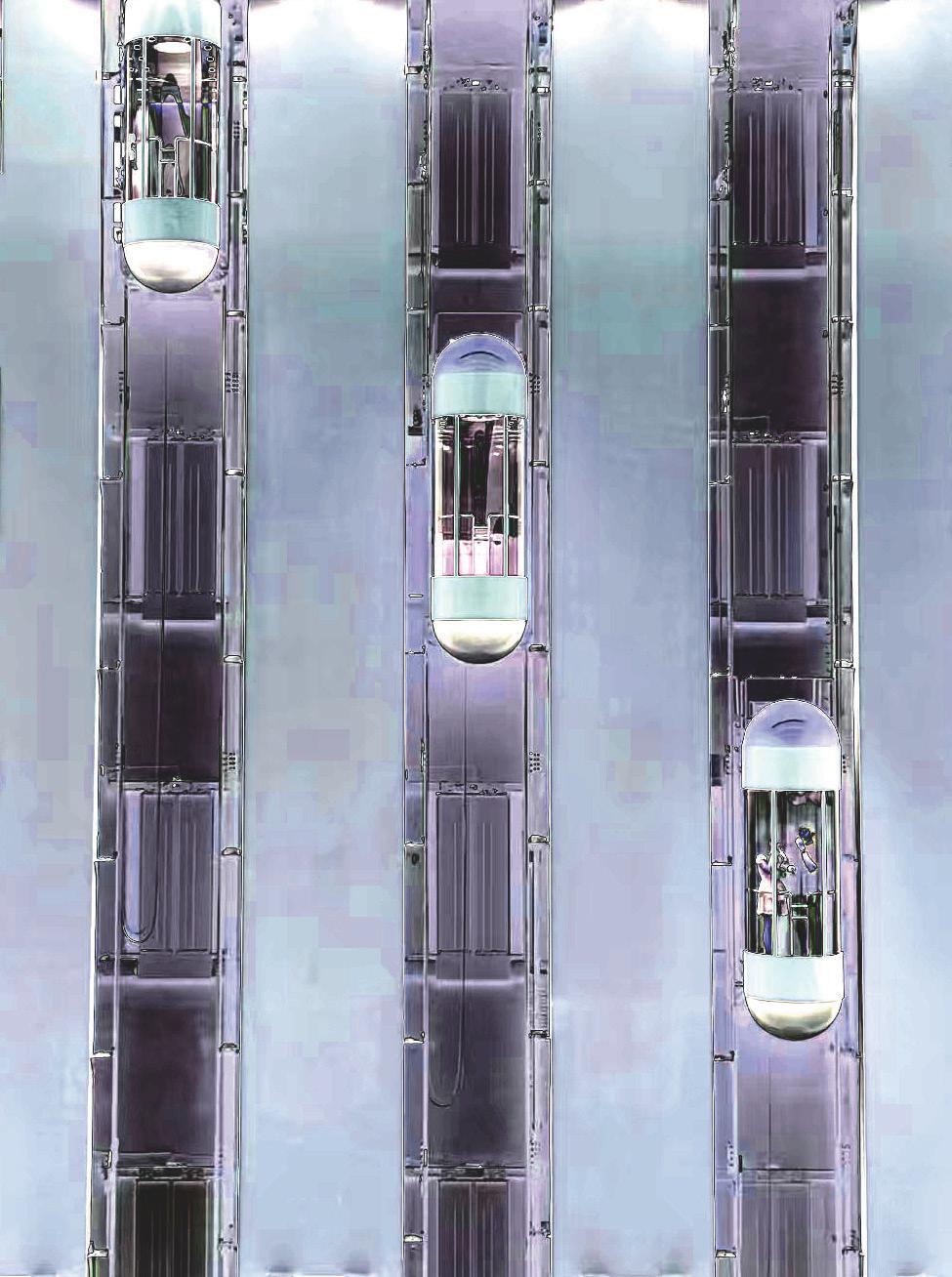
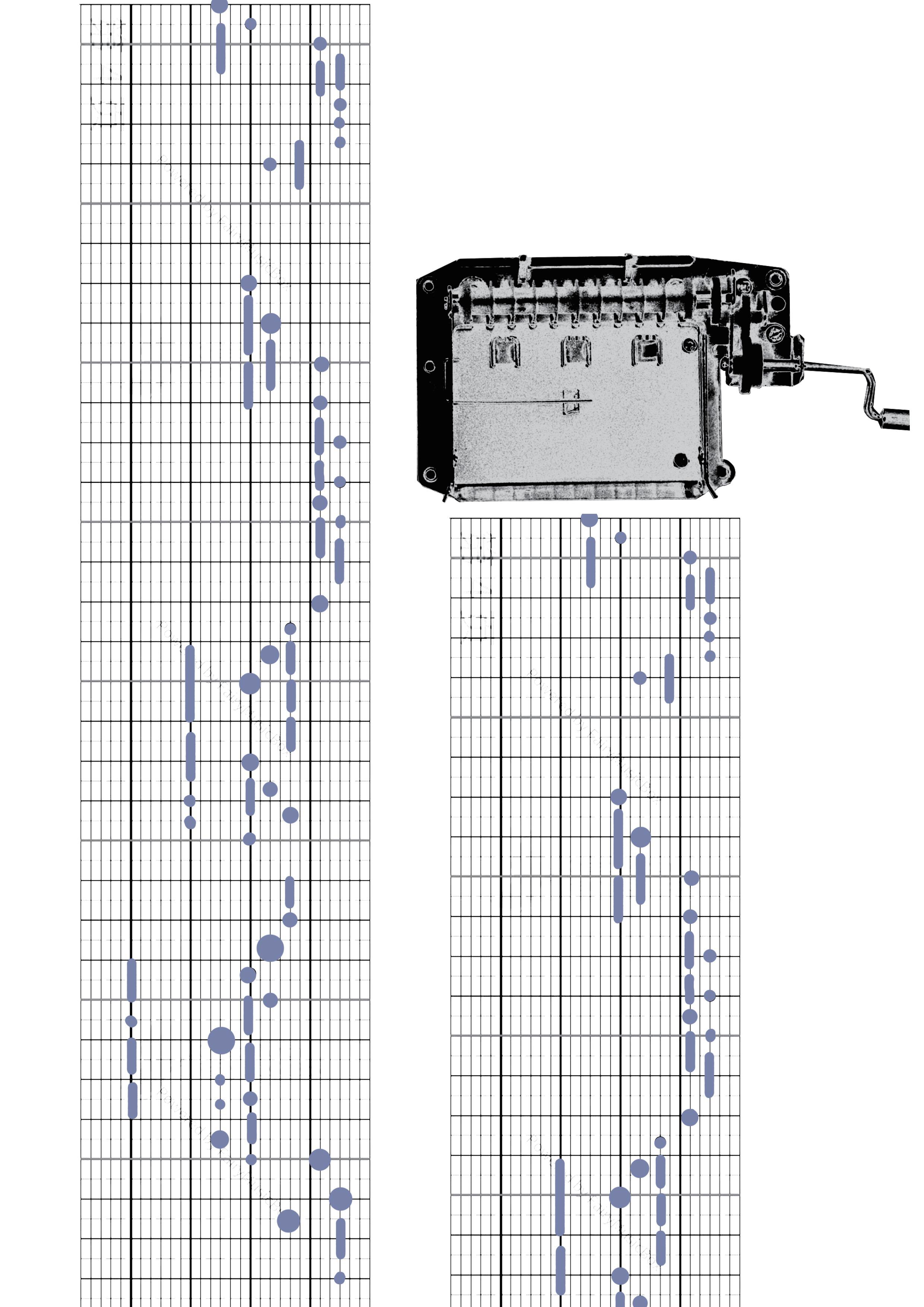
Initially, when contemplating the ventilation pipe game concept, my thoughts turned to flight simulation games and “Ratatouille”. However, while preparing ingredients during cooking, I observed the hollow-stem structure of certain plants, which instantly reminded me of the childhood novel “Toby and the Secrets of the Tree”. Consequently, I decided to base the construction of this game level on the worldview and main storyline of that book.
Inspiration
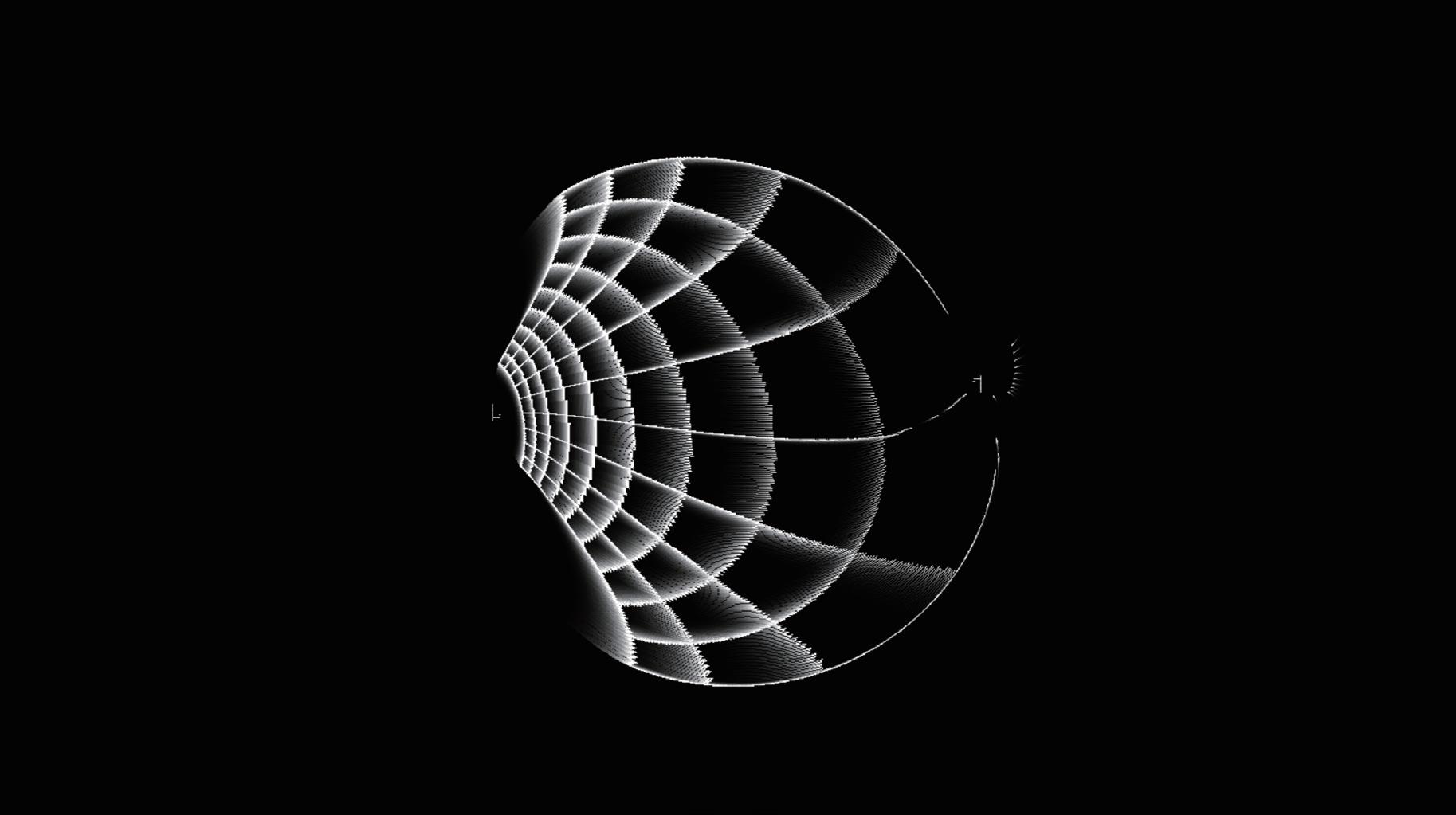
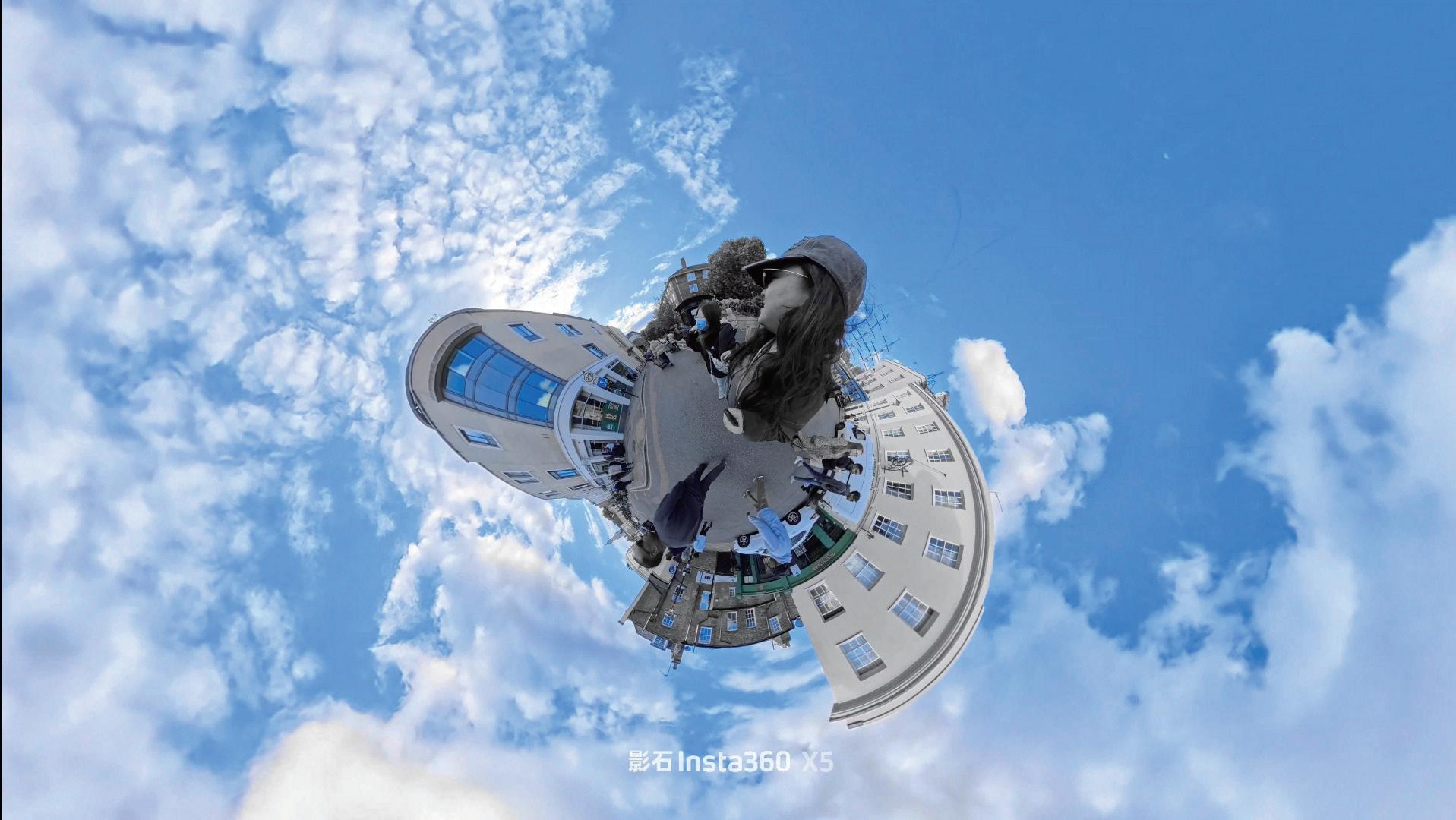
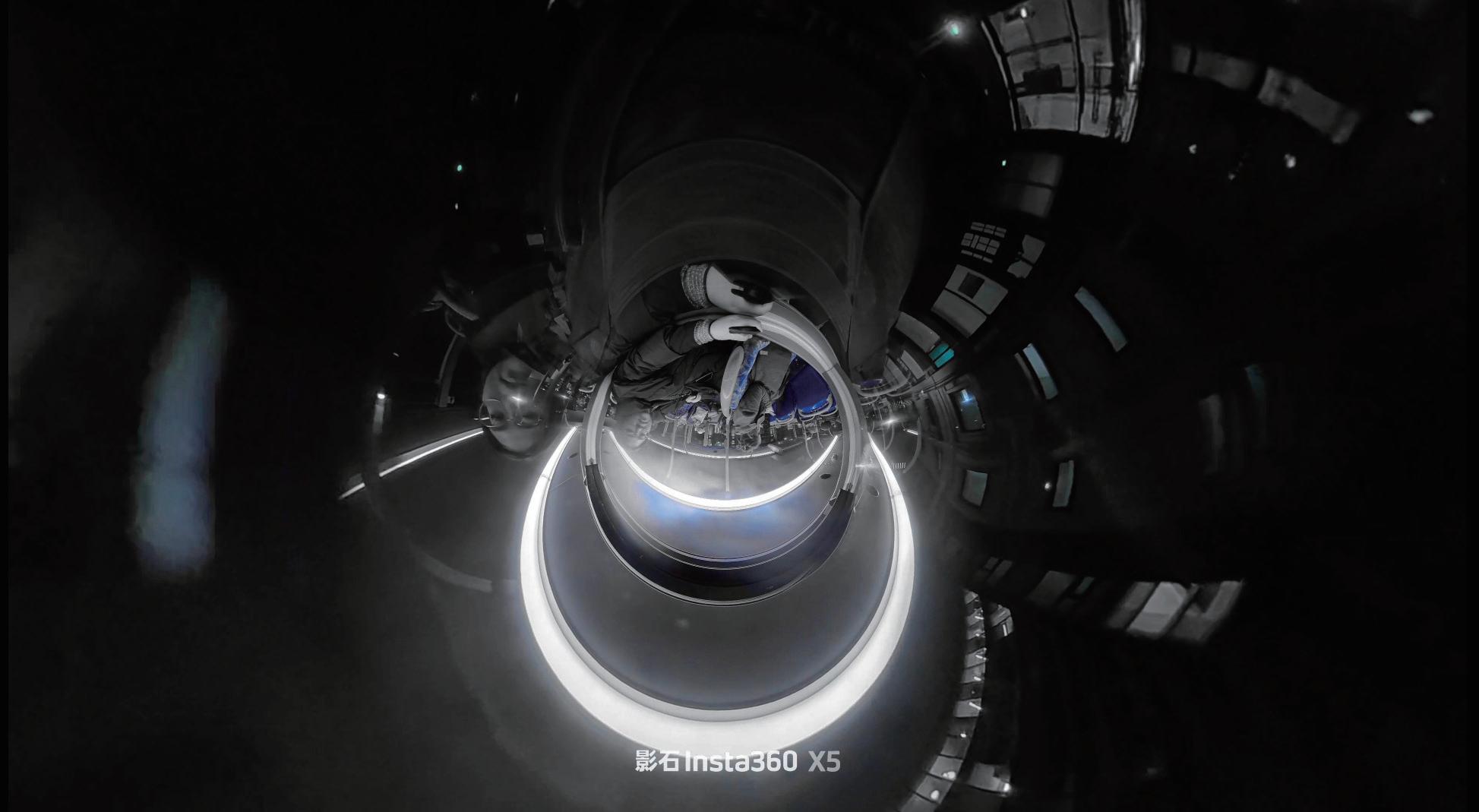
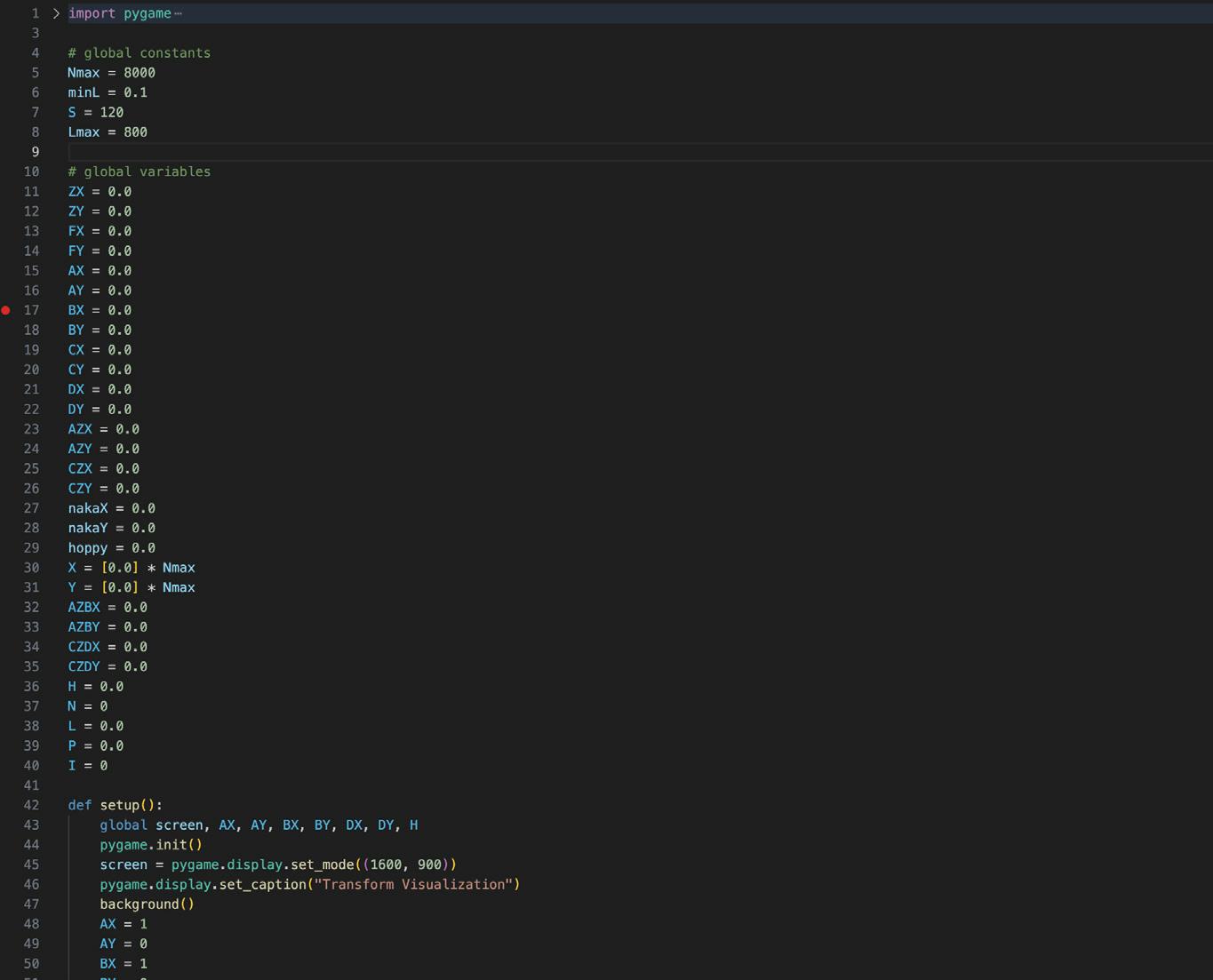
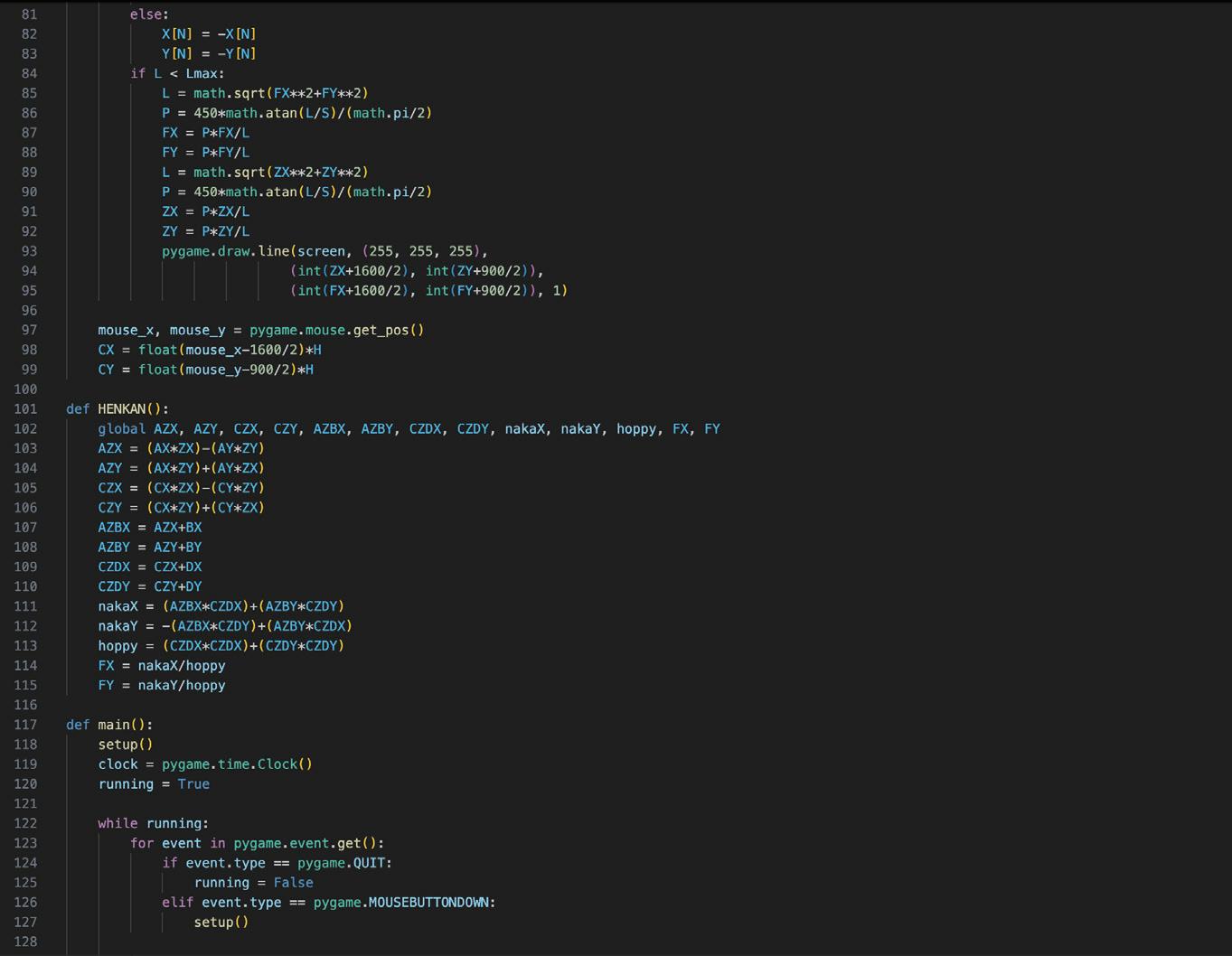
Around the New Year, while out with friends, I recorded moments with a panoramic camera. During post-processing, I noticed that the panoramic perspective closely resembled a first-person view from within a pipe. This observation inspired me to attempt recreating the panoramic camera effect in Python for my second project. This segment drew inspiration from “Square Pie Chart” and the formulas P = 450*atan(L = P*FX/L,FY = P*FY panoramic camera toR=450*arctan(r compresses infinite distance onto the screen, visually simulating the effect of a panoramic camera.
“Toby and the Secrets of the Tree” Game
“Underground Blossom” “The Exit 8”
Video Link: https://youtu.be/pXD25UyjJM0
PIPE EMPIRE
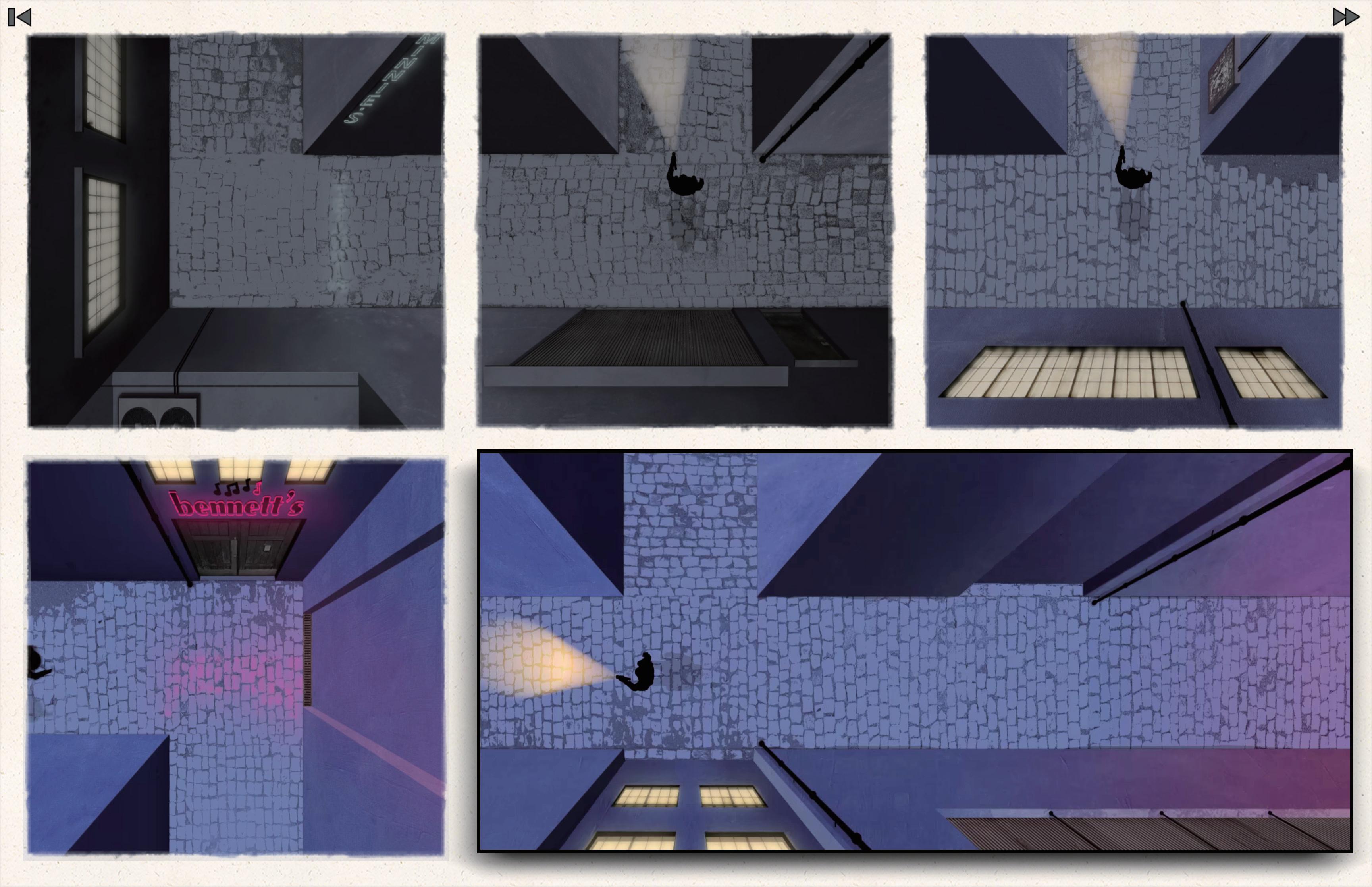
Game Storyboard
Key Mechanism
-Understanding the “patterns” of the mountain and navigating uncertainty
Fluid terrain:
Mountain disturbance:
Risk and death:
Color interpenetration:
Task types
Delivery:
Translation and misreading:
Negotiation:
Loss-of-control events:
Information-Weaving Game Design
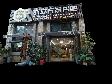
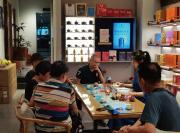
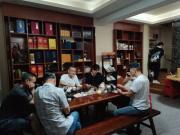
My father frequented various teahouses in the city to exchange information with others (familiar and unfamiliar) and made this an important part of his life. They set the stage by narrating the relationship between family and relatives and the stories of daily life, and launched a slow transaction of information.
Video Link : https://youtu.be/q7bG7VgWHV4
Click on the gray grid/ calculate the key location/ take the key/ enter the next level/
Since I can remember, my dad has always been able to chat familiarly with strangers around my school. I believe he has been accentuating the "passersby" (like school security, dormitory managers) in my life and surroundings, thereby forcing me into connections with these people, creating a web woven of individuals and information. These nodes have, to some extent, become surveillance probes. I've always been dissatisfied with this, but also curious about the behavior, so I asked him how he views this web-weaving activity.
He told me he loves expanding his walks around the community, connecting with these strangers and associated matters, as a way to expand his information network. This activity is his hobby, an entertaining and effective way to relax. I'm just a small part of his extensive web. This response surprised me, making me even more curious about how his daily walks and web-weaving unfold, so I asked my dad to record his walking routes over two months.
Wow! Your daughter is really outstand- ing, isn't she? Has she been organizing some activities lately? She and her class- mates often leave early and return late.”
Design
Qianpu North Community Section 1
Qianpu North Community Section 2
Qianpu Sports Park
Lingdou Community
Qianpu South Community
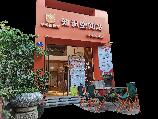
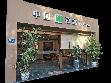
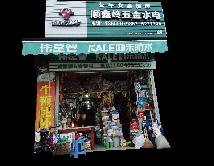
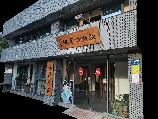
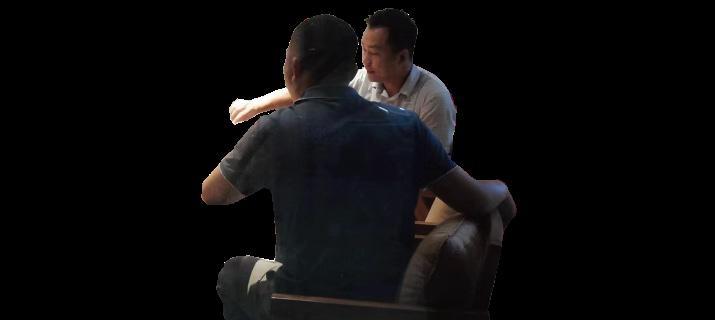
Overlaying these tracks, I noticed a commonality: all paths lingered around various tea houses in the neighborhood, where my dad chose to conduct his information exchanges. These tea houses/shops are mostly frequented by married middle-aged men like him, gathering after dinner to drink tea and chat. He carefully notes the information he needs from their conversations, using his expanding network to facilitate tasks. He exudes absolute confidence and conviction in the grandeur and acuity of his information network, sharing his gains with the family after each "slow information transaction" session.
Geographical Analysis:
The trajectories are mostly centered around residential areas, expanding to three other communities beyond the original one. The stops along the way are often at shops (such as tea houses, hardware stores, etc.), where the majority of the people gathered are residents of the community where the shops are located or from nearby communities, with a relatively fixed crowd. Besides, there are also some traces around the park. The people gathered around the shops in the park area are more random but have a more fluid state, rarely sitting for long.The people gathered here are mostly married middle-aged men, with very few from other age groups or genders.
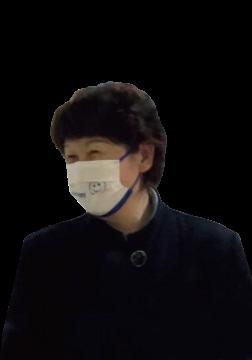
Uncle Xiao, a police officer
'How often do you go to the community shops to drink tea and chat?'
'About once every two or three days. Sometimes I go every day, it's quite random.'
'What do you usually talk about there?'
'Not much, just casual chat. Oh, this reminds me, I have a son and a daughter. I sent my son to Edinburgh in the UK two years ago to study media after he graduated from the Communication University of China. Now, he's studying for his postgraduate degree in Edinburgh. That boy really worries me, the expenses are huge, and he spends a lot too. Sometimes he gets lazy, although he's doing not too bad now, but he still feels immature. Yes, but my daughter often makes me proud. She's sensible, although not highly educated. got her a job as a teacher in a private school, and now she can solve her own problems. It's my son who really gives me a headache."
"Why do you like coming here?"
"To share my questions, difficulties, and troubles with good friends, and also to share my joy and achievements. feel a lot more relaxed when I go back home."
Interview
Uncle Zhang, University Professor
"How often do you usually go to the community shops to drink tea and chat?"
"Every other day or so, I go to have a chat."
"What do you usually talk about there?"
"Whatever they talk about, I'll discuss. Generally, I don’t pay much attention to the specific topics, but often the discussions revolve around policies, education, and such. don’t know much about these, but I share my thoughts when I have an idea. The topics are quite interesting, offering diverse social perspectives. Everyone seems quite serious, but chatting actually helps to relax and vent."
"Why do you like coming here?"
"I’m a university teacher, teaching mathematics. University teachers don’t have many classes, so I'm relatively free. When have no classes, come back home. There’s not much I can do at home, so I come out to get some fresh air and chat."
· Uncle Wang, Community Security Guard
"How often do you usually go to the community shops to drink tea and chat?"
"Occasionally I miss a day, but basically every day."
"What do you usually talk about?"
"I mostly listen to others. They are all very knowledgeable, and don't know much. But they are all nice people, they have helped me solve many life problems, including issues about my children's education. Coming from the countryside and being new to the city, they even helped me with housing issues. I'm very grateful and have learned a lot. Sometimes know a bit about the topics, maybe related to the community, and then join the discussion."
"Why do you like coming here?"
"It feels quite special. It seems anyone can join, regardless of their job. The chat is very relaxed, and we talk about everything. I've learned a lot of new things, it's interesting. It's a feeling I haven't had in my life or work. I can't quite explain it, but feel that
Uncle Su, Bank President
"How often do you usually go to the community shops to drink tea and chat?"
"Three or four times."
"What do you usually talk about there?"
"I'm always following entrepreneurs. We seek quality businesses for loans, as they have the advantage of being profitable and repaying loans without defaults, bad debts, or bankruptcies, thus absolving me of responsibility. Previously, during the economic reform and opening-up, making money was easy; everyone needed money and sought loans from me, making me very popular. Banks could easily repay their loans with profits. But now, under poor economic and social conditions and a sluggish economy, my bank also needs to make profits. We need to lend money to earn interest for survival, which means actively seeking customers."
"Why do you like coming here?"
"Professor Zhang has extensive connections. Many of his students are in various fields, as well as Officer Xiao and others. Our daily chats about practical information are very helpful. Mainly, it's not about work, everyone knows each other, and we can talk about anything, making it relaxed. Everyone brings different perspectives and information to the conversation. Like Old Wang, although he is a security guard. Regardless of job, everyone's perspectives and information vary. Just sitting together and discussing, find it very good."
Objects Analysis:
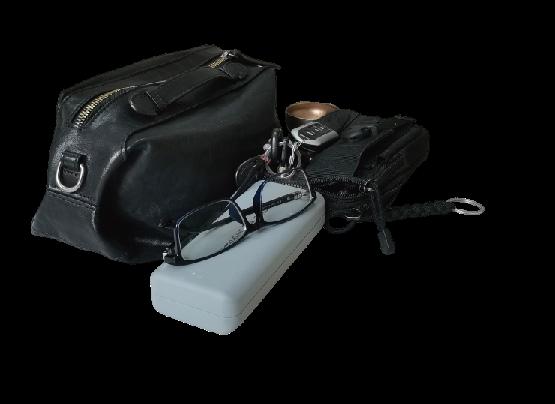
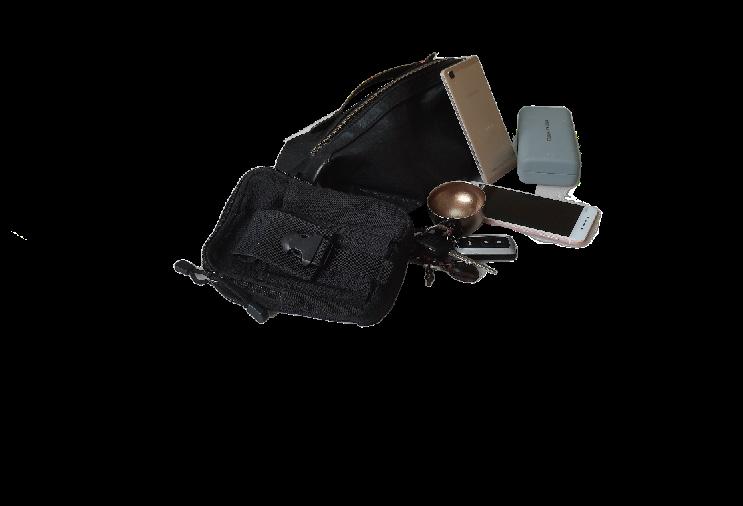
Unlike the gathered women, the items these middle-aged men often carry are simple and fixed, generally only including teacups, keys, glasses, mobile phones and so on.
Information-Weaving Research
Game Design
During these sessions, they lay the groundwork with narratives about family, relatives, and daily life, engaging in slow information transactions over tea. In this process, each person is an information refiner, turning the gathered details into a resource outline corresponding to each person mentioned. Once triggered, this radar prompts a recall, "Oh yes, go to him! His daughter is..." Everyone is compiling a directory, a catalog of resources from each conversation partner, each a layer in this web of information extraction. I'm interested in how everyone, through layers of web-weaving, becomes a messenger of information, crafting and editing the outlines of others in their resource directories.
I'm curious about how he operates in this process and what the gathering and chatting bring him. What roles does he play, and how does he interpret them?
Research Questions: What other attributes does the ground floor community shop, as a relay station in the web-weaving walk, possess? What role does it play in this slow information transaction? How does it assert its value through societal use (information stacking/slow transactions) and fill the void of familial presence?
Artist Research
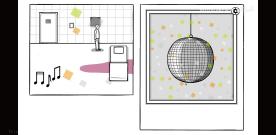
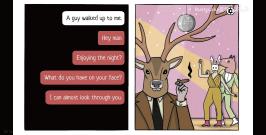
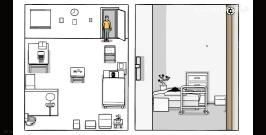
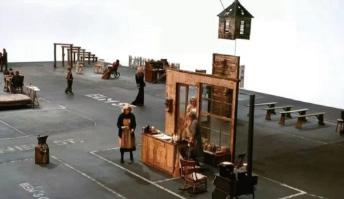
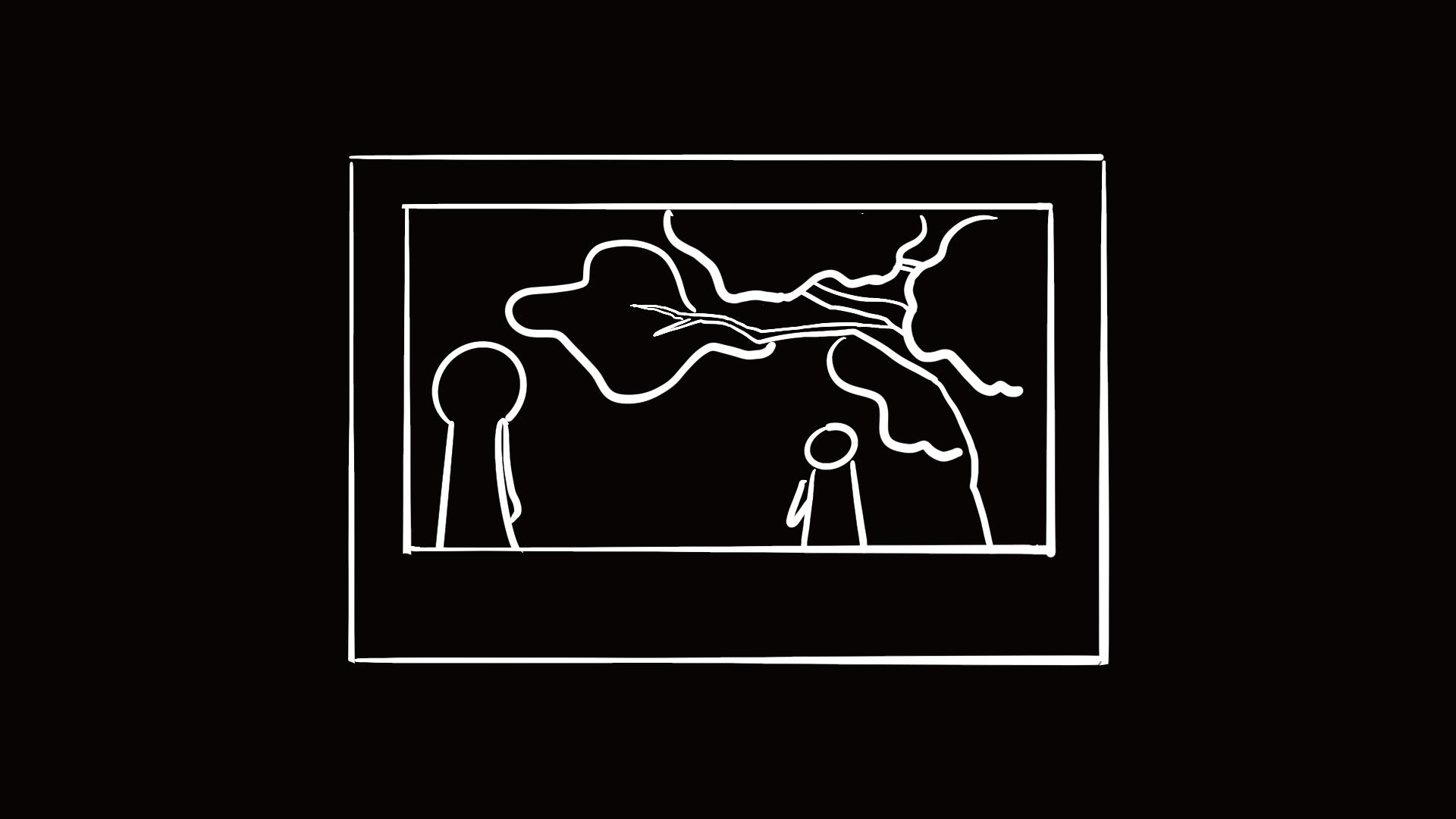
Rusty Lake is a series of surrealistic puzzle adventure games developed by the Dutch indie studio Rusty Lake. Its contradictory yet coherent storyline, veiled with melancholy amidst joy, makes it my favorite game series. When envisioning this game, I immediately thought of "White Door" from the series, which greatly inspired me. I believe the pure lines offer unlimited imaginative space. I want to design an information web world that is neither completely flat nor fully three-dimensional. Like in "Dogville," where physical walls are discarded in favor of chalk-drawn lines, I aim to create a god-like perspective, searching for information and advancing through the game.
I believe these community shop spaces, through the exchange of information about family relationships or everyday life stories, have created an urban leisure system for this group of married middle-aged men. For young people, an urban leisure system might be going to KTV, watching movies, or shopping. But for these married middle-aged men, burdened with family responsibilities, such activities are too extravagant. Therefore, 'Information-Weaving' has become their urban leisure system and entertainment.I see my father's role as laying the groundwork for familial relationships and deliberately revealing information for exchanges as an effective form for married middle-aged men seeking familial presence and self-worth.
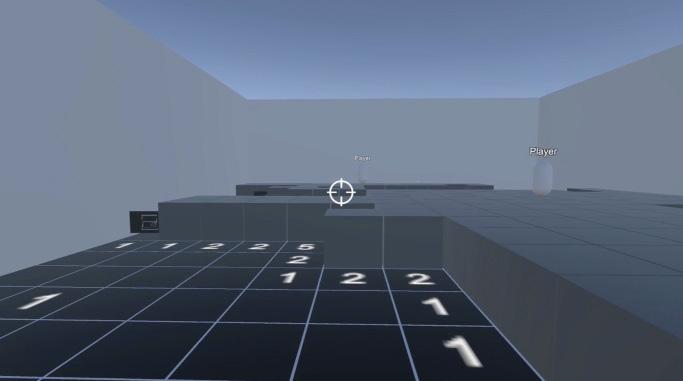
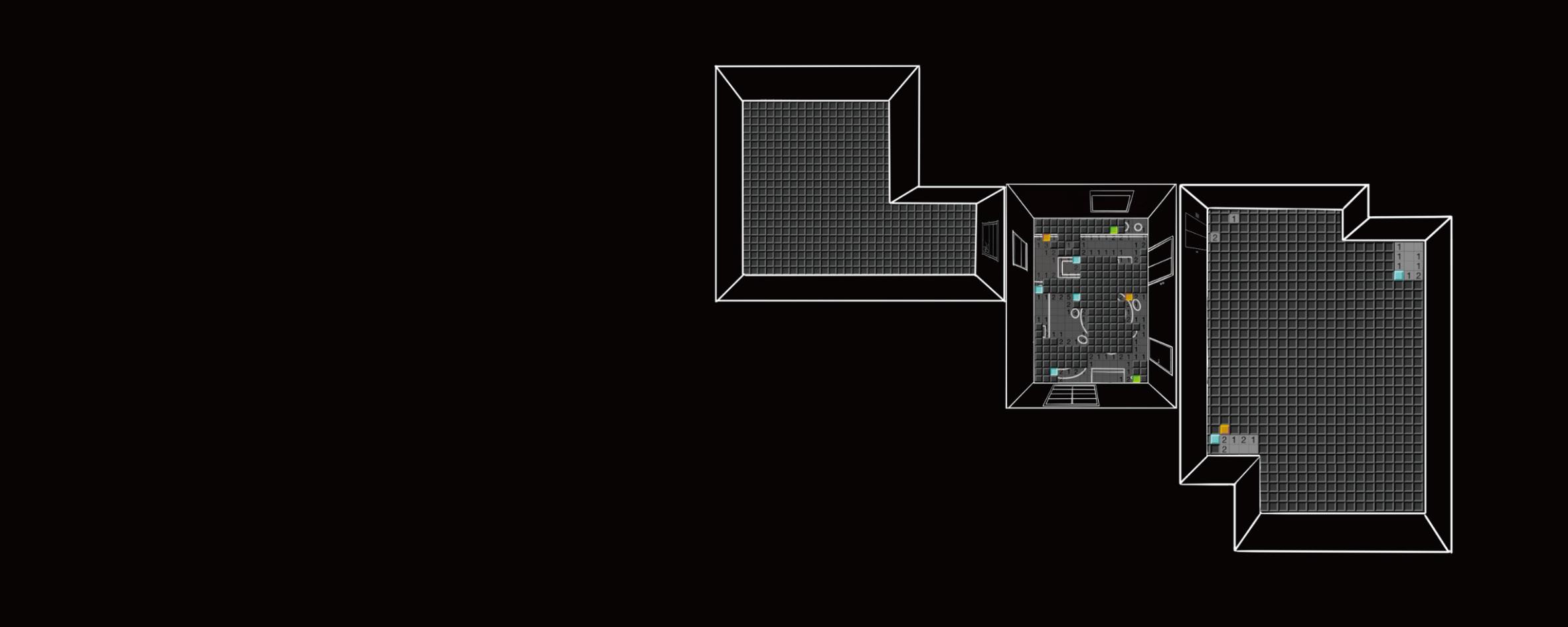
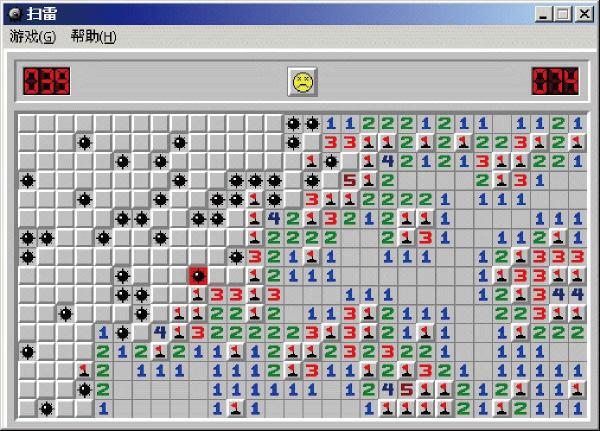
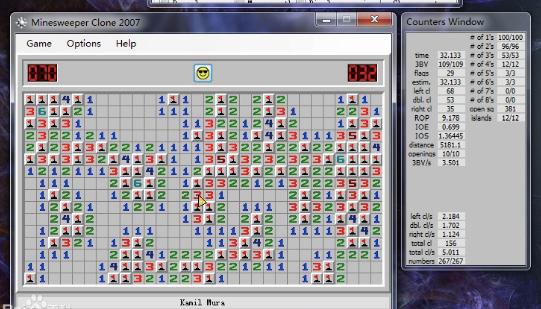
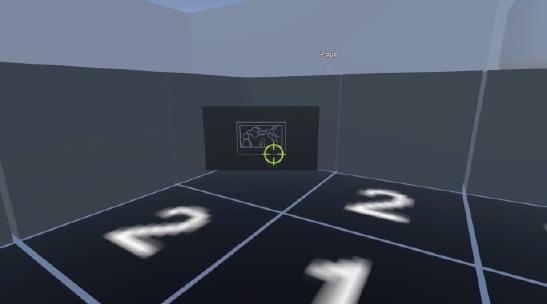
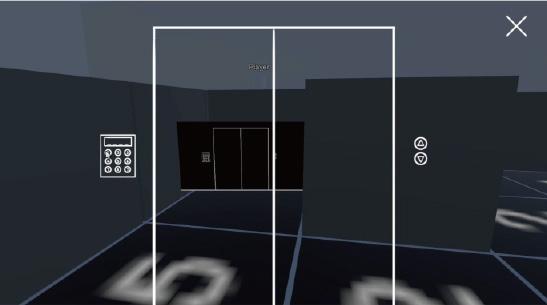
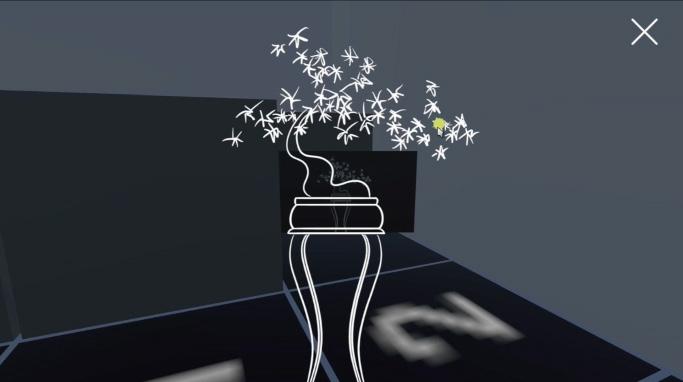
The identity of information refiners and the process of information gathering remind me of the game "Minesweeper." Just as the game uses numbers to deduce the location of mines and flags to mark them, married middle-aged men, as information refiners, gather and refine information disclosed by others about family, relatives, and daily life. This process is akin to expanding a map of mines based on numerical clues. They subjectively choose the direction of information and randomly trigger the next state. This inspires me to recreate the slow information transaction and web-weaving process through a game.
Game: Rusty Lake-White Door
Film: Dogville
Further research & Iteration
at any time to form different scenarios).
•The window opens.
•Exit through the opened window, enter a new map.
•Enter new map to unlock an overview of the map (can backtrack).
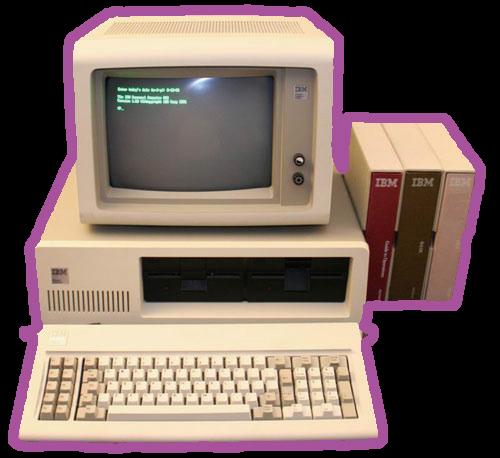
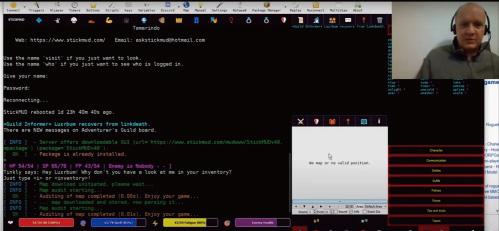
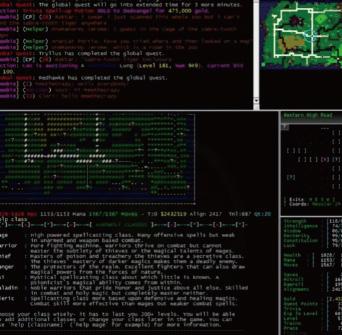
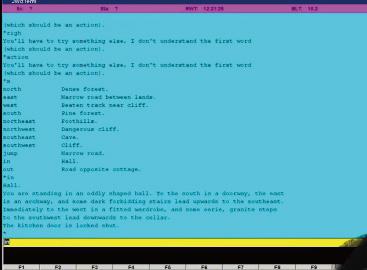
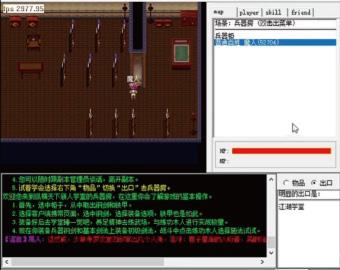
This is akin to a multiplayer online text game, where players interact using text commands. Many MUD games expand their game maps by acquiring items. I find this similar to the game concept I described above. The multiplayer mode is also the kind of player entertainment form I envision. This, akin to married middle-aged men like my father exploring different shop spaces and acquiring information through 'Information-Weaving', matches well. Moreover, MUDs, being one of the earliest forms of electronic games, represent an older, slower form of entertainment. In today's fast-paced information age, this method of acquiring information through slow trading is consistent with the older style of MUD games. Thus, creating a new entertainment space and system in this way, I believe, is quite interesting. Hence, I want to present their urban leisure system through the form of a MUD game. MUD text game
Installation
FEEDBACK
"At the beginning to find a square a little dizzy, after playing for a long time seems to get used to."
"It's funny. It feels like a minesweeper, but it's not as hard as a minesweeper, and it feels a little too sudden when you cross the room, and you don't understand it the first time."
"It was a little slow to get the clues."
"The way to get clues is very interesting. The photos of clues can be changed at will to form different stories, which makes me want to keep playing. I don't know what new plot will be unlocked later."
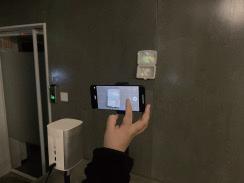
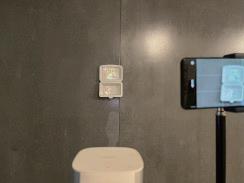
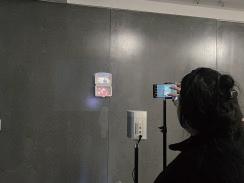
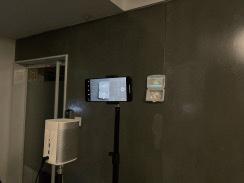
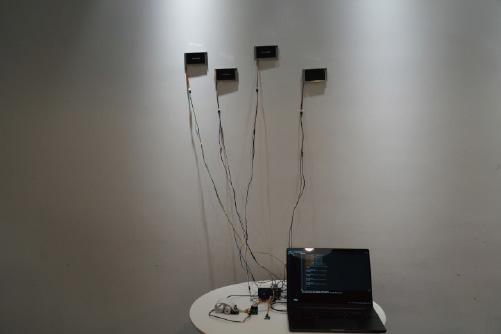
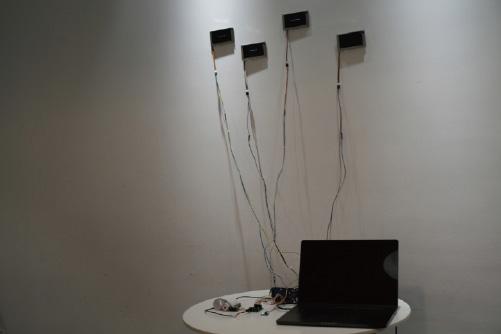
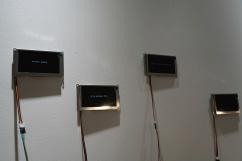
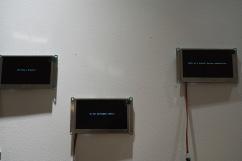
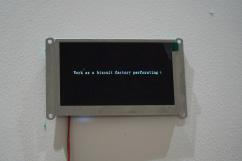
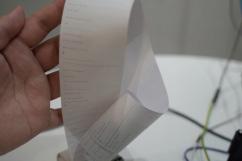
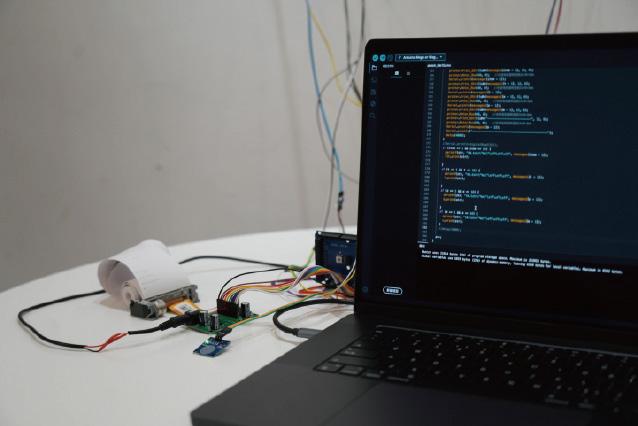
This array of devices aims to recreate the dialogues of married middle-aged men in shops, using four modular phrase groups to randomly form sentences. These random combinations result in interesting, unexpected pairings that are surprisingly humorous.
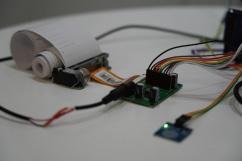
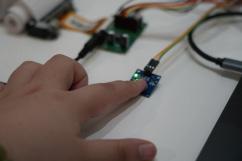
The installation features four screens, respectively labeled "who," "where," "doing what," and "symbol." The characters within the screens randomly scroll. When a hand touches the touch sensor, a sentence formed by random combination freezes, and is then printed and recorded by the printer module.
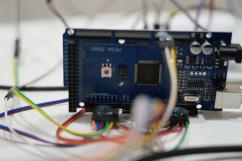
The whole is powered by an Arduino2560 controller, a printer module, and screen programming.
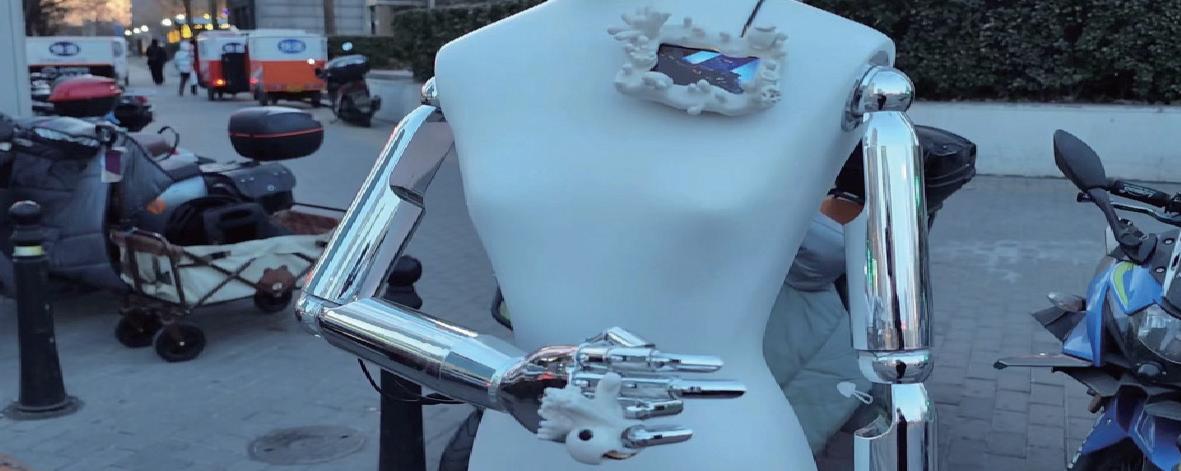
Prosthetics
— the sixth fnger as new sensory system
Video Link 1:https://youtu.be/fN0t7Ba1Lxs
Video Link 2:https://youtu.be/QEZJLItFKzc0
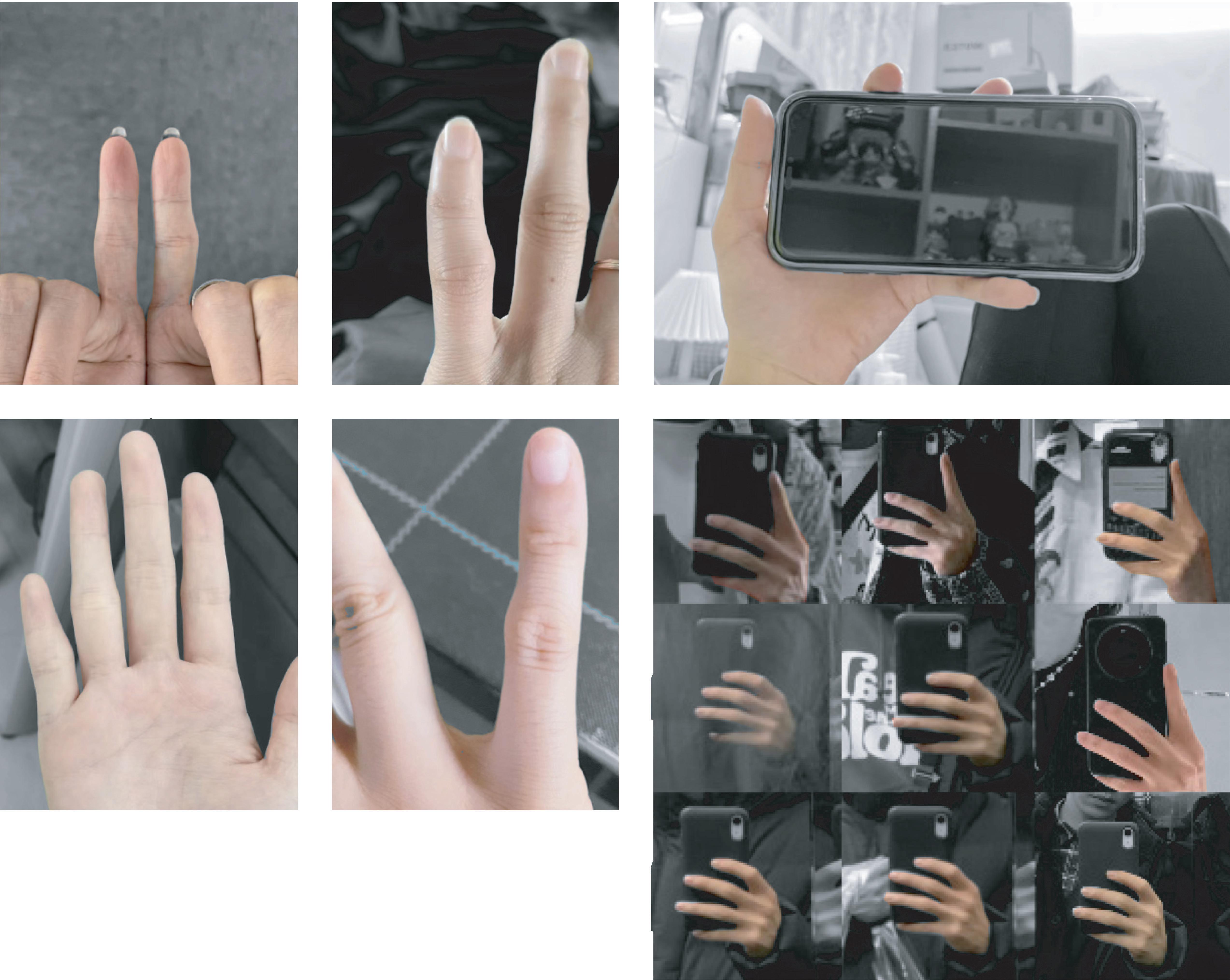
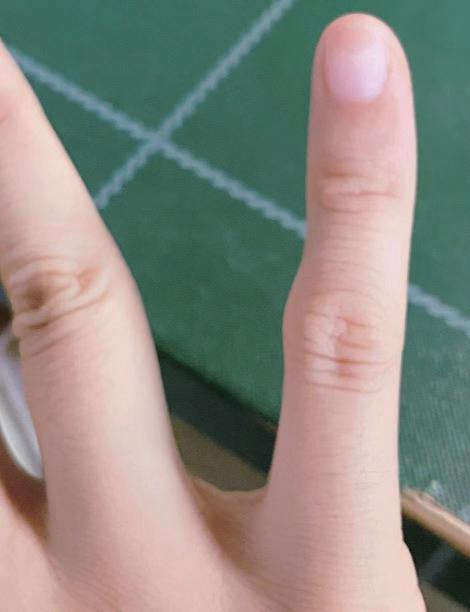
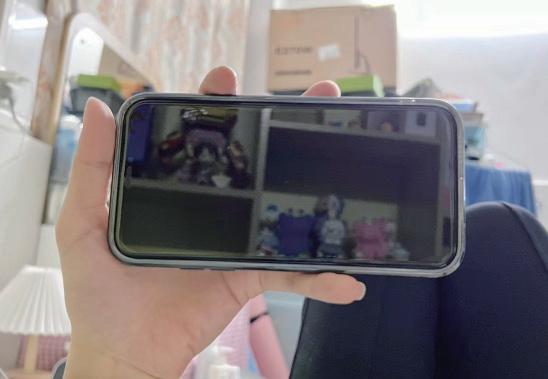
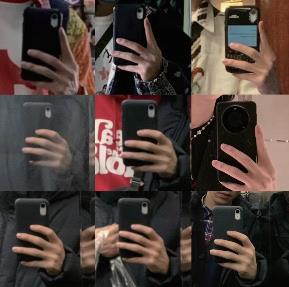
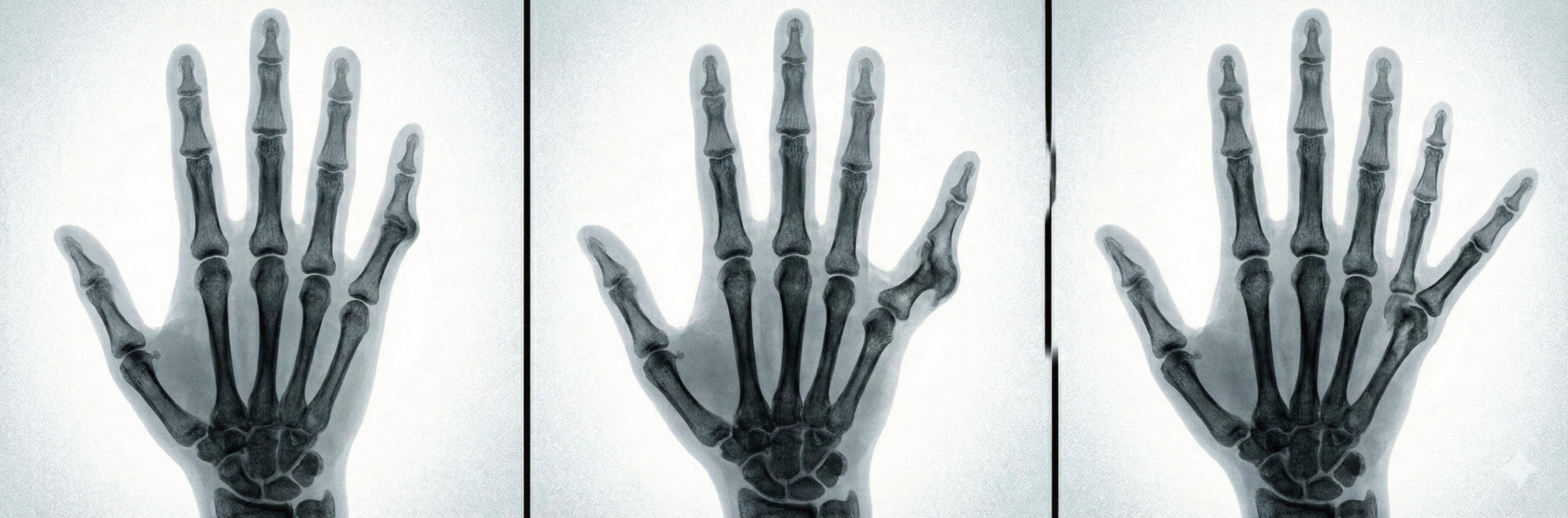
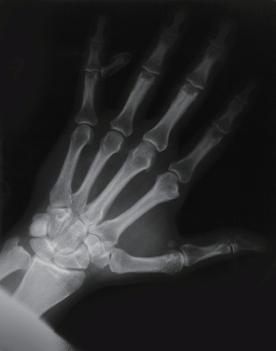
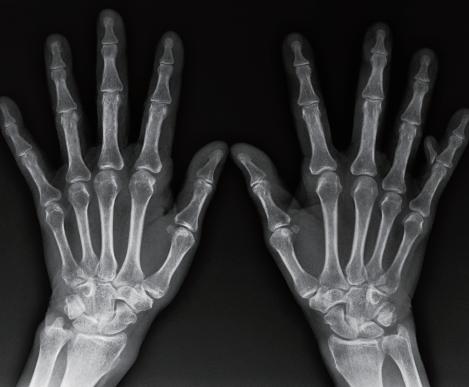
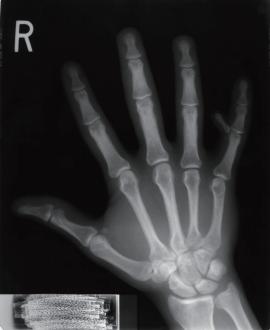
I happened to notice that there is a slight protrusion on the second joint of my right hand. It is caused by using it for a long time to support my phone. As my phone usage increased, this bony protrusion became more and more pronounced. This made me begin to think: since smartphones have already become an indispensable part of our lives, how exactly does this kind of change come about, and what kinds of consequences might it bring?
As smartphones have become “always-on” and “constantly carried” necessities, this subject–object dichotomy is gradually collapsing.
Byung-Chul Han argues that contemporary forms of control have shifted from Foucauldian “biopolitics” to “psychopolitics.” We actively grip our phones for the sake of self-optimization, social display, and professional performance. The pain in the little fnger is ignored, or even regarded as a side effect of hard work, similar to the calluses on a monk’s knees. We not only tolerate this deformation, but even reinforce it by purchasing various phone stands and PopSockets to assist it, making it more durable.
The indentation in the little fnger used to support the bottom of the phone is no longer merely a pathological “deformity,” but an interface — an embryonic new organ that has evolved in order to adapt to digital flux. As Bernard Stiegler pointed out, technology is not merely a tool; it is the tertiary retention. Now, through a reverse feedback loop, this externalization is reshaping the internal biological structure itself.
If in the pre-digital era, technology is functioned as a prosthesis of the body, then in the era of algorithmic governmentality, the body itself is becoming a prosthesis of technology. Smart devices no longer merely serve us; they are “writing” us.
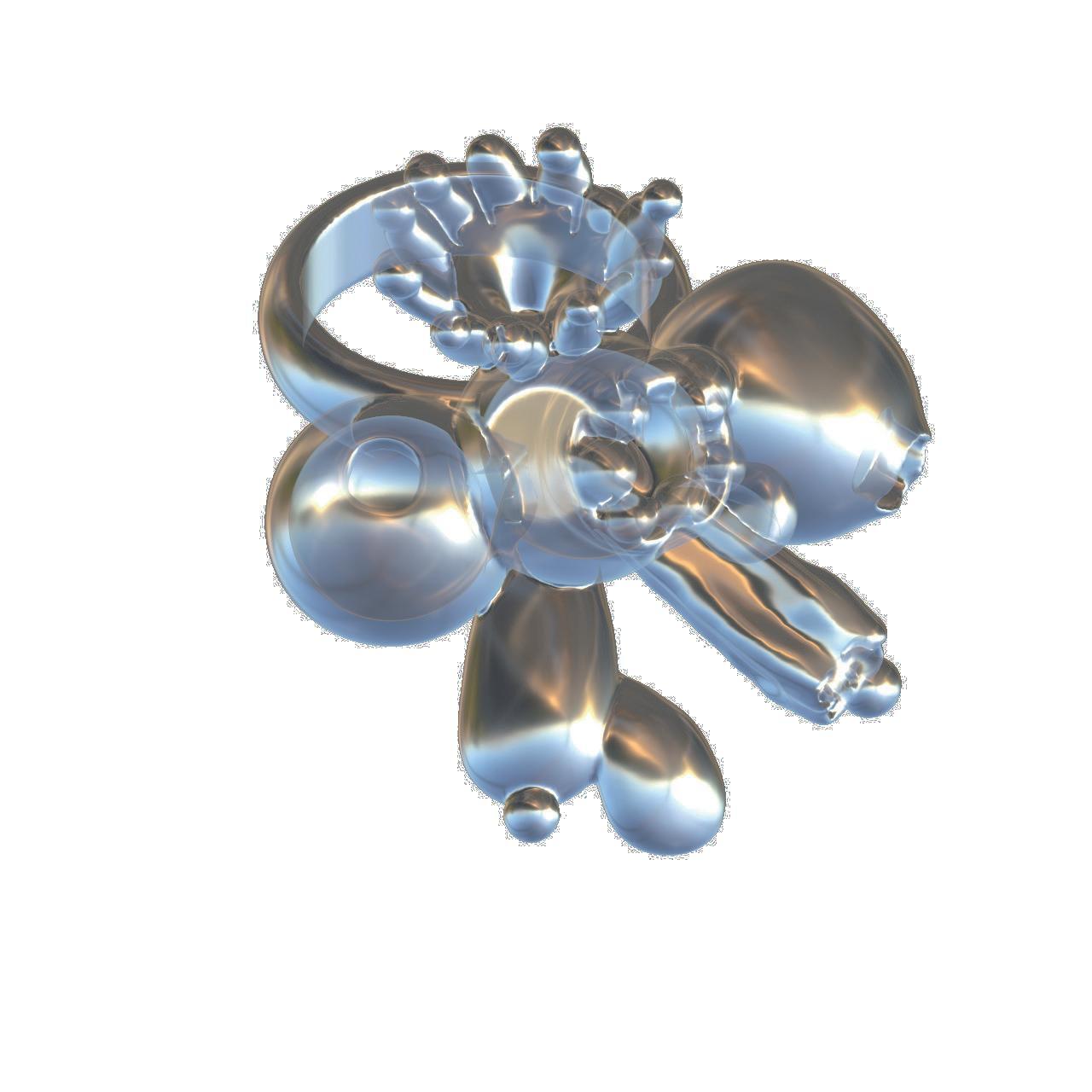
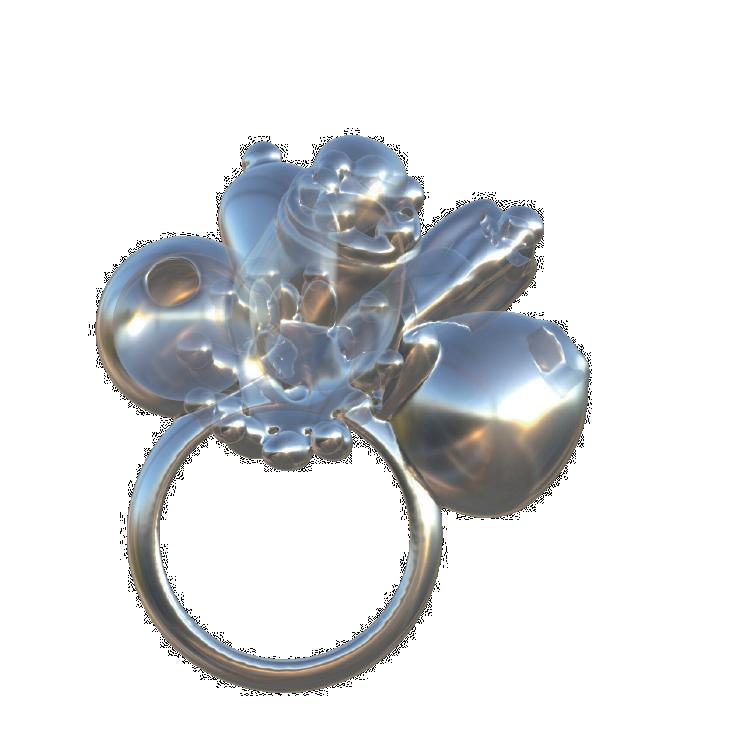
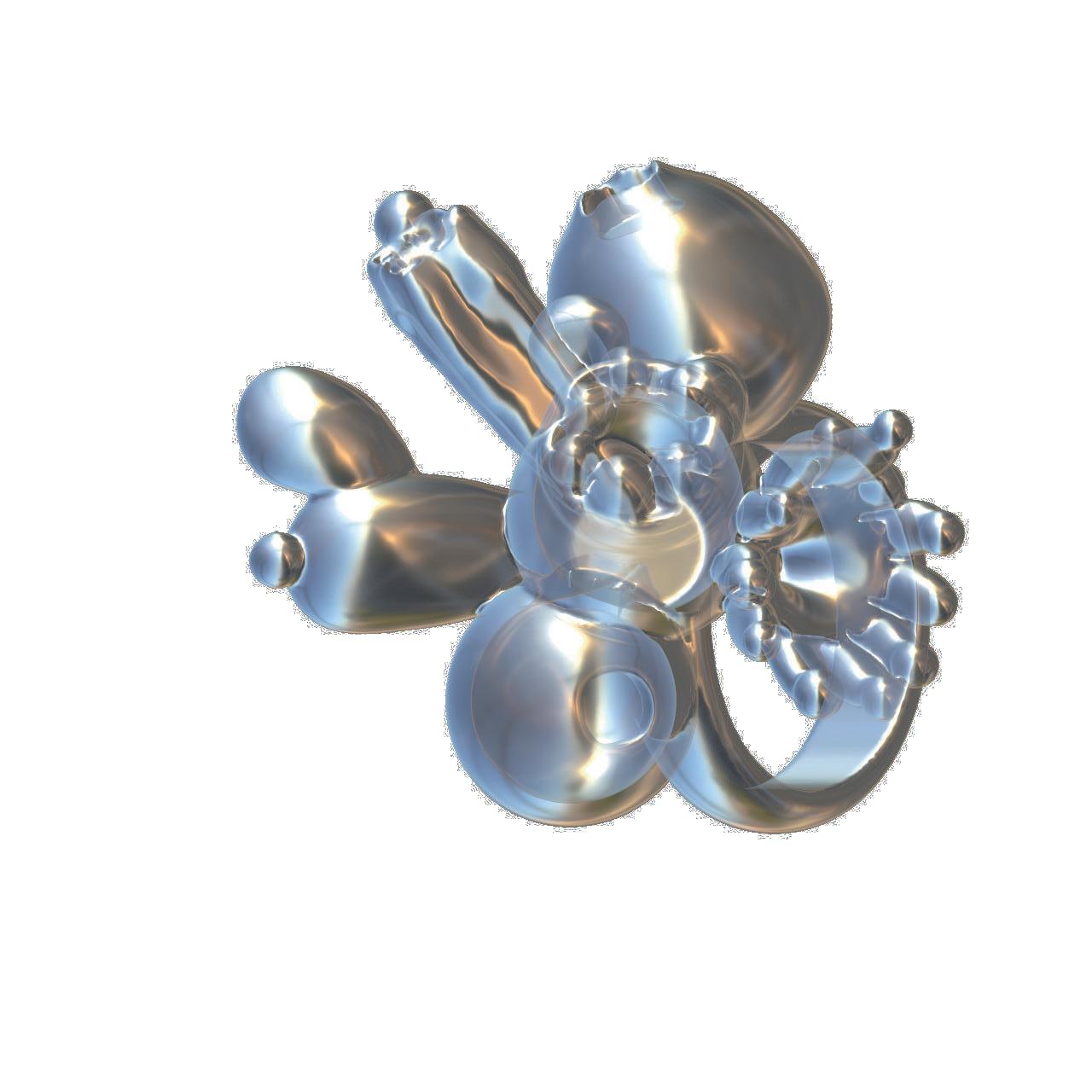
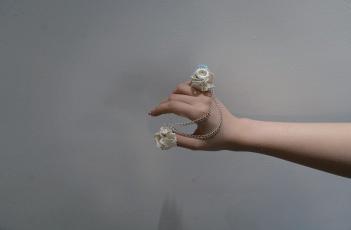
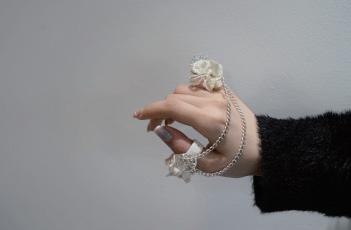
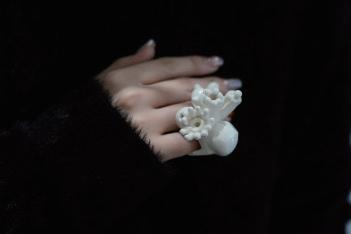
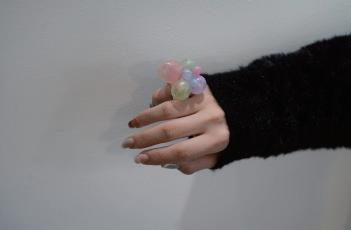
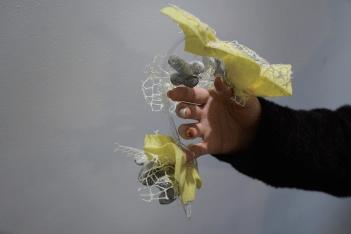
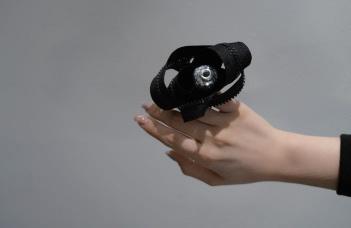
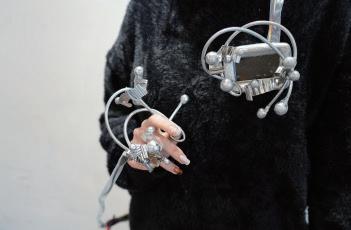
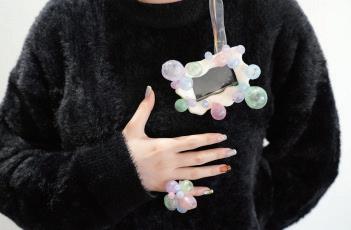
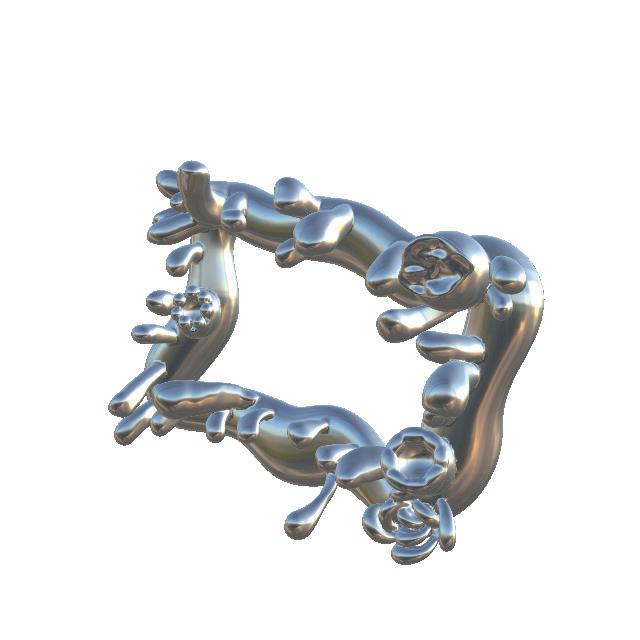
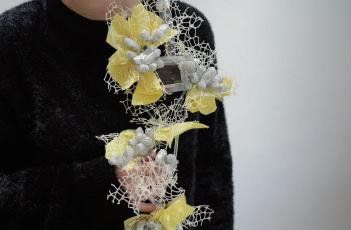
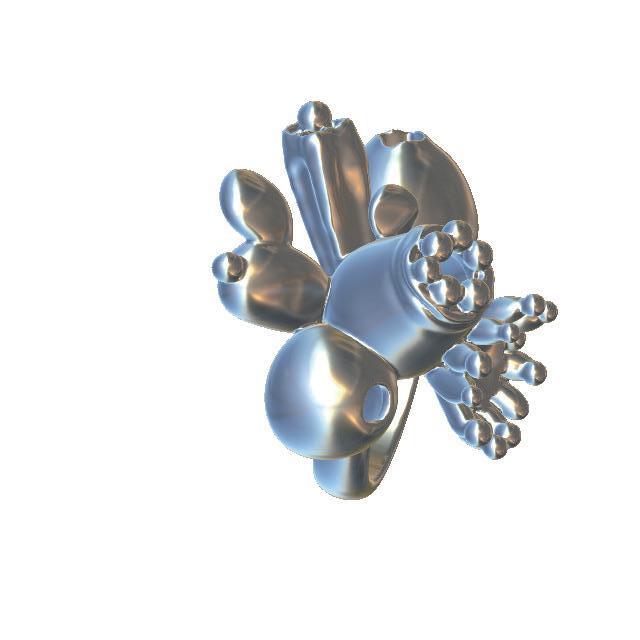
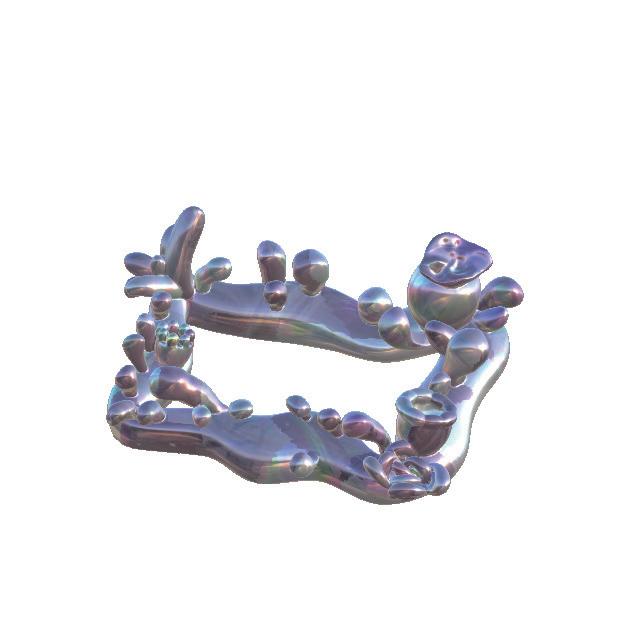
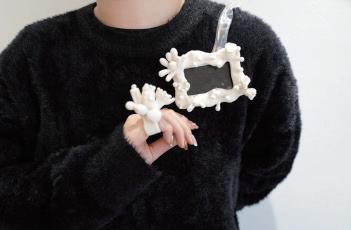
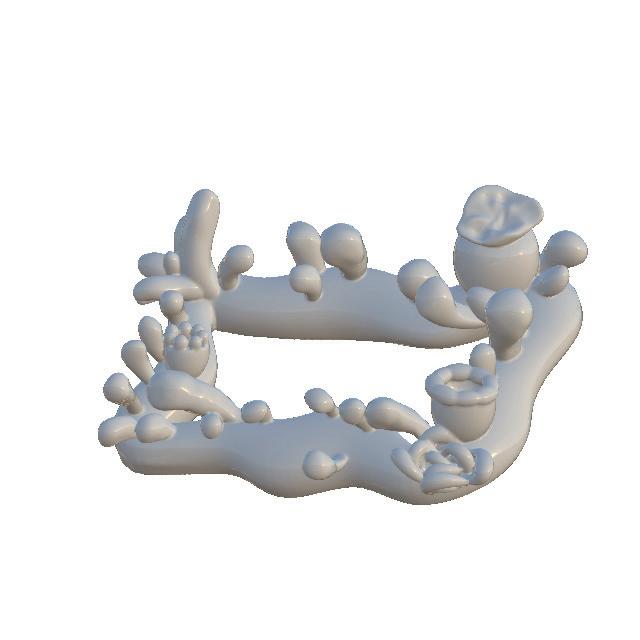
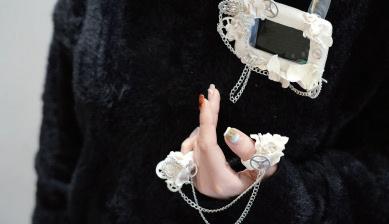
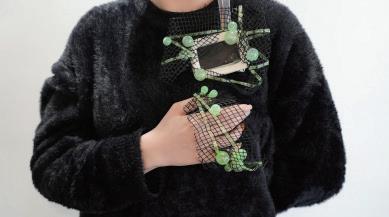
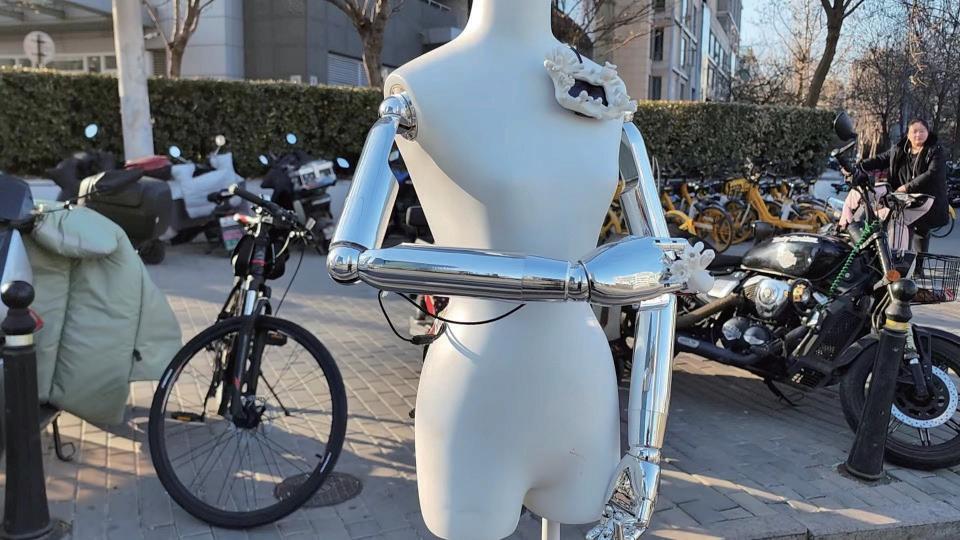
“The Sixth Finger“’s Rings
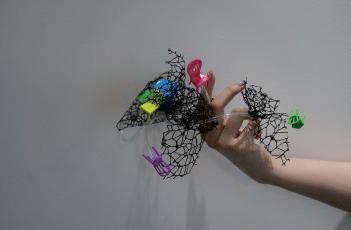
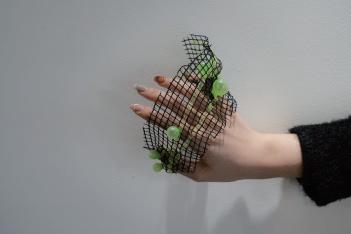
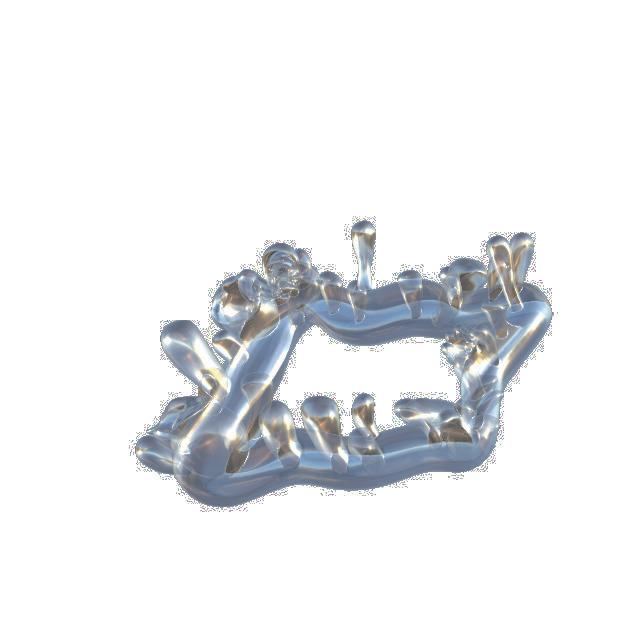
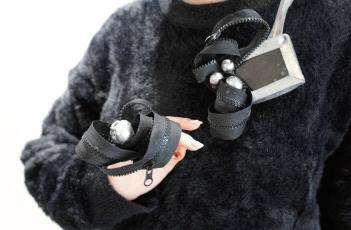
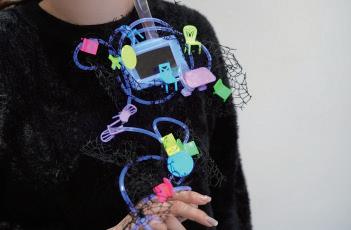
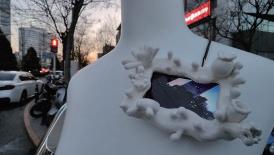
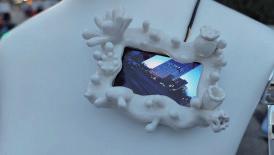
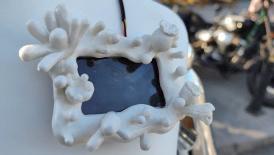
“The Sixth Finger“’s Vision Brooch
Jewelry installation
Once people accept this unavoidable reality, this “protrusion” may eventually evolve into a new fashion trend. In the future, a flawless little fnger might suggest that someone is in an “offline” state, seen as a symbol of poverty, backwardness, or digital divide. By contrast, possessing an indented fnger would mark someone as deeply embedded in the global information network, capable of processing massive amounts of data.
Legacy Russell proposes that bodily “glitches” — those parts that do not conform to norms and are regarded as errors or deformities — are precisely the points of rupture that break binary oppositions and open up possibilities for liberation. From this perspective, the “protrusion” is not an orthopedic condition that needs correction, but a glitch: an entry point into the post-human body. We should not repair it, but celebrate it, and adorn it.
However, with the emergence of the “sixth fnger,” the boundary between the two is becoming increasingly blurred. When our bodies change shape in order to adapt to machines, the body itself is becoming “algorithmized.” If smart devices are writing the body, then is generative AI writing the “soul” (or the structure of consciousness)?
Artist Research:
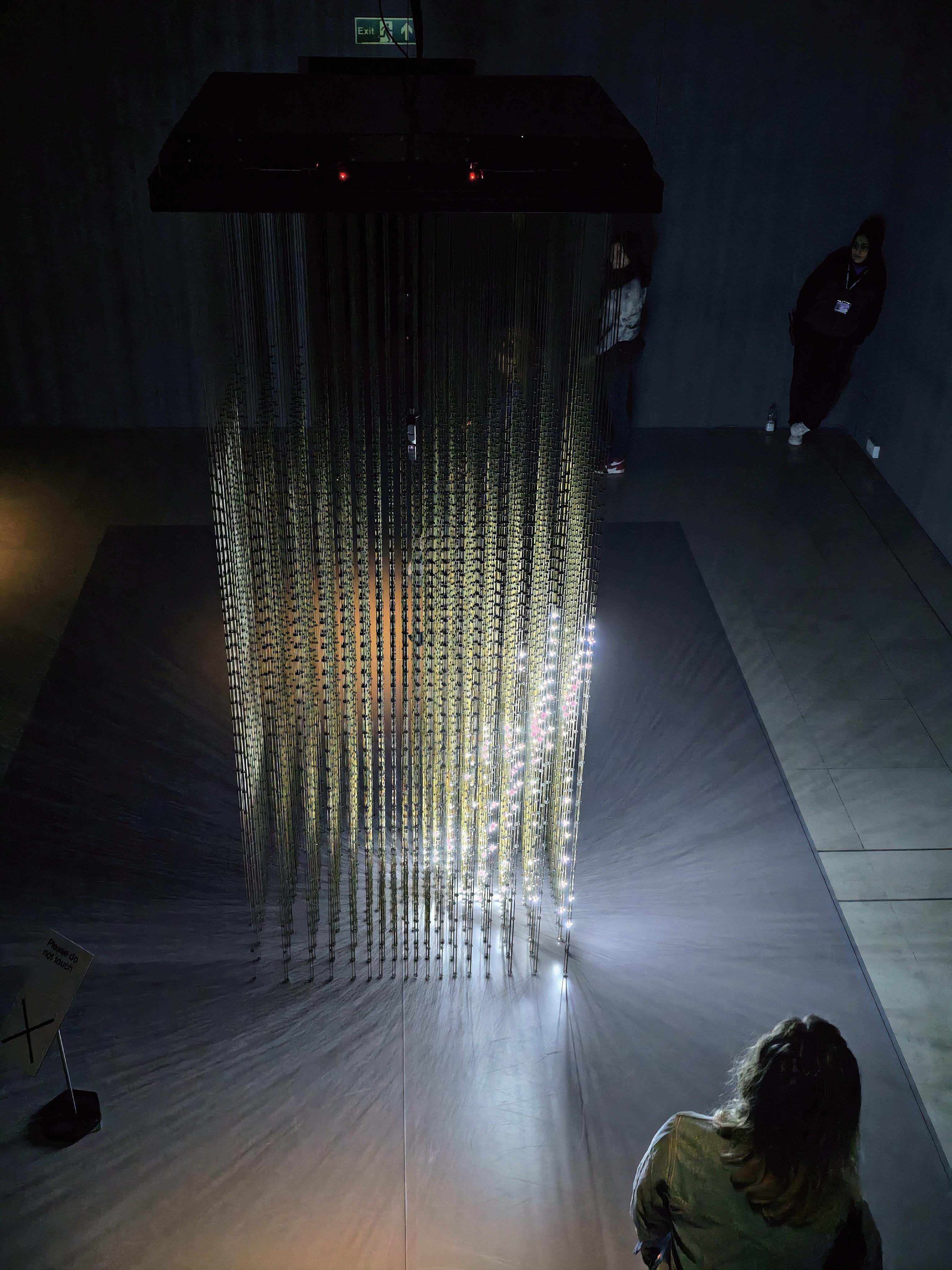
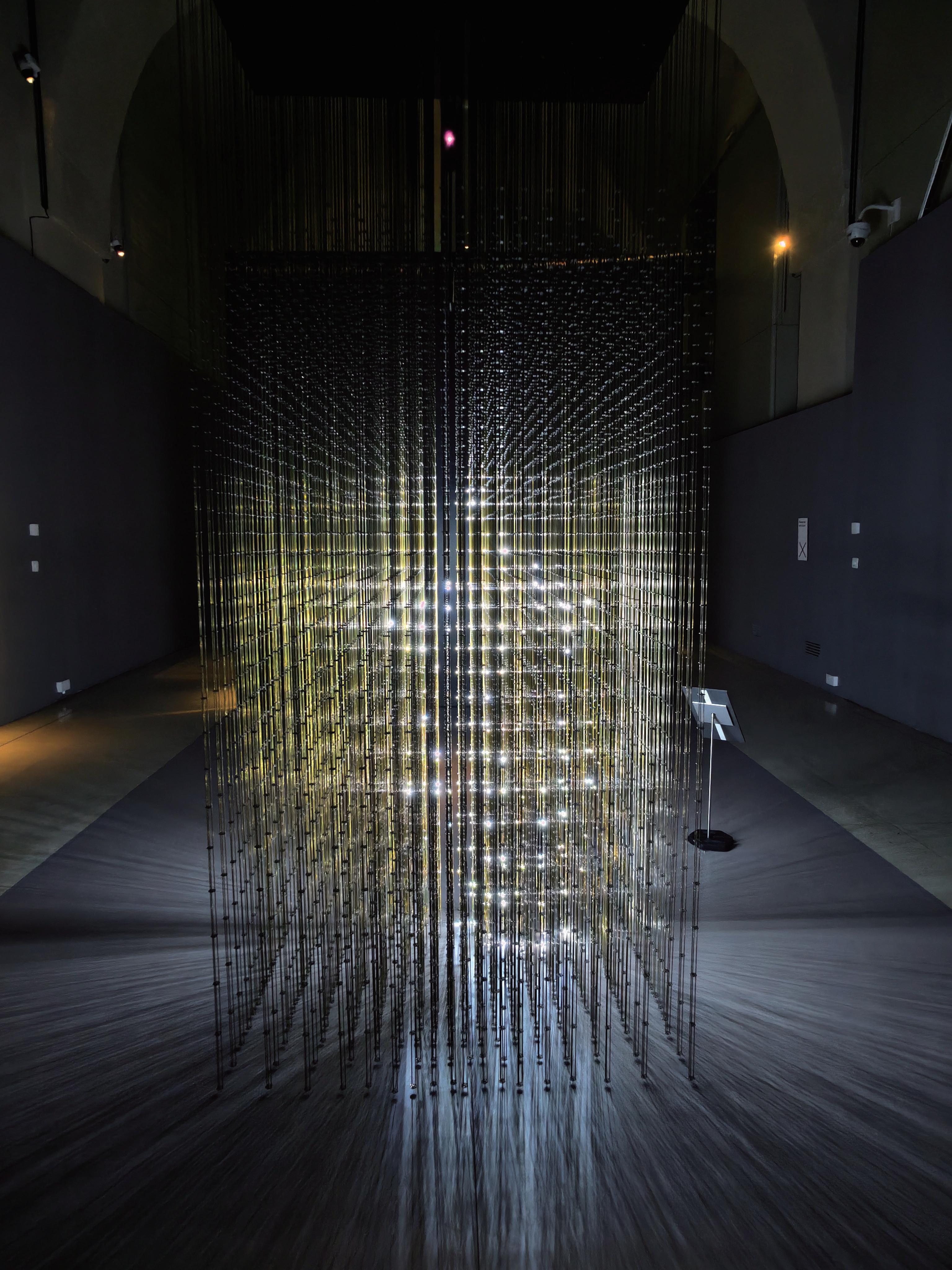
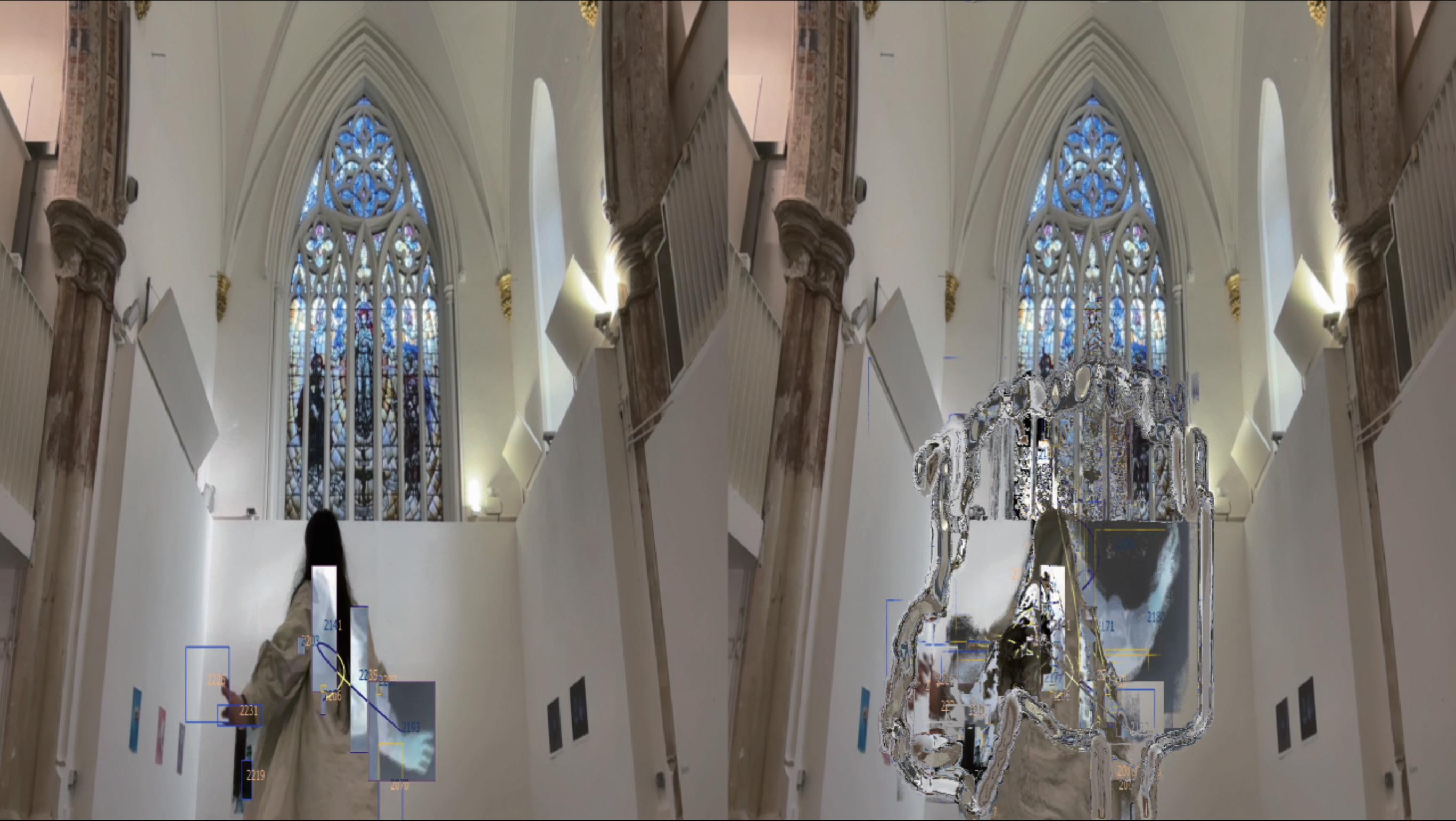
A responsive light installation by Random International, a post-digital contemporary art group with whom McGregor has enjoyed a near two -decade collaboration, Future Self captures movement in light, creating a three-dimensional 'living' sculpture from the composite gestures of those around it. As the shapes and motion of the bodies surrounding the work are reflected and rearticulated as a single unique form across a brass grid comprising over 10, 000 LED lights, viewers are bound together - in the moment -as an ethereal, illuminated presence. The choreographic intervention by McGregor is set to a score by Max Richter. Two dancers intensely communicate - both with each other and with their own reflections - in a performance that unifes the artwork and the human form in one immediate and emotional experience.
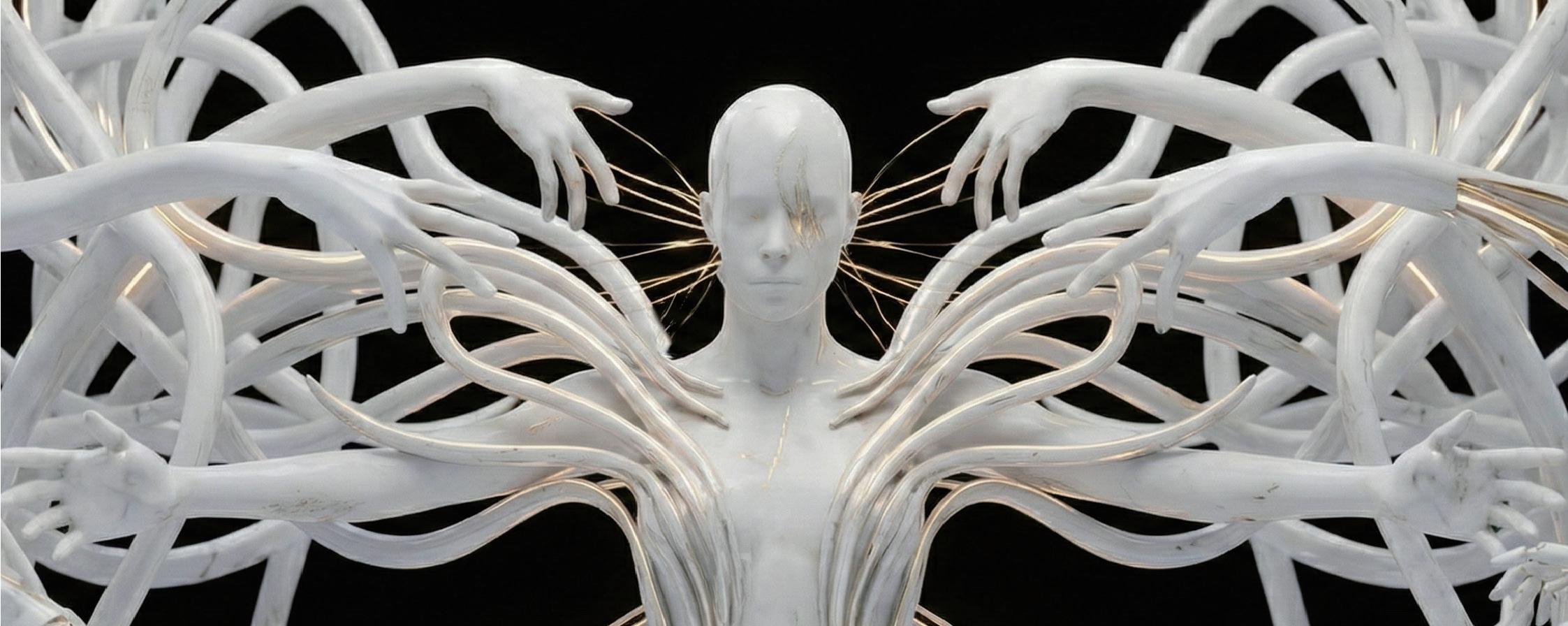
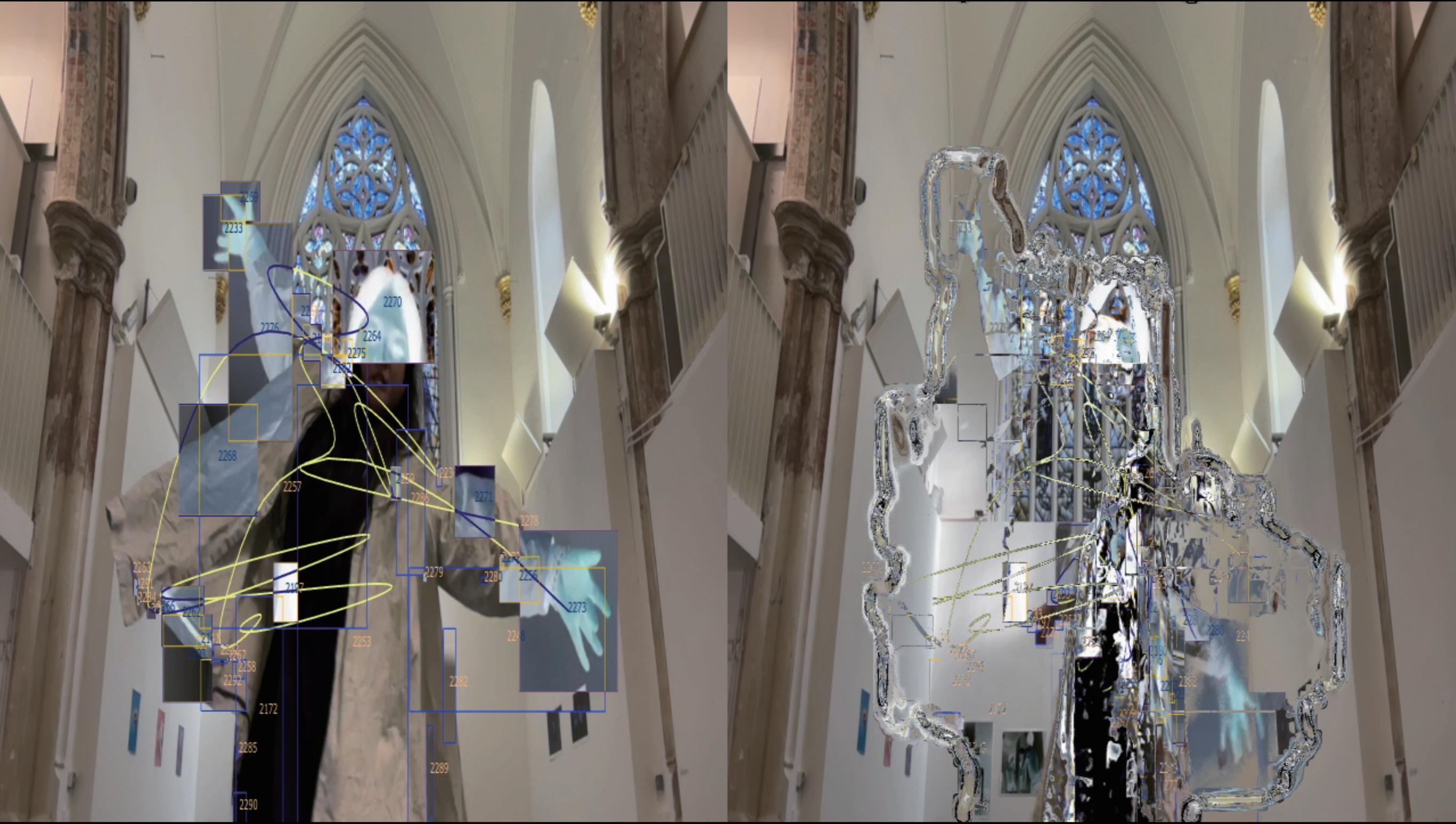
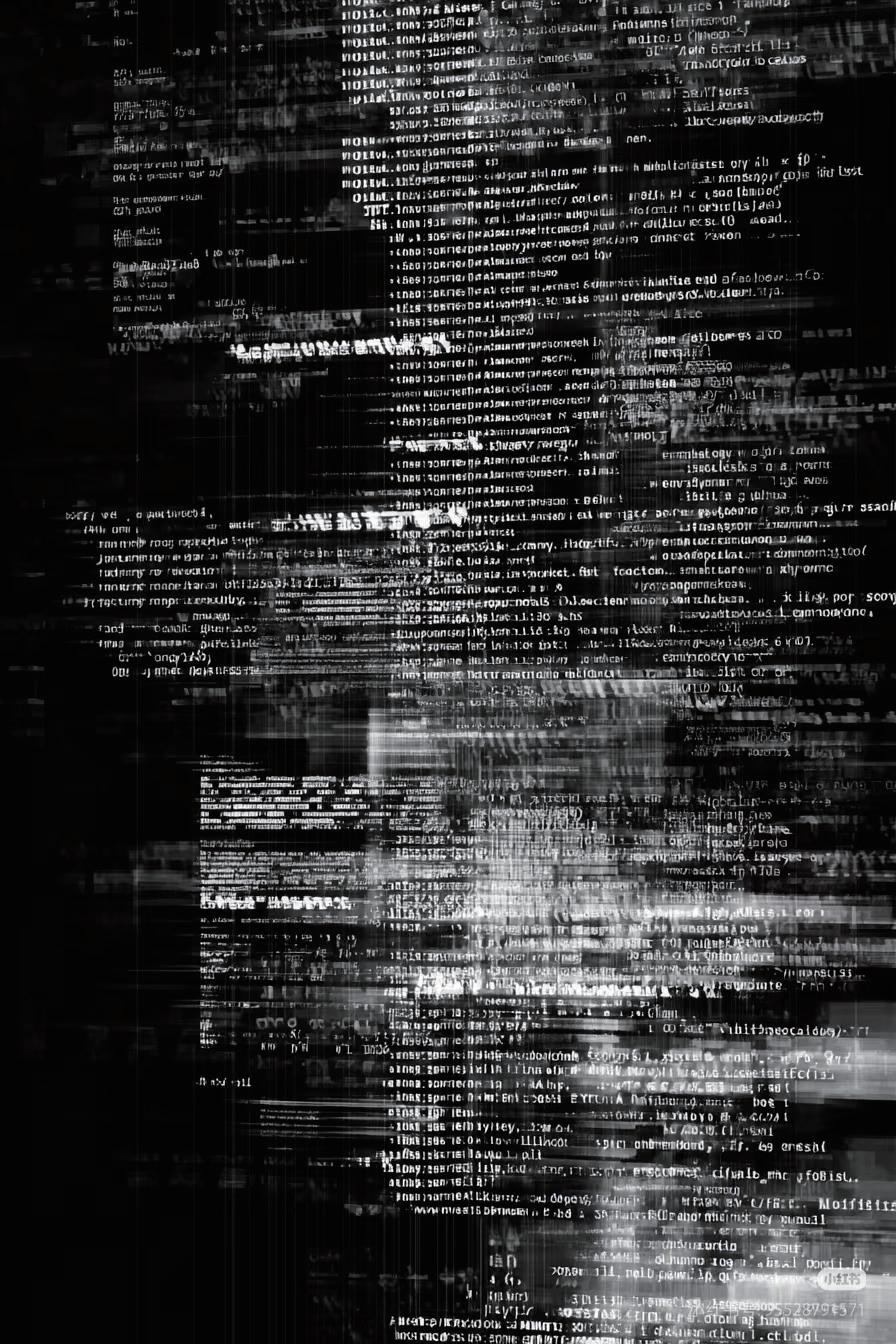
When AI begins to simulate human conversation, emotion, and even creativity, it is in fact creating a digital mirror of a “living archive.”
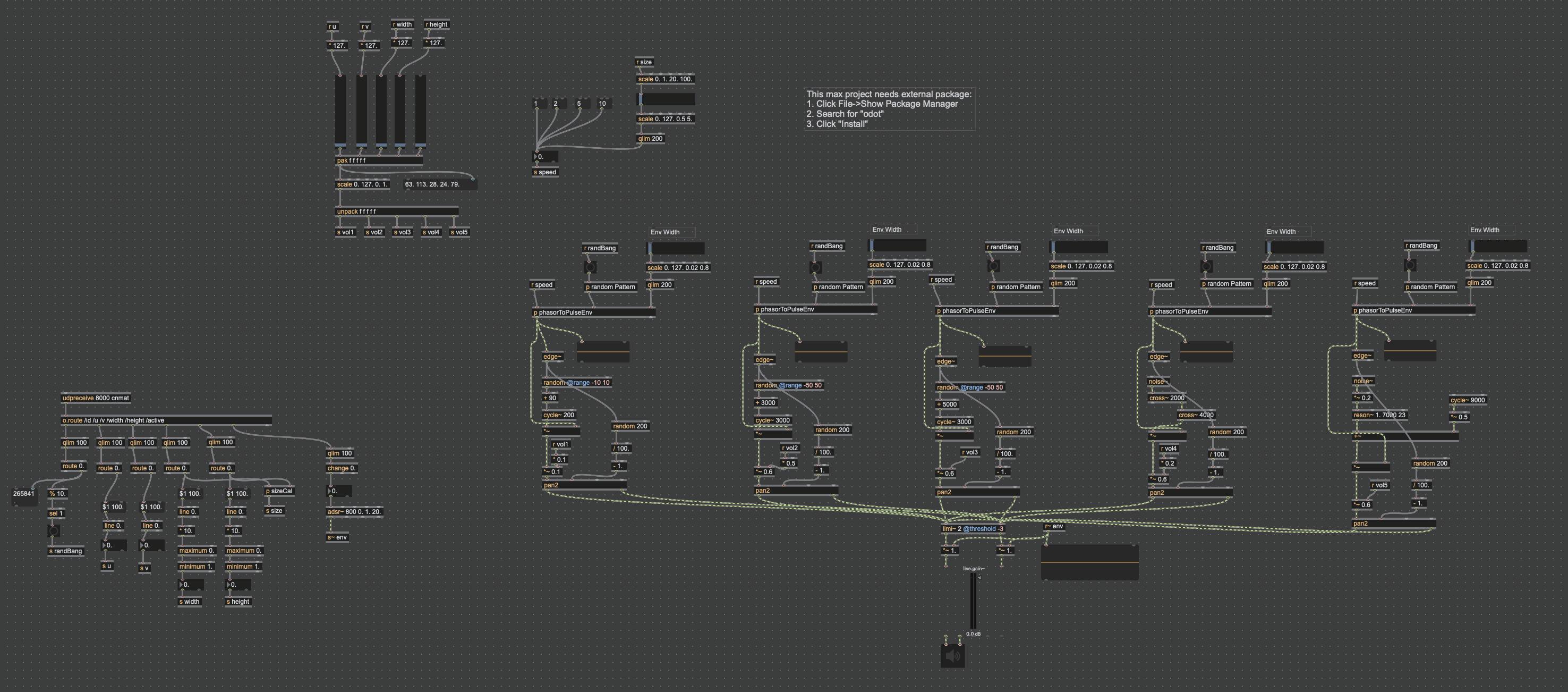
So I used MaxMSP and Touch designer to create the digital mirror of a “living archive.”
Outcome - Background And Game
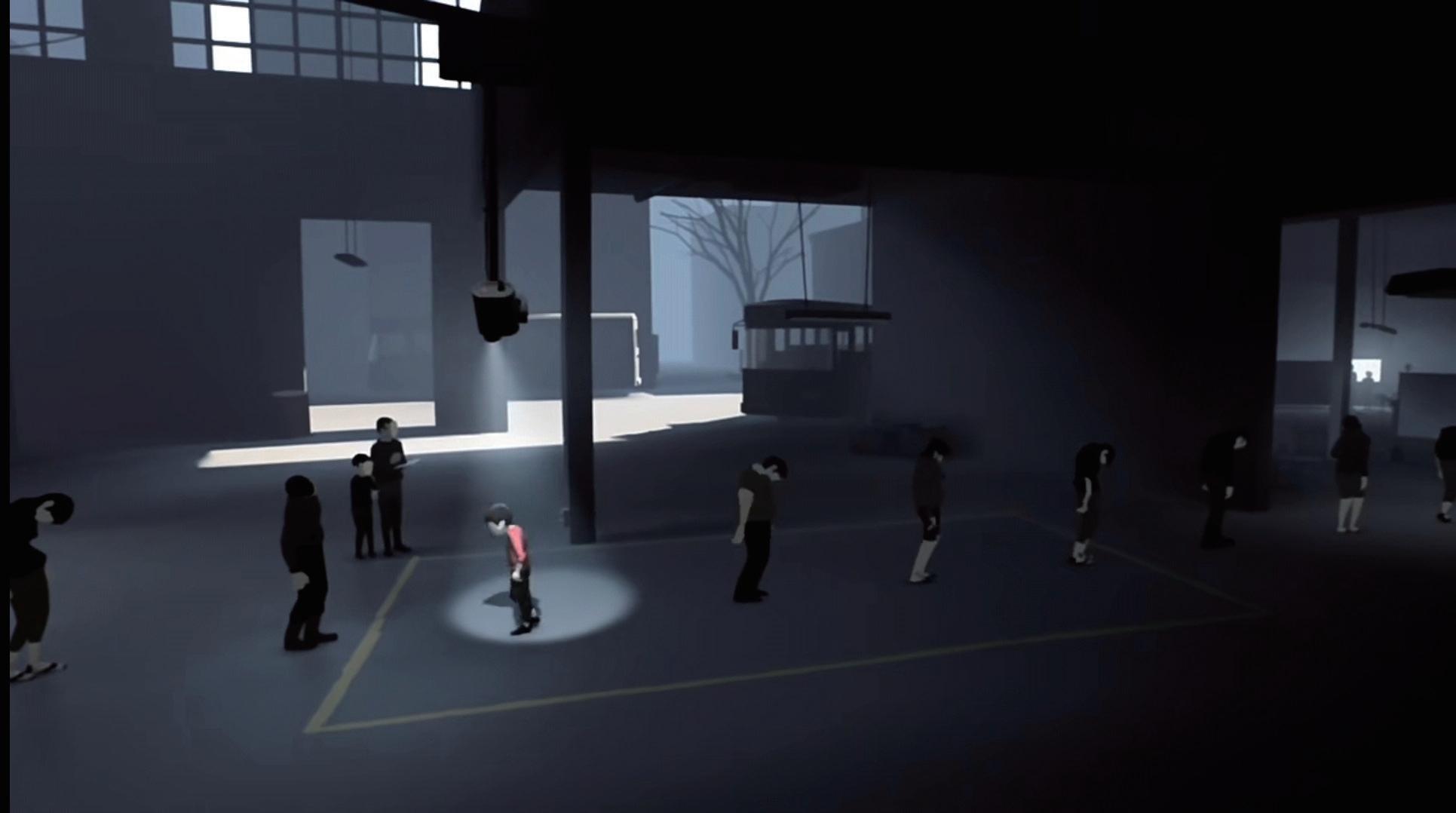
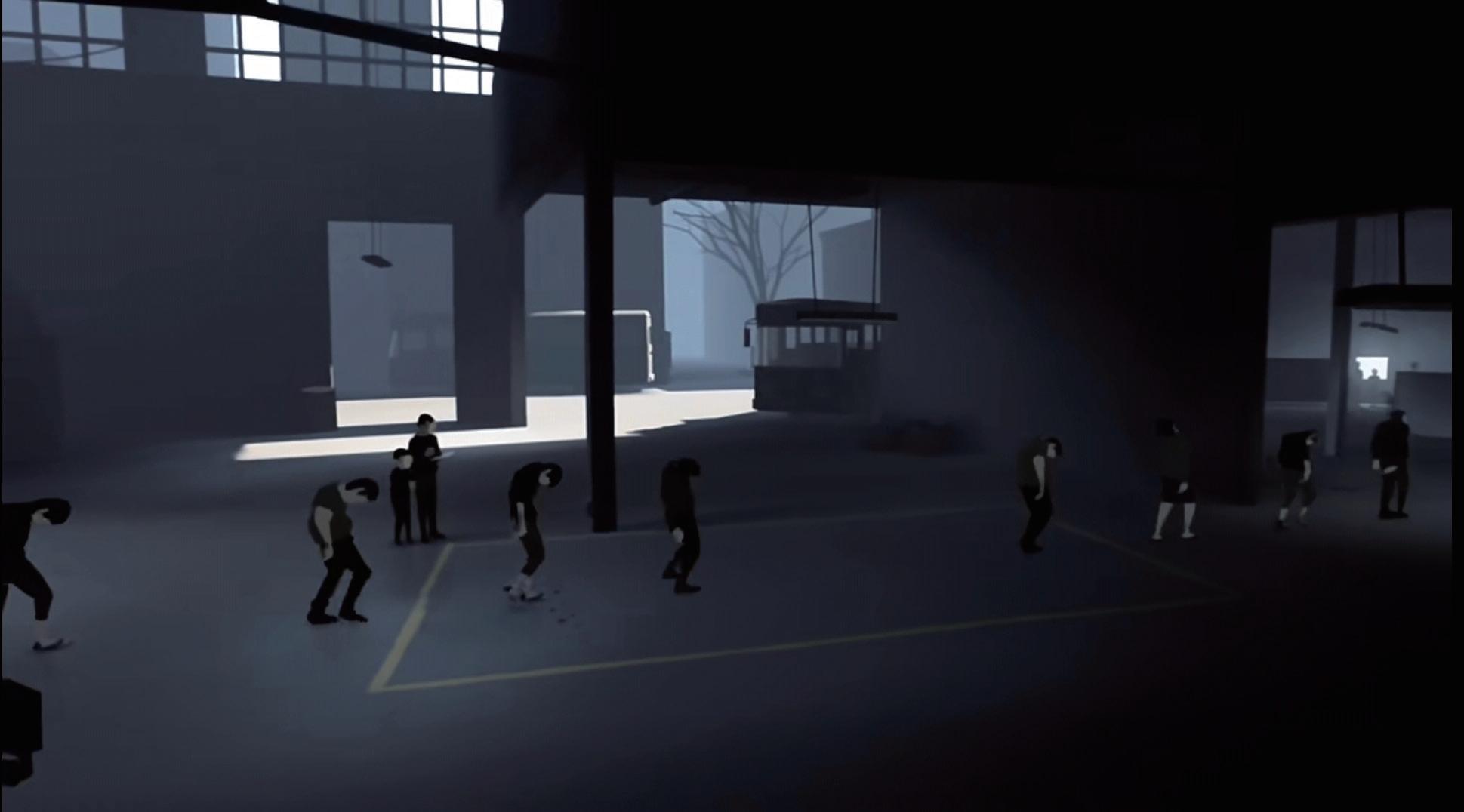
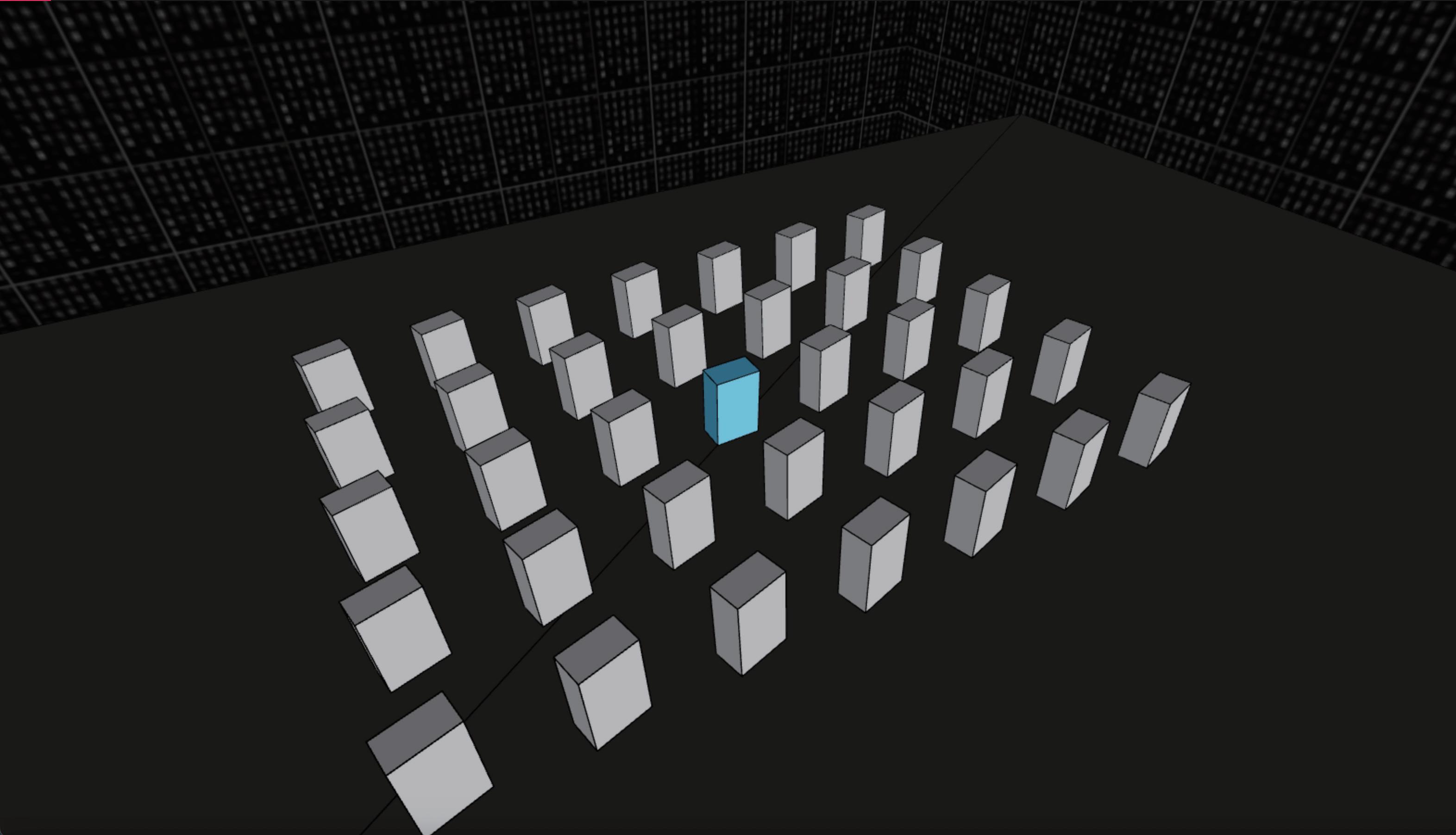
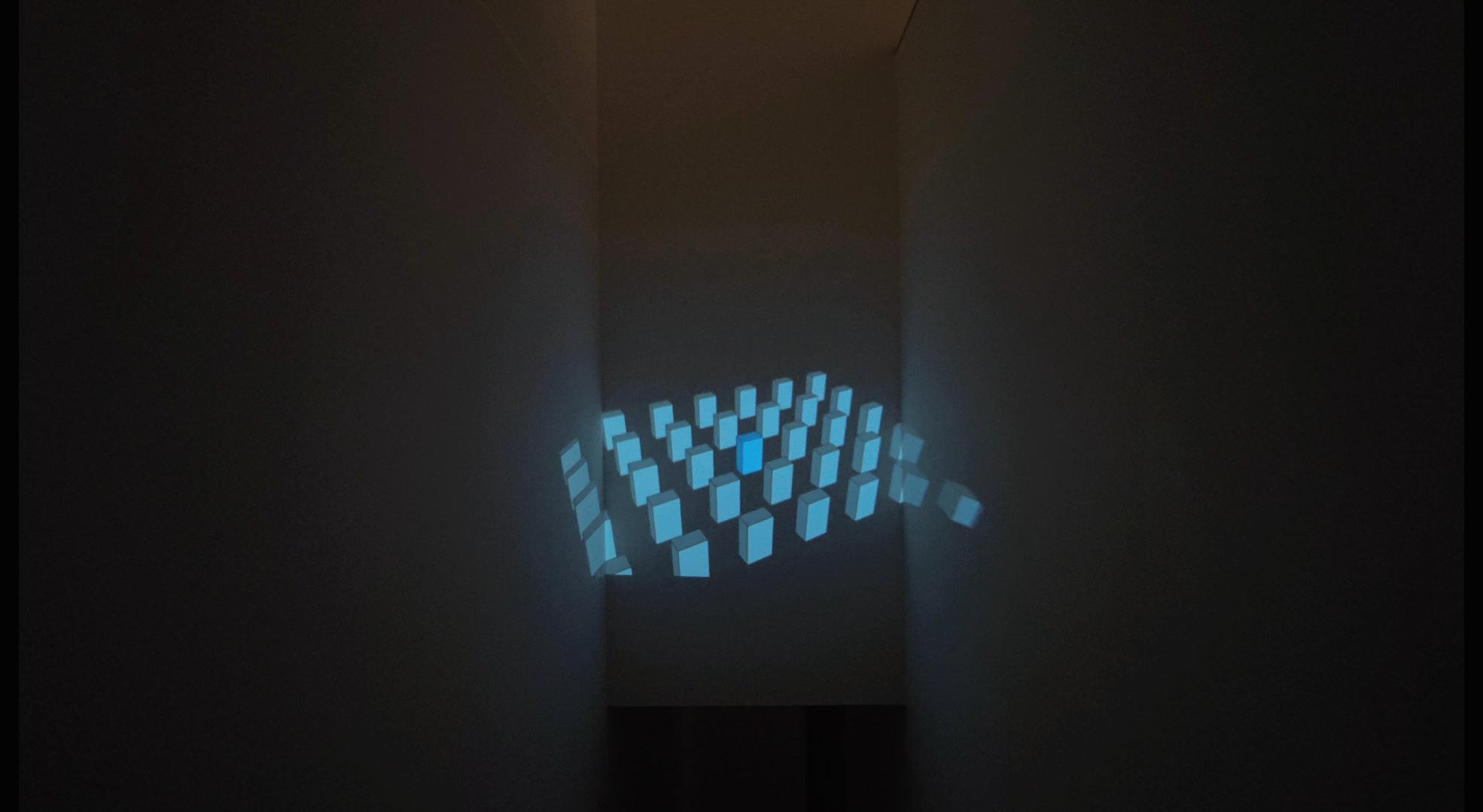
This particular level in “Inside” has inspired me regarding gameplay mechanics. In this stage, the player must carefully observe the actions of surrounding NPCs—such as turning left, turning right, jumping, and so forth—and then mimic these precise behaviors in order to avoid being detected by the machine as an uncontrolled NPC.
Link:https://youtu.be/QEZJLItFKzc0
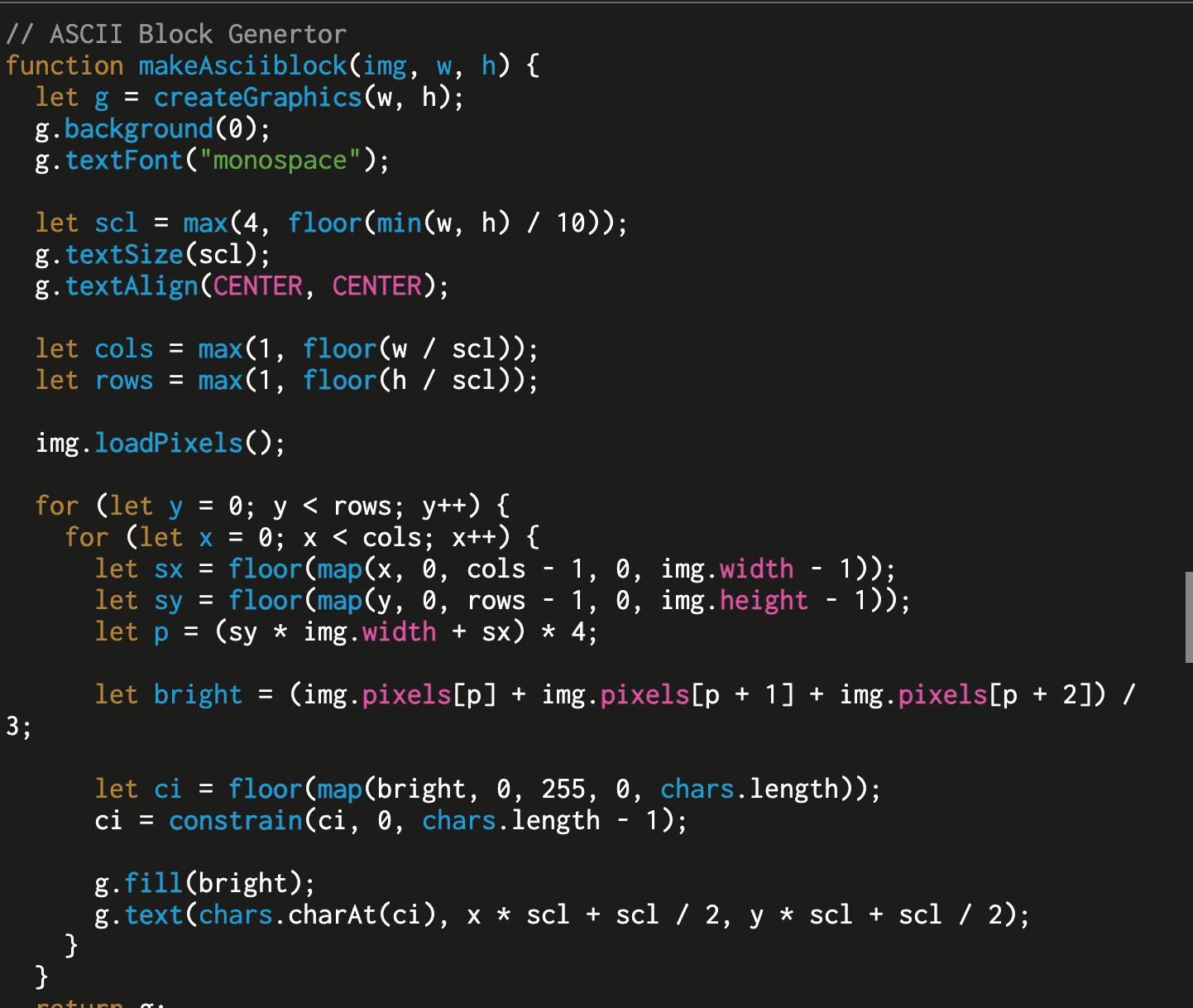
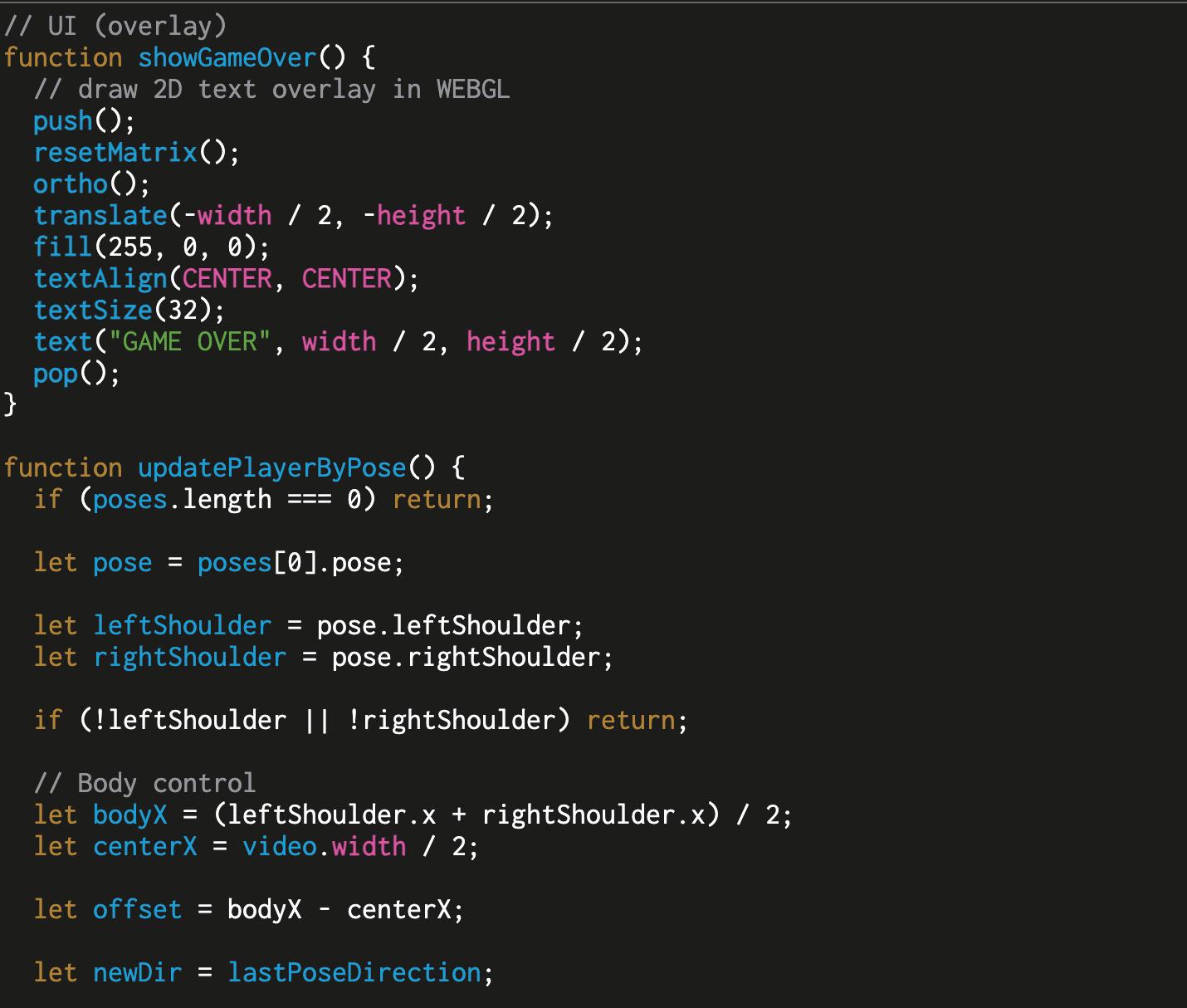
On top of the initial control scheme where the player turns around using the spacebar, I have incorporated motion capture code. This enables the camera to detect the player's side-to-side sway and positional changes, which are then used to control dynamic flips and rotations within the game. This enhancement significantly increases the player's sense of participation and real-world immersion during gameplay.