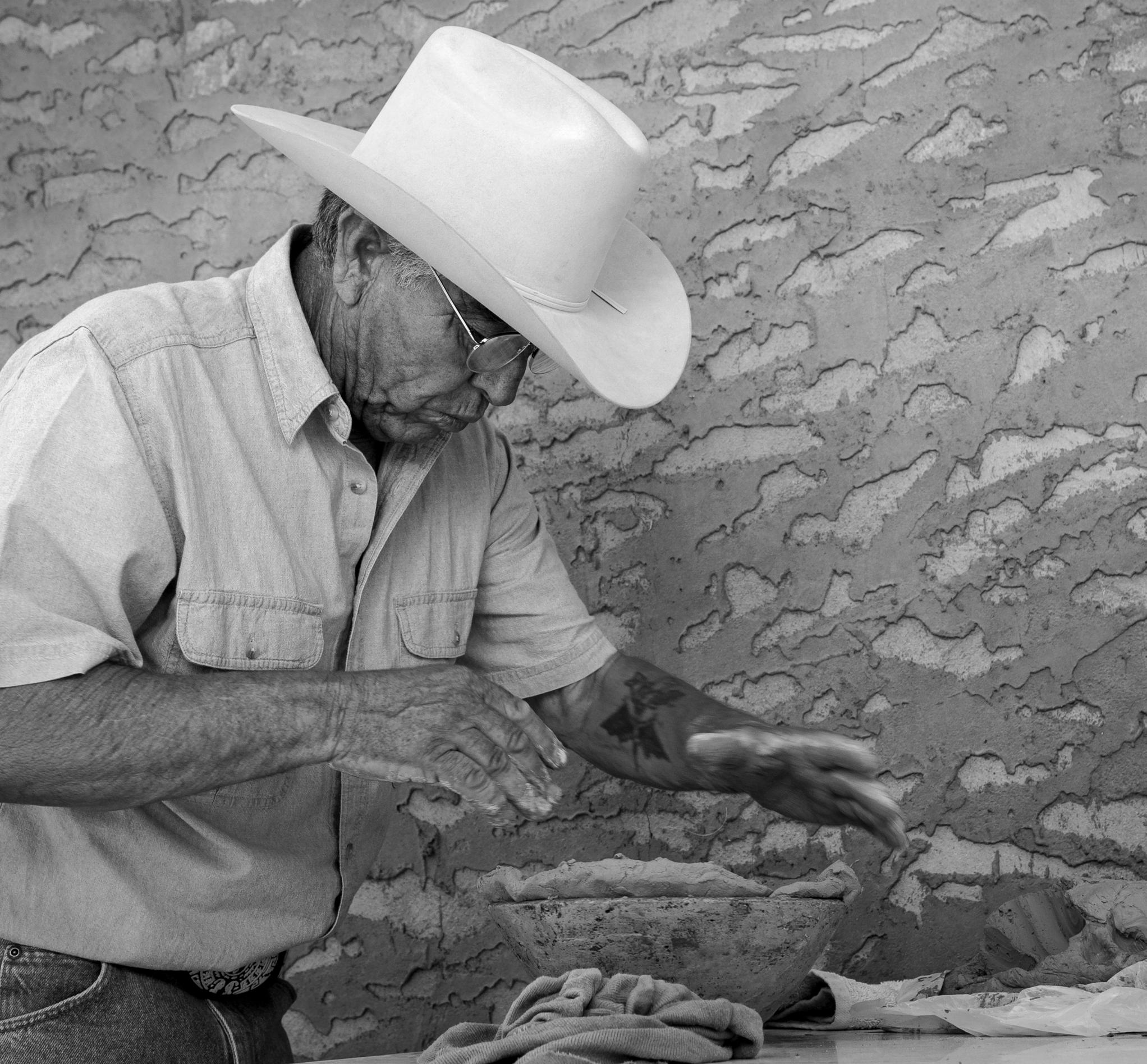
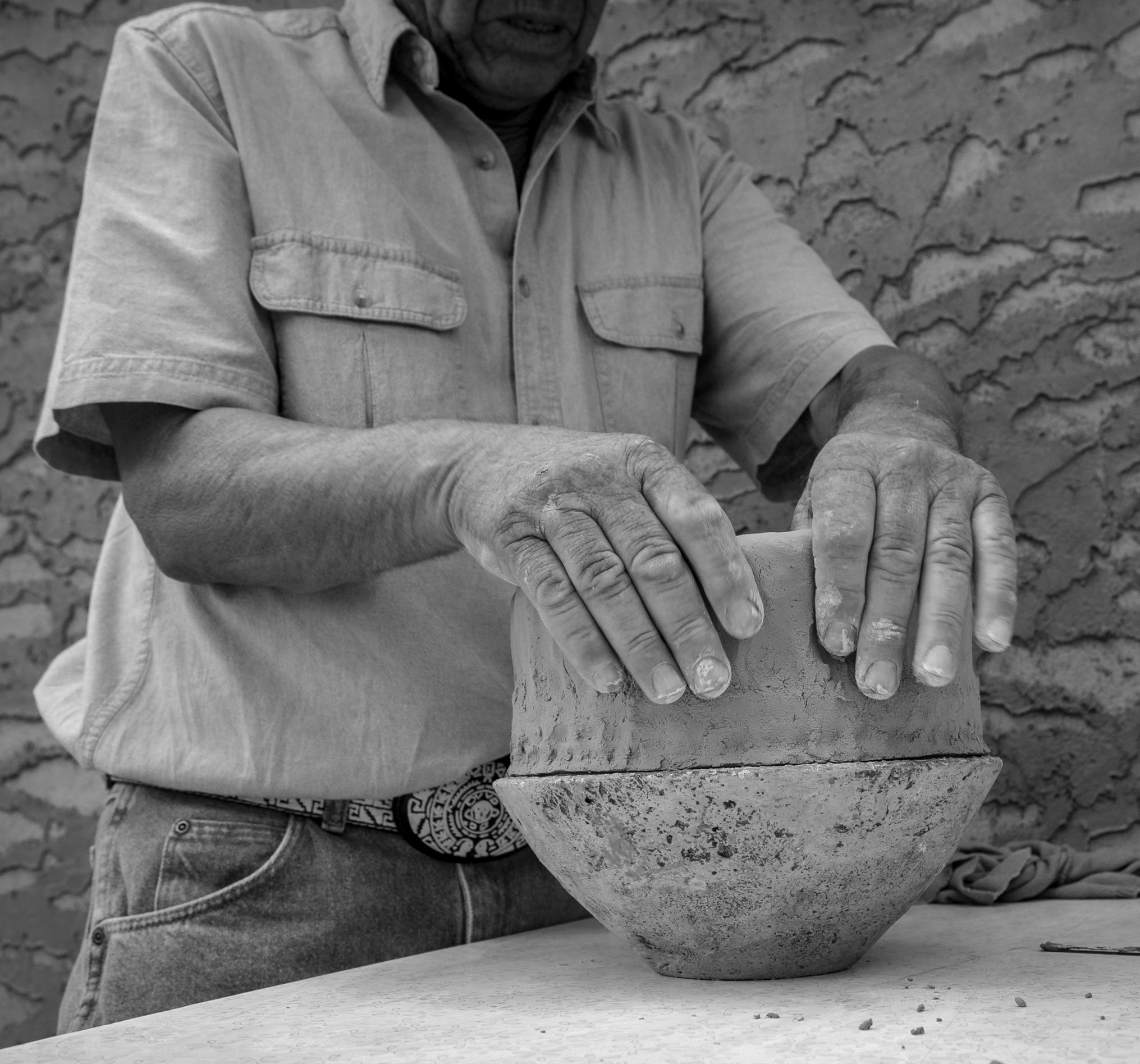
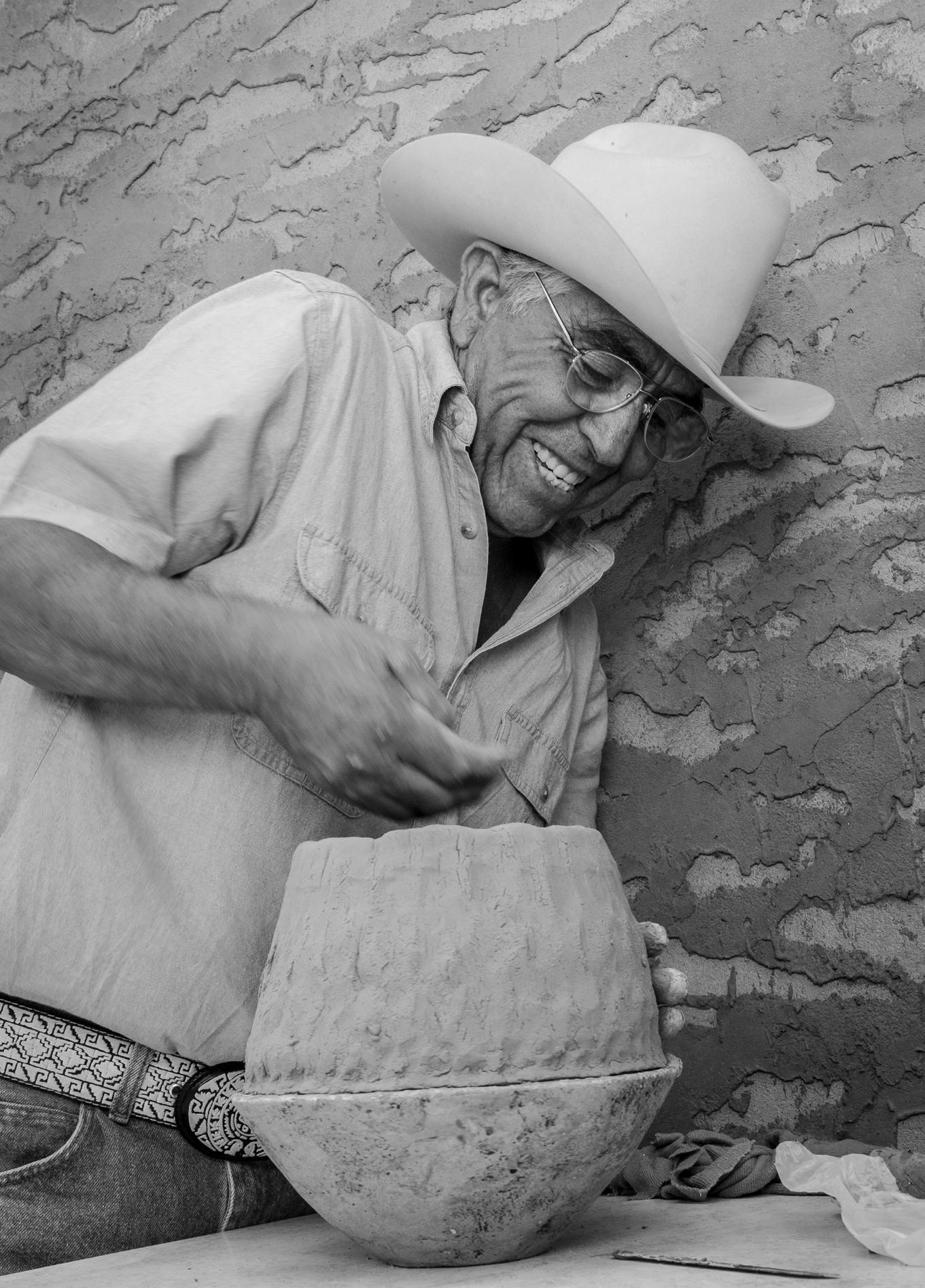
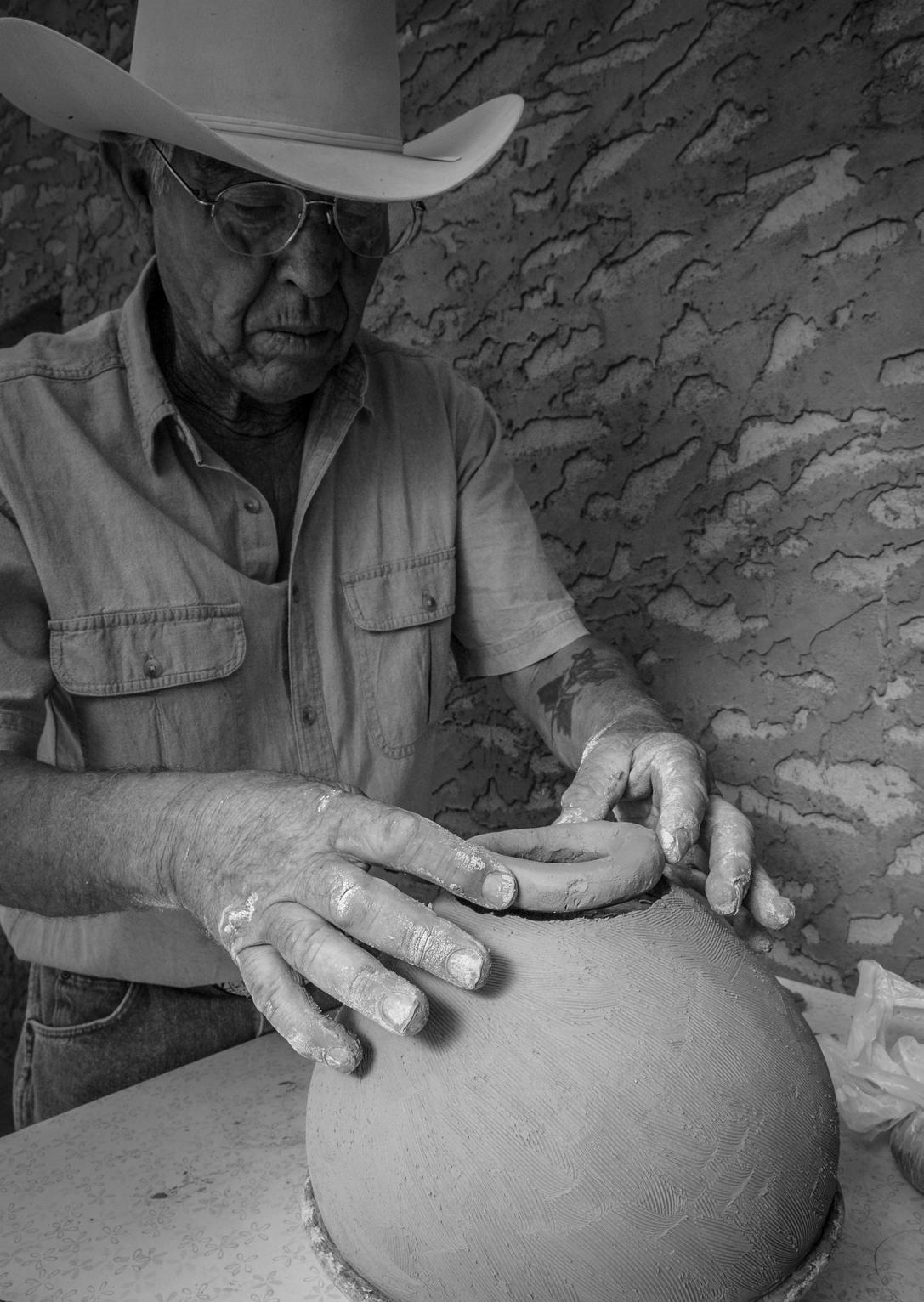
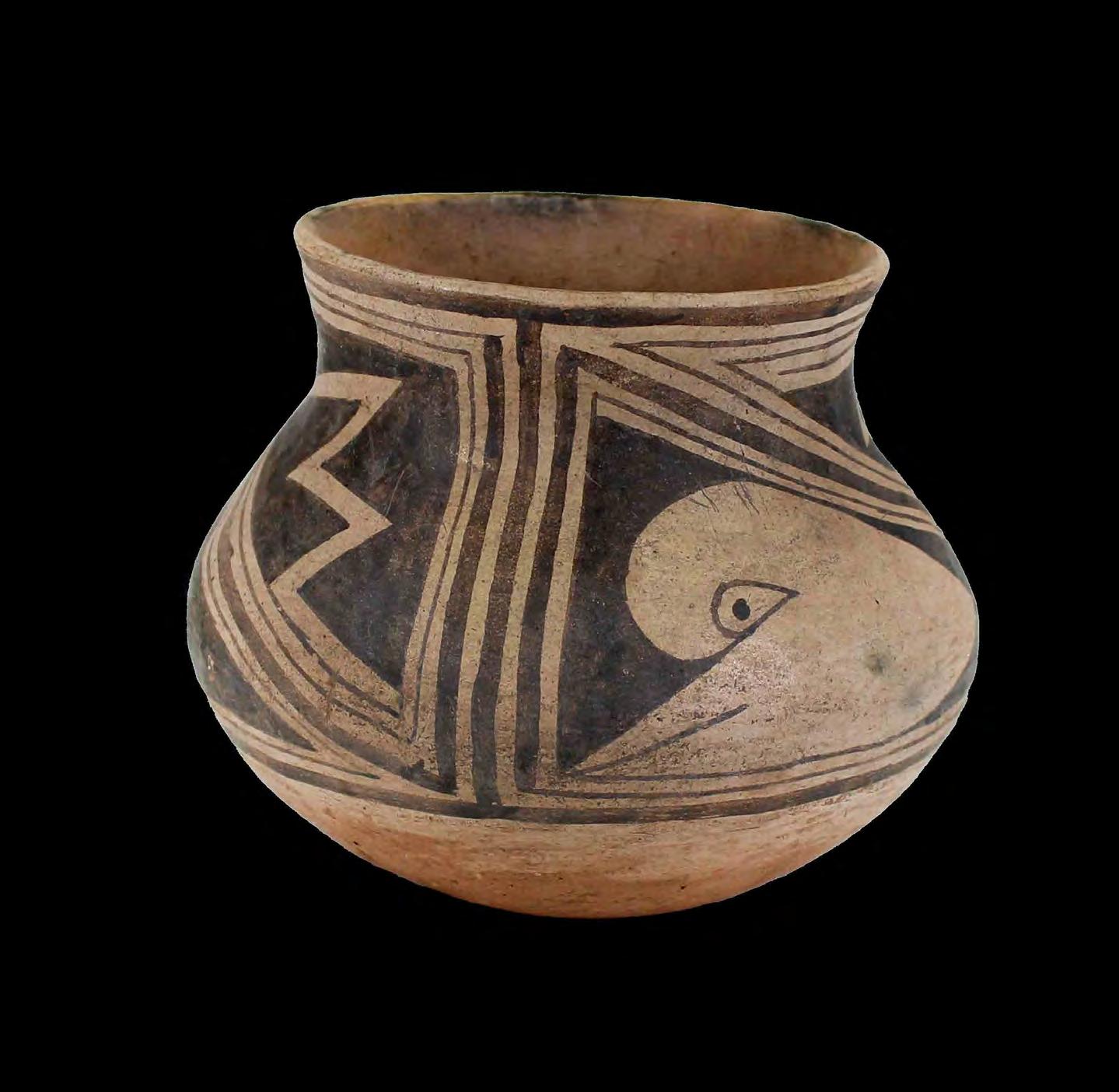
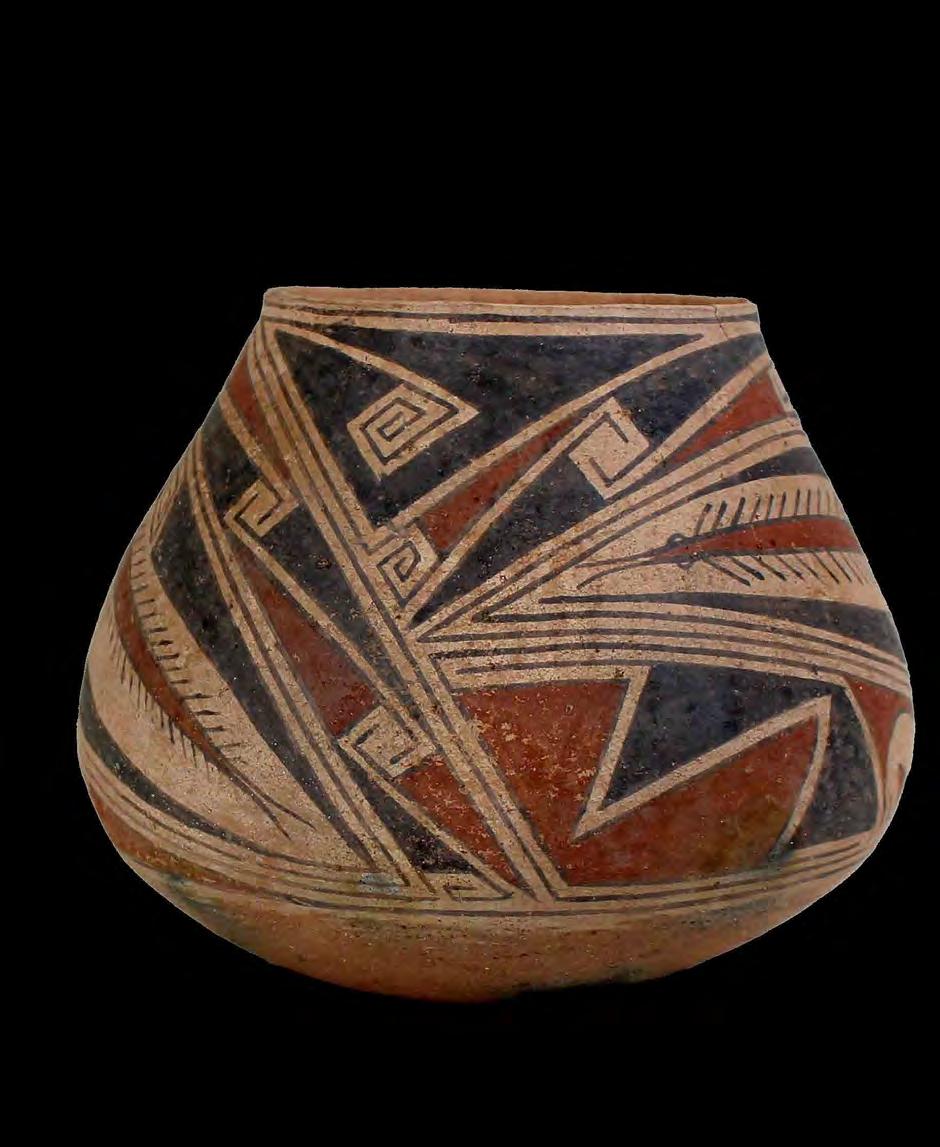
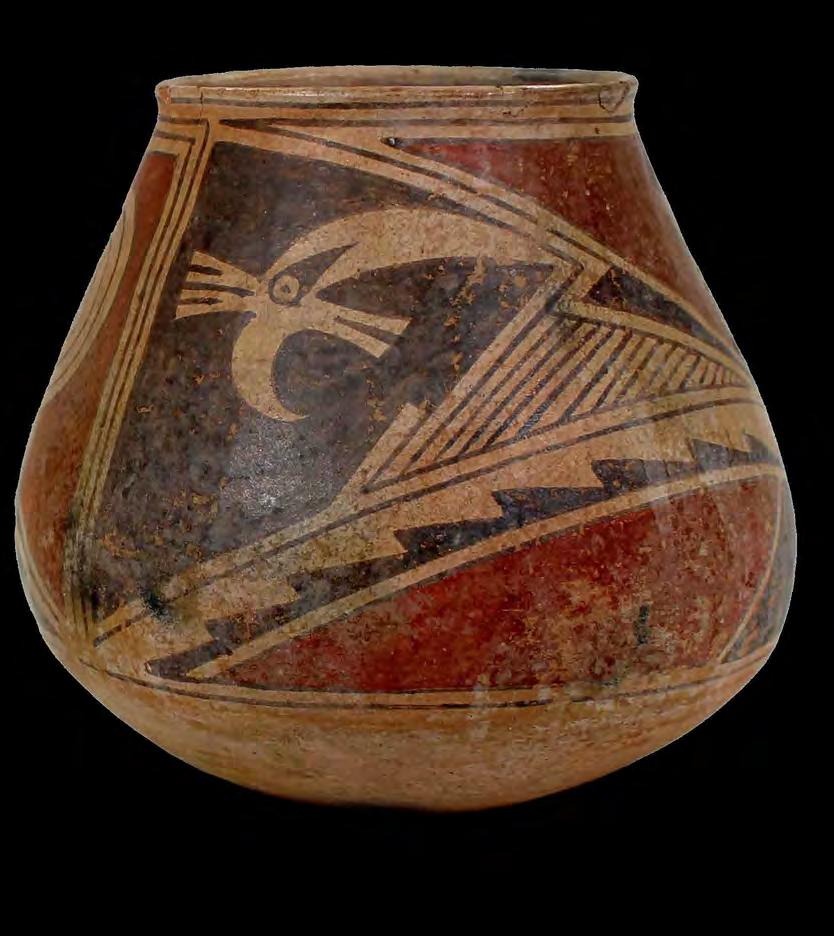
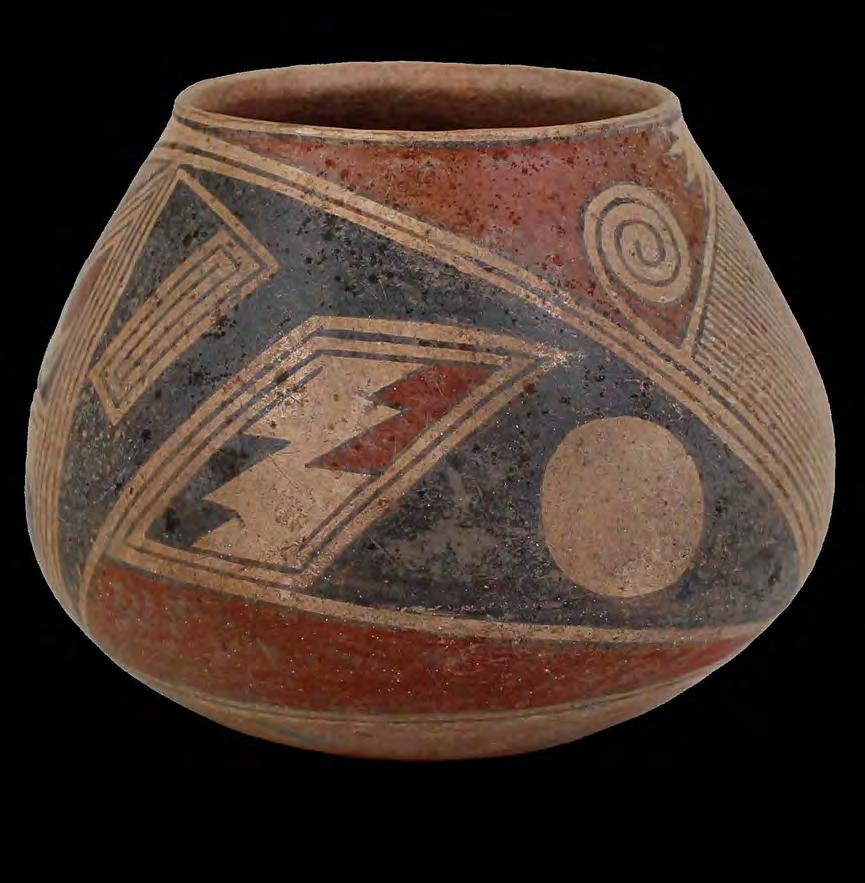
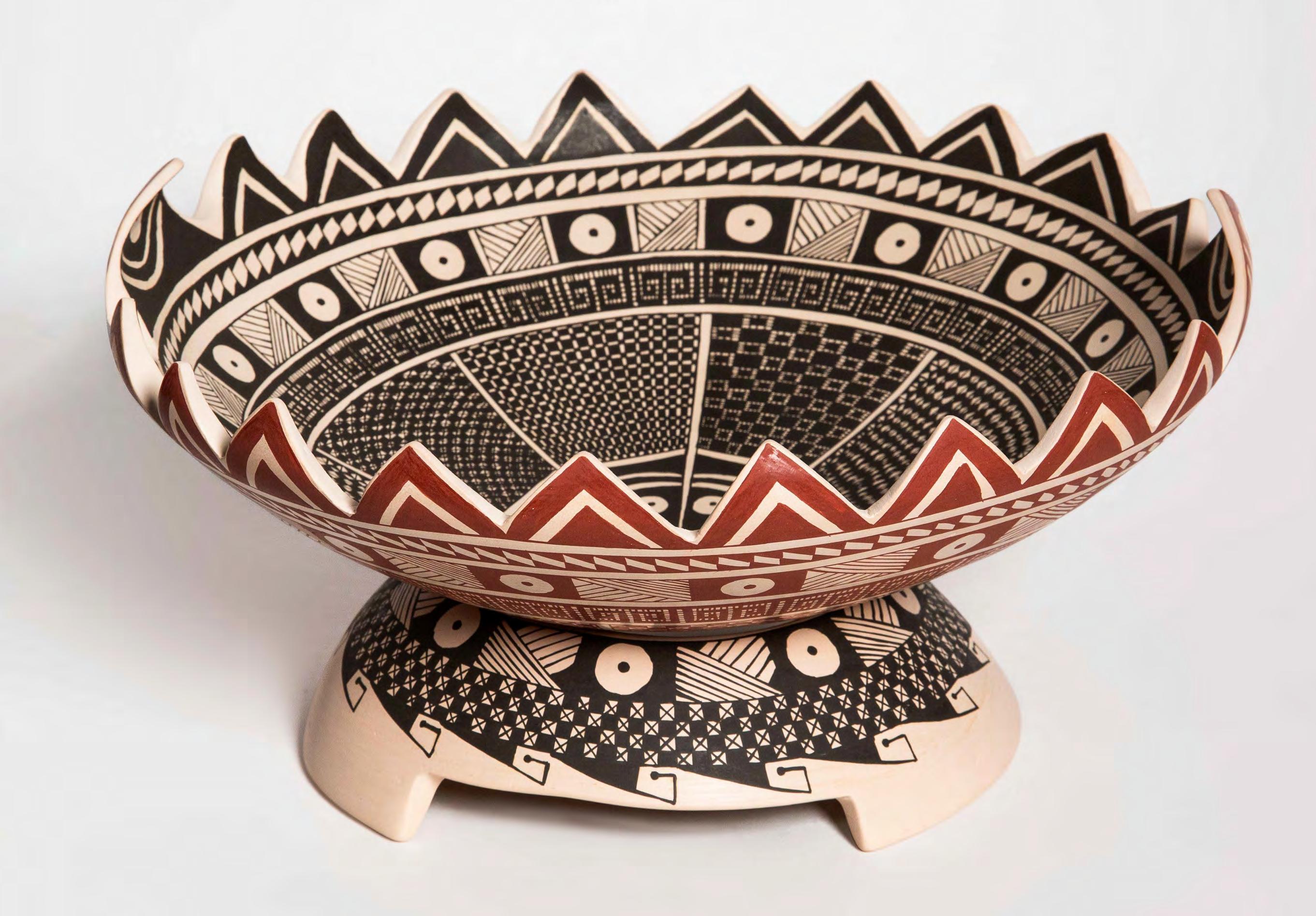
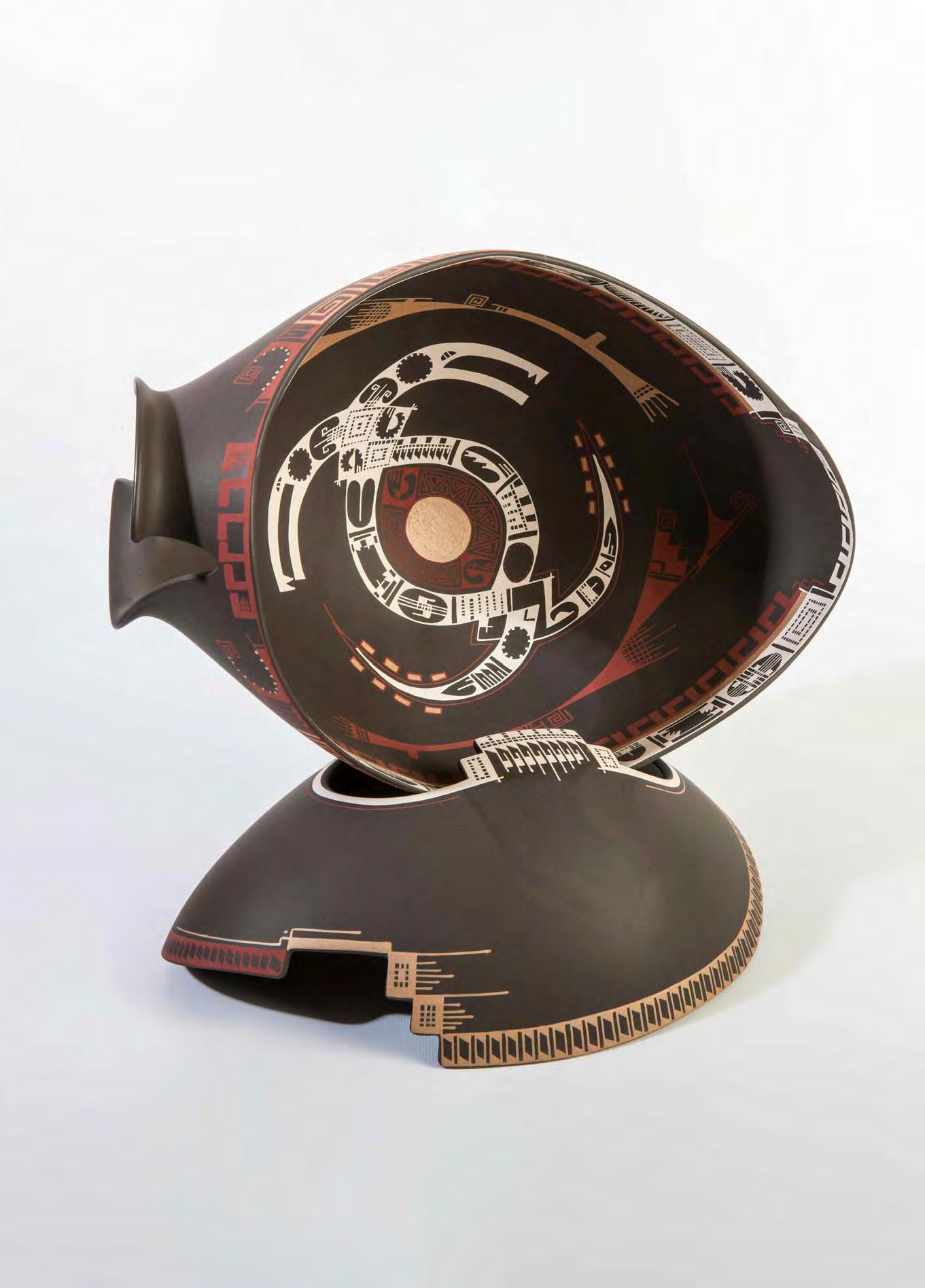
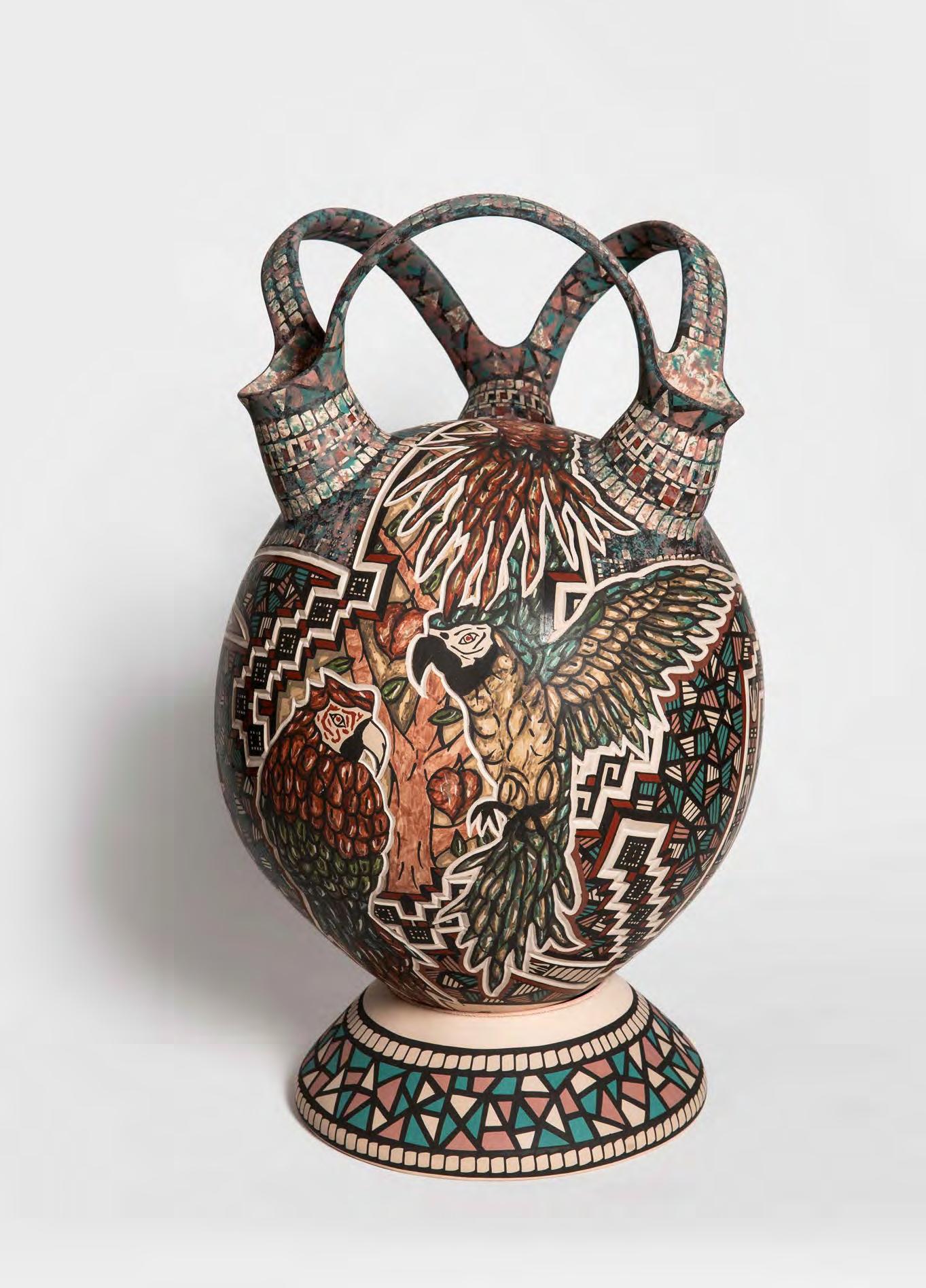
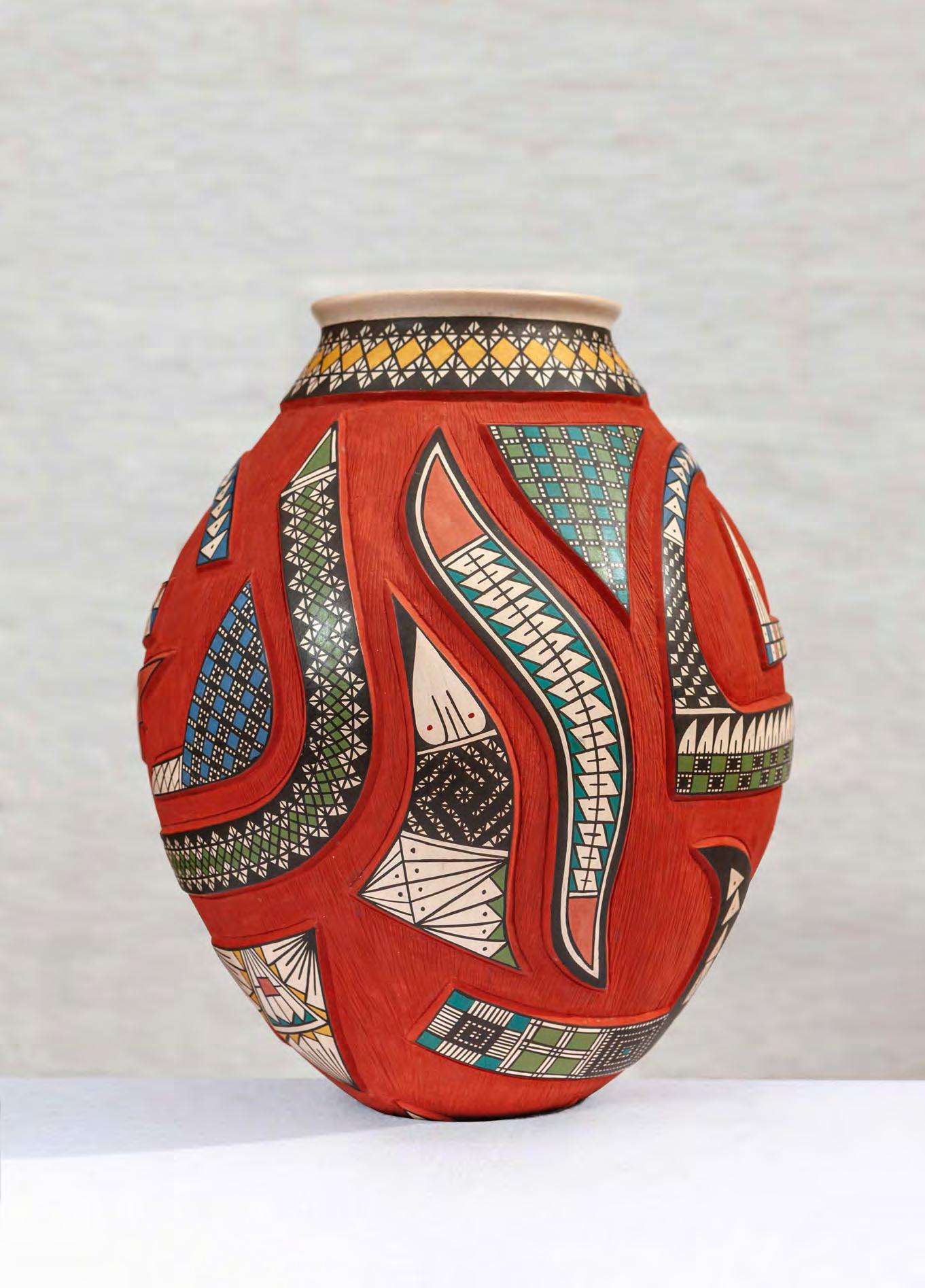
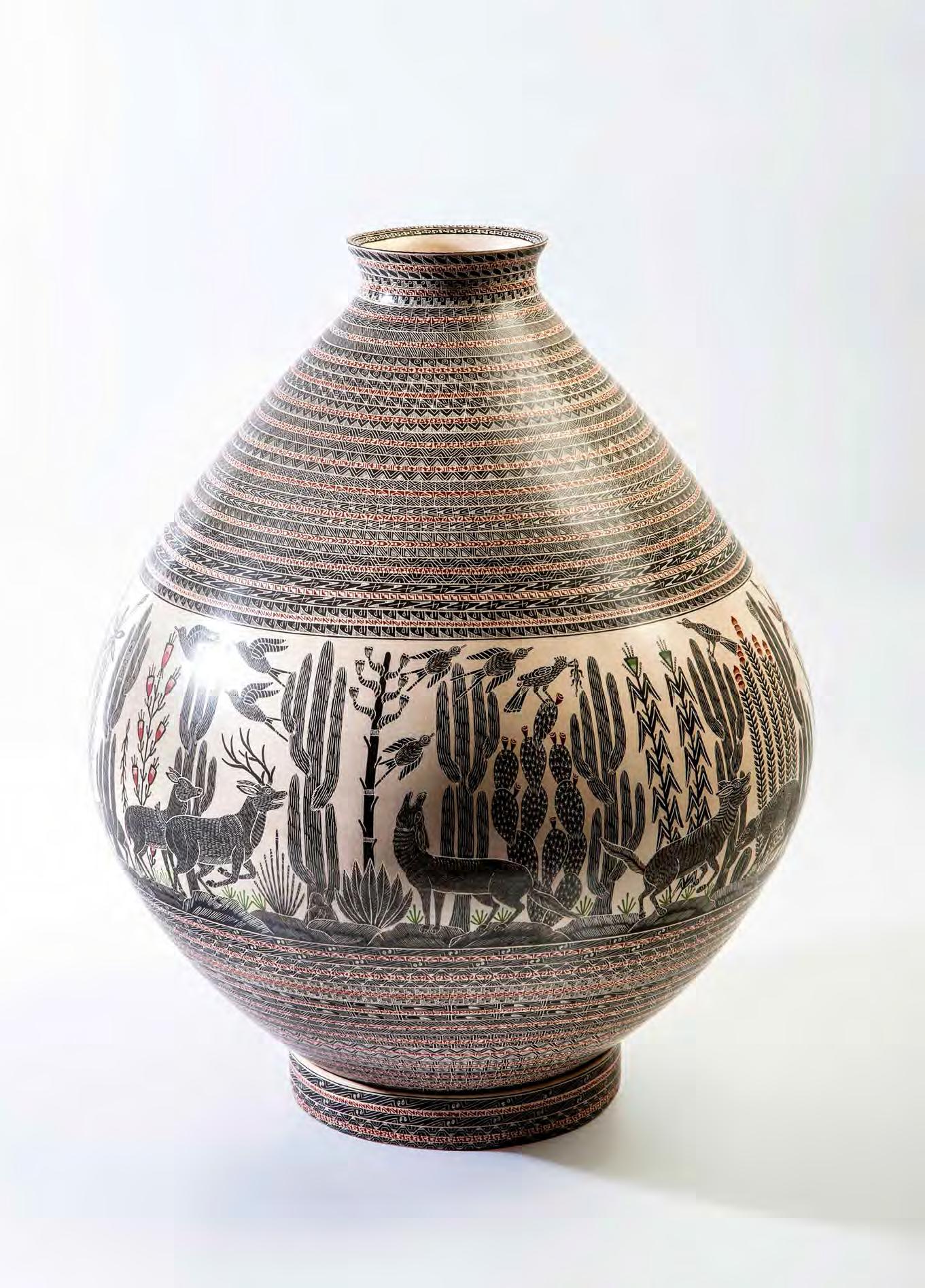
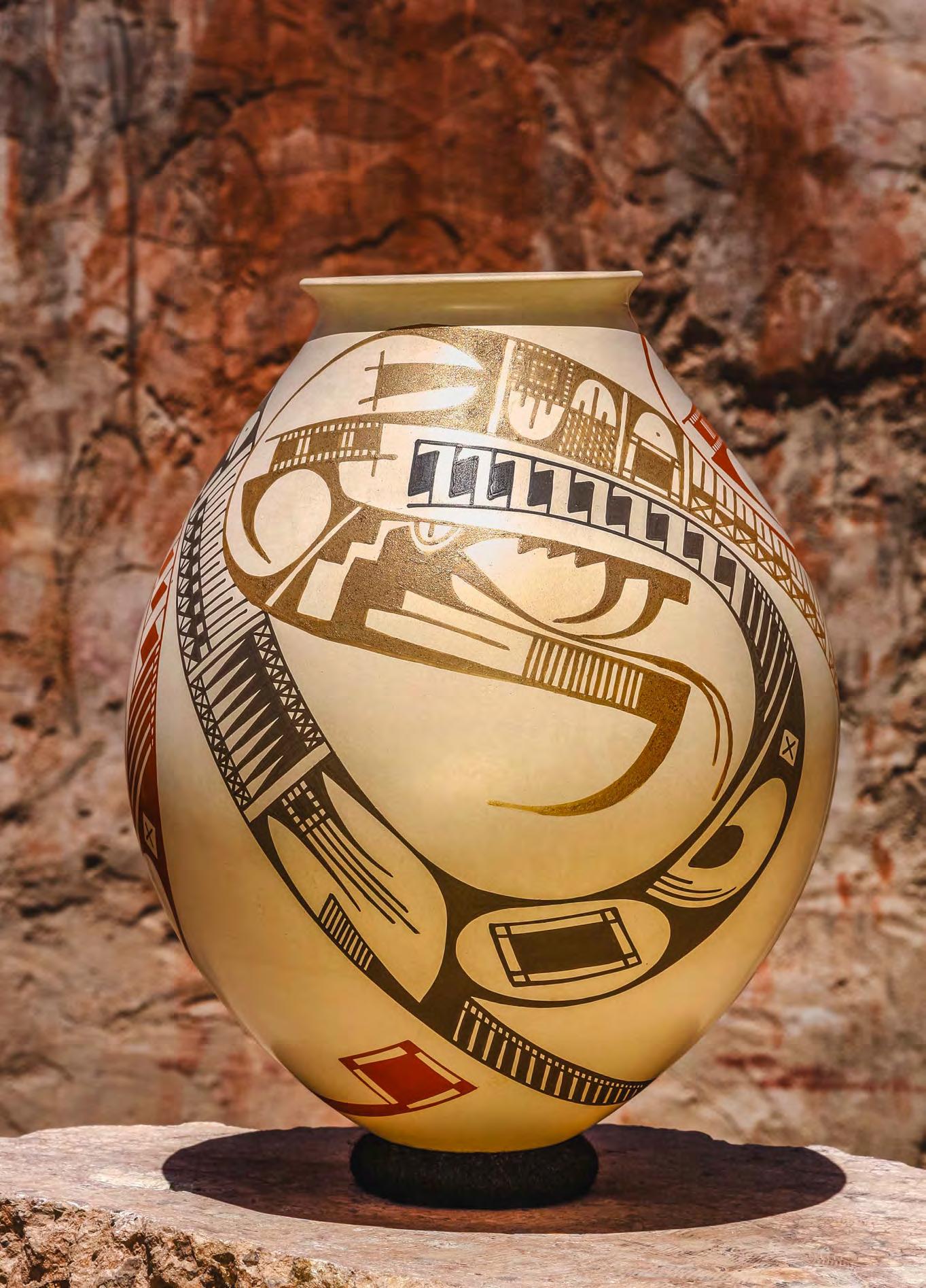
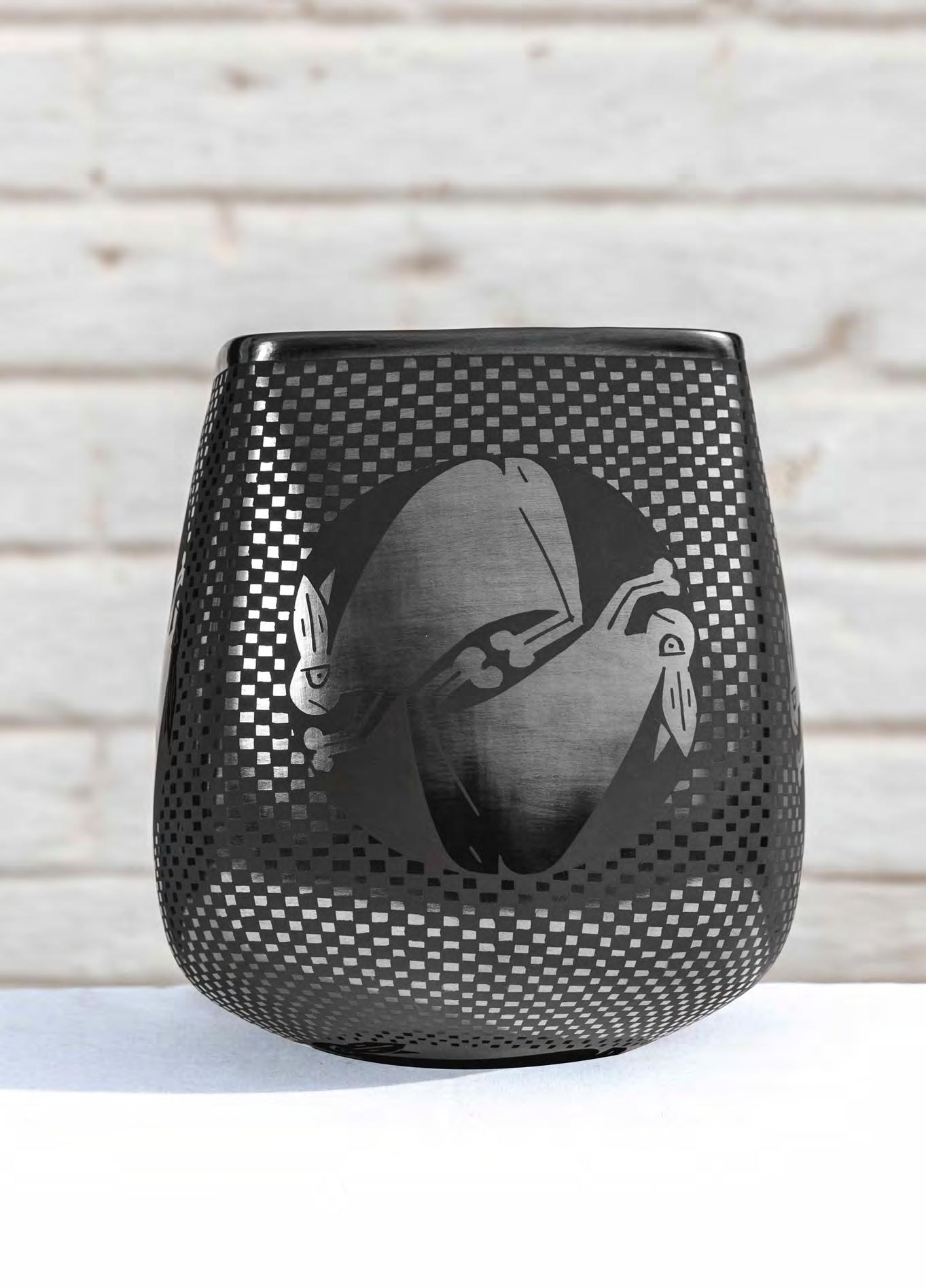
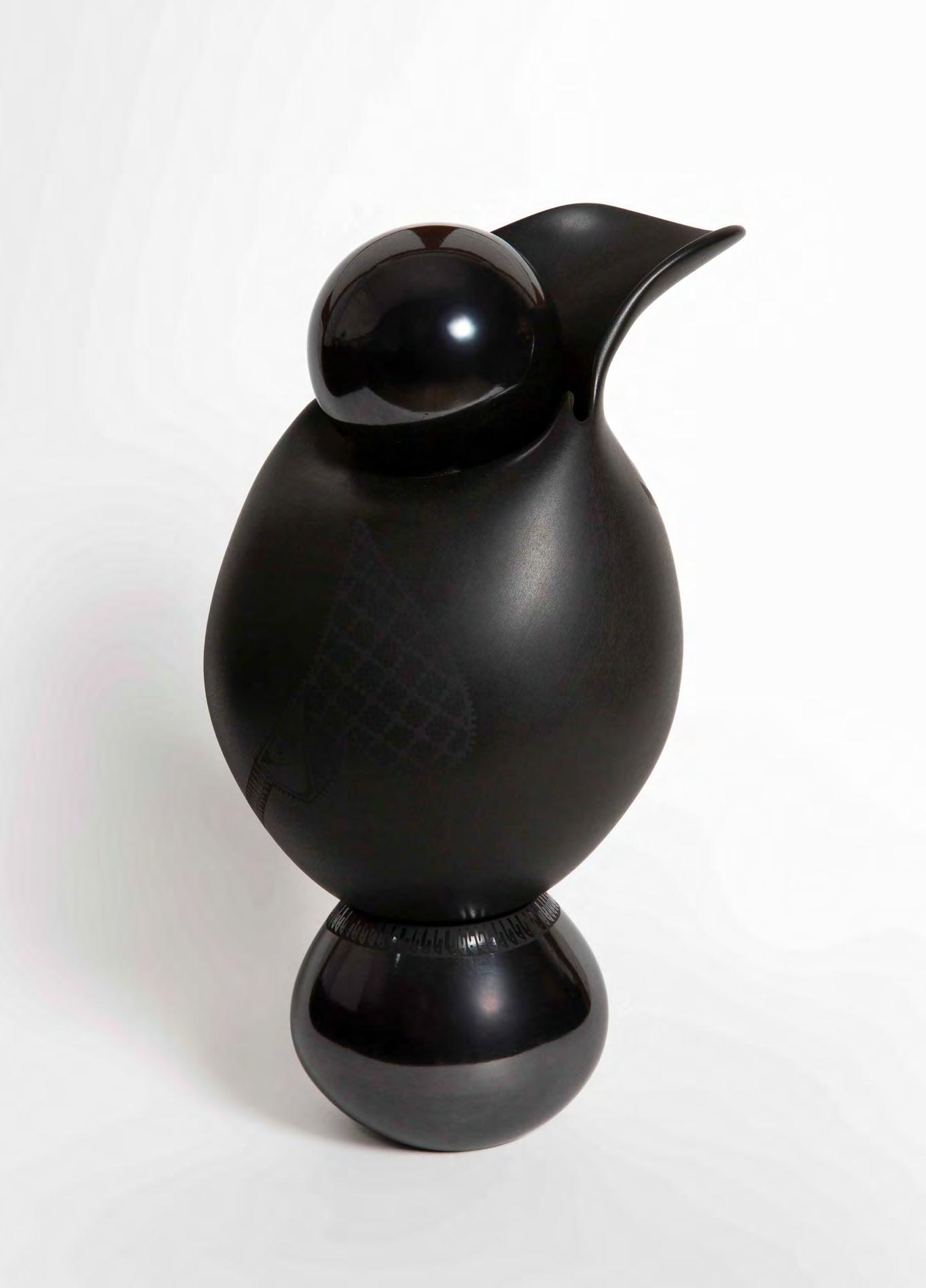
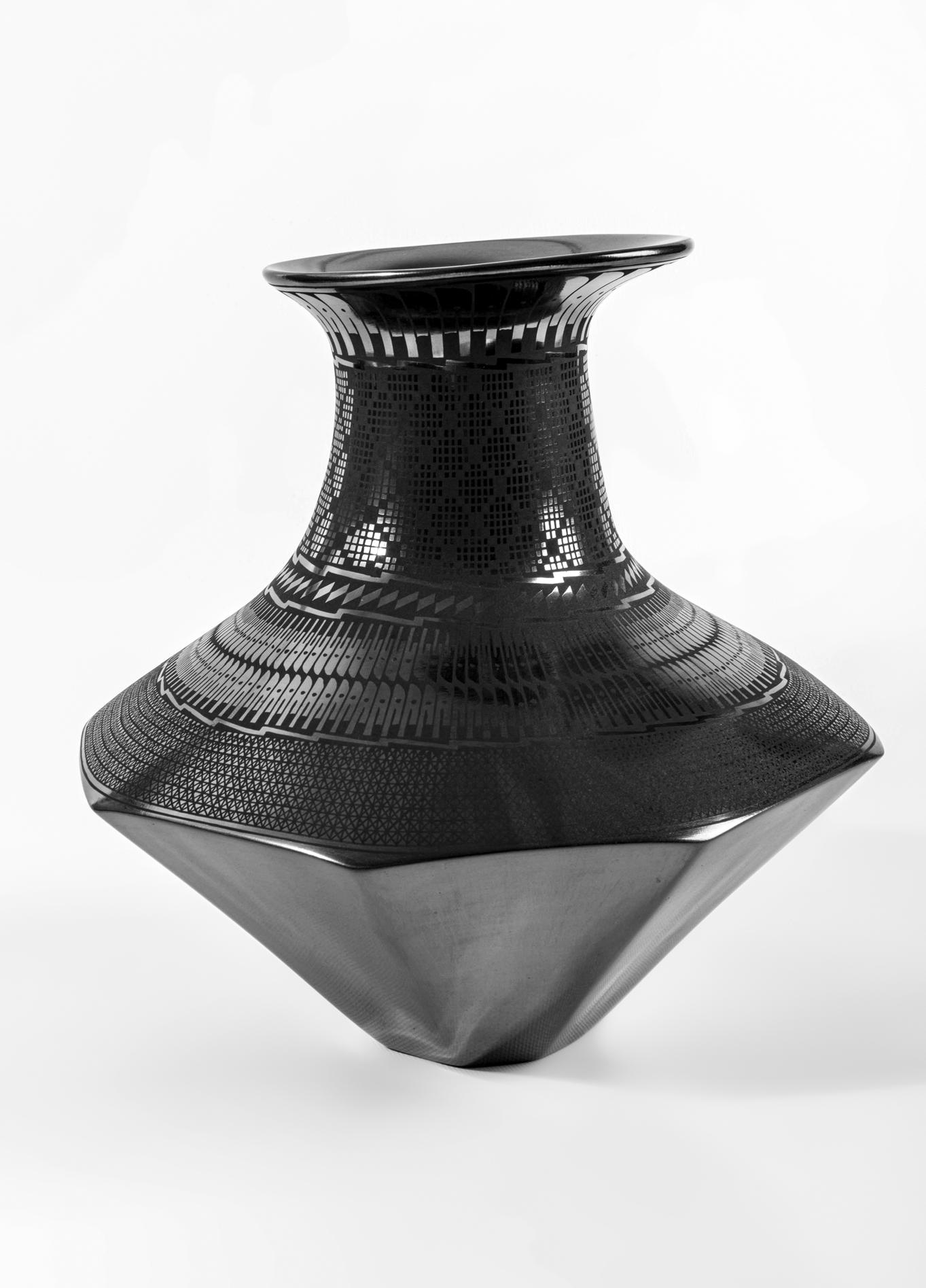
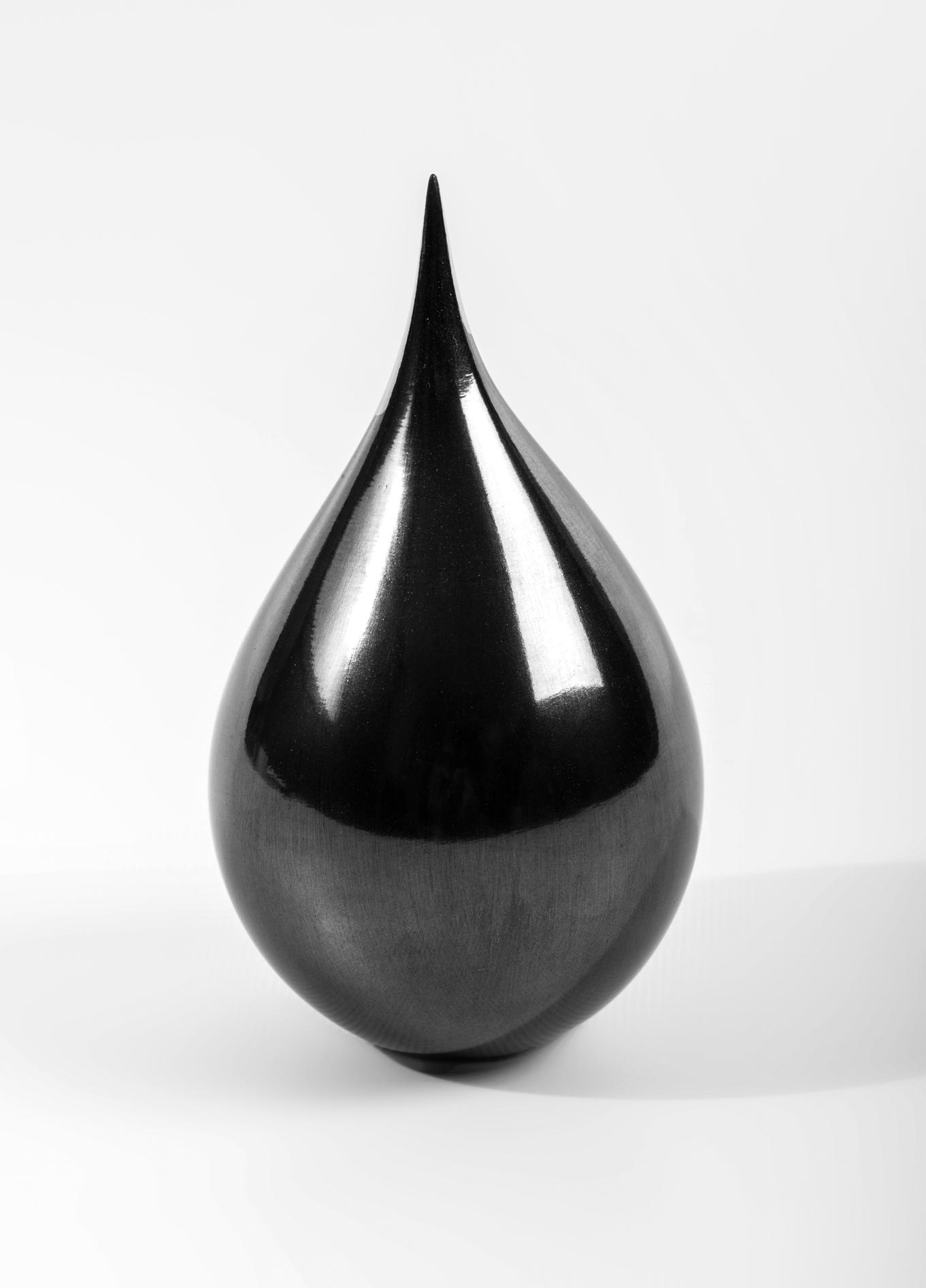
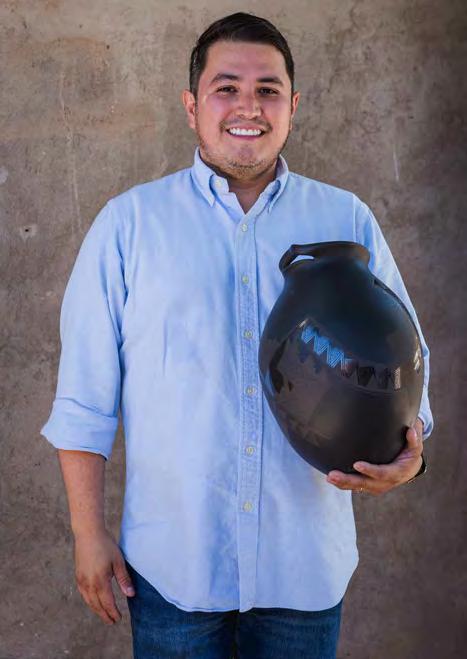
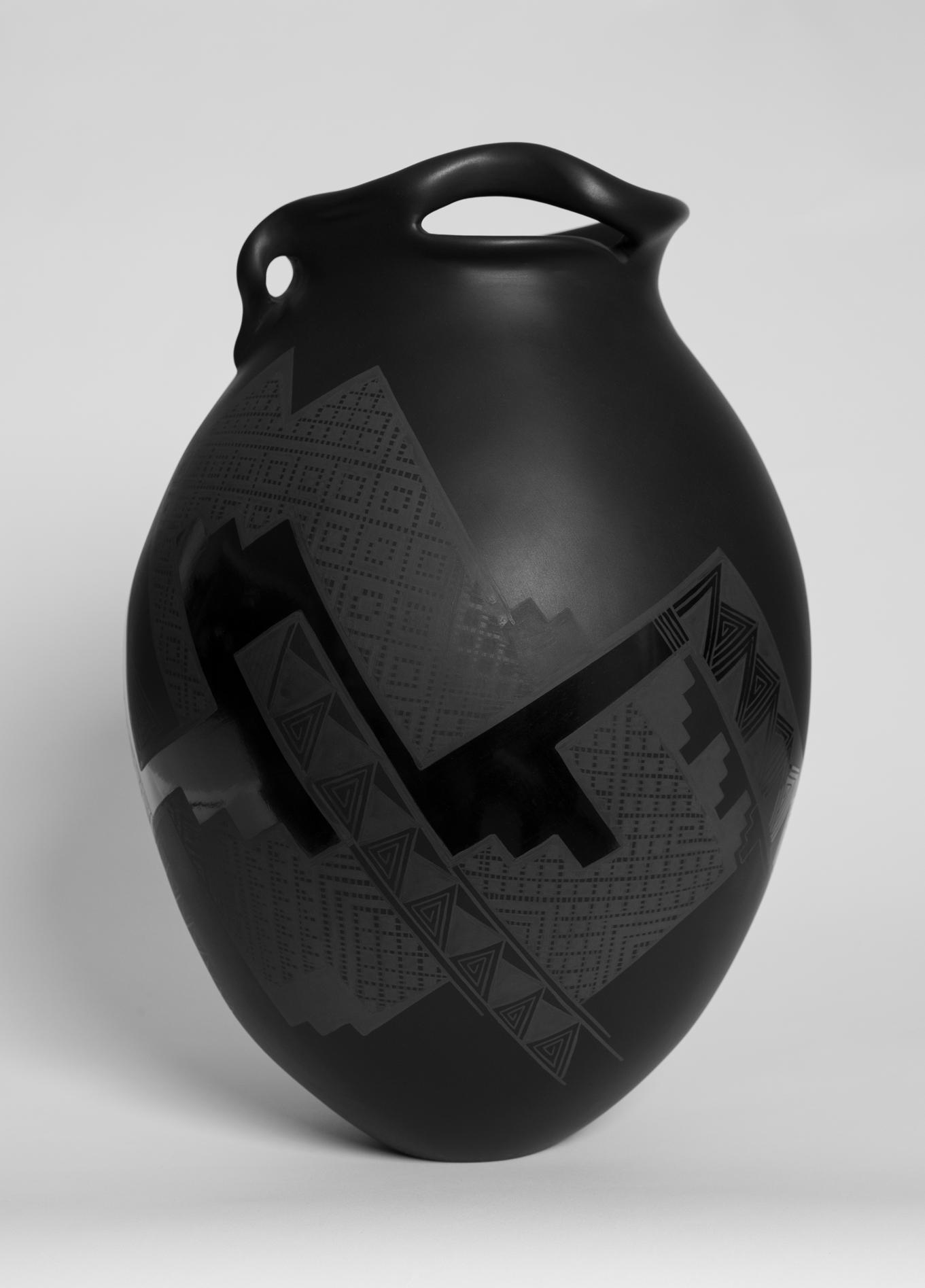
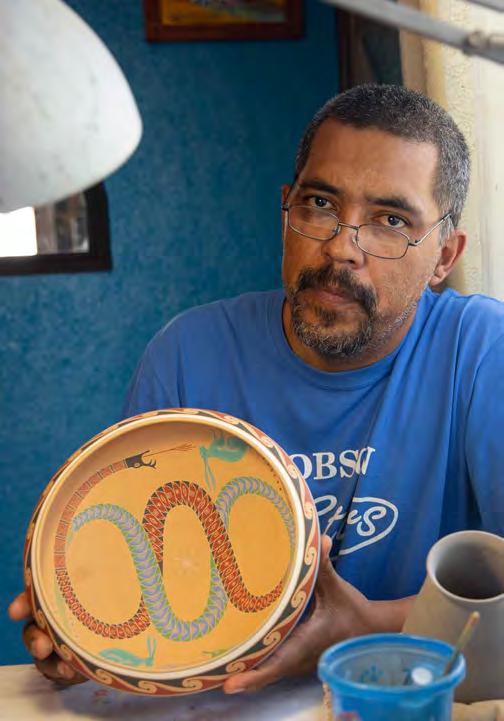
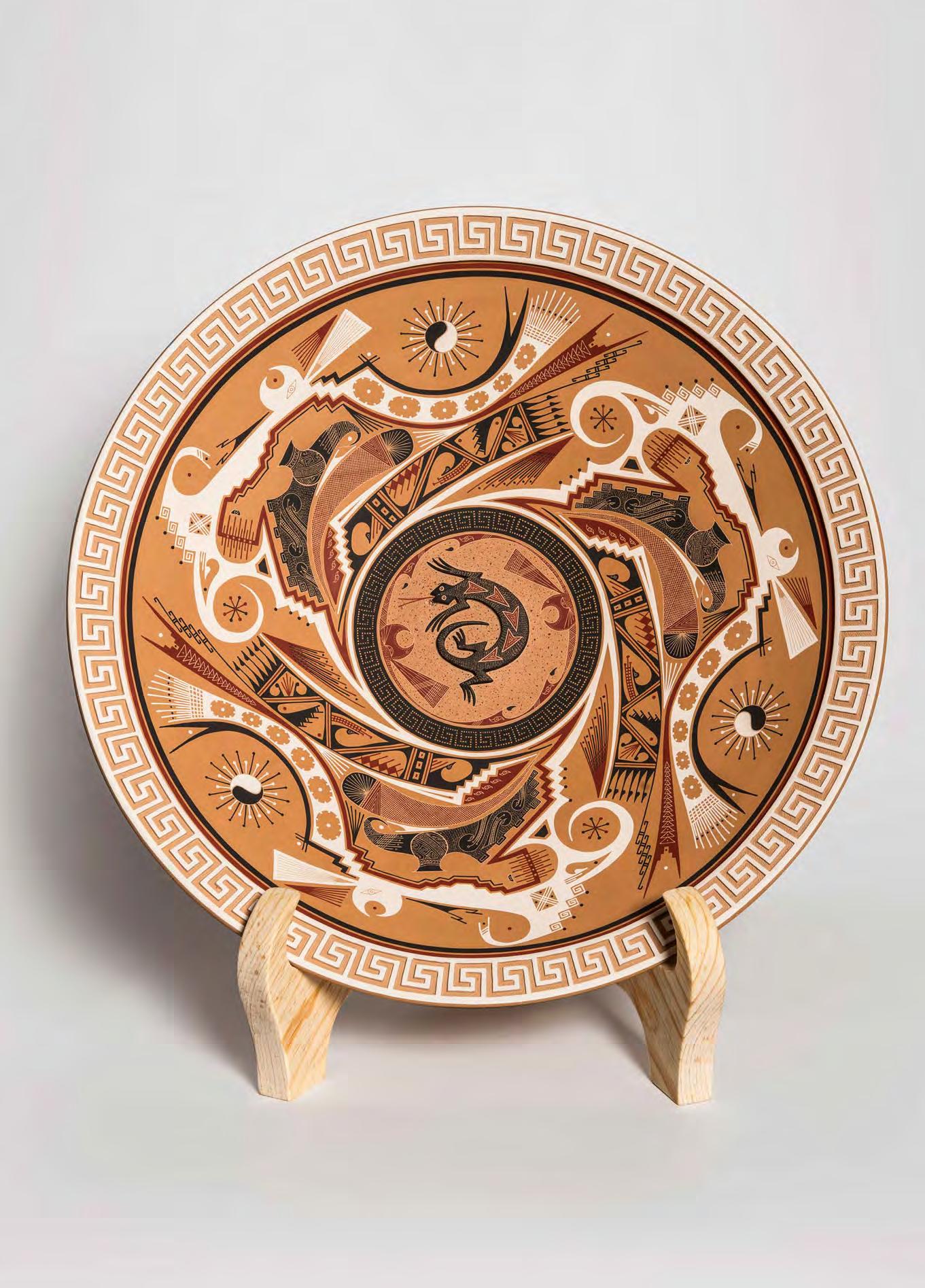
TEXTOS DE MARTA TUROK FOTOGRAFÍAS DE NACHO GUERRERO
Juan Quezada, sueños de barro y fuego
Juan Quezada, Dreams of Clay and Fire
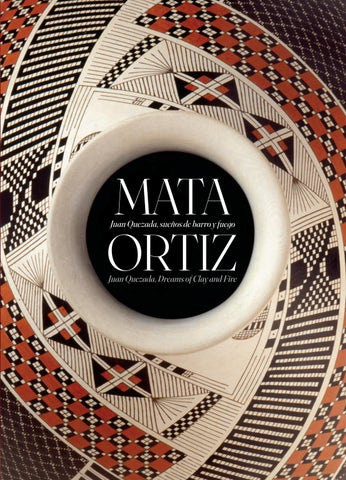
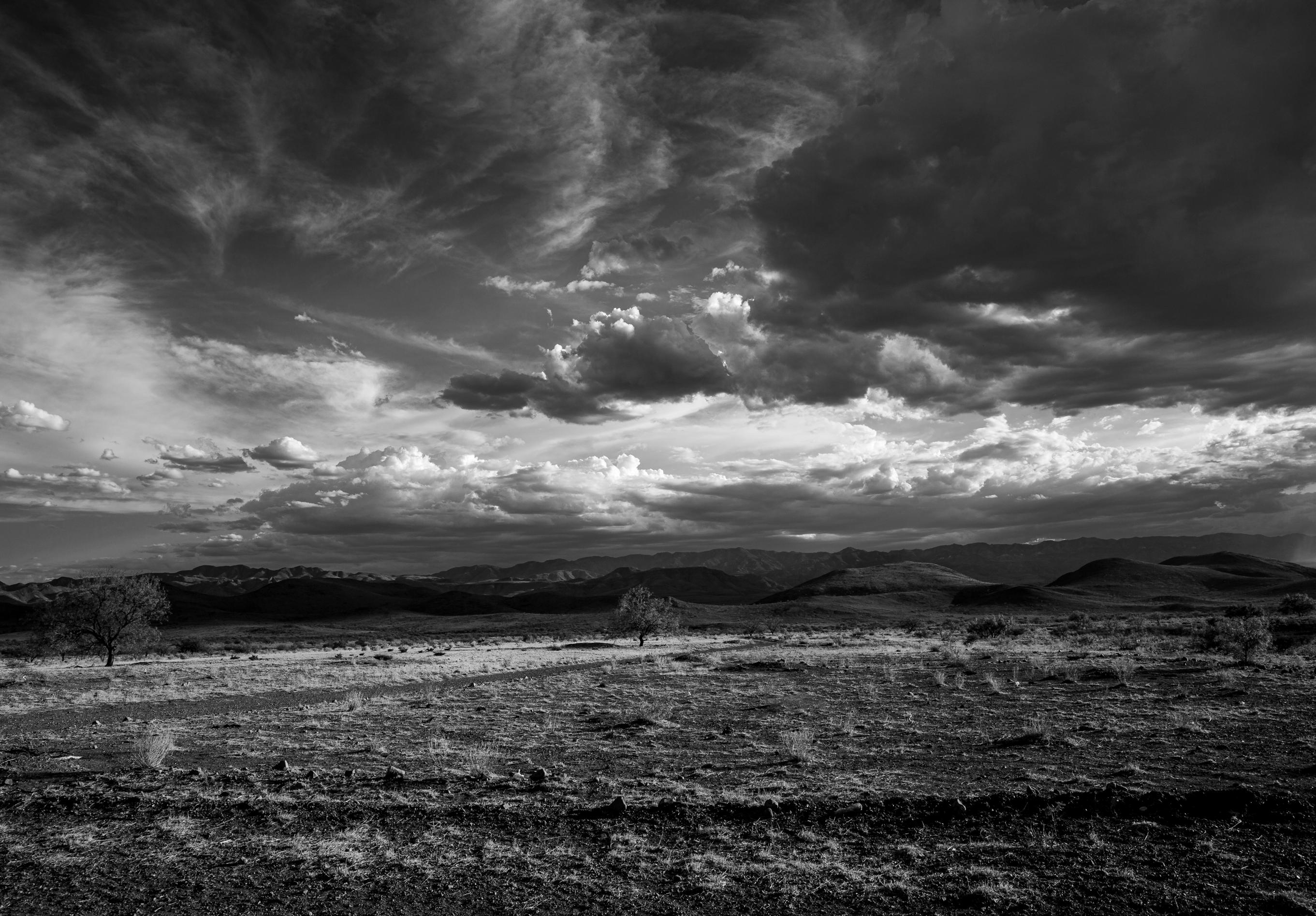
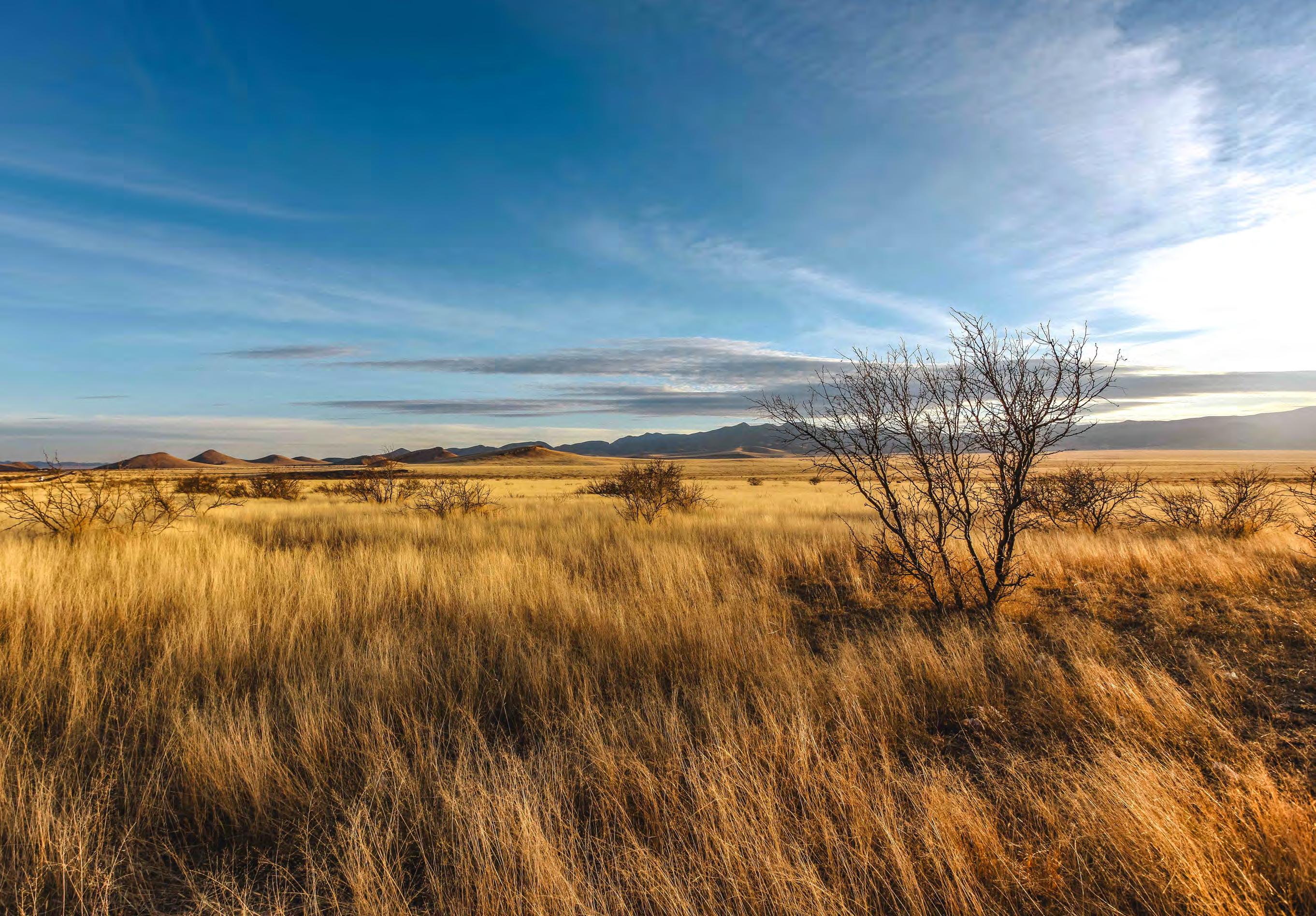
An almost forgotten place in the vast Chihuahuan Desert is the birthplace of a cultural and artistic movement with global repercussions that no one could have anticipated. MATA
UN PUNTO CASI PERDIDO
en la inmensidad del desierto chihuahuense es la cuna de un movimiento cultural y artístico con repercusión mundial, cuyo alcance nadie sospechaba.
Cerca de allí, se ubica el humilde hogar de un
NIÑO INQUIETO
destinado a hablar con la naturaleza, aprender su lenguaje y convertirlo en arte.
Not far from there is the humble home of a restless child destined to communicate with nature, learn its language, and transform it into art.
Creció hasta convertirse en un hombre de pocas palabras, pero capaz de entender el idioma
DEL BARRO Y DEL FUEGO
He grew into a man of few words but was able to understand the language of clay and fire.
De sus manos nacieron las más sofisticadas creaciones que un
ALFARERO
de su tiempo y su tierra pudiera imaginar… Y con ellas, una explosión artística que ha iluminado a generaciones.
From his hands emerged the most sophisticated creations that a potter of his time and place could only imagine, along with an artistic explosion that has inspired generations.
COMITÉ EDITORIAL
Editorial comitee
Federico Terrazas Becerra, presidente / president
Enrique Escalante Ochoa
Daniel Helguera Moreno
Luis Jorge Amaya González
María Isabel Sen Venero
David Villegas Becerra
COORDINACIÓN INSTITUCIONAL
Institutional coordination
Daniel Helguera Moreno
David Villegas Becerra
TEXTOS Y TRADUCCÍÓN DE
Texts and translation by Marta Turok
ASISTENTE DE INVESTIGACIÓN
Research asssistant
Sara Meneses Cuapio
FOTOGRAFÍA
Photography
Nacho Guerrero
FOTO DE PORTADA
Cover photo
Jorge Vértiz publicada en la edición 45 de la revista Artes de México /
Published in the 45th edition of Artes de México magazine.
IMPRESIÓN
Printing
SPI, SERVICIOS PROFESIONALES
DE IMPRESIÓN, S. A. de C. V. www.spi.com.mx
EDICIÓN Y DISEÑO
Editing and design
Sagrario Saraid, publisher
Gabriel Bauducco, editor
Alejandro Argandona, director de arte / art director
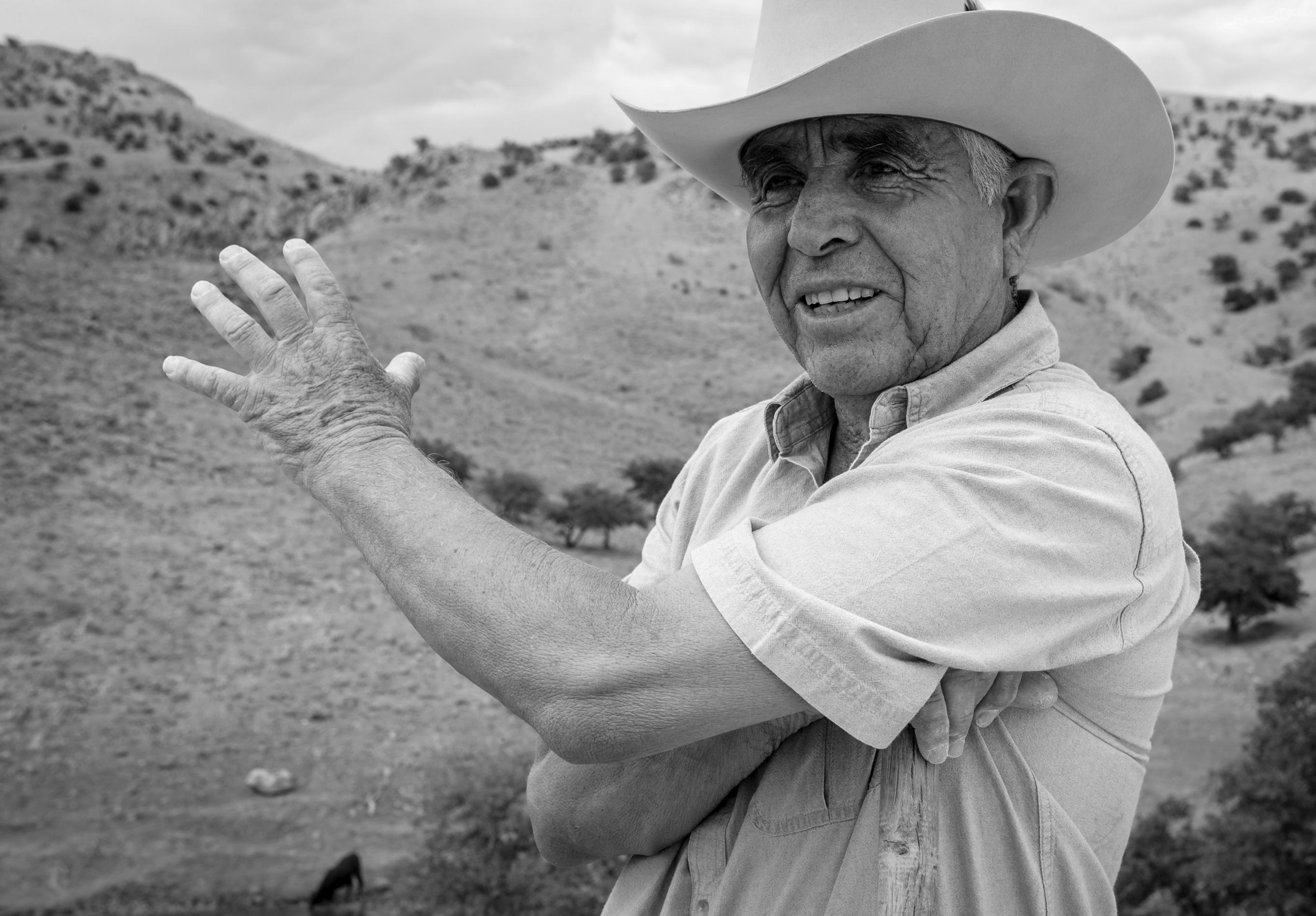
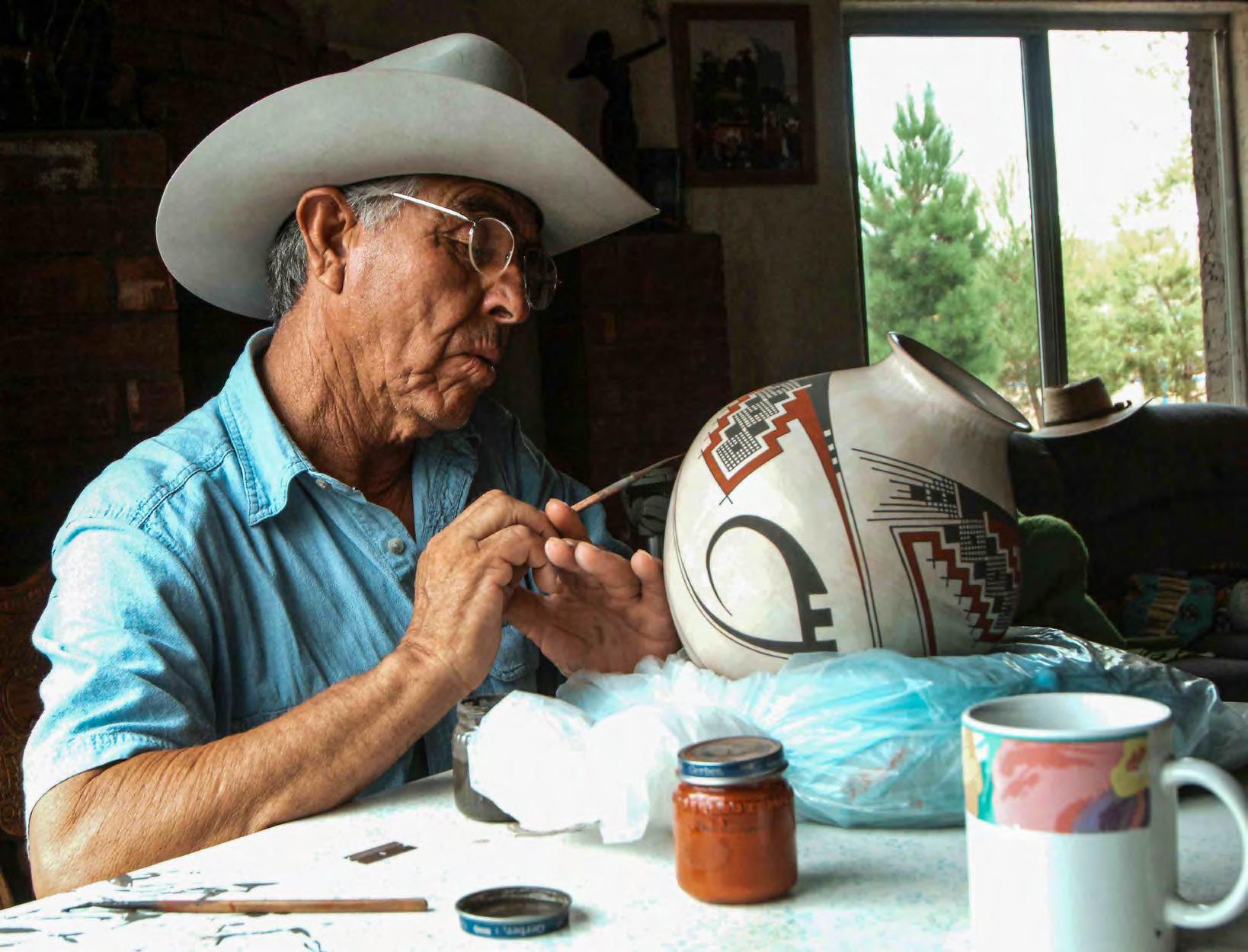
FAMILIA PUEDA VIVIR DE LA ALFARERÍA UN AÑO, DOS O TRES, POR LO QUE YO HICE.”
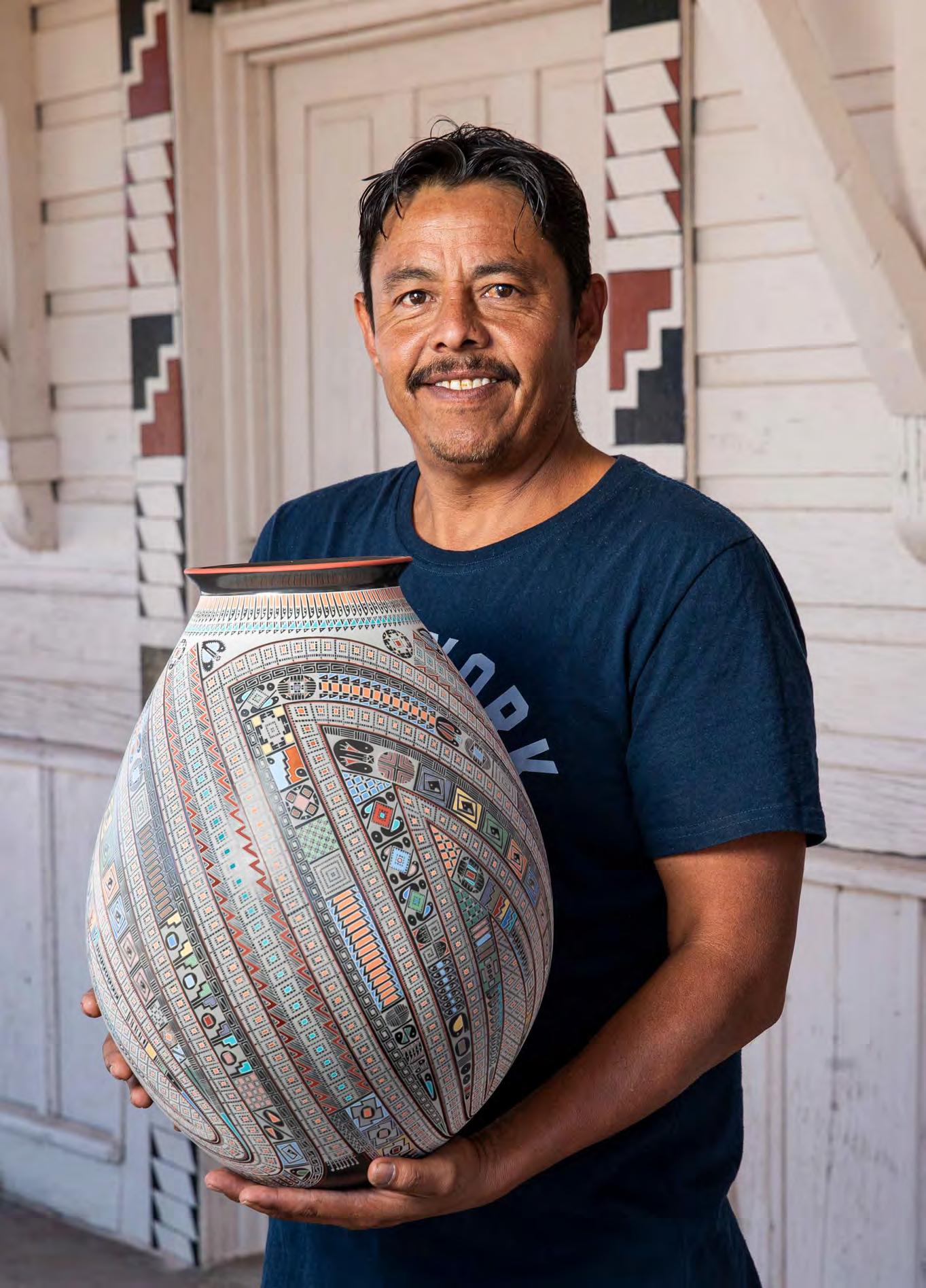
“It is very satisfying for me that a family can live off pottery making for a year, two, or even three, because of what I accomplished.” JUAN QUEZADA
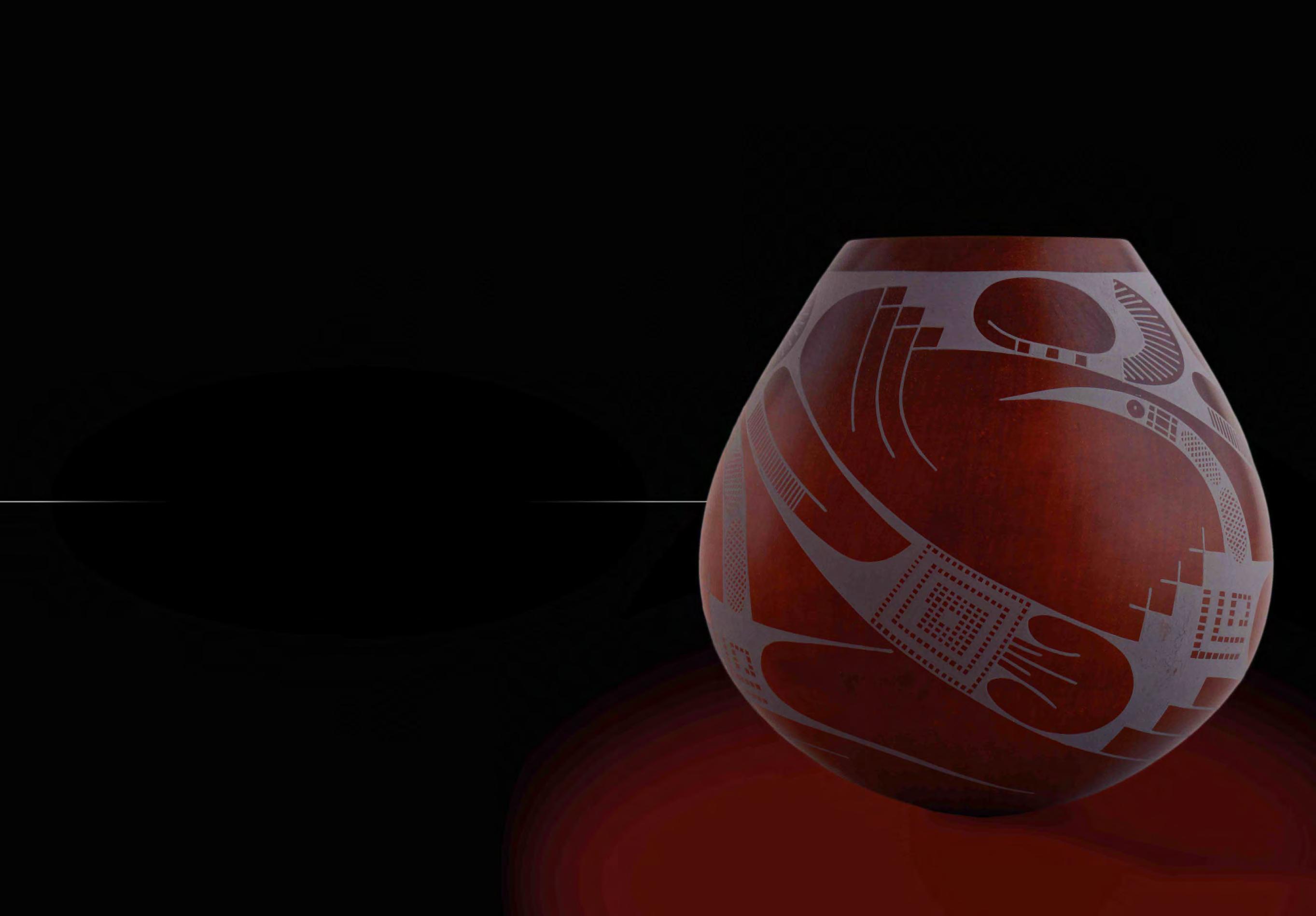
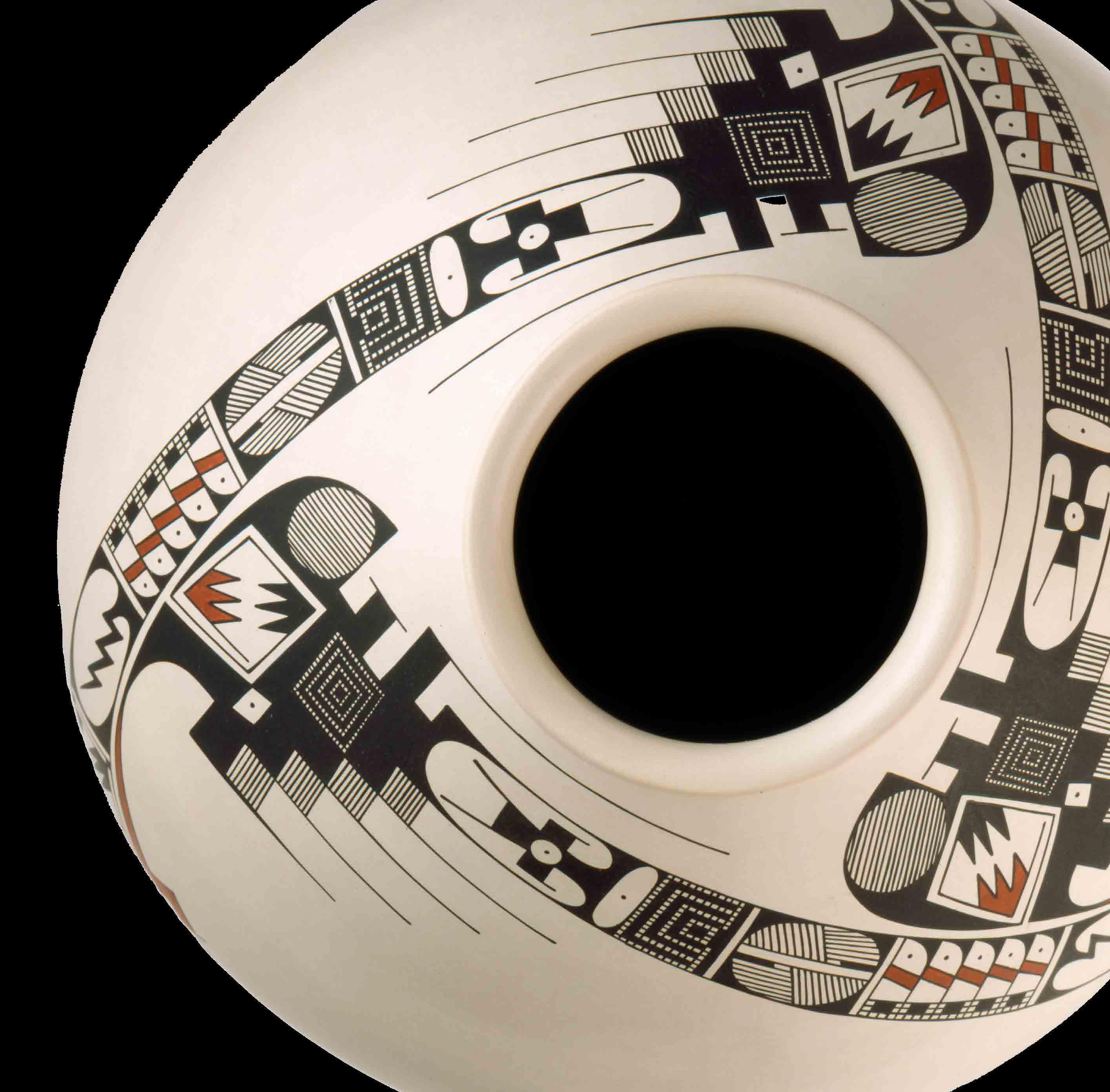
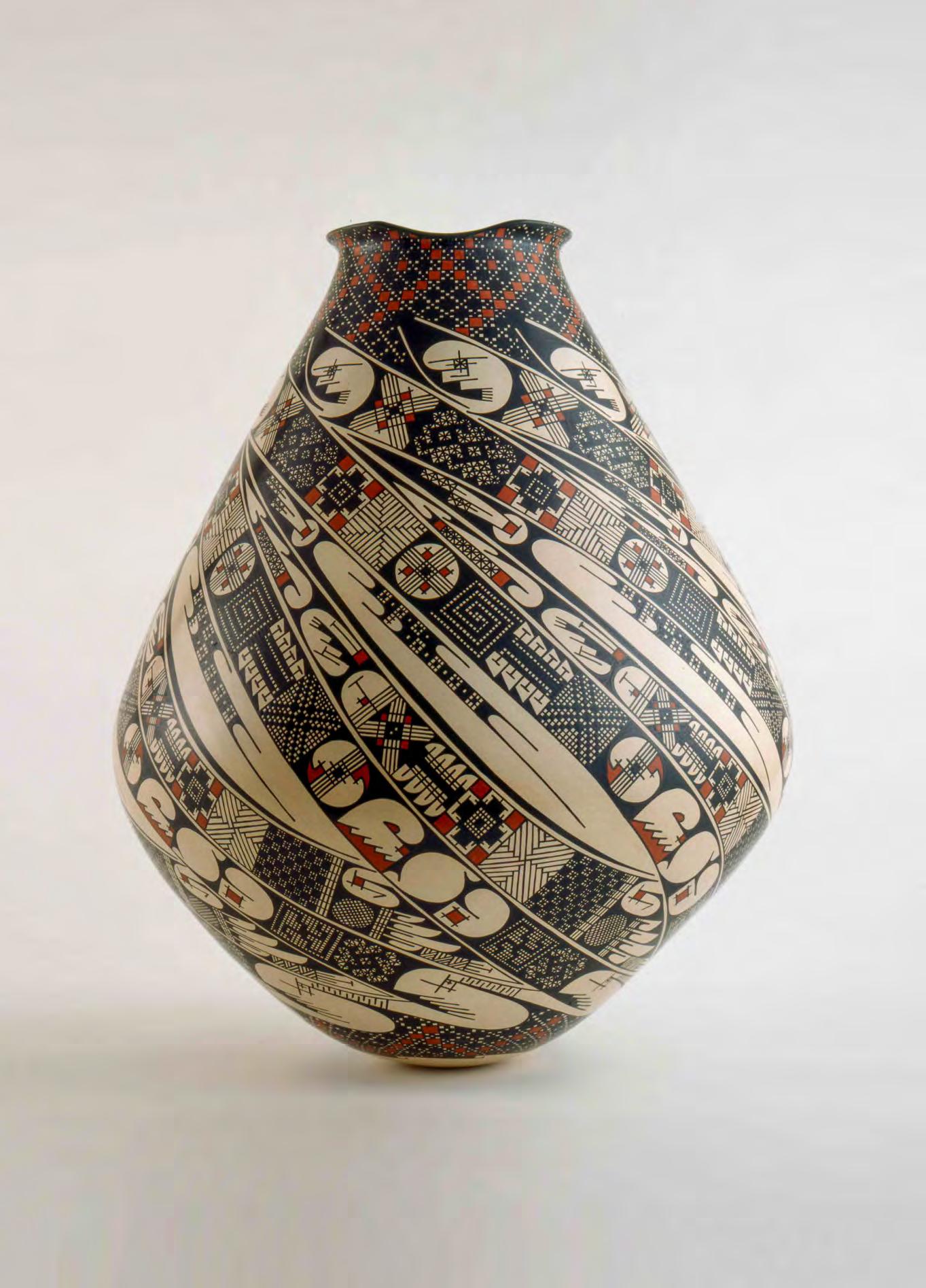
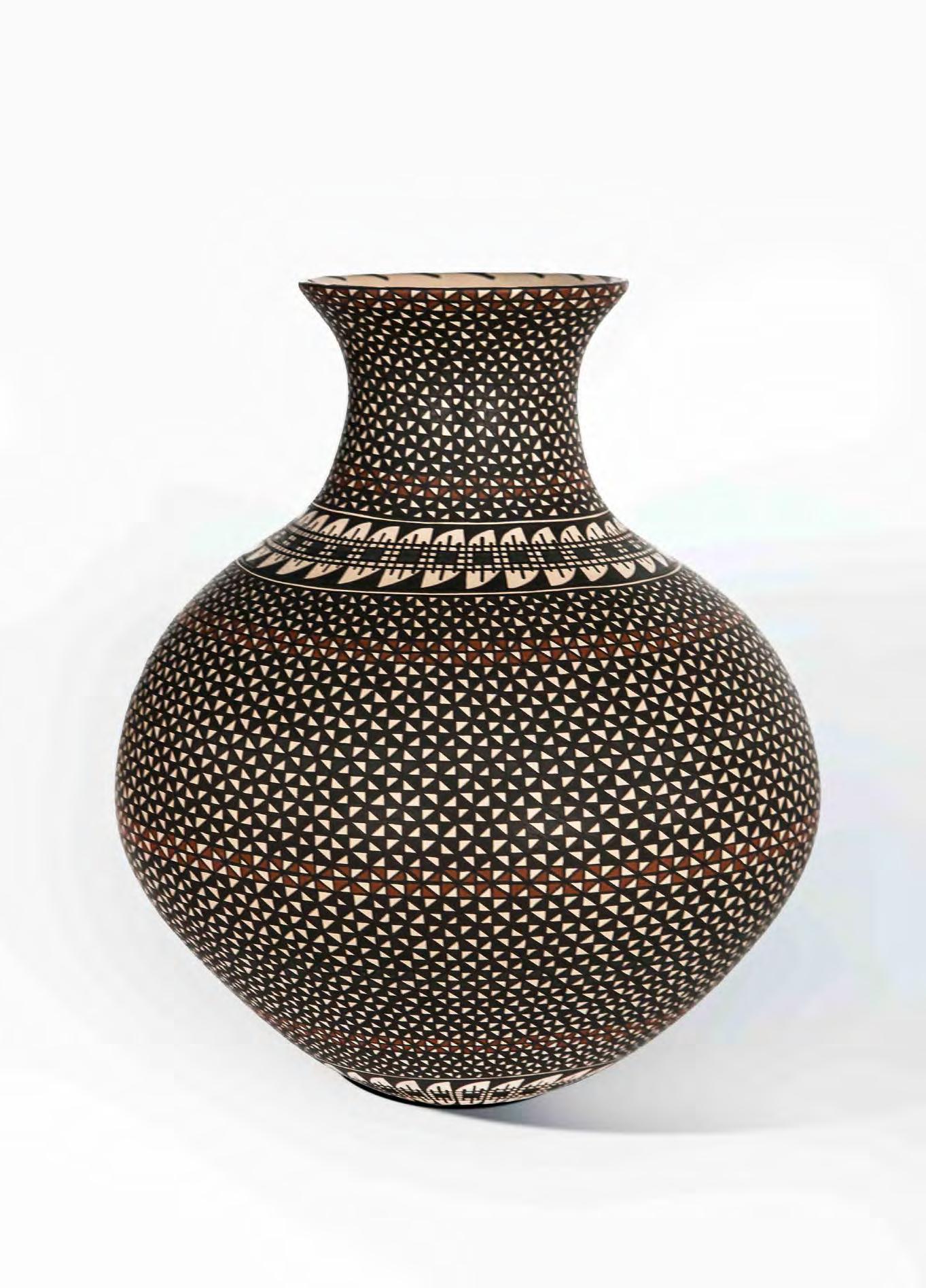
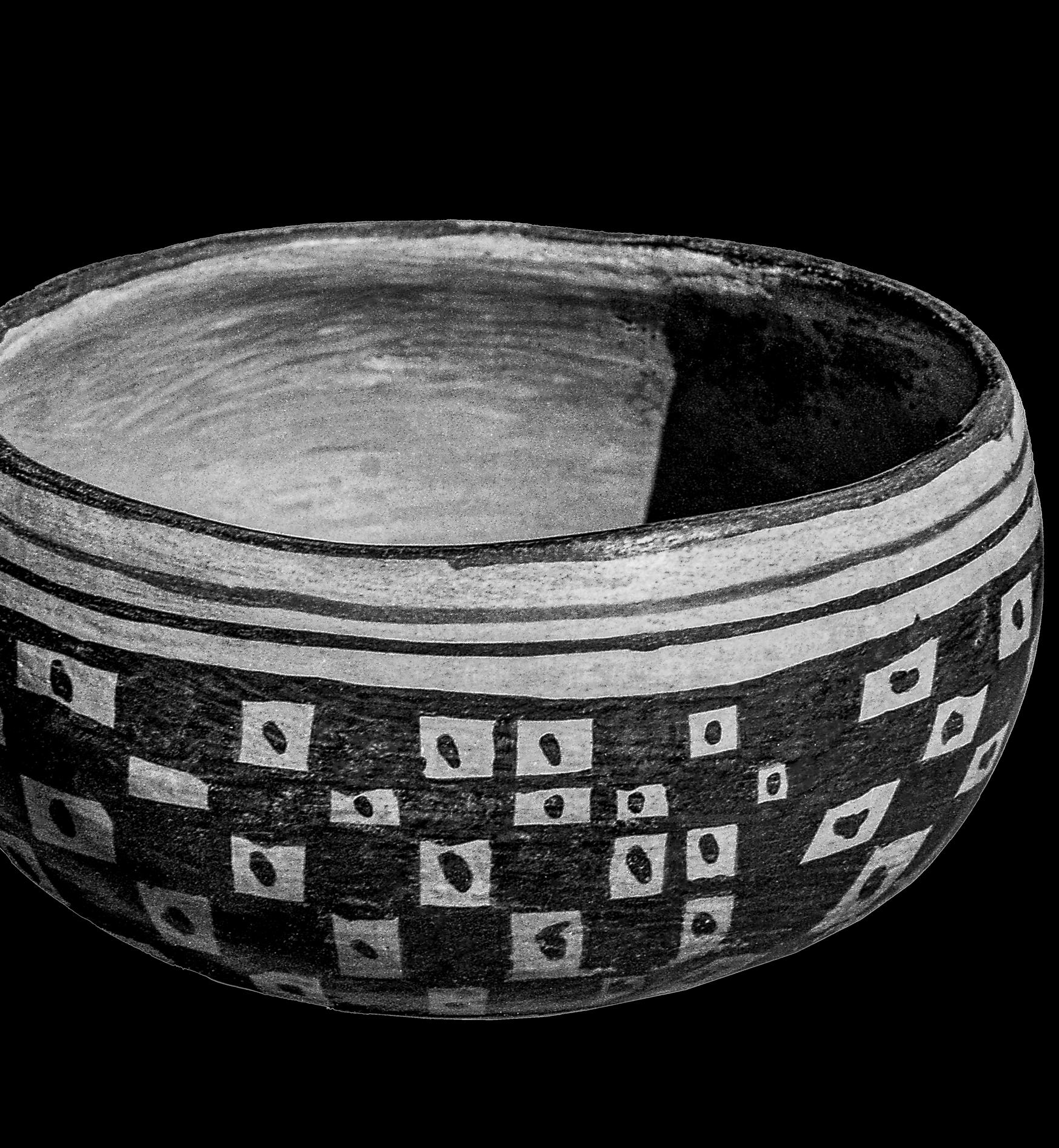
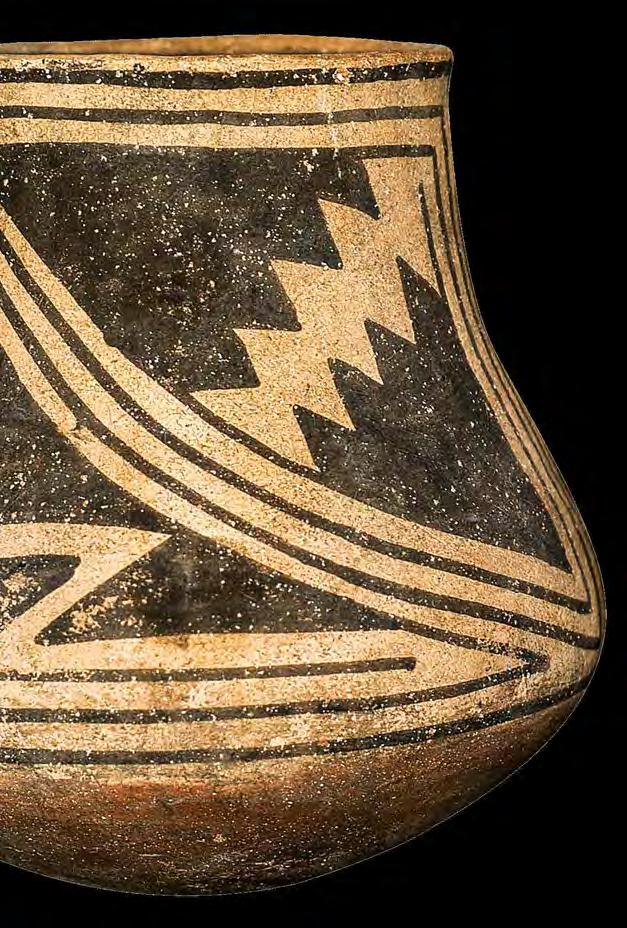
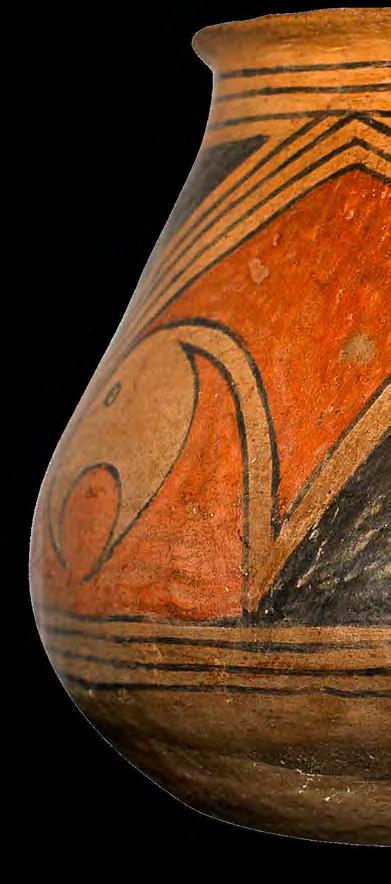
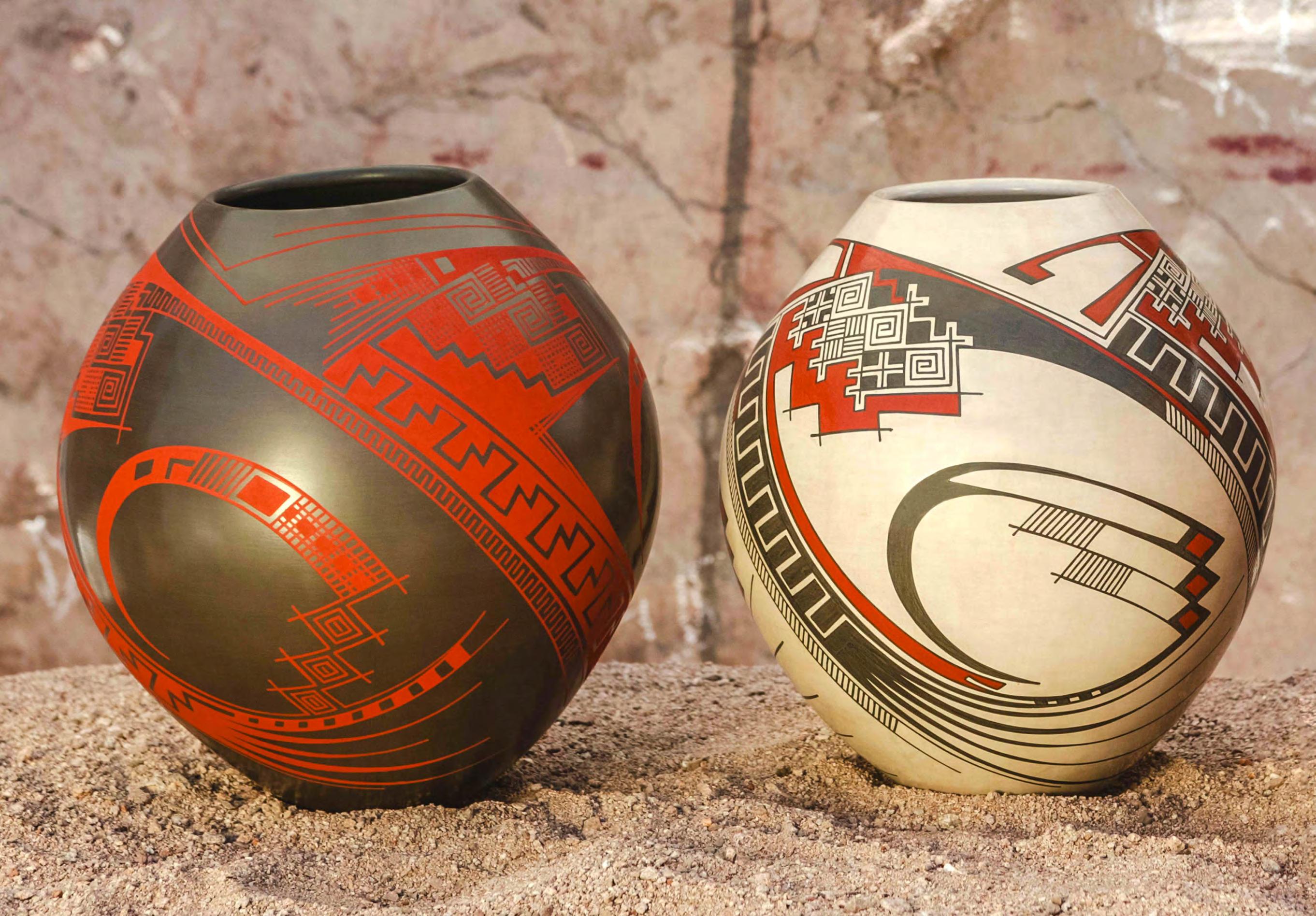
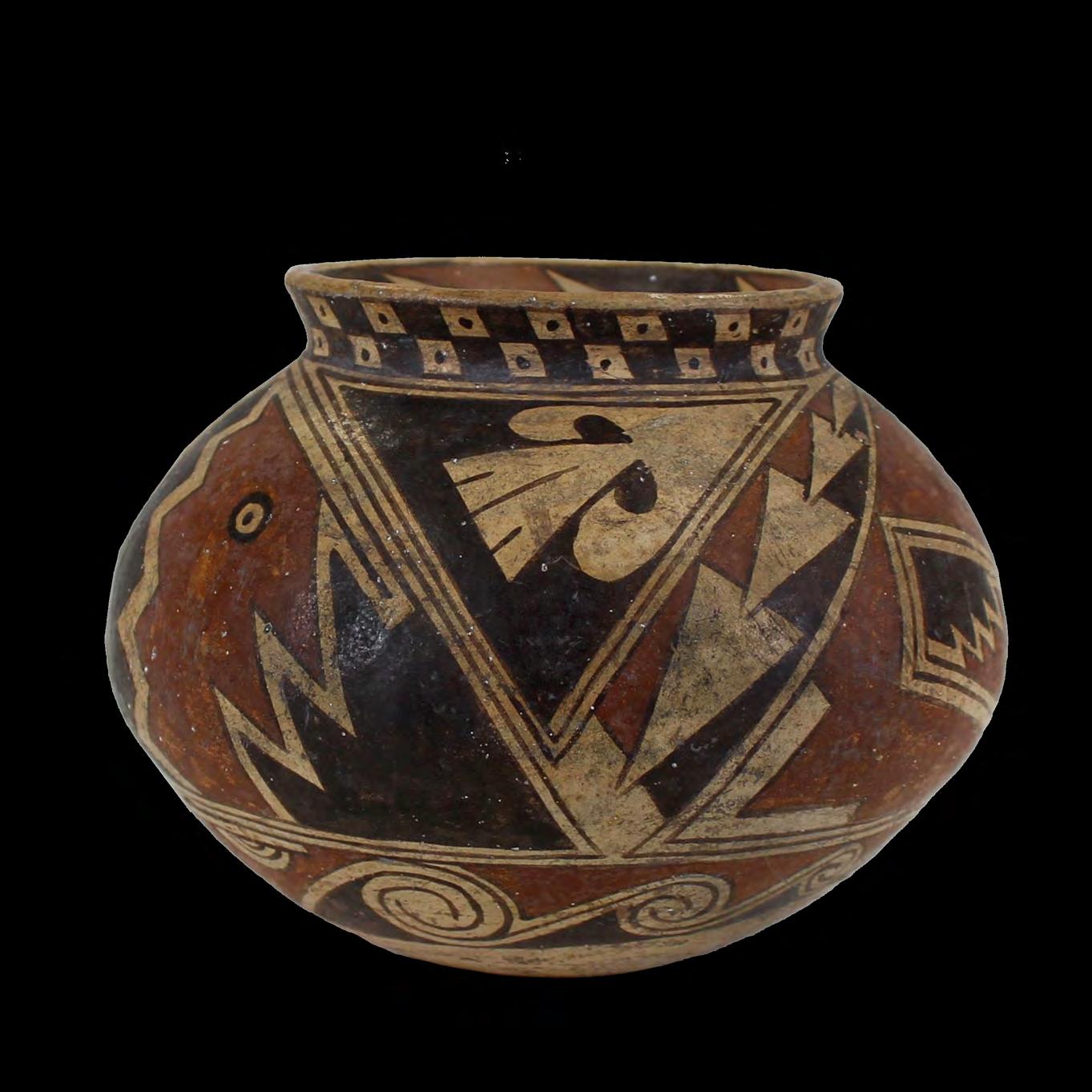
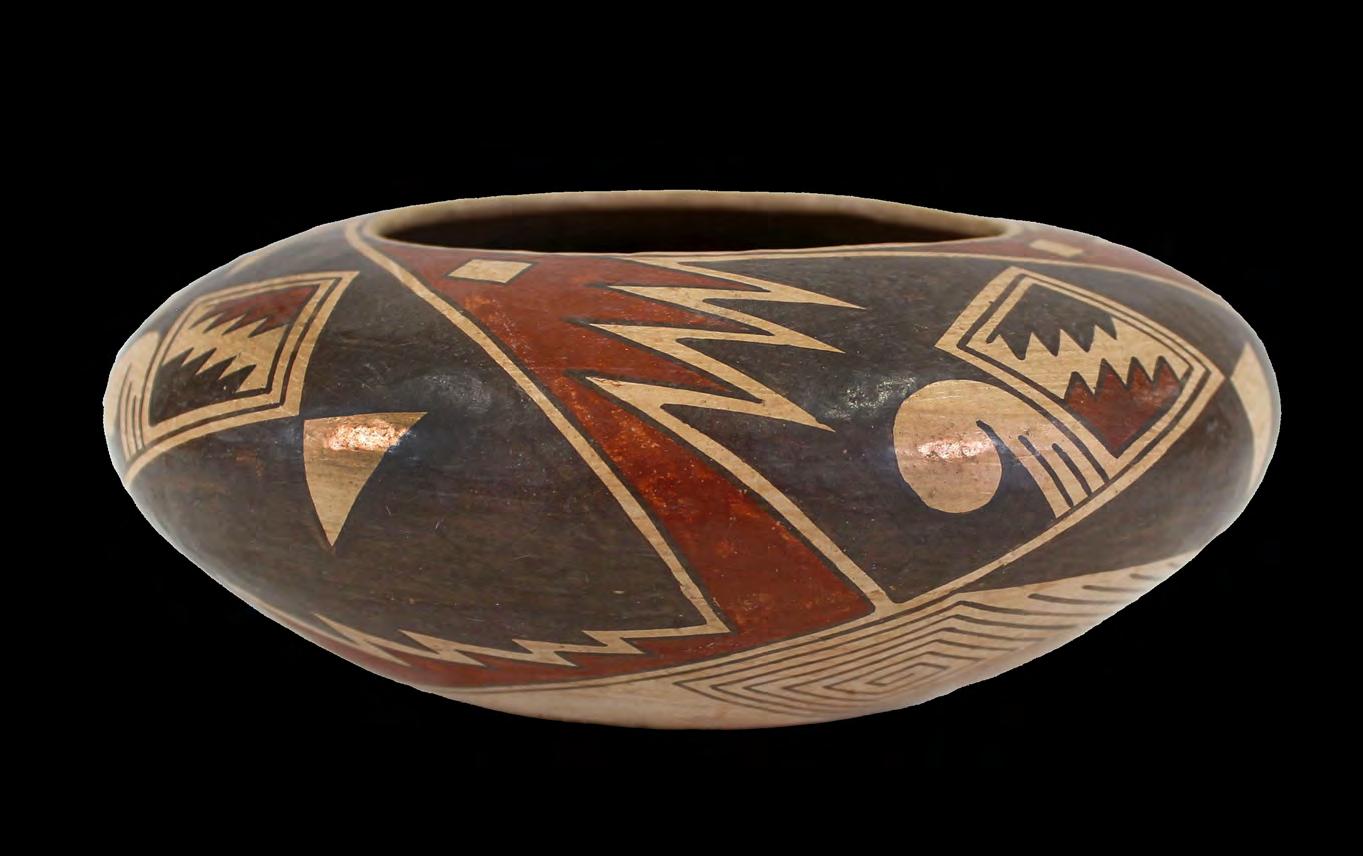
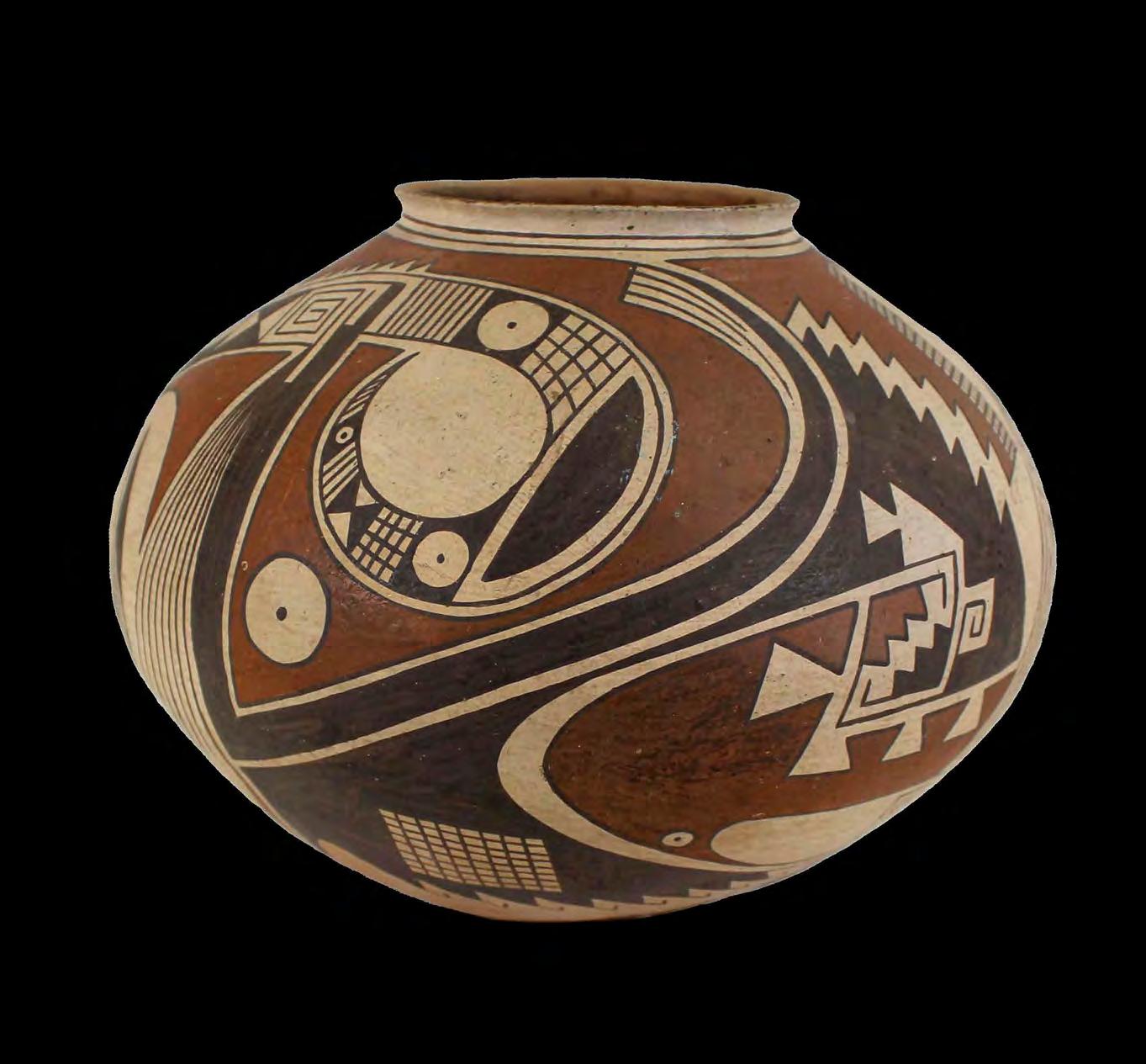
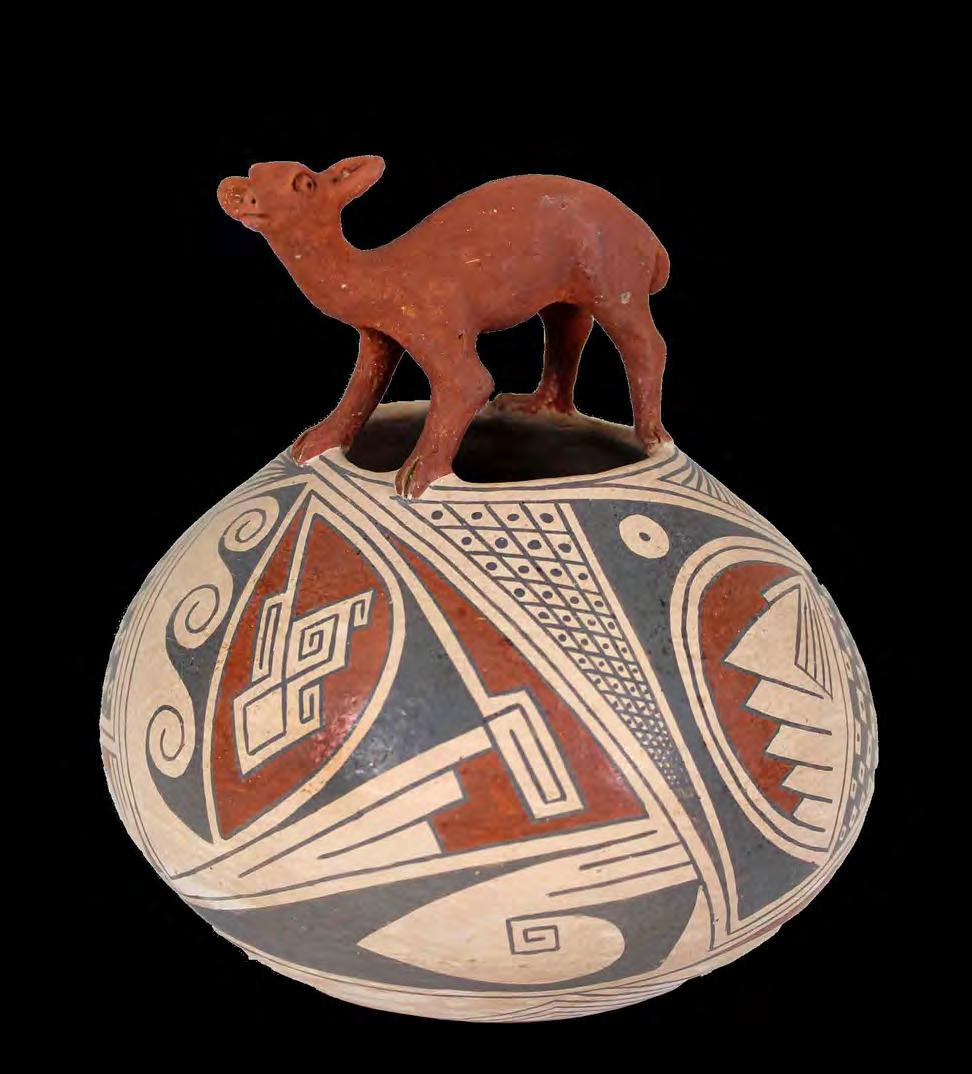
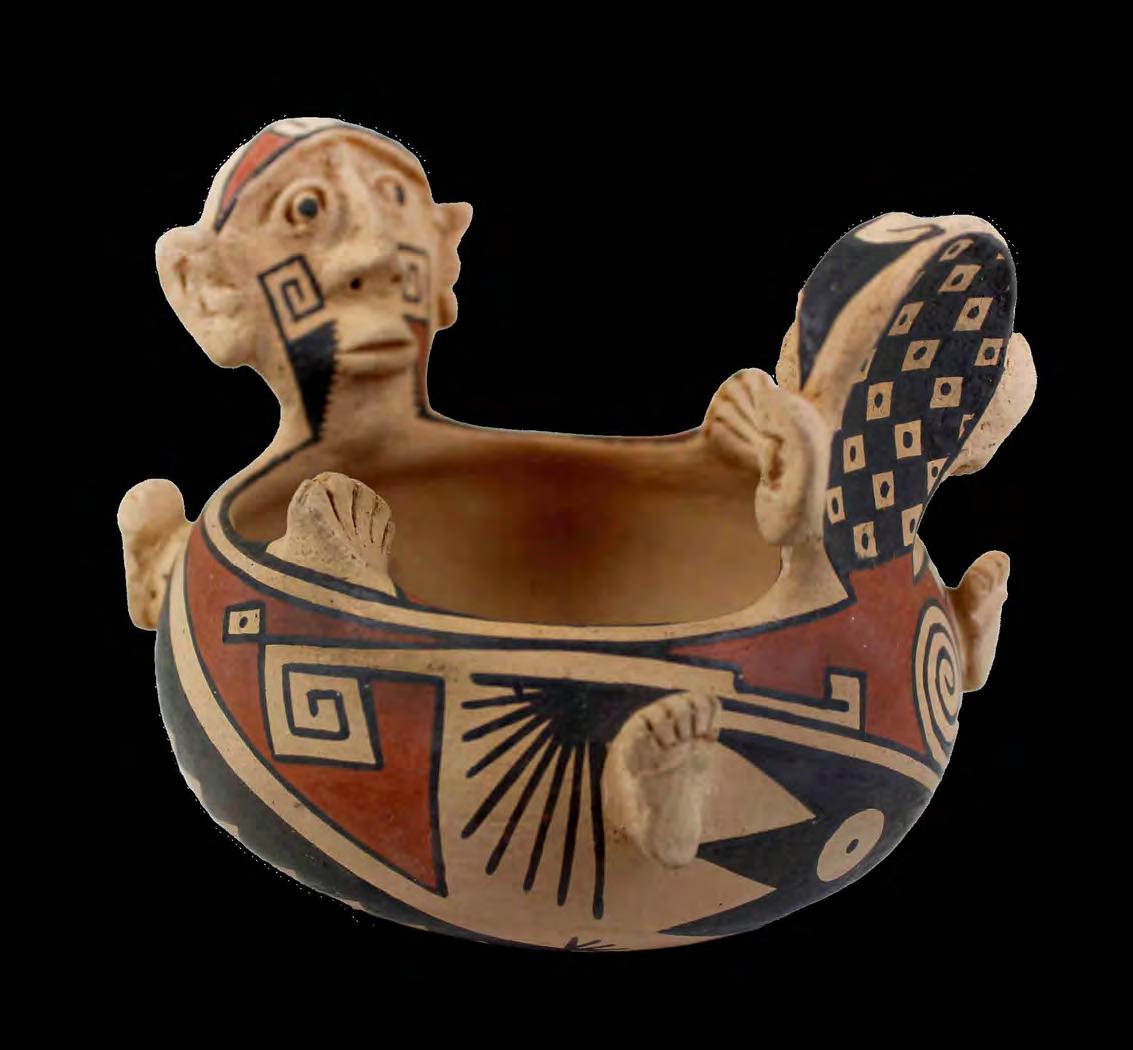
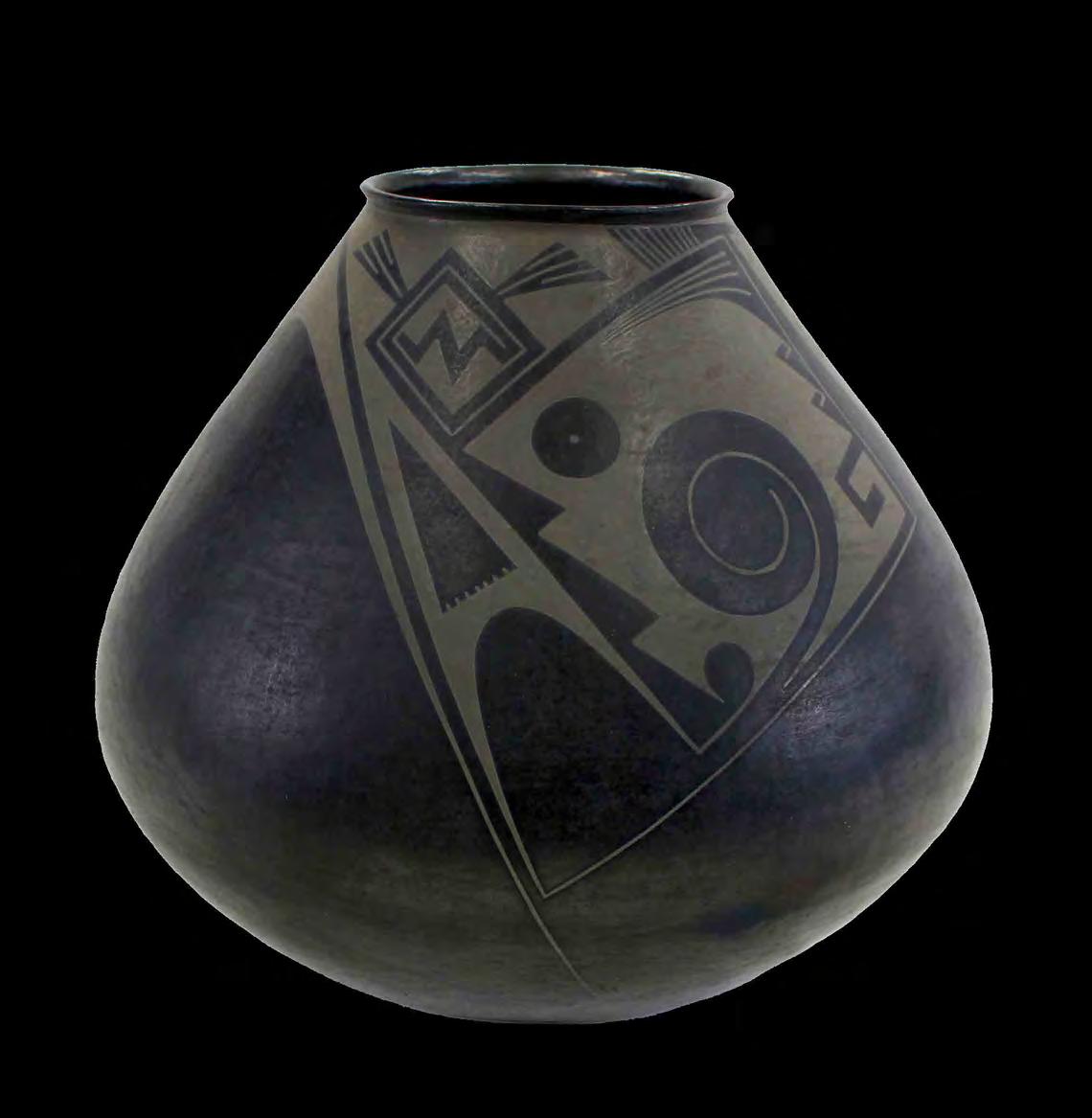
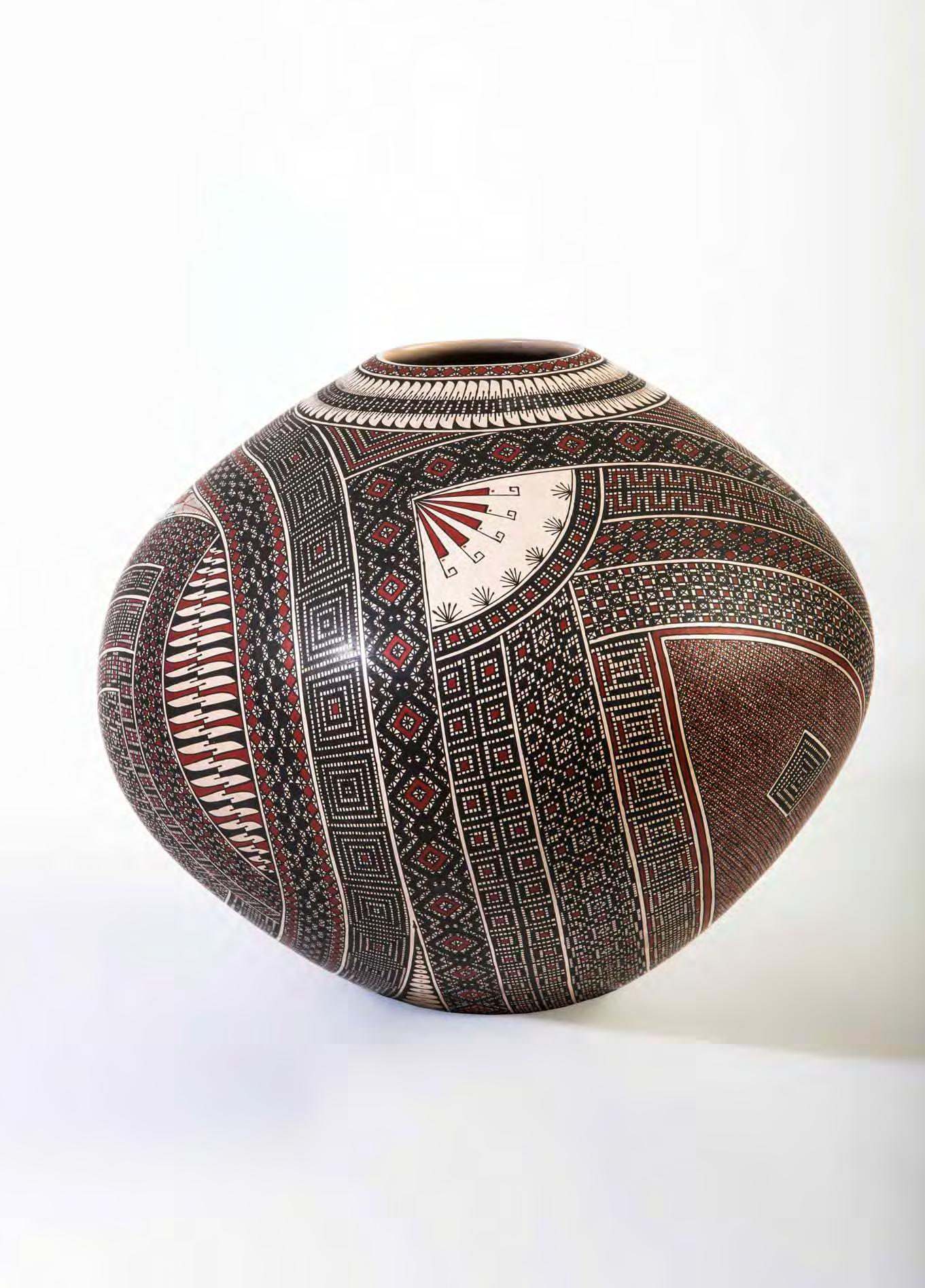
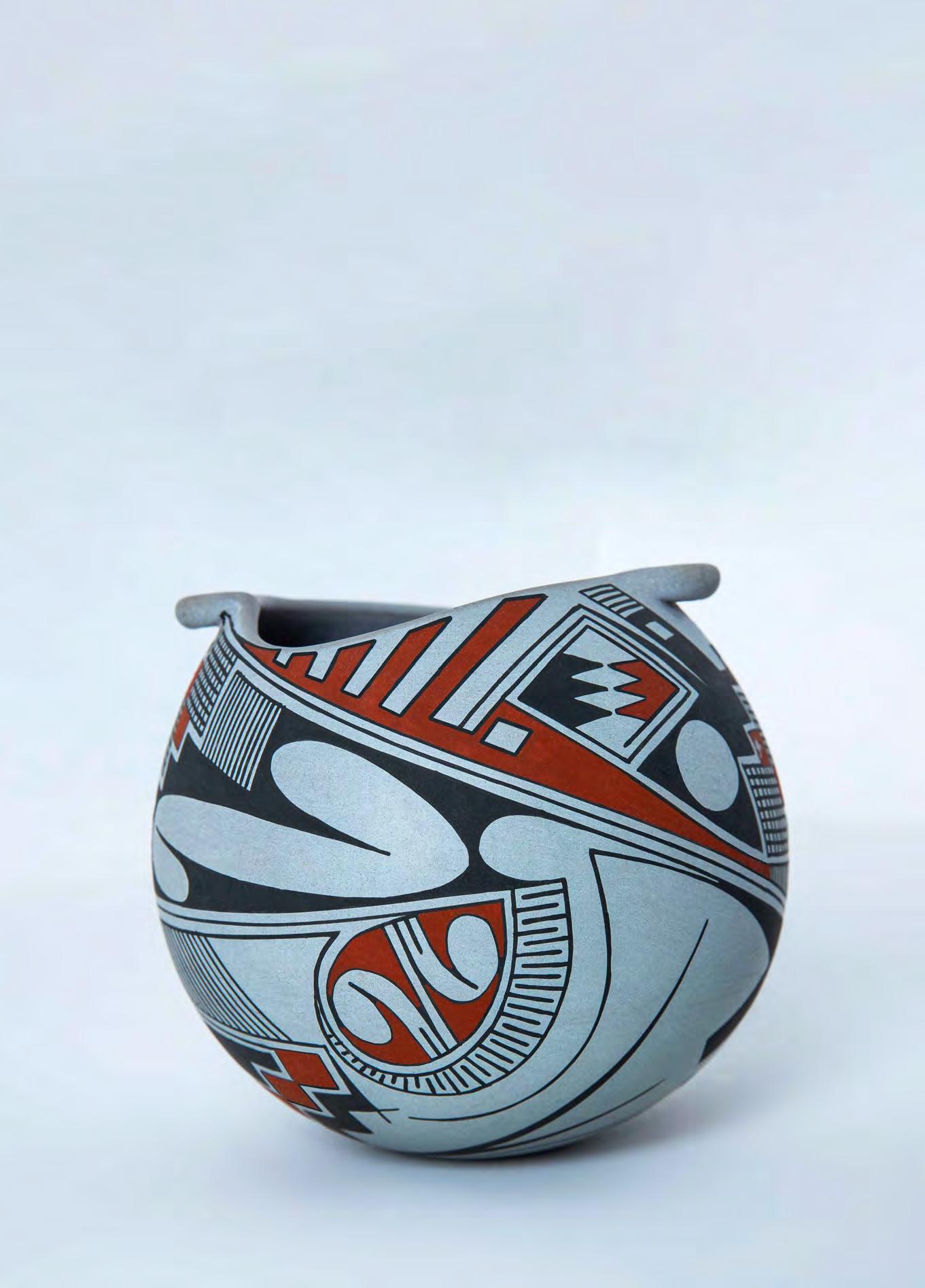
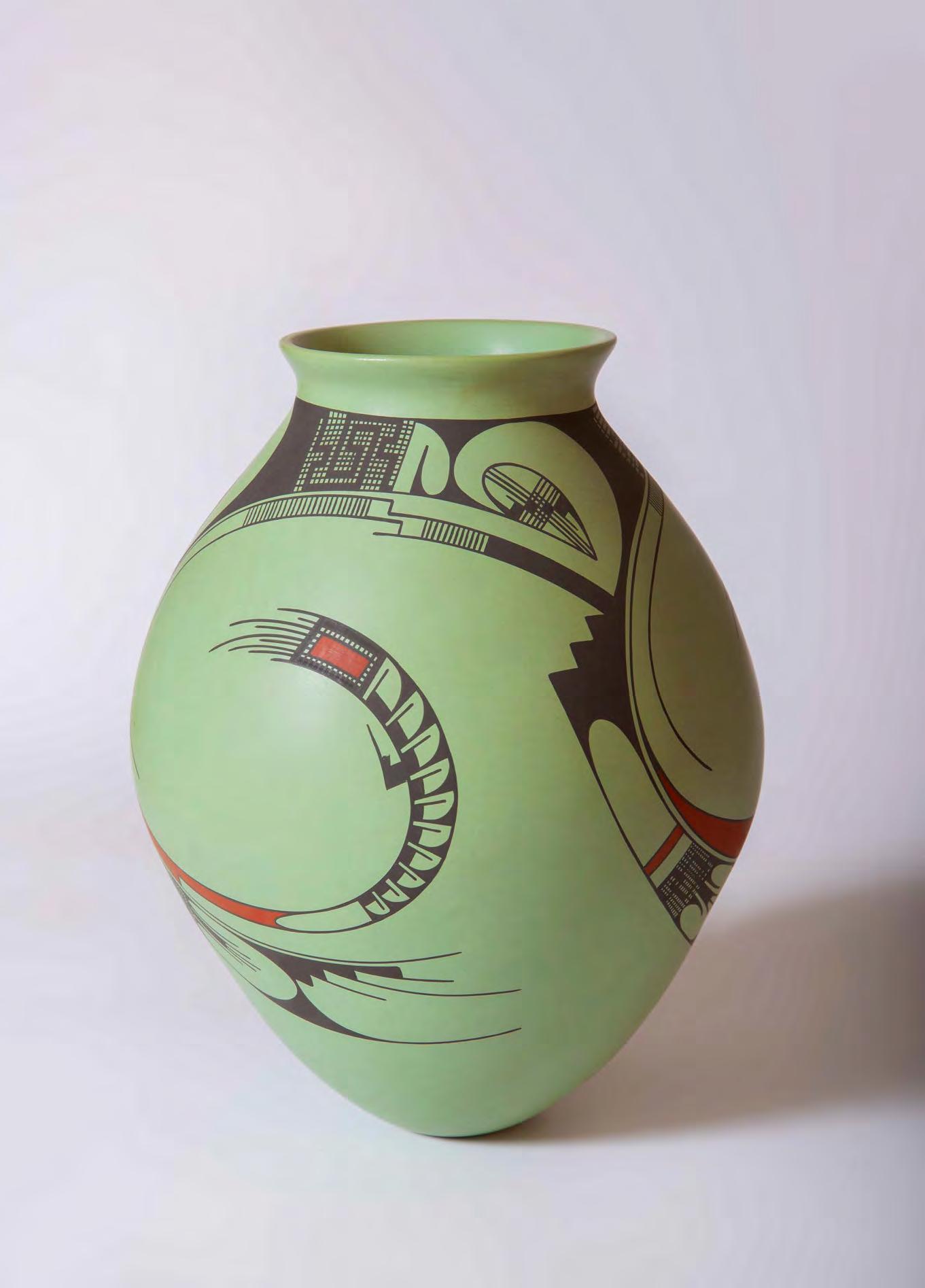
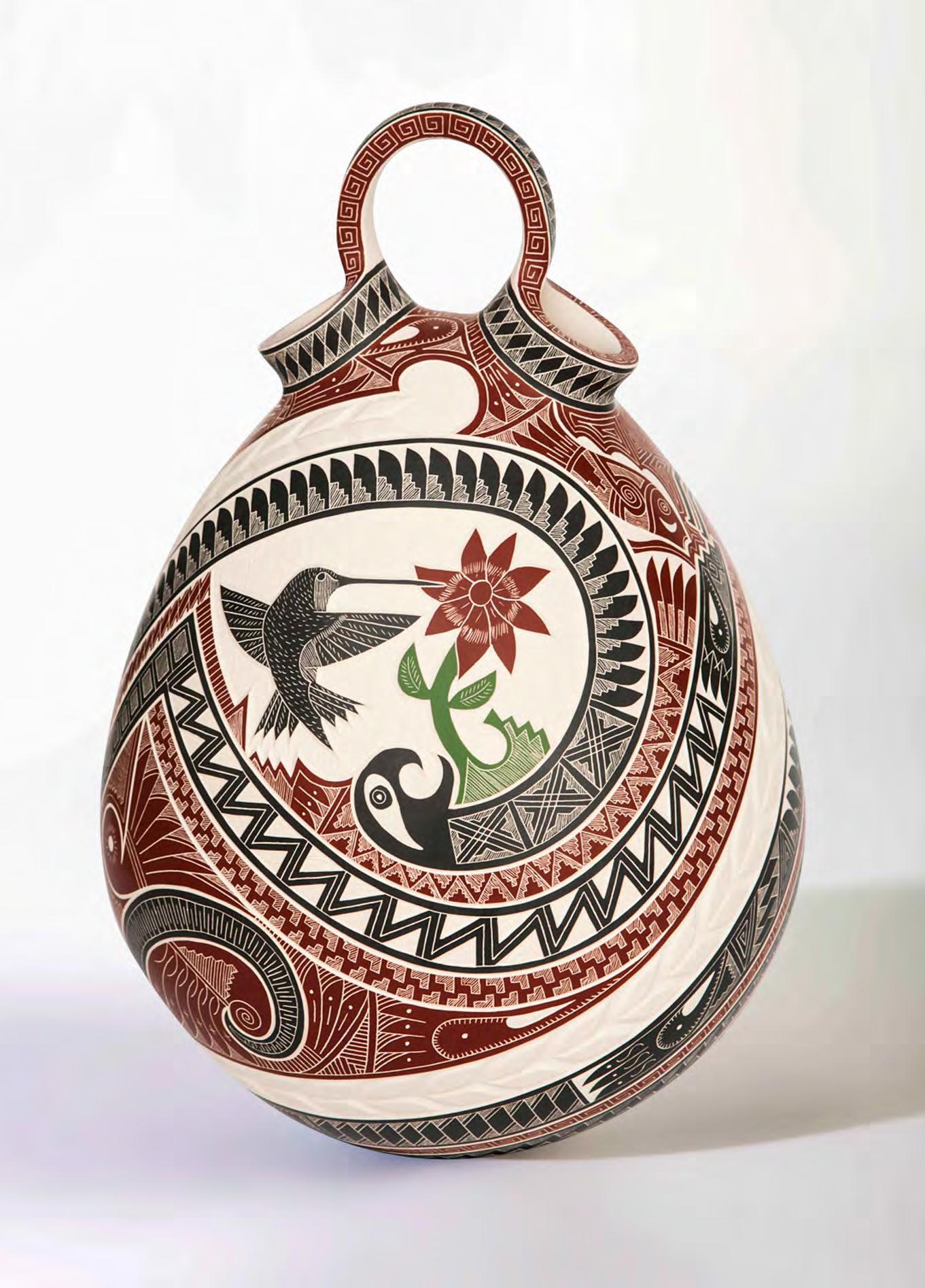
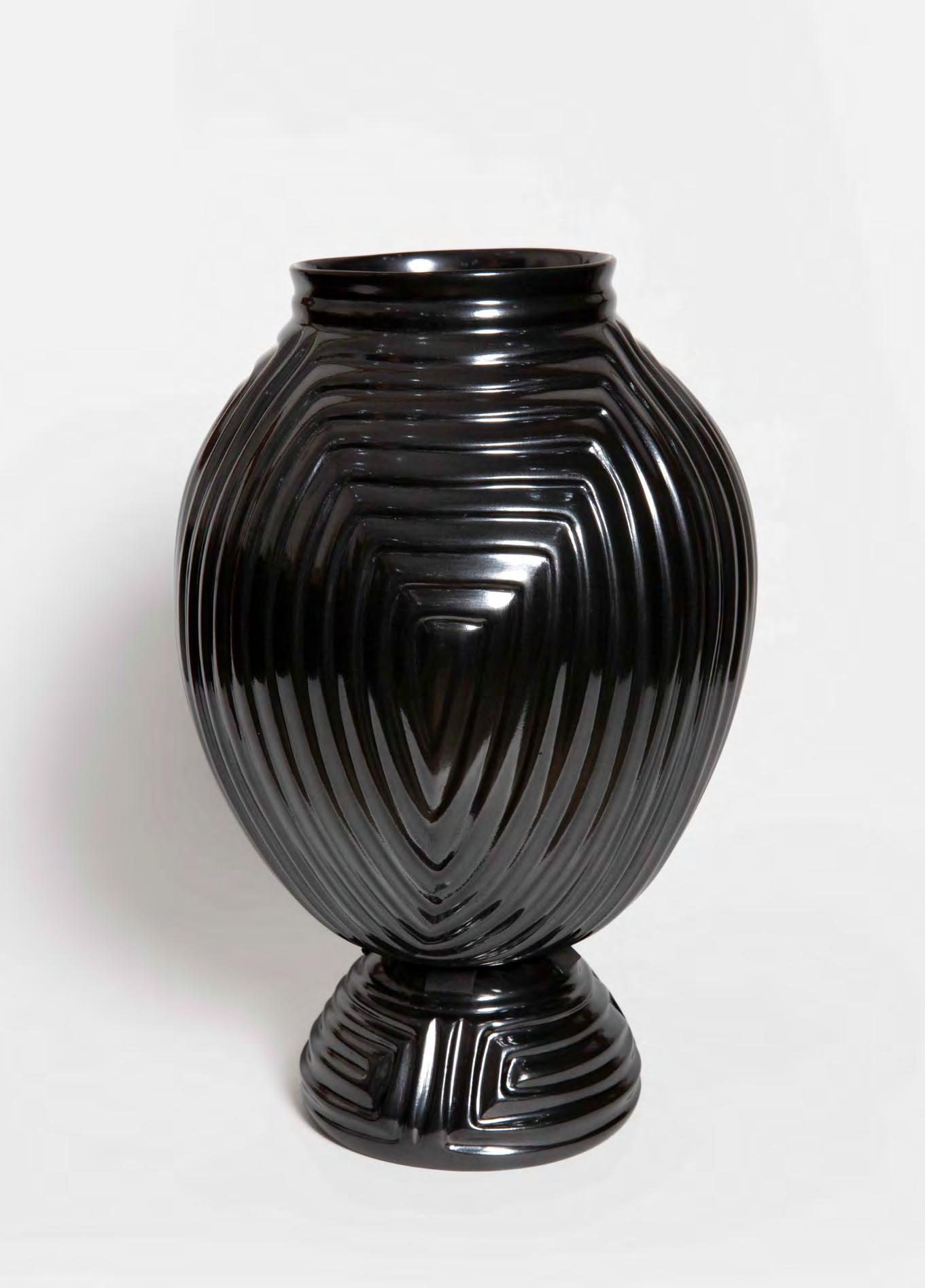
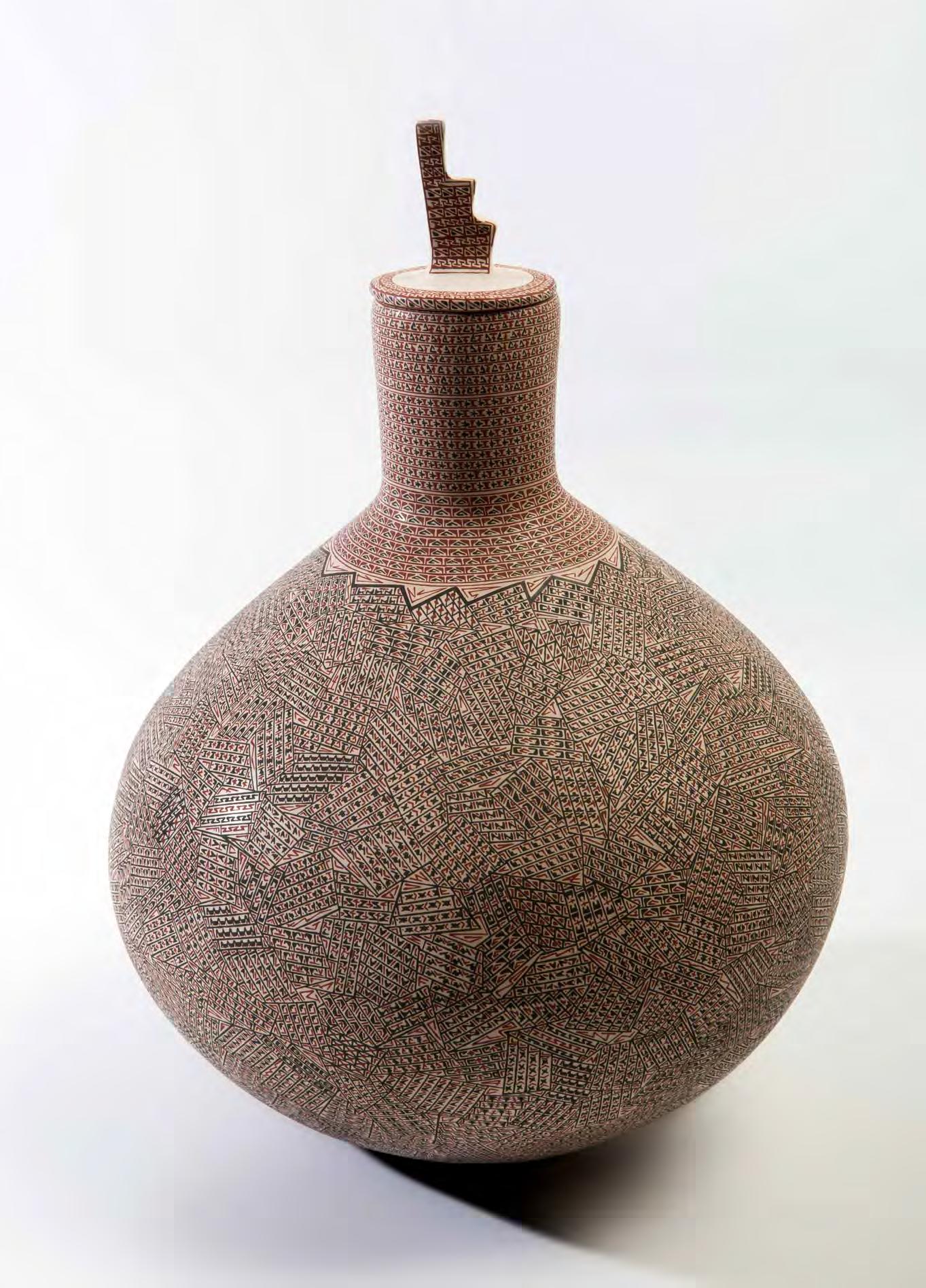
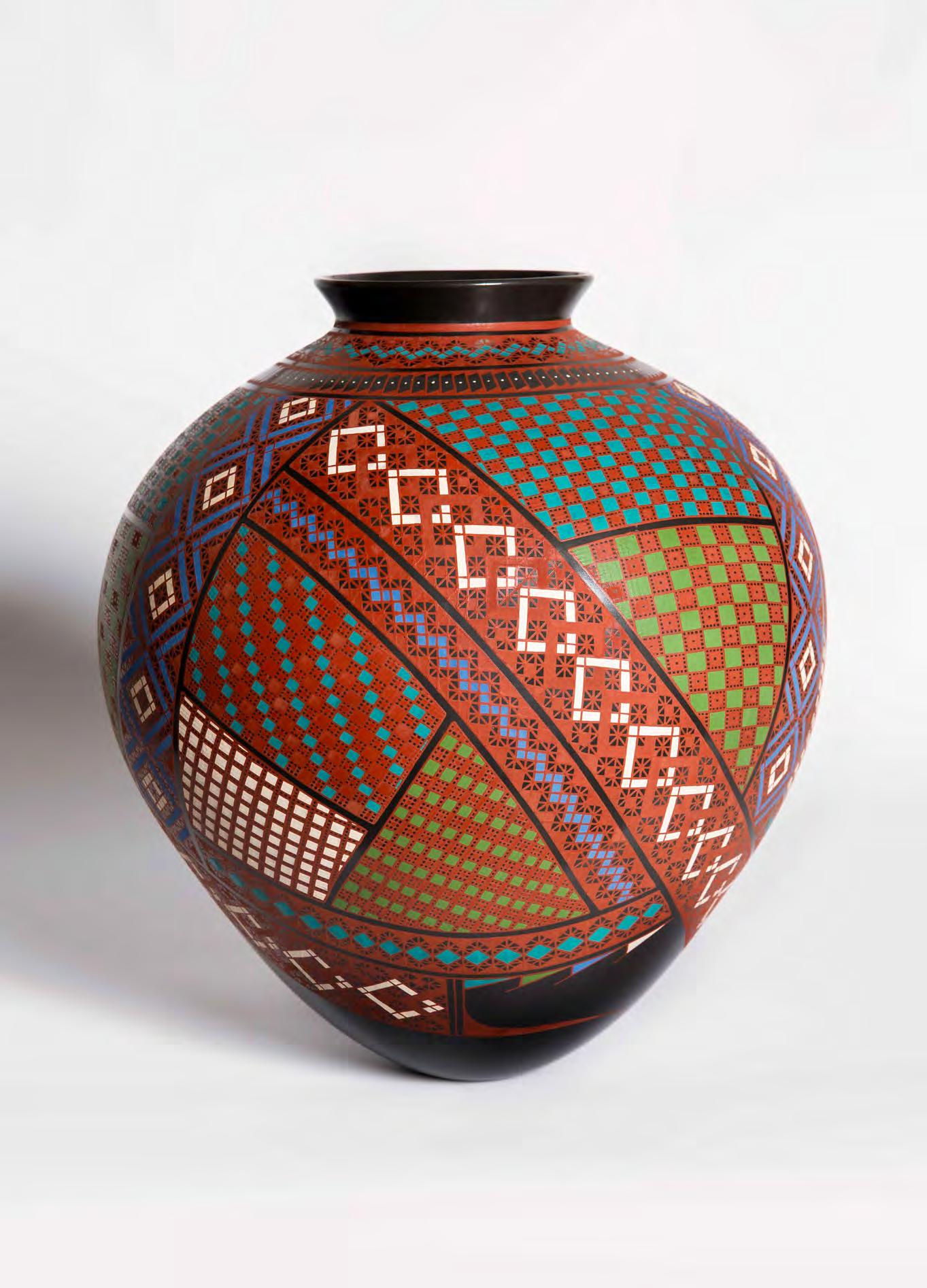
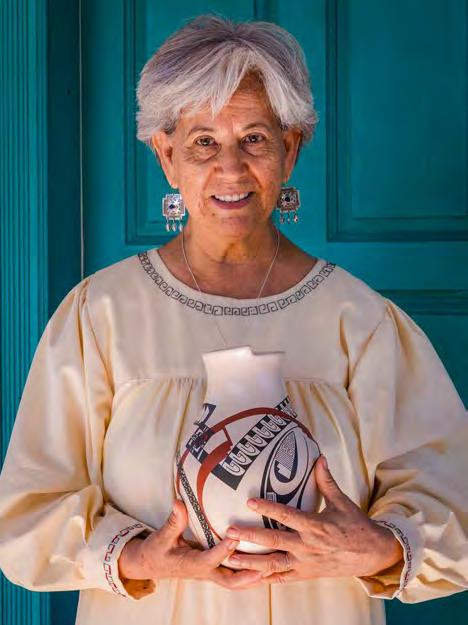
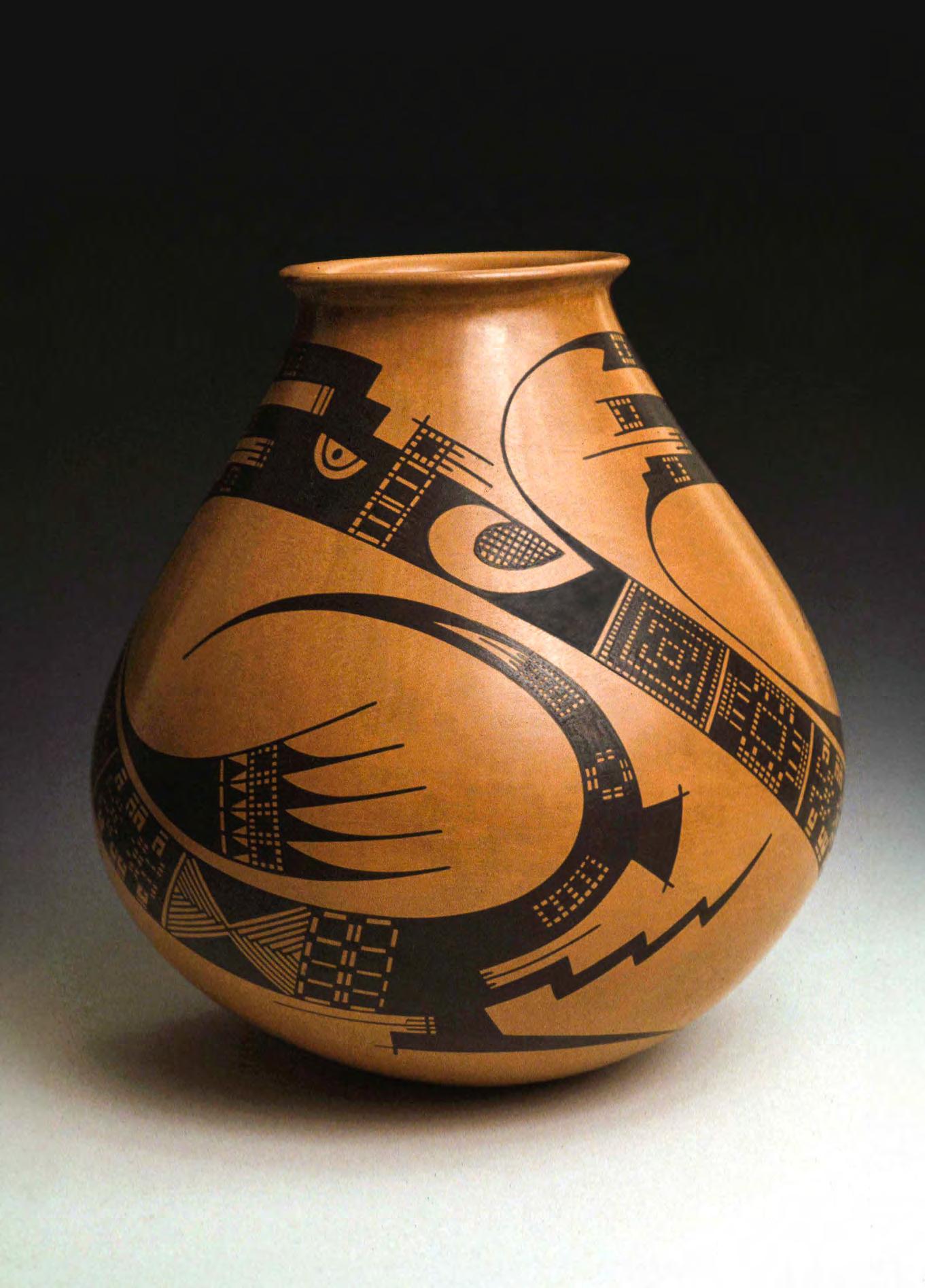
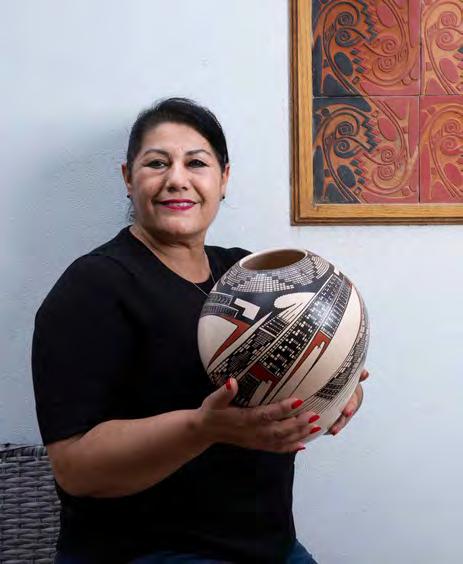
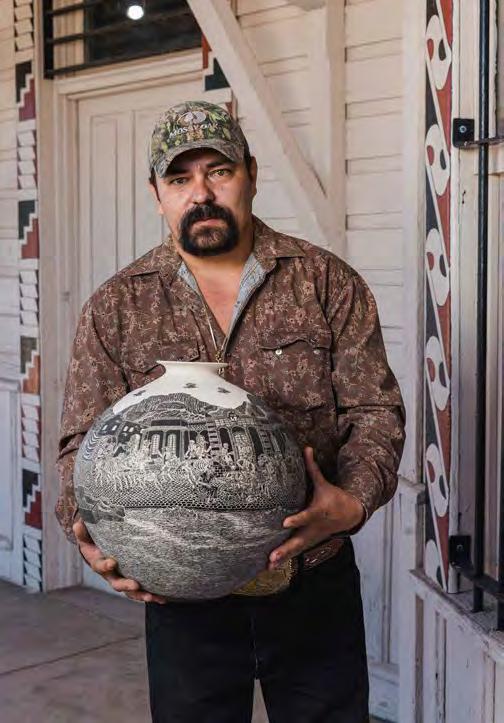
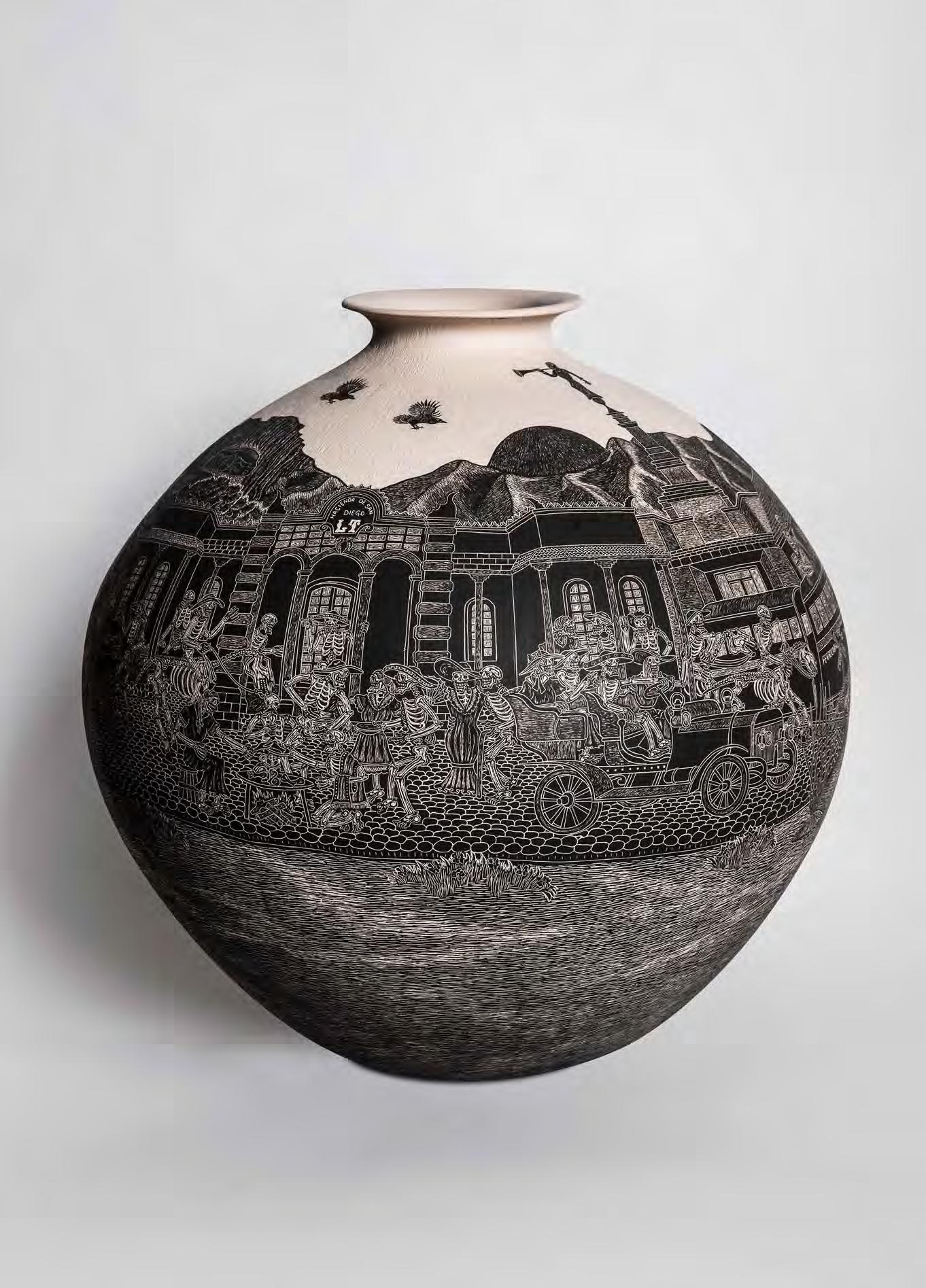
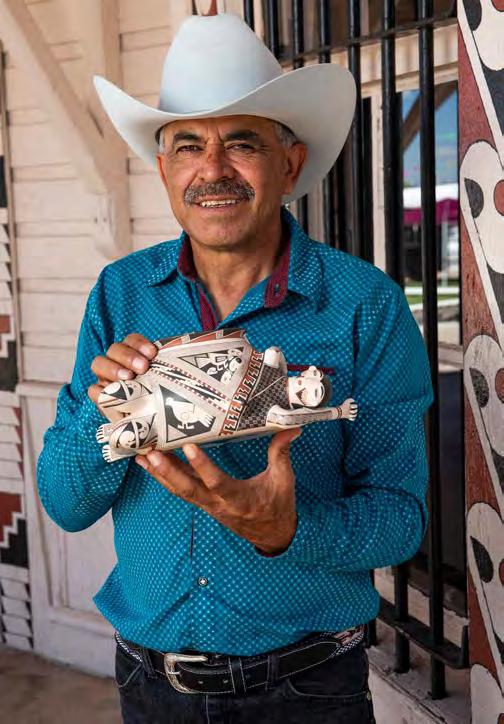
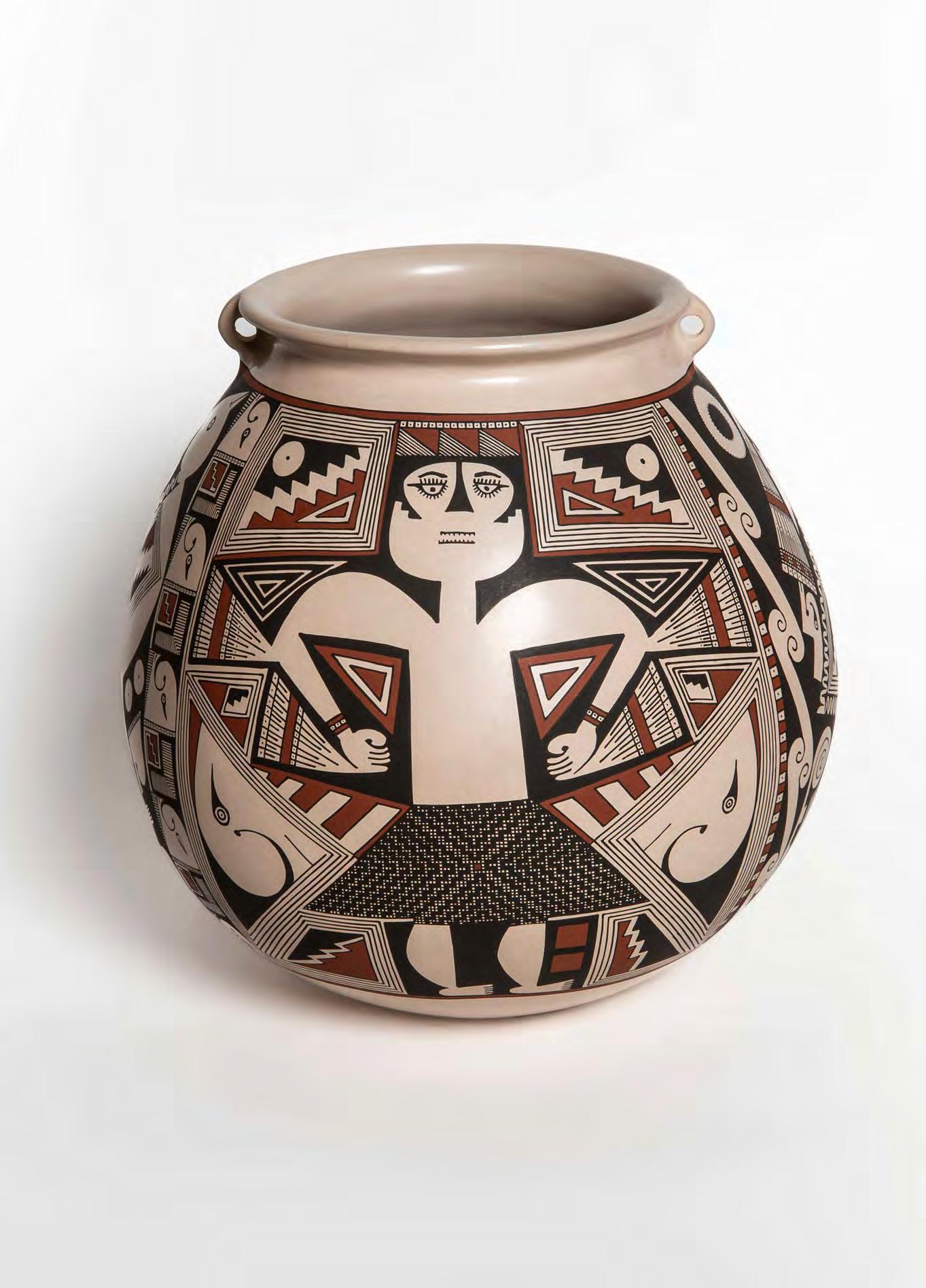
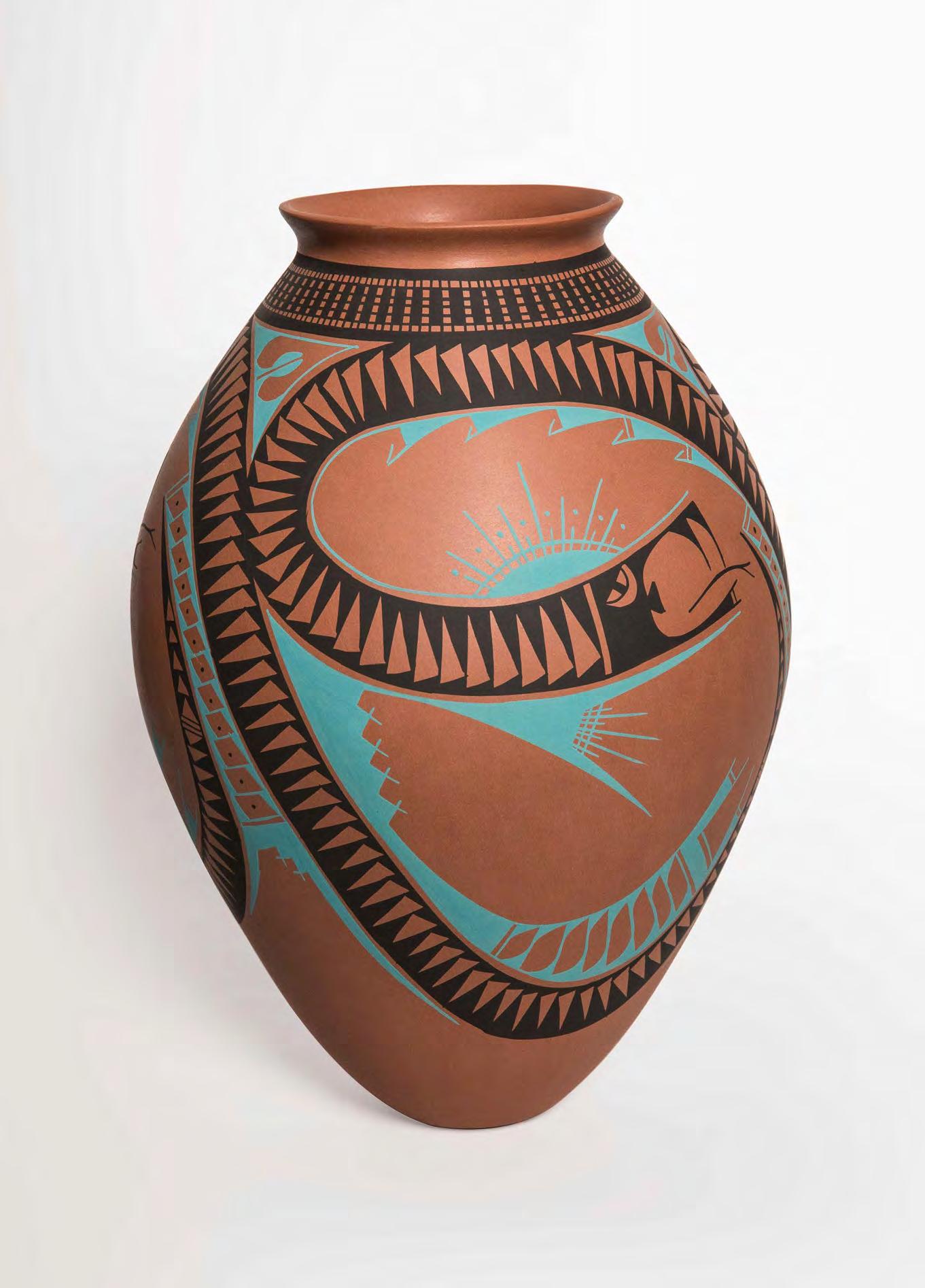
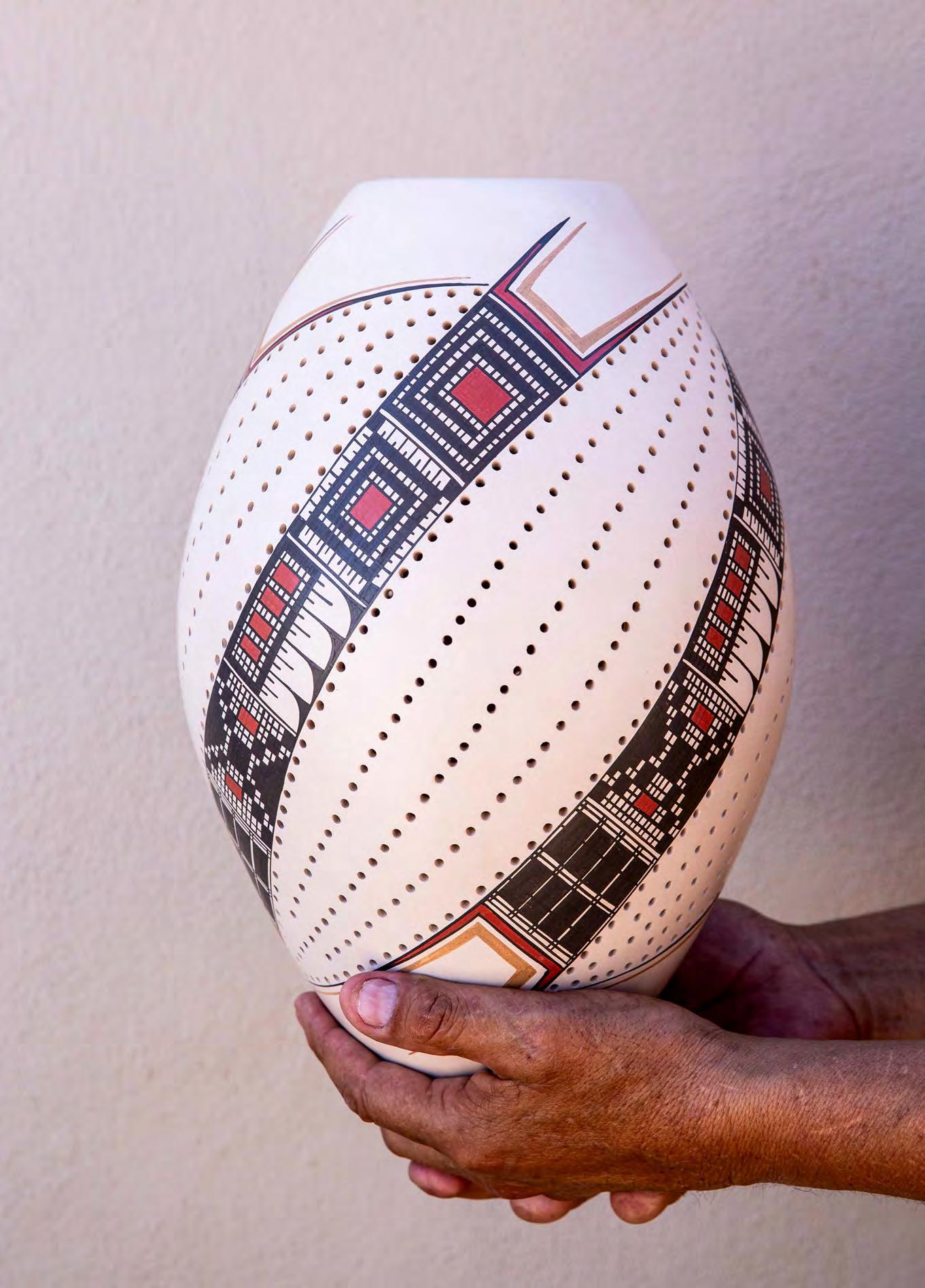
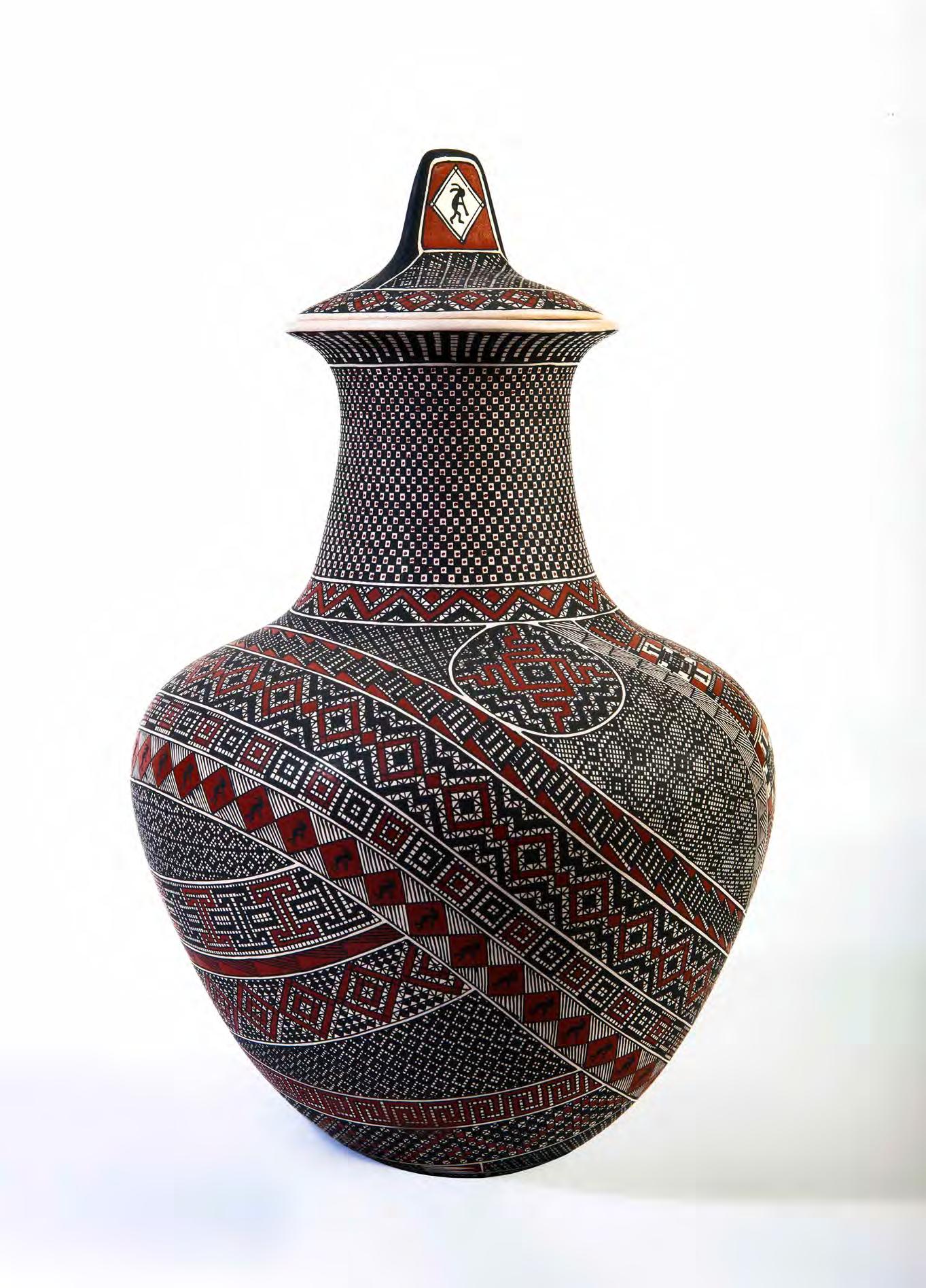
Olla de Damián Escárcega Quezada. Barro blanco con decoración polícroma seccionada en octavos. White clay pot, polychrome decoration in eight sections.
PRESENTACIÓN
PRESENTATION
La colección editorial de GCC ha sido –y continúa siendo– un reflejo de innumerables historias y hazañas que nos ayudan a preservar el rico acervo cultural del estado grande, siempre con el firme propósito de promover y conservar el testimonio de Chihuahua y su gente.
La primera edición de la colección GCC se remonta a 1988. Su obra inaugural fue Explorando un mundo olvidado Sitios perdidos de la cultura Paquimé Transcurridas más de tres décadas, parece justo dar continuidad a la historia de esta fascinante civilización que sirvió de soplo creador para construir un sueño de barro y fuego.
Con el ejemplar que tiene en sus manos –Mata Ortiz. Juan Quezada, sueños de barro y fuego– realizamos un recorrido por el pasado, presente y futuro del noroeste del estado de Chihuahua. En este viaje nos guía la reconocida antropóloga Marta Turok, cuya pluma detiene, regresa y adelanta el tiempo. También nos acompaña la lente de Nacho Guerrero, cuyas imágenes nos transportan a un mundo distinto. Las piezas retratadas por Jorge Vertiz y otros reconocidos fotógrafos nos permiten revelar la eternidad de un sueño que perdura hasta nuestros días.
Esta obra no solo reconoce la belleza de Mata Ortiz –su gente y su arte, que emergen como tributo a la cultura Paquimé– también distingue la creatividad sin límites de Juan Quezada Celado, gran exponente del arte popular y alfarería mexicana. Con sus manos logró capturar la esencia de paisajes, aspectos culturales y locales. Para hacerlo, también se sirvió de la simbología ancestral y preservó las técnicas más antiguas de la alfarería, mismas que hoy rebasan fronteras.
GCC cumple de nueva cuenta con el firme compromiso de cuidar nuestro patrimonio histórico y cultural. Sobre todo, continuar con el tributo a los chihuahuenses que nos impulsan a seguir construyendo juntos el futuro de nuestra tierra, honrando nuestro origen.
The GCC editorial collection has been -and continues to be- a reflection of countless stories and feats that help us preserve the rich cultural heritage of the largest state in Mexico, always with the firm purpose of promoting and preserving the sense of legacy of Chihuahua and its people.
The first edition of the GCC collection dates back to 1988, with its inaugural work being Exploring a Forgotten World. Lost sites of the Paquimé Culture. More than three decades later, it seems fitting to give continuity to the history of this fascinating civilization that inspired the creation of a dream built from fire and clay.
With the volume you have in your hands – “Mata Ortiz. Juan Quezada, dreams of fire and clay” -we embark on a journey through the past, present, and future of the northwestern state of Chihuahua. Our guide on this journey, is the renowned anthropologist Marta Turok, whose writing stops, rewinds, and fastforwards time. We are also accompanied by the lens of Nacho Guerrero, whose images transport us to a different world. The pieces portrayed by Jorge Vertiz and other renowned photographers reveal the timelessness of a dream that endures to this day.
This work not only recognizes the beauty of Mata Ortiz - its people and its art, which emerge as a tribute to the Paquimé culture - but also highlights the boundless creativity of Juan Quezada Celado, a great exponent of Mexican folk art and pottery. With his hands, he captured the essence of landscapes, cultural aspects and local features. To do so, he also drew upon ancestral symbolism and preserved the most ancient techniques of pottery, which today transcend borders.
GCC once again fulfills its firm commitment to care for our historical and cultural heritage. Above all, we continue to pay tribute to the people of Chihuahua who inspire us to continue building the future of our land together, honoring our origins.
PRESENTACIÓN Presentation PRÓLOGO Prologue
DESTINO DE GRANDEZA
Destiny of Greatness
28. La guerra que “traíba” dentro
The War that Stirred Within
44. El pasado nutre una curiosidad nata
The Past Nurtures an Innate Curiosity
46. Oasisamérica, un enigma cultural
Oasisamerica, a Cultural Enigma
54. Primeras exploraciones
First Explorations
62. La olla que tardó quince años
The Pot that Took Fifteen Years
98
A PRUEBA Y ERROR
Trial and Error
66. El barro, la materia prima del oficio
Clay: the Raw Material of the Craft
68. Trabajar la pieza
Working the Piece
80. Lijar y pulir
Sanding and Burnishing
84. La pintura: colores y pinceles
Painting: Colors and Brushes
92. Las quemas
Firing
94. Comienza la expansión
Expansion Begins
EL CONTEXTO REGIONAL
The regional context
104. Dos caminos, un destino
Two Roads, One Destiny
110. El proceso creativo
The Creative Process
116. Valores en una firma
Values in a Signature
126. Spencer, mecenas y promotor
Spencer, Patron and Promoter
134. Un museo para Paquimé
A Museum for Paquimé
MATA ORTIZ: JUAN QUEZADA, 212527 64
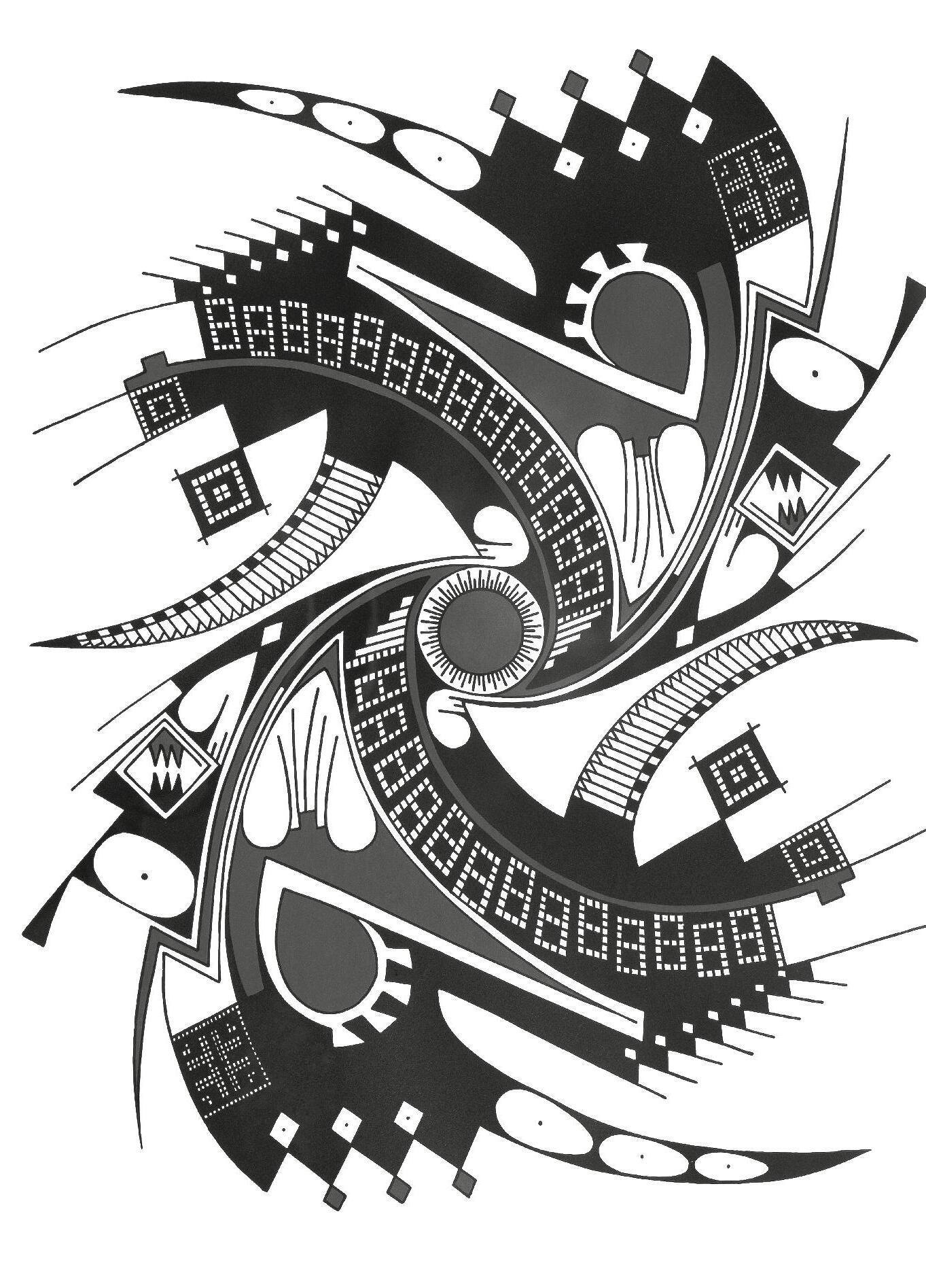
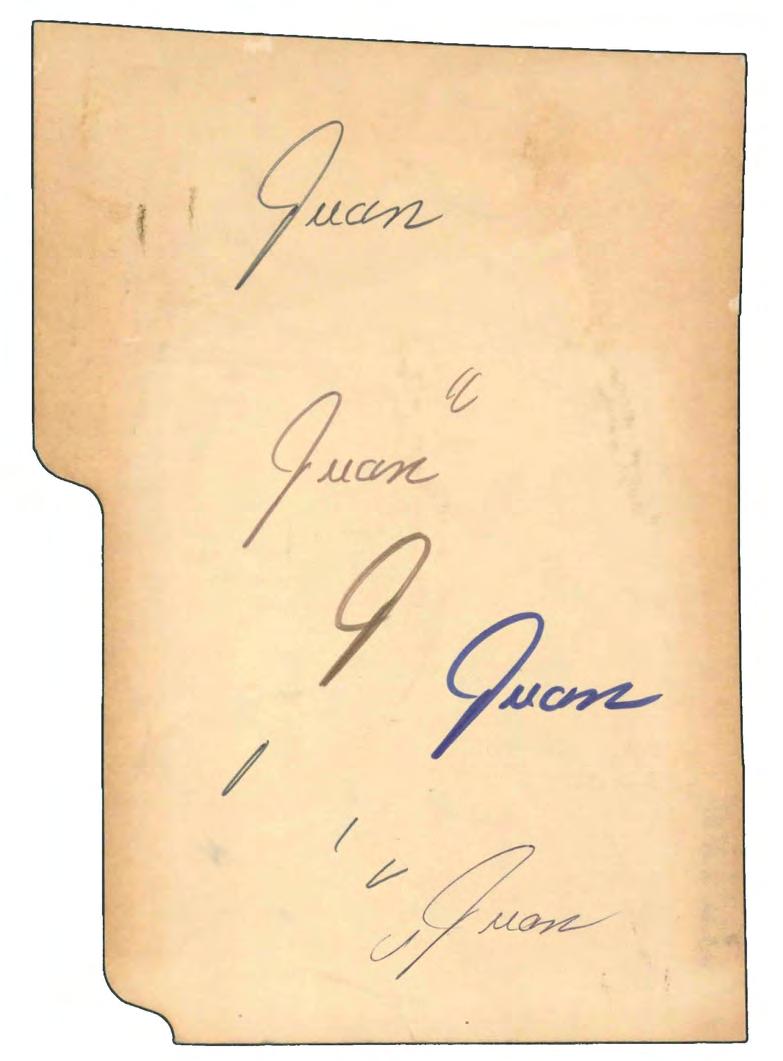
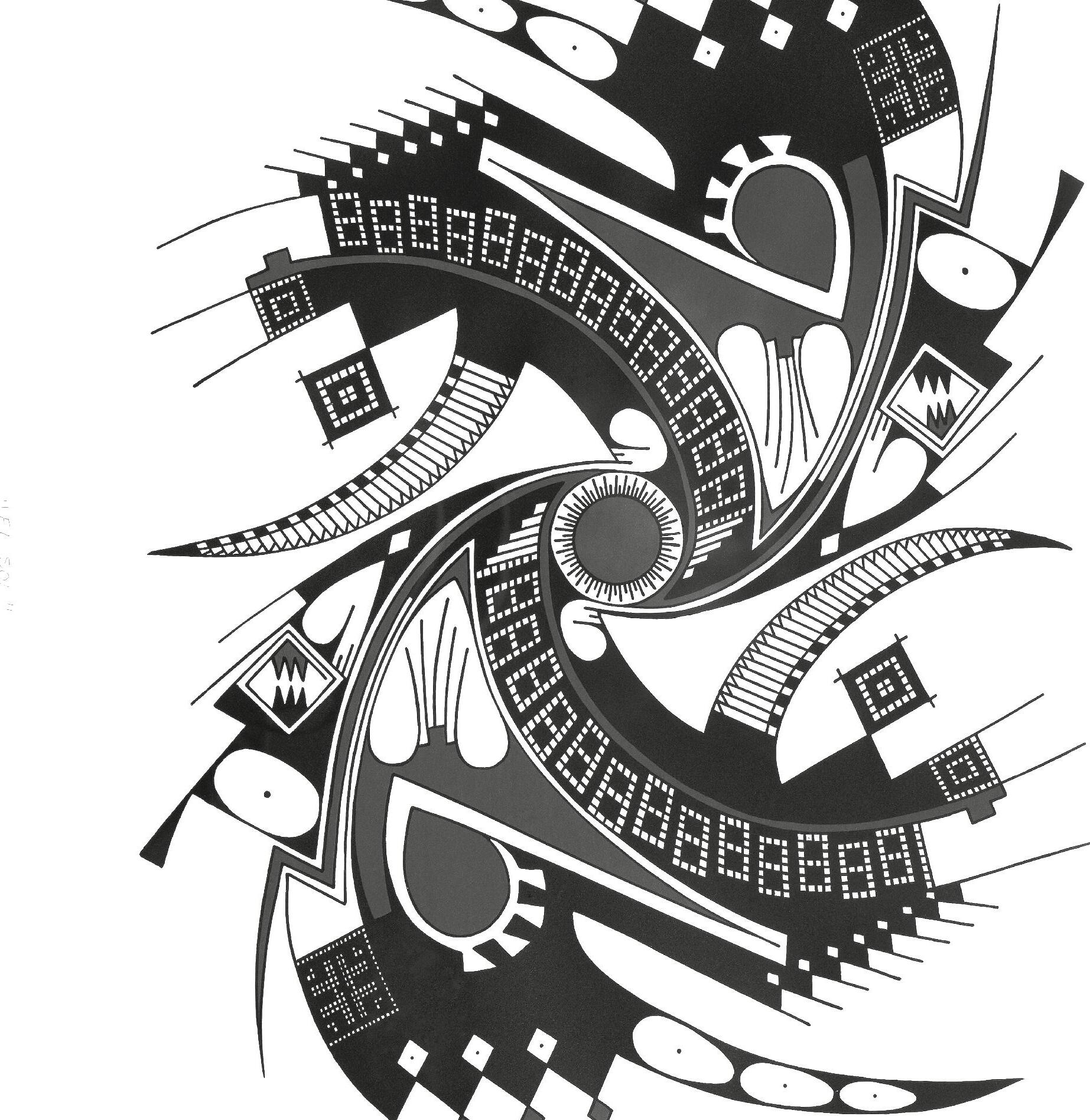
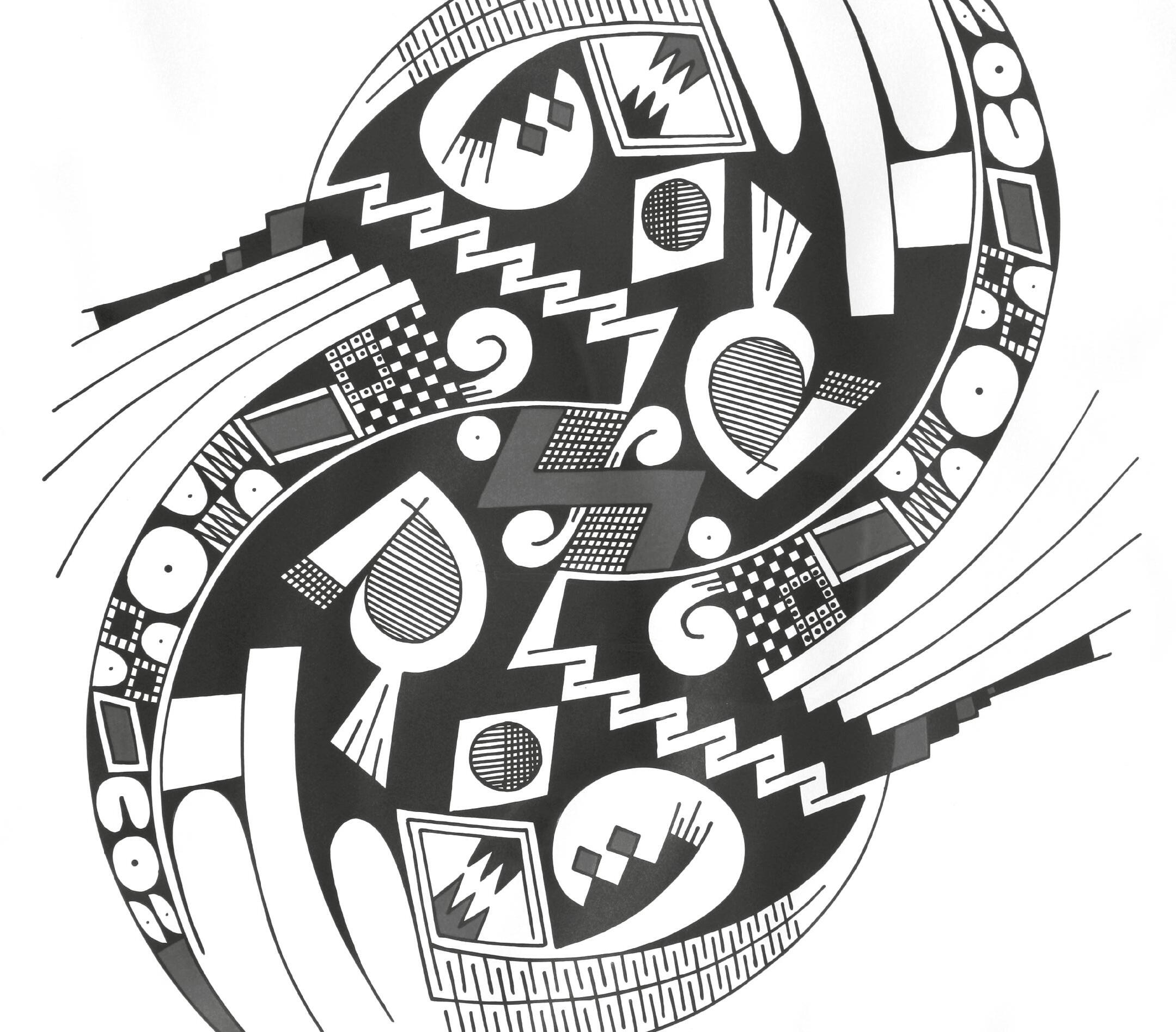
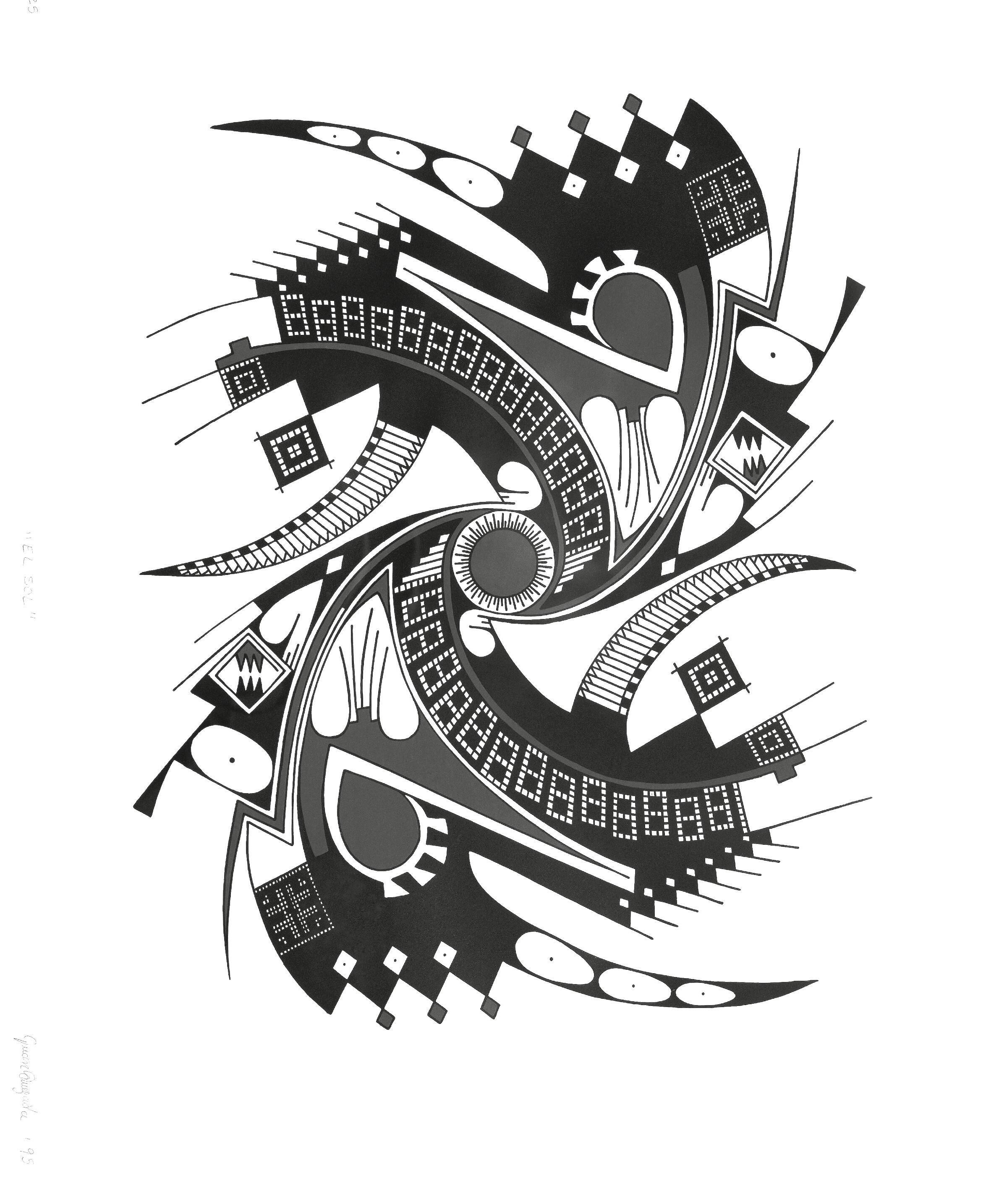
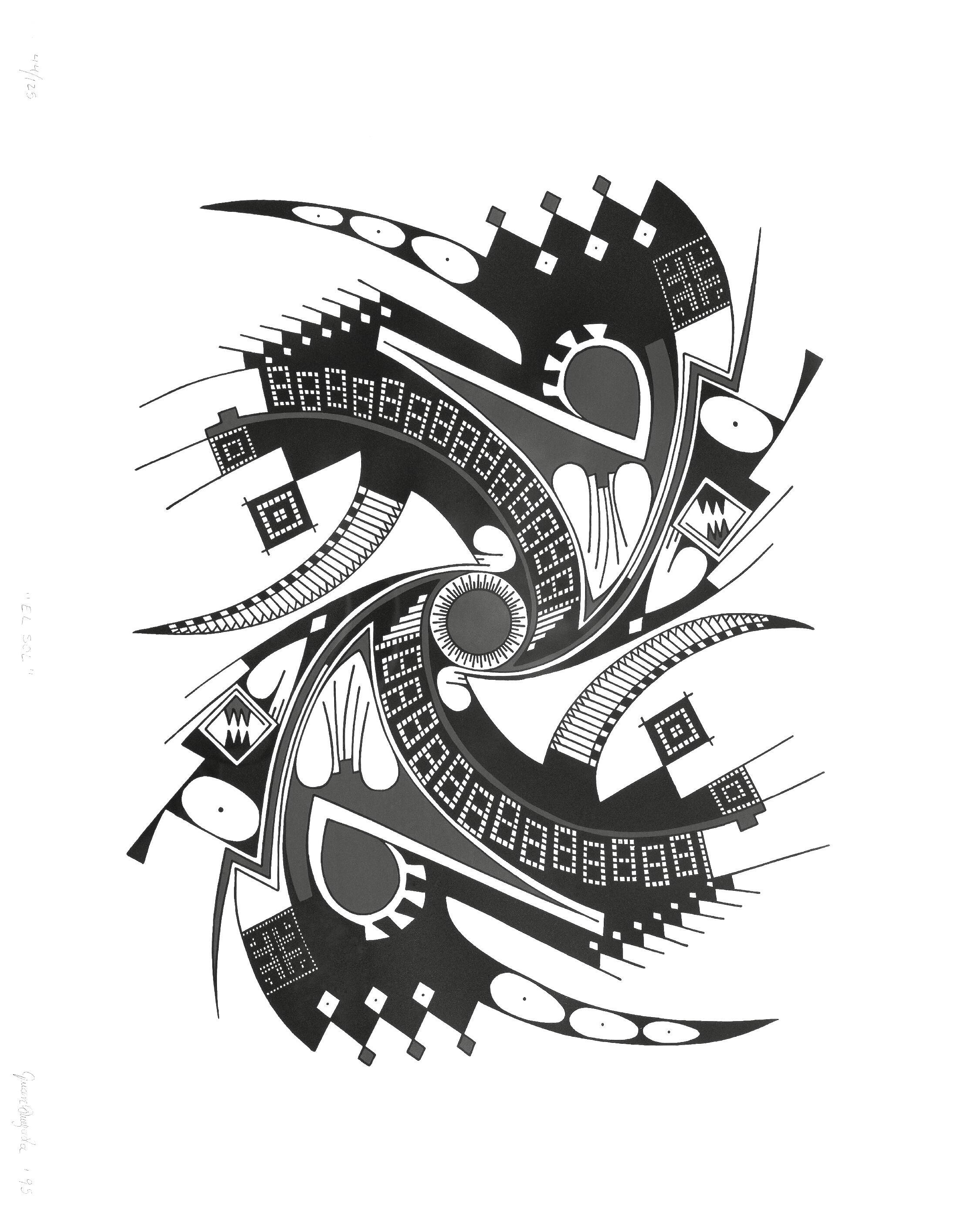
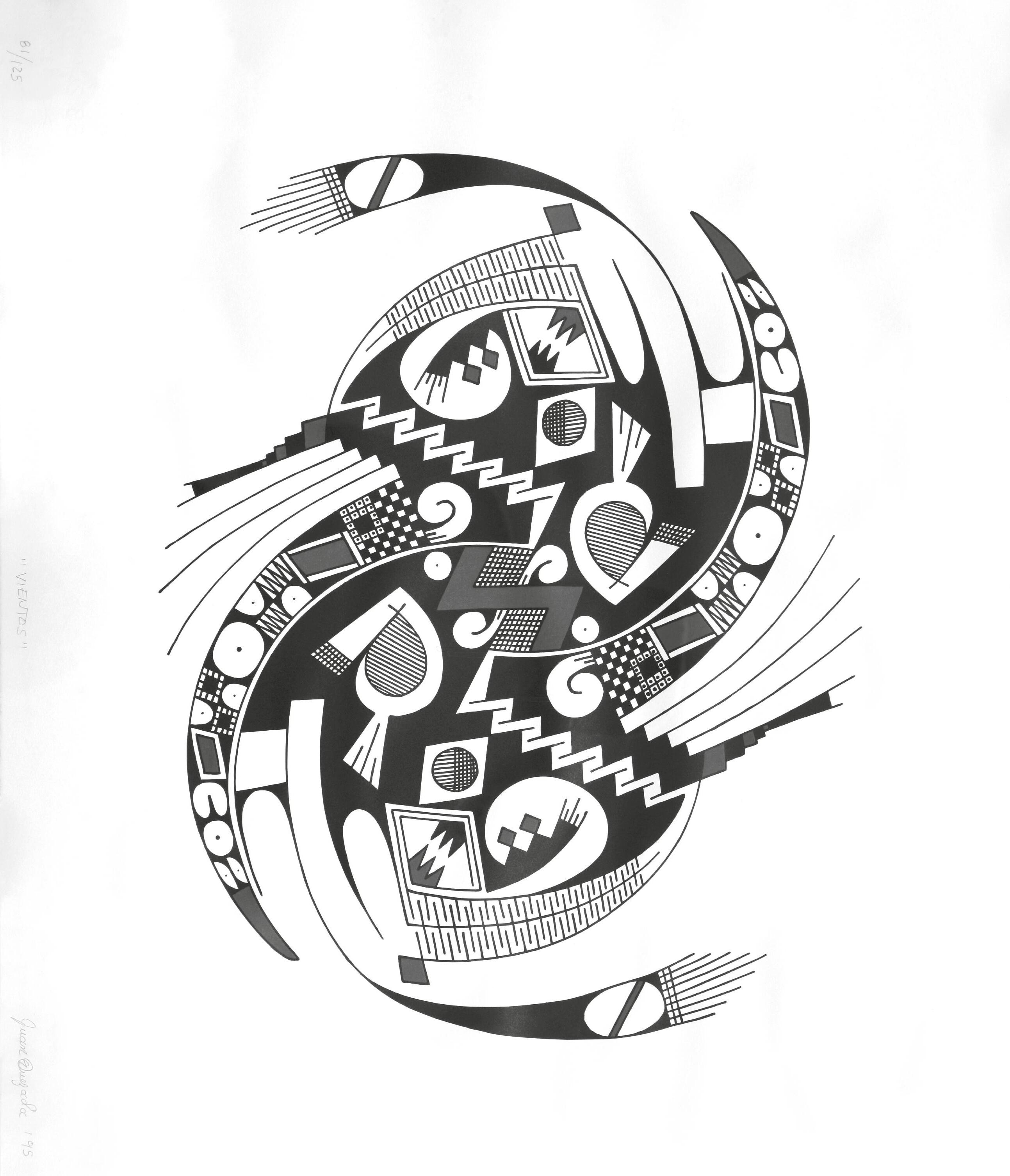
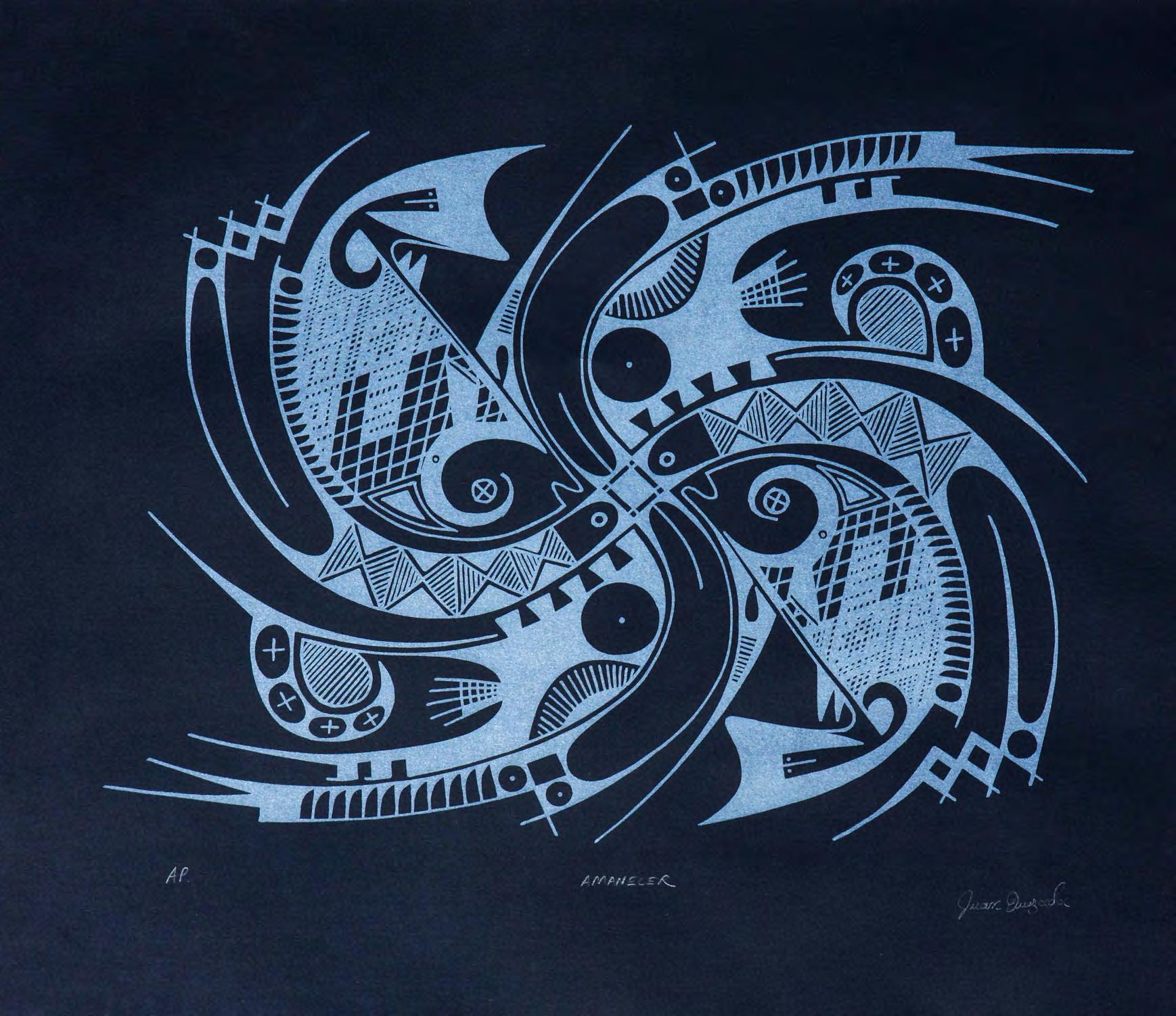
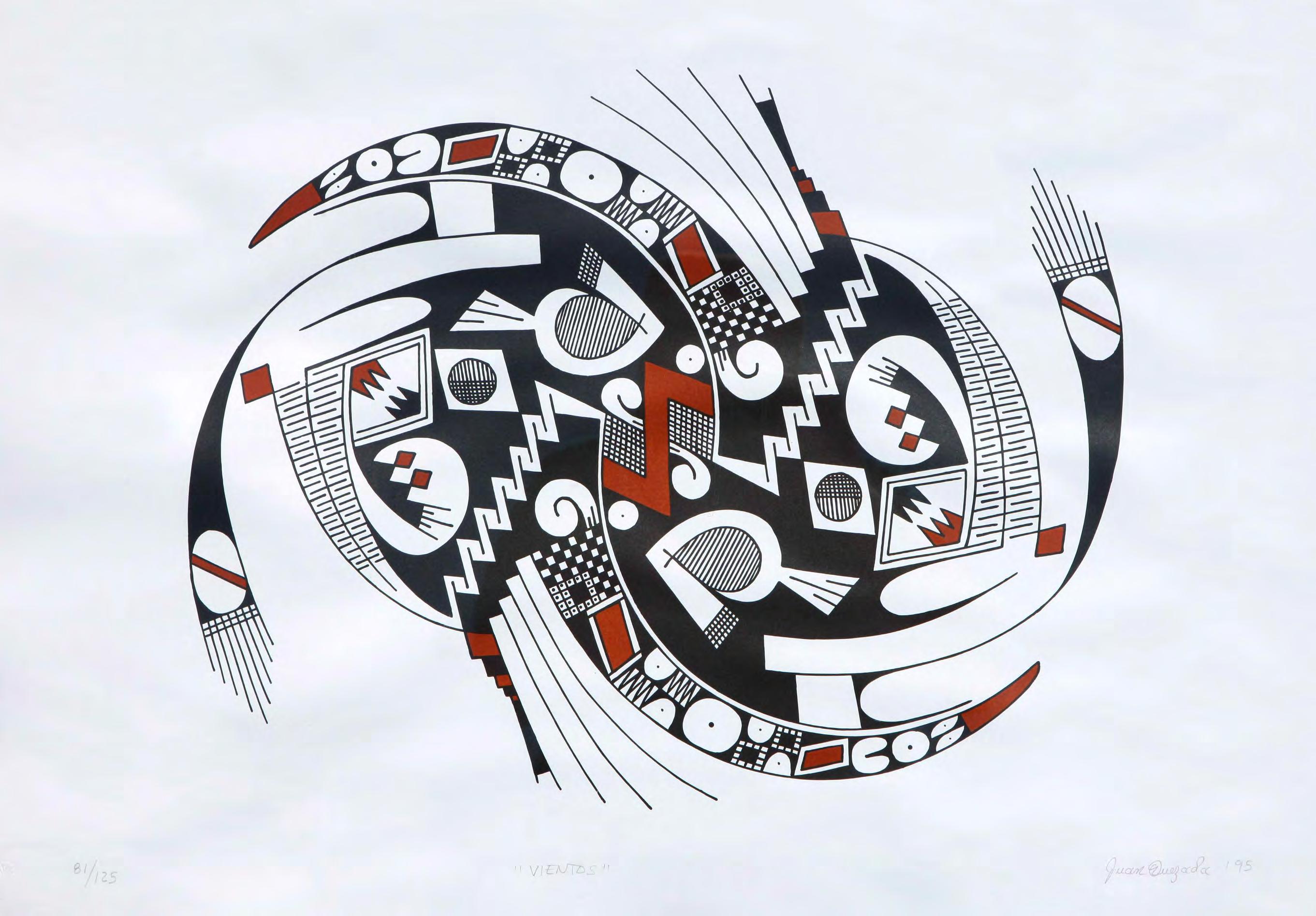
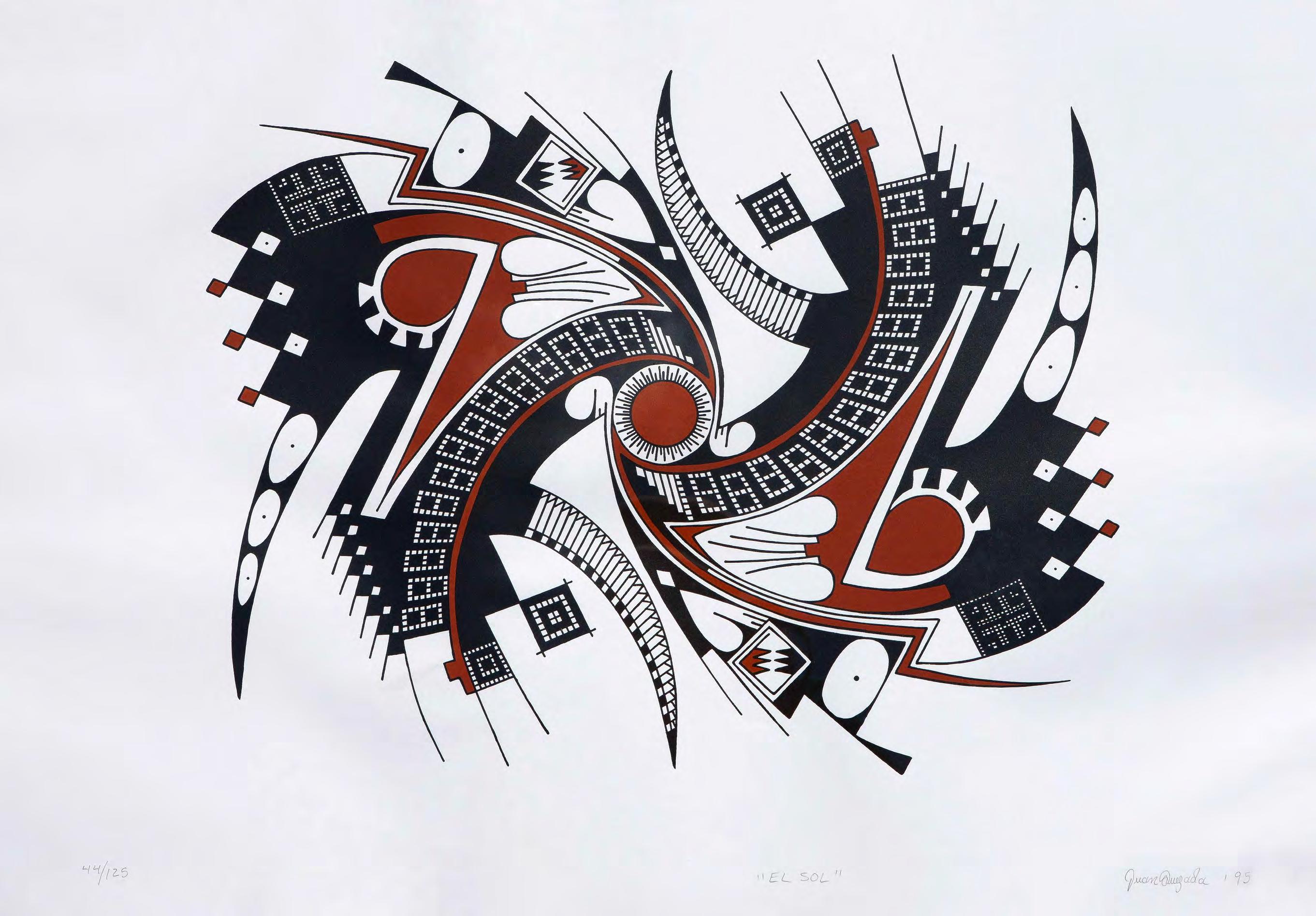
Grabados de Juan Quezada en ambas páginas.
SUEÑOS DE BARRO Y FUEGO
LA EVOLUCIÓN CREATIVA
A Creative Evolution
146. Matriz de diseños de Paquimé y Mata Ortiz
Matrix of Paquimé and Mata Ortiz Designs
148. Los trazos y sus significados
The Strokes and Their Meanings
196. Estilos y variaciones
Styles and Variations
198. Colores de barros
Clay Colors
206. Las formas
Shapes
214. La «piel» de la olla
Intervening with the Surface of the Pot
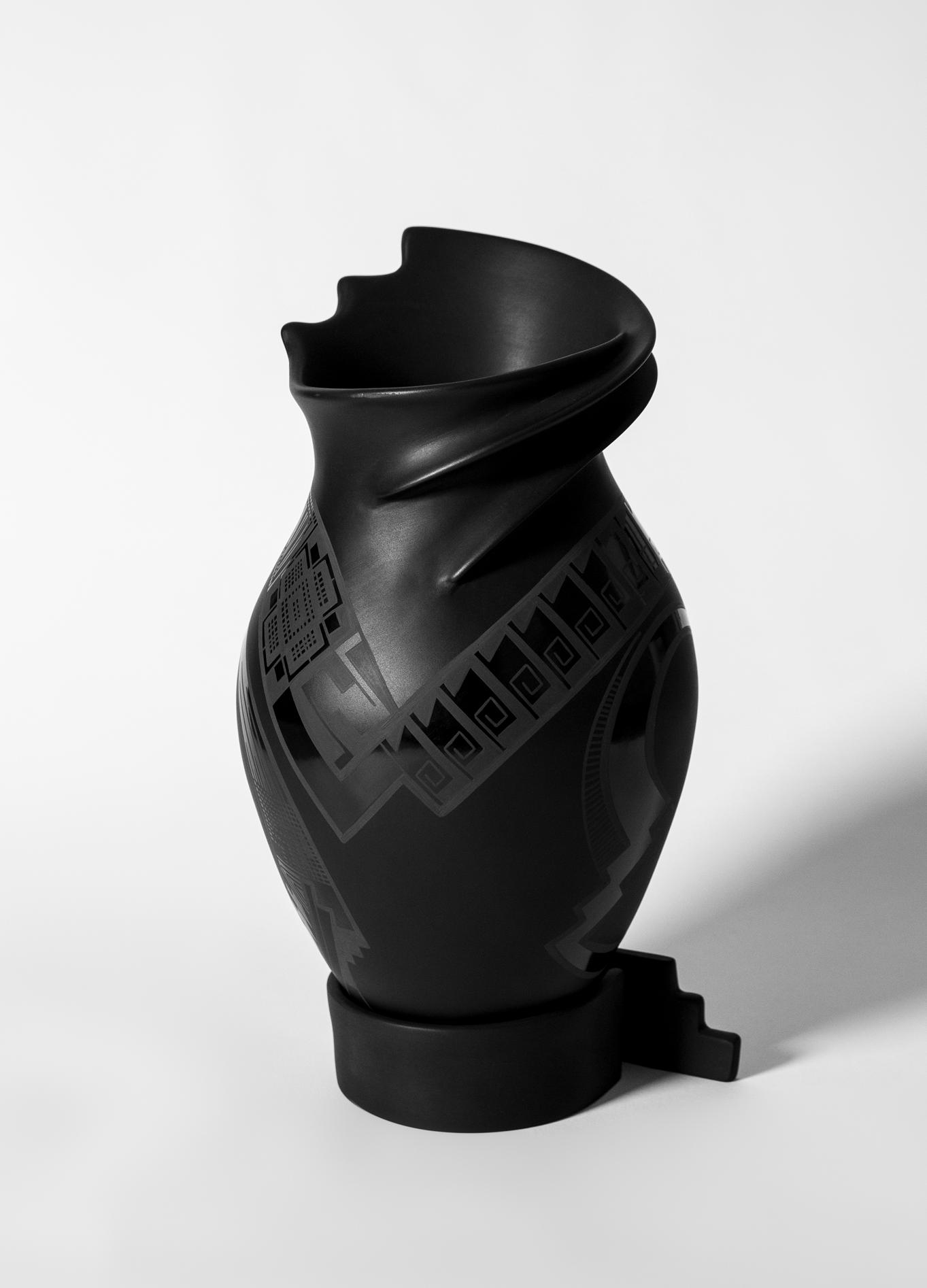
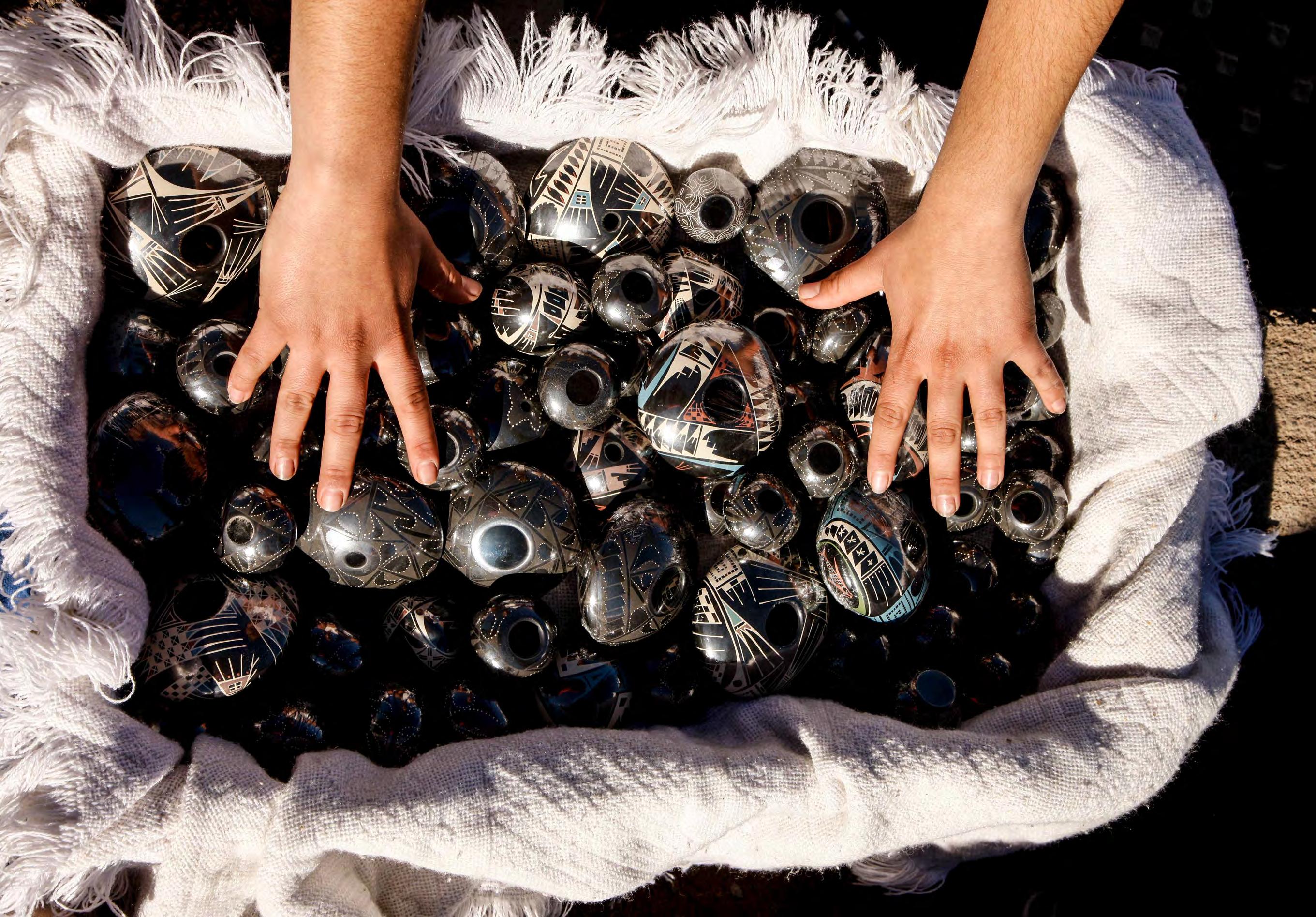
218. Las ollas negras
The Black Pots
228. Las manos en la masa (perfiles)
A Show of Hands (Profiles)
270. Retos y alternativas
Challenges and Alternatives
272. Estrategias de promoción
Promotion Strategies
276. Más allá de las ollas, apoyos a la comunidad y la educación
Beyond the Pots: Community and Education Support
278. Fortalecer la experiencia del comprador
Upgrading the Buyer Experience
282. Nuevas aplicaciones y caminos
New Applications and Paths
284. Grabados
Engravings
290. Joyería
Jewelry
292. Tatuajes
Tattoos
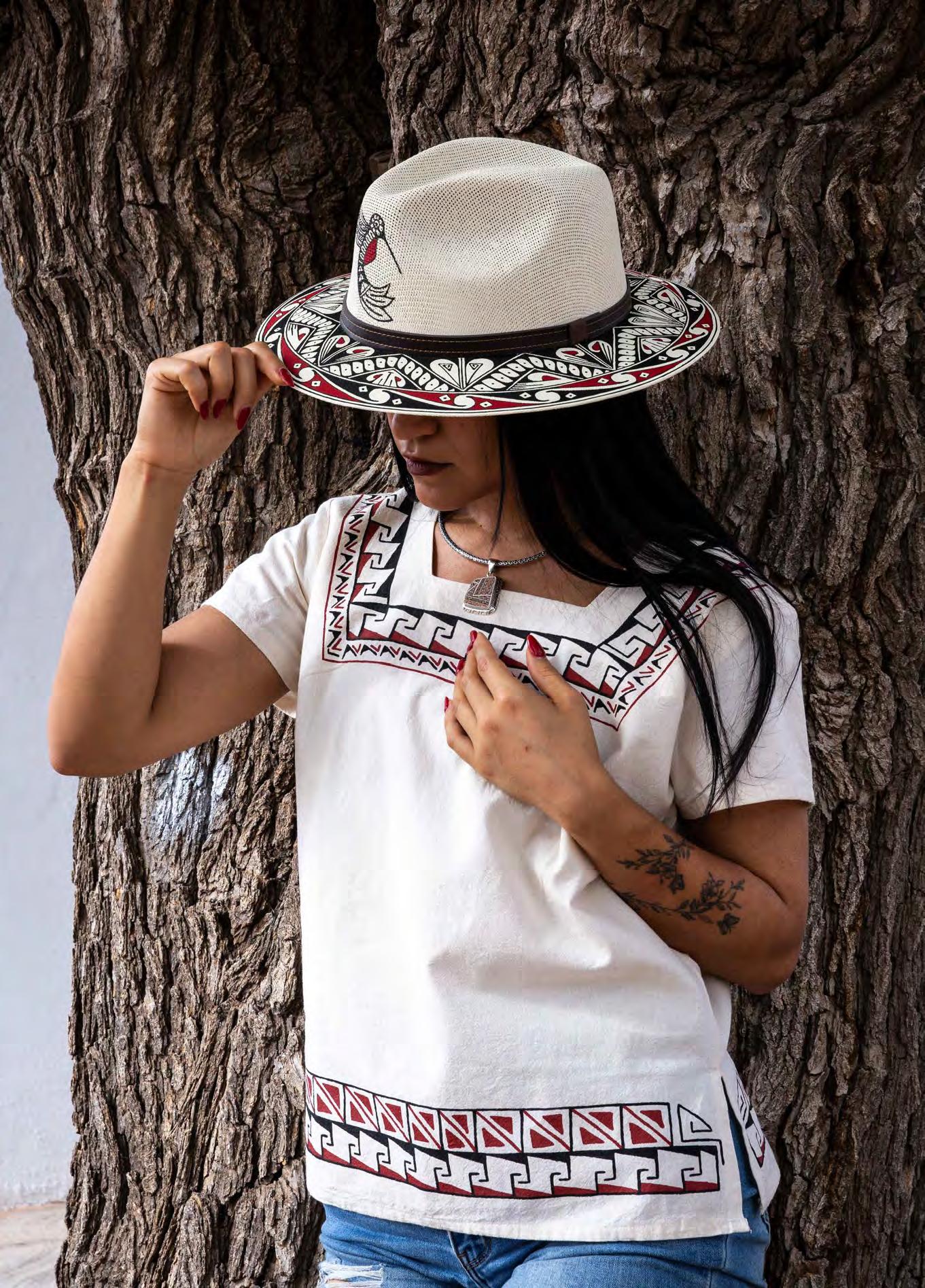
294. Ropa pintada y accesorios
Painted Clothing and Accessories
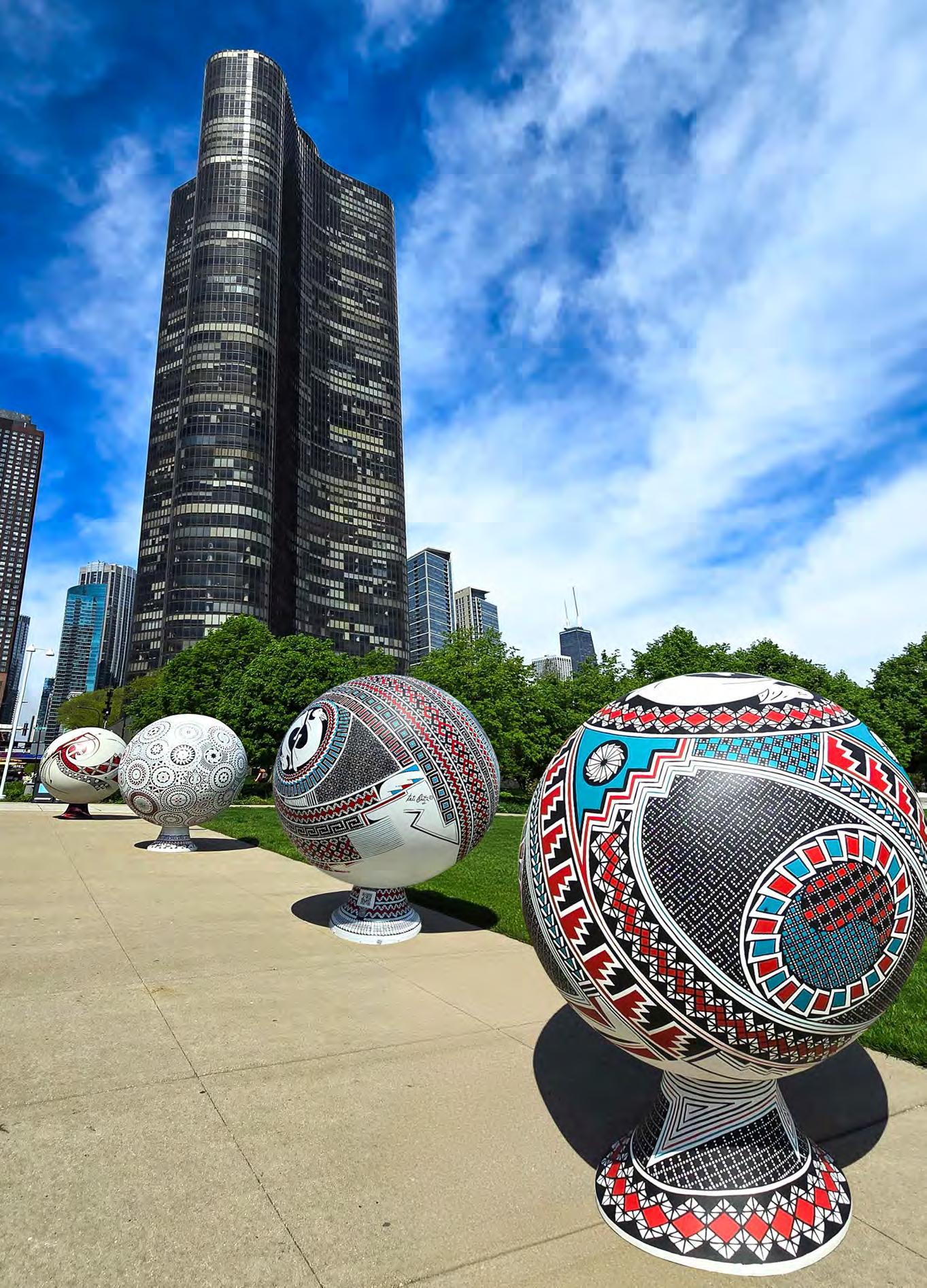
296. Arte público
Public Art
MATA ORTIZ: JUAN QUEZADA, DREAMS OF CLAY AND FIRE
¿CUÁNTO CUESTA? ¿CUÁNTO VALE?
How Much Does it Cost? How Much is it Worth?
SUEÑOS DE BARRO Y FUEGO Dreams of Clay and Fire
25 AÑOS DESPUÉS 25 Years Later
AGRADECIMIENTOS
Acknowledgments
LITERATURA CONSULTADA
Referenced Literature
Rosa Isela Loya Jaquez
PRÓLOGO
PROLOGUE
“Para formar la Tierra, (el dios) Marduk empleó un procedimiento de mezclar barro y cañas construyendo una barca, sobre la cual creó al hombre con su propia sangre amasada con el barro”, dice un poema babilónico de entre 669 a. C. y 627 a. C. Si un ser supremo mezcló el barro para dar vida a los seres humanos, ¿cómo no iban las personas a fascinarse con los materiales paridos por siglos y siglos de vida en el planeta? Desde tiempos muy remotos y en culturas muy diversas, el barro y la creación han estado ligados a la existencia de los humanos. Para muchos, el mismísimo Dios es alfarero.
Hace mil años los habitantes de Paquimé se abocaron a la producción de piezas utilitarias que les hacían más fácil la vida cotidiana y luego usaron el barro con fines rituales. Sin duda, no imaginaban entonces el impacto que sus vasijas –y el testimonio involuntario que ellas atesoraban– tendrían en la posteridad. Desde las cocinas hasta los yacimientos mortuorios, las ollas estaban presentes. Esa herencia es la que hoy, reinventada de mil maneras por algunas generaciones de artesanos, forma parte de la identidad de las cerámicas de Mata Ortiz, que tienen un bien ganado lugar entre las más cotizadas del planeta. El nivel artístico que alcanzan fascina a coleccionistas de diversos rincones del mundo. Desde Chihuahua, una expresión ceramista sofisticada y rotunda atrae la atención de los ojos más entrenados en el universo de la alfarería.
Estas páginas son un viaje al origen de un movimiento cultural y artístico sin precedentes.
“To form the Earth, (the god) Marduk employed a procedure of mixing clay and reeds, constructing a boat upon which he created man, with his own blood kneaded with the clay”, reads a Babylonian poem from between 669 B.C. and 627 B.C. If a supreme being mixed clay to give life to human beings, how could people not be fascinated by the materials shaped by centuries of life on this planet? Since ancient times and across diverse cultures, clay and creation have been linked to human existence. For many, God himself is a potter.
A thousand years ago, the inhabitants of Paquimé devoted themselves to producing utility pieces that made their daily lives easier, and they also used clay for ritual purposes. They could not have imagined the impact their vessels—and their legacy—would have on posterity. From kitchens to mortuary sites, pots were always present. This heritage, now reinvented in many ways by several generations of artisans, forms the core of Mata Ortiz ceramics, which have earned a distinguished place among the most sought-after in the world. The artistic quality of these ceramics captivates collectors from various corners of the globe. From Chihuahua, a sophisticated and resounding ceramic tradition captures the attention of the most discerning eyes in the pottery world.
These pages offer a journey to the origins of an unprecedented cultural and artistic movement.
GABRIEL BAUDUCCO Editor
MATA ORTIZ:JUAN QUEZADA, SUEÑOS DE BARRO Y FUEGO
DESTINO DE GRANDEZA
Destiny of greatness
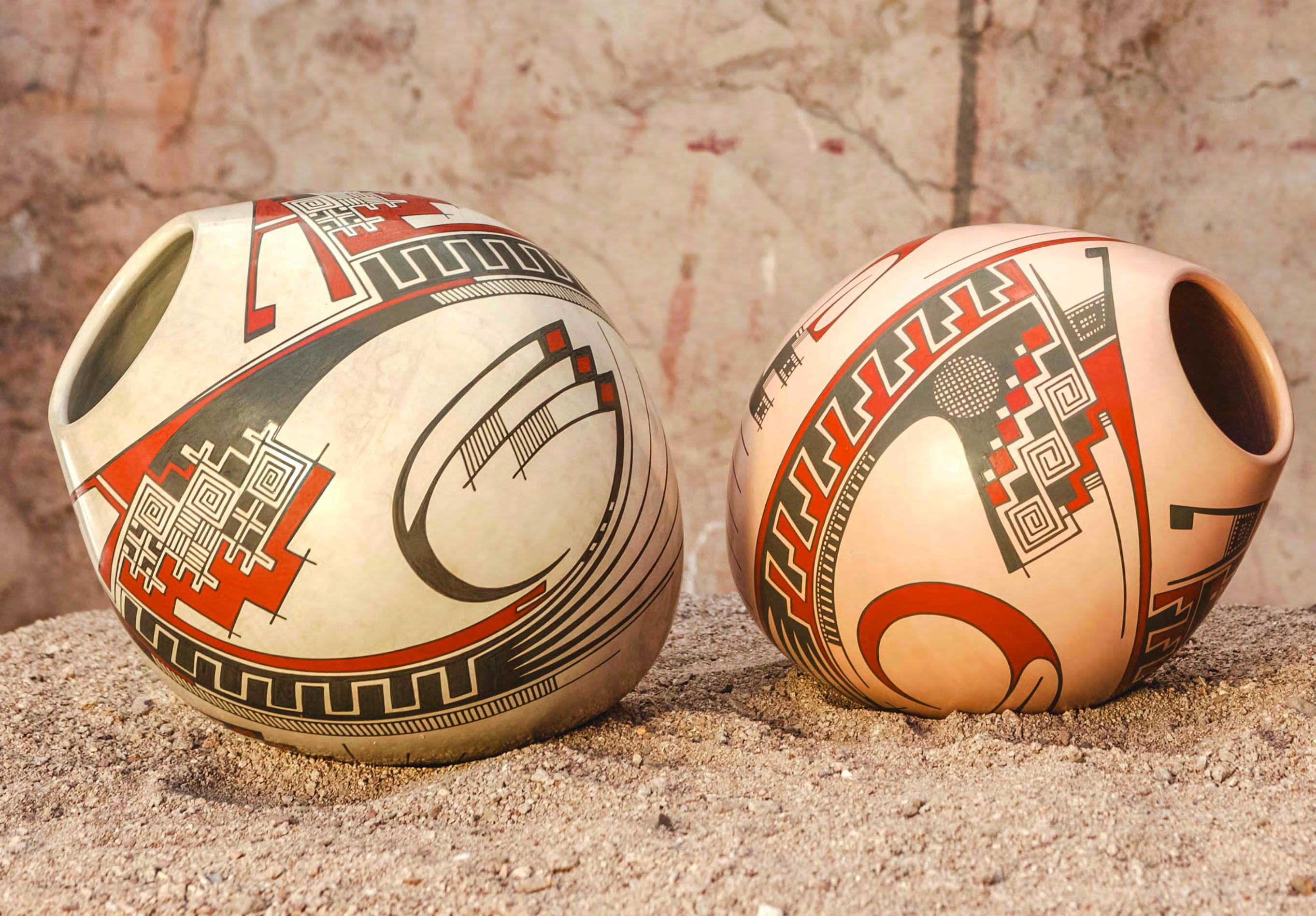
En la década de 1970, al norte de México surgió una sorprendente cerámica inspirada en la extinta cultura de Casas Grandes. Localmente se la conoce como Paquimé, por el sitio arqueológico que lleva ese nombre. Lo que inició como la mera reproducción y recreación de las ollas prehispánicas de la zona, en el pequeño poblado de Juan Mata Ortiz se convertiría en un verdadero movimiento de arte contemporáneo. En él destacan la calidad, la maestría técnica y una propuesta estética dinámica. Al ir dándose a conocer, creció su reconocimiento como una de las cerámicas hechas a mano más refinadas del mundo.
Al cumplirse dos años de la partida de Juan Quezada Celado (1940-2022), esta obra rinde un doble homenaje al hombre y su legado, para honrar la vida y la obra de un leñador que nació con un “don”. Su búsqueda lo condujo a lo largo de quince años a redescubrir el complejo proceso cerámico, sin guía ni maestro más que su inteligencia, su intuición y su curiosidad innata. También es necesario incluir y honrar a Spencer MacCallum (1931-2020), quién lo descubrió, nutrió y alentó a desarrollar sus capacidades al máximo, junto a otros que se sumaron al movimiento.
Así, se cuentan los hechos fortuitos que dieron paso a que Juan se encaminara al encuentro con su destino de grandeza, al de su familia y al de cientos de sus vecinos del pueblo y ejido de Mata Ortiz, incluidos aquellos que van migrando a Casas Grandes y a Nuevo Casas Grandes. El fenómeno de Mata Ortiz sigue deslumbrando, aquel consejo de Juan Quezada a los jóvenes de no conformarse, de seguir experimentando y de apostar por la calidad es uno de sus legados.
In the 1970s, a remarkable form of ceramics emerged inspired by the extinct Casas Grandes culture, in northern Mexico. Locally it is known as Paquimé, named after the archaeological site. What began as mere reproductions and recreations of pre-Hispanic pots, in the small town of Juan Mata Ortiz, soon evolved into a true contemporary art movement. This movement is distinguished by its quality, technical mastery, and dynamic aesthetic. As it gained recognition, it was soon acknowledged as one of the most refined handmade ceramics in the world.
Two years after the passing of Juan Quezada Celado (1940-2022), this work pays a double tribute to the man and his legacy. It honors the life and work of a woodcutter born with a gift seemingly absent among his close ancestors, but undoubtedly representing one of humanity’s oldest crafts. Over fifteen years, his quest led him to rediscover the complex ceramic process, without any guide or master other than his own intelligence, intuition, and innate curiosity. It is also necessary to include and honor Spencer MacCallum (1931-2020), who discovered, nurtured, and encouraged Juan to fully develop his abilities, alongside others who joined the movement.
Until they found each other, they traversed the labyrinths of good fortune and heartbreak. Here we recount the fortuitous events that led Juan Quezada to meet his destiny of greatness, that of his family and that of hundreds of his neighbors in the town and ejido of Mata Ortiz, including those who are migrating to Casas Grandes and Nuevo Casas Grandes. The phenomenon of Mata Ortiz continues to dazzle, perhaps due largely to Juan Quezada’s advice to young people: do not settle or conform, rather experiment and strive for quality. This is one of his lasting legacies.
LA GUERRA QUE
“TRAÍBA”
DENTRO
The War that Stirred Within
Juan Quezada Celado, el cuarto hijo de José Quezada y Paula Celado, era un niño diferente, sensible, incansable, pero ¿cuándo fue evidente su espíritu creativo? ¿Un artista nace o se hace? Durante una entrevista en 1999, parecía tenerlo muy claro: «Desde que tuve uso de razón, a los 6 o 7 años, me gustó crear. En aquella época no se conocían las pinturas ni las herramientas para esculpir, pero yo hacía escultura y pintura. Me agradaba hacer muebles también, me gustaba todo lo que pudiera hacer con las manos».
Juan Quezada Celado, the fourth son of José Quezada and Paula Celado, was a different kind of child —sensitive and tireless. However, when did his creative spirit emerge and become evident? Is an artist born or made? During an interview in 1999, he seemed certain: “Ever since I can remember, around 6 or 7 years old, I loved creating. Back then, we didn’t have paints or sculpting tools, but I made sculptures and paintings. I also enjoyed making furniture, anything I could do with my hands.”
ÉL MISMO DESCUBRÍA LAS TIZAS
Y PREPARABA SUS COLORES EXPERIMENTANDO CON PIGMENTOS MINERALES Y VEGETALES; POR EJEMPLO, YEMAS DE HUEVO, HOJAS VERDES, CHAPULINES”.
“He discovered the chalks himself and prepared his own colors, experimenting with mineral and plant pigments –egg yolks, green leaves, and grasshoppers”.
A los 13 años se dedicó a trabajar con madera, la más dura y difícil. Lo hacía junto a la ventana, desde donde escuchaba a su padre echarle un grito a su madre: —¿Dónde está Juan? —Pues ha de estar por ahí haciendo sus figuritas—, respondía ella. Era algo que no lograban entender, pensaba Juan.
Noé Quezada Olivas, su hijo, recuerda que alguna vez su abuelo agregó enfadado que así iban a «morirse de hambre», que necesitaba que Juan fuera a traer leña. La pobreza era palpable y cuando doña Paulita hacía tortillas de harina, era una fiesta. Solo le tocaba una a cada uno; incluso a Juan, que había ido por la leña y le hacía señas de que le diera una más.
Para poder alimentar a su creciente familia, don José migraba por largos periodos a Estados Unidos, donde trabajaba como jornalero para enviar dinero de regreso a casa. Lidia Quezada, la hija menor, recuerda que entre esos viajes de su padre a Mata Ortiz doña Paulita quedaba embarazada.
La escuela no era para Juan, decía su madre. Lo aburría. Solo asistió a clases entre los 9 y 12 años. Tímido y solitario, se encerraba en una habitación cuando había visitas: «Déjeme en paz, mamá. No les diga dónde estoy».
Cuando no le tocaba ir por leña, pues se turnaban entre los hermanos, en cualquier oportunidad Juan se metía a una bodeguita que había en la casa y hacía dibujos en los muros encalados. «Mi satisfacción era pintarlos hasta acabar y retirarme para mirarlos. Cuando los veía bien, los borraba con un trapo con petróleo y pintaba otros». Él mismo descubría las tizas y preparaba sus colores experimentando con pigmentos minerales y vegetales; por ejemplo, yemas de huevo, hojas verdes, chapulines: «Cualquier cosa que tuviera color». (Samuelson, 2023, p. 176). Su hermana Lidia no se explica cómo los encontraba. Gerardo Cota, un joven vecino que realizó caminatas con la familia, recuerda cómo Juan se fijaba en todo a su paso, pateaba piedras y terrones que veía en el camino, los recogía y los guardaba. (Gerardo Cota, 5 de mayo, 2024.)
At 13 years old, he began working with wood, the hardest and most challenging, often by the window where he could hear his father shout to his mother, “Where’s Juan?” “He’s probably out there making his little figures,” she would reply. It was something they couldn’t quite understand, Juan thought.
Noé Quezada Olivas, his son, remembers his grandfather was annoyed that they would “starve to death” this way, and that Juan needed to go fetch firewood, not sculpt it! Poverty was palpable and when doña Paulita made flour tortillas, it was a feast. They only got one tortilla each; even Juan, who had collected the firewood and felt entitled to an extra one, signaling to his mother to give him one more.
To feed his growing family, don José would migrate for long periods to the United States, working as a day laborer to send money back home. Lidia Quezada, the youngest daughter, recalls that between her father’s trips to Mata Ortiz, doña Paulita became pregnant.
School was not for Juan, his mother said. It bored him. He only attended classes between the ages of 9 and 12. Shy and solitary, he would lock himself in a room when there were visitors, saying, “Leave me alone, Mama. Don’t tell them where I am.”
When it wasn’t his turn to fetch firewood, he and his brothers took turns, Juan would go to a small warehouse in the house and draw on the whitewashed walls. “My satisfaction came from painting them until they were finished, then stepping back to look at them. When they looked good, I’d wipe them clean with a rag soaked in petrol and paint new ones.” He discovered the chalks himself and prepared his own colors, experimenting with mineral and plant pigments –egg yolks, green leaves, grasshoppers: “Anything that had color”. (Samuelson 2023: 176). His sister Lidia wonders how he found them. Gerardo Cota, a young neighbor who hiked with the family, recalls how Juan noticed everything along their path, kicking rocks and clumps of earth, picking them up and keeping them. (Gerardo Cota, May 5, 2024).
Sonora
Cueva de la Olla
80 km
Sinaloa
Juárez
Casas Grandes
Chihuahua
Texas
Juan Mata Ortiz
60 km
Durango
Al norte de México, en Chihuahua, donde Juan Quezada vio nacer sus inquietudes. Northern Mexico, in Chihuahua, where Juan Quezada’s inclinations were born
Santa Bárbara Tutuaca
Coahuila
Paquimé
Río Casas Grandes. Casas Grander River.
A unos cuantos kilómetros de la casa familiar, Juan Quezada tenía el rancho Barro Blanco, en el que pasaba muchas horas entregado a la creación. A few kilometers from the family home, Juan Quezada had the Barro Blanco ranch, where he spent many hours dedicated to creation.
Juan nació en 1940 en Tutuaca (Santa Bárbara de Tutuaca), municipio de Dr. Belisario Domínguez, un pueblo de la Sierra Madre Occidental, donde sus tíos paternos eran hábiles talabarteros, zapateros, carpinteros y ebanistas. Su madre, Paula (Paulita) Celado Sáenz era del cercano San Lorenzo, pueblo de origen rarámuri.
José Quezada Gallegos –padre de Juan– creció con su tío Sabino Hernández y doña Lupe, quienes decidieron migrar al valle de Mata Ortiz con la intención de criar vacas y buscar una mejor vida. Invitaron a sus parientes a acompañarlos en un viaje de diez horas hacia el norte, siguiendo la vía del tren. Juan, el cuarto de los diez hijos que llegarían a ser, tenía apenas un año cuando arribaron.
Juan was born in 1940 in Tutuaca (Santa Bárbara de Tutuaca), a municipality in Dr. Belisario Domínguez, a town in the Sierra Madre Occidental, where his paternal uncles were skilled leatherworkers (producing mostly saddles), shoemakers, carpenters, and cabinetmakers. His mother, Paula (Paulita) Celado Sáenz, was from nearby San Lorenzo, a town of Rarámuri origin.
José Quezada Gallegos –Juan’s father– grew up with his uncle Sabino Hernández and Doña Lupe, who decided to migrate to the Mata Ortiz valley with the intention of raising cows and looking for a better life. They invited their relatives to accompany them on a ten-hour journey north, following the train tracks. Juan, the fourth of ten children, was only a year old when they arrived.
BUSCAR LEÑA, TRAER
MIEL SILVESTRE, CORTAR QUIOTES Y ASARLOS ERAN TAREAS QUE JUAN LLEVABA A CABO EN ESOS AÑOS TEMPRANOS PARA AYUDAR AL SOSTÉN DE SU FAMILIA.
Fetching firewood, gathering wild honey, cutting and roasting agave flower stalks were tasks Juan performed in those early years to help support his family.
Años después, doña Paulita recordaría que, de su lado materno, su hermana mayor, abuela y bisabuela, entre otras, habían sido alfareras. Juan viajó a San Lorenzo con Spencer MacCallum –su mecenas y mentor– en busca de esas raíces. Descubrió que, hasta principios del siglo XX, este había sido un pueblo alfarero donde las mujeres trabajaban el barro, como las ollas utilitarias para hacer el tesgüino, la bebida de maíz fermentado de los rarámuris. Spencer logró obtener una olla tesgüinera de la bisabuela Celado; sin embargo, a Paulita no le tocó aprender a prepararlo. Ella se había criado en otra casa y, para entonces, aquel era un oficio extinto. Así, puede decirse que Juan proviene de dos familias con raíces en las artes y oficios tradicionales y, quizá, en su sangre aún persistía esa pulsión de los genes por crear con las manos. Buscar leña, traer miel silvestre, cortar quiotes y asarlos eran tareas que Juan llevaba a cabo en esos años tempranos para ayudar al sostén de su familia, ya sea para compartir los alimentos a la hora de la comida o para venderlos y obtener unos pesos. Sin embargo, a Juan no lo motivaba únicamente la necesidad económica. Cuando no se quedaba en casa obsesionado por una nueva pintura o labor artística, iba a caminar por los pastizales, subía los cerros, cuidaba las vacas de la familia, se dejaba llevar por senderos antiguos y descubría nuevos lugares. Él amaba el campo, era el lugar en donde más cómodo se sentía.
Years later, Doña Paulita would recall that, on her mother’s side, her older sister, grandmother, and great-grandmother, among others had been potters. Juan traveled to San Lorenzo with Spencer MacCallum –his patron and mentor– in search of these roots. He discovered that until the early 20th century, this had been a pottery town where women worked with clay, making utilitarian pots for brewing tesgüino, the fermented corn drink of the Rarámuri. Spencer managed to obtain a tesgüinera pot from Paulita’s great-grandmother, though Paulita never learned to make pottery. She had grown up in another household, and by then, the trade had become extinct. Thus, it can be said that Juan comes from two families with roots in traditional arts and crafts, and perhaps the urge to create with his hands still lingered in his genes.
Fetching firewood, gathering wild honey, cutting and roasting agave flower stalks were tasks Juan performed in those early years to help support his family, either sharing the food at mealtime or selling them to earn a few pesos. But Juan was not solely motivated by economic necessity. When he wasn’t home, obsessed with a new painting or artistic project, he walked through pastures, climbed hills, and tended to the family’s cows. He followed ancient trails and discovered new places. He loved the countryside; it was where he felt most comfortable.
Cerro “Moctezuma”, o “montezuma”, como llaman los locales a casi todos los yacimientos arqueológicos.
Cerro “Moctezuma”, or Montezuma, as the locals pronounce and identify archaeological sites.
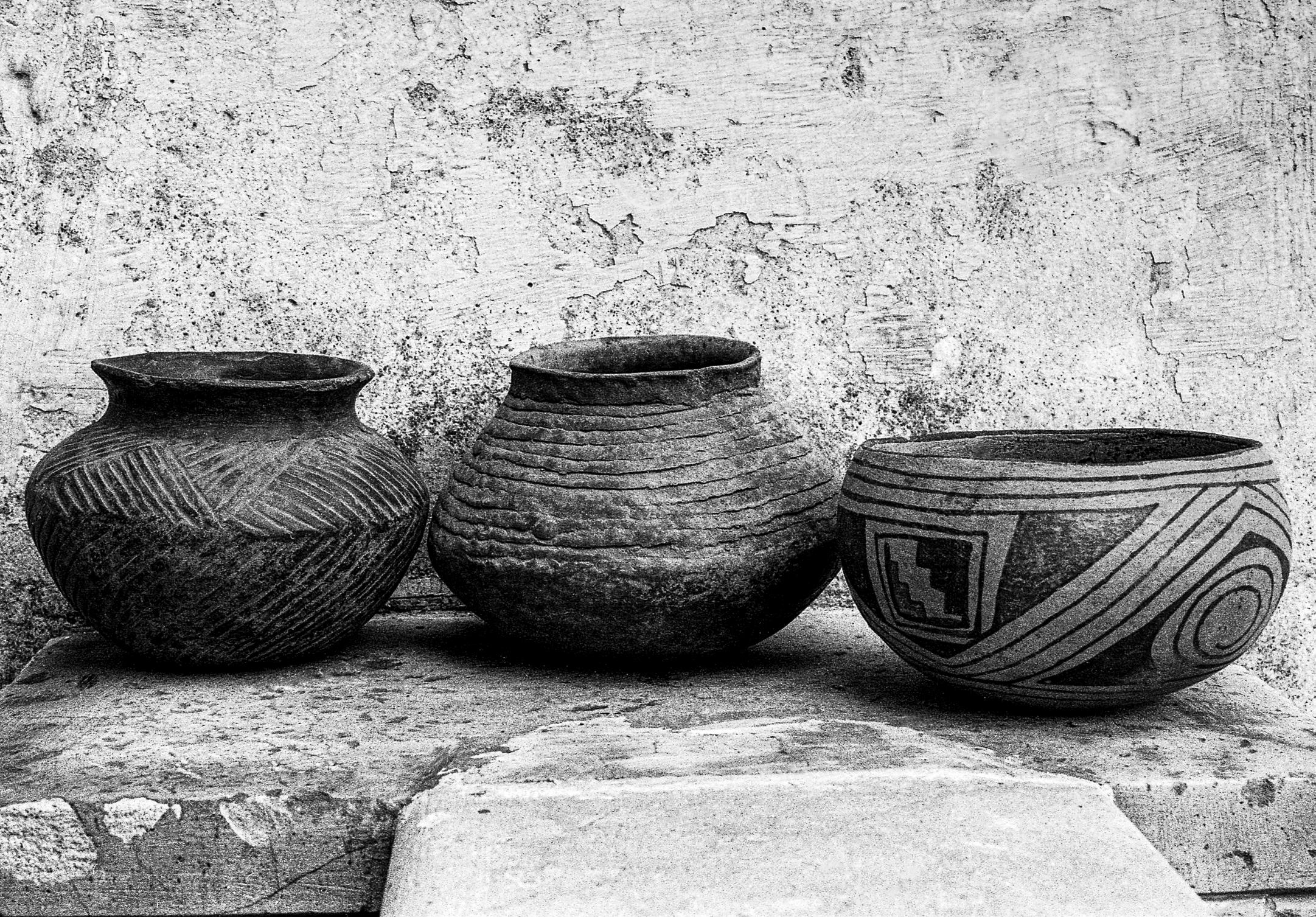
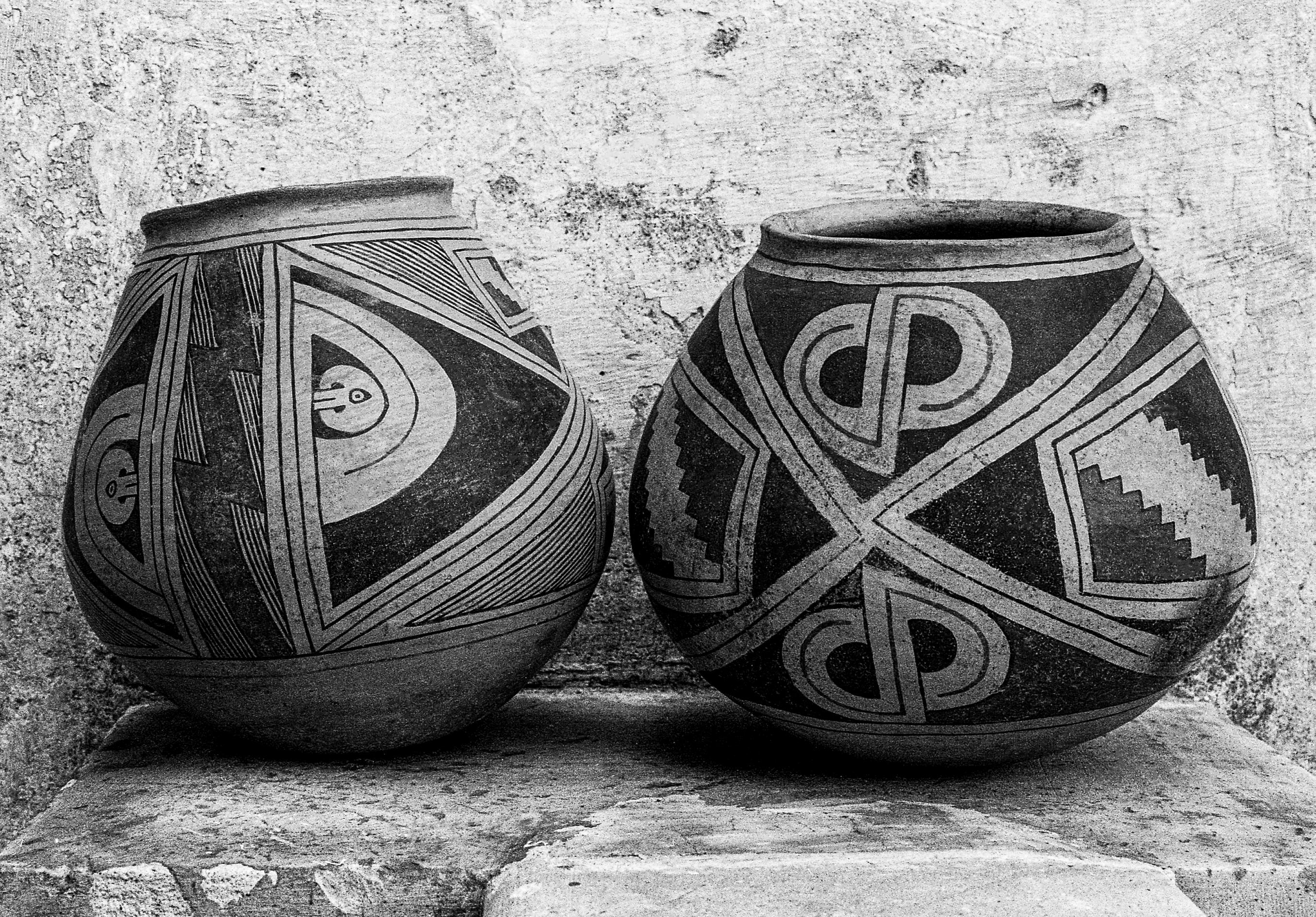
Adquirió conocimientos explorando las cuevas, observando los tepalcates en los «montezumas» (como conocen localmente a los sitios prehispánicos), encontrando puntas de flecha y reproduciéndolas para entender cómo se usaban. En la «piel» de las antiguas ollas o en los vestigios de estas y en petroglifos, encontraba espirales, escalones, retículas ajedrezadas. Toda esta obsesión tenía su raíz en la intención de querer saber más sobre sus antepasados y su forma de vida.
Sobre ese día a día que le tocaba enfrentar para «vivir de algo», Juan relató en muchas ocasiones que se iba con las bestias por la sierra y las cargaba. Mientras comían y descansaban una o dos horas, él se metía en las cuevas. Allí encontraba «ollas bien bonitas. Unas completas y otras pegadas. Traje unas para acá y alguien me dijo: “¡Unas ‘ollas pintas’!”. Había una creencia de que durante la Semana Santa los tesoros se abrían. Yo, que estaba chavalo, oía que los sacaban de las ‘ollas pintas’, pero algunas tenían esqueletos en vez de tesoros, así que no todos se animaban». El hallazgo en una de las cuevas fue particularmente memorable. Juan tendría unos 15 años. Se encontraba cubierta con una piedra y al removerla se quedó asombrado. Contenía los esqueletos momificados de una pareja y algunas ollas colocadas en diferentes puntos. A sus pies había cinco ollas y otras vasijas utilitarias con restos de frijoles, calabaza, raíces y otros alimentos. Sin embargo, dos más destacaban por su tamaño y decoración, una blanca y otra amarilla. (Samuelson, 2023, p. 176). Piezas cuya belleza lo impactaron más que cualquier otra. «Entonces no tenía decidido que a esto iba a dedicarme –recuerda Juan–. No pensaba en las ollas, ni siquiera las conocía… Como los dibujos me fascinaron, pensé: “Tengo que hacer algo como esto”. No tenía la intención de vivir de ello, nada más quería hacer una olla». Alguna vez llevó a sus hijos por aquellas veredas, quería que supieran por dónde su padre había atravesado la sierra. Su intención era que vieran dónde había nacido su vocación.
He acquired knowledge by exploring the caves, observing the tepalcates or artifacts in “Montezumas” (as locals call pre-Hispanic sites), finding arrowheads, and replicating them to understand their use. On the surface of ancient pots or the remains of these and petroglyphs, he found spirals, step-frets, and checkered grids. This obsession stemmed from his desire to learn more about his ancestors and their way of life.
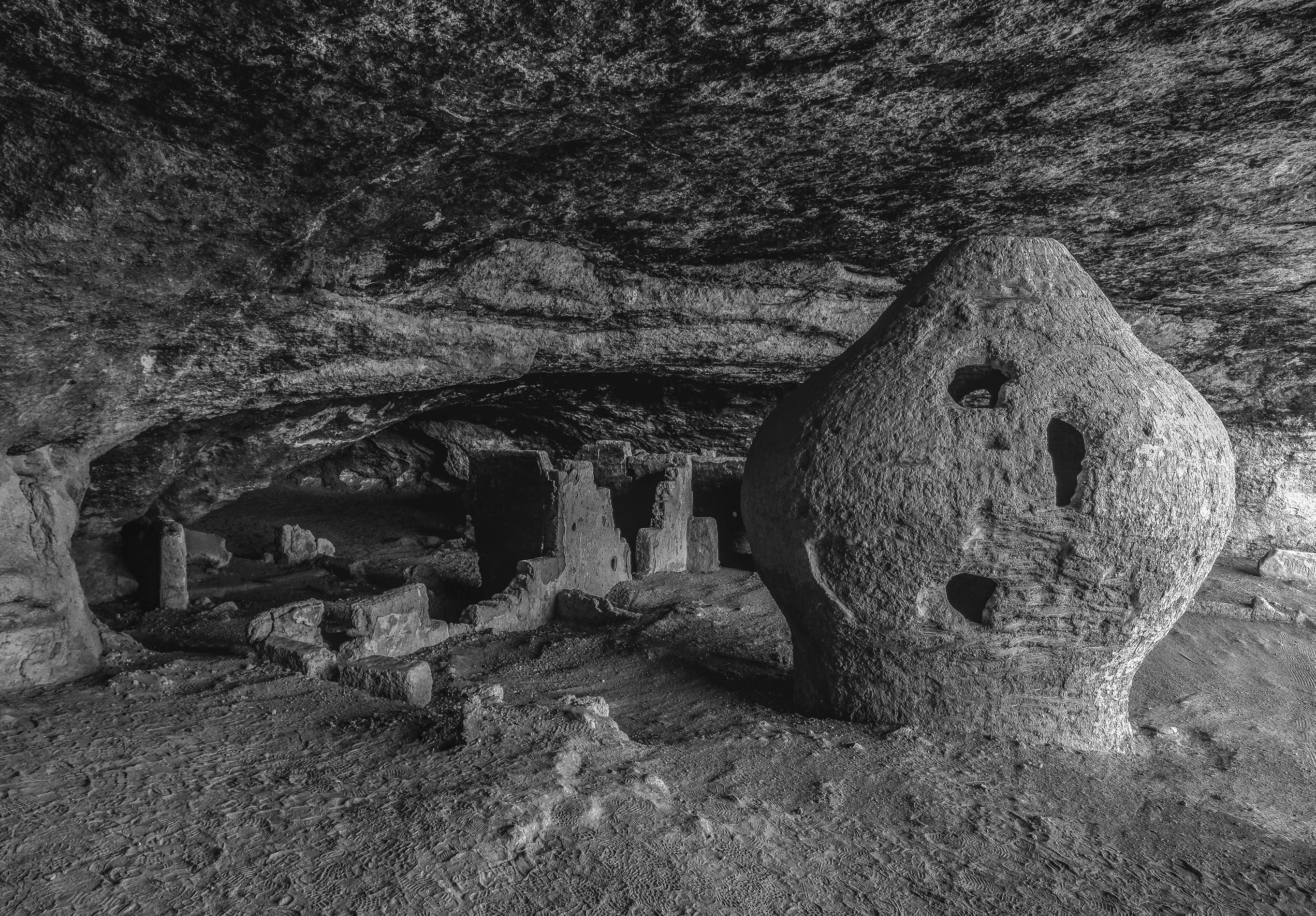
Regarding the daily challenges he faced to “make a living,” Juan often recounted that he would wander the mountains with his loaded pack animals. While they grazed and rested for an hour or two, he would go and explore the caves. There he would find “beautiful pots –some intact and others pieced together. I brought some of them back and someone exclaimed: “Some ‘ollas pintas’!” or painted pots. There was a belief that during Holy Week the treasures were revealed. As a kid, I heard that they were taken out of the ‘ollas pintas’, but some had skeletons instead of treasures, so not everyone dared to open them”.
One particularly memorable discovery in a cave occurred when he was about 15 years old. It was covered with a stone and when he removed it, he was astonished. It contained the mummified skeletons of a couple and some pots placed at different points. At their feet were five pots and other utilitarian vessels with remnants of beans, squash, roots, and other foods. However, two stood out for their size and decoration, one white and the other one yellow. (Samuelson 2023: 176) Pieces which beauty impressed him more than anything else. “At that point I had not decided that this was what I was going to do,” recalls Juan. I didn’t think about the pots, I didn’t even know them... As the drawings fascinated me, I thought, ‘I have to do something like this.’ I didn’t intend to make a living from it, I just wanted to make one.”
He once took his children along those trails, wanting them to see where his vocation was born.
(COMO CONOCEN LOCALMENTE A LOS SITIOS PREHISPÁNICOS), ENCONTRANDO PUNTAS DE FLECHA Y REPRODUCIÉNDOLAS PARA ENTENDER CÓMO SE USABAN.
He acquired knowledge by exploring the caves, observing the tepalcates or artifacts in “Montezumas” (as locals call pre-Hispanic sites), finding arrowheads, and replicating them to understand their use.
Cueva de la olla. En sitios como este suelen encontrarse vestigios de vasijas con restos humanos. Cave of la Olla or Pot. In sites like this one, vestiges of pots with human remains are often found.
EL PASADO NUTRE UNA CURIOSIDAD NATA
The Past Nurtures Innate Curiosity
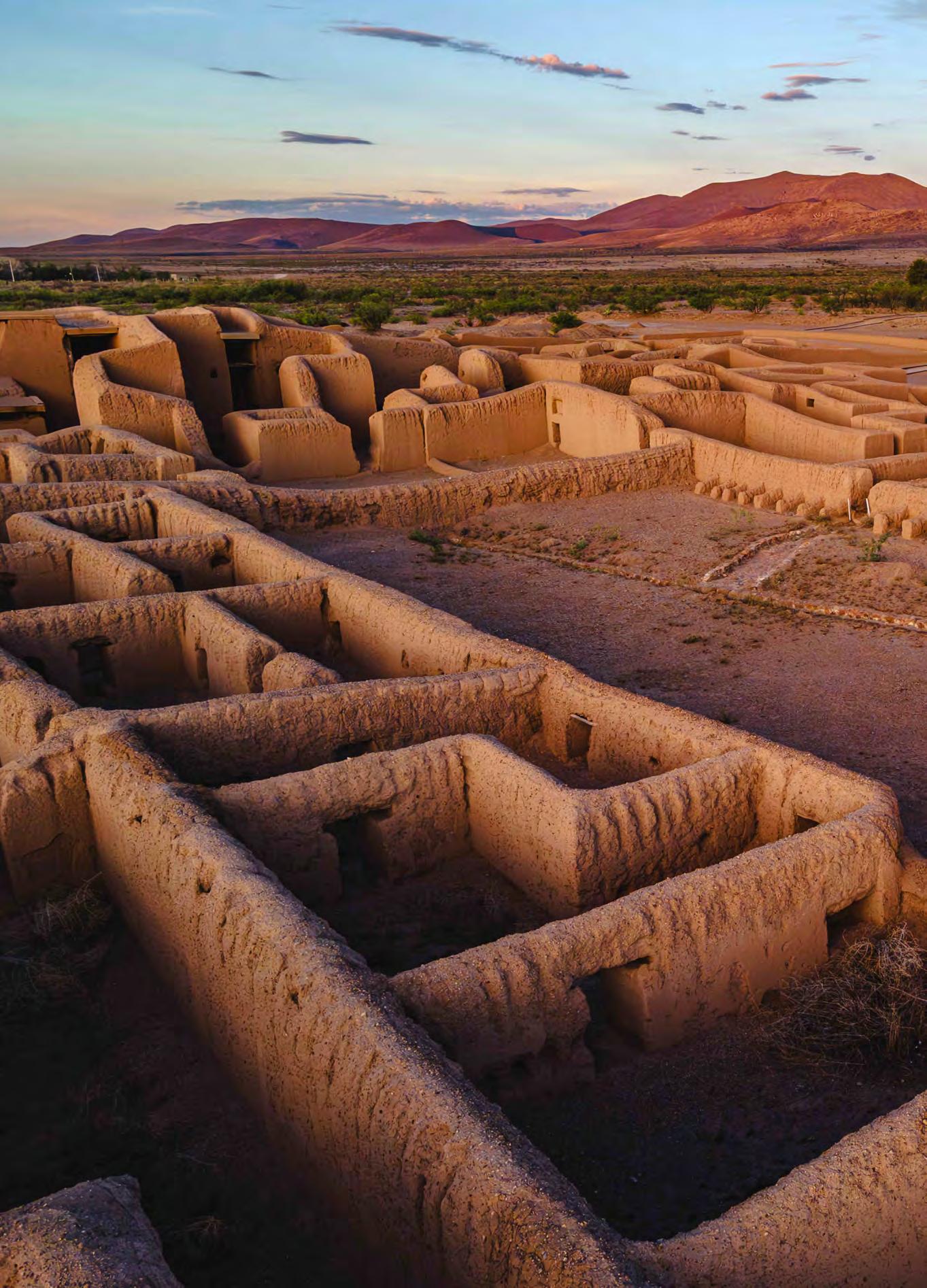
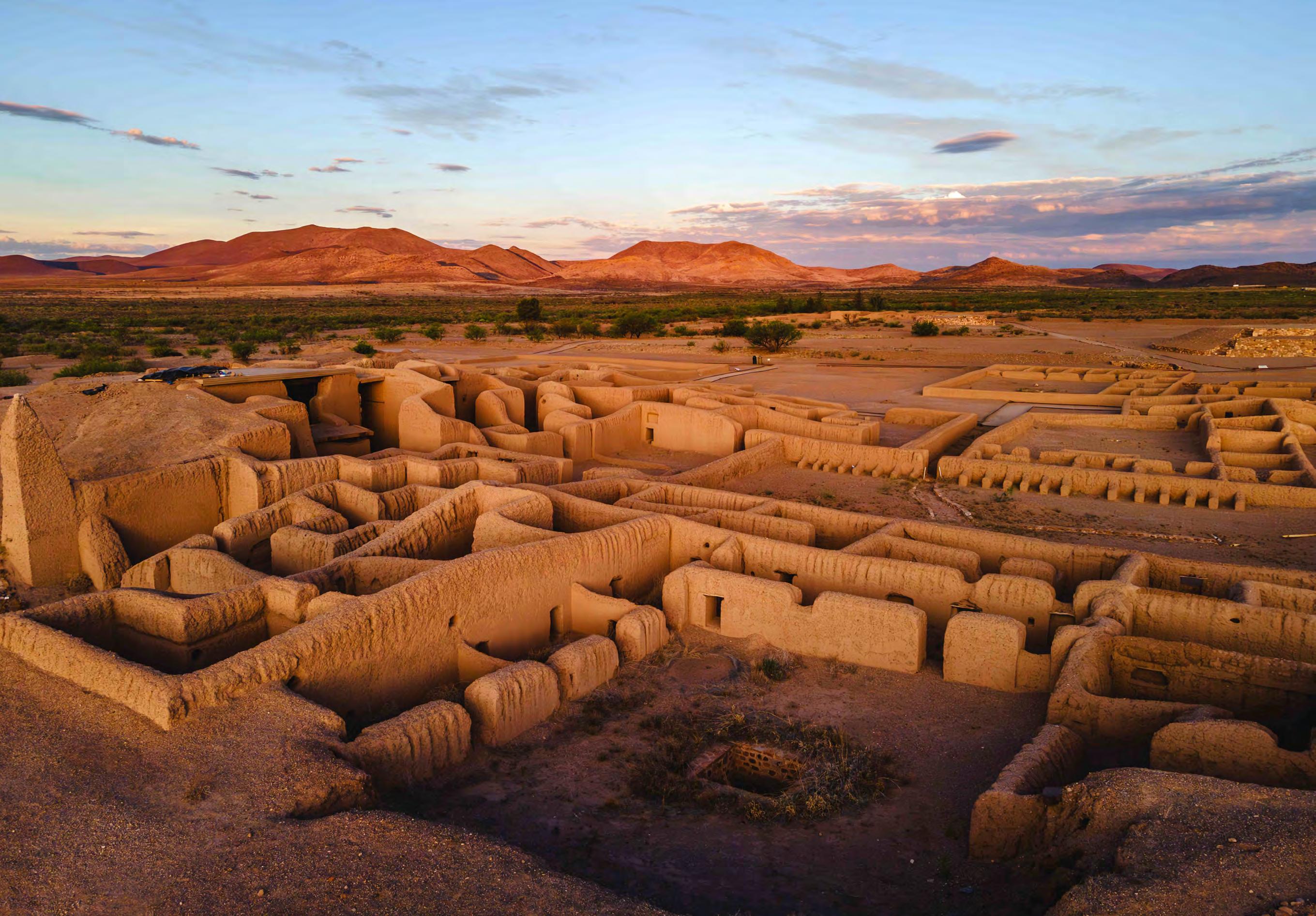
Paredes de tierra apisonada se levantan desde el suelo. Su intenso color café rojizo se funde con el horizonte y a la vez contrasta con el azul del cielo. Al pie de la Sierra Madre Occidental, a 240 kilómetros al noreste de la ciudad de Chihuahua, se ubican los vestigios de la ciudad más grande e importante de la zona. Para algunos autores, esta región corresponde a la Gran Chichimeca; para otros, es un sitio destacado de Oasisamérica. Paquimé (“Casas Grandes” en lengua ópata) es una zona arqueológica cuyo territorio comprende 146 hectáreas. En su apogeo, tan solo la ciudad cubría 750 kilómetros cuadrados. Su posición entre ríos fue estratégica para propiciar su desarrollo en un entorno agreste. Situada en la cabecera del río Casas Grandes, al norte del río Palanganas, al este del río Santa María y el río Carmen, estas «arterias de vida» –como las nombra Eduardo Pío Gamboa– fueron aprovechadas de manera estratégica por un sistema de aprovisionamiento hídrico.
Persisten varios enigmas e hipótesis que los arqueólogos han desarrollado en torno a la caída de esta cultura. ¿Qué provocó el abandono de Paquimé? Desde que el doctor Charles Di Peso inició excavaciones científicas en 1958, distintos aspectos de su organización social han causado admiración; en particular, la cerámica que destaca por su fuerza expresiva. Concebirla como pieza de un rompecabezas más amplio de la tradición alfarera prehispánica de la cultura pueblo puede ayudar a su comprensión.
Walls of packed earth rise from the ground. Their intense reddish-brown color blends with the horizon and contrasts with the blue sky. At the foot of the Sierra Madre Occidental, 240 kilometers northeast of Chihuahua City, lie the remains of the largest and most important city in the area. For some authors, this region corresponds to the Great Chichimeca; for others, it is a prominent site of Oasisamerica. Paquimé (known as “Casas Grandes” in the Ópata language) is an archaeological zone covering 146 hectares. At its peak, the city alone covered 750 square kilometers. Its position between rivers was strategic for promoting development in a rugged environment. Located at the headwaters of the Casas Grandes River, north of the Palanganas River, east of the Santa María River and the Carmen River, these “arteries of life” –as Eduardo Pío Gamboa calls them– were strategically used by a water supply system.
Several enigmas and hypotheses were developed by archaeologists surround the decline of this culture. What caused the abandonment of Paquimé? Since Dr. Charles Di Peso began scientific excavations in 1958, different aspects of its social organization have caused admiration; in particular, its pottery which stands out for its expressive strength. Conceiving it as a piece of a larger puzzle of the pre-Hispanic pottery tradition of the Pueblo culture can aid in its understanding.
Las puertas ‘T’ son características de la zona arqueológica de Paquimé. ‘T’ shaped doors are a characteristic feature in the archaeological site of Paquime.
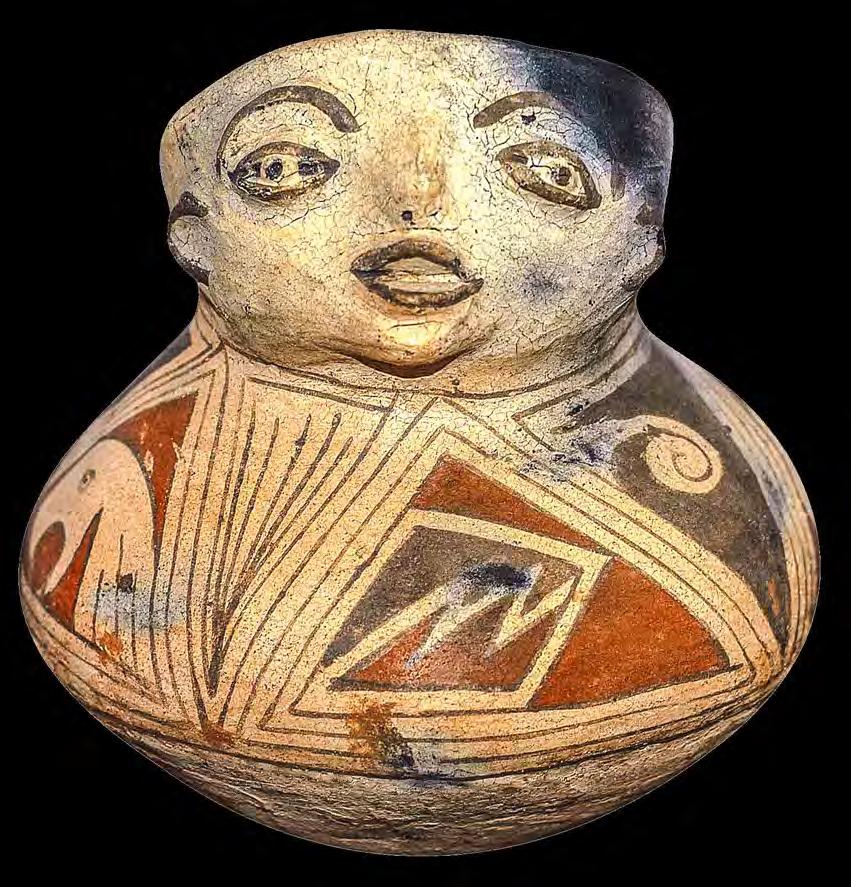
Con decoración que representa los granos de maíz, esta es una de las piezas encontradas en Paquimé. Decorated with designs that represent corn kernels, this pot was found in Paquimé.
Oasisamérica
UN ENIGMA CULTURAL
Oasisamerica, A Cultural Enigma
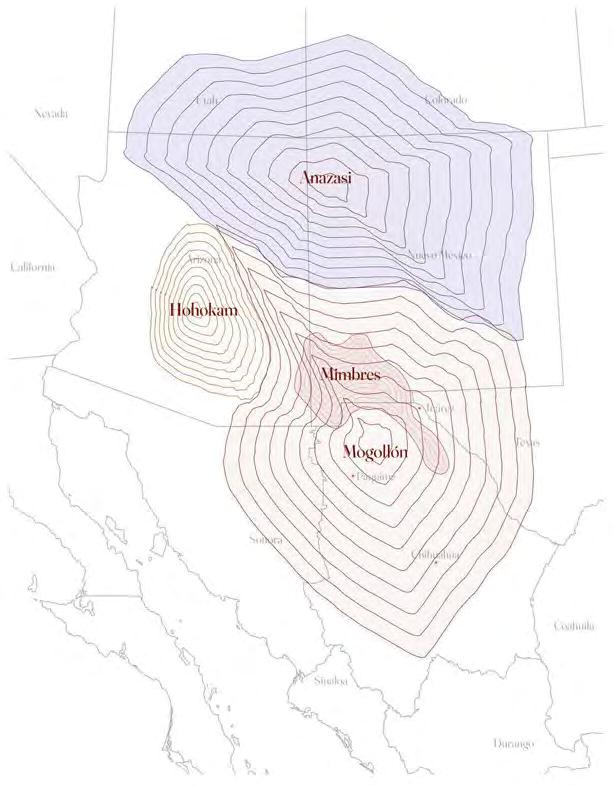
Una región que se extendía por el suroeste de Estados Unidos y el norte de México fue hogar de grupos sedentarios agrícolas. Este territorio, que formó parte de la zona áridoamericana durante milenios, albergó a grupos nómadas de cazadores-recolectores. El surgimiento de culturas sedentarias fue posterior al de Mesoamérica y comenzó en los siglos previos a nuestra era. Oasisamérica engloba cuatro grandes culturas notables: anasazi, hohokam, mogollón y Casas Grandes. A region extending across the southwestern United States and northern Mexico was home to sedentary agricultural groups. This territory, which was part of the Aridoamerica region for millennia, was home to nomadic hunter-gatherer groups. The emergence of sedentary cultures followed that of Mesoamerica and began in the centuries before our era. Oasisamerica encompasses four major notable cultures: Anasazi, Hohokam, Mogollon, and Casas Grandes.
ANASAZI
(100 a. C. - 1300 d. C.)
De voz navajo que significa ‘antiguos enemigos’, la cultura anasazi fue un pueblo que ocupó durante al menos trece siglos las mesetas y valles de los estados de Colorado, Nuevo México, Arizona y Utah, en Estados Unidos. Sus casas en acantilados fueron edificadas con piedra, lodo y troncos. Las ruinas de Mesa Verde, en Colorado, son un ejemplo de sus sistemas constructivos y organización urbanística. La cerámica anasazi se transformó a través de sus distintos periodos, hasta florecer en piezas con llamativos diseños geométricos en negro sobre fondo blanco o rojo. Los sitios anasazi comenzaron a ser abandonados en torno al 1300 d. C., sin que se conozca el motivo.
From the Navajo word meaning ‘ancient enemies,’ the Anasazi culture was a people who occupied the valleys and plateaus of the U.S. states of Colorado, New Mexico, Arizona, and Utah for at least thirteen centuries. Their cliff dwellings were built of stone, mud, and logs. The ruins of Mesa Verde –in Colorado– exemplify their construction systems and urban planning. Anasazi pottery evolved through various periods, culminating in pieces with striking geometric designs in black on white or red backgrounds. The Anasazi sites began to be abandoned around 1300 A.D., with the reason still unknown.
HOHOKAM
(450 d. C. - 1450 d. C.)
Su nombre en lengua pima significa ‘los que se fueron’. Los hohokam, hábiles agricultores en el desierto, desarrollaron un sistema de canales de riego para llevar agua de río a zonas de cultivo, en donde sembraban maíz, variedades de frijol, calabazas y algodón. Se asentaron en el territorio que hoy conforma Arizona, sobre todo en el área de Phoenix. Los remanentes más importantes de esta cultura son fragmentos de cerámica de color beige y café, con iconografía de motivos animales, humanos y geométricos, plasmados en tonos rojos y negro; sin embargo, también se han hallado restos de cerámicas de culturas vecinas, indicio de su interacción e intercambios comerciales con ellas. Uno de los vestigios más importantes de su arquitectura es el sitio de Casa Grande, en Arizona.
MOGOLLÓN
(200 d. C. - 1450 d. C.)
En la región montañosa de Nuevo México, Arizona, Chihuahua y Sonora se desarrolló la cultura mogollón. Los integrantes de este pueblo al principio eran recolectores móviles, después comenzaron a incursionar en la agricultura y eso los llevó a asentarse en lugares fijos y a construir extensas instalaciones de riego. Aunque su alimentación se basaba en la cosecha de maíz, frijoles y calabazas, ellos también dependían de la caza. La primera tipología arquitectónica de los mogollón se refiere a las casas pozo, en las cimas de los cerros. Alrededor del año 550 d. C., las casas pozo comenzaron a erigirse en llanuras aluviales. Posteriormente, alrededor del año 1000 d. C., empezaron a construirlas con piedra y adobe en acantilados. Las Casas del Acantilado de Gila en el suroeste de Nuevo México son ejemplo de ello.
MIMBRES
(825 d. C. - 1450 d. C.)
La subcultura mimbres, derivada de los mogollones, se desarrolló en la ribera del río Mimbres en el suroeste de Nuevo México. Destacó por su cerámica blanca con decoración negra. Esta etnia se expandió hasta el norte de Chihuahua. Según Pío Gamboa, la influencia de la alfarería mimbres impactó ampliamente en la región de Casas Grandes en la producción de ollas polícromas. Se cree que algunos de los alfareros mimbres comenzaron un intercambio con la cultura Casas Grandes en el siglo XII y que su trabajo influyó más tarde en los artífices de esta cultura emergente. De acuerdo con Richard D. O’Connor y Walter P. Parks, Juan Quezada respaldó esta teoría. Basándose en sus observaciones, para Juan los primeros pobladores anteriores a Paquimé eran mimbreños.
(450 A.D. – 1450 A.D.)
Their name in the Pima language means ‘those who left’. The Hohokam were skilled desert farmers who developed an intricate system of irrigation canals to channel river water to their cultivated fields where they grew corn, varieties beans, squash, and cotton. They settled in the region that is now Arizona, particularly around the Phoenix area. The most significant remnants of this culture are fragments of beige and brown ceramics decorated with animal iconography, human figures, and geometric motifs, painted in red and black tones. Potsherds from neighboring cultures have also been discovered, indicating their interactions and trade with other groups. One of the most important architectural remnants is the Casa Grande site in Arizona.
(200 A.D. – 1450 A.D.)
The Mogollon culture emerged in the mountainous regions of New Mexico, Arizona, Chihuahua, and Sonora. Initially, they were nomadic gatherers, but they gradually transitioned to agriculture, leading to permanent settlements and the construction of extensive irrigation systems. Although their diet was based on the harvest of corn, beans, and squash, they also depended on hunting. Early Mogollon architecture consisted of “Casa Pozos” –partial subterranean houses– built on hilltops. Around 550 A.D., they extended these constructions to alluvial plains, and by 1000 A.D., they erected stone and adobe dwellings on cliffs, such as The Gila Cliff Houses in southwestern New Mexico.
(825 A.D. – 1450 A.D.)
The Mimbres subculture, derived from the Mogollón people, flourished on the banks of the Mimbres River in southwestern New Mexico. They were renowned for their white pottery with black decoration. This ethnic group expanded to the north of Chihuahua. According to Pío Gamboa, Mimbres pottery had a significant influence on the Casas Grande region, particularly in the production of polychrome pots. It is believed that some Mimbres potters began an exchange with the Casas Grandes culture in the 12th century, influencing the local craftsmen and their culture. According to Richard D. O’Connor and Walter P. Parks, Juan Quezada supported this theory. Based on his observations, the first settlers before Paquimé were Mimbre people.
CASAS GRANDES
Estas son las zonas de influencia de las subculturas y su ocupación territorial. These are the areas of influence of the subcultures and their territorial occupation.
La cultura Casas Grandes prosperó en los territorios que hoy comprenden los estados mexicanos de Sonora y Chihuahua, abarcando también Arizona y Nuevo México en Estados Unidos. Si bien la periodización de esta presenta variaciones en función del autor, Whalen y Minnis (2009) conciben dos periodos de ocupación, nombrados Viejo (700 - 1200 d. C.) y Medio (1200 - 1450 d. C.). Se considera el 1200 d. C. del Periodo Medio Temprano como su etapa de mayor florecimiento, al convertirse en el centro de intercambio cultural y comercial de bienes con un valor simbólico, prácticas culturales entre diversas civilizaciones situadas en el suroeste de Estados Unidos y noroeste de México, extendiéndose hasta Mesoamérica.
En la arquitectura, se implementó el uso de la piedra. Sus edificaciones se caracterizaban por su altura, compuestas por hasta cuatro pisos, con puertas `T´ dispuestas alrededor de amplias plazas pavimentadas.
Del sur llegó la práctica del juego de pelota. Manifestaciones como la joyería incorporaron materiales traídos de otras latitudes, como el cobre posiblemente de Michoacán, las conchas del mar de Cortés y la turquesa de Nuevo México y Arizona, misma que fue ampliamente distribuida hacia Oaxaca y el centro de México. Sin embargo, sería su cerámica la que alcanzaría mayor plenitud.
El arqueólogo Jesús Narez apunta que en el Periodo Medio Tardío (1200 d. C. a 1340 d. C.) se percibe decadencia y propone como sus posibles causas factores diversos, como sequías prolongadas, plagas, enfermedades e invasiones.
The Casas Grandes culture thrived in the areas now comprising the Mexican states of Sonora and Chihuahua, as well as parts of Arizona and New Mexico in the United States. The periodization of this culture varies among scholars. Whalen and Minnis (2009) identify two periods: Old (700–1200 A.D.) and Middle (1200–1450 A.D.). The culture reached its peak during the Early Middle Period (1200 A.D.), becoming a center for cultural and commercial exchange with high symbolic value, interacting with various cultures in the southwestern United States and northwestern Mexico, extending into Mesoamerica. Their architecture incorporated the use of stone, with buildings up to four stories high featuring ‘T’ shaped doorways arranged around large paved central courtyards.
From the south came the practice of the Mesoamerican ball game. Jewelry incorporated materials from distant regions, such as copper possibly from Michoacán, shells from the Sea of Cortez, and turquoise from New Mexico and Arizona, widely distributed to Oaxaca and central Mexico. However, it was their pottery that reached the highest level of artistic expression.
Archaeologist Jesús Narez notes a decline in the Late Middle Period (1200 A.D. – 1340 A.D.), suggesting possible causes such as prolonged droughts, plagues, diseases, and invasions.
Casas Grandes
Estas rocas funcionaban como tapas de las jaulas de las guacamayas. These rocks functioned as lids for the macaws’ cages.
Primeras exploraciones
First Explorations
En 1884, el antropólogo suizo Adolph Bandelier comenzó «la exploración de un antiguo pueblo que había dejado su impronta por doquier». A Bandelier le precedió Francisco de Ibarra, explorador español que en 1562 lo describió así: «Un lugar con casas de mucha grandeza, altura y fortaleza, de seis a siete pisos, con grandes patios engalanados y bien fortificados para su amparo y defensa; con grandes piedras que sostienen altos pilares de robusta madera que parecen haber venido de lejos. Profundos fogones en sus casas por temor al frío que de las altas sierras baja, largos caminos y canales empedrados, altos muros colapsando que revelan el deterioro».
In 1884, the Swiss anthropologist Adolph Bandelier began “the exploration of an ancient town that had left its mark everywhere”. Bandelier was preceded by Francisco de Ibarra, a Spanish explorer who, in 1562, described it as “A place with houses of great grandeur, height, and strength, six to seven stories high, with large, decorated and well-fortified courtyards for shelter and defense; with large stones supporting tall pillars of sturdy wood that seem to have come from afar. Deep fireplaces in their houses for fear of the cold that comes down from the high sierras, long cobblestone roads, and canals, high collapsing walls that reveal the deterioration”.
Casi 400 años después de Ibarra, el arqueólogo estadounidense Charles Di Peso, en colaboración con Eduardo Contreras (del Instituto Nacional de Antropología e Historia), encabezó la primera expedición de campo, entre 1958 y 1961. Las investigaciones se plasmaron en ocho volúmenes titulados Casas Grandes: un centro comercial caído de la Gran Chichimeca
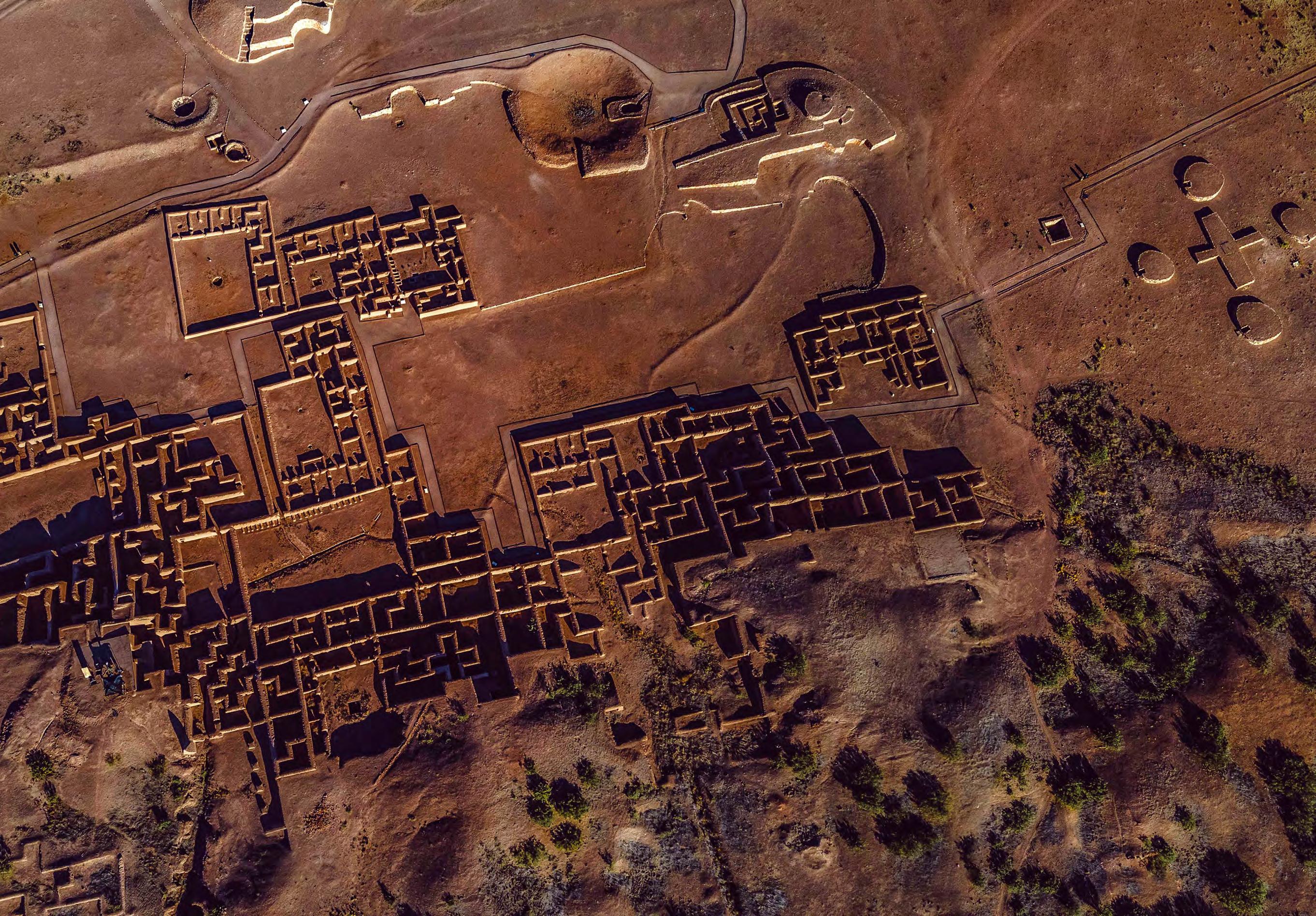
Uno de los rasgos que ha llamado poderosamente la atención es la existencia de cincuenta y seis jaulas de adobe con sistema de calefacción para mantener confortable a la población de la imponente guacamaya escarlata (Ara macao), así como los restos de casi trescientas aves. Sus plumas iridiscentes amarillas, rojas y azules habían sido veneradas por numerosos grupos mesoamericanos desde 1000 a. C. Para el caso de Paquimé y otros sitios cercanos, un estudio isotópico de oxígeno y carbón realizado a los huesos, publicado en 2010, identificó que la distribución geográfica incluía desde el sur de Tamaulipas –a 500 kilómetros de Paquimé– hasta la zona maya y que habían logrado su traslado, reproducción en cautiverio y alimentación con maíz.
Entre otros numerosos descubrimientos, el equipo halló evidencias con motivos de serpientes emplumadas de origen mesoamericano, mosaicos con múltiples baldosas de turquesa en combinación con otros materiales, como la hematita y el cobre. Destacó una larga pared ondulada con forma de serpiente que culminaba en una cabeza con un prominente cuerno o penacho.
El doctor R. B. Brown, representante del Instituto Nacional de Antropología e Historia, a cargo de Paquimé en la década de los 80, describió a Casas Grandes así: «Un rompecabezas tridimensional al que le faltaba 90% de las piezas». Los antropólogos se preguntan qué sucedió con los sobrevivientes que alguna vez habitaron Paquimé. Di Peso sugiere que podrían haberse convertido en los rarámuris (que durante mucho tiempo fueron nombrados tarahumaras), una etnia que ahora reside en distintas latitudes a lo largo de la Sierra Madre. Otros sostienen que los ópatas podrían ser sus descendientes, una sociedad que se encuentra en alto riesgo de desaparición. El misterio persiste.
Almost 400 years after Ibarra, American archaeologist Charles Di Peso, in collaboration with Eduardo Contreras (of the National Institute of Anthropology and History), led the first field expedition, between 1958 and 1961. The research resulted in eight volumes entitled Casas Grandes: A Fallen Commercial Center of the Great Chichimeca.
One remarkable feature of Casas Grandes is the existence of fifty-six adobe cages with heating systems to keep the tropical scarlet macaws (Ara macao) comfortable, along with the remains of nearly three hundred birds. Their iridescent yellow, red, and blue feathers had been revered by numerous Mesoamerican groups since 1000 B.C and in the case of Paquimé and other nearby sites, an oxygen and carbon isotopic study of the bones, published in 2010, identified that the geographic distribution initiated from the south of Tamaulipas -500 kilometers from Paquimé- to the Mayan area and that they had been transported, bred in captivity and fed with corn.
Among numerous other discoveries, the team found evidence with feathered serpent motifs of Mesoamerican origin, mosaics with multiple turquoise tiles in combination with other materials, such as hematite and copper.
Of particular note was a long undulating wall in the shape of a serpent culminating in a head with a prominent horn or plume.
Dr. R. B. Brown, a representative of the National Institute of Anthropology and History and in charge of Paquimé in the 1980s, described Casas Grandes as follows: “A three-dimensional jigsaw puzzle with 90% of the pieces missing”. Anthropologists wonder what happened to the survivors who once inhabited Paquimé. Di Peso suggests they may have become the Rarámuris (long known as Tarahumara), an ethnic group now residing at different latitudes along the Sierra Madre. Others argue that the Ópatas could be their descendants, a culture currently at high risk of disappearing. The mystery persists.
QUÉ SUCEDIÓ CON LOS SOBREVIVIENTES QUE ALGUNA VEZ HABITARON PAQUIMÉ.
DI PESO SUGIERE QUE PODRÍAN HABERSE CONVERTIDO EN LOS RARÁMURIS.
Anthropologists wonder what happened to the survivors who once inhabited Paquimé. Di Peso suggests they may have become the Rarámuris.
En el centro de la imagen una hilera de muros pequeños, son los restos de las jaulas de las guacamayas. At the center of the image a row of small enclosures; these are the remains of the macaws’ cages.
Juan se había obsesionado con hacer una olla. «Una olla», se repetía. La que fuera, sin importar el tiempo que llevara. Desde 1955 y hasta 1970 demoró para lograr algún nivel de satisfacción que, visto a la distancia, aún era bastante rústico. Entre los quince y treinta años de vida, Juan experimentó a ratos, entre un trabajo y otro. Además, cuando en 1964 se casó con Guillermina Olivas Reyes, con quien procreó ocho hijos, sus tiempos libres se vieron menguados.
Coinciden su hijo Noé y su hermana Lidia en que durante esos años, Juan hacía de todo para sobrevivir. Era jornalero y buscaba trabajo en los alrededores, en el corte de frijol, las labores de campo, lo que encontrara. También preparaba dulces, palomitas, jamoncillos, «duros» (frituras de harina). «Y hacía de todo para salir adelante, pero no podía. Entonces se juntaba con dos o tres amigos y “vámonos pa’ Estados Unidos, de mojados”». En el ferrocarril también probó suerte: trabajaba en las obras de modernización realizadas entre Mata Ortiz y Ciudad Juárez. Allí vio que el paisaje y la estratigrafía de los cerros eran parecidos, era la misma sierra. Dedujo que todo lo que necesitaba para
La olla que tardó quince años
The Pot That Took Fifteen Years
Juan had become obsessed with making a pot. “One pot” he kept repeating to himself –whatever it took, no matter how long. It took him from 1955 until 1970 to achieve some level of satisfaction that, seen from a distance, was still quite rustic. Between the ages of fifteen and thirty, Juan experimented off and on, between one job and another. In addition, in 1964, when he married Guillermina Olivas Reyes, and he had eight children, his free time was further reduced.
His son Noé and his sister Lidia agree that during those years Juan did everything to survive. He was a day laborer and looked for work in the surrounding area, cutting beans, working in the fields, whatever he could find. He also made candy, popcorn, milk and sugar sweets, “duros” (fried flour snacks). “He did everything he could to get ahead, but he couldn’t,” Noé recalls. “So, he would get together with two or three friends and say, ‘Let’s go to the United States as ‘wetbacks.’” He also tried his luck on the railroad, working on modernization projects between Mata Ortiz and Ciudad Juárez. There, he saw that the landscape and the stratigraphy of the hills were similar, it
hacer “esa olla” debía estar en su entorno, tanto los materiales como las herramientas. Sin embargo, ¿por dónde empezar?
Juan «nunca había visto a un alfarero», así es que empezó «experimentando con el barro, la pintura, la quemada, los pinceles». Se regodeaba con el recuerdo: «Tan solo con los pinceles probé con plumas de todas las aves, pelos de todos los animales. Era una guerra que yo “traíba” dentro. Aprendí a dominar el barro, la pulida, la arreglada y todo eso».
El proceso cerámico implica de nueve a diez pasos. Cada uno de ellos conlleva una combinación de materiales y procedimientos hasta conseguir una obra terminada. Un error invisible desde el comienzo, una burbuja de aire o un descuido pueden destruir semanas de trabajo. Finalmente, la cerámica tiene mucho de química y física aplicadas. Juan no sabía nada de eso.
La obsesión iba acompañada de cierta tenacidad, nunca se dio por vencido. Los avances, aun pequeños o insignificantes, eran un aliciente. Por ello, compartía equilibradamente el tiempo dedicado a la alfarería con diversas actividades económicas para sostener a su familia.
El periodo temprano de Juan Quezada, antes de su relación con Spencer, también es motivo de estudio. Piezas de la colección de Richard y Joan O’Connor. Early pre-Spencer pieces are also a subject of study. Pots from the Richard and Joan O’Connor collection.
was the same Sierra. He deduced that everything he needed to make “that pot” had to be in his environment, both the materials and the tools. However, where to start?
Juan “had never seen a potter before”, so he started “experimenting with the clay, the paint, the firing, the brushes”. He reveled in the memory: “Just with the brushes I experimented with feathers from all birds, hairs of all animals. It was like a war that stirred within me. I learned to master the clay, the burnishing, the refining, and all that”.
The ceramic process involves nine to ten steps. Each step demands a combination of materials and processes until a finished work is achieved. An invisible mistake at the beginning, an air bubble, or an oversight can destroy weeks of work. Finally, ceramics has a lot of applied chemistry and physics. Juan knew none of that.
The obsession was paired with a remarkable tenacity; he never gave up. Even the smallest progress served as an incentive. Consequently, he balanced his time between pottery and various economic activities to support his family
A PRUEBA Y ERROR
Trial and Error
Recorramos el camino andado por Juan a través de los recuerdos de Noé, su hijo, y de algunas precisiones del profesor Julián Hernández Chávez, maestro y ceramista autodidacta de la región, quien produjo una obra de divulgación llamada La nueva cerámica de Paquimé, 2009. En ella sintetiza los pasos fundamentales del proceso.
Let us retrace Juan’s journey through the memories of his son Noé, and the insights of Professor Julián Hernández Chávez, a schoolteacher and self-taught ceramist from the region. Professor Hernández Chávez documented the process in his informative work, La nueva cerámica de Paquimé (2009), where he outlines the fundamental steps involved.
El barro, la materia prima del oficio
Clay: The Raw Material of the Craft
En la naturaleza hay cientos de materiales y minerales por doquier. Identificar el elemento barro o arcilla representó el primer gran paso de Juan. Son tierras plásticas con diferentes presentaciones, texturas, colores y dureza. El valle del río Casas Grandes y sus afluentes, como el Palanganas y el Piedras Verdes, son ricos en barreales casi a flor de tierra o cerca de nacimientos de agua. Buscando el color amarillo o bayo, por ser el más común en las ollas y tepalcates de Paquimé, Juan encontró su primer barro por la ex Hacienda de San Diego, en un arroyo olvidado. Pensó que entre más puro el barro, sería mejor, pero se quebraba. Buscar, hallar y probar varios de diversos colores –gris, rojo, rosa, violáceo y morado, entre otros–, se convirtió en una de sus pasiones. Encontrar un lodo blanco de alta calidad también fue una de sus prioridades para sustituir la necesidad de usar un engobe o recubrimiento de otro color sobre arcilla. Juan había notado que –a sus ojos– las ollas prehispánicas de mayor calidad, decoración y belleza estaban hechas de arcilla blanca. El hecho es que este material no solo es escaso, sino también muy caprichoso por rígido y quebradizo. Dado el efecto dramático del contraste del barro blanco con los diseños negros y rojos, se convirtió en uno de los tonos favoritos no solo de los Quezada, también de los ceramistas del trabajo más fino. Conseguirlo implicaba un mundo de complicaciones.
In nature, there are hundreds of materials and minerals everywhere. Identifying the element –clay– represented Juan’s first big step. These are plastic clays with different presentations, textures, colors, and hardness. The valley of the Casas Grandes River and its tributaries, such as the Palanganas and Piedras Verdes rivers, are rich in clayey soils, almost at the surface or near water sources. Looking for the yellow or bay color, as it is most commonly found in the pots and potsherds of Paquimé, Juan found his first clay by the former Hacienda de San Diego, in a forgotten stream. He thought the purer the clay, the better, but it was brittle. Searching, finding, and testing various colors –grey, red, pink, violet, and purple, among others– became one of his passions. Finding high-quality white clay was also one of his priorities to avoid the need for a slip or coating of another color on clay.
For Juan, the pre-Hispanic pots of the highest quality, decoration, and beauty were made of white clay. The fact is that this material is not only scarce but also very willful because it is rigid and brittle. Given the dramatic effect of the contrast of the white clay with the black and red designs, it became a favorite color not only of the Quezada family but also of the ceramists doing the finest work. Achieving it involved a world of complications.
Trabajar la pieza
Working the Piece
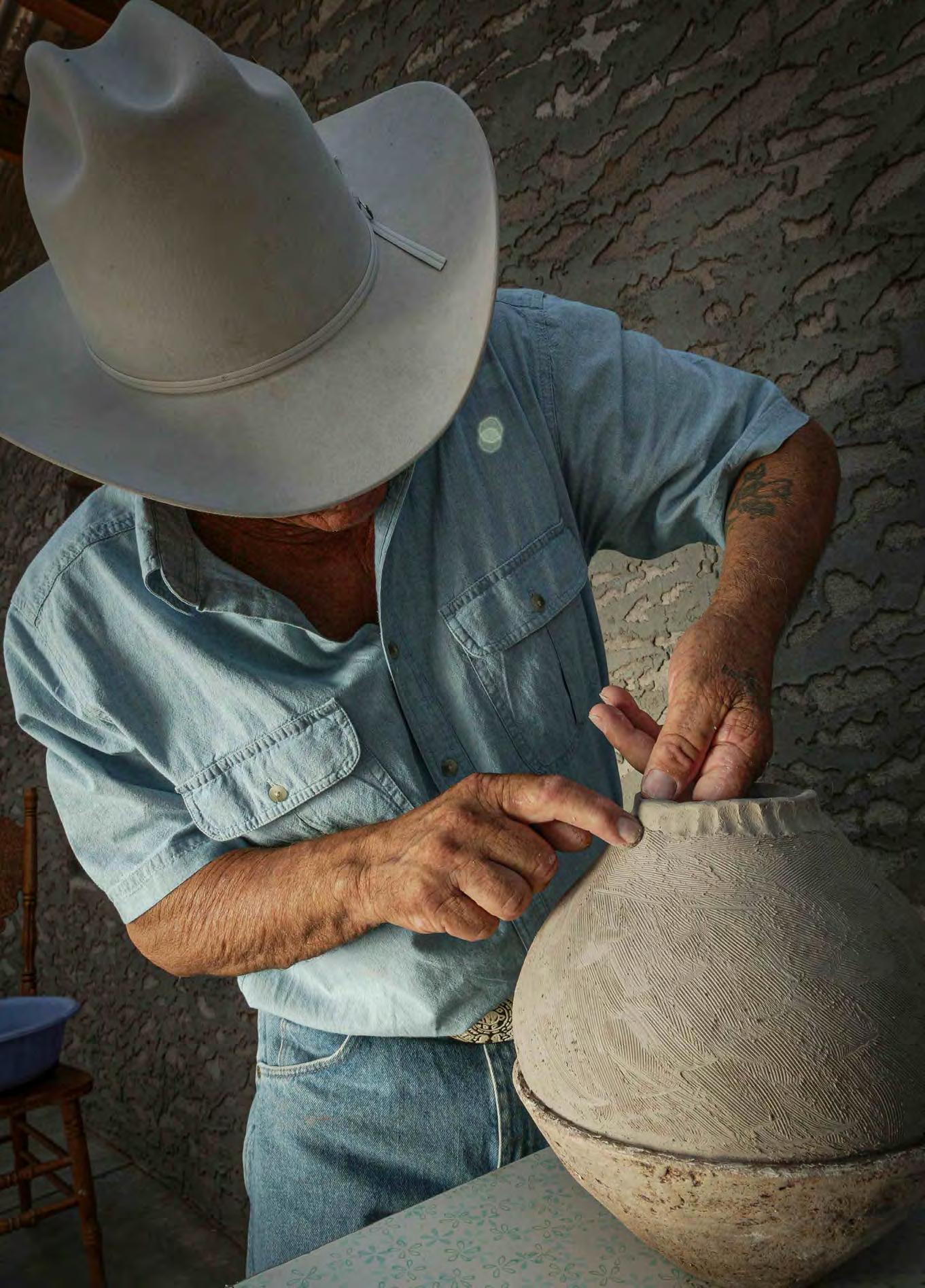
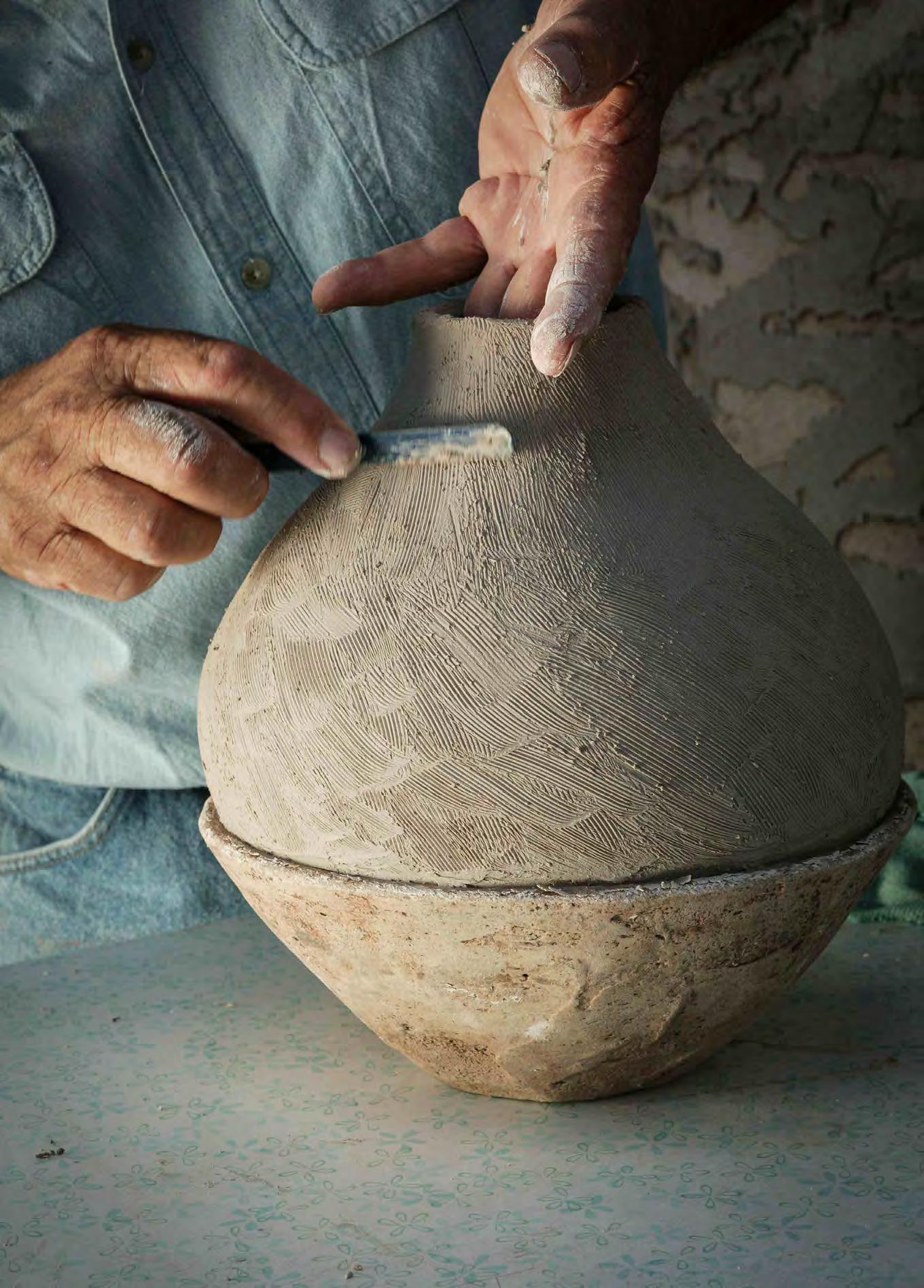
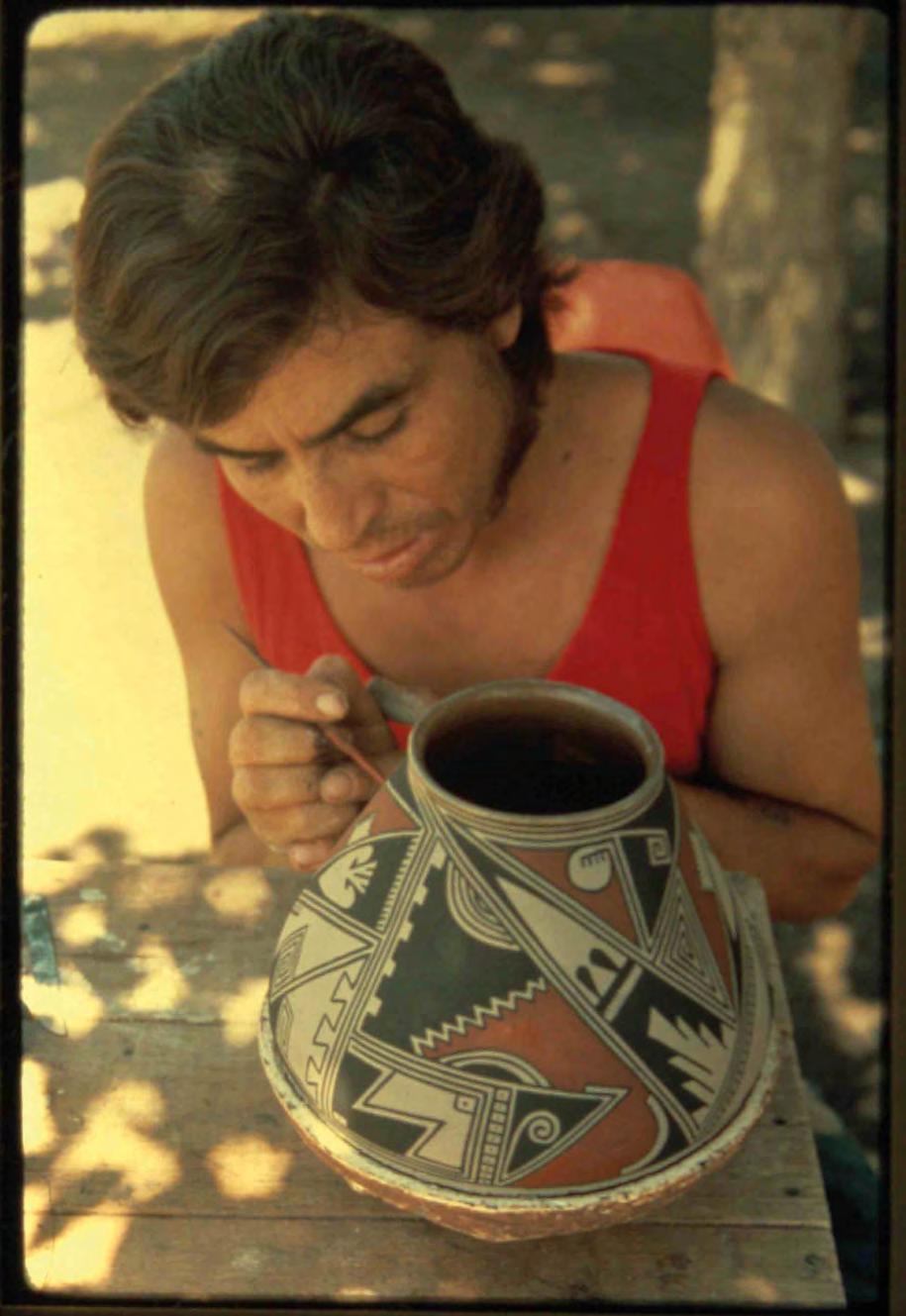
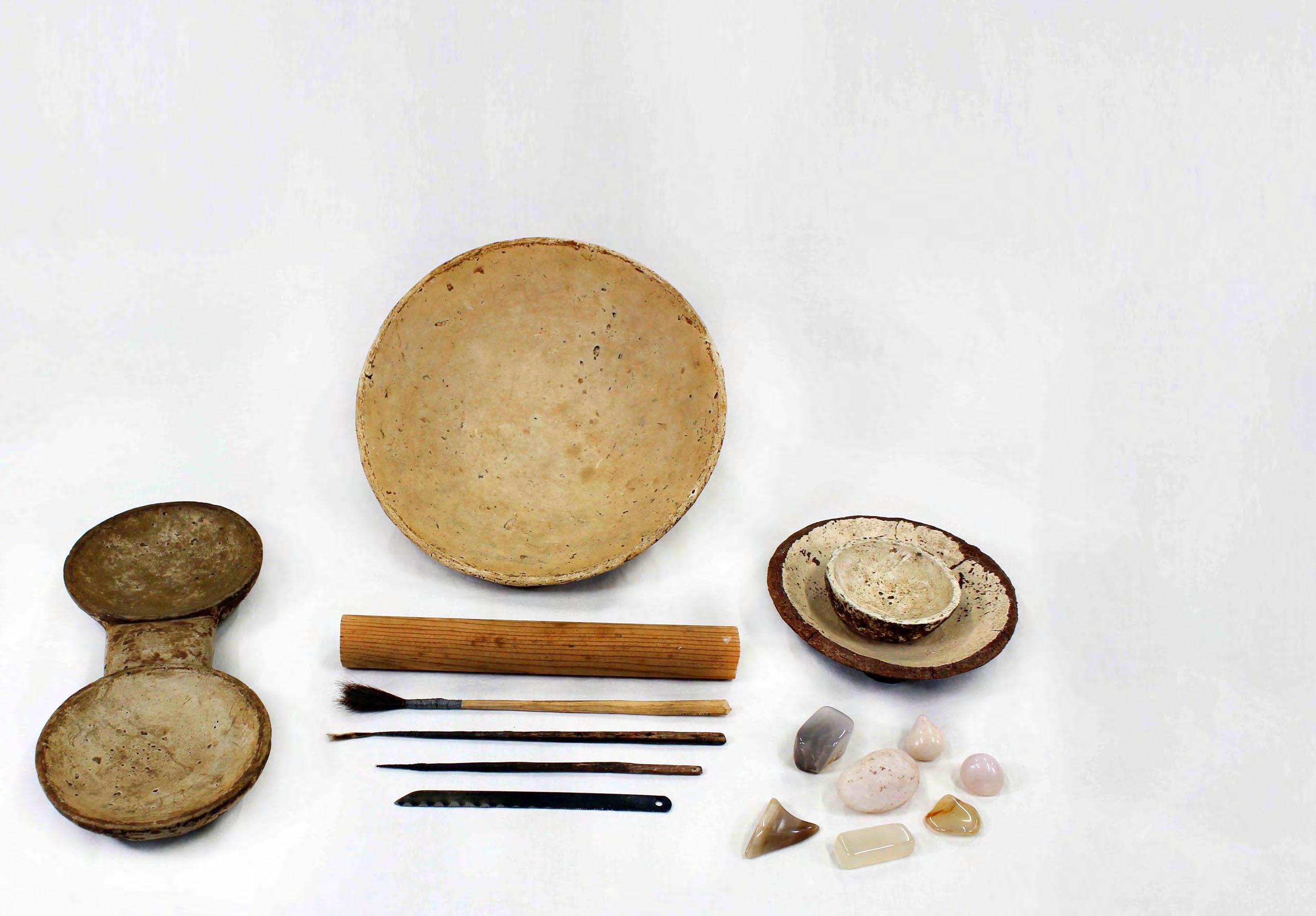
Juan Quezada batalló para levantar una vasija. En muchas culturas las piezas se forman con rollos de arcilla. Su mirada se posó sobre diversos cuencos antiguos, que no eran tan planos como un plato ni tan profundos como un tazón, sino más gruesos y sin decoración. Eso sí, pulidos por dentro. Se preguntó si eran una especie de molde. Así fue cómo descubrió lo que se conoce como puki, palabra en idioma téwa que describe una base para moldear. La tortilla amasada se colocaba dentro del molde; sin embargo, para lograr la altura deseada tenía que agregar varios rollos, tirando de la orilla hacia arriba. Debía girarla lentamente para que fuese simétrica. Al utilizar ambas manos, una sostenía la pared y la otra trabajaba en dirección opuesta. Diferentes herramientas, desde una segueta hasta la tapa de una lata, le sirvieron para raspar y alisar la olla por dentro y por fuera, así como para rebajar su grosor. Uno de los aspectos más sorprendentes de las delicadas ollas de Mata Ortiz es su liviandad, resultado de adelgazar la estructura al máximo posible. El profesor Hernández Chávez recuerda que, para finalizar esta actividad, es necesario desmoldar la olla del puki y dejarla secar muy bien durante varios días y a la sombra. El clima influye bastante: «Hay que tener especial cuidado en el secado, ya que como se dice entre alfareros: “El barro se mueve mucho de mojado a seco”. Hay barros que encogen hasta 15% en este proceso». (Hernández Chávez, 2009, p. 40).
Juan Quezada struggled to hand–build a vessel. In many cultures, the pieces are formed from coils of clay. His gaze rested on several ancient bowls, which were neither as flat as a plate nor as deep as a bowl; they were thicker and undecorated. They were, however, burnished on the inside. He wondered if they were some kind of mold. That is how he discovered what is known as puki, a word in the Tewa language that describes a base for molding. The kneaded “tortilla” or a flat, circular piece of clay used as a base to start forming a pot was placed inside the mold; however, to achieve the desired height he had to add several rolls, pulling the edge upwards. He had to turn it slowly so that it was symmetrical. Using both hands, one hand held the wall while the other worked in the opposite direction. Different tools, from a hacksaw to the lid of a tin can, were used to scrape and smooth the inside and outside of the pot, as well as to reduce its thickness. One of the most surprising aspects of Mata Ortiz’s delicate pots is their lightness, the result of thinning the structure as much as possible. Professor Hernández Chávez reminds us that, to finish this activity, it is necessary to remove the pot from the puki and let it dry very well for several days in the shade. The climate has a significant influence: “Special care must be taken in the drying process, because as they say among potters: ‘The clay moves a lot from wet to dry’. There are clays that shrink up to 15% in this process”.
UNO DE LOS ASPECTOS MÁS SORPRENDENTES DE LAS DELICADAS OLLAS DE MATA ORTIZ ES SU LIVIANDAD, RESULTADO DE ADELGAZAR LA ESTRUCTURA AL MÁXIMO POSIBLE.
One of the most surprising aspects of Mata Ortiz’s delicate pots is their lightness, the result of thinning the structure as much as possible.
Lijar y pulir
Sanding and Burnishing
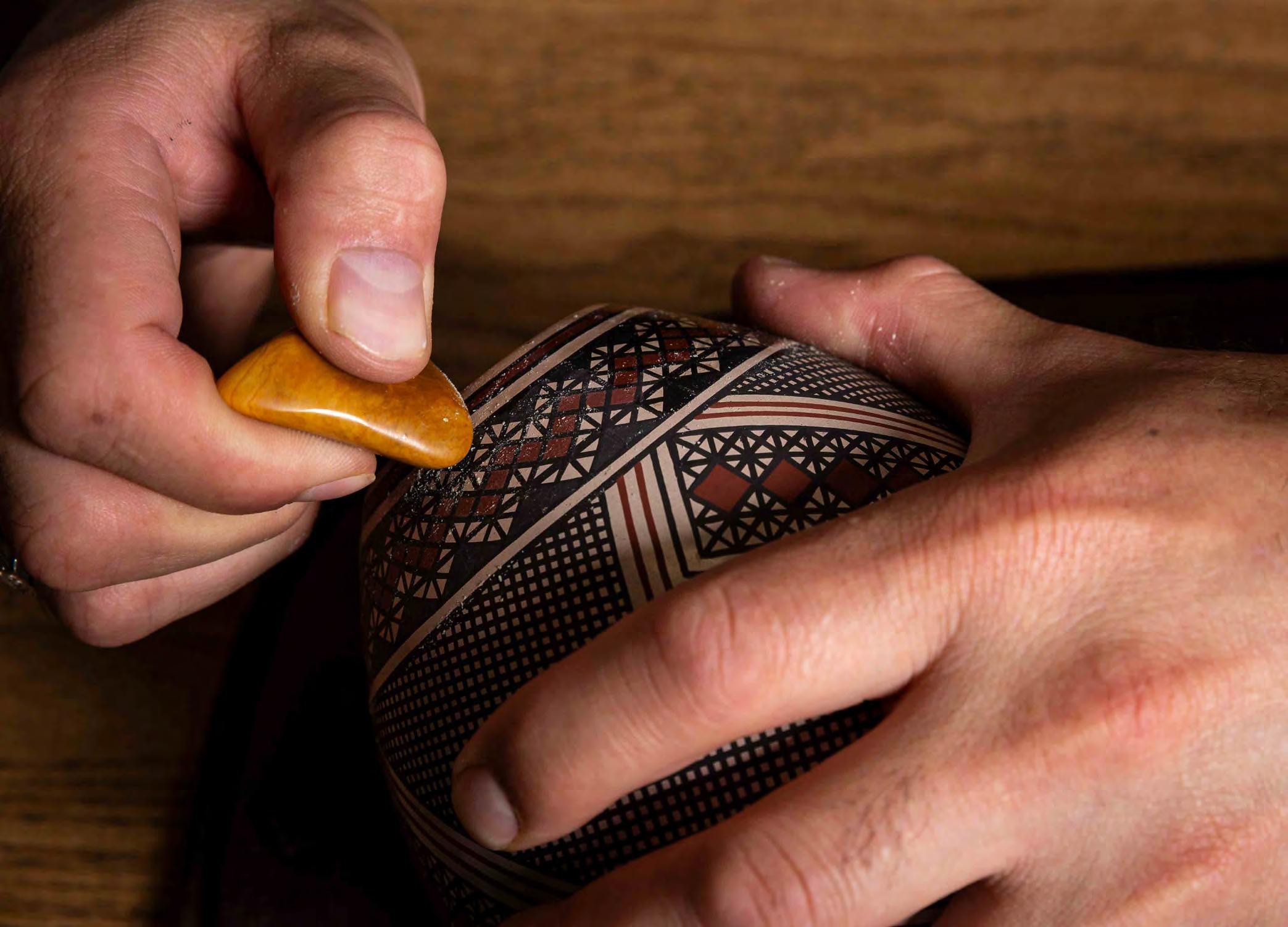
En aras de lograr una superficie más tersa, en Mata Ortiz se realizan dos pasos intermedios que desarrolló Juan: el uso de una o varias lijas finas para eliminar la aspereza y el bruñido o pulido con diversos recursos, como piedras ágata, ampliamente utilizadas, o hueso de venado. Estos pasos consumen tiempo y se complementan para ir cerrando los poros y obtener el mayor brillo de la arcilla.
To achieve a smoother surface, in Mata Ortiz two intermediate steps developed by Juan are perfomed: the use of one or more types of fine sandpaper to remove the roughness and burnishing with various tools, such as agate stones, widely used, or deer bone. These steps are time-consuming and complement each other to close the pores and obtain the highest shine from the clay.
Juan Quezada Celado alcanzó un grado de refinamiento que distaba mucho de las piezas que creaba antes de su relación con Spencer MacCallum. Juan Quezada achieved an incredible degree of refinement, a true contrast with the pieces he was creating before his relationship with Spencer MacCallum.
La pintura: colores y pinceles
Painting: Colors and Brushes
Desde niño, Juan había encontrado algunos pigmentos y colores para sus tizas. Una vez encaminado en la alfarería siguió experimentando, pues los colores cambiaban y los más dominantes –como el rojo y el negro– representaron retos. Para el rojo, confesó haber probado hasta con sangre animal. Finalmente encontraría el óxido de hierro, conocido también como almagre, muy abundante en la naturaleza. La base del negro sería el óxido de manganeso. Juan no estaba a gusto, pues al quemarlo se convertía en un tono café. Incluso, consideró lograda su primera olla en 1971, cuando con Nicolás, su hermano, combinó el óxido de manganeso con una piedra negra que habían encontrado y así obtuvieron el negro profundo.
La siguiente fase con la que lidió mucho fue hallar el material para los pinceles. Aunque probó con plumas de distintas aves, pelo de jabalí, fibras de coco y de agave, nada lograba el acabado que él esperaba. Hasta que un día, algo lo sorprendió. Noé, su hijo, lo recuerda perfectamente: «Él acostumbraba a cortarnos el pelo, desde chavalitos; éramos ocho de familia. Una de las veces se le ocurrió ¡hacer un pincel! “¡Esto es lo que necesitaba!”, exclamó. Un pincel de un cabello de niño, ¡y de nosotros! Se puso a experimentar y más o menos funcionó».
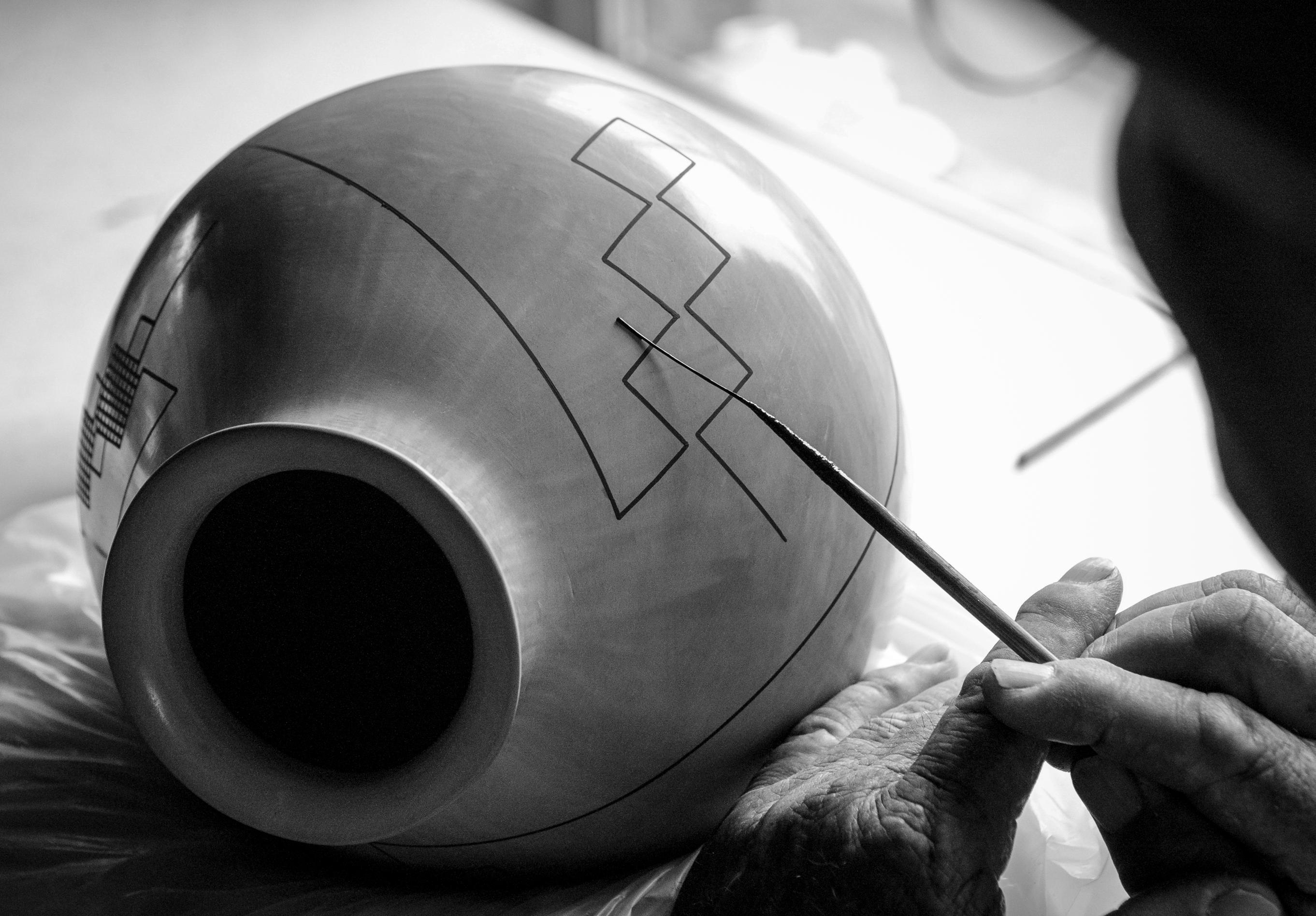
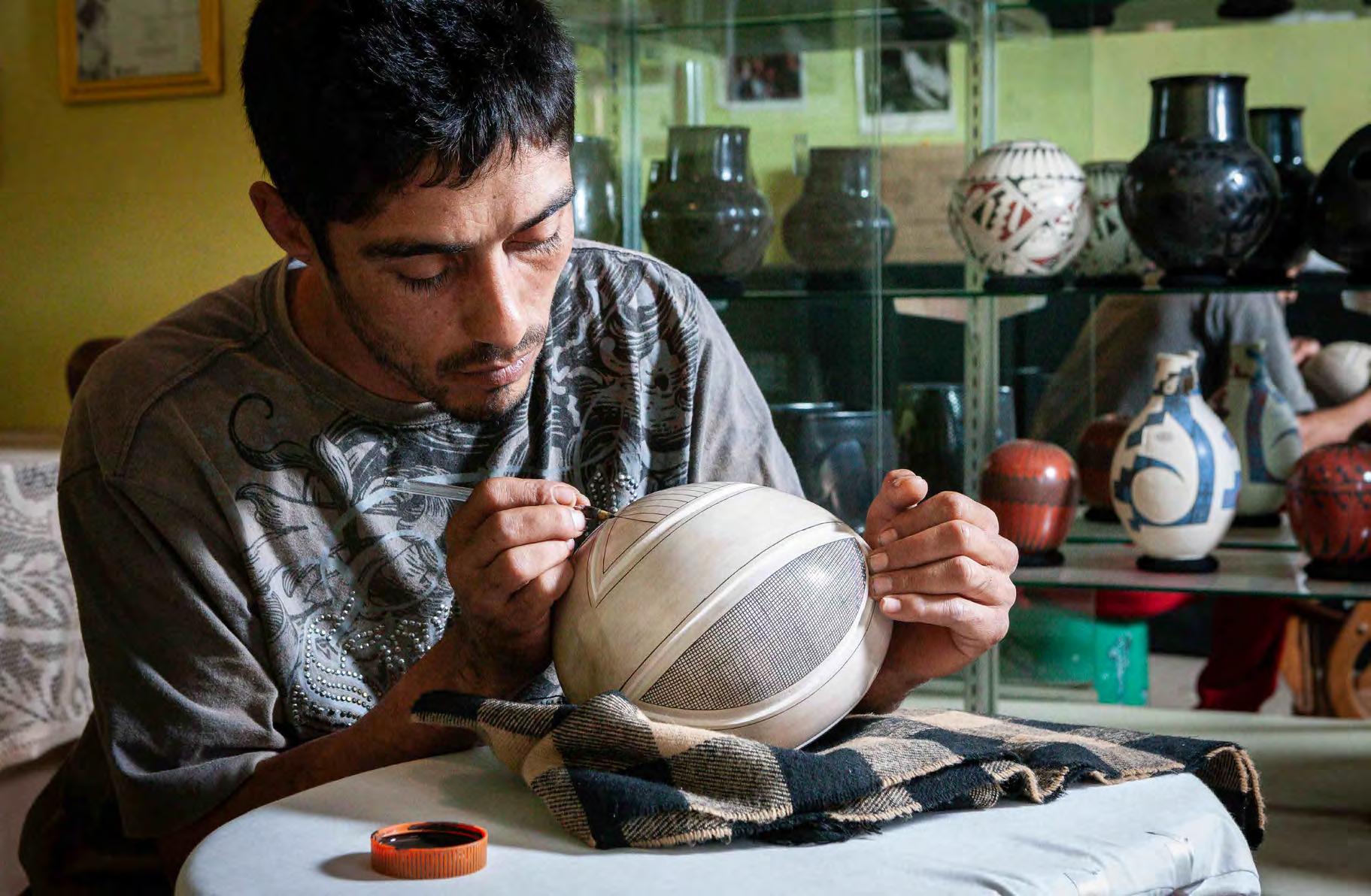
¿Por qué Juan habrá batallado tanto? «Cuando ya había logrado formar la pieza como yo la quería, iba ensayando pintar la primera línea. No me gustaba para nada. Veía el trazo de los antepasados, pero al principio yo no tenía el pulso… Las líneas y los diseños de ellos eran muy firmes, eso fue lo que más me fascinaba. Hasta que pude controlar el pincel, dominando el pulso».
Una vez pintada la vasija, vuelve a pulirse la superficie de la pintura. Para lograr que quede lisa, se utilizan piedras o materiales duros, se aplican grasas sólidas o aceites como deslizantes y se pule directo sobre la pintura. Este paso puede saltarse cuando se busca un acabado mate.
As a child, Juan discovered pigments and colors for his chalks, which later influenced his experimentation in pottery. Applying colors posed challenges, especially with dominant ones like red and black. He even tried using animal blood for red before discovering iron oxide (ochre), which is plentiful in nature. The base for black would be manganese oxide, Juan was not satisfied, because when fired, it turned into a brownish tone. In 1971, when he and Nicolás, his brother, combined the manganese oxide with a black stone they had found, and obtained a deep black, he considered he had achieved his first real pot.
Juan also struggled finding suitable materials for brushes. Despite trying feathers, wild boar hair, coconut and agave fibers, none met his expectations. Until one day, something surprised him. Noé, his son, remembers it perfectly: “Since we were kids, he used to cut our hair; there were eight of us in the family. One of the times it occurred to him to make a paintbrush! ‘This is what I needed!’ he exclaimed. A brush from a child’s hair, our hair! He set about experimenting, and it kind of worked.”
Why did Juan struggle so much? “When I managed to shape the piece the way I wanted it, I was rehearsing to paint the first line. I did not like it at all. I saw the line of the ancestors, but at the beginning, I didn’t have a steady hand. Their lines and designs were very firm; that was what fascinated me the most. Until I was able to control the brush, mastering the pulse.”
Once the vessel has been painted, the surface of the paint is burnished again, to achieve smoothness using stones and solid grease or oils, a step sometimes skipped for a matte finish.
“DON
JUAN ME DECÍA: ‘NO HAGA
CANTIDAD, HAGA
CALIDAD’. YO A
VECES ME
PONÍA A HACER HASTA SEIS OLLAS. ME DECÍA: ‘¡NO! HAGA MENOS, PERO HÁGALAS BIEN’.”
“Don Juan would tell me, ‘Don’t do quantity, do quality’. At times I would make up to six pots, and he would say, ‘No! Make less and do each one better.’”
ELIZABETH QUINTANA
LAS QUEMAS
Firing
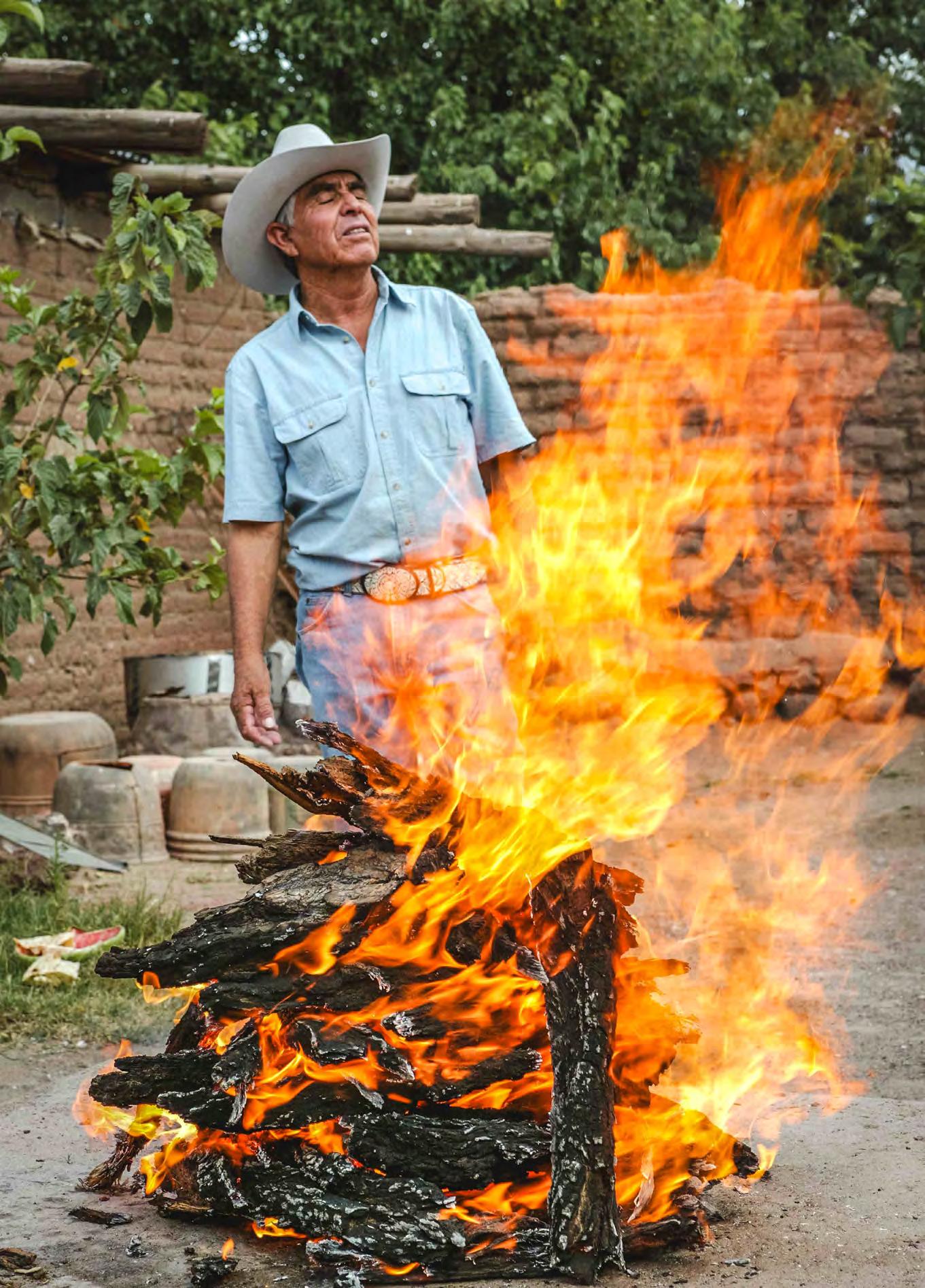
No queda muy claro cómo Juan se percató de que las ollas pasaban por otro proceso; especialmente por el último, que involucraba el fuego para endurecerlas. De lo que no cabe duda es que fue otro paso frustrante para él. Al no encontrar algún antecedente de horno para quemar la loza, tuvo que realizar quemas al aire libre, buscando formas de crear una cámara de combustión. Llegó a usar una cubeta galvanizada y una maceta de barro invertidas, incluso a rodear la pieza con tepalcates. Juan prefería quemar sus vasijas de una en una. Para el combustible probó primero con diferentes tipos de maderas, pensando que dependía de su calidad. Ninguno le satisfizo. También encontró carbón en la sierra e hizo pruebas. Pasó a la «buñiga» (boñiga, excremento seco de vaca o de caballo) que le funcionó mejor, porque produce un fuego muy parejo. De nuevo, el clima incide en la idoneidad del ambiente para realizar la quema. Los riesgos se incrementan en un día ventoso, en invierno y en época de lluvias, pues la olla puede fracturarse y la pintura ahumarse y desvanecerse; también puede pasarse de calor y, en consecuencia —como decía Spencer—, imprimirle una «nube de fuego».
It is not very clear how Juan realized that the pots needed another process; the last one, which involved fire to harden them. What is certain is that it was another frustrating step for him. Unable to find the remains of a kiln to fire the pottery, he had to fire it in the open-air while looking for ways to create a combustion chamber. He used inverted galvanized buckets and clay pots surrounded by potsherds.
He preferred firing one piece at a time, experimenting with various fuels –wood, charcoal, and even dried dung– finding dung most effective due to its consistent even flame. The weather significantly impacts the suitability of the environment for firing pottery. On windy days, during winter, and in the rainy season, the risks escalate: pottery can fracture, paint may smoke and fade, and there’s a danger of overheating, which, as Spencer described, can result in a “cloud of fire”. These conditions highlight the delicate balance and challenges Juan Quezada and other potters faced in achieving successful firings outdoors.
Comienza la expansión Expansion Begins
Un caso por demás interesante en la década de los 70 fue el surgimiento de un grupo de ceramistas en el barrio El Porvenir, ubicado al sur de Mata Ortiz, pasando el Río Palanganas. Fue encabezado por Félix Ortiz, quien desarrolló un estilo sin geometría en el que los diseños eran plasmados en las ollas sin un orden particular (Jim Hills, 1999, p. 124). En su experimentación en la construcción de las ollas utilizó varios rollos. Fue pionero en formas zoomorfas e incentivó y enseñó a otros en su barrio. Este movimiento no le era ajeno a Juan Quezada y, a invitación de Félix, iba de visita incluso con su esposa Guillermina. Así ya había una veintena de ceramistas activos en el pueblo, lo que captó la atención de algunos compradores de Casas Grandes y Nuevo Casas Grandes. No todos estaban interesados en fomentar la expresión individual. Llevando libros y fotos, algunos visitantes solicitaban reproducciones de ollas mimbres y Casas Grandes, entre otras, que posteriormente intervenían para simular piezas prehispánicas. Durante un tiempo, ese mercado les representó grandes beneficios económicos; sin embargo, las estrictas leyes de protección del patrimonio cultural decretadas en México en 1972 propiciaron el fin de esta práctica.
In the 1970s, a significant development took place in the Barrio de El Porvenir, south of Mata Ortiz and across the Palanganas River, led by Félix Ortiz. Félix pioneered a style of pottery that departed from traditional geometric patterns, instead embracing designs captured on pots without a set order. He experimented with coil construction and introduced zoomorphic forms, becoming a mentor to others in his community. Juan Quezada was no stranger to this movement and, at the invitation of Félix, would even visit him with his wife Guillermina.
This artistic movement attracted attention, and by this time, there were around twenty active potters in Mata Ortiz. Some buyers from Casas Grandes and Nuevo Casas Grandes took notice, though not all were interested in promoting individual artistic expression. Some visitors brought books and photographs, requesting reproductions of Mimbres and Casas Grandes pottery, which the traders then altered to simulate pre-Hispanic pieces. While this market initially brought economic benefits, Mexico’s introduction of stringent laws in 1972 to protect cultural heritage effectively ended this practice.
Santos Heder Ortiz López, del barrio El Porvenir, es uno de los artistas que incorpora bajorrelieves en sus ollas.
Santos Heder Ortiz López from Barrio El Porvenir, is an artist who incorporates bas-reliefs into his work.
El contexto regional
The Regional Context
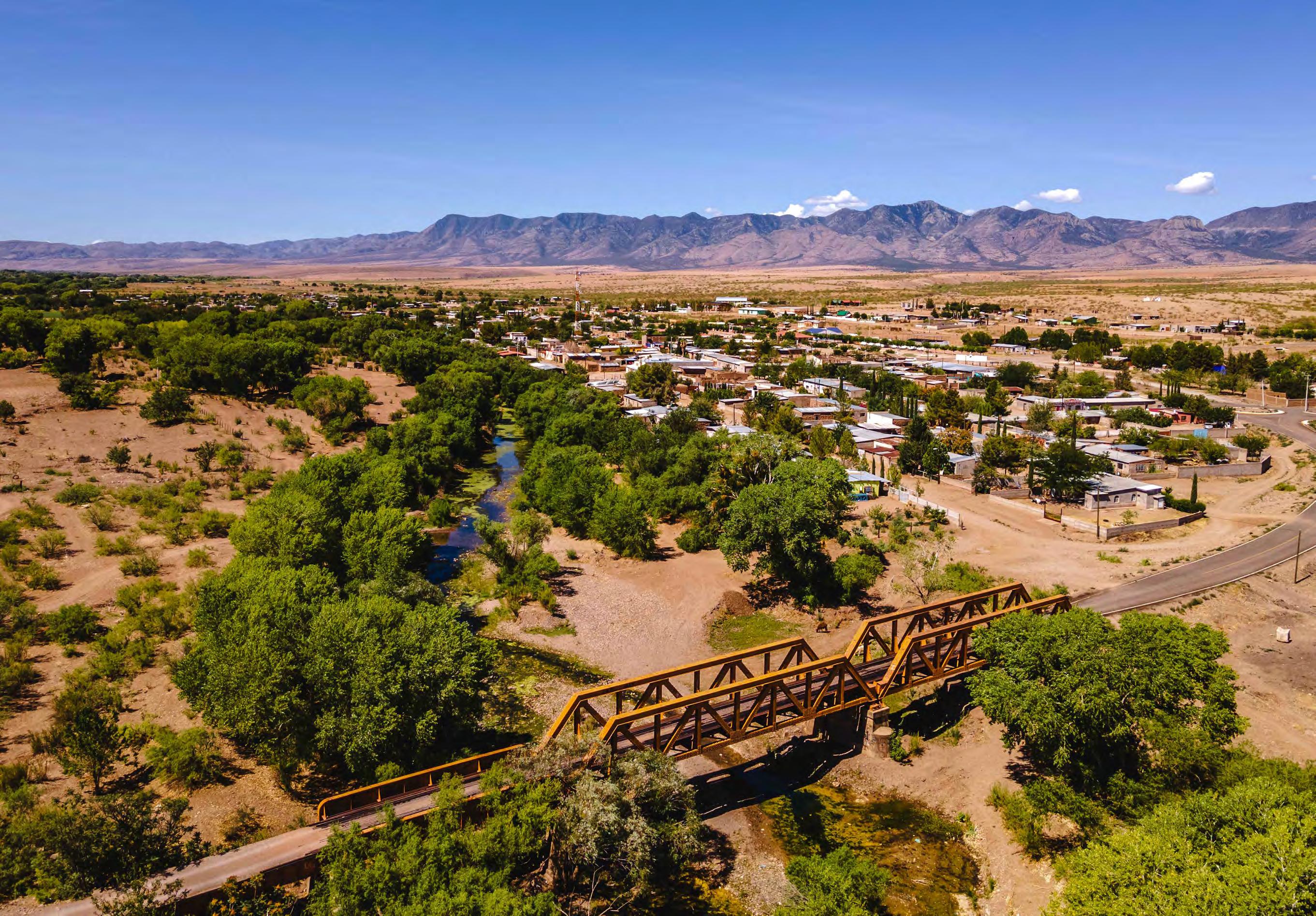
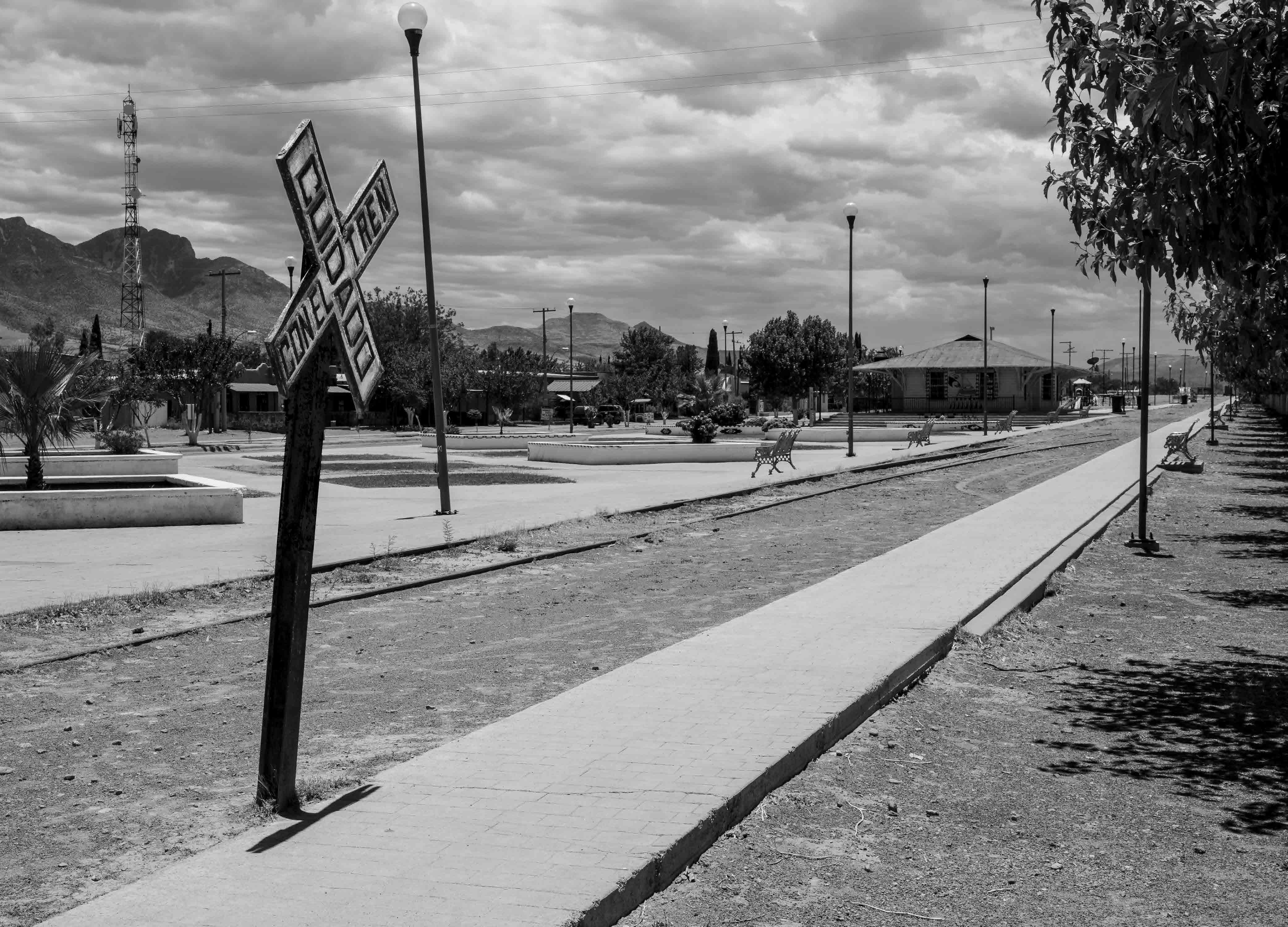
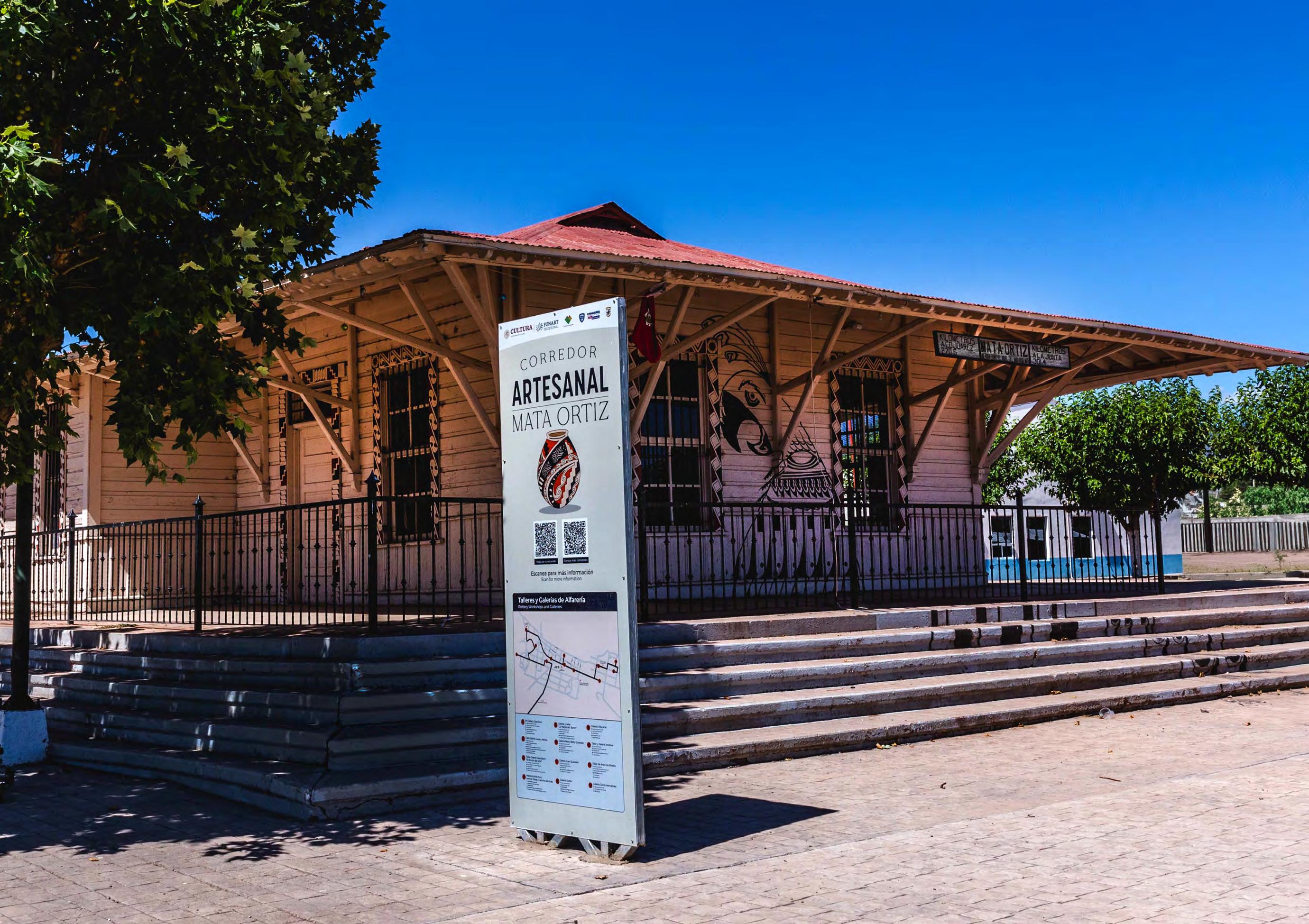
Desde 2004, los 35 kilómetros de camino que unen el pueblo de Mata Ortiz con la cabecera municipal –Casas Grandes– está pavimentado, pero termina abruptamente. El acceso a la calle principal de terracería continúa con una ligera pendiente. Bajando y girando hacia la derecha es inevitable ver una centenaria estación de ferrocarril, antes color verde botella y recientemente repintada en el color nude de moda, con algunos diseños paquimeños plasmados en la fachada. Un tramo de vías semienterradas es señal de desuso. El letrero original “Estación Mata Ortiz” aún cuelga bajo el alero que indica a su izquierda: Kilómetros a Cd. Juárez 270.6, y a la derecha: Kilómetros a La Junta 301.4.
Since 2004, the 35 kilometers of road connecting the town of Mata Ortiz with the county seat of Casas Grandes has been paved, yet it ends abruptly. The main dirt road continues with a slight slope. Descending and turning to the right, one cannot miss the century-old railroad station, once bottle green and now repainted in a fashionable nude color, with some Paquimé designs adorning the façade. A stretch of half-buried tracks signals to its abandonment. The original sign “Estación Mata Ortiz” still hangs under the eaves, indicating distances 270.6 kilometers to Cd. Juárez, on the left and 301.4 kilometers to La Junta on the right.
El desarrollo ferroviario de la región noroeste de Chihuahua sucedió a partir de diversos proyectos que fueron entrelazándose en distintas épocas y que revolucionaron la economía.
En la vida del pueblo, el ferrocarril se fue apagando por más que en 1928 Roy Hoard había establecido una base en Mata Ortiz para reparar y dar mantenimiento a máquinas de vapor y vías.
Nombrada La Redonda, por su forma, cerraría en 1956 cuando las máquinas de diésel reemplazaron a las de vapor.
Por otra parte, la propiedad de la tierra y la llegada de grupos religiosos buscando libertad de culto también impactaron de modo importante en la región y en el pueblo. Los miembros de la Iglesia de los Santos de los Últimos Días (antes mormones) lograron adquirir tierras y permiso para establecerse en Chihuahua desde 1885. Fundaron seis colonias, entre otras, Dublán, cerca de Nuevo Casas Grandes, y Juárez, en el camino hacia Mata Ortiz. Se especializaron en huertos frutícolas, empacadoras y comercializadoras. De igual manera se instalaron los menonitas, a quienes Álvaro Obregón vería con buenos ojos por su capacidad de trabajo en el campo, otorgándoles un privilegio (privilegium, un documento de garantías) y ciertas libertades. Estos dos grupos vienen a cuento dado que los habitantes de Mata Ortiz siempre han contado con la posibilidad de trabajar como jornaleros en sus tierras y huertos, en particular al ir cerrándose las actividades ferroviarias. La opción de pasar «al otro lado» como jornalero durante el siglo XX se dio legalmente con el programa Bracero, del que don José Quezada y el propio Juan fueron beneficiarios. Después, cuando no se otorgaban los permisos, Juan y sus amigos ingresaban de manera ilegal, siempre con la intención de enviar dinero a casa y regresar.
Academia Juárez fundada por la comunidad mormona de Chihuahua, Juárez. Academy Juárez, founded by the Mormon community of Chihuahua.
The railroad development of the northwestern region of Chihuahua resulted from various projects that intertwined over time, revolutionizing the local economy. Regretfully, the magnitude of the railroad gradually faded away despite Roy Hoard establishing a base in Mata Ortiz in 1928 to repair and maintain steam engines and tracks. Named La Redonda, due to its shape, it closed in 1956 when diesel engines replaced steam engines.
Land ownership and the arrival of religious groups seeking freedom of worship also significantly impacted the region and its people. Members of the Church of the Latter-Day Saints (formerly Mormons) began acquiring land and permission to settle in Chihuahua as early as 1885. They founded six colonies, including, Dublán, near Nuevo Casas Grandes, and Juárez, on the road to Mata Ortiz, specializing in fruit orchards, packing, and marketing. The Mennonites, favored by Álvaro Obregón for their agricultural skills, were granted a Privilege (Privilegium, a document of guarantees) and rights to settle in the area.
These two groups are relevant as the inhabitants of Mata Ortiz have long had the option of working as day laborers on their lands and orchards, particularly as the railroads shut down.
The legal option of going “to the other side” as day laborer during the 20th century was facilitated with the Bracero program, of which Don José Quezada and Juan himself were beneficiaries. Later, when permits were no longer granted, Juan and his friends entered illegally, always with the intention of sending money home and eventually returning.
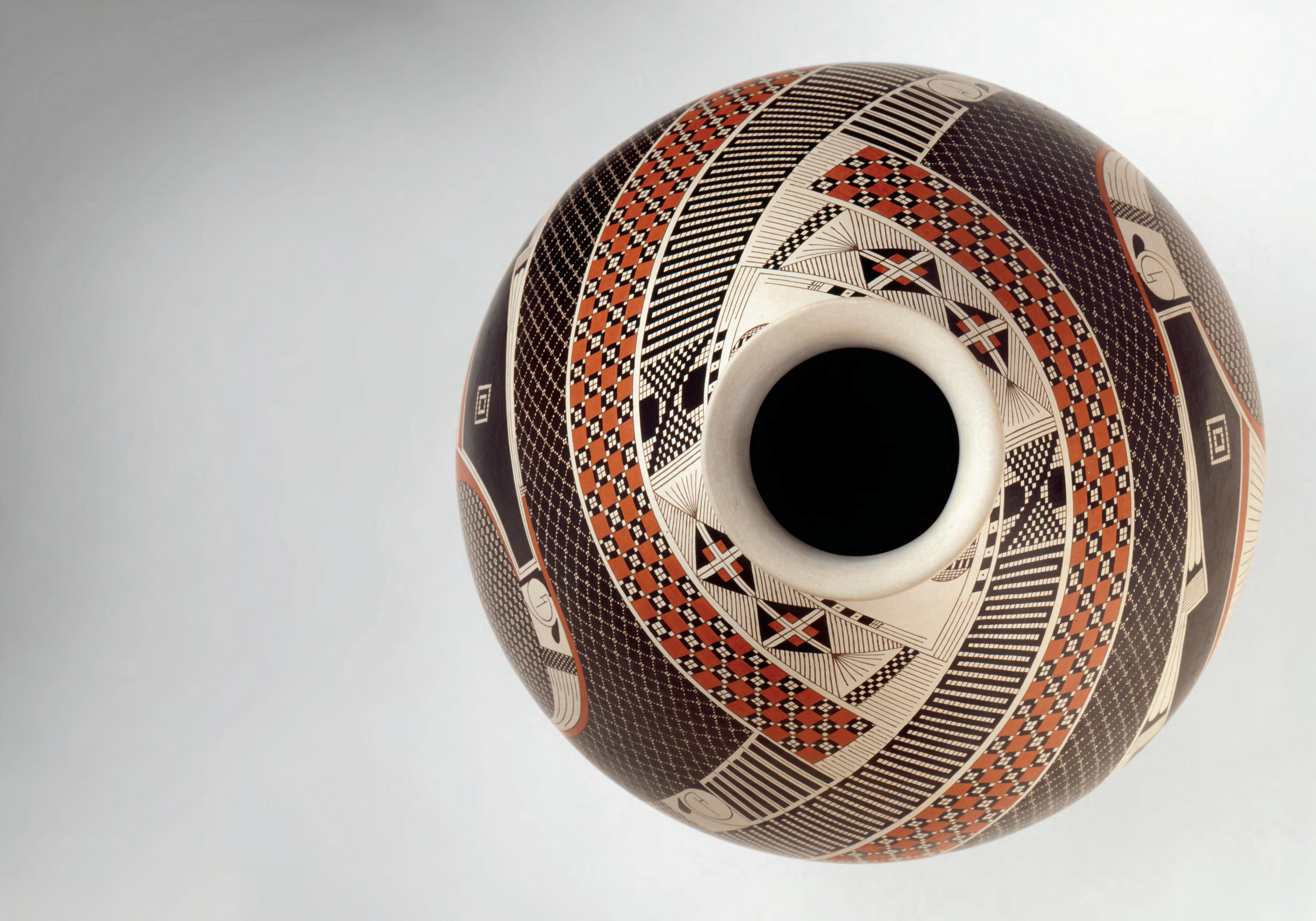
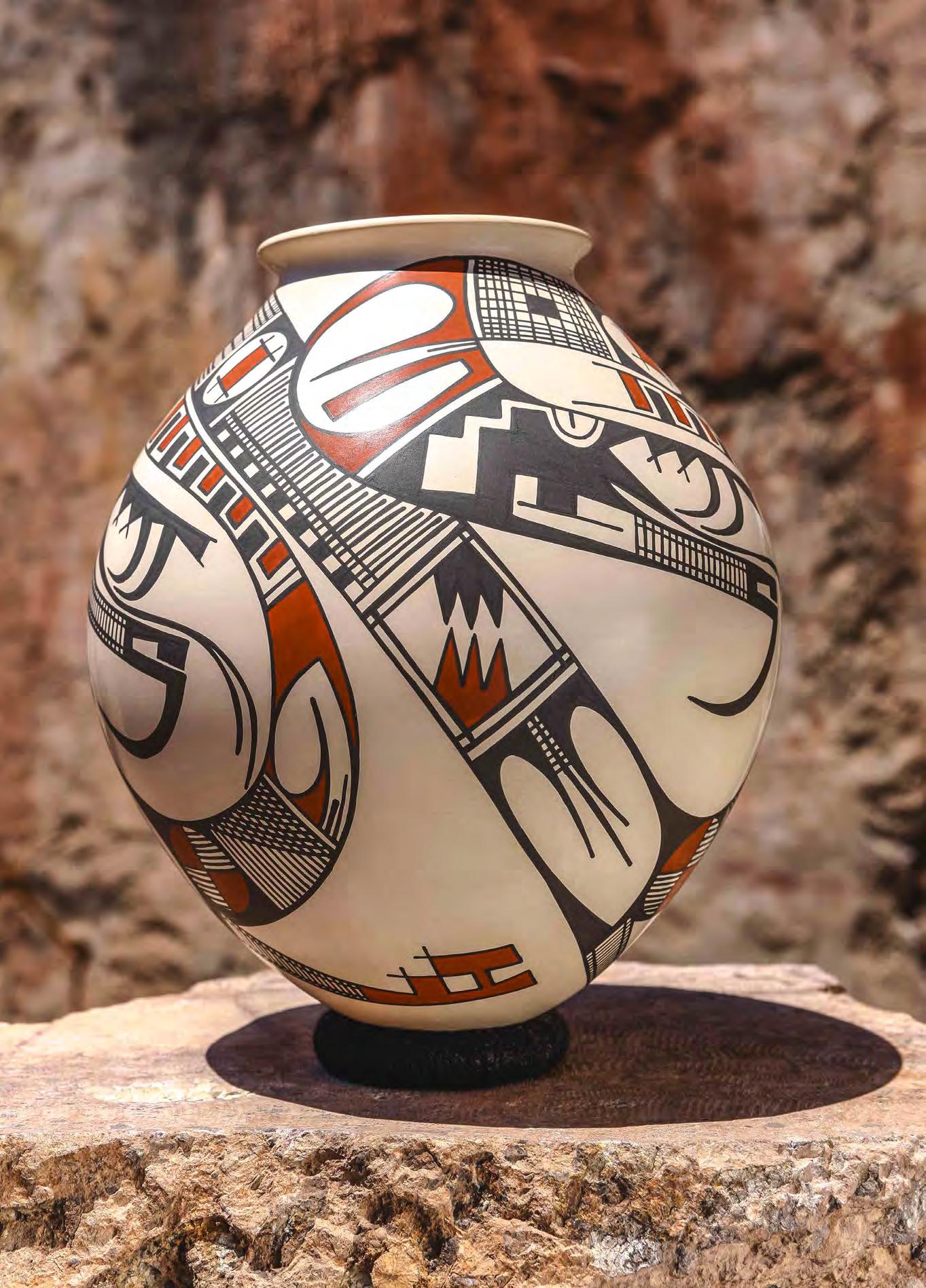
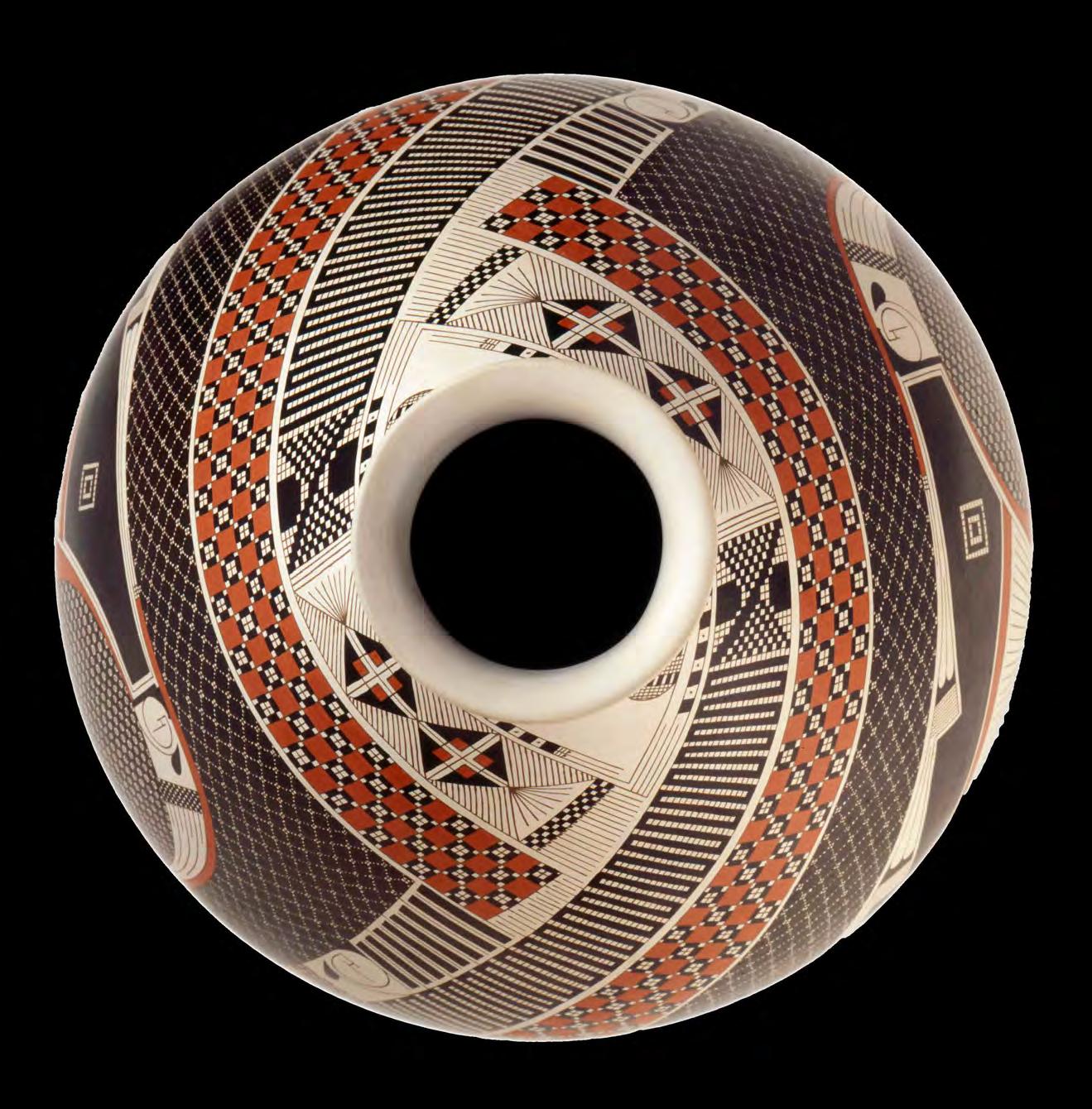
cenital de la olla de José Quezada, presente en la portada de este libro. Top view of José Quezada’s pot on the cover of this book.
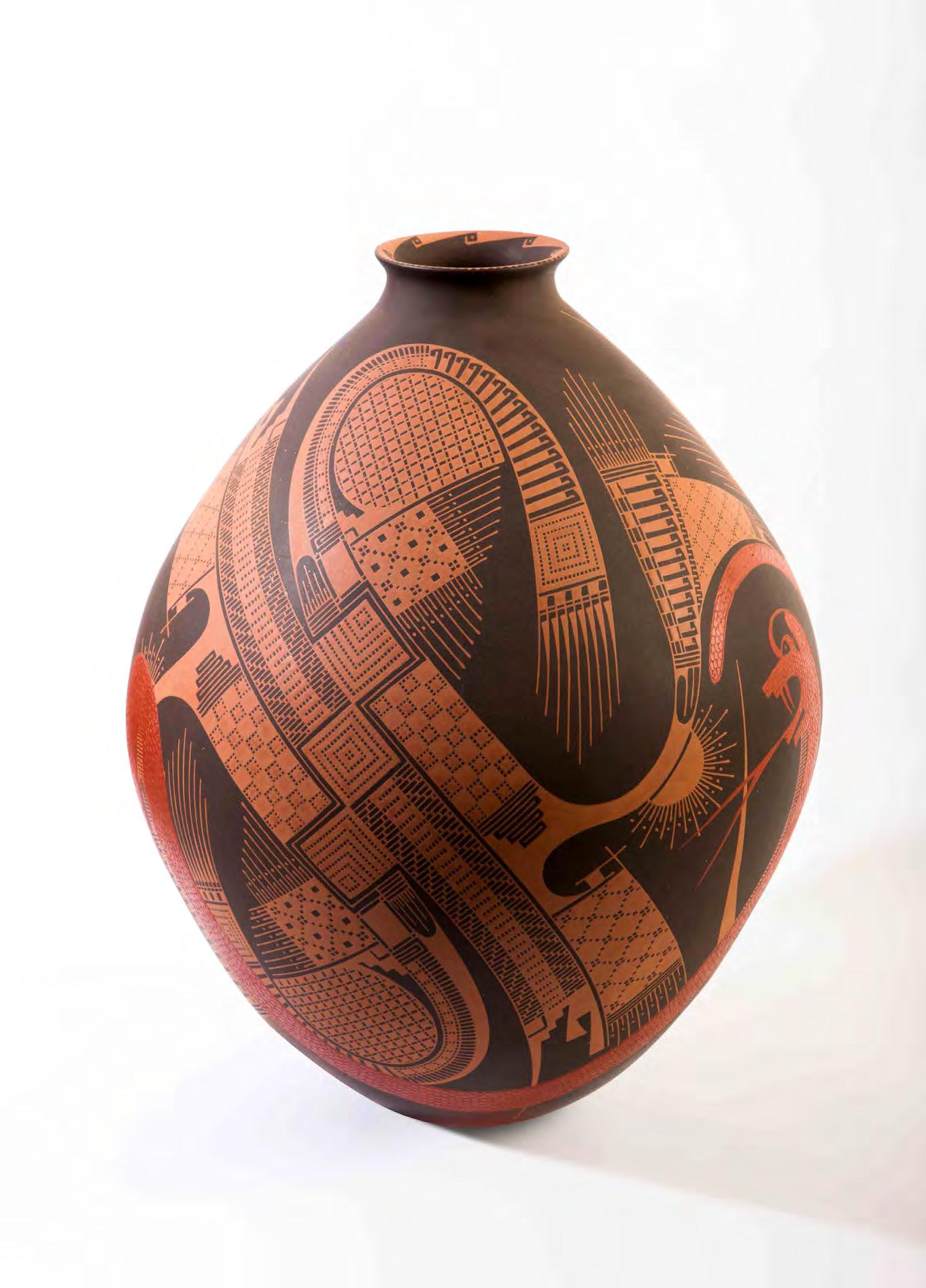
José Quezada, sobrino de Juan, ha forjado su propia propuesta dentro del llamado estilo Quezada. José Quezada, Juan’s nephew, has created his own approach within the Quezada Style.
DOS CAMINOS, UN DESTINO
Two Roads, One Destiny
Fotos provistas por The Museum of Us.
En marzo de 1976, un antropólogo e historiador del arte norteamericano armado con fotos de tres ollas emprendió un viaje de búsqueda y aventura hacia algún lugar del norte de México. Entró por Palomas, pasó por Ascensión, Janos y Nuevo Casas Grandes. A lo largo de una ruta de 250 kilómetros iba mostrando esas fotografías, a ver si alguien sabía qué alfarera había hecho las vasijas y en dónde.
Se detuvo a cargar gasolina en Casas Grandes y se acercó a un grupo de hombres a probar suerte. «¡Yo sé quién las hace! –dijo uno de ellos, Rubén Ríos–. Las hace un amigo, vive en Mata Ortiz». Emocionado, el antropólogo emprendió camino. En un tramo, el trayecto de terracería seguía el ir y venir del río Palanganas, bajo la sombra de los álamos, campos con mezquites y vacas pastando. Ya entrando al pueblo, un niño de unos 11 años montado sobre un burro le ofreció llevarlo a la casa.
Al tocar la puerta le abrió Guillermina Olivas, quien mandó llamar a su esposo. Durante la espera, el antropólogo vio a siete niños que andaban corriendo por allí. Un hombre delgado, de unos 35 años y abundante cabellera, entró en la casa. Con mucha seguridad confirmó que él había hecho las ollas que aparecían en las fotos.
Spencer y Juan, junto al legendario Datsun en el cual recorrieron muchos kilómetros. Spencer and Juan, next to the legendary Datsun, where they traveled many miles.
Foto: John Malmin, 1977.
In March 1976, a North American anthropologist and art historian, carrying photos of the three pots, embarked on a search and adventure trip to northern Mexico. Entering through Palomas, he passed through Ascensión, Janos, and Nuevo Casas Grandes. Throughout the 250-kilometer journey, he showed the photographs, hoping to discover the potter’s identity and location.
Stopping for gas in Casas Grandes, he approached a group of men, taking a chance. “I know who makes them!” –exclaimed one of the men, Rubén Ríos. “A friend of mine makes them, he lives in Mata Ortiz.” With renewed excitement, the anthropologist set off. Along one stretch, the dirt road followed the meandering Palanganas River, shaded by poplars, with grazing cows and mesquites in the fields. As he entered the village, a boy of about 11 years old riding a donkey offered him a ride to the potter’s home.
When he knocked on the door, Guillermina Olivas opened it and sent for her husband. While waiting, the anthropologist saw seven children running around. Soon a thin man, with abundant hair, about 35 years old, entered the house. He confidently confirmed that he had made the pots shown in the photos.
Ante una mirada incrédula del visitante, el esposo de Guillermina apuntó a una repisa con varias vasijas. El antropólogo Spencer MacCallum estaba conmovido, el viaje había valido la pena. Se hizo un silencio incómodo; el ceramista Juan Quezada, exclamó: «¡Puedo hacer mejores!».
Spencer tenía otra duda, ¿cómo habían llegado sus vasijas a Bob’s Swap Shop en Deming, Nuevo México? Unos seis meses antes, el profe Benny había llegado a casa de Juan ofreciendo un par de carriolas para bebé, bicicletas y algo de ropa; todo de segunda mano. Ante la insistencia de los niños, Juan le propuso hacer un cambalache (trueque): unas ollas por una carriola y una bici. Fue así como esas piezas recorrieron –primero en burro y en sentido contrario– la ruta que había hecho Spencer. El mismo Spencer que, un día de vacaciones visitando a unos amigos en Deming, tenía pendiente ir a la única tienda de segunda mano que le faltaba conocer en la ciudad. Al entrar a Bob’s Swap Shop, tres ollas captaron su atención. «Cuando las vi, saltaron sobre sus patitas traseras y me gritaron: “¡Míranos, estamos hechas por ‘quién sabe quién’!”. Había tanta integridad
Noticing the visitor’s incredulous look, Guillermina’s husband pointed to a shelf with several pots. Anthropologist Spencer MacCallum was awestruck, the trip had been worthwhile. There was an awkward silence before the potter, Juan Quezada exclaimed, “I can do better ones!”.
Spencer had another question: How had his pots arrived at Bob’s Swap Shop in Deming, New Mexico? About six months earlier, Professor Benny had arrived at Juan’s house offering baby strollers, bicycles, and some clothes; all second-hand. At the children’s insistence, Juan proposed a barter: some pots for a stroller and a bicycle.
That is how these pieces traveled –first by donkey and in the opposite direction– of the route Spencer had taken. The same Spencer who, one day on vacation visiting friends in Deming, had yet to visit the only thrift store he hadn’t seen in town. As he entered Bob’s Swap Shop three pots immediately caught his eye. “When I saw them, they jumped up on their little hind legs and yelled at me, ‘Look at us, we’re made by “who-knowswho”!’ There was so much integrity about them, and I clearly
SPENCER LE PROPUSO A JUAN UN ACUERDO, LE DARÍA UNA BECA. SIN RESTRICCIONES DE PRODUCCIÓN, LE OTORGABA
TOTAL LIBERTAD, LO ANIMABA
A EXPERIMENTAR FORMAS, COLORES, NUEVOS MATERIALES Y DECORACIONES.
Spencer proposed an agreement with Juan. With no production restrictions, it gave him total freedom and encouraged him to experiment with shapes, colors, new materials, and decorations
en ellas y yo entendía claramente lo que me decían». El dueño de la tienda le contó que las piezas venían de México y que no sabía quién las había elaborado, pero eso sí: eran nuevas, aunque parecían viejas.
Las compró porque no podía dejar de verlas. Parte de su emoción se debía a que, a todas luces, parecían emparentadas con una olla antigua que él tenía sobre el piano en su casa. Compartían el mismo código: triángulos y círculos rojos con largos trazos negros.
¿No sería una gran aventura encontrar a esta alfarera anónima cuyo trabajo se comercializaba de esa manera? Dos meses después estaría contándole esta historia al autor de esas tres piezas, sorprendido de que fuese un hombre, porque el antropólogo esperaba encontrar a una mujer. En las comunidades del suroeste de Estados Unidos, son ellas quienes trabajan el barro.
MacCallum pasó ocho días en ese primer viaje a Mata Ortiz. Juan Quezada insistía en que era capaz de hacer algo mejor que lo que había comprado en Deming. Spencer prometió volver en dos meses. Al cabo de ese tiempo se sorprendió y se decepcionó un poco al no encontrar nada nuevo: «Las ollas que Juan me mostró eran prácticamente iguales a las que estaba haciendo antes. Él creyó que yo no iba a regresar, quizá pensó que yo era nada más un gringo raro que nunca más volvería». Spencer había olvidado su español. Cuando no entendía algo, Juan lo solucionaba repitiéndoselo, pero esta vez alzando la voz y más rápido. Los días corrieron y el sesgo de comunicación no impidió que estos dos hombres pasaran el tiempo entre plática y plática, fotos y fotos, notas y notas en una libreta que Spencer no soltaba.
understood what they were saying to me.” The store owner told him that the pieces came from Mexico, and he didn’t know who made them, but that, yes: they were new, even though they looked old.
He bought them because he couldn’t take his eyes off them. Part of his excitement stemmed from the fact that they seemed related to an ancient pot he had on the piano in his home. They shared the same code: red triangles and circles with long black strokes.
Wouldn’t it be a great adventure to find this anonymous potter whose work hand made it to a thrift store in such a manner? Two months later, he was recounting this story to the creator of those three pieces, surprised to find that it was a man, as he had expected a woman. In the communities of the southwestern United States, it is predominantly women who work with clay.
MacCallum spent eight days on that first trip to Mata Ortiz.
Juan Quezada insisted that he could create even better pieces than those MacCallum had bought in Deming. Spencer promised to return in two months. When he did, he was surprised and a little disappointed to find nothing new: “The pots that Juan showed me were practically the same as the ones he was doing before. He thought I wasn’t going to come back, maybe he thought I was just a weird gringo who would never come back.”
Spencer had forgotten his Spanish. When he didn’t understand something, Juan would try to solve it by repeating himself, but louder and faster. Despite the communication barrier, the two men passed the time together, talking, taking photos, while Spencer jotted down notes in a notebook that he would never put down.
Foto de Bobby Furst, tomada durante el segundo viaje de Spencer, abril de 1976. Photo by Bobby Furst, taken during Spencer’s second trip, April 1976 / Museum of Us.
Juan trabajando en casa, acompañado de sus hijas Nena (detrás de él) y Mireya (a la mesa). A la derecha su sobrina Olivia López. Juan working at home, accompanied by his daughters Nena (behind him) and Mireya (at the table). To his right is his niece, Olivia López.
Foto: John Malmin, 1977 / The Museum of Us.
Meses después –durante la tercera visita– Juan sí tenía piezas nuevas para mostrarle. En esta ocasión, al viaje se unió el fotógrafo Bobby Furst, quien era hijo del antropólogo Peter Furst, especialista en el estudio de los wixaritari (huicholes) del occidente de México. Él también quería conocerlo, estaba intrigado por la historia del alfarero.
Juan llevó a Spencer y a Bobby a su cocina. Era un día muy ventoso: el aire aullaba y una tormenta de arena azotaba afuera de su casa. Siete hijos de Juan estaban ahí adentro, también amigos y familiares habían llegado a refugiarse y –aunque eran una multitud– Juan procedió a demostrarles cómo hacía sus ollas. Spencer estaba hipnotizado, le resultaba fascinante ver sus manos trabajar, no podía quitar los ojos de ellas, como si Juan estuviese solo en el universo.
Esa vez, las piezas que Juan había preparado eran algo mejores, pero no llenaban las expectativas de Spencer. Dispuestas en línea sobre la mesa, ambos las observaban. «¿Cuál te gustó más hacer?», preguntó el antropólogo. La respuesta de Quezada, lo dejó frío: «He estado tan ocupado haciendo ollas, que no he tenido tiempo de mirarlas». Esta declaración detonó una larga reflexión en Spencer. Él quería comprar todo lo que Juan hacía, hasta sus piezas rotas, pero entonces se percató de que tal vez Juan pensaba que había que producir mucho. Es decir, elaborar cantidad y no calidad. Había que reformular la estrategia y plantear una forma distinta de trabajar.
En el cuarto viaje, Spencer le propuso a Juan un acuerdo por seis meses. Durante ese lapso le daría una beca de trescientos dólares mensuales a cambio de lo que él produjera. Para aquel tiempo, esa suma era una gran cantidad de dinero. Unos trescientos dólares de 1976 equivaldrían a 1650 en 2024. Sin restricciones de producción, le otorgaba total libertad, lo animaba a experimentar formas, colores, nuevos materiales y decoraciones. Sabía que esta remuneración económica le proporcionaría la tranquilidad para emprender una búsqueda artística. Así fue. Juan y Spencer escribieron a mano en una hoja de papel un contrato de beca que no duraría seis meses, sino tres años.
Months later –during the third visit– Juan finally had new pieces to show him. This time, Spencer was accompanied by photographer Bobby Furst, the son of anthropologist Peter Furst, a specialist in the study of the Wixaritari (Huichol) people of western Mexico. Bobby, intrigued by the potter’s story, also wanted to meet him.
Juan took Spencer and Bobby into his kitchen on a particularly windy day, with the air howling and a sandstorm raging outside. Seven of Juan’s children were in there, along with friends and family, had taken shelter inside. Despite the crowd –Juan proceeded to show them how he made his pots. Spencer was mesmerized, finding it fascinating to watch Juan’s hands at work. He couldn’t take his eyes off them, as if Juan was alone in the universe.
This time, the pieces Juan had prepared were somewhat better, but they still did not meet Spencer’s expectations. Arranged in a line on the table, they both looked at them. “Which one did you enjoy making the most?” asked the anthropologist. Quezada’s answer left him cold: “I’ve been so busy making pots; I haven’t had time to look at them.” This statement triggered a long reflection in Spencer. He wanted to buy everything Juan made, even the broken pieces, but then he realized that maybe Juan might feel pressured to produce a lot, focusing on quantity rather than quality. The strategy had to be reformulated and a different way of working had to be proposed.
On his fourth trip, Spencer proposed a six-month agreement with Juan. During that time, he would give him a scholarship of three hundred dollars a month in exchange for whatever he produced. At the time, this was a significant amount of money. Three hundred dollars in 1976 would be the equivalent of $1650 in 2024. With no production restrictions, it gave him total freedom and encouraged him to experiment with shapes, colors, new materials, and decorations. Spencer knew that his financial support would provide Juan the peace of mind to embark on an artistic quest. And so, it was. Juan and Spencer handwrote a grant contract on sheet of paper, one that would not last just six months, but three years.
EL PROCESO CREATIVO
The Creative Process
El Museum of Us, en San Diego, California, alberga la colección original recolectada por Spencer MacCallum cuando otorgó a Juan Quezada una beca entre 1976 y 1979. Además, a las 124 piezas ejecutadas en ese lapso se agregaron cinco previas al trabajo con Spencer. También incluye cuatro objetos de la década de los 80 que compró MacCallum a Walter Parks y dos que adquirió el propio museo.
Con el afán de crear una línea del tiempo visual de los avances más significativos de lo que vendría a definirse como el “estilo Quezada”, hemos seleccionado 12 ollas que mostramos a continuación, con una descripción de su aporte al proceso creativo.
Fotos provistas por el Museum of Us.
The Museum of Us, in San Diego, California, houses the original collection assembled by Spencer MacCallum. MacCallum awarded Juan Quezada a grant between 1976 and 1979, during which 124 pieces were produced. Five additional pieces created before Quezada’s collaboration with MacCallum are also part of the collection. Additionally, the collection includes four objects from the 1980s that MacCallum purchased from Walter Parks and two pieces acquired by the museum itself.
To create a visual timeline of the most significant advances in what is now defined as the “Quezada style,” we have selected 12 pots, which are shown below, each accompanied by a description of its contribution to Juan’s creative process.
Photos provided by The Museum of Us.
Las primeras herramientas de Juan Juan’s first tools
Juan batalló para levantar una olla. Una cuidadosa revisión y comparación de piezas prehispánicas en forma de cuenco lo llevó a concluir que eran moldes para la base, también conocidos como puki entre los pueblos del suroeste de Estados Unidos. El primero lo hizo de barro y pintó por dentro (extrema derecha abajo); sin embargo, notó que era difícil desmoldar la pieza. Así, lo sustituyó por yeso que absorbe el exceso de humedad (véase los demás moldes para olla cuata, olla grande y olla pequeña). Al centro vemos un rodillo de madera para hacer la “tortilla” de barro, pinceles hechos con cabello humano de sus hijos, una segueta para raspar las paredes al máximo y aligerar el peso final de la olla. Del lado derecho encontramos piedras ágata y cuarzos para bruñir.
Juan struggled to build a pot. A careful review and comparison of pre-Hispanic bowl-shaped pieces led him to conclude that they were molds for the base, also known as puki among the Pueblo of the southwestern United States. He made the first one out of clay and painted the inside (far right below). However, he noticed that it was difficult to unmold the piece. So he replaced it with plaster which absorbs excess moisture (see the other molds for twin or cuata pot, big pot, and small pot). In the center, we see a wooden rolling pin used to make the clay tortilla, brushes made from the human hair of his children, and a fretsaw to scrape the walls as much as possible to lighten the final weight of the pot. On the right side, we find agate stones and quartz for burnishing.
el ceramista como suyas. En ellas aparecen líneas rectas y angulares, unas delgadas y otras gruesas, formando triángulos o cuadrados que se rellenaron con el estilo Paquimé. Juan dibuja la cabeza, ojo y cuello de un ave, que muestra características figurativas de una guacamaya. (Foto provista por el Museum of Us)
by the ceramist as his own. They feature straight and angular lines –some thin and others thick– forming triangles or squares that were filled in the Paquimé style. Juan draws the head, eye, and neck of a bird, which displays the figurative characteristics of a macaw. Photo provided by The Museum of Us.
“JUAN FUE UNA PERSONA TAN MODESTA, HASTA EN SU CASA Y SU MANERA DE VIVIR. SIEMPRE ME DECÍA: ‘LILA, ACUÉRDESE BIEN, LA HUMILDAD ES LO MÁS IMPORTANTE EN SU VIDA, MANTÉNGALA EN SU PERSONA, EN SU MANERA DE VIVIR, PORQUE ESO LA VA A AYUDAR MUCHO, TRATE DE NO SER ARROGANTE NI
PREPOTENTE’”.
SILVIA SILVEIRA, CERAMISTA.
“Juan was an incredibly unassuming person, even in his home and his way of life. He would often remind me, ‘Lila, remember, being modest is the most important aspect of your life, maintain it in your person, your way of living, because it will help you enormously, try not to be arrogant or prepotent.’”
El inicio de todo: las tres ollas medianas adquiridas por Spencer MacCallum en enero de 1976 en Bob’s Swap Shop de Deming, Nuevo México. Años después se sabría que formaban parte de un grupo de seis. Es evidente la influencia de la cultura Casas Grandes, en particular el estilo Ramos Polícromo del Periodo Medio (1200 - 1450 d. C.). Se reconoce en el barro claro, el trazo de bandas oblicuas, el diseño en dos partes en espejo, las líneas de varios grosores, áreas rellenadas con variaciones de vo-
lutas rectangulares, redondas o elípticas, el uso alternado del óxido de hierro para el rojo y el manganeso para el negro y el perfil de un ave simbólica, como la guacamaya. Muestran desgaste intencional para que aparenten más antigüedad. Nótese en particular la línea circundante al pie de cada objeto marcando la orilla del molde, posteriormente alisada por fuera, al igual que la línea circundante a unos cinco milímetros de la boca. Ambas señalan el espacio que será decorado. (Foto provista por el Museum of Us).
The beginning of it all: the three medium-sized pots purchased by Spencer MacCallum in January 1976 at Bob’s Swap Shop in Deming, New Mexico. Years later, it would be revealed that they were part of a group of six. The influence of the Casas Grandes culture is evident, particularly the Ramos Polychrome style of the middle period (A.D. 1200–1450). This influence is recognized in the light-colored clay, the outline of oblique bands, the design mirrored in two parts, lines of various thicknesses, and filled areas with variations of color and pattern, including rectangular, round, or elliptical
scrolls. The alternating use of iron oxide for the red and manganese for the black, along with the profile of a symbolic bird such as the macaw, further emphasizes this style.
These pots show intentional wear to make them appear older. Note in particular the surrounding line at the foot of each object marking the edge of the mold, which is later smoothed on the outside, as well as the surrounding line about five millimeters from the mouth. Both mark the horizontal space to be decorated.
Photo provided by The Museum of Us.
VALORES EN UNA FIRMA
Values in a Signature
Las habilidades de lectoescritura de Juan fueron limitadas debido al corto tiempo que asistió a la escuela y a su naturaleza inquieta, como doña Paulita señaló. Esto fue compensado por muchas otras fortalezas, en otros contextos llamadas inteligencias múltiples. Se convirtió en un artista extraordinario y artífice, poseedor de un temple incansable, resolutivo, con gran coordinación ojo-mano, por mencionar algunas.
Estas observaciones resultan relevantes cuando analizamos una pequeña hoja de papel entre las ollas y documentos de Spencer albergados en el Museum of Us. En este borrador, los trazos prueba de una elegante firma de Juan se tornan importantes. Denotan seguridad, más desde una aproximación caligráfica; es decir, con un pulso más cercano al de una pincelada que al de una firma en sí.
Fotos provistas por el Museum of Us.
Juan’s reading and writing skills were limited due, in part, to the brief time he was enrolled in school and to his restless nature, as Doña Paulita pointed out. He compensated by drawing on other strengths, sometimes referred to as multiple intelligences. He developed into an extraordinary artist and craftsperson aided by his inquisitive mind, decisive and tireless spirit and hand-eye coordination, just to name a few.
These comments gained perspective when we saw a slip of paper among Spencer’s pots and documents at the Museum of Us. On this practice sheet the elegant strokes with Juan‘s signature are relevant. They project great confidence, more from a calligrapher’s perspective, that is, brush strokes rather than an actual signature.
Parte de un lote de cuatro piezas adquiridas por Spencer en su segundo viaje, entre marzo y abril de 1976. Juan experimentaba con diversas maneras de firmar. Quería evitar que la firma se borrara y, de paso, que los recipientes fuesen confundidos con prehispánicos o intervenidos para parecerlo. Fueron integrándose los elementos de una recuperación y de una expresión contemporánea. En la decoración
se percibe la línea circundante del molde; sin embargo, los motivos la traspasan y continúan hacia la base. En el sello con la firma, nótese que la letra ‘Z’ está invertida. Spencer animaría a Juan a perfeccionar su nombre en una firma con letra Palmer, más fluida. En los papeles encontrados en el Museum of Us hay una pequeña hoja con trazos y pruebas. (Foto provista por el Museum of Us)
Part of a lot of four pieces acquired by Spencer on his second trip, between March and April 1976, Juan experimented with different ways of signing his work. He wanted to avoid erasure and prevent the vessels from being mistaken for pre-Hispanic artifacts or altered to appear ancient. Elements of a revival and contemporary expression were integrated into these pieces. In the decoration, the surrounding
line of the mold can still be perceived; however, the motifs go beyond it and continue towards the base. In the signature stamp, note that the letter ‘Z’ is inverted. Spencer would encourage Juan to perfect his name in a more fluid script signature. In the papers found at the Museum of Us, there is a small sheet with tracings and proofs of these signature experiments. Photo provided by The Museum of Us.
VISTA DESDE ABAJO
Resultado del quinto viaje de Spencer en diciembre de 1976, habría de destacar esta olla del lote. Para Spencer sería una de las más finas y logradas en diseño y color hasta ese momento. Excelente ejemplo de Laberintos como le puso Spencer y Caminos como la nombraron Juan y su hermano Nicolás, un elemento presente en algunas de las antiguas piezas de Casas Grandes. En estas se traza un camino de 360 grados alrededor de la olla y se regresa al punto de partida sin que se cruce con otra línea ni el área posteriormente rellenada. La decoración total y en partes es visualizada e imaginada por el ceramista, no hay pruebas en papel y menos sobre la vasija. Esto es común en prácticamente todas las comunidades alfareras tradicionales de México. (Foto provista por el Museum of Us).
The result of Spencer’s fifth trip in December 1976, this pot from a lot stood out. For Spencer, it would be one of the finest and most accomplished in design and color up to that moment. An excellent example of what Spencer called “labyrinths” and what Juan and his brother Nicolás referred to as “paths”, this element is present in some of the old Casas Grandes pieces. In these designs, a 360-degree path is traced around the pot and returns to the starting point without crossing with another line or the area subsequently filled in. The decoration, both as a whole and in parts, is visualized and imagined by the potter, there is no evidence on paper and even less on the vessel. This is common in practically all traditional pottery communities in Mexico. Photo provided by The Museum of Us.
Para junio de 1977, a los quince meses de recibir la beca, ya había una transformación notable y revolucionaria en el trabajo de Juan. Eso era visible en el grupo de seis ollas que recibió Spencer entonces. Juan rompió con la estructura del diseño prehispánico de bandas, ángulos, motivos espejo en dos partes y, particularmente, las dos líneas en los extremos. Fue a partir de este momento que Juan tomó cada unidad, la estudió como un lienzo entero, la pensó y trabajó desde la boca hasta la base. En la pieza seleccionada, el diseño se dividía en cuatro partes iguales. A partir de este hecho, vendrían también otras piezas decoradas en tres secciones. (Foto provista por el Museum of Us).
By June 1977, fifteen months after receiving the grant, a remarkable and revolutionary transformation in Juan’s work became evident. This was visible in the group of six pots that Spencer received at that time. Juan broke with the pre-Hispanic design structure of bands, angles, twopart mirror motifs, and, particularly, the two surrounding lines at each end. From this point on, Juan treated each unit as a whole canvas, studying it, contemplating it, and working from the mouth to the base. In the selected piece, the design was divided into four equal parts. This approach led to other pieces being decorated in three sections. Photo provided by The Museum of Us.
Nos encontramos en febrero de 1978, cumpliendo dos años de la beca. Juan tenía un tepalcate que le atraía mucho, tanto en forma como en diseño. Lo nombró Cuerno, por lo curvilíneo. Sería la primera de una serie de vasijas que, si bien muestran la inspiración de un fragmento prehispánico específico en su tratamiento dentro de la superficie, se convirtió en una parte básica del vocabulario de diseño de Juan Quezada. (Foto provista por el Museum of Us).
By February 1978, two years into the fellowship, Juan had a potsherd to which he was particularly attracted to, both in form and design. He named it “Horn” because of its curvilinear shape. This piece would be the first of a series of vessels that, while inspired by a specific pre-Hispanic fragment, became a fundamental part of Juan Quezada’s design vocabulary through its surface treatment.
Photo provided by The Museum of Us.
Esta olla del viaje de febrero de 1978 es una interpretación escultórica e innovadora de una pieza de efigie. Un animal, perfectamente modelado, se posa sobre la boca de una vasija con diseños paquimeños. Cuando se realizó la entrega de la colección al Museum of Us, Spencer dudó de quién había sido la idea original. Si bien esta era de Juan, en ese viaje había conocido a Félix Ortiz, del barrio El Porvenir, un hábil y creativo ceramista que no solo estaba desarrollando este estilo particular de ollas coronadas por animales, también era notable que su pequeño taller se encontraba al servicio de las personas de su barrio para aprender y experimentar. La relación entre los ceramistas era de respeto y Juan había llevado a Spencer a casa de Félix, cuando el antropólogo le expresó su interés por conocer a más alfareros. Pronto Spencer también lo becaría, junto a su hermana y su esposa. (Foto provista por el Museum of Us).
This pot from the February 1978 trip is an innovative sculptural interpretation of an effigy piece. An animal, perfectly modeled, perches on the mouth of a pot with Paquimé designs. When the collection was given to the Museum of Us, Spencer was unsure who had come up with the original idea. Although the pot was Juan’s, on that trip, Spencer had met Félix Ortiz, from El Porvenir neighborhood, a skilled and creative potter who was not only developing this particular style of pots topped by animals, but it was also remarkable that his neighbors could learn and experiment in his workshop.
The relationship between Juan and Félix was one of respect and Juan had taken Spencer to Félix’s house when the anthropologist expressed interest in meeting more potters. Soon Spencer would also grant scholarships to Félix, along with his sister and his wife. Photo provided by The Museum of Us.
Una olla en el estilo efigie, lo más característico de Casas Grandes y Paquimé. Es decir, un objeto globular con un copete zoomorfo o antropomorfo adosado. Esta pieza, entregada en enero de 1979, es para Spencer un testimonio del humor de Juan. Apodada: Dos hombres en una bañera, estos se miran de frente, sobresalen los pies de cada uno y las manos se entrelazan en el centro. Dentro de la seriedad y pensamiento puesto en la mayor parte de su trabajo en los tres últimos años, aquí se manifiesta un guiño travieso y juguetón. (Foto provista por el Museum of Us)
A pot in the effigy style, the most characteristic of Casas Grandes and Paquimé, is identified as a globular object with a zoomorphic or anthropomorphic top attached. For Spencer, this piece, delivered in January 1979, is a testimony to Juan’s humor. Dubbed “Two Men in a Bathtub,” it depicts two figures facing each other, their feet protruding from each other and their hands intertwining in the center. Within the seriousness and thought put into most of his work over the past three years, a mischievous and playful wink is evident here. Photo provided by The Museum of Us.
Pieza culminante del caminar conjunto de dos personas notables. Nótese que el diseño inicia junto a la boca. Todo el borde –dentro y fuera– está engobado y bruñido para que quede integrado a la superficie. El diseño se divide en tres partes y de manera sobria los trazos elípticos se encuentran de forma triangular y se detienen casi en la orilla inferior. Lo más sorprendente es que hay vastas zonas sin decoración. Spencer la nombró Olla de la levitación, pues dice haberse elevado 45 centímetros del suelo durante media hora al verla por primera vez… Y así cada vez que se imaginaba tenerla enfrente. (Foto provista por el Museum of Us)
The culminating piece of the joint path of two remarkable people. Note that the design starts at the top, next to the mouth. The entire border -inside and out is sliped and burnished so that it is an integral part of the surface. The design is divided into three parts, with elegant triangular elliptical strokes that reach down and almost stop at the bottom edge. What is most striking is that there are vast areas without decoration. Spencer named it the “levitation pot”, as he said it lifted him 45 centimeters off the ground for half an hour when he saw it for the first time… and every time he imagined having it in front of him. Photo provided by The Museum of Us.
SPENCER
MECENAS Y PROMOTOR
Spencer, Patron and Promoter
La cerámica de Juan se encontraba en un auge creativo. Sus experimentos y descubrimientos hallarían eco en sus siguientes ollas. Además, había contagiado esa pasión a sus hermanos, familiares y vecinos. Algunos de ellos habían comenzado a incursionar en la alfarería. Juan’s pottery was at a creative peak. His experiments and discoveries were echoed in his subsequent pots. Additionally, he had passed this passion on to his siblings, relatives, and neighbors, some of whom had begun to venture into pottery.
Spencer estaba emocionado con los resultados de la beca, guardaba cada pieza, hasta las rotas. Pensaba que, si en un determinado momento un museo deseaba organizar una exposición, era importante contar con un acervo completo y bien catalogado para hacer frente a las solicitudes. Sin embargo, de a poco se hizo consciente de las necesidades de esta nueva etapa. Hasta ese momento, el estímulo económico entregado a Juan era financiado con recursos personales. Resultaba necesario generar ventas no solo con la intención de hacer sostenible el proyecto, sino porque si quería garantizar la permanencia de Juan en el oficio, tenía que construir un mercado para estas piezas, colocando obras de muy alta calidad en importantes colecciones privadas. Esto sería beneficioso para Juan, claro, pero también deseaba que quienes siguieran su ejemplo tuvieran un mercado maduro que los apoyara. Spencer no quería que el trabajo de los ceramistas de Mata Ortiz cayera en manos de clientes que no apreciaran el tremendo esfuerzo que tomaba cada pieza.
Fue así como su estrategia de promoción comenzó tocando las puertas de museos, galerías, curadores, coleccionistas, universidades y colegios, desde San Francisco hasta Rhode Island, iniciando con el mercado natural del suroeste de Estados Unidos. Luego emprendió la proeza de llevar a Juan y a otros en su camioneta Datsun de gira por todo el país, llevando a cuestas un remolque lleno de ollas.
El esfuerzo comenzó a rendir frutos. En mayo de 1977, el Museo Heard, en Phoenix, exhibió treinta y cuatro piezas de Juan en su exposición «El otro suroeste, artes y oficios indios del noroeste de México». Al final de ese año inauguró «Winter show», una exposición en el Arizona State Museum, donde incluso se vendieron algunos objetos.
Spencer was thrilled with the results of the grant, saving every piece, even the broken ones. He felt that if a museum wanted to organize an exhibition, it was important to have a complete and well-catalogued collection to meet the requests. However, as the project progressed, the needs of this new stage became apparent. Until that moment, the economic stimulus given to Juan was financed with personal resources. It became necessary to generate sales not only to make the project sustainable but also because if he wanted to assure Juan’s continued involvement in the craft. Building a market for these pieces and placing works of very high quality in important private collections would be beneficial to Juan. Spencer also wanted those who followed his example to have a mature market to support them. He did not want the work of the Mata Ortiz potters to fall into the hands of clients who did not appreciate the tremendous effort that went into each piece.
Thus, his promotional strategy began by knocking on the doors of museums, galleries, curators, collectors, universities, and colleges... from San Francisco to Rhode Island, starting with the natural market of the southwestern United States. He then undertook the feat of taking Juan and others in his Datsun van on a nationwide tour, towing a trailer full of pots.
The effort began to pay off. In May 1977, the Heard Museum in Phoenix exhibited thirty-four of Juan’s pieces in its “The Other Southwest, Indian Arts and Crafts of Northwest Mexico” exhibit. At the end of that year, he inaugurated the “Winter Show”, an exhibition at the Arizona State Museum, where some objects were even sold.
CREAR UN MERCADO PARA QUE CUALQUIER
ALFARERO
DEL
PUEBLO
PUDIERA, SI ASÍ LO DESEABA, GANARSE
LA VIDA HACIENDO SÓLO LO MEJOR DE SÍ. ES TREMENDAMENTE
GRATIFICANTE PARA MÍ VER QUE ESTE SUEÑO SE HA CUMPLIDO”.
SPENCER MACCALLUM
“My goal was to create a market so that any potter in the village would be able, if they chose, to make a living doing only the very best work they had to offer. It is tremendously gratifying to me to see that this dream has come true.”
Grupo de ollas en revisión por Juan, Spencer y su esposa Anne. Looking over a group of pots are Juan, Spencer, and his wife Anne.
Foto: John Mailm, 1977/ The Museum of Us.
Aquí el manuscrito mediante el cual Juan y Spencer sellaron su primer acuerdo, el 20 de agosto de 1976. The first handwritten agreement between Juan and Spencer, 20 August 1976.
REMEMORA CADA PASO, LOS TROPIEZOS, EL REGRESO PARA ANALIZAR QUÉ FALLA Y VUELVE A
LOS RESTOS
ANTIGUOS,
ES LA
GUERRA QUE ‘TRAÍBA’ DENTRO: CÓMO DISTINGUIR EL BARRO DE OTRAS TIERRAS… LA INCANSABLE Y PERMANENTE BÚSQUEDA DE FUENTES DE MATERIALES”.
“He recalls each step: the stumbles, the return to analyze what went wrong and going back to the ancient remains. It is The war that stirred within: how to distinguish the clay from other soils... the tireless and permanent search for sources of materials.”
Ante tanta gente, Juan batallaba un poco con su personalidad introvertida; mientras que Spencer pensaba que era importante que él se presentara a este tipo de eventos de manera más formal, así que le compró un traje azul. Después de usarlo un par de veces, a costa de las risas de sus hijos, se sinceró: «Mira, Spencer, yo realmente no soy de traje, no quiero usarlo. Yo soy mexicano, y así como soy seré hasta la muerte. Yo quiero andar de vaquero». Así, vestido de vaquero, en 1999 en una ceremonia en Palacio Nacional en la Ciudad de México, Juan recibió de manos del presidente de la república, el Premio Nacional de Ciencias y Artes en el campo VI, Artes y Tradiciones Populares. En el intermedio, varias publicaciones comenzaron a aparecer. Los Angeles Times envió a un escritor a Mata Ortiz y la edición de invierno de la revista American Indian Art publicó un artículo escrito por Spencer. Pronto, otros promotores comenzarían a interesarse en la causa y se volverían asesores de MacCallum: Bill Miles (profesor de cerámica en la New Mexico State University), Patrick T. Houlihan (director del Heard Museum, de Phoenix, y posteriormente del Southwest Museum, de Los Ángeles) y Charles Di Peso (director de la Amerind Foundation, en Dragoon, Arizona; el arqueólogo que había realizado las primeras excavaciones en Paquimé).
In front of so many people, Juan struggled a bit with his introverted personality; while Spencer thought it was important for him to present himself at these types of events in a more formal manner, so he bought him a blue suit. After wearing it a couple of times, to the teasing laughter of his children, Juan came forward: “Look, Spencer, I’m not a suit guy, I don’t want to wear it. I’m Mexican, that’s the way I am, and I’ll be until I die. I want to be a vaquero, a cowboy.” Thus, dressed as a vaquero, in 1999 in a ceremony at the National Palace in Mexico City, Juan received the National Science and Arts Award in the category of Popular Arts and Traditions from the hands of the President of México.
In the meantime, several publications began to appear. The Los Angeles Times sent a reporter to Mata Ortiz and the winter issue of American Indian Art magazine published an article written by Spencer. Soon, other promoters would begin to take an interest in the cause and become advisors to MacCallum: Bill Miles (professor of ceramics at New Mexico State University), Patrick T. Houlihan (director of the Heard Museum in Phoenix and later the Southwest Museum in Los Angeles), and Charles Di Peso (director of the Amerind Foundation in Dragoon, Arizona; the archaeologist who had conducted the first excavations at Paquimé.
Con ese paso constante y riguroso, la gran exposición llegó.
Después de dos años de planeación, el 20 de abril de 1979, la galería de arte de la California State University inauguró la más importante exposición (de muchas) que presentaría la obra de Juan, la cual estaba dispuesta a llevar de gira durante un año y medio en cinco sedes distintas. La museografía había estado expresamente diseñada para exhibir las ollas como si fuesen joyas, recurriendo a una iluminación focalizada, anillos y estructuras de acrílico; las piezas flotaban majestuosas en el espacio. Una foto tamaño mural de Juan y su familia servía de fondo en la galería. El autor era Bobby Furst, el fotógrafo que había acompañado a Spencer en su tercer viaje.
Varios coleccionistas comenzaron a viajar a Mata Ortiz buscando a Juan. Se iban molestos y decepcionados sin poder comprar nada, pues el acuerdo de la beca le imposibilitaba ofrecer sus ollas a otros. Tras rechazar constantes ofertas, Juan solicitó a su mecenas el permiso de comenzar a vender las piezas que él no seleccionara. Así fue primero; finalmente, la demanda del mercado lo llevó a concluir la beca. La gratitud de Juan se mantendría en el tiempo. «Él quería pagarme por experimentar sin siquiera el acuerdo de tener que producir nada cada mes. Nada, excepto estar dispuesto a experimentar y a mostrar pruebas de que estaba haciéndolo. Esto parecía absurdo, que alguien me pagara por hacer lo que yo disfruto: explorar la sierra buscando barro. Por eso te digo que todo lo que tengo se lo debo a Spencer».
Algo poco difundido fue que, para financiar las becas y la estrategia de promoción de la cerámica de Mata Ortiz, MacCallum tuvo que vender su valiosa colección de arte indígena de la costa noreste de Estados Unidos (Parks, 2011). En el acervo del Museum of Man, en San Diego, se resguardan comprobantes financieros que son testimonio de que en 1983 –cuando decidió cesar su trabajo de gestor y mecenas– Spencer estaba en quiebra y endeudado: había acabado con sus ahorros.
A pesar de este panorama crítico, el ceramista y el antropólogo se sentían orgullosos de los resultados. Un movimiento que nació de ambos repercutió en el auge de la expresión de todo un pueblo que, en su apogeo, llegó a tener hasta quinientos alfareros activos. Las intenciones de Spencer no eran económicas. La dupla coincidía en una pasión por la cerámica y en el valor de compartir ese legado.
With that steady and rigorous pace, the great exhibition arrived. After two years of planning, on April 20, 1979, the California State University Art Gallery opened the most important exhibition (of many) that would feature Juan’s work, which was set to tour for a year and a half in five different venues. The museography was expressly designed to display the pots as if they were jewels, using focused lighting, rings, and acrylic structures; the pieces floated majestically in the space. A mural-sized photo of John and his family served as a backdrop in the gallery. The author was Bobby Furst, the photographer who had accompanied Spencer on his third trip.
Several collectors began to travel to Mata Ortiz looking for Juan. They left upset and disappointed without being able to buy anything, as the signed agreement made it impossible for him to offer his pots to others. After constantly turning down offers, Juan asked his patron for permission to begin selling the pieces he did not select. He did so first, and finally, market demand led him to conclude the grant. Juan’s gratitude was to be sustained over time. “He’d want to pay me to experiment. Without even the agreement of having to produce anything each month. Nothing except to be able to experiment and show proof that I was experimenting. It seemed absurd that someone would pay me to do what I enjoyed –explore the Sierra looking for clay. That’s why I tell you that everything I have I owe to Spencer.”
Somewhat under-reported was that, in order to finance Mata Ortiz’s scholarships and the ceramics promotion strategy, MacCallum had to sell his valuable collection of Indian art from the Northwest coast of the United States (Parks 2011). In the collection of the Museum of Man in San Diego, there are financial records that attest that in 1983 –when Spencer decided to cease his work as Mata Ortiz promoter and patron, he was bankrupt and in debt, having exhausted his savings.
Despite this critical outlook, the potter and the anthropologist were proud of the results. A movement born of both of them had an impact on the rise of the expression of an entire town that, at its peak, had as many as five hundred active potters. Spencer’s intentions were not economic. The duo shared a passion for pottery and the value of sharing that legacy.
PARA FINANCIAR LAS BECAS Y LA
MACCALLUM TUVO QUE VENDER SU VALIOSA COLECCIÓN DE ARTE INDÍGENA DE LA COSTA NORESTE DE ESTADOS UNIDOS.
In order to finance Mata Ortiz’s scholarships and the ceramics promotion strategy, MacCallum had to sell his valuable collection of Indigenous art from the Northwest coast of the United States
UN MUSEO PARA PAQUIMÉ
A Museum for Paquimé
El abandono de Paquimé, aproximadamente en 1350, dejó tras de sí toneladas de vestigios arqueológicos. Hacia el año 1993, el arquitecto Mario Schejtnan fue invitado a participar en la restauración de la zona arqueológica de Paquimé y en la concepción del edificio que actualmente alberga el Museo de las Culturas del Norte, inaugurado el 26 de febrero de 1996.
En el plan arquitectónico del museo y centro cultural, Schejtnan tuvo especial cuidado en estudiar el paisaje, pues el desierto posee una luminosidad única. «Garantizar la entrada de luz me parecía esencial, así como iluminar los patios del museo y fomentar la conexión con el exterior. En nuestras visitas, especialmente en la primera con todo el equipo, exploramos minuciosamente el espacio y recibimos explicaciones detalladas. Durante la noche, observamos la bóveda celeste, entonces se nos marcó un eje clave hacia ciertos altares estratégicos o pequeñas intervenciones en las colinas».
Su propuesta se enfocó en respetar la delicadeza de los vestigios de Paquimé y, al mismo tiempo, reinterpretarlos sin lecturas referenciales. El museo fue galardonado en 1995 con el Gran Premio Latinoamericano de la Bienal de Arquitectura de Buenos Aires y Paquimé fue inscrito en 1998 en la Lista del Patrimonio Mundial de la Unesco.
The abandonment of Paquimé, approximately in 1350, left behind tons of archaeological evidence. Around 1993, architect Mario Schejtnan was invited to participate in the restoration of the Paquimé archaeological site and the design of the building that currently houses the Museum of Northern Cultures, inaugurated on February 26, 1996.
In the architectural blueprint for the museum and cultural center, Schejtnan took special care to study the landscape, as the desert has a unique luminosity. “Ensuring the entry of light seemed essential to me, illuminating the museum’s courtyards and fostering a connection with the outdoors. On our visits, especially the first one with the whole team, we thoroughly explored the space and received detailed explanations. During the night, we observed the celestial vault, and then a key axis was marked out for us towards certain strategic altars or small interventions on the hills”.
His proposal focused on respecting the delicacy of Paquimé’s vestiges and, at the same time, reinterpreting them without referential readings. The museum was awarded the Latin American Grand Prize at the Buenos Aires Architecture Biennial in 1995 and Paquimé was inscribed on the UNESCO World Heritage List in 1998.
Vasija estilo Ramos Polícromo, Paquimé, Periodo Medio (1200 a 1450). Vessel Ramos Polychrome style, Paquimé, Medium Period (1200-1450). Museo de la Culturas del Norte, Casas Grandes, Chihuahua, SECULT-INAH.
El museo de Paquimé es también un espectáculo arquitectónico. The museum at Paquimé is also an architectural spectacle.
LA EVOLU
CREATIVA
A Creative Evolution
«Éramos agricultores, sembrábamos maíz y frijol. Al trabajar la tierra, entre el arado iban saliendo pedazos de tepalcates; también ollas completas de los “montezumas” (montículos) y huesos de muertitos. Esos volvíamos a enterrarlos. Todo vino de allí, de las antiguas. Y cuando se acabaron las antiguas, empezamos a hacer las nuevas».
“We were farmers; we planted corn and beans. When we worked the land, potsherds called tepalcates would come out white plowing, as well as complete pots from the “Montezumas” (mounds) and bones of the dead. Those we reburied. Everything came from there, from the old ones (potsherds and pots). And when the old ones were gone, we began to make the new ones.”
Macario Ortiz, del barrio El Porvenir, tiene muy claro cómo empezaron. «Yo estudiaba las (ollas) que encontraba. De pronto veía un dibujo bien bonito que me gustaba, luego otro, y buscaba colocarlos de manera que se vieran bien juntos. El cliente me orientaba en lo que más gustaba. No sabíamos qué era lo que querían decir los indios con sus diseños. Ya después, con el tiempo, empezaron a sacar cositas de ahí… Y que las pirámides y que las guacamayas. Ya ve cuántos dibujos diferentes había».
Mata Ortiz se distingue de otras comunidades con expresiones artesanales indígenas y mestizas tradicionales de México. Puede decirse que la primera generación de ceramistas apareció en 1971, por lo que apenas emergen la segunda y tercera. En su renacimiento quedaron implícitas dos características: ollas y piezas ornamentales. Ese antecedente utilitario o ceremonial se extinguió hace 600 años y los diseños plasmados provienen –en su gran mayoría– de aquel pasado. Por el cuidado en su factura, se buscó colocar a la producción más fina como arte objeto en espacios de arte contemporáneo.
Por otra parte, Mata Ortiz ha desarrollado un sentido de innovación dentro de la tradición arqueológica. Libre de ataduras y atavismos, los artífices han experimentado y jugado con los colores de los barros: toman la olla y le aplican texturas, cortes y relieves. Los diseños de Paquimé se combinan y recombinan, cambian la escala sin perder el sentido de identidad de origen, van surgiendo motivos propios. Incluso introducen nuevos colores cerámicos.
Macario Ortiz, from the El Porvenir neighborhood, is very clear about how they started. “I studied the (pots) I found. Suddenly, I would see a nice design that I liked, then another one, and I would try to place them so that they looked good together. The client would guide me on what they liked best. We didn’t know what the Indians wanted to say with their designs. Later, as time went by, information on meaning started to be known... such as pyramids and macaws. You can see how many different drawings there were.”
Mata Ortiz distinguishes itself from other communities with traditional indigenous and mestizo artisan expressions in Mexico. It can be said that the first generation of ceramicists appeared in 1971, so the second and third generations are just emerging. Two characteristics were implicit in their renaissance: pots and ornamental pieces. The utilitarian or ceremonial antecedent went extinct 600 years ago, and most of the designs come from that past. Because of the care taken in their creation, the aim was to position the finest products as art objects in contemporary art venues.
On the other hand, Mata Ortiz has developed a sense of innovation within the archaeological tradition. Free of ties to the past and atavisms, the artisans have experimented and played with the colors of the clays: they take the pot design and apply textures, cuts, and reliefs. The designs of Paquimé are combined and recombined. They change the scale without losing a sense of identity of origin, and their own motifs emerge. They even introduce new ceramic colors.
Rafael Silveira Sandoval.
Matriz de diseños de Paquimé y Mata Ortiz
Matrix of Paquimé and Mata Ortiz Designs
El proceso cultural a través del cual se expresan ideas y conceptos mediante grafismos es casi universal. Los motivos pueden colocarse sobre piedras (petroglifos), barro, textiles, cestería, así como en elementos arquitectónicos, pintura corporal o tatuajes. A cada diseño plasmado se le asigna un significado, aunque puede tener varios asociados. Particularmente los motivos geométricos tienden a ser la representación abstracta de un fenómeno natural. También pueden ser elementos zoomorfos (animales) y antropomorfos (humanos), con mayor o menor grado de realismo. En su conjunto expresan la cosmovisión del mundo de cada grupo. Las «ollas pintas» son piezas de cerámica ricamente decoradas, realizadas en el estilo Ramos Polícromo, durante el Periodo Medio de la cultura Casas Grandes (1200 al 1450 d. C.). Su contexto fue ceremonial o mortuorio, pues fueron encontradas en altares o entierros. Varios motivos aparecen también en la cerámica de las culturas de Oasisamérica (anasazi, hohokam, mogollón y mimbres), de las cuales formó parte Casas Grandes. Paquimé fue un importante cruce de caminos y de intercambio de objetos e ideas entre el sur y el noroeste de México y suroeste de Estados Unidos. Henry A. Carey identificó nueve figuras que tienen correspondencia con Mesoamérica, tales como espiral sencillo y doble, escalones, triángulo con gancho, triángulo, ‘P’, círculos y cuadros con un punto en el centro (Carey, 1931, p. 346).
The cultural process through which ideas and concepts are expressed by means of graphics is almost universal. Motifs can be placed on stones (petroglyphs), clay, textiles, basketry, as well as on architectural elements, and the body (through paint or tattoos). Every design is assigned a meaning, sometimes several can be associated with it. Geometric motifs particularly tend to be an abstract representation of a natural phenomenon. They can also be zoomorphic (animal) and anthropomorphic (human) elements, with a greater or lesser degree of realism. As a whole, they express the worldview of each (social) group.
“Ollas pintas” (painted pots) are richly decorated ceramic pieces, made in the Ramos Polychrome style, during the Middle Period of the Casas Grandes culture (1200 to 1450 A.D.). Their context was ceremonial or mortuary, since they were found on altars or in burials. Various motifs also appear in the ceramics of the Oasisamerican cultures (Anasazi, Hohokam, Mogollón and Mimbres), of which Casas Grandes was a part.
Paquimé was an important crossroads for the exchange of objects and ideas between the northwestern and parts of central Mexico and southwestern United States. Henry A. Carey identified nine figures that have correspondence with Mesoamerica, such as the single and double spiral, stepfrets, a triangle with hook, triangle, ‘P’ figures, circles and squares with a point in the center (Carey: 1931:346).
LOS MOTIVOS GEOMÉTRICOS TIENDEN A SER LA REPRESENTACIÓN ABSTRACTA DE UN FENÓMENO NATURAL.
Geometric motifs tend to be the abstract representation of a natural phenomenon.
«El concepto de dualidad está presente en la mayoría de las vasijas pintadas y esto se ve reflejado en la composición; por ejemplo, la oposición de color negro y rojo, y la posición y ubicación espacial en que se encuentran las figuras» (Delgadillo, 2012, p. 52).
Antiguamente, la selección y colocación de diversos diseños era realizada cuidadosamente por los ceramistas para crear el equivalente de un texto visual, conocido como campo semántico. Por ejemplo, varias ollas de Paquimé han sido analizadas y se ha encontrado que podrían ser una evocación a la lluvia, dado que se plasman individualmente en su superficie el rayo, el viento, gotas de agua y un sacrificio al sol. Este último con un diseño geométrico abstracto de una guacamaya sacrificada como ofrenda. Como se menciona en el capítulo 1, estas aves no solo eran sagradas, sino que las traían del sureste y criaban con maíz. Otras ollas incluyen referencia a los chamanes como interlocutores entre las fuerzas de la naturaleza y el bienestar colectivo. Así, en su conjunto, los diseños están vinculados al medioambiente y a los retos de la supervivencia, por lo que el paisaje natural adquiere un significado relevante (Villarreal, 2018, p. 112). Presentamos a continuación veintitrés diseños encontrados en diferentes ollas prehispánicas y algunos petroglifos, los cuales son la mayor fuente de inspiración para los ceramistas de Mata Ortiz. Asimismo, se incluye un diseño reinterpretado y/o acuñado por los ceramistas contemporáneos y que ahora forma parte de su vocabulario. El proceso es continuo, nada los detiene en su creatividad.
“The duality concept is present in most of the painted vessels and reflected in the composition. For example, placing red and black in opposition, and in the positional and spatial relationships of figures found on the pots. (Delgadillo, 2012, p. 52).
In ancient times, the selection and placement of various designs was carefully crafted by ceramists to create the equivalent of a visual text, known as a semantic field. For example, several pots from Paquimé have been analyzed, and what was found was that they could be an evocation of rain, given that lightning, wind, water drops and a sacrifice to the sun are individually depicted on their surface. This is followed by an abstract geometric design of a macaw sacrificed as an offering. As mentioned in Chapter 1, these birds were not only sacred, but were brought from the southeast and raised on corn. Other pots include references to shamans as interlocutors between the forces of nature and the collective welfare. Thus, when put together, the designs are linked to the environment and the challenge to survive, so the natural landscape has meaningful relevance. (Villarreal: 2018:112).
Below, we present twenty-three designs found in various pre-Hispanic pots and some petroglyphs, which are the main sources of inspiration for Mata Ortiz ceramists. Also included is a design reinterpreted and/or devised by the contemporary ceramists and that now forms part of their vocabulary. The process continues, and nothing stops them in their creativity.
LOS TRAZOS Y SUS SIGNIFICA
DOS
The Strokes and Their Meanings
ESPIRAL Spiral
Doble espiral en círculo. Las espirales son figuras asociadas al viento, al vuelo, al aire y al movimiento. Double spiral in a circle. Spirals are figures associated with wind, flight, air, and movement.
MATA ORTIZ:JUAN QUEZADA, SUEÑOS DE BARRO Y FUEGO
CUADRADO EN ESPIRAL
Squared Spiral
«La greca simple y la greca escalonada son un signo iconográfico que se comparte a nivel internacional. Entre los paquimeses y los hopis, “las grecas representan rutas migratorias del clan del agua”» (Frank Waters, 1996, p. 82). Si por el lado sur asociamos a las grecas con las culturas indígenas mesoamericanas, estas se relacionan con el culto a la serpiente y al agua, «siempre asociada a los grupos agrícolas» (Beatriz Braniff, 1974, p. 27).
“The single fret and the stepped fret are an iconographic sign that is shared around the globe. Among the Paquimé and Hopi people, ‘fretwork represents the migratory routes of the water clan’” (Frank Waters:1996, 82). To the south, fretwork is associated with Mesoamerican indigenous cultures, related to the cult of the serpent and water, but “always associated with agricultural groups” (Beatríz Braniff:1974:27).
TRIÁNGULO EN ESPIRAL
Spiral Triangle
«Figuras tipo ojo que quizás representen astros».
“Eye-like figures that perhaps represent stars” (Guevara, 2008, p. 149).
CHEVRÓN
Chevron
Líneas encontradas en ‘V’. Distintas investigaciones arqueológicas han evadido definir un significado para este patrón. Lines in a ‘V’ formation. Different archaeological investigations refrain from defining a meaning for this pattern.
RELLENOS DE LÍNEAS PARALELAS
Parallel Line Fillings
Este patrón tiene su antecedente en una representación del reloj de arena y un escudo de movimiento. Ambos hablan de desplazamiento: el primero se refiere a los puntos recorridos por el Sol durante el año.
This pattern has its antecedent in a representation of an “hourglass” and a symbol of movement. Both refer to the points traveled from a point of displacement of the sun during the year. (Guevara, 2008, p. 139) 32.
Labyrinths or Paths LABERINTOS O CAMINOS
Son un gesto de diseño común en la cerámica prehispánica, en el que se trazan finas líneas rectas que atraviesan las piezas de manera transversal sin cruzarse ni superponerse. En la actualidad, estas se han tornado orgánicas, partiendo generalmente de la boca de las ollas para generar el efecto de hélices si la pieza se observa desde su vista superior.
They are a common design technique in pre-Hispanic ceramics, where fine straight lines are drawn across the piece in a transversal manner without crossing or overlapping. Nowadays, these lines have become organic, generally starting from the mouth of the pots to generate a “propeller” effect when the piece is observed from above.
CÍRCULOS CONCÉNTRICOS
Concentric Circles
Posible imagen de la superficie del agua en reposo, quizá manantiales. Possible image of the still water surface, perhaps springs.
Ollas prehispánicas de la cultura Casas Grandes
Prehispanic Pots from the Casas Grandes Culture
IZQUIERDA / LEFT
Vasija de arcilla en forma de olla. Modelada y decorada con patrón de líneas esgrafiadas paralelas y encontradas en cuadrantes. Cultura Casas Grandes. Clay vessel in pot shape. Modeled and decorated with angled sgrafito parallel lines in quadrants. Casas Grandes Culture.
CENTRO / CENTER
Vasija de barro en forma de olla. Modelado con múltiples rollos sin alisar. Cultura Casas Grandes. Clay vessel in pot shape. Modeled with multiple non-smoothend clay rolls. Casas Grandes Culture.
DERECHA / RIGHT
Vasija de arcilla en forma de cajete. Modelada y decorada estilo Ramos Polícromo. Cultura Casas Grandes. La Cultura Casas Grandes se desarrolló entre 1200 - 1450 d. C. Clay vessel in bowl shape. Modeled and decorated in Ramos Polychrome style. Casas Grandes Culture.The Casas Grandes Culture evolved between 1200-1450 c.e.
Vasijas pertenecientes a la colección de la Universidad Autónoma de Chihuahua. Vessels from the collection of the Autonomous University of Chihuahua.
RAYO Lightning
«Se reconoce generalmente por dos figuras escalonadas que se encuentran una con color terracota, frente a la otra en color negro. No se juntan. El espacio vacío formado entre ambas es el rayo. Como si la luz también fuera representada en ese espacio en blanco, es frecuente ver esta figura enmarcada en un cuadro» (Villarreal, 2018, p. 79).
“It is generally composed of two stepped figures, one in red and the other in black. They do not meet; rather, the empty space formed between them represents lightning. It would seem that the sense of light was also represented in that blank space. It is frequent to see this figure framed within a square. (Villarreal: 2018:79) 29
MATA ORTIZ:JUAN QUEZADA, SUEÑOS DE BARRO Y FUEGO
RELÁMPAGOS
Lightning Bolts
Una figura frecuente en las piezas antiguas. A frequent figure in archeological pieces.
ALTAR DE LLUVIA
Rain Altar
Es una imagen hallada en el Arroyo de los Monos. Se trata de un jeroglífico relacionado al llamado altar de lluvia. It is an image found in El Arroyo de los Monos (Monkey Ravine). It is a hieroglyph related to the so-called “rain altar”.
Rain altar
Maíz
Corn
Representación frecuente del maíz. En la actualidad, este diseño ha sido constantemente reinterpretado añadiéndole líneas y haciendo juegos de escala para integrarlo a la curvatura de las piezas, ocasionalmente quitándole el punto central.
A common representation of corn. Nowadays, this design is constantly reinterpreted by adding connecting lines and playing with the proportions as they integrate into the curvature of the piece, occasionally removing the central dot.
AVES REVOLOTEANDO
Fluttering Birds
Dos guacamayas volando en círculo entre sí. Posible expresión del viento, los torbellinos y el movimiento (Guevara, 2008, p. 145). Two macaws flying in a circle around each other. Possible expression of wind, whirlwinds, and movement (Guevara: 2008:145).
GUACAMAYA
Macaw
En Paquimé existen múltiples figuras de estas aves. Entre las más frecuentes se encuentra esta cuya forma se basa en la espiral áurica. In Paquimé, there are multiple representations of these birds. Among the most frequent is this one, whose shape is based on the auric spiral.
Vasijas de arcilla en forma de olla, modeladas y decoradas con estilo Ramos Polícromo. Cultura Casas Grandes, Periodo Medio, 1250 - 1450 d. C. , pertenecientes a la colección de la Universidad Autónoma de Chihuahua. Clay vessels in pot shape, modeled and decorated in Ramos Polychrome style. Casas Grandes Culture, medium period, 1200-1450 c.e. from the collection of the Autonomous University of Chihuahua.
GUACAMAYA DECAPITADA
Decapitated Macaw
Las guacamayas eran sacrificadas como un tributo a distintos dioses, entre ellos el sol. Los paquimeses se dedicaban a la avicultura de esta especie, según Guevara (2015). Macaws were sacrificed as a tribute to different gods, including the sun. According to Guevara (2015), the Paquimé people were dedicated to the breeding of this species.
PLUMAS
Feathers
Entre los habitantes de Paquimé había avicultores que cuidaban ejemplares solo para aprovechar sus plumas como ornato para las festividades. Estas aves debieron ser sagradas.
Among the inhabitants of Paquimé, there were bird breeders who kept birds only to use their feathers as ornaments for festivities. These birds most likely were sacred.
SERPIENTE
Serpent
«Se las relacionaba con el viento y las nubes que arrastraba por el cielo. También personificaban al agua, ya que debieron ser las mensajeras de la lluvia; por tanto, podían ser además emblema de los ríos y de los relámpagos. Con tal carácter pudieron ser pintadas en muchas soberbias piezas artesanales. Tenía múltiples representaciones, como un ofidio bebé o un poderoso reptil que serpentea entre las figuras que lo acompañan en la decoración de las vasijas. En otros casos se adorna con plumas, cuando debió encarnar a Quetzalcóatl, deidad que en Paquimé quizá estuvo asociada al agua» (Guevara, 2008, p. 12).
“They were associated with the wind and the clouds that it dragged across the sky. They also represented water, as they were likely the messengers of rain; therefore, they could also be an emblem of rivers and lightning. As such, they were painted in many superb, handcrafted pieces. They had multiple representations, from a baby ophidian to a powerful reptile that meanders among the figures accompanying it on the decoration of vessels. In other cases, feathers are added, when the figure likely represented Quetzalcoatl, a deity in Paquimé that was possibly associated with water” (Guevara: 2008:12).
LÍNEA DE PÚAS
Barbed Line
Distintas investigaciones arqueológicas han evadido definir un significado para este patrón. Different archaeological investigations have refrained from giving a meaning for this pattern.
CHAMÁN
Shaman
Símbolo ‘#’ asociado a chamanes de Paquimé cuando realizaban ritos. The symbol ‘##’ is associated with Paquimé shamans, when performing rituals.
INFLUENCIA MIMBRES
Mimbres Influence
La cerámica Ramos de Paquimé tiene algunos detalles de la tradición Mimbres temprana, aunque esta última fue producida 150 años antes.
The Ramos pottery of Paquimé has some details of early Mimbres tradition, even though this last one was produced 150 years earlier.
OTRAS CULTURAS
Another Cultures
El diseño del borde de esta pieza puede identificarse como plumas o cuchillos, seguido de una cenefa y en el interior una ave.
The border design can be identified as feathers or knives, followed by a lattice and on the inside a bird.
Anthropomorphic Motifs MOTIVOS ANTROPOMORFOS
Probable chamán en viaje ritual. Se ven imágenes de fumadores, danzantes y seres humanos con cabezas de guacamaya, con signos de número y círculos con puntos.
Probably a shaman on a ritual journey. Other images include people smoking, dancing, wearing macaw headpieces, and number signs and circles with dots.
CUERNO
Horn
Es posible que este motivo aluda al cuerno de animales de la región. En ese sentido, R. B. Brown sostuvo en su obra Serpientes en la iconografía de Paquimé, en 1993, que los datos reunidos arrojan suficientes elementos para sostener la hipótesis de que en esta ciudad existieron clanes o linajes relacionados con la figura de una serpiente de dos cuernos y de una serpiente con un solo cuerno.
It is possible that this motif alludes to the horn of animals in the region. Along these lines, R. B. Brown asserts in his 1993 work Serpents in the Iconography of Paquimé, that the data gathered yielded sufficient evidence to support the hypothesis that in this city there were clans or lineages related to the figure of a two-horned serpent and a snake with a single horn.
SOL EN HORIZONTE O SOL COMPLETO
Sun on the Horizon or Full Sun
Diseño de Mata Ortiz. Se distingue por un medio círculo con relleno de cualquier color, acompañado con líneas largas y cortas intercaladas. Una variante es el sol completo.
A Mata Ortiz design. It is distinguished by a half circle filled in with any color, accompanied by interspersed long and short lines. A variant is the complete sun image.
ESTILOS Y VARIACIONES
Styles and Variations
Mata Ortiz representa una cultura visual emergente que se nutre de las raíces, pues encuentra inspiración en los vestigios que los antiguos dejaron. Los ceramistas miran hacia el futuro dentro de un umbral de libertad para seguir experimentando. El resultado es variación en técnicas, formas y decoración y un enorme sentido de equilibrio y unicidad. Es común encontrar similitudes en los trabajos por familias, barrios o entre maestros y alumnos.
La descripción de la diversidad y riqueza de las técnicas aplicadas a las ollas y piezas de Mata Ortiz nos ha llevado a agrupar los procesos y/o resultados en cuatro características y una treintena de alternativas. Una revisión gráfica aporta elementos para ir familiarizándose con estilos, técnicas y diseños.
Mata Ortiz represents an emerging visual culture that is nourished by its roots, finding inspiration in the vestiges left by their ancestors. Ceramicists look to the future with an unlimited freedom to continue experimenting. The result is variation in techniques, shapes and decoration and an enormous sense of balance and uniqueness. It is common to find similarities in work by families, barrios or neighborhoods and also between teachers and students.
The description of the diversity and richness of the techniques applied to the pots and pieces of Mata Ortiz leads us to make groupings by processes and/or by results. We identify four characteristics with about thirty alternatives. The following photographic review provides the reader elements to become familiar with styles, techniques and designs.
Graciela Martínez.
Colores de barros Clay Colors
Hemos identificado hasta ocho colores de barro, salvo los negros, que abordaremos por separado. Las ollas lisas de un solo tono requieren un buen bruñido. El amarillo bayo, el blanco y el rojo son particularmente elegantes. Juan Quezada combinaba los de tono azul, verde o malva con minerales del mismo matiz finamente molidos. Otra alternativa es mezclar dos arcillas hasta homogeneizar el color: rojo y blanco dan rosado. Una tercera opción es la combinación de dos a cinco barros de diferentes tonalidades dejando que cada uno se perciba y al quemarlos obtener efecto marmoleado. El barro rojo, rico en óxido de hierro, puede utilizarse solo o para las ollas que serán sujetas al proceso de reducción.
We have identified up to eight colors of earthenware, except for the blacks, which we will deal with separately. Smooth pots of a single tone require a good burnishing. The yellow, white, and red varieties are particularly elegant. Juan Quezada combined blue, green, or mauve clays with finely ground minerals of the same color. Another method to create color is to mix two clays until the color is homogeneous; for example, red and white make pink. A third option is to partially knead two to five clays of different colors, so that after firing them there is a marbled effect. Red clay, rich in iron oxide, can be used alone or for the pots that will undergo the reduction process.
Juan Quezada Celado.
EL BARRO AMARILLO BAYO, EL BLANCO Y EL ROJO
SON PARTICULARMENTE
ELEGANTES.
JUAN QUEZADA COMBINABA LOS DE TONO AZUL, VERDE O MALVA CON MINERALES DEL MISMO MATIZ FINAMENTE MOLIDOS.
The yellow, white, and red varieties of clay are particularly elegant. Juan Quezada combined blue, green, or mauve clays with finely ground minerals of the same color.
Lidia Quezada.
Lidia Quezada.
BAJABA LAS LADERAS SENTADO, EMPUJANDO
LOS
COSTALES DE BARRO. DECÍA: ‘AUNQUE ANDE ARRASTRÁNDOME, TENGO QUE ESTAR EN LA TIERRA’.
SE ME HACE QUE NO VAMOS A VER A OTRA PERSONA COMO ÉL”.
NOÉ QUEZADA, HIJO DE JUAN.
“He would go down the slopes sitting, pushing the sacks of clay. He would say, ‘Even if I have to crawl, I need to be on the land.’ I don’t think we’ll ever see another person like him.”
Juan Quezada Celado.
Las formas Shapes
El aspecto más emblemático es la olla globular. Tiene una base mediana, con las paredes levantadas de manera esférica y luego se resuelve la boca. Hay unas muy planas que llaman semilleros, con un pequeño orificio. Otras tienen la boca muy abierta y otras más completamente cerradas. Aquí una enumeración de las formas.
La olla efigie es característica de Casas Grandes. Las hay con cabeza zoomorfa (de animales) o antropomorfa (humanas), como ya fue abordado en el capítulo 1.
También está la olla matrimonial que tiene dos bocas y un asa.
Cuando Juan Quezada cambió su perspectiva de horizontal a vertical comentó que el alma de la olla es su boca, pues los puntos de referencia parten de allí. También realizaron recortes y pliegues en las bocas, así como en las paredes de las vasijas, hasta desafiar las leyes de la física y dejar unas cuantas tiras de barro. Puede considerarse como «olla de viento».
Por otro lado, en las miniaturas se replican las formas en escala diminuta; todo un reto.
Otras propuestas incluyen platones abiertos que descansan sobre una base, entre un comal y una cazuela. Son bastante delicadas y quebradizas.
Un cambio completo son las esculturas generalmente zoomorfas y, en ocasiones, antropomorfas. Quienes las ejecutan se especializan en ello dado el reto técnico que representan.
The most emblematic shape is the globular pot. It has a medium base, with walls raised into a sphere and then the mouth is created. Some are very flat, called semilleros, or flying saucers with a small orifice. Others have very open mouths, and others are completely closed. Here is a list of the shapes.
The effigy pot is characteristic of Casas Grandes. All have a crest; some are zoomorphic, and others anthropomorphic, as mentioned in Chapter 1.
There is also the matrimonial pot, which has one body, two spouts, and a handle.
When Juan Quezada changed his perspective from horizontal to vertical, he commented that the soul of each one of his pots lies in the mouth, as it is where he establishes the points of reference to begin his strokes. Some ceramists also make cuts and folds in the mouths, as well as cutouts in the walls of the pots, to the point of defying the laws of physics, leaving only a few strips of clay. These can be considered “wind pots”.
Some ceramists make miniatures that are a real challenge as they replicate larger shapes and decoration on a tiny scale.
Other options include platters that rest on a base, a shape somewhere between a concave comal or griddle and a casserole. They are quite delicate and brittle to make.
Sculptural pieces, generally zoomorphic (animal) and sometimes anthropomorphic (human), were an innovation. It is a specialization among ceramists due to the technical challenge.
Verónica Silveira Sandoval.
Martín Olivas Quintana.
Víctor Manuel Reyes.
Cristina Alexis Pedregón Lucero.
Lorenzo Elías Peña.
Abraham Gutiérrez Mendoza.
Lila Silveira.
José Manuel Silveira Pedregón.
La «piel» de la olla
Intervening with the Surface of the Pot
Nos referimos a juegos efectuados sobre la superficie de una pieza. Sobre la vasija en proceso o terminada, hay diversos procedimientos que pueden aplicarse para jugar con su «piel». Uno es agregar figuras, como serpientes en la boca, algunos incluso crean guacamayas con el cuerpo ligeramente en relieve y la cabeza completa.
Otra técnica utilizada es el esgrafiado, que consiste en raspar minuciosamente partes de la olla con formas grandes o pequeñas y con color dar contraste al fondo, provocando que los diseños aparezcan rayados. Tomando el ejemplo de algunas vasijas prehispánicas, se texturizan partes o todo con hendiduras en el barro antes de secar. Utilizar el bajorrelieve es la última técnica de este grupo. Se escarban zonas con una intencionalidad y lo que queda en la superficie es decorado y bruñido.
Hace unos años, algunos de los ceramistas originarios del barrio El Porvenir tuvieron acceso a pigmentos cerámicos, colores que derivan de fuentes minerales y son procesados industrialmente. Esto abrió una insospechada gama de tonos, como durazno, melón, gris, amarillo, verde y turquesa, los cuales son aplicados sobre una superficie de grafito antes de la quema.
Juan Quezada logró desarrollar un pigmento tonalidad oro con base en el molido fino de una piedra de pirita y una fórmula propia. Lo compartió con algunos alumnos, como Lila Silveira y Jorge Quintana.
We refer to various techniques applied on the surface of a piece. Whether the pot is in process or finished, there are several procedures. One technique is to add figures in relief, such as snakes in the mouth of the pot. Some even create macaws with the body slightly in relief and then add the complete head.
Another technique is sgraffito, which consists of meticulously scratching parts of the pot to create large or small furrows. When color is added, there it contrasts with the background. On some pre-Hispanic pots, all or sections of the surface are textured with incisions in the clay before drying. Using bas-relief is the last technique in this group. Areas are intentionally scraped away, and what is left on the surface is decorated and burnished.
A few years ago, some ceramicists from the El Porvenir neighborhood obtained access to ceramic pigments, colors derived from mineral sources and processed industrially. This opened up an unsuspected range of colors, such as peach, melon, gray, yellow, green and turquoise, which are applied to a graphite surface before firing.
Juan Quezada developed a gold-colored pigment based on the fine grinding of a pyrite stone and his own formula. He shared it with some students, such as Lila Silveira and Jorge Quintana.
Tati Eleno Ortiz.
Héctor Gallegos y Laura Bugarini.
Juan Quezada Celado.
LAS OLLAS NEGRAS
The Black Pots
Por reducción
By Reduction
En sí, un barro que tenga la apariencia negra no se quemará con ese color. Las ollas y figuras que adquieren un tono negro vivo lo obtienen por un proceso aplicado a la hora de la quema, sin importar el color original del barro. Julián Hernández Chávez lo explica claramente. Debe eliminarse el oxígeno dentro del horno o cámara de combustión. En Paquimé lo descubrieron, igualmente en Mata Ortiz. Sellan con ceniza o tierra las entradas de aire y agregan aserrín de madera, hojas o pasto seco en el piso. Al subir la temperatura, se crea una atmósfera de reducción y la pieza se tiznará, por decirlo de alguna manera. En juegos de tonos negros, Lidia Quezada ha sido una destacada pionera, logrando gran elegancia al alternar en una sola olla partes bruñidas, otras de color negro mate y trazos con manganeso.
By itself, a clay that has a black appearance will not fire to that color. Pots and figures with a vivid black tone become that way due to a process applied at the time of firing, regardless of the original color of the clay. Julián Hernández Chávez explains it clearly: Oxygen must be eliminated inside the kiln or combustion chamber. In Paquimé, they discovered this technique, which is also used in Mata Ortiz. They seal the air inlets with ash or earth and add wood sawdust, leaves, or dry grass on the floor. As the temperature rises, a reducing atmosphere is created, and the piece will be smoked, so to speak. Lidia Quezada has been an outstanding pioneer in the use of multiple black tones, achieving great elegance in her work alternating in a single pot, polished or burnished parts, others in matte black color and strokes with manganese.
Reynaldo Quezada.
A VECES PONGO
LA OLLA TERMINADA CERCA DE LOS
TERRONES, PORQUE ME GUSTA
VER EL CONTRASTE...
PIENSO:
‘DE AHÍ SURGIÓ TODO ESTO’”.
JUAN QUEZADA CELADO
“Sometimes I place the finished pots near the clods, because I like to see the contrast. I think... that’s where all this came from.”
Lidia Quezada.
Macario Ortiz.
Por grafito With Graphite
Un descubrimiento accidental de gran trascendencia fue el uso del grafito, un mineral negro y lustroso formado por carbono cristalizado, que conocemos por los lápices. Un día, Macario Ortiz y Rubén Lozano necesitaban algo para firmar una pieza antes de su quema y tomaron un lápiz que estaba a la mano. Al salir del horno les llamó la atención el brillo que adquirió la firma y que no se borraba. Durante un tiempo sacaban el grafito de los lápices y bañaban la olla, de preferencia ya negra por reducción y antes de pulir.
Algún viajero les comentó que encontrarían el grafito a granel en tlapalerías de Nuevo Casas Grandes. Así fue cómo obtuvieron un brillo acerado, a diferencia de los negros bruñidos. Al contar la historia se pegaban la frente y levantaban las manos al cielo recordando las horas invertidas. A las ollas con grafito también puede aplicárseles trazos y diseños con manganeso, para obtener un negro sobre negro, así como utilizar los pigmentos cerámicos de colores antes referidos.
An accidental discovery of great significance was graphite, a black, lustrous mineral formed by crystallized carbon, which we know from the barrels of pencils. One day, Macario Ortiz and Rubén Lozano were looking for something to sign a piece before it was fired and picked up a pencil that was at hand. When it came out of the combustion chamber, they were struck by the brightness that the signature acquired and that would not rub off. At first, they took graphite out of pencils and covered the pot with it, preferably once blackened by reduction and before burnishing.
A traveler told them that they could find the graphite in bulk at hardware stores in Nuevo Casas Grandes. Graphite-treated pots obtain a steely sheen through blueing, as opposed to the burnished blacks. When Macario and Ruben told the story, each one lightly tapped their forehead and raised their hands and eyes to the sky, remembering how much they had toiled initially. Pots treated with graphite can also have designs applied with manganese, to obtain a black–on–black effect, as well as using the colored ceramic pigments mentioned previously.
Susana Sandra López Aldavez.
José Martínez.
José Martínez Jr.
Susana Hernández Moreno.
Perfiles
LAS MANOS EN LA
MASA
Profiles: A Show of Hands
Cuando conocieron el barro, se hicieron a él como él se hizo a ellos. Así nacieron las ollas y las personas que las moldean invocando el poder del fuego.
When they discovered the clay, they were born to it, as if it was made for them. This is how pots came to be and how the people who mold them invoke the power of fire.
Laura Bugarini Cota es una ceramista conocida por desarrollar una estética personal muy distinta del resto de la producción de Mata Ortiz, distinguida ahora como el estilo Bugarini. Su decoración consta de bandas horizontales que rodean las vasijas. Cada banda incorpora una escala miniatura compuesta por grecas y trazos, que tienen su raíz en la iconografía de la antigua cerámica de la cultura Casas Grandes. Banda tras banda, Laura cubre la totalidad de la superficie de sus ollas sin dejar espacios sin pintar. Este trabajo requiere una óptica microscópica y un pulso minucioso. Acercando la mirada a sus piezas, es posible observar que, en algunas de ellas, Bugarini no solo retoma ciertos trazos prehispánicos, sino también el valor de la dualidad –negro y rojo, izquierda y derecha, positivo y negativo, etc.–, un elemento importante en el pensamiento prehispánico de la mencionada zona.
Laura Bugarini Cota is a ceramist known for developing a personal aesthetic very different from the rest of Mata Ortiz’s work, now known as the “Bugarini style”. Her decoration consists of horizontal bands surrounding the pieces. Each band incorporates miniature rising zigzags composed of fretwork and strokes, which are rooted in the iconography of ancient Casas Grandes culture ceramics. Band after band, Laura covers the entire surface of her pots without leaving unpainted spaces. This labor requires a microscopic optic and a steady hand. Looking closely at her work, it is possible to observe that, in some of them, Bugarini not only applies certain pre-Hispanic traces, but also incorporates the idea of duality - black and red, left and right, positive and negative, etc.-, an important element in the pre-Hispanic vision of the area.
Laura es hija de Guadalupe Cota y Pablo Bugarini. Nacida el 4 de marzo de 1979, fue por el ánimo de su madre que comenzó a acercarse el barro. Con la intención de aportar un ingreso económico a su casa, también trabajó un tiempo con la familia Quezada. El estilo de Bugarini es completamente diferente al de Juan Quezada, pero reconoce que sus consejos le dieron confianza en el oficio. Describe el proceso de descubrimiento de su estilo casi como algo introspectivo. Ella sabía que quería hacer algo distinto. En la contemplación y el silencio fue que de manera casi intuitiva comenzó a trazar las líneas. Sus vasijas adquirieron valor de mercado muy rápido. Hoy, su obra forma parte de distintas publicaciones, colecciones privadas y públicas y ha sido acreedora a múltiples reconocimientos, entre ellos el Premio Nacional de la Cerámica, que recibió de manos del presidente de la república en 2013. Laura hace equipo con su esposo Héctor Gallegos; juntos administran su galería, colaboran y se apoyan mutuamente.
Laura is the daughter of Guadalupe Cota and Pablo Bugarini. Born on March 4th, 1979, she began to approach clay with her mother’s encouragement. With the intention of contributing economically to her home, she also worked for a while with the Quezada family.
Bugarini’s style is completely different from Juan Quezada’s, but she acknowledges that his advice gave her confidence in her craft. She describes the process of discovering her style as almost introspective. She knew she wanted to do something different. It was through contemplation and silence that she intuitively began to draw her thin lines. Her vessels acquired market value very quickly. Today, her work is part of various publications, private and public collections, and she has received multiple awards, including the National Ceramics Award, which she received from the President of Mexico in 2013. Laura teams up with her husband Héctor Gallegos; together they manage their gallery, collaborate, and support each other.
Gerardo Cota Guillén, de 59 años, fue uno de los primeros alumnos de Juan Quezada. Aprendió a trabajar el barro en la década de los 70, cuando era niño y Juan se encontraba en un momento de autoaprendizaje.
El trabajo de Gerardo se aboca a repensar de manera cercana la cerámica de la cultura Casas Grandes. Para ello recurre a los tradicionales engobes rojo y negro sobre una base blanca con un muy buen bruñido, el cual obtiene con una fina aguja que hizo con un hueso de venado. Así logra alcanzar los espacios más recónditos de sus piezas. Al hablar del cuerpo de obra de sus colegas, es evidente su gusto por las expresiones que están más cercanas a esa estética antigua y retoman valores como la geometría, la división de los espacios, que añaden acentos de vacío y difieren del horror vacui prehispánico. «Se me figura a mí que el espacio vacío tiene juego en la pintura. Una olla que está toda repleta de pintura no tiene juego. Una olla bonita es aquella en la que se entrelazan los dibujos y están como en el viento. De otro modo, todo está parejo, es una sola plasta de pintura. Las vasijas que tienen espacios vacíos dicen acá que es sencillo, pero no es tan sencillo». Sus piezas fueron mostradas en el University of New Mexico Art Museum (Parks, 2011, p. 170).
Gerardo reflexiona sobre el estado actual de esta expresión de la alfarería. Considera importante no sucumbir ante el regateo de algunos compradores y defender el valor de la cerámica de Mata Ortiz; para ello es crucial no disminuir la calidad. También menciona que la baja del turismo internacional ha mermado no solo las ventas, también la diversidad de formas y la creatividad del gremio. Apela de manera insistente en hacer comunidad, unirse, apoyarse.
Gerardo Cota Guillén, 59, was one of Juan Quezada’s first students. He learned to work with clay in the 1970s, when he was a child and Juan was learning the art himself.
Gerardo’s work focuses on reinterpreting the ceramics of the Casas Grandes culture. He uses the traditional red and black colors on a well-burnished white clay, using a thin stylus fashioned from a deer bone. This allows him to reach the most hidden spaces of his pieces. When talking about the body of work of his colleagues, it is evident his preference for the expressions that are closer to that of the ancient aesthetics that incorporates geometry, the division of spaces, which certain accents of emptiness and differ from the pre-Hispanic horror vacui. “It seems to me that empty spaces are a part of the overall design. A pot that is covered with motifs has little leeway. A beautiful pot is one in which the motifs are intertwined and are suspended in the air. Otherwise, everything is even, it’s like a single blot on the surface. Here they say that pots with empty spaces are simple, however, that is not so.” His pieces have been shown at the University of New Mexico Art Museum (Parks: 2011:170).
Reflecting on the current state of his pottery expression, Gerardo considers it important not to succumb to the bargaining of some buyers and to defend the value of Mata Ortiz pottery. To do this it is crucial not to lower the quality. He also mentions that the drop in international tourism has diminished not only sales, but also the diversity of forms and the creativity among the ceramists. He makes a strong appeal for the community to unite and support each other.
Tati Eleno Ortiz Ortiz, de 34 años, es hijo de Macario Ortiz y María Elena Ortiz. Su padre y tíos fueron miembros de la primera generación de destacados alfareros del barrio El Porvenir, en Mata Ortiz. Macario es conocido por descubrir el grafito como una materia prima para hacer que la superficie de las vasijas adquiera un negro acerado tornasol.
His father and uncles were members of the first generation of outstanding potters in the El Porvenir neighborhood of Mata Ortiz. Macario is known for discovering graphite as a raw material that gives the surface of the pieces a steely, iridescent black.
Es uno de los miembros de la generación de jóvenes ceramistas que comienzan a trazar un camino de logros. El lenguaje del barro le es común, pues nació ligado a él. Aunque hace piezas desde niño, fue a partir de los 18 años que comenzó a trabajar de manera formal. En 2011, a los 21 años, ganó su primer galardón en el Concurso Regional de Cerámica de la comunidad.
El trabajo de Tati profundiza en la noción de geometría, saturando las piezas con elementos iconográficos compuestos por cuadrículas, lados iguales rellenos de grecas, rombos, cadenas. Usa combinaciones policromadas o negro sobre negro. Fruto de esta obsesión, en 2021 ganó el concurso local Grandes Maestros, con un ensamble de tres piezas decoradas con 85 motivos geométricos diferentes, cuya elaboración le tomó dos meses y medio.
A la par, es socio de Artesanos Unidos, una asociación asentada en la estación del tren en el municipio, donde se reciben alumnos de distintas escuelas para demostraciones del oficio.
Su carrera prolífica comenzó en un contexto desconcertante, pues en su familia es el único de su generación que se dedica la cerámica. Ante el poco turismo, la inseguridad, el regateo y los revendedores que compran ollas y las firman como si fuesen suyas, Tati dice que “solo los tercos” continúan en el oficio.
Es egresado de la licenciatura en Mercadotecnia, formación que lo ha ayudado a encontrar estrategias para comercializar su obra, pero no todos tienen esas herramientas. Los alfareros mayores, por ejemplo, difícilmente usan plataformas digitales para comercializar sus piezas.
He is one of the members of the generation of young ceramists who are beginning to leave their imprint. The language of clay is familiar to him, as he was born linked to it. Although he has been making pieces since he was a child, it was at the age of 18 that he began to work more formally. In 2011, at the age of 21, he won his first award in the Regional Ceramics Competition of the community.
Tati’s work builds on the notion of geometry, saturating his pieces with iconographic elements composed of grids, mirrored sides, filled with fretwork, diamonds, and chains. He uses polychrome or black on black combinations. As a result of this dedication, in 2021, he won the local competition in the Great Masters category with an ensemble of three pieces decorated with 85 different geometric motifs, which took him two and a half months to create.
At the same time, he is a member of Artesanos Unidos, a potter’s association located at the Mata Ortiz train station where they work with students from different schools from the surrounding area to share the ceramic arts and town’s history.
His prolific career began under adverse conditions, as he is the only one of his generation in his family who is dedicating himself to ceramics. Faced with little tourism, insecurity, bargaining, and resellers who buy pots and sign them as their own, Tati says that “only the stubborn ones” are continuing in the art.
He has a degree in marketing, which has helped him find strategies to market his work, but not everyone has these tools. Older potters, for example, hardly use digital platforms to market their pieces.
Tati Eleno Ortiz Ortiz, 34, is the son of Macario Ortiz and María Elena “Nena” Ortiz.
Héctor «Yeto» Gallegos es un ceramista de 42 años, hijo de Héctor Gallegos Esparza y Graciela Martínez Flores, una pareja precursora de la cerámica de Mata Ortiz, también una de las más sobresalientes. La especialidad de esta familia es el trabajo con barro blanco. Generalmente las piezas que hacían los padres de «Yeto» estaban modeladas por su mamá y decoradas por su padre.
Retomando el oficio en su familia, «Yeto» inició convenciendo a su mamá de hacer innovaciones a las ollas, las cuales «al principio veía algo raras». Poco a poco fue gestando el estilo que lo caracteriza en la actualidad. Sus vasijas blancas tienen escenas naturalistas esgrafiadas y pintadas con engobes negro y rojo, aunque en ocasiones agrega detalles amarillos y verdes. Aves, cactus, flores, venados e insectos son algunos de los elementos que habitan sus piezas.
Héctor está casado con Laura Bugarini, con quien ocasionalmente, por comisión o iniciativa propia, colabora en la elaboración de vasijas. Él modela el barro, ella pinta sus características bandas de grecas; por último, él complementa con motivos hechos en técnica de esgrafiado. Al final, la pieza es firmada por ambos.
«Yeto» es descrito por sus compañeros en Mata Ortiz como un hombre inquieto, abierto a la experimentación. Él piensa que su mejor escuela han sido lo viajes, porque le han servido para observar cosas distintas, inspirarse e incorporarlas a su cerámica. Héctor ha logrado posicionar su obra entre los coleccionistas estadounidenses a través de su galería, expo ventas, premios, exposiciones y plataformas digitales. Sin embargo, considera importante seguir forjando un mercado no solo para él, sino para las siguientes generaciones. Observa que sus clientes están envejeciendo y es importante sensibilizar a los jóvenes para que puedan convertirse en posibles coleccionistas.
«Estamos tratando de inculcarles a nuestros hijos que aprendan este oficio. Ya si ellos estudian y quieren trabajar en otra cosa, está bien. Pero por lo menos que aprendan, que sepan el oficio para que tengan una herramienta más».
Héctor “Yeto” Gallegos is a 42-year-old ceramist, the son of Héctor Gallegos Esparza and Graciela Martínez Flores, an outstanding, first–generation couple of Mata Ortiz ceramists whose specialty is working with white clay. Generally, the pieces made by Yeto’s parents were built by his mother and decorated by his father.
Reuniting with his family, Yeto began by convincing his mother to innovate the pot shapes, which at the beginning she thought “were a bit strange”. Little by little, he developed the style that characterizes the family today. Yeto’s white pots feature sgrafittoed naturalistic scenes, using black and red colors, although sometimes he adds yellow and green details. Birds, cacti, flowers, deer, and insects are some of the elements that identify his pieces.
Héctor is married to Laura Bugarini, and they occasionally work together on a single piece by commission or on their own initiative. He models the clay, while she paints her characteristic bands of fretwork, leaving certain areas for Hector to add his motifs in sgraffito. When finished, the piece is signed by both.
Yeto is described by his colleagues in Mata Ortiz as a restless man, open to experimentation. He believes that his best education has been his travels, because they have helped him to observe different things, inspired to incorporate them into his ceramics. Héctor has managed to include his work in U.S. collections through his gallery, exhibit sales, awards, exhibitions, and digital platforms. However, he considers it important to continue to create a market not only for himself, but for the next generations. He notes that his clients are aging, and it is important to raise awareness among young people so that they can become potential collectors.
“We are trying to instill in our children to learn this trade. If they study and want to work in something else, that’s fine. But at least they should learn, they should know the trade, so that they have another tool.”
Paula Gallegos Bugarini tiene 19 años y ya está trabajando en el oficio. Por el momento se encuentra concentrada en el estimulante y laborioso camino de hallar y construir un estilo propio en el entorno de una familia particularmente sobresaliente en el ambiente alfarero. Aunque conoce a la perfección cada proceso de elaboración de las ollas, sus esfuerzos están enfocados en la pintura. Ese es un camino que inició a los cinco años jugando en el taller y ayudando a sus padres –Laura Bugarini y Héctor Gallegos–, a limpiar y a lijar el barro. Al aproximarse a la decoración, empezó imitando el trabajo de su papá, con quien también comparte el gusto por el fisicoculturismo. Fue a los 14 años cuando la obra de Paula comenzó a diferenciarse, a tener formas esféricas hechas de barro blanco (la especialidad de su familia) en el que plasma, con la técnica de esgrafiado, motivos iconográficos paquimé y algunos gestos mimbres, en núcleos de distribución que se inspiran en mandalas.
El trabajo de Paula empieza a ganar difusión. Al cumplir la mayoría de edad, participó por primera vez en el Concurso Regional de Cerámica de Mata Ortiz, donde ganó el primer lugar en la categoría de nuevas propuestas.
Sus padres coinciden: el camino ha significado un esfuerzo arduo, pero lo disfrutan. El altruismo –por medio de asociaciones civiles en la región– es parte importante del trabajo de esta familia desde hace casi diez años. Ahora continúan con esta labor de manera independiente, en cooperación con distintas organizaciones estadounidenses.
Paula Gallegos Bugarini is 19 years old and is already working in ceramics. Currently, she is concentrating on the challenging and laborious path of finding and establishing her own style within a family that is particularly outstanding in Mata Ortiz. Although she perfectly masters each step of the process of building pots, her efforts are focused on painting. She began at the age of five, playing in the workshop and helping her parents - Laura Bugarini and Héctor Gallegos - to polish and sand pieces. When she started decorating, she began imitating her father’s work, with whom she also shares the sport of bodybuilding. It was at the age of 14 when Paula’s work began to take on its own identity, using spherical shapes made of white clay (her family’s specialty). Using the sgraffito technique, she creates mandala-like designs that alternate with Paquimé motifs and Mimbres inspirations.
Paula’s work is starting to gain recognition. When she turned 18, she was able to participate for the first time in the Mata Ortiz Regional Ceramics Competition, where she won first place in the “new designs category”.
Her parents agree: that is has been an arduous path, yet they all enjoy it. An important part of this family’s work for almost ten years has been participating in altruistic initiatives through non-profit organizations. They now continue this work independently, in cooperation with different U.S. organizations.
Lidia Quezada Celado nació el 3 de agosto de 1956 en Mata Ortiz, Casas Grandes, Chihuahua. Es la menor de diez hijos producto del matrimonio de Paula Celado y José Quezada. Está casada con Rito Talavera, ceramista también, quien a pesar de haber perdido la vista hace unos años, colabora de manera activa con su esposa, amasando barro y lijando piezas.
Desde hace varias décadas, Lidia se ha especializado en la técnica de negro sobre negro, con eventuales detalles de color. Para hacer este tipo de trabajo su maestría combina la quema de reducción a flor de tierra, con el ágil manejo del brillo. Es decir, Lidia juega con secciones decoradas con engobes, áreas bruñidas y mates para plasmar la iconografía en tres tonos de negro. Ella recuerda que fue a partir de la solicitud del coleccionista Barry King que creó la primera olla de este tipo, en la que buscó no solo jugar con la monocromía, sino también innovar con su forma y la boca, agregándole «picos».
Desde muy joven destacó por su talento. Junto con otros colegas de Mata Ortiz formó parte del grupo de ceramistas becados por Spencer MacCallum, quien más tarde se convertiría en su padrino de bodas. Su hermano Juan Quezada, 16 años mayor que ella, fue su maestro desde que era niña.
Actualmente, su obra destaca por ser sumamente elegante y femenina. La estructura de sus ollas se erige verticalmente con formas elípticas. La decoración tiene como punto de partida la boca de la pieza, en la que suele generar cortes con mucho movimiento. Ocasionalmente, Lidia modela figuras tridimensionales que emergen de la vasija y transitan en ella, como serpientes. “Siento que estoy en mi mejor momento. Amo mi trabajo. Las veo (a las ollas), las analizo, la calidad, el acabado, y siento que tienen vida. Las piezas hablan, te dicen cómo fueron construidas».
Lidia Quezada Celado was born August 3, 1956, in Mata Ortiz, Casas Grandes, Chihuahua. She is the youngest of ten children from the marriage of Paula Celado and José Quezada. Lidia is married to Rito Talavera, also a ceramist, who, despite having lost his sight a few years ago, actively collaborates with her by kneading clay and sanding pieces. For several decades, Lidia has specialized in the black–on–black technique, with occasional color details. To do this type of work, her talent combines reduction firing with the highly skilled handling of polishing. Lidia achieves her overall design with three shades of black with areas that are highly burnished, areas that are matte, and manganese motifs. She recalls that the first pot of this type was created at the request of collector Barry King. She sought not only to showcase monochromatic color schemes, but also to innovate with the shape of the piece and shaping the mouths.
From a very young age, she stood out for her talent. Along with other colleagues of Mata Ortiz, she was part of the group of ceramists who received a scholarship from Spencer MacCallum, who later became the best man in her wedding. Her brother, Juan Quezada, 16 years her senior, was her teacher from childhood.
Currently, her work stands out for being extremely elegant and feminine. Her pots have a vertical structure with elliptical shapes. The decoration begins at the mouth of the piece, additionally cutting and folding to give the piece a lot of movement. Occasionally, Lidia models three-dimensional figures, like snakes, that seem to emerge from the piece and move around it. “I feel as though I’m living my best period. I love my work. I see them [the pots], I analyze them - the quality, the finish - and I feel they have life. The pieces speak; they tell you how they were built.”
Noé Quezada Olivas nació el 20 de octubre de 1966 en Namiquipa, Chihuahua. Es el segundo de los hijos del matrimonio entre Guillermina Olivas y Juan Quezada. Durante su infancia, Noé fue compañero de andanzas de su padre. Esto le dio un acercamiento sensible al oficio, además de que por unos años lo ayudó en algunas partes del proceso, como ir al río por la arena o lavar el barro. Aproximadamente a los catorce años comenzó a dedicarse de tiempo completo a la cerámica, vendiendo pequeñas ollitas a veinte dólares. Poco a poco, su papá fue animándolo a hacer piezas cada vez más grandes. Fue así como a muy temprana edad empezó a posicionarse como una de las jóvenes promesas de la cerámica de Mata Ortiz. Una vez dominada la parte técnica, asentó un estilo propio que si bien retomaba algunos de los aspectos estéticos del trabajo de su familia –como los «caminos» (finas líneas curvas que parten del cuello hacia abajo de la olla), también se diferenciaba por plasmar patrones geométricos a manera de relleno. Parks y Hills denominaron este gesto de Noé como sus «circuitos de computadora».
Ya en una etapa madura, su obra fue transitando hacia una decoración más sintética. Sorpresivamente, hoy, 36 años después, a raíz de unas fotos que circularon en la web, los clientes de Noé le están comisionando piezas que vuelven a aquellos gestos tempranos en su carrera como ceramista. Sobre los halagos que ha recibido por estas vasijas menciona que a su papá le hubiera gustado mucho saberlo. Es inevitable ver en los ojos de Noé y en sus anécdotas el cariño que guarda a la memoria de su padre y a aquellos años de aventuras juntos.
Noé Quezada Olivas was born on October 20, 1966, in Namiquipa, Chihuahua. He is the second son of Guillermina Olivas and Juan Quezada. During his childhood, Noé was his father’s companion. This gave him a deep connection to the craft. For a few years, Noé helped him in some parts of the process, such as going to the river for sand or washing the clay. At around fourteen, he began to dedicate himself full–time to ceramics, selling small pots for twenty dollars. Little by little, his father encouraged him to make larger and larger pieces. Thus, at a very early age, he began to position himself as one of the promising young potters of Mata Ortiz ceramics. Once he had mastered the technical side, he established his own style. It includes some of the aesthetic aspects of his family’s work -such as the “paths” (fine lines curves starting from the neck down the pot), but he differentiated himself by creating geometric patterns as fillers. Parks and Hills referred to this aspect of Noé’s art as his “computer board”.
At a mature stage, his work moved in the direction of a more stylized decoration. Surprisingly, 36 years later, as a result of some photos that circulated in the web, some of Noé’s client commissioned pieces that go back to those early patterns in his career as a ceramist. Noé says that his father would be very happy to know about the compliments he has received for these pieces. It is obvious in Noé’s eyes and in his anecdotes the affection he has for the memory of his father and those years of adventure together.
Elizabeth Quintana Beltrán es oriunda de la colonia Cuauhtémoc, a diez minutos de Mata Ortiz. Nació el 4 de marzo de 1970 en el seno de una familia no alfarera. Betty, como la conocen en casa, aprendió el oficio cuando se casó con Noé Quezada, con quien procreó cuatro hijos. Vivió sus primeros cinco años de matrimonio en casa de sus suegros, Juan Quezada y Guillermina Olivas. Fue ahí, en una mesa en común de la casa en donde trabajaban varios miembros de la familia, donde ella adquirió el conocimiento. Fue realmente hasta los 34 años cuando comenzó a dedicarse de tiempo completo al oficio. Ella recuerda modelar piezas con pastas pigmentadas con minerales molidos que su suegro le preparaba para alentarla.
Las ollas de Betty pueden ser identificadas por tener plasmada la característica puerta ‘T’ de la arquitectura de Paquimé, cortes innovadores en la boca, con trazos largos que reinterpretan con mayor saturación y escala los motivos del legado Quezada. Es una admiradora del trabajo de sus colegas a quienes llama maestros y reconoce la dificultad técnica de su obra, sus largos procesos de trabajo, la liviandad de sus piezas. Está convencida de que quemar la cerámica a flor de tierra con «buñiga» añade valor y unicidad a su obra.
Betty se apoya en las redes sociales y paqueterías para hacer llegar su trabajo a otras latitudes. Como otros talleres en Mata Ortiz, inauguró su galería dentro de su casa para recibir a clientes y realizar demostraciones. Ella, como muchos otros del gremio, se muestra preocupada por la falta de turismo internacional en la zona, el cual considera que decayó en 2020 a partir de la pandemia provocada por el COVID-19. Piensa que la promoción, publicidad y gestión en colaboración con el pueblo mágico de Casas Grandes son una alternativa para mejorar la situación.
Elizabeth Quintana Beltrán is a native of the Cuauhtémoc neighborhood, ten minutes from Mata Ortiz. She was born on March 4, 1970, into a non-pottery family. Betty, as she is known at home, learned the craft when she married Noé Quezada, with whom she has four children. She lived her first five years of marriage at the home of her in-laws, Juan Quezada and Guillermina Olivas. It was there, at the shared table in the house where several members of the family worked, that she acquired her knowledge. However, it wasn’t until she was 34 years old that she began to dedicate herself full-time to the craft. She remembers building pieces with pigmented pastes made from ground minerals that her father-in-law prepared to encourage her.
Betty’s pots can be identified by having the characteristic ‘T’ door of Paquimé architecture, innovative cuts on the mouth, and long strokes that reinterpret the motifs with greater saturation in the strokes and scale than those of the Quezada legacy. She admires the work of her colleagues, whom she considers “masters”, and recognizes the technical difficulty of their work, their long work days, and the lightness of their pieces. She is convinced that firing the ceramics with cow dung adds value and uniqueness to her work.
Betty relies on social networks and parcel post to get her work to other regions. Like other workshops in Mata Ortiz, she opened her gallery inside her home to receive clients and hold demonstrations. She, like many others in the trade, is concerned about the lack of international tourism in the area, which she believes declined in 2020 due to the COVID pandemic. She thinks that promotion, publicity, and tourism management plans in collaboration with the “Pueblo Mágico” (Magic town) of Casas Grandes are an alternative to improve sales and visibility.
Silvia Edelmira Silveira Sandoval o «Lila» como la nombraba su papá, nació el 17 de abril de 1977, en el barrio El Porvenir de Mata Ortiz. Sus padres –José Silveira y Socorro Sandoval– y sus tíos –Rogelio Silveira, Gloria Hernández, Goyo Silveira–formaron parte de aquella primera generación precursora de la cerámica de Mata Ortiz. Poco a poco hicieron la transición de trabajar en el aserradero de la zona para dedicarse de tiempo completo a la elaboración de ollas. Cuando «Lila» era niña, sucedía el momento de mayor auge de la cerámica de Mata Ortiz. Ella creció en el taller de su familia donde aprendió a trabajar el barro. Recuerda salir a la calle en compañía de su hermana para vender piezas a los turistas.
Alrededor del año 2000 comenzó a ser alumna de Juan Quezada, quien la retroalimentaría con su estilo, materiales y técnica de trabajo. «Lila» reconoce su influencia y agradece en reiteradas ocasiones su ayuda. Actualmente, su obra mezcla las enseñanzas de Quezada con algunas exploraciones nuevas: es una entusiasta de la innovación. Una de sus piezas favoritas es su «olla media», una pieza que surgió a partir de un accidente, la cual consta de dos piezas (base y olla) hechas a partir del corte de una olla globular.
Preocupada por la prevalencia de este trabajo, «Lila» ha comenzado a impartir talleres, así como a impulsar el trabajo de sus hijos José Carlos y Evelyn Carrillo. «Lo que queremos es que esto siga, que esto fluya porque es un trabajo, una cultura tan bonita, que no podemos permitir que se termine».
Como parte del Corredor Artesanal en Mata Ortiz, una iniciativa conjunta promovida por el Fondo Nacional para el Fomento de las Artesanías y Fomento y Desarrollo Artesanal de Chihuahua, ella acaba de abrir la Galería Lila Silveira, donde hay piezas a la venta, recibe grupos y realiza demostraciones.
Silvia Edelmira Silveira Sandoval, or “Lila” as her father nicknamed her, was born on April 17, 1977, in the El Porvenir neighborhood of Mata Ortiz. Her parents, José Silveira and Socorro Sandoval, and her uncles and aunts Rogelio Silveira, Gloria Hernández, and Goyo Silveira, were part of that first generation of pioneers of Mata Ortiz ceramics. Little by little, they transitioned from working in the local sawmill to dedicating themselves full–time to making pots. When Lila was a child, it was the height of the Mata Ortiz pottery boom. She grew up in her family’s workshop, where she learned to work with clay. She remembers going out on the street with her sister to sell pieces to tourists.
Around the year 2000, she became Juan Quezada’s student, he would give her feedback on her style, share materials, and provide pointers on work techniques. Lila acknowledges his influence and constantly thanks him for his help. Currently, her work mixes Quezada’s teachings with some new experimentation, as she is an enthusiast of innovation. One of her favorite pieces is her “olla media”(half pot), a piece that arose from an accident, which consists of two pieces, one a half–cut globular pot placed on a base.
Concerned with the future viability of this tradition, Lila has begun to give workshops, and promote the work of her children, José Carlos and Evelyn Carrillo.
“We want to ensure this work continues, that it flows, because this is a job - such a beautiful culture, that we cannot allow it to end.”
As part of the Artisan Corridor in Mata Ortiz, a joint initiative promoted by the National Fund for the Promotion of Handcrafts (Fondo Nacional para el Fomento de las Artesanía) and Chihuahua Fund for Handcraft Promotion and Development (Fomento y Desarrollo Artesanal de Chihuahua), she has just opened the Lila Silveira Gallery, where she has artwork for sale, receives groups, and conducts demonstrations.
Moroni Talavera Quezada es uno de los miembros más jóvenes de la segunda generación del clan Quezada. Tiene 31 años y es hijo de Lidia Quezada y Rito Talavera. Aunque nació y creció en Nuevo Casas Grandes, Chihuahua, la identidad de su trabajo está ligada a Mata Ortiz, pues su escuela viene de allí, emplea los mismos materiales, técnicas y estilos heredados por su familia materna.
Moroni Talavera Quezada is one of the youngest members of the second generation of the Quezada clan. He is 31 years old and the son of Lidia Quezada and Rito Talavera. Although he was born and raised in Nuevo Casas Grandes, Chihuahua, he clearly identifies his work with Mata Ortiz, as his training originated there, and he uses the same materials, techniques, and styles inherited through his mother’s family.
Él es ingeniero horticultor, formado en Chihuahua, una ciudad a la que tuvo que emigrar para poder estudiar. Durante ese tiempo, su manutención dependió de la cerámica. Si bien su actividad principal no es la cerámica porque, como muchos de los jóvenes, ha tenido que buscar ingresos en otra parte, continúa trabajando en ella en sus tiempos libres. Además, es miembro activo de Grupo Siete, una asociación civil integrada por ceramistas que por medio de donaciones gestiona actividades con el fin de apoyar a la comunidad.
A Moroni le gustaría dedicar más tiempo a trabajar el barro, pero ha tenido que incursionar en otras áreas para su sostén.
Al hablar sobre sus contemporáneos que aún deciden vivir de hacer ollas, piensa que «si ellos sienten la responsabilidad de continuar con algo tan importante como es la alfarería de Mata Ortiz, que lo hagan. Cuando platicamos con los muchachos les digo que es importante la educación, que vayan y aprendan, aunque no siempre ejerzan, pero obtienen herramientas en la búsqueda del conocimiento, hacen hábitos de lectura… Entonces, si ellos pueden ejercer o les gusta más este trabajo, pues que lo sigan haciendo. Que sigan con la alfarería. No todos van a hacerlo. Y así como en las universidades hay filtros para los estudiantes que dejan la carrera a medio camino. Yo creo que así va a ser. Algunos van a dejar de hacerlo y se van a dedicar a otras cosas. Y van a quedar los que tienen más interés en la alfarería».
He studied horticultural engineering in Chihuahua city, moving there in order to study. During that time, his livelihood depended on ceramics. Although his main activity is not ceramics because, like many other younger ceramists, he has had to look for income elsewhere and continues to work on it in his spare time. He is also an active member of Grupo Siete, a non-profit organization of local ceramists who promote activities to support community projects through donations.
Moroni would like to devote more time to working with clay, but he has had to venture into other areas for his sustenance.
When talking about his contemporaries who still make pots for a living, he thinks tha, “if they feel the responsibility to continue with something as important as Mata Ortiz pottery, they should do it. When we talk with the teenagers, I tell them that education is important, that they should go and learn, even if they don’t always continue. They will acquire tools, such as the search for knowledge, and they will also create reading habits... So, whether or not they become professionals or they like the craft more, they should follow their calling. If need be, let them continue with pottery. Not everyone is going to do it. And just as in the universities, where there are filters for students who leave their studies halfway through, I believe that this is how it is going to be. Some are going to stop doing pottery and dedicate themselves to other things. And for those who are more dedicated, pottery will remain.”
RAMIRO VELOZ
Por circunstancias familiares, Ramiro se convirtió en ceramista profesional desde su adolescencia. Trae el oficio en la sangre, pues es hijo de Ramiro Veloz Gutiérrez, un pionero de la cerámica de Mata Ortiz. Su obra se distingue por su color beige mate, obtenido desde un barro bayo sin bruñir, acompañado de iconografía pintada o esgrafiada con pigmentos cerámicos azul, verde, rojo, blanco y negro. Due to family circumstances, Ramiro became a professional ceramist as a teenager. Pottery is in his blood, as he is the son of Ramiro Veloz Gutiérrez, a pioneer of Mata Ortiz ceramics. His work is distinguished by its matte beige color, obtained from unpolished light brown clay, and accompanied by iconography painted or sgraffitoed with blue, green, red, white, and black ceramic pigments.
HÉCTOR JAVIER MARTÍNEZ
La obra de Javier traza un sendero propio en la producción de Mata Ortiz. Sus ollas se caracterizan por tener plasmadas distintas escenas sobre la temática del Día de Muertos, incluyendo cruces y lápidas que honran a ceramistas fallecidos, como Félix Ortiz. Trabaja sobre ollas de barro blanco con engobe negro, que al esgrafiarse dejan ver el color de base. Javier’s work follows its own path in Mata Ortiz’s production. Together with his wife, Gabriela Pérez, their pots are characterized by different scenes depicting the Day of the Dead theme, including crosses and tombstones that honor deceased potters, such as Félix Ortiz. He works on white clay pots with a black slip, which, when sgraffitoed, reveals the base color.
TRINIDAD SILVEIRA
Es descendiente de las familias pioneras
Silveira y Sandoval. De hecho, desde muy niñas Trini y su hermana «Lila» se iniciaron como aprendices en el taller de sus padres, en el barrio El Porvenir. Actualmente, ella vive en San Diego, California, y desde ese lugar sigue trabajando y experimentando audazmente con las formas y la decoración de sus piezas. She is a descendant of the pioneer Silveira and Sandoval families. In fact, “Trini” and her sister Lila started as apprentices in their parents’ workshop in the El Porvenir Barrio when they were very young. She currently lives in San Diego,California, and from there she continues to work and boldly experiment with shapes and paints on her pieces.
JERARDO TENA
Cuenta con un reconocimiento bien ganado por su dedicación a los detalles. Jerardo trabaja con su esposa Norma Hernández. Su obra abarca desde ollas globulares hasta piezas zoomorfas y efigies antropomorfas, bien proporcionadas y decoradas con la clásica combinación Casas Grandes, de color rojo y negro. Retoma elementos iconográficos que en ocasiones inserta en espacios vacíos generando obras minimalistas. He has well-earned recognition for his dedication to detail. Jerardo works with his wife, Norma Hernández. His work ranges from globular pots to zoomorphic pieces and anthropomorphic effigies, well-proportioned and decorated with the classic Casas Grandes combination of red and black. He creates minimalist works by leaving empty spaces among his iconographic elements.
NICOLÁS ORTIZ
Nico continúa el legado de su padre, modelando complejas y expresivas piezas –efigies zoomorfas– con un sorprendente sentido del equilibrio: algunos apenas se balancean en dos pequeñas patas. Ha incrementado la zoología fantástica por lo que su obra conjuga un valor escultórico y pictórico. Es hijo de Nicolás Ortiz, ceramista pionero con destacada destreza técnica, reconocido como un gran maestro. Nico continues his father’s legacy, modeling complex and expressive pieces –zoomorphic effigies– with a surprising sense of balance; some barely balance on two small legs. He has increased the fantastic zoology so that his work combines sculptural and pictorial value. He is the son of Nicolás Ortiz, a pioneer ceramist with outstanding technical skills, recognized as a great master.
MACARIO ORTIZ
Es uno de los ceramistas más conocidos de Mata Ortiz. Se le atribuye –junto a Rubén Lozano– el descubrimiento del uso del grafito para lograr un acabado negro acerado, a través de una quema de oxidación. Macario aprovecha para pintar por encima iconografía con engobe negro o de colores (pigmentos cerámicos), jugando con el contraste brillo y mate, negro y color. He is one of Mata Ortiz’s best-known ceramists. He is credited –along with Rubén Lozano– with the discovery of using graphite to achieve a steely black finish through oxidation firing. Macario takes the opportunity to add iconography with black or colored slips (ceramic pigments), alternating the contrast between glossy and matte... black and color.
YOLANDA LEDEZMA
La obra de Yoly –como firma– lleva como base barro rojo con una compleja retícula repetida. Pintada a mano alzada con una progresión de escala, genera una ilusión óptica que dota a la pieza de movimiento y volumen. Su decoración es sobria: se vale únicamente de engobe negro con algunos toques de blanco. Como detalles finales, agrega puntos y líneas u hormigas. Yoly’s work –as she signs– has a red clay base with a complex checkerboard grid. Painted freehand with a progression in size, it generates an optical illusion that gives movement and volume to the piece. Decoration is minimal, using only black slip with some touches of white. For fine details, she adds dots, lines, or ants.
PATRICIA ORTIZ
Oriunda del barrio El Porvenir, el trabajo de Paty –como firma– se enfoca en ollas marmoleadas, de barro blanco y rojo. Ella recurre a motivos zoomorfos para la decoración y en esta destaca –por su constancia– un motivo central: una cruz con líneas entretejidas, enmarcada por un círculo rodeado de conejos. En la tradición mimbres, este animal era asociado a la luna. A native of the El Porvenir Barrio, Paty’s –as she is known– focuses on marbled pots made of white and red clay. She uses zoomorphic motifs for decoration and consistently uses a central motif: a cross with interwoven lines framed by a circle surrounded by rabbits. In the Mimbres tradition, this animal was associated with the moon.
CÉSAR NAVARRETE
César –junto a sus hermanos Eli y Jesús–ha forjado el estilo Navarrete Ortiz. Ellos fueron pioneros en el uso de engobes minerales y pigmentos cerámicos en colores pastel y el brillante turquesa, aplicados sobre ollas negras de grafito bruñido, lo que ha creado toda una tendencia. Destacan también los motivos que ensamblan perfectamente como un rompecabezas.
César –along with his brothers Eli and Jesús– has forged the Navarrete Ortiz style. They were pioneers in using mineral slips and ceramic pigments in pastel colors and bright turquoise, applied on black burnished graphite pots, which has created a trend. Also noteworthy are the motifs that fit together perfectly like a jigsaw puzzle.
EFRÉN QUEZADA
Es el hijo menor de Juan Quezada, aprendió el oficio de manera inherente. Si bien su obra lleva elementos del estilo Quezada –como la decoración con bandas–, su trabajo es diferente a aquel del resto de su familia al realizar incisiones, desde círculos pequeños en línea o en núcleo, hasta cortes más profundos y lograr ollas de viento. The youngest son of Juan Quezada learned the craft inherently. Although his work has elements of the Quezada Style –such as the banded decoration– his work differs from that of the rest of his family in that he makes incisions, from small circles in a line or in a nucleus to deeper cuts creating air-like pots.
RETOS Y ALTER
Challenges and Alternatives NATIVAS
La cerámica de Mata Ortiz es particularmente laboriosa en su factura. Si bien existen piezas para muchos gustos y diferentes presupuestos, es indudable que ha sido, y es, necesaria su promoción y difusión con estrategias diferenciadas, dada la ubicación aislada del pueblo.
The pottery of Mata Ortiz is particularly laborious in its creation. Although there are pieces for many tastes and different budgets, there is no doubt that it has been, and still is, necessary to promote and spread knowledge about them through various strategies, given the town´s isolated location. MATA ORTIZ:JUAN QUEZADA,
Estrategias de promoción Promotion Strategies
Los concursos han resultado un medio para incentivar la calidad, impulsar a jóvenes talentos, reconocer el virtuosismo y honrar a los maestros. El primer concurso realizado en Mata Ortiz, en noviembre de 1978, fue promovido por Spencer con un jurado de lujo. Allí estaba el arqueólogo Charles Di Peso, quien apoyó el movimiento desde sus inicios. La idea fue retomada e institucionalizada en 1997, casi veinte años después. Desde entonces, se realiza anualmente un concurso en Mata Ortiz –o en las instalaciones del Museo de las Culturas del Norte– con premios otorgados por el Fondo Nacional para el Fomento de las Artesanías (FONART) y el Fomento y Desarrollo Artesanal de Chihuahua (FODARCH). Adicionalmente, algunos ceramistas participan en concursos nacionales de México y consiguen importantes premios.
Contests have proven effective in encouraging quality, promoting young talent, recognizing virtuosity, and honoring masters. The first competition held in Mata Ortiz in November 1978, was promoted by Spencer with a distinguished jury. It included archaeologist Charles Di Peso, who had supported the movement from its beginnings. The idea gained traction and was institutionalized in 1997, almost twenty years later. Since then, an annual contest has been held in Mata Ortiz - or at the Museo de las Culturas del Norte - with prizes awarded by the National Fund for the Promotion of Handcrafts (Fondo Nacional para el Fomento de las Artesanías (FONART)) and the Handcraft Promotion and Development agency of Chihuahua (Fomento y Desarrollo Artesanal de Chihuahua (FODARCH)). Additionally, some ceramists participate in national contests in Mexico, winning important awards.
Las exposiciones y ventas iniciadas por Spencer MacCallum en museos de Estados Unidos abrieron varios mercados. Las galerías de arte se han situado en la cúspide al crear parámetros para el coleccionismo, seguidas por tiendas de museos.
También se abrió un mercado de ollas como souvenirs, de calidad media. Entre 1980 y 2010 surgieron varios operadores turísticos que organizaban tours por tierra desde Texas, Nuevo México, Arizona y California. Los turistas visitaban el sitio arqueológico de Paquimé y luego Mata Ortiz. El cliente llegaba hasta la puerta de los hogares.
El reconocimiento a la cerámica y a los ceramistas de Mata Ortiz fue creciendo exponencialmente. Se calcula que en su apogeo había quinientos ceramistas de diversas edades aprendiendo, produciendo y vendiendo. El pueblo vivía un boom. En la actualidad, hay alrededor de trescientos alfareros activos. Las ollas se cotizaban y cotizan en dólares.
The exhibitions and sales initiated by Spencer MacCallum in U.S. museums opened several markets. Art galleries have been at the forefront of creating parameters for collecting, followed by museum stores.
A market for souvenir pots of average quality also opened up. Between 1980 and 2010, several tour operators, organized organizing ground tours from Texas, New Mexico, Arizona, and California. Tourists would visit the archaeological site of Paquimé and then Mata Ortiz, where they would arrive at the door of the artisan.
The recognition of pottery and the potters of Mata Ortiz grew exponentially. It is estimated that, in its heyday, there were five hundred potters of various ages learning, producing, and selling. The town experienced a boom. Today, there are about three hundred active potters. The pots were –and still are– priced in dollars.
Tienda de Mata Ortiz en el aeropuerto de Puerto Vallarta. Mata Ortiz store at the Puerto Vallarta airport.
Con el ingreso más constante, los ceramistas comenzaron a arreglar sus casas empezando por los interiores: pisos de cemento o cerámicos, cocinas integrales, muebles adquiridos en tiendas departamentales, habitaciones adicionales. Los televisores crecían en tamaño y había que ampliar la sala. Las trocas iban modernizándose. Sin embargo, lo que no cambiaba era la mesa de trabajo, siempre junto a una ventana para aprovechar la luz natural.
Valiéndose de la creciente notoriedad del concurso, el grupo de viajeros y coleccionistas americanos creó un evento anual abierto al público: The Gathering; es decir, La Reunión. Sus promotores se plantearon un vínculo a largo plazo. Discutían ciertas problemáticas sociales, algunas técnicas y otras comerciales, buscando orientar una toma de decisiones que aportara mayores beneficios a la comunidad y a los artesanos. Un caso emblemático fue la introducción del uso de hornos eléctricos por parte de algunos ceramistas, que del cuestionamiento de los compradores pasaron a la aceptación, dada la escasez de combustibles orgánicos, como la corteza de álamo, la madera y la «buñiga» (estiércol). Además, la aplicación de esa tecnología significaba una notable reducción en la merma de las piezas debido a los choques térmicos. Sin embargo, hay familias que aún realizan todo el procedimiento tradicional con menos competencia, debido a los combustibles escasos.
With a steady income, the ceramists began to fix up their homes, starting with the interiors: cement or ceramic tile floors, full kitchens, furniture purchased from department stores, and additional rooms. Televisions grew in size, and living rooms were enlarged. Trucks were newer models. However, what did not change was the work table, always next to a window to take advantage of natural light.
Taking advantage of the growing reputation of the contest, a group of American travelers and collectors created an annual event open to the public: The Gathering. Its promoters envisioned a long-term link. They discussed certain social issues, some focusing on technical aspects and others on commercial aspects, seeking to guide decision-making that would bring greater benefits to the artisans and the community in general. A representative case was the introduction of electric kilns by some potters, which was questioned by buyers at first but then mostly accepted given the scarcity of organic fuels, such as poplar bark, wood, and cow dung. An added advantage of the kilns was that the technology significantly reduced the breakage of pieces from thermal shocks. However, some families still carry out the entire traditional process but with less capability, due to scarce fuels.
Tienda de Mata Ortiz en el hotel St. Regis de Punta Mita, en Riviera Nayarit. México. Mata Ortiz store at the St Regis hotel in Punta Mita, Rivera Nayarit. Mexico.
María Yoli Gaona Romero.
Más allá de las ollas: apoyos
a la comunidad y a la educación
Beyond the Pots: Community and Education Support
Ver más allá del éxito del quehacer artístico encontró eco entre locales y visitantes. Catalizar acciones a favor del bienestar común y de la búsqueda de oportunidades educativas para los jóvenes de Mata Ortiz han sido tareas asumidas por distintos grupos a lo largo de varias décadas.
Dentro de los proyectos realizados de manera colaborativa entre un grupo de ceramistas de Mata Ortiz y un conjunto de promotores, investigadores y comercializadores fue la formación de dos asociaciones civiles, una a cada lado de la frontera. Una de ellas es Unidos por Mata Ortiz, iniciada por Manuel Mora, Alma Flores, Saúl Baca, José Molina y Gerardo Tena. La otra es la Fundación Mata Ortiz, constituida a través de la Fundación Internacional Comunitaria (International Community Fund) en la cual han destacado por su constancia Walter Parks, el doctor Richard O’Connor y Adalberto Pérez-Meillon.
Entre 2002 y 2012 alcanzaron varias metas conjuntas: la instalación de la primera biblioteca, la ampliación del kínder, de la telesecundaria y de la secundaria dotándolos de infraestructura, además de equipar esta última con computadoras. También siguieron con la tarea de impulsar el establecimiento de una preparatoria. En la actualidad, otros grupos buscan fondos para otorgar becas y apoyar a los jóvenes para que continúen sus estudios profesionales. Así, el abanico de opciones se extiende y ser alfarero se convierte en una decisión consciente y por vocación.
Seeing beyond the success of the artistic endeavor resonated among locals and visitors. Catalyzing actions in favor of the common good and the search for educational opportunities for the youth of Mata Ortiz have been tasks undertaken by different groups over several decades.
Among the projects carried out collaboratively by a group of Mata Ortiz ceramists and a group of promoters, researchers, and marketers was the formation of two civil associations, one on each side of the border. One is Unidos por Mata Ortiz, initiated by Manuel Mora, Alma Flores, Saúl Baca, José Molina, and Gerardo Tena. The other is the Mata Ortiz Foundation, formed through the International Community Fund, in which Walter Parks, Dr. Richard O'Connor, and Adalberto Perez-Meillon have stood out for their perseverance.
Between 2002 and 2012, they achieved several joint goals: the installation of the first library, the expansion of the kindergarten, the telesecundaria (remote education middle school) and a brick-and-mortar secondary school, providing infrastructure and equipping the last school with computers. They also continued promoting the establishment of a high school. Currently, other groups are seeking funds to grant scholarships and support young people to continue their professional studies. Thus, the range of options is expanding, and becoming a ceramist becomes a conscious decision and a vocation by choice.
NUBARRONES EN EL CAMINO
Aunque aparentemente pequeño y a veces algo aislado, Mata Ortiz ha sufrido algunos de los embates que golpean al mundo contemporáneo, como la pandemia. Por ello, una parte de su población ha buscado nuevos horizontes.
Aquellos ceramistas que han logrado viajar hacia Estados Unidos con el fin de realizar eventos como expo ventas, demostraciones y talleres para mantener su arte y a sus familias, están en una situación de privilegio. Igual que quienes dominan el idioma inglés. Los más jóvenes han aprendido a promoverse en redes sociales, tomar fotografías de sus piezas, empacar y vender directamente en línea con una terminal bancaria.
Los cambiantes ciclos climáticos también afectan a los alfareros que han invertido parte de sus ganancias en ranchos y ganado, pues las crecientes sequías los perjudican.
STORM CLOUDS ON THE HORIZON
Although seemingly small and at times somewhat isolated, Mata Ortiz has suffered some of the onslaughts that have hit the contemporary world, such as the pandemic. As a result, part of its population has sought new horizons.
Those ceramists who manage to travel to the United States in order to hold events such as expo-sales, demonstrations, and workshops to support their art and their families, are in a privileged situation, as are those who speak English. The younger ones have learned to promote themselves on social networks, taking pictures of their pieces, packing, and selling directly online via digital currency.
Changing weather cycles also affect potters who invest part of their profits in ranches and livestock, as increasing droughts impact them.
Fortalecer la experiencia del comprador
Enhancing the Buyer Experience
Mejorar la infraestructura en el propio Mata Ortiz con el fin de ofrecer más servicios al visitante ha sido un proceso importante. Parte de ello, es contar con una posada para brindar hospedaje.
La vieja estación del tren se ha utilizado de diversas maneras. Siempre ha fungido como sede del concurso anual artesanal y en otros momentos ha sido una galería abierta para que el visitante conozca el trabajo de los ceramistas y se dirija a sus casas y talleres. En la actualidad, la empresa Artesanos Unidos –con diez socios– ocupa el espacio. Allí reciben a grupos estudiantiles de escuelas de la región, se les hace un recuento de la historia del pueblo y de la cerámica, junto con demostraciones del proceso.
Varios artesanos han abierto galerías dentro o anexas a su hogar y taller. En primera instancia colocan sus ollas, las de sus familiares y apoyan a otros colegas quienes viven en otras zonas más aisladas del pueblo.
Resultado de un programa conjunto del Gobierno federal a través de FONART y del Gobierno estatal con FODARCH, en octubre de 2023, se inauguró un corredor artesanal en Mata Ortiz, en el que participaron doce familias alfareras. Cada una construyó el espacio para albergar su galería, llevar a cabo pláticas y demostraciones. Para su consolidación es deseable lograr una mayor coordinación con la cabecera del municipio a la que pertenece Mata Ortiz, el pueblo de Casas Grandes nombrado pueblo mágico.
Improving the infrastructure in Mata Ortiz to offer more services to visitors has been an important undertaking. Part of this involves providing better lodging options locally.
The old train station has been used in a variety of ways. It has always served as the venue for the annual craft competition and, at other times has been an open gallery for visitors to learn about the work of the potters and visit their homes and workshops. Currently, the ten partners of Artesanos Unidos occupy the space. There, they receive student groups from schools in the region and give them an overview of the town´s history and its ceramics, along with demonstrations of the craft’s process.
Several artisans have opened galleries in or attached to their homes and workshops. In these galleries, they place their own works, those of their families, and those of other colleagues who live in other more isolated areas of the town to support them.
As a result of a joint program of the federal government’s FONART and the state government’s FODARCH, in October 2023, an artisan corridor was inaugurated in Mata Ortiz, in which twelve pottery-making families participated. Each one built a space to house their gallery, hold talks, and give demonstrations. To consolidate this effort, it is desirable to achieve greater coordination with the head of the municipality to which Mata Ortiz belongs - the town of Casas Grandes, named Pueblo Mágico, a Federal tourism program that showcases venues according to their particular attractions.
Efrén Quezada.
NUEVAS
APLICACIONES
Y CAMINOS
New Applications and Paths
Más allá de las ollas y esculturas, la iconografía de Paquimé y Mata Ortiz ha sido fuente de inspiración para su aplicación en diversos soportes, los cuales abren nuevos caminos y perspectivas tanto creativas como económicas. Desde trabajos solitarios y minuciosos hasta conceptos abstractos y más citadinos, la cerámica de un pueblo pequeño y ensimismado encuentra formas de expresión disímiles.
Beyond the pots and sculptures, the iconography of Paquimé and Mata Ortiz has been a source of inspiration for its application in diverse media, opening new paths and perspectives, both creative and economic. From solitary and meticulous works to abstract and more urban concepts, the ceramics of a small and self-contained town find disparate forms of expression.
Grabados
Engravings
Desde 1982 y hasta 1989, Juan Quezada fue invitado a impartir talleres de cerámica a Idyllwild Arts Academy, una escuela en las montañas de San Jacinto, al sureste de California. Durante su tercer viaje conoció el taller de grabado y exploró ese formato con las técnicas de aguafuerte, aguatinta, grabado a punta seca, litografía y serigrafía. Organizó los motivos como si el espectador observase la olla desde arriba, trazó diseños que tenían su punto de tensión en el centro, las líneas parecían girar alrededor de ese punto central con mucho movimiento.
From 1982 to 1989, Juan Quezada was invited to teach ceramics workshops at Idyllwild Arts, a school in the San Jacinto Mountains of southeastern California. During his third trip, he became acquainted with the school’s printmaking workshop and explored that format with the techniques of etching, aquatint, dry point etching, lithography, and silkscreen. He organized the motifs as if the viewer were looking at the pot from above, traced designs with their point of tension in the center, and the lines seemed to rotate around that central point with a lot of movement.
Joyería Jewelry
Existen un par de propuestas de joyería con metales, usando fragmentos de barro. Salvador Barrera, originario de Casas Grandes, proviene de una familia dedicada a trabajar con piedras semipreciosas. Junto a su esposa Ludmila Sánchez y desde Taxco –en el estado de Guerrero, al sur de México– ha desarrollado una novedosa línea de joyería inspirada en collares encontrados en Paquimé. Utilizan materiales que demuestran la importancia que tuvo esa zona como centro regional de intercambio. Combinan piezas de barro cortadas de ollas y su material de montaje favorito es el cobre. Se encontraron en la zona numerosos cascabeles prehispánicos de este material. Su origen es aún debatido, se disputa dónde se produjeron, si en el occidente de lo que hoy es México o ya en Nuevo México (actualmente territorio de Estados Unidos). Como guiño a las conchas que provenían del Mar de Cortés, Salvador y Ludmila usan chaquiras con diseños geométricos y –en piezas especiales– aplican turquesa oriunda de Nuevo México, una piedra que en Paquimé se comercializó ampliamente. En sus piezas de joyería también utilizan motivos como referencias a las puertas ‘T’, y las guacamayas, cuya importancia se explicó en el capítulo 1.
There are a couple of proposals for metal jewelry, using pottery fragments. Salvador Barrera, originally from Casas Grandes, comes from a family dedicated to working with semiprecious stones. Together with his wife, Ludmila Sánchez, they are based in Taxco (in the state of Guerrero, in southern Mexico), and have developed a novel line of jewelry inspired by necklaces found in Paquimé. They choose materials that demonstrate the importance of that area as a regional center of exchange. For instance, they mount decorated clay pieces cut from pots with copper, as numerous pre-Hispanic copper bells were found in the area. (The origin of the copper and the bells is still debated: whether they were produced in the west of what is now Mexico or in what is now New Mexico, USA.). Salvador and Ludmila substitute shells originally from the Gulf of California with small glass beads woven in strips with geometric designs and -in special pieces- apply turquoise from New Mexico, a stone that was widely traded in Paquimé. In their jewelry mounts they also use motifs such as ‘T’ doors, and macaw heads, whose importance was explained in chapter one.
Tatuajes
Tattoos
El cuerpo como lienzo con la iconografía de Paquimé y de Mata Ortiz ha sido trabajado por tatuadores en Chihuahua y Nuevo Casas Grandes. Entre 2010 y 2011, David Ortiz «el Chamuco», empezó a experimentar en respuesta a una búsqueda de identidad y pertenencia. Él considera que su trabajo «es como hacer una olla en un cuerpo». Los diseños se adaptan a cada corporalidad. El individuo piensa y porta esta iconografía de manera distinta.
Por otra parte, la cerámica atravesó los afectos cuando el ceramista Héctor «Yeto» Gallegos solicitó un dibujo a su padre y lo transformó en un tatuaje realizado en Nuevo Casas Grandes.
The body as a canvas with the iconography of Paquimé and Mata Ortiz has been worked on by tattoo artists in Chihuahua City and Nuevo Casas Grandes. Between 2010 and 2011, David Ortiz “el Chamuco” began to experiment in response to a search for identity and belonging. He considers his work “like making a pot on a body”. The designs adapt to each body shape, and each individual thinks of and wears his iconography differently.
Conversely, ceramic designs crossed over with artisans when the ceramist Héctor “Yeto” Gallegos requested a drawing from his father, then transformed it into a tattoo made in Nuevo Casas Grandes.
Ropa pintada y accesorios
Painted Clothing and Accessories
En aras de ofrecer más opciones para quienes comprar una olla es complicado o sencillamente impagable, surgen propuestas de wearable art (arte que puedes vestir). Se aplican motivos de Mata Ortiz pintados a mano sobre ropa y accesorios. Esto ha sido explorado por Miriam Gallegos con sombreros de loneta; en tanto el matrimonio Gallegos-Bugarini lo realiza sobre prendas de ropa de algodón en colaboración con un sastre.
In order to offer more options for those who find it difficult or simply unaffordable to buy a pot, wearable art proposals are emerging. Hand-painted Mata Ortiz motifs are applied to clothing and accessories. This has been explored by Miriam Gallegos with canvas hats, while the Gallegos-Bugarini couple does it with cotton garments in collaboration with a tailor.
Arte público
Public Art
En mayo de 2024 se organizó un evento turístico-cultural promovido por el Gobierno del estado de Chihuahua en el Navy Pier (Muelle de la Marina) de la ciudad de Chicago, en Illinois, mismo que se presentará en otras ciudades. Como parte de la propuesta se comisionó a tres reconocidos ceramistas la decoración de una megaesfera de dos metros de diámetro, construida de fibra de vidrio. Héctor «Yeto» Gallegos con Laura Bugarini, Tati Eleno Ortiz y Diego Valles fueron los artífices. Además de experimentar con otra escala y materiales, afirman haber invertido unas mil horas de trabajo.
In May 2024, a cultural event for tourism promoted by the Government of the State of Chihuahua was organized at the Navy Pier in the city of Chicago, Illinois, and will be presented in other cities. As part of the proposal, three renowned ceramists were commissioned to decorate a mega sphere of two meters in diameter, built of fiberglass. Hector “Yeto” Gallegos with Laura Bugarini, Tati Eleno Ortiz, and Diego Valles were the invited artists. In addition to experimenting with other proportions and materials, they calculate having invested about a thousand hours of work.
Esferas de dos metros de diámetro decoradas por ceramistas de Mata Ortiz (Chihuahua) para la Mexico Week in Chicago 2024k. Two-meter diameter spheres decorated by ceramists from Mata Ortiz (Chihuahua) for Mexico Week in Chicago 2024.
¿CUÁNTO CUESTA? ¿CUÁNTO VALE?
How Much Does It Cost? How Much Is It Worth?
La cerámica de Mata Ortiz es considerada una de las más finas del mundo hecha a mano. Una duda que surge frecuentemente al conocerla es cómo debe valorarse. Puede decirse que cada pieza de este pueblo nace con un valor de origen. En cada olla, los artífices construyen sus valores agregados. Para Moroni Talavera Quezada, una buena vasija debe mostrar un brillo particular, estar bien pulida en cada rincón, incluso por dentro. También debe ser ligera. Su equilibrio depende de engrosar algunas secciones, como el pico. La armonía de su postura se obtiene al colocar sus pendientes y curvas con maestría. Por último, su diseño tiene que diferenciarse en mayor o menor medida de otros; nunca ser idénticos. Aquí surgen varios criterios objetivos y subjetivos. Entre los primeros encontramos el saber hacer; es decir, el cuidado a lo largo de los eslabones de la cadena de manufactura. El raspado es fundamental, pues determina el peso o, más bien, la liviandad de la olla.
Claudia Lovera, dueña de la Galería Mata Ortiz, de Puerto Vallarta –en la costa oeste de México–, es enfática sobre qué es lo primero que ella hace al tomar una vasija en sus manos. «La olla que yo elijo debe tener algo especial: una diferencia con respecto a otra, que puede ser elegante, geométrica o al estilo Quezada».
Un aspecto más es la firma. El reconocimiento que ha logrado el o la ceramista, adquirido por la vía de los concursos o de la participación en exposiciones, así como la visibilidad en catálogos y libros, también cuenta.
Mata Ortiz pottery is considered one of the finest handmade ceramics in the world. A question that often arises is how it should be valued. By virtue of its place of origin, there is already a basis. In each pot, the ceramists add their own concepts of value. For Moroni Talavera Quezada, a good piece must show a particular sheen and be well-polished in every corner and even on the inside. It must also be lightweight. Its balance depends on thickening some sections, such as the mouth. The overall visual effect is obtained by placing its slopes and curves with mastery. Finally, its design must differ to a greater or lesser extent from others; never be identical to any other.
Several objective and subjective criteria emerge here. Among the first is the know-how, that is to say, the technical skill through the manufacturing process. Scraping is fundamental since it determines the weight, or rather, how light the final pot is.
Claudia Lovera, owner of the Mata Ortiz Gallery in Puerto Vallarta, on Mexico’s west coast, is emphatic about the first thing she does when she takes a pot in her hands. “The pot I choose must have something special: a difference with respect to another, which can be elegant, geometric, or in the Quezada style.”
Another aspect is “the signature”. The fame of the ceramist, acquired through contests, participation in exhibitions, as well as visibility in catalogs and books, also counts.
UNA OLLA REGULAR NECESITA UNOS CATORCE DÍAS DE TRABAJO.
A regular pot needs about fourteen days of work.
Por otro lado, está la decoración o pintado. En este asunto se entreveran los valores objetivos y subjetivos, pues la cantidad de horas invertidas o de la superficie llenada no es el criterio dominante. El grado de abstracción que logró Juan Quezada demostró esto. Lo que sí aplica para todos es la finura en las líneas guías, que no haya errores ni pintura barrida. Claudia Lovera y Lidia Quezada hicieron un conteo de todo el proceso y llegaron a una conclusión: una olla regular necesita unas setenta y dos horas de trabajo, que, divididas entre seis horas diarias, en promedio, con un día de descanso semanal, equivalen a catorce días. Desde luego, ese es un promedio. Algunas necesitan más trabajo.
El precio asignado no es una fórmula o una multiplicación de un salario. Dada la gran diversidad de estilos, la valoración de esta fase es más subjetiva. No es necesariamente la minuciosidad o la escala del diseño, entran los gustos personales del comprador. «El papel del galerista es educar todos los días a los jóvenes o personas que se acercan con el afán de crear la nueva generación de coleccionistas», remata Claudia Lovera. Recuerda que en una reunión de The Gathering hubo un consejo que le hizo un gran eco: «Presenten la cerámica de Mata Ortiz junto a arte contemporáneo para exponerlo como una obra de arte».
Cada pieza le habla tanto al ceramista como al observador. Apreciar es combinar la vista, el conocimiento, el tacto y el corazón.
In addition, there is the decoration, principally painting. Thus, objective and subjective values are intertwined, as the number of hours invested or the surface area filled is not the dominant criterion. The degree of abstraction achieved by Juan Quezada demonstrated this. What does apply to all work is the fineness of the lines; that there are no mistakes or smeared paint. Claudia Lovera and Lidia Quezada once measured the time invested during the whole process and came to this conclusion: a regular pot needs about seventy-two hours of work, which, divided by six hours a day, on average, with a weekly rest day, equals fourteen days. Of course, that isa median. Some need more work.
The price assigned is not a formula or a multiplication of a salary. Given the great diversity of styles, the valuation of this phase is more subjective. It is not necessarily the thoroughness or scale of the design, but rather the personal tastes of the buyer come into play.
“The role of the gallery owner is to educate young people or people who come with the desire to create a new generation of collectors every day,” Claudia Lovera concludes. She recalls that at a Gathering meeting, there was a piece of advice that resonated with her: “Present Mata Ortiz’s ceramics together with contemporary art to be exhibited as works of art.”
Each piece speaks to both the ceramist and the observer. To appreciate is to combine sight, knowledge, touch, and heart.
Lorena López.
SUEÑOS DE BARRO Y FUEGO
Dreams of Clay and Fire
Aún con varios siglos cubriendo de misterio el final de Paquimé (sucedido hacia 1340), el mundo de la cerámica le debe su legado a aquel que fuera uno de los centros de intercambio comercial más importantes del norte de México, aunque faltaran casi quinientos años para que el país adquiriera su nombre. El reconocimiento de la UNESCO en 1998 muestra la innegable aportación de esa zona al Patrimonio de la Humanidad. Una vez más, Chihuahua –y su contribución al desarrollo en diferentes ámbitos–, jugó un papel clave.
Aún yacen enterrados en Paquimé muchos secretos sobre su esplendor y su debacle, pero la enorme cantidad de vasijas decoradas que pervive –en algunos casos, cerca de mil años después–, son en buena medida su mensaje para la posteridad.
En esas ollas plasmaron cómo se veían a sí mismos, las formas de sus cuerpos y la manera en que los decoraban; la fauna y la flora de su entorno y muchas otras figuras, a las que los humanos del presente estudiaron para comprender su significado. También dibujaron sus miedos, su relación con la naturaleza y sus alimentos; la cosmovisión acerca de los poderes sobrenaturales chamánicos, sus actividades ceremoniales y su acercamiento a la muerte. Es decir, en esas piezas de barro contaron su vida.
Unos seiscientos años después del final de la cultura paquimé (pero sin duda inspirándose en ella), a unos pocos kilómetros de allí en el pueblo Juan Mata Ortiz, sucedió un big bang creativo. Primero con la imitación del legado de sus ancestros, después con un camino propio e infinitamente perfeccionado, los ceramistas de Mata Ortiz emprendieron un sorprendente e imparable proceso de crecimiento artístico. Sus piezas se cotizan y atesoran tanto en colecciones privadas como en exhibiciones públicas de museos mexicanos y en el extranjero.
Even with several centuries of mystery surrounding the end of Paquimé (around 1340), the world of ceramics owes its legacy to what was once one of the most important centers of commercial exchange in northern Mexico, almost five hundred years before the nation acquired its name. UNESCO’s recognition in 1998 highlights the undeniable contribution of this area to World Heritage. Once again, Chihuahua—and its role in regional development—played a key part.
Many secrets about the splendor and downfall of Paquimé remain buried. However, the enormous number of decorated vessels that survive—some nearly a thousand years old—serve as its message to posterity.
In those pots, they depicted their self-perception, the shapes of their bodies and how they decorated them, the fauna and flora of their environment, and many other figures that present-day humans study to understand their meaning. They also illustrated their fears, their relationship with nature, and their food; their cosmovision regarding shamanic supernatural powers, their ceremonial activities, and their approach to death. In other words, in these clay pieces, they told their life story.
Around six hundred years after the end of the Paquimé culture, and undoubtedly inspired by it, a creative big bang occurred a few kilometers away in the town of Juan Mata Ortiz. Initially by imitating their ancestors’ legacy and then by perfecting their own unique path, the Mata Ortiz ceramists embarked on a remarkable and unstoppable journey of artistic growth. Their pieces are now valued and treasured in private collections as well as in public exhibitions in Mexican museums and abroad.
Se lo merecen. Es que la sutileza de sus técnicas ya muy avanzadas es fruto de su tesón, lo que muchas veces significó un viaje emocional: sobreponerse una y otra vez al error, al fracaso y a la frustración. Aprendieron casi solos, explorando lo recóndito de su tierra. Interrogaron al paisaje, hundieron las manos en sus entrañas y le arrancaron respuestas: el barro, el siempre noble y mítico barro… y el espíritu creador que lo habita. Fueron necesarios millones de años para que la Tierra –en su ciclo infinito de vida, muerte, creación y transformación– formara las arcillas multicolores que son el cuerpo de las ollas de Mata Ortiz. Soñaron con el barro y con el fuego. Se obsesionaron.
También hay algo extraordinario en la evolución de los artistas. ¿Cómo fue que alcanzaron semejante perfección?
Esas figuras que desde la perspectiva del presente parecerían trazadas por una inteligencia artificial y ejecutadas por maquinarias complejas son en realidad hijas de mentes disciplinadas y manos prodigiosas.
Para entender la épica del crecimiento de los alfareros-artesanos-artistas de Mata Ortiz, la figura de Juan Quezada es indispensable; su liderazgo resulta sencillamente ineludible. No sólo porque fue un pionero en su tierra, sino porque le dedicó su vida a acompañar el crecimiento de quienes lo rodeaban, enseñando, alentando. Y, en contra del cliché que suele acompañar a los genios, su carácter se mantuvo siempre humilde.
Todos aprendieron de la historia, se adueñaron del presente y no cejan en el modelado de su futuro. Así como lo hicieron sus antepasados remotos, también ellos son relatores de su tiempo.
Llegará el día en que las finísimas (por delgadas y por elegantes) piezas nacidas de las manos talentosas de Mata Ortiz sean estudiadas como un fenómeno por los arqueólogos del futuro. Mientras tanto, los ceramistas de hoy se enfrentan a los desafíos que la actualidad representa. Sin embargo, no se detendrán porque su trabajo trascendió el barro, se instaló en los muros de las ciudades, se estampó en la vestimenta, se grabó en la piel. Así, justo como está tatuado en la historia de la gente de este pueblo, el fenómeno artístico que ellos hicieron nacer.
They deserve it. The subtlety of their advanced techniques is the result of their tenacity, which often involved an emotional journey: repeatedly overcoming error, failure, and frustration. They taught themselves, exploring the reaches and depths of their land. They questioned the landscape, plunged their hands into its depths, and extracted answers: the clay, the always noble and mythical clay... and the creative spirit that inhabits it. It took millions of years for the Earth - in its infinite cycle of life, death, creation, and transformation - to form the multicolored clays that are the body of Mata Ortiz’s pots.
They dreamed of fire and they dreamed of clay. They became obsessed.
There is also something extraordinary in the evolution of these artists. How did they reach such perfection? Those figures that, from a present-day perspective, seem to be drawn by artificial intelligence and executed by complex machinery are, in reality, the creations of disciplined minds and prodigious hands.
To understand the epic of the growth of the potters-artisans-artists of Mata Ortiz, the figure of Juan Quezada is indispensable; his leadership is simply inescapable. Not only because he was a pioneer in his land, but also because he dedicated his life to cultivating the growth and progress of his community through teaching and encouragement. And, contrary to the cliché that usually plagues geniuses, his character always remained humble.
They have all learned from history, taken ownership of the present, and continue to shape their future. Just as their remote ancestors did, they too are the storytellers of their time.
The day will come when the fine, thin, and elegant pieces created by the talented hands of Mata Ortiz will be studied as a phenomenon by future archaeologists. In the meantime, today’s ceramists face present-day challenges. Nevertheless, they will not stop, for their work transcends clay, settles on the walls of cities, is stamped on garments, and etched into skin. Thus, just as it is tattooed in the history of the people of this town, so too is the artistic phenomenon they brought to life.
Óscar J. González.
Elizabeth Guillén Ramírez.
25 AÑOS DESPUÉS
25 YEARS LATER
Entre 1997 y 1999 tuve la oportunidad de acercarme a Mata Ortiz, Chihuahua, para preparar lo que sería la primera gran exposición itinerante de esta cerámica en México. Antes, había sido fundamental convencer al entonces director del Museo Franz Mayer, Héctor Rivero-Borrell, y al patronato, de que esta sorprendente expresión de arte y diseño, casi desconocida en México, era compatible con el objetivo de mostrar las artes decorativas contemporáneas y valía la pena invertir en realizar la muestra.
Fue en un viaje a Santa Fe, Nuevo México, cuando logré llevar a Héctor a la Andrea Fischer Fine Pottery Gallery. En medio de ollas y esculturas realizadas por renombrados ceramistas indígenas americanos de los diversos grupos del suroeste de los Estados Unidos, estaban colocadas elegantemente las ollas de Mata Ortiz, con nombres como Juan, Nicolás y Lidia Quezada o Héctor Gallegos. Sus piezas tenían méritos propios. «¡Qué maravilla!, ahora entiendo», dijo Héctor. Así inicié una aventura de dos años para viajar y conocer a los artífices, encontrar las colecciones para la exposición y realizar la curaduría.
En las primeras visitas a Mata Ortiz caminaba y platicaba con diversos artesanos sobre la exhibición en México y su posible participación. La pregunta siempre era: «¿Y qué dice Juan?». Entendí que su anuencia era fundamental y su liderazgo, indiscutible.
Para mí, trabajar en este libro veinticinco años después es un privilegio. El reencuentro con Walter Parks –de 90 años y lleno de energía–, con el doctor Richard O’Connor –atento y hospitalario– y Grace Johnson –quien nos contactó con el Museum of Us–, ha sido un recordatorio de la importancia que han tenido y tienen los promotores de Mata Ortiz. Este libro es una invitación a acercarse, conocer y enamorarse de la cerámica de Mata Ortiz y convertirse, ¿por qué no?, en coleccionistas.
Between 1997 and 1999, I had the opportunity to visit Mata Ortiz, Chihuahua, and prepare what would be the first major traveling exhibition of this ceramic art in Mexico. Previously, it had been essential to convince the then director of the Franz Mayer Museum, Héctor Rivero-Borrell, and the board of trustees, that this stunning expression of art and design, almost unknown in Mexico, was compatible to show contemporary decorative arts and was worth the investment in putting on the show.
It was on a trip to Santa Fe, New Mexico, when I managed to take Héctor to the Andrea Fischer Fine Pottery Gallery. Amid pots and sculptures made by renowned Native American potters from the various groups of the southwestern United States, Mata Ortiz pots were elegantly placed, with names like Juan, Nicolás, and Lidia Quezada or Héctor Gallegos. These pieces had merits of their own. “Amazing, now I understand,” said Héctor. So, I began a two-year adventure to travel and meet the creators, find the collections for the exhibition, and curate it.
During my first visits to Mata Ortiz, I walked and talked with various artisans about the exhibition in Mexico and their possible participation. The question was always: “And what does Juan say?” I understood that his consent was fundamental and his leadership was unquestionable.
For me, working on this book twenty-five years later is a privilege. The reunion with Walter Parks -90 years old and full of energy-, Dr. Richard O’Connor -attentive and hospitable- and Grace Johnson -who contacted us with The Museum of Us-, has been a reminder of the importance that the promoters of Mata Ortiz have had and still have. This book is an invitation to approach, get to know, and fall in love with Mata Ortiz ceramics and become, why not, collectors.
MARTA TUROK Antropóloga/Anthropologist
AGRADECIMIENTOS
ACKNOWLEDGMENTS
Cada volumen de la Colección Editorial GCC es un himno a la colaboración. Desde el instante en que se elige el tema hasta el momento en que el libro llega a ti, muchas manos y corazones se entrelazan en su creación. Nos llena de orgullo el significado que esto tiene para todo el equipo. Un libro impreso es la materialización de un sueño compartido. Hoy, deseamos rendir homenaje a un grupo de personas sin las cuales este sueño no habría visto la luz. Entre ellos, destaca la licenciada Martha P. Granados Trespalacios. GCC reconoce y celebra el esfuerzo de su equipo, Artlux, cuya contribución fue invaluable en la gestión del proyecto que dio vida al libro que hoy se encuentra en sus manos.
Each volume in the GCC Editorial Collection is a hymn to collaboration. From the moment that a theme is chosen to the instant the book reaches you, many hands and hearts intertwine in its creation. We are so proud of what this means for the entire team. A printed book is the manifestation of a shared dream. Today, we wish to pay tribute to a group of people without whom, this dream would not have seen the light of day. Among them, Martha P. Granados Trespalacios stands out. GCC celebrates the efforts of her team, Artlux, whose contribution was invaluable in managing the project that gave birth to the book that is in your hands today.
Alberto Ruy Sánchez y Margarita de Orellana / Artes de México
Bobby Furst
Casa Chihuahua
César Espino González
Charmayne Samuelson
Claudia Lovera
Claudia Molina
Danielle Romero / Western New Mexico University Museum
David Ortiz «Chamuco»
Elías Ramos
Enrique Servín Herrera
Familia Cota
Familia Gallegos Bugarini
Familia Ortiz López
Familia Quezada Olivas
Gabriel Ornelas Marín / FODARCH
Grace Johnson
Instituto Nacional de Antropología e Historia
Javier O. Urquidi
Joni Barajas González / FODARCH
Kara Vetter / Museum of Us
Leigh Thelmadatter
Liliana Terrazas / FODARCH
Ludmila Sánchez
Luis Almeida
Maggie Galton
Martha Granados
Museo de las Culturas del Norte
Raechel Running
Raúl Kigra
Richard and Joan O’Connor
Salvador Barrera
Sandra Armenta
Santiago D. Garfias Turok
Universidad Autónoma de Chihuahua
Walter Parks
Humberto Ponce Ávalos.
Capítulo 1
LITERATURA CONSULTADA
Referenced Literature
1. TUROK, (1999), Juan Quezada: un alma de Alfarero, Artes de México, p. 49.
2. Entrevista a Noé Quezada Olivas, Chihuahua, 2024.
3. Entrevista a Lidia Quezada Celado, Chihuahua, 2024.
4. SAMUELSON, (2023), Spencer MacCallum: MemoriesMystique - Mata Ortiz, p. 176.
5. Entrevista a Gerardo Cota, Chihuahua, 2024.
6. SOTIROPOULOS y Anagnostouli, (2021), “Genes, brain dynamics and art: the genetic underpinnings of creativity in dancing, musicality and visual arts”. Disponible: https:// pubmed.ncbi.nlm.nih.gov/34997732/
7. PRICE, (1994) “Through a Mother’s Eyes: A Conversation with Doña Paulita”, en Kiva, p. 134.
8. SAMUELSON, (2023) Spencer MacCallum: MemoriesMystique - Mata Ortiz, p. 176.
9. GAMBOA, “La arquitectura de Paquimé como indicador arqueológico de un proceso social”. Disponible: https:// lugares.inah.gob.mx/es/inicio/opinion/9104-laarquitectura-de-paquimé-como-indicador-arqueológico-deun-proceso-social.html?lugar_id=
10. CONTRERAS, (1986), Paquimé: zona arqueológica de Casas Grandes, Chihuahua.
11. NAREZ, (1991), Casas Grandes
12. GAMBOA, “La cerámica prehispánica de la cultura Casas Grandes en el Norte de México”. Disponible: https:// lugares.inah.gob.mx/es/inicio/opinion/11914-la-cerámicaprehispánica-de-la-cultura-casas-grandes-en-el-norte-deméxico-11914.html
13. WHALEN y Minnis, (2000), “Excavación en el sitio 204”, en DELGADILLO, (2012), Cerámica e iconografía en la región de Casas Grandes, Chihuahua, p. 16.
14. VARGAS, (1995), Copper bell trade patterns in the prehispanic U.S. Southwest and Northwest Mexico
15. SÁNCHEZ, (2016), “Geología de la turquesa”. Disponible en: https://arqueologiamexicana.mx/mexico-antiguo/ geologia-de-la-turquesa
16. MUÑOZ, (2023), “‘Un lugar con casas de seis a siete pisos’: así describieron Paquimé cuando lo descubrieron en 1562”. Disponible: https://www.elheraldodechihuahua.com. mx/cultura/asi-describio-francisco-de-ibarra-a-paquimecuando-la-vio-por-primera-vez-10195714.html
Chapter 1
1. TUROK, (1999) “The soul of a potter. Interview with Marta Turok”, Artes de México, p. 49.
4. SAMUELSON, (2023) Spencer MacCallum: MemoriesMystique - Mata Ortiz, p. 176.
5. Gerardo Cota interview, Chihuahua, 2024.
6. SOTIROPOULOS y Anagnostouli, (2021) “Genes, brain dynamics and art: the genetic underpinnings of creativity in dancing, musicality and visual arts”. Available at: https:// pubmed.ncbi.nlm.nih.gov/34997732/
7. PRICE, (1994) “Through a Mother’s Eyes: A Conversation with Doña Paulita”, in Kiva, p. 134.
8. SAMUELSON, (2023) Spencer MacCallum: MemoriesMystique - Mata Ortiz, p. 176.
9. GAMBOA, “La arquitectura de Paquimé como indicador arqueológico de un proceso social”. Available at: https:// lugares.inah.gob.mx/es/inicio/opinion/9104-laarquitectura-de-paquimé-como-indicador-arqueológico-deun-proceso-social.html?lugar_id=
10. CONTRERAS, (1986) Paquime: zona arqueológica de Casas Grandes, Chihuahua
11. NAREZ, (1991) Casas Grandes
12. GAMBOA, “La cerámica prehispánica de la cultura Casas Grandes en el Norte de México”. Available at: https:// lugares.inah.gob.mx/es/inicio/opinion/11914-la-cerámicaprehispánica-de-la-cultura-casas-grandes-en-el-norte-deméxico-11914.html
13. WHALEN y Minnis, (2000) “Excavación en el sitio 204”, in DELGADILLO, (2012) Cerámica e iconografía en la región de Casas Grandes, Chihuahua, p. 16.
14. VARGAS, (1995) Copper bell trade patterns in the prehispanic U.S. Southwest and Northwest Mexico
15. SÁNCHEZ, (2016) “Geología de la turquesa”. Available at: https://arqueologiamexicana.mx/mexico-antiguo/geologiade-la-turquesa
16. MUÑOZ, (2023) “‘Un lugar con casas de seis a siete pisos’: así describieron Paquimé cuando lo descubrieron en 1562”. Available at: https://www.elheraldodechihuahua.com. mx/cultura/asi-describio-francisco-de-ibarra-a-paquimecuando-la-vio-por-primera-vez-10195714.html
17. SOMERVILLE, Nelson y Knudson, (2010), “Isotopic investigation of pre-Hispanic macaw breeding in Northwest Mexico”, en Journal of Anthropological Archaeology
18. BROWN, en BETANCOURT, Paquimé. Del olvido al renacimiento
19. HERNÁNDEZ, (2009), La Nueva Cerámica de Paquimé, p. 40.
20. HILLS, (1999), The Many Faces of Mata Ortiz, p. 124.
21. O’CONNOR y Parks, (2023), They Called it Pearson. The history of Mata Ortiz and the Casas Grandes Valley, p. 613 y 602-608.
22. SAMUELSON, (2023), Spencer MacCallum: MemoriesMystique - Mata Ortiz, p. 142-156.
23. URQUIDI, (2021), Arte, barro y tradición
24. JOHNSON y MacCallum, (2001), The Research Pottery Collection of Spencer H. MacCallum
27. PARKS, (2011), The Miracle of Mata Ortiz. p. 28-52.
28. Entrevista a Noé Quezada Olivas, Chihuahua, 2024.
29. GILBERT, (1995), “Juan Quezada Mexican Potter”, The Studio Potter, p. 56.
30. PARKS, (2011), The Miracle of Mata Ortiz. p. 30.
31. O’CONNOR, “‘Reconstructing a Miracle’, by Jim Hills: Analysis and Response”.
32. BECERRA, “The Mata Ortiz Pottery”. Disponible: https:// www.theethnichome.com/the-mata-ortiz-pottery-4/
33. GOEBEL, (2008), Mata Ortiz Pottery: Art and Life.
34. Entrevista a Mario Schejtnan, en BETANCOURT, Paquimé. Del olvido al renacimiento.
Capítulo 2
35. Entrevista a Macario Ortiz, Chihuahua, 2024.
36. CAREY, (1931), “An Analysis of the Northwestern Chihuahua Culture”, p. 346, en DELGADILLO, (2012), Cerámica e iconografía en la región de Casas Grandes, Chihuahua, p. 61.
17. SOMERVILLE, Nelson y Knudson, (2010) “Isotopic investigation of pre-Hispanic macaw breeding in Northwest Mexico”, en Journal of Anthropological Archaeology
18. BROWN, in BETANCOURT, Paquimé. Del olvido al renacimiento
19. HERNÁNDEZ, (2009) La Nueva Cerámica de Paquimé, p. 40.
20. HILLS, (1999) The Many Faces of Mata Ortiz, p. 124.
21. O’CONNOR y Parks, (2023) They Called it Pearson. The history of Mata Ortiz and the Casas Grandes Valley. p. 613 y 602-608.
22. SAMUELSON, (2023) Spencer MacCallum: MemoriesMystique - Mata Ortiz, p. 142-156.
23. URQUIDI, (2021) Arte, barro y tradición.
24. JOHNSON y MacCallum, (2001) The Research Pottery Collection of Spencer H. MacCallum.
25. MAC CALLUM y Di Peso, (1979) Juan Quezada
26. WIENER, (2018) “Paquimé”. Available at: https://www. worldhistory.org/trans/es/1-17309/paquime/
27. PARKS, (2011) The Miracle of Mata Ortiz. p. 28-52.
29. GILBERT, (1995) “Juan Quezada Mexican Potter”, The Studio Potter, p. 56.
30. PARKS, (2011) The Miracle of Mata Ortiz. p. 30.
31. O’CONNOR, “‘Reconstructing a Miracle’, by Jim Hills: Analysis and Response”.
32. BECERRA, The Mata Ortiz Pottery. Available at: https:// www.theethnichome.com/the-mata-ortiz-pottery-4/
33. GOEBEL, (2008) Mata Ortiz Pottery: Art and Life.
34. Mario Schejtnan interview in BETANCOURT, Paquimé. Del olvido al renacimiento.
Chapter 2
35. Macario Ortiz interview, Chihuahua, 2024.
36. CAREY, (1931) “An Analysis of the Northwestern Chihuahua Culture” p. 346, en DELGADILLO, (2012) Cerámica e iconografía en la región de Casas Grandes, Chihuahua, p. 61.
37. DELGADILLO, (2012), Cerámica e iconografía en la región de Casas Grandes, Chihuahua, pp. 52, 61 y 63.
38. VILLARREAL, (2018), La influencia iconográfica de Paquimé en la producción contemporánea de cerámica y tatuaje en Chihuahua, pp. 78, 79, 81, 91 y 112.
39. WATERS, (1996), El libro de los hopis, p.82 en VILLARREAL, (2018), La influencia iconográfica de Paquimé en la producción contemporánea de cerámica y tatuaje en Chihuahua, p. 78.
40. BRANIFF, (1974), “Algunas representaciones de la greca escalonada en el norte de Mesoamérica”, p. 27 en VILLARREAL, (2018), La influencia iconográfica de Paquimé en la producción contemporánea de cerámica y tatuaje en Chihuahua, p. 79.
41. GUEVARA y Mendiola, (2008), Geometrías de la imaginación: diseño e iconografía de Chihuahua, pp. 17, 137, 139, 141, 143, 145, 147, y 149.
42. VAN POOL, (2003), “Viajes Chamánicos. Iconografía de Casas Grandes”. Disponible: https://arqueologiamexicana. mx/mexico-antiguo/viajes-chamanicos-iconografia-decasas-grandes
43. BROWN, (1993), “Serpientes de la iconografía de Paquimé”, en VILLARREAL, (2018), La influencia iconográfica de Paquimé en la producción contemporánea de cerámica y tatuaje en Chihuahua, p. 134.
44. SAMUELSON, (2023), Spencer MacCallum: MemoriesMystique - Mata Ortiz, p. 167.
45. FLOR DE BARRO GALLERY, (2020), “Mata Ortiz Legend: Juan Quezada at Flor De Barro Gallery”. Disponible: www.youtube.com/watch?v=1okkUqjHInA
46. GILBERT, (1995), The Potters of Mata Ortiz. Transforming a tradition.
47. BRIDGEMON, The Magnetism of Mata Ortiz. Places, people and pottery, p. 127.
48. Entrevista a Laura Bugarini, Chihuahua, 2024.
49. Entrevista a Gerardo Cota, Chihuahua, 2024.
50. PARKS, (2011), The Miracle of Mata Ortiz, p. 170.
51. Entrevista a Tati Eleno Ortiz, Chihuahua, 2024.
52. Entrevista a Héctor Gallegos, Chihuahua, 2024.
53. Entrevista a Paula Gallegos Bugarini, Chihuahua, 2024.
54. Entrevista a Lidia Quezada Celado, Chihuahua, 2024.
55. Entrevista a Noé Quezada Olivas, Chihuahua, 2024.
56. PARKS, (2011), The Miracle of Mata Ortiz, p. 191.
57. HILLS, (1999), The Many Faces of Mata Ortiz, p. 164.
58. Entrevista a Elizabeth Quintana Beltrán, Chihuahua, 2024.
37. DELGADILLO, (2012) Cerámica e iconografía en la región de Casas Grandes, Chihuahua, p. 52, p. 61, p. 63.
38. VILLARREAL, (2018) La influencia iconográfica de Paquimé en la producción contemporánea de cerámica y tatuaje en Chihuahua, p. 78, p. 79, p. 81, p. 91, p. 112.
39. WATERS, (1996) El libro de los hopis, p.82 in VILLARREAL, (2018) La influencia iconográfica de Paquimé en la producción contemporánea de cerámica y tatuaje en Chihuahua, p. 78.
40. BRANIFF, (1974) “Algunas representaciones de la greca escalonada en el norte de Mesoamérica”, p. 27 in VILLARREAL, (2018) La influencia iconográfica de Paquimé en la producción contemporánea de cerámica y tatuaje en Chihuahua, p. 79.
41. GUEVARA y Mendiola, (2008) Geometrías de la imaginación: diseño e iconografía de Chihuahua, p. 17, p. 137, p. 139, p. 141, p. 143, p. 145, p.147, p. 149.
42. VAN POOL, (2003) “Viajes Chamánicos. Iconografía de Casas Grandes”. Available at: https://arqueologiamexicana. mx/mexico-antiguo/viajes-chamanicos-iconografia-decasas-grandes
43. BROWN, (1993) “Serpientes de la iconografía de Paquimé”, en VILLARREAL, (2018) La influencia iconográfica de Paquimé en la producción contemporánea de cerámica y tatuaje en Chihuahua, p. 134.
44. SAMUELSON, (2023) Spencer MacCallum: MemoriesMystique - Mata Ortiz, p. 167.
45. FLOR DE BARRO GALLERY, (2020) Mata Ortiz Legend: Juan Quezada at Flor De Barro Gallery. Available at: www. youtube.com/watch?v=1okkUqjHInA
46. GILBERT, (1995) The Potters of Mata Ortiz. Transforming a tradition.
47. BRIDGEMON, The Magnetism of Mata Ortiz. Places, people and pottery, p. 127.
48. Laura Bugarini interview, Chihuahua, 2024.
49. Gerardo Cota interview, Chihuahua, 2024.
50. PARKS, (2011) The Miracle of Mata Ortiz, p. 170.
51. Tati Eleno Ortiz interview, Chihuahua, 2024.
52. Héctor Gallegos interview, Chihuahua, 2024.
53. Paula Gallegos Bugarini interview, Chihuahua, 2024.
56. PARKS, (2011) The Miracle of Mata Ortiz, p. 191.
57. HILLS, (1999) The Many Faces of Mata Ortiz, p. 164.
58. Elizabeth Quintana Beltrán interview, Chihuahua, 2024.
59. Entrevista a Silvia Silveira, Chihuahua, 2024.
60. Entrevista a Moroni Talavera Quezada, Chihuahua, 2024.
Capítulo 3
61. PARKS, (2011) The Miracle of Mata Ortiz, p. 33.
62. PARKS, “Emphasis on Education. The Story of the Mata Ortiz Foundation”.
63. PARKS, (2011) The Miracle of Mata Ortiz, p. 55-98.
64. Entrevista a Salvador Barrera y Ludmila Sánchez, Chihuahua, 2024.
65. Entrevista a Miriham Gallegos, Chihuahua, 2024.
66. Entrevista a Héctor Gallegos y Laura Bugarini, Chihuahua, 2024.
67. Entrevista a David Ortiz, Chihuahua, 2024.
68. (2024) “Parten a EU esferas gigantes de Mata Ortiz que representarán a Chihuahua en la ‘Semana de México en Chicago’”. Disponible: https://www.chihuahua.gob.mx/prensa/parten-euesferas-gigantes-de-mata-ortiz-que-representaran-chihuahua-enla-semana-de-mexico
69. Entrevista a Moroni Talavera Quezada, Chihuahua, 2024.
70. Entrevista a Claudia Lovera, Chihuahua, 2024.
71. Entrevista a Elizabeth Quintana Beltrán, Chihuahua, 2024.
72. GILBERT, (1995) “Juan Quezada: Mexican Potter”, The Studio Potter, p. 56.
73. Entrevista a Silvia Silveira, Chihuahua, 2024.
74. HERNÁNDEZ, (2009) La Nueva Cerámica de Paquimé, p. 40.
75. Entrevista a Noé Quezada Olivas, Chihuahua, 2024.
76. Entrevista a Noé Quezada Olivas, Chihuahua, 2024.
77. TUROK, (1999) “Juan Quezada: un alma de Alfarero”, Artes de México, p. 49.
78. SAMUELSON, (2023) Spencer MacCallum: Memories - Mystique - Mata Ortiz, p. 142.
79. TUROK, (1999) “Juan Quezada: un alma de Alfarero”, Artes de México, p. 49.
80. SAMUELSON, (2023) Spencer MacCallum: MemoriesMystique - Mata Ortiz, p. 154.
61. PARKS, (2011) The Miracle of Mata Ortiz, p. 33.
62. PARKS, “Emphasis on Education. The Story of the Mata Ortiz Foundation”.
63. PARKS, (2011) The Miracle of Mata Ortiz, p. 55-98.
64. Salvador Barrera y Ludmila Sánchez interview, Chihuahua, 2024.
65. Miriham Gallegos interview, Chihuahua, 2024.
66. Héctor Gallegos y Laura Bugarini interview, Chihuahua, 2024.
67. David Ortiz interview, Chihuahua, 2024.
68. (2024) “Parten a EU esferas gigantes de Mata Ortiz que representarán a Chihuahua en la ‘Semana de México en Chicago’”. Available at: https://www.chihuahua.gob.mx/prensa/parten-euesferas-gigantes-de-mata-ortiz-que-representaran-chihuahua-enla-semana-de-mexico
77. TUROK, (1999) “The soul of a potter. Interview with Marta Turok”, Artes de México, p. 49.
78. SAMUELSON, (2023) Spencer MacCallum: Memories - Mystique - Mata Ortiz, p. 142.
79. TUROK, (1999) “The soul of a potter. Interview with Marta Turok”, Artes de México, p. 49.
80. SAMUELSON, (2023) Spencer MacCallum: MemoriesMystique - Mata Ortiz, p. 154.
MATA ORTIZ. Juan Quezada, sueños de barro y fuego se terminó de imprimir en el mes de octubre de 2024 en los talleres de SERVICIOS PROFESIONALES DE IMPRESIÓN S. A. de C. V., en la Ciudad de México, con un tiraje de 3 000 ejemplares. Diseño de dobleuEse Atelier S. A. P. I. de C. V. MATA ORTIZ. Juan Quezada, dreams of mud and fire was printed in October 2024 at SERVICIOS PROFESIONALES DE IMPRESIÓN S. A. de C. V., in Mexico City, with a print run of 3,000 copies. Design by dobleuEse Atelier S. A. P. I. DE C. V.