
SOTOL

LEGACY OF THE LAND
HERENCIA DE LA TIERRA
SOTOL
Legacy of the land
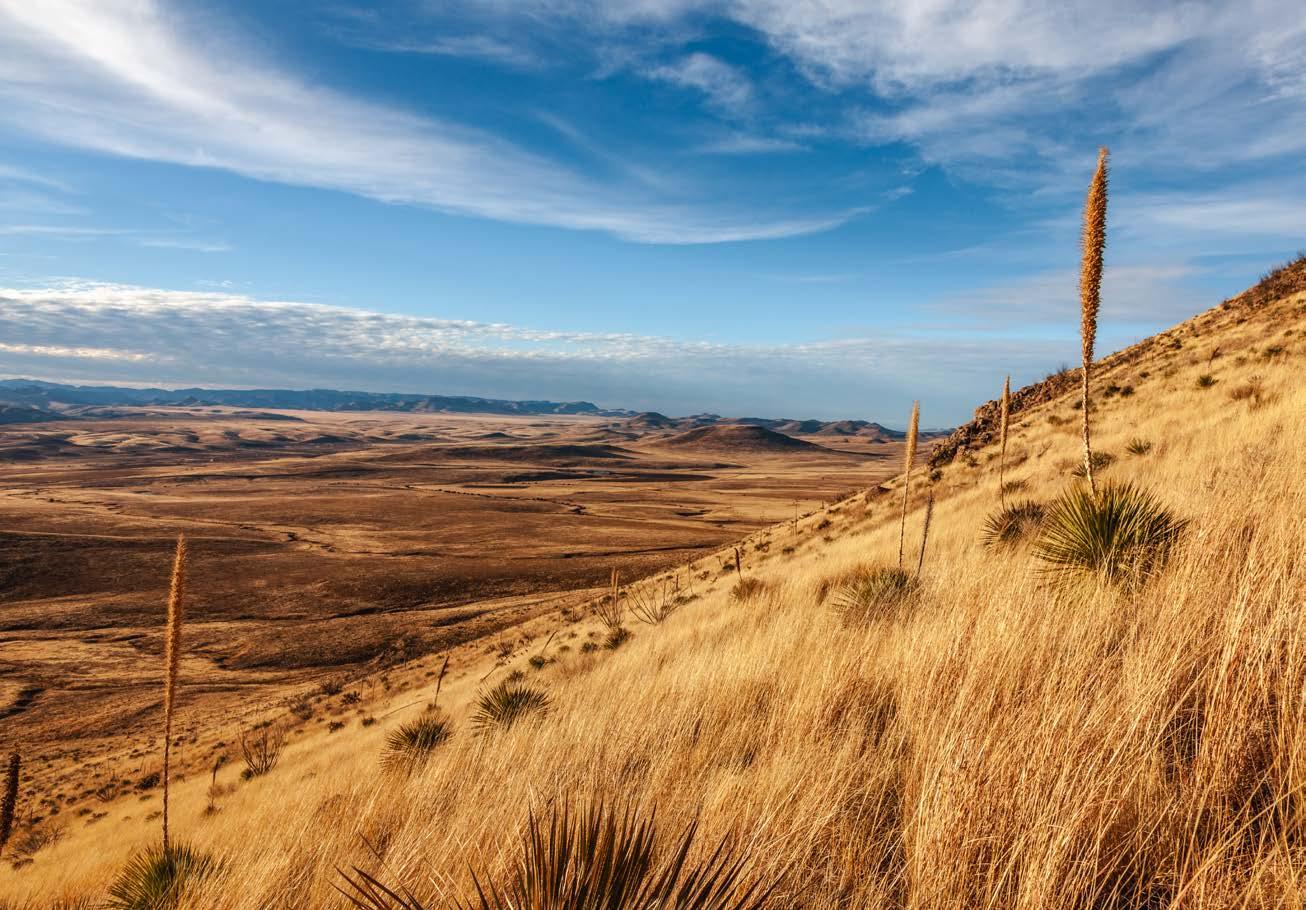
Cerro Montezuma, municipio de Casas Grandes. Montezuma Hill, Casas Grandes municipality.
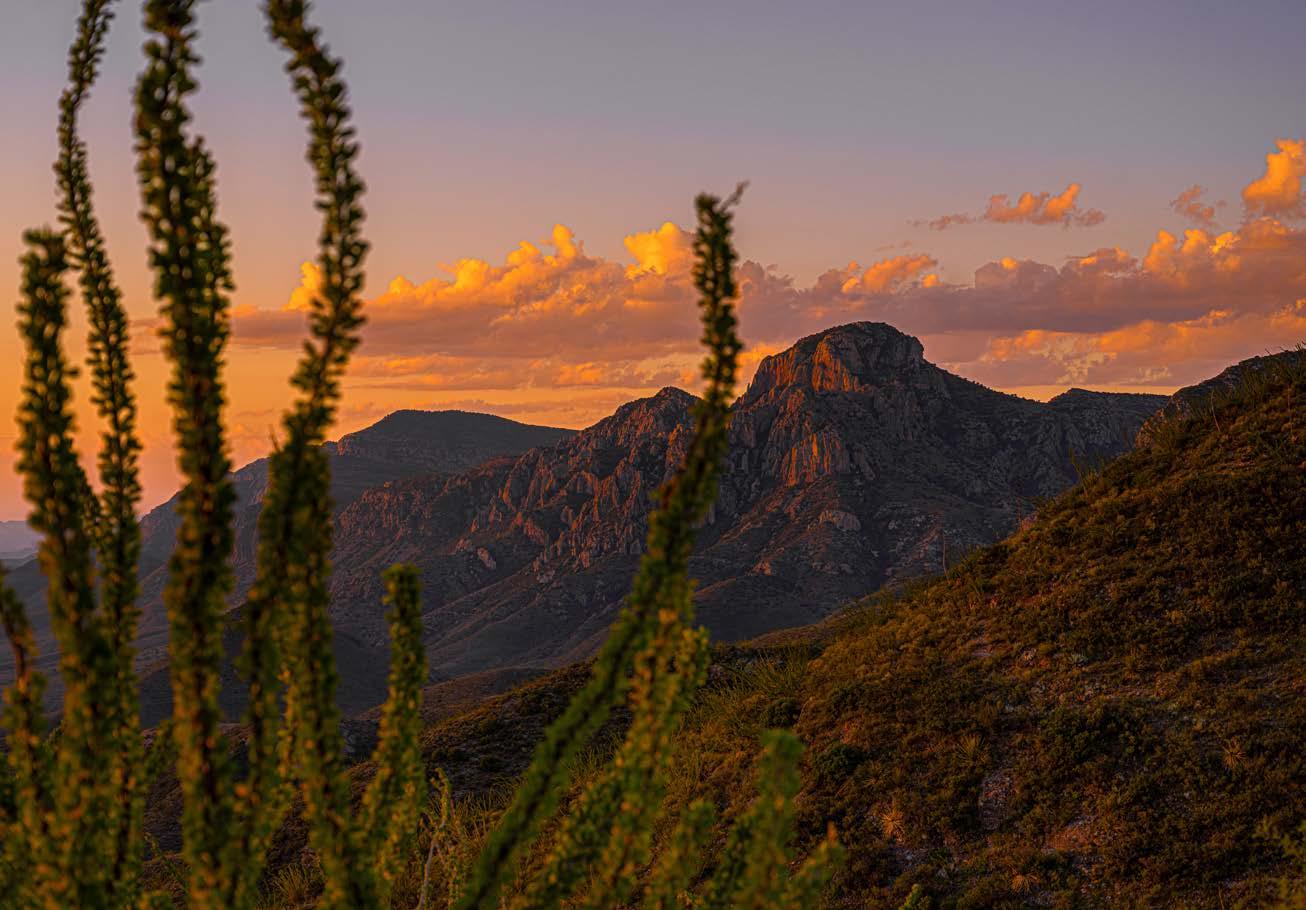
Amanecer en Sierra de Santa Eulalia. Sunrise in the Sierra de Santa Eulalia.
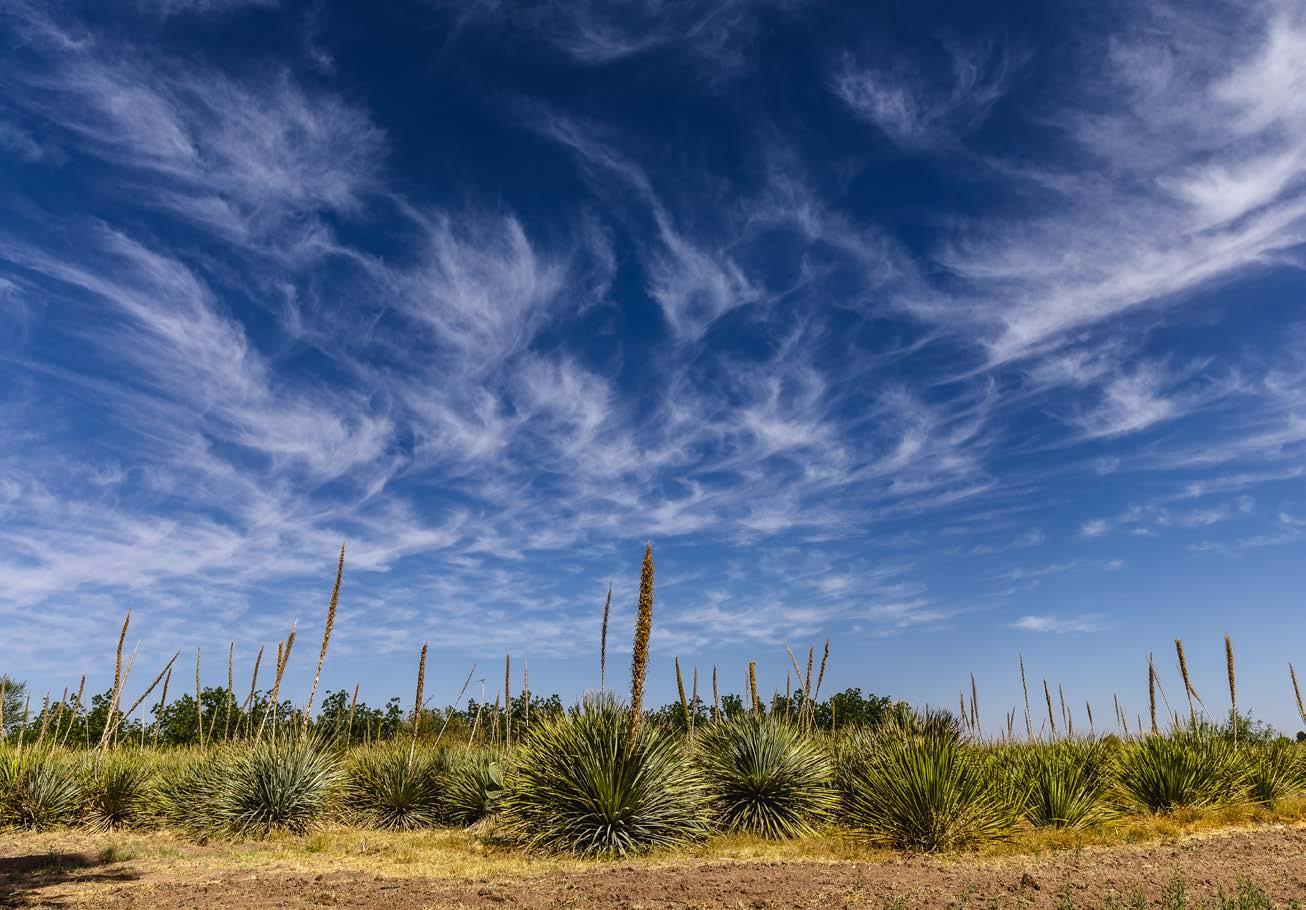
Centro de Investigación del Sotol, municipio de Delicias. Sotol Research Center, Delicias municipality.
COMITÉ EDITORIAL
Editorial comitee
Federico Terrazas Becerra, presidente / President
Enrique Escalante Ochoa, Daniel Helguera Moreno, Luis Jorge Amaya González, María Isabel Sen Venero, David Villegas Becerra
COORDINACIÓN INSTITUCIONAL
Institutional coordination
Daniel Helguera Moreno
David Villegas Becerra
TEXTOS E INVESTIGACIÓN DE Texts and Research by Paola Juárez
ASISTENTE DE INVESTIGACIÓN
Research assistants
Reidezel Mendoza, Cristina Ruelas, Mario Domínguez
FOTOGRAFÍA Photography
Nacho Guerrero
FOTOGRAFÍAS Y POSTPRODUCCIÓN
Photography and Post-production
Martín Ayala
ASISTENTE
Assistant Luis David Ortiz
CONTRIBUCIONES DE FOTO
Photo Contributors
Martín Alejandro Ayala Villalobos: págs. 66, 67, 70, 143,149, 150, 176, 177, 179, 188, 189, 200, 218, 219, 240, 264, 265, 266, 267, 272, 273, 275, 298, 301.
César Alejandro Salas Molina: págs. 4, 5, 42, 43, 44, 48, 49, 60, 61, 78, 154, 155, 166, 172,173, 174,175, 223.
César Alejandro Márquez Campero: págs. 57, 161,180,181, Jorge Caldera: págs. 193, 202, 203
Acrónimo: págs. 24, 25, 262
Los Magos: pág. 164
Noche Luna: pgs. 215, 216, 217
Ilustración: El Sotol. Una historia de árido mestizaje: págs. 16, 17, 74
EDICIÓN
Editing
Sagrario Saraid, publisher
Gabriel Bauducco, editor
DISEÑO
Design
Alejandro Argandona, director de arte / art director
Ángeles Nápoles, diseñadora gráfica / graphic designer
EDICIÓN EN ESPAÑOL
Spanish editing
Ofelia Salgado González, correctora de estilo / proofreader
Carlota Montoya, dictaminadora / reviewer
Teresa Rodríguez, dictaminadora / reviewer
TRADUCCIÓN
Translations
Edición en inglés / English editing
Alexandra Jurado, correctora / proofreader
Steven Ayala, dictaminador / reviewer
dobleuEse Atelier S. A. P. I. de C. V. www.dobleueseatelier.com
FOTOGRAFÍAS DE COCTELES
Cocktails photos
Ricardo Trabulsi, editor de foto y video
Roberto Toris / fotógrafo
Coyoame Huarte / “mixólogo
Fidel Castañeda, estilista
Donovan Damián, asistente de iluminación
Erick Vilches, asistente de foto
Isabel Zavala, productora ejecutiva
Rocío Martínez, producción en línea
Marlén Romero, asistente digital
IMPRESIÓN
Printing
SPI, SERVICIOS PROFESIONALES DE IMPRESIÓN, S. A. de C. V. www.spi.com.mx
ISBN: 978-970-96763-0-3

Presentación Presentation
Hay territorios que se narran con palabras, otros con imágenes, pero hay algunos que se cuentan mejor a través del sabor. En Chihuahua, una tierra vasta, áspera y luminosa, el sotol habla por sí mismo. Su aroma, su fuerza y su origen condensan siglos de historia en cada trago.
Con este libro, SOTOL, HERENCIA DE LA TIERRA, la Colección Editorial de GCC alcanza su trigésimo título, y lo hace rindiendo homenaje a una bebida que no solo nace del desierto, sino que lo representa con fidelidad absoluta. Más que una obra sobre el sotol, este libro es una travesía que toca los hilos profundos de la identidad chihuahuense. Aquí no solo se explora una planta, el Dasylirion, ni únicamente su transformación en destilado. Se revelan también los vínculos íntimos entre paisaje, memoria, cultura y comunidad. Este recorrido nos lleva al encuentro de las manos que cosechan, hornean y destilan con paciencia; de los caminos y las montañas donde crece el sotol silvestre, de los saberes que se comparten en voz baja, como secretos familiares que no debemos perder.
SOTOL, HERENCIA DE LA TIERRA no pretende explicar el sotol, prefiere escucharlo. A través de las imágenes de fotógrafos como Nacho Guerrero y Martín Ayala, de las historias recogidas de la pluma de Paola Juárez, se narra la herencia de productores, artesanos y comunidades. Esta obra brinda una visión amplia y profunda de lo que representa el sotol hoy: una tradición viva que se reinventa sin romper con su origen.
La bebida que alguna vez fue parte de rituales indígenas, marginada por leyes o asociada con lo rural, hoy se transforma en emblema cultural. El sotol ha cruzado fronteras sin dejar de pertenecerle a su tierra. Ha llegado a mesas internacionales, pero sigue naciendo en el desierto, se origina en el horno rústico y crece de la conversación comunitaria. Esta obra lo acompaña en su viaje.
Con SOTOL, HERENCIA DE LA TIERRA, GCC reafirma su compromiso de dar voz a nuestro patrimonio, de iluminar quienes somos a través de lo que hacemos y de preservar aquello que nos enraiza. Cada título de la colección GCC es una forma de decir: “esto es Chihuahua”. Hoy, en su trigésima entrega, continuamos celebrando a nuestra gente, en especial a quienes han sabido transformar parte del desierto en símbolo de orgullo y legado.
Lo que viene de la tierra, si se cuida y se honra, se convierte en herencia.
GCC, orgullosamente chihuahuense.
Some territories are narrated with words, others with images, but there are some that are best told through flavor. In Chihuahua, a vast, rough, and luminous land, sotol speaks for itself. Its aroma, strength, and origin condense centuries of history in each sip.
With this book, SOTOL, LEGACY OF THE LAND, the GCC Editorial Collection reaches its 30th title and does so by paying homage to a drink that is not only born of the desert but represents it with absolute fidelity. More than being just a project about sotol, this book is a journey that touches the deep threads of Chihuahua’s identity.
Here, Dasylirion is not only explored for its transformation into a distillate. It also reveals the intimate links between landscape, memory, culture, and community. This journey takes us to meet the hands that patiently harvest, bake, and distill. To the roads and mountains where wild sotol grows. To the knowledge that is shared in a low voice, like family secrets that must not be lost.
SOTOL, LEGACY OF THE LAND does not intend to explain sotol; it prefers to listen to it. Through the images of photographers such as Nacho Guerrero and Martín Ayala, and the stories told through the pen of Paola Juárez, the heritage of producers, artisans, and communities is narrated. This work provides a broad and deep vision of what sotol represents today: a living tradition that reinvents itself without breaking from its origins.
The beverage that was once part of Indigenous rituals, marginalized by laws, or associated with the rural world, is today transformed into a cultural emblem. Sotol has crossed borders without ceasing to belong to its land. It has reached international tables, but it continues to be born of the desert, originating in the rustic oven and growing from community. This body of work accompanies it on its journey.
With SOTOL, LEGACY OF THE LAND, GCC reaffirms its commitment to give voice to our heritage, to illuminate who we are through what we do, and to preserve that which roots us. Each title in the GCC Collection is a way of saying: “This is Chihuahua.” Today, in its 30th issue, we continue to celebrate our people, especially those who have been able to transform part of the desert into a symbol of pride and legacy.
What comes from the earth, if cared for and honored, becomes an inheritance.
GCC, proudly Chihuahuense.
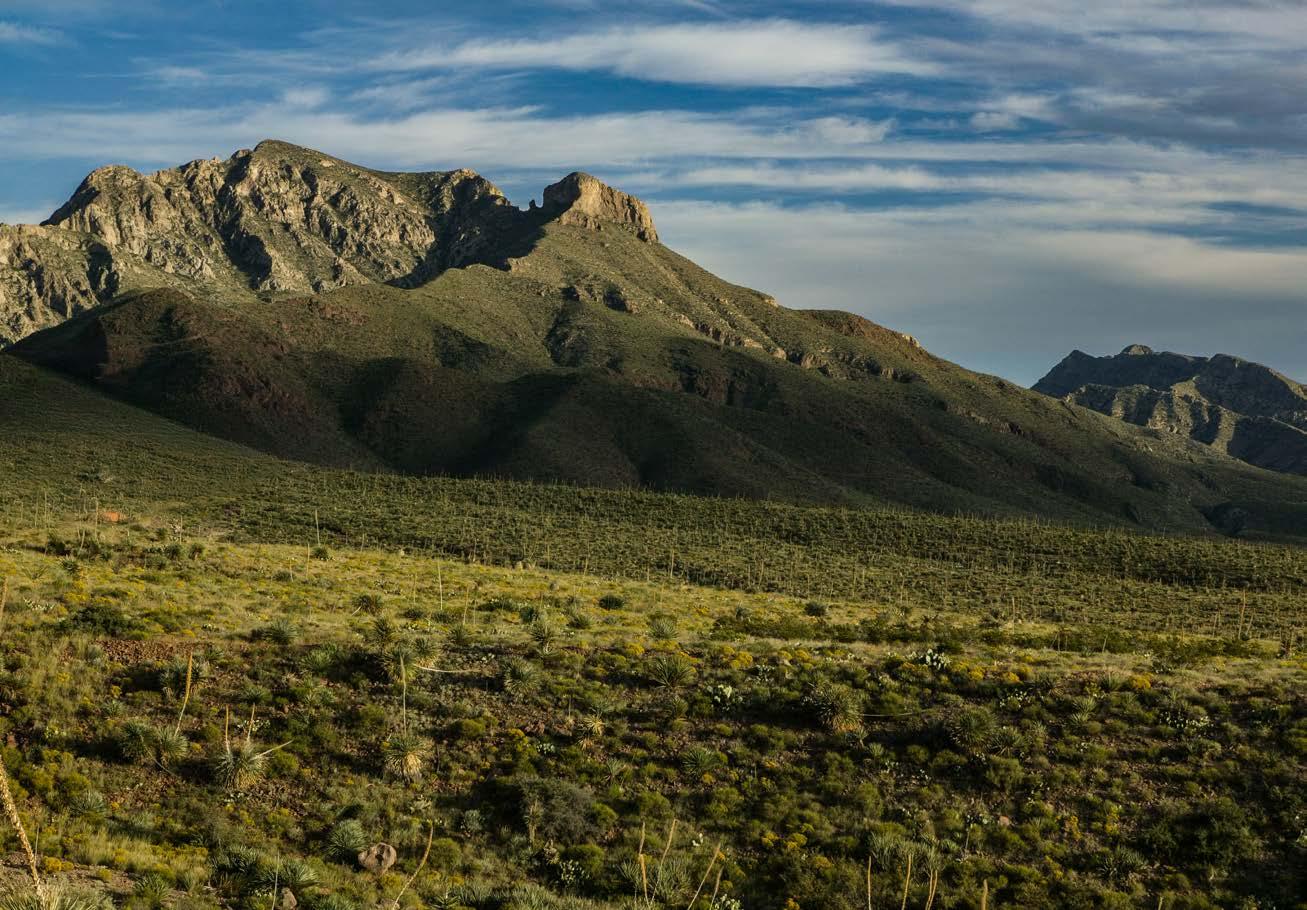
Bosque sotolero con diversidad botánica. Sierra en el Paso del Norte - Juárez. Sotol forest with diverse plant life. Mountains at Paso del Norte–Juárez.
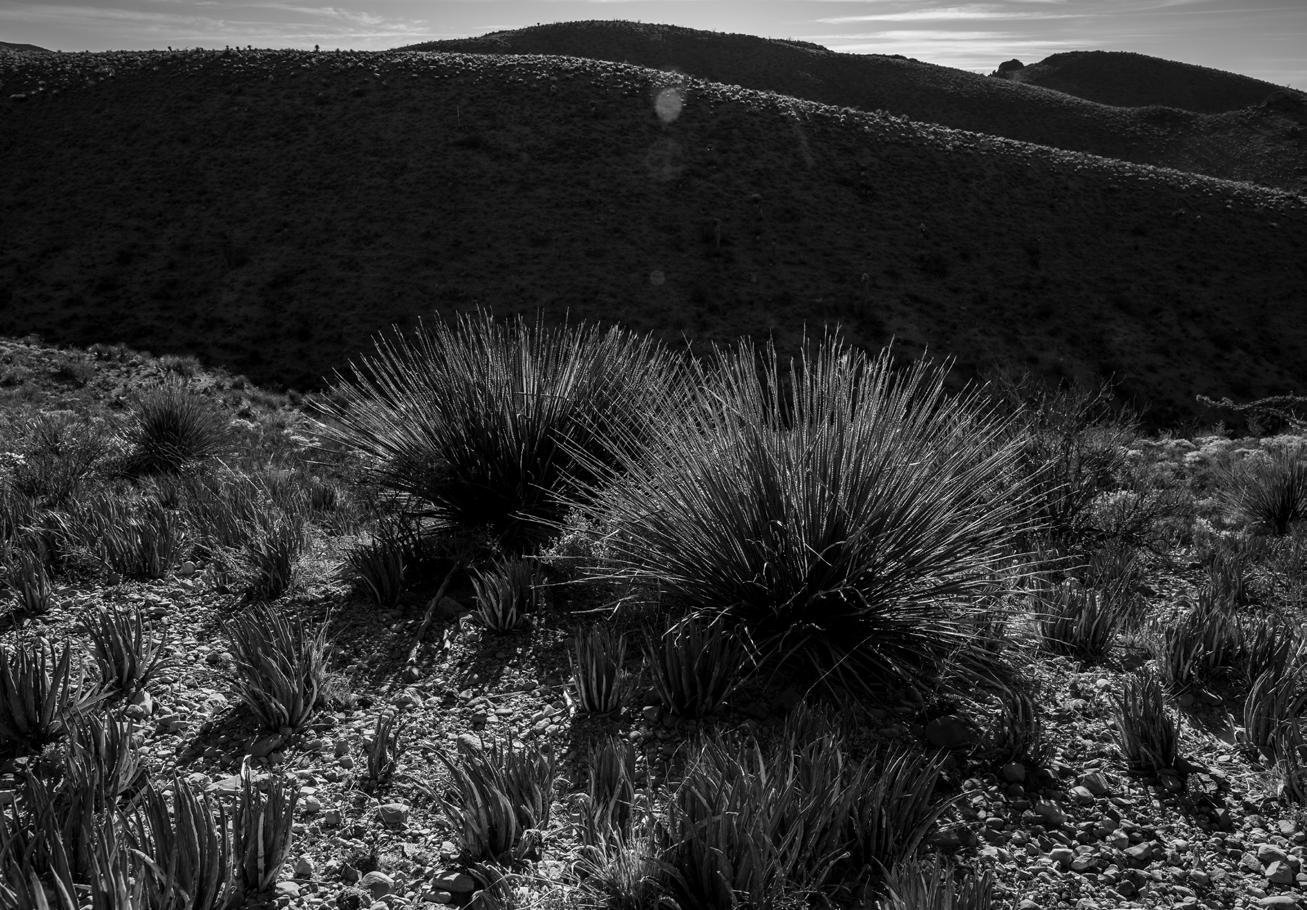
Sotoles silvestres y lechuguilla, Potrero del Llano.
Wild sotol plants and lechuguilla, Potrero del Llano.
HERENCIA D
56. ¡A tomar!… en cuenta acerca del sotol
A Closer Look and a Taste of Sotol

PRESENTACIÓN
Presentation
22
PRÓLOGO
Prologue
58. Sotol, fruto del desierto
Sotol, Fruit of the Desert
71. Nutrir, sanar, ofrendar
Uso en comunidades originarias
Nourish, Heal, Offer.
Use in Native Communities
76. “Running the Cañons of the Rio Grande”
DE “CATARRINES” E “HINCHADOS”: LIDIANDO CON LA MALA FAMA
Dealing with a Bad Reputation
132. Una huella dactilar del paisaje
A fingerprint of the Landscape
136. En las minas y en la ciudad
In the Mines and the City
138. La gran apuesta
The Big Bet
142. Denominación de origen y nuevas leyes
82. Destilando historia
Distilling History
104. La era del control
The Era of Control
110. Del cerro al mercado: el sotol entre los siglos XIX y XX
MI NOMBRE ES SOTOL
My Name is Sotol
33 28
CAPÍTULO 1 / CHAPTER 1
EL SOTOL EN EL PAISAJE
Sotol in the Landscape
From the Hill to the Market:
Sotol in the Nineteenth and Twentieth Century
116. Sotol, una y otra vez
Sotol, Again and Again
120. Clandestinidad, prohibición y campaña antialcohol
Clandestinity, Prohibition, and Anti-Alcohol Campaigns

Denomination of Origin and New Legislation
Mucho más que un destilado
Much More Than a Spirit
CAPÍTULO 2 / CHAPTER 2
E LA TIERRA
CAPÍTULO 3 / CHAPTER 3
CABEZAS, CORAZONES, FUEGO & TIEMPO: La alquimia del sotol Heads, Hearts, Fire, and Time: The Alchemy of Sotol
214. Los meros meros vinateros
The true Masters of Sotol
230. Entre tradición y tendencia Between Tradition and Trend
230. Cosquillas Tickles
CAPÍTULO 4 / CHAPTER 4
TRADICIONES SOTOLERAS Sotol Traditions
243. La despedida
The Farewel
244. El burrito sotolero
The Burrito Sotolero
El entierro sotolero
The Sotol Burial
SABORES ÚNICOS, COCTELES Unique Flavors, Coktails
EL FUTURO The Future
AGRADECIMIENTOS Acknowledgments
RIESGOS EN EL HORIZONTE Dangers on the Horizon

EL NUEVO ROSTRO DEL SOTOL: IMPACTO INTERNACIONAL The New Face of Sotol: International Impact
NOTAS BIBLIOGRÁFICAS Bibliography
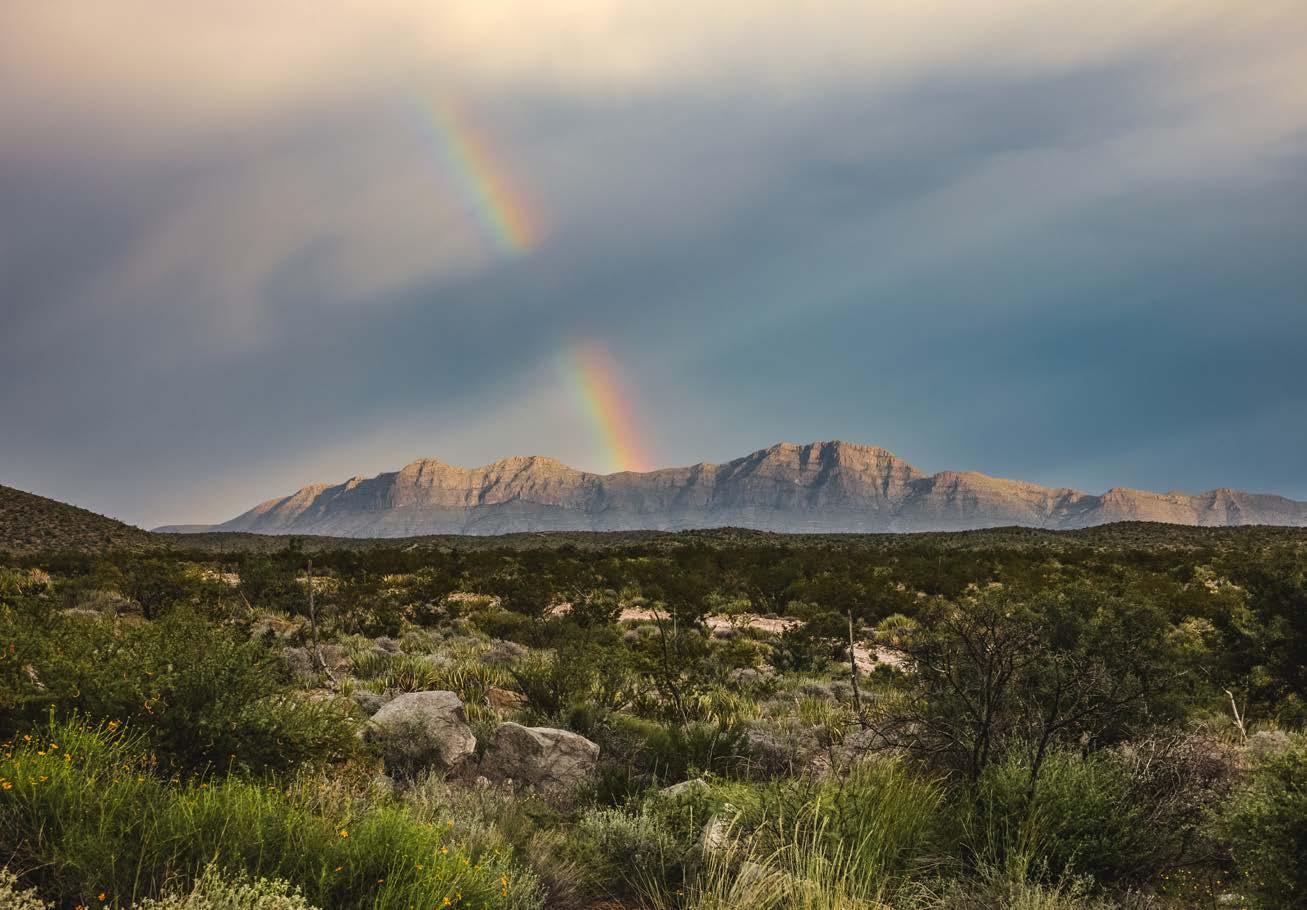
Coyame del Sotol. Coyame del Sotol.
Prólogo
Editor Prologue
Gabriel Bauducco
En el horizonte árido, donde la tierra respira con la lentitud de los siglos, el sotol surge como un símbolo de resiliencia. Ha nacido del desierto; hijo de la paciencia mineral, el viento ardiente y las noches heladas. No es solo una planta ni solo una bebida… es memoria y herencia de la tierra.
Este libro celebra un tributo a la creatividad y al espíritu de quienes han hecho del sotol un emblema. Con su carácter indómito, la planta no se cultiva, se encuentra. Cada una con su identidad, entrega su corazón para transformarse en fuego líquido. Es la alquimia del desierto, reflejo de la templanza y el respeto. Aquí el sotol habla: se cuenta a sí mismo, recuerda los días en que era solo alimento y abrigo para los pueblos nómadas, los años en que –convertido en bebida– fue perseguido y estigmatizado; los instantes de clandestinidad y de fiesta, los momentos en que su sabor selló pactos de paz o encendió la chispa de la rebeldía. Así, viajó desde la divertida y emocionante clandestinidad de la adolescencia, para luego, con madurez y elegancia, sentarse a una mesa de manteles largos.
Hay que comprender que el sotol es testigo de la historia, narrador de las transformaciones del norte. Quizá también es espejo de la identidad de los chihuahuenses, con el carácter firme, discreto y rebelde por naturaleza.
También es sinónimo de una lucha por el reconocimiento. Desde el desprecio de las élites hasta su renacimiento como patrimonio cultural, la bebida ha recorrido un camino de revaloración. La denominación de origen y su presencia en mercados internacionales son hitos de un renacimiento.
El protagonista de este viaje en el tiempo es, sobre todo, amalgama de una comunidad. En las páginas de este libro desfilan los nombres y los rostros de los vinateros, guardianes de un saber transmitido de generación en generación. Hombres y mujeres que, con manos curtidas y mirada orgullosa, han hecho del sotol su oficio y su destino. Esta obra invita a mirar el sotol con ojos nuevos, a saborear su herencia y a celebrar la riqueza de las tradiciones mexicanas. Como el buen sotol, debe ser leído despacio y con respeto, dejando que su esencia haga el viaje desde la garganta hasta el corazón. Mi nombre es sotol, dice la planta. Y esta, por fin, es su historia.
In the arid horizon where the earth breathes with the slowness of centuries, sotol emerges as a symbol of resilience. It was born of the desert—son of mineral patience, the burning wind, and the freezing nights. It is not just a plant, nor just a drink…it is the memory and legacy of the land.
This book pays tribute to the creativity and spirit of those who have made sotol an emblem. With its indomitable character, the plant is not cultivated; it is found. Each with its own identity, it gives its heart to transform itself into liquid fire. It is the alchemy of the desert, a reflection of temperance and respect. Here sotol speaks: it recalls the days when it was only food and shelter for the nomadic peoples, the years when it was persecuted and stigmatized as a beverage, the moments of secrecy and celebration, the moments when its flavor sealed peace pacts or ignited the spark of rebellion. Thus, it traveled from the fun and exciting clandestinity of adolescence to maturity and elegance, sitting at a table with long tablecloths.
It is necessary to understand that sotol is a witness of history, a narrator of the transformations of the north. Perhaps it is also a mirror of the identity of the people of Chihuahua, with a firm, discreet, and rebellious spirit by nature.
It is also synonymous with a struggle for recognition. From the contempt of the elites to its rebirth as cultural heritage, the drink has traveled a path of revaluation. The denomination of origin and its presence in international markets are milestones of a renaissance.
The protagonist of this journey through time is, above all, the amalgamation of a community. In the pages of this book are the names and faces of the vinateros (sotol makers), guardians of a knowledge handed down from generation to generation. Men and women who, with tanned hands and proud eyes, have made sotol their trade and their destiny. This book invites us to look at sotol with new eyes, to savor its heritage, and to celebrate the richness of Mexican traditions. Like good sotol, it should be read slowly and with respect, letting its essence make the journey from the throat to the heart. My name is sotol, says the plant. And this, at last, is its story.

San Sóstenes y sierra aledaña. San Sóstenes and surrounding mountains.
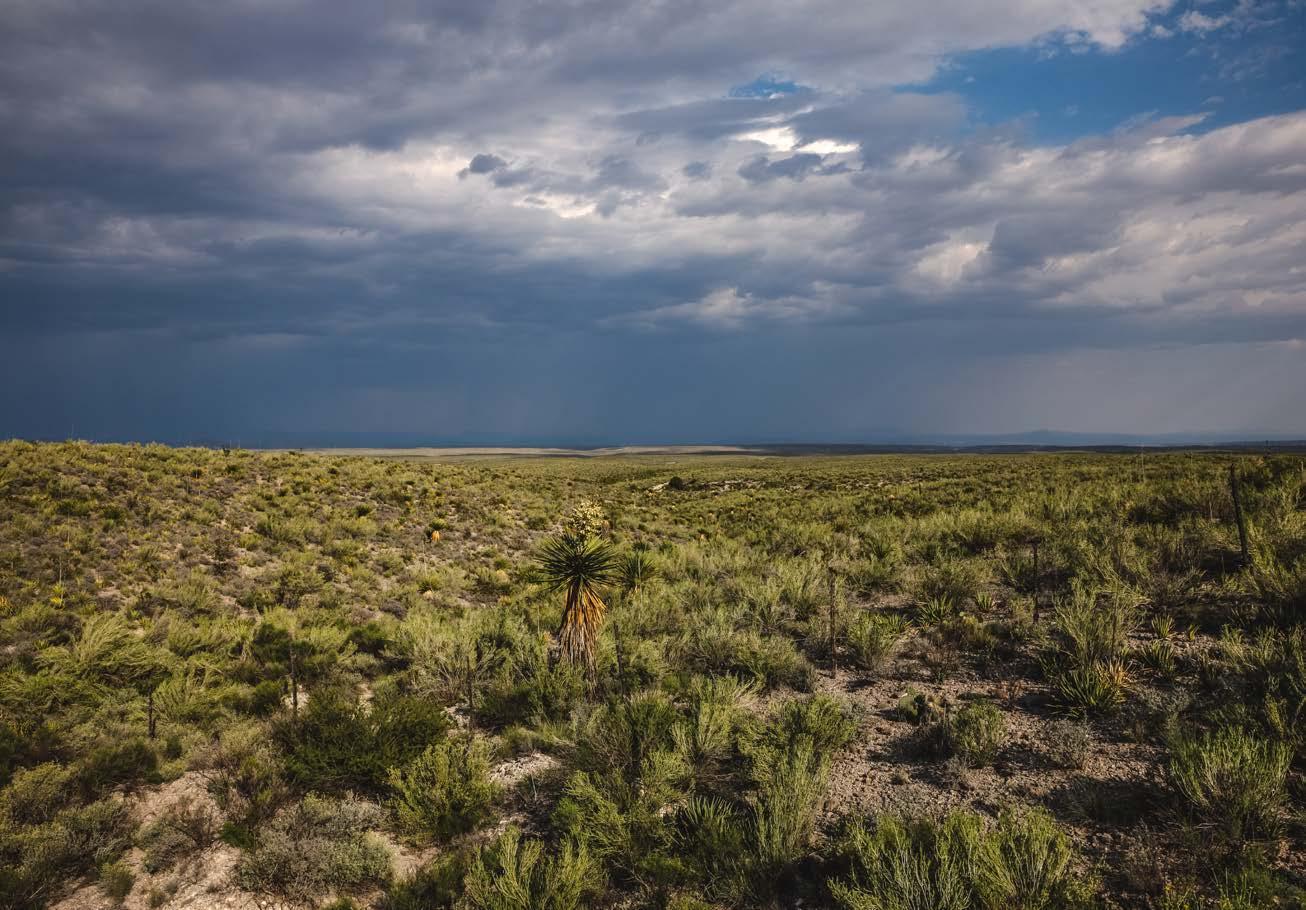
Coyame del Sotol. Coyame del Sotol.
NOMBRE ES MI
SO TOL

My Name is Sotol
«YO NACÍ DEL DESIERTO. No de la semilla mimada por la lluvia ni de los campos cultivados por quienes riegan con esperanza. No. Mi raíz se hunde en la tierra árida, entre las piedras de escarpados riscos, en la paciencia de los años. Soy de donde el sol abrasa sin tregua y el viento ardiente peina con su furia.
Antes de convertirme en fuego líquido, antes de ser brindis, fui promesa de sobrevivencia. Un día sentí el calor de una manera distinta, era el fuego de las manos, de aquellos que vieron en mí más que una planta espinada. Me cortaron, me cocinaron, me transformaron. Y con el primer sorbo de mi esencia, dejaron de ser los mismos.
He bajado por gargantas secas, he ardido en labios ansiosos, he acompañado a los que ríen y a los que lloran. Más que una bebida, soy testigo de tiempos que otros olvidaron, de pasos que dejaron huellas efímeras en la arena, de quienes danzaron a mi alrededor, de quienes me bebieron y de aquellos que quisieron domarme sin saber que solo me dejo tomar cuando yo lo decido.
Me temieron. Dijeron que desataba pasiones, que volvía peligrosa a la gente. Y, aun así, entre decretos y castigos, seguí fluyendo. Fui trago prohibido a la sombra de la ley. Cuando flechas y balas de distintas luchas rompieron el aire, yo estuve ahí. En los años del miedo y la moral, me tacharon de vicio; dijeron que era de perdidos, de maleantes. La ley seca me volvió contrabando, cruzaba la frontera disfrazado, oculto en los más creativos escondites. Y siempre volví a la mesa, al canto. He sido alegría en las cantinas, me derramaron en celebraciones y despedidas, en las madrugadas de los que no querían dormir. En cada sorbo, conté una historia. En cada trago, dejé un recuerdo.
Los tiempos cambian, y yo, que fui licor de vaqueros y gambusinos, también crucé fronteras y océanos. Me fotografían en París, me aplauden en Berlín, me saborean en Tokio y en Nueva York. No soy una moda, soy tradición. Me llaman de muchas formas: tzotolli, tuchi, sawo, sereque, varacuete, palmilla, cucharilla, bear grass, desert spoon, Wheeleri, Dasylirion y más. Todos soy. Mi nombre es Sotol… y esta es mi historia».
“I WAS BORN OF THE DESERT. Not from a seed pampered by the rain, nor from the fields cultivated by those who water with hope. No. My roots are sunk in the arid earth, among the stones of steep cliffs, in the patience of the years. I am from where the sun scorches relentlessly and the burning wind combs with fury.
Before becoming liquid fire, before becoming toast, I was a promise of survival. One day, I felt the heat in a different way. It was the fire of the hands of those who saw in me more than a thorny plant. They cut me, they cooked me, they transformed me. And with the first sip of my essence, they were no longer the same.
I have gone down dry throats, I have burned on eager lips, I have accompanied those who laugh and those who weep. More than a drink, I am a witness to times others have forgotten, to footsteps that left only fleeting prints in the sand, to those who danced around me, to those who drank me, and of those who tried to tame me, not knowing that I can only be drunk when I choose.
They feared me. They said that I unleashed passions, I made people dangerous. And yet, between decrees and punishments, I continued to flow. I was a forbidden drink in the shadow of the law. When arrows and bullets from different fights broke the air, I was there. In the years of fear and morality, they branded me a vice; they said I belonged to the lost, to crooks. Prohibition turned me into a smuggler; I crossed the border, disguised and hidden in the most creative hiding places. And I always returned to the table, singing. I have been joy in cantinas. I was poured during celebrations and farewells, in the early mornings, for those who did not want to sleep. With every sip, I told a story. With every drink, I left a memory.
Times changed, and I, who was the liquor of cowboys and gambusinos (gold seekers), also crossed borders and oceans. I am photographed in Paris, applauded in Berlin, savored in Tokyo and New York. I am not a trend; I am tradition. I am called by many names: tzotolli, tuchi, sawo, sereque, varacuete, palmilla, cucharilla, bear grass, desert spoon, Wheeleri, Dasylirion, and more. I am all of them. My name is Sotol... and this is my story”.
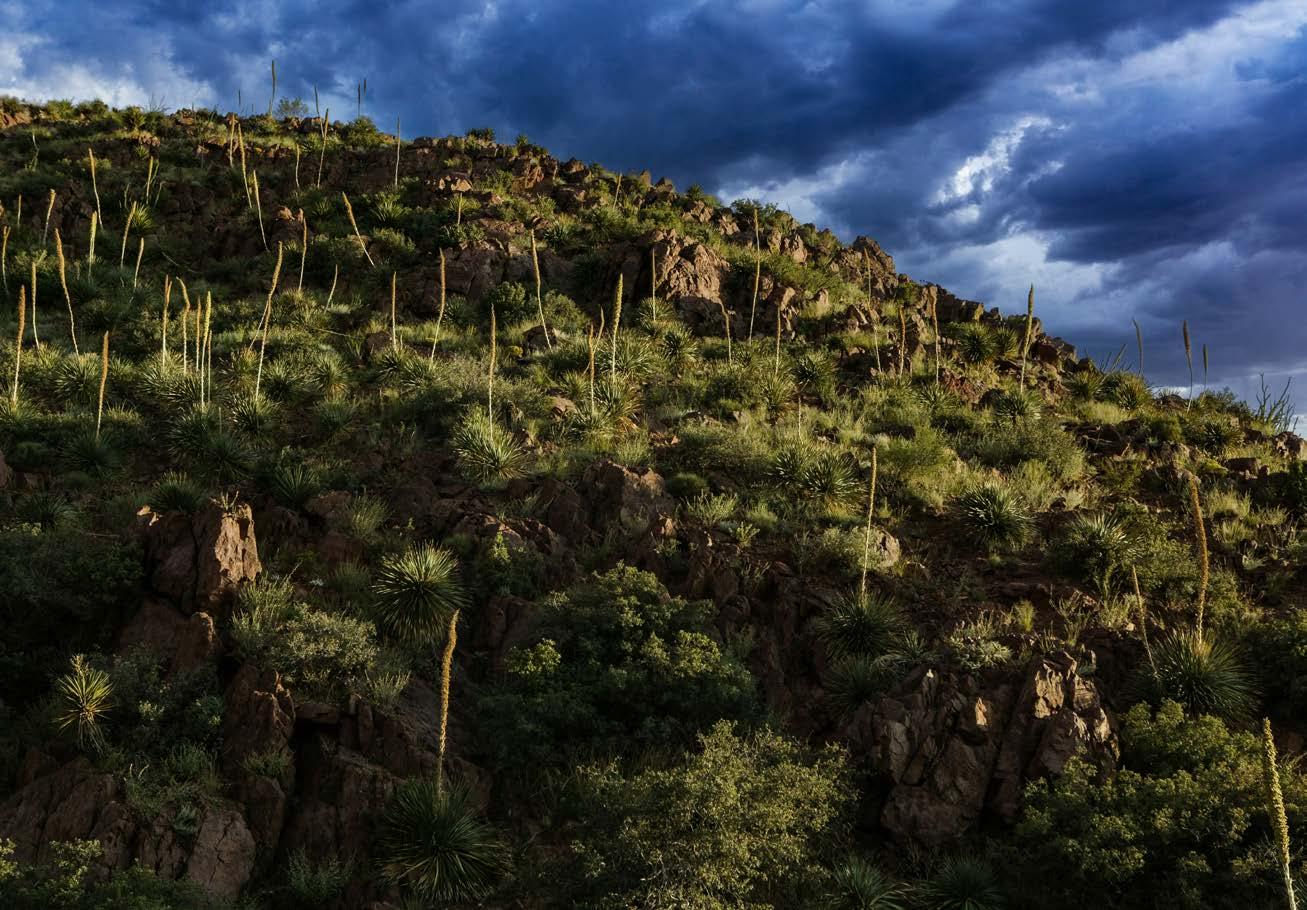
Sierra de Matasaguas, Coyame. Matasaguas Mountains, Coyame.
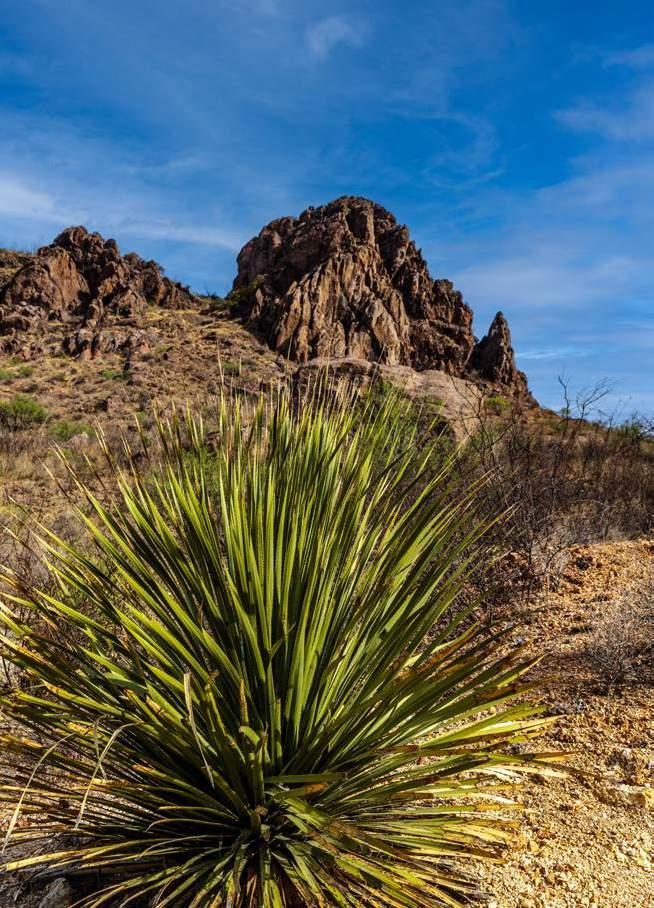
Rancho el Triunfo, municipio de Satevó.
El Triunfo Ranch, Satevó municipality.
EL SOTOL EN EL PAISAJE
Sotol in the Landscape
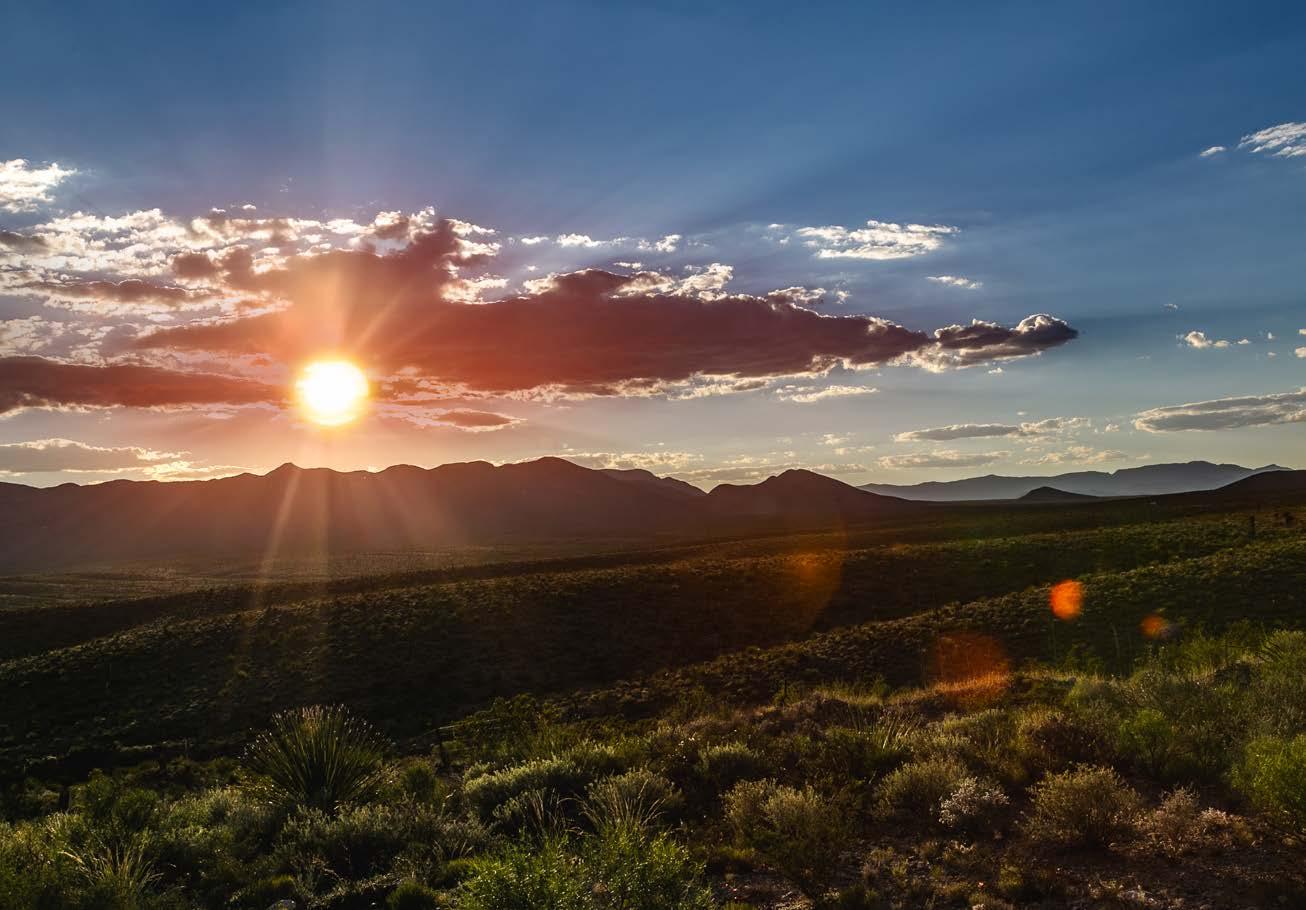
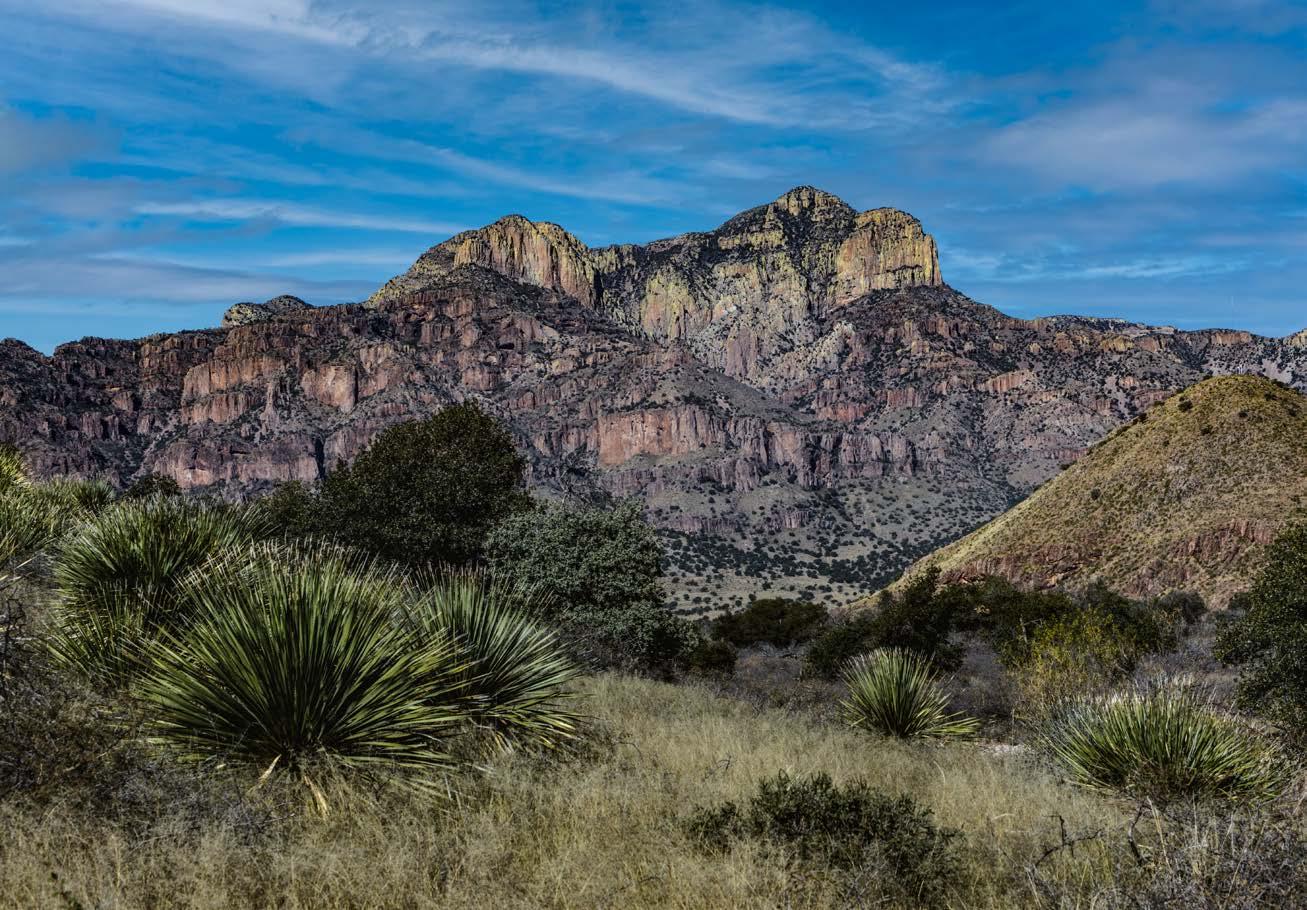
DONDE LA VIDA parece improbable el sotol crece, no a pesar del desierto, sino con él. Es endémico del norte de México y se encuentra especialmente en los estados de Chihuahua, Coahuila y Durango, aunque está presente en una zona bastante más extensa. Crece en comunidades –generalmente sobre terrenos agrestes– y puede desarrollarse en suelos y climas áridos, extrayendo humedad donde otras especies no sobrevivirían. Tal vez por ello, los chihuahuenses se sienten tan identificados con el sotol.
WHERE LIFE SEEMS improbable, sotol grows, not despite the desert, but with it. It is endemic to northern Mexico and is particularly prevalent in the states of Chihuahua, Coahuila, and Durango, although it can also be found in a much larger area. It grows in clusters, often in rugged terrain, and can thrive in arid soils and climates, drawing moisture where other species would not survive. Perhaps that is why the people of Chihuahua feel such a strong connection to sotol.
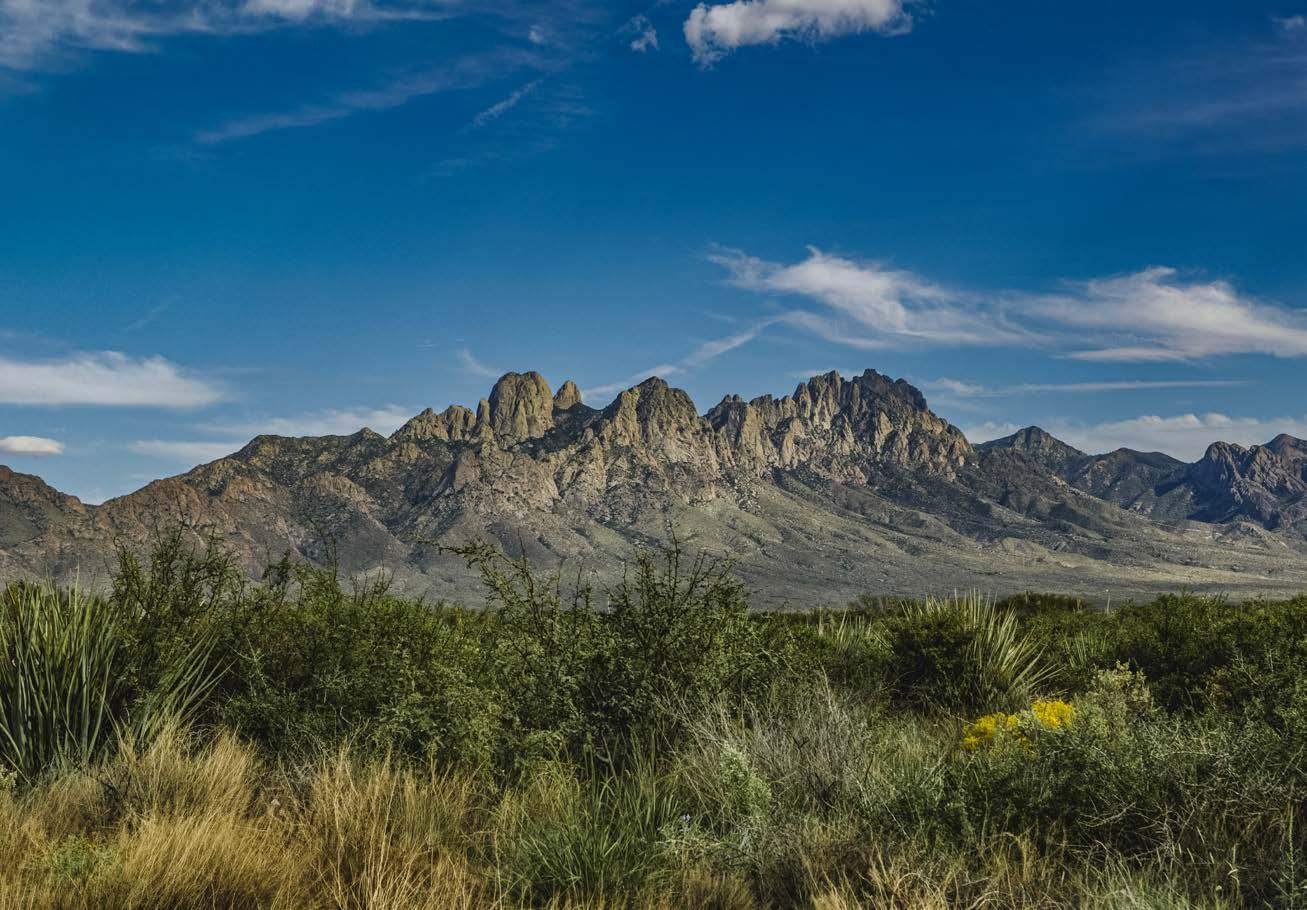
Sierra de los Órganos, frontera con Nuevo México.
Organ Mountains, on the border with New Mexico.
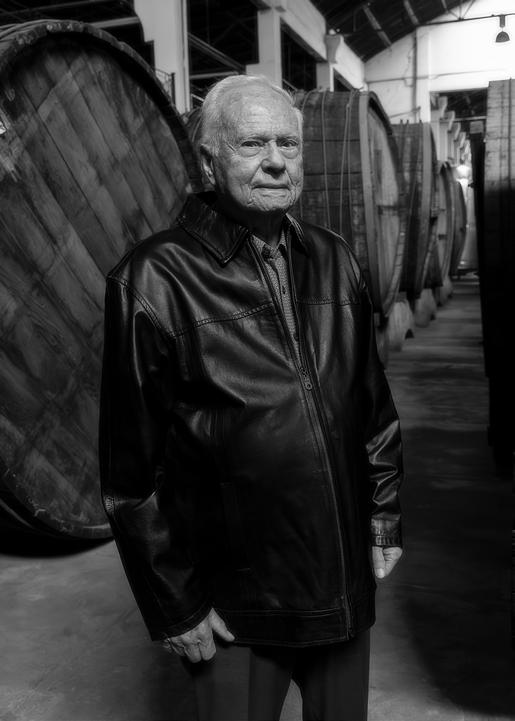
JOSÉ DAUMÁS:
“ABRIR
UN MERCADO DEL SOTOL COSTÓ MUCHO DINERO Y MUCHOS AÑOS, PERO YO SABÍA QUE TENÍA EN MIS MANOS ALGO BUENO”.
Opening up a market for sotol took a lot of money and a lot of years, but I knew I had something good in my hands.
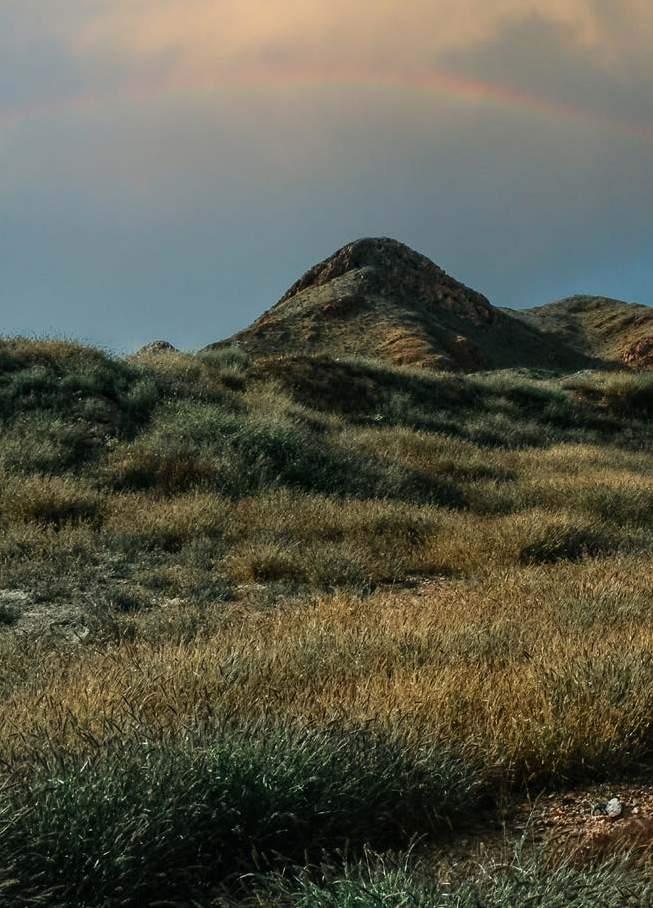
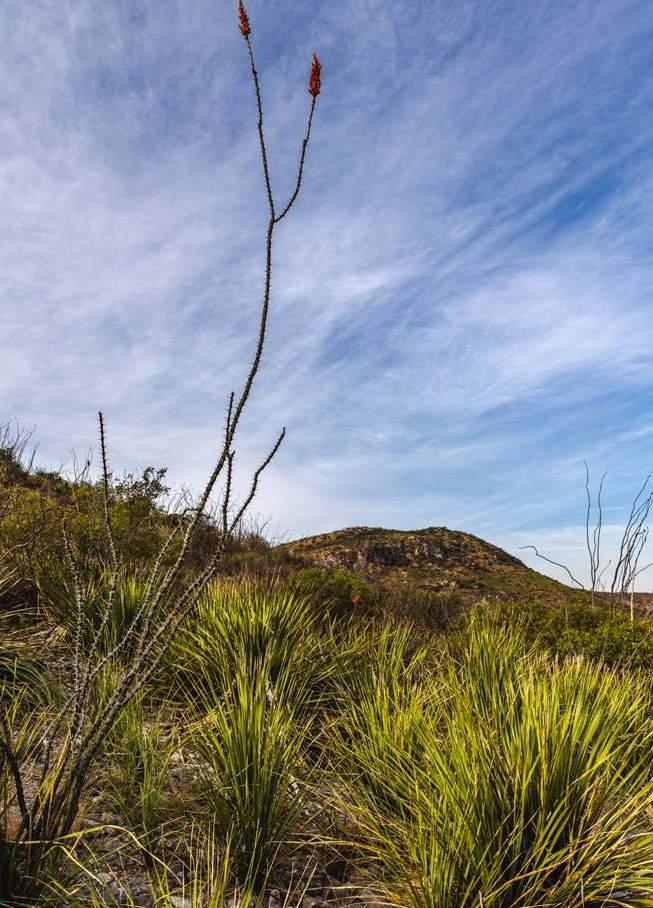
Se desarrolla principalmente en las laderas de cerros. También habita en pastizales, donde hay escasa presencia de árboles y arbustos. En menor proporción, puede hallarse en zonas más fértiles, incluso en áreas boscosas, particularmente en regiones donde coexisten encinos, pinos y táscates. En estos casos, suele aparecer en las faldas montañosas, sobre suelos rocosos y con limitada captación de agua de lluvia.[1] Los agrupamientos o manchones de mayor densidad se rodean de áreas con poblaciones ralas, de individuos aislados. Es muy difícil encontrar grandes extensiones con poblaciones tupidas de sotol.
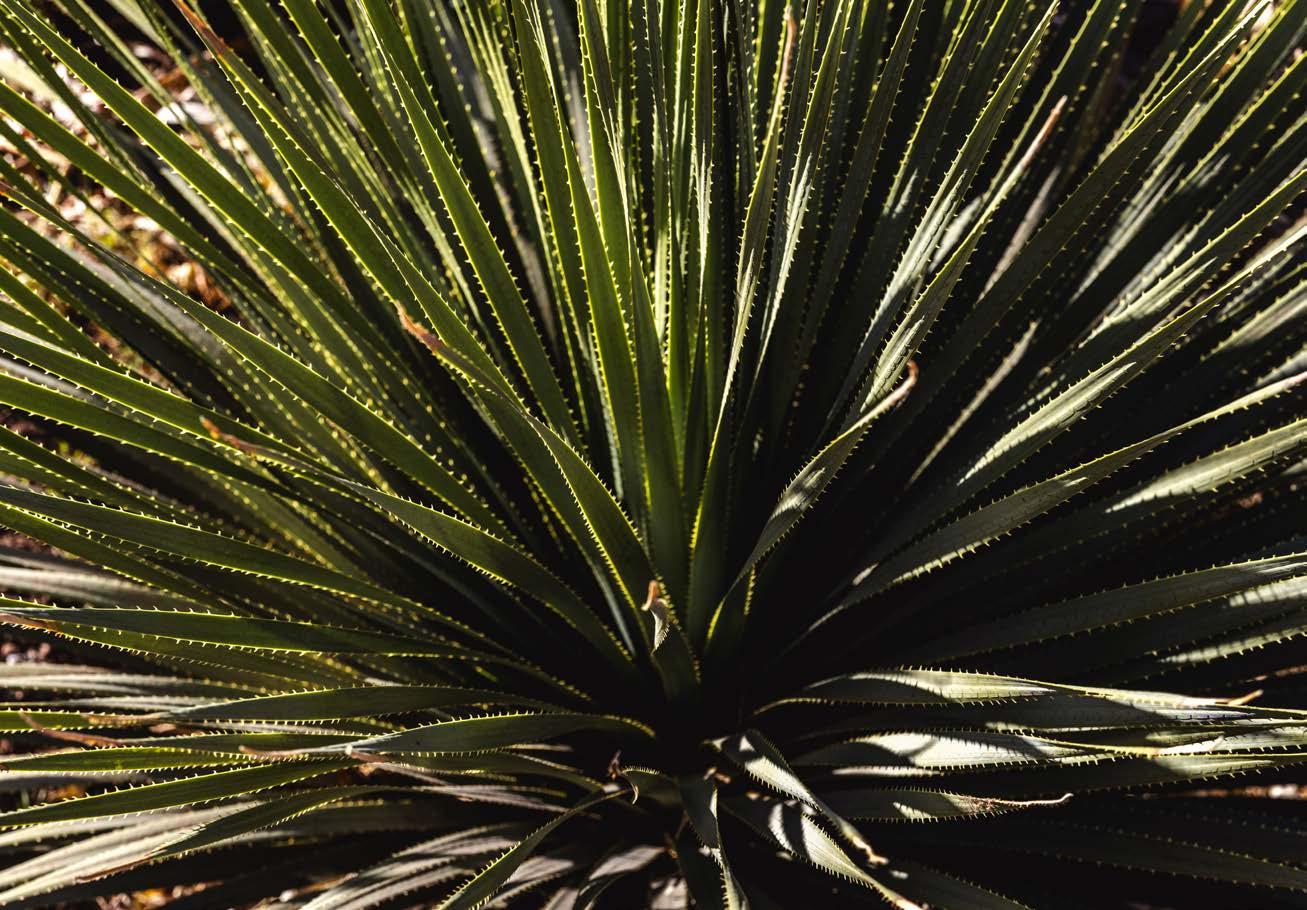
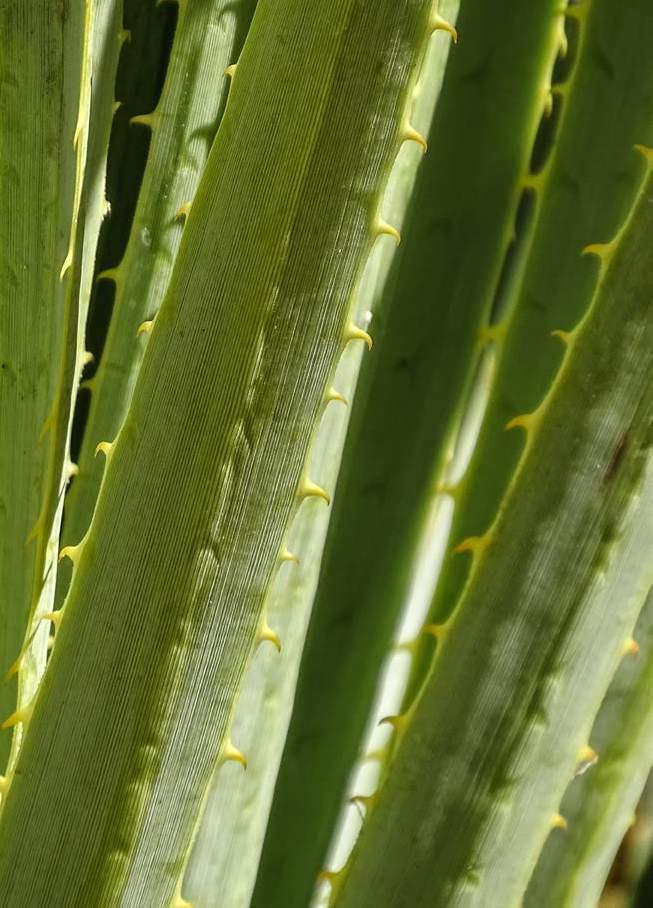
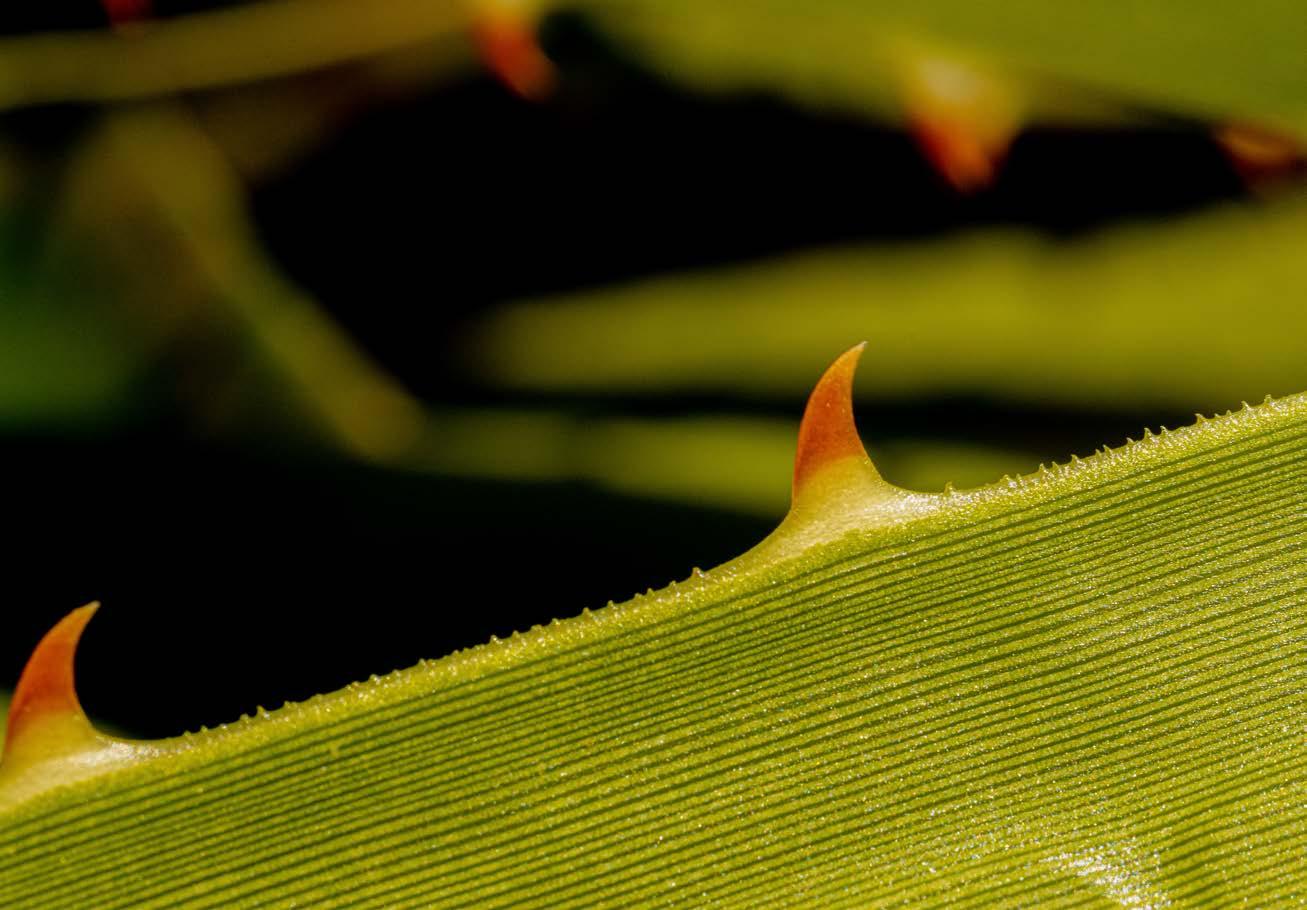
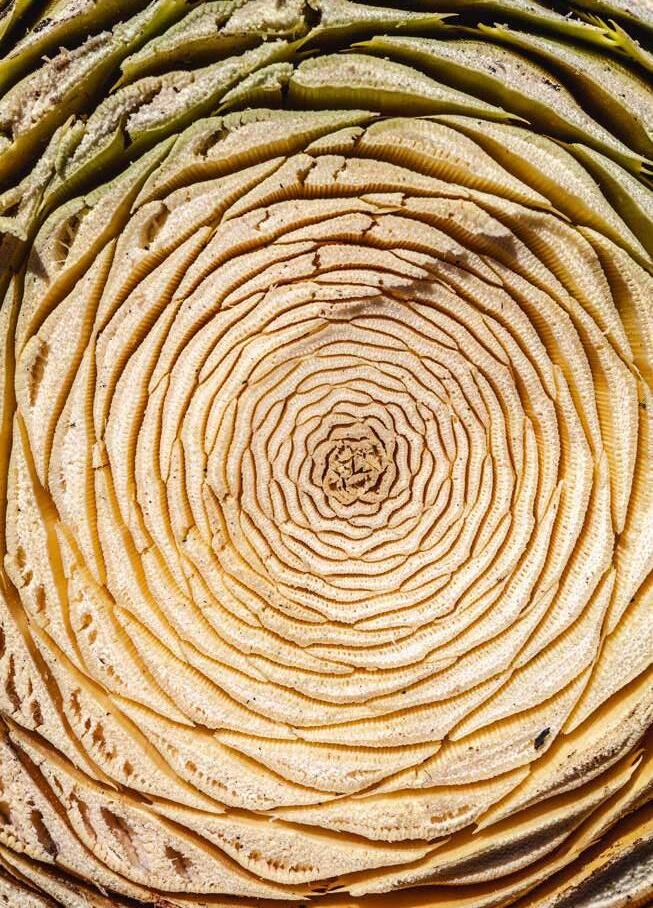
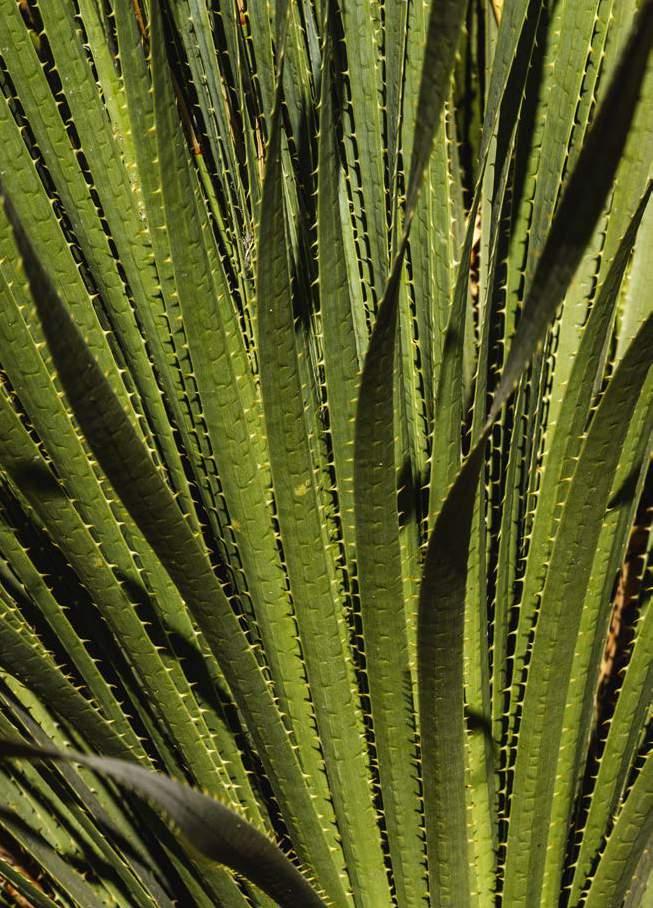
La planta suele medir entre uno y dos metros de altura, aunque algunas muy longevas pueden llegar a más de tres. Es perene y luce un color verde claro, también con tonalidades grisáceas. Sus hojas son largas, estrechas y acanaladas, posee finas espinas a los lados que le dan un aspecto temible, pero hermoso. Adopta forma de cuchara en su base y no se caen al morir, sino que se doblan sobre el tallo y le sirven de protección y soporte. Aunque desarrollan ‘cabezas’ de hasta más de cien kilos, en Coahuila las más comunes pesan alrededor de ochenta; no obstante, las de esas dimensiones son cada vez más escasas en lugares como Chihuahua y Durango, donde han ido acabándose rápidamente. Su crecimiento es muy lento, pero la planta es capaz de vivir más de 100 años, dependiendo de la especie y las condiciones climáticas.[2] El sotol es indómito… no se cultiva, se encuentra.
It grows mainly on hillsides, and also inhabits grasslands, where there is little presence of trees and shrubs. In smaller numbers, it can also be found in more fertile areas, even in wooded regions, particularly where oaks, pines, and táscates coexist. In these cases, it usually occurs on mountain slopes, in rocky soils, and with limited rainwater catchment.[1] The highest-density clusters or patches are surrounded by areas with sparse populations of isolated individuals. It is very difficult to find large areas with dense populations of sotol.
This plant typically reaches a height of one to two meters, although some long-lived specimens can grow to over three meters. It is perennial and has a light green color, with grayish tones. Its leaves are long, narrow, and channeled, with fine spines along the edges that give it a fearsome yet beautiful appearance. They take on a spoon-like shape at the base and do not fall off when they die; instead, they fold over the stem, serving as both protection and support. Although the plants can develop ‘cabezas’ (heads) weighing over one hundred kilos, in Coahuila, the most common ones weigh around eighty. However, ‘cabezas’ of that size are increasingly rare in places like Chihuahua and Durango, where they have been rapidly disappearing. Its growth is very slow, but the plant is capable of living more than 100 years, depending on the species and climatic conditions.[2]
Sotol is untamed... it is not cultivated, it is found.
«¿Encontrarme? No. Soy yo quien decide a quién mostrarse. Percibo el cansancio, la sed. Yo elijo».
“Find me? No. It is I who decide to whom to show myself. I sense the tiredness, the thirst. I choose.”
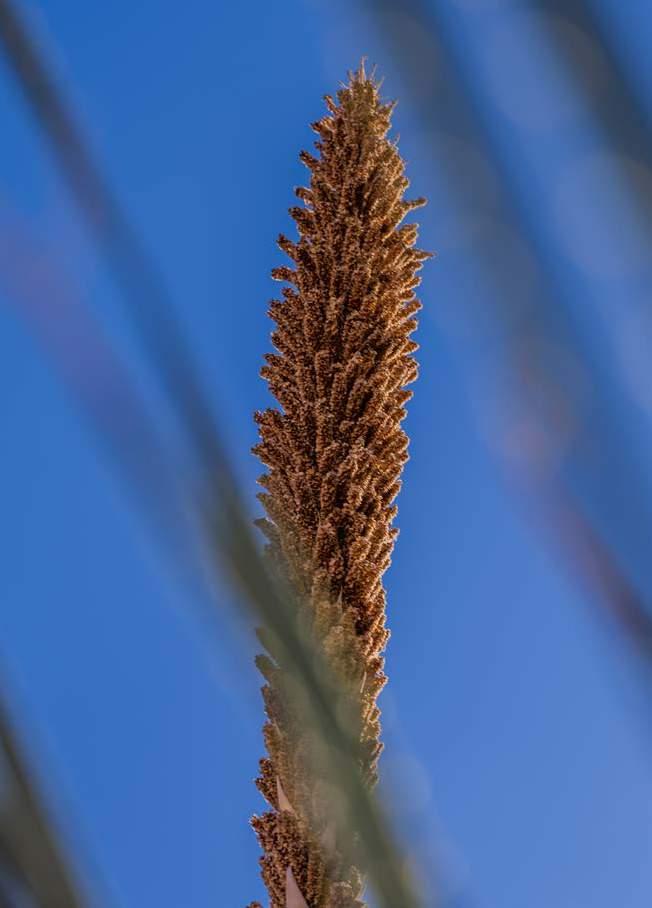
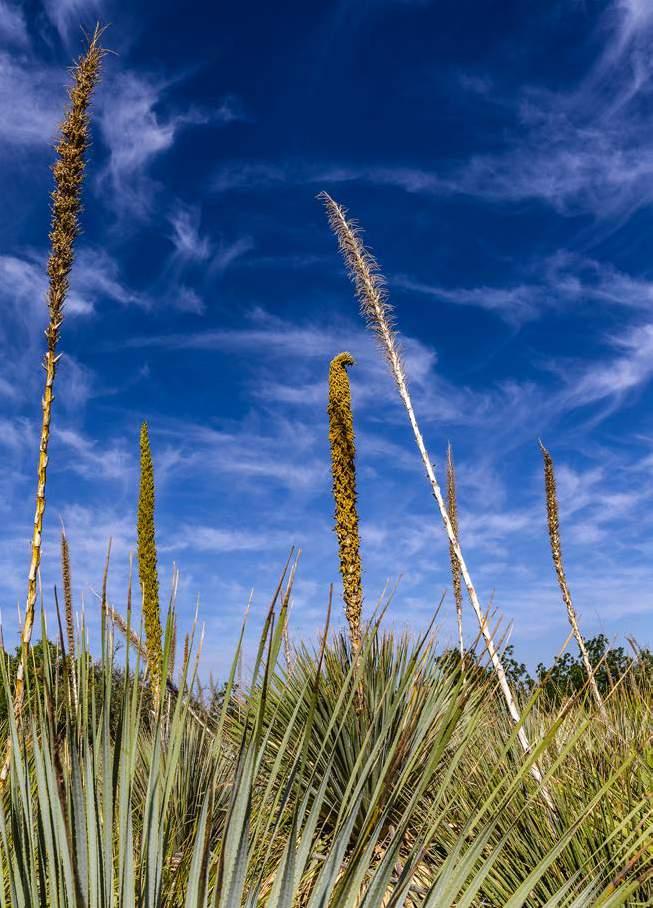
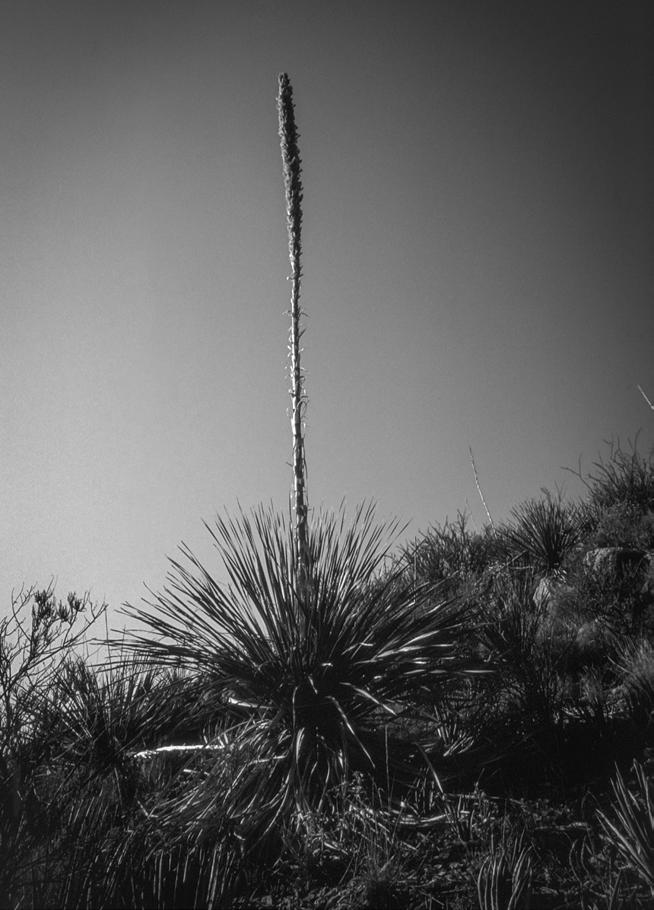
Las plantas de sotol son muy difíciles de regenerar y por lo tanto de domesticar. El proceso de reproducción no es constante –al menos no se conocen estudios que así lo señalen–, por lo que cada planta es un prodigio.[3] Su ciclo reproductivo se anuncia con el brote de un quiote o espiga floral, que puede alcanzar hasta cuatro metros de altura. Sus flores son pequeñas y resistentes, en colores blanco, amarillo, verde y otras tonalidades que contienen el estambre o los pistilos, según se trate de plantas masculinas o femeninas. La fecundación se desarrolla por medio de polinización y para que cada planta levante inflorescencia deben pasar cinco años, al menos.
Sotol plants are very difficult to regenerate and, as a result, to domesticate. The reproduction process is not constant. At no known studies indicate that it is, so each plant is a prodigy.[3] Its reproductive cycle is announced with the sprouting of a quiote or flower stalk, which can reach up to four meters in height. Its flowers are small and resistant, in white, yellow, green, and other shades, containing the stamen or pistils, depending on whether they are male or female plants. Fertilization takes place by means of pollination, and at least five years must pass before each plant raises an inflorescence.
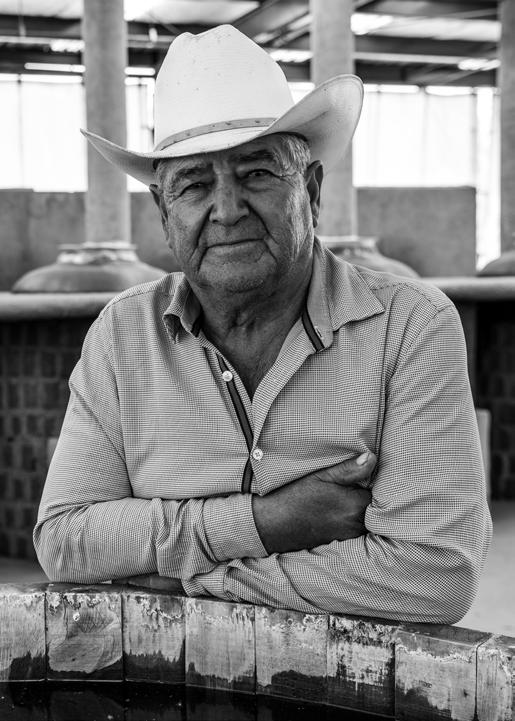
EDUARDO ARRIETA:
“MI ABUELO,BISABUELO, APÁ Y MI TÍO;
LOS ARRIETA HEMOS ESTADO CON EL SOTOL POR GENERACIONES. ES LO QUE HACEMOS”.
My great-grandpa, grandpa, dad, and my uncle. The Arrietas have been working with sotol for generations. It’s just what we do.
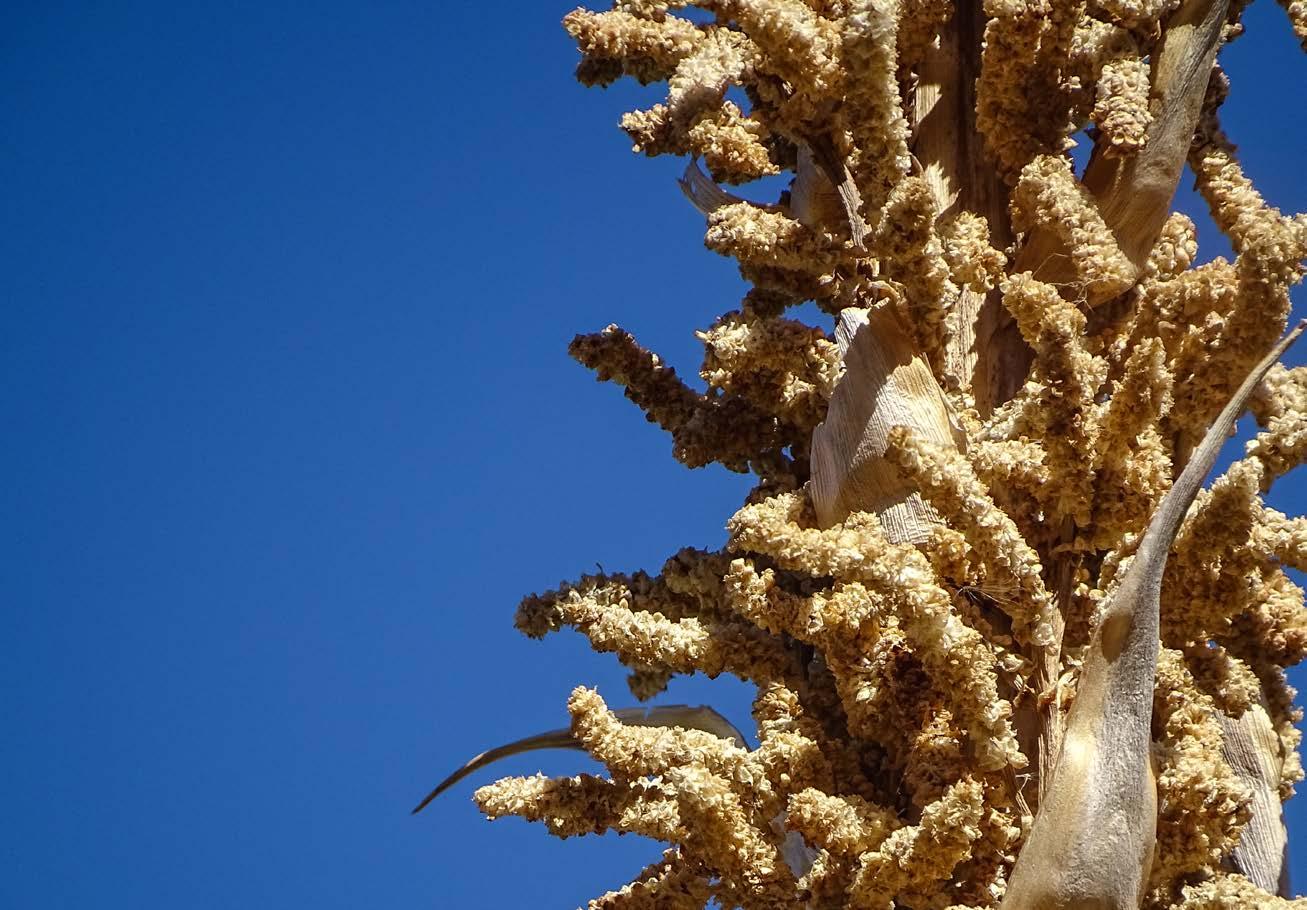
Its reproductive cycle is announced with the sprouting of a quiote or flower stalk.
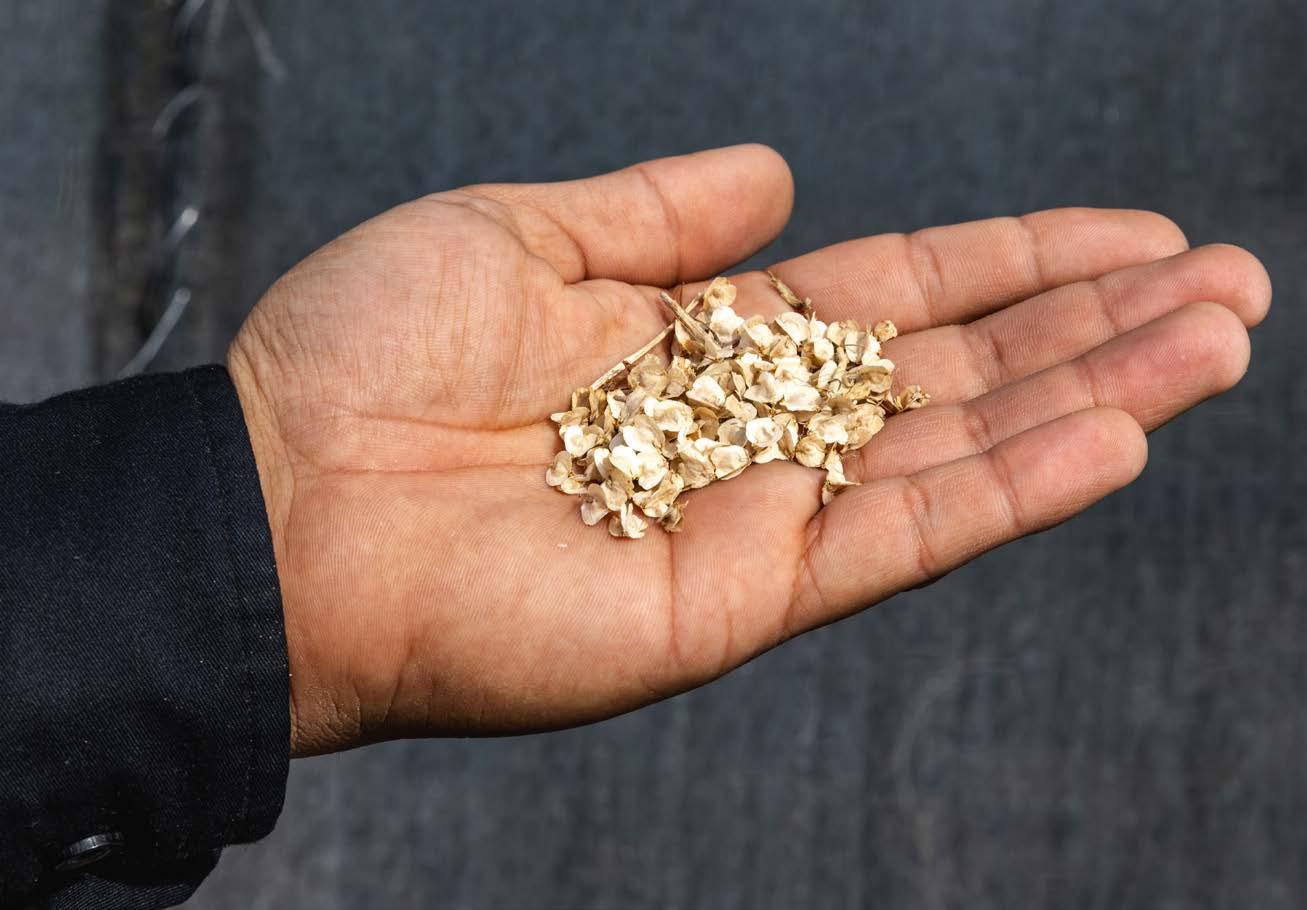
Semillas de sotol (Dasylirion), fábrica Hacienda de Chihuahua, Delicias. Sotol seeds (Dasylirion), Hacienda de Chihuahua distillery, Delicias.
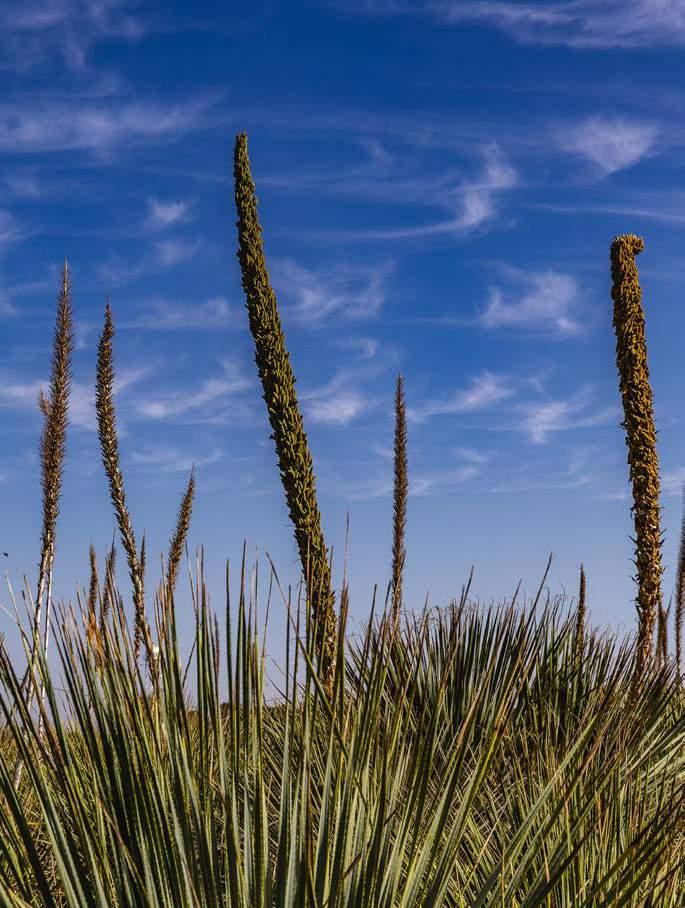
La polinización ocurre principalmente por acción del viento, aunque también participan diversas especies animales, como abejas, avispas y mariposas. Se considera posible que aves migratorias, como calandrias, carpinteros o colibríes, también contribuyan al proceso. Así mismo, algunos mamíferos, como murciélagos, tlacuaches y ciertos roedores, podrían desempeñar un papel importante en la polinización, ya que, al alimentarse de las flores, sus cuerpos se llenan de polen que luego dispersan. También comen las semillas que son puestas en el suelo a través de sus heces, favoreciendo así la reproducción de la planta.[4]
Se sabe que existen más de veinte especies de Dasylirion o sotol. En el estado de Chihuahua se encuentran sobre todo cinco de ellas y dos variedades: Wheeleri, Sereque, Leiophyllum –variedades Leiophyllum y Glaucum–, Cedrosanum y Durangense [5], que se utilizan para producir una tradicional bebida destilada del mismo nombre que la planta. Eso sucede principalmente en cuatro regiones: Coyame, que comprende los municipios de Ojinaga, Coyame, Aldama y Chihuahua; Jiménez, que incluye el municipio homónimo y Camargo; Valle Zaragoza, con la localidad del mismo nombre, y Satevó; Madera, que abarca a Janos, Casas Grandes, Buenaventura, Ignacio Zaragoza y Madera. Aunque, por supuesto, el licor se elabora en muchos otros sitios del estado.
El sotol tiene relaciones simbióticas con otras especies vegetales con las que convive. En el paisaje puede verse cerca de otras plantas, tales como yuca, ocotillo, guayule –fuente natural de caucho–, candelilla –conocida también como la planta de la cera, nombrada así por sus tallos altos y rectos, recubiertos de cera que semejan velas y, en ocasiones, se quemaban directamente para iluminar–, gobernadora, nopales, biznaga, sangregrado, lechuguilla –que también se utiliza para elaborar una bebida destilada–, entre muchas otras, que permiten apreciar que en el desierto también hay diversidad, belleza, fuerza y resiliencia. El sotol representa más que una planta característica del norte mexicano, es un componente vital de los ecosistemas áridos y semiáridos, una especie adaptada a condiciones extremas cuya presencia ayuda a fijar el suelo, dar alimento y cobijo a diferentes especies animales. Debido a su resistencia y longevidad, es un indicador ambiental del territorio que habita. Comprender y valorar su importancia ecológica es menester para garantizar su conservación, dada su difícil regeneración y lenta maduración.
Pollination occurs mainly by wind, although various animal species, such as bees, wasps, and butterflies, also participate. It is considered possible that migratory birds, such as larks, woodpeckers, and hummingbirds, may also contribute to the process. Likewise, some mammals, such as bats, opossums, and other rodents, could play an important role in pollination, since, by feeding on the flowers, their bodies fill with pollen, which they then disperse. They also eat the seeds, which are later deposited into the soil through their feces, helping the plant reproduce.[4]
It is known that there are more than twenty species of Dasylirion, or sotol. In the state of Chihuahua, five main species and two varieties are primarily found: wheeleri, sereque, leiophyllum (with the leiophyllum and glaucum varieties), cedrosanum, and duranguense.[5] All of these are used to produce the traditional distilled beverage that shares its name with the plant. Production occurs mainly in four regions: Coyame, which includes the municipalities of Ojinaga, Coyame, Aldama, and Chihuahua; Jiménez, which includes the municipality of the same name and Camargo; Valle Zaragoza, which includes the town of the same name and Satevó; and Madera, which includes Janos, Casas Grandes, Buenaventura, Ignacio Zaragoza, and Madera. Of course, the liquor is also produced in many other parts of the state.
Sotol has symbiotic relationships with other plant species with which it coexists. In the landscape, it can be seen growing near other plants such as yucca, ocotillo, guayule (a natural source of rubber), candelilla, also known as the wax plant, named for its tall, straight stems coated in wax that resemble candles and were sometimes burned directly for light; gobernadora, nopales, biznaga, sangregrado, and lechuguilla, which is also used to produce a distilled spirit, among many others. These plants reveal that the desert, too, holds diversity, beauty, strength, and resilience.
Sotol represents more than a plant characteristic of northern Mexico; it is a vital component of arid and semi-arid ecosystems. It is a species adapted to extreme conditions whose presence helps to fix the soil and provide food and shelter to different animal species. Due to its resistance and longevity, it is an environmental indicator of the territory it inhabits. Understanding and valuing its ecological importance is necessary to guarantee its conservation, given its difficult regeneration and slow maturation.
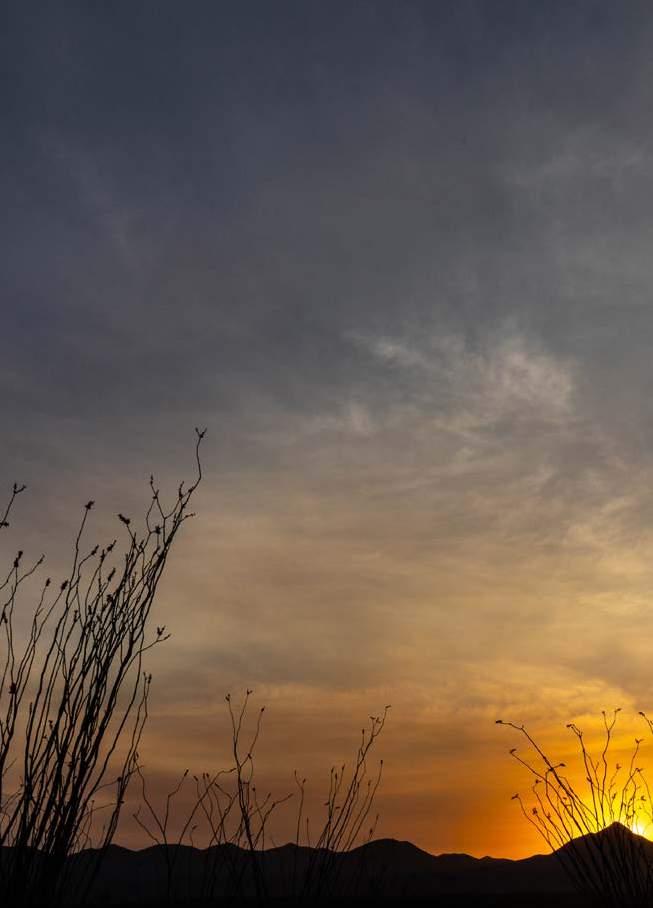
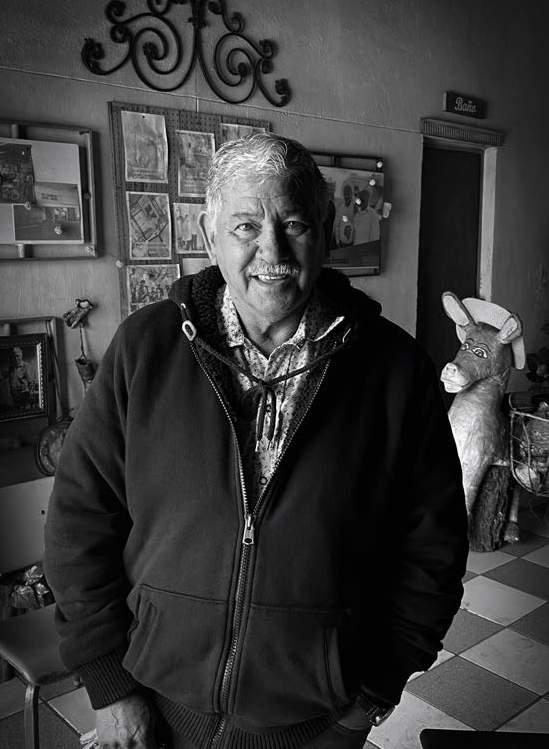
BIENVENIDO FERNÁNDEZ:
“EL SOTOL ES HISTORIA, ES LUCHA, RESISTENCIA”.
Sotol is history, struggle, resilience.
¡A tomar!… en cuenta acerca del sotol
A Closer Look and a Taste of Sotol
RESULTA QUE EL sotol no es un agave, como mucho tiempo se creyó. Estudios han demostrado que está más bien relacionado con… ¡los espárragos! Su nombre científico es Dasylirion, proviene del griego dasys –peludo, despeinado, denso– y lirion –lirio–, que hace alusión a la forma de la planta. Originalmente estuvo clasificado dentro de la familia Lilaceae y después en el género de las Agavaceae, pero actualmente se ubica en la familia Asparagaceae y subfamilia Nolinaceae. [6]
Las cabezas de la planta se utilizan para hacer un destilado que tiene gran arraigo en la región. Es importante considerar que derivado de la confusión con el agave, a este licor se le ha nombrado también mezcal, sotol-mezcal o mezcal de sotol. Muchos solían confundirlo con esta bebida y con el tequila.
IT TURNS OUT that sotol is not an agave, as was long believed. Studies have shown that it is more closely related to... asparagus! Its scientific name is Dasylirion, from the Greek dasys (hairy, unkempt, dense) and lirion (lily), which alludes to the shape of the plant. It was originally classified within the family Liliaceae and later in the genus Agavaceae, but it is currently placed in the family Asparagaceae and the subfamily Nolinaceae. [6]
The heads of the plant are used to make a distillate that is deeply rooted in the region. It is important to consider that, derived from the confusion with agave, this liquor has also been called mezcal, sotol-mezcal, or mezcal de sotol. Many used to confuse it with this drink and with tequila.
«A ver, a ver… Yo respeto mucho al mezcal y al tequila, pero no somos lo mismo. Yo soy el pariente norteño… más fuerte, más rico, con mejor cuerpo. ¡No somos iguales!».
“Listen, listen... I have a lot of respect for mezcal and tequila, but we are not the same. I’m the northern cousin—bolder, richer, with a better body. We are not the same!”
Al sotol también se le llamó con los nombres genéricos de aguardiente y ‘vino de tierra’. Estas denominaciones se utilizaban para designar diversas bebidas hechas con productos autóctonos, pues antaño, cuando se hablaba desde una perspectiva administrativa en documentos, no se distinguían las variedades del todo. Por ello, pese a que la producción del sotol comienza a percibirse en registros con ese nombre durante el siglo XIX, es más probable que su proceso de destilado sea anterior.
Sotol was also referred to by the generic names aguardiente and “vino de tierra” (earth wine). These names were used to refer to various beverages made from native ingredients, since in earlier times, when speaking from an administrative perspective in official documents, the different varieties were not clearly distinguished. For this reason, although sotol production began to appear in records under that name in the nineteenth century, it is more likely that its distillation process dates back even further.
A otras bebidas típicas de la región también se les ha llamado sotol; por ejemplo, a la lechuguilla o churique,[7] licor distinto a este, (aunque a veces se mezclan). Ambas son fascinantes por su proceso de elaboración, la transmisión de conocimientos que llevan consigo y por su carácter único, pero solo el sotol es reconocido como ‘tradicional’ (muy recientemente), por el discurso legal, creador de identidad y mercado. El proceso de reconocimiento del destilado como bien patrimonial es muy reciente. Desde finales del siglo XIX y principios del XX, a este brebaje se le asignaron una serie de características peyorativas, derivado de discursos elitistas, modernizadores e higienistas que veían con severidad prácticas de sectores populares. Particularmente, el consumo de sotol era asociado a la criminalidad y decadencia moral. Dicha estigmatización no respondía tanto a hechos concretos, sino a prejuicios profundamente arraigados. Desde esta lógica, elaborar o beber sotol se convirtió en síntoma de un mal mayor: una supuesta incapacidad de algunos sectores para adaptarse al modelo de ciudadano ideal. Reglamentos, circulares y decretos locales –como los implementados en Chihuahua– sirvieron para reforzar un control sobre la vida cotidiana, en un intento de transformar, a través de la norma y la estigmatización, lo que no se supo o no se quiso comprender desde la diferencia cultural.[8]
“Vas a quedarte ciego si lo tomas” se hizo una sentencia común. Hubo un miedo latente a la bebida elaborada sin regulación, con altos porcentajes de alcohol. Su consumo se relacionó también con lo salvaje, incivilizado: “[…] lo mismo es comer carne humana que beber mezcal de zotol […]”,[9] aseguraba el periódico El partido liberal, en 1888. Evocaciones de barbarie y propensión a la violencia se encontraban también en notas de la prensa norteamericana, que señalaban: “[…] Los métodos educativos en México siguen más de cerca las peleas de gallos, el consumo de sotol y la plaza de toros[…]. Los pasatiempos de una nación, en gran medida, ilustran su grado relativo de avance en la escala de la civilización, […] alcanzan un límite bárbaro que prácticamente ningún otro país en el mundo ha logrado. Por lo tanto, con una horda semibárbara, naturalmente dotada con la pasión por el estilo de lucha guerrillera, los líderes mexicanos tienen poca dificultad en iniciar una revolución en casi cualquier momento”.[10] Los anuncios de nota roja resaltaban la presencia del sotol en ataques con hachas, asesinatos y riñas callejeras. Así, el licor fue erigido como incitador a la violencia, brutalidad e insensatez. En 1911 un periódico tejano señalaba: “Una sola gota de sotol haría que un conejo saliera de su madriguera y peleara con un bulldog”.[11]
SOTOL, FRUTO DEL DESIERTO
Como te iba diciendo… el sotol es el fruto del desierto. Puedes prepararlo asado, hervido, horneado, salteado. Hay sotol artesanal, sotol industrial, sotol joven, sotol reposado, sotol añejo, sotol curado, sotol de víbora, sotol con alacrán, sotol de sabores frutales: piña, cítricos, arándano, manzana, pepino. También hay carnei de res, de chivo; sotol con lechuguilla. Además, crema de sotol con nuez, con piñón, con fresa, con vainilla, con chocolate, con café. También, sotol con marihuana, sotol con peyote, sotol con marihuana y peyote, sotol con damiana, con menta, con hierbabuena, sotol con canela, con jamaica. Sotol con sal y limón, con naranja y chilito, con tamarindo y chamoy. Sotol ahumado, sotol blanco. Sotol wheeleri, leiophyllum, cedrosanum. Sotol de cabeza, sotol de aroma, sotol de corazón, aguacolas, puntas. Puedes tomarlo en cocteles, como sotolitas (margaritas), sotolinis, (martinis) y sotolillos (carajillos). Puedes beberlo derecho, en las rocas, en shots, a sorbitos… Ya está… creo que eso es todo.
SOTOL, FRUIT OF THE DESERT
As I was saying… sotol is the fruit of the desert. It can be roasted, boiled, baked, or sautéed. There is artisanal sotol, industrial sotol, joven sotol, reposado sotol, añejo sotol, infused sotol, snake sotol, scorpion sotol, and sotol with fruit flavors: pineapple, citrus, blueberry, apple, and cucumber. There is also beef and goat carnei; sotol with lechuguilla. You will find sotol creams too, with walnuts, pine nuts, strawberries, vanilla, chocolate, and coffee. There is also sotol with marijuana, sotol with peyote, sotol with marijuana and peyote, sotol with damiana, mint, spearmint, cinnamon, and jamaica. Sotol with salt and lime, orange and chili, and tamarind with chamoy. Smoked sotol, sotol blanco, sotol wheeleri, leiophyllum, and cedrosanum. Head sotol, aromatic sotol, heart sotol, aguacolas, puntas. You can drink it in cocktails, like sotolitas (margaritas), sotolinis (martinis), and sotolillos (carajillos). You can drink it straight, on the rocks, in shots, or sip it slowly… That is it, I think that’s everything.
Other traditional regional beverages have also been called sotol—for example, lechuguilla or churique[7], which are distinct liquors (though they are sometimes mixed). Both are fascinating for their production process, the transmission of knowledge they carry, and their unique character. However, only sotol has been recognized as “traditional” (and only recently) by the legal discourse that shapes identity and market.
The recognition of the distilled spirit as a cultural asset is a very recent development. Since the late nineteenth and early twentieth centuries, this beverage was assigned a series of pejorative characteristics, stemming from elitist, modernizing, and hygienist discourses that viewed the practices of popular sectors with severity. In particular, sotol consumption was associated with criminality and moral decadence. This stigmatization is not connected to concrete facts, but to rather deeply rooted prejudices. From this logic, brewing or drinking sotol became a symptom of a greater evil: a supposed inability of some sectors to adapt to the model of the ideal citizen. Regulations, circulars, and local decrees—such as those implemented in Chihuahua— served to reinforce control over daily life in an attempt to transform, through regulation and stigmatization, what was neither understood nor accepted as cultural difference.[8]
“You’re going to go blind if you drink it” became a common expression. There was a latent fear of the drink made without regulation, with high percentages of alcohol. Its consumption was also related to the savage and uncivilized: “[...] it is the same to eat human flesh as to drink mezcal de zotol [...]”[9], stated the newspaper El Partido Liberal in 1888. Evocations of barbarism and propensity to violence were also found in notes from the North American press, which stated: “[...] Educational methods in Mexico follow more closely to cockfighting, the consumption of sotol and the bullring [...]. A nation’s pastimes, to a large extent, illustrate its relative degree of advancement in the scale of civilization, [...] they reach a barbaric limit that practically no other country in the world has achieved. Thus, with a semi-barbaric horde, naturally endowed with a passion for the guerrilla style of fighting, Mexican leaders have little difficulty in starting a revolution at almost any time.”[10] Sensationalist crime reports highlighted the presence of sotol in hatchet attacks, murders, and street brawls. In this way, the liquor was cast as an inciter of violence, brutality, and recklessness. In 1911, a Texas newspaper noted, “A single drop of sotol would make a rabbit come out of its burrow and fight a bulldog.”[11]
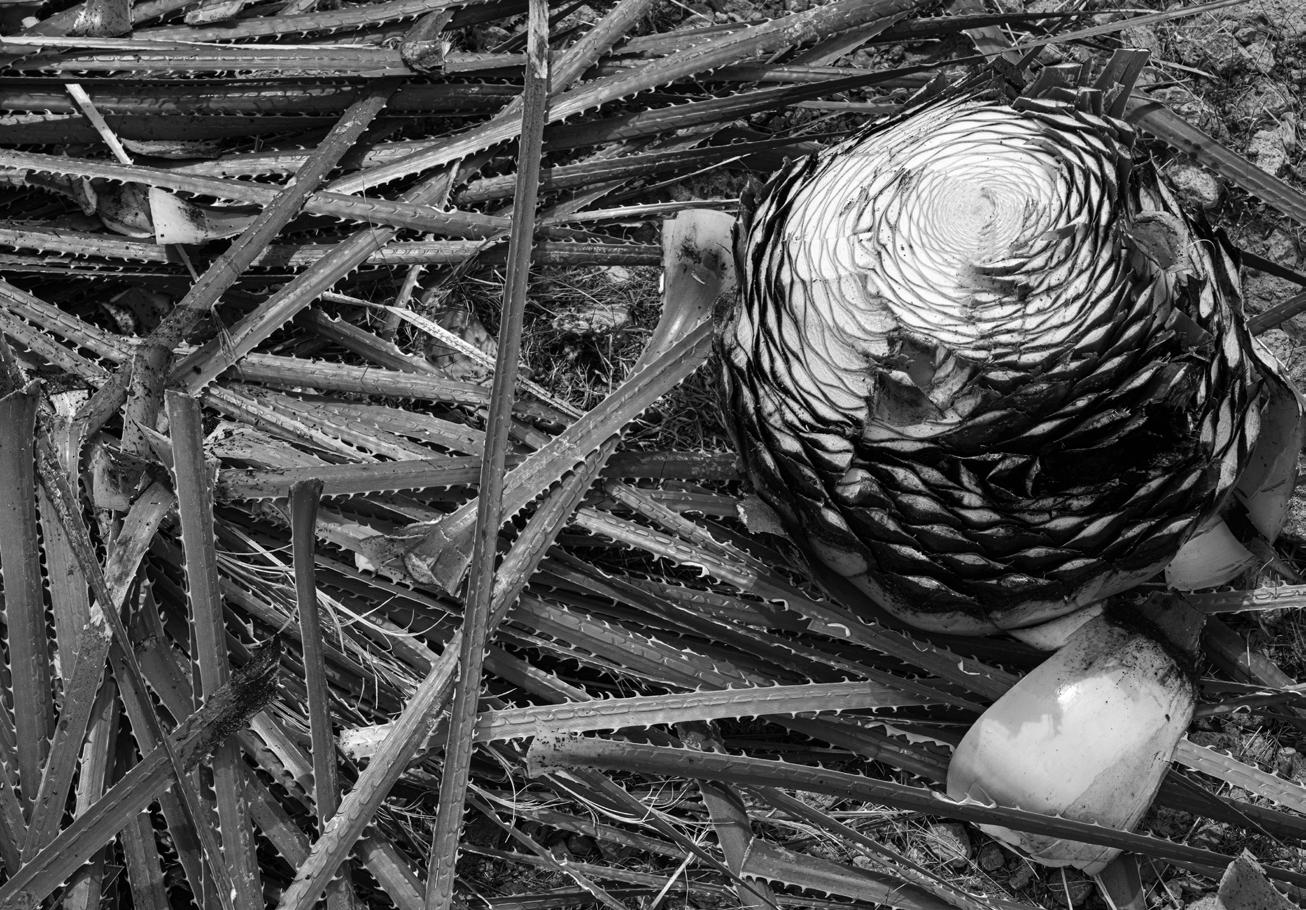
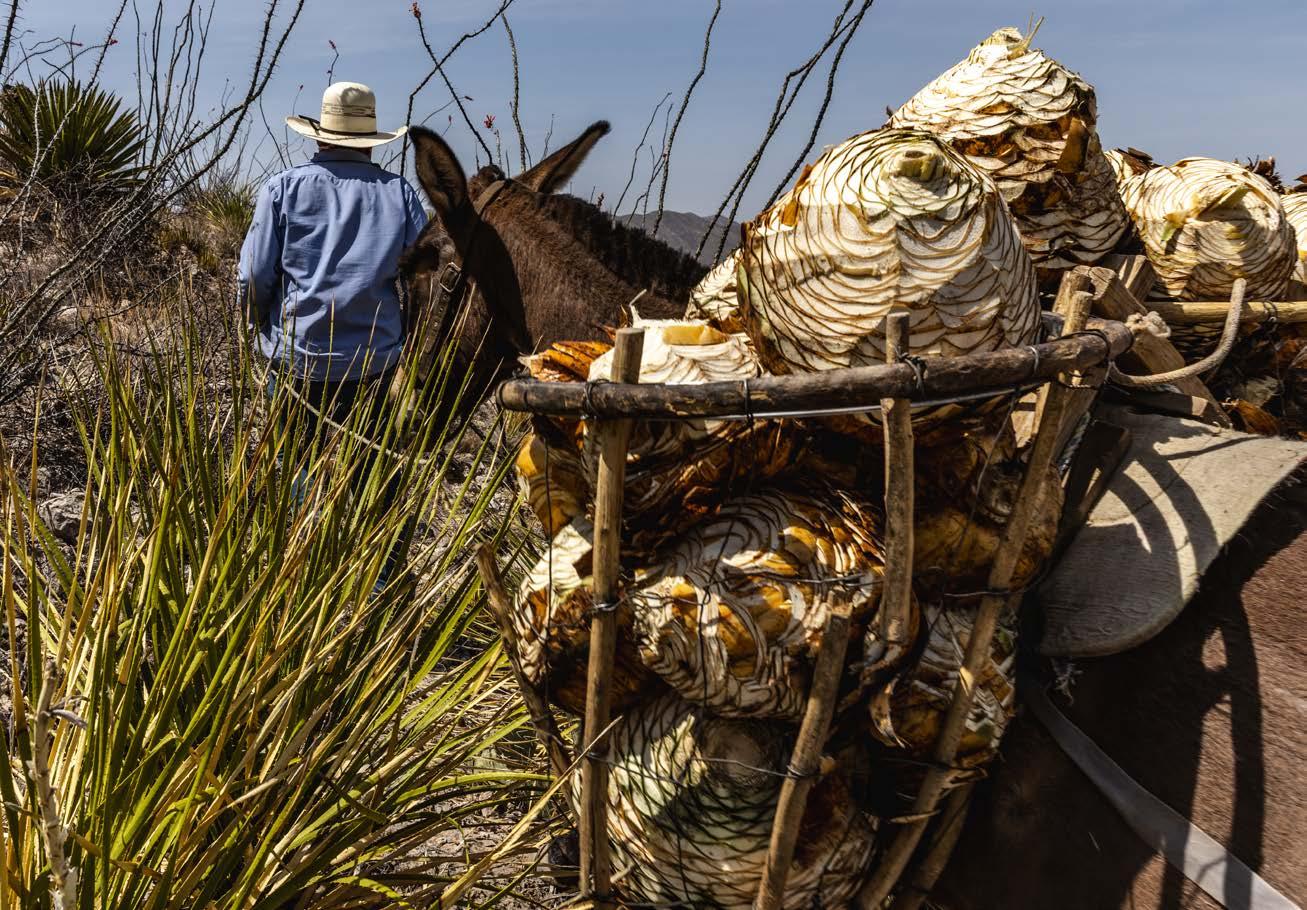
Tumbado de cabezas de sotol, Salvador Derma, Chorreras, municipio de Aldama. Harvesting sotol heads, Salvador Derma, Chorreras, Aldama municipality.
Donde los recursos
son escasos y la cotidianidad requiere particular ingenio, el sotol ha sido vital.
Where resources are scarce and daily life requires particular ingenuity, sotol has been vital.
Desierto de Samalayuca. Samalayuca Desert.
Más allá de su uso como licor, la tradición popular le atribuye al sotol diversas propiedades medicinales. Aunque de ninguna manera este texto debe ser tomado como una recomendación médica, cabe señalar que se le adjudica ser buen remedio para el resfrío y males reumáticos, ya sea bebido o como ungüento.
Existe una preparación conocida como ‘curado’, que tiene extractos de plantas, como valeriana, damiana, chuchupate, gobernadora, hierba de la víbora, hierba de zorrillo, manzanilla, hierba anís, incluso, a veces marihuana y peyote.[12] Al que tiene damiana, se le atribuyen propiedades afrodisiacas y potenciadoras de la fertilidad; así mismo, hay remedios caseros con sábila y miel para males de la próstata.
Donde los recursos son escasos y la cotidianidad requiere particular ingenio, el sotol ha sido vital. No solo se utilizó su corazón como alimento, sino que sus hojas se emplearon en la fabricación de muebles tejidos, en la construcción y techumbre de las casas, en la fabricación de utensilios domésticos, como cubiertos y escobas. También a partir de la planta se ha producido jabón.[13] Alimento para el ganado, azúcar, melaza, incluso papel se suman a sus bondades multifacéticas.
Para comprender el rol del sotol en las comunidades, ayudaría mucho caminar por la vastedad del desierto y sentir su aridez implacable, porque así se percibe que no es solo una planta: es abrigo, alimento, herramienta, memoria. Aliado silencioso de generaciones enteras.
Beyond its use as a liquor, popular tradition attributes various medicinal properties to sotol. Although in no way should this text be taken as a medical recommendation, it should be noted that it is said to be a good remedy for colds and rheumatic ailments, either drunk or as an ointment. There is a preparation known as ‘curado’, which has plant extracts, such as valerian, damiana, chuchupate, gobernadora, hierba de la víbora (snake herb), hierba de zorrillo (fetid goosefoot), chamomile, hierba anís, even sometimes marihuana and peyote.[12] The one with damiana is attributed to aphrodisiac and fertility-enhancing properties; likewise, there are home remedies with aloe vera and honey for prostate ailments.
Where resources are scarce and daily life demands particular ingenuity, sotol has been vital. Not only was its heart used as food, but its leaves were also employed in the making of woven furniture, in house construction and roofing, and in the production of household items such as cutlery and brooms. Soap has also been made from the plant.[13] Livestock feed, sugar, molasses, and even paper further add to its many uses.
To understand the role of sotol in the communities, it would help to walk through the vastness of the desert and feel its implacable aridity, because in this way it is perceived that it is not only a plant: it is shelter, food, tool, and memory. It is the silent ally of entire generations.

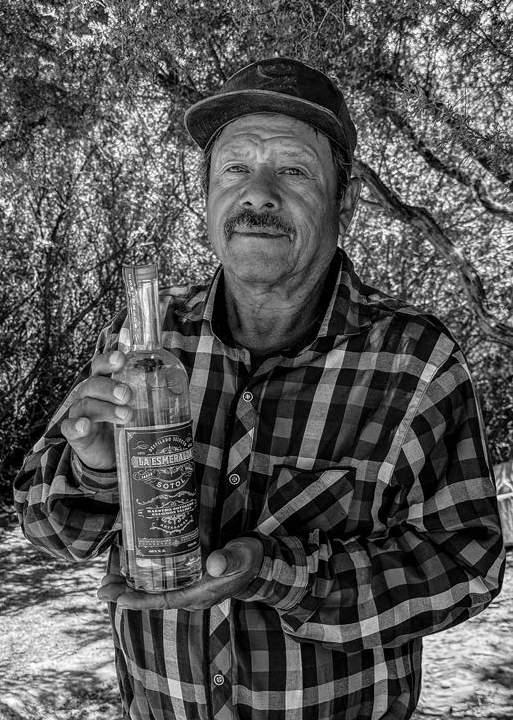
SALOMÓN VALDÉZ:
“EL SOTOL ES FUENTE DE TRABAJO Y ESTOY MUY AGRADECIDO POR ESO. NOS HA HECHO FUERTES”.
Sotol gives us a job, and I’m really grateful for that. It made us stronger.
Nutrir, sanar, ofrendar
Uso en comunidades originarias
HABLAR ACERCA DE comunidades originarias ancestrales en el norte de México implica enfrentarse a retos múltiples. Por una parte, debido a cierta visión despectiva que primó durante mucho tiempo, incluso en ámbitos académicos, hay pocos estudios en comparación con otras regiones respecto a los pueblos nómadas, asumidos como incivilizados, en contraste con los sedentarios. En palabras de Ruth Castro: “[…] es no entender que la lógica del desierto obliga a que este se habite de un modo distinto. Precisamente son las características climatológicas las que condicionaron que la vida fuera errante, que su alimentación respondiera a las cosechas naturales y a los recursos de cada estación y que sus tradiciones en general dependieran de sus formas de sobrevivencia”.[14] Por otro lado, debido a esas características, sus formas de vida son difíciles de aprehenderse. ¿Qué puede saberse de estos grupos humanos en relación con el sotol, con poca arqueología y aún menos documentación histórica?
Nourish, Heal, Offer
Use in Native Communities
TALKING ABOUT ANCESTRAL native communities in northern Mexico implies facing multiple challenges. On the one hand, because of a long-standing derogatory view, even in academic circles, there are few comparative studies with other regions regarding nomadic peoples, who were assumed to be uncivilized compared to sedentary ones. In the words of Ruth Castro: “[...] it is a failure to understand that the logic of the desert demands that it be inhabited in a different way. It is precisely the climate that determined a nomadic way of life, a diet based on natural harvests and seasonal resources, and traditions shaped entirely by the need to survive.” [14] On the other hand, their ways of life are difficult to understand because of these same characteristics. What is known about these human groups in relation to sotol, with little archaeology and even less historical documentation?
«Yo podría contarles todo, si supieran escucharme. Aunque nadie escribió mis nombres, me llevaban en la sangre y en la voz. Puedo recordar lo que ustedes apenas están empezando a descubrir».
“I could tell you everything if you knew how to listen to me. Although no one wrote my names, they had me in their blood and their voice. I can remember what you are just beginning to discover.”
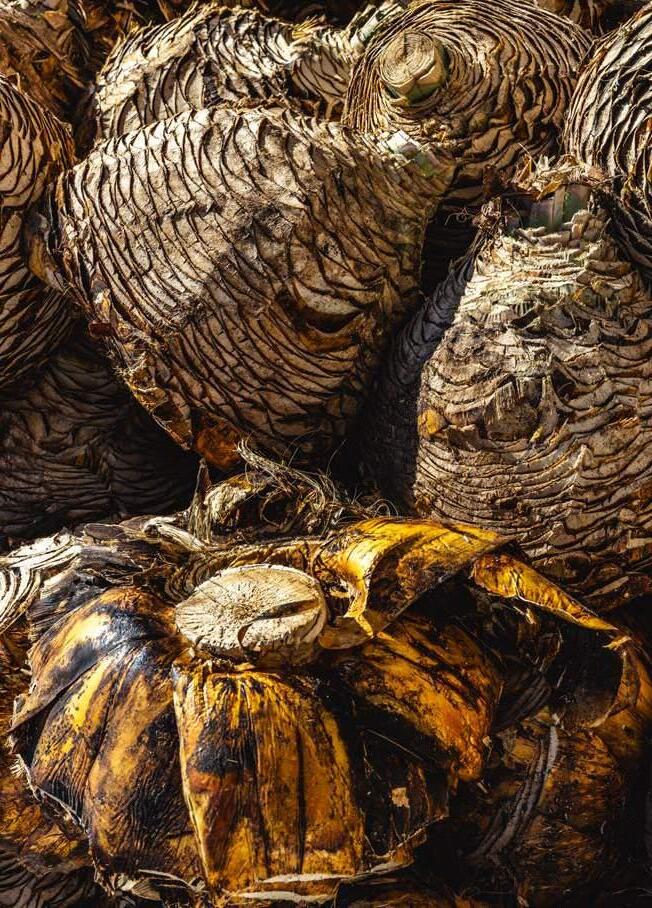
Las cabezas de sotol fueron ampliamente usadas como fuente de alimento por los primeros pobladores de lo que hoy es Chihuahua, Coahuila, Texas y Nuevo México. En distintas excavaciones se han encontrado residuos de Dasylirion en fibras de excrementos humanos fosilizados, con antigüedad de miles de años [15]. Los pápagos, kikapoos y zuni empleaban las cabezas de sotol como alimento después de cocerlas, también preparaban con estas una harina para elaborar panes o tortillas. Los nómadas de la región de Pecos, desde el 5000 a. C. lo utilizaban como materia prima para tejer sandalias y cestas. Su uso ha permanecido casi intacto: sigue siendo comida tanto para personas como para animales, sirve a la construcción de viviendas, para elaboración de bebidas alcohólicas y también tiene propósitos rituales.[16]
Los pápagos, kikapoos y zuni empleaban las cabezas de
sotol
como alimento.
The heads of the Sotol plants were widely used as a food source by the early settlers of what is now Chihuahua, Coahuila, Texas, and New Mexico. In various excavations, residues of Dasylirion have been found in fossilized human excrement fibers, that are thousands of years old. [15] The Papagos, Kikapoos, and Zuni used the heads of sotol as food after cooking and also prepared them into flour to make bread and tortillas. The nomads of the Pecos region, since 5000 B.C., used it as raw material to weave sandals and baskets. Its use has remained almost unchanged. It is still used as food for both people and animals, it is used in the construction of houses, for making alcoholic beverages, and also for ritual purposes. [16]
En el desierto de Chihuahua, cerca de la Hacienda de los Remedios, en Jiménez, existen petroglifos creados por grupos de cazadores-recolectores mucho antes de la llegada de los españoles, que podrían estar relacionados con la cultura Mogollón. En ellos parecen estar representados motivos vegetales y una figura antropomorfa en la que lo más notable es la sustitución de la cabeza humana por una forma que recuerda al sotol: un conjunto de líneas divergentes, afiladas y simétricas que emulan sus hojas puntiagudas.
In the desert of Chihuahua, near the Hacienda de los Remedios in Jiménez, there are petroglyphs created by hunter-gatherer groups long before the arrival of the Spaniards, which could be related to the Mogollón culture. They seem to depict plant motifs and an anthropomorphic figure in which the most notable feature is the replacement of the human head with a form reminiscent of the sotol: a set of divergent, sharp, and symmetrical lines that emulate its pointed leaves.
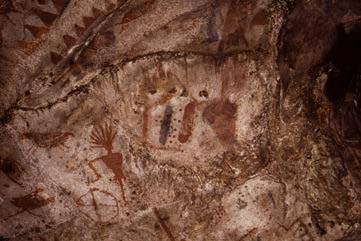
Petroglifo, figura con cabeza de sotol, municipio de Jiménez. Petroglyph featuring a sotol head figure, Jiménez municipality.
The Papagos, Kikapoos, and Zuni used the heads of sotol as food
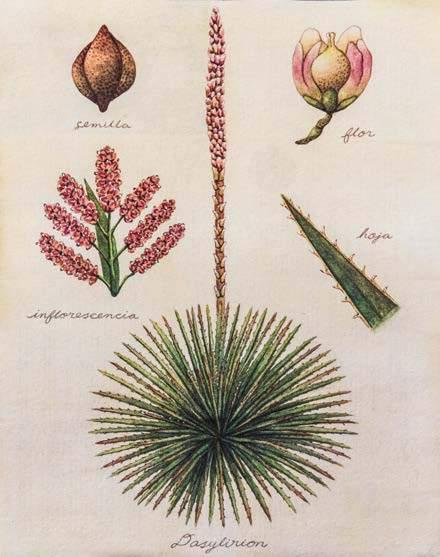
Ilustración de Dasylirion del libro El Sotol. Una historia de árido mestizaje, de Ruth Castro. Illustration of dasylirion from the book “Sotol: A Story of Arid Crossbreeding,” by Ruth Castro.
El sotol es un componente vital de los ecosistemas áridos y semiáridos
Sotol is a vital component of arid and semi-arid ecosystems.
En los años treinta del siglo XX, investigadores del Smithsonian, liderados por Frank M. Setzler (curador en jefe del departamento de antropología de la institución), descubrieron en el oeste de Texas, cerca de Dryden, una cueva de dieciocho metros de ancho por doce de profundidad, excavada en un acantilado de piedra caliza que aparentemente era utilizada como “brewery” ceremonial (cabe destacar que persiste una discusión académica sobre si las comunidades originarias destilaban bebidas alcohólicas o solo las fermentaban). Descubrieron puntas de flecha, raspadores y cuchillos de piedra. Frente a la cueva había una anormalmente numerosa acumulación de piedras para cocinar, además de grandes depósitos de cenizas de sotol. Adentro, encontraron una roca con un agujero perforado que puede haber sido utilizada como hervidor.[17] De igual forma, en la Cueva de la Olla, ubicada al noroeste del estado de Chihuahua, se han encontrado restos de la planta del sotol en el ‘granero’ donde lo almacenaban, junto con otros alimentos básicos. La antigüedad del sitio se ha estimado entre el 1060 y 1205 d. C.[18] Por otra parte, en el sitio arqueológico de Paquimé, en el actual municipio de Casas Grandes, que data del 205 al 1260 d. C. se encuentran vestigios de hornos hechos con piedra volcánica. El espacio fue nombrado Casa de los Hornos a partir de los estudios de Charles Di Peso y comprende cuatro hornos subterráneos de dos metros de profundidad por tres metros de diámetro, utilizados para cocer grandes cantidades de sotol y agaves para elaborar bebidas fermentadas. Gracias a estas investigaciones se sabe también que las semillas del Dasylirion eran utilizadas para alimentar aves domésticas.[19]
In the 1930s, researchers from the Smithsonian, led by Frank M. Setzler, chief curator of the institution’s Department of Anthropology, discovered a cave near Dryden in West Texas, measuring eighteen meters wide and twelve meters deep, carved into a limestone cliff. The cave appeared to have been used as a ceremonial “brewery.” It is worth noting that an academic debate persists over whether Indigenous communities distilled alcoholic beverages or only fermented them. They discovered arrowheads, scrapers, and stone knives. In front of the cave, there was an abnormally large accumulation of cooking stones and large deposits of sotol ashes. Inside, they found a rock with a perforated hole that may have been used as a kettle. [17] Similarly, in the Cueva de la Olla , located in the northwestern part of the state of Chihuahua, remains of the sotol plant have been found in the “granary” where it was stored along with other staple foods. The age of the site has been estimated to be between 1060 and 1205 AD.[18]
On the other hand, at the archaeological site of Paquimé, located in the current municipality of Casas Grandes, dating from 1260 to 1205 A.D., there are vestiges of ovens made with volcanic stone. The space was named Casa de los Hornos (House of the Ovens) after studies by Charles Di Peso and includes four subway ovens, two meters deep by three meters in diameter, used to cook large quantities of sotol and agaves to make fermented beverages. Thanks to these investigations, it is also known that the Dasylirion seeds were used to feed domestic birds.[19]
Por un informe militar del siglo XVIII enviado al gobernador y capitán general de la Nueva Vizcaya, se conocen algunas prácticas de un grupo indígena al que se denominó cholomes, en las inmediaciones de las haciendas de Aguanueva y Encinillas, cerca de San Felipe el Real de Chihuahua: “Enderecé para los cerros [paraje del Álamo] y en la falda encontré en una piedra lisa con agujeros anchos llenos de agua con mucho bagazo recién molido […] [en el] paraje de la Pastoría en donde halló una casita destechada con un ojo de agua muy abundante, muchos álamos y fresnos, y que en distancia de dos leguas poco más o menos del paraje de la Pastoría hallaron un arroyo hondo algo escondido y en él mucha osamenta de reses y muchos hoyos donde los indios hacían sus barbacoas y de lo cual se infiere ser los cholomes los malhechores”.[20]
Así como estos, otros grupos nómadas, genéricamente conocidos como apaches, practicaban la cocción en hornos como los descritos y molían y fermentaban en hoyos en piedras, como los que pueden verse en las zonas desérticas de Aldama, Coyame, Ojinaga y otras latitudes del estado. De igual forma, los indios lipán apache practicaban la recolección de plantas. La más importante para ellos era el sotol y entre sus pasatiempos estaba fumar tabaco en hojas de este.[21]
Es verdad que los estudios arqueológicos han encontrado recipientes para la fermentación y hornos para la cocción, pero nada prueba que los indígenas del periodo prehispánico en la región lo hubieran destilado para obtener aguardiente.[22] Ese proceso se implementó con la llegada de los españoles.
Es importante mencionar que el sereque es utilizado por la comunidad rarámuri en la Sierra Madre Occidental desde tiempos ancestrales, para elaborar ‘wares’ y otras formas de cestería tradicional. De igual forma es usado en la actualidad para hacer decoraciones en festejos religiosos; los templos católicos se adornan con la flor del sotol durante la Semana Santa. Además, la planta se utiliza con fines rituales entre los pimas durante la celebración del yúmare, un ritual de petición de lluvia y curación, cuyo altar está hecho con flores de sotol.[23]
En resumen, el Dasylirion ha sido clave para la sobrevivencia de los pueblos originarios del norte de México, su presencia en prácticas cotidianas y rituales evidencia una continuidad cultural latente en distintas expresiones. Reconocerlas y estudiarlas permite revalorar el conocimiento ancestral, pero también cuestionar las narrativas que han minimizado la riqueza cultural de la región y de quienes la habitan.
“RUNNING THE CAÑONS OF THE RIO GRANDE”
Los cañones del Río Grande son los más grandes y los menos conocidos. Han sido y siguen siendo los menos accesibles al hombre, y hasta ahora no han sido completamente descritos. […] Se le conoce como un “país árido”; es decir, uno en el que, debido a la falta de agua, la civilización encuentra dificultades para establecerse. Aunque está abundantemente dotado de obras hidráulicas, como arroyos cañoneados, posee una cantidad mínima de agua. Estos grandes arroyos son travesías burlonas, que sugieren que la naturaleza se cansó de formar este país antes de dotarlo de agua. Cada otro aspecto –paisaje, configuración, rocas y vegetación– es raro y de un tipo desconocido para los habitantes de tierras civilizadas. La superficie es una combinación peculiar de llanura desértica, colinas y montañas volcánicas, cuyas proporciones se incrementan por la vasta distancia que la visión alcanza aquí, a través de la atmósfera cristalina. No existe ninguna característica natural que pueda describirse con palabras familiares.
[…] abundan plantas arbustivas, tan extrañas y desconocidas como los nombres que reciben. Cada una de estas plantas está armada con espinas. En cada paso fuera de los senderos marcados, hechos hace siglos por los apaches mescaleros (sic) y los lipanes, esta vegetación maliciosa te hiere, te atrapa, te retiene o te ancla. Además, durante el día, te asas sin piedad bajo 54 °C de sol, y por la noche, te enfrías casi hasta el punto de congelación. […] Nuestro camino transcurría por llanuras cubiertas de hierba seca, de aspecto no desagradable. Más allá, el camino desciende repentinamente desde las llanuras herbosas de las tierras altas hacia uno de los horribles desiertos de ocotillo, característicos de las cuencas exteriores de esta parte del valle del Río Grande. Estas cuencas son antiguas llanuras aluviales […]. Están cubiertas por una vegetación hostil y repulsiva, cuyo rasgo principal es el ocotillo, una planta con pequeñas hojas verdes en tallos largos y delgados que se elevan sobre una subestructura de lechuguilla, cactus, sotol y otras plantas espinosas, como serpientes que emergen de la alfombra de un faquir hindú […].
(Robert T. Hill. The Century magazine, vol. 55, no. 3, enero de 1898, pp. 321–336).
“RUNNING THE CAÑONS OF THE RIO GRANDE”
The canons of the Rio Grande are longest and least known; they have been and still are the least accessible to man, and have not hitherto been fully described. —is known as a “hard country,” that is, one in which, through lack of water, civilization finds it difficult to gain a foothold. Although abundantly supplied with water works, such as scarped and cafioned stream ways, it possesses a minimum of water. These great arroyos are mocking traves ties, which suggest that nature became tired of making this country before turning on the water.
Every other aspect—landscape, configuration, rocks, and vegetation—is weird and strange and of a type unfamiliar to the inhabitants of civilized lands. The surface is a peculiar combination of desert plain and volcanic hills and mountains, the proportions of which are increased by the vast distance which the vision here reaches through the crystalline atmosphere. There is no natural feature that can be described in familiar words.
[…] shrubby plants abound, which are as strange and unfamiliar as the names they bear. Each of these plants is armed with thorns. You are wounded, caught, held, or anchored by this spiteful vegetation at every step away from the beaten trails first made, long centuries ago, by the Mescalero Apaches and the Lipans. One is also roasted unmercifully by day by 130° of sunshine, and cooled almost to the freezing-point at night. These great ex tremes of temperature shatter even the very rocks into fragments.
[…] Our road was over grass-covered but waterless plains of not unpleasing aspect […] the road suddenly descends from the upland grassy plains to one of the horrible ocotillo deserts characteristic of the outer basins of this portion of the Rio Grande valley. These basins are old alluvial plains, covered with gravel and yellow adobe soils, extending far away from the river in successive terraces and reaching five hundred feet above it. They are covered by a spiteful, repulsive vegetation, the chief feature of which is the ocotillo, a plant with small green leaves on longand slenderstalks that reach above a sub structure of lechuguilla, cactus, sotol, and other thorny plants, like serpents rising from a Hindu juggler’s carpet.
Hill, Robert T. The Century Illustrated Monthly Magazine 55, no. 3 (January 1898): 321–336.
A military report from the eighteenth century, sent to the governor and Captain General of Nueva Vizcaya, provides insight into the practices of an Indigenous group referred to as the Cholomes in the vicinity of the Aguanueva and Encinillas estates near San Felipe El Real de Chihuahua: “I headed toward the hills [the area known as El Álamo] and at the base I found a smooth stone with wide holes filled with water and a great amount of freshly crushed bagasse […] [in] the area of La Pastoría, where a small roofless hut was found beside a spring with abundant water, many poplars and ash trees. At a distance of roughly two leagues from La Pastoría, they found a deep and somewhat hidden stream, with many cattle bones and numerous pits where the Indigenous peoples made their barbacoas. From this, it is inferred that the Cholomes were wrongdoers.”[20]
Like these, other nomadic groups, generically known as Apaches, practiced baking in ovens such as those described, and ground and fermented in stone pits like the ones still visible in the desert regions of Aldama, Coyame, Ojinaga, and other areas of the state. Similarly, the Indigenous Lipan Apache practiced plant gathering. The most important for them was sotol, and among their pastimes was smoking tobacco in sotol leaves. [21]
Archaeological studies have indeed found vessels for fermentation and ovens for cooking, but nothing proves that the Indigenous peoples of the pre-Hispanic period in the region distilled sotol to obtain aguardiente [22] That process was implemented with the arrival of the Spaniards.
It is important to mention that sereque has been used by the Rarámuri community in the Sierra Madre Occidental since ancient times to make wares and other forms of traditional basketry. It is also used today to make decorations for religious celebrations. Catholic temples are decorated with the sotol flower during Holy Week. In addition, the plant is used for ritual purposes among the Pimas during the celebration of the yúmare, a ritual of petition for rain and healing, whose altar is made with sotol flowers.[23]
In summary, Dasylirion has been key to the survival of the native peoples of northern Mexico; its presence in daily practices and rituals show a lasting cultural continuity in different expressions. Recognizing and studying them allows us to revalue ancestral knowledge, but also to question the narratives that have minimized the cultural richness of the region and its inhabitants.
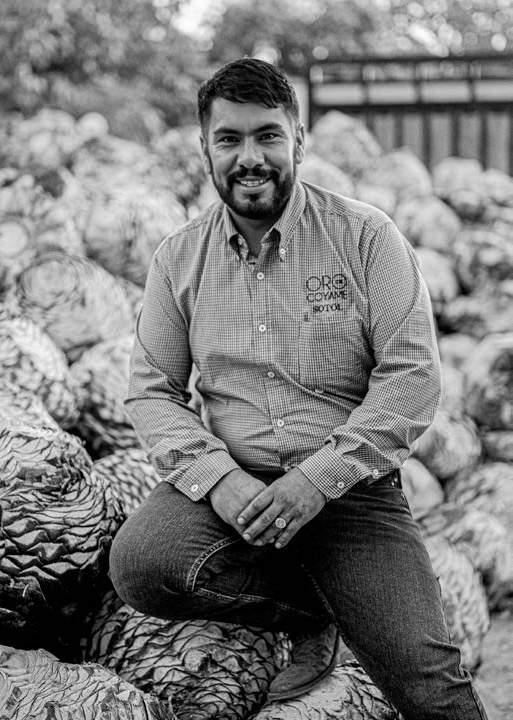
GERARDO RUELAS:
“EL SOTOL ME HA DADO TODO”.
Sotol’s given me everything.
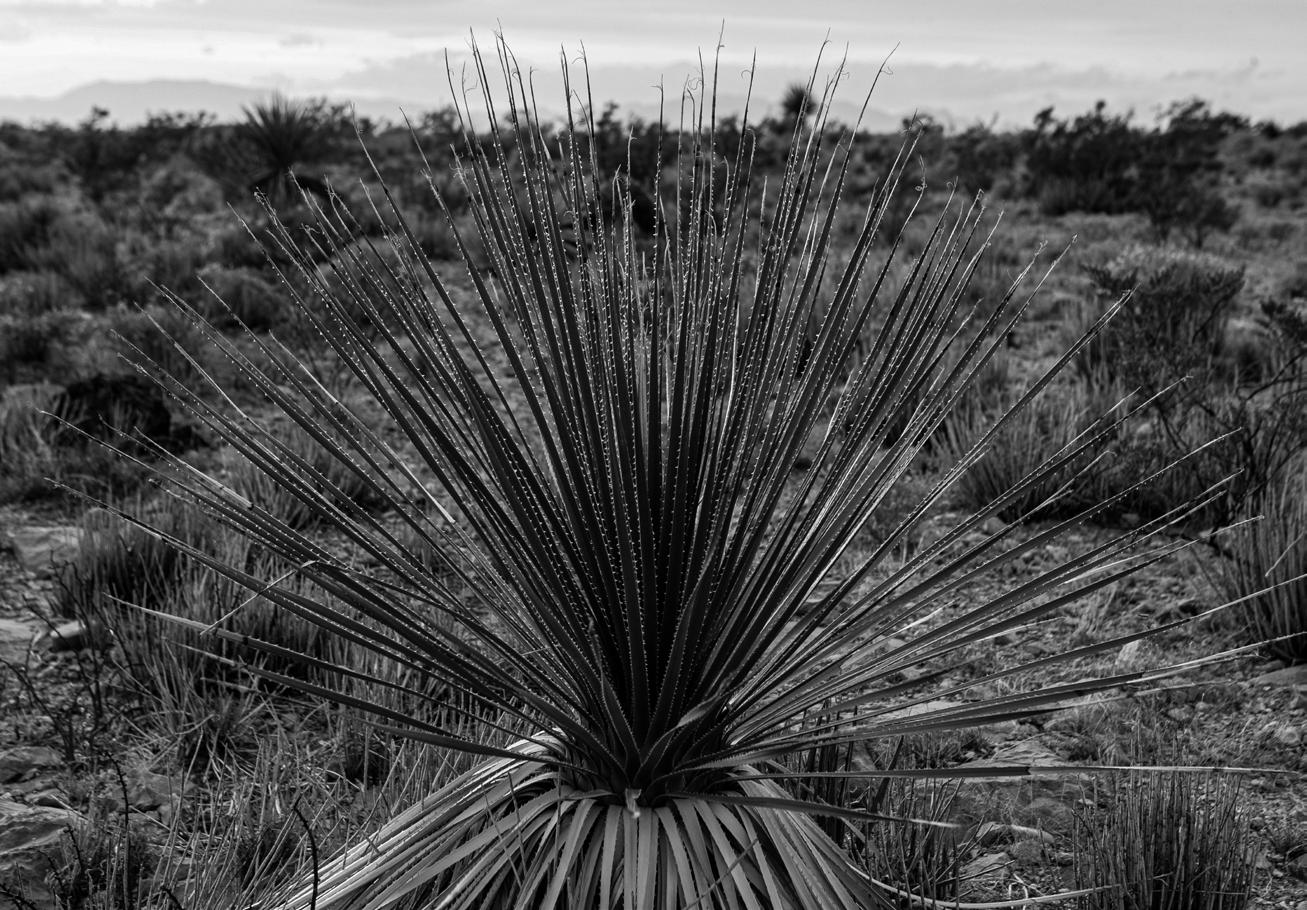
Potrero del Llano, Chihuahua. Potrero del Llano, Chihuahua.
Chapter Capítulo
2
DESTILANDO HISTORIA
Distilling History
DURANTE EL VIRREINATO, beber o fabricar licores podía costar azotes, los bienes o la libertad. Desde el siglo XVII las autoridades comenzaron a emitir ordenanzas para restringir el consumo y fabricación clandestina de bebidas como aguardientes y otros fermentos o destilados locales[24], aludiendo a que eran una amenaza para la salud pública, la moralidad y el orden social. La simple embriaguez solía castigarse con cárcel y cincuenta azotes, además de cortarle el cabello al delincuente, si era indio. En caso de reincidencia se duplicaban los azotes. A mulatos, mestizos y plebeyos de ambos sexos también se les cortaba el cabello, en caso de reincidencia. Si existía una tercera vez, además de la tonsura y los azotes, se les condenaba a trabajos forzados por tres años. En el caso de los españoles, los hombres debían ir a presidio y las mujeres a las recogidas (casas para ser reformadas), por el mismo tiempo.[25]
DURING THE VICEROYALTY period, drinking or producing liquor could cost a person a whipping, their property, or their freedom. Since the seventeenth century, authorities began to issue ordinances to restrict the clandestine consumption and manufacture of drinks such as aguardientes and other local ferments or distillates[24], alluding to the fact that they were a threat to public health, morality, and social order. Simple drunkenness was usually punished with jail and fifty lashes, in addition to cutting the offender’s hair if he was an Indian. In the case of repeated offenses, the lashes were doubled. Mulattos, mestizos, and commoners of both sexes also had their hair cut, in case of recidivism. If there was a third offense, in addition to the tonsure and flogging, they were sentenced to hard labor for three years. In the case of the Spaniards, the men had to go to prison and the women to the recogidas (reform houses) for the same period of time.[25]
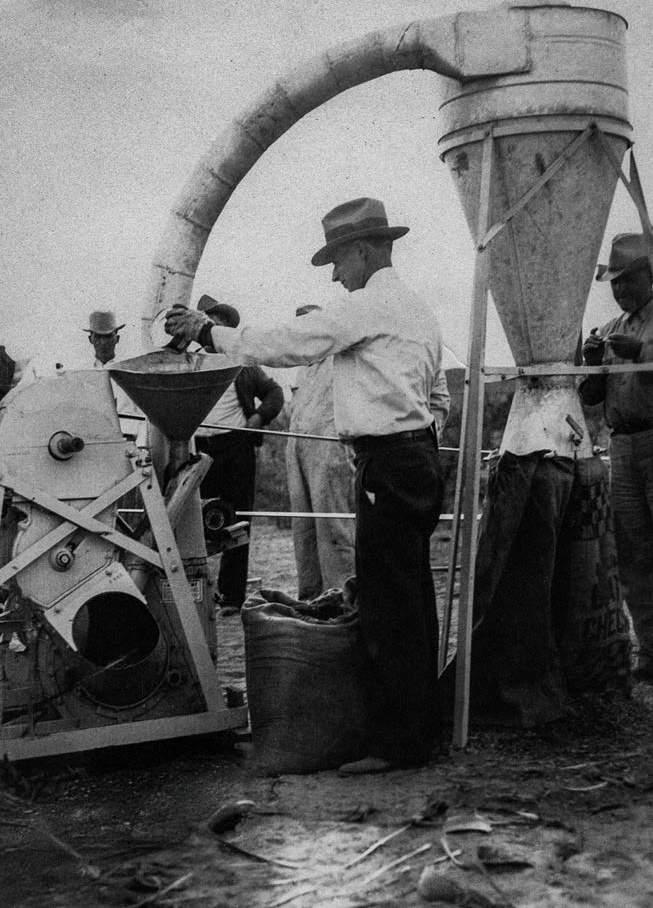
Molienda de sotol, 1923. The Portal to Texas History.
Sotol milling, 1923. Portal to Texas History.
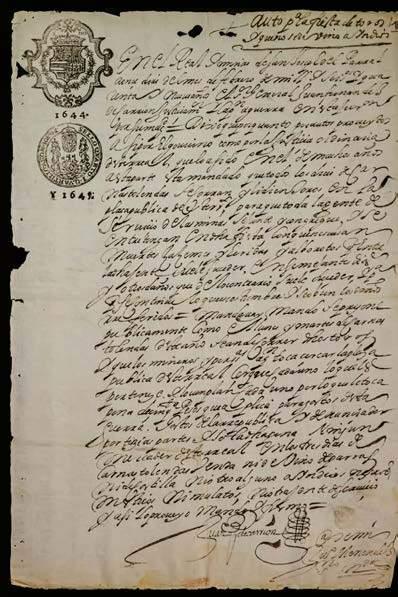
Prohibición de alcohol en el siglo XVII. Documento del Archivo Histórico Municipal de Parral (AHMP), 1649. Alcohol prohibition in the 17th century. Document from the Municipal Historical Archive of Parral (AHMP), 1649.
Como ejemplo de estas restricciones, en la Nueva Vizcaya existe un mandato que data de 1639, de Francisco de Escobar Treviño, justicia mayor y capitán a guerra en San Joseph del Parral. En el documento se enfatizaba que muchos mercaderes “con poco temor de Dios y en contravención de las ordenanzas y autos de los gobernadores y alcaldes mayores tienen por costumbre vender públicamente como lo venden, vinos prohibidos como son de mescales [sic] y cocos a los negros mulatos e indios, resultando en muchas enfermedades y mortandad de los indios, heridas y muertes y otros delitos que con el emborracharse se rigen en ofensa de Dios nuestro Señor”. Dicho lo anterior, ordenó una inspección en tiendas y multas de cien pesos por cada onza encontrada. Además, pidió que se derramaran los licores, que se impidiera a comerciantes de fuera llevarlo y que, para noticia de todos, “se pregone públicamente en un día festivo después de misa mayor en la plaza pública de este dicho Real”.[26]
Cuando se habla de ‘cocos’ en documentos de esa época, se hace referencia al vino de cocos filipino, muy popular en el siglo XVII.[27] Hay que tomar en cuenta que en 1571 se fundó la ciudad de Manila y en 1573 se estableció la navegación regular con las Filipinas,[28] por lo que muchos de estos productos llegaban a la Nueva España y se trasladaban a las provincias a través del Camino Real de Tierra Adentro.[29] El galeón de Manila tuvo una notable influencia sobre la cultura novohispana. No solo importaba telas, porcelanas, muebles, biombos, marfiles o piezas de laca desde Asia, sino que también impactó particularmente en la producción de destilados, al incorporar alambiques a la usanza de aquellos lares y propició la aparición de manufacturas locales debido a la alta demanda de estos productos.[30]
As an example of these restrictions in Nueva Vizcaya, there is a mandate dating from 1639, from Francisco de Escobar Treviño, chief justice and war captain in San Joseph del Parral. In the document it was emphasized that many merchants “with little fear of God and in contravention of the ordinances and orders of the governors and mayors have the habit of selling publicly as they do, forbidden wines such as mescals [sic] and coconuts to the black mulattoes and Indians, resulting in many diseases and mortality of the Indians, wounds and deaths and other crimes that with the drunkenness are ruled in offense of God our Lord”. Having said the above, he ordered an inspection in stores and fines of one hundred pesos for each ounce found. He also ordered the liquor to be poured out, prohibited outside merchants from bringing it in, and, so that everyone would be informed, decreed that “it be publicly proclaimed on a feast day after high mass in the public square of this royal settlement.”[26]

“Que no se vendan vinos prohibidos”. Documento de 1639 (AHMP).
“Sale of prohibited wines is forbidden.” Document from 1639 (AHMP).
When documents from that era mention “cocos,” they refer to Filipino coconut wine, which was very popular in the seventeenth century.[27]
It should be taken into account that in 1571 the city of Manila was founded, and in 1573 regular navigation with the Philippines was established[28], so many of these products arrived in New Spain and were transported to the provinces through the Camino Real de Tierra Adentro [29] The Manila galleon had a notable influence on New Spain’s culture. It not only imported textiles, porcelain, furniture, folding screens, ivory, and lacquerware from Asia, but also had a notable impact on the production of distilled spirits by introducing stills modeled after those used in that region. It also encouraged the rise of local manufacturing in response to the high demand for these goods.[30]
Cañón del Pegüis, municipios de Manuel Ojinaga y Coyame del Sotol. Pegüis Canyon, Manuel Ojinaga and Coyame del Sotol municipalities.
Los destiladores asiáticos fueron el paso siguiente que se requería para transformar los fermentos locales elaborados por comunidades originarias en nuevas bebidas. Hay evidencias del tipo de instrumentos utilizados en los procesos de destilación tempranos en la región, gracias al registro del decomiso de una vinata clandestina en el Parral de 1727, perteneciente al Grumete,[31] como se hacía llamar el artífice de los ‘caldos de tierra’. El curioso hecho surgió a partir de que Bernardo Hernández –justicia mayor y capitán a guerra del Real– se encontraba reparando la azotea de la cárcel pública. Entonces, por el olor, se percató de que en la casa contigua se fabricaban licores. Después de mayores averiguaciones, procedió a catearla y resultó que:
[…] se hallaron dos barriles al parecer jalapeños llenos de caldo que pareció ser mistela (bebida alcohólica dulce que se elabora generalmente a partir de mosto de uva); tres barriles pequeños de los de Parras vacíos; un embudo de ojalata; y dos botijas ordinarias, asimismo vacías […] una caldereta […] y otras zarandajas de especias de cocina, […] en el zaguán se halló una porción de leña en que habría como cuatro o cinco cargas de ella; y entrado en otro cuarto se hallaron dos ollas medianas vacías […] una hornilla, la cual tenía lumbre e inmediato a ella una botija ordinaria llena de caldo muy caliente que reconocido pareció ser aguardiente muy fuerte […] y fuera de dicha hornilla un alambique mediano, aunque no chico con su cabeza y otro de cobre […] un caso de cobre mediano, […] y otro un poco mayor […] dos tinajas grandes de barro blanco que parecen castellanos en que había infusión de madera del aire. […] cuatro cueros de res puestos a modo de tina […] dichos cueros los dos llenos de infusión y los otros con los asientos de dicha infusión […].[32]
Destiladores asiáticos fueron el paso siguiente para transformar los fermentos locales elaborados por comunidades originarias en nuevas bebidas.
Asian distillers were the next step required to transform the local ferments made by native communities into new beverages. There is evidence of the types of instruments used in early distillation processes in the region, thanks to the record of a raid on a clandestine vinata (sotol distillery) in Parral in 1727, owned by the Grumete(cabin boy)[31], as the maker of the caldos de tierra called himself. The curious event unfolded when Bernardo Hernández, chief magistrate and military captain of the royal settlement, was repairing the roof of the public jail. Then, due to the smell, he realized that liquor was being produced in the neighboring house. After further investigation, he proceeded to search the premises, and it turned out that:
Asian distillers were the next step required to transform the local ferments made by native communities into new beverages.
[…] two barrels, apparently jalapeños filled with a liquid that appeared to be mistela [a sweet alcoholic beverage typically made from grape must]; three small empty barrels from Parras; a tin funnel; and two ordinary jars, also empty […] a small cauldron […] and other miscellaneous kitchen spices, […] in the hallway there was a pile of firewood amounting to about four or five loads; and upon entering another room, two medium sized empty pots were found […] a small stove, which was lit, and next to it an ordinary jar filled with very hot liquid that, upon inspection, appeared to be very strong aguardiente […] and outside said stove, a medium still, not small, with its cap and another made of copper […] a medium copper kettle, […] and another slightly larger one […] two large white clay jars resembling Castilian ware, containing an infusion of madera del aire […] four cowhides arranged like vats […] two of the hides were filled with the infusion and the others contained the settled remains of said infusion […].[32]
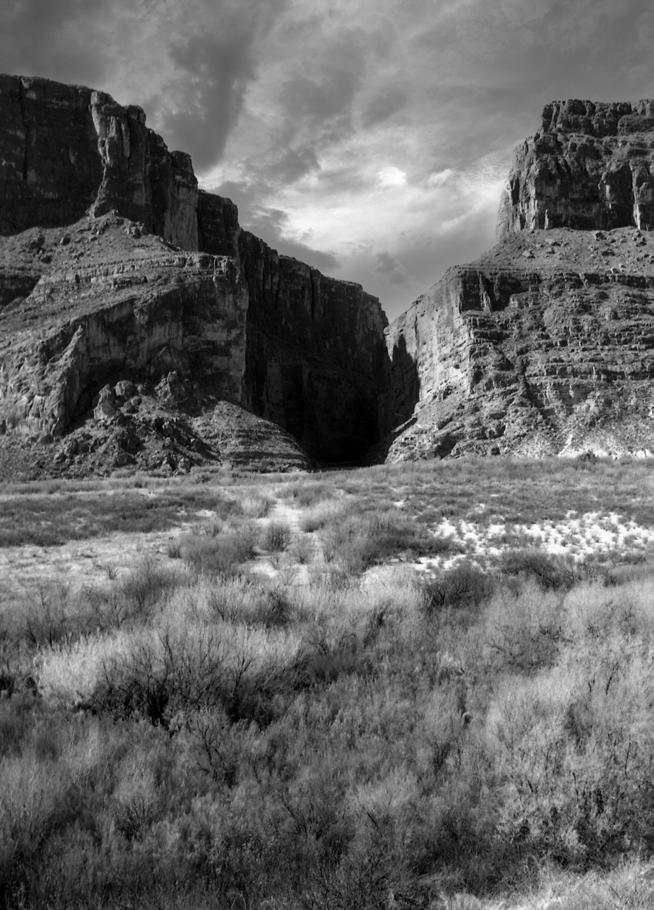
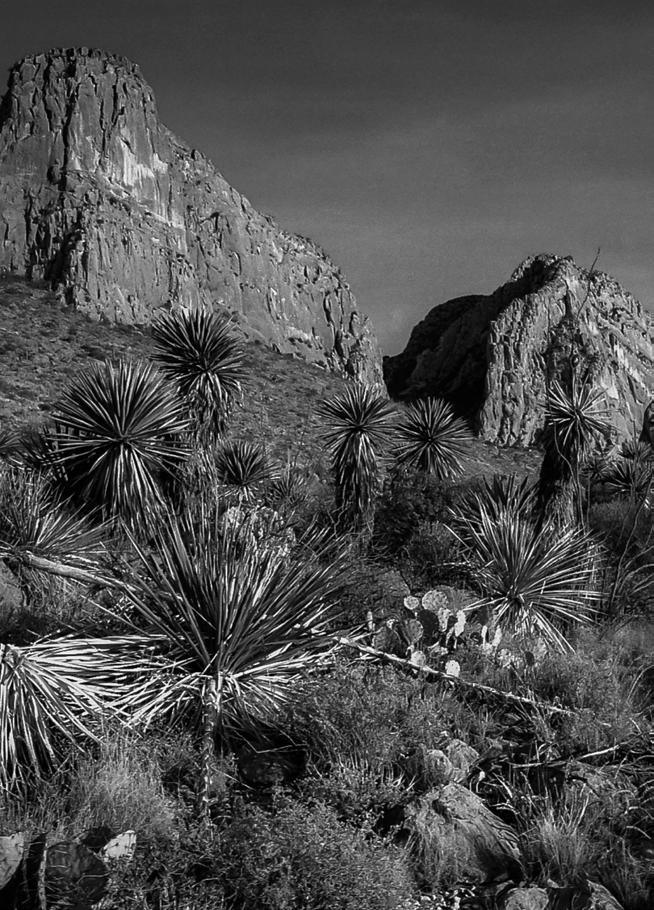
Para las autoridades, se trataba de un escandaloso y bochornoso asunto. Tenían a un lado del palacio y la cárcel, la fábrica ilegal. Aquello terminó con el derrame de los licores a la vista pública, la destrucción de la hornilla donde se ponía el alambique para destilar, la inutilización con cuchillos de las tinajas de cuero y la venta en remate público de los demás instrumentos, con el cuidado de que “el alambique sea su remate en persona conocida, y en quien no se discurra lo pueda sacar para el efecto de hacerse caldos de la tierra”. El monto generado por la venta de los implementos se repartió entre quienes realizaron el cateo y en el juez de la causa por “la liberación del perjuicio que ha padecido, así el común de este Real, como el de la Villa de San Felipe el Real, donde es presumible se hayan consumido y comerciado dichos caldos por los accidentes que precisamente se originarían a sus moradores con el uso de dichas bebidas, que son bastante nocivas a la salud”.[33]
Entre los materiales disponibles en el siglo XVII no era común el vidrio, así que los recipientes para almacenar y beber alcohol solían ser botas de cuero o vasijas de madera, cerámica o barro. Quienes fabricaban y comerciaban licores solían utilizar “barriles tapados con piel de cíbolo” (bisonte).[34]
Otro ejemplo de la severidad con respecto a los destilados ilegales puede encontrarse en las carnestolendas. Así se conocía a una fiesta tradicional previa al miércoles de ceniza que se celebraba días antes del inicio de la cuaresma en muchas localidades de la Nueva Vizcaya. Entonces se lidiaban toros, había un ambiente de carnaval y, por supuesto, se consumían bebidas alcohólicas “para que toda la gente de servicio de las minas se junte y congregue y se entretenga”. Sin embargo, en 1649, Juan Fernández de Carrión –tribuno, justicia mayor y capitán a guerra– mandó “que no se vendan vinos prohibidos por la mortandad y heridas y muertes y otras desgracias que suceden por los dichos rebeldes”.[35]
For the authorities, it was a scandalous and embarrassing affair. They had an illegal factory next to the palace and the jail. This ended with the liquor being poured out in public view, the destruction of the stove used to heat the still, the slashing of the leather vats to render them unusable, and the auctioning of the remaining instruments, with the stipulation that “the still be awarded to a known person, one who could not be suspected of using it to produce caldos de la tierra.” The proceeds from the sale of the equipment were distributed among those who carried out the search and the presiding judge, in compensation for “the harm suffered both by the people of this royal settlement and by those of the town of San Felipe El Real, where it is presumed that said caldos were consumed and traded, given the consequences that would inevitably arise for the residents from the use of these beverages, which are quite harmful to health.”[33]
Among the materials available in the seventeenth century, glass was not common, so containers used to store and drink alcohol were typically leather flasks or vessels made of wood, ceramic, or clay. Those who manufactured and traded liquor tended to use “barrels covered with cybolus” (bison) skins.[34]
Another example of the severity toward illegal distilled spirits can be found during Carnestolendas (Shrovetide). This was the name given to a traditional feast to the three days preceding Ash Wednesday, which was celebrated days before the beginning of Lent in many towns of Nueva Vizcaya. At that time, bullfights were held, there was a carnival atmosphere, and of course, alcoholic beverages were consumed “so that all the mine workers could gather, come together, and be entertained.” However, in 1649, Juan Fernández de Carrión, tribunal chief justice and captain at war, ordered “that no forbidden wines be sold because of the mortality, wounds, deaths, and other misfortunes caused by the said rebels.”[35]
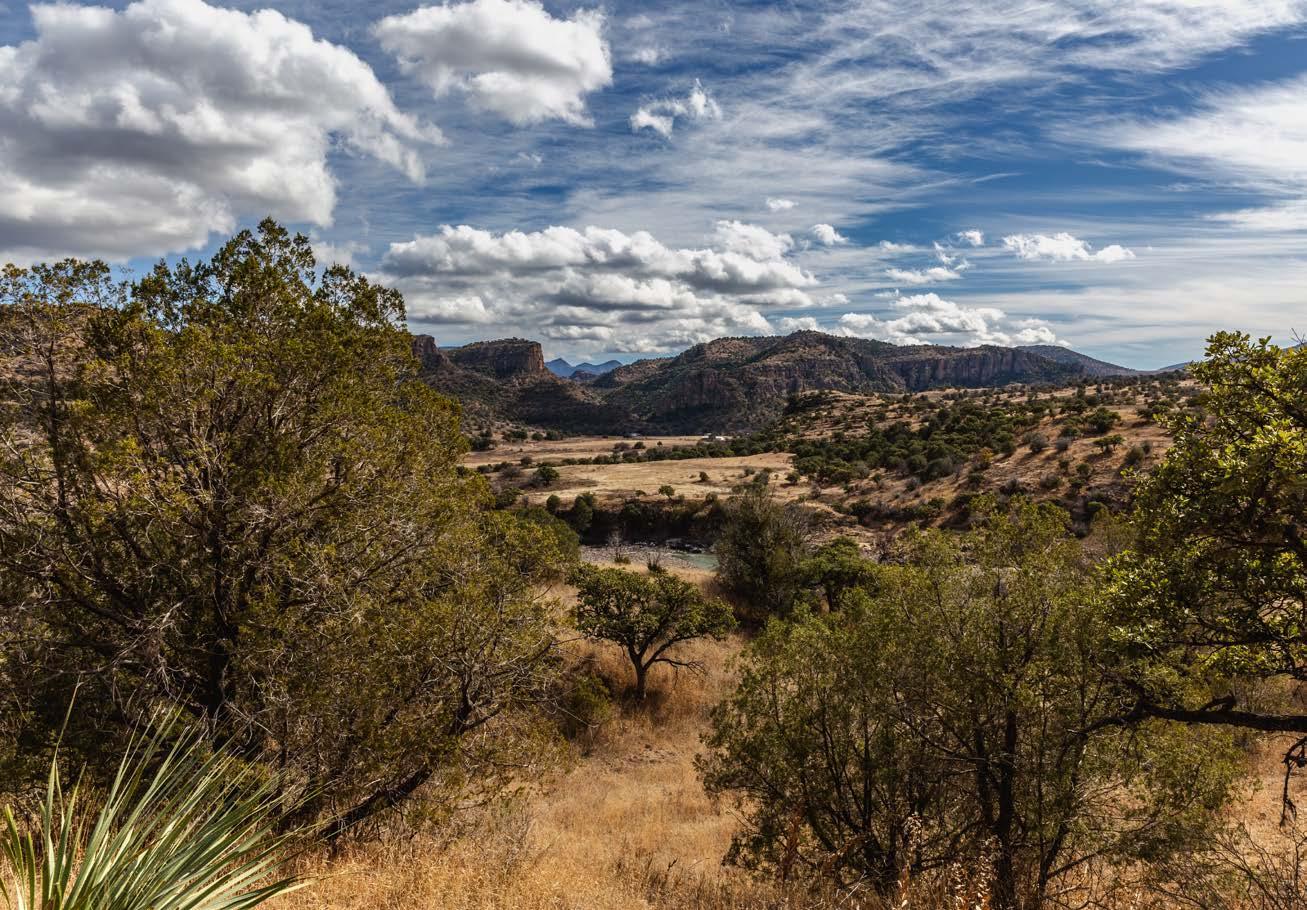
Huapoca, municipio de Madera. Huapoca, Madera municipality.
Los sectores populares circulan con insistente frecuencia en los documentos virreinales como destinatarios de las vedas de alcohol. No es casualidad. Tras las retóricas moralizantes y posturas a favor de la salud pública se develan las expresiones de una sociedad estamental que naturalizaba las jerarquías sociales y ‘calidades’. En ese contexto, era impensable el concepto moderno de igualdad. Sectores pertenecientes a los estamentos más bajos en el orden social del antiguo régimen eran señalados como violentos y criminales; de ser asesinos potenciales, protagonistas de peleas y alteraciones de las buenas costumbres, pero, sobre todo, acusados de un delito mucho, mucho peor: ¡no pagar impuestos! En efecto, el problema no eran solo los potenciales perjuicios y ‘vicios’ atribuidos a estos sectores con relación a la bebida, sino que su consumo y sus prácticas se alejaban de los canales oficiales, sin pagar alcabalas (impuestos) a Hacienda. Representaban una competencia frente a los estancos reales (una especie de monopolio donde solo la corona o personas autorizadas por esta podían producir, distribuir o vender el producto estancado bajo normas específicas). A quienes se les otorgaban concesiones pagaban una cantidad fija al erario para poder explotar el estanco. Ya que estos sí aportaban en materia fiscal, el contrabando era severamente penado. Por otro lado, se arguyó que el veto a los licores elaborados localmente se debía, en parte, a tratar de posicionar otras bebidas, como el vino de Castilla o productos en los que se tenía mayor interés económico.
También es importante considerar el discurso paternalista hacia las comunidades indígenas, viéndolas como incapaces de regular sus pasiones y discernir entre el bien y el mal, lo que reforzaba la idea de que el alcohol conducía a desobediencia y degeneración contrarias a los valores cristianos. Entonces, la proscripción del alcohol entre indios no era solo de orden económica, sino que obedecía a una cuestión de “protección espiritual”. Guillermo Porras menciona la prohibición de hacer vino y tener varias mujeres, entre otras imposiciones que iban en contra de su modo de vida, como algunas de las causas del levantamiento de los tarahumaras de Moris, en 1696, junto con Sisoguichi, Santa Ana y Cajurichi.[36]
Impoverished sections of society appear with persistent frequency in viceroyalty documents as the targets of alcohol prohibitions. This is no coincidence. Beneath the moralizing rhetoric and claims of protecting public health lie the expressions of a hierarchical society that regarded social ranks and “qualities” as natural. In that context, the modern concept of equality was unthinkable. Sectors belonging to the lowest strata in the social order of the old regime were labeled as violent and criminal; as potential murderers, protagonists of fights and alterations of good manners, but, above all, accused of a much, much worse crime: not paying taxes!
The problem was not only the potential harm and vices attributed to these sectors concerning drinking, but also the fact that their consumption and practices went outside the official channels, without paying taxes to the Treasury. They represented a competition against the royal tobacconists (a kind of monopoly where only the crown or persons authorized by it could produce, distribute, and sell the stagnant product under specific rules). Those who were granted concessions paid a fixed amount to the Treasury to be able to exploit the tobacconist’s shop. Since they did contribute to fiscal matters, smuggling was severely punished. On the other hand, it was argued that the veto on locally produced liquors was due, in part, to try to position other beverages, such as Castilian wine or products in which there was a greater economic interest.
It is also important to consider the paternalistic discourse towards Indigenous communities, seeing them as incapable of regulating their passions or discerning between good and evil, which reinforced the idea that alcohol led to disobedience and degeneration contrary to Christian values. Thus, the prohibition of alcohol among Indigenous peoples was not only economic, but also a matter of “spiritual protection”. Guillermo Porras mentions the prohibition on making wine and having multiple wives, among other impositions that clashed with their way of life, as some of the causes of the Tarahumara uprising in Moris in 1696, along with Sisoguichi, Santa Ana, and Cajurichi.[36]
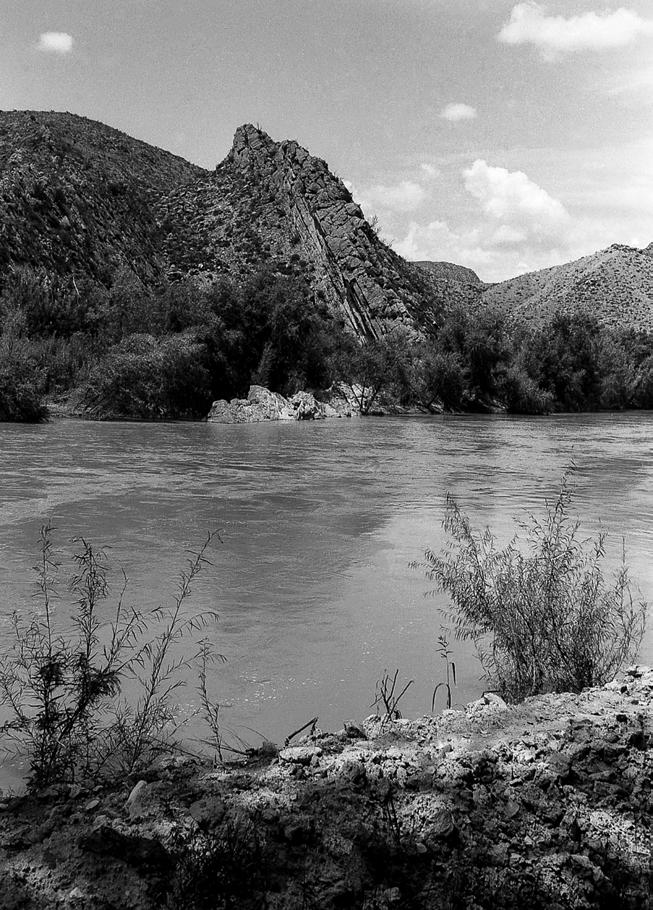
Cañón del Pegüis, desde el Río Conchos. Pegüis Canyon, as seen from the Conchos River.
“Que no se dé bebidas embriagantes a los indios”, seguido de “que se dé bebidas embriagantes a los indios” y viceversa fueron las contrastantes posturas entre las que oscilaron las comunidades indígenas del septentrión novohispano. Para tratar de hacer frente a algunas de las problemáticas que afrontaban los habitantes “de razón” de la Nueva Vizcaya, don Bernardo de Gálvez –virrey de Nueva España entre 1785 y 1786– emitió algunas instrucciones en las que ordenaba hacer la guerra sin descanso a los apaches rebeldes. Así aceptaba la paz de aquellos que la ofrecieran y que, en recompensa, se les dieran regalos. Consideraba que deberían aprovecharse las rivalidades entre los grupos rebeldes para conseguir que se exterminaran entre sí… y que convenía acostumbrar a los indígenas en el uso de bebidas embriagantes para conseguir así una mayor dependencia de los españoles.[37]
Esto contravenía las órdenes de 1773 expedidas en San Felipe el Real de Chihuahua por cordillera (comunicación urgente) a los pueblos de Santa Ana, Santa Eulalia, Julimes, Santiago de Babonoyaba, Santa Isabel, San Andrés y Chuvíscar de que se prohibiera a los comerciantes vender licor a los naturales: […] dichos comerciantes [llevan] aguardientes o vinos, y otros géneros de bebidas a que son propensos dichos indios naturales […] conduce a mi empleo el obviar de todos modos cualquiera de estos excesos, y que los indios vivan con la tranquilidad y quietud que se requiere, he deliberado expedir el presente para que se publique por mis tenientes de cabecera de sus Partidos, por el cual mando […] que por ningún evento consientan que en los pueblos de sus distritos se comercien […] ningunos géneros de mercancía de Castilla, ni de la tierra, […] principalmente para que a los dichos comerciantes no se les permita el que procedan vender aguardiente ni vino, con que suelen embriagarse dichos indios, […] bajo la pena de que perderán no solo el aguardiente, sino que se remitirán aprisionados a esta real cárcel en donde se les formará causa en forma, y se les castigará severamente por contraventores.[38]
“Do not give intoxicating drinks to the Indians,” followed by “Give intoxicating drinks to the Indians,” and vice versa, were the contrasting positions between which the Indigenous communities of the northern reaches of New Spain found themselves oscillating. To address some of the problems faced by the “rational” inhabitants of Nueva Vizcaya, Don Bernardo de Gálvez, viceroy of New Spain from 1785 to 1786, issued a series of instructions ordering an unrelenting war against the rebellious Apaches. Thus, he accepted peace from those who offered it and, in return, they would be given gifts. He believed that the rivalries among the rebellious groups should be exploited so they would exterminate one another, and that it was advisable to accustom the Indigenous peoples to the use of intoxicating drinks to increase their dependence on the Spanish.[37]
“… a los dichos comerciantes no se les permita el que procedan vender aguardiente o vino”
“… so that said merchants are not allowed to sell aguardiente or wine”
This contradicted the 1773 orders issued in San Felipe el Real de Chihuahua and sent by express communication to the towns of Santa Ana, Santa Eulalia, Julimes, Santiago de Babonoyaba, Santa Isabel, San Andrés, and Chuvíscar, instructing that merchants be prohibited from selling liquor to the natives.
[…] these merchants [bring] aguardiente or wine, and other types of beverages to which the said native Indians are inclined […] it is my duty to prevent these excesses by all possible means and to ensure that the Indians live with the peace and calm that is required. I have therefore decided to issue the present order to be made public by my principal deputies in their districts, by which I command […] that under no circumstance are they to allow in the towns of their districts the trade of any goods from Castile or local products […] primarily so that said merchants are not allowed to sell aguardiente or wine, which the said Indians commonly use to become intoxicated […] under the penalty that not only will the aguardiente be confiscated, but the merchants will be sent in custody to this royal jail, where formal proceedings will be opened against them and they will be severely punished as offenders.[38]
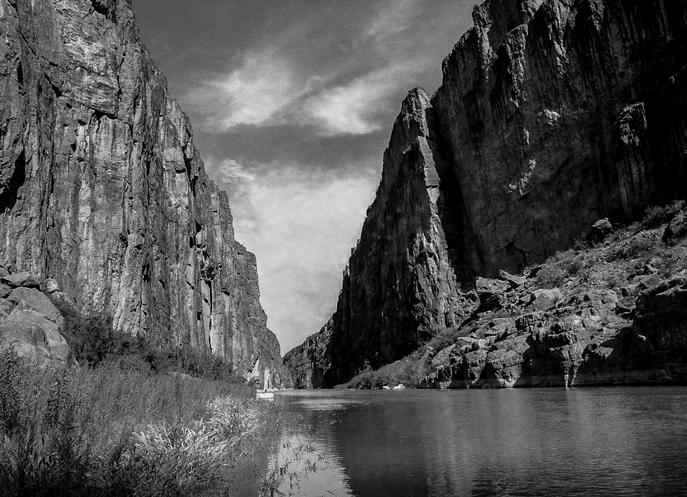
Evitar el comercio de licor con apaches era la norma al final del siglo XVIII, pues se creía que el aguardiente fomentaba incursiones violentas. Sin embargo, a veces se usaba como intercambio para prevenir conflictos. En el noroeste, los rancheros abastecían presidios, guarniciones militares y minas. Los productos agropecuarios eran la clave de la economía regional. De acuerdo con Jane Dale Loyd, desde fines de ese siglo, vecinos de los pueblos de las zonas que hoy son Galeana y Casas Grandes salían dos veces al año en caravana de carretas tiradas por bueyes hacia Deming y Las Cruces, que tardaba entre tres y cuatro semanas para realizar el viaje redondo. Las carretas transportaban frijol, cebada, piloncillo, trigo, maíz, carne seca, nuez, chile, resina de pino, lana de borrego y… barriles de sotol. Los rancheros iban armados para proteger sus productos, pero a veces era más fácil negociar con grupos de chiricahuas, comanches y otros grupos apaches que encontraban por el camino. Para evitar escaramuzas con estos, solían entregarles voluntariamente algunas reses y barriles de sotol a cambio de un salvoconducto y así evitar conflictos. El destilado y las reses jugaban un papel clave en esos entendimientos.[39]
Avoiding the liquor trade with the Apaches was the norm at the end of the eighteenth century, as it was believed that aguardiente encouraged violent raids. However, it was sometimes used as an exchange to prevent conflict. In the northwest, ranchers supplied for presidios (military units) and mines. Agricultural products were the key to the regional economy. According to Jane Dale Loyd, beginning in the late part of that century, residents of towns in the areas that are now Galeana and Casas Grandes would set out twice a year in ox-drawn wagon caravans to Deming and Las Cruces, a round trip that took between three and four weeks. The wagons carried beans, barley, piloncillo, wheat, corn, dried meat, walnuts, chile, pine resin, sheep wool, and... barrels of sotol. The ranchers were armed to protect their products, but sometimes it was easier to negotiate with groups of Chiricahua, Comanche, and other Apache groups they encountered along the way. To avoid skirmishes with them, they would often voluntarily give up some cattle and barrels of sotol in exchange for a safe-conduct pass, thereby avoiding conflict. The distilled spirit and the cattle played a key role in those arrangements.[39]
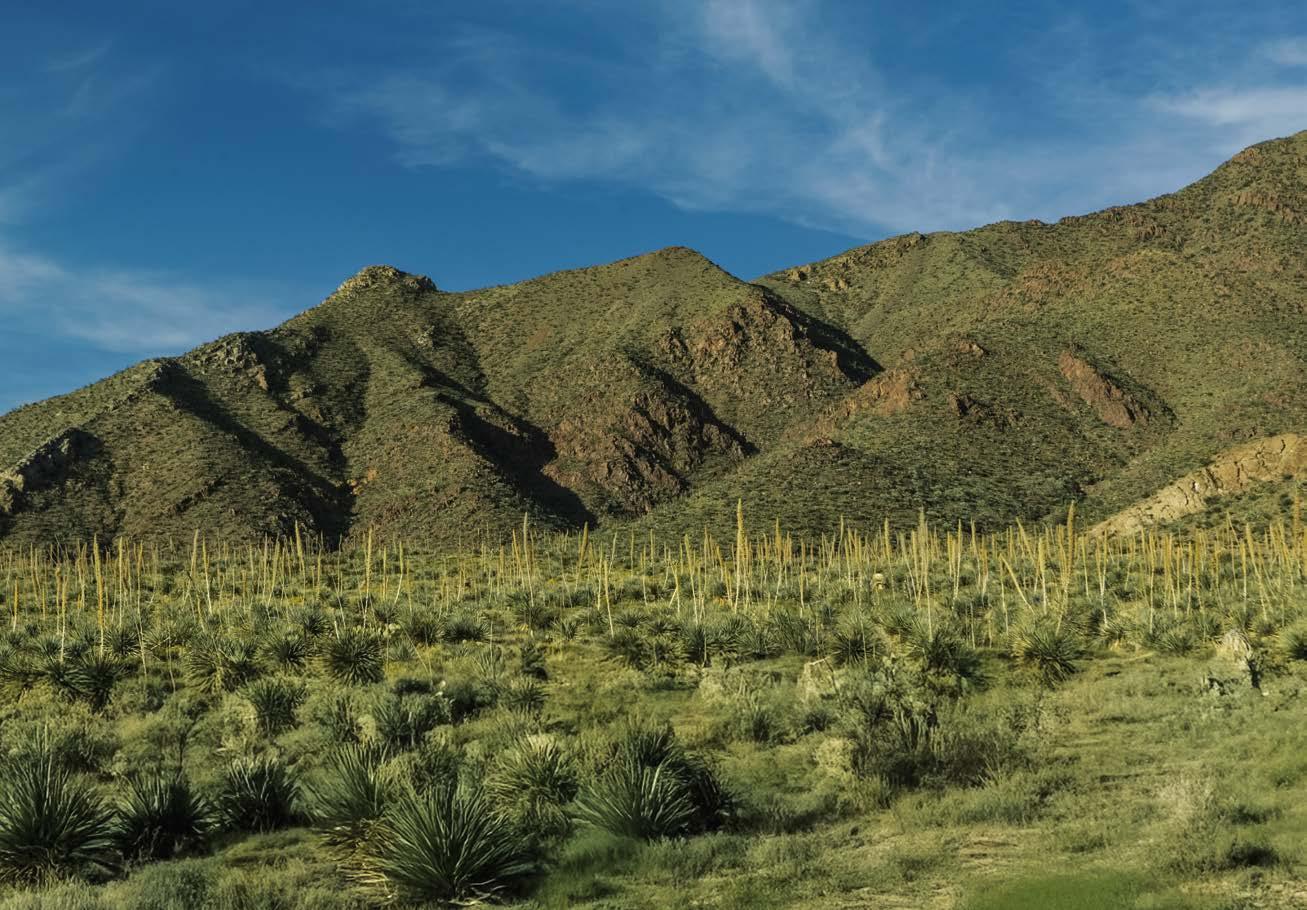
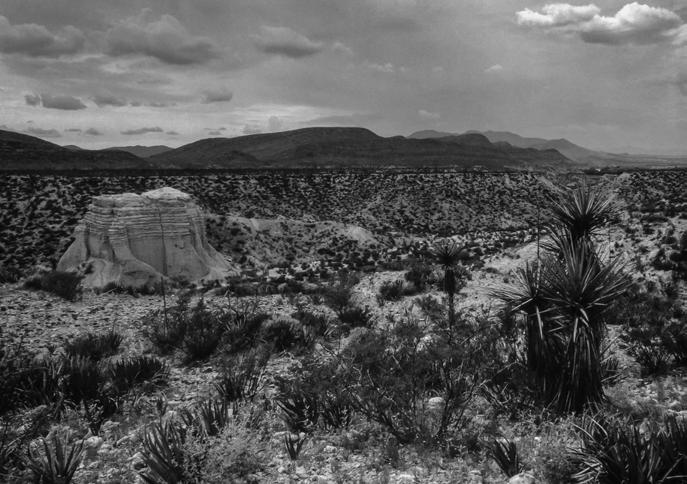
A inicios del siglo XIX las luchas contra grupos apaches en el norte representaron uno de los más grandes desafíos para las autoridades virreinales y más tarde para el naciente Estado mexicano. Estas confrontaciones que se intensificaron tras el debilitamiento del sistema presidial (los presidios eran establecimientos militares creados por la Corona española) y la reducción del control militar tras la independencia fueron la expresión de una larga resistencia indígena frente a la colonización territorial. Los apaches mediante incursiones rápidas y desplazamientos constantes mantuvieron una posición beligerante frente al orden colonial, alterando profundamente la vida económica y social de las poblaciones del norte. Un caso ejemplar de estos enfrentamientos involucró a un grupo de productores de sotol en 1831. Ocurrió en la hacienda del Pastor, 82 kilómetros al noreste de hoy ciudad Aldama. Una madrugada de mayo, un grupo de hombres se dispusieron a ir a jimar sotol para la vinata que entonces estaba en la plaza de la hacienda, al pie de la Mesa Sotolosa, como se conocía al paraje. Se trataba de un cerro filudo en una extensa mesa, cuya parte más alta daba frente a la hacienda en una extensión de aproximadamente 300 metros. Enseguida, en un declive no muy pronunciado, formaba una
In the early nineteenth century, the struggles against Apache groups in the north represented one of the greatest challenges for the viceregal authorities and later for the emerging Mexican state. These confrontations, which intensified after the weakening of the presidio system (military outposts created by the Spanish Crown) and the decline of military control following independence, were a manifestation of longstanding Indigenous resistance to territorial colonization. The Apaches, through rapid raids and constant displacements, maintained a belligerent position against the colonial order, profoundly altering the economic and social life of the northern populations. An exemplary case of these confrontations involved a group of sotol manufacturers in 1831.
It happened in the Hacienda del Pastor, 82 kilometers northeast of today’s city of Aldama. One early morning in May, a group of men set out to harvest sotol for the winery then located in the plaza of the hacienda at the foot of the Mesa Sotolosa, as the area was known. It was a steep hill on a large mesa, the highest part of which faced the hacienda and extended for approximately 300 meters. Then, along a
Cuchillo Parado, municipio de Coyame del Sotol. Cuchillo Parado, Coyame del Sotol municipality.
extensa planicie que se ensanchaba a ambos lados, teniendo en conjunto una superficie de poco más de un kilómetro y medio cuadrado, poblada de matas de sotol, lechuguilla y algunas palmas.[40] Los hechos fueron relatados por don Eugenio Chalaca, indio mezcalero, que en 1831 tenía 14 años:
gentler slope, it formed a wide plain that stretched out on both sides, covering a total area of just over one and a half square kilometers, populated with sotol, lechuguilla, and a few palms. [40] The facts were relayed by Don Eugenio Chalaca, an Indian Mezcalero, who in 1831 was 14 years old:
«¡Sí! Porque cuando los ánimos se caldeaban y las armas estaban nomás esperando pretextos, bastaba que alguien me presentara ¡y se suspendía la matanza, compadre! No digo que fui la paz encarnada, pero sí puedo asegurarles que más de un acuerdo se selló con mi sabor».
“Yes, indeed! Because when tempers flared and weapons were just waiting for an excuse to fire, all it took was for someone to bring me out, and the killing stopped, compadre. I won’t say I embody peace, but I can assure you that more than one deal was made with my flavor.”
[…] “salimos a cortar sotol los Venegas, los García, mi tío Segismundo y mi padrecito, que en paz descanse. Como la Mesa en ese tiempo estaba parejita de sotoles ya maduros, pensábamos regresar con nuestros burros cargados de sotol para la hora del almuerzo, por eso ninguno llevaba bastimento; pero cuando estábamos atareados en acabalar nuestro cargamento y apenas se veían los primeros reflejos del sol, nos atacaron por sorpresa los indios apaches. En la primera descarga cayeron muertos o malheridos mi padre, Román Venegas y Francisco García, el mayor.
[…] we went out to harvest sotol, the Venegas, the Garcías, my uncle Segismundo, and my father, may he rest in peace. Since the Mesa at that time was covered with mature sotols, we planned to return with our donkeys loaded with sotol by lunchtime. That’s why none of us brought provisions. But while we were busy finishing our harvest and the first rays of sunlight were just beginning to appear, we were ambushed by Apache Indians. Among the first to be killed or mortally wounded was my father, Román Venegas, and Francisco García Sr.
Los demás no tuvimos tiempo de hacer ninguna defensa. Durante la confusión que se produjo en ese terrible momento, yo muerto de miedo, me dejé caer entre dos montones de sotol del que teníamos cortado y de ahí pude ver cómo los apaches capturaron a los que sobrevivieron a las primeras descargas; los amarraron de dos en dos a los troncos de unas palmas próximas y allí los acribillaron a jarazos hasta dejarlos sin vida […] Yo hubiera podido escabullirme mientras ellos ejecutaban sus crueldades, pero el miedo no me dejaba pensar, y cuando quise, ya había sido descubierto por un pequeño grupo de apaches rezagados, que me capturaron, y a golpes y regatones de las lanzas, me llevaron hasta la presencia del jefe que le llamaban Caballo Negro. Tenía adornada su cabeza por un abundante plumero de plumas de garza, con una cola de caballo que caía a su espalda, de cerdas negrísimas. Este jefe tuvo compasión de mí por ser también indio, y ordenó que uno de sus gandules me llevara en las ancas de su caballo hasta donde consiguiéramos alguna bestia para mí; pero antes me hizo jurar ante una lanza y un arco en cruz, fidelidad a la tribu apache”.[41]
Nueve cruces de madera pintadas de verde quedaron en recuerdo de aquel suceso, cada una grabada a navaja con un nombre: Concepción Chalaca, Segismundo Chalaca, Febronio Ramos, Agustín Venegas, Pilar Venegas, Román Venegas, Pedro Chavira, Manuel García y Francisco García. Estos hechos fueron narrados por Manuel Romero a partir de una plática que sostuvo con el único sobreviviente, en 1899.[42]
Cañón del Pegüis, municipios de Manuel Ojinaga y Coyame del Sotol. Pegüis Canyon, Manuel Ojinaga and Coyame del Sotol municipalities.
The rest of us had no time to defend ourselves. In the confusion of that terrible moment, terrified, I let myself fall between two piles of sotol we had already cut, and from there I watched as the Apaches captured those who survived the first attack. They tied them in pairs to the trunks of nearby palms and riddled them with spear thrusts until they were lifeless […] I could have slipped away while they carried out their cruelty, but fear kept me from thinking clearly, and by the time I tried, I had already been spotted by a small group of Apache stragglers. They captured me and, beat me with spear handles, brought me before the chief they called Caballo Negro. His head was adorned with a large plume of egret feathers and a horse tail that hung down his back, jet black in color. This chief took pity on me for also being an Indian and ordered one of his warriors to take me on the back of his horse until we could find an animal for me. But before that, he made me swear loyalty to the Apache tribe, threatening me with a lance and a cross bow. [41]
Nine green-painted wooden crosses were left in memory of that event, each one carved with a knife and bearing a name: Concepción Chalaca, Segismundo Chalaca, Febronio Ramos, Agustín Venegas, Pilar Venegas, Román Venegas, Pedro Chavira, Manuel García, and Francisco García. These events were recounted by Manuel Romero based on a conversation he had with the sole survivor in 1899.[42]
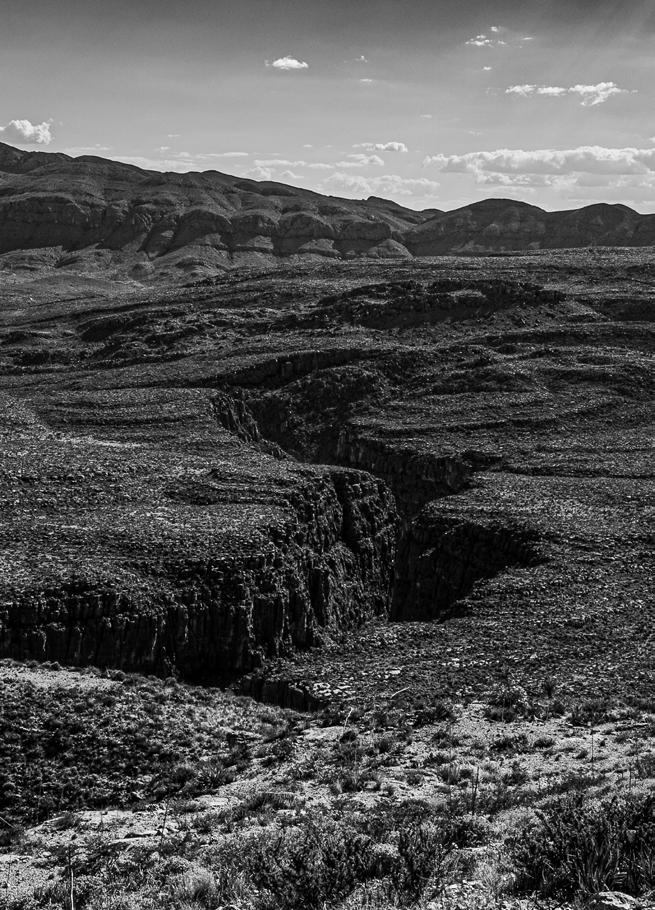
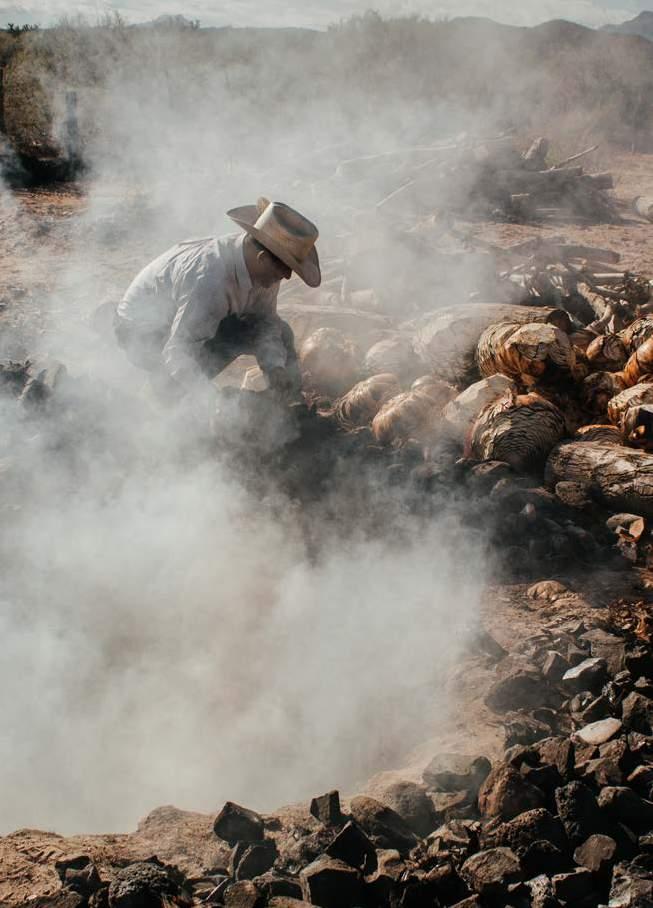
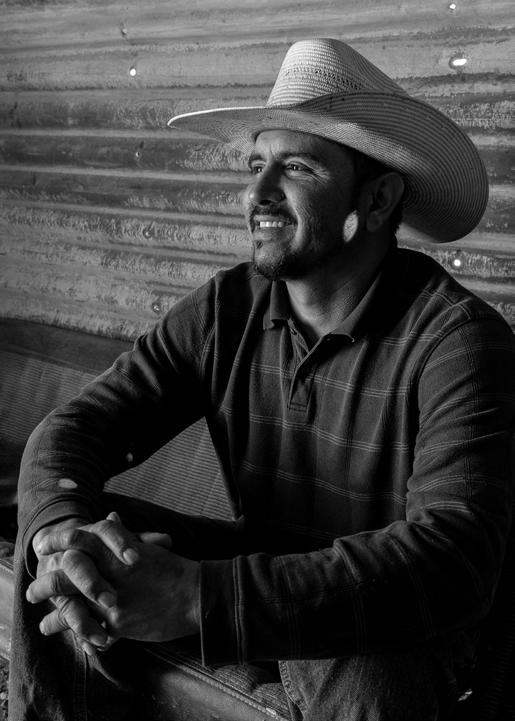
FERNANDO PORRAS:
“EL FUTURO DEL SOTOL VA A SER REDUCIDO Y COSTOSO. TEMPORAL NO PEROCREO, SÍ MUY EXCLUSIVO”.
The future of sotol is going to be limited and expensive. I don’t think it’s just a phase, but yeah—it’s gonna be very exclusive.
La era del control
The Era of Control
MIENTRAS TANTO, EL sotol seguía produciéndose y distribuyéndose por la región, al igual que otros licores. Como el activismo gubernamental contra las bebidas no autorizadas respondía más a motivos ideológicos que a medidas efectivas, con el tiempo, prevalecieron los intereses fiscales, lo que llevó a su legalización. Entonces, las autoridades buscaron reforzar su control solicitando reportes sobre la producción, en un intento por determinar y gravar las cantidades que de estos productos entraban a Chihuahua, así como el número de alambiques aplicados a la producción en ese mismo lugar.[43] De igual forma, se emitieron bandos para reglamentar su venta y consumo.
En 1830, en Chihuahua, el jefe político dio órdenes al 1er Batallón de Granaderos de la Milicia Nacional de que se previniera “[…] a todos los que venden licores: que a los conocidos por habituales en el vicio de la embriaguez, no les vendan de un real para arriba, si estuviesen fuera de su juicio, ni los consientan en los tendejones más que el preciso término para despacharlos”. Asimismo, que “ninguna tienda, tendejón o vinatería, deberá estar abierta dada que sea la última campanada de la queda, so pena de sufrir el dueño por primera vez diez pesos de multa, veinte y cinco por segunda, y por la tercera cincuenta pesos, y se procederá contra su persona”.[44] Esto refleja los esfuerzos del gobierno local de imponer no solo un orden económico, sino moral y social mediante la regulación del alcohol y actividades lúdicas. Muestra una
Dos caballeros extranjeros simulan una partida de cartas en un estudio fotográfico de Chihuahua. Muchos turistas cruzaban la frontera en busca de experiencias que estaban restringidas en su país. Autoría no identificada. Fototeca INAH Chihuahua. Two foreign gentlemen pretend to play cards in a Chihuahua photo studio. Many tourists crossed the border seeking experiences unavailable in their country. Photo: Author unknown. INAH Chihuahua Photographic Archive.
MEANWHILE, SOTOL CONTINUED to be produced and distributed throughout the region, along with other liquors. As government repression against unauthorized beverages responded more to ideological motives than to effective measures, in time, fiscal interests prevailed, which led to its legalization. The authorities sought to reinforce their control by requesting production reports, in an attempt to determine and tax the quantities of these products entering Chihuahua, as well as the number of stills applied to production in that same place[43]. In the same way, ordinances were issued to regulate their sale and consumption.
Las autoridades buscaron reforzar su control solicitando reportes sobre la producción, en un intento por determinar y gravar las cantidades que de estos productos entraban a Chihuahua.
The authorities sought to reinforce their control by requesting production reports, in an attempt to determine and tax the quantities of these products entering Chihuahua
In 1830, in Chihuahua, the political leader issued orders to the First Battalion of Grenadiers of the National Militia to instruct “[…] all those who sell liquor: they must not sell more than one real’s worth to those known to be habitual drunkards if they are not in their right mind, nor allow them to remain in the shops beyond the time strictly necessary to serve them.” Likewise, “no store, small shop, or liquor store shall remain open after the final curfew bell; it will be a ten peso fine for the first offense, twenty-five for the second, and fifty for the third, with the offender also subject to prosecution.”[44]
This reflects the local government’s efforts to impose not only economic order but also moral and social order through the regulation of alcohol and recreational activities. It reveals a concern with containing the harmful effects of the beverage,
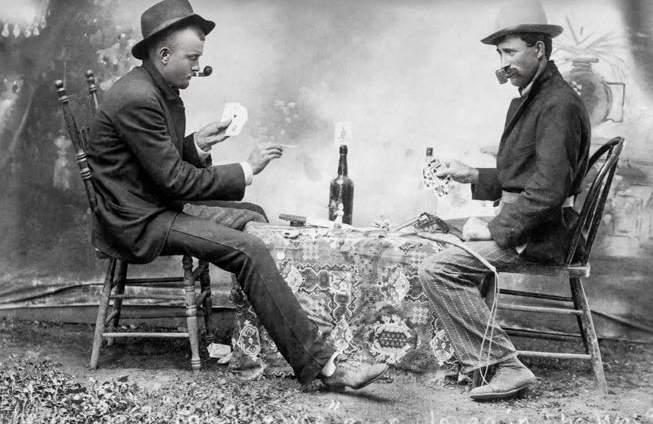
preocupación por contener los efectos nocivos del brebaje, especialmente entre sectores considerados problemáticos, a la vez que evidencia una estrecha vigilancia sobre el comportamiento público, el comercio y el uso del espacio; permite también observar las tensiones entre autoridad y la vida cotidiana de sectores populares. Además, la insistencia en no vender licor a los apaches sigue presente en la legislación. Multas de veinticinco pesos son las sanciones para quien ignore el mandato, particularmente en puntos fronterizos argumentando que “[…] a la natural altanería que los caracteriza, (a los apaches) añaden con los efluvios del vino un grado de insolencia, que la mayor parte de las veces los hace intolerables, y de aquí parten las desgracias […]”.[45]
En las primeras décadas del México independiente, el sotol no tuvo mejores condiciones para su producción y osciló entre el reconocimiento oficial y las presiones para inhibir su fabricación.[46] La elaboración persistió y su distribución aprovechó por mucho tiempo las rutas comerciales y religiosas desarrolladas durante el virreinato. Además, en comunidades del norte se impulsó la producción con alta graduación de alcohol para el consumo de las zonas mineras. Ante la necesidad de tolerar jornadas de trabajo en condiciones muy exigentes, muchas minas colocaban una taberna a la entrada de estas.[47] Esto fue una constante durante un largo periodo. Por ejemplo, cerca de la mina de plata Talpa, en Chorreras, Aldama, y de la mina Cristina, del alemán Carlos Bremer, había una vinata llamada La Parrita.[48]
especially among sectors considered problematic, while also demonstrating close surveillance of public behavior, commerce, and the use of space. It also sheds light on the tensions between authority and the everyday lives of impoverished sectors of society. In addition, the insistence on not selling liquor to the Apaches is still present in the legislation. Fines of twenty-five pesos were imposed on those who ignored the mandate, particularly at border points, with the justification that “[…] to the natural haughtiness that characterizes them, [the Apaches] add, with the effluvia of wine, a degree of insolence that most of the time makes them intolerable, and from this arise misfortunes […]”[45]
In the first decades of independent Mexico, sotol did not have better conditions for its production and fluctuated between official recognition and pressures to inhibit its manufacture.[46] Its production persisted, and its distribution took advantage of the commercial and religious routes developed during the viceroyalty. In addition, in northern communities, the production and consumption of high-alcohol-content beverages in mining areas was actively promoted. Given the need to endure extremely demanding working hours, many mines operated a tavern at the entrance.[47] This practice remained constant for a long period. For example, near the Talpa silver mine in Chorreras, Aldama, and the Cristina mine, owned by the German Carlos Bremer, there was a winery called La Parrita.[48]
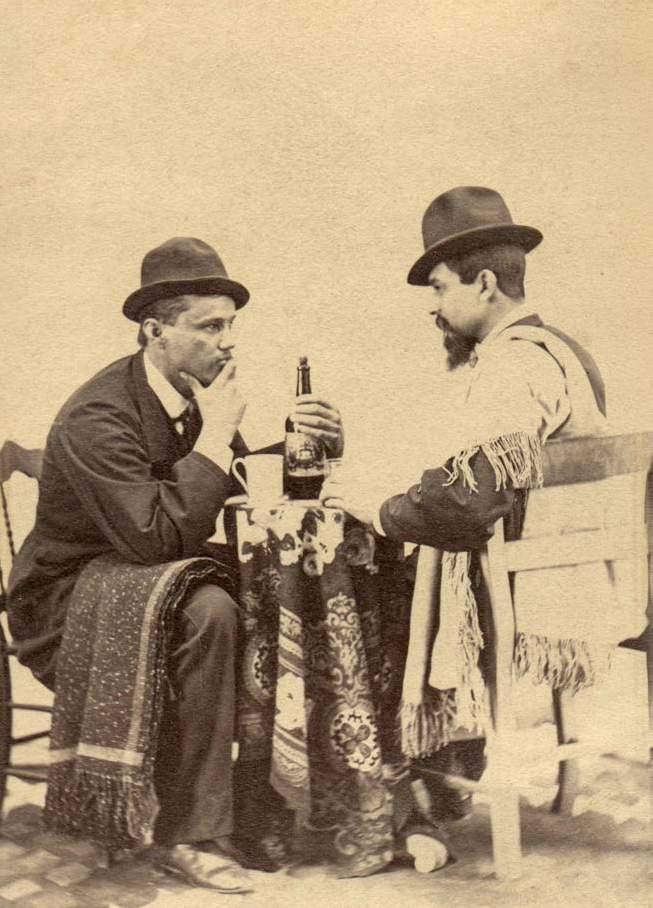
Fotografía posada de Patricio Gómez del Campo y Matías Balderrama, Chihuahua, ca. 1868.
Fotografía: Nicholas Brown (atribuida). Fototeca INAH Chih. Portrait of Patricio Gómez del Campo and Matías Balderrama, Chihuahua, circa 1868. Photo: Attributed to Nicholas Brown. INAH Chihuahua Photographic Archive.
En los documentos oficiales del estado de Chihuahua en el siglo XIX, el sotol aparecía como una bebida alcohólica de bajo prestigio social y escaso valor económico. En un censo de 1856 sobre expendios de licor, Ignacio Perches solicitó la reducción del impuesto de quince reales asignado a su negocio, argumentando que el licor que vendía, identificado expresamente como ‘sotol’, era de ‘ínfima clase’ y ‘de poco crédito’ y que sus ventas no justificaban la carga fiscal.
In official documents from the state of Chihuahua in the nineteenth century, sotol appeared as an alcoholic beverage with low social prestige and little economic value. In an 1856 census of liquor vendors, Ignacio Perches requested a reduction of the fifteen reales tax assigned to his business, arguing that the liquor he sold, explicitly identified as sotol, was of the “lowest quality” and “of little value” and that his sales did not justify the tax burden.
«Mi momento más humilde, sí.
Seguramente tú muy fino, ¡eh, Perches! ¡Ojalá de todas formas pagaras impuestos!».
“My most humble moment, yes. Surely you’re very refined, eh, Perches! If only you paid taxes anyway!”.
Ese testimonio documenta una de las primeras menciones del sotol y revela la percepción negativa que existía entonces sobre esta bebida, pese a su fabricación local.[49] Más adelante, apareció como objeto de contrabando, procedente de vinatas rurales, como la de Las Lechugas, aparentemente de Satevó. Ocho barriles fueron introducidos ilegalmente a la ciudad de Chihuahua y trasladados a la Quinta Santa Elena para sus averiguaciones judiciales.[50]
Estos registros muestran que, a pesar de su bajo prestigio, esta bebida tenía una circulación significativa más allá de su consumo local en vinatas de zonas no urbanas, y era suficientemente común como para estar sujeto a vigilancia y sanciones. Se perfilaba entonces como una bebida marginal, pero con presencia constante.
En ocasiones, las personas involucradas aducían desconocer las obligaciones fiscales. En 1883, una nota de La Voz de México se mofaba de las nuevas leyes hacendarias para regular la producción: “¡Figúrense ustedes a nuestros fabricantes de sotol llevando libros y más libros, haciendo reducciones de grados alcohólicos y manifestaciones de un modo y otro. Ellos que en su totalidad no saben leer ni escribir! Ya veremos si para cumplir con la ley aprenden”.[51]
This testimony documents one of the first mentions of sotol and reveals the negative perception that existed at the time about this beverage, despite its local manufacturing. [49] Later on, it appeared as a contraband item, coming from rural vinata s such as the one in Las Lechugas, apparently located in Satevó. Eight barrels were smuggled into the city of Chihuahua and taken to the Quinta Santa Elena for judicial investigations. [50]
These records show that, despite its low prestige, this beverage circulated significantly beyond its local consumption in vinata s of non-urban areas and was common enough to be subject to surveillance and sanctions. It was thus emerging as a marginal beverage, but one with a constant presence.
On occasions, the people who were involved claimed to be unaware of their fiscal obligations. In 1883, an article in La Voz de México mocked the new tax laws meant to regulate production: “Just imagine our sotol manufacturers keeping books, calculating alcohol reductions, and filing declarations this way and that. They, who as a group cannot even read or write! We shall see if they learn to comply with the law.” [51]
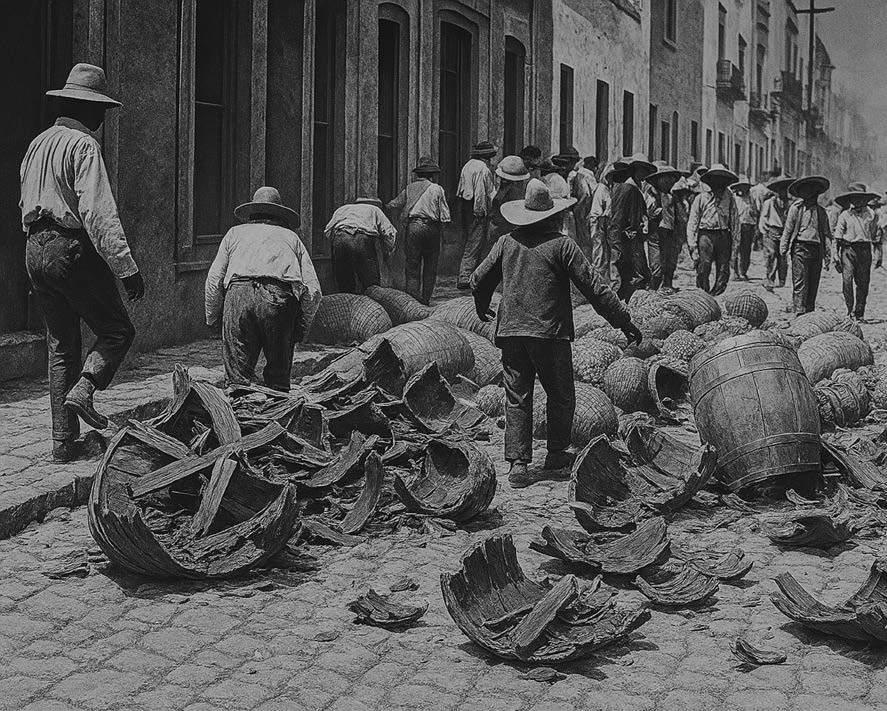
Destrucción de barriles de licor. Tras la prohibición de venta de bebidas embriagantes en Chihuahua en agosto de 1914, se destruyó lo que se encontraba en los establecimientos. Esta imagen fue reconstruida con IA. La miniatura de la fotografía original puede apreciarse en esta misma página.
Destruction of liquor barrels. After the ban on alcoholic beverages in Chihuahua in August 1914, all alcohol found at businesses was destroyed. This image was reconstructed with AI. A thumbnail of the original photo can also be found on this page.
José Fernández con sus empleados en el interior de su tienda La New York, Chihuahua, ca. 1915. José Fernández with his employees inside his store “La New York,” Chihuahua, c. 1915.
Del cerro al mercado: el sotol entre los siglos
XIX y XX
From the Hill to the Market: Sotol in the Nineteenth and Twentieth Century
LA VINATA Y MARCA de sotol más antigua de Chihuahua de que se halló registro legal data de 1888, y es Las Escobas, de acuerdo con el anuario estadístico. Esta fábrica de sotol-mezcal declaró estar ubicada en el rancho del mismo nombre, en la jurisdicción de Escalón (actual Jiménez) y tener un valor total anual del producto de 7,440 pesos; lo que sugiere un volumen importante de producción. Fue una próspera empresa hasta bien entrado el siglo XX. Le siguen en antigüedad las vinatas de 1890, de Ernesta Gómez viuda de Sáenz (en Andrés del Río, Morelos, en la sierra) y de 1895, El Porvenir (de Amador Elías, en Guadalupe).[52]
Los reportes sobre la producción del licor entre el siglo XIX y XX apuntan a que se trataba de una industria importante en varias regiones del estado. En el municipio de Ojinaga se encontraban múltiples vinatas. Aunque no todas tenían nombre reconocido, destacan algunas como La Consolación, Los Fresnos, San Antonio, El Oso y El Matadero, todas dedicadas a la producción de mezcal-sotol. Además, en Coyame se registraron dos fábricas de sotol: una de Amado Porras, en 1903, y otra de Ramírez y Chacón, en 1904. Los padrones municipales
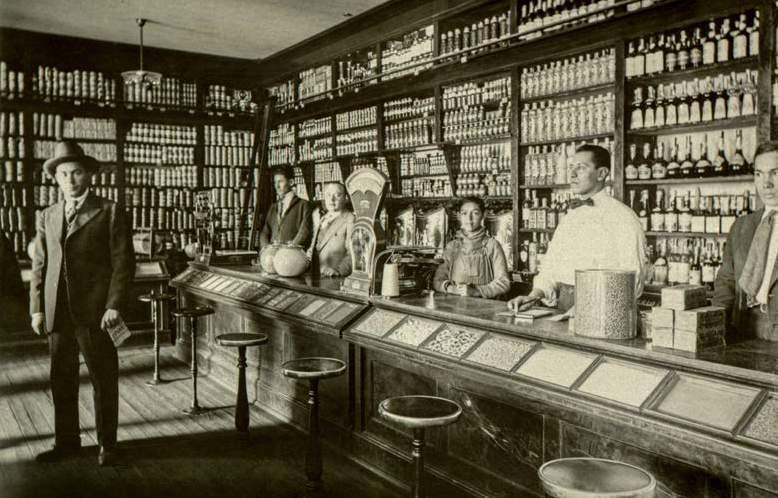
THE OLDEST LEGALLY registered vinata (sotol distillery) and sotol brand in Chihuahua dates back to 1888: Las Escobas, according to the statistical yearbook. This sotol-mezcal factory declared that it was located on the ranch of the same name, in the jurisdiction of Escalón (now Jiménez), and reported a total annual product value of 7,440 pesos, suggesting a significant volume of production. It remained a prosperous enterprise well into the twentieth century. The next oldest vinatas are of 1890, owned by Ernesta Gómez, widow of Sáenz (in Andrés del Río, Morelos, in the Sierra), and of 1895, El Porvenir (owned by Amador Elías, in Guadalupe).[52]
Reports on liquor production between the nineteenth and twentieth centuries point to the fact that it was an important industry in several regions of the state. In the municipality of Ojinaga, there were multiple vinatas. Although not all of them had a recognized name, some do stand out, such as La Consolación, Los Fresnos, San Antonio, El Oso, and El Matadero. These were all dedicated to the production of mezcal-sotol. In addition, two sotol factories were registered in Coyame: one by Amado Porras in 1903, and another by Ramírez and Chacón
de Casas Grandes también dan cuenta de la presencia de esta producción en su localidad. En actas de cabildo de 1901 y 1903 se documentaron solicitudes de arrendamiento de terrenos para establecer vinatas de sotol, que incluían los recursos necesarios para su operación. En ambos casos se autorizó su actividad a cambio de cuotas anuales de cerca de ochenta pesos.[53]
Los impulsos prohibicionistas fueron orquestados por las élites locales y la prensa.
Prohibitionist efforts were orchestrated by local elites and the press.
La producción y venta de sotol en el noroeste del estado a inicios del siglo XX estaba profundamente relacionada con las actividades agrícolas de la región. En San Buenaventura existían dos fábricas de sotol operadas por rancheros, como Idefonso Carrasco y Filiberto Almazán, que comenzaron destilando en sus propias casas y expandieron su producción gracias a la creciente demanda local. En Ascensión, José María Anchondo, administrador de la Hacienda Ojo de Federico, combinaba sus funciones con la operación de su vinata, mientras que Manuel
in 1904. The municipal registers of Casas Grandes also document the presence of this type of production in the area. In the town council minutes of 1901 and 1903, there are recorded requests for leasing land to establish sotol distilleries, including the necessary resources for their operation. In both cases, the activity was authorized in exchange for annual quotas of around 80 pesos.[53]
The production and sale of sotol in the northwest of the state at the beginning of the twentieth century were deeply related to the agricultural activities of the region. In San Buenaventura, there were two sotol factories operated by ranchers, Idefonso Carrasco and Filiberto Almazán, who began distilling in their own homes and expanded their production thanks to the growing local demand. In Ascensión, José María Anchondo, administrator of the Hacienda Ojo de Federico, combined his functions with the operation of his
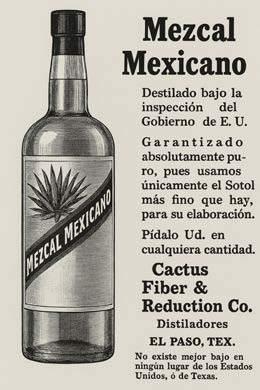
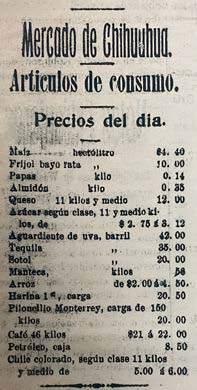
Castillo y Ventura Salaices alternaban sus ventas de productos agrícolas con las de aguardiente y sotol en la cantina. En Galeana y Casas Grandes, la bebida era popular entre rancheros y medieros que se congregaban en las sotolerías, ambientadas con música popular, corridos y canciones chuscas improvisadas de acuerdo con temas de actualidad[54]. Por otra parte, el mayor distribuidor en la ciudad de Chihuahua era Martín Martínez Hernández, quien desde 1904 aparecía como propietario de La Sierra Mojada, un expendio de licores de venta al mayoreo y menudeo ubicado en la calle Victoria 422.[55] En Ciudad Juárez, la frontera, también había registro de una empresa destiladora que fabricaba este licor[56]
La legislación de 1884 reconocía plenamente al sotol como una de las industrias con pago de derechos, al igual que otras bebidas: “[…] Licores en caja, barriles y cualesquiera otro envase, treinta y cinco centavos por arroba, peso bruto”.[57] La arroba tiene un peso variable por región, pero en México es de 11.5 kilos. Se sabe que para 1899, el precio por barril de sotol era de veintidós pesos, de acuerdo con los precios oficiales en el mercado de Chihuahua. Se sabe también que las cabezas de sotol se vendían a un peso bruto de veinticinco centavos
vinata, while Manuel Castillo and Ventura Salaices alternated their sales of agricultural products with those of aguardiente and sotol in the cantina. In Galeana and Casas Grandes, the drink was popular among ranchers and sharecroppers who congregated in the sotolerías, set to popular music, corridos, and improvised songs based on current events.[54] On the other hand, the largest distributor in the city of Chihuahua was Martín Martínez Hernández, who since 1904 appeared as the owner of La Sierra Mojada, a wholesale and retail liquor store located at 422 Victoria Street.[55] In Ciudad Juárez, there was also a record of a distilling company that manufactured sotol.[56]
The 1884 legislation fully recognized sotol as one of the industries subject to duties, along with other beverages: “[…] Liquors in crates, barrels, or any other container, thirty-five cents per arroba, gross weight.”[57] The weight of the arroba varies by region, but in Mexico it is 11.5 kilos. According to the official prices in the Chihuahua market, it’s known that by 1899, the price per barrel of sotol was twenty-two pesos. It is also known that the heads of sotol were sold at a gross weight of twenty-five cents per hundred kilos [58] and that a glass of this liquid cost one and a half cents.[59]
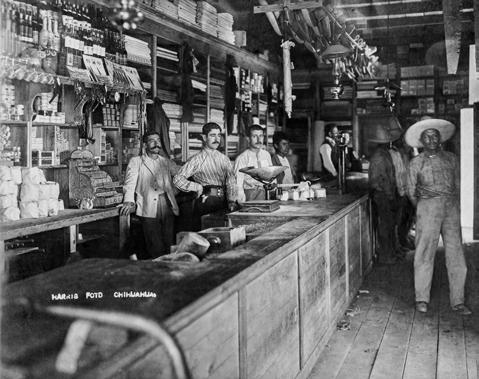
Puede observarse cómo algunos comercios vendían “mezcal” que en realidad era fabricado con sotol. You can see how some businesses sold “mezcal” that was actually made from sotol.
por cada cien kilos[58] y que un vaso de este líquido costaba un centavo y medio.[59] Para 1905 había 32 vinatas que producían anualmente 172,752 litros con un valor total de 41,400 pesos, dando trabajo directo a 180 trabajadores con jornales promedio de cincuenta centavos al día para hombres y, sorprendentemente, de 75 centavos para mujeres.[60] Todo esto sin contar las que operaban fuera del registro oficial.
El sotol era tan popular, que había quienes lo adulteraban. En 1913, la Casa Comercial Salazar y compañía, ubicada en la Calle 14 n.º 178 de la capital del estado, fue multada con 250 pesos por violar el reglamento para la venta de bebidas y comestibles y el artículo 827 del código penal, ya que su producto “era turbio, no formaba una perla consistente y era una grosera sofisticación de sotol”.[61] El comercio sotolero estuvo sujeto también a regulaciones sanitarias para evitar prácticas fraudulentas y garantizar su autenticidad y calidad.
By 1905, 32 vinatas were producing 172,752 liters annually, with a total value of 41,400 pesos. They directly employed 180 workers, with an average daily wage of fifty centavos for men and, surprisingly, seventy-five centavos for women. [60] All this without counting those that operated outside the official registry.
Sotol was so popular that there were even those who adulterated it. In 1913, the Casa Comercial Salazar, located at 14th Street No. 178 in the state capital, was fined 250 pesos for violating the regulations on the sale of beverages and food, as well as Article 827 of the penal code, because its product “was cloudy, did not form a consistent pearl, and was a crude adulteration of sotol.” [61] The sotol trade was also subject to sanitary regulations to avoid fraudulent practices and to guarantee its authenticity and quality.
José De Estefano con sus empleados en el interior de su tienda, Naica, Saucillo, ca. 1910. Fotografía: Charles C. Harris. Fototeca INAH. José De Estefano with his employees inside his store, Naica, Saucillo, circa 1910.
Photo: Charles C. Harris. INAH Photographic Archive.
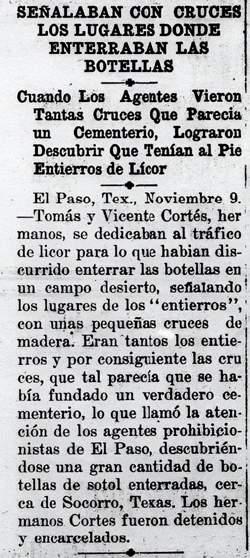
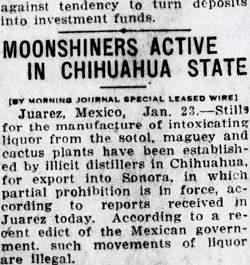
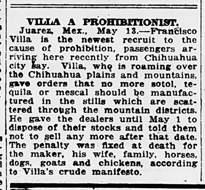
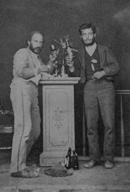
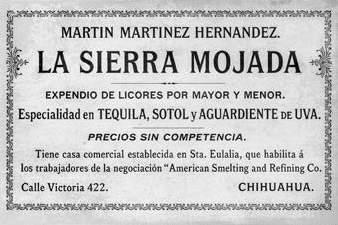
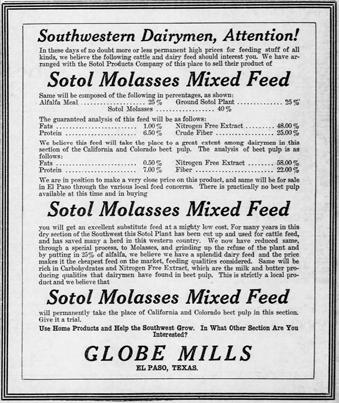
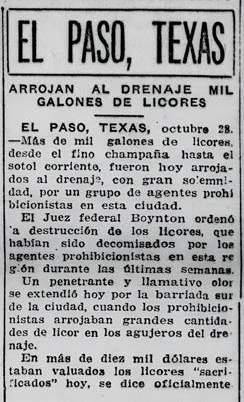
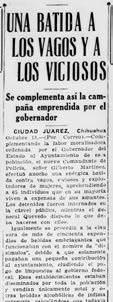

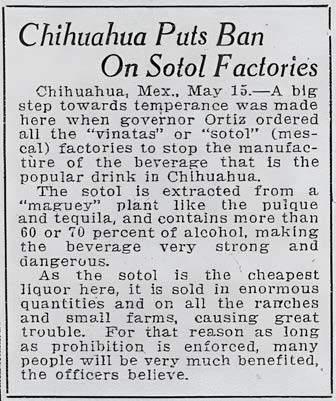

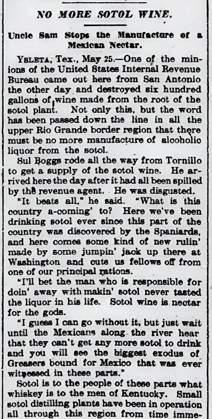
Sotol, una y otra vez
Sotol, Again and Again
DESDE FINALES DEL siglo XIX, los norteamericanos mostraron un interés inusitado en el potencial económico que representaba la planta, que abundaba en millones de acres en algunos estados del sur de Estados Unidos. Inicialmente tuvo aplicaciones industriales y ganaderas, a partir de estudios que desarrollaron procesos para transformar la planta silvestre en un alimento nutritivo para el ganado. Aprovechando su interior rico en almidones y proteínas se creó una melaza de sotol que, mezclada con harina de alfalfa en el alimento de los animales, demostró ser excelente para aumentar la producción y calidad de la leche, así como la carne.[62] Coca-Cola y sotol aparecían juntos como parte de los atractivos en la publicidad de establecimientos de fuentes de sodas, sorbetes, fosfatos y malteadas en Estados Unidos, desde 1894. Increíblemente, ese jarabe de sotol alto en azúcares resultó ser particularmente atractivo para hacer bebidas refrescantes en empresas como Huyler’s Candy.[63]
Además, tapizar ataúdes, fabricar papel, hacer alcohol etílico y producir azúcar,[64] fueron algunos de los usos que se le dieron a la planta Dasylirion. En 1908, el Congreso en Washington otorgó autorización para la fabricación de alcohol etílico a partir de la planta y como resultado de este permiso federal, se estableció una factoría en El Paso, Texas. Ahí llegaban grandes envíos de bulbos de sotol desde la región de Alpine, en la zona de Big Bend, para su conversión en productos desnaturalizados; es decir, no aptos para el consumo humano directo.[65]
Una fábrica de hielo en Ozona, condado de Crockett, Texas, incluso lo usaba como combustible para sus operaciones.
SINCE THE LATE nineteenth century, Americans had shown an unusual interest in the economic potential of the plant, which grew in abundance across millions of acres in several southern states. Initially, it was used for industrial and livestock purposes, based on studies that developed processes to transform the wild plant into a nutritious feed for cattle. Taking advantage of its starch and protein-rich core, a sotol molasses was developed, which, when mixed with alfalfa meal in animal feed, proved to be excellent for improving both the quantity and quality of milk and meat. [62]
Coca-Cola and sotol appeared together as part of the attractions in advertisements for soda fountains, sorbets, phosphates, and milkshakes in the United States as early as 1894. Incredibly, the high-sugar sotol syrup proved particularly attractive for making soft drinks at companies such as Huyler’s Candy.[63]
In addition, upholstering coffins, making paper, producing ethyl alcohol, and manufacturing sugar[64] were some of the uses given to the Dasylirion plant. In 1908, Congress in Washington granted authorization for the manufacture of ethyl alcohol from the plant, and as a result of this federal permit, a factory was established in El Paso, Texas. Large shipments of sotol bulbs arrived there from the Alpine region in the Big Bend area for conversion into denatured products, that is, not suitable for direct human consumption.[65] An ice factory in Ozona, Crockett County, Texas, even used it as fuel for its operations.
Sotol Products Company empleaba a cuarenta trabajadores y se ubicaba cerca del antiguo Fort Bliss. La empresa tenía un capital de 130,000 dólares y la mayoría de las acciones estaban en manos de inversionistas de Los Ángeles, aunque empresarios locales también poseían participaciones en la compañía.[66] Es importante mencionar que procesaba productos destinados a la ganadería y para distintos usos industriales, pero no producía licor.
Mientras tanto, negocios como la Krakauer, Zork y Moye anunciaban en sus sucursales de El Paso y Chihuahua maquinaria agrícola para cortar sotol y ‘salvar al ganado’, convirtiendo la planta silvestre en un alimento nutritivo[67]. El sotol entonces no solo era popular en el mercado como bebida alcohólica, sino que fue resignificado como un recurso valioso impulsado por capital trasnacional y redes comerciales fronterizas. Pese a ese valor productivo, ese licor fue prohibido y proscrito en distintos momentos.
Sotol Products Company employed forty workers and was located near the former Fort Bliss. The company had a capital of $130,000, and while most of the shares were held by Los Angeles investors, local businessmen also owned stakes in the company.[66] It is important to note that it processed products intended for livestock and various industrial uses, but it did not produce liquor.
Meanwhile, businesses such as Krakauer, Zork, and Moye advertised agricultural machinery in their El Paso and Chihuahua branches for cutting sotol and “saving the livestock” by turning the wild plant into a nutritious feed. [67] Sotol was then not only popular in the market as an alcoholic beverage, but was also redefined as a valuable resource driven by transnational capital and border commercial networks. Despite its productive value, this liquor was banned and outlawed at different times.
“Salvando al Ganado”. Publicidad de 1914 de la Krakauer Zork y Moye ofertando una cortadora de sotol.
“Saving the Livestock.” 1914 advertisement by Krakauer Zork and Moye, promoting a sotol cutter.

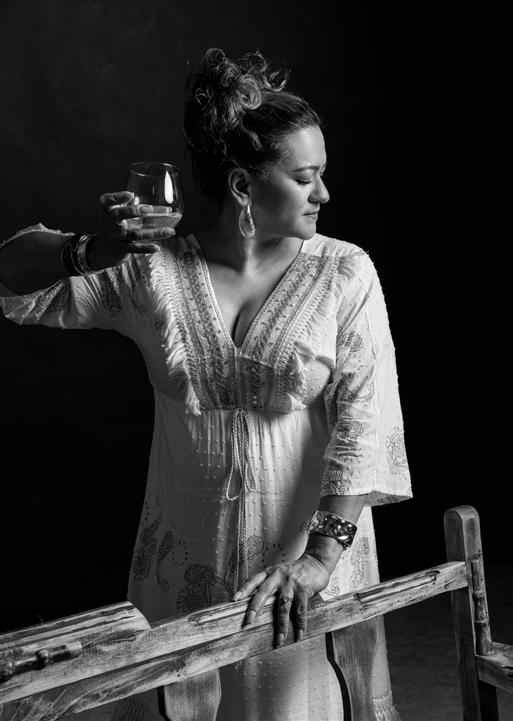
NORMA FERNÁNDEZ:
“EL SOTOL ES LA VOZ DE MI
TIERRA, LEGADO DE MI PADRE Y CAMINO QUE HOY RECORRO. RAÍZ PROFUNDA Y MEMORIAS VIVAS”.
Sotol is the voice of my land, my father’s legacy, and the path I’m walking today. Deep roots and living memories.
Clandestinidad, prohibición y campañas antialcohol
Clandestinity, Prohibition, and Anti-Alcohol Campaigns
A principios del siglo XX, el consumo de alcohol empezó a ser objeto de una intensa vigilancia y regulación por parte de las autoridades de Chihuahua, no tanto por ser un delito en sí mismo, sino porque consideraban que propiciaba comportamientos antisociales. A través de reglamentos, decretos y códigos, se pugnó por restringir su acceso, regular su producción y limitar su presencia en la vida pública. Esta preocupación se insertaba dentro de un discurso mayor acerca del orden, la higiene y la moral, que pretendía proyectar una imagen de estabilidad, modernización y progreso en un contexto de incipiente industrialización e inversión en el estado. De esta forma se vigilaban cantinas, horarios y prácticas consideradas contrarias a las buenas costumbres. Esto formó parte de un proceso más amplio, que no solo se vinculó al alcohol.[68] Los impulsos prohibicionistas fueron orquestados por las élites locales y la prensa; dicho moralismo tenía un sesgo de clase evidente. Mientras se exaltaban algunas bebidas alcohólicas extranjeras como sinónimo de civilización, así como los bares o clubes catalogados como lugares apropiados para el esparcimiento y relajación, se desprestigiaban aquellas bebidas de manufactura local y popular, como el sotol, a las que se culpaba de embrutecer a sus consumidores que las tomaban en cantinas.
Decomiso de alcohol, 1929. Agentes de la Patrulla Fronteriza de los Estados Unidos y mexicanos que fueron capturados contrabandeando sotol a través de la frontera. The Portal to Texas History, Biblioteca Pública de Marfa. Alcohol seizure, 1929. U.S. Border Patrol agents and Mexican nationals caught smuggling sotol across the border. Portal to Texas History, Marfa Public Library.
AT THE BEGINNING of the twentieth century, alcohol consumption began to be subject to intense surveillance and regulation by the authorities of Chihuahua, not so much because it was a crime in itself, but because they considered that it encouraged antisocial behavior. Through regulations, ordinances, and codes, they sought to restrict its access, regulate its production, and limit its presence in public life. This concern was part of a broader discourse on order, hygiene, and morality that aimed to project an image of stability, modernization, and progress in a context of emerging industrialization and investment in the state. As part of this effort, canteens, opening hours, and practices deemed contrary to good morals were closely monitored. This was one aspect of a larger process that extended beyond the issue of alcohol alone.[68] Prohibitionist efforts were orchestrated by local elites and the press; this moralism carried a clear class bias. While certain foreign alcoholic beverages were exalted as symbols of civilization, along with bars and clubs regarded as proper places for leisure and relaxation, locally made and popular drinks like sotol were discredited and blamed for degrading those who consumed them in canteens.
«El champán en copa fina, el coñac en buen salón, pero yo, sotol, ¡soy puro barrio y corazón!».
“Champagne in a fine glass, cognac in a grand salon, but I, sotol—I’m all barrio and heart!”
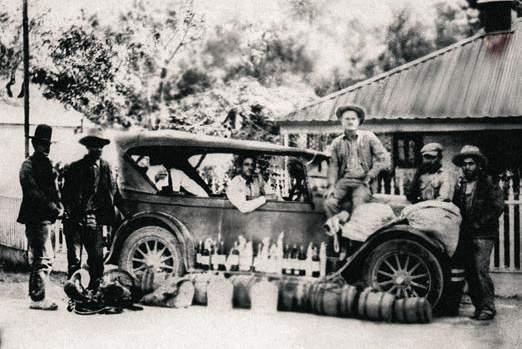
Los viejos discursos en torno a las comunidades originarias prevalecían. En abril de 1904, la circular 733 de la Secretaría del Gobierno del Estado de Chihuahua daba cuenta de una preocupación más allá de lo administrativo. La pequeña fábrica de sotol en Agua Caliente, cerca de Arisachi, municipio de Guerrero, aparecía como una amenaza –desde la periferia indígena– hacia el imaginario del orden progresista. El documento atribuye “graves delitos y un homicidio” a la venta incontrolada de sotol y evidencia el temor a la incapacidad del Estado de vigilar lo que sucedía lejos de los centros de población, así como a la autonomía indígena. Esto inquietaba tanto o más que el alcohol. Se procedió entonces a la prohibición absoluta en vinatas y regiones con dispersión rural y sin vigilancia eficaz. Se argumentó también, que esta venta clandestina paralizaba el trabajo “como se han estado quejando con frecuencia negociaciones industriales”. Además, que alteraba el orden y, por ende, comprometía el buen nombre de la administración del estado, por lo que “conviene reprimir, para la conservación del orden, de la salud y del bienestar de la sociedad”.[69]
Dos años más tarde, en 1906, el Congreso local emitió con mayor precisión el afán de control en la Ley Relativa a la Venta al Menudeo de Bebidas Embriagantes, que no solo reglamentaba, sino que delimitaba, excluía y moralizaba. Ya no cualquiera podría vender alcohol: ni mujeres, ni empleados públicos, ni criminales o personas que tuvieran antecedentes o en algún momento hubieran estado vinculadas a los márgenes del orden
The old discourses around the original communities prevailed. In April 1904, Circular 733 from the Office of the Secretary of the Government of the State of Chihuahua reflected a concern that went beyond administrative matters. A small sotol factory in Agua Caliente, near Arisachi in the municipality of Guerrero, was perceived as a threat from the Indigenous periphery to the imagined order of progress. The document attributes “serious crimes and a homicide” to the uncontrolled sale of sotol and reveals fear of the state’s inability to monitor what occurred far from population centers, as well as of Indigenous autonomy. This was as troubling, if not more so, than the alcohol itself. As a result, absolute prohibition was imposed on vinatas and regions with dispersed rural populations and no effective oversight. It was also argued that this clandestine trade paralyzed labor, “as industrial enterprises have frequently complained.” Moreover, it was said to disrupt public order and, in turn, compromise the good name of the state administration, which is why it was deemed “necessary to suppress it for the preservation of order, health, and the well-being of society.”[69]
Two years later, in 1906, the local congress more clearly expressed its drive for control in the Law on the Retail Sale of Intoxicating Beverages, which not only regulated, but also defined boundaries, excluded, and moralized. Not just anyone could sell alcohol anymore: neither women, nor public employees, nor criminals, nor individuals with a record or past connec-
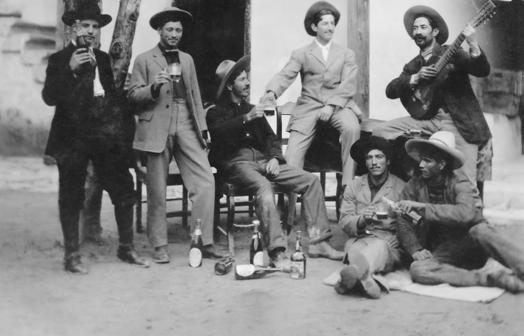
social. La delimitación de las cantinas como espacios físicos y simbólicos quedó asentada como sitios separados de los víveres, lejos de las escuelas, cuarteles y asilos, además de reducidas en número. Los expendios de alcohol se someterían a una atención constante, casi obsesiva: “estarán en todo tiempo bajo la vigilancia de la autoridad y sus agentes, y los dueños o encargados de dichos establecimientos tienen obligación de facilitar el acceso de la policía cualesquiera que sean la hora y la oportunidad con que esta ocurra. [Si] el dueño de aquella impide o dificulta la entrada de los agentes de la autoridad, se le considerará por solo este hecho como encubridor de los delitos”.
La ley además prohibió el expendio en ranchos, haciendas y zonas rurales, “en los que no haya policía organizada o que disten más de dos kilómetros de la plaza principal de las cabeceras, y un kilómetro de las demás poblaciones”.[70] Así configuraron una geografía moral del alcohol: en el centro, los espacios regulados; en la periferia, la amenaza incontrolable. La ley no solo reguló productos, sino que idealizó un sujeto que debería saber beber en ciertos espacios, a ciertas horas, con ciertas compañías. Es un intento por racionalizar el consumo, por convertirlo en una práctica moderna, higiénica y, sobre todo, urbana.
Ese mismo año se fundó en la ciudad de Chihuahua la Liga Antialcohólica Ocampo, para “combatir el abuso del alcohol y proporcionar al hijo del jornalero, ocasión de instruirse” con una biblioteca pública y acciones de propaganda. Esta asociación re-
tion to the margins of social order. The designation of cantinas as both physical and symbolic spaces was established. They were to be separated from provision stores, kept away from schools, barracks, and asylums, and reduced in number. Alcohol vendors would be subject to constant, almost obsessive, oversight: “They shall at all times be under the surveillance of the authorities and their agents, and the owners or managers of said establishments are obligated to grant police access regardless of the hour or circumstances. [If] the owner hinders or obstructs the entry of law enforcement agents, he shall be considered, by that act alone, an accomplice to the crimes.”
The law also prohibited the sale of alcohol in ranches, haciendas, and rural areas, “where there is no organized police force or that are more than two kilometers from the main square of the capitals and one kilometer from other towns”.[70] In this way, they constructed a moral geography of alcohol: at the center, regulated spaces; at the periphery, the uncontrollable threat. The law not only regulated products, but also idealized a subject who knows only to drink in certain spaces, at certain times, and with certain company. It is an attempt to rationalize consumption, to turn it into a modern, hygienic, and, above all, urban practice.
That same year, the Ocampo Anti-Alcoholic League was founded in the city of Chihuahua to “combat alcohol abuse and provide the son of the day laborer with an opportunity to educate himself” with a public library and propaganda activi-
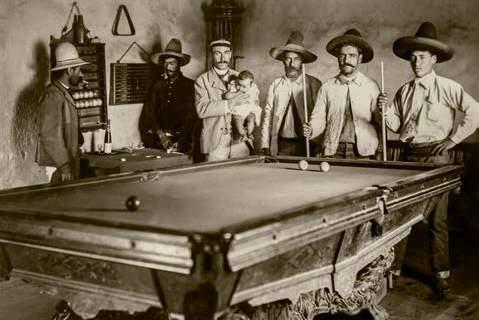
Otra de las fotografías posadas de la época, producidas ex profeso. Another staged photograph from the era, made for the occasion.
cibió el respaldo del gobierno estatal y de instituciones educativas, como las escuelas Palmore y la Filomática. La conformaban médicos, profesores, intelectuales, funcionarios públicos y otros miembros notables de la sociedad chihuahuense de entonces.[71]
En 1909, el gobernador Creel prohibió el uso de la planta de sotol que creciera en terrenos municipales para la fabricación de bebidas alcohólicas, según relataba el Agricultor Mexicano, que agregaba: “Esta medida dictada por el progresista gobernador de Chihuahua es muy conveniente; pero veríamos con gusto que no limitara a eso su benéfica acción […] sino que se restringiera el consumo del sotol en destilerías, aun en terrenos de propiedad particular”.[72]
Si las autoridades que ejercían durante el porfiriato fueron severas, los revolucionarios lo fueron aún más. Aunque en septiembre de 1911 el gobernador Abraham González reformó por decreto los artículos del reglamento de la ley de Creel sobre bebidas embriagantes, relajó las normas para que algunas pudieran venderse de nuevo en tiendas de abarrotes y otros establecimientos (exceptuando mezcal, sotol y aguardiente)[73], Francisco Villa llevó al extremo el prohibicionismo.
ties. This association received the support of the state government and educational institutions, such as the Palmore and Filomatica schools. It was made up of doctors, professors, intellectuals, public officials, and other notable members of the Chihuahua society of the time.[71]
In 1909, Governor Creel prohibited the use of sotol plants growing on municipal lands for the production of alcoholic beverages, according to El Agricultor Mexicano, which added: “This measure, enacted by the progressive governor of Chihuahua, is very welcome; but we would be pleased to see his beneficial action go further […] by also restricting the use of sotol in distilleries, even on privately owned land.” [72]
If the authorities who exercised during the Porfiriato, the period of Porfirio Díaz’s presidency, were severe, the revolutionaries were even more so. Although in September 1911, Governor Abraham González issued a decree reforming the articles of the Creel Law on intoxicating beverages, easing the regulations to allow some to be sold again in grocery stores and other establishments (excluding mezcal, sotol, and aguardiente) [73], Francisco Villa took prohibitionism to the extreme.
Señor Bustamante con bebé y amigos en cantina, Maguarichi, 1901. Autoría no identificada. Fototeca INAH Chih. Mr Bustamante with baby and friends in a bar, Maguarichi, 1901. Photo: Unknown author. INAH Chihuahua Photographic Archive.
Villa –abstemio declarado– limitó la venta de licores en la capital y más
tarde, para febrero de 1914, los prohibió del todo.
Villa, a declared abstainer, restricted the sale of liquor in the capital and later, by February 1914, banned it entirely.
Una vez en el poder del estado de Chihuahua, Villa –abstemio declarado– limitó la venta de licores en la capital y más tarde, para febrero de 1914, los prohibió del todo. En su “Circular relativa al expendio de licores en los restaurants y cantinas” emitió la advertencia de que “los infractores de esta disposición serán castigados severamente”, sin especificar de qué forma[74], y se reiteró la misma consigna durante todo ese mes. Para agosto del mismo año, se especificó que “por acuerdo del C. General en Jefe de la División del Norte […] desde esta fecha y hasta nueva orden, se prohíbe la venta de toda clase de bebidas embriagantes, en la inteligencia de que el que contraviniere esta disposición será castigado civilmente con la multa de $100 cien pesos, y cinco días de arresto, además, se les quebrará todo lo que contenga licor de la cantina, casino o cualquier clase de establecimiento”.[75] Finalmente, en marzo de 1915, Villa dictó la orden de que fueran clausuradas las fábricas de mezcal y sotol en todo el territorio chihuahuense.[76]
Don Eduardo “Lalo” Arrieta es un maestro vinatero de tradición, como indica el nombre del sotol que elabora: Cuarta Generación. Arrieta también trabaja para la marca Nocheluna y compartió un recuerdo familiar respecto a esto: “‘¡Quítame esa vinata!’, les dijo Pancho Villa a mi abuelo Eduardo y a su hermano Librado, un día que pasó por allí a caballo. No le hicieron caso, creyeron que no iba a volver… pero sí volvieron a encontrárselo en otro lado. A Librado lo agarró y le dio doce sablazos como escarmiento”.[77]
Por otra parte, el sotol también fue protagonista del contrabando en la frontera. Incluso, antes de que la ley seca en Estados Unidos vetara el alcohol entre 1920 y 1933, este licor ya llegaba en forma clandestina a los corazones de los norteamericanos… y a sus hígados también. El contrabando de este licor se convirtió en una empresa tan rentable como arriesgada. La
Burrito utilizado para contrabandear sotol a través de la frontera México-Estados Unidos, 1929. Portal to Texas History. Donkey used to smuggle sotol across the Mexico–U.S. border, 1929. Portal to Texas History.
Once in power in the state of Chihuahua, Villa, a declared abstainer, restricted the sale of liquor in the capital and later, by February 1914, banned it entirely. In his “Circular on the Sale of Liquor in Restaurants and Cantinas,” Villa issued a warning that “those who violate this order will be severely punished,” without specifying how [74], and the same directive was repeated throughout that month. By August of that same year, it was made explicit that “by order of the Commander in Chief of the Division of the North […] from this date forward and until further notice, the sale of all types of intoxicating beverages is prohibited, with the understanding that anyone who violates this order will be punished with a civil fine of a hundred pesos and five days of detention. In addition, all liquor found in the cantina, casino, or any type of establishment will be destroyed.”[75] Finally, in March 1915, Villa ordered the closure of all mezcal and sotol distilleries throughout the state of Chihuahua.[76]
Don Eduardo “Lalo” Arrieta is a master vinata (sotol maker) by tradition, as suggested by the name of the sotol he produces, Cuarta Generación (Fourth Generation). Arrieta also works with the brand Nocheluna and shared a family memory related to this: “‘Tear down that vinata!’ Pancho Villa told my grandfather, Eduardo, and his brother, Librado, one day as he passed by on horseback. They ignored him, thinking he would not come back… but they did run into him again somewhere else. He caught Librado and gave him twelve saber slashes as a warning.”[77]
On the other hand, sotol was also a protagonist of smuggling on the border. Even before the dry law in the United States banned alcohol between 1920 and 1933, this liquor was already clandestinely reaching the hearts of North Americans... and their livers as well. Smuggling this liquor became as profitable as it was risky. The drink was popu-
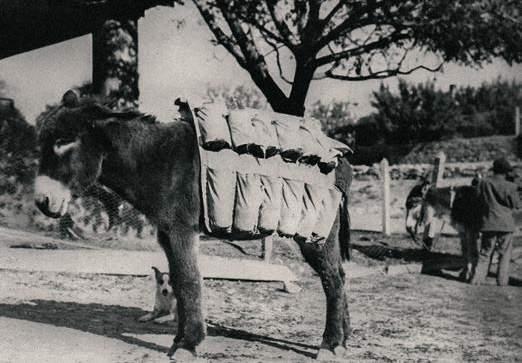
bebida era popular en toda la región. El periodismo de entonces informaba acerca de arrestos, multas y sanciones a los delatados por el nerviosismo, señalados por vecinos chismosos o descubiertos por fallas en su ingenioso –aunque imperfecto– camuflaje. El negocio era tentador porque había mucho sotol en el área de Big Bend; tanto, que Ross Kirman –teniente del ejército en ese distrito– decía que “las abejas se emborrachan porque hacen su miel de las flores de la planta de sotol y no pueden volar derecho cuando la llevan a la colmena. Los niños se tambalean después de comer esa miel”.[78]
Se ordenó a todas las zonas del Alto Río Grande no fabricar más licor a partir de esta planta.
In addition, all areas of the Upper Rio Grande were ordered not to manufacture any more liquor from this plant.
lar throughout the region. Journalism at the time reported on arrests, fines, and penalties for those tipped off by nervousness, pointed out by gossipy neighbors, or discovered by flaws in their ingenious, albeit imperfect, camouflage. The business was tempting because there was plenty of sotol in the Big Bend area; so much so, that Ross Kirman, army lieutenant in that district, said that “the bees get drunk because they make their honey from the flowers of the sotol plant and can’t fly straight when they get it to the hive. The children stagger after eating that honey.”[78]
La magnitud del fenómeno propició que la Oficina de Impuestos Internos de los Estados Unidos tomara cartas en el asunto desde 1907. Se destruyeron miles de litros de sotol en Ysleta, en la frontera. Además, se ordenó a todas las zonas del Alto Río Grande no fabricar más licor a partir de esta planta. El comerciante Sul Boggs, que viajó desde San Elizario para conseguir suministro, comentó indignado ante los hechos:
The magnitude of the phenomenon prompted the U.S. Bureau of Internal Revenue to take action as early as 1907. Thousands of gallons of sotol were destroyed in Ysleta, on the border. In addition, all areas of the Upper Rio Grande were ordered not to manufacture any more liquor from this plant. Sul Boggs, who traveled from San Elizario to obtain supplies, commented indignantly on the events:
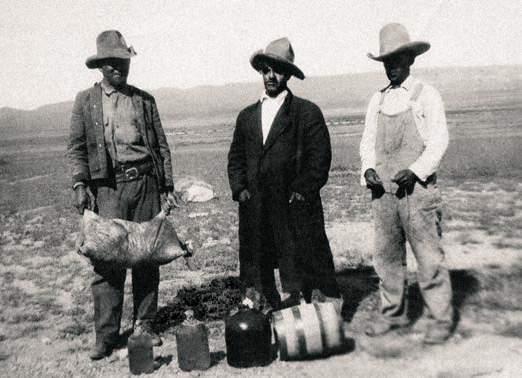
“Esto es increíble. ¿Qué clase de país es este? Aquí hemos estado bebiendo sotol desde que este país fue descubierto por los españoles, y ahora viene alguien con una regla de Washington y nos corta de una de nuestras principales tradiciones. Apostaría a que la persona responsable de quitar el sotol de la circulación nunca ha probado esa bebida. El vino de sotol es néctar para los dioses. Creo que puedo vivir sin él, pero esperen a que los mexicanos a lo largo del río escuchen que no podrán conseguir más sotol para beber, y verán la mayor cantidad de greasers (mexicanos) rumbo a México que jamás se haya visto en estas partes. El sotol es para la gente de esta región lo que el whisky es para los hombres de Kentucky. Pequeñas destilerías de sotol han estado en operación en esta región desde tiempos inmemoriales”.[79]
El gobernador Andrés Ortiz ordenó la clausura de todas las vinatas o fábricas de sotol.
Governor Andrés Ortiz ordered the closure of all vinatas, or sotol distilleries.
“This is unbelievable. What kind of country is this? Here we have been drinking sotol since this country was discovered by the Spanish, and now someone comes along with a ruler from Washington and cuts us off from one of our main traditions. I would bet the person responsible for taking sotol out of circulation has never tasted that drink. Sotol wine is nectar to the gods. I think I can live without it, but wait until the Mexicans along the river hear that they can’t get any more sotol to drink, and you will see the largest number of greasers (Mexicans) heading for Mexico. Sotol is to the people of this region what whiskey is to the men of Kentucky. Small sotol distilleries have been in operation in this region since immemorial times.”[79]
La ley seca en Estados Unidos fue el resultado de un influyente movimiento social que desde el siglo XIX había relacionado el consumo de bebidas alcohólicas con problemáticas
The dry law in the United States was the result of an influential social movement that, since the nineteenth century, had linked the consumption of alcoholic beverages with moral, social, and economic problems. Different sectors
Contrabandistas de alcohol capturados en la frontera, 1929. The Portal to Texas History. Alcohol smugglers caught at the border, 1929. Portal to Texas History.
de orden moral, social y económico. Desde distintos sectores e instituciones se impulsó la idea de que la prohibición mejoraría todos esos aspectos de la sociedad, la salud pública y la vida familiar, y el crimen disminuiría. Irónicamente, a consecuencia de esta, floreció un gran mercado ilegal, redes de contrabando y corrupción política, aparte de los constantes encuentros violentos entre contrabandistas y oficiales fronterizos, así como otras autoridades.
Por la misma época, en Chihuahua se emprendieron esfuerzos paralelos que reflejaban tanto preocupaciones locales como gestos de diplomacia fronteriza. El gobernador Andrés Ortiz ordenó la clausura de todas las vinatas o fábricas de sotol. Luego, Fernando Orozco impuso fuertes condiciones fiscales y de vigilancia a ese sector.[80] A la par, el Gobierno federal propuso la creación de una zona seca de diez millas a lo largo de la frontera norte, como un acto de cortesía hacia Estados Unidos, en un intento por evitar que el flujo de alcohol mexicano minara la recién instaurada prohibición estadounidense.[81]
and institutions promoted the idea that prohibition would improve all these aspects of society, public health, and family life, and that crime would decrease. Ironically, as a result, a large illegal market, smuggling networks, and political corruption flourished, along with constant violent encounters between smugglers and border officials, as well as other authorities.
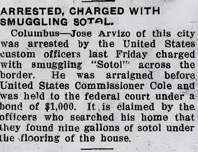
Around the same time, parallel efforts were undertaken in Chihuahua that reflected both local concerns and gestures of border diplomacy. Governor Andrés Ortiz ordered the closure of all vinatas, or sotol distilleries. Later, Fernando Orozco imposed strict fiscal and surveillance measures on the sector.[80] At the same time, the federal government proposed the creation of a tenmile dry zone along the northern border as an act of courtesy to the United States, in an attempt to prevent the flow of Mexican alcohol from undermining the newly instituted U.S. prohibition.[81]
Arrestado por contrabando, logra seguir el proceso en libertad gracias a la costosa fianza de mil dólares. Arrested for smuggling, he managed to stay out on bail thanks to a hefty $1,000 bond.
Moonshiners, smugglers y bootleggers o ‘bulegueros’ –una castellanización del término–pululaban en la frontera. Este último mote proviene de la práctica de esconder frascos de licor en la parte superior de las botas (bootleg), pero el concepto se amplió para referirse a cualquiera que traficara alcohol ilegalmente. Por otro lado, se conocían como moonshiners a los que trabajaban de noche by the light of the moon (a la luz de la luna) para evitar ser detectados en sus actividades ilegales.
Su creatividad floreció al margen de la ley, pues solían ser innovadores en su actividad: durante los años veinte escondían el licor en bolsas para agua caliente (esas que se usan para calentar la cama o aliviar dolores), en botellas de medicamentos, compartimentos secretos de automóviles, en ataúdes adaptados, en la ropa interior femenina. Túneles a
Moonshiners, smugglers, and bootleggers, referred to in Spanish as bulegueros, proliferated along the border. The latter designation derived from the practice of concealing flasks of liquor in the shafts of boots, hence the term “bootleg,” though it eventually came to encompass all individuals involved in the illicit trade of alcohol. Those who conducted their operations under the cover of night, by the light of the moon, to evade detection were known as moonshiners.
Their creativity flourished outside the bounds of the law, as they often displayed remarkable ingenuity in their operations. During the 1920s, liquor was concealed in hot water bottles (the kind used to warm beds or relieve pain), in medicine bottles, secret compartments of automobiles, adapted coffins, and even women’s undergarments. Other methods included tunnels beneath the border and sotolero donkeys
través de la frontera, burritos sotoleros cargados de botellas y llevados por las zonas más alejadas para sortear la vigilancia, eran otras de las tantas formas de pasar el alcohol al otro lado de la frontera[82]. Se conoce que incluso hubo contrabando en avión desde Presidio (hoy Ojinaga), cuyo destino era California.[83] Cada entrega era un desafío frente a las imposiciones de la ley y la moralidad forzada.
Como parte de esos esfuerzos por burlar las normas, en 1925, Tomás y Vicente Cortés –hermanos dedicados al tráfico de licor– idearon enterrar las botellas en un campo desierto, señalando los lugares de los ‘entierros’ con unas pequeñas cruces de madera. Eran tantos los entierros y las cruces, que parecía que había un verdadero cementerio. Esto llamó la atención de los agentes prohibicionistas de El Paso, que descubrieron así una gran cantidad de botellas de sotol, cerca de Socorro, Texas. Los hermanos Cortés fueron detenidos y encarcelados.[84]
laden with bottles and guided through remote areas to evade surveillance, just a few of the many strategies employed to smuggle alcohol across the border.[82] There are even records of aerial smuggling from Presidio, now Ojinaga, to destinations in California.[83] Each delivery constituted a direct challenge to legal authority and the prevailing moral order.
As part of these efforts to circumvent the law, in 1925, Tomás and Vicente Cortés, brothers engaged in liquor trafficking, devised a method of burying bottles in a deserted field, marking each burial site with a small wooden cross. The number of burials and markers was so extensive that the area resembled an actual cemetery. This unusual sight drew the attention of Prohibition agents in El Paso, who uncovered a significant amount of sotol bottles near Socorro, Texas. The Cortés brothers were subsequently arrested and imprisoned. [84]
«Me escondieron como difunto, me buscaron como tesoro. Y ahora, cada año mis amigos celebran el entierro sotolero, en conmemoración de esos tiempos».
“They hid me as if I were deceased; they searched for me as if I were treasure. And now, each year, my friends celebrate El Entierro Sotolero (The Sotolero Burial) in commemoration of those times.”
Decomisos, derrames de licor, redadas, encarcelamientos, enfrentamientos armados llenan la prensa de los años veinte e inicios de los treinta en la frontera. Las autoridades aduanales y la Patrulla Fronteriza estuvieron tan activas como los productores y traficantes.[85] Miles de galones de bebidas alcohólicas, “desde el fino champaña hasta el sotol corriente”, fueron arrojados al drenaje con gran solemnidad por agentes prohibicionistas. En el Paso, Texas, uno de esos tantos ocurrió en noviembre de 1930. El penetrante y llamativo olor se extendió por la barriada sur de la ciudad, ya que habían echado el licor en los agujeros del drenaje. Los productos ‘sacrificados’ estaban valuados en más de 10,000 dólares, según se dijo oficialmente.[86]
Del lado mexicano, muchas comunidades cercanas a la frontera –particularmente Ciudad Juárez– florecieron durante esos años. Mejoras urbanas e instalación de servicios públi-
Seizures, liquor confiscations, raids, imprisonments, and armed confrontations filled the pages of the press along the border throughout the 1920s and early 1930s. Customs authorities and the Border Patrol were as active as the manufacturers and traffickers themselves.[85] Thousands of gallons of alcoholic beverages, “from fine champagne to ordinary sotol,” were solemnly poured down the drain by Prohibition agents. One such event took place in El Paso, Texas, in November 1930. The pungent, unmistakable odor spread through the southern slum of the city after the liquor was emptied into sewer openings. The “sacrificed” products were reportedly valued at over $10,000.[86]
On the Mexican side, many communities near the border, particularly Ciudad Juárez, flourished during those years. Urban improvements and the development of public services
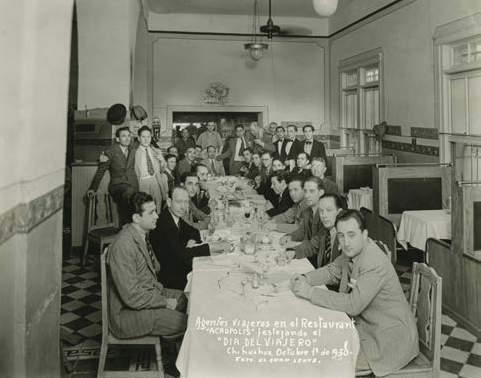
cos fueron posibles debido a la derrama económica generada por aquellos que querían tomar alcohol. Fue la época dorada de bares, cantinas, casinos y negocios de todo tipo para satisfacer la gran demanda.
La ley seca fue derogada en Estados Unidos en 1933, pero dejó una profunda huella cultural.
La ley seca fue derogada en Estados Unidos en 1933, pero dejó una profunda huella cultural y evidenció que legislar sobre asuntos privados de la población podría traer efectos muy inesperados. Mientras tanto, del lado mexicano, en el estado de Chihuahua durante el mandato del gobernador Rodrigo M. Quevedo, los años treinta fueron tiempos de persecución y destrucción de vinatas para los sotoleros.[87]
Prohibition was repealed in the United States in 1933, but it left a lasting cultural imprint.
Es común encontrar una arraigada memoria colectiva fuera de la ciudad que habla acerca del miedo a los rurales, a la acordada (fuerzas montadas para combatir bandolerismo y mantener el orden en zonas rurales). César Márquez Campero, miembro de la Sociedad Aldamense de Estudios Históricos, platica una historia relacionada con ello: “Fue un
Agentes viajeros departiendo en el restaurante Acropolis en Chihuahua, 1 de octubre de 1938. Fotografía: Ignacio Medrano Chávez. Fototeca INAH Chih., Colección “Socorro Quezada Medrano”. Traveling agents socializing at Acropolis restaurant in Chihuahua, October 1, 1938. Photo: Ignacio Medrano Chávez. INAH Chihuahua Photographic Archive, “Socorro Quezada Medrano” Collection.
was made possible by the economic influx generated by those seeking to consume alcohol. It was the golden age of bars, cantinas, casinos, and businesses of all kinds, established to meet the growing demand.
Prohibition was repealed in the United States in 1933, but it left a lasting cultural imprint and demonstrated that legislating private matters of the population could yield highly unforeseen consequences. Meanwhile, on the Mexican side, in the state of Chihuahua, the 1930s were marked by the persecution and destruction of vinatas operated by sotoleros during the administration of Governor Rodrigo M. Quevedo.[87]
A deep-rooted collective memory persists in the countryside, one that speaks of fear of the rurales and the acordada , (mounted forces deployed to combat banditry and maintain order in rural areas). César Márquez Campero, a member of the Aldama Society for Historical Studies, recounts a story tied to this fear: “It was a very tragic episode
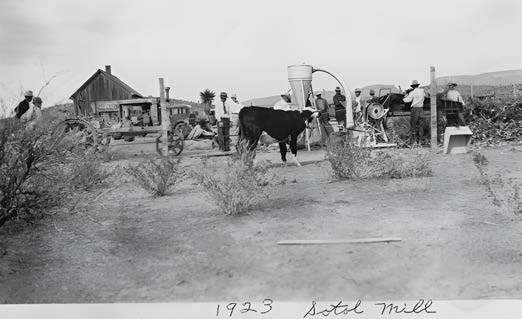
episodio muy trágico en la familia. Mi bisabuelo Arcadio Pallares y sus cuñados tenían una vinata en el rancho Los Carneros, a un costado de Placer de Guadalupe. Esta vinata de sotol era muy rudimentaria, con cueros de vaca curtidos como pilas de fermentación y en vez de alambiques, ollas de barro. Cuenta mi abuela que en la época de la prohibición llegaron los rurales que estaban en Pueblito, donde tenían su base. Daban el recorrido por El Pastor y todos esos pueblos. Un día llegaron los rurales. Obviamente la vinata no tenía permisos… y les destrozaron todo. Fueron muy violentos con la familia, con las mujeres. Hubo una persecución y a raíz de eso tuvieron que irse. Entonces ya no se dedicaron al sotol, mejor continuaron con el ganado y siendo gambusinos (los que buscan oro y minerales en los lechos de los ríos)”.[88] En la sierra también estaba presente ese temor. Sentir que “yo luché mucho con eso cuando estaba chico, que estaba lepe (niño), veía a mi apá [que] se asustaba tanto y nos asustaban a nosotros también, porque [decía] ‘¡allá vienen los soldados… la acordada!’. Y ahí nos andamos escondiendo”, recuerda don Bienvenido Fernández, sotolero de tercera generación, en Madera.[89]
Finalmente, la campaña antialcohólica en el estado de Chihuahua fue suspendida en 1938.
Finally, the anti-alcohol campaign in the state of Chihuahua was suspended in 1938.
in the family. My great-grandfather Arcadio Pallares and his brothers-inlaw had a vinata on the Los Carneros ranch, next to Placer de Guadalupe. This vinata was very rudimentary, with cured cowhides used as fermentation vats and, instead of stills, clay pots. My grandmother says that during Prohibition, the rurales arrived, the ones based in Pueblito. They would make rounds through El Pastor and all those towns. One day, the rurales came. Obviously, the vinata did not have permits… and they destroyed everything. They were very violent with the family, with the women. There was a manhunt, and as a result, they had to leave. So they no longer made sotol. They went back to raising livestock and being gold seekers, those who searched for gold and minerals in riverbeds.” [88] This fear was also present in the Sierra. “I struggled with it a lot as a child. When I was just a little kid, I would see how scared my apá was—and they would scare us too—saying, ‘The soldiers are coming… the acordada !’ And we would run and hide,” recalls Don Bienvenido Fernández, a third-generation sotolero from Madera. [89]
Hubo un crecimiento en las campañas antialcohólicas que ya existían en Chihuahua, impulsadas desde distintas organizaciones sociales.
There was a rise in the anti-alcohol campaigns that already existed in Chihuahua, promoted by various social organizations.
Hubo un crecimiento en las campañas antialcohólicas que ya existían en Chihuahua, impulsadas desde distintas organizaciones sociales. A decir de Vladimir Armendáriz, estas fueron ideadas con base en un ‘puritanismo revolucionario’, con la colaboración de una red de profesores bien instalados en el estado, así como de las logias masónicas, las organizaciones femeninas y agrupaciones campesinas y obreras –particularmente sindicatos de mineros y ferrocarrileros– argumentando un mejoramiento en la vida de los trabajadores a partir de la reducción en el consumo.[90]
El discurso seguía siendo similar al de antaño: “El alcohol es una como fermentación pútrida de un monstruoso cadáver que estuviera enterrado a raíz del suelo. ‘Vinos’ les llama el eufemismo local, pero alcoholes son. Y de lo más bajo. Con todos los etílicos y metílicos imaginables, como tequila (que es ya una bebida internacional muy apreciada entre los que gustan de iluminarse por dentro), zotol, bacanora, pinos, chorrera y otros muchos de que cada región se ufana”.[91]
Finalmente, la campaña antialcohólica en el estado de Chihuahua fue suspendida en 1938, debido a las gestiones que hicieron las cámaras de comercio de Ciudad Juárez, Chihuahua y Parral ante el Departamento de Salubridad Pública, por conducto de la Confederación de Cámaras. La noticia fue recibida con gran satisfacción por los comerciantes del ramo y desde luego se reanudó la venta legal de sotol y otros licores… que de todas formas se consumían.[92]
There was a rise in the anti-alcohol campaigns that already existed in Chihuahua, promoted by various social organizations. According to Vladimir Armendáriz, these campaigns were conceived based on “revolutionary puritanism,” with the collaboration of a network of well-established teachers throughout the state, as well as Masonic lodges, women’s organizations, and peasant and labor groups, particularly miners’ and railroad workers’ unions, arguing that reducing alcohol consumption would lead to an improvement in workers’ lives.[90]
The discourse remained much the same as in earlier times: “Alcohol is like the putrid fermentation of a monstrous corpse buried just beneath the surface of the earth. ‘Wines’ is the local euphemism, but they are alcohols. And the lowest kind. Containing every imaginable form of ethanol and methanol, such as tequila (which has already become an internationally appreciated beverage among those who enjoy lighting themselves up from within), zotol, bacanora, pinos, chorrera, and many others that each region proudly claims as its own.”[91]
Finally, the anti-alcohol campaign in the state of Chihuahua was suspended in 1938, following efforts by the chambers of commerce of Ciudad Juárez, Chihuahua, and Parral, presented to the Department of Public Health through the Confederation of Industrial Chambers. The news was received with great satisfaction by merchants in the industry, and, of course, the legal sale of sotol and other liquors resumed. Liquors that were, in any case, already being consumed.[92]
Molienda de sotol cerca de la frontera, 1923. The Portal to Texas History. Grinding sotol near the border, 1923. Portal to Texas History.
De “catarrines” e “hinchados”: lidiando con la mala fama
Dealing with a Bad Reputation
A PESAR DE las regulaciones, las persecuciones y el carácter clandestino que en general envolvía su producción, el sotol siguió destilándose y siendo del gusto de muchos. Se le adjudicaban una serie de bondades si se tomaba moderadamente: desde medicinales –como cuando se usó como parte del tratamiento durante la epidemia de gripe española–, hasta para darse valor en momentos difíciles. Un trago de sotol era rito de iniciación por el que siempre pasaba el novato en los ranchos fronterizos. Entre los vaqueros se decía que proporcionaba energía, era costeable, no daba resaca y que la única objeción a la bebida era que sus mujeres no se les acercaban en una semana, debido al aliento después de tomarlo.
En zonas rurales el oficio de hacer sotol se combinaba con otras actividades a lo largo del año, de acuerdo con las estaciones y las oportunidades que el entorno ofreciera. Así aprovechaban al máximo los recursos naturales: durante ciertas temporadas trabajaban la candelilla para obtener cera, mientras que en otras se producía carbón vegetal a partir de la leña, casi siempre del mezquite. Otros se dedicaban también a ser gambusinos, buscando metales preciosos, o bien alternaban su tiempo como pequeños agricultores y ganaderos para el autoconsumo o venta. Esta diversificación de oficios garantizaba la subsistencia y demostraba conocimiento del medio ambiente.
UNA HUELLA DACTILAR DEL PAISAJE
El sotol huele a desierto después de la lluvia. Tiene notas herbales, terrosas, a veces ligeramente dulces o ahumadas. Su sabor puede variar de acuerdo con muchos factores: la especie, la técnica del vinatero, así como si se hace a fuego lento o a llama brava. El sotol crece en condiciones muy específicas; influye el tipo de suelo, la altitud, la exposición al sol, la captación de agua, los minerales del terreno. A esto se le conoce como terroir. Así, cada lote refleja de forma particularísima el entorno donde creció la planta y el modo en que fue procesada. El productor deja su toque, pero el paisaje imprime la firma. Cada botella es irrepetible, única.
DESPITE regulations, persecution, and the generally clandestine nature of its production, sotol continued to be distilled and enjoyed by many. When consumed in moderation, it was credited with a range of benefits: medicinal properties, such as its use during the Spanish flu epidemic, as well as the ability to provide courage in difficult moments. A drink of sotol served as a rite of initiation for newcomers on frontier ranches. Among cowboys, it was said to give energy, was affordable, did not cause a hangover, and that the only complaint was that their wives would not come near them for a week due to the lingering breath it left behind.
In rural areas, the craft of making sotol was combined with other activities throughout the year, depending on the seasons and the opportunities offered by the environment. In this way, communities made the most of natural resources: during certain times of the year, they harvested candelilla to extract wax; during others, they produced charcoal from firewood, most often from mesquite. Some also worked as gold seekers, searching for precious metals, or alternated their time between small-scale farming and cattle ranching for self-consumption or sale. This diversification of trades ensured subsistence and reflected a deep knowledge of the local environment.
A FINGERPRINT OF THE LANDSCAPE
Sotol smells like the desert after rain. It carries herbal, earthy notes, sometimes slightly sweet or smoky. Its flavor can vary depending on many factors: the species, the distiller’s technique, and whether it’s made over a slow fire or open flame. Sotol grows under very specific conditions. Its character is shaped by the type of soil, altitude, sun exposure, water retention, and the minerals in the terrain. This is known as terroir. Each batch uniquely reflects the environment where the plant grew and the way it was processed. The producer leaves their mark, but it’s the landscape that signs its name. Every bottle is unique, one of a kind.
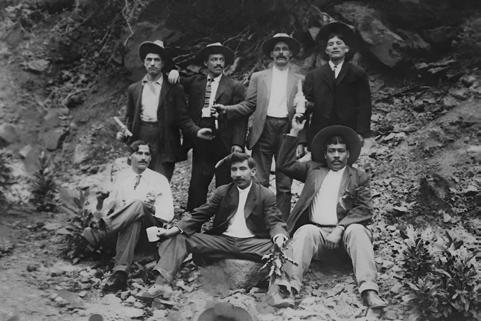
El sotol se producía sobre todo en la región de los llanos semidesérticos del norte y oriente del estado, aunque mantuvo presencia constante prácticamente en todo Chihuahua. Se vendía casi siempre sin marcas ni etiquetas, a granel, o en unas pequeñas botellas de vidrio que se llamaban ‘topos’.[93] En Coyame, Ojinaga y Aldama se encontraba la mayor cantidad de vinatas. Don Herminio Ramírez dedicó mucha de su energía a hacer famosa la bebida; no solo la producía, sino que abrió un club social en la ciudad de Chihuahua que llamó Las Perlas de Coyame. Ahí serviría el famoso ‘sotol de Coyame’ a los turistas estadounidenses que visitaban la ciudad durante la prohibición.[94] Ese nombre se volvió legendario.
En Coyame, Ojinaga y Aldama se encontraba la mayor cantidad de vinatas.
The largest number of vinatas was found in Coyame, Ojinaga, and Aldama.
Otros productores también utilizaron el término ‘sotol de Coyame’ después de la prohibición. Tal es el caso de Abelardo Loya, dueño de la Hacienda de los Tinajones, que daba trabajo a diecisiete familias en la elaboración de sotol. La hacienda El Rodrigueño, dirigida por Agustín Lozoya, empleó a doce familias. Muchos productores más lo hicieron: Bernardo Celaya, Leandro Ortiz, Antonio Rodríguez, Nieves Hernández, Cuco Pérez, Raúl Ramírez y Nieves Mendoza.[95] Este último, que ha-
Grupo de amigos reunidos en Colonia Juárez, Nuevo Casas Grandes, en la década de 1920. Fototeca INAH Chihuahua.
A group of friends gathered in Colonia Juárez, Nuevo Casas Grandes, in the 1920s. INAH Chihuahua
Photographic Archive.
Sotol was produced primarily in the semi-desert plains of the northern and eastern regions of the state, though it maintained a steady presence throughout much of Chihuahua. It was almost always sold unbranded and unlabeled, either in bulk or in small glass bottles known as topos [93]
The largest number of vinatas was found in Coyame, Ojinaga, and Aldama. Don Herminio Ramírez dedicated much of his energy to making the drink famous; he not only produced it but also opened a social club in the city of Chihuahua, which he named Las Perlas de Coyame. There, he served the renowned sotol de Coyame to American tourists visiting the city during Prohibition.[94] The name became legendary.
Other manufacturers also used the term sotol de Coyame after Prohibition. One such case was Abelardo Loya, owner of Hacienda de los Tinajones, which employed seventeen families in the production of sotol. Hacienda El Rodrigueño, managed by Agustín Lozoya, employed twelve families. Many other manufacturers followed suit, including Bernardo Celaya, Leandro Ortiz, Antonio Rodríguez, Nieves Hernández, Cuco Pérez, Raúl Ramírez, and Nieves Mendoza.[95] The latter, who had worked
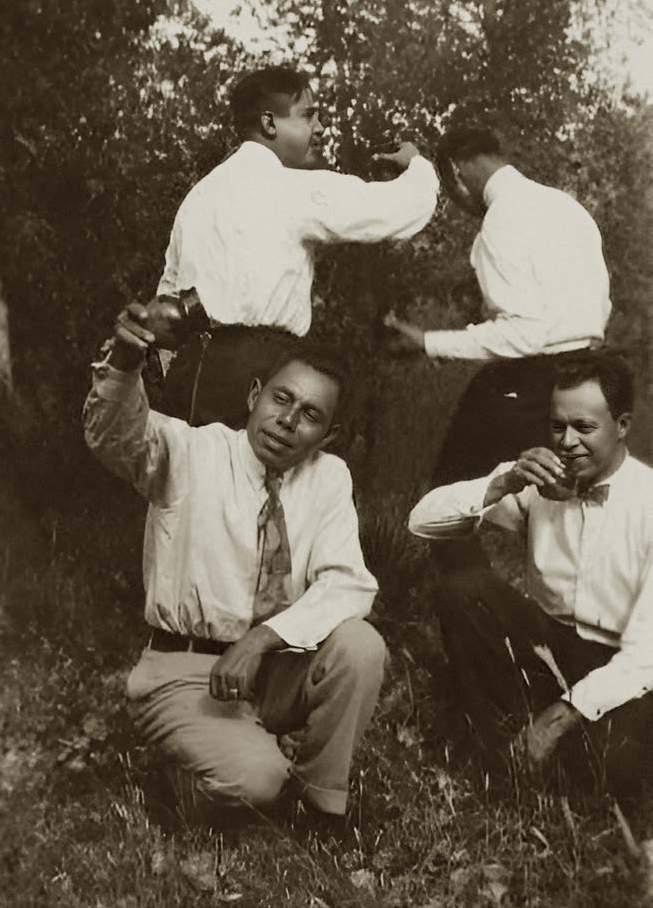
Nabor Hernández y compañía tomando sotol en jarritos, Chihuahua, 1923. Fotografía: Mario Góngora.
Nabor Hernández and company, drinking sotol in little clay cups, Chihuahua, 1923. Photo: Mario Góngora.
bía trabajado junto con su hermano en una destilería desde 1950, pudo independizarse después de una década y dejó Coyame para producir su propio sotol al que nombró Coyamito,[96] que hoy es una de las marcas más famosas de Aldama y con mayor variedad de productos.
En Coyame no podían faltar las cantinas. Aunque no había refrigeradores, la cerveza se enfriaba en tinas con agua, pero la gente prefería el litro de sotol, que costaba lo mismo. Había billares, buenos tragos y camaradería en La Bala Perdida o El Oasis. A fines de los cuarenta, era famosa La Amistad y en los años cincuenta, las cantinas de Nieves Cervantes: El Farolito, La Rosa, La Bajadita y La Garrita.[97]
En las regiones de Escalón, Villa Coronado y Jiménez, el sotol era distribuido por las bodegas de Hugo Uslé, que lo almacenaban en barricas de 200 litros y garrafones de 45, 15 y 10 litros. Sus proveedores eran los hermanos Ramón y Lupe Muñoz, que producían el Lupito y Sabás López, de la marca Las Escobas. También era famoso su Sabach Cinco Letras –las letras que componen el nombre del sotol–. Todos esos se sumaban a la variedad de bebidas con que se contaba en esa zona, el Lágrimas de Arrieta y el Perlas de Coyame, de los que decían en conjunto que eran tan buenos “como besos de mujer”. Eustasio Fernández recuerda de su trabajo en esos almacenes que “cuando los clientes iban a comprar el sotol […] se tenía que sacar de las barricas o garrafones chupando por medio de una manguera y el primer trago iba directo a mi estómago. Para el mediodía, a la hora de salir, ¡qué parranda! Había días que no encontraba la puerta de salida de la oficina”.[98]
alongside his brother in a distillery since 1950, became independent after a decade and left Coyame to produce his own sotol, which he named Coyamito. [96] Today, it is one of the most renowned brands in Aldama and offers a wide variety of products. In Coyame, cantinas were in no short supply. Although there were no refrigerators, beer was cooled in tubs of water, but most people preferred a liter of sotol, which cost the same. Establishments like La Bala Perdida and El Oasis offered pool tables, strong drinks, and camaraderie. By the late 1940s, La Amistad had gained a reputation, and in the 1950s, the cantinas owned by Nieves Cervantes, El Farolito, La Rosa, La Bajadita, and La Garrita became well known.[97]
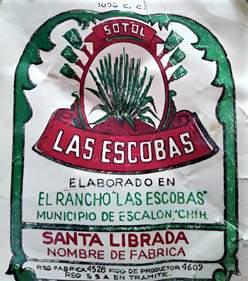
Publicidad de Sotol Las Escobas, cortesía de Faridy Bujaidar y familias Echeverría y López Cano.
Las Escobas Sotol advertisement, courtesy of Faridy Bujaidar and Echeverría and López Cano families.
These cantinas were located in the regions of Escalón, Villa de Villa, and Villa de la Rosa. In the areas of Escalón, Villa Coronado, and Jiménez, sotol was distributed through the warehouses of Hugo Uslé, where it was stored in 200-liter barrels and jugs of 45, 15, and 10 liters. His suppliers included the brothers Ramón and Lupe Muñoz, who produced Lupito, and Sabás López, known for the Las Escobas brand. Also well known was their Sabach Cinco Letras, named for the five letters that make up the word “sotol.” These were in addition to other local favorites such as Lágrimas de Arrieta and Perlas de Coyame, which were said to be as good as “a woman’s kiss.” Eustasio Fernández recalls his time working in those warehouses: “When customers came to buy sotol […] it had to be taken from the barrels or jugs by sucking through a hose, and the first drink went straight to my stomach. By noon, when it was time to leave, what a party! There were days when I couldn’t even find the door to the office.”[98]
En las minas y en la ciudad
In the Mines and the City
LAS VINATAS Y la producción artesanal de sotol han sido parte integral de la vida social y cultural en todo el estado. En los llanos, en la sierra, en los ranchos, en las ciudades, en la frontera y en la capital. En San Pedro de los Conchos, municipio de Rosales, existía una vinata propiedad de Telésforo Tarango, que abastecía a los comercios locales. Era común consumir la bebida en cuernos de res, previamente limpiados y pulidos con vidrio. El sotol era protagonista en las festividades patronales de San Pedro y San Lucas el Viejo, así como en los coleaderos[99]. En Naica, las vinatas se ubicaban cerca de las zonas mineras, mientras que en Julimes, la más famosa era La Amargosa, que destacaba por su distribución en áreas circundantes. El sotol que hacían en comunidades serranas como Batopilas, Guerrero y Madera, en ocasiones se mezclaba con lechuguilla o churique. En la región de Janos, Nuevo Casas Grandes y Casas Grandes, también florecieron vinatas y sotolerías. Una de las marcas más reconocidas fue Indio Juh, cuyo nombre no solo evoca la historia de lucha de los pueblos originarios, sino que también tiene un significado personal para los productores de la marca, cuya familia se vio afectada por los conflictos de aquella época. En Ciudad Juárez, el licor se ofrecía en numerosas cantinas de la Avenida Juárez y en establecimientos como Los Arbolitos, donde se servía con raíz de chuchupaste. A este trago lo conocen como ‘los chuchos’.
La ciudad de Chihuahua también fue un centro importante para el consumo de sotol. Destacaban lugares como la afamada Perlas de Coyame y las tradicionales La Despedida y La Antigua Paz. Durante las décadas de 1930 y 1940, la cantina La Rosa de Oro, dirigida por don Ángel Valdéz, ofrecía sotol traído desde Madera. En barrios como Santo Niño, la colonia Industrial y la Obrera, proliferaban cantinas como El Nuevo Cañón, El Gato Negro, El Centro de los Obreros, El Versalles, El Flamingos, La Luna, Salón Pullman, Salón Blanco, El Vacilón y Las Gaviotas, ubicada en la calle Aldama, donde era común pedir ‘un topo’ de sotol.[100]
VINATAS AND THE artisanal production of sotol have been an integral part of social and cultural life throughout the state, across the plains, the mountains, the ranches, the cities, the borderlands, and the capital. In San Pedro de los Conchos, in the municipality of Rosales, there was a distillery owned by Telésforo Tarango, which supplied local businesses. It was common to drink sotol from bull horns that had been cleaned and polished with glass. Sotol played a central role in the patron saint festivities of San Pedro and San Lucas el Viejo, as well as in the coleaderos [99] In Naica, the vinatas were located near the mining areas, while in Julimes, the most famous was La Amargosa, known for its wide distribution in surrounding towns. Sotol made in mountain communities such as Batopilas, Guerrero, and Madera was sometimes blended with agave lechuguilla or churique. In the region of Janos, Nuevo Casas Grandes, and Casas Grandes, vinatas and sotolerías also flourished. One of the most recognized brands was Indio Juh, a name that not only evokes the history of resistance among Indigenous peoples but also holds personal meaning for the brand’s manufacturers, whose family was affected by the conflicts of that era. In Ciudad Juárez, the liquor was served in numerous cantinas along Juárez Avenue and in establishments such as Los Arbolitos, where it was accompanied by Osha root. This drink was known as los chuchos
The city of Chihuahua was also an important center for the consumption of sotol. Notable establishments included the well-known Perlas de Coyame and the traditional La Despedida and La Antigua Paz. During the 1930s and 1940s, the cantina La Rosa de Oro, run by Don Ángel Valdéz, served sotol brought from Madera. In neighborhoods such as Santo Niño, Colonia Industrial, and La Obrera, cantinas flourished, including El Nuevo Cañón, El Gato Negro, El Centro de los Obreros, El Versalles, El Flamingos, La Luna, Salón Pullman, Salón Blanco, El Vacilón, and Las Gaviotas, located on Aldama Street, where it was common to order a topo of sotol.[100]
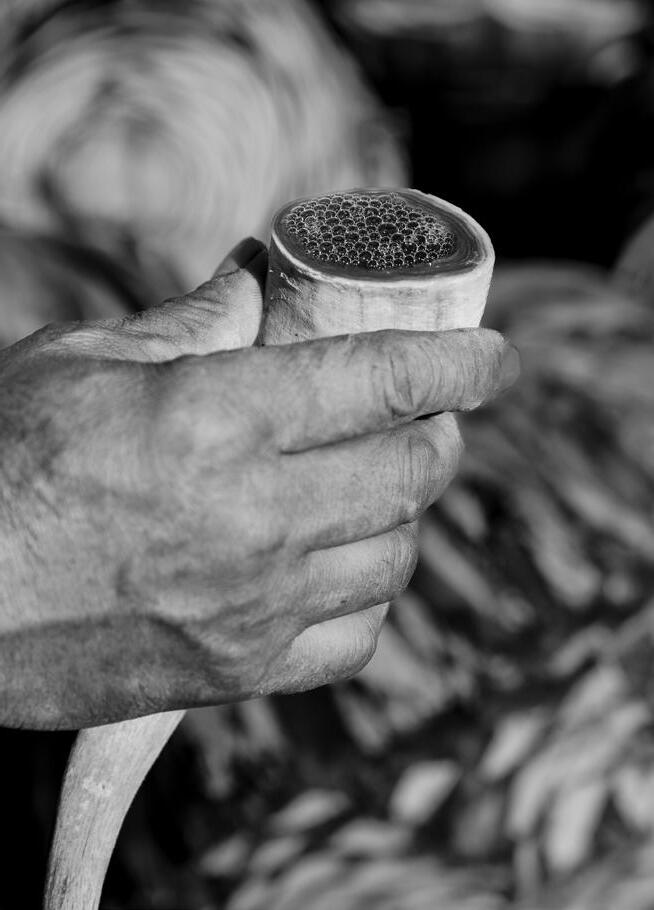
La gran apuesta
The Big Bet
EL GUSTO POR el sotol persistió en la memoria colectiva de los chihuahuenses a pesar de la mala reputación; lo bebieron como parte de su identidad regional. Esa fidelidad preparó el terreno para su revaloración al tiempo que fenómenos comerciales, como el tequila y el mezcal, tenían lugar en mercados internacionales, demostrando que los aguardientes tradicionales eran dignos y debían ser tratados como tales.
En ese contexto, Vinomex y Sotol Hacienda tienen un papel fundamental. Federico Elías, empresario chihuahuense, junto con José Daumás, enólogo, modernizaron la producción de sotol y fueron clave en la obtención de la denominación de origen de la bebida, así como en su posicionamiento internacional. Hoy es la casa productora más grande y una de las pocas que lo hace a nivel industrial.
Se apostó por el sotol. No era fácil. En México, abrirle camino a esta bebida era pelear con viejos fantasmas y prejuicios; el sotol era conocido, sí, pero con mala fama. Por ello, paradójicamente, fue en tierras extranjeras donde fue mejor acogido: en ferias internacionales en Alemania, en París, en San Francisco lo probaban con curiosidad y lo aceptaban con gusto. El proceso no fue sencillo. Implicó años de estudios, de experimentar con levaduras, hablar con productores tradicionales, buscar mercados. Requirió tiempo, inversión y mucho esfuerzo. “Pero yo sabía que lo que tenía en mis manos era algo bueno –dijo José Daumás–. Los primeros destilados se llamaron sotol Gerónimo y Sotol Hacienda, en 1995, para mos-
THE TASTE FOR sotol endured in the collective memory of the people of Chihuahua, despite its tarnished reputation; it was consumed as an expression of regional identity. This enduring loyalty paved the way for its reappraisal, coinciding with the rise of commercial phenomena such as tequila and mezcal in international markets, demonstrating that traditional spirits were valuable and deserved to be recognized as such.
In this context, Vinomex and Sotol Hacienda have played a fundamental role. Federico Elías, a businessman from Chihuahua, together with vinatero José Daumás, modernized the production of sotol and were instrumental in securing its denomination of origin and advancing its international recognition. Today, the company is the largest producer of sotol and one of the few that operates on an industrial scale.
They placed their bets on sotol. It was not easy. In Mexico, promoting the drink meant confronting old ghosts and deep-seated prejudices; sotol was known, yes, but it carried a bad reputation. Paradoxically, it was abroad where the beverage was better received: at international fairs in Germany, Paris, and San Francisco, it was tasted with curiosity and welcomed with enthusiasm. The process was not simple. It took years of research—experimenting with yeasts, speaking with traditional manufacturers, and searching for markets. It required time, investment, and tremendous effort. “But I knew what I had in my hands was something good,” said José Daumás. The first distillates were named Sotol Geronimo and Sotol Hacienda and
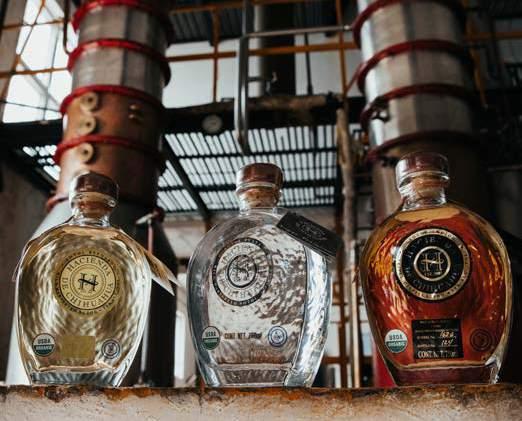
trar la bebida. Empezamos a procesar el sotol en el invierno del 96 y a principio del 97 ya nos fuimos a Estados Unidos a ofrecerlo. Hubo un distribuidor que se interesó. Él estaba en Florida, y se le mandó el primer tráiler con mil cajas de sotol de 12 botellas en el 97. Empezamos a enviar un poco a Inglaterra, a España, Francia, Italia. Pero al final se decidió enfocarnos sobre todo en los que están en Estados Unidos y Canadá”.[101]
A partir de esto comenzaron a hacerse esfuerzos por legalizar e impulsar a productores artesanales que no estaban regulados. De acuerdo con Bienvenido Fernández, en Madera, por ejemplo, a iniciativa de un presidente municipal en la década de los noventa comenzó un proceso para impulsar de manera formal esas actividades: “El presidente municipal nos juntó a los sotoleros de aquí y nos dijo: ‘Oigan, es que esto se puede legalizar’. Entonces pensé: ‘¡Ah caray, esto me interesa!’. Yo creo que fue en el noventa y tantos, 95, 98, 96. No, si no lo haces ahorita, el pueblo te come”.[102]
Así, poco a poco el sotol relegado y mal visto comenzó a escribir un nuevo capítulo en su historia.
launched in 1995 to showcase the drink. “We began processing sotol in the winter of 1996, and in early 1997, we traveled to the United States to introduce it. A distributor in Florida showed interest, and we sent him the first trailer, which carried one thousand cases of twelve bottles each. We later began shipping to England, Spain, France, and Italy, but in the end, we decided to focus primarily on the United States and Canada.”[101]
Following this, efforts were initiated to legalize and support artisanal manufacturers who had previously operated without regulation. According to Bienvenido Fernández, in Madera, a formalization process began in the 1990s at the initiative of the municipal president: “The municipal president convened the local sotoleros and said, ‘This can be legalized.’ I thought to myself, ‘This is something I’m interested in.’ I believe it was sometime in the mid to late 1990s—perhaps 1995, 1996, or 1998. If action was not taken then, the town would no longer be supportive.”[102]
In this way, sotol, once marginalized and burdened by negative perceptions, gradually began to write a new chapter in its history.
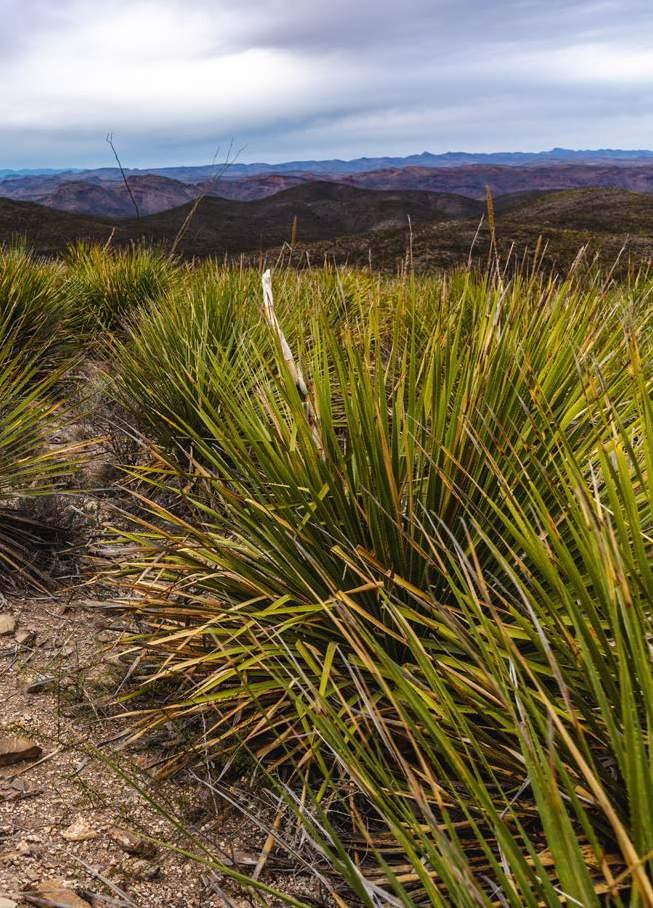
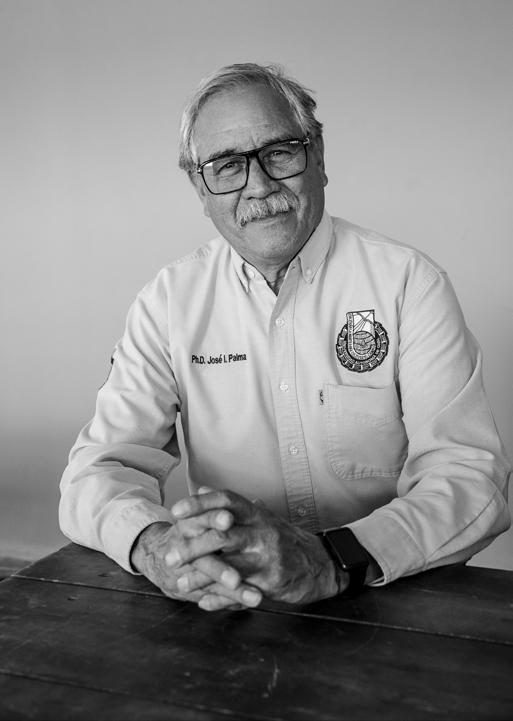
JOSÉ PALMA:
“UTILIZANDO BIOTECNOLOGÍA, RESCATAMOS AL SOTOL DEL PELIGRO DE EXTINCIÓN Y ABRIMOS LA PUERTA A SU COMERCIALIZACIÓN”.
Using biotech, we saved sotol from going extinct and opened the door for it to be sold.
Denominación de origen y nuevas leyes
Denomination of Origin and New Legislation
EN 2002, EL sotol obtuvo la denominación de origen. El 8 de agosto, el Diario Oficial de la Federación publicó la Declaración de Protección, otorgando así un reconocimiento a esta bebida vinculándola oficialmente con el territorio de Chihuahua, Coahuila y Durango.
Fue Chihuahua la que lideró la iniciativa, los esfuerzos venían de tiempo atrás. A inicios de 2001 se realizaron gestiones ante el Instituto Mexicano de Propiedad Intelectual (IMPI), documentando sus características, su historia; lo que requirió mucho tiempo y esfuerzo previo. La intención era clara: proteger el nombre y la tradición del sotol. Los estados de Coahuila y Durango se sumaron a la causa, conscientes de que era también parte de su patrimonio, pero Chihuahua –que históricamente ha sido el mayor productor– fue pionero en la lucha legal. Desde distintos frentes se buscaba ese reconocimiento.
IN 2002, SOTOL was granted its denomination of origin. On August 8, the Official Journal of the Federation published the Declaration of Protection, officially recognizing the beverage and linking it to the territories of Chihuahua, Coahuila, and Durango.
La palabra ‘sotol’ no puede usarse por cualquiera, sino solo por quienes lo produzcan bajo criterios establecidos y en el territorio designado como origen.
Sotol Hacienda tuvo un papel importante en ello: “Vamos a proteger la producción de sotol por tratar de evitar un poco la piratería que hay en estos mercados. Entonces se procuró la denominación de origen”, comentó José Daumás.
It was the state of Chihuahua that led the initiative, building on efforts that had been underway for some time. In early 2001, steps were taken before the Mexican Institute of Industrial Property (IMPI), documenting sotol’s characteristics and history, a process that required significant time and prior effort. The intention was clear: to protect the name and tradition of sotol. The states of Coahuila and Durango joined the cause, recognizing sotol as part of their heritage as well. However, Chihuahua, historically the largest producer, was the pioneer in the legal struggle. The push for recognition came from multiple fronts.
The word sotol cannot be used by just anyone, but only by those who produce it according to established criteria and within the designated territory of origin.
¿Qué implica la denominación de origen? No es una simple etiqueta. Es una figura jurídica que protege productos que están fuertemente relacionados con su entorno, cuyas características lo hacen único. La palabra ‘sotol’ no puede usarse por cualquiera, sino solo por quienes lo produzcan bajo criterios establecidos y en el territorio designado como origen. En el caso del sotol, las condiciones geográficas de la Meseta Central, sus suelos ricos en carbonatos, el clima extremoso, la altitud y la vegetación adaptada a la aridez permite el crecimiento del Dasylirion
Sotol Hacienda played an important role in this effort. “We are going to protect the production of sotol to prevent the piracy present in these markets.” “So we sought the appellation of origin,” said José Daumás.
What does a denomination of origin imply? It is not merely a label. It is a legal designation that protects products closely linked to their environment, whose characteristics make them unique. The word sotol cannot be used by just anyone, but only by those who produce it according to established criteria and within the designated territory of origin. In the case of sotol, the geographical conditions of the Central Plateau, its carbonate-rich soils, extreme climate, high altitude, and arid-adapted vegetation create the ideal environment for the growth of Dasylirion.
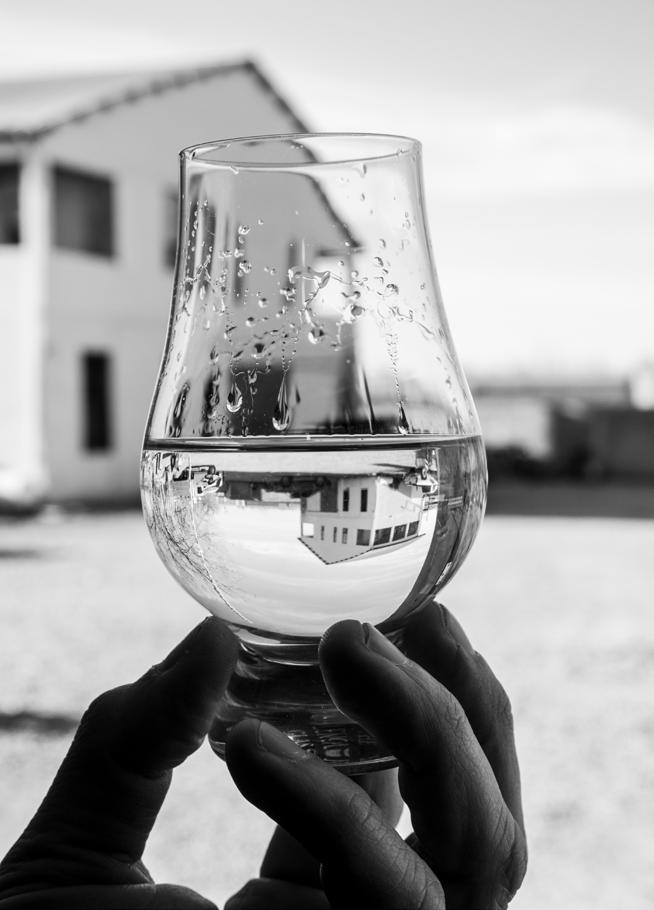
Destilería Casa Ruelas, municipio de Aldama, Chihuahua.
Casa Ruelas Distillery, Aldama municipality, Chihuahua.
El sotol ha quedado plasmado en distintas expresiones, en la música popular,
la
literatura, los dichos cotidianos y la toponimia.
Sotol has been reflected in various forms of popular expression, including music, literature, everyday sayings, and toponymy.
Aunado a esto –acota el documento– cada región presenta diversidades en los métodos artesanales de elaboración de esta bebida, que se manifiesta en una variedad de aromas y sabores. El sotol ha quedado plasmado en distintas expresiones, en la música popular, la literatura, los dichos cotidianos y la toponimia (disciplina que estudia el origen, significado, evolución y uso de los nombres propios de lugares geográficos).
Ha sido, pues, una parte importante de la identidad de estas comunidades. Por ello, el reconocimiento se percibió como un acto de justicia histórica y cultural.
La denominación de origen pretende resguardar la autenticidad y tratar de impedir el aprovechamiento indebido de una tradición que le pertenece a un pueblo. Impide legalmente que otros productos fuera de la zona se hagan llamar ‘sotol’; además, es un valor agregado reconocerlo como algo distintivo. Adquiere prestigio y reconocimiento histórico, cultural y social, como bien patrimonial.
En 2004, la Norma Oficial Mexicana del Sotol complementó la declaratoria de origen al establecer las especificaciones, los parámetros técnicos y de calidad que deben cumplirse para poder comercializarlo con esa denominación. La materia prima de uso exclusivo es el Dasylirion, silvestre o cultivado. La cocción de las piñas o cogollos debe ser en hornos de pozo o de mampostería, aunque para uso industrial se permiten autoclaves. En la fermentación –el proceso mediante el cual los azúcares se convierten en alcohol– pueden incorporarse levaduras naturales o adicionadas en tinas de madera, piedra o acero inoxidable, y para la destilación alambiques de cobre, acero inoxidable o columnas. La norma comprende como sotol a la: Bebida alcohólica regional obtenida por destilación y rectificación de mostos, preparados directa y originalmente del material extraído, al interior de las instalaciones de la fábrica ubicada dentro de la denominación de origen. Este material debe derivar de la molienda de las cabezas maduras de Dasyli-
In addition, each region offers distinct variations in the artisanal methods used to produce this beverage, resulting in a wide range of aromas and flavors. Sotol has been reflected in various forms of popular expression, including music, literature, everyday sayings, and toponymy (the study of the origin, meaning, evolution, and use of place names). It has therefore been an important part of the cultural identity of these communities. For this reason, its official recognition was seen as an act of historical and cultural justice.
The denomination of origin is intended to safeguard authenticity and prevent the undue exploitation of a tradition rooted in a specific community. It legally prohibits products made outside the designated area from being labeled as sotol, while also adding value by recognizing it as something distinctive. It gains prestige, along with historical, cultural, and social recognition as a heritage asset.
In 2004, the Official Mexican Standard for Sotol complemented the denomination of origin by establishing the specifications, technical parameters, and quality standards that must be met for the beverage to be marketed under that designation. The exclusive raw material is Dasylirion, whether wild or cultivated. The cooking of the piñas or central stems must take place in pit ovens or masonry ovens, although autoclaves are permitted for industrial use. During fermentation—the process by which sugars are converted into alcohol—natural or added yeasts may be used, and fermentation must occur in containers made of wood, stone, or stainless steel. Distillation may be carried out in copper stills, stainless steel stills, or column stills. The standard defines sotol as:
A regional alcoholic beverage obtained through the distillation and rectification of musts, prepared directly and originally from material extracted within the facilities of a factory located within the denomination of origin. This material must be derived from the milling of mature Dasylirion heads, either before or after being hydrolyzed or cooked, and subjected
El sotol reposado deberá ser dos meses; para el añejo, mínimo un año.
Sotol must be aged for at least two months, and aged (añejo) sotol for a minimum of one year.
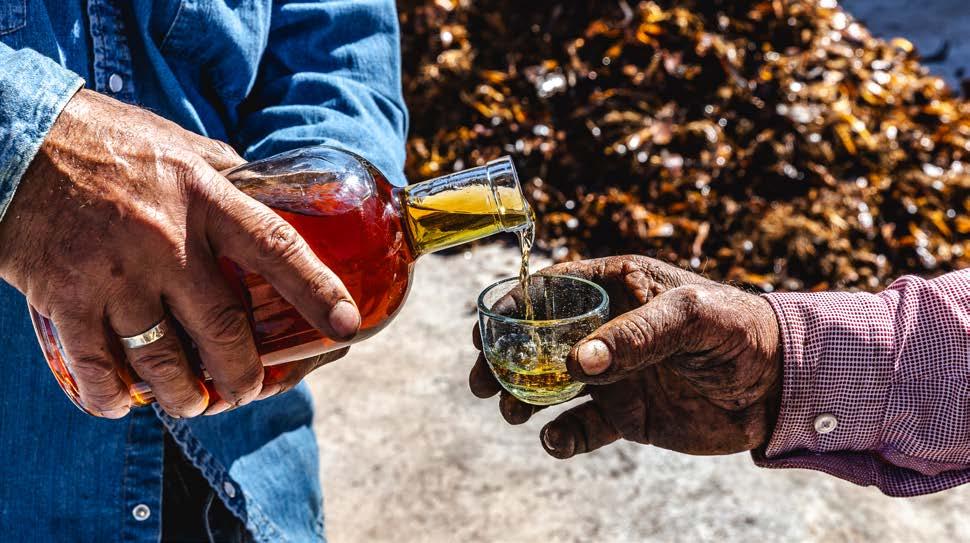
rion previa o posteriormente hidrolizadas o cocidas, y sometidas a fermentación alcohólica con levaduras, cultivadas o no. Es susceptible de ser enriquecido por otros azúcares hasta en una proporción no mayor a 49%, en la inteligencia de que en esta acción o paso no están permitidas las mezclas en frío. El sotol es un líquido que, de acuerdo con su tipo, es incoloro o amarillento cuando es madurado en recipientes de madera de roble, encino, acacia, castaño, haya, fresno, u otras alternativas tecnológicas, o cuando se aboque sin madurarlo.[103]
Su graduación alcohólica debe oscilar entre 35% y 55%, entre otras características fisioquímicas. En caso de maduración, para el sotol reposado deberá ser dos meses; para el añejo, mínimo un año. Al que no se madura se le conoce como sotol blanco o sotol joven. Debe, además, ser un producto limpio, sin impurezas, transparente, sin partículas visibles ni turbidez y especificar el tipo de sotol que es, así como el contenido alcohólico, el lote y el lugar. Todo esto para garantizar la autenticidad, seguridad y calidad del producto final.
MUCHO MÁS QUE UN DESTILADO
El sotol no solo se bebe. Esta noble planta ha sido amiga del ser humano por generaciones. Su corazón se come, sus hojas se han empleado en la fabricación de muebles tejidos, en la construcción y techumbre de casas, en la hechura de utensilios domésticos, como cubiertos y escobas. Además, a partir del sotol se produce jabón, alimento para el ganado, azúcar, melaza, miel, papel y hasta combustible. Con sus fibras también se hacen artesanías. Con su flor, incluso, se elaboran pan y galletas. Recientemente se han realizado estudios para cultivar un hongo comestible que crece en su bagazo. El sotol es la prueba viviente de que en el desierto florece la creatividad.
MUCH MORE THAN A SPIRIT
Sotol is not just something you drink. This noble plant has been a companion to humans for generations. Its heart is edible, and its leaves have been used to weave furniture, build and roof homes, and craft household utensils such as cutlery and brooms. Sotol is also used to produce soap, livestock feed, sugar, molasses, honey, paper, and even fuel. Its fibers are made into handicrafts, and its flower is used to make bread and cookies. Recently, studies have explored the cultivation of an edible mushroom that grows on its bagasse. Sotol is living proof that in the desert, creativity blooms.
to alcoholic fermentation with yeasts, whether cultivated or not. It may be enriched with other sugars, provided these do not exceed a proportion of 49 percent, with the understanding that cold mixing is not permitted in this process. Sotol is a liquid that, depending on its type, is either colorless or yellowish when aged in wooden containers made of oak, holm oak, acacia, chestnut, beech, ash, or other approved technological alternatives, or when it is infused without aging.[103]
Its alcohol content must range between 35 and 55 percent, among other physicochemical characteristics. In the case of aging, rested (reposado) sotol must be aged for at least two months, and aged (añejo) sotol for a minimum of one year. Sotol that is not matured is known as white sotol or young sotol. It must also be a clean product, free of impurities, transparent, without visible particles or turbidity, and must specify the type of sotol, the alcohol content, the batch number, and the place of origin. All of these requirements are intended to guarantee the authenticity, safety, and quality of the final product.
Una vez establecida la denominación de origen, el sotol fue reconocido por otros tratados internacionales, como el Acuerdo entre México y la Unión Europea, así como el Tratado de Asociación Transpacífica de Cooperación Económica y el Tratado Internacional y Progresista de Asociación Transpacífica, potenciando su presencia en el mercado extranjero.
Recientemente se dictó también la ley que crea las bases para promover y fomentar la actividad sotolera en el Estado de Chihuahua en 2018, la cual respondía a la necesidad de regular la actividad generando las condiciones que la impulsen. La intención era tomar en cuenta las implicaciones y necesidades específicas de productores y colaborar con ellos. Apoyarlos mediante incentivos, financiamiento, apoyo técnico y capacitación; pero también cooperar con comercializadores y otros sectores vitales en la cadena productiva del licor. También busca promover el aprovechamiento racional de la planta e impulsar la investigación científica y tecnológica, coordinando esfuerzos con investigadores, académicos, instituciones públicas y privadas. Y, por supuesto, difundir la identidad regional asociada a la bebida tradicional.
Para ello se creó el Sistema Estatal del Sotol, con injerencia para evaluar los beneficios para productores y comercializadores de esta bebida, protegiendo al medio ambiente. Además, se instituyó el Consejo Certificador del Sotol para asociar y organizar a productores sotoleros e impulsar el comercio de su producto. En términos generales, su objetivo es diseñar el plan estratégico y de sustentabilidad, crear programas, manuales y actividades que permitan una operación exitosa, contribuyendo al fortalecimiento de la industria del sotol, así como fomentar su calidad, cultura y prestigio.[104]
Así, el sotol recorrió un camino muy difícil desde la clandestinidad hasta el reconocimiento y la legitimidad. Antes oculto, perseguido, destilado en la sombra… Ahora transformado en un producto deseable, protegido por un marco normativo y que, además, goza de prestigio nacional e internacional.
Once the denomination of origin was established, sotol was recognized under other international agreements, such as the Agreement between Mexico and the European Union, the Trans-Pacific Partnership Agreement for Economic Cooperation, and the Comprehensive and Progressive Agreement for Trans-Pacific Partnership, strengthening its presence in foreign markets.
The law that created the basis to promote and foster the sotolera industry in the state of Chihuahua was enacted and established in 2018. It responded to the need to regulate the activity by generating the conditions to boost it. The intention was to take into account the implications and specific needs of manufacturers and to collaborate with them, supporting them through incentives, financing, technical assistance, and training. It also aimed to cooperate with marketers and other vital sectors in the sotol production chain. The law further seeks to promote the rational use of the plant and to encourage scientific and technological research, coordinating efforts with researchers, academics, and public and private institutions. And, of course, to promote the regional identity associated with this traditional beverage.
To that end, the State Sotol System was created, with the authority to assess the benefits for manufacturers and marketers of the beverage, while ensuring environmental protection. In addition, the Sotol Certification Council was established to bring together and organize sotolero manufacturers and to promote the commercial development of their product. In general terms, its objective is to design a strategic and sustainability plan, and to create programs, manuals, and activities that enable successful operations, contributing to the strengthening of the sotol industry, as well as promoting its quality, culture, and prestige.[104]
In this way, sotol has traveled a difficult path from clandestinity to recognition and legitimacy. Once hidden, persecuted, and distilled in the shadows… it is now a desirable product, protected by a regulatory framework and enjoying both national and international prestige.
«¡Ah, cómo han cambiado los tiempos! Por tantos años me escondieron y ahora hasta me presumen en sus historias de Instagram y otras redes sociales».
“Oh, how times have changed! For so many years, they hid me, and now they even show me off in their Instagram stories and social media.”
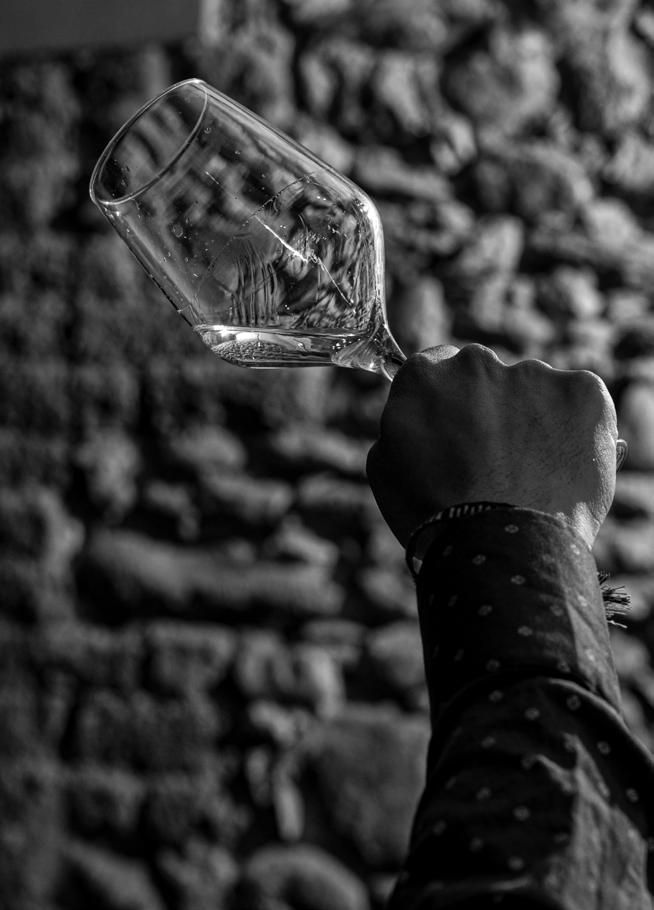
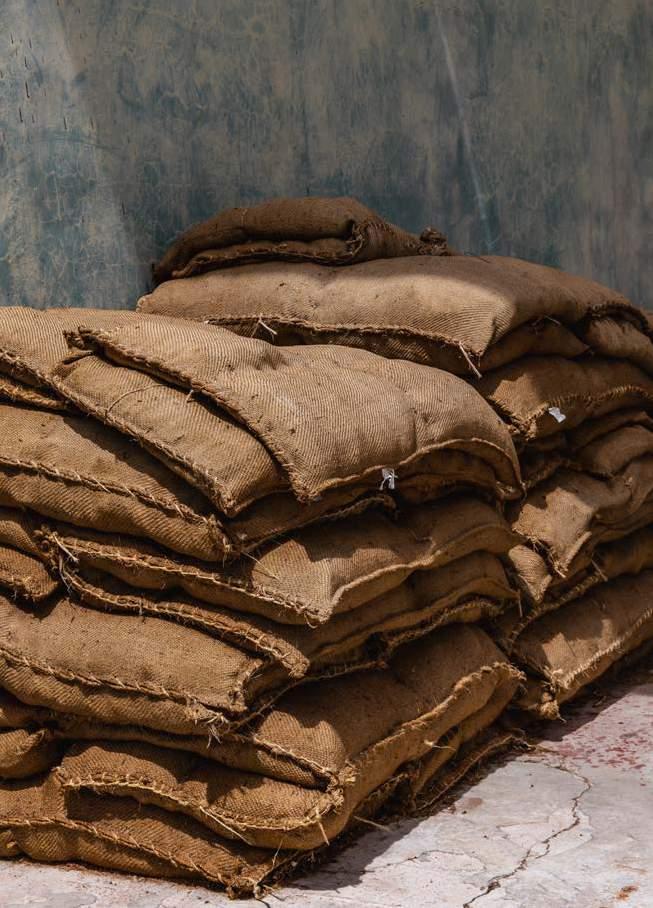
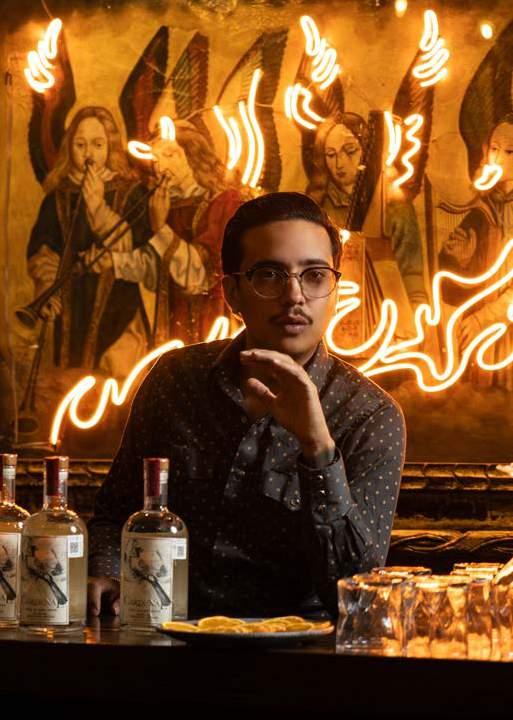
PEDRO PALMA:
“MI RAÍZ ESTÁ EN CHIHUAHUA, MI PASIÓN EN EL SOTOL Y MI RUMBO DONDE
EL NORTE ME LLEVE”.
My roots are in Chihuahua, my passion is sotol, and I’m headed wherever the North takes me.

Atardecer en la Sierra del Mezcal, entre la ciudad de Chihuahua y Aldama. Sunset in the Sierra del Mezcal between Chihuahua city and Aldama.
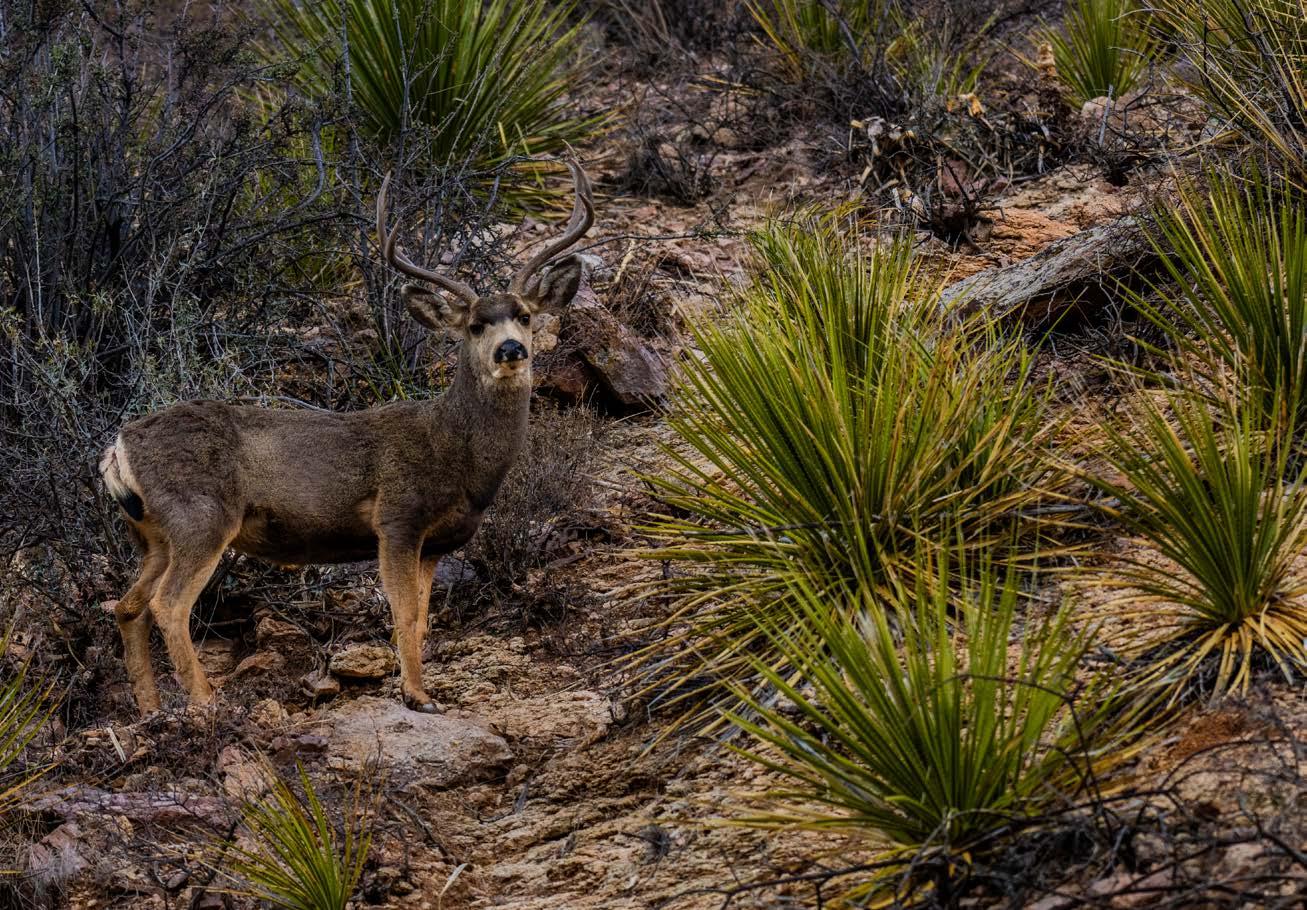
Venado Bura o venado mulo, propio de América del Norte.
Mule deer, native to North America.
3 Chapter Capítulo
CABEZAS, CORAZONES, FUEGO & TIEMPO:
la alquimia del sotol
Heads, Hearts, Fire, and Time: the Alchemy of Sotol
EL PROCESO DE elaboración del sotol varía en distintas regiones y por cada vinata. En Chihuahua, la mayoría de quienes se dedican a esto lo elaboran de manera artesanal en vinatas. Son espacios rústicos casi siempre localizados en áreas rurales, estratégicamente dispuestos para aprovechar la cercanía de la planta. Su estructura tiene elementos muy básicos entre los que destaca la practicidad.
THE PROCESS OF making sotol varies across regions and from one distillery to another. In Chihuahua, most of those dedicated to this craft produce it in vinatas. These are rustic spaces, almost always located in rural areas, strategically placed to take advantage of the plant’s proximity. Their structures are composed of very basic elements, with an emphasis on practicality.
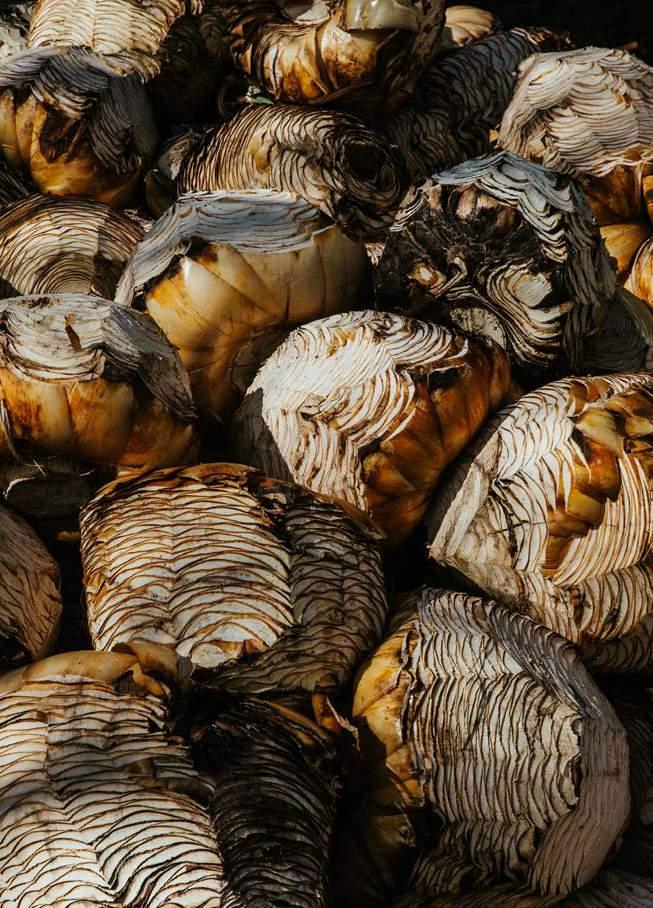
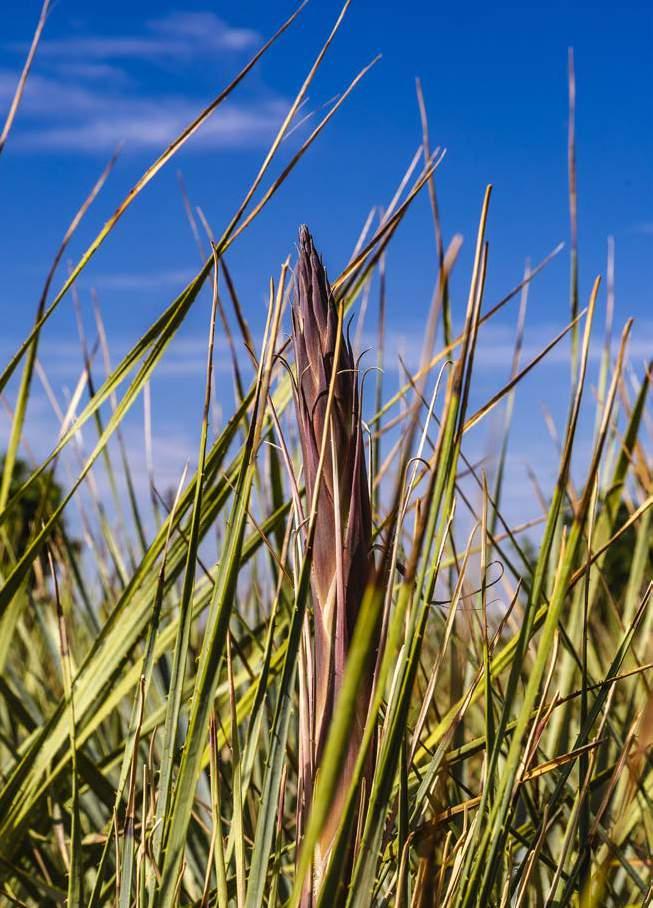
Espiga naciendo en el Centro de Investigación del Sotol, municipio de Delicias. Sotol flower stalk sprouting at the Sotol Research Center, Delicias municipality.
Se puede construir una vinata cavando un horno en la tierra y recubriéndolo con piedra. Con un alambique que suele ser de cobre o de acero inoxidable, así como un serpentín para destilación, pilas de fermentación, molino o en su defecto hachas o mazos; una barra de metal, trinches, palas, fuerza, energía, paciencia y mucha, mucha leña. Esta simplicidad en su forma es herencia de la movilidad requerida en tiempos pasados para montar y desmontar fácilmente el lugar de operaciones, cuando fuera necesario. Existen pequeñas diferencias que enriquecen los sabores y aromas de la bebida. Estos pueden provenir del tipo de Dasylirion seleccionado, del lugar donde se extrae y las características del suelo. Por ejemplo, las bebidas obtenidas de plantas provenientes del desierto tendrán sabores más intensos y resinosos, a consecuencia de las condiciones extremas a las que la planta se ha expuesto. Sin embargo, los destilados finales de los sotoles nacidos en la sierra serán algo más frescos, herbales.
A vinata can be built by digging an oven into the ground and covering it with stone. It includes a still, usually made of copper or stainless steel, along with a coil for distillation, fermentation vats, a mill or, in its absence, axes or mallets, a metal bar, pitchforks, shovels, strength, energy, patience, and a great deal of firewood. This simplicity of form is a legacy of the mobility once required to easily assemble and dismantle the operation when circumstances demanded it.
Los destilados finales de los sotoles nacidos en la sierra serán algo más frescos, herbales.
También importa el agua utilizada en el proceso, así como el tipo de madera usada como leña, incluso el material de que esté elaborado el alambique. En ello interviene también el tiempo de cocción, la temperatura, la humedad del ambiente, la clase de levaduras, los ingredientes que pudieran agregarse y las variaciones en la receta de cada productor. No obstante, ya sea industrial o artesanal siempre existen seis pasos elementales: corte o jima, cocción o tatema, molienda, fermentación, destilación y ajuste o ‘emparejo’. Adicionalmente puede incluirse maduración o añejamiento si así se desea.
There are subtle differences that enrich the flavors and aromas of the beverage. These may arise from the type of Dasylirion selected, the location where it is harvested, and the characteristics of the soil. For example, beverages made from desert-grown plants tend to have more intense, resinous flavors, reflecting the extreme conditions to which the plant has been exposed. In contrast, the final distillates from sotols grown in the highlands are typically fresher and more herbal.
Final distillates from sotols grown in the highlands are typically fresher and more herbal.
The water used in the process is also important, as are the type of wood used for firewood, and even the material from which the still is made. Cooking time, temperature, humidity, the type of yeast, any additional ingredients, and variations in each producer’s recipe all influence the final result. Whether industrial or artisanal, the process always involves six basic steps: cutting or jima, cooking or tatema, milling, fermentation, distillation, and adjustment or “pairing.” Maturation or aging may also be included, if desired.
Cuando todo está en orden, lo primero es contar con autorizaciones sanitarias y fiscales. Obtener un permiso de aprovechamiento –que emite la Secretaría de Medio Ambiente y Recursos Naturales (Semarnat)– que garantiza que la recolección sea hecha conforme a la normativa. Para obtenerlo hay que hacer un inventario forestal, avalado por un técnico que determine la distribución de la planta y la cantidad de ellas en un predio específico.
When everything is in order, the first step is to obtain the necessary health permits and tax authorizations. It is also essential to secure a harvesting permit—issued by the Secretariat of Environment and Natural Resources (SEMARNAT)—which ensures that collection is carried out following regulations. To obtain this permit, a forest inventory must be conducted and certified by a specialist, who determines the distribution and quantity of the plant within a specific zone.
Tumba de cabezas de sotol, Fernando Porras, en Chorreras. Heap of sotol heads, Fernando Porras, Chorreras.
Una vez que este se aprueba, se emite la guía que especifica el volumen del recurso autorizado para su aprovechamiento, así como las condiciones y periodos en que puede realizarse la recolección. A veces, entre algunos pequeños productores, los tratos para acceder a la materia prima son informales. Se visualiza el lugar donde haya plantas. Luego se contacta al dueño del terreno y se acuerda un precio que consideren justo. En ocasiones, incluso se paga en especie con botellas de sotol.
Las plantas aptas para el destilado deben ser maduras, al menos siete años, aunque idealmente diez o más. Una buena cabeza (o piña) de sotol oscila entre los doce y los veinte kilos, pero puede haber mucho más grandes. Para hacer una botella se requieren, por lo menos, de veinte kilos de sotol silvestre.[105] “Ahorita, como los tiempos han estado muy secos, no nos ha llovido, heló muy poco, nevó poco, pues… no hay rendimiento […]. Cuando están buenos los años, 200 piñas te dan arriba de 140 o 150 litros”,[106] dijo Salomón Valdéz.
La mejor temporada para elaborar sotol es entre el otoño e inicios de primavera, hasta antes de que comience la temporada de lluvias. Algunos destilan durante todo el año, haciendo ajustes en los tiempos de la fermentación, de acuerdo con el clima. Al sotol le gusta crecer en lugares escarpados, de difícil acceso. Es peligroso ir a recolectarlo. Además, los vehículos no pueden pasar por esos lugares, por lo que se utilizan mulas o burros para transportarlo. “Ahorita va uno en la troca, pero uno anda cansado, y si lo dice… ¡N’hombre! Te dicen: ‘No sirves para nada, si tus abuelos se fueron desde aquí en los burros’… Pues bueno, podría ser peor”, comentó Salvador Derma. Las caminatas en el monte son arduas. A veces tres, cuatro kilómetros o más para alcanzar el sitio donde se encuentran las plantas y se requiere un gran esfuerzo físico. “Un tirador en esa pendiente de la sierra no saca más que 250 cabezas.
Once it is approved, a permit is issued specifying the authorized volume of the resource for use, as well as the conditions and periods during which harvesting may take place. Among some small-scale manufacturers, however, agreements for accessing the raw material are sometimes informal. They locate an area where plants are growing, then contact the landowner and agree on a price they consider fair. In some cases, payment is even made in kind, with bottles of sotol.
The plants suitable for distillation must be mature, at least seven years old, though ideally ten or more. A good head (or piña) of sotol typically weighs between twelve and twenty kilos, though much larger ones can be found. To produce a single bottle, at least twenty kilos of wild sotol are required.[105] “Right now, because it has been so dry, no rain, hardly any frost, very little snow- there’s just no yield. […]. In good years, 200 piñas will give you more than 140 or 150 liters,”[106] said Salomón Valdéz.
The best season for making sotol is between autumn and early spring, before the onset of the rainy season. Although some manufacturers distill yearround, they adjust fermentation times according to the weather. Sotol tends to grow in steep, hard-toreach areas, and harvesting it is dangerous. Vehicles cannot reach these places, so mules or donkeys are used for transport. “Now you go by truck, and you’re tired, and you say…this is so hard! They say, ‘You’re useless—your grandparents went on donkeys from here.’ Well, it could be worse,” said Salvador Derma. The hikes through the brush are arduous—sometimes three or four kilometers, or more, to reach the site where the plants grow—and they require considerable physical effort. “A cutter on that slope of the Sierra doesn’t get more than 250 heads. He can’t go very fast, because it’s so steep and rocky,” Salvador continued. “I tell them not
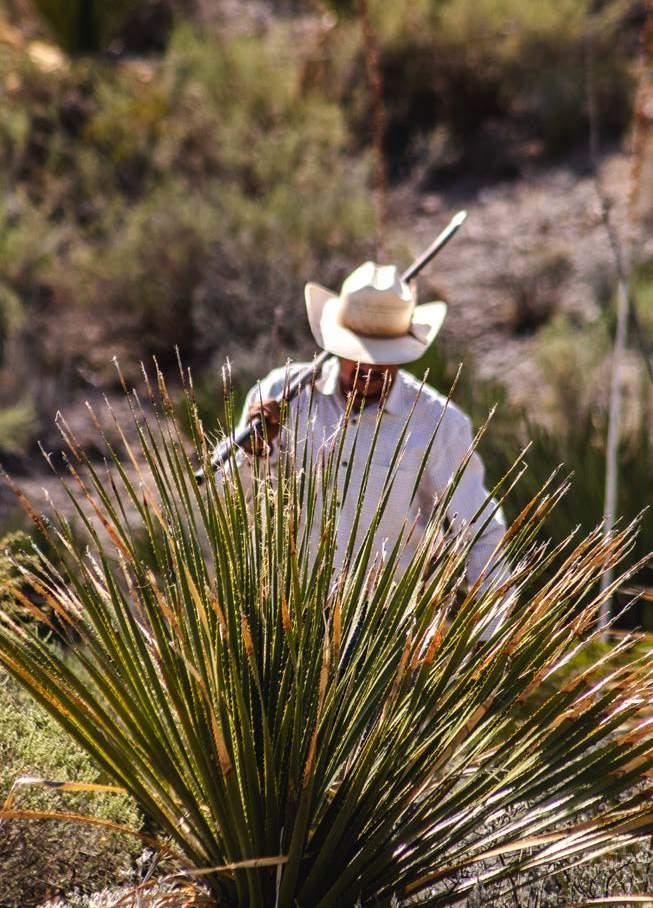
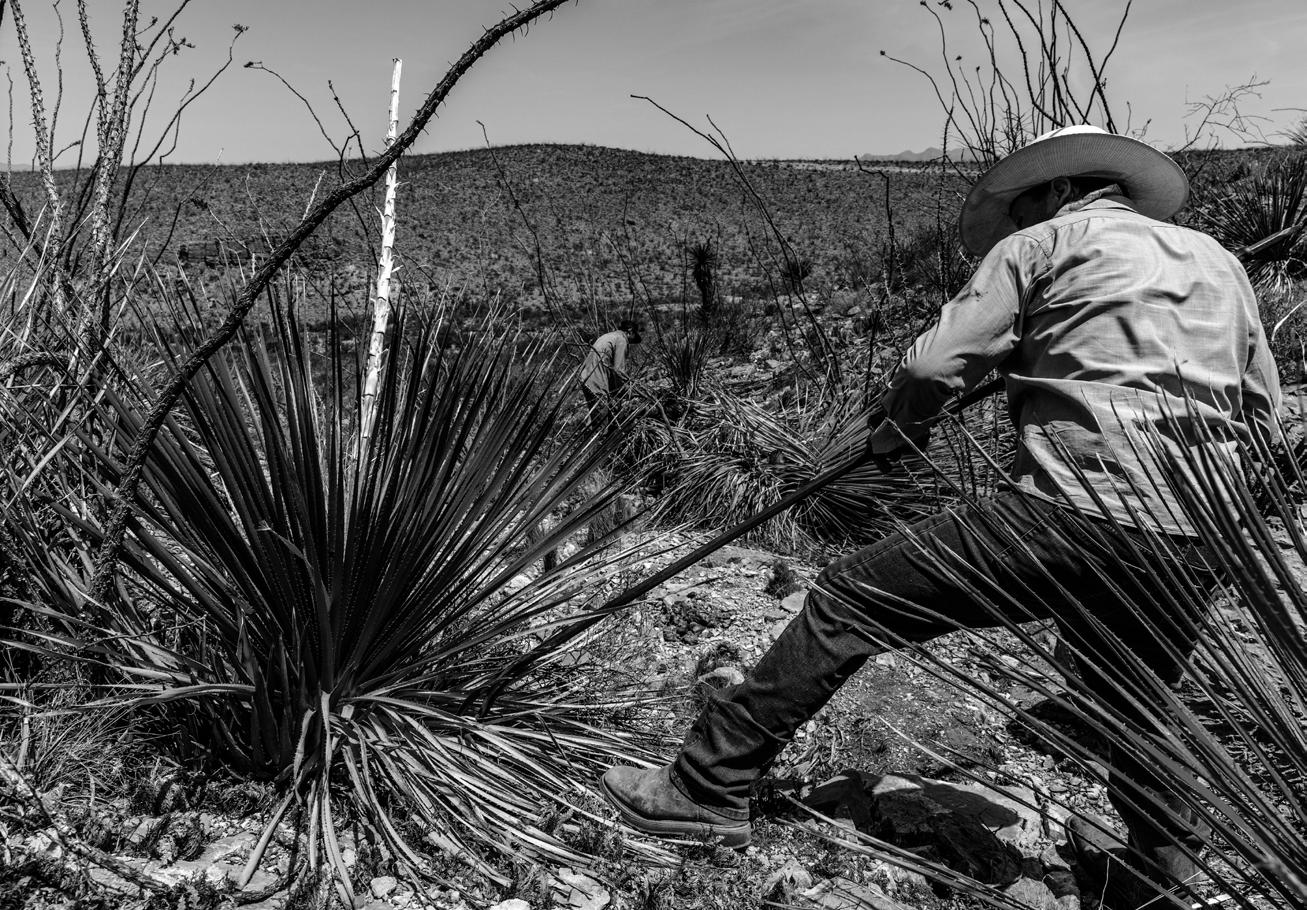
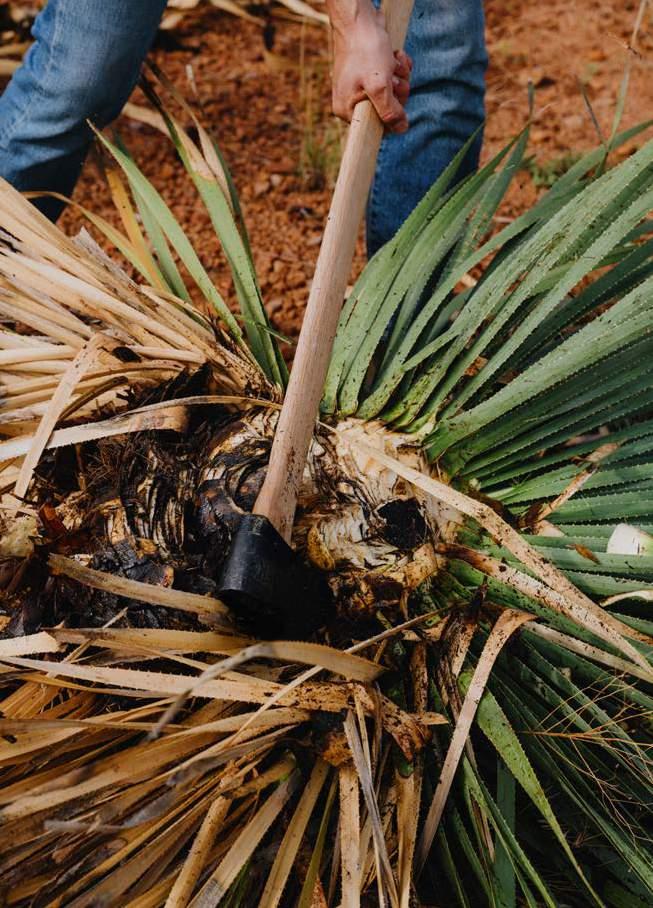
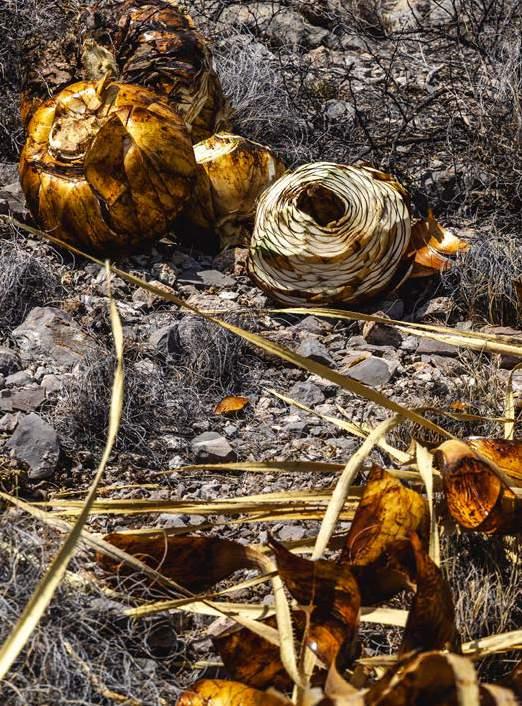
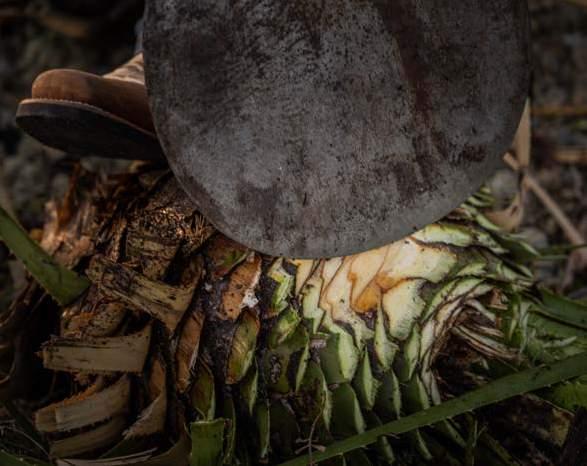
El que anda tirando no puede agarrar mucha velocidad, porque está muy inclinado, muy peñascoso –continúa Salvador–. Les encargo que no se vayan a golpear, porque ruedan y… ¡ay, Dios!… Vamos cuatro gentes, porque son dos ‘pelonadores’ y un acarreador. Es lo más que se puede cortar. Y estamos a riesgo de que me digan que no, porque cortar es mucha chinga, por el lugar donde está el sotol. A veces lo encuentras donde no se va a acabar nunca, ¡porque no hay quien lo baje! Partes donde nomás los venados y chivas pueden andar”.[107]
Una vez en el monte, se seleccionan las plantas idóneas para cortar. Un buen tirador sabe reconocerlas por el tamaño. Debe aproximarse con cuidado puesto que las hojas son espinosas. Con el tiempo se perfecciona la técnica apropiada para desprender la planta de la tierra. Para ello se utiliza una barra de metal con punta, esto requiere fuerza y habilidad.
to bump into each other, because they roll and…’oh my God’… There are four of us: two peelers and one transporter. That’s the most that can be cut. And it’s still not enough, because cutting is so much work, given where sotol grows. Sometimes you find places that will never run out—because there’s no one who can bring it down! Places where only deer and goats can go.”[107]
Once on the mountain, the ideal plants for harvesting are carefully selected. A skilled cutter knows how to identify them by their size and maturity. He must approach with caution, as the leaves are thorny. Over time, the proper technique for removing the plant from the ground is perfected. A pointed metal bar is used for this task, which demands both strength and precision.
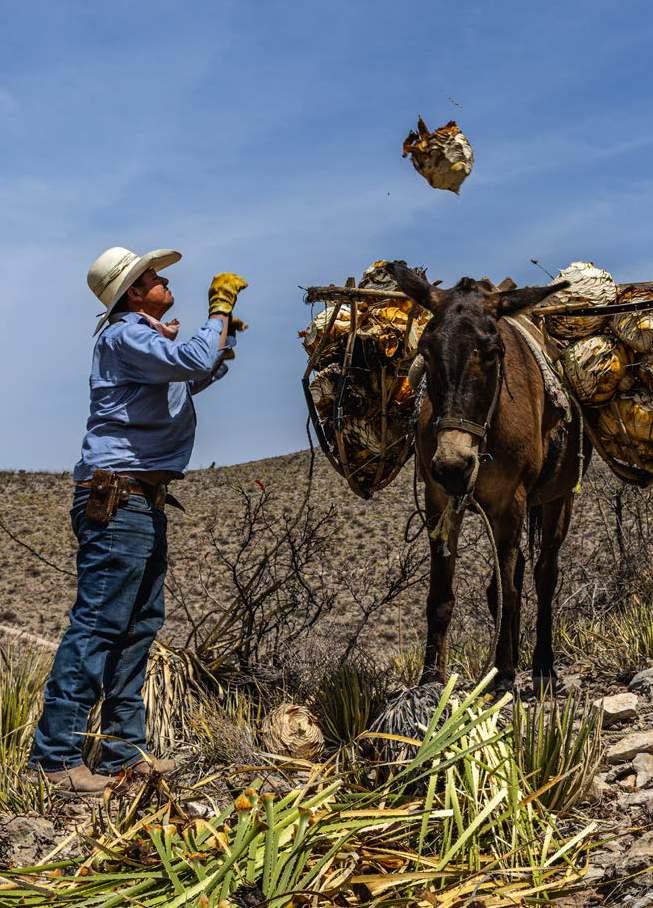
Tumba de cabezas de sotol, Salvador Derma, en Chorreras. Heap of sotol heads, Salvador Derma, Chorreras.
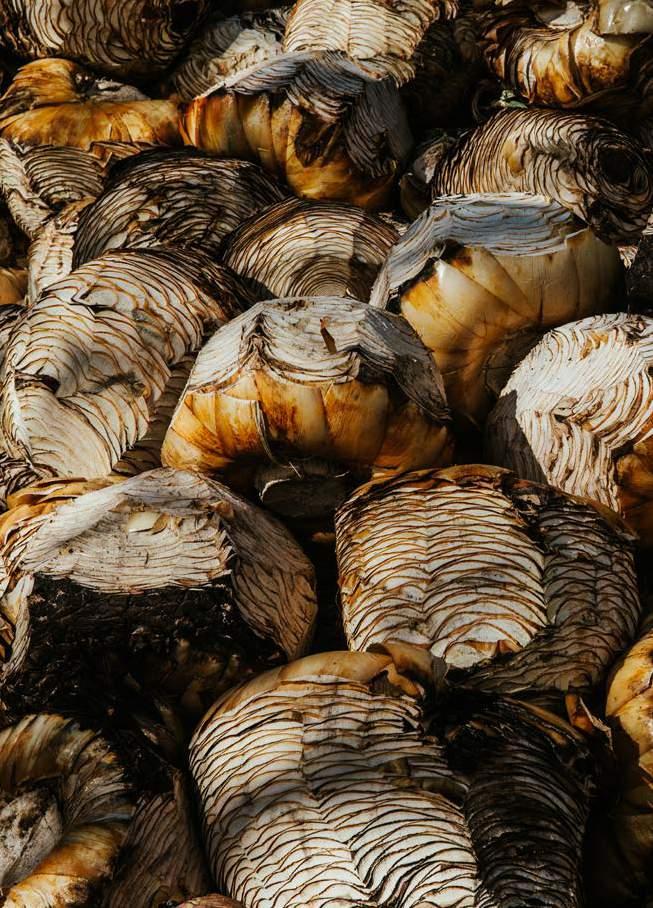

EDUARDO BAEZA:
“EL SOTOL ES LA ESENCIA DEL NORTE DESTILADA EN UN TRAGO”.
Sotol is the spirit of the north, distilled into a sip.
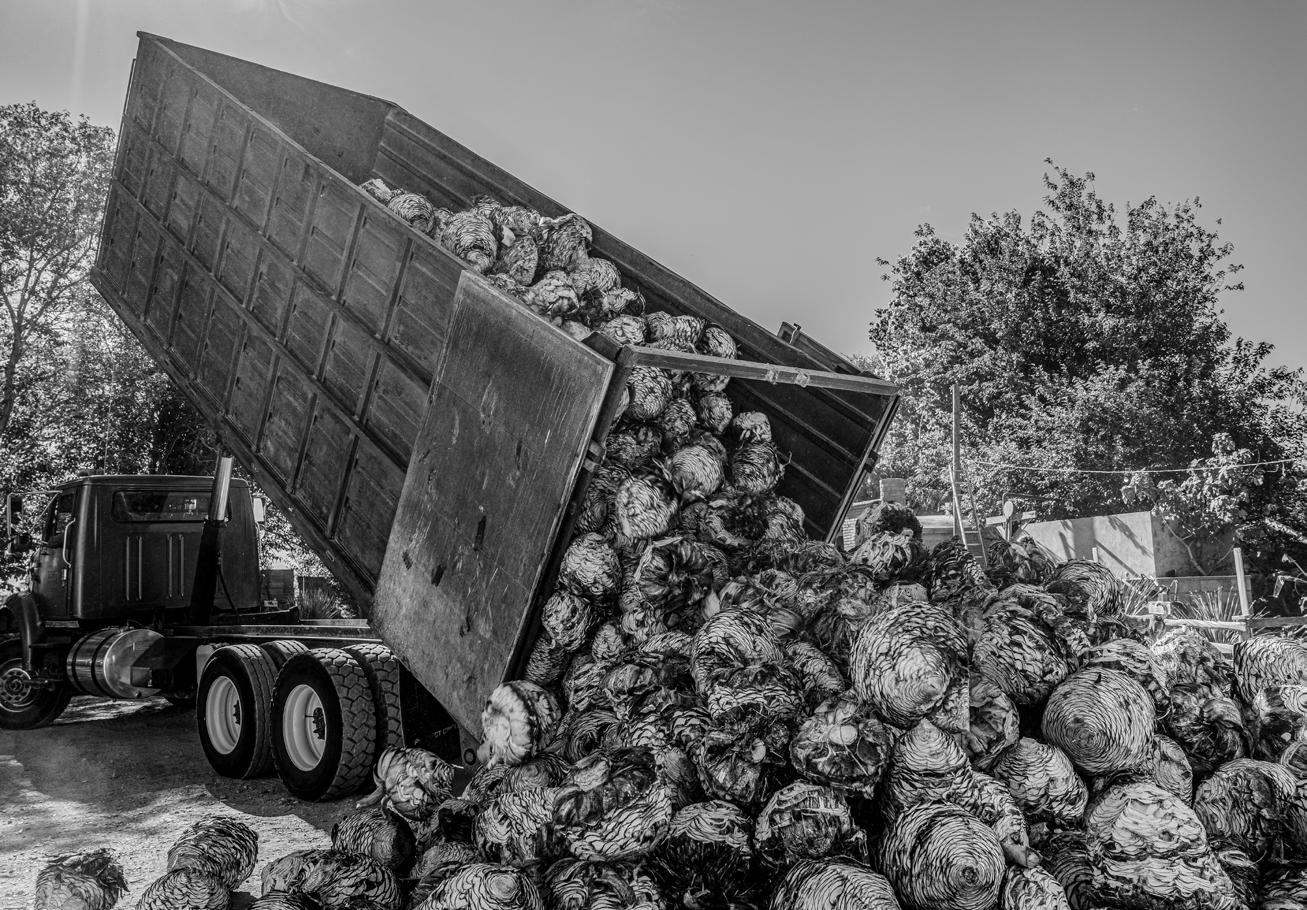
Descarga de cabezas de sotol, Vinata Casa Ruelas, Aldama. Unloading sotol heads, Casa Ruelas Vinata, Aldama.
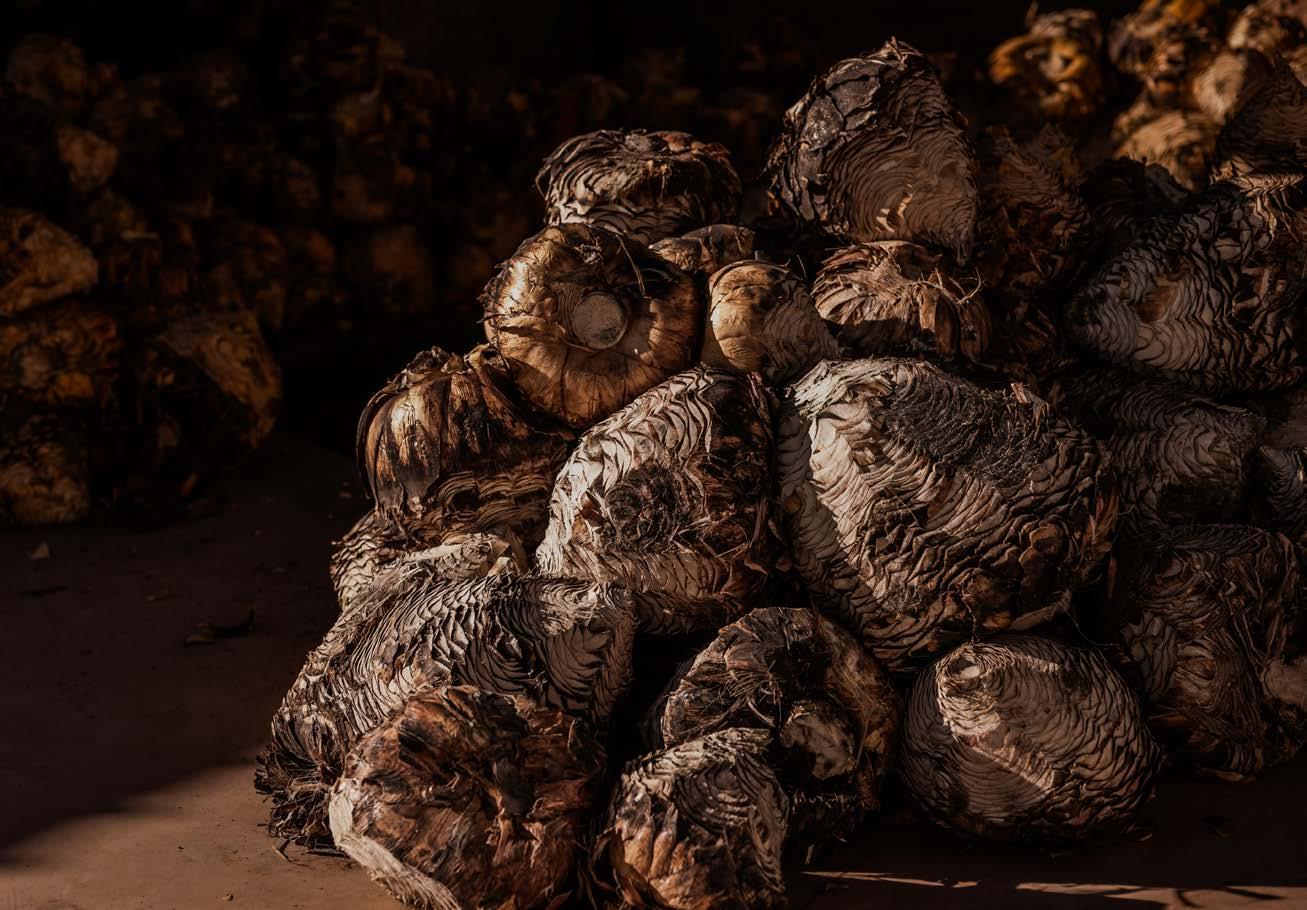
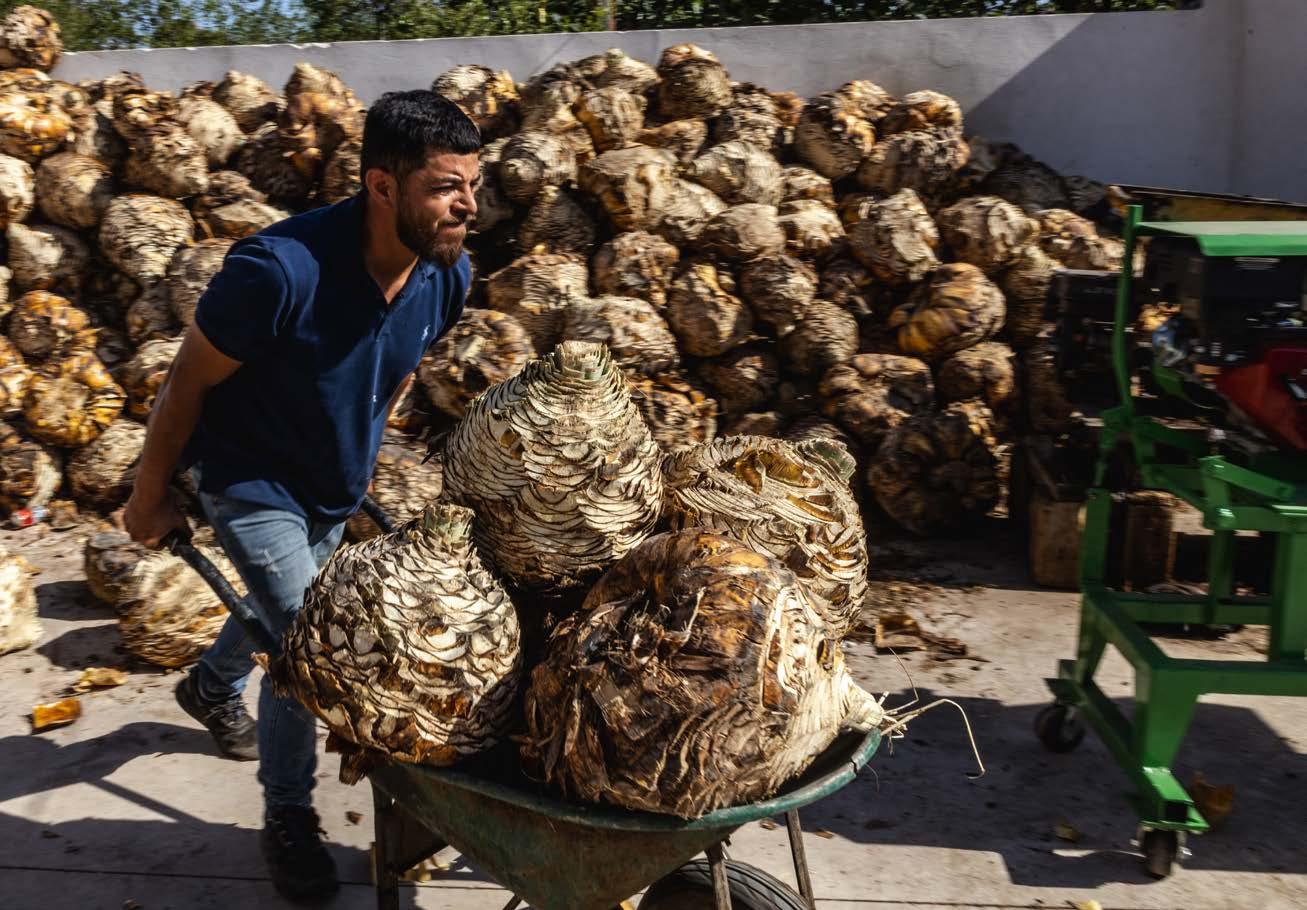
Este es un proceso lento, que requiere paciencia y vigilancia constante para que conserve humedad y la
temperatura sea ideal.
This is a slow process that requires patience and constant attention to maintain moisture and ensure the ideal temperature.
Luego de extraer las cabezas es necesario ‘pelonarlas’, cortar las hojas con un hacha. Esas hojas en ocasiones se reutilizan para múltiples propósitos. Luego son cargadas en las angarillas dispuestas en los burros por el acarreador. Frecuentemente, todas esas actividades son realizadas por una sola persona. De esa forma se trasladan, ya sea en animales o en vehículos, al sitio donde esté ubicada la vinata. Fernando Porras, cuenta que “si haces todo el proceso, es difícil: fabricar tu propia hacha, fabricar tu propia barra, hacer tus propios hornos”.
La mayoría de los productores de sotol en Chihuahua lo preparan de manera artesanal. Una vinata de este tipo tiene hornos cavados en la tierra, recubiertos de piedra para realizar la cocción. Este es un proceso lento, que requiere paciencia y vigilancia constante para que conserve humedad y la temperatura sea ideal. Las cabezas o corazones del sotol se limpian y se disponen en el horno previamente puesto al rojo vivo. Permanecerán allí entre tres y seis días, por lo general, para reblandecerse lentamente, según la receta de cada vinatero.
“Ese es el hoyo donde se cuece el sotol. Ahí donde está la tierra; está tapado, porque es donde se le mete la lumbre para calentarlo. Tiene una cubierta allí para conservar el vapor, para que no escape, porque si agarra aire se reseca –dice Eduardo Arrieta–. Lo atizan, y luego de echar las cabezas se tapa todo con palma y costales. Ahí dura cinco días cociéndose. De cinco a seis días. Ponemos esa lona porque la tierra con que se cubre es mala para el azúcar.”[108] Arrieta habla de que el proceso minucioso con respecto al cuidado de la temperatura importa, ya que si las piñas o cabezas se queman, se generan excesivos niveles de metanol.
After extracting the heads, it is necessary to peel them by cutting off the leaves with an axe. These leaves are sometimes reused for various purposes. The cleaned heads are then loaded onto sidebags placed on donkeys by the transporters. Frequently, all of these tasks are carried out by a single person. The plants are then transported, either on animals or in vehicles, to the site where the vinata is located. Fernando Porras notes, “If you do the whole process yourself, it’s difficult: making your own axe, making your own metal bar, making your own ovens.”
Most sotol manufacturers in Chihuahua prepare it using artisanal methods. A vinata of this kind includes ovens dug into the ground and lined with stone for cooking. This is a slow process that requires patience and constant attention to maintain moisture and ensure the ideal temperature. The heads or hearts of the sotol are cleaned and placed into the oven, which has been previously brought to a red-hot temperature. They remain there for three to six days to soften slowly, depending on each vinatero’s recipe.
“That’s the pit where the sotol is cooked. Right where the soil is, it’s covered, because that’s where the fire is lit to heat it. It has a cover to retain the steam and keep it from escaping, because if air gets in, it dries out,” says Eduardo Arrieta. “They stoke the fire, and when they’re ready to add the heads, everything is covered with palm leaves and costales or sacks. It stays there cooking for five to six days. We place a tarp because the soil used to cover it is bad for the sugar.”[108] Arrieta emphasizes that careful temperature control is essential; if the piñas or the heads are burned, they generate excessive levels of methanol.
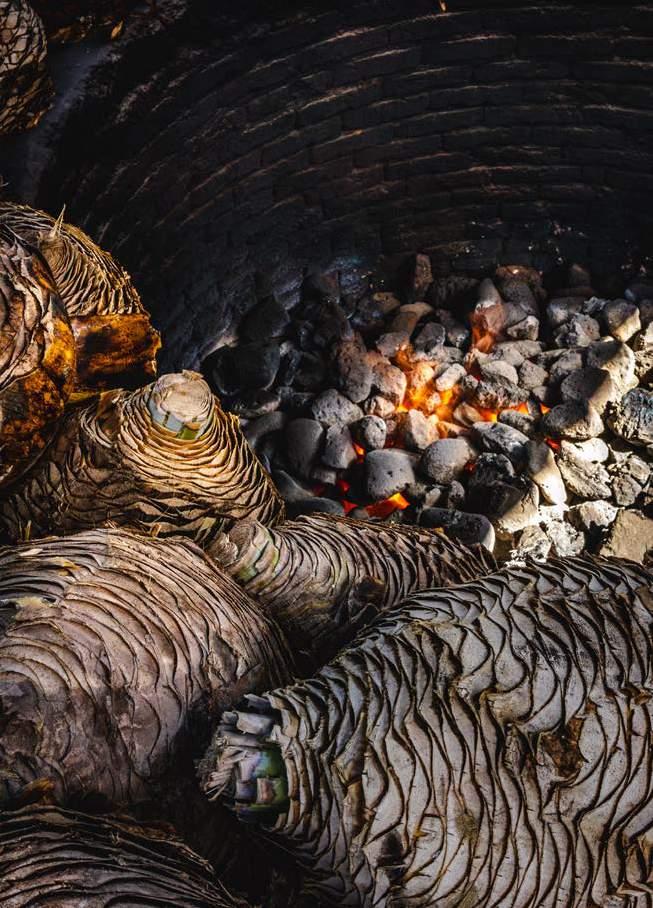
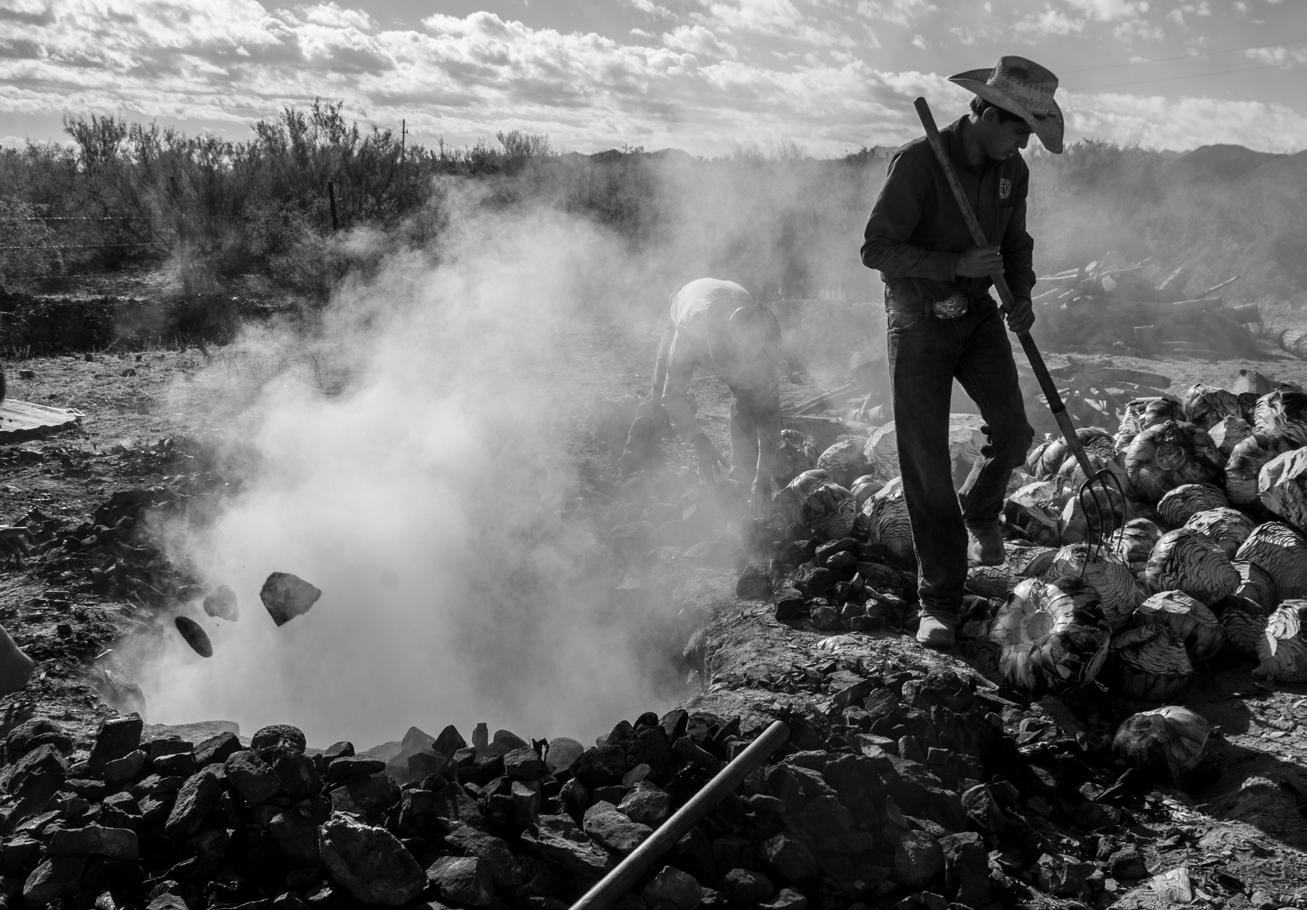
Entierro para cocción, Vinata Corazón del Desierto.
Burial for cooking, Corazón del Desierto Vinata.
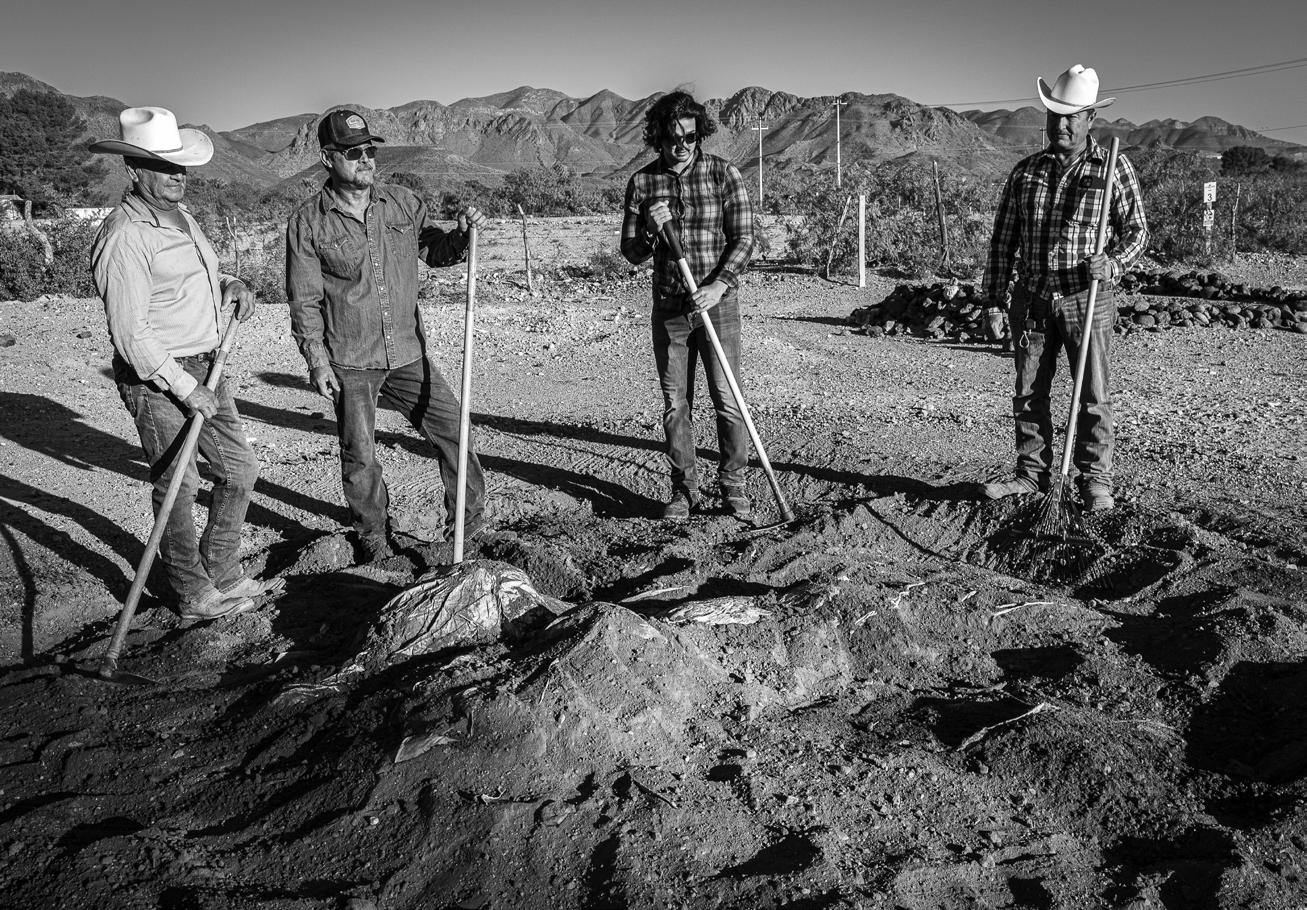
Desentierro de cabezas. Eduardo, Jesús, Luis Ángel y Baltazar Arrieta. Tres generaciones de vinateros.
Digging up sotol heads. Eduardo, Jesús, Luis Ángel, and Baltazar Arrieta. Three generations of master distillers.
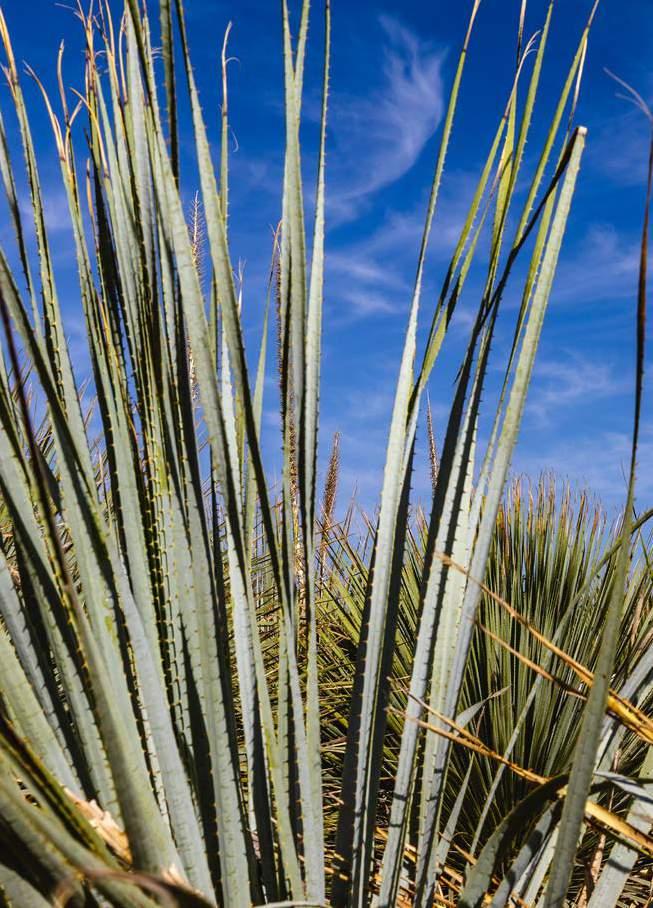

JOSÉ FERNÁNDEZ:
“MÁS QUE UN DESTILADO, EL SOTOL ES LA CELEBRACIÓN DEL NORTE DE MÉXICO, SU TIERRA, SU CARÁCTER Y SU GENTE”.
More than just a spirit, sotol is a celebration of northern Mexico—its land, its character, and its people.
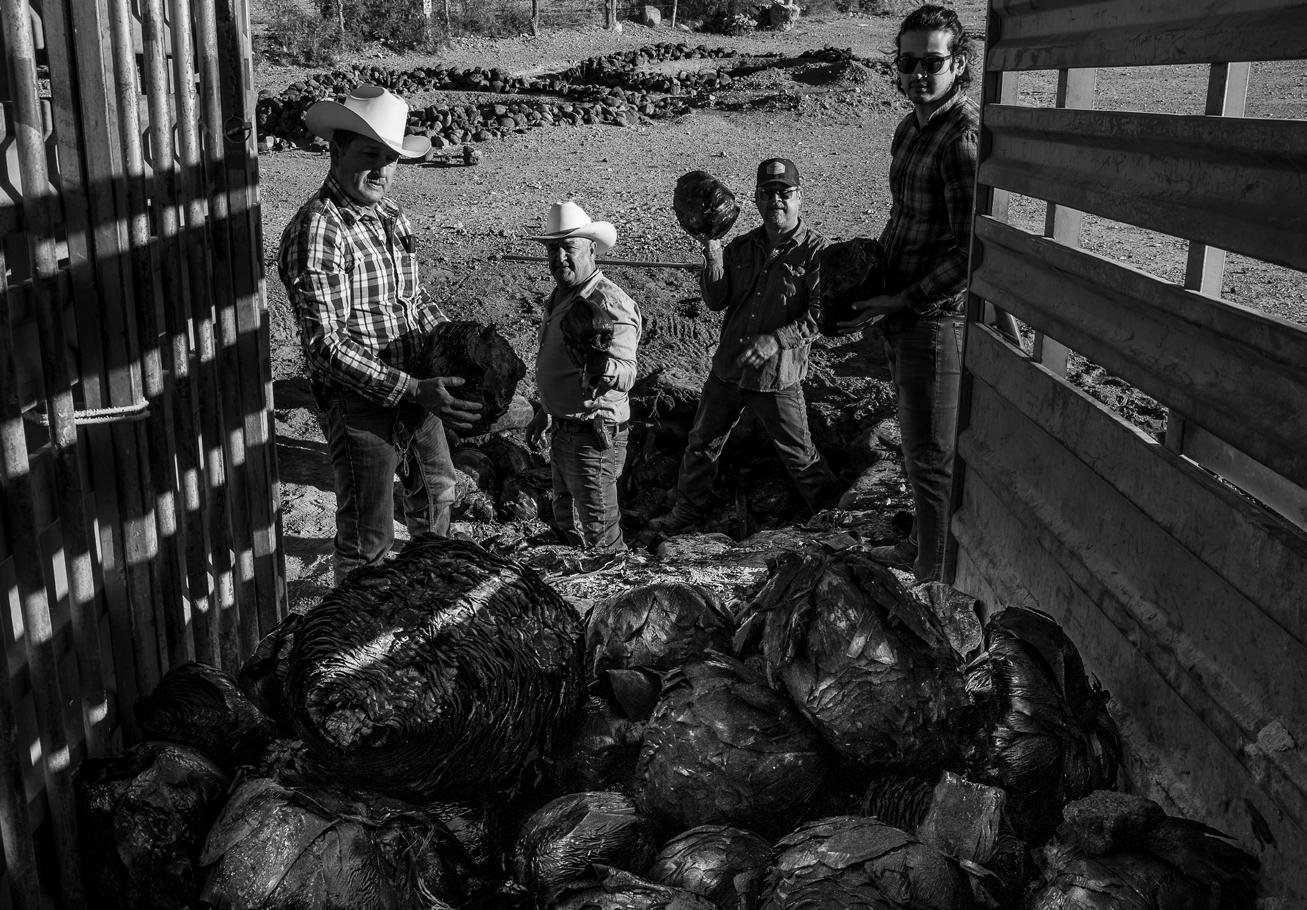
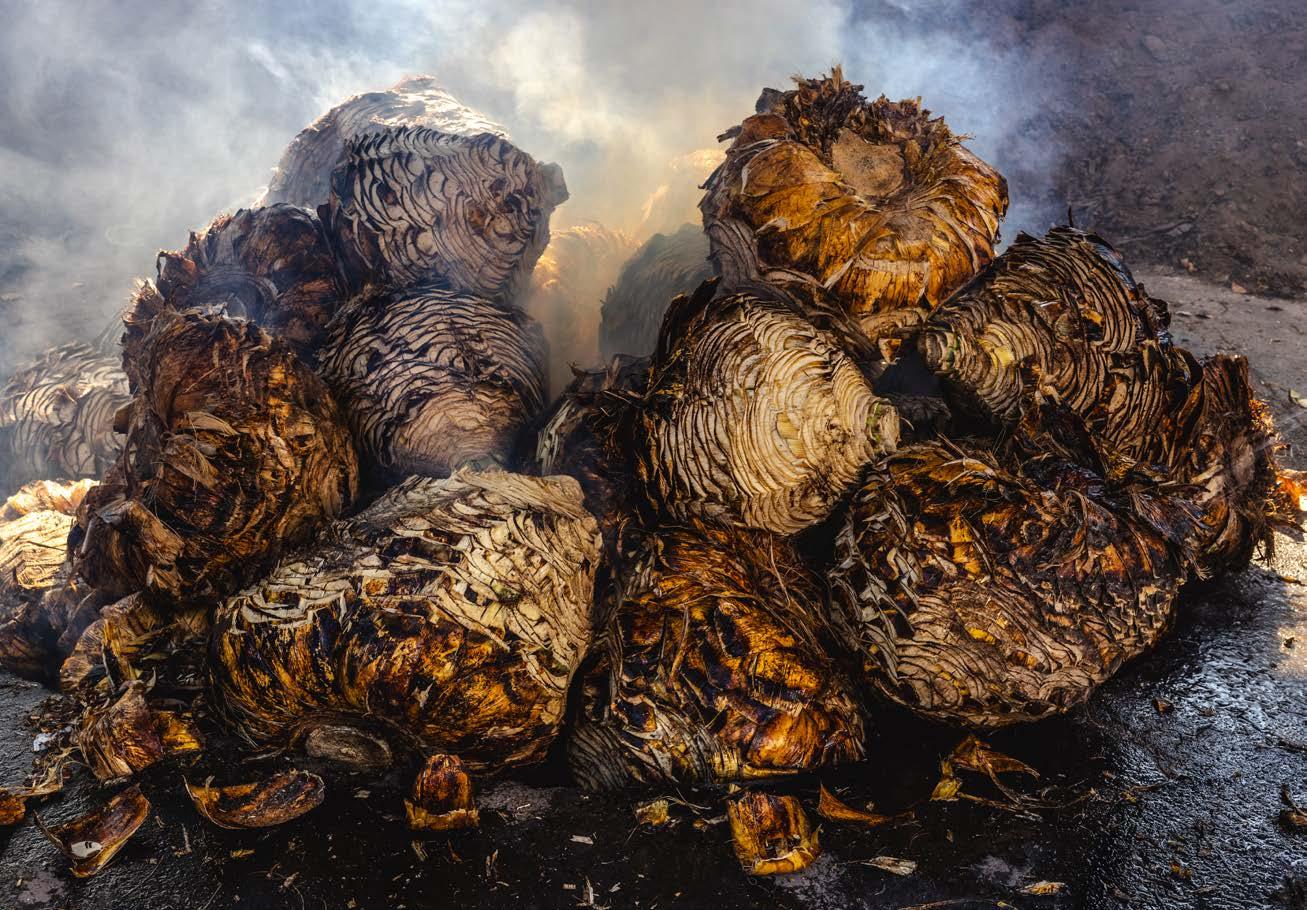
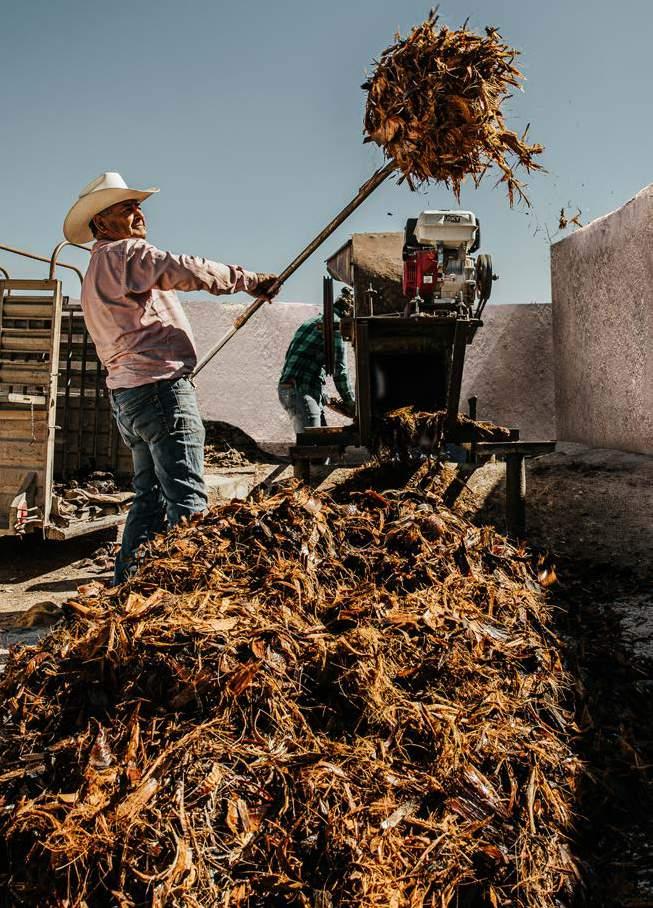
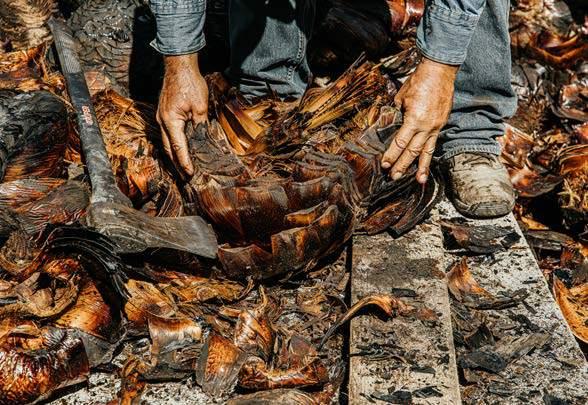
Molienda de sotol, Eduardo Arrieta, Aldama, Chihuahua.
Sotol milling, Eduardo Arrieta, Aldama, Chihuahua.
Cuando las cabezas de sotol están cocidas se sacan del horno y el olor impregna la vinata. Un aroma dulce, acaramelado, pero que, además, huele a tierra mojada… a petricor. Es difícil de describir, pues la experiencia sensorial varía de persona a persona, así como de ese sotol en particular. La consistencia obtenida es blanda y jugosa, el color oscuro, el sabor delicioso. Puede comerse como un verdadero manjar, aún humeante al salir de las brasas. Una vez cocido el sotol, se muele. Puede picarse directamente sobre tablas (antaño era populares las llamadas canoas, recipientes de madera utilizados para macerar), o utilizar molinos que facilitan el trabajo. “Entonces ya aquí lo picamos […] este es el molino con el que se desgarra. Por aquí le aventamos las cabezas y caen aquí trituradas. Antes se molía con hacha, con pura hacha; cada uno hacía un banco”.
Las cabezas trituradas o molidas se trasladan a las tinas de fermentación –también llamadas pailas–, que pueden ser de madera, acero inoxidable o piedra. Se agrega agua y se dejan reposar para que las levaduras actúen sobre el
When the heads are fully cooked, they are removed from the oven, and their aroma fills the vinata. It is a sweet, caramelized scent, but it also carries the earthy fragrance of damp soil… of petrichor. It is difficult to describe, as the sensory experience varies from person to person and also depends on the particular sotol. The resulting texture is soft and juicy, the color dark, the flavor delicious. It can be eaten as a true delicacy, still steaming as it comes out of the embers.
Once the sotol is cooked, it is ground. It can be chopped directly on wooden boards (in the past, the so-called canoas, wooden containers used for maceration, were popular), or mills may be used to ease the labor. “So here is where we chop it. […] This is the mill that shreds it. We toss the cabezas in here, and they come out crushed. Before, it was chopped with an axe, only with an axe. Each person would make their own chopping block,” he explains.
The crushed or ground cabezas are transferred to fermentation vats—also known as pailas, which may be made of
Proceso de fermentación, Vinata Fernández, municipio de Madera. Fermentation process, Fernández Vinata, Madera municipality.
mosto o jugo. Algunos utilizan levaduras naturales, otros adicionadas. De este paso existen muchas variaciones, de acuerdo con la usanza de cada productor. En tiempo de frío, la fermentación puede durar hasta diez o doce días. Algo sorprendente de la fermentación es que todos los sentidos están involucrados, incluso el oído. El sotol tiene sonido al fermentar: gorjea, ruge, ‘hierve’, dicen los vinateros.
Cuando el fermento está listo –“el mismo sonido, el mismo olor dice cuando ya es tiempo”– se lleva al interior de un alambique, que debe ser sellado por completo (algunos productores sellan las uniones con barro), y se le prende fuego. “Este era de mi abuelo Eduardo, es de cobre. Es un cazo muy viejo. Pesa como unos 350 kilos. Mi abuelo lo compró cerca de 1930 –sigue contando Arrieta–. Era de uno de estos señores Venegas, para el lado de Coyame [también era sotolero]. Sí, antes, en los ranchos se ponían a hacer sotol para tomar, era lo que tenían […]. Mi abuelo nos lo dejó hace muchos años.[109]
wood, stainless steel, or stone. Water is added and the mixture is left to rest so that the yeasts can act on the mosto, or juice. Some manufacturers use natural yeasts, while others add cultivated strains. There are many variations in this step, depending on each producer’s tradition. In colder weather, fermentation can take up to ten or twelve days. One remarkable aspect of fermentation is that all the senses are involved, even hearing. Sotol makes a sound as it ferments: it gurgles, it roars, it “boils,” say the vinateros
Cuando el fermento está listo –“el mismo sonido, el mismo olor dice cuando ya es tiempo”–.
When the fermentation is done, “the
sound itself, the smell itself tells you when it’s time”.
Las temperaturas para destilación oscilan entre los 88 ºC y 97 °C. El alambique tiene una pequeña salida en la parte de arriba, que va hacia un contenedor de agua para su enfriamiento y consecuente condensación de vapores. Pasa por el serpentín y así el líquido sale poco a poco en un chorrito. El sotol se destila dos veces.[110]
El primer líquido obtenido en la destilación se conoce como ‘puntas’ o ‘sotol de cabeza’ y tiene un muy alto porcentaje de alcohol. Debido a esto se separa para evitar sabores demasiado fuertes o con impurezas en el resultado final. Por otra parte, las ‘colas’ o ‘aguacolas’ son el líquido que sale al final de la primera destilación; tienen menor porcentaje de alcohol y acumulan más impurezas, por lo que hay que someterlas a una segunda destilación[111]. Una vez hecho esto, se nivela la graduación alcohólica.
When the fermentation is done, “the sound itself, the smell itself tells you when it’s time,” it is transferred into the still, which must be completely sealed (some manufacturers use clay to seal the joints), and the fire is lit. “This one belonged to my grandfather, Eduardo; it’s made of copper. It’s a very old kettle. It weighs about 350 kilos. My grandfather bought it around 1930,” Arrieta continues. “It belonged to one of the Venegas men, from the Coyame area [he was also a sotolero]. Yes, back then, people in the ranches made sotol to drink—it’s what they had […]. My grandfather left it to us many years ago.”[109]
Distillation temperatures range between 88°C and 97°C. The still has a small outlet at the top that leads to a container of water, where the vapors are cooled and condensed. The liquid passes through the coil, gradually emerging in a thin stream. Sotol is distilled twice.[110]
The first liquid obtained during distillation is known as puntas (tips) or sotol de cabeza, and it contains a very high percentage of alcohol. For this reason, it is separated to avoid overly strong flavors or impurities in the final product. At the other end, the colas or aguacolas refer to the liquid that comes out at the end of the first distillation. It has a lower alcohol content and contains more impurities, so it must undergo a second distillation.[111] Once this is complete, the alcohol content is adjusted.
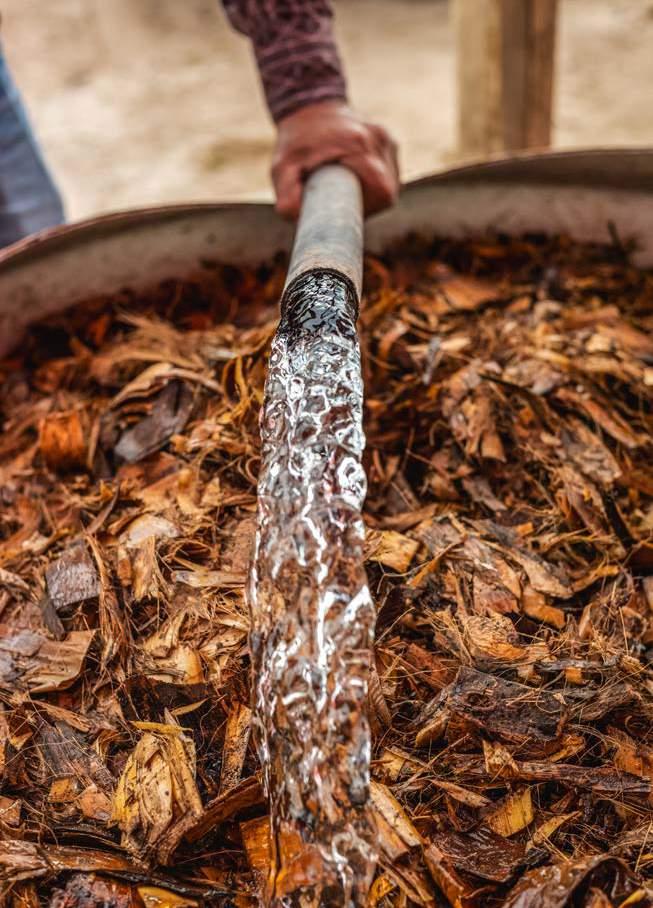
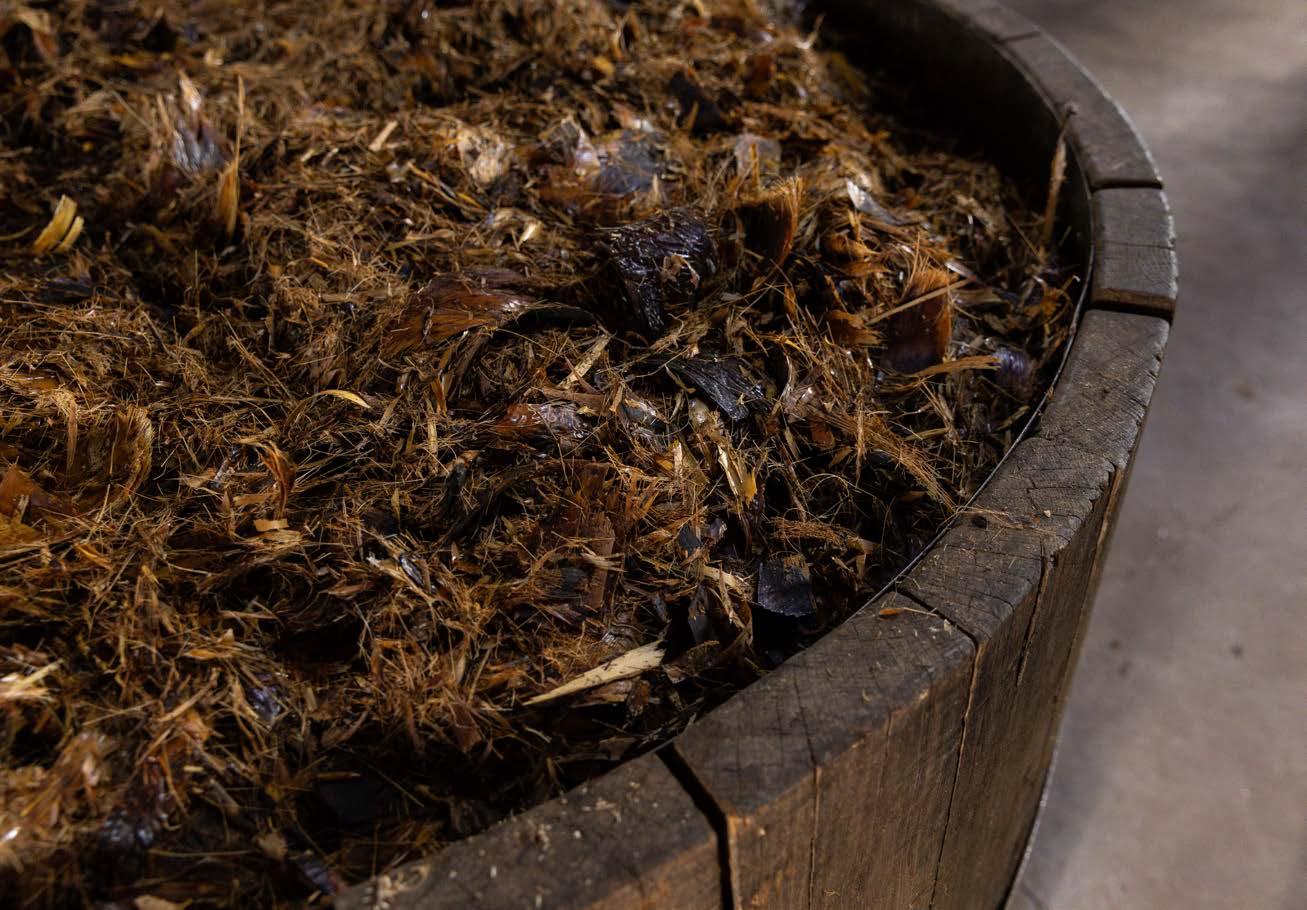
Proceso de fermentación, Vinata Casa Ruelas, municipio de Aldama. Fermentation process, Casa Ruelas Vinata, Aldama municipality.
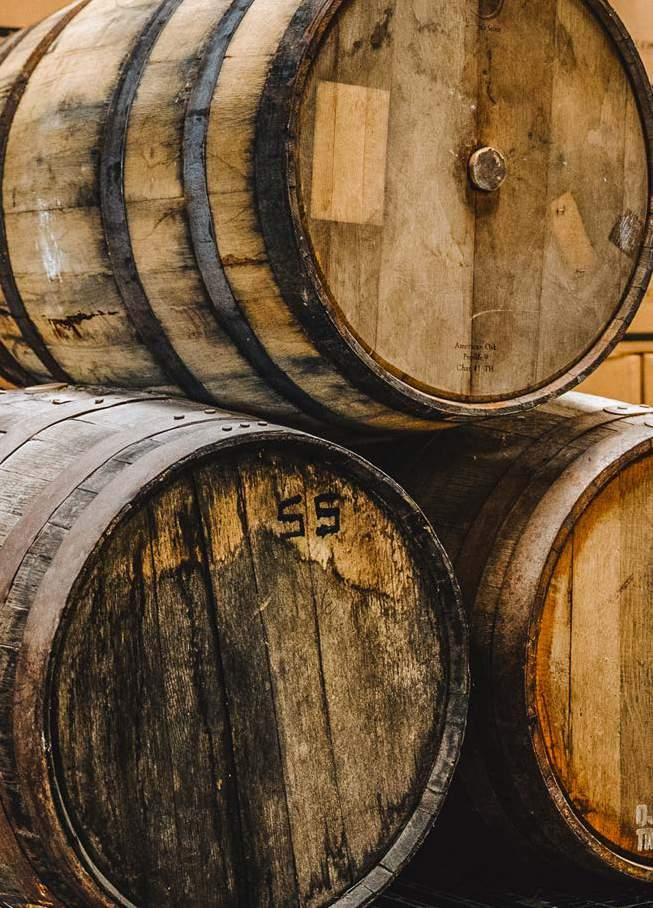

JUAN PABLO CARVAJAL:
“EN UN MERCADO DONDE LAS PERSONAS BUSCAN AUTÉNTICO,ALGO NO NADAHAYMÁS AUTÉNTICO QUE EL SOTOL”.
In a market where people are looking for something real, there’s nothing more authentic than sotol.
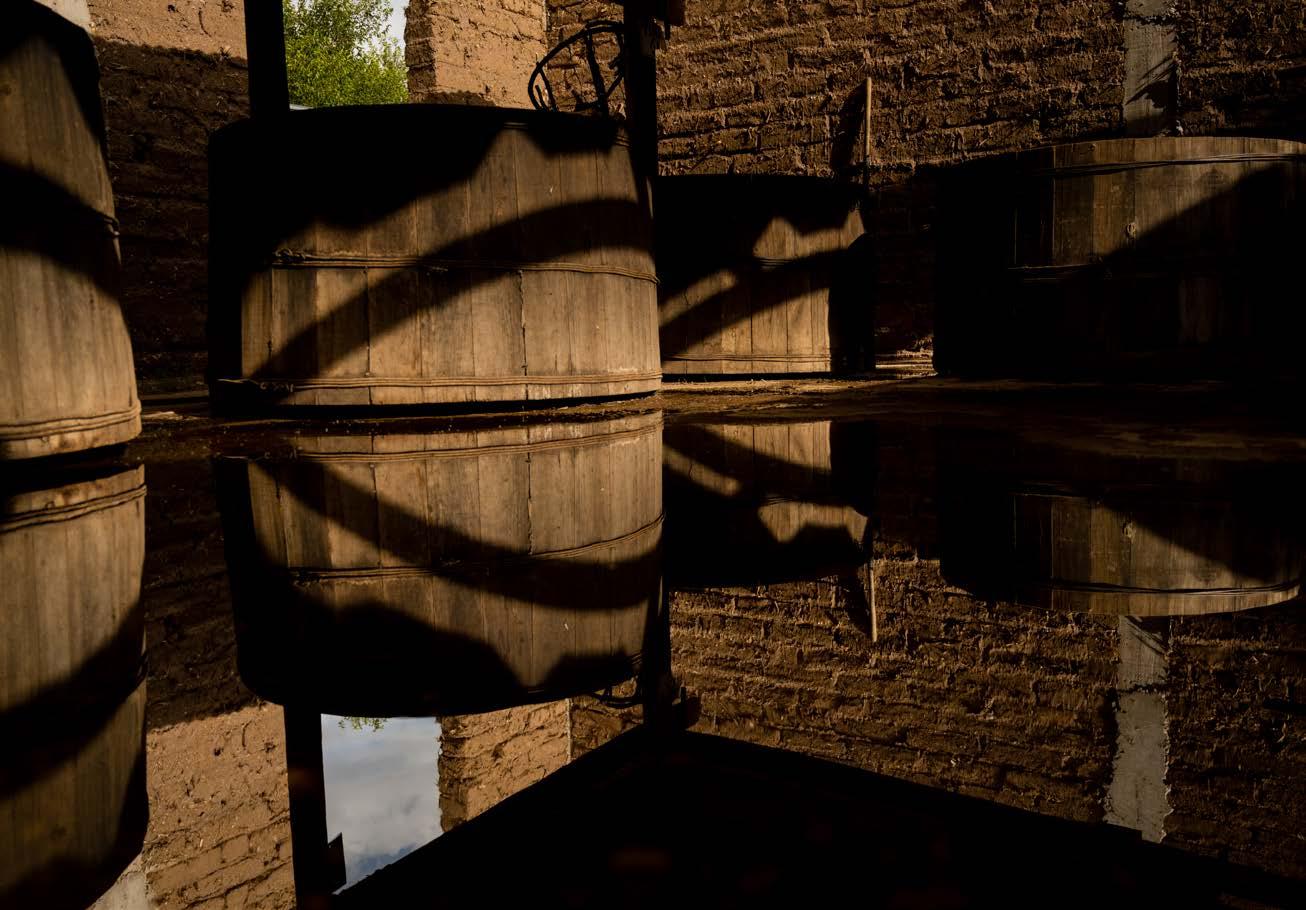
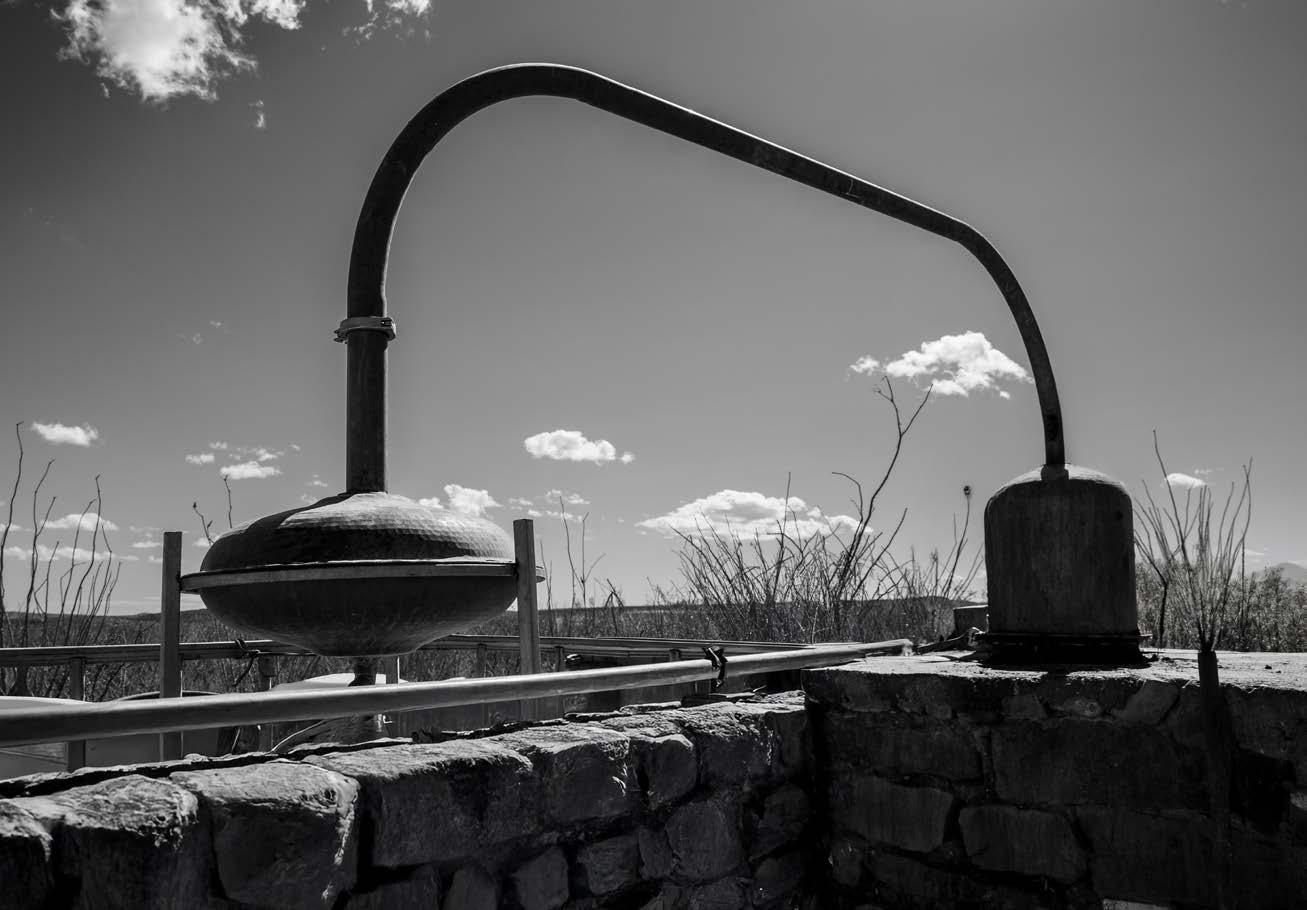
Proceso de destilado en alambique de cobre, Vinata Corazón del Desierto. Distillation in copper still, Corazón del Desierto Vinata.
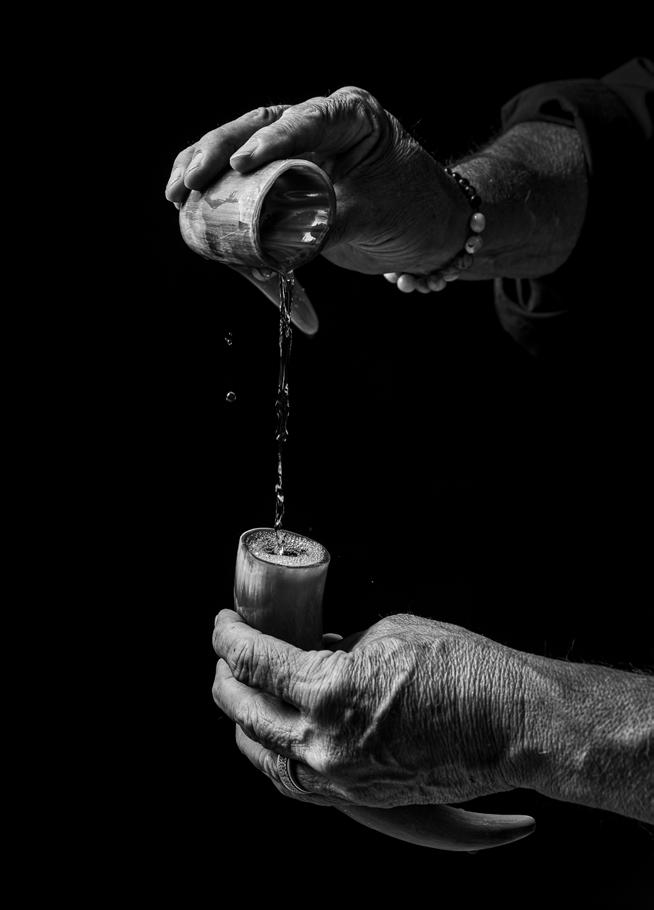
Proceso de emparejamiento. Blending process.
‘Lumbrear’ el sotol puede echarlo a perder. Esto se refiere a apresurar su destilado subiendo la temperatura. Debe ser a fuego lento para que tenga un mejor sabor. Respecto al sabor, también interviene el tipo de material del alambique, el agua, la leña usada y los grados de alcohol en que se nivele, entre muchos otros factores.
«Pues es que cada paso requiere su tiempo. Si me ‘lumbrean’ mi sabor se pierde, mi carácter se desvanece y el esfuerzo se desperdicia. Así también es la vida, no hay que ‘lumbrear’ situaciones. La prisa puede arruinar lo que con paciencia se vuelve valioso».
Para ‘ajustar’ o nivelar la graduación alcohólica es importante tener en cuenta que el sotol de cabeza oscila entre los 70 y los 80 grados. La parte del centro ronda los 60 grados “[…] a ese le nombramos ‘de aroma’, de ‘corazón’, […] y está muy bueno, es el más puro”, y la parte que sale al final, ‘aguacola’ o ‘puntas’, de 40 o menos. Por ello, esa última parte se utiliza para bajar la graduación y regularmente la ‘ajustan’ entre 48 y 52 grados de alcohol. La mayoría lo hace a 50 grados”.[112]
No todos los vinateros cuentan con instrumentos de precisión para este paso, por lo que la observación y la experiencia son esenciales. Al mezclar los destilados que tienen distintos grados de alcohol, el vinatero emplea un análisis visual y olfativo hasta que considera que el resultado es adecuado. Luego ‘cuernea’ el sotol, pasándolo de un cuerno de vaca a otro para ver la consistencia, que se distingue por las ‘perlas’ o burbujas que se forman, su tamaño y el tiempo que tardan en aparecer al agitarlo.[113]
Este método evalúa la tensión superficial del líquido como estimador del grado alcohólico, una práctica empírica valiosa. Esto es un espectáculo a la vista.
Lumbrearing the sotol can ruin it. This refers to rushing the distillation by raising the temperature too quickly. It must be done slowly, over low heat, to achieve a better flavor. The final taste is also influenced by many other factors, including the material of the still, the water used, the type of firewood, and the alcohol level to which it is adjusted.
“Well, it’s because every step takes its time. If they lumbrear me, my flavor is lost, my character fades, and the effort is wasted. Life is the same way—you shouldn’t lumbrear situations. Rushing can ruin what, with patience, becomes something valuable.”
To adjust or level the alcohol content, it is important to consider that the sotol de cabeza typically ranges between 70 and 80 percent ABV. The middle portion is around 60 percent—“[…] we call that the ‘aroma’ or the ‘heart,’ […] and it’s very good, the purest part”—while the final portion, known as aguacola or puntas, measures 40 percent ABV or less. This final part is therefore used to reduce the overall alcohol content, which is typically adjusted to between 48 and 52 percent ABV. Most manufacturers standardize it at 50 percent.[112]
Not all vinateros have precision instruments for this step, so observation and experience are essential. When blending distillates with different alcohol levels, the vinatero relies on visual and olfactory analysis until the result is deemed satisfactory. Then, they ‘cuernean’ the sotol, pouring it from one cow horn to another, to assess its consistency, which is judged by the perlas, or bubbles: their size, how they form, and how long they take to appear when agitated.[113] This method evaluates the liquid’s surface tension as an indicator of alcohol content, an invaluable empirical practice. It is a spectacle to behold.
«¡Las joyas del desierto! Cuando el trabajo está bien hecho, se sabe porque me coronan con esas perlas».
“The jewels of the desert! When the work is done right, you know it because I’m crowned with these perlas.”
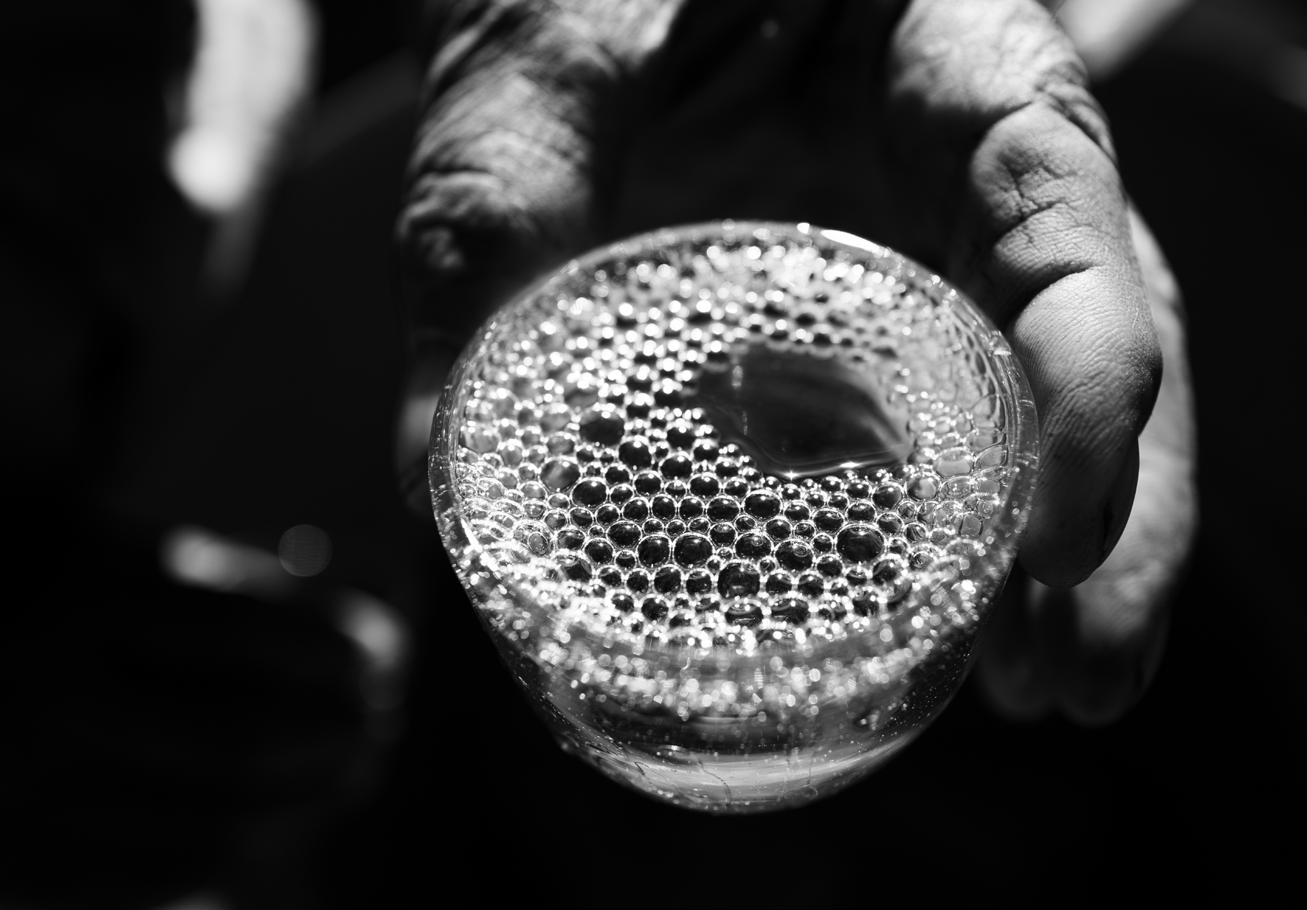
Perlas características del sotol. The classic pearls in sotol.

Alambique de columna, fábrica de Sotol Hacienda de Chihuahua. Column still, Sotol Hacienda de Chihuahua distillery.
Por otra parte, en el caso de la producción industrial, además del volumen existen algunas variaciones. José Daumás describe este proceso: “Se escogen plantas sanas que se transportan en camiones limpios. La fermentación se hace sin quemar la planta. Nosotros la hacemos con vapor indirecto por la norma kosher. Como se está metiendo vapor durante un tiempo largo, la planta sale prácticamente estéril, se matan todas las bacterias que puede tener. Nosotros extraemos el jugo del bagazo. Hay quien fermenta el bagazo con agua y luego lo destila, pero nosotros sacamos el jugo y el bagazo lo desechamos. Fermentamos con cuidado, con levaduras seleccionadas. Después destilamos. Nosotros tenemos un alambique de columna para ese proceso. La primera columna se llama ‘destrozadora’ y la segunda columna es la que rectifica los alcoholes, separa los alcoholes superiores y el aceite de fusel. Así tenemos un producto limpio. Después se embotella rebajando con agua muy pura. Ellos [los productores artesanales] tenían otra forma de trabajar. Y qué bueno, porque guardaron la tradición”.[114]
Un buen sotol debe ser cristalino a la vista, completamente transparente, sin partículas.
A good sotol should be crystal clear to the eye, completely transparent, and free of particles.
Cuando el sotol está destilado, se embotella y prepara para su comercialización. A ese se le conoce como sotol blanco, joven o plata; es el más clásico. Sin embargo, si se desea transformarlo en una bebida reposada, se envejece en barricas de roble, encino o acacia, entre seis y doce meses. Así adquiere un nuevo perfil y notas a madera que destacan su sabor. El sotol añejo se deja entre doce y veinticuatro meses en barricas para aportarle suavidad. El extrañejo envejece más de tres años, para obtener una experiencia sofisticada. Un buen sotol debe ser cristalino a la vista, completamente transparente, sin partículas. Los reposados y añejos pueden tener tonalidades doradas y ámbar, debido a su envejecimiento. Antes de probar el sotol es apropiado servirlo en un envase idóneo que permita distinguir su aroma y observar la gota que revela la densidad de alcohol al descender por las paredes de cristal: más lento en altas graduaciones o rápido en las que menos tienen. Hay para quienes beberlo en un tradicional cuernito tallado es una maravillosa forma de completar la experiencia.
On the other hand, in the case of industrial production, there are some variations beyond volume. José Daumás describes the process: “Healthy plants are selected and transported in clean trucks. Fermentation is carried out without burning the plant. We use indirect steam because of the kosher standard. Since the steam is applied for an extended period, the plant is rendered practically sterile, eliminating all the bacteria it may contain. We extract the juice from the bagasse. Some people ferment the bagasse with water and then distill it, but we extract the juice and discard the bagasse. We ferment carefully, using selected yeasts. Then we distill. We use a column still for this process. The first column is called the ‘destroyer,’ and the second column rectifies the alcohols, separating the higher alcohols and fusel oils. This way, we obtain a clean product. It is then bottled after being reduced with very pure water. They [the artisanal manufacturers] had another way of working. And it’s a good thing, because they preserved the tradition.”[114]
Once the sotol has been distilled, it is bottled and prepared for commercial sale. At this stage, it is known as blanco (white), joven, or plata (silver) sotol, the most classic expression. However, if it is to be transformed into a reposado spirit, it is aged in oak, holm oak, or acacia barrels for six to twelve months. This process gives it a new profile with woody notes that enhance its flavor. Añejo sotol is aged for twelve to twenty-four months to develop smoothness, while extrañejo is aged for more than three years to deliver a sophisticated experience.
A good sotol should be crystal clear to the eye, completely transparent, and free of particles. In the case of reposados and añejos, it may take on golden or amber tones due to the aging process. Before tasting sotol, it should be served in an appropriate vessel that allows its aroma to be appreciated and its tears, the droplets that reveal the alcohol’s density as they run down the inside of the glass, to be observed: slower with higher alcohol content, faster with lower alcohol content. Some choose to drink it from a traditional carved horn, a wonderful way to complete the experience.
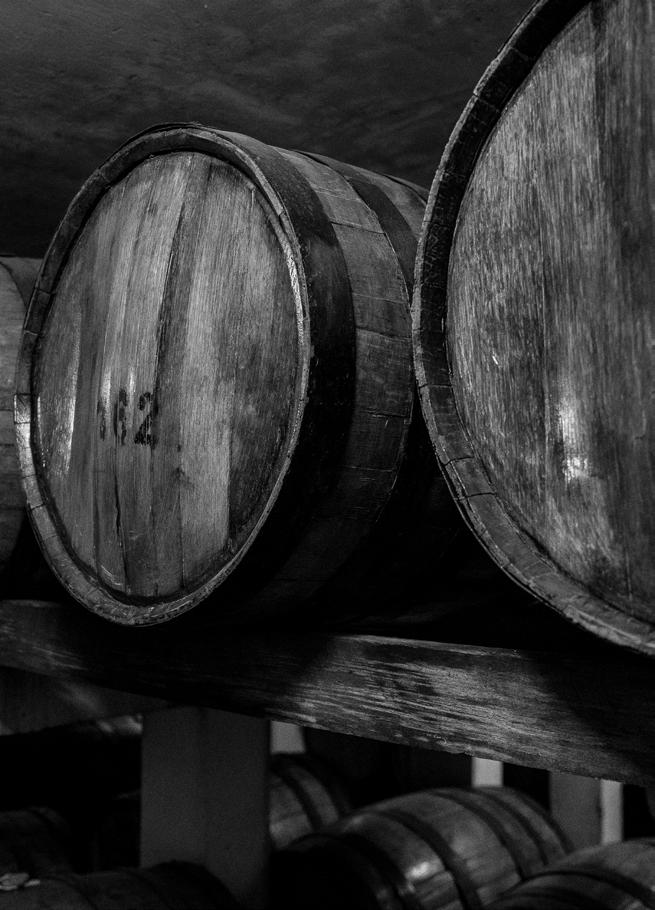
Barricas para añejamiento, fábrica Sotol Hacienda de Chihuahua.
Aging barrels, Sotol Hacienda de Chihuahua distillery.
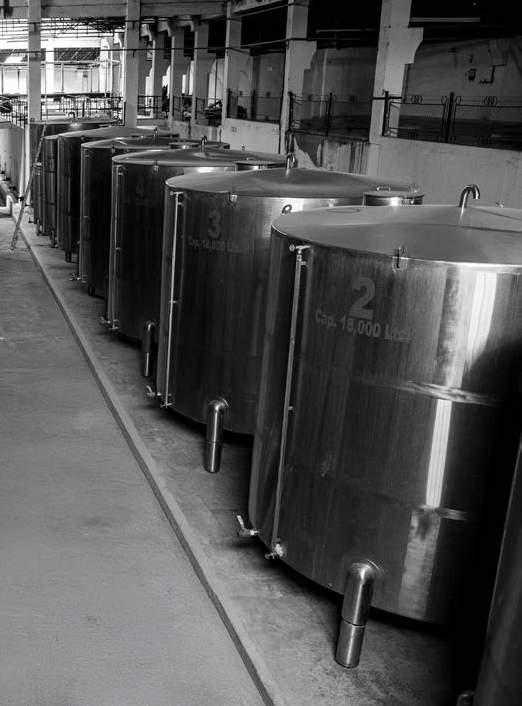
Tanques de fermentación, fábrica Sotol Hacienda de Chihuahua. Fermentation tanks, Sotol Hacienda de Chihuahua distillery.
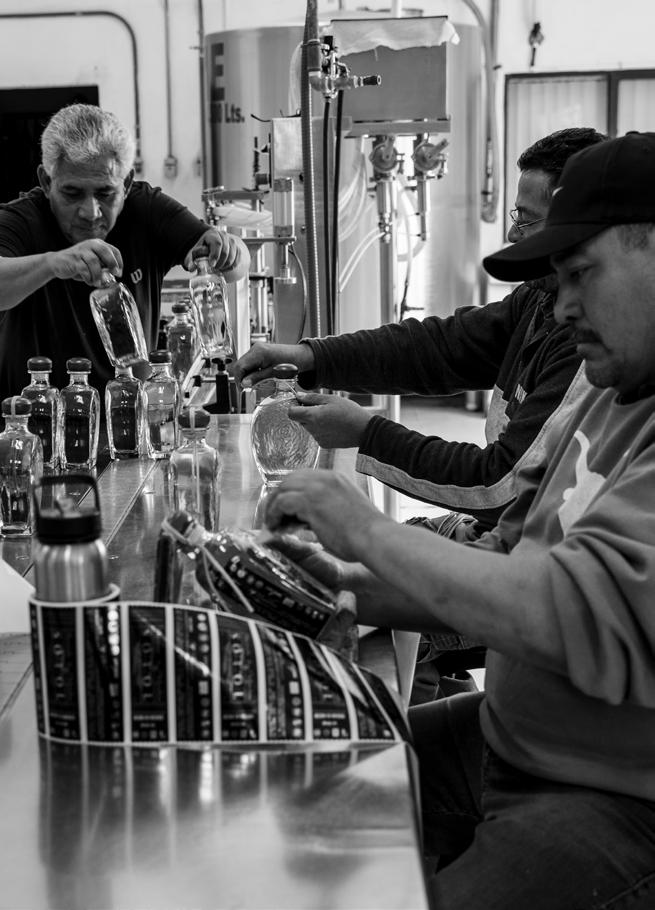
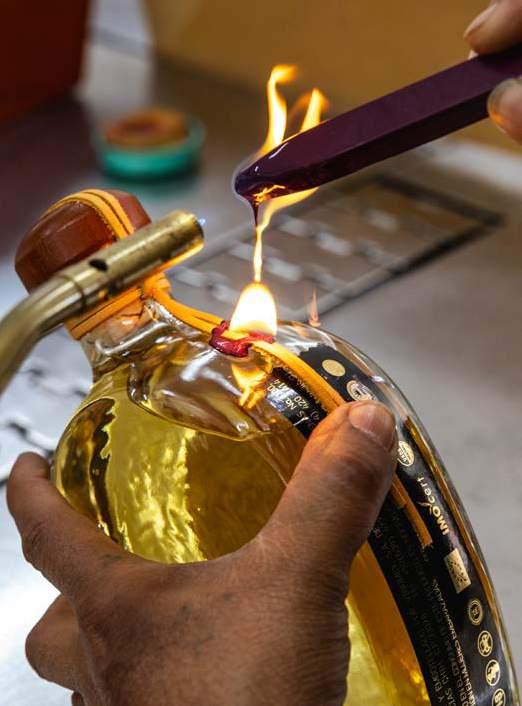
Los productores de Cara Blanca empezaron a comercializar una crema de sotol. The producers of Cara Blanca have begun selling a sotol cream liqueur.
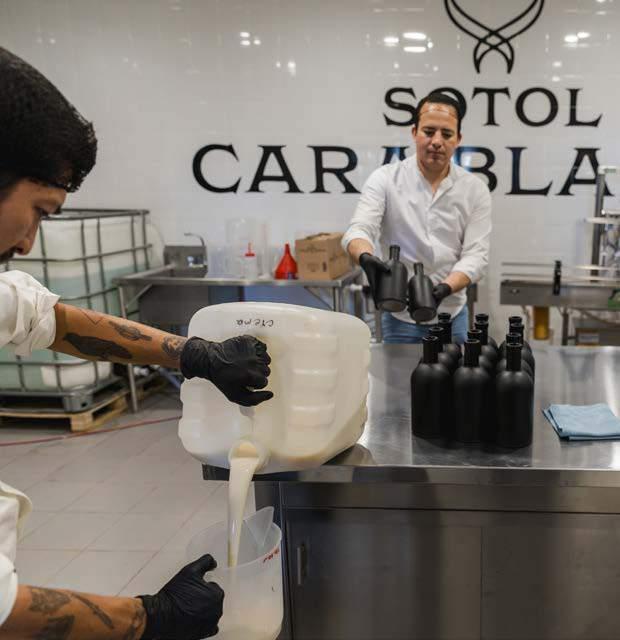
Se estima que en Chihuahua se producen aproximadamente 750,000 litros de sotol al año, y que registra un crecimiento de 5% anual.
Approximately 750,000 liters of sotol are produced annually in Chihuahua, with a growth rate of 5 percent per year.
Es importante poner atención a su aroma, distinguir lo que le da carácter. El sotol no se apresura, se bebe a sorbitos, degustando poco a poco su esencia, sintiendo el calorcito agradable que desciende por la garganta, que no abrasa, reconforta. Dicen los que saben que un buen sotol debe saber fuerte.[115]
Actualmente, el sotol tiene una gran variedad de sabores, adaptados al gusto de los consumidores. Se le agregan sabores con distintas hierbas o frutas; pueden encontrarse incluso con peyote o marihuana. También hay crema de sotol. Existe otro denominado ‘carné’ o ‘carnei’, que se elabora con carne de res o chivo. Incluso, uno que impresiona a muchas personas al verlo en el vitrolero: el sotol de víbora.
“Aquí tuvimos un asentamiento, una población de chinos que vino y nos ayudó a construir las vías del ferrocarril –cuenta Cristina Ruelas–. Ellos son de una cultura milenaria, creen mucho en las propiedades curativas que tiene la víbora de cascabel. Entonces ellos le pedían al abuelo que hiciera un sotol con ese animal, porque creían que tenía propiedades curativas”.[116]
Aunque es difícil contabilizar gran parte de la producción artesanal, se estima que en Chihuahua se producen aproximadamente 750,000 litros de sotol al año, y que registra un crecimiento de 5% anual. También se sabe que entre 70% y 80% de la producción nacional, pertenece a este mismo estado.[117]
It is important to pay attention to the aroma to identify the elements that give it character. Sotol is not meant to be rushed; it is sipped slowly, allowing its essence to be savored little by little, feeling the pleasant warmth as it travels down the throat, not burning but comforting. Connoisseurs say that a good sotol should have a strong, bold flavor.[115]
Today, sotol comes in a wide variety of flavors, adapted to suit consumer preferences. It is infused with different herbs or fruits, and some versions even include peyote or marijuana. There is also sotol cream. Another variation, known as carne or carnei, is made with beef or goat meat. Perhaps the most striking of all is sotol de víbora, snake sotol, which often surprises those who see it steeping in a large glass container.
“We had a settlement here, a Chinese community that came and helped us build the railroad tracks,” says Cristina Ruelas. “They come from an ancient culture and have a strong belief in the healing properties of the rattlesnake. So they would ask my grandfather to make a sotol with that animal, because they believed it had medicinal properties.”[116]
Although much of the artisanal production is difficult to quantify, it is estimated that approximately 750,000 liters of sotol are produced annually in Chihuahua, with a growth rate of 5 percent per year. It is also known that between 70 and 80 percent of the country’s total production comes from this same state.[117]
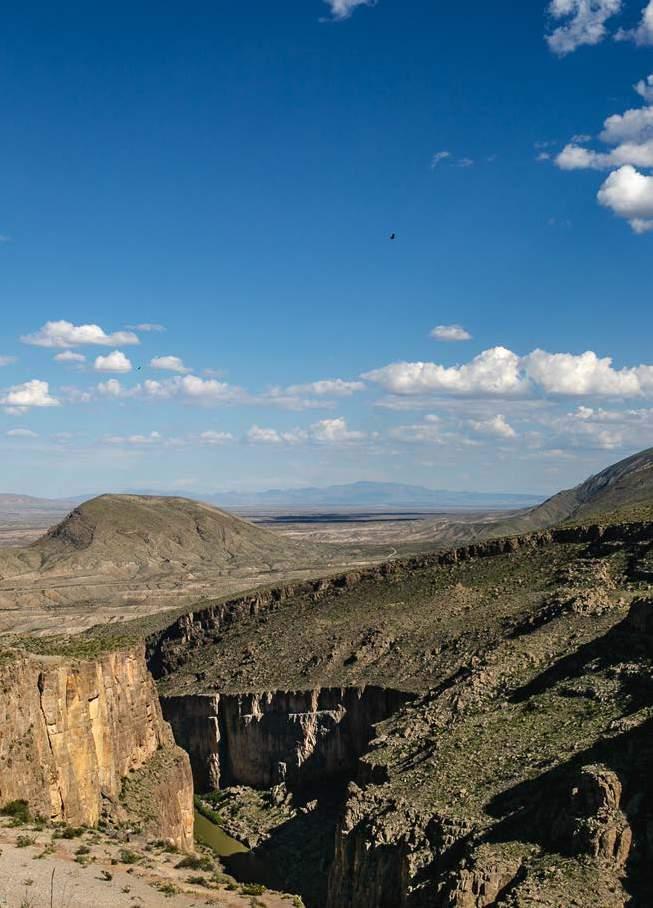
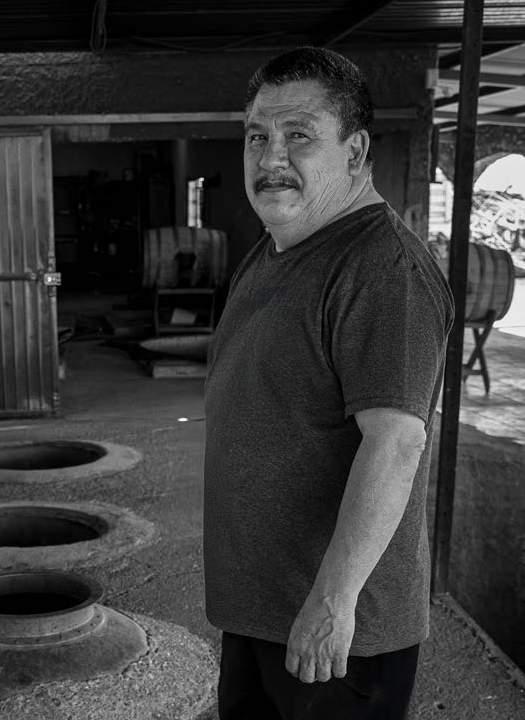
CONCEPCIÓN MENDOZA:
“EL SOTOL ES LA BEBIDA DEL ESTADO DE CHIHUAHUA”.
Sotol is the official drink of the state of Chihuahua.
Los meros meros vinateros
The True Masters of Sotol
«¡Ah, mis amigos! A ellos les debo mi esencia, mi ser. Sus manos curtidas me han dado forma. A ustedes rindo homenaje por mantener encendida la llama que me da vida. ¡Salud, mis amigos!».
“Ah, my friends! To you I owe my essence, my very being. Your weathered hands have given me shape. I honor you for keeping alive the flame that gives me life. Cheers, my friends!”
CARRUCHI –COMO LE llaman cariñosamente sus amigos a Raúl Cruz– refiere que el sotol “es mucho trabajo para hacerlo, pero es muy fácil tomarlo”.[118] Tiene 80 años y es originario de Chorreras, población cercana a ciudad Aldama. Ha enseñado a elaborar sotol a varios que hoy producen en la región, tal como él lo aprendió de otros maestros generosos. Una gran parte de los productores artesanales de este licor no poseen una marca propia, sino que venden su producto a otras personas que lo comercializan dentro y fuera del país. Muchos comenzaron en el mundo de los destilados como un complemento a sus otras actividades, como pequeños ganaderos o agricultores, gambusinos, mineros o trabajadores de la candelilla. “Pues ya ve que en los ranchos no había trabajos grandes –dice Eduardo Arrieta–. Por decir, si necesitan personal, cada quien hacía el suyo propio”.[119]
CARRUCHI, AS RAÚL Cruz is affectionately called by his friends, says that sotol “takes a lot of work to make, but it’s very easy to drink.”[118] He is 80 years old and originally from Chorreras, a town near Ciudad Aldama. He has taught several of today’s regional manufacturers how to make sotol, just as he once learned from other generous masters.
A large number of artisanal manufacturers of this spirit do not have their own brand; instead, they sell their product to others who market it both within and outside the country. Many entered the world of distilling as a complement to other activities, such as small-scale ranching or farming, gold seeking, mining, or working with candelilla. “You see, out on the ranches there weren’t any big jobs,” says Eduardo Arrieta. “For example, when people needed workers, everyone just did their own thing.”[119]
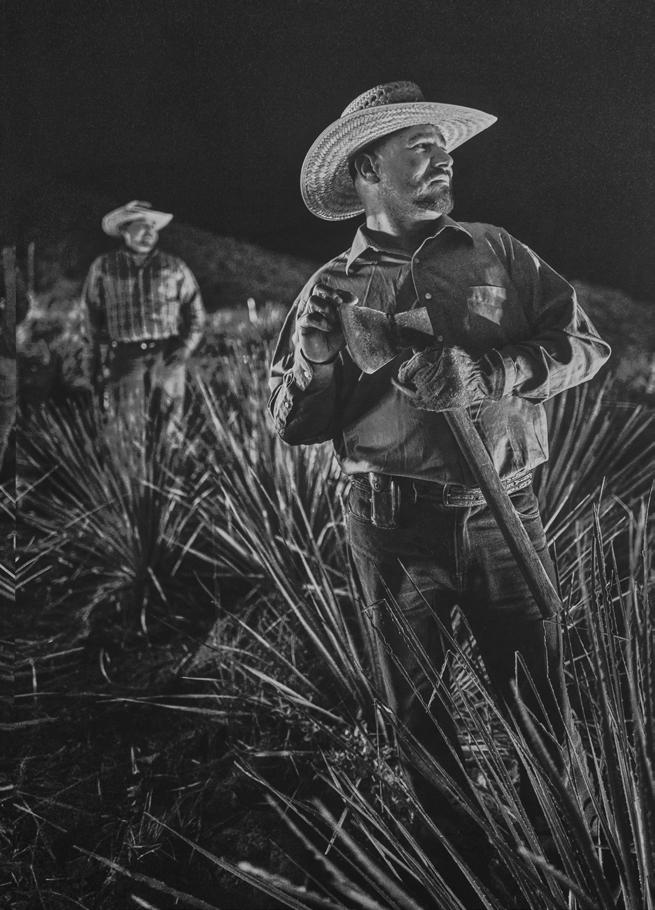
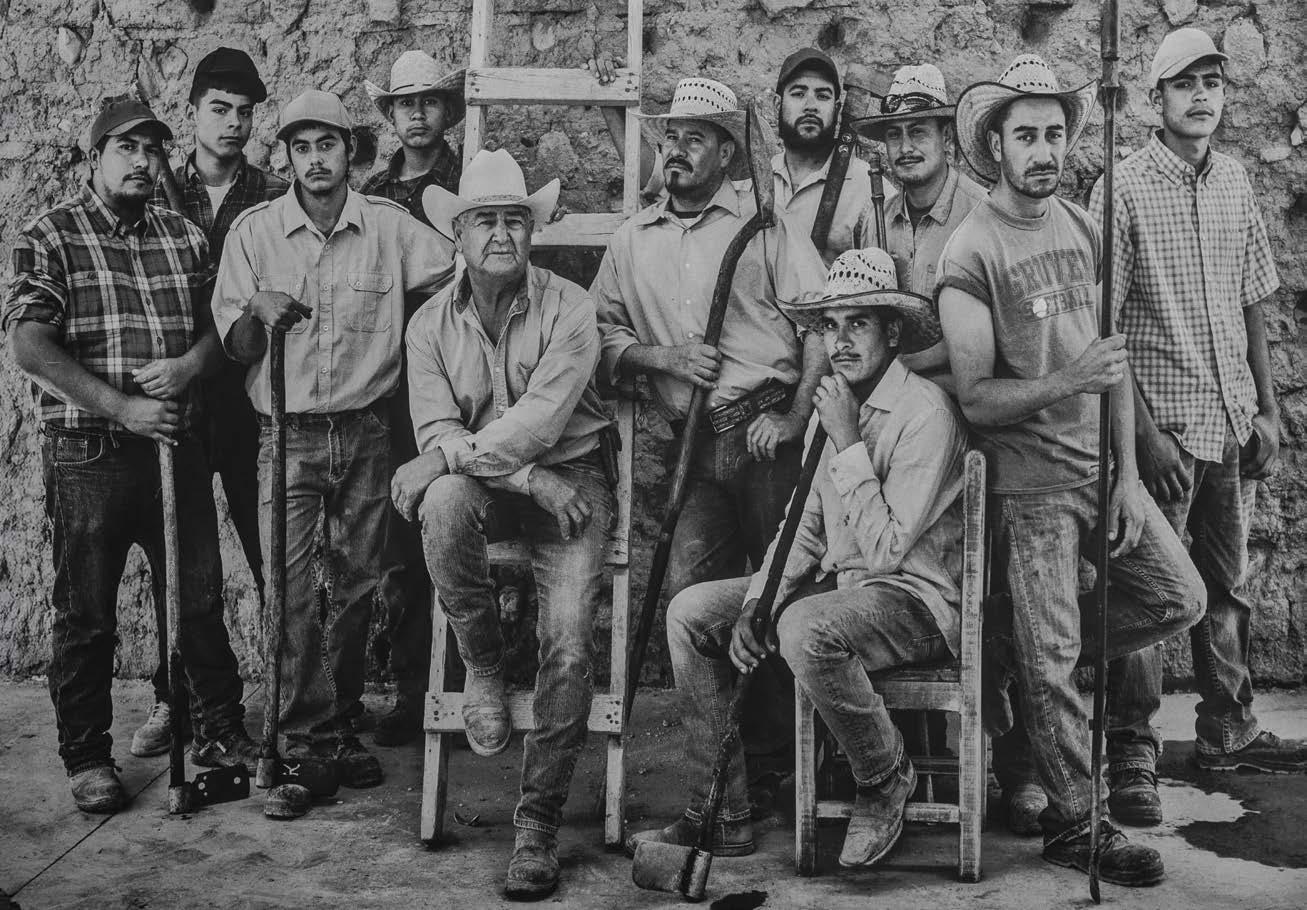
Los lazos familiares suelen estar muy presentes en el gremio de los sotoleros. Los mismos apellidos rondan desde hace mucho tiempo en esta actividad, como es el caso de don Lalo: “Desde mi bisabuelo, estaban allá pa’ Satevó, de allá viene la familia, los Arrieta. Y luego de Satevó, se movieron a Labor Nueva (Julimes). Mi abuelo se vino de allí a Chorreras, a hacer sotol. Ahí nacieron mi apá y mi tío. Somos del municipio de Aldama, para el lado de la colonia Allende. Mi abuelo emigró para la frontera, se fue a Coyame y se quedaron aquí mis padres. Luego, nosotros hemos seguido con este trabajo del sotol”.
La iniciación en la producción de sotol suele ser trabajar ‘tirando’ o ‘tumbando’ plantas para alguien con mayor experiencia. Jóvenes vigorosos siempre son requeridos para esa faena. Ayudar en la vinata en tareas múltiples, hasta familiarizarse lo suficiente como para hacerlo por cuenta propia, o hasta conseguir los implementos necesarios para emprender, es algo que casi todos tienen en común. “Yo trabajé con Lalo Arrieta –dice Fernando Porras–. De jovencito, aprendí con mi tío Eleuterio Leal. Él trabajó con Nieves Mendoza más de 30 años. Mi tío Carruchis trabajó con varias personas también. Mi tío Tello, mi hermano y yo trabajamos bastante con don Nieves. Estaba muy jovencito: 13 o 14 años tenía yo. También lo hice para Polo Derma y para Chalol, tumbando planta nada más”.[120]
Los meros meros vinateros son los guardianes de la tradición, quienes compartieron su conocimiento y experiencia, y cuya dedicación ha transformado al sotol en un símbolo de orgullo e identidad chihuahuense. Están en todo el estado; en comunidades apartadas, perfeccionando su arte heredado generacionalmente, con humildad y dedicación. Desde las llanuras del desierto hasta la Sierra Madre. No siempre son fáciles de encontrar, pero, aquí y allá, emergen sus nombres como las perlas del sotol bien hecho: grandes, duraderos.
MUCHO MÁS QUE UN DESTILADO
El sotol no solo se bebe. Esta noble planta ha sido amiga del ser humano por generaciones. Su corazón se come, sus hojas se han empleado en la fabricación de muebles tejidos, en la construcción y techumbre de casas, en la hechura de utensilios domésticos, como cubiertos y escobas. Además, a partir del sotol se produce jabón, alimento para el ganado, azúcar, melaza, miel, papel y hasta combustible. Con sus fibras también se hacen artesanías. Con su flor, incluso, se elaboran pan y galletas. Recientemente se han realizado estudios para cultivar un hongo comestible que crece en su bagazo. El sotol es la prueba viviente de que en el desierto florece la creatividad.
La iniciación en la producción de sotol suele ser trabajar ‘tirando’ o ‘tumbando’ plantas para alguien con mayor experiencia.
The initiation into sotol production usually begins by “pulling out” or “knocking down” plants for someone with more experience.
MUCH MORE THAN A SPIRIT
Sotol is not just something you drink. This noble plant has been a companion to humans for generations. Its heart is edible, and its leaves have been used to weave furniture, build and roof homes, and craft household utensils such as cutlery and brooms. Sotol is also used to produce soap, livestock feed, sugar, molasses, honey, paper, and even fuel. Its fibers are made into handicrafts, and its flower is used to make bread and cookies. Recently, studies have explored the cultivation of an edible mushroom that grows on its bagasse. Sotol is living proof that in the desert, creativity blooms.
Family ties are often deeply rooted in the world of sotol manufacturers. The same surnames have been part of this craft for generations, as is the case with Don Lalo: “Since the time of my great-grandfather, they were over in Satevó—that’s where the family comes from, the Arrietas. Then from Satevó, they moved to Labor Nueva, in Julimes. My grandfather came from there to Chorreras to make sotol. That’s where my dad and my uncle were born. We’re from the municipality of Aldama, near the Allende colony. My grandfather later moved to the border, to Coyame, and my parents stayed here. Since then, we’ve continued with the work of making sotol.”
The initiation into sotol production usually begins by “pulling out” or “knocking down” plants for someone with more experience. Strong young workers are always needed for this task. Helping out in the vinata with a range of duties, gradually becoming familiar enough to work independently or until they can acquire the necessary tools to start on their own, is a shared path for many. “I worked with Lalo Arrieta,” says Fernando Porras. “As a young boy, I learned from my uncle Eleuterio Leal. He worked with Nieves Mendoza for more than 30 years. My uncle Carruchis also worked with several people. My uncle Tello, my brother, and I worked a lot with Don Nieves. I was very young, 13 or 14 years old. I also worked for Polo Derma and Chalol, just cutting plants.”[120]
The true masters of sotol are the guardians of tradition, those who have shared their knowledge and experience, and whose dedication has transformed sotol into a symbol of pride and identity for the people of Chihuahua. They are found throughout the state, in remote communities, perfecting a craft passed down through generations, with humility and devotion from the desert plains to the Sierra Madre. They are not always easy to find, but here and there, their names emerge like the pearls of a well-made sotol, distinct and enduring.
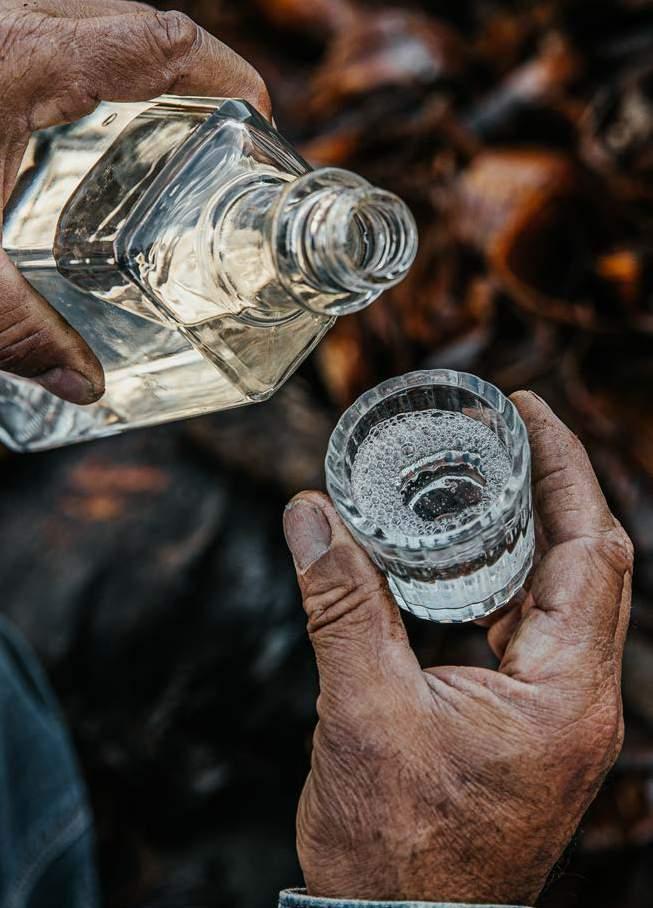
Algunos ya no están, como don Cali Álvarez, de Casas Grandes –fallecido en 2024 a los 83 años–, pero legó a su hijo el saber transmitido por su bisabuelo Román, su abuelo Melquiades y su padre Fernando. Hoy, Daniel Álvarez honra ese linaje con su sotol Indio Juh. Así se fue también don Nieves Mendoza, de sotol Coyamito. En Aldama, su hijo Chito continúa con su labor. En ese mismo lugar, Casa Ruelas se erige con Gerardo y sus hijos, que continúan la tradición familiar iniciada desde, por lo menos, 1930. En los ranchos cercanos encontramos a los Arrieta, a los Derma, Chagoya, Venegas, Porras, Valdéz, Altamirano, Chavira y muchos productores más. En Madera, los Fernández: Bienvenido, Juan José, Bardino, Norma, Chito y su hija Azucena; Lupe López y tantos más. En Janos, don Celso Jácquez, de sotol Don Cuco.
El Consejo Mexicano del Sotol estima que existen 25 vinatas en el estado y alrededor de 250 productores para toda la zona comprendida en la denominación de origen.[121]
Some are no longer with us, like Don Cali Álvarez from Casas Grandes, who passed away in 2024 at the age of 83, but he passed down the knowledge he had inherited from his great-grandfather Román, his grandfather Melquiades, and his father Fernando. Today, Daniel Álvarez honors that lineage with his sotol Indio Juh. Don Nieves Mendoza of Sotol Coyamito has also passed, but in Aldama, his son Chito continues his work. In the same town, Casa Ruelas stands strong with Gerardo and his sons, who carry on the family tradition that began as early as 1930. In the nearby ranches, we find the Arrieta, Derma, Chagoya, Venegas, Porras, Valdéz, Altamirano, Chavira, and many other manufacturers. In Madera, the Fernández family: Bienvenido, Juan José, Bardino, Norma, Chito, and his daughter Azucena, along with Lupe López and many more, carry on the tradition. In Janos, Don Celso Jácquez of Don Cuco Sotol continues the craft.
El Consejo Mexicano del Sotol estima que existen 25 vinatas en el estado y alrededor de 250 productores para toda la zona de la D.O.
Las mujeres también han incursionado en la producción. Norma Fernández, de Madera, recuerda estar inmersa en ese ámbito junto con sus hermanas, desde muy pequeñas. “Nosotros disfrutamos mucho esa parte, cuando nos ponían a trabajar. Era como una aventura, porque salíamos al campo, acampábamos, convivíamos. Jugaban mucho con nosotras. [Nos decían]: ‘Si me ayudan a moler, cuando salga el sotol les daremos una «perrita»’ [una botella]. Según el trabajo que hiciéramos. ‘Si me ayudan a sacar la piedra del hoyo, es una «perrita»; si me ayudan a moler es otra, si se van conmigo allá para la jima…’ y así. Cuando íbamos a la jima, llevábamos unos burros. Y allí tiraba mi papá la planta y nosotros lo ayudábamos a quitar hojas. Cada cosa que fuéramos haciendo era una recompensa. A nosotros nos gustaba ir a ayudar porque cuando regresábamos de vacaciones ya traíamos algunos litros de sotol, que mi papá convertía en dinero, con el que nos comprábamos cositas. De esa manera fuimos conociendo el trabajo desde niñas. Lo que era la producción de sotol”.[122]
The Mexican Sotol Council estimates that there are 25 vinatas in the state and approximately 250 manufacturers across the entire D.O area.
The Mexican Sotol Council estimates that there are 25 vinatas in the state and approximately 250 manufacturers across the entire area covered by the denomination of origin.[121]
Women have also entered the world of sotol production. Norma Fernández, from Madera, recalls being immersed in that environment alongside her sisters from a very young age. “We really enjoyed that part, when they had us working. It felt like an adventure because we would go out to the countryside, camp, and spend time together. They played with us a lot. They would say, ‘If you help me grind, when the sotol comes out, we’ll give you a perrita’ [a small bottle], depending on the work we did. ‘If you help me take the stone out of the pit, that’s one perrita; if you help me grind, that’s another; if you come with me for the jima (cutting the head of the plant)…’ and so on. When we went to the jima, we would take some donkeys. That’s where my dad would cut the plant, and we would help him remove the leaves. Each task came with a reward. We liked helping because when we came back from vacation, we brought a few liters of sotol, which my dad would sell, and with that money we bought ourselves little
Ese
mundo dominado
históricamente por hombres se abre poco a poco a la presencia femenina. Las mujeres comienzan a dejar su huella y su visión.
This historically male-dominated world is gradually opening up to the presence of women. They are beginning to leave their mark and bring their vision to the craft.
Norma se instruyó en nuevos modos para mejorar las prácticas de la fábrica de Sotol Fernández; participó en distintos foros respecto a la legislación y la conformación de la norma y el consejo: “Mi papá siempre me llevaba y yo permanecía calladita; apuntaba todo lo que teníamos que hacer. Pero hubo un momento en que ya no me aguanté. Tenía que dar mi punto de vista. La verdad es que volteaban a verme, así como si yo no supiera nada. ‘Es mujer y esto es un tema de hombres’. Pero poco a poco fueron entendiendo que yo sí conocía del tema”. Hoy relata cómo su joven hija se prepara en el extranjero para una potencial exportación de sus productos.
Ese mundo dominado históricamente por hombres se abre poco a poco a la presencia femenina. Las mujeres comienzan a dejar su huella y su visión. Las Potrancas es una marca de sotol liderada por las hermanas Azucena, Viviana y Patricia Fernández. Por otra parte, Sotol Esmeralda emplea en su vinata a Jennifer Piñón, Angelita Piñón y Larissa Valdés en tareas convencionalmente no atribuidas a su género. Además, muchas otras se involucran en la venta y comercialización de sotol.
things. That’s how we got to know the work from the time we were girls, what sotol production was all about.”[122]
Norma trained in new methods to improve the practices of the Fernández sotol distillery. She took part in various forums concerning legislation and the development of the official standard and the council. “My father always took me along, and I stayed quiet, writing down everything we needed to do. But there came a moment when I could not hold back anymore. I had to share my point of view. Honestly, they would look at me as if I knew nothing—‘She’s a woman, and this is a man’s topic.’ But little by little, they began to understand that I did know what I was talking about.” Today, she shares how her young daughter is studying abroad for the potential export of their products.
This historically male-dominated world is gradually opening up to the presence of women. Women are beginning to leave their mark and bring their vision to the craft. Las Potrancas is a sotol brand led by sisters Azucena, Viviana, and Patricia Fernández. Sotol Esmeralda, meanwhile, employs Jennifer Piñón, Angelita Piñón, and Larissa Valdés in its distillery, where they take on roles not traditionally associ-
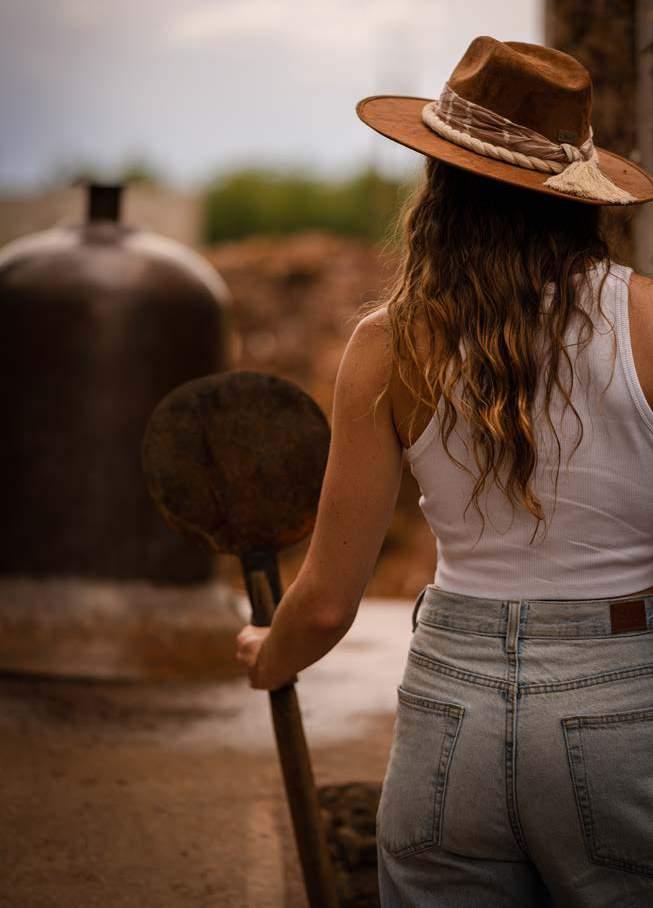
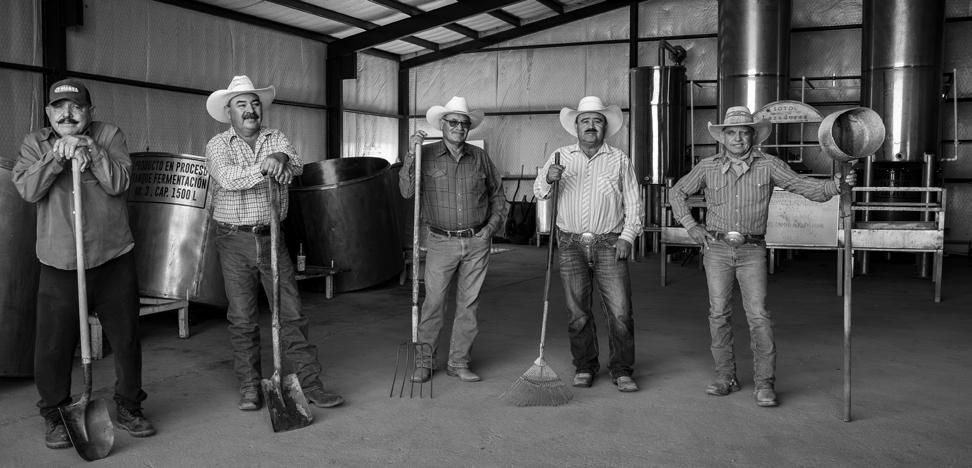
Frente a los desafíos, algunos vinateros optaron por la unión. Formaron cooperativas, comparten recursos y conocimientos para mejorar la calidad de sus productos y fortalecer su presencia en el mercado. Aumentaron su poder de negociación obteniendo mejores condiciones de comercialización, así como apoyo colectivo en cuestión de trámites y permisos. Es el caso de la cooperativa Lazadores de Potrero del Llano. Daniel Chavira lo explica bien. “Esta cooperativa se formó a partir de un apoyo que hubo por parte de CONASA. Venía para el ejido porque era Potrero del Llano. Se hizo una reunión y se invitó a todos los ejidatarios. Nada más seis personas estuvimos dispuestos pues a trabajar con el sotol: Manuel, Apolinar, Salvador y Enrique Derma […] y había otra persona, que ya no está en el grupo, y yo. Ahorita estamos cinco”.[123]
La cooperativa de Potrero del Llano está constituida de manera formal con todos los permisos de la Secretaría de Medio Ambiente y Recursos Naturales. Esto representa un trabajo importante en la gestión ante distintos organismos gubernamentales. “Fue por salvar lo tradicional, que no se pierda, y la otra parte fue de organizarnos para que nos fuera más fácil, pues. Incluso, para solicitar apoyos y todo
ated with their gender. In addition, many other women are actively involved in the sale and marketing of sotol.
In the face of challenges, some sotol manufacturers chose to join forces. They formed cooperatives, sharing resources and knowledge to improve the quality of their products and strengthen their presence in the market. By doing so, they increased their bargaining power, secured better commercial conditions, and gained collective support for administrative procedures and permits. One such example is the cooperative Lazadores de Potrero del Llano. Daniel Chavira explains it clearly: “This cooperative was formed through support from CONASA. The aid was intended for the ejido because it was Potrero del Llano. A meeting was held, and all the ejidatarios (rightsholders of communal lands) were invited. Only six of us were willing to work with sotol: Manuel, Apolinar, Salvador, Enrique Derma […], and there was one other person, who is no longer part of the group, and me. Right now, there are five of us.”[123]
The Potrero del Llano cooperative is formally established with all the necessary permits from the Secretariat of Environment and Natural Resources. This represents significant work in navigating procedures with various government
eso, para tocar puertas con las dependencias, fue uno de los objetivos que logramos”, dijo Salvador Derma, que fungió como representante durante diez años.
Los miembros de la cooperativa disponen de un sistema de apoyos colectivos en diversas actividades y comparten las instalaciones, que tienen algunas innovaciones tecnológicas importantes con respecto a otras vinatas tradicionales. “Somos de los que estamos más avanzados –expresa Daniel Chavira–; tenemos todos los permisos de aprovechamiento para cortar la planta y procesarla. En este lugar contamos también con el cambio de uso de suelo. O sea, todo está en regla. Tenemos los marbetes. Y nos acomodamos, pues. Si uno dice: “Yo tengo ‘chanza’ para ir a cortar”. Va. Y pues claro que le pagamos los demás, ¿no? El que no puede venir a trabajar, pues paga al que viene. Pero todo esto es en conjunto. Y nosotros sabemos que el producto que tenemos es de la mejor calidad. Nos hemos preocupado mucho por eso”.[124]
Sotoleros de los tres estados comprendidos en la denominación de origen han detectado la necesidad de que exista un consejo de productores para discutir y tratar sus intereses particulares con sus pares.
Los miembros de la cooperativa cuentan con un sistema de apoyos colectivos en diversas actividades y comparten las instalaciones, que tienen algunas innovaciones tecnológicas importantes.
The members of the cooperative benefit from a system of collective support across various activities and share facilities that feature important technological improvements.
Cooperativa Sotol Lazadores. De izq. a der.:
Enrique Derma, Manuel Chavira, Jesús Daniel Chavira, Apolinar Derma, Saúl Derma.
Sotol Lazadores Cooperative. Left to right: Enrique Derma, Manuel Chavira, Jesús Daniel Chavira, Apolinar Derma, Saúl Derma.
agencies. “It was about preserving tradition, making sure it would not be lost, and also about organizing ourselves to make things easier,” said Salvador Derma, who served as the cooperative’s representative for ten years. “Even when it came to requesting support and reaching out to different institutions, that was one of the goals we achieved.”
The members of the cooperative benefit from a system of collective support across various activities and share facilities that feature important technological improvements compared to traditional vinatas. “We are among the most advanced,” says Daniel Chavira. “We have all the permits for harvesting and processing the plant. We also have land use change authorization for this location. Everything is in order. We have the official labels and we organize ourselves. If someone says, ‘I have time to go harvest,’ then they go. And of course, the rest of us pay them, right? If someone cannot come to work, they pay the one who does. But everything is done together. And we know that the product we have is of the highest quality. We have put a lot of care into that.”[124]
Sotol manufacturers from the three states included in the denomination of origin have identified the need for a manufacturers’ council to discuss and address their specific
ElConsejo Nacional de Productores
de Sotol es una asociación que trata de salvaguardar la autenticidad y sostenibilidad en esta práctica.
The National Council of Sotol Producers is an association that seeks to safeguard the authenticity and sustainability of the practice.
Así surgió el Consejo Nacional de Productores de Sotol, una asociación que trata de salvaguardar la autenticidad y sostenibilidad en esta práctica. “Ahorita somos diez los productores –continúa Chavira– y tuvimos un encuentro en la Ciudad de México. Estamos tratando de conservar la denominación de origen de los tres estados. Acordamos esta cuestión de ser productores auténticos. Buscar la manera de comercializarlo nosotros, a un precio justo. También arreglar todo para poder exportar”.[125]
Este consejo reúne a productores comprometidos con la elaboración de sotol 100% puro, con prácticas que tengan en cuenta el medio ambiente. Entre sus miembros se encuentran: Beto Palacios, José Luis Moreno, Daniel Chavira, Juan Román, Norma Fernández y Fernando Porras. Para pertenecer, lo único que se requiere es ser productor del licor. Los objetivos principales de la agrupación son establecer un sello de “productor auténtico”, que certifique a aquellos que producen sotol de manera tradicional y sustentable, acceder a recursos para reforestar Dasylirion y promover la comercialización justa y la exportación de sus productos.[126]
Detrás de cada botella de sotol hay historias de esfuerzo, aprendizaje y comunidad. Reconocer a los vinateros es reconocer el valor de quienes, sin buscar protagonismo, han construido un legado que enriquece la cultura chihuahuense.
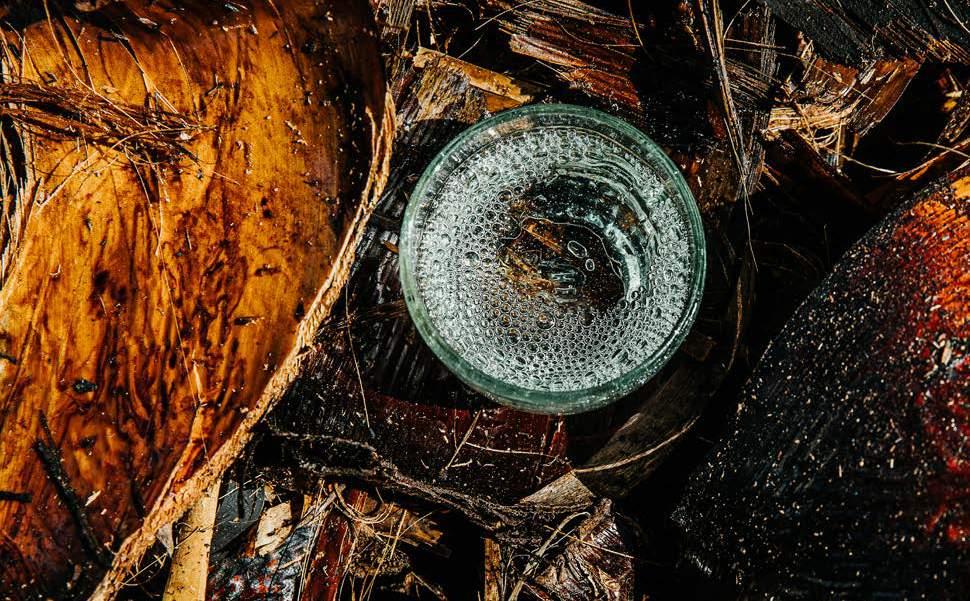
interests among peers.
This led to the creation of the National Council of Sotol Producers, an association that seeks to safeguard the authenticity and sustainability of the practice. “Right now, there are ten of us manufacturers,” Chavira adds, “and we had a meeting in Mexico City. We are working to preserve the denomination of origin for the three states. We agreed on the importance of being authentic manufacturers, finding ways to market the product ourselves at a fair price, and getting everything ready to be able to export.”[125]
This council brings together manufacturers committed to crafting 100 percent pure sotol, using practices that respect and consider the environment. Its members
include Beto Palacios, José Luis Moreno, Daniel Chavira, Juan Román, Norma Fernández, and Fernando Porras. To join, the only requirement is to be a liquor producer. The group’s main objectives are to establish an “authentic producer” seal that certifies those who make sotol through traditional and sustainable methods, to access resources for the reforestation of Dasylirion, and to promote the fair commercialization and export of their products.[126]
Behind every bottle of sotol are stories of effort, learning, and community. To recognize the sotol manufacturers is to acknowledge the value of those who, without seeking the spotlight, have built a legacy that enriches the culture of Chihuahua.
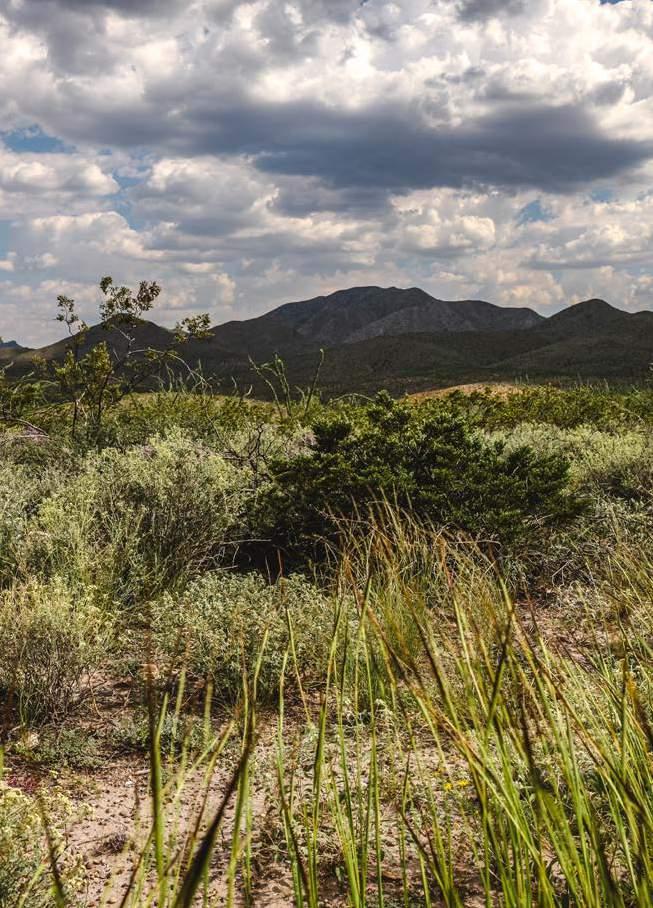
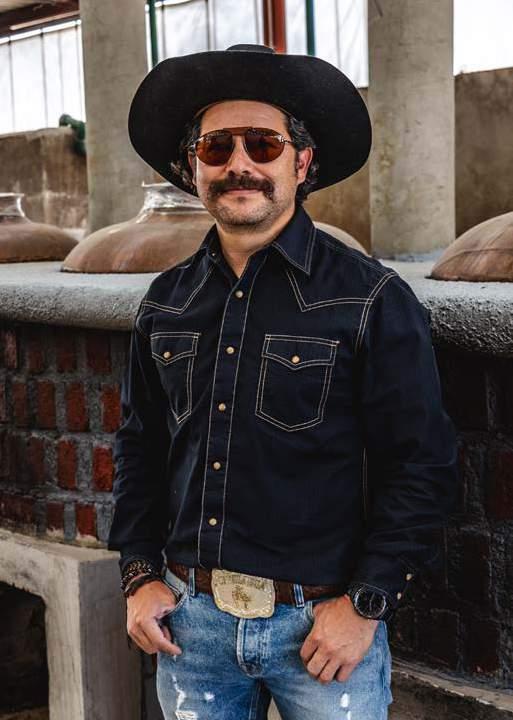
RICARDO PICO:
“EL OBJETIVO ES LLEVAR EL SOTOL A TODO EL MUNDO PARA COMPARTIRLE UNA PROBADITA DEL DESIERTO CHIHUAHUENSE”.
The goal is to take sotol everywhere, so everybody gets a taste of the Chihuahuan desert.
Entre tradición y tendencia
Between Tradition and Trend
“LIKE TEQUILA? LOVE sotol!”. Julia Roberts hizo famosa esta frase. [127] En alguna ocasión probó esa bebida en una fiesta y le gustó tanto, que su equipo se comunicó con el productor, gracias a la información que había en la etiqueta. Solicitaron un pedido del mismo lote para celebrar su cumpleaños. Que de pronto el sotol estuviera presente en las fiestas de celebridades, aumentó el de por sí creciente interés en esta bebida tradicional. Así como el tequila y el mezcal tuvieron un proceso de revaloración en décadas pasadas, algo similar sucede con el sotol. Aunque el volumen de producción es mucho menor, atrae la atención de consumidores que buscan autenticidad y sabores únicos.
La percepción de calidad y prestigio vinculada al sotol comenzó en el extranjero cuando trataba de posicionarse y encontrar mercados en ferias internacionales. En esto, la labor de Vinomex y Sotol Hacienda fue crucial. Fue un largo proceso que comenzó cuando, en los años ochenta, empresarios del mundo del mezcal llegaron a Chihuahua con la creencia de que aquí crecía una especie de agave silvestre con el que se hacía un destilado. No era agave. Lo platicaron con empresarios chihuahuenses y comenzaron a realizar estudios, a platicar con productores artesanales, proyectar la viabilidad, mostrarlo fuera del país, emprender campañas de marketing para cambiar el discurso y la percepción peyorativa que existía entre muchos acerca de esta bebida.
Esos prejuicios no existían fuera de México, era enteramente desconocido. Por ello, los primeros lugares donde más fácilmente lo aceptaron no eran aquellos donde se producía. En ese sentido, de las marcas establecidas, Sotol Don Cuco, de Refugio Pérez, fue una de las primeras en exportar su producto. El cambio de percepción requirió tiempo y esfuerzo. Podría decirse que la moda del sotol es muy reciente. A partir de estas incursiones en el mercado, otros vieron la oportunidad de negocio, de que se reconociera esta bebida y posicionar el producto en distintos lugares.
COSQUILLAS
Por: D. TEJONES, 1948.
El Gran Ledón se tomó medio litro de sotol de la manera más bella, levantó muy alto el codo y de un solo round acabó con tamañota botella.
Ya inspirado, tosió fuerte y con mucha melodía, dijo esta substanciosa y bellísima poesía:
Pues bien, yo necesito decirte que estoy crudo, que siento en la barriga gravísimo torzón; que ya mi lengua se hace en la garganta nudo, y que tragar quisiera cien platos de menudo aunque me atormentara terrible indigestión.
Yo quiero que tú sepas que por beber tequila, mezcal y bacanora en grande cantidad, se llena de lagañas mi lánguida pupila, y el hálito a taberna mi corazón inspira, en tanto que en la boca es todo sequedad.
De noche cuando miro mi angelical tortuga, que envuelta hasta el cogote empieza a tiritar, el cuero se me arruga y solo con tequila reacciona mi organismo, tomo sotol del bueno y voy con mis amigos a puro vacilar.
Comprendo que las copas me causan acedías; comprendo que las crudas me harán ir a Caifás; pero me gusta mucho beber todos los días, el mostrador llenando de copas ya vacías —que si es vinito gratis me gusta mucho más...
A veces he pensado huir de la bebida, mas es un imposible que deje de tomar; el vino es la ventura completa de mi vida; beber es mi costumbre más cara y protegida, cuando me dan una copa la tengo que aceptar.
Y cuando ya me encuentro en un rincón tirado, el pelo alborotado cual otro Barrabás; perdido, mi traje desgarrado, con todo mi hocicote mocoso y vomitado, protesto beber menos— ¡y bebo mucho más!
Qué bello hubiera sido ser mozo de cantina, aun cuando fuera de una situada en arrabal; aparte de las copas tendría buenas propinas; y en vez de andar por fuera haciendo pantominas, tan solo tomaría cervezas y sotol.
Mas ya que no he podido lograr tan bellas cosas, cuando al sepulcro baje por causa del moonshine te ruego, mi Caguama, que vayas cariñosa y plantes dos magueyes encima de mi fosa, regándolos a diario con whisky y con sotol.
Terminado el nocturno, la Caguama lloró a mares, dijo estar muy conmovida con tamaña inspiración que había soltado la lengua del inmenso y gran Ledón, quien de chico usó zapeta y ahora es un completo y muy ilustre postal.
Don Tejones. “Cosquillas” en El sol. Octubre 22, 1948, p. 3 Phoenix, Arizona.
COSQUILLAS (TICKLES )
By: D. TEJONES, 1948.
The Great Ledón drank half a liter of sotol in the most beautiful way, he raised his elbow high and, in a single round, finished off that hefty bottle.
Now inspired, he coughed loudly and with great melody, and spoke this rich and beautiful poetry:
Well then, I need to tell you that I’m hungover, that I feel a terrible churning in my gut, that my tongue is tied in knots inside my throat, and that I’d like to swallow a hundred bowls of menudo even if it meant suffering a horrible indigestion.
I want you to know that from drinking tequila, mezcal, and bacanora in such great amounts, my weary pupils swell with crusty tears, and my breath exhales a tavern’s soul, while my mouth turns to dust.
At night, when I gaze at my angelic turtle wrapped up to her chin and starting to shiver, my skin shrivels too, and only tequila can revive my system so I drink good sotol and head out with my friends to laugh and fool around.
I know that these drinks give me heartburn; I know that hangovers will send me to Caifás; but I still love to drink every single day, filling the counter with already empty glasses— and if the alcohol is free, well, I love it even more...
Sometimes I’ve thought of giving up drinking, but it’s impossible for me to stop; alcohol is the truest joy of my life; drinking is my dearest and most protected habit, and when I’m offered a drink, I simply must accept.
And when I find myself lying in some corner, my hair a mess, like some kind of Barrabás, lost, my clothes torn apart, my whole snout snotty and covered in vomit, I swear I’ll drink less—then drink even more!
How beautiful it would have been to be a barback, even if only in a dive bar down in the barrio; besides the drinks, I’d make good tips, and instead of wandering the streets making a fool of myself, I’d just sip beer and sotol.
But since I’ve never been able to live such a dream, when I descend into the grave, done in by moonshine, I ask you, my dear Caguama, to go with love and plant two magueys above my tomb, watering them daily with whiskey and sotol.
When the night ended, the Caguama wept a river, saying she was deeply moved by such inspiration that had flowed so freely from the tongue of the immense and great Ledón, who once wore a diaper as a child and now is a full-blown and most illustrious character.
Tejones, Don. Tickles “Cosquillas.” El Sol (Phoenix, AZ), October 22, 1948, p. 3.
“LIKE TEQUILA? LOVE sotol!” Julia Roberts made this phrase famous.[127] On one occasion, she tried the spirit at a party and liked it so much that her team contacted the maker using the information on the label. They requested a shipment from the same batch to celebrate her birthday.
The sudden presence of sotol at celebrity parties fueled the already growing interest in this traditional spirit. Just as tequila and mezcal have undergone a process of reappraisal in recent decades, something similar is now happening with sotol. Although its production volume is much smaller, it captures the attention of consumers who seek authenticity and distinctive flavors.
The perception of quality and prestige associated with sotol began to take shape abroad, as efforts were made to position it and open markets at international fairs. In this effort, the work of Vinomex and Sotol Hacienda was instrumental. The process began in the 1980s, when entrepreneurs from the mezcal industry arrived in Chihuahua, believing that a wild agave species was being used locally to produce a distilled spirit. It turned out not to be agave. They engaged in dialogue with Chihuahua-based businesspeople, began conducting studies, spoke with artisanal manufacturers, assessed the spirit’s commercial viability, promoted it internationally, and launched marketing campaigns aimed at changing the narrative and overcoming the pejorative perception that many held about the drink.
Those prejudices did not exist outside of Mexico because sotol was entirely unknown. For that reason, the first places to embrace it were not the regions where it was produced. In that regard, among the established brands, Sotol Don Cuco, founded by Refugio Pérez, was one of the first to export its product. Changing public perception took time and effort. It could be said that the sotol trend is quite recent. Following these initial entries into the market, others saw a business opportunity to gain recognition for the spirit and position the product in new markets.
Comercializadores, promotores, aficionados al sotol –casi siempre con un interés previo en otras bebidas espirituosas tradicionales, como el mezcal– entablaron relación con productores locales a quienes les dieron un nuevo estatus de ‘maestros vinateros’, reconociendo su saber heredado como algo valioso y único. Con el producto que elaboraban los vinateros, los comercializadores, promotores, ‘educadores’ –como se nombran algunos–, mostraban la bebida en catas, en experiencias gastronómicas tratando de que se dimensionara la producción como un bien patrimonial. Uno de ellos es Jorge Caldera, quien tiene muy clara su historia con el sotol. “La primera vez en mi vida que lo probé fue el 26 de febrero del 2015, en medio de la carretera, yendo rumbo a Coyame en un expendio que está en medio de la nada y tiene una capillita al lado. Para mí fue la señal. La verdad es que traía sed y quería unas cervezas. Me bajé y hablé con la señora y le dije: ‘Oiga, ¿y no tiene sotol?’. Tuve que convencerla de venderme un litro. Era una botella reciclada. Se me hizo tan bonito. Me di a la tarea de buscar productores, traté de convencerlos, les dije que quería hacer una marca, que no tenía mucho dinero, que estaba empezando. Yo había visto el mercado americano y sabía que la gente iba a apreciar esto […]. Tu nombre es el que va a aparecer en la botella, nosotros nos encargamos de que se conozca […]”.[128]
El sotol ha sido protagonista de un boom que ha dado lugar a una explosión de marcas y etiquetas en el estado de Chihuahua.
Sotol has been at the center of a boom that has sparked an explosion of brands and labels throughout the state of Chihuahua.
Así sucedió con otros productores en distintas regiones del estado. De pronto, los vinateros comenzaron a ser valorados, a tener reconocimiento y posicionar sus productos más allá de la escena local, no siempre sin tensiones. Eduardo Arrieta también fue contactado para producir sotol para Nocheluna.
Poco a poco se entiende que el sotol es algo valioso y va adquiriendo una nueva categoría entre la población. Los promotores culturales han contribuido en gran medida a esto. César Márquez Campero se ha dedicado desde hace años a realizar actividades en ese sentido: “Damos a conocer lo que tenga que ver con el municipio, lo histórico, lo
Distributors, promoters, and sotol enthusiasts, often with a prior interest in other traditional spirits such as mezcal, began to form relationships with local manufacturers, granting them a new status as maestros vinateros, recognizing their inherited knowledge as something valuable and unique. Using the product crafted by these makers, the distributors, promoters, and so-called “educators” showcased the drink at tastings and culinary events, aiming to frame its production as a form of cultural heritage. One of them is Jorge Caldera, who clearly recalls his first encounter with sotol. “The first time in my life I tried it was on February 26, 2015, in the middle of the highway, on the way to Coyame, at a roadside shop in the middle of nowhere with a little chapel next to it. For me, that was the sign. Honestly, I was just thirsty and wanted some beers. I stopped and spoke with the woman there and asked, ‘Ma’am, do you have any sotol?’ I had to convince her to sell me a liter. It was in a recycled bottle. I thought it was so charming. That’s when I made it my mission to find more makers. I tried to convince them. I told them I wanted to create a brand, that I did not have much money, and that I was just starting out. I had seen the American market and knew people would appreciate this. ‘Your name is the one that is going to appear on the bottle. We will take care of making sure it gets known.”[128]
The same happened with other makers in different regions of the state. Suddenly, the vinateros began to be valued, gaining recognition and positioning their products beyond the local scene, though not always without tension. Eduardo Arrieta was also contacted to make sotol for Nocheluna.
Little by little, people are beginning to understand that sotol is something valuable, and it is gaining new recognition among the population. Cultural promoters have played an important role in this shift. César Márquez Campero has dedicated himself for years to this kind of work. “We share everything related to the municipality, its
tradicional. El sotol siempre ha estado. También como una forma de incrementar las rutas turísticas en lugares que aún no son tan conocidos. Para comprender la historia de la región hay que ver la historia de este licor y cómo se relaciona con otros oficios. Hacemos difusión liderando recorridos, damos pláticas, colaboramos con distintas casas sotoleras, hacemos stickers para que se los lleve la gente de recuerdito. Nos hacemos llamar promotores del sotol”[129].
En los últimos años, el sotol ha sido protagonista de un boom que ha dado lugar a una explosión de marcas y etiquetas en el estado de Chihuahua. Hoy en día, existen más de cincuenta nombres que destacan por su autenticidad y riqueza de sabores: 1709, Acrónimo, Alaqua, Bura, Cara Blanca, Cardenal, Casa Loto, Cervantes, Cinco Tragos, Clande, Corazón del Desierto, Coyame, Coyamito, Coyote, Cuarta Generación, Cuernos, Del Real, Delincuente, Don Bardino, Don Cuco, Dos Potrillos, El Pariente, Esmeralda, Espíritus, Fabriquero, Flor del Desierto, Gallo Santo, Grand Sotol, Hacienda, Hacienda de Ángeles, HEX, Indio Juh, Isla del Cielo, Lamata, La Promesa, Las Potrancas, Lazadores, Lazo de mi Vida, Los Magos, Nocheluna, Oro de Coyame, Parejo, Peña Blanca, Pizcadores, Puntagave, Rawé, Riablo, Santo Cuviso, Seis14, Setenta Veces 7, Sierra Azul, Sotomayor, Surá, Rarámuri, Tradición Fernández, Virtus 357, entre muchas otras.
history, and its traditions. Sotol has always been a part of it. It is also a way to expand tourist routes in lesser-known areas. To understand the history of the region, you have to understand the history of sotol and how it connects to other trades. We do outreach by leading tours, giving talks, collaborating with different sotol makers, and even making stickers for people to take home as souvenirs. We call ourselves sotol promoters.”[129]
In recent years, sotol has been at the center of a boom that has sparked an explosion of brands and labels throughout the state of Chihuahua. Today, there are more than fifty names that stand out for their authenticity and richness of flavor: 1709, Acronimo, Alaqua, Bura, Carablanca, Cardenal, Casa Loto, Cervantes, Cinco Tragos, Clande, Corazón del Desierto, Coyame, Coyamito, Coyote, Cuarta Generación, Cuernos, Del Real, Delincuente, Don Bardino, Don Cuco, Dos Potrillos, El Pariente, Esmeralda, Espíritus, Fabriquero, Flor del Desierto, Gallo Santo, Grand Sotol, Hacienda, Hacienda de Ángeles, HEX, Indio Juh, Isla del Cielo, Lamata, La Promesa, Las Potrancas, Lazadores, Lazo de mi Vida, Los Magos, Nocheluna, Oro de Coyame, Parejo, Peñablanca, Pizcadores, Puntagave, Rawé, Riablo, Santo Cuviso, Seis14, Setenta Veces 7, Sierra Azul, Sotomayor, Surá, Rarámuri, Tradición Fernández, Virtus 357, among many others.
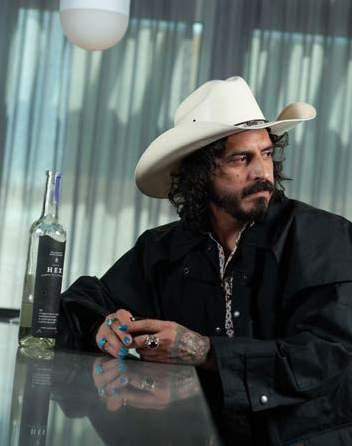
Algunas figuras mediáticas han incursionado en el mundo del sotol. El comediante Antonio Badía es uno de ellos, con su marca HEX. Badía, al igual que otros, se ha interesado en la bebida como una recuperación de su pasado familiar redescubierto. “Como a mis 30 años me entero de una historia familiar en la que mi bisabuelo del lado Badía cruzaba sotol, porque un tío de él fabricaba. Y como mi bisabuelo era menor de edad, se lo daba y se iba a la Isla de Córdoba, en el Río Bravo. Traficaban con Al Capone. Era una historia negra de la familia y nadie quería contarla. Cuando me enteré, pensé: ‘¡Wow. ¿cómo no me habían dicho esto? ¡Está épico!’. Así que quise saber más del sotol. Y también mi parte business […] ¿Qué mejor que tener un legado mío, qué mejor que tener mi propio sotol? Entonces me acerqué a unos amigos de Juárez que hacen mezcal. Eso fue hace tres años. HEX significa hechizo en alemán. Es el hechizo, la magia del desierto. El desierto es inhóspito, no hay nada, pero en esa nada te encuentras a ti mismo. Esta inhospitalidad del desierto, te da resiliencia. Por eso, quienes viene a Juárez dicen: ‘Es que la gente es bien linda’. Pues, sí, ha crecido en la inclemencia. Es como la planta del sotol, esta planta que sale en medio de la nada y entiende del frío y el calor y es indómita. Refleja muy bien a la gente que vive aquí”.[130]
¿Qué mejor que tener un legado mío, qué mejor que tener mi propio sotol?
What better than to create a legacy of my own, what better than to have my own sotol?
Some media figures have also ventured into the world of sotol. Comedian Antonio Badía is one of them, with his brand HEX. For Badía, as for others, the spirit represents a way to reconnect with a rediscovered family past. “In my thirties, I learned about a piece of family history on the Badía side, my great-grandfather used to smuggle sotol because one of his uncles produced it. And since my great-grandfather was a minor, he would take the bottles and go to Cordoba Island on the Río Bravo. They trafficked with Al Capone. It was a dark family history, and no one wanted to talk about it. When I heard about it, I thought, ‘Wow. How did no one tell me this? This is epic!’ So I wanted to know more about sotol. Also, from the business side [...] what better than to create a legacy of my own than to have my own sotol? So I reached out to some friends from Juárez who make mezcal. That was three years ago. HEX means ‘spell’ in German. It is the spell, the magic of the desert. The desert is bleak; there’s nothing, but in that nothingness, you find yourself. The harshness of the desert gives you resilience. That’s why people who come to Juárez say, ‘The people are so beautiful.’ Well, yes, they’ve grown through adversity. They are like the sotol plant, this plant that grows in the middle of nowhere and endures the cold and the heat and cannot be tamed. It reflects the people who live here very well.”[130]
José Antonio Badia, propietario de HEX. José Antonio Badia, owner of HEX.
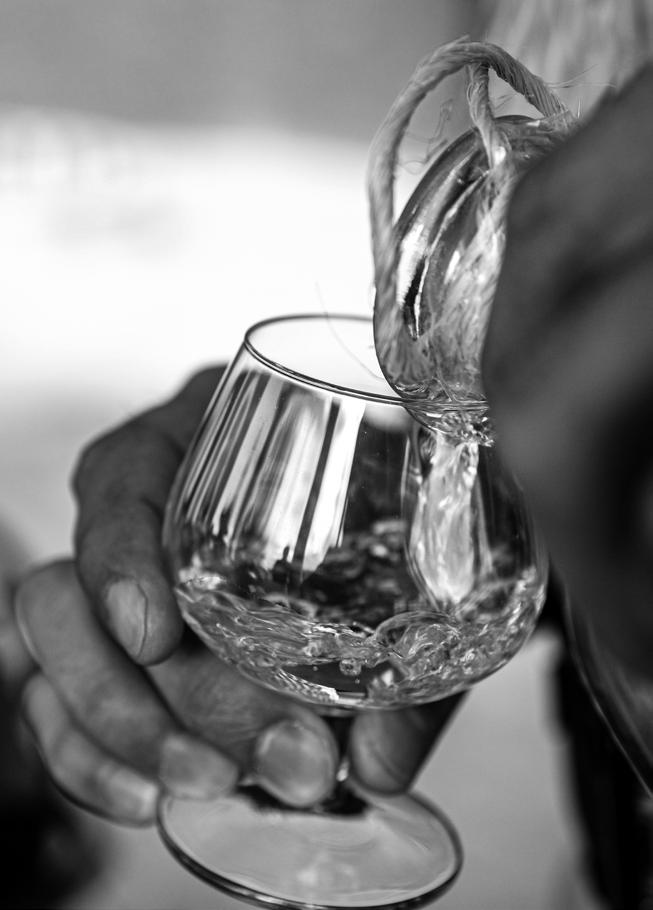
Riesgos en el horizonte
Dangers on the Horizon
¿PUEDE EL SOTOL sobrevivir al éxito? Existen distintos retos a los que se enfrenta su producción. Para empezar la explotación del ecosistema del desierto chihuahuense y la eventual escasez de la planta. Esto ya era advertido desde el temprano 1909 por Rómulo Escobar, fundador de la Escuela de Agricultura en Ciudad Juárez. “La industria de la fabricación del mezcal de sotol […] está agotando un recurso importantísimo e insustituible en climas secos y áridos como el nuestro […]. El gobernante que […] dicte disposiciones encaminadas a la conservación de ese elemento, habrá hecho algo que a primera vista parece de poca trascendencia pero que, en realidad, es muy útil para el desarrollo material de la comunidad que gobierna”.[131]
CAN SOTOL SURVIVE success? Its production faces several pressing challenges. One of the most significant is the exploitation of the Chihuahuan Desert ecosystem and the potential scarcity of the plant itself. As early as 1909, this concern was voiced by Rómulo Escobar, founder of the School of Agriculture in Ciudad Juárez: “The sotol mezcal manufacturing industry [...] is exhausting a very important and irreplaceable resource in dry and arid climates like ours [...]. The governor who [...] issues provisions aimed at conserving this element will have done something that, at first glance, may seem of little consequence but is, in reality, very beneficial for the material development of the community he governs.”[131]
«Yo no desapareceré. Quizá, con el tiempo, mi historia se convertirá no en una advertencia, sino en un testimonio de lo que sucede cuando la humanidad aprende a coexistir con lo que la tierra le ofrece, sin apresurarse a consumirlo todo. Tal vez, entonces, mi presencia será la prueba de que aún hay esperanza, incluso en los tiempos más difíciles».
“I will not disappear. Perhaps, with time, my story will become not a warning, but a testament to what happens when humanity learns to coexist with what the earth provides, without rushing to consume it all. Then, maybe, my presence will stand as proof that there is still hope, even in the most difficult times.”

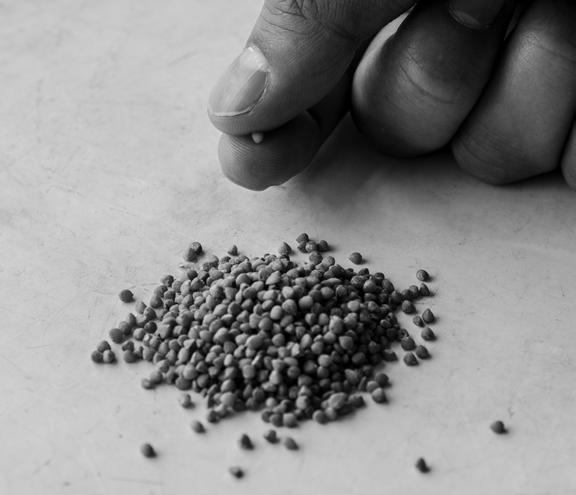
La reciente incursión en mercados globales –que implica una expansión sostenida en la industria– pone en jaque al ecosistema que no puede regenerarse al ritmo que se explota. A la vez, el cambio climático azota duramente a la planta que, a pesar de ser muy resistente a la sequía, se ve afectada por esta. Distintos productores lo notan en el rendimiento que cada planta tiene con respecto de las que han tenido mejores tiempos. Daniel Chavira dice que “varía el rendimiento, ahorita este año nos está brindado muy poco[…] nosotros pensamos que es por falta de lluvia. El año antepasado y el año pasado no nos llovió. Entonces la planta no tiene el jugo ni la fuerza suficiente en alcoholes, en grados, para darnos el rendimiento”.[132] Por otra parte, Salvador Derma comparte preocupado que “la planta se está secando mucho y está metiéndose un gusanito, eso hace la sequía[…]. Al perro más flaco se le cargan las pulgas. Eso es lo que pasa con el sotol, está débil, no tiene fuerza, le entra cualquier plaga. Es el gusano barrenador. Es la sequía. Es el cambio climático, el que me está jodiendo”.[133] También Norma Fernández sentencia: “La sequía nos está acabando”.
The recent expansion into global markets, which involves sustainable industry growth, is placing significant pressure on an ecosystem that cannot regenerate at the pace it is being exploited. At the same time, climate change is taking a toll on the plant itself. Although highly drought-resistant, sotol is still vulnerable to the prolonged absence of rain. Growers across the region have observed this in the declining yield of each plant compared to previous, more favorable years. Daniel Chavira notes, “The yield varies. Right now, this year, it’s giving us very little [...] we think it’s due to a lack of rain. Last year and the year before, it didn’t rain. So the plant doesn’t have enough juice or strength in alcohol content, in degrees, to give us a good yield.”[132] Salvador Derma also expresses concern, “The plant is drying out a lot, and a little worm is getting in, that’s what the drought does [...]. The skinniest dog gets the most fleas. That’s what’s happening with the sotol. It’s weak; it has no strength, therefore any pest can get in. It’s the screwworm fly. It’s the drought. It’s climate change, that’s what’s screwing me.”[133] Norma Fernández adds simply, “The drought is killing us.”
Semillas de sotol (Dasylirion) Sotol seeds (Dasylirion).
Hay quienes afirman que el sotol está terminándose y que la producción a nivel industrial no es viable, por el riesgo de que desaparezca. “Yo pienso que no debemos ni pensar en masivos, que debemos de conservar esto. Pensar en volúmenes enormes sería un error muy grande, la verdad”, expresó Salvador Derma, productor artesanal. En contraste, José Daumás, de la productora industrial más grande, menciona que “hay mucho sotol en el campo y se reproduce por semilla. No es por planta, como el maguey, no se reproduce por hijos. Entonces, un quiote de semilla de sotol pues tendrá un kilo de semillas, hay 40 semillas por gramo. Es decir, en una flor salen un montonal de semillas que se propagan por el campo. Cuando hay humedad, retoñan. Estuvimos yendo al campo a visitar diferentes regiones, midiendo con un GPS en donde había sotoles. Medíamos el diámetro de las plantas, la cantidad que había en un lugar y, después, con todos esos datos pudo sacarse un inventario con fotos. Hay muchísimo sotol. El problema no está en que falte, sino que está muy lejos. Si usted tiene que echarse 600 km o más y hacer un campamento para que la gente corte plantas ahí; además de asegurarse de que no le falte agua y comida, y estar prevenidos para que tengan lo suficiente por si sufren un piquete de víbora o algo, con un botiquín bien instalado… pues todo eso cuesta mucho dinero, porque además hay que abrir brecha”.[134]
Los productores enfrentan también otras problemáticas, como posicionar su producto en el mercado. Muchos no tienen una etiqueta, marca o marbete (el sello de la Secretaría de Administración Tributaria) para vender directamente su destilado, sino que lo hacen a través de terceros. Los pagos, en ocasiones se retrasan, o no siempre hay una distribución equitativa de ganancias.
Otro asunto es lo que se denomina el ‘huachicoleo’. Esto es agregar otro tipo de azúcares. La norma mexicana permite hasta 40%, pero hay quienes rebasan esto comprometiendo la calidad e integridad del producto. Así ponen en desventaja a quienes conservan los estándares de calidad y no pueden competir con el precio de un producto rebajado.
Por otra parte, los impuestos comprometen el margen de utilidad que podría tenerse con la producción de esta bebida, pues se eleva mucho el costo final. El temor de los vinateros es que el aumento desincentive el interés de los consumidores. A esto se le añade una súplica constante de que los procesos burocráticos en permisos y trámites se agilicen, pues pueden llegar a ser muy tardados, como han expresado constantemente personas allegadas al gremio.
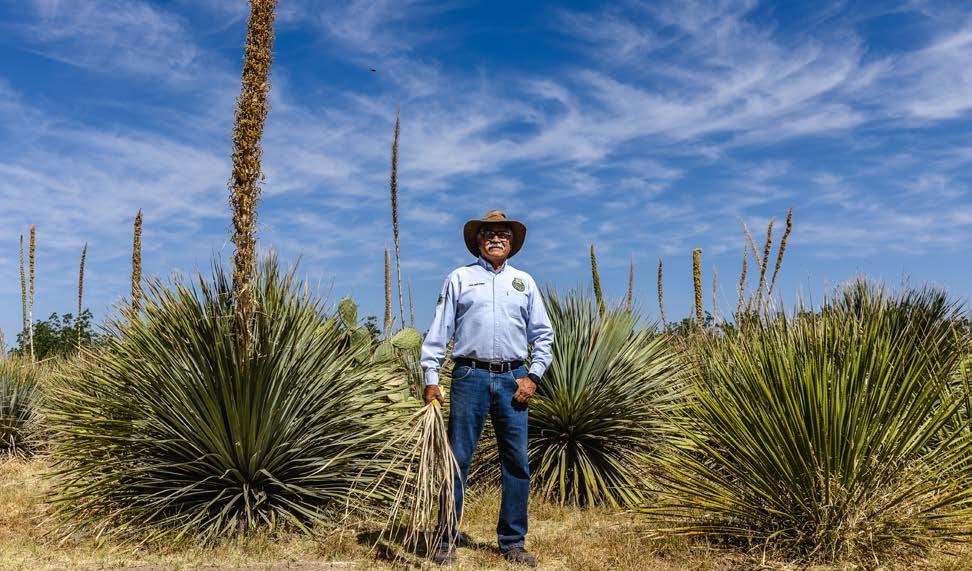
Dr. José Palma. Centro de Investigación del Sotol, FCA y FUACH.
Dr. José Palma. Sotol Research Center, FCA y FUACH.
Some claim that sotol is running out and that industrial-level production is not viable due to the risk of the plant’s disappearance. “I think we should not even consider mass production; we should focus on conservation. Thinking in terms of very large volumes would be a big mistake, to be honest,” said Salvador Derma, an artisanal producer.
In contrast, José Daumás, from the largest industrial producer, argues that “there is plenty of sotol in the field, and it reproduces by seed. It is not like the maguey, which reproduces through offshoots. A single quiote of sotol seed can yield a kilo of seeds, and there are about 40 seeds per gram. In other words, one flower stalk produces a great quantity of seeds that scatter across the field. When there is moisture, they sprout. We were going out into the field to visit different regions, using GPS to mark where sotol plants were located. We measured
the diameter of the plants, the number of plants in each area, and later, with all that data, we were able to create an inventory, complete with photos. There is a lot of sotol. The problem is not scarcity but distance. If you have to travel 600 kilometers or more and set up a camp for people to harvest plants, while also ensuring that they have enough water and food—and that they’re prepared in case of something like a snakebite, with a properly equipped first aid kit—well, all of that costs a lot of money. You also have to open a path to access the area.”[134]
Manufacturers also face other challenges, such as positioning their product in the market. Many do not have a label, brand, or marbete, the official seal issued by the Tax Administration Service, needed to sell their distillate directly, and instead rely on third parties. Payments are sometimes delayed, and profits are not always distributed equitably.
Another issue is what is known as huachicoleo, which involves the addition of other types of sugars. The Mexican standard allows up to 40 percent, but some exceed this limit, compromising the quality and integrity of the product. This puts manufacturers who uphold quality standards at a disadvantage, as they cannot compete with the lower prices of adulterated products.
In addition, taxes significantly reduce the profit margin that could otherwise be obtained from the production of this beverage, since the final retail cost is much higher. There is concern among vinateros that tax increases may discourage consumer interest. Add to this a persistent call for the streamlining of bureaucratic processes, particularly concerning permits and licensing, which are often slow and burdensome, an issue frequently raised by those close to the industry.

Capítulo
TRADICIONES SOTOLERAS
Sotol Traditions
PARA EL AMOR y para el dolor, para la fiesta y la desazón. El sotol ha encontrado espacio en cada rincón de las emociones más diversas y ha sabido colarse en la cotidianidad, primero entre los chihuahuenses y después mucho más allá. El punto es que semejante fenómeno se construyó poco a poco y, en su camino, abrió espacio para celebraciones propias; no aquellas en las que acompaña a los demás, sino unas que se pensaron para enaltecer a la bebida que tan presente está en la vida de una de las regiones más pujantes del país.
FOR LOVE AND for sorrow, for celebration and for heartache, sotol has found its place in every corner of human emotion, weaving itself into daily life, first among the people of Chihuahua and later far beyond. This growing presence did not appear overnight. It was built slowly, step by step. Along the way, it carved out space for celebrations of its own, not those where it simply accompanies other moments, but ones created specifically to honor the spirit that has become so deeply rooted in the life of one of the most dynamic regions of the country. 4 Chapter
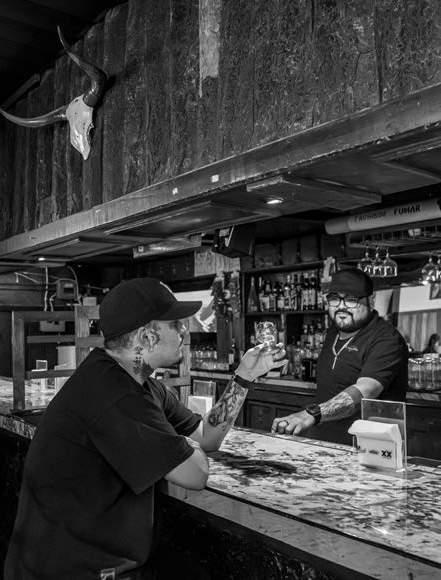
Cantina La Despedida. La Despedida Cantina.
La despedida
The Farewell
“LINDAS LAS NOCHES con luna alegradas con sotol, que por allá por La Junta, me paseaba con mi amor. ¡Qué bonito es Chihuahua!”… dice el Corrido de Chihuahua, escrito por Pedro de Lille y musicalizado por Felipe Bermejo, que todo lugareño reconoce apenas suena. El sotol no solo se bebe, se celebra, se comparte. Se ha instalado hondo en la cultura del norte, no solo por su sabor, sino por todo lo que convoca. Su presencia se vive en fiestas y tertulias, porque es mucho más que una bebida: es memoria, pertenencia y comunidad. Una vieja tradición relacionada con el sotol data de finales del siglo XIX. A la salida de la ciudad de Chihuahua era común que algunas personas ofrecieran sus mercancías a los comerciantes, transportistas y viajeros que entraban o salían de la población. Cerca de ‘la garita de los pueblos’ se vendía forraje, chaparreras, lazos, herramientas y una serie de implementos para el ganado. Los lecheros procedentes de Chuvíscar solían reunirse ahí. Don Rómulo Herrera, dueño del negocio, les compartía siempre un trago de despedida, antes de emprender el camino. Era sotol de Coyame. Sus clientes se quedaban a platicar y a disfrutar de un momento de camaradería. A la hora de hacer la nota, don Rómulo, les ofrecía un ‘caballito’. Algunos pedían comprar un poco a granel para llevar. Lo que comenzó como una forma de agradecimiento a sus compradores o como una estrategia de ventas, se transformó, años más tarde, en una de las cantinas con mayor tradición en Chihuahua: La Despedida, fundada en 1934 por Rodolfo Herrera, hijo de don Rómulo.[135] El sitio se nombró en recuerdo del trago, de aquella práctica entrañable de afecto, camaradería y deseo de buen camino. Lo que comenzó como un gesto generoso se transformó en un ritual cotidiano que dio alma a un espacio emblemático. Hoy en el norte, en el forcejeo amistoso por no abandonar la fiesta y al irse de la reunión, sigue siendo común “echarse la despedida”, con la promesa de volver a encontrarse.
“BEAUTIFUL MOONLIT NIGHTS filled with sotol, when I used to walk around La Junta with my love. How beautiful is Chihuahua!” So goes the Corrido de Chihuahua, written by Pedro de Lille and set to music by Felipe Bermejo, a song every local recognizes the moment it begins to play. Sotol is not only drunk; it is celebrated and shared. It has become deeply rooted in the culture of the north, not only for its flavor, but for everything it brings together. Its presence is felt in parties and gatherings because it is much more than a drink. It is a memory, a sense of belonging, and a community.
An old tradition related to sotol dates back to the late nineteenth century. At the outskirts of the city of Chihuahua, it was common for vendors to offer their goods to merchants, carriers, and travelers entering or leaving the town. Near the village checkpoint, they sold fodder, chaps, ties, tools, and a variety of livestock supplies. Dairymen from Chuvíscar often gathered there. Don Rómulo Herrera, the owner of the business, always shared a farewell drink with them before they set off on their journey. It was sotol from Coyame.
His customers would linger to chat and enjoy a moment of camaraderie. When it came time to settle up, Don Rómulo would offer them a caballito, a small shot glass of sotol. Some would even ask to buy it in bulk to take with them. What began as a gesture of gratitude toward his buyers, or perhaps a clever sales strategy, was eventually transformed into one of the most traditional cantinas in Chihuahua: La Despedida, the farewell, founded in 1934 by Rodolfo Herrera, Don Rómulo’s son.[135]
The place was named in remembrance of the drink, of that heartfelt tradition of affection, camaraderie, and wishing someone well on their way. What began as a generous gesture became a daily ritual that gave soul to an iconic space. Even today, in the north, it remains common, in the friendly reluctance to end a celebration or part ways after a gathering, to “say goodbye” with the promise of meeting again.
El burrito sotolero
The Burrito Sotolero
LA HISTORIA CAMBIÓ y aquello que se destilaba a escondidas hoy desfila con orgullo por las calles, a la vista de todos, vitoreado y celebrado. El burrito que habitualmente carga las cabezas de sotol en sus angarillas por el monte se vuelve el portador de la fiesta. Cada año, desde hace más de 25, el burrito sotolero reparte sonrisas y tragos entre música y algarabía.
HISTORY HAS CHANGED, and what was once distilled in secret is now proudly paraded through the streets, cheered, and celebrated in full view. The donkey that usually hauls sotol heads in its saddlebags through the mountains becomes the bearer of the festivities. Every year, for more than 25 years, the Burrito Sotolero has been spreading smiles and pouring drinks, accompanied by music and joyful celebration.
«♫♬♪ Con mi burrito so-to-leee-ro voy camino a beber. Con mi burrito so-to-leee-ro voy camino a beber. Si me ven, si me ven… voy camino a beber. ♫♬♪. El burrito sotolero suena mejor que el burrito sabanero».
“♫♬♪ With my burrito so-to-leee-ro I’m on my way to drink. With my burrito so-toleee-ro I’m on my way to drink. If you see me, if you see me... I’m on my way to drink ♫♬♪. The burrito sotolero sounds better than the burrito sabanero”.
En junio, cerca de las fiestas patronales de San Pedro y San Pablo, en Madera, se honra de esta forma la producción de sotol. El burrito sotolero conmemora el momento en que los productores locales, tras enfrentar décadas de clandestinidad, por fin pudieron legalizarlo. Esta práctica se ha convertido en una cara tradición para la comunidad, donde muchas familias se dedican a elaborar la ancestral bebida.
Norma Fernández recuerda que un día su padre se preguntó: “¿Y si fuera como en la sierra, que nos vamos así, por las veredas, con el burro, llevando las cabezas, pero ahora llevamos el sotol por las calles?”. “Acabábamos de regresar de un viaje a Guanajuato –recuerda Norma–. Allá se hacen las callejoneadas, con la música y todo eso. Entonces dijimos: ‘Si pusieran una banda, jalamos el burrito por las calles principales, repartiendo sotol, sí se vería muy bonito’. Eso nació de una lluvia de ideas. De esa manera fue cómo se dio el primer evento. La primera edición del burrito sotolero”.[136]
In June, near the patronal festivals of Saints Peter and Paul, the town of Madera honors sotol production in a singular way. The Burrito Sotolero commemorates the moment when local manufacturers, after decades of working in secrecy, were finally able to legalize their craft. What began as a gesture of pride has become a beloved tradition for the community, one that carries emotional and financial significance for the many families dedicated to making this ancestral spirit.
Norma Fernández recalls the idea’s origin. One day, her father asked himself, “What if we do it like in the highlands? What if we walked the trails with the donkey, carrying the head of the sotol plant but now we will also carry the sotol through the streets?” “We had just come back from a trip to Guanajuato,” Norma remembers. “There, they do callejoneadas, with the music and all that. So we said, ‘If they bring a band, we’ll walk the little donkey through the main streets, handing out sotol. That would look really beautiful.’ It came out of a brain-
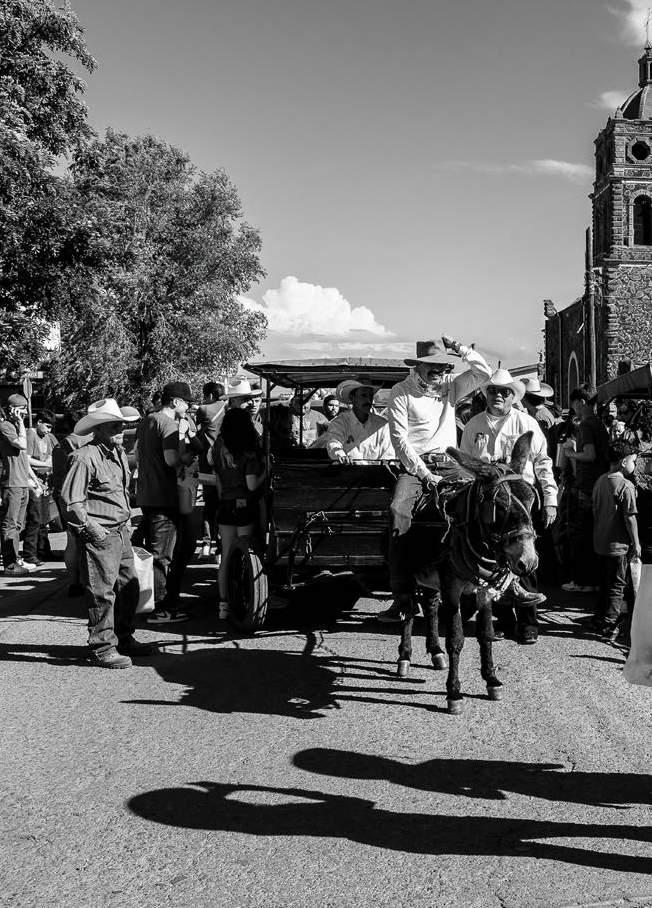
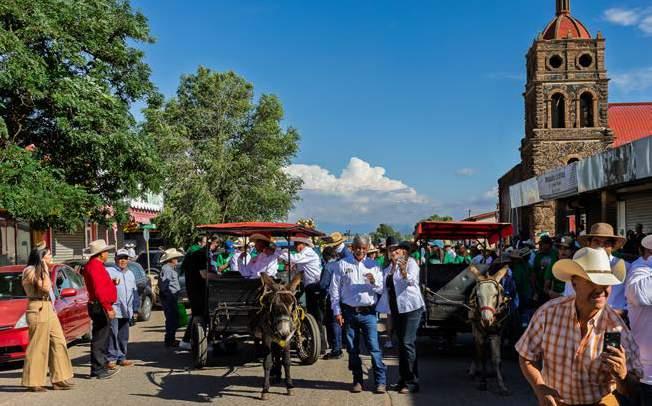
Para comprender la celebración es necesario recordar que, al igual que en otros lugares, los vinateros de Madera se vieron constantemente acosados por las autoridades. Norma Fernández recuerda que en alguna ocasión, después de trabajar arduamente semanas en la sierra, su padre Bienvenido, ella y su familia volvían satisfechos con aproximadamente cuatrocientos litros de destilado. Los policías judiciales los encontraron en el camino y al increparlos, les vaciaron todo el producto. Esto causó un gran impacto en la familia. Las lágrimas, la impotencia, el esfuerzo infructuoso los llevaron a buscar desesperadamente una forma de operar de manera formal, para evitar ese tipo de pesares.
El evento se anuncia por la radio, porque es un popular y eficaz medio de comunicación en la sierra.
The event is announced on the radio, which remains a popular and effective means of communication in the mountains.
Apoyado por algunas autoridades locales, don Bienvenido acudió a la capital del estado, a tocar puertas en Gobernación para encontrar alguna opción y regular su actividad. Se le informó de la posibilidad de conformar un ejido como base legal y social. Con una visión clara, se reunió a medio centenar de personas en Madera para iniciar el proceso que tomó quince años de esfuerzo constante. Finalmente lograron constituir el ejido y con este respaldo comunitario se presentaron ante Pepe Vázquez –entonces
storming session. That’s how the first event was born, the first edition of the Burrito Sotolero.” [136]
To understand the celebration, it is essential to remember that, as in many other places, vinateros in Madera were frequently harassed by the authorities. Norma recalls one occasion when, after weeks of hard work in the mountains, she, her father Bienvenido, and the rest of the family returned home with approximately four hundred liters of spirits. They were stopped on the road by the judicial police, who questioned them and then emptied the entire batch. The loss was devastating. The tears, the helplessness, and the fruitless effort led the family to desperately seek a legal path forward, one that would protect them from this kind of pain.
With the support of some local officials, Don Bienvenido went to the state capital, determined to knock on every door necessary to find a solution. There, he learned about the possibility of forming an ejido as a legal and social base for the activity. With a clear vision, he gathered fifty people in Madera and began a process that would take fifteen years of persistent effort. Eventually, they succeeded in forming the ejido, and with that community backing, they approached
Evento del burrito sotolero, municipio de Madera, 2025. Burrito Sotolero event, Madera municipality, 2025.
presidente municipal de Madera– para plantear su deseo de obtener permiso legal para destilar sotol.
Las autoridades municipales se mostraron receptivas y se les sugirió formar una sociedad para facilitar el trámite. Así lograron obtener el permiso para producir sotol en Madera, a finales de los años noventa. Bienvenido quiso que el primer destilado producido en esas condiciones fuera simbólicamente compartido con todo el pueblo, como una celebración tras años de lucha y perseverancia.
Tras la primera celebración, los maderenses se preguntaban si se volvería a hacer. En aquel entonces la fiesta no tenía nombre, pero de manera espontánea las personas comenzaron a preguntar si no habría burrito sotolero ese año. Así que, ante la demanda popular, el evento se repitió y se ha convertido en tradición con el paso de los años, en colaboración con otros miembros del gremio sotolero.
Conforme se acerca junio, el evento se anuncia por la radio, porque es un popular y eficaz medio de comunicación en la sierra. Se acostumbra que el festejo comience tras una misa, puesto que ronda las festividades patronales. El sacerdote bendice los barriles y a la comitiva. Le sigue un desfile, encabezado por una carreta jalada por un burrito que lleva la bebida, aunque con el tiempo se han sumado otros burritos. Detrás de estos van autoridades del ayuntamiento, reinas de belleza en carros alegóricos, familias productoras, jinetes y caballos realizando suertes, todo enmarcado con música de banda o norteña, en un estallido de alegría. Toda la comunidad decora con motivos alusivos. “Vamos repartiendo con una jarra y vasos en la mano, por un lado y por otro de las calles –relata Norma Fernández–. ¡Se hace un borlotazo! Se emborracha todo el pueblo, y la policía pegada al barril, cuidando, nomás que no vayan niños, que no agarren. Es una tradición bonita, y eso se hizo así, acá”.[137]
El evento se volvió tan popular que se ha replicado en otras comunidades. El burrito sotolero es una expresión de la dignidad de una comunidad, de su ingenio, de la lucha por la legalidad sin renunciar a la identidad. Conmemora a los que resistieron al despojo y a los que creyeron en el poder de organizarse. Reafirma que hoy, el sotol es patrimonio compartido y recuerda que cuando la tradición se defiende con terquedad puede abrirse paso hasta convertirse en fiesta .
Pepe Vázquez, the municipal president of Madera at the time, to present their case for legal permission to distill sotol.
The municipal authorities were receptive and suggested a partnership to formalize the process. This is how they secured the permit to legally produce sotol in Madera in the late 1990s. Don Bienvenido wanted the first batch, distilled under these conditions, to be symbolically shared with the entire town, as a celebration of years of struggle, resilience, and triumph.
After the first celebration, the people of Madera began to wonder whether it would happen again. At the time, the event had no official name, but people spontaneously started referring to it as the Burrito Sotolero that year. And so, in response to popular demand, the event was repeated, and over the years, it has become a cherished tradition, carried on with the support of others in the sotol community.
As June approaches, the event is announced on the radio, which remains a popular and effective form of communication in the mountains. The celebration usually begins with a mass, as it coincides with the patron saint’s festivities. The priest blesses the barrels and the procession. A parade follows, led by a cart pulled by a donkey carrying the sotol. Over time, more donkeys have joined the tradition. Behind them come municipal authorities, beauty queens on floats, manufacturers’ families, and horsemen performing tricks, all set to the vibrant sound of banda or norteño music, in a joyful explosion of color and rhythm. The entire community decorates with festive symbols. “We go around handing sotol out with a pitcher and cups in hand, up and down the streets,” says Norma Fernández. “It turns into a huge party! The whole town gets drunk, and the police are right next to the barrel, keeping watch, just making sure no kids grab any. It’s a beautiful tradition, and that’s how we do it here.”[137]
The event became so popular that it has been replicated in other communities. The Burrito Sotolero is an expression of the community’s dignity, its ingenuity, and its struggle for legality without surrendering its identity. It honors those who resisted dispossession and those who believed in the power of collective action. It affirms that sotol is now a shared heritage, and reminds us that when tradition is defended with persistence, it can become a celebration.
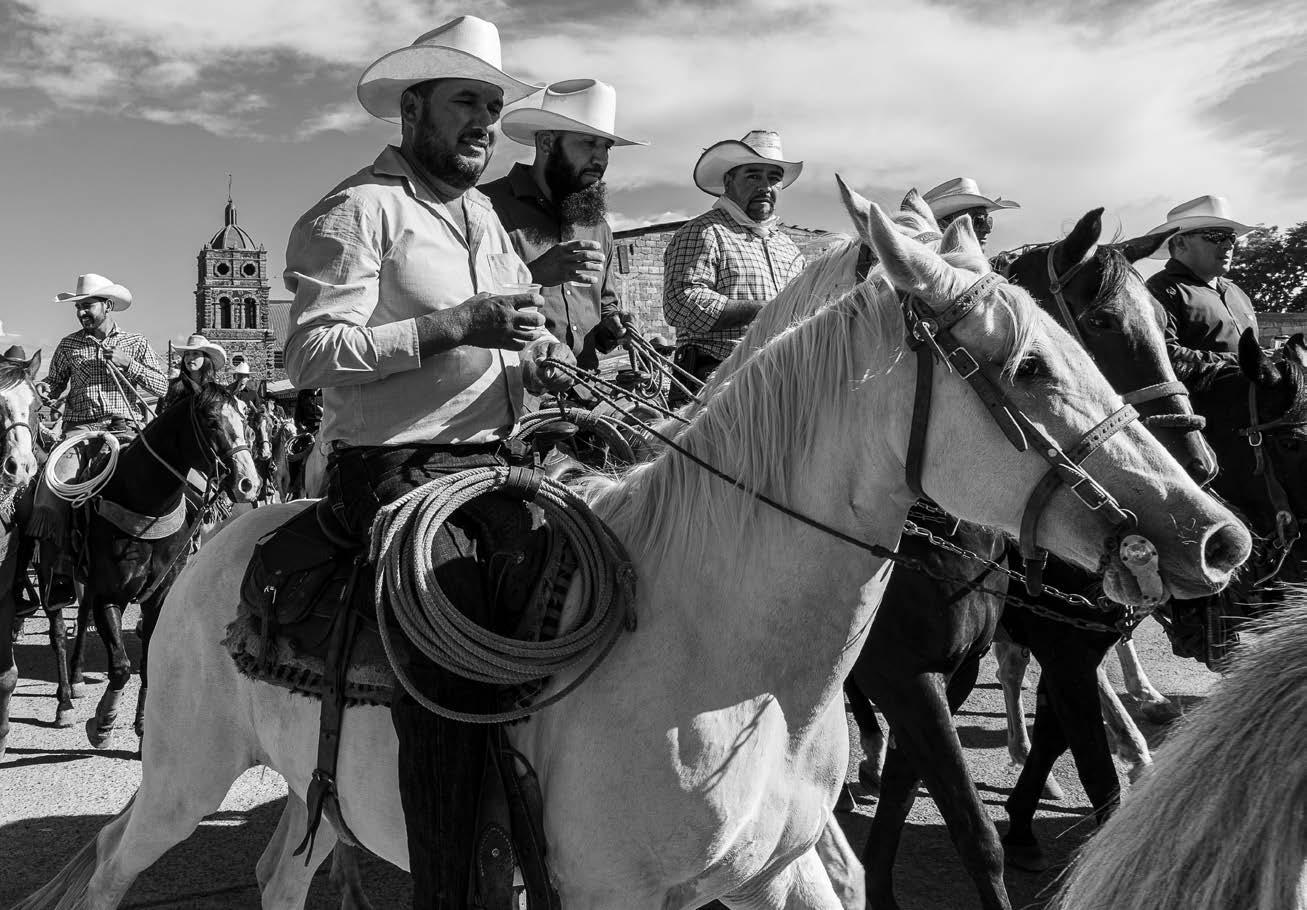
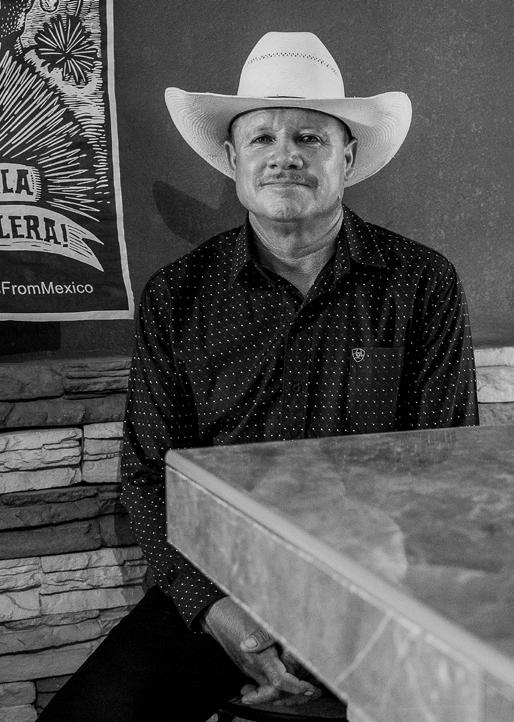
SALVADOR DERMA:
“NOS ORGANIZAMOS EN LA COOPERATIVA PARA SALVAR LO TRADICIONAL Y, TAMBIÉN, PARA QUE NOS FUERA MÁS FÁCIL JUNTOS”.
We teamed up in the co-op to keep our traditions alive— and honestly, because things are easier when we stick together.
El entierro sotolero
The Sotol Burial
DURANTE LOS AÑOS veinte muchas notas de periódico dieron cuenta de las ingeniosas estrategias de las que los productores de sotol se valían para evitar su decomiso. Aunque seguramente no fue el único de los casos, uno de los más llamativos por la creatividad –y que fortuitamente terminó por mejorar la bebida–, es el de los hermanos Vicente y Tomás Cortés. Ellos fueron arrestados en 1925 cerca de la frontera, tras ser descubiertos haciendo pasar bodegas subterráneas de sotol por tumbas. Los Cortés enterraban botellas en un paraje solitario y para no perder la pista de sus escondites, los marcaban con una cruz de madera. Fueron tan prolíficos, que pronto el campo pareció un cementerio real, lo que llamó la atención de las autoridades. Inspirados en este tipo de narraciones que circulan en la tradición oral de la región y en corridos populares acerca de audaces ‘bulegueros’, los integrantes de Casa Ruelas proyectaron crear una forma de conmemorar y honrar a los sotoleros del pasado que resistieron la persecución. Cada año, desde 2019, se realiza el entierro sotolero en sus instalaciones, en las afueras de ciudad Aldama. El objetivo es promocionar el licor recuperando las tradiciones de Aldama relacionadas con la clandestinidad. Se trata de revivir un evento que, según la empresa, sucedió a principios del siglo XX, cuando la acordada (la policía de entonces) hacía sus recorridos a las vinaterías para verificar si estaban en regla. Si no cumplían con la reglamentación las clausuraban. Además de la clausura se imponían multas. Cuando no tenían los recursos decomisaban el producto; una suerte de cobro en especie por la producción ilegal de sotol. En una ocasión se cuenta que uno de los productores de la región, viendo que venían a quitarle sus botellas, se le ocurrió esconderlas debajo de la tierra. Como quedó abultada por las botellas, optaron por colocarle una cruz como si se tratara de una tumba. Al llegar los miembros de la acordada no encontraron estas botellas, sino un sepelio
DURING THE 1920S, many newspaper articles documented the ingenious strategies sotol manufacturers used to avoid having their product confiscated. While certainly not the only case, one of the most remarkable, for its creativity, and the fact that it accidentally ended up improving the beverage, is that of brothers Vicente and Tomás Cortés. They were arrested in 1925 near the border after being discovered disguising underground sotol cellars as graves. The Cortés brothers buried bottles in a remote area, and to keep track of their hiding places, they marked each one with a wooden cross. They were so prolific that the landscape soon resembled an actual cemetery, which drew the attention of the authorities.
Inspired by these kinds of narratives, rooted in the region’s oral tradition and echoed in popular corridos about audacious bulegueros, the members of Casa Ruelas set out to create a way to commemorate and honor the sotoleros of the past who resisted persecution. Since 2019, the Entierro Sotolero (The Sotol Burial) has been held annually at their facilities on the outskirts of Ciudad Aldama.
The objective is to promote the spirit by reviving Aldama’s traditions related to underground production. The idea is to bring back an event that, according to the company, took place in the early twentieth century, when the acordada (the police force at the time) made rounds to local distilleries to check whether they complied with regulations. If they didn’t, the establishments were shut down. In addition to closure, fines were imposed. When manufacturers lacked the means to pay, their product was confiscated, a form of payment in kind for illegal production of sotol. On one occasion, it is said that a local manufacturer, seeing the authorities approaching to seize his bottles, came up with the idea of burying them underground. Since the ground bulged from the hidden bottles, he placed a cross over the mound to make it look like a grave. When the members of
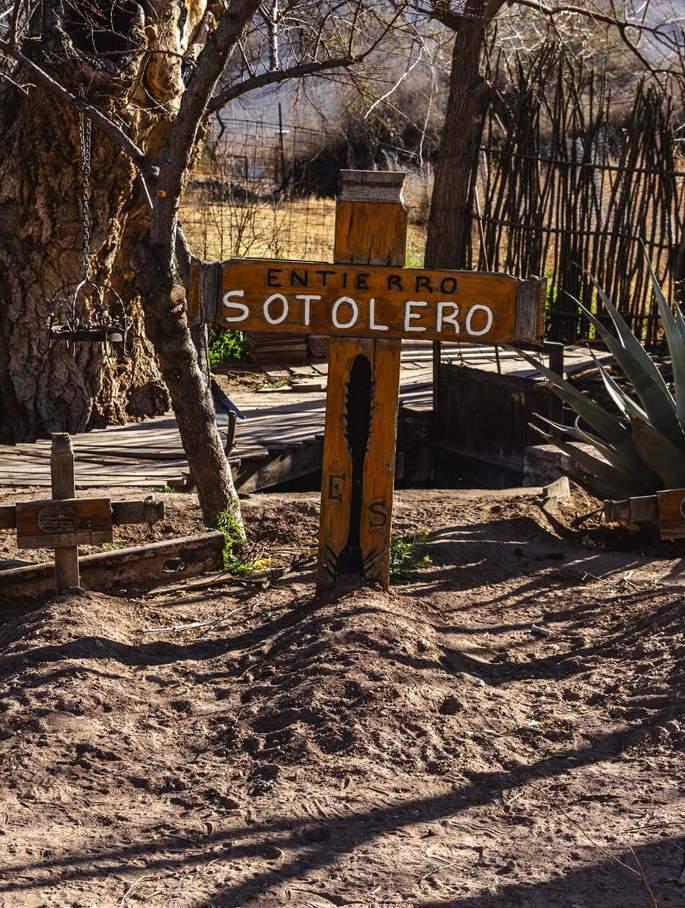
Entierro sotolero, Vinata Casa Ruelas, municipio de Aldama. Sotolero burial, Casa Ruelas Vinata, Aldama municipality.
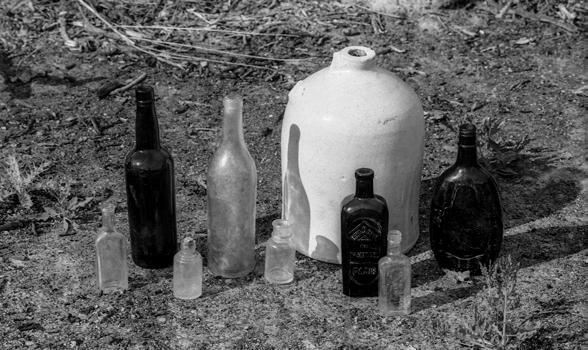
y al dueño llorando por la muerte de uno de sus parientes. Fue así como pudo librar la multa y al mismo tiempo, al enterrar las botellas logró una maceración por haber logrado una temperatura y oscuridad únicas para un destilado mucho más fino.[138]
El evento se ha realizado en primavera, entre los meses de marzo y mayo. Es una invitación abierta a toda persona que quiera degustar esta bebida, compartirla en buena compañía y aprender más de la cultura de este licor. A través de los años se ha contado con la presencia de personalidades de la política, empresarios, artistas, personas dedicadas al sector turístico, inversionistas potenciales del sotol y celebridades de distintos medios. Gerardo Ruelas y Víctor Ibarra creyeron, además, que sería una buena forma de reunir a sus clientes en una especie de kermés para dar a conocer las características de sus productos y que participen del ‘entierro’. “De esa manera podemos elevar el posicionamiento de la categoría y que la gente vea cómo el sector está situado internacionalmente de una manera increíble. También del objetivo de la celebración es la educación en torno al sotol”, comentaron.
Entre las actividades que se realizan en Aldama se encuentran recorridos guiados por las instalaciones de la vinata, para comprender mejor el proceso de elaboración. Le siguen comida y bebida disfrutados entre música norteña local en vivo, pero también conforme la noche se alarga, es posible escuchar a algunos de los más reconocidos DJ.
El festejo ha enriquecido su oferta con una variedad de actividades que celebran el sotol desde múltiples dimensiones: catas especializadas, experiencias de maridaje, platillos elaborados por chefs de prestigio internacional, cursos de ‘mi-
the acordada arrived, they found only what appeared to be a burial site, with the owner weeping over the death of a relative. In this way, he avoided the fine. Burying the bottles, as it turned out created ideal conditions for aging, achieving a unique combination of temperature and darkness that resulted in a much finer distillate.[138]
The event has been held in spring, between the months of March and May. It is an open invitation to anyone who wants to taste the drink, enjoy it in good company, and learn more about the culture surrounding this spirit. Over the years, it has attracted political figures, business leaders, artists, professionals from the tourism sector, potential sotol investors, and media personalities. Gerardo Ruelas and Víctor Ibarra also saw it as an opportunity to bring together their clients in a kind of kermesse, a festive gathering, to showcase the characteristics of their products and involve them in the symbolic “burial.” “This way, we can elevate the category’s visibility and show how the sector is gaining incredible international traction. Another goal of the celebration is to educate people about sotol,” they explained.
Among the activities held in Aldama are guided tours of the distillery facilities, which offer a deeper understanding of the production process. These are followed by food and drink, enjoyed to the sound of live local norteño music, but as the night goes on, some of the region’s most renowned DJs take the stage, keeping the celebration going.
The event has expanded its offerings with a wide range of activities that celebrate sotol from multiple perspectives, such as specialized tastings, pairing experiences, dishes prepared by internationally renowned chefs, mix-
Antiguas botellas de los entierros sotoleros originales. Old bottles from the original sotolero burials.
xología’, exhibiciones de arte inspiradas en la bebida, así como charlas con especialistas. Incluso, representaciones de obras teatrales sobre la prohibición se han unido a la oferta del evento.[139] En algunas ocasiones, se otorgan reconocimientos a sotoleros de tradición, a hoteleros o miembros de la comunidad que ayudaron a posicionar el licor como una bebida atractiva. Lo más significativo del programa es el ritual del entierro que se efectúa al atardecer. Lo encabeza Víctor Ibarra, socio comercial de Casa Ruelas. Comienza con un breve discurso conmemorativo acerca de la historia de las comunidades dedicadas a la elaboración de sotol y el reconocimiento a la persistencia de la tradición. Esto ocurre alrededor de unas ‘tumbas’ dispuestas ex profeso para emular la práctica de los sotoleros tempranos.[140] Los socios comerciales entierran las botellas propias de sus marcas tomando las palas y cavando por sí mismos en este acto significativo, algunos también expresan algunas palabras. Luego se desentierran las botellas conmemorativas depositadas el año anterior, las cuales tienen un valor agregado, pues las condiciones de oscuridad y temperatura en el subsuelo les dan un sabor y una consistencia mejorada, ‘aterciopelada’ a decir de los vinateros. Cada año se elabora una receta distinta para la edición del entierro: “Hacemos un lote de unas 600 botellas y las enterramos”. Entonces las personas pueden pedir alguna edición específica, otros pueden optar por no extraer las botellas, sino mantenerlas por más tiempo para aumentar su valor.
ology courses, art exhibitions inspired by the spirit, and talks with experts.[139] On certain occasions, awards are presented to traditional sotoleros, hoteliers or community members who have contributed to elevating the drink’s reputation as a distinctive and appealing beverage.
The most meaningful part of the event is the burial ritual, held at sunset. It is led by Víctor Ibarra, business partner at Casa Ruelas . The ceremony begins with a brief commemorative speech about the history of the communities dedicated to sotol production and a tribute to the resilience of the tradition. This takes place around “graves” arranged specifically to emulate the practices of the early sotoleros . [140]
“Hacemos un lote de unas 600 botellas y las enterramos”. Entonces las personas pueden pedir alguna edición específica.
“We make a batch of about 600 bottles and bury them.” People can request a specific edition.
The business partners bury bottles from their own brands, taking up the shovels and digging the ground themselves in this meaningful act. Some also take the opportunity to say a few words. In addition, commemorative bottles buried the previous year are unearthed. These bottles have added value, as the conditions of darkness and underground temperature enhance their flavor and consistency, described by the vinateros as velvety. Each year, a different recipe is created specifically for the burial edition: “We make a batch of about 600 bottles and bury them.” People can request a specific edition, while others choose not to extract their bottles, opting instead to leave them buried longer to increase their value.
Con el tiempo, el festejo se ha hecho más grande y ha atraído la atención de medios de comunicación nacionales e internacionales. Personas de distintas latitudes buscan formar parte de la celebración que, además de conmemorar la tradición, posiciona la bebida en un mejor sitio en el mercado. Las palas en el entierro sotolero no solo develan las botellas, sino la memoria colectiva que reconoce el valor y creatividad de quienes supieron resistir en tiempos difíciles.
Over time, the event has grown and attracted the attention of national and international media. People from around the world seek to take part in the celebration, which not only commemorates tradition, but also elevates the beverage’s standing in the market. The shovels at the Entierro Sotolero uncover not only the bottles, but also the collective memory that honors the courage and creativity of those who knew how to resist in difficult times.
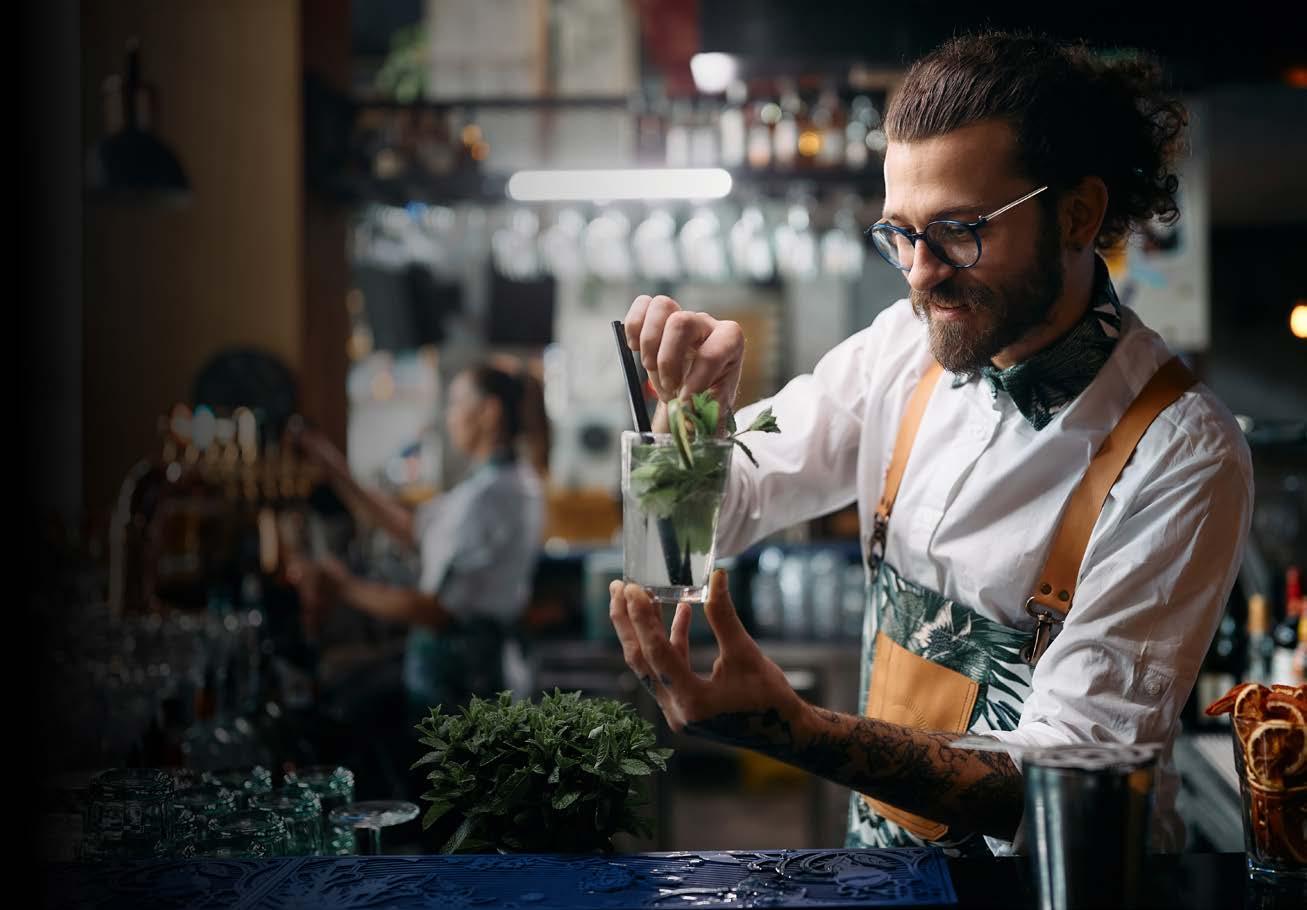
El nuevo rostro del sotol: impacto internacional
The New Face of Sotol: International Impact
EL CANTANTE LENNY Kravitz[141] ha incursionado en la comercialización del sotol. Recientemente se ha manifestado un fenómeno que reconoce el valor de saberes ancestrales, así como las prácticas de comunidades productoras de esta bebida; algo similar a lo que vivieron el tequila y el mezcal tiempo atrás.
THE SINGER LENNY Kravitz[141] has ventured into the commercialization of sotol. Recently, a growing movement has emerged that acknowledges the value of ancestral knowledge and the practices of the communities that produce this spirit, something similar to what tequila and mezcal experienced in earlier years.
EL CANTANTE LENNY Kravitz[141] ha incursionado en la comercialización del sotol. Recientemente se ha manifestado un fenómeno que reconoce el valor de saberes ancestrales, así como las prácticas de comunidades productoras de esta bebida; algo similar a lo que vivieron el tequila y el mezcal tiempo atrás.
El sotol pasó de ser una bebida marginal concebida en contextos rurales y relacionada con prácticas populares desprestigiadas, a ser concebido como chic y glamoroso, tener reconocimiento internacional por su autenticidad e importante valor simbólico y comercial. Actualmente se incluye en menús de alta gastronomía y se exporta. Puede beberse en China, Rusia, Japón, Alemania, Francia, Bélgica, Holanda, España, Chile, Estados Unidos, Canadá y muchos otros países más.
Así mismo, el impacto internacional del sotol se aprecia en concursos especializados. En los últimos años, ha sido galardonado en prestigiosos concursos de bebidas espirituosas. En febrero de 2025, Sotol Bura recibió una medalla de oro en la edición mexicana del Spirits Selection by Concours Mondial de Bruxelles; en 2024 Flor del Desierto –variedad Sierra– fue premiado con medalla de oro en el mismo concurso, que es uno de los más relevantes a nivel mundial. En enero de 2023, el sotol artesanal de don Chito Fernández, proveniente de la Sierra Tarahumara, ganó el primer lugar en el 5º Encuentro Nacional de Maestros y Maestras del Mezcal, celebrado en la Ciudad de México. Asimismo, Acrónimo y Agreste obtuvieron medallas de plata en la Latin American World Spirits Competition, de 2024. Ese mismo año, Los Magos sotol blanco fue distinguido con medalla de oro y premio al mejor diseño de empaque en los ADI Awards. Sotol La Promesa fue galardonado con medalla de oro en el Concurso Internacional de Vinos y Espirituosos
THE SINGER LENNY Kravitz[141] has ventured into the commercialization of sotol. Recently, a growing movement has emerged that acknowledges the value of ancestral knowledge and the practices of the communities that produce this spirit, something similar to what tequila and mezcal experienced in earlier years.
Sotol went from being a marginal beverage, conceived in rural contexts and associated with discredited popular practices, to being seen as chic and glamorous, gaining international recognition for its authenticity and significant symbolic and commercial value. Today, it is featured on haute cuisine menus and is exported abroad. It can be found in China, Russia, Japan, Germany, France, Belgium, the Netherlands, Spain, Chile, the United States, Canada, and many other countries.
El sotol ha sido galardonado en prestigiosos concursos de bebidas espirituosas.
In recent years, Sotol has received accolades in prestigious spirits contests.
Likewise, the international impact of sotol is evident in specialized competitions. In recent years, it has received accolades in prestigious spirits contests. In February 2025, Sotol Bura was awarded a gold medal at the Mexican edition of the Spirits Selection by Concours Mondial de Bruxelles. In 2024, Flor del Desierto , a Sierra variety, also earned a gold medal at the same event, one of the most prominent of its kind worldwide. In January 2023, the artisanal sotol produced by Don Chito Fernández in the Sierra Tarahumara won first place at the 5th National Meeting of Mezcal Masters, held in Mexico City. Acrónimo and Agreste received silver medals at the Latin American World Spirits Competition in 2024. That same year, Los Magos Sotol Blanco was recognized with a gold medal and the award for best packaging design at the ADI Awards. In 2021, Sotol La Promesa won a gold medal at the International Wine and Spirits Competi -
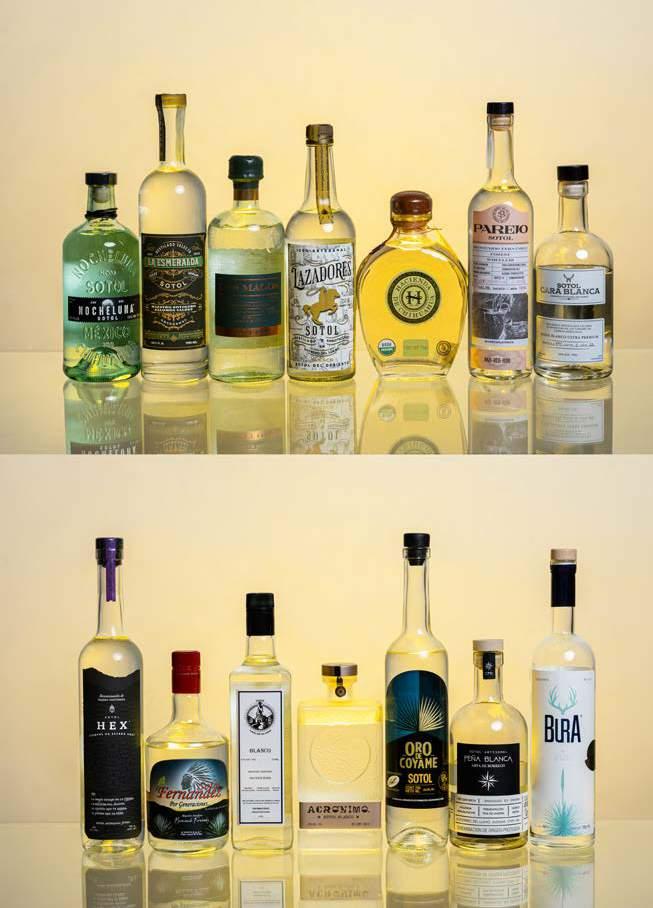
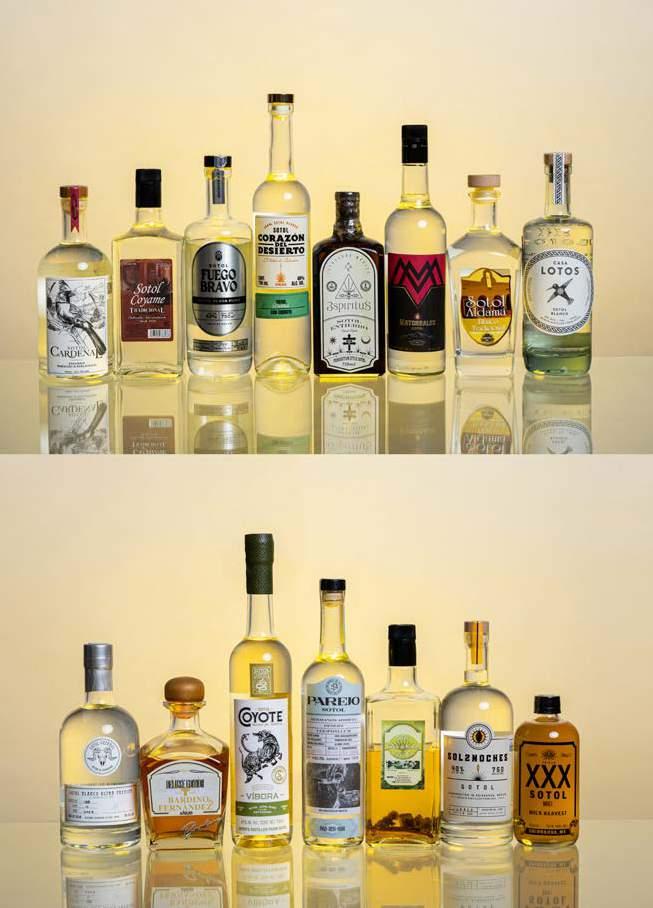
El desierto chihuahuense es la estrella de este destilado: la planta de sotol prospera en condiciones desérticas implacables.
The Chihuahuan desert is the true star of this distillate: the sotol plant thrives in harsh desert conditions.
celebrado en Bruselas, en 2021. Por su parte, Sotol Hacienda acumuló más de ocho preseas en los World Spirits Awards durante la última década. Esto refleja no solo la excelencia del sotol como destilado, sino su creciente valorización como símbolo de sofisticación contemporánea.[142]
En 2022 se anunció que Pernod Ricard se unió con Casa Lumbre para desarrollar sotol Nocheluna. Después de un exitoso lanzamiento en la Ciudad de México y en Nueva York, fue presentado en París con la cara visible de este sotol, Lenny Kravitz, quien posó junto a Alexandre Ricard, CEO de la prestigiosa empresa. Pernod Ricard es uno de los más importantes grupos en el ramo de licores a nivel mundial; entre sus productos destacan marcas icónicas, como Chivas Regal, Ballentine’s, Absolute Vodka, Martell y Perrier-Jouët, por citar solo algunas. Su comunicado oficial manifiesta:
El desierto chihuahuense es la estrella de este destilado: la planta de sotol (Dasylirion) prospera en condiciones desérticas implacables, con días calurosos y secos y noches frescas, lo que permite la creación única del sotol. Estos factores ambientales contribuyen a que la planta rinda un líquido con un perfil de sabor complejo y singular. […] un equilibrio suave y sofisticado […] una mezcla posible únicamente gracias al terroir del desierto y al equipo de expertos que lo elabora.[143]
La creciente popularidad del licor en contextos urbanos y cosmopolitas es tangible y también una forma de justicia simbólica a algo valioso y de calidad, que estuvo por tanto tiempo relegado.
tion held in Brussels. Meanwhile, Sotol Hacienda has garnered more than eight awards at the World Spirits Awards over the past decade. These achievements reflect not only the excellence of sotol as a distilled spirit but also its growing recognition as a symbol of contemporary sophistication.[142]
In 2022, it was announced that Pernod Ricard had partnered with Casa Lumbre to develop Nocheluna sotol. After a successful launch in Mexico City and New York, the brand was presented in Paris with the public face of Lenny Kravitz, who posed alongside Alexandre Ricard, CEO of the prestigious company. Pernod Ricard is one of the most important spirits groups in the world. Its portfolio includes iconic brands such as Chivas Regal, Ballantine’s, Absolut Vodka, Martell, and Perrier-Jouët, to name just a few. Its official press release states:
The Chihuahuan desert is the true star of this distillate: the sotol plant (Dasylirion) thrives in harsh desert conditions, with hot, dry days and cool nights that enable the unique creation of sotol. These environmental factors contribute to the plant yielding a liquid with a complex and singular flavor profile. […] a smooth and sophisticated balance […] a blend made possible only by the desert’s terroir and the team of experts who craft it. [143]
The growing popularity of sotol in urban and cosmopolitan settings is tangible and also a form of symbolic justice for something valuable and high-quality was for so long pushed to the margins.
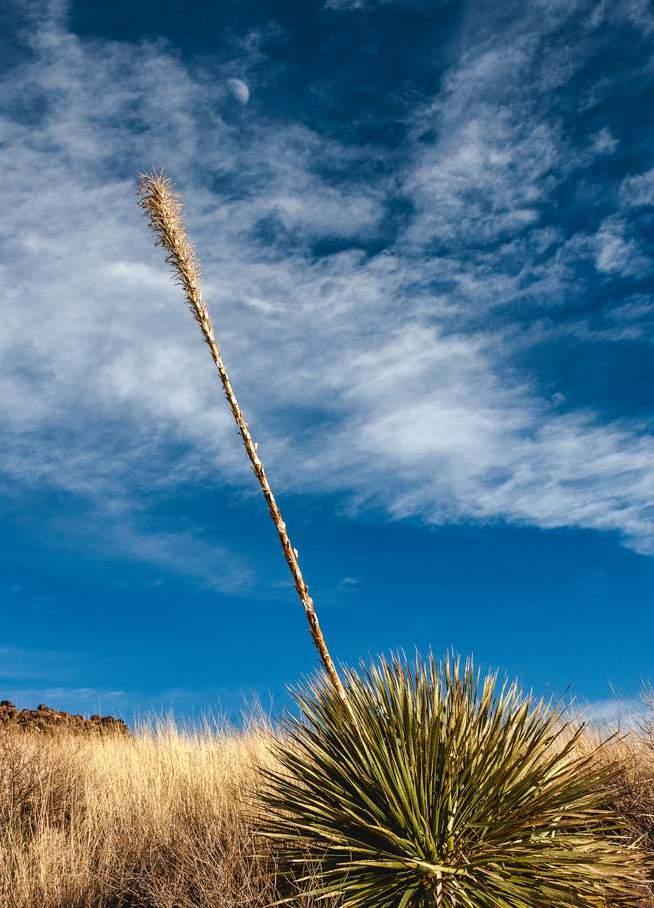
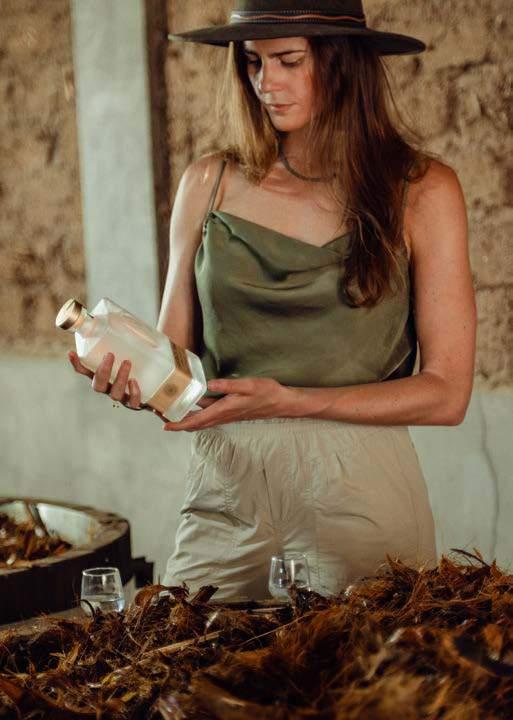
ALESSANDRA CAMINO CREEL:
“CONECTAMOS AL CONSUMIDOR CON UNA BEBIDA ANCESTRAL, SU HISTORIA, SU
TERROIR Y POTENCIAL CONTEMPORÁNEO”.
We connect people with an ancient drink—its story, its land, and how it fits into today’s world.
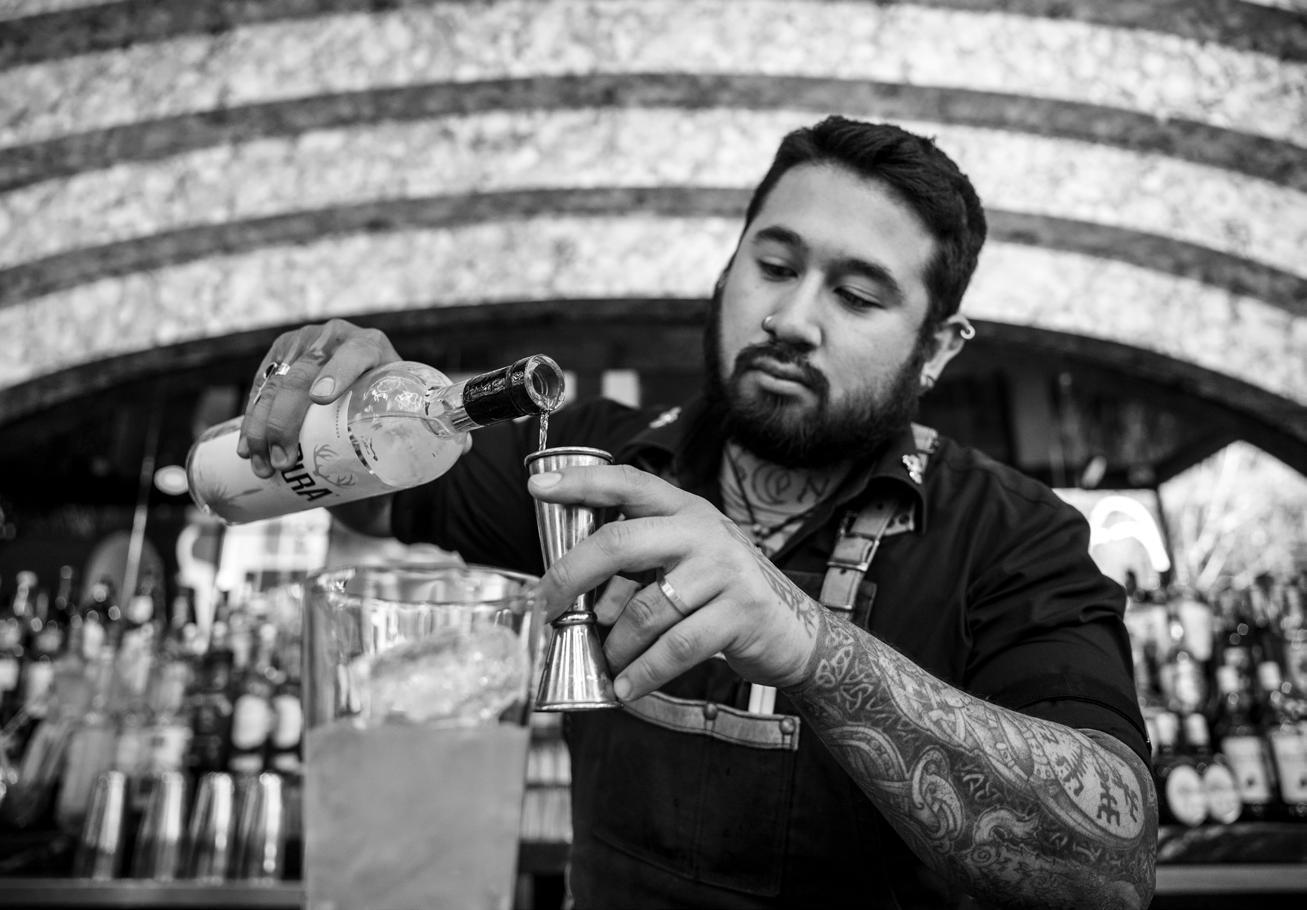
Christian Jair Quiroga Martínez, ‘mixólogo’ del bar Punto Distrito. Christian Jair Quiroga Martinez, mixologist at Punto Distrito bar.
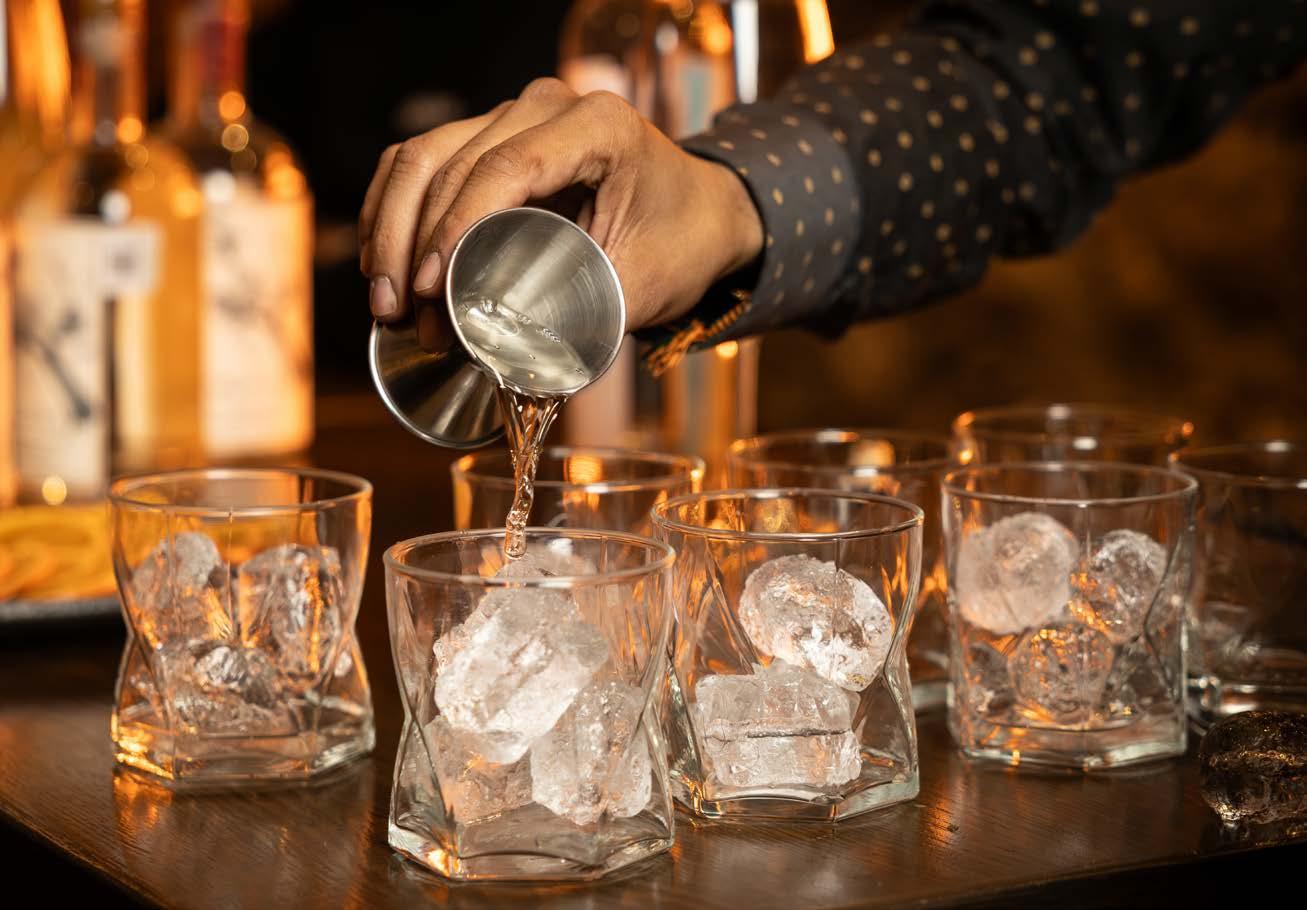
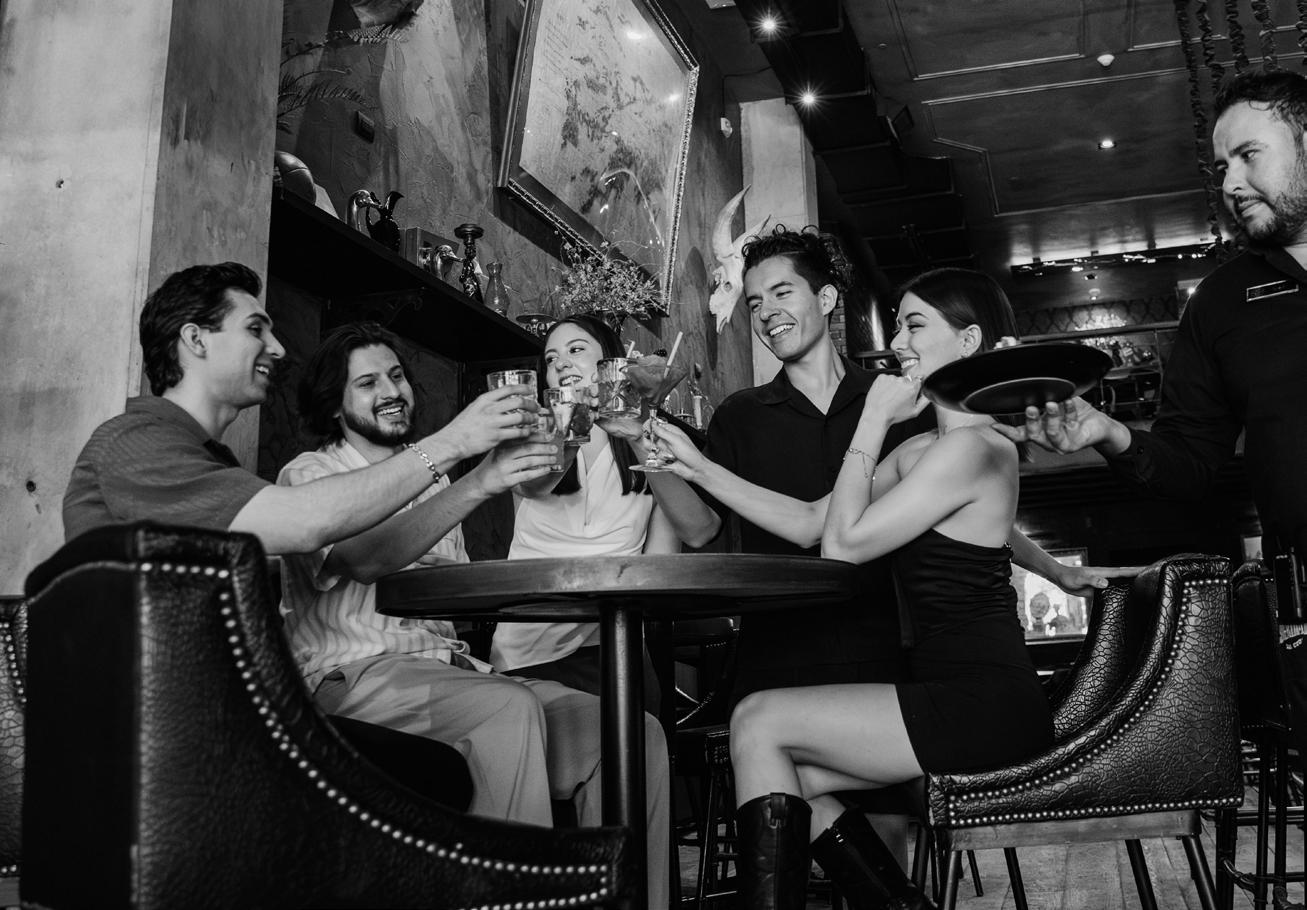
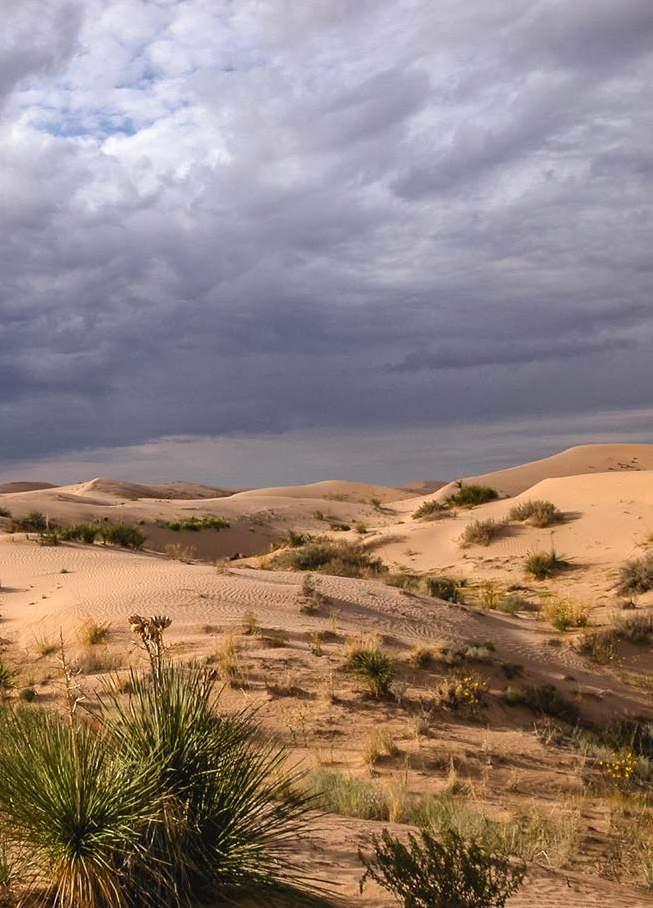
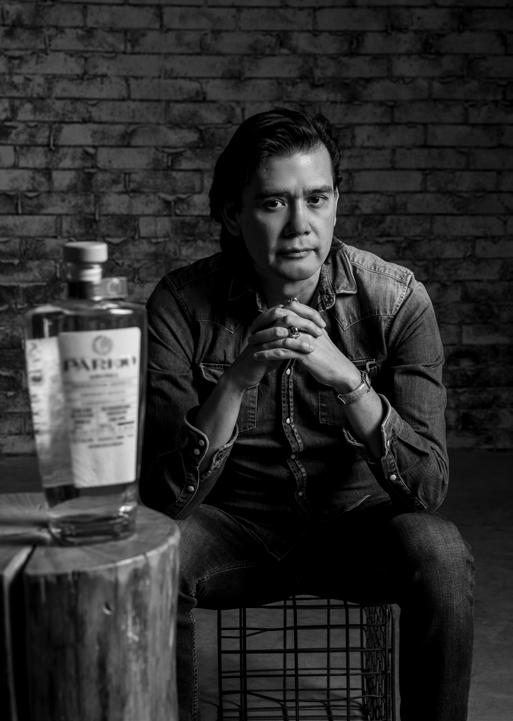
JORGE CALDERA:
“EL
SOTOL CUENTA LA HISTORIA DE LA TIERRA , SUS AMIGOS, EL DONDECLIMAVIVIÓ.
ES DECIR, ¡CHIHUAHUA!”.
Sotol tells the story of the land—its friends, the climate it grew up in. In other words, Chihuahua!
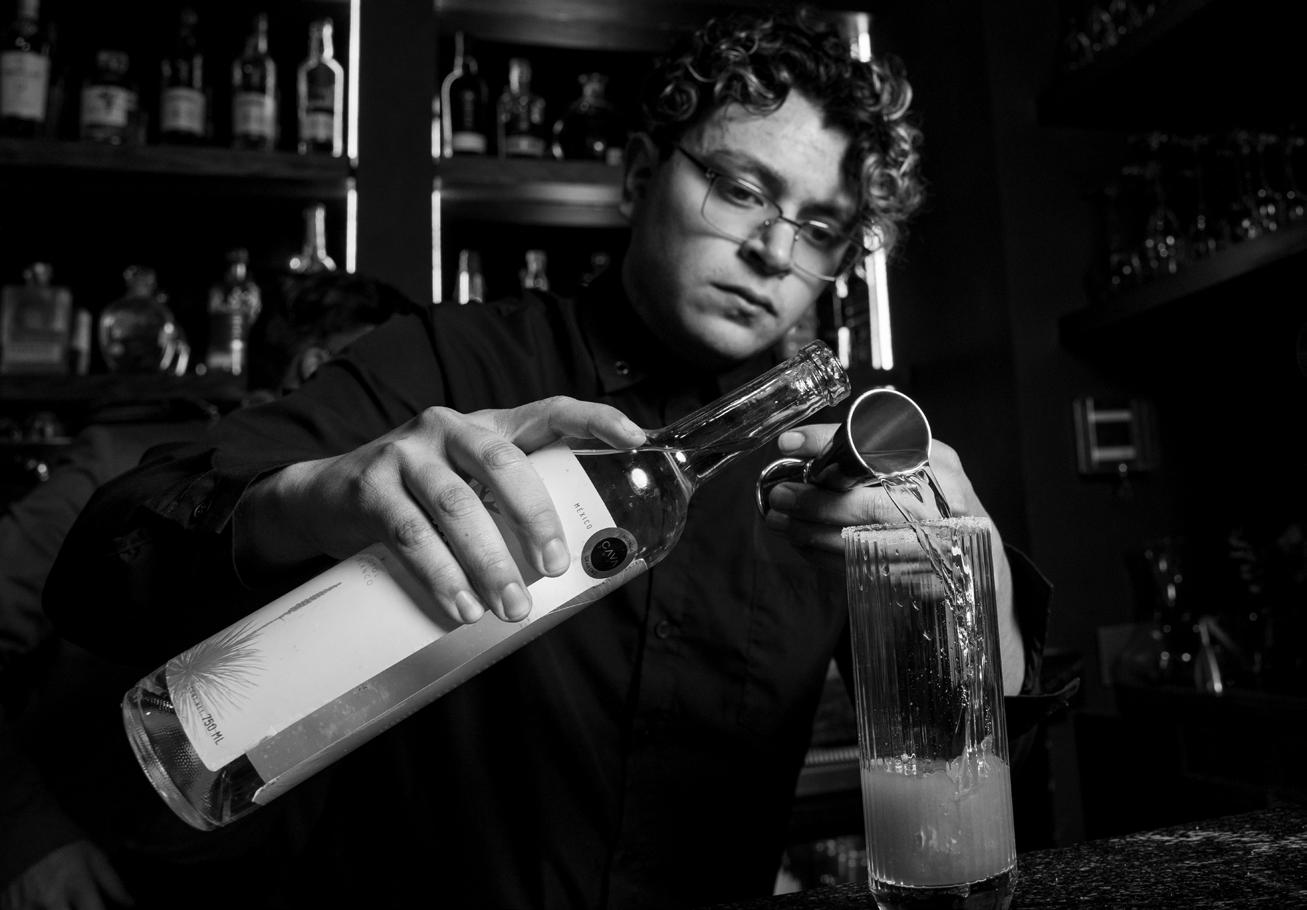
Javier Mendoza García, en el restaurante Sulawe.
Javier Mendoza García, at Sulawe restaurant.
SABORES
COS ÚNI
Unique Flavors
Aquí empieza la aventura de mezclar tradiciones y sabores, donde este destilado del desierto se convierte en el alma de cocteles únicos. Atrévete a experimentar, romper reglas. ¡Que no te falte hielo ni la buena compañía!
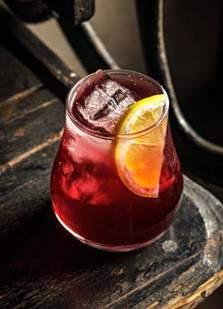
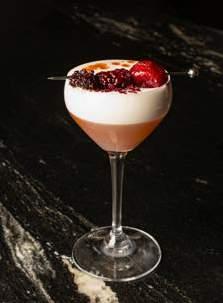
Here begins the adventure of mixing traditions and flavors, where this desert spirit becomes the soul of unique cocktails. Dare to experiment, break the rules. Just make sure you’ve got plenty of ice and good company.
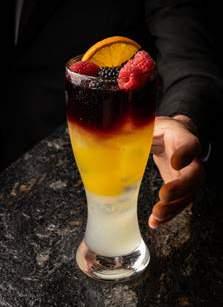
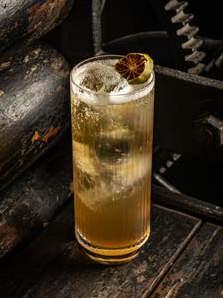
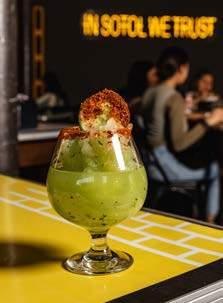
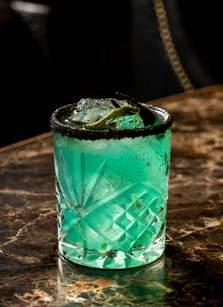
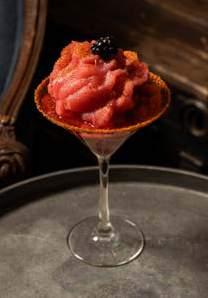
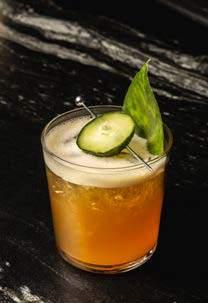

PALOMA DE SOTOL
Sotol Paloma
Con el espíritu indómito del sotol, el jugo de toronja y el sirope de agave se entrelazan para traer a la boca la memoria de lluvias escasas y celebraciones bajo cielos infinitos. Es un brindis a la raíz que desafía la roca y la sed.
Ingredientes:
· 2 oz (60 ml) de sotol blanco
· 3 oz (90 ml) de jugo de toronja natural
· 1 oz (30 ml) de jugo de limón
· ½ oz (15 ml) de sirope de agave
· Top de agua mineral
Preparación:
1. Enfría un vaso highball y escarcha con sal rosa.
2. Agrega hielo al vaso.
3. Sirve el sotol, jugo de toronja, jugo de limón y sirope de agave.
4. Revuelve suavemente.
5. Termina con top de agua mineral y adorna con media luna de toronja.
With the untamed spirit of sotol, grapefruit juice, and agave syrup intertwine to bring to the palate the memory of scarce rains and celebrations beneath infinite skies. It is a toast to the root that defies the rock and the thirst.
Ingredients:
· 2 oz (60 ml) sotol blanco
· 3 oz (90 ml) fresh grapefruit juice
· 1 oz (30 ml) lime juice
· ½ oz (15 ml) agave syrup
· Top it off with sparkling water
Preparation:
1. Chill a highball glass and then rim the glass with pink salt.
2. Add ice to the glass.
3. Pour the sotol, grapefruit juice, lime juice, and agave syrup in.
4. Stir gently.
5. Top it off with sparkling water and garnish with a slice of grapefruit.
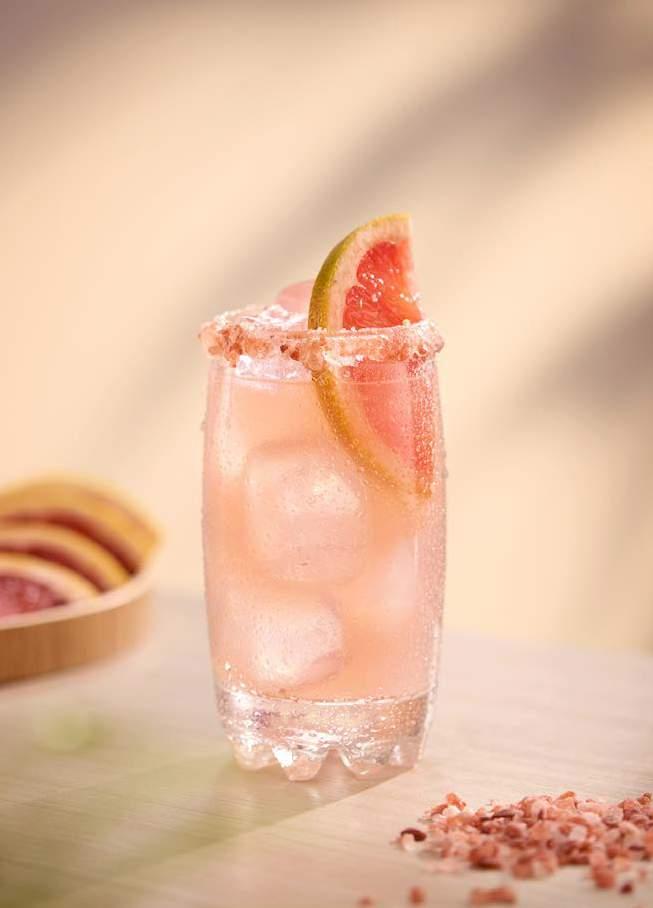
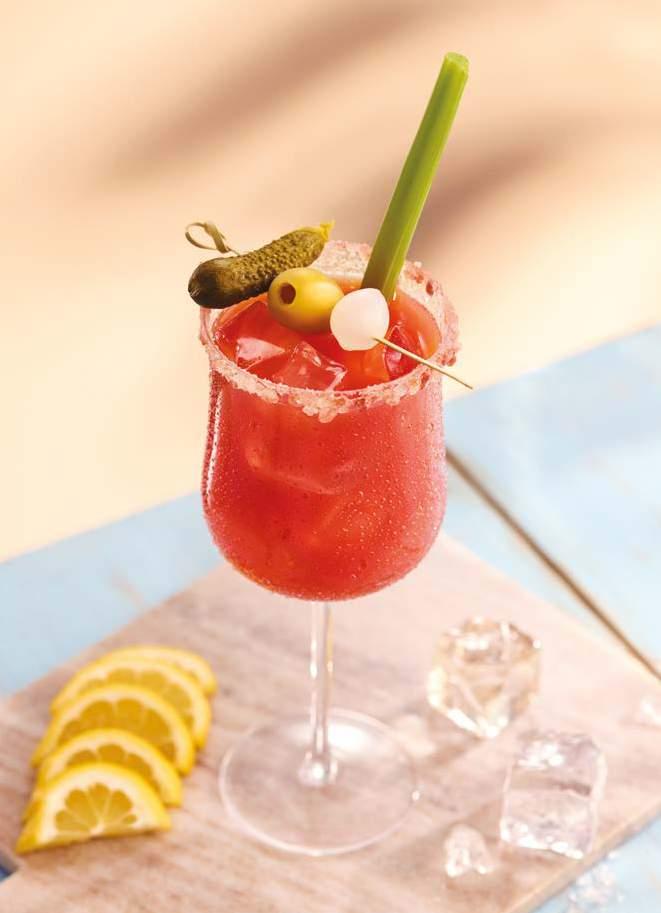
SANGRITA DE SOTOL
Sotol Sangrita
Hermano del fulgor del tomate y la naranja, el sotol joven despierta con pimienta y sal la memoria de antiguas caravanas y fogatas bajo cielos infinitos. Cada sorbo es un latido de la tierra, un pulso de vida donde la aridez florece en sabor.
Ingredientes:
· 2 oz (60 ml) de sotol joven
· 1 oz (30 ml) de jugo de naranja
· 2 oz (60 ml) de jugo de tomate
· 1 oz (30 ml) de jugo de lima
· 1 cucharadita de salsas negras
· Pimienta al gusto
· Pizca de sal
Preparación:
1. Enfría un vaso highball y escarcha con chile en polvo.
2. Prepara la guarnición (brocheta con pepinillo, cebolla y aceituna).
3. Sirve en el vaso jugo de naranja, jugo de tomate, jugo de lima, salsas, pimienta y sal.
4. Revuelve suavemente.
Brother to the brightness of tomato and orange, sotol joven awakens with pepper and salt the memory of ancient caravans and campfires beneath infinite skies. Each sip is a heartbeat of the earth, a pulse of life where aridity blooms into flavor.
Ingredients:
· 2 oz (60 ml) sotol joven
· 1 oz (30 ml) orange juice
· 2 oz (60 ml) tomato juice
· 1 oz (30 ml) lemon juice
· 1 teaspoon of black sauce cocktail
· Pepper to taste
· Pinch of salt
Preparation:
1. Chill a highball glass and rim the glass with chile powder.
2. Prepare the garnish (pickle, onion, and olive on a skewer).
3. Pour orange juice, tomato juice, lemon juice, sauce, pepper, and salt into the glass.
4. Stir gently.
EL BANDIDO The
Arde en este coctel la historia de las noches clandestinas, cuando el sotol fue rebelde y compañero de aventuras. El chile y la piña se suman al fuego del sotol. Beber el bandido es honrar la osadía de los que nunca se dejaron domar.
Ingredientes:
· 2 oz (60 ml) de sotol joven
· ¾ de oz (22.5 ml) de licor de chile o infusión de jalapeño
· 3 oz (90 ml) de jugo de piña
· 1 oz (30 ml) de jugo de lima
· Sal y condimento Tajín para escarchar
· 1 raja de jalapeño
Preparación:
1. Enfría un vaso old fashioned y escarcha con Tajín.
2. Prepara la guarnición (chiles frescos o caramelizados).
3. Agita en coctelera el sotol, licor de chile, jugo de piña y jugo de lima.
4. Sirve en el vaso con hielo.
5. Decora con rodajas de chile.
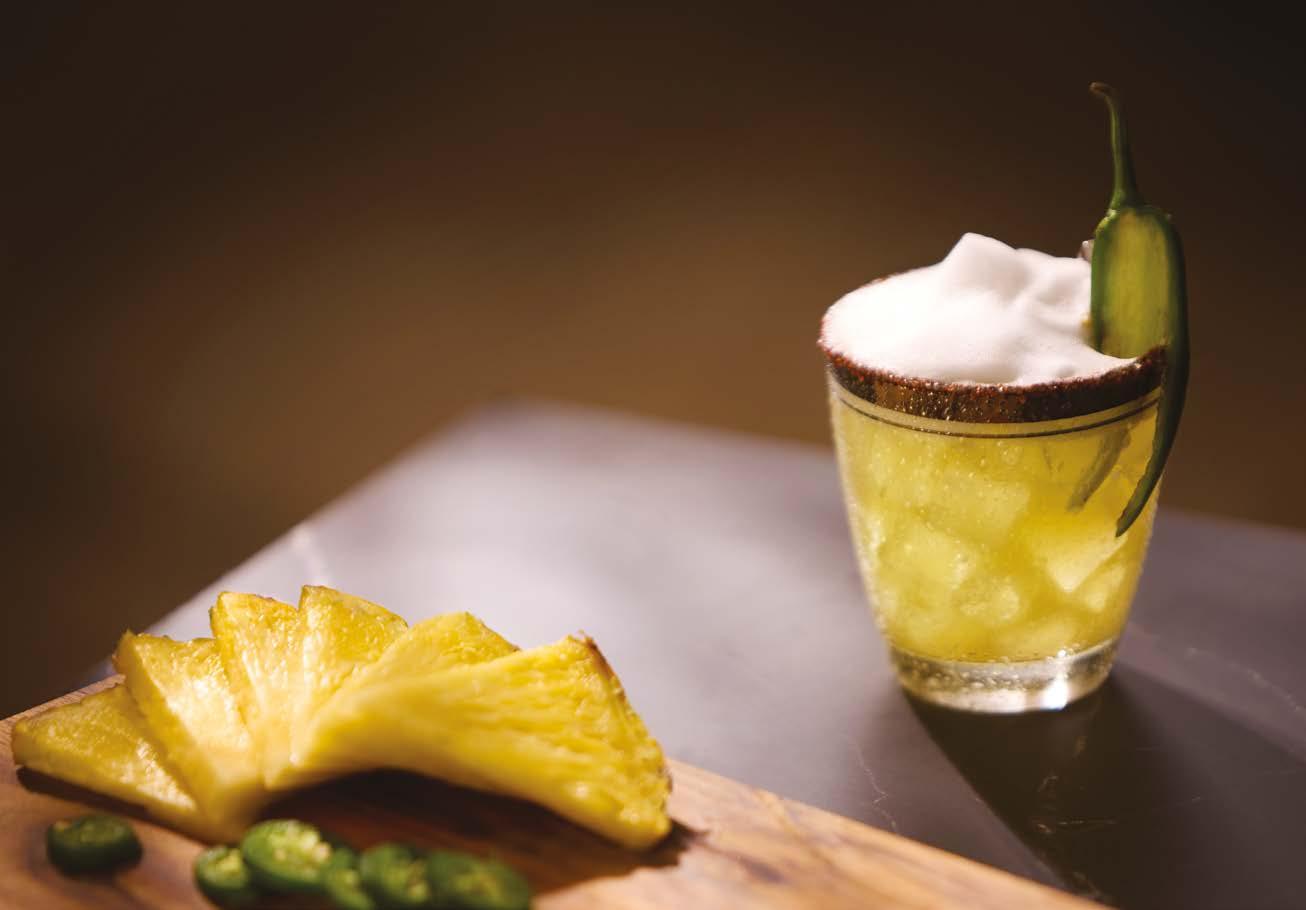
Bandit
This cocktail burns with the history of clandestine nights, when sotol was rebellious and a companion in adventure. Chile and pineapple join the fire of the sotol. To drink The Bandit is to honor the bold spirit of those who refused to be tamed.
Ingredients:
· 2 oz (60 ml) sotol blanco
· ¾ oz (22.5 ml) chile liqueur or jalapeño infusion
· 3 oz (90 ml) pineapple juice
· 1 oz (30 ml) lemon juice
· Salt or Tajín for the rim
· 1 jalapeño slice
Preparation:
1. Chill a lowball glass and then rim the glass with salt or Tajín.
2. Prepare the garnish (fresh or caramelized chile slices)
3. Shake the sotol, chile liqueur, pineapple juice, and lemon juice in a cocktail shaker.
4. Serve in a glass with ice.
5. Garnish with chile slices.
DESIERTO VERDE
Green Desert
Inspirado en entornos desérticos, este coctel herbal combina sotol blanco, pepino y albahaca para obtener sabor con frescura. La mezcla pretende reflejar características como la presencia del sol y el viento en su perfil.
Ingredientes:
· 2 oz (60 ml) de sotol blanco
· 3 oz (90 ml) de jugo de pepino fresco
· 1 oz (30 ml) de jugo de limón
· ¾ de oz (22.5 ml) de jarabe de albahaca
Preparación:
1. Enfría un vaso highball. 2. Prepara la guarnición (lenguas de pepino).
3. Agita en coctelera el sotol, jugo de pepino, jugo de limón y jarabe de albahaca.
4. Sirve en el vaso con hielo.
5. Acompaña con las lenguas de pepino.
Inspired by desert environments, this herbal cocktail combines sotol blanco, cucumber, and basil to achieve freshness in flavor. The blend is intended to reflect characteristics of the sun and wind in its flavor profile.
Ingredients:
· 2 oz (60 ml) sotol blanco
· 3 oz (90 ml) fresh cucumber juice
· 1 oz (30 ml) lime juice
· ¾ oz (22.5 ml) basil syrup
Preparation:
1. Chill a highball glass.
2. Prepare the garnish (cucumber ribbons).
3. Shake the sotol, cucumber juice, lime juice, and basil syrup in a cocktail shaker.
4. Serve in a glass with ice.
5 Garnish with the cucumber ribbons.
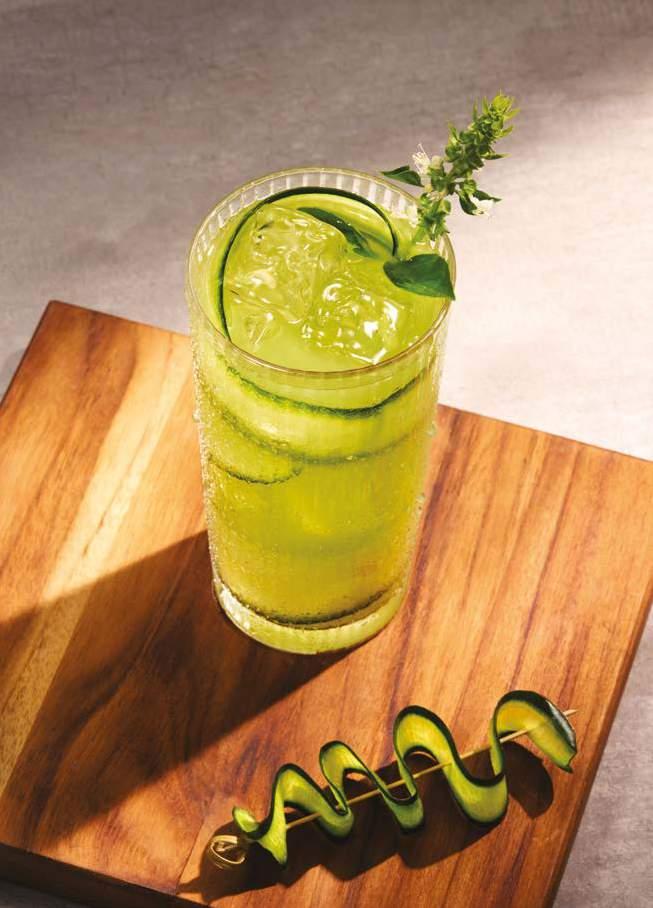

NEGRONI DE SOTOL
Sotol Negroni
Convertido en un diálogo entre mundos, el clásico italiano se rinde ante el embrujo del desierto, donde el sotol reposado toma el lugar del gin. Vermú, Campari y jugo de lima se funden donde la aridez se vuelve sofisticación y la tradición, modernidad.
Ingredientes:
· 1 oz (30 ml) de sotol reposado
· 1 oz (30 ml) de Campari
· 1 oz (30 ml) de vermú rojo
Preparación:
1. Enfría un vaso old fashioned.
2. Prepara la guarnición (twist o media luna de naranja).
3. En un vaso mezclador con hielo, añade sotol, vermú y Campari.
4. Revuelve suavemente.
5. Sirve y acompaña con un twist de naranja.
Turned into a dialogue between worlds, the Italian classic surrenders to the enchantment of the desert, where sotol reposado takes the place of gin. Vermouth, Campari, and lemon juice blend where aridity becomes sophistication and tradition turns into modernity.
Ingredients:
· 1 oz (30 ml) sotol reposado
· 1 oz (30 ml) Campari
· 1 oz (30 ml) red vermouth
Preparation:
1. Chill a lowball glass.
2. Prepare the garnish (orange twist or orange slice).
3. Pour the sotol, vermouth, and Campari into a glass with ice.
4. Stir gently.
5. Garnish with an orange twist or slice.
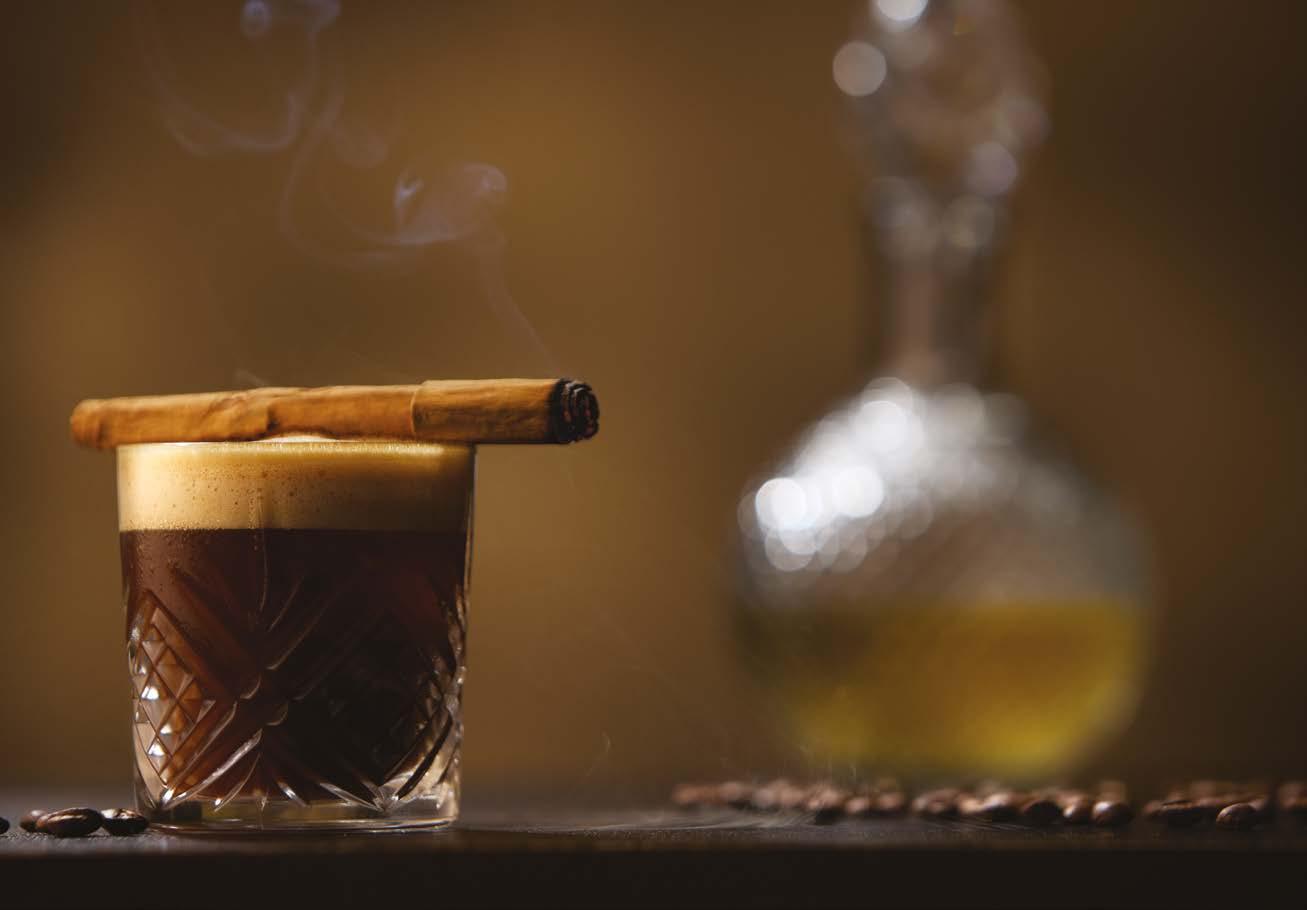
CARAJILLO DE SOTOL
Sotol Carajillo
Reinventado en clave norteña, el carajillo funde sotol reposado con café y la dulzura dorada del licor. Es un susurro de historias compartidas al calor de la sobremesa. Aquí, la memoria se despierta con aroma y fuego.
Ingredientes:
· 1.5 oz (45 ml) de sotol reposado
· 1.5 oz (45 ml) de Licor 43
· 1 oz (30 ml) de café expreso frío
Preparación:
1. En un vaso con hielo, mezcla sotol, Licor 43 y expreso frío.
2. Sirve con granos de café.
Reinvented with a northern twist, the carajillo melts sotol reposado with coffee and the golden sweetness of liqueur. It is a whisper of shared stories in the warmth of after-dinner conversation. Here, memory is awakened by aroma and fire.
Ingredients:
· 1.5 oz (45 ml) sotol reposado
· 1.5 oz (45 ml) Licor 43
· 1 oz (30 ml) de cold espresso coffee
Preparation:
1. Pour the sotol, Licor 43, and espresso into a glass with ice and mix.
2. Garnish with coffee beans.
MARTINI DE SOTOL
Sotol Martini
Transformado bajo el embrujo del desierto, el clásico martini se vuelve un encuentro de elegancia y carácter entre el sotol reposado y el vermú blanco.
Ingredientes:
· 2 oz (60 ml) de sotol reposado
· 1 oz (30 ml) de vermú blanco
· 3 aceitunas para decorar
Preparación:
1. Enfría una copa de martini.
2. En una coctelera con hielo, mezcla sotol, vermú y amargo.
3. Revuelve durante 30 segundos.
4. Cuela en la copa.
5. Presenta con aceitunas o twist de limón.
Transformed under the desert’s spell, the classic Martini becomes a meeting of elegance and character between sotol reposado and white vermouth.
Ingredients:
· 2 oz (60 ml) sotol reposado
· 1 oz (30 ml) white vermouth
· 3 olives for garnish
Preparation:
1. Chill a martini glass.
2. In a cocktail shaker, mix the sotol, vermouth, and a dash of bitters.
3. Shake for 30 seconds.
4. Strain into the glass.
5. Garnish with olives or a lemon twist.
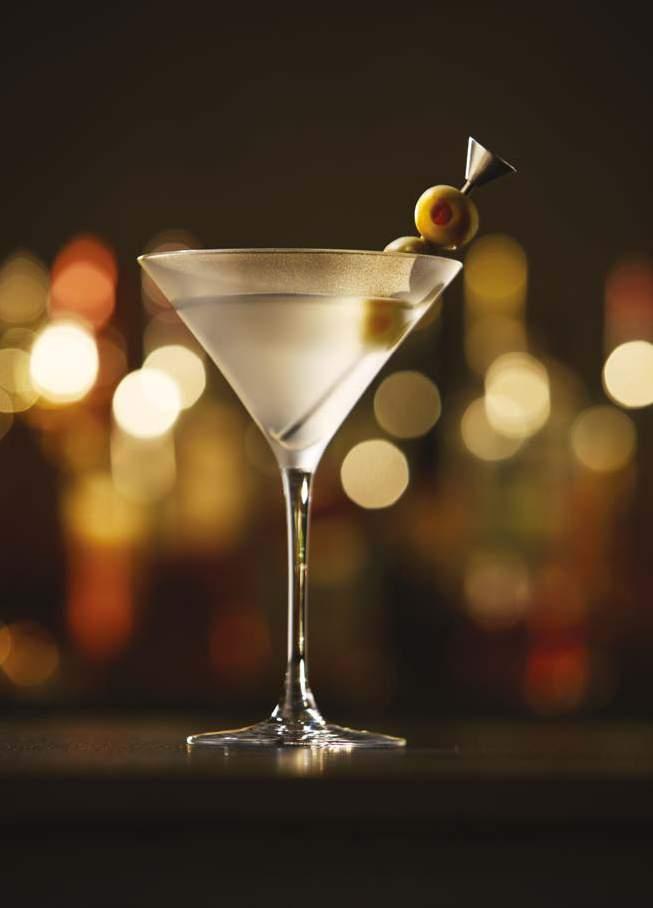
DESIERTO ROSA
Desert Rose
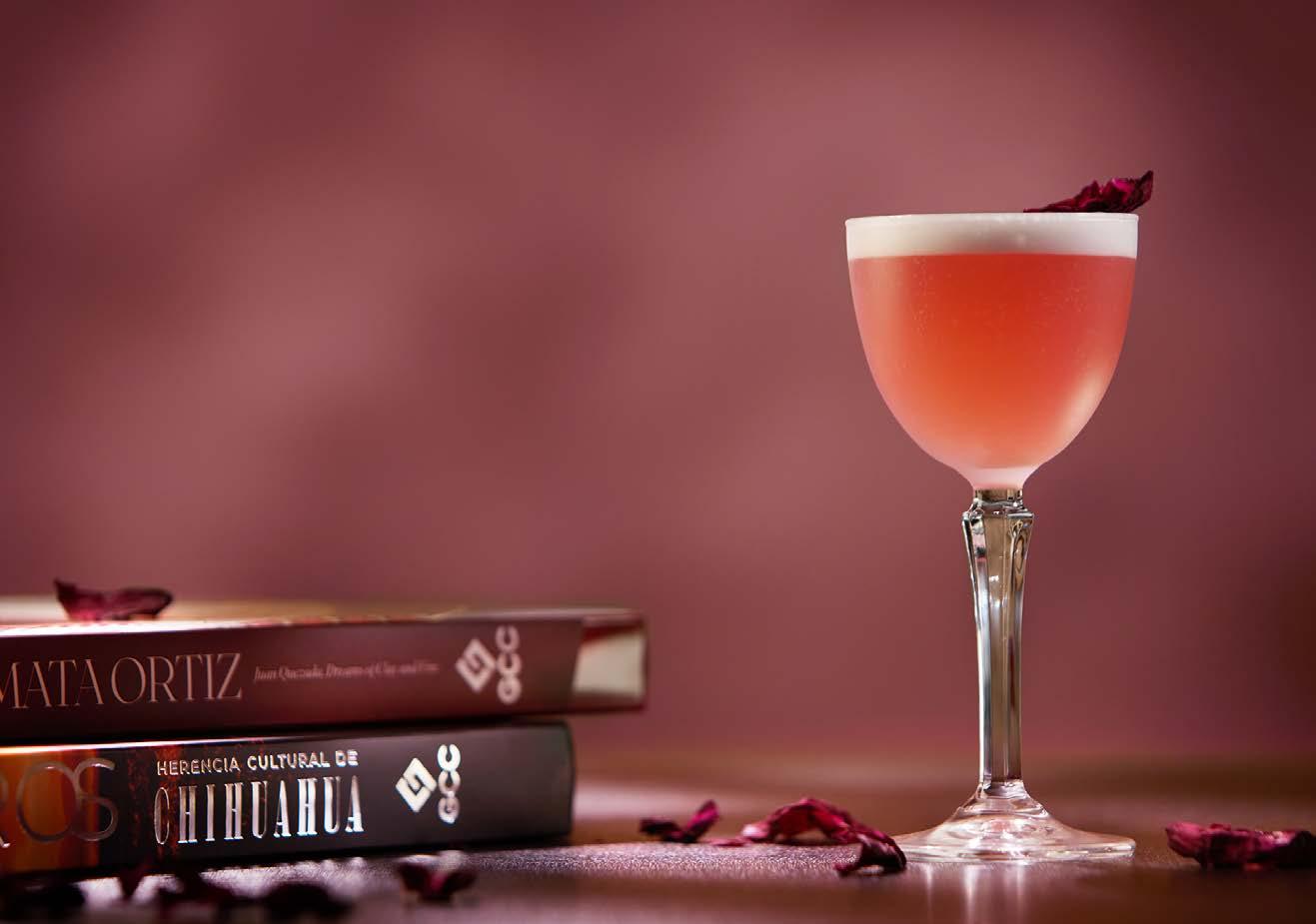
Rosa y fuerza se encuentran en este coctel, en el que el sotol blanco se mezcla con delicadeza floral. La clara de huevo y los pétalos aportan textura y belleza, mientras el limón es una promesa de frescura.
Ingredientes:
· 2 oz (60 ml) de sotol blanco
· ¾ de oz (22.5 ml) de licor de rosas o ½ oz (15 ml) de sirope de rosas
· ¾ de oz (22.5 ml) de jugo de limón fresco
· 1 clara de huevo (opcional, para dar textura sedosa)
· Pétalos de rosa para adornar
Preparación:
1. Agita todos los ingredientes sin hielo (dry shake) para emulsionar la clara.
2. Agrega hielo y agita nuevamente (shake).
3. Cuela en una copa coupé previamente enfriada.
4. Ofrece con pétalos de rosa.
Rose and strength meet in this cocktail, where sotol blanco is mixed with floral delicacy. The egg whites and petals bring texture and beauty, while the lime offers a promise of freshness.
Ingredients:
· 2 oz (60 ml) sotol blanco
· ¾ oz (22.5 ml) rose liqueur or ½ oz (15 ml) rose syrup
· ¾ oz (22.5 ml) fresh lime juice
· 1 egg white (optional, for silky texture)
· Rose petals for garnish
Preparation:
1. Pour all liquid ingredients into a cocktail shaker without ice and shake (dry shake). This is to emulsify the egg white.
2. Add ice and shake again.
3. Strain into a previously chilled coupe glass.
4. Garnish with rose petals.
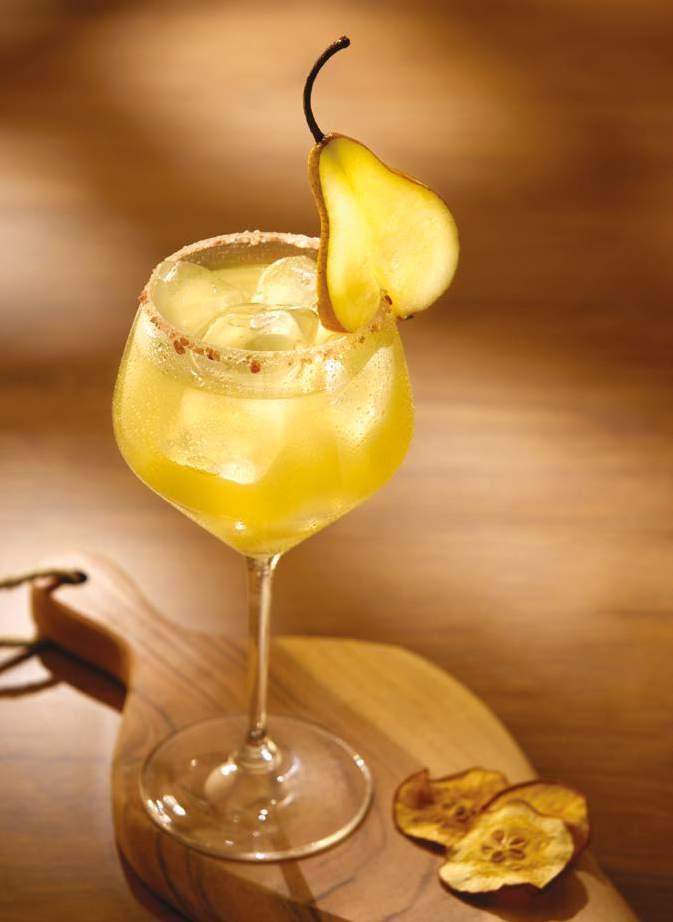
SMOKED DESERT PEAR
Fundida con la profundidad ahumada del sotol añejo, la dulzura de la pera ofrece un espejismo de miel y cardamomo. Cada trago es un eco de historias contadas al calor de la lumbre.
Ingredientes:
· 1.5 oz (45 ml) de sotol añejo
· 1 oz (30 ml) de licor o vodka de pera
· ½ oz (15 ml) de sirope de miel
· 2 pizcas de amargo de cardamomo
· Pera en lámina y sal ahumada para decorar
Preparación:
1. Enfría una copa de roca con hielo esférico.
2. En un vaso mezclador con hielo, combina sotol, licor de pera, sirope de miel y amargo.
3. Revuelve y cuela sobre el hielo.
4. Adorna con rebanada de pera y pizca de sal ahumada.
Infused with the smoky depth of sotol añejo, the sweetness of pear offers a mirage of honey and cardamom. Each sip is an echo of stories told by the glow of the fire.
Ingredients:
· 1.5 oz (45 ml) sotol añejo
· 1 oz (30 ml) pear liqueur or vodka
· ½ oz (15 ml) honey syrup
· 2 dashes of cardamom bitters
· Pear slices or smoked salt for garnish
Preparation:
1. Chill a lowball glass and add an ice ball.
2. Pour the sotol, pear liqueur, honey syrup, and bitters into a glass with ice and mix.
3. Strain into the lowball glass.
4. Garnish with a pear slice and a pinch of smoked salt.
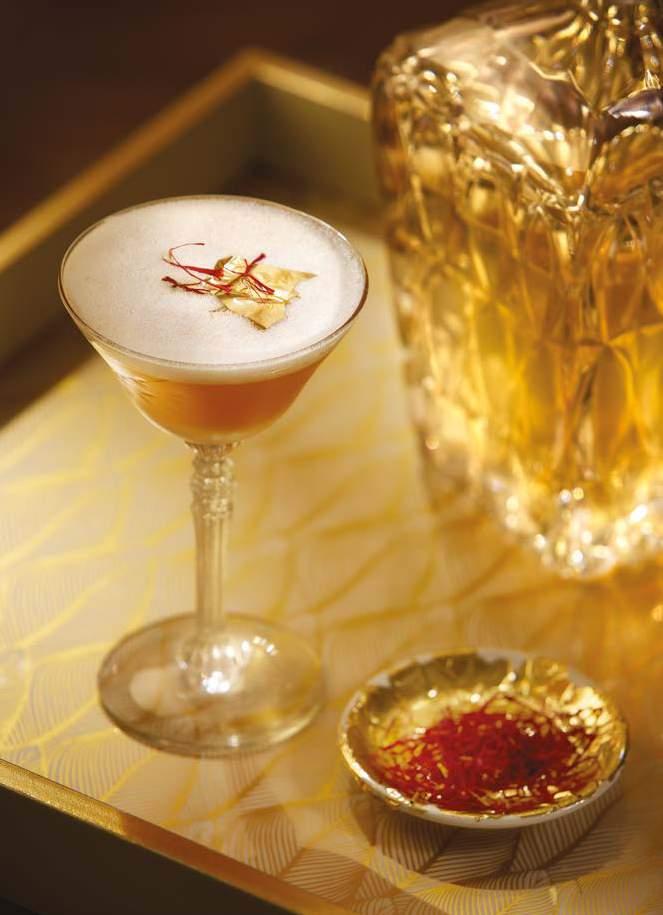
SAFFRON SOTOL SOUR
El azafrán y la esencia del sotol blanco unidos en este coctel resaltan sabores de la tierra. El limón y la clara de huevo añaden un toque especial, mientras el oro adorna la copa con elegancia inesperada.
Ingredientes:
· 2 oz (60 ml) de sotol blanco
· ¾ de oz (22.5 ml) de jugo de limón amarillo
· 1 oz (30 ml) de sirope de azafrán (infusionar 3 hebras en 2 oz [60 ml] de sirope simple)
· 1 clara de huevo
· Pistilos de azafrán y láminas de oro comestible para decorar
Preparación:
1. Enfría una copa coupé y prepara la guarnición (pistilos de azafrán y oro comestible).
2. Agita todos los ingredientes sin hielo (dry shake).
3. Agrega hielo y vuelve a agitar (shake).
4. Cuela en la copa.
5. Decora con los pistilos y láminas de oro.
Joined by saffron and the essence of sotol blanco, this cocktail highlights the flavors of the land. Lemon and egg whites add a special touch, while gold adorns the glass with unexpected elegance.
Ingredients:
· 2 oz (60 ml) sotol blanco
· ¾ oz (22.5 ml) lemon juice
· 1 oz (30 ml) saffron syrup (infuse 3 strands in 2 oz or 60 ml of simple syrup)
· 1 egg white
· Saffron and edible gold for garnish
Preparation:
1. Chill a coupe glass and prepare the garnish (saffron and edible gold).
2. Pour all ingredients into a cocktail shaker without ice and shake (dry shake).
3. Add ice and shake again.
4. Strain into the coupe glass.
5. Garnish with saffron and edible gold.
El futuro
The Future
EL PORVENIR DEL sotol es prometedor, pero también complejo. En él convergen retos ecológicos, oportunidades comerciales y procesos culturales de resignificación en los que tienen injerencia distintos sectores, para que, en efecto, haya un mañana para el sotol.
Si bien es cierto que se ha convertido en un producto codiciado por el mercado, ello implica necesariamente un impacto a nivel ambiental. En ese aspecto hay esfuerzos por parte de distintos organismos tanto públicos como privados por estudiar la planta, propagarla y analizarla en cultivos experimentales. La Facultad de Ciencias Agrícolas y Forestales de la Universidad Autónoma de Chihuahua impulsa la investigación acerca de esta planta en cultivos existentes en los municipios de Janos, Ascensión y Madera.[144] El doctor Miguel Olivas recomendó sembrar Dasylirion en suelos donde no puedan establecerse cultivos de alta rentabilidad, como los nogales, alfalfa o sandías, ya que la planta protege suelos abandonados y erosionados y es capaz de sobrevivir con poca agua y procurar su regeneración en espacios donde suele crecer naturalmente. Resaltó el potencial para generar empleos en regiones desérticas donde las opciones laborales son pocas.[145]
THE FUTURE OF sotol is promising, but also complex. It brings together ecological challenges, commercial opportunities, and cultural processes of redefinition, with various sectors involved, to ensure that there is indeed a tomorrow for sotol.
La Facultad de Ciencias Agrícolas y Forestales de la Universidad Autónoma de Chihuahua impulsa la investigación acerca de esta planta.
The Faculty of Agricultural and Forestry Sciences at the Autonomous University of Chihuahua is promotingresearch on the plant.
While it is true that sotol has become a product coveted by the market, this necessarily implies an environmental impact. In this regard, various public and private organizations are working to study the plant, propagate it, and analyze it in experimental crops. The Faculty of Agricultural and Forestry Sciences at the Autonomous University of Chihuahua is promoting research on the plant in existing fields in the municipalities of Janos, Ascensión, and Madera. [144] Dr. Miguel Olivas has recommended planting Dasylirion in soils where highly profitable crops, such as walnut trees, alfalfa, or watermelons, cannot be established, as the plant helps protect abandoned and eroded soils. It is capable of surviving with little water and promoting regeneration in areas where it naturally grows. He highlighted its potential to create jobs in desert regions where employment opportunities are limited. [145]
Sotol joven de la sierra chihuahuense: seco, herbal y mineral, con notas de pino, tierra húmeda y un sutil final ahumado.
Young sotol from the Chihuahuan highlands: dry, herbal, and mineral, with pine, damp earth, and a subtle smoky finish.
Además, el Centro de Investigaciones y Recursos Naturales (CIReNa) estudia sus características genéticas para identificar variedades que se adapten mejor a distintos suelos y fomentar su cultivo como alternativa ante la sequía extrema.[146] Por otra parte, en 2020, el Gobierno del Estado, a través de la Secretaría de Desarrollo Forestal, impulsó la creación de áreas productoras de semilla de Dasylirion en el rancho Los Ángeles, en La Sierra del Diablo, ubicada en el municipio de Camargo.[147] Sin embargo, aún existe mucho por conocer en relación al sotol.
De acuerdo con la experiencia de José Daumás de sotol Hacienda, el doctor Anchondo también colaboró mucho, así como el doctor José Inés Palma. Ambos han trabajado en la propagación del sotol in vitro, con material vegetativo; es decir, no por semilla sino a partir de células de plantas idóneas.[148]
Empresarios del sotol, como Gerardo Ruelas, proyectan plantíos no solo para elaboración del destilado, sino para producir azúcar, miel y otros productos no alcohólicos. Diversifican las actividades relacionadas con la planta,[149] como una alternativa a los altos costos en la comercialización de bebidas embriagantes. Al preguntar a productores cómo visualizan el futuro cercano, Fernando Porras comentó: “El sotol llegará a ser una cosa muy exclusiva y cara. Los buenos sotoles van a costar bastante, porque la producción se reducirá”.[150]
Es preciso considerar la importancia de que exista una vigilancia para que se apeguen a las normativas existentes y se mantenga un diálogo permanente con toda la cadena productiva para actualizar las problemáticas y necesidades, conforme estas vayan presentándose. La creación de asociaciones, organismos e intercambio de ideas entre ellos es fundamental.
In addition, the Center for Research and Natural Resources (CIReNa) is studying its genetic characteristics to identify varieties best suited to different soils and to promote its cultivation as an alternative in the face of extreme drought. [146] In 2020, the state government, through the Secretariat of Forestry Development, supported the creation of Dasylirion seed production areas at Rancho Los Ángeles, in the Sierra del Diablo, located in the municipality of Camargo. [147] However, much remains to be learned about sotol.
According to the experience of José Daumás of Sotol Hacienda , Dr. Anchondo and Dr. José Inés Palma both contributed significantly. Both have worked on the in vitro propagation of sotol using vegetative material that is not from seed, but from the cells of suitable plants. [148]
Sotol entrepreneurs, such as Gerardo Ruelas, are planning plantations not only for distillate production, but also for the extraction of sugar, honey, and other non-alcoholic products. They are diversifying activities related to the plant, [149] as an alternative to the high costs associated with marketing alcoholic beverages. When asked about the near future, Fernando Porras remarked, “Sotol will become very exclusive and expensive. Good sotols are going to cost quite a lot, because production will decline.” [150]
It is essential to monitor compliance with existing regulations and to maintain ongoing dialogue across the entire production chain in order to address emerging challenges and evolving needs. The creation of associations, organizations, and the exchange of ideas among them is fundamental.
Valorar el trabajo de productores y garantizar una distribución equitativa de las ganancias es también esencial. Además, es menester conocer la historia detrás de estas prácticas para valorar el patrimonio. Apoyar sistemáticamente el conocimiento y la difusión de la cultura del sotol a través de promotores, por su potencial como emblema de identidad regional. En ese sentido, recientemente la Secretaría de Innovación y Desarrollo Económico (SIDE) presentó la Ruta del sotol, como opción para diversificar la oferta turística, a través de recorridos guiados en los que podrán apreciarse los paisajes naturales, como parte del programa Chihuahua Adelante. El objetivo es generar impacto económico en esas comunidades, fomentar el consumo y revalorar productos locales e icónicos del estado.
El equilibrio entre tradición y modernidad, así como entre conservación y desarrollo, es clave para construir el futuro de este destilado. Que este libro termine con un brindis simbólico por un legado cultural que merece ser conocido, protegido y compartido. Por quienes han destilado con perseverancia, por quienes han contado la historia del sotol antes de que estuviera escrita. Porque la tradición continúe viva. Porque siga siendo un motivo de orgullo para su lugar de origen.
José Alfredo Jiménez lo dijo bien:
Valuing the work of producers and ensuring an equitable distribution of profits is also essential. Moreover, understanding the history behind these practices is key to appreciating this heritage. It is necessary to systematically support the knowledge and dissemination of sotol culture through its promoters, given its potential as a symbol of regional identity. In this regard, the Secretariat of Innovation and Economic Development recently launched the Sotol Route as an option to diversify tourism offerings. This initiative includes guided tours through natural landscapes as part of the Chihuahua Adelante program. The goal is to generate economic impact in these communities, encourage consumption, and revalue iconic local products from the state.
The balance between tradition and modernity, as well as between conservation and development, is key to shaping the future of this distillate. Let this book end with a symbolic toast to a cultural legacy that deserves to be known, protected, and shared. To those who have distilled with perseverance, to those who told the story of sotol before it was ever written. May the tradition continue to live on. May it always be a source of pride for its place of origin.
As José Alfredo Jiménez said so well:
“¡Viva Chihuahua, viva Chihuahua! Tierra que sabe a cariño, tierra que huele a sotol”.
“Long live Chihuahua, long live Chihuahua! Land that tastes like affection, land that smells like sotol.”
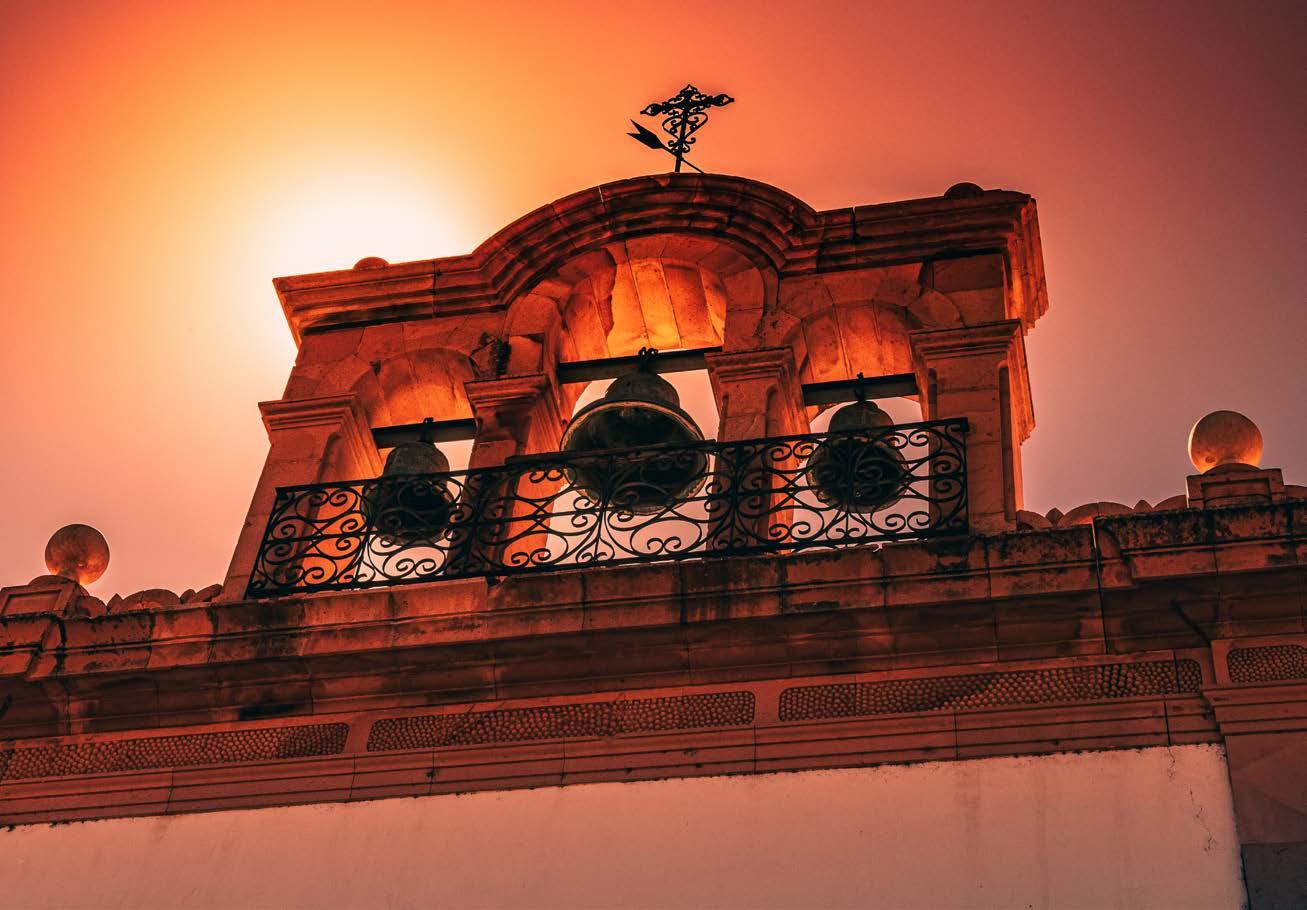
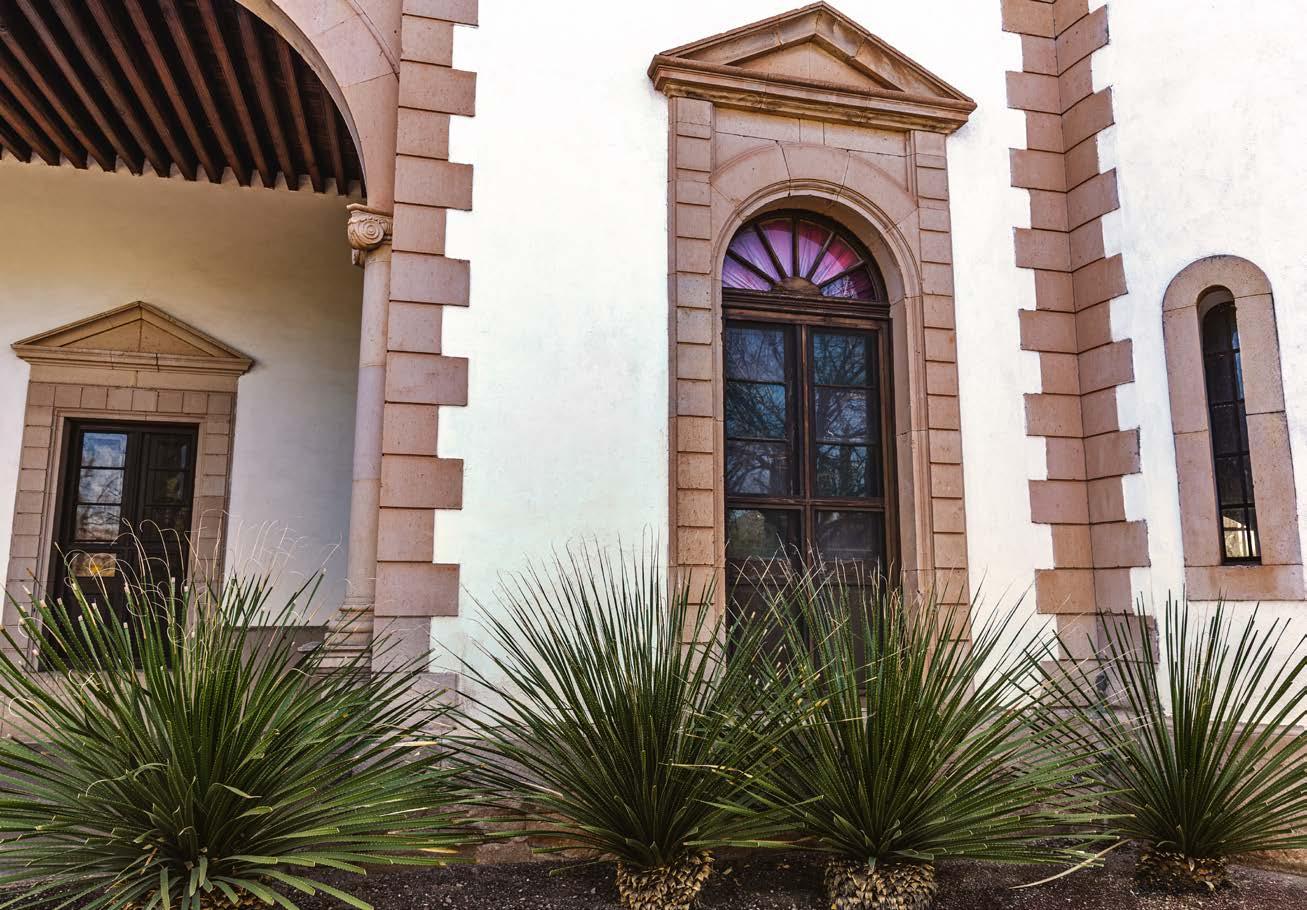
Hacienda de Tabalaopa. Tabalaopa hacienda.
AGRADECIMIENTOS
Acknowledgments
Este libro no surgió en soledad. Fue tomando forma en el camino, gracias a quienes creyeron que el sotol merece ser contado desde sus raíces. SOTOL, HERENCIA DE LA TIERRA es resultado de muchas voluntades que coincidieron y queremos reconocerlo con gratitud profunda. Durante este proceso tuvimos la fortuna de cruzarnos con personas generosas que compartieron su saber, su oficio y su tiempo. Cada quien, desde su lugar, aportó algo valioso: desde quienes participaron en la edición y producción, hasta quienes nos ayudaron a recorrer el territorio para conocer de cerca el alma de esta bebida. Extendemos también un sincero agradecimiento a las y los vinateros, productores, bares, cantinas y espacios dedicados al sotol que nos recibieron con puertas abiertas y palabras sinceras. A quienes nos ofrecieron su hospitalidad en sus comunidades, sus talleres, sus palenques o detrás de una barra, muchas gracias. Cada conversación, cada recorrido y cada mirada, nos permitió entender que esta herencia no está en los objetos, sino en las personas.
• Abraham Valdéz Chávez
• Acervo Fotográfico Nacho Guerrero
• Alfonso Bejarano Gallegos
• Bar Peña Blanca
• Bar Sótano
• Catherine Sofía Bejarano Muñoz (modelo shooting)
• Centro de Investigación del Sotol FCAyF
• Claudia Armenta
• Erik García
• Faridy Bujaidar
• Fernando Rubio (Colegio Chihuahuense de Historia)
• Fototeca INAH Chihuahua
• Isidoro Montoya
• Jesús Daniel Chavira Herrera
This book was not written in solitude. It took shape along the way, thanks to those who believed that sotol deserved to be told from its roots. Sotol, Legacy of the Land, is the result of many converging efforts, and we wish to acknowledge them with deep gratitude.
Throughout this process, we were fortunate enough to meet with generous individuals who shared their knowledge, craft, and time. Each, in their way, contributed something invaluable, from those involved in editing and production to those who guided us through the land, helping us experience the soul of this spirit up close.
We also extend our sincere thanks to the vinateros, manufacturers, bars, cantinas, and all the spaces dedicated to sotol that welcomed us with open doors and honest words. To those who offered us hospitality in their communities, workshops, palenques, or behind the bar, thank you. Every conversation, every journey, and every shared moment helped us understand that this heritage lives not in objects, but in people.
• Jorge Meléndez. Fototeca del INAH Chihuahua y Colegio Chihuahuense de Historia.
• Luis Alberto Valdéz Chávez
• Marco Antonio Mendoza Bejarano
• Nohely Derma
• Norma Mendoza
• Paulina Luján Lozoya (modelo shooting)
• Restaurante La Calesa
• Restaurante Sulawe
• Salvador Valdéz
• Sandra Armenta
• Saul Razo
• Nohema Ortega de Derma
• Víctor Fajer Matar (modelo shooting)
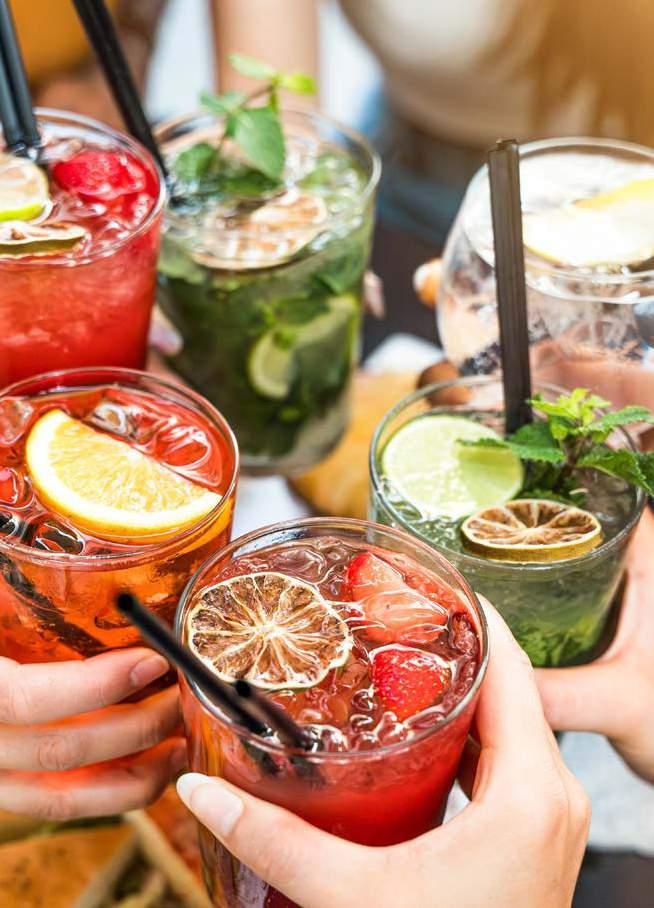
NOTAS BIBLIOGRÁFICAS
Bibliography
[1] Ruth Castro, El Sotol. Una historia de árido mestizaje. Secretaría de Cultura, Gobierno de México, Secretaría de Cultura del Estado de Coahuila, Arferit Editorial, Ediciones El Astillero Libros, México, 2023, p. 15.
[2] Lorenzo Alejandro López Barbosa, “El sotol en Coahuila, potencialidades y limitaciones”, en Bebidas y regiones: historia e impacto de la cultura etílica en México. Universidad Autónoma Agraria Antonio Narro, Universidad Autónoma de Yucatán, Consejo para la Cultura y las Artes de Nuevo León, Plaza y Valdés, México, 2005, p. 71.
[3] Ibidem, p. 72. Recientemente se han hecho cultivos experimentales de sotol en Chihuahua, por parte de la Universidad Autónoma de Chihuahua, y de la Universidad Regional del Norte, así como de particulares, pero se requiere de mayor tiempo y estudios para conocer la viabilidad.
[4] Ruth Castro, El Sotol. Una historia de árido mestizaje, p. 14.
[5] Alicia Melgoza Castillo y J. Santos Sierra Tristán, “Contribución al conocimiento y distribución de las especies de Dasylirion (sotol) en Chihuahua, México”, en Revista forestal en México, vol. 28, núm. 93, enero-junio 2003, p. 37.
[6] Ruth Castro, El Sotol. Una historia de árido mestizaje, p. 15.
[7] Henry J. Bruman, El alcohol en México antiguo, University of Utah Press, 2000, p. 27.
[8] Para una mayor comprensión de las regulaciones en torno al alcohol en Chihuahua ver más en Vladimir Armendáriz, La tiranía de la virtud: las campañas antialcohólicas en la ciudad de Chihuahua, 1920-1940. Tesis, Universidad Autónoma de Chihuahua, Chihuahua, 2013.
[9] El Partido Liberal, “Los Estados”, México, domingo 21 de febrero de 1886, p. 2.
[10] Omaha Daily Bee, s/t, 26 de marzo de 1914, p. 2.
[11] Bryan Daily Eagle and Pilot, s/t, 26 de agosto de 1911, p. 2.
[12] Faridy Bujaidar, La memoria en la conformación del gusto. Aguardientes de Madera, Chihuahua, p. 68.
[13] Peninsula Enterprise, “Straw putt o many uses”, Accomac, 4 de marzo, 1922, p. 4; The Big Stone Gap Post, “The Flora of Texas”, Big Stone Gap, Wise County, Virginia, 17 de febrero de 1909, p. 4.
[14] Ruth Castro, El Sotol. Una historia de árido mestizaje, p. 40.
[15] Tunnell y Madrid, citados en J. Santos Sierra Tristán, Carlos R. Lara Macías, Regina Carrillo Romo, Alicia Mendoza Castillo, Carlos Morales Nieto, Mario H. Royo Márquez, “Los sotoles (Dasylirion spp) de Chihuahua”, [Folleto Técnico Núm. 20], Instituto Nacional de Investigaciones Forestales, Agrícolas y Pecuarias, Centro de Investigación Regional Norte Centro, Sitio Experimental La Campana-Madera, Chihuahua, México, 1 de octubre de 2008, p. 3.
[16] Lorenzo Alejandro López Barbosa, “El sotol en Coahuila, potencialidades y limitaciones”, p. 73.
[17] Rising Sun, “Smithsonian aid uncovers traces of an ancient race of Indian brewers”, Maryland, 16 de junio de 1939.
[1] Castro, Ruth. [Sotol: A History of Arid Mestizaje]. Mexico City: Secretaría de Cultura; Gobierno de México; Secretaría de Cultura del Estado de Coahuila; Arferit Editorial; Ediciones El Astillero Libros, 2023. 15.
[2] López Barbosa, Lorenzo Alejandro. [Sotol in Coahuila, Potential and Limitations]. [Beverages and Regions: History and Impact of Alcohol Culture in Mexico]. Mexico City: Universidad Autónoma Agraria Antonio Narro; Universidad Autónoma de Yucatán; Consejo para la Cultura y las Artes de Nuevo León; Plaza y Valdés, Mexico, 2005. 71
[3] Ibid., 72. Recently, experimental sotol crops have been established in Chihuahua by the Autonomous University of Chihuahua, the Reginional Northem University, and various private growers; however, more time and further studies are needed to determine their viability.
[4] Castro, Ruth. [Sotol: A History of Arid Mestizaje]. 14.
[5] Melgoza Castillo, Alicia, and J. Santos Sierra Tristán. [“Contribution to the Knowledge and Distribution of Dasylirion (Sotol) Species in Chihuahua, Mexico”]. Forestal magazine in Mexico 28, no. 93 (January–June 2003): 37.
[6] Castro, Ruth. [Sotol: A History of Arid Mestizaje]. 15
[7] Bruman, Henry J. [Alcohol in Ancient Mexico]. Salt Lake City: University of Utah Press, 2000. 27.
[8] Armendáriz, Vladimir. [The Tyranny of Virtue: Anti-Alcohol Campaigns in the City of Chihuahua, 1920–1940]. Master’s thesis, Universidad Autónoma de Chihuahua, 2013.
[9] El Partido Liberal. [“The States”]. Mexico City, 21 February 1886, 2.
[10] Omaha Daily Bee. [No title.] 26 March 1914. 2.
[11] Bryan Daily Eagle and Pilot. [No title.] 26 August 1911. 2.
[12] Bujaidar, Faridy. [Memory in the Shaping of Taste: Spirits from Madera, Chihuahua]. 68.
[13] “Straw putt o many uses”. Peninsula Enterprise, Accomac, VA, 4 March 1922, 4; “The Flora of Texas.” The Big Stone Gap Post, Big Stone Gap, VA, 17 February 1909, 4.
[14] Castro, Ruth. El Sotol. [Sotol: A History of Arid Mestizaje]. 40.
[15] Tunnel and Madrid. Santos Sierra Tristán, J. R, Carlos. Macías, Lara. Carrillo Romo, Regina. Mendoza Castillo, Alicia, Morales Nieto, Carlos. H. Royo Márquez, Mario. [“The Sotols (Dasylirion spp) of Chihuahua”]. Brochure 20. Chihuahua: Instituto Nacional de Investigaciones Forestales, Agrícolas y Pecuarias, Centro de Investigación Regional Norte Centro, Sitio Experimental La Campana-Madera, 1 October 2008, 3.
[16] López Barbosa, Lorenzo Alejandro. [Sotol in Coahuila, Potential and Limitations]. 73.
[17] “Smithsonian aid uncovers traces of an ancient race of Indian brewers.” Rising Sun (MD), 16 June 1939.
[18] Gutiérrez Ortiz, Jorge Arturo and Gutiérrez de Alba, Emilio. [The Sotol War: From Pre-Hispanic Times to the Law Regulating Sotol Production]. Ciudad Juárez: Gutiérrez de Alba Editores, 2009. 37.
[19] Castro, Ruth. [Sotol: A History of Arid Mestizaje]. 44-46.
[18] Jorge Arturo Gutiérrez Ortiz y Emilio Gutiérrez de Alba, La guerra del sotol. De la época prehispánica a la ley que regula la actividad sotolera, Gutiérrez de Alba Editores, Ciudad Juárez, 2009, p. 37
[19] Ruth Castro, El Sotol. Una historia de árido mestizaje, pp. 44-46.
[20] Archivo Histórico Municipal de Chihuahua (AHMCH), “Informe de la campaña militar en la región de las haciendas de Aguanueva y Encinillas del capitán Sebastián de Suaces a Juan Francisco de la Puerta y Barrera, gobernador y capitán general de la Nueva Vizcaya”, Fondo Colonial, sección Guerra, caja 1, exp. 8, San Felipe el Real de Chihuahua, 31 de agosto de 1750.
[21] Sjoberg, “Lipan Apache Culture in Historical Perspective”, Southwestern Journal of Anthropology, 1953, p. 97. http://www.jstor.org/stable/3628495
[22] Valenzuela y Zapata et al, citados en Cristina Ruelas, Los aromas del sotol… p. 17
[23] Cristina Ruelas, Los aromas del sotol. Evocaciones del sentido del olfato en Aldama, Chihuahua, Tesis, EAHNM, Chihuahua, 2025, pp. 14-15.
[24] Hubo ordenanzas al respecto en 1635. En el año de 1671 el marqués de Mancera las renovó y en 1792 el primer conde de Revillagigedo ordenó que se castigara con perdimiento de bienes, azotes y años presidio o galeras a los que usaran, vendieran o tuvieran en su poder bebidas prohibidas.
[25] La Prensa, “El prohibicionismo en México”, San Antonio, Texas, domingo 26 de diciembre de 1920, p. 3.
[26] Archivo Histórico Municipal de Parral (AHMP), Fondo Colonial, Mandatos y bandos, Real de San José del Parral, 1 de agosto de 1640, “Mandato de Francisco de Escobar Treviño, justicia mayor y capitán a guerra, que no se vendan vinos prohibidos, por los peligros que representan y licencias a mercaderes para su venta”. Ref. Guía MCCAA: 368, caja 20, exp. 3, fojas 1-2.
[27] Paulina Machuca citada en Graciela Ángeles Carreño, Mexcalli. El mundo de los destilados de agave de México, Larousse, México, 2025, p. 98.
[28] Curiel, Historia de la vida cotidiana en México, 2005.
[29] Paulina Machuca citada en Graciela Ángeles Carreño, Mexcalli. El mundo de los destilados de agave de México, Larousse, México, 2025, p. 98.
[30] Paola Juárez, “Historia de la cultura material. Los bienes de una familia del siglo XVII en Parral”, en Debates por la historia, UACH, Chihuahua, 2019, pp. 92-93.
[31] “Grumete” es un término utilizado para los aprendices de marinero. Aparentemente, Francisco Rodríguez, alias el Grumete, solía ser navegante.
[32] Archivo Histórico Municipal de Parral, “Criminal. Contra Francisco Rodríguez (a) “El Grumete” por fabricar caldos de la tierra, en una casa contigua al Real Palacio. 1727”, sección Justicia, serie Desacatos, Real de San José del Parral, 21 de junio de 1727, caja 8, exp. 116, f. 14.
[33] Idem
[34] AHMCH, “Caso de Francisco Padilla productor de vino del Paso contra Juan Batalla, arriero Francés, por adulteración de caldos, 1747”, Fondo Colonial, sección Hacienda, caja 16, exp. 2.
[35] Archivo Histórico Municipal de Parral (AHMP), “Autos fechados por don Juan Fernández de Carrión tribuno justicia mayor y capitán a guerra en razón de que no se vendan vinos prohibidos”, sección Gobierno y Administración, serie Mandatos y bandos, caja 1, exp. 8, f. 5, Real de San José del Parral, 11 de febrero de 1649.
[36] Guillermo Porras citado en Arturo Guevara Sánchez, Los Atapascanos en Nueva Vizcaya (Cuaderno de trabajo 6), Dirección de Arqueología, INAH, México, 1989, p. 59.
[37] Guillermo Porras Muñoz, La Frontera con los indios de Nueva Vizcaya en el siglo XVII, Fomento Cultural Banamex, México, 1980, p. 205.
[38] AHMCH, “Pedro Queipo Del Llano prohíbe a comerciantes el comercio de licor con los naturales”, Fondo Colonia, sección Gobierno, caja 37, exp. 1.
[39] Jane-Dale Lloyd, El Distrito Galeana en los albores de la Revolución. Secretaría de Educación, Cultura y Deporte, Gobierno del Estado de Chihuahua, México, 2011, pp. 65-66.
[40] Manuel Romero, “Episodios de la lucha contra los indios salvajes. Costosísima cosecha de sotol”, Boletín de la Sociedad Chihuahuense de Estudios Históricos, 1952, p. 719.
[41] Manuel Romero, “Episodios de la lucha contra los indios salvajes. Costosísima cosecha de sotol”, Boletín de la Sociedad Chihuahuense de Estudios Históricos. Tomo 8, núm. 7, Chihuahua, 1954. pp. 718-720.
[42] Idem.
[43] Ruth Castro, El Sotol. Una historia de árido mestizaje, p. 56
[44] AHMCH, “Bando para dar a conocer reglamentos sobre venta de licores”. Fondo Independencia, Serie Correspondencia [decretos, bandos, circulares y reglamentos] Chihuahua, 1830, caja 12, exp. 82.
[45] AHMCH, “Se prohíbe la venta de licor a los apaches”, Fondo Independencia, sección Presidencia, caja 12, exp. 4.
[46] Ruth Castro, El Sotol. Una historia de árido mestizaje, p. 57.
[47] Carlos García citado en Cristina Ruelas, Los aromas del sotol. Evocaciones del senti-
[20] Archivo Histórico Municipal de Chihuahua. [“Report on the Military Campaign in the Aguanueva and Encinillas Hacienda Region from Captain Sebastián de Suaces to Juan Francisco de la Puerta y Barrera, Governor and Captain General of Nueva Vizcaya”]. Fondo Colonial, Guerra section, box 1, exp. 8. San Felipe el Real de Chihuahua, 31 August 1750.
[21] Sjoberg, “Lipan Apache Culture in Historical Perspective.” Southwestern Journal of Anthropology, 1953. 97. https://www.jstor.org/stable/3628495.
[22] Valenzuela, Zapata et al. quoted in Cristina Ruelas, [The Aromas of Sotol: Olfactory Evocations in Aldama, Chihuahua]…17.
[23] Ruelas, Cristina. [The Aromas of Sotol: Olfactory Evocations in Aldama, Chihuahua] Master’s thesis, Escuela de Antropología e Historia del Norte de México, Chihuahua, 2025. 14–15.
[24] There were ordinances on this matter in 1635. In 1671, the Marquis of Mancera renewed them, and in 1792, the first Count of Revillagigedo ordered that anyone who used, sold, or possessed prohibited beverages be punished with the loss of their property, flogging, and years in prison or on the galleys.
[25] La Prensa. [“Prohibitionism in Mexico”]. San Antonio, TX, 26 December 1920, 3.
[26] Archivo Histórico Municipal de Parral (AHMP), Colonial Collection, Mandates and Edicts series, Real de San José del Parral, 1 August 1640, “Mandate by Francisco de Escobar Treviño, senior justice and captain of war, prohibiting the sale of banned wines because of the dangers they pose and granting merchants licenses for their sale,” Guía MCCAA ref. 368, box 20, file 3, fols. 1–2.
[27] Paulina Machuca, quoted in Graciela Ángeles Carreño, Mexcalli. [Mexcalli: The World of Agave Distillates of Mexico] Mexico City: Larousse, 2025, 98.
[28] Curiel, [History of Daily Life in Mexico], 2005.
[29] Paulina Machuca, quoted in Graciela Ángeles Carreño, Mexcalli. [Mexcalli: The World of Agave Distillates of Mexico] Mexico City: Larousse, 2025, 98.
[30] Juárez, Paola. [“History of Material Culture: The Goods of a Seventeenth-Century Family in Parral”] in Debates por la historia (Chihuahua: Universidad Autónoma de Chihuahua, 2019), 92–93.
[31] Grumete is a term used for sailor apprentices. Apparently, Francisco Rodríguez, known as ‘El Grumete,’ was once a navigator.
[32] Archivo Histórico Municipal de Parral, Justice section, Real de San José del Parral, [“Criminal case against Francisco Rodríguez (alias ‘El Grumete’) for distilling local earth wine in a house adjacent to the Royal Palace”] 21 June 1727, box 8, file 116, fol. 14.
[33] Ibid.
[34] Archivo Histórico Municipal de Chihuahua (AHMCH), Colonial Collection, Treasury section, [“Case of Francisco Padilla, a wine producer from El Paso, versus Juan Batalla, a French muleteer, for adulterating wines”] 1747, box 16, file 2.
[35] Archivo Histórico Municipal de Parral (AHMP), Government and Administration section, Mandates and Edicts series, Real de San José del Parral, [“Proceedings signed by Don Juan Fernández de Carrión, senior justice and captain of war, concerning the prohibition of the sale of banned wines”] 11 February 1649, box 1, file 8, fol. 5.
[36] Guillermo Porras, quoted in Arturo Guevara Sánchez, [The Athabascans in Nueva Vizcaya], Book 6 (Mexico City: National Institute of Anthropology and History, Archaeology Directorate, 1989), 59.
[37] Porras Muñoz, Guillerm. [The Frontier with the Indians of Nueva Vizcaya in the Seventeenth Century] (Mexico City: Fomento Cultural Banamex, 1980), 205.
[38] Archivo Histórico Municipal de Chihuahua (AHMCH), Colonial Collection, Government section, [“Pedro Queipo del Llano Prohibits Merchants from Trading Liquor with the Natives”] box 37, file 1.
[39] Lloyd, Jane-Dale. [The Galeana District on the Eve of the Revolution] Secretaría de Educación, Cultura y Deporte, Gobierno del Estado de Chihuahua, México, 2011, 65–66.
[40] Romero, Manuel. [“Episodes of the Struggle against the Savage Indians: An Exceedingly Costly Sotol Harvest”] Boletín de la Sociedad Chihuahuense de Estudios Históricos, 1952, 719.
[41] Romero, Manuel. [“Episodes of the Struggle against the Savage Indians: An Exceedingly Costly Sotol Harvest”] Boletín de la Sociedad Chihuahuense de Estudios Históricos, 8, no. 7, 1954, 718–720.
[42] Ibid.
[43] Castro, Ruth. [Sotol: A History of Arid Mestizaje]. 56.
[44] Archivo Histórico Municipal de Chihuahua (AHMCH), Independence Collection, Correspondence series [Decrees, Edicts, Circulars, and Regulations], Chihuahua, 1830, [“Edict to Publicize Regulations on Liquor Sales”] box 12, file 82.
[45] Archivo Histórico Municipal de Chihuahua (AHMCH), Independence Collection,
do del olfato en Aldama, Chihuahua. Tesis, EAHNM, Chihuahua, 2025, pp. 17-18.
[48] Archivo General del Estado de Chihuahua (AGECH), Fondo Minería, sección Chihuahua, serie Denuncio de mina, caja 3, exp. 9.
[49] AHMCH, “Censo de comercios y expendedores de licores 1856”, Fondo Invasión norteamericana, sección Tesorería, caja 10, exp. 15, Chihuahua, 10 de marzo de 1856.
[50] Archivo Histórico del Supremo Tribunal de Justicia del Estado de Chihuahua (AHSTJECH), “Contrabando de alcohol”, Juzgado Segundo Penal, 2 de julio de 1879.
[51] La Voz de México, “Consecuencia de las últimas leyes hacendarias”, México, 21 de abril de 1883, p. 3.
[52] Anuario estadístico de Chihuahua, 1 de enero de 1909, pp. 145, 127, 40.
[53] Archivo Histórico de Casas Grandes (AHCG), Libro de actas de Cabildo del Ayuntamiento de Casas Grandes, 1901, ff. 156v-157; AHCG, Libro de actas de Cabildo del Ayuntamiento de Casas Grandes, 1903, f. 279.
[54] Jane Dale Loyd, El distrito Galeana en los albores de la Revolución, pp. 128, 265-268, 310.
[55] Jesús Carrejo Gutiérrez y Alma Montemayor, La Antigua Paz: una mirada a las cantinas de Chihuahua, México, 2003, p. 30.
[56] The Covington leader, “Una destilería en Ciudad Juárez está haciendo licor de una planta llamada sotol”, 23 de junio de 1919, p. 7.
[57] Periódico Oficial del Gobierno del Estado, año VII, núm. 146, Chihuahua, 20 de agosto de 1884, p. 3.
[58] El Correo de Chihuahua, “Precios corrientes”, Chihuahua, 20 de enero de 1899, p. 3.
[59] Iron County register, [s/t], Iron, MO, 25 de septiembre de 1884.
[60] Anuario Estadístico de Chihuahua. Secretaría del Gobierno del Estado de Chihuahua. Sección Estadística, Chihuahua, 1 de enero de 1905, p. 34.
[61] Periódico Oficial del Estado de Chihuahua, “Análisis de licores, practicados por el C. Prof. Pedro de Lille Borja, inspector de Comestibles y Bebidas”, Chihuahua, 23 de febrero de 1913, p. 2.
[62] El Paso Herald, “What one of our Local Dairies has to say of Sotol Molasses mixed feed”, El Paso, Texas, 5 de septiembre de 1918, p. 6
[63] Asheville daily citizen. Anuncio publicitario. Carolina del Norte 19 de junio de 1894.
[64] Albuquerque Morning Journal, “Estudio de la posibilidad para la producción de azúcar”, Albuquerque, NM, 31 de julio de 1918.
[65] The Florida Star, “Useful Desert Plant”, Titus, Florida, October 9, 1908, p. 6.
[66] El Paso Herald, “To make a new food for stock”, El Paso, Texas, July 4, 1917, p. 2; El Paso Herald, “Fabricarán alimento de alfalfa con sabor a jarabe de sotol”, 17 de noviembre de 1917, p. 4.
[67] El Paso Herald, Anuncio publicitario Krakauer, Zork y Moye. El Paso Texas, mayo 1918.
[68] Vladimir Armendáriz, La tiranía de la virtud. Campañas antialcohólicas en la ciudad de Chihuahua (1920-1940), tesis, Universidad Autónoma de Chihuahua, Chihuahua, 2013.
[69] Periódico Oficial del Estado de Chihuahua, “Secretaría del Gobierno del Estado, sección 1ª, Ramo de Gobernación, circular número 733”, 16 de abril de 1904, pp. 11-12.
[70] Periódico Oficial del Estado de Chihuahua, “Gobierno del Estado. Poder Legislativo. Ley relativa a la venta al menudeo de bebidas embriagantes”, año XXVI, núm. 59, Chihuahua, jueves 26 de julio de 1906, pp. 2-3.
[71] María Aparecida De Souza citada en Vladimir Armendáriz, La tiranía de la virtud: campañas antialcohólicas en la ciudad de Chihuahua (1920-1940), p. 21.
[72] El Agricultor Mexicano, “Prohibición relativa al consumo de sotol”, tomo XXVII, Ciudad Juárez, Chihuahua, 1 de mayo de 1909, p. 148.
[73] Periódico Oficial del Estado de Chihuahua, “Poder Ejecutivo. Decreto reformando los artículos 7º y 8º del Reglamento de la Ley de Bebidas Embriagantes”, año XXXI, núm. 77, Chihuahua, domingo 24 de septiembre de 1911, pp. 2-3.
[74] Periódico Oficial del Gobierno Constitucionalista del Estado de Chihuahua, “Circular relativa al expendio de licores en los restaurants y cantinas”. Ayuntamiento de Chihuahua, año I, núm. 11, domingo 22 de febrero de 1914.
[75] Periódico Oficial del Gobierno Constitucionalista del Estado de Chihuahua, “Disposición prohibiendo la venta de bebidas embriagantes”, Ayuntamiento de Chihuahua, año I, núm. 35, domingo 9 de agosto de 1914.
[76] Francisco R. Almada, La Revolución en el Estado de Chihuahua, tomo II, 1913-1921, México, 1965, p. 234.
[77] Entrevista realizada a Eduardo Arrieta, Aldama, Chihuahua, 1 de marzo de 2025.
[78] El Paso Herald, s/t. 17 de noviembre de 1919.
[79] Wauwatosa News, “No more sotol wine”, Wauwatosa, 7 de septiembre de 1907, p. 4.
[80] Periódico Oficial del Estado de Chihuahua, Decreto número 125, año XII, núm. 52, Chihuahua, sábado 24 de diciembre de 1927, pp. 7-8. El gobernador de Chihuahua Fernando Orozco estableció que los fabricantes de sotol y mezcal debían obtener una licencia escrita de las autoridades municipales, para lo cual debían cumplir con el pago de impuestos y estar al corriente en sus obligaciones fiscales. Además, un
Presidency section, [“Sale of Liquor to the Apaches Is Prohibited”] box 12, file 4.
[46] Castro, Ruth. mestizaje [Sotol: A History of Arid Mestizaje]. 57.
[47] Carlos García, quoted in Cristina Ruelas, [The Aromas of Sotol: Evocations of the Sense of Smell in Aldama, Chihuahua] (Chihuahua: EAHNM thesis, 2025), 17–18.
[48] Archivo General del Estado de Chihuahua (AGECH), Mining Collection, Chihuahua Section, Mining-Claim series, box 3, file 9.
[49] Archivo Histórico Municipal de Chihuahua (AHMCH), [“Census of Liquor Businesses and Retailers, 1856”] North-American Invasion Collection, Treasury section, box 10, file 15, Chihuahua, 10 March 1856.
[50] Archivo Histórico del Supremo Tribunal de Justicia del Estado de Chihuahua (AHSTJECH), [“Alcohol Smuggling”] Second Criminal Court, 2 July 1879.
[51] La Voz de México, [“Consequences of the Latest Treasury Laws”] Mexico City, 21 April 1883, 3.
[52] Statistical Yearbook of Chihuahua, 1 January 1909, 145, 127, 140.
[53] Archivo Histórico de Casas Grandes (AHCG), Minutes Book of the Casas Grandes Town Council, 1901, fols. 156v–57; and AHCG, Minutes Book of the Casas Grandes Town Council, 1903, fol. 279.
[54] Loyd, Jane Dale. [The Galeana District on the Eve of the Revolution], 128, 265–268, 310.
[55] Carrejo Gutiérrez, Jesús, and Montemayor, Alma. [La Antigua Paz: A Look at the Cantinas of Chihuahua], Mexico, 2003, 30.
[56] The Covington Leader, [“A Distillery in Ciudad Juárez Is Making Liquor from a Plant Called Sotol”] 23 June 1919, 7.
[57] Periódico Oficial del Gobierno del Estado, year VII, no. 146, Chihuahua, 20 August 1884, 3.
[58] El Correo de Chihuahua, [“Current Prices”] Chihuahua, 20 January 1899, 3.
[59] Iron County Register, [No title.] Iron, Missouri, 25 September 1884.
[60] [Statistical Yearbook of Chihuahua]. Chihuahua: Secretaría del Gobierno del Estado de Chihuahua, 1905. 34.
[61] Periódico Oficial del Estado de Chihuahua. [“Analysis of Liquors Conducted by Prof. Pedro de Lille Borja, Food and Beverage Inspector”]. Chihuahua: Periódico Oficial del Estado de Chihuahua, 23 February 1913. 2.
[62] El Paso Herald. “What One of Our Local Dairies Has to Say of Sotol Molasses Mixed Feed.” El Paso, TX: El Paso Herald, 5 September 1918. 6.
[63] Asheville Daily Citizen. Advertisement. Asheville, NC: Asheville Daily Citizen, 19 June 1894.
[64] Albuquerque Morning Journal. [“Study of the Possibility for Sugar Production”]. Albuquerque, NM: Albuquerque Morning Journal, 31 July 1918.
[65] The Florida Star. “Useful Desert Plant.” Titus, FL: The Florida Star, 9 October 1908. 6.
[66] El Paso Herald. “To Make a New Food for Stock”; [“Alfalfa Feed with Sotol Syrup Flavor Will Be Manufactured”]. El Paso, TX: El Paso Herald, 4 July 1917 and 17 November 1917. 2, 4.
[67] El Paso Herald. Advertisement for Krakauer, Zork & Moye. El Paso, TX, May 1918.
[68] Armendáriz, Vladimir. [The Tyranny of Virtue: Anti-Alcohol Campaigns in the City of Chihuahua (1920–1940)]. Chihuahua: Autonomous University of Chihuahua, 2013.
[69] Periódico Oficial del Estado de Chihuahua. [“State Government Secretariat, 1st Section, Interior Department, Circular No. 733”], 16 April 1904. 11–12.
[70] Periódico Oficial del Estado de Chihuahua. [“State Government. Legislative Branch. Law Concerning the Retail Sale of Intoxicating Beverages”]. 26 July 1906. 2–3.
[71] De Souza, María Aparecida quoted in Vladimir Armendáriz, [The Tyranny of Virtue: Anti-Alcohol Campaigns in the City of Chihuahua (1920–1940)]. 21.
[72] El Agricultor Mexicano. [“Prohibition Regarding Sotol Consumption”]. Ciudad Juárez, Chihuahua. 1 May 1909. 148.
[73] Periódico Oficial del Estado de Chihuahua. [“Executive Branch. Decree Amending Articles 7 and 8 of the Regulations of the Intoxicating Beverages Law”]. 24 September 1911. 2–3.
[74] Periódico Oficial del Gobierno Constitucionalista del Estado de Chihuahua. [“Circular Concerning the Sale of Liquor in Restaurants and Bars”]. 22 February 1914.
[75] Periódico Oficial del Gobierno Constitucionalista del Estado de Chihuahua. [“Order Prohibiting the Sale of Intoxicating Beverages”]. 9 August 1914.
[76] Almada, Francisco R. [The Revolution in the State of Chihuahua, vol. II, 1913–1921].
Mexico City: n.p., 1965. 234.
[77] Arrieta, Eduardo. Interview. Aldama, Chihuahua, 1 March 2025.
[78] El Paso Herald. [No title]. 17 November 1919.
[79] Wauwatosa News. “No more sotol wine”. Wauwatosa, 7 September 1907. 4.
[80] Periódico Oficial del Estado de Chihuahua. [Decree No. 125]. 24 December 1927. 7–8. The governor of Chihuahua, Fernando Orozco, established that manufacturers
pago anual de un impuesto único de 720 pesos por cada equipo de destilación, y establecía un sistema de control y monitoreo a través de informes mensuales sobre la cantidad de productos elaborados y distribuidos. Los fabricantes también estaban obligados a informar sobre cualquier cambio de ubicación o ampliación de capacidad, y quienes incumplieran con las regulaciones enfrentarían sanciones, que incluían multas y la clausura de sus instalaciones. El objetivo era, pues, regular el sector productivo del sotol garantizando su control fiscal y sanitario, y limitando la proliferación descontrolada de estas fábricas en la región. En 1932, el decreto número 214 regula los derechos de patente para fábricas de aguardientes y licores, con una mención especial sobre las fábricas de sotol, que están sujetas a impuestos especiales. Estas fábricas deberán pagar entre mil y mil quinientos pesos según su capacidad.
[81] El Paso Herald, “Chihuahua puts ban on sotol factories”, El Paso, Texas, 15 de mayo de 1919, p. 1; Mohave County Miner, “Ten-mile prohibition zone along the border”, 1 de noviembre de 1919.
[82] El Paso Morning Times, “Burros y sotol”, El Paso, Texas, 7 de marzo de 1918, p. 2.
[83] The Sunday Star, “Guarding Air Lines with Customs Patrol”, Washington, D. C. 9 de julio de 1933, p. 9.
[84] El Tucsonense, “Señalaban con cruces los lugares donde enterraban las botellas”, año 11, vol. XXII, núm. 24, Tucson, Arizona, jueves, 12 de noviembre de 1925, corresponsal en El Paso, Texas. p. 1.
[85] El Nuevo mexicano, “El Tío Sam, a través del Mariscal de los Estados Unidos, ha ordenado la destrucción de licor conocido como mula blanca en nueve ciudades de Nuevo México”, Santa Fe, 17 de noviembre de 1921, p. 2.
[86] La Opinión, “El Paso, Texas. Arrojan al drenaje mil galones de licores”, Los Ángeles, California, 1 de noviembre de 1930, p. 4.
[87] Vidal Salazar Solano y Luis Núñez Noriega, Estrategias para el desarrollo de la industria de la Bacanora, CIAD, México, 2003, p. 258.
[88] Entrevista realizada a César Márquez Campero, Aldama, Chihuahua, 1 de febrero de 2025.
[89] Bienvenido Fernández citado en Faridy Bujaidar, La memoria en la conformación del gusto. Aguardientes de Madera, Chihuahua. p. 80.
[90] Vladimir Armendáriz, La tiranía de la virtud: campañas antialcohólicas en la ciudad de Chihuahua, 1920-1940, p. 83.
[91] La Prensa, “El prohibicionismo en México”, San Antonio, Texas, domingo 26 de diciembre de 1920, p. 3.
[92] La Opinión, “Notas de Ciudad Juárez. La campaña antialcohólica fue suspendida”, Los Ángeles, California, 20 de enero de 1938, p. 2.
[93] Eduardo Esparza Terrazas, Saucillo: voz que clama en el desierto. Conaculta, ICHICULT, Chihuahua, 2007, p. 87.
[94] Francisco Javier Morales Natera, Coyame es mi pueblo. Xlibris, 2012, p. 145.
[95] Idem.
[96] Ibidem, p. 214.
[97] Ibidem, p. 214.
[98] Eustasio Fernández Perea, “Semblanzas Pueblerinas. Rancho Las Escobas. El Sotol de Sabitas”, recorte de periódico de la colección particular de la familia de Guillermina López Echeverría. Cortesía de Faridy Bujaidar.
[99] Eduardo Esparza Terrazas, Santa Cruz, antigua región de los tapacolmes. Historia de la Villa de Rosales, ICHICULT, Chihuahua, 2004, p. 351.
[100] Jesús Carrejo Gutiérrez, Alma Montemayor, La Antigua Paz: una mirada a las cantinas de Chihuahua, México, 2003, pp. 40-46.
[101] Entrevista a José Daumás, Delicias, Chihuahua, 6 de marzo de 2025.
[102] Bienvenido Fernández, citado en Faridy Bujaidar, “La memoria en la conformación del gusto. Aguardientes de Madera, Chihuahua, p. 81.
[103] Norma Oficial Mexicana NOM-159-SCFI-2004, Bebidas alcohólicas-Sotol-Especificaciones y métodos de prueba, Diario Oficial, 16 de junio de 2004.
[104] Jorge Arturo Gutiérrez Ortiz y Emilio Gutiérrez de Alba, La guerra del sotol. De la época prehispánica a la ley que regula la actividad sotolera, Gutiérrez de Alba Editores, Ciudad Juárez, 2009, p. 142.
[105] Faridy Bujaidar, “Marketing sustentable y una visita a Sotol Coyamito”, en Bocanadas del norte, consultado el 16 de enero de 2025.
[106] Entrevista a Salomón Valdéz, Potrero del Llano, 25 de abril de 2025.
[107] Entrevista a Salvador Derma, Potrero del Llano, 25 de abril de 2025.
[108] Entrevista a Eduardo Arrieta, Aldama, 1 de marzo de 2025.
[109] Idem.
[110] Faridy Bujaidar, La memoria en la conformación del gusto. Aguardientes de Madera, Chihuahua, p. 132.
[111] Cristina Ruelas, El aroma del sotol… pp. 81-82.
[112] Faridy Bujaidar, La memoria en la conformación del gusto. Aguardientes de Madera, Chihuahua, p. 134.
of sotol and mezcal must obtain a written license from the municipal authorities, for which they must pay taxes and be up to date with their tax obligations. In addition, an annual tax of 720 pesos was to be paid for each distillation unit, and a control and monitoring system was established through monthly reports on the quantity of products manufactured and distributed. Manufacturers were also required to report any changes in location or expansion of capacity, and those who failed to comply with the regulations would face penalties, including fines and the potential closure of their facilities. The objective was therefore to regulate the sotol production sector, ensuring fiscal and health control and limiting the uncontrolled proliferation of these factories in the region. In 1932, Decree No. 214 regulated patent rights for distilleries and liquor factories, with special mention of sotol factories, which were subject to special taxes. These factories had to pay between 1,000 and 1,500 pesos, depending on their capacity.
[81] El Paso Herald. “Chihuahua Puts Ban on Sotol Factories.” El Paso, TX, 15 May 1919. 1; Mohave County Miner. “Ten-Mile Prohibition Zone along the Border.”, 1 November 1919.
[82] El Paso Morning Times. [“Burros and Sotol”]. El Paso, TX, 7 March 1918. 2.
[83] The Sunday Star. “Guarding Air Lines with Customs Patrol.” Washington, DC, 9 July 1933. 9.
[84] El Tucsonense. [“They Marked with Crosses the Places Where They Buried the Bottles”]. Tucson, AZ, 12 November 1925. 1.
[85] El Nuevo Mexicano. [“Uncle Sam, through the U.S. Marshal, Has Ordered the Destruction of the Liquor Known as White Mule in Nine New Mexico Cities”]. Santa Fe, NM, 17 November 1921. 2.
[86] La Opinión. [“El Paso, Texas: A Thousand Gallons of Liquor Poured into the Drain”]. Los Angeles, CA, 1 November 1930. 4.
[87] Salazar Solano, Vidal, and Núñez Noriega, Luis. [Strategies for the Development of the Bacanora Industry]. 2003. 258.
[88] Márquez Campero, César. Interview. Aldama, Chihuahua, 1 February 2025.
[89] Fernández, Bienvenido quoted in Faridy Bujaidar, [Memory in the Shaping of Taste: Spirits of Madera, Chihuahua]. 80.
[90] Armendáriz, Vladimir. [The Tyranny of Virtue: Anti-Alcohol Campaigns in the City of Chihuahua, 1920–1940]. 83.
[91] La Prensa. [“Prohibitionism in Mexico”]. San Antonio, TX, 26 December 1920. 3.
[92] La Opinión. [“Ciudad Juárez Notes: The Anti-Alcohol Campaign Was Suspended”]. Los Angeles, CA, 20 January 1938. 2.
[93] Esparza Terrazas, Eduardo. [Saucillo: A Voice Crying in the Desert]. Chihuahua: Conaculta; Instituto Chihuahuense de la Cultura, 2007. 87.
[94] Morales Natera, Francisco Javier. [Coyame Is My Town]. Xlibris, 2012. 145.
[95] Ibid.
[96] Ibid., 214.
[97] Ibid., 214.
[98] Fernández Perea, Eustasio. [“Village Sketches: Rancho Las Escobas—Sabitas’s Sotol”]. Newspaper clipping, private collection of the family of Guillermina López Echeverría. Courtesy of Faridy Bujaidar.
[99] Esparza Terrazas, Eduardo. [Santa Cruz, Former Region of the Tapacolmes: History of the Town of Rosales]. Chihuahua: Instituto Chihuahuense de la Cultura, 2004. 351.
[100] Carrejo Gutiérrez, Jesús, and Montemayor, Alma. [La Antigua Paz: A Look at the Cantinas of Chihuahua]. Mexico, 2003. 40–46.
[101] Daumás, José. Interview. Delicias, Chihuahua, 6 March 2025.
[102] Fernández, Bienvenido quoted in Faridy Bujaidar, [Memory in the Shaping of Taste: Spirits of Madera, Chihuahua]. 81.
[103] Diario Oficial de la Federación. Norma Oficial Mexicana NOM-159-SCFI-2004, [Mexican Official Standard NOM-159-SCFI-2004, Alcoholic Beverages—Sotol—Specifications and Test Methods]. 16 June 2004.
[104] Gutiérrez Ortiz, Jorge Arturo, and Gutiérrez de Alba, Emilio. [The War of Sotol: From the Pre-Hispanic Era to the Law Regulating the Sotol Industry]. Ciudad Juárez: Gutiérrez de Alba Editores, 2009. 142.
[105] Bujaidar, Faridy. [“Sustainable Marketing and a Visit to Sotol Coyamito”]. Bocanadas del norte, accessed 16 January 2025.
[106] Valdéz, Salomón. Interview. Potrero del Llano, 25 April 2025.
[107] Derma, Salvador. Interview. Potrero del Llano, 25 April 2025.
[108] Arrieta, Eduardo. Interview. Aldama, 1 March 2025.
[109] Ibid.
[110] Bujaidar, Faridy. [Memory in the Shaping of Taste: Spirits of Madera, Chihuahua]. 132.
[111] Ruelas, Cristina. [The Aromas of Sotol: Olfactory Evocations in Aldama, Chihuahua].
Master’s thesis, Escuela de Antropología e Historia del Norte de México, Chihuahua,
[113] Ibidem, p. 135
[114] Entrevista a José Daumás, Delicias, 6 de marzo de 2025.
[115] Para más información acerca de la experiencia sensorial en torno al sotol ver: “¡Que sepa fuerte! El sentido del gusto en el análisis del sotol”, en La memoria en la conformación del gusto. Aguardientes de Madera, Chihuahua, de Faridy Bujaidar.
[116] Cristina Ruelas, El aroma del sotol… p. 92
[117] El Heraldo de Chihuahua, “Crece cultivo y producción de sotol chihuahuense”, | Noticias Locales, Policiacas, de México, Chihuahua y el Mundo.
[118] Entrevista a Carruchi, Aldama, 1 de marzo de 2025.
[119] Entrevista a Eduardo Arrieta, Aldama, 1 de marzo de 2025.
[120] Entrevista a Fernando Porras, San Sóstenes, 8 de marzo de 2025.
[121] Barragán Avilés, Cristian Alonso y Juan Hernández Ortiz, “Análisis de la cadena de valor del sotol artesanal en Delicias, Chihuahua”, Chihuahua Hoy, febrero de 2024.
[122] Entrevista a Norma Fernández, Chihuahua, 26 de abril de 2025.
[123] Entrevista a Daniel Chavira, Potrero del Llano, 25 de abril de 2025.
[124] Entrevista a Daniel Chavira, Potrero del Llano, 25 de abril de 2025.
[125] Entrevista a Daniel Chavira, Potrero del Llano, 25 de abril de 2025.
[126] Entrevista a Fernando Porras, San Sóstenes, 8 de marzo de 2025.
[127] Infobae, “Sotol el sabor del desierto”, Sotol: el sabor del desierto – El Financiero
[128] Entrevista a Jorge Caldera, Chihuahua, 25 de febrero de 2025.
[129] Entrevista a César Márquez Campero, Aldama, 25 de abril de 2025.
[130] Entrevista a Antonio Badía, Ciudad Juárez, 17 de abril de 2025.
[131] El Agricultor Mexicano, tomo XXVII, Ciudad Juárez, Chihuahua, 1 de mayo de 1909, p. 148.
[132] Entrevista a Daniel Chavira, Potrero del Llano, 25 de abril de 2025.
[133] Entrevista a Salvador Derma, Potrero del Llano, 25 de abril de 2025.
[134] Entrevista a José Daumás, Delicias, 6 de marzo de 2025.
[135] Entrevista a Jesús Herrera, Chihuahua, 10 de abril de 2025.
[136] Entrevista a Norma Fernández, Chihuahua, 1 de mayo de 2025.
[137] Idem.
[138] Entrevista a Víctor Ibarra por Cristina Ruelas, Aldama, 2024 citado en El aroma del sotol… p. 48
[139] Entrevista a Gerardo Ruelas y Víctor Ibarra, Aldama, 1 de febrero y 26 de abril de 2025.
[140] Cristina Ruelas, El aroma del sotol... p. 49.
[141] https://forbes.com.mx/lenny-kravitz-se-asocia-en-mexico-y-lanza-un-sotol/
[142] Gobierno del Estado de Chihuahua, “Recibe Chihuahua tres medallas por sus vinos y bebidas en el concurso México Selection CMB”, febrero 2025, https://chihuahua.gob.mx/prensa/recibe-chihuahua-tres-medallas-por-sus-vinos-y-bebidasen-el-concurso-mexico-selection-cmb. NetNoticias, “Sotol juarense gana premio internacional”, noviembre 2024, https://netnoticias.mx/juarez/sotol-juarense-gana-premio-internacional. Ana Luz Ramos Soto, “Sotol gana el primer lugar en concurso de destilados”, LinkedIn, enero 2023, https://es.linkedin.com/pulse/sotol-gana-el-primer-lugar-en-concurso-de-destilados-dr-ana. ADN40, “Sotol chihuahuense entre las mejores bebidas espirituosas del mundo”, diciembre 2024, https://www. adn40.mx/es-tendencia/2024-12-15/mejor-bebida-espirituosa-del-mundo-the-latin-american-world-spirits. Diario de Juárez, “Obtiene sotol chihuahuense medalla de oro en Bruselas”, diciembre 2021, https://diario.mx/estado/2021/dec/07/obtiene-sotol-chihuahuense-medalla-de-oro-en-bruselas-856676.html. El Financiero, “Sotol, el sabor del desierto”, julio 2023, https://www.elfinanciero.com.mx/buena-vida/ sotol-el-sabor-del-desierto. Los Magos Sotol, Instagram video, abril 2024, https:// www.instagram.com/reel/C8KncGyRRhH.
[143] Pernord Ricard, “Nocheluna Sotol: A Wild Spirit for Wild Spirits”, Nocheluna Sotol: A Wild Spirit for Wild Spirits | Pernod Ricard consultado el 14 de abril de 2025.
[144] Faridy Bujaidar, “Marketing sustentable y una visita a sotol Coyamito”, en Bocanadas del norte, consultado el 16 de enero de 2025.
[145] Faridy Bujaidar y Cristina Ruelas, “Las redes del sotol 2”, en Bocanadas del norte, consultado el 16 de enero de 2025.
[146] El Sol de Parral, “Apuestan por cultivos alternativos de sotol ante sequía extrema” Apuestan por cultivos alternativos de sotol ante sequía extrema - El Sol de Parral | Noticias Locales, Policiacas, sobre México, Chihuahua y el Mundo consultado el 20 de abril de 2025.
[147] Faridy Bujaidar, “Marketing sustentable y una visita a sotol Coyamito”, en Bocanadas del norte, consultado el 16 de enero de 2025.
[148] Entrevista a José Daumás, Delicias, Chihuahua, 6 de marzo de 2025.
[149] Entrevista a Gerardo Ruelas, Aldama, 1 de febrero de 2025.
[150] Entrevista a Fernando Porras, San Sóstenes, 8 de marzo de 2025.
2025. 81-82.
[112] Bujaidar, Faridy. [Memory in the Shaping of Taste: Spirits of Madera, Chihuahua]. 134.
[113] Ibid., 135.
[114] Daumás, José. Interview. Delicias, 6 March 2025.
[115] Bujaidar, Faridy. [“May It Taste Strong! The Sense of Taste in the Analysis of Sotol”]. In [Memory in the Shaping of Taste: Spirits of Madera, Chihuahua].
[116] Ruelas, Cristina. [The Aromas of Sotol: Olfactory Evocations in Aldama, Chihuahua]. Master’s thesis, Escuela de Antropología e Historia del Norte de México, Chihuahua, 2025. 92.
[117] El Heraldo de Chihuahua. [“Cultivation and Production of Chihuahuan Sotol Grow”].
[118] “Carruchi.” Interview. Aldama, 1 March 2025.
[119] Arrieta, Eduardo. Interview. Aldama, 1 March 2025.
[120] Porras, Fernando. Interview. San Sóstenes, 8 March 2025.
[121] Avilés, Barragán. Alonso, Cristian. Hernández Ortiz, Juan. [“Value-Chain Analysis of Artisanal Sotol in Delicias, Chihuahua”]. Chihuahua Hoy, February 2024.
[122] Fernández, Norma. Interview. Chihuahua, 26 April 2025.
[123] Chavira, Daniel. Interview. Potrero del Llano, 25 April 2025.
[124] Chavira, Daniel. Interview. Potrero del Llano, 25 April 2025.
[125] Chavira, Daniel. Interview. Potrero del Llano, 25 April 2025.
[126] Porras, Fernando. Interview. San Sóstenes, 8 March 2025.
[127] Infobae. [Sotol: The taste of the desert.”]
[128] Caldera, Jorge. Interview. Chihuahua, 25 February 2025.
[129] Márquez Campero, César. Interview. Aldama, 25 April 2025.
[130] Badía, Antonio. Interview. Ciudad Juárez, 17 April 2025.
[131] El Agricultor Mexicano. Vol. XXVII. Ciudad Juárez, Chihuahua, 1 May 1909. 148.
[132] Chavira, Daniel. Interview. Potrero del Llano, 25 April 2025.
[133] Derma, Salvador. Interview. Potrero del Llano, 25 April 2025.
[134] Daumás, José. Interview. Delicias, 6 March 2025.
[135] Herrera, Jesús. Interview. Chihuahua, 10 April 2025.
[136] Fernández, Norma. Interview. Chihuahua, 1 May 2025.
[137] Ibid.
[138] Ibarra, Víctor. Interview by Cristina Ruelas. Aldama, 2024. Quoted in [The Aromas of Sotol: Olfactory Evocations in Aldama, Chihuahua], 48.
[139] Ruelas, Gerardo, and Ibarra, Victor. Interview. Aldama, 1 February and 26 April 2025.
[140] Ruelas, Cristina. [The Aromas of Sotol: Olfactory Evocations in Aldama, Chihuahua]. Master’s thesis, Escuela de Antropología e Historia del Norte de México, Chihuahua, 2025. 49.
[141] https://forbes.com.mx/lenny-kravitz-se-asocia-en-mexico-y-lanza-un-sotol/ [142] Gobierno del Estado de Chihuahua. [“Chihuahua Receives Three Medals for Its Wines and Beverages in the Mexico Selection CMB Competition”]. February 2025. https://chihuahua.gob.mx/prensa/recibe-chihuahua-tres-medallas-por-sus-vinos-ybebidas-en-el-concurso-mexico-selection-cmb — NetNoticias. [“Juárez Sotol Wins International Award”]. November 2024. — Ramos Soto, Ana Luz. [“Sotol Takes First Place in Distilled-Spirits Competition”]. LinkedIn, January 2023. https://es.linkedin. com/pulse/sotol-gana-el-primer-lugar-en-concurso-de-destilados-dr-ana— ADN40. [“Chihuahuan Sotol among the World’s Best Spirits”]. December 2024. https://www. adn40.mx/es-tendencia/2024-12-15/mejor-bebida-espirituosa-del-mundo-the-latin-american-world-spirits — Diario de Juárez. [“Chihuahuan Sotol Wins Gold Medal in Brussels”]. December 2021. https://diario.mx/estado/2021/dec/07/obtiene-sotol-chihuahuense-medalla-de-oro-en-bruselas-856676.html — El Financiero. [“Sotol, the Flavor of the Desert”]. July 2023. https://www.elfinanciero.com.mx/buena-vida/ sotol-el-sabor-del-desierto — Los Magos Sotol. Instagram video, April 2024. https:// www.instagram.com/reel/C8KncGyRRhH.
[143] Pernod Ricard. “Nocheluna Sotol: A Wild Spirit for Wild Spirits.” Accessed 14 April 2025.
[144] Bujaidar, Faridy. [“Sustainable Marketing and a Visit to Sotol Coyamito”]. Bocanadas del norte, accessed 16 January 2025.
[145] Bujaidar, Faridy, and Ruelas, Cristina. [“The Sotol Networks 2”]. Bocanadas del norte, accessed 16 January 2025.
[146] El Sol de Parral. [“Betting on Alternative Sotol Crops amid Extreme Drought”]. Accessed 20 April 2025.
[147] Bujaidar, Faridy. [“Sustainable Marketing and a Visit to Sotol Coyamito”]. Bocanadas del norte, accessed 16 January 2025.
[148] Daumás, José. Interview. Delicias, 6 March 2025.
[149] Ruelas, Gerardo. Interview. Aldama, 1 February 2025.
[150] Porras, Fernando. Interview. San Sóstenes, 8 March 2025.
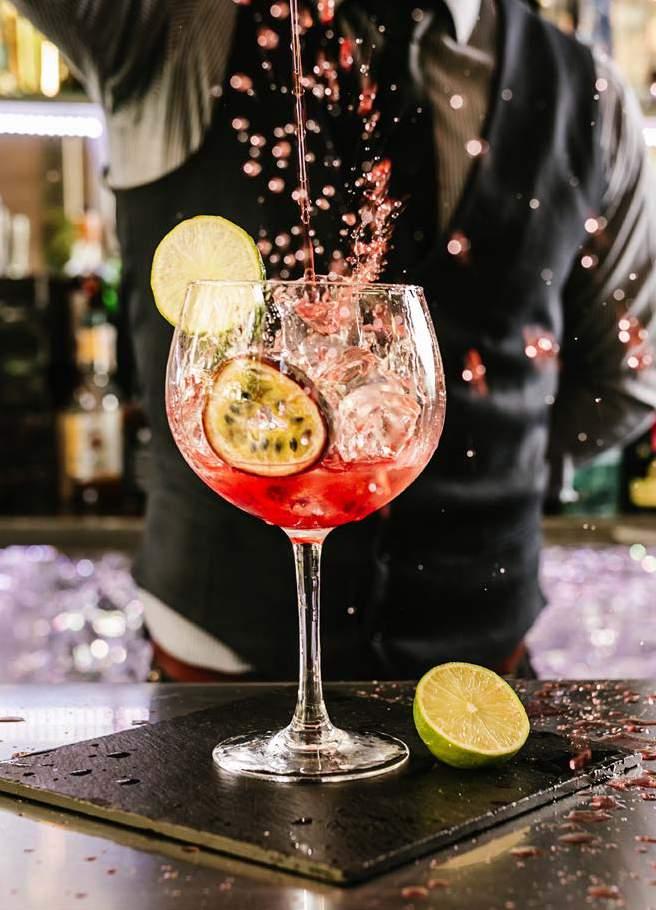
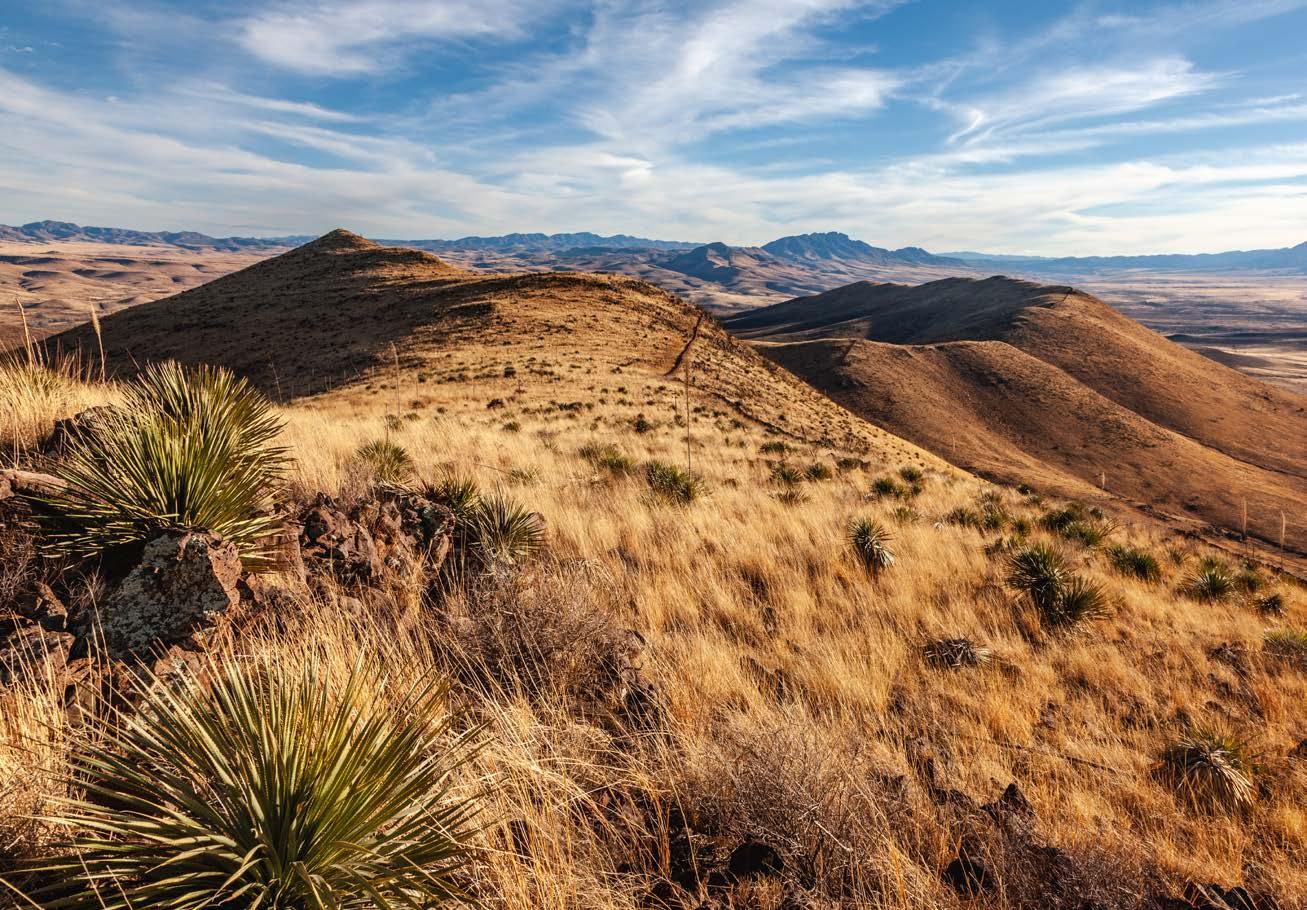
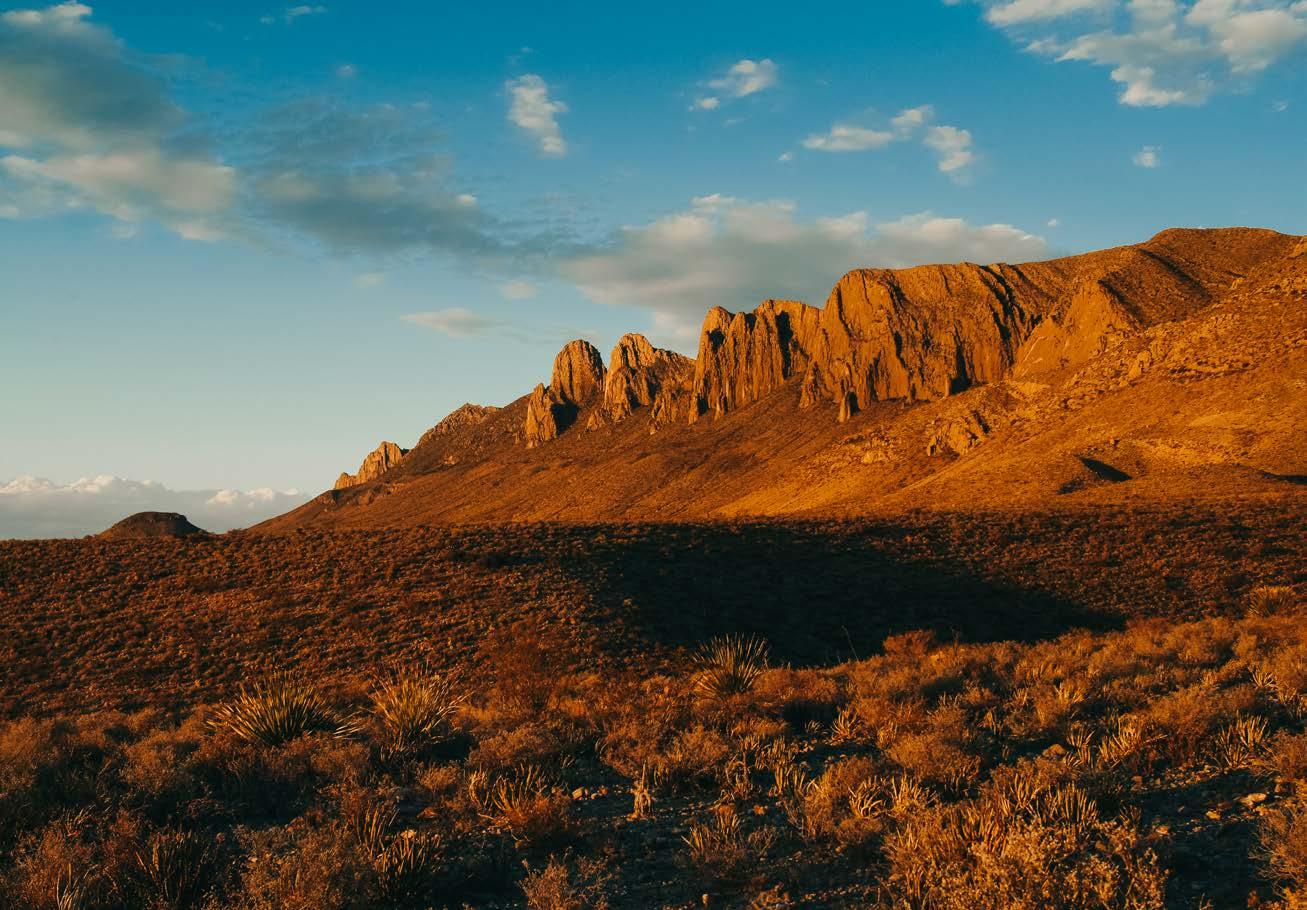

HERENCIA DE LA TIERRA
SOTOL
Legacy of the land
Sotol, herencia de la tierra terminó de imprimirse en el mes de octubre de 2025 en los talleres de SERVICIOS PROFESIONALES DE IMPRESIÓN S. A. de C. V., en la Ciudad de México, con un tiraje de 3,000 ejemplares. Edición y diseño de dobleuEse Atelier S. A. P. I. de C. V. Sotol, legacy of the land was printed in October 2025 at SERVICIOS PROFESIONALES DE IMPRESIÓN S. A. de C. V., in Mexico City, with a print run of 3,000 copies. Editing & design by dobleuEse Atelier S. A. P. I. de C. V.