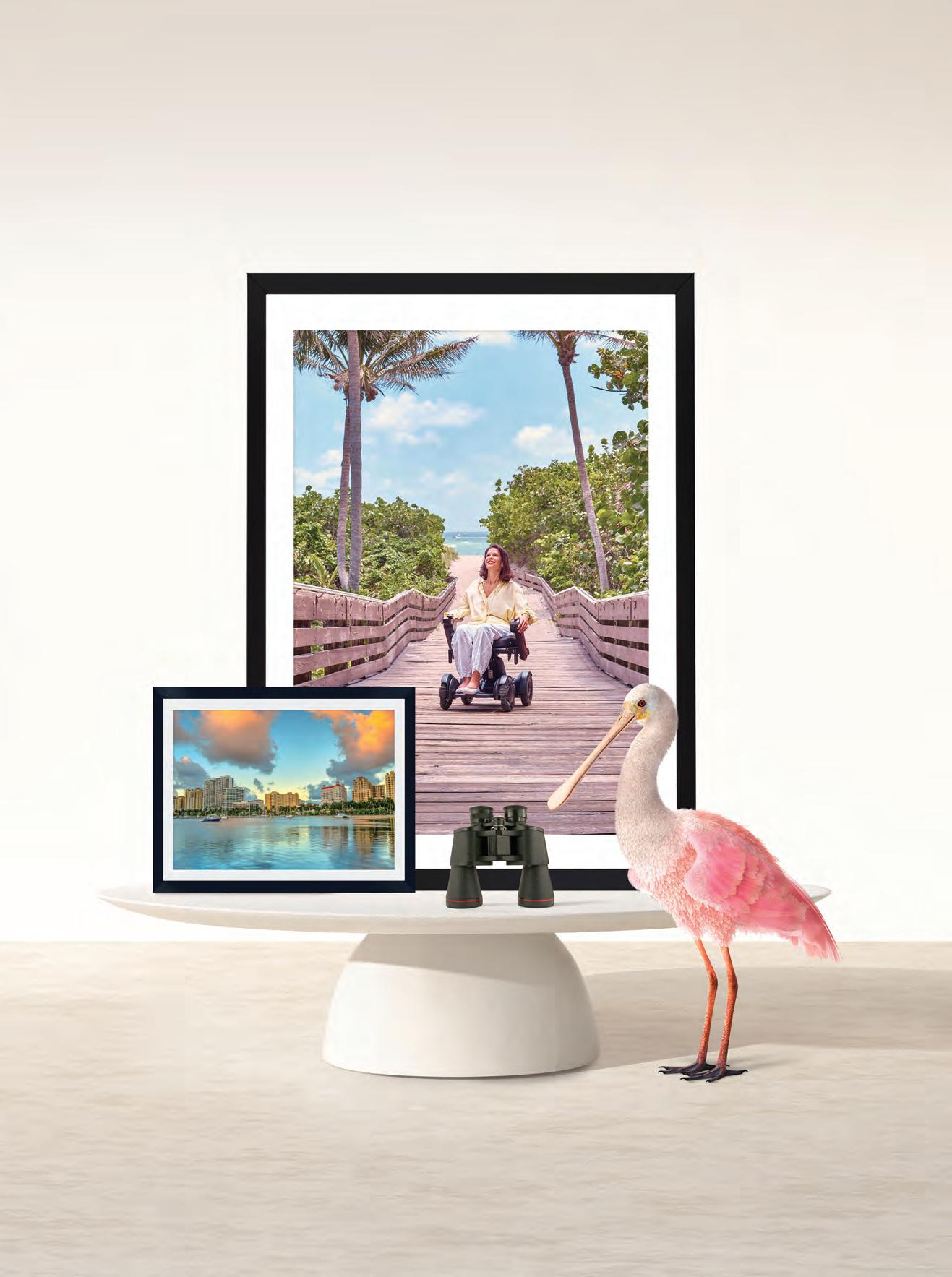
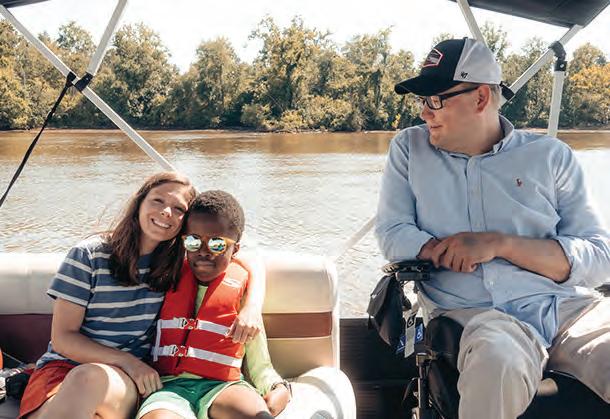
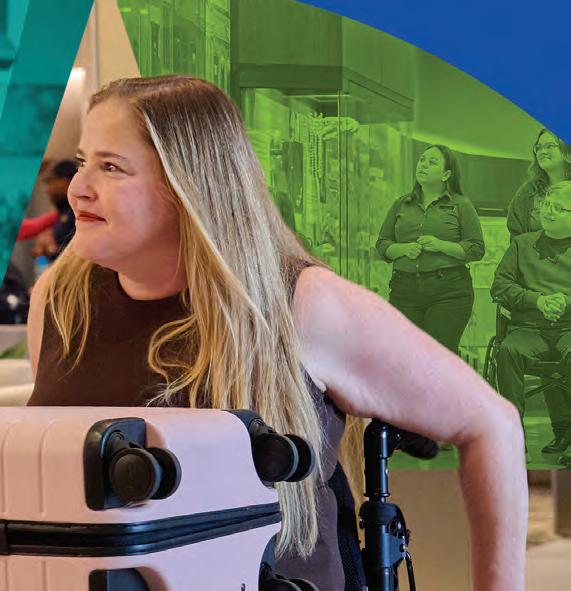
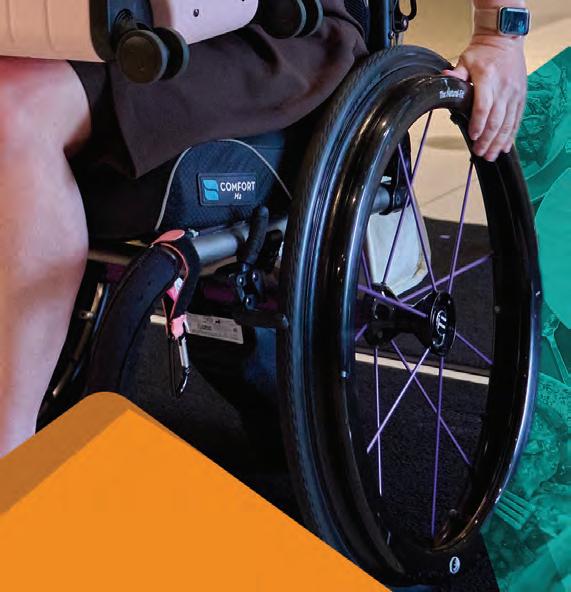
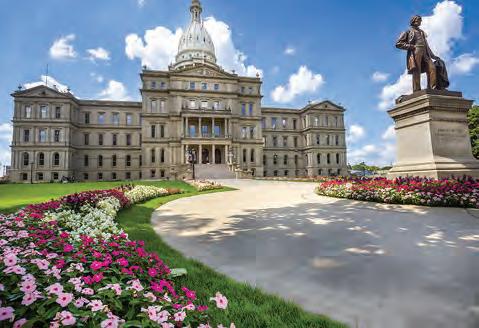
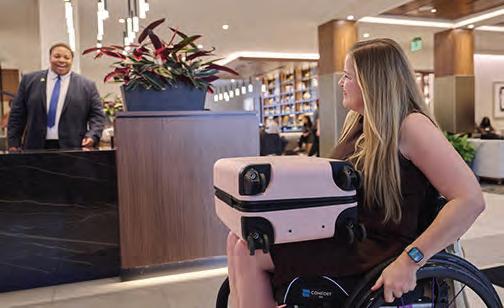
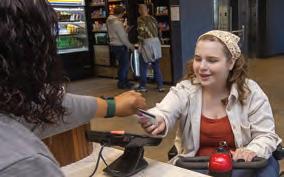
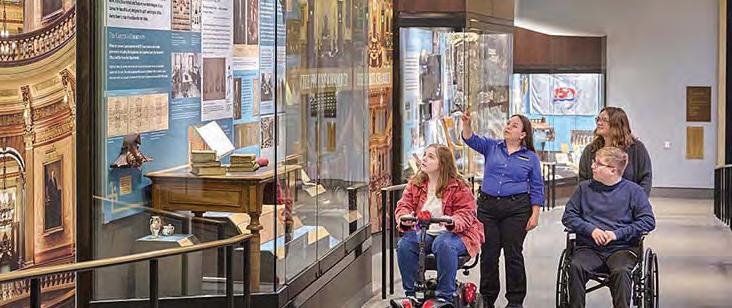
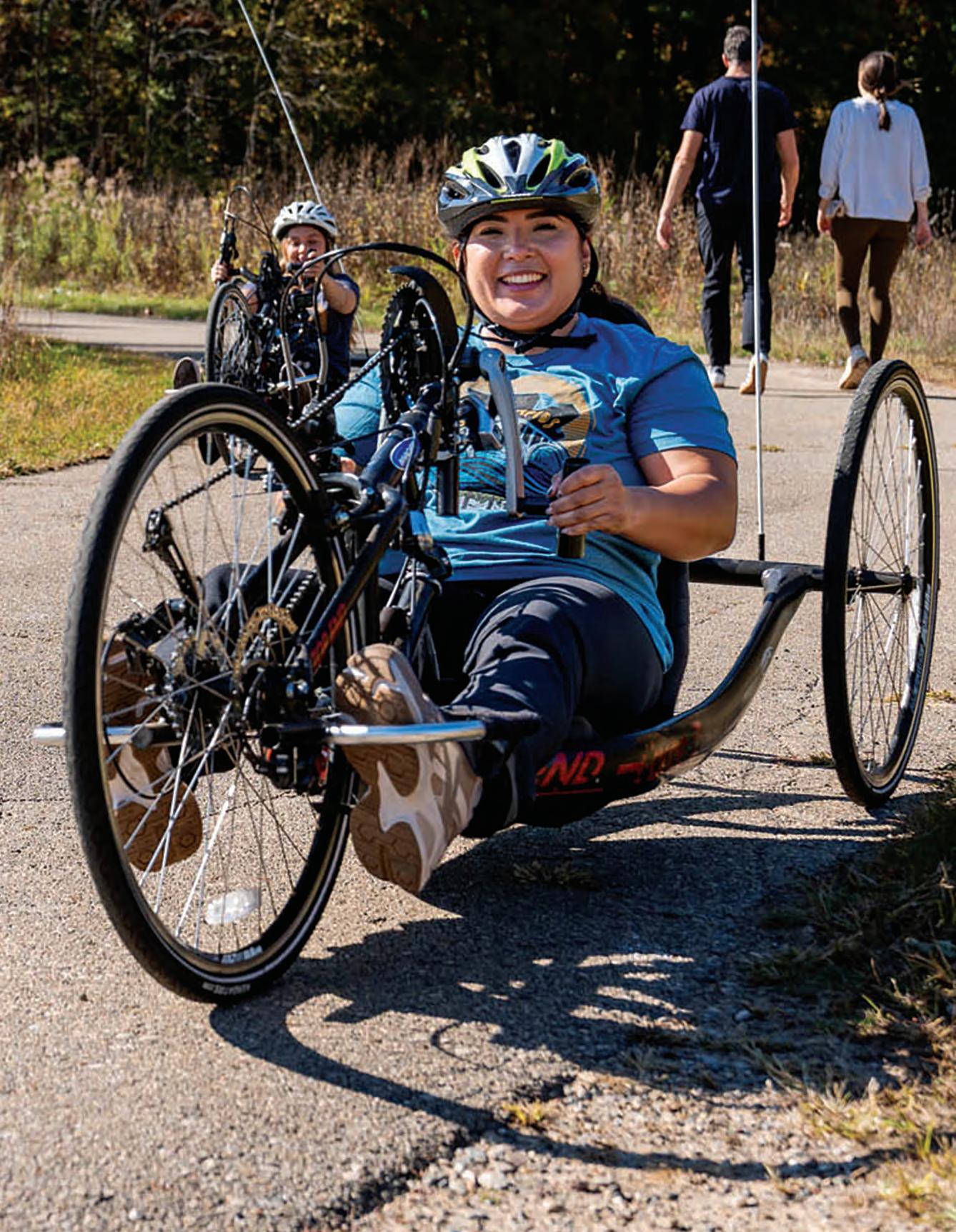
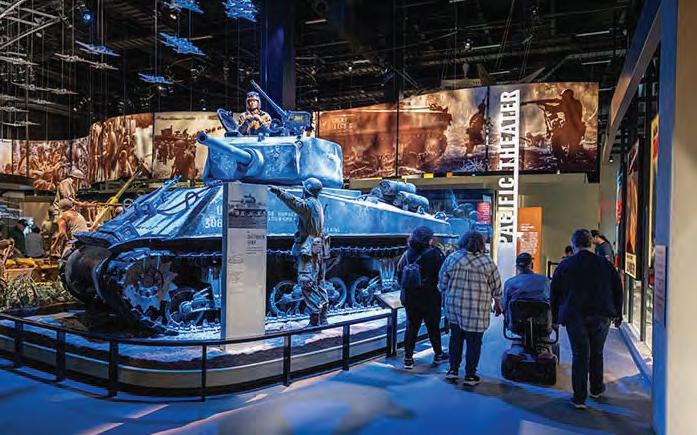
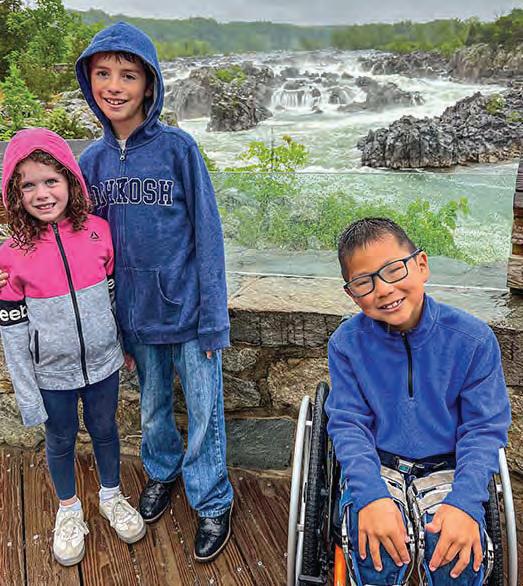
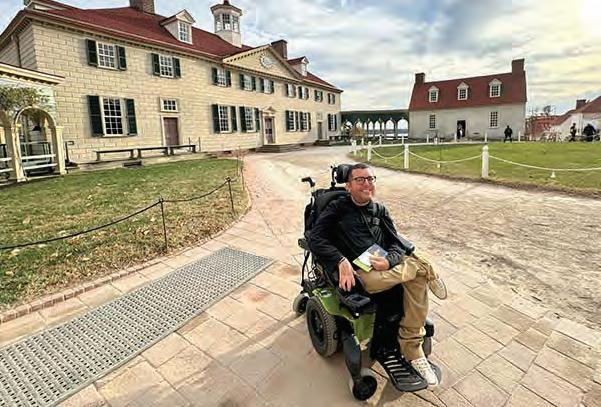
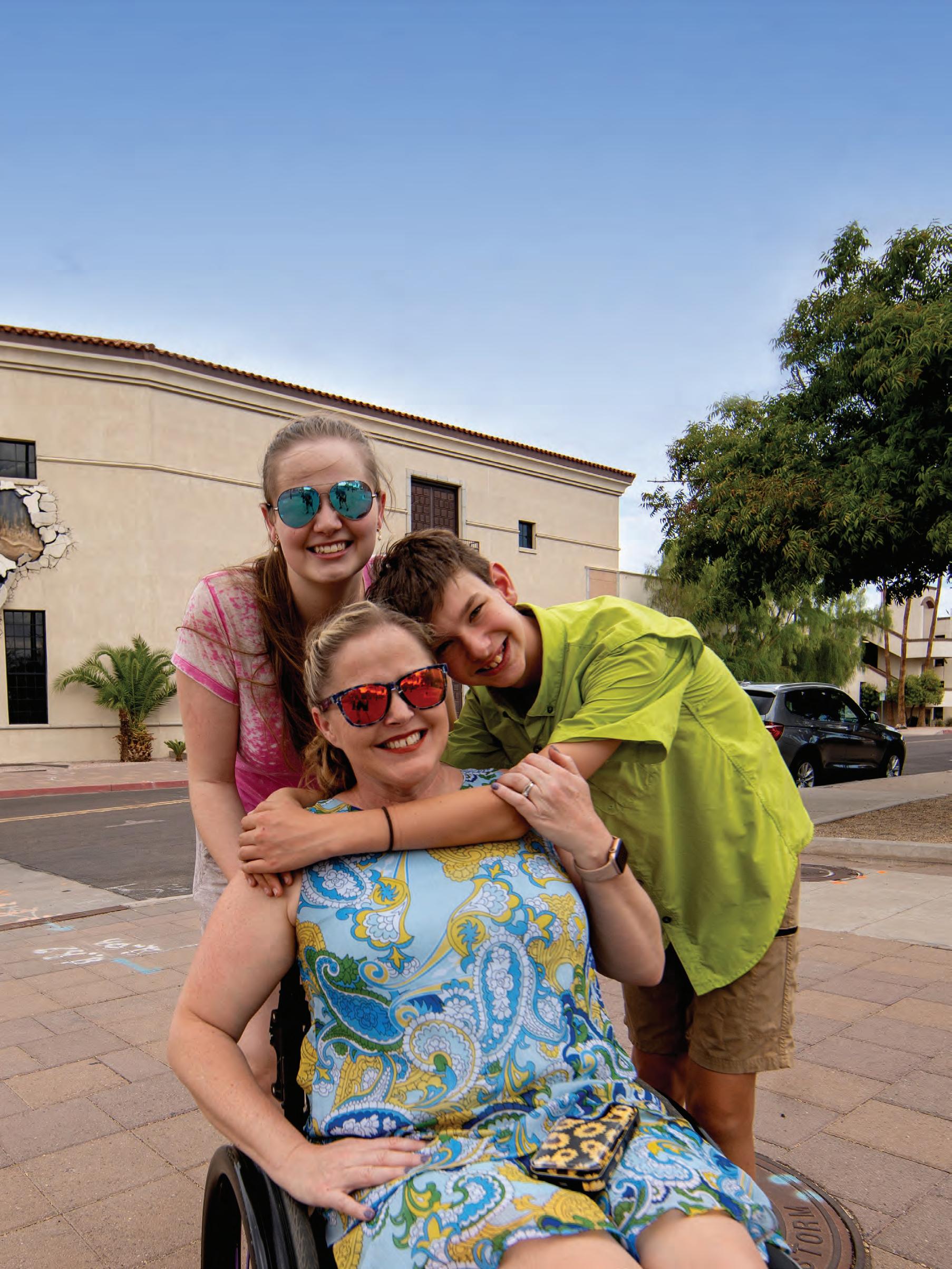
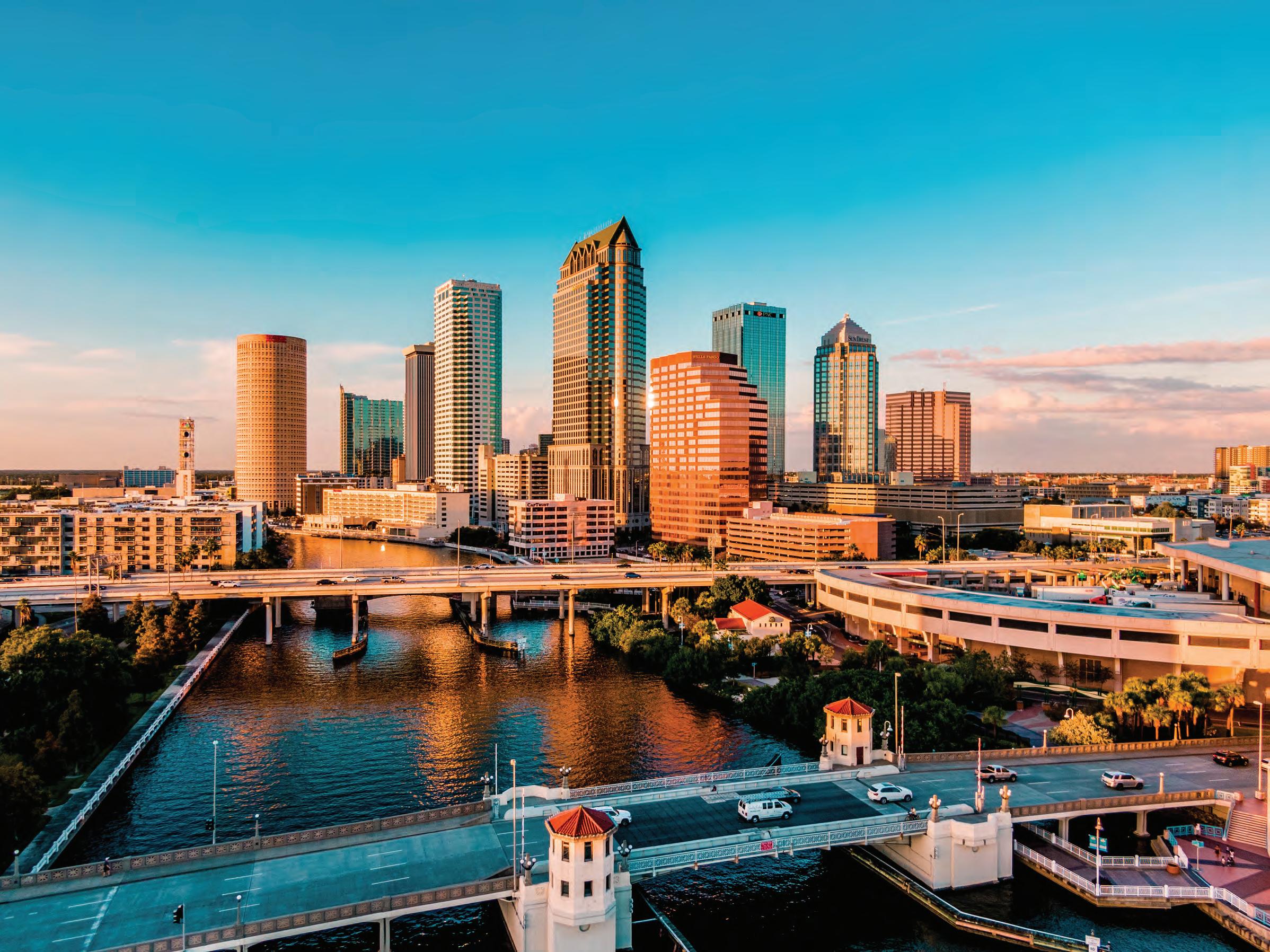
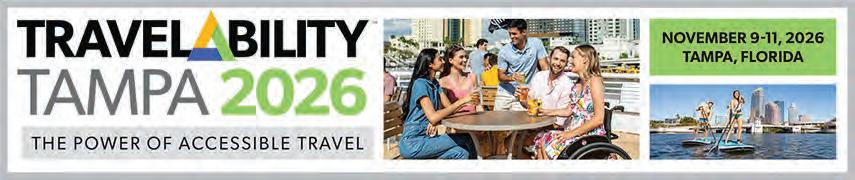
Tampa Bay looks forward to hosting the inspiring 2026 TravelAbility Summit and welcoming its amazing attendees. In Tampa Bay, every meeting is a big event no matter the size.
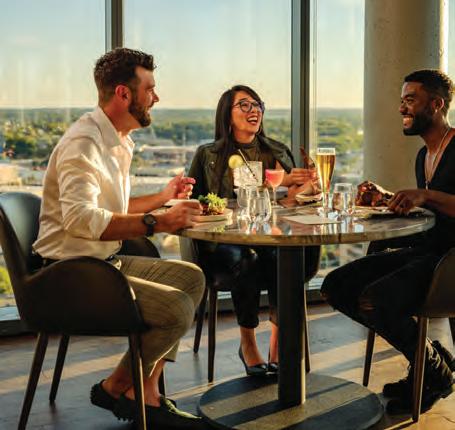
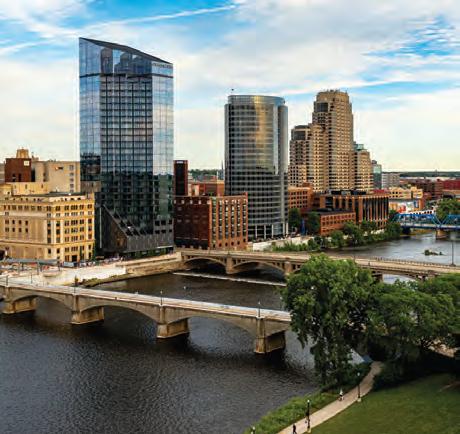
Our easy-to-navigate waterfront Convention District, modern hotels, innovative venues and MICHELIN-starred culinary scene create an unforgettable experience enhanced by our dedication to inclusive hospitality. In Tampa Bay, all are welcome.
Host an Accessible Meeting to Remember
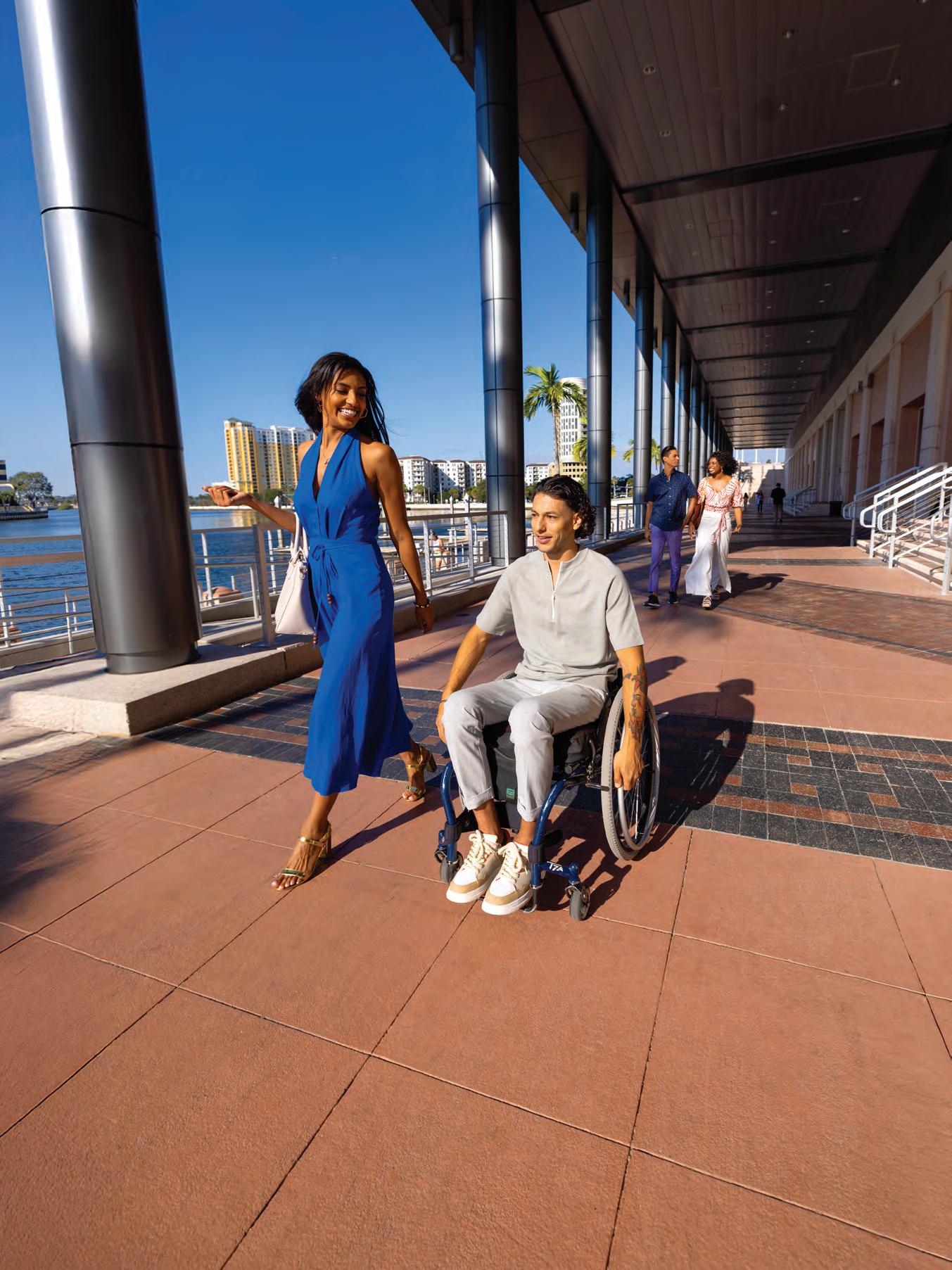
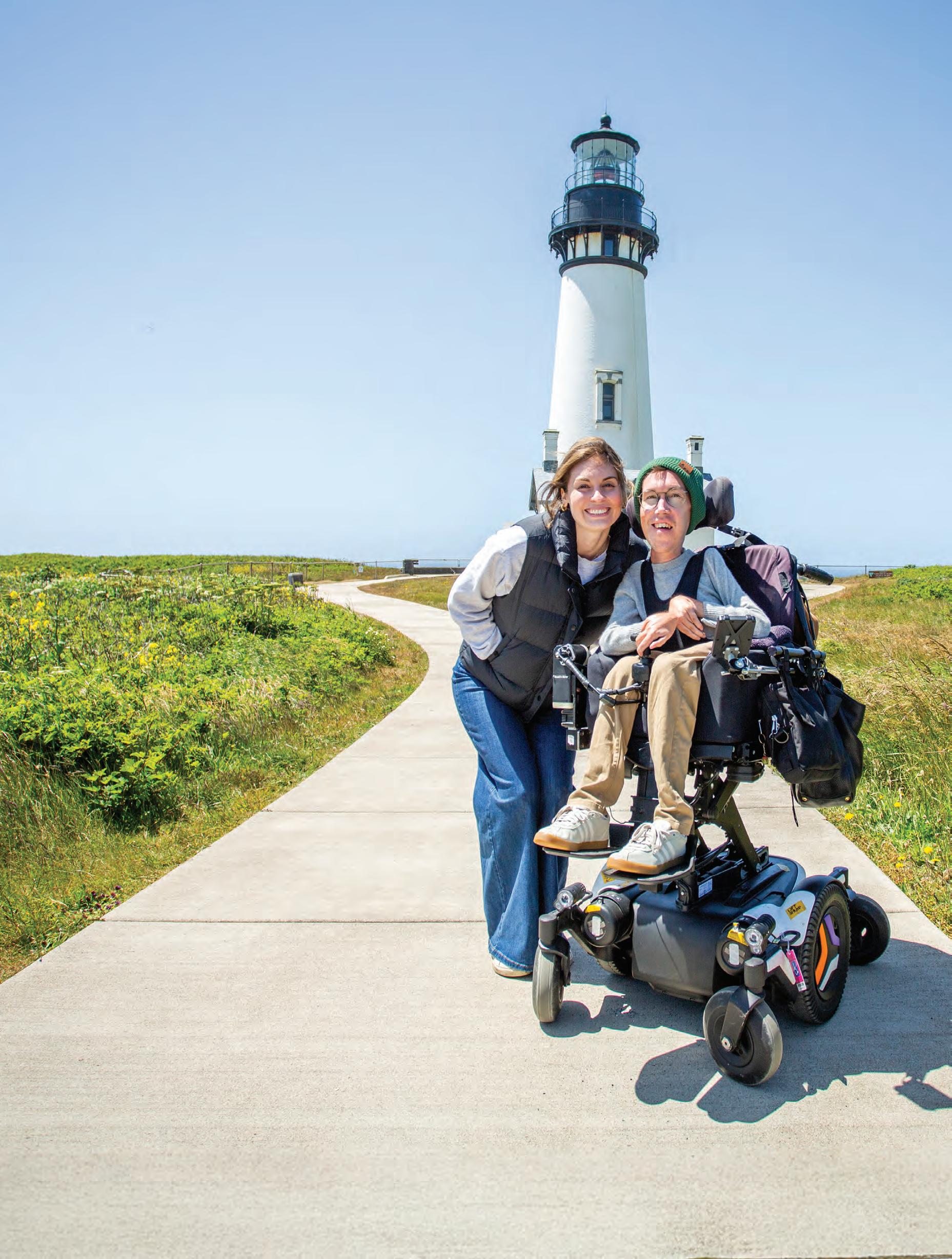
Combining smart accessibility and cutting-edge amenities in a scenic, waterfront and mobility-friendly Convention District, Tampa Bay is here to make every day of your meeting unforgettable.
The crown jewel of your meeting.
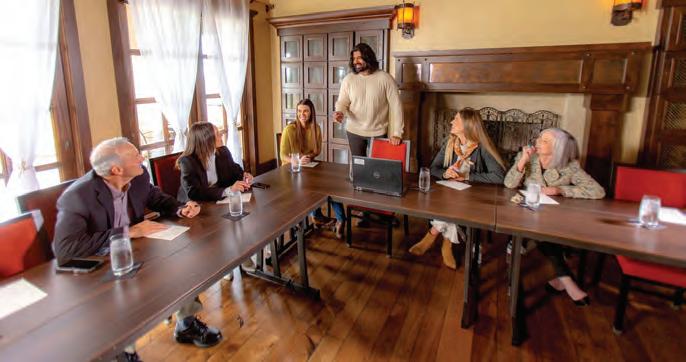
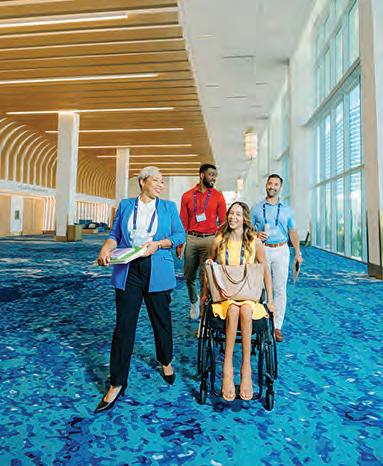
At the center of your meeting experience is the Stella Award-winning Tampa Convention Center. This worldclass facility recently received $38 million in upgrades that include 18 meeting rooms overlooking the water. And from the entrances to the elevators and the meeting rooms to the restrooms, the center meets the accessibility standards from the Americans with Disabilities Act (ADA). Inside, you’ll benefit from 600,000 sq. ft. of customizable event space — plus a 36,000-sq.-ft. ballroom — to bring your meeting to life.
Accessible adventures and transportation.
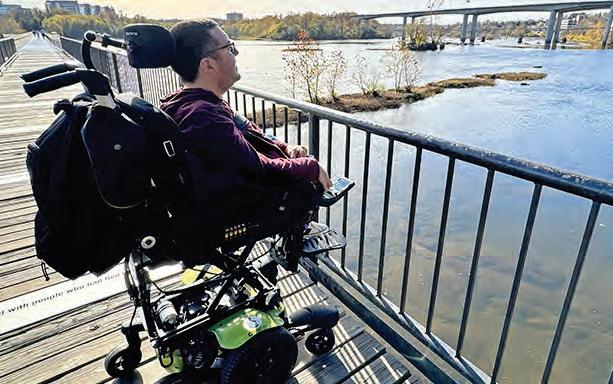
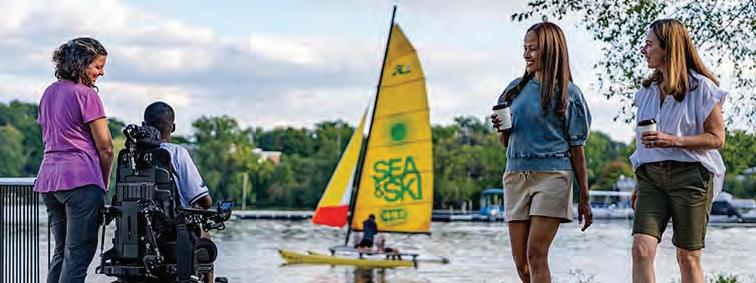
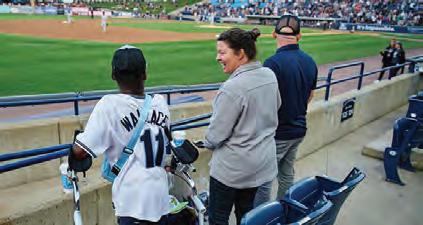
With 2.6 miles of scenic waterfront views, the Tampa Riverwalk links the Tampa Convention Center to must-experience museums, parks, award-winning restaurants and unique attractions.
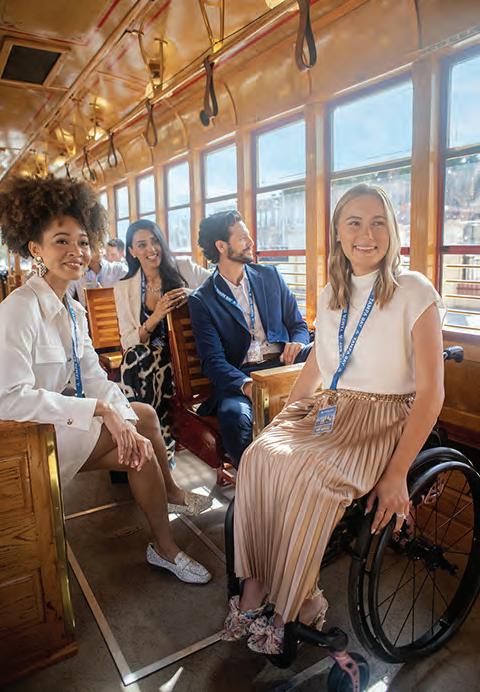
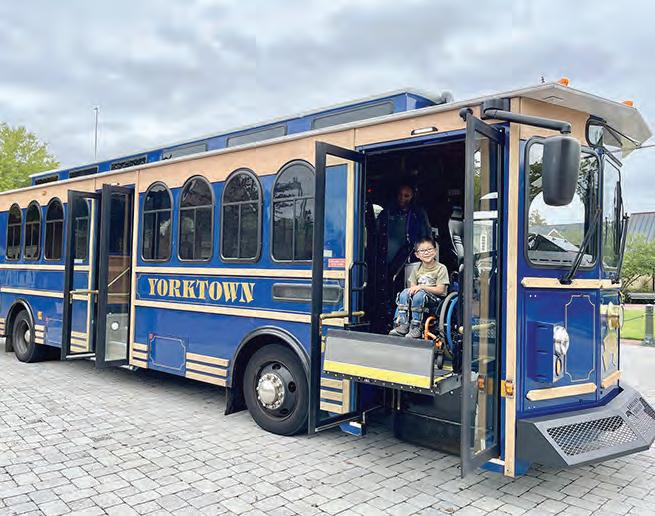
Outside the Convention Center, you’ll also find the Pirate Water Taxi and the free TECO Line Streetcar. Both offer wheelchair-accessible transportation to an array of hotspots around Tampa Bay.
Savor new tastes
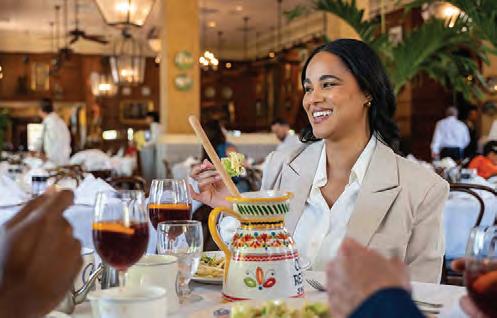
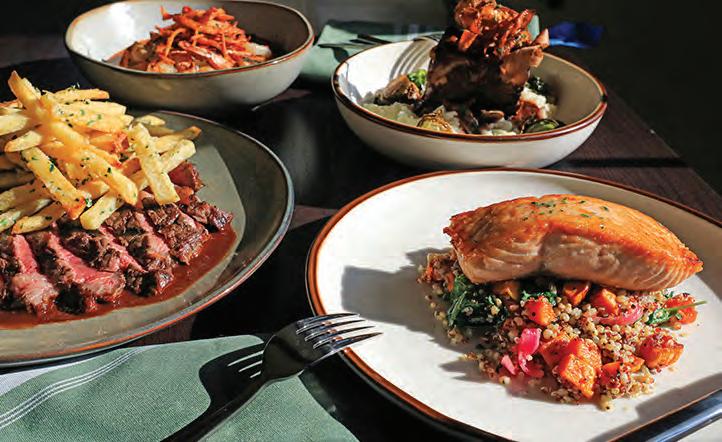
Like a great meeting, good food brings people together, while giving them plenty to talk about. And Tampa Bay’s award-winning culinary scene does both.
You’ll find everything from MICHELIN-starred restaurants to more low-key, yet still award-winning, establishments offering new spins on classic dishes. Naturally, fresh Gulf seafood is always plentiful.
Discover more at TampaMeetings.com today.
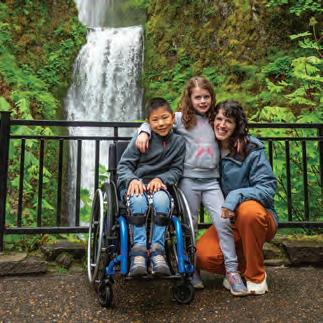
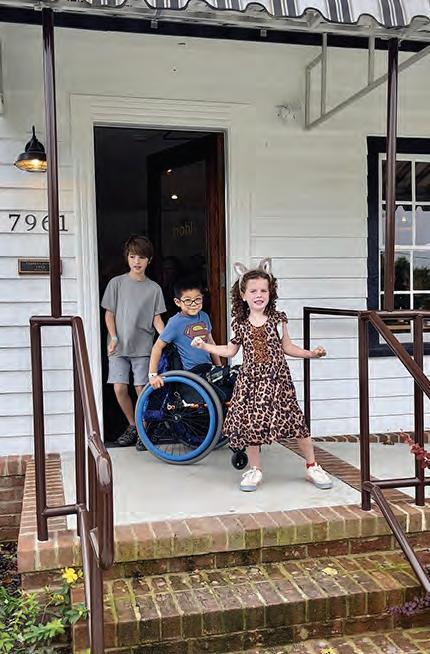
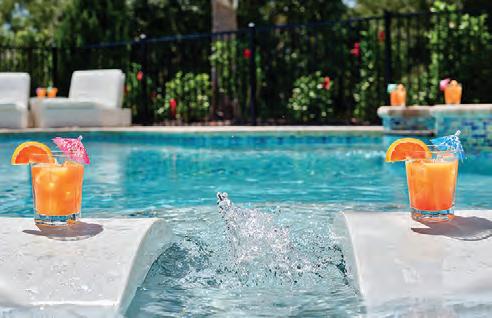
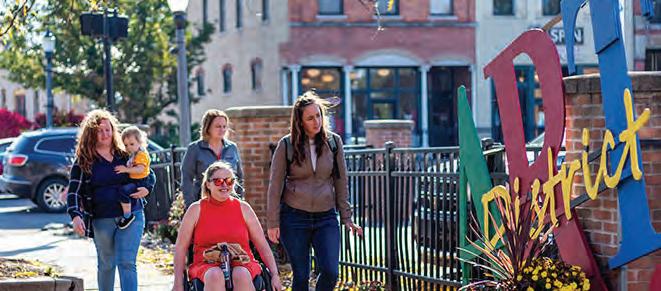
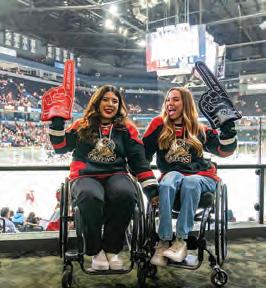
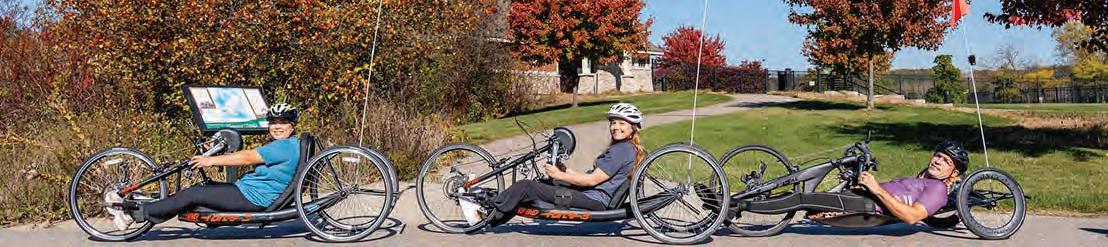
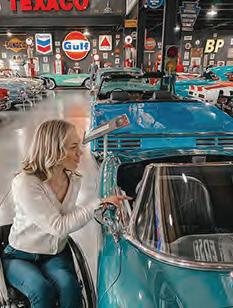
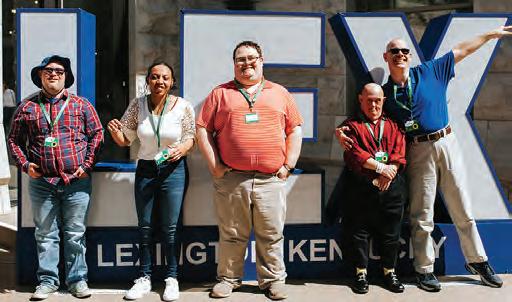
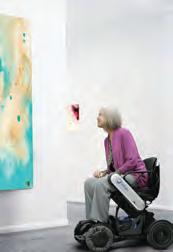
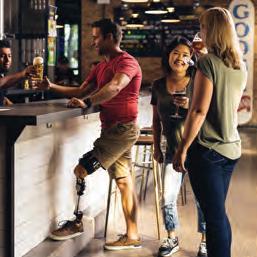
Find mobility-friendly spaces throughout downtown.
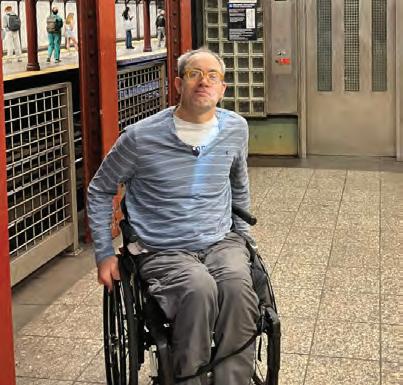
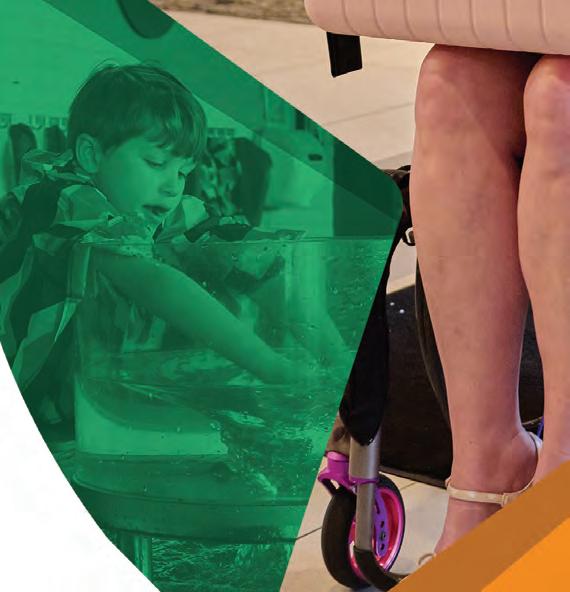
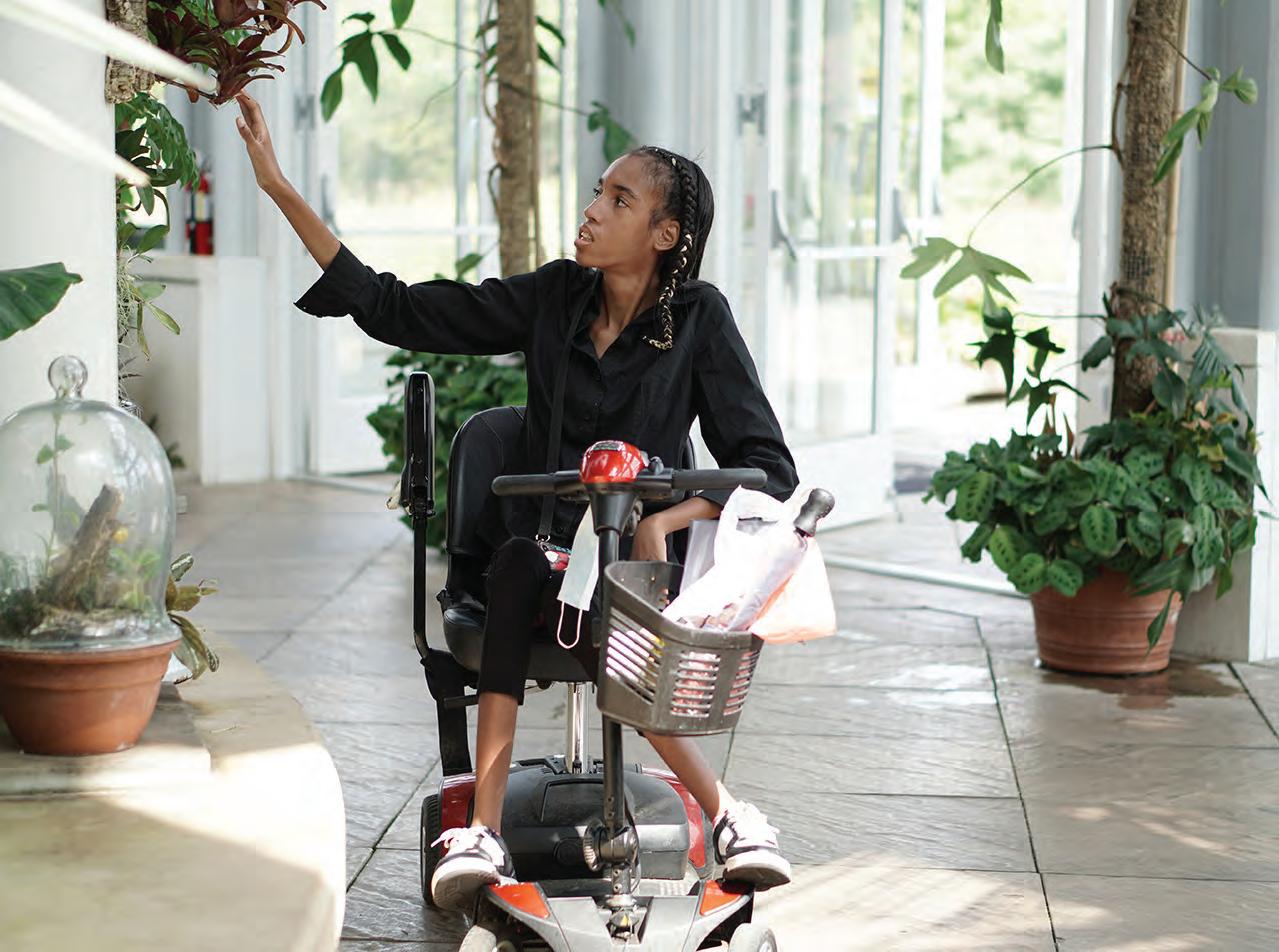
TECO Line Streetcar is wheelchair accessible.
They’ve never been here before.
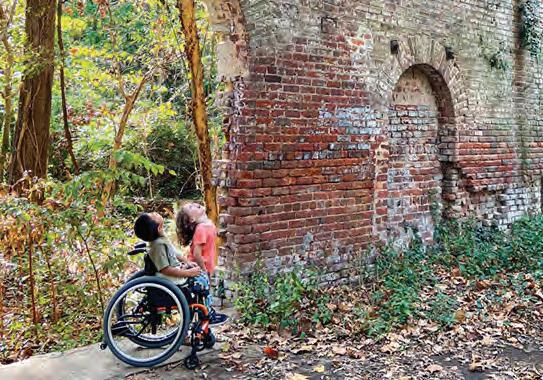
Photo credit: Juniper Preserve
Annual TravelAbility Summit Examines the Future of Accessible Travel
By Jordan Bradley
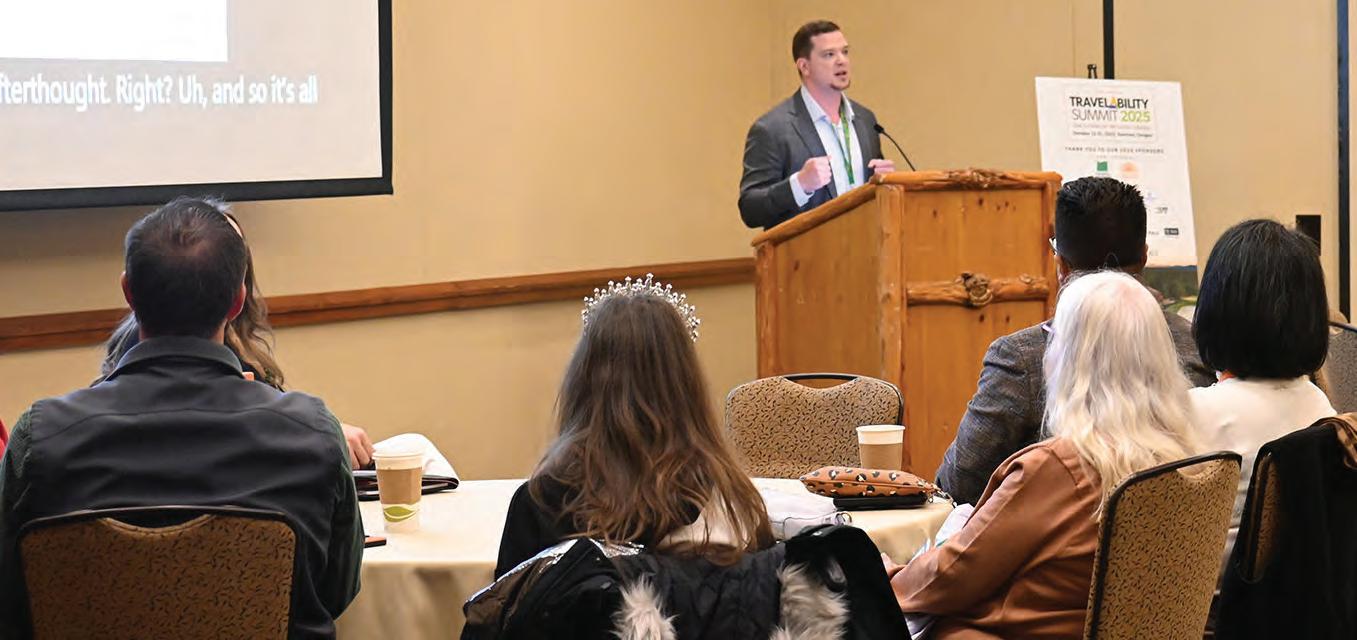
The seventh annual TravelAbility Summit gathers destination representatives, tech innovators, leaders in accessibility advocacy and implementation, and individuals with disabilities every year to discuss the good, the bad, and the ugly of tourism through the lens of accessibility.
That the summit was held in chilly, perfectly-fall central Oregon at the Sunriver Resort of October 13–15 was especially apt: Oregon has been at the forefront of accessibility travel and outdoor accessibility, has been a strong presence at previous Summits, and the state itself was the first to be verified as an accessible state by Wheel the World. The digital platform connects travelers with disabilities to detailed information of an evaluated location’s accessibility offerings and provides accessibility assessments to businesses such as hotels and restaurants, destinations, and regions.
TravelAbility Founder and CEO Jake Steinman told USAE that he and the TravelAbility team were impressed by Visit Central Oregon’s and Travel Oregon’s attention to and thoughtfulness of the needs of the summit’s attendees.
The conference was held in a more remote location than in previous years, with attendees required to travel 45 minutes from the nearest commercial airport in Redmond to the small resort town of Sunriver.
“I was a little worried about attendance because of the remoteness of the location, but our attendance has been great this year,” Steinman said.
There was record attendance at last year’s conference held in San Francisco with 208 attendees, Steinman said—still, the conference sold out this year.
Steinman told USAE the Visit Central Oregon crew made sure the summit’s 200 attendees would have
access to shuttles from the airport to the resort upon arrival and departure, and for those traveling outside the pre-arranged shuttle times, a discount code for Uber rides was provided.
“We believe Oregon can be, should be, must be a destination that’s welcoming to everybody,” Todd Davidson, CEO of Travel Oregon, told USAE at the Summit. “We want everyone to feel valued and safe and cherished here. Hosting this event was kind of a capstone because it comes on the heels of receiving the certification for the state, which is currently the only state that is accessibility verified. So now our visitors with disabilities and their families and friends who are traveling with them…can come to Oregon and there are 750 businesses in 43 communities in all seven regions of the state that have been vetted against a scorecard of 200 different attributes.”
As the theme for this year’s event was “The Future of Inclusive Travel,” sessions included: Preparing for aging travelers, capturing the accessible luxury market, ways for tourism businesses to go beyond Americans with Disabilities Act (ADA) compliance to have real impact on guests with disabilities, and so much more.
TravelAbility hosted its first film festival, receiving 52 entries from eight countries; and announced the completion of a comprehensive database of social media content creators with disabilities. The database was constructed with the intention of helping destinations more easily identify content creators with which to partner.
During the October 13 session on TravelAbility’s Accessibility Playbook—introduced earlier this year in partnership with Destinations International—presenters Ava Wells, Social Impact Manager at DI, and Amy Jukes, CEO and principal consultant at AmVarra, introduced the Playbook’s AI companion.
The Playbook offers a comprehensive guide for destinations, attractions, hotels and restaurants to start thinking about accessibility. Most importantly,
“the Playbook meets you where you’re at,” Jukes said.
With the AI companion, making progress in accessibility—whether through a more accessible website or identifying training gaps for attraction staff—is that much easier for a destination, attraction or hotel.
“You may be wondering, how can I make accessibility really a reality within my destination? And sometimes having a document or going through checklists can be cumbersome, especially if we have small teams,” Wells said during the session. “So we’re going to put those best practices into action, and that’s where we’d like to introduce you to the AI companion. This is a next step forward, the next generation that takes the playbook, pulls together in those standards, those legislative practices, and really brings together an implementation tool for destination organizations to use.”
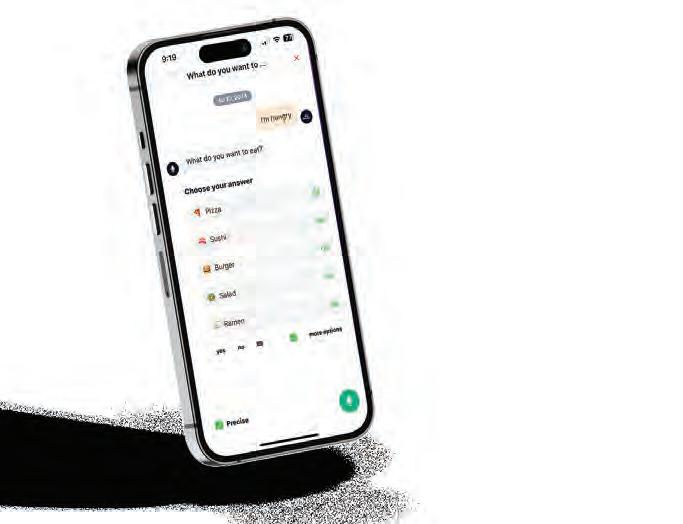
The AI companion is available to anyone who has purchased the playbook, and allows users to provide prompts like “I need to develop a proposal for community accessibility funding. Can you help me?” to the playbook’s closed-loop chat bot, and receive guidance from accessibility resources, but not from the entirety of the internet, resulting in relevant and refined feedback.
Users are also able to feed the companion their organization’s strategic plans to further elevate the AI’s analysis.
For Travel Oregon’s Vice President of Global Market-
ing Kevin Wright, what really stuck with him was the importance of training individuals at travel destinations in the best practices of hosting and serving individuals with disabilities, he told USAE
“I’m the marketing guy,” Wright said, adding that a training program may not be right for his department to “run with, but I would bring the appropriate folks in our agency together to say, ‘I think there’s an opportunity here.’ Somebody said it yesterday, and I thought it really resonated with me. It’s like, you can do all this work—you can do the program we’re doing in the real world and the assessments, but if the visitor comes here and has a terrible experience because of an interaction with an employee, it doesn’t matter.”
A common topic of discussion both in panels and presentations and in conversations between attendees throughout the conference was the potential accessibility has to impact, not just a tourism destination or DMO, but also the community itself.
“It’s currently a $120 million industry [globally], but it has the opportunity to be a $3 billion industry,” Wright said. “Those numbers are mirrored nationally, and I think what one of the greatest things about this is you’ve just got this intersection of the moral opportunity and the economic opportunity that just really coincide nicely. I think that’s what gets me really excited about it, is helping our communities with that economic input, but [also] doing great work to help disabled travelers. And it’s not just the travelers. The things we do in Oregon will also benefit our residents, too. There’s just so much upside.”
Meet in Central Oregon
With urban communities like Bend, Sunriver, and Redmond, and the rural charms of Sisters, La Pine, Prineville, Madras, Warm Springs, and Maupin, Central Oregon offers a perfect mix of thrilling recreation, culinary exploration, artistic and cultural experiences, and natural wonder.
Located on the eastern slopes of the Cascade Range, where vast forests give way to the arid high desert, Central Oregon is characterized by year-round adventure, authenticity, inspiration, and environment.
Booking your meeting here means more than just business as usual. An outdoor oasis with unmatched scenery, recharge and refresh in one of the Pacific Northwest’s premier destinations. With resorts and meeting venues to suit groups of all sizes, Central Oregon remains a top choice as a backdrop for meetings, retreats, and other essential planning sessions.
Oregon is the first U.S. state verified as “Accessibility Verified” by Wheel the World. Additionally, Central Oregon is“Destination Verified” and is home to award-winning organizations and entrepreneurs such as Oregon Adaptive Sports and AdvenChair, providing their services that responsibly promote accessible offerings and experiences throughout the region. Our natural wonders and unique experiences are those that we hope can be enjoyed by everyone of all abilities, ages, and backgrounds.
Just three hours by car from Portland, and with direct flights from 11 major markets into Redmond Municipal Airport (RDM), meeting in Central Oregon has never been easier.
For more information, go to www.meetincentraloregon.com
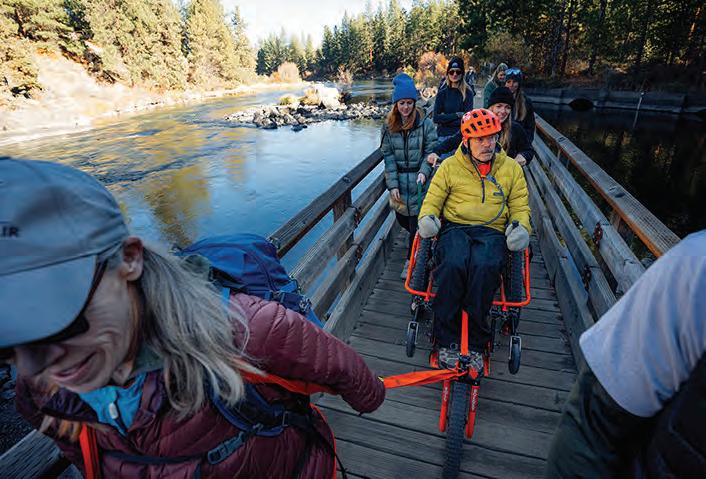
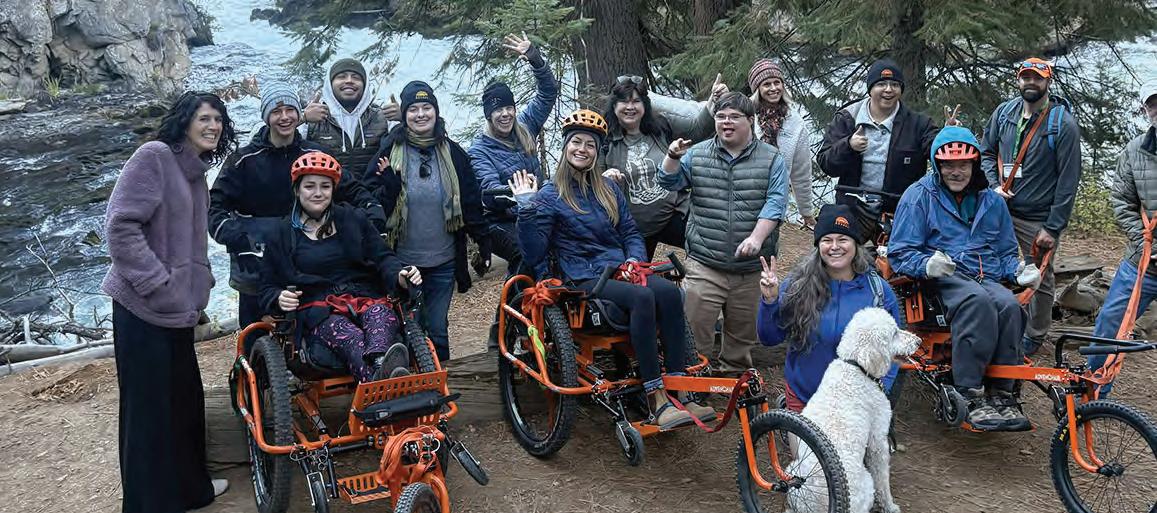
A group enjoys an accessible outdoor adventure scenic hike with AdvenChair. Credit: Cody Rheault - Courtesy Visit Central Oregon
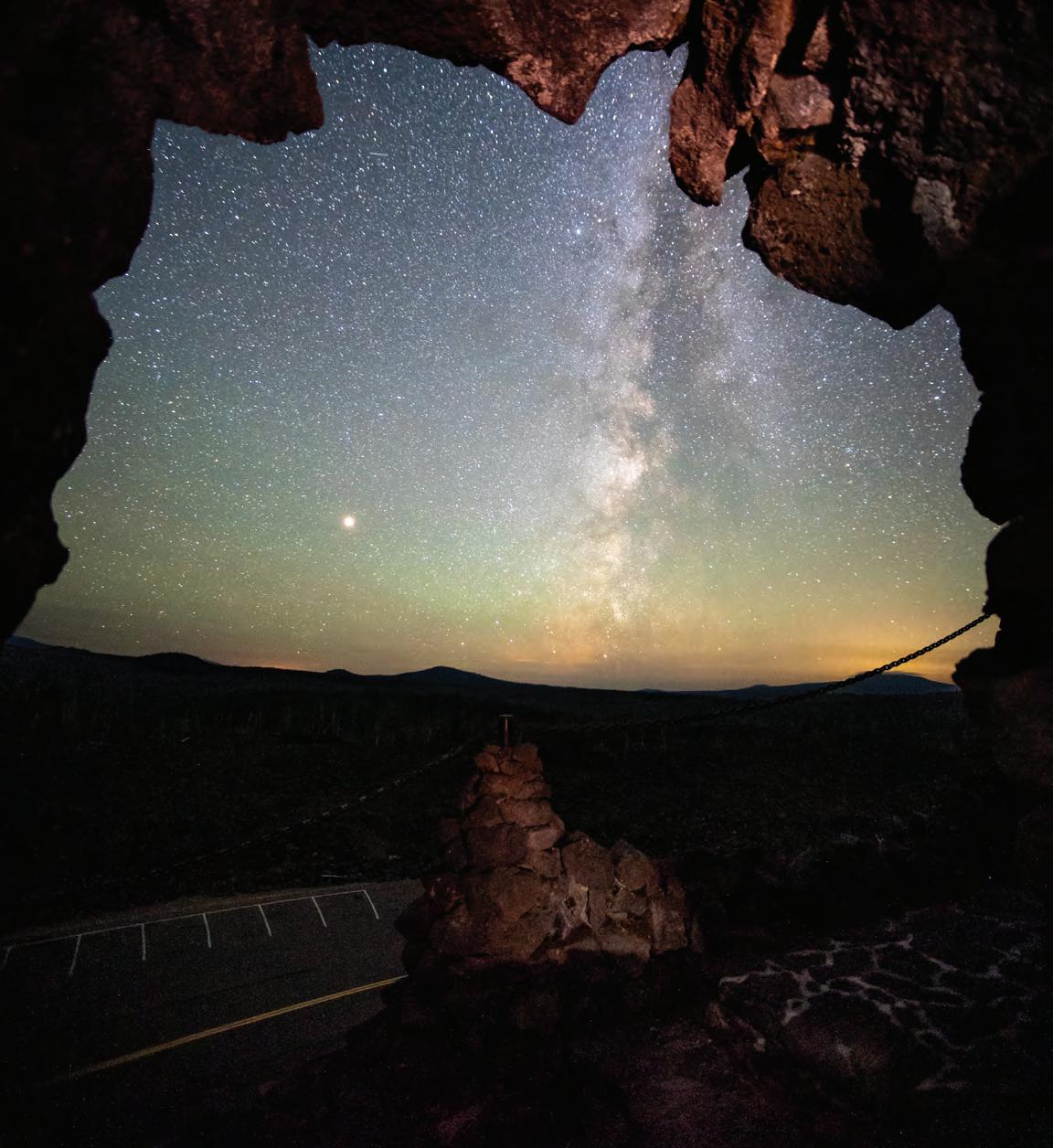
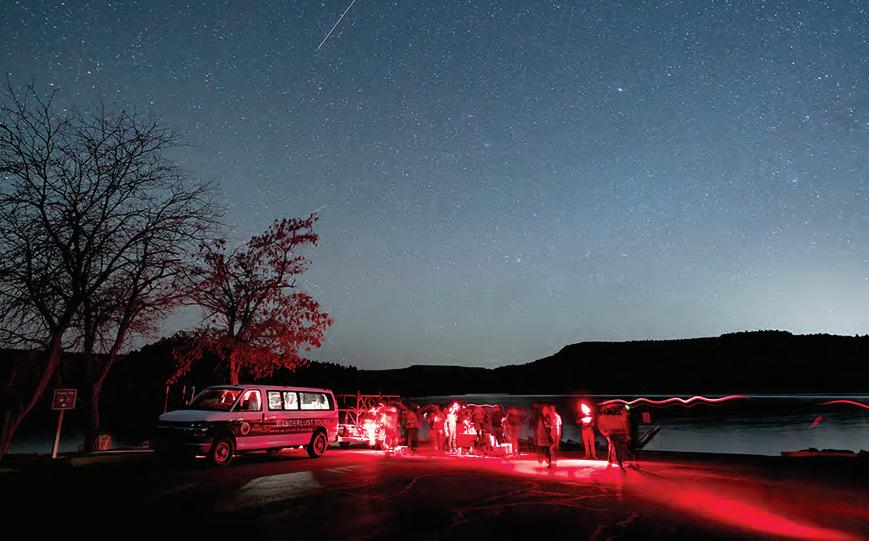
Guided stargazing experiences in Central Oregon with Wanderlust Tours offer planners a unique way to surprise and delight groups beyond the traditional meeting room. Cody Rheault - Courtesy Visit Central Oregon
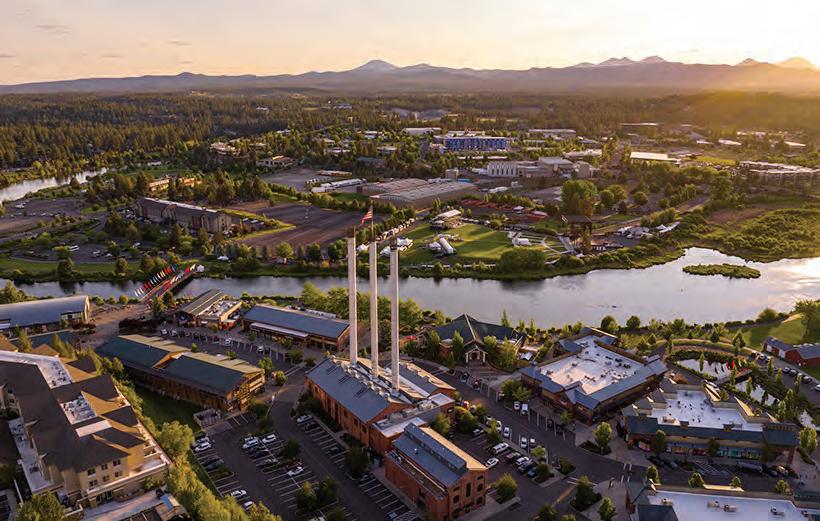
Iconic smokestacks and the Deschutes River create a stunning backdrop for Bend’s historic Old Mill District. Credit: Jonathon Chandler - Courtesy Visit Central Oregon
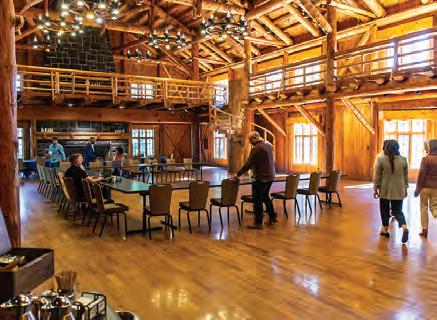
A spacious, light-filled venue with iconic lodge architecture, the Great Hall at Sunriver Resort is designed to inspire connection, collaboration, and unforgettable events. Credit: Steve Heinrichs - Courtesy Visit Central Oregon
In Charlottesville and Albemarle County, we believe that travel should be fun, accessible, and enjoyable for everyone. Whether you’re a first-time visitor or planning a return trip, our region offers a unique blend of natural beauty, rich history, vibrant culinary options, and scenic vineyards to explore. Learn more and start planning your trip today!
VISITCHARLOTTESVILLE.ORG
The Winning Films from the Inaugural TravelAbility Film Festival
The 2025 TravelAbility Summit introduced exciting new features this year, including the inaugural TravelAbility Film Festival, a creative showcase celebrating the voices and visuals of accessible travel. Designed to highlight storytelling that inspires empathy, understanding, and action, the Film Fest put accessibility in the spotlight, giving filmmakers and destinations a platform to share how they are shaping a more inclusive world.
The festival drew 52 entries from around the globe, including India, Ireland, England, Scotland, Lithuania, South Africa, Canada, and the United States. From immersive destination experiences to innovative accessibility programs, the films captured creativity and real-world impact.
Fourteen finalists were selected by a team of screeners and reviewed by a distinguished jury of experts in film, design, and accessibility:
● Jule Sisk, Founder, The American Pavilion at Cannes Film Festival
● Josh Loebner, Global Head of Inclusive Design, VML
● Taylor Miller, Founder, Slamdance Film Festival
● Monika Skerbelis, Director, Emerging Filmmaker Showcase at Cannes
● Jennifer Casey, Director of Strategic Partnerships, Gray Television
“Communication about accessibility to create empathy is all about storytelling, and these are examples of excellent storytelling that create empathy, understanding, and connection, taking mindsets from awareness to action,” said TravelAbility Founder and CEO Jake Steinman.
Throughout the Summit, all finalist films were shared between major sessions, giving attendees the chance to experience these stories firsthand. Participants noted that interspersing the films throughout sessions grounded the importance of accessibility in real, lived experiences, creat-
ing moments of reflection and motivation. The festival concluded with a celebration of all films and an awards ceremony on Tuesday, October 14, 2025 honoring the most impactful stories from around the world.
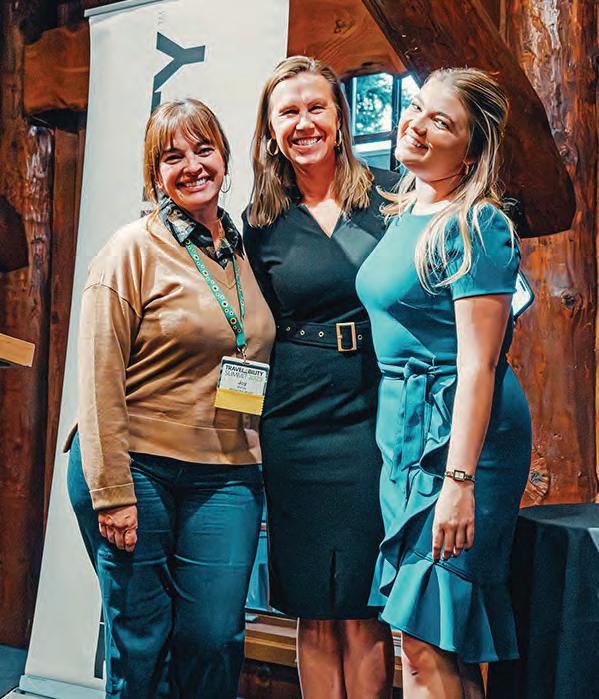
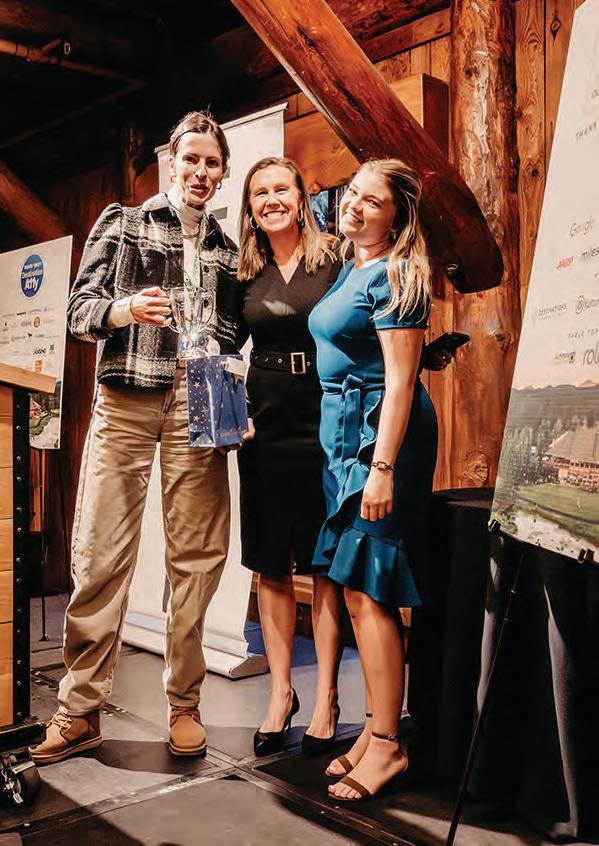
Joy Burns (Wheel the World) accepts 1st Place in the attractions category for Ximuwu: The First Truly Accessible Safari Lodge. Pictured from left to right is Joy Burns, Jennifer Casey (Gray Media) and Carolina Christian (TravelAbility).
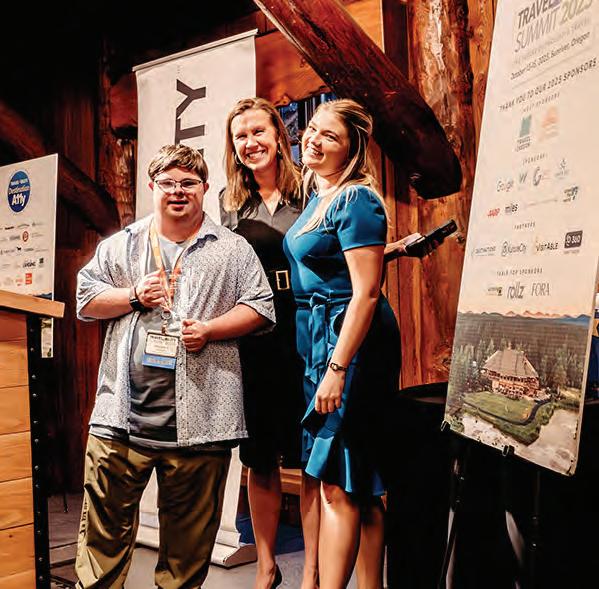
Houston Vandergriff (Downs & Towns) accepts 2nd Place in the content creator category for THIS is Yuma. Pictured from left to right is Houston Vandergriff, Jennifer Casey (Gray Media), and Carolina Christian (TravelAbility).
Watch the Winning Films
Grand Prize Winner
GLP Films & The Oregon Coast Visitor Association — Accessible, Inclusive Travel on the Oregon Coast
Attractions Category
1st Place — Ximuwu: The First Truly Accessible Safari Lodge
2nd Place — WetWheels: WetWheels: Barrier-Free Boating for Everyone
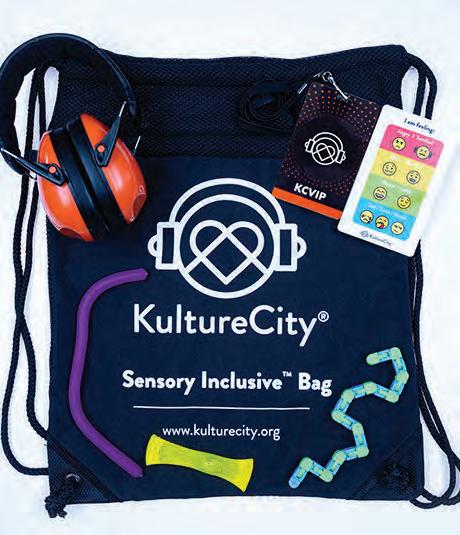
3rd Place — KultureCity: It’s More Than Just A Bag
Content Creators Category
1st Place — Traveleyes: Share the Adventure
2nd Place — Downs and Towns: Downs and Towns: THIS is Yuma
3rd place — Vineet Victor: Overcoming Barriers: India and Beyond
Destination Category
1st Place — Travel Alberta: Alberta Adapts 2nd Place — VML and Tennessee Department of Tourist Development: Sound Sites
3rd Place — AMLA: Under the Sun, Moon, & Stars: Accessible North Alabama with Wonders Within Reach
The Oregon Coast Visitor Association accepted the Grand Prize for GLP Films Accessible, Inclusive Travel on the Oregon Coast. Pictured from left to right are Jeremy Burke and Jesse Dolin (Oregon Coast) and Jake Steinman (TravelAbility).
Meg Raby Klinghoffer (KultureCity) accepts 3rd Place in the attractions category for KultureCity: It’s More Than Just A Bag. Pictured from left to right Meg Raby Klinghoffer, Jennifer (Gray Media), and Carolina Christian (TravelAbility).
traveloregon.com/accessibility
Accessible Meeting Spaces
Accessibility Verified Adventure
Oregon is proud to be the first state verified by Wheel the World, a global platform for planning and booking accessible travel. This program verifies real accessibility information across lodging, attractions, and services — so travelers with disabilities can plan confidently, knowing what to expect, including step-free entry, visual signage, accessible parking and more. Whatever your travel needs, it’s now easier than ever to find trusted information and inspiration about Oregon’s inclusive destinations.
Accessible tourism not only breaks down barriers for people with disabilities but creates shared benefits among many different types of travelers, such as aging adults, people traveling with temporary disabilities or people traveling with children. It’s also highly beneficial to create shared experiences for groups or meetings when visitors traveling together may have different levels of ability.
To date, more than 750 tourism businesses, lodging operators, tour guides and operators in 43 communities across the state have been evaluated for accessibility and are working to be more inclusive for people of all abilities. As part of the assessments, Wheel the World tracked mobility, visual, hearing and cognitive accessibility to address a wide range of needs. This information is now available to offer visitors with
disabilities the ability to book lodging, dining and attractions knowing their needs will be met at each destination along the way.
Because we’re Oregon, we didn’t just focus this effort on indoor spaces. We also want to remove barriers to access for the world-class outdoor recreation that makes Oregon such a special destination. Across the state, work is ongoing to make trails, signage, lodgings, kayak launches, attractions and guided experiences more inclusive. From adaptive skiing and hiking in the mountains to old-growth tree climbing, accessible stargazing in the high desert or Mobi-Mat-assisted beachcombing at the Oregon Coast—visitors of all abilities can now feel welcome to join their friends, family or colleagues in outdoor pursuits that have historically presented barriers to participation.
This effort marks a major milestone in Travel Oregon’s vision of making the state a truly welcoming destination for all. When you visit or host your meeting in Oregon, you get much more than just a place where all can gather—you get an Accessibility Verified destination where everyone is welcome.
Learn more: traveloregon.com/accessible-travel
Operation 2030: The End of “Niche”
Accessible Travel
By 2030, all 73 million Baby Boomers in the United States will be age 65 or older. That milestone marks a clear inflection point for the travel industry. Accessible travel will no longer sit on the margins as a specialized offering. It will become a mainstream expectation woven into how travel is planned, sold, and experienced.
The data for 2030 already points in this direction
•50.5 million people over 65 will be living with a disability. STATISTA
•Average net worth:$1.61 million per household USA FACTS.
•78% of those will be retired. Census Analysis 2024:
•70% plan to travel this year (average of •27 travel days/year). AARP 2025
•57% of parents plan to travel with grandparents and children, which could influence up to 35% of all travel. Travel Weekly 2025
Taken together, with an average party size of 2.3, over 100 million people traveling with someone with a disability; these trends signal a fundamental shift. The travelers shaping demand in the coming years will expect destinations, hotels, attractions, and meeting venues to be accessible by default, not by exception. Clear information, thoughtful design, and inclusive experiences will increasingly define quality and competitiveness.
In 2026, TravelAbility will launch a new initiative, Operation 2030, focused on preparing the industry for this reality before it becomes unavoidable. Rather than reacting to change, the goal is to help destinations and organizations get ahead of it.
As the next decade approaches, the question for the travel industry is no longer whether accessible travel will go mainstream. It is whether organizations will be ready when it does.
Never Lose Your SplaSh
Meetings Designed for Every Attendee
For planners seeking a destination that supports attendees of all abilities with care and intention, Greater Fort Lauderdale is a place where representation and accessibility is built into the foundation of how meetings are delivered.
Accessibility, Thoughtfully Delivered
At the center of the destination is the Broward County Convention Center supported by a wide range of hotels, like the connected Omni hotel, designed to accommodate different needs. Properties throughout the area offer features such as step-free access, roll-in showers, pool lifts, and trained staff, all within easy reach of venues, dining, and waterfront experiences. This proximity helps planners create agendas that feel seamless and efficient, allowing attendees to focus on connection and content rather than logistics.
A Welcoming Arrival Experience
A sense of ease begins on arrival. Fort Lauderdale-Hollywood International Airport participates in the Hidden Disabilities Sunflower Program, offering travelers with non-visible disabilities a discreet way to signal they may need additional assistance. Clear pathways, supportive transportation options, and a destination designed for smooth movement help ensure a comfortable arrival and departure experience for every guest, including senior travelers and those with sensory or mobility needs.
Beyond the Meeting Room
Greater Fort Lauderdale extends this same level of consideration beyond meeting spaces, offering barrier-free ways for attendees to relax and recharge during their stay. Across eight distinct beach towns, the destination’s accessibility initiatives include beach wheelchairs, Mobi Mats, and thoughtfully designed restrooms, allowing guests to enjoy the coastline with confidence and ease.
Sensory-friendly beach initiatives, supported through partnerships with Kulture City, further expand these experiences for travelers with sensory needs. More than 150 lifeguards across the destination have been trained to support these efforts, with additional sensory-friendly activations planned to ensure every guest’s experience is a great one.
Accessibility Backed by Action
Greater Fort Lauderdale’s commitment is reinforced through measurable progress and trusted partnerships. The destination is the first to collaborate with Tripadvisor on a travel-planning initiative for accessible travelers and their booking experience. Through collaboration with Wheel the World, 109 locations across the destination have been mapped to provide detailed planning information in advance as well as accessible features to address different needs.
These efforts are also reflected in the destination’s new brand campaign, underscoring that delivering for every attendee is a long-term priority, not a standalone initiative.
Plan your next meeting in Greater Fort Lauderdale, where the water welcomes everyone.
“The networking and people are always a highlight. I’ve made incredible connections because of this conference.”
- Allison Rowe, Marriott International
SAVE YOUR SPOT SAVE YOUR SPOT
8TH ANNUAL
SUMMIT 2026
What to Expect at the 2026 TravelAbility Summit in Tampa
The 2026 TravelAbility Summit in Tampa focuses on shifting accessibility from a “niche” topic to a core business strategy through the following key objectives:
• A “Destination-Wide” Model: TravelAbility is collaborating with the airport, convention center, and host hotel to transform Tampa into a blueprint for the accessible destination of the future.
• A Working Forum: The 8th annual summit brings together destinations, brands, and travelers with lived experience to address current progress and identify remaining gaps in the industry.
• Applied Learning: This event features workshops and sessions designed to move accessibility learnings into actionable industry practice.
• Strategic Growth: Programming that focuses on both disabled and aging populations (Operation 2030).
Industry Research That Shapes Decisions
The Summit’s research-focused sessions will use data on disabled and aging travelers’ behaviors and barriers to strengthen the business case for accessibility, shifting the industry mindset from compliance to a necessity.
For a preview, see this 2025 Summit research decks:
Opening Doors:Uncovering Barriers and Opportunities in Accessible Tourism | Dr. Pavlina McGrady, Southern Oregon University
Building Partnerships with High Impact Content Creators
• Growing Impact: Building on a record turnout of disabled content creators in 2025, the 2026 program will focus on how these creators influence audience trust, perception, and decision-making.
• Daily Speed Dating: The popular Influencer Speed Dating sessions return in 2026, offering expanded faceto-face networking to foster authentic marketing collaborations between industry and creators with robust follower counts.
• Lived Experience Panels: A cornerstone of the Summit, these sessions provide attendees with real-world insights into how disabled travelers navigate experiences and assess accessibility.
• Strategic Partnerships: Programming will explore how to structure long-term partnerships with creators, positioning them as essential partners in developing credible content and inclusive travel strategies.
Examples from 2025
• The Best & Worst Accessible Travel Stories of 2024: What We Learned
Kristy Durso (@kristygoes), Jennifer Allen (@wonders_within_reach), Amy Tarpein (@elijahsbabybucketlist), Jessica Jordan Ping (@ therollingexplorer), and Anthony Ferraro (@asfvision) discuss their best and worst travel experiences of 2024.
• Post with the Most
m Kristy Durso (Incredible Memories Travel)
m Chelsea Bear (@realchelseabear)
m Jennifer Allen (@wonders_within_reach)
m Houston Vandergriff 1 (@downsandtowns)
m Houston Vandergriff 2 (@downsandtowns)
Operation 2030 Workshop: The End of “Niche” Accessible Travel as We Know it.
Operation 2030 programming will be a major focus of the 2026 Summit. Sessions centered on aging travelers will explore why it is essential for the travel industry to prepare for the rapidly growing Baby Boomer travel population. Programming will emphasize actionable strategies for adapting accessibility features to better serve aging travelers, along with guidance on how to effectively communicate and market those features. Building on insights shared during the 2025 Summit, this content moves the conversation forward by translating awareness into clear, practical next steps for destinations, hotels, and travel organizations.
Recommended session previews from 2025:
• 2025 Travel Trends: A survey of U.S. adults age 50-plus | AARP
• How Much Handholding Do Senior Travelers Require?
Join Us in Tampa
The 2026 TravelAbility Summit takes place November 9–11 in Tampa Bay. As accessibility continues to shape the future of travel, the Summit offers a hub for the industry to connect, plan, and act. Save your spot.
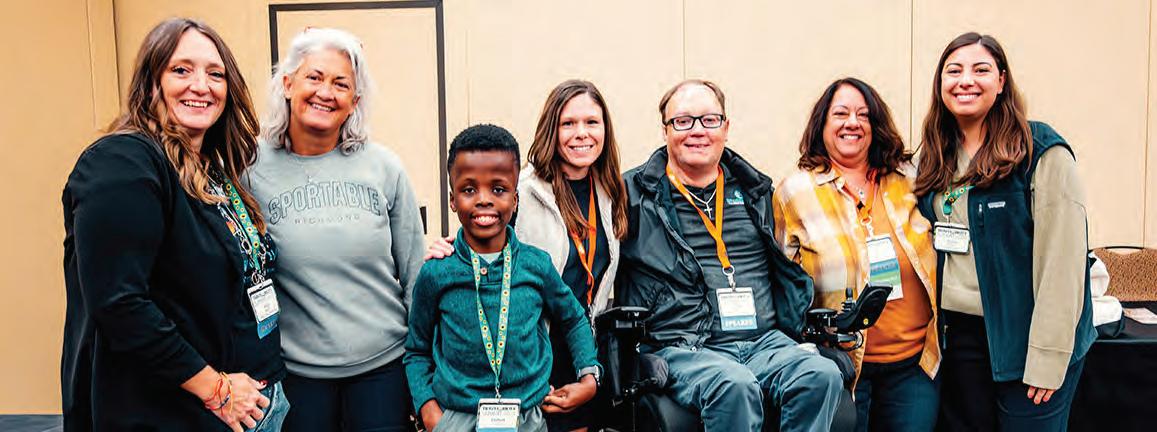
From left to right: Amy Tarpein (Elijah’s Baby Bucket List), Suellen Henneberry (@suellenhenneberry), Robert Gleason, Stevie Gleason, John Morris (https://wheelchairtravel.org), Toni Bastian (Visit Richmond), Anna Bastian (VistABLE) pose for a photo.
AARP lead session on preparing for the aging traveler. Panelists from left to right: Cassandra Burton, Elaine Friesen-Strang, Helena Kesch (Oregon State Parks), Lona Choi-Allum.
Gray Destination Marketing, a division of Gray Media Group, is a full-service agency dedicated to elevating travel and tourism brands.
We’re a team of tourism marketing experts backed by one of the nation’s largest media companies. We merge the art of storytelling with the science of data to craft compelling narratives, drive visitation, and deliver measurable economic impact. With local roots and national reach, we turn awareness into arrivals.
Gray Destination Marketing Capabilities
Our in-house capabilities span content creation, omnichannel campaign execution, media planning, analytics reporting, and audience intelligence.
How Gray Destination Marketing Helps You
We deliver a measurable impact and unmatched reach for destination marketing organizations, travel and hospitality brands.
An end-to-end toolkit to equip destination organizations on their accessibility journey.
An end-to-end toolkit to equip destination organizations on their accessibility journey.
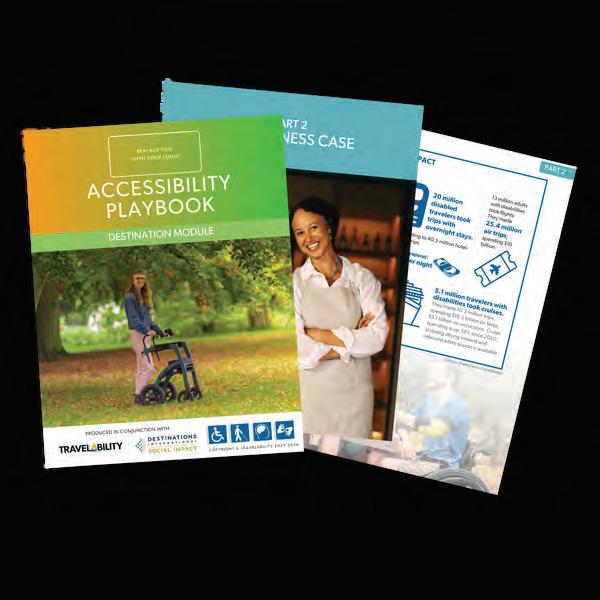
In partnership with Destinations International, TravelAbility has created a customized A ccessibility Playbook designed to assist destination organizations and their local stakeholders in developing and implementing practical accessibility strategies and initiatives, enabling them to better welcome and accommodate people with disabilities within their destination.
In partnership with Destinations International, TravelAbility has created a customized Accessibility Playbook designed to assist destination organizations and their local stakeholders in developing and implementing practical accessibility strategies and initiatives, enabling them to better welcome and accommodate people with disabilities within their destination.
Learn More
What Makes the Accessibility Playbook Unique?
From Destinations to Stakeholders
With hundreds of resources, tips, use cases, and links, destinations are encouraged to present this Playbook to their local partners and create stronger alignment.
Customizable Components
Personalizable components to share with industry stakeholders and in state and provincial co-op models.
AI Companion
Powered by
UnchainedAI, use this tool to implement accessibility strategies and collaborate across your organization.
The playbook was instrumental in helping me craft an ROI approach that could be used by other destinations.”
— Julie Pingston, President and CEO at Choose Lansing
The playbook was instrumental in helping me craft an ROI approach that could be used by other destinations.” — Julie Pingston, President and CEO at Choose Lansing
Building Accessibility That Lasts: Inside the Accessibility Playbook and the AI Companion
The Accessibility Playbook is a tool to help destinations, venues, and tourism organizations integrate accessibility into their business and community strategy. Built on research, lived experience, and real-world application, the Playbook offers stepby-step guidance that helps organizations understand why accessibility matters, where to begin, and how to make progress that is both practical and sustainable.
Designed to extend the Playbook’s impact, our brand new Accessibility Playbook AI Companion translates this guidance into real-time, actionable support. Trained exclusively on verified Playbook content and current accessibility legislation, the Companion helps teams navigate common challenges such as prioritization, funding, internal alignment, and implementation with clarity and confidence.
The Accessibility Playbook AI Companion: Q&A with Ava Wells
1. What core problems in accessibility readiness does the AI Companion help a destination or venue solve first?
Accessibility readiness can feel overwhelming. The AI Companion helps destination prepare by supporting strategic thinking, guiding prioritization and directing implementation. One of the questions it can help to solve first is why is investing in accessibility important and how should I get started?
2. What would success look like for a user after their first 10 minutes with the Companion?
A successful early user experience may start by interacting with pre-built prompts. These prompts are based on best practices and insights from the Accessibility Playbook, industry research and legislative frameworks. Looking for guidance on a specific disability? Seeking direction on funding? There are specific prompts already built and ready to use.
3. Who has access to the AI Companion?
The AI Companion is available to any destination organization professional whose employer has access to the Accessibility Playbook. This may be through an individual destination-based purchase or through a state/provincial based program.
4. What types of questions should the AI Companion be able to answer on day one?
The AI companion is skillfully trained to answer questions of all complexities. From “how do I get started” to “how can I improve” the Companion is designed to provide research-based direction on all accessibility questions within the travel domain.
5. How many pre-written prompts are included and how were they determined?
There are over 50 pre-written prompts in the AI Companion today and were developed by TravelAbility, UnchainedAI and Destinations International using all trained resources on hand.
Ava Wells, Social Impact Director, Destinations International
6. How can hotels go beyond the ADA to create a more welcoming environment?
Hotels can go beyond the ADA to create a more welcoming environment by understanding their customers’ needs and responding to them. As disabled guests make a hotel reservation, hoteliers can confirm how they can best feel welcomed upon their arrival. Prepare staff with training. During their stay, hoteliers can make conscious efforts to check in and ensure needs are met. And as the guest leaves, can ask for additional feedback that may be used to support future guests. All of these efforts will build trust and loyalty.
7. How does it guide users who don’t know where to start with accessibility improvements?
The AI Companion can help users who don’t know where to begin by providing best practice recommendations. For example, it can outline what accessibility readiness looks like in practice, and offers a quick self-check to guide your own
Meetings and Events
Many people travel to conferences, festivals, sporting events, and meetings. For disabled attendees, these large-scale gatherings can be sources of both opportunity and exclusion.
WHAT TRAVELERS NEED FOR MEETINGS AND EVENTS
Reassurance that event and spaces will be accessible
Accessible online registration with clear instructions
Accessible transportation and parking
Access to assistive technologies
Reassurance of dietary restrictions or allergies
readiness. By providing the Companion with more information about your role, organization, and where you stand with improvements, it can create a readiness plan with low-cost wins.
8. Can the Companion provide step-by-step guidance for high-level strategy and business plans?
Yes! We encourage uploading any strategy documents or business plans created into the closed system so that the Companion can provide specific recommendations and step by step guidance. This information will not be accessible to any other users.
9. How can the Companion help DMOs and venues build long-term accessibility culture, not just checklists?
Building an internal culture around accessibility requires ongoing communication, team engagement and emotional connection. Think of the AI Companion as your creative right-hand. Tell it about how your team learns and builds culture together. Ask it to develop a culture plan you can use to ensure accessibility is em-
From inaccessible stages and seating to overstimulating environments and uncaptioned content, these barriers are often avoidable if accessibility is planned from the start.
WHAT DESTINATIONS CAN DO?
Support venue and meeting clients in developing an accommodation statement and conducting site visits
Encourage the use of alt-text, form fields, and properly labeled links
Provide event clients with recommendations of local transportation providers
Encourage venues form partnerships with solution
Encourage catering staff track and label meals to account for any needs
braced by all throughout frequent touchpoints. Review that plan, and make adjustments to best support your organization’s needs.
10. How might it support collaboration across teams or departments?
Accessibility doesn’t just sit in marketing, destination development or sales and services - accessibility is the responsibility of everyone across a destination organization. That’s why all employees within the destination organization can have access. The AI Companion can best support cross-team collaboration by introducing any organizational strategic plans that require various departmental input. Understand-
ing this overall context, the AI Companion can then guide individuals with respective actions and considerations to work effectively together.
By consolidating best practices, standards, and lived experience into clear guidance, the Accessibility Playbook AI Companion supports meaningful first steps and long-term momentum. Accessibility is ongoing work, and with the right tools in place, destinations and venues can build approaches that are responsive, scalable, and lasting.
Learn More Here.
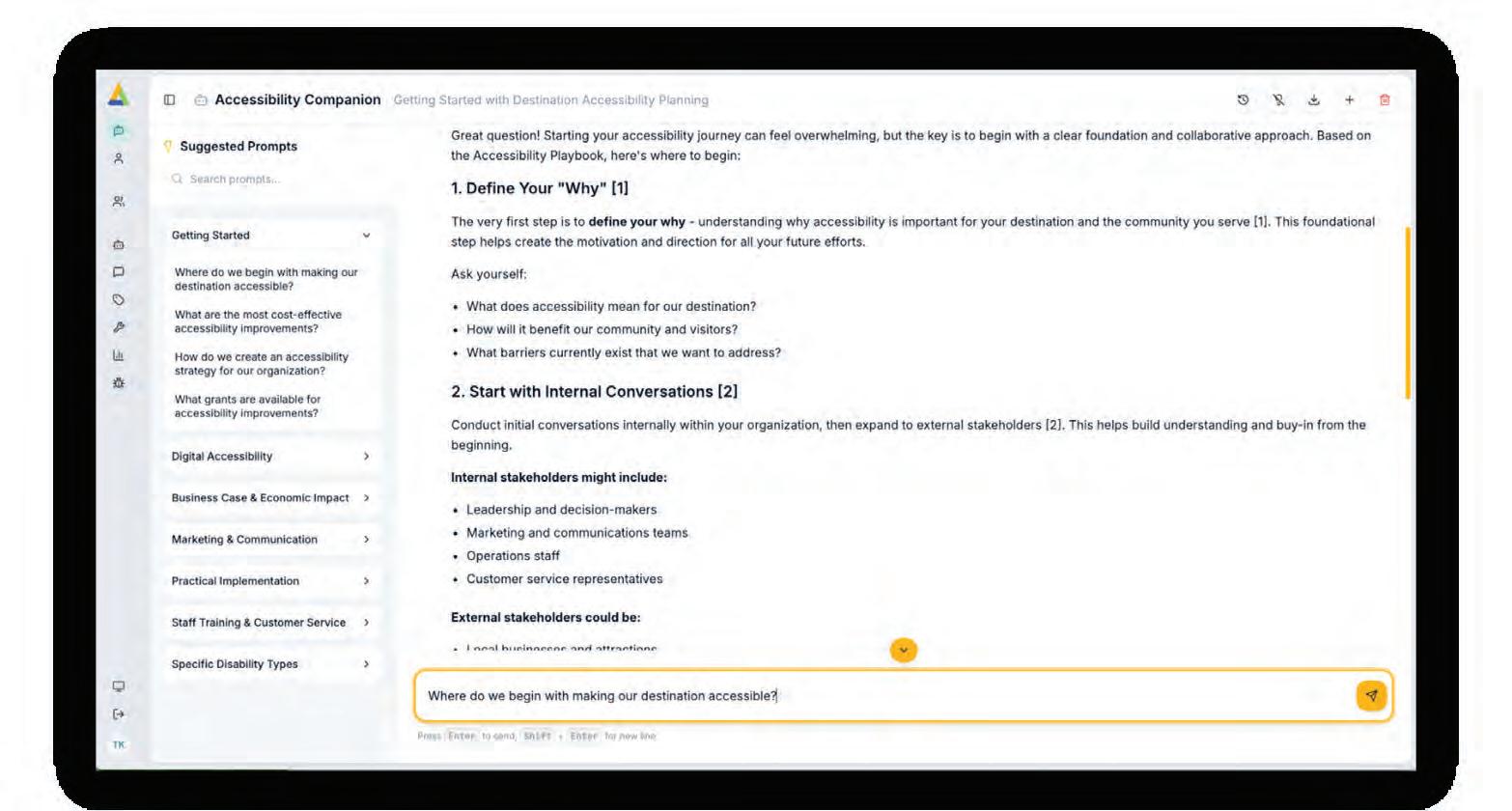
The AI Companion in action answering the question, “Where do we begin with making our destination accessible?”
In
What Does The ADA Have In Common With Russian Roulette?
By Jake Steinman
To pass the original ADA law, a compromise was made: accessibility standards were set to meet the median needs of each of four disability categories. In practice, that means that it works for half of the disabled population and doesn’t work for the other half — because every disability has a spectrum.
Since many travel companies don’t fully describe what they mean when stating something is ADA-compliant or “accessible,” travelers with disabilities don’t know which half they fall into until they arrive at a hotel, attraction, restaurant or public space. It’s like Russian roulette but with three bullets in the chamber instead of just one.
For example, three wheelchair users might have vastly different needs in a fully ADA-compliant room:
• Wheelchair User A is partially ambulatory and can walk up to 10 steps.
• Wheelchair User B is paralyzed from the waist down and uses a manual wheelchair.
• Wheelchair User C uses a power wheelchair and requires a Hoyer lift to transfer into bed.
So, who, exactly, is the room compliant for?
This lack of detail is why, according to an Expedia study, wheelchair users spend an average of 13 hours researching and coaxing information from front desk staff — information that could simply live on the property’s website.
Without more specific information, a property being ADA-compliant is like a building that ran out of funding after laying the foundation. The land is excavated, the concrete has been poured and structural engineering confirmed, but the project is never completed.
The solution is relatively inexpensive and straightforward: travel companies should create an accessibility page on their company website that includes measurements, photos and video walk-throughs. In a recent national study in which 10 members of
our Destination A11Y Club surveyed their industry partners about accessibility, these were the key findings:
• 85% offer step-free entry
• 81% have accessible restrooms
• 81% offer ramps or elevators
• 68% provide accommodations for blind or low-vision guests, that may include braille signage or audio guides
• 60% offer features for deaf or hard of hearing travelers, including hearing loops or text transcripts
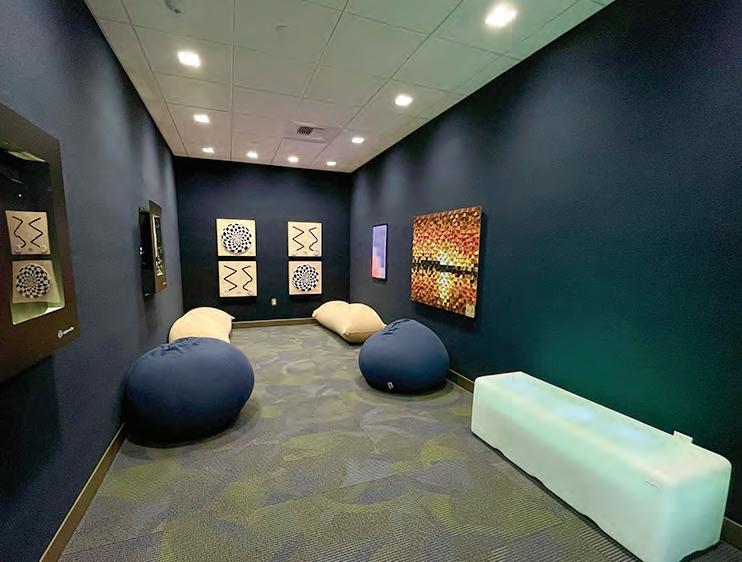
• 44% offer sensory-friendly features such as calm spaces, sensory bags, or quiet hours
But…78% do not have a dedicated accessibility page on their website!
In 2023, TravelAbility introduced Visit Charlottesville to the accessible booking site Wheel the World, to begin accessibility assessments across the city. Here’s their accessibility page
Fast forward two years:
130 destinations are now “Accessibility Verified” by Wheel the World. The program’s mappers have evaluated over 4,000 hotels, attractions, restaurants, trails, and tours, gathering up to 200 measurements at each site. This builds an information infrastructure for each destination, making the DMO a key subject matter expert on local accessibility.
This approach is designed to assist both travelers and the 17% of residents who have disabilities, as well as to meet the expected needs of around 75 million baby boomers who are turning 65 at an estimated rate of 10,000 individuals per day.
Want to remove the anxiety-inducing “guesswork” that people with disabilities experience? Want to stop playing Russian roulette with access?
Simply add an Accessibility Page to your website with measurements, photos and walk-throughs. You’ll provide clarity and be part of a growing movement that’s advancing accessibility, one landing page at a time.
To receive more information about creating an accessibility page, e-mail us at info@travelability.net
Unlocking the Potential of the Accessible Travel Market.
About us
Wheel the World is a pioneering travel-tech company based in San Francisco, revolutionizing accessible travel for people with disabilities and seniors. With a global platform (www.wheeltheworld.com) that serves over 250 destinations, we’ve helped more than 26,000 travelers explore the world without limits. Our mission is simple: make travel accessible.
We are proud to be the first in the market to offer guaranteed travel experiences and desegregated services, positioning ourselves as industry pioneers. Our strong brand presence is reshaping perceptions about disabilities while also creating new revenue streams through strategic partnerships.
Using detailed accessibility data, travelers can create personalized profiles to match with accommodations, tours, and activities that meet their specific needs. With a growing community of over 180,000, Wheel the World is the go-to platform for accessible travel experiences—guaranteed and vetted.
What is Accessibility Verified?
Accessibility Verified is our collaborative program designed for Destinations and Hospitality to verify, improve and market their accessibility. In just two years, we have successfully brought on board approximately 130 Destinations and more than 7,000 hospitality businesses into our program. This initiative offers:
● Expert Accessibility Support Guide: We gather 200+ data points per venue using our Accessibility Mapping System (AMS) to create bookable listings and actionable insights to enhance their services.
● Training: Local partners receive a short but powerful online accessibility training via the Wheel the World Academy
● Destination Verification: Destinations earn the Accessibility Verified seal, showing they are truly welcoming and inclusive for those with accessibility needs.
● Booking Integration + API + AI Chatbot: All verified offerings are listed on our platform, giving travelers confidence to plan, book, and enjoy their visit. We optimize this content through an API to display accessibility data in your own website and integrate a conversational chatbot to facilitate the user search experience.
● Marketing Campaigns: We help destinations to authentically engage with travelers with disabilities
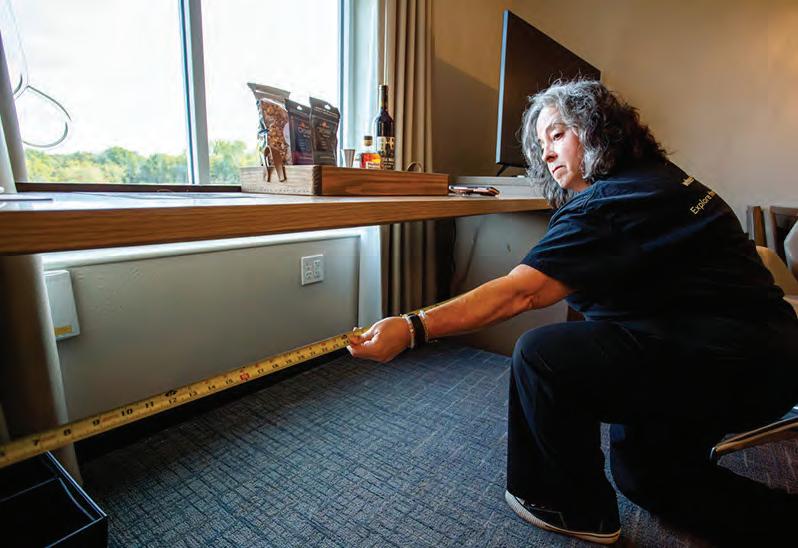
A Wheel the World mapper is a specialist dedicated to gathering accessibility data by conducting measurements and capturing photographs. In the accompanying image, our mapper Tina is in the process of mapping the features of a hotel room to ensure accurate information about its accessibility.
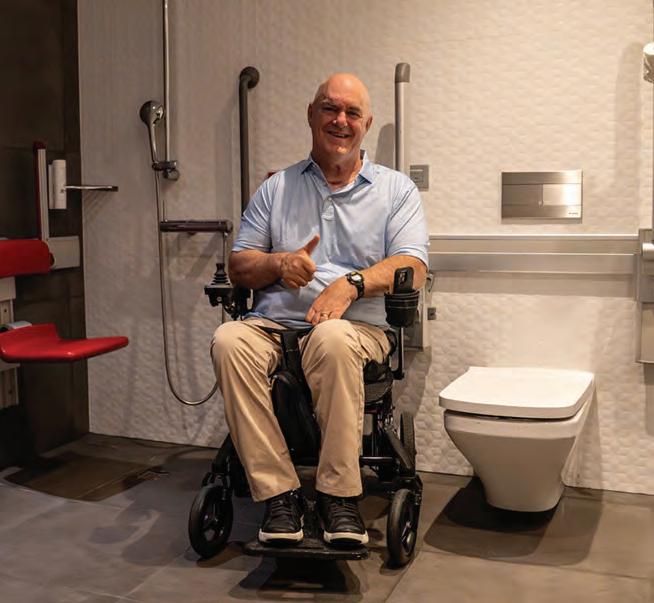
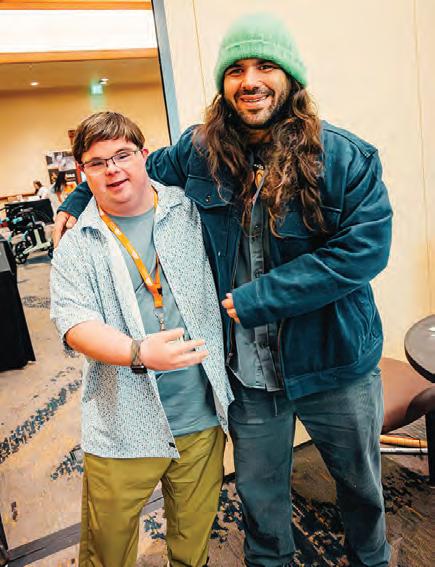
Bert is one of our most engaged travelers, with a particular focus on the accessibility features of hotel bathrooms. In this image, he expresses his satisfaction with his accommodations during a recent stay at a hotel in Madrid, highlighting the importance of accessibility in enhancing the travel experience.
by reshaping how accessibility is represented in tourism marketing.
Why this matters
● 1.2 billion people globally live with a disability, if add families and friends, then almost ⅓ of us are connected to this problem. Also, as a consequence of aging all of us will require some accessibility at some point in our lives.
● This market segment represents $120B in annual spending globally and is growing fast, with baby boomers joining that demographic. Only in the U.S. do 12,000 Americans turn 65 every day, ¼ of them have accessibility needs.
● In the U.S., 15 million travelers with disabilities take over 40 million trips annually.
● 80% of these travelers face accessibility challenges due to a lack of reliable information.
● Only 2.2% of marketing and media includes people with disabilities
Becoming Accessibility Verified is more than a badge—it’s a commitment to inclusion, a pathway to new visitor segments, and a strategic move toward future-ready tourism.
The opportunity for your Destination
● Unlock an emerging market and gain increased
visibility among a loyal and growing accessible travel audience.
● Tools, data, and support to improve your destination’s infrastructure, service level, and offerings.
● Repeat visitation and glowing word-of-mouth from travelers who feel welcomed and seen.
Let’s work together to create travel experiences that are inclusive, joyful, and barrier-free.
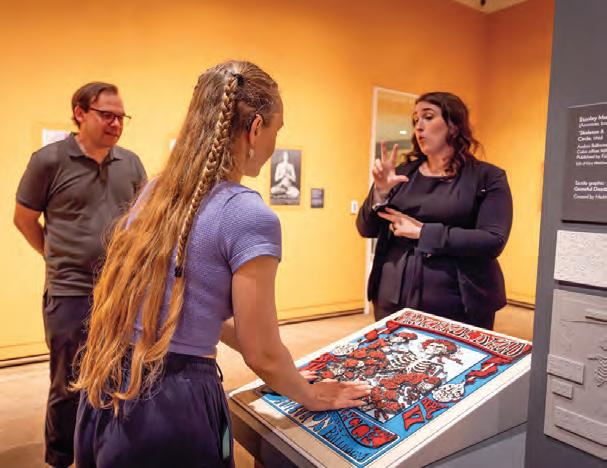
Employing staff who are proficient in sign language at your attraction, hotel, or restaurant significantly enhances the experience for travelers with hearing disabilities. In the accompanying image, Zahna, one of our travelers, is interacting with an embossed painting at the Portland Art Museum, a thoughtful addition that benefits those with visual impairments. This kind of accessibility features is essential for creating inclusive environments for all guests.
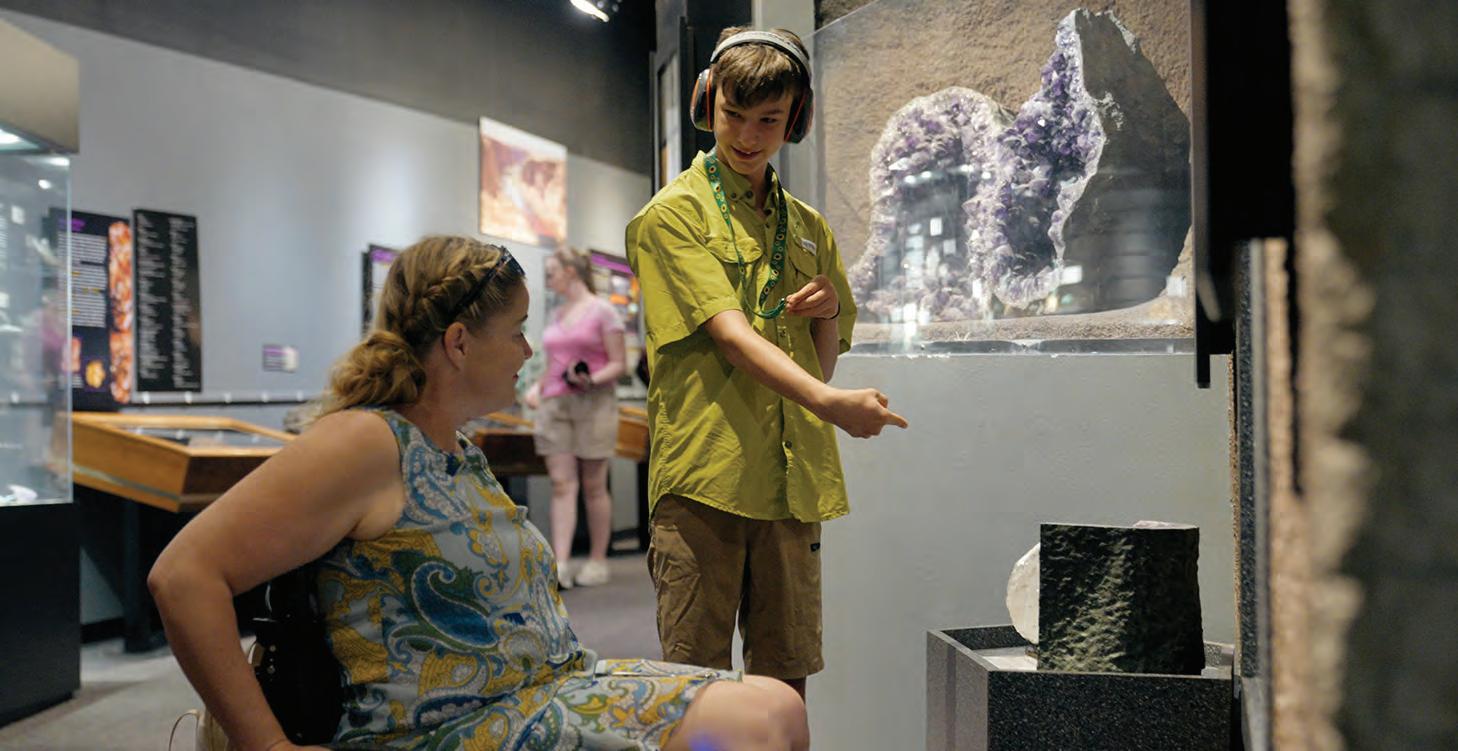
Kristy and her son, Timothy, are exploring the Arizona Museum of Natural History. For travelers with cognitive disabilities, such as autism, utilizing a sensory kit can significantly enhance the experience, making it more enjoyable and accessible.
TravelAbility Announces First-of-Its-Kind Disability Content Creator Database With A
Total of 164M Followers
By Jake Steinman
This year, the TravelAbility research team has developed a first-of-its-kind content creator database, currently identifying 555 verified disability creators with active social accounts across major platforms. The aim is to establish a network of disability influencers who hold trust and influence within their specific disability communities, creating a reliable media resource for travel marketers and serving as a collective voice for advocacy.
Over the past year, our team has worked to identify creators, collect contact information, and build relationships. The creators in the database create a wide range of content with some focusing specifically on travel and others sharing accessibility through everyday lived experience. Their voices are trusted within disability communities and offer destinations an authentic way to connect.
As the initiative moves forward, TravelAbility will continue to expand engagement and refine how the database supports creators, destinations and industry partners.
Snapshot: Disability Creator Representation
Why the Database Matters
Disabled and aging travelers are actively seeking information about destinations investing in accessibility. For many within the disability community, travel bloggers and social media creators who share their lived experience serve as trusted sources of guidance when planning trips. Their perspectives provide practical insight into how accessibility features function in real-world settings.
When destinations collaborate with disabled content creators to highlight their accessibility features, they ensure that the people who rely on those features know they are available.
Until now, few structured resources have helped destinations identify disability creators with relevant access needs and established trust within their communities. This initiative helps close that gap.
FLORIDA VACATIONS WITHOUT LIMITS
The Sunshine State’s renowned hospitality and diverse experiences enable travelers of all abilities to follow their sunshine.
Here’s a sampling of accessible things to do across Florida.
Pensacola Beach - Fort Pickens
Accessible fishing piers. Nature trails with tactile exhibits. Beach wheelchairs free for hire.
Ocala - Marion
Therapeutic Riding Association
Horseback riding experiences for guests of all abilities.
Tampa - The Florida Aquarium
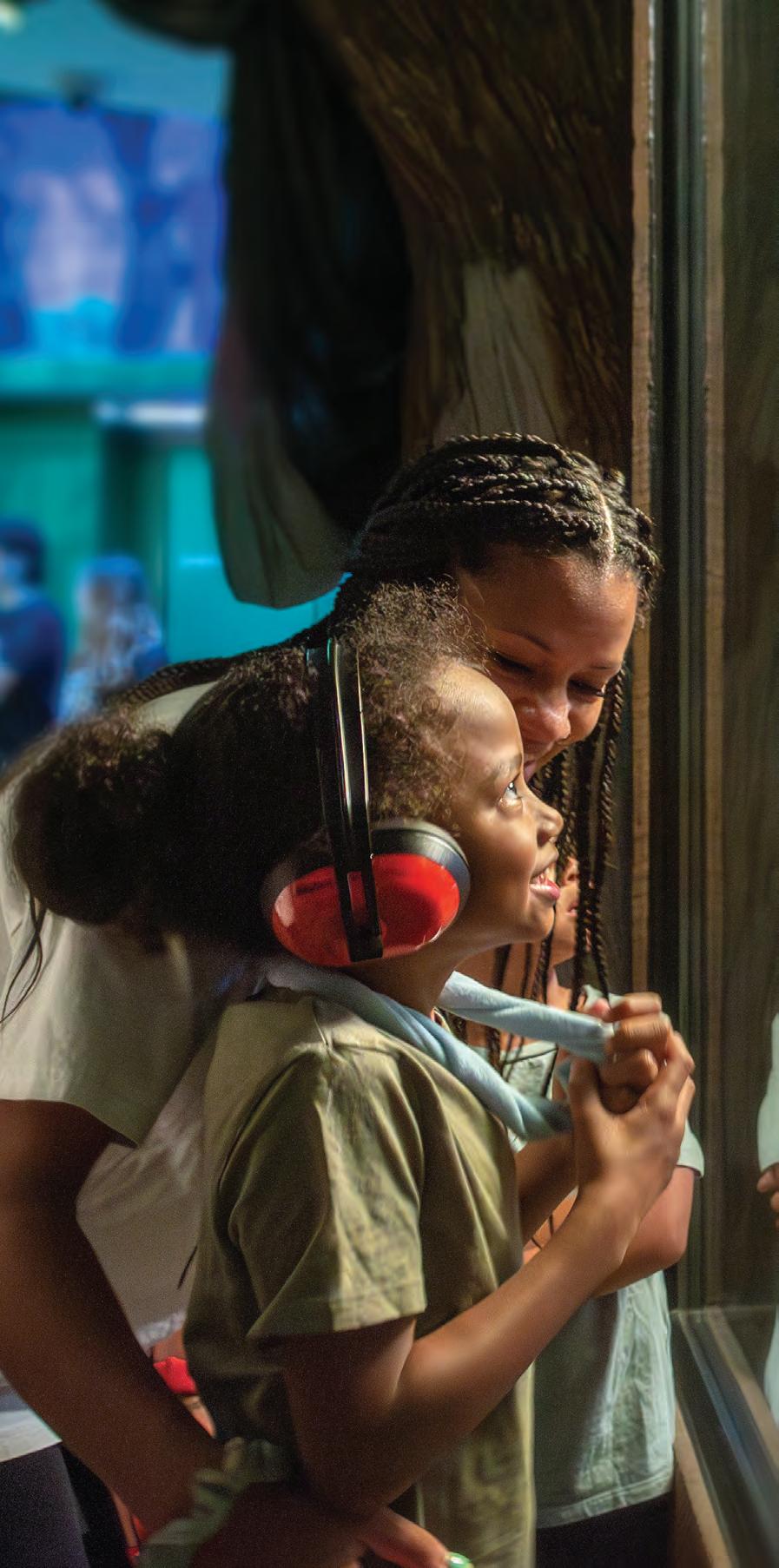
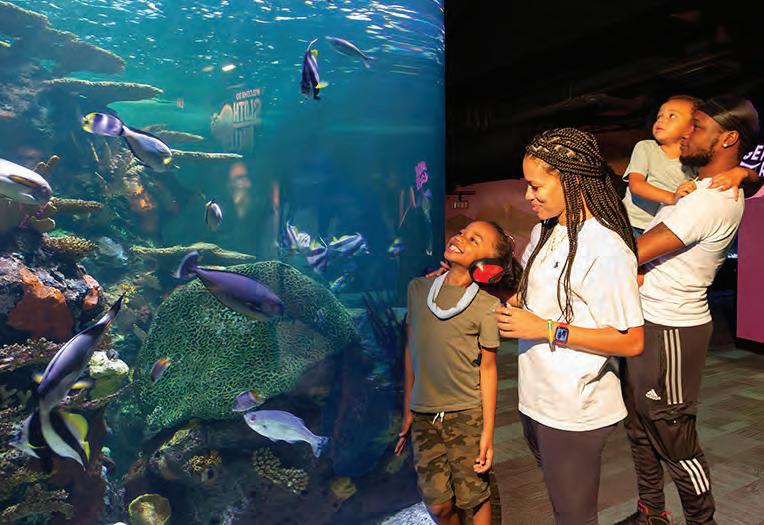
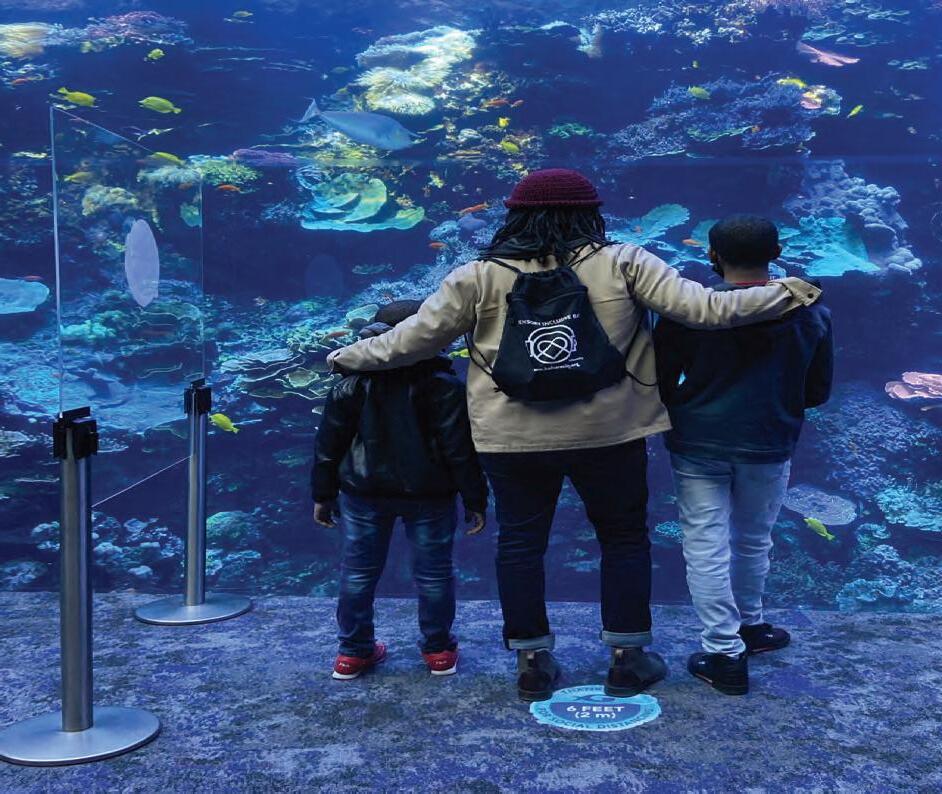
Accessible to visitors with visual, hearing, physical, or sensory-processing needs. Service dogs welcome.
Orlando - Orlando Museum of Art
Wheelchairs free for hire. Listening devices available. Guide dogs are welcome.
Florida Keys - Tranquil Adventures, Key Largo
Accessible boat charters for visitors of all abilities to fish, snorkel, and swim.
Find more ideas at our Accessibility hub: VISITFLORIDA.com/accessible
New Smyrna BeachAccessible Beaches Beach wheelchairs free for hire. Cocoa BeachKennedy Space Center Park-wide services for visitors with mobility, vision, and hearing impairments. In-park guide for autistic guests.
Miami - Zoo Miami
Certified Autism Center. Specially trained staff and programs for guests with sensory disorders.
Creator Engagement: What We’re Hearing
To better understand creator interest, experience, and readiness for destination collaboration, TravelAbility conducted a brief survey with creators contacted through the database. Response at a glance:
● 74 creators have responded so far
● 18.5 million combined followers across respondents
What we’re learning:
● 58 creators already produce travel or travel-adjacent content
● 15 creators are interested in entering the travel space
● 52 creators have never participated in a FAM or press trip, despite strong interest
These early responses point to strong creator engagement and a clear access gap, highlighting an opportunity for more outreach and education.
Initial Success and What’s Next
In its early stages, the Content Creator Database is already fostering new connections within the TravelAbility community. For the inaugural TravelAbility Film Festival, creators from the database submitted content, including several previously unknown to our community—like 3rd-place winner Vineet Victor—whose work was showcased to a room full of DMOs at the Summit. The database also enabled TravelAbility to welcome more disabled travelers to speak and participate in networking sessions, adding a richer tapestry of lived experiences to the Summit.
As we move into the next stage of this project, we plan to create more opportunities to inspire collaboration and deliver real value for all participants.
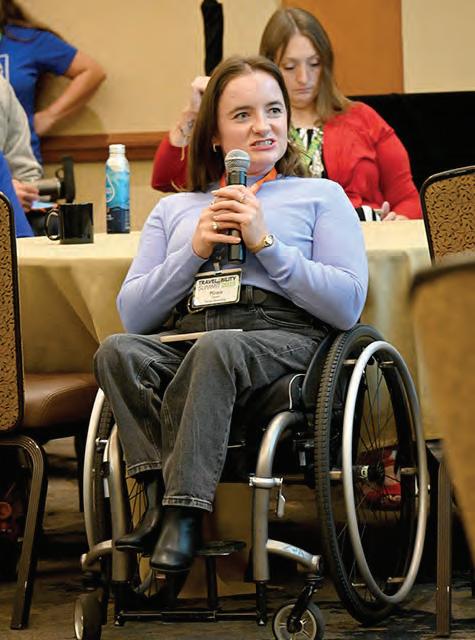
Rosie Dunn (@rosieroaming), a creator discovered through the database, asks a question during a special content-creator–focused session at the 2025 TravelAbility Summit.
Houston Vandergriff (@downsandtowns), a longtime TravelAbility community member and content creator, and Anthony Ferraro (@ asfvision), a new member of our creator community, connect at the 2025 TravelAbility Summit.
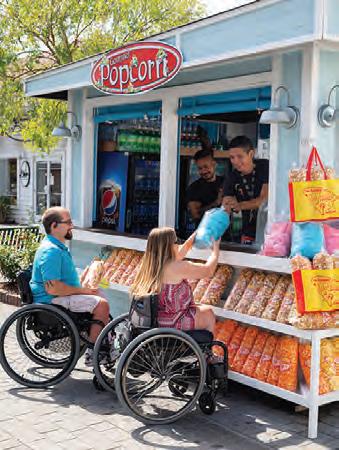
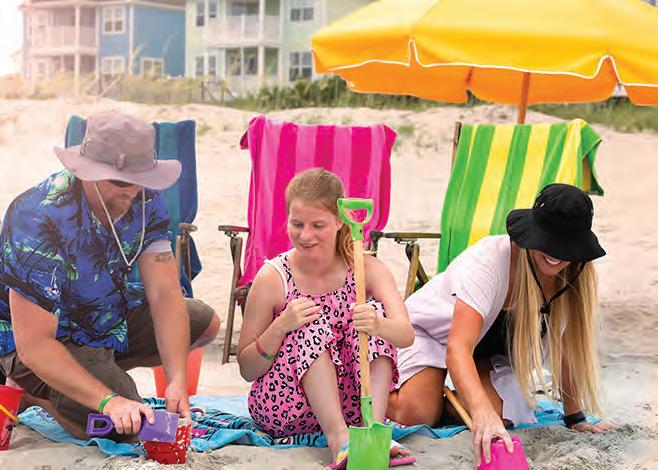
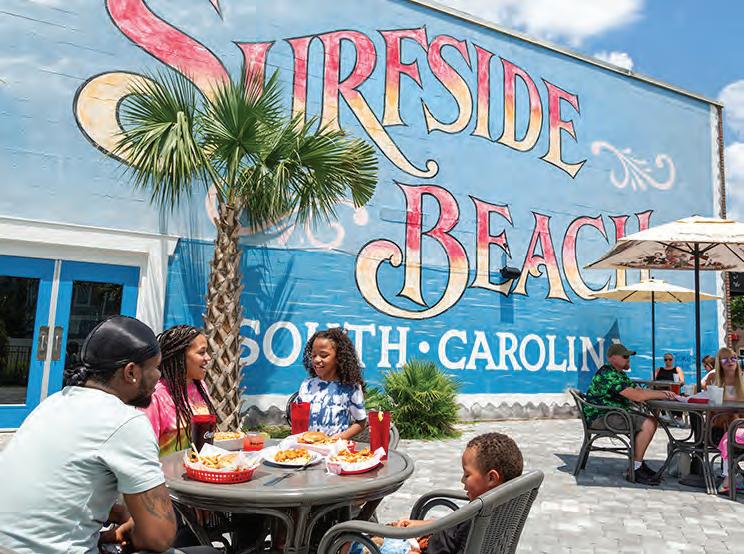
Myrtle Beach, South Carolina, is 60 miles of bringing people together. Since 2016, the destination has committed itself to being a certified autism-friendly destination because everyone deserves a vacation. Every kind of traveler can enjoy endless coastline, over 2,000 restaurants, hundreds of attractions, and live music every day and night.
Scan to see our guide on accessible travel to The Beach.
VisitMyrtleBeach.com Every body, every ability, everyone.
Now Streaming on Peacock
Visit Myrtle Beach recently produced “Traveling the Spectrum,” a six-part tv series that offers an intimate glimpse into the lives of three families traveling with an autistic family member. Learn more at TravelingTheSpectrumShow.com
Three Big Ways Everyone Can Enjoy Myrtle Beach
What makes Myrtle Beach, South Carolina, such a standout for all kinds of travelers? A little bit of everything – literally. From the shoreline to all 14 communities that make up the Grand Strand, this is a destination that’s all about quantity and quality.
Accessible Attractions
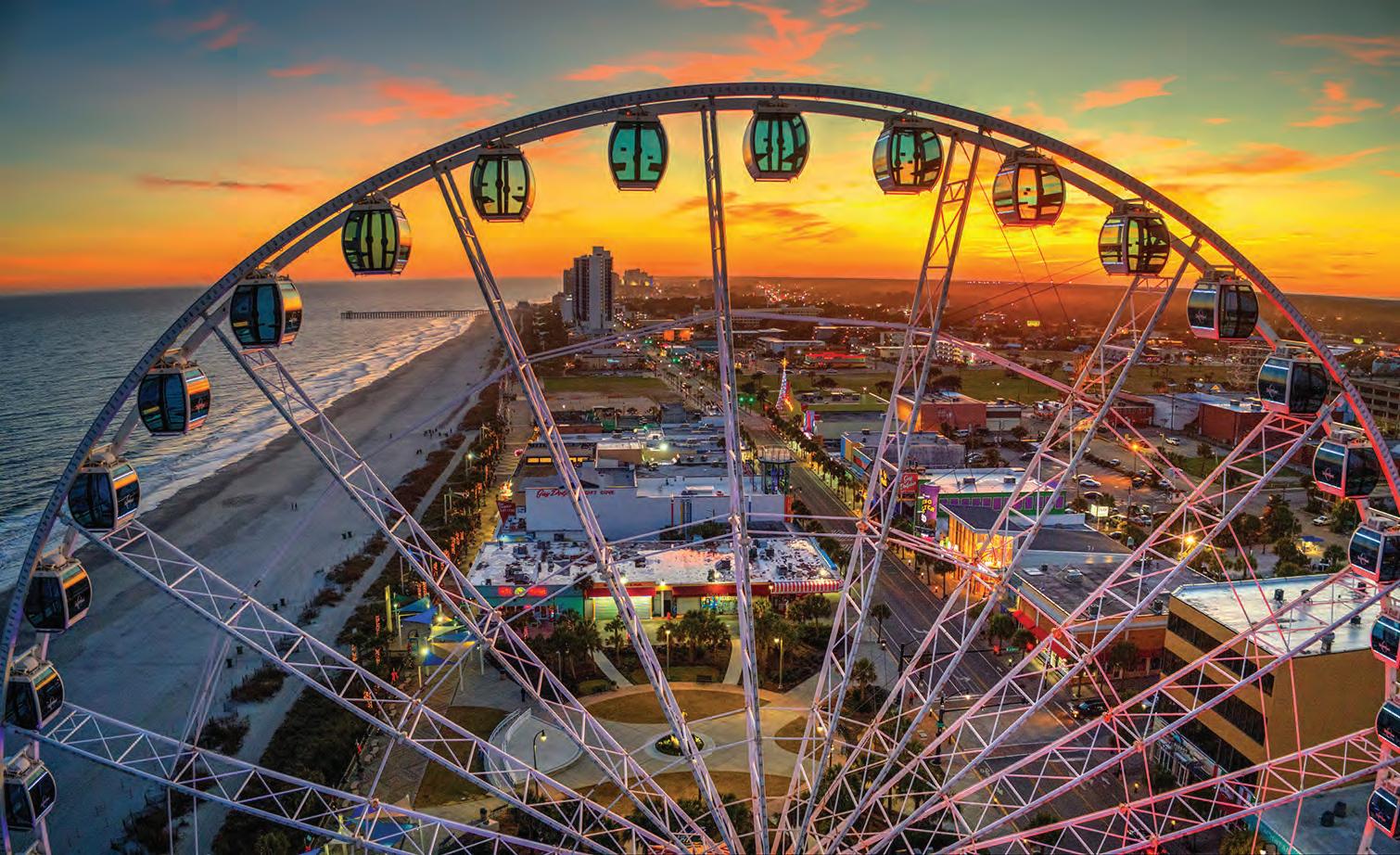
With over a thousand unique attractions, the only hard part about having fun is deciding what to do first. We recommend getting your bearings on Myrtle Beach’s iconic SkyWheel. This ride takes you 187 feet above the boardwalk – plus, with wheelchair access and accommodations that allow families in need to skip the line, it’s a quick, can’t-miss experience.
From there, hit the highlights. Outdoor attractions like Brookgreen Gardens, Cherry Grove Pier and Myrtle Beach State Park provide the kind of serene, calming environment that everyone will appreciate. And indoors, you’ll find places like Ripley’s Aquarium and WonderWorks that offer dedicated sensory-friendly activities.
60 Miles of Sun and Fun
Good Eats for All
The Grand Strand is home to more than 2,000 restaurants that are sure to satisfy any craving. But they don’t just dish up delicious meals. From massive seafood buffets to cozy breakfast spots, Myrtle Beach eateries work hard to make the dining experience more accessible – and enjoyable – for everyone.
You can use the Autism Traveler mobile app (found online at AutismTravel.club) to discover Champion Autism Network–certified spots all over the Myrtle Beach area – including local favorites like Hamburger Joe’s, Angelo’s Steak and Pasta, Hook & Barrel, and Johnny D’s Waffles and Benedicts.
There’s a reason people know Myrtle Beach simply as The Beach – its 60-mile stretch of boardwalks, piers and beautiful Atlantic beaches. There are plenty of convenient access points all along the way and complimentary beach wheelchairs for anyone who needs them. They come with specialized, extra-wide tires, making navigating the beach easy for families and solo travelers alike.
For visitors with sensory needs, don’t miss Huntington Beach State Park. On the north end of
the park, you’ll find one of the most remote, relaxing beaches on the Grand Strand. On the south side, there’s Atalaya Castle, a historical estate that once served as the summer home of the wealthy philanthropist Huntington family. The park is a great spot to see native wildlife, too – like spoonbills, ibis and even alligators.
Ready for your next getaway? Head to www.visitmyrtlebeach.com/plan/accessible-travel for more travel tips, resources and recommendations.
Beyond Compliance: 15 Ways Destinations Can Truly
Welcome Travelers with Disabilities
The Americans with Disabilities Act (ADA) has moved our industry forward in important ways. Compliance is a basic legal necessity, but it doesn’t equate to welcome. Travelers recognize the difference immediately. There is a significant gap between “meeting the minimum requirements” and creating an environment where people feel genuinely comfortable, supported, and eager to return.
That difference comes down to attitude, empathy, and a willingness to help. This is what will make you stand out.
Most businesses focus on accessibility only to the extent required to obtain permits. But destinations that go just one step further stand out in powerful ways. They earn loyalty, repeat visits, and word-of-mouth recommendations from a community that is both underserved and deeply connected.
Accessibility is not about perfection. No destination can meet every need perfectly. What travelers are looking for is intentionality—visible, thoughtful effort—and staff who are empowered to adapt when things don’t go as planned.
Below are 15 practical ways destinations can move beyond ADA compliance and toward true inclusion, drawn directly from lived travel experiences and real-world challenges.
15 Ways to Go Beyond ADA and Create Truly Welcoming Destinations
1. Create space for mobility devices
Wide pathways, uncluttered restrooms, and open layouts matter. Too often, accessible spaces become storage areas. Ramps and barrier-free routes shouldn’t be blocked by carts,
linens, trash cans, or furniture, even if they’re “rarely used.”
2. Make dining spaces flexible
Movable furniture, including host stand, tables, and chairs, along with an empowered staff, allow quick adjustments. Restrooms should offer adequate space, grab bars, and reachable drying dispensers.
3. Install ramps and automatic doors wherever possible
Heavy doors are a major barrier, even with assistance. Automatic doors benefit wheelchair users, people with limited strength, caregivers, and families alike.
4. Offer clearly marked, van-accessible parking close to entrances
Proper spacing and location are essential. Van access isn’t optional: it’s functional access.
5. Lower amenities and fixtures
Paper towel dispensers, soap, shelves, and kiosks should be reachable from a seated position without redesigning an entire space.
6. Provide larger trash cans in restrooms
Medical supplies often create more waste. This small change makes a big difference.
7. Add charging options for power chairs and scooters
Standard outlets work, but having charging devices or designated charging areas goes a long way, especially during emergencies or unexpected stays.
8. Use inclusive signage and wayfinding High-contrast fonts, tactile features, consistent placement, and screen-reader-compati-
independently.
9. Make accessibility information easy to find online
Accessibility details shouldn’t be buried three clicks deep. Put them in the main navigation and show photos so travelers can make informed decisions.
10. Caption all media and offer text-based communication options
Captioned videos and the ability to text front desks or guest services are essential for Deaf and hard-of-hearing travelers.
11.Train staff beyond compliance
Staff need to know what to do when something goes wrong. Training should include who to contact, how to fix issues quickly, and how to problem-solve on the spot.
12. Teach disability etiquette and proactive customer service
Etiquette training is widely available and easy to implement. More importantly, empathy and action should go hand-in-hand.
13. Support service animals properly
Train staff on the ADA’s two permitted questions, provide relief areas, water bowls, and space in rooms so service animals can rest near their handlers.
14. Design accessible guest rooms with flexibility in mind
Lower beds, visual alarms, tactile tools, reach-
able outlets, multiple plug locations, and voice-activated controls all increase independence.
15. Offer sensory-friendly options
Quiet zones, adjustable lighting, calmer spaces, and pre-opening sensory hours make destinations more inclusive for neurodivergent travelers and families.
Accessibility Is an Ongoing Practice, Not a Checkbox
You cannot train for every scenario. Disabilities exist on a spectrum, needs evolve, and no two travelers experience access the same way.
That’s why empathy matters so much.
When staff are empowered to listen, adapt, and act, rather than simply apologize, problems become opportunities to build trust. Hiring staff with lived disability experience, or those with close personal connections, accelerates this culture of understanding.
With the right tools, thoughtful design, and genuinely helpful people, travelers with disabilities can fully participate. When destinations choose to go beyond compliance, they stand out as a more welcoming and desired destination for all travelers.
Most hotels already have accessible rooms. That isn’t the problem.
The problem is that too often, those rooms are poorly described or buried in backend systems. When that happens, the industry unintentionally closes the door on guests who are ready to travel.
We believe accessibility shouldn’t live behind the scenes. It should live where hospitality lives. Where guests can experience it.
Fora is built to disrupt how travel is planned and experienced. We partner with hotels and travel brands to make the specs and details that matter easy to find and easy to trust, alongside everything else that makes a trip great.
So we built a simple, smart approach that we share with our supplier partners. One that helps them sell the space they already have, empowers advisors to serve travelers who might otherwise skip the trip, and creates a hospitality infrastructure that truly welcomes everyone.
Because great travel is never one-size-fits-all. It’s about curating a trip that recognizes the person taking it.
Embrace hospitality for every guest.
foratravel.com/accessibility
Questions or Partnerships: accessibility@foratravel.com
Scene at the Summit
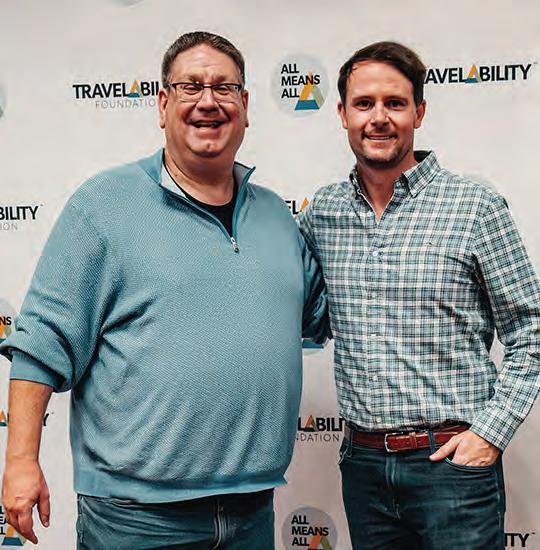
Downs & Towns travel photographer, Houston Vandergriff, and TravelAbility founder and CEO Jake Steinman pose for a picture.
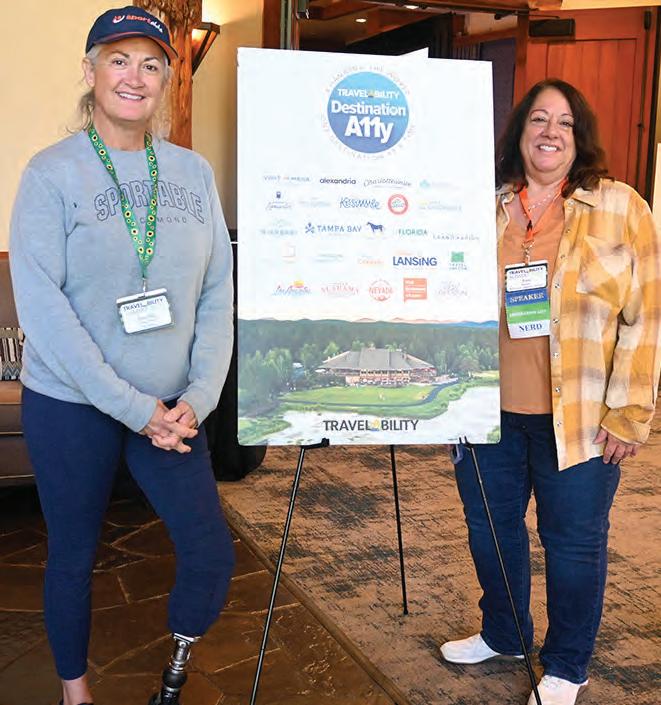
Spartan Race participant and below-the-knee amputee, Suellen Henneberry, and Director of Accessibility & Tourism Sales at Richmond Region Tourism, Toni Bastian.
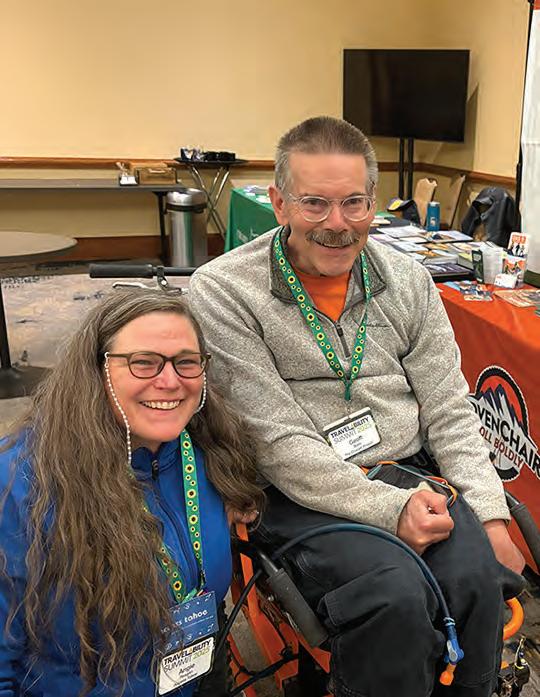
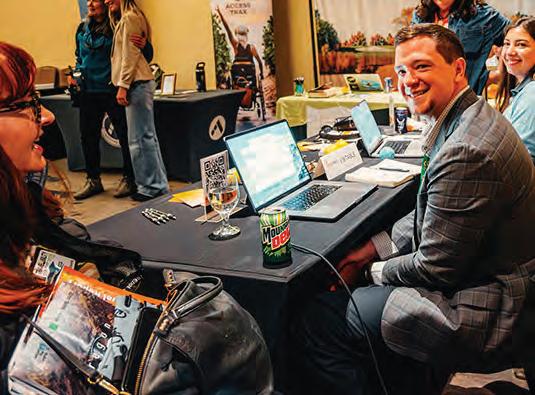
Angie Reagan (Peace Love Tahoe) and Geoff Babb (The Onward Project and AdvenChair Founder) pose by the AdvenTours Booth.
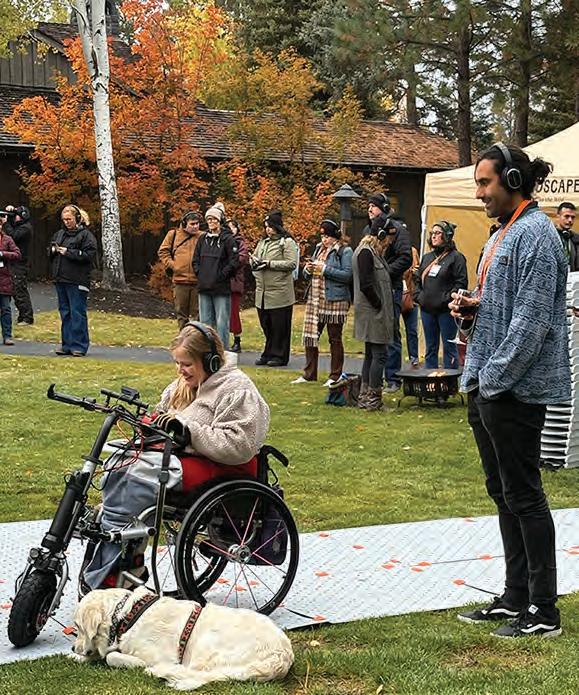
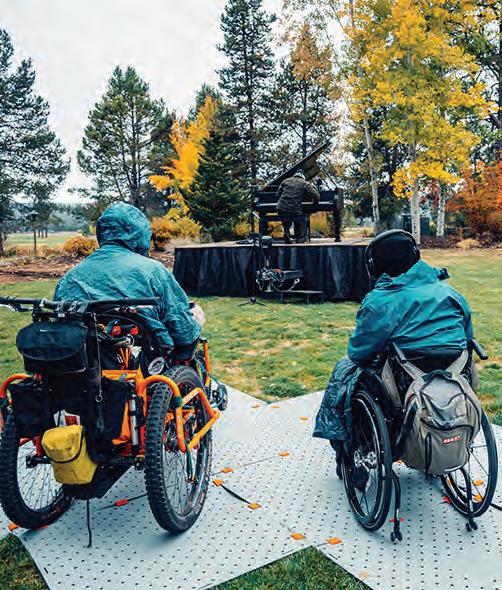
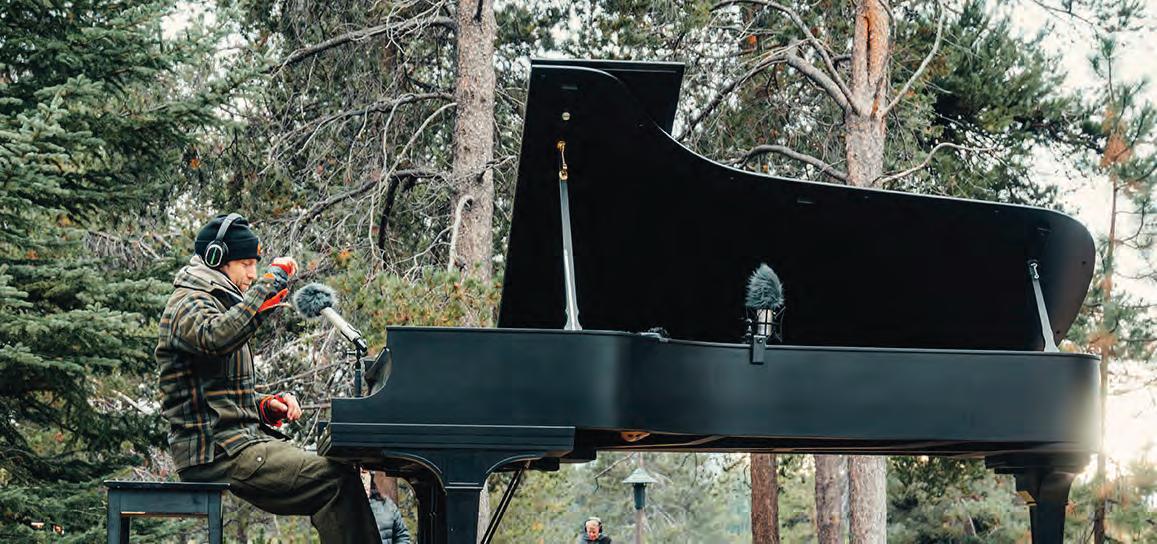
AccessTrax provided lawn access for wheelchair users during the special performance of IN A LANDSCAPE: Classical Music in the Wild™ with Hunter Noack.
Photo Credit: Houston and Katie Vandergriff, Downs & Towns
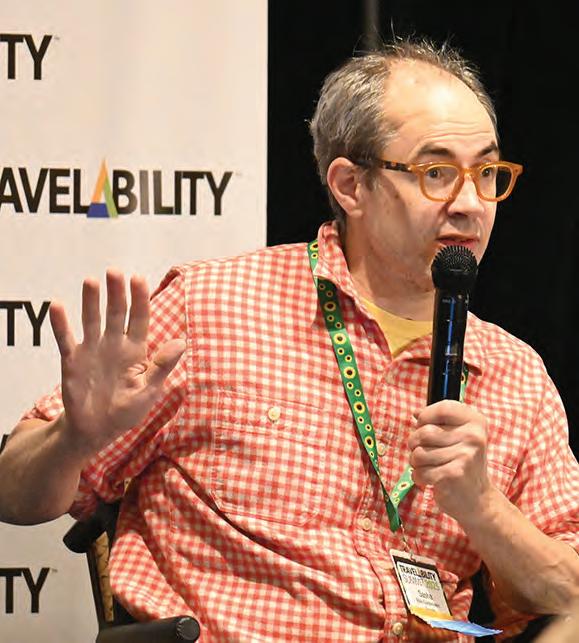
Sasha Blair-Goldensohn (Google) shared his personal journey from Google Maps engineer to accessibility advocate after a life-altering spinal injury.
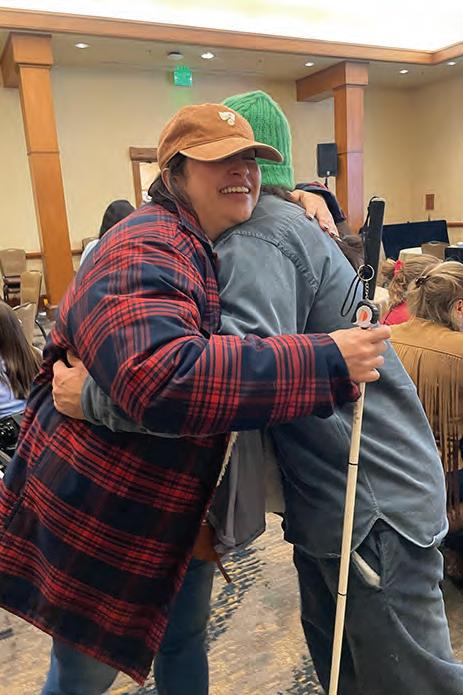
Taylor Leigh Aguilar (Blind Eagle Productions) and Anthony Ferraro (@asfvision) share a hug at the content creator breakout session.
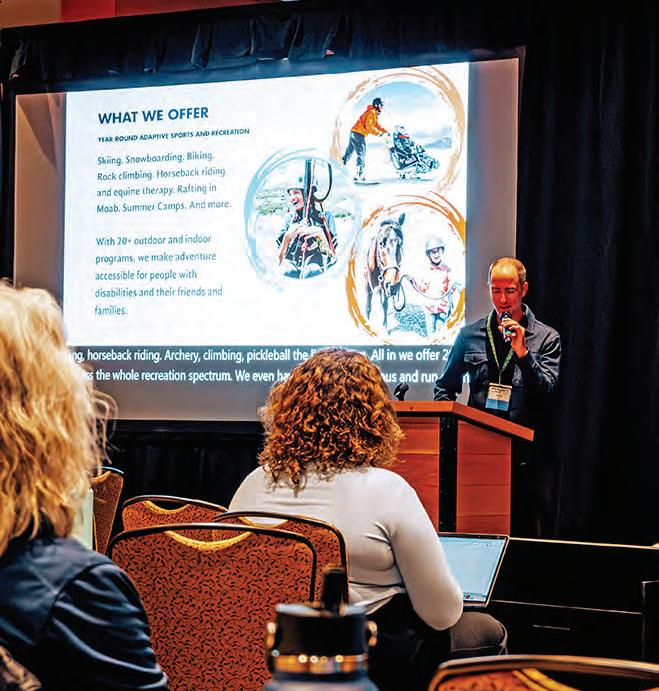
Jamie Starr (National Ability Center) discusses what to know before hosting an adaptive sports event.
AccessTrax provided lawn access for wheelchair users during the special performance of IN A LANDSCAPE: Classical Music in the Wild™ with Hunter Noack.
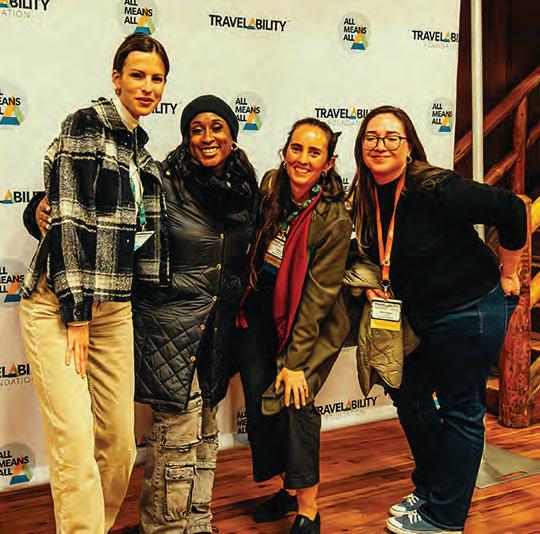
From left to right: Meg Raby Klinghoffer (KultureCity), Attiyya Atkins (Visit Lauderdale), Sofia Bravo, Vanessa Amaro (Wheel the World) pose for a photo together after the 1st annual TravelAbility Film Festival.
TravelAbility Summit attendees experience the AdvenTours: Wanderlust + AdvenChair hike at Benham Falls.
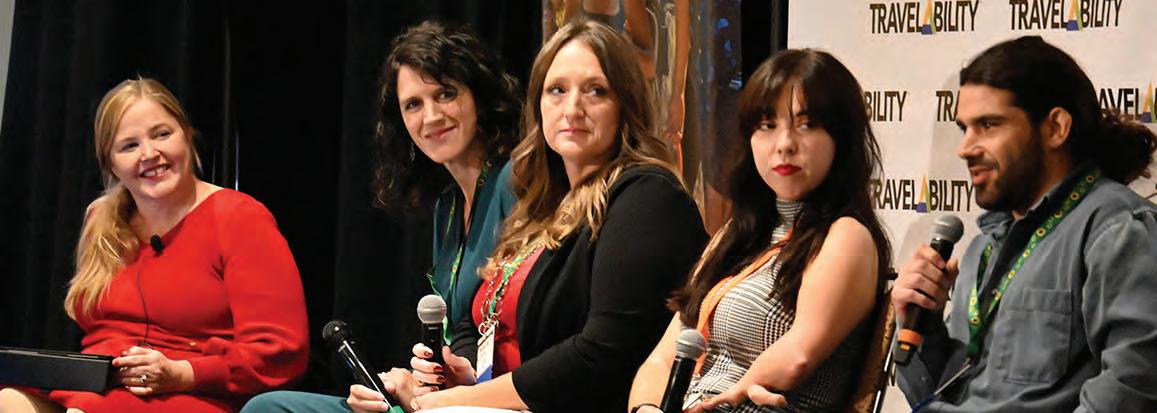
Panel discussion on Travel Oregon’s investment in Accessibility. Panelists from left to right: Kristy Durso, Deborah Vaughn, Pat Addabbo, Alana Carollo, and Jeremy Burke.
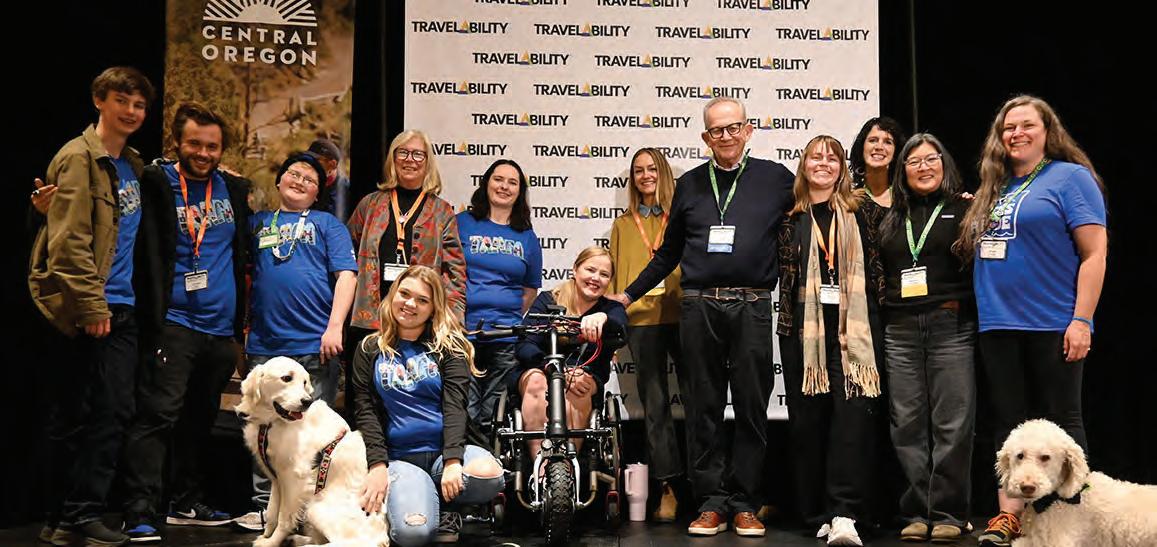
TravelAbility Summit 2025 team photo. From left to right: Timothy Durso, Conrad Rogers, Isaiah Trapein, Tricia Roth, Carolina Christian, Kitty Sharman, Kristy Durso with dog Gulliver, Sasha Nietz (Visit Central Oregon) Jake Steinmen, Lillian Karl, Jennifer Allen, Kristine McConnell (Visit Central Oregon), and Angie Reagan with dog Simba.
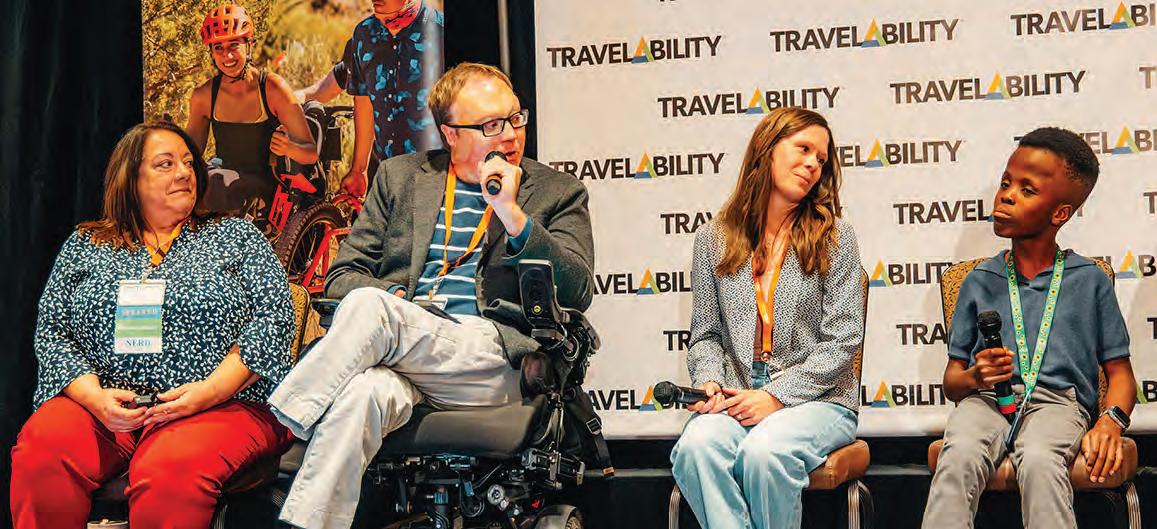
Panel discussion on unique things states can do to advance accessibility.
From left to right: Kevin Wright (Travel Oregon), Nick Nerbonne (Travel Michigan), Devin McConnell (Visit California).
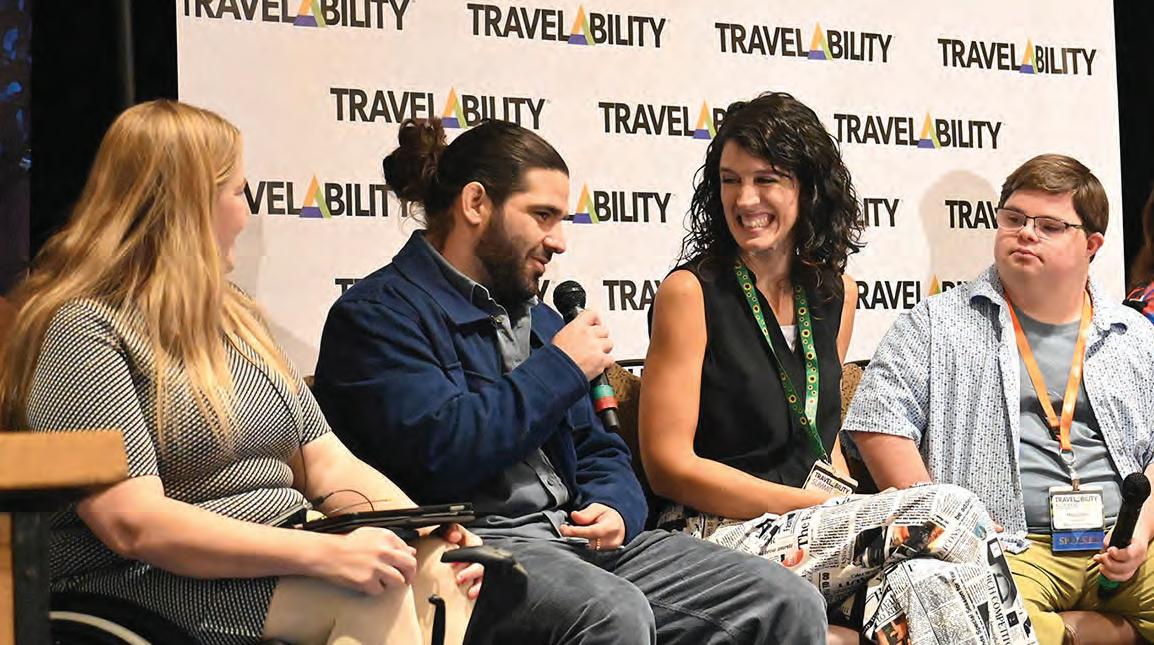
From left to right: Kristy Durso (Incredible Memories Travel), Anthony Ferraro (@asfvision), Jennifer Allen (@wonders_within_reach), and Houston Vandergriff (@downsandtowns) on the “Post with the Most” panel discussing content creation.
Attendees from Visit Central Oregon and Travel Oregon pose for a group photo.
Jesse Dolin accepting the grand prize award in the TravelAbility Film Festival for Oregon Coast Visitor Association’s film “Accessible, Inclusive Travel on the Oregon Coast.”
From left to right: Toni Bastian, John Morris, Stevie Gleason, Robert Gleason discuss accessible travel to the Richmond Region.
Content creators and destination partners meet during the Influencer Speed Dating sessions to discuss potential collaborations.
Hunter Noack performs his IN A LANDSCAPE: Classical Music in the Wild™ concert for TravelAbility Summit attendees.
Amir Eylon (Longwoods International) and Edward Harris (Visit Williamsburg) pose for a photo.
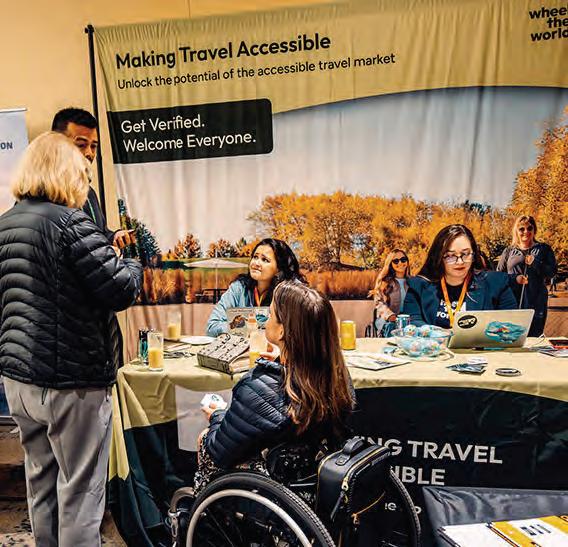
TravelAbility Summit attendees visit the Wheel the World exhibitor booth.
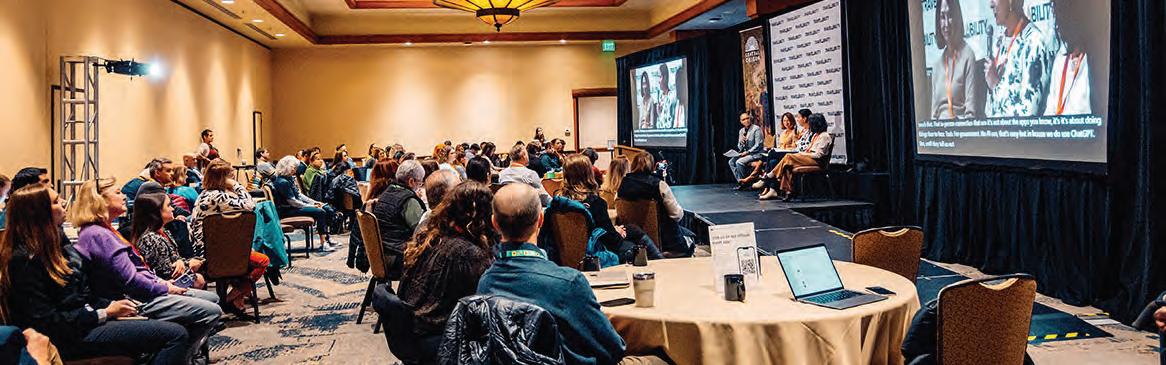
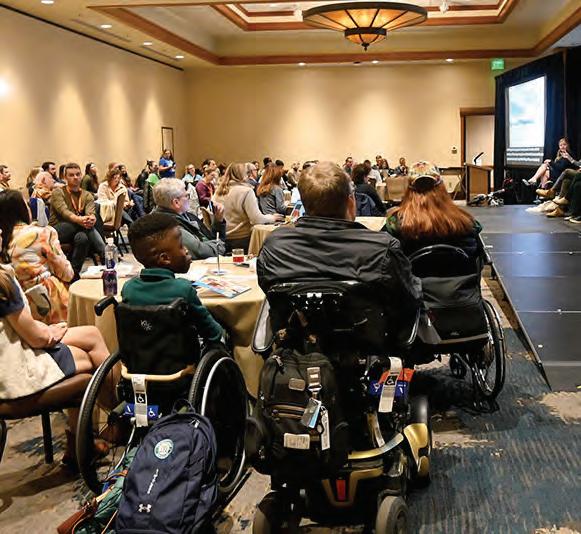
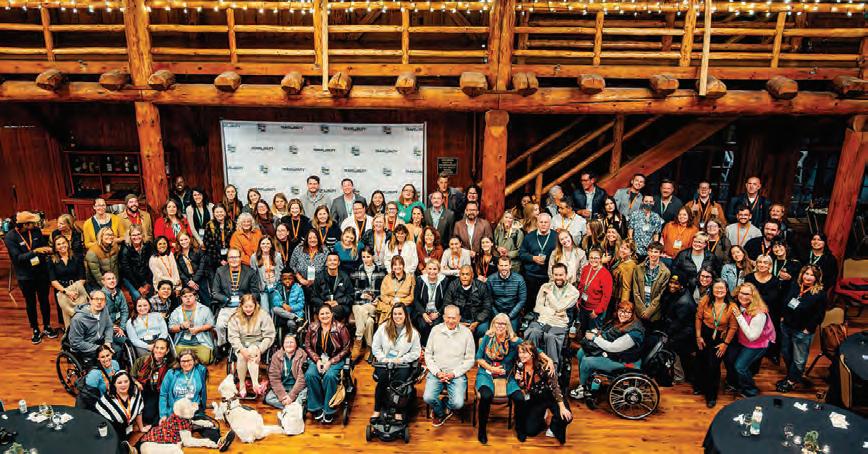
Attendees gather at the TravelAbility Summit, bringing together destination leaders, advocates, content creators, and industry partners committed to advancing accessible travel.
Summit attendees stop by the VisitAble exhibitor booth to connect with Joe Jamison and Anna Bastian.
John Morris points to the stage as the winners of the 1st Annual TravelAbility Film Festival are announced.
Check out the “What’s new in Google accessibility” video series that is highlighting the latest accessibility updates from Google! Tune in today on g.co/a11y/playlist
Sign
up for Google’s Accessibility Newsletter - Join an ever-growing community of accessibility enthusiasts by subscribing to our newsletter and getting the latest Google accessibility news to your inbox. Sign up today on g.co/a11y/news
The Google Disability Support team is available to support users from the disability community with Google products. Support includes accessibility features, functionalities, and assistive technology. Connect with a specialist on g.co/disabilitysupport
Plan Your Next Accessible Trip to Charlottesville & Albemarle County, Virginia!
In Charlottesville and Albemarle County, we believe that travel should be fun, enriching, and accessible for everyone. Situated in the heart of Central Virginia and nestled against the scenic Blue Ridge Mountains, we welcome visitors from every corner of the globe to explore our diverse and vibrant area. Whether you’re here for a short stay or a long visit, we strive to ensure your experience is memorable, accessible, and inclusive.
No visit to the Charlottesville area is complete without enjoying one or several of the experiences below!
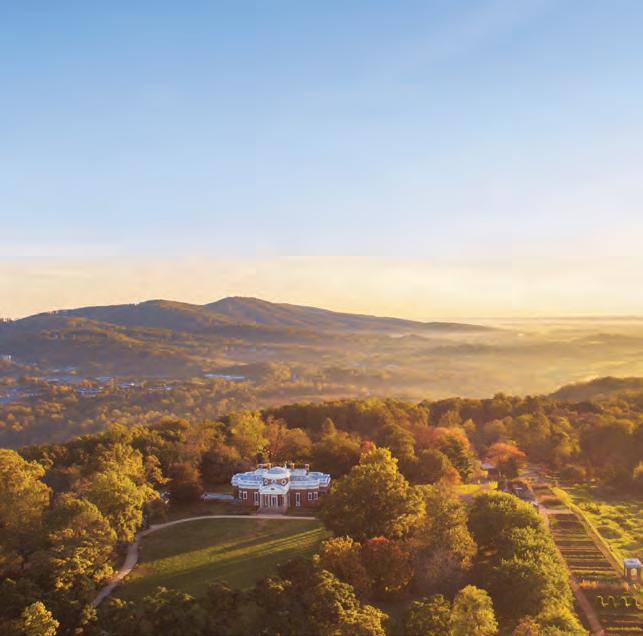
• Thomas Jefferson’s Monticello is a UNESCO
World Heritage Site committed to providing assistance to guests of all abilities
• Outdoor recreation lovers will enjoy discovering the Saunders-Monticello Trail, which leisurely winds its way to the visitor center at Monticello. The trail has a maximum grade of 5% making it fully accessible to walkers, cyclists, and wheelchair users.
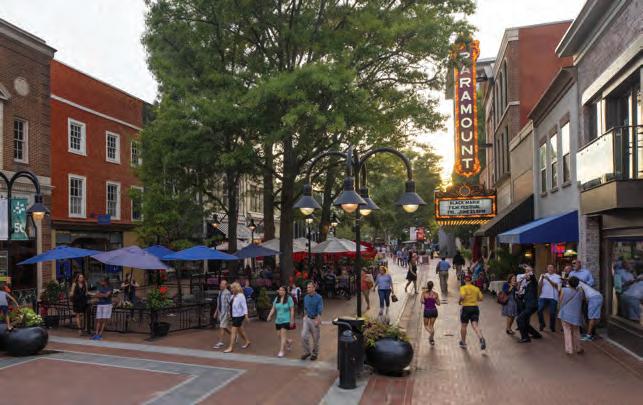
• A visit to the Charlottesville area should include a stop at the historic Downtown Mall. Recently added to the National Register of Historic Plac-
es, this pedestrian-only avenue features a mix of restored and renovated buildings where visitors can enjoy shopping, dining, and entertainment options. Many of the shops and restaurants here have stepfree and/or accessible entrances. A complete list of those businesses can be found here
• The Charlottesville area is home to nearly 50 wineries in the surrounding Monticello American Viticultural Area – a region that was named Wine Enthusiast’s Wine Region of the Year in recent years.
Monticello Wine Trail
Historic Pedestrian Downtown Mall
Thomas Jefferson’s Monticello
• The Charlottesville area has a vibrant arts scene, with places like the Kluge-Ruhe Aboriginal Art Collection, the IX Art Park, and Live Arts offering accessible experiences for all visitors.
• Kindness Café + Play is a mission-driven coffee shop that employs adults with cognitive disabilities. Now with two locations, visitors can enjoy a diverse menu of coffee and espresso drinks as well as smoothies, protein shakes, baked goods, Bavarian pretzels, and more.
When it’s time to turn in for the night, Charlottesville and Albemarle County offer visitors a wide variety of places to stay. Many of our hotels were assessed by our accessibility partner, Wheel the World, in 2023. To learn more, or to book a room, click here
Travel shouldn’t be stressful – and we are here to help every step of the way! Check out our accessible travel page to find all the information you need regarding accessible experiences, businesses with step-free entrances, accommodations, medical equipment providers, and so much more. We can’t wait to welcome you to Charlottesville & Albemarle County, Virginia!
Saunders-Monticello Trail
Do you recognise the Hidden Disabilities Sunflower?
Up to 80% of disabilities are non-apparent, yet many events, venues, and travel environments are still not inclusive. For people with non-apparent disabilities, busy conferences, hotels, and transport hubs can be overwhelming, often without staff realizing why.
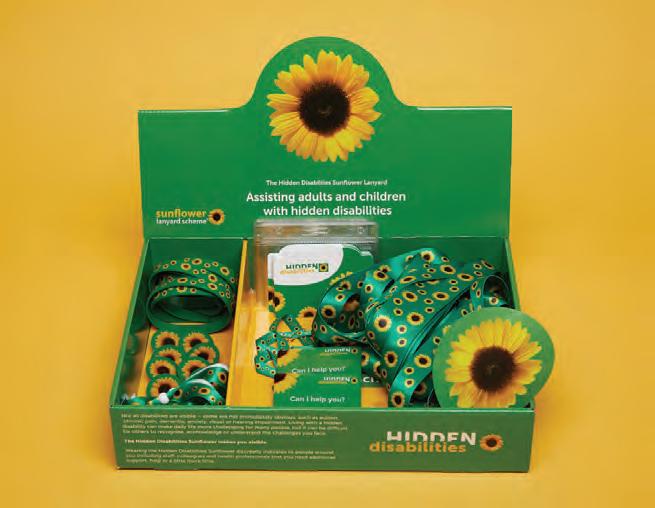
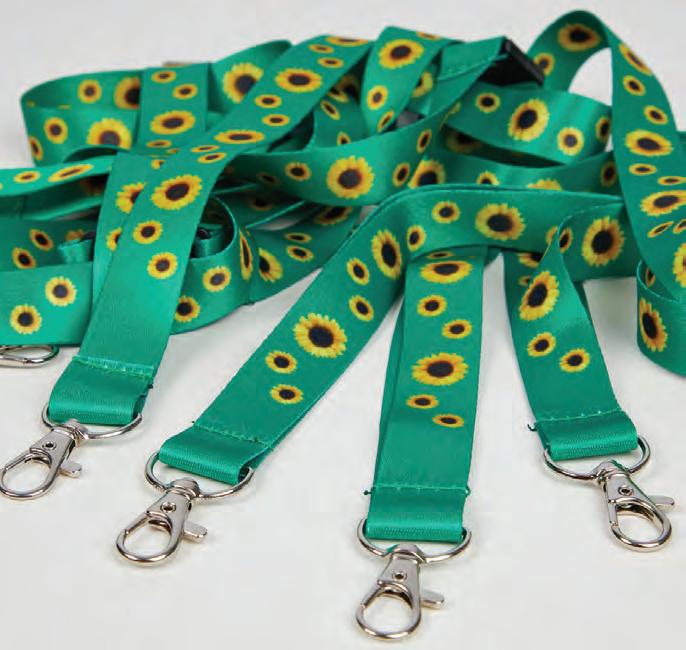
The Hidden Disabilities Sunflower is a simple, globally recognised way for people to show they have a non-visible disability and may need extra time, patience, or support. It can be worn or displayed using a Sunflower lanyard, card, badge, or other Sunflower products, allowing individuals to share this discreetly, without having to explain themselves.
For organizations, the Sunflower provides a practical route to inclusion. Businesses can become Sunflower members, giving them access to training and resources that help staff recognise the Sunflower and under-
stand how to support people with non-visible disabilities. This training focuses on everyday actions: clearer communication, flexibility, and reassurance, that improve experiences for customers, delegates, and guests.
Today, the Sunflower is recognized across 90 countries and in 325 airports worldwide, with thousands of organisations training their teams to create more inclusive environments across travel, events, hospitality, retail, and public services.
To find out more and become a Sunflower member, visit our website and learn how your organization can take practical steps towards more inclusive experiences for everyone.
The Palm Beaches: Florida’s Accessible Paradise
In The Palm Beaches, known as America’s First Resort Destination®, accessibility and warm hospitality come together to create an experience that’s as seamless as it is memorable. Across 39 vibrant cities and towns, visitors will discover an ever-growing collection of offerings, each thoughtfully designed to welcome guests of all abilities. From world-class cultural gems to sun-soaked shores and state-of-the-art meeting spaces, The Palm Beaches make it easy to curate a picture-perfect getaway or an elevated event experience.
Accessible Travel Made Effortless
Getting here is stress-free and accessible from the moment you arrive. Palm Beach International Airport (PBI) offers easy access with nonstop routes, visual paging at all gates for Deaf travelers, and curbside assistance to ensure a smooth journey from gate to curb. For those flying into Orlando (MCO), Miami (MIA) or Fort Lauderdale (FLL), Brightline’s high-speed rail provides a comfortable, ADA-compliant connection with wide aisles, ramps, elevators, and visual stop displays— ideal for wheelchair users and travelers with sensory sensitivities.
Once here, accessibility continues at every turn. The Palm Beaches have partnered with Wheel The World to assess and highlight many area hotels, providing clarity around features such as roll-in showers, step-free entrances, accessible bathtubs, and pool lifts. Acclaimed properties—including The Brazilian Court, Hilton West Palm Beach, and PGA National Resort—deliver both luxury and peace of mind.
Outdoor Adventures & Cultural Gems
The Palm Beaches’ natural escapes are thoughtfully designed for everyone to enjoy. Beach parks offer accessible restrooms, parking, and ramps or mobility mats that lead directly to the sand. Lake Worth Beach and Jupiter Beach Park provide wheelchair-accessible beach chairs, while paved trails and boardwalks at Grassy Waters Preserve, Green Cay Nature Center, and Okeeheelee Park invite nature lovers to explore Florida’s ecosystems at their own pace.
Culture seekers will find accessibility woven throughout the region’s most beloved attractions. The Norton Museum of Art, Mounts Botanical Garden, and Loggerhead Marinelife Center offer ramps, elevators, open layouts, printed guides, and ASL assistance.
As a Certified Autism Center destination in partnership with IBCCES, staff receive specialized training to support guests with sensory sensitivities, and outdoor experiences are available like North Jupiter Flatwoods, designated as a Certified Autism Friendly site by FAU Center for Autism and Related Disabilities.
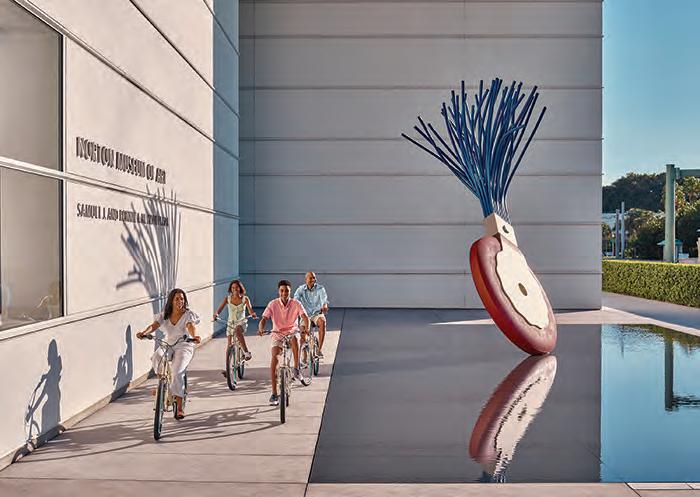
The Norton Museum of Art features a world-class collection of art and an outdoor sculpture garden.
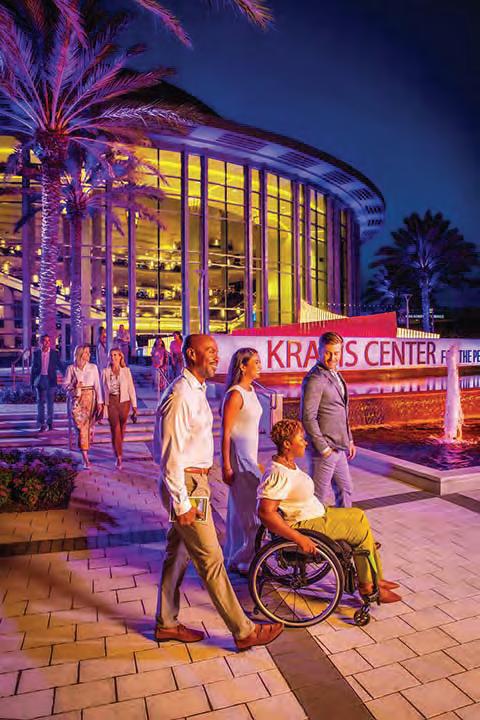
Kravis Center for the Performing Arts features Broadway shows, world-class concerts, symphony, and ballet performances.
Meetings Designed for Everyone
The Palm Beaches are also a premier destination for accessible meetings and events. The Palm Beach County Convention Center provides 350,000 square feet of flexible, ADA-compliant space, while iconic resorts such as The Boca Raton and PGA National Resort elevate gatherings with accessible amenities and seamless service.
A Community Committed to Inclusion
Through partnerships with organizations like TravelAbility and Wheel The World, more than 80 local businesses and attractions have been accessibility-verified, giving visitors confidence and clarity as they plan.
With year-round sunshine, welcoming communities, and a commitment to inclusion, The Palm Beaches invite every traveler to experience Florida’s Most Stylish Vacation Destination.
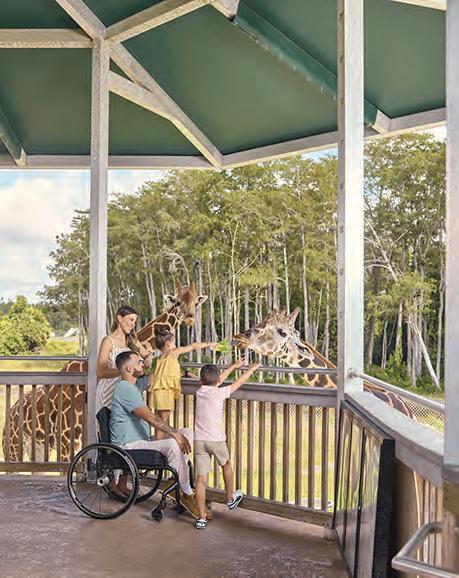
Giraffe feeding at Lion Country Safari is one of the best ways to get close to the animals.
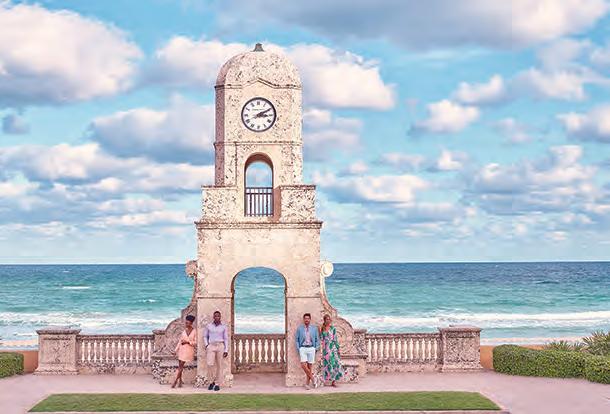
The picturesque clocktower at the end of Worth Avenue in Palm Beach.
Easy Low Cost/No Cost Fixes for Common Accessibility Problems
Creating a truly accessible environment doesn’t always require a massive renovation budget. Often, the most significant barriers for guests with disabilities are small, overlooked details that can be resolved with simple adjustments or inexpensive tools.
The following outlines 26 practical low-cost or no-cost fixes to improve accessibility across your location, from repositioning furniture to leveraging free assistive technology.
For Guests Who Use Wheelchairs:
1. Hand dryers in accessible public bathrooms are too high for wheelchair users. Should be positioned lower or offer paper towel dispensers within reach.
2. Accessible bathroom and hotel room doors are too heavy. Using an Allen wrench, reduce pressure to 5 lbs.
3. Hotel bank elevator buttons are blocked by waste receptacle, ashtray or plants. Move obstacles.
4. Restaurant table spacing is too tight to maneuver a wheelchair around without inconveniencing other customers. Reposition tables/chairs to create an access lane wide enough for wheelchairs, which will also help servers.
5. The angle of portable ramps is sometimes too steep for wheelchair access. Purchase an adjustable Roll A Ramp. Cost: $329+
6. Access to room temperature thermostat that is often blocked by an armchair. Move the armchair to a less obtrusive location.
7. Guests in wheelchairs are not able to use bathroom mirrors. Purchase a portable beauty mirror available for $17.99 on Amazon
8. Electrical outlets in accessible rooms are located behind side tables for bedside lamps. Install an easy-to-reach outlet above the bedside table.
9. Cords to open drapes in hotel rooms are often blocked by a chair. Move the chair.
10. Deep carpeting in accessible rooms impedes wheel-
chair movement. Heavy duty plastic mats can be purchased for $59.95 on Amazon
11. Hotel check-in counters are too high for wheelchair users to reach. Train reception staff to meet guests in front of the check in counter.
12. Hotel website lacks images of an accessible sleeping room, bathroom and hotel entranceway. Have someone use a smart phone to snap images of the entranceway, accessible sleeping room and bathroom and post them to a website.
13. Accessible pathways on the grounds are unmarked. Make accessible routes visible without making signs by using colors to mark the path.
14. Towel racks are too high and unreachable. Reposition towel racks. (Ave. Cost: $65)
15. Shower faucets are unreachable from the shower seat. Reposition seat closer to shower wand.
16. No shower seat in the accessible bathroom. Purchase a shower seat - $41 on Amazon.
For Guests Who Are Blind
17. Blind guests are unable to navigate confidently. Create “action alley,” a surface (carpeting/mat) used for ingress and egress.
18. Housekeepers unknowingly move personal contents for blind guests making them impossible to find again. Train housekeeping staff not to move personal effects for blind guests.
19. Blind guests cannot distinguish shampoo from conditioner. Provide iPad at check-in with www. Aira.io and www.bemyeyes.com uploaded where volunteers come in via smartphone to help.
20. The thermostat is available only visually. Provide iPad at check-in with www.bemyeyes.com uploaded where volunteers assist via smartphone.
21. No service dog amenities. Provide poop pick up bags, dog bowls and relief areas at check-in.
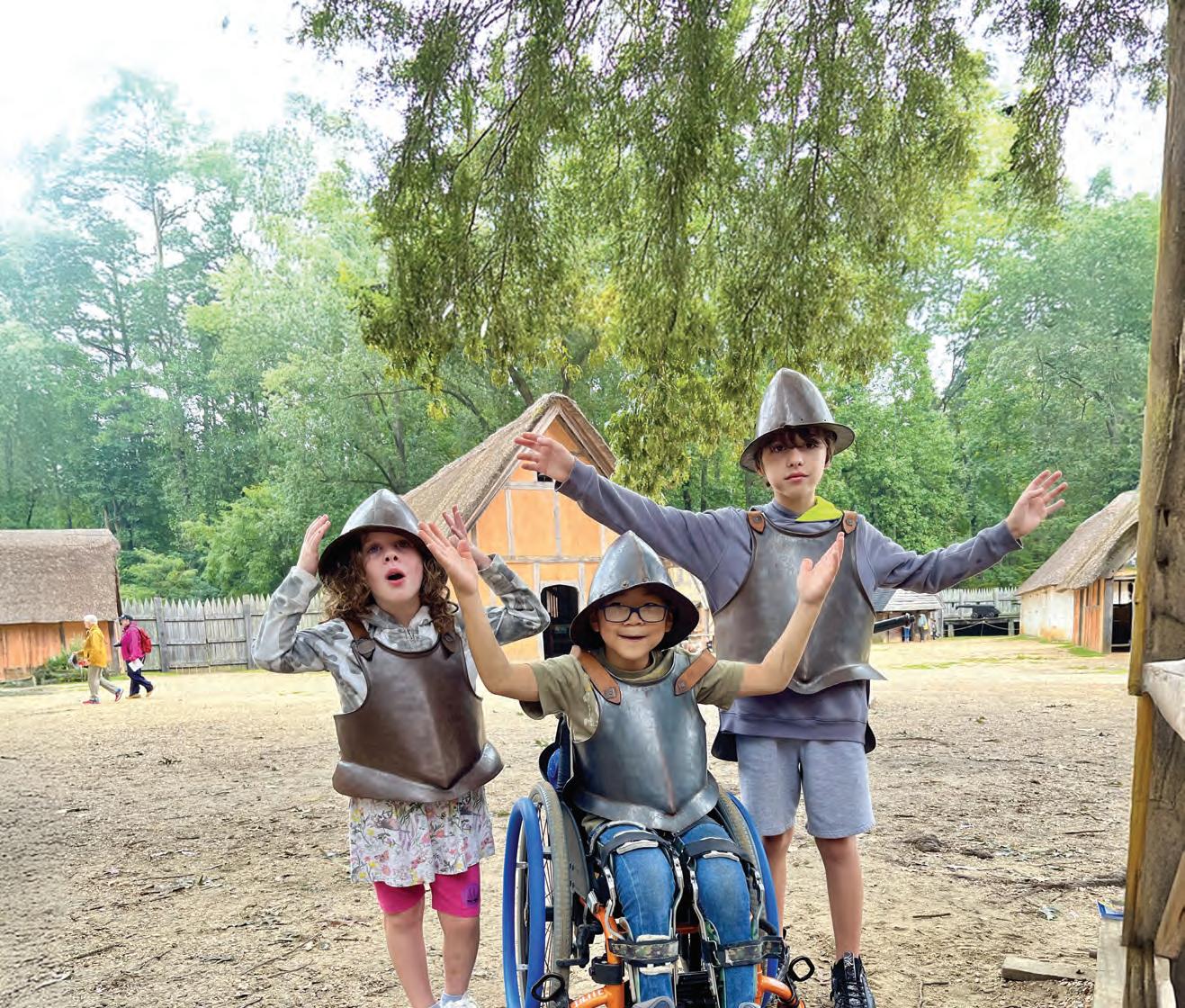
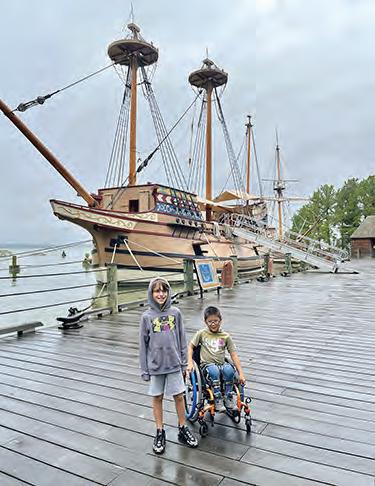
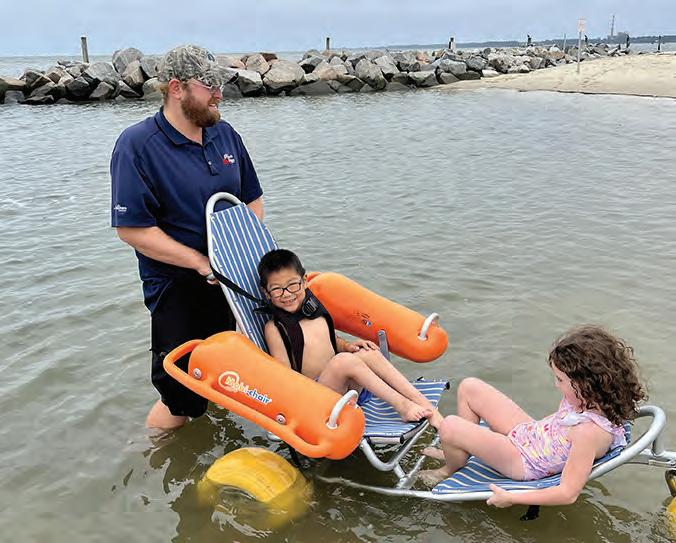
Discover Accessible Adventures in Williamsburg
Where America’s Journey Begins
Williamsburg welcomes travelers of all abilities with ADA-compliant hotels, attractions, dining, and transportation. Many historic sites and museums offer wheelchair access, designated parking, and audio and visual assistance. Getting around is convenient thanks to wheelchair and mobility scooter rentals and wheelchair lifts. Plan with confidence as you journey to America’s Historic Triangle.
For Guests Who are Deaf or Hard of Hearing
22. No visible way for a hearing impaired to know when the phone is ringing or someone is at the door. Use visual cues, i.e. blinking light at the door or purchase a vibrating pillow. Available here.
23. Guest is unable to communicate comfortably. Install hearing loop mat at check in.
For Guests with Autistic Family Members
24. Elevator noise is overstimulating. Assign autistic families rooms as far from the elevator as possible. 25. Fear of elopement over night. Offer door/window alarm in case of elopement.
26. New environments and routines are overwhelming. Distribute a “Sensory Kit” with objects that will reduce sensory issues.
Summary/Recap
• Physical Adjustments: Simple tasks like moving an armchair or loosening a heavy door.
• Affordable Tech: Using apps like Be My Eyes or Aira to assist guests with visual impairments.
• Staff Training: Teaching teams to meet guests in front of high counters or to leave personal effects untouched.
• Sensory Considerations: Strategic room assignments to reduce noise and overstimulation.
Accessible-Friendly Fun in America’s Historic Triangle
Williamsburg, Jamestown, and Yorktown invite travelers of all abilities to discover rich history, thrilling adventure, and unforgettable fun in the place where America’s journey begins. From iconic historic sites to modern attractions, the destination offers a wide range of ADA-compliant experiences, events, venues, and accommodations designed to help every visitor feel comfortable, confident, and inspired.
Exploring America’s Historic Triangle is both enriching and approachable. Whether you’re revisiting the nation’s earliest chapters at Jamestown Settlement, getting immersed in Virginia’s former capital at Colonial Williamsburg, diving into revolutionary history in Yorktown, or chasing thrills at Busch Gardens® Williamsburg, accessibility features integrated throughout the destination support a seamless experience.
Planning your Williamsburg itinerary is easy thanks to these accessibility features:
Wheelchair Accessibility: Find wheelchair-friendly hotels, restaurants, museums, and attractions throughout the area. Pathways, ramps, and entrances generally meet ADA standards. Williamsburg Area Transport (WATA) buses and the Yorktown Trolley are equipped with wheelchair lifts, allowing visitors to get around the destination with ease.
Wheelchair & Mobility Scooter Rentals: Wheelchairs and mobility scooters are available for rent at select locations, including Colonial Williamsburg. Williamsburg Scooter Rentals includes local delivery in its pricing. Contact individual venues for availability and reservations.
Audio & Visual Assistance: Williamsburg works to ensure that the destination’s stories come to life for those who are visually or hearing impaired. Many attractions offer assistive listening devices, audio descriptions, and closed-captioning for video presentations – inquire at each location for availability.
Sign Language Interpreters: Some venues provide sign language interpreters upon request. Contact venues in advance to arrange these services.
Parking: Accessible parking spaces are available throughout the area, including
Experience beautiful Yorktown Beach with a floating beach wheelchair.
Tour Jamestown Settlement’s galleries and see replicas of historic ships.
near the entrances of key attractions. Parking lots and garages offer wide, designated spaces for those with mobility needs.
Public Restrooms: Many public restrooms in Williamsburg are ADA-compliant, offering accessible stalls and features.
Williamsburg is committed to creating an environment where everyone can connect with America’s story and enjoy moments of joy and wonder.
With the celebration of America250 in 2026, now is the perfect time to add Williamsburg to your itinerary. The team at Visit Williamsburg and the Williamsburg Visitor Center can provide personalized recommendations for accessible lodging, dining, attractions, tours, and transportation, along with up-to-date information tailored to your needs. No matter how you travel, Williamsburg is ready to welcome you to the heart of American history.
For more information and planning resources, go to VisitWilliamsburg.com/plan/accessibility
Experience historic homes, museums, and restaurants in wheelchair-friendly Williamsburg.
The free Yorktown Trolley features an accessible lift for easy access.
Elevated Hospitality Starts With Reimagining Accessibility with KultureCity
KultureCity isn’t just a nonprofit. It’s the global leader redefining what hospitality truly means.
As the world’s leading authority in sensory accessibility and inclusion, KultureCity certifies hotels, resorts, restaurants, cruise lines, airports, and entertainment destinations worldwide, helping organizations deliver elevated experiences for every guest and employee, especially those with invisible disabilities.
Invisible disabilities affect millions of people across all ages and backgrounds, including individuals living with autism, PTSD, dementia, Parkinson’s, Multiple Sclerosis, anxiety disorders, traumatic brain injury, sensory processing differences, and more. These guests are often overlooked, not because they aren’t present, but because their needs aren’t visible.
In high-stimulation environments– bright lighting, loud
spaces, long lines, unpredictable crowds– what appears to be a “normal” experience can quickly become overwhelming, isolating, or inaccessible.
KultureCity equips partners to move from good intentions to measurable, human impact through practical training, proven tools, and a clear, trusted standard that makes sensory inclusion consistent, visible, and scalable.
Because elevated hospitality isn’t defined by luxury alone.
It’s defined by comfort, clarity, dignity, and belonging.
If you’re ready to lead with inclusion and deliver experiences that truly welcome more people, join the movement.
KultureCity®
Elevated hospitality for every sensory need.
To expand sensory accessibility and inclusion, certified partners of KultureCity has built over 780 Sensory Rooms to serve as havens of decompression. These rooms make it possible to either come to an event or location for the first time or to stay at an event or location that could be sensory overloading. They empower the very people and family groups they serve.
The KultureCity App is a free multifaceted resource App that houses each certified Sensory Accessible/ Inclusive venue and entity on it and the world’s first AI generative conversation and communication tool, Koji. With over 2 million downloads, the KultureCity App is becoming a go-to resource for individuals with invisible disabilities and their families.
The KultureCity Sensory Bag is so much more than a bag with researched-based tools, it’s a doorway to belonging and an invitation to travel and experience the world without limit or stigma.
Invisible disabilities such as Autism, ADHD and PTSD know no single age and background. From the youngest of travelers to the oldest, KultureCity believes travel should be for all– and they make it possible.
TravelAbility Announces 2025 Accessibility
Superstars: The Architects of Inclusive Culture
Only a select few have been named as TravelAbility’s Accessibility Superstars. These industry leaders have gone beyond tireless advocacy to complete cultural overhauls. Their efforts have not only transformed policies, practices, and mindsets, but have also inspired global movement towards equitable travel experiences.
Toni Bastian: Transforming Richmond’s Tourism Landscape
Superstar Initiatives:
Toni Bastian from Visit Richmond has transformed accessibility from a checklist into a mindset. Under her leadership, Richmond’s tourism culture now embraces accessibility as a core value—from frontline hospitality to strategic planning. Toni’s efforts have enabled local businesses to see accessibility not as an obligation, but as an opportunity to welcome all travelers with dignity and warmth.
• Accessible RVA Strategic Plan: A comprehensive plan that integrates accessibility into Richmond’s tourism strategy, ensuring that all visitors have a seamless experience.
• Accessible RVA Champions: A program that trains local businesses to become more accessible, fostering a community-wide culture of understanding and respect.
• Disability Inclusiveness Training: Workshops designed to educate frontline staff about disability etiquette, enhancing the overall visitor experience.
Sasha Blair-Goldensohn: Pioneering Accessible Navigation at Google
Superstar Initiatives:
Sasha Blair-Goldensohn from Google Maps has redefined what it means to build for everyone. His advocacy has sparked systemic change within Google, embedding accessibility into product development, UX design, and global mapping standards. Sasha’s lived experience and relentless drive have helped cultivate a culture where accessibility has been a model for innovation. In addition to mapping accessibility, he’s actively advocating for building accessibility as the voice behind NYC’s commitment to an accessible Metro system.
• Wheelchair-Accessible Transit Routes: Because of Sasha, Google Maps offers wheelchair-accessible transit routes in over 20 cities, in addition to widespread accessible walking route options, helping users navigate public transportation with ease.
• Accessibility Icons: Through Sasha, Google Maps added icons indicating which establishments are wheel-
chair accessible, providing users with essential information at a glance. These icons have been expanded to include accessibility details for all canvassed locations.
• Detailed Voice Guidance: Launched enhanced walking directions for individuals with low or no vision, improving navigation in unfamiliar areas.
• Crowdsourced Accessibility Information: Thanks to Sasha’s efforts, Google Maps now provides crowdsourced accessibility information for more than 50 million places, empowering users to make informed decisions about their travel destinations.
Tami Reist: Championing Accessibility in North Alabama
Superstar Initiatives:
Tami Reist from North Alabama Mountains and Lakes has championed accessibility across rural tourism with unmatched zeal and creativity. She’s cultivated a regional culture where accessibility is a celebrated value. From training local partners to spotlighting accessible trails and attractions, Tami’s leadership ensures that accessibility is not just an afterthought—it’s proudly visible in every visitor experience.
• Accessibility Handheld Guide: Published a print guide on accessible adventures, covering multiple disabilities and including sample itineraries.
• Destination Verified Status: The region earned “Destination Verified” status for accessible travel, marking a significant step forward in inclusive tourism.
• All-Terrain Mobility Device Donation: Through a TVA grant, Tami’s team purchased a state-of-the-art all-terrain hopper and donated it to Joe Wheeler State Park, allowing individuals with mobility challenges to explore rugged trails and scenic landscapes more freely.
• Inclusive Marketing: Launched a new accessibility website alongside hosting disability content creators and sharing multimedia itineraries.
Honoring the Architects of Inclusive Culture
Toni, Sasha, and Tami exemplify the essence of leadership in the realm of accessible tourism. Their unwavering dedication to creating inclusive environments has not only transformed their respective regions but has also set a global standard for what it means to be truly accessible. As we celebrate their achievements, we are reminded that true accessibility is not merely about removing physical barriers but about fostering a culture of inclusion, empathy, and respect.
To Toni, Sasha, and Tami—thank you for showing us that true accessibility is not just what we build, but how we lead. You are the architects of inclusive culture and we honor you as TravelAbility Superstars.
RICHMOND REGION the
where every traveler is welcome
Accessible Travel in the Richmond Region
Discover the Richmond Region — Where Every Traveler Is Welcome
Are you looking for a destination that truly embraces accessibility and inclusion? Look no further than the Richmond Region, where thoughtful design, welcoming people, and award-winning training come together. John Morris of Wheelchair Travel may have summed it up best when he noted “The continued attention to accessibility made my family feel welcome.”
In Richmond and its surrounding counties, you’ll find iconic landmarks and hidden gems. Explore the Virginia State Capitol, the American Civil War Museum, Maymont’s 100-acre historic estate, and the serene Lewis Ginter Botanical Garden, all offering wheelchair-friendly pathways and inclusive amenities.
For live entertainment, the region is proud to host KultureCity-certified, sensory-inclusive venues. The Allianz Amphitheater at Riverfront and the Altria Theater / Dominion Energy Center have earned the Sensory Inclusive® certification so staff are trained, quiet zones are marked, and sensory bags are available through the KultureCity app.
The Science Museum of Virginia has earned an “Autism-Friendly Community” designation from the Autism Society of Central Virginia. Thanks to this, staff have received specialized training, and visitors can enjoy sensory guides, social narratives, quiet zones, and sensory bags. But perhaps the most impressive commitment is behind the scenes: more than 2,500 front-line hospitality staff across the Richmond Region have completed disability etiquette training through a partnership between Richmond Region Tourism and VisitAble.
Beyond the city streets, adventurous travelers can enjoy accessible boating on the James River with Beyond Boundaries, which provides pontoon boats that accommodate power wheelchairs. And if you’re a history or vehicle buff, don’t miss the Keystone Truck & Tractor Museum, fully navigable by wheelchair and complete with accessible dining and The Richmond Region is ready to welcome you. Come experience a place where everything is possible, and everyone belongs.
Enjoying the beauty of Richmond’s Belle Isle. Credit: Wonders Within Reach, Jennifer Allen
Downs and Town’s Houston Vandergriff spending time with the birds at the Metro Richmond Zoo. Credit: Katie Vandergriff
The Morris family enjoying time on Richmond’s James River with Beyond Boundaries. Credit: Downs and Towns, Houston Vandergriff
Cory Lee enjoying the T. Potterfield Memorial Bridge in Richmond. Credit: Curb Free with Cory Lee
Kissimmee: Where Ease Is Part of the Experience
In Central Florida, Kissimmee has long been known as a place where travel feels expansive. Open spaces and a hospitality culture shaped by decades of welcoming visitors from around the world give the destination an ease that planners notice quickly and guests feel almost immediately.
That sense of ease begins with where people stay. Kissimmee’s accommodations range from full-service resorts to vacation homes designed with space and flexibility in mind. For many travelers, those extra square feet matter. Separate bedrooms, first-floor living, full kitchens, and private amenities create a stay that adapts naturally to different rhythms and routines, whether the day is built around meetings, family time, or simply taking things at a comfortable pace.
Out in the destination, experiences unfold just as intuitively. Kissimmee offers a mix of attractions, outdoor adventures, and entertainment that allow visitors to engage as much or as little as they choose. Nature preserves, airboat tours, theme park days, and low-key afternoons all coexist here. Increasingly, what stands out is not just the range of options, but how clearly those experiences are presented. Guests arrive knowing what to expect, which makes planning feel less like a puzzle and more like an invitation.
For meeting planners and hospitality professionals, that clarity is valuable. It supports smoother programs, more confident attendees, and fewer last-minute adjustments. Add in Kissimmee’s proximity to Orlando International Airport, accessible transportation options, and a tourism industry well-versed in large-scale events, and the destination begins to feel like a reliable partner rather than just a host.
Supporting that ease is a centralized collection of accessibility resources and inspirational content, designed to help planners and attendees understand what’s available and plan accordingly without unnecessary complexity.
In a time when meetings and events should be inclusive and seamless, Kissimmee offers a model that feels straightforward. Space, clarity, and hospitality do much of the work. The result is a destination that meets people where they are and lets the experience unfold naturally.
Gatorland
Columbia Restaurant
Vacation home in Kissimmee
• Lansing recognized by Accessible Journeys and Travel Ability as one of the top three destinations in the country for those traveling on the autism spectrum.
• Lansing recognized as the first Able Eyes Certified Destination in the country.
Scan this QR Code and start planning your getaway.
Lansing.org
• Virtual tours allow people of all abilities to explore public places prior to visiting.
• Sensory Inclusive Activities & Calendar of Events.
Lansing’s Accessible Travel Offerings: A
Welcoming Destination for Al
Greater Lansing offers an exceptional destination for travelers seeking an inclusive and welcoming experience. Located in the heart of Michigan, this vibrant region provides diverse attractions and amenities for visitors of all abilities. Lansing has even been recognized by Accessible Journeys Magazine as one of the top U.S. cities for autism families, showcasing its dedication to creating an accessible, supportive environment for all visitors.
Accessibility Highlights
The area boasts impressive accessibility features, including:
• Universally accessible attractions and infrastructure
• Specialized accommodations for diverse needs
• TravelAbility Destination Ally
• Accessibility Verified by Wheel the World
• First city in the U.S. to be named an AbleVu Accessible City
Unique Community Features
The region stands out with:
• Central Michigan location
Inclusive and Neurodiverse-Friendly Attractions
Visitors can enjoy unique experiences:
• Special programming and hours for neurodiverse visitors at attractions like Impression 5 Science Center, Abrams Planetarium, Potter Park Zoo, Wharton Center for Performing Arts and many more!
• Handicapable Go-Karts at High Caliber Karting
• Accessible kayak launches on the Grand River
• American Sign Language tours of the State Capitol Building
• Play Michigan! all inclusive playground
• Supportive restaurant and lodging options
• Over 500 Certified Tourism Ambassadors
• Diverse population speaking 63 languages
• Home to Michigan State University and the State Capitol
• Midwestern hospitality and welcoming atmosphere
• Virtual tours of locations available on the website.
Whether you are looking to explore its rich cultural heritage, enjoy thrilling activities, or simply relax in a friendly setting, Lansing ensures that every traveler’s needs are met with care and consideration. Visit lansing.org to plan your getaway.
Tours of Michigan’s State Capitol Building are free and open to the public each weekday. Credit: Thomas Gennara
Find unique boutiques and charming galleries in historic and trendy Old Town Lansing. Credit: Thomas Gennara
Checking in at the Courtyard by Marriott in downtown Lansing is easy and hassle-free. Credit: Thomas Gennara
The State Capitol Building is an integral part of downtown Lansing. Credit: Choose Lansing
The AC/Hyatt House is one of Lansing’s newest hotels near Michigan State University. Credit: Andrew Schmidt
Dream Grand and Go to Grand Rapids
Named the #1 U.S. City on the Rise by LinkedIn and one of America’s 10 Best Towns to Visit by CNN, Grand Rapids, Michigan is a welcoming and supportive destination for all travelers. The city has earned Destination Verified status as an accessible city through Wheel the World, an online platform dedicated to enhancing global travel accessibility. Nearly 60 local hotels, restaurants and attractions have been independently audited to Wheel the World accessibility standards, and Experience Grand Rapids, the city’s official Destination Marketing Organization (DMO), has teamed with Disability Advocates of Kent County to provide accessibility training to even more hospitality and tourism businesses.
Accessible travelers can enjoy all of the things that make Grand Rapids worth visiting, including world-class art and culture, farm-to-table food, incredible craft beverages, awesome outdoor recreation and endless family fun. Before your visit, consult ExperienceGR.com/ Accessibility for guides to visiting the area if you use a wheelchair, have visual impairments or hearing loss, and/ or are traveling with someone who has sensory needs. You’ll also find suggestions for accessible transportation, hotels, restaurants, attractions, performing arts venues, and parks and trails – including several with accessible kayak launches.
Explore compact downtown Grand Rapids, where wide, heated sidewalks and curb ramps ease wheelchair travel to 300+ restaurants, shops and entertainment venues. Don’t miss Frederik Meijer Gardens & Sculpture Park, one of the world’s most visited art museums, where all indoor and outdoor spaces are barrier-free and accessible. Enjoy adaptive mountain biking and adaptive skiing just minutes from downtown. Drive 30-45 minutes from the city center to four Lake Michigan state parks, where free-to-use track chairs enable visitors with mobility challenges to explore sugar-sand beaches, nature trails and shallow water.
Visit this summer for a series of events surrounding America’s 250th Anniversary, including a July 4th fireworks spectacular in downtown Grand Rapids, an accessible outdoor venue alongside downtown’s Grand River. Come back in fall for ArtPrize (Sept. 17 - Oct. 3, 2026), the world’s most attended public art event, when hundreds of artworks are displayed in accessible parks, parking lots, restaurants and other businesses throughout downtown Grand Rapids.
Grand Rapids was proud to host The Hartford Nationals, the largest and longest-running national sport championship event for athletes with a physical disability, visual impairment or intellectual disability, in 2025 – and we invite athletes and supporters to join us July 10-16 for the 2026 event!
Experience Grand Rapids Griffins Game
Experience Grand Rapids Hand Biking - Carly Contreras
Experience Grand Rapids Whitecaps Game - Carly Contreras
Experience Grand Rapids Reeds Lake Park2 - Carly Contreras
ADA-compliant venues
Memorable gathering spaces supportive hotels for mobility & sensory needs
Accessibility, Inclusivity, and Hospitality in Lancaster County, Pennsylvania
Lancaster County, Pennsylvania, offers meeting planners a destination where accessibility, inclusivity, and hospitality are not add-ons - they are foundational. Recognized for its welcoming spirit and thoughtful approach to visitor experience, Lancaster provides meeting environments designed to support attendees of all abilities while delivering the character and professionalism planners expect.
Across the county, meeting spaces range from modern convention centers and full-service hotels to flexible venues in walkable downtowns and scenic countryside settings. Many facilities feature step-free access, wide corridors, accessible guest rooms, assistive listening systems, visual alarms, and adaptable seating layouts. Planners will also find venues experienced in accommodating sensory-friendly needs, service animals, and diverse mobility requirements, ensuring every attendee can participate comfortably and confidently.
Lancaster’s commitment to inclusion extends beyond the meeting room. The destination offers accessible transportation options, ample parking, and proximity between lodging, dining, and venues - reducing travel stress and supporting seamless movement throughout an event. A large number of attractions, restaurants, and cultural experiences provide accessible entrances, restrooms, and clear wayfinding, allowing attendees to engage fully during off-site events or downtime.
Equally important is Lancaster’s people-first approach. Local hospitality professionals understand that accessibility is personal, not prescriptive. Event teams work collaboratively with planners to anticipate needs, customize layouts, and address accommodations proactively. This service mindset makes Lancaster especially well-suited for conferences, summits, and association meetings where equity and inclusion are core values.
Located within a 3 hours drive of major East Coast cities, Lancaster combines convenience with value - offering high-quality facilities, competitive pricing, and a relaxed, approachable atmosphere. Attendees benefit from a destination that feels authentic and easy to navigate, while planners gain a partner committed to delivering accessible, inclusive events without complexity.
For meetings that prioritize access, dignity, and meaningful participation, Lancaster County is ready to welcome you and everyone you serve.
Barry’s Car Barn
Fulton Theatre
Ware Center for the Arts
Horst Arts
Building a More VisitAble World
VisitAble began with a personal story.
Founder Joe Jamison grew up watching how often disability was misunderstood, or unintentionally mishandled, when his father, who uses a wheelchair, tried to participate in everyday experiences. Access was frequently treated as an afterthought, limiting opportunities not because of ability, but because of awareness and preparation. That early exposure shaped a simple belief: disability inclusion starts with mindset, not compliance.
Today, VisitAble is on a mission to change the way the world views disability.
Through industry-proven accessible tourism training, VisitAble helps organizations improve traveler and employee experiences, while standing out in a competitive tourism landscape.
Accessible tourism training isn’t just the most digestible next step for teams and their partners; it’s the most strategic and impactful. If a visitor has a negative interaction when traveling, that’s what they’ll remember when they go home. Training sets the tone, builds buy-
Joe Jamison, VisitAble Founder, standing next to his Dad
in, and creates a foundation that future accessibility efforts can stand on. This is where VisitAble sets the standard. VisitAble is the only training platform that successfully scales empathy-based education across all disability types at a destination level. In just one year, more than 2,200 tourism professionals were trained in the Richmond Region, proof that culture change is possible when education is done right.
VisitAble works with teams and destinations that want to do training the right way, reaching frontline staff and creating lasting change.
Join us in making a world that’s truly VisitAble. Learn more at www.VisitAble.org.
VisitAble’s “Advocate” Certification sticker against a storefront
Ashauntae exploring a conservatory at a botanical garden
Encapsulating the Core Challenge for Each Disability in One Word
By Jake Steinman
Recently I was challenged to distill the essence of each disability into a single word. After five years of being immersed in TravelAbility, and after considerable thought, here are the words I arrived at and why, for me, they encapsulate the core challenges faced by individuals with different disabilities when they travel–and in real life.
Wheelchair Users: Stairs
Stairs represent one of the most anxiety-inducing obstacles for wheelchair users. Despite restaurants and attractions often being advertised as fully accessible, or even after confirming accessibility in advance, wheelchair users frequently encounter unexpected stairs. This not only disrupts their plans but also subjects them to the indignity of being carried up and down stairs.
Blind Travelers: Navigation
For blind travelers, navigation is the primary challenge. The world is largely built for those who can see, leaving many environments inaccessible to the blind. The barriers they face are often related to moving from point A to point B, both physically and digitally. However, technology and innovation are gradually bridging this gap. Tools like Aira, Be My Eyes which provide real-time assistance, while Apple and Google Android are providing innovative technology that makes navigation easier and more accessible.
Deafness: Communication
Communication is the central issue for the 48 million people in the United States who are deaf or hard of hearing. Astonishingly, less than 1% of this population uses American Sign Language
(ASL), according to the Commission on the Deaf, and another half million (family members/teachers) know ASL. This statistic underscores the vast communication barriers that exist, as many deaf individuals rely on other forms of communication that are not always understood or accommodated by the hearing population. Innovations such as Sign Speak, which uses human-looking AI avatars, presented at TravelAbility’s InnovateAble Showcase, the Shark Tank for Adaptive technology, bridge this gap.
Autism: Acceptance
For individuals on the Autism Spectrum, acceptance is crucial. With approximately 9 million families in the United States affected by autism, and an estimated 24 million people impacted when considering household members, acceptance becomes a necessity. Studies indicate that 85% of these families face significant challenges that prevent them from traveling. Education and training are key to fostering acceptance, with organizations like Kulture City, Autism Double-Checked, Able Vu, the Autism Travel Club and IBCCES, offering training and certification programs. Additionally, initiatives like the Sunflower Hidden Disability Lanyard help communicate the need for special care in public spaces.
For All: Independence
Ultimately, the word that ties all these experiences together is independence. Each of these challenges—whether it’s navigating stairs, communicating effectively, or gaining acceptance—boils down to the fundamental human desire for independence. Ensuring that individuals with disabilities can live independently and with dignity when they travel is the overarching goal of TravelAbility.
TravelAbility Cultivates New Accessibility Leaders at 2025 Summit
Accessibility has become a key driver of destination competitiveness and the visitor experience. In response, TravelAbility has launched the Cultivating Accessibility Leaders Masterclass Series, a professional development program designed to help industry leaders implement accessible practices across their organizations.
The first Cultivating Accessibility Leaders Masterclass was held at the 2025 TravelAbility Summit in a two-hour session led by VisitAble and Canucks Autism Network.
The program focused on practical strategies for accessible travel, from frontline engagement to sensory-friendly practices that support travelers with diverse access needs. Twenty-eight participants earned certification as Accessibility Leaders, marking their readiness to champion accessibility initiatives within their organizations. Participants in the inaugural cohort represent destinations actively advancing accessibility initiatives across the United States, including:
● Visit Sandy Springs
● Travel Oregon
● Visit Hendricks County
● New York City Tourism + Conventions
● Visit Greater Palm Springs
● Visit California
● Access Tahoe
● Travel Southern Oregon
● Visit Huntington Beach
● Destination Ann Arbor
● Visit Bend
● Visit Orlando
● Eastern Oregon Visitors Association
● The Dalles Area Chamber of Commerce
● Travel Michigan
The Cultivating Accessibility Leaders Masterclass Series will expand through a series of full-day, in-person regional workshops in 2026.
Interested in becoming an Accessibility Leader?
Sign up for our Masterclass Email list to be the first to know when our 2026 events are announced!
Joe Jamison presents VisitAble’s training as part of the masterclass session at the 2025 Summit.
Meet the Influencers who came to the 2025 TravelAbility Summit
Alice Diehl
Actor and Ms Wheelchair Oregon 2025, Alice Diehl lives in Grants Pass, Oregon. She volunteers for the unhoused at Newmans United Methodist church in Grants Pass. At 16 she was awarded an acting scholarship in honor of John Ritter and performers with disabilities. Shortly after, she obtained another scholarship to study at the Howard Fine acting studio in 2005. She enjoys being on film and Television, puppetry and volunteering for her church. She was diagnosed with Cerebral Palsy at 10 months old. Her platform focuses on creating hope and safe spaces for our most vulnerable communities. Alice describes herself as compassionate, creative, and goofy
Followers: 2K
Social Media: @kelloinclusive @allhearttalent
Instagram | Facebook | YouTube
Amy Tarpein
Amy Tarpein is the founder of Elijah’s Baby Bucket List, an award-winning platform inspired by her son Elijah that empowers families to explore the world without barriers. A best-selling author, travel writer, and sought-after public speaker, she shares powerful stories and practical guidance on inclusive travel while balancing life as a mother of ten and traveling with her children. Through caregiver retreats and collaborations with travel destinations to improve accessibility, Amy continues to reshape family travel into a more inclusive and welcoming experience for all.
Followers: 465K
Website: elijahsbabybucketlist.com
Social Media: @ElijahsBabyBucketList
Instagram | Facebook | TikTok | YouTube
Anthony Ferraro
Anthony Ferraro is a professional athlete, musician, motivational speaker, and content creator who was born blind with Leber’s Congenital Amaurosis. A standout high school wrestler and the only blind athlete on his team, his journey was documented in the film A Shot in the Dark, capturing his pursuit of a state championship with the support of his brother. Now married and sharing life online with his wife Kelly Anne, Anthony continues to train for Paralympic judo with goals of competing in Los Angeles 2028, inspiring audiences with his message of resilience and “one love.”
Followers: 3.5M
Website: https://asfvision.com/
Social Media: @asfvision
Instagram | Facebook | TikTok | YouTube
Candy Harrington
A travel journalist for 45 years, Candy has covered accessible travel for wheelchair-users and slow walkers exclusively since 1997. She’s the Founding Editor of Emerging Horizons, has authored over 20 books on accessible travel, and has thousands of accessible travel bylines to her credit. Her goal is to present unbiased, accessible travel information so slow walkers and wheelchair-users can make appropriate holiday choices.
Followers: 4K
Website: emerginghorizons.com/
Chelsea Bear
Chelsea Bear is a South Florida–based content creator, disability advocate, and accessible travel storyteller with more than 900,000 followers across her social media platforms. Diagnosed with cerebral palsy, she draws on her background in communication and public relations to create visual, on-theground travel content that shows what is truly accessible for people with disabilities and empowers destinations to better communicate inclusion. Since becoming a full-time creator in 2021, Chelsea has partnered with major domestic and international travel brands and destinations, with dozens of videos surpassing one million views and one reaching more than 55 million.
Followers: 900K
Website: www.chelseabear.com
Social Media: @RealChelseaBear Instagram | Facebook | TikTok | YouTube
Houston Vandergriff
Houston Vandergriff is a globe traveling photographer, entrepreneur, and disability advocate whose work blends art, travel, and inclusion. Based in Knoxville, Tennessee, he has visited all 50 U.S. states, 30 countries, and seven Canadian provinces. He has earned recognition as a Nikon Creator, an NFT100 global change-maker, and NomadMania’s International “Against All Odds Traveler.” Through an active social media presence and award-winning photography, including a piece permanently placed on the Moon, Houston shares his story and inspires audiences both within and beyond the disability community.
Followers: 421K
Website: downsandtowns.com
Social Media: @DownsAndTowns Instagram | Facebook | TikTok | YouTube
Ian Ruder
Ian Ruder is the Editor-in-Chief of New Mobility Magazine. A wheelchair user himself, Ian is a passionate advocate with over a decade of experience at United Spinal Association, cultivating a deep network of advocates, influencers, and writers within the disability community. With a background in freelance journalism, editing, and design, he combines editorial leadership with a lifelong love of food, storytelling, and nerd culture.
Followers: 305K
Website: newmobility.com
Social Media: @NewMobilityMagazine
Instagram | Facebook | YouTube
Jennifer Allen
Jennifer Allen is the founder of Wonders Within Reach: a travel blog for families with disabilities. As mom to three children with unique disabilities, including a wheelchair user, Jennifer created Wonders Within Reach to inspire and enable families with differing needs to get out and explore. She partners with destinations to celebrate accessible locations, to show others what is possible, to improve inclusion and representation, and to raise disability awareness along the way.
Followers: 36K
Website: wonderswithinreach.com
Social Media: @WondersWithinReach Instagram | Facebook | TikTok | YouTube
Jessica Ping
Jessica Jordan Ping is a Chicago-based disabled creator, speaker, podcast host, musician, writer, certified accessibility consultant, and disability advocate. Through her platform The Rolling Explorer, she has partnered with global brands and consulted with organizations to bring lived-experience insight, accessibility expertise, and impactful storytelling to a wide range of industries. Driven by a desire to expand representation and increase accessibility wherever she goes, Jessica is now focused on collaborating with travel and tourism partners to help create more inclusive, welcoming experiences for all.
Followers: 200K
Website: www.therollingexplorer.com
Social Media: @TheRollingExplorer
Instagram | Facebook | TikTok | YouTube
John Morris
John Morris is the founder of WheelchairTravel.org and a leading thought leader in the accessible travel industry. After a devastating car crash in 2012 that resulted in the loss of three of his four limbs, he turned his personal experience into a mission to provide accurate, first-hand information on wheelchair accessibility around the world. Reaching more than 150,000 monthly readers, John advocates for meaningful accessibility reform through trusted destination guides, airline and hotel reviews, and ongoing education that empowers wheelchair users to travel independently and with dignity.
Followers: 24,000
Website: wheelchairtravel.org
Social Media: @WheelchairTravel
Instagram | Facebook | TikTok | YouTube
Julie Jones
Julie Jones is the creator of Have Wheelchair Will Travel and the co-founder and Executive Editor of Travel Without Limits, Australia’s only disability-focused travel magazine. With decades of experience traveling alongside her son Braeden, who lives with cerebral palsy, she is a trusted voice in accessible travel. Julie provides reliable guidance and has been widely recognized for her impact, including winning the Bupa Health Influencer Blog Award for Travel Adventures and being named a 2025 Traveller Awards Change Maker.
Followers: 41K
Social Media: @TWLMag and @HaveWheelchairWillTravel
Kelcie Miller-Anderson
Kelcie Miller-Anderson is a Calgary-based innovator and social entrepreneur who leads the environmental startup MycoRemedy. A lifelong problem-solver, she began researching remediation solutions for the Alberta Oil Sands at age 15, founded her company by 21, and has been recognized as one of Canada’s Top 20 Under 20, a Next 36 fellow, and a Manning Youth Innovation Award winner. Diagnosed in 2018 with Mitochondrial Disease, Ehlers-Danlos Syndrome, and Mast Cell Activation Syndrome, Kelcie draws on her lived experience with disability to champion resilience, inclusive entrepreneurship, and empowering the next generation to see curiosity and adversity as powerful advantages.
Followers: 120K
Website: kelciemilleranderson.com
Social Media: @thechronic_explorer
Instagram | TikTok | YouTube
Kristy Durso
Kristy Durso is an accessibility consultant, entrepreneur, keynote speaker, and inclusive travel advocate who brings both lived experience and professional expertise to her work as the owner of Incredible Memories Travel. A full-time wheelchair user, military spouse, and mother of three children with disabilities and food allergies, she is dedicated to closing the gap between what is labeled accessible and what is truly disability-inclusive in travel. Through consulting, education, and her role on the advisory board of TravelAbility, Kristy works with destinations and tourism organizations to create meaningful, welcoming experiences for travelers of all abilities.
Followers: 5K
Website: incrediblememoriestravel.com/ Social Media: @KristyGoes Instagram | Facebook
Mandy Salas
Mandy Sales is a resilience advocate, mindset coach, upcoming author, and quadriplegic mama who inspires others to harness the power of perspective, perseverance, and personal growth. More than 30 years ago, a life-altering accident transformed her from an elite competitive athlete into a quadriplegic, but the mindset she developed through sports became the foundation for how she approaches every challenge. Today, Mandy is a sought-after speaker and mentor who shares her philosophy that while we cannot always control our circumstances, we can always control our response, empowering audiences to navigate adversity with strength and grace. Through her speaking, workshops, and forthcoming memoir, she is on a mission to help others turn obstacles into opportunities and live with purpose and possibility.
Website: https://mandysalas.com/ Social Media: @ImMandySalas
Phoenyx Powell
Phoenyx is an accessible solo travel blogger who rebuilt her life after a motorcycle accident, traumatic brain injury, and amputation. Through Phoenyx Travels, she shares practical guides and lived-experience insights that help travelers explore with confidence. Her work highlights destinations with honesty, inclusion, and accessibility at the core.
Rosie Dunn is a content creator and travel writer who shares her experiences exploring the world as a full-time manual wheelchair user of more than 20 years. She has traveled to 39 U.S. states and 20 countries. Her work focuses on accessibility in hotels and resorts, inclusive and stylish design, disability representation, and community-building among disabled women. Rosie holds a B.A. from the University of Notre Dame and an MSc in Disability Studies from University College Dublin, and she is currently pursuing a Doctorate in Occupational Therapy at Belmont University, where her capstone will focus on inclusive design.
Followers: 6K
Website: https://rosieroaming.com/
Social Media: @RosieRoaming Instagram | TikTok
Suellen Henneberry
Suellen Henneberry is an athlete and Spartan Race participant who is a below-the-knee amputee following a complex medical journey that included a serious foot wound, and a left leg amputation in August 2023. After years of setbacks that once made endurance events impossible, she completed a Spartan Race 10K with 25 obstacles. Inspired by mentors and the Sportable community, Suellen races as a fundraiser to give back to the organization that helped restore hope, joy, and access to sport for athletes with disabilities and their families.
Followers: 300
Social Media: @SuellenHenneberry
Taylor Leigh Aguilar
Taylor Leigh Aguilar is a director, producer, and writer from Pueblo, Colorado. In the summer of 2020, she completely lost her vision while she was attending film school and took a leave of absence to attend the Colorado Center for The Blind. Though the experience was traumatic and completely changed Taylor’s way of life, she continued to pursue her dream career of being a filmmaker. She finished her film degree at Loyola Marymount University and filmed her thesis short film less than a year after losing her vision. She has since directed and produced three short films, two of which are currently in post-production. Taylor has become an advocate for the blind community to enjoy films, travel, and life the same way others do.
Followers: 2K
Website: blindeagleproductions.com/ Social Media: @BlindEagleProductions Instagram | TikTok | YouTube
Combined Total Reach of all Creators: 6,032,800
George Washington’s
Mount Vernon
Northern Virginia offers exciting experiences for visitors of all abilities. With wheelchair access and other accommodations available at popular sites like Great Falls Park, George Washington’s Mount Vernon, and the Smithsonian’s National Air and Space Museum, Fairfax County welcomes all to join the fun!
Visit FXVA.com to learn more.
Fairfax County: An Accessible Travel Gem in the Heart of Northern Virginia
Fairfax County welcomes visitors of all abilities to explore the memorable travel experiences available at area parks, historic sites, museums, and restaurants. Plan your next trip to Northern Virginia using Fairfax County’s accessibility resources and Accessible Travel Guides written by local accessibility experts. Then dive into these 10 Wheelchair Accessible Things To Do to expand upon the experiences below.
Parks and The Outdoors
● Concerts Under the Stars at Wolf Trap: America’s only National Park dedicated to the performing arts.
● Accessible Outdoors at Great Falls Park: A beautiful 800-acre National Park with a jaw-dropping waterfall, just 15 miles from D.C.
● Find Your Zen at Meadowlark Botanical Gardens: Landscaped gardens and a one-of-a-kind Korean Bell Garden amongst 95-acres of lush property.
● Sip Virginia Wines at The Winery at Bull Run: A grape to glass farm winery with ties to the Civil War.
Historic Sites and Museums
• Presidential Excursions at George Washington’s Mount Vernon: The estate of America’s first president, George Washington.
• Smithsonian’s National Air and Space Museum Steven F. Udvar-Hazy Center: An accessible treasure trove of aviation history displaying thousands of aviation and space artifacts.
• A Humanistic & Interactive Look Inside the National Museum of the U.S. Army: Commemorating nearly 250 years of Army history through the eyes of America’s Soldiers.
Getting Here and Getting Around
With over 100 hotels to choose from, flanked by 3 major airports, and access to a robust accessible regional Metrorail system, your journey to and around the U.S. Capital Region serves you with many options.
George Washington’s Mount Vernon: George Washington’s Mount Vernon is the most visited historic estate in America and is home to year-round events and activities for the whole family.
National Museum of the United States Army: The National Museum of the U.S. Army celebrates over 245 years of Army history and honors our nation’s Soldiers – past, present, and future.
Smithsonian National Air and Space Museum Steven F. Udvar-Hazy Center: The Smithsonian National Air and Space Museum Steven F. Udvar-Hazy Center displays thousands of aviation and space artifacts, including Space Shuttle Discovery and a Concorde, in two large hangars.
Great Falls Park has many opportunities to explore history and nature, all in a beautiful 800-acre park only 15 miles from the Nation’s Capital.
LIVE LIFE LIMITLESS
Mesa, Arizona is a community that prioritizes accessibility and inclusion. From accommodations to attractions, you can confidently plan a trip where everyone feels welcome. Discover Mesa’s accessible adventures and start planning your trip today.
Live Life Limitless: Where Everyone Belongs
Mesa, Arizona has built something rare: a destination where accessibility isn’t an afterthought. It’s the foundation. From leisure travelers to large conventions, every experience is designed so more people can participate and feel welcome.
As the world’s first Autism Certified City, Mesa set a new standard for inclusive travel, a milestone that sparked meaningful work that continues today. Thousands of people working in hotels, attractions, restaurants, and city departments have completed specialized training to welcome neurodivergent travelers with genuine understanding.
Through expanded programs and ongoing education, Mesa continues to raise the bar for accessibility, a commitment that reaches well beyond autism certification. As a verified Wheel the World destination, Mesa provides the detailed and transparent information travelers with mobility, hearing, or vision needs expect. Room dimensions, terrain
descriptions, and sensory considerations are shared upfront so visitors and planners can make choices with confidence.
Mesa is also advancing inclusive dining through a partnership with the Kyah Rayne Foundation Restaurants, hotels, and event venues are recognized for their allergen training and for preparing staff to support guests with special dietary needs. Whether it’s a group event or a family dinner, guests with food allergies can count on clarity and peace of mind.
But accessibility is only the starting point. Mesa offers miles of accessible desert trails, a thriving food scene, interactive museums, public art and premier golf, all supported by authentic Southwestern culture and a community rooted in thoughtful hospitality.
In Mesa, inclusive travel isn’t an aspiration. It’s the standard. Accessibility leads the way and memorable adventure follows.
Plan your visit to Mesa today.
Big smiles, bold colors, and a city built for everyone.
Enjoy premier golf with 300 days of sunshine per year.
Live Life Limitless in Mesa.
Make Mesa your home base during Spring Training.
Hospitality in Lexington, Kentucky
In Lexington, Kentucky, hospitality isn’t just something we talk about, it’s something you feel. From vibrant neighborhoods and iconic attractions to welcoming venues and thoughtful visitor tools, Lexington is a destination designed to be enjoyed by everyone.
Accessibility is woven throughout the Lexington experience. Through VisitLEX’s partnership with Wheel the World, visitors can explore accessible hotels, attractions, experiences and meeting venues with confidence. Detailed information, real-world measurements, and photos help take the guesswork out of planning, making it easier for travelers to focus on what really matters: enjoying their time in the Horse Capital of the World.
Lexington also embraces the idea that access looks different for everyone. Sensory-friendly initiatives, including sensory maps and sensory kits available through the Lexington Visitors Center, support neurodivergent guests and those with sensory sensitivities. These thoughtful resources help visitors feel prepared, comfortable, and excited to explore the destination at their own pace.
Sometimes it’s the small details that make the biggest difference. That’s where the Hidden Disabilities Sunflower program comes in. You’ll spot the bright sunflower at the Kentucky Horse Park, the Lexington Visitors Center, Central Bank Center and Rupp Arena, and Blue Grass Airport. The sunflower is a friendly symbol that encourages patience, understanding, and a little extra kindness, helping create a citywide culture of welcome.
What brings it all together is a shared spirit of Lexington hospitality. We are a front porch kind of city, and everyone is welcome to join. Accessibility isn’t treated as an add-on here; it’s part of how Lexington welcomes visitors, brings people together, and creates meaningful experiences, whether visitors are here for a meeting, an event, or a weekend getaway.
With tools for leisure visitors, meeting planners and attendees, Lexington weaves accessibility into everything, ensuring that everyone is prepared, welcome, and embraced. In Lexington, accessibility opens doors; to memorable meetings, meaningful moments, and a destination that truly welcomes everyone.
Photo op with the LEX sign outside the Lexington Visitors Center
Delicious culinary offerings of Lexington
Get up close and personal with horses on a horse farm tour
Golden hour in Lexington
What Does it Mean to Be
a Destination A11y?
Being an A11y means:
• Your destination is welcoming to visitors with disabilities
• Your destination cares about being inclusive
• Your destination is working to improve your accessibility
• Your destination sees the future of travel
• Your destination is actively engaging with stakeholders to raise awareness about the needs of the disability community
Thank you to the following destinations who have
The TravelAbility Ecosystem
TravelAbility works across the travel industry to improve the experience for people with disabilities and older adults. We help destinations, hotels, attractions, and travel professionals build accessibility into their guest experience through training, resources, and industry collaboration
The TravelAbility Summit: The TravelAbility Summit is a three day conference that brings together disabled travel influencers, disability advocates, industry professionals, and innovators to advance accessibility within the travel and hospitality space. Through expert panels, innovation showcases, and collaborative workshops, attendees explore practical strategies to improve experiences for travelers with disabilities. Join us in Tampa November 9-11th, 2026!
TravelAbility Insider: A monthly newsletter with over 6,000 subscribers within the travel industry. Featuring accessible travel news, solutions for disabled travelers, best practices, and lived experiences, this is the go-to guide for industry professionals who want to make accessibility a priority.
The Accessibility Playbook: In partnership with Destinations International, TravelAbility has created a customized Accessibility Playbook designed to assist destination organizations and their local stakeholders in developing and implementing practical accessibility strategies and initiatives, enabling them to better welcome and accommodate people with disabilities within their destination.
Destinations with Accessibility: a micro-site that aggregates accessibility content for over 175 destinations in the US, Canada, Mexico and the Caribbean.
Destination A11y Club: A group of destination organizations committed to advancing accessibility together by sharing information and resources. Club members participate in group promotions
designed by TravelAbility to create awareness about accessibility and inspire change in their stakeholders.
INNOVATEAble: An annual showcase of adaptive innovations, technologies, services and amenities that can be introduced through the destination marketing channel
TravelAbility Film Festival: A curated showcase of impactful short videos that highlight the evolving story of accessible travel. Featuring submissions from Destination Marketing Organizations, Attractions/Hotels/Restaurants, and Content Creators, the festival presents diverse perspectives that are reshaping how accessibility is experienced and represented across the travel industry.
TravelAbility Trusted: A collection of service providers, consultants, content creators, technologies, apps and innovations that help make travel easier for people with disabilities. These companies and organizations have been vetted by TravelAbility.
The Accessibility Lab: in partnership with Samaritan Partners and The Schoolhouse Hotel, this real-world pilot program offers startups in assistive and accessible hospitality the opportunity to develop, test, and refine their innovations on site in a fully operational boutique hotel environment.
TravelAbility Youtube: archives contain videos and presentations that provide practical advice and information on how to be more inclusive and welcoming to travelers with disabilities.
TravelAbility Fellows: In partnership with the UCF Rosen College of Hospitality Management, our fellowship program offers hospitality students a hands-on learning experience focused on accessibility within the travel and hospitality industries.