Choose the right showing class for you and your horse with Simon Luck’s expert advice
Simon Luck is a BSHA judge based in West Sussex. He owns and runs Petworth schooling course, where he holds a variety of equestrian training clinics.
With so many showing classes to choose from, it can be tricky knowing which is most suitable for your horse. However, the good news is, there really is a class designed for every type of horse or pony.
From cobs and natives to hacks and hunters, Simon’s here to help you choose your class and prepare your horse for the show ring this season. Let’s find out where to start.
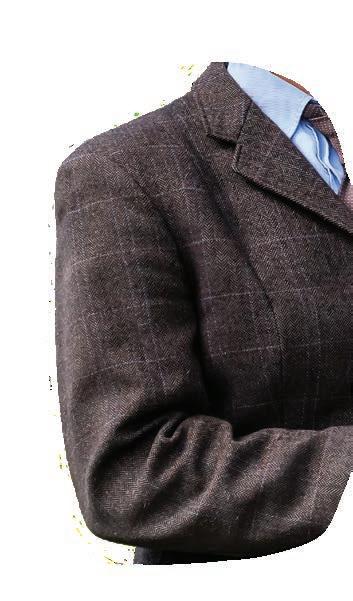
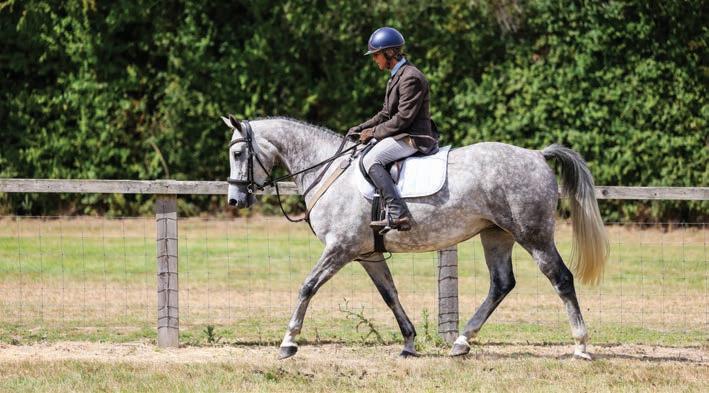
If you’re planning to show at local level, classes are generally less specific than for affiliated classes. For example…
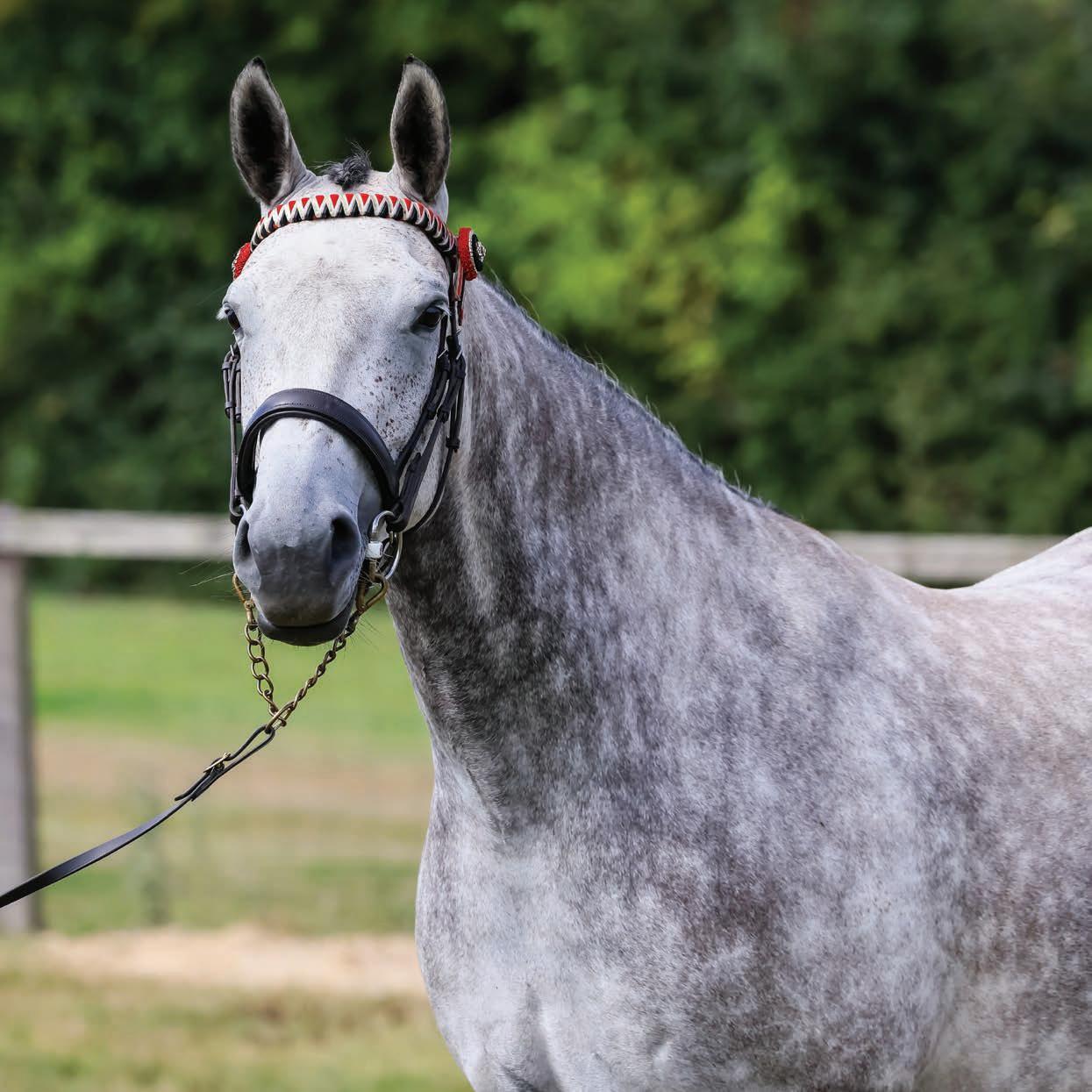
• Cob classes generally cater for hogged horses and ponies of cob type, as well as more traditional hairies.
• Hack or riding horse classes are designed for slightly finer Thoroughbred types.
• For more solid types of horse with a bit more bone, hunter classes are the perfect choice.
• Native ponies are usually shown in mountain and moorland classes (often split into large and small breeds), but
Whether you’re competing affiliated or locally, always check the schedule or relevant society’s rulebook to ensure you and your horse are eligible for the classes you wish to enter.
heavier breeds (such as Welsh Section Cs and Ds) may also be suitable candidates for cob classes.
• Coloured classes are open to any coloured horse, whether they’re plaited, hairy or hogged.
• Veteran classes welcome horses over a specific age – usually 15 or 16 – and often any breed or type can be entered.
• Over recent years, ex-racehorse classes have become more popular. However, often ex-racers can be well-suited to competing in hack and riding horse classes, too.
• Fun classes are always among the favourites at local shows.
Over recent years, ex-racehorse classes have become more popular
Affiliated shows may split classes further – for example, holding separate classes for different types of cob, hunter or hack.
Breed classes are for specific breeds, such as Irish Draughts or Connemaras, whereas type classes include hunters, cobs, hacks and riding horses.
In this feature
Give your horse the best start in life and reap the benefits for years to come, with our training advice
The lessons your horse learns at the start of his ridden life are the most important ones of all and put in the foundations for the more advanced work later on.
Every horse deserves a good beginning and when you get it right, you give your horse the best chance of having a long and happy career, running into fewer problems along the way. Here’s what to consider.
Working youngsters on the long lines and lunge is a great way to prepare them for carrying a rider and often this process starts when horses are three years old.
It’s a good idea to fit the lines to a lunge cavesson, rather than the bit, because this teaches the horse the concept of steering without putting pressure on the mouth.
You could introduce a bit at this stage, though, and something simple, such as a rubber bit, is ideal as it’s soft and gives the horse a more pleasant first experience of wearing one.
Then, as you start to get improved steering and the horse learns to stop and go, you can gently introduce side-reins so he feels the same type of contact he’d have from a rider.
When it comes to the backing process, following this routine will help it go smoothly…
1. Have a lunge cavesson fitted with someone on the ground to help steer the horse if necessary.
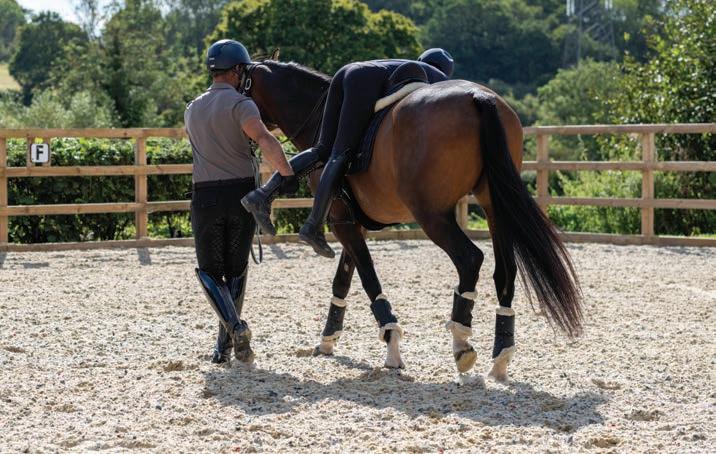
2. Get the rider to lean over the saddle a few times to test the reaction.
3. If the horse is relaxed, walk him around with the rider leaning over.
4. Then the rider can get on, leaning over the horse’s neck and slowly sitting up.
5. The next step is leading the horse around with the rider fully mounted.
6. From here, the handler can gradually distance themself until the horse is at the end of the line.
7. Finally, detach the lunge line allowing the rider to take control.
Teach your horse to accept a rider
Introduce basic paces
Work on your young horse’s balance
If, at any point, your horse appears stressed or concerned, go back a step and repeat that process until he’s relaxed. Not only will this ensure your training follows the correct lines and that your horse is happy, but it’s also essential for safety reasons, too. Remember, young horses can be unpredictable so don’t take any chances.
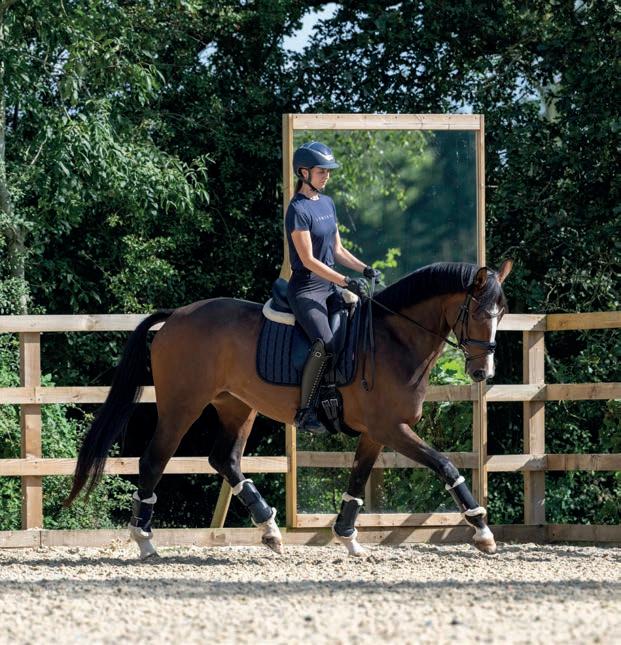
With the rider in charge, it’s time to introduce some transitions, and you could do this on smaller circles beginning with transitions between walk and halt. At this stage, more is coming from the rider than the handler, but the handler can stand in the middle carrying a lunge whip in case they need to gently encourage the horse more forward.
Next, progress to making some trotwalk-trot transitions, still on a smaller circle, gradually increasing the circle size as the horse gains confidence.
When you first introduce trot, the rider should ask for the transition with the leg and the handler can walk or run next to the horse for a couple of strides, before the rider asks for walk again. That way, if anything goes wrong you’re in the best possible position to diffuse it.
Next, teach the horse to walk, trot and canter under saddle using straight lines and a few 20m circles to build strength and improve their balance.
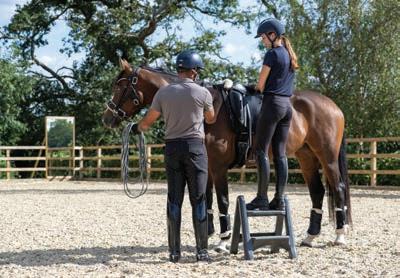
Generally, horses learn manners from day-today handling, being led in and out of the field and grooming, that sort of thing. However, when you’re backing a horse, it’s important they learn to stand for the rider to get on. You can help this process by giving the horse sugar lumps while the rider mounts because, if they’re a bit anxious, it makes the experience much more pleasant.
When training any young horse, don’t worry about it being perfect. Remember it takes a long time to get to that stage, so trust yourself and the process.
Young horses don’t have great balance in canter so they definitely don’t need to be doing lots of small circles and turns. Plus, they need to learn to move in a straight line between two legs, so the rider doesn’t have to use the reins to steer. However, as the horse starts to develop balance, you can introduce more shapes and turns.
If a young horse is reluctant to go forwards in canter, is weak in their back or doesn’t yet understand the ‘go’ button, go into a half or lighter seat to encourage them more forward. You don’t want to sit heavily on a young horse’s back.
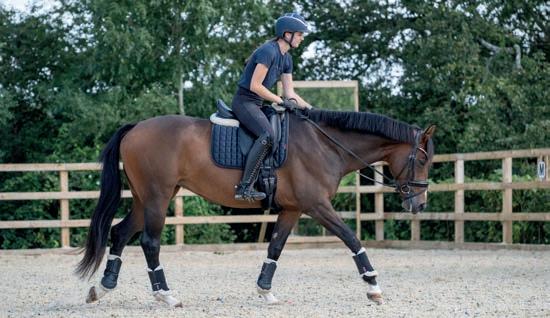
When you’re backing a horse, it’s important they learn to stand for the rider to get on
It’s really important that young horses are given plenty of walk breaks and that sessions are kept short but regular. For example, you could work three- and four-year-olds for about 15 minutes in the arena 2-3 times a week. Then, when they’re five years old and working towards Novice level, increase it to four schooling sessions a week in the arena – two days in a row, then a hack or lunge, two more days in a row, another hack or lunge, followed by a day off in the field. Plenty of turnout time is really important, too.
Great showjumping rounds begin with getting the right rhythm, says Jay Buxton
Jay Buxton is an international showjumper and coach based in Cheshire, where he runs Strides Equestrian with his wife, Paige.

For many riders, it can be hard to maintain a good rhythm around a course compared with over a single fence or through a grid, as courses allow more room for error.
In this feature, Jay shares the exercises he uses to achieve that all-important rhythm, whether you showjump for fun or competitively. The good news is, when you get the rhythm spot on, your jumping confidence will soar to a whole new level. Here’s how to get started.
Resist the temptation to look for a stride. Instead, focus on getting a straight approach and an energetic rhythm, then let your horse do the rest.
This exercise, Jay’s favourite, is a great – and very simple – way to improve your horse’s rhythm…
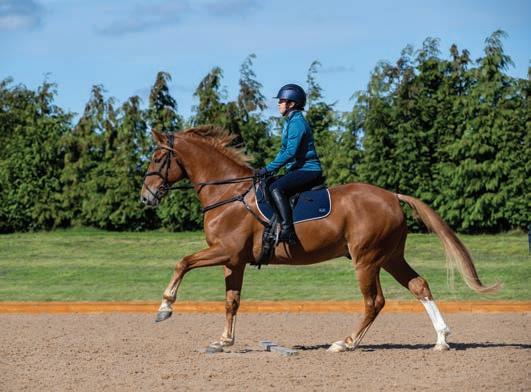
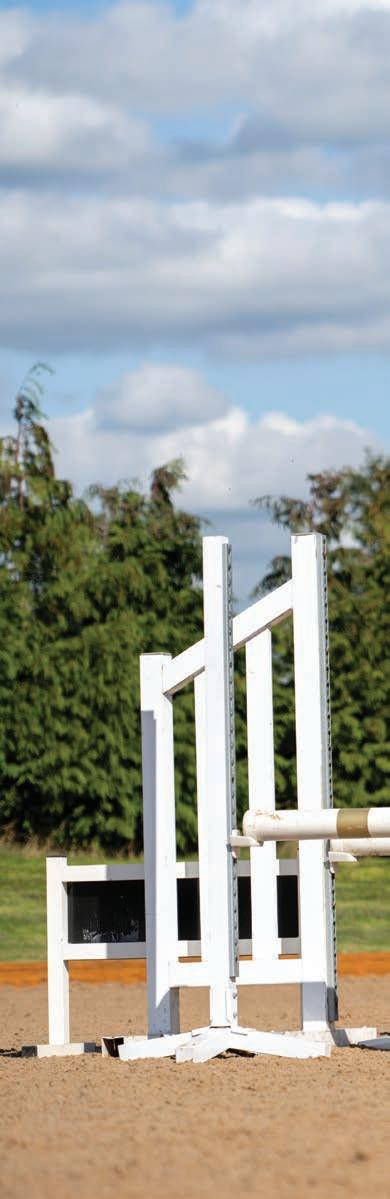
• Place two poles on the ground two canter strides (around 10 human steps) apart. Flat poles are best as they won’t roll out of place.
• Put jump wings either side of the second pole.
• Give yourself plenty of space to turn before and after the poles –setting them up along the centre line will help if your arena is narrow.
• Start by trotting over the poles from each direction, focusing on keeping the same rhythm throughout.
• Next repeat the exercise in canter, again concentrating on maintaining the rhythm.
• After a few successful attempts, stop to give your horse a pat and a breather.
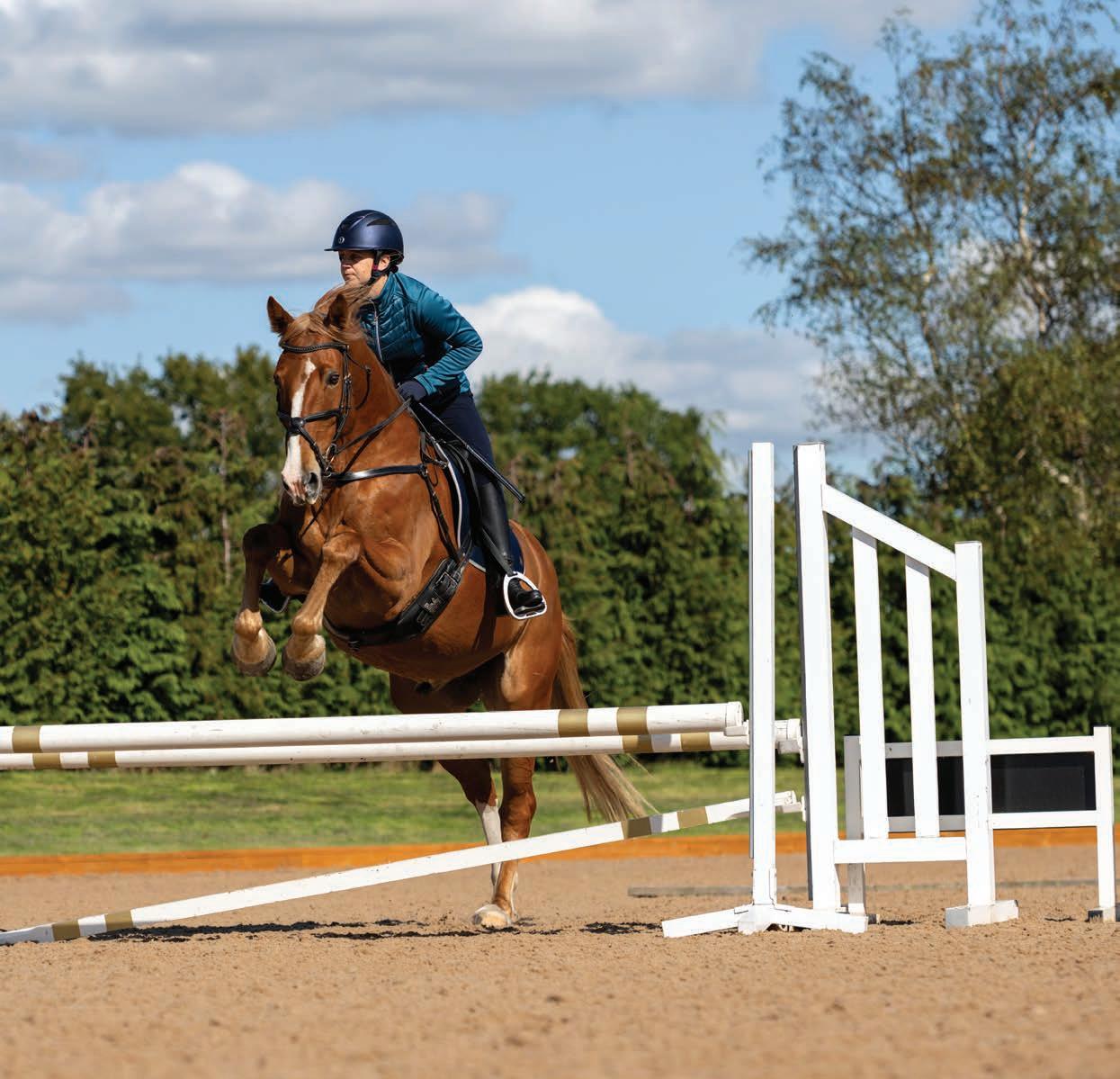
Introduce a cross-pole
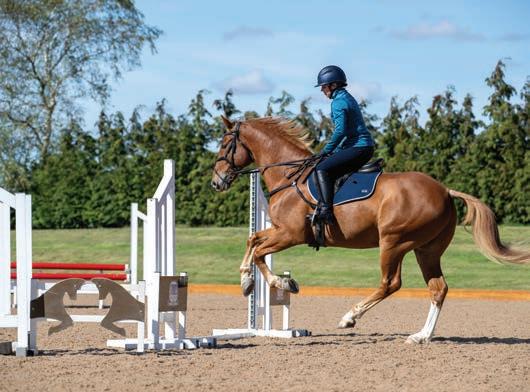
Once you’re happy your horse is maintaining a good rhythm in trot and canter over the poles (and it doesn’t matter if this takes a few sessions), turn the second pole into a small cross-pole.
You can start the exercise in trot, just as you did over the ground poles, then have a go in canter.
While it’s important to ride in a forward, positive rhythm, be careful not to push too much, otherwise your horse might open up their stride more than they need to and flatten.
Ride the exercise from both reins, aiming for a straight approach as well as thinking about your rhythm.
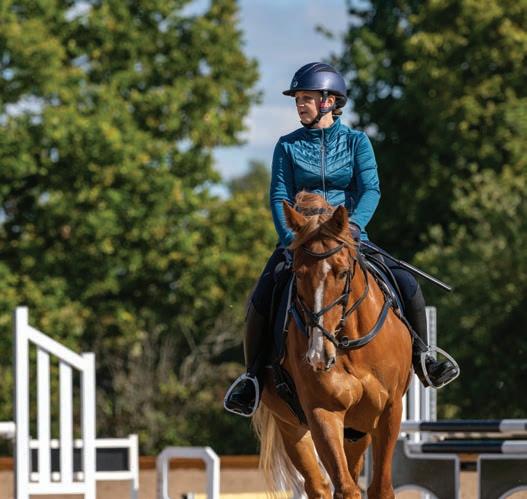
Keep your eyes up when riding jumping exercises and courses. That way, you won’t be tempted to try to place your horse at the poles and fences, plus it’ll help to keep your horse thinking and working forward.
Is bombproof a desirable trait, or has your horse simply shut down emotionally? Behaviourist Anna Haines explains...
Anna Haines is a clinical animal behaviourist and member of the Association of Pet Behaviour Counsellors. She has an MSc in Applied Animal Behaviour and Welfare, specialising in equines.

Bombproof is a word most of us will be familiar with, or have even used ourselves.
But what does it really mean? And should we be striving for a bombproof horse, or are we missing the bigger picture? If we delve into the ethology of horses, does a horse who fits this description actually represent a happy animal, or could bombproof be less desirable than we might first think?
Most of us are seeking a horse who is safe to ride and hack out, who doesn’t spook or react in unexpected ways. However, not all horses are calm because they feel safe – some are merely quiet because they have stopped responding to
the world around them. Stop and think about that for a moment... it’s a sobering idea, isn’t it?
Calm or suppressed?
The term bombproof is typically used to describe a horse who doesn’t spook or display many reactions to external or unexpected stimuli and who will tolerate busy traffic, noises, dogs or other surprises. Very often these behaviours are assumed to equal a horse who is relaxed, but a horse who rarely reacts to the world around him doesn’t necessarily equal one who is emotionally healthy.
Horses tend to cope in two ways –either with engagement, shown through curiosity and trust, or by shutting down, shown via withdrawal and behavioural suppression. Often those well-known ‘good’ horses who have a reputation of being quiet and compliant behave in such a way due to being in a state of learnt helplessness, rather than being calm and relaxed. In other words, the horse has emotionally shut down in an attempt to survive perceived inescapable threats.
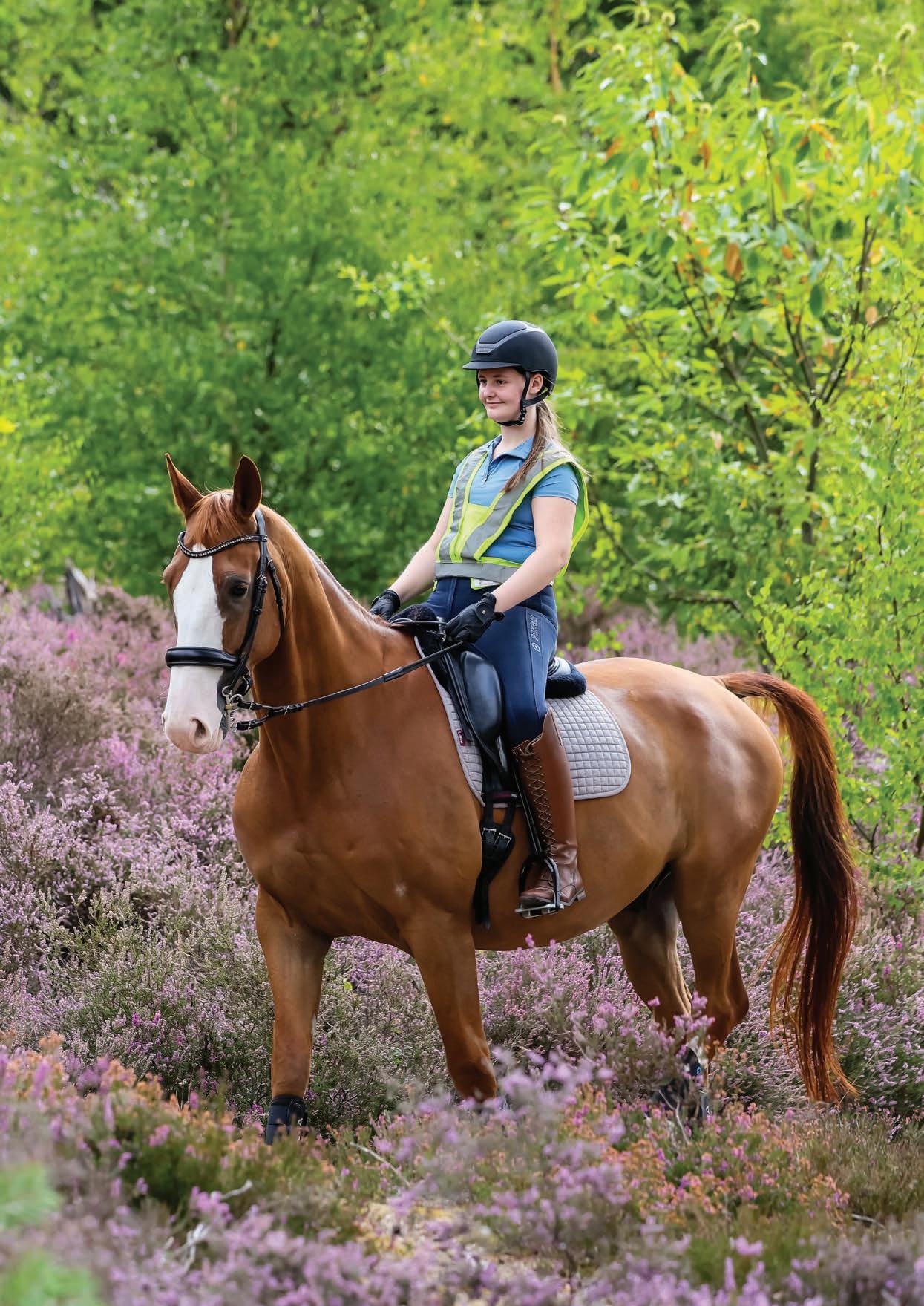
Not all horses are calm because they feel safe – some are quiet because they have stopped responding
Want a stress-free life with horses? Maybe it’s time to take a reality check and get organised
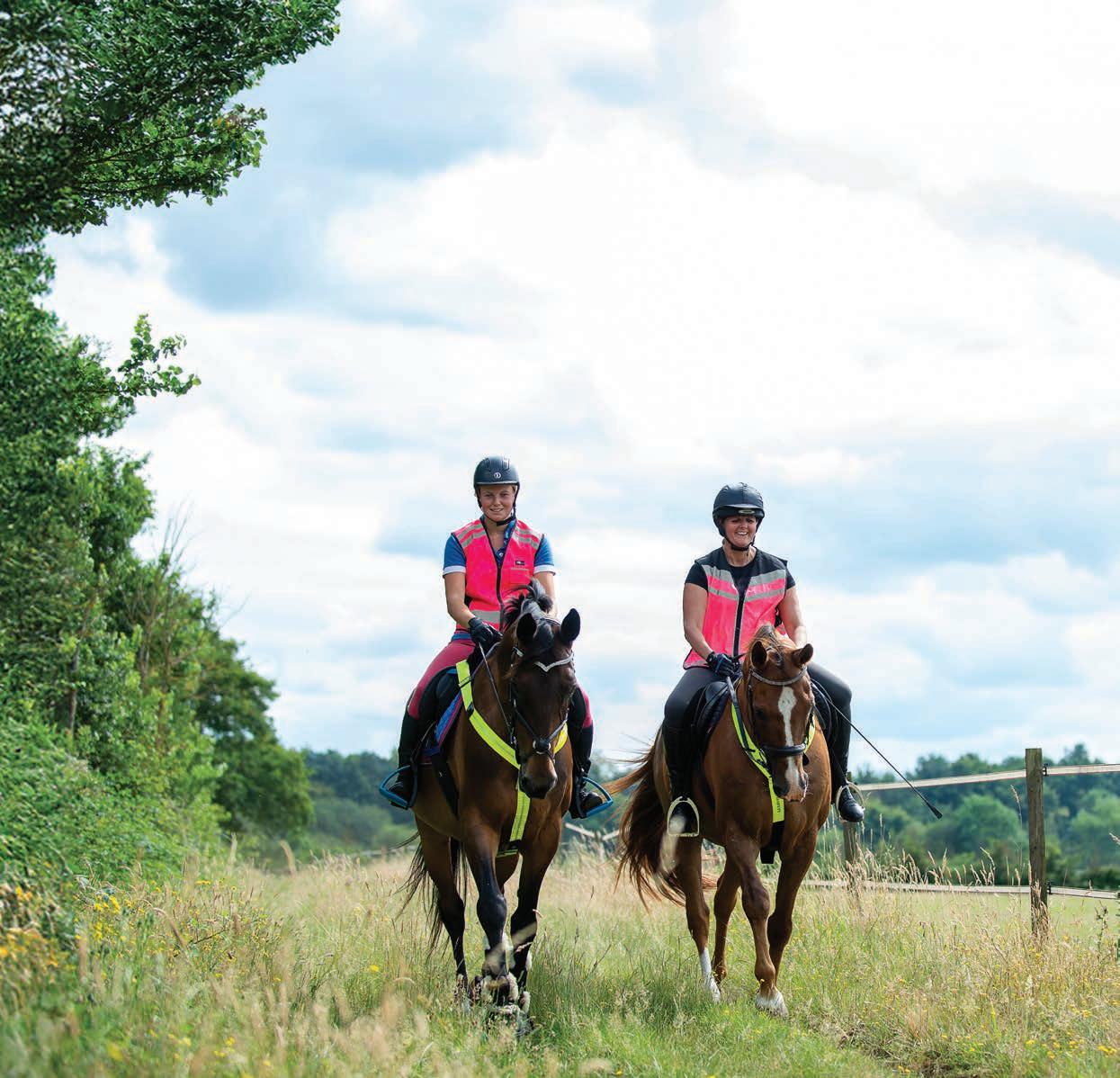

Most of us lead busy lives. We have to deal with the various demands that are made on us, but we also have a set number of hours in the day, which means we end up dividing our time between the things we need to do and those we want to do. This makes for quite a juggling act, so it’s not surprising that we sometimes feel stressed from the pressure of all our conflicting interests. But by taking a step back, looking at how you organise your time and making some fairly simple adjustments, you really can make things easier for yourself and start enjoying life a bit more.
In the centre of your life there is you and, then, around you, there’s likely to be...
• Work – employment of some kind for financial support.
• Family and friends – parents, siblings, partner, children and so on.
• Life admin – maintaining a home, obtaining food and general day-to-day living.
• Pets – dogs, cats and more.
• Horses – whether it’s one horse or several. All these areas of life should also bring fulfilment, but too often this isn’t the case, and that can leave us feeling overwhelmed physically and mentally by the things we’ve committed ourselves to doing. The result is we then run out of energy for the other things in life that we want to enjoy.
When we feel overwhelmed, breaking activities and commitments into sections can really help to lessen feelings of anxiety and frustration and provide a clear path to follow. Being organised is your friend, and even though it doesn’t come naturally to everyone, we can all learn new ways to make our own lives easier.
If possible, pair up with a trusted friend at your yard so one does the mornings and the other evenings. This can reduce your visits to once a day, easing the pressures.
If your family doesn’t share your love of horses, it can be difficult to manage time fairly. Inviting them to watch you ride, help you on non-riding days, or walk with you while you hack can mean they feel included. But this works both ways. Spending time together while doing each other’s hobbies can help relationships flourish and offer an insight into what’s involved.
Take time to look at the different areas of your life and write down the time spent on them, taking into account working, sleeping and travelling. Try using a scoring system – from one for easy, low cost and little effort to four for hard to do, high cost and most effort – to identify what you can achieve easily and what requires more effort. Then apply this to horses, home and work to help you achieve progress in each.
For every area, score how easy it is to do, its cost and the effort required, the impact on you and the impact on others, then add these figures together. This allows you to identify where to start and what is easiest to achieve. Also, using numbers removes the complexity and provides clarity, reducing feelings of guilt when you’re trying to balance all aspects of your life.
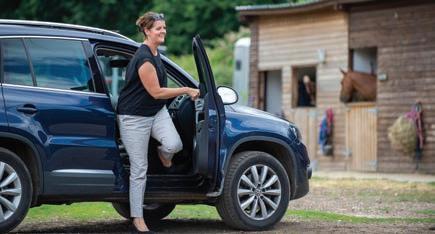
Another area is your horse’s exercise routine. Try to be flexible with it and set yourself realistic, achievable goals. But, remember, intentions are more specific and turn goals into action, whereas goal setting tends to be more generic and, therefore, less likely to be achieved. For example...
• Intention: I’ll ride on Tuesday after work.
• Goal: I will ride this week.
• Intention: I’ll spend 30 minutes replying to emails.
• Goal: I’ll clear my emails.
By being more specific, you’re more likely to commit to yourself , carry that intention through and achieve your goal.