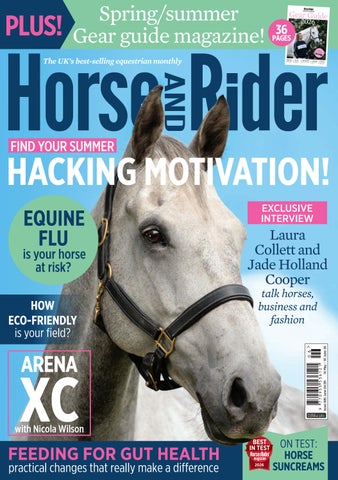
8 ways to build your confidence on the cross-country course
Nicola Wilson has represented Team GB at eight championships and won five gold medals. Following an injury in 2022, she now focuses on coaching and mentoring riders.

Whether you or your horse are new to cross-country, or you’re looking to feel more confident out on course, schooling in an enclosed arena with a variety of fences is one of the best ways to establish the essential skills. But what else can you do to increase your confidence? Read on to discover my top tips.
Make sure you have all the right equipment and safety gear before heading out cross-country schooling. Aside from the must-haves of a jockey skull and body protector, you might want to consider…
specially designed cross-country boots to help protect your horse’s legs from impacts and strikes any tack changes that might offer you more control (although make sure you ride with that set-up at home first)
Depending on your level of experience and goals, there’s nothing to say you have to jump ‘bigger’ fences in your schooling session. Keeping things at a comfortable level means you can work on refining the core skills that will really make a difference to your course-riding ability. And once you have those in place, tackling an increase in fence height is much less daunting.
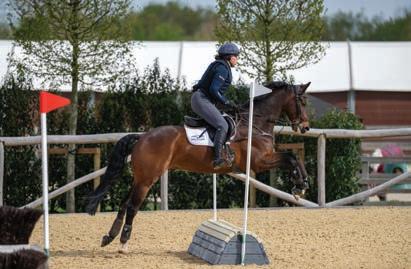
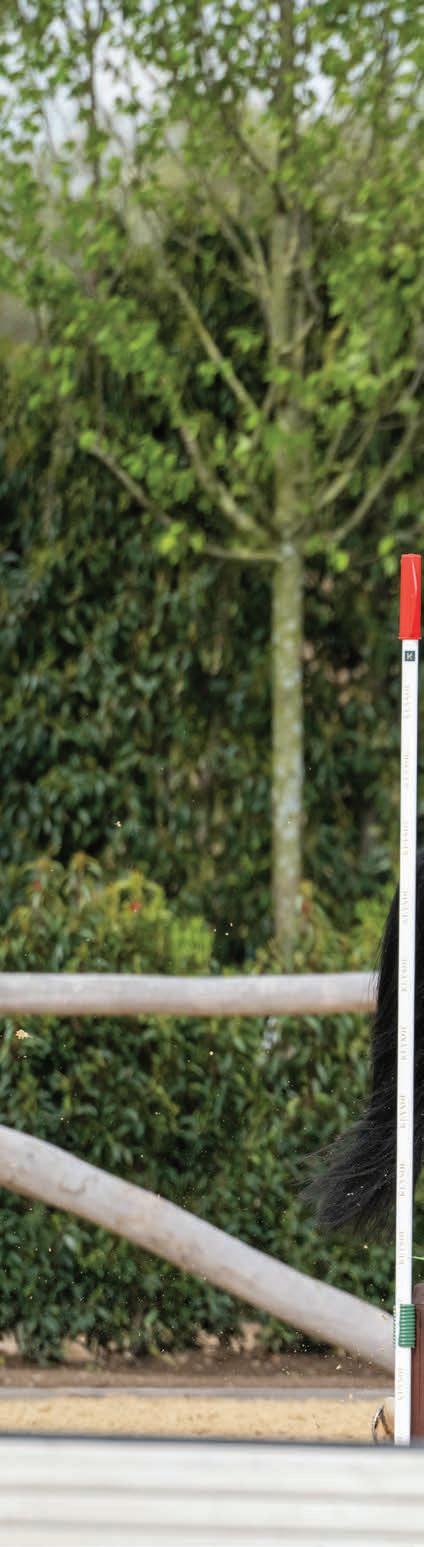
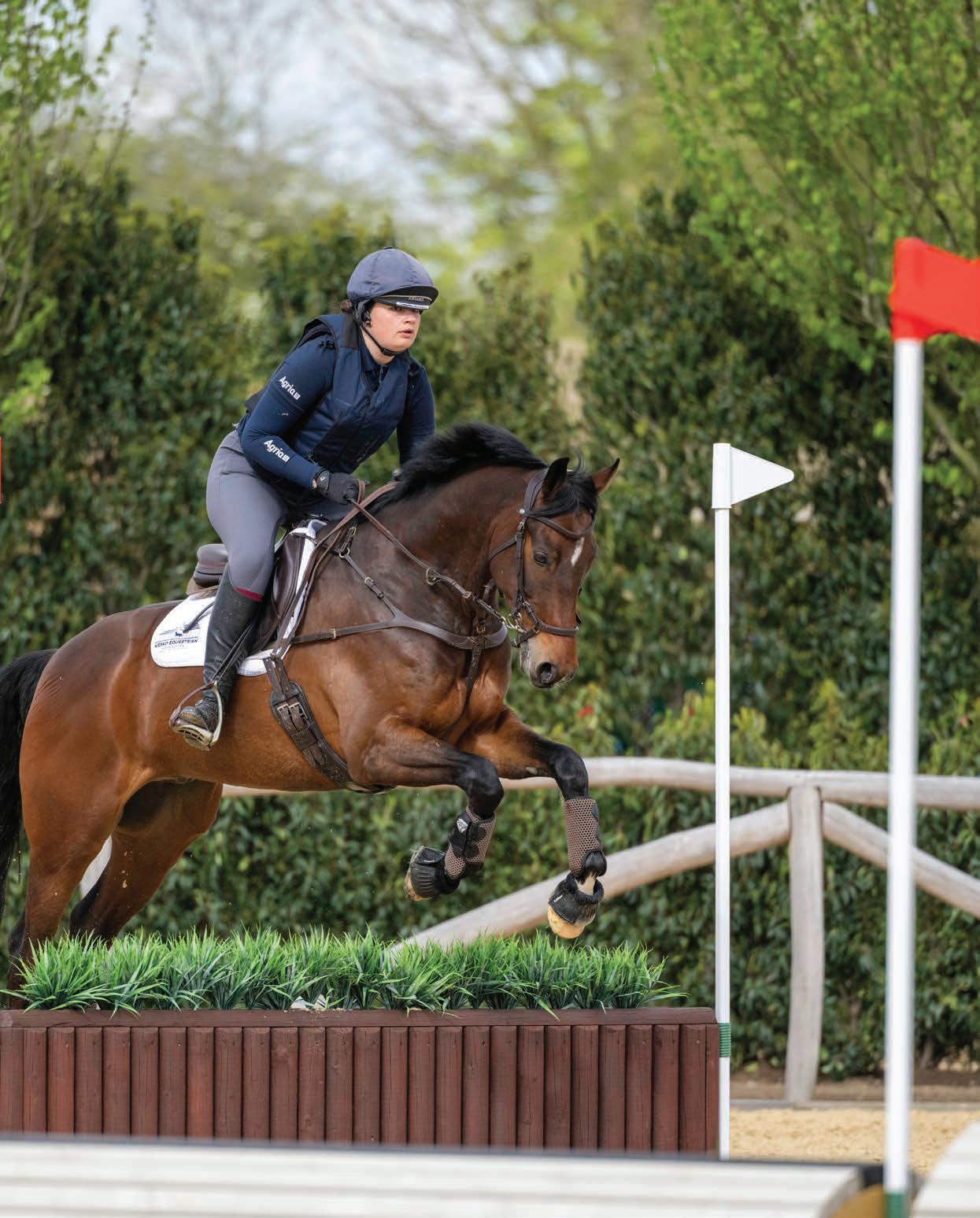
Solid fences look, and ride, differently to showjumps. So, no matter how much jumping experience your horse has, if they’re new to cross-country, don’t expect your horse to approach fixed fences with the same level of confidence.
Ditches can be deceiving for horses, so stick to walk and trot, focusing on channelling your horse straight, until they’re confident and understand the question being asked.
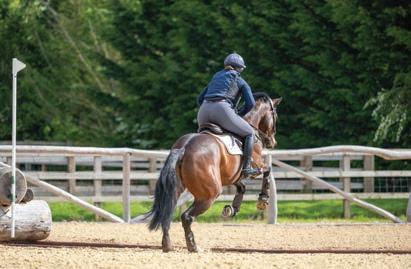
Just because you’re keeping the fences smaller doesn’t mean you should accept a less quality, controlled canter. Approach every fence in the same way, no matter its height – canter rhythm and tempo should stay the same. Think about creating power, not speed.
Once your young horse is backed, you can start to build the foundations for a long, happy ridden career
Last month, we discussed what to consider when starting a young horse, and this feature will focus on the next stages of a horse’s education.
These early years are so important in terms of building the best possible foundations and giving your horse plenty of good experiences. That way, they will develop trust and confidence in you, resulting in an all-round more amenable, happy horse.
Asking someone to regularly video you riding your horse is a great way to keep track of progress, as you can look back on videos to see how far you’ve come. Doing this also gives you the chance to scrutinise your riding so you can spot what you’re doing well and where you could make things clearer for your horse.
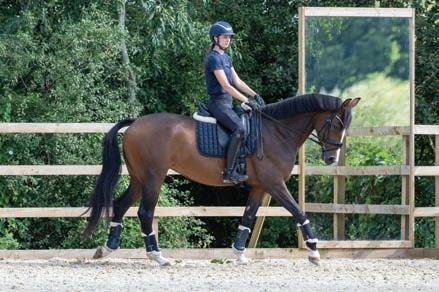
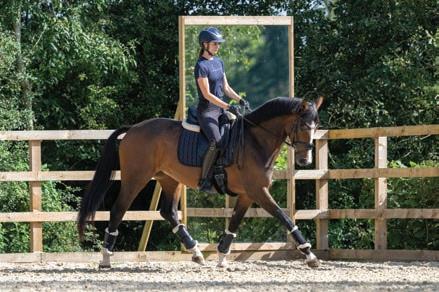
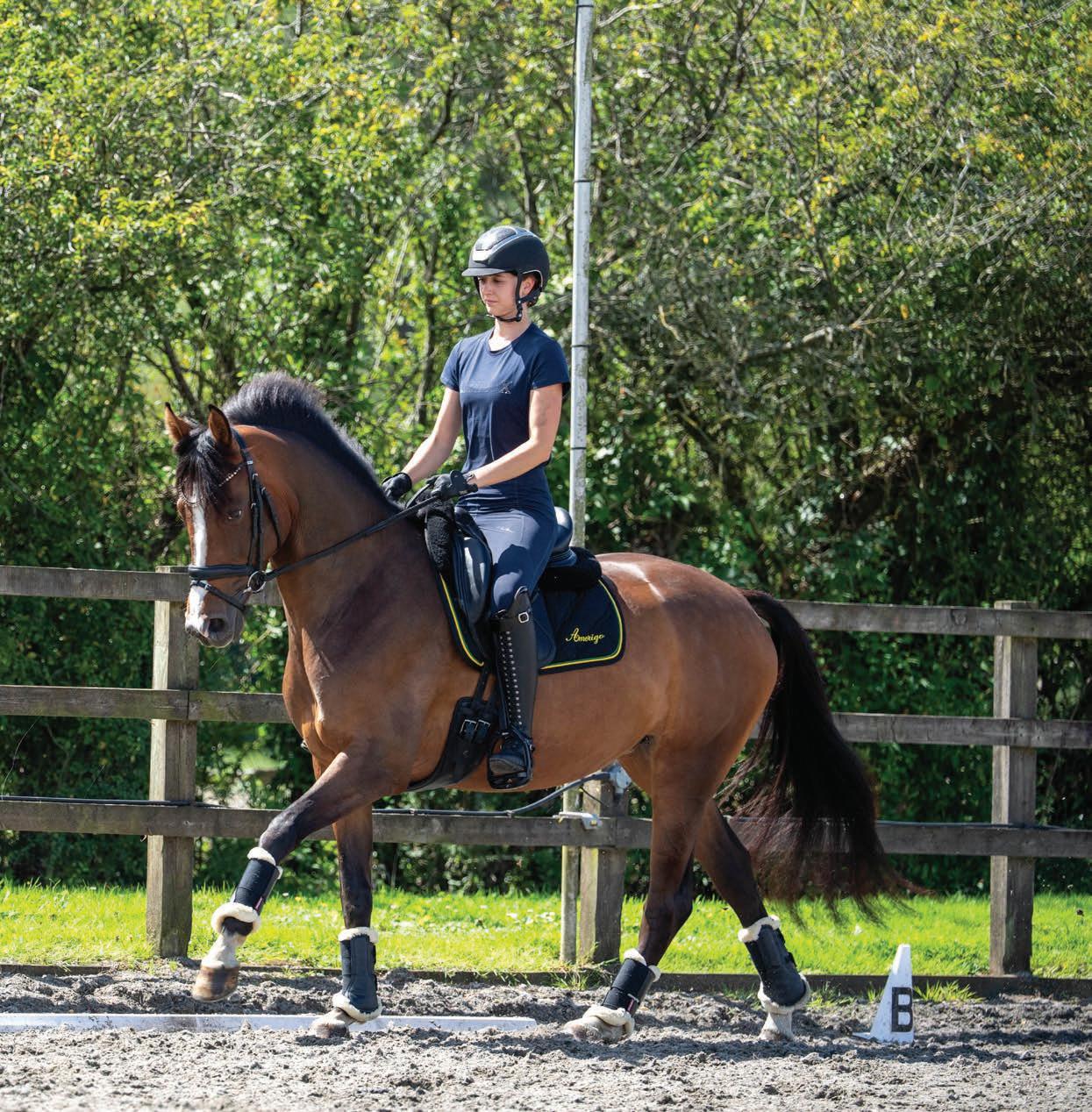
Trot-walk-trot transitions
It’s important to ride all horses, but especially youngsters, in the best balance possible and transitions are an effective way to improve balance.
Start by introducing trot-walk-trot transitions, with the idea of making the trot small enough for your horse to step forward into walk. Every single transition you ride needs to be a forward one, aiming to take the weight off your horse’s
shoulders and onto their hindleg so you can make a smoother change of pace.
It can be tempting to focus on riding transitions when going large or on a big circle, but don’t forget about the corners, too. Ask your horse to come forward to walk as you enter a corner, then trot as you leave. This teaches them to come back to you, bend around your leg into the corner and then think forwards again coming out of the corner.
In this feature The benefits of transitions
Introducing serpentines
Early lateral exercises
Transitions are an effective way to improve a young horse’s balance
Our ultimate hacking guide will help you reap the many benefits riding out has to offer
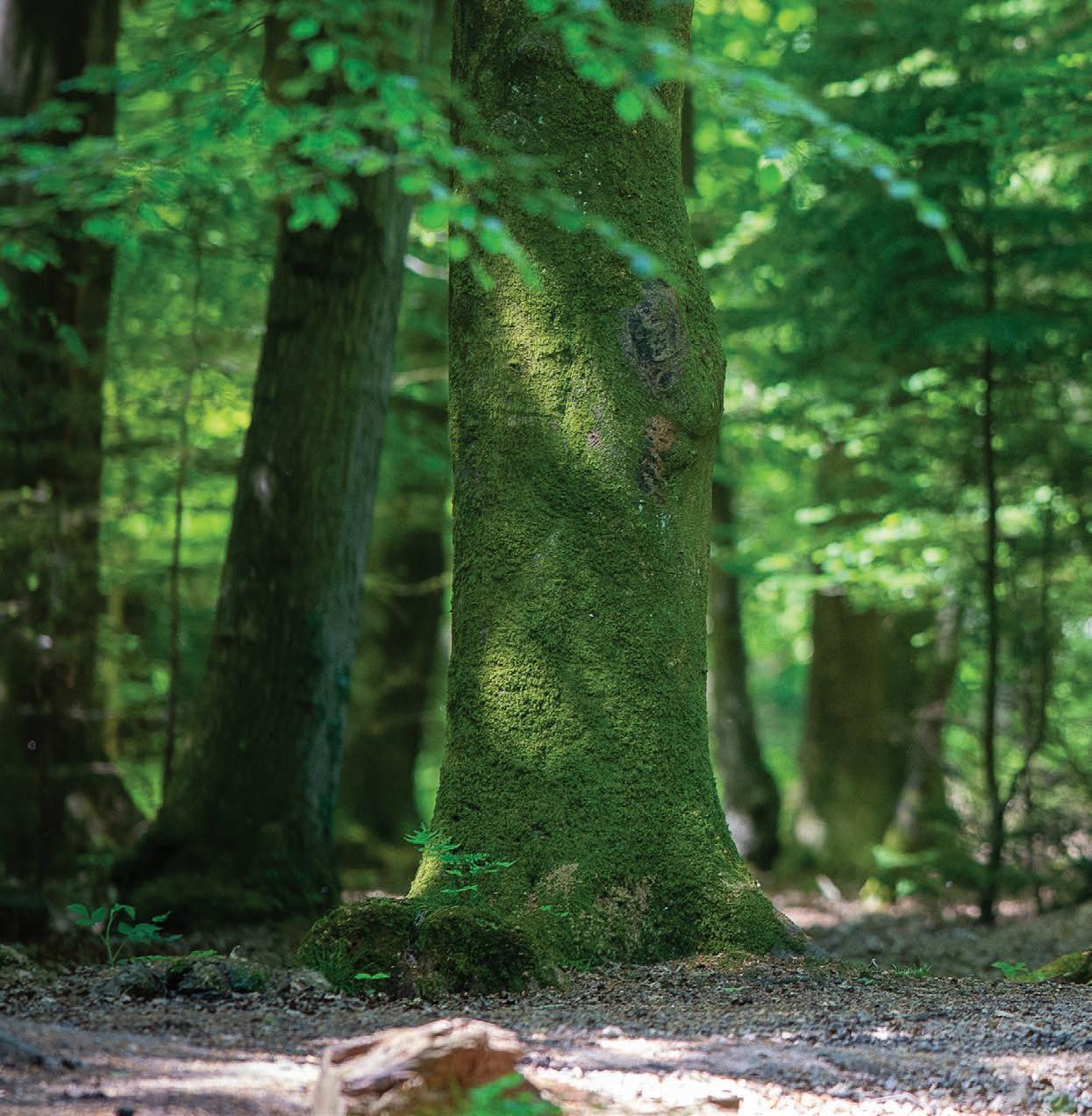
There are few pleasures in life that rival summer hacks in the countryside. Longer daylight hours, drier ground and warmer weather are just the invitation you need to head out of the arena and into the great outdoors with your horse. Here are some fresh ideas to make the most of your hacks and enjoy every moment of your time in the saddle.
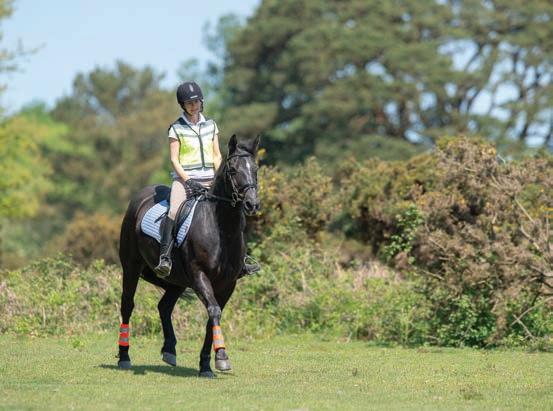
A useful rule of thumb is, if it feels too hot for you, it’s probably too hot for your horse, so take this into account before heading out.
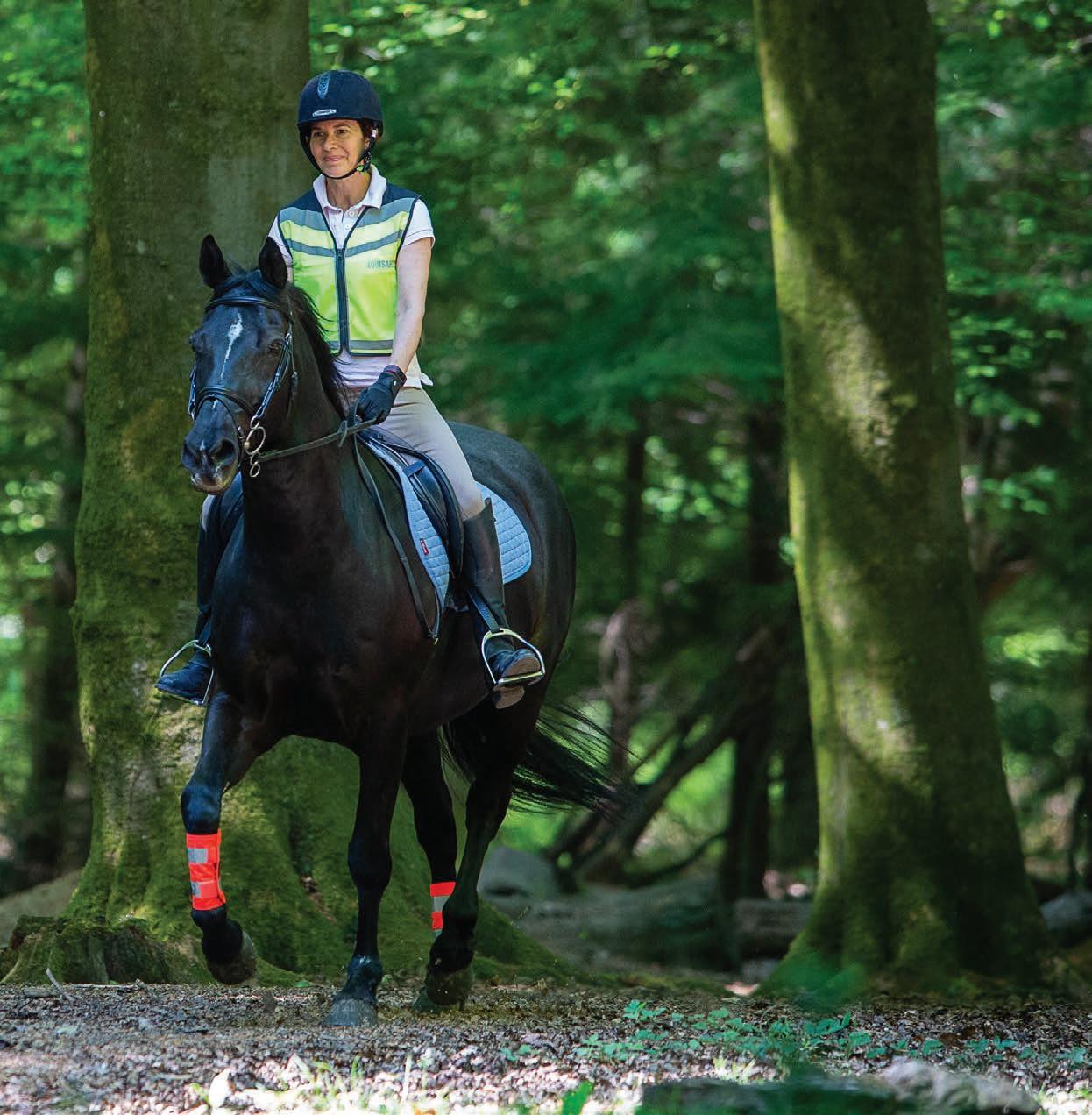
You may not welcome the thought of getting out of bed early on your days off, but you’ll feel great for doing so. Not only are early morning hacks a cooler time to ride, but you’ll avoid heavy traffic and pesky biting insects, too.
If early mornings aren’t your thing, why not plan an evening hack instead?
Riding when it’s cooler and quieter is a lot more pleasant for you and your horse, whichever end of the day you choose.
High-vis gear is essential all year round, for both you and your horse. In fact, bright sunlight can make it even more difficult for other road users to see you, so don’t take any chances.
In terms of other riding gear, modern-day fabrics make summer riding clothes lightweight, breathable, stretchy and UV protective, helping to keep you cool, comfortable and
protected in the saddle. Even many riding hat designs have vents that will increase airflow, without compromising on safety.
It’s wise to hack out in boots that you can comfortably walk in, just in case you need to get off and lead your horse for any reason. Short boots and chaps are ideal for hacking, so why not save your long leather boots for schooling sessions and shows?
Mistakes are a normal part of life, but it can be difficult to manage your mindset when your decisions have impacted your horse
Alison Buttery is a certified mindset and confidence coach, a BHS APC senior coach and an experienced rider, who specialises in helping riders overcome their nerves. She’s also the founder of The Everyday Equestrian.

Most horse owners will know this feeling at some point, even if they’ve never talked about it out loud. You make a change, a decision, an adjustment – something that seemed perfectly reasonable at the time – and later, with the benefit of hindsight, you realise that it’s had an unintended consequence for your horse.
Maybe it’s a management decision that didn’t suit him. Perhaps it’s a piece of tack, a feed change, a new routine, or simply something you missed for longer than you’d like to admit. The specifics don’t really matter, because the feeling that follows tends to be remarkably similar regardless. A particular, stomachdropping combination of guilt, sadness, and a very loud inner voice telling you that you should have known better...
What tends to make this particular kind of experience so difficult to sit with is that it’s rooted in care and good intentions. You were paying attention. You were trying to do the right thing. And yet here you are, wishing with the full clarity of hindsight that the picture had been a little clearer a little sooner. Sometimes, too, the cause takes time to surface, and the moment of realisation, whenever it arrives, brings its own particular weight with it.
When something goes wrong and we can trace it back to a decision we made, the brain does something unhelpful with impressive efficiency – it rewrites the past. Suddenly the decision that seemed perfectly sensible at the time looks, in retrospect, like it should have been obviously wrong. Psychologists call this hindsight bias, and it is one of the most reliably documented patterns in human thinking. Once we know an outcome, we consistently overestimate how predictable it was beforehand. Layered on top of this is the brain’s well-established tendency to give negative information significantly more weight than positive or neutral
information. This is sometimes called negativity bias, and it evolved for good reason. Our ancestors needed to notice threats quickly and remember them vividly in order to survive. The trouble is that the same mechanism, turned inward after something goes wrong, means your mind will instinctively amplify the evidence that you failed and quietly set aside all the evidence that you are, in fact, a thoughtful and attentive owner doing your best with imperfect information. Neither of these patterns is a personal failing. They are simply what human brains do, and knowing that is the beginning of being able to work with them rather than being completely at their mercy.
Guilt and shame are words we often use interchangeably, but they are different emotional experiences and tend to pull us in very different directions.
Understanding that your mind is working against you in these moments is one thing. Understanding what you’re actually feeling beneath the noise of it is another, and often just as important.
Guilt is focused on what happened –on a specific action or decision and its consequences. It tends to feel uncomfortable, but it also often carries within it a kind of energy, an impulse toward repair, toward doing something differently and making things right.
Shame, by contrast, is focused on your perception of yourself – the story your mind constructs about the kind of person who could have let this happen. Rather than pointing at a mistake, it points inward at a self-image, and that distinction matters, because shame in that form tends to draw us further inward rather than forward.
When something goes wrong with your horse, it’s possible that you’ll recognise elements of both in what you’re feeling, though every experience will be different. Some will feel a sharp, specific guilt about a particular decision. Others might notice something broader and harder to pin down – a murkiness about themselves as an owner, a nagging sense of falling short somehow. And for many, sadness will be part of the picture too.
Whatever combination of feelings is present, all of them are understandable and human. What’s worth knowing is that when shame takes a strong hold, it tends to work against us. It quietly erodes the motivation that guilt – in its healthier form – is trying to repair. And that leads us to something that many riders find genuinely difficult – the idea of being kind to themselves.

Meg Elphick is an event rider and content creator. She has enjoyed considerable success on her home-produced ponies, including four top 10 placings at Badminton Grassroots 2022–2024.
Meg Elphick shares her tips and tricks for getting your horse ready for a competition
Even if you compete regularly, there’s nothing like that show day buzz – after weeks or months of training and preparation, the day to put all your skills to the test and have fun with your horse finally arrives. But how can you ensure you’re both on top form? Here’s what I do.
You can buy energy boosting and calming supplements to use on the day depending on your horse’s requirements, but there isn’t much evidence that they’re effective. A little bit of trial-and-error with different products during training is best if you want to use one.
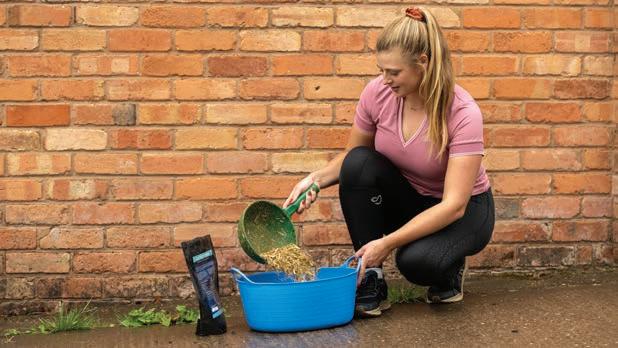
Your horse’s energy and performance start from within, but there are no quick fixes when it comes to nutrition and changes should always be done gradually.
There’s also no need to overcomplicate your horse’s diet, which can be easier said than done when there are so many options, so seek advice from a qualified nutritionist. Feeding plenty of high-quality forage and a balancer is a good place to start. Then you can add a chaff (to increase eating time) and any supplements or mashes that your horse could benefit from, such as hoof support, electrolytes or higher calorie feeds if needed.