Photos: Jon Stroud
Nicola Wilson has represented Team GB at eight championships and won five gold medals. Following an injury in 2022, she now focuses on coaching and mentoring riders.

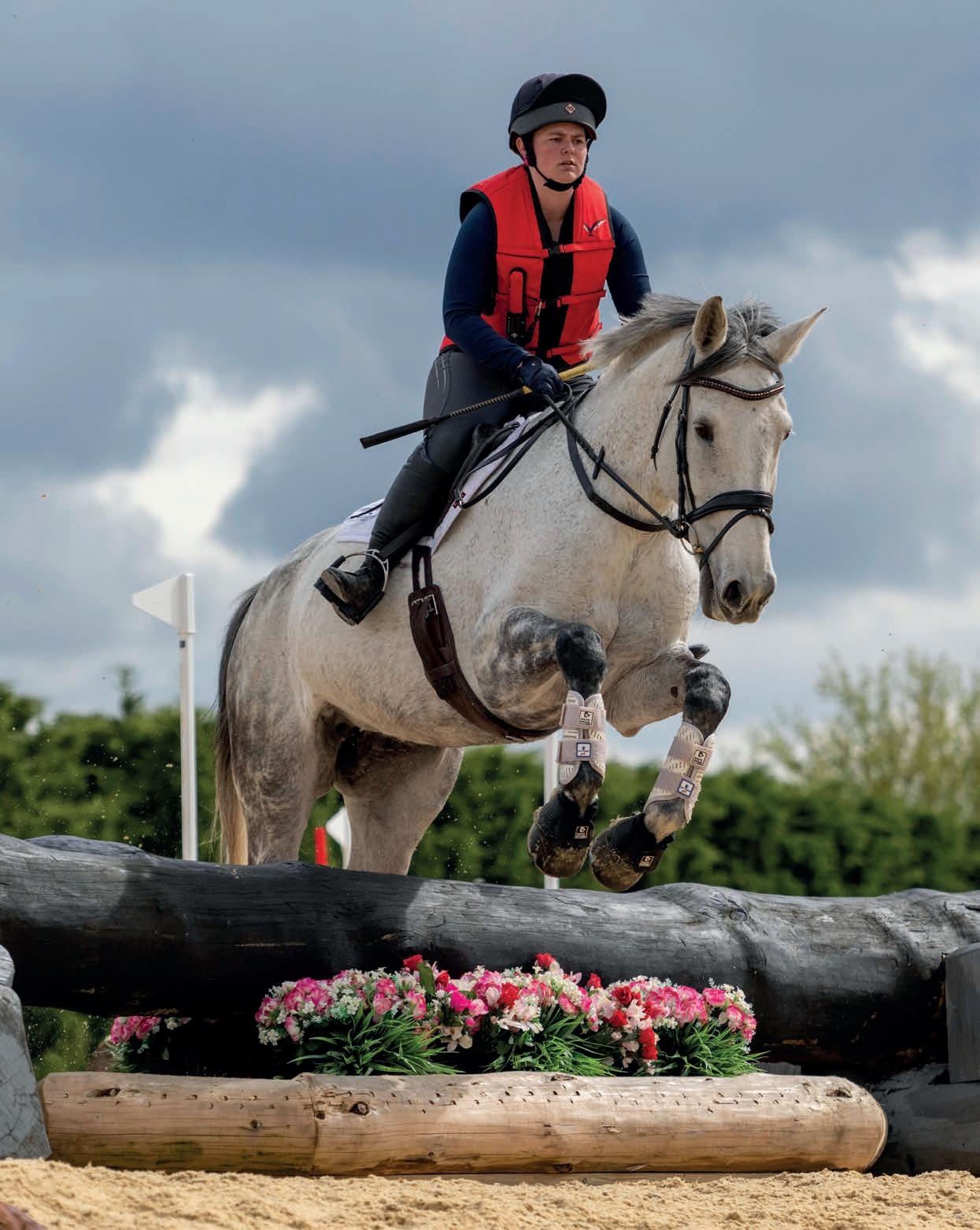
Cross-country schooling isn’t cheap – course hire, travel costs and your time all add up, so it’s important to get the most from your session. But that can be tricky when it’s naturally something you don’t do very much of. By focusing on a few core areas you’ll maximise the benefit of your session. Let me explain how...
If there are specific fences or combinations you’d like to ride in your session, consider warming up around those to give your horse the chance to see and evaluate them beforehand.
Your warm-up period is so important and can significantly impact the success of your session. The ultimate aim is to get your horse mentally and physically ready for the challenges ahead, so ask yourself…
• How responsive are they being to my aids? Ride transitions, changes of bend and lateral work to check and improve this.
• Are they working in a consistent rhythm? Count your strides out loud and practise opening up the canter stride.
• Are they settled in the environment? Use your space effectively and allow them to see what’s going on around you.
Once you’re happy with the amount of work you’ve done to get your horse’s body physically ready for jumping and can tick each of those boxes, you’re ready to start tackling fences.
If you’re looking to take on some new cross-country challenges, whether that’s a different type of fence or something bigger, try to incorporate them in a combination of fences or a small course, rather than jumping them individually. Riding to a fence that your horse is experienced and comfortable with before approaching something new or different means you can establish that allimportant rhythm and keep confidence levels up.
Use this simple exercise to introduce jumping on an angle
Jay Buxton is an international showjumper and coach based in Cheshire, where he runs Strides Equestrian with his wife, Paige.

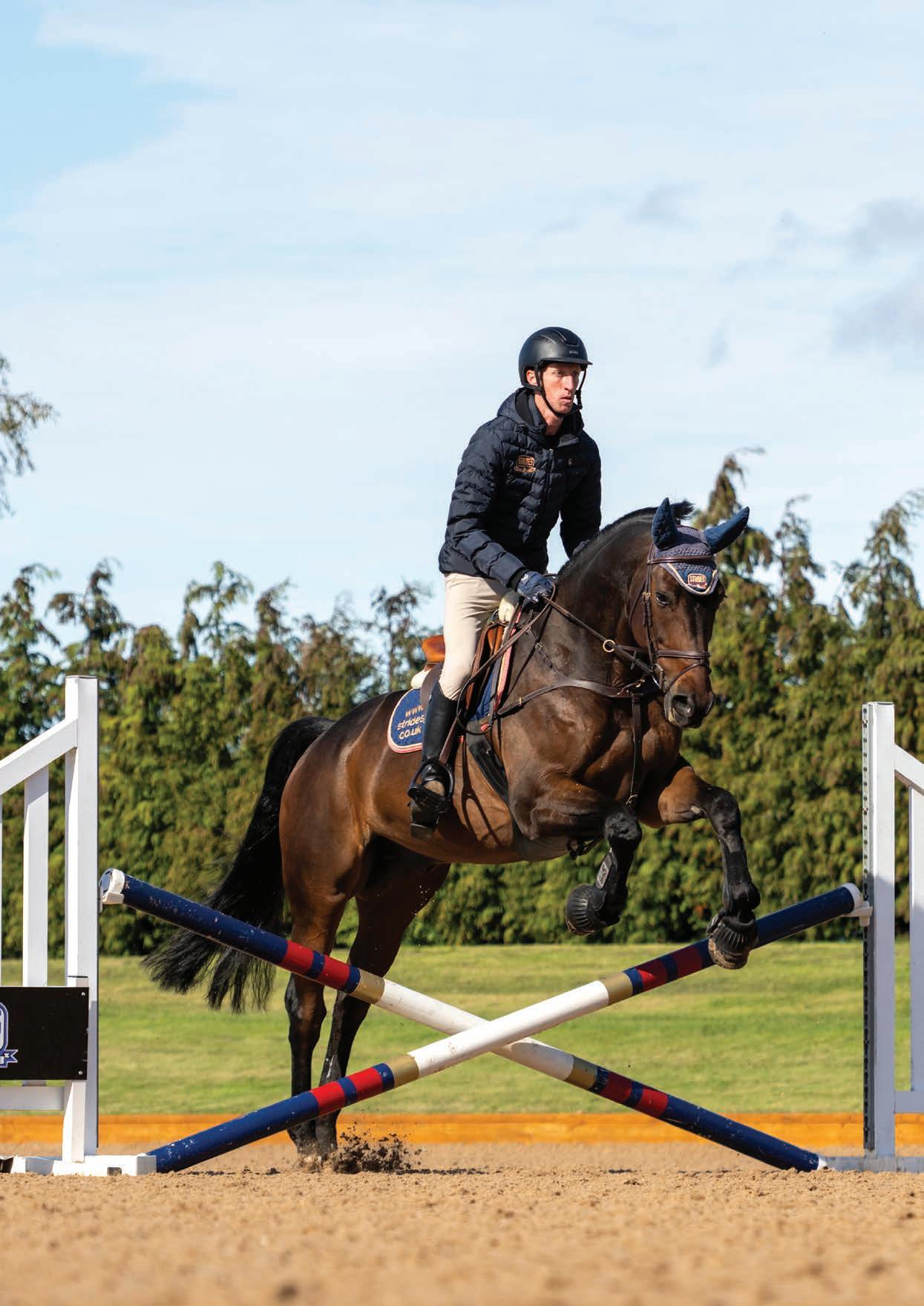
The initial set-up for this might look familiar, because it’s in fact the same as last issue. However the way you’re riding the fences is completely different – this time, we’re working over the fences on an angle.
Once you and your horse are tackling last issue’s exercise with ease, it’s time to up the challenge and give this layout a go!
• You’ll need eight poles and eight jump wings.
• Five human strides in from each long side, set up two straight lines of wings and ground poles five or six horse strides (21–26m) apart. Put the other four poles to one side for now.
With any new exercise, it’s always best to keep things as simple as possible at first and build up to new challenges slowly. Therefore, start this exercise in trot over the four poles on the ground...
1. Begin on the right rein and turn off the track, riding through the diagonal line of poles, crossing each in the centre.
2. After the second pole, ride a
small circle on the left rein before turning down over the pair of poles.
3. Ride another small circle on the left rein before going across the other diagonal line of poles.
4. Repeat a few times until your horse understands what you’re asking and is settled in their way of going, then change the rein and repeat.
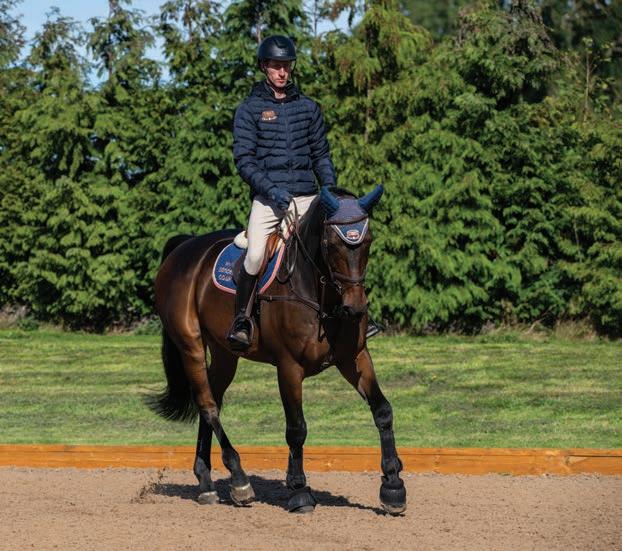
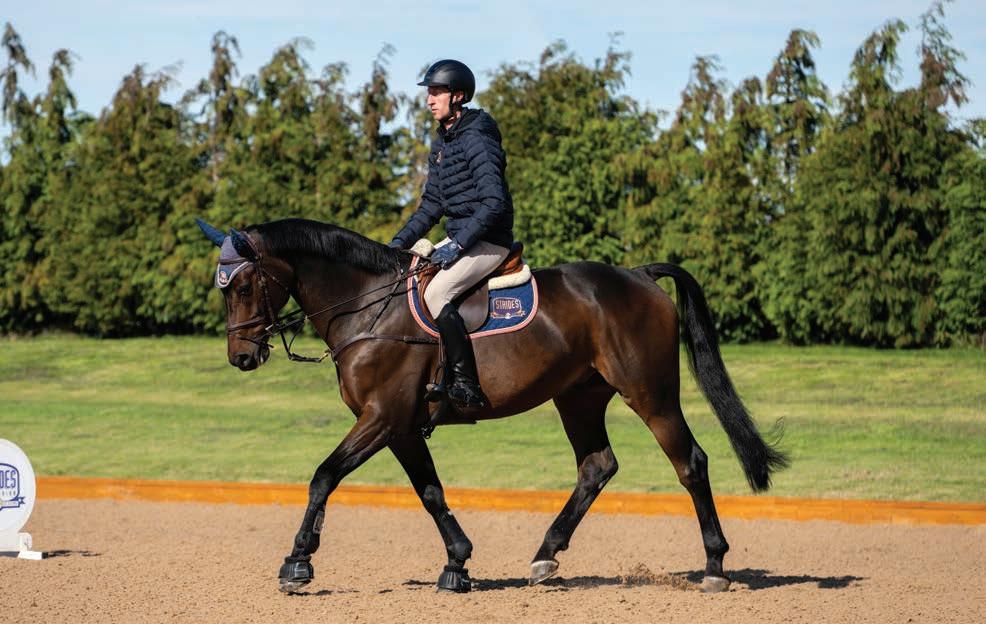
The circle at the end of each set of diagonal poles helps you establish the correct line for the next pair and rebalances your horse. Don’t be shy to ride two or three circles to get back on track if needed – that’s much better than carrying on regardless if you feel it’s not right.
IGet set for in-hand showing classes with Simon Luck’s tips and advice
Preparing for a competition requires practice, and in-hand classes are no exception. Here are some ideas to help you get your horse ready for the ring…
• Practise trotting up the same way you’ll have to for the judge and ask a friend to video it. Your horse needs to be trotting actively forward and even though you might think you’re running incredibly fast, you’ll probably be surprised at how slow your horse is going when you watch the video back.
• Work on your trot-up skills on a variety of surfaces – both artificial and grass – so your horse gets used to the feel of both. You may find you can move at a different speed on the grass compared to the surface, but again, videoing will help.
• In the same way as you’d rehearse riding in company for ridden
n-hand showing classes have many benefits. Not only are they a great way to educate young horses, but they can give you the chance to compete with a horse who isn’t able to be ridden, or if you prefer not to compete in ridden classes yourself. Let’s take a closer look at what’s involved, from how to catch the judge’s eye to everything you’ll be expected to do in a class.
Keeping a little more contact on the outside rein will support more balanced turns, especially with a horse who’s keen or excited.
classes, practise in-hand work with others around. This is particularly important for inexperienced horses who haven’t been showing before.
• Focus on keeping your horse as straight as possible. It’s very easy on the go-round to curve their head to the left too much (the side you always lead from). However, if you’re showing in a bridle, you can help to correct this by taking more of a feel on the right rein and keeping the left rein looser.
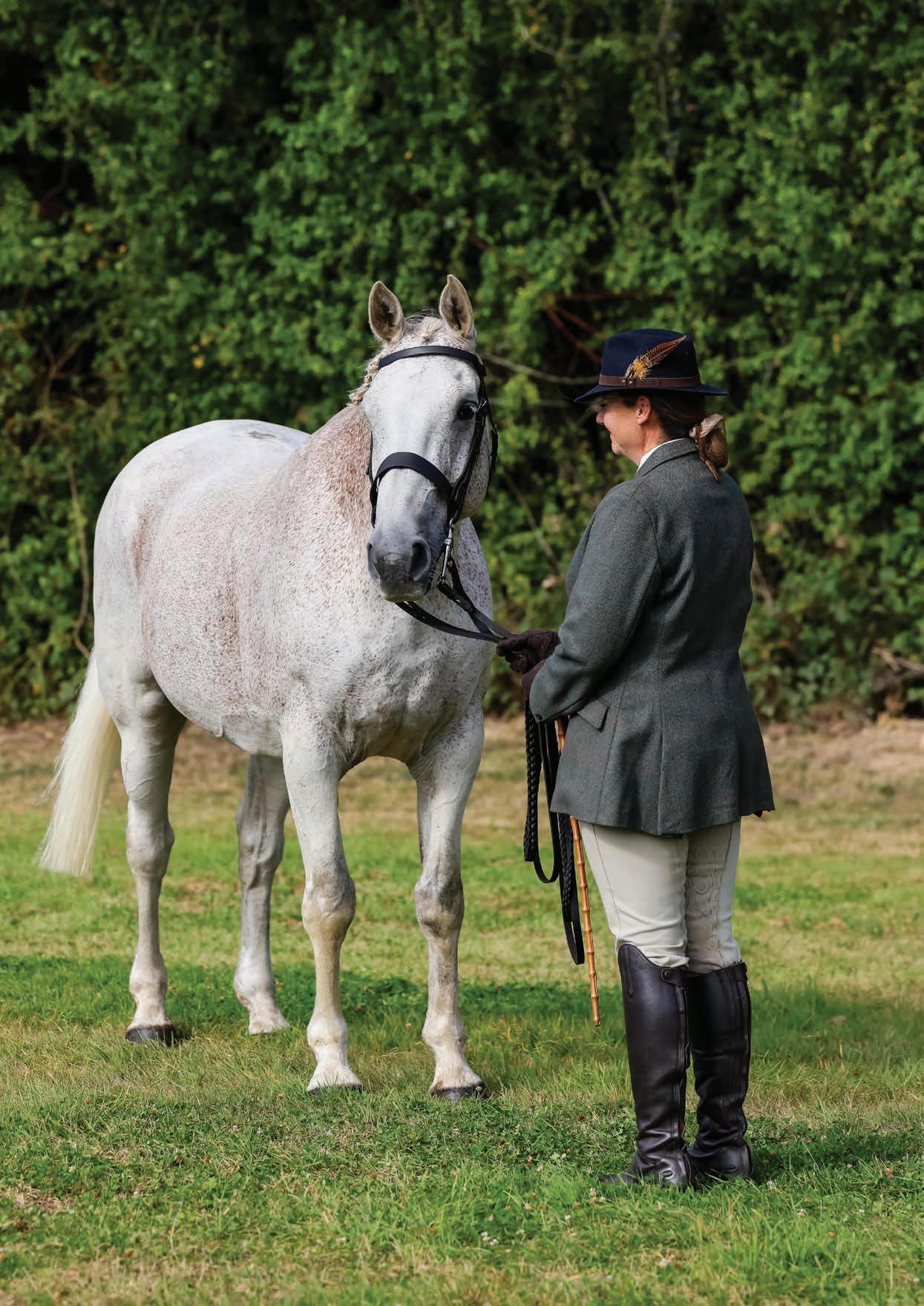
Knowing whether your class is on grass or an artificial surface means you can recreate the footing in practice.
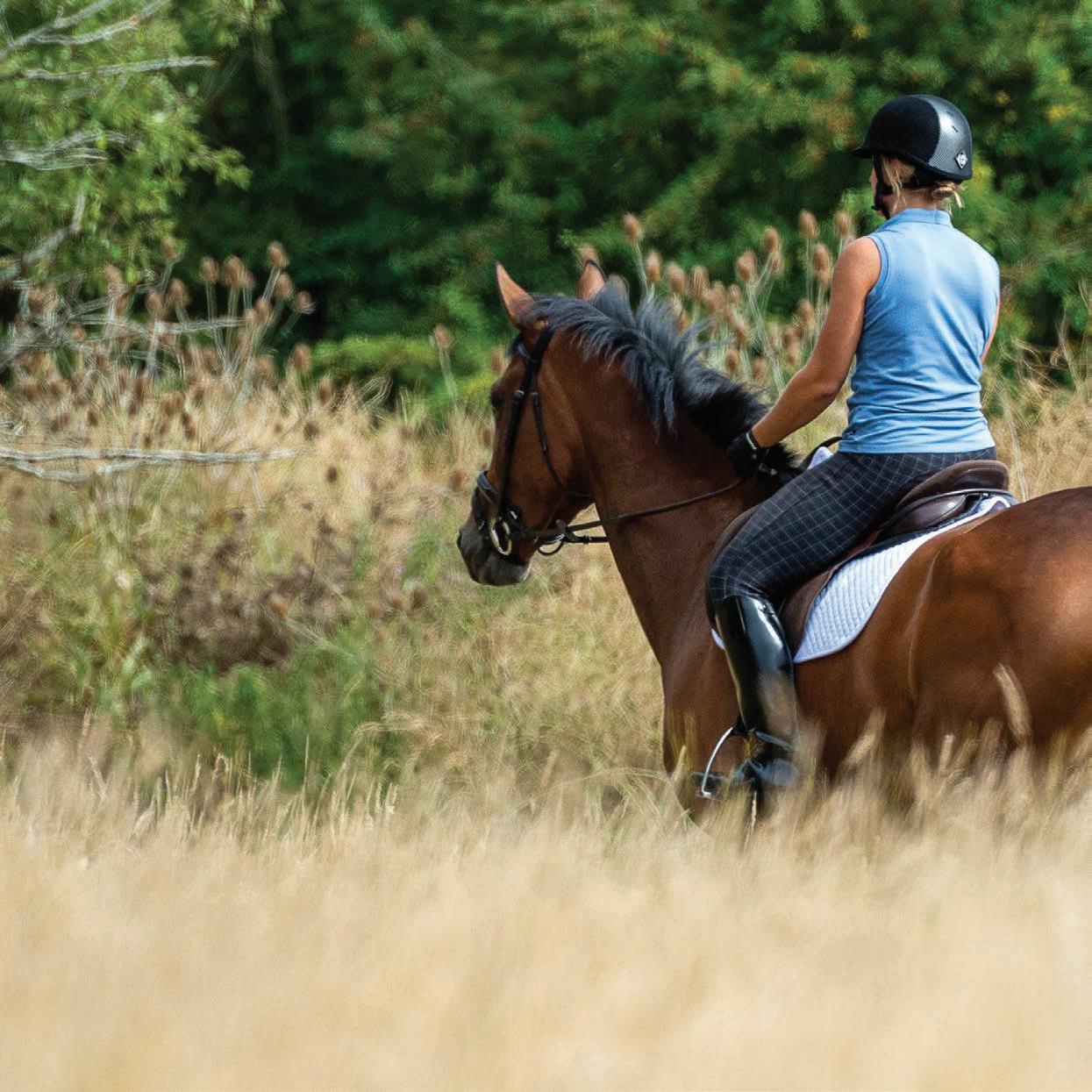
Training your back muscles can make the world of difference to your riding, as Ali Williamson explains
EXPERT
Ali Williamson is a qualified Pilates and Equipilates biomechanics trainer with a particular interest in rider posture.
Horse owners are busy people and between looking after and riding your horses, family, and work, free time is precious – and scarce. So when it comes to the seemingly never-ending content being served to you online about developing and improving your physical fitness, what should you prioritise?
While there’s a lot of emphasis on core stability and deep abdominal muscle strength – that’s undoubtedly important – often the importance of training your back muscles is overlooked, when it should definitely be a priority.

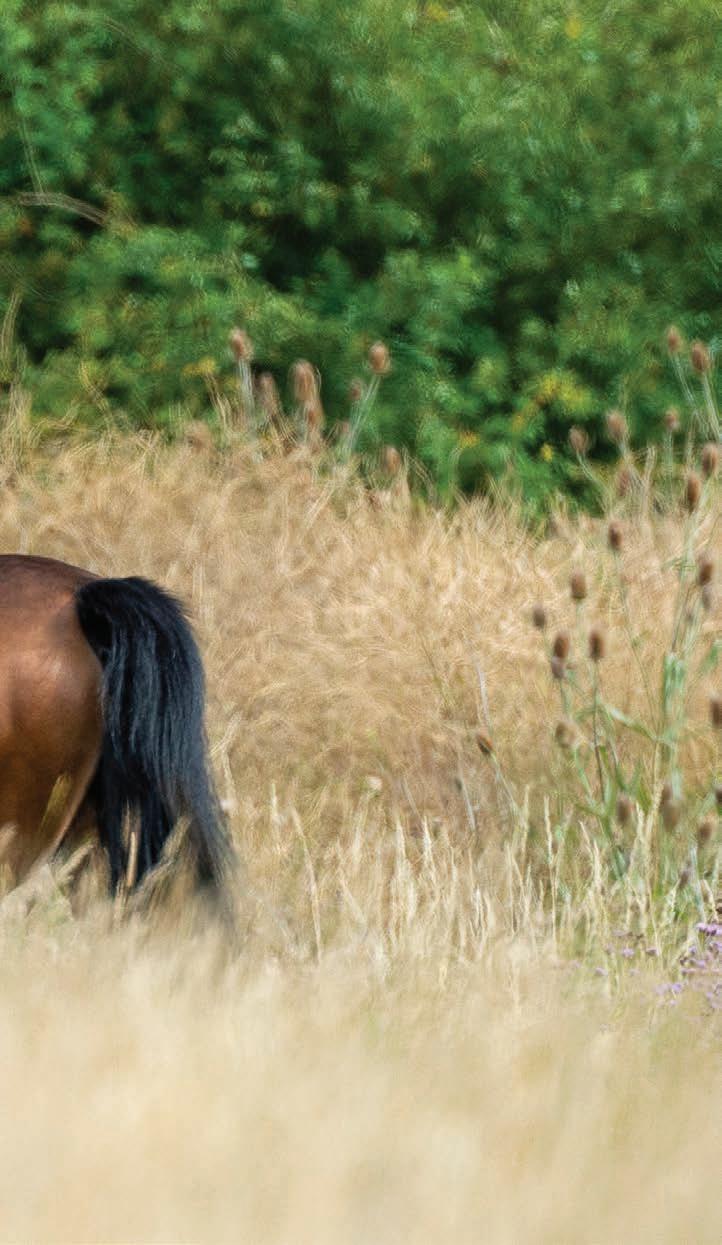
There are many definitions, but the term ‘core’ usually refers to the muscles that support and stabilise the spine.
A study of 2,000+ people undertaken by Hartpury University investigating pain in horse riders over 35 years old found that 85% experienced back pain and 42% had to stop riding due to the pain.
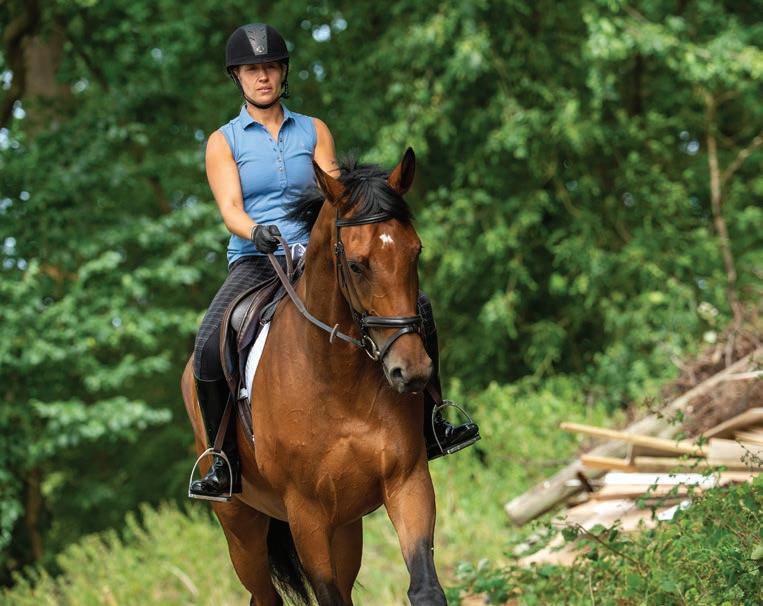
The deep back muscles, particularly multifidus, are part of what we understand to be the core and these are included in core strength exercises. However, the large, superficial muscles down the back need to be trained separately. They are responsible for extending the spine and literally keeping you upright. Strengthening these muscles brings you into a taller position in the saddle, gives you the ability to keep your shoulders back and chest open, achieve greater balance and stability and reduce back pain during and after riding.
In addition, as we age and lose muscle mass, postural changes occur, leading to the forward flexed, hunched over position that’s adopted by many elderly people who have simply lost the muscle strength to hold themselves upright. This can happen to all of us when we are tired. We start to tip forwards from the hips when walking and can experience a dull pain in the lower back. And if we ride when our back muscles are fatigued, we become unbalanced, floppy and ineffective. This can make things uncomfortable and even painful for our horses as they struggle to compensate.
The good news is that you can make a real difference by working to maintain and develop the strength of the posterior chain muscles.
• Improves and maintains good posture, both aesthetically and functionally.
• Helps you absorb your horse’s motion, give fluidity of movement and reduce bouncing.
• Improves spinal stability to help maintain balance in the saddle and give precise, independent aids.
• Protects against, and helps to alleviate, back pain.
• Reduces the risk of back injuries.
Superficial muscles are those that are close to the skin and usually move limbs. Deep muscles lie further inside the body and are largely responsible for stability and support.
Managing your horse’s weight can be a real challenge – our expert nutritionist is here to help

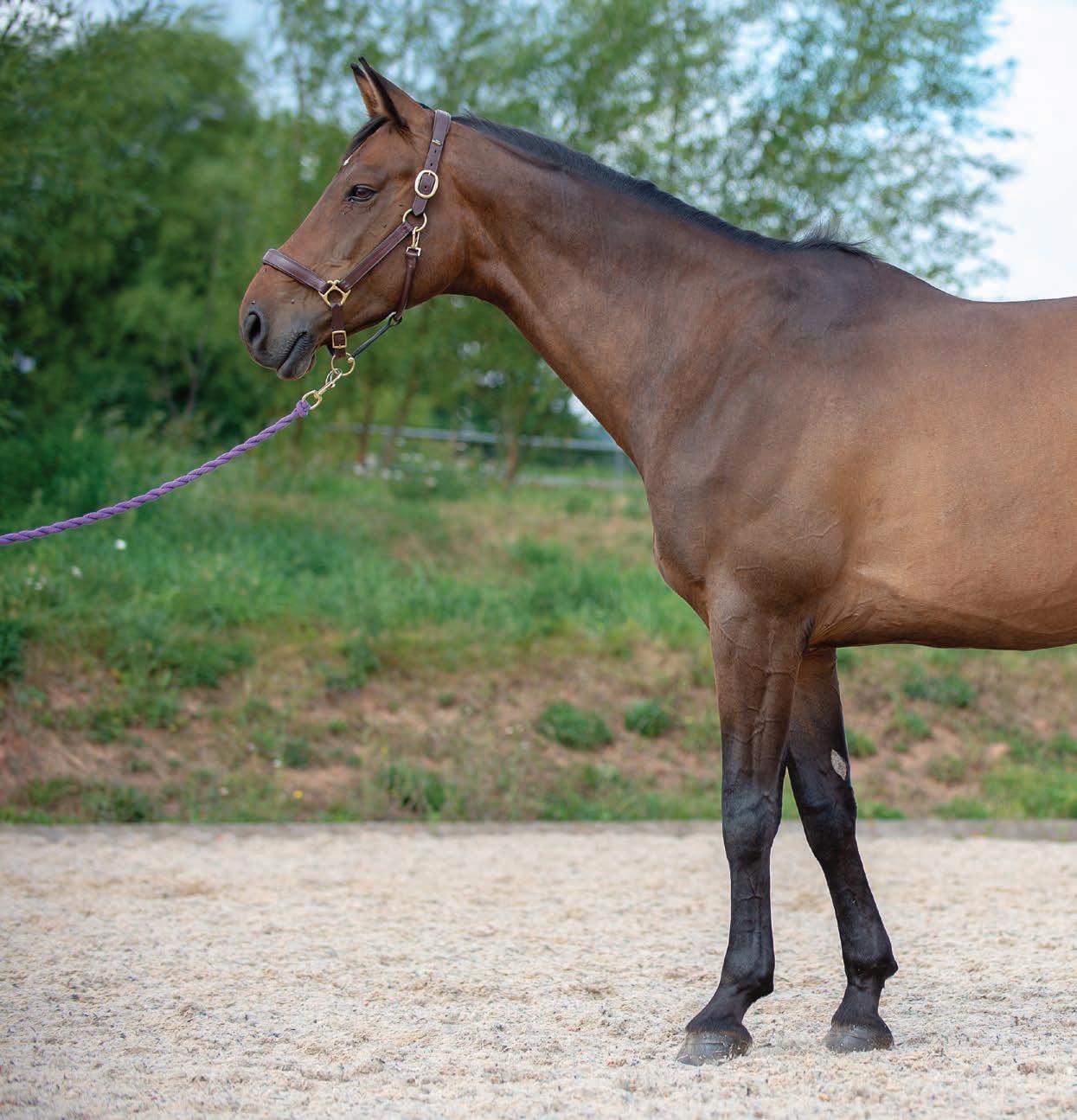
Managing your horse’s weight isn’t always straightforward. Breed, genetics and fluctuating forage quality all play a role, and not everything is within an owner’s control.
Both obesity and being underweight carry risks. Obesity is linked to increased likelihood of many long-term health issues and may impact performance, while being underweight may affect health and performance.
Overweight horses that develop laminitis may have a poorer prognosis and slower recovery.
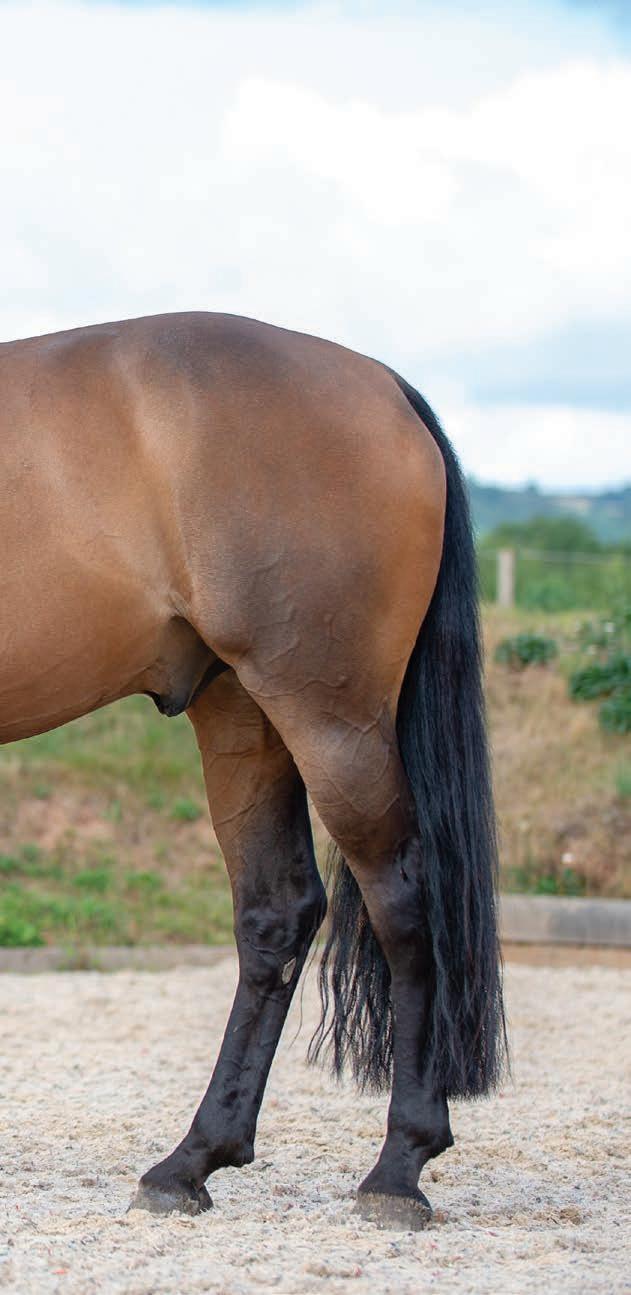
A recent survey by Spillers found many horse owners struggled to correctly identify whether a horse was truly overweight. We’re all used to seeing overweight horses and comments such as ‘he’s always been a good doer’ or ‘but she’s a cob’ are often used to casually justify obesity.
Hyperinsulinaemia-associated laminitis (which includes cases associated with EMS and PPID) is now thought to be the most common form of laminitis.
The risks of obesity
Obesity is linked to a number of health and welfare concerns...
• Laminitis, which may affect up to 1 in 10 horses and ponies.
• Insulin dysregulation (ID).
• Equine metabolic syndrome (EMS).
• Increased strain on joints and soft tissues.
• Higher risk of pedunculated lipomas, which can cause colic.
• Reduced respiratory efficiency due to internal fat.
• Exacerbation of low-grade inflammation associated with ageing.
• Reduced fertility in mares and stallions, and potential impacts on the foal.
• Reduced performance due to excess weight.
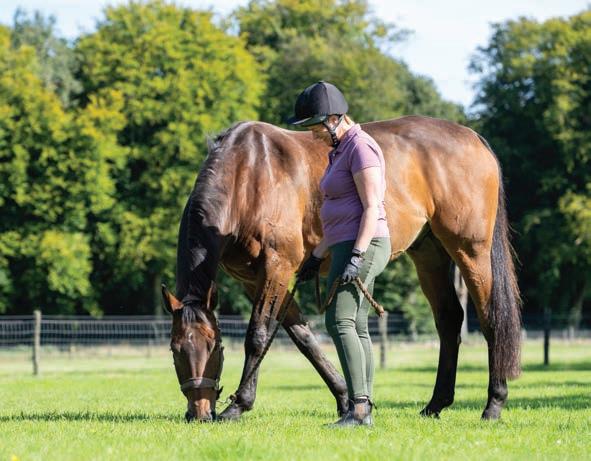
For many reasons, our bias and emotional denial can influence how we assess our own horses. However, around 30–50% of the total horse population may be obese with just a small percentage classed as underweight. Appearances are deceiving and not a reliable indicator of true body condition.
Horses with well sprung ribs or potbellies may look fat, but could have very little body fat overall. Equally, some may appear relatively fit but carry excess fat over the ribs or tail head, or have a cresty neck. To truly assess body fat you need to get your hands on your horse and feel for fat coverage.