In part one of our new series, Nina explains how to improve your horse’s way of going with just three poles

Summer is a busy time of year whether or not you compete – because why wouldn’t you make the most of the long, sunny days?! Whether you’re looking for quick, effective exercises that fit within your competition training schedule or something simple that’ll keep your horse’s workload varied, I’ve got just the thing for you.
We’ll start off with just three poles and expand the layout over the next few issues, helping you progress through different challenges so you can improve your horse’s skills and have fun together! Let’s get started.
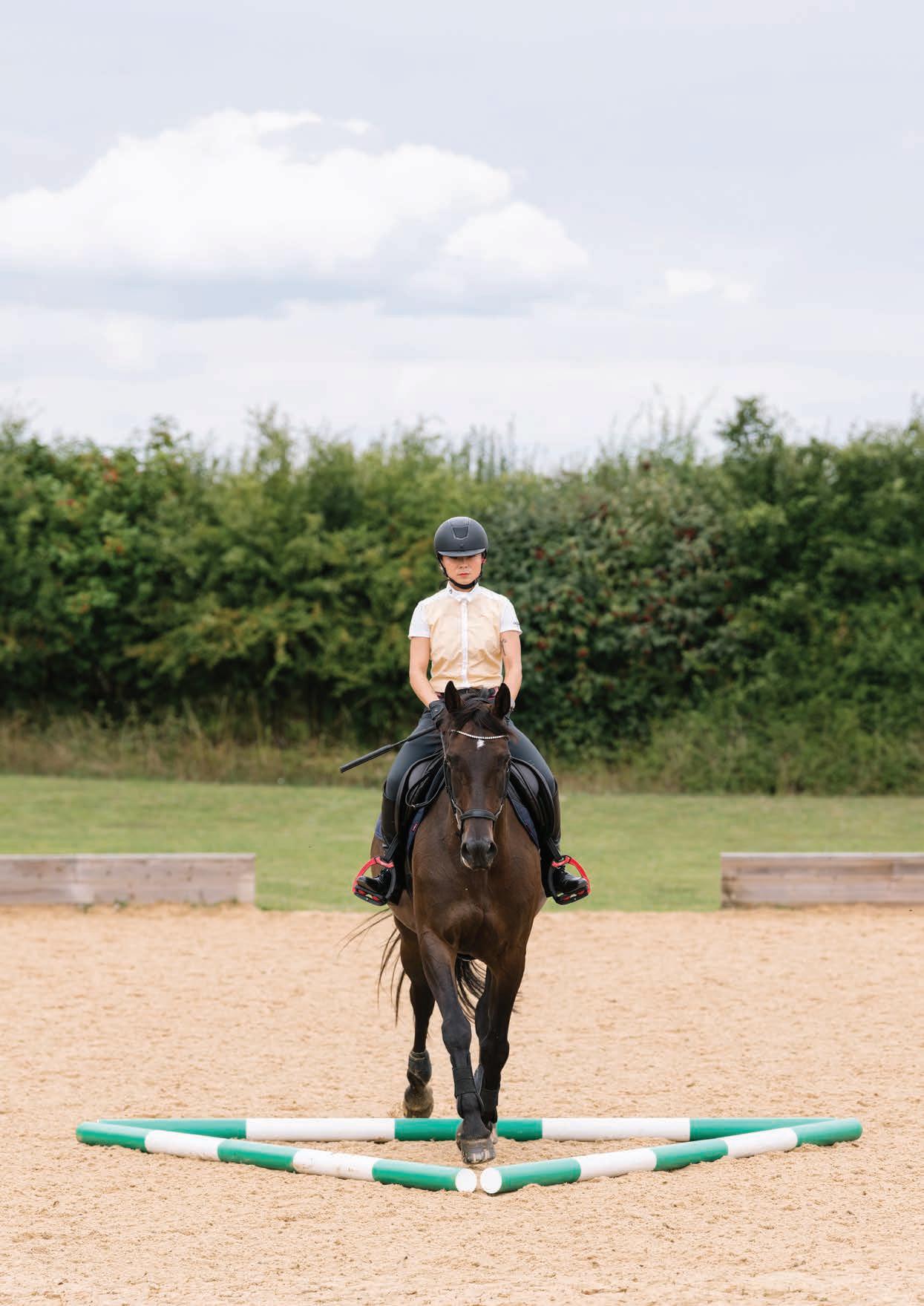
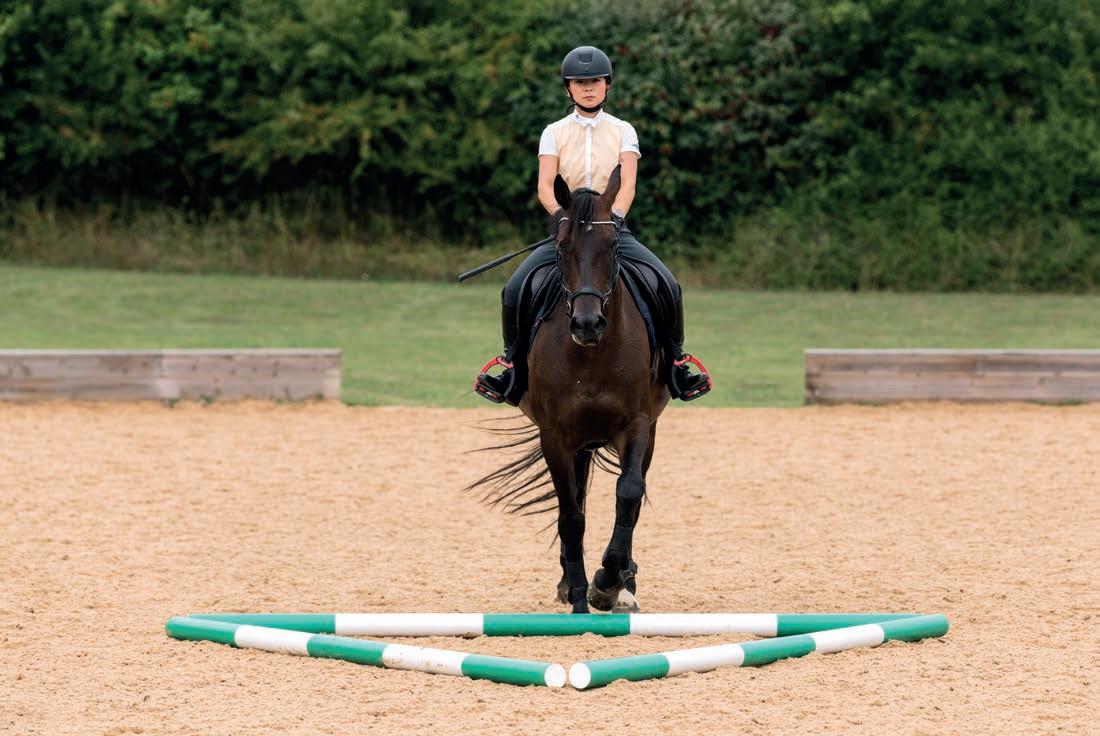
Using three 3m poles, create a triangle in the middle of your arena, making sure you can approach it from all directions and have enough space on each side to ride a large circle.
Focusing on straightness and balance, this is great centre line practise. Ride over the middle of the first pole then directly over the point where two poles meet. When you feel confident and ready, do it in reverse, starting with the point –watch your aids though, as this is much more tricky.
Include lots of transitions between and within the paces while warming up to check your horse is responsive to your aids.
Walk through every new line first before trying in trot (and canter, if the striding allows) to make sure your horse knows where they’re going.
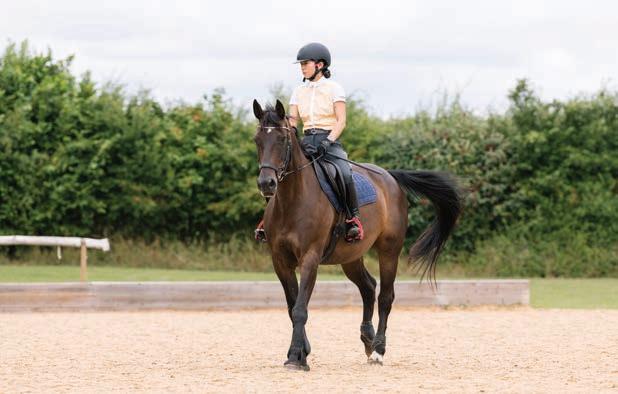
• Sit evenly in the saddle and use equal aids, channelling your horse between your hand and leg.
• Find your line early, riding a square turn off the track to keep your horse straighter through their body on the approach.
• Look up at a point ahead of you – looking down might shift your horse’s weight slightly to one side, which could cause them to drift.
• If you have arena mirrors, position the triangle so one point is facing directly towards them – then you’ll be able to check whether your horse actually stays straight or wobbles at the last moment.
Jay Buxton is an international showjumper and coach based in Cheshire, where he runs Strides Equestrian with his wife, Paige.

The great thing about this exercise is you can do it anywhere. Whether you’re warming up, schooling or even hacking out, you can ride it in walk, trot or canter. It’s easy to set up and you can incorporate a fence or simply stick to using poles on the ground. Let’s get started!
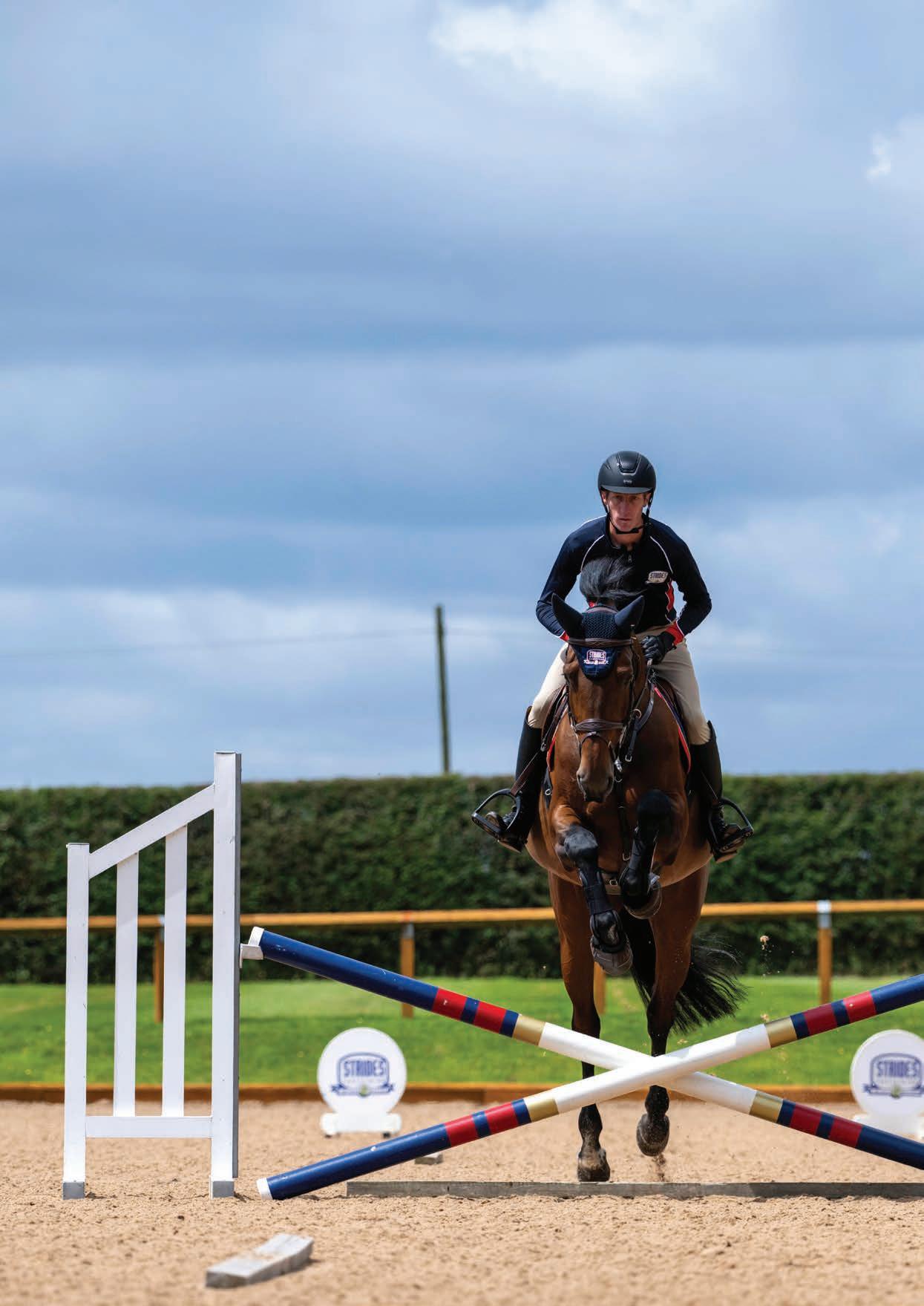
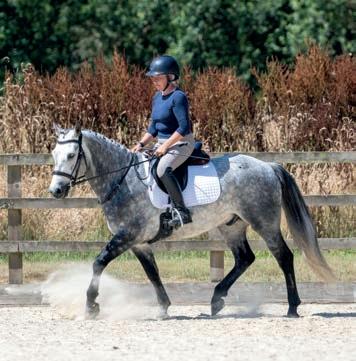
This month’s exercise is a good test of horse and rider straightness
• You’ll need at least four ground poles (flat poles are best as they don’t roll). If you want to include a fence, set aside two jump wings and two round poles.
• If you’re riding in an arena, place two or three pairs of ground poles either side of the centre line about 1.5m apart.
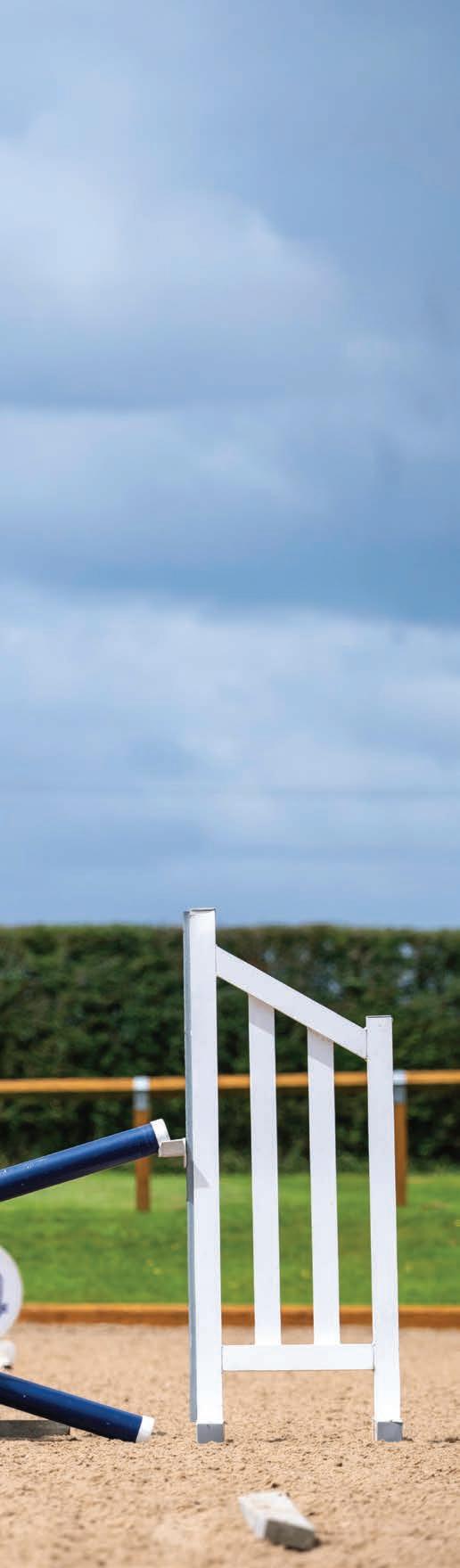
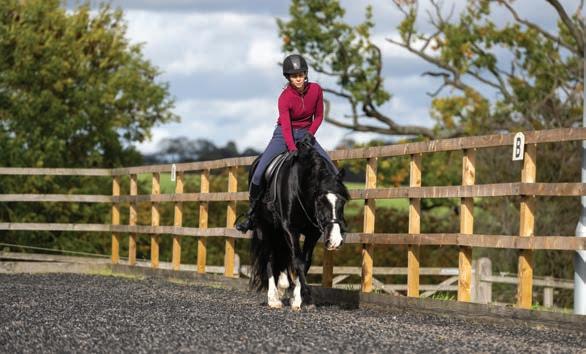
Beginning in walk, turn onto the centre line, picking a visual point to ride towards to help you stay straight. Allow yourself to just feel how your horse is moving – you’ll be surprised how much you’ll feel if your horse starts to drift one way or the other, or whether they feel heavier on the left or right.
Most horses lean more one way, and you can help with this by riding a couple of steps of leg-yield. For example, if your horse is leaning more to the right, ride a couple of leg-yield steps to the left, and viceversa.
If everything’s going well in walk, try the same exercise in trot and then canter.
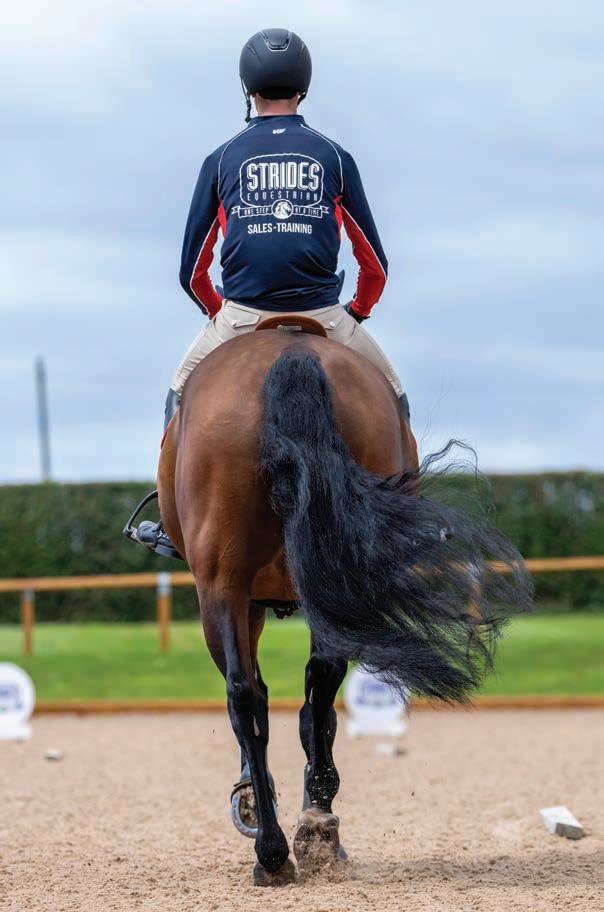
Don’t worry about your horse’s head carriage. Focus on keeping things relaxed and the rest will come with time.
While warming up, check in on your own straightness by making sure your stirrups are even, with equal weight in both heels. Ensure you have an even contact with the same amount of weight in both hands and that your hands are the same height and distance apart.
Simon Luck is a BSHA judge based in West Sussex. He owns and runs Petworth schooling course, where he holds a variety of equestrian training clinics.
Simon Luck offers tips and advice for standing out from the crowd in ridden classes
f you’re planning to show your horse under saddle, there are several things you can do at home and in the ring to ensure you catch the judge’s attention. From how to present your horse on the go round, to preparing your horse for a ride judge and individual show, I’m going to share my tips to help you achieve that red rosette.
When you enter the ring you’ll be asked to go around on the right rein in walk, trot, and then canter. This is your first chance to make a good impression to the judge and get them to notice you. To make yourself stand you, ensure your horse is working actively forward in a positive, balanced way in all paces.
The amount of time spent in each pace will vary from show to show but, as a rough guide, you might be asked to do one round in each pace so the judge has a good chance to see everyone.
Remember, the judge can only watch one or two sides of the class at a time, so the free side is your chance to correct any issues. If your horse is feeling a bit tight or isn’t quite with you, ride a shallow loop or a few steps of leg-yield into the corner. Or, if they’re feeling a bit flat, open and close the pace a bit to get the sparkle back.
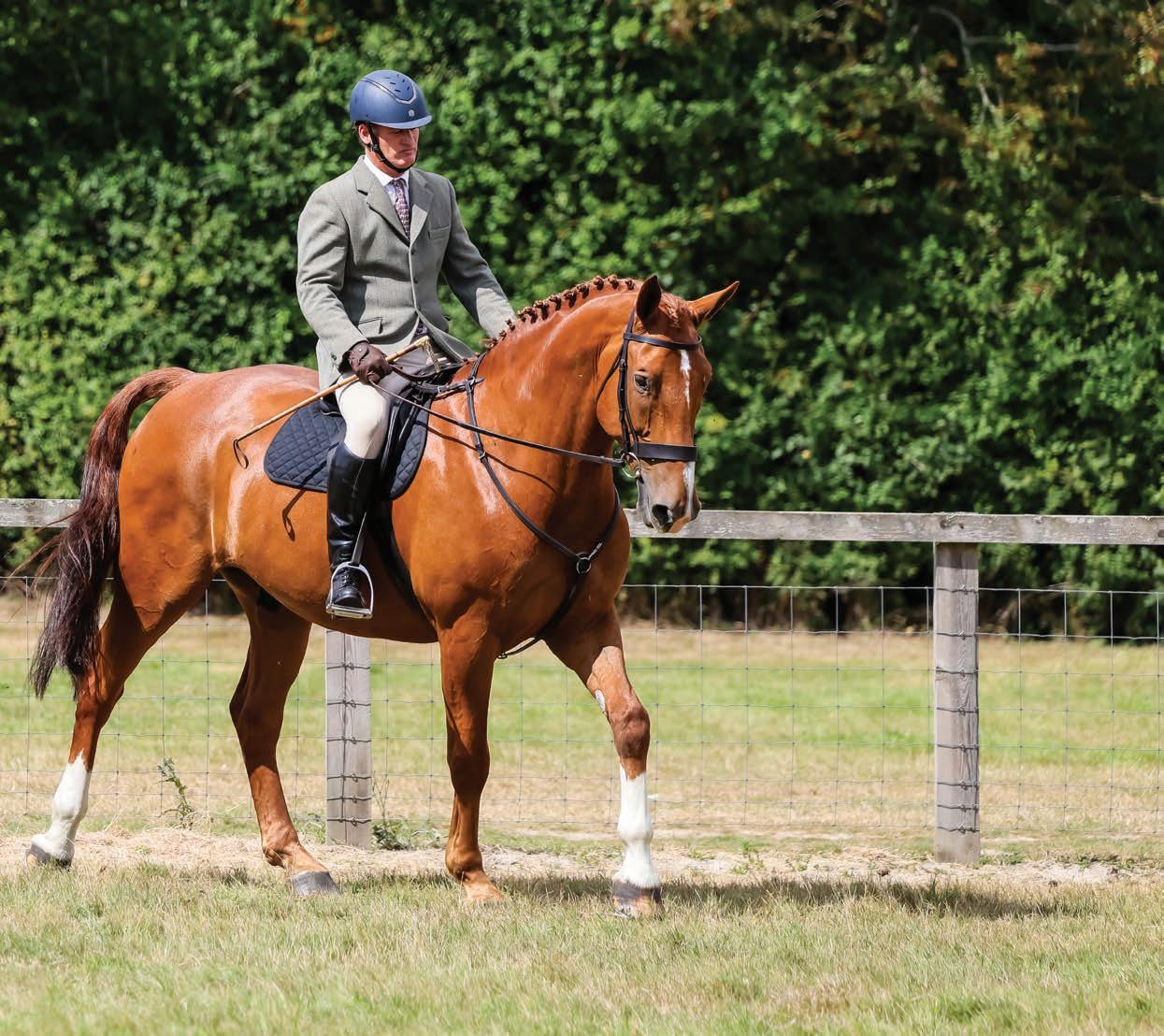
Next, the steward will ask you to change the rein, probably across the diagonal.
To show your horse off, it’s best to canter onto the diagonal, trot a few steps past the judge and ask for left lead canter on the diagonal line.
Once you’ve walked, trotted and cantered on both reins, you may be asked to show an extended canter, so make sure you practise this at home, too.
Some people wait until the next corner to pick up their new canter lead, which is fine – especially with a novice horse – but it’s worth getting to a stage where you can pick up either canter lead on a straight line as this shows the judge that your horse is well balanced and correctly schooled.
At smaller shows you might not be asked for extended canter, but at the bigger shows (except hack classes) this movement is usually required.
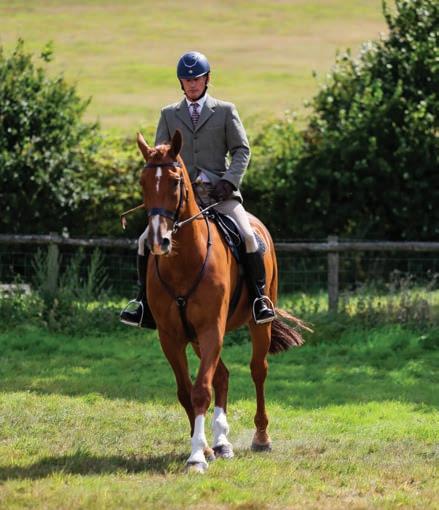
Figures of eight and serpentines are both good exercises to teach horses to stay balanced through changes of rein. Use them to help you change from one canter lead to the other, too. Remember to change your horse’s flexion to the new rein before giving the canter aid.
Why
so many riders live with back or hip pain –but what actually helps? We find out
Dr Emma-Louise Emerson is a chiropractor and founder of The EquiCan Academy. She specialises in rider biomechanics and performance.

t rarely starts with a fall. More often, it’s a stiffness that lingers after riding. A pinch in your hip when mounting. A lower back that tightens halfway through a schooling session and doesn’t quite settle the next day.
Many of us ignore it until it begins to affect how we ride, or our horse’s way of going. After all, it’s just ageing, a normal part of the wear and tear our bodies experience. Right? Wrong – while it may feel normal because it’s so common, pain isn’t something you have to accept.
widespread
Research reflects what many of us already know. Lower back pain affects up to 87% of equestrian athletes, with more than 60% experiencing pain each a year. That’s significantly higher than in many other sports.
UK bodies such as British Equestrian highlight that riders are exposed to a unique mix of...
• repetitive loading through the spine
• asymmetrical movement patterns
• physical work on the yard
In other words, this isn’t just bad luck, it’s built into the demands of the sport we love.
While it may feel normal, because it’s so common, pain isn’t something you have to accept
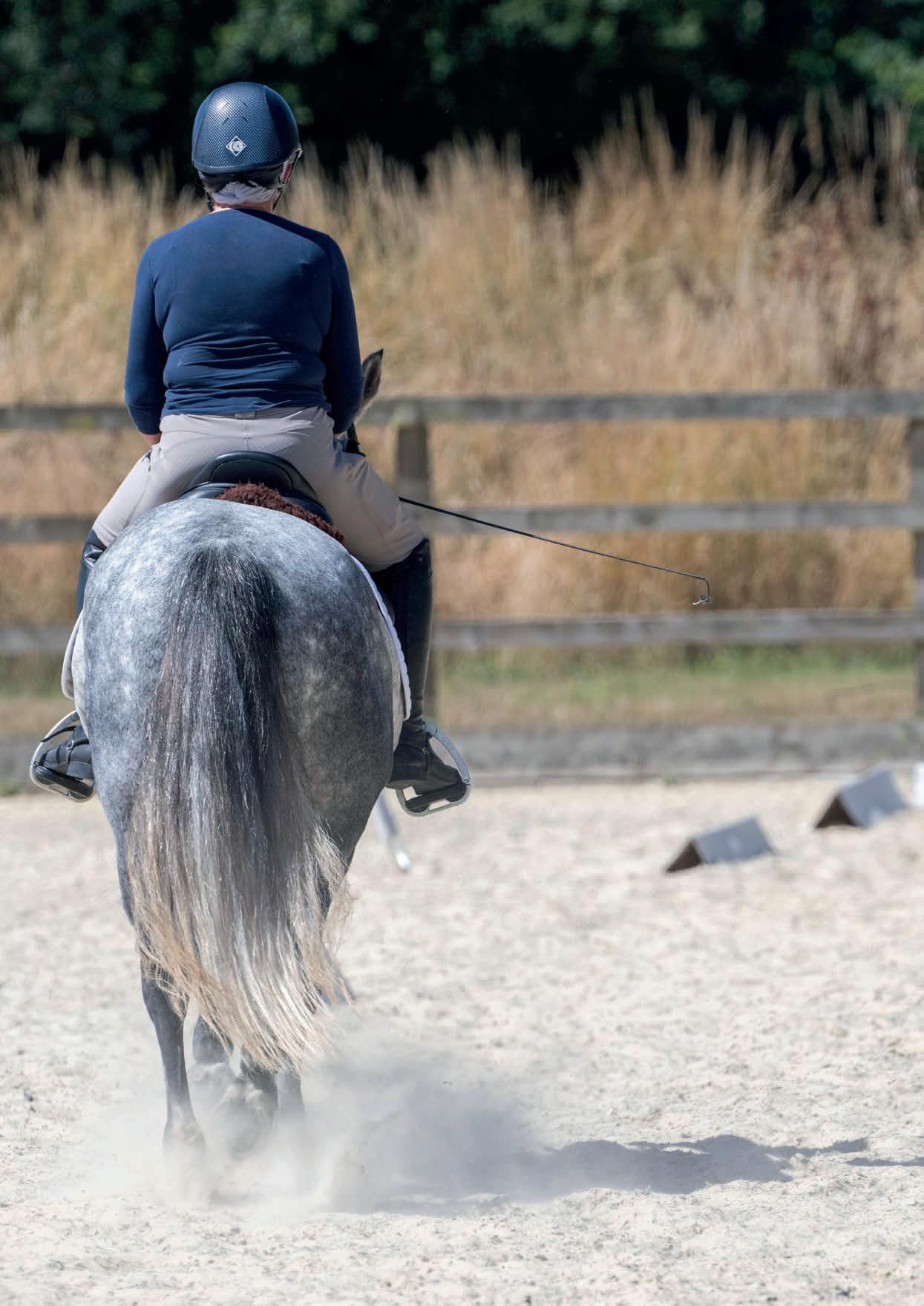
To stay balanced and effective in the saddle you have to...
• stabilise through your core
• absorb movement through your pelvis
• maintain mobility through your hips
• adapt continuously to your horse
When you think about it, with all of these demands it’s no wonder that the potential for repetitive strain is so high.
On top, of course, we carry out many non-riding tasks – lifting hay bales and bags of feed, pushing barrows and yard work. Add in previous injuries, and even without considering the demands of your day job and family commitments, and the risk increases further.
Life coach Angie JonesMoore shares simple habits that can help you sleep better and enjoy your horse more
Sleep is a tricky beast – get it right and it makes all the difference to your waking hours, but when it goes wrong, the impact can be huge. Firstly, let’s dispel the myth that we all need eight unbroken hours a night – we’re all individuals and how much sleep our bodies need varies quite significantly.
However, when the sleep we’re getting doesn’t match what we need, the

impacts can be dramatic. From a feeling of heaviness that’s hard to shift to effects on our mood, it shouldn’t be underestimated – poor sleep can have a ripple effect on those around us, human and animal.
For all of us, horses are a passion and a safe space, but when our function is compromised by not enough, or poor sleep it can affect enjoyment of the animals and sport we love.
When we’re tired, we struggle to think clearly. Decision-making can be impaired and a few poor nights can reduce focus and attention, making it harder to concentrate and retain information.
Poor sleep in the run-up to a competition can easily mean forgetting your dressage test or showjumping course, especially when combined with the excitement and anxiety of competing.
And tiredness can affect judgement, too. The brain’s decision-making area becomes less reliable, making us more impulsive. Add mood changes, increased sensitivity, irritability and higher stress levels, and suddenly we’re really up against it.