Step up your schooling with Nina’s next-level polework challenge

Work around the poles in your warm-up, and ride plenty of transitions and gentle changes of bend to get your horse in good stead for the exercises ahead.
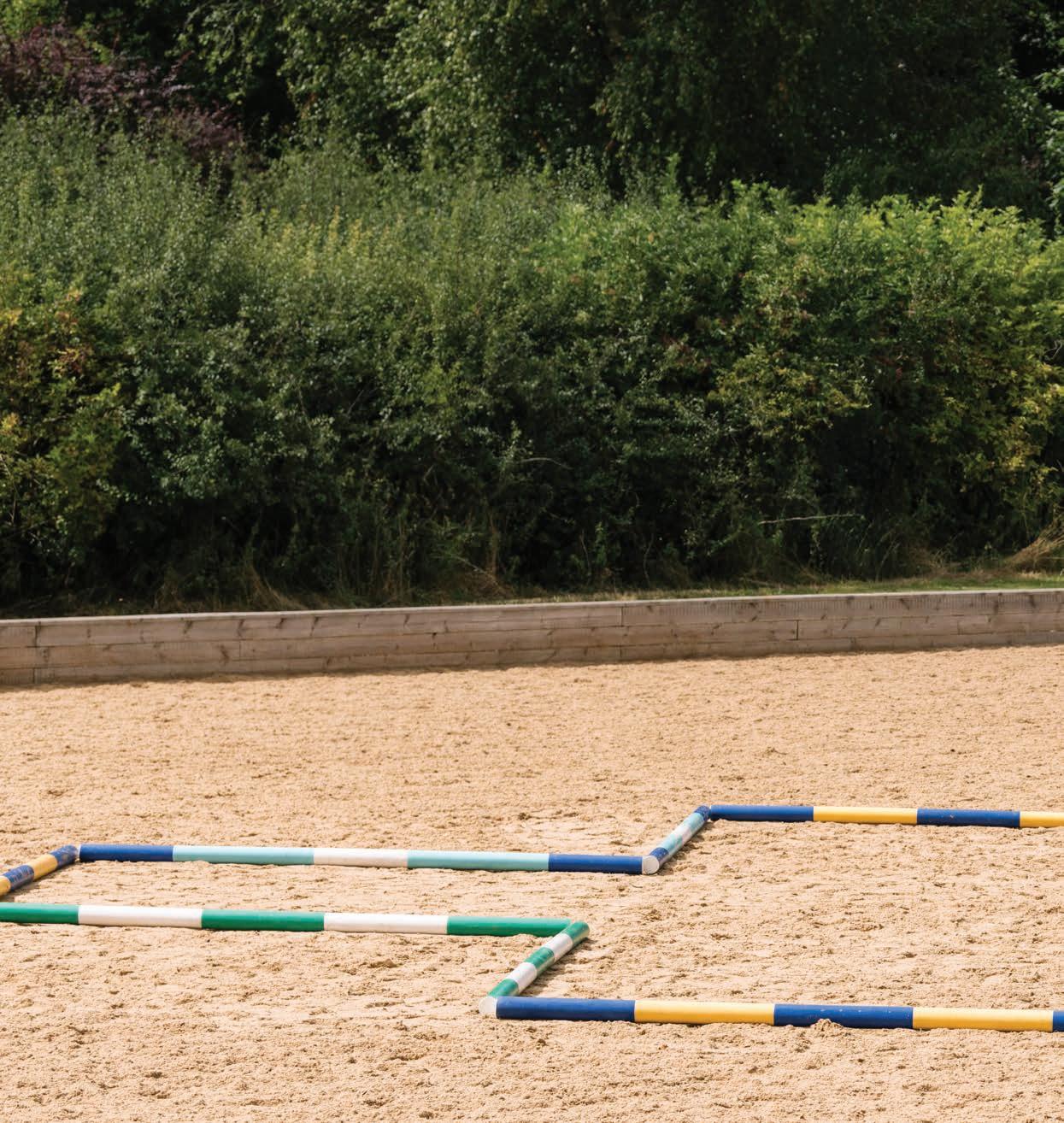
This layout is one of my favourites. Not only are there so many lines to try (we’re going to cover four in this feature), but it’s a great option if you want to incorporate walk, trot and canter without the need for adjustment. Because let’s be honest – who has time to be moving the poles around every five minutes?
You’ll need 12 3m poles. Make a square in the middle of your arena and use it as a guide to set out the parallel pairs of poles – this will ensure they’re symmetrical. Once the 8 poles are in place, move the poles from the square to make the cross.
Lines 1 and 3 are easier compared to lines 2 and 4, so perfect the simpler exercises before attempting the more challenging ones. This will help keep confidence levels up.
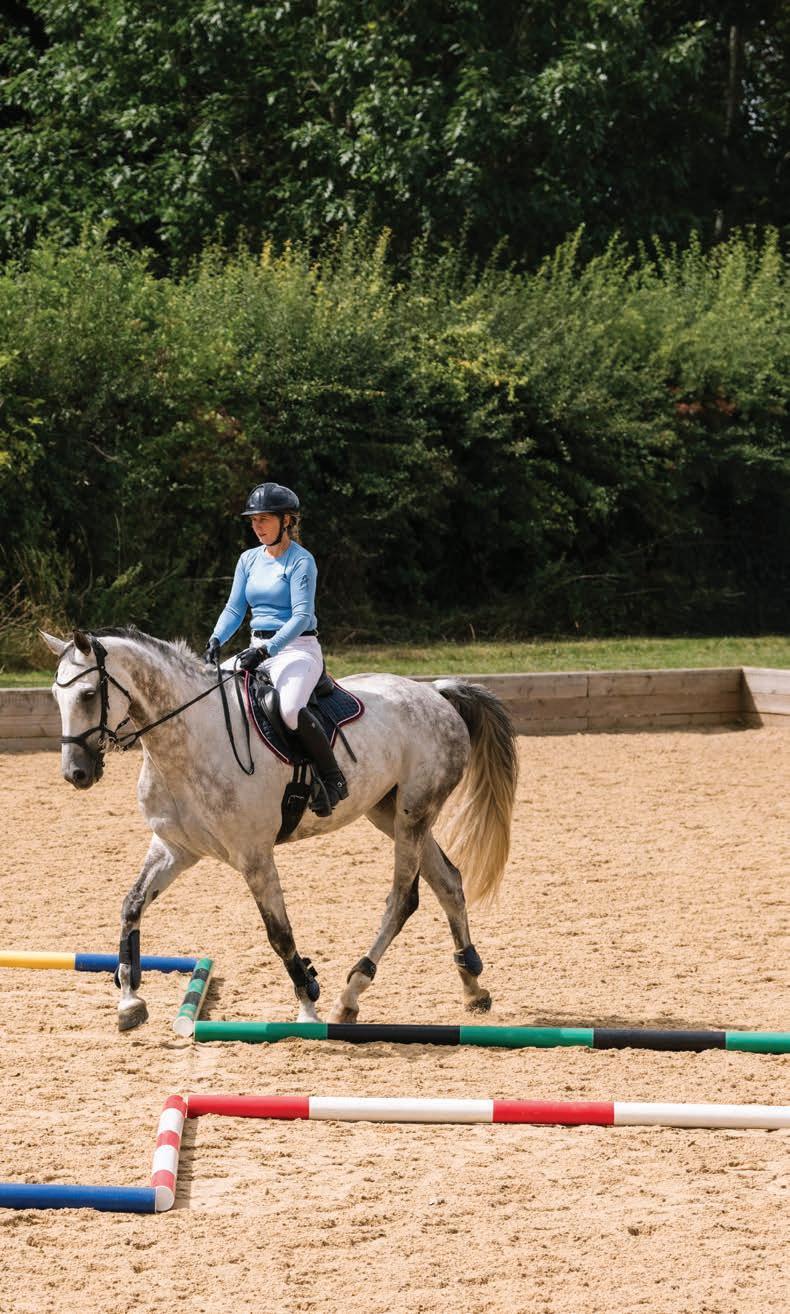
Having a horse who’s straight – and, for you, being able to channel this into accuracy – is essential for dressage success, as well as a happy, healthy athlete. Poles provide guidance and support to help you achieve these allimportant skills.
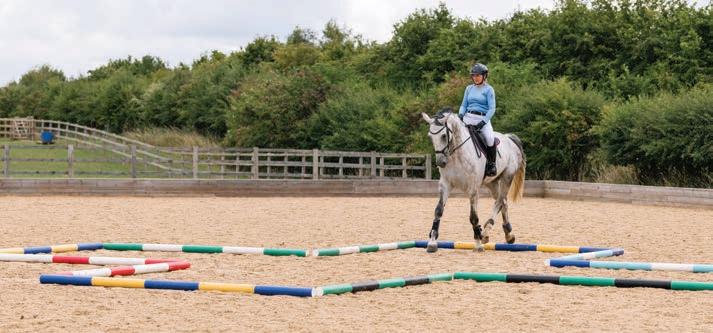
Check in on your own straightness as this could be affecting your horse’s ability to stay straight if he’s trying to compensate.
The first test of straightness is riding over two parallel poles to cut the layout in half. Aim for the centre of the first pole – this is where striped poles come in handy –then channel forwards to the same point on the second pole.
• Ride a square turn off the track so your horse is straight through his body on the approach.
• Keep an even, soft and – importantly –consistent rein contact.
• Channel your horse forwards with gentle leg pressure. If he tends to drift one way, you might find you need to support him more on that side.
• Stay on a straight line after the second pole for at least five strides before making another square turn.
If your horse tends to rush over poles, use this line to incorporate transitions. You have 9m between the two poles to change the pace, so alternate between riding upwards and downwards transitions to keep your horse focused on your aids.
Photos: Lucy Merrell
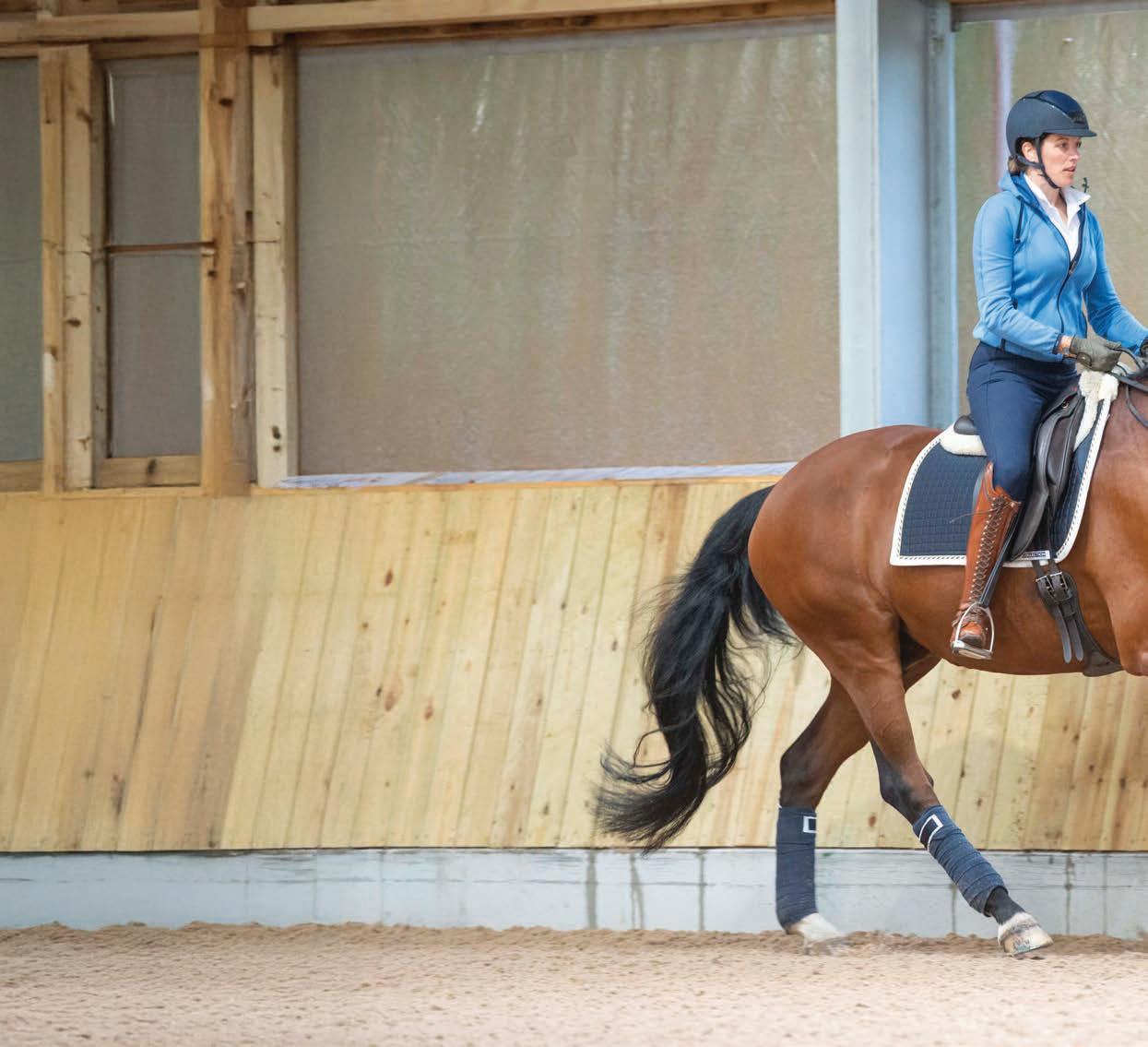
Take your horse’s training to a whole new dimension in preparation for the higher level tests
As your horse’s training progresses, and his balance and strength increase, you’ll start to feel a difference in his whole way of going. Not only will he begin to work in a more uphill way, but you’ll find he’ll be more supple, straighter and obedient to your aids, too. It’s an amazing feeling, but what comes next?
The exercises in this feature will help you progress your horse’s training further, from developing a more balanced canter to introducing the idea of flying changes and more collected work. If you and your horse are ready to step up, why not give some of these ideas a try?
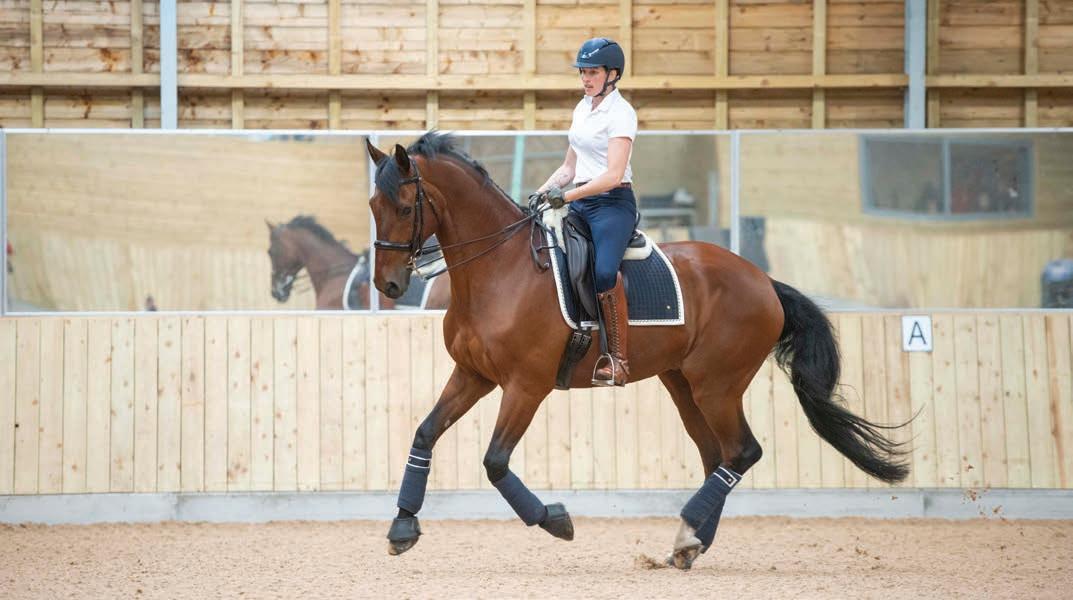
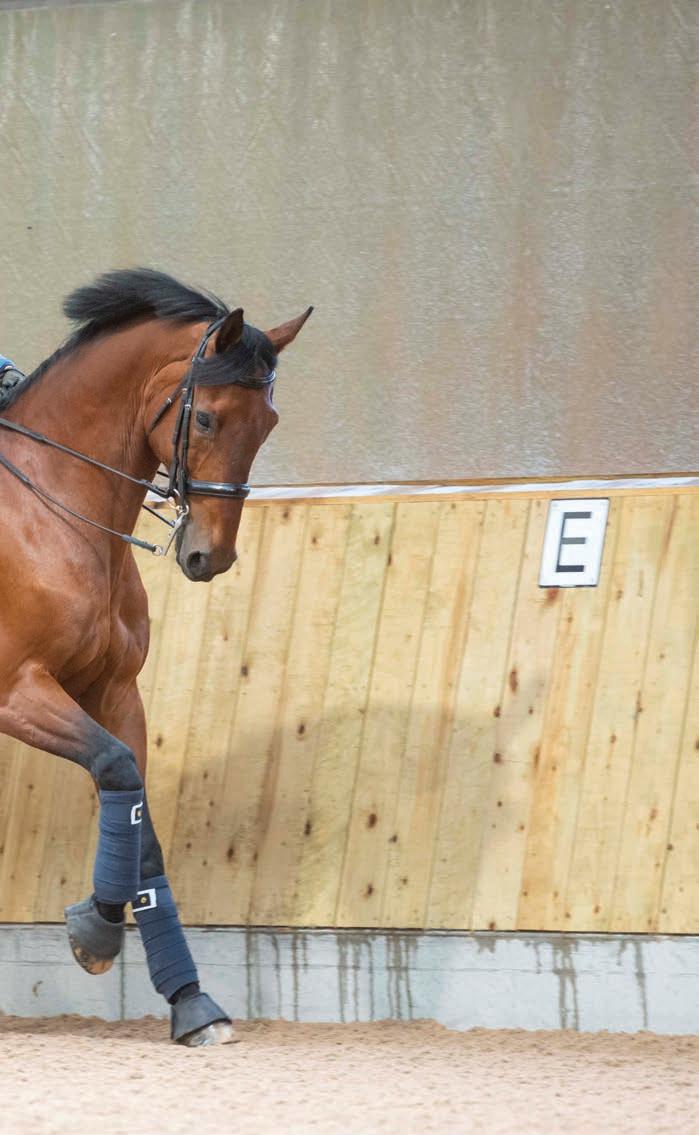
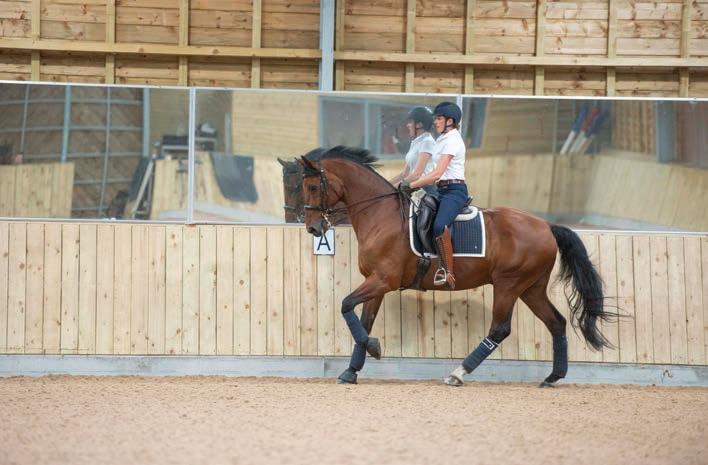
If your horse raises his neck during transitions, keep your hands low – try not to shorten his neck, but instead think of pushing it down.
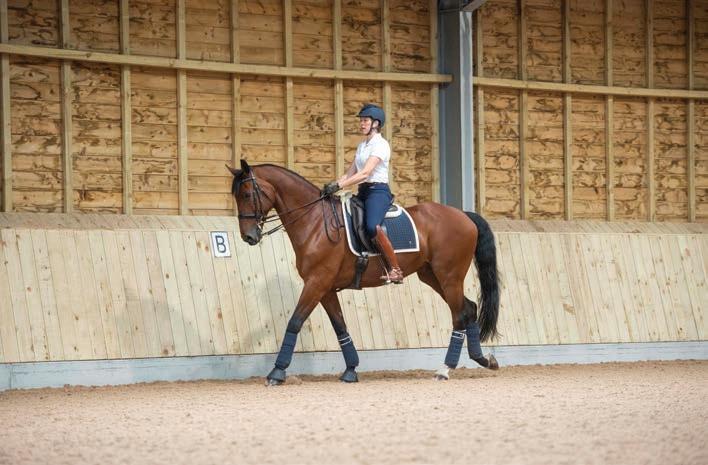
Many trainers and top riders will introduce canter work as soon as the horse has warmed up, on the basis that it can improve the trot. If you do decide to start your session in canter, make good use of this time by using exercises that will improve your horse’s balance.
One useful exercise is to ride your horse on and back on a large circle, first asking him to open up into a medium canter and then riding a few collected steps. Repeat the exercise a few times each way until you’re happy with the result.
It’s worth remembering that you’ll only be able to achieve quality collected steps when your horse is truly in front of your leg. So, when you ask for some medium steps, ensure he’s carrying you forward in a good balance and rhythm, without you having to prompt him to keep the energy levels up.
If everything’s going well with the on and back exercise, add some direct transitions between walk and canter, starting in canter on a large circle at one end of the arena. Once you’re happy with the quality of the canter, use your inside leg to ask your horse to step towards the track. Then, as you reach the edge of the arena, ask for walk with your reins and seat but think canter with your legs. This helps to keep your horse’s weight through his hindquarters and encourages him to remain active at the same time.
The aim is for the first walk step to be forwardthinking, but this takes time, and you may find the first few canter–walks show a lack of balance with a heavier transition. However, keep working on these in each schooling session and you’ll find that your horse becomes lighter. Stay in walk until your horse is relaxed and showing clear four-beat steps.
When he’s relaxed in walk, make a walk–canter transition, focusing on obedience to your leg aids and a smooth change of pace. Repeat a few times until you’re happy with your horse’s effort, then change the rein and do the same the other way.
Create a fit, strong horse with Meg Elphick’s targeted training guide
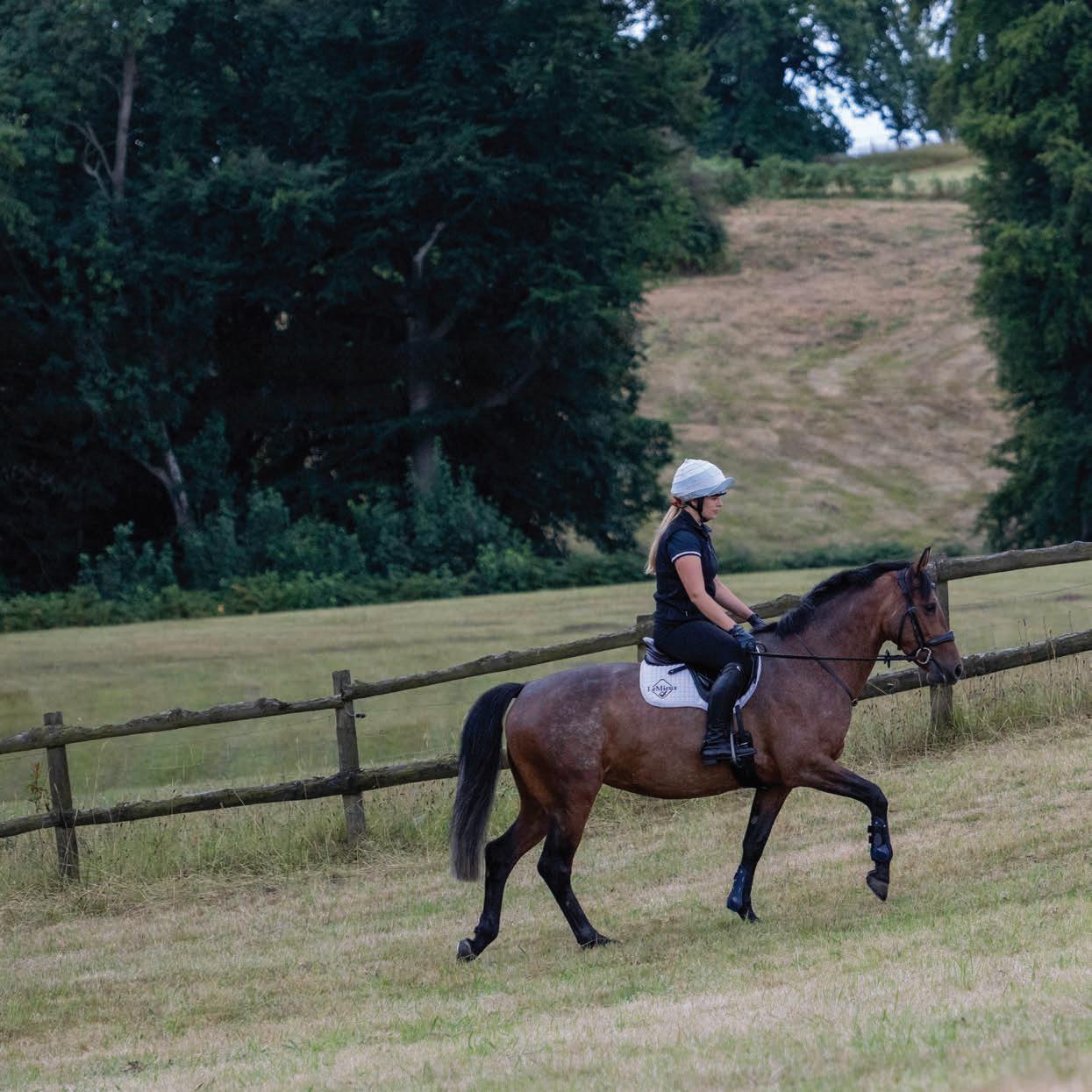

Meg Elphick is an event rider and content creator. She’s enjoyed considerable success on her home-produced ponies, including four top 10 placings at Badminton Grassroots 2022–2024. EXPERT
Whether or not your riding goals lie within the competition arena, ensuring your horse is fit and strong enough for his job is crucial to his physical wellbeing. But his training and workout routine don’t need to be bound to the school. Adding variety and assessing his schedule holistically is the first step towards a happy, healthy horse who can perform at his best.
Don’t forget
A fit, strong and healthy horse will have…
a reduced risk of injury
increased stamina improved posture better natural balance the ability to perform to their true potential
Adding fuel
One of the first things to consider when developing your horse’s strength and fitness is his diet. It’s crucial he has all the vitamins and minerals he needs for his body to function properly. So, start with the basics and ensure he has access to plenty of forage, plus a balancer (unless he’s fed the recommended amount of a complete hard feed).
When it comes to building muscle, ensuring there’s plenty of quality protein in his diet is important for development and recovery. However, how much your horse needs depends on many factors, so it’s worth chatting to an equine nutritionist for advice.
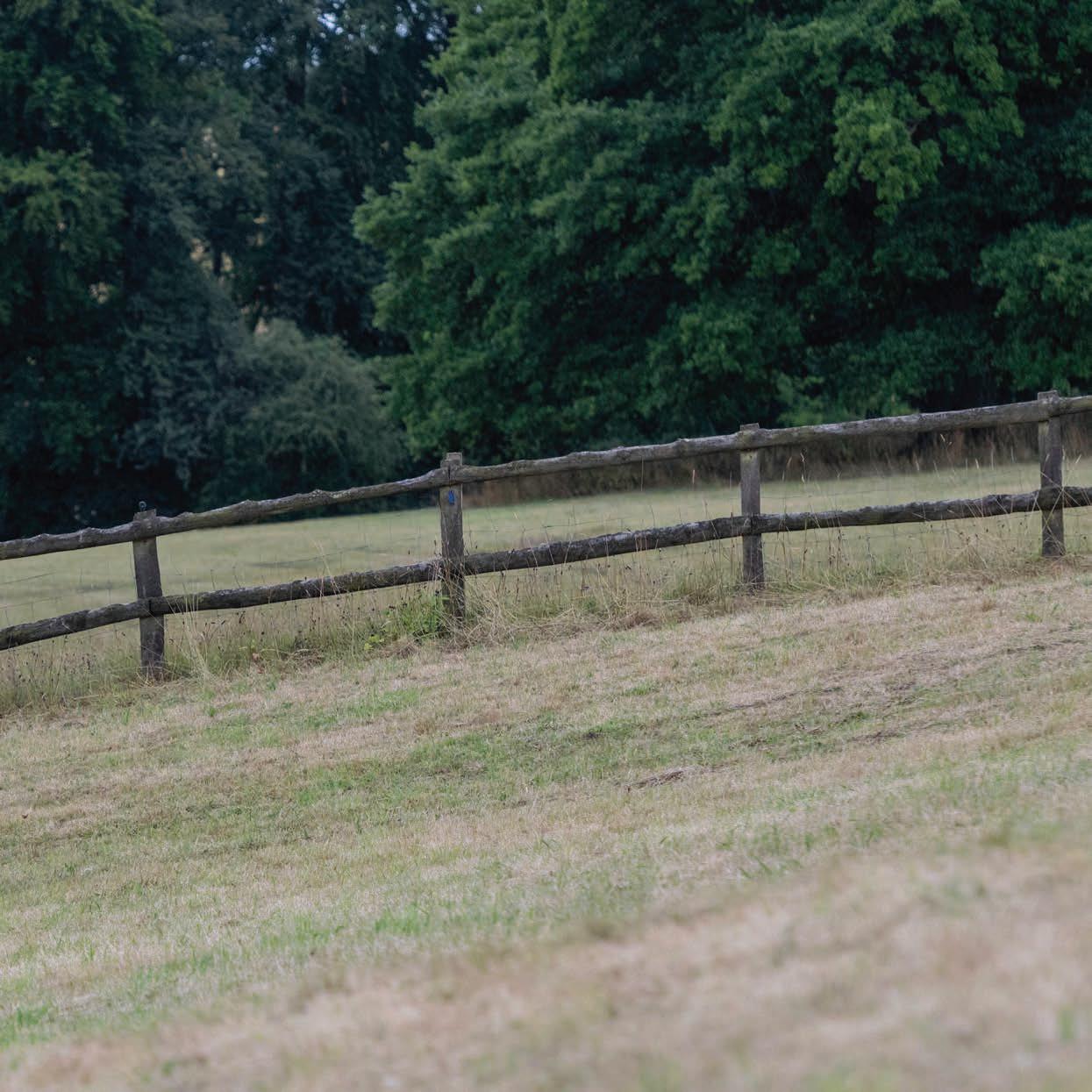
Not only will more time in the field stimulate your horse mentally, but it will help keep him mobile, which is great for rest and recovery days.
Next, look at your horse’s management and exercise routine. How much time does he spend in the field every day? How many times a week is he exercised? Be realistic and honest with yourself about this – it’s easy to think your horse is doing more work, or more intense levels of exercise, than he actually is.
Regular, targeted training is a great way to work his muscles and improve physical fitness – it’s not necessary to work your horse hard every day or for a long time in each session. However, if you want to go eventing, a couple of light schooling sessions and a few short hacks each week won’t be enough for your horse to achieve the required level of fitness.
Assess your horse’s weight and body condition at the same time. If he’s carrying a few too many kilos, he’s getting more calories from his diet than he’s burning.
Allowing your horse time to recover is an essential part of the process. Factor in regular rest days to help him stay happy and well.
Fizz Tickridge-Marshall has had a varied career, from Equine Therapy Centre Manager at Hartpury College to stints working for Jonjo O’Neill and Carl Hester. She now runs a livery yard in Herefordshire.

We ask a lot from our horses. We expect them to lead to and from the field without fuss, stand quietly for the
It’s easy to take for granted a horse who can be led anywhere you need. If this isn’t your reality and your horse takes you out to the field, rather than the other way around, or barges you with his shoulder, it’s time to address the issue.
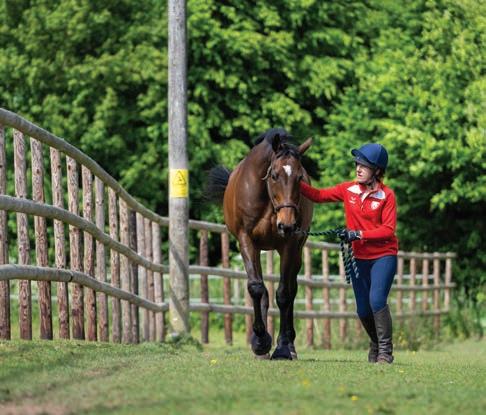
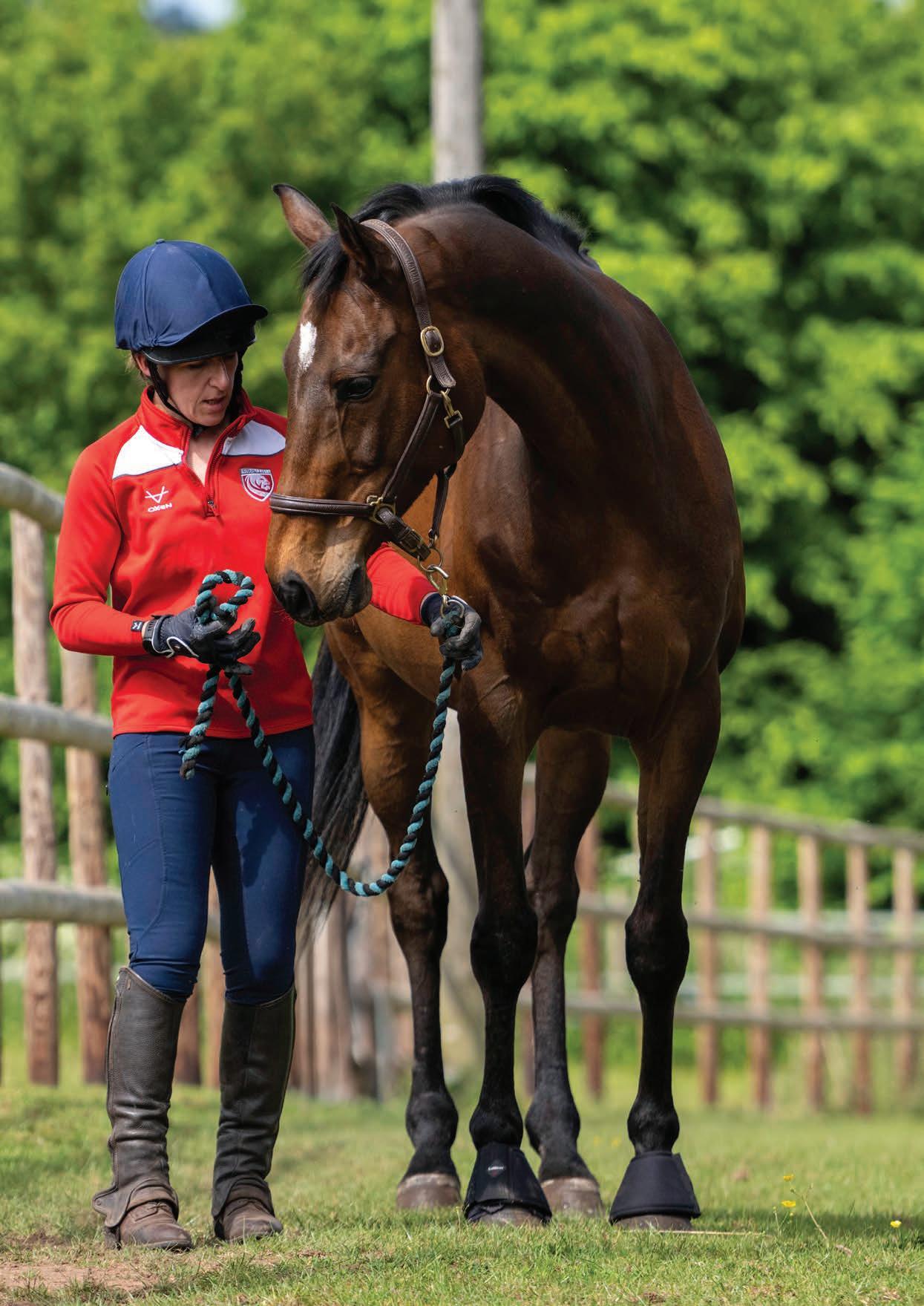
• Leading from the left, position yourself at your horse’s shoulder and walk alongside him.
• If he starts to drag or barge you, ask him to stop, quickly turn to face him and ask him to take
farrier or during clipping and go straight into the lorry or trailer when asked – the list goes on.
A polite horse who’s good to handle in a variety of different scenarios not only makes your life easier and more pleasurable, it also makes handling them safer. Think about the situations you find yourself in regularly – can you navigate them all without any problems? If the answer is ‘no’, fear not. All these issues, and other handling quirks, can be improved with time, consistency and practice.
a couple of steps backwards before then moving back to his shoulder and walking on again.
• Should he be reluctant to step back from pressure on the leadrope alone, gently but firmly push on his chest to reinforce the aid.
Repeat these steps every time he goes to barge you or tries to march on excessively. It’s a great way to break the cycle and is more favourable than entering a tug of war with him that you’re always going to lose.
By getting the basics right when handling your horse, you’re laying the foundations to ensure he’s well behaved in situations that are trickier, such as loading into the horsebox, trotting up for the vet or even simply trusting that you can safely lead him out to the field when it’s blowing a gale.
Have some low-value treats in your pocket as a reward for standing still before you ask him to move backwards.

Learning to listen to your horse will help him say yes
Our horses are often expected to do as they’re told and when they don’t, they might be described as being naughty. But thanks to ever-advancing behavioural science, we know there’s no such thing as a naughty horse. Instead, their refusals, evasions and hesitations are a horse’s way of saying “I can’t”, “I don’t understand” or “I’m in pain”. By better understanding our horses and listening to them when they say no, we can make training safer and more effective, as well as building deeper trust.
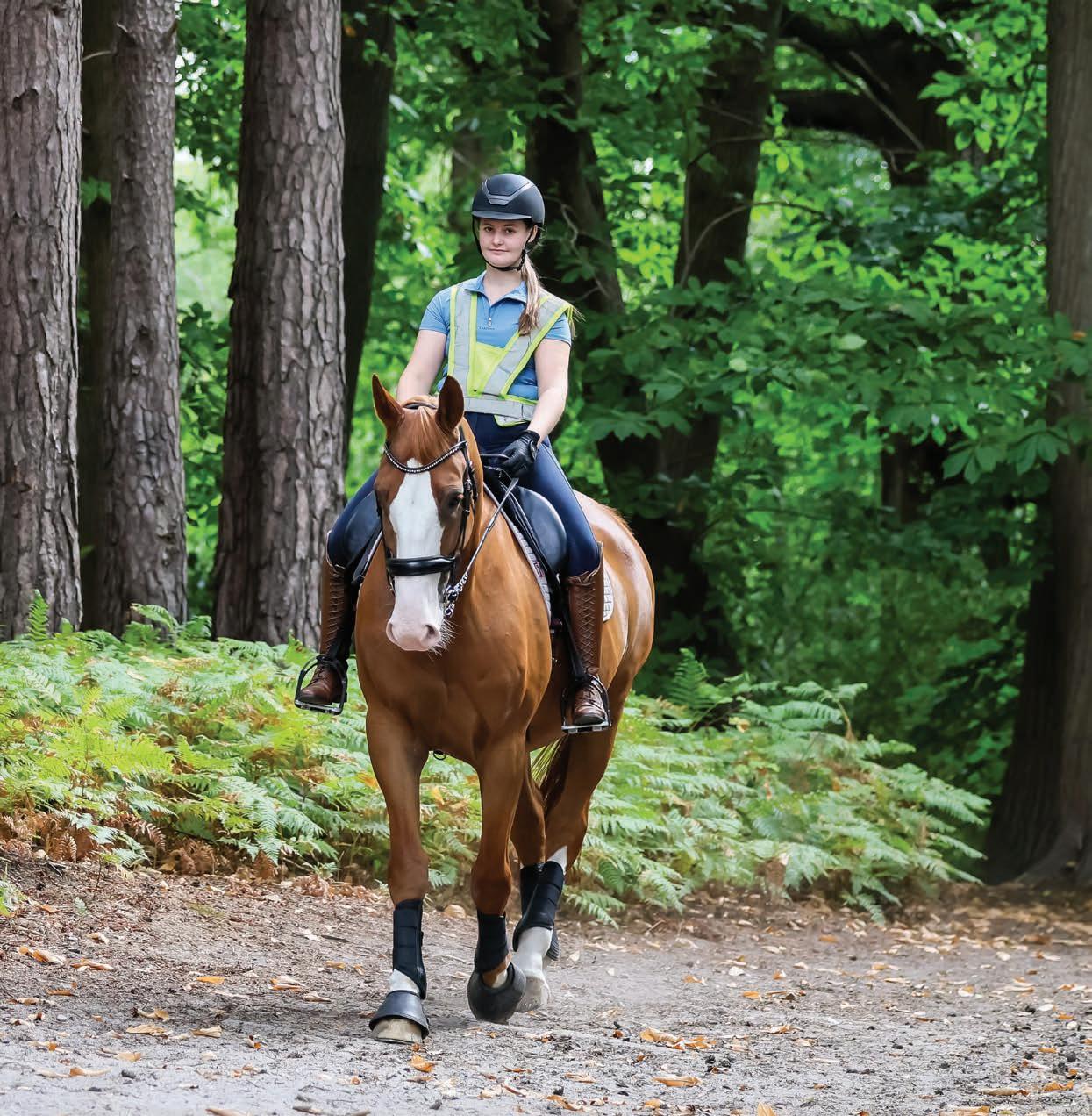
The stronger behavioural signs of saying no – refusing to move, planting, backing up, rearing, bucking, bolting or avoiding being tacked up, for example – are easy to spot and difficult to ignore, but what about the more subtle signs that a horse is very likely to have displayed before reaching this point? These might include...
• swishing of the tail
• slowing the pace
• turning away
• tensing up
• not taking food when offered
Even prior to this, there will likely be facial indicators, such as triangulation of the upper eyelids and tension through the face and muzzle.
When a horse attempts to use behaviour to communicate saying no, he’s often labelled as stubborn or difficult but it usually means something more than this and it’s our job to work out what that is. Horses rarely shout ‘no’ as a first response – they’ll whisper it initially. And it’s only when these subtle whispers are ignored by us that they then escalate to bigger behaviours.