





Editorial Tea
Directo
Rector of IPB University
Dr. Alim Setiawan, STP, MS
Vice Rector for Education and Student a airs of IPB Universit
Prof. drh. Deni Noviana, PhD, DAiCVIM
Person in Charg
Director of Student A air
Dr. Beginer Subhan, S.Pi., M.Si
Assistant Director for Character Development, Student Organizations, Sports, and Student Art
M. Faturrokman, S.Pt, M.S
Supervisor of Character Development and Student Organization
Nur Fajri Rahmawati, S.P
Supervisor of Student Sports and Art
R.A. Abdul Qodir Soetadikaria, S.Sos.,M.
Writer
Drh. Mas Tau qqurrahman, M.Si.
Drh. Bintang Nurul Iman, M.Si
Salsabil Nisa Nurindra Putr
Lizzilmi Syarifatuz Zaima
Ghi ari Kenang Sagrah
Zaidan Surya Nugroh
Data Processo
Ghi ari Kenang Sagrah
Illustration and Layout Designe
Ghi ari Kenang Sagrah
Maharaja Muhammad Arafa
Zaidan Surya Nugroh
Web Develope
Raihan Putra Kiran


Institutional Structure and Typology of Student Organization
Quantity of Student Engagement in Organizational Activities
Mapping the Distribution of Student Organizations by Faculty

Productivity


























BPPTN (State University Funding Assistance
A state-managed higher education nancing scheme to support the implementation of higher education programs or activities that have a national scope and impact
BPPTN Fund
Funds managed under the BPPTN scheme to nance higher education activities in Indonesia
Central Student Organizatio
Student organizations that have roles and scope of work at the institutional level
Ditmawa (Directorate of Student A airs
An IPB work unit that manages, develops, and facilitates student activities
IOMS (Association of Similar Student Organizations
A group of student organisations that share a common eld of study and have a national management structure
Non-BPPTN Fund
Funds used to nance higher education activities outside the BPPTN scheme
OMDA (Regional Student Organization)OMDA (Regional Student Organization
A student organization formed based on the common region of origin of its members
Regional Student Organizatio
Student organizations that carry out activities based on speci c regions or units
Student Organizatio
Organizations formed by students as a forum for self-development, leadership, and student activities
UKM (Student Activity Unit
A student organization that focuses on developing interests, talents, and skills in speci c elds
How will changes in the structure and composition of student organizations shape their dynamics in 2025


Summary of the Student Organization Landscap
The community is growing rapidly, while OMDA is eperiencing a downward trend
Regional organizationsstudenthave the highest participation rate Mas
Vocational schools lead the overall engagement inde. Pea


The development of student organizations in 2025 shows dynamics in uenced by the process of Ormawa entering and leaving the o cial structure. This change is marked by an increase in the number of organizations, which is mainly driven by the growth of community clusters, while Regional Student Organizations (OMDA) have experienced a decline in numbers. Thesedynamicshaveimplicationsforstudent participation patterns, with Regional Ormawa becoming the most dominant type of organization
In terms of the number of organizations and administrators, this is re ected in the highest participation ratio. This high level of participation correlates with faculty involvement, which shows that the Vocational School, as the academic unit withthelargestnumberoforganizations,also has the highest number of administrators andstudentparticipationrates.Overall,this condition con rms that changes in the structure of student organizations not only a ect the composition of organizations, but alsoshapepatternsofstudentinvolvement acrossfaculties

Figure DevelopmentoftheNumberofStudentOrganization2022—2025
Source: IPB
The number of student organisations increased from 173 organisations in the previous year to 184 organisations (Figure 1). This increase does not solely re ect the continuity of all existing student organizations, but is in uenced by the dynamics of organizational restructuring through the process of student organizations leaving and joiningintheRector's Decreeforthecurrentyear


SK 2025 notes that a number of student organizations are no longer listed, consisting of ve joint organizations from Student Activity Units (UKM) and communities and eleven Regional Student Organizations (OMDA). However, this reduction is o set by the addition of a larger number of new student organizations, namely thirteen communities, four Regional Student Organizations, and three Regional Student Organizations, so that the aggregate number of student organizations continues to showanupwardtrend






Figure TypesofStudentOrganizationDatain202
Source:IPBUniversityStudentOrganizationData(processed
The composition of student organizations in 2025 shows that regional student organizations remain the cluster with the largestnumber (Figure 2), followed by UKM and communities. In terms of numbers, Regional Student Organizations increased from 68 to 74 organizations, con rming their position as the dominant cluster in the Student Organization structure due to the addition of Faculties/ Schools. There was also an increase in the community cluster, which grew from 30 to 37 organizations, making it the most signi cant growth
Conversely, OMDA experienced a decline in numbers from 33 to 27 organizations, indicating consolidation within regionally-based clusters. Meanwhile, the number of Central Ormawa and IOMS remained relatively stable without signi cant changes. Overall, this shi in composition shows that the increase in the number of Ormawa in 2025 is driven more by community expansion and the strengthening of Regional Ormawa, despite a reduction in the OMDA cluster


Source: IPB University Student Organization Data (processed
The highest student participation was recorded in Regional Student Organizations (Figure 3), supported by the high number of organizations and total administrators involved. This level of involvement is re ected in a mass density ratio of 84 percent, which shows that each Regional Student Organization is able to gather a relatively large number of students per organization. UKM occupies the next position with a large number of administrators, but has a lower density ratio of 53 percent
This ratio indicates that student participation tends to be more spread out across each student activity unit. Meanwhile, communities have a smaller ratio, re ecting a more speci c membership character

With ten young men, I will surely shake the world




Number of Administrator
Figure DistributionofStudentOrganizationInvolvementbyFacult
Source:IPBUniversityStudentOrganizationData(processed
Vocational schools show the highest level of student organization involvement compared to other faculties (Figure 4). This achievement is supported by the number of student organizations and the relatively large number of administrators. This is re ected in the participationratio,whichistheratioofthe

number of student organization administrators to the number of active students in the faculty, which reached the highest value of 93.5. The Faculty of Agricultural Technology and the Faculty of Forestry and Environment followed with participationratiosof90.8and72(Figure4)


02/0
To what extent have Ormawa's work programs been realized and had a real impact on student participation





Realization, Focus, & Budge
E ectivenes
94,6
High Consistenc
Fundin
Regional Student Organizatio Dominanc
Focus and impac
Dominant increas
The implementation of the Ormawa work program in 2025 showed very high achievements, with a realization rate of 94.6 percent of the total plan. This high achievement was inseparable from the dominance of the RegionalOrmawa,whichhadthelargeststudent participation, enabling it to run the program consistently. The realized programs cover a wide range of activities, with the most signi cant increase occurring in entrepreneurial activities, which also marks a shi in the focus ofstudentdevelopment

These activities largely contributed to the achievement of Quality Education (SDG 4), but compared to the previous year, there was a very notable increase in Partnerships (SDG 17). All of these achievements were supported by funding of around Rp12 billion, most of which was allocated to Regional Student Organisations. However, the continuity of the Student Organisation work programme was dominated by low risk with non-competitive typesofactivities


Figure

Source: IPB University Student Organization Data (processed


The implementation of the Ormawa work program in 2025 showed very high achievements, with a realization rate of 94,6 percent of the predetermined plan (Figure 5).
Although the aggregate realization achievement was optimal, changes in realization achievements compared to the previous year showed di erences in growth rates between organizational clusters. Central Ormawa
recorded the highest realization achievement of 39.8 percent compared to the previous year, followed by UKM at 28.8 percent (Panel 1). Conversely, IOMS and OMDA experienced declines of 30,5 percent and 23,8 percent, respectively, indicating a consolidation of work programs. Meanwhile, Regional Student Organizations continued to show positive growth of 5.6 percent (Panel 2), re ecting a relativelystableincrease
:
For every 9 activities on campus, there is one additional acitivities 1 activity that competes outside
The achievement of Ormawa's 2025 work program is re ected in the distribution of activities, which are dominated by internal institutional activities. Most of the work programs are carried out at IPB University on a scale of 91.3 percent (Figure 6), which shows Ormawa's main focus on strengthening activities andimpactonthecampusenvironment
Meanwhile, national-scale activities reached 7.8 percent and international-scale activities reached 0.9 percent (Figure 6), indicating that despite their relatively small proportion, student organizations remain involved in the ecosystem of collaboration and competition outside the institution



Deciding what not to do is just as important as deciding what to do

Job Co-founder Apple & Visioner Teknolog








Figure ProportionofActivityVarietSource:IPBUniversityStudentOrganizationData(processed
Total Ormawa activities in 2025 increased by 41.9 percent (Figure 7) compared to the previous year, with varying growth dynamics between di erent types of activities. The highest increase occurred in entrepreneurial activities, which grew by 707.1 percent, followed by community service with an increase of around 146.6 percent, indicating a signi cant strengthening of entrepreneurial orientation and socialcontribution(Figure7)
Meanwhile, leadership activities, competencies, and interests and talents showed relatively stable to moderate growth. In contrast, competitive activities declined by 29.2 percent (Figure 7), indicating a shi in the focus of work programs from competition-based activities to capacity building and student empowermentactivities
Figure 8 Distribution of Student Organizations with The Highest Program Intensit
Organizations with the Highest Program Intensity in Their Fiel
Leadershi
2
Forest Management Students' Club
Competitio
1
Management Student Associatio (Centre Of Management
Entrepreneurshi
3
Management Student Association (Centre Of Management
Competence
6

AISEC IPB Universit
Interests & Talent
1 Forestry Student Associatio (Tree Grower Community
In line with the distribution and dynamics of various activities, there are a number of student organizations that appear as major contributors in each activity cluster. These student organizations demonstrate intensity the highest program in its eld, re ecting the organization's focus, consistency, and capacity in managing and developing student activities in a sustainable manner

Community servic
1 Forestry Student Associatio (Tree Grower Community

Overall, the distribution of student Organization activities shows a strong dominanceinpublicrelationsactivities,witha total of 602 activities, making it the most frequently held category of activities (Figure 9). This dominance re ects the Student Organizations main focus on communication, promotion, and strengthening the organization's image and network. In addition, capacity building and training activities also occupy a signi cant portion, with 385 and 338 activities, respectively, whichshowssigni cantattentio
Top Categor Public
The
frequently performed activities
Minor Categor
The

Figure HierarchyofNumberandTypeof Activities StudentOrganisationsbased onOrganisationCluster
Source:IPBStudentOrganisationData (processed
to the development of members' capacity and competence.Ontheotherhand, severaltypesof activities were recorded with relatively lower frequencies. Expeditions were the category with the fewest activities, namely 35 activities (Figure 9). This pattern indicates that Ormawa activities are more directed towards communication-based activities, capacity building, and information dissemination, rather thanintensiveandexploratory eldactivities

The Age of Collaboratio +702,5 Surge in Strategic Partnership Growth in SDG 1
Figurer1MappingStudentOrganizationActivitiesAgainsttheSDG
Source:IPBUniversityStudentOrganizationData(processed
The direction of Ormawa's work program for 2025 shows a strong connection with the sustainable development agenda (SDGs). In general, the contribution of activities is still dominated by SDG 4 (Quality Education) and SDG17(PartnershipsfortheGoals)(Figure 10), re ecting Ormawa's focus on strengthening student capacity and institutional collaboration. Compared totheprevious year

SDG 17 recorded the most signi cant increase with growth of 702,5 percent, marking a strong acceleration in partnershipand network-based activities. In contrast, contributions to SDG 6 (Clean Water and Sanitation) declined by 19,1 percent (Figure 9), indicating a shi in program priorities during the current year


The allocation of funds for the 2025 Ormawa work programshowsthelargestconcentration in Regional Ormawa (Figure 11), which includes 80 Ormawa with a total fund of Rp8,54 billion. Funding in this cluster is dominated by non-BPPTN sources at 88,7 percent, while BPPTN funds contribute 11,3 percent. In addition to Regional Ormawa, UKM received a funding allocation of Rp1,70 billion, followed by communities with Rp809,7 million and Central Ormawa with Rp731,1 million.
Meanwhile, OMDA and IOMS received relatively smaller allocations, amounting to Rp231,8millionandRp2,9million, respectively, with all funding for both clusters coming from non-BPPTN sources. This distribution pattern con rms that Ormawa funding in 2025 will focus on clusters with larger organizational scales and more intensive work programs, and will still be heavily dependent on nonBPPTN funding sources


Figure 1Key Contributors in Budget Utilizatio
Source: IPB University Student Organization Data (processed
The dominance of BEM FEM and the Sharia Economics Association, which topped the Total Budget and Independent Funding categories, shows an identical linear pattern (Figure 12). These gures, amounting to billions of rupiah, clearly demonstrate that the main nancial strength of student organizations comes from their own e orts, rather than relying solely on fundingfromtheuniversity.
Conversely, the list of highest BPPTN recipients is dominated by BPKM and other names such as the PKU Executive, which do not dominate the independent sector. This striking di erence con rms that BPPTN funds serve as basic operational support, while signi cant budget increases can only be achieved through hard work and organizational independence in seekingadditionalfundingsources

Types of Activitie
Figure 1Risk Distribution based on Type of Activit
Source: IPB University Student Organization Data (processed
In general, Ormawa activities are dominated by low-risk activities. Of all the activities analyzed, the low-risk category recorded the highest number with a total of 4,360 noncompetitive activities, far exceeding the medium-risk category with 352 activities and the high-risk category with 1,266 activities. When viewed by type of activity, the lowrisk category was most commonly found in activities seminars (Figure 13)
Which re ect that this type of acti
y can generally be carried out with a relatively safe level of risk. Meanwhile, in terms of high risk, the largest number of activities was also found in seminars, followed by other types of activities such as competitive activities and public relations activities (Figure 13), in line with the high intensity and complexity of their implementatio

True leadership is tested not when li ing the trophy of victory, but when having the courage to accept this mandate. This signature is the starting point of courage to turn discourse into real action that has an impact
The realisation of programmes and the management of billions of rupiah in funds begin with the stroke of a pen. This is not merely an administrative formality, but a contract of integrity to manage every rupiah with full accountability






03/0
Who does Ormawa collaborate with, and how does this partnership support program quality
Frequency, Partners, & Program Impac
Dominant Frequency per Yea
Education Secto
Focus and Impac
Challenge: Expanding Public Exposur
Along with the implementation of Ormawa's work program, collaboration has become an important component in supporting the implementation of activities. In general, Ormawa collaboration occurs with medium to high frequency, with most organizations collaborating 3-5 times a year. The pattern of collaboration is dominated by partnerships with other student organizations, most of which are activeintheeducationsector
The dominance of education-based partners re ects the alignment of Ormawa's collaboration with the sustainable development agenda, particularlytheSDGsinthe eldofeducation. Furthermore, the collaboration has proven to have a positive impact, especially in improving program quality, implementation e ectiveness, and network strengthening, although public exposure is still an aspect that needs to be improved
Number of Organisation


3–5Times / Yea
Regional & UK

Notes
High intensity, but distribution is not yet evenly spread across the region
RegioUKCommunitCentra
Figure1FrequencyofCollaborationbyTypeofOrganizatio
Source:IPBUniversityStudentOrganizationData(processed
In general, the pattern of collaboration between student organizations and external institutions shows a relatively active intensity. The majority of student organizations are recorded as collaborating 3–5 times a year, which covers around 62–76 percent of organizations in the Regional Student Organization and UKM groups (Figure 14). This indicates that external cooperation has become a fairly routine practice in the implementation of Ormawa work programs. In addition, some Ormawa collaborate 1-2 times a year, with a proportion ranging fro
between 20–36 percent, indicating the involvement of external partners, albeit with more limited intensity. When viewed by type of organization, Regional Student Organizations and UKM were the groups with the most dominant level of collaboration, especially in the 3-5 times collaboration category. Meanwhile, community organizations and OMDA tend to have a mediumfrequency of collaboration, while IOMS and Central Organizations show a relatively more limited number of collaborations
Collaboration PartnerPro l
328 collaboration
Activities recorded throughout the period
Education Secto
62,5

Governmen
22 the program began to make a signi cant contributio Industrial Networ
Figure1 MostFrequentlyCollaboratingPartnerCategor
Source:IPBUniversityStudentOrganizationData(processed
Overall, there were 328 collaborations carried out by Ormawa during the reporting period (Figure15). Thesecollaborations weredominated by the education sector with a proportion of 62.5 percent, indicating that Ormawa's cooperation still focuses on activities directly related to learning and student development. Inaddition, theinvolvementoftheindustrial and private sectors was also quite signi cant, each contributing 22 percent
indicating the strengthening of Ormawa's collaborative network with the non-academic sector (Figure 15). When viewed by type of partner, most collaborations were with other student organizations, followed by private partners and companies, con rming that student networks remain the main axis of cooperation, with growing support from external partners outside the campus environment
Human Resource Networ

Effectivenes
Competence of Administrator
Overall Score 3,29 (Positive
The Greatest Impact Quality Improvement & Networking
Evaluation
Public Exposur
Impact of Collaboratio
Average: 3.29/5.0
Expansion of Public Exposure
Figure 1The Impact of Collaboration on Student Organization Capacit
Source: IPB Student Organization Data (processed
The dominance of collaboration with the education sector and strategic partners was then re ected in the impact of collaboration felt by Ormawa. The impact of Ormawa collaboration was generally positive, with an average score of 3.29. The aspect of program quality was the most prominent impact, followed b
Alone we can do little; together we can do much
strengthening networks and the e ectiveness of activity implementation. Meanwhile, public exposure remains an aspect with relatively lower achievements, thus potentially becoming an area for future collaboration development (Figure 16)
W


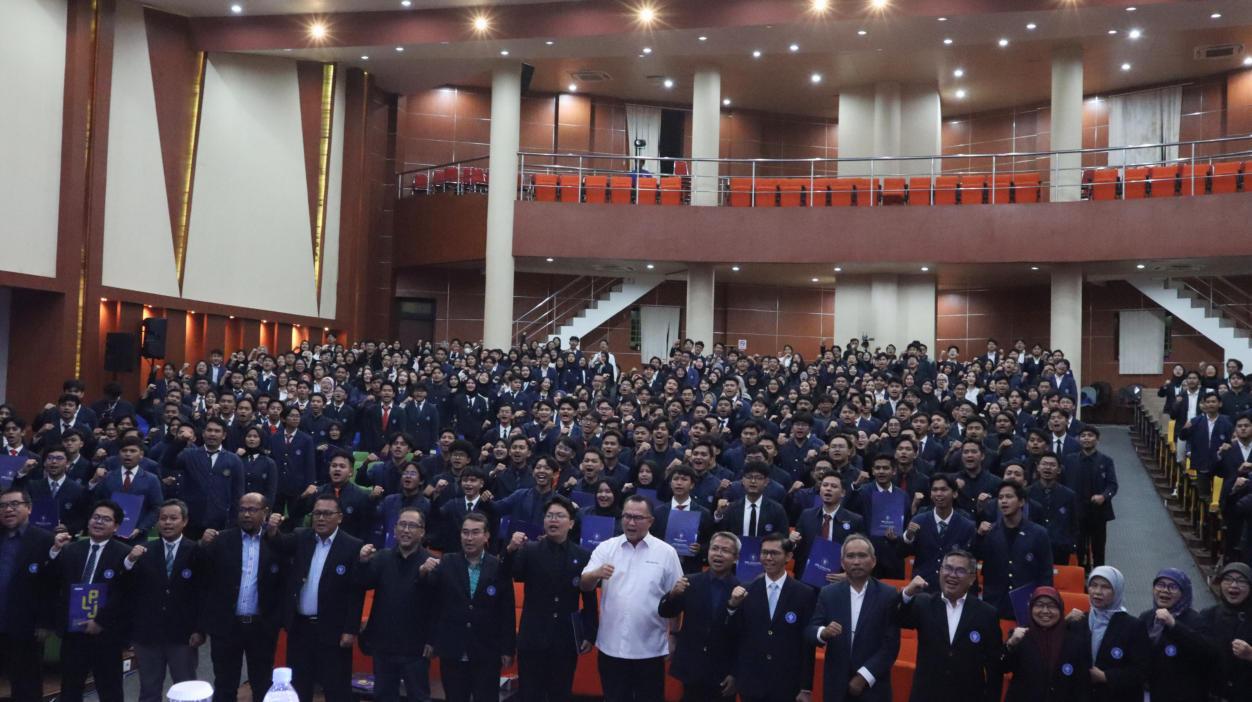
Behind every successful programme, there is unending moral and material support. Collaboration begins with good relationships on campus itself
Student organizations do not operate in a vacuum. This handover is a symbol of the convergence between student idealism and the institution's grand vision

04/0


Performance
Snapsho
How do student organizations view the quality of services, institutional support, and e ectiveness of engagement received
Service Synerg & Strateg
Service
Positive & Relevant
E ectively reaching the audienc
Content relevance is more important than just viral numbers
Re ections on the performance of Ormawa and Ditmawa show that the services provided have been assessed as positive and relevant in supporting the sustainability of student organization activities. Ormawa appreciates the role of Ditmawa, especially in the aspects of development, guidance, and assistance, which are in line with the main internal factors that determine organizational dynamics, such as the quality of human resources and internal coordination
andfundingsupport.Ontheotherhand,social media has proven to be an e ective means of communication for reaching audiences and encouraging participation, particularly through informativecontentrelatedtoactivities.However, Ormawa's performance is not solely determined by high digital metrics, but rather by the quality of program planning, content relevance, and engagement strategies that are integrated with the organization's objectives



Work Program realize from the Work Meeting pla
Information Promoters:
A group that is highly satis ed and actively recommends the service to others
Passives:
A group that feels reasonably satis ed but neutral and does not yet have strong loyalty


Dectactors The group that is less satis e
Figure1OrmawasatisfactionwithDitmawain202Source:IPBStudentOrganizationData(processed
Overall, Ormawa's satisfaction level with Ditmawa's services was in the satis ed category with an average score of 3.73 on a scale of 5 (Figure17), indicatingthattheservices provided were considered quite good and relevant in supporting Ormawa's activities. The composition of respondents was dominated by the passive group at 59.8 percent, indicating that most Ormawa members were quite satis ed with the services provided, but were not yet fully motivated to actively recommend them
On the other hand, promoters reached 22.0 percent, re ecting the existence of a group of Ormawa who are very satis ed and have the potential to become the main supporters of Ditmawa services. Meanwhile, detractors were recorded at 18.3 percent, indicating that there are still some Ormawa who feel that the service experience is less than optimal. This pattern con rms that although Ormawa satisfaction is generally at a positive level, continuous improvement in service quality is still needed to convert passive groups into promoters and reduce the proportion of detractors



4,5
4,3
4,4
4,5
3,9 Faculty/Department Suppor
4,4 Support Fund
The highest satisfaction was shown in the development support indicator with a score of 3.86, followed by coaching services at 3.85 and mentoring at 3.82 (Figure 18), which indicates Ormawa's appreciation of Ditmawa's role in strengthening organizational capacity, continuous coaching, and mentoring in the implementation of activities
In line with these ndings, an analysis of the factors in uencing the dynamics of student organizations shows that internal aspects of the organization play a dominant role, with the quality and quantity of human resources being the most in uential factor with a score of 4.55, followed by internal coordination with a score of 4.53 and nancial support with a score of 4.46 (Figure 19

The main axis of program communication
Balancing insight and coordination Achievements Strategies for strengthening positive image
Figure 2Top 8 Types of Student Organisation Social Media Content Most Popular with Audience
Source: IPB Student Organization Data (processed
In general, the use of social media by student organizations is considered e ective in reaching audiences and increasing participation. As many as 48,8 percent of student organizations consider social media to be verye ectiveinreachingtargetaudiences (Figure 20). Similarly, 45,1 percent stated that the use of social media greatly increased participation (Figure 21), indicating that social media not only serves as a means of information, but also as a strategic instrument
in encouraging student engagement. In terms of content, this e ectiveness is mainly driven by the type of content that is relevant to the needs of the audience, where information about events and activities is the most accessed and sought-a er content, con rming that students tend to respond to content that is informative and directly related to Ormawa activities (Figure 22)
Participation remains volatile, not in line with the size of the audience
A large following does not guarantee a crowded event
StatisticalFact r = 0,079
It has been proven that there is no correlation between the number of followers and the number of participants
Figure2CorrelationAnalysisofSocialMediaPerformanceandParticipationLevels
Source:IPBStudentOrganizationData(processed

Although social media is generally considered e ective, analysis of Ormawa account performance shows more complex dynamics. Several organizations have a large number of followers, such as the Student Family Management Agency with 65,500 followers, PantiGocengwith38,000followers,andthe PKUIPBExecutiveStudentOrganizationwith 26,464 followers. However, the correlation analysis results show that the number of followers does not have a signi cant relationship with the level of program participation (r = 0.079; p > 0.05). A similar nding was also found in the engagement rate, which shows that organizations with high interactionrates,sucha

the IPBDebating Community with 44.2 percent, are not always followed by a large number of program participants. These ndings con rm that a high number of followers or engagement rate does not automatically guarantee high participation (Figure 23), so that the e ectiveness of Student Organization’s social media is more determinedbythequalityofcontentstrategy and its relevance to program objectives than simply digital metric achievements. This nding shows that although social media plays an important role in reaching audiences, the success of Student Organization programs still depends on the quality of planning, the substance of activities, and a more comprehensiveengagementstrategy
Amidst the hustle and bustle of achievements and evaluations, we need to pause for a moment. To remember the pure purpose of why we started this journey
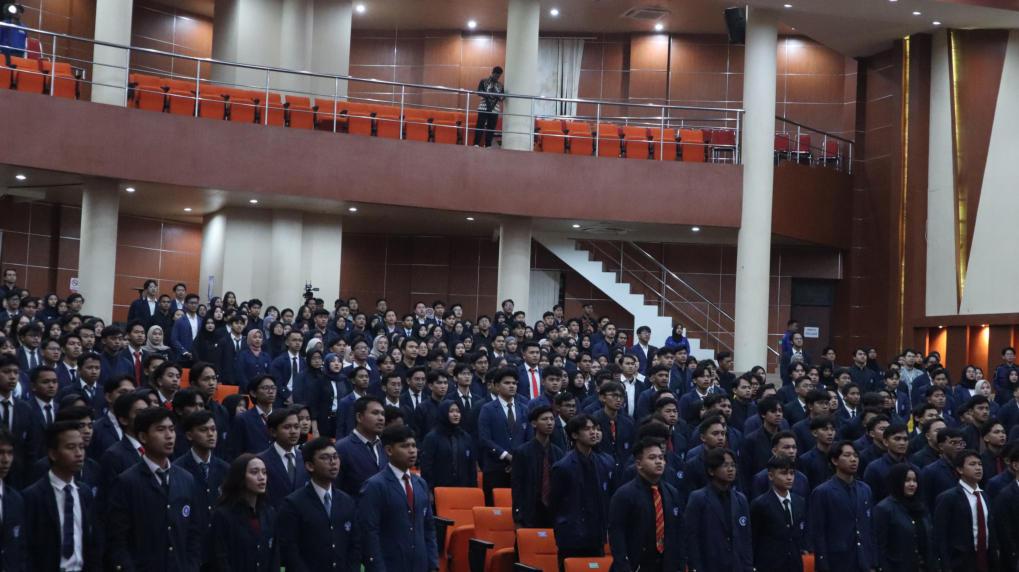
Evaluation is not just about numbers, but a moment to look inward. Every e ort has been made, now let the results speak for the dedication

05/0



What programs demonstrate the most signi cant achievements, innovations, and impacts in supporting student development
Innovation, Relevance, & Sustainabilit
Entrepreneurship Devotion Competence Leadership, Competition Interests and Talents
Providing innovative solutions for MSMEs and villages, and strengthening national values
Ormawa's agship programs represent six main areas, namely entrepreneurship, community service, competency development, leadership, competition, and interests and talents, which are designed to produce a broad and sustainable impact. Various agship initiatives demonstrate Ormawa's ability to deliverinnovativeactivitiesthatarerelevant totheneedsofstudentsandthecommunity, ranging from UMKM assistance, village empowerment,capacitybuildin
leadership, national competitions, and the preservation of arts and culture. These programsinvolvehighlevelsofparticipation, diverse bene ciaries, and strategic collaboration with internal and external partners. Overall, Ormawa's agship programs re ect the tangible contributions of students in selfdevelopment, socio-economic empowerment, strengthening national values, and achieving sustainable developmentgoals
Industrial Technology Student Associatio
Activity Theme
“Making an Impact on Indonesian Society as an Industrial Student
Entrepreneurship Flagship Progra
Participants 165Participants
Committee: 25Committe
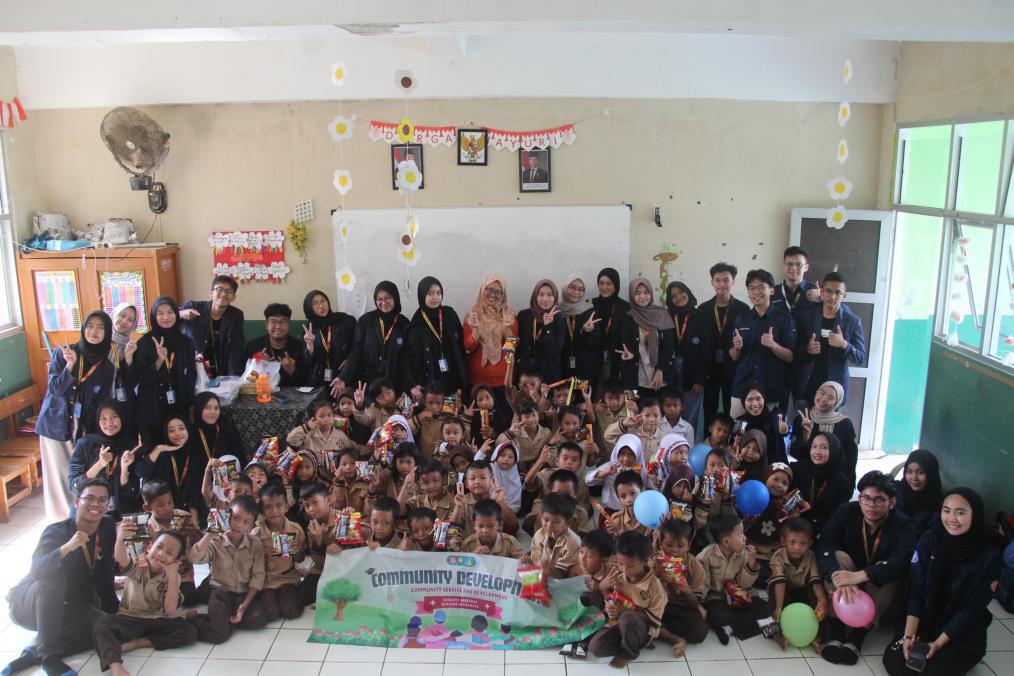
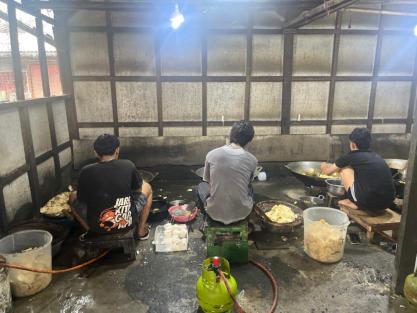
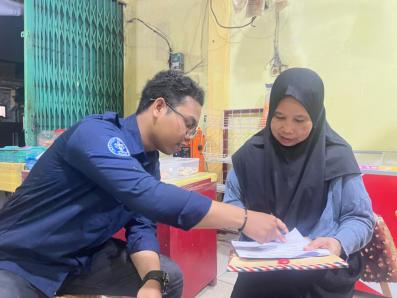
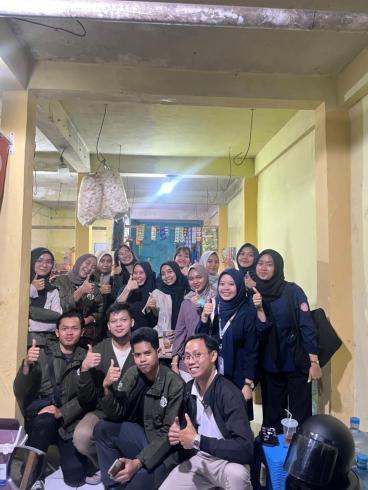
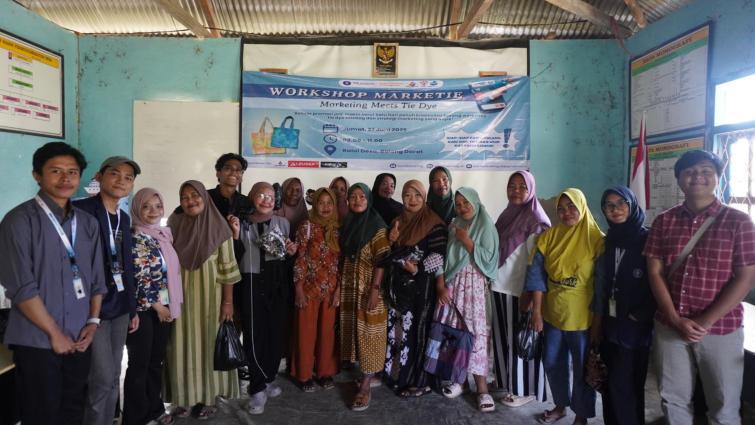
The Hi-Empowerment Program is an entrepreneurship program that focuses on empowering and strengthening the capacity ofMSMEsaroundthecampus.Thisprogramis implemented by the Industrial Technology Student Association (HIMALOGIN) and is designed as a forum for students to apply their agro-industrial knowledge through direct assistance to MSMEs, covering product development, business management, marketing, packaging, and increasing competitiveness based on local agroindustrial potential. Through the Community DevelopmentandHi-Consultingschemes,
SDGs
students act as business consultants who assist MSMEs. Developing businesses in a more professional and sustainable manner, while gainingpracticalentrepreneurialexperience.The impact of this program is evident in the increased capacity of MSMEs in managing their businesses and the strengthening of students' entrepreneurial competencies. With this focus, Hi-Empowerment contributes to the achievement of SDG 8 (Decent Work and Economic Growth) as its main goal, supported by SDG 4, SDG 12, and SDG 17 through the strengtheningofeducation,responsiblebusiness practices,andstrategicpartnerships
Student Executive Board of the Faculty of Economics and Managemen
Activity Theme
“Melodies of Hope for the Archipelago
Community Service Flagship Progra
Participants 189Participants
SDGs
Committee: 34Committe
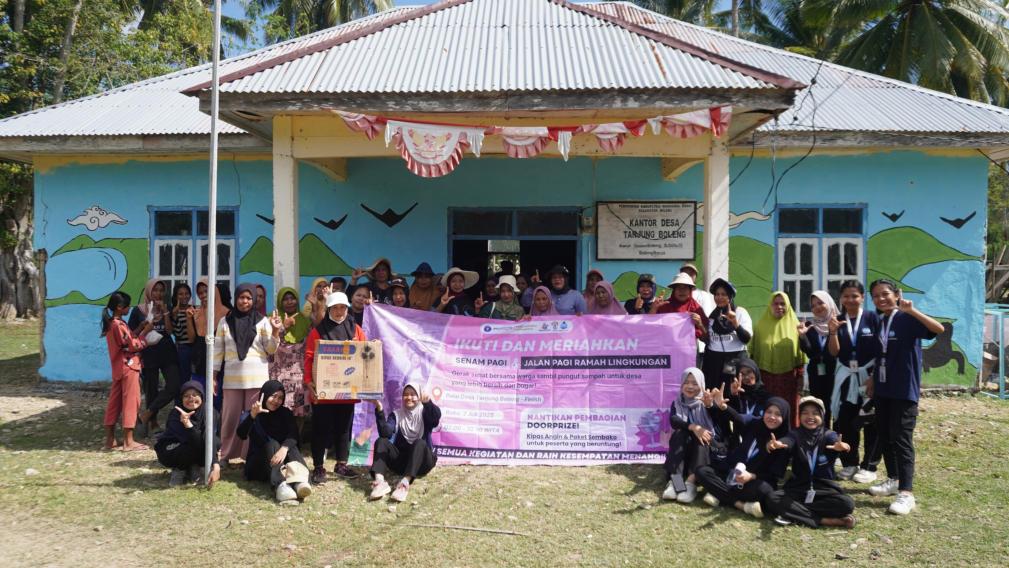
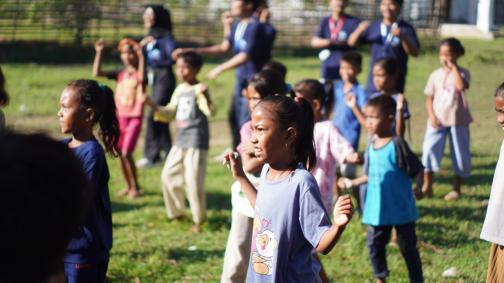
Sociotraveling 2025 is a program designed by the Faculty of Economics and Management Student Executive Board (BEM FEM) to foster social awareness, empathy, and concern among students for rural development through an educational and collaborative approach. The program begins with the SociotravelingPre-Event:Surpass3.0,anational competition (infographic, creative video, and photography contests) aimed at developing interests and talents while exploring regional potential. The series of activities then continues with Sociotraveling, an expedition that integrate
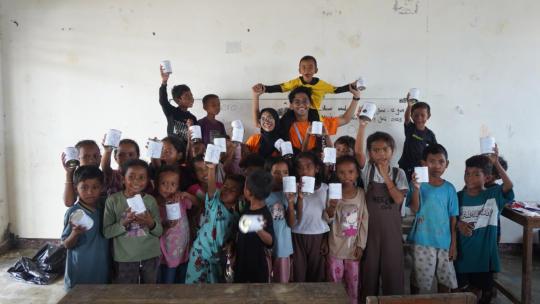
educational, environmental, health, and creative economy activities with the village community. The implementation of this program has had an impact in the form of increased community awareness of the potential of local nature and culture, as well as the growth of empathy, social awareness, and active student involvement in e orts to achieve equitable development. These activities contribute to the achievement of variousSDGs, including SDG 1, SDG 3, SDG 4, SDG 8, and SDG 11, through community empowerment and improving the quality of life in villages
Student Executive Board of the Faculty of Agricultural Technolog
Competence Flagship Progra
Activity Theme
“Lining The Untold Energy With Greenful Knowledge”
Participants
365Participants
SDGs
Committee: 80Committe
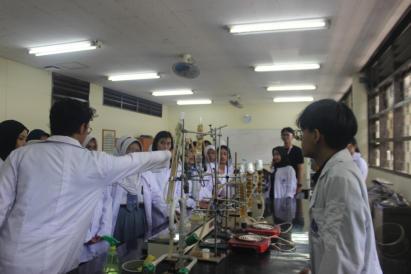
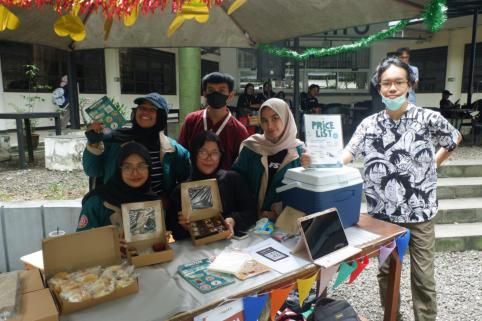
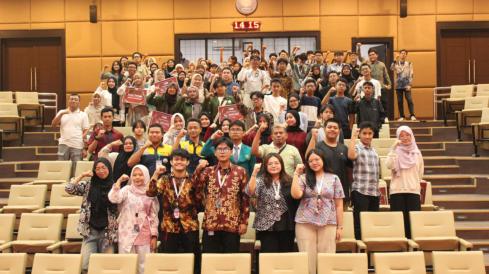
AgriculturalEngineeringTechnology2025(AgriET 2025) is an educational program that integrates seminars, competitions, training, expos, and bazaars as a forum for learning and innovation in the eld of agricultural technology and renewable energy. This program is implemented by the Student ExecutiveBoardoftheFacultyofAgricultural Engineering (BEM FATETA) with the aim of introducing FATETA IPB University to students and the community, expanding knowledge abouttheapplicationofmoderntechnologyin the agricultural sector, and encouraging the creation of innovative technology-based solution
that are in line with SDG values. The implementation of Agri-ET 2025 has had an impact in the form of increased participant understanding of the importance of renewable energy and modern agricultural technology, the formation of adaptive, creative, and collaborative participant character, the presentation of renewable energy-based agricultural technology innovations, and the establishment of crossorganizational collaboration among students in the management of educational and creative economic activities. This program contributes to the achievement of SDG 4, SDG 7, SDG 9, and SDG 13
Student Executive Board of the Business Schoo
Activity Theme
“Greenergize the Future: Driving the Environmental Revolution for Sustainable Business Impact and Economic Progress.
Flagship Progra
Participants 840Participants Committee: 75Committe
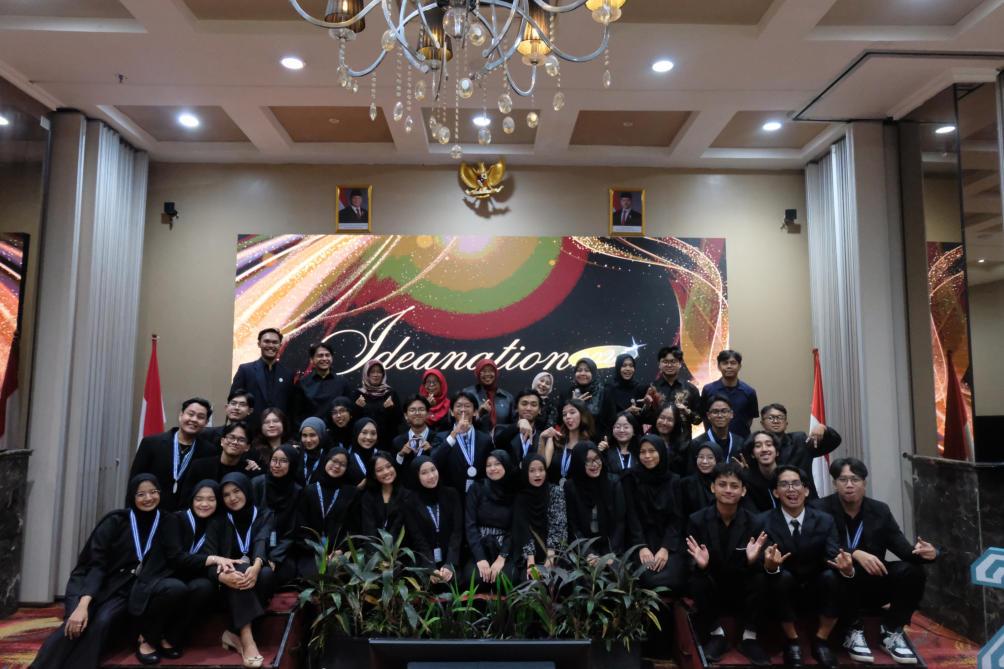
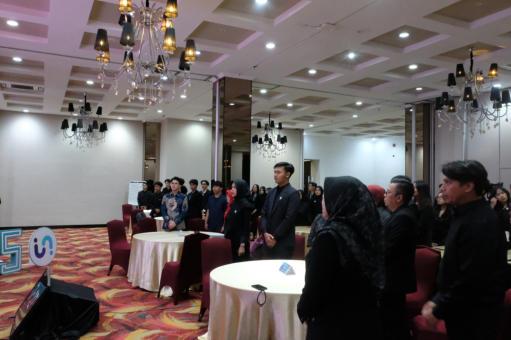
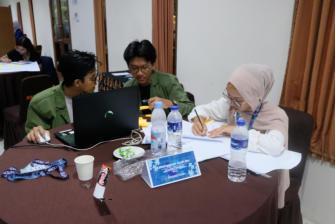
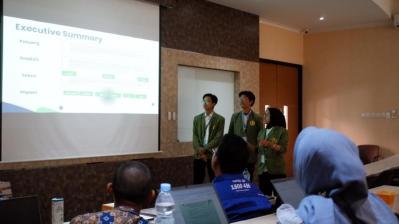
Ideanation is a national entrepreneurship competition program organized by the Business School Student Executive Board (BEM SB) as a forum for developing critical, innovative, and solution-oriented thinking skills through various competitions, such as the Business Plan Competition, Business Case Competition, and Essay Competition, supported by a series of mentoring, incubation, pitching,andawardingactivities.Thisprogramis not only focused on achieving excellence but also on building a strategic competition ecosystem
SDGs
This program also aims to have an impact by encouraging participants to design green energy-based business solutions and respond to real business challenges. Through the involvement of mentors, judges, academics, and industry partners, Ideanation expands students' professional networks while honing theiranalytical,creative,andadaptiveleadership skills. This initiative contributes to the achievement of SDG 8, SDG 9, and SDG 17 through the strengthening of entrepreneurial competencies, the development of sustainable business innovation, and multi-stakeholder collaboration
IPB University Student Family Management Boar
Activity Theme
“Cultural Sustainability, Archipelago Harmony
Interests and Talents Flagship Progra
SDGs Participants
1.328Participants
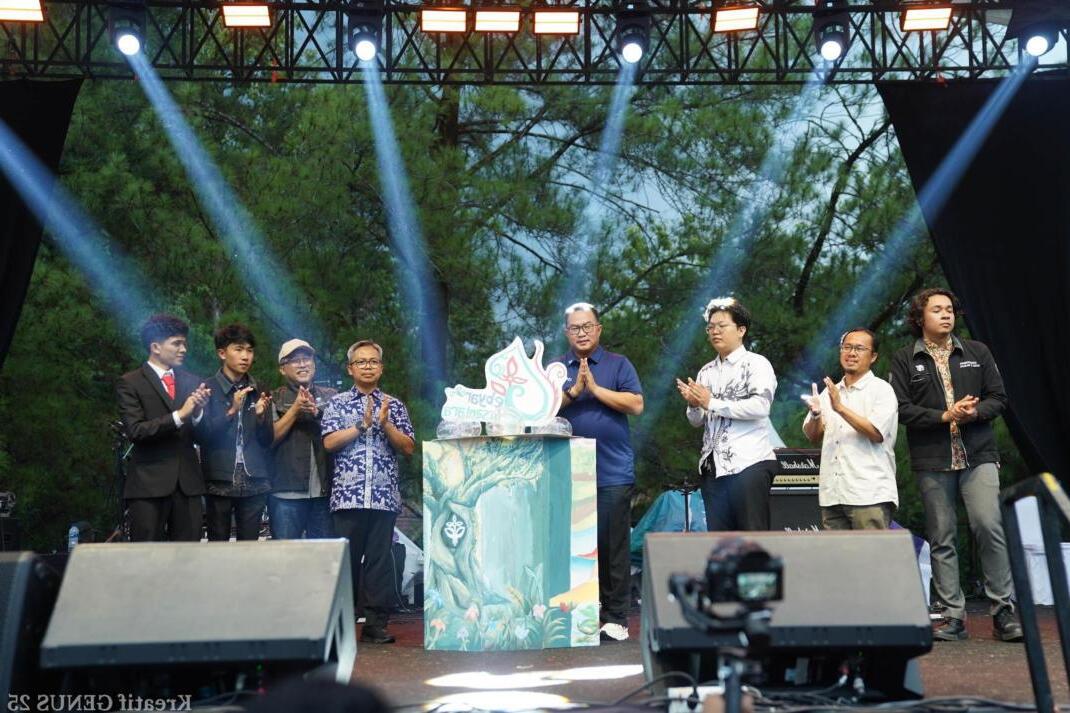
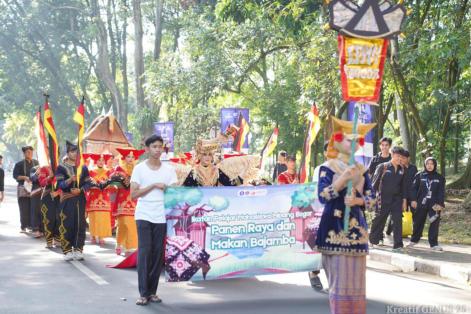
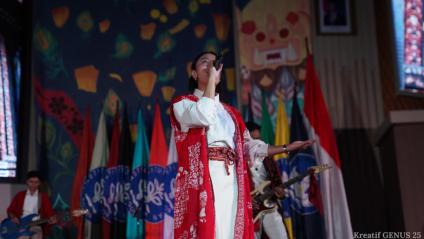
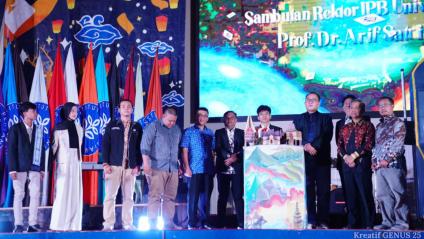
Gebyar Nusantara IPB 2025 is a work program carried out by the Student Family Management Board (BP KM) in the form of an expo, performance festival, and competition that serves as a forum for the appreciation and preservation of Nusantara arts and culture within IPB University. This event is designed as a space for developing students' interests and talents in arts and culture, as well as a platform for collaboration and solidarity among Regional Student Organizations (OMDA). Through cultural presentations and performancesfromvariousregion
Committee: 235Committe
Gebyar Nusantara plays a role in introducing the rich culture of Indonesia to the academic community of IPB and the general public, as well as fostering a sense of nationalism and pride in the diversity of the archipelago. In addition to providing valuable experience for the committee and participants in cultural preservation e orts, this activity also serves as a means of strengthening ties and networks among students. This program aligns with the achievement of SDG 4 through the strengthening of cultural learning, as well as SDG 17 through cross-organizational collaborationamongstudents
Student Association of Student Council President
Activity Theme
“Becoming a Resilient, Responsive, and Growing Generation for the Country
Leadership Flagship Progra
Participants 165Participants
Committee: 68Committe
SDGs
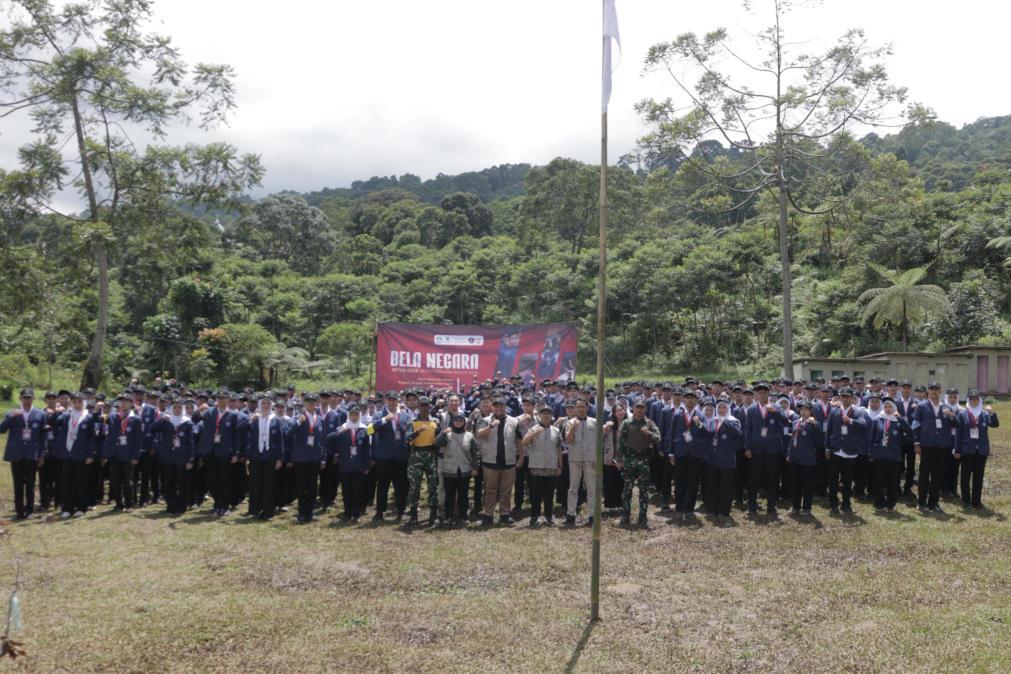
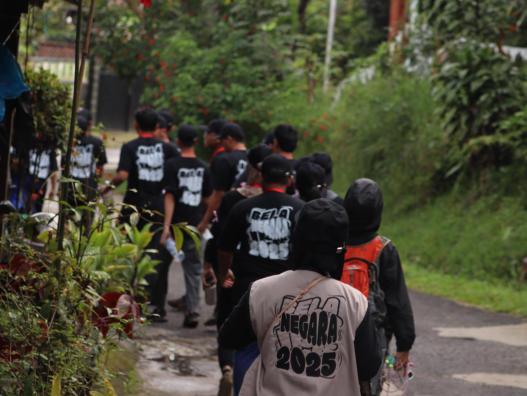
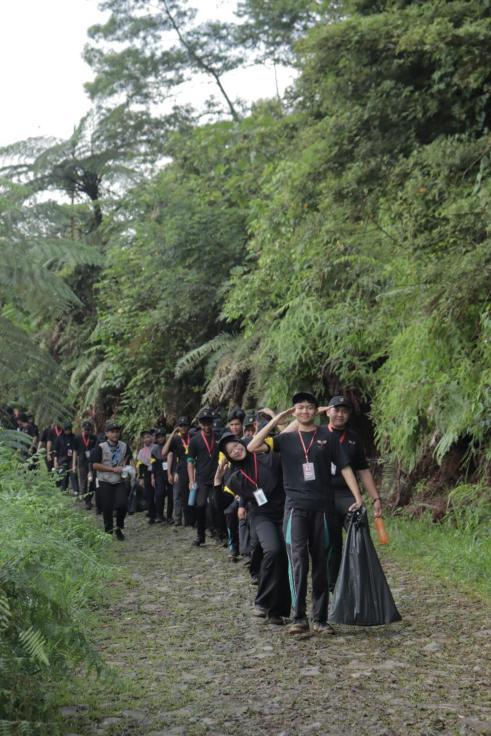
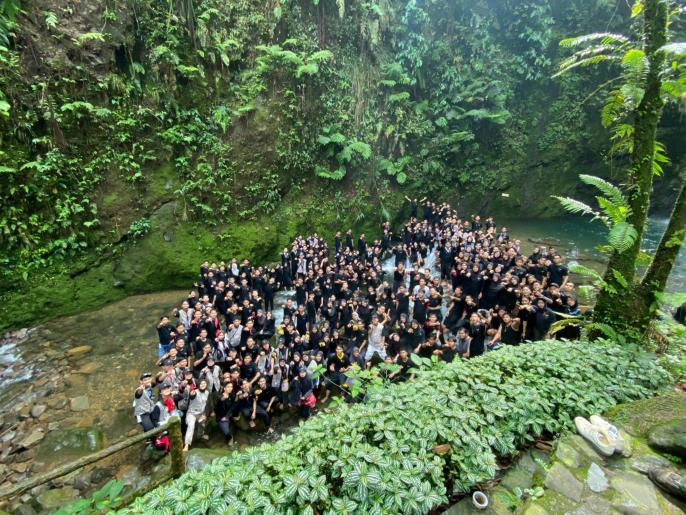
Bela Negara OSIS Chairperson 2025 is part of early character building aimed at IPB University OSIS Chairperson students to instill the values of discipline, leadership, and nationalism. This activity is carried out by the OSIS Chairperson Student Association (IMAJATOS) through a Basic Leadership Training (LDK) approach in collaboration with training
semi-military training with elements of the Indonesian National Armed Forces, thereby
shaping individuals who are resilient,
responsible, and have a spirit of defending
the country. The implementation of this program plays a role in developing leadership,
cooperation, solidarity, and integrity among
students as visionary young leaders of IPB University who are ready to contribute to the nation.
Exploring the Digital Versio


These insights can be accessed digitally vi bit.ly/LPJOrmawaIPB202