distiller
™
the voice of craft distilling
MICROBIAL TERROIR
The Landscape We Can’t See INSIDE
2026 Best in Class Spirits Succeeding in DTC Engineering an Exit All About Amburana Miami Top 10 Bars Virginia Moonshine Lives On [ Summer 2026 ]
1
2
[ distilling.com ]
August 17-19, 2026 Miami Beach
3 PACKED DAYS! 1,400 attendees
100s of exhibitors 40 educational sessions 9 workshops and tastings 2 spirit summits
Register at distilling.com Presented by
[ Summer 2026 ]
3
distiller™ magazine •
DISTILLING.COM •
Founder & President Emeritus Bill Owens bill@distilling.com President Erik Owens eriko@distilling.com Editor-in-Chief Margarett Waterbury margarett@distilling.com Graphic Designer Gail Sands gail@distilling.com Advertising Sales Brandon Vinyard brandon@distilling.com sales@distilling.com Contributors Scott Thomas Anderson, Susannah Skiver Barton, Carrie Dow, Max Garrone, Maggie Gigandet, Kurt Maitland, Anna Mantheakis, Jacopo Mazzeo, Virginia Miller, Gabe Toth, Gabriel Urrutia, Margarett Waterbury Editorial Submissions: margarett@distilling.com Summer 2026 • Vol 22, Issue 2 Distiller is published quarterly by American Distilling Institute, LLC. 22752 Bayview Ave., Hayward, CA 94541 Copyright 2026 by the American Distilling Institute. Nothing shown may be reproduced in any form without permission. Our mission is to foster growth and success of craft spirit producers through hosting best-in-class conferences, providing comprehensive educational services, offering networking opportunities and connecting producers with top-tier solutions providers. Go to distilling.com to join ADI, view the map of craft distilleries, or learn more about craft distilling. facebook.com/americandistiller linkedin.com/company/american-distilling-institute @americandistilling instagram.com/americandistilling
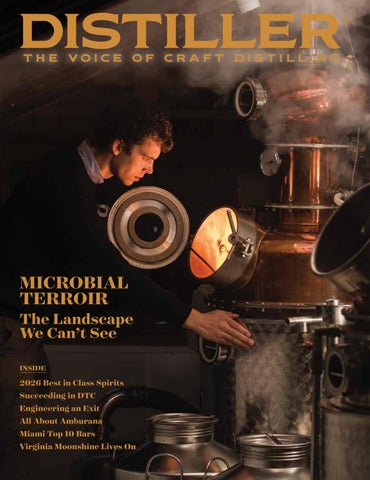
On the Cover — Barney Wilczak, founder and distiller at Capreolus Distillery in the Cotswolds. Courtesy photo.
4
[ distilling.com ]
Editor’s Letter It seems like everyone I know has gotten into film photography, including me. It’s something about the urge to get free from the algorithm, a nostalgic desire to return to a simpler, more analog time. Plus, everyone’s skin just looks a million times better on film. Still, I wonder: Is everyone really into film? My Instagram algorithm has learned that I like film photography, so it shows me more. I’ve self-selected for friends over the years who share the same creative impulses. We’re all old enough to remember film the first time around, so nobody has to re-learn how to wind a roll or where to get it developed. And so here I am, going about my life thinking that everyone is into film photography, and because of the way our world now works I can continue to live secure and unchallenged in that knowledge — even if it is not at all true. This dynamic extends to virtually every context, including (perhaps especially) craft spirits. Spend enough time in the industry, and things can start to feel very…samey. Conversations become familiar. Everyone has the same references. In-jokes and insider baseball proliferates, and soon it all starts to feel like a closed system. But craft spirits is very much not a closed system. The industry cannot survive by selling products to itself. It’s on us to get out of our self-selected bubbles. Many of the stories in this issue are about seeing through fresh eyes and questioning the “obvious.” In her cover story about microbial terroir, Anna Mantheakis spotlights producers thinking expansively about how to get more flavor into spirits. Carrie Dow let a question — how did we get the designation “immature brandy” anyway? — lead her down a rabbit hole of research at U.C. Davis. And Susanna Skiver Barton talks with distillers embracing the imperfect possibilities of self-distribution and ecommerce to side-step the increasingly impossible distribution landscape. Another way to get out of the bubble? Come to an ADI conference. There’s really nothing that beats travel and conversation to get out of a rut. You’ll meet people from outside your region, hear what’s selling somewhere else, taste unfamiliar styles, and get that critical reminder that your local consensus is far from global. Plus, you’ll get the chance to choose the unfamiliar. Go to the rum summit even if you don’t make rum. Take a workshop on a topic you know nothing about. Go be a beginner again, even if it’s just for an hour, and ask yourself what fresh perspectives you can bring back to your own work. See you there,
Margarett Waterbury [ Summer 2026 ]
5
®
ENZYMES THAT WORK AS HARD AS YOUR MASH Country Malt Group is proud to partner with ERBSLÖH, a German-based fermentation specialist serving beverage producers around the world. With decades of experience supporting breweries and distilleries, ERBSLÖH combines scientific expertise with practical, production-ready solutions designed for real-world operations.
Their CraftZYM enzyme portfolio helps distillers improve efficiency, consistency, and yield across a wide range of mash bills. Whether working with malted grain, unmalted adjuncts, or alternative raw materials, ERBSLÖH enzymes support stronger conversion, smoother processing, and more predictable fermentation performance.
CRAFTZYM ONYX BETA GLUCANASE CraftZYM Onyx is a thermostable fungal Betaglucanase for the glucan degradation in brewing mash.
CRAFTZYM OPAL ALPHA AMYLASE CraftZYM Opal is a thermostable bacterial alpha amylase for starch liquefaction in beer production from malt with raw fruit content.
CRAFTZYM QUARTZ GLUCOAMYLASE CraftZYM Quartz is a highly concentrated glucoamylase from Aspergillus for the degradation of hydrolyzed starch.
LEARN MORE AT COUNTRYMALT.COM 6
[ distilling.com ]
CONTENTS Summer 2026 | Volume 22 #2
COVER STORY 32
Microbial Terroir How does the invisible landscape shape the character of spirits? By Anna Mantheakis
Ingredients and Formulation 26
26
Amburana
Distillers share tips and tricks for using this high-impact tropical wood. By Gabe Toth
48
Best in Class
Top Scorers at the 2026 ADI International Spirits Competition
Money Matters 18
Exit the Founder
Selling a business can be tricky. Here’s how two distillers did it. By Scott Thomas Anderson
Regulation & Compliance 72
That’s So Immature
Grape brandy under two years old must be labeled “immature.” But not brandy made from other fruits. How come? By Carrie Dow
88
Legal or Not, Virginia Moonshine is Legit The illicit trade lives on in the culture of rural Virginia. By Jacopo Mazzeo
[ Summer 2026 ]
7
YOUR CLOSURE MANUFACTURER FIND THE PERFECT FIT FOR YOUR SPIRIT Capsule
MAVERICK ENTERPRISE IS NOW CREALIS USA 2601 Maxwell Way, Fairfield, CA 94534 751 East Gobbi Street, Ukiah, CA 95482 crealisusa@crealisgroup.com | 707-463-5591 www.crealisgroup.com
8
[ distilling.com ]
Screw cap
Bartop
CONTENTS 80
Distribution and Channels 80
A Direct Opportunity
E-commerce and DTC sales can jump-start broader distribution for craft spirits producers By Susannah Skiver Barton
Places and Faces 96
Miami Top 10 Bars
Where to find the best daiquiris, mojitos, martinis and aperitivo in town By Gabriel Urrutia
106
Distiller Interview
Bela Nahori of ChainBridge Distillery By Virginia Miller
110
Bartender Interview
Valentino Longo of ViceVersa By Virginia Miller
40
Production & Processes 40
The White Oak Initiative
Coopers, forest managers, and distilleries are working together to ensure a bright future for American white oak By Maggie Gigandet
64
Whiskey Angels
The legacies of Dave Pickerell and Jim Swan still reverberate through the craft spirits industry By Kurt Maitland
In Short 5
Letter from the Editor
10
News & Events
12
Bottleshop
Flor de Azar
By Max Garrone
16
Research Scan
The latest academic news By Jan Hodel-Keane
[ Summer 2026 ]
9
news in brief NEWS IWSR REPORT
IWSR reported a third consecutive year of volume decline in beverage alcohol, which fell by 2% in 2025. Beer, wine, and spirits volumes all contracted, with only RTDs seeing growth of 3%. For the first time since 1990, spirits have surpassed wine in terms of global volume. The report anticipates continued modest volume declines of 1% annually over the next decade. IWSR also predicts a shift in geographic demand, with China, the U.S., Japan, Germany, and the U.K. seeing continued significant volume reductions while India, Mexico, Colombia, and Vietnam volumes are expected to grow. The market research firm anticipates that India will become the second-largest market for spirits over the next decade, unseating China.
NEW SVB DIRECT-TO-CONSUMER REPORT: LESSONS FOR CRAFT SPIRITS
The 2026 Silicon Valley Bank Direct-to-Consumer Wine Report was released in June of 2026. It offers a temperature check on how smaller winemakers are navigating the shifting landscape, and much of it is relevant for craft distillers. The report says that the rate of sales decline is slowing, indicating potential stabilization in DTC wine sales, and that brands doing the best were focused on building and maintaining customer relationships rather than exclusively prioritizing cost containment. Direct to consumer sales still account for most winery revenue — 72% — underscoring the critical importance of those channels. While consumers remain price sensitive, value is even more important, and higher-priced wines continue to outperform budget bottles. The report is free to download online. https://www.svb.com/ dtc-report/
EVENTS ADI CRAFT SPIRITS CONFERENCE AND EXPO 2026: MIAMI BEACH
It’s almost time for the 2026 ADI Craft Spirits Conference and Expo, presented by Clarendon Flavors, August 18-19 at the Miami Beach Convention Center. We’re looking forward to a packed schedule of workshops, panels, discussions, and more, including a keynote address from Steven Grasse, gin and rum summits, dozens of panels and presentations on everything from tasting room best practices and launching a canned cocktail program to understanding specialty malts and nontraditional fermentations. We can’t wait to see you there for connecting, networking, learning, and making some more of those face-to-face real-life connections we could all use more of.
WEBINARS
Did you know ADI hosts free bimonthly webinars? Recent topics have ranged from tariffs and marketing to the history of three-chamber stills and how to have a better relationship with your distributor. New topics are coming online all the time, and you don’t even have to be a member to register — check out the schedule and sign up online at distilling.com/events
Sales Channels in FY 2025 from the 2026 Silicon Valley Bank Direct-to-Consumer Wine Report.
10
[ distilling.com ]
PROVEN EQUIPMENT, DEDICATED PARTNER.
Complete Distilling and Beverage Production Systems, Custom Stills, Mash Houses, Lauter Tuns, Fermentation, Barrel Handling, Piping and Controls.
Booth 338 - 2026 Craft Spirits Conference LEADERSHIP CIRCLE SPONSOR
See more solutions from Middleby: Spirit & RTD canning (Wild Goose Filling - Booth 239) and innovative culinary solutions (Middleby / TurboChef & CookTek - Booth 334).
DeutscheEquipment.com | Info@DeutscheEquipment.com | +1 704-900-6606 [ Summer 2026 ]
11
bottleshop
By Max Garrone
FLOR de AZAR Flor de Azar is a new orange liqueur produced in Mexico City. It’s made from nine Mexican botanicals and is sweetened with miel de agave, a rich Mexican syrup made from boiling down agave sap until it reaches a honey-like consistency. Named for orange blossoms and a synonym for “flower of chance” in the Mexican game lotería, Flor de Azar was created by a fortuitous mixture of experience, ambition, and social media. Gabrielle Weiss and her friend Alissandra Holzer worked in bars and spirits distribution in New York and often discussed how to get into the business with their own creations. They were drinking margaritas when they realized all the citrus used in bars comes from Mexico. So why not create an orange liqueur from Mexican ingredients? Weiss contacted Hillhamn Salome, who has a 10-year-old distillery in Mexico City where she is the master distiller of Condesa Gin and her own project, Xila, a mezcal-based Mexican botanical–driven aperitif. As they worked, they began to appreciate how triple sec is the “unsung hero of the cocktail world” because it supports so many major cocktails. Ultimately, they decided to market their product as a Mexican citrus liqueur rather than triple sec. To call it triple sec “undersells its complexity,” she says. Flor de Azar’s final formulation launched in the United States in January of 2025.
To call it triple sec “undersells its complexity”
12
[ distilling.com ]
Above — Botanicals for Flor de Azar, including citrus blossoms and fresh citrus. Courtesy photo. Below — Weighing orange blossom flowers to assemble a batch of Flor de Azar. Courtesy photo. Flor de Azar is built on a foundation of a neutral spirit made from double-distilled Mexican barley, corn, and rye. Then Salome macerates sweet orange, bitter orange, mandarin, grapefruit, orange blossom flowers, tuberose flowers, lavender buds, cardamom, and pepper for four days before distilling it again. Since they focus on seasonal botanicals, production happens when the flowers are at peak ripeness. The final step is tumbling the spirit with miel de agave, which rounds it out and adds color to the liquid, before a brief pre-bottling rest. While Flor de Azar was created to compete with triple sec, it has its own identity. Tasted neat it leads with bitter orange, opens into a full expression of orange blossom aromatics, and leaves you with a nice roundness without the cloying sweetness so common in orange liqueurs. Hillhamn attributes that balance to using miel de agave instead of sugar. That bitter edge and the botanicals really find expression in cocktails, especially when mixed with higher-proof spirits like gin taking on the role played by bitters and liqueurs. When Weiss started selling Flor de Azar in New York City, it quickly found a home in agave-driven bars like Enrique Olvera’s Cosme. It is also in every margarita at Tacombi, a Yucatecan taqueria chain with locations across the East Coast and Chicago. Bartenders have [ Summer 2026 ]
13
run with the inspiration: They use it in ’90s cosmopolitans, replace orange bitters with it in cocktails like the martini, and have found new uses for it in creative cocktails and spritzes. Weiss also notes Flor de Azar is resonating with audiences who appreciate its sensibility. At $35 retail, it has been picked up by a variety of bottle shops who are “excited about it as a better-priced, more flavorful and floral, Mexican-made, female-owned alternative to Combier and Cointreau.” There is a long history of Mexican backbar products like Amargo-Vallet, which has roots in the 19th Century and Yolixpa, whose roots are pre-Hispanic. The new wave of Xila, Flor de Azar, and other backbar projects highlight the distilling acumen and rich source of ingredients in Mexico. Weiss thinks that “one of the primary differentiators is the use of the fresh flowers and the miel de agave as the sugar — both translate nicely into a cocktail and give it a more natural type of sweetness.” As the group behind Flor de Azar continues to push into American markets, they are also getting into Mexico, where Holzer manages all sales. They are also looking at new Mexican flavors to introduce into the backbar. Next up? A prickly pear liqueur launching in May of 2026. Combining citrus fruit and blossoms adds complexity to Flor de Azar. Courtesy photo.
Max Garrone writes about wine, beer, and spirits and the cultures that create them. You can find his work on his Substack: Spirit Lives (https://spiritlives.substack.com/).
T-Top Corks Unbreakable Stock Sizes Wood Printing Laser Etching Colored Caps Colored Shanks Custom Designs
sales@paulsonsupply.com www.paulsonsupply.com
14
[ distilling.com ]
(209) 545-6994
[ Summer 2026 ]
15
ResearchScan
By Jan Hodel-Keane
What the Lab Is Telling Craft Distillers Right Now A Snapshot of Recent Spirits Research
ResearchScan is a weekly digest that monitors peer-reviewed academic literature across brewing, distilling, winemaking, fermentation, and related beverage sciences. Each week, newly published research is curated, summarized, and delivered to industry professionals who want to stay close to science without trawling journals. The full database is searchable at researchscan.news. Across maturation, fermentation, and raw materials, researchers are challenging assumptions that the industry has held for decades. Here are four findings worth knowing about. 1.
2.
Campos et al., Rethinking the aging process of spirits: Nutshells as a sustainable alternative to wood Zhao et al., Exploring new applications of toasted chestnut shells as an oak alternative in distilled spirit aging Two independent research groups published findings on alternative maturation vessels within weeks of each other, reaching strikingly similar conclusions about chestnut shells.
Initial Proof Matters More than Grain Angle for Evaporation Loss
Writing in, Food Chemistry, Campos et al. found that chestnut shells yielded higher phenolic, tannin, and flavonoid concentrations than oak chips, with sensory panels detecting enhanced flavor complexity after just three months. Meanwhile, Zhao et al in npi Science of Food reported that toasted chestnut shells imparted a distinct roasted and smoky aroma profile to aged whiskey different from, but not inferior to, oak. Both groups position chestnut as a serious sustainable alternative: It’s an agro-industrial by-product, widely available, and appears to accelerate maturation timelines.
Scott et al.,The transport of new make spirits through American white oak Every distiller knows about maturation or evaporation loss — the spirit that evaporates through the barrel stave and never makes it to the bottle. What’s been harder to pin down is exactly how that loss occurs at a physical level, and what variables control it. A new study from the University of Kentucky and Suntory Global Spirits, Inc. did precisely that. Scott et al. tracked how new make spirit diffuses through American white oak, measuring the effects of alcohol content, contact method, and grain angle. Their findings challenge a common assumption: grain angle, often cited as a factor in barrel selection, had no significant effect on diffusion rate. What did matter was initial alcohol proof. Higher-proof spirits lost less total mass, primarily by limiting water uptake through the stave. The study predicts an average annual maturation loss of approximately 1.2% liquid volume for standard bourbon barrels matured in Kentucky. For an industry where yield is margin, that baseline figure is genuinely useful.
16
[ distilling.com ]
Chestnut Shells as Sustainable WoodAging Alternative
For craft distillers exploring barrel alternatives whether for cost, sustainability, or differentiation, chestnut is now backed by two peer-reviewed studies in the same quarter. 3.
AI-Guided Toasting Optimizes Barrel Flavor Reitenbach, et al., Optimizing the Flavor Profile of Brazilian Spirits: Torrefaction Modeling of Native Woods for Cachaça Maturation Brazilian researchers at Molecules took a different approach to wood selection entirely. Rather than comparing existing options, Reitenbach et al.
built an AI model to optimize the torrefaction, or toasting, of five native Brazilian wood species for cachaça maturation. The model predicted sensory outcomes based on toasting time and temperature for each species, then guided production of a fivewood blend with tailored complexity. The finding with the widest implications isn’t specific to cachaça: The study demonstrates that different wood species respond differently to toasting, and that the uniform toasting currently standard in Brazil (and many other places) leaves significant flavor potential on the table. The AI framework is transferable. Distillers working with rum, brandy, or any barrel-aged spirit have a new reason to think more precisely about how their wood is prepared, not just which species they choose. 4.
Yeast Contributes Flavor Before the Barrel Marr et al., Evaluating Canadian Yeast Strains for Novel New-Make Spirit Applications) Marr et al in FEMS Yeast Research evaluated Canadian non- yeast strains for new make whiskey production, profiling 43 aroma compounds across strains. The standout result: Saccharomyces uvarum significantly elevated phenylethyl esters and alcohols, compounds that contribute floral and fruity character, compared to standard distilling strains. The practical implication is straightforward. Yeast selection is already a serious lever in brewing and winemaking. In whiskey production, it has historically received less attention, partly because barrel maturation was assumed to homogenize early fermentation differences. This study suggests otherwise: The aroma architecture laid down in fermentation persists into the new make and shapes what maturation has to work with.
The Broader Picture - Where the Science Is Heading The research landscape for distilled spirits has rarely been more active or more directly applicable to what happens on the production floor. From wood preparation to yeast selection, from maturation vessel to storage conditions, the variables that define a spirit’s character are being examined with a precision that was simply not available a decade ago. Three themes stand out as particularly significant for the near term. First, maturation is being reimagined: alternative woods, accelerated aging techniques, and AI-driven preparation models are converging on the same conclusion: There is significant untapped potential in how spirits are aged, and the industry is only beginning to exploit it. Second, fermentation is being reframed as a flavor-building stage in its own right, not merely a precursor to distillation. Yeast strain diversity offers craft producers a genuine point of differentiation that requires no capital investment, only curiosity. Third, sustainability and quality are increasingly pointing in the same direction: nutshells, agave bagasse, distillers grains — the by-products of production — are becoming inputs, closing loops that were previously left open. For craft distillers operating at the intersection of tradition and innovation, the moment to maximize knowledge is now, not when these findings become common practice years down the line. The producers who engage with research early, who treat scientific literature as a competitive tool rather than academic background noise, will shape what the next generation of spirits looks like. Jan Hodel-Keane is a Senior Technical Account Manager at Kerry, bringing a strong blend of technical, managerial, and scientific expertise to the distilling industry. In his current role he partners with distilleries and leading brands across the UK & Ireland alcohol beverage sector, working at the intersection of technical insight and commercial delivery. Jan is also the founder of ResearchScan (researchscan.news), a weekly research intelligence newsletter curating peer-reviewed science as well as patent insights for technical professionals across the beverage alcohol industry.
[ Summer 2026 ]
17
By Scott Thomas Anderson
Exit the Founder One early fall afternoon, Don Poffenroth’s cell phone lit up with a text. He opened it to see a photo of a Dry Fly Distilling Huckleberry Lemonade canned cocktail being gripped at the base of Mount Rainier. In one sense, that image of his can held in front of the staggered pines and snowpainted volcanic summit encapsulated a multi-layered story that held Poffenroth at its center. Like Rainier itself, Dry Fly’s identity is intrinsic to Washington. Twenty years ago, it became the first craft distillery to open in the state since the days of Prohibition. The business eventually cut new trails again when it became one of the early U.S. distilleries to start producing canned cocktails. For Poffenroth, that was a natural risk to take since Dry Fly’s ethos was about encouraging people to enjoy the forests, streams, rivers, and mountains of the Pacific Northwest. As the distillery’s team trouble-shot the challenges with cans so that other drink-makers could follow in their wake, they also managed to crack the code of a workable distribution strategy. The photograph from Rainer was evidence of that: Its sender was able to buy the huckleberry cocktail at Paradise, a high-elevation base camp in the mountain’s national park that sees around 2 million visitors every year. Yet, at the moment Poffenroth opened that message, he’d actually been retired from Dry Fly for several weeks. His energy was no longer dedicated to using wheat and huckleberries from the Evergreen State to make signature products. Now, Poffenroth was spending his days restoring pre-1911 roadsters to drive on the open highway. But Poffenroth’s departure didn’t mean that Dry Fly had to go away. It’s continuing to operate its towering stills in a classic building along Spokane’s most historic avenue. Its restaurant is as busy as ever, with guests pairing meals with tasting experiences around dry gin, huckleberry vodka, and straight triticale whiskey. And Poffenroth’s longtime right-hand man at the business, Patrick Donovan, isn’t just still there — he’s now the president of the company. These outcomes, which were important to Dry Fly’s founder, were all possible because the distillery was sold to Caymus Vineyards, a winery owned by the Wagner family, who Poffenroth says is aligned with his vision and values.
Like Rainier itself, Dry Fly’s identity is intrinsic to Washington.
Don Poffenroth behind the wheel of one of the pre-1911 cars he’s been restoring since retiring and selling Dry Fly Distilling. Courtesy photo.
It was not luck that landed that buyer. Poffenroth literally spent years calibrating an outbound strategy that would allow Dry Fly to have a business life beyond his presence. And he wasn’t the only distillation trailblazer on the West Coast making those kinds of decisions. In 1997, Tad Seestedt founded Ransom Wines & Spirits in Oregon’s Willamette Valley, finding the seeds of a promising business in his ability to master an organic farm in the foothills of a coastal mountain range. By 2006, Seestedt was being recog-
nized as the craftsman who’d reached his hand into history and pulled “Old Tom” Gin back from the secrets of the 1800s. Seestedt went on to add to Ransom’s gin notoriety by making high-quality whiskeys and bourbons, too. His spirits were winning awards and critical acclaim, but by 2020, Seestedt was ready to slow down. That year, he sold Ransom to a professional acquaintance, Ari Walker, owner of Oregon’s Integrated Beverage Group. The move allowed Seestedt to phase himself [ Summer 2026 ]
19
Patrick Donovan is the new president of Dry Fly Distilling since it was sold to Caymus Vineyards. Courtesy photo.
out of Ransom as Walker’s production team carefully learned how to keep the founder’s magic touch alive. Poffenroth’s and Seestedt’s transition stories offer hope to other founders — hope that they can someday rest without their beloved creations going the way of the wind. Here’s how each founder made his exit. Pop Culture Surprises and Expanded Directions On the evening of March 1, 2026, Patrick Donovan’s phone started blowing up with messages. HBO had just released its new drama, DTF St. Louis, a flashback heavy mystery about marriage burnout and private desperation. Donovan hadn’t paid much interest, though by the time the closing scene of the show’s premier faded out, he was getting texts about it from every direction: That’s because one of the lead characters, Floyd — played by David Harbour — is apparently murdered with a chemical-laced can of Dry Fly Distilling’s Bloody Mary cocktail. The red can is prominently displayed on-screen as fictional homicide detectives worked the murder scene. Donovan says that no one from HBO asked permission to do this, or even gave the distillery a heads-up they were planning to. 20
[ distilling.com ]
At first, Donovan wasn’t sure what to expect about the potential brand impacts. At that point, he’d been running the day-to-day operations at Dry Fly for well over six months, following Poffenroth’s retirement. But Donovan makes it clear that one thing he didn’t have to worry about was the reaction of Charlie Wagner, a member of the family who had recently purchased Dry Fly. “We were texting back and forth about it,” Donovan calmly recalls. “We just kind of started brainstorming what it could mean as a viral moment… I guess a day in the life of a small distillery is something you can never really predict.” From Donovan’s perspective, the two-way, relatively drama-free response to the HBO surprise was one of many examples of how seamless the transition to being owned by the Wagner family and Caymus Vineyards has been. That’s a result Poffenroth was focused on getting for well over a decade. “I think when you start any small business, let alone a distillery, you have to plan — or at least contemplate — your exit from Day One,” Poffenroth reflects. “It’s part of starting up… I don’t know that there was ever a timeline in my head for selling, because, when it happens, it happens; but I used that potential exit as a guidepost to make all my decisions.” He adds that, when it comes to a peaceful exit, planning for the end “becomes part of how you run your business, in terms of always thinking about what you’re going to do to make it better and make it a more sellable thing.” Poffenroth first started getting to know the Wagner family — patriarch Chuck, his son, Charlie, and his daughter, Jenny — 12 years earlier when their companies began working on collaborative whiskey projects, some using Wagner wine barrels for aging and others utilizing wheat from the winery’s Napa County farm. The working relationship gave each side an idea about how the other approached craft and creativity. Meanwhile, as time ticked on, Poffenroth was making sure he had all his business ducks in a row for a potential sale. “It’s the kind of thing I think only a founder can do,” he observes. “I went back, tracing all the way back to the beginning, and covered everything from intellectual property to who we hired and what our contracts were — how we’ve done compliance for the entire life of the business. This is especially important when you’re being bought by an ongoing concern or bigger company: They want to make sure they don’t get into a situation where they made a purchase and then have a liability issue.” Poffenroth knew he didn’t want to sell to a cor-
Just starting out? come to
You’ve t place. the righ
With MGP, you have experienced advocates in your corner. We’re not just a supplier–we’re your partner, always available to consult and troubleshoot on any aspect of your process.
We have the ability to offer aged product as a starting point for a start-up. Or, we can work with you to create your own recipe.
Let’s make something exceptional, together. [ Summer 2026 ]
21
porate liquor conglomerate. His ideal buyer was an independent brewery, winery, or cider producer looking to expand its portfolio with distilled spirits. He initially started vetting interested parties on his own, though once that started eating up about 25% of his time on the job, he hired an investment bank to field serious candidates. He felt like he was making progress, though it was an unplanned, one-on-one conversation with Chuck Wagner that led to the sale option that he felt best about. “His family really was the ideal buyer,” Poffenroth acknowledges. Donovan stresses that, since the purchase went through, the Wagners have leveraged their wine business in a way that’s helped Dry Fly expand its product line and increase its profit margins, particularly through several wine-based canned cocktails that are made at the distillery. “With one of them, the jalapeno margarita, we actually utilized our little 60-liter still to make our own jalapeno extract,” Donovan explains. “With our spirit-based canned cocktails, as wonderful as they are, we’ve already run into challenges with Washington State, which only allows us to sell them in liquor stores and taxes them incredibly high, as if they’re a bottle of vodka, and they’re just not. Now we’re making a second line of canned cocktails with really high-quality wine from Caymus, and those can be sold in a number of stores we could never get into before. It’s combining the two things each company is good at.” As for Poffenroth, he finally has more time for Right — Tad Seestedt made his name in craft spirits partly by resurrecting “Old Tom” Gin, and that made Ransom a distillery that likeminded business owners were interested in. Courtesy photo. Below — Integrated Beverage Group is now the owner of Tad Seestedt’s Ransom Wines & Spirits. Courtesy photo.
22
[ distilling.com ]
travel, fishing, and adventures in vintage cars. “My wife and I are just trying to enjoy everything that’s come from the 20 years of the small business-building we went through,” he says. “Old Tom,” New Caretakers Based in Dundee, Oregon, Integrated Beverage Group has distinguished itself by making all-natural, organic wines with nutritional facts and ingredients spelled out on their labels. The company’s aim is purity, and its mission statement is “enriching people’s lives.” With objectives like that, it’s no surprise that IBG took notice of what Tad Seestedt was accomplishing on his sprawling organic farm in the
famed Willamette Valley. Those who know Seestedt say he’s not one to draw attention to himself, despite his spirits being highlighted by critics near and far. Seestedt has been featured by numerous culinary writers since he managed to resurrect “Old Tom” gin from the memory grave. Seestedt did that partly by working with James Beard Award–winning mixologist and cocktail historian David Wondrich, who joined forces with him to experiment with different period-accurate recipes. The result was the reappearance of a barrel-aged gin from a bygone era. Among those who were impressed was Ari Walker and his team at IBG. Walker says, from a buyer’s perspective, Ransom was desirable because Seestedt made unique artisan products and had a signature approach that could complement an existing vino portfolio. “Tad is a man of few words, but someone who makes a profound impression on folks,” Walker observes. “As a wine company, it was Tad’s spirits that were the driving force for us. And, of course, the Old Tom Gin is so iconic. Having the chance to bring a product like that to market was really pretty interesting.” But if Walker was going to buy Ransom, his top concern was making sure that Seestedt would agree to teach and mentor members of his team on his personal approach to spirit making. As it turned out, the founder was willing to do that. Once the initial agreement was made, it only took a few months for both sides to solidify the deal. The acquisition was finalized in February of 2020. “I’ve been a big fan of Tad’s, and of Ransom, for many years,” Walker points out. “So, when the opportunity presented itself, and Tad was ready to move on with his life — and he was willing to help us — I was also very fortunate that I had folks on my team who had the skill, and the interest, and the wherewithal to do it. That’s why it all made sense.” Walker moved the distillery’s tasting room experience into IBG’s hub in Dundee. During the first few years of owning Ransom, Walker found various ways to get Seestedt involved in customer events and education. These days, however, with the distillery firing on all cylinders, Seestedt is mostly taking it easy. “Well,” Walker mentions with a chuckle, “I like to say that he gets a little more retired every year.” Scott Thomas Anderson is a veteran reporter based in California. While his main job over the years has been covering the drug world, environmental crime, urban poverty and long-term investigations, he’s lately balanced his hard news focus with cultural writing and travel journalism, filing pieces on time spent in Greece, Croatia, Spain, Italy, Ireland, Scotland and Southern France.
The aroma of tradition
Purveyor of fine new and used barrels since 1963 (419) 467-1101 www.kelvincooperage.com [ Summer 2026 ]
23
Hubert Germain-Robin International Consultant
Over 50 years of experience in the making of premium craft spirits
“One of the world’s top ten distillers.” — Spirit Journal
Master Distiller / Master Blender
Offers consultation in: Alambic potstill distillation, Aging and cellar management, Organoleptic evaluation, Reduction and blending, Staff training & Workshops
- Author Published by White Mule Press - Available at all booksellers -
Traditional Distillation
The Maturation of Distilled Spirits
A philosophic, artistic and technical approach on ancestral pot still distillation
Explores the intricacies of aging a spirit in the barrel
Art & Passion
+33-7-87-08-03-21 24
[ distilling.com ]
Vision & Patience
|
hubertgermainrobin@gmail.com
LEARN MORE AT BOOTH #239
Cocktail canning for bold spirits.
CANNING SYSTEMS DESIGNED FOR CRAFT DISTILLERS Capture your spirit in a can. Spirit™ canning lines from Wild Goose let you package your cocktails and high-proof spirits in house while preserving flavor and quality.
Built on decades of Wild Goose engineering expertise, Spirit systems give you low-waste, professional canning backed by approachable support and service around the globe.
SMALL BATCH TO HIGHER PRODUCTION PACKAGING SPEEDS CAN SIZES 100 ML AND UP STEEL & ALUMINUM CAN FLEXIBILITY PROUDLY MANUFACTURED IN COLORADO. LOCAL SERVICE WORLDWIDE. JOIN THE FLOCK.
[ Summer 2026 ] 25 WildGooseFilling.com
Amburan BY GABE TOTH
A tropical hardwood that offers unique but polarizing opportunities 26
[ distilling.com ]
na Opposite page — Pete Nevenglosky first encountered amburana wood through his cachaça company, and later brought it into usage at Rare Character Whiskey and Paladar Tequila. Courtesy photo. Right — Rather than using barrels, Dogfish Head uses a carefully calibrated dosage of amburana chips to impart unique character to their Samba Amburana over a matter of days, rather than months or years. Courtesy photo.
A unique wood long used to age spirits in South America has made it into the North American distiller’s toolkit in recent years, offering an opportunity to add intense and sometimes polarizing flavors. Amburana is one of more than 30 different woods used to age cachaça, or Brazilian sugarcane spirit. According to Pete Nevenglosky, it’s the second most common after French oak. Nevenglosky has been working with amburana since 2011 and launched the brand Avua Cachaça in 2013. Traditionally, he says, Brazilian distillers use very large, untoasted, uncharred barrels. The distiller he works with in the state of Rio de Janeiro relies on 3,000- to 5,000-gallon barrels. Nevenglosky also uses amburana with his Paladar tequila brand — technically producing a spirit called a destilado, because the wood used for aging isn’t oak. He’s also a founder of independent bottler Rare Character, where he’s used amburana to finish single barrels, primarily of 51 percent rye whiskey and a few bourbon barrels, though he’s transitioned away from using it for whiskey. “It’s still a core part of what we do on cachaça, and
it’s a really cool thing we do in tequila. It’s not as much of the business percentage-wise, but people really dig it,” he says. “What was nice about the rye is you get a spice element with the sweetness of the amburana that pairs well.” He says the wood can be difficult to work with, and the impact it offers can be polarizing. It’s commonly described as lending notes of baking spice, cinnamon, nutmeg. He’s heard “Cinnamon Toast Crunch” countless times. “What’s unfortunate about amburana is it’s very tricky, and you can go too far too fast,” says Nevenglosky. Or you can not go far enough, and then it’s not interesting. “If you overshoot a sherry barrel, maybe it’s just a little bit sweeter, a little rounder. It may even be what you want. You go too far in amburana, it can be ruinous.” At the Dogfish Head distillery, Head Distiller [ Summer 2026 ]
27
Left — San Diego Distillery is exploring a range of unique products and barrel finishes, including amburana. Courtesy photo. Below — McGuire at San Diego Distillery used an amburana stave infusion kit meant for a small barrel in a 53-gallon barrel, allowing him to age for a longer period while still achieving a strongly amburana-forward profile. Courtesy photo.
Darren Bobby says he started using amburana in whiskey after the brewery tried it. Their R&D brewer made a beer called CocoAmburana, a bourbon barrel-aged stout finished on cacao nibs and amburana wood shavings, “and he basically told me that I should look into it to use in some spirits.” His first trial with amburana was using a free spiral that his barrel supplier sent with an order of standard oak barrels. He doesn’t remember how long he left it in, but it was too long. “When I went to try the whiskey, it was like: This is way too much. This is over-the-top intense,” he says. “If you leave it in there too long, it goes through phases where you first kind of get your baking spices and your allspice and your cinnamon, and then it transforms to a phenolic, peaty sort of thing, then it becomes acrid, like bitter and back-of-the-throat cloying.” He selected a four-year-old single malt whiskey that contained pale malt, a crystal malt, a coffee-kilned malt, and just a touch of applewood-smoked malt as a flavorful whiskey with enough backbone to com28
[ distilling.com ]
plement the amburana. He uses chips to infuse the whiskey, initially going through an extended trial-and-error to settle on how many grams of chips per gallon of whiskey, and for how many days. Bobby says they kept having to revise it down because the amburana was so strong, conducting blind tastings until they found a sweet spot where people liked what the amburana was bringing to the whiskey. “Start ridiculously low and build your way up” is his advice, adding that the whiskey ages four years on white American oak and then a matter of days on amburana. “I don’t know why anyone would want a barrel, after my experience with it. It’s almost like adding a flavoring. It’s ridiculously intense, and it soaks up the whiskey very well and puts off flavor very quickly.” Nevenglosky says amburana, even as a barrel, reacts differently with spirit compared to oak. While a charred oak barrel creates a variety of oxidative reactions and resulting flavors, he says they “refer to amburana as a resinous aging situation.” “It adds a little bit of body and texture to the mouthfeel, because you’re
Craft Distillers
F o u n dat i o n s ™
EvErything to support your brand, on onE foundation. You focus on distilling and sales, we handle the rest. foundations™ is a complete program for Craft Distillers that let’s you focus on distilling and sales: the only things that matter. We do the rest: TTB and state permitting and filings, PO processing, invoicing, arranging delivery, warehousing, and compliance. We do it faster, more efficiently and less expensively then doing it yourself. The US alcohol beverage industry is one of the most complex and regulated in the country. Don’t be fooled into thinking it’s merely paperwork.
additional bEnEfits to you and your brand: • Working Capital Solutions • Long Term Barrel Aging and FTZ Storage
office +1.215.240.6020 info@americanspiritsltd.com americanspiritsltd.com •••••••••••••••••••••••••••••••••••••
[ Summer 2026 ]
29
essentially extracting oils and sap from the wood. It’s more of an infusion. It’s the oil and the sap of the wood interacting with the spirit.” Ryan McGuire and his partners bought San Diego Distillery about five years ago, and he found a box of stave infusion kits after they took over. He’d tried a batch of amburana-finished whiskey from Good Times and enjoyed it, so he decided to experiment with adding staves of amburana, Japanese mizunara oak, African padauk, and French oak to 53-gallon barrels of seven-year bourbon.
McGuire describes the amburana tightrope using terms like “spice bomb,” “aggressive,” and “one of the most expressive woods we’ve used.” The kits were meant for 10- to 15-gallon barrels, and he decided to effectively undershoot the level of infusion because he knew amburana’s reputation for overpowering a spirit. That allowed him to let it infuse for a year and a half to two years for an intense amburana character. It’s still his favorite expression of the wood out of 10 to 15 versions he’s tried. “It definitely took over the flavor,” McGuire says. “It’s heavy, heavy amburana, but I don’t think we overdid it. It’s a nine-
30
[ distilling.com ]
year cask-strength bourbon, so it’s got a backbone to it as well.” McGuire describes the amburana tightrope using terms like “spice bomb,” “aggressive,” and “one of the most expressive woods we’ve used.” Cinnamon Toast Crunch is his predominant descriptor. “I like to let people experience and taste it first and come up with their own opinion on it. But as soon as I tell people that, they’re like, ‘That drills it on the head,’” he says. “If you don’t like a predominant cinnamon flavor, you're not gonna like it. You’d love it or you hate it. It’s one of those flavors that is really divisive. It smacks you in the face.” Nevenglosky explains that it wasn’t feasible, and possibly not even desirable, to follow traditional Brazilian methods in Kentucky. The climate is different, and the surface area-to-liquid ratio adds another layer of variability. “In Brazil, there’s kind of a unique philosophy of aging. It’s often larger barrels, a year or two,” he says. “Now, good luck moving a 5,000-liter barrel to the U.S. from Brazil. I guess it could be done if you really wanted to. We got a thousand-liter [barrel] into Mexico [for Paladar], but it took us 18 months.” Instead, he decided to use new amburana at Rare Character in more classical American/European-sized casks of around 250 liters. Barrels would age for about six months depending on the weather conditions — sometimes shorter in the summer or longer in the winter.
“It kind of depends on when you put it in the barrel? Was it a super hot, humid summer?” Nevenglosky says. “You have a target based on the experience you have, and then you generally taste it before and after. You have to pull it at the right time.” His approach at Rare Character was to release those whiskeys as single barrels, but he said it would have been easier to blend for consistency. Nevenglosky says amburana barrels have become easier to come by as the wood has earned more recognition, but he noted that they need to be treated gently. The wood evolved in the tropical South American forests and is lighter and more porous than oak. “It’s not really meant to be in the U.S., right? You have to be very careful with those barrels, particularly in the winter,” he says. For a wood listed as endangered and subject to strict controls on harvesting, it also may be easier to find chips, spirals, and staves, and some distillers may have a philosophical preference to tap into a side-stream as a way to use a by-product and ease pressure on the amburana supply chain. And, as Bobby notes, barrels can cost $1,200 to $1,500. He says that Samba Amburana, while an onsite-only release, has built a solid fan base since it first came
out in spring 2023. “Some coworkers tell me it’s their favorite thing that I’ve ever made,” Bobby says. “The people who love it love it. It’s why we keep making it. The people who love it come in and buy multiple bottles of it.” “I think it makes an excellent Manhattan. You almost don’t have to add any of the bitters because it’s already kind of built into it,” he said. McGuire feels that the amburana builds structure and helps make a whiskey feel more approachable. It plays well with the existing caramel and vanilla notes in a well-aged bourbon, making it a potentially crowdfriendly choice. The body and sweetness that amburana lends can also endear a whiskey to a new group of consumers. “A lot of times these finishes — the maple, the honey barrels — they turn a straight pour into almost a cocktail in a glass. It just opens it up to a lot of new palates, drinkers that might not necessarily be neat-sipping cask-strength bourbon drinkers.” Gabe Toth, M.Sc. is an accomplished distiller, brewer and industry writer focusing on the beer and spirits worlds. He holds brewing and distilling certificates from the Institute for Brewing and Distilling, a master’s degree from the Rochester Institute of Technology, where his graduate studies centered on supply chain localization and sustainability, and a bachelor’s degree in journalism from CSU-Pueblo.
NO WAREHOUSE. NO DRY BARRELS. NO COMPROMISE.
FRESH EUROPEAN BARRELS, SHIPPED DIRECT IN CONSOLIDATED CONTAINERS.
Meet us at ADI Craft Spirits Conference & Expo in Miami on August 18 & 19, 2026 [ Summer 2026 ]
31
MICROBIAL
TERROIR
BY ANNA MANTHEAKIS
Terroir elicits images of high desert vineyards or grain fields shadowed by a thunderstorm. We say “terroir” when we want to talk about the way soils and environments sculpt the flavor of our grain and grapes. But what of those invisible sculptors who awaken during fermentation? How does the microbial landscape shape our products? Saccharomyces cerevisiae, the yeast that makes bread rise and beer bubble, is a domesticated species. It has traveled the globe with humans for millennia, drifting away from its ancestors the way dogs drifted away from wolves. But countless wild microbiota also make their own sensory impression on our products. When traditional brewers let the dust from the rafters of a historic barn spark fermentation in open-top vessels, they summon the species that belong to that place.
32
[ distilling.com ]
Like anything wild, microorganisms can be unpredictable. Nobody loves the headache-inducing quantities of nail polish remover and stinky feet. But when things go right, species like Brettanomyces bruxellensis and wild Lactobacilli can leave a sensory thumbprint as unique as the land itself. Let’s explore some of the makers who boldly welcome them in.
“When you come here and you step through the gate, you stop because the aromas hit you. And every five feet, they change.”
Wisdom of Generations: Natural Jamaican Rum Fermentation Every wild-fermenting distiller has something good to say about Jamaican rum. That funky tropical flavor explosion comes from a tradition of combining multiple natural fermentations of staggering complexity. “When you come here and you step through the gate, you stop because the aromas hit you. And every five feet, they change,” says Peppie Grant, distillery manager of Hampden Estate in Trelawny, Jamaica. Hampden employs low-yielding traditional methods to produce rum with the highest ester count money can buy. Their process gives our tiny rock stars every opportunity to shine. While Hampden Estate produces a molasses-based rum, estate-grown cane juice is a key ingredient. “For us, the sugarcane juice is more about acidity,” says Grant. [Opposite page] Above — Inside the fermentation vats at Hampden Estate. Courtesy photo. [Opposite page] Below — Wooden fermenters at Black Frost Distilling. Courtesy photo. Below — The surface of an active fermenter at Black Frost Distilling. Courtesy photo.
33
What If?
CRAFT BEVERAGE INSURANCE FOR 40 YEARS DISTILLERIES & BREWERIES property | general liability | liquor liability | barrel storage workers compensation | auto | equipment breakdown Northampton MA 413.586.1000 distilleryinsurance.net
Opposite page —Capreolus Distillery is tucked into the forested hills of the Cotswolds, where wild microbiota may originate in orchards and farms or the surrounding landscape. Photography provided by Barney Wilczak of Capreolus Distillery.
HIGH QUALITY LABELS. IMPECCABLE SERVICE.
www.niagaralabel.com
34
[ distilling.com ]
Above — Gooseberries are sorted with care at Capreolus Distillery. Photography provided by Barney Wilczak of Capreolus Distillery.
Terrativo https://libaspirits.com Creative by www.chadmichaelstudio.com
“When we reap the sugarcane and we take it to the mill and we crush it to get the juice… We let it sit for a long period of time. The longer it sits, the better it is for us.” Wild, acid-producing bacteria flourish in the cane juice. When added to a molasses fermenter, this natural vinegar introduces acids, precursors for fruity ester formation. Another key ingredient comes from the muck pit, a fermentative stew fed with nutrient-rich solids from the bottom of the fermenter. Muck harbors a menagerie of wild bacteria and yeasts, such as the stress-tolerant Schizosaccharomyces pombe. It is rich in complex organic acids and higher alcohols. In Grant’s words, the muck pit is the heart of Hampden. Tended continuously for its entire history, this unique microbial culture is — careful not to drop your mai tai — 265 years old. Grant credits past generations of workers for perfecting a process that aligns nature with art. He sees himself and the distillery crew as custodians of tradition. Together, the muck and acidified cane juice bring a diverse collection of organisms to the molasses fermen-
ter. These, plus a little of the dunder left in the pot after distillation, also reduce the pH. Reducing the pH is like putting a bouncer at the door to club micro: It inhibits party-crashing spoilage organisms who produce foul odors when left unchecked. As a result, this complex fermentation stays under control. “You have to be in tune with nature, so to speak. It’s not just chemistry,” stresses Grant, noting that the environment outside and inside the distillery coexist. Distillery microflora come from native trees and plants. Vats are made from local cedar. Dunder is used as fertilizer, thus carrying distillery organisms back to the sugarcane fields. What survives in the fields will later return to produce acids in those vats of cane juice. In Grant’s words, “It’s a never-ending cycle.” Cross-Pollination: Wild Microbes in Whiskey Wash Whiskey distillers have all sorts of opportunities to host wild organisms. Microorganisms live on grain and lurk in the brewhouse. During my tenure at Westward Whiskey, I identified a house bacteria that is hardly known to the world of beer. We could only guess how it came to us, but we loved the grassy lime notes it contributed. “We use open-top fermentation, and we use a combination of warehouse vents, fans, and our garage door
[ Summer 2026 ]
35
NEW
Book Release
WHISKEY: FROM GRAIN TO GLASS
WHISKEY
MATT STRICKLAND
FROM GRAIN TO GLASS
Matt Strickland foreword by Lew Bryson
This volume…is the whole shebang, just as promised in the title, everything that goes into making whiskey, from the grain through selection, milling, mashing, grist hydration (don’t overlook that!), fermentation, distillation, all the way through to proofing and brand creation. It’s a master class. — From the foreword by Lew Bryson
Available at all retail booksellers
Published by White Mule Press American Distilling Institute distilling.com/resources/books
36
[ distilling.com ]
to encourage wild microorganisms into our wash,” says Nate Randall of Hinterhaus Distilling, a small craft operation tucked away in the Sierra Nevada Mountains of Northern California. “We tend to notice the most wild activity towards the tail end of the fermentation and for a couple days after it finishes.” The folks at Hinterhaus welcome tiny visitors blowing in from the surrounding forest. “We have plenty of cedars, pines, and some dogwoods, oaks, giant sequoias, and manzanitas in close proximity to our fermentation warehouse, which all harbor their own unique microbiome,” Randall elaborates. Methods are just as crucial in wild grain fermentation as any other. It is common to pitch yeast while also allowing indigenous bacteria to grow. Jace Marti of Minnesota-based Black Frost Distilling takes inspiration from a decade brewing traditional Berliner-style weiss beer. The mash is not sterilized, and the fermenters are gently cleaned with hot water rinses. The yeast pitch: a scant 1 million cells/mL of our stress-tolerant friend, Schizosaccharomyces pombe. It is an invitation for wild bacteria to come along and join the party. S. pombe thrives under competitive conditions without producing off-flavors. The low yeast count leaves room at the table for additional guests. “It takes about three days for the yeast to really get going, and in the meantime the bacteria have run rampant, creating an extremely acidic environment for the yeast to perform the bulk of fermentation in,” says Marti. He prefers the ester profile of a fermentation where bacteria and yeast grow simultaneously, and he notices a creaminess to the mouthfeel of the whiskey. Fermentation dynamics can depend on the grain. Marti notices that malted barley carries a high load of lactic acid bacteria while their corn, which has been cooked, has very little. Yeast are slower to ferment a low-nitrogen rye variety, giving the bacteria a head start. Marti levels the playing field. “We’ve had to lengthen our mash times to lower the bacterial load from the [rye] grain,” he says. A healthy fermentation onset helps shape conditions so the right organisms crowd out the wrong ones. Carbon dioxide chokes out aerobic organisms, and the pH drop inhibits species like Clostridium, a butyric acid producer (think baby vomit). A little butyric acid esterifies into the pineapple-fruity ethyl butyrate, but Marti warns against allowing too much. “If it's over the top, those flavors will always be there.” The result of a good fermentation? Marti reports a rose-like house character at Black Frost, along with apricot, plum, candied orange, or tropical fruit notes. The folks at Hinterhaus see buttery, floral, and citrus notes. And I will never forget that grassy zing of lime leaf in the Westward new make.
Letting Nature Take the Wheel: Natural Fermentation in Brandy Andy Garrison of Tuff Talk Distilling in Portland, Oregon, has fermented everything from quince to bananas. A deeply practical distiller, he uses natural fermentation when it suits him. “I don’t ascribe any particular valor to it, the way some people do,” he quips. Bartlett pear eau de vie? Garrison would rather pitch a well-matched yeast and post a Keep Out sign. The low acid of Bartletts invites stinky spoilage organisms. Bartletts also contain citric acid, which is readily converted to harsh volatiles. But some fruits just click with wild microbes. Garrison notes that a traditional Slivovitz, made from hand-picked plums rich in their own wild yeast, ferments easily and yields complexity when done the old-fashioned way. So how does one choose which fruit to ferment naturally? Garrison takes everything into account: pH, tannins, nutrients, and target profile. He says Calvados-style apple brandy is well suited for natural fermentation. He blends a variety of cider and dessert apples, including the likes of Frequin Rouge and Karmijn de Sonnaville,
More Options, Highest Quality, Less Cost
High quality RTD bases - Grape OTS and Agave Wine Premium grape spirits Produced and Shipped from the USA Always cost competitive
“I’m gonna pull back my ego, my desire to control everything, and I’m gonna trust that several million years of evolution has a little bit more intelligence than I do.” to achieve a low-pH, low- nutrient load, with high tannins. The fermentation is slow and cool. While the fermentation crawls along for months, the slowgrowing wild yeast Brettanomyces moves in, converting phenolic precursors into leather, smoke, and clove notes. These aromas carry over into the distillate along with abundant higher alcohols and fatty acids, ingredients for ester formation during maturation. “Fermentation is the process for creating flavor precursors that, through aging, will become something more compelling than just apples,” says Garrison. There are practical distillers, and then there are philosophical distillers — the ones for whom natural fermentation is more than just a tool but a way of life, like Jamaican muck pits are a way of life. Barney Wilczak of
OTS and Agave Wine, Ready To Ship Neutral and Aged Grape Spirits Apple Brandy, Gin, Dessert Wines, Table Wine Custom Distillation Services
For inquires, please visit oneillwine.com
PLEASE DRINK RESPONSIBLY. © 2026 O’NEILL VINTNERS & DISTILLERS.
[ Summer 2026 ]
37
Scan here to Contact us!
FILLING AND CAPPING SYSTEMS
custom engineered for the distilled spirits industry www.FoggFiller.com - Fogg@ProMachBuilt.com - 616-786-3644
INTR ODUCING ABE’S
SCOUT C O N T I N U OU S ST I LL LE AD THE WAY
H : 15’ 5. 75” W: 12’ . 75” Up to 1.5 L /Min
Stamina, precision, and a small footprint: The Scout Continuous Still delivers high-grade output with less downtime. Scaled down from our larger Sentinel Continuous Still, its modular adaptability and advanced controls let you dial in the perfect product. The Scout gives you “Big-Still” firepower in a scalable, costefficient package, keeping you mission-ready and on target. Acquire yours today!
E Q U I P M E N T
38
2001 SW 6th St, Lincoln, NE 402.475.2337 | ABEequipment.com
[ distilling.com ]
Capreolus Distillery used to capture nature at the speed of light. As a professional conservation photographer, he did not choreograph what he caught on camera. He depicted nature as it is without us. It is with the same reverence that he approaches fermentation. “So much of what we do is about listening. It’s not about dictating,” says Wilczak. Wilczak ferments and distills the fruits that grow within 50 miles of his Cotswolds distillery. He is not just after fruit as we know it from confectionery. He is after the whole wonderful plant: the scent of bark, the grassiness of leaves, and the complexity of wild microorganisms living on the skins of medlars and raspberries. Capreolus’ eau de vie smells like a whole fruit tree. The fruit is handled and sorted with great care to limit bruising or microbial growth pre-fermentation. It is either fermented whole, in the case of soft berries and medlars, or it is gently crushed or milled into chunks. This limits oxygen exposure to just the exterior. Advantage goes to the anaerobic organisms that can penetrate the fruit and consume those sugars within. Fruits break down and ferment from the inside out. The longer fermentations take five months. “I’m gonna pull back my ego, my desire to control everything, and I’m gonna trust that several million years of evolution has a little bit more intelligence than I do,” says Wilczak. ”We’re introducing thousands of yeast and bacteria into that environment, and the ones that proliferate are the ones that aren’t stressed by it.” Those words are not spoken lightly. Most commercial yeasts have limited cold tolerance below 10°C (50°F). In the middle of January, Wilczak observed an active fermentation at 3.7°C (38.7°F) in a mixture of medlars and crab apples. Wilczak believes that limiting oxygen is key to good results. He does not mix or punch down. His natural fermentations are so oxygen limited that the fruit beneath the surface never browns. He once fished a Perry pear out of the fermenter, five months after harvesting it, and it looked the same as the day it was picked. It fizzed in his mouth when he bit into it. Wilczak set the pear aside in the garage, and an hour later, it was black, as though time was waiting to catch up with it. But his eau de vie captures the moments before that, as fresh and wild as when rain strikes the leaves of a pear tree, awakening the scents of what creatures live unseen. Anna Mantheakis, R&D Distiller of the Four Corners Gin, began her career in winemaking. She crushed grapes around the world and made Pinot Noir in Southern Oregon before she transitioned into distilling. She flexes her creativity by spearheading technical and creative spirits development projects. She holds an MS in Viticulture & Enology from UC Davis and the General Certificate in Distilling from IBD.
Raise the Bar with Our Tailored Spirits Packaging and Unmatched Service
[ Summer 2026 ]
39
White
Oak By Maggie Gigandet
Joe Smith says that his barrels sing. When he chars their insides over a fire, they produce a deep sound, shaking the siding on his barn. “It’s the sirens looking for their bourbon,” he jokes. Smith owns Croze Nest cooperage and builds barrels for aging spirits. He is self-taught. For about a year and a half, the woodworking enthusiast spent nights, weekends, and vacation time learning as much as he could about cooperage while pursuing his marketing career. Then he fully committed to his craft and opened Croze Nest in Grand Rapids, Michigan, in September 2016. Smith remembers his early growing pains. In one instance, he learned the importance of seasoned wood only after buying a large load of white oak that had probably spent just a couple weeks outdoors. He needed wood that had been outside long enough for the weather and environment to promote flavor development and remove bitter tannins. Now, Smith only uses American white oak from Missouri that has been aged outside for two years. Almost ten years later, Smith and his part-time employee make 700 to 1,000 barrels a year, an amount that Smith believes a large company could
40
[ distilling.com ]
make in a day. But because Croze Nest is small, he can focus on quality, constructing each barrel by hand using woodworking equipment his father-inlaw helped him adapt for coopering. Smith’s livelihood depends on American white oak, and he stays informed about its status. “If the white oak supply is not sustainable, I don’t have a business,” he says. “And it’s important that those forests are kept healthy.” In addition to their role in the distilling industry, American white oaks are used in other products and also provide environmental benefits. But experts anticipate that our white oak population will shrink in the coming decades. The White Oak Initiative works to combat that decline. The White Oak Initiative was founded in 2017 by the University of Kentucky, the American Forest Foundation, and the Dendrifund, a nonprofit of the Brown-Forman Corporation and Brown family. Today, the initiative is a collaboration of indus-
But American white oak is valuable for many other reasons besides distilling. In an October 2024 report, the Associated Cooperage Industries of America estimated that cooperages use an average of 13% of the white oaks cut in the eastern U.S. It’s also popular in the cabinetry, furniture, and flooring industries. Jamie Lewis Hedges, the initiative’s Conservation Partnerships Director, emphasizes the non-economic impact of a dwindling white oak population as well. “The loss is not just the ability to drink a glass of bourbon,” he says. “The loss is the social benefits of our forest as well as the environmental benefits of our forests.” An American white oak can live for hundreds of years and is considered a keystone species because of
tries, nonprofit organizations like the National Wild Turkey Federation, and government offices including the Tennessee and Virginia forestry departments. It acts as a communications hub, ensuring stakeholders can share information with each other, and it also connects landowners to resources and advocates for strategies to support white oak forests. The distilling industry is heavily involved in the initiative’s efforts. Its board of directors includes representatives from cooperages and from major spirits companies such as the Sazerac Company and Suntory Global Spirits. The industry supports the initiative because these trees are crucial to many distillers’ products. U.S. federal law requires whiskey and bourbon to be aged in oak, and American white oak is a popular choice, giving these spirits their color and most of their flavor. In addition to its ability to develop flavors, white oak wood is naturally watertight.
American white oak is the primary wood used for barrelmaking in the United States, including at Croze Nest Cooperage in Grand Rapids, Michigan. Photos courtesy of Croze Nest.
[ Summer 2026 ]
41
A tour of the stave yard at Independent Stave Company during WOI’s Ozarks Roundtable in March of 2026, where white oak staves undergo air drying before they are made into barrels. Courtesy photo.
its support to its ecosystem. Its tall canopy allows light into the forest, fostering biodiversity. Its acorns feed many animals including deer, turkeys, and squirrels, and its leaves, bark, and hollows provide shelter. A variety of moths and butterflies, hundreds of species according to some sources, depend on white oaks and, in turn, serve as pollinators and food for birds. There’s no shortage of this vital resource yet. According to the initiative’s 2021 Assessment and Conservation Plan, white oaks in the eastern and central United States exceed 100 million acres, but in the next few decades, their number will decrease and become more scarce over time. The reason is that most of our white oaks are mature, and there aren’t enough younger oaks growing to replace them, a situation referred to as an “oak bottleneck.” And white oak trees are not ready to harvest until they’re roughly 100 years old or more, further complicating this issue. A major cause of the shortfall in younger trees is a lack of fire. Centuries ago, forests in the eastern U.S. featured oaks and pines and were not very crowded, which allowed in plenty of light. Fire, either set by humans or caused by lightning, helped maintain these forests. In the first few decades of the 20th century, fires decreased because they weren’t set or were extinguished and because the landscape became more divided by changes like roads, reducing the space for fires to spread. Now these forests are darker and more 42
[ distilling.com ]
crowded. Other tree species, like maple or beech, are outgrowing oaks in these conditions. Scientists have also studied other explanations for this transformation, including changes in the way we care for our forests, intrusion of invasive plants, and deer feeding on oak saplings; these are also factors to some degree.
An American white oak can live for hundreds of years and is considered a keystone species because of its support to its ecosystem. But Hedges emphasizes that the initiative is not working to address an emergency. “This is not a crisis,” he says. “This is long-term stewardship of a public resource for our future.” And every stakeholder, no matter its size, can help. Smith is an initiative partner because he helped to promote its message by donating some of Croze Nest’s barrels to a fundraiser in which the initiative participated. In March of this year, Copper Mule, a small distillery in Hermann, Missouri, hosted more than 20 attendees from 15 groups and four states at one of the initiative’s roundtables, part of a series of in-person and virtual events. Don and Jeanne Gosen opened Copper Mule in 2019 and are already practiced at promoting a cause.
[ Summer 2026 ]
43
“[Missouri has] a really rich spirits industry that we’re very proud of and is often overlooked,” says Don. Through Copper Mule, the Gosens celebrate this heritage. They named their first bourbon, 1893, after the year Jeanne’s great-grandfather co-founded the Hermann Distilling Company. All of their barrels are built in Missouri from white oak, and their goal is to use barrels only made from Missouri wood. The Gosens have found a way to incorporate white oak education into their advocacy for Missouri spirits. Every year, they host the Missouri Bourbon Festival at Copper Mule, and the University of Missouri Extension presents on white oak conservation during the festivities. Don believes that everyone can do something to help the cause. “For just a person that drinks bourbon, how can that be?” he asks. “Well, they may know a person that has an old forest that needs to be thinned out a little bit or are someone that needs a little help managing their property better and managing the age of the trees.” Hedges agrees that the distilling industry can be a powerful medium for the initiative’s message. “The connection between bourbon and the cooperage industry with white oak is a story that really gets people’s attention,” says Hedges. “And I think that’s what enabled us to tell this story and to really bring the concern into public awareness.” Educating the
Members of the White Oak Initiative visit an oak forest owned by a private landowner after the roundtable at Copper Mule. Courtesy photo.
44
[ distilling.com ]
The connection between bourbon and the cooperage industry with white oak is a story that really gets people’s attention public is crucial to successfully preventing white oak decline because most eastern forests are owned by private landowners. Families who own forests are the focus of an ongoing project to support white oak growth in Kentucky, Alabama, and Tennessee. The initiative and several forestry organizations in those states, together called the Cumberland Plateau Partnership, secured more than one million dollars for this endeavor from sources including the Dendrifund and a National Fish and Wildlife Foundation grant. With this funding, the Partnership is teaching landowners why they should actively care for their forests and they’re also pairing them with experts and financial resources. The White Oak Resilience Act is another in-progress effort. This bipartisan bill, drafted by the initiative, has been added as an amendment to the Fix Our Forests Act and the Farm Bill; both are pending
in Congress as of this writing. The Act’s provisions include officially creating the White Oak Restoration Initiative Coalition, requiring the U.S. Forest Service and the Department of the Interior to undertake projects to regenerate white oak forests and allowing private investors to fund restoration projects with matching federal funds. The Gosens have already started their own white oak restoration project. About two years ago, University of Missouri Extension employees visited and helped plant white oak saplings on their land. Don later planted more, and about 40 young trees have survived and are flourishing. Don knows that those trees won’t be headed to a cooperage for several generations, but that doesn’t worry him. “You plant them, you watch them take off,” he says. “And my goal is I hope they’re still there in 100 years. That would be awesome.” Maggie Gigandet is a Nashville freelance writer focusing on the outdoors and people with unique passions. Her work can be found in The Atavist, Backpacker, Atlas Obscura, and Smithsonian Folklife.
A Co-Champion white oak in West Hartford, CT. Courtesy Wikimedia Commons.
MPH SERIES
MADE IN THE USA
The Artisan’s Choice for steam in over 5000 Breweries & Distilleries.
610-323-3477 www.pepboiler.com [ Summer 2026 ]
45
Interested in a booth or sponsorship?
Reach out to sales@distilling.com
AUG. 18 & 19 46
[ distilling.com ]
2 0 2 6
Presented by
MORE THAN 40 SESSIONS, WORKSHOPS AND EVENTS INCLUDING:
Gin Summit Rum Summit ADI's International Spirits Competition Awards luncheon Sustainability Summit
Keynote Speaker: Steven Grasse, Tamworth Distilling & Mercantile Schedule: https://distilling.com/adi2026-schedule/ Tickets: https://distilling.com/adi2026-tickets/
[ Summer 2026 ]
47
Best The
The results are officially in, and we’re proud to present the Best of Class winners from the 2026 American Distilling Institute International Spirits Competition. These standout products represent the best of the best and showcase the remarkable global talent shaping the industry today. This was another extraordinarily competitive year, and we were impressed by the quality and creativity behind so many entries. But these winners rose to the top, exemplifying true innovation, dedication, and world-class craftsmanship. From complex, powerful bourbons to elegant gins and vodkas, the bottles on the following pages define the very best of craft spirits.
in
CRAFT
DISTILLING BEST OF CLASS PERFECT POUR
Best of Class Awards BEST NEW AMERICAN SPIRIT 2026 PRESENTED BY TOTAL WINE & MORE
REDWOOD EMPIRE WHISKEY
PIPE DREAM TRIPLE TOASTED BOURBON WHISKEY Rich, oak-forward aromatics of leather and sawdust give way to a balanced palate with vinous sweetness and a long, polished finish.
AMERICA’S GREATEST LONDON DRY GIN 2026 PRESENTED BY THE GIN GUILD
MADRONA DISTILLERY
GARDEN CLUB GIN Juniper and citrus lead a vivid, pine-and-herb expression with clean distillation, pleasing texture, and a martini-ready classic profile.
BEST NEW INTERNATIONAL SPIRIT 2026
HOUSE OF SUNTORY
ROKU NORYO A refined, juniper-led spirit with bright citrus lift and a silky texture, finishing with elegant, mineral-tinged freshness.
AMERICA’S GREATEST AGAVE SPIRIT DISTILLED
WILLIE’S DISTILLERY
BRUSHWOLF AGAVE Bright, mineral-clean agave aromatics translate to a vibrant, well-rounded palate with polished integration and a crisp, expressive finish.
[ summer 2025 ]
49
INTERNATIONAL AGAVE SPIRIT DISTILLED
1800 TEQUILA
1800 GUACHIMONTON
50
INTERNATIONAL AGAVE SPIRIT BOTTLED & BLENDED
CASA AGAVE
ATZIN SALMIANA AGAVE
Perfumed agave and acacia-honey sweetness are layered with softly floral, tea-like notes and a wellintegrated, medium-long cask finish.
A bold, high-ABV agave spirit that pairs earthy smoke and funky barnyard character with tropical fruit and herbaceous lift for cocktail-worthy intensity.
U.S. ASIAN SPIRIT DISTILLED
U.S. ASIAN SPIRIT BOTTLED & BLENDED
SUTI CRAFT DISTILLERY
KURA SHOCHU
RƯỢU ĐẾ SUTI – DZÔ
KASUTORI KOJI SPIRIT
Perfumed, rice-driven aromatics and gentle sweetness frame a layered texture, with balanced funk and a clean, elegant finish.
Savory and distinctive, it marries creamy nuttiness and umami depth with spun-sugar fruitiness and a zesty, yuzu-like acidity that keeps it refreshing.
[ distilling.com ]
[ Summer 2026 ]
51
INTERNATIONAL ASIAN SPIRIT DISTILLED
BRANDY DISTILLED
TAKARA SHUZO
CASH BUTTE DISTILLERY
BENIIKKO SHOCHU Clean and classic with sweet potato-driven aromatics, floral fruit notes, and a smooth, subtly complex palate brightened by zesty citrus.
INTERNATIONAL BRANDY DISTILLED
AMERICA’S GREATEST GIN DISTILLED
FERRAND COGNAC
COUNTY SEAT SPIRITS
SÉLECTION DES ANGES An elegant Cognac of orchard fruit and florals layered with honeyed dark fruit, tobacco, and well-knit oak, finishing long with baking-spice warmth.
52
WASHINGTON APPLE BRANDY Vivid apple skin and bruised-apple aromatics carry into a juicy, wood-balanced palate with refreshing acidity and a clean, sweet finish.
[ distilling.com ]
LOCK KEEPER BARREL FINISHED GIN Bold botanicals and juniper meet vanilla-oak warmth, with bright herb-and-citrus energy that stays lively through the rounded finish.
INTERNATIONAL GIN DISTILLED
LIQUEUR DISTILLED
OLD YOUNG’S
SOUTH HOLLOW SPIRITS
COMMON GIN
AMARO MARINO
Navy-strength intensity brings a juniper-rich core wrapped in anise, fennel spice, and lime-leaf brightness, with impressive texture and length.
Approachable yet nuanced, this lighter-proof amaro shows quinine-and-honey balance with fruity spice and a clean, pleasantly lingering bitterness.
LIQUEUR BOTTLED & BLENDED
INTERNATIONAL LIQEUR DISTILLED
MAMOU SPIRITS
WRECKING COAST
TRAITEUR AMARO
HONEY SLOE GIN
Layered and exemplary, it delivers vivid sarsaparilla and cola aromatics with beautifully calibrated sweetness, licorice earth, and a long bitter finish.
Bright, tart sloe fruit and brisk acidity meet sophisticated maple-like depth and a perfumed juniper finish for a balanced, distinctly expressive sloe gin.
[ summer 2025 ]
53
READY TO DRINK BOTTLED & BLENDED
MISSION CRAFT COCKTAILS
ADIOS BEVERAGE
BLUE HAWAIIAN
TEQUIO BLANCO
Playful and impeccably integrated, it pairs an inviting coconut nose with creamy texture, bright lime, and a vivid finish that keeps the flavors in sync.
Bright, bold, and extremely inviting, this tequila lime soda delivers a vivid fresh-lime-and-agave nose with a refreshing, light, crisp, not-too-sweet character.
INTERNATIONAL READY TO DRINK DISTILLED
INTERNATIONAL SPECIALTY SPIRIT BOTTLED & BLENDED
1800 TEQUILA
VERDANT SPIRITS
1800 THE ULTIMATE MARGARITA ORIGINAL Bright and crushable, this margarita nails a punchy sweet‑tart citrus balance with a refreshing, lightly spiced, fruity nose plus inviting color and clarity.
54
INTERNATIONAL READY TO DRINK BOTTLED & BLENDED
[ distilling.com ]
CHOCOLATE VODKA Cocoa-forward aromatics and chocolate-milk sweetness track cleanly from nose to palate, with gentle base spirit and a measured, mixable richness.
THE NEXT BREAKTHROUGH STARTS WITH YOU Enroll in The Alcohol School and gain practical, production-ready insights, deep technical expertise and learnings from world-renowned biofuels and distilled spirits professionals. All designed to help you optimize performance and drive operational impact.
REGISTER TODAY August 24-28, 2026 | Louisville, Kentucky [ Summer 2026 ]
55
AMERICA’S GREATEST RUM DISTILLED
INTERNATIONAL SUGAR CANE SPIRIT DISTILLED
EVOLVE DISTILLING
FRIENDSHIP RUM
CARIBBEAN DARK RUM
LÖNN
Aromatic vanilla-toffee richness and darkfruit depth are balanced by herbal freshness, integrated alcohol, and a long, warming finish.
A rich demerara-sugar profile with tropical fruit and honeyed herbs unfolds into rounded sweetness, gentle oak structure, and a lingering, elegant finish.
INTERNATIONAL SUGAR CANE SPIRIT BOTTLED & BLENDED
AMERICA’S GREATEST VODKA DISTILLED
REVERENCE SPIRITS
56
TERRAMAR BREWSTILLERY
SPICED RUM
SINGLE MALT VODKA
Nontraditional and characterful, it blends minty camphor, green peppercorn, and cedar spice with integrated sweetness for a savory, lingering finish.
Inviting from the first sip, it blends candied yam and fresh-cut grass aromatics with stone-fruit brightness and a rounded, well-integrated highproof palate.
[ distilling.com ]
VODKA BOTTLED & BLENDED
VODKER
Available for sale at all retail booksellers
The Art
of Calvados A Journey into the Heart of Normandy, with Over 50 Recipes for Cocktails and Cuisine
CHRISTIAN DROUIN VODKA Clean and classic with a creamy, grain-led sweetness, it offers gentle herbaceous lift, minimal heat, and an easy, saline-tinged finish.
AMERICA’S GREATEST WHISKEY DISTILLED
ELIJAH CRAIG
KENTUCKY STRAIGHT RYE WHISKEY BARREL PROOF A925 Explosive yet composed, it layers plum and black cherry over nutty nougat sweetness and rye-bread spice, finishing long and warmly integrated.
Christian Drouin is an author and Calvados producer of renowned international reputation. One of the world’s greatest ambassadors of Calvados, Drouin has conducted hundreds of seminars and trainings in many countries and has published books in France, Canada, Japan, and the United States. He is the owner and Chairman of Calvados Drouin, one of the leading Calvados producers.
Published by White Mule Press / American Distilling Institute
[ summer 2025 ]
57
WHISKEY BOTTLED & BLENDED
INTERNATIONAL WHISKEY DISTILLED
WHISTLEPIG
JOHN DISTILLERIES
THE BOSS HOG XII FEATHER & FLAME STRAIGHT RYE WHISKEY A richly textured rye with sandalwood spice and eucalyptus lift, it carries dark-cherry fruit and honeyed green-tea notes into a lingering finish.
PAUL JOHN INDIAN SINGLE MALT WHISKY CLASSIC SELECT CASK Toasty cereal and soft florals give way to honeyed malt, plummy dried fruit, and peachy brightness, carried by a silky texture and well-judged proof.
FORUM MARKETING Your Distilling Community
MARKETPLACE EQUIPMENT TTB JOBSGUILDS TECHNIQUE adiforums.com 58
[ distilling.com ]
Perfect Pour Awards BEST INTERNATIONAL WHISKY HIGHBALL
AMERICA’S BEST WHISKEY HIGHBALL
HOUSE OF SUNTORY
STRANAHAN’S
TOKI BLACK JAPANESE WHISKY
BLUE PEAK SINGLE MALT WHISKEY
Warm apple-and-cinnamon aromatics meet honeyed leather and a cherry-cream richness, finishing smooth and creamy with well-balanced oak and gentle spice.
Delicately aromatic yet impressively flavorful, this highball shows bright baking spice balanced by soft vanilla, honeyed cereal and orchard/tropical fruit, with a round texture, a subtle iodine nuance, and a gentle, peppery finish.
AMERICA’S BEST MANHATTAN
AMERICA’S BEST OLD FASHIONED
CITY GATE SPIRTIS
VINCERO SPIRITS
1565 RYE WHISKEY
THE BOND: ETERNAL BOURBON
Perfumed and fruit-forward with rye spice, pepper, and dark cherry, it carries a creamy, oily texture and an easy-drinking warmth that keeps the sweetness in check.
Inky and vibrant, with ripe dark fruit (raspberry, plum jam) and floral lift, delivering a smooth, soft, well-balanced sip at bottled-in-bond proof.
[ summer 2025 ]
59
AMERICA’S BEST GIN & TONIC
BEST INTERNATIONAL GIN & TONIC
COPPERCRAFT DISTILLERY
OLD YOUNG’S
GIN
1829 GIN
Bright lemon-oil citrus and candied orange ride a classic juniper backbone, finishing silky, herbaceous, and neatly spiced with plenty of playful, crowd-pleasing charm.
60
Classic juniper and citrus open the show, then turn peppery and grassy with a rounded mouthfeel and a lingering, spicy finish that stays crisp and balanced.
AMERICA’S BEST NEGRONI
AMERICA’S BEST MARTINI
MADRONA DISTILLERY
MADRONA DISTILLERY
DRY GIN
GARDEN CLUB GIN
Assertive, distinctive juniper layered with pine, desert florals, and bright citrus, delivering a rounded, softly textured palate and a long finish that holds its bold profile.
Expressive piney juniper and vivid citrus lead into a sleek, creamy palate with anise and spice, finishing long, clean, and unmistakably martiniready.
[ distilling.com ]
[ Summer 2026 ]
61
BEST PALOMA
AMERICA’S BEST VODKA MARTINI
CASA NATIMA
PRAIRIE SWITCH DISTILLERY
SEÑORA LEONA TEQUILA BLANCO
RASMUSSEN FARMS VODKA
A fresh, softly cooked-agave blanco with green pepper lift, an outdoorsy ferment character, and a balanced, gently spiced finish that lingers pleasantly.
Subtly grain-kissed yet polished, it offers an intriguing nose with fresh tropical fruit hints and a silky, gently spiced palate that keeps the finish lively.
BEST MARGARITA
AMERICA’S BEST DAIQUIRI
GULF STREAM DISTILLERY
CIRCLE HOOK DISTILLING
AÑEJO AGAVE SPIRIT DOUBLE BARREL Bold and beautifully built, it marries confident proof with cooked-agave depth, layered toastand-vanilla oak, and a long, satisfying finish that never loses its core character.
62
[ distilling.com ]
OVERPROOF SILVER RUM Clean and boldly cane-driven, this overproof shows vibrant vegetal and minty notes with bright fruit, creamy texture, and heat that stays remarkably well-integrated.
Join ADI & Level Up in Craft Spirits Membership That Meets You Where You Are and Grows With You
Get all the details and join
63
[ distilling.com ]
[ Summer 2026 ]
63
BY KURT MAITLAND
WHISKEY The Legacy of Dave Pickerell and Jim Swan
F
or music fans around the world, 2016 was the annus horribilis. That year started off with the loss of David Bowie, followed by Prince, then Leonard Cohen and Merle Haggard. It was simply too much talent for an industry to lose all at once. As whiskey fans, our losses were a bit more spread out, but it would be hard to say that the losses of Jim Swan in 2017 and Dave Pickerell in 2018 weren’t just as devastating to the world of craft spirits. Between the 2000s and the present day, there has been a definite shift in the whiskey firmament. Before, big brands and big blends ruled the Earth. If you knew a whiskey by name, it was usually a legacy product that your parents or their parents drank. It was regularly advertised in the magazines you read or on the billboards you drove past. Small distilleries and craft producers seemed to be trapped in a world where they could only be regional players. They weren’t meant or expected to challenge industry giants. That just isn’t the case today. When it comes to awards and acclaim, young distilleries from all over the world have a shot to be Davids to the Goliaths of the industry, and Swan and Pickerell did much to bring this world about. If you are newer to the industry, you may not know their names. It’s been almost ten years since they were
64
[ distilling.com ]
Jim Swan, courtesy photo
ANGELS actively involved in projects, but they did so much to shape the world of spirits that we live in today. Among his many clients, Dave Pickerell worked with WhistlePig in Vermont, J. Rieger & Co. in Missouri, Hillrock in New York, and Garrison Brothers in Texas. Dr. Swan worked with Kavalan in Taiwan, Penderyn in Wales, Milk & Honey in Israel, and Kilchoman in Scotland. As impressive as that list is, it includes only a few of their highlights. If I listed every confirmed and rumored distillery that these gentlemen worked with, I wouldn’t have room to write about anything else. I had the good fortune to meet both of these luminaries. I met Dr. Swan when Kavalan was first introduced and Dave Pickerell many times, either at WhiskyFest, Tales of the Cocktail, or various WhistlePig events. Today, I find that whenever I host tastings with newer distilleries, I can often detect their fingerprints. Two Chemists from Different Backgrounds Dr. James “Jim” Swan was a Scottish chemist, biologist, and author whose expertise in single malt whisky was legendary. His talent allowed him to apply laboratory expertise to the needs of new distilleries to craft solutions to the problems that all startups face. Before he started his consultancy in the 2000s, he was instrumental in producing the first whiskey flavor wheel in 1979. That (and its variants) went on to become the industry standard for sensory evaluation. Perhaps his most enduring technical contribution was the development of the STR process — which stands for shaved, toasted, and re-charred cask rejuvenation. This method extended cask life while creating unique flavor profiles, especially when used with red wine barrels. Swan’s intimate knowledge of oak cask management also helped him pioneer methods for producing quality whisky in hot climates, transforming what had seemed to be an impossibility into another layer of his legend. Swan’s deep technical knowledge gave him the abil-
Dave Pickerell, courtesy photo
➤ This [STR] method extended cask life while creating unique flavor profiles, especially when used with red wine barrels.
[ Summer 2026 ]
65
ity to help young distilleries achieve flavor maturity in a relatively short period of time. That hard-earned wisdom was invaluable to new distilleries. He understood that time was against new businesses and part of the unique challenge that all new spirit producers face is simply surviving long enough to succeed. This was a gift that he shared with Dave Pickerell. While both men were chemists, Swan seemed to be more what I think of when I hear “consultant.” In my short conversation with him, I could sense his knowledge, experience, and confidence. Pickerell, too, exuded confidence in spades, but he appeared to be more “hands-on.” I got the feeling that you’d be as likely to find him chopping down wood to repair a rickhouse as you would sketching out designs for your stills. Pickerell’s unique combination of skills and practical knowledge allowed him to plan out the soup-tonuts of distillery build-outs and craft solutions to the myriad problems distillers face. Pickerell’s path to whiskey was a bit different from Dr. Swan’s. It initially ran through the military. He was
Your Vision Is Our Focus
➤ The collaboration he is perhaps best known for — WhistlePig — helped restore rye whiskey to its place in American culture.
Chiller Systems that make your vision a reality – since 1977 Point of use glycol chillers, central chillers & evaporative cooling towers – Advantage has a full range of products, a broad range of capacities & a nearly unlimited number of configurations to support distillery-wide processes that keep your distilling efforts consistent batch to batch. Let Advantage design an energy saving, first cost saving, complete system – built specifically for you!
Made in the USA
317 .887 .0729 advantageengineering.com 66
[ distilling.com ]
a 1978 graduate of West Point and earned a master's degree in chemical engineering from the University of Louisville while still in the army. After his time in the service, Pickerell did some distilling consulting and worked across a wide variety of spirits before he took the job in 1994 that helped to define his legacy: becoming master distiller at Maker’s Mark, a role he held for 14 years. During his time there, annual sales grew from 175,000 cases to nearly one million. Considering bourbon’s sluggish sales in the ’90s, it might have been the perfect combination of the right man, right place, and right time. After leaving Maker's Mark in 2008, Pickerell returned to consulting. He worked with small distilleries all over the country, helping them source equipment, plan out the production process, and develop releases. Hell, he even helped with marketing — some of you might remember him dressed as “Boss Hog” at WhiskyFest or other festivals to promote a WhistlePig release. “Dave Pickerell did more to catalyze the American craft whiskey movement than any other individual,” says writer Susannah Skiver Barton. “Many people remember him for his most high-profile collaborations,
[ Summer 2026 ]
67
like WhistlePig and Woodinville, but he worked quietly with many more distilleries — including some pro bono, I believe. After he died, I tried to pull together a complete list of every distillery he’d helped, and realized it was an impossible task.” The collaboration he is perhaps best known for — WhistlePig — helped restore rye whiskey to its place in American culture. When I was a college kid in the early ’90s, rye was close to extinct. Jim Beam Rye was a seasonal release. If you didn’t buy a few bottles when it was on the shelf, you were SOL. By the time Pickerell died in 2018, rye had become one of the fastest-growing segments in American spirits, to the point that no bar could be considered complete with just one or two ryes on its shelves — quite the turnaround!
➤ The key both offered their clients was a path to market that addressed the biggest challenge facing young distilleries: time. Art, Science — and Business The influential ideas advocated by both Swan and Pickerell occasionally generated grumbling about their impact on the industry overall. Swan’s use of STR casks is sometimes described as a “formula” for making young whiskies competitive: using his vast knowledge of chemistry to help his clients craft a new make that would produce a flavorful young whisky. He paired that with his understanding of casks and wood to maximize the effects of the aging process based on the climate of the region. That combination resulted in releases that helped his client distilleries go toe-to-toe with some of the biggest players in the industry. There is a feeling that his approach to new make spawned well-made whiskies with an “identical” stillhouse character. I also can’t imagine that established brands were filled with joy when young distilleries under Swan’s tutelage started walking away with top awards. What the naysayers seemed to miss, however, was that while Jim had a formula, that formula was modified for each distillery to best take advantage of their climate, location, and other attributes. Ian Chang, who worked with Swan at Kavalan and considers him his mentor, said that when he began to shift his focus toward the evaluation of cask-matured spirit, he gained a deeper understanding of Swan’s
68
[ distilling.com ]
thinking. Swan showed Chang how different cask sizes, oak types, and their interaction with Taiwan’s unique climate could shape the character of the whisky while also having him consider how those same spirits might evolve differently under Scottish conditions. When he was interviewed in 2010 in Whisky Magazine by Dominic Roskrow, it was obvious that Swan respected the malts of his homeland yet understood “the reality is that you cannot afford to wait 12 years. … [I]f you insist on trying to do so you will go bust. The pressure will be on to put a whisky out when it is young.” This isn’t a new thought in 2026, but when he said it in 2010, young single malt was something you blended or set aside to mature, not a product to be released on its own. Back then, a three-year-old whisky would have been seen as heresy, especially when it had to compete with established age-statement releases already in the market. While bourbons and ryes have always reached maturity faster and are quite drinkable at younger ages, official releases of single malts tended to be older. As new players and new countries entered the ring, they did not have warehouses full of aging single malt. They needed their whiskies to be drinkable now. Swan felt that the technology was there to create good young whiskies and that there was no reason to wait eight to ten years before a release, which is what you want to hear as a young distillery. His work at Kilchoman was a great example of what can be done with a young single malt, even in the cooler climate of Scotland. With Pickerell, most criticism stemmed from his connection with WhistlePig, which sourced its initial releases, and the variable quality yet boom in the cost of his client’s releases. I still find the outrage about sourcing a bit silly. Do I give you more credit if you create a great whiskey, grain to glass? Yes. But sourcing is just as much a part of America’s whiskey tradition as bourbon and rye. Pickerell would have known that far better than I. Sourcing until production was just another tool in his arsenal, and lest we forget, some of today’s biggest bourbons and Scotches started that way. Perhaps this was just whiskey’s way of repeating itself? Pickerell was also a prolific helper, often giving probono advice or basic information on production. It makes sense that not every distillery he crossed paths with would produce exceptional spirits the way his long-term clients like Hillrock or WhistlePig did. His primary focus was to get his clients up and running while addressing short-term, near-term, and longterm concerns. The key both offered their clients was a path to mar-
Top — Ian Chang, Master Blender at KOMORO Distillery and the former Master Blender at Kavalan Distillery in Taiwan. Photo by Kurt Maitland. Bottom — Dave Pickerell, left, and Ted Huber, Right, at the 2011 ADI conference. Photo by Andrew Faulkner.
[ Summer 2026 ]
69
ket that addressed the biggest challenge facing young distilleries: time. Knowing When to Compromise and When to Commit Balancing idealism and practicality was perhaps the most fundamental challenge Swan and Pickerell faced as consultants. Many new companies start with an idealized vision, where there are no delays, no issues with financing, and infinite time to get your first release just right. That ideal rarely survives contact with the real world. The quicker any business can start to generate revenue, the better it is able to execute its long-term plans. That’s where Swan and Pickerell’s expertise was most valuable. For example, Chang would send samples from different stages of Kavalan’s production for Dr. Swan to evaluate. Through that ongoing exchange, he was constantly able to refine and improve his approach to making whiskies, tweaking production with the goal of an approachable, young single malt always in sight. Ian Chang feels that Dr. Swan’s impact on the wider whisky world was quietly transformative because he shaped the development of several emerging distilleries outside of Scotland. For him, Swan helped
ACTIVE DRY YEAST
brands establish a strong technical foundation while also shortening their learning curve, which helped those distilleries gain the confidence to define their own direction. For his part, Pickerell was always looking for different solutions to the problems new brands faced. Ryan Maybee, co-owner of J. Rieger, feels that Pickerell’s legacy may be even greater now than it was while he was working in the 2010s. Even years after his passing, Pickerell still has new products coming to market. And Pickerell helped design and build the distillery that J. Rieger is currently operating. It’s just one more example of how today, several years after their passing, Swan’s and Pickerell’s fingerprints are inescapable. The distilleries they built, the lessons they taught, and the whiskeys they crafted are still here — and they all have stories to tell. Kurt Maitland started his whisk(e)y journey with drams of Jameson, the beloved drink of a college friend, and he has been exploring the world of whiskey ever since. He currently nurses a fascination with old books on the whiskey industry, dead distilleries, and Japanese whisky, which led him to be consulted by The Atlantic. Maitland is currently the Deputy Editor of the Whiskey Reviewer website, has released a book on cocktails called Drink, and is in the process of wrapping his second book on cocktails.
ACTIVE DRY YEAST
DISCOVER OUR
LATEST SOLUTIONS
SafSpirit WFF-8 ™
A HIGH-PERFORMANCE YEAST STRAIN FOR FRUITY, FLORAL WHISKY
70
[ distilling.com ]
SafSpirit R-4 ™
A RELIABLE YEAST, ESPECIALLY IN TOUGH CONDITIONS SUCH AS LOW-GRADE SUGAR CANE MOLASSES
Empowering your craft with quality competitive
spirits, costs, speed.
and effortless
We partner with distillers to provide the resources you need to sustain & grow your brand. ✭ Proud to sponsor ADI 2026 Miami ✭
BASE SPIRITS GNS New Make Rum Gin
AMERICAN WHISKEY Bourbon Single Malt
AGAVE SPIRITS Tequila Mezcal (828) 283-0298 sales@heritagespirits.us HERITAGESPIRITS.US
FULL SERVICE WHITE LABELING & MORE [ Summer 2026 ]
71
By Carrie Dow
THAT’S SO
IMMATURE
The U.S. requires grape brandy aged less than two years to be labeled “immature,” but not brandy made with other fruits.
Why is that? Kate Kercheva of North Carolina’s Vetus Distillery has an issue with one of her labels. She and husband Diyan Mitev, both Bulgarian expats, make several brandies — fig, grape, peach, and plum — like the ones enjoyed in their homeland. Mitev’s father taught him to distill brandy, there called rakija, on the family farm, and since the South grows a multitude of delicious fruits, distilling brandy made sense. However, getting whiskey-loving Southerners to try brandy has been challenging. Their toughest sell is a muscat brandy only aged for 3–5 months in small French oak casks because that’s how they like it. Since it isn’t aged for a minimum of two years, the TTB requires it to be labeled “immature brandy.” “We tried to make a joke that if you drink too much of our brandy, you’ll act immature,” she quips. But it bothers her. “I don’t want this word on my label, because it doesn’t sound right,” she laments. Customers don’t seem to understand it either, often asking her what it means. “I think ‘young brandy’ would sound better. Immature just seems like something is wrong with it or it’s unfinished.” Adding to the confusion, their fig brandy, aged the same way, doesn’t require the label. So, how did the moniker come about? And why is it only applied to grape brandy?
Diyan Mitev (left) and Kate Kercheva (right), founders of Vestus Distillery, are bringing the flavors of their home country of Bulgaria to North Carolina. Courtesy photo.
Who You Calling Immature? The dictionary defines the word “immature” as follows: 1.) Showing less than an expected degree of maturity, i.e., a person who doesn’t act their age 2.) Not fully developed, as in unripe fruit Neither definition is flattering. Ages ago, distillers used the word “immature” to describe clear spirits in general. A spirit stored for any length of time was considered “mature,” with individual makers determining the length of time. Over centuries, as people discovered rested alcohol produced smoother, more complex flavors, age statements appeared. Ever since, producers, regulators, and consumers have pondered: How long is long enough for aged spirits? The age designations for grape brandy that most people know (VO, VSOP, and XO) date back to the 19th century in Cognac and don’t include the word “immature.” Instead, it may have crossed over from Great Britain’s whiskey industry. Possibly the first legal reference to spirits being “immature” was Great Britain’s Immature Spirits (Restrictions) Act of 1915. During World War I, Great Britain experienced its own temperance movement, with supporters claiming excessive drinking affected battlefield performance. However, instead of an outright ban like in the U.S., they settled on restrictions. The [ Summer 2026 ]
73
law required UK whisky to be kept in bond in oak casks for a minimum of three years. The movement thought holding whisky that long would end the industry. It backfired, leading to the premium Scotch and Irish whiskies that dominate today’s market. The requirement drove producers selling cheaper, shorter-aged whisky out of business, while those already aging their products not only remained open but saw profits grow. After U.S. Prohibition ended in 1933, the federal government quickly re-created spirit production and labeling regulations — yet the “immature” designation didn’t appear for another two decades. On December 1, 1955, the Federal Register announced a public hearing on a proposal to amend ATF Section 21, Class 4 (27 CFR 5.21 (d)) to “require a grape distillate, produced in the United States or imported and not aged for at least 2 years” to have a separate label. They offered these choices: wine spirits, grape distillate, immature brandy, young brandy, substandard brandy, and brandy __ years and/or months old. They announced the ruling in May 1956: “Provided that in the case of any fruit brandy… distilled from the fermented juice, mash, or wine of grapes… which has been aged for less than two years, the statement of the class shall be preceded by the word ‘immature’ appearing in the same size and kind of type…” The ruling also listed exceptions for neutral, pomace, marc, and grappa “brandy.” Exemptions for globally recognized grape spirits like eau de vie, pisco, and slivovitz were granted later. Therefore, if Kercheva were to not age the muscat brandy at all, she could call it eau de vie, but using French terminology for an American brandy with Bulgarian roots doesn’t feel right to her. What wasn’t stated in the 1956 ruling was how the ATF decided on the word immature. A more recent TTB proposal, however, filled in some blanks. California, Here We Come In June of 1996, the TTB announced a petition to use the term “unaged” instead of “immature” at the request of an unnamed “domestic distillery” for a grape brandy that “has never been stored in oak.” The proposal said a new term was needed so that “this style of brandy can be made and labeled in a manner that will not cause consumer deception or rejection based on the negative use of the word ‘immature’.” The petition also stated that the 1956 designation was created at the request of “a California trade association 74
[ distilling.com ]
representing the wine and brandy industry.” The association said the designation was necessary “to advise the consumer more adequately as to the difference between a proper standard brandy and a product that is only potentially a brandy because of the inadequacy of its age.” In September, the TTB extended the comment period at the request of the American Brandy Association (ABA), which wanted more time to study the proposal. The ABA was led by longtime wine industry advocate Robert M. Ivie, whose archives belong to the University of California-Davis’ Wine Library, where there is a folder of documents regarding the proposal. Correspondence between several parties in the file revealed the unnamed distillery was Brandy Peak of Brookings, Oregon, founded in 1993. In a letter to the ABA, owner and general manager David Nowlin agreed that the immature label was
David Nowlin of Brandy Peak Distillery near Brookings, Oregon, feeding his direct-fire stills. Courtesy photo.
In June of 1996, the TTB announced a petition to use the term “unaged” instead of “immature”… for a grape brandy that “has never been stored in oak.”
At O.Berk, we specialize in high-impact glass and unique finishes that define the premium experience. Our rapid-response supply chain and advanced decoration capabilities allow your brand to move from initial sketch to final production with ease. From standard silhouettes to one-of-a-kind textures, we ensure your product is impossible to ignore. Together, let's design packaging that captures the spirit of your brand.
www.oberk.com | info@oberk.com | (908) 851-9500
Your Story is Worth Telling
Let Us Bring It to Life
Scan to Share your Story!
Photography • Media Production • Podcast [ Summer 2026 ]
75
”successful” in its use. However, he said the term didn’t fit producers like him who made “white brandy.” Among the organizations considering the proposal, most agreed that the original term immature was chosen to discourage the production of “quick-aged” brandies that could obfuscate consumers, but some felt the word “immature” had negative connotations. There was one organization, however, adamantly opposed to the change — the country’s largest wine and brandy producer, E & J Gallo. A letter from a Gallo representative in November 1996 explained that the original rule was to “inform consumers that brandy aged in wood for less than two years is not standard grape brandy, because it has not been aged long enough.” It also stated that ATF hearings from 1956 determined that brandy aged less than two years had “a harsh, burning taste and an unpleasant character that is inconsistent with the consumer understanding of standard grape brandy.” Gallo’s argument was that since oak aging “is a gradual process,” there was little difference between Brandy Peak’s product that never touched oak and brandy with minimal oak aging. Therefore, the label change was misleading and unnecessary. Another opponent was the National Association of Beverage Importers (NABI), which claimed the change
76
[ distilling.com ]
would negatively affect its brandy imports, specifically Cognac. NABI argued that its members believed that grape brandy was not grape brandy unless it had been aged and that distillate aged for less than two years was immature while distillate aged for two years or more was mature. ABA and DISCUS provided statements saying they were neither for nor against Nowlin’s proposal, but encouraged individual brandy producers to provide feedback. Also included was a fax Ivie sent to Ernest Gallo showing him ABA’s neutrality statement the day before it was sent to the ATF. The ABA dissolved in 2000. Ivie’s 2020 obituary stated that while he was the ABA’s director, he was also a consultant for Gallo (1986–99). Nowlin retired and closed Brandy Peak in 2017. He passed away early this year, but his widow, Georgia, remembered his label request. She said “immature” didn’t accurately describe their unaged muscat and pinot noir brandies. Like Kercheva, everyone they spoke with back then said to call it eau de vie. “People were not making eau de vies back then,” she recalls. She also recalled consumers were more familiar with sugary sweet liqueurs, not brandy, and would falsely assume their fruit-based products were sweet. Calling it “immature” didn’t help. “When we first started it was an
important thing because it had such an impact on how we labeled our products and there was no way around it at that time.” She said they used a work around by calling their brandies “spirit of…,” as in spirit of pear, spirit of muscat, etc. A Google image search produced an old photo of Brandy Peak’s muscat bottle, which also had the words “marc brandy” prominently featured (marc is the French term for grappa). In another letter, Ivie told Gallo and some other prominent wine makers that the ATF approved use of the word “marc” on Brandy Peak labels, but that Nowlin was still unhappy because he believed consumers wouldn’t know that term either. Ivie said the ATF approved marc because their interpretation was that the exceptions to the rule (grappa, slivovitz, etc.) didn’t require age statements, while grape brandy did. The petition, however, remained active until the TTB withdrew it in December 2003. A retired agent involved with the petition couldn’t remember why it was withdrawn but noted that withdrawals typically occurred either because of overwhelming comments against or at the request of the petitioner. A representative at Gallo said no one was available to discuss the issue. Coming of Age After all these decades, what do American brandy producers today think about the immature designation? One is 40-year spirits veteran Paul Ahvenainen of Korbel Champagne Cellars, which also is the country’s third-largest brandy producer. While he doesn’t know why California producers wanted a separate grape brandy label, he is well versed in California wine history. “Back then,” he says, “there was concern about the rapid expansion of the grape market.” Ahvenainen pointed me to records from Sonoma County Library’s Wine Archives that showed U.S. wine consumption increased exponentially post-Prohibition, causing grape prices to skyrocket, reaching a peak in the early 1950s. As happens in burgeoning markets, speculators and investors planted vineyards to take advantage. This created a surplus, much of which was considered mediocre because investors either didn’t know what they were doing or hurried their produce to market. “What do you do with excess grapes? You distill them into brandy,” Ahvenainen says. He speculated the group wanted new labeling to prevent the surplus from becoming a glut of unaged — and potentially bad-tasting — brandy on the market, which could turn off the consumer. However, Ahvenainen was sympathetic to Kercheva’s plight. “The term is not very appealing,” he says. The labeling laws are still shaping the behavior of modern producers, like 10th Mountain Division Distillery of Vail, Colorado. Founder and CEO Ryan Thompson says brandy wasn’t part of the plan when he opened in 2014.
Better Spirits Start with a Better Base. Our grain neutral spirits offer a versatile, cost-efficient base that streamlines production and delivers consistent quality, batch after batch.
192 proof | Unfiltered or Carbon Filtered. Ask us about our ADI discount.
ClearSourceUS.com | Medina, NY [ Summer 2026 ]
77
Then in 2019, a friend from California had 3,000 extra gallons of pinot noir and asked if he would distill it. “I was like, let’s give it a shot,” Thompson says. He discovered the “immature” designation while researching brandy production. Since he had other spirits in the market, he put the brandy into his used bourbon barrels. “We weren’t in a hurry to bottle it,” he says. “We [waited two years to use] the brandy designation instead because we thought ‘immature’ would dissuade people from trying it.” Farid Dormishian of San Francisco’s Falcon Spirits makes a clear brandy called Peregrine that has been popular in the Bay Area for over a decade. He distills California wines that didn’t turn out the way the vintner wanted. “It’s pretty decent wine,” he explains, “just not what was expected, but it makes beautiful brandy.” He says Peregrine is closer production-wise to vodka and that local Russian and Georgian expat communities enjoy it because it reminds them of a Georgian-style brandy called chacha. He’s not fond of the word “immature” either. “It’s almost like spoiled brandy,” he says of the moniker. “I wish it could say ‘clear brandy.’” He adds that local bars and restaurants have their own name for it: California pisco.
78
[ distilling.com ]
“It’s not!” he insists. “We have similarities, but I don’t call it pisco. Bartenders have it on their menus. They want to stay away from ‘immature.’” Age Ain’t Nothing but a Number Perhaps it’s time to update the immature label. After all, whiskeys don’t have to age for a specific period or be labeled immature if aged for a short time. Having tried Kercheva’s muscat brandy, I can attest it is not “harsh” nor does it have an “unpleasant character.” It’s delightful! Since the word “immature” is what bothers these distillers — not the age requirement — why not find a less negative term? Yet changing TTB regulations is a formidable task. It took almost a decade of industry lobbying to adopt the American single malt whiskey classification. And based on previous efforts, California’s wine and brandy industry will have some thoughts. Kercheva, meanwhile, is looking forward to later this year when her two-year-old distillery will have muscat brandy old enough to remove the moniker. “Maybe it can finally be a wise brandy,” she laughs. Carrie Dow is an award-winning freelance journalist based in Charlotte, North Carolina.
Introducing
PINNACLE™ Rum pombe: A World First in Distilling Yeast From the innovators behind PINNACLE™ MG+ and the PINNACLE™ Distinction range, AB Biotek breaks new ground with PINNACLE™ Rum pombe – the world’s first active dried Schizosaccharomyces pombe for distilling.
Flavor Excellence: A strong converter of wort precursors into flavor, delivering a rich and complex character.
Unmatched Resistance: Excels against traditional rum inhibitors and organic acids found in cane molasses, cane acid, dunder and muck.
pH Powerhouse: Performs robustly in low
35mm Diameter C = 30 M = 80 Y = 60 K = 15 Pantone 7523
pH conditions, ensuring consistent fermentation in both cane juice and cane molasses.
Boost Your Craft:
for outstanding results pair with Pinnacle™ Performance nutrients OptiStill Rum or OptiStill RS
PINNACLE™ Rum pombe
Leading the Way in Rum Innovation
www.pinnacledistilling.com
SCAN [ Summer 2026 ] HERE79 for more info
A DIRECT OPPORTUNITY 80
[ distilling.com ]
By Susannah Skiver Barton
E-commerce and DTC sales can jump-start broader distribution for craft spirits producers Of all the issues facing small distillers right now, the most intractable may be distribution. Gone are the days when just being new and craft were enough to get a spot in a traditional distributor’s portfolio. Now, with thousands of craft brands, an ever-consolidating middle tier, and spirits sales trends that are flat to down, securing reliable distribution nationwide is out of reach for all but the most well-resourced distilleries. Instead, many companies are opting for e-commerce, or direct-to-consumer (DTC), sales for areas outside their home market. “When you’re interested in diverse spirits, you come to recognize that those kinds of interests are not accommodated in some states,” says Becky Harris, co-founder and master distiller at Virginia’s Catoctin Creek, which offers DTC sales alongside its regular distribution footprint. “We felt it was worth finding a way for somebody to ship those products so our customers, even if they’re farflung, can get them.” Shipping from the distillery straight to the consumer is illegal in most states, but there are still ways to sell spirits online for home delivery. A number of third-party companies work within the three-tier system, coordinating suppliers, wholesalers — including “clearinghouse” wholesalers who don’t do traditional account visits, focusing only on middle-tier compliance — and retailers who do the actual shipping. Often, these aren’t retailers with storefronts that allow walkins but businesses set up specifically to service e-commerce orders, sometimes with warehouses throughout the United States to ease the challenges of geography. Right — Distillery clubs modeled after wine clubs aim to harness consumer demand for new spirits while developing sustainable revenue streams. Courtesy photo. Opposite page — Freebrook Imports box arrives on a customer’s doorstep. Courtesy photo.
[ Summer 2026 ]
81
NEED CANNING PRODUCTION? TURNKEY CO-PACKING & MOBILE CANNING SOLUTIONS FOR BEVERAGES
THROUGH OUR VAST CO-PACKING AND MOBILE CANNING NETWORK, WE CAN BRING YOUR BEVERAGE TO LIFE IN MANY WAYS.
WWW.IRONHEARTCANNING.COM INFO@IRONHEARTCANNING.COM
Direct screen printing, eliminating the need for paper labels.
Advanced automation for precision print and quality control.
Spray coating, UV, ceramic, precious metal inks, & medallion application.
Expert guidance, hands-on service, & personalized case/pallet assembly.
SMITHVILLE, ONTARIO | PORTAGE, WISCONSIN 70 YEARS OF PACKAGING INNOVATION
STANPACNET.COM | 905.957.3326 75 YEARS OF PACKAGING INNOVATION
stanpacink.com | 905.957.3326
82
[ distilling.com ]
DTC companies may work as middlemen or at the retail tier to help suppliers cast a wider net than would otherwise be possible, achieving sales far from their home markets. It’s a complex system, but from the consumer’s point of view, the experience appears seamless—just another e-commerce transaction like ordering batteries from Amazon. “Anyone under the age of 46 or so is a digital native,” says Matt McGinnis, CEO of DTC platform Big Thirst. “They’re used to buying everything they want online and don’t understand that spirits are more challenging to sell online. They don’t need to know all the minutiae of what’s happening in the background to make it happen.” How It Works Each DTC service offers something unique, but there are three main models: the retailer, the technology company, and the full-service provider. Retailers in certain markets, like California and Washington, D.C., can legally ship spirits to a majority of states. If a distiller already has distribution in such a market, they can redirect orders on their website to a specific retailer.
Each DTC service offers something unique, but there are three main models: the retailer, the technology company, and the fullservice provider. The technology company and full-service provider have a sole focus on e-commerce. These businesses typically help suppliers connect with clearinghouse distributors who service their warehouses and may have a network of retail partners, or may themselves hold a retail license. Vista Fulfillment Group, parent company of Bottle Nexus, is a technology company whose proprietary software provides suppliers with everything from inventory management to customer data and insights. Bottle Nexus has three warehouses across the United States to physically hold bottles and other merchandise which it can include with shipments. “The brands that are more engaged push this because they see that it adds value,” says Vista Fulfillment president Firas Soro. “If they’re selling more merch, glassware, and so forth, it’s a higher basket for the consumer and they get to save on shipping.” Vista Fulfillment Group focuses on the logistics of DTC only, while a full-service company offers broader infrastructure for spirits brands on top of compliance and shipping. At Big Thirst, this includes web design,
[ Summer 2026 ]
83
marketing, and advertising — including search engine and AI optimization — and public relations. McGinnis says that about 40 percent of clients opt into these additional services. Fee structures vary. A retailer may simply take its usual margin, while Vista operates on a commission basis, making a small margin on each bottle sold, and Big Thirst offers a tiered, monthly fee based on the services the client wants. What It Offers The appeal of DTC is obvious: It allows a distillery to reach consumers anywhere, regardless of whether it has the volume or funds to support local brick-and-mortar distribution. But DTC works in tandem with traditional distribution too. “The bigger brands get at retail, the better they do online,” McGinnis says. “Once people see it on a bar or a store shelf, they’re way more inclined to buy it the
THE FREEBROOK MODEL A former distiller is pioneering a new distribution model tailored for craft producers. Adam Spiegel, founder of Sonoma Distilling Co., started Freebrook Imports in California in 2025. The company offers DTC compliance services, connecting suppliers with in-state retailers who can ship to other markets. But it also does traditional brick-and-mortar distribution that Spiegel calls “fractional sales.” Catering to small brands, Freebrook groups ten suppliers together into a single complementary portfolio that’s offered in niche geographic territories — for example, not just San Francisco, but also “north of San Francisco.” The suppliers share the cost of a salesperson who targets 50 to 75 key accounts, and they get specialized attention and real-time feedback. “We work together to figure out who those accounts are and get those people activated. We understand the value set,” Spiegel says. “This industry is so used to having to spend half your time and money incentivizing the distributor and the other half incentivizing the retailer. Now all of that focus is strictly on the retailer.” So far Freebrook only operates in California, but Spiegel is optimistic that the fractional sales model will work in other markets too. “The big distributors are set up to serve the big brands that have name recognition and huge budgets,” he says. “We’re in a unique position to serve the rest of the industry that doesn’t have those things.”
84
[ distilling.com ]
Above — The warehouse at Vista Fulfillment Group gives a sense of the infrastructure and logistics scope of an ecommerce-based business. Courtesy photo. Opposite page — Adam Spiegel, founder of Freebrook Imports. Courtesy photo.
next time online. It’s very symbiotic.” Offering DTC also gives producers direct customer feedback, which can inform strategy. “You get to learn where your consumers are,” says Adam Spiegel, founder of Freebrook Imports. “If you start selling 5, 10, 20 cases a month into a particular state, then it may make sense to open up distribution there. You can use that metadata to drive the traditional go-to-market strategy.” DTC also enables omnichannel sales; a consumer visiting a brand’s website could choose local delivery through a partner retailer or direct shipping if there’s no local option. And McGinnis notes that DTC opens the wine club model — which accounted for 25 percent of American wineries’ revenue in 2025, according to Silicon Valley Bank — to distilleries too. Sales via recurring subscription can be advantageous to more than the bottom line. “It’s a fantastic way not only to plan your revenue but to build loyalty among fans and have longevity of sales
with the same person,” McGinnis says. “The returning buyer might buy from you once a year, but if you sign them up as a club member, they’re going to buy at least four times and maybe more.” As with any sales model, there are a few potential issues for distillers to consider. First, DTC only works for off-premise sales. If a brand wants space on a backbar, it still needs traditional distribution. An often-cited drawback to DTC is that it rarely includes shipping. Consumers typically are charged $10 to $30 or more on top of the cost of the bottle. “Most consumers are so used to the Amazon model that when you ask them to pay $19.99 to ship a bottle, they quiver at it,” says Spiegel. Perhaps most critically, many craft producers aren’t marketers. To be successful with DTC, they need to acquire a new skill set or invest in a service or staff member with that expertise. “I would recommend that they have a marketing budget and plan,” Soro says. “Just putting a brand online doesn’t mean it’s going to sell.” Why It’s Worthwhile DTC might seem daunting to a distiller who’s accustomed to the traditional model, but those who embrace it say it’s about the same amount of work — and it’s
[ Summer 2026 ]
85
adding something crucial to their businesses. Vermont-based Lost Lantern planned to launch in the traditional three-tier system, but the Covid-19 pandemic forced a change. Instead, the brand’s independently bottled whiskeys hit e-commerce in October 2020. “Launching online let us quickly start building an audience all over the country,” says co-founder Adam Polonski. “E-commerce has remained a cornerstone of our release strategy ever since.” Polonski adds that cultivating consumers nationwide helped when it came to launching in brick-and-mortar retail. “We ultimately drove pull from retailers: They would hear about us from customers sharing what they were excited about, and that often led to those retailers wanting to carry Lost Lantern themselves,” he says. “E-commerce and traditional retail are not and do not need to be in conflict with each other. At their best, it’s a synergistic relationship that makes everyone better off.” Texas-based Milam & Greene has seen the same synergies, with e-commerce having a certain edge. “Retail shoppers often seek information about the whiskey but are limited to shelf education, but DTC lets us connect and meet their needs,” says Denis Johnston, interim CEO and national sales director. While the majority of the company’s sales are in brick-and-mortar retail, Johnston notes that limited-edition offerings usually go through DTC and the channel is up 41 percent. Despite the dominance of traditional three-tier, DTC is poised to continue growing in importance. A 2025 report from Sovos ShipCompliant found that more than three-quarters of craft spirits drinkers are likely to purchase craft brands via DTC, and half of those say they would spend $100 or more a month.
Adam Polonski (left) and Nora Ganley-Roper (right), founders of Lost Lantern. Courtesy photo.
“DTC is growing regardless of all the obstacles,” Soro says. “If you’re a small brand, the only way to make it right now is DTC because in the traditional three-tier system you’re going to get lost in the shuffle. I believe this is only going to grow. Brands are pushing for change, and I think it’s coming.” Susannah Skiver Barton writes about whiskey and spirits from around the world and serves as whiskey editor and critic at The New Wine Review. She is a Certified Spirits Specialist and recipient of the 2020 Alan Lodge Young International Drinks Writer Award. More at susannahskiverbarton.com.
r distille
™
Distille r™
oice the v
of
distil craft
ling
ion of the
A publicat
Become a Spirit Enthusiast Member of ADI and get Distiller Magazine print edition delivered to your mailbox.
e g Institut n Distillin
America e 2 2025
rican Dist
the Ame
summer
A publica tion of
the v oice Vol. 21 issu
Distille r™
Reinventitng Indies The Wes tillery Rum Dis
distille r of cr aft
distil
™
ling
& Smoke Peas, Oats Spotlights: Ingredient Top 10 Bars San Antonio a Contract Partner tion Winners ose How to Cho ional Spirits Competi ADI Internat tion: Where, How, Why DIY Distribu s Whisky Italy Embrace
INSIDE
illing Inst itut e Vol. 21 issue 3 fall 2025
86
DISTIL RY OF THE LE YEAR
Souther Distillin n Companyg
INSIDE Barrel Main tenance 101 NYC’s Top 10 Bars 4 Marketing Strategies that Matter The New Defin ition of Succ ess How to Bani sh Burnout Distillerie s Go Back to School
[ distilling.com ]
https://distilling.com/distillermagazine/
distiller the voice of craft distilling
™
our commitment
Crafting Partnerships Since 1912, we’ve proudly partnered with the world’s finest distillers united by shared values of quality, consistency, and creativity.
Built for the Future Our American and French oak barrels are crafted from sustainably managed forests through certified programs including SFI and PEFC.
A Foundation You Can Rely On Our robust and responsive infrastructure is built for flexibility and resilience so you can count on us today and for generations to come.
Excellence in Every Barrel From forest to barrel, we invest in craftsmanship at every stage, combining the expertise of our cooperage teams with industry leading quality systems.
Innovation by Design We design and produce bespoke barrels, pushing the boundaries of tradition with our extensive oak expertise.
Evolving with You As a family-owned business, we value long-term thinking, multi-generational relationships, and the trust we’ve earned from the world’s finest distillers.
Contact Chad.Spalding@independentstavecompany.com to discuss your spirit barrel needs. Subscribe to our blog at www.iscbarrels.com Join us on Facebook and Instagram @iscbarrels
[ Summer 2026 ]
87
Legal or Not, Virginia
By Jacopo Mazzeo
O
n July 11, 1930, two employees of Turner Motor Company — a car dealership in Rocky Mount, Franklin County, Virginia — started up a pair of Model T Fords, then stepped across the street while the engines warmed. Both cars were loaded with liters of moonshine that, combined with a leaking fuel pump, caused the vehicles to catch fire. Flames engulfed the garage, weakening the wooden floor until both cars crashed through into the basement. New flooring and walls were installed, leaving the cars hidden and untouched, only to be discovered during renovations some 85 years later. Now the centerpiece of the evocatively named “Moonshine Explosion Museum,” the preserved scene shows just how deeply moonshine was woven into daily life in Franklin County — aptly dubbed the Moonshine Capital of the World — and across the wider Appalachian region. Anecdotal accounts suggest that, in the early 20th century, nearly every resident of the county was somehow involved in the production or trade of moonshine. Moonshiners had been turning surplus sugars into alcohol for centuries (as early as the 1790s, when they openly rebelled against government taxes on liquor production), but it was the introduction of dry laws that gave distillers a strong incentive to expand into a nationwide trade. In fact, these areas remained dry far longer than much of the country, which further entrenched the illicit economy. Prohibition took effect in Virginia four years before it went 88
[ distilling.com ]
a Moonshine is Legit
Inside Ole Smoky Distillery’s 6th & Peabody location in Nashville, Tennessee. Courtesy photo.
[ Summer 2026 ]
89
national (1916 vs. 1920) and was not repealed until 1934, while other moonshine states like North Carolina and Tennessee went dry as early as 1909 and did not restore legal alcohol sales until 1937 and 1939, respectively. The true scale of the illicit economy, and who was involved, became undeniable in the 1930s. Authorities noticed that Franklin County was importing vast quantities of sugar, reportedly 33 million pounds in a single year, which led to one of the largest federal trials in Virginia’s history. Later known as the Great Moonshine Conspiracy of 1935, the investigation uncovered a widespread protection racket involving local officials, with moonshiners paying bribes to the sheriff and other officers to keep their stills running. Beyond the Legend The intrigue of these events, with their undertones of illegality and defiance, has lent moonshining an almost glamorous edge. Moonshiners, a Discovery Channel series featuring real distillers from across Appalachia, first aired around 15 years ago and is still going strong, with its latest season released in early 2026. Yet beyond its folkloric commercialization, moonshining remains a genuine cultural heritage, deeply interwoven with the region and its people, much like its bluegrass music and distinctive dialect. “If you ask whether people still make moonshine at home, I’ll just say it might or might not still be happening,” a local official suggests. “But people must understand this is not necessarily something to make money from [at least not anymore]. It is part of our heritage; it’s how our communities have interacted with the fruits of our land for centuries.” An Unconventional Recipe Indeed, the local spirit has historically been (and largely still is) closely tied to what the land can provide. Moonshine does not follow a fixed, conventional recipe but rather reflects the combination of available ingredients: grains such as corn, rye, wheat, and barley, and also fruits. Since the height of the Prohibition era, this prized raw material has often been supplemented with large amounts of sugar to bring costs down while increasing alcohol yields. The mash is then distilled in a variety of setups, each with its own character and purpose. The “groundhog” still, for instance, is a riff on the pot still designed to be buried underground. A very common type of still, however, especially among Franklin County moonshiners, is the “submarine” (or “sub”), a large rectangular wooden box with a 90
[ distilling.com ]
Top — The Ole Smoky Distillery in Nashville, Tennessee. The brand now sells 1.2 million cases of moonshine each year. Bottom — Exterior of the Ole Smoky Distillery in Nashville, Tennessee. Across its properties, Ole Smoky Distillery welcomes 5 million visitors annually. Courtesy photos.
copper bottom whose shape resembles a coffin or a small submarine as much as it does a WWI tank. “A submarine can hold roughly 800 to 850 gallons,” explains longtime moonshiner Ronald “Rooster” Hodges, who went legal in 2021 by opening his Rooster’s Rise-N-Shine Distillery tasting room to the public. “But you wouldn’t fill it all the way to the top,” he says. “You’d leave about six to eight inches of space. From that, a single batch would typically produce around 225 gallons of whiskey.” Most of these setups are designed to be relatively simple and portable. Burying the groundhog still, for example, can help maintain secrecy. To avoid the telltale giveaway of a column of smoke rising
[ Summer 2026 ]
91
from the woods, groundhoggers would run a long horizontal flue pipe underground, venting the smoke far from the still so as not to reveal its location. As for the sub still, it is something almost anyone can build, and not a major loss if it were to be discovered and destroyed by the authorities. “The subs are easy to make — very simple, in fact. You don’t need a welder or anything complicated. All you need is some thick boards, a bit of lumber, and some stainless steel to wrap it with. It’s straightforward and doesn’t cost much to build,” says Rooster. “Once you start using larger, heavier types of steel, you need someone to do the welding, and that gets expensive. Also, the more people you involve, the harder it is to keep things quiet.” Changing Times As Rooster’s story attests, things have changed significantly since Prohibition, with some across Appalachia choosing to turn what was once illicit production into fully licensed businesses. “I’ve done it for my children,” says Rooster. “I have four kids, and I didn’t want them getting into trouble with the law. So I spoke with them, and we applied for a permit in the state of Virginia to do everything legally.”
The relaxation of some regulations has made it significantly easier for many to follow the same path. Virginia itself underwent a major shift in its once-strict distilling laws in recent years, not only helping moonshiners to go legit, but also
The gradual emergence of more fully licensed operations may risk, to some extent, stripping moonshining of its historical meaning and original intrigue. fuelling the growth of Virginia’s broader craft distilling industry. Neighboring states have followed a similar trajectory. “When Tennessee law changed in 2009 to allow the legal production of moonshine, it created a unique opportunity for us to bring a long-standing East Tennessee tradition to a broader audience,” says Will Ensign, SVP of marketing at Ole Smoky, which opened its first licensed distillery in Gatlinburg, Tennessee, in 2010. The producer has since grown significantly, selling more than 1.2 million cases and welcom-
Packaging Clarity in a Complex Market At Berlin Packaging, we go beyond sourcing. We help you create, manage, and optimize packaging that performs on the shelf—and for your business. Simplify your packaging. Strengthen your brand. Visit BerlinPackaging.com or call 1.800.2.BERLIN to get started.
Extensive stock bottle portfolio
92
Custom design & innovation
[ distilling.com ]
Global sourcing network
Inventory management
Sustainability solutions
Ronald “Rooster” Hodges, the family patriarch and inspiration behind Rooster’s Rise-N-Shine Distillery. Courtesy photo.
ing around 5 million visitors across its multiple sites every year. Such success is not only proof of how changing regulations have helped fuel the legal moonshine movement, it demonstrates that white spirits with deep cultural roots and a strong sense of place can hold genuine appeal beyond the somewhat hollow glamour of pop culture portrayals.
Trusted Measurement in Every Drop
All That Remains The gradual emergence of more fully licensed operations may risk, to some extent, stripping moonshining of its historical meaning and original intrigue. After all, since its early associations with resistance to government taxation in the late 18th century, moonshining has been markedly defined by strong sentiments of defiance, independence, self-regulation, and, most notably, tax avoidance. “Well, when you go legal, it takes all the pressure off,” says Rooster. “You don’t have to look over your shoulder. You can lay down at night and sleep and not worry about getting arrested, which is [a big part of moonshining].” The true spirit of these legal distillates has not yet changed dramatically, as many producers have managed to retain much of the DNA of their former practices. “As we transitioned into a
Spirits and Liqueurs
Real-time, drift-free measurements for °Brix, Density, and Alcohol (ABV) Fermentation monitoring, distillation cut control, and blending accuracy Rugged systems for distilleries Seamless integration with existing lines
www.anton-paar.com [ Summer 2026 ]
93
federally licensed distillery, there were, of course, requirements around consistency, safety, and scalability,” says Ensign. “But from the beginning, we were committed to preserving the integrity of the original recipe and the spirit of how it was made. That meant staying true to the flavor profile and traditional methods, even as we adapted processes to meet regulatory standards.” Chris Prillaman was raised by “mountain folks” after his father died when he was young. His great-grandfather, James Walter “Peg” Hatcher, is a legendary figure in the illicit whiskey trade and was famously involved in the 1935 Great Moonshine Conspiracy trial. When Prillaman founded Twin Creeks Distillery in the mid-2010s, he retained many of the moonshining practices and traditions he had learned during his years in the mountains, including recipes, sourcing of grain from local growers, and the use of sugar in his higher-volume Sugar Shine liquor. “When you make a pure grain alcohol, you just take the spent mash and ‘sugar’ it again,” he explains. In true moonshining fashion, Prillaman also flavors the base spirit with fresh fruit, most commonly plums and peaches. “It really depends on what’s available seasonally, and what the grower can
94
[ distilling.com ]
The true spirit of these legal distillates has not yet changed dramatically, as many producers have managed to retain much of the DNA of their former practices. afford to give me,” he says. “I don’t just get ripe peaches, I get the ones the grower doesn’t need, the overripe ones you can just squeeze in your hand like that and turn into pulp.” Rooster, too, continues to use traditional recipes, combining sugar with corn, wheat, barley, and rye. His commitment to preserving historical practices extends to bottling at high proof: 50% ABV for his White Dog and a hefty 55% ABV for his Lightning Strike. A Legit Choice If the increasing number of legal moonshiners raises questions about the preservation of authentic moonshining culture, going legal may also represent an unexpected path to ensuring that social and economic change does not manage to erase what the law itself struggled to eliminate over 250 years of American history.
“People now want to move away from this place; they don’t want to do this stuff anymore,” says Prillaman, whose own daughter Anna left Rocky Mount before eventually deciding to return home and join the family business. “We opened Twin Creeks Distillery with the purpose of preserving the art of old-time distilling, sharing it with others, and creating a space where our culture will always be appreciated. It’s a way for us to maintain what we’ve been doing for a long time.” Prillaman’s fears that moonshining culture could be seriously endangered may well be justified. Not only are people increasingly moving away from older ways of life, but the law is still making its presence strongly felt. One of the latest notable raids in Franklin County occurred as recently as 2014, and regulations across the country remain largely hostile to amateur, smallbatch distilling. But there are signs of change. A gradual relaxation of alcohol production laws across some states reached a milestone last April, when the 5th U.S. Circuit Court of Appeals in New Orleans ruled that a 158-year-old federal ban on home distilling is unconstitutional, upholding a
landmark 2024 decision and delivering a definitive victory to the Hobby Distillers Association and its members. The ruling currently applies only within the 5th Circuit’s jurisdiction ( Texas, Louisiana, and Mississippi) and does not dismantle the broader regulatory framework. Home distillers will still require a TTB permit to operate legally. However, for the first time in over a century, the law recognizes that home and amateur distilling should be controlled, rather than outright banned. This sets an important precedent that could encourage further regulatory relaxation nationwide, which would benefit not only hobbyist distillers but also, and more crucially, the preservation of a cultural heritage nearly as old as the country itself. Jacopo Mazzeo is an award-winning UK-based journalist, photographer, and consultant covering drinks and travelrelated stories. He regularly contributes to titles such as Whisky Magazine, Wine Enthusiast, SevenFifty Daily, Decanter, and Good Beer Hunting. He consults on consumer trends and marketing strategies, and judges international wine, beer, and spirits competitions. Before he embraced full-time journalism, he studied musicology at the University of Bologna, took a PhD at the University of Southampton, and worked as a sommelier. A list of the publications he collaborates with and samples of his work can be found at jacopomazzeo.com.
YOU DON’T KNOW 337 WHAT 4000+ YOU 90+ DON’T KNOW. 200+
DISTILLERIES LAUNCHED
CLASSES TAUGHT
EDUCATED ATTENDEES
INDUSTRY EXPERT INSTRUCTORS
V I S I T M O O N S H I N E U N I V E R S I T Y. C O M [ Summer 2026 ]
95
Sweet Liberty. Courtesy Photo.
96
[ distilling.com ]
TOP 10 BARS By Gabriel Urrutia
Not that long ago, serious drinkers passing through Miami got what they expected: A watered-down mix of booze and fruit juice, shaken with bruised ice, served fast and without a care in the world. That era is over. Over the last decade-plus, Miami’s bar scene has caught up with the cities that it once looked up to — and in some categories overtaken them. The credit is spread across a handful of figures who turned Miami from a nightclub town into a city that can hold its own at North America’s 50 Best Bars. Gabe Orta and Elad Zvi’s Broken Shaker pop-up at the Indian Creek Hotel in 2012 is one of the important points of Miami cocktail history, but the real story is about the people. John Lermayer mentoring a generation of Miami bartenders. Julio Cabrera bringing the Cuban cantinero tradition out of exile and back into the nightly rhythm of Little Havana. Will Thompson arriving from Boston in 2018 and making cocktails weird and excellent downtown. Valentino Longo importing aperitivo culture and winning a James Beard nod for it within a year of opening. Danilo Božović treating rum with the reverence Miami’s geography has always deserved. This is a small community, and if you spend a few nights working your way through the list below, you’ll notice the same names on the back wall and the same faces behind the stick. A few things to know before you go. Miami is sprawling but approachable. Start with a neighborhood and work around that area. Go from Miami’s Downtown to Little Havana for a Cuban-music kind of evening, Miami Beach and Coconut Grove for a proper night, Rickenbacker Marina when you want cocktails with a view. Daiquiris matter here, mostly shaken and sometimes frozen, and a well-made one is becoming a lot easier to come by. And rum, unsurprisingly, is having a moment; the category’s finally getting treated the way agave and whiskey have been treated for years. Here’s where to go.
MIAMI [ Summer 2026 ]
97
Cafe La Trova. Photography by R.C. Visuals
CAFÉ LA TROVA
Café La Trova is the cornerstone of modern Miami drinking and the single best introduction to the city’s Cuban cocktail culture. On a stretch of Calle Ocho in the heart of Little Havana, it’s the project of James Beard Award–winning chef Michelle Bernstein, her husband David Martínez, and master cantinero Julio Cabrera, a figure whose influence on Miami’s bar scene is hard to overstate. Cabrera’s father ran a bar in pre-revolution Havana and taught him the importance of proper Cuban service. Julio in turn has spent the last decade exporting that tradition, vest-andbowtie, to a new generation of Miami bartenders who now hold posts all over town. The room is half old-Havana cantina and half live-music venue, with an ‘80s bar that is a nod to the city’s Miami Vice era. With a Trova band performing nightly and the tuxedoed cantineros shaking to its rhythm, I recommend starting with a daiquiri. Three ingredients: white rum, fresh lime, and sugar. This is the best version of the drink in the world outside of Havana. The mojito here is the city’s benchmark, the Buenavista (Bombay Sapphire, cucumber, mint, elderflower, lime) is the house cocktail that landed Master Cantinero Julio Cabrera on the cover of GQ Magazine. On Friday and Saturday nights, the back bar flips at midnight into a neon-tinged ’80s Miami Vice party. La Trova peaked at number 21 on the World’s 50 Best, and nothing that’s happened in the years since has knocked it from its perch as the most culturally significant cocktail room in the city. 98
[ distilling.com ]
SWEET LIBERTY DRINKS & SUPPLY CO.
If Miami’s cocktail scene has a founding father, it’s the late John Lermayer and his swan song, Sweet Liberty. The Miami Beach bar he opened in 2015 alongside Dan Binkiewicz, David Martínez, and Michelle Bernstein, is where his legacy lives. Lermayer was the figure other Miami bartenders apprenticed under, drank with after shift, and still talk about a decade later. The city of Miami Beach proclaimed June 21 “John Lermayer Day” in his honor, and a pink neon “Pursue Happiness” sign on the back wall serves as both his and the bar’s mantra. What’s remarkable is that ten years in, the bar is still genuinely great. And now Naren Young, the Creative Beverage Director, has taken artistic freedom of the menu, continuing the legacy of Lermayer. Happy hour runs cheap and long on $1.25 oysters and $10 cocktails. Sweet Liberty has logged repeat appearances on both the World’s and North America’s 50 Best Bars, and on any given night you’ll find half the local bar industry here somewhere around last call. Come for the drinks. Stay because this is still where Miami’s cocktail community clocks in. Don’t forget to pick up one of their world-famous jackets that reads: “Miami is the shit bro!” It sure is!
ENJOY DRINKS ON US! Want to get the best of liquid culture delivered right to your inbox? Sign up for Imbibe’s free newsletter for the best recipes, articles and exclusive invitations from the ultimate guide to drinks. Join today!
Scan the QR code, and get a free downloadable recipe guide when you sign up! John Valls
[ Summer 2026 ]
99
BAR KAIJU
On the mezzanine of The Citadel food hall in Little River, behind a door the lunch crowd mostly doesn’t notice, Bar Kaiju is Miami’s most internationally decorated cocktail bar of the moment. It just posted its second consecutive year on North America’s 50 Best Bars, climbing from number 77 in 2025 to number 70 in 2026. That alongside a Bon Appétit best-new-bars nod and a permanent spot on every local outlet’s top list since the day it opened. The space is small, industrial, lit entirely in neon red, and covered wallto-wall in collages of Godzilla, Mothra, and the rest of the classic Japanese kaiju catalogue. The menu is a bound anime trading-card zine: each drink gets a monster, an illustration, and a short bio. Every seated guest is greeted with a complimentary pour of the week’s milk punch, which is a nice tell about the program’s seriousness underneath the cinema. The Chukwa is a daring take on a single malt whisky cocktail, with a Miami twist: mango, cardamom, curry, coconut, and Aberfeldy single malt whisky brought together with a symphony of flavor. The Maskinganna is a beauty; it shows up as a clear martini that is really an espresso martini, enchanting the senses. This is the hard part. When there’s science, it’s easy to become numb to hospitality, but Kaiju is wrapped in a concept that never forgets that drinking is supposed to be fun. The fact that it’s hidden on the second floor of a food hall in Little River just makes the whole thing better.
STORMY MONDAY
Miami Beach, Alton Road, the old Macchialina storefront: Stormy Monday is the latest occupant of a short block with a serious hospitality pedigree. Founder James MacInnes, who’s built beverage programs at KYU, Kaori, KLAW, and Shiso, has partnered with chef Seth Blumenthal (formerly chef de cuisine at Alter and Michelin-starred Le Jardinier) and ex–MLB All-Star Jason Kipnis on a 55-seat cocktail room with ten bar stools, live music, and thunder-cloud mobiles glued to the ceiling in a nod to the Florida afternoon storm the bar’s named after. The cocktail menu favors balance and technique over theatrics, with James MacInnes bringing his own style of Miami cocktails. The Dahlia builds on mezcal with bitter bianco, smoked red grape, and Thai basil. The Intercontinental is a barrel-aged blend of spirits with palm sugar, shea butter, and palo santo. The Martinelli Sling, one of my favorites, is their house Singapore sling, anchored by Martinelli’s apple juice. This is where James’s genius comes in. The food and cocktails are a perfect match and are meant to be paired in this perfect space on Alton Road. Still hungry? Head over to the award-winning Macchialina just behind this location.
100
[ distilling.com ]
Above — Maes Room. Photography by R.C. Visuals. Below — Stormy Mondays. Photography by Cleveland Jennings Opposite page — Swizzle. Photography by Fujisaki
MAE’S ROOM
For a neighborhood as old as Coconut Grove, there’s been a strange and persistent shortage of proper cocktail bars. The Grove has always had well-loved neighborhood bars, but that has all changed in recent years with the influx of new permanent visitors and hospitality groups. Mae’s Room, which opened in fall 2025 as a partnership between Ariete Hospitality Group and the Mae’s Group, brings back a proper cocktail nook to the Grove. The bar is a cozy mid-century cocktail bar that sits in Central Coconut Grove. The man behind the stick is Tom Lasher-Walker, a veteran of the Miami bar industry whose name you’ll hear when you ask the other bartenders in town whom they respect. The program is, by design, the opposite of a trend: This bar isn’t focused on science, it’s focused on hospitality. A tasty daiquiri, a frozen martini, or a classic you’ve never heard of, executed at a level Miami hasn’t always demanded of its cocktail bars. So order a penicillin. Order a Manhattan. Order a martini from the freezer, poured at a perfectly frozen temperature. The side door opens to Chuggie’s, the group’s burger-and-frita spot, so a round of fries is always an option. Coconut Grove, you have your cozy cocktail bar.
[ Summer 2026 ]
101
SUNNY’S STEAKHOUSE
When Will Thompson and chef Carey Hynes closed their Michelin-recognized Jaguar Sun in 2024 to consolidate operations in Little River, the city lost one landmark but gained a bigger one. Sunny’s Steakhouse is the sprawling indoor-outdoor successor that emerged during the pandemic. This is what you imagine as an old 1950s Florida Room, with two bars that are destinations in their own right. Will runs one of the best cocktail bars in Miami that gets overshadowed by how amazing Sunny’s is as a restaurant overall, and I guess that’s a good problem to have. Sunny’s is not your regular steakhouse, and the cocktail menu thrives off that willingness to be strange. A soon-to-be modern classic, The Green Ghoul (tequila, mezcal, poblano, cucumber) was inherited from Jaguar Sun and still makes a genuine case for the best drink in Miami. The pick-your-path martini menu is a holdover from the pop-up days and a showcase for Will’s love of a cold martini (always). The Guava Cosmopolitan (house citrus vodka, orange liqueur, guava, cranberry, lime) is a nod to Miami’s connection to the Cosmo. Bar seats are held for walk-ins. My tip: Skip the dining room entirely and work your way through the menu from a bar stool. The steak? Incredible. The bar? The reason why I come back over and over.
GRAMPS GETAWAY
Gramps Getaway is the Key Biscayne cousin of the Wynwood dive-bar institution Gramps. Tucked under a tiki hut inside Rickenbacker Marina right before entering Key Biscayne, it looks directly across Biscayne Bay at the Downtown and Brickell skyline. Watch as boats are pulled in and out of the ocean at the nearby marina. There’s always an incredible playlist, a plate of oysters shucked to order (thank you, Lazy Oyster), and $12 cocktails that would cost twice that anywhere else with a view like this. It’s the most Miami bar in Miami. The food (credit to chef James McNeal) is genuinely excellent. Highlights include the daily crudo, smoked in-house fish dip, and the charred broccoli salad in buttermilk ranch. There’s also a lobster roll, a blackened fish sandwich, conch fritters, and oysters shucked live at the bar. The cocktails lean tropical and unfussy but are made fresh to order, like A Cucumber in Paradise that migrated from the Wynwood original.Come at sunset or for their awesome happy hour. This is the old Miami that we all miss and love. It’s a true gem.
102
[ distilling.com ]
Vice Versa. Photography by R.C. Visuals
ViceVersa was a finalist for Best New Bar at the inaugural 2025 James Beard cocktail awards and sits at number 46 on North America’s 50 Best Bars.
VICEVERSA
Set in the lobby of the Elser Hotel in Downtown Miami, ViceVersa is what happens when one of the world’s best bartenders decides to build his own room from scratch. Italianborn owner Valentino Longo served as head bartender at the Champagne Bar at the Four Seasons Surf Club, where he was named Bombay Sapphire’s Most Imaginative Bartender in 2020. He has partnered with Sunny’s Will Thompson and Carey Hynes on this one. The cocktail side is anchored by Longo and, now, Ryan Wainwright (yes, that Ryan — the same Bombay National Brand Ambassador who handed Valentino the Most Imaginative trophy six years ago, now on the other side of the stick). A perfect lobby bar for Miami, the program spans the negroni family, anchored by Longo’s house bitter blend ViceVersa MI-TO; martinis; and signatures. The Balla! Balla and ZigZag are current standouts; the sbagliato with Franciacorta is the photogenic one. The neo-Neapolitan pizza program is independently one of the best in the city. The Monday burger special has its own following of regulars who know to show up early. When it’s gone, it’s gone. ViceVersa was a finalist for Best New Bar at the inaugural 2025 James Beard cocktail awards and sits at number 46 on North America’s 50 Best Bars. For a bar just over a year old, it is a pretty incredible journey. [ Summer 2026 ]
103
RIGHT HAND
Tucked into 21 SE 2nd Avenue, and the new kid on the block, Right Hand is the Downtown Miami bar that’s given the neighborhood something it didn’t know it was missing: a proper farm-to-bar cocktail program. Owner Diego Calvo inherited the bar and kept the parts that worked while completely rebuilding the drinks side. Stalks of locally grown sugarcane are scattered behind the bar, half decor and half mission statement: the cocktails here are built around ingredients sourced in South Florida, which in a city this close to the Redlands is still a surprisingly rare thing to commit to. If you sit at the bar and tell them what you’re into, they don’t mind building you something around what you’re thinking. I love elderflower, and their Elderflower Granita, made with liquid nitrogen, is perfect for the Miami humidity. Their Martini Service is the move with your choice of vodka or gin and dry or dirty. They stuff their own olives with cheese and use mushrooms from Paradise Farms (local to South Florida) to finish the cocktail. The happy hour also leans in with $8 cocktails. The room is intimate and fun, almost like a hallway of delights. Retro accents, some old video games, clear ice, and bartenders who treat every guest like a cocktail nerd until proven otherwise.
SWIZZLE RUM BAR & DRINKERY
For a city with Miami’s Caribbean geography, a serious rum bar should be on every corner. For a long time, there weren’t. Swizzle Rum Bar & Drinkery is the exception and then some, and in 2025 it landed at number 78 on North America’s 50 Best Bars. The bar is tucked into the Stiles Hotel on Collins Avenue in a spot you’d walk past if you didn’t know to look, which is part of the charm. Owner Danilo “Dacha” Božović, who opened Employees Only’s Miami outpost before going solo, spent a year designing the room as an homage to rum. The service is the real gem of this place. Danilo and his team will walk you through the library bottle by bottle if you’re curious, the idea here is hospitality served with a side of knowledge, and cocktails that are consistent and tasty every single time. Order the Swizzle Original, a layered swizzle that takes a full minute to build and is worth watching. The Caribbean Old Fashioned swaps bourbon for aged pot-still rum with allspice bitters. The Presidente, an homage to Cuba before 1959, is another rum classic that is served in their own style. For anyone who loves rum and anyone who thinks they don’t, yet, grab a seat. Want to learn more about Miami’s cocktail culture and its renaissance? Follow Gabe on Instagram at @LookSmellTaste. Gabriel Urrutia is an award-winning author, 2020 Wine Enthusiast 40 under 40, and Spirited Award nominee who connects the beverage world to Chaplin School of Hospitality & Tourism Management at Florida International University. He also creates experiences, guest lectures, activations, and educational events in collaboration with the university and some of the best and brightest in the hospitality world. 104
[ distilling.com ]
Above — Righthand. Photography by Saday Figueroa, Third Lane Studio Below — Swizzle. Photography by Fujisaki
Side-entry Liquid Mixers Improve Solids Suspension in Large Tanks
To view products, get specs, request a quote, or contact a rep, visit: brawnmixer.com, call: 616.344.0212, or email: sales@brawnmixer.com © 2026 NBE Holdings Company
LL
Enzyme Soluuons to Reduce Viscosity & Boost Yield SEBstar HT Super™ ViscoSEB L™ SEBAmyl GL™
SEBPro PL™
[ Summer 2026 ]
105
CHAINBRIDGE DISTILLERY
DISTILLER INTERVIEW
Located in Oakland Park, Florida, roughly 30 miles north of Miami, ChainBridge Distillery is a family-run, farm-to-glass distillery that draws on co-founder and distiller Bela Nahori’s roots in a winemaking family in the Tokaj wine region on the northeastern border of Hungary and Slovakia. They celebrate pálinka — Hungarian fruit spirits also known as eau de vie, schnapps, or fruit brandy in neighboring countries — by producing a wide range of brandies distilled from 100% Florida-grown fruit, including pear, apple, plum, pluot, blueberry, and banana. They also produce gin, vodka, ginger and basil vodkas, rum (including a sour cherry spiced rum), carrot- and beet-based spirits, and RTDs. These ingredient-forward spirits unite with a passion for education and storytelling. ChainBridge has garnered multiple awards, including from ADI, while their Williams pear brandy won a gold medal, Best in Class, and Best in Show from the American Craft Spirits Association. But the heart of business is Nahori’s family. He co-founded the distillery with his mother Agnes Nahori (“The Flavor Architect”), dad Bela (“The Spirit Engineer”), and sister Monika Schoen (Remote Spirits Officer). His wife, Katie, is the CFO. His son, Lukas, is CEO (Chief Energy Officer), while his brother-in-law, Nathan Schoen is Chief Proof Tester. The family behind ChainBridge Distillery, from left to right: Bela J. Nahori, Katie Nahori, Agnes Nahori, Bela M. Nahori, Lukas Nahori (baby), Monika Schoen, Nathan Schoen. Courtesy photo.
106
[ distilling.com ]
By Virginia Miller Together they preserve their family’s rich wine and spirits legacy from the Old World, making it fresh — literally and figuratively — for the New World. Here, in his own words, Bela tells about what kind of businesses he suspects will survive in the future, how his team approaches on-and-off-premise relationships, and his inspiring, forward-thinking approach to many of the challenges facing craft distilling today. Tell us about how you came to launch your distillery. ChainBridge Distillery was born from a simple but powerful moment: around a Christmas dinner table, surrounded by family, great food, and a shared love for pálinka. What started as a casual conversation about tradition, craftsmanship, and the lack of truly authentic, locally inspired spirits quickly turned into something much bigger. With roots in old-world distilling heritage and a desire to create something meaningful in our community, that holiday discussion sparked the idea to build a distillery that blends European techniques with fresh ingredients. We saw an opportunity to do something different: farm-to-glass spirits that highlight local character, not just replicate traditional styles. From sourcing fresh ginger, basil, and citrus to refining small-batch distillation techniques, every step became part of building a distinct identity. From that night on, it became more than just an idea; it became a mission to craft spirits that bring people together, just like that Christmas dinner did. ChainBridge is about connection: between ingredients and craft, between people and place, and between tradition and innovation. What makes your spirits and approach different? And how does your Hungarian background and distilling in South FL inform what you do? Our philosophy is simple: Let the ingredient lead and let the place speak. At ChainBridge, distilling isn’t about forcing a profile, but revealing one. We take a farm-toglass approach, working with real, fresh ingredients, and treating them with precision and respect. Our style leans toward clarity and expression: bright, layered, and intentional, whether it’s a botanical gin, a fresh basil vodka, or a fruit-driven brandy. What sets ChainBridge apart is that we don’t follow a template. Instead we build our spirits from where we are. Distilling in South Florida means embracing intensity: bold sun, tropical humidity, and an incredible range of
fresh ingredients. That environment pushes us toward bright, expressive flavors — fresh basil, real ginger, vibrant citrus — used at their peak. It’s not just “local,” but it is also about capturing a sense of place in every bottle. Our farm-to-glass approach ensures the spirits don’t just taste good. They taste real and fresh. At the same time, my Hungarian background brings a completely different, but complementary, philosophy. Growing up around pálinka, there’s a deep respect for purity and for letting the raw ingredient speak. No shortcuts, no masking, just precision and balance. That Old World mindset shapes how we distill, whether we’re working with Florida citrus or crafting a fruit brandy.
Our philosophy is simple: Let the ingredient lead and let the place speak. Where it all comes together is in the contrast. South Florida gives us energy, freshness, and creativity. Hungary brings discipline, tradition, and respect for the craft. The result is something that feels both innovative and rooted, spirits that bridge continents but are unmistakably ChainBridge. How are you approaching tariffs, reduced drinking among youth, lack of knowledge about brandy, and other current challenges in craft distilling? Tariffs have created a sudden shock for our industry. For ChainBridge Distillery, it created rising costs from bottles to packaging. Our response is simple: Stay local and stay flexible. We focus on tasting room experiences and Florida-first distribution. Instead of relying on global markets, we’re doubling down on high-margin, local loyalty, and tourism. Reduced drinking amongst young people created a structural shift for our industry. We don’t see that as a loss. We see it as a repositioning. We are focusing on experiences over volume. We are adding more mixology classes, tours, storytelling, and attending farmers markets. We also started creating lower-proof and RTD innovations for lighter and more approachable products. Lack of awareness around brandy created one of the biggest opportunities for us. Consumers — especially younger ones — aren’t rejecting spirits like brandy. They just don’t understand them yet. We are doing lots of education at the distillery about brandy at each tasting and
[ Summer 2026 ]
107
tour. Every tasting comes with a story, heritage, craftmanship, and flavor. We’re not selling “brandy.” We’re selling a new experience people didn’t know they wanted. The craft distillery that wins today is not the one making the most alcohol. It’s the one that builds a community, creates experiences, educates its customers, and adapts faster than the market. At ChainBridge, we’re not chasing trends. We’re shaping how people experience spirits in Florida.
What do you feel are the key elements of getting your brand placed on and off-premise? Distribution is one of our biggest struggles, but for us, placement isn’t about distribution. It’s about relationships and storytelling. We focus on becoming a known name in our immediate market first. Bars, restaurants, and retailers are far more likely to bring in a spirit that already has local demand and recognition. That means we do strong tasting room presence, attend local events, farmers markets, and activations. We work with restaurants and bars, where our spirits are fitting into their programs. We follow “the earn-it, don’t sell it” philosophy. We approach it by working with bartenders and beverage directors, crafting custom cocktails that highlight our spirits. We support our customers by being present with tastings, events, and menu features. For off-promise retailers we approach them with eye-catching, award-winning packaging. We also participate with in-store tastings and demos. 108
[ distilling.com ]
How do you envision the world of craft distilling evolving in the coming years? We see craft distilling entering its next chapter. Less about expansion, more about refinement. The early wave of craft was about growth and new entrants. The next phase is about survival of the most distinctive.
The early wave of craft was about growth and new entrants. The next phase is about survival of the most distinctive. Consumers are drinking less, but they’re choosing better, so the brands that win will be those with clear identity, authenticity, and uncompromising quality. The bottle is no longer the only touchpoint. Distilleries are evolving into destinations: places where people come to learn, taste, and connect. At ChainBridge, we see tours and hands-on experiences, mixology as entertainment and education, and events
that turn customers into loyal advocates. Besides just focusing on brandy, we are also focusing on and creating more lower-proof options and RTDs that actually reflect craft quality. Innovation will come from flavor and experience, not just tradition. There’s still a major gap in consumer knowledge, especially around categories like brandy. The distilleries that invest in teaching, storytelling, and demystifying spirits will have a major advantage. The goal is to make complex spirits feel approachable and relevant. We believe the future belongs to distilleries that combine craftsmanship, creativity, and community. The industry is maturing and that’s a good thing. Because what’s emerging is not just more spirits, but better, more meaningful ones. Virginia Miller has been a dining, spirits and cocktail writer/editor and judge since 2007, writing for over 60 publications globally and editor/columnist at Zagat, Time Out, SF Bay Guardian, Whisky, Gin, Rum and American Whiskey Magazine, Distiller Magazine, a VP of Content at Table8 and more. She consults in food and drink, co-created Avion’s Reserva Cristalino tequila and ongoing projects for Pernod Ricard, consults on short and longterm spirits, cocktail and dining projects, creating drink menus for Michelin-starred restaurants and more. Virginia judges in international dining, spirits and cocktail competitions, including being the W. North America Chairperson for The World’s 50 Best Restaurants, Tales of the Cocktail, IWSC and SF World Spirits.
NOSING
SERVICES • Custom blending & product formulation • Spirits maturation program engineering • Quality assurance, evaluation of distillates & taste profiling • Sensory analysis • Staff training
Nancy Fraley 510-891-1180 | 510-316-6879 | nancylfraley@yahoo.com [ Summer 2026 ]
109
BARTENDER INTERVIEW
Longo Valentino
Hailing from the great city of Rome, Valentino Longo’s desire to invest his life in the hospitality industry has roots in his family and upbringing, specifically his mother and sister, who are both chefs. His love of food and the riches of Italy’s regional food heritage laid the foundation. He grew into the love of cocktails, spirits, and the bar world when he worked at the famed Hotel De Russie, just across from the Spanish Steps. He started as a barista, then eventually joined their bar team at the legendary Stravinskij Bar. At the tender age of 23, Longo moved to London to strengthen his English, working at cocktail bars in the city’s thriving cocktail scene including the Ritz London, The Corinthia, and Bam-Bou. Years later, he returned home to Rome to open a cocktail bar, La Moderna. The owners then entrusted him with opening a Miami offshoot bar in 2016. Though he had the opportunity to return home to Rome, Longo loved his life in Miami and stayed on, eventually settling there with his wife, Giorgia Crea, a fellow bartender and interior designer. Not long after he joined the team at Four Seasons at the Surf Club as head bartender for The Champagne Bar, he won the title of Bombay Sapphire’s Most Imaginative Bartender 2020. That same year, in September 2020, he launched Shōshin Art Club, a virtual hub for bar education from some of the best in the bar and spirits business. In June 2024 in downtown Miami, Longo opened his own bar, ViceVersa, a modern Italian aperitivo bar. The bar quickly gained accolades, including a James Beard Award nomina-
of 110
[ distilling.com ]
ViceVersa
By Virginia Miller
tion for Best New Bar 2025, landing in the top four finalists for Best New Bar at the 2025 Tales of the Cocktail Spirited Awards, and placing at number 56 on the North America 50 Best Bars list 2025. Here in his own words, Longo talks about his philosophy of hospitality, working with small producer spirits and wines, engaging guests, dealing with AI and cell phones, and where he sees the bar industry going. What led you into the cocktail and the bar world? I grew up in a family where both sides of my family worked or owned a restaurant. My grandfather had a pizzeria and my grandmother worked in a classic Roman trattoria. My sister is a chef, too. She won the Best Young Chef in Lazio award while working at a Michelin-starred restaurant, and today she owns a successful pizzeria in Rome called Pizza Chef. Even though I worked with my father in his photography studio until I was 18, it was after a vacation in Greece that I was stunned by the work of this Italian bartender. It made me think that I, too, was meant to be part of the hospitality industry. After that moment, I decided to work in a bar. Luckily, I got a job at Hotel de Russie. I say “luckily” because at that time it was one of the best hotel bars in Italy. What is your philosophy on deciding what spirit brands/bottles to stock in your bar? And how do you support small-batch brands vs. big brands? The main and most important priority for us is that products need to be made with a conscious awareness of quality and attention to the ingredients. It’s obviously difficult in a busy bar in Miami to avoid the most famous brands, but we try to always carry brands done the way they should be made. For example, not using mixto tequila or tequilas that contain additives. Same goes for wines: We only use small producers that focus on quality and ingredients. We also carry various vermouths and amaros that may be big brands to some and to others they’re new. But again, it’s about quality-made products that we want to showcase and hopefully introduce to people who come to ViceVersa.
How do you educate customers on small-batch quality spirits? Most of our education around small-batch, quality spirits is around amaros as well as wines. There is a whole world there to talk about and engage customers. Then, Miami is a tequila town, and we carry tequilas that are less “famous” to most. So that is a nice way for us to have a dialogue with guests about tequila, producers, how they’re made, etc. On any of these items, we’ll give guests a little taste and suggest trying it, sometimes instead of what they ordered, and 99% of the time, they love it. In a city packed with notable bars, how do you set yourself apart or what do you do differently than others? Our goal is to make sure every guest that comes through the door is taken care of while not compromising our service standards. Guests give the best and fastest feedback, and focusing on them is what makes a bar successful. They are the fuel that keeps everything running. But to capture these guests, I think we set ourselves apart because we’re able to offer something different in the city, a contemporary Italian aperitivo bar with a distinctly Miami point of view. We’re able to offer up playful cocktails that are just enough different from what they’ve had before that it gets guests excited. At the same time, if you just want a regular negroni, a white wine, a beer and shot, we have you covered. Plus being able to offer amazing crudos, salads, and pizza from our chef, Justin Flit, helps — both the food and drink are equally impressive. Furthermore, we did our first menu flip this past October, and the goal is to do that at least once a year in addition to offering happy-hour specific cocktails, other seasonal specials, fun events, and guest bartending gigs. All of those things keep the venue fresh and interesting for the locals. We also began leaning further into our video content for social media that helps show our personality a bit more, so guests know what to expect when they visit. What is your philosophy on hospitality and the type of atmosphere you want to create? Fun, light, and attention to detail. For me, cock-
[ Summer 2026 ]
111
tails and food need to be easy to understand from a guest perspective without pushing too much on how many ingredients or techniques are inside the dish or drink. Techniques and special ingredients are essential for making a good dish or cocktails, but guests don’t really need to know everything. At the end of the day, the final product needs to be delicious and hopefully impress guests.
Your Brand. Their Passion. Reach over 2.9 million Whiskey Enthusiasts.
PROUD MEDIA PARTNER OF ADI
Plan your print and digital marketing campaign with us Contact Chris Rose, 859-300-9200 chrisr@paragraphpublishing.com Scan the QR to enjoy FREE access to our American Whiskey Digital Library 112
[ distilling.com ]
How does both having your business in Miami and coming from Italy influence how you run your bar and the culture of your team and guests? Being Italian, and working in Italy and in Europe in general, has helped me understand the importance of responsibilities and roles. It’s almost like when you’re working, you truly “own” the space. It made me feel proud of where I worked and made me understand how best to pay attention to each guest, with the goal of having them come back. That stayed with me over the years and was influential when opening ViceVersa. It`s not easy and a very hard road to travel, but it’s a beautiful journey. I try each day to encourage the team with this mindset by letting them own a little piece of ViceVersa, either by creating special cocktails, giving a special welcome to a guest, or providing complimentary amaros at the end of their dinner, etc. How do you envision the bar world evolving in the coming years? I think more and more bars are going back to being a classic bar. The one-on-one guest and bartender relationship is an important one, and one that has become even more vital for growth and lasting. Guests enjoy having “their” bartender, and bartenders enjoy knowing their regulars. In a world where the focus is on AI and social media, resulting in less real-life conversations, the warm hospitality and smile from a bartender, allowing for a moment to relax, is priceless. A re-focus on what made bars the special places that they are, showcasing service, cool drinks, more talking, more conversations, more fun, more vibe, and hopefully fewer phones — or at least less talking on your phone while at a bar! Virginia Miller has been a dining, spirits and cocktail writer/editor and judge since 2007, writing for over 60 publications globally and editor/columnist at Zagat, Time Out, SF Bay Guardian, Whisky, Gin, Rum and American Whiskey Magazine, Distiller Magazine, a VP of Content at Table8 and more. She consults in food and drink, co-created Avion’s Reserva Cristalino tequila and ongoing projects for Pernod Ricard, consults on short and longterm spirits, cocktail and dining projects, creating drink menus for Michelin-starred restaurants and more. Virginia judges in international dining, spirits and cocktail competitions, including being the W. North America Chairperson for The World’s 50 Best Restaurants, Tales of the Cocktail, IWSC and SF World Spirits.
LET US BE YOUR ONE-STOP RESOURCE FOR ALL YOUR FERMENTATION NEEDS! LET US BE YOUR ONE-STOP RESOURCE FOR ALL YOUR FERMENTATION NEEDS!
www.ferm-solutions.com
Active Dried Yeast Strains
Enzymes
Laboratory Services
FermPro Distillers Yeast FermPro Brewers Yeast
Gluco Amylase Alpha Amylase
Nutrients
Five Star Products
Bacterial Analysis HPLC Testing Yeast CEll Counts
FermLife FermDap FermThrive FermRehyde
Citric Acid PBW Alkaline Cleaner Star San
Birko Products Patco 376 Antifoam 100 Brewery Cleaner Bru-R-Ez
LARGEST SUPPLIER OF BULK ALCOHOLS IN THE WORLD
YOUR PARTNER IN BULK ALCOHOL STORAGE & SUPPLY Brand-New Stainless-Steel Tanks
Custom Blending Capabilities
ISO 9000:1 Compliant
Largest Variety of Tank Sizes
State of the art tote and drum filling lines
Lab Services
Dedicated Fixed Piping Per Tank
Monitoring & QA
Rail / Truck In & Out
Jennifer@ultrapure-usa.com
|
203.662.9761
|
www.bulkalcohol.com
[ Summer 2026 ]
113
advertiser Index PREMIER
SILVER SPONSOR
Clarendon Flavors .................................................................................... 2
Belmark ........................................................................................................... 102
LEADERSHIP CIRCLE
Brawn Mixer ............................................................................................. 105
Country Malt Group / Great Western Malting ................................................................ 6 Deutsche Beverage & Process ............................................ 11
Dalkita ....................................................................................................................... 5
Saverglass ............................................................................. Back Cover
Ferm Solutions ..................................................................................... 113
TITLE SPONSOR American Spirits Exchange ..................................................... 29 Creallis ...................................................................................................................... 8 Glencairn Crystal ................................................................................... 51
Clear Source ................................................................................................. 77 Enzyme Innovation ........................................................................ 105 Gusmer Enterprises ........................................................................... 78 Herti US ............................................................................................................... 85 Pavisa | Nouvel .......................................................................................... 94 Pottstown Engineered Products ..................................... 45
MGP .......................................................................................................................... 21
BRONZE SPONSOR
Thoroughbred Spirits Group ................................................ 15
ABE Equipment ....................................................................................... 38
Tricorbraun .................................................................................................... 39 Vendome Brass & Copper ..................................................... 115
PLATINUM SPONSOR AB Biotek .......................................................................................................... 79 American Ethanol / Heritage Spirits .................................................................................. 71 CDA Filling & Label Systems ................................................. 67 Daeyoo Tech. Co (DYE) .................................................................. 43 J.C. Ribeiro USA ....................................................................................... 83 Lallemand Biofuels & Distilled Spirits ............................................................................... 55 Phoenix Packaging ............................................................................. 61
GOLD SPONSOR !nk ............................................................................................................................... 30 Advantage Engineering .............................................................. 66 Fermentis ......................................................................................................... 70 Kelvin Cooperage ................................................................................. 23 Liquor Bottle Packaging ............................................................. 76 Moonshine University .................................................................... 95
Anton Paar ...................................................................................................... 93 Fogg Filler ........................................................................................................ 38 Matrix Technologies ......................................................................... 68 Niagara Labels .......................................................................................... 34 Iron Heart Canning ............................................................................ 82 Signature Spirits / Ultra Pure ............................................ 113 Stanpac Ink .................................................................................................... 82 Whalen Insurance ................................................................................ 34 ZAK Cooperage ....................................................................................... 68
AND… ADI Conference & Expo .................................................................... 3 ADI Strickland Book Release ................................................. 36 American Whiskey Magazine .......................................... 112 Crafted Conversations ................................................................... 75 G&D Chillers ................................................................................................. 91 Hubert Germain-Robin ................................................................ 24 Imbibe Magazine .................................................................................. 99 Independent Stave ............................................................................ 87 Nosing Services ................................................................................... 109 O’Neill .................................................................................................................... 37
O.Berk / Kols Container ................................................................................... 75
The Art of Calvados ........................................................................... 57
Oak Barrel Shop ...................................................................................... 31
Wild Goose Filling ................................................................................ 25
Paulson Supply ........................................................................................ 14 PGP Glass ...................................................................................................... 108 Stoelzle Glass .................................................................................................. 4 114
Berlin Packaging .................................................................................... 92
[ distilling.com ]
[ Summer 2026 ]
115
NEWBIK
FOR MORE INFORMATION
PLAY THE GAME More than just a bottle, NEWBIK is an invitation to creativity. Its singular silhouette, a playful nod to a game die, marries the structure of a cube with the fluidity of curves. This subtle interplay between the rigor of the square and the softness of the round defines the bottle’s identity. It is a harmony found in the smallest details, from its punt with softened angles to its specific square finish. With an optimized glass weight of 620 g and a height of 162.8 mm, NEWBIK is a true chameleon. It adapts to all spirits categories and offers an ideal playground for bold decorations and creative labels.
Saverglass, Inc. | saverglass.com 2950 Cordelia Road, Fairfield (CA) 94534 West Coast & Pacific Northwest: (707) 666-5383 East Coast & Mid West: (860) 999-3428