


By Harry Siemens
Agriculture ministers from across Canada gathered in Winnipeg on September 9, 2025, for their annual meeting of the federal-provincial-territorial ministers. The message they wanted farmers to hear was simple: we are united, we hear you, and we will continue to support you in tough times.
Federal Agriculture Minister Heath MacDonald set the tone.
“When the door closes in this meeting room, partisan politics stays outside. We all care deeply about this industry, and I couldn’t be more proud to serve as Minister of Agriculture and Agri-Food Canada. I also couldn’t be more proud to have these ministers standing behind me,” he said.
Manitoba’s Ron Kostyshyn, Saskatchewan’s Daryl Harrison, and Alberta’s R.J. Siger-
son stood with him, projecting unity at a time of deep uncertainty.
MacDonald admitted tariffs dominated the agenda, with canola at the centre of Canada’s trade storm.
“On Friday, our Prime Minister announced that the interest-free limit on canola advances under the advance payment program will increase to half a million dollars for the
Submitted photo
2025–26 program years,” said MacDonald. “We know this won’t resolve all the issues, but its important support that some farmers will use.”
Ottawa also pledged $5 billion through the Strategic Innovation Fund and $1 billion in regional tariff support.
“These programs aren’t the end solution, but they show farmers we have their backs,”
Continued on Page 2...
By Elmer Heinrichs
Stats Canada sees bigger Canadian grain and oilseed production in 2025/26 was likely larger than earlier expectations. Warm temperatures and increased precipitation across the Prairies in August helped crop development, according to new estimates from Statistics Canada released September 17.
The largest increase in the latest model-based estimates was in wheat, moving to 36.62 million tonnes from an estimated 35.55 million tonnes in August. That would be up 1.9 per cent on the year and the largest wheat crop since 2013. Of that total, durum production was raised to 6.54 million tonnes from 6.08 million in August and 6.38 million a year ago. Spring wheat came in at 26.61 million tonnes, up by 2.4 per cent from August but in line with the 26.52 million tonnes grown in 2024/25.
Canola production was raised to 20.03 million tonnes from 19.94 million tonnes in August. That compares with 19.24 million tonnes grown in 2024/25 and the five-year average of 18.26 million tonnes. Barley production, at 8.23 million tonnes, is forecast to be up one per cent on the year, with oats up 0.4 per cent at 3.37 million tonnes.
Conditions in Eastern Canada were drier than normal through the growing season, reported StatCan. Soybeans were one of the few crops forecast with smaller production in 2025/26. Soybeans were estimated at 7.13 million tonnes, which would be down by 5.7 per cent on the year but still above the five-year average of 6.74 million.
Estimated Canadian corn production, at 15.50 million tonnes, would be up by one per cent on the year, and 800,000 tonnes above the fiveyear average.




said MacDonald. “It’s not easy with the uncertainty created by tariffs and the geopolitical trade environment we find ourselves in. But when farmers are successful, all of us up here are successful.”
Kostyshyn, who hosted the meeting, leaned on his experience as a producer.
“This was a room where we sat together as one team to work out the importance of agriculture across Canada, regardless of province or territory,” he said. “As a farmer for 40 years, I know the challenges producers go through, and I want to commit that all of us value the risks they take every day.”
Both ministers highlighted progress on regulatory reform. MacDonald said the Canadian Food Inspection Agency and Pest Management Regulatory Agency are starting to move faster.
“We need quicker sciencebased decisions and time for farmers to adapt to new alternatives at a fair cost,” MacDonald said. For many, that was the most tangible sign of movement.
Infrastructure and logistics also came up. Canada’s vast geography presents a constant challenge in moving grain, livestock, and inputs. MacDonald said a new CanBuild office may shore up agriculture, but more importantly MacDonald tied it back to competitiveness.
“We need a stable regulato-
ry environment and an even playing field with our trading partners,” he said.
Business risk management programs remain under review. Kostyshyn called for stronger tools beyond weather disasters.
“We need programs that deal not only with environmental issues but also with trade disruptions and rising costs,” he said. “Simplifying AgriStability is key. At the end of the day, communication with farmers and industry will guide how we adapt.”
Trade and diversification dominated media questions. MacDonald pointed to recent travels to Asia.
“I went to Indonesia, Singapore, and Manila, and they recognize Canada as a food safety and food security country,” he said. “They see us as a trading partner they can trust. We need to continue building those partnerships while strengthening what we produce here at home.”
Reporters pressed him on canola, asking whether tariffs could lead to new crops piling up.
“It’s a very fragile situation,” MacDonald admitted. “Having Premier Scott Moe in China right now meeting with officials is important. The number one goal is to get that market open.”
He also pointed to biofuels as a longer-term outlet.
Continued from Page 1...
“If we can domesticate some of that product here in Canada, it will help farmers,” said MacDonald. “It’s not the full answer, but it’s a step forward.”
Asked if Canada’s regulatory system leaves farmers at a disadvantage, MacDonald answered candidly.
“In some cases, yes. Timing and speed of decisions matter. If we can’t access products we’ve used for decades, we need affordable alternatives, and we need them quickly,” said MacDonald. Despite frustrations, both ministers circled back to farmers as the foundation of the economy.
“Farmers are generational. They don’t just feed Canadians—they feed the world,” MacDonald said.
Kostyshyn agreed.
“Our communiqué reflects a strong spirit of collaboration and commitment,” said Kostyshyn. “Together we’ll build a better model, with added value and more opportunity for our producers.”
As the meeting wrapped up, Nova Scotia’s Greg Morrow was named next year’s chair. MacDonald closed with continuity.
“Politicians come and go, but farmers are generational,” he said. “We’re doing everything possible to make them successful, sustainable, and able to pass on the same opportunities their forefathers had.”
By Harry Siemens
Farmers across Western Canada gained new financial breathing room this week as the Canadian Canola Growers Association began issuing higher interest-free cash advances for canola under the Advance Payments Program. The move follows amendments to the Agricultural Marketing Programs Regulations that took effect September 16, 2025.
The changes temporarily double the interest-free portion for canola advances, giving farmers access to more working capital during a season of high costs and market uncertainty.
For the 2025 and 2026 program years, producers can now access up to $500,000 interest-free and a maximum eligible advance of $1 million. For the 2025 program year, that interestfree component includes $250,000 available for any eligible commodity, plus an additional $250,000 explicitly dedicated to canola.
Dave Gallant, CCGA’s Vice-President of Finance and APP Operations, says the association moved quickly to roll out the change.
“With the increased interest-free limit for canola being in place as of September 16, CCGA will reassess all current 2025 customer advances and reallocate the interestfree and interest-bearing portions of those advances in a way that maximizes the interest-free benefit available to eligible farmers,” Gallant says. He emphasizes that the goal is to make sure every producer receives the full benefit. “We are responding quickly so that all farmers can benefit from this change and will notify existing customers about the program changes and any actions required on their part.”
The new rules mean producers can apply for up to $1 million in financing, with $500,000 interest-free and the balance at CCGA’s competitive interest-bearing rate of prime less 0.25 percent. By doubling the interest-free portion for canola, the federal government and CCGA aim to help farmers manage input bills, cover operating costs, and maintain marketing flexibility.
Farmers often use the program to avoid selling crops immediately at harvest when
prices may be weak. Instead, they can access working capital through the advance, store their grain, and sell later when markets improve. With interest rates still a major factor in farm finance, an additional $250,000 interest-free for canola provides meaningful savings.
CCGA urges first-time applicants to apply by phone through its contact center at 1.866.745.2256. Returning customers can continue using the online self-serve system at ccga.ca. Gallant says both systems are ready to handle the higher limits.
The Advance Payments Program is a federal loan program that provides Canadian farmers with interest-free and low-interest cash advances. It offers producers marketing flexibility by letting them borrow against the value of their agricultural products while paying down the advance as they sell their crops or livestock. CCGA has administered the program in Western Canada since 1984 and has become one of the largest administrators, serving thousands of farmers each year. The association represents canola growers on
national and international issues, advocating for policies and programs that directly impact farm profitability.
With canola standing as Canada’s most valuable crop, the increased interest-free limit highlights the government’s recognition of its importance to farm incomes and to the broader Canadian economy. For the next two program years, farmers will enjoy this expanded access, and the key will be how they use the extra financial room.
Some may apply the interestfree funds toward rising input costs such as fertilizer, fuel, and seed. Others may hold grain in storage to capture stronger prices later in the marketing year.
Either way, the change provides a cushion at a time when margins remain tight. The shift to higher interest rates in recent years made debt more costly, and the doubling of interest-free credit directly offsets that challenge for canola growers.
Gallant underscores that CCGA’s priority is to serve its members reasonably and efficiently.
“We are working to make sure this increased benefit
flows directly to farmers,” he says. “Producers should see the difference quickly as we reassess advances and update accounts.”
For Western Canadian canola growers, the timing could not be better. The fall harvest requires a significant cash flow, and the expanded program ensures that farm-
ers can meet these needs while reducing the burden of interest costs. As the 2025 crop year unfolds, producers will watch both markets and weather with their usual mix of caution and optimism. The added financial support through the program gives them one more tool to manage uncertainty and plan.


Read the agriPost online at agripost.ca
Past issues in archive


I agree with Cam Dahl, General Manager of the Manitoba Pork Council, in a recent Oped that relationships matter. Too often, we see leaders and stakeholders resort to grandstanding—offering muffled threats, striking clever poses for the cameras, and chasing quick brownie points. The question we need to ask is simple: with whom? Who benefits from the showmanship? Because when politics or industry turns into performance, farmers and rural communities rarely see the gain.
Dahl said on September 17, the Office of the United States Trade Representative (USTR) opened a 45-day public comment period on the effectiveness and impact of the Canada-U.S.-Mexico Agreement (CUSMA). Public hearings will follow in the US this November. The review of Canada’s most important trade agreement has started,
and the tone set in Washington will matter for farmers here at home.
I agree with Dahl that trade works best when countries focus on trust and relationships, not posturing. Canada must show up ready to work with allies, especially in agriculture, where access and stability make or break markets. The US will measure how CUSMA performs, and Canada needs to make it clear that we value partnership, not politics.
Dahl said our relationships with partners, customers, and suppliers in the US matter more than ever. Manitoba Pork joined Manitoba Agriculture Minister Ron Kostyshyn on a mission to Iowa, where they met farm leaders and politicians to stress the value of an integrated market. The reception was warm, and US counterparts showed a strong understanding of the trading relationship. Dahl noted that while the USTR and Congress may not give much weight to comments from Canadian agriculture, they will listen closely to the Governor of Iowa and Iowa’s elected representatives.
Dahl warned that while
pouring out whiskey distilled in Manitoba or threatening to shut off power to American states might look good on social media, this is not how strong relationships develop. He said genuine partnerships grow when Canadians show up at state fairs as friends and neighbours. Canada cannot afford to alienate potential allies in the US and Mexico with aggressive rhetoric. What we need is partnership, not posturing.
Dahl said outreach must be the top priority for Canadian agriculture, especially since 90 percent of Canadian farmers rely on international markets for price discovery and sales. Diversifying matters, but we cannot replace the US as a destination. Manitoba alone ships more than 3 million live pigs south each year for US producers to finish. Those exports depend on the protection of CUSMA. If that protection weakens, or if integration between US and Canadian producers falters, those animals have no alternative markets—and communities across Manitoba would feel the economic hit. And if we think Canadian agriculture can survive and flourish
without the US, we have another thing coming.
Dahl noted that Canada’s federal, provincial, and territorial agriculture ministers met in Winnipeg the second week of September. He said he is hopeful they discussed a strategic outreach plan with US partners. Not every minister needs to visit every state capitol in the lower 48, but Canada should have a plan to ensure at least one agricultural delegation reaches most of them before the 45-day CUSMA comment period expires.
Dahl closed by pointing out that the US has already launched public consultations on the effectiveness of CUSMA. He asked the obvious question: when will Canada begin its own consultations?
The best time to build a panCanadian agricultural position on CUSMA’s key elements was 18 months ago. The second-best time is today. If Canada delays, both industry and governments risk entering the critical phase of the CUSMA review divided. That mistake could carry far-reaching consequences for farmers from coast to coast.
Dahl said the overall goal
for agriculture in the CUSMA review must be to preserve and expand the integrated North American market for commodities and food. For farmers, processors, and consumers, that means actively targeting the removal of tariff and non-tariff trade barriers. Canada must tackle regulatory misalignment with the US, resist new country-of-origin labelling rules, and push back against state-level regulations that restrict trade inside North America.
I agree with Dahl that relationships matter far more than grandstanding. Our strategic discussions with CUSMA partners must also recognize that, in today’s unstable international trading environment, secure trade within North America for agricultural commodities and food strengthens the national security of all three signatories. It also ensures a reliable, safe food supply for consumers across the continent.
We cannot short-change our producers, the people who work in the industry, and, last but not least, those who depend on Canadian production to feed people around the world.
By Elmer Heinrichs
Widespread rain slowed harvest in parts of Manitoba, but Manitoba harvest hit the halfway mark in the week ended September 16, according to the latest crop report. Operations were most advanced in central Manitoba, at 63 per cent done, while the western regions lagged at 42 per cent complete.
The harvest, including winter wheat and fall rye, with spring crops also advancing despite a varied week of rainfall. With weather systems continuing into the week dropping heavy rainfall amounts across much of the southern part of the province, the harvest is being pushed back even further.
Across central region harvest of winter wheat, fall rye and peas is now complete, along with the vast majority
of spring wheat, barley and oat fields. Approximately 60 per cent of canola acres have been harvested, with the cutting and harvest of dry beans now underway.
The first soybean fields have also been harvested with very promising yields. The spring cereal harvest is nearly complete, with some 97 per cent harvested.
Regional yields are averaging 60-70 bu/ac though areas that missed timely rains are seeing yields as low as 45 bu/ac. Barley yields are averaging 110-120 bu/ac, while oats is averaging 120-139 bu/acre.
Many producers have achieved personal farm records for spring cereal yields and are facing bin space shortages as harvest continues. Pastures remain in good condition for the time
of year, with the warm temperatures.
Producers are monitoring livestock health for fly pressure and foot rot, while some areas are experiencing excess moisture underfoot, with others sourcing additional feed for the upcoming winter.
With warm temperatures and ample moisture, the corn silage harvest was underway. Canola harvest advanced early in the week as producers worked to catch up. Yields are generally ranging from 45–55 bu/ac, with top-performing fields in the low 60s and some approaching 70 bu/ ac, particularly in the Pembina Valley where rainfall was timely during critical growth stages and there was accessible water at depth.
Pea harvest is complete, with yields averaging 55–60 bu/acre and some fields ex-
ceeding 75 bu/acre.
Weed escapes are more noticeable this year. Amaranth species, kochia, and lamb’squarters are prevalent. Reduced herbicide efficacy is likely due to cooler temperatures at time of application.
Over in eastern region the wheat harvest is about 95 per cent done with yields averaging in the 60-70 bu/ac range. Quality is good with proteins in the 14.5 per cent range.
Oat acres are about 95 per cent complete with yields averaging 120-130 bu/ac. Barley, 95 per cent done, yields 110-115 bu/ac. Most of the canola acres have been desiccated or swathed. The harvest is ongoing and estimated at 50 per cent complete. Average yield estimates are at 45-50 bu/ac.
Many of the fields left to harvest had emergence issues
with plants in various stages of dry-down. Manitoba soybean crops got an unwanted brush of frost in early September. But a provincial expert, Dennis Lange, a pulse and soybean specialist, says fields largely dodged the damage. The frost wasn’t severe enough or long enough for significant yield losses in the crop. The light frost did cause some damage to corn. Soybeans are turning colour and dropping leaves as they mature, and the first fields have been harvested. Sunflowers are being desiccated, and so are the flax fields, with harvest to begin soon. Due to the heavy rain in the Steinbach area manure applications and other fall work has been put on hold, and producers are hopeful harvest and manure application can resume in the area soon.
By Doug Firby
Picture a Canadian industry that contributes $43 billion to the economy and employs about 200,000 people.
There aren’t many of those in this country. Any industry of that size should be considered indispensable.
And yet, while there is (understandable) national handwringing over the future of Canada’s auto industry—especially in light of U.S. President Donald Trump’s renewed tariff rampage—another industry, arguably more economically important, is being dangerously overlooked.
That industry is canola.
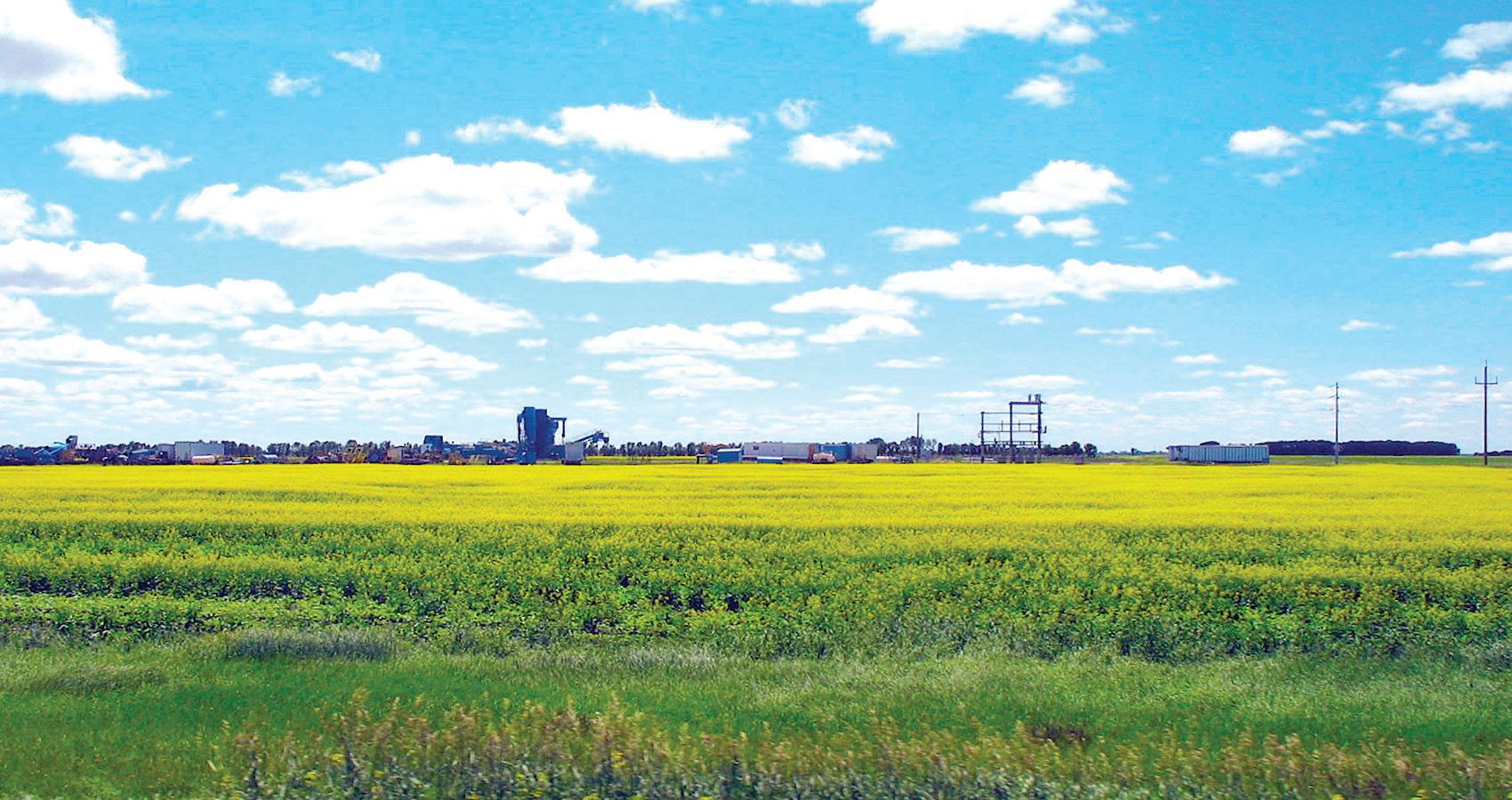
A summer drive through Manitoba, Saskatchewan or Alberta makes the scale hard to miss. Yellow fields stretch to every horizon. Canola production has exploded over the past decade and has become the very lifeblood of the Prairies.
Without it, large parts of those provinces would be economically barren and far more sparsely populated.
We’re not talking about niche agriculture here—we’re talking about a foundational industry that keeps the lights on across three provinces.
Canada is the world’s largest exporter of canola, a crop used to produce cooking oil, animal feed and biofuels. Its export-driven success makes it a cornerstone of the Prairie economy.
Now consider this: Canada’s auto manufacturing industry contributes about $19 billion annually to GDP and employs around 125,000 people directly in assembly and parts manufacturing. Include distribution and aftermarket services, and you get a bigger figure, but the core numbers still pale in comparison to canola.
So, here’s the uncomfortable
question: If you had to sacrifice one, which would it be?
It’s a Hobson’s choice. Nobody wants to lose either. But Canada has been pushed into a position where something has to give.
The Trudeau government—and before that, the Biden administration—imposed 100 per cent tariffs on made-in-China electric vehicles (EVs). The logic was straightforward: protect the billions being pumped into Canada’s auto sector and turn the country into a hub for EV innovation and production.
It was a defensive move: one meant to slow China’s dominance in the global EV market and give domestic manufacturers room to grow. Without it, cheap, well-built Chinese EVs would undercut Canadian and North American models before they ever left the factory floor.
But China doesn’t take these things lightly. In retaliation, it slapped a 76 per cent tariff on Canadian canola. Prairie farmers, many of whom are already grappling with rising costs and unpredictable weather, are now wondering if their main market is disappearing overnight.
China has long been Canada’s largest canola customer, though the relationship has had flare-ups, including temporary bans in past years tied to diplomatic disputes.
More than two-thirds of Canada’s exported canola goes to China. The latest tariff hike has already wiped out an estimated $1 billion in value. And there’s no clear end in sight.
Manitoba Premier Wab Kinew was blunt last week: Canada cannot afford to be in a trade war with both the United States and China. He suggested that, in the short term, Ottawa should direct EV tariff revenues to support
canola producers.
That may buy us some time. But the broader strategic question looms larger: With the U.S. under Trump becoming an increasingly unstable trade partner, and China punishing us for playing by American rules, where does Canada place its long-term bet?
It’s not an easy question to answer.
China is hardly an ideal partner. Its human rights record is abysmal, and its growing economic power often comes with strings attached. But we also can’t deny that it has already become the global manufacturing centre in many key sectors—including electric vehicles.
Then there’s the U.S. A longtime ally, yes, but under Trump, all bets are off. In January, he said of Canada, “We don’t need anything they have.” Not cars. Not oil. Not even niceties.
CUSMA—the Canada–United States–Mexico Agreement that replaced NAFTA—governs most of Canada’s trade with our two largest partners. If Trump reopens the deal—and with Trump, it’s usually safest to take him literally—the Canadian auto industry may not survive. Billions in subsidies and protective tariffs won’t matter if the largest market slams its door shut.
So, again: what should we protect?
New markets for canola are being pursued—in Europe, Japan and elsewhere. But they won’t match China’s scale anytime soon. Diversifying export markets takes years. Prairie farmers don’t have that kind of time.
Meanwhile, dreams of building a Canadian-made EV remain just that: dreams. The auto sector may eventually pivot and survive, but right now, it’s the one on life

support. Canola is the industry that’s vibrant—unless we let it get crushed in a trade crossfire.
I lived in an auto town for over two decades. I know the stakes. I’ve seen what happens when plants close, when supply chains dry up, and when livelihoods vanish.
But we need to be realistic.
Canola is a winning industry. It feeds the economy, supports thousands of families and helps keep our rural communities alive. It doesn’t need endless subsidies or federal cheerleading—it just needs stable access to markets.
That might mean giving ground on EV tariffs. That might mean swallowing some pride on the international stage. But Canada cannot afford to sacrifice a thriving sector to save one already on the brink.
If we’re going to make hard choices—and we will—let’s make the one that protects what still works.
Canada cannot lose canola.
Doug Firby is an awardwinning editorial writer with over four decades of experience working for newspapers, magazines and online publications in Ontario and western Canada. Previously, he served as Editorial Page Editor at the Calgary Herald. © Troy Media
The Manitoba government is expanding its support for farmers and rural communities with the opening of two new Manitoba Agricultural Services Corporation (MASC) offices in Virden and Shoal Lake. The move comes as part of an effort to improve access to agricultural programs and services for producers in the Westman region.
Agriculture Minister Ron Kostyshyn highlighted the importance of the new offices, noting that they address gaps left after the previous
government closed similar locations.
“Our government is committed to ensuring Westman farmers have the tools and support they need to succeed,” Kostyshyn said. “By opening new MASC offices in Virden and Shoal Lake, we are making it easier for producers to access programs and services closer to home, where they are needed most.”
The new offices will provide more convenient, in-person support for crop insurance, lending, and other key
resources. MASC plays a critical role in the province’s agriculture sector by offering risk management programs, financing options, and advisory services to farmers and agri-businesses.
Mayor Tina Williams of Virden welcomed the announcement, emphasizing the value of local support. “The Town of Virden is so pleased to welcome the MASC offices back,” she said. “The value of having a local office for our surrounding farm communities cannot be overstated.”
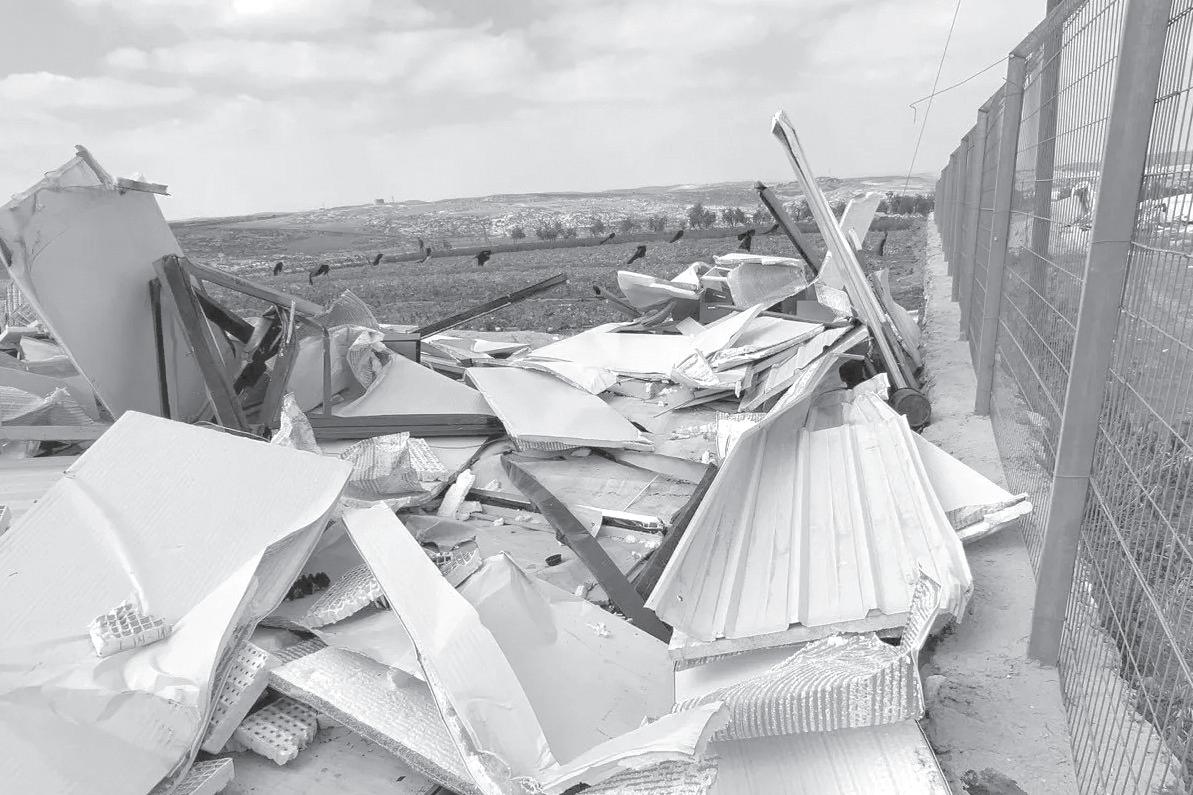
The National Farmers Union (NFU) condemns the Israeli military forces’ targeted destruction of a Seed Multiplication Unit in the southern West Bank city of Hebron. On July 31, the Israeli army, using bulldozers and heavy machinery, laid waste to Palestinian heritage seeds and key infrastructure belonging to the Union of Agricultural Work Committees (UWAC) - a Palestinian farmer organization and member of the global La Via Campesina movement.
As farmers, we share an intimate knowledge of the significance of seeds to a peoples’ food sovereignty, culture and survival. For generations, Palestinian farmers have carefully selected and saved seeds for their specific traits and ability to continuously adapt to changing conditions. Seeds saved by Palestinian farmers are the bedrock of their national food system. Locally adapted, culturally relevant seeds embody generations of agricultural knowledge. They hold the stories, visions, legacies and hopes of their people.
UWAC’s seed bank held seeds that were the heritage and trust of Palestinian farmers in the West Bank and Gaza.
The existence/survival of their heritage seeds are inseparable from Palestinians’ physical and cultural survival. The Israeli government’s deliberate attack on this seed bank is intended to demonstrate to Palestinian farmers and Palestinian society their helplessness as they are pushed toward the brink of total annihilation.
This malicious attack and deliberate targeting of a civilian agricultural facility represents a further escalation of the violence, crimes against humanity, and genocide in Gaza. Israel’s assault on Gaza has resulted in the officially recorded deaths of over 66,700 Palestinians to date. The actual death toll is almost certainly far higher. Farmers and food providers have been devastated by acute bombardment, as well as by the ongoing restriction of movement and access to land and resources. The intentional denial of food and water in Gaza is being used by Israel as a tool of genocide against the Palestinian people, and the resulting mass starvation is a crime against humanity, a violation of international human rights to food and water, and a breach of international humanitarian law.
On behalf of the thousands of farmers and farm workers who are members of the National Farmers Union, we denounce Israel’s deliberate attack on Palestinian seeds and agricultural heritage. We renew calls for the Canadian government to do everything in its power, including implementing a two-way arms embargo and diplomatic and economic sanctions, to stop Israeli military operations against Palestinians in Gaza and uphold the principles of the Geneva Convention.
Each of the new service centres will be staffed by four full-time employees, along with a team of insurance adjustors, and will serve roughly 650 to 700 farmers and agribusinesses in the surrounding areas. With these additions, MASC now operates 12 service centres across Manitoba, providing comprehensive access to agricultural insurance, lending, and other programs.
For more information on MASC programs and services, farmers are encouraged to visit masc.mb.ca.

By Elmer Heinrichs
Late summer or early fall is harvesting season for wild rice, or manoomin as it’s known in Anishinaabemowin, and Manitoba is one of Canada’s largest producers.
In 2024 Manitoba exported roughly $2 million in wild rice, about 36 per cent of Canada’s wild rice export value, according to the provincial government.
Az Klymiuk, an associate professor of biological sciences at the University of Manitoba, wants to understand how wild rice can be incorporated into food production and wealth creation for Indigenous communities.
“It’s harder to go and harvest wild rice than it is to harvest a moose. It takes a lot longer,” Klymiuk said. “It’s a lot cheaper to go and buy mac and cheese from the store than it is to go out in a canoe and harvest this really protein-rich, antioxidantrich, wonderful country food.”
The yield at harvest time can vary from year to year depending on water levels, Klymiuk said.
“If you’re out canoeing, you’ll see it growing up to a metre deep and then as you move into the cattails, it’ll kind of peter off,” Klymiuk said. “It doesn’t compete very well with cattails but you can find it if there are no other plants growing along a margin. You’ll find it from 20 centimetres depth out to fully a metre.”
Harvesting the grain involves paddling a canoe into the shallow water beds where a stick fixed with a special hook is used to pull the rice into the boat.
Tara Mostrom, who is Anishinaabe from Mille Lacs Band of Ojibwe in Minnesota, is general manager of Owamni by the Sioux Chef restaurant in Minneapolis, Minnesota. Owamni focuses on using locally-sourced ingredients from Indigenous owned producers. Mostrom said some of her early memories revolve around wild rice.
Mostrom said the Owamni kitchen goes through hundreds of pounds of wild rice each week, served plain or in vegan dishes, such as paired with beans as a meat substitute in picadillo.
If you buy it for your own kitchen, wild rice’s uses and tastes are unique but its preparation is simple, Mostrom said. Boil it for 35-55 minutes before steaming for 10 minutes.

By Harry Siemens
Crop Profitability Update and an Early Look at Profitability into 2026, by Darren Bond, as shared on CropTalk by Manitoba Agriculture on September 10, set the tone for a sharp financial reality check. Harvest in Manitoba rolls forward between rains, frosts, and short dry windows, leaving farmers juggling immediate work and future planning. To ground those decisions, farm management specialist Darren Bond of Manitoba Agriculture urges producers to sharpen their financial focus. He stresses that this season’s margins remain thin and that 2026 decisions begin now.
Bond says profitability hinges on two points: actual numbers and disciplined planning. “Run your own numbers now,” he says. “Replace estimates with actual yields, invoices, and storage costs. Then calculate your breakeven per bushel by crop and field.
Marketing decisions start from that line.” He reminds farmers that break-even math drives profit, while guessing invites losses.
Current bids underline his caution. Elevators post hard red spring wheat around seven dollars a bushel, canola just under fourteen, soybeans near eleven, and oats at about four. Bond points out that those prices sit lower than opportunities seen earlier in the year.
“Harvest prices usually mark the lows,” he says. “That doesn’t mean wait blindly. It means building a cash-flow calendar that matches bills to staged grain sales. If you choose to store grain, make sure you know how you’ll fund operations in the meantime.”
According to Bond cash flow is the linchpin.
“If you hold wheat or canola waiting for a rally, what pays for fuel, payroll, and fall inputs?” he says. Bond encourages staged sales, some hedging where producers feel comfortable, and close tracking of basis. “You don’t need to sell everything at once, but you need to know what you will sell to meet obligations. Sitting on grain without cash flow is not a plan.”
Bond sees fertilizer as the single biggest driver of 2026 profitability. Urea and anhydrous prices sit above last year’s planning numbers, while phosphorus remains
stubbornly high. Grain prices dropped faster than fertilizer, pushing affordability ratios in the wrong direction.
“Fertilizer looks expensive because it is,” he says. “That doesn’t mean do nothing. It means manage timing, placement, and sources carefully.”
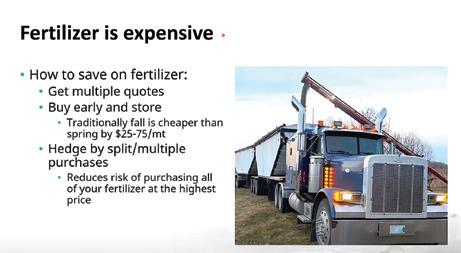
He recommends producers’ hedge input costs by splitting purchases and acting early.
“Get multiple quotes, buy in tranches, and take advantage of today’s spread between urea and anhydrous,” he says.
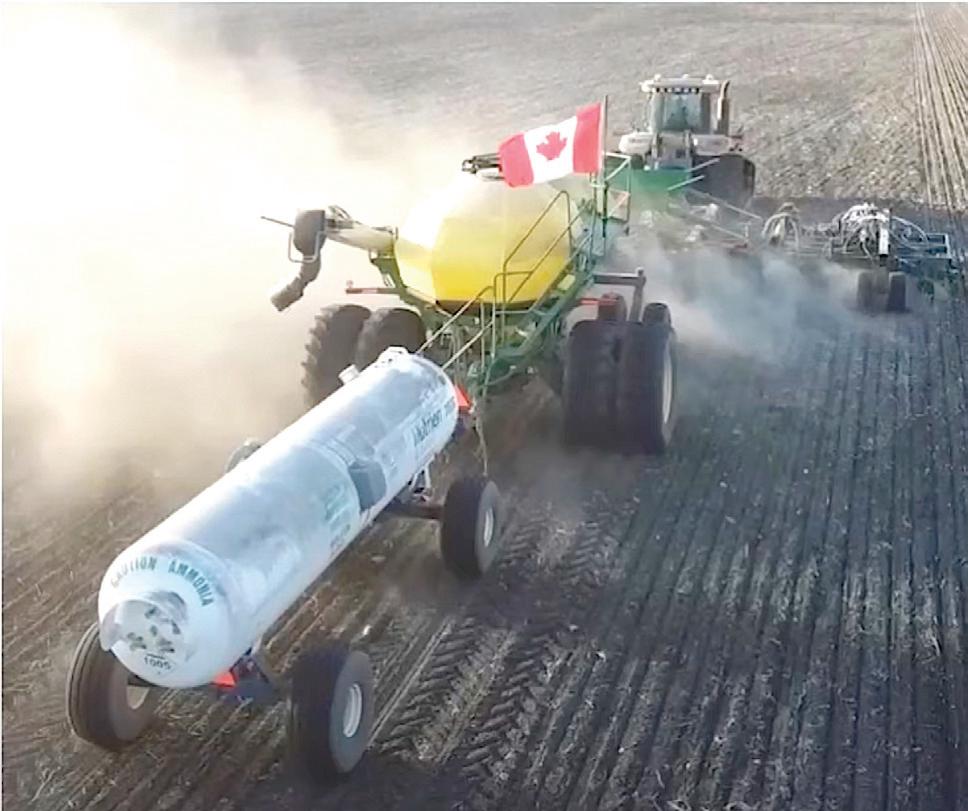
“Anhydrous carries about a 20 percent advantage right now. Put some down this fall under the right conditions— cool soil, good sealing, correct depth—and you reduce risk, spread workload, and capture efficiency.”
Placement ranks equally high in his advice.
“Band phosphorus,” Bond says. “Max out seed-safe rates in-row and band the balance. Broadcasting in fall, especially with high P prices, burns money.” He calls for banding nitrogen where equipment allows and always checking sulphur levels to protect canola yields. “Don’t let sulphur stunt canola. Sulphur is cheap insurance compared to the yield you lose when it runs out.”
He rejects blanket rate cuts as a solution.
“Don’t cut across the farm just to save money,” he says. “Soil test first, zone fields, and target yield expectations. Trim where response is weak, not where yield potential justifies investment.” Bond points out that soil testing costs very little compared to the risk of under-fertilizing profitable acres.
Seed costs also draw attention, especially for canola. Bond notes that many farms now cut seeding rates with
Bond, in the Manitoba Agriculture
back to cash management as the constant theme. “Document a plan,” he says. “Decide in advance how much you will sell at each trigger. Protect yield where it pays, trim where it doesn’t, and build cash flow strong enough to wait for better bids.”
modern drills and still hold yield.
“Better openers and precision allow lower rates, which reduces lodging and saves seed costs without hurting bushels,” he says. “Seed expense looks steep, but technology makes it manageable.”
He circles back to cash management as the constant theme.
“Document a plan,” he says. “Decide in advance how much you will sell at each trigger. Protect yield where it pays, trim where it doesn’t, and build cash flow strong enough to wait for better bids.”
Bond emphasizes that farmers can’t control weather, tariffs, or geopolitics, but they can steer timing, placement, and financial discipline.
“You don’t need to be perfect,” he says. “You just need to avoid being completely wrong. Hedge inputs, hedge sales, and stay liquid. That way, you control your farm’s path even in volatile times.”
For Bond, the formula remains simple: clear numbers, targeted inputs, staged marketing, and vigilance. Producers who apply those principles keep businesses steady through volatile years and prepare ground for the next season with confidence.
By Dan Guetre and funding are valid discussion points and confirmed that governance reform will be a key agenda item at the association’s semi-annual meeting this fall. “We believe a unified national voice is essential,” Fulton said. “Trade, market access, animal health, and research funding all depend on a strong, coordinated presence in Ottawa and internationally.”
In a major shift for the beef industry, Alberta Beef Producers (ABP) has sent a formal letter to the Canadian Cattle Association (CCA) announcing its intent to withdraw its membership effective July 1, 2026. ABP chair Doug Roxburgh said the decision followed “extensive deliberation and strategic review,” citing longstanding governance and representation concerns that he argues have gone unaddressed.
ABP maintains that Alberta producers contribute more than half of the CCA’s budget through the Alberta Service Charge but hold only seven of 27 board seats, a share the organization calls disproportionate. Roxburgh says the current model prevents Alberta from gaining additional seats despite higher contributions, and he disputes how provincial funding assessments are calculated. In its letter, ABP also called for stronger financial oversight, including the election of a finance chair, a more active audit committee, and a thirdparty governance review. Roxburgh emphasized that ABP has raised these concerns repeatedly but has seen “no meaningful progress or willingness to change.”
While ABP will continue to fund the CCA under the current formula until June 30, 2026, the group has indicated it is exploring new advocacy models to represent Alberta cattle producers if an agreement cannot be reached.
CCA President Tyler Fulton called the announcement “disappointing” but stressed that the association is committed to finding common ground before Alberta’s membership officially ends. Fulton acknowledged that Alberta’s concerns about representation
The potential withdrawal of Alberta from the CCA has raised concerns across the country, particularly in Manitoba. Alberta’s contributions represent a significant portion of the CCA budget, and their loss could result in higher levies for other provinces or reduced services such as research programs, policy advocacy, and trade missions that benefit producers nationwide. Industry analysts warn that a divided beef industry could lose leverage with federal regulators and international trade partners, potentially weakening Canada’s ability to negotiate market access and advocate for producers’ interests.
For Manitoba producers, who rely heavily on interprovincial and export markets, Alberta’s departure could mean their voice carries less weight in national lobbying efforts. Manitoba and other smaller provinces also stand to lose access to technical expertise and infrastructure funded in part by Alberta’s contributions, including animal health research and market development initiatives. Some analysts have cautioned that if Alberta establishes a separate advocacy body, it could fragment the industry’s national strategy and lead to competing priorities on key issues like traceability regulations, environmental policy, and international trade nego-
tiations.
ABP’s move is widely seen as a push for greater influence and decision-making power within the CCA. The group is seeking more representation on the board to match its financial share, greater transparency in how money is spent, and more input into the strategic direction of the organization. If those demands are met, it would shift decision-making power toward Alberta, potentially reducing the relative influence of smaller provinces.
However, industry experts note that such a shift would not necessarily harm producers in Manitoba or elsewhere. Alberta’s policy priorities— market access, cross-border trade, and competitiveness— are issues that affect the entire Canadian cattle sector. A stronger, better-funded CCA that retains Alberta’s participation could lead to more effective federal lobbying, better-funded animal health programs, and a stronger voice in global markets. The greater risk lies in perception and trust: if smaller provinces feel sidelined, national unity could suffer. Many expect any governance reforms to include safeguards that ensure all provinces maintain a meaningful voice in national decision-making.
With nearly a year remaining before Alberta’s withdrawal becomes official, both ABP and CCA have time to negotiate a compromise. Roxburgh has stated that ABP remains open to staying within the CCA if meaningful reforms are agreed upon, while Fulton expressed optimism that common ground can still be found. The outcome of these talks is likely to have lasting implications for beef producers in Manitoba, Alberta, and across Canada.
By Elmer Heinrichs
The latest report from the Canadian Crop Hail Association shows minor hailstorms are still damaging crops in Western Canada as harvest continues.
CCHA member companies are investigating 310 claims of crop damage from storms that occurred August 31-September 6. Companies are still assessing damage from the storms that occurred in late August.
“Adjusters are out in full
force to complete hail claims quickly as harvest is in full swing across the prairies,” said Brian Bernauer, Rain and Hail Insurance Services.
Producers should consult their hail policy for proper adjusting strips that must be left if fields will be harvested prior to adjusters being able to attend to the claim.
Companies contributing to this report are Agriculture Financial Services Corporation, Co-operative Hail Insurance Company, Palliser Insurance
By Dan Guetre
Alberta Beef Producers’ decision to threaten withdrawal from the Canadian Cattle Association has raised eyebrows across the country, but whether it is “unreasonable” depends on perspective. From ABP’s point of view, the concerns are clear and arguably valid. Alberta contributes more than half of the CCA’s budget but holds only seven of 27 board seats, leaving the province with what it sees as disproportionate influence over national decisions. ABP is asking for a governance structure that better aligns representation with financial contribution, greater transparency in spending, and more say over the organization’s strategic direction — all reasonable demands in a member-funded organization.
For smaller provinces, however, ABP’s stance can appear aggressive. Increasing Alberta’s representation would almost certainly reduce the voting power of other provinces, potentially sidelining regional concerns such as small-scale processing, provincial traceability priorities, or local market development. Manitoba producers, for example, rely on national advocacy and coordinated programs funded in part by Alberta’s contributions. Will losing their relative influence make it harder for their priorities to be addressed, even if Alberta-driven policies benefit the industry broadly? Manitoba Beef Producers and their members will need to look internally.
The tension lies not in the legitimacy of ABP’s demands, but in the method. By setting a firm withdrawal date, ABP applies significant pressure on the CCA and other provincial associations, essentially forcing them to negotiate under a “now or never” scenario. This hardline approach could be seen as uncompromising, yet after years of stalled talks, it may also be the only way to secure meaningful reform. While remaining positive, Tyler Fulton, MBP President and a Manitoba rancher called ABP’s decision “nuclear.”
Ultimately, ABP’s actions highlight a broader challenge for Canada’s beef sector: balancing the financial and political weight of a major province with the need for national cohesion. Whether Alberta is being unreasonable may be less important than whether the CCA can restructure itself in a way that ensures all provinces feel heard while keeping the organization strong and unified.
Company, Rain and Hail Insurance Services, and Saskatchewan Municipal Hail Insurance.
Manitoba communities impacted include: Benito, Binscarth, Bowsman, Carman, Dauphin, Dominion City, Durban, Gilbert Plains, Holland, La Riviere, Letellier, Morris, Newdale, Notre Dame, Oakburn, Ridgeville, Roblin, Rossburn, Russell, Shoal Lake, Solsgirth, Somerset, St. Alphonse, St JeanBaptiste.


By Harry Siemens
As the September 10 Manitoba Agriculture CropTalk session hosted by Lionel Kaskiw moved into field updates, the focus turned squarely to Manitoba’s harvest. Farmers wanted clear guidance on frost damage, disease pressures, and the uneven pace of combining across the province.
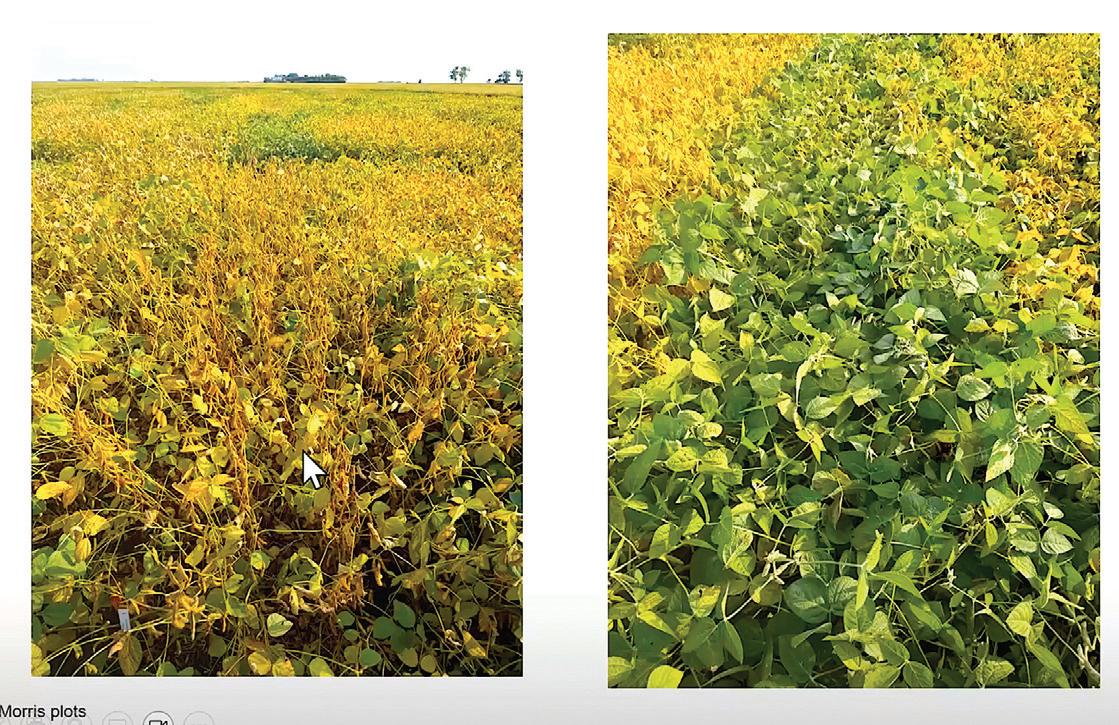
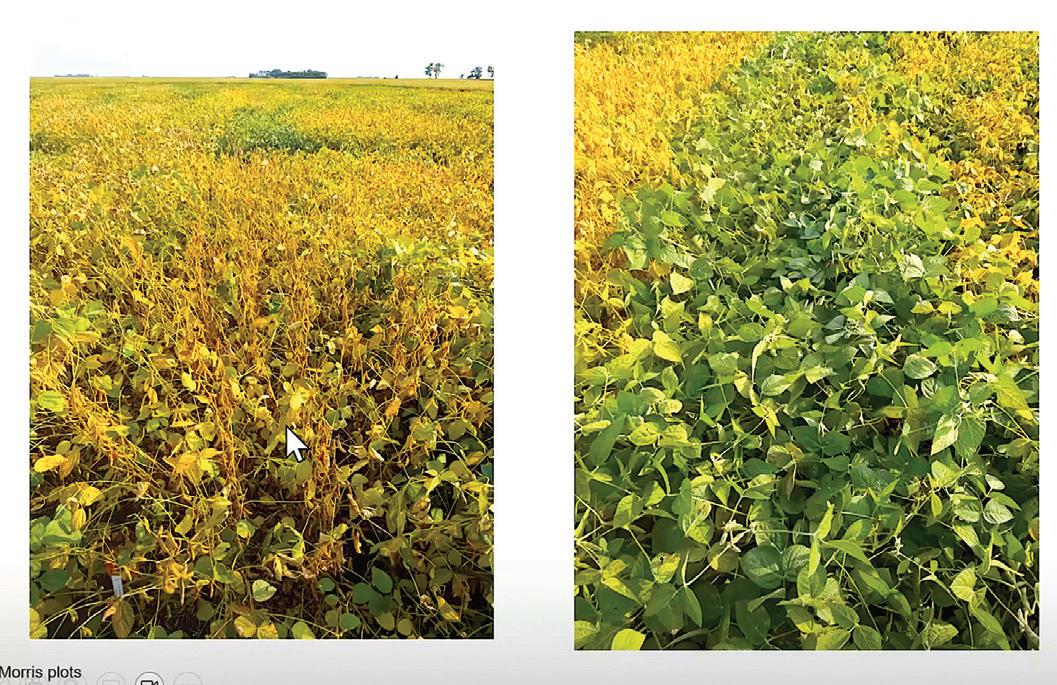
Soybeans drew much of the attention. Dennis Lange, provincial pulse specialist, explained that soybeans in the R6.5 to R7 stage handle frost with minimal yield loss.
“Pods at the top canopy protect the seed,” Lange said. “You might see cosmetic damage or some leaf drop, but unless beans sat at the R5 stage during those minus two nights, yield loss stays minor.”
Farmers worried about green seed also received reassurance. “You can expect pockets of green seed in earlier fields, but most soybeans continue to mature normally,” Lange said.
Frost also touched laterseeded canola. Anne Kirk, cereal specialist, urged farmers to assess seed colour change carefully before swathing.
“If fields sit under 10 percent seed colour change, swathing too early costs more yield than frost itself,” Kirk said. “At 50 percent, the calculation flips—swathing can protect yield if frost causes pods to split or shatter. Management depends on where most of the crop sits in maturity.”
Sunflowers and dry beans faced another challenge: white mould.
John Gavloski, entomologist with Manitoba Agriculture, reported a higher-than-normal incidence, particularly in dense stands. Still, he empha sized that the impact on yield remains limited.
“Under 10 percent infec tion is more cosmetic than economic. It looks worse than it is,” Gavloski said.
Harvest progress varies sharply by region. Eliza beth Nuremberg, forage and livestock specialist, said thunderstorms in the South west kept combines parked and left crops damp, forcing farmers to dry grain. Wheat neared completion at aboveaverage yields, while barley and oats moved steadily but
unevenly. Canola lagged, with only 10 to 15 percent complete and frost damage reported in some patches. Soybeans advanced thanks to timely rains, though frost nipped late-seeded acres.
In the Northwest, producers pushed hard through warm days before weekend rain stalled progress. Reports pegged wheat yields anywhere from 50 to 70 bushels per acre, depending on timing and location. Some fields sprouted after rain, adding grading risk. Canola prices moved slowly, with about 8 percent off in the Swan Valley, but much less further north.
Central Manitoba showed stronger results. Spring cereals are nearly wrapped up, with many farmers reporting record oats and barley yields that strained bin space. Canola reached 60 percent harvested, with yields in the 45-60 range, with some higher in the Pembina Valley. Corn entered the dent stage with optimism for maturity, while sunflowers advanced to R8–R9. Early soybeans came off with solid yields, and dry beans hit full maturity.
In the East, 95 percent of wheat, oats, and barley were harvested, with yields averaging 60 to 130 bushels per acre, depending on the crop. Canola sat halfway harvested, averaging 45 to 50 bushels. Corn dented, and frost caused only minor edge damage. Soybeans turned colour and dropped leaves, with first harvest reports trickling in.
Interlake producers balanced good yields with frost impacts. Spring wheat averaged 65 to 75 bushels, with protein at 12 to 15 percent. Oats ran 110 to 150 bushels, barley around 65. Canola yielded about 45. Corn suffered noticeable cob damage in frost pockets, and silage
harvest started early. Soybeans ripened quickly, with pod set weaker in frost-hit areas.
Beyond yield, livestock and forage notes surfaced. Nuremberg said rain complicated native hay harvest, but pastures held up better than expected. Corn silage began moving off fields at solid quality. Cattle stayed in good condition despite fly pressure, while producers kept watch for pneumonia and foot rot. Water supplies remained short in the southeast, even as feed supplies ranged from a deficit in some regions to a surplus in others.
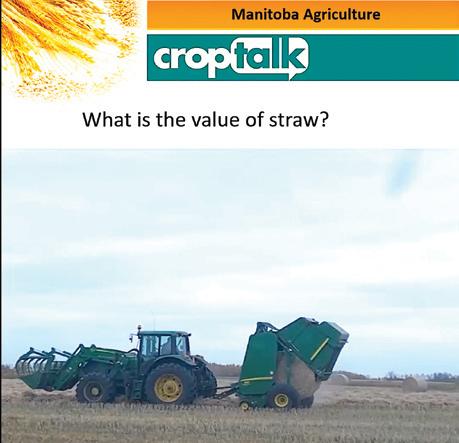
Extension staff reminded farmers to test feed and water, watch for straw baling windows, and consider a fall fertilizer strategy. They also flagged upcoming deadlines for winter wheat insurance and the value of early soil tests to guide 2026 decisions. CropTalk left farmers with a mix of caution and reassurance. Soybeans and canola may dodge the worst of frost, cereals deliver above-average yields in many regions, and livestock operations prepare for winter with cautious optimism. The constant remains management—checking fields daily, recording actual costs and yields, and planning with both resilience and realism.
A delegation of leading Japanese tofu producers, food manufacturers, and importers toured Canada in early September to see firsthand the quality and consistency of Canadian soybeans.
Hosted by Soy Canada and its members, the group represented the Japan Tofu Association and visited farms, research labs, seed developers, and export facilities across the country.
“Canadian soybeans are sought after in Japan for their high quality,” said Brian Innes, executive director of Soy Canada. “Hosting our customers showed our commitment to quality, sustainability and trust with a market that purchases one third of our food-grade soybean production.”
The cross-country mission highlighted the collaborative effort behind Canada’s food-grade soybean industry. Stops included the University of Guelph, Agriculture and Agri-Food Canada, and the Canadian Grain Commission — key players in soybean research, production, and quality assurance.
A key moment in the tour was the group’s visit to the Canadian Grain Commission’s Soy Quality Program laboratory. There, the delegation compared Japanese and Canadian tofu analysis methods, which help ensure confidence in how Canadian soybean varieties perform for tofu production. The Soy Quality Program, a partnership between Soy Canada and the Canadian Grain Commission, evaluates more than 150 food-grade soybean varieties grown in Quebec, Ontario, and Manitoba for quality traits essential to tofu makers.
Canada exported approximately $400 million worth of soybeans to Japan in 2024, with about 45% of those exports destined for tofu production. Japan relies heavily on imports to meet domestic soy food demand, with roughly 70% of its food-grade soybeans sourced internationally.
“It was fantastic to see our members connect directly with our customers,” Innes added. “There’s nothing like personal connections to maintain and build the reputation of Canadian soybeans with our Japanese customers.”

Submitted photos

By Dan Guetre
Canada’s canola sector is voicing strong disappointment over the federal government’s recently announced support measures, saying they fall well short of what is needed to address the economic fallout of China’s closure to Canadian canola seed, oil, and meal.
“We are discouraged with the government’s support package for the industry. The measures announced today do not reflect the seriousness of the challenge facing the value chain,” said Chris Davison, President & CEO of the Canola Council of Canada (CCC).
The government announced
$370 million in biofuel funding and additional trade diversification supports earlier this month. While industry groups welcomed these as positive first steps, they stressed that the programs fail to address immediate financial pressures.
“Farmers should not be expected to borrow their way out of this situation,” said Rick White, President & CEO of the Canadian Canola Growers Association (CCGA).
“The Advanced Payments Program (APP) is not designed to provide the required support canola farmers need under this situation.”
Industry representatives estimate the price impact of
China’s ongoing anti-dumping investigation at a discount of $60–$100 per tonne of canola — translating to $1.2–2.0 billion in losses on an average 20-million-tonne crop.
Davison added that the crisis is not limited to farmers.
“The government has also not recognized extensive impacts on the rest of the canola value chain, including exporters and processors who are also facing significant financial impacts as a result of the Chinese market closure,” he stated. “This must be addressed.”
China’s Ministry of Commerce (MOFCOM) confirmed on September 9 that
it has extended its anti-dumping investigation into Canadian canola seed imports until March 9, 2026. The investigation was launched in September 2024 and was expected to conclude within a year, with the option of a sixmonth extension.
Industry leaders say the extension may signal willingness by both governments to work toward a resolution but warned that farmers are already bearing heavy losses.
“With farmers currently in the field harvesting this year’s crop, the need for action by government is urgent,” Davison said.
While the industry welcomed some support for
biofuel production, Davison and White cautioned that the announced Biofuel Production Incentive does not go far enough to create meaningful additional domestic demand for canola.
They also criticized the federal government for failing to address foreign used cooking oil (UCO) imports, which displaced nearly one million tonnes of potential canola demand in 2024.
“The government must pursue all avenues to resolve the current trade dispute with China and re-open that market for the Canadian canola industry,” the CCC and CCGA said in a joint call to action.
The issue was front and centre during the recent Federal, Provincial, and Territorial (FPT) agriculture meetings, which began September 7 at a Manitoba farm. Producers and industry representatives spoke directly with Agriculture Minister MacDonald and Parliamentary Secretary Kody Blois, emphasizing that farmers cannot simply finance their way through a situation they did not cause. While federal officials have indicated they are engaged — including through ministerial roundtables and discussions at the Canada-China Joint Economic and Trade Commission — solutions remain slow-moving.
By Harry Siemens Peters said.
Korey Peters, a farmer from Randolph, MB, farms as part of Herbsigwil Farms. This fall, rain turned fields into mud, forcing Peters and his family to adjust their harvest pace and strategy.
“Overall, things look pretty good in our area,” he said. “We are very much on the wet side right now. We had five inches of rain a few days ago, similar to last year when we had eight inches. It just makes getting the rest of the harvest off a little bit muddy, but things can still dry up. The good news is that the crops look really nice, so it makes battling through the mud a little more worth it.”
Heavy clay dominates the farm’s soil, adding to the challenge.
“We have pretty heavy clay in most of our fields, so it makes it tough. Trucks stay on the road, the combines have tracks, the grain cart has tracks, and the tractor pulling the cart has tracks,”
“We put mud on the road and then come back with the loader tractor to scrape it off, trying to keep things clean. It’s the only way we can do business right now.”
Peters said they finished cereals and had about 900 acres of canola left when the rain hit.
“We’re doing one field today that was a little farther away from the rain, about 100 acres. Then we’re probably going to sit on it. Soybeans are still 10 days to two weeks away, so we’re not in a huge panic yet. We don’t have to destroy fields if it isn’t necessary. We know there’s more rain coming this weekend, so we’ll test a few other fields to see how severe the damage is. Hopefully, by late next week, we can take the last of the canola off and then start later crops—soybeans, sunflowers, and eventually corn.”
Changes in crop mix marked the farm’s evolution.
“For us, things have changed since I started farming,” Peters said. “We added corn and sunflowers and shifted acres around. We expanded the corn side of things because we have access to hog manure in southeast Manitoba. Hog manure means higher FOSS levels, so corn makes sense. There’s always a lot of corn in our area, and it never seems to be less.”
Driving the region this year, Peters noticed corn stands taller than usual.
“This year, it seems like corn is a foot or two higher than normal. Wherever you drive, there’s corn on both sides of the road. You have to be careful at every section.”
He explained why. “Some acres didn’t get seeded in 2024 because it was so wet. Those acres got manure in the fall and then seeded into corn in the spring of 2025,” said Peters. “Others received manure in the summer or fall of 2024 and then planted corn this year. So there’s probably
By Dan Guetre
The Manitoba Forage and Grassland Association (MFGA) is gearing up for its 2025 Regen Ag Conference, set for November 12–13 in Brandon. This year’s event promises to once again deliver high-value programming for farmers and industry supporters, focusing on the theme Enriching Land, Lives and Livelihoods.
“We are proud of the quality of the conference once again this year,” said MFGA Executive Director Duncan Morrison in a recent statement. “We firmly believe the keynotes and the overall conference theme… will be well supported in all talks, conversations and trade show interactions.”
The MFGA Regen Ag Conference has built a reputation for offering not only high-calibre keynote presentations but also unique experiences to enhance attendee engagement. Past events have featured the Manitoba premiere of Common Ground, fireside chats with experts such as Dr. Jon Lundgren and Jaime
Elizondo, hybrid event live-streams with virtual trade show interviews, and breakout sessions allowing delegates to connect with keynote speakers in a more intimate setting.
“This year, in addition to our sterling slate of keynotes and updates from past conference keynotes John and Deanne Chuiko, we have dedicated our entire November 12 evening event – kicked off with a mixer and meal – to a threepack of panels all around regen ag in three important areas: Farm Gate, Dinner Plate, Global Weight,” Morrison explained. The panel discussions will be moderated by Dana Penrice and Bluesette Campbell of Holistic Management Canada and are expected to deliver “solid discussions, provocative thoughts and tangible learnings.”
Now in its eighth year, the MFGA Regen Ag Conference continues to grow in scope and impact. Morrison expressed gratitude to past conference committees, volunteers, sponsors,
and attendees for shaping the event into what it is today.
“As a foundational premise year after year…we take great pride in hosting an awesome gathering of farmers at a conference organized by farmers focusing on farmers interested in learning about regen ag,” Morrison said. “We can’t wait! And we are really looking forward to seeing you all there!”
MFga Regen ag conference 2025 – at a glance
Dates: November 12–13, 2025
Location: Keystone Centre, Brandon, MB
Highlights:
- Keynote presentations on regenerative agriculture
- November 12 evening mixer, meal, and three-panel event (Farm Gate, Dinner Plate, Global Weight)
- Trade show and networking opportunities
- Breakout sessions with keynote speakers
More Info & Registration: Visit MFGA’s website at mfga.net.
more corn than usual in our area.”
Looking beyond harvest, Peters described the marketing picture.
“It’s going okay. It has its struggles, but that’s no different than other years. Canola tariffs threw a wrench into things, but the price rebounded close to last year’s. We’re sitting on a lot of stuff now, starting to fill bins. We presold a little bit of canola and a decent amount of wheat, but the rest we’re holding. We’ll fill bins with later crops and then decide from there.”
Family keeps Herbsigwil Farms running.
“My brother, my cousin, and I manage the farm. My dad and my uncle help out a little bit, but they’re retired now. My cousin’s boy farms with us full-time, too,” Peters said.
For Peters, farming in southeast Manitoba demands constant adjustment—heavy soils, frequent rain, tall corn, shifting acres, and volatile markets. But with family beside him and bins filling up, he presses on through the mud.




On August 23, cousins from the
By Harry Siemens
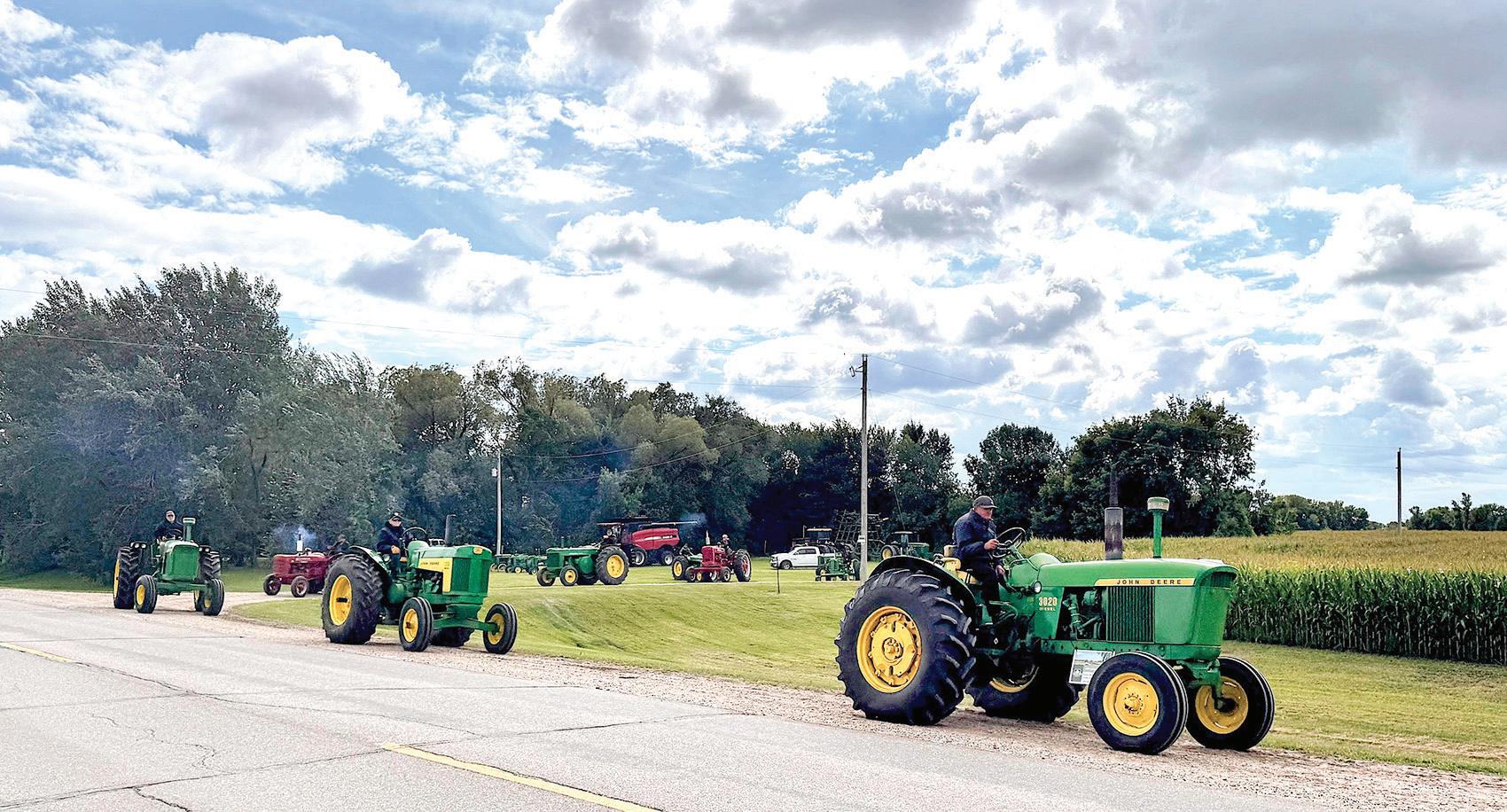
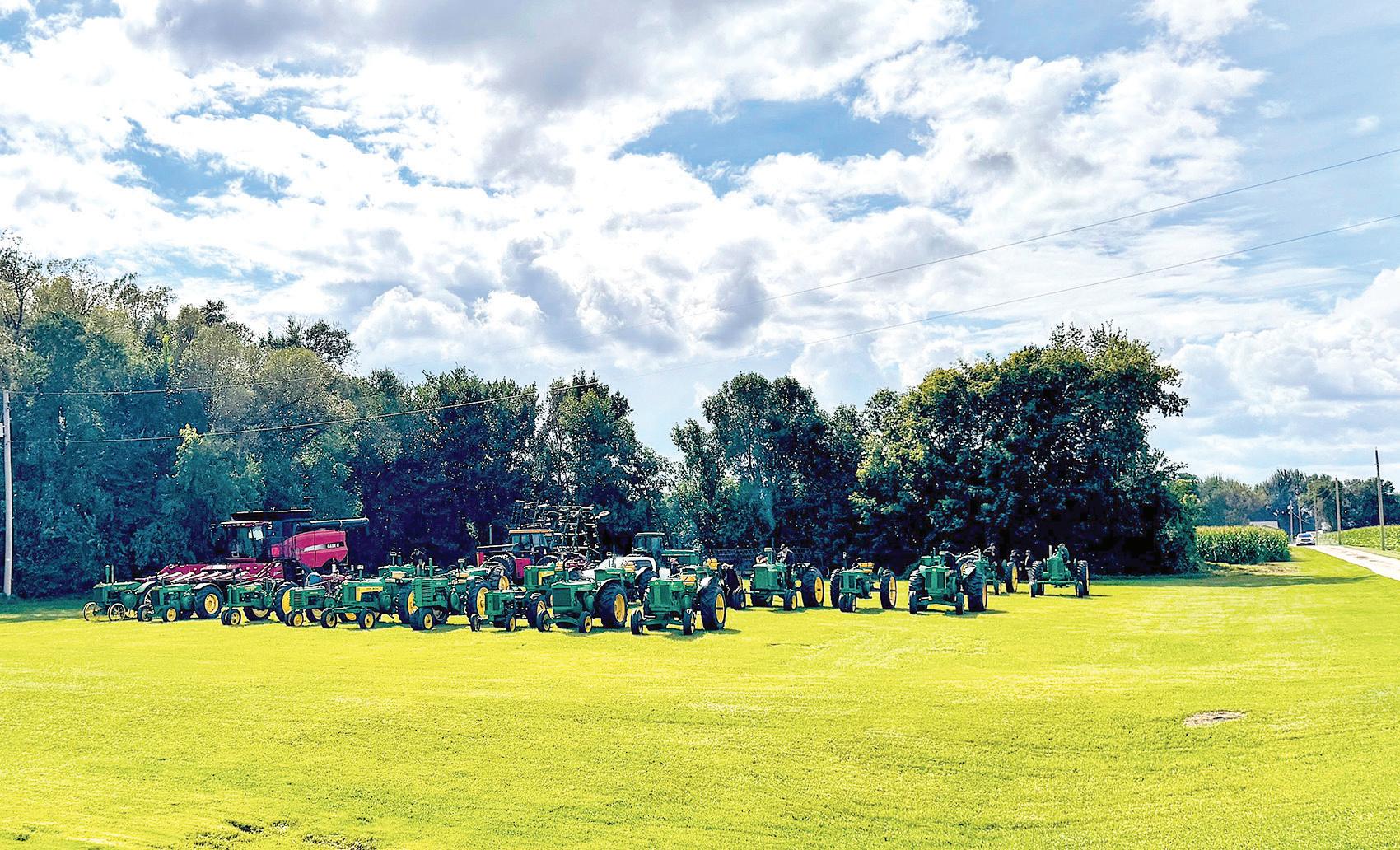
On August 23, cousins from the Rempel and Braun families rolled into the village of Hochfeld, MB, in a line of restored tractors. They visited, they ate barbecue, and they celebrated a tradition that started years ago at the Willie Rempel farm south of Winkler. Every few summers, the families gather to share food, memories, and their passion for tractors. This year, nearly 18 machines made the drive, each carrying history, sweat, and the laughter of those who restored them.
Willie Rempel, who farmed for 50 years, explained how the event unfolded.
“We planned to drive through Hochfeld, then through Neuenburg, and come back here,” he said. “I think we had close to 18 tractors on the road. At least half of those we restored ourselves. Some only needed paint, others needed complete engine work, but we always tried to make them as original as possible.”
and
For Rempel, restoring tractors never became a business.
“If I had a family tractor and someone wanted to buy it back, they could, as long as I covered my work. But no, this wasn’t a business. It was something we enjoyed,” he said. “These days, I can’t spend as much time out here because I take care of my wife, but my brother Frank helps me every Tuesday. His wife stays with mine, and then we get some work done.”
The work carried into last winter when he tackled a John Deere G.
“We put in a new crankshaft and connecting rods, a friend brought from Mexico. The old babbit bearings got hammered out, and nobody wants to re-babbit anymore,” he said. “It takes a lot of time, and it’s hard to find someone who can do it. We decided to do the overhaul ourselves.”
He laughed when asked why so many John Deere models filled the yard.
“If they’re green, they
should be seen. If they’re red, they should be in the shed,” he said. The line in the yard backed up his claim—row after row of green machines polished and ready for the parade.
Not every tractor belonged to Willie.
“I told the boys to bring their own tractors. I even borrowed two from a friend, nicely fixed up and ready to go. The problem is I’ve got more cousins than tractors,” he said. “My mom was a Braun, so half the group is Braun and half is Rempel. It’s really a RempelBraun tractor drive, almost like a family reunion.”
The passion for collecting and fixing up tractors has deep roots.
“I started with red, but it changed over and then kept it that way,” he said. “One John Deere R we found north of Plum Coulee. It had sunk six to eight inches into the ground behind a chicken shop. John Wall and I worked on it all winter, using a big block and
a sledgehammer to free the pistons. That’s how far gone it was.”
Among his favourites is the John Deere 4000.
“I’d been looking for one for many years. They’re basically a lighter 4020 with smaller axles and fewer features. Deere built them in 1969, about 8,000 units, but they didn’t last long,” he said. “My neighbour found one in St. Pierre. It had a cab on it and needed work. I bought it, then spent $10,000 just on the paint job. But it’s by far the prettiest tractor I own.”
Rempel shared how his friend Steve Klassen helped


build the collection.
“We worked in a warm shop, went for coffee twice a day, and had fun. It was a labour of love,” he said. “We did about eight tractors every winter, sometimes more if the snow stayed late. Visitors dropped in to see what we were doing. It was a good time. Steve got paid, I didn’t, but that was OK—we both loved the work.”
Asked what would happen to his collection, Rempel smiled.
“The kids will look after
them,” he said. “My wife sometimes asks me what I’ll do with all this junk. I tell her I won’t worry, because the kids will have to clean it up.”
The August 23 parade offered more than just a drive through Hochfeld. It pulled together cousins, history, and craftsmanship. With tractors shining in the sun and families gathered around the barbecue, the Rempels and Brauns once again proved that heritage lives not only in memory but also in the steady rumble of restored engines.
by

By Dan Guetre
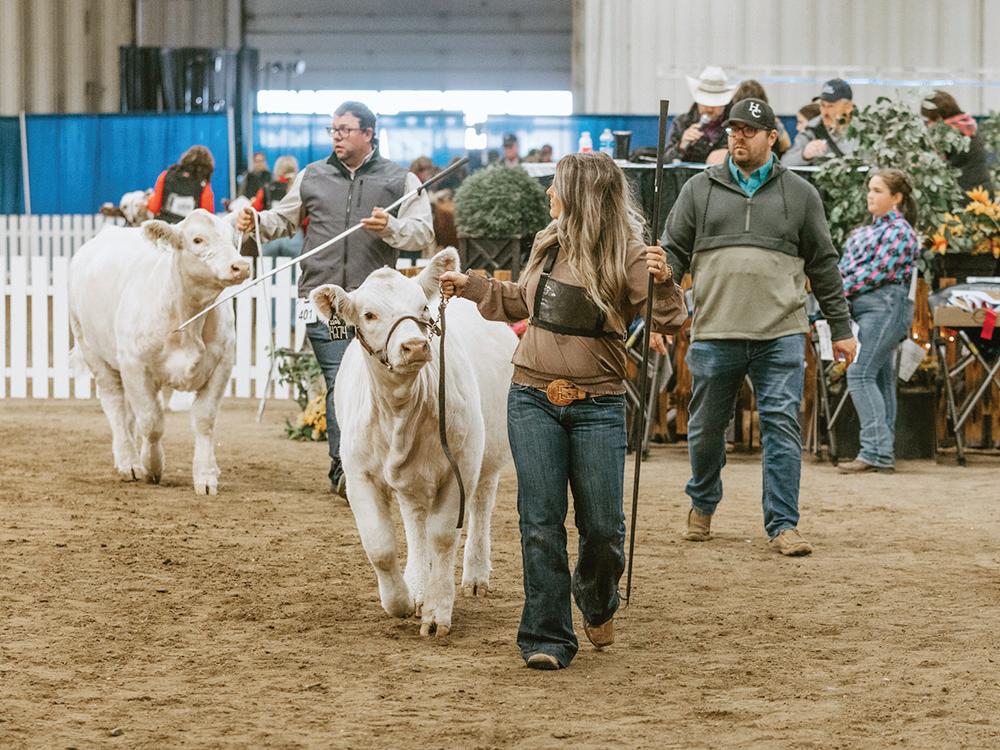
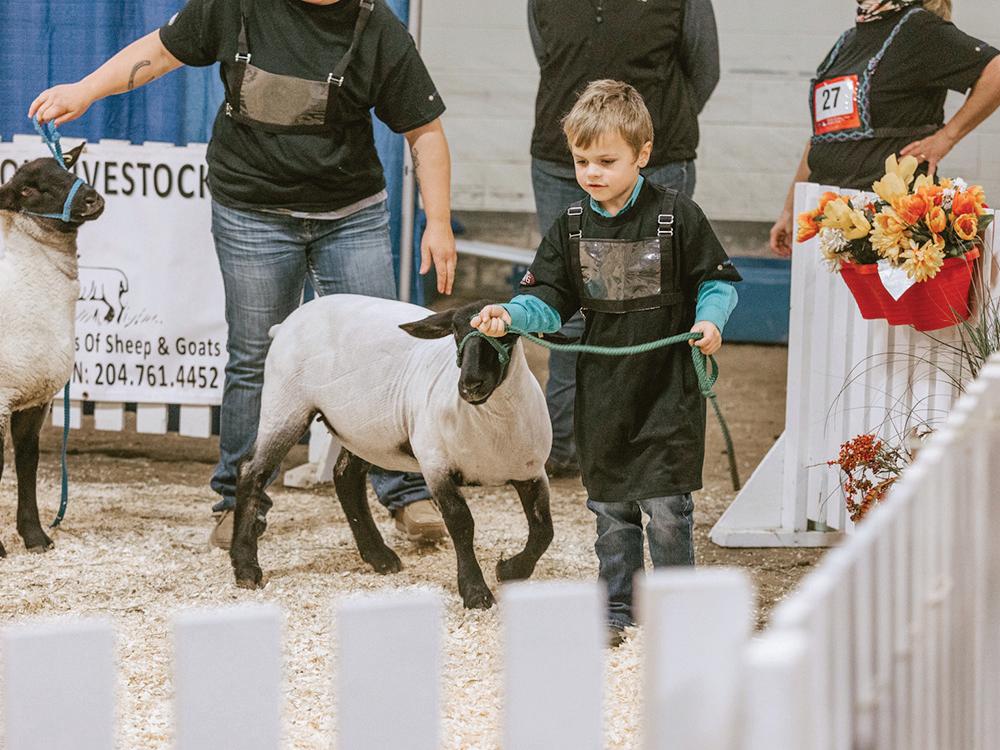
Manitoba AG EX, the province’s largest all-breeds cattle show, is set to take centre stage this fall from October 29 to November 1, at the Assiniboine Credit Union Agricultural Centre in the Keystone Centre. Drawing top breeders, livestock exhibitors, and industry leaders from across Manitoba, Saskatchewan, and Alberta, the event promises three action-packed days celebrating agricultural excellence, youth education, and community engagement.
Manitoba AG EX is more than a cattle show — it’s a platform for top-tier competition, networking, and innovation. Highlights include the Little Lady Classic, Jackpot Bull Show, Junior Show and Showmanship, and the Supreme Breed Extravaganza, where breed champions face off before advancing to the Canadian Western Agribition in Regina.
Known for its professionalism and prestige, the AG EX Cattle Show provides a vital marketing opportunity for leading purebred breeders and attracts exhibitors and visitors from across Western
Canada.
Back by popular demand, the Sheep Show, in partnership with the Manitoba Sheep Association, features live demonstrations, breed exhibits, and the popular EweMania program for schools. In 2024, the show introduced facial recognition technology for sheep — a provincial first highlighting Manitoba’s innovation in small ruminant agriculture.
Youth-focused MooMania, designed for Grades 3–5, gives students a hands-on, educational experience exploring the life of a cow from barn to dinner table. Activities include mock cattle shows, live auctions, and interactive learning stations about beef production, business, and sustainability.
Manitoba AG EX also hosts a vibrant trade show, now accepting vendor applications, providing exhibitors with access to producers, exhibitors, and ag enthusiasts across the province. Sponsorship opportunities remain available for companies wishing to connect with Manitoba’s agricultural community.
Exhibitors can submit en-

tries for the 2025 cattle show until October 3. Participants have the chance to compete on Manitoba’s biggest stage and qualify for Agribition in Regina.
Returning this year with a Halloween twist, the fan-favourite Party in the Dirt will feature PRAIRIELINE on Friday, October 31, at 8 pm. The 18+ event promises highenergy country music, dancing in the dirt, and festive Halloween fun. Costumes are encouraged, and tickets are $10 per person.
We are so excited to bring PRAIRIELINE to headline this year’s Party in the Dirt,” said Bob Scott, Co-Chair of Manitoba AG EX. “The Hal-
loween theme adds a whole new level of fun, and PRAIRIELINE’s energy guarantees a night you don’t want to miss. It’s the perfect way to celebrate community, agriculture, and country music.” For cattle entries, trade show applications, Party in the Dirt ticket info, or sponsorship opportunities, visit provincialexhibition.com/manitobaag-ex or call 204-726-3590. From high-level livestock competition to interactive learning experiences and a Halloween-themed country music bash, Manitoba AG EX 2025 promises something for everyone — competitors, families, and ag enthusiasts alike.

By Elmer Heinrichs
The harvest of community growing projects across the province is also underway with some 10 projects combining their crops being grown to raise funds for the Canadian Foodgrains Bank.
Combines began in early August with a harvest in the Interlake, and others beginning soon thereafter, says Dale Friesen regional representative for the Foodgrains Bank.
“My overall impression is one of cautious optimism,” says Friesen. Noting that the yields have varied depending on the region and the
crop, but “many [producers] are reporting solid returns, and especially so in areas which benefited from timely rains earlier in the season.
“What really stood out for me this year is the sense of community. Harvest time always brings people together,” says Friesen now in his first year as regional representative.
“I am enjoying seeing farm projects working together to help work on hunger related issues around the world.
Crops have varied across the province with the Rock Solid group near Stonewall grew a crop with only two inches
of rain, but in the Winkler area I’ve heard of ‘quite nice crops,’” says Friesen.
At Boissevain September 9 the BMW project harvested as field of wheat yielding 81 bushels an acre, and on September 20, six combines harvested 80 acres of wheat at Elm Creek. The Kola group harvested 260 acres of canola, and Arborg also harvested 160 acres of canola.
Friesen has been stopping by various projects at harvest timed and says it’s a great opportunity to thank the volunteers for their dedication and sacrifice.
By Dan Guetre Erlandson and Artel Farms
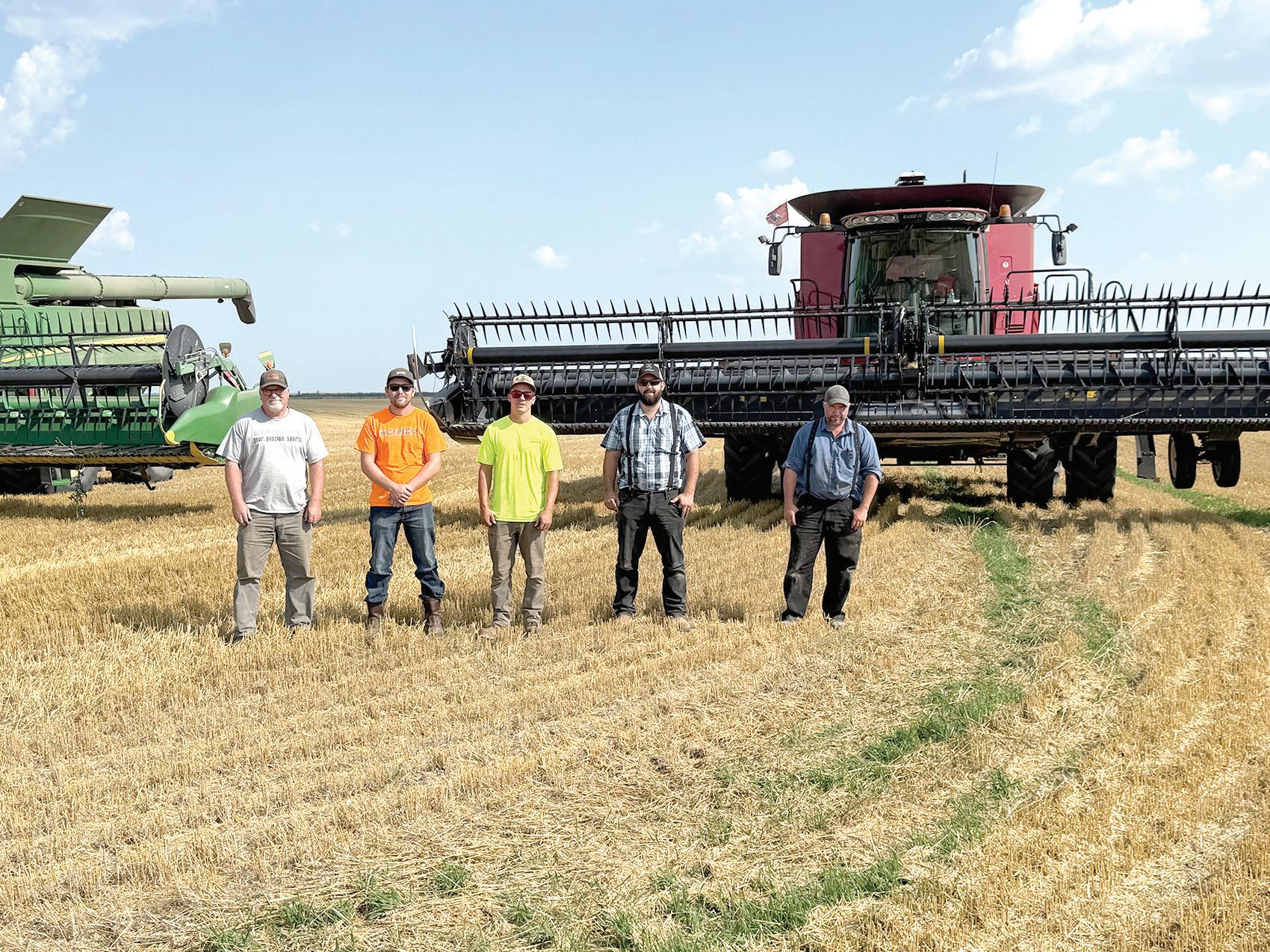
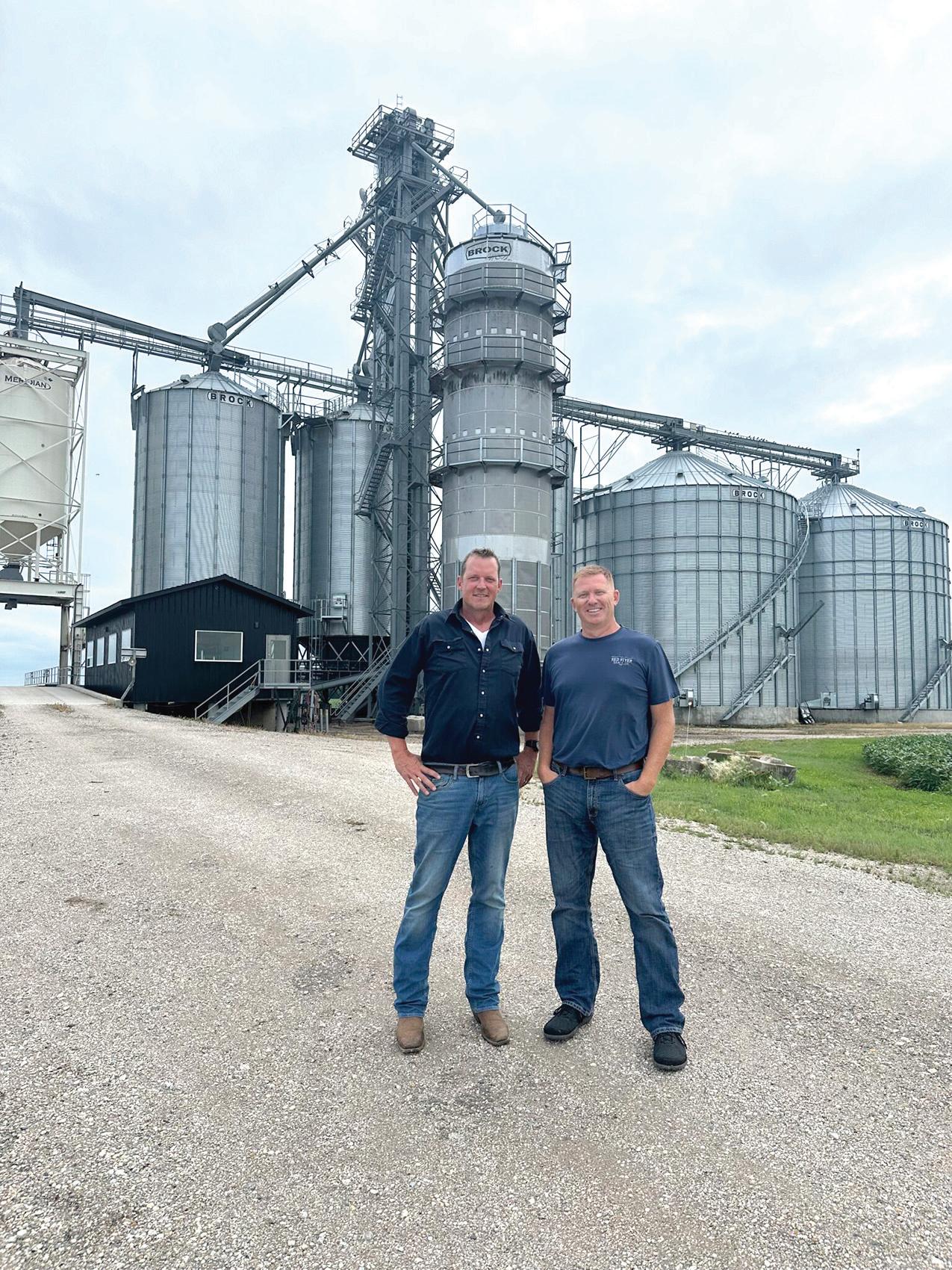
Southeastern Manitoba farmers harvesting corn and soybeans will have a new, convenient option this fall thanks to collaboration between Red River Grain Co. and Artel Inland. Red River Grain is now purchasing corn and soybeans delivered to the Artel Inland facility, located just east of Niverville on Highway 59.
“This partnership is a great fit for everyone involved — Artel Inland, the local farm community, and our team at Red River Grain,” said Evan Erlandson, President of Red River Grain Co. “We specialize in grain handling and marketing, and we’re excited to offer more choice to growers in the Niverville area.”
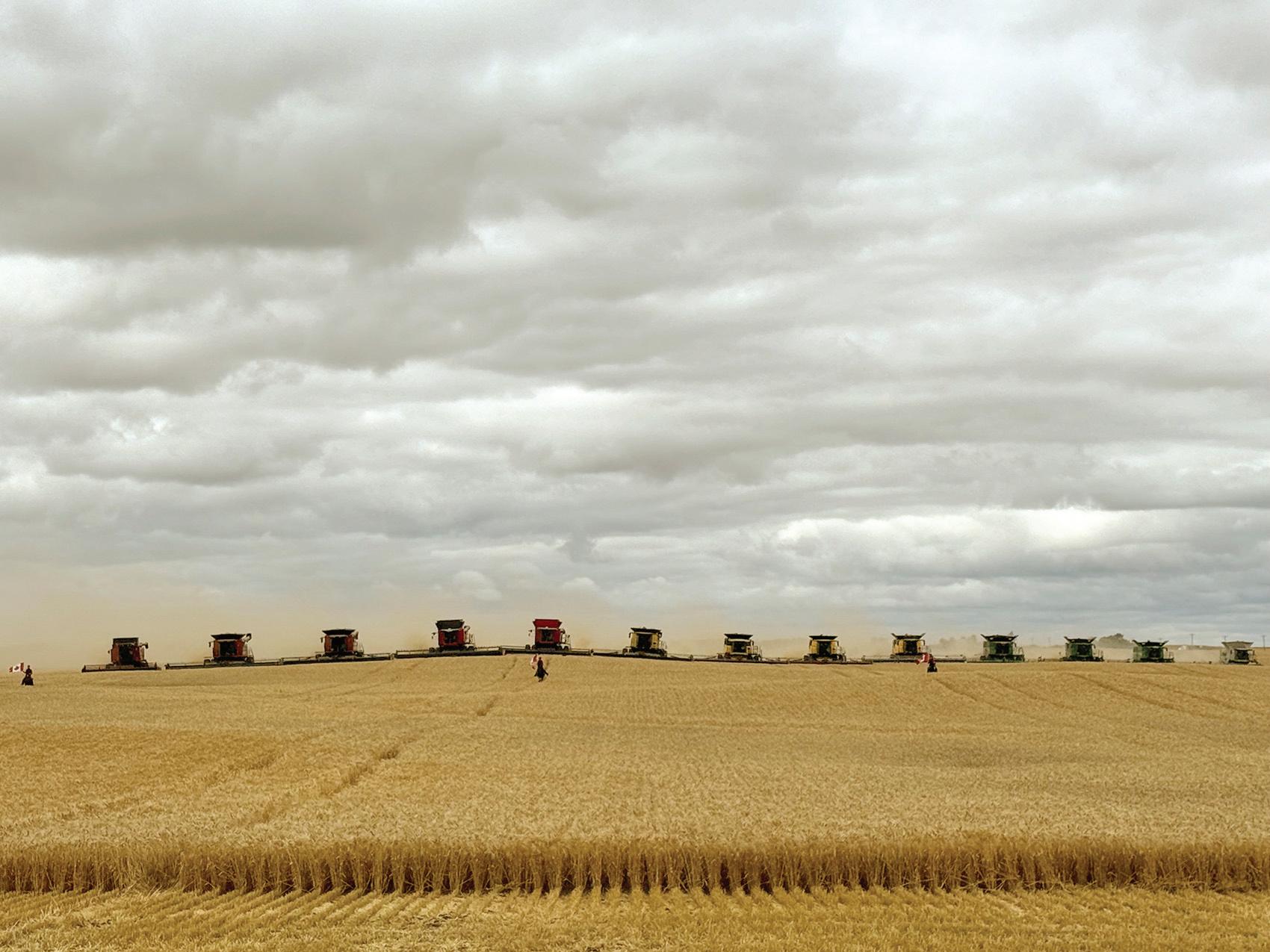
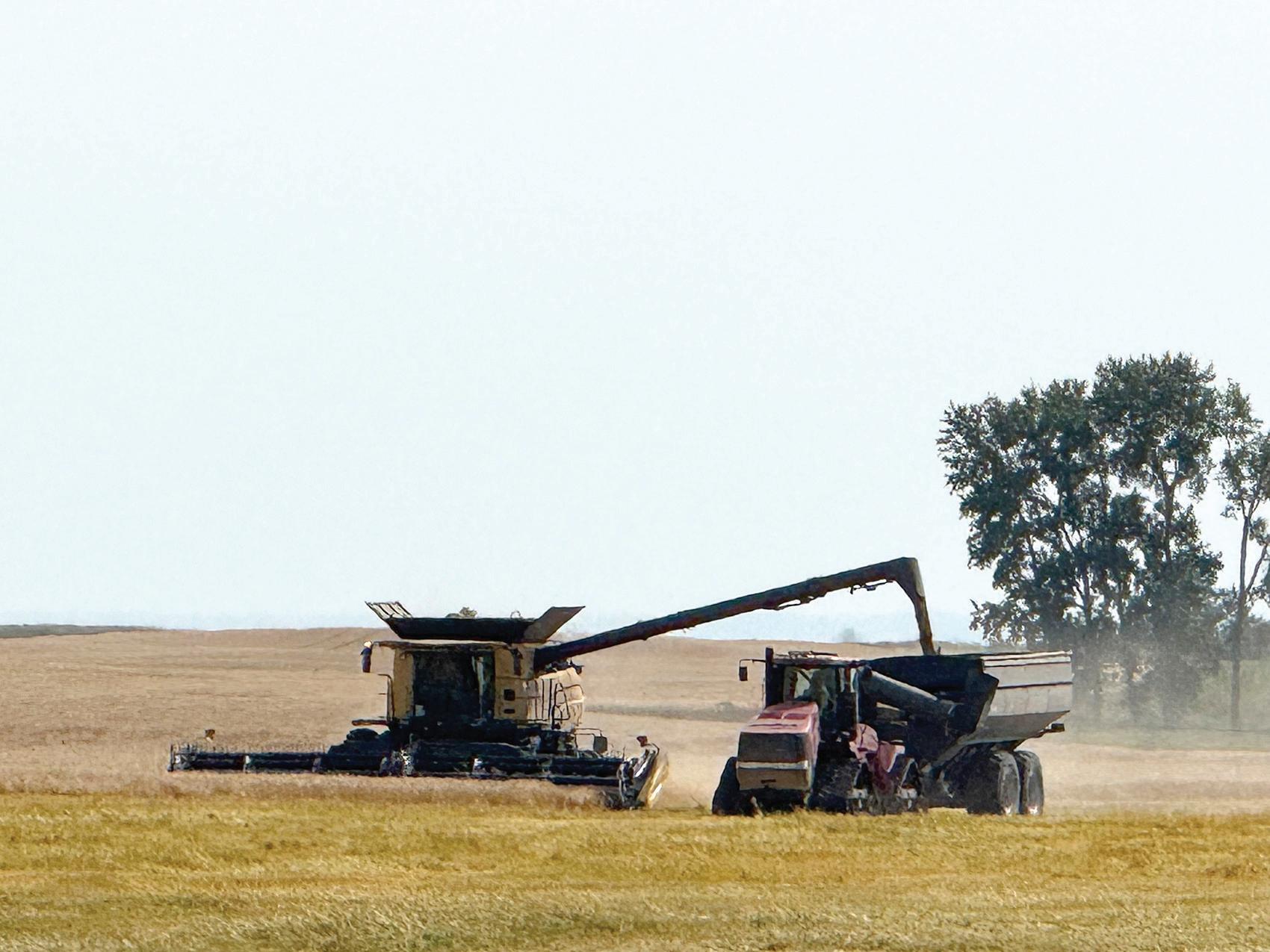
The agreement allows producers to deliver grain directly off the combine to Artel Inland’s state-of-the-art facility, which boasts a capacity to receive up to 12,000 bushels per hour — unloading a Super B truck in around seven minutes. The facility also offers on-site storage and drying services, giving farmers the flexibility to deliver wet corn straight from the field.
The partnership grew out of a conversation between
President Grant Dyck last winter.
“It didn’t take us long to realize that we each had something that could benefit the other while at the same time benefiting the local farm economy,” said Erlandson. “Everyone has their strengths; this collaboration is a good example of two parties putting their strengths together.”
For Red River Grain, which has operated out of Altona since 2014, the deal expands their reach without the high capital cost of building a new satellite facility. For Artel Inland, the collaboration brings an experienced grain marketing partner to its high-capacity site.
“We see this as a really good partnership, to be a satellite for Red River as a collection point, and another option for buying in the area,” said Dyck. “We really appreciate the team at Red River — very competent and likeminded progressive thinkers and we’re looking forward to working with them.”
Red River Grain is known for prioritizing farmers’ needs, particularly during busy harvest windows.
“We’ll do everything we
can to always have space for the commodities we’re buying, especially when the combines are rolling,” said Erlandson. “We can offer onfield pickup and grain drying services at both the Altona and Niverville locations.”
He also encouraged producers to plan ahead for the fall rush.
“Call us! We’re expecting a big soybean and corn crop this fall — logistics and space are going to be in demand. The sooner you reach out the better chance there is that we can help when the time comes.”
Founded in 2014, Red River Grain Co. is a locally-owned, community-focused grain company providing storage, drying, transportation, and competitive pricing options for corn, soybeans, and oats. The addition of the Niverville location is expected to make the company even more efficient in serving two of southern Manitoba’s largest economic drivers — grain and livestock production.
“This is about supporting farmers and helping them be successful,” Erlandson said. “The Niverville location will help us be more efficient at our job.”

By Harry Siemens
Canada’s agricultural story grows from more than the soil beneath our feet. It grows from the ideas and companies that rise with every crop. From pioneering canola to launching firms like Combyne, Vive, Decisive Farming, GroundTruth, and now ClearCost, Canadian agriculture has shown the world it can be a hub of innovation.
Yet too often, Canadian ideas stall or leave. They get sold off, underfunded, or starved of scale because our investment climate fails to nurture them. Darcy Pawlik, Executive Director, warns that without real change, Canada risks losing its next wave of breakthroughs.
Dominic Barton’s Advisory Council on Economic Growth made the case years ago. Agriculture could add $30 billion to GDP if Canada built the right investment conditions. Since then, multiple consultations have repeated the same warning: our system is fragmented, risk averse, and weighed down by regulation. Pawlik says the time for reports has passed. Action must replace talk.
He calls for a shift in mindset.
“We need to flip the script on how government and industry approach innovation,” Pawlik said. “Start with the outcome in mind. Set clear goals instead of running endless processes. And use the digital tools already at our fingertips.”
ClearCost offers one example. The company has created what it calls a “connected fertilizer market,” a platform where trade, movement, and finance meet in one place. Farmers, suppliers, and buyers interact instantly, just as consumers now shop, bank, and invest with a click. That type of innovation reduces friction, speeds up transactions, and creates real efficiency.
Pawlik argues the bigger question is not how government can adopt these tools, but how they can reduce the need for government in areas where private industry can deliver faster and cheaper. That shift would free government to focus on goals only it can pursue; the big and bold ambitions outside the reach of entrepreneurs alone.
Canada has shown it can lead. The creation of canola changed global agriculture. The pulse sector grew into a multi-billion-dollar export. New insurance tools reshaped risk management. Biological sparked a fresh wave of sustainable innovation. These successes prove Canadians can innovate at world scale. The challenge now is building the climate that keeps new ventures like ClearCost rooted in Canada instead of chasing capital abroad.
Pawlik stresses that innovators go where ambition and financing align.
“Unless Canada becomes investment ready, preferably investment hungry, innovators will continue to leave,” he said. Global competition for ideas is fierce, and capital flows quickly to jurisdictions that reward risk-taking.
The solution, he believes, lies in transforming Canada into an innovation-first society. That means building prosperity at home, not exporting the best ideas for others to commercialize. It means learning from past successes and using networks like BioAlberta, AgWest Bio, and EMILI as springboards. With the right energy and coordination, Canada can claim the role that thought leaders across sectors have long said is within reach: global leader in agriculture.
But Pawlik issues a warning. Research strength in Canada is shrinking. Labs produce knowledge, but translation into products and companies lags. Tomorrow can look different, but only if Canada energizes research into devel opment, capitalizes it into com mercialization, and unleashes the entrepreneurial spirit that has always been the country’s most resilient crop.
Canadian agriculture has the soil, the science, and the tal ent. What it needs is the will to invest in its own ideas. Pawlik believes that with bold goals and a climate that rewards risk, Canada can stop losing ground and start shaping the next chapter in global agriculture.

By Harry Siemens
Squeal on Pigs, Manitoba says wild pig populations have steadily declined since the program began in 2022. The group credits aggressive surveillance, trapping, and public reporting for the drop.
Camera grids, landowner interviews, field scouting, and outreach show reductions year over year. As pigs become harder to find, the focus has shifted to teaching people how to recognize rooting and other signs. The hotline— 1-833-SPOT-PIG—and squealonpigsmb.org remain vital tools for connecting with landowners.
Trapping has driven much of the success. The landownerbased program lets staff confirm wild pig presence, install cameras, and set corral traps when needed. Most traps are monitored by landowners, with staff providing support. In remote areas, Squeal on Pigs uses specialized net traps. Field teams also deploy thermal drones, which work well in forests during winter and in cornfields in summer. Owning drones allows repeat flights at lower cost than hiring consultants.
Seasonal cycles matter. In winter, as food sources vanish, pigs are easier to trap. Last winter, Squeal on Pigs added new technicians near Spruce Woods Provincial Park and tested new removal techniques. Through this, they eliminated more than 100 pigs, leaving very few by spring. Plans are in place to ramp up again this winter.
Public involvement continues to play a key role. The online reporting form allows quick submission of suspected signs, from rooting and scats to direct sightings. Field technicians verify reports and educate landowners about wild pigs and other wildlife. By July 31, 2025, 51 confirmed wild pig reports had been logged, most during harvest when rooting is easier to spot.
Disease risk remains a major concern. The program highlights the danger of wild pigs acting as reservoirs for foreign animal diseases, particularly African swine fever (ASF). Surveillance for ASF in Manitoba began in 2024, alongside education for producers on biosecurity.
Looking ahead, Manitoba will include a wild pig chapter in its emergency response plan for ASF. The work involves Animal Health Canada and other provinces, since wild pigs ignore boundaries.
The group says progress reflects a balance of technology, landowner engagement,
and national cooperation. Declining numbers show coordinated action works, but vigilance must continue.
In Alberta, the big question is how many pigs remain.
Charlotte Shipp, Industry Programs Manager with Alberta Pork, said there is still no reliable number.
“We have set up monitoring grids with cameras in active areas and partnered with the University of Calgary to study population demographics. As we track eradication activities, we expect a clearer picture in a couple of years,” she said.
Public reporting is essential in Alberta. Agriculture and Irrigation receives and responds to reports, while Alberta Pork helped launch the pilot project.
“Members of the public play a big role. The Squeal on Pigs campaign encourages people to report sightings, rooting, or evidence of animal abuse. They can call 310-FARM or email wildboar@gov.ab.ca, ideally with photos,” Shipp said.
She underscored the disease threat.
“From an industry perspective, this is very serious. ASF is the top concern, but wild pigs can also host foot and mouth disease, brucellosis, and others. These animals act as reservoirs that could cause significant harm to livestock production,” she said.
Alberta has scaled up eradication. Six specialists now work full-time across the province.
“Our goal is to eradicate wild boar, but first we need better population data. At the same time, we are strengthening collaboration with other provinces,” Shipp said.
She credited Manitoba for leading early efforts and Saskatchewan for sharing long experience. “This is a Western Canadian issue. Wild boar doesn’t respect provincial boundaries, so we need to work together,” she said.
Mark Ferguson, General Manager of Sask Pork, said Saskatchewan continues to see only a limited number of wild pigs.
“It is difficult to estimate the population size given how reclusive these animals are, but we believe trapping has reduced numbers,” he said.
An aerial survey this past winter targeted known wild boar habitats.
“Surveyors observed about 160 individual animals in the blocks surveyed. That’s our best estimate right now,” Ferguson said. The survey received funding through Agriculture and Agri-Food

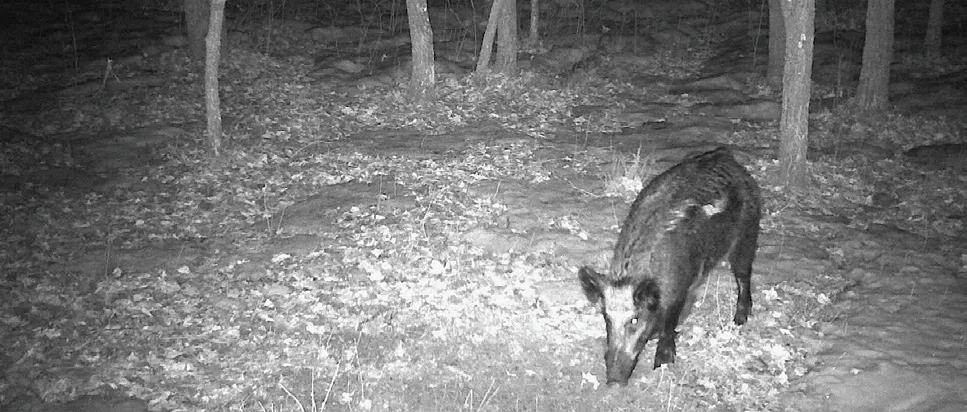
Canada’s ASF Industry Preparedness Program.
Saskatchewan has a long history of control. Saskatchewan Crop Insurance Corporation runs the Feral Wild Boar Control Program, with trappers removing over 100 pigs annually. Since 2017, SCIC has removed more than 1,000 pigs.
“We’ve made significant reductions,” Ferguson said.
The province also placed a moratorium on new wild boar farms in January 2025. Existing farms must be licensed and inspected. Declaring wild pigs a regulated pest gives control officers additional powers.
Reports remain steady. “We receive 10 to 15 verified reports a year,” Ferguson said. Many show up as escaped domestic pigs, but the hotline—1-833-PIGSPOT—remains key.
The industry takes disease risk seriously.
“ASF and other reportable diseases are a concern, but so are common production diseases like PRRS and PED. The only real solution is complete eradication,” Ferguson said.
He added that Saskatchewan’s priority remains total removal.
“We will continue to work closely with SCIC and the Ministry of Agriculture and support the vital work on this
file,” he said. Across the Prairies, provinces are sharing expertise and tightening surveillance. Programs differ, but all agree on one point, “We must eliminate wild pigs. With strong collaboration and public reporting, that goal looks increasingly within reach.


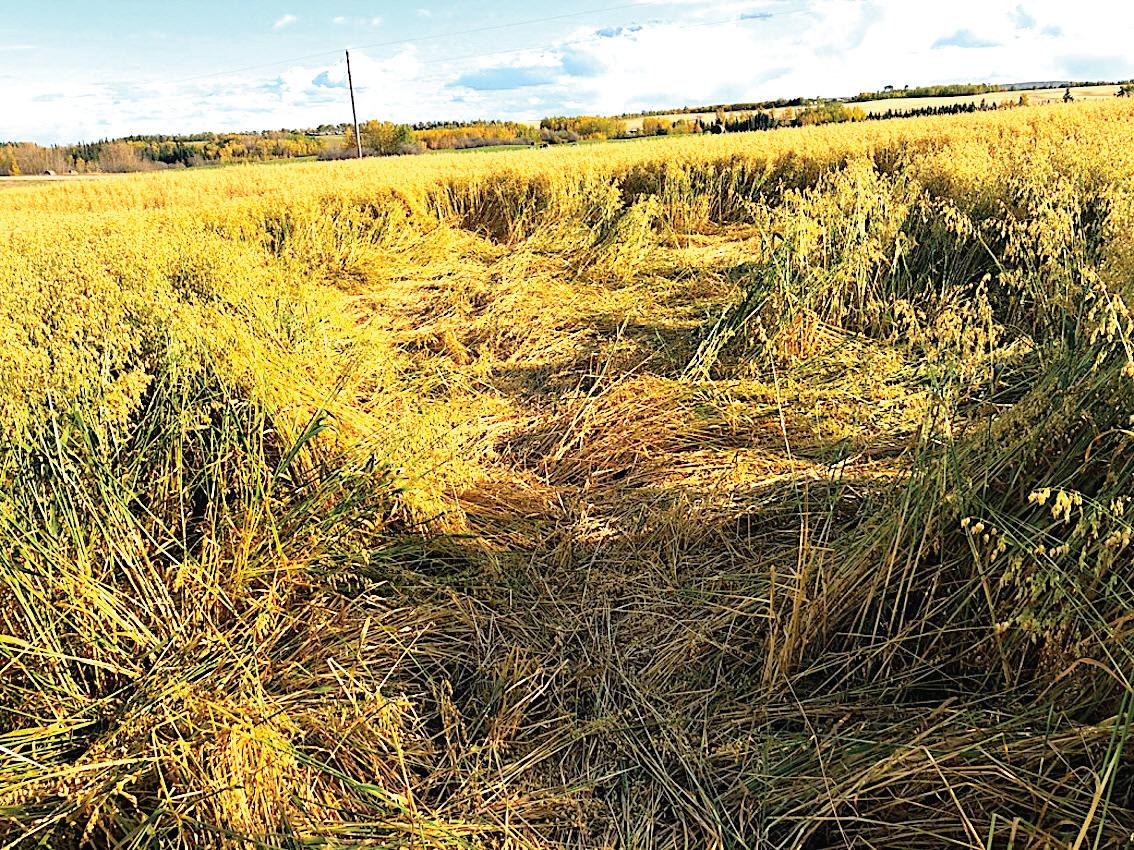
One of the worst cases of udder-edema that I had witnessed occurred in a 150-cow dairy. I took this photo about five years ago that illustrates an early lactation cow coming into a rotary-stall to be milked. Her udder-edema encompassed the entire udder as well as fluid accumulation was seen right in front of the udder. It took a few days for her udder-edema to disappear, but the dairy producer had other recent fresh cows with more severe udder-edema that he culled them. Only, if he implemented a few precautionary steps, most udderedema amongst his lactating cows might have been prevented.
The first precautionary step is to know what udder-edema is and what predisposes early lactation cows to it; notably it starts when pre-calving udders began to swell up in the close- up pen and follows them into early lactation. That is because, unseen to the naked eye, the histology (the study of the microscopic structure of animal tissue) of most common udder-edema appears to be similar; the consequence of increased blood flow to the udder, while there is a decreased blood flow returned from the udder.
The net effect is an increased pressure upon the udder’s blood vessels which increases their permeability and thus allows fluids to leak out and accumulate in-between the udder’s milk secretory cells. In this way, 1st calf heifers are thought to be more predisposed to udder edema compared to older cows, because their blood vessels are still developing, and their blood circulation is
limited. Regardless of cow parity, transference of immunoglobulins (large anti-body proteins) from blood to colostrum in the udder and changes in hormones associated with calving are also believed to play mitigating roles.
Now that we know something about udder-edema, I look back at the above worstcase of udder-edema and outline some of the factors that heavily predisposed this producer’s herd to it:
- Poor quality water – High levels of sodium and potassium are notorious in causing fluid accumulation in closeup dry and early lactation dairy cows. The water in this lactation barn had high total dissolved solids (TDS) and an unacceptable high salinity (sodium). There wasn’t much that I could do to solve the udder-edema problems associated with this dairy farm’s salty and hard water, except to remove all added salt and sodium bicarbonate from the lactation diet.
- Poor pre-calving nutrition – a successful close-up dry cow diet dovetails into most early lactation feeding programs. Despite, the faraway and close-up dry cows were segregated in this case; all animals were wrongfully fed a high-energy diet of barley silage, alfalfa hay, barley and a premix containing both added potassium and salt. Therefore, I implemented a true close-up dry cow feeding program – limiting barley silage, switching to a bulky grass hay, taking out all grain and implementing a 16% closeup ration (modest energy, no salt, low potassium) fed up to 2 kg per head, daily.
- Obese close-up dairy cows

– Science has demonstrated that obese cows (BCS > 4.0) are susceptible to a higher incidence of udder-edema, ketosis, fatty liver and other post-partum metabolic disorders. More than half of the close-up cows at this 150-cow dairy had a body condition between 4 – 5, obese. At this point, the cow’s energy intake of my close-up diet relies heavily upon the close-up dry cow’s dry matter intake during these last 21 days before calving, which has a natural decline of at least 30% from the day of dry-off until the day of calving. In this manner, I target my close-up diet to be fed at 1.25 – 2.0% of her body-weight or about 11-12 kg per cow (DM, basis). So a visual body condition score of 3.5 – 3.75 (1 = thin to 5 = obese) is maintained by calving.
As a dairy nutritionist, I would have loved to say that we implemented this close-up dry cow program and within a matter of one month all udder-edema was eliminated at this farm. Rather, the high incidence of the more severe cases was cut down, and the producer did not ship cows due to a complete breakdown of the cows’ udder. Plus, he is considering massaging the udders of first-calf heifers coming into the barn. In the end, this is a good example by investigating the problem. Then applying the best nutrition and management tools at our disposal in which we deflate the high incidence of udder- edema.
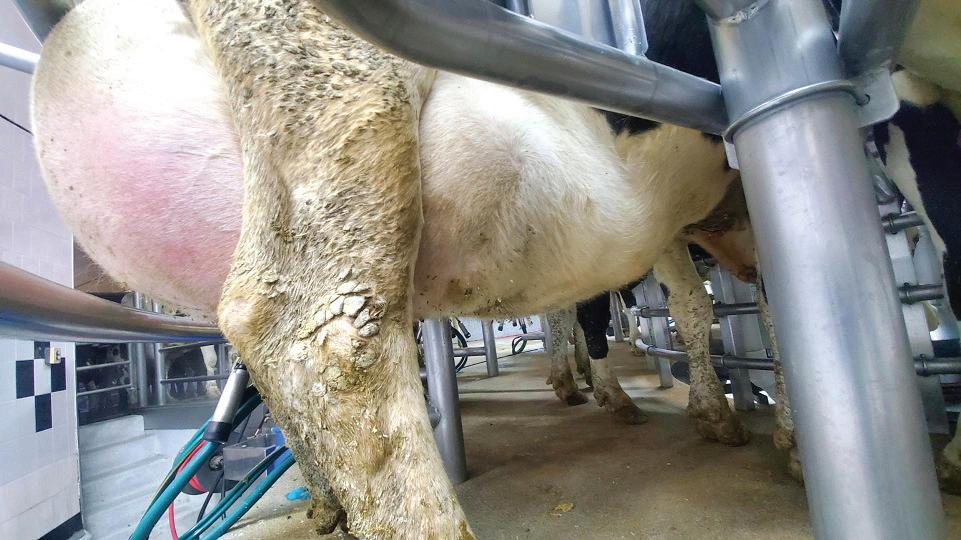

By Joan Airey
The Manitoba Farm Women’s Conference (MFWC) recently announced its Scholarship winners. Each scholarship is made possible as a result of a donation made on behalf of MFWC which is held annually in November.
Jadyn Baldwin won a $500 scholarship. She grew up on an acreage just outside of Grosse Isle, Manitoba. She graduated from Warren Collegiate, where she participated playing all the school sports and being part of the leadership team. She coached girls’ softball and hockey, and volunteers at their local community club with different events and activities. Baldwin is attending the University of Manitoba where she is taking a Science degree and then plans to get her education degree. She commented she is excited to keep learning, meeting new people and hopefully will make a difference in the future.
Madison Howell won a $500 scholarship. She is from Arborg, Manitoba and plans to study Human Nutritional Sciences through the Faculty of Agriculture at the University of Manitoba. Her plan is to become a dietician.
For further information on the scholarship visit the MFW website mfwc.ca/scholarship.
The scholarship is being administered by the Red River Exhibition Foundation Inc. and may be used for assistance with tuition fees, tools, or learning aids in conjunction with post-secondary education by a rural Manitoba student who will be studying agriculture or any field that supports rural life. On the page you can also see a list of several pages of scholarships available to rural students studying in these areas.

scholarship. She is from the rural town Arborg, MB. Howell will be studying Human Nutritional Sciences through the Faculty of Agriculture at the University of Manitoba, with the end goal of gaining the knowledge and experience to become a dietician.

Jadyn Baldwin is a recipient of the Manitoba

By Elmer Heinrichs
An owner of a southern Manitoba pumpkin patch says she’s been overwhelmed with the outpouring of support after about 100 volunteers showed up to help her quickly harvest crops on her family farm before an early frost came during the weekend.
Melody Schwabe, who owns Schwabe Pumpkins in the rural municipality of St. Andrews, MB, alongside her husband George, said this summer’s drought put the Interlake farm about a month behind schedule. They typically start picking in late August, she said.
“We’ve worked so hard to save everything, and everything is so far behind,” Schwabe said in a tearful video post, in referring to a frost that happened earlier in the week. “With another frost coming on Saturday, I don’t even know how we’ll get everything off the field. There’s just no way that we can do it.”
Within hours, volunteers started pouring into the field to pitch in. She said the familyrun farm saw about 100 volunteers lend a hand harvesting pumpkins, squash and gourds Friday and Saturday, with some driving for hours to come and help.
“Volunteers brought food and coffee, and a couple of massage therapists stopped by to give massages to weary farmhands,” Schwabe said.
More and more people just kept showing up over the two days, she said.
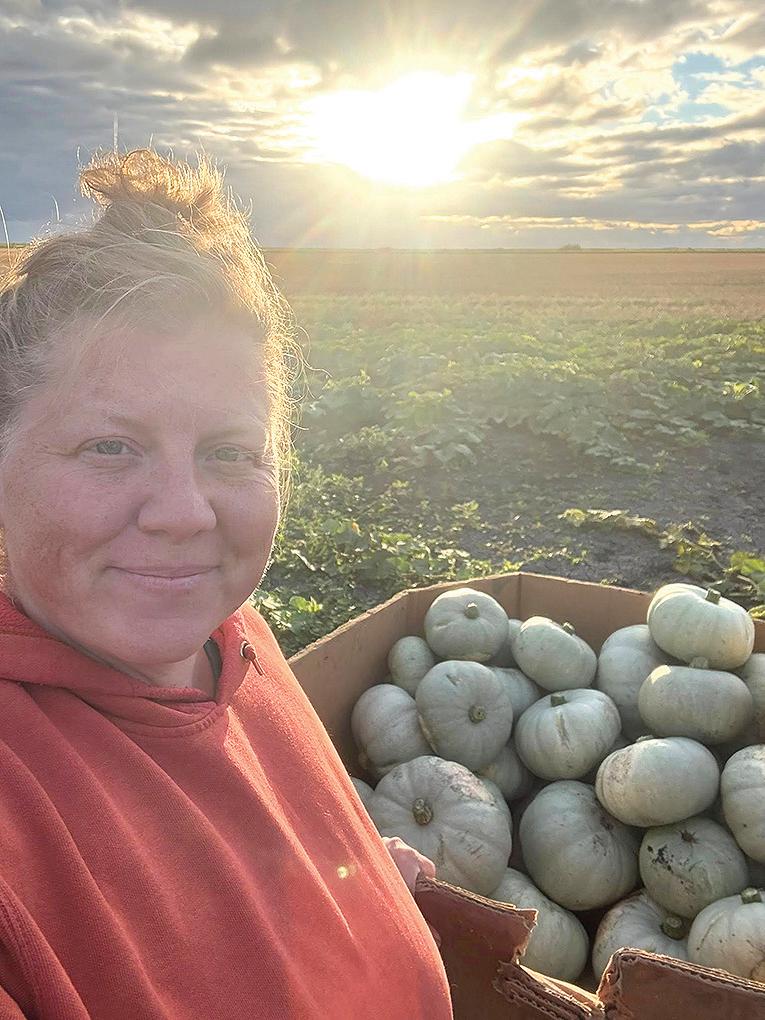
“It was just amazing,” she said, adding volunteers ranged from families with children to seniors. “I’m just overwhelmed with all the beautiful support we’ve had.”
The entire field of pumpkins was cut and ready to be put into bins by Friday night, she said. By Saturday afternoon, the field was cleared and their barn was packed with bins.
Schwabe has been a farmer for about 20 years, but she said the last few years have brought varied weather challenges, from droughts that stifled growth to floods that rotted pumpkin seeds in the soil. If this year’s crop had failed, she said she feared the family would have to sell the farm.
Melody Schwabe said the family-run farm saw about 100 volunteers lend a hand harvesting.
source Facebook Schwabe Pumpkins

By Harry Siemens
Dairy Farmers of Canada (DFC), Lactanet, and partners from across the dairy industry unveil the Canadian Dairy Hub, a new bilingual website designed to bring research and practical knowledge directly to farmers. The Hub pulls together tools, videos, factsheets, and other resources into a single, easyto-navigate platform built for Canadian dairy producers and their advisors.
David Wiens, president of DFC, says the Hub gives producers the ability to make stronger, more informed management decisions.
“The Canadian Dairy Hub builds on the dairy industry’s long-standing investment in research by serving as a central, one-stop resource for knowledge transfer. This ensures that the latest, sciencebased research reaches farmers directly,” said Wiens. “It complements our ongoing research efforts, helping farmers improve their operations.”
The Hub organizes resources under four themes—environmental sustainability, animal welfare, animal health, and herd management. Each theme reflects both research priorities and on-farm realities. Farmers can search for quick, practical answers or explore deeper material.
Annie AcMoody, Chief Policy and Economics Officer at DFC, stresses that accessibility was the central design principle.
“The Canadian Dairy Hub offers free, bilingual resources that farmers can access on demand—whenever they need them, wherever they are,” said AcMoody.
“We designed it to be practical, trustworthy, and quick to use.”
Building the Hub required direct input from producers.
“Farmers told us they wanted information that is clear, reliable, and easy to find,” AcMoody explains. “That feedback shaped the Hub from the very beginning. We also included a form on the site where farmers can send us questions, comments, or suggestions. This ensures the platform keeps evolving in line with the needs of its users.”
Animal welfare stands out as a priority. AcMoody points to the recently updated Code of Practice for the Care and Handling of Dairy Cattle.
“Farmers need support to understand what’s changed, why it matters, and how these standards improve comfort, health, and herd management. The Hub provides that guidance in practical terms,” she says.
The Hub also reflects a collaborative spirit across Canada’s dairy organizations. DFC worked closely with Lactanet, provincial producer groups, and technical experts to build and maintain the platform.
“We built the Hub in collaboration with provincial producer organizations and Lactanet to make sure the content stays relevant and up to date. Their insights reflect the voices of the farmers they serve,” AcMoody notes.
Measuring success goes beyond clicks.
“Immediate success shows up in engagement—farmers visiting the Hub, using tools, and asking questions,” AcMoody says. “But true success means adoption of best practices on farms across the country. That’s something we can measure through benchmarks like herd health, welfare, and management improvements.”

Annie AcMoody, Chief Policy and Economics Officer at DFC, stresses that accessibility was the central design principle. “The Canadian Dairy Hub offers free, bilingual resources that farmers can access on demand—whenever they need them, wherever they are. We designed it to be practical, trustworthy, and quick to use.”
Submitted photos
The Hub already offers specialized tools such as the new Dry Cow Housing Tool, which helps farmers compare housing systems and plan based on herd needs. More features are in the works.
“The launch of the Dry Cow Housing Tool is just the beginning,” AcMoody says. “We’re expanding resources, developing new formats, and creating online discussion groups so farmers can learn from one another and from experts. That kind of shared
knowledge is what strengthens the whole sector.”
DFC sees the Hub as more than just a website—it’s a step toward building a knowledge culture in dairy. It blends ongoing research with farmer feedback, ensures resources remain bilingual and practical, and uses digital tools to keep pace with how producers access information today. Wiens emphasizes the role of research as the foundation of innovation.
“This investment in knowledge sharing makes sure science does not just sit on a shelf but moves into the barn, the field, and the herd. It’s about making research work for farmers,” he says.
With over 9,000 dairy producers in Canada, DFC represents a sector that plays a crucial role in food security and the rural economy. By turning research into usable knowledge, the Canadian Dairy Hub helps those producers adapt to changing regulations, shifting market expectations, and evolving sustainability demands.
AcMoody underlines the broader vision.
“The dairyhub.ca is a first step towards an evolving structure to support Canadian dairy farmers,” she said. “We want this to grow into a living platform that adapts to the challenges farmers face, supports continuous improvement, and strengthens Canadian dairy for years to come.”
The Canadian Dairy Hub now stands as a central point for farmers seeking reliable, science-based, and practical information. By combining national collaboration, farmer input, and a commitment to accessibility, it promises to make research not just available but actionable. In doing so, it reinforces the foundation of one of Canada’s most resilient agricultural sectors.
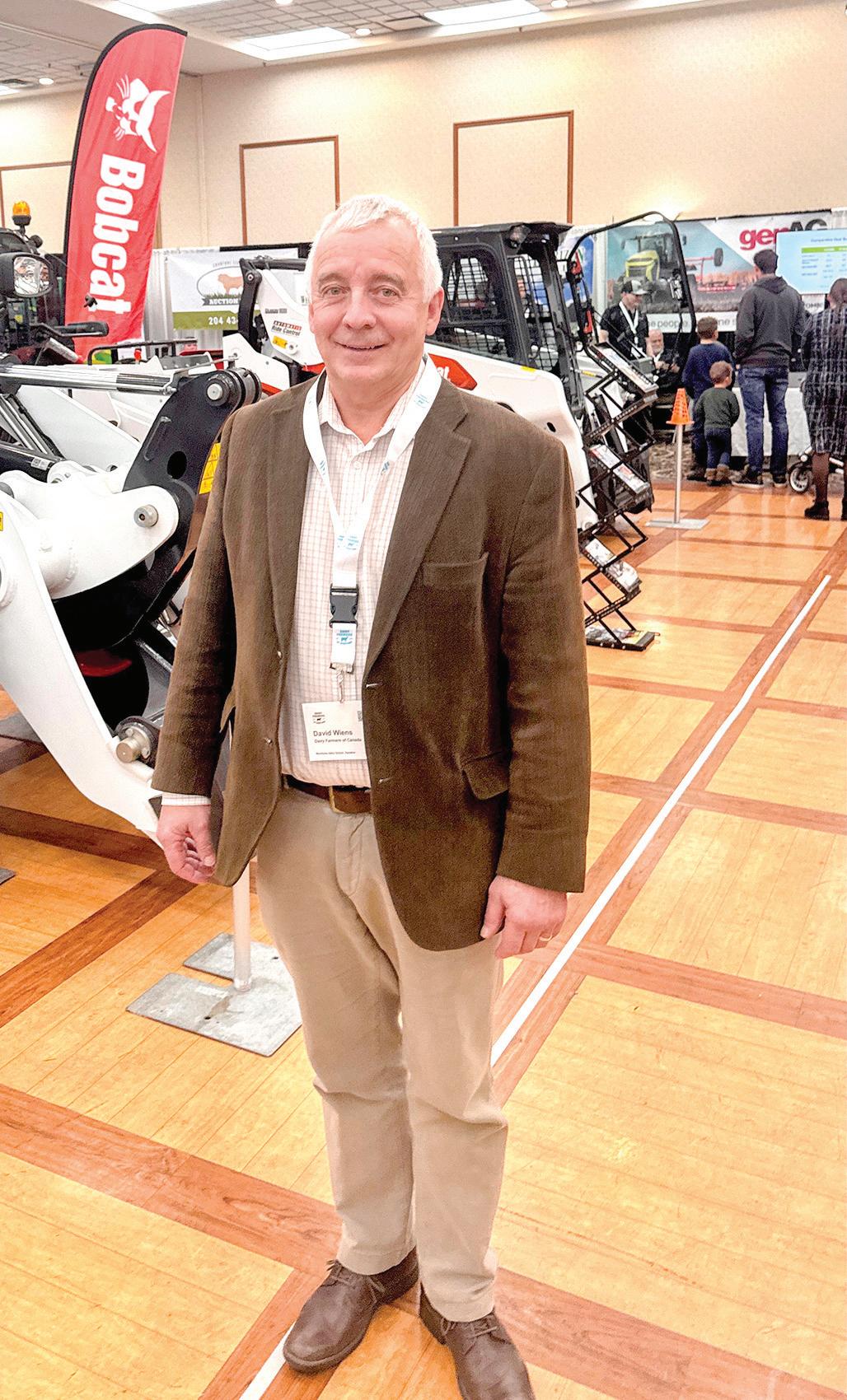
By Harry Siemens
Shelterbelts across the Prairies are disappearing, even though they provide valuable benefits for farmers, communities, and the environment. A study in the R.M. of Stanley by Louise Bellet found that people strongly value shelterbelts for preventing soil erosion, controlling snowmelt, adding beauty, supporting wildlife, and regulating climate. Nearly 70 percent of survey respondents rated shelterbelts very important, and more than 70 percent felt personally or professionally connected to them.
The study identified benefits in three areas—community well-being, farm productivity, and ecosystem conservation. It concluded that while shelterbelts are widely appreciated, people often undervalue them in decision-making. Strategic planting and maintenance can strengthen agriculture, improve the environment, and build more sustainable rural communities.
Richard Warkentin sees reality firsthand through his work with Stanley Soil Management, a farmer-led nonprofit that promotes soil and water conservation.
“The group came together in 1987 when soil was blowing almost like the Dirty Thirties,” Warkentin says. “Farmers got together and formed the Stanley Soil Management Association. Their main goal was to grow trees and establish shelterbelts.”
The movement took off in the late 1980s and early 1990s, but slowed down as zero tillage and minimum tillage helped reduce soil erosion. Warkentin says the last decade brought renewed interest.
“One reason is specialty crops that leave little residue in the soil,” he says. “Farm-
found that people strongly value shelterbelts for preventing soil erosion, controlling snowmelt, adding beauty, supporting wildlife, and regulating climate.
ers want to plant more trees to protect their fields. And some progressive farms, such as Kroeker Farms and Hespeler, have led the way. Kroeker Farms plants about six or seven miles of trees every year for the past five or six years.”
He also points to regenerative agriculture.
“Trees fit right into a regenerative agriculture mandate,” Warkentin says.
When the federal government ended its free tree program in 2013, Stanley Soil Management stepped in.
“We’ve become a tree supplier,” Warkentin says. “Last year, we supplied almost 40,000 trees. About 25,000 went through the Pembina Valley Watershed District.”
Warkentin sells a small number of trees at the Winkler Farmers’ Market but sees his role there as awarenessbuilding.
“I’m basically promoting the concept of planting trees,” he says. “The trees I sell at the market are minuscule compared to what we supply through watershed districts.”
He admits opinions remain divided.
“Some farmers plant shelterbelts, others tear them out,” Warkentin says. “You notice the ones coming down more than the ones going in. Many new shelterbelts go closer to the roadside, while the ones in the middle of fields sometimes come out to make room
for irrigation systems.”
Still, he argues that the benefits are real for both farmers and rural residents.
“Trees are part of our landscape,” Warkentin says. “People in rural communities who don’t have land to plant trees still enjoy shelterbelts farmers have put in. Farmers keep them for many reasons, but if you can show them they get more yield from their trees, then it’s a no-brainer.”
He says the choice of species often lies with buyers, but trends are clear. “The Okanese poplar is very popular,” Warkentin says. “Out of 40,000 trees last year, about 8,000 were Okanese poplars. They grow fast, and people like results. They might only live 30 years, but farmers want to see something right away.”
He encourages farmers to think long-term.
“Of the 600 miles of shelterbelts planted in the last 40 years, about 90 percent had green ash,” he says. “We’re moving away from that because of the emerald ash borer. Another species I promote is hackberry. It’s long-lived, and I’m trying to convince farmers to grow more of it.”
Warkentin leaves a final word of encouragement.
“You can always have more trees on the Prairies,” he says. “They help farmers, they help communities, and they belong here.”
By Elmer Heinrichs
In 1875, early Mennonite newcomers to Manitoba settled on farms in hamlets that didn’t receive financial protection from fires on their operations, leaving them exposed to potential losses. Instead of individually taking on the risks, the community farmers shared funds to provide emergency financial assistance, becoming their own mutual aid organization.
After nearly 50 years operating as the Mennonite Insurance Organization, it incorporated as a licensed insurance company and rebranded to become the Red River Valley Mutual Insurance company, serving more than local farm-
ing operations, and rebranding again to Red River Mutual in 1941. This year marked Red River Mutual’s 150th year of protecting our prairie communities.
“Leading our company through this milestone anniversary is a true privilege,” says Red River Mutual President & CEO, Brenda Gibson. “This achievement is a testament to the dedication, resilience, and collective spirit of our teams over the past 150 years and our ability to remain adaptable and agile through change.”
Since it became Red River Mutual, the company has grown, the insurance industry has evolved, and the com-
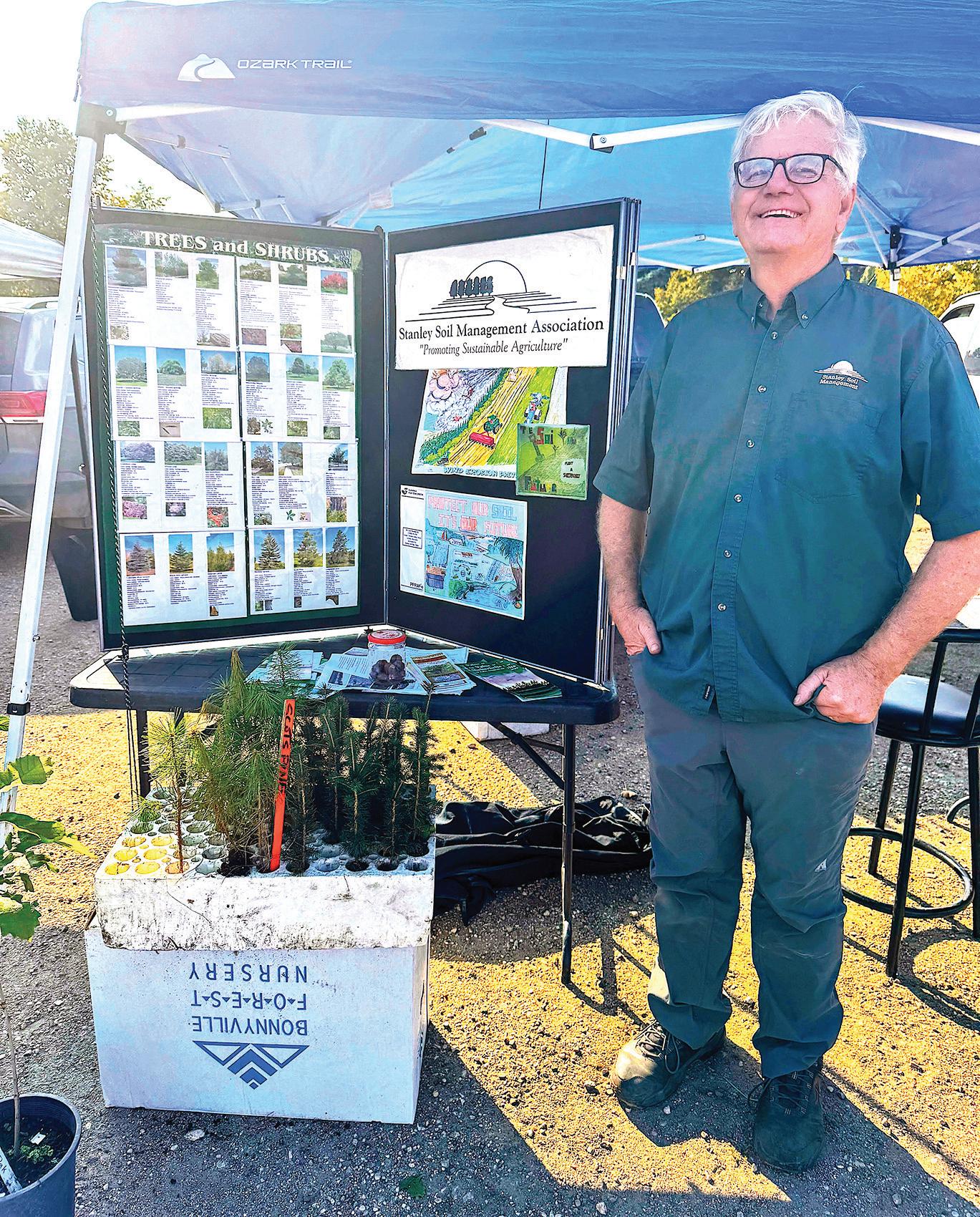
munities have welcomed newcomers from all over the world. Still, it remains connected to its roots, supporting prairie communities and the people in them.
For its 150th anniversary in June 2025, Red River celebrated those well-established roots in the insurance industry and communities through initiatives that support connection and giving back.
In 1943, Red River Mutual established its formal head office in Altona, Manitoba and over 80 years later, Altona is still home. Not unlike 150 years ago, the company continues to welcome newcomers setting down their own roots, and sharing their stories.

By Brenda Hunter Sexed
Recently, I had the opportunity to visit an Amish farm in the U.S. that ran a beef-on-dairy backgrounding operation. As we toured his farm for an unrelated purpose, he explained the process – the method in which he obtained day-old beef-ondairy calves and their sorting, housing, feeding method for the young; the nutritionally balanced feed ration derived from feed bioproducts that they blended themselves for the older calves; herd health and strengthened immunity practices; as well as other aspects of the family business which moves around 5000 head per week in and out of the facility. I was astounded to hear that there were never less than 200,000 head on the property at any given time!
During our conversation, he mentioned that the dairy industry now has the technology and ability to use sexed dairy semen on a certain percentage of their herd to ensure females, while the rest were bred to beef bulls, and this was the basis of his business.
This point was intriguing.
semen? I had no idea that this was even possible! But it made complete sense once he explained it. So, I got to thinking – is this standard practice in the dairy industry in Canada as well? And it turns out, it is.
The ability to sex semen has been around for about two decades and since its inception, the science around it has gotten better, the conception rate has improved, it is now more affordable and is therefore, more widely used in the dairy industry.
It is still not as reliable as using conventional (unsexed) semen, and for cows that are hard to settle, is may not be as good an option. But what the dairy producers ‘save’ on producing the results they want on almost every single pregnancy makes it a worthwhile venture.
Dairy producers normally calculate how many replacements they will need per year and select cows with the most superior genetics to breed using the sexed doses which will ensure they produce females to add back into the herd. The rest of the herd are bred
with non-sexed beef semen to produce a half dairy/half beef animal more suitable for the feedlots. For the most part, it doesn’t matter if these calves are male or female – although the males are more valuable.
“Most farmers now decide who to make replacements from and choose to make only the number they need,” said Paul Meyer, Genetic Solutions Manager for WestGen, a Canadian company that specializes in providing genetics and reproductive solutions for Western Canadian dairy and beef producers, who emphasized that even with the sexed semen, there is about 90% accuracy.
He explained that the cost of raising a dairy heifer to two years of age when she can join the milking herd is around $3,000, which includes feed, housing, labour, overhead and interest as well as the breeding and services fees on the cow, so it is more economical for the producer to breed their own replacements rather than pay upwards of $4,500$5,000 to buy a replacement heifer ready to go. Not only that, but they can hand pick

their own cows to select the genetics and qualities they want to continue with in their herd.
This is a big win for the dairy industry for which the byproduct (the offspring) is the cost of doing business in having a lactating cow to produce their main source of income – milk. But it gives a better opportunity to be able to structure the results, thereby creating a win-win scenario for consumers and producers alike – by producing only dairy heifers destined as replacements to continue producing milk, or producing crossbred calves for beef purposes to otherwise help feed the world.
“Holstein bulls have always been a lesser value product for feedlots compared to beef calves,” said Meyer. “[It’s] hard to deny that a beef cross calf grades out better than Holstein and takes less days to
get there. I think beef on dairy is a permanent change.”
And a change that makes sense. Why not serve two purposes at the same time? However, that being said, the dairy industry certainly isn’t in a position to take over the beef industry.
“The nice part about the beef-on-dairy phenomenon is that it creates a year-round product for the feedlot industry,” said Meyer. “Cow-calf industry tends to provide a glut of calves all coming off pasture in the fall, but dairy farms have these calves being born all year round.”
Consumers eat beef all year long the same as they drink milk year-round.
There are 221 dairy producers in Manitoba, mostly in the southeastern corner of the province. Most producers breed their herd by artificial insemination (AI) using the sexed doses.
Meyer explained that the cost of using sex semen is +$25 compared to conventional doses from the same bull.
I then wondered if the beef industry was utilizing the sex semen option as well for similar reasons.
“The beef industry uses a smaller breeding window so any drop in conception rate has a big impact,” said Meyer. “Most beef cows only get one chance at AI (mostly from synchronized AI projects) before being put out to pasture with the bulls.”
Tyler Fulton, President of the Canadian Cattle Association, echoed this opinion.
“New innovations like those you mention (sexed semen) are rare and not widespread in commercial beef operations,” he said. Sexed semen. Who knew?
By Joan Airey
Where do you store your garlic? While visiting in line with a friend at the local Farmers Market she told me about a friend telling her that she put her garlic on the counter in a quart jar. When I got home from the market, I put my garlic in a quart jar with a lid and tried storing it that way so far, it’s kept great.
Recent rains were much needed but we need some dry warm weather to harvest our potatoes and carrots. My garden was not as productive this year as other years.
My tomatoes were getting a lot of bottom end rot at the beginning of the season. I put used coffee grounds around the plants and watered them with Evolve Organic calcium essentials plant fertilizer. Seems to have cured the problem and we are picking lots of ripe tomatoes, although the crop won’t be large enough to keep us in salsa, canned tomatoes, tomato juice, and tomato sauce all winter like in normal years.
I bought some King Arthur Pepper plants from Walker’s greenhouse and they have been prolific in keeping us in peppers from the two plants on the patio. One of these days I’m going to have to harvest my peppers in the garden.
So far, we haven’t had a frost. By the way if you want
a sweet red pepper, King Arthur and Chesapeake do ripen in our Manitoba gardens.
I picked up some strawberry plants at Home Hardware in Virden last spring and planted them in long planters on the patio. The variety wasn’t on the label but we’ve been eating strawberries from the planters all summer. I will be moving the plants into my garden before the end of September.
Because my freezers are full, I’m trying to keep zucchini in plastic bags in the fridge to make muffins and other baked goods. I punched holes in the bags with a fork and put a paper towel with them like I do my carrots. My preference is to bake with smaller zucchini before the skins get tough.
I canned cherry pie filling with Clear Jel to thicken it and the result was a hit with
friends but it’s not the easiest thing to find. A teacher I know had picked some up in Austin, MB and shared with me. I tried making apple pie filling with it but prefer my old recipe which uses a little apple juice instead. A girl I’ve adopted as a granddaughter liked the pie filling made with Clear Jel but said the other recipe was tastier. So once again my freezers have an abundance of frozen apple pies.
Hope to meet some of you again this November at Farm Women’s Conference in Brandon.
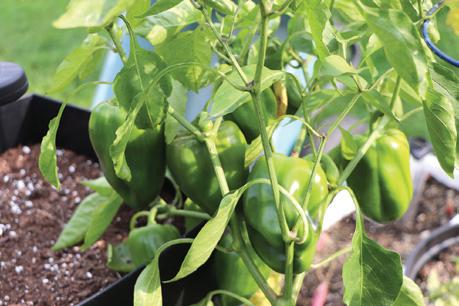

By Joan Airey
The Caramel Apple Muffin recipe is from Davison Orchards newsletter. It was popular with the grandchildren for snacks. I didn’t use the caramel sauce on them and used cinnamon in place of Davison Orchard Apple Spice. Next time I’m out to Vernon I will buy some of their spice to try.
The other day my daughter-in-law told me Hamiota Parent Council were selling apples and she was ordering some for-school lunches as they were really good last year. That evening, I was looking at Facebook and to my surprise the ad from Hamiota Parent Council said the apples were from Davison Orchards in Vernon. What a small world we live in! It’s great to see schools selling Canadian grown fruit.
caramel apple Muffins
Ingredients:
1/2 cup canola oil
1 cup sugar
2 eggs
1 teaspoon vanilla extract
1 1/2 cup flour
1 1/2 teaspoon Davison Apple Spice
1 teaspoon baking soda
1/2 teaspoon baking powder
1 teaspoon salt
1/2 cup milk
1 cup grated apple (1 medium apple)
1 /4 cup Old Fashioned caramel sauce
Directions: Preheat oven to 350F. Line a 12- cup muffin tin with cupcake liners.
Grate apple and set aside.
In a large mixing bowl beat together oil, sugar, eggs, and vanilla until smooth. Stir in grated apple.
In a separate bowl, whisk together flour, Davison Apple Spice, baking soda, baking powder, and salt.
Add dry ingredients to the wet mixture, alternating with the milk, mixing just until combined.
Divide batter evenly between the 12 muffin cups.
Using two small spoons, dollop about 1/2 teaspoon caramel sauce on top of each muffin.
Bake for about 20 minutes, or until muffins spring back when lightly pressed.
Cool slightly, and then drizzle with extra caramel if desired.
NB: I used cinnamon since I didn’t have apple pie spice and I omitted the caramel sauce on top. It took mine 25 minutes to cook. They passed the Chase taste test and he said make more anytime.
This Apple Batter Pudding comes from Saskatchewan Miniature Horse Club cookbook “Mini lovers” Cookbook. The recipe is tasty and I’ve been using it for several years.
apple Batter Pudding
1-quart apples, thinly sliced
1 cup white sugar
1/4teaspoon nutmeg
1 teaspoon cinnamon
1 Tablespoon butter
1 egg
1 teaspoon vanilla
1 cup flour
2 teaspoons baking powder
¼ teaspoon salt
½ cup milk
Whip cream or ice-cream
Directions: Mix sugar and spices together and divide in half. Mix 1/2 sugar with sliced apples and place into well-greased 9-inch round baking dish. Beat butter and remaining sugar until creamy. Add egg and vanilla and beat thoroughly. Sift flour, baking powder and salt and add alternately with milk to sugar mixture, beating well after each addition. Pour over apples and bake at 350F for 1 hour. Serve hot with whipped cream or ice cream. Serves 6.
The following recipe also came from Davison Orchards newsletter and is popular. I have made a similar recipe for years but will be using this one from now on in peach season.
glazed Peach Pie
1 1/2 cups sliced fresh peaches
1 1/2 cups crushed fresh peaches
1/4 cup water
3/4 cup sugar
1 Tablespoon butter
3-4 Tablespoons cornstarch Use more if peaches are very juicy, it needs to be very thick.
1 baked pie shell
Directions: Prepare the base. Spread sliced peaches evenly in the bottom of a fully baked pie shell. Set aside. Make the glaze. In a medium sauce pan, combine the crushed peaches, water, sugar and cornstarch. Cook over low heat, stirring occasionally, until the mixture comes to a boil and turn clear. (Three to Four min utes). Remove from heat and stir in the butter. Let it cool slightly. Pour the warm glaze evenly over the sliced peaches in the pie shell, making sure all the fruit is covered. Refrigerate for at least 3 hours or un til fully set. Slice and serve with whipped cream.
The above recipe I recommend saving to use next peach season it’s easy and delicious.


By Harry Siemens
African Swine Fever strikes a major farm in Estonia, while Egypt identifies a fourth Foot and Mouth Disease strain. These outbreaks underscore the importance of robust monitoring and stringent biosecurity measures across the global pork industry.
The Swine Health Information Center (SHIC) outlines the situation in its September disease monitoring reports. Associate Director Dr. Lisa Becton says the numbers show why constant vigilance matters.

“ASF in Estonia hit a 27,000 pig facility, about 45 percent of the country’s production, raising concerns over pork supplies,” says Becton. “In Egypt, officials identified Foot and Mouth SAT-1, adding a fourth strain to those already circulating. Reports also showed more illicit movement of animal products targeting Indonesia, the U.S., and Malaysia. Without monitoring, we lose sight of disease risks and how countries respond to them. That information is vital for control, prevention, and preparedness.”
She stresses the basics: strict farm biosecurity, vaccine use, and wild pig management. She adds that border protection must focus on illegal animals and animal products that carry hidden risks.
In the U.S., PRRS case positivity remains below 20 percent, a typical summer level, although Iowa and Minnesota exhibit more activity than expected. PED numbers stay low, but the wean-to-harvest sector shows a sharp increase, pointing to possible biosecurity gaps. Influenza cases remain lower than usual. Sapovirus shows up more often, and farms report growing challenges with E. coli.
“E. coli remains a serious issue in farrowing and nursery,” says Becton. “Identifying strains, understanding genetic traits tied to virulence, and tracking antimicrobial response all matter. PCR testing let’s us monitor genotype trends and virotypes. That data helps vets and producers shape better control and management strategies.”
While preparing for the Fall and Winter, Becton warns producers to sharpen practices before cooler, wetter weather arrives. Viruses survive longer in those conditions, spreading faster through herds. She urges producers to clean and disinfect thoroughly, control traffic on and off farms, and pay attention to manure application. “Spreading manure can move pathogens around if people don’t handle it carefully,” she says. “Everyday biosecurity makes the difference.”
Estonia’s ASF outbreak shows how one event can cripple national production. Egypt’s FMD problem grows worse as multiple strains circulate and complicate vaccination and control. Meanwhile, smuggled animal products threaten to bring new disease introductions into countries working to stay clean.
“Watching what happens overseas helps us judge where control measures succeed or fail,” says Becton. “It also shows when a region loses control of an outbreak. That information helps producers and regulators in North America prepare.”
She calls on farmers and industry staff to think carefully before and after travel.
“Don’t wear overseas clothing or footwear onto a farm here,” says Becton. “Never bring animal products back. Those choices protect your herd and the entire industry.”
Disease monitoring globally matters. The Swine Health Information Center releases monthly domestic and global reports to give producers a clear view of risks. Becton points to the value of connecting science, diagnostics, and field reports.
“Monitoring guides strategy. Without it, we guess. With it, we prepare and protect,” she says.
ASF and FMD remain global threats, with outbreaks cutting deep into national herds and food supply. North American producers must protect their barns and communities by staying informed, enforcing biosecurity, and watching global developments.
“The industry faces pressure from disease, trade, and illicit movements,” says Becton. “Producers who stay alert, enforce biosecurity, and rely on sound data give themselves the best chance to stay ahead.”
Producers can find U.S. global monitoring reports in SHIC’s September newsletter at swinehealth.org.
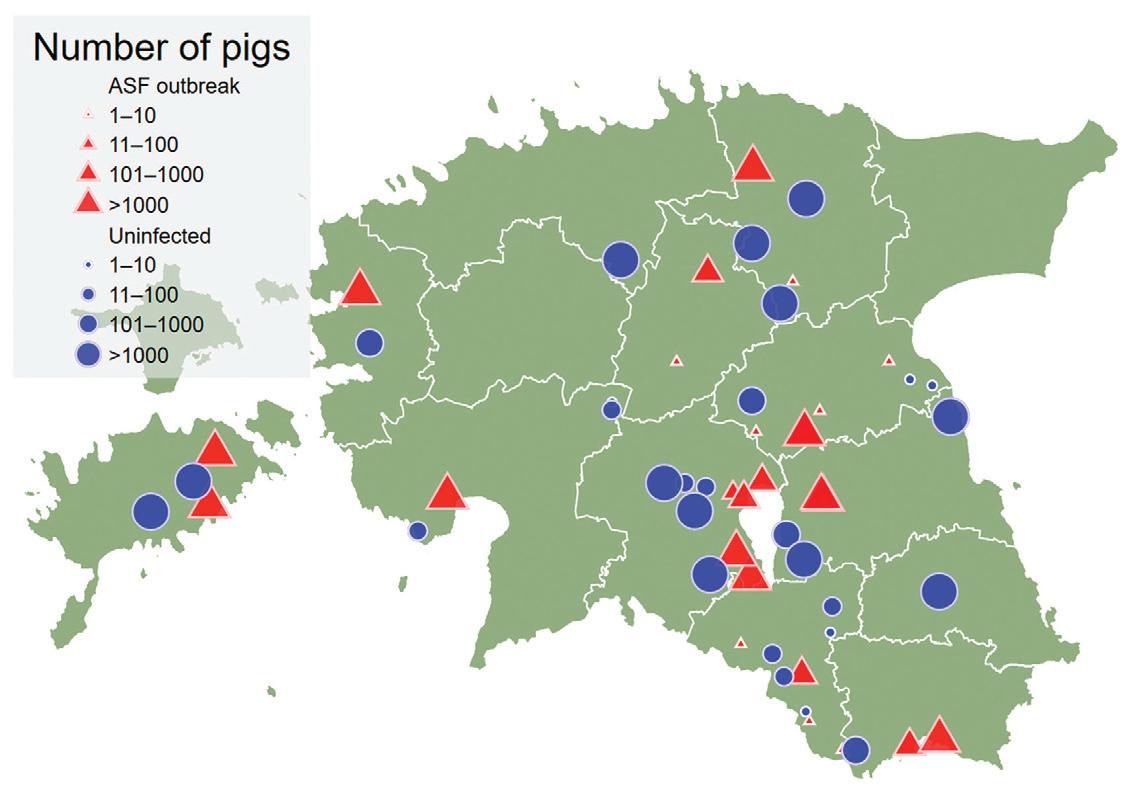
The Swine Health Information Center (SHIC) outlines the situation in its September disease monitoring reports. Associate Director Dr. Lisa Becton says the numbers show why constant vigilance matters.
By Harry Siemens pig health and welfare.”
Canada’s pork sector faces constant pressure as producers work to keep pigs healthy, meet rising expectations on animal care, and navigate trade uncertainty. Cam Dahl, General Manager of Manitoba Pork, says farmers must balance these challenges every day while competing in global markets.
He points to the Code of Practice for the Care and Handling of Pigs, last updated in 2014. The National Farm Animal Care Council (NFACC) now leads a full review. Dahl calls the process one of Canada’s greatest strengths.
“The National Farm Animal Care Council is unique in Canada,” Dahl says. “We don’t see a process like this anywhere else in the world, and it is a coming together of research scientists, veterinarians, farmers, as well as some of our retail customers and even some of the nongovernmental organizations involved in animal welfare.”
The Code applies to all farmed animals in Canada and receives updates every five to ten years. Dahl says the review ensures science drives the standards, not public pressure.
“About once every five to ten years, we look at the code and say, ‘Hey is this following the current science, or do we need to update in some places’. That’s really the process we’re going through now.”
He expects the review to last at least three years, with independent scientists, veterinarians, animal welfare groups, governments, and farmers all involved.
“This is a robust process and I expect it to take probably at least three years to get through the review process,” he says.
For pork producers, animal welfare rules tie directly to markets. Canadian pork reaches more than 80 countries, and major customers demand clear standards. Dahl says the Code cannot serve as a public relations tool.
“Updating the Code is more than just a public relations exercise. It is the result of a rigorous development process that uses the best science on
Disease prevention creates another daily burden. Porcine Epidemic Diarrhoea continues to circulate in North America, while African Swine Fever looms overseas.
Canadian farmers and veterinarians enhance biosecurity, monitor animal movement, and develop emergency plans.
Dahl says producers know the damage a single outbreak can cause.
“Every day our farmers commit to protecting their animals and the industry,” Dahl says. “Biosecurity measures matter at every step, from the farm gate to the truck to the processing plant.”
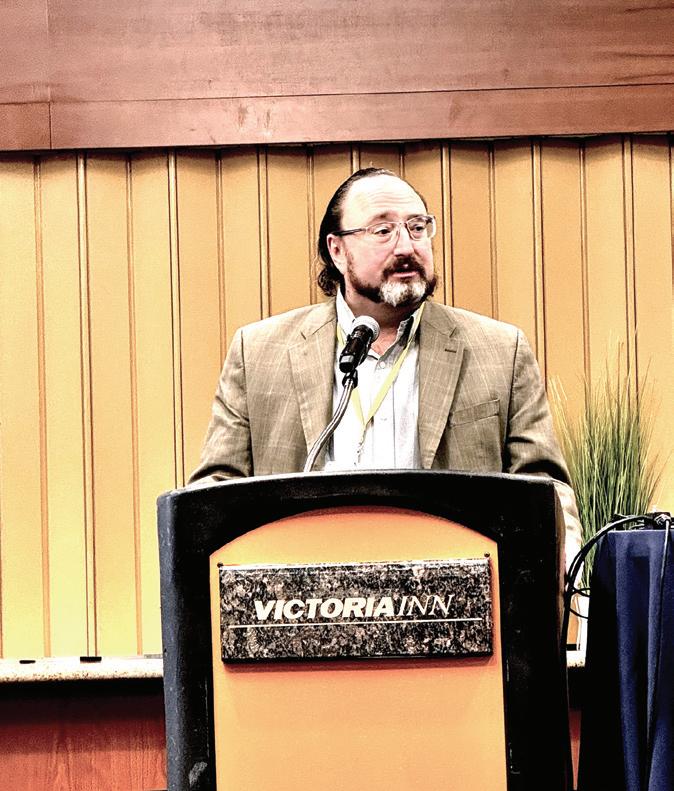
Manitoba Pork collaborates with veterinarians, government agencies, and industry partners to enhance surveillance and response capabilities.
Trade uncertainty adds another layer of risk. Canada exports about 70 percent of its pork, with the United States, Japan, China, and Mexico among the top markets. Dahl says tariffs, bans, and political disputes can close borders faster than farmers can adapt.
“When a market closes, even temporarily, the impact lands directly on farmers,” he says.
China buys large volumes of Canadian pork, but often shifts policy without warning. Political tensions or disease claims can block shipments overnight. Dahl says producers absorb the shock.
“We depend on fair access to export markets. Farmers invest in efficiency, in animal health, and in sustainability, but when politics disrupts trade flows, all of that investment sits on the line,” said Dahl.
At home, Canadian consumers also push for transparency in animal care, food safety, and environmental practices. Dahl says farmers accept transparency but want fair competition.
“If we ask Canadian farmers to do more, then the system must ensure they can compete,” he says.
Competing countries often sell into the same markets with weaker rules, undercutting Canadian producers.
Manitoba alone markets
File photo about nine million hogs each year, most going south or into processing plants in Brandon and Neepawa. Pork supports thousands of families and billions in economic activity. That success also highlights the sector’s exposure: disease, tariffs, or changing consumer demands can hit quickly and hard.
Dahl says collaboration remains the solution. Farmers, processors, veterinarians, governments, and consumers all share responsibility for the industry’s future.
“The Code of Practice review shows how Canada can lead. It brings everyone to the table and ensures decisions follow science,” he says. “That model should apply across the board, from animal welfare to disease preparedness to trade negotiations.”
Despite constant pressure, Dahl says optimism drives the sector forward.
“Our producers show resilience every day,” he said. “They understand the challenges, and they also understand the responsibility that comes with feeding people here at home and around the world.”
Canadian pork farmers know the stakes. They manage animal care, protect herds from disease, and advocate for fair trade access while ensuring food remains affordable and safe. The path forward requires science-based welfare standards, strong biosecurity, and diversified markets. With farmers at the centre and collaboration across the chain, Canada’s pork industry can stay competitive and trusted on the global stage.
By Peter Vitti point
Thousands of calves will be weaned across Canada this autumn. Some of them will be shipped short distances, while others will be trucked to distant feedlots. The stress of general trucking causes a certain amount of weight loss in most animals. This weightloss is known as “shrink”.
Most marketed cattle are sold by weight, so several hundred dollars per calf are lost when shrink is significant. The whole idea is to minimize it to maximize the value of each sold calf.
Up to 10% shrink by weight in weaned calves is expected by most producers from the
of the animals leaving their home-farm to point of arrival at an auction-mart or feedlot.
Unfortunately, the tied-in to potential economic loss is staggering. For example, if a truckload of 40 x 650 lb calves @ $600 cwt – each lose 50 lbs due to shrink (7.7%) by their sale-date nearly $12,000 disappears.
It has been my experience that there are three types of shrink ranging from non-lethal to long-term chronic issues and possible loss of an animal:
- Fill-shrink – It occurs during the first part of transporting calves upon their journey.
It encompasses a loss of animal weight due to rumen-fill, manure and urine. Cattle held up to 10 to 12 hours are expected to get thirsty and hungry, but it usually doesn’t threaten their lives. Much of fill-shrink is recovered within a day after animals are watered and fed.
- Dehydration – This is an actual loss of fluid from the calf tissues; muscles, organs, blood and even bones. It may come from straightforward dehydration caused by calves not getting water during long hours of trucking and/or accentuated by hot weather. Sometimes, dehydration is common in distressed calves
By Elmer Heinrichs
An investment of $4.1 million in federal funding will be a bit of a game changer for a thriving agricultural manufacturer in the Pembina Valley. Prairies Economic Development Canada recently announced more than $21 million in federal investments for nine Manitobabased businesses, and PhiBer Manufacturing of Crystal City is receiving $4.1 million to expand its Manufacturing capacity.
PhiBer Manufacturing Inc. is forging ahead with a bold expansion of its operations in Crystal City that will increase its ability to manufacture more components in-house, in Canada.
The company’s recent sodturning ceremony marked the beginning of construction on a new facility that will significantly increase its production capacity, scope and ability to meet growing demand. Founded in Crystal City, and built from practical agricul-
tural innovation, PhiBer has grown from an on-farm enterprise into an internationally recognized brand in equipment manufacturing. Despite pressures from tariffs and an unpredictable economic climate particularly for agriculture, PhiBer has remained resilient, growing its workforce, expanding its markets, and continuing to invest in its home community.
“Our success has always come from listening to farmers, creating effective agriculture solutions, and finding ways to overcome challenges,” said Derek Friesen, CEO of PhiBer Manufacturing.
“My dad Phil and Harv Bergen navigated the BSE cattle crisis, severe drought and many other challenges since they founded the business in 1996. We always found a way to keep going and growing. So, despite current uncertainties, this expansion is important to enable greater control over our supply chain and to support our entry new
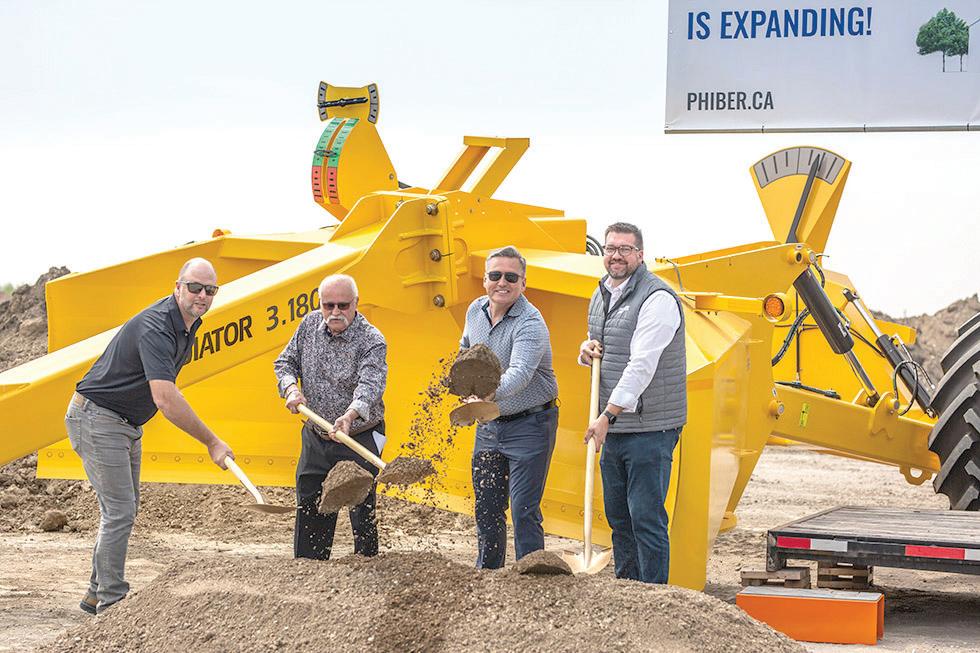
international markets.”
The upcoming development will include a new 60,000 sq. ft. building to augment PhiBer’s existing footprint, creating space for new manufacturing lines, product development, and additional skilled jobs in Southern Manitoba. The investment represents PhiBer’s continued commitment to innovation, job creation, and rural economic development. PhiBer manufactures a variety of Ag equipment in their product line, and it keeps on growing.
“We manufacture some hay tools, and a lot of our products get branded by other OEM’s in the Ag world, so your Massey’s, Case, New Holland... a lot of these brands will buy our product, put their name on it, so it looks like it’s their own,” says Friesen.
He notes their line of earthmoving equipment, as well as other product lines, have been growing steadily over the last number of years.
“Most of our ideas here start in a tractor seat,” he says. “We’ve been picking up engineers as fast as we can find them. Yeah, there are no shortage of ideas in development here.”
Currently PhiBer employs just under 90 people, and with this new expansion they’re expecting to hire an additional 80-100 employees over the next 3 years as the product line and manufacturing capabilities expands. Friesen says he expects to be moving in by this Christmas, with 80 per cent to be up and running in early in the new year. Some parts of the plan will take a little longer to complete, he adds.
caused by poor weaning or handling methods. I witnessed, some “truck-weaned calves that were so distraught that they hyper-ventilated (drawing off water from lungs) as they were being loaded.
- Morbidity or sickness – Many calves suffer from a high incidence of dysentery and respiratory issues during trucking and by the time they enter a new feedlot or any other new home. These high rates of disease are often enhanced by a compromised immune system in which many animals never fully recover; leading to lower feedlot gains; poor feed efficiencies as well as a higher incidence of feedlot mortality.
It remains that trucking is the biggest factor causing these three types of shrink in cattle.
University and extension work demonstrated that actual weight loss due to shrink occurs rapidly during the first hours of transportation, levels off and then gradually increases as any haul hours becomes excessive.
It was shown by the University of Wyoming that cattle lose about 1% of their bodyweight per hour for the
first three to four hours, then 0.25% of their bodyweight for the next 8 – 10 hours. An unrelated Iowa study suggested that cattle lose an additional 0.60% of their weight from point of origin for each additional 160 km (100 miles) of haul.
Handling and processing of cattle is the next biggest stress factor in trucked calves. The method by which cattle are treated when they are gathered, and sorted for sale accounts for 2 – 3% total shrink. Current welfare practices have significantly reduced this number, due to a positive means of processing cattle. For example, it is my understanding that incoming trucked cattle are now sold within a few hours of arrival at a sale yard, rather than waiting up to 24 hours in the past. In addition, hay and water are available for incoming cattle, which has become commonplace.
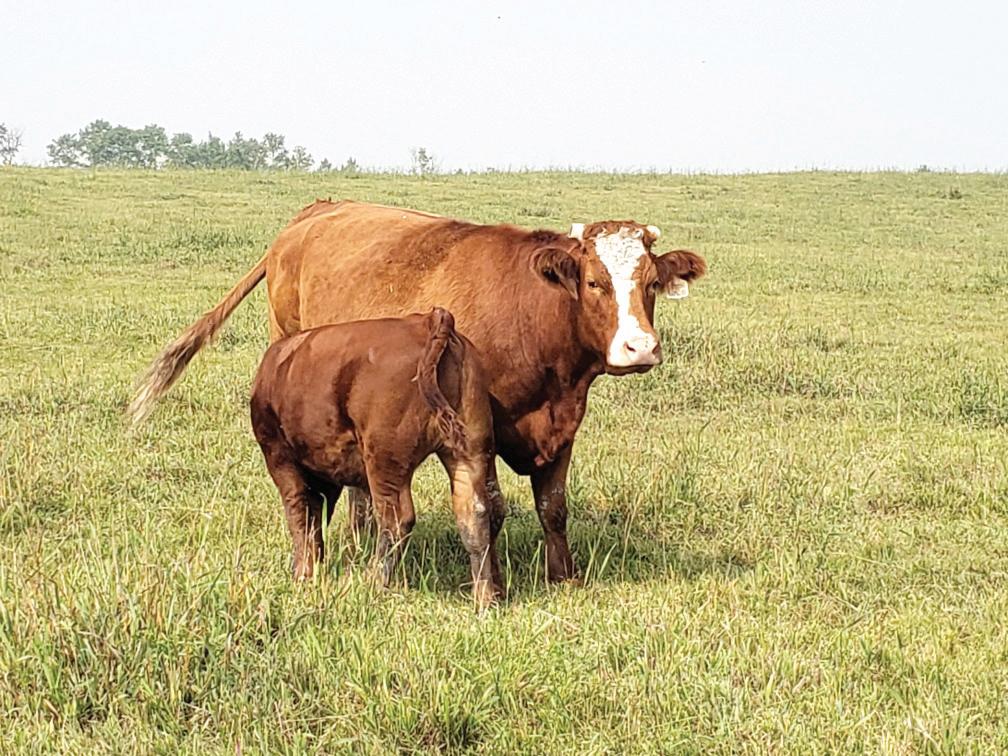
Preconditioned weaned calves that were creep-fed for at least 45-days before shipping adjust significantly better to transportation stress and lose less weight compared to truck-weaned calves.
Submitted photo Peter Vitti
Other associated factors that contribute to cattle shrink include; the type of ration that calves were receiving before they were trucked. For example, cattle grazing lush pasture shrink more than compared to cattle fed dry hay, days before transport. Simi-
larly, preconditioned weaned calves that were creep-fed for at least 45-days before shipping - adjust significantly better to transportation stress and lose less weight compared to truck-weaned calves. Accepting any shrink in trucking calves means reduced income and possible loss of future performance. A friend of mine that operates a 200-beef cow operation - is always looking for ways to shrink the shrink in about 100 x 650 lb weaned steers shipped to eastern Ontario each fall. His goal in 2025 is to reduce it by 2.5% by any practical means. If successful this means a $9,800 bigger paycheck!