
Heavy Mud Bogs Down Harvest in Southeastern Manitoba
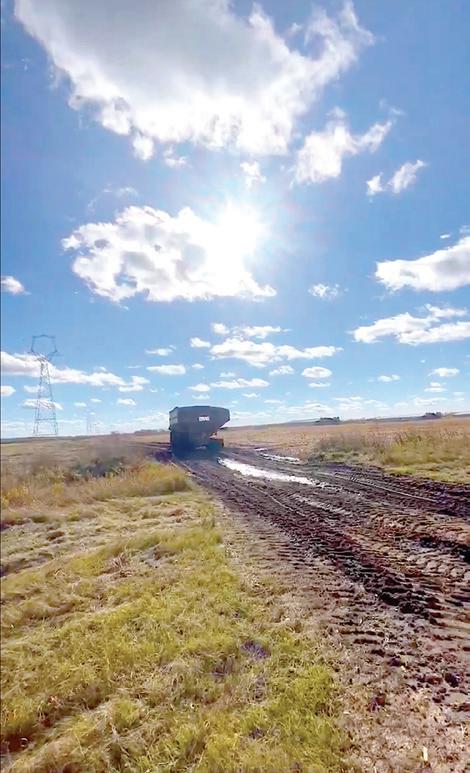
Korey Peters from Randolph says he’s seen many wet fields in his lifetime, but the ones this year are among the wettest—especially in October at harvest time.
By Harry Siemens
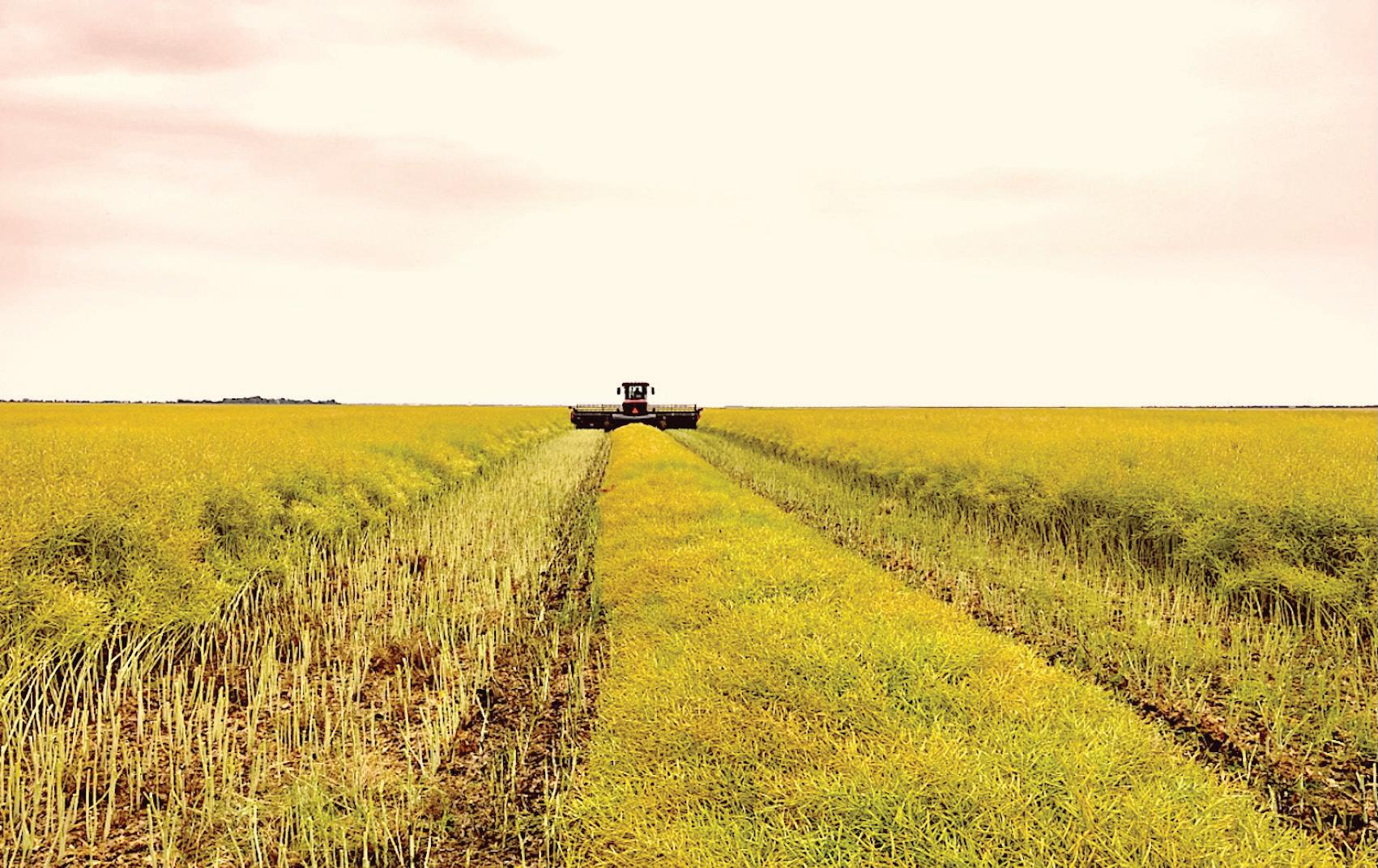
Farmers across southeastern Manitoba face one of their toughest harvests in recent years as persistent rains and saturated fields slow progress and make every load a challenge. Combines crawl through mud, grain carts get stuck, and equipment cleanup promises to take weeks once the final acres come off.
Korey Peters, a farmer from Randolph, MB, said the fields around his area remain as wet as anyone can remember. He and his family still have about half their corn and all their sunflowers to bring in.
“We’ve got around 750 acres of corn and 800 acres of sunflowers left,” Peters said. “Corn’s coming off slowly, but it’s a strong crop. It just takes time when it’s this wet.”
Many producers across the region echo the same story. Tracks on combines and tractors help, but they’re not a perfect solution.
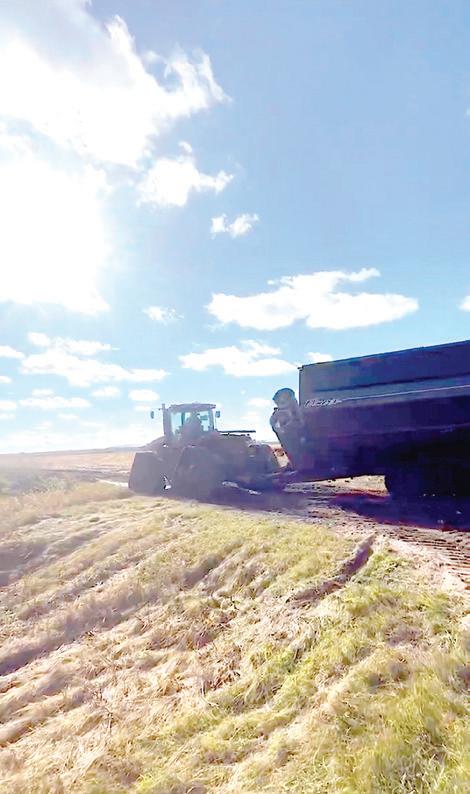
In an effort to not get bogged down in mud, Korey explained that carts now run only half full, and trucks stay firmly parked on the road to avoid damage.
“Tracks make it possible to move,” Peters said, “but we still bury things, especially the grain carts.”
Farmers have been limiting cart loads to keep from sinking deeper into the fields.
“We don’t fill the carts anymore—just a couple of dumps from the combine, then they head for the trucks,” he said.
Truck drivers now stay parked on the road while carts shuttle back and forth, dragging mud behind them.
“The carts bring a lot of mud to the road,” Peters said. “When we’re done, we scrape it off or bring shovels along to clean up. It’s not perfect, but there’s no other way right now.”
The deep ruts and slick surfaces add hours to every day.
Some producers report they can only harvest during the coldest part of the morning when the top layer firms up. In warmer afternoons, machinery sinks faster, and hauling becomes impossible.
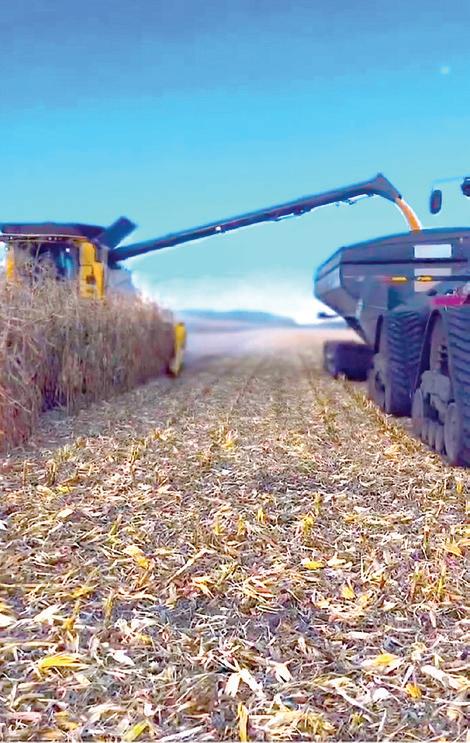
“Our first corn field hit 170 to 180 bushels an acre,” said Korey Peters. “That’s phenomenal for us. Normally, we’re around 120 or 130 on dryland corn.”
Peters farms both heavy clay and sandy ground.
“Around home it’s pure clay—sticky gumble that hangs onto everything,” he said. “Once it’s wet, it stays wet. You can’t push through it fast, and you drag a lot of mud everywhere.”
His other fields, about twenty miles away, sit on sandy soil that handles water better.
“It’s easier there because it doesn’t stick,” he said. “But those fields have peat moss spots, and if you forget where they are, you’ll bury something in a hurry.”
Even careful planning doesn’t always prevent trouble. “We had to dig a grain cart out with an excavator once this year,” Peters said. “You just shake your head and carry on.”
This kind of harvest demands patience and persistence. Operators must time every move and accept the slower pace.
“You just can’t push the
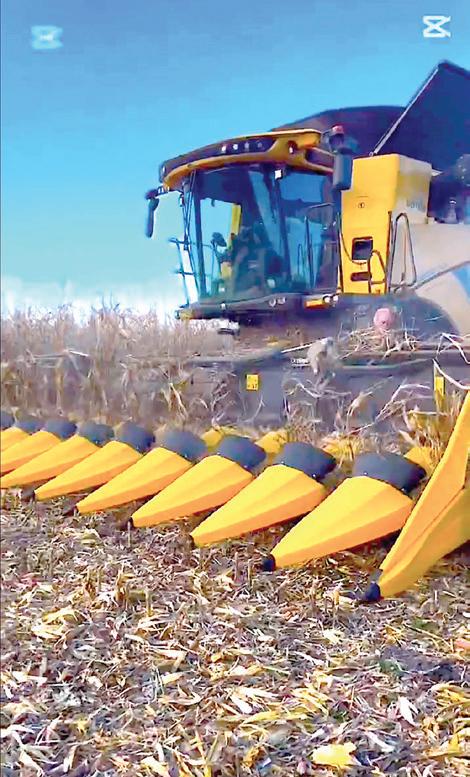
Taking off corn on October 18 in some dryer conditions. That kind of yield makes the fight through the mud worthwhile.
Submitted photos
equipment,” Peters said. “When you do, you break things or get stuck deeper.”
When told that many older farmers—those who remember keeping machinery spotless—might find tears watching today’s muddy fields, Peters smiled.
“Yeah, I can imagine that,” he said. “This year, cleaning the machines after harvest will take weeks.”
Despite the difficult conditions, the yield potential brings encouragement.
“Our first corn field hit between 170 and 180 bushels an acre,” Peters said. “That’s exceptional for this area. We’re usually around 120 to 130 on dryland corn.”
Strong yields and high grain quality have kept spirits up across the region, even as farmers battle through wet weather. The heavy clay that slows progress now may have helped retain soil moisture during dry parts of the summer.
Continued on Page 2...

AAFC Projects Bigger Grain Harvest for 2025
By Elmer Heinrichs
Agriculture and Agri-Food Canada (AAFC) is projecting a larger grain harvest for 2025, estimating total production of all principal field crops to have increased by four per cent compared to last year.
According to AAFC’s latest October outlook, the total crop supply rose by three per cent, supported by a notable seven per cent increase in carry-in stocks (beginning-year inventories). This rise helped offset a 34 per cent decline in imports.
While supplies were up, carry-out stocks for all principal field crops declined by 19 per cent, driven mainly by stronger export demand. Exports rose by 15 per cent, largely counterbalancing a three per cent decrease in total domestic use.
Overall, production levels for major field crops are projected to reach near-record highs — up three per cent from last year and eight per cent above the previous five-year average. In Western Canada, total production is estimated to have climbed by four per cent, surpassing the region’s five-year average by about 10 per cent.
Across the Prairies, the grain harvest is nearing completion, while soybean harvests are progressing well and corn harvest operations are just getting underway in Eastern Canada. Despite the strong production outlook, AAFC expects prices for most principal field crops to decline in the months ahead, reflecting abundant global supplies and lower international market values.

Canada-Indonesia Trade Deal Opens New Opportunities for Soy Industry


By Dan Guetre
Canada’s soybean industry is welcoming the newly signed Canada-Indonesia Comprehensive Economic Partnership Agreement (ICA-CEPA), calling it a significant milestone that will strengthen trade ties and boost opportunities for

Canadian agri-food exports. This is Canada’s first-ever bilateral trade agreement with an ASEAN country.
The trade deal, ICA-CEPA, finalized recently between the two nations, is expected to provide competitive access and long-term stability in one of Canada’s fastest-growing soybean markets.
“As representatives of Canada’s soybean sector, we’ve been advocating for this agreement—not just to open doors, but to share the quality and value of our soy value chain with such a promising market,” said Brian Innes, Executive Director of Soy Canada. “We commend the leaders on taking this decisive action, and we look forward to seeing the agreement implemented through Parliament as soon as possible.”
Indonesia is already among Canada’s top five export destinations for soybeans, accounting for 265,000 tonnes annually and representing a $200 million market. Demand from Indonesian buyers and food manufacturers has been steadily increasing,
making the country a key growth target for Canada’s soybean exporters.
The new trade deal is expected to further strengthen Canada’s position in the market by improving access, reducing barriers, and ensuring a more stable framework for trade.
“This agreement will help solidify the role of Canadian soy in Indonesia’s supply chain,” said Innes. “Canadian soy represents quality, sustainability, and trusted performance in world markets. With this agreement, we are sending a clear message that Canada is ready to compete, ready to collaborate, and ready to deliver.”
In preparation for expanding market opportunities, Soy Canada has already led two trade delegations to Indonesia this year, where representatives met with buyers and food manufacturers to promote the benefits of Canadian soybeans.
The visits highlighted Canada’s reputation for high-quality, sustainably produced soybeans—qualities increasingly sought after
by international food companies and consumers.
With the Canada-Indonesia agreement now signed, the industry is optimistic that ratification and implementation will follow soon—opening a new chapter for Canadian soy in Southeast Asia’s expanding food and agricultural markets.
Indonesia is the world’s fourth most populous country, with a population of 282 million and a GDP of approximately $1.9 trillion in 2024. It is a fast-growing global market and Southeast Asia’s largest economy.
Projected to become a top five global economy by 2050, Indonesia’s market holds significant potential for Canadian businesses, entrepreneurs, and investors.
In 2024, Indonesia was Canada’s third-largest merchandise trading partner among Southeast Asian countries, totalling $5.6 billion. Canadian merchandise exports to Indonesia were valued at $2.3 billion, making it Canada’s largest export market in Southeast Asia and 18th largest worldwide.
Heavy Mud Bogs Down Harvest in Southeastern Manitoba
“It’s frustrating, but at least the crop’s worth the trouble,” Peters said.
Sunflowers remain in the field for many producers, waiting for better footing and a stretch of dry weather.
“They’re standing well, but it’s going to take a while before we can get at them,”
Peters said.
This fall’s harvest will go down as one of the wettest in years for southeastern Manitoba. Every load takes longer, every pass leaves ruts, and every cleanup adds hours of labour. Yet, the work continues. Farmers adapt with lighter loads, earlier starts, and constant machinery maintenance. For many, the goal now is simply to finish before freeze-up.
In a season marked by mud and determination, Peters summed it up best: “It’s not pretty, but it’s progress. You just keep going.”
Canada-Indonesia Trade Deal Opens New Opportunities for Soy Industry
Submitted photo
MacDonald Strengthens Agricultural Ties During Mexico Trade Mission
By Dan Guetre
Canada’s Minister of Agriculture and Agri-Food, Heath MacDonald, has concluded a successful four-day trade and relationship-building mission to Mexico, reinforcing Canada’s commitment to deepening agricultural and agri-food ties with one of its fastest-growing trade partners.
Building on Prime Minister Mark Carney’s recent visit to Mexico and the Canada-Mexico Action Plan, Minister MacDonald met with Mexico’s Secretary of Agriculture and Rural Development, Julio Berdegué, to discuss mutual priorities including food security, trade diversification, and strengthening the resilience of North American food supply chains.
“The partnership between Mexico and Canada stands as a vital bridge that strengthens
both economies and fosters innovation, sustainability, and shared prosperity,” said Minister MacDonald. “We will continue to work with Mexico to create new opportunities, such as increased market access for our products, to help build a stronger, more resilient future for our sector.”
During his visit to Mexico City, MacDonald delivered closing remarks at the Canada-Mexico Agribusiness Dialogue, emphasizing the importance of collaboration in developing more sustainable and diverse agricultural systems. He also participated, alongside Canada Beef, the Canadian Meat Council, and JBS Foods, in the official launch of Canadian beef products in 42 Costco stores across Mexico—a milestone showcasing Canada’s role as a reliable supplier of
high-quality beef.
The Minister also met with Grupo Trimex, Mexico’s largest flour miller and a long-standing Canadian trade partner. Since 2020, Canada has exported 3.9 million metric tonnes of wheat to Mexico, valued at $1.5 billion CAD. Grupo Trimex is expanding its operations to include Canadian oats and canola, further cementing Canada’s reputation for premium agricultural exports.
In Guadalajara, MacDonald engaged with local businesses and organizations to explore opportunities for expanding Canadian oilseed and grain exports. He visited facilities of Aceites, Grasas y Derivados (AGYDSA) and Oleomex, two of Mexico’s leading importers of Canadian canola. Since 2020, Canada has exported 5.9 million metric tonnes of canola
Manitoba Welcomes Review of North Dakota Dairy Projects Near Red River
By Dan Guetre
The Manitoba government is welcoming a decision by the International Joint Commission (IJC) to review two proposed large dairy operations in North Dakota that could impact water quality in the Red River and Lake Winnipeg which flows into the Nelson River and ultimately into the Hudson Bay and Arctic Ocean.
The province is worried that the massive dairy operations, Abercrombie Dairy with 12,500 cows and Herberg Dairy with 25,000 cows will add excess nutrients, particularly phosphorus, to the Red River, which flows into Lake Winnipeg. Both proposed dairies are owned by Riverview LLP, a Minnesota-based dairy agribusiness.
The two North Dakota facilities will add 37,500 milk-
ing cows to the state, more than quadrupling the current herd of about 8,900 cows and nearly matching Manitoba’s entire provincial herd of roughly 45,000 cows across 240 farms.
“The health of Manitoba’s lakes and rivers is a top priority for our government, and we want to be sure that developments upstream don’t negatively affect Lake Winnipeg and the Red River,” said Environment and Climate Change Minister Mike Moyes. “We must protect Lake Winnipeg for generations to come.”
The IJC has directed its International Red River Watershed Board to examine the permits and environmental information associated with the projects. The review will focus on how the proposals address poten-
tial impacts on aquatic ecosystem integrity, nutrient loading, and water quality at the international boundary — particularly as they relate to nutrient targets for the Red River.
Minister Moyes had previously written to the International Red River Watershed Board, North Dakota Governor Kelly Armstrong, and Canada’s Foreign Affairs Minister Anita Anand in June, urging coordinated action and support for a transboundary review.
The Manitoba government continues to advocate for collaborative water management across borders, ensuring that upstream developments do not worsen nutrient runoff or accelerate algae growth in Lake Winnipeg, one of the province’s most vital ecosystems.

seed, worth $4.53 billion CAD, to Mexico. Oleomex announced plans to double its canola imports within the next five years.
MacDonald also met with senior executives of Grupo Industrial Vida (GIV)—a major investor in Canada’s oat sector and the largest importer of Canadian oats in
Mexico. Since 2020, Canadian oat exports to Mexico have totaled $224 million CAD across 658,000 metric tonnes. GIV intends to expand its oat processing capacity in Alberta and Manitoba through new foreign direct investment.
The minister’s outreach highlights the growing
strength of the Canada-Mexico agricultural partnership. In 2024, bilateral agri-food trade reached $6.9 billion CAD, marking a 44.8% increase since 2019. Canada’s top exports to Mexico include pork, canola, wheat, and beef, while Mexico remains a key supplier of fresh produce and tequila to Canadian markets.


Heath MacDonald, Minister of Agriculture and Agri-Food, recently concluded a 4-day trade and relationship-building trip to Mexico.
Waukon Dairy, a subsidiary of Riverview LLP, milks
cows daily in rural Minnesota.
Submitted photo
Submitted photo

Read the AgriPost online at agripost.ca
Past issues in archive

Politics, Trade, and Mud: A Month of Tough Ground for Farmers

This month’s Siemens Says may sound a little different, but farming never stays still. Politics, trade, and weather have kept the industry on its toes. A single TV ad can shake years of progress between nations that depend on one another. Canada, the smaller player in this partnership, risks fooling itself by slamming the door on trade with the United States. I’m not here to make policy, but I agree with those in agriculture who rely on open markets and cooperation with our largest trading partner.
But before we get to that, many producers still have one major hurdle — wet fields. Some farmers in southern
Manitoba are struggling to finish corn and sunflower harvests under conditions they haven’t seen in years. As one agronomy report noted this week, “After all the rain we’ve had lately, the fields are fully saturated — and in many areas, it’s just too wet to make meaningful progress.”
A few determined growers keep moving, but it’s slow going. Tracks help, but not enough to offset deep mud and rutting. As Antara Agronomy put it, “At this point in the season, the focus is shifting toward managing what we can control. If you’re still trying to finish harvest or fall fieldwork, patience can pay off, especially when soil structure is already under stress.”
Farmers across the Red River Valley know that once soil structure breaks down, it takes years to rebuild. So, many are now turning their
attention to post-harvest planning — reviewing yield maps, noting low spots, and marking areas for future drainage and fertility work.
As Antara added, “When the fields finally dry down, we’ll have opportunities to make improvements that stick.” Its good advice: take stock, stay patient, and hang in there.
Now back to the national stage — and the TV ad that stirred political waters. As tension rises over former U.S. President Donald Trump’s move to cut off trade talks with Canada — and Ontario Premier Doug Ford’s ad calling for tougher action — industry leaders are urging calm and focus.
Cam Dahl, General Manager of Manitoba Pork, said it best: “Relationships matter. Our relationships with our partners, customers, and suppliers in the U.S. matter now more than ever.”
Dahl warned that Canada risks alienating key allies if political leaders choose rhetoric over relationship-building. “We do not build strong, productive relationships by taking our disagreements with the Administration over tariffs to the public square,” he said. “We need partnership, not rhetoric.”
For producers, trade stability is vital. Political drama might play well in headlines, but it creates uncertainty in boardrooms, feed mills, and barns. “Canadians cannot afford to have potential allies in the U.S. and Mexico turned off by aggressive commentary coming from north of the 49th parallel,” Dahl said.
He emphasized that even if Canada succeeds in diversifying trade, the U.S. will remain our most important customer.
“Even if we are successful in diversifying trade, the trading relationship with the U.S. will remain our most
important partnership,” Dahl said. “Federal and provincial governments must be focused on the negotiating table, not political gamesmanship.”
The pork sector is a clear example. Thousands of Canadian hogs cross the U.S. border every week for processing and sale. Dahl said that farmers need predictable, cooperative markets, not political posturing.
“Farmers need certainty, not slogans,” he said. “We should be building bridges, not burning them.”
Whether in muddy fields or trade offices, the message rings true. Agriculture succeeds when patience, cooperation, and clear thinking take the lead. From soggy Red River soil to Ottawa’s policy circles, the goal is the same — keep moving forward, stay steady, and never lose sight of what really matters: relationships, resilience, and results.
Farmers Near Completion of 2025 Harvest
By Elmer Heinrichs
Manitoba Agriculture’s final crop report of the season, released October 13, shows that wind, rain, and even snow have not stopped Manitoba growers from nearly completing the province’s 2025 harvest.
Harvest progress has reached 93 per cent, up six points from the previous week.
Cereal crop specialist Anne Kirk, who compiled the report, said the province saw strong harvest momentum before wet weather slowed things down.
“We had pretty good progress early in the week, but then we had more precipitation over the weekend, putting a pause on harvest operations,” Kirk said.
At the time of the report, cereal and canola harvests are essentially complete, with soybeans about 90 per cent finished, grain corn at 42 per cent, and sunflowers around 20 per cent.
“Crops left to come off are a little bit of canola, some flax, soybeans, sunflowers, grain corn, and silage corn,” Kirk explained.
By crop category:
- Barley and oats: 99 per cent complete
- Canola and dry beans: 96 per cent
- Soybeans: 90 per cent
- Potatoes: 84 per cent
- Silage corn: 77 per cent
- Flax: 76 per cent
- Grain corn: 42 per cent
- Sunflowers: 17 per cent
Winter cereal planting is
now complete, with most fields at the three-leaf stage.
Yields:
- Spring wheat: average 60 bu./ac., with some fields reaching 90 bu./ac.
- Barley: 65–110 bu./ac.
- Oats: 110–130 bu./ac.
- Canola: average 45 bu./ ac., ranging 30–70 bu./ ac.
- Field peas: average 60 bu./ac., ranging 30–75 bu./ac.
- Soybeans: 30–55 bu./ac.
Wet harvest conditions have caused some loss of quality in spring cereals, and sunflower harvests remain delayed as producers wait for crops to dry.
Producers harvesting cereal silage and native or slough hay continue
to battle wet conditions, while many are now shifting focus to livestock management.
Manitoba Agriculture is encouraging producers to use management practices that promote snow cover to insulate alfalfa crowns over winter. Pastures are now dormant, and livestock are feeding on stockpiled forages, crop residue, or supplemental feed.
Despite challenges, Kirk said most producers are pleased with the year’s results.
“I think, in general, farmers are fairly happy with their crop,” she said. “Some pockets that were really dry during the growing season have lower yields, and people who
couldn’t get their crops off in a timely manner will be less happy. But overall, things look pretty good.”
Livestock operations have begun weaning, though rain has created muddy conditions in pastures and corrals.
Most producers have secured adequate winter feed, and hay and straw bales are being moved to wintering areas. Manure spreading is also underway.
Kirk said the combination of strong yields, replenished soil moisture, and good winter crop establishment means Manitoba producers are wrapping up the 2025 growing season on a positive note.
“Things look pretty good overall,” she concluded.
Manitoba Extends Crown Land Rent Freeze and Launches Program Review
By Harry Siemens
The Manitoba government has launched a full review of the Agricultural Crown Lands (ACL) Program, aiming to strengthen sustainability, affordability, and reconciliation while supporting the producers who rely on these lands every season.
Agricultural Crown Lands remain an essential resource across the province, providing pasture and hay for more than 1,700 leaseholders and close to 90,000 cattle each grazing season.
Through this review, the province hopes to modernize the program and ensure it continues to meet the needs of producers, rural communities, and future generations.
As part of this first phase, the government is seeking public feedback on three key areas: how to allocate the leases, the limits on the amount of land a single leaseholder can hold, and renewal options for existing leases. The goal, officials say, is to build a system that is transparent, fair, and accessible. Manitobans can share their views through an online survey on EngageMB, open until November 24, 2025.
At the same time, the Manitoba government announced it is extending the rent freeze for ACL forage leases into the 2026 growing season, a decision that reinforces its focus on affordability for livestock producers.
Agriculture Minister Ron Kostyshyn said the rent freeze underscores the province’s commitment to supporting those who feed Manitobans.
“Manitoba producers are the backbone of the provincial economy, and our government is committed to keeping life affordable for the hard-working Manitobans who put food on our tables,” said Kostyshyn. “Continuing this rent freeze provides financial stability for producers and reflects our commitment to affordability.”
The current ACL rate of $3.66 per Animal Unit Month (AUM) remains the lowest in Western Canada, a distinction producers welcomed in a year marked by weather extremes and market uncertainty.
Brent Benson, a Manitoba cattle producer, said the decision brings much-needed relief.
“This announcement is a relief for Crown land users and gives us some stability after a year of severe challenges,” Benson said. “From extreme weather to uncertain trade markets and feed supplies, some producers struggled to keep their family ranches operational without making decisions that could affect their sustainability. We look forward to working with the Manitoba government as we move toward a system of fair and predictable rental rates, as well as policies that encourage
young producers to enter the industry.”
Kostyshyn emphasized that the ACL Program supports nearly 1,750 leaseholders who depend on Crown lands for grazing, haying, and cropping. These lands, he noted, are a vital public asset, sustaining Manitoba’s livestock sector while promoting responsible land use and upholding treaty and Indigenous rights.
The province’s consultation process, running in parallel with the rent freeze, provides producers and Indigenous communities with an opportunity to shape the future of the program. Matthew Atkinson, president of Manitoba Beef Producers, said the organization welcomes the dialogue.
“Manitoba Beef Producers appreciates the consultations about various aspects of the Agricultural Crown Lands Leasing Program to ensure it is responsive to the needs of the cattle sector,” Atkinson said. “We strongly encourage beef producers to make their views known during this important engagement process, as it will help shape the future of the program.”
The survey marks the first stage of public engagement in the review. Feedback collected through this and future consultations will guide proposed regulatory updates and program improvements. The province
La Vérendrye MLA Konrad Narth Named PC Critic for Agriculture
By Dan Guetre
Manitoba Progressive Conservative MLA Konrad Narth has been appointed as the par ty’s new Shadow Cabinet Critic for Agriculture; a role he says is deeply personal given his farming background and long-standing ties to Manitoba’s agricultural community.
Narth, who represents the La Vérendrye constituency, announced his new responsi bilities in a statement recently, expressing gratitude to PC Leader Obby Khan for the appointment.

expects to implement final program adjustments by 2027, following continued collaboration with producers, leaseholders, and Indigenous communities. Together, the rent freeze and program review reflect a renewed provincial commitment to balance — keeping Manitoba agriculture affordable and sustainable while ensuring producers have a voice in shaping the policies that affect their land and livelihoods.
“I am deeply honoured to be named by PC Leader as the new Shadow Cabinet Critic for Agriculture, and Critic for Business, Mining, Trade and Job Creation,” said Narth.
A third-generation farmer, Narth emphasized that agriculture remains close to his heart and central to his work as a legislator.
“As a third generation farmer, Agriculture is a subject that is near and dear to my heart. I understand firsthand the challenges facing Manitoba’s farmers,” he said. “From tariffs to drought conditions to this Winnipeg-centric, out-of-touch NDP government, Manitoba’s farmers are facing a lot. I am grateful for this opportunity and glad farmers will have one of their own to have their back in the Manitoba Legislature.”
Narth previously served as the Critic for Transportation and Infrastructure and Critic for Labour and Immigration, roles he held since his election in 2023. In his new position, he will also take on additional responsibilities as the Critic for Business, Mining, Trade and Job Creation, while continuing to serve as the Deputy House Leader for the Progressive Conservative caucus.
He said the added portfolios will allow him to advocate for economic growth and job creation, particularly in rural Manitoba.
“These sectors are almost non-existent under this NDP government,” Narth stated. “I will continue to work hard every day to serve my constituents, hold this government to account, and bring the common-sense voices and views of La Vérendrye residents to Manitoba’s Legislature.”
As an advocate on rural issues, Narth has positioned himself as a strong voice for farmers and small communities in southeastern Manitoba. His appointment as Agriculture Critic signals the party’s intent to strengthen its focus on agricultural and resource-based industries — key pillars of Manitoba’s economy.
“I’m proud to stand up for Manitoba’s farmers and ensure their priorities are heard loud and clear in the Legislature,” Narth added.


Agriculture Minister Ron Kostyshyn said the rent freeze underscores the province’s commitment to supporting those who feed Manitobans.
Submitted photo
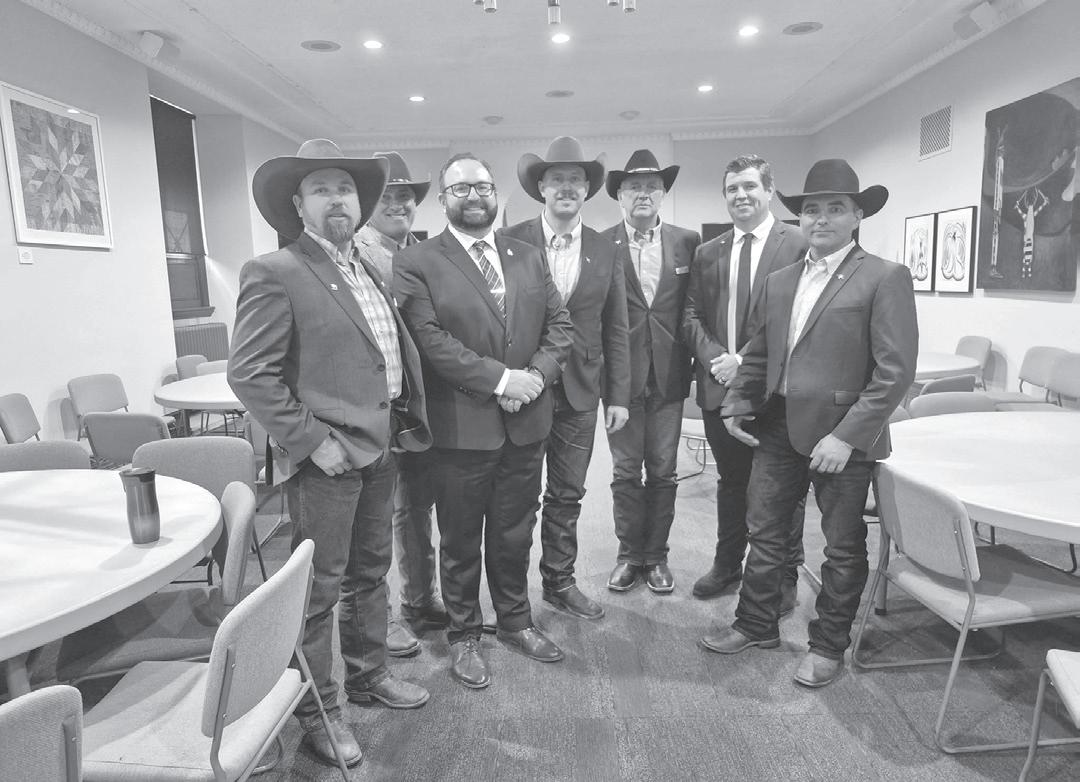
Konrad Narth (third from left) at a Manitoba Beef Producers event held in mid-October. Submitted photo
Potato Harvest Nears Completion / Record-Breaking Tuber
By Harry Siemens Vikram Bisht, potato and horticulture crops pathologist with
The 2025 Manitoba potato harvest neared completion by late October, with most fields dug and storage facilities filling across the province.
“Harvest for storage is almost complete,” said Dr.
Manitoba
Agriculture.
“Progress varies across farms from about 85 to 100 percent complete, but overall, we estimate around 95 percent of Manitoba’s potato acres harvested.”
During the final week of September and early October, daytime highs in potato-growing regions ranged from 29 to 32 °C, while overnight lows dropped to 1 to 7 °C. Those warm days helped finish the crop but created challenges for tuber cooling once the crop came off the field.
“The unseasonably warm finish advanced maturity but meant some potatoes entered storage above 18 °C,” Bisht said. “Those storages need careful management to prevent breakdown.”
Rainfall between October 4 and 6 interrupted harvest for two or three days before conditions improved.
“Most growers were able to resume by October 7,” Bisht said. “Despite short delays, progress remained strong, and the majority finished before mid-month.”
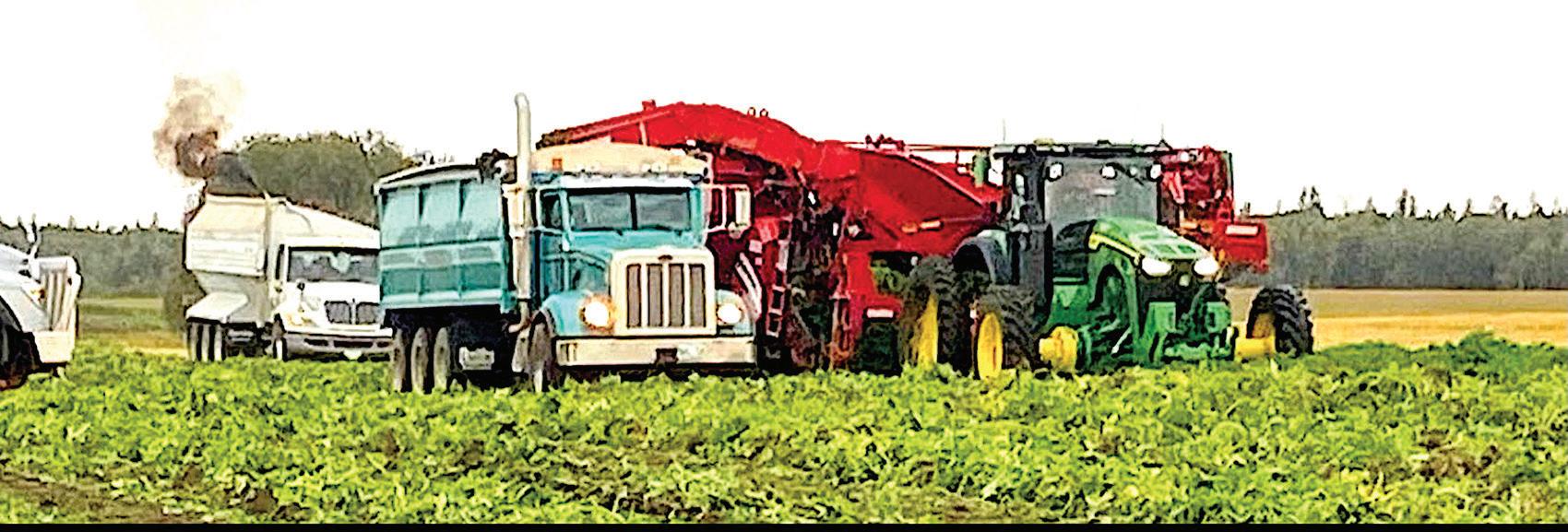
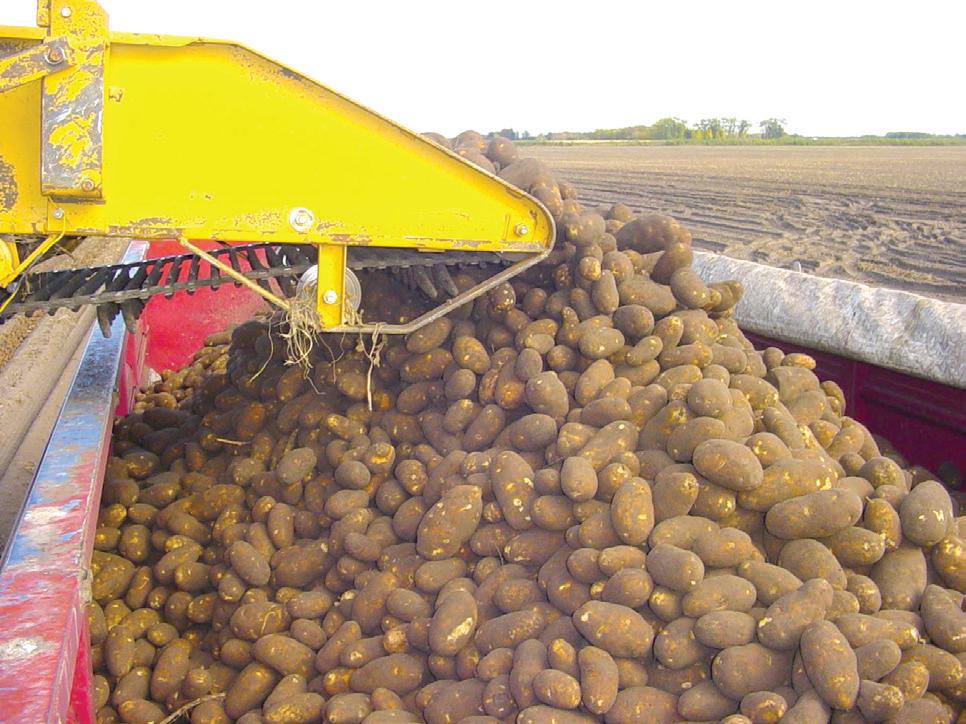
The unseasonably warm finish advanced maturity but meant some potatoes entered storage above 18 °C which requires careful management to prevent breakdown. “Harvest for storage is almost complete,” said Dr. Vikram Bisht, potato and horticulture crops pathologist with Manitoba Agriculture. Submitted photos
There were no reports of late blight anywhere in Manitoba this year, despite low levels of spores trapped for five consecutive weeks during the growing season.
“That was a relief,” Bisht said. “Growers stayed cautious, monitored closely, and their vigilance paid off.”
The Potato Early Dying
complex and powdery scab continued to appear in many fields.
“Those diseases are becoming more visible across Manitoba and need ongoing attention,” Bisht noted.
Aphid populations stayed extremely low, with no green peach aphids detected and only trace counts of potato aphids. The Colorado potato beetle again posed the main insect challenge, prompting foliar insecticide applications in more regions than usual.
“The beetle continues to pressure producers,” Bisht said. “Rotating chemistries and using integrated management remain essential.”
Bisht credited the collaboration of growers, agronomists, and consultants for another largely successful season.
“The Potato Report relies on the cooperation of people in the field,” he said. “Their timely updates make province-wide reporting possible.”
He reminded producers to maintain steady airflow and gradual cooling in storages as temperatures drop.
“Good storage management is key to protecting yield and quality through winter,” said Bisht.
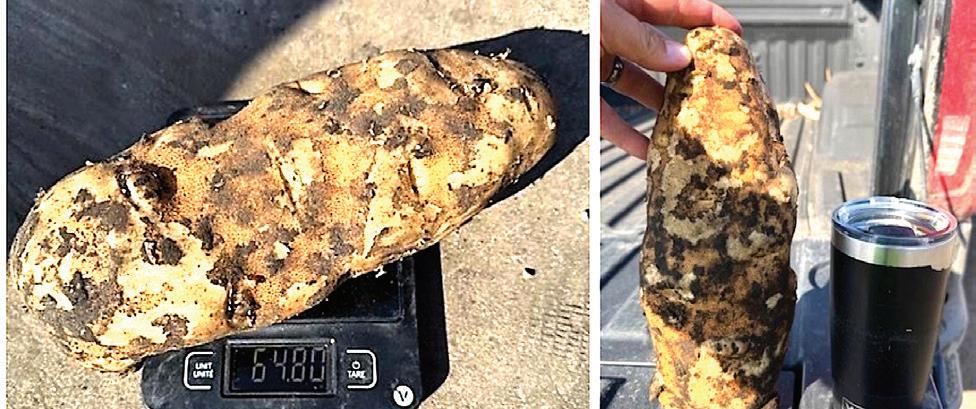
Appearing in the latest Potato Report at mbpotatoes.ca, Ryan Wiebe (JP Wiebe Farms) highlighted the 2025 season with the submission of a record-breaking Manitoba tuber. The largest tuber in Manitoba for the 2025 season weighed 6.480 lbs (2.939 kg), nearly doubling the previous record of 4.0 lbs.
Ryan Wiebe (JP Wiebe Farms” gave us a highlight of the 2025 season with the submission of a record-breaking Manitoba tuber. The largest tuber in Manitoba for the 2025 season weighed 6.480 lbs (2.939 kg), nearly doubling the previous record of 4.0 lbs.
“It’s always enjoyable to see a season produce something truly exceptional,” Bisht said with a smile. “It reminds us of the potential that Manitoba soils can deliver.”
Full details and photographs appear in the latest Potato Report at mbpotatoes. ca.
As another season closes, Bisht expressed appreciation for the province’s potato community.
“Every grower, agronomist,
and field scout plays a role,” he said. “The shared effort keeps the industry strong and helps us all learn from each year’s challenges and successes.”
With storages sealed and cool weather settling in, Bisht encouraged producers to look ahead.
“Now’s the time to monitor storages closely and start planning for 2026,” he said. “Each year adds knowledge, and 2025 has given us valuable lessons for disease management, pest control, and storage care.”
Manitoba’s potato growers once again demonstrated resilience and teamwork, navigating weather shifts and pest pressures to deliver another productive harvest.

There were no reports of late blight anywhere in Manitoba this year, despite low levels of spores trapped for five consecutive weeks during the growing season reported Dr. Vikram Bisht with Manitoba Agriculture.
Top Speakers, Interactive Trade Show, and Family-Friendly Programming Coming to Regenerative Agriculture Conference
By Dan Guetre Clark
The Manitoba Forage and Grassland Association (MFGA) is putting the finishing touches on its highly anticipated 2025 Regenerative Agriculture Conference, set to take place November 12–13, at the Victoria Inn in Brandon.
The 1.5-day conference will gather producers, researchers, and agri-industry professionals from across Canada and beyond to explore cutting-edge ideas and proven practices in regenerative agriculture. Attendees can look forward to national and international keynote speakers, an interactive trade show, a silent auction, and—for the first time—a free kids’ program made possible through a new partnership with Holistic Management Canada.
“This year’s conference promises to be one of our most dynamic yet,” said the MFGA organizing committee. “With diverse speakers and hands-on learning opportunities, we’re bringing together every aspect of what makes regenerative agriculture both viable and exciting.”
Keynote Speakers: Rick Clark – Soil Health Pioneer, Indiana, USA
A fifth-generation farmer from Williamsport, Indiana, Rick Clark brings a global perspective on soil health and regenerative organic stewardship. His family operation, Clark Land & Cattle, has eliminated all chemical inputs, relying instead on no-till and cover cropping systems. Featured in the documentary Common Ground,
has shared his methods worldwide and even testified before the U.S. Congress on regenerative agriculture. His presentation topic will be announced soon.
Michael Ferguson – “Open Minds Inspire Continuous Improvement on Farms”
Co-founder of Collective Impact and a fourth-generation Saskatchewan farmer, Michael Ferguson will explore how open-mindedness drives progress in agriculture. Drawing from 15 years of work in grain marketing, finance, and risk management, Ferguson’s presentation will inspire producers to view challenges as opportunities for innovation and growth.
Tom Krawiec – “Grazing in the Sweet Spot” Author of Ranching Like a 12-Year-Old, Tom Krawiec will share how simplifying ranch operations can increase productivity and build topsoil faster. From his early days grazing 40 cow-calf pairs to managing 3,000 yearlings on 5,500 acres, Krawiec’s approach demonstrates that simplicity and soil health go hand-in-hand.
Rob Wunder – “Carrying the Dream: Setting the Next Generation Up for Profitability and Regenerative Agriculture” Saskatchewan farmer Rob Wunder will discuss his family’s journey in building a profitable regenerative system that integrates composting, mixed farming, and enterprise stacking. Wunder’s talk will focus on creating a
foundation for the next generation to thrive in agriculture while maintaining ecological balance and long-term viability.
Kimberly Cornish – “Soil, Satellites, and Stewardship: Building a Next-Gen Ecosystem Services Registry from the Ground Up”
As Executive Director of the Food Water Wellness Foundation, Kimberly Cornish will delve into how advanced soil mapping, carbon modeling, and ecosystem services frameworks are redefining how stewardship is measured and rewarded. Her presentation highlights work from the Regenerative Alberta Living Lab, showcasing a transparent and science-based system to connect land managers with emerging environmental markets.
In addition to speaker sessions, attendees can enjoy a robust trade show, where vendors and innovators will showcase regenerative tools, products, and technology. The silent auction will raise funds to support MFGA’s ongoing initiatives promoting sustainable land management.
Families are also encouraged to attend, with a complimentary children’s program running alongside conference sessions—designed to engage young learners in hands-on environmental and agricultural activities.
Registration for the MFGA Regenerative Agriculture Conference is now open. To view the full schedule or to reserve your spot, visit mfga. net/regen-ag-conference.
Grow Project Harvests Completed Across Manitoba
By
Elmer Heinrichs the soybean harvest, but project organizers remain hopeful the remaining fields will be combined before winter sets in.
Harvests for community growing projects across Manitoba have wrapped up for the season, according to Dale Friesen, Manitoba representative for the Canadian Foodgrains Bank.
Friesen said all crops have now been taken off the fields, with the exception of soybeans. Wet weather slowed
“It cannot be overstated how generous and supportive the people of this province are. We truly cannot say thank you enough,” said Friesen. He also shared news from Emo, Ontario, where he at-

tended a celebration marking the first-ever harvest of the Rainy River project. A 40acre field of wheat was combined, representing a milestone for the new community initiative.
“It was an incredible day filled with pride and appreciation for all the hard work that went into making this project a reality,” Friesen added.


Wheat Growers Back Manitoba Premier’s Call for Free Trade and Regional Fairness

duties on Canadian agricultural products.
“This would uphold regional fairness and prevent further damage to producers and families,” he wrote, adding that he welcomed collaboration with federal officials to ensure Manitoba’s agri-food sector received the flexible support it needed during this challenging period.
Günter Jochum, President of the Wheat Growers Association, quickly voiced support for Kinew’s message.
“Thank you @WabKinew for this letter to the Prime Minister,” he wrote on social media. “The @wheatgrowers have called for this since China implemented these devastating tariffs.”

By Harry Siemens
The Wheat Growers Association renewed its call for a united, Canada-first approach to free trade and prosperity after Manitoba Premier Wab Kinew urged Prime Minister Mark Carney to act swiftly on new trade signals from China.
In a letter dated October 11, 2025, Premier Kinew urged Ottawa to seize the opportunity created by recent remarks from the Chinese Ambassador to Canada. The Ambassador indicated that China would lift tariffs on Canadian canola and pork if Canada removed its 100 percent tariff on Chinese-made electric vehicles (EVs).
Kinew warned that the current standoff had inflicted steep losses on Manitoba’s agricultural economy, writing, “The retaliatory tariffs imposed by China have already caused steep price declines for canola, threatening the livelihoods of thousands of Manitoba farmers and the stability of rural communities. The tariffs are also causing steep losses in the pork industry. One large vertically integrated producer notes a negative impact of $19 million annually. Every day these tariffs remain in place, the harm to prairie producers deepens.”
Kinew said Canada’s trade policy must balance long-term industrial and national security goals with the immediate economic realities of farmers and exporters.
“While protecting our automotive sector is important,” he wrote, “the current approach has created a two-front trade war that disproportionately impacts Western Canada. The Ambassador’s comments offer a clear path to de-escalation and relief for our agricultural sector.”
The Premier called for Ottawa to negotiate a reciprocal deal—scrapping the EV tariffs in exchange for China lifting its
Jochum said the Premier’s stance aligned closely with what farmers had advocated for months: open, rules-based trade that rewards efficiency and innovation rather than political posturing.
“Farmers understand the value of open and fair markets,” he said. “When agriculture and other sectors are allowed to compete freely, the benefits ripple throughout our economy, creating growth, innovation, and opportunity for all Canadians.”
The Wheat Growers argued that the federal government must use this diplomatic opening to reset its approach to trade.
“The path forward is clear,” Jochum said. “We must return to a market that embraces and encourages a truly free trade economy—one where industries flourish when given the chance.”
He also said the current trade standoff revealed deeper regional inequities.
“Western Canadian farmers have long supported the national economy,” Jochum said. “We buy locally built and North American brands, and we’ve always stood behind the industries that make Canada strong. But now we need Ottawa to stand behind us. Regional fairness means every part of Canada gets a seat at the table and a fair shot at prosperity.”
Jochum cautioned that Ottawa’s continued protection of the EV sector came at a cost to primary industries that had sustained Canada for generations.
“We can’t afford to let one sector’s weakness drag down others that are world leaders,” he said. “Our farmers produce food and energy that the world needs. That’s real leverage. That’s Canadian strength.”
He urged the government to focus on building Canada’s longterm competitiveness through cooperation, not confrontation.
“Let’s come together to build the future we want,” Jochum said. “Let’s find our North Star and plan with the spirit of innovation that only Canada knows
how to deliver. Let’s stop chasing someone else’s dream and build our own—a truly Canadian vision for prosperity, powered by Canadian ideas, needs, and technology.”
He added that progress would require patience and teamwork.
“This vision will take time and resolve,” he said. “It will require a Canada that comes together as one team, committed to competing and winning on the world stage.”
As China signalled readiness to lift tariffs, the Wheat Growers and the Manitoba government said Ottawa now faces a crucial decision—continue with protectionist policies or restore access to vital export markets that sustain Prairie livelihoods.
“Every day these tariffs stay in place,” Kinew wrote, “the harm to prairie producers deepens.”
Jochum said the time for action had come.
“Cut tariffs, remove obstacles to trade, and commit to a united, cooperative path forward,” he said. “When agriculture, manufacturing, energy, and technology move together, Canada wins.”

Günter Jochum, Wheat Growers Association’s President, thanked Premier Wab Kinew on social media. “Thank you @WabKinew for this letter to the Prime Minister,” he wrote. “The @wheatgrowers have called for this since China implemented these devastating tariffs.”
In a formal letter to the Prime Minister Mark Carney dated October 11, 2025, Premier Kinew urged Ottawa to seize the opportunity created by recent remarks from the Chinese Ambassador to Canada.
As China signals readiness to lift tariffs, the Wheat Growers and the Manitoba government agree that Ottawa faces a crucial decision: stay the course on protectionism or restore access to vital export markets that sustain Prairie livelihoods.
Photos submitted by Harry Siemens


Canadian Farmland Values
Rose 6.0 Per Cent
in First Half of 2025
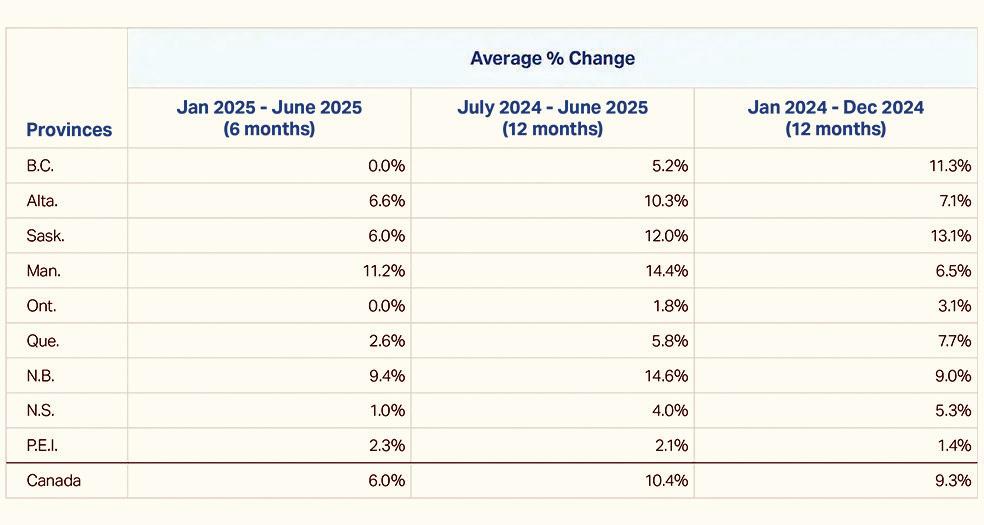
Canadian cultivated farmland values rose by an average of 6.0 per cent in the first half of 2025, according to the mid-year farmland values review by Farm Credit Canada (FCC).
This marks a modest acceleration compared to the first half of 2024, which saw a 5.5 per cent increase. Over the 12 months from July 2024 to June 2025, there was a 10.4 per cent increase, representing a slight increase compared to the previous 12-month period (January to December 2024) with a 9.3 per cent increase.
This growth reflects a complex mix of market forces and regional dynamics, with some provinces surging ahead while others remaining flat. Manitoba led the country with an 11.2 per cent increase, followed by New Brunswick (9.4 per cent) and Alberta (6.6 per cent). Saskatchewan matched the national average at 6.0 per cent, while Quebec (2.6 per cent), Prince Edward
Island (2.3 per cent), and Nova Scotia (1.0 per cent) posted modest gains. Ontario and British Columbia recorded no change, highlighting the uneven nature of the market.
“Demand for farmland remained strong in the first half of the year regardless of lower commodity prices,” said J.P. Gervais, FCC’s chief economist. “Buyers continued to invest, driven by long-term confidence in the agriculture sector and the limited supply of available land. While growth is uneven across provinces, the overall trend points to promising growth opportunities in agriculture.”
Despite notable gains in certain regions, over the past six months, the overall range of sale prices per acre has increased only modestly. Provinces that experienced strong growth in recent years are now seeing a softening in farmland prices, while regions with previously more modest increases continue to
see solid gains. Overall, the market appears to be stabilizing.
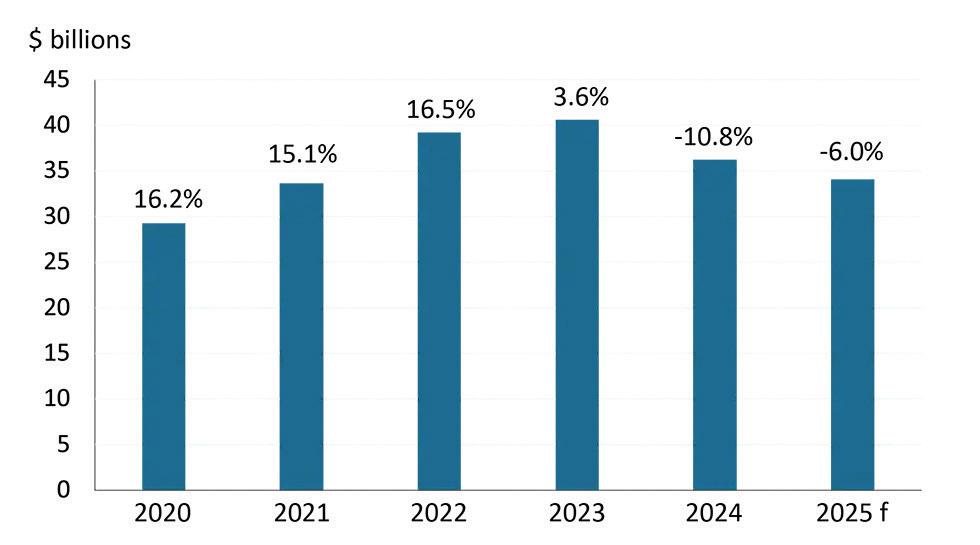
Gervais noted that farm cash receipts fell 1.6 per cent in 2024, mainly due to a drop in grain and oilseed revenue, while livestock receipts rose. In early 2025, grain and oilseed receipts increased slightly, though results vary by crop and region. Looking forward, receipts for grains and oilseeds are expected to decline overall in 2025 by 6.0 per cent. Easing interest rates and healthy farm balance sheets should provide underlying support to farmland values. Yet the farm economy may reflect a more cautious environment in the second half of 2025 and 2026 when it comes to the demand for farmland.
“The interplay between interest rates, farm revenues and expenses, and constrained land availability will continue to shape the trajectory of farmland values,” Gervais added.
Roland Pumpkin Fair Draws Crowds, Smiles, and a Smashing Finish
By Harry Siemens
The Roland Pumpkin Fair once again filled the small Manitoba village with crowds, laughter, and the sweet scent of autumn. Chairman Derek Baschuk called it one of the best fairs yet.
“We had a great pumpkin fair,” Baschuk said. “Everything from the weigh-off in the morning to the beautiful weather throughout the day made it a perfect event. We finished off with our harvest supper and, of course, the
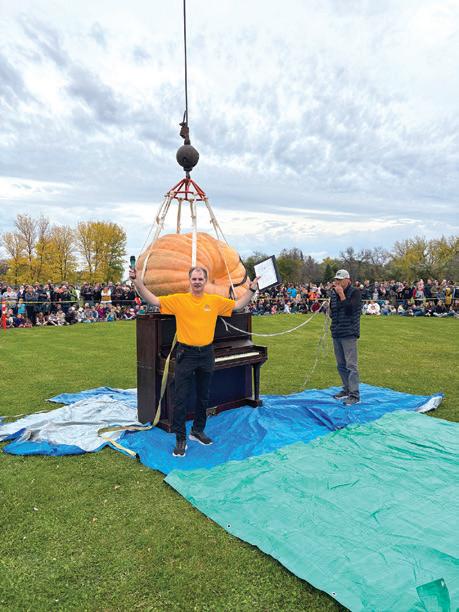

pumpkin drop to close things out.”
The fair drew hundreds of visitors to the arena for the weigh-off.
“We had our bleachers filled and the floor packed with chairs,” Baschuk said. “There wasn’t a seat left. Several hundred people crowded in just to see the weigh-off.”
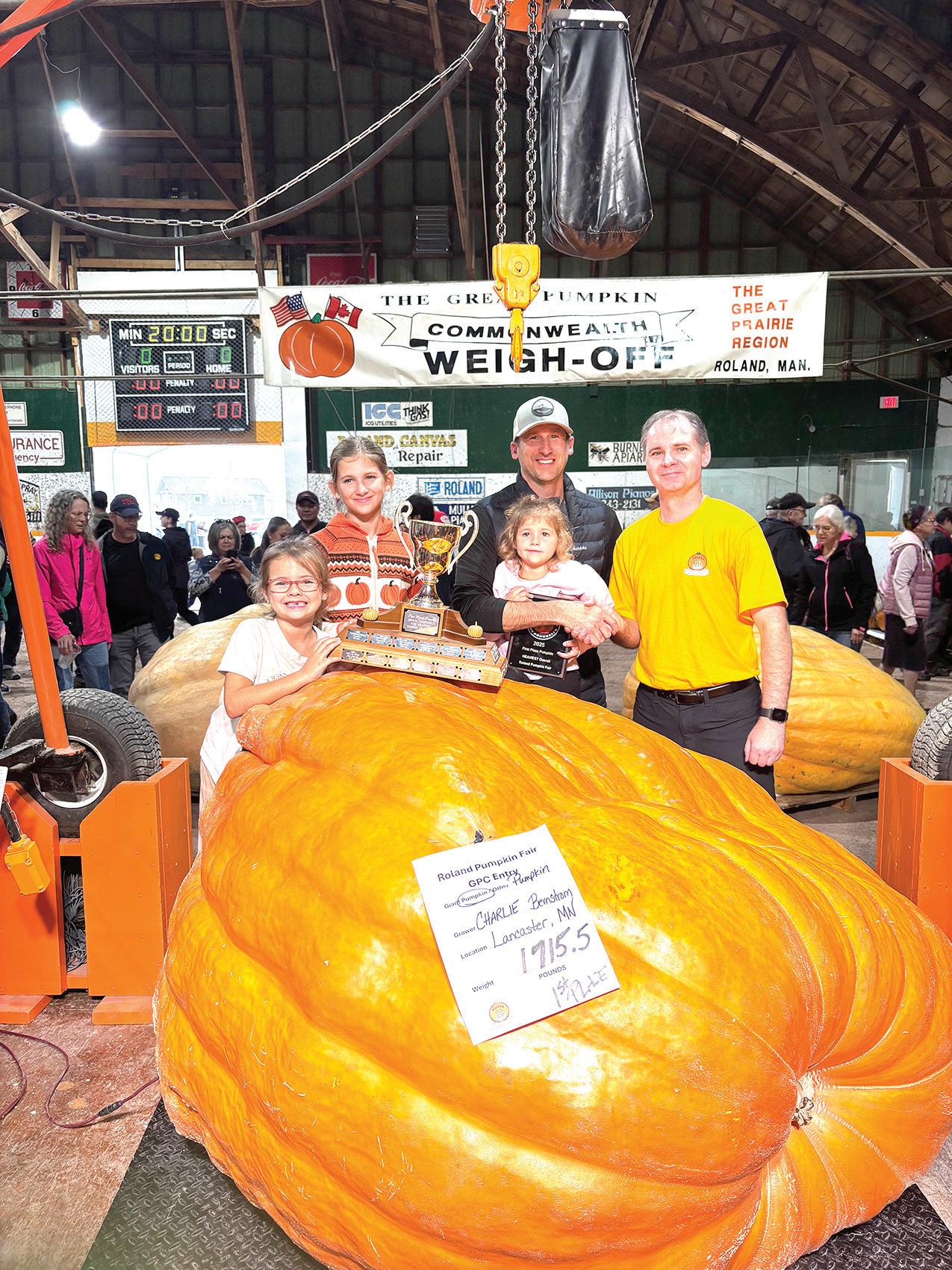
Charlie Bernstrom of Lancaster, Minnesota, stole the show again.
“Charlie is quite the grower,” Baschuk said. “We’re extremely happy to have him come up from the United States every year. His 1,717-and-a-half-pound pumpkin impressed everyone.”
Bernstrom has now won the Roland Pumpkin Fair five times, building a friendly rivalry among growers from both sides of the border.
Baschuk said keeping interest high each year takes variety and enthusiasm.
“We always have our main events,” he said. “The weigh-off has been my project for nearly twenty years, and it continues to draw big crowds. Then there’s the craft tent with over fifty vendors. Every time I walk through, it’s shoulder to shoulder with people checking out fall items.”
Food also played a starring role.
“It wouldn’t be a Roland Pumpkin Fair without great food,” Baschuk said. “Our Pumpkin Patch Tea Room sold out of desserts before they planned to close. That tells you how much people enjoyed it.”
He smiled when he spoke about the newest tradition— the pumpkin drop.
“This was our fourth year doing it,” he said. “It’s an amazing sight. We had the whole crowd counting down from ten, cheering as the pumpkin fell.”
The idea for the pumpkin drop began years earlier.
“When I first suggested it to the fair board, they asked, ‘Why would we do that?’” Baschuk said. “I told them, people love seeing things smash! It didn’t happen until I became chairman, but when I brought it back up, everyone jumped on board.”
Each year, the organizers add a new twist.
“This year we used a piano as the target,” he said, laughing. “People wanted to hear what kind of sound it would make when the pumpkin hit it.”
And what kind of sound did it make?
“A lot of smashing sounds,” Baschuk said. “We found a piano built in 1907—solid wood and heavy. The Pembina Threshermen’s Museum
donated it. After the drop, the piano survived better than expected, so the museum asked for it back for display.”
Crowds joined in the fun.
“We kept teasing throughout the day—who would win, the pumpkin or the piano?” Baschuk said. “Even during my closing address, people still debated which one would survive. Some figured the piano would shatter. Others, including me, thought the pumpkin would take the worst of it.”
The piano endured, but the pumpkin delivered the spectacle everyone came for.
As the fair wrapped up with the harvest supper, Baschuk reflected on what makes Roland special.
“This community amazes me,” he said. “We’re a rural municipality of just over a thousand people, and yet we put on a fair of this size. The number of visitors we get each year keeps growing.”
He credited volunteers and board members for the success.
“From spectators to volunteers across the fairgrounds, everyone played a part,” he said. “My board this year had ten people, and each one worked hard to make it happen. It couldn’t run without that teamwork.”
Baschuk said pride fills every corner of Roland during
fair weekend.
“I’m proud to be part of the Village of Roland and the RM of Roland,” he said. “We love sharing this with visitors. Every year, we aim to make it better. I hope more people keep coming to experience it.”
The fair offered a perfect mix of tradition, community spirit, and good humour. From giant pumpkins and friendly competition to the crowd’s roar during the pumpkin drop, the event captured the heart of rural Manitoba.
Baschuk looks ahead with optimism.
“We’ll start planning again soon,” he said. “People already ask what we’ll drop next year. That excitement keeps us going.”
As the sun set over Roland, the arena lights dimmed, and volunteers packed up the last chairs. The 2025 Roland Pumpkin Fair ended the way it began—with hard work, laughter, and a community united by pumpkins, pride, and a touch of friendly mischief.

The pumpkin drop versus the piano saw the 1907 piano survive better than expected. The piano built of solid wood was donated by the Pembina Threshermen’s Museum. After the drop, since the piano survived the museum asked for it back for display.
Pumpkin grower and father of three, Charlie Bernstrom of Lancaster, Minnesota, rolled into Roland, Manitoba, once again with another giant—Kevin McCallister, a 1,717-pound champion that captured hearts and headlines. Around twenty growers competed, and excitement filled the Roland arena during the weigh-off. Submitted photos


Lowe Farm Harvest Helps Send 18,000 Children to Camp
By Elmer Heinrichs
A Manitoba farm community has once again turned harvest into hope.
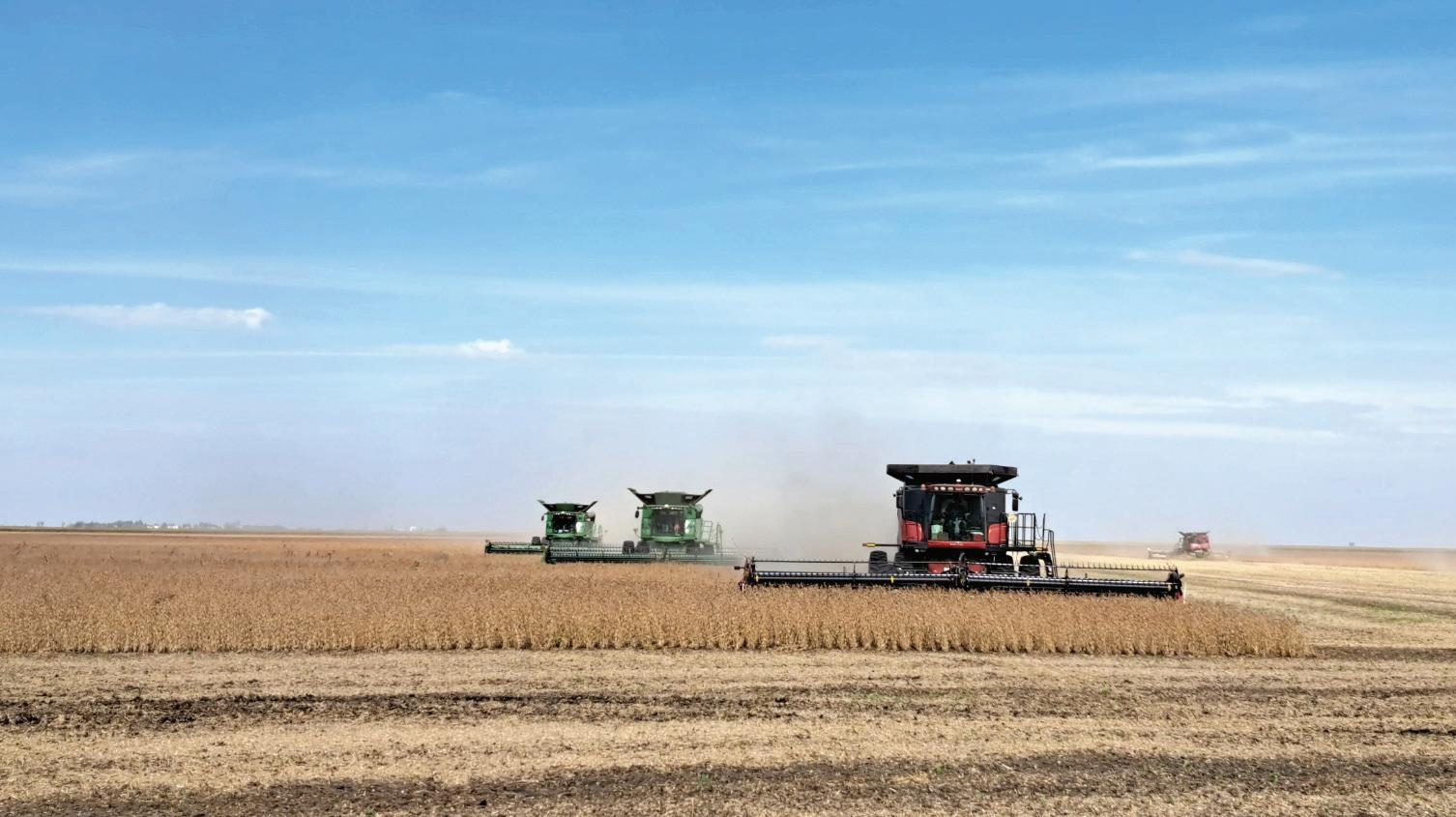
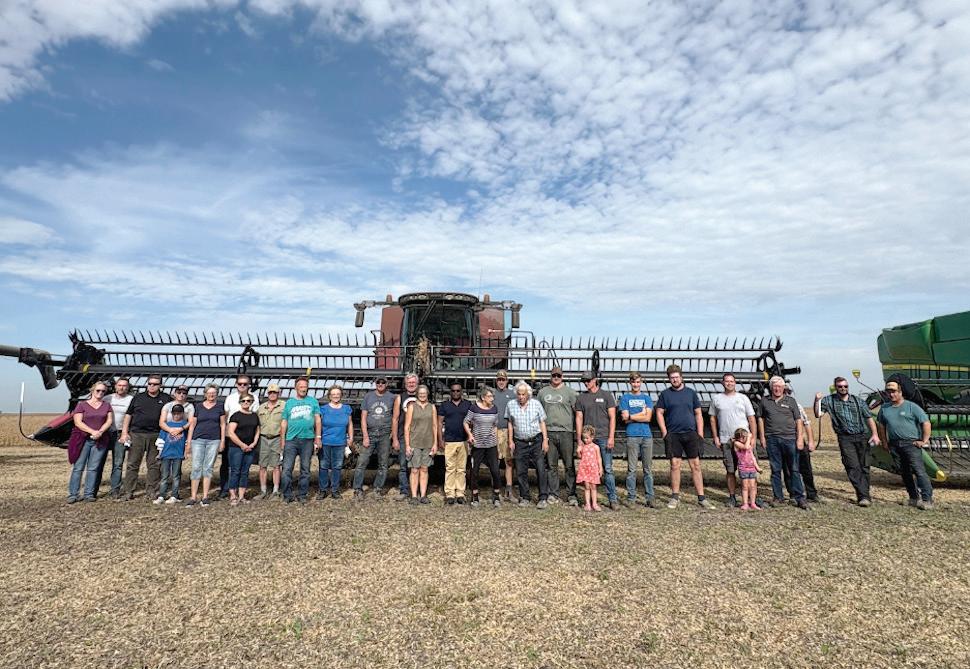
Earlier in October, residents of Lowe Farm came together for the third annual Lowe Farm Harvest, raising funds to send nearly 18,000 children in developing countries to Bible camps.
The event—part of the national Harvest for Kids campaign—brought together local families, farmers, and volunteers for a day filled with gratitude, community spirit, and generosity.
Children’s Camps International (CCI), the non-profit organization behind the initiative, says the camps provide a life-changing experi-
ence through worship, games, and age-appropriate teaching.
Following the camp, each child participates in a oneyear follow-up program designed to continue their spiritual growth.
Thanks to favourable weather and a yield of 53.6 bushels per acre, organizers reported that this year’s harvest exceeded last year’s total, which helped 10,000 children attend similar camps.
Harvest for Kids is a project of Children’s Camps International, a Canadian organization dedicated to long-term discipleship and youth outreach around the world.

AgEx 2025 to Focus on “Gaining Ground” in Farm Business Management
The Agricultural Excellence Conference (AgEx), Canada’s premier event for advancing farm business management, will take place November 17–20 at the Radisson Hotel Winnipeg Downtown under the theme “Gaining Ground.”
The conference will unite farmers, advisors, industry leaders, and policymakers from across the country for expert-led sessions, networking opportunities, and discussions aimed at strengthening farm businesses through innovation and resilience.
This year’s event also features the FCC Young Farmer Summit on November 17, a free, full-day event for producers under 40. Participants will explore the business side of farming, learn from industry experts, and connect with peers to help take their operations to the next level.
Registration for young farmers is $200.
See agexcellenceconference.ca for full conference details.

Earlier in October, residents of Lowe Farm came together for the third annual Lowe Farm Harvest, raising funds to send nearly 18,000 children in developing countries to Bible camps. Submitted photos
The event—part of the national Harvest for Kids campaign—brought together local families, farmers, and volunteers for a day filled with gratitude, community spirit, and generosity.
Black Gold Classic
Another Black Gold Classic is history for Virden Agriculture Society; weather was just right for watching a cattle show in October.
Judges for the day were Keith Overan, Cole Oliver and Dr. Christine Hill.
Committee Members for Black Gold Classic are Cody Renz, Naomi Best, Amanda Scott, Everett More, Greg Tough, Ashlee Mitchell and Trevor Nolan.
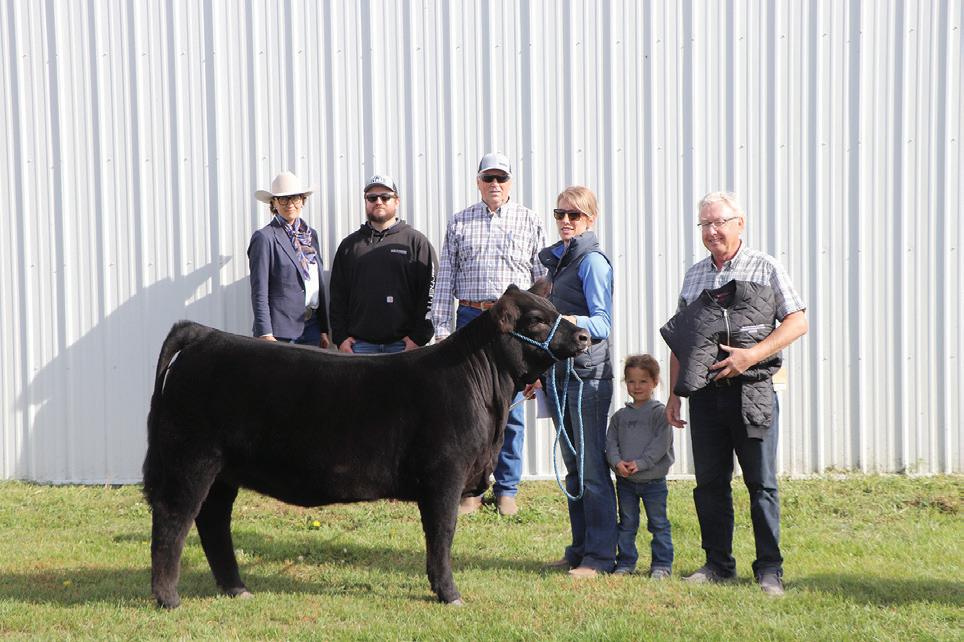
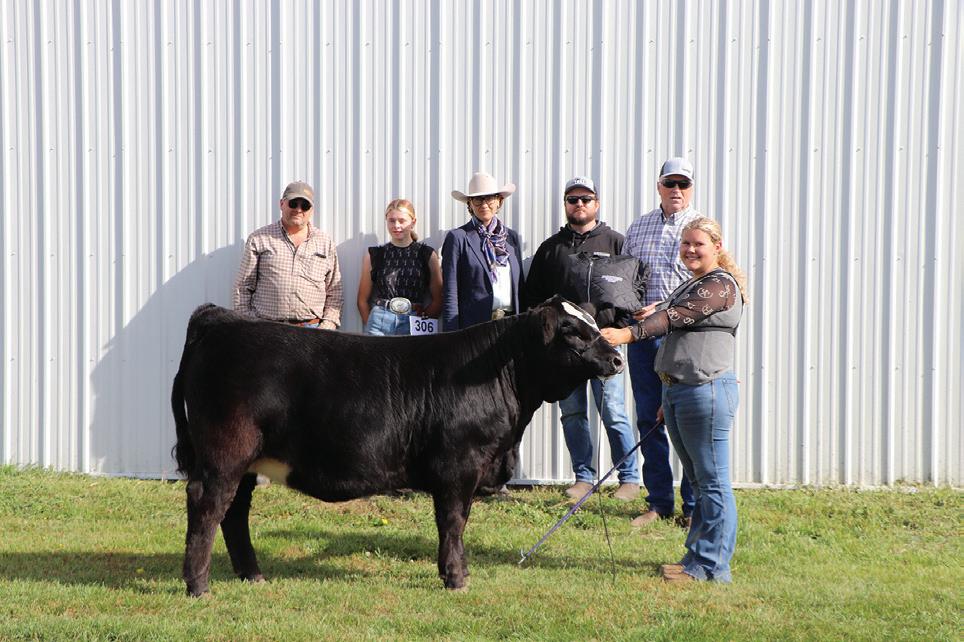
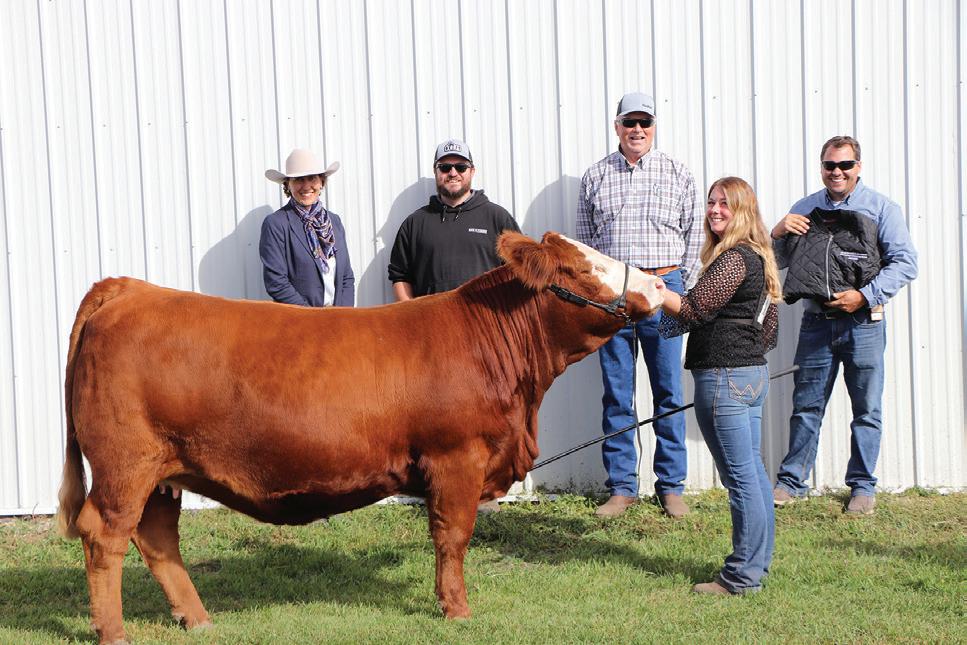
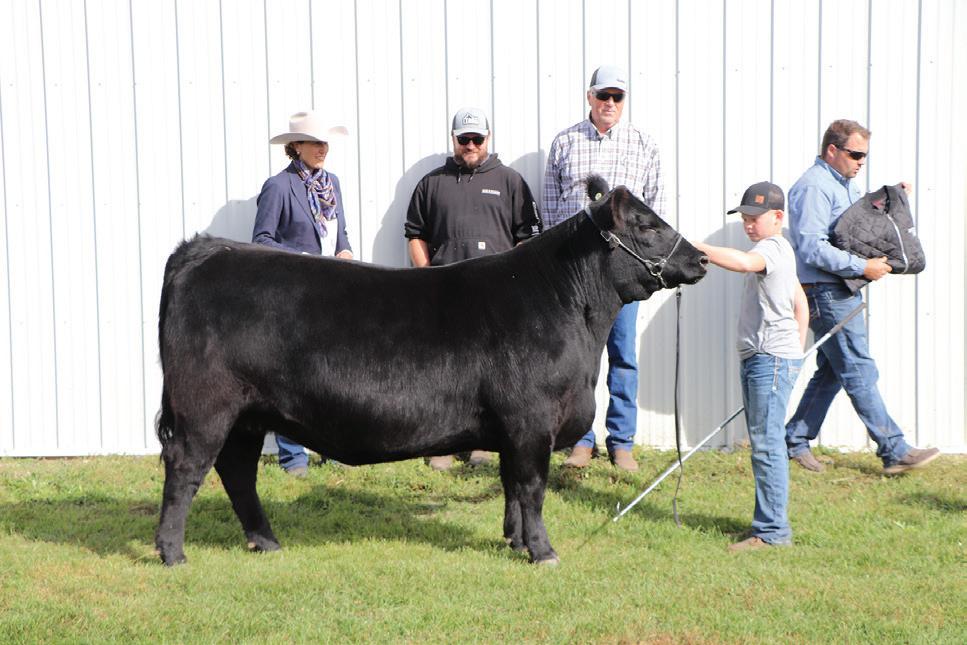
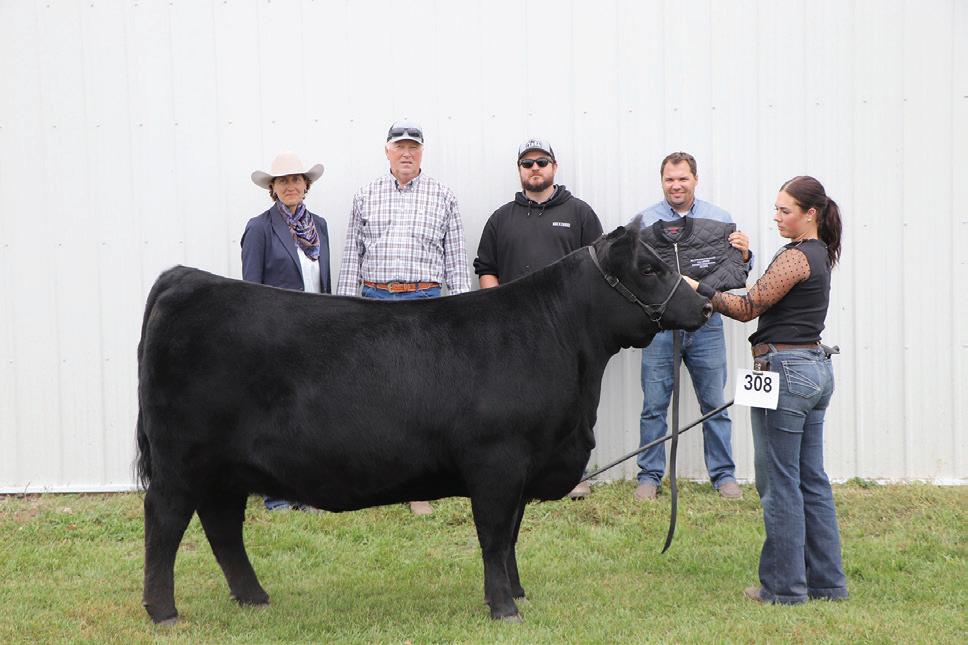
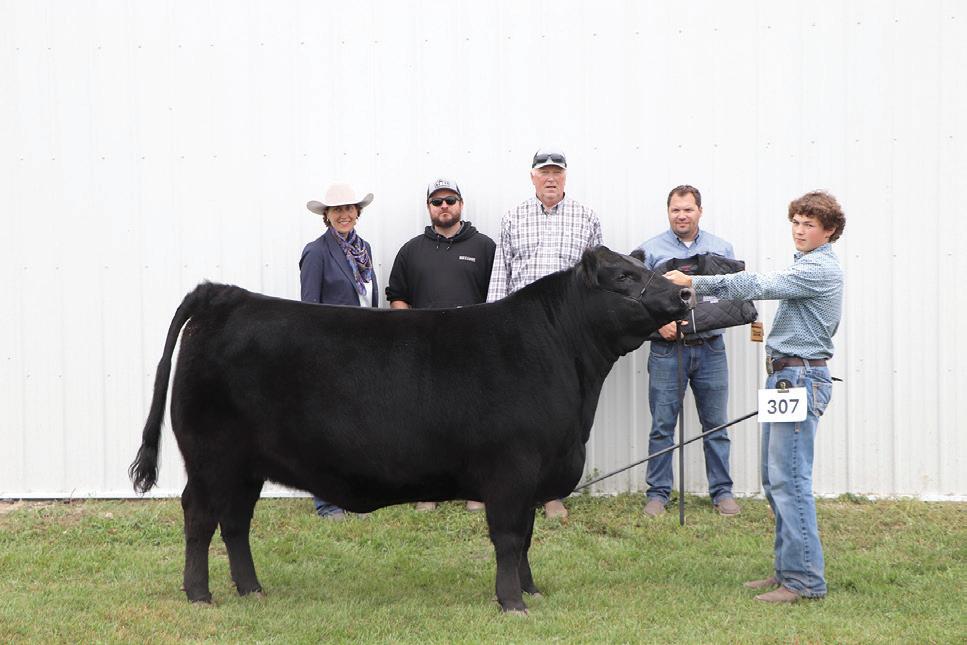
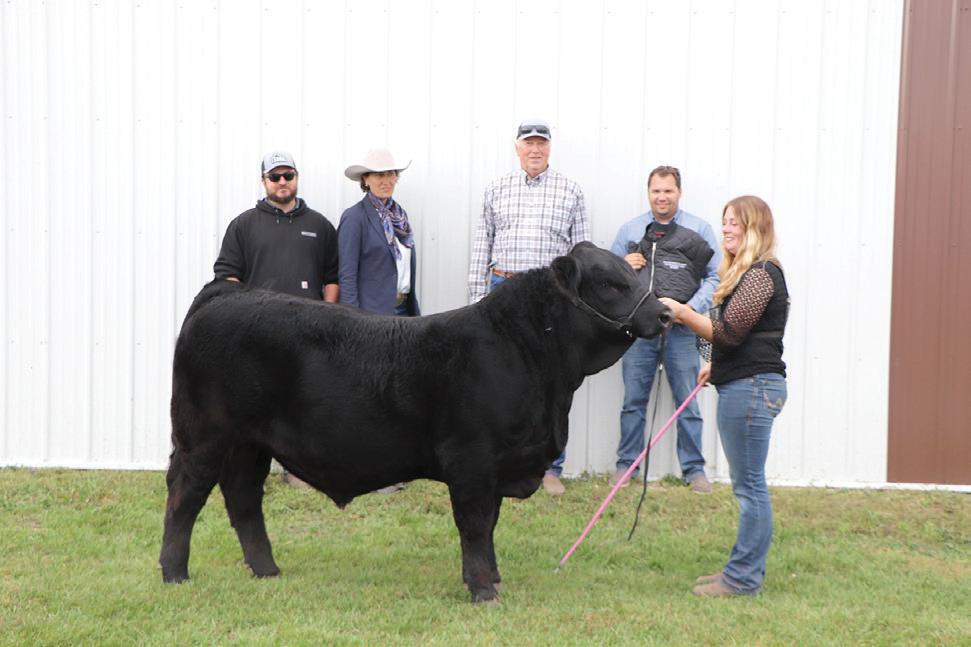
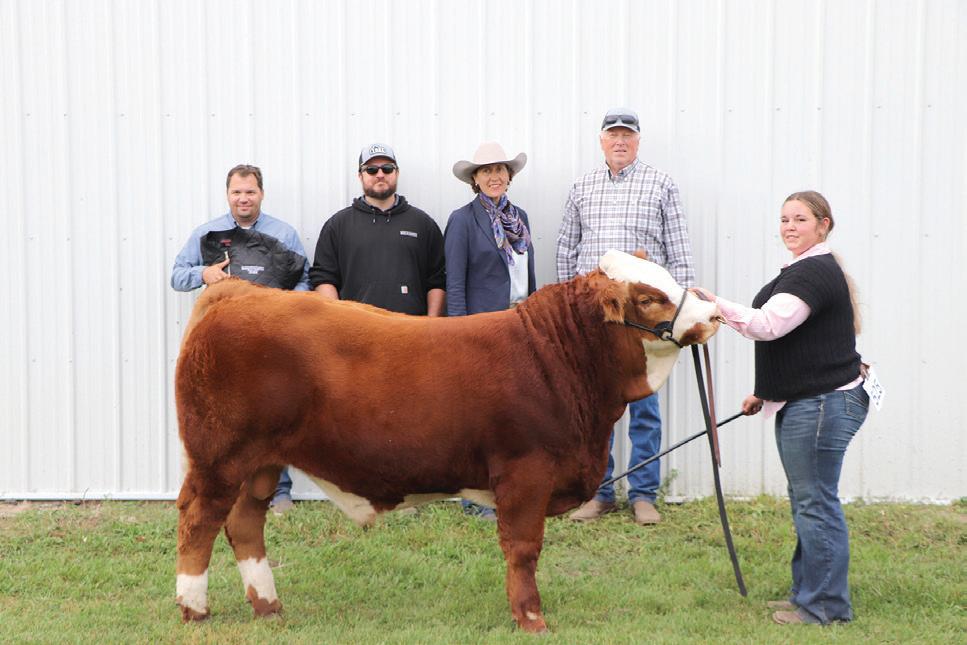

Reserve Champion Bull Calf was shown by Big Sky Simmentals—Big Sky Johnny Cash (Simmental) from Rivers, Manitoba.
Champion Heifer was shown by Eden Meadow Farm - EMF Nevada 505 (Limousin).
Reserve Champion Heifer was shown by Kendra Hinsburg - KCH Soda Crush 508N (Simmental) (Rapid City, MB).
Champion Bred Heifer was shown by Horner Cattle Company - Roseview Maggie 3M (Simmental).
Reserve Champion Bred Heifer was shown by Steppler Farms Ltd.
Grand Champion Futurity Bred Heifer was shown by Freyburn Farms-Freyburn Blackbird 36M (Angus).
Reserve Champion was shown by Ramrod West Cattle Co— RRW Kan-
Grand Champion Bull Calf was shown by Horner Cattle Company
Submitted photos
New Report Urges Shift to Proactive Risk Management for Canada’s Agricultural Future
A new report from the Canadian Agri-Food Policy Institute (CAPI) is calling for a major shift in how Canada’s agriculture sector manages risk, urging policymakers and industry leaders to focus on proactive strategies that strengthen long-term resilience rather than relying primarily on reactive measures.
Titled Striking the Balance: Proactive Strategy versus Reactive Response and authored by Farm Management Canada, the report highlights the need for a comprehensive, nationally aligned approach to risk management—one that helps farmers anticipate and prepare for challenges rather than simply recover from them.
“Too often when risk management is talked about in agriculture policy it is only about business risk management programs, but risk management is much more than that,” said CAPI Managing Director Tyler McCann.
“This paper highlights the proactive and reactive ways that farmers can approach risk management and encourages policies that support more proactive risk management. Changing the risk management policy landscape so that it aligns with how farmers approach risk management is essential to effective risk management policy.”
The report argues that Canada’s current policy framework has fostered producer dependency on Business Risk Management (BRM) programs, such as AgriStability and AgriInvest, which focus primarily on financial recovery after crises occur. While these programs remain es-
sential, the report warns that over-reliance on them discourages innovation and limits farmers’ ability to prepare for emerging threats such as climate volatility, global market disruptions, and input cost fluctuations.
Instead, Striking the Balance proposes a holistic, farm enterprise-wide framework that integrates six key areas—People, Finance, Markets, Production, Business Environment, and Business Strategy. By focusing on prevention, preparedness, and adaptability, the framework aims to build both economic and human resilience across the sector.
Heather Watson, Executive Director of Farm Management Canada, emphasized that risk management in agriculture extends beyond economics.
“It’s no secret that Canada’s farmers are under immense pressure,” said Watson. “We need to acknowledge these are not just business risks; these are human risks. A farmer who constantly feels one disaster away from collapse is a farmer who’s not able to think and act strategically. When farmers are equipped with the right tools, education, and support, they are empowered to navigate uncertainty rather than be paralyzed by it.”
Among its findings, the report notes that decades of declining investment in research, knowledge transfer, infrastructure, and marketing have weakened the agricultural sector’s proactive capacity. It calls for renewed investment in these areas and a national framework to sup-
port risk management modernization.
Key takeaways include:
1. Canada’s agricultural policies have encouraged dependency on BRM programs while discouraging proactive approaches.
2. Investing in proactive risk management is vital to longterm sector resilience and growth.
3. Declining investment in key areas has eroded proactive capabilities.
4. A national, modernized risk management framework and strategy are urgently needed.
5. Harmonized national farm data is essential for better policy design and farm-level decision-making.
To address these challenges, the report recommends the creation of a national risk management-focused policy lens and framework, supported by a national task force and research network. It also calls for greater investment in training and advisory support for farmers, incentives for comprehensive risk planning, and accelerated national farm data harmonization to enhance benchmarking and improve BRM delivery.
CAPI and Farm Management Canada hope the report will spark policy dialogue across federal and provincial levels to help Canada’s agriculture sector become more adaptable, sustainable, and globally competitive.
“Adaptability and long-term resilience come from preparation,” the report concludes. “To unlock the future of Canadian agriculture, we must shift from reacting to risk to managing it proactively.”
Manitoba Producers Participate in CCA Fall Fly-Ins to Discuss Beef Industry Priorities
Manitoba beef producers joined national representatives in Ottawa for the Canadian Cattle Association’s (CCA) annual Fall Fly-ins, held October 1 and 2, to advocate on key issues impacting Canada’s beef sector.
Good Yields Reported for Manitoba Peas and Beans
By Elmer Heinrichs
Despite challenges from late planting, frost damage, and disease pressure, Manitoba’s pulse crops are showing strong yields this year, according to provincial pulse specialist Dennis Lange.
Lange, based in Altona, reported that the field pea harvest is now complete, with yields ranging from 30 to 75 bushels per acre and averaging around 55. Meanwhile, the dry bean harvest was about 80 per cent complete, producing up to 2,000 pounds per acre—slightly above the average of 1,800 pounds. Some pinto bean fields even reached 2,500 pounds per acre.
“There’s been a little bit of frost damage, mostly in the western part of the province,” Lange said. “But overall, I think we’re looking at above-average yields for dry beans this year.”
According to Statistics Canada, Manitoba farmers harvested approximately 192,300 acres of dry peas and 191,500 acres of edible beans this year, compared to 188,300 and 185,800 acres respectively in 2024–25. Dry pea production is expected to decline slightly by 1.2 per cent to 258,479 tonnes, while edible bean production is projected to drop 15.3 per cent to 154,478 tonnes.
While many pulse crops were seeded later than usual, a warm summer and mild early fall helped make up for the delayed start. However, heavy rainfall last week and a return to normal temperatures caused some issues for beans still in the field.
Lange noted that the biggest concern this season has been the prevalence of white mould, particularly in dry beans. “One producer told me it was the worst he’d seen in 10 years,” he said, adding that white mould was also reported in some soybean fields—an uncommon occurrence.
“We had a number of growers spraying twice,” Lange explained. “White mould tends to develop in cooler, wetter conditions with dense canopies. Producers did see some yield loss on dry beans, but generally, yields were still pretty good.”
Despite disease and weather-related challenges, as well as a 10-day to two-week seeding delay, crop quality has remained strong across Manitoba.
“The soybean harvest is definitely later this year,” Lange said. “But now, it has mostly caught up. It was a later start, but that also means good yields are coming off—that’s a good trade-off.”
Producers Andre Steppler and Mike Duguid, along
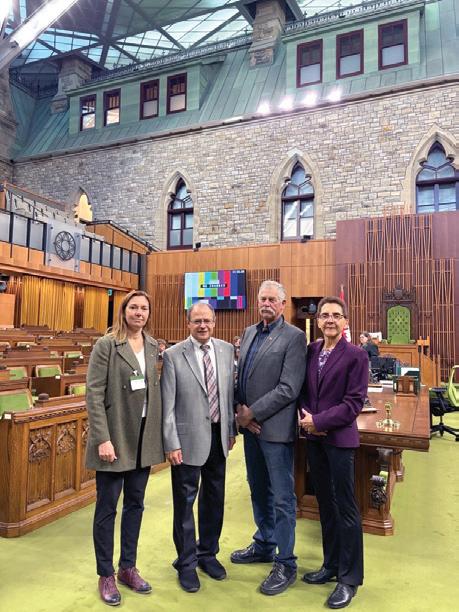
with Manitoba Beef Producers (MBP) staff Carson Callum and Maureen Cousins, met with seven Members of Parliament, Senators Marilou McPhedran and Charles Adler, and senior advisors to the Ministers of Finance and National Revenue. The delegation also met with the
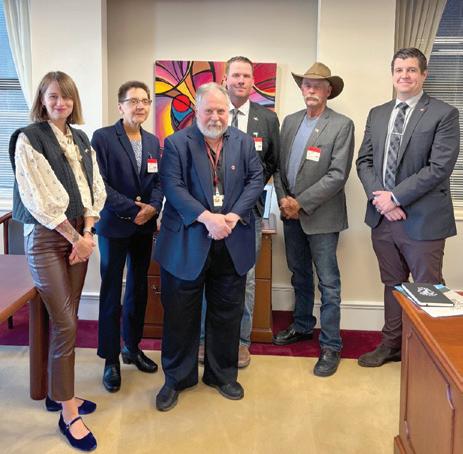
Chief Veterinary Officer of the Canadian Food Inspection Agency (CFIA) and took part in several informal discussions on Parliament Hill.
Topics of focus included traceability, bovine tuberculosis, business risk management programs, and international trade—all key issues affecting the sustainability and competitiveness of Canada’s beef industry.
The CCA’s annual fly-ins provide producers an important opportunity to share firsthand perspectives with policymakers and to help shape agricultural policy that supports the future of beef production across the country.

Manitoba MP Kevin Lamoureux took time out to speak to Manitoba ranchers while they were in Ottawa.
The delegation of Manitoba Beef producers and association members had an opportunity to meet with Senator Charles Adler while in Ottawa recently.
Submitted photos
Canadian Researchers Harness Nanotechnology to Target Crop-Munching Pests Based on DNA
By Dan Guetre
A groundbreaking project led by Agriculture and AgriFood Canada (AAFC) scien-
new era in pest management — one that could dramatically reduce crop losses and environmental impact by targeting only harmful insects
while sparing beneficial ones.
Dr. Justin Pahara and his team at AAFC’s Lethbridge Research and Development
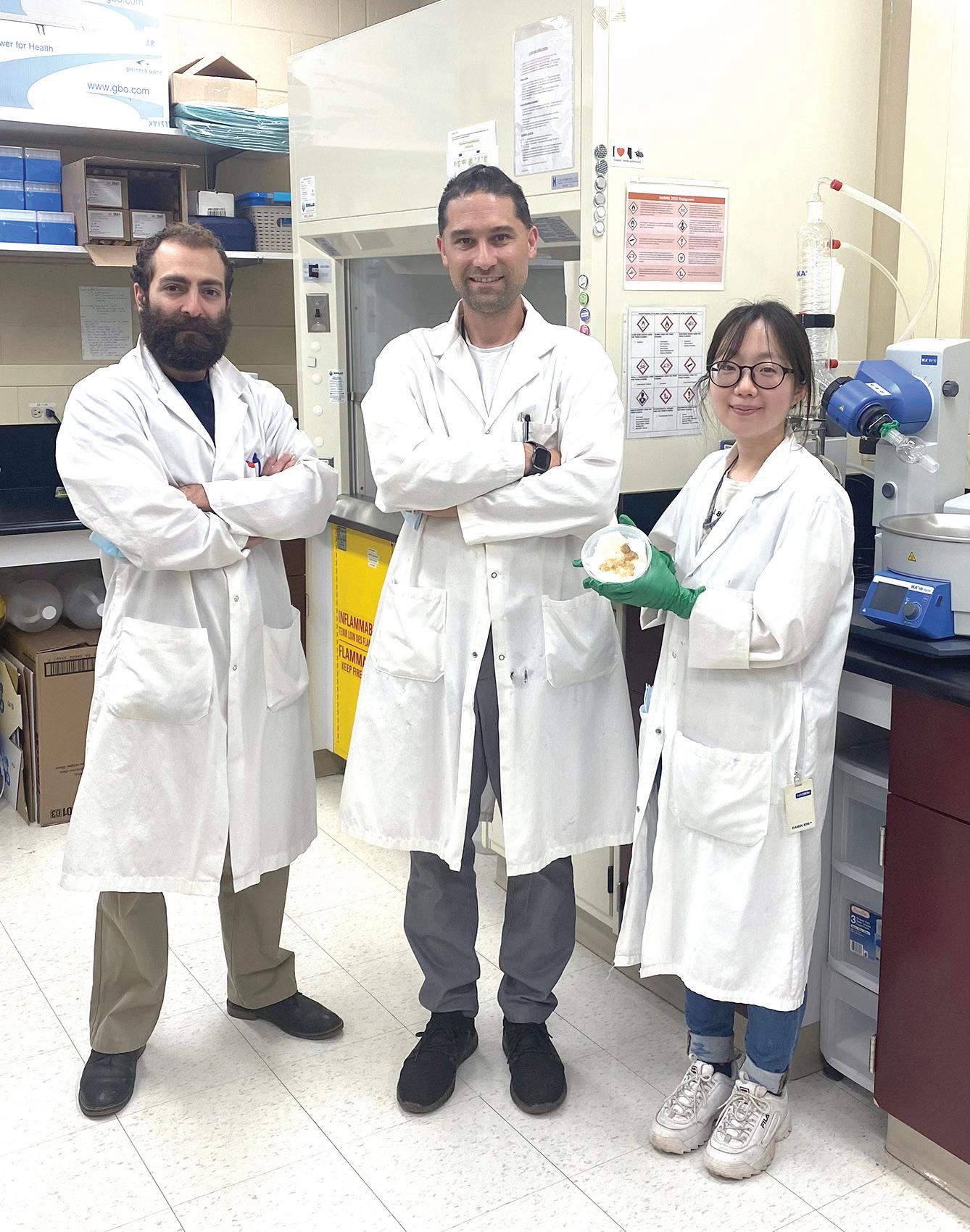

Centre are using nanotechnology to develop precision treatments that identify and neutralize crop-eating pests based on their DNA. Their ultimate goal is to create pest control methods that protect crops without harming pollinators or predatory insects vital to a healthy ecosystem.
“It’s estimated that plant-eating pests are responsible for up to 40 per cent of global pre-harvest yield losses,” said Pahara. “We all need food, and if farmers cannot grow their products efficiently and make a living out of it, it’s a problem. We need new tools for pest management.”
The innovative research could mark a major shift away from traditional pesticide use — often described as the “spray-and-pray” approach — which indiscriminately kills both harmful and beneficial insects.
Using the BioXAS beamline at the Canadian Light Source (CLS) in Saskatoon, Pahara’s team created X-ray images of crop pests like cutworms and
lygus bugs, a common threat to canola and other crops. These images revealed how pesticides enter the pests’ bodies and where chemical substances accumulate, providing key insights for designing targeted solutions.
Researchers also discovered that lygus bugs contain distinct mineral-rich regions that point to certain proteins, which could eventually be targeted with customized agents to stop them from feeding on crops.
To enhance their analysis, the team developed specialized software allowing scientists to explore 3D virtual models of the insects using virtual reality — giving them an unprecedented view inside the pests’ anatomy.
Pahara emphasized that overuse of broad-spectrum pesticides has led to increased insect tolerance, similar to antibiotic resistance in humans.
Nanotechnology-based precision treatments could help overcome this problem by delivering pest-specific agents
directly into target species.
“Designing new approaches is a very challenging problem and people have been working on it for decades, but with little success,” said Pahara. “Ultimately, it’s our job at Agriculture and Agri-Food Canada to pass on what we learn to Canadian industry to solve key technical problems so industry can take over with less risk.”
With their screening tests now validated, Pahara’s team is expanding their work to study weed and fungal pests.
The next phase will involve testing nanomaterials developed by AAFC and the National Research Council of Canada’s NANO division to determine how effectively these substances can be delivered into insect bodies. If successful, the research could usher in a new generation of eco-friendly pest management technologies — protecting Canadian crops and ecosystems alike in an agricultural sector valued at over $142 billion in 2024.
$5 Million ‘RBC Generate’ Initiative Launched to Boost Canadian Agriculture
By Dan Guetre
Royal Bank of Canada (RBC) has announced the launch of RBC Generate, a new national initiative designed to strengthen Canada’s agriculture sector through innovation, collaboration, and sustainability. The program kicks off with a $5 million, five-year investment focused on the Prairie provinces and aims to expand nationally in the years ahead.
Introduced alongside Manitoba Premier Wab Kinew, RBC Generate is a joint effort by RBC Commercial Banking and the RBC Foundation. The initiative will work with farmers, agri-food businesses, and industry organizations to develop tools, resources, and incentives that advance sustainable practices while improving profitability and productivity across Canada’s farms.
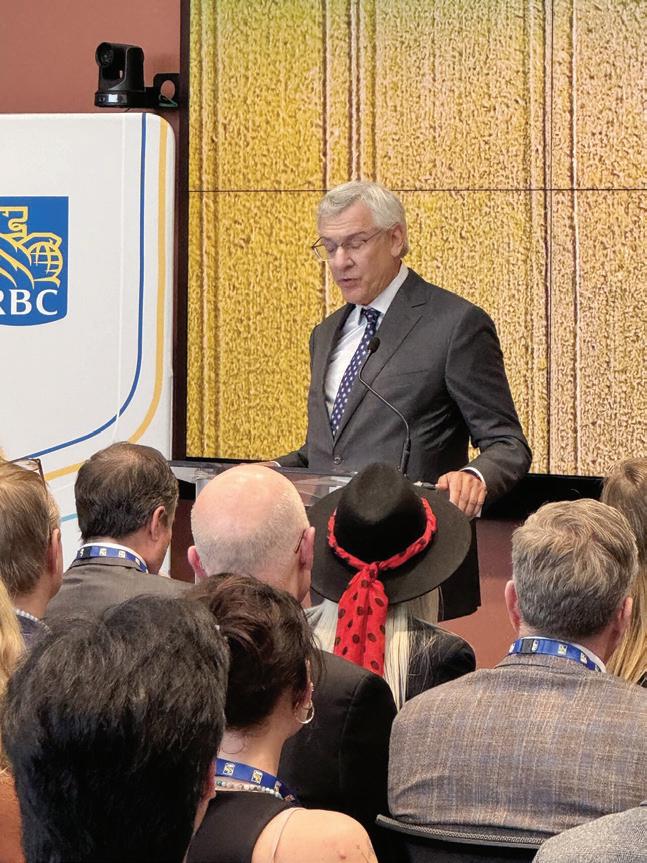
“Canadian soil is one of our greatest strengths, and farmers have managed these soils to feed Canadians and the world for generations,” said Dave McKay, President and CEO of RBC. “The next generation
is primed to do even more— feeding more people, more sustainably than ever before. That’s why RBC is committed to working with the best and brightest from across the country to create innovations that help agriculture drive growth for Canada.”
Under the banner of “RBC Generate”, the initiative will bring together leaders from agriculture, business, education, and government to help Canada become a world leader in agri-food innovation. It will operate in collaboration with several national partners, including the Canadian Alliance for Net-Zero Agrifood (CANZA), Nature United, Sustainable Food Systems for Canada (SF4C), and Indigenous sustainable farming initiatives.
RBC Generate will focus on three
key areas of investment such as markets, skills and finance. RBC believes that with the right investment and innovation, Canada’s agriculture and agri-food industries can play a defining role in meeting global demand for safe, sustainable, and high-quality food. The bank envisions a future where Canadian farmers not only feed communities at home but also strengthen global food security.
Dr. Justin Pahara and his team at AAFC’s Lethbridge Research and Development Centre are using nanotechnology to develop precision treatments that identify and neutralize crop-eating pests based on their DNA. Their ultimate goal is to create pest control methods that protect crops without harming pollinators or predatory insects vital to a healthy ecosystem. Submitted photo
RBC President and CEO Dave McKay makes a $5M commitment towards prairie agriculture fund. Submitted photo
Soybeans Are a Staple Source of Nutrients in Dairy Lactation Diets
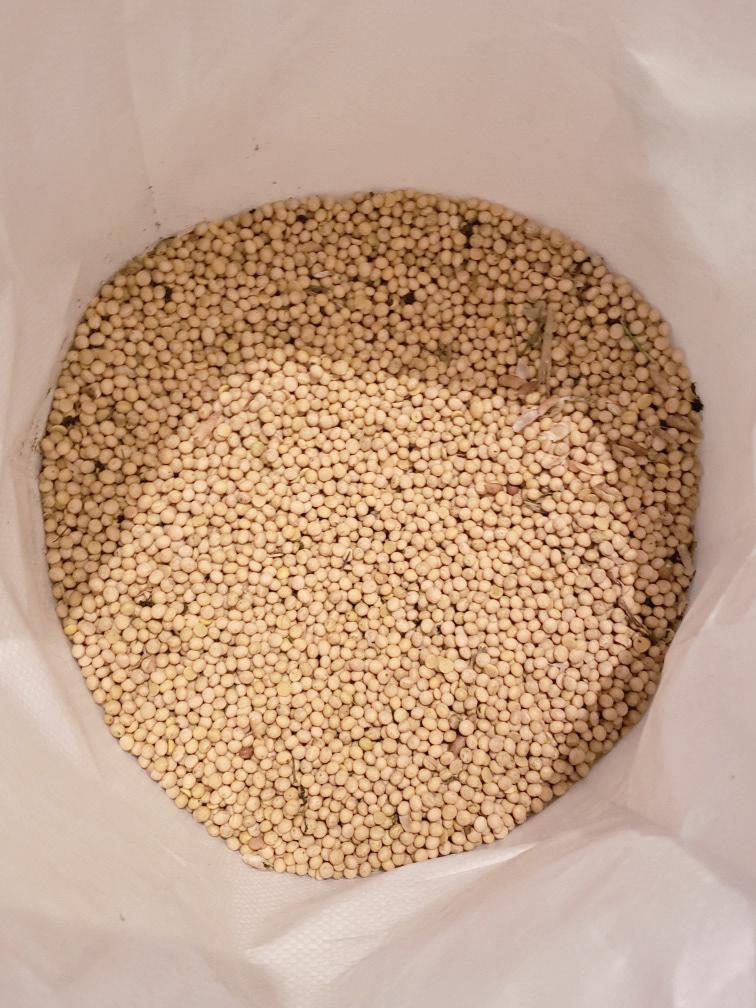
A handful of Manitoba farmers grew about 50,000 acres of soybeans in 2001. After that our soybean acreage steadily skyrocketed. And in the spring of 2025; nearly 1.6 million acres covered our beautiful province (Illustration – whole Manitoba soybeans harvested on a dairy farm this autumn).
As a dairy nutritionist, I am a big fan of adding soybean meal (expelled-solvent extracted to remove its 20% fat/oil content) into dairy diets for high-milk producing dairy cows. In itself, common soybean meal has a lot going for itself:
- High quality and consistent feed source.
- Good dairy cow palatability.
- Crude protein content of 46 – 48%, compared to 35% for canola meal and 28% for distillers’ dried grains.
- Bypass protein content of 35% of exceptional essential amino-acid values.
- High dietary energy of 1.90 Mcal/kg.
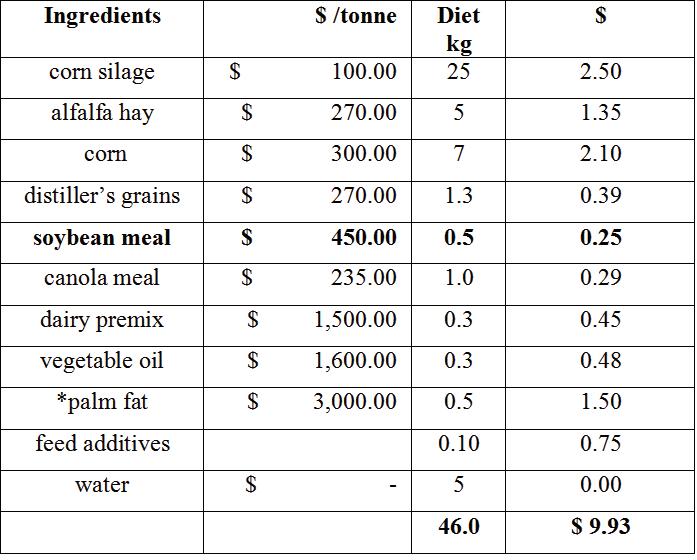
My soybean containing lactation diets are practical and designed to promote good dry matter intake amongst early to mid-lactation dairy cows (60 – 150 DIM), which produce 40 kg milk, 4.30 % milkfat and 3.3% protein. I do this soy-exercise by relying upon a foundation of high-quality forages formulated with protein concentrates (including soybean meal), plus grains and grain by-products. A dairy premix is also added containing essential minerals and vitamins. Limited-fed palm-fat and feed-additives
Table 1), it costs just pennies under $10 per day to feed a mid-lactating dairy cow. This is a common way to express feed costs, yet there are other ways. For example: $5.78 per kg of milk fat, $11.28 per cwt of milk produced, or $ 0.43 per kg of dairy diet consumed (dm, basis). Regardless, all of the above costs of feeding a cow are bunk-feed numbers. So far, I did not account for storage and mixing losses as well as any feed refusal by the lactating dairy cows. I conservatively estimate these numbers at 15.0 % and 2.0 %, respectively. So, our raw feed cost of $10 per cow might be closer to $12.00 per cow, despite some salvageable value of feed refusal.
Again, soybean meal being a great source of dairy nutrients in the above diet; I did not ignore the economic value of canola meal and distillers’ grains, which are suitable soybean meal replacements. A practical $ comparison for these common feedstuffs upon a protein and by-pass protein basis is as follows (commodity prices quoted are for demonstration purposes only):
- Soybean ml protein (48% CP) = $450 mt/.48 = $938 mt vs Canola ml (36% CP) = $235/.36 = $ 652/mt.
- Soybean ml protein (48% CP) = $450 mt/.48 = $ 938 mt vs Distiller’s grain (28% CP) = $270/.28 = $965/mt.
- Soybean ml RUP protein (35% of CP) = $450 mt/.48/.35 = $ 2,678/mt vs Canola ml RUP = $235/.36/.44 = $ 1,484/mt vs Distiller’s grain RUP (60% of CP) = $270/.28/.60 = $ 1,577/mt.
ic winner in this showdown. This is largely due to its precipitous 50% drop from about $450/mt to its current $235/ mt in the last couple years. In the same time-frame; the value of soybean meal dropped 25% from about $600/mt to current post of $450/mt.
The funny thing, if I removed the 0.5 kg per head of soybean meal in the above lactation diet, and replaced it with an equivalent 0.7 kg of canola meal; there is only a 13-cents savings per cow on a daily basis. On a 200-dairy cow operation, it would save about $800 per month in lactation TMR costs.
Concurrently, there is lots of Canadian dairy research that have replaced soybean meal with canola meal in lactation diets without any loss of milk production. Howev-

er, I have seen on my own; some well-managed high milking dairy herds failed to achieve early lactation peaks due to such the sole use of canola meal, which was later alleviated with a partial-substitution of soybean meal.
In a similar manner, I employ soybean meal as my staple source of many essential nutrients, which is more often than not - complimented with canola meal and/or distillers’ dried grains. As a result, the lactating dairy cows can consume the essential nutrients of all three feedstuffs without knowing it and produce high levels of milk/milkfat/milk protein.
Nuffield Global Focus Program Tours Winnipeg and Regina
Twelve international Nuffield Scholars began their five-week Global Focus Program (GFP) in Canada this month, celebrating a traditional Thanksgiving dinner in Winnipeg before setting off on an ambitious agricultural tour spanning six countries across four continents.
The scholars—eight men and four women—hail from Australia (3), Brazil, Chile, Germany, Japan, the Netherlands, New Zealand, Romania, the United States and Zimbabwe. Over the next several weeks, they will travel through Canada, Scotland, Italy, Spain, India and Australia to study local and international agricultural best practices, explore marketing and trade issues, and engage with forward-thinking producers, organizations, and policymakers.
“The Global Focus Program exposes scholars to a myriad of agricultural leaders, cultures, environments and politics across the globe,” explained Ryan Boyd, a 2019 Nuffield Scholar and current Secretary-Treasurer of Nuffield Canada. “Scholars return home with many innovative ideas and renewed energy to propel their respective industries forward.”
Their Canadian visit began on October 12 in Winnipeg, where the group enjoyed Thanksgiving dinner. During their Manitoba stay, the scholars toured Manitoba Starch Products, the Manitoba Beef and Forage Initiatives (MBFI) Research Farm, and Heartland Livestock Services. They also visited the Rivers, MB area for a farm tour hosted by 2013 Nuffield Scholar Clayton Robins.
Following their time in Manitoba, the group travelled to Regina, Saskatchewan, for meetings with Farm Credit Canada before departing for Scotland on October 16 to continue their global journey.
The Nuffield Global Focus Program is one of six international study programs offered annually, each with a unique itinerary designed to reflect different agricultural seasons and regions. The experience is a cornerstone of the Nuffield Scholarship, which seeks to inspire leadership, innovation, and collaboration in global agriculture.
Canola meal is the econom-

My soybean containing lactation diets are practical and designed to promote good dry matter intake amongst early to mid-lactation dairy cows (60 – 150 DIM), which produce 40 kg milk, 4.30 % milkfat and 3.3% protein. Photo submitted by Peter Vitti
Table 1.
KAP’s Annual District Meetings Hit the Road Across Manitoba
By Dan Guetre
From November 13 to December 18, 2025, Keystone Agricultural Producers (KAP) will be travelling across Manitoba for its annual district meetings—an opportunity for farmers to connect, collaborate, and help shape the future of agriculture in the province.
The meetings, held in twelve districts across the Province, bring producers together to discuss issues affecting their farms and communities while strengthening KAP’s grassroots foundation.
“These meetings are at the heart of KAP’s member-driven approach,” said the organization in its announcement. “They allow producers to share their views, elect local leaders, and ensure that farmers’ voices remain strong, united, and heard.”
Attendees will have the chance to:
- Connect with peers: Meet and network with fellow producers in their district.
- Share their perspectives: Raise concerns and offer input on key policy issues.
- Get involved: Run for local leadership roles such as chair or director.
- Engage in grassroots democracy: Influence the direction of Manitoba’s largest general farm organization.
Whether a newcomer or a long-time member, all producers are encouraged to attend and contribute.
Meeting Schedule:
- Nov. 13 – Selkirk (District 5): 9:00–11:00 a.m., Smitty’s, 168 Main St #162
- Nov. 14 – Carberry (District 7): 11:30 a.m.–2:30 p.m., Callaghan’s Food, 43 Main St
- Nov. 20 – Winkler (District 3): 11:00 a.m.–2:00 p.m., Mulligan’s, 400 Fifteenth St
- Nov. 21 – Arborg (District 10): 11:00 a.m.–2:00 p.m., Chicken Chef, 373 Main St
- Nov. 25 – Steinbach (District 4): 11:00 a.m.–2:00 p.m., Smitty’s, 145 Park Rd W
- Nov. 27 – Portage la Prairie (District 6): 9:30–11:30 a.m., Tornado’s, 1107 Saskatchewan Ave W
- Dec. 2 – Russell (District 8): 11:00 a.m.–2:00 p.m., Russell Inn, Hwy 16 & 45
- Dec. 4 – Boissevain (District 1): 11:00 a.m.–2:00 p.m., Sawmill, 296 S Railway St
- Dec. 8 – Somerset (District 2): 11:00 a.m.–2:00 p.m., The Food Bar, 306 3rd St
- Dec. 12 - Minnedosa (District 9): 11:00 a.m.–2:00 p.m., Curling Club, 61 6th St SW
- Dec. 17 - Dauphin (District 11): 11:00 a.m.–2:00 p.m., Smitty’s, 1601 Main St S
- Dec. 18 - Swan River (District 12): 12:00–3:00 p.m., Westwood Inn, 473 Westwood Rd
Producers can find more details and register online at KAP.ca

AgChieve Market Outlook: Reading the Charts for the Next Four Years
By Harry Siemens
David Drozd, senior analyst at AgChieve, joined Manitoba Agriculture’s CropTalk on October 8 to unpack the next four years of commodity prices. He told producers that his method starts where most advice stops—by cutting through the noise and trusting the charts.
Drozd grew up on a farm near Fannystelle, MB and learned early how expert forecasts can mislead. After earning his agriculture diploma, he came home and read every grain company newsletter he could find. When analysts urged farmers to lock in flax for six dollars a bushel because it would drop to four, he followed their lead. By harvest, flax hit nine. He had contracted for twenty-five bushels per acre, produced twenty-three, and wrote a cheque to make up the difference.
“That’s when I realized I had to figure it out myself,” he said. “Listening to all the news didn’t help because all the experts were wrong.”
That experience drove him toward technical analysis. He took courses, spent five years as a commodity broker, and launched AgChieve in 2002. At every step, charts and price patterns proved more reliable than predictions or headlines.
“History repeats because human nature doesn’t change,” he said. “At market tops, the news sounds most bullish; at bottoms, it turns most bearish. The chart tells you when to lean against both.”
Drozd said AgChieve helps farmers decide when to sell and when to wait. He believes the next few years will mirror past cycles—sideways ranges with clear signals for those who study them.
He started with corn, showing the monthly chart for nearby futures and calling for a move toward US$3.60 after a record U.S. crop. Prices that morning sat near US$4.22, down from US$4.85 in January, and he still saw downside.
Prairie growers could find solid value at $5 to $5.50 deferred.
“Sixes are gone,” he said. “Take decent gross revenue when the board offers it instead of chasing numbers that no longer exist.”
For soybeans, he outlined a sideways pattern between $10 and $12.
“Twelve is the sell,” he said, noting that China had yet to buy a single bushel of newcrop U.S. soybeans.
He expected a seasonal low in spring wheat followed by a seventy-cent bounce. If December futures held in the mid-fives and moved higher, he advised selling into the US$6.10 to US$6.20 range.
In Manitoba, $7 to $7.50 cash made sense.
“Aim for the middle of the range to improve your odds,” he said.
Canola, he said, told its own story. The breakout above $7.50 failed, signalling a reversal. The chart pointed to a test of $5.80 and possibly $5.50 on a deeper pullback.
“Old highs at $5.40 became support last year,” he said.
“We could revisit that area.”
Crushers’ filled capacity and exports slowed, weakening near-term bids even as deferred delivery held at $13 to $14.
“Bounces are for selling until demand returns,” he said. “Don’t wait for yesterday’s price if you need cash before December.”
He told livestock producers that Chicago wheat and oats had sagged to support levels, creating feed-buying opportunities. Oats near US$2.86 likely sat on their floor.
“Cash in the four-dollar range makes sense,” he said.
“If you ever see five, back the truck up.”
Yellow peas broke below $9 and collapsed to $6 on heavy supply and weak demand. He expected them to trade between six and seven for most of the year.
“In Manitoba, seven is probably the ceiling,” he said. Rye faced similar pressure—four to four-seventy-five looked realistic, and five would be a gift.
Drozd warned that cattle markets looked top-heavy after a long surge.
“When non-buyers start

calling to park tax money in cattle at record highs, I get nervous,” he said. “Bull markets die under their own weight.”
Turning to currencies, he reviewed AgChieve’s buy-the-Canadian-dollar call near 68 cents earlier this year, when most economists were bearish.
“The chart hit multi-year support and printed a buy signal,” he said. “We still prefer converting U.S. funds to Canadian on dips into the low seventies.”
Drozd then moved from numbers to discipline.
“Think in gross revenue, not price trophies,” he said. “With big yields, today’s soso price can still lock near-record dollars per acre. Don’t let that slip.” He urged farmers to plan when they feel worst about the market and decide in advance what to sell on the next rally. When that rally comes, he said, don’t raise the bar. He encouraged forward sales that match cash-flow months and reminded farmers that the market pays for storage through carry.
“If you need money in January and get a fall bounce, book January,” he said. “Stacking fifty-cent carries over multiple sales adds real dollars in a sideways market.”
Drozd closed with a final reminder: “This isn’t prediction—it’s risk management. We sell strength, avoid forced sales, and live to market another day.”

David Drozd, senior analyst at AgChieve, joined Manitoba Agriculture’s CropTalk on October 8 to unpack the next four years of commodity prices. He told producers that his method starts where most advice stops—by cutting through the noise and trusting the charts. Submitted photo
Fourth-Generation Egg Farmer Expands Family Legacy with New State-of-the-Art Barn
By Harry Siemens tion of the Siemens family for generations.
Harley Siemens, a fourth-generation egg farmer from Rosenort, Manitoba, continues a family tradition that began more than a century ago when his great-grandfather immigrated to Canada and started a small egg operation.
Today, Harley runs Siemens Farms with his father while serving as a board member for the Manitoba Egg Producers and participating in several national poultry committees, including one focused on bird insurance. His dedication to the industry reflects both heritage and innovation, merging generational experience with cutting-edge technology.
Harley officially took over the family farm shortly after high school and has since played a leading role in modernizing and expanding the operation.
In 2020, the Siemens family partnered with others to purchase Minova Farms, which operates two sites—one in Niverville and the other in Blumenort. Over the past few years, the team has invested heavily in renovations and retrofits to meet modern animal welfare and production standards.
“The Niverville site needed significant upgrades, and with growing quotas and new opportunities, we took the next step at our Minova 1 site in Blumenort,” Harley said. “We’ve just completed a major retrofit there, adding two new barns that now house 74,000 free-running layers.”
The Blumenort barns officially opened this fall, marking a milestone for Harley and his team.
“We placed the first barn yesterday,” he said proudly.
“It’s good to see birds back in the barn finally. You can have all the barns you want, but if they’re not laying eggs, we’ve got a problem.”
Eggs have been the founda-
“My great-grandpa came across on the boat and started a small egg farm here,” Harley said. “My grandpa took over and built it up, and when he passed away in 1983, my dad was only 21 when he took the reins. Now he’s passed it down to me, and it’s an honour to continue our family’s legacy.”
Asked what has changed most in egg farming since those early days, Harley laughed.
“Besides the chicken laying the egg and us feeding it, I don’t think anything else is the same,” he said. “Back then, chickens roamed loose. After the world wars, food scarcity pushed people to find ways to be more productive. That’s when cages became the norm—you could house more birds efficiently, and the eggs rolled out automatically.”
Now, he said, the industry has come full circle.
“We’ve gone back to letting birds roam again, but now they’re trained to lay in nest boxes with conveyors that move eggs automatically,” he said. The technology, genetics, and systems today would absolutely shock my great-grandfather.”
That blend of history and innovation defines Harley’s approach to farming. His new barns come with some of the most advanced technology available, much of it customized and unique to North America.
“We wanted the best possible environment for our birds,” he said. “We travelled to Europe several times to study different systems before deciding what we wanted here.”
The Blumenort barns feature specialized walkways that allow birds to move more naturally between rows, promoting comfort and healthy behaviour. The system also
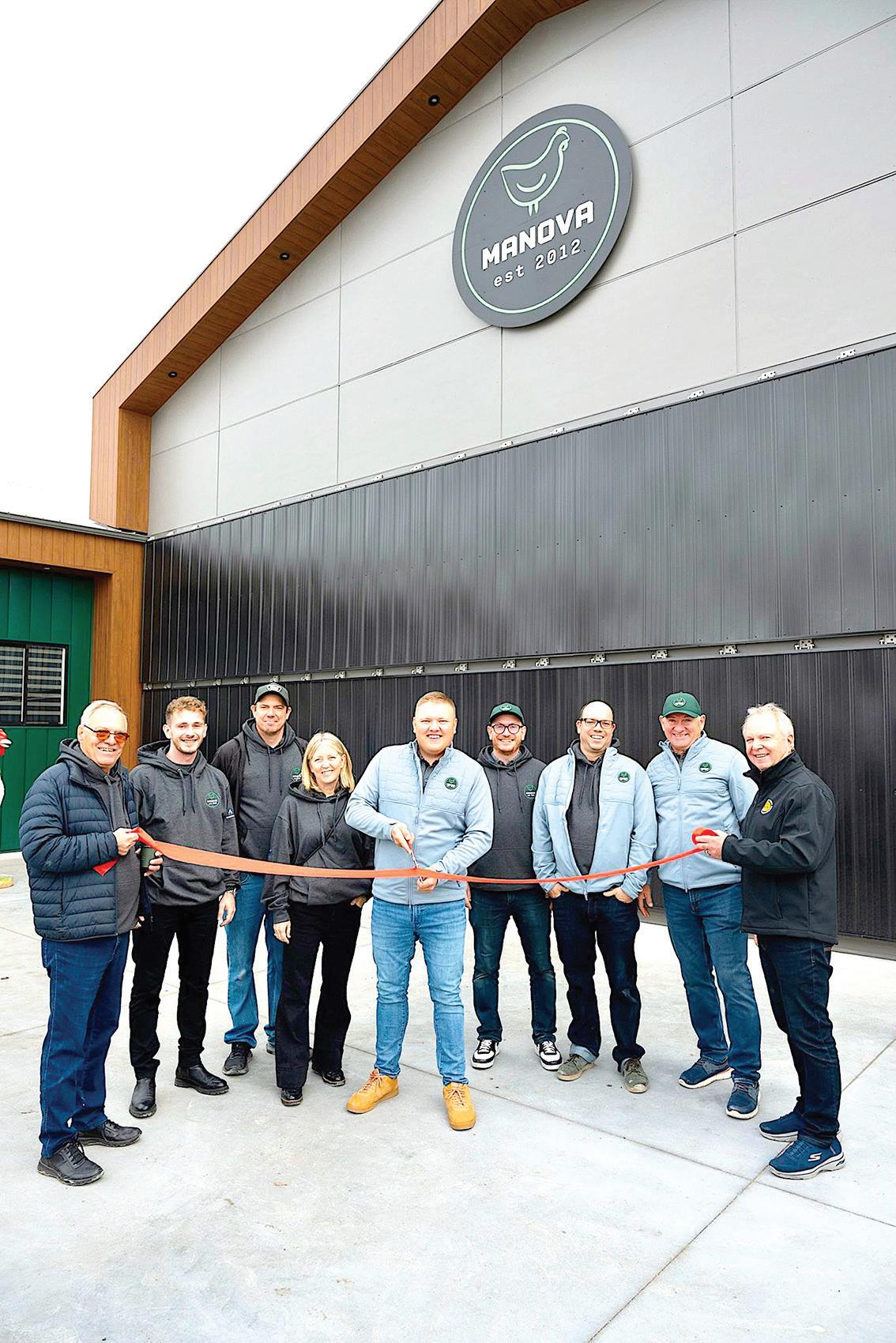
includes advanced monitoring tools, such as cameras installed over the egg belts that track egg flow and identify where each egg gets laid. The technology automatically adjusts the belt speed to ensure smooth collection and minimal stress on the birds.
“Some of this technology is the first of its kind in North America,” Harley said. “We did a lot of customization because our focus from day one was on animal welfare and bird behaviour. Everything we designed was to create a better environment for the birds.”
That focus on welfare reflects the changing expectations of consumers and regulators, but for Harley, it’s also about doing what’s right.
“The birds come first,” he said. “Healthy, comfortable birds produce better eggs. It’s that simple.”
He acknowledged that getting into egg farming today is far more challenging than in his father’s time.
“The startup costs are huge,”
he said. “Between quota, buildings, and equipment, it takes a lot of capital to get started. But there are opportunities, like quota draws, or in some regions, the option to raise a small number of hens without quota.”
Despite the challenges, Harley sees a bright future for young farmers willing to embrace technology and hard work.
“It’s an exciting time to be in egg production,” he said. “There’s a lot of change happening, but if you’re passionate about farming and care about your animals, the opportunities are still there.”
From his family’s modest beginnings to today’s hightech barns, Harley Siemens has carried forward a legacy defined by resilience, innovation, and care.
As he put it, “The farm looks different now, but the purpose is the same—to raise healthy birds and produce good eggs for people. That’s what it’s always been about.”

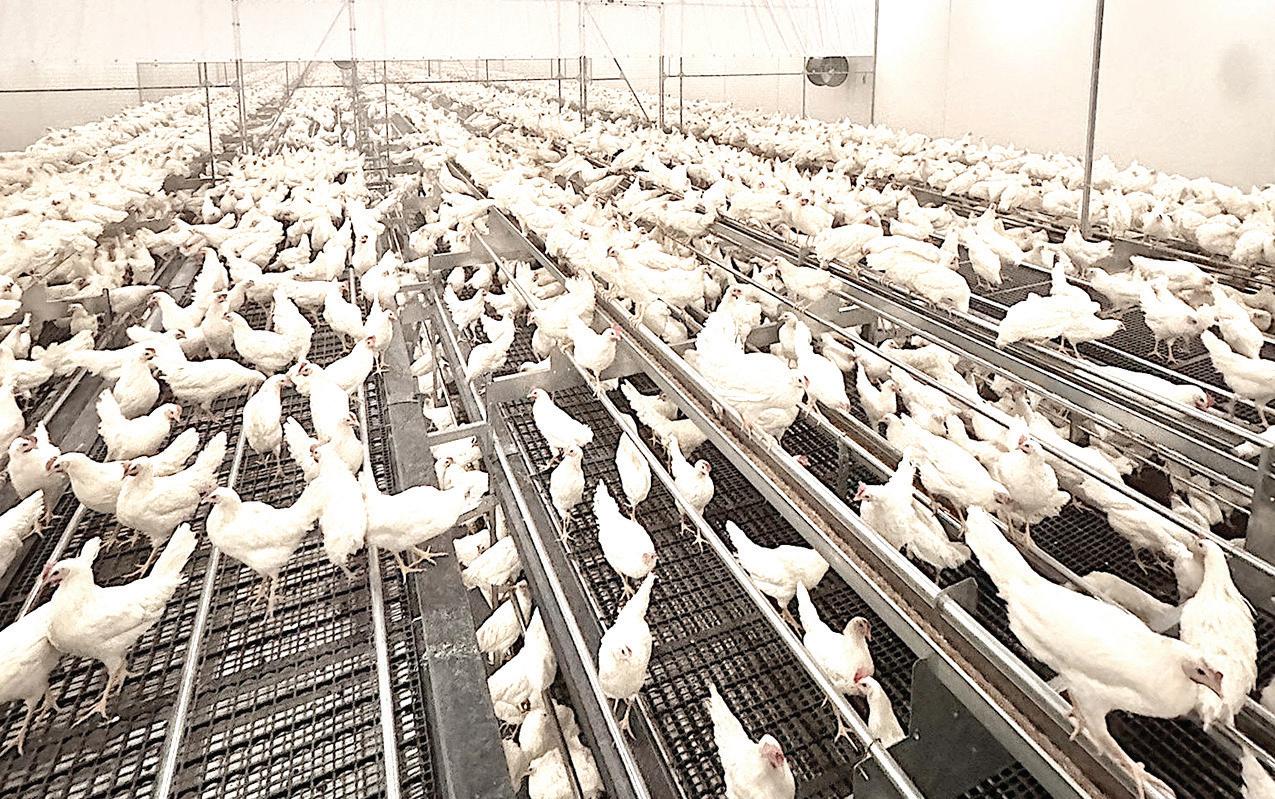
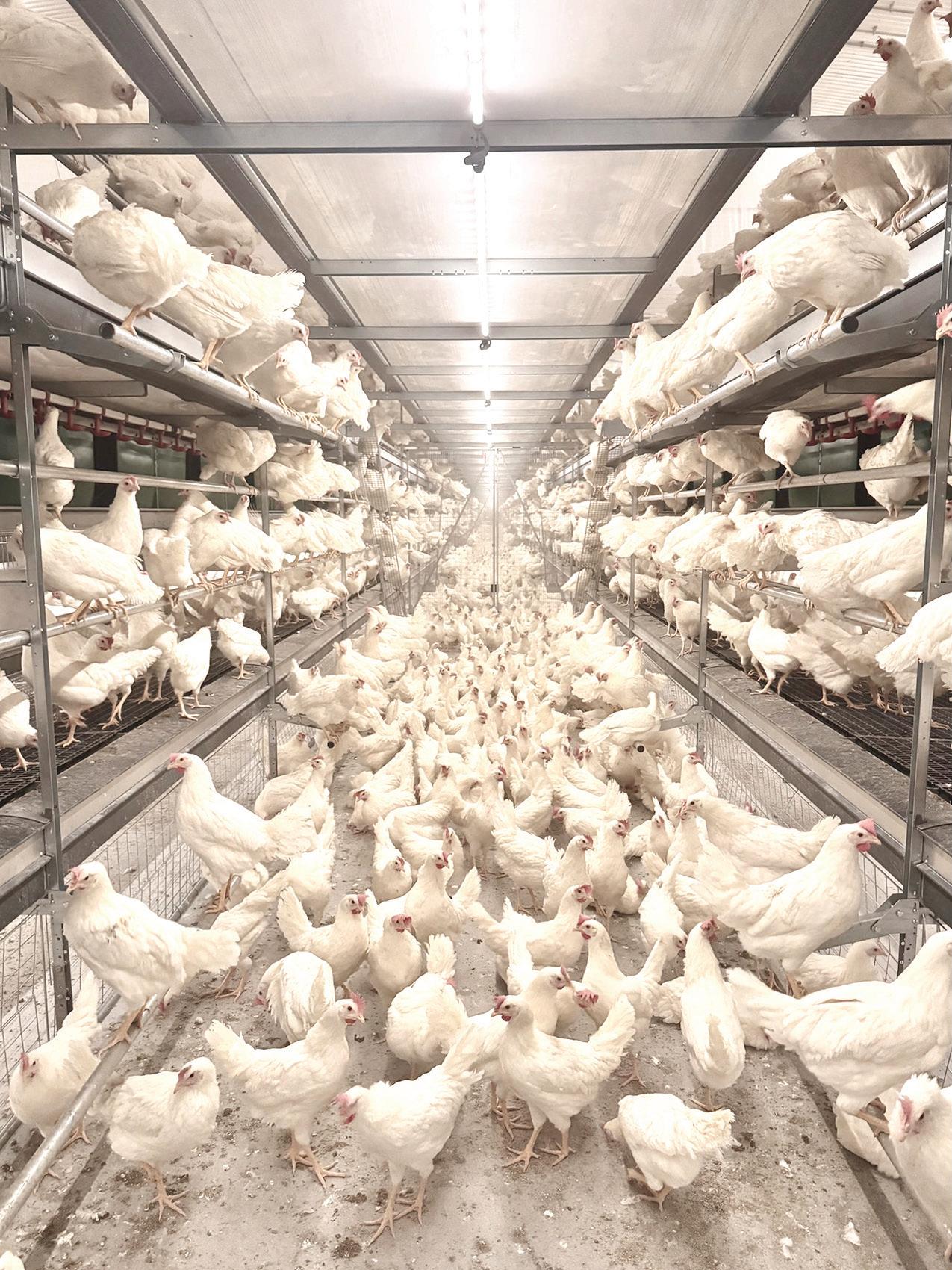
systems today would absolutely shock my great-grandfather.”
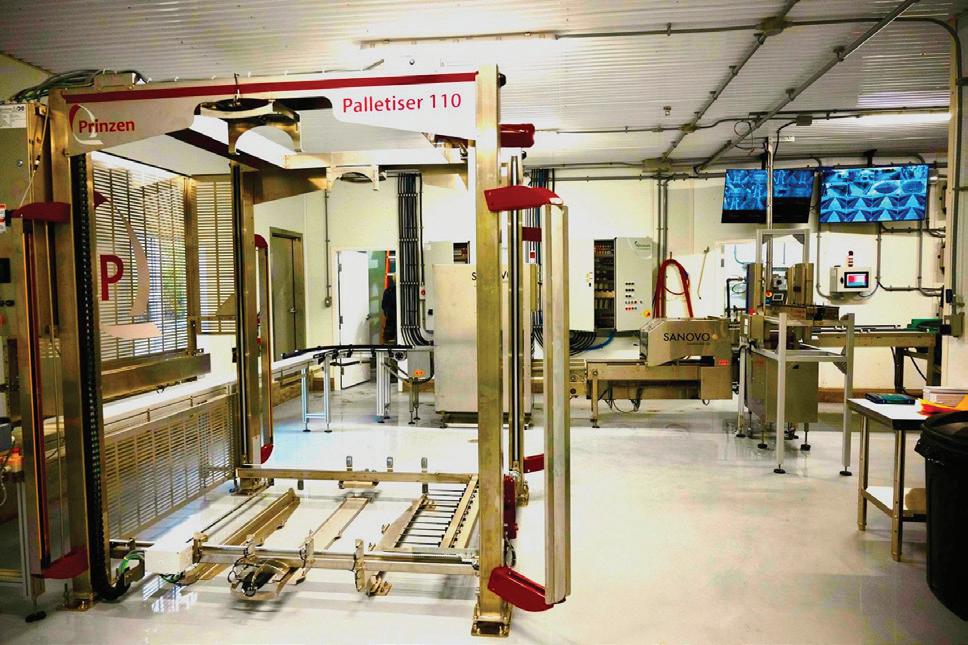
the Sweetness of Fall Harvest

Photo by Joan Airey
Fawns sneaking some crab apples for supper near Rivers. Tasting
Harley Siemens, a fourth-generation egg farmer highlights new equipment, a Prinzen Palletizer and Sanovo Egg Packer on the packing line which collects the eggs, places in trays, stacks the trays and then automatically builds the pallet.
Harley Siemens cutting the ribbon. The Blumenort barns officially opened this fall, marking a milestone for Harley and his team.
Over the past few years, the team has invested heavily in renovations and retrofits to meet modern animal welfare and production standards.
The industry has come full circle said Harley Siemens, a fourth-generation egg farmer. “We’ve gone back to letting birds roam again, but now they’re trained to lay in nest boxes with conveyors that move eggs automatically. The technology, genetics, and
Canadian Pork Industry Celebrates Strong Partnership with Japan
Representatives from Canada’s pork industry returned home celebrating a successful mission to Japan, where they marked the country’s growing appetite for Canadian pork and reaffirmed
long-standing trade and friendship ties.
The visit, which included stops in Osaka and Tokyo, showcased the deep partnership between Canada and Japan—two nations connect-

ed through decades of agricultural cooperation. With Canadian pork now standing as Japan’s top imported pork, the delegation emphasized both pride and gratitude for the trust Japanese consumers and retailers have placed in the Canadian industry.
The 19-member Canadian delegation participated in events surrounding Expo 2025, where they hosted partners and guests at the award-winning Canadian Pavilion.
ed the sector’s contributions to global food quality and safety.
“Canadian pork is regarded as a premium product in Japan, and our producers helped improve awareness,” said René Roy, Chair of the Canadian Pork Council. “The industry presence shows the market we view this as a partnership and a friendship worth celebrating.”
to strengthening Canadian pork’s partnership with Japanese retailers and consumers,” said Hans Kristensen, Chair of Canada Pork. “This trip provided our producers with a window into the Japanese market and the investments required to build, and maintain, this kind of market leadership.”
views Japan not only as a vital market—but also as a key ally in promoting high-quality, responsibly produced food around the world.
“This mission reaffirmed that our success in Japan is rooted in partnership,” said Roy. “It’s a relationship built on trust, and one we are committed to strengthening for generations to come.”
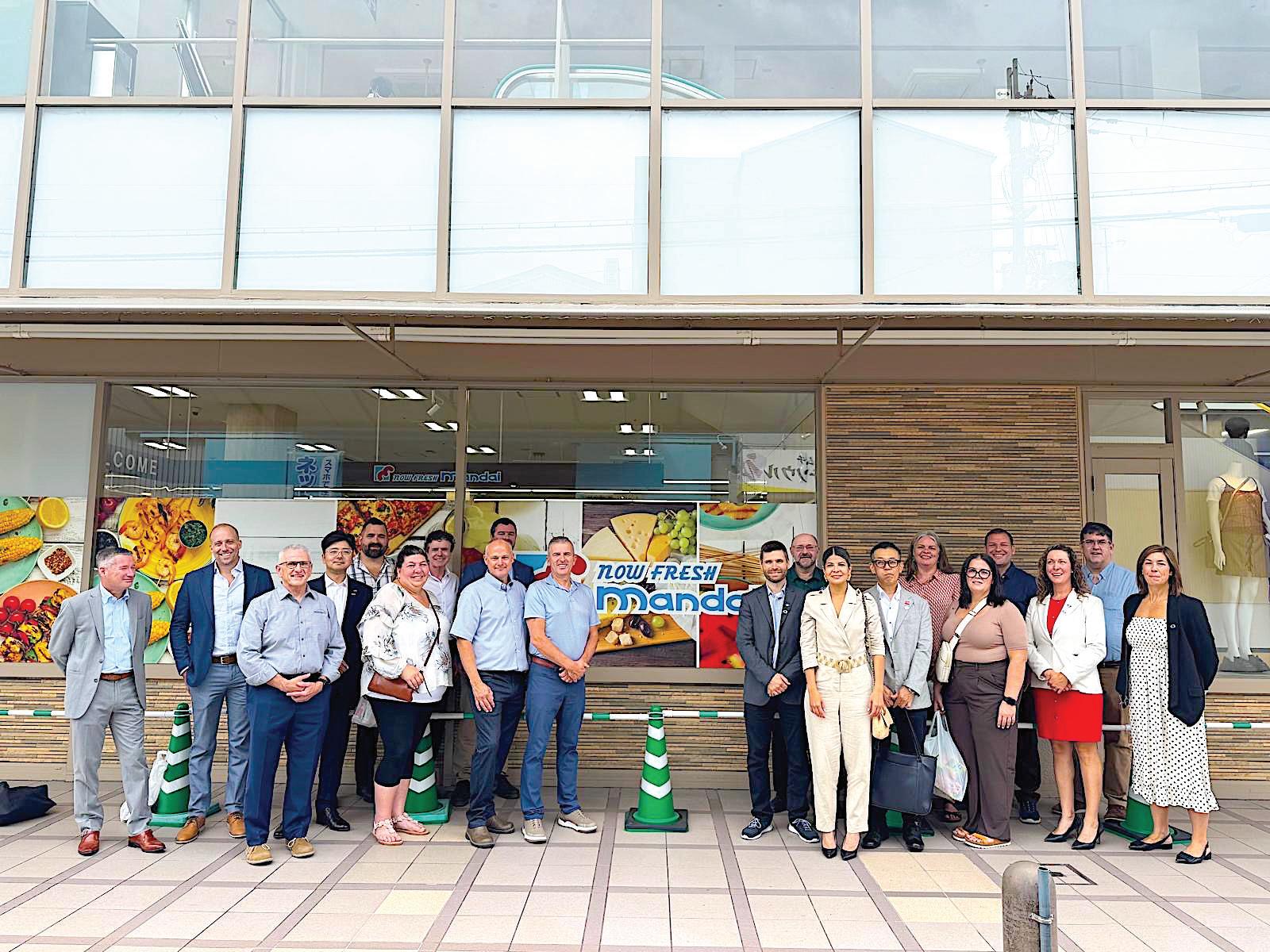
Organized by the Canadian Pork Council and Canada Pork, the event celebrated the success of Canada’s pork exports in Japan and highlight-
The delegation also hosted an event at the Canadian Embassy in Tokyo, bringing together Japanese business partners, government representatives, and food industry leaders. Both events provided valuable opportunities for producers and processors to discuss future collaboration and to showcase the consistency, safety, and sustainability of Canadian pork.
“We remain committed
Japan is one of Canada’s most trusted trading partners, and Canadian pork has earned a strong reputation for quality and reliability in the Japanese marketplace. The success of Canadian pork exports is the result of years of continuous collaboration, mutual respect, and shared commitment to excellence.
As the Canadian Pork Council and Canada Pork continue to expand market access and promote sustainable production, the industry
Japan is the world’s fourth-largest national economy and one of Canada’s most important economic and commercial partners. As one of the largest net food importers Japan is Canada’s 3rd largest agri-food export market ($5.5 billion in 2022) presenting opportunities in beef, pork, grains, oilseeds, and functional foods under the Comprehensive and Progressive Agreement for Trans-Pacific Partnership (CPTPP).
‘Transformational’ $500K Gift Will Allow Manitoba Harvest to Expand Capacity
By Elmer Heinrichs
Manitoba Harvest is celebrating a “transformational” $500,000 donation that will help lay the foundation for a new food processing facility to serve the growing number of Manitobans relying on food banks.
“It’s a transformational gift,” said Vince Barletta, president and CEO of the non-profit, referring to the donation from Farm Credit Canada (FCC). “Our facilities are at their capacity—really beyond their capacity—and now we’re looking to expand to meet the needs of today and into the future.”
Manitoba Harvest currently provides food to 100,000 people each month, including individuals, families, and school lunch programs. Food bank usage in the province has increased by more than 150 per cent since 2020, a rate that “far outpaces the national average,” according to the organization’s most recent impact report.
The $500,000 contribution will go toward the construction of a proposed 30,000-square-foot expansion to boost Manitoba Harvest’s ability to process, store, and distribute food that would otherwise go to waste. The new facility could be built on the organization’s ex-
isting property at 1805 Winnipeg Avenue, where it owns two acres of land, or at an alternate site. Barletta said both options are being explored.
Barry Watson, FCC’s vice-president of corporate financing and senior accounts for Western Canada, said he hopes the gift will encourage other donors to contribute to the expansion.
“Food should feed people, not landfills,” Watson said.
“At the end of the day, that’s the problem we’re trying to solve. Winnipeg is a logistics hub for not only Manitoba, but for the Prairies. Strategically, it’s a great investment to make because we are producers of a lot of surplus food.”
An estimated 1.2 million tonnes of food is wasted in Manitoba each year, Barletta said. In the last fiscal year alone, Manitoba Harvest re-
claimed 8.7 million pounds of surplus food, according to its impact report. The proposed expansion could allow the organization to rescue an additional eight million pounds annually.
While most of the organization’s clients are based in Winnipeg, an increasing number of communities and schools in rural and northern Manitoba now rely on its services. Barletta said projections suggest another 10,000 people will need food bank support each month within the next six years.
“People continue to be squeezed by rising costs of just about everything,” Barletta said. “Getting this in the ground as soon as we can is the No. 1 priority, so that we’ve got the capacity and infrastructure to serve these families. The need is huge.”
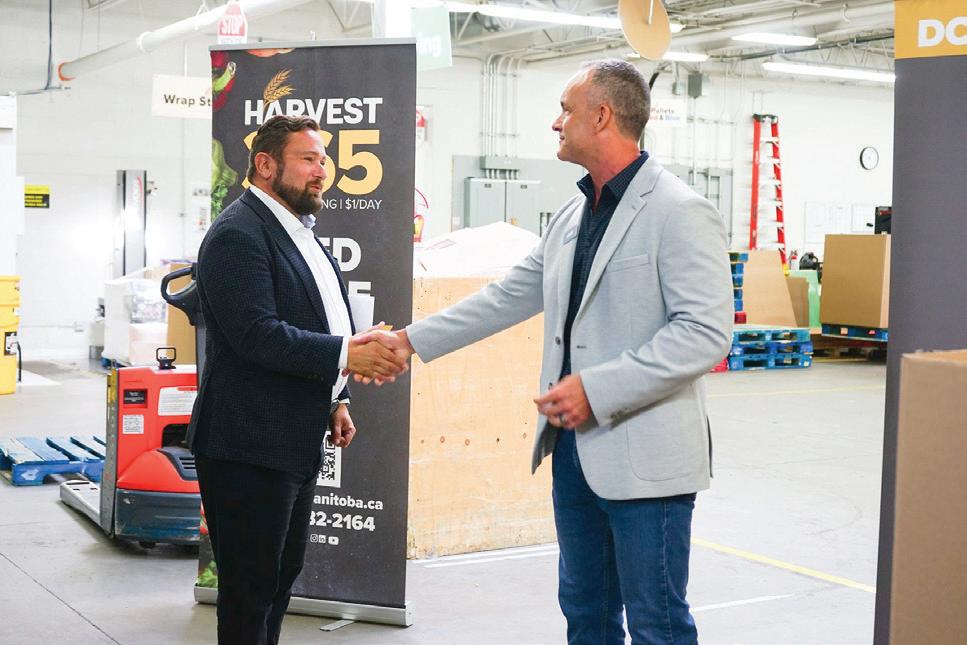
Pulled pork poutine was prepared and served at the Canadian Pavillion at Expo 2025.
The Canada Pork trade delegation visits Mandai Supermarket during a recent trade mission to Japan. Photo Source: Toby Tschetter/ Saskatchewan Pork Development Board Chair
“It’s a transformational gift,” said Vince Barletta, president and CEO of the non-profit, referring to the donation from Farm Credit Canada (FCC). Submitted photo
Fall Treats from the Kitchen
By Joan Airey
A quick reminder for those who have attended Manitoba Farm Women’s Conference this year or in previous years, is don’t forget to submit your recipes for the 2026 cookbook. Hope to see you there November 17 to 19th at Brandon.
I just put a Banana Bread in the oven as I had some bananas that needed to be used. I’ve been using this recipe since my grandson went to daycare at the Kenton Kids Club and he’s six foot tall now. It makes two loaves but today I just halved the recipe as I had only 3 bananas.
Banana Bread
2 cups white sugar
2/3 cup canola oil
6 ripe bananas
4 eggs
2 1/2 cups flour
2 teaspoons baking powder
2 teaspoons baking soda
1 teaspoon salt
Directions: Beat eggs, sugar, and oil together. Add dry ingredients, alternating with bananas. Bake at 350F for 40-50 minutes. When cool, slice.
Mississippi Mud Potatoes
6 cups of potatoes peeled and sliced
1 cup cheddar cheese, shredded 3/4 cup mayonnaise
1 cup bacon, cooked and crumbled
3 teaspoons garlic, minced 1/2 cup onion, chopped
Directions: Preheat the oven to 325F and lightly grease a 9 x 13 baking pan to keep the casserole from sticking. Combine ingredients in the prepared baking dish, toss together the sliced potatoes, shredded cheddar cheese, cooked and crumbled bacon, minced garlic, and chopped onion. Spoon in the mayonnaise and mix well until the potato mixture is evenly coated and creamy.
Slide the pan into the oven and bake for about 1 1/4 hours, or until the potatoes are fork-tender and the top turns beautifully golden brown. Serve hot, right out of the oven, and enjoy every bite of this creamy, cheesy, bacon packed Mississippi Mud Potatoes.
Personally, I will use a little more grated cheese and mayonnaise next time.
Hot Fruit Compote
1-375 g bag dried prunes
1 1/3 cups dried apricots
14 oz can pineapple chunks, drained

AgEx 2025 to Focus on “Gaining Ground” in Farm Business Management
The Agricultural Excellence Conference (AgEx), Canada’s premier event for advancing farm business management, will take place November 17–20 at the Radisson Hotel Winnipeg Downtown under the theme “Gaining Ground.”
The conference will unite farmers, advisors, industry leaders, and policymakers from across the country for expert-led sessions, networking opportunities, and discussions aimed at strengthening farm businesses through innovation and resilience.
This year’s event also features the FCC Young Farmer Summit on November 17, a free, full-day event for producers under 40. Participants will explore the business side of farming, learn from industry experts, and connect with peers to help take their operations to the next level.
Registration for young farmers is $200, and full conference details are available at agexcellenceconference.ca.

Our cherry trees produced lots of fruit this year so I’m planning
Cull Poor Beef Cows in Your Herd
By Peter Vitti
Autumn is a busy time for the cow-calf operator. After the spring calves are weaned; may sold or moved into drylot for backgrounding, the remaining brood cows are checked for pregnancy and soundness. Any animal that is deemed unprofitable should be culled before the new year.
Not too long ago, their salvage value was only worth a few hundred dollars, but in today’s record-high market; even a half-blind, smooth-mouth and open-cow is worth nearly a few thousand dollars. Consequently, people should make up a cull-list to take advantage of this revenue-stream as well as improve the integrity of their cowherd.
All mature cows, 1st calf heifers or replacement females, which cannot get pregnant or “open” tops everyone’s cull list, because infertile cows simply cannot produce a money-making calf for next year. That is the strict opinion of my friend, whom operates a 400 Angus/Simmental cowherd.
I asked him if there were any exceptions to his #1 rule of culling open-cows. He frowned that even if she were the best cow in the herd and was guaranteed to re-breed the next season, she is clearly a depreciated item:
1. She did not give birth to a calf that generates his main income, 2. She will then incur at least a $3.00 a day bill for overwinter feed and housing costs (200 days) or $600 of liability, and 3. At least she is worth a few thousand dollars in today’s cull market.
The funny thing is that it might not be her fault in the first place. His story continues – that much of his cowherd breeding season falls during the hottest days of summer; many cows (as well as breeding bulls) having suffered from heat-stress related infertility. My friend says, it’s unfortunate, but these cows must be culled for cited economics. Not to mention that he has no time, room or interest in creating a pregnant fall-calving herd.
Another producer that I know operates a 250-beef cow-calf operation, several hundreds of kilometres to the east of my first friend. He has similar views on culling infertile cows, but is “open” (pun) to giving a handful of non-pregnant mature cows, a second chance. He writes their ear-tag number under a “maybe” column on his cull-list.These “maybe” candidates are healthy mature cows that have proven to be otherwise, good nursing mothers in the past year that have turned out - good 600 lb weaned calves by autumn. Given that she might eat $600 worth of overwinter feed until the next breeding season; this producer is willing to take a chance to successfully breed her next year to yield a feeder-calf, which is worth nearly $4000 ($650/cwt) in today’s market.
These two friends sell their cull-cows shortly before the end of the year. However, I met a third person, whom runs his 300 white-face Hereford cross-bred operation and takes a slightly different approach. He culls his cowherd, twice a year. The first culls consist of about 30 open cows after the calves are weaned and the second group is 15 – 20 individuals, put together within weeks after the calving season ends; hard calvers and cows that are breeding season stragglers. All cull cows are put in their own pen during an 80-day feeding program to gain 250 lbs and then sold at cull-cow prices.
All three above beef producers cull cows due to infertility; however there are secondary reasons, why brood cows might be sold. Some of these reasons are:
- Old age - As brood reach 10 years, their bodies break down; worn-down teeth (smooth-mouth), teats and udders collapse, uterine infections increase and general lameness are inevitable. They are more susceptible to disease.
- Poor nursing cows - Cows with poor milk production (translates into poor growing calves) should be culled. One obvious goal of most commercial herds is to maximize - total saleable weaned weight of their annual calf-crop.
- Rough calvers – Some cows seem to have several hard-calving seasons; calf has to be pulled or the cow has a prolapsed vagina, retained placenta, milk-fever and serious uterine infections.
- Poor cow health - Some cows are more susceptible to health challenges compared to other cows. Cows with a contagious disease or identified as disease carriers should be removed. Cows with chronic health problems might be culled.
Regardless on the reasons (infertility remains #1) that any cow is culled from its cowherd, I believe that there is at least a 10 – 15% cull rate on most cow-calf operations. All of these culls should be replaced by a young, healthy, good milker, and promising mother; namely, a bred 1st calf replacement cow. Soon, she should give birth to a strong, good-growing spring calf, which is sold the following fall
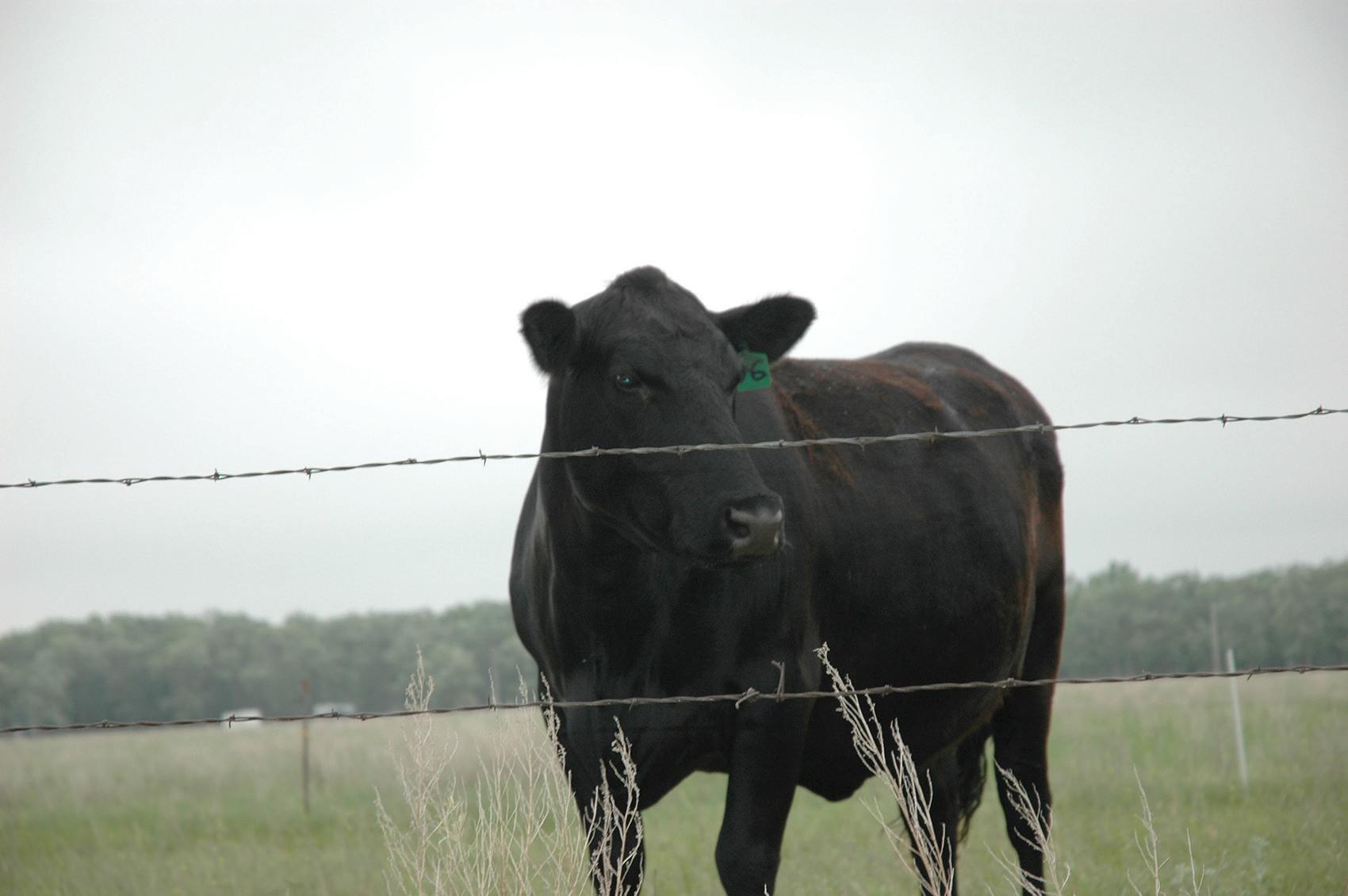
“Never Boring” — Kurt Vossen on 48 Years of Grain Change

By Harry Siemens as much as price.
Dr. Barry Prentice of the University of Manitoba opened the Fields on Wheels session with a question that struck at the core of Prairie agriculture: after all the upheaval—the Wheat Board monopoly, jailed farmers, branch-line closures, and the end of the Crow rate—had Canada’s grain trade finally become boring?
“Never boring,” replied Kurt Vossen, smiling. After 48 years in the industry, Vossen knew what he was talking about. The former CEO of Richardson International, with 18 years at Cargill before that, had watched Western Canada’s grain system transform from a slow, domestic-focused network into a global logistics powerhouse.
When he started in the late 1970s, Prairie farmers produced about 30 to 40 million tonnes of grain and oilseeds. Wooden elevators dotted every small town. Crews loaded boxcars by hand, and marketing revolved around quotas, permit books, and the Canadian Wheat Board. Canola barely existed as an export crop.
By the 1990s, that world vanished. Railways demanded efficiency—fewer elevators, longer trains, faster loading. New inland terminals filled 100-car trains in less than a day. The network shrank from nearly 4,000 elevators to about 160 high-capacity sites.
Farmers diversified into peas, lentils, and chickpeas and the Prairies entered a global marketplace where reliability and quality mattered
“Buyers still ask the same five questions,” Vossen said. “Price, price, price, reliability of execution, and integrity of quality.”
He praised the modern handling system for its speed and precision but warned that Canada’s export infrastructure still relies on fragile chokepoints. The biggest risk sits at Vancouver’s Second Narrows rail bridge, the only link to North Shore grain terminals. Each vessel passage lifts the bridge, halting trains.
“If anything happens to that bridge, like the Baltimore collapse, our exports stop,” he said.
He also pointed to a fixable but persistent problem—rain.
Vancouver’s frequent downpours still prevent loading grain under cover because of outdated labour rules.
“That’s low-hanging fruit we still haven’t picked,” he said.
Vossen called the post–Wheat Board era a turning point.
“Until 2012, we never topped 55 million tonnes,” he said. “A year after the monopoly ended, we hit 74. Since then, we’ve stayed in the high 60s and 70s. This year could reach 85.”
He credited billions in private investment for driving productivity and urged governments to protect system integrity without interfering.
“Let people rise or fall on their ability to adapt and execute,” he said.
Trade, he added, remains unpredictable. Tariffs make headlines, but non-tariff barriers cut deeper he said.
He recalled Italian farm
unions blocking Canadian durum after the CETA deal and China halting canola exports during the Meng Wanzhou dispute.
“You pivot or you perish,” he said. “Every country looks after itself first—so must we.”
While China blocked canola, Richardson sold wheat and barley there, filling the gap left by Australia. Vossen viewed that as the essence of survival in global trade: agility, not anger. “Politics change; opportunity remains,” he said.
He also spoke about energy policy and renewable fuels.
“You can’t build a biodiesel plant on a two-year subsidy,” he said. “These are 30year investments.”
He cited Richardson’s Yorkton crushing complex, capable of 7,200 tonnes a day, as an example of how private capital expands capacity and drives innovation. For Vossen, adaptation defines Canadian agriculture.
From 30 million tonnes in the 1970s to more than 80 million today, from thousands of wooden elevators to hundreds of concrete terminals, the system has reinvented itself through efficiency and credibility.
“Logistics became our currency,” he said. “If we can’t move it, we can’t sell it.” He closed with a grin. “Never boring,” he said again. The audience nodded, knowing he was right. After nearly five decades, Canada’s grain trade remains fast, complex, and global—still testing those who can pivot, invest, and keep the grain moving.
photo Peter Vitti
Kurt Vossen, former CEO of Richardson International also has 18 years at Cargill before that. “Buyers still ask the same five questions,” Kurt said. “Price, price, price, reliability of execution, and integrity of quality.”
Photo by Harry Siemens
Fall Indoor Gardening Season 2025 Starts
By Joan Airey
In mid-October, we were blessed with some much-needed rain showers.
After I finished cleaning up my garden, my husband tilled the soil, and I planted a row of carrots and one of spinach just before the rain arrived. I’m hoping I didn’t plant them too early and that they’ll germinate in the spring. In the past, when I planted seeds in the fall, I usually waited until the end of October.
My neighbour Jean recently told me about a Vitamix Food Cycler, a device her son’s municipality has been selling to help reduce food waste going to the landfill. I’ve been composting kitchen scraps for years, but it takes a lot of time and effort. Jean approached our local municipality about the idea, and they agreed to make the machines available
at cost—so Jean and I each purchased one.
There’s no smell from the Food Cycler as it processes vegetable and fruit peelings, and I plan to use some of the finished compost mixed with soil to grow lettuce and other greens under grow lights this winter. I’ve noticed other municipalities, such as Woodworth-Wallace, are also offering these units to residents. While the machines aren’t cheap, I’m hoping they’ll help lower my gardening costs and improve productivity.
This summer, my vegetable garden didn’t perform as well as I’d hoped. I’m not sure if the problem was the weather or my lack of attention. My husband ensured it was well watered during dry spells, but I was late fertilizing the corn, which did produce—though later than usual. I also lost
quite a few tomatoes to blossom end rot.
I’m now patiently waiting for The Prairie Garden to arrive in my mailbox. It’s always packed with helpful information for prairie gardeners. The theme of this year’s edition is Shaping Spaces.
I contacted Rita, one of the volunteers who helps produce the annual publication, and she shared the following information:
“No matter where one resides, everyone wants a buffer against the rush, noise, and complexities of modern living—a sheltered spot where one can relax in comfort. It’s possible to create a private retreat, be it small or large, through appropriate landscaping. You can design a place to play, grow flowers and vegetables, add fruit trees or bushes, or even screen out
Arborg Farmer Donates $5,000 to Children’s Hospital Foundation Through Contest Win
The Children’s Hospital Foundation of Manitoba is receiving a $5,000 boost this year, thanks to Samuel Wipf of Broad Valley Farms near Arborg, who was named Manitoba’s winner in Lallemand’s 2025 Hometown Roots contest.
Wipf, who farms nearly 12,000 acres of canola, wheat, barley, corn, and soybeans with his family, said he was both surprised and honoured by the recognition. He chose to direct the prize money to the foundation in appreciation for the exceptional care his son received after being born with a cleft lip.
“He had three surgeries, and you can hardly notice it now,” said Wipf. “It feels good to support a project that helps children in need, and I’m thankful to Lallemand for running a contest that gives back to rural communi-
ties across Canada.”
The Hometown Roots contest, launched by Lallemand Plant Care, invites farmers and rural residents to share photos and stories that capture the heart of agricultural life in their communities. Entries highlight everything from daily farm life to the resilience and pride that define rural living.
“As a family-owned business, giving back to rural communities is part of who we are,” said Anne Favre, Strategic Marketing Director for USA & Canada at Lallemand Plant Care. “The Hometown Roots contest celebrates people and programs that make rural life strong and vibrant, and we’re proud to have a winner who chose to support a foundation that truly makes a difference.”
Each year, Lallemand awards three $5,000 prizes across Canada—one each in
Alberta, Manitoba, and Saskatchewan. Winners select a local charity or community organization to receive the donation, ensuring the funds directly support causes meaningful to rural residents.
Since its launch in 2021, the Hometown Roots program has contributed $5,000 to 29 rural organizations across Canada and the United States. Recipients have included programs that promote youth mentorship, hands-on agricultural learning, and essential community services.
For Wipf, the donation is more than just a contest prize—it’s a way to give back to a foundation that changed his family’s life.
“The Children’s Hospital Foundation helped our son when he needed it most,” he said. “It’s a great feeling to be able to give something back through this opportunity.”
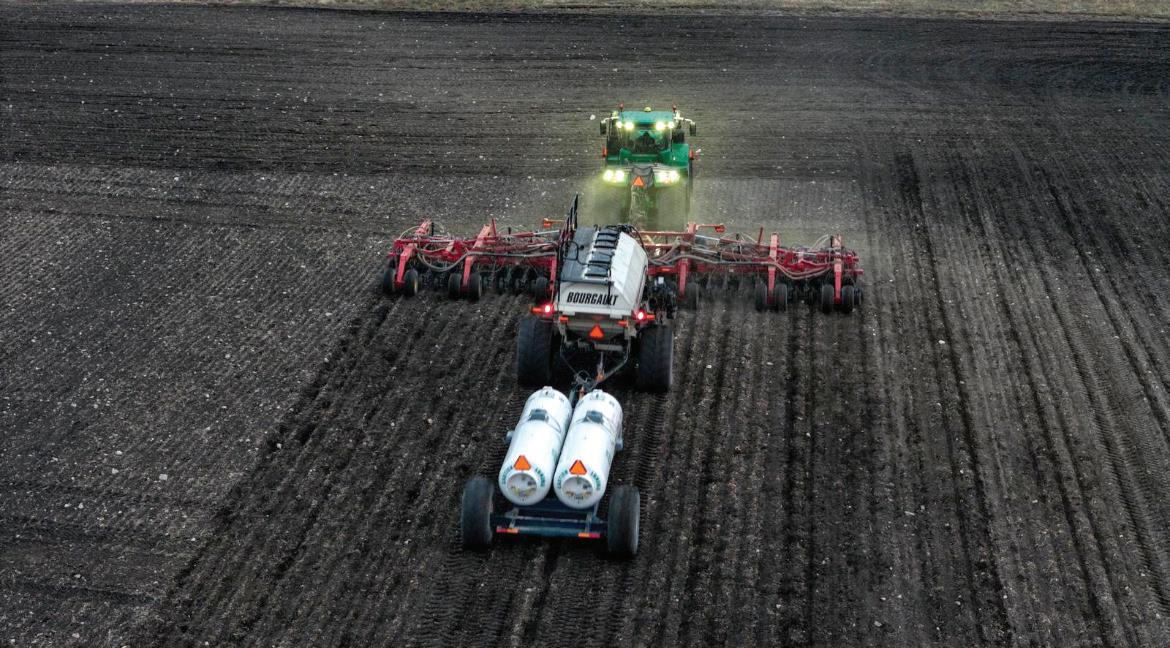
an unwanted view.
You may decide to hire a professional landscaper to help design a space that meets the needs of your yard, your family, and your guests. If you’re a do-it-yourselfer with a tight budget, there are many resources available—from countless online videos to books and manuals at your local library or bookstore.
One of these resources can be the new edition of The Prairie Garden. This year’s edition explores topics such as why you shouldn’t plant directly under trees, how to design a vegetable garden, and tips for building a rock or alpine garden—or even creating a goth garden. The general section includes advice on growing winter squash and choosing the right pear tree for your yard.
Gardening is a tradition that spans centuries and continents. It’s an ever-evolving creative pursuit, with gardeners constantly adapting new—or rediscovered—techniques to suit their unique environments.”
I always enjoy hearing about Rita’s new gardening experiments. She plants onion seeds in the fall, and if my garden dries out enough before the ground freezes, I plan to try
the same. “I’m planting more and more vegetables in containers,” Rita added. “Interestingly, my yields are double—or even more—at our cottage near Winnipeg Beach compared to our home garden. We got almost no Sweet Millions tomatoes at home, but at the cottage, my husband could hardly keep up with picking them. I water regularly at home, but at the cottage I’ve been using inverted Coke bottles and have added more and more self-watering pots.”
“My celery at the cottage had stems as large as those you buy in stores, even though the plants sometimes wilt completely when we’re away. I mainly grow salad vegetables now, and I really enjoy the rainbow Swiss chard—it adds beautiful co-

lour to salads. Personally, I think the red variety looks better than the yellow when mixed with other greens,” she noted.
With new tools like the Food Cycler, creative planting methods, and inspiration from fellow gardeners like Rita, there’s always something new to try—indoors or out—as the fall gardening season begins.
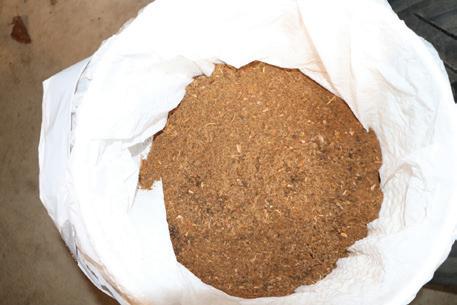

This is what the finished product looks like. I store it in a plastic bag in a five gallon pail with a lid to keep it dry until I spread it in the garden next spring. This is tainer 34 times and it doesn’t fill
Samuel Wipf’s photo entry of pea planting in the Arborg area caught the judges’ eyes.
My Vitamix Food Cycler ECo 5 which I call my composter.
The container you put your peelings, egg shells, coffee grounds and other biodegradable in to compost.
Photos by Joan Airey