

By Harry Siemens
A recent survey social media platform X, of farmers across Manitoba reveals the core issues weighing on producers as they approach the winter months. Moist soils, rising input costs, and market instability consistently emerged as top concerns.
Manitoba farmer Ryan Hofford led the list of concerns with planning ahead. “Inputs and markets are front of mind,” Hofford said. “Storage and logistics are a struggle, but we can adapt most times.” He emphasized that balancing rotations, delivery logistics, and cost management is quickly becoming a year-round strategy.
Another producer, Kurt Klimpke, confirmed the tight finances. “The ROI for all the crops we grow isn’t what it should be,” he said. “Prices for all inputs are way too high, and the cost of parts went up during COVID because of shortages — but since that time, prices haven’t come back down to where they should be.” He pointed out that although crop yields may be steady, elevated mechanics and input costs are squeezing margins
from both sides.
Günter Jochum, Manitoba Wheat Growers President and farmer highlighted the
moisture is fully recharged for next year,” he said. “Fertilizer prices are definitely a challenge.” His view mirrors
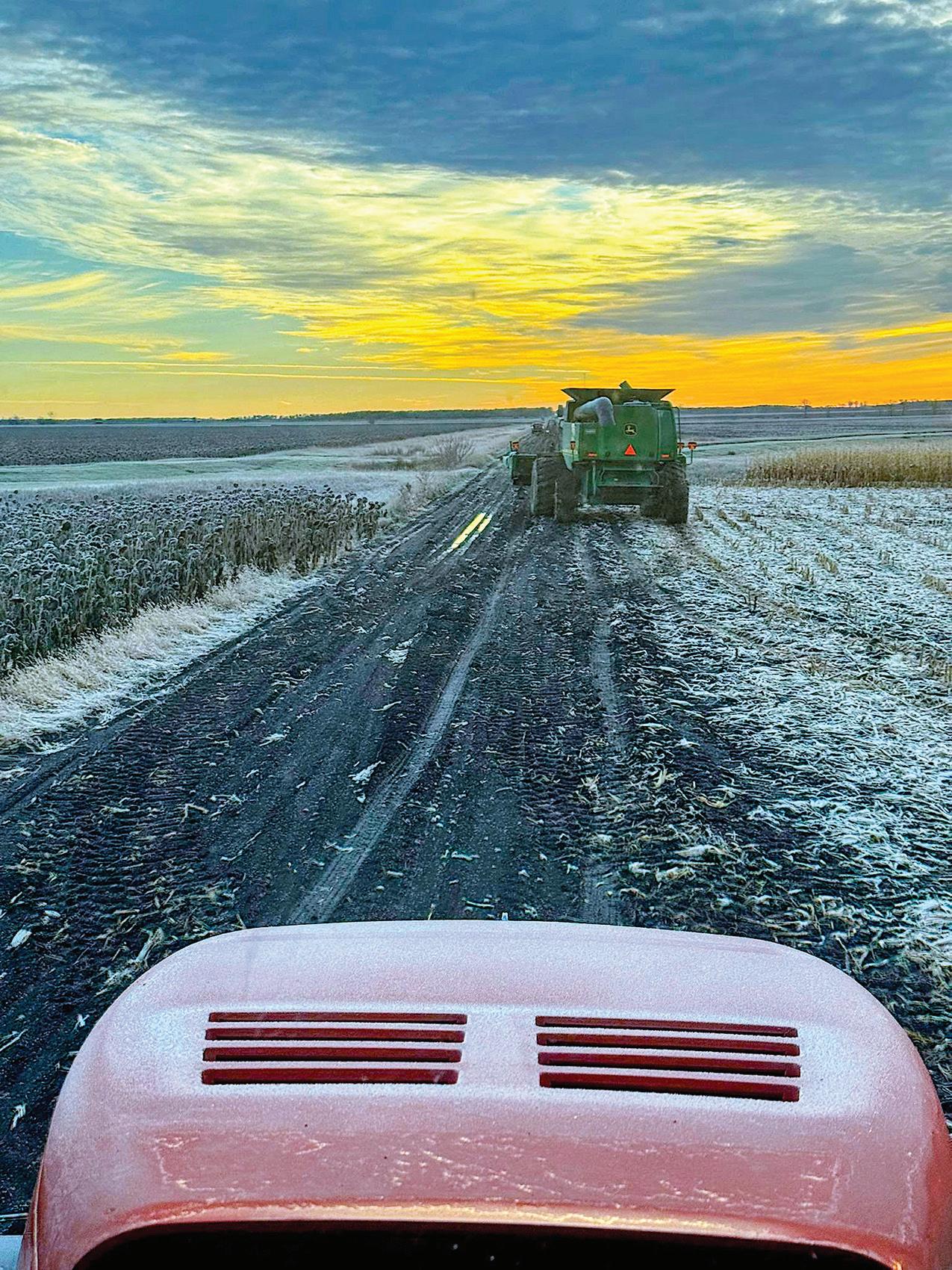
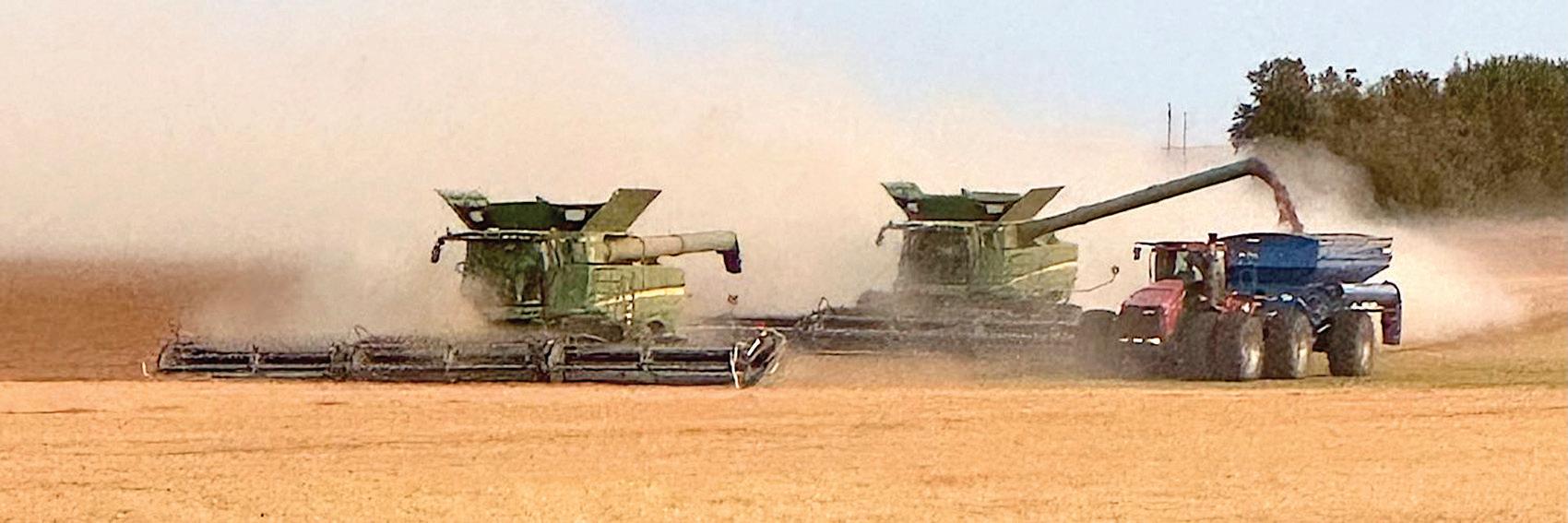
Harvesting corn this fall. Whenever possible, farmers were back on the fields taking off what they could. Submitted photos
weather dilemma: “Too much moisture this fall didn’t let us finish fall work, but at least our subsoil
many survey responses: the excess rain may help soil structure, but catching up on fieldwork and ab -
sorbing high input costs is a real burden.
Jason Hildebrand, who farms in the Interlake region, expressed concern about future profitability. “Input costs and futures prices don’t show very good returns if things don’t change in ’26,” Hildebrand said. He noted that while markets remain soft and costs high, many producers are holding off major decisions until next spring.
Agronomist Jason Voogt of Field2Field Agronomy weighed in with a technical challenge tied to soil conditions. “Our biggest challenge right now is getting all the soil sampling done with how wet it is,” Voogt said. “It’s been a battle — we had to wait for the ground to freeze just to go.” He added that for many of his clients the path forward involves tackling input decisions and field work under difficult conditions: “The biggest challenge for them is planning around higher fertilizer costs and low commodity prices. For a lot of farmers, that means spring fertilizing ahead of seeding will be the only option.”
Continued on page 3...

By Elmer Heinrichs
An agreement between all Canadian provinces, territories, and the federal government just signed will drop interprovincial trade barriers on many goods except food and alcohol starting in December.
It comes as part of an effort to support businesses with more trade opportunities in light of U.S. Tariffs.
B.C. Minister of Jobs and Economic Growth Ravi Kahlon said the agreement, signed in Yellowknife, is the outcome of a nationwide push led by B.C. to reduce domestic trade barriers.
“This agreement makes it easier for goods that meet the rules in one province or territory to be sold across Canada without extra approvals, labels, or testing,” he said at an announcement in Victoria. “We are creating one agreement, one market, and unlimited opportunity across the country.”
When it goes into effect, the agreement will cover thousands of products, including clothing, toys, vehicles, health technology, and industrial products.
The agreement will take effect next month and applies to thousands of products, although it excludes food, beverages, tobacco, plants, and animals.




By Harry Siemens
Cloned meat and gene-edited livestock; specifically cattle and swine derived products were set to enter the Canadian food supply without labelling or public disclosure, following a major shift in Health Canada’s Novel Food policy. The change would have removed cloned animals and their offspring from the Novel Food category, meaning these products would no longer require safety reviews or mandatory labels when sold to consumers.
Recently the Government of Canada received significant input from both consumers and industry about the implications of this potential policy update. Health Canada has therefore indefinitely paused the policy update to provide time for further discussions and consideration.
Until Health Canada’s policy is updated, foods made from cloned cattle and swine will remain subject to the “novel food” assessment. There are currently no approved foods from cloned products on the market in Canada.
Vincent Breton, president and CEO of duBreton, a major Certified Humane and organic pork producer, says the issue is not the science behind cloning but the lack of transparency.
“Consumers won’t know these products are entering the food chain,” he said, noting that Health Canada made the decision with “no announcement and no public explanation.”
Health Canada consulted roughly 1,200 people before updating the policy. Previously, cloned animals, their offspring, and gene-edited livestock were in the Novel Food category, which required additional safety assessments. Under the new rules, expected to take effect before year-end, products created using these technologies will enter the market like any other food.
Breton said surveys across North America show that 70 to 90 percent of consumers want to know how their food gets produced.
“Some aren’t afraid of the technology,” he said. “Others want to understand the impact on health, the environment, or the animals themselves.”
He said the problem is not disagreement over the science but the information needed to make their own choices.
He also pointed to inconsistencies created by the policy change. Under Canadian labelling rules, a product labelled “natural” must be min-
imally processed and contain no artificial ingredients. Yet under the new policy, the meat can still be labelled “natural.” Breton called the idea “crazy,” saying it undermines consumer trust.
The shift places new pressure on certification bodies that support transparency in livestock production. Because duBreton is organic, it already adheres to strict standards that prohibit genetic modification, gene editing, and cloning. But other third-party programs, such as Certified Humane and the Global Animal Partnership, now face decisions about whether cloned or gene-edited animals fit within their production rules. Breton said these organizations will need to clarify their standards to avoid confusing consumers.
decision should involve only government officials or food companies. “It belongs to the consumer,” he said.
He is urging responsible food brands and retailers to lead by example.
“If Health Canada won’t label these products, others will have to step up,” he said. That includes voluntary labels, clearer production claims, and stronger certification protocols. Breton said transparency is essential because “the food system exists to serve consumers.”
The issue also connects to broader developments in livestock genetics. Companies such as Topigs Norsvin, which operates advanced facilities in Manitoba, design genetics based on what the consumer wants—whether that is improved flavour, animal welfare, or environmental performance. As genetics becomes more important in animal agriculture, consumers expect more information, not less.
Breton said removing cloned animals from the Novel Food category conflicts with the industry’s move toward greater openness. Without clear labels, consumers cannot distinguish between conventional meat, cloned meat, or gene-edited products. That lack of clarity could erode trust in the long term.
He referred to a line from food-policy expert Dr. Sylvain Charlebois, who wrote that “the problem is not science, it’s silence.” Breton said that statement “perfectly describes what’s happening.” Science will continue to advance, he noted, but regulators must communicate openly with the public.
While some consumers may welcome new technologies, and others may reject them, informed choice depends on transparent labelling. Breton argued that the
The quiet nature of the policy change has started to draw attention from farm groups, food advocates, and supply-chain partners. Such a significant shift should involve open consultation and broad public discussion, especially when it changes how food reaches the Canadian market.
The debate is not about whether cloned meat is safe. The debate is about whether people have the right to know what they are eating. Removing mandatory labelling takes that right away. Without information, Canadians cannot make decisions aligned with their values. As this policy moves forward, the conversation around cloned and gene-edited livestock is likely to grow louder. Canadians expect openness from the institutions responsible for food safety. Trust is central to the relationship between consumers, farmers, and the food system. Once trust weakens, it becomes difficult to rebuild.
Health Canada’s decision to proceed quietly has placed that trust at risk. As cloned meat enters the food supply, Canadians will continue to ask for one simple thing— clear, honest information about how their food gets produced.


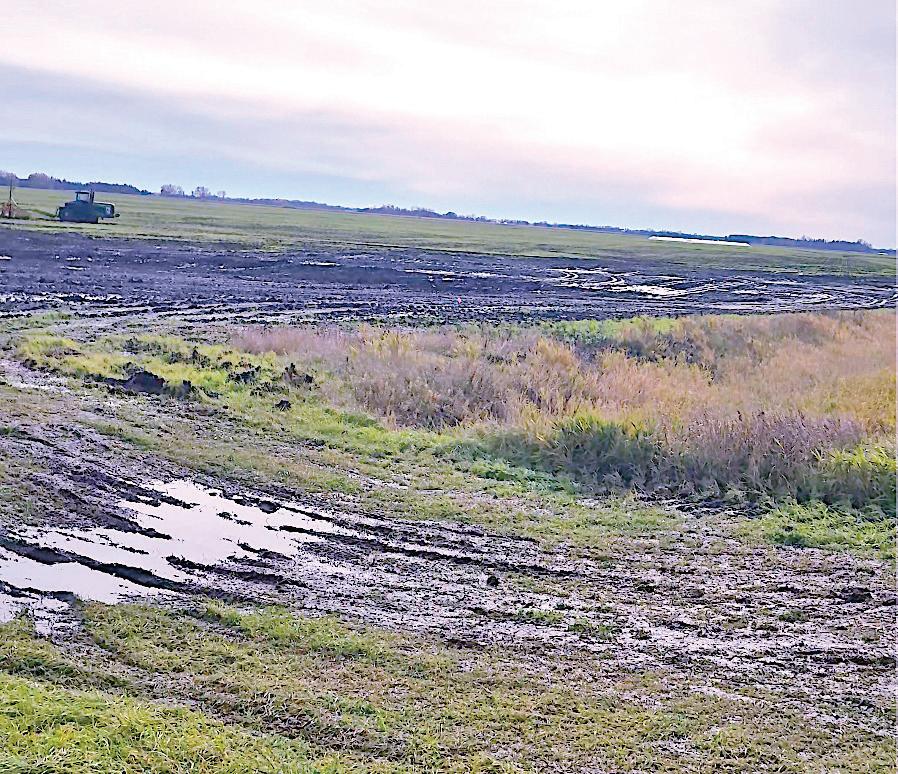
Korey Peters, a farmer near Randolph, described harvest as a test of equipment and timing. “Corn harvest was really challenging with so much precipitation and mud,” he said. “Yields were good, so it made the fight worth it. Lots of farms will have a ton of spring work ahead of seeding to prep fields — just one of those years. But we’re thankful for good quality and decent yields.” He added that waterlogged fields still remain a worry: “We’ve got a small field of canola laying in water and totally flat. If it doesn’t
freeze solid before snow, I’m not sure what we’ll be able to do with it.”
Fellow Manitoba farmer Lee Redpath added a regional perspective: “You guys out east sure got hammered with rain! Glad you got done — hate to see what the fields look like out your way.”
Kurt Shmon, President of Imperial Seed based in Saskatoon but reflective of Prairie logistics issues, pointed out export and shipping delays affecting the industry. “Our challenge is ports — Montreal, to be specific,” he said.
“We have 17 containers waiting to be loaded, most of which have been rolled onto other ships, delaying ETA for our customers. Yet we have a government that thinks we need to expand European business when we can’t service it properly right now.”
Finally, one of the survey respondents, Ryan Bonnett, noted: “Down trending and flat lining commodity markets and high fertility costs for next season.” His words reflect a broader sentiment in the responses. Planning and execution now matter more than ever.
The survey highlighted three themes that dominated replies: moisture extremes, escalating input prices, and unpredictable markets.
Farmers reported sleepless nights over whether spring will allow timely fertilizer applications, or if storage and logistics will collapse under pressure. Yields may still be strong in parts, but the squeeze on margins remains acute.
you can stay in the game by planning ahead.”
Manitoba’s producer community has seen droughts, floods, and price swings. This year feels different because the squeeze comes from multiple directions at once. Wet fields delay work, high costs drain cash, and futures prices offer little hope. Yet the responses reveal a recurring theme: despite the obstacles, Manitoba farmers remain determined, adaptable, and ever-focused on the next planting season.

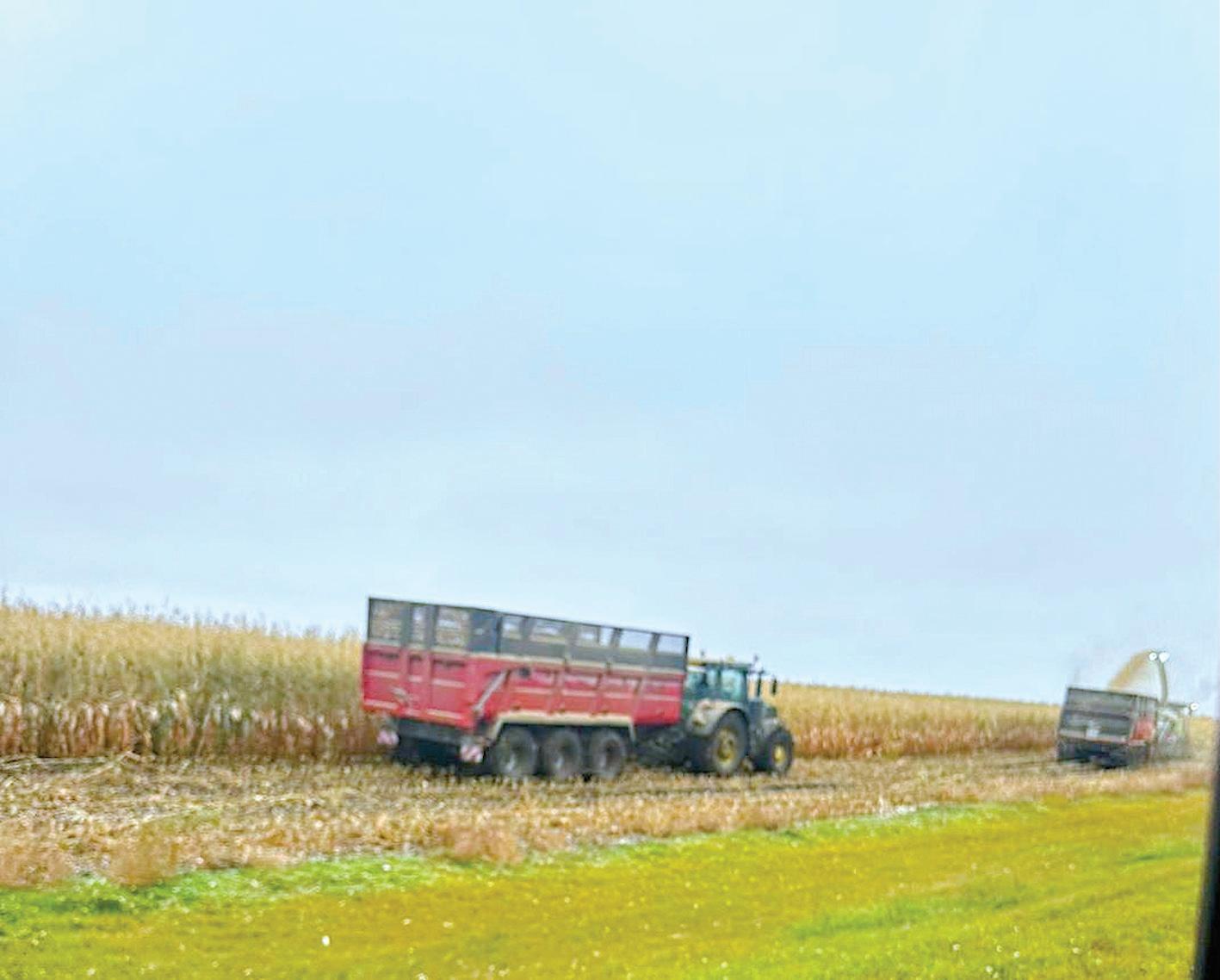
Many producers pointed out that planning ahead is the only defence. As one farmer shared, “You’ll never win chasing markets, but



Read the AgriPost online at agripost.ca
Past issues in archive


I watch farmers work through another year, and I see a kind of strength the rest of the world rarely understands. People talk about resilience, but farmers live it every single day. You take the weather as it comes. You shift plans on the fly. You run a business with razor-thin margins, yet you stay optimistic enough to seed a fresh crop every spring. I admire that. I admire the quiet confidence that says, “We will make it work,” even when the markets run the wrong way and the forecast
turns ugly.
I also hear the frustration. You want governments that listen, regulators who understand practicality and markets that reward effort and quality. You want a fair shake, not handouts, not speeches, not campaign-season promises that fade like frost in the morning sun. Every conversation I had this fall echoed the same message: “Let us work. Let us grow food. Give us room to do what we do best.”
Despite the challenges, harvest told a story that deserves recognition. I travelled the province and saw long days stretch into long nights as farmers pushed through mud, showers, breakdowns, and windows of opportunity that closed as
quickly as they opened. Yet you brought the crops home. You filled bins, moved grain, hauled bales, and prepared livestock for winter. You did it because families depend on you. The country depends on you. The world depends on you.
I also watched younger farmers step in with energy and ideas. Some embrace the newest technology and run with it. Others test it carefully, buy only what fits, and resist the urge to chase every trend. Both approaches show wisdom. Farming today demands judgement more than anything else. You judge markets, weather, seed, feed, fuel, equipment, timing, debt, opportunity, and risk. You make these calls daily, sometimes hour-
ly. And you take responsibility for every decision. Few careers demand that level of accountability.
When I think about the years behind me—my father’s stewardship, my own short time farming, and the decades I spent walking into barns, climbing machinery, and standing along fence lines—I feel something deep. I feel gratitude. I feel a connection. I feel a sense of calling. Agriculture shaped my life, and it continues to shape this country in ways city people rarely see. The nation survives because farmers wake up and work.
So as we move toward Christmas, I encourage every farmer, every spouse, every son and daughter, every hired hand, every agron-
omist, veterinarian, truck driver, mill operator, seed dealer, mechanic, feed rep, and sales rep: take a breath. Look around.
Thank God for what you have. Thank Him for the soil under your boots and the people around your table. Thank Him for a Saviour who came into this world, not in luxury, but in a stable—among animals, straw, and simple working people. That matters to me. I know it matters to many of you. We will turn the calendar soon. We will start another year of challenges, hopes, and surprises. But tonight, as you read this, I want you to remember something important: you matter. Your work matters. Your faithfulness matters. And Canada needs you more than ever.

Canada’s trade policy suddenly feels like a tightrope stretched between two national job and revenue sectors: protect strategic EV auto manufacturing base that has a potential to grow dramatically and defend one of the country’s largest export industries, prairie canola.
The federal government’s decision to slap a 100% surtax on Chinese-made electric vehicles in October 2024 aimed to shield Canadian manufacturing from heavily subsidized competition but Beijing’s retaliatory duties and anti-dumping probes on Canadian canola have ex-
posed how quickly tit-for-tat measures can boomerang, hitting farmers and rural communities hard. The result is painful. Measures meant to protect jobs in one sector risk destroying jobs in another.
Facts matter here. Ottawa implemented a 100% surtax on Chinese EVs (with related duties on steel and aluminium) as part of a broader effort to counteract what it said were unfair trade practices and to defend domestic producers. Within months, China launched “investigations” and imposed large provisional anti-dumping duties on Canadian canola seed (a provisional 75.8% measure announced in August 2025) and earlier retaliatory tariffs on canola oil and meal, moves that effectively close an export market that was worth billions to Canadian farmers.
This now leaves the Government in a self inflicted position of a parent avoiding the “favourite child” conversation.
In its Chinese EV decision,
Ottawa seemed to forget that any trade policy is interconnected. Their one-sector response to perceived unfair competition triggered retaliation that landed elsewhere.
The auto sector’s exposure and the agriculture sector’s exposure are linked by a single chain of diplomatic and economic reciprocity requiring Ottawa to now stop treating them as independent policy problems.
The EV surtax was targeted at changing a fast-moving industrial dynamic with long-term national strategic implications and potential (industrial capacity, decarbonization supply chains, geopolitical dependence).
In contrast, canola exports are not a distant strategic gig; they are the lifeblood of Prairie communities, feed supply chains, and a multibillion-dollar market in a single crop.
Protectionist tools carry political and policy tradeoffs. Retaliatory agricultural restrictions are blunt instru-
ments that mostly punish producers who had no role in government trade decisions.
A responsible balancing act now requires both strategy and humility.
If Canada believes Chinese EVs are unfairly subsidized they should pursue narrowly tailored countervailing measures through WTO channels and targeted exemptions. That reduces political heat while preserving leverage.
As for farmers facing sudden market exclusions, they need rapid, transparent support such as temporary income stabilization and market-diversification programs with the goal of helping shift sales to alternative buyers or value-add processing at home, freight and logistics subsidies to reach new markets, and funding for storage so forced fire-sales don’t depress prices further. That support should be fast and proportional as opposed to holding public consultations while producers sink cash into unsold canola.
An investment by Ottawa in
both processing and diversification (oils, protein products, and seed innovations) will mean farmers are less dependent on a single overseas buyer and future trade shocks.
Ottawa needs to combine quiet, high-level talks with formal WTO and dispute-settlement steps. Public confrontation is useful for domestic politics; quiet problem-solving prevents escalation. Additionally, Ottawa must stop shrugging and start explaining. Public debate needs candidness about trade-offs. Policymakers should explain why protecting a domestic EV industry matters for jobs and climate, and simultaneously accept responsibility for protecting farmers who bear the short-term costs of those decisions.
Canada can have both a competitive EV sector and a vibrant agriculture sector. The government must move from reactive tariffs. The future of Canadian jobs in factories and on farms depends on it.
By Elmer Heinrichs
Canada’s Budget 2025 includes new support for the agriculture sector, such as boosting the, agriculture security program, increasing the interest-free limit on advances for canola, and investing in export market access and bio-fuel production.
The 2025 federal budget comes at a pivotal moment for Canadian agriculture—marked by economic uncertainty, shifting global markets, and growing expectations for a resilient and competitive agri-food system.
It provides significant new funding for Canadian agriculture, including about $186 million to implement the new Buy Canadian Policy, bolstering domestic supply chains.
However, it also requires Agriculture and Agri-Food Canada (AAFC) to find savings by streamlining operations and phasing out certain programs, including the agricultural climate solution living labs.
The 2025 federal budget comes at a pivotal moment for Canadian agriculture—marked by economic uncertainty, shifting global markets, and growing expectations for a resilient and competitive agri-food system.
Federal Agriculture Minister Heath MacDonald says changes are coming to
agriculture programs following the passage of the 2025 federal budget.
MacDonald says Agriculture and Agri-Food Canada (AAFC) will reorient its programs, research and operational spending to better align with both government priorities and the rapidly evolving agriculture sector.
“Every once in a while … a scrub of programs is a necessity,” MacDonald said, noting that sun-setting outdated initiatives will free resources for emerging technologies.
He added that the government will analyze all areas of work, from program operations to research, noting that private companies are doing much of the same work. The goal, he said, is to eliminate duplication and maximize impact.
Biofuels will be a key focus with the passing of the new federal budget. Ottawa is investing $372 million into a Biofuel Production Incentive that will run from January 2026 to December 2027. The overall goal is to strengthen domestic production and supply chains.
Macdonald says biofuels are a big part of the changes to the Clean Fuel Regulations, highlighting the Imperial Gas and Oil Strathcona refinery.
He noted the $750-million Imperial Oil project is converting 2.5 million tonnes
of seed into 1 billion litres of bio-fuel — a fuel that could reduce greenhouse gas emissions by 85 per cent. “It’s exciting stuff … technology and innovation is there,” he said. “That’s what we need to invest in, because it’s the future.”
He also emphasized the importance of domestic production.
“If they can take 2.5 million tonnes of seed … that’s a big, big gap that we don’t have to worry about exporting into other countries.”
Regulatory reform is also on the radar, something that producers and farm groups have been pushing for.
MacDonald met with the president of the Canadian Food Inspection Agency (CFIA) this week and discussed speeding up regulatory decisions. He said timely decision-making with an economic lens is critical, especially for bodies such as the Pest Management Regulatory Agency (PMRA), which falls under Health Canada.
“We want to ensure that agriculture is front and center when they’re making decisions relevant to food production, food safety, plant-based decisions” he said.
MacDonald says better communication across government bodies is important to keep agriculture priorities top of mind.
By Elmer Heinrichs
The Canadian Food Inspection Agency says it has completed its “active operations” at the British Columbia ostrich farm where its flock was culled following an outbreak of avian flu.
There was grief, anger, but also relief mixed into the range of emotions following the British Columbia court ruling that meant a death sentence for 400 ostriches.
In a 137-page ruling, the Federal Court justice hearing the case made a heart-wrenching decision, while expressing sympathy for a family devastated by the pending destruction of these birds under order from the Canadian Food Inspection Agency.
Their owners, Universal Ostrich Farm near Edgewood, B.C., had vigorously campaigned to block last December’s directive to cull the whole flock after tests confirmed 69 sick and dying birds were infected with highly pathogenic H5N1 avian influenza.
Publicly available science and information on the Government of Canada website describes, Avian influenza A (H5N1) subtype of avian influenza virus mainly infects birds, but has been identified in other animals and has caused rare and sporadic infections in
humans. Human cases of avian influenza A (H5N1) have primarily occurred due to zoonotic transmission through direct contact with infected birds (dead or alive) or contaminated environments.
They’ve protested in the courts, launched a website to rally support and donations for their legal fund and appealed to politicians. Supporters were reportedly surrounding the farm as a human shield following the court decision. CFIA had at one point blocked one of its social media feeds due to a flood of abusive comments.
However, attempts to portray this situation as an attack on farmers or a case of government over-reach fall flat in the face of the potential repercussions for the rest of the country’s farmers and for public health if these protests prevail.
Based on what we know today about the creeping invasion of avian influenza — through wild and domestic bird populations, mammals and humans — euthanizing infected flocks is the best defence against the virus’s continued spread.
Canadian procedures follow international guidelines set by the World Health Organization which lessens the risk of other countries closing their
borders to Canadian farm products.
Since it first surfaced in 2021, highly pathogenic avian influenza hit 527 Canadian farms, ranging from commercial poultry operations to small backyard flocks. It has resulted in the illness-related deaths or euthanasia of more than 14.5 million birds. Two new cases were confirmed this month in western Manitoba poultry barns.
The operators at Universal Ostrich were unable to demonstrate they were providing enough separation between birds that weren’t sick and the ones that were, or that they could implement the biosecurity necessary to protect public health.
Even though owners are compensated financially for their losses, there’s profound mental anguish associated with culling a herd built over successive generations, and with the extra work involved with inspections, testing and follow-up sanitation. It’s a life-changing loss.
No one feels good about the court’s decision. Disease control is a messy business. But leaving it uncontrolled is messier still. Making an exception just this once — no matter how emotional the appeal — would set a dangerous precedent.





The federal and Manitoba governments have unveiled a new incentive program aimed at helping producers adopt more sustainable land-management practices while reducing costs. The Forage Advantage pilot will roll out for the 2026 crop year and offer premium discounts to farmers who seed perennial forage crops on marginal agricultural land.
Under the initiative, producers who insure these acres through Manitoba Agricultural Services Corporation (MASC) will be eligible for a 15 per cent discount on Forage Establishment Insurance (FEI) premiums. Once the forage is fully established the following year, farmers may also qualify for reduced premiums under Basic or Select Hay Insurance or Forage Seed Insurance programs. These insurance options provide protection against yield losses caused by drought, excess moisture, disease and other natural hazards.
Federal Agriculture and Agri-Food Minister Heath MacDonald said the new pilot reflects a shared commitment to supporting practices that strengthen long-term environmental and economic resilience in the agriculture sector.
“The Forage Advantage pilot reflects our governments’ shared commitment to innovation and sustainability in agriculture,” MacDonald said. “By encouraging farmers to establish perennial forage on marginal land, we’re supporting practices that improve soil health, enhance
water management and increase biodiversity, all of which strengthen farmland resilience against climate change.”
Planting forage on marginal land, areas where annual crop production is challenging due to poor soil, erosion, salinity or excess moisture, has been widely recognized as a beneficial approach for both producers and the environment. Perennial forages help restore soil fertility, improve water filtration, increase carbon sequestration and suppress weeds and disease. They also provide important habitat for pollinators and wildlife, contributing to broader biodiversity goals.
The design of the pilot allows participating farmers to automatically receive the premium discount simply by insuring forage acres on land classified as marginal. Officials say the approach is intended to reduce barriers and encourage more producers to experiment with regenerative practices.
Manitoba Agriculture Minister Ron Kostyshyn said the program aligns with the province’s broader push to expand research and innovation in sustainable agriculture.
“The Forage Advantage pilot supports the Manitoba government’s mandate to foster innovation and research in the agricultural sector, including opportunities to expand regenerative agriculture,” Kostyshyn said.
“By encouraging the adoption of sustainable practices,
this program helps farmers protect their land while maintaining productive and resilient operations.”
Alongside the pilot, the Manitoba government also announced an additional $500,000 in funding for the Sustainable Agriculture Manitoba (SAM) program. SAM, delivered under the Sustainable Canadian Agricultural Partnership (Sustainable CAP), provides cost-shared assistance to producers implementing practices that enhance soil health, improve livestock and water management, or establish perennial cover on environmentally sensitive acres. The increased funding is expected to allow more farmers to access support as they transition to practices that reduce environmental risk and bolster long-term productivity.
Kostyshyn said the added investment complements the Forage Advantage pilot and demonstrates Manitoba’s ongoing commitment to building a strong, environmentally responsible agricultural sector.
“By increasing the SAM program’s funding, we are helping more Manitoba farmers adopt sustainable practices,” he said. “This additional investment reinforces our commitment to growing a strong and environmentally responsible agriculture sector in the province.”
More information on the Forage Advantage pilot and MASC crop insurance programs is available at masc.mb.ca.
By Elmer Heinrichs
It is still summer, yet The Old Farmer’s Almanac has just released its winter weather outlook.
Carol Connare, Editor of The Old Farmer’s Almanac, says they just released their 2026 edition, which, of course, includes forecasts for the upcoming seasons.
“For your region, we are calling for a warmer-than-normal winter,” says Connare. “Of course, that doesn’t mean that it will be balmy, because it’s pretty cold there.”
Connare says they are also calling for above normal precipitation for southern Manitoba. However, she notes that because it will be a mild winter, the precipitation will not all fall as snow.
“We’re calling for below normal snowfall,” she says.
“So, more on the rain or the icy side, versus the white stuff.”
According to Connare, the coldest stretches of our winter will be in late November/early December, early January, and then again in early Febru-
ary. She expects the snowiest portion to be late November and early December. November is often a transition month in southern Manitoba, as rakes and mowers get replaced by shovels and snowblowers.
The 2026 edition of The Old Farmer’s Almanac also gives a sneak peek at what we can expect next spring and summer in southern Manitoba. Connare says spring will be cool and dry, and then summer will be warmer and wetter than normal.
By Dan Guetre
The Canadian Federation of Agriculture (CFA) says the federal government’s 2025 budget takes meaningful steps toward supporting the country’s agri-food sector but falls short on several critical issues that farmers say require urgent action.
In a statement released after the budget’s publication, the CFA acknowledged that Ottawa has responded to a number of its long-standing recommendations, including new investments in infrastructure, enhanced tools for trade, and updated tax measures to help farmers modernize their operations. Still, the organization warns that major gaps remain— gaps that risk limiting Canada’s ability to fully harness agriculture as a strategic economic driver.
Key Wins: Infrastructure, CFIA Modernization, and Tax Incentives
Among the budget’s most significant measures for agriculture is the government’s commitment to move forward with a previously announced $5-billion investment in major infrastructure projects. The CFA says this funding could play a major role in improving the transportation systems and trade-enabling infrastructure that farmers depend on to reach domestic and global markets.
The budget also includes new investments in the Canadian Food Inspection Agency (CFIA) aimed at modernizing inspection systems, improving regulatory tools, and opening new markets for Canadian exports. These changes align with the CFA’s push to streamline regulations and reduce barriers that have slowed trade expansion.
In addition, the government announced beneficial tax measures for businesses, including the reintroduction of the Accelerated Investment Initiative, which allows for an enhanced first-year capital cost allowance on eligible property. The CFA says these incentives could help producers invest more easily in equipment and technology needed to stay competitive.
“We appreciate the government’s recognition of agriculture in Budget 2025 and welcome the inclusion of several measures that support farmers,” said CFA President Keith Currie.
Critical Priorities Missing, Farmers Say
Despite these advancements, the CFA argues that the budget is a missed opportunity to address several pressing challenges facing the sector.
Among the areas left out of the budget, the CFA points to:
- A permanent increase to the interest-free limit under the Advance Payments Program, which producers say is vital as financing costs continue to rise.
- Labour disruptions across the food supply chain, which continue to create bottlenecks in processing, transportation, and distribution.
- Farmland protection, including the establishment of Agricultural Impact Assessments to ensure viable farmland is preserved amid competing land-use pressures.
- A long-awaited modernization of the Canadian Grain Act, an issue repeatedly raised by producers seeking updated tools and fairer regulatory structures.
“With the budget’s acknowledgement of agriculture as a key strategic sector, we will be focused on continuing to work with the government to ensure agriculture is appropriately prioritized in infrastructure spending and red tape reduction,” said Currie. “But we must also see those remaining issues addressed in future policy decisions.”
Call for a More Comprehensive Economic Plan for Agriculture
The CFA had urged Ottawa to adopt a broader economic strategy for agriculture— one that includes stronger business risk management programs, supports domestic food production, and responds to chronic labour shortages that continue to constrain the sector.
While the budget advances some components of this plan, the organization says more is needed to ensure long-term sustainability and competitiveness for Canadian farms as global markets evolve and climate-related risks intensify.
The CFA also plans to review the budget’s targeted changes to the Clean Fuel Regulations and new greenwashing rules. The organization says it will assess whether the updates support farmers and ensure environmental policies do not inadvertently penalize producers or limit opportunities for low-carbon innovation within agriculture.
The 2025 budget includes federal spending reductions across departments, including Agriculture and Agri-Food Canada (AAFC). The CFA says it will monitor these cuts closely to ensure they come from administrative efficiencies—not from programs or services that producers rely on for stability and growth.
In its statement, the CFA
emphasized that it will continue to advocate for investments that drive “growth, productivity, and innovation” in the agricultural
sector while reinforcing the sector’s importance to all Canadians.
CFA says the budget marks progress but also under-
scores the need for ongoing dialogue to deliver the comprehensive supports Canadian farmers need to succeed.


The Canadian Agricultural Hall of Fame officially welcomed six leaders into its class of 2025 during an induction ceremony in Victoria, B.C., with Manitoba’s Dori Gingera-Beauchemin making the list for her decades-long impact on agriculture in Manitoba and across Canada.
Hall of Fame Chair Phil Boyd said this year’s group reflects the strength and diversity of the country’s agri-food sector. “Each has left their own unique legacy on the industry,” he said. “Congratulations and thank you to our inductees.”
Among the six honourees, Gingera-Beauchemin stands out for her extensive influence on public policy, youth development, sustainabil-
ity, and the advancement of women in agriculture. A resident of Ile des Chênes and nominee of Emerging Ag Inc., she is celebrated as a respected leader, collaborator, and champion of both Manitoban and Canadian agriculture.
A graduate of the University of Manitoba with a Bachelor of Science in Agriculture, Gingera-Beauchemin spent more than 40 years in public service with the Manitoba Ministry of Agriculture. Throughout her career, she shaped landmark policies, strengthened collaboration across federal and provincial governments, and ensured that Canada’s agriculture sector remained competitive, inno-

vative and sustainable.
Her leadership included serving as assistant deputy minister of agri-food and rural development before becoming deputy minister of agriculture - roles in which she guided major policy discussions on everything from trade and farm management to environmental sustainability.
One of her most notable contributions was advancing public trust in the food system. She helped develop the national public trust foundation principle for the Canadian Centre for Food Integrity, a model that successfully garnered support from governments, industry and corporate partners.
Gingera-Beauchemin’s passion for fostering new leaders has had a lasting national and international impact. She played key roles with the Canadian 4-H Council, the Canadian 4-H Foundation, and the Agricultural Mentorship Program for Women in Agricultural Studies, mentoring emerging agricultural professionals and ensuring opportunities for women to advance in the sector.
Her advocacy extended overseas through the long-running Canada-Japan 4-H Exchange, which has introduced youth from both coun-
tries to agriculture’s global ties for nearly 40 years.
Recognizing the need for continued innovation, she was also instrumental in establishing the Research Chair in Sustainable Protein at the University of Manitoba, work that positioned the province as a leader in value-added protein development and strengthened Canada’s standing in global research.
Known for her collaborative leadership style, Gingera-Beauchemin has long been recognized for her ability to listen deeply, think strategically and build practical solutions to complex challenges in agriculture.
Her contributions have earned numerous honours, including the Queen Elizabeth II Diamond Jubilee Medal and recognition as an Honorary Lifetime Member of 4-H Canada. She continues to serve the industry through volunteer roles with the Canadian Agri-Food Policy Institute, Farmers Abroad Canada, Protein Manitoba and Protein Industries Canada. Since retiring in 2023, she has played a key role in developing Canada’s first national agri-food sustainability index, all while helping operate the Beauchemin Family Farm with her husband Paul.
The ceremony also celebrated five
additional inductees, each recognized for contributions in their respective sectors:
- John Anderson, West Vancouver, B.C. – Longtime Oppy executive and global produce industry leader.
- Gaétan Desroches, Morin-Heights, Que. – Former Sollio Cooperative Group CEO and transformative cooperative leader.
- The late Joe Hudson, Brockville, Ont. – Founder of Burnbrae Farms and pioneer of the vertically integrated egg production model.
- Dennis Laycraft, Calgary, Alta. –Nationally respected advocate and leader in Canada’s beef industry.
- Dr. Peter Sikkema, Ridgetown, Ont.
– Renowned weed scientist and University of Guelph researcher.
Established in 1960, the Canadian Agricultural Hall of Fame honours individuals who have significantly advanced the country’s agriculture and food sector. Portraits of all inductees are displayed at the Hall of Fame Gallery at the Royal Agricultural Winter Fair.
With her lifelong dedication to agriculture, policy leadership and focus on the next generation, Dori Gingera-Beauchemin’s induction reflects both her personal legacy and the enduring importance of agricultural leadership in Canada.
By Harry Siemens
Rick Prejet, Chair of Manitoba Pork and a long-time Manitoba hog producer, recently reflected on the industry’s progress, pressures, and prospects. Speaking after a meeting with the Chinese ambassador to Canada, he described a frank discussion about trade tensions and their direct impact on agriculture.
The Chinese ambassador met with a number of agricultural organizations in Winnipeg, MB to explain his government’s position. Prejet said the message was clear: China wants Canada to drop tariffs on electric vehicles, which Beijing views as inconsistent with World Trade Organization (WTO) rules. “They made it very clear they felt Canada was out of line,” he explained. “They’ve retaliated, and now the ball is in our court.”
Prejet noted that Canadian agriculture is feeling the pain from this trade friction. Retaliatory tariffs have affected multiple sectors—peas, canola, and pork among them—cutting into export revenues and undermining farm profitability. “We can’t just blame the Americans,” he said. “We’ve got to fix our own problems. Agriculture can’t keep paying the price for other sectors.”
Despite these external challenges, the Manitoba hog industry remains on solid footing.
“Margins are very good right now,” Prejet said. “Over the last year, we’ve seen record returns that encouraged producers to reinvest in barns built in the 1990s.”
Producers have been upgrading slats, feeders, and ventilation systems, strengthening the foundation for future production.
“The base in Manitoba that’s producing pigs is strong,” he added. “People are staying in the business and continuing to invest.”
Still, one theme shadows this optimism—uncertainty. Prejet heard the same concern during recent tri-national meetings in Mexico involving Canadian, U.S., and Mexican pork leaders.
“In agriculture, there’s always uncertain-
ty—weather, markets— but uncertainty created by governments is the one we need to reduce,” he said. “Producers are ready to invest, but uncertainty is holding a lot of people back.”
Labour supply is one of the biggest sources of that uncertainty. Skilled labour shortages, especially in rural and smalltown Western Canada, have become chronic.
“It’s not just about numbers,” Prejet stressed. “We need people with the knowledge and experience to manage a hog barn profitably.”

He compared the situation to other sectors facing similar gaps—such as a restaurateur near Quebec City who can’t open full hours for lack of staff.
“It’s the same story,” he said. “Without a skilled workforce, productivity suffers.”
Another major discussion point in the industry is the National Code of Practice for the Care and Handling of Pigs. Manitoba Pork, along with producers across the country, has urged regulators to maintain the current code rather than impose new requirements.
“Producers say, leave it alone,” Prejet explained. “We already face a mandatory switch to group housing by 2029, which will cost farms millions. We can’t add another round of capital spending that doesn’t improve animal care.”
He emphasized that producers have adapted to past changes and are committed to high welfare standards. “The current system works,” he said. “We don’t need new regulations that make production more expensive without a clear benefit.”
While national uncertainty continues, Prejet credited Manitoba’s provincial gov-
ernment for its pragmatic approach.
“Premier Wab Kinew and his ministers understand what it takes to be a successful province,” he said. “Exports drive Manitoba’s economy—agriculture, energy, and other sectors—and focus on enabling that growth.” He praised Agriculture Minister Ron Kostyshyn and Trade Minister Malaya Marcelino for maintaining open communication with producers and prioritizing industry consultation. “They understand our situation and look for ways to advance our industry sustainably,” he said.
On the trade front, Prejet sees reasons for cautious optimism. International partners appear committed to keeping the Canada-U.S.-Mexico Agreement (CUSMA) intact.
“Everyone I talked to in Mexico was on the same page—this trade agreement works,” he said. “Republican states in the U.S. love it because it supports their farmers and businesses. There’s strong pressure on Washington to leave it alone.”
He believes that despite political noise, practical economics will prevail.
“Politics gets in the way sometimes, but agriculture contributes too much to ignore,” he said. “Governments are realizing they must respect what agriculture brings to their economies.”
As 2026 approaches, Manitoba’s hog sector stands at a crossroads of opportunity and risk. Strong prices, solid production, and supportive provincial policies provide momentum. But global trade uncertainty, labour shortages, and costly regulatory expectations remain real challenges.
Prejet remains confident that resilience and collaboration will carry the industry forward.
“We have a strong base of producers,” he said. “If we can reduce uncertainty and keep our trade relationships stable, there’s every reason to believe the future will be positive for Manitoba hog farmers.”



By Dan Guetre
CropLife Canada is calling on the federal government to overhaul regulatory processes and elevate agriculture as a national economic priority, warning that Canada risks losing ground to global competitors without immediate action. The organization, which represents the plant science sector, says that by modernizing approvals for new agricultural technologies and reducing regulatory barriers, Canada could unlock more than $100 billion in GDP growth over the next decade.
Pierre Petelle, president and CEO of CropLife Canada, said the agriculture sector must be recognized as a central driver of economic growth.
“There has been considerable talk about unleashing Canada’s economy and agriculture cannot be overlooked as a national priority,” he said. Petelle emphasized that while farmers cannot control factors like extreme weather or foreign tariffs, the federal government can control the efficiency and predictability of its regulatory system.
CropLife Canada argues that long approval timelines for new seed and crop protection innovations are putting Canadian farmers at a competitive disadvantage. Whereas Canadian producers once enjoyed early access to cutting-edge tools, the number of pesticide submissions seeking regulatory approval has dropped by half in the last decade, even as approval timelines have nearly doubled. The result, Petelle warns, is a system that discourages innovation and delays productivity gains.
This regulatory stagnation has contributed to broader economic concerns. Canada’s agricultural productivity growth has slipped to less than one per cent, down from nearly two per cent two decades ago. As global demand for safe, sustainable food rises, CropLife Canada says Canada risks missing out on a major economic opportunity if farmers cannot
access the technologies they need to stay resilient and competitive.
“In an industry where there’s so much potential to increase productivity and serve a global market in need of Canadian-grown food and feed, we need to capitalize on the opportunity,” Petelle said.
The organization also stresses the importance of attracting new investment in agricultural research and development. While Canadian companies are conducting world-class work, many pursue commercialization in other countries because of what CropLife Canada calls “uniquely Canadian demands” and slow approvals. This trend threatens Canada’s ability to develop homegrown solutions for farmers.
CropLife Canada is pressing the federal government to adopt several no-cost policy changes to support productivity and innovation, including:
- Updating the mandates of the Canadian Food Inspection Agency and Pest Management Regulatory Agency to consider economic impacts alongside health and safety.
- Adopting best practices from trusted international regulators with risk-based, efficient approval systems.
- Requiring the PMRA to meet 100 per cent of its performance targets for regulatory approvals.
- Cutting red tape and eliminating processes that do not contribute to health or environmental protection.
New polling from Spark Insights shows that 81% of Canadians believe investment in agricultural science and technology delivers strong economic returns. The urgency is supported by a recent RBC report that found Canada’s share of the global agriculture market has fallen 12% since 2000, slipping from fifth to seventh place.
“Agriculture is truly the backbone of the Canadian economy and a huge engine for growth that benefits every Canadian,” Petelle said. CropLife Canada’s message is reinforced by a large coa-
lition of national farm and agri-food organizations that issued a joint open letter to Prime Minister Mark Carney. The letter highlights a steep decline in Canadian agricultural R&D spending—from $860 million in 2013 to $680 million in 2022 which ranks Canada last among the top seven OECD countries.
The groups note that the agriculture and agri-food sector contributes $150 billion annually to GDP and supports 2.3 million jobs, more than the automotive, forestry, steel, aluminium, oil, and gas sectors combined. Yet, despite its economic weight, the sector often lacks coordinated federal support seen in competitor nations.
The letter urges the government to make agriculture a national priority through:
- A focused growth plan with targets for production, innovation, labour supply and export expansion.
- Regulatory alignment that supports competitiveness and reduces unnecessary burdens.
- Improved transportation and trade infrastructure, including ports, rail, cold-chain systems, and rural connectivity.
- Modernized risk-management tools that reflect current climate and market realities.
The coalition says the sector has the potential to contribute up to $250 billion in GDP by 2035 with the right federal leadership.
Both CropLife Canada and national agricultural groups say Canada is at a turning point. Without bold action, they warn the country will continue to lose global market share, investment and innovation capacity. With decisive leadership, however, agriculture could become a cornerstone of Canada’s economic strategy.
“We urge you to make agriculture a defining priority of your government’s economic and nation-building agenda,” the coalition wrote. “We are ready to work with you to achieve that vision.”
The Canadian Cattle Association (CCA) is calling on the federal government to immediately begin the process of terminating the Canada-United Kingdom Trade Continuity Agreement, arguing that the UK has failed to uphold its commitments and continues to block Canadian beef from entering its market while increasing exports into Canada.
The request comes as the Government of Canada table’s legislation to support the United Kingdom’s accession to the Comprehensive and Progressive Agreement for Trans-Pacific Partnership (CPTPP). The CCA says the move should be an opportunity for Parliament to reassess Canada’s trade relationship with the UK, particularly in light of what it describes as unaddressed non-tariff barriers that unfairly restrict Canadian beef.
When Canada announced the UK’s CPTPP accession in July 2023, cattle producers across the country urged Ottawa to deny entry unless the UK addressed long-standing market access issues. Those issues, the CCA says, remain unchanged.
Since the UK joined the CPTPP accession process, Canadian beef has remained entirely shut out of the British market. Meanwhile, UK beef flowing into Canada has sharply increased—from $16.6 million in 2023 to $42.5 million in 2024. Imports from January to August 2025 alone reached $32.2 million, up
19% from the same period the previous year.
“We are calling on all Parliamentarians to stand up for Canadian beef producers,” said CCA President Tyler Fulton. “In these uncertain geopolitical times, we need every opportunity to diversify our markets.”
The CCA argues the Continuity Agreement, established as a temporary bridge following Brexit, has failed to deliver on key commitments. In the agreement, both countries had pledged to ensure rules would be science-based, transparent, and free of unnecessary trade barriers.
However, the UK continues to enforce the long-disputed ban on beef from cattle treated with growth hormones, a policy the World Trade Organization ruled invalid in 1997 when applied by the European Union. The CCA says the UK is also refusing to recognize Canada’s meat hygiene system, despite its global reputation for safety and rigorous standards.
The Continuity Agreement required both nations to negotiate a permanent bilateral trade deal within three years of the agreement’s implementation on April 1, 2021. But the UK withdrew from those talks, leaving key issues unresolved.
Given the lack of progress, the CCA is urging Canada to terminate the agreement, which would allow negotiations to restart on more equitable terms.
The CCA notes that both
countries issued parallel letters committing to cooperative work on trade issues affecting the meat sector and biotechnology products. Yet, according to the association, no meaningful progress has been made.
Former commitments by Canadian and British prime ministers to establish a technical working group on market access issues have similarly yielded no visible outcomes, the CCA says.
The CCA emphasizes that it supports strong, rules-based trade frameworks and is prepared to work with Ottawa to secure agreements that offer real opportunities for farmers. Terminating the Continuity Agreement, it argues, is necessary to reset the relationship and begin new bilateral negotiations where Canada’s concerns can be directly addressed.
“The pathway for economic growth and trade diversification is through meaningful, rules-based trade,” added Fulton. “Particularly with the UK, this means terminating the Continuity Agreement and restarting bilateral trade negotiations.”
With federal officials seeking new avenues to diversify Canada’s trade portfolio, the CCA says now is the time to prioritize agreements with allies willing to work toward solutions that benefit both economies.
The federal government has not yet responded publicly to the CCA’s request.





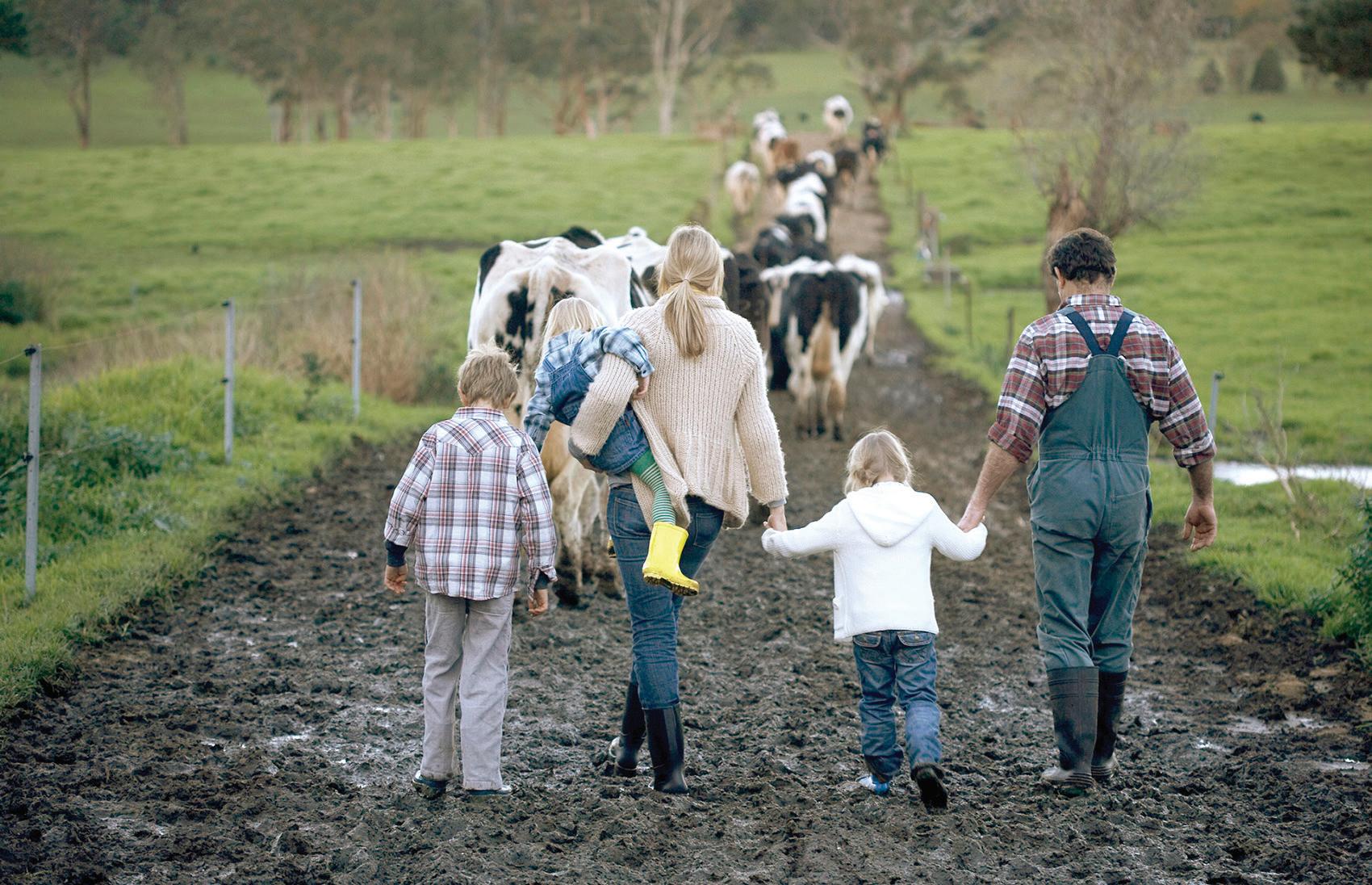
Family farmers across Cana da are sounding the alarm over what they describe as outdated federal tax laws that are putting the future of family-run agricul ture at risk.
Nearly 3,000 family farms disappear each year, and advo cates warn that without urgent reforms, even more operations could be lost as farmers strug gle to pass their land to the next generation.
At the centre of the issue is the Income Tax Act (ITA), which currently allows farmers to transfer qualified farm property to their children on a tax-de ferred basis, but not to nieces or nephews—even in cases where they have worked and managed the family operation for decades. When a farm is transferred to extended family, capital gains taxes can reach into the millions, often forcing the younger generation to sell the land simply to cover the tax bill.
ago, farmers had ten or twelve children, and there were always natural heirs. Today, many farmers either have no direct descendants, or their children have chosen different careers.”
With the average Canadian farmer now 56-years-old and fewer than one in 12 farms having a successor under 40, advocates say the system no longer reflects the realities of modern farming families.
“The law no longer reflects today’s farming families,” said Derryn Shrosbree, a family farmer and founder of 33seven, a national advisory firm that specializes in succession and estate planning for farms. “Generations
Shrosbree says nieces and nephews often play a critical role in farm operations by managing crops, tending livestock, maintaining barns, and keeping the business running through years of fluctuating markets and extreme weather.
“They deserve to inherit the farm without being forced out by unfair tax laws,” he said. “These laws are outdated, and they need to change—now.”
The stakes are high. Over the next decade, more than $50 billion in Canadian farmland is expected to change hands. Without chang-
es to inheritance rules, advocates warn that more land could be lost to corporate consolidation, including by large foreign-owned agribusinesses that continue to expand their footprint in Canadian agriculture.
“Everyone says it’s time for ‘elbows up,’ so let’s give more of our heirs a chance to keep family farming from disappearing altogether,” Shrosbree added.
The broader economic implications are significant. Agriculture supports roughly 2.3 million jobs—about one in nine positions nationwide. Reforming Section 73(3) of the ITA to allow tax-deferred transfers to nieces and nephews would, advocates say, protect family-run farms, rural employment, and local food security.
Supporters argue that Canada has long valued the role of the family farm in sustaining rural communities and strengthening the national food supply chain. Allowing families more flexibility in passing down farmland, they say, is essential to preserving that heritage.
Advocates, like Shrosbree, are urging the federal government to launch consultations immediately and to introduce legislative amendments that reflect the changing structure of Canadian farm families. Without action, they say, thousands more farms could disappear, threatening not only livelihoods but the future landscape of Canadian agriculture.

By Elmer Heinrichs
The news for Manitoba’s winter cereals in 2025 has had high points and low points.
On the pro side, winter cereals saw good uptake. Plantings in the autumn of 2024 crept up to a record 174,000 acres for fall rye in Manitoba, said Alex Griffiths, conservation programs specialist for forages at Ducks Unlimited Canada, which includes the organization’s winter cereal program.
Winter wheat, however, saw less popularity. Just fewer than 40,000 acres of winter wheat were seeded, said Griffiths, the least planted area since the 32,000 acres seeded in 2020.
This was a far cry from the 600,000 acres seeded in 2013 and the record 620,000 in 2008, according to Statistics Canada.
Winter wheat is still struggling to recover from a slide in popularity in Manitoba, although fall rye has dug a deeper foothold among the province’s farmers.
Winter survival was also good, and that strong start put the crop ahead of some later worries on water availability.

By Harry Siemens
Alltech’s 2025 Harvest Analysis Program shows clear regional differences in mycotoxin pressure across Canada, with Manitoba and parts of Eastern Canada emerging as higher-risk zones.
Dr. Alexandra Weaver with Alltech’s Technology Group shared an early update highlighting why producers must closely monitor grain
and forage as they move into winter feeding. She says the Alltech team continues to test and track samples across the country, and early trends already point to significant variation between crops, regions, and the moisture conditions that shaped the growing season.
The team analyzed more than 250 samples so far. Weather, rainfall patterns, and disease pressure influ-
enced how each crop handled the season, and those factors now show up clearly in the mycotoxin profile.
Wheat samples across Canada show a lower overall risk than last year, with only about 23 to 25 per cent containing elevated levels of deoxynivalenol, widely known as DON or vomitoxin. Ontario wheat came in with much lower risk this year than last, which pulled the national average


down.
Manitoba wheat tells a different story. Roughly a quarter of Manitoba wheat samples contain elevated DON levels, and the province shows a much higher occurrence rate than the national average. Current submissions from Manitoba average roughly 820 ppb DON with occurrence rates near 79 per cent, making it the region to watch.
Last year’s Ontario wheat carried a heavier mycotoxin burden, but Manitoba wheat shows similar risk levels year over year.
Dr. Weaver stresses that regional differences matter because producers in some areas face far greater DON challenges than those in others.
Barley stands out as the crop facing the sharpest jump in mycotoxin occurrence compared to last season. About 74 per cent of barley samples tested so far contains DON, a major increase from last year’s results. Roughly half the barley samples contain T2 and HT2 toxins, while zearalenone appears in about a quarter of the samples.
Southern Manitoba again shows a higher risk than other regions, with heavier disease pressure and more moisture stress during critical crop stages.
Saskatchewan barley shows
mixed results, but the highest DON numbers—up to 8,500 ppb—appear in Western Canadian barley overall.
Dr. Weaver notes that barley last year carried much lower mycotoxin pressure across the board. This year’s spike in DON levels marks a major shift, and producers need to account for it in ration design, especially in dairy and beef operations that rely heavily on barley.
Corn silage samples, all from Ontario and Québec so far, show a high occurrence of DON at 73 per cent. Zearalenone appears in roughly 43 per cent of samples, and T2 and HT2 toxins show up in about 14 per cent. Maximum DON levels in eastern corn silage reached 11,500 ppb, which raises concerns for sensitive livestock groups, especially young animals.
Dr. Weaver points out an interesting shift from last year’s corn silage profile. In 2024, eastern corn silage showed extremely high zearalenone pressure, with about 97 per cent of samples containing that toxin. This year, zearalenone dropped, but DON increased sharply. She says this change could explain differences in herd symptoms that producers may notice heading into winter.
Haylage samples from eastern Canada also show elevated mycotoxin activity.
Zearalenone appears most frequently at 87 per cent, but DON, T2, and HT2 toxins also appear in a significant number of submissions. The risk appears to increase as samples move west from Québec toward Ontario, influenced by moisture pockets and harvest timing.
Dr. Weaver says the data paints a complex picture.
Moisture patterns, late-season rains, and regional disease pressure influenced the 2025 mycotoxin load across all major crops. She says this is only the first wave of results, and more samples need to come in before the full national profile becomes clear.
Still, the early data signals the need for proactive feeding strategies. Producers in Manitoba and parts of Eastern Canada face higher-than-normal DON pressure in both grains and forages, and barley producers in Western Canada— particularly Manitoba—must account for this year’s jump in toxin levels.
Alltech wants producers to see the risk clearly before they lock in feeding decisions. A clear picture shapes nutritional strategies that protect performance across all livestock sectors.
As more results arrive, Alltech will continue tracking trends and advising producers on feeding adjustments that offset risk across the 2025–26 feeding season.
By Elmer Heinrichs Tucker and Coulter. Linear
A handful of Manitoba grain elevators have changed hands following a major acquisition in Canadian agriculture.
Bunge, which owns the most oilseed crushing facilities in western Canada, made a divestiture commitment with the federal government in order to buy Viterra Ltd., another mammoth agribusiness.
The company was required to sell six elevators when Ottawa approved its merger with Viterra.
Bunge announced recently it’s sold four Manitoba grain elevators and one in Saskatchewan to local businesses.
BP & Sons Grain and Storage Inc. purchased elevators in Manitoba at Beausejour,
Grain acquired the elevator in Fannystelle. In Saskatchewan, Direct Grain Ltd. purchased the Dixon elevator.
“It’s great,” said Ryan McKnight, president of Carman-based Linear Grain.
“It’s good to have smaller companies like us be able to compete in this grain industry which is dominated by large corporations.
A sixth sale, of the facility in Valparaiso, Sask., is still waiting for approval from the federal transport minister.
Bunge said it expects that sale to close shortly.
The company said the six facilities had been held separate from the rest of its business and run by an independent manager since July 2. A government-approved third
party monitored the sales process.
Bunge also sold its elevator in Eyebrow, Sask., to F. W. Cobs, but that wasn’t part of its commitment under the merger approval.
Linear Grain took an interest in Bunge’s Fannystelle operation because it’s on a different rail line than its Carman grain elevator. Linear Grain is now connected to both CN (Carman’s line) and CPKC (Fannystelle’s).
Linear Grain ships wheat, canola and other crops to Eastern Canada and the United States. The Fannystelle facility can hold roughly 10,000 tonnes of wheat McKnight said.
“There is room for us to expand,” McKnight said, adding he’d expand if “we can make that facility successful.”
By Harry Siemens
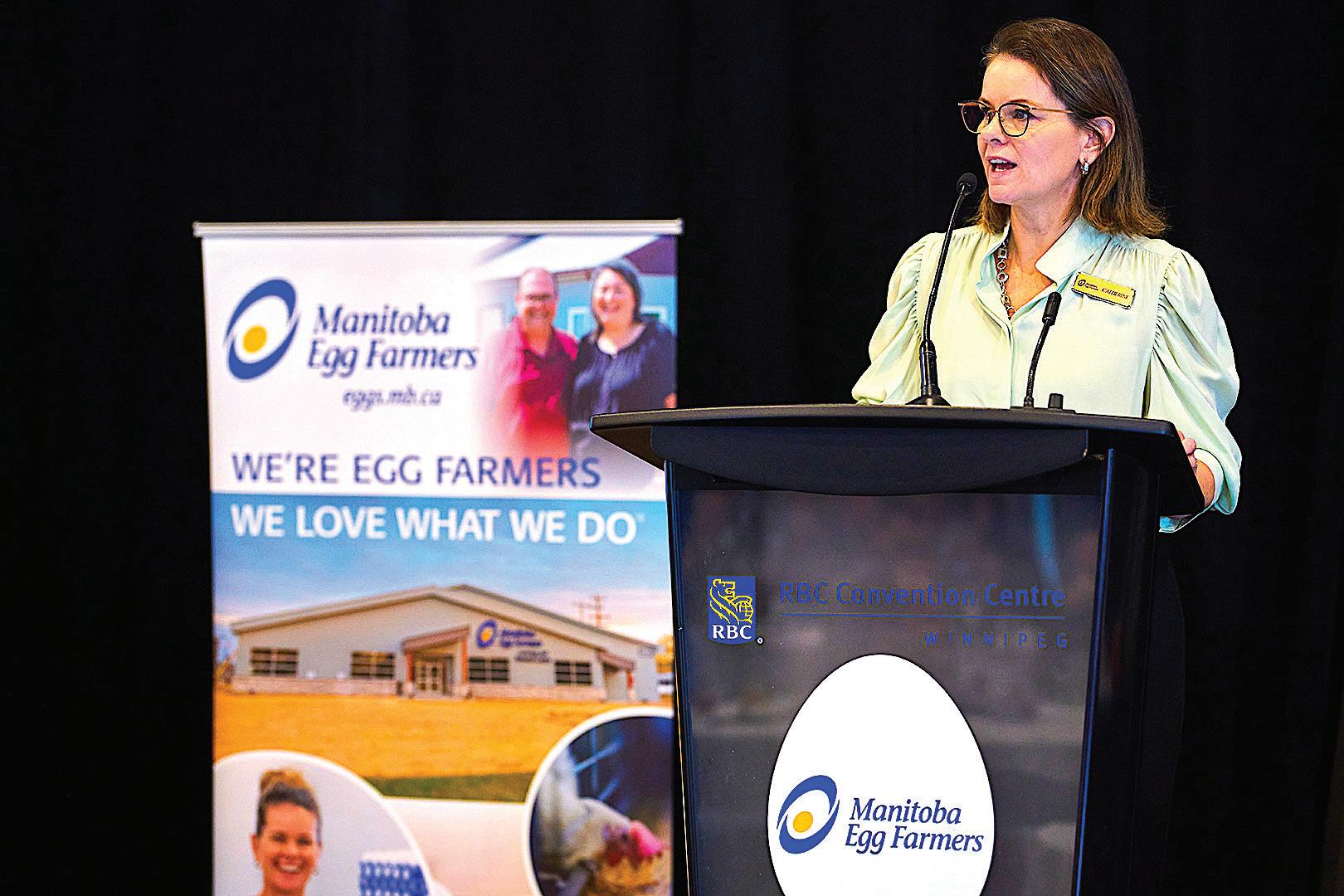
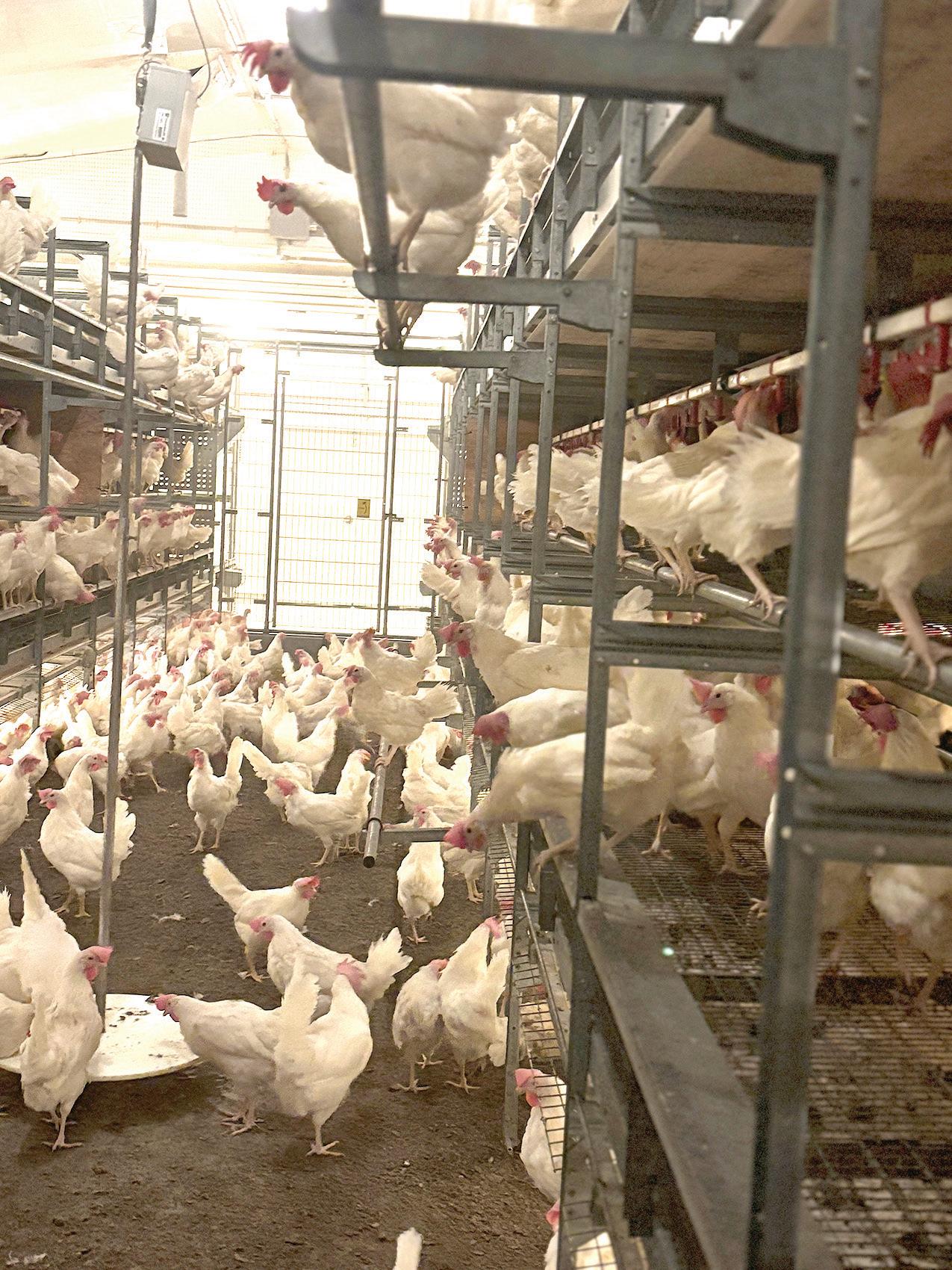
Catherine Kroeker-Klassen, Chair of Manitoba Egg Farmers, says the industry faces two major challenges this fall, even as demand for eggs keeps rising and new farmers enter the sector with optimism. The first challenge remains high-path avian influenza, still present in wild birds as winter approaches. The second is the long transition away from conventional housing, with the 2036 deadline moving closer.
Manitoba is in a better position than many provinces, with only five avian influenza cases this fall, none involving a laying hen farm. The others affected broilers and turkeys.
Kroeker-Klassen says farmers feel grateful for the low number but cannot relax because wild birds remain active. Producers maintain strong biosecurity to protect their barns, mindful that British Columbia continues to face more severe outbreaks. When a farm tests positive for HPAI, the producer must cull the flock, a process that is emotionally and financially difficult. She says every producer works hard to avoid that outcome.
The industry also continues its shift away from conventional housing.
Canada set 2036 as the deadline to remove all conventional systems, and while many producers have planned for this, a number still operate
those barns. The transition takes time, money, and careful planning.
Farmers must upgrade barns, redesign layouts, and secure financing.
Smaller family operations feel the strain most, and the industry wants all farmers ready well before 2036.
Even with these pressures, Kroeker-Klassen sees excitement in the sector. Egg consumption continues to grow in Canada, and 2025 is following the same pattern.
Manitoba farms remain strong and new quota allocations support growth.
When Egg Farmers of Canada provides new quota, Manitoba sets aside 30 per cent for new entrants.
Another draw this week brought two more new farmers into the industry.
Since 2009, Manitoba has welcomed 34 new entrants. Kroeker-Klassen says these farmers are often younger, ambitious, and ready to invest. They retrofit existing barns or build new ones to accommodate their 6,000-hen quota. She says new entrants add energy, strengthen rural communities, and keep supply reliable. She calls it one of the most positive developments in the sector.
Entrants must be brand-new to egg farming, though many come from agriculture or rural backgrounds. They learn quickly and bring fresh ideas.
Kroeker-Klassen says the program’s longterm success shows that
young families still see egg farming as a viable career.
Rising demand helps drive that optimism. Kroeker-Klassen says egg farmers love their work, often repeating the slogan, “We’re egg farmers; we love what we do.”
She sees pride across the sector as farmers meet growing demand and offer a wider range of products, including white and brown eggs, omega-3, vegetarian, and organic options. She says farmers want to supply what Canadians want, while respecting trade agreements.
She also reminds consumers that eggs remain one of the healthiest and most affordable proteins available. Nutrition myths linger, but the science strongly supports eggs as a safe, nutritious food. She enjoys hearing how eggs fit into daily routines, whether someone eats two eggs every morning or enjoys a Denver sandwich at a local café.
Kroeker-Klassen says Manitoba egg farmers want to supply the entire Canadian market. Some imported eggs enter through trade agreements, but she believes Canadian farmers can meet nearly all domestic demand.
“If Canadians want to eat them, we will supply them,” she says. That confidence reflects the spirit she sees throughout the industry as farmers keep building, adapting, and preparing for the future.

By Harry Siemens
A developing situation in Manitoba continues to raise concerns about access to Crown land, private property rights, and the growing uncertainty facing rural communities.
Bloodvein First Nation told the Court of King’s Bench it would allow licensed hunters to pass through its traditional territory during the December moose season if they follow a no-booze rule. The announcement followed weeks of conflict where licensed hunters reported denied access to Crown land during the early fall season.
Bloodvein First Nation set up a roadside checkpoint earlier in the year to limit drugs and alcohol entering the community. During the September hunting period, several hunters reported turned-away attempts to reach adjacent Crown land, which Bloodvein describes as traditional territory.
The Manitoba Wildlife Federation (MWF) sought a court injunction, arguing that the blockade violated Treaty rights and provincial law by restricting public access to public land.
The issue extends beyond hunting. Farmers and ranchers also monitor these de-


velopments because land access, property rights, and legal certainty directly influence rural stability. When access rights shift, other long-standing systems—financial, municipal, and agricultural—also feel the impact.
Dennis Schindler of the MWF noted that rural residents increasingly examine these cases through both hunting and agricultural lenses.
“People see this as more than a hunting issue,” Schindler said. “Farmers and ranchers hunt, and they want to know how this impacts them. Several potential impacts exist down the road.”
Schindler pointed to recent court rulings in British Columbia, Ontario, Quebec, and New Brunswick that determined private land may fall within the scope of First Nations land claims.
“This trend shows that private land can be subject to claims,” he said. “The warnings always included concerns for hunters and trappers. Now agriculture also faces potential threats. Government inaction creates more instability.”
Producers across Manitoba continue to raise concerns about growing unpredictability in the rural landscape. Many leaders in the farm sector describe “uncertainty” as the dominant challenge affecting management decisions, succession planning, lending, and investment.
Schindler also noted that several producers raised the issue during district meetings and asked how to elevate the concern within their respective farm organisations. He encouraged them to bring the matter forward, saying organisations need to prepare for potential legal and political changes before those changes reach a critical point.
“These issues may seem distant, but organisations need to prepare,” he said. “Rural economies rely on agriculture. People now recognise the potential private-land impacts.”
MWF Senior Policy Advisor Chris Heald attended the full day of court proceedings and described what unfolded.
“The Federation had a good day in court,” Heald said. “Public perception is shifting. The arguments revealed that this debate centres on land. First Nations lawyers said the issue involved drugs and alcohol, but when questioned by the judge, they stated
they did not want hunters in the area at all.” Heald described how the arguments changed under judicial scrutiny. “The judge asked whether Bloodvein asserted a legal right to the land or simply a preference to control access,” he said. “The answer remained unclear.”
Late in the hearing, the Chief announced licensed hunters could pass through in December, surprising both the courtroom and observers.
“That announcement caught everyone off guard,” Heald said. “Access formed the foundation of the entire case.”
Heald characterised the issue as part of a broader national trend.
“Across the country, the land-back movement asserts control over lands not negotiated through formal processes,” he said. “This differs from treaty land entitlement, where acreages were agreed to. Here, traditional areas are being asserted as controlled lands.”
Heald clarified a crucial distinction: “Hunters never attempted to enter reserve land. They attempted to pass by the reserve to access Crown land. This debate centres on public Crown land.”
Heald also criticised the province for remaining neutral.
“The province stayed neutral,” he said. “Its lawyer spoke about unfettered access but provided no evidence or affidavits. Neutrality creates a vacuum.”
Heald outlined the implications if the court rules the blockade lawful.
“Such a ruling would mean any Manitoban could block any piece of provincial infrastructure for any reason,” he said. “That creates a dangerous precedent for rural communities.”
Heald added, “Stopping drugs and alcohol remains important, but that does not justify blocking access to Crown land. If land claims exist, pursue them legally.”
The case carries national significance. It affects public access, treaty interpretation, private property rights, and the stability of rural economies. Agriculture depends on stability, predictable rules, and clear leadership.
Clear laws and consistent application remain crucial to maintaining confidence on the land.

By Harry Siemens
Topigs Norsvin Canada recognized outstanding production results for 2025, celebrating continuous improvement and strong leadership among pork producers across Western Canada and the U.S. The annual event drew a record attendance of more than 360 producers, managers, and industry partners, reflecting the sector’s strength and momentum.
Russ Penner, Business Development Specialist with Topigs Norsvin Canada, said the 2025 results highlight the steady progress that producers continue to achieve.
“What stood out this year wasn’t one big surprise,” Penner said. “It’s the consistency. Year after year, farmers refine their management, and the results keep trending higher.”
Topigs Norsvin’s benchmarking program plays a central role in helping producers measure and improve performance. Each participating farm receives a detailed report outlining its ranking in key production areas, such as farrowing rate, pigs born alive, and pigs weaned per sow per year.
“Producers can see where they’re strong and where to improve,” Penner said. “It’s not about competition; it’s about learning and continuous growth.”
That steady growth was evident again this year. In the 32+ Platinum Club, 36 herds with over 42,000 sows weaned an average of 33.5 pigs per sow per year, while the 28+ Gold Club—featuring 79 herds and 113,000 sows—averaged just over 30 pigs per sow per year. Together, 115 herds, or 83 percent of all participants, achieved top-tier results.
“These numbers show that hard work and good management pay off,” said Penner.
Penner credited both genetics and management for the
sector’s upward trend.
“Genetic progress is a huge part of what drives higher productivity, but excellent management makes those genetics work,” he said. “Farmers are applying the right practices every day, and it shows.”
He also noted that a new generation of managers, particularly within the colonies, is helping push results higher.

“We’re seeing a lot of young, ambitious leaders who understand data, technology, and precision management,” Penner said. “They’re eager to learn and determined to keep improving.”
Collaboration between colonies, family farms, and integrators also continues to strengthen.
“Everyone’s focused on the same goal—better performance,” said Penner. “With tight margins, efficiency matters, and working together helps everyone stay competitive.”
Among the evening’s highlights was the Best New Startup Award, presented to Pro Rock Genetics. The farm achieved 30.48 pigs weaned per sow per year in its first year of operation, an impressive accomplishment for a new facility.
“A good start is everything,” Penner said. “When farms have solid planning, strong management, and good training, everything flows from that foundation.”
Topigs Norsvin’s long-term strategy remains steady despite political and regulatory uncertainty.
“Our breeding objectives haven’t changed,” said Penner. “We maintain a balanced focus on productivity, animal welfare, and sustainability. That’s what keeps us moving forward.”
The company has also been proactive in preparing for changing housing and
welfare standards, including Proposition 12 requirements that will take effect by 2029.
“Being a European company, we’re focusing on group housing systems for years,” Penner said. “Most of our herds already use them, and many more are in the process of conversion. Our producers are well ahead of the curve.”

As the evening wrapped up, Penner praised the dedication of farmers and their teams.
“These results reflect discipline, teamwork, and a drive to keep getting better,” he said. “Every farm that improves raises the bar for everyone else.”
The 2025 awards night was not just about numbers—it was a celebration of the people who make progress possible.
“The atmosphere was incredible,” Penner said. “Producers, families, and industry partners all came together to celebrate success. These events used to be small, but now they’re major gatherings. It shows how strong and united this industry has become.”
The steady rise in productivity and collaboration proves one thing: Manitoba’s and Western Canada’s pork sector continues to evolve with purpose. As Penner put it, “Continuous improvement is what drives our industry—and the results speak for themselves.”




By Dan Guetre
Canada’s Minister of Agriculture and Agri-Food, Heath MacDonald, has wrapped up his first official mission to China, a multi-day trip aimed at strengthening agricultural ties, restoring market access, and opening new doors for Canadian exporters in one of the world’s largest and most competitive markets.
The late-October visit builds on recent high-level engagement between Canadian and Chinese leaders and signals Ottawa’s intent to re-establish momentum in the bilateral trading relationship.
In Beijing, Minister MacDonald met with Sun Meijun, Minister of the General Administration of Customs of the People’s Republic of China (GACC). The two ministers underscored shared priorities in animal health, plant health, and food safety, areas that shape market access for agricultural commodities.
During the meeting, both sides agreed to renew the Memorandum of Understanding between the Canadian Food Inspection Agency (CFIA) and the GACC, a framework that facilitates technical coordination on inspections, certifications, and regulatory standards. Technical working groups are expected to meet this month to advance the renewed agreement.
MacDonald also pressed the importance of restoring full market access for Canadian agricultural products, an ongoing priority after several years of trade disruptions affecting canola, meat, and other commodities. Both sides emphasized that improved cooperation would contribute to shared goals in global food security and economic growth.
Sanwen, President of the Chinese Academy of Agricultural Sciences, an agency of China’s Ministry of Agriculture and Rural Affairs.
The discussion focused on expanding institutional scientific collaboration in key areas including sustainability, production efficiency, and food security.
A major milestone of the mission was the opening of the Canadian Meat Advocacy Office, designed to strengthen the on-the-ground capacity of Canada’s red-meat industry in China. Speaking at the launch, MacDonald praised the longstanding reputation Canadian meat has built with Chinese consumers and said the new office would help deepen commercial relationships and streamline work with local intermediaries.
The office is supported through Agriculture and Agri-Food Canada’s AgriMarketing Program, with up to $577,642 in federal funding committed over three years.
The Canadian Meat Council, Canadian Pork Council, and Canadian Cattle Association partnered to establish the office with additional support from the Canada China Business Council.
Later in Shanghai, MacDonald turned his attention to consumer-facing opportunities. He visited a range of retailers and food businesses. He also toured CoolFarms, a vertical greenhouse highlighting the use of Canadian agricultural technology, and met with representatives at McCain Foods, one of Canada’s global agri-food leaders.
The Minister attended the opening of a new Rôtisseries Benny outlet, one of Quebec’s fastest-growing restaurant chains, as part of a push to highlight Canadian food brands gaining traction in the Chinese market.
These engagements offered
the Minister a closer look at evolving consumer patterns and emerging retail models in China. He noted that these insights will inform Canada’s broader Indo-Pacific strategy and efforts to expand export opportunities.
MacDonald concluded his mission in Shanghai with a keynote address at the Canada China Business Council’s annual Business Forum. Speaking to Canadian and Chinese business executives, he reiterated Canada’s intention to strengthen trade ties while continuing to address challenges through pragmatic and constructive dialogue.
“China remains an important market for Canadian exporters,” the Minister said. “Being there allowed me to meet face-to-face with my counterparts, listen to our stakeholders, and see the opportunities and challenges firsthand. I’m committed to keeping the conversation going and looking for ways to support our hardworking farmers and producers.”
China is Canada’s second-largest buyer of agriculture, agri-food, and fish and seafood products, with Canadian exports reaching an estimated $9.7 billion in 2024. The broader Indo-Pacific region represents more than four billion people, over $47 trillion in economic activity, and six of Canada’s top 13 trading partners.
Throughout the mission, the Minister emphasized that Canada’s approach to China will remain anchored in constructive dialogue, practical cooperation, and the pursuit of stable, predictable market conditions for Canadian producers.
The visit marks a renewed effort by Ottawa to stabilize agricultural trade relations with China and to expand commercial opportunities for Canadian exporters in a rapidly evolving marketplace.
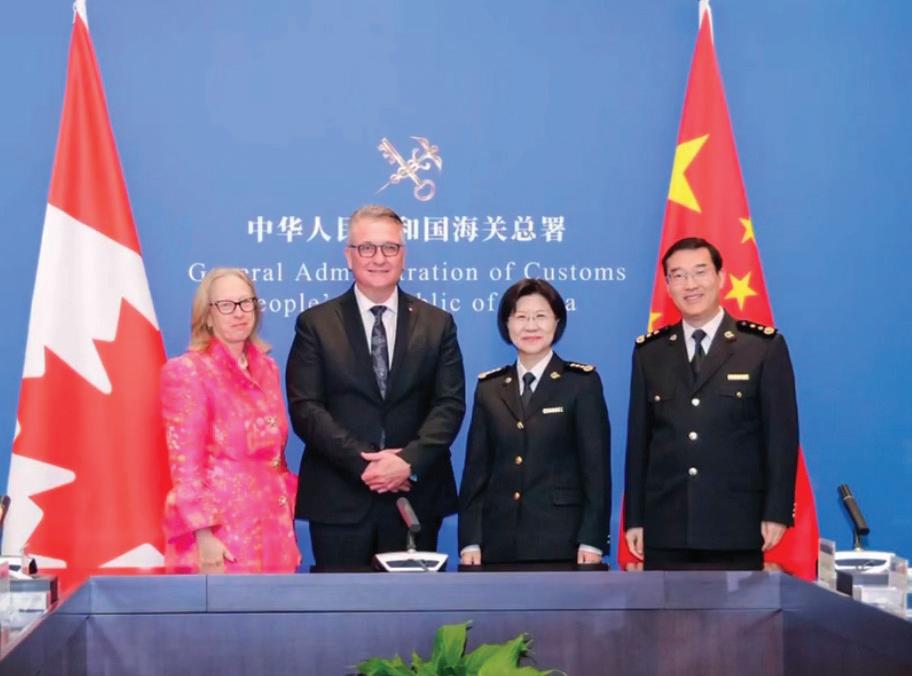
By Elmer Heinrichs
An agricultural invention made in Manitoba was named one of Time Magazine’s top inventions of the year. Throughout day-to-day life, people come up with ideas and solutions to the problems they face, but sometimes the ideas that come to mind have lasting effects that ripple outwards far more than initially anticipated.
All a person has to do is dream and build them.
Jeremy Matuszewski and his crew at Thunderstruck Ag Equipment in Winkler have been chasing one such idea for the better part of a decade.
That hard work has paid off, as their Razors Edge Concaves have just been recognized on the international stage as part of Time Magazine’s Top 300 Inventions of 2025.
In 2016, Matuszewski started working with farmers around harvest. He knew that traditional concaves — the part of a combine that helps thresh and separate grain — require adjustments for each crop and combine brand, which was a problem.
Matuszewski wanted to develop a solution that could adapt to different crops and machine models without constant modifications.
“Every concave that’s
on the market right now, the spacing is uniform,” he explained. “So, my thought was, how can we create one concave that’ll do all crops without changing anything?”
Through years of research and collaboration with farmer-inventors, Matuszewski and his team experimented with variable spacing designs that account for how material flows differently in Case and John Deere combines.
“Where the material hits in a Case, because it’s completely different than a John Deere… we put spacing tighter. We made it a variable spacing pattern on the right side of a Case machine but the left side of a John Deere machine,” he said.
Prototypes were first tested internationally in Australia, with results far surpassing their initial expectations.
Canola and lentil harvests saw combines running faster while losing minimal grain. These successes led Matuszewski to begin the patent process in May of 2024 and to scale testing across North America.
When TIME reached out initially, Matuszewski disregarded the email entirely.
“I thought it was spam. We had received an email just saying ‘Congratulations on winning these awards, we’ve been following your
product’. I sent it off to Lucy on our team, and she came back. She says, ‘This isn’t spam’.”
They then submitted through the application process, and recognition by TIME magazine came shortly after.
“We received an email saying ‘Congratulations, we’ve selected your invention as one of our top 300 inventions’,” Matuszewski said.
The recognition is an achievement, to be sure, but Matuszewski attributed their success to the people who surround him.
“It’s one thing to have an idea; it’s a whole other thing to get to a level where you launch. And I didn’t do any of that. All of the branding? I had no part in that; our marketing team did that. Purchasing team worked with the manufacturer, Lucy applied for all of these awards,” he said, “It’s such a team effort to get to that point.”
He also credits the local businesses and colleagues that surround them, for helping the small company grow from a two-person operation in a 10-by-10-foot office to a 25-person team in Winkler, plus a new facility in Brazil.
“It’s a hometown company story… we started 12 years ago with nothing, and now we’re manufacturing concaves in Brazil,” he said.

By Dan Guetre
Manitoba Ag Days has announced the launch of a new youth public speaking competition set to debut during the 2026 speaking program, offering young Manitobans a platform to share ideas on agriculture while building communication skills.
The Manitoba Young Speakers for Agriculture (MYSA) competition is open to youth aged 11 to 24 and is designed to inspire the next generation of agricultural leaders. Participants will discuss key issues shaping the industry through prepared speeches, with winners earning cash prizes and the chance to compete nationally.
The competition features two age categories: Junior (ages 11–15) and Senior (ages 16–24). Entrants will prepare a five- to seven-minute speech on one of five agriculture-focused topics, which include artificial intelligence, technology, global markets, myths and misconceptions, lessons learned, and future opportunities in the sector.
Preliminary competition rounds will be held virtually, with four finalists selected from each category. These finalists will present their speeches live on Tuesday, January 20, 2026, during Manitoba Ag Days. Winners in both categories will advance to represent Manitoba at the Royal Agricultural Winter Fair in Toronto during the week of November 6, 2026.
The competition also offers a significant prize structure aimed at rewarding youth for their efforts. In the preliminary round, the top four speakers in each age group will receive $200, while fifth and sixth place earn $100 each. In the final round, every participant receives a prize, with first-place winners taking home $1,000. Additionally, the top winner in each category will receive a $1,500 bursary to support travel and participation in the Royal Agricultural Winter Fair.
Organizers say the competition not only supports skill development but also helps young people build connections with peers, mentors, and professionals in the agriculture industry.
MYSA is open to Manitoba youth who were born, raised, or currently reside in the province. Full competition details, including speaking topics and entry requirements, are available at agdays.com/mysa.
The 2026 Manitoba Ag Days event is scheduled to run from January 20 to 22.


By Harry Siemens
Darren Bond, P.Ag., farm management specialist with Manitoba Agriculture, walked through the real-time pressures farmers face as they wrap up 2025 and look ahead to 2026. Every point he made tied directly to producer realities on the ground, and he didn’t sugar-coat the conditions farmers now navigate.

Bond said his biggest challenge and the producers he works with is stubborn and straightforward: finishing corn harvest and getting fall tillage done before freeze-up.
“Some areas of the province are now wet, and that makes this a bit more of a challenge,” he said. He added that late fall always becomes a season of review.
“Producers are debriefing the 2025 season, looking at their records, seeing what worked well and what needs improving. At the same time, 2026 planning is already underway, and producers are securing the seed varieties they want before supplies tighten.”
He tied recent weather patterns directly to both opportunity and frustration. When asked how the fall moisture affects planning, Bond said most feed supplies are up.
“The moisture will help forage crops get off to a good start next year,” he said. “But for crop producers, the late-season moisture
made harvesting corn and sunflowers more challenging, especially after such a dry start to the year.”
He said the same weather slowed tillage.
“Many areas struggled to get the desired tillage done because of the wet conditions. Producers in that spot don’t want to hear that this moisture will help next year’s crop, but if early 2026 starts dry, it probably will. Time will tell.”
Input costs remain one of the toughest topics he hears about. Bond said many producers feel worn down by high input costs paired with weaker commodity prices.
“Fertilizer prices dropped a little after harvest—maybe five percent depending on nutrient—but they’re still high relative to commodity prices,” he said.
Most farmers now review fertility plans line by line.
“Some are strategically trimming fertilizer rates. More are shifting acres toward soybeans over wheat and canola to save on fertilizer costs. I don’t expect big swings away from canola and wheat, because crop rotations matter too much for long-term profitability. Still, producers will make some rotation changes to soften the impact of these fertilizer prices.” He added that generic herbicides are gaining ground as farmers search for savings.
Cash flow pressure depends
heavily on geography. When asked how farmers are managing the financial squeeze, Bond said the story varies.
“Areas that saw good yields feel the price drop a bit less, because the yield made up for it,” he said.
“But in areas with poor yields, the lower prices cut much deeper. The common theme everywhere is a heightened awareness of tight cash flow and debt servicing as we head into 2026.” He said even farmers in stronger areas are still cautious.
Looking ahead to early 2026, Bond focuses on two indicators above all: commodity prices and potential yields.
“Commodity prices come first,” he said. “A producer has to know their cost per bushel so they can identify profitable pricing during rallies. No one lost the farm selling at a profit, but you need to know where that profit line is.”
Potential yield is the second major factor.
“Any growing-season challenge that cuts yield hits harder in tight-margin years,” he said. Bond compared the scale of risk: “Price and yield swings are twenty-, fifty-, or hundred-dollar banknotes per acre. Interest rates, fuel costs, and labour are five- or ten-dollar banknotes. Commodity prices and yields move farm income much more.”
His core advice for winter plan-
ning came back to one theme: numbers. “Know your numbers,” he said. “In tight margins, that’s a foundational requirement. All decisions—marketing, cash flow, debt servicing—come from this.”
He added that the producer must own this process.
“Your banker or accountant shouldn’t know your numbers better than you. If you struggle with this, that’s ok—there’s lots of support out there,” he said. “What’s not ok is avoiding the work, because the cost of avoidance causes missed opportunities, poor farm performance, and more stress. Knowing your numbers sooner gives you more options for adjustments.”
Even with tight margins, Bond sees reasons for optimism.
“There will still be profit opportunities,” he said. “They might take more work and more patience. Producers might have to shop around more and haul grain a bit farther.”
“They’ll also have to watch markets closely because profitable pricing might not last long,’ he noted.
Bond believes today’s farm management skills still give producers a chance to eke out some profit, provided land and equipment costs don’t sit too high. His message matched the season: clear-eyed realism with a practical path forward.
By Elmer Heinrichs
Manitoba Crop Alliance represents Manitoba’s sunflower growers, with a focus on promoting the profitability and growth of the sector.
Sunflowers are grown on about 75,000 acres in the province and are divided into oil-type and confection-type for different markets. Confection sunflowers are sold as snacks or ingredients for baking, while oil-type sunflowers are used to produce oil and high-protein meal for livestock feed.
A spokesperson for Manitoba
Crop Alliance says it has been a pretty good year for sunflowers in our province.
Morgan Cott, an agronomy extension specialist for special crops, says that in 2025, an average number of sunflower acres were seeded. That includes about 55,000 acres for oilseed and another 13,000 confection acres.
“So, 68,000 acres or so, which is pretty normal, it’s a little on the lower side,” she suggests. “But it’s increasing again from the past couple of years when it dipped down quite low. So, I’m
happy with these numbers.”
According to Cott, sunflowers do not mind drought as much as some other crops do. Because they can search for water that is deeper below the surface, better than most other crops, they can do quite well, even in dry summers.
However, she notes that from a disease perspective, 2025 was not an ideal growing season.
And, Cott says for sunflowers still on the field, there was is a lot of head rot.
For those who have harvested, Cott says it appears that every-
one is fairly happy with yields. She notes yields are ranging from about 2,500 to 3,500 pounds per acre.
“Yields are good,” she says. “Test weights are sounding like they are really excellent, which is really good considering the rains that we had in early fall.”
Cott says it sounds as though seed size is bigger than normal, which is beneficial, especially if you are at the lower end in yield.
“I’m pretty pleased with what we wound up with,” she concludes.
By Joan Airey
Over the years I have made numerous hamburger soup recipes and this one I used this past week and we really enjoyed it. Next time I make it I will use only one cup of macaroni as it is really a thick soup and burns easily if you re-warm it.
One Pot Beef and Tomato Macaroni Soup
1 tablespoon canola oil
3 large carrots peeled and finely chopped
1 medium onion finely chopped
1 rib celery finely chopped
2 teaspoons Italian seasoning
1 teaspoon minced garlic
1 teaspoon salt
1/4 teaspoon paprika
1/4 teaspoon black pepper
1 pinch red pepper flakes
1 lb. lean ground beef
5 cups low sodium beef broth
28 oz canned diced tomatoes (or 1 qt. home canned)
1 1/2 cups whole wheat macaroni pasta, uncooked
1 cup tomato sauce
Directions: Heat a large pot over medium high heat and add canola oil. When oil is hot, add carrots, onion and celery, cook and stir until vegetables have softened slightly, about 3-4 minutes.
Add Italian seasoning, garlic, salt, paprika, pepper and pepper flakes and cook for 1 minute.
Add ground beef, stirring to crumble, and cook until lightly browned, about 2-3 minutes.
Add broth and tomatoes and bring to a boil. Cover and cook for 5-10 minutes until carrots have softened.
Stir in pasta and tomato sauce. Cover and cook, stirring often (be careful because the macaroni can stick to the bottom!) until pasta is al dente, about 7-8 minutes. Serve.
My husband believes you can’t serve a meal without dessert. This Matrimonial Cake is one of his favourites.
Matrimonial Cake
Date filling:
1 lb. chopped dates
1 cup cold water
4 Tablespoons brown sugar
Grated rind of 1 orange Juice of one orange
2 teaspoons lemon juice
Crumb Shortbread:
1 1/2 cups flour
1/2 teaspoon baking soda
1 teaspoon baking powder
1/4 teaspoon salt
1 cup butter or margarine
1 cup brown sugar
1 1/2 cups oatmeal
Date filling: In a medium -size pot, cook dates, water, orange rind and sugar over moderate heat, stirring frequently until thick and smooth. Remove from heat, add fruit juices. Stir well and set aside to cool.
Crumb Shortbread: Combine dry ingredients. Cut or rub in butter. Add sugar and oatmeal. Mix well using your hands to prepare a nice crumb consistency. Spread half the crumb mixture in a greased 8 by 10 pan using the back of a large spoon to pat and smooth evenly. Cover with date mixture. Sprinkle remaining crumb mixture on top of filling and pat gently to smooth. Bake at 350 for 25 to 30 minutes.
I often use orange juice from a jar to make this when I have no oranges in the house.
Hope every-one has a great Christmas season next month and best wishes for 2026. By the time you read this Manitoba Farm Women’s Conference will be history. Don’t forget if you have a recipe to share with them to submit it through their website.

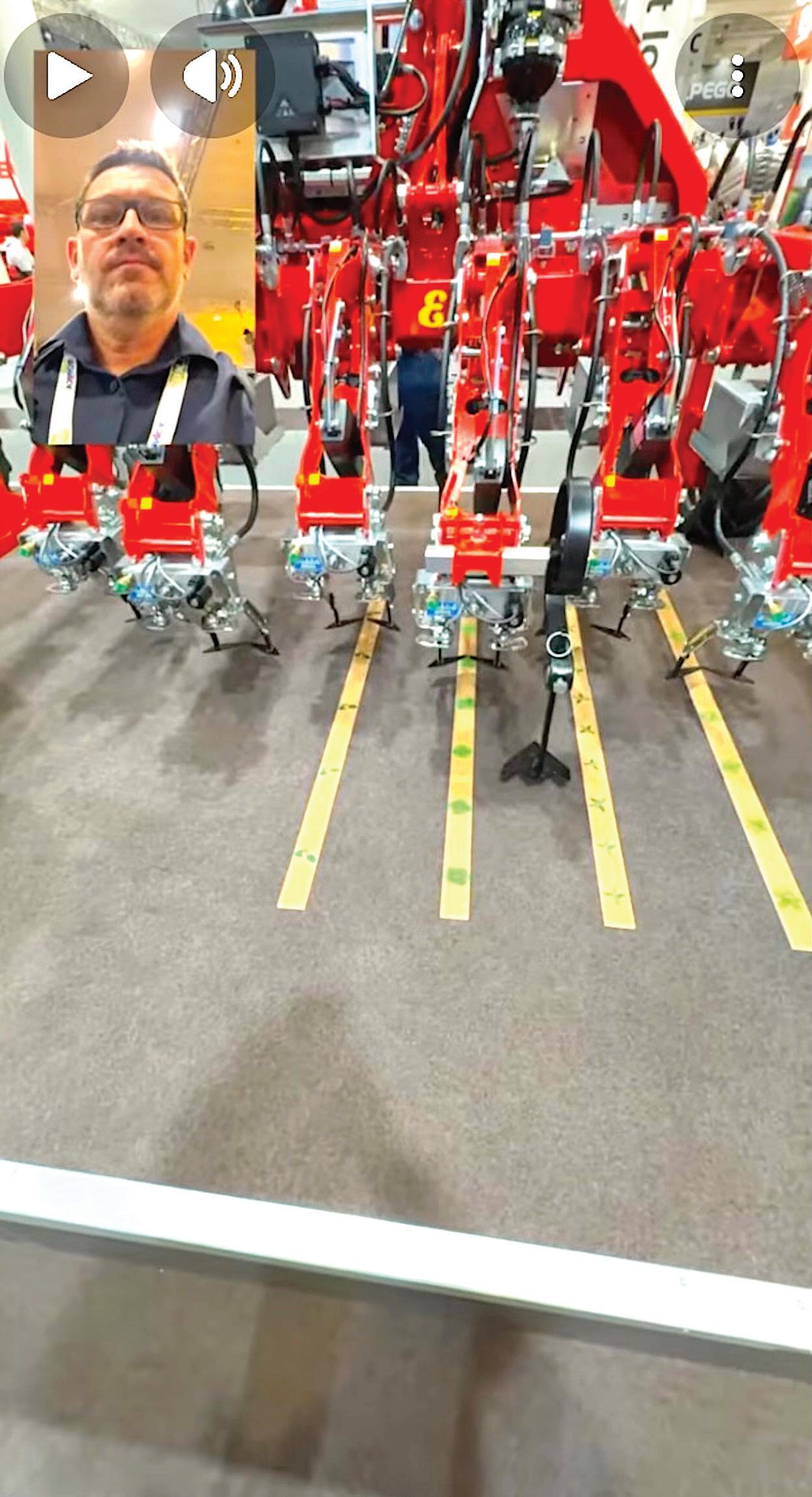
By Harry Siemens
Brunel Sabourin of Antara Agronomy in St. Jean-Baptiste, MB travelled to Europe this month and came home excited, informed, and a little stunned.
As part of a tour organized by S2 Farm Sales and Horizon Agro, he spent a week in Germany exploring European agriculture firsthand. The trip included visits to northern and northwestern German farms and two full days at Agritechnica—the world’s largest indoor agricultural machinery show. Sabourin travelled alone from Antara but joined a small group of seven producers and industry representatives after heavy rains at home reduced the original tour size.
The scale of Agritechnica impressed him immediately.
recognize the plant. The timing lines up with knives and mini-shanks so they can slip between the plants and pick weeds out.”
Standard row-crop cultivators remain part of the system, but new solutions add precision that wasn’t possible a decade ago.
“You still have all the shovels working between the rows, but now you can even go in between the plants— within inches,” he said.
“We’ll see more of it out of necessity.”
Mechanical weed control may appear new to younger farmers, but Sabourin noted the cycle.
aftermarket add-ons,” Sabourin said. “Producers are mapping weeds and plant populations using drones or sensors. Cameras, soil probes, and other tools all connect to the Internet of Things. The idea is to manage variability better, collect better data, and make better decisions.”
But he also pointed to a growing fatigue. Farmers now own more electronics and data-generating systems than ever, yet many struggle to convert that information into practical value.
“I counted so many new row-crop cultivators with camera systems that use an optical eye to identify the crop and send small mechanical fingers in and around the plants to remove weeds. I probably saw 20 or 30 versions of the same idea. As herbicide resistance grows, this technology becomes an important tool producers can rely on to maintain strong weed control in certain crops,” said Brunel Sabourin of Antara Agronomy in St. Jean-Baptiste, MB who travelled to Agritechnica in Europe.

“It’s the largest indoor agricultural equipment showcase in the world,” he said. “There are 20 to 30 different buildings with everything farm-related—tractors, tillage equipment, robotics, service providers from all over. It’s quite something.”
Although the setting is European, machinery manufacturers from across the globe exhibited equipment, technology, and concepts that continue pushing the limits of modern farming.
Among the displays, robotics and mechanical weed control stood out most. Sabourin focused his attention there because herbicide resistance continues to climb and no major new herbicide modes of action appear near release.
“We saw a lot of advancement in robotics and automation,” he said. “Mechanical weed control is coming fast. It has to. Herbicide resistance keeps growing, and we don’t have new chemistry coming.”
He described a wave of cultivators equipped with cameras, sensors, and automated mechanisms.
“These machines drive up and down the row and weed between the plants,” he said. “Some use knives, some use small pickers, but they all use an optical eye to
“What’s old is new again,” he said. The difference today lies in robotics, sensors, cameras, and onboard processors that deliver accuracy unimaginable in the days of horses or early cultivators.
During farm tours, a different reality appeared. German farmers repeatedly emphasized a common theme: regulations.
“The theme of the week was regulations, regulations, and more regulations,” Sabourin said. “Large farms and small family farms all said the same thing. They would give up subsidies if they could farm without all the paperwork and restrictions.”
European agriculture now functions under layers of environmental, production, and market rules that influence everything from nitrogen rates to cropping patterns to land-use decisions. Sabourin said German farmers described a heavy administrative burden—one that Canadians may increasingly recognize.
“We could see something similar showing up here,” he said. “Farmers want the freedom to make decisions. They want the freedom to farm.”
The tour group also shared technology discussions with S2 Farm Sales and Horizon Agro. Many European innovations resemble trends already emerging in Manitoba.
“There’s lots of automation, auto-steering, GPS
“Farmers feel hesitant,” he said. “They’re drowning in data, but they can’t make heads or tails of it. There’s so much variability, and it’s hard to collect good-quality data across big fields.”
Machinery manufacturers have delivered high-tech options as standard features on new equipment, but Sabourin said the integration between systems remains uneven.
“Different coloured equipment doesn’t talk to each other very well yet,” he said. “That creates bottlenecks.” He emphasized the need to shift value creation back to the farm gate.
“Farmers bought the equipment. The bigger companies collect the data. They aggregate it. But growers need value returned to them,” he said. “We have to show the value clearly and help them turn what they already have into decisions that make sense.”
That goal aligns with Antara’s approach, which includes benchmarking programs, weather networks, and precision agriculture strategies tailored for smaller geographies. Sabourin believes meaningful progress comes from local-scale information, not massive datasets that oversimplify diverse soils and landscapes.
The trip left him energized and full of ideas, both for agronomy clients and Manitoba producers looking to adapt. “Farmers have the tools,” he said. “Now they need support to turn those tools into real value.”

By Joan Airey
Over thirty ladies attending Manitoba Farm Women’s Conference chose the Green Spot Home and Garden as their tour destination.
Bernie Whetter who bought the greenhouse back in 2007 spoke to us as we walked through the 120,564 square feet of greenhouse.
“It takes two weeks for our staff to clean the greenhouse and put it in Christmas mode. Seventy percent of our business is bedding plants, perennials, and trees. This time of year, we have numerous Christmas plants available such as Poinsettia, Christmas Cactus, and Azaleas,” said Whetter. “To be viable yearround and keep staff working we have expanded out business with a self-care area. We carry Boyd’s grass-fed beef which is owned and operated by our son-in-law and daughter. We have numerous workshops such as Grinch Tree Craft, Cozy Santa, Snowman Scene Craft Scene, and Santa
Claus visits.”
Off-season they also cater events such as Christmas parties. One family even decided that the greenhouse was the appropriate place for a family funeral.
“We hold markets from September to December. We sell ‘Desert Planters’ which are made in Winnipeg. They are pricey but last a long time and are labour saving because they keep plants moist,” noted Whetter. “We also carry lawn chairs made from recycled milk jugs also made in Canada. They are made by Canadian Recycled Products (CRP Products).”
“Since being in the greenhouse business, we have toured high end greenhouses in England, Germany, Holland and recently South Africa which all have cafes too.
Armed with this international knowledge, “We have the Secret Garden Café in our garden centre,” said Whetter.
The greenhouse sees over five hundred students tour-
ing through the greenhouse every spring from Brandon, Forrest and Minnedosa.
The Green Spot highlighted that they do not use any City water as they have a great well onsite that keeps them supplied. The water is circulated through thousand-gallon tanks where acid to raise the Ph level is added when needed. In addition every time the plants are watered, they are fertilized with appropriate fertilizer.
“We believe in buying Canadian so our plugs (for bedding plants) come from British Columbia, Alberta, and the Niagara Peninsula. Our bedding plant medium is ‘Sungro’ a Manitoba product. Our tropical plants are grown by a supplier in Selkirk. Seventy percent of our trees come from Manitoba nurseries. Any waste soil or plant material is picked up by Martin Dupuis owner of Smiley Worms business and is recycled there,” commented Whetter.
At the greenhouse, Christ-
By Joan Airey
The Prairie Garden arrived recently in my mailbox and I’d say its number one for Manitoba gardeners as a gift. Some seniors don’t use the internet and would love it if you ordered them the 2026 seed catalogues as a free way to brighten their day.
The book contains info on eight different pears that survive in our Manitoba climate. We enjoyed eating pears from our tree this summer. I left some to ripen another day and found I should have canned them the day before. If you are thinking of becoming a greenhouse owner there is a great article on greenhouses.
I’m in my second greenhouse and it was bought in 1992. I’ve grown potatoes in it, cucumbers and peppers in the summer and also had my bedding plants in it in the spring. I have to scrub the outside of my greenhouse in the spring so the sunshine gets in full force.
“Vibrant Harvest” by Sandra Mao is a new book released recently. It tells you which vegetables are heavy feeders. I learned that beets are.
each vegetable takes to germinate and how long until it is mature and ready to eat. The pros and cons of using plastic pots and Terracotta clay pots are also given.
There’s a list of some vegetables and flowers that are great for beginners to grow is shown. It states “The most effective strategy for success is to cultivate crops that align with your family’s eating preferences.” Keeping in mind, “I have to garden growing tomatoes that are red and corn that are yellow,” as it should be.
“The Preserver’s Garden” is a new release by Staci & Jeremy Hill that has lots of ideas which I plan to try as well. One is Ranch seasoning from the book.
Ranch Seasoning
Ranch Seasoning Mix:
1/2 cup onion powder
1/2 cup dried chives
1/2 cup dried parsley
1/2 cup dried dill leaves
1/4 cup garlic powder
2 teaspoons ground black pepper
2 teaspoons salt
1/4 cup raw sugar optional Put all ingredients into your
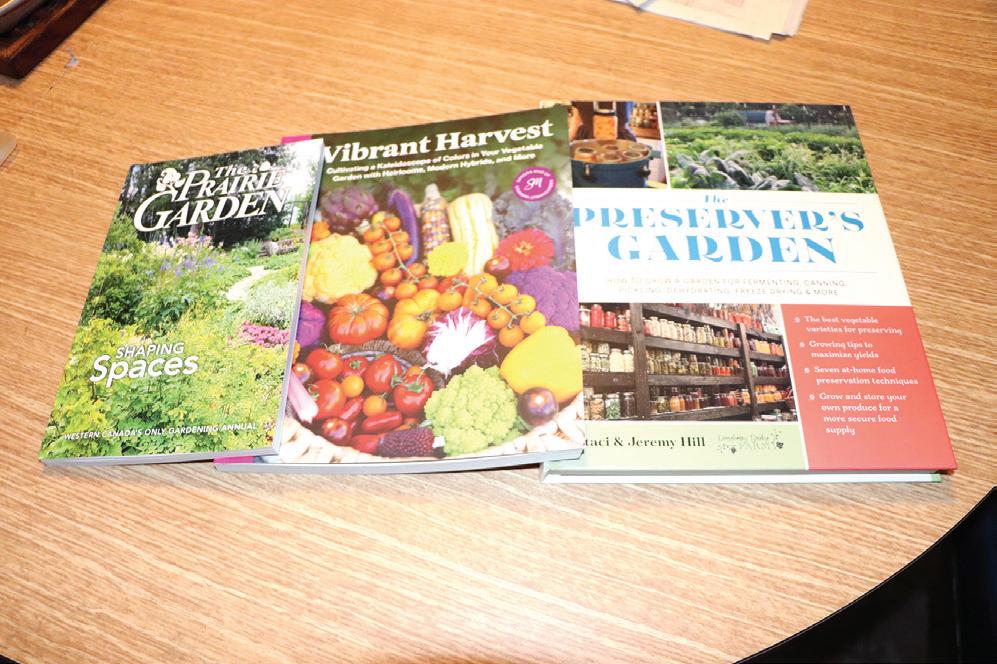
mas decorations and trees are available to buy or you can attend a class and make your own Christmas wreath. When we arrived staff were getting ready for a class that night as we toured the greenhouse. For more information on their products and
They’ve started making a delicious fudge of many varieties on site. When their Foxtail Restaurant at Onanole opens the fudge making machine it will be moved there.
As we ending the tour it seemed that the majority of attendees purchased some delicious fudge to take home.
Each year several tours are
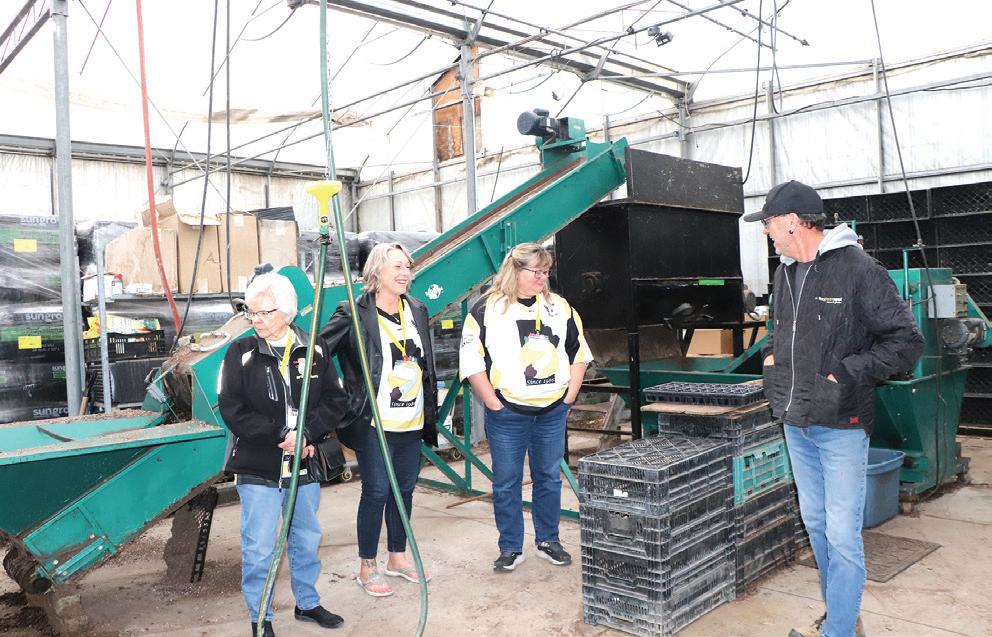
available to conference attendees. This year Section 6, Brandon Research Centre, a MBFI Calving Clinic or tour the Green Spot. After getting back from the tours many shared information with the other conference attendees who had taken different tours expanding everyone’s learning experiences.


blender and grind to a consistent powder. Store in an airtight container until you are ready to use it. We store ours in a pint or half-Mason jar.
Ranch Dressing: 1/2 cup mayonnaise 1/4 cup of your choice (we usually use coconut or almond, but cow milk works, too.)
1 to 1 1/2 tablespoons Ranch Seasoning Mix
1/2 teaspoon basil or other herb salt or regular salt.
Directions: Blend or stir thoroughly, then let the mixture sit in the fridge overnight for the best flavour.
The book tells you how to plan, plant, and grow a garden with food preservation and long-term storage in mind plus seven different preservation techniques.
The Prairie Garden can be ordered online directly from them or is available in my seed stores such as T & T seeds, Lindenberg’s in Brandon. The other two books will be available from Amazon or Coles.
I’m already looking forward to planting my 2026 garden.
As soon as I return from the Manitoba Farm Women’s Conference, I plan to start growing lettuce, etc. Interestingly Miles Wotton tells me mint will keep Calder or Maple Bugs away from your house. He scattered some at his door and they left pronto. So mint is definitely on my list to grow in 2026. We didn’t have many this year, but I really don’t want them to get indoors.