

By Harry Siemens
Manitoba soybean growers can begin planting when field conditions are suitable, but Dennis Lange says this spring’s cool, uneven weather makes patience, risk assessment and stand checks especially important.
Lange, provincial pulse and soybean specialist with Manitoba Agriculture, told this week’s Manitoba Agriculture CropTalk that growers face a familiar but challenging question: when is it safe to seed soybeans?
He said the decision depends on soil temperature, calendar date, the 24-hour forecast, field conditions and each farmer’s personal risk tolerance.
“It’s been a very strange spring,” Lange said, noting Manitoba recently swung from -4 C in the morning to +12 C within a short period. “It makes it kind of difficult
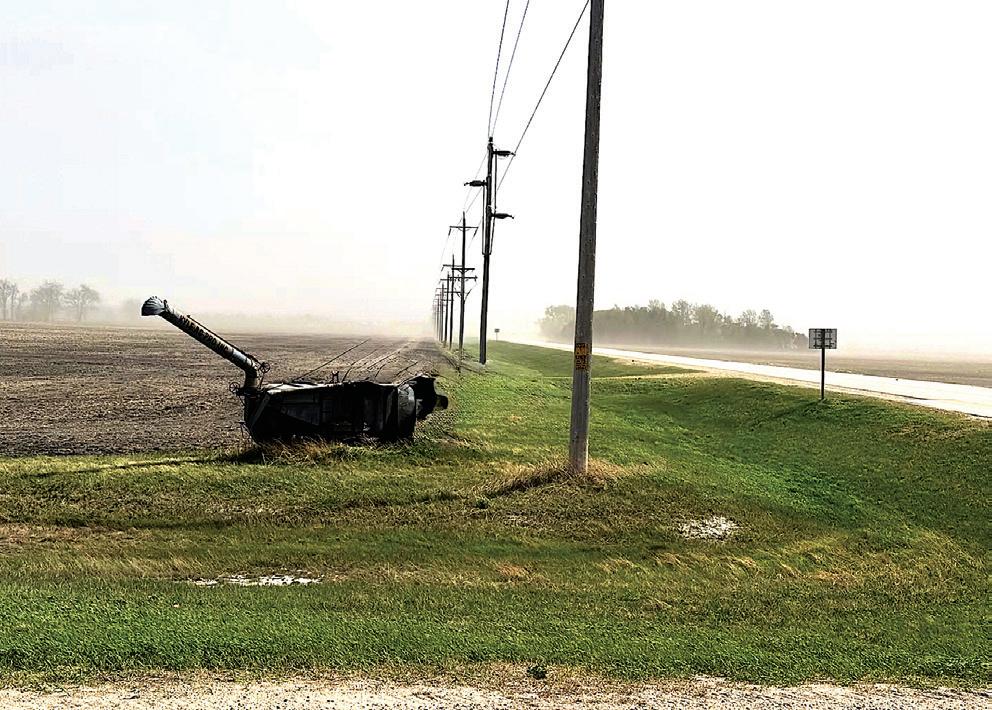
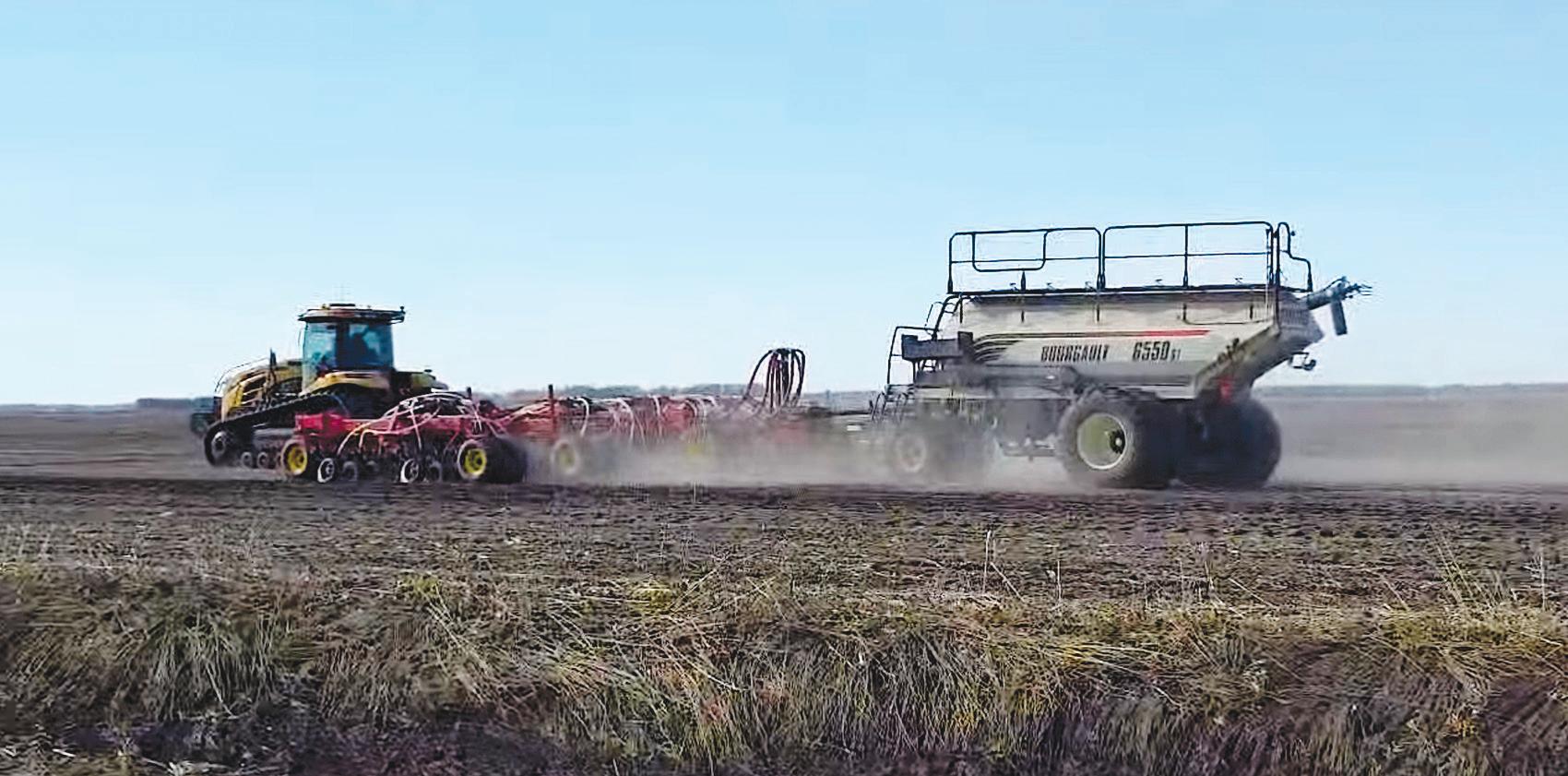
Dusty spring conditions show the challenge Manitoba soybean growers face when deciding whether to roll fields after planting. Dennis Lange, provincial pulse and soybean specialist with Manitoba Agriculture, told CropTalk that dry soils, strong winds and soil movement may make post-emergent rolling a better option in some fields.
for growers, considering we’re planting a warm-season crop that requires more heat to germinate.”
Lange said soybeans can take 24 to 35 days to emerge when soil temperatures range between 6 C and 12 C.
When soils warm to 14 C to 22 C, emergence can occur in four to 16 days. Manitoba has not yet reached those consistently warmer soil temperatures in many fields.
That means growers who seed now should expect a
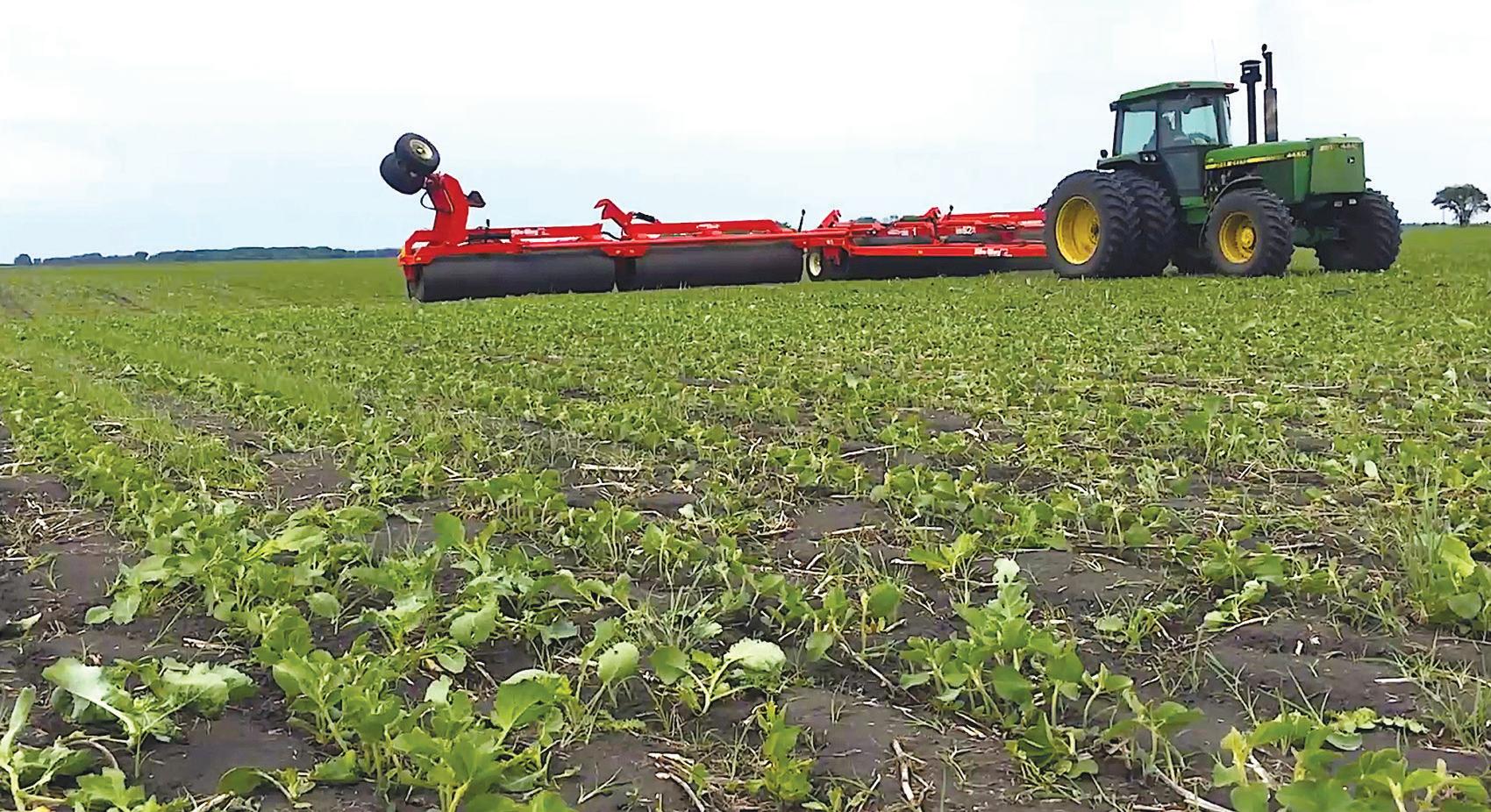
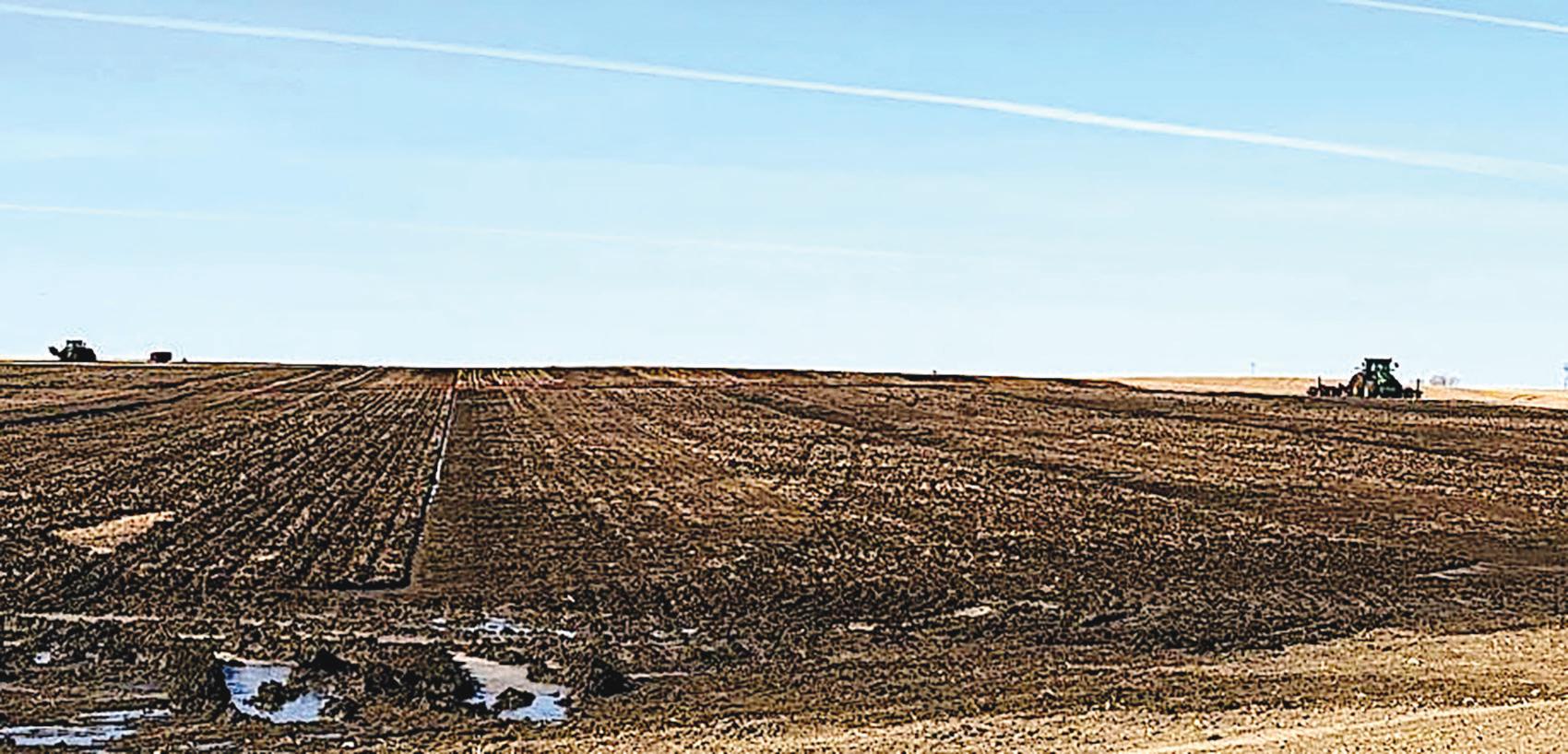
Post-emergent rolling can help press stones into the soil and smooth soybean fields, but timing matters. Dennis Lange said growers should roll only on warm afternoons, avoid the hook stage, and check for broken plants to make sure the stand remains strong.
slow start.
“They’re probably going in the ground treated, but it’s going to take a couple of weeks, maybe three weeks, to get those beans out of the ground and establish a good stand,” he said.
Lange urged growers to pay close attention to the first 12 to 24 hours after planting, when soybean seed absorbs water rapidly. If cold water enters the seed during that early imbibition phase, chilling injury can reduce emer-
gence or weaken the stand. Lower-quality seed, dry seed or seed with a damaged coat faces higher risk. Lange said growers should handle those seed lots carefully and use proper seed treatment, especially in cold soils.
Early planting also increases the risk of frost after emergence. Lange said temperatures below 0 C can damage young soybeans, while temperatures below -2 C for more than four hours can be lethal. Heavy residue can increase frost risk, while heavier-textured soils may store more heat and offer some protection.
Soybeans have three growing points: the main shoot and two axillary buds at the base of the cotyledons. If frost only clips the top growth, plants may regrow. If freezing damage extends below the cotyledons, those
Continued on Page 2...

Prairie canola producers are increasingly linking long-term crop demand to the rapid expansion of biofuels, according to a new analysis from Alberta Canola policy analyst Will Holowaychuk, who says renewable diesel and sustainable aviation fuel are reshaping the market outlook for the crop.
Holowaychuk argues that while many farmers recognize crush demand supports prices, fewer fully understand how significantly biofuels are influencing where canola oil ultimately ends up—and how that is reshaping investment across the Prairies.
“Prairie farmers are beginning to connect the dots between biofuels and canola prices,” he wrote. “And for good reason.”
Biofuels reshaping energy and agricultural markets
Biofuels are fuels derived from renewable biological sources such as crops, plant oils and organic waste. They include ethanol, renewable diesel and sustainable aviation fuel, and are increasingly being adopted as transportation sectors seek to reduce lifecycle greenhouse gas emissions.
Holowaychuk says this shift is turning into direct demand for Canadian canola.
Trade data from the 2024 crop year suggests nearly one in three Canadian canola acres ultimately supported biofuels production in Canada, the United States or the European Union.
“The reality is that the demand for Canadian canola oil is insatiable,” he wrote, noting that much of the crop’s end use is not widely understood at the farm level.
Feedstock demand expanding globally
Holowaychuk notes that biofuels growth is being driven by transportation sectors, including aviation, rail and marine, all seeking lower-emission fuels that can work with existing infrastructure. Rather than replacing entire fleets, these industries are transitioning toward renewable fuels compatible with current engines.
However, he says a key constraint is feedstock availability.
Common inputs for biofuels include corn, wheat and cellulosic fibres for ethanol, and soybean oil, canola oil, waste fats and used cooking oil for biodiesel. Many of these sourc-

es face supply limits or scaling challenges.
“In North America, canola oil stands out as one of the most readily available and scalable feedstocks for renewable diesel production,” Holowaychuk wrote.
That availability, he adds, is helping drive significant investment in new crushing capacity across Western Canada.
Expansion of Prairie crush capacity
Following China’s 2019 suspension of Canadian canola seed imports, the sector began pivoting toward alternative markets, particularly biofuels. Since then, Holowaychuk says, Prairie crush capacity has expanded from 10.5 million metric tonnes to a projected 15 million metric tonnes by the end of 2026.
At full capacity, the industry expects to crush up to 75 per cent of Canadian canola production domestically.
Crushers, he says, have repeatedly identified biofuels demand as a major factor behind new investment decisions.
Major projects driving domestic demand
Holowaychuk points to Imperial Oil’s renewable diesel facility in Strathcona, Alberta as a leading example of emerging demand. The refinery is designed to produce one billion litres of renewable diesel annually using canola oil as a primary feedstock.
At peak operation, the facility is expected to consume about one million tonnes of canola oil, equivalent to roughly 2.5 million tonnes of canola seed.
He says projects like this demonstrate how domestic biofuel infrastructure is beginning to reshape demand within Canada rather
than relying solely on export markets.
Policy link to farm-gate returns
Holowaychuk also highlights the importance of federal policy, particularly the Clean Fuels Regulation (CFR), in supporting biofuels demand. A study by LeftField Commodity Research found that if the CFR had been removed in the 2025 growing season, Canadian canola producers could have lost an estimated $600 million in crop value.
He says policy stability is now directly tied to farm-gate returns as biofuels markets expand.
Long-term outlook for canola demand
Holowaychuk argues that Canada’s biofuels sector is also aligned with broader national priorities, including energy security, economic development and reduced dependence on imported fuels.
He says increasing domestic refining capacity and biofuels production is helping shift Canada away from export-dependent markets while creating new internal demand channels for canola.
“The bottom line,” he wrote, is that biofuels are no longer a secondary market factor but a core driver of long-term demand.
For Prairie producers, he says, understanding that connection helps explain ongoing investment in crushing facilities, new renewable fuel projects and policy debates shaping the future of the sector.
“Biofuels are driving long-term demand for canola,” Holowaychuk concluded, noting that expanded crush capacity and domestic refineries are becoming central to price stability and market growth.
plants are usually lost.
Lange said growers should wait five to seven days after a frost before making final stand-loss decisions.
Cold, wet soils also increase the risk of seed rots and seedling blights, especially where rotations are tight. Pythium thrives in cold, wet conditions, particularly when heavy rain follows planting.
Still, Lange said mid-May planting can make sense when the field is fit.
“If the field conditions are good, it’s dry enough to go, and conditions are warming
up, it’s pretty much go time right now,” he said.
Once soybeans emerge, stand counts become critical. Lange said growers should target 120,000 to 200,000 established plants per acre. Stands below 80,000 raise greater concerns about yield and weed control.
His main message remains practical: seed when the field is fit, understand the risk, protect the seed and count the stand.
“Get them in May and you’re golden,” Lange said. “But soil conditions still matter most.”
By Harry Siemens
Manitoba farmers heading into the 2026 growing season face a familiar challenge with a sharper edge: higher costs, steady returns and growing financial risk.
Darren Bond, farm management specialist with Manitoba Agriculture, said the number that stands out most in cost-of-production analysis is the total investment required just to put a crop in the ground.
“When you include fixed costs like land and equipment, you’re looking at roughly $500 to $850 per acre, depending on the crop,” Bond said.
That number has climbed quickly. Over the past five years, Bond estimates total production costs have risen by about 50 per cent, while peracre margins remain close to where they were half a decade ago.
“It takes more money to grow a crop, but the returns have stayed about the same,” he said. “That increases the risk for growers.”
Fertilizer remains the biggest pressure point this spring. Prices, especially for nitrogen, have jumped sharply following geopolitical tensions,
including the conflict involving Iran.
“Urea nitrogen has increased by roughly 40 per cent since the fall of 2025,” Bond said.
This has created what he calls a two-tier situation. Farmers who booked fertilizer early are in a much stronger position than those buying at today’s prices. For early buyers, crops like spring wheat, canola and corn may still pencil out thanks to higher commodity prices tied to global market shifts.
For those purchasing fertilizer now, the economics shift.
“Soybeans become more attractive because they don’t typically require nitrogen fertilizer,” Bond said. “And soybean prices have also strengthened.”
The shift underscores how quickly decisions can change based on input timing. It also highlights the importance of careful fertilizer management. Bond points to the 4R principles, right source, right rate, right time and right placement, as essential tools for protecting margins.
Land costs add another layer. Whether through rent or ownership, land now rep-
resents a significant share of overall production costs.
“It really depends where you sit,” Bond said. “If you have land that’s paid for, you’re less exposed. But if you’re heavily leveraged or renting a lot of acres, rising land costs can erode profitability quickly.”
That divide continues to widen. Farms with higher debt levels or more rented acres face tighter margins and greater exposure to cost increases.
Breakeven prices offer a useful benchmark. Bond estimates values of $8.00 to $8.25 per bushel for spring wheat, $14.25 to $14.75 for canola, $5.00 to $5.50 for corn, and $12.00 to $12.50 for soybeans, assuming fertilizer was purchased before the recent spike. Those numbers rise for producers buying inputs today.
In this environment, Bond’s advice is simple: “Do your own numbers.” He encourages producers to confirm current costs, update projections often and replace estimates with actual figures as the season unfolds.
For Manitoba farmers, the message is clear: costs are higher, margins are tight and risk is
elevated. Success in 2026 will depend on disciplined management, accurate numbers and timely decisions.




Florian Possberg, a partner with Polar Pork Farms near Humboldt, Sask., recently made a point that extends far beyond pork barns and feed bills. He warned that global conflict, fertilizer disruptions and trade uncertainty can move quickly from world headlines to the farm gate.
That is the world farmers now live in. A dispute in the Middle East can affect fertilizer supplies. A war in Eastern Europe can affect grain markets. A tariff threat can affect a hog contract, a canola bid, a machinery order or a processor’s investment decision. Farmers may work on the land, but they no longer operate in a local-only economy.
That is why the Canada-United States-Mexico Agreement matters so much. In Canada, it is known as CUSMA. In the United States, it is USM-
CA. In Mexico, it is T-MEC. Three names, three countries, one deeply connected North American trading system.
The agreement’s first mandatory joint review is expected on July 1, 2026, six years after it came into force. That review gives all three countries a chance to assess how the agreement is working and whether changes are needed. It also introduces uncertainty when governments turn the review into a political weapon rather than a practical discussion.
For agriculture, uncertainty is not just a boardroom term. It affects real decisions. Should a farmer buy land? Should a processor expand? Should a livestock producer build more barn space? Should a manufacturer invest in a new production line? Should a supplier bring in more equipment or hold back?
Those decisions require confidence. Canadian farmers need access to U.S. and Mexican markets. U.S. farmers need buyers in Canada and Mexico. Mexican agriculture depends on inte-
grated trade with both neighbours. The three countries compete, yes, but they also feed, supply and strengthen one another.
The Government of Canada says CUSMA created one of the largest free trade regions in the world and reinforces Canada’s strong economic ties with the United States and Mexico. That sounds like government language, but behind it are farmers, truckers, elevator staff, meat plant workers, equipment dealers, feed companies, veterinarians, processors and families.
Possberg’s warning on fertilizer and food costs fits directly into this larger picture. If fertilizer availability drops, grain production can decline. If grain production drops, feed costs rise. If feed costs rise, livestock producers feel it quickly. If trade barriers arise at the same time, the pressure multiplies.
That is why governments need to demonstrate unity, or at least the ability to work together. No country should be expected to ignore its own interests. Canada must look after Canada. The United States must look after the
United States. Mexico must look after Mexico.
But looking after ourselves should not mean disrespecting each other.
Agriculture works best when countries recognize their shared dependence. Growers need suppliers. Livestock producers need feed. Processors need a steady supply. Manufacturers need customers. Consumers need food they can afford.
The upcoming CUSMA, USMCA and T-MEC review should not become another source of fear. It should be an opportunity to reaffirm that North American agriculture works better when the three countries keep trade open, practical and respectful.
Farmers already face enough risk from weather, disease, input costs, interest rates and global conflict. They do not need governments adding avoidable uncertainty.
From me, folks, it is time to work together and for each other.
Stay close to people who inspire you, believe in you, support you and celebrate with you.
By Harry Siemens
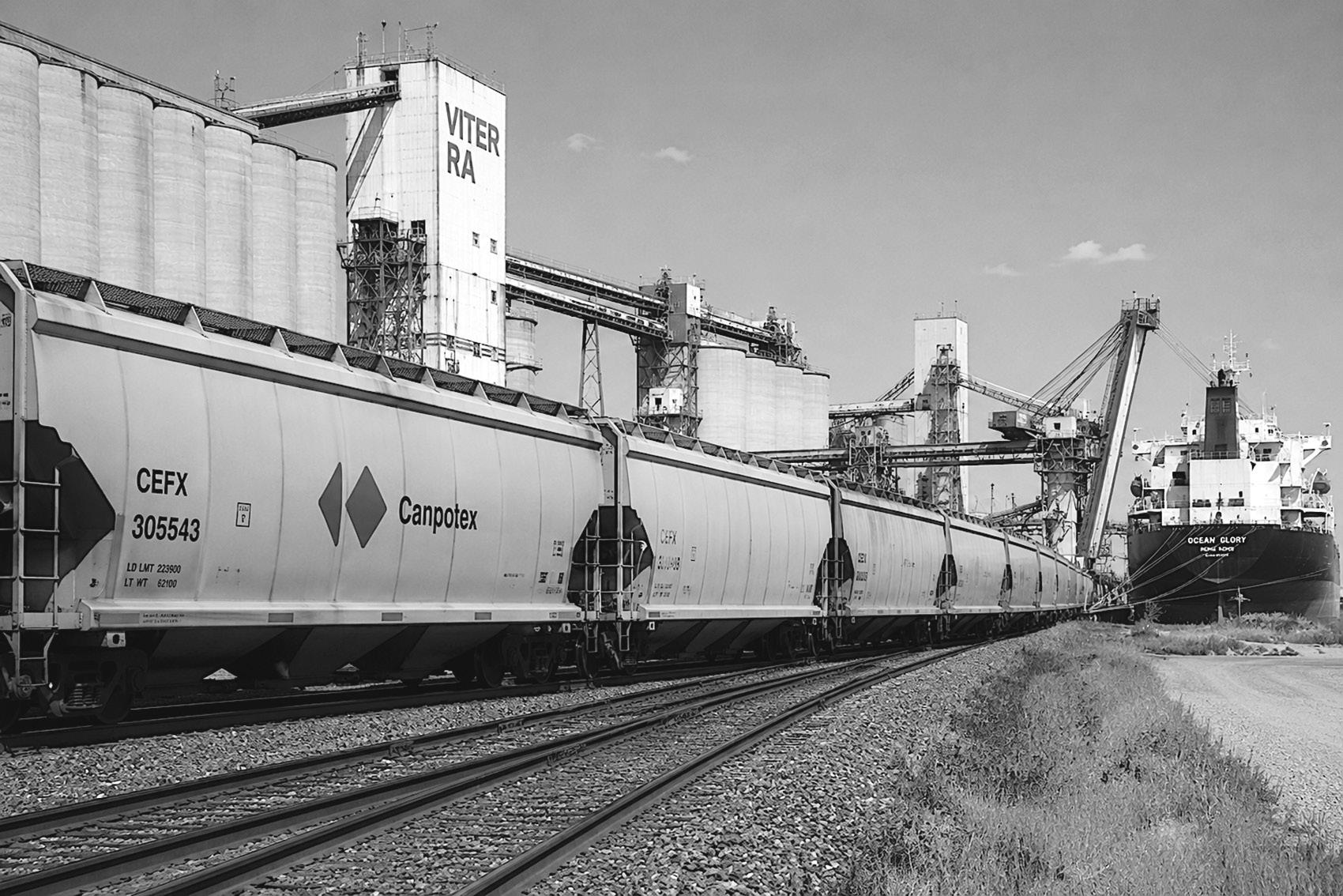
The latest Ag Transport Coalition Daily Network Status Report shows a grain-handling system with more loaded cars moving, fewer cars stalled for more than 48 hours, and mixed port unload performance across Vancouver, Prince Rupert and Thunder Bay.
The May 13, 2026, report, measured as of 23:59, shows total loads on wheels reached 10,632 cars, up 704 cars or seven per cent from the previous day. That total was nearly even with the prior week-to-date average, indicating overall railcar volume remained steady, though movement varied sharply by railway and corridor.
Canadian National reported 5,173 loads on wheels, down 296 cars or five per cent from the previous day. Canadian Pacific Kansas City moved
in the opposite direction, with 5,244 loads on wheels, up 1,004 cars or 24 per cent. Together, the figures show CPKC carried the daily increase while CN eased lower.
The most encouraging number came
in the category of loads that had not moved for 48 hours or more. The system total fell to 576 cars, down 322 cars or 36 per cent from the previous day. Compared with the prior weekto-date daily average of 1,180 cars,
the current week average of 855 cars marked a 28 per cent improvement.
For farmers, grain companies and exporters, fewer stalled cars matter because they help keep the pipeline fluid between country origins, terminals and port positions.
CN reported 355 cars not moving for 48 hours or more, down 56 cars or 14 per cent. CPKC showed a larger improvement, dropping to 178 stalled cars, down 256 cars or 59 per cent. The data shows both major Canadian railways improved, with CPKC accounting for most of the daily reduction.

Port unloads told a more mixed story. Total port unloads reached 1,419 cars, down 93 cars or six per cent from the previous day. Vancouver unloaded 850 cars, down 154 or 15 per cent. Prince Rupert unloaded 236 cars, up 33 or 16 per cent. Thunder Bay unloaded 333 cars, up 28 or nine per cent.
Despite the daily drop, West Coast unloads remained stronger than the previous week. The report showed a current weekly daily average of 1,271 West Coast unloads, compared with 1,049 the prior week-to-date, a 21 per cent improvement. Overall, the system showed improved fluidity on May 13. More cars entered the loaded pipeline, fewer sat idle, and West Coast unload averages remained stronger than the previous week. Still, daily swings between CN, CPKC and the ports highlight how quickly grain movement can shift across Canada’s export network.
By Dan Guetre
Farmers’ access to repair services, tools and technical information is under renewed scrutiny as the Manitoba government advances new right-to-repair legislation that could have implications beyond the province, according to the National Farmers Union (NFU).
Bill 15, The Consumer Protection Amendment Act, is currently before the Manitoba Legislature. It proposes to strengthen consumers’ rights to repair goods at a reasonable price and within a reasonable timeframe.
The bill also requires that repair manuals, tools, and related information be made available either free of charge or at a reasonable cost.
While the legislation is broadly aimed at consumer goods, the NFU says its potential application to agricultural equipment raises concerns for farmers already facing rising repair costs and increasing reliance on manufacturer-authorized service networks.
The right to repair, as defined by
advocates, ensures that owners or their chosen repair providers can fix equipment at fair cost and within a reasonable timeframe, without being restricted to manufacturer-controlled service systems. The NFU has advocated for such protections at both federal and provincial levels for several years.
At a hearing on April 22, concerns were raised that farm machinery could be included under the bill’s definition of “consumer goods” through future regulatory changes.
Manitoba already has the Farm Machinery and Equipment Act (FMEA), which provides farmers with a 10-year guarantee on parts availability. It also requires replacement parts to be delivered within 14 days of request, or emergency parts within 72 hours where possible, or a functional alternative if parts are unavailable.
“The NFU is concerned that defining agricultural machinery as a consumer good under regulation will undermine the current protec-
tions provided to farmers under the FMEA,” said Dean Harder, an NFU member who presented at the hearing. “Care needs to be taken that one Act does not dismiss the other.”
Farmers say rising repair costs have become a significant burden in an industry already operating on tight margins. Canadian producers reportedly spent more than $540 million on equipment repairs in 2024.
The NFU attributes rising costs to structural changes in the agricultural equipment sector. One key factor is the increased use of proprietary parts and diagnostic tools, which limit access to authorized dealers and restrict independent repair options.
Modern farm machinery increasingly relies on digital systems that require manufacturer-controlled software to diagnose and resolve errors. Independent repair providers often do not have full access to these tools, reducing their ability to service equipment.
Another concern is “parts pairing,” where components are digitally linked to a machine’s serial number. If a replacement part is not installed or re-registered through authorized systems, the machine may lose functionality or warranty coverage.
The NFU also points to dealership consolidation and closures across Manitoba and other provinces over the past two decades, which it says has reduced competition and driven up repair costs.
“The use of proprietary tools and parts, parts pairing, and dealership consolidation has effectively created a captured market for big ag machinery companies and their dealership networks,” Harder said.
The NFU is calling for amendments to strengthen Bill 15 and better align it with agricultural realities. Proposed changes include extending the FMEA’s parts availability guarantee from 10 to 15 years, banning parts pairing practices, and ensuring farmers and independent repair shops have access to full diagnostic
software without penalties or warranty restrictions.
The organization also argues that responsibility should rest with manufacturers rather than smaller suppliers, many of which are local or regional businesses operating within limited capacity.
In addition, the NFU is calling for clearer legal definitions of what constitutes a “reasonable” price and timeframe for repairs, arguing that ambiguity could weaken the effectiveness of the legislation.
“Legislation is the best place to guarantee robust and clear definitions, rights, and responsibilities,” Harder said. “If the Manitoba government makes these changes to Bill 15, it will serve as a model for other provinces.”
NFU Manitoba says it welcomes progress on right-to-repair legislation but stresses that continued advocacy is needed to ensure the final law protects farmers’ access, affordability and independence in equipment repair.
By Dan Guetre
The Canadian cattle industry is urging the federal government to reject expanded beef access in ongoing trade negotiations with Mercosur, a South American trade bloc that includes major low-cost beef producers such as Brazil and Argentina.
In a public statement and letter to producers, the Canadian Cattle Association (CCA) says Canadian beef farmers and ranchers should not be used as a bargaining chip in efforts to finalize a trade agreement, warning that increased imports could undermine the domestic cattle sector at a critical time.
“The Government of Canada is looking to finalize a trade agreement with Mercosur which includes the largest, lowest-cost beef producers in the world,” said CCA President Tyler Fulton in a letter to cattle producers. “Canadian beef is a main sticking point in negotiations, but Canadian beef farmers and ranchers should not be used as a bargaining chip.”
The CCA says the Canadian cattle
sector is currently focused on rebuilding herd numbers and expanding longterm production capacity. It argues that increased imports of South American beef would work against those efforts, displace domestic producers, and negatively affect rural economies.
“We have nothing to gain and much to lose in these negotiations,” the organization said. “Increased imports would displace the families and businesses who raise cattle in Canada. It would also hurt the rebuilding of the herd across Canada, rural communities and go against our environmental goals.”
The association represents approximately 60,000 beef producers across Canada, who it says support more than 347,000 jobs and contribute $34.2 billion to Canada’s GDP.
The CCA highlights that Mercosur beef imports have already increased significantly in recent years, rising by 238 per cent between 2021 and 2025. The group warns that further expansion
of market access could deepen pressure on Canadian producers.
According to Fulton, Canadian cattle producers are already engaged with federal policymakers, but are urging more direct public input from producers to influence the outcome of negotiations.
“Decisions made right now will impact the future of our industry and our rural communities,” the CCA stated. “Canadian beef is for plates, not trade bait.”
Standards and environmental concerns
A central concern raised by the CCA is the difference in production standards between Canadian beef and beef produced in Mercosur countries. Canada’s beef industry emphasizes animal health protocols, labour standards and environmental stewardship, the organization says, while warning that Mercosur production systems operate under lower regulatory frameworks.
“Our ranching families pride themselves on world-class sustainability and food safety while providing vital envi-
ronmental benefits like ecosystem protection, carbon sequestration and wildlife habitat,” Fulton said. “This results in the sustainably produced, premium beef that Canada is known for around the world.”
By contrast, the CCA argues that Mercosur beef production is associated with environmental degradation and does not meet comparable standards for animal welfare, labour practices or food safety.
“Displacing locally and sustainably produced Canadian beef is a loss for consumers, the environment and rural communities,” Fulton said.
The CCA also warns that granting expanded beef access to Mercosur could have unintended consequences for Canada’s trade relationship with the United States, its largest and most important export market for beef.
Because the Canadian and U.S. cattle industries are highly integrated, the
association says expanded Mercosur access could be interpreted as a “backdoor” entry into the U.S. market, potentially triggering trade disputes or retaliatory measures.
The organization is urging producers and rural residents to contact their Members of Parliament and express opposition to beef concessions in the proposed deal. A public outreach campaign has been launched through the CCA website to facilitate direct messaging to federal representatives.
Tyler Fulton said the industry is at a turning point and must act to protect its future.
“We are proud of our high standards for animal health, labour and food safety,” he said. “We cannot let our hard work be used as a bargaining chip.”
The CCA says it will continue engaging with federal officials as trade discussions progress, while encouraging producers to make their voices heard during the negotiation process.
By Dan Guetre economy practices on farms
Cleanfarms says Canadian farmers and industry partners helped drive a record year for agricultural plastics recovery and recycling in 2025.
The not-for-profit producer responsibility organization released its 2025 annual report this week, highlighting major gains in recycling volumes and increased adoption of circular
across the country.
The report coincides with Cleanfarms’ 15th anniversary and details several historic collection milestones achieved over the past year.
Among the highlights, the organization recycled 2.5 million kilograms of pesticide and fertilizer containers in 2025, representing a 13 per cent in-
crease over the previous year.
Cleanfarms also reported a record 1.1 million kilograms of small and large tote bags collected and managed through its recycling programs.
Strong participation was reported nationwide, with new collection records set in Manitoba, Alberta and Quebec.
According to Cleanfarms, the results were supported
through a combination of provincially mandated recycling programs and voluntary initiatives led by industry partners.
“This is one of Cleanfarms’ best years to date,” said Shane Hedderson, interim executive director of Cleanfarms. “It reflects the growing commitment of our members, farmers and partners across Canada to make recy-

cling a standard practice on the farm.”
Hedderson said continued efforts to simplify recycling logistics have helped turn what was once viewed as an agricultural waste problem into a reusable resource.
“With a continuing focus on simplifying the logistics of recycling, what was once an agricultural waste challenge has been transformed into a viable communal resource for now and the future,” he said.
The report also highlights new partnership-driven innovations in closed-loop recycling systems, where recycled materials are reused in the creation of new agricultural products.
One example includes the development of refillable container bases manufactured using recycled agricultural plastics collected through Cleanfarms programs.
The organization said the innovation could help support future development of durable, high-performance agricultural packaging made from recycled materials.
Cleanfarms operates recycling and recovery programs for a range of agricultural waste products, including pesticide containers, grain bags, twine, fertilizer bags and other farm plastics.
The organization works with farmers, agri-retailers, manufacturers and governments to expand recycling access and reduce agricultural waste entering landfills or being burned on farms.
According to the annual report, increasing participation rates and improved recycling infrastructure are helping circular economy practices become more common within Canadian agriculture.

By Harry Siemens
The federal government is investing up to $30 million over the next two years to help accelerate clean technology innovation across Canadian agriculture.
The announcement comes through the Agricultural Clean Technology Program Research and Innovation Stream – Accelerator, known as the ACT Accelerator. The funding supports six Canadian non-profit organizations that will help small and medium-sized agri-businesses develop and demonstrate new technologies to reduce emissions and improve sustainability on farms and across the agri-food sector.
Agriculture and Agri-Food Minister Heath MacDonald said the investment helps strengthen both the environment and the longterm competitiveness of Canadian agriculture.
“By forging meaningful partnerships and investing in these six ACT Accelerator projects, we continue to empower innovators across the country to develop and scale the clean technologies that will keep our farms competitive and our environment healthy for generations to come,” MacDonald said.
Danielle Martin made the announcement in Toronto on behalf of the minister.
The ACT Accelerator funding will flow through six organizations, each of which will launch its own intake program and distribute funding to eligible projects across Canada.
The six organizations include Bioenterprise Canada Corporation, the Canadian Agri-Food Automation and Intelligence Network, the Canadian Food Innovation Network, MaRS
The federal government is investing up to $30 million through the Agricultural Clean Technology Program Accelerator to help Canadian agri-businesses develop and adopt new technologies to reduce emissions and improve sustainability across the agriculture sector. Photo source: Agriculture and Agri-Food Canada.
Discovery District, Ontario Genomics and Zone Agtech.
The government said the investment will help ensure Canadian producers and agrifood businesses gain access to more advanced technologies that improve efficiency, reduce greenhouse gas emissions and support longterm resilience.
The Agricultural Clean Technology Program supports research, innovation and adoption of technologies that lower emissions while improving farm competitiveness. Ottawa links
the initiative to its broader climate target of reducing greenhouse gas emissions by 45 to 50 per cent below 2005 levels by 2035.
The funding model uses what Agriculture and Agri-Food Canada describes as an accelerator approach. Instead of directly funding individual businesses, Ottawa provides funding to experienced organizations that then work directly with innovators, startups and entrepreneurs in the sector.
Each organization brings a different strength to the program.
Bioenterprise Canada Corporation, based in Guelph, works to connect innovators, investors and researchers in the agri-food sector.
The Canadian Agri-Food Automation and Intelligence Network, headquartered in Edmonton, focuses on advancing automation, artificial intelligence and data-driven agriculture technologies.
The Canadian Food Innovation Network, also based in Guelph, supports collaboration and innovation in Canada’s food and beverage sector.
MaRS Discovery District in Toronto provides mentorship, networking, talent development and support for companies seeking investment capital.
Ontario Genomics supports innovation in genomics research tied to agriculture, health and environmental sustainability.
Zone Agtech, located in L’Assomption, Que., focuses on helping agtech startups create and commercialize new agricultural technologies.
Agriculture and Agri-Food Canada said projects and final funding agreements remain subject to negotiations. The department also noted that eligible projects include research, testing and commercialization efforts related to clean technologies that support agriculture and food production.
The federal government sees clean technology as an important part of the future of Canadian agriculture as producers face increasing pressure to improve efficiency, lower emissions and remain globally competitive.
By Harry Siemens
A major industrial development in Manitoba officially moved ahead May 11 as Exemplar Developments launched Keystone Industrial Park at CentrePort Canada in the RM of Rosser.
The 184-acre industrial park represents more than $100 million in Phase 1 investment, with Phase 2 planned for 2026. The project includes 30 shovel-ready industrial lots starting at 2.34 acres and is aimed at manufacturing, warehousing, transportation and logistics companies.
Interest in the development is already strong, with more than half the property sold or under conditional sale agreements. Developers confirmed a Canadian company with more than 40 North American locations has purchased 20 acres, while anoth -
er 77 acres remain under negotiation.
Manitoba Business, Mining, Trade and Job Creation Minister Jamie Moses said the project reflects Manitoba’s growing economic momentum.
“The Keystone Industrial Park development shows the kind of investment and momentum we’re building right here in Manitoba,” Moses said. “Access to fully serviced, shovel-ready land helps businesses move quickly with certainty, creating the right conditions for investment, growth and good jobs.”
Phase 1 infrastructure, including water, sewer, hydro and paved roads, is complete.
Exemplar Developments president Jas Kalar said the company is proud to help transform CentrePort Canada into one of Manitoba’s major economic hubs.

By Harry Siemens
Tom and Michelle Teichroeb ranch near Langruth, Mani toba, where they run a solid cattle operation shaped by years of practical experience and careful stewardship of grass. This spring, Tom says conditions across much of Manitoba, including his area, look better than they have in several years. But he also warns that good moisture can tempt producers to move too quickly, and that early pasture decisions can make or break the entire grazing season.
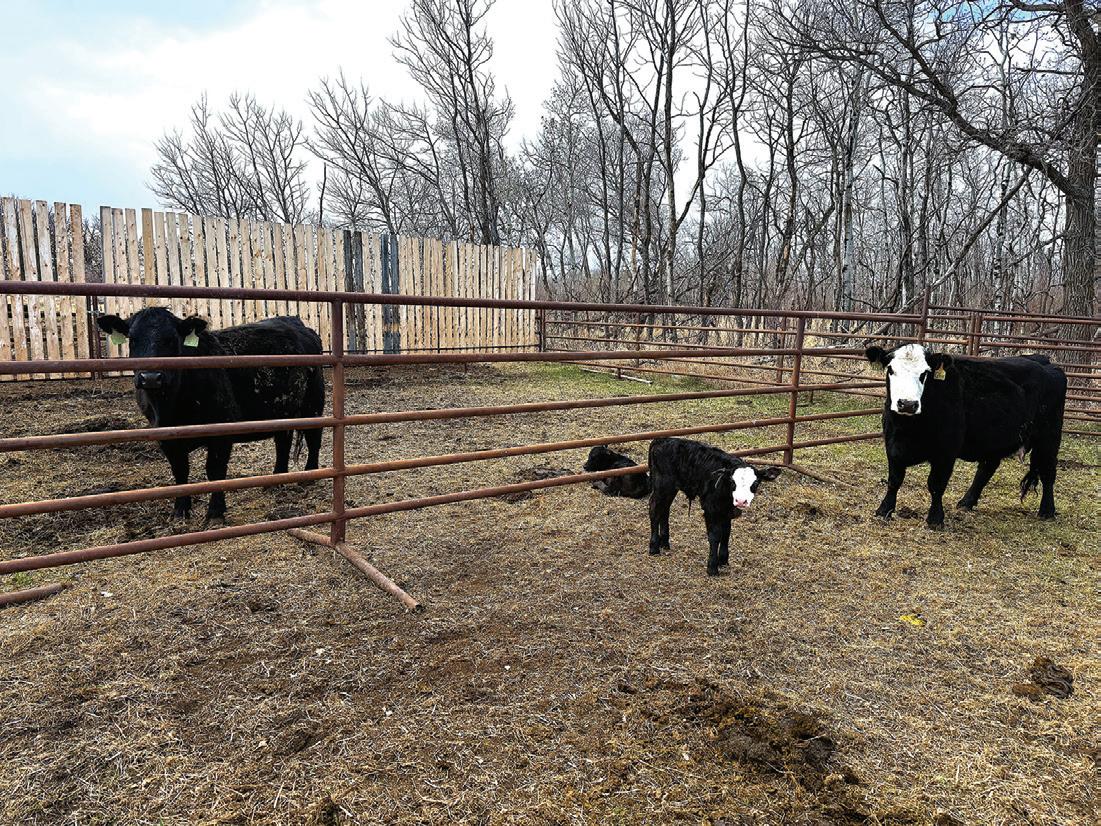
Tom says the biggest mistake a producer can make right now is turning cattle out before the grass is ready. He puts it plainly: “For every day you abuse pasture by early grazing, it will cost you three days in the fall.” That simple
rule has guided his management for years, and he believes it is more important than ever as producers look for ways to stretch feed supplies and protect long-term forage health.

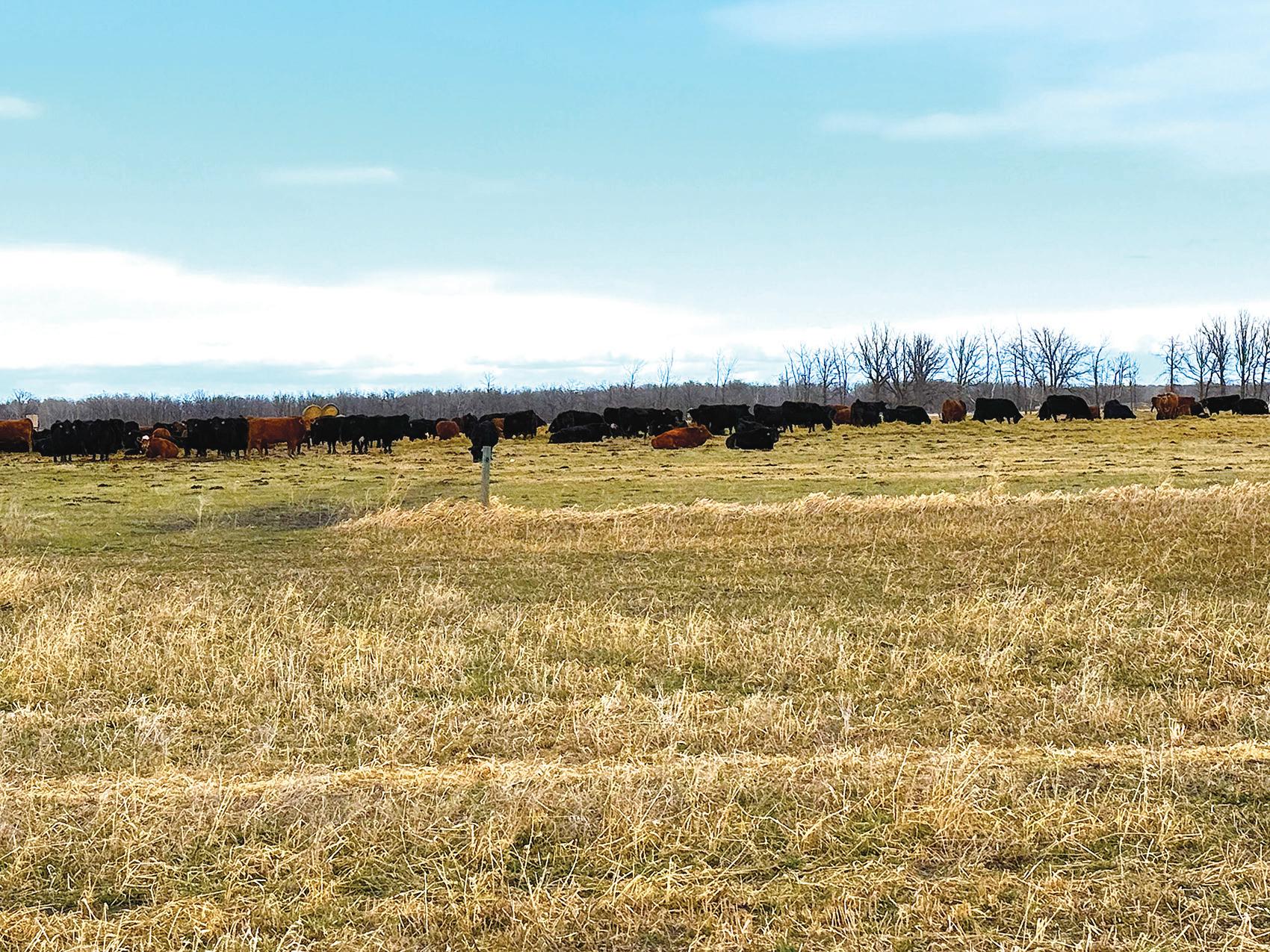
He says early grazing weakens plants before they have a chance to build root reserves. Once that happens, the pasture struggles all season, even if moisture conditions remain favourable. The result is shorter grazing periods, slower re-growth and more pressure on feed supplies later in the year. Tom encourages producers to resist the urge to push cattle out too soon, even when top growth looks promising.
“Find feed rather than turning out early,” he said. “It’s a lot easier to manage a few more weeks of feeding than to lose grazing days in August and September.”
He added that producers who protect their grass now will see the payoff in stronger stands, better re-growth and more flexibility when conditions tighten later in the season.
This spring, moisture conditions across Manitoba are encouraging. Tom said the Langruth area is in excel-
lent shape, with early spring moisture setting the stage for a strong start. Soil profiles are holding water, dugouts are in better condition than last year, and pastures are waking up with good colour and early growth.
He believes the next few weeks will be critical.
“If we can get a couple of warm spring rains in the next three weeks, that will guarantee a good first cut and great pasture conditions,” he said.
Warm rain at the right time would push forage growth, support hay fields and give pastures the boost they need to carry cattle well into summer.
Tom and Michelle continue to focus on careful management, steady decisions and protecting the land that supports their herd. They know moisture conditions can shift
quickly, markets can move, and feed supplies can tighten without warning. But they also know good stewardship pays off, especially in years when conditions start strong. For producers across Manitoba, the message is simple: protect your grass, watch your timing and let the season develop. Early moisture is a gift, but it still requires patience and discipline.
“Don’t abuse pasture. Give it time. It will pay you back,” Tom said.
With spring moving quickly and cattle producers preparing for turnout, the Teichroebs’ advice offers a steady reminder that longterm thinking pays dividends. Good moisture, good management and good timing can set up a strong grazing season — and this year, Manitoba has a real chance to see it.
By Dan Guetre
The National Farmers Union is warning that recent changes to Canada’s Plant Breeders’ Rights regulations will increase seed costs for farmers while giving multinational seed companies greater control over agriculture.
The federal government passed the regulatory changes on April 23, eliminating “Farmers’ Privilege” for many protected fruit, vegetable and ornamental crops, along with hybrid varieties and the parent varieties used to create hybrids.
Under the new rules, farmers who buy Plant Breeders’ Rights (PBR)-protected varieties can no longer legally save and reuse harvested seed, cuttings, tubers or bulbs for future crops on their own farms.
“When Canada’s current Plant Breeders’ Rights Act was passed in 2015, the National Farmers Union warned that a future government could use it
to restrict the Farmers’ Privilege simply by changing a regulation,” said former NFU president Terry Boehm. “On April 23, 2026, the federal government did just that.”
The NFU says seed saving has long been essential to agriculture and crop development.
“Seed saving is the foundation of agriculture itself,” said Aabir Dey, director of SeedChange’s Canadian program. “It is the age-old practice used worldwide by farmers and Indigenous peoples to create the amazing diversity of crops we know today.”
Dey said restricting seed saving also limits farmers’ ability to adapt crops to changing climate conditions.
According to the Canada Gazette, the federal government said the changes are intended to encourage private companies to introduce and market new plant varieties in Canada by making the sector
more profitable.
The NFU argues the main beneficiaries will be multinational seed corporations already dominating the global seed market. The organization cited Bayer, Corteva, Syngenta, BASF, Limagrain and KWS as controlling about 64 per cent of the global commercial seed market.
The NFU also raised concerns about the expansion of hybrid crop varieties into cereals, pulses and oilseeds, where farmers have traditionally relied on farm-saved seed. While hybrid crops naturally discourage seed saving because replanted seed does not reliably reproduce desired traits, the organization says the new regulation goes further by legally prohibiting the practice.
“Eliminating Farmers’ Privilege on hybrid varieties indicates how excessive industry demands are,” Boehm said. “They feel the need to legally eliminate the practice of seed-saving which is already
accomplished biologically.”
The organization also criticized recent cuts to public agricultural research announced for Agriculture and Agri-Food Canada, warning they threaten Canada’s long-standing public plant breeding system.
According to the NFU, the cuts could eliminate scientific positions and specialized test plots used to develop crop varieties suited to Canadian growing conditions.
“It appears that the AAFC cuts and this regulatory change go hand in hand,” Boehm said. “The government is dismantling a public plant breeding system that has served Canadian farmers for generations to make Canada’s seed sector more profitable for large private companies.”
He said the long-term result could be fewer farmer-focused crop varieties, higher seed prices and greater dependence on foreign-owned seed companies.


By Harry Siemens
Cool soils and shifting spring weather have Manitoba farmers asking one of the most com mon questions of the season: is it too cold to plant soybeans?
In its May 13 Notes From The Field, the An tara Agronomy team said seeding is well un derway across much of its network, with some operations already finished or hoping to wrap up before the long weekend. But the team also warned that dry field conditions do not auto matically mean warm soils.
“The past week has been dry and cool across the network, ideal for getting equipment mov ing, but soil temperatures have stayed stub bornly low,” the Antara team noted.
That has created a difficult decision for soybean growers. The old rule of thumb says to wait until soil temperatures reach 10 C, measured in the early afternoon. But Antara pointed to Manitoba Pulse and Soybean Growers-funded research led by Kristen MacMillan at the University of Manitoba that offers a more nuanced picture.

“The past week has been dry and cool across the network… ideal for getting equipment moving, but soil temperatures have stayed stubbornly low,” said Brunel Sabourin of the Antara team. Submitted photo
Across 11 site-years at Arborg, Carman, Dauphin and Melita from 2017 to 2019, soybean yields showed no statistically significant differences among planting dates from May 1 through May 24. That suggests the planting window is more flexible than the traditional 10 C guideline alone.
However, Antara said the key risk comes in the first 48 hours after planting. If soybeans take up cold water shortly after seeding, growers can face chilling injury, delayed emergence and increased pressure from soil-borne pathogens.
At three site-years where soils dropped to 0 to 1.1 C, the earliest seeding window lost 13 to 19 per cent of yield. Antara summed up the message plainly: the calendar date was not the problem… the forecast was.
The same pattern appeared in Antara Insights benchmarking data from the 2025 growing season. Producers who seeded just ahead of cold rain and below-zero nights around the May long weekend did not always see poor emergence. Stands looked acceptable through the summer. But harvest data told a different story.
Antara estimated a five- to 10-bushel-peracre yield penalty, worth about $60 to $120 per acre in unrealized profit at current prices.
The practical rule for growers is simple: check soil temperature, but also check what comes next. Avoid seeding soybeans if cold rain or below-zero temperatures are in the forecast for the two to three days after planting.
The Antara newsletter also highlighted a stubble digester trial initiated by a grower
seeking a better way to handle cereal straw without baling every acre. Jenn from Antara described a microbial inoculant trial designed to test whether residue breakdown can improve soil health metrics, seedbed conditions, nutrient cycling and water infiltration.
After one year, soil testing suggested a double rate showed modestly better microbial activity than the label rate or the untreated check. Antara has now moved the work to a multiyear site that follows the grower’s full rotation. The trial compares split spring and fall applications, single fall applications at higher rates and an untreated check.
The third message in the newsletter may matter most over the long term. Antara said farmers consistently ask for local, replicated and unbiased data, but not all are willing to pay for it or help generate it.
The team pointed to its On-Farm Research Network, AgWeather stations and Antara Insights benchmarking program as tools designed to provide clients with local, replicated information for real farm decisions.
Mike Palmier, an MNP agronomist from western Saskatchewan, told a Canola Council research event this past winter that every farmer should have a research and development line item in the farm expense budget. Antara agreed.
That may be the strongest lesson from this spring: farmers who measure field performance can manage risk more clearly. Those who rely only on habit may leave money in the field.
As Antara put it: “If you do not measure it, you cannot manage it.”
By Dan Guetre
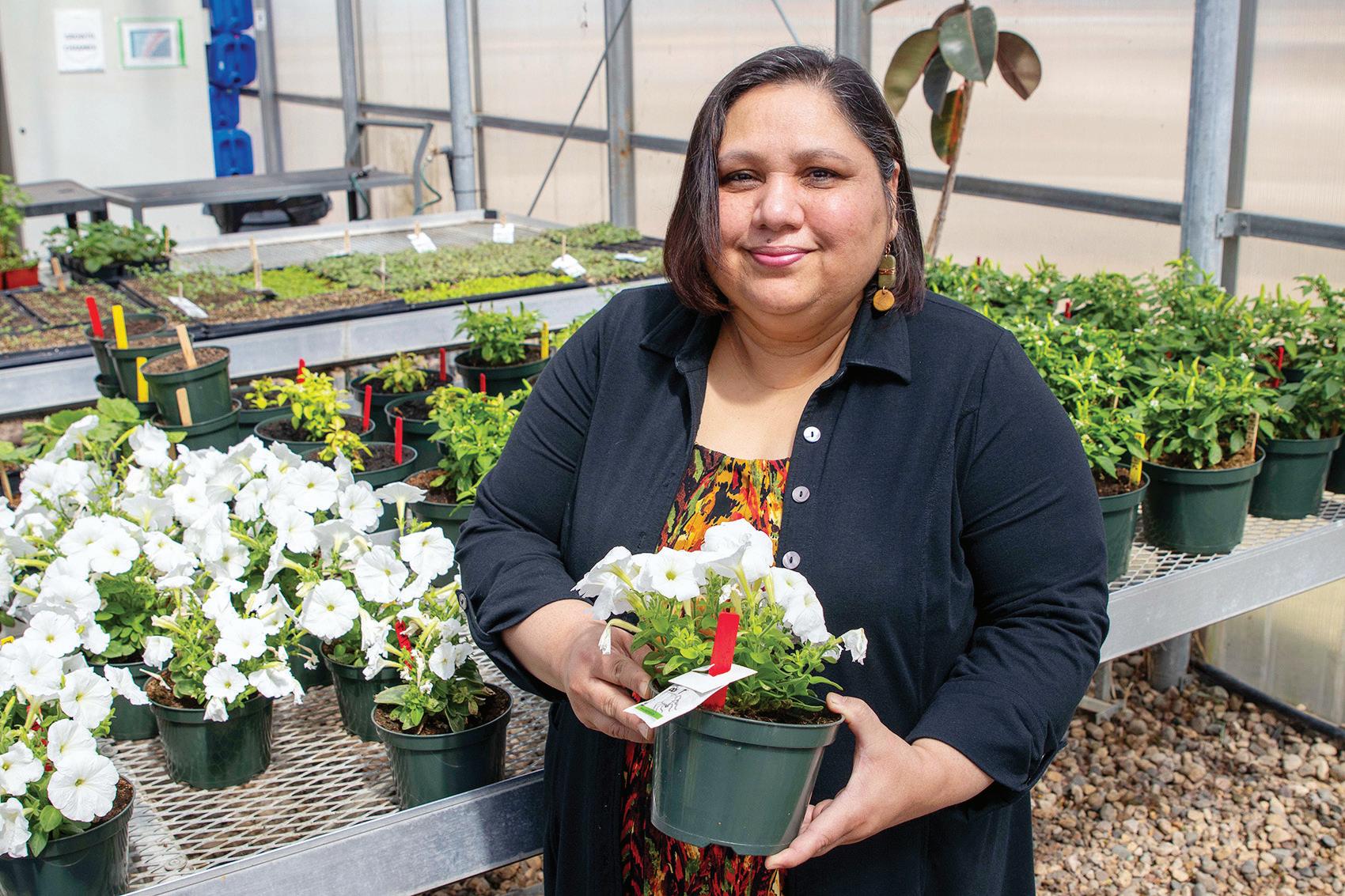
A researcher at Assiniboine College has received new funding support for a project aimed at reducing the environmental impact of greenhouse and nursery plant production.
Dr. Poonam Singh, a faculty researcher in the Russ Edwards School of Agriculture & Environment, has secured $99,000 through the Sustainable Canadian Agricultural Partnership (S-CAP) for her applied research project titled Exploring potential of biochar and sheep wool waste in ornamental and nursery plant production. The initiative has also attracted nearly $20,000 in industry investment.
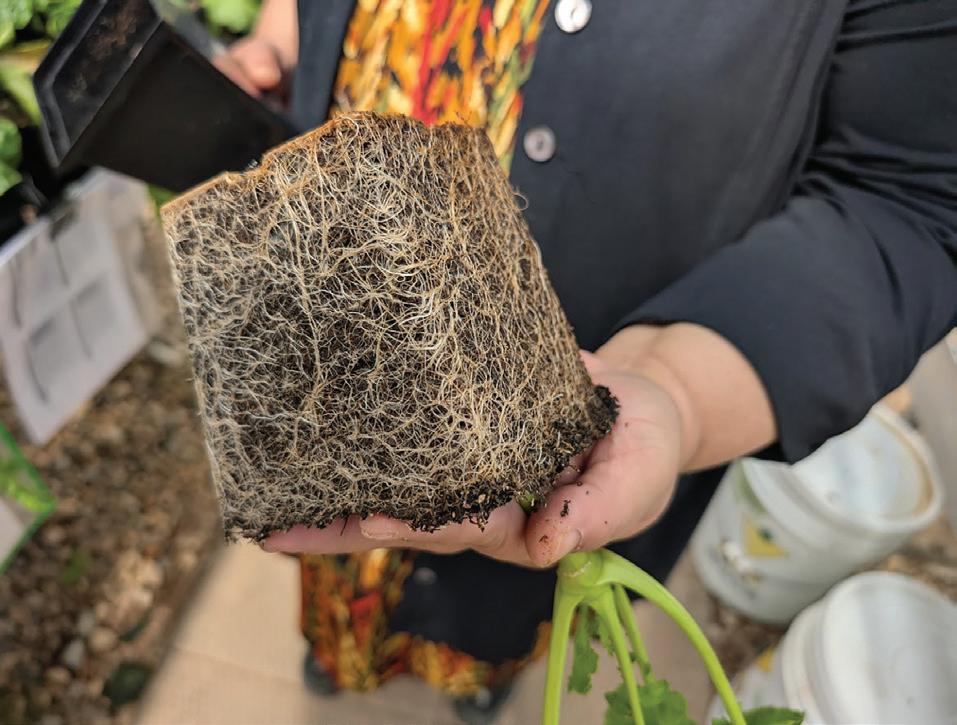
The research focuses on finding sustainable alternatives to peat moss, which is widely used as the primary growing component for ornamental and nursery plants, including flowers, vegetables, fruits and outdoor perennials.
“This most recent funding allows us to turn sustainability research into practical solutions growers can actually use,” Singh said. “It gives us the time and scale needed to properly test new materials before they reach commercial production.”
Peat moss is valued in greenhouse production for its consistency and favourable growing properties. However, peat is harvested from peat bogs, ecosystems that play an important role in carbon sequestration, water retention and biodiversity.
“Peat bogs store enormous amounts of carbon and water, so reducing peat use is an environmental priority,” Singh said. “Even replacing a small percentage of peat can make a meaningful difference when you consider how widely it’s used in horticulture.”
As part of the study, Singh will evaluate whether biochar can partially replace peat in container growing systems. Biochar is a carbon-rich material similar to charcoal that is created through a high-heat, low-oxygen process using organic waste materials such as wood chips and crop residue.
The process converts waste into stable carbon-rich solids rather than ash, while also improving soil aeration, water retention and nutrient availability. Singh’s research will specifically examine the potential for biochar made from cattails to be used as a peat extender in soilless growing media.
The project will also investigate sheep wool waste as another possible alternative. Wool naturally supports moisture retention and slow nutrient release, and early trials have shown promising results, including strong plant growth and reduced reliance on synthetic fertilizers.
“This most recent example exemplifies our
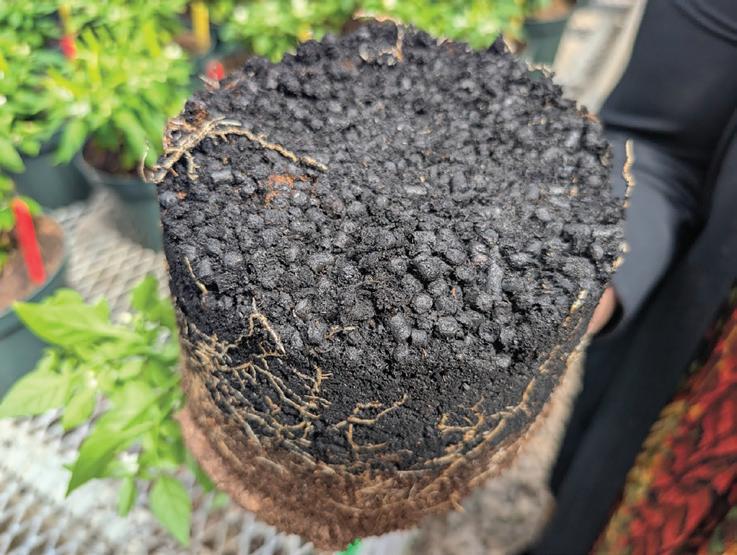
college’s highly successful, unique, signature approach to applied research,” said Dr. Deanna Rexe, Vice President Academic at Assiniboine College. “We proactively work with business and industry to identify priorities for their work, and then we partner to access funding, mobilize our faculty expertise, and include our students in the applied research process as part of our ‘Learn by Doing’ philosophy of education.” Singh noted that the goal is not necessarily to eliminate peat use entirely, but to identify practical ways to reduce reliance on it.
“It’s not just about replacing peat,” she said. “It’s about understanding how alternative materials perform and how they can realistically fit into existing production systems.”
The research project includes support from several industry and community partners, including Carbon Lock Tech, Manitoba Nursery Landscape Association, Canadian Co-operative Wool Growers Ltd., Sioux Valley Dakota Nation and Vanderveen Greenhouse.
According to Singh, those partnerships help ensure the research reflects real-world greenhouse
and nursery production conditions while also supporting potential commercialization opportunities.
“This work only happens because industry, communities and researchers are moving in the same direction,” she said. “Our partners help develop and process these materials, and we work together to test and refine them so growers can adopt them with confidence.”
Support for applied research in horticulture and ornamental production has become an increasing focus within the S-CAP funding program as part of broader sustainability efforts in agriculture.
Chris Budiwski, Dean of the Edwards School, said the project highlights the value of collaboration between researchers, industry and government.
“Assiniboine’s recognition as one of Canada’s Top 50 Research Colleges reflects the applied, industry-focused work our faculty are doing,” Budiwski said. “Dr. Singh’s research is a strong example of how public investment and industry partnerships can support innovation that benefits both producers and the environment.”
Singh said project findings will be shared with growers, researchers and industry partners as the work progresses in hopes of supporting wider adoption of sustainable growing practices across the sector.



By Harry Siemens
Strong demand for forage and grass seed this spring shows Manitoba producers continue to focus on feed security, stand improvement and crop diversification.
Kurt Shmon, president of

producers to secure income through seed production contracts.
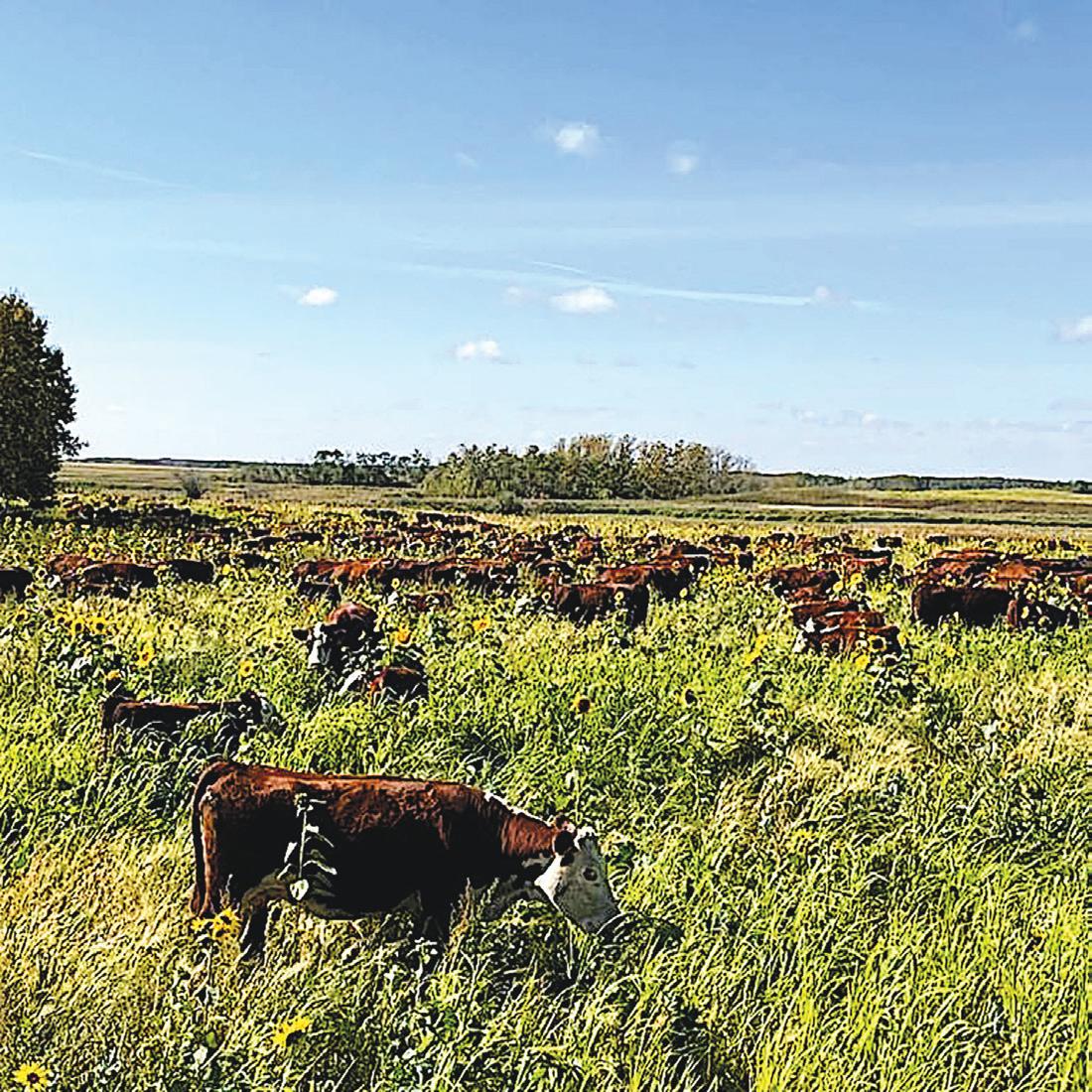
Imperial Seed in Winnipeg, said demand remains firm across both annual and perennial forages. Imperial Seed supplies forage, grass and turf seed across Manitoba and Western Canada and also manages seed production contracts.
Alfalfa leads the list again this spring.
“Alfalfa, the queen of forages, seems to be in higher demand than in previous years,” Shmon said.
Demand for annual forag-
es has also increased, while pasture blend sales remain closer to average. On the seed production side, Shmon said Imperial Seed booked acres earlier than usual this year. Commodity prices and rising input costs have encouraged
Supply tightness continues to shape the market. Alfalfa supplies have tightened due to strong demand and exports. Crested wheatgrass has also sold out in some cases, while sainfoin remains in limited supply. Supplies of other forage species are more stable.
These shortages matter as farmers finalize seeding plans. Crested wheatgrass, known for its drought tolerance, has drawn increased interest, and tight supplies have pushed producers toward more drought-hardy blends.
The weather has also influenced seed movement.
Imperial Seed shipped a significant volume early for frost seeding. The late spring melt has improved optimism, with many producers expecting adequate moisture at planting. Shmon said seed production has also shifted, with more acres seeded in the spring rather than the fall.
Annual forages continue to gain traction, particularly in cattle operations. Producers use them for fall grazing and hay, but also as a flexible tool to build feed supplies. Legume use is also rising as producers look to manage fertilizer costs.
“High input costs have made nitrogen fixation more attractive,” Shmon said.
Some producers now seed
small amounts of legumes into cereal crops to improve soil structure and add nitrogen. Clovers such as berseem and crimson play a role in those systems.
Renovating older forage stands remains a challenge. Establishing new plants in an existing stand can prove difficult, especially if moisture conditions turn against the seedlings. Some producers use frost seeding of non-bloat legumes, while others rely on cattle to spread seed naturally.
Even with these approaches, Shmon said many producers increase seeding rates to improve success. Still, he believes starting fresh often delivers the best results.
“Nothing beats establishing a new stand,” he said. He advises producers to start with a clean field, choose companion crops carefully and seed at the correct depth. Harvesting the companion crop as greenfeed allows young forage stands to establish with less competition in the fall.
Forage seed production acres have expanded in recent years, reflecting both economic and environmental value. These crops add diversity, spread workload and help manage risk across farming operations.
“Spreading risk also spreads workload,” Shmon said. “And who doesn’t appreciate that?”

By Joan Airey
As I write this on May 21, it seems I’ve never been so late getting my whole garden planted. Potatoes are in, and I’m hoping to plant the rest next week. The terrible winds last week left my garden covered with twigs.
I thought maybe if I watered my rhubarb we’d get a decent rain today, but so far only a tenth of an inch has fallen at most. Last fall I planted carrots and green onions, but so far none have germinated, so they may be a writeoff. My garden had a couple of feet of snow on it last winter, but when it was tilled it was definitely lacking moisture. If it doesn’t rain later today, my plan is to water things with a watering can. Strawberry plants are growing slowly.
Last fall, a cat showed up in our yard.
I tried to locate the owner, but no one claimed him. Our vet says he’s a neutered two-year-old male. I spent the last couple of years teaching our golden retriever that my garden was off-limits. Now I have to teach “Killer” that the stakes are not for him to knock out of the ground and that
strawberry plants are not for rolling on.
T & T Seeds calls this hardening-off week. Moving straight from a warm window to a windy garden bed is a real shock to a plant. Spend this week setting your tomatoes and peppers outside in a sheltered, shaded spot for two or three hours each day. Add a little more sun and time each day, and
by the weekend they will be ready to go in without stalling.
When your plants go in the ground, keep your tomatoes and basil close together. They support each other well in the garden, and the combination is just as good on the dinner table. Peppers like the same warm conditions, so they fit naturally into the same bed or patio container.
Last winter, Dan Reid, a year-round gardener from Ontario, told me he grows “Scotia Tomatoes” year-round in his greenhouse in summer and under grow lights in winter. I mentioned this in an earlier column. Dan has some excellent videos on YouTube. In a recent newsletter, T & T Seeds recommends them as a short-season variety to make the most of a short sum-
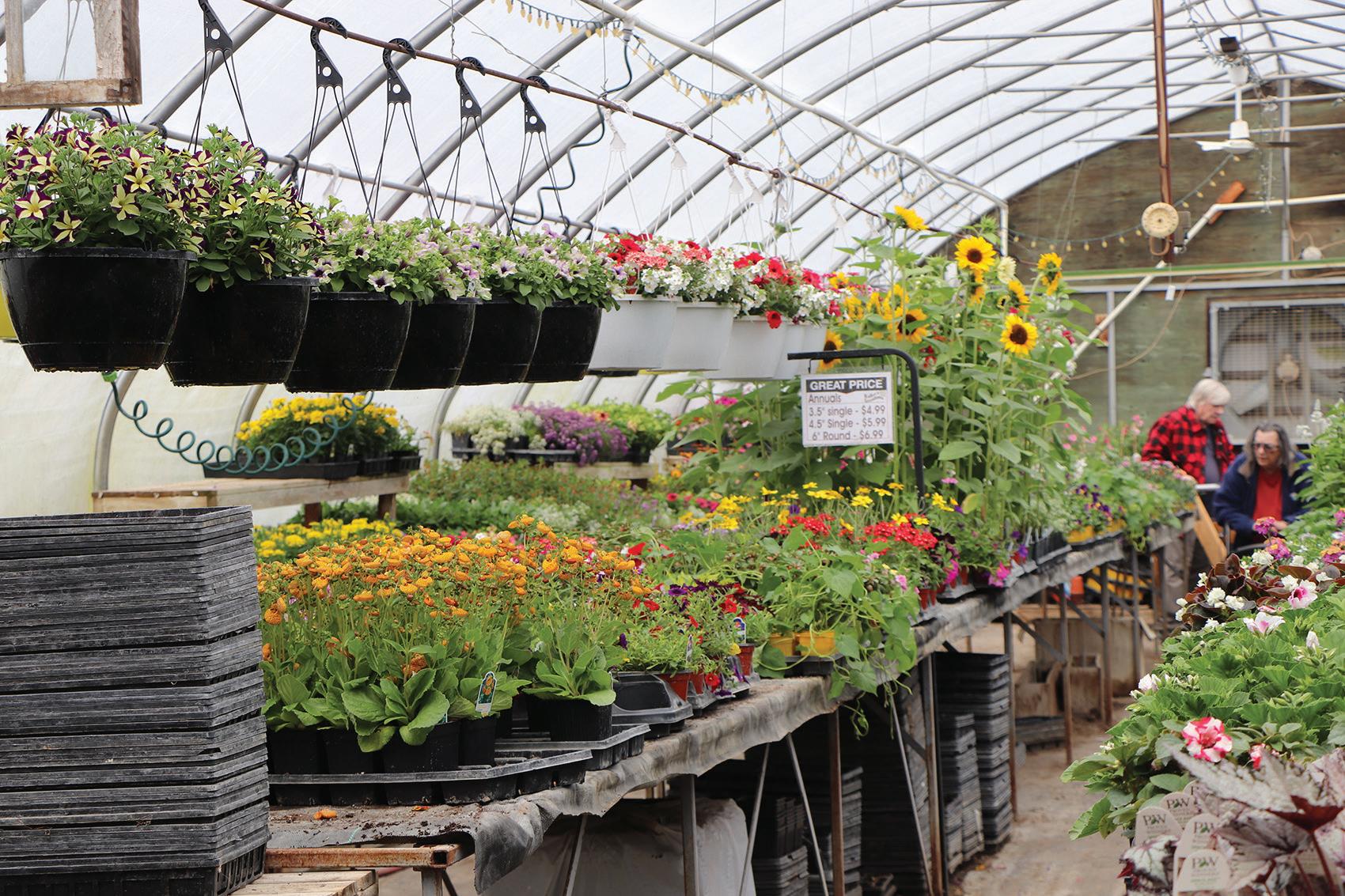
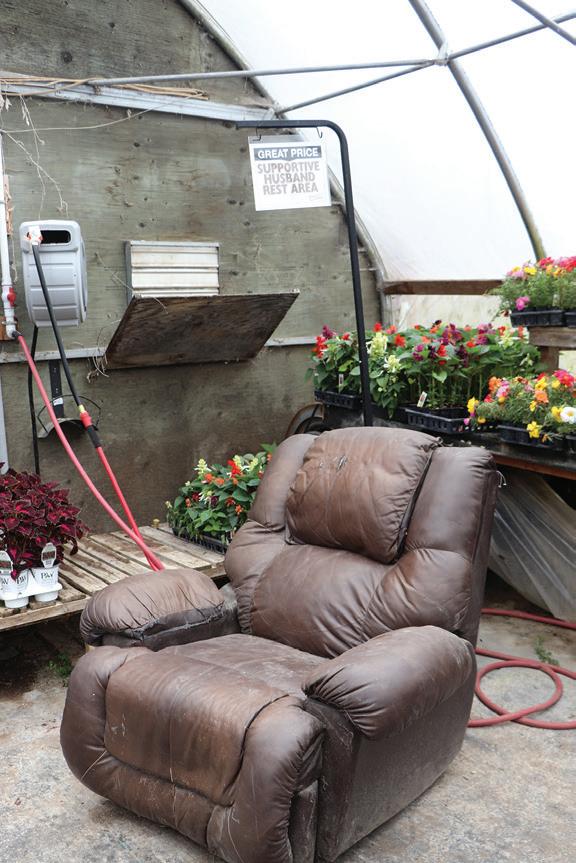
mer. I purchased some Scotia seed and now have three plants. I’m hoping to get some early tomatoes from them. At the moment, they are taking up a lot of space under my grow lights. Yesterday, when I was going into our local Co-op for a few groceries, a friendly young lady asked if I had been out to Walker’s greenhouse yet. When I said no and that I planned to go later this week, she told me they have a special lawn chair to sit your husband in so you can shop in peace. I’m hoping I might get a greenhouse photograph to go with this column before it goes to print. I grow Big Beef tomatoes every year, but this year I’m hoping to find some Celebrity plants in a local greenhouse, as a gentleman from Souris had a fantastic crop of them last year. My supply of salsa and canned tomatoes is going to run out before my tomatoes are ready to process.
Here’s to a few frost-free months. In 1969, we had a frost that killed the top few inches of my tomato plants on July 29. Last night (May 21), we received six-tenths of an inch of rain, which was very welcome.

By Harry Siemens
New research shows Canada’s pork sector continues to benefit from targeted investment in innovation, delivering gains in animal health, nutrition, meat quality and overall farm profitability.
The report, From Research to Results: Measuring the Impact of Pork Research in Canada, led by the University of Saskatchewan and funded through partnerships involving Swine Innovation Porc, examined national research efforts from 2010 to 2023. It highlights the value of coordinated, producer-supported programs across the country.
Dr. Stuart Smyth, professor in the Department of Agricultural and Resource Economics at the University of Saskatchewan, said the study involved more than 200 researchers from Alberta to Nova Scotia.
“We classified the research into key sectors, including livestock health, nutrition, pork quality, animal welfare and technology,” he said. “That gives a broad overview of the work undertaken.”
Over 14 years, the study identified 72 research projects funded through the Swine Innovation Porc program. These projects focused on practical improvements that directly affect farm operations, from reducing disease risk to improving feed efficiency and enhancing pork quality.

The economic return stands out. Researchers found that about $50 million invested in pork research generated roughly $225 million in benefits. That translates into a strong return for producers and the broader economy.
On a per-farm basis, the numbers remain clear. Smyth estimates the average hog farm invested about $1,800 over that period and realized close to $9,000 in returns. Those gains come through improved production efficiency, stronger animal health and better market demand.
“This research provides a risk management strategy,” Smyth said. “We’re seeing improvements that benefit producers across the country.”
Many of the gains come from work that rarely makes headlines but plays a critical role on the farm. Biosecurity research has improved cleaning protocols for livestock transport, reducing disease risk. Other work has strengthened feed efficiency and animal care practices.
The benefits extend beyond the farm gate. Consumers benefit from consistent, high-quality pork and increased confidence in production practices. Research has also supported stronger demand by improving product quality and communication about its value.
Looking ahead, continued investment will remain criti-
cal. Smyth noted federal agricultural research funding is in transition, creating uncertainty for long-term planning. At the same time, potential reductions in research capacity raise concerns about future innovation.
“We’re only as successful
as the amount of funding that goes in,” he said.
New developments underline the importance of sustained research. Advances such as virus-resistant pigs offer the potential to improve health outcomes, reduce feed require-
ments and strengthen productivity.
Smyth said the sector now has an opportunity. As discussions begin for the next federal funding cycle, producers and industry leaders can reinforce the value of research invest-
ment and secure long-term support.
The message remains clear: coordinated pork research delivers real returns, strengthens the industry and supports both producers and consumers across Canada.

By Peter Vitti
It was common years ago to set up a simple fence around a wooden creep feeder that kept the cows out and allowed the spring calves to eat a couple pounds of whole oats. It worked to maintain growth on their young frames as mum’s milk dried up and pastures became less nutritious. That was the original concept of creep feeding calves. In more years, we tended to concentrate on

the profitability of creep feeding, but as a friend of mine that raises 400 Angus-Simmental beef cows, says - sometimes you have to throw your calculator away to see its best on-the-farm benefits.
Sorry. I not ready to throw my calculator away just yet. I have calculated the annual profitability of creep feeding calves over the last twenty years. Except in a few years, when feed prices were exceptionally high compared to fall calf prices –it has been profitable to creep feed calves on paper. Sometimes, it was a few dollars per head, other times like in 2025; a tidy profit of $170 per head was pocketed.
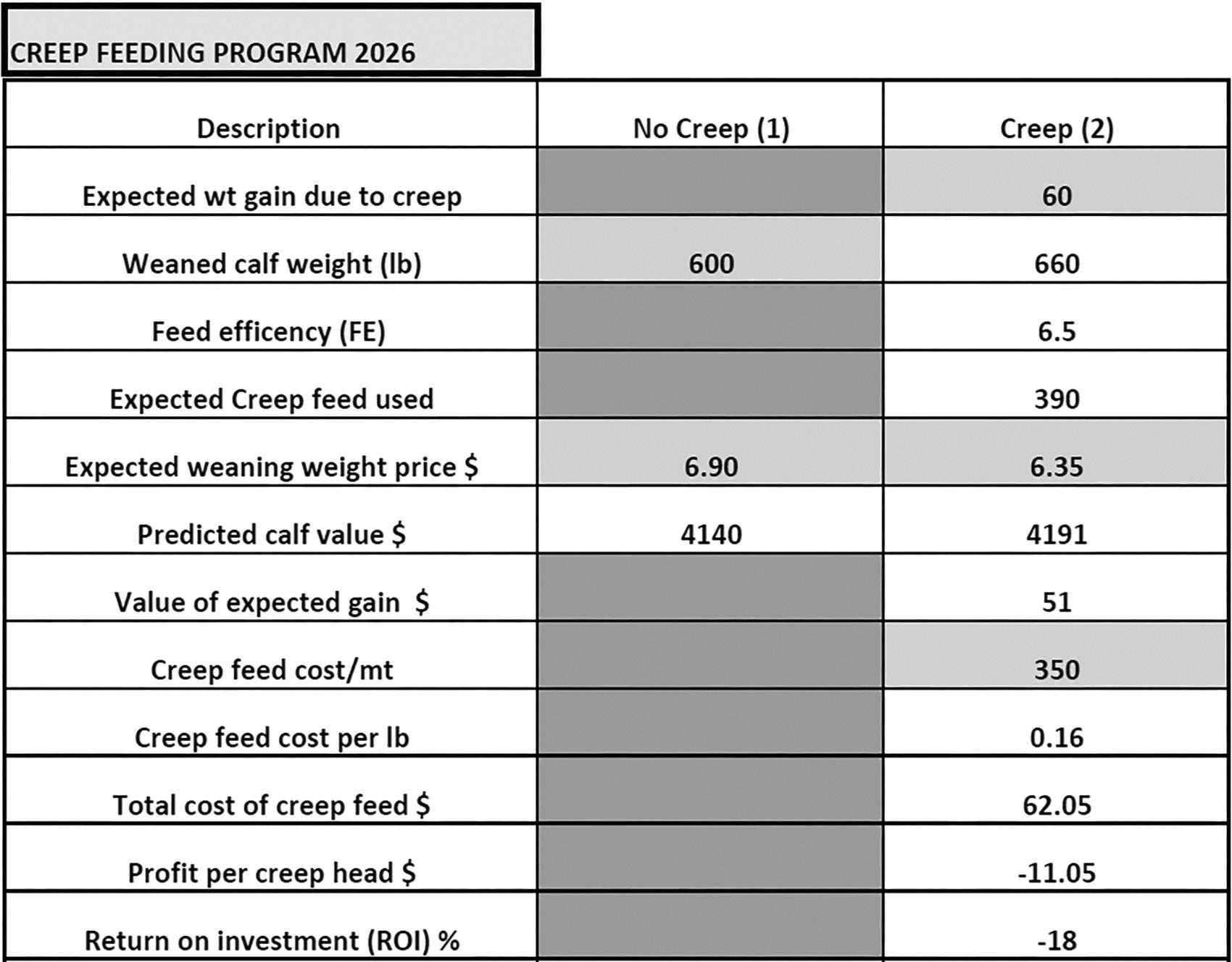
The funny thing in 2026, the economic conditions are similar to last year (high calf prices relative to feed prices), but I am surprised that creep feeding may not profitable or some people will breakeven at best. The present breakdown of creep feeding spring calves is illustrated in the following chart.
I input the current market price for 600 lb calves @ $ 6.90 per lb.

and make a big assumption that it will maintain itself until autumn. Plus, my home-made creep ration costs $350/mt, which contains a lot of $ 6.00/bu. barley. With a traditional negative price gradient discount in place of $10 cwt, a phenomenal profit of $285 per calf should be realized.
However, the truth of the matter is - the higher the calf prices, the greater the volatility and market discounts as calves increase in weight. In my particular example, the raw cwt discount from 600 to 700 lbs feeder cattle is between $50 - 60 cwt (CDN$), which results in a nominal loss of about $10 per calf. To many producers, it makes creep-feeding hardly worth the effort of moving creep feeders out to pasture, when solely based upon such pure economics.
At this point, this is where my friend (with 400 beef cows)’s theory of “un-economics” kicks in. He advocates – six on-the-farm benefits remain the same due to creep feeding:
- Drought – The true purpose of creep feeding is to fill the nutritional gap between the nutrient requirement of spring calves’ growth and what nutrition the nursing cow and pasture provide. During drought conditions, it is not unusual to see spring calves visit the creep feeders more often than when pastures are lush and cows are milking well.
- More saleable weight - Producers can average 30 – 80 lbs per calf of added gain with creep feeding, particularly on large-frame good quality steers with a lot of future growth potential.
- Efficient gains are achieved –Good quality steers are masters of turning high quality and palatable creep feed into lean body tissue. Spring calves often convert good quality creep at the rate of 6 lbs eaten into 1 lb of gain.
- Not so dependent on cow – I know of a few producers that put their creep feeder out as early as possible in the grazing season. As a result, they have witnessed that weaning-weights tend to be high-
er by 20 lbs with steady feed efficiencies of 6 – 7 lbs of feed per lb of gain.
- More uniform weaned calves –Creep feed tends to even out the nutrition received by all calves within a cowherd and as a result similar weaning weights by fall time. That’s because, some cows are not producing as much milk as compared to others, such as 1st calf heifers compared to older brood cows.
- Less weaning stress –Another friend of mine weans about 300 calves every fall. She finds that her crept-fed calves cry out for a day or so, but they quickly forget about mum. These weaned calves are also bunk-broke and tend to go onto a 45-backgrounder feeding program in a faster way.
These benefits are good creep feed testimonials. Even in 2026, when its direct profitability might be breakeven dollars, producers might still consider putting out their creep feeders onto pasture, anyways.

I can think of no substitute for optimum feed in lactating dairy cows. It’s the only way to provide their essential nutrient requirements to make them milk. By successfully achieving nutritious feed intake (dm, basis) in dairy cows; it almost guarantees a full bulk-tank each day.
That’s a pretty bold statement. But, optimum feed intake in the lactation barn is on my mind, every time I visit a dairy farm. Whether, it’s my first time or one 100th; I walk along the feed-bunk and look at all of the cows. First, which cows are up at the feed-bunk as well as how many cows are lying down in their stalls chewing their cud? I might even pick up a handful of their TMR from the bunk and literarily pick it apart.
When the dairy producer walks along with me, I fine-tune these observations by asking more questions about the cows or something more about their diet. Such is the real case of a friend of mine, whom milks 350 dairy cows, twice a day in a double-twelve parlor. Needless to say, he not only makes up a well-balanced nutritious TMR, but he is an excellent feed bunk manager. His story goes something like this - at noontime, every day, he mixes up in his self-propelled mixer-wagon; one mix of feed for 3 – 6 minutes,
dumps it in the feed bunk. And, then he makes up a second batch, but only dumps ½ of that. Together, this amount feeds all the lactating cows for one day. The next day, he dumps the remainder ½ mix from the previous day and then makes up a complete batch and dumps that to completely feed the herd for the second day.
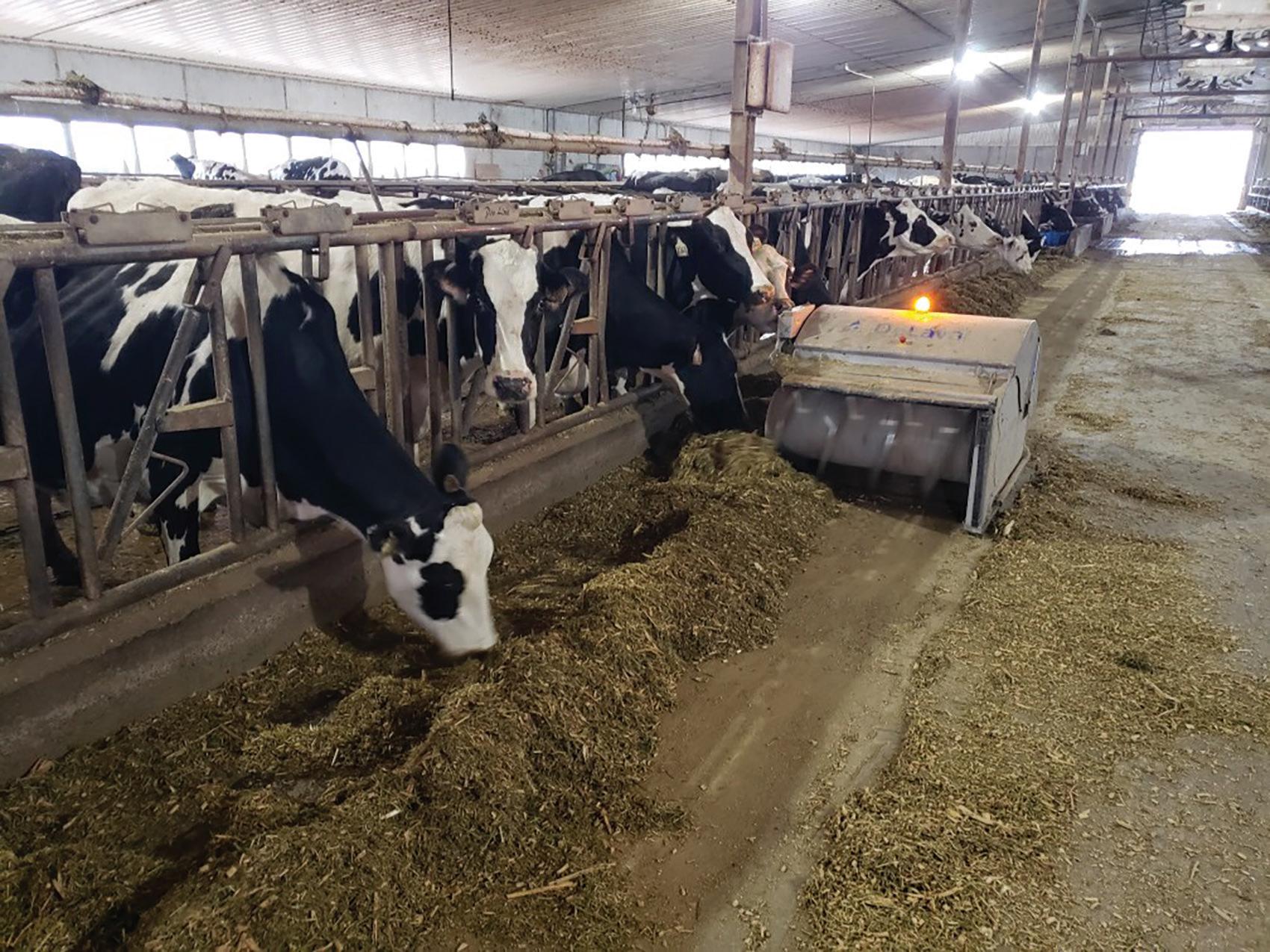
His automatic robot feed-pusher (with a flashing yellow light) is programmed to move along the feed-bunk, where it then augers newly dumped feed, remixes it and pushes it up, every 2 ½ hours. So, this producer has very few issues with TMR sorting in his lactation barn. He sees that by pushing up the feed and making it more available to the cows at all times: cows tend to exhibit less selective feed behavior. They get a belly-full of effective forage-fiber that promotes good rumination, and their daily feed refusal is kept under 1.5%.
About every month, this producer also measures the dry matter intake of the entire lactation diet. It is an easy exercise, because he simply measures - how much of the above TMR is eaten in a 7-day period. Over the last month, his herd which comprises of 70% mature cows and 30% 1st parity cows consume approximately 25.9 kg per cow per day of nutritious feed on a dry matter basis.
Grounded upon these sound nutritional principles, here are a few dairy barn suggestions that in my experience works well in his dairy operation to achieve optimum feed intake in this lactation barn. Yet, they could really work in anyone else’s lactating cowbarn:
- Maintain a 50% moisture level in PMRs and TMRs – I strongly recommend that producers conduct a proper dry matter content (weightscale method) of their PMR/TMRs at least once a week. As a footnote - a change in moisture content of +/- 5% may greatly affect cowherd dmi.
- Provide high quality feed to the cows - High quality forage supports high and more consistent DMI due to their lower unusable fiber content (i.e.: lignin) and greater in-depth digestion by the microbes that provides nutrients for milk production. Yet, make sure that enough forage “effective fiber is fed as cited in my friend’s case.
- Formulate a palatable and rumen “friendly diet”
– Feed a portion of the grain that has slower rates of starch digestion such as grain corn to prevent subclinical acidosis. Avoid feeding too much unsaturated fats and/or bypass fats. Make sure to limit feed unpalatable feed ingredients. Last, check your forages and grains for visible mold and other contaminants.
I find these suggestions work, but sometimes it only takes common sense to help promote dry matter intake in lactating dairy cows. The other day while I was conducting a barn-walk and I pulled out several pieces of orange baler-twine from the freshly laid TMR. Balling up in a cow’s gut would probably be not a good thing.
By Harry Siemens
Seeding continues across Manitoba, with progress varying by region, but one message stands out this spring: better measurement leads to better management.
According to the latest Antara Agronomy field update, many producers continue making good progress, especially east of the Red River, where soybean and canola seeding is moving ahead steadily. On the west side, a brief stretch of warmer weather helped activity pick up before cooler temperatures slowed momentum again. Farmers now face a familiar spring decision. Some continue seeding into cooler soils, while others are waiting for warmer conditions, especially for corn and soybeans. Soil temperature at seeding depth remains one of the biggest factors affecting emergence and early crop growth.
That focus on precision continues throughout the season.
Brunel Sabourin, co-owner and agronomist with Antara Agronomy, said better field measurement leads to better management decisions.
“If you don’t measure it, you can’t manage it,” Sabourin said.
Antara has added new technology this year, including a DJI Mavic 3M multispectral drone designed to collect more accurate field-level data. The goal is to turn that information into practical recommendations growers can use quickly.
Sabourin said drone technology gives agronomists a much clearer picture than traditional satellite imagery alone.
Early in the season, that includes measuring plant stands and crop uniformity. An evenly emerged thinner stand creates a much different agronomic situation than a patchy stand with uneven emergence. Those differences help determine whether reseeding makes economic sense.
Later in the season, multispectral imaging helps identify differences in crop vigor, nutrient response and soil conditions before visible yield loss appears.
Sabourin said earlier detection allows producers to respond faster and protect yield potential.
On-farm trials also continue to play a larger role
on Manitoba farms. More producers now use existing equipment, such as GPS guidance systems and yield monitors, to test products, fertilizer rates and timing directly in their own fields.
“We’re not just testing new inputs,” Sabourin said. “We’re questioning the ones already in the program.”
That approach challenges the long-standing belief that more inputs automatically produce higher yields.
Field data now shows clear limits.
Nitrogen remains one example. Additional fertilizer can improve yields up to a point, but excessive rates can reduce profitability and sometimes even lower yield performance.
Sabourin said balance matters.
The same thinking applies to crop protection products. Fungicide or herbicide applications that fail to meet economic thresholds can create unnecessary stress on crops while adding costs.
“Every input has a role, but every input also has a cost,” Sabourin said.
As seeding continues, Manitoba farmers still
see solid yield potential across many regions. Moisture conditions generally remain favourable, although cooler temperatures continue to slow crop development.
The message this spring remains consistent across the industry.
Better data, careful measurement and disciplined management decisions will likely separate the strongest crops from the weakest ones this season.



By Harry Siemens
Farm transition has become too large, too complex and too emotional for the old real estate model of a sign on the fence, a listing agreement and a handshake at the elevator.
That was the core message from a recent live briefing hosted by Dan Aberhart of Growing the Future Productions, presented in partnership with Hammond Realty. The discussion featured Tim Hammond, founder, CEO and broker with Hammond Realty, and Wade Berlinic, farmland advisor with Hammond Realty, who specializes in complex, high-value agricultural transitions.
Aberhart framed the issue as the “farm transition train,” noting that transition is always on the track, whether farm families feel ready or not. With some Saskatchewan and Manitoba quarters now reaching values that can push large farm enterprises into the tens of millions of dollars, the old way of selling farmland no longer fits many situations.
Berlinic said the numbers have changed dramatically. A farm with 10 quarters that may have been worth $500,000 two decades ago can now be worth $5 million to $10 million.
“The metrics have changed,” Berlinic said. “And those metrics demand a different focus.”
Hammond said the advisory framework was developed because traditional farmland transactions often frustrated families and advisors. His team saw farm owners facing major decisions involving land, equipment, grain, taxes, family relationships, lenders, lawyers and accountants, yet those professionals often worked in silos.
Both men said the key is to bring the full advisory team into the same room before the farm goes to market. That means the lawyer, accountant, banker, wealth advisor and farmland advisor
need to work from the same plan.
Berlinic said those meetings often become turning points. Farm families may feel overwhelmed and unsure where to start, but a structured conversation with the right questions can bring clarity.
Tax exposure and family conflict emerged as two of the biggest concerns in the session. Berlinic said the structure and timing of a sale can have major tax consequences, especially when land values have multiplied. A farm may include privately owned land, corporately owned land, leased land, machinery and grain inventory, and selling everything in a single year may not make sense.
Hammond said transition planning also gives farm families more emotional space. Instead of rushing through a major life change in one month, families may need one or two years to prepare, think, talk and plan.
The Hammond Realty approach breaks the process into four stages: define the relationship, discover the farm and its assets, build a blueprint with options and then deliver when the family is ready. Hammond said the traditional real estate model often skips straight to the final step.
Another major issue is confidentiality. Berlinic said discretion matters when a large farm is for sale because employees may worry about their jobs, landlords may start looking elsewhere and coffee shop talk can add stress.
The broader message was clear: whether a farm plans to sell, transfer within the family or expand, it needs a strategy.
Berlinic summed it up simply: build the farm today as if you may need to sell it tomorrow. In today’s agriculture, transition is not just a real estate event. It is a business, family and legacy decision.

By Dan Guetre
Manitoba farmers and agtech organizations are playing a central role in the launch of a new national initiative designed to help producers adopt agricultural technologies with greater confidence through real-world validation.
The Agriculture Innovation, Validation and Adoption Network (AIVA) has officially launched, bringing together farmers, researchers, and technology companies to test and validate agtech under practical Canadian farm conditions using standardized evaluation frameworks.
Founded by Farm Credit Canada, EMILI and WHIN, AIVA aims to close a long-standing gap between agtech innovation and on-farm adoption by providing independent, third-party validation of technologies before they reach broad commercial use.
For Manitoba, the launch positions the province as a key testing ground in AIVA’s national network. The organization has already identified 23 Farmer Alliance Members across Manitoba and Saskatchewan, representing more than 235,000 acres of farmland where market-ready technologies will be trialed under real production conditions.
“Canadian farmers deserve access to the best technology available, and that’s why farmers are at the heart of AIVA’s testing and validation processes,” said Rebecca Franklin, AIVA Network Lead. “Our work brings stakeholders together to advance technology that solves real challenges for Canadian farmers, and provides them with real-world, third-party validated data to make their purchasing decisions.”
AIVA’s launch comes as innovation is increasingly seen as essential to farm profitability. FCC has reported that productivity gains from agricultural innovation could increase Canadian farm incomes by up to $30 billion over the next decade. However, many technology developers still lack access to real-world farm environments for testing and refinement.
Manitoba-based EMILI will serve as a key validation hub for several upcoming field trials in the 2026 growing season, including multi-site national collaborations across multiple provinces.
One major Manitoba-involved project is with Geco Weed Management, which is running three experiments focused on predictive weed mapping using satellite imagery. Manitoba trials will compare satellite-based weed detection with in-field scouting and evaluate how variable-rate herbicide and seeding strategies affect profitability and weed control in wheat and soybean production.
Experiment 1 will assess Geco’s ability to detect weed patches and identify weed species using satellite imagery across diverse crops and geographies, including Manitoba sites at EMILI. Field scouting will be conducted four times during the season to compare predicted weed maps with ac-
tual field conditions.
“AIVA’s trials will provide results from across multiple farms and fields in different geographies across Canada,” said Greg Stewart, CEO and founder of Geco Weed Management. “It’s unprecedented how valuable that information is going to be for innovators.”
Experiment 2 will examine how weed mapping can guide agronomic decisions, including increased seeding rates and adjusted herbicide applications under different weed pressure scenarios. Treatments will compare baseline and elevated inputs, with outcomes measured through yield, protein content, and in-field scouting data.
Experiment 3 will test whether predicted weed pressure maps can improve the efficiency of robotic weeders by optimizing travel paths based on weed density, including comparisons between weed-prioritized routes and traditional linear navigation systems in crops such as pumpkins and onions.
Another Manitoba-linked project involves Picketa Systems, which is validating its Leaf Evaluated-Nutrient System (LENS). The system provides in-field plant tissue nutrient analysis as an alternative to laboratory testing. Manitoba trials will include more than 100 paired LENS and lab measurements across wheat, barley, oat, soybean, corn and canola to validate accuracy and consistency.
AIVA is also collaborating with Corteva to evaluate spray drone fungicide applications for control of white mold in canola and soybeans. Manitoba trial sites will compare drone-based applications with conventional ground spraying to assess efficacy and water volume sensitivity.
Soil health and farm management innovation is also part of Manitoba’s validation role. Miraterra is working with AIVA to validate a soil intelligence platform that integrates geospatial data, soil chemistry, biology, and AI-driven analysis to support field management decisions. Manitoba trials will assess optimized soil sampling, multi-layer soil data integration, and the performance of AI-generated agronomic insights.
In addition, AgExpert will be tested through AIVA’s sustainability-focused agronomic intelligence framework, with Manitoba sites contributing to field scouting, soil sampling, tissue testing, and grain quality analysis. The project aims to connect nutrient investment with crop performance and soil health outcomes while supporting regional benchmarking.
“AIVA is built for farmers—giving them confidence to adopt agtech that has been tested and proven on Canadian farms,” said Graeme Millen, FCC Vice President, Strategic Finance and Business Development.
EMILI CEO Jacqueline Keena said the initiative will help accelerate technology adoption.
“AIVA’s success will be measured by our ability
to help agtech scale faster and more effectively,” she said.
Manitoba farmer Scott Day of Deloraine said the network will help producers navigate increasing volumes of new technology.
“New technologies are bombarding farmers from all angles these days and it is hard to know how to manage all these opportunities,” Day said.
“AIVA provides farmers direction, reduces the risk of trying these new innovations on their own operations and facilitates a network of like-minded farmers to share their experiences.”
AIVA says it will expand nationally in future years, adding more farmers, regions, and validation hubs to strengthen Canada’s agtech adoption ecosystem.
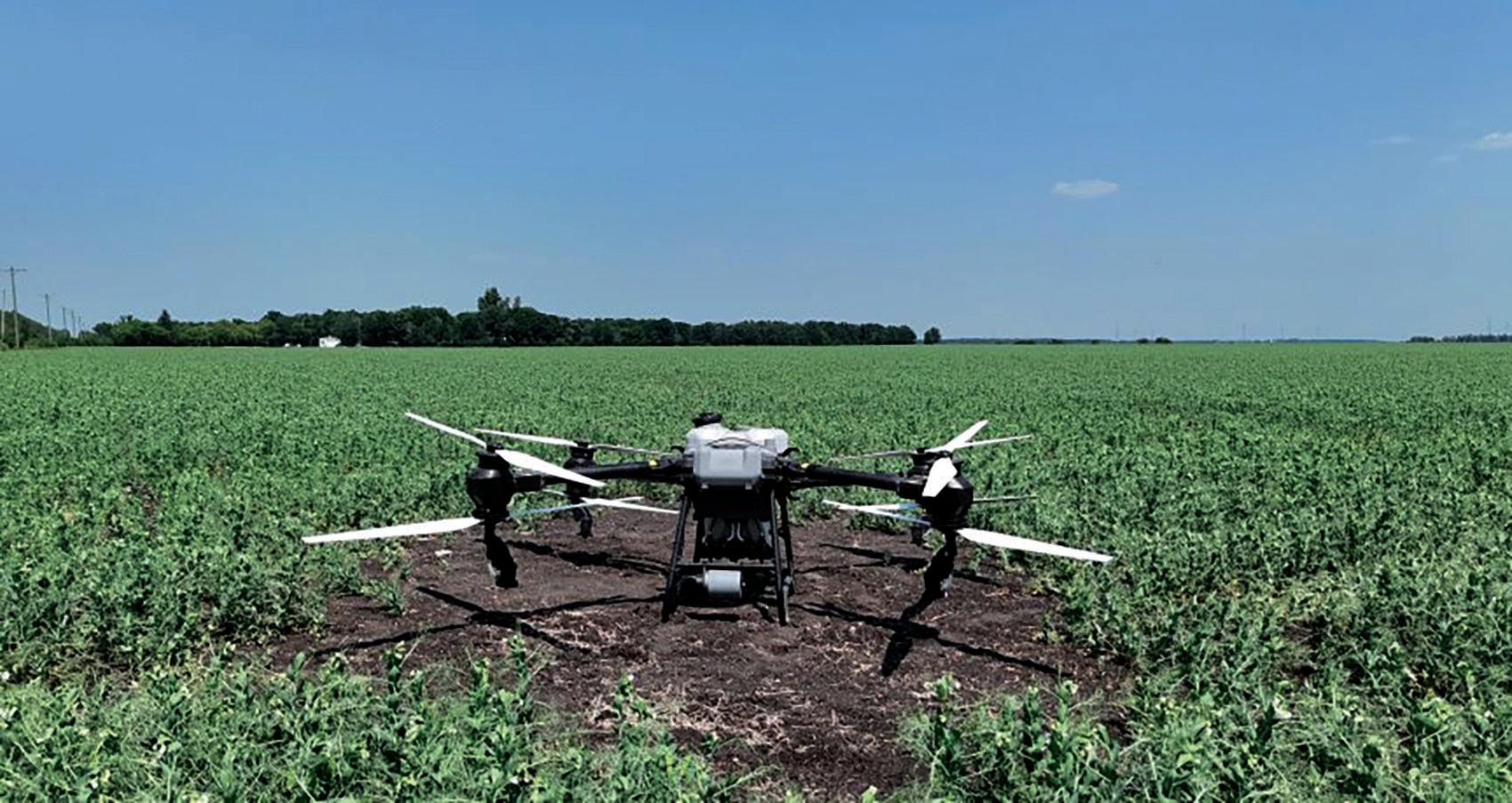
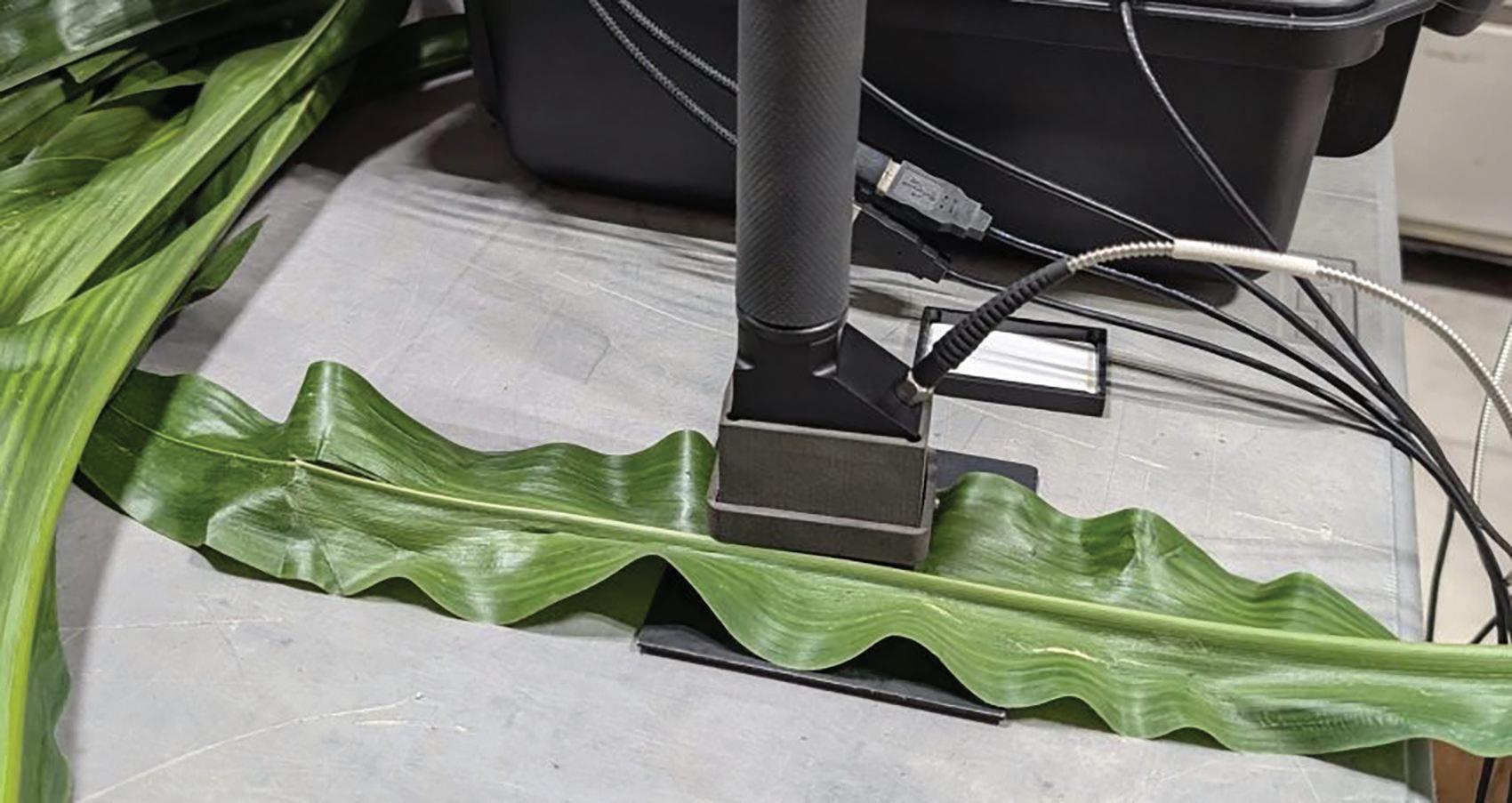
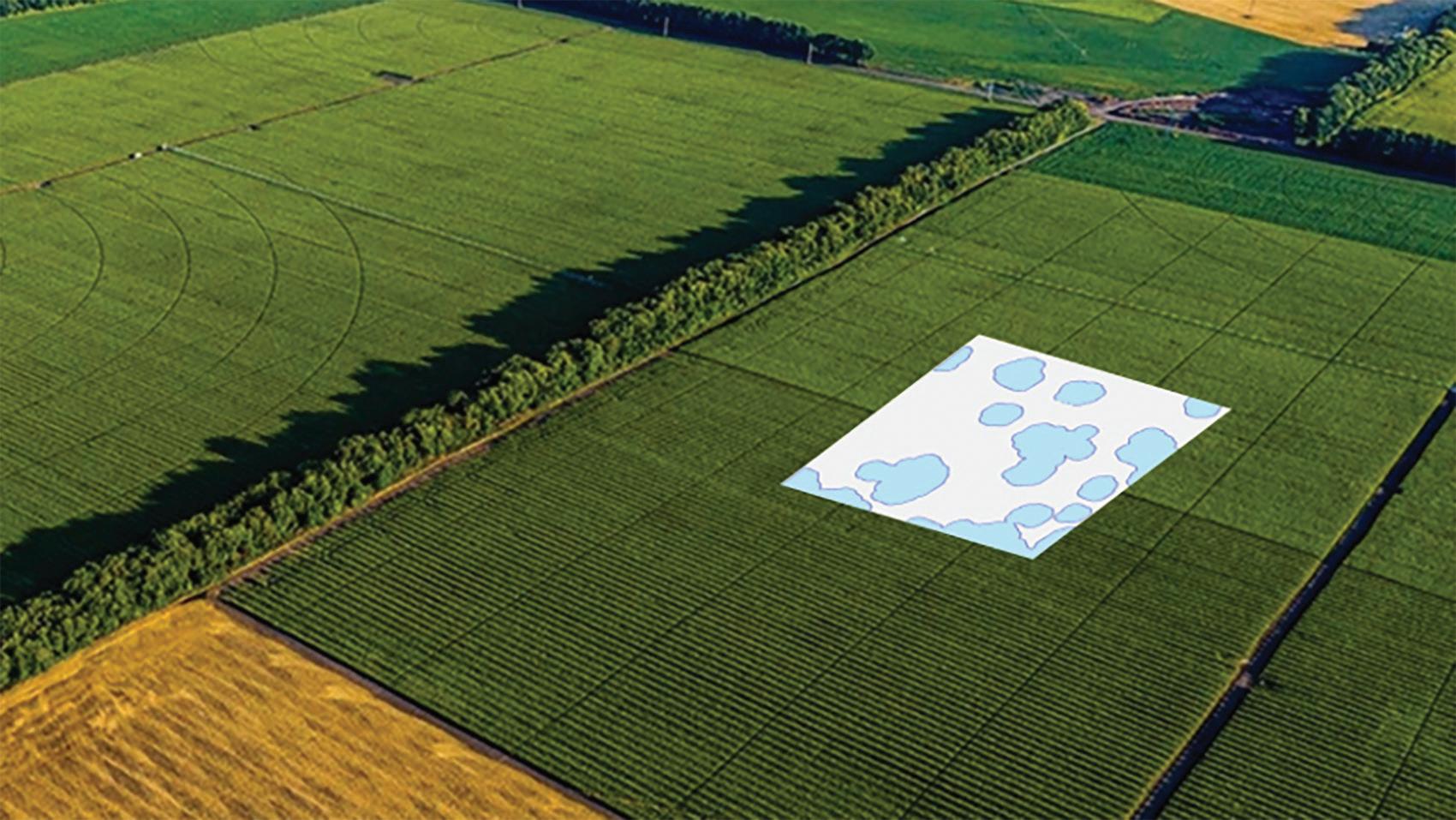

By Joan Airey
A friend shared this family recipe last week on one of those terrible windy days I hate. She said her mom makes it all the time. Personally, I’d never tried it until Debbie mentioned her mom made it. It was definitely approved by my husband, as he had two pieces for dessert.
Tomato Soup Cake
- Prep Time: 15 minutes
- Cook Time: 30 minutes
- Total Time: 45 minutes
Servings: 12
Ingredients
For the cake
- 2 cups all-purpose flour, spooned and leveled
- 1 tablespoon baking powder
- 1/2 teaspoon baking soda
- 1/4 teaspoon salt
- 2 teaspoons pumpkin pie spice (see note)
- 1/2 cup unsalted butter, softened to room temperature
- 1 cup granulated sugar
- 2 large eggs, room temperature
- 1/4 cup whole milk, room temperature
- 1 (10.75 oz) can condensed tomato soup (undiluted — do not add water)
- 1/2 cup raisins
- 1/2 cup chopped walnuts
For the brown sugar frosting
- 1 cup unsalted butter, softened to room temperature
- 1/2 cup brown sugar
- 2 teaspoons vanilla extract
- 1/4 teaspoon cinnamon
- 1/8 teaspoon salt
- 3 1/2 cups powdered sugar
- 3 to 5 tablespoons heavy whipping cream, room temperature
Instructions
1. Preheat oven to 375°F. Spray a 9x13-inch baking dish with nonstick cooking spray; set aside.
2. In a medium bowl, whisk together flour, baking powder, baking soda, salt and pumpkin pie spice. Set aside.
3. In a large bowl, using a handheld electric mixer, beat butter and sugar until light and fluffy, 2–3 minutes.
4. Add eggs, milk and condensed tomato soup; beat until well blended.
5. Add flour mixture and beat just until no flour streaks remain. Do not over mix.
6. Fold in raisins and walnuts.
7. Pour batter into prepared baking dish and spread evenly.
8. Bake 30–35 minutes, or until a tester inserted in the centre comes out clean. Cool completely before frosting.
9. Make the frosting - Using a handheld mixer, beat butter on medium speed for about 2 minutes, until creamy and lightened in colour, scraping the bowl as needed. Add brown sugar, vanilla, cinnamon and salt; mix until smooth.
10. Add powdered sugar, 1 cup at a time, beating well and scraping the bowl as needed.
11. Slowly beat in 3 tablespoons of cream, then increase speed to high and beat 1 minute until light and fluffy. Add more cream, 1 tablespoon at a time, if needed. Frosting should be soft, fluffy and spreadable but able to hold its shape.
12. Spread frosting over cooled cake, cut into squares and serve.
Pumpkin Pie Spice
(I didn’t have pumpkin pie spice, so I looked up a recipe online and made my own)
- 3 tablespoons cinnamon
- 2 teaspoons ground ginger
- 2 teaspoons nutmeg
- 1 1/2 teaspoons ground allspice
- 1 1/2 teaspoons ground cloves
I mixed it together in a small container and labeled the leftovers after making the cake and icing.
I’m hoping that by the time I write my June column, I’ll have fresh rhubarb and asparagus from the garden. I toured part of my garden today and watered the rhubarb, since it looks like temperatures are going to be in the higher digits.
By Harry Siemens
A recent Landmark Feeds reunion in Manitoba brought together memories of a company that started small, grew steadily and left a lasting mark on the feed and livestock industry across Western Canada.
For Randy Wolgemuth of Steinbach, the story remains deeply personal. His father, Jake Wolgemuth, started Landmark Feeds with a small custom grinding mill and about $5,000. Looking back, Randy said what stands out most is not the money or equipment, but his father’s willingness to work hard, take risks and serve people well before focusing on growth.
“In those early years, everything was built on relationships and reputation,” Randy said. “Dad wasn’t afraid to start small because he believed that if you treated customers fairly and delivered value, the business would grow naturally over time.”
That lesson stayed with Randy as he later pur sued his own business path. He said watching his father build Landmark Feeds taught him that strong businesses rarely happen overnight. They require vision, persistence and consisten cy.
“Success comes from showing up every day, solving problems for customers and continual ly adapting while staying true to your princi ples,” he said.
Randy said integrity played a central role in the way his father conducted business. Jake believed a person’s word mattered. He cared about customers, employees and producers, and he understood that trust in the feed and livestock business was everything.
Those values also shaped Randy’s decision to form Team Landmark. He said the move did not mean walking away from Landmark Feeds’ past. Instead, it meant taking the lessons learned from the family business and applying them in a new way to changing markets and new opportunities.
“Forming Team Landmark was really a com bination of continuing the entrepreneurial spirit I inherited from my father and building a com pany with its own identity,” Randy said. He said the hardest part was proving himself independently. A strong family business repu tation can open doors, but building a separate company means earning trust again on your own merits.
Today, Randy sees Landmark Feeds and Team Landmark as connected chapters in a larger story. Both are rooted in entrepreneurship, producer relationships and long-term service.
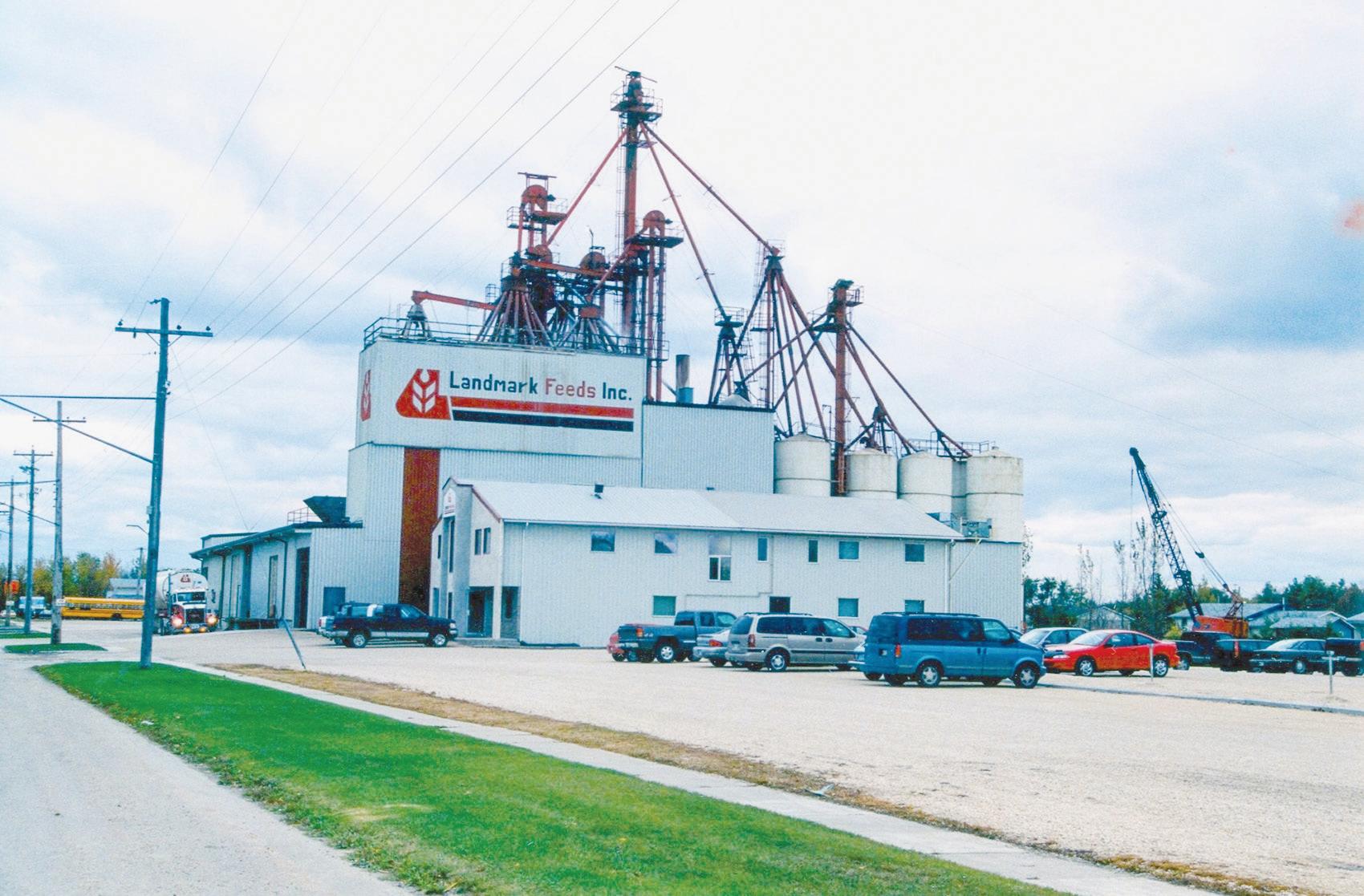

Ed Waddell also played an important role in Landmark’s growth story. He joined Bruce Campbell and Ted Bailey in late 1980, when the business already had a strong poultry customer base, including egg layer operations, turkeys and broilers. A new dairy line had also
been installed at the newly acquired mill in Otterburne. At that point, hogs represented only about five per cent of the business.
Waddell’s role was to manage Regal Feeds, the newest member of the Landmark Group, and help the company expand into the hog business.
The key turning point, he said, was the move into “all-in, all-out” pig production. Instead of adding a few pigs each week and shipping a few each week, the system completely emptied the finishing barn before restocking it. That gave customers a major advantage.
“Closeout statements were routine, so each group could be evaluated,” Waddell said. “When customers made money, they naturally wanted to expand.”
Waddell said Landmark Feeds earned trust for one key reason: performance. Batch after batch,
customers made money through both strong and difficult market conditions. That consistency built relationships that lasted for decades.
For Randy, the Landmark name still rep-

resents legacy, perseverance, relationships and faith in hard work. More than anything, it reflects the people who helped build something meaningful.
By Harry Siemens
The Manitoba Wildlife Federation entered its recent annual general meeting with a clear message: the organization will continue defending licensed hunting and fishing while promoting conservation, outdoor education and responsible wildlife management.
Chris Heald, senior policy advisor with the Manitoba Wildlife Federation, said the past two tothree years have brought major challenges for licensed hunters and anglers in Manitoba.
“The context is very important,” Heald said. “The last two to three years have seen an unprecedented attack on the tradition of licensed hunting and fishing in Manitoba.”
He pointed to several concerns, including last-minute withdrawals of big game licences, regulatory zones and proposed national parks that exclude licensed hunters, as well as illegal blockades that prevented licensed hunters and anglers from accessing public land. Heald said those challenges reflect a broader and more difficult public policy debate surrounding Indigenous rights, legal frameworks for property
ownership, resource development, and the use of provincial public land for cottaging and outdoor recreation.
Heald said MWF has had to adjust its approach. That has included legal challenges, town hall meetings, letter-writing campaigns, briefings for elected officials, explanatory videos, and increased activity in both social and traditional media — all while continuing to run traditional programs in habitat conservation, natural resource management, and hunter and angler mentorship.
“These steps are expensive, difficult and time-consuming,” Heald said. “But if MWF had not challenged these decisions, no one else was standing up to do so.”
He cited MWF’s involvement in the Peguis First Nation legal challenge involving Manitoba’s night hunting prohibition and the Bloodvein blockade, where MWF’s presence helped ensure official provincial involvement and access for licensed hunters.
Despite those pressures, MWF continues to organize its work around three main pillars: outdoor education and recruitment, conserva-

tion, and public policy. Outdoor education includes youth and family mentorship, hunting and fishing instruction, hunter safety, and conservation participation. Conservation programs support clean air, clean water, and healthy fish and wildlife populations. Public policy work focuses on representing hunters, anglers and outdoor enthusiasts in discussions about sustainable resource use and responsible firearms use.
The organization has about 15,000 members in 100 local chapters across Manitoba. Heald said recent challenges have actually strengthened bonds between MWF and those rural communities.
“These chapters have provided us with not only their voices, but also their moral and financial support as we navigate these sensitive issues,” he said.
Members brought several resolutions into the AGM process this year, including measures aimed at easing pressure on white-tailed deer populations, examining additional harvest opportunities for black bears, and calling for a structured, consistent two-year regula-
tory cycle for changes to wildlife regulations.
Heald said MWF believes Manitoba can balance conservation goals with access, habitat protection and wildlife management, and that harvest levels must remain sustainable. He emphasized that farmers and ranchers play a key role in habitat conservation by owning and managing much of southern Manitoba’s working landscape, and that progress happens when conservation groups work with agricultural landowners rather than against them.
He also stressed that all harvesters must be accountable.
“All harvesters, licensed and rights-based, should report harvest in order to enhance the quality and reliability of the government’s decision-making,” Heald said.
Looking ahead, MWF will continue representing Manitoba’s hunters and anglers while channelling their passion for conservation.
“With the help of our members and local chapters, we will continue to meet the challenges to our outdoor lifestyle and contribute to healthier fish, wildlife and natural landscapes in our province,” he said.
By Harry Siemens
Canada’s grain industry continues pushing a clear message to farmers this spring: know your market before applying crop protection products.
That message came during the 2026 Keep It Clean product advisory webinar, where industry leaders warned that export market requirements continue to change quickly and residue concerns remain a growing risk for Canadian grain shipments.
Heidi Danschow moderated the webinar and said Canadian agriculture depends heavily on export markets.
“More than 90 per cent of canola, 85 per cent of pulses and 80 per cent of cereals are exported,” Danschow said.
The webinar featured Krista Zuzak, Jeff English and Curtis Rempel.
Zuzak said Canada must meet domestic pesticide requirements, but also the rules of importing countries. Many countries use different maximum residue limits, known as MRLs.
“Testing of grain is getting more frequent in markets and more sensitive,” Zuzak said.
She noted that some countries follow Codex international standards, while others set their own limits or use default residue levels far lower than Canada’s.
The European Union remains a major concern for Canadian grain exporters.
Zuzak said the EU continues moving toward stricter pesticide rules, including proposals that could block imports of products produced with crop protection products not approved in Europe.
Since 2022, Cereals Canada has tracked 185 EU MRL changes, including 70 active ingredients registered on at least one cereal crop in Canada.
The Keep It Clean program, supported by Cereals Canada, Pulse Canada, the Canola Council of Canada and the Prairie Oat Growers Association, helps communicate market risks to farmers and agronomists.
English said the goal remains protecting Canada’s export reputation.
“We need reliable access to our markets,” English said.
This year’s advisories include several ongoing concerns for cereals, pulses and canola.
For barley, tetraconazole products such as Roxar continue to carry market risk concerns for both malt and feed barley because some export markets do not have established MRLs.
Fluopyram advisories for malt barley have improved slightly this year, moving
from “do not use” to “be informed” as additional MRL approvals move forward internationally.
Chlormequat products, such as Manipulator, also continue to carry market concerns for barley exports.
Glyphosate remains another major issue. The panel reminded growers that malt barley buyers do not accept grain treated with pre-harvest glyphosate. Some wheat, oat and feed barley buyers also restrict glyphosate use depending on destination markets. In pulses, glufosinate ammonium remains listed as “do not use” because key export markets do not have established residue limits for pulse crops.
Rempel reminded canola growers to pay close attention to application timing and pre-harvest intervals. Applications made too early increase the risk of unacceptable residues. He also stressed that pesticide applications by drone remain off-label until Health Canada approves those uses.
The speakers returned to one central message: follow the label, know the market and talk to grain buyers before making product decisions. Those steps remain critical to protecting Canada’s export reputation.