

New University of Manitoba Research Chair to Advance Beef Production Sustainability

riculture, and Manitoba Beef and Forage Initiatives is proud to announce the establishment of the BCRC Chair in Beef Cattle Economic Sustainability.
“It’s important for our industry to understand beneficial management practices that boost productivity, profitability, and environmental sustainability - including those related to greenhouse gas emissions, land and water use, and biodiversity,” said Craig Lehr, the Beef Cattle Research Council chair and Alberta beef producer.
“This new Chair will focus on viable solutions for Canadian beef cattle producers with innovations that improve
economic sustainability while reducing environmental footprint.”
The beef industry faces mounting challenges, including volatile input costs, climate-related risks, and limited access to equitable risk management tools. These pressures have made it increasingly difficult for producers—especially in the cow-calf sector—to adopt new technologies and practices that could reduce their environmental footprint.
“Beef producers in Manitoba and across Canada care deeply about both environmental and economic sustainability because the land they steward today must feed their families tomorrow. Thriving ecosystems and strong businesses go hand in hand. Having this chair position will help producers make decisions both good for the land and for their bottom line,” said Matthew Atkinson,
President of Manitoba Beef Producers.
Housed in the Department of Animal Science, the BCRC Chair will advance research around innovative financial incentive models, analyze the behavioural drivers behind the adoption of Best Management Practices (BMPs), and work closely with producers, policymakers, and researchers to ensure findings are translated into actionable strategies. The position will also play a key role in training the next generation of agricultural economists and extension specialists.
Beyond its research mandate, the BCRC Chair will serve as a catalyst for broader impact by leading a multidisciplinary team that will align economic and environmental outcomes across the beef value chain. It will attract diverse funding from industry and government to expand research capacity,
create enhanced training opportunities for students in cattle economics and extension, and continue to strengthen the beef industry by positioning it as a national and international leader in sustainable beef production research.
“This Chair exemplifies the University of Manitoba’s commitment to collaborative, highimpact research,” said Martin Scanlon, UM Dean of the Faculty of Agricultural and Food Sciences. “By bringing together academia, industry and government, we are creating a powerful platform to support the long-term sustainability of Canada’s beef industry.”
The BCRC Chair, valued at $300,000 annually over a 10year period, will serve as a hub for research, education, and extension activities that benefit producers across Canada. The process to hire the new BCRC Chair will begin immediately.

Canadian Farm Net Income
by 25% in 2024
By Elmer Heinrichs
In 2024, Canadian farmers experienced a significant financial setback, with realized net income dropping by $3.3 billion, or 25.9 per cent, to $9.4 billion, according to Statistics Canada.
This marks the steepest percentage decrease since 2018. When cannabis is excluded, the drop stands at 23.0 per cent, totalling $9.7 billion.
Realized net income, which includes farm cash receipts minus operating expenses and depreciation, decreased across almost all provinces. Only Prince Edward Island and Nova Scotia avoided losses. Saskatchewan experienced the most substantial decline of $1.3 billion due to a drop in crop prices and a slight rise in expenses.
Farm cash receipts across Canada fell by $1.6 billion, totalling $97.9 billion. Crop receipts were especially hit, falling 6.2 per cent to $52.1 billion — the largest decline since 2003.
The Prairies, particularly Saskatchewan, Alberta, and Manitoba, saw the biggest drops due to lower grain and oilseed prices.
Direct payments to farmers also fell by 10.8 per cent to $5.9 billion. Crop insurance payments, which form a large part of these payments, declined, especially in Alberta and Saskatchewan. However, AgriStability payments and private hail insurance saw sharp increases, helping ease some losses.
On the other hand, livestock receipts increased by 6.9 per cent to $39.9 billion. Cattle and calves saw an 11.6 per cent rise in receipts due to strong prices and demand.
However, poultry receipts declined due to lower prices caused by higher production and lower feed costs.
Canada’s total net income fell by $5.2 billion to $7.7 billion in 2024, marking a year of financial difficulty for farmers despite strong livestock markets.
As expenses continue to grow and crop prices decline, farmers are facing a challenging economic environment across Canada.

Representatives from the Beef Cattle Research Council (BCRC) visited the Glenlea Research Station for the announcement of the BCRC Chair. L to R: Lee Irvine, Craig Lehr, Dean Manning, Martin Scanlon (Dean, UM Faculty of Agricultural and Food Sciences) and Andrea Brocklebank.
Submitted photo
G7 Farmers Issue Urgent Call for Coordinated Action Amid Rising Global Pressures
By Dan Guetre
As global geopolitical, economic, and environmental pressures mount, farmers from G7 nations are uniting in a historic show of solidarity. In a joint statement released as the G7 meeting was winding up, the heads of the leading agricultural organizations across Canada, France, Germany, Italy, Japan, the United King-
dom, and the United States called on their respective governments to enact urgent reforms and cooperative strategies to safeguard the future of agriculture and global food security.
The statement, issued during Canada’s G7 presidency, outlines a growing convergence of crises—rising inflation, fractured supply chains, climate-driven
weather extremes, and volatile trade policies—all of which threaten the resilience of food systems and rural economies worldwide.
“Canadian farmers, like our counterparts across the G7, are facing complex challenges that demand coordinated, forward-thinking solutions,” said Keith Currie, President of the Cana-
dian Federation of Agriculture. “With the right tools, policies, and support, farmers can continue to lead the way toward a more sustainable and secure future for all.”
Farmers at the Crossroads of Global Disruption
The joint statement highlights how overlapping crises—ranging from high in-

terest rates and pandemic aftershocks to extreme weather events—are not only affecting farm income but also destabilizing the very systems that underpin global food security.
In their statement, G7 farm leaders reaffirmed their commitment to sustainable food production and urged governments to:
- Promote transparent, rules-based trade that improves stability and access;
- Increase investments in cutting-edge agricultural innovation;
- Modernize outdated regulations that stifle competitiveness;
- Implement realistic, incentive-driven climate policies that support productivity and long-term sustainability.
“Persistent economic instability and escalating trade wars are disrupting farm operations across the globe,” the statement reads. “Farmers bear the brunt of these distortions, which reduce market access, increase input costs, and deter long-term investment.”
“This is a crucial moment for family farmers and ranchers,” Rob Larew, President of the U.S. National Farmers Union emphasized. “Together with our G7 partners, we stand united in strengthening the conditions for farmers, particularly by addressing the growing risks of consolidation in the agri-food chain.”
Innovation, Food Sovereignty, and Health
G7 leaders stressed that farmers are not just food producers—they are stewards of rural health, economic balance, and environmental vitality. They called for increased support for innovation, including access to precision agriculture, biotechnology, and artificial intelligence tools, especially for small and medium-sized farms.
The leaders also warned against the proliferation of ultra-processed foods and called for policies promoting healthy, natural diets as a way to ensure public health and food system integrity.
“We call on governments to place food security and sovereignty at the heart of their agenda,” said Ettore Prandini, President of Col-
diretti, Italy. “That includes support for accessible innovation and protection against harmful trade distortions.”
Toward COP 30: Agriculture as a Climate Solution
With COP 30 on the horizon, the joint declaration positions farmers as essential players in meeting climate goals. Rather than being passive recipients of climate policy, G7 farmers want to be recognized as active contributors and partners.
“Farmers are on the front lines of climate change adaptation,” said Joachim Rukwied of Germany’s Deutscher Bauernverband. “We must be part of the global solution—our knowledge and practices are critical in designing strategies that are feasible and effective.”
The statement calls for climate policies that are science-driven and incentive-based, while cautioning against mandates that may undermine food production or farmer viability.
Tom Bradshaw, President of the UK’s National Farmers Union, summed up the urgency.
“Farmers and growers are doing their part, but with climate change, geopolitical tensions, and volatile trade, it’s getting harder,” Bradshaw noted. “We need governments to help provide the stability and certainty to keep agriculture thriving.”
G7 Farmers Stand Ready
Across all G7 nations, the consensus was clear: agriculture is facing an inflection point that demands bold, unified action.
“Agriculture and food are not issues of nationality,” said Arnaud Rousseau, President of France’s FNSEA. “Today, we send a common message to the decision-makers of our countries—farmers provide solutions, and it’s time leaders listened.”
The joint statement closes with a call for international cooperation to address growing market consolidation, promote inclusive innovation, and prioritize rural resilience.
“We stand ready to work with policymakers, industry leaders, and international partners to build a better future for agriculture and for society as a whole.”
Canadian Meat Council Presses for Urgent Government Action to Boost Red Meat Sector
By Dan Guetre
The Canadian Meat Council (CMC) is calling on the federal government to act swiftly on critical policy files that could unlock new economic opportunities and reinforce the resilience of Canada’s red meat industry.
In a statement released recently, the CMC applauded the government’s renewed commitment to speed, efficiency, and economic performance. Representing Canada’s red meat processing sector— an industry that generated more than $9.4 billion in exports and supported nearly 200,000 jobs in 2024—the council emphasized the strategic importance of targeted reforms to bolster growth, employment, and food security.
“Canada’s red meat sector is uniquely positioned to help the government achieve its economic and trade objectives,” said Chris White, President and CEO of CMC. “With targeted support on labour, trade, and regulatory modernization, we can contribute to GDP growth, export performance, and rural economic development.”
Trade remains a top concern for the industry, with more than half of Canadian red meat products bound for international markets. The CMC is urging the govern-
ment to prioritize restoring full access to the Chinese market for beef and pork. As part of its efforts, the industry is launching the Canadian Meat Advocacy Office (CMAO) in Beijing, a fully industry-funded initiative aimed at improving Canada’s competitiveness in the Chinese market.
In addition to China, the CMC is pressing for rapid resolution of trade issues with the United States and the European Union, while calling for expanded access to growing markets in Southeast Asia and Latin America.
Labour shortages continue to hinder the sector’s growth potential, especially across the rural agri-food supply chain. The CMC is advocating for the creation of a Federal Food Security Immigration Stream and improvements to the Temporary Foreign Worker Program. The proposed changes would tailor immigration pathways to the year-round labour needs of rural food production facilities.
To boost efficiency and exports, the CMC is calling on regulators to align Canada’s feed ban rules with those of the United States. The council is also urging modernization of Canadian Food Inspection Agency (CFIA) practices, including the adoption
of digital tools such as AI-assisted inspections and electronic certification systems.
CMC also emphasized the need for a policy framework that guarantees uninterrupted food supply during labour disruptions. While reaffirming its respect for workers’ rights, the council said safeguarding national food security must be a priority during potential work stoppages.
The red meat sector is asking for faster government support for managing animal diseases such as Foot and Mouth Disease and African Swine Fever. Investments in border biosecurity and rapid detection systems are also critical, the CMC said, to ensure outbreaks are contained before impacting the food supply.
“CMC is aligned with the government’s vision for a faster, more resilient, and export-driven economy,” said White. “Our sector is not only ready to contribute, but is actively driving innovation, investment, and job creation across the country. We recognize the urgency of the moment and the opportunity it presents, and we look forward to working in close partnership with policymakers to deliver meaningful, measurable outcomes for businesses, communities, and the broader economy.”
Prairie Wheat and Corn Crops May See Biggest Losses Due to Climate Change
By Elmer Heinrichs
Think food prices are high now? By the end of this century, climate change could significantly cut production of six staple food crops around the world — including wheat production in Canada, leading to higher prices, a new study finds.
And certain crops in higher-income regions, such as corn and wheat in the U.S. Midwest and wheat in Canada’s Prairies, could see some of the bigger losses compared to crops in developing countries, projects the study published recently in the Journal Nature. “Better-off parts of the world end up getting harmed in ways that are surprising that I didn’t expect,” said lead author Andrew Hultgren, an assistant professor of agricultural and consumer economics at the University of Illinois Urbana-Champagne.
But farmers’ adaptation will
make a difference.
The study looked at data about regional climates; climate impacts on specific crops; access to resources such as fertilizer and insurance and costs and benefits of different farming practices for farmers in 54 countries that grow corn, soybeans, rice, wheat, cassava and sorghum.
The goal was to find out how farmers are adapting to weather shocks and the extent to which adaptation is offsetting the impacts of climate change.
Meanwhile, Canada does have some options and may fare better than other parts of the world. In Canada’s case, the study shows that while wheat yields may decline in some areas, they could increase for crops such as corn and soybeans in more northern areas.
Gunter Jochum president of the Wheat Growers Association said
that’s already happening in his region. Until 2000, no one thought to grow soybeans there because it was too cold, but in the last 20 years, “they’ve become a really important crop on our farm, in our area.”
That’s partly because a warming climate has extended the growing season slightly and partly because scientists have developed fastergrowing varieties.
“In the last five years, corn has really taken off in southern Manitoba,” added Jochum.
While he sees bigger risks and issues closer to the equator, he thinks Canadian farmers are wellplaced to adapt to the changing climate if they have the right support.
His group is pushing for more government investment in new varieties of crops and policies that encourage the private sector to develop new varieties.

Bet on the West: Canada Must Back Its Best Players
The Great Divide Between Supply-Managed Farmers and Free-Market Producers

Finally, most farm and trade organizations across the Prairies are speaking in unison and with resolve. But while 99 percent of farmers push for open markets and fair competition, the one percent under supply management has captured Ottawa’s ear—and its policy direction.
After more than five decades reporting on Canadian agriculture, I’ve watched countless policy shifts. Today, we’re at another major crossroads. Farmers are ready to lead, innovate, and export. Ottawa, however, continues to sideline them. A clear example is the new-

ly formed Standing Committee on Agriculture and Agri-Food in the House of Commons. Of ten members, only one represents Western Canada. That’s a slap in the face to the Prairie provinces, which anchor Canada’s Ag economy—grain from Saskatchewan, livestock and oilseeds from Alberta, and hogs and cattle from Manitoba.
“Very frustrating and disappointing,” said Kritjan Hebert, a grain farmer from Fairlight, SK. “Western producers help feed this country, yet we’re left watching from the sidelines. One rep out of ten is not representation.”
Hebert runs a high-efficiency operation at Hebert Grain Ventures, but even solid systems can’t compensate for flawed national policy.
“We’ve lost focus on competitiveness,” he said. “That’s why policy now leans on sticks instead of offering carrots.”
That shift is crystal clear in Parliament’s recent passage of Bill C-202. The bill amends the Department of Foreign Affairs, Trade and Development Act to bar trade negotiators from including dairy, poultry, and
eggs—Canada’s supplymanaged sectors—in future trade deals. It passed with unanimous consent and minimal Senate debate.
The message to grain, cattle, and hog producers is clear: Ottawa will shield supply-managed sectors even if it locks the door on everyone else.
“We’re deeply disappointed,” said Gunter Jochum, President of the Western Canadian Wheat Growers. “Western grain farmers helped build this country’s Ag economy—and now we’re being told to sit quietly while others are guaranteed protection.”
Jochum noted that western grain growers export over 90 percent of what they produce. “Trade access is our lifeblood,” he said. “Yet this bill ties our negotiators’ hands.”
Western producers don’t want subsidies. They want access. Pork producers depend on Japan and Mexico. Cattle producers rely on global markets for boxed beef and genetics.
“This isn’t just bad policy—it’s a betrayal,” said Jochum. “We’re not asking for
protection. We’re asking for a fair chance to compete.”
The Canadian Agri-Food Trade Alliance (CAFTA) called Bill C-202 “a flawed piece of legislation that sets a troubling precedent.” In a public statement, CAFTA warned it “undermines Canada’s longstanding commitment to rules-based trade.”
“At a time when our competitors are opening new markets, we’re closing doors on our own people,” CAFTA stated.
Grain Growers of Canada (GGC), representing more than 70,000 farmers, shared similar concerns.
“Despite the government’s stated commitment to expanding trade, the first bill passed by the 45th Parliament restricts our trade negotiators from securing the best possible deals for Canadians,” said GGC Executive Director Kyle Larkin.
Acting Chair Scott Hepworth added, “As a grain producer, I know how critical global trade is to my family’s farm. Without market access, we’re left behind.”
With the Canada–U.S.–Mexico Agreement up for review in 2026 and talks
ongoing with ASEAN, the timing couldn’t be worse. “We’re sending a message that Canada is retreating from comprehensive trade,” Hepworth said.
The Canadian Cattle Association also opposed the bill. “Trade is not a political game, and Bill C-202 is not about supply management. It is bad trade policy,” said CCA President Tyler Fulton.
He said the fast-tracked passage ignored calls for consultation.
“Canada has long promoted rules-based trade. This bill marks a significant shift away from that,” he said.
Wheat Growers Chair Daryl Fransoo said Prairie farmers already operate with thin margins, high costs, and limited infrastructure. “Safe doesn’t move grain. Safe doesn’t build ports. Safe doesn’t spark innovation,” he said. “We need trade tools and real investment.”
Hebert agrees. “Agriculture is a puzzle. I love solving it. But we need leaders who care enough to put the pieces together.”
For him, the challenge isn’t innovation or talent—it’s political courage. “We need
leadership that doesn’t pit East against West or dairy against grain,” he said. “We need policy that lifts all boats.”
Meanwhile, Canada’s supply-managed sectors praised the bill. In a joint release, dairy, poultry, and egg groups called it a win for “food sovereignty,” citing a $30.1 billion GDP impact and over 339,000 jobs. But critics say that doesn’t justify blocking trade access for the rest of Canadian agriculture.
On the Prairies, producers are clear: Canada can’t grow its future by protecting its past.
“Let’s fix this,” said Fransoo. “Let’s return to free and fair trade, equal opportunity, and a unified Ag sector. Let’s bet on the people already proving they can win.”
The bottom line? Don’t just protect the past—grow the future. Canada can’t afford to sideline its most competitive producers. Western farmers have proven they deliver—on trade, innovation, and food security. It’s time Ottawa recognized that. Bet on the West. We’ve already proven we pay out—and we’re ready to do it again.
Supply Management Under Scrutiny as Canada Prepares for U.S. Trade Talks
By Dan Guetre
As Canada gears up for critical trade negotiations with the United States, the nation’s decades-old supply management system is under renewed scrutiny. With the recent passage of Bill C-202 in the House of Commons and now in the Senate, the bill prohibits Canada from making any trade concessions involving its supply-managed sectors, stakeholders across agriculture and international trade are weighing in.
Originally implemented to ensure food security and income stability for farmers, critics argue supply management now serves to insulate the sector from global competition.
Advocates of the system, including organizations like the Dairy Farmers of Canada (DFC), argue that sup-
ply management ensures a reliable income for farmers, supports rural economies, and provides consumers with high-quality, safe food. In previous public statements, the DFC has emphasized the importance of food sovereignty and cautioned against foreign imports that might not meet Canadian standards.
“We produce milk without growth hormones, under strict food safety regulations, and we contribute to the economic health of thousands of rural communities,” said DFC in a recent statement.
On the other hand, critics like Sylvain Charlebois, a food policy expert at Dalhousie University, have called the system protectionist and economically damaging. In a recent commentary, Charlebois wrote, “By clinging to a politically convenient
system, our elected officials are rewarding complacency and institutionalizing inefficiency, all under the guise of defending national interests.”
His concerns include inflated food prices for consumers, waste within the system (such as large-scale milk dumping during production surpluses), and the negative signal Canada sends to global trade partners when it refuses to include key sectors in negotiations.
Other sectors of Canadian agriculture view the system with mixed feelings. Grain and beef producers, for example, often find themselves at odds with the supply-managed sectors. They rely heavily on access to international markets and fear that Canada’s inflexible stance on dairy and poultry could hinder broader trade
opportunities.
In past comments to industry publications, representatives from the Canadian Agri-Food Trade Alliance have argued that protecting one part of the agriculture sector could jeopardize the growth potential of others.
“Our export-oriented industries need ambitious trade deals to grow,” said a former CAFTA executive. “When one sector is off the table, it complicates negotiations and can limit market access for everyone else.”
The hog sector also feels the ripple effects. Canada’s pork producers are highly dependent on exports, and a failure to engage constructively in trade talks can hurt their bottom line.
“When trade gets political, sectors like ours that rely on access and competitiveness
suffer,” said an official from a provincial pork association in a previous interview. “We don’t get subsidies or price guarantees. We compete globally every day.”
During negotiations of the Canada-United States-Mexico Agreement (CUSMA), Canada agreed to give the U.S. limited access to its dairy market, while maintaining the overall structure of supply management. In exchange, Canada paid out billions in compensation to affected producers — a move criticized by some economists as inefficient and costly.
As Canada enters these negotiations, the balancing act will be delicate: defending a system rooted in national identity and rural security, while striving to be a credible and flexible player on the global trade stage.
Both Sides of the “Fence”: What Supply Management Really Means for Canadian Farmers
By Dan Guetre
As trade talks with the United States heat up again, a familiar debate is back on the table — Canada’s system of Supply Management. It’s a hot-button issue for those working the land and raising livestock. On one side, people say it’s a relic from another era. On the other, it’s described as the backbone of rural Canada. But somewhere between the shouting, the real story — and the real concerns for farmers — gets lost. Let’s break it down.
What Supporters Get Right — and What They May Overlook
If you’re in dairy, poultry, or egg production, you know that Supply Management provides stability. You’re not at the mercy of international prices. You’ve got predictable income, the ability to plan, and you’re protected from volatile imports. That’s no small thing, especially when margins in farming are tighter than ever.
But here’s what even strong supporters of the system often don’t talk about:
- Getting in is tough: If you’re a young farmer or want to diversify into dairy or layers, the cost of buying quota is sky-high. That locks out the next generation and makes transition planning for family farms even harder.
- It doesn’t guarantee efficiency: While Supply Management protects farmers from wild price swings; it also removes the incentive to compete or innovate. You don’t need to chase better yields, processing techniques, or marketing strategies like producers in
the grain or beef sectors.
- Consumer pushback is growing: High grocery prices are fuelling frustration. People are noticing that Canadian milk and eggs cost a lot more than in the U.S. Whether justified or not, that pressure eventually trickles down — and it’s bad PR for farming when trust matters most.
Where the Critics Miss the Mark Critics of Supply Management, like some academics and think-tank economists, say it’s anticompetitive and makes Canada look bad in trade negotiations. They want it dismantled in the name of market freedom. But if you’ve been through the ups and downs of farming outside of Supply Management — say in the hog or grain sector — you know the market isn’t always your friend.
- Free markets can break you: We’ve all seen what happens when commodity prices crash. Hogs at 40 cents a pound. Wheat barely above cost of production. Farm auctions. The idea that a “free market” guarantees fairness is fiction.
- Look south before you leap: In the U.S., where dairy is wide open, farmers are quitting in droves. Even big producers can’t weather the market dips without subsidies. That’s not freedom — that’s risk without a safety net.
- Killing Supply Management doesn’t fix consumer prices: Even if borders opened and tariffs came down, big processors and grocers might just keep the difference. Farmers take the hit, while consumers
see little change. It’s happened before.
The Middle Ground
Nobody Talks About
The real problem isn’t Supply Management itself — it’s that the system hasn’t evolved much since it started. It’s treated like it’s carved in stone. What many farmers — even those who benefit from it — the want is not to scrap it, but to improve it.
Some ideas worth talking about:
- Easing new farmers into the system: Create quota banks, mentorship loans, or graduated entry plans.
- More flexibility for exports: Let producers ship more surplus to international buyers where it makes sense.
- Transparency and accountability: Share data, listen to consumers, and lead the conversation instead of dodging it.
If you’re in a supplymanaged sector, it’s easy to feel like you’re under attack. And if you’re in beef, hogs, or grains, it’s just as easy to think your supplymanaged neighbours have it too good. But painting this issue in black and white does a disservice to everyone in agriculture.
As we head into another round of trade talks, we need policies that protect family farms, support young farmers, and reward innovation — not just systems that defend the status quo or chase ideology.
For those who live and breathe agriculture, we don’t need more noise from the outside. We need smart, grounded changes that keep our farms strong — today and tomorrow.


Seeding Across Prairies Complete, Says AAFC Report
Agriculture and Agri-Food Canada (AAFC), in its May outlook, says prices for most field crops are projected to experience a significant decline compared to the previous year, with the exception of corn, flax, and sunflower seeds.
Planting across the Canadian Prairies was ahead of the seasonal average and is generally complete.
Year-over-year prices, carry-out stocks for all principal field crops are forecast to increase, driven primarily by higher ending stocks in grains, oilseeds, and pulse and special crops. This growth is largely attributed to a decline in export volumes across both segments.
Meanwhile, prices for the majority of field crops are projected to decrease compared to the previous year, with the exception of wheat (excluding durum), canola, flaxseed, dry beans, and mustard seed, which are expected to see price stability or gains.
For 2025-2026, assuming normal growing conditions and trend yields, overall production is expected to decline slightly from last year.
Drought conditions have generally improved since last fall, although abnormally dry to moderate drought conditions continues to impact agricultural regions in the Peace River regions of British Columbia and Alberta, northern Saskatchewan, and much of Manitoba.
Year-over-year, carry-out stocks for all principal field crops are forecasted to increase, driven primarily by higher ending stocks in both grains and oilseeds as well as pulse and special crops. This growth is largely attributed to a decline in export volumes across both segments.
In addition, prices for the majority of field crops are projected to decrease compared to the previous year, with the exception of wheat (excluding durum), canola, flaxseed, dry beans, and mustard seed, which are expected to see price stability or gains.

Manitoba Dairy Herd Quarantined with Bovine Tuberculosis Case
By Harry Siemens
The Canadian Food Inspection Agency (CFIA) has confirmed a case of bovine tuberculosis (TB) in a dairy cow from Manitoba’s Pembina Valley Region. This is the first such detection in the province in recent years and launches a comprehensive disease investigation that could have wide-reaching implications for producers, processors, and international market access.
The CFIA identified the case through routine surveillance. On June 9, 2025, CFIA’s Ottawa Laboratory Fallowfield isolated Mycobacterium tuberculosis complex from tissues collected at a federally registered abattoir in Manitoba.
Four days later, on June 13, the bacterium was confirmed to be Mycobacterium bovis, the causative agent of bovine TB.
The infected animal, a seven-year-old dairy cow, originated from a Manitoba farm identified through the DairyTrace national livestock identification system. CFIA immediately placed the herd under quarantine. The agency is now working with the producer to coordinate onfarm testing and humane depopulation of affected animals. The timeline for testing will depend on operational needs and will be developed in consultation with the farm to reduce disruptions.
“Bovine tuberculosis is a reportable disease in Canada,” said a CFIA spokesperson. “We’ve had a national eradication program in place since 1923. While Canada is officially considered free of bovine TB, isolated cases can still occur—and when they do, swift action is critical.”
TB remains extremely rare in Canadian livestock, but it is taken seriously because of its impact on animal health, trade relationships, and consumer confidence.
“Human cases of bovine TB are sporadic,” said the CFIA. “The risk to public health is minimal due to strong surveillance pro-
grams and the pasteurization of dairy products.”
Exposure to bovine TB in humans would typically require extended close contact with an actively infected animal, open wounds exposed to infected fluids, or consumption of raw, unpasteurized dairy products. Pasteurized milk and milk products remain safe for consumption.
While this case does not threaten food safety, it does trigger a series of regulatory steps that could last months. These include follow-up testing in nearby and epidemiologically linked herds, DNA sequencing to trace the origin of the infection, and communication with international trade partners to ensure confidence in Canada’s disease management protocols.
“The CFIA is committed to working with industry, provincial authorities, and affected producers to take appropriate and prudent control measures,” the agency said. “Our priority is always to contain the disease while minimizing economic and operational disruptions.”
Canada’s disease surveillance relies heavily on its federal abattoir system. About 95% of cattle processed in Canada pass through federally inspected slaughter facilities, allowing the CFIA to detect rare cases like this one through detailed postmortem examinations and laboratory testing.
This case marks the first confirmed case of bovine TB in Manitoba’s dairy sector in recent memory. In recent years, however, Canada has seen sporadic cases in beef cattle: one in Saskatchewan in 2024, another in the same province in 2023, and previous outbreaks in British Columbia (2018 and 2011) and across the Alberta-Saskatchewan border in 2016.
When an animal tests positive for bovine TB, the CFIA restricts movement in the herd, halts animal transfers, and launches a full trace-out to identify where the animal may have come from and whether other animals may be at risk after the humane destruction of infected or exposed animals often follows testing.
Affected producers receive
financial compensation for any animals destroyed as part of the investigation, as laid out in Canada’s Health of Animals Act. Additional financial support is available through the Sustainable Canadian Agricultural Partnership. Programs like AgriInvest and AgriStability provide risk management tools to help producers handle financial pressures from situations beyond their control.
Disease investigations of this scale depend heavily on cooperation from all sides. The CFIA works with dairy associations, Manitoba Agriculture, and national food safety authorities to manage the case and preserve Canada’s reputation for high animal health standards.
“Disease response in Canada isn’t just about stamping out an infection—it’s about maintaining consumer trust, protecting export markets, and demonstrating our commitment to science-based regulation,” said an industry representative familiar with the case.
Export markets are especially sensitive to disease status, and the CFIA will use the findings from this investigation to reassure Canada’s trading partners that the outbreak is contained and that surveillance systems are working.
The agency has urged all livestock producers—dairy and beef alike—to remain vigilant. That includes promptly reporting unusual symptoms, cooperating with traceability requirements, and following strict biosecurity protocols.
The affected Manitoba herd remains in quarantine and CFIA officials continue collecting data and samples. The scope of testing may expand if epidemiological links to other herds are identified. CFIA will post updates as more information becomes available.
With Canada’s integrated surveillance and traceability systems, early detection remains one of the country’s strongest defences. But as this latest case shows, no system is immune to flare-ups— and maintaining disease-free status takes vigilance, coordination, and trust.
Valley Crops Growing Well, Crops Need Moisture to Fill
By Elmer Heinrichs
Varied rainfall across Manitoba left many areas of the province still in need of precipitation, with accumulations at 60 per cent of normal in eastern, Interlake and northwestern regions, reported Manitoba agriculture in its latest weekly crop report.
Showers were isolated during the week ended June 17, with rain levels ranging from 0 in many areas to13.6 mm at Virden and a high of 15.6 mm in The Pas.
Provincially, winter wheat and fall rye growth was said to be good, with most advanced winter wheat heading and fall rye in late flowering. Earliest seeded spring cereals were in the stem elongation stage, while most corn fields were coming along nicely.
Canola growth stages were wide ranging due to a long seeding window. Late seeded canola has emerged, while the earliest canola was bolting with the first flowers appearing. Flaxseed ranged from first leaves to the 10 true leaf stage, and sunflowers ranged from V4 to V10.
Field peas ranged from the five to 10 node stage with the most advanced soybeans at
the third trifoliate. Some iron deficiency (chlorosis) was present in soybeans. Central region reports that planting is complete, with producers shifting focus to crop management, particularly herbicide applications and monitoring for pests and diseases. Herbicide applications were made in a timely manner due to the dry weather across most of the region.
Potato fields planted midMay or earlier have 50 per cent or over emergence. Later planted fields are now close to emergence. Plants are now up to 12-inch height in early planted fields, and many fields have started showing tuber initiation within 4 to 6 weeks.
Overall crops appear to be in good condition. Cooler temperatures have supported strong crop establishment and early season growth. Most crops have now recovered from earlier issues such as soil crusting, frost injury and dry winds.
Eastern region reports rainfall accumulations ranging from 0 mm to 4.4 mm across the region with more needed. Winter cereals continue to develop well. On average,
spring cereals are at the beginning of the stem elongation stage, and most herbicide applications are complete.
With a month-long seeding window there is a wide range of canola development across the region. And in soybeans late-seeded fields are just emerging and field peas are in the V5 to V8 stage.
A dairy farm west of Grunthal is reporting a very good first cut of hay.
Lukas Reutter says they cut about 400 acres a little earlier than usual this year. Reutter Dairy is located between Grunthal and St. Pierre-Jolys.
And in forages alfalfa has started to bloom, and some grasses have begun to head out. Most dairies have finished first cut and beef producers have begun first cut. Some producers intend to graze fenced hay fields where possible, and others have begun taking fall rye crops for silage.
Most cattle are out on pasture, but conditions in much of Manitoba are dry, and while pastures are holding for now, but it’s becoming evident that animals will need to be supplement fed or removed from current grazing systems.
Farmers Urged to Keep Canola Bins Free of Malathion and Markets Open This Season
Canadian farmers are being reminded to keep malathion out of any grain bins intended for canola storage.
According to the Keep It Clean initiative, treating bins with the insecticide malathion now could render them unsuitable for canola storage, putting crop marketability at risk and threatening Canada’s reputation as a trusted supplier of high-quality oilseeds.
Malathion residue can linger in bins for months and be picked up by canola seed.
Canola found with malathion residues is unacceptable for export customers and could compromise access to key markets.
The message is clear: never use malathion in bins where canola will be stored, even
if the treatment was applied weeks or months prior. Although malathion can still be used to treat bins for cereals or other non-oilseed grains, farmers must document the treatment date and ensure that those bins are not used for canola this growing season.
To further protect crop quality and maintain strong market access, Keep It Clean recommends several key storage practices:
- Thoroughly clean all bins before placing canola into storage.
- Use only approved treatments, such as diatomaceous earth, instead of chemical insecticides.
- Condition canola to the proper moisture and temperature levels for safe long-
Agriculture Welcomes Breakdown of Interprovincial Trade Barriers
By Elmer Heinrichs
Manitoba’s farm groups say they’re glad to see the province’s latest effort to break down interprovincial trade barriers.
On May 22, a new bill hit the table in the Manitoba legislature. Bill 27 is based on mutual recognition with other provinces and would streamline the regulatory red tape that otherwise bogs down the flow of goods and services between provinces, the Manitoba government said.
The bill would designate other provinces or territories with similar legislation as a “reciprocating jurisdiction.” Goods and services from those areas would then get special status, indicating them has having met standards and approvals comparable to those required in Manitoba.
Keystone Agricultural Producers (KAP) lauded the move, saying breaking down interprovincial trade barriers would help create resilient, competitive markets for farmers in Manitoba.
“This initiative is a positive step forward and supports a sustainable future for agriculture in our province,” said KAP general manager Colin Hornby. “We are encouraged to see political discourse and legislation being brought forward in Manitoba that includes solutions to address the removal of interprovincial trade barriers.”
The bill could fit with similar legislation from the federal government. It would not, however, apply to goods and services from a Crown corporation.
KAP noted that it’s been collaborating with the provincial government through its Trade Action Plan, pushing for trade policy that meets the priorities of the province’s farmers. Part of that is the reduction of domestic and international trade hurdles.
Other agriculture sectors are also optimistic about the move.
Fewer provincial trade barriers would be a win for the beef sector, said Carson Callum, general manager of Manitoba Beef Producers, especially since the sector is so reliant on both.
Cam Dahl, general manager of the Manitoba Pork Council, agrees. He believes Bill 47 is a step toward removing not just barriers to interprovincial trade, but barriers to labour mobility. For example, he suggested, a veterinarian certified in Ontario would be able work in Manitoba.
The bill is “something that’s really positive, and something that Manitoba Pork fully supports,” he said.
Dahl hopes that the provincial and federal government will continue to work on securing export markets.
term storage.
- Ensure bins are cool, dry, and well-ventilated, and monitor them regularly for changes.
- Keep bins free of contaminants, including treated seed and animal by-products like bone meal or blood meal.
This is about protecting your investment and Canada’s broader reputation and even a small trace of contamination can impact your ability to sell canola in international markets.
Keep It Clean is a joint initiative supported by the Canola Council of Canada, Cereals Canada, Pulse Canada, and the Prairie Oat Growers Association, aimed at helping growers meet market requirements and avoid costly trade disruptions.


“Conventional tillage, especially when soils dry out, causes erosion—wind and water both,” says Brunel Sabourin of Antara Agronomy in St.
“Zero till helps reduce that.”
Do We Need Zero Till in the Red River Valley?
By Harry Siemens and
Brunel Sabourin of Antara Agronomy in St. Jean-Baptiste, MB tackles a question more producers now ask: “Do we need zero till in the Red River Valley?”
“We get this question a lot,” says Sabourin. “A grower asked if zero tillage is even necessary here. He thought, ‘We don’t need to conserve moisture in the spring.’ That’s true, but it only tells part of the story.”
Sabourin points to the real problem—moisture loss in July and August when crops need water most.
“Our crops are heavy water users,” he says. “It gets hot in the Valley. Without trees, on a flat floodplain, and with constant winds, moisture disappears through evaporation. It doesn’t help that we sit on heavy clay soils that don’t absorb water efficiently.”
Though the region receives regular rainfall, timing and soil behaviour work against efficient use.
“Most rain comes in May and June,” he says. “The top layer seals off when we get more than an inch. The soil swells and shrinks. Rain runs off instead of soaking in. That runoff carries nutrients
soil away.”
Sabourin doesn’t push zero tillage for everyone, but he sees major advantages if producers adapt the principles where possible.
“Conventional tillage, especially when soils dry out, causes erosion—wind and water both,” he says. “Zero till helps reduce that. It also helps manage problem weeds like tall waterhemp and Palmer amaranth, which is moving north.”
Both weeds belong to the pigweed family.
“They act the same. They love heat and emerge in waves, especially in late May,” said Sabourin. “Herbicides alone don’t stop them.”
He recalls a discussion with a U.S. farmer fighting Palmer amaranth.
“He told me zero till it made a huge difference. The crops provide more shading, which slows down weed emergence. Its visual weed suppression,” said Sabourin.
He saw it firsthand. “A few years ago, I walked into a wheat field with a bare 60by-60-foot patch where the seeder missed. That square filled with waterhemp. But at the crop edge, weed pressure stopped immediately. That’s
the power of cover and competition.”
He says zero tillage shades the soil and keeps it cooler, limiting pigweed germination.
“These weeds don’t like shade. Zero till mimics the crop canopy effect.”
Still, Sabourin acknowledges the barriers.
“Our clay soils swell when wet and shrink when dry. They hold water tightly. After heavy rains, the surface can swell shut, making it hard for water to infiltrate,” he said. “That’s a big problem.”
He adds that wet, sealed soils lead to nitrogen losses through denitrification.
“Microbes strip oxygen from nitrate molecules, turning it into nitrous oxide gas. You lose valuable nitrogen. Tillage can worsen this by cutting off natural water channels created by plant roots.”
Sabourin believes zero till is worth striving for but admits it doesn’t fit every acre in the Valley.
“We have short growing seasons,” he says. “We can’t afford to delay planting because residue keeps the soil cold and wet in spring. Some years, if you don’t manage
residue, you don’t get in until June.”
Still, producers have already moved toward reduced tillage.
“Technology helps,” he says. “Straw choppers now size residue better. We have more advanced tillage tools—vertical tillage, highspeed discs, and heavy harrows. These let us manage residue at shallow depths.”
More producers also practice rotational tillage, Sabourin notes.
“They skip tillage after soybeans or canola, which leave little residue, and only till heavier residue crops like wheat or corn,” he said. “That selective approach balances field conditions and residue needs.”
He sees a clear shift in mindset.
“Producers recognize the value of leaving residue on the surface,” said Sabourin. “They need the tools and knowledge to manage it.”
Sabourin believes minimum till and rotational tillage can serve as a bridge.
“We don’t have to go full zero-till to see benefits. But even partial adoption helps conserve moisture, improve infiltration, and manage
weeds,” he added. He also shares a historical note.
“Dr. Guy Lafond, who pioneered zero till at the Indian Head Research Station, grew up in St. Jean-Baptiste. In the late ’80s, he brought a Conserva-Pak drill home to try zero till on his family farm,” explained Sabourin. “It didn’t go well. Our soils just didn’t cooperate. They learned quickly that heavy clay, poor drainage, and short seasons made zero till hard to establish.”
Sabourin says one of the only successful long-term zero-till fields he knows in the Valley sits on a river lot with good natural drainage. “It started on alfalfa breaking—already high infiltration,” he said. “That’s not typical for the rest of the Valley.”
He concludes with a balanced view. “We farm some of the richest soils in Canada. But they come with unique challenges. Zero till won’t solve everything, and it won’t work everywhere. But as part of a larger strategy—minimum till, cover crops, residue management—it gives us another tool to protect soil and grow resilient crops.”

Brunel Sabourin of Antara Agronomy in St. Jean-Baptiste, MB provides an example of the top few inches sealing off in wet weather and impeding infiltration. It is also an example of how our soils shrink and crack when dry.
Where there is wheat, there is no waterhemp.
Jean-Baptiste, MB.
Scouting Peas, Managing Soybeans, and Watching for IDC: What Growers Need to Know This Season
By Harry Siemens
Dennis Lange, pulse crop specialist with Manitoba Agriculture, says the time to start thinking about fungicide applications for field peas is fast approaching.
“We’re seeing peas at the six-to-seven-node stage right now, and we typically begin watching for early flowers around the eight-to-nine-node mark,” Lange said during a recent Manitoba Agriculture Crop Talk webinar. “That’s when we start assessing the need for fungicide applications.”
Lange advised proper staging using what he called “elephant ears”—the first true leaves attached to the main stem—while ignoring scale nodes and unopened leaves. This accuracy is essential because specific chemistries have strict application windows.
He explained how to distinguish Mycosphaerella blight from bacterial blight.
“Bacterial blight shows up after weather events like hail or wind. It typically appears in the upper canopy with angular lesions that don’t cross leaf veins,” explained Lange. “Mycosphaerella starts in the lower canopy with small purple freckles that do cross veins.”
Lange emphasized that only fungal blights respond to fungicides.
“Scout your fields carefully. Peel back the canopy and check the lower leaves,” he said. “If you see purple freckles, you’ve got Mycosphaerella, and that’s a factor in your fungicide decision.”
He recommends using a fungicide decision checklist.
“You want a score of 65 or more before applying. If it’s under that, wait a few days and rescout,” he noted. “Later infection near pod-fill often has less impact.”
In one demonstration at the Crop Diagnostic School, initial scouting yielded a score of 50, below the threshold.
A few days later, the score jumped to 80.
“That tells us disease pressure increased quickly, and timing mattered,” said
Lange.
With fungicide season upon producers, Lange said, “If your field has a dense canopy, signs of disease in the lower leaves, and moist conditions, that’s when you act.”
Lange also walked through his soybean field and reflected on one of this year’s big challenges: poor emergence.
“Soybeans seeded a few days before the May rain struggled,” he said. “Three weeks after planting, we saw stands of 50,000 to 60,000 plants per acre, far below the ideal 140,000 to 160,000.”
Despite the low counts, Lange opted not to reseed.
“By week four-and-a-half, I counted between 100,000 and 130,000 plants per acre. Not perfect, but acceptable,” said Lange.
On Sunday afternoon, with conditions at 25°C and 51% humidity, Lange tested postemergent rolling.
“I rolled a test strip near some stones to assess damage,” he said. “The soil was soft. Most plants bent over gently—minimal damage,” he said.
He advises rolling at the first trifoliate stage and only when temperatures are warm.
“You want plants fully emerged and past the hypocotyl stage,” said Lange. “That’s critical to avoid breakage.”
Some growers who rolled earlier under poor conditions saw up to 20% damage.
“That’s a red flag. If you’re snapping beans above the cotyledons, it’s too soon,” added Lange.
Drill-seeded fields also roll better than planter-seeded ones.
“The loose soil left by air seeders keeps the roller from pushing too hard,” he said.
When asked how late one could roll, he replied, “I’ve seen success at the second trifoliate if it’s hot. But always check your stand before and after.”
He said, “If you’re dealing with stones and time, you’re rolling right; the benefits outweigh the risks.”
Iron Deficiency Chlorosis (IDC) is appearing in soybean
fields, and Lange says choosing the right variety for your soil type is more important than ever.
“IDC shows up as yellowing between the leaf veins. Most soybean varieties can handle it, but your soil’s salt and carbonate levels determine how serious it becomes,” Lange explained.
He described the IDC rating system used in Manitoba.
“We test at sites near Winnipeg with single-row plots,” said Lange. “Each variety is rated from week one to week three and averaged over three years. Ratings range from 1.6 to 2.5.”
He stressed that these ratings matter most in high-risk fields.
“If your soil tests show carbonates above five and salts near one, that’s an extreme risk. Planting a susceptible variety, there is a recipe for disaster,” he said.
His advice is to match the maturity and yield goals to IDC tolerance.
“If you have high-risk fields, go with a 1.6 to 1.7 range. Don’t gamble with 2.2 or higher varieties in those conditions,” said Lange.
He added that soybean breeders are improving tolerance.
“You won’t find many varieties scoring 3.0 anymore,” said Lange. “Most new ones have solid IDC ratings.”
He also warned that soil testing is non-negotiable.
“You need that information in the fall to plan spring variety selection. Without it, you’re guessing,” he said. “Select for yield, maturity, nematode resistance—but if IDC is a factor on your land, let that guide your top picks.”
As soybean fields’ progress into the trifoliate stage, Lange noted, “Many will outgrow early IDC symptoms, but only if the variety is up to the task and conditions improve.”
From pea fungicide staging to soybean rolling and IDC risk, Lange offered timely advice to growers across Manitoba: scout often, know your conditions, and match agronomy decisions to what the crop and your soil tell you.
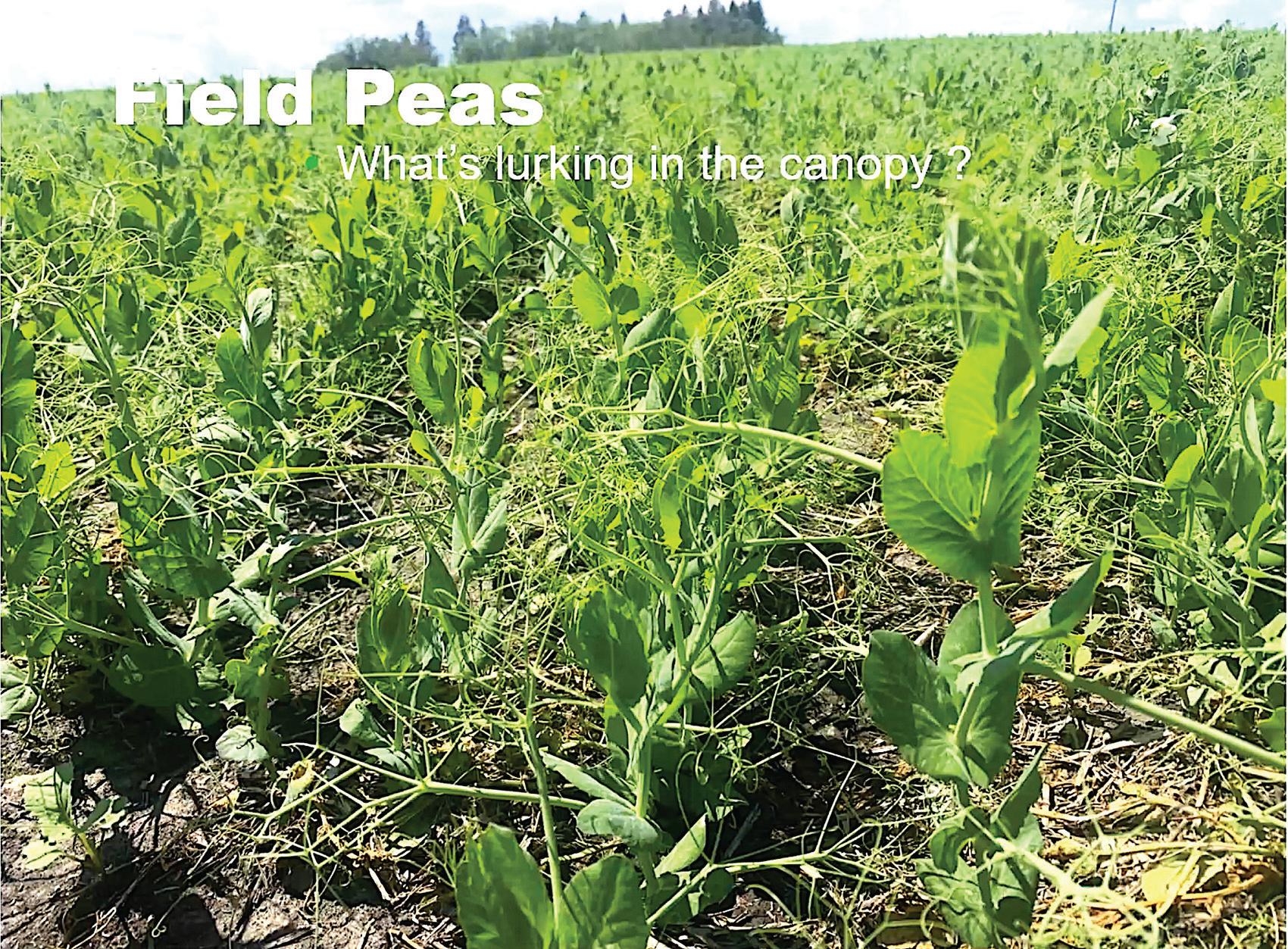

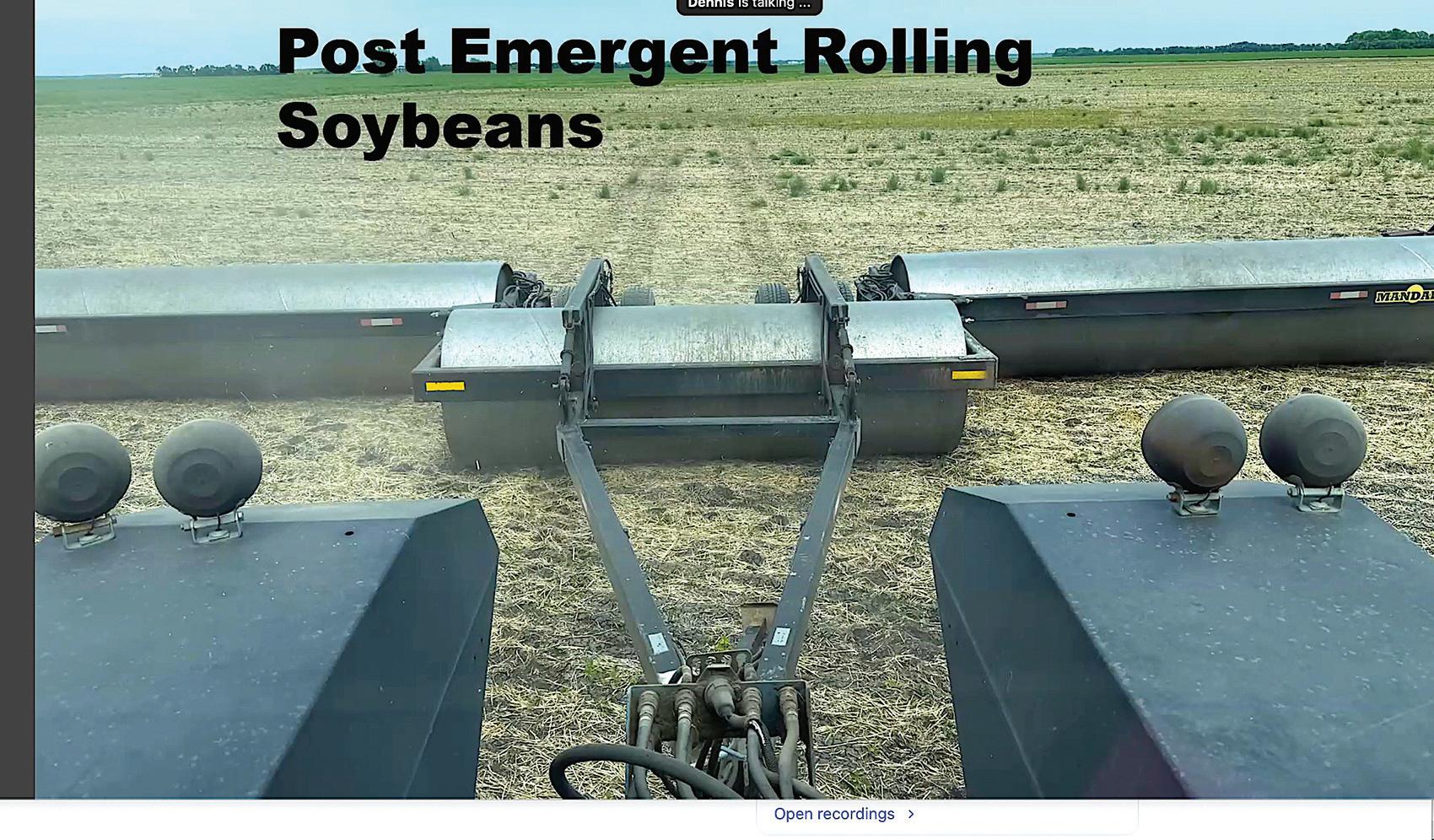

Dennis Lange, pulse crop specialist with Manitoba Agriculture said, “If you’re dealing with stones and time, you’re rolling right; the benefits outweigh the risks.” Submitted screenshots / photos
On Sunday afternoon, with conditions at 25°C and 51% humidity, Dennis Lange with Manitoba Agriculture tested post-emergent rolling.
“We’re seeing peas at the six-to-seven-node stage right now, and we typically begin watching for early flowers around the eight-to-nine-node mark,” Lange said during a recent Manitoba Agriculture Crop Talk webinar.
Dennis Lange, pulse crop specialist with Manitoba Agriculture, says the time to start thinking about fungicide applications for field peas is fast approaching.
“I’d like them to lay out what will happen to us and their plan. I keep hearing, ‘We’ll maybe do this or that.’ As a municipality, we need to balance our budgets. We have to know what’s coming,” says Judy Swanson, Head of Council for Boissevain-Morton on the unpredictable fall out of tariffs. Submitted photo

MFGA Annual Bird Survey Expands Across Regenerative Farms
Manitoba Forage and Grassland Association’s (MFGA) annual bird survey is taking flight again in 2025, marking its third consecutive year and a steady increase in farmer participation. What began with four farms in 2023 has grown to nine in 2024 and is projected to reach 13 MFGAnetwork farms this year.
“We all know and hear of the doom and gloom around grassland birds and the decline of grasslands across Manitoba,” said Mike Duguid, MFGA Chair. “But this is a good story to tell and one that MFGA is proud to tell. Thirteen profitable farms from a wide range of operations want benchmarks around bird populations—specifically, how the birds are interacting with or responding to the farming practices on their farms.”
Conducted each June, the surveys use “point counts”—a well-established method for monitoring bird abundance. In past years, farmers involved in the program have been able to directly observe how their land management practices support bird populations, including species at risk. Many of these farms feature intact or nearby habitats that bolster bird diversity.
The 2025 survey will once again benefit from a strong partnership between the Manitoba Important Bird Areas (MB IBA) program and MFGA, with bird expert Tim Poole from the Manitoba Wildlife Branch leading data collation and reporting. Notably, five MFGA farms involved in the surveys have already earned “Conservation Champion” designations from MB IBA for their efforts in supporting Prairie bird populations.
“There are many producers out there who value the presence of grassland birds on the landscape and who are actively working to incorporate bird-friendly practices into their operations,” said Marissa Berard, MB IBA Program Coordinator. “By making an effort to maintain existing habitat, these Conservation Champions are actively supporting the recovery of these bird populations.”
MFGA emphasizes collaboration between farmers and bird surveyors, beginning with pre-survey consultations that integrate producers’ deep knowledge of their land. Each participant receives a detailed report, complete with maps and key species data. Survey results from previous years have also been presented at MFGA’s Regenerative Agriculture Conferences and will soon be made available to the public, with final products expected this summer.
RM of Boissevain-Morton Calls for Clear Direction from Federal and Provincial Governments on Tariff Issue
By Harry Siemens
The Municipality of Boissevain-Morton urges federal and provincial governments to provide a clear and consistent plan regarding the threat of tariffs. Uncertainty continues to loom after earlier reports suggested the U.S. might impose a 25 percent tariff on imports from Canada and Mexico, but nothing has happened.
Judy Swanson, Head of Council for Boissevain-Morton, said the unpredictability makes it difficult for farmers to decide what to plant and for municipal leaders to manage budgets.
“I’d like a steady course,” said Swanson. “I’d like them to lay out what will happen to us and their plan. I keep hearing, ‘We’ll maybe do this or that.’ As a municipality, we need to balance our budgets. We have to know what’s coming.”
Swanson said the municipality relies heavily on the provincial and federal governments to ensure stability.
“What I would like to see from them is a plan. If the tariffs go forward, this is what we’re going to do. If they don’t go forward, we will do this.”
Boissevain-Morton, located near the U.S. border, has a population of about 2,300 people—approximately 1,500 in the town of Boissevain and the rest in rural areas. Agriculture plays a central role in the region, with a strong presence in grain farming, mixed operations, cattle, and hogs.
“This area is definitely agriculturerelated,” said Swanson. “It always has been important to our municipality.”
She emphasized that producers are facing uncertainty, not only due to the potential U.S. tariffs but also because of international trade tensions, including with China.
“When I talked to some of the producers, they said things like, ‘We’re not sure what to plant.’ It’s not just the U.S. trade—we’ve also got the China trade.”
Although no new tariffs have yet taken effect, Swanson noted feeling the psychological impact is already.
“There’s been no real impact yet, but it’s the not knowing. They would rather know what’s going to happen,” said Swanson.
Swanson also pointed out a contradiction in trade behaviour.
“Manitoba is the biggest pork producer in the Prairies, yet we still import some pork from the U.S. and Brazil. That could affect us greatly,” said Swanson.
Regarding government responses, she questioned their effectiveness, given the volatile nature of U.S. decisionmaking.
“I’m not sure how effective they’ve been, to be honest. I think it depends on one person—the President of the United States,” she said. “It seems he decides one day and changes it the next.”
Swanson acknowledged that all levels of government are doing what they can to prepare backup plans but added, “This whole situation has made us more aware of how dependent we are on the U.S. Maybe that’s a good thing—maybe we need to start looking elsewhere.”
She also raised concerns about inflation people wrongly attributing inflation to tariff threats.
“A lot of the tariff scare is just that—a scare. Prices are increasing, but I don’t think it’s because of tariffs. I think its inflation,” said Swanson.
Swanson said the public needs clearer information to separate price increases caused by inflation from those caused by trade policies.
“If there are tariffs, there should be something specific that says, ‘This price increase is due to tariffs, not inflation.’”
She gave examples of local budgeting challenges, including the rising cost of municipal equipment.
“We’ve been looking at a new grader. The price has jumped—twice for sure—compared to the last one. But there are no tariffs on it yet. So how did that happen?”
That unpredictability makes budgeting extremely difficult.
“Especially for equipment—half tons, one tons, graders—it could impact next year’s budget,” said Swanson. Her final message was simple: “People need to be well aware that inflation is happening alongside the threat of tariffs. Watch for inflation, and don’t assume every increase is because of tariffs. There’s more to it.”
Rob Adams, Deputy Mayor of Boissevain-Morton, echoed her thoughts, agreeing that the community must stay informed and not let fear drive assumptions.
Farmer’s Markets Open for Summer
By Elmer Heinrichs
Manitobans and visitors to the province are encouraged to look for the famous farmers’ markets and roadside stands that are once again appearing in neighbourhoods and communities province-wide, providing an excellent selection of Manitoba’s fresh fruit and produce.
About the only thing that beats the freshness and flavour of farmers’ market produce are the vegetables grown in your own backyard.
At farmers markets, local farmers, growers, and other food producers or vendors come together to sell their products directly to the public.
Supporting farmers’ markets is a great opportunity to meet the people who produce some of the best food available and a chance to experience the flavours of homegrown goodness.
As the name implies, a farmers’ market offers small farmers the chance to market their produce, incubate their
businesses, and supplement their income.
Farmers’ markets are popular destinations for consumers looking to find locally grown and homemade foods.
Producers grow, pick, make and sell a variety of quality local fruit, vegetables, fresh baked goods, home preserves and unique crafts. Farmers’ markets bring together a number of producers in one location to sell their goods directly to consumers.
Here’s where we all can go for the first fresh strawberries, raspberries or Saskatoon which are now in season.
At a market consumers can interact with food producers and processors to ask questions about the products they have for sale. If you’re craving some fresh jam, bread and other local goodies, you may be in luck.
Enjoy farm fresh produce and delicious home baked goods produced by market gardeners, fruit and vegetable growers and local bakers.
The farmer’s markets are open now and will run through the summer and into early fall. The Altona farmer’s market, for example, is open Saturday mornings downtown under the canopy from 10 a.m. to noon with a variety of fresh produce, including baked goods, and honey.
Manitoba’s premiere farm market may well be the St. Norbert Farmers’ Market, now open year-round. It attracts Winnipeg residents and visitors from near and far.
But from Winkler, with markets Tuesday evenings, to Boissevain and Killarney, also at La Broquerie, South Junction, St. Malo run by the Jr. B Warriors, and every Thursday from 3 to 6:30 p.m. at Steinbach in Clearspring Mall, and in many other communities, similar markets and roadside stands are open for the summer.
The Farmers’ Market is a must-visit in any Manitoba summer!
AAFC - CWRC Invest Nearly $20 Million in New Wheat Breeding Agreement
By Harry Siemens
The Canadian Wheat Research Coalition (CWRC) is investing $19.9 million over the next three years to fund wheat breeding activities with Agriculture and AgriFood Canada (AAFC). The goal is to ensure Prairie wheat farmers can continue accessing high-quality, field-ready wheat varieties that address real-world farming challenges while maintaining Canadian grain quality standards.
Over $11.2 million is coming from AAFC through the Sustainable Canadian Agricultural Partnership AgriScience program and the remainder comes from Manitoba Crop Alliance (MCA), Saskatchewan Wheat Development Commission (Sask Wheat), Alberta Grains, Western Grains Research Foundation and Canadian Field Crop Research Alliance.
“This agreement is about maintaining and improving the quality, resilience, and profitability of wheat varieties available to Prairie farmers,” said Lori-Ann Kaminski, CWRC President and Research Program Manager – Cereal Crops, Manitoba Crop Alliance. “We’re supporting the development of new varieties that help manage weather risks, diseases, and pests
while continuing to meet end-use market demands.”
The new core breeding agreement (CBA), which runs from 2025 to 2028, focuses on key wheat classes grown in Western Canada—Canada Western Red Spring (CWRS), Canada Western Amber Durum, Canada Prairie Spring Red, Canada Western Soft White Spring, and Canada Western Red Winter. These classes represent a wide range of production environments, from semi-arid regions facing heat and drought stress to areas challenged by fusarium head blight and rust diseases.
Kaminski said the CWRC wants to maintain a steady release rate of new field-ready varieties. “By field-ready, we mean lines that meet registration requirements, gain approval from the Prairie Recommending Committee for Wheat, and satisfy the quality standards set by the Canadian Grain Commission,” she said. “These varieties are fully vetted and ready for commercialization.”
The agreement builds on CWRC’s long-standing collaboration with AAFC. While it’s not the first of its kind, Kaminski explained that it represents an evolution of growerled support for wheat breeding in
Canada.
“Producer check-off dollars are going directly into breeding programs, and our farmer boards play an active role in setting research priorities,” said Kaminski. “This ensures we’re targeting the traits that matter most in today’s farm conditions.”
One area of growing importance is the ability of wheat to withstand climate extremes. Kaminski noted that more than half the research investment will go toward CWRS, the most widely grown class in the Prairies. The rest will support durum and other wheat classes based on acreage and regional need.
“Wheat is already quite drought tolerant, but we’re seeing noticeable improvements in varieties’ ability to withstand both prolonged dry spells and heavy, illtimed rains that lead to pre-harvest sprouting,” she said. “That’s especially critical in maintaining Canada’s international reputation for quality.”
Kaminski emphasized the collaborative nature of the research.
“This isn’t done in isolation. There are strong ties between public and private sector researchers. We exchange material, test across different regions, and continuously
monitor improvements.”
When asked if Canada is keeping pace globally with new variety development, Kaminski was clear.
“Absolutely. We’re in a phase of continuous improvement—on yield, disease and pest resistance, and environmental adaptation. We’re packing a lot of science into each seed,” said Kaminski.
Involving farmers in the commercialization phase remains vital.
“While the breeding work happens in government labs and research stations, private seed companies help bring the varieties to market. There’s a lot of back-andforth with growers to make sure these new lines perform on-farm and meet end-user expectations,” said Kaminski.
The public investment complements private-sector innovation while preserving Canadian standards.
“It’s a healthy balance,” Kaminski said. “We support public breeding because it ensures growers have access to varieties that serve our unique growing conditions and market needs. At the same time, commercialization opens the door to broader uptake and farmer choice.”
This latest CWRC-AAFC agree-

ment is one of several collaborative research efforts. CWRC also maintains breeding agreements with the University of Saskatchewan’s Crop Development Centre, the University of Manitoba, and the University of Alberta.
“As climate and market pressures intensify, this kind of forward-looking investment is essential,” Kaminski concluded. “Our job is to make sure wheat remains a sustainable, profitable, and competitive crop for Canadian farmers well into the future.”

“This agreement is about maintaining and improving the quality, resilience, and profitability of wheat varieties available to Prairie farmers,” said Lori-Ann Kaminski, CWRC President and Research Program Manager – Cereal Crops, Manitoba Crop Alliance.
Submitted photo


Dori Gingera-Beauchemin: A Lifetime of Leadership in Agriculture
By Harry Siemens
Six prominent figures from across Canada’s agricultural sector will join the Canadian Agricultural Hall of Fame this fall.
According to a June 16 press release, the 2025 inductees include John Anderson, Dori GingeraBeauchemin, Gaétan Desroches, Joe Hudson, Dennis Laycraft, and Peter Sikkema.
“As our industry continues to innovate and advance, it’s important to reflect and recognize the lifetime contributions these individuals have made to strengthening the world-class agri-food industry we enjoy in Canada,” said Hall of Fame chair Phil Boyd.
Why it matters: Every year, the Canadian Agricultural Hall of Fame recognizes people who help Canada’s agriculture sector grow and improve.
Boyd said this year’s inductees have led groundbreaking work in primary production, value-added food and retail, commodity organizations, policy, research, extension, and co-operatives.
Dori Gingera-Beauchemin spent more than four decades serving Manitoba’s agriculture industry with vision, determination, and humility. From her early days as a 4-H and Youth Specialist to her final years as Deputy Minister of Agriculture, Dori built a reputation as a respected leader and trusted voice for farmers across the Prairies. In rural Manitoba, Dori earned her degree in Agriculture from the University of Manitoba. She joined Manitoba Agriculture in 1979 and steadily rose, taking on roles in business management, trade, environmental policy, and federal-provincial negotiations. In every position, she focused on

practical solutions that strengthened farm families and rural communities.
When Dori became Deputy Minister, she made it her mission to ensure agriculture remained central to the province’s economic future. She helped craft policy that reflected the realities of farming while opening doors for innovation. One of her proudest achievements includes helping to establish the Research Chair in Sustainable Protein at the University of Manitoba. This initiative supports cutting-edge research in plant, animal, and alternative proteins—building new opportunities for producers and processors alike. Throughout her career, Dori championed youth in agriculture. She supported the Canadian 4-H
Foundation and its programs to equip young people with skills in leadership, communication, and Ag awareness. She also played a role in developing the Canada–Japan 4-H exchange program, which continues to open minds and build friendships across cultures.
Dori didn’t limit her impact to local or even national borders. She contributed to Farmers Abroad Canada, a nonprofit that helps improve farming practices in developing countries. Her work connected farmers across continents through shared knowledge and experience.
Since retiring in 2023, Dori hasn’t slowed down. She now helps lead the development of Canada’s first national agri-food sustainability index. The index
will measure and benchmark environmental health, economic viability, food safety, and social responsibility across the Canadian food system. It aims to give producers, governments, and consumers a clear picture of where progress is needed—and where Canadian agriculture leads the world.
She also sits on the boards of Protein Industries Canada, Protein Manitoba, and the Canadian Agri-Food Policy Institute. Her insights continue to shape the direction of agricultural innovation and sustainability in Canada.
Back home in Ile des Chênes, Manitoba, Dori co-owns and operates Beauchemin Family Farm. She remains rooted in the very soil she’s worked her whole life to protect and improve.
In recognition of her contributions, Emerging Ag Inc. nominated Dori for the Canadian Agricultural Hall of Fame. She also received an honorary Agribusiness diploma from Assiniboine Community College and continues to inspire new generations of agricultural professionals.
Dori Gingera-Beauchemin doesn’t seek the spotlight. She works behind the scenes, connecting people, building trust, and quietly advancing policies that make a real difference. Her legacy speaks for itself—one of dedication, mentorship, and forward-thinking leadership.
As she continues to guide Canadian agriculture into a more sustainable future, Dori remains a strong example of what happens when purpose, service, and integrity come together.
The bottom line: Dori GingeraBeauchemin didn’t just serve agriculture—she helped shape its future.

Image supplied by Jane Robinson Write for Work.
Dori Gingera-Beauchemin spent more than four decades serving Manitoba’s agriculture industry with vision, determination, and humility. From her early days as a 4-H and Youth Specialist to her final years as Deputy Minister of Agriculture, Dori built a reputation as a respected leader and trusted voice for farmers across the Prairies.
Congratulations to the 2025 University


At the University of Manitoba Spring Convocation session on June 5, parchments were presented to the graduates from the Faculty of Agricultural and Food Sciences. The Class of 2025 includes 56 Diploma in Agriculture, 111 Bachelor of Science, 14 MSc/MEng and 2 PhD graduates.
Agricultural and Food Sciences Graduates Honoured at 2025 Convocation

At the University of Manitoba Spring Convocation session on June 5, parchments were presented to the graduates from the Faculty of Agricultural and Food Sciences. The Class of 2025 includes 56 Diploma in Agriculture, 111 Bachelor of Science, 14 MSc/MEng and 2 PhD graduates.
Diploma medal winners include Trent Delichte who received the Governor General’s Bronze Medal, an award given to the graduate with the highest academic standing in the two-year Diploma Program in Agriculture.
Trent also received the President’s Medal, given annually to a student who combines scholarship with outstanding qualities and has demonstrated leadership to the members of the graduating class throughout their time enrolled in their program.
“I decided to enrol into my Diploma in Agriculture at the U of M because I felt like it was a very practical program,” explained Trent. “As I plan to return to the farm eventually, the skills, connections, and knowledge I would gain would be beneficially tailored towards my future tasks in running the farm.”
He added that he plans on returning to the U of M to obtain his degree in Agribusiness, then look for a job in the industry for a few years and finally go back to the family farm.
Degree program medals are presented to students with the highest standing in their program. This year’s recipients include Cody Donald who received the B.Sc. (Agribusiness) Medal; Nicola Wolfe who received the B.Sc. (Agriculture) Medal; Rachel Teller who received the B.Sc. (Agroecology) Medal; Matthew Aitken who received the B.Sc. (Food Science) Medal; and Kaitlyn Guttormson who received the B.Sc. (Human Nutritional Sciences) Medal.
Emily Robb who graduated with a B.Sc. (Agroecology) was honoured with the University Gold Medal in Agricultural and Food Sciences given for the highest grade point average.
Emily was also awarded the Lieutenant Governor’s Gold Medal, given on the basis of scholarship, personal excellence and leadership.
The School of Agriculture Teacher of the Year Awards were presented in recognition of teaching excellence and contribution to the students’ program of study. The First Year award, selected by first-year diploma students, was given to Bailey Delf, School of Agriculture. The Second Year award, selected by the graduating class of diploma students, went to Colin Penner, School of Agriculture.


Degree students named Henrique Da Ros Carvalho, Department of Soil Science, as Professor of the Year, an honour voted on by the graduating class.
Trent Delichte (left) receives the Governor General’s Bronze Medal from Dr. Martin Scanlon, Dean, Faculty of Agricultural and Food Sciences
Colin Penner (centre) was presented with the Teacher of the Year Award by graduating students Chloë Reiner (left) and Erin Tribula (right).
Group shot of the Diploma in Agriculture grads 2025.
Submitted photos
of Manitoba Agricultural Graduates!
University of Manitoba Honours Agricultural Leaders with 2025 Certificate of Merit

The University of Manitoba’s Faculty of Agricultural and Food Sciences celebrated the 45th anniversary of its Certificate of Merit by recognizing three outstanding alumni for their exceptional contributions to Manitoba’s agricultural sector and rural communities.
Since its inception in 1981, the Certificate of Merit has honoured over 95 individuals who have demonstrated exemplary leadership in agriculture, agri-food, and community service. This year’s recipients — Cathey Day, Fred Greig, and Kim McConnell — were celebrated at a special ceremony on June 19 for their lasting impact on the province’s farm and food landscape.
“We are proud to honour these three remarkable leaders in this milestone year,” said Martin Scanlon, Dean, Faculty of Agricultural and Food Sciences.
“We know that our alumni have deep and lasting impacts - not only within their professions, but also in their communities. These honourees are a true inspiration for young people who are considering studies and careers that will advance Canada’s agri-food sector.”
Each year up to three Certificates of Merit are presented to graduates of Faculty of Agricultural and Food Sciences Degree programs, to graduates of the former Home Economics/Human Ecology Degree programs, and to graduates of the Diploma in Agriculture program.
2025 Certificate of Merit Recipients:
Cathey Day – A Passionate Community Builder - Cathey has dedicated her life to rural development and education, championing initiatives that strengthen local economies and empower future generations.
Fred Greig – A respected advocate for farmers, Fred has played a pivotal role in shaping agricultural policy and advancing research that benefits producers across Manitoba and beyond.
Kim McConnell – A trailblazer in agricultural marketing, Kim has transformed how Canadian agriculture is perceived globally and continues to mentor emerging leaders in the industry.


National Nutrition Honours Bestowed on U of M Researchers
The University of Manitoba had a standout presence at the Canadian Nutrition Society (CNS) Annual Conference held May 8-10 in Montreal, with several members of the Department of Food and Human Nutritional Sciences receiving honours for their contributions to the field of nutrition.
Dr. Harold Aukema was inducted as a CNS Fellow, one of the highest distinctions granted by the Society. This elite recognition is awarded by peers to individuals who have demonstrated exceptional service and leadership within both the Canadian Nutrition Society and the broader nutrition profession, nationally and globally. Dr. Aukema’s induction reflects a career of impactful research, mentorship, and advocacy in nutritional science.
Dr. Carla Taylor was honoured with the Earle Willard McHenry Award for Distinguished Service in Nutrition, presented annually to a Canadian or Canada-based professional who has made significant and lasting contributions to the field. Dr. Taylor was recognized for her inspiring mentorship, academic leadership, pioneering research, and support for developing innovative nutrition programs.
Graduate student Anne Manson, a PhD candidate in Dr. Aukema’s lab, also earned national recognition with two highly competitive awards:
The Applied Physiology, Nutrition and Metabolism Abstract Award, given to the best student abstract applying physiology, nutrition, or metabolism to human health, physical activity, or fitness. Her abstract was selected from over 250 submissions.
The Nutrition Graduate Student and Trainee Award / Christine Gagnon Memorial Travel Award, presented to only eight students across Canada. This award included the opportunity to deliver an oral presentation in a dedicated session at the conference, highlighting her research to national experts and peers.
These achievements highlight the department’s leadership in advancing nutritional science, fostering student success, and shaping the future of nutrition in Canada and beyond.
L to R: The 2025 Certificate of Merit recipients Cathey Day, Fred Greig and Kim McConnell.
Submitted photos

Has Anyone Won Their Battle With Potato Bugs?
By Joan Airey
Gus Hendzel a very knowledgeable gardener told me numerous times we should burn our potato tops when we dig our potatoes, which I have done when possible or hauled them to compost a mile from our house. One of my neighbour’s works her garden deep in the fall hoping to help kill any bugs or eggs deep in the soil when it freezes.
Recently I managed to break my leg and while waiting for my cast to be applied I visited with a local gardener Esther Krahn. She said they were experimenting with pushing the snow off their garden during the winter so the frost would go down further and maybe destroy the potato bugs. The Krahn’s grow a bountiful garden so I will keep in touch with them to see if that method works.
One of my favourite vegetables is cauliflower and after last year’s efforts I decided not to even try growing them this year.
Since I’m pretty glued to the house these days I’ve been reading every gardening article I get a chance to read. On Facebook this morning there was a post for a cover for cauliflower, broccoli and cabbage that won’t even let flea beetles get in. The covers can be found on Amazon. They are in a 4-pack bird netting for garden protection 150-200cm. The cost is $18.99. I’m going to see if I can find the post with this in and save it for next year.
Do you do some container gardening? I have flowers and veggies growing on my patio and with the help of my family they seem to be thriving.
Recently when cleaning out the cold room, I found two sprouted potatoes and decided to plant them in a giant planter. The plant is now a foot tall and bushy. My husband is watching it hoping for some early baby potatoes.
I also bought three advanced tomatoes from Travis at Walker’s greenhouse and the most advanced I moved to the largest pot I could find and it’s now loaded with tomatoes.
My aunt Olive always said to water pots with any water vegetables were cooked in after it has cooled and I have been doing that for the ones in planters.
We did get three inches of rain earlier but another rain anytime would be appreciated. My husband has been watering the garden thanks to our son setting up a pump at the dugout.
I’m looking forward to reviewing a book called “Vintage Farmhouse Garden: Your Guide To Creating A Vintage-Inspired Outdoor Space”.
I have a new neighbour down the road who is restoring an old home and yard to its original glory. I haven’t met her yet as I’m unable to drive until I get my cast removed. But she definitely knows how to restore a home as it is looking beautiful now on the outside.
For me growing carrots seems to be a problem this year. I have had several calls saying carrots haven’t germinated and my husband says ours need replanting too.
Hope everyone gets lots of moisture for the garden, pastures and crops soon.
New AI-Powered Smartphone Tool to Revolutionize Grain Quality Assessment
A new project led by Protein Industries Canada is aiming to transform the way Canadian farmers assess grain quality, using artificial intelligence to deliver real-time data straight from a smartphone.
In partnership with Grain Discovery, Inarix, and Sevita International, the initiative will develop a smartphone-based tool that uses AI and machine learning to analyze grain samples. The technology will enable users to take a photo of soybeans with a standard smartphone and receive a quality assessment in under 20 seconds—offering a major leap forward in on-farm decision-making and transparency across the grain value chain.
“With support from Protein Industries Canada, one
of Canada’s Global Innovation Clusters, this project has the potential to mark a significant milestone in our journey towards a more efficient and sustainable agricultural future,” said Mélanie Joly, Minister of Industry.
The $1.3 million project— of which $700,000 is funded by Protein Industries Canada—will deliver a softwareas-a-service (SaaS) platform powered by computer vision and AI algorithms. Farmers, buyers, and processors will be able to access standardized, consistent assessments of soybean variety, traceability enhancements, and a tool specifically designed for use in rural areas.
“This project demonstrates how advanced, accessible AI tools can help optimize decision-making at the farm level. By enhancing consis-

tency and traceability, this technology supports delivery of high-quality, food-grade crops,” said Robert Hunter, CEO of Protein Industries Canada, emphasizing the broader value of digital transformation in agriculture.
Grain Discovery will lead commercialization efforts, while Inarix will develop the AI component. Sevita International will provide critical
historical data and host pilot testing.
“We’re helping our clients get fast, reliable insights into grain quality,” said Rory O’Sullivan, CEO of Grain Discovery. “It’s another step forward in making the supply chain more transparent and efficient. I only wish I had something like this 20 years ago when I was out sampling grain!”
Rooted in the Land – Jim Pallister on Family, Farming, and Future
By Harry Siemens
For Jim Pallister, a farmer at Portage la Prairie, MB, farming is more than a career—it’s a way of life that spans generations. As he walks the land his father and grandfather farmed, he sees not just rows of beans, corn, wheat, and edible beans but also a family legacy and the responsibility to steward it well.
“We’ve wrapped up seeding, and now we’re spraying beans and corn,” he said in a recent interview. “The crop looks good. We’ve had a pretty good emergence; things are growing rapidly. But we’ve only had about a quarter to a half inch of rain in June. We could use some more.”
Drainage tiles have helped, and Pallister remains hopeful.
“They’re slowing down now, especially in the wheat fields coming into flag leaf. But it’s a good sign that there’s still water in the ground,” he said. “Sandy areas are starting to back off, though.”
The farm’s rotation includes edible beans, spring wheat, and corn.
“About half the land is in beans, the other half in grain,” he said. He’s also planning to expand the drainage system this fall.
“There’s a great old expression: ‘when it’s dry in Manitoba, make drains.’ That’s what we’re doing,” he said.
Pallister represents the fourth generation on his farm. His son is the fifth, and his grandchildren will be the sixth. But Pallister quickly points out that the family’s farming heritage goes far further.
“I imagine it goes back 50 generations,” he said. “In the old countries, what else would we have ever done? It’s in our culture.”
Succession planning has been deliberate and peoplefocused.
“We have meetings, talk to accountants, and work through insurance and strategies. But more than anything, we grow people,” he
said. “I’ve worked to help my two sons grow into their roles. One’s more into agronomy and human resources; the other’s good with marketing and finances. Both are growth-oriented.”
Pallister didn’t wait until retirement to begin the transition.
“We started early. I took them out of the house and brought them with me. They even rode with their grandpa. They remember that,” he said.
He and his sons now manage a team they’ve worked hard to build.
“We’ve hired well. We focus on leadership and development. You can take away some land, but you’ll bounce back if you’ve got the people. That’s our organization,” said Pallister.
On the broader political and trade front, Pallister is less optimistic—but still measured.
“I’ve stopped watching politics too closely. It’s too depressing,” he said. “I was hopeful things would change after the last election. I don’t think we’ll see an interruption in food trade. No country is going to tariff food. Manitoba’s agriculture depends on access to export pigs, oats, canola, corn, and dry beans. We need to stay integrated north-south.”
He sees challenges ahead but also resilience.
“Our land’s good, our people are strong, and if we keep growing them, the farm will carry itself well into the future,” summed up Pallister.

The initiative will develop a smartphone-based tool that uses AI and machine learning to analyze grain samples. Submitted photo
“We’ve wrapped up seeding, and now we’re spraying beans and corn,” said Jim Pallister, a farmer at Portage la Prairie, MB. “The crop looks good. We’ve had a pretty good emergence; things are growing rapidly. But we’ve only had about a quarter to a half inch of rain in June. We could use some more.” Submitted photo
The Value of Conversations at the World Pork Expo
By Harry Siemens Manitoba.”
For George Goossen, the World Pork Expo in Des Moines, Iowa, has become more than just an annual industry event—it’s a tradition rooted in decades of dedication to the pork sector. As president of Carlo Genetics, based in St. Anne, MB, Goossen has been attending the expo for nearly as long as he’s been in the business.
“This August marks 37 years for me in the pork industry,” Goossen said. “I’ve been going to World Pork for as long as I can remember. And every single year, I come away with something valuable.”
While many attendees come for the latest technology and product innovations—and Goossen does enjoy seeing what’s new—he insists the real value lies in something simpler: conversation.
“It’s great to walk the floor and see things you’ve never seen before,” he said. “There were some really interesting new products on display again this year. But what makes the show truly worthwhile for me is talking directly with the people behind those innovations, especially the one-on-one discussions you have with producers and industry folks—many from
Goossen said those hallway conversations with colony producers, industry leaders, or long-time colleagues like Rick Bergman, Dixon, and Brock provide insights you can’t get from a presentation or brochure.
“You pick up little kernels of knowledge in those chats— things that stick with you and give you perspective,” he said. “This year, I talked with people like Cam and Gavin. You leave with something you didn’t come in with, so I keep returning.”
Industry Sentiment: Cautiously Optimistic
When asked about the overall mood at this year’s Expo, Goossen described it as “cautiously optimistic.”
“I talked to different contractors—barn builders and the like—and they said it’s really slow right now,” he said. “There’s some barn work here and there—renovations, upgrades—but not a boom. That said, people seemed upbeat and hopeful that things will pick up again.”
He added that most producers focus on stabilizing their operations rather than expanding.
“People are rebuilding their cash reserves,” he explained.
They’re being careful, trying to prepare for the next downturn, and that’s wise,” he said.
Goossen said there’s a noticeable difference in sentiment between Canadian and American producers.
“I think that maybe the Canadians are a bit more optimistic about the pork industry right now than the U.S. That’s just my take, but it was a feeling I picked up throughout the day,” he noted.
One of the more thought-provoking conversations Goossen had came with a fellow breeder who warned against repeating past mistakes.
“He said something that stuck with me,” Goossen recalled. “He said, ‘We’ve come through something tough because we overbuilt. If we can maintain what we have and slowly increase, that’s better than rushing into another big build-up and flooding the market.’”
Goossen agreed, noting that Canada and the U.S. export large volumes of pork and need to avoid outpacing global demand.
“If we can keep things stable for a while, we’ll see thoughtful expansion—not just reacting, but planning. And yes, I also think we’re going to see
more mergers. That’s just part of the business cycle now.”
Though the World Pork Expo spans two days, Goossen only attended the first.
“I got there early on day one and made the rounds,” he said. “I usually have a few meetings in mind, and I had already arranged to connect with certain people. I could meet everyone I wanted, have the needed discussions, and get through what I came for.”
He did miss one contact who didn’t have a booth this year, but overall, he felt the day was productive.
“Once everything wrapped up, there wasn’t much point sticking around for the second day. We got our stuff done—it was worth the trip,” he said.
For Goossen, attending events like the World Pork Expo is as much about staying current as building relationships.
“You can read reports and watch webinars,” he said. “But there’s something about being on the ground, face-to-face with people who live and breathe this industry. That’s where the real value lies.”
With nearly four decades in the business, George Goossen continues to value the insights that come not only from new technology but also from old-fashioned, thoughtful conversation.



“It’s great to walk the floor and see things you’ve never seen before,” George Goossen said of this year’s World Pork Expo. “There were some really interesting new products on display again this year.”
“This August marks 37 years for me in the pork industry,” Goossen said. “I’ve been going to World Pork for as long as I can remember. And every single year, I come away with something valuable.” Submitted photos
Feeding the Future: How 4-H Cattle Sales and Community Shape
Tomorrow’s Producers
By Harry Siemens
Gracey Wilkinson knows firsthand that behind every 4-H steer, there’s a story of dedication, generosity, and connection.
“A massive thank you to Cynthia N. Lee Wirgau for purchasing my market steer Fitzgerald T-bone,” she wrote in a recent Facebook post. “They named him last year when they bought my steer and came back again. And another huge thank you to Ian Smith, who allowed me to purchase one of his market steers.
Gerald was amazing—and I highly recommend Ian!”
Wilkinson’s gratitude speaks to the heart of 4-H: young people learning by doing, supported by families, businesses, and producers who care.
For Ian Smith, a cattle producer from Argyle, MB, helping 4-H members like Gracey isn’t about profit but purpose.
“Last summer was the first time a 4-H member asked to come look at my calves,” said Smith. “That started something pretty special.”
Smith’s main business goal is to raise and sell breeding stock—yearling or two-year-old bulls and heifers. But not every calf is a fit for that.
“Some calves are born with high birth weights or horns, and producers don’t want that in their bulls,” he explained. “But those calves still have a lot of value—especially as 4-H steers.”
Using dehorning paste to remove horn growth early and managing his herd for calm temperaments, Smith found a niche that matched well with youth in agriculture.
“Many of my calves are hybrid Shorthorns—not purebred—which makes them ideal as steers. They’re sturdy, docile, and handle well,” said Smith. “That’s exactly what you want for a young 4-H kid learning the ropes.”
Last year, two young first-time buyers came to his farm—both just 10 years old. One picked out a purebred Shorthorn steer with a 115 lb birth weight.
“That calf wouldn’t have sold as a bull because of his high birth weight,” Smith said. “But he weaned at 850 pounds and grew into a great 4-H project. At the Lundar 4-H Club show, that steer hit 1,325 pounds and sold for $4.95 a pound.”
The second 4-H member purchased a purebred Shorthorn heifer and showed her at Brandon Ag Ex and again at the Lundar Fair this year.
“He’s keeping her to show again. And he’s already a great young stockman,” said Smith.
What stuck with Ian wasn’t just the calves’ success but the relationships that formed.
“These kids were strangers ten months ago. Now, they and their parents are friends. I even went to the Lundar Fair to watch the show. I was proud of them,” he said. “But honestly, I was even more grateful for the experience.”
Smith has never had children of his own, which makes these moments even more meaningful.
“Helping these kids, giving them a good start, it matters. They’re the ones who will carry the torch and feed the world,” he added.
He has a third young girl interested in buying a calf this year to join a beef 4-H club. That kind of momentum—and trust—isn’t accidental.
“I raise cattle the old way,” Smith said. “Tied in the barn during winter, calves born in January and February. That early start makes them easier to handle and bigger at weaning time. It also means working with them from birth, so they’re gentler for kids.”
That gentleness—the docility of the Shorthorn breed and their crosses—is key.
“A calm calf makes the kid more interested, more confident. It makes them love it and want to keep going,” said Smith.
But the standout quality in Smith’s story isn’t just good cattle. It’s his heart for the next generation.
“I’m not into soaking a kid for money,” he said plainly. “Some people say I sell too cheap. But my goal is to be remembered as fair rather than walk away with a full pocket.”
It’s a principle rooted in memory.
“I once was a kid. I remember those who treated me fairly. My parents taught me respect, and I want to pass that on,” said Smith. “If I help just one kid because I gave them a fair start in Ag, that’s worth more than money.”
Gracey Wilkinson is one of those kids. So are the two 10-year-olds who found their first 4-H calves in Ian Smith’s pasture. And more are coming—kids who have their futures shaped by cattle, community, and the quiet generosity of people like Ian Smith.
When a 4-H steer walks into a show ring, it carries more than its weight—it carries hours of brushing, feeding, walking, and learning. But behind that, it carries the hands of mentors and the hearts of those who believe in tomorrow’s producers.
The ring may be the stage, but the real work happens in barns, pastures, and feedlots—where values get passed down, one calf and one handshake at a time.
Verticillium Stripe Emerging as Major Threat to Manitoba Canola Yields, With No Treatment in Sight
By Brenda Hunter
Verticillium stripe is the most recent fungal disease to significantly affect canola crop yields in Manitoba, and therefore, the bottom line of producers.
Unfortunately, there are no fungicides yet available for the prevention or treatment of verticillium stripe which creates a huge problem for the industry.
Justine Cornelsen of Virden, MB is part of the Canola Council of Canada’s Verticillium Steering Group. With a Master’s degree in plant pathology from the U of M, and her field experience as Agronomic & Regulatory Services Manager for BrettYoung Seeds, she is well-versed in the diseases found in canola.
Verticillium stripe is a relative newcomer to the host of fungal diseases prevalent in canola crops in Manitoba, first discovered in fields south of Winnipeg as early as 2014, but has rapidly increased to be a widespread problem.
“It was likely established in Canadian soils prior to 2014, but was being misidentified as other common canola diseases such as blackleg and sclerotinia,” said Cornelsen.
She explained that the soilborne, xylem-invading pathogen, verticillium longisporum, is taken up by the root of the canola plant and moves up through the plant’s stem where it begins to form tiny microsclerotia. This, in turn affects the host plant by weakening the plant stem leading to premature plant dry down and/or lodging, which ultimately can result in substantial yield loss for the producer.
Wind, water and equipment transport the spores from fieldto-field and the fact that microsclerotia have been documented to live in the soil for over 10 years, further exacerbates the problem. Manitoba’s neutral to
alkaline soils make it a prime location to host microsclerotia from season to season.
Like sclerotinia, verticillium stripe is weather dependent and reveals itself late in the growing season, which is another reason the disease seems to have garnered more attention in the past several years. Hot, dry conditions and delayed/prolonged harvest seasons have contributed to the progression of this monocyclic disease.
“The environment (we’ve experienced in the last few years) has allowed for the pathogen to spread rapidly as during harvest we are cutting through where the microsclerotia have developed and are spreading in the wind during harvest,” said Cornelsen.
One theory regarding a management practice to help combat verticillium stripe relates to current harvest practices vs. former ones. Since verticillium is a disease that shows up late in the season, it makes sense that reverting to swathing canola early to cure in the swath before combining, could potentially slow the disease from spreading as rapidly.
“If farmers swath their canola, they aren’t allowing the pathogen up into the plant stems where it causes the most damage,” she said. “This is a research question to see if swathing vs. straight cutting canola can reduce the inoculum buildup and yield losses caused from verticillium stripe. The bulk of acres in Manitoba are straight cut, and this has all been possible due to pod-shatter reduction traits which are also likely helping to reduce the yield losses caused from verticillium. It will be great to see some research completed on this topic.”
Over the past five years, researchers and industry stakeholders have been scrambling to collect data in order to learn more about the disease and cre-


ate an action plan.
According to Cornelsen, there are plenty of unknowns about the disease as of yet. What they do know is that the presence of it has steadily increased since they first started monitoring it, and in 2024, 60% of the fields surveyed showed evidence of verticillium stripe. Decreased yields over the past four years have also been reported, which were not only attributed to verticillium, but to heat stress and blackleg as well. Severity data is the missing link when measuring yield loss.
“Lots of what we know about verticillium stripe/V. longisporum, is from European research, which has created a great foundation for Canadian researchers to build from,” Cornelsen explained. “Determining the impact of the disease, how best to quantify the disease severity, and what can be done to manage/reduce the disease are all research priorities.”
Cornelsen suggests that it is still too early to make recommendations for best management practices. With no fungicides available or species of canola developed yet that are immune, there aren’t a lot of options for producers at this point. She does urge farmers to practice integrated pest management tactics to help establish healthy plants better equipped to tolerate stressors, as well as implementing a diverse crop rotation and management of brassicae weeds to help remove the host required for the spores to multiple.
“Differences in canola hybrids tolerance to the disease have been noted but no industry standardized scale has been developed to rank hybrid’s performance amongst canola suppliers.”
Justine Cornelsen of Virden, MB is part of the Canola Council of Canada’s Verticillium Steering Group with field experience as Agronomic & Regulatory Services Manager for BrettYoung Seeds, is well-versed in the diseases found in canola including the emergence of fungal Verticillium Stripe.
Justine Cornelsen of Virden, MB is part of the Canola Council of Canada’s Verticillium Steering Group. She suggests that it is still too early to make recommendations for best management practices. With no fungicides available or species of canola developed yet that are immune, there aren’t a lot of options for producers at this point. Submitted photos
Canada’s Pig Code of Practice Undergoes Major Update
By Harry Siemens
The National Farm Animal Care Council (NFACC) has launched a full update of the Code of Practice for the Care and Handling of Pigs in Canada. This essential document outlines how pigs should be cared for on farms, covering everything from housing and feeding to transport and euthanasia.
Jackie Wepruk, Division Director for NFACC, says the Code is key in setting practical, science-based animal care standards supported by industry and the public.
“The Pig Code is our national understanding of what good care for pigs looks like,” Wepruk said. “It’s been around in some form since 1993, and we updated it most recently in 2014. Now it’s time to revisit it to reflect evolving science, public expectations, and practical realities on farms.”
Canada has developed Codes of Practice for many farm animal species, each serving multiple purposes.
“They’re educational tools, reference material for provincial animal protection laws, and form the foundation of industry-led animal care assessment programs,” said Wepruk. “So a lot is riding on getting the content right.”
The current update process for the Pig Code began in May 2025. NFACC anticipates a public comment period in late 2026 or early 2027 and plans to release the final updated Code by March 2028.
“We’re looking at a two-and-a-half to three-year process,” Wepruk said. “It’s not quick or easy, but thorough and inclusive.”
The update brings together a diverse committee, including farmers, veterinarians, animal welfare advocates, researchers, government representatives, and food retailers.
“These are not easy conversations,” Wepruk admitted. “We expect tensions, but our role is to guide the discussion toward constructive dialogue. We’re not looking for winners and losers—we’re looking for balanced, consensus-driven solutions.”
NFACC helps the committee reach decisions through a structured, science-informed process.
“Our team focuses on helping committee members work through tough conversations and find common ground,” she said. “It’s about advancing animal welfare while protecting the viability of Canadian agriculture.”
Early steps included a public survey asking Canadians for their topof-mind thoughts on pig welfare.
“The top-of-mind survey just closed in early June, and we’ll use that feedback at our first in-person meeting this fall,” Wepruk said. “It helps the committee understand what matters most to people.”
Following that meeting, the committee will identify key welfare issues. A separate scientific committee will review these, which will spend about a year producing a peer-reviewed report. “That science report will form the foundation of the new Code,” Wepruk explained. “It gives us the facts we need to make informed decisions.”
Once the new draft Code is complete, NFACC will invite public feedback during a 60-day comment period.
“We want to hear from everyone,” she said. “That includes the general public, especially farmers affected by the changes. Their voices are vital.”
Wepruk stressed the broad interest in the outcome.
“It’s not just farmers and vets involved here,” she said. “Retailers and food service companies care deeply about animal welfare standards, too. Consumers are asking more questions, which is one way to give them confidence in how producers raise the animals.”
She also highlighted the importance of industry leadership. “The Canadian Pork Council took the first step to initiate this update,” Wepruk said. “That shows real commitment to both transparency and continuous improvement.”
For producers, this means being part of a process that ultimately shapes the standards by which others judge their operations, whether in the marketplace or by regulators. “This isn’t just an academic exercise,” she said. “The updated Code will influence how farms get assessed and how people understand pig care across the country.” NFACC will post regular updates and documents on its website, nfacc.ca. Interested individuals can also sign up for email updates.
“If people want to stay informed, everything is on our website,” Wepruk said. “They can follow the progress and participate when the time comes.”
The Pig Code update comes alongside revisions to other species’ Codes, including beef cattle, sheep, equine, poultry, and laying hens. “We’re working on several Codes right now,” said Wepruk. “There’s a strong national focus on maintaining and improving farm animal welfare.”
In closing, she encouraged broad involvement.
“This is a team effort. Everyone at the table is giving their time and expertise to move things forward,” she said. “We believe in this process because it brings the right people together to find real, workable solutions. Updating the Pig Code is one more step in building trust and ensuring the care of animals remains a shared Canadian value.”
Egg Farmers, RRC Polytechnic Serve Up Free Egg Sandwiches
Manitoba Egg Farmers (MEF) promoted the benefits of eggs and egg products to celebrate their partnership with Red River College Polytechnic (RRCP) in May, by giving away 1,000 free egg sandwiches and coffee in Old Market Square.
Culinary arts students demonstrated their talents and gained valuable experience by preparing the sandwiches fresh onsite at the Paterson Globalfoods Institute (PGI) on the Exchange District campus.
“Eggs are versatile, nutritious and an essential ingredient for most chefs on a daily basis, so it’s critical that these industry leaders of tomorrow learn how to cook eggs well and truly understand the benefits
of eggs and egg products,” said Lylah Erkau, chair of baking and culinary arts at RRCP. “Our partnership with Manitoba Egg Farmers provides students with added expertise in the classroom as they learn the fundamental role farmers play in feeding our community and growing our economy. This event brings us all together to share that important message with the public and allow the students to hone their skills.”
Chef Terry Gereta, an instructor at RRCP’s Culinary Arts program sourced local ingredients for the delicious egg sandwiches, including Bothwell cheese, a fan favourite!

Promising Alternatives Seen in U of M Cropping System Research
By Elmer Heinrichs
A University of Manitoba research focused on increasing biodiversity by growing nine crops in a combination that included intercropping (growing two annual) crops has been released.
The 2025 University of Manitoba study is exploring cropping system alternatives, focusing on the “business as usual” (BAU) rotation, a “warm-season crop” (WS) rotation, a “biodiverse” (BD) rotation, and an organic no-till (ORG) system.
This multi-condition study aims to assess the performance of these systems under climate stress, considering factors like yield, economic returns, water use efficiency, and soil health.
The 2021 drought was one of the worst in Prairie history, but fortunate in one way in that it coincided with University of Manitoba research designed to better understand how different cropping systems perform under warmer and drier conditions, which many scientists predict will be our future.
A dry 2020 growing season followed by winter precipitation that was one-third of normal set the stage for the yieldcrippling event of 2021. Manitoba crop yields plummeted by a range of 22 to 37 per cent and up to 70 per cent in some municipalities, according to a provincial government report.
The U of M research suggests the crops and farming practices of today will become less profitable under such scenarios. But it also found some promising alternatives.
While farmers look to the amount of rain and the available soil moisture as key determinants of yields, researchers are increasingly focused on the role of atmospheric dryness, which is the air’s ability to soak up more moisture as temperatures rise.
“The main objective of this study was to compare cropping systems that incorporated diversity, imtercropping, cover cropping and heat tolerance with a “business-as-usual” rotation,” states the study.
The research team tested a range of cropping systems, including one typical for this region: wheat-canola-wheatsoybean.
They also looked at a warm-season blend of crops, which some believe will expand in acreage under a rising temperature scenario. That included corn, sunflowers, dry beans and canola.
Another system focused on increasing biodiversity by growing nine crops in a combination that included intercropping (growing two annual crops in the same field), cover crops (crops sown after the annual crops are harvested) and a green fallow crop to provide nutrients.
This system increased the breadth of crops grown and the length of growing time as well as producing much of its own nitrogen, which reduces cost and risk.
There was also a trial featuring Kerenza, a type of perennial wheat that can be harvested annually for grain, and an organic rotation.
The business-as-usual cropping system yielded 71 per cent of the biodiverse plots and only 59 per cent of the warm-season system. Economically, the net returns from the businessas-usual and the biodiverse scenarios were about the same, except the biodiverse system used 50 per cent less nitrogen fertilizer, one of the greenhouse gas emissions culprits.
Surveys show farm planting decisions are driven by the potential for yield and economic returns, more than on a focus on stability. Perhaps that’s a reason why they call farming a gamble.
That implies the go-to adaptation strategy for many will be to incorporate warmer season crops into farming systems, even though there could be higher degrees of yield variability.
Thinking back to the 2021 drought, although farmers suffered significant yield losses, the economic pain was muted by higher commodity prices for the crop they harvested along with government compensation.
So should consumers care? The result of these production shortfalls were a contributing factor to food price inflation of more than 10 per cent in the years that followed.
Preconditioned Dairy Dry Cows Need Good Feeding Programs
I saw an auto advertisement, which didn’t sell used vehicles, but preconditioned ones, which were put through a certified 145-point inspection before being released to the general public for resale. It seems to me that once milking cows complete a 305-day lactation cycle, they should not be put through a dry cow feeding program, but a carefully thought-out preconditioning one. That’s because there is a scientifically proven link between how well dry cows are fed and how they will perform on their next lactation.
I agree and believe that a successful new preconditioning (my new term for faraway dry cows) period achieves four-point goals during the next 40 days, dovetailed by 20-21 pre-lactation days (closeup cows):
- Udder rejuvenationthere is a 50% decline in the number of milk-secretory cells during 10months of lactation. The
number of secretory cells is fully restored in 25 days.
- Internal organ repair – High forage diets fed after the lactation period allow the rumen’s papillae tissue to regrow. The liver, which was damaged by the high pace of metabolism during lactation and possible metabolic problems is now under hepatic reconstruction.
- Immune function restored – Lactating cows are under many types of stress, such as mastitis, sub-clinical acidosis and environmental challenges (re: heat-stress. A preconditioning period allows much recovery of immunity.
- Body condition maintenance and recovery – Many cows during lactation lost a lot body condition due to high milk production, sub-optimal dry matter or inadequate dietary energy. Preconditioned diets can help build up lost of body condition, where animal energy requirements are much lower.
It has been my experience that the first few points often take care of themselves during the next 60 non-lactation days (both faraway and close-up periods). The only point that

I can control is to develop the proper feeding program that maintains an optimum body condition score at around 3.0 – 3.5 (1 = thin, and 5 = fat) until these cows are put back onto the milk-line. Therefore, my well-balanced preconditioning dry cow diets (ignoring the closeup diets for the moment) are based upon bulky forages that supply about 14 – 16 Mcal of dietary energy (or TDN = 60 – 62%), and 13 – 14% crude protein level. A dry cow premix is also added to provide: 0.50% calcium, 0.30% phosphorus, 0.5% salt and trace-minerals (copper, zinc, selenium) and vitamins (A = 150,000, D = 3,000 and E = 3000 iu/head). I am also expecting these dry cows to consume about 2.0 – 2.3% of their bodyweight (dm, basis) of these dry cow diets in order to meet such respective dietary requirements.
It just so happens that I recently put together a preconditioning dry cow diet for a 150-lactating cow operation based upon these nutrient specifications. Its formulation was very simple as illustrated (see Table 1). The most interesting thing about this TMR is that it contains no added grain such as barley or corn. That’s because, I am relying on barley silage to supply much of the dietary energy to maintain a 3.5 BCS. Plus, this diet can easily be made into a close-up dry cow diet with the addition a few pounds of a complete close-up ration on top.
In contrast, I have witnessed a few misguided efforts (including non-nutritional rea-

sons) that complicate such well-balanced preconditioned diets:
- Low quality forages – While there is nothing technically wrong with feeding low-quality forages to dairy cows entering the dry period, I avoid feeding heavy amounts of low-quality forages such as straw, corn stalks, and failed barley crops.
- Exceeding NRC requirements – I worked with a dairy producer that milks about 200 dairy cows in which fatty liver syndrome was suspected in a number of fresh cow deaths. His faraway dry cows were too much dietary energy due to feeding 5 lbs./hd/d barley.
- A shortened faraway drycow period - University research (2008 – 2013) performed on short faraway dry cow periods of less than 40 days have been mixed, namely; mature cows are largely unaffected, while 1st calf heifers have consistent reduced 1st lactation milk yields.
Taking these mis-steps into account; my own preconditioned dry cow feeding programs are not complex. Even before, I put the illustrated diet together; I first envisioned, how post-lactating cows should be put fed, namely; take some silage, add hay and a premix. As a result, my job was 90% done and almost guaranteed to precondition them properly for their next lactation.

Table 1.
There is a scientifically proven link between how well dry cows are fed and how they will perform on their next lactation.Preconditioned diets can help build up lost of body condition, where animal energy requirements are much lower. Submitted photo Peter Vitti
Blending for Success: Warren Graydon’s Greenfeed Strategy
By Harry Siemens
Cattle producer Warren Graydon of Woodmore, MB, has developed a greenfeed strategy that balances costefficiency, feed quality, and sustainable farming practices. His custom blend of Synergy barley, Summit oats, and yellow peas meets his herd’s nutritional needs while staying practical and economical.
“The main reason I use this blend is cost efficiency,” Graydon says. “Second is tonnage, and third is feed quality. It’s a mix that checks all the boxes.
Each crop plays a distinct role in the mix. Summit oats are gentle on cattle digestion and provide solid protein and energy. Synergy barley adds even more protein and energy, while yellow peas provide an excellent protein source.
“The oats help balance the other two, keeping the risk of bloat and grain overload down,” Graydon explains.
“It’s a strong blend from a nutritional standpoint.”
Graydon grows Austenson barley for milling, a variety well known for its pearling quality.
“Austenson has an average yield of about 70 bushels an acre in our area,” he says.
“It’s a shorter straw variety, which makes dealing with residue easier and consistently delivers the quality we need for milling.”
Graydon applies minimum tillage to reduce soil disturbance and improve long-term soil health.
“We grow alfalfa to build root systems that naturally till the soil,” he says. “It keeps things simple and supports a
more sustainable system.”
He appreciates greenfeed for its flexibility and cost savings. “The demand for greenfeed is tough to define,” Graydon says. “I like it because I can grow feed for my cow herd on a few acres at a reasonable cost. I only need to add straw, mineral premix, and oat hulls between greenfeed and silage corn to get the right ration.”
His current system saves both money and time when feeding.
“It mixes quickly, and the cattle do very well on that combination,” he adds. “But the demand for greenfeed depends on the individual producer and the infrastructure they have in place.”
Like most producers, Graydon faces a familiar list of challenges.
“Weather, disease, weeds, and pests—we deal with the same issues as any crop grower,” he says. One specific challenge is matching crop maturity. “The timing for the greenfeed blend works okay, but we’re actively looking for a pea variety that matures a bit faster to better align with the oats and barley.”
Ultimately, Graydon’s approach follows careful observation, trial and error, and a strong focus on what works for his operation. His greenfeed blend stands out not only for its performance but also for the thought and efficiency behind it.
For producers looking to improve their feed strategy, Graydon’s blend offers a proven example of how the right crops and mindset can produce solid results.

Manitoba Faces Environmental Impact as Minnesota Steps Up Its Oversight
By Elmer Heinrichs
Two massive dairy farms planned just south of the International border in North Dakota could deliver a devastating blow to Lake Winnipeg and to the already fragile ecosystem, environmental and animal advocates warn.
“There’s a need to really get the awareness out there,” says James Beddome, the former leader of the Green Party of Manitoba, and current executive director of the Manitoba Eco-Network.
Beddome says he doesn’t think most Manitobans are aware of the plans, saying he learned on them in March.
“I’m hoping we are going to see Manitobans speak up and have their voices heard,” he said. “It’s going to take a
community ... a coalition, to stop this.”
And south of the border, in the state of Minnesota, now for the first time in 25 years pollution regulators will step up their oversight of thousands of feedlots across the state.
The new rules could change how and when the manure amassed by increasingly large livestock operations is stored and spread on fields, as that manure continues to contaminate drinking water in rural Minnesota.
While no new regulations have been proposed, officials with the Minnesota Pollution Control Agency said they want to find ways to reduce the amount of nitrate from feedlot manure that has in-
filtrated private wells and groundwater and caused sporadic fish kills in rivers and streams.
They said they want to make sure the State’s rules address new technology and the changing make-up of livestock, dairy and poultry operations across the state, which have consolidated to put more animals on fewer farms.
“With the move to larger facilities there’s different techniques and practices in terms of how people store and manage the feed that the animals use,” said Lisa Scheirer, the agency’s feedlot program manager. “There’s been an increase in manure that is sold or given away for a third party to apply. Generally, there’s
more liquid manure.”
Minnesota has also been getting more extreme and unpredictable rain storms than it did when the rules were last updated, which have caused manure lagoons to overflow and increased runoff on farms, Scheirer said.
There are roughly 17,000 feedlots in the state. The review of the rules comes in response to a directive from the Environmental Protective Agency that the State is to take several steps to address nitrate contamination. Minnesota promised that it would act quickly to help out affected residents.
Last spring, state officials worked to provide water to impacted residents who were pregnant or had infants. Law-
makers directed US $16 million in 2024 toward tests and inventories of wells in the region and clean-up of those polluted with farm runoff, among other issues.
nure monitoring requirements for some of Minnesota’s largest feedlots – those with more than 1,000 animal units. State officials will hold public meetings on the current rules and what they’d like to


Cattle producer Warren Graydon of Woodmore, MB greenfeed system saves both money and time when feeding. “The main reason I use this blend is cost efficiency,” he says. “Second is tonnage, and third is feed quality. It’s a mix that checks all the boxes.”
Submitted photo
There are roughly 17,000 feedlots in Minnesota. The review of the rules comes in response to a directive from the Environmental Protective Agency that the State is to take several steps to address nitrate contamination. Wikipedia photo
Share Your Tried And True Recipes with Other Women in Agriculture!
By Joan Airey
Exciting things are happening in Manitoba’s agricultural community! The Annual Manitoba Farm Women’s Conference (MFWC) is set for November 17–19, 2025, in Brandon. Details will be announced very soon. One thing is certain: it’s a gathering you do not want to miss. It’s a chance to reconnect, share stories, and celebrate the strength of women in our agricultural communities.
As we finalize details for the 2025 conference, we are already looking ahead to 2026 which will mark a special milestone — 40 years of a conference that connects multiple generations and agricultural backgrounds through education, encouragement, and empowerment.
To honour this incredible legacy, the MFWC Board of Directors is planning something extra special: a community cookbook that will showcase the recipes, traditions and stories that make our community so unique.
For four decades, the Manitoba Farm Women’s Conference has been a gathering point for women in agriculture — a place to share knowledge, laughter, and life lessons. This upcoming anniversary is the perfect opportunity to celebrate all that we’ve built together and what better way than through food? We want your favourite recipes, family traditions, and photos to be part of this special project.
Whether you’re a seasoned cook or just love sharing a good meal, your stories and recipes are what will make this cookbook truly special. Everyone involved in agriculture from long-time farm families to new faces — is invited to contribute.
Here’s how to get involved:
- Use the online form, send a printed copy (with photos if you like), or email your recipes to info@mfwc.ca.
- We’re accepting submissions all year round, including during the 2025 conference.
- Feel free to submit multiple recipes or add extra pages if needed.
And don’t forget to share this opportunity with friends, family, and fellow women in agriculture — the more, the merrier!
We look forward to reconnecting in Brandon for the 2025 conference and reserving your 40th anniversary recipe submission.
Everyone looks for recipes that are tasty and healthy that their family enjoy but once in a while we like to indulge in a dessert that is easy and we just want to enjoy with friends and family.
The following dessert has floated around my family for years. A family member was at a shower and asked the person who made the dessert if they would share the recipe; they replied no they didn’t share their recipes. One of the kids with in the group attending the shower didn’t eat her serving of the dessert so they wrapped her dessert up and took it home. Then they figured the recipe out. Since then we have adapted it to what we had on hand or created a new idea.
Sandi’s Ice Cream Sandwich Cake
1 or 2 boxes of ice-cream sandwiches
1 or 2 large tubs of Cool Whip
2 or 3 Skor bars
Kahlua
Directions: Place a layer of ice cream bars in a 9 by 13 or a 9 by 9 pan. Drizzle Kahlua or liqueur of your choice over ice cream bars. Spread Cool Whip over ice-cream bars. Repeat with a second layer of ice cream bars, drizzle with Kahlua, and top with more Cool Whip. Break Skor bars over dessert. Keep in Freezer until time to serve.
Last summer I made this for a Tractor Trek to Beat Cancer. I had made two versions of the recipe. I drizzled chocolate sauce on the chocolate wafer ice-cream bars and carmel on the vanilla ice-cream bars. Must have been a hit because one of the guys got their friend to get the recipe and make it for them.
Weed Warnings and Ditch Hay - Vigilance Urged on the Prairies
By Harry Siemens
Weed Specialist with Manitoba Agriculture, Kim Brown-Livingston says producers must pay close attention to what’s showing up at the edges of their fields, especially in ditches and wet spots.
“We don’t see portulaca very often in field crops,” Brown-Livingston said during the recent Manitoba Agriculture Crop Talk webinar. “If you do see it, it’s likely on the edge of the field, creeping in from a wet ditch. That tells you the soil in that area is saturated.”
Also known as purslane, portulaca thrives in moisture-heavy zones and doesn’t typically compete well with a healthy crop. But its presence signals more than just weed pressure—it can indicate drainage issues or poor crop growth near field margins.
“From a herbicide standpoint, Treflan or Edge are your best pre-emergent options. Post-emergent, your best bet is something from Group 4—like 2,4-D or anything with fluroxypyr. But glyphosate won’t touch it,” she said.
Brown-Livingston warned against tillage.
“When you break up that plant, it can re-root from fragments,” she said. “So avoid disturbing the area unless you’re confident you’ve killed it.”
She pointed out that producers likely have bigger agronomic issues if portulaca
appears in crop zones.
“It’s not a competitive weed unless the crop stand is poor or the area is exceptionally wet,” said Brown-Livingston. “Fix the drainage, and the portulaca usually disappears.”
After spotting yellow-flowered weeds in the ditch, one producer contacted BrownLivingston and feared a leafy spurge outbreak. But Brown-Livingston identified the plant as heartleaf Alexander, a native species with no cause for concern.
“It’s in a completely different family from leafy spurge,” she said. “Its part of the umbellifer family, the same group as wild parsnip and water hemlock. You often find them in wetter ditches. But they’re not a crop threat and don’t survive tillage.”
She described the flowers as “flat-topped, like an upside-down umbrella, which is a giveaway for the family. If you see those structures, you’re probably dealing with a native species that belongs there.”
Still, Brown-Livingston encouraged producers to snap a photo and send it to their local agronomist.
“Even if it’s harmless, it’s good to know what you’re dealing with.”
Brown-Livingston raised serious concerns about toxic weeds entering feed supplies as more producers bale ditch hay in dry years.
“We need to talk about wa-
ter hemlock,” she said. “It’s one of the most poisonous plants out there. Just one bite from the base of the plant can kill a cow.”
She emphasized how closely it resembles water parsnip, a less toxic relative.
“You can’t tell the difference from the road. Treat it like water hemlock if you see it—don’t take the chance,” said Brown-Livingston.
She added that wild and cow parsnips contain phototoxic compounds from the same family.
“They can cause sun sensitivity in animals and rashes in humans. The more an animal eats, the more photosensitive it becomes—especially in light-skinned areas like udders or noses,” said BrownLivingston.
The compounds don’t just affect grazing animals. If these plants end up in hay, they can still cause problems when fed later.
“They’re bitter, so animals generally avoid them—but if there’s nothing else to eat, they might,” she said.
Another weed to watch for is field tansy, especially in northern Manitoba.
“It’s not directly toxic,” Brown-Livingston said, “but it contains compounds that can cause uterine contractions. So it’s a particular risk to pregnant livestock.”
She recommends a visual survey of ditches before mowing.
“Right now, there’s lots of good forage in ditches—
bird’s-foot trefoil, grasses, clovers. But know what’s in there besides the good stuff.”
“Send us a photo, text it, or email it—our team can identify these weeds quickly and tell you whether you should cut or walk away,” said Brown-Livingston.
Brown-Livingston also commented on questions about fields with a “brownish cast”. She’s seen photos where producers assumed herbicide drift or disease, but often, it’s a potassium deficiency.
“It can look like herbicide damage—tip burn, edge scorching—but it’s often nutrient-related. The only way to know is to scout carefully and dig.”
She pointed to late-seeded crops, particularly canola and soybeans, as more susceptible to poor early growth and weed competition.
“If your crop is behind, your weed control window gets narrower. You have to act fast. Early spraying is better than late,” said BrownLivingston.
With more soybean trait systems in use—Enlist, Xtend, ExtendFlex, and conventional—Brown-Livingston reminded producers to be mindful of neighbouring fields.
“Think back to when we had multiple canola systems. You had to know what was next door,” she said. “It’s the same with soybeans now. Don’t assume your neighbour’s beans can tolerate your herbicide.”

She’s already seen cases of
“One producer hit wheat with soybean herbicide—just a puff of wind at the wrong time. Spray decisions must factor in wind, humidity, and crop adjacency,” she empha-
Her closing caution: “Just because its green doesn’t mean its safe. The risks of putting toxic weeds into hay are too great. Be sure before
With more producers turning to alternative feed sources and late-seeded fields creating unpredictable crop stages, Brown-Livingston said the best tool in a producer’s belt is accurate identification and timing.
“Scout your fields, scout your ditches. Know your weeds. A 30-second photo could save your livestock,” said Brown-Livingston.
Kim Brown-Livingston, Weed Specialist with Manitoba Agriculture, says “Just because its green doesn’t mean its safe. The risks of putting toxic weeds into hay are too great. Be sure before you cut.” With more producers turning to alternative feed sources and late-seeded fields creating unpredictable crop stages, Brown-Livingston said the best tool in a producer’s belt is accurate identification and timing. “Scout your fields, scout your ditches. Know your weeds. A 30-second photo could save your livestock.”
Photo by Myriam Dyck
Declare All-out War Against Face-flies and Pinkeye on Grazing Pastures
By Peter Vitti for
Face-flies are a real nuisance for grazing cattle. They are not only a great source of irritation, buzzing around their heads, but they are a great transmitter of common pinkeye. Simply putting in the same ear-tag infused with insecticide or setting out garlic-mineral, year-after-year isn’t always effective fly control. Rather, we should know the life-cycle of the face-fly that we intend to combat with the best methods that works best.
A common face-fly is about 7 – 8 mm long. It is grey with four dark stripes on its body. It has soft mouth parts that feed upon secretions from the eyes and muzzle of cattle. The female face-flies lay their eggs in fresh cow manure and growing larvae tend to pupate into adulthood in soil; this entire life cycle from egg to adult encompasses about 21 days.
Unlike other buzzing pests, face-flies spend only about 10% of their adult life around the face of cattle. They are usually found spending most of their time on fences, trees and other objects. In the fall time, they tend to overwinter in loose housing.
While it doesn’t seem like a lot of time spent on cattle; face-flies and pinkeye infections go hand-in-hand. It’s their feeding habits, which transmits the Moraxella bovis bacteria among the eyes of grazing cattle. Notably, these flies cause small scratches on the conjunctiva and corneas of the cattle eyes when they feed, which makes it easy
the pinkeye bacterium to enter and infect healthy eye tissues.
Once infected with pinkeye, the cattle eye starts to inflame, and manifest into a progressive ulcer, which spreads across cornea, clouding it over. If the infection is left untreated, the inside of the eye also fills in with a pus-like material called fibrin. Often, there is final rupture of the cornea, which ends in permanent blindness of the eye.
A friend of mine that runs about 400 beef cows learned a valuable lesson on just how easily pinkeye can run amuck in his beef herd. It happened a few years ago in mid-August, when he noticed that many of a group of 70 replacement heifers grazing rotational tallprairie grass had excessive tearing in at least one eye. Many of these “criers” also had a clouded eye. In the past, he successfully treated one or two cases of pinkeye with antibiotics and an eye-patch, so he knows the importance of quick treatment to save any present infected eyes. It was only a surprise to him that pinkeye was highly contagious during this particular summer.
Never-the-less, my friend would rather prevent pinkeye than treat it. Here are a few things that he did to reduce the incidence of pinkeye in his cowherd, so he wouldn’t have a repeat of that terrible summer. Note - some of these suggestions may work better on some farms compared to others:
- Avoid tall-grass pastures during heavy fly-seasons

- Another producer that I know, connected; putting her cattle in tall-grass grasslands and pinkeye. She felt that cattle tended to scratch their eyes grazing them, which attracted face-flies.
- Insecticides are effective
– They are still a popular way of decreasing summer populations of face-flies that transmit pinkeye. Back-rubbers and dust-bags are still a reliable means of distributing either organophosphates or pyrethroids, which are advertised as registered guarantees of controlling face-flies on cattle.
- Feed garlic mineral – Many producers are taking a natural approach to reducing pinkeye by providing salt or cattle mineral with added garlic to repel face-flies on cattle. It has been my experience that added garlic oils are more effective against face-flies than added garlic powders. Note – controlled studies find
does not control biting horn-flies (they do not transmit pinkeye).
- Consider feeding a larvicide – Some face-flies lay their eggs in cattle manure, so a larvicide might be an effective way to control them. Subsequently, there is one or two larvicides available on the Canadian market that list face-fly control, yet their emphasis is controlling biting horn-flies.
The nice thing is my friend recognizes the limitations of each the above practice, but the way that he sees it – other producers should use at least a couple of them, especially when face-fly populations tend to explode during the latter summer. As a result, if the cow-calf producer can prevent a few pinkeye casualties or even save a few animals from this painful eyedisease – many battles against the face-flies and pinkeye are won.
Manitoba Strawberries Ready for Picking Soon
By Elmer Heinrichs
Strawberries are now in bloom. Picking of these delicious red berries will get underway very soon, and will continue into July.
Manitoba’s strawberries are off to a strong start, says Anthony Mintenko, Manitoba agriculture fruit crops specialist.
Mulch removal started in the first week of May, according to crop reports. For strawberries, all the straw mulch has been taken off,”
says Mintenko. “Manitoba producers will now turn their attention to weed control.”
Manitoba grows only two per cent of Canada’s strawberries overall, but this Province is the largest strawberry producer on the Prairies. In 2024, the province boasted 500 strawberry acres, with 250 of those yielding fruit.
The Prairies had good wintering conditions and Manitoba enjoyed some of the best weather of the three, according to Mintenko.
Weather was expected to stay warm and crop specialists urged producers to make sure they’re watering enough, preferably with drip line irrigation rather than sprinklers to limit possible disease spread and keep roots cool.
The strawberry picking season in Manitoba is typically at its peak in June and July, with a prime picking period lasting three to four weeks according to Travel Manitoba. In 2025, early sea-
While Learning to Grow, Students Focus on Food
By Elmer Heinrichs
It’s big news when a Manitoba high school embraces the study of horticulture and provides the next generation with key skills – not only environmental awareness, but potentially new career opportunities.
But in this era of soaring expenses and an acknowledged need to improve economic competitiveness and skills development, how can horticulture not be included?
Horticulture, at its most basic, cultivates selfsufficiency and promotes overall well-being. When the horticulture science program launched in the second semester at College Churchill High School in Winnipeg this year, it was the culmination of the dedicated efforts of Dylan Rasmussen, a high school science and biology teacher at the school.
The long awaited development is exciting news to Sustainable South Osborne Community Co-operative (SSOCC), a garden space focused on building resilience and food security.
The course runs from, February to June for eligible students taking Grade 10 science. It gives students a science-based understanding of plant biology, soil science and environmental interactions, as well as practical gardening skills such as seed starting, propagation, pest management and composting.
This new program could very well inspire careers in horticulture. That’s positive news for Manitoba’s horticulture industry, said Jeff Southam, president of the Manitoba Nursery Landscape Association (MBNLSA).
Commercial greenhouse production combine with the production of ornamental nursery crops and sod contribute more than #100 million annually to Manitoba’s economy.
The Assiniboine College Russ Edwards School of Agriculture & Environment’s Horticulture Production program has been delivered at the North Hill campus in Brandon for many years.
The program was expanded to the college’s Parkland campus in Dauphin, welcoming an additional 14 students in September 2024 to receive training to work in jobs such as junior growers, greenhouse gardeners and warehouse supervisors.
“We are proud of the programs we’ve built in Sustainable Foods and Horticulture as part of the Russ Edwards School of Agriculture and Environment,” said Frison. “This expansion to our Parkland campus in Dauphin helps to meet the need of the growing greenhouse and food development industry there.”
son strawberry production in a high tunnel trial started in early May.
June-bearing strawberries in the high tunnel were first harvested on May 21, with harvesting occurring twice a week. Day-neutral and Junebearing strawberries planted in late April/early May show good growth.
It’s always recommended to call U-pick farms before visiting to confirm hours of operation and berry availability, as conditions can change.
Assiniboine’s nine-month certificate program (11-months in Parkland) provides key skills for entry-level positions in food production of fruits and vegetables, greenhouse production and nurseries.
Horticulture is a rapidly growing industry offering rewarding careers in both rural and urban settings across Canada.
A new horticulture program is being launched to equip individuals with the skills and knowledge needed for various careers in the field. This program, likely a certificate or diploma, will cover topics like plant science, propagation, pest management, and sustainable practices.
The program aims to prepare graduates for roles in landscaping, nurseries, and other related industries.
garlic
Face-flies and pinkeye infections go hand-in-hand. Submitted photo
