



By Harry Siemens
Grain Marketing Insights is a monthly report produced by Manitoba Crop Alliance in collaboration with LeftField Commodity Research. The report provides timely grain marketing analysis and commentary for producers and industry stakeholders and is available through the Manitoba Crop Alliance website.
The latest report shows grain markets opening 2026 with mixed signals. Tighter domestic supplies in some crops contrast with comfortable global stocks and cautious price movement. Markets are neither collapsing nor surging, instead trading within measured ranges shaped by supply, demand, and global uncertainty.
Flax illustrates this balance. Canadian flax stocks as of December 31 stood at 464,000 tonnes—higher than recent years but still below earlier-decade peaks. Export movement
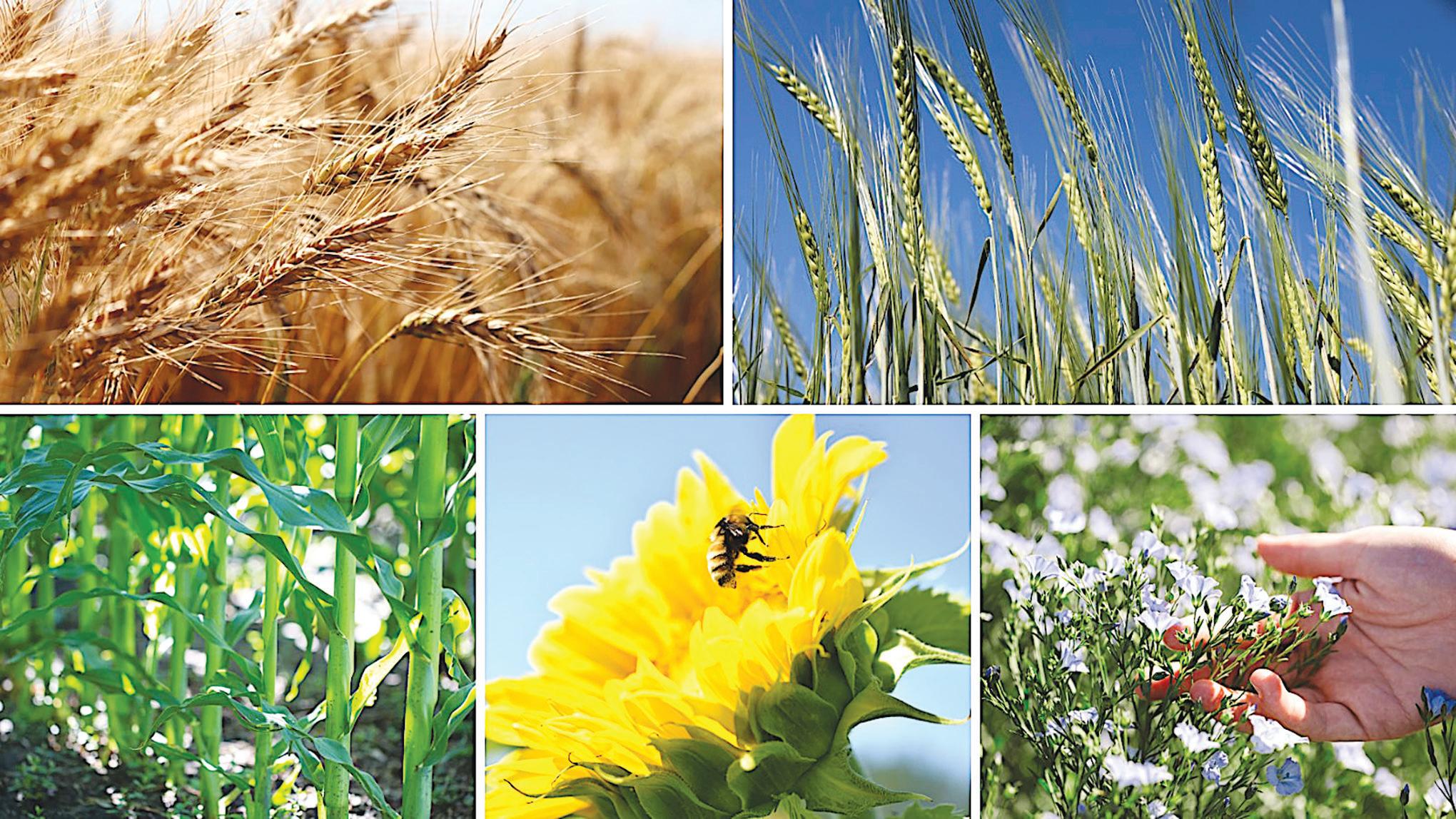
early in the 2025-26 crop year has been solid, particularly in November, running near the five-year average. Prices, however, have softened from mid-2023 highs and levelled off into early 2026. Supplies
are adequate but not burdensome, while buyers remain cautious.
Corn presents a more divided picture. Canadian stocks totalled 10.9 million tonnes on December 31, the lowest
since 2019, following weaker yields in Eastern Canada. South of the border, U.S. ending stocks remain comfortable at roughly 2.1 billion bushels, limiting upside in futures markets. Nearby corn futures have
recovered modestly from a January dip but remain rangebound. Manitoba cash bids continue to trail last year’s levels.
Barley shows firmer demand signals. Canadian December 31 stocks reached 5.69 million tonnes, the largest since 2019 but not excessive. Weekly export shipments have recently exceeded average levels, pointing to improved demand. Global feed barley prices have trended higher into early 2026, with Western Canadian elevator bids gradually responding.
Wheat carries the most weight. Non-durum wheat stocks reached 22.2 million tonnes as of December 31, reflecting last year’s large crop. Globally, exporter ending stocks sit at their highest level in more than a decade, limiting pricing power. Western Canadian cash bids remain steady but capped by world supply.
Across crops, a clear pattern emerges. Barley and sunflowers show strengthening demand, flax and wheat face stock-related headwinds, and corn sits between tighter Canadian supply and ample U.S. inventories. Most markets remain range-bound, awaiting either weather risk or stronger demand to shift direction.
Producers continue to operate in a high-cost environment, making disciplined marketing, cost control, and flexibility essential as 2026 unfolds.
Sunflowers may offer some of the strongest momentum. End-of-2025 stock estimates appear elevated relative to production, raising questions about accuracy. Meanwhile, U.S. crush data shows December processing at its strongest pace in several years, signalling firm oil demand. Seasonal trends suggest sunflower prices often peak in early summer, and current bids are showing early firmness.



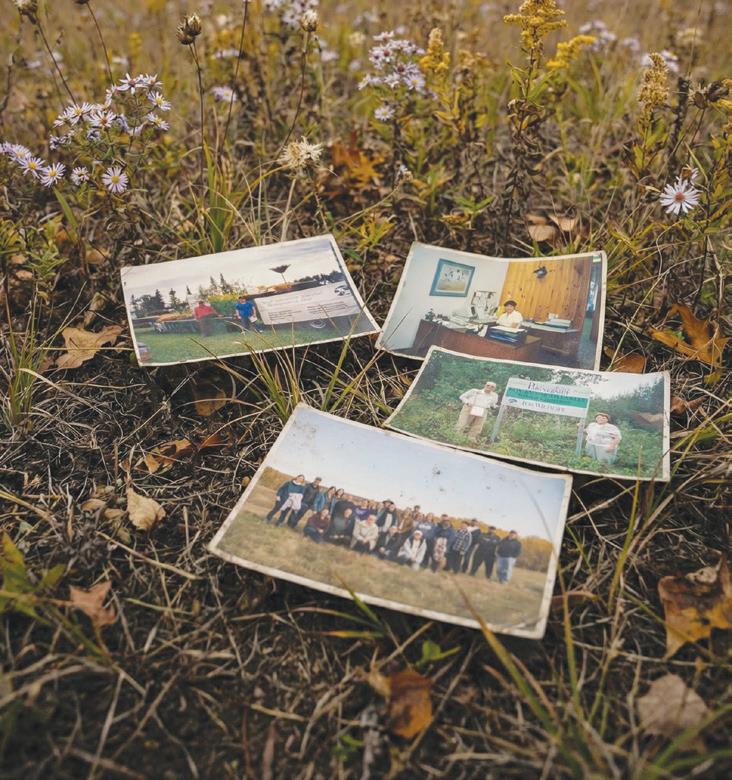
Manitoba Habitat Conservancy (MHC) is marking its 40th anniversary in 2026, celebrating four decades of conservation work led by Manitobans, for Manitoba.
Founded in 1986 as a Crown corporation, MHC transitioned to an environmental non-governmental organization in 2021. Over the past four decades, the organization has worked with landowners, communities, and partners to protect wetlands, grasslands, forests, and wildlife habitat across the province. This work has helped safeguard ecosystems critical to biodiversity, water quality, carbon storage, and Manitoba’s agricultural and rural landscapes.
“This anniversary is about people as much as it is about land,” said Stephen Carlyle, chief executive officer of Manitoba Habitat Conservancy.
“For 40 years, landowners, staff, partners, and supporters have shaped what conservation looks like in Manitoba, resulting in an approach that is practical, collaborative, and rooted in Manitoban values.”
To mark the milestone, MHC is launching a year-long anniversary initiative that reflects on its history while looking ahead to the future of conservation in the province. Planned activities include a refreshed 40th-anniversary logo, a series of storytelling features highlighting past and current projects, an anniversary tabletop book, and
new video content capturing voices from across MHC’s network.
The organization’s long-standing slogan, Homegrown Conservation, reflects its emphasis on voluntary programming, trusted relationships with landowners, and solutions designed to work within Manitoba’s working landscapes.
“Conservation in Manitoba has never been onesize-fits-all,” Carlyle added. “Our focus has always been on protecting habitat while respecting the people who live and work on the land.”
More details on anniversary initiatives will be shared throughout the year. Updates are available at mbhabitat.ca and on social media @manitobahabitat.
A recent land donation in southwestern Manitoba is highlighting the collaborative nature of conservation in the province.
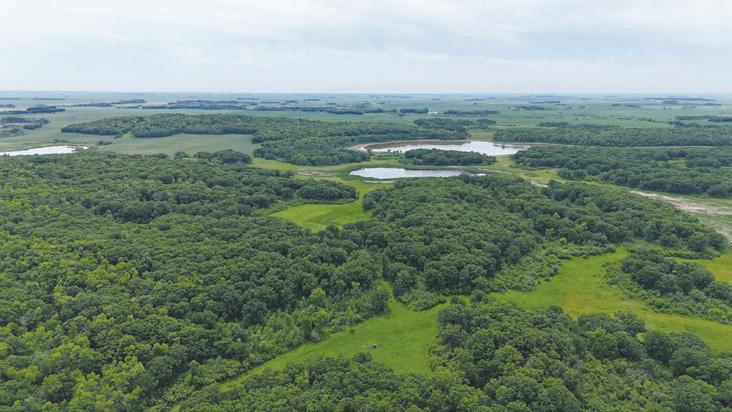
Located northeast of Baldur within the Pembina Hills region, the Cramer Property protects more than 320 acres of grassland, woodland, and wetland habitat. The area is widely recognized for its ecological value, supporting diverse wildlife and contributing to key conservation priority areas for waterfowl and grassland species.
Through a donated conservation agreement, the land will remain intact and protected for future generations. While the land itself is donated, significant work is required to steward it responsibly, including ecological assessments, legal and technical reviews, and the development of long-term monitoring plans.
Funding from the Natural Heritage Conservation Program – Land Trusts Conservation Fund plays a critical role in covering these behind-the-scenes costs, ensuring donated lands are protected properly and sustainably.
The Cramer Property donation underscores
have
what
that conservation is a shared responsibility, relying on landowners, conservation organizations, funding partners, and long-term stewardship to protect Manitoba’s natural heritage and strengthen the province’s network of conserved landscapes.
Farm Credit Canada (FCC) has announced it has convened a coalition of more than 20 investment organizations prepared to deploy up to $5 billion into Canadian agriculture and food innovation by 2030, marking what FCC calls a generational investment opportunity for the sector.
The new coalition builds on momentum from May 2025, when FCC’s investment arm, FCC Capital, committed $2 billion by 2030 to drive innovation across agriculture and food. FCC Capital is already on track to deploy $325 million in new capital during its fiscal year ending March 31, 2026. Combined, the commitments represent $7 billion in new investment flowing into Canadian agriculture and food by the end of the decade.
FCC said the funding will support innovation for farmers through investments in Canadian agri-food businesses, construction and project finance opportunities, and early-stage ag-tech companies.
The announcement also signals a major expansion in Canada’s capacity to scale world-leading agriculture and food innovation. In 2021, total annual investment in agricultural innovation was estimated at $270 million, according to RBC Thought Leadership. FCC said the new coalition positions Canada to dramatically in-
By Elmer Heinrichs
For more than seven decades, the Woodmore Combined 4-H Club has been shaping young leaders in southeast Manitoba.
Leader Alice Guimond says the club first began showing livestock in 1951; then in 1971, it officially became the Woodmore Combined 4-H Club.
“Today, rural families from north, south, east, and west of Woodmore come together and continue the 4-H club traditions that have been passed down for many generations.”
The club reaches areas including Woodmore, Ridgeville, Arnaud, Dominion City, Tolstoi, Vita, St. Malo, and Morris.
Head Leader Michelle Seward explains the club offers youth a chance to explore a wide variety of interests, with roughly 50 different projects available.
“A couple of popular ones that we’ve had in the last couple years are exploring horses, woodworking, cake decorating, and field crops,” she says. “You can also do a, ‘create your own project’. So, really the options are limitless for these kids.”
Beyond project work, members also gain experience in organizational leadership and board structure.
crease that figure and accelerate the commercialization of breakthrough technologies across the entire value chain.
“Canada’s farmers, producers, and processors are already among the most innovative and entrepreneurial in the world,” said Darren Baccus, executive vice-president of Agri-Food, Alliances and FCC Capital. He said the coalition will help scale solutions that strengthen domestic food security while supporting Canada’s global competitiveness.
Federal Agriculture and Agri-Food Minister Heath MacDonald called the initiative a landmark investment, saying it will reinforce Can-
ada’s leadership in agri-food innovation and support long-term growth and resiliency.
Investment organizations participating in the coalition include Area One Farms, Arterra Growth, Bonnefield Financial, District Ventures Capital, Emmertech, Glengarry Farm Finance Corporation, InvestEco Capital Corp., Maverix Private Equity, Nàdarra Ventures, Northleaf Capital Partners, NYA Ventures, Power Sustainable Lios, Radicle Growth Food and Agriculture Venture Capital, Royal Bank of Canada, S2G Investments, Seminal Capital Holdings, SVG Ventures, Tall Grass Ventures, Tikehau Capital, and Yaletown Partners.




“Don’t compare your life to others. There’s no comparison between the sun and the moon; they shine when it’s their time.”
That line stays with me. It reminds me that pace matters. Timing matters. Season matters. Your path is not someone else’s path.
I have spent 55 years writing, living, listening, broadcasting, and training people in farming and agriculture. Before that, I grew up on a farm. My father and brother farmed 1,200 acres in the late 1950s. They grew crops, produced seed for others, and worked the land long before GPS, yield monitors, and auto-steer.
They did not compare themselves to anyone else. They fixed their gaze on the land before them.
I watched them adapt as production techniques changed and technology developed. They adjusted fertilizer rates. They adopted new seed varieties. They upgraded machinery when it made
sense. They made mistakes. They corrected them. They kept going.
They shone in their time.
Today, the winds blow from different directions. Some days, they blow from all directions at once.
Farm leaders manage complex businesses. They work with hired staff. They deal with bankers, input suppliers, processors, and exporters. They also listen to bureaucrats who view agriculture from city offices, often without ever having set foot on a working farm in Canada.
That disconnect shows.
Costs keep rising. Land prices have climbed beyond what many young farmers can justify. Machinery costs have soared. Fertilizer prices remain high and volatile. Interest rates move up and down. Fuel adds pressure. Insurance and compliance add more.
Producers carefully calculate the cost of production. Margins tighten. Risk increases. At the same time, many outside voices tell farmers how to farm. New regulations appear. Targets shift. Reporting requirements expand. Sometimes the direction feels driven more by ideology than agronomy.
Farmers have long been the best caretakers of the land,
animals, and environment. They understand soil health because their livelihood depends on it. They manage manure carefully because nutrients matter. They adopt technology that reduces waste because efficiency pays.
Yet it often feels as though something is not right.
Former agriculture minister Gerry Ritz says the federal government no longer treats agriculture as a priority. He argues that several provinces follow the same path. He warns that Canada once relied heavily on agriculture as its primary economic engine. Now, shrinking food-processing capacity and rising imports weaken that position.
A weak Canadian dollar adds more strain. Imports cost more. Inputs priced in U.S. dollars cost more. Consumers feel food inflation. Producers feel squeezed between higher input costs and uncertain market returns.
That reality creates frustration.
It also creates temptation. It is easy to compare Canada to other countries. It is easy to compare one farm to another. It is easy to look at social media and think someone else has it figured out.
But the sun and the moon
do not compete. They shine when it is their time.
Canadian agriculture has always moved in cycles. There were years when grain bins overflowed, and optimism ran high. There were years of drought, BSE, trade barriers, and market collapse. Through it all, farmers adapted.
They invested in new genetics. They improved feed efficiency. They expanded hog barns. They rebuilt cattle herds. They diversified into special crops. They adopted precision agriculture. They strengthened biosecurity.
They did not wait for perfect policy. They worked with what they had.
That does not mean policy does not matter. It does. Government priorities shape research funding, processing capacity, trade relationships, and infrastructure. If agriculture loses priority at the federal or provincial level, long-term competitiveness suffers.
But farmers cannot pause and wait for political clarity.
They must keep planning. Keep adjusting. Keep producing.
Younger farmers now enter an industry that looks different from the one I grew up in. Operations are larger. Technology is faster. Data drives
decisions. Labour management demands more leadership skills than ever before.
At the same time, scrutiny is higher. Public understanding is often shallow. Advocacy requires effort.
So here is the reminder.
Do not compare your life to others. Do not compare your farm to the one down the road. Do not compare this season to a past one and assume it should look the same.
Every farm has its own soil type, debt load, family situation, and risk tolerance. Every producer faces a different mix of opportunities and constraints.
Shine when it is your time. Canada still produces safe, high-quality food. Our farmers remain among the most efficient in the world. Our land base is strong. Our knowledge base is deep.
The winds may shift. Costs may rise. Policies may frustrate. But the fundamentals of stewardship, innovation, and resilience remain.
I have seen five decades of change in this industry. I have watched farmers adapt again and again. I believe they will continue to do so.
The sun rises. The moon follows. Each shines in its time.
So will Canadian agriculture.

By Elmer Heinrichs spring.
This February report is an update of Agriculture and Agri-Food Canada’s (AAFC) January outlook.
Market uncertainty in both Canadian and global grain markets remains elevated, primarily due to persistent geopolitical factors that continue to disrupt trade flows and market stability.
For 2026, rotation considerations, moisture conditions, expected prices, and input costs/availability are the main factors determining farmers’ seeding decisions in the
Based on current market conditions and historical trends, the area seeded to field crops in Canada is forecast to decrease marginally in 2025-26. The area seeded to wheat, including durum, is expected to increase by 2 per cent.
Coarse grains area is forecast to rise by 6 per cent, due to an increase in areas seeded to barley, corn, oats, and rye. The area seeded to oilseeds is projected to decrease by 5 per cent on lower areas for canola and soybeans.
Pulse and special crops area
is expected to decrease by 2 per cent as lower areas for chickpeas, dry beans, mustard, and canary seeds are partly offset by expectations for an increase in areas for dry peas, lentils, and sunflower seed.
Assuming normal growing conditions and trend yields, the production of all principal field crops is projected to decrease marginally year-overyear. Exports are projected to decrease marginally, while carry-out stocks are forecast to increase slightly.
Stocks of all principal field crops are estimated to have de-
creased 2.4 per cent year-overyear and are 0.4 per cent below the previous five-year average. Exports of all principal field crops are expected to rise 6 per cent from last year, while carry-out stocks (ending-year inventories) for all principal field crops are projected to decline by 13 per cent as lower carry-out stocks for grains and oilseeds more than offset a rise in pulse and special crops carry-out.
Assuming new processing capacity will be coming on stream; domestic crush for the year is expected to rise to
a new record of 12.5 Mt. This will pressure exports to 7.5 Mt, a 9 per cent decrease from the previous year but would still be on par with the fiveyear average.
AAFC forecasts prices for all principal field crops to decline significantly year-over-year with the exception of corn and sunflower seed.
Due to the timing in preparing this report, the analysis does not consider the impacts of possible tariffs for 202425 or 2025-26, which remain a key source of uncertainty to this outlook.

By Dean Harder
The cuts have finally come to Agriculture and Agri-Food Canada. Recently more than 665 employees have lost their jobs, and we now know that seven research facilities across the country are slated for closure.
Each facility has its own important story to tell about the benefits they provide to the public good, as do the researchers themselves. Additionally, esteemed wheat breeder, Richard Cuthbert’s recent resignation from Swift Current research station, leaves a gap that needs to filled by spring if we want to see improved varieties of wheat continue to excel.
We don’t fully know the effect of all these cuts, but this is one of those times when farmers and citizens need to speak up loudly and demand accountability. It’s not enough to simply shrug shoulders and take the pessimistic “there’s nothing more we can do” approach. That drags us into a complacent and passive individualism; the malaise that got us here in the first place; the mindset that expects cuts to be the future norm.
It would also be a mistake to accept that much-touted “privatization” is the only path forward. The realities are that several Canadian private companies pay a fee for use of these facilities and collectively gain from this work.
Most farmers see the benefit of these government institutions. The results on our farms are evident. We see the creation of new varieties, combined with the growth and nurturing of long term researchers in the public sys-
tem, as necessary to combat future challenges in food productivity while ensuring the effectiveness of Canadian farmers, globally and locally.
One major problem is that we track the productivity gains from breeding efforts on a bushel-per-acre basis, but we don’t put the same efforts into tracking other benefits of public plant breeding. Simply put, the work is supported, but the value of it can be difficult to communicate clearly.
When effort is taken to delve into the economic impact, it is impressive. A major study in Saskatchewan from lead author Richard Gray found the following:
- Taxpayer investments of $370.6 million between 1995 and 2020 resulted in a cumulative benefit to the Canadian economy of $11.8 billion.
- Ever single dollar of wheat investment from governments returned $31 to Canadians. When producer contri-
butions through joint funding efforts were factored in, the return rose to over $70.
The study concluded “...these breeding programs should be supported by all parties with the aim of enhancing capacity and sustaining these effective relationships over time.”
This is the sort of information we should be communicating to decision-makers in government, especially at a time where Canada’s sovereign economic interests are at the forefront of the policy agenda. Agriculture and food related research should not be a casualty of mere bean counting (literally).
One critical loss will be the organic program lead by Dr. Myriam Fernandez in Swift Current. It’s been one of the few long term research programs that addresses the production issues of organic and regenerative farmers in Canada. Just as government is asking farmers to use more climate mitigation practices and

improve their environmental footprint, it has slashed one of the few research programs aimed at doing so effectively.
There is much we do not yet know about the microbial activity of soil and how we might leverage those natural activities for our agricultural purposes. This work is knowledge-based. It’s free of bias for profit. It’s extremely hard to replace. I fear these moves similar to the agricultural equivalent of scrapping the Avro Arrow in the 1950s, when Canada was a world leader in aerospace design.
To clarify, these cuts:
- Ignore important production and unbiased knowledge-based issues because there’s no way to reasonably replace or monetize that work (low return).
- Fuel the fire for profit motive mechanisms like expensive end point royalties that funnel farmer dollars into hungry investor pockets.
- Introduce a vacuum to fu-
ture gains through the loss of programs and researchers that require year in and year out experimental work. Private companies will not pick up that tab. The nation suffers.
The results are like cutting off a farmer’s leg, offering them a shiny prosthetic one, and then charging them a subscription to use it.
We must ensure the decision-makers in Ottawa understand the true cost of this decision, and lobby them to reverse it.
Farmers, it’s time to write those letters. Start with your local MP, and work your way up.
Dean Harder farms wheat, barley, oats, canola, soybeans near Lowe Farm, Manitoba. He’s a member of the Manitoba regional council of the National Farmers’ Union, and a former director of what was the Manitoba Wheat and Barley Growers Association.

By Harry Siemens
Canada produces world-class crops. Quality is not the problem. Demand is not the problem. The problem is getting the product to market on time.
Across Western Canada, containerized agricultural exports now face logistics failures that quietly erode sales and damage confidence. Pulses, specialty grains, food ingredients, and processed agricultural products rely on container service that no longer delivers consistent results.
According to Casey Bassenden, managing director of Western Freight Solutions, the issue sits squarely in execution.
“This isn’t a market problem,” Bassenden says. “It’s a supply chain problem.”
At the farm and exporter level, the earliest warning sign appears well before a ship ever leaves port. Bassenden points to one signal above all others: the lack of confirmation. If a container release, drayage booking, or pickup confirmation does not arrive within the normal lead time before vessel cut-off, risk rises immediately. In practical terms, exporters expect confirmation 48 to 96 hours before the gate cut-off, depending on the route. If that confirmation does not arrive, the export window is already at risk.
“That missing confirmation tells you stuffing and transport likely won’t happen in time,” Bassenden says.
His advice is to call the freight forwarder or carrier immediately. Confirm container release, drayage pickup, vessel gate cut-off, and booking status. Waiting costs time exporters do not have.
Those delays carry real financial consequences. Bassenden estimates that farmers and exporters now absorb roughly US$10 to US$150 per tonne in additional logistics costs for containerized exports. In many cases, the range is between $20 and $80 per tonne. Detention, documentation delays, and pre-carriage issues remain the most preventable. Port congestion and carrier-imposed demurrage prove harder to control, though mitigation still helps.
A simple example shows how quickly costs escalate. A 40-foot container loaded with

Contracts that assign demurrage, detention, or rolled booking costs to the farmer overlook that producers do not control vessel schedules, rail fluidity, container flows, port labour, or carrier embargoes.
Bassenden says contracts should clearly state that producers control only crop quality and readiness, not global logistics performance.
Routing decisions also demand fresh thinking. Bassenden avoids singling out specific ports but urges exporters to diversify gateways where practical, build additional buffer time into contracts, and maintain routing flexibility. On paper, Canadian ports appear to have capacity. In practice, reliability fluctuates.
“Ag remains margin sensitive,” he says. “Most traders still chase low-cost routes instead of reliable ones.”
Photo from LinkedIn
According to Casey Bassenden, managing director of Western Freight Solutions, one of the issues of Canada’s agricultural reputation and performance sits squarely in logistics execution. “This isn’t a market problem,” Bassenden says. “It’s a supply chain problem.”
22 tonnes of canola faces detention charges of $120 per day and demurrage of $150 per day. A five-day delay creates $1,350 in direct charges, or about $61 per tonne. Add indirect costs such as price exposure, extra storage, administrative time, and truck waiting charges, and the burden often climbs another $10 to $40 per tonne. The total impact is $70 to $100 per tonne, assuming no improvement in the sale price.
Contract structure now plays a critical role. Bassenden urges producers growing pulses or specialty crops under contract to push back on narrow delivery windows and hidden liability clauses. Thirty-day delivery windows no longer match logistics reality. He says 45 days should be the minimum, with 60 days providing a safer planning window.
Language matters. Clauses that read “must be delivered between Sept. 1 and Sept. 30” or “failure to deliver equals default” exposes producers to risks they cannot control.
Bassenden advises replacing those terms with language that ties delivery to transport availability or includes grace periods when carrier service fails.
Producer liability clauses raise equal concern.
Looking ahead to 2026, Bassenden says farmers need to abandon one outdated assumption. Capacity no longer guarantees movement.
“Capacity exists,” he says. “Reliability doesn’t. Plan for reliability, not capacity.”
That shift changes production planning itself. Exporters now need to determine how and where crops will be physically moved before deciding how much to grow. Rail fluidity, inland container availability, carrier priorities, and corridor politics now determine movement more than terminal space or ship calls.
Bassenden says Western Freight Solutions focuses on protecting export programs rather than simply moving containers. The firm secures container access in tight markets, designs routes around failure points, manages rail, truck, and port flows as one system, and actively limits detention and demurrage exposure. Food-grade and identity-preserved cargo receive added attention. Exceptions get addressed before contracts collapse.
“In ag exports, late is the same as failed,” Bassenden says.
Canada’s agricultural reputation rests on performance. Buyers measure delivery, not effort. While producers continue to adapt, adaptation alone cannot replace execution.
Canadian agriculture still grows world-class crops. Restoring confidence now depends on supply chains built to perform, not just promise.
By Elmer Heinrichs
The Red River Basin Commission is coming into 2026 with a couple of key projects, including one of particular interest to landowners along the International border that have faced flooding in the past from the Pembina River.
“There’s been long-term concerns about flooding issues right at the border, in the
Pembina area, the lower Pembina River,” explained executive director Ted Priester for the latest episode of Ripple Effect.
“We’re actively involved in discussions with both the Province (of Manitoba) and the state of North Dakota as the U.S. Army Corps of Engineers is doing some modeling to find solutions to that.”
In 2026, major Red River Basin projects
focus on flood mitigation, water quality, and agricultural sustainability. Key initiatives include U.S. Army Corps of Engineers modeling for the lower Pembina River, and continuation of the Red River Basin Commission’s soil health program.
Other efforts feature international water quality monitoring and nutrient reduction strategies to protect Lake Winnipeg.
By Elmer Heinrichs
The world is changing and Canada is investing in itself, building a strong economy, strengthening domestic supply chains and expanding trade. Northern Manitoba plays a critical role in Canada’s Arctic trade future.
Alongside partners including the Manitoba government, the Major Projects Office (MPO), and the Arctic Gateway Group (AGG), the Honourable Eleanor Olszewski, Minister of Emergency Management and Community Resilience announced the launch of a market sounding study to gather industry input on the long-term growth potential of the Port of Churchill Plus project.
The study will complement the ongoing business development efforts of the Arctic Gateway Group (AGG). As owners of the port and Hudson Bay Railway, AGG is actively expanding import and export activity through Churchill, including working with Western Canadian commodity producers and resource developers, as well as engaging with
international ports and potential customers around the world.
Building on this progress, the market sounding exercise will engage senior executives across key sectors — including mining, energy, potash, grain and northern resupply — to better understand how transformative infrastructure investments could shape longterm planning.
In particular, the study will explore how extended or year-round shipping supported by ice-breaking, a modernized Class 1 railway, an all-season road connection, as well as a potential energy corridor could influence future import and export strategies, supply chain decisions, and private sector investment.
The findings will inform future decision-making in partnership with the federal and provincial governments as well as Indigenous leaders and support the continued development of Churchill as Canada’s Arctic and Northern trade gateway.




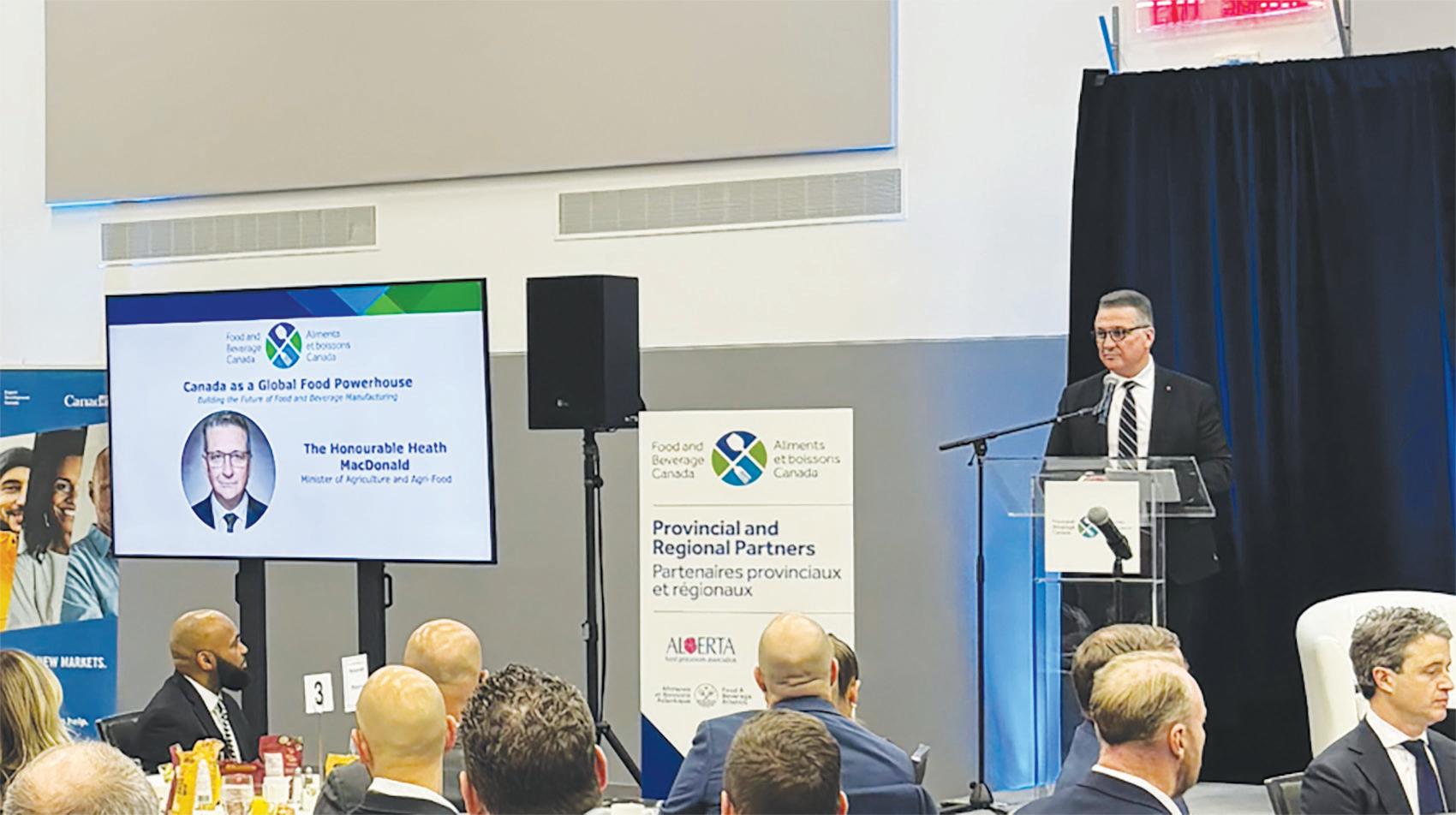
The Government of Canada has announced new measures to strengthen support for agricultural, fish, and seafood exporters amid ongoing global market uncertainty and rising trade barriers.
At Food and Beverage Canada’s annual Policy Breakfast, Heath MacDonald, Minister of Agriculture and Agri-Food, unveiled two new funding streams under the AgriMarketing Program: Market Diversification for National Industry Associations and Market Diversification for Small and Medium-sized Enterprises.
The federal government will invest $75 million over five years, from 2026–27 to 2030–31, to help the Canadian agriculture and agri-food sector, including fish and seafood, respond to market instability by expanding into new and emerging markets. The new funding is designed to encourage greater diversification and reduce reliance on traditional export destinations.
Eligible organizations can now apply for funding under both market diversification streams, with program details, eligibility requirements, and application guidelines available through the AgriMarketing Program website.
The initiative supports all sectors, with particular priority given to those most affected by trade barriers. It also expands access to funding for small and medium-sized enterprises, which are not eligible under the core AgriMarketing Program. The new streams build on existing federal support and complement funding already committed under the Sustainable Canadian Agricultural Partnership.
“The AgriMarketing Program Market Diversification streams encourage Canada’s agriculture, agri-food, fish, and seafood sectors to seize more global opportunities,” MacDonald said. “By helping industry organizations and exporters expand into emerging markets, we’re promoting Canadian products, deepening partnerships, and fostering growth, resiliency, and competitiveness.”
The new streams will help organizations access high-growth and non-traditional export markets, while also strengthening interprovincial trade through enhanced regional promotion. While all sectors are eligible, priority will be given to industries facing significant trade challenges, including canola, pulses, pork, fish, and seafood.


By Harry Siemens
Canadians are watching their grocery bills more closely than they have in years. Rising housing costs, fuel prices, and everyday living expenses are forcing consumers to think more carefully about every food purchase—especially meat.
Chef Ilona Daniel, a chef instructor at the Culinary Institute of Canada, sees that shift daily. She says shoppers now pause at the meat counter, weighing value, versatility, and how far a purchase can stretch.
“We’re all doing mental math,” Daniel says. “People want quality, but they’re asking smarter questions.”

Ilona Daniel, a chef instructor at the Culinary Institute of Canada says shoppers now pause at the meat counter and weigh value, versatility, and how far a purchase can stretch. Submitted photo
Those questions are driving renewed interest in what Daniel calls “humble cuts” of meat. A recent article circulated by Canadian Food Focus encourages consumers to rethink how they shop and
cook by using more affordable cuts that deliver strong flavour and nutrition when prepared properly.
Daniel avoids the phrase “lesser cuts.”
“They’re not lesser,” she says. “They just need time.”
From a nutritional standpoint, protein content remains consistent across most cuts of meat. Differences lie in fat, connective tissue, and mineral concentration. Muscles that work harder—such as shank, chuck, and shoulder—often contain deeper flavour and higher levels of minerals like iron and zinc. These cuts benefit from slow, moist cooking rather than high heat.
“They’re forgiving,” Daniel
says. “They need patience, not perfection.”
Food costs feel especially personal right now, she adds, as consumers balance groceries alongside rent or mortgages, fuel, and utilities.
“Groceries hit close to home,” she says.
From her perspective, pork currently offers some of the strongest value at retail. Dark-meat chicken, whole chickens, beef chuck, shank, and ground meats also rank highly for affordability and flexibility.
“We’re seeing waves of value,” Daniel says. “Right now, pork stands out.”
She often buys pork shoulder when it goes on sale, preparing it in multiple ways
to create several meals from one purchase. A single slow braise can become tacos, noodle bowls, sandwiches, or freezer meals.
“That’s real efficiency,” she says.
Bone-in cuts, ribs, necks, and stewing beef also stretch food dollars further. Bones and connective tissue add richness to soups, stews, and braised dishes—meals that often improve with time and provide multiple servings.
“Stews always taste better the next day,” Daniel says.
Batch cooking, she adds, saves time, reduces daily stress, and limits food waste.
Freezers allow families to plan ahead while staying within budget.

“Cook once, eat twice,” she says.
Fear remains the biggest obstacle for many home cooks.
People worry about ruining unfamiliar cuts or wasting money.
“Fear stops people from trying,” Daniel says.
Her advice is simple: keep the heat low, use moisture, put a lid on the pot, and allow time for collagen to break down and flavour to develop.
“Don’t rush it,” she says. Daniel believes many of the most nourishing meals come from humble ingredients treated with care.
“These meals are soulful,” she says. “When you enjoy the process, everything tastes better.”
By Elmer Heinrichs
Local farmers are helping schools across the province stock their fridges with a kitchen staple.
Manitoba Egg Farmers announced plans to distribute 10,000 coupons - each for a dozen eggs - to schools this year. The industry association is once again partnering with the Child Nutrition Council of Manitoba to feed students.
“Eggs are an affordable, easyto-prepare source of high-quality protein that helps fuel a full day of learning,” Sandra Dyck, a farmer on the association’s board, said recently.
Dyck was among those who celebrated the announcement at Lavallee School in Winnipeg recently.
Manitoba Egg Farmers spokesperson Claire McCaffrey said her team was impressed by the “well-oiled machine” that is Lavallee School’s daily breakfast program.
Lavallee, which hosts the René Deleurme Centre, the hub of the Louis Riel School Division’s universal nutrition program, served students egg sandwiches recently.
A new, western-focused drainage conference will take centre stage in Brandon this March as the DrainWest Forum brings together contractors, producers, designers, and industry experts to highlight progress and share knowledge in agricultural water management.
Taking place March 11 at the Victoria Inn Hotel & Convention Centre, the event is designed to address the growing role of drainage in Western Canadian agriculture. Once largely concentrated in the U.S. Midwest and Great Lakes region, agricultural drainage has expanded rapidly across Manitoba and Saskatchewan as producers look to manage excess water, improve soil health, and boost crop yields.
As drainage adoption has grown, so too have Prai
rie-based drainage businesses. However, most major conferences and trade shows have traditionally been held in the United States, limiting opportunities for region-specific education and networking. DrainWest aims to fill that gap.
Produced by the team behind Drainage Contractor, the forum will feature speakers and sessions focused on Western Canadian conditions, regulations, and business realities.
“DrainWest is about highlighting the progress already made by drainage professionals in Manitoba, Saskatchewan and beyond, while also providing the industry with the knowledge it needs to grow to the next level,” said Bree Rody, editor of Drainage Contractor. “As industries grow, it becomes even more important to amplify their voices and
provide the tools they need to succeed.”
Featured speakers include Megan Westphal of Manitoba Agriculture, who will discuss integrating soil health into subsurface drainage design; R. Sri Ranjan of the University of Manitoba, presenting research on evaluating controlled drainage in Western soils; and Candace Mitschke, whose keynote will focus on ensuring producers have a voice as drainage markets mature.
Additional sessions will explore topics including soil salinity, nutrient management, and the business of drainage. Organizers say the event is open to everyone from those new to drainage to experienced industry veterans. More information about the DrainWest Forum is available at drainwest.com.

By Elmer Heinrichs
A large agri-business which includes a location in Winkler was recently bought out by a Manitoba-based company.
Orenda Commodity Services has purchased Scoular’s sunflower and wild bird food blending business, including its processing facility in Winkler.
Orenda and U.S.-based Scoular stressed it will be a smooth transition for facility employees, sunflower producers and end-use customers.
ens local control over the sunflower and bird seed supply chain. Orenda president Aaron Elskamp says the acquisition is a natural fit for Orenda, our producers and customers.
“Sunflowers are a unique crop with a unique market,” said Elskamp. “Orenda specializes in connecting the entire value chain to create a sustainable crop that boosts the Manitoba economy.”
Local farmer contracts with Orenda are expected to jump significantly with a new sunflower facility under the com-
pany’s umbrella.
According to the January 20 release, the new owners are a family-owned, “vertically integrated operation with farming roots in the Woodlands (region),” who create custom seed mixes for both bird food and human consumption.
Through its network of local suppliers and customers, Orenda customizes seed mixes for there bird food and human consumption markets, and the Winkler facility handles product for both markets.



By Harry Siemens
Jim Long has spent decades watching pork markets rise and fall. Author of the Jim Long Pork Commentary, now marking its 25th year, Long tracks demand signals long before they show up in prices. When he considers gene edit ing in pigs, he does not begin with science. He begins with consumers.
At the Ohio Pork Congress, National Pork Board CEO David Newman said one in dustry goal remains eliminat ing PRRS while also growing pork demand. Long sees those goals colliding.
Last fall, the Pork Board released its first large-scale consumer survey on gene-ed ited pork, hiring C+R, a global research firm, to survey 6,000 U.S. shoppers aged 18 to 79. The results raised immediate concern.

After high exposure to gene-editing information, nearly two-thirds of consumers remained uncertain or hesitant. Long notes similar findings from Iowa State, North Carolina State, Wholestone Prestage, British surveys, and international research tied to U.S. meat exports. The pattern repeats: roughly 60 percent of consumers react negatively.
Long credits the Pork Board for asking the question.
“The answer just isn’t comfortable,” he says.
percent said they were open to it.
Long views that as a demand warning, not a marketing challenge.
Fifty-five percent of households said they were hesitant about buying gene-edited pork. Among Gen X and Baby Boomers—the core pork-buying demographic—only 16
The survey tested whether education improves acceptance. When information seekers were shown a typical meatcase label with a gene-editing callout, hesitation increased. Fear and disgust rose across all consumer groups.
“You don’t educate fear away at the meat case,” Long says.
The report stresses regulatory approval and neutral language. Long sees that framing as necessary but insufficient.
“Approval doesn’t equal acceptance,” he says, pointing to gene-edited salmon, which gained regulatory approval yet remains rejected by many retailers and restaurants.
At the Ohio Pork Congress, PIC presented its gene-edited PRRS-resistant pig. Long does not dispute the science. He questions the market risk. PIC cited a $1.2-billion annual cost of PRRS, a figure Long says remains debated, noting past

comments from Wholestone Prestage CEO Luke Minion questioning its accuracy.
PIC projections show it could take five years for herds to reach full resistance. Geography also matters. Canada, Brazil, and Argentina have approved gene-edited pigs, yet Brazil and Argentina do not have PRRS. Long sees little incentive for those producers to pay more for gene-edited genetics.
Europe presents a larger challenge. PIC acknowledged no push to legalize gene-edited pigs in the European Union, the world’s largest pork-exporting bloc.
“They know it won’t pass,” Long says. “Europe will sell non-gene-edited pork to buyers who prefer it.”
PIC lists benefits such as reduced antibiotic use and higher survivability. Long asks who captures that value. More pigs benefit packers, he says, while added supply pressures prices if demand stalls.
“Demand pays the bills,” Long says. “Ignore it, and the market will remind you.”
The Manitoba Association of Agricultural Societies (MAAS) announced that Manitoba has been awarded a grant to bring the You Make THE Difference national initiative to the province, a program aimed at strengthening the future of agricultural fairs and the rural communities they serve.
The initiative will officially launch at the 2026 MAAS Annual Convention on March 28, 2026, in Brandon.
Created and led by award-winning humanitarian Ian Hill, You Make THE Difference focuses on equipping agricultural society boards and volunteers with practical tools, training, and inspiration to address challenges such as aging leadership, declining volunteer numbers, and increasing operational demands.
The program combines high-energy, in-person workshops with a digital follow-up system designed to provide ongoing resources long after sessions conclude. Organizers say the approach helps strengthen leadership, improve volunteer recruitment, and build long-term sustainability for fairs across the province.
Through the grant, Manitoba will receive the full program at no cost to MAAS or local agricultural societies. Funding covers a province-wide training tour delivering in-person workshops, as well as access to a digital training platform and mobile app offering videos, guides, and on-demand support.
MAAS noted that fairs play a vital role in Manitoba’s cultural fabric—showcasing agriculture, supporting youth opportunities, and bringing generations together—yet many face mounting pressures. The initiative is designed to address those needs directly by empowering the people who make fairs possible.
Following the convention kickoff, the training tour and digital tools will roll out across the province.






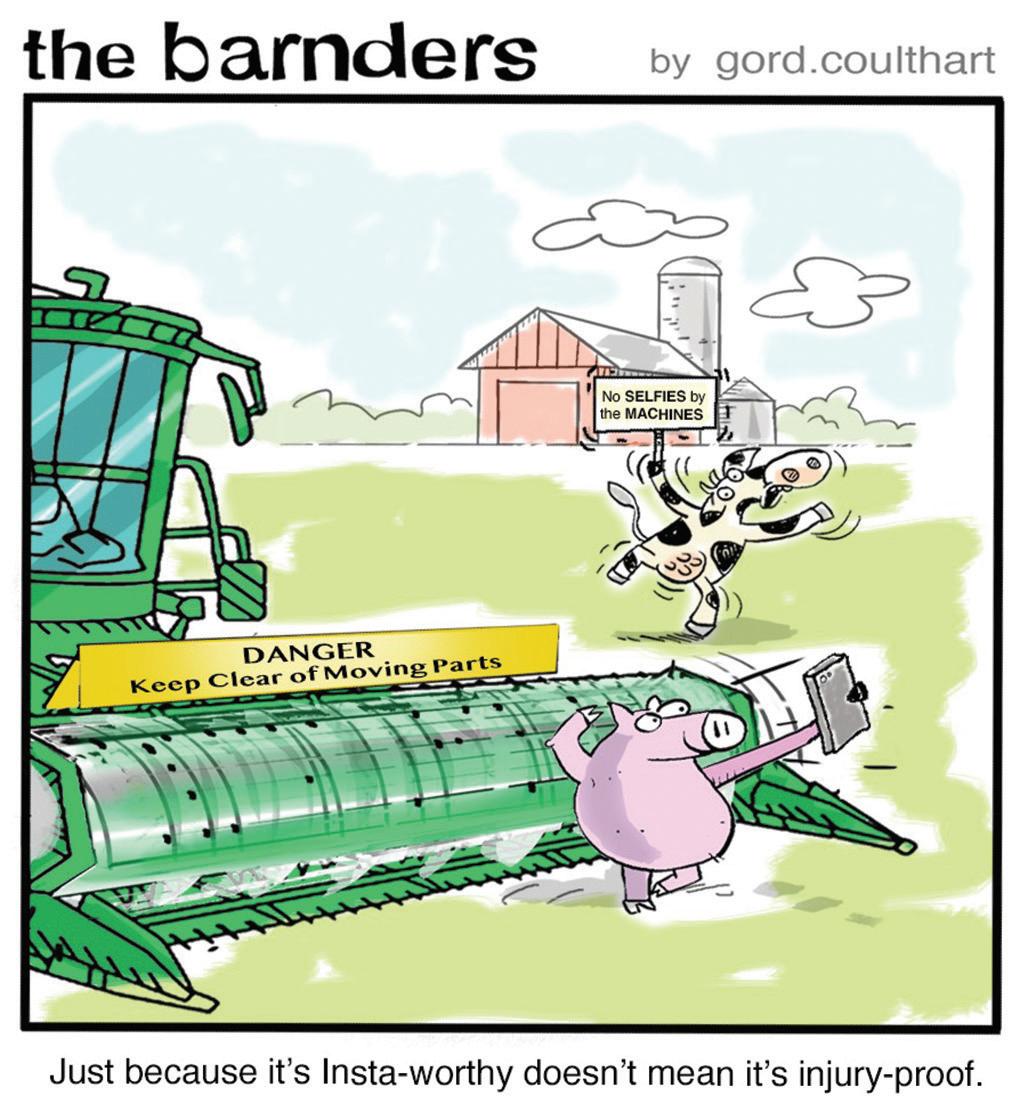
It’s that time of year! Canadian Agricultural Safety Week has arrived, highlighting the importance of health and safety measures on farms to ensure they
remain safe, sustainable, and successful.
Farm safety goes beyond simply recognizing hazards; it requires engaging in meaningful conversations about safety and
implementing lasting changes that benefit everyone connected to Canadian farms – residents, workers, and visitors alike.
Safety on the farm is a commitment that lasts all year long.
By incorporating farm safety into our daily routines, we can work together to keep our farms safe and healthy. After all, safer farms benefit everyone.
By Erin Kelly
According to the latest Canadian Agricultural Injury Reporting data, incidents involving animals are one of the leading causes of non-machine-related agricultural fatalities. And of the 32 animal-related agricultural fatalities that occurred between 2011 and 2020, the majority (53 per cent) involved a horse.
While some farm animals, like horses, may not be viewed as aggressive, they have the size and strength to cause serious injury, making it essential to keep safety top of mind when handling them. That’s exactly what Equine Guelph aims to convey in its education, training and research focused on the health and well-being of horses and the safety of those who care for them.
“Horses, if handled well, are not typically aggressive animals, but they are very large. And even people with plenty of experience with horses can easily be injured by them, which is why safety and situational awareness must always be a priority,” explains Susan Raymond, communications and educa-
tion program officer at Equine Guelph.
One of the key messages that Equine Guelph, which opened in 2003 at the University of Guelph in southern Ontario, emphasizes in its training courses – which are predominantly online and available to anyone with an interest in horses regardless of the location – is that understanding horse behaviour is fundamental to safety. Another safety aspect that Raymond points out should never be overlooked is emergency preparedness, which can help keep people and animals alike safe in sudden, unexpected situations. With horses, barn fires are a significant concern, making evacuation plans for people and animals an essential safety component. Equine Guelph offers courses on emergency preparedness with horse handling.
“It’s important to try to prevent barn fires from occurring in the first place, but it’s necessary to have a plan in place of where the horses will go that is secured and safe in the event of an emergency like a fire,” explains Raymond, adding that loose horses could also impede emergency responders’ ability to reach a barn fire quickly.
Given the unique situation of responding to an emergency
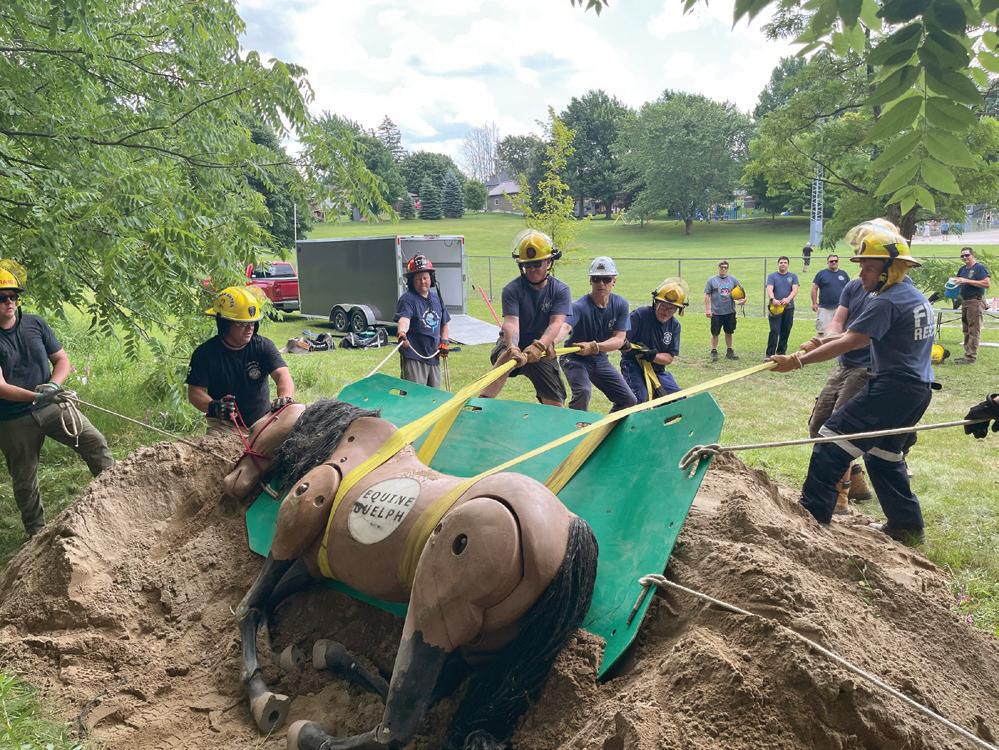
involving large animals, Equine Guelph also offers a rescue training program for first responders that focuses on best practices for animal welfare and responder safety. The course details how first responders can use the equipment they have to achieve the best possible outcomes for both animals and people involved.
“We find that a lot of responders don’t get this type of training in terms of dealing with animal emergencies,” explains Raymond.
“With fire departments, for example, they may be called to a barn fire or other emergency but it’s possible that there are some firefighters who have never handled a horse or a cow before. So, we want to bridge that gap and give
them basic training on what to do in those emergency situations.”
As Raymond points out, whether someone is an avid rider, a novice just starting with horse handling or a first responder wanting to be prepared for a potential emergency involving large animals, it’s never too early or too late to learn something new about safety around horses.
“We always stress that it’s important to be prepared ahead of time as much as possible, and training can help with that,” says Raymond. “You’re never too young or too old to learn about safety.”
Information about Equine Guelph’s courses can be found at equineguelph.ca.

Considering that Canada borders three oceans, spans six time zones, and has diverse terrain, it’s no surprise that a range of natural hazards can affect farms across the country at any given time. While one part of the country may be in a severe drought, another may experience record floods.
But regardless of the location, one hazard has become an alltoo-common threat during the warmer months: wildfires.
Just look at Canada’s 2023 wildfire season, which was the most destructive on record. By the end of 2023, more than 6,000 fires had burned 15 million hectares of land, which, to put it in perspective, is substantially more than the annual average of 2.5 million hectares.
Which is why being prepared for wildfires, wherever you are, is essential. That’s exactly the message that FireSmart Canada, a national program that helps Canadians increase neighbourhood resilience to wildfire and minimize its negative impacts, wants to raise awareness about.
Following are some of FireSmart Canada’s recommendations and tips to reduce a farm’s vulnerability to wildfire.
Understanding the different forms of ignition — embers, radiant heat, and direct flame — is essential for identifying where fires might start on a farm and how they could spread.
With embers, which can travel several kilometres, the most significant risks are ember traps, such as grass, branches, needles, and other fine fuels, which are the main way that fire spreads to and through farms. In fact, 80 to 90 per cent of structures lost during a wildfire are due to em-
ber transport.
The accumulation of combustible materials, dry vegetation, and other fine fuels is often inevitable on a farm. Still, it’s essential to take steps to mitigate the spread of fire throughout the farm property. As part of a fire mitigation strategy, identify priority areas on the farm and start by reducing ember traps in those areas. This may include clearing excess vegetation, moving dry hay and feed storage away from other structures, and covering openings to prevent embers from entering.
“When folks hear about wildfire that has happened in communities [and question] why did this house burn and not this house, there is a lot of information that shows that the houses were impacted because there were certain things close to the structure that then caused the fire to be immediately close to [the house],” explained Ken Cox, a wildfire prevention officer with the Department of Natural Resources in Nova Scotia, during a recent Canadian Agricultural Safety Association forum.
Both radiant heat and direct flame require fuel pathways to travel through a farm property. With radiant heat, fire spread occurs when a fire is burning hot enough, long enough, and close enough to another structure or fuel source. Certain materials, such as metal siding, stucco, and cinder blocks, are good at withstanding radiant heat from fire. For direct flame, eliminating a path for fire to reach a structure is imperative to avoid ignition. Even something as simple as opening gates to disrupt a potential pathway can be advantageous for avoiding direct flame ignition.
While wildfires are alarming and frightening, the good news is that various steps can be taken, and involving minimal cost and time, to help mitigate wildfire impact on a farm property.
The first step is to create a “defensible space” by clearing a 1.5 metre non-combustible area around a farm’s buildings to prevent fire from spreading to them. Cox called this the “first line of defence” for helping to protect any structure from a wildfire.
“That space is the most influential on any kind of potential for fire spread. The biggest thing is that it’s not a very expensive thing to do; it’s going around and cleaning up things like grass,” Cox explained.
Outside of the immediate defensible space, it’s still important to take steps to eliminate fuel sources that could help a fire spread. In the intermediate zone from a structure (1.5 to 10 metres), look to reduce combustibles to expand the defensible space by pruning and thinning vegetation, raking, moving wood, etc. In the extended zone (10 to 30 metres), the focus is to reduce a fire’s intensity by removing dead or dying trees and mowing where possible.
Wildfire season checklist
As wildfires become a more frequent and intense threat across Canada, being prepared before fire season starts is crucial. A comprehensive wildfire season checklist can help farmers take proactive steps to protect their property, livestock, and livelihoods.
1. Create a defensive space around structures. Ensure that
this area does not have any materials that could allow a fire to get close to a structure.
2. Maintain equipment. Poorly maintained equipment is a fire waiting to happen, with ATVs, combines, and tractors among the primary potential fire sources on farms. “I was out west for a lot of my career, and we did get a lot of calls on farms due to equipment caught on fire with folks working in the fields,” said Cox.
3. Water access. It’s no surprise that having water available, or knowing where it is available nearby, is invaluable in the event of a fire. For certain buildings, it may also be worth considering installing sprinklers.
4. Have a fire plan. This is essential for every farm, regardless of its location. A fire plan, included as part of an emergency preparedness plan, helps emergency responders know the layout and potential hazards on a farm. Ensure it outlines evacuation plans, muster points, and procedures for handling livestock in a fire.
5. Insurance. Before wildfire season, it’s best practice to ensure your insurance coverage is up to date and check for any policy exclusions regarding fire.
6. Monitor conditions. Keeping an eye on weather conditions and fire risk in your area is crucial for being prepared.
If you’re unsure of where to start with protecting your farm property from fire spread, FireSmart representatives are available in every province and territory to conduct site assessments. The as-
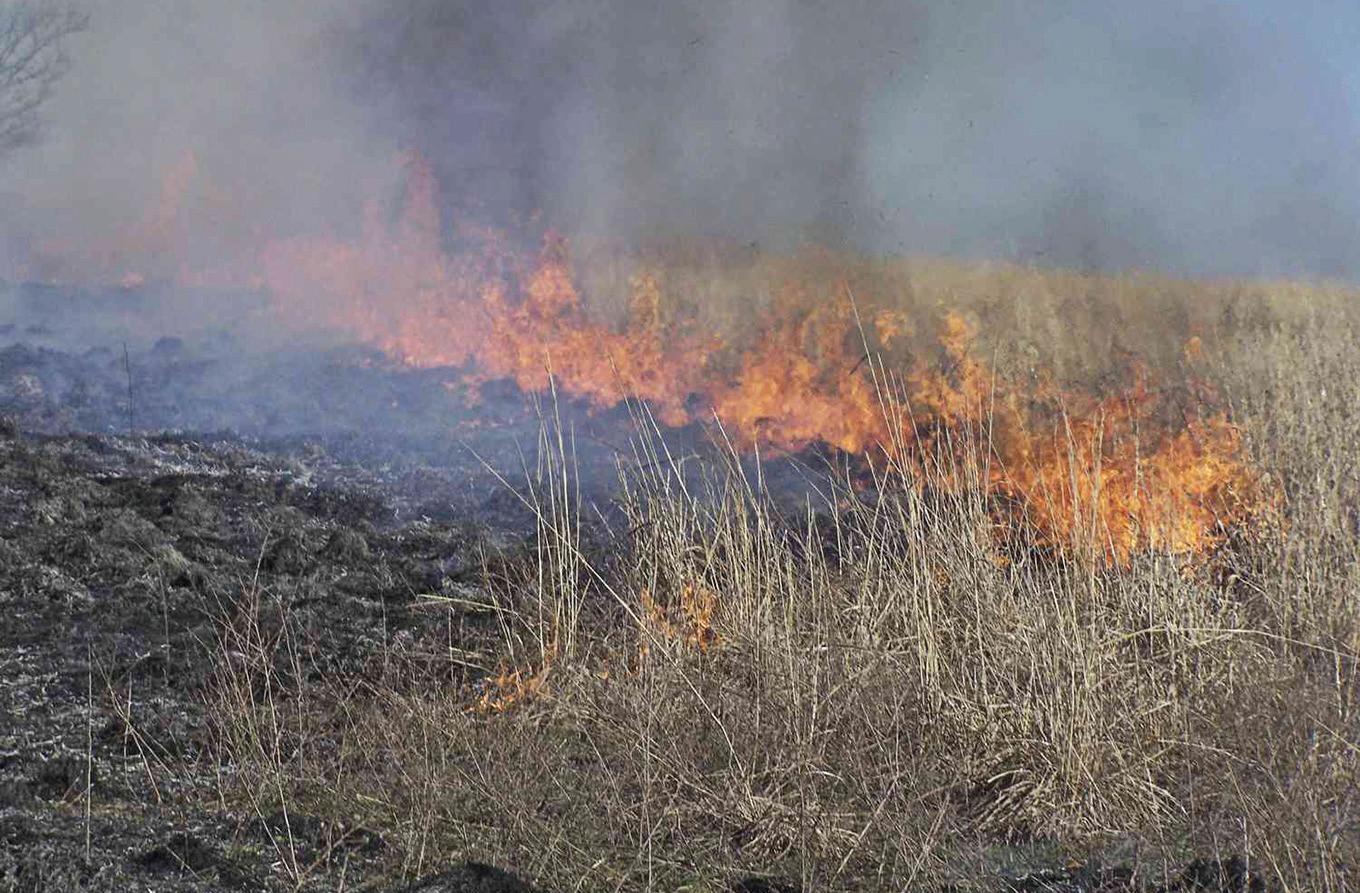
The accumulation of combustible materials, dry vegetation, and other fine fuels is often inevitable on a farm. Still, it’s essential to take steps to mitigate the spread of fire throughout the farm property.
sessments involve an in-depth review of a property, identification of potential areas of concern, and recommendations for mitigating fire spread. Information about the FireSmart Canada assessments is available at firesmartcanada.ca. While it’s impossible to elim-
Source: File photo
inate all fire risks on a farm, taking a few proactive and preventative measures can make all the difference in avoiding a devastating outcome if there is a fire near your farm’s property.
Source: Canadian Agricultural Safety Association
By Peter Vitti
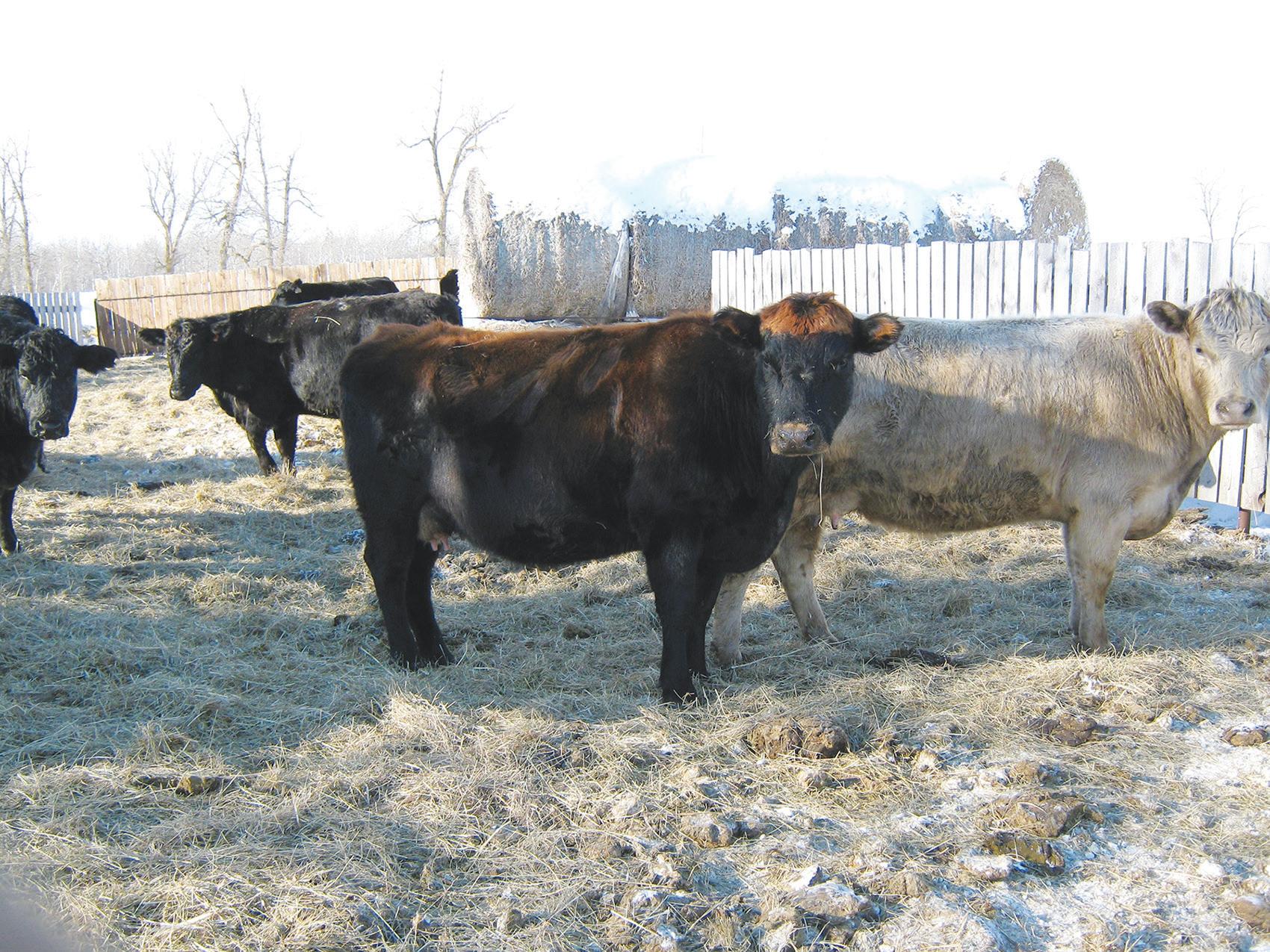
About a month ago, I woke up to -38C (and a windchill of -42C). It didn’t affect me much until I went outside to a dead car battery. One trip to Canadian Tire, and we were on our way, driving north on hwy #7. It didn’t take long, before I saw a herd of well-conditioned Angus cows that were munching on rolled-out green feed round-bales, near the roadside.
My first reaction was – how do they survive such bone-chilling tempera tures and are they going to be ready for calving? Luckily, these tempera tures don’t stick around long, which gives them a chance to retain good body condition with the help of some well-balanced diets.
When well-fed late-gestation cows maintain an optimum BCS of 5 – 6 on their calving-date, most of them calve-out without many problems during the actual birthing process and their post-partum days (re: cleaning and uterine recovery). It also helps the fresh cow to produce about 10 litres of milk for her hungry newborn calf (re: 60 – 75% of all milk is produced
during the first few months). Plus, firsttime mums tend to recover faster from their first-calving experience and tend to grow faster into maturity.
That’s not all – when such optimum body condition is carried weeks beyond into the breeding season; there is a higher proportion of fertile beef cows with stronger first-oestrus cycles, which results in high conception rates.
Their next-years’ calves tend to be born earlier in a desired shorten-calving season, also results in higher autumn weaning weights (by as much as 23 – 25 kg).
Consequently, a beef cow in transition from late-gestation, calving and into post-calving stages - requires about 25 – 50% more dietary energy, 20 – 25% more protein and nearly

double the minerals and vitamins compared to an early gestating beef cow. Her forage-based diet at this time should contain about 58 – 62% TDN, 11-12% protein, 0.70% calcium, 0.50% phosphorus, with a fortified compliment of other macro-, trace-minerals and vitamins.
It’s going to be the cowherds that calve-out at the beginning of February to the middle of March, which will be further be challenged nutritionally - during the coldest weather of the season. As noted by university and extension research’s cold weather rule of thumb: for every 1 C drop in temperature below 0 C, the beef cows’ TDN energy maintenance requirements are increased by an additional 2%.
All of these heavy nutrient demands placed upon beef cows at this time could result in a poor calving season. However, it surprises me that just the opposite occurs when nutritious overwintering diets are fed at this time.
I spoke to a half-dozen beef producers and asked them how they feed their late-gestation cowherds - prepare for the upcoming calving season, particular during periods of frigid weather.
For example, one producer that runs a 150 cow-calf farm, just brought his cows home to a 20-acre plot from an open pasture and now rolls out good alfalfa-grass hay bales, every morning. He plans to feeds to about 3 – 4 lbs of barley, once they calve-out at the end of March.
Another producer that runs a 300-
cow purebred/commercial operation feeds them a TMR of high-energy corn silage and mixed hay; adds about 4 – 5 lbs of a 14% protein/65% TDN grain-screening pellet during the coldest weather. Still, another producer makes up a TMR with barley silage, grass hay, and 3 – 4 lbs of dried distillers’ grains to maintain optimum body condition of her late-gestation cows (plus replacement heifers) throughout the entire winter.
Most them also make use of tree stands and portable windbreak fences that reduce windchill temperatures by 5 – 10C, or have poll barns that their cattle could go into, when a north-west wind picks up. All these producers provide a clean source of water for their cows and practice that fresh straw is put down in the loafing pens to allow cows to lie down on an insulated and comfortable bed.
Their stories vary a bit, but their philosophy is very much like my own, when it comes to feeding late-gestation beef cows as they roll into the calving season. That is - the sole purpose of their feeding strategies is to increase the cows’ plane of dietary energy (and other essential nutrients) in a timely fashion to maintain vitality and optimum body condition toward calving as well as cope with frigid weather.
The payoff of this plan is that a healthy herd of cows will be ready for a successful calving season and beyond.
By Elmer Heinrichs
Global hunger levels are rising again after years of progress, with nearly 300 million people now facing acute food insecurity, according to the executive director of the Canadian Foodgrains Bank.
Andy Harrington says conflict, erratic weather, and economic instability are driving the surge, even as humanitarian aid faces cutbacks.
Across the Prairies, approximately 90 growing projects operate on about 8,000 acres of land.
In Manitoba, roughly 36 to 37 projects brought in approximately $4.9 million; in Alberta, 31 growing projects raised about $4.4 million, and in Saskatchewan, 22 growing projects raised about $1.9 million last year.
Funds raised through the Canadian Foodgrains Bank are matched by the federal government at a four-to-one ratio for humanitarian assistance, up to $25 million annually.
“For every dollar we give, the government will give four up to $25 million,” Harrington said.

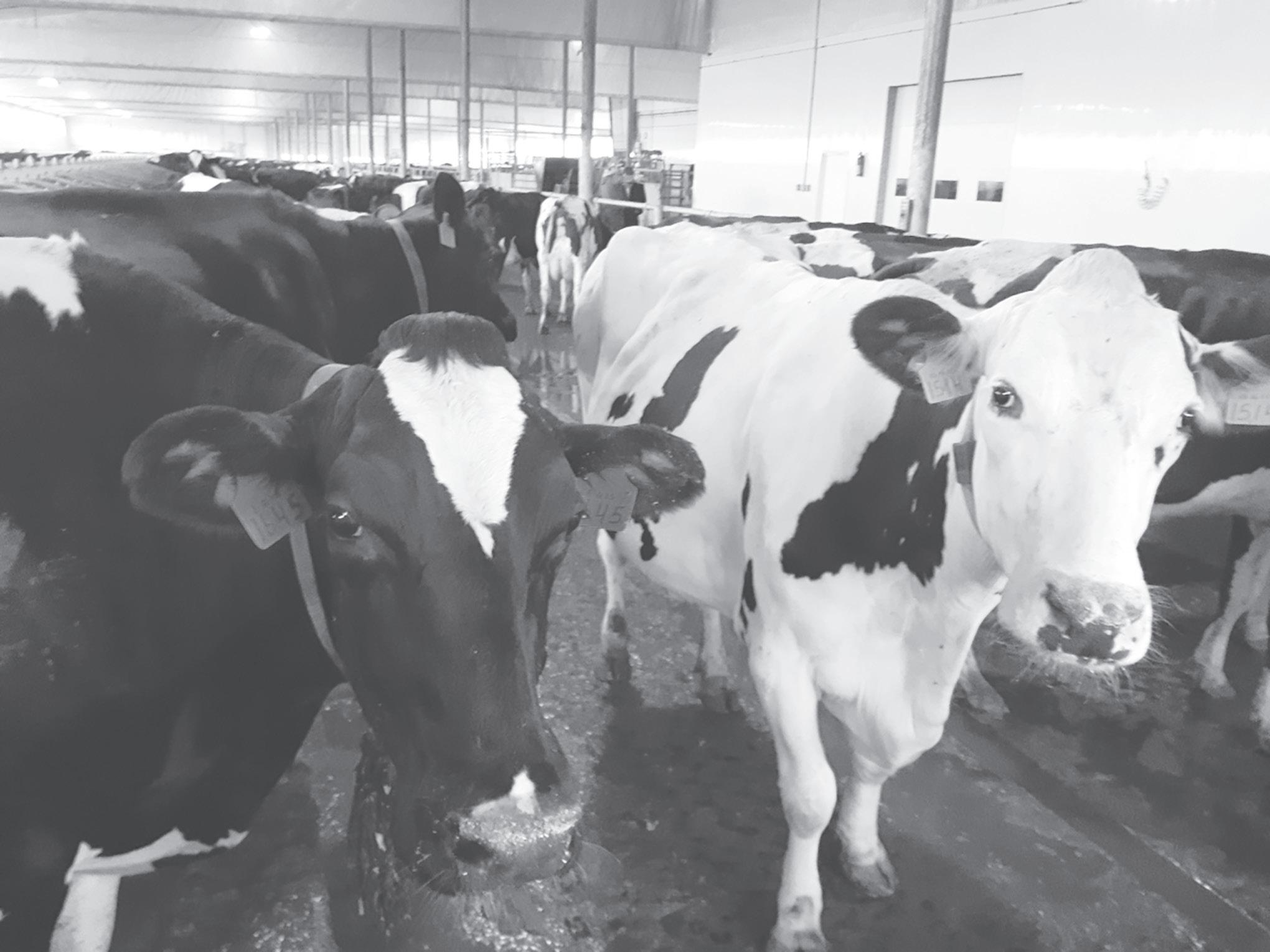
There is a lot of anticipation amongst dairy producers as to how their average milk cheque might change in April due new milk-board policy. Namely, their new payout emphasizes the need for less milkfat production, and a move toward more milk-protein yields. Regardless on how this change of new policy works out; any new dairy diets must work in tandem with the cows’ natural body rhythms to support in order to support good health and these new production goals. With the need to produce less milkfat, less butter-insuring palm-fat is will be fed, while there will be a greater shift toward feeding more effective forage fibre to lactating dairy cows. That’s because effective forage fibre is still the foundation of all baseline milkfat levels in milk. Unlike energy and protein, effective forage fibre is not a true nutrient, yet there is a requirement for it in all dairy cows. Its biggest job is to maintain a healthy population of rumen microbes, which in turn drives optimum fermentation of the lactation dairy diet and
milk protein.
As a dairy nutritionist, one of the first things that I do on a farm visit - is watch the cows rest in their stalls and watch for cows chewing their cud. If many of these milk producers are rhythmically belching and chewing without a care in the world, I am confident with a little more investigation that their diet has adequate dietary fibre for good milk/milkfat production.
Recently, I visited a 200-lactating free-stall operation (re: milk, 37 kg, milkfat, 3.9%, DIM = 173) and they had some underlying issues with inconsistent milkfat production; despite most of the cows chewing their cud in the lactation barn and 400 g per head of palm fat was fed in their TMR. It really gave me an opportunity to go through an “effective-fibre” checklist, so I might correct a few problems, as follows:
- Inadequate body condition –It is my understanding from the producer that all the early lactation cows come into lactation in a BCS of 3.0 – 3.5, yet many of the cows had a hard time retaining body condition by the end of lactation. A quick look at the close-up cows (21 days before calving), showed me that they had poor dry matter intake of their diets; well into 100-days, post-calving. The barn also has about 40% milk-
ing 1st calf heifers rather than more milkfat producing mature cows.
- Too much NFC fed – A lab analysis revealed that the entire lactation diet provided the standard 28% NDF (neutral detergent fibre) with and an adequate 75% of this fibre coming from forage sources, yet the NFC (non-fibre-carbohydrates) of the ration, exceeded a threshold of 40% and starch stood at 26.7%. Moisture of the entire dairy diet stood at 52.3%.
- Investigate bunk management – Each day, the producer makes up only one batch of lactation, and lays half of it down in morning just prior to first-morning milking and the other half, before the afternoon milking. The feed is pushed up every 2 ½ hours by a robot. Current DMI intake ranged from 50 – 54 lbs. The cows were often forced to eat every morsel of dairy diet. Sometimes, the bunk was empty before being refilled upon strict morning-afternoon feeding schedule.
By putting this evidence together, I made the following dietary friendly milkfat recommendations:
1. Increase the proportion of corn silage (a rich source of effective fibre) and lower the amount of 1st cut alfalfa haylage in a final 2/3 to 1/3 ratio.
from 8.5 to 7.0 kg, which reduces excessive NFC.
3. Feed 150 grams of palmfat (C16 fatty acids) and 250 grams of a high C18 fatty acid bypass fat to help recover body condition, especially in mid- and late-lactation cows.
4. Prevent ‘empty bunk syndrome’. There should be about 2% feed-refusal during morning and night.
5. Review the close-up diet and take corrective action to promote dry matter intake before and after calving.
It took about a month to produce a consistent day-today milkfat in the bulk-tank. I initially thought to increase the C16 palm-fat level to 500 gram of palm fat to stabilize milkfat. Little did I realize that feeding more effective forage fibre in the diet was the best corrective action.

2. Limit the amount of barley

The Manitoba Canola Growers Association (MCGA) has named Dori Gingera-Beauchemin as the recipient of the 2026 Canola Award of Excellence, recognizing her decades-long support for Manitoba agriculture and her lasting contributions to the canola industry.
Gingera-Beauchemin was selected for her leadership during her tenure as assistant deputy minister and later deputy min-
ister of agriculture, as well as for her willingness to share her time and expertise with farmers and producer organizations.
“Dori was generous in sharing her time and expertise with farmers through the early years of our Learn to Lead program,” said Warren Ellis, chair of MCGA. “She took part in lobbying workshops and gave participants real-life, valuable experience on how to effective-
ly engage with government.”
MCGA staff also highlighted the depth of knowledge and stability she brought to her roles.
“Agricultural issues are uniquely complex, and Dori really understood that,” said Delaney Ross Burtnack, executive director of MCGA. “Her leadership gave us confidence that even during times of change in government; there was a steady hand at the table.”
Gingera-Beauchemin said the recognition is especially meaningful coming from a Manitoba producer organization.
“I was excited and thrilled. I was actually shocked, to be honest,” she said. “The canola growers and producer groups here were my people, and for them to select me is a real honour.”
Born and raised in rural Manitoba, Gingera-Beauchemin

spent 43 years with Manitoba’s Department of Agriculture and remains closely connected to the industry. She and her husband farm south of Winnipeg, growing canola, cereals, and other oilseeds. She received the award at the mid-February CropConnect Banquet held in Winnipeg.


By Elmer Heinrichs
There was a good turnout of growers attending the Manitoba dry bean industry appreciation day meeting in Carman February 5, co-hosted by Manitoba agriculture and the edible bean industry.
Provincial pulse specialist Dennis Lange, pleased with the turnout, says over 130 people attended to learn about grain marketing, disease issues, new dry bean varieties and general agronomy.
Lange said Manitoba dry beans had over 200,000 planted in 2025. Yields over all types were very good with
the average yield projected to be just over 2,400 lb/ac across all bean types. It was a good growing season in 2025 and dry edible beans reported as new average yield record coming in at 2,407 lbs per acre, across all edible bean types.
Growing dry beans in Manitoba for 2026 follows a record-setting 2025 season with over 207,000 acres, driven by strong interest in pinto and black bean varieties.
For this year, Lange says the dry bean crop is expected to see lower acres planted, perhaps in the range of 160,000-
180,000 acres. This drop is due to competing crops and lower prices than in previous years.
Guest speakers through the day gave Manitoba growers a good perspective on growing edible beans, noting varieties, diseases, on field experience and marketing of the crop.
Edible beans thrive in warm, sunny conditions with well-drained soils. Prime growing areas for beans are in the Altona-Winkler, Carman-to-Portage la Prairie areas and pockets of western Manitoba near Boissevain.



Keep It Clean is reminding producers that seeding de-registered canola varieties, or delivering grain produced from them, puts Canada’s export market access at risk.
According to the organization, growing registered canola varieties helps assure international customers that Canada’s canola oil and meal meet strict requirements for quality, biotechnology traits, and disease resistance. To mitigate risk, farmers are advised not to seed de-registered varieties and not to deliver seed produced from them to elevators or grain handlers.
Registered varieties also offer agronomic advantages, Keep It Clean noted. De-registered varieties often lack critical disease-resistance genetics, including protection against clubroot, increasing production and marketability risks.
The current no-grow list of de-registered canola varieties includes:
- Liberty Link (B. napus): Exceed, 2631 LL, Swallow, SW Legion LL, SW Flare LL, LBD 2393 LL, Innovator, Independence, HCN 14, Phoenix, 3850, 2153, 3640, 3880, 2163, 2273
- Roundup Ready Polish (B. rapa): Hysyn 101 RR
- Bromoxynil tolerant: 295BX, Armor BX, Cartier BX, Zodiac BX, Renegade BX
- Clearfield tolerant: 46A76
Producers are encouraged to verify variety registration status before seeding to protect both on-farm performance and Canada’s reputation in global canola markets.

By Joan Airey
Last week Leanne and I got together to make eight dozen butter tarts for different occasions. We were discussing the price of groceries and she claimed that celery was now $5 a bunch. Since I had just thrown out most of my bunch of celery, I decided I had to get more organized using it up.
I made a batch of Corrine’s Hamburger Soup so that used some and today I made a batch of Vegetable Soup and a Chinese Salad to use more of it. The rest will have to go in the freezer to not go to waste.
Vegetable Soup
¼ cup canola oil
1 yellow onion diced
2 stalks celery diced
2 cloves of garlic minced
2 teaspoons salt
½ teaspoon pepper
1 large potato peeled and diced
2 carrots sliced
1 cup corn
1 cup peas
1 cup green beans chopped
2 vine ripen diced tomatoes (I used a pint canned tomatoes)
4 cups of chicken broth
2 cups V-8 juice
Directions: In a large stock pot add the canola oil over medium heat and sauté the onions, celery and garlic for 4-5 minutes until translucent before adding in the rest of the ingredients and bringing to a boil, then reducing to a simmer for 30 minutes.
I’m going to freeze the rest of the V-8 juice in 2 cup containers so I have some on hand when I want to make this soup again.
My daughter bought me a new cookbook

was hot of the press recently.
We are enjoying a supper with Tangy Spareribs that was submitted by Lori Lockhart.
Tangy Spareribs
4 lb. pork spare ribs
1 medium onion, chopped
½ cup finely chopped celery
2 Tablespoons butter or margarine
1 cup ketchup
1 cup water
1/3 cup lemon juice
2 Tablespoons vinegar
2 Tablespoons brown sugar
1 Tablespoon Worcestershire sauce
½ teaspoon dry pepper
1/8 teaspoon chilli powder
Directions: Cut ribs into serving size pieces; place on rack in shallow roasting pan. Bake uncovered, at 350F for an hour.
Meanwhile in a medium saucepan, sauté onion and celery in butter for 4 to 5 minutes. Add remaining ingredients, mix well. Bring to a boil and reduce heat. Cook and stir until slightly thickened, about 10 minutes.
Remove from the heat. Drain the fat from the roasting pan. Pour sauce over ribs, Bake for 1 ½ hours or longer until meat is tender.
Carrot Casserole
5 to 6 carrots, sliced and cooked till tender
1 cup mayonnaise
1 can mushroom soup
1 cup sharp Cheddar cheese
2 eggs, slightly beaten
¼ cup carrot water
¼ cup onion
Salt and pepper
1 cup crushed corn flakes
2 Tablespoons butter
Directions: Place cooked carrots in a shallow casserole. Combine eggs, mushroom soup, cheese, mayonnaise, onions, salt, pepper and water pour over carrots. Top with crushed corn flakes and drizzle with butter. Bake for 30 minutes at 375F. You can substitute broccoli or cauliflower for carrots.
The above recipe I made for supper last night when I went to put the corn flakes on, I found none in my cupboard so I used shredded cheese but I feel the corn flakes would have been much better. But this week’s blizzard was roaring outside so I didn’t want to drive seven miles to town for cereal.
I look forward to trying more recipes in this cookbook as there are lots using what we grow here on the farm.



By Joan Airey
This past week I did my main seed order to T&T Seeds but still have another small one order to organize. I always order my T&T Seeds early because they have a ten percent discount until the middle of February.
Last fall when a cousin was short of tomatoes a gardener from Souris told him to come and pick tomatoes at his house as his wife didn’t want to see any more tomatoes. He had planted Celebrity tomatoes purchased at a greenhouse. It was a fabulous crop. This year, I’m going to try a few of this variety to see how they produce in my garden.
I read Ontario gardener on Facebook all the time and one gentleman has been growing Scotia tomatoes under lights and has harvested 200 ripe tomatoes this winter. I had never heard of Scotia tomatoes but found they are available in Vesey’s catalogue so I’m going to try them next winter indoors.
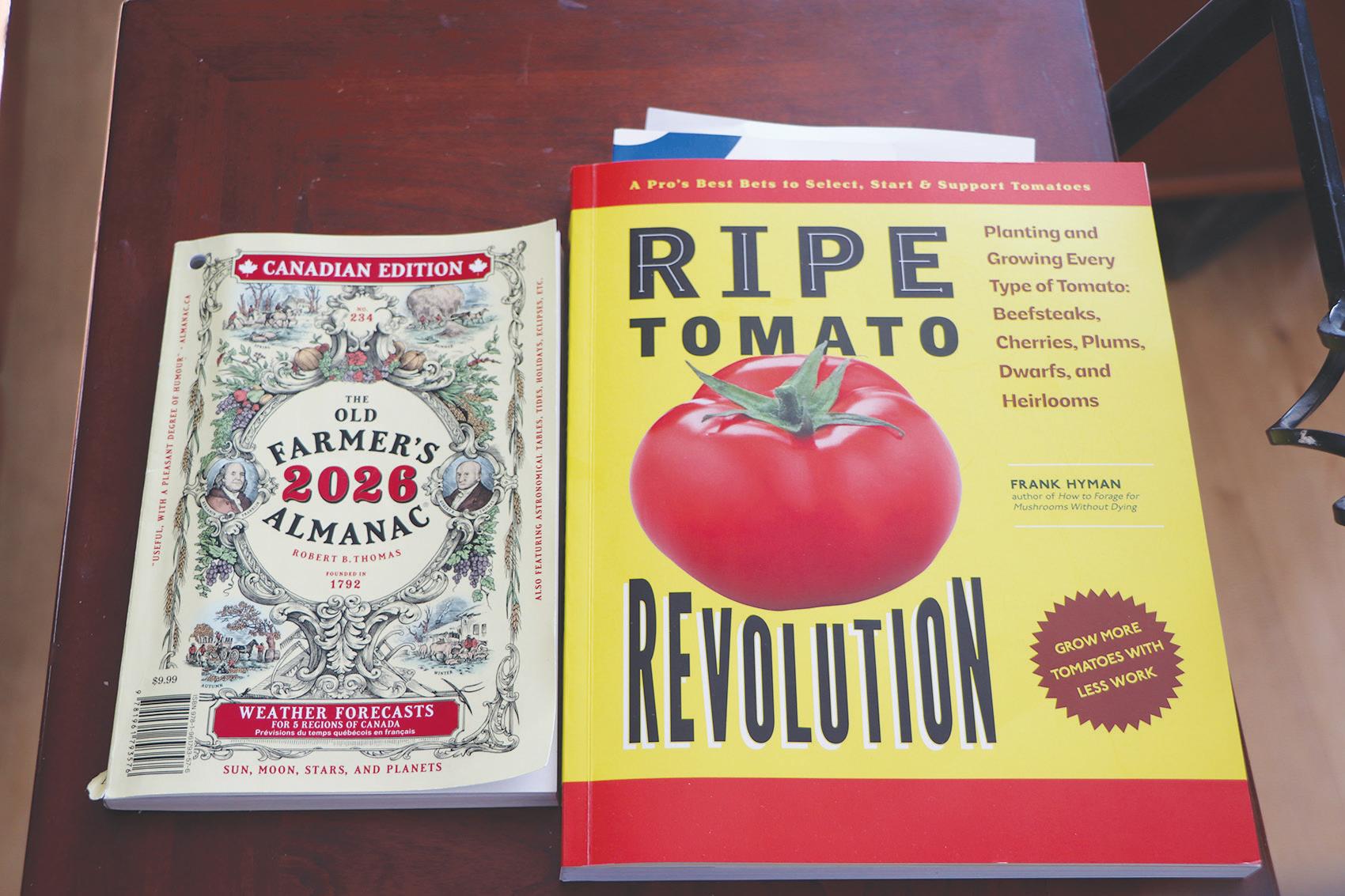
The Old Farmer’s Almanac (Canadian Edition) arrived in the mail last week to my surprise. I thought it was going to be discontinued but I contacted the editor and it’s under new ownership and thriving. It contains some very interesting information from weather reports for the year to recipes and gardening information.
Are you a tomato lover? There is a new gardening book out “Ripe Tomato Revolution” by Frank Hyman and it tells you how to grow more tomatoes with less work. I found this book a super source of information and it’s my number one gardening book at the moment.
The book included a Quick List of Best Practices for any kind of tomato.
1. Because sunlight is food for plants give tomatoes full sun or at least 6 to 8 hours of direct sun. More sunlight, more plant food, and bigger tomatoes.
2. Apply lime to the soil to make nutrients more available and to minimize blossom end rot.
passed. Depending on your climate, that can be anytime in the spring. Expect ripe tomatoes in three months.
4. Dig a hole for your tomato transplants and drop two big fistfuls of organic fertilizer into the hole.
5. Remove the lower tiers of leaves before planting and keep removing the lowest leaves as the plant grows. Otherwise, diseases in the soil will be bounced by the rain up onto the lower leaves. As the plant grows keep a 1- to 2-foot-high gap like a vertical moat between the mulch and the lowest leaves.
6. Don’t irrigate with an overhead sprinkler. Wet leaves just promote disease, Use a soaker hose on the ground for irrigation and put a timer on the spigot. In summer, aim for 2 gallons per square foot or garden bed per application.
7. Cover the soil and the soaker hose with 2 inches of organic mulch shredded leaves, pine needles or coffee chaff.
8. Trellis tall growers determinate with a trellising system.
9. Trellis shorter determinants with a cat’s cradle sometimes called a Florida weave.
10. Remove any leaves that show disease and trash them. Smoosh any caterpillars you see. An organic pesticide called Bt (Bacillus thuringiensis) will also control caterpillars.
11. Studies show that removing suckers doesn’t help in anyway. If you don’t know what suckers are, then just be glad.
12. Tomatoes don’t have to fully ripen on the vine to become delicious. They can be harvested after they’ve started to turn red and allowed to ripen in the kitchen, but out of the sun.
Frank Hyman’s last comments are, “Never put tomatoes in the fridge, always eat tomatoes at every meal.” And repeat next year.
Every one of the above ideas is covered in the book by a chapter of information and photographs.
Here’s to a great spring with lots of moisture and sunshine. I’m going to order my last lot of seeds today. Some of the real popular seeds sometimes run out so plan a head.
By Harry Siemens
Keystone Agricultural Producers (KAP) held its 42nd annual general meeting in February in Winnipeg, bringing together farmers, industry partners, elected officials, and government representatives to review advocacy results and set priorities for the year ahead.
“Our AGM provides an opportunity each year to gather members from across the province,” said KAP President Jill Verwey. “We connect, engage on critical issues, and set priorities for our ongoing work and future direction.”
Panels and policy workshops shaped much of the meeting, with discussions focused on Manitoba’s drainage network, right to repair, interoperability, and digital agriculture. Tyler McCann, managing director of the Canadian Agri-Food Policy Institute, led a session examining digital policy and competitiveness.
KAP General Manager Colin Hornby said the organization’s work remains grounded in member direction.
“KAP’s work is driven by the priorities and perspectives of Manitoba farmers,” Hornby said. “This past year, we delivered real results at both the provincial and federal levels.”
Hornby noted the Manitoba Agriculture Trade Action Plan will guide future advocacy efforts, emphasizing the need for trade policies that support local producers and long-term industry sustainability.
Members debated and passed 11 resolutions during the business session, with drainage dominating the agenda. One resolution called on the Manitoba government to maintain provincial drainage networks annually. Another urged a review of the drainage permitting process to improve consultation, speed, and predictability for subsurface drainage projects.
A third drainage resolution directed KAP to work with the Association of Manitoba Municipalities to encourage agreements allowing producers to partner with municipalities on drainage maintenance. Members also supported a resolution calling for multi-year municipal-provincial contracts for summer maintenance of highway rights-of-way.
District 10 members introduced a resolution on waterway infrastructure, urging the use of true riparian seed mixtures that
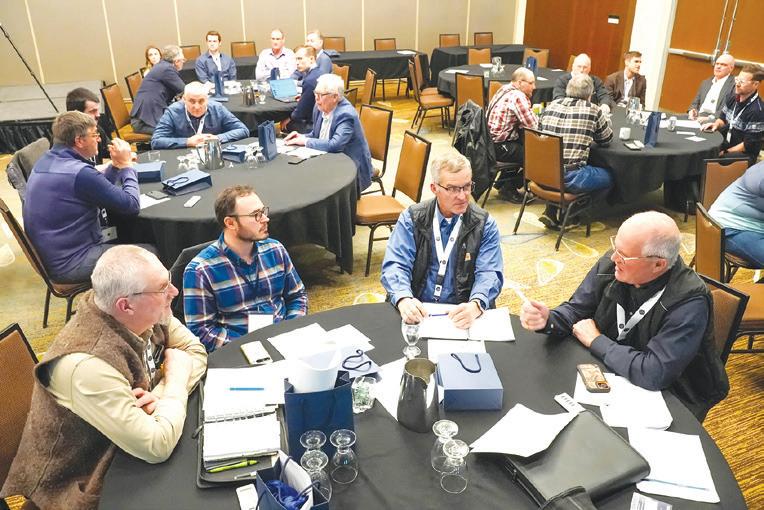
withstand flooding and calling for research into storm-resilient drainage infrastructure using proven best practices.
Wildlife management also surfaced as a concern, with District 9 members requesting updated wildlife population data for western Manitoba.
The Manitoba Beekeepers’ Association advanced a resolution promoting pollinator-friendly roadside and drainage seeding. The motion encourages collaboration with municipalities and watershed districts to include low-maintenance flowering species such as clovers and birdsfoot trefoil.
Agricultural plastics recycling reached the floor as well. District 1 members urged KAP to lobby the province and Cleanfarms to examine improved recycling solutions.
Innovation and research funding received strong backing. One resolution calls on the federal government to develop a global commercialization plan for a nitrogen-fixing trait developed by Agriculture and AgriFood Canada. Another urges Ottawa to reverse announced cuts to federal public plant breeding and research facilities.
Transportation infrastructure rounded out the resolutions, with members calling for expansion of RTAC-designated roads in high-production areas.
“Resolutions give us our marching orders,” Hornby said. “They reflect what farmers face on the ground.”
With the resolutions adopted, KAP moves into 2026 with a clear mandate focused on drainage, infrastructure, research investment, and practical regulatory reform— priorities members say are essential to farm profitability and long-term competitiveness.