


By Elmer Heinrichs
The 2024-2025 crop year concluded on July 31, 2025, for the majority of field crops, with the exception of corn and soybeans.
Total exports of all principal field crops recorded a strong year-over-year (y/y) increase of 15 per cent and were up 13 per cent relative to the fiveyear average.
This growth was primarily driven by elevated shipments of wheat and oilseeds, supported by moderate gains for coarse grains, pulses, and special crops.
As a result, carry-out stocks (ending-year inventories) of all principal field crops are projected to fall by 22 per cent, driven by a sharp decrease in carry-out for total grains and oilseeds, offsetting a modest increase for pulse and special crops carry-out.
Price forecasts for most field crops are trending lower than the previous year, consistent with broader declines across international commodity markets.
Notably, corn, flaxseed, and sunflower seed are exceptions, with prices expected to remain firm or increase due to specific market dynamics.
Market analyst Jonathon Driedger said Canada’s crop size adds to the challenge. “One factor adding to the pressure is that the Canadian crop appears to be getting bigger, creating more supply just as demand faces challenges. We’ll likely keep trading lower for now, but I don’t think the outlook is deeply bearish.”
By Harry Siemens
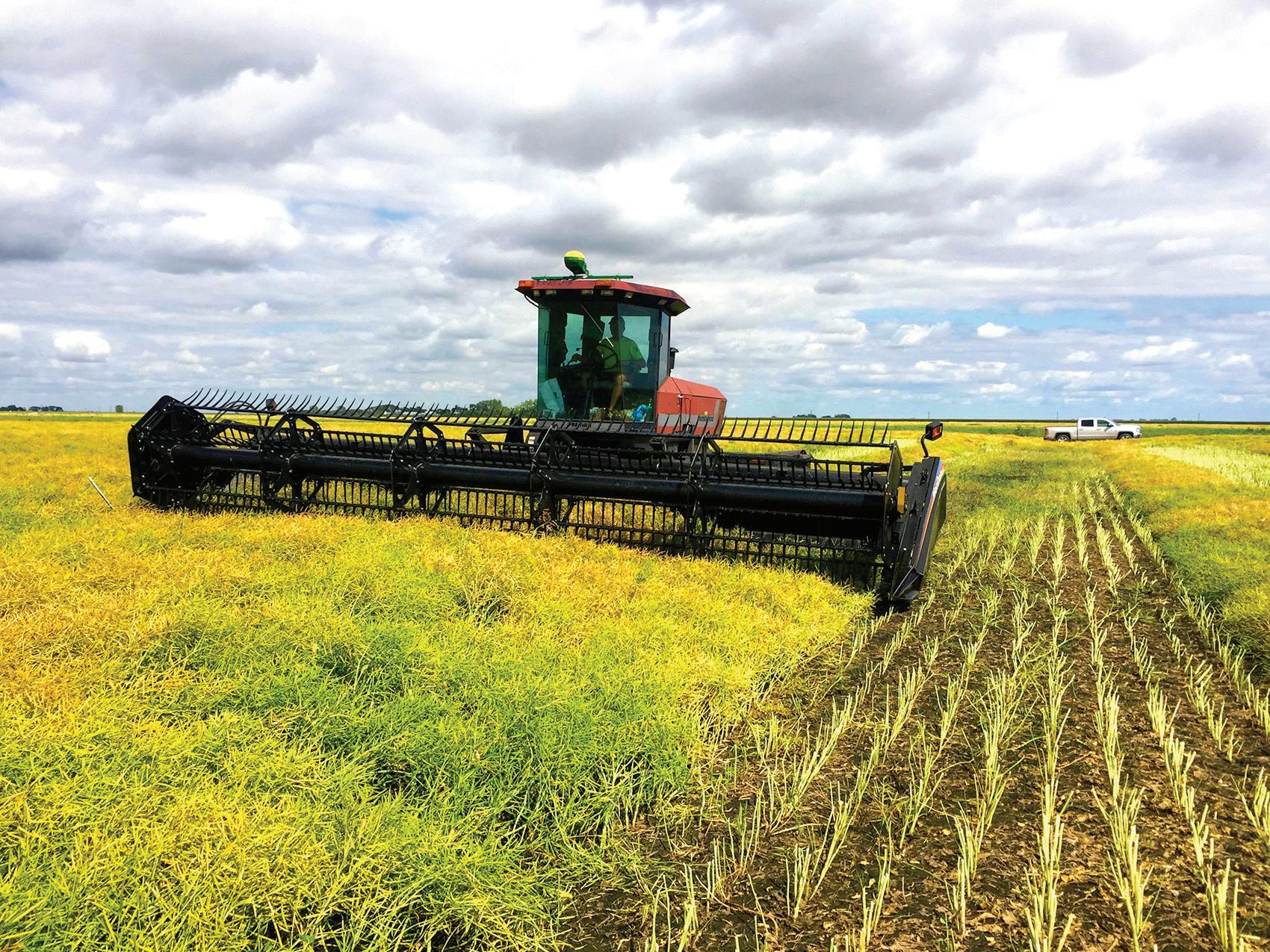
Canadian canola farmers face sharp uncertainty as China’s preliminary ruling on Canadian canola seed imports raises the stakes for the 2025 harvest. While some producers look for silver linings, industry leaders warn of serious impacts on trade, farm revenue, and market stability.
At Roblin, MB, farmer Deven Bailey said he focuses on the long view.
“I try to look for positives in negative situations. I don’t know the future—tariffs could
end tomorrow for all I know.
The last time China made headlines, everyone panicsold, and six weeks later, there was a rally with opportunity,” said Bailey. “Canola will likely still out-profit wheat for us this year anyway. Doesn’t change my acres at all.”
Near Boissevain, MB, farmer Jason Hildebrand agreed that timing remains uncertain.
“It will depend on the findings of China’s final report this fall,” said Hildebrand. “The tariff definitely hurt, but the market was likely due for a sea-
sonal drop heading into harvest anyway. Time will tell.”
Kelly Green, Vice-President of Communications at the Canadian Canola Growers Association (CCGA), outlined the broader implications.
“China is Canada’s secondlargest market for canola overall and the largest market for canola seed exports. In 2024, the Canadian canola trade value with China hit $4.9 billion,” said Green. “That market cannot be quickly or fully replaced, despite some progress in ongoing diversification efforts.”
Green said canola remains the number one source of farm revenue in Canada.
“Canola generated $12.9 billion in farm cash receipts in 2024,” said Green. “These tariffs will directly affect Canada’s nearly 40,000 canola farmers and the rural communities they support. With the 2025 harvest underway, an announcement like this creates significant instability and unpredictability for farmers as they prepare to put the new crop into storage.”
Continued on Page 2...
For 2025-2026, data from AAFC’s Canadian crop yield forecast (CCYF) has informed the analysis of this month’s outlook. The recent CCYF forecast incorporates remote sensing and climate data up to July 31, 2025.
The production of all principal field crops is expected to increase modestly by 1 per cent and be higher than the five-year average by 7 per cent.
Total supply of all principal field crops is projected to decrease by 1 per cent, though, as the decrease in carry-in stocks (beginning-year inventories) offsets the increase in production. Carryout stocks of all principal field crops are projected to increase by 32 per cent, driven higher largely by an 11 per cent decrease in exports, particularly for grains and oilseeds.
While overall crop conditions have improved, drought conditions continue to be present in many parts of Western Canada, concludes the AAFC.

In light of continued global trade disruptions, including new tariffs affecting Canadian canola seed, Farm Credit Canada (FCC) is reiterating its support for agribusinesses, farm operations and food processors through its Trade Disruption Customer Support program.
“The agriculture and food industry is resilient, but global trade uncertainty can create real pressure on cash flow and operations,” said Justine Hendricks, President and CEO at FCC. “Our role is to ensure our customers, and the broader industry, have access to the capital and flexibility they need to adapt, stay competitive and keep delivering high-quality products to markets at home and abroad.”
The program offers relief for existing customers and new clients who meet lending criteria. The program offerings include access to an additional credit line of up to $500,000, new term loans, and the option for existing FCC customers to defer principal payments for up to 12 months on existing loans.
FCC will continue to work with industry partners to ensure that Canadian agriculture and food businesses can navigate changing market conditions and keep the industry moving forward despite uncertainty.
Customers and non-customers are encouraged to contact their local FCC office or call 1-800-3873232 to discuss their individual situation. Lending due diligence will be carried out on all applications.
She noted the consequences could ripple across the supply chain.
“We could see downward pressure on prices and reduced marketing options, which in turn will affect farm cash flow. Delays in sales may also lead to storage challenges,” said Green. “Looking ahead, these pressures could influence crop rotation decisions, though canola remains a cornerstone of a healthy and financially sustainable rotation. For many producers, there are limited profitable alternatives, which underscores the urgency of resolving this trade issue as quickly as possible.”
Market analyst Jonathon Driedger said Canada’s crop size adds to the challenge.
“One factor adding to the pressure is that the Canadian crop appears to be getting bigger, creating more supply just as demand faces challenges,” said Driedger. “We’ll likely keep trading lower for now, but I don’t think the outlook is deeply bearish.”
He explained that global trade shifts could ease the blow.
“China seems to be opening more to Australian canola, and if that happens, much of
Australia’s crop will move there,” said Driedger. “That could allow Canada to sell more into other markets. So yes, we may export less overall, but the drop-off won’t be as large as feared. We could also see a bit more domestic crush. Still, there are a lot of moving parts and uncertainty. Time will tell how it all plays out.”
The uncertainty leaves farmers weighing short-term market risks against longterm cropping strategies. Bailey said he won’t change his rotation plans.
“Doesn’t change my acres at all,” Hildebrand stressed that the final ruling this fall remains critical. “Time will tell.”
For now, producers across Manitoba prepare for storage, marketing, and pricing decisions under the shadow of China’s tariffs. With canola such a cornerstone of Canadian agriculture, the outcome carries consequences not only for farmers but also for rural economies and Canada’s trade balance.
Steinbach area farmer Korey Peters said he plans to hold back canola sales while waiting for clarity on China’s tariff ruling.
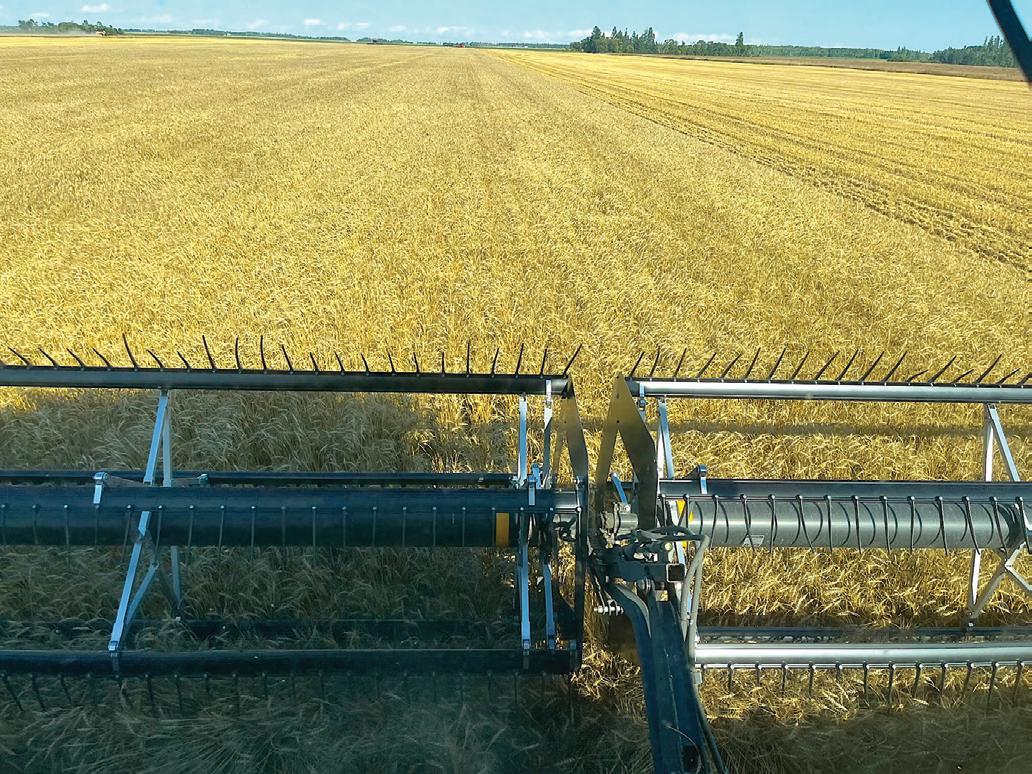
Ken Foster of Arborg, MB, said his main focus is getting this year’s crop off after a very dry season, hoping yields hold up. “Right now, my concern is getting this crop off, and after such a dry year, I am hoping it will give us a decent yield,” Foster said. “However, I do believe acres will be down next year unless we can get trade disputes resolved.” Submitted photo
“Like most, we’ll sit on unsold canola in hopes governments can work on this issue and correct it, hopefully bringing the price up at some point,” Peters said.
He added that acreage has already shifted. “Our acres have slowly been declining the last few years, and chances are that will continue.”
Farmers across the Prairies share the same uncertainty. With storage filling up and prices under pressure, many are taking a cautious approach, keeping grain in the
bin until the market responds. For Peters, it’s a strategy shaped by both necessity and experience.
Ken Foster of Arborg, MB, said his main focus is getting this year’s crop off after a very dry season, hoping yields hold up.
“Right now, my concern is getting this crop off, and after such a dry year, I am hoping it will give us a decent yield,” Foster said. “However, I do believe acres will be down next year unless we can get trade disputes resolved.”

By Harry Siemens
As Prairie farmers roll into harvest, China delivers a staggering blow with a provisional 75.8% anti-dumping duty on Canadian canola, effective August 14. This sudden move shuts the door on one of Canada’s most vital export markets amid the busiest season of the year, threatening both profit and momentum.
“This is more than just bad timing; it’s a complete blindside in the middle of harvest,” says Gunter Jochum, president of the Western Canadian Wheat Growers Association. “For Western Canadian farmers, canola serves as our flagship crop. Losing China at this moment feels like someone yanked the rug out from under us while we were already sprinting.”
The announcement escalates a growing trade conflict that began in March when China imposed sweeping 100% tariffs on Canadian canola oil, meal, peas, pork, and seafood. Those measures were in direct retaliation for Ottawa’s 2024 tariffs on Chinese electric vehicles, steel, and alu-
minium. Market analysts estimate these collective moves could cost the canola industry as much as C$2.35 billion, echoing the damage of the 2019–2020 canola dispute.
In that earlier dispute, China cited alleged quarantine pests in Canadian shipments and formally suspended exports from major exporters Richardson and Viterra. The resulting collapse in market access slashed production and prices, forcing many farmers to scale back planting. Output fell nearly eight percent in 2019 compared to the previous year, and farm-gate prices dropped sharply. Producers faced extraordinary pressure to adapt quickly to an evolving crisis.
Jochum criticizes Ottawa for allowing Western agriculture to bear the brunt of repeated trade disputes.
“Prairie farmers often become collateral damage in Ottawa’s trade fights,” he said. “The government cannot keep pitting Eastern manufacturing against Western agriculture. We deserve a national trade strategy that
protects all sectors equally, not one that treats us as bargaining chips.”
He calls for Ottawa to launch high-level talks with Beijing to roll back the tariffs, appoint a dedicated agricultural trade envoy to prevent future disruptions, and accelerate efforts to diversify Canada’s export markets. Jochum warns that canola exports to China—which totalled nearly C$5 billion in 2023—supports tens of thousands of rural jobs in grain handling, processing, and transportation.
“When those markets shut, we don’t just lose a sale,” he says. “We lose communities, livelihoods, and Canada’s reputation as a reliable supplier.”
Markets reacted sharply to the tariff announcement. Chinese rapeseed futures plunged by as much as 6.5%—their steepest drop since June— signalling a sudden collapse in demand and confidence.
Analysts say the move also hands Australia an opportunity to expand its rapeseed exports to China, reclaiming ground lost to Canada in recent years.
The Canadian Canola Council of Canada (CCC) and Canadian Canola Growers Association (CCGA) also condemned the decision.
“With this preliminary determination of dumping for canola seed together with the existing 100% anti-discrimination tariffs on canola meal and oil, the Chinese market is effectively closed to the Canadian canola industry,” says Chris Davison, President and CEO of the Canola Council of Canada. “China is Canada’s second-largest market for canola and canola products, with exports valued at $4.9 billion in 2024.”
Rick White, President and CEO of CCGA, says the timing could not be worse.
“This tariff will have an immediate and substantive impact on farmers’ marketing opportunities for the 2025 canola crop. Canadian farmers are globally competitive, and if no one can find a solution quickly, the impact will be quickly felt on our farms and in our rural communities,” said White.
The CCC and CCGA warn
that the loss of the Chinese market removes a critical demand signal that has long helped support prices and production planning across the canola value chain. They say the move will reverberate from the farm gate to processors and shipping terminals, increasing storage costs and putting downward pressure on prices.
Beyond market access, the stakes are enormous for Canada’s economy. The canola sector generates an annual economic impact of $43.7 billion, supports more than 200,000 jobs nationwide, and contributes over $16 billion in wages. A major disruption like this sends shockwaves through rural communities, affecting not only farmers but also processors, transporters, and retailers. While diversification efforts
have expanded sales to markets such as Japan, Mexico, and the European Union, none can match the scale of Chinese demand. Without rapid government action, industry leaders warn, Canada could see a repeat of the 2019–2020 downturn—only this time with less financial resilience after years of inflation, high interest rates, and mounting input costs.
Jochum says delays in resolving the dispute erode farm equity, inflate storage costs, and drain cash flow needed for the next growing season.
“Every day without resolution chips away at our ability to keep operating,” he says.
“This isn’t just a harvest crisis—it’s a fight for the future of rural Canada and producer confidence in federal leadership. The government must act—now.”

Read the AgriPost online at agripost.ca
Past issues in archive


You may think this sits outside agriculture. Think again. Land use sits at the centre of farming, recreation, and community life. When Ottawa, through Parks Canada, dictates rules without listening, everyone pays.
On July 29, more than 600 people filled a Clear Lake venue to demand answers about Parks Canada’s sudden motorboat ban. Families, outfitters, cottagers, and local leaders came ready to speak. They expected senior decision-makers. The Minister and the Park Superintendent stayed away while a vicepresident flew in at the last minute. That choice hardened the crowd.
“Parks Canada may control the gates, but Clear Lake belongs to the people,” said Dan Mazier, Member of Parliament for Riding Mountain. The room erupted. Many first heard about the ban right before the May long weekend, a sharp turn from the longstanding “one boat, one lake” approach built with the public
to protect lakes. People saw a reversal with no open consultation, no evidence on the table, and no plan.
Fairness for Clear Lake organized the meeting that Parks Canada avoided. Volunteers raised funds, hired a biologist, and presented research to the community.
Dennis Schindler of the Manitoba Wildlife Federation summed up the mood. “Over 600 people showed up,” he said. “Everyone wanted answers.” The biologist’s work showed zebra mussels already in Clear Lake. “Local people now want to stop zebra mussels from spreading out of Clear Lake into other lakes,” Schindler said. That finding shifts the job from prevention to containment.
The discussion then drifted. Instead of straight answers on science and management, the talk moved to a possible judicial review over powerboats, with no clarity on timing, scope, or whether anyone planned an injunction.
“The answers stayed vague,” Schindler said. He also described a defensive tone from the Parks Canada executive. “When emotions rose, the VP didn’t try to calm things down. That only added to the tension.”
Schindler linked Clear Lake to a broader pattern in federal land-use decisions, including the Ecological Corridor Program and Indigenous Protected and Conserved Areas.
“We keep seeing the same thing—thin consultation, shifting reasons, and decisions that ignore people on the ground,” he said.
People drove in from Dauphin, Brandon, Onanole, Erickson, and across the park region. Many said the ban strikes at lifestyle, property values, and a deep emotional tie to the lake.
“These are million-dollarplus cottages,” Schindler said. “People feel real fear when the government moves the goalposts without notice.”
When someone pressed Parks Canada about economic damage, the VP replied that they had not seen any impact. The room erupted again. Owners pay mortgages, employ staff, and book seasons months ahead. They already see cancellations, slower fuel and service sales, and shelved plans. They want respect, facts, and a voice.
My wife, Angelinda, and I marked our first wedding anniversary just outside the park and visited friends with long ties to Clear Lake. We felt the
unease. Generations learned to swim, fish, and ski there.
This controversy hits home.
Trevor Boquist of the Clear Lake Cottage Owners Association appreciated the turnout and the presence of Parks Canada Senior VP Andrew Campbell.
“At least Ottawa paid attention and engaged,” he said. He also regretted that owners had to raise money and launch Fairness for Clear Lake to start a conversation. The meeting allowed the association to present research and begin overdue talks. Boquist didn’t expect an instant reversal; he wants follow-through on commitments. The association now plans to pursue a judicial review in late August or early September, publish all materials from the town hall, push for a new working agreement in Riding Mountain’s updated management plan, continue public education, raise funds, and advocate to get boats back on Clear Lake. Where do we go from here? Start with first principles. Local people deserve a seat at the table. If Parks Canada intends to change rules that reshape a region’s economy and culture, it must bring evidence, timelines, and accountability—and take questions in person.
The “one boat, one lake” policy grew from practical cooperation to stop invasive species. If zebra mussels already live in Clear Lake, shift to containment and enforcement: inspections, decontamination, and education. Do not spring blanket bans in the dark—test assumptions in public, with local stakeholders at the mic.
Mazier called for two actions: reverse the motorboat ban on Clear Lake and replace senior leadership at Riding Mountain National Park. Schindler pushed further, drafting resolutions for the AMM fall convention to halt IPCA-related actions until full local consultation occurs. Those demands match what I hear from farmers and rural leaders across Manitoba: consultation first, data on the table, policy second.
Clear Lake tells a bigger story—decisions about land and water ripple through small businesses, municipal budgets, and family life. When agencies closed their doors, communities opened their halls. On July 29, people showed up. They spoke. They asked for facts and a fair process. Ottawa should meet them there—with answers, not edicts.
By Dan Guetre
Canada has regained access to the Australian beef market for the first time since 2003, offering new opportunities for Canadian exporters in the Indo-Pacific region. Australia, one of the last countries to maintain restrictions due to bovine spongiform encephalopathy (BSE), completed its risk assessment and officially opened its doors to fresh and frozen Canadian beef.
The Canadian Cattle Association (CCA) welcomed the move.
“Canadian beef farmers and ranchers are proud to produce the highest quality and safest beef in the world,” stated CCA President Tyler Fulton. “As the demand for
Canadian beef around the world continues to grow, we look forward to every new market opportunity.”
Minister of Agriculture and Agri-Food, Heath MacDonald, emphasized the significance of this development.
“Canada is known around the world for producing topquality beef—and that’s a testament to the hard work of our producers. Strengthening our trade ties with Australia—one of our key partners in the Indo-Pacific—means more opportunities for Canadian farmers and processors to grow their businesses, create good jobs, and build up our economy,” he said.
“The Government of Canada is committed to supporting the industry as we open new
doors, drive growth, and showcase the best of Canada to the world.”
Australia is a major global player in beef production, producing approximately 2.2 million tonnes of beef annually, with around 70% exported to countries including Japan, China, the U.S., and South Korea. Its domestic market consumes roughly 30% of total production, leaving the majority available for international trade.
While Australian importers now have access to Canadian beef, initial demand is expected to be measured. Buyers will likely balance Canadian supplies against domestic production and existing trade relationships, testing products and estab-
lishing supply chains. Early shipments from Canada may be limited, potentially totalling tens of thousands of tonnes depending on logistics, pricing, and regulatory compliance.
Access to the Australian market gives Canadian exporters a further strategic foothold in the Indo-Pacific, enhancing market diversification beyond traditional partners like Japan, South Korea, and China. However, Australia’s own high-quality and competitively priced beef sets a challenging benchmark. Canadian suppliers will need to emphasize attributes such as sustainability, grass-fed production, and premium cuts to differentiate their products.
Over time, Canadian beef has the potential to capture a modest but strategic share of the Australian market, particularly in specialty or highvalue segments. Establishing a presence in Australia also strengthens Canada’s broader Indo-Pacific reputation, signalling that Canadian beef meets strict international food safety standards. While the reopening of the Australian market may not immediately translate into massive export volumes, it represents a strategically important opportunity for Canadian beef. Exporters can now build brand recognition in a high-income market, diversify trading relationships, and gradually expand shipments over the coming years.
By Dan Guetre Jeff Bereza, PC Critic for Agriculture,
Manitoba canola producers are facing the impact of a new 75.8% tariff on Canadian canola exports to China, which took effect August 14.
China, the world’s largest importer of canola, announced the tariff following the results of an anti-dumping investigation launched in September 2024. The investigation concluded that Canada’s canola sector benefited from what Beijing called “substantial” subsidies and preferential policies.
Canada supplies nearly all of China’s canola imports, making the tariff a significant disruption for Canadian farmers. Industry experts warn the move could sharply reduce market access and drive down prices for producers in Manitoba, one of the country’s top canolagrowing provinces.
Portage la Prairie MLA
said the tariff will add further strain to producers already dealing with dry conditions across parts of the province. He urged the Manitoba government to help producers find new markets.
“This year has already been extremely difficult for the ag industry,” Bereza said. “Tariffs like this create more uncertainty for farmers and cattle producers across the province.”
La Vérendrye MLA Konrad Narth also expressed concern, noting the broader impacts of global trade tensions on Manitoba producers.
The Canola Council of Canada (CCC) and the Canadian Canola Growers Association (CCGA) described China’s move as “deeply disappointing,” saying it effectively shuts Canadian canola out of one of its most
valuable markets.
“With this preliminary determination of dumping for canola seed together with the existing 100% anti-discrimination tariffs on canola meal and oil, the Chinese market is effectively closed to the Canadian canola industry,” said Chris Davison, President and CEO of the CCC. China was Canada’s second-largest market for canola and canola products in 2024, with exports valued at $4.9 billion. The timing of the ruling also drew concern, as it comes just weeks before harvest.
“This tariff will have an immediate and substantive impact on farmers’ marketing opportunities for the 2025 canola crop,” said Rick White, President and CEO of the CCGA.
According to the industry groups, the preliminary determination and its associated duty will create “signifi-
cant additional uncertainty and volatility” in the global marketplace. Exports to China traditionally provide an important demand signal for the Canadian canola industry, and the absence of that market could have widespread consequences across the value chain.
Both organizations are calling for immediate federal support to address the market closure. They stressed the broader economic weight of the sector, noting that Canada’s canola industry contributes $43.7 billion annually to the economy, supports more than 200,000 jobs, and accounts for over $16 billion in wages.
The announcement comes at a time when many farmers are already struggling with drought conditions in the Interlake region and facing mounting uncertainty in global commodity markets.
By Elmer Heinrichs
Manitoba is continuing to work on growing the agri-food sector. Agriculture minister Ron Kostyshyn announced over $6 million in funding from the province and the federal government to increase food processing opportunities.
The announcement was made at Maple Leaf Foods in Brandon, one of the recipients of the funding.
Maple Leaf’s president of pork operations Dennis Organ says the investment will help modernize the Brandon pork facility with state-of-the-art equipment, improving reliability, efficiency and production quality.
He says the investment allows Maple Leaf to increase processing capacity and create new jobs.
A total of 19 food processors have been approved for funding for equipment upgrades, facility expansions, and new technologies that will improve efficiency, production capacity and environmental performance.
Kostyshyn says by enhancing our local food infrastructure, we help to create jobs, reduce our carbon footprint and foster a resilient food system that benefits everyone.
“The funding helps them buy equipment and invest in new technologies,” said Kostyshyn. “We’re here to help them grow and be competitive as we find new and emerging markets around the world.”
Some of the projects include: Jowett Farms Corporation, in Blumenort, for refrigeration and line speed improvements; River Valley Specialty Farms Inc.; in Bagot, for installation of a high-accuracy sorter; Prairie Flour Mills Ltd., in Elie, for grain-receiving expansion; Buffalo Creek Mills, in Altona, for doubling capacity of oat-flaking; Prairie Fava Ltd., in Glenboro, for increasing storage capacity.
Kostyshyn notes agriculture needs to be diversified with value added opportunities, and by taking advantage of what we grow, putting it into package form and retailing it - we benefit through all aspects of the value chain.
By Elmer Heinrichs
Manitoba saw a mix of beneficial rainfall and severe weather over the past week, bringing relief to crops in some areas while delaying harvest in others.
Harvest operations in Manitoba pressed ahead during the week ended August 18, with most of Manitoba’s fall rye and winter wheat crops came off the ground, with the harvesting of other crops just beginning, according to the province’s weekly crop report.
Cereal crop specialist Ann Kirk said recent rains have helped replenish topsoil moisture but did delay harvest. Approximately, 72 per cent of the province’s fall rye crop was harvested, including 95 per cent in the central and eastern regions.
In addition, 60 per cent of Manitoba’s winter wheat was combined, as well as 21 per cent of field peas, 15 per cent of barley, and three per
cent of both spring wheat and oats. However, overall, only three per cent of Manitoba’s harvest was complete.
In the Central region, harvest is well underway, with strong winter wheat and rye yields in moisture-rich areas but reduced results on lighter soils. Early reports show oat yields of 110 to 150 bu/acre and spring wheat between 45 and 60 bu/acre.
Potato, canola, flax, peas and barley harvest has begun, though rains have temporarily stalled activity. Spring wheat quality was rated the best in the central region at 85 per cent good to excellent.
Swathing and pre-harvest applications were ongoing for canola, while the latest seeded fields ranged from flowering to pod-fill. Sunflowers in Manitoba were in the R5 (flowering) and R6 (seed development) stages, while most flax fields were in stages 10 and 11 (brown capsule).
Yield estimates for field peas were reported in the central region at 30 to 55 bu. /ac., as well as “average” in the southwest region. Later seeded fields in the R6 and R7 stages will be harvested shortly.
The Eastern region is close to completing winter cereals, with yields varying widely from 45 to 90 bu/acre. Early spring wheat harvests are yielding 45 to 60 bu/acre, mostly No. 1 quality but with small kernels.
Soybeans in the central and eastern regions were in the R5 and R6 stages, while those in the rest of the province were in R4 and R5. However, soybean aphids were present in some fields.
Forage growth improved thanks to warm weather and rainfall as moisture was needed to replenish root reserves for winter. The first cut of tame forage was complete with work on native
stands and slough hay continuing.
Dairy farmers reported good yields on their second cut of alfalfa with some in the central region completing a third. The first cut beef hay harvest was complete, as well as a second cut of tame hay in some areas with yields reported as “very good” in the eastern region.
Yields for cereal silage range from average to above average. However, high humidity and morning dew has led to producers using grass intended for hay as bale silage.
Pastures improved in areas that received rainfall during the week, while rotationally grazed pastures performed the best under hot and dry conditions.
Cattle on pasture were in excellent condition in the eastern region. Dugouts were at 70 per cent normal capacity with adequate water supplies.



By Harry Siemens
Following months of deliberation and strategic review, the Alberta Beef Producers (ABP) Board of Directors has decided to withdraw its membership from the Canadian Cattle Association (CCA), effective July 1, 2026. The move marks a significant shift in Alberta’s representation within Canada’s national beef advocacy framework.
“Membership in national organizations like the CCA must deliver clear value to Alberta’s cattle producers,” says ABP Chair Doug Roxburgh. “ABP holds high standards for fiscal transparency, governance, and communications, and we expect the same from the organizations we support. The CCA does not meet those standards. After seeing no meaningful progress or willingness to change, we’ve decided to withdraw our membership. We have a duty to Alberta producers to ensure their dollars work in organizations that reflect and advance our industry’s values.”
The decision comes as ABP evaluates how best to serve its members in a rapidly evolving marketplace. Alberta cattle producers have called for stronger advocacy, more transparency, and clear returns on their investment in national organizations. Roxburgh says the board listened and acted.
“Our focus is on delivering strong, strategic representation for Alberta’s beef industry,” says ABP General Manager Brad Dubeau. “In light of the Board’s decision, we have mapped a strong path
forward to ensure Alberta’s voice continues provincially, nationally, and internationally.”
ABP will honour all financial obligations to the CCA until June 30, 2026, when the current agreement ends.
At present, ABP contributes more than 50 per cent of the CCA’s budget through the $2.00 Alberta Service Charge.
This withdrawal does not affect funding to the Canadian Beef Cattle Check-Off Agency ($2.50 National Levy) or its service providers — Canada Beef, Public and Stakeholder Engagement, and the Beef Cattle Research Council. Those programs, ABP says, continue to deliver value and align with Alberta’s priorities for market development, public trust, and research.
ABP leaders stress that the move is not a retreat from national or international engagement, but a recalibration of how Alberta producers’ interests get represented.
“Our priority is the long-term strength and viability of Alberta’s beef industry,” says Roxburgh. “This decision reflects a broader commitment to building a resilient, transparent, and producerdriven organization to meet the evolving needs of our industry.”
Historically, Alberta cattle producers have played a central role in shaping national beef policy. Alberta’s herd size, export volume, and processing capacity make it a dominant force in Canadian beef production. With this withdrawal, ABP signals that
it intends to maintain — and even strengthen — its influence through direct advocacy rather than through CCA membership.
While the decision may reshape national industry dynamics, ABP insists it will remain an active voice on key issues affecting cattle producers, from trade access and market competitiveness to animal health and sustainability. The organization says it will engage directly with federal policymakers, industry partners, and international markets.
Dubeau emphasizes that the board’s choice is rooted in responsiveness to producers.
“We’ve heard loud and clear from our members that they want more accountability and stronger returns on their investment in representation,” he said. “This is about making sure every dollar works for Alberta producers.”
ABP’s decision will likely spark debate within the beef sector about the future of national advocacy. Some see it as a challenge to the CCA to improve its governance and transparency. Others view it as a sign that provincial organizations may increasingly pursue independent paths if they feel national bodies are not delivering results.
Founded as a not-for-profit commission run by producers for producers, ABP works across research, production, communications, marketing, policy, advocacy, and stewardship. Its stated mission is to maintain a sustainable, competitive beef industry for the benefit of all Alberta producers.
As July 2026 approaches, ABP says it will focus on strengthening its operations, deepening relationships with stakeholders, and ensuring that Alberta cattle producers have direct, effective representation in decisions affecting them.
“This is about the future,” says Roxburgh. “We owe it to Alberta’s producers to ensure their voices get heard, their dollars get respect, and their industry remains strong for generations to come.”
By Elmer Heinrichs
Buffalo Creek Mills in Altona will be doubling its capacity for oat-flaking production for human edible consumption thanks to funding from the federal and provincial governments. A $1.5 million project will double Buffalo Creek Mills’ capacity.
It is one of 19 food processors in Manitoba approved for funding of equipment upgrades, facility expansions, and new technologies to improve efficiency, production capacity, and environmental performance.
The two levels of government are investing more than $6 million to help grow the economy by increasing food production facilities and supporting jobs across Manitoba under the sustainable Canadian agricultural partnership (Sustainable CAP).
CEO of Buffalo Creek Mills, Ryan Penner says they’ll be installing additional state of the art equipment to get the job done in November and December, with hopes it will be ready to go in the new year.
“We process four thousand metric tonnes of raw oats every month, of which a portion moves toward direct human edible consumption product,” said Penner. “So, it [the project] doesn’t change what we do at the plant but it does change what we produce.”
“We are a ten-year-old company and our original dream was to become a full-fledged oat processing facility, and this is part of that evolution,” added Penner.
He went on to say there’s been steady growth in the oat market and Buffalo Creek Mills strives to be a part of that.
“The growth is world-wide. We’re seeing it in multiple geographic regions, whether it’s here in North America, Asia or elsewhere. The challenge is to go and get that growth,” said Penner. “Over the last several years, society has understood the kind of healthy halo that surrounds oats, especially in relation to heart health and that has, I think, been one of the prime reasons for the continued growth in the industry.”
Ten per cent of the project cost will be covered by funding through the provincial and federal governments through the Sustainable Canadian Agricultural Partnership.
“We are very appreciative of the support from this program,” said Penner. “We’ve been the recipient a number of times and it’s been very helpful in our growth.”
Penner emphasized they are fully committed to building strong relationships with their oat producers, so it is exciting as well that this expansion will further support their partners.
As well, Penner is excited for the continued growth at Buffalo Creek Mills and how that will integrate into the local agriculture community, noting it was one of the foundations of why the company was created.


By Harry Siemens
Anyone in the beef value chain who crossed paths with livestock from a bovine tuberculosis-positive Pembina Valley dairy operation in south-central Manitoba may be getting a call from the Canadian Food Inspection Agency (CFIA).
That includes producers, processors, feedlots, and others whose cattle may have come into contact with infected animals.
Carson Callum, General Manager of Manitoba Beef Producers (MBP), says Manitoba’s beef sector remains alert but cautious following the recent discovery of bovine tuberculosis (TB) in a Pembina Valley dairy herd.
The Canadian Food Inspection Agency (CFIA) continues to work through its standard “trace-in” and “trace-out” protocols to identify any producers who may have had contact with infected animals. So far, MBP hasn’t received any direct reports from impacted beef producers, but Callum expects that to change as the CFIA works through its process.
“From a beef production perspective, CFIA is still working through contacting any implicated producers,” says Callum. “We encourage any producer notified by CFIA to reach out to us for support. We’re here to help however we can throughout the process.”
For producers, the initial call from CFIA can feel overwhelming. Callum says many producers respond with understandable concern and stress.
“It’s a shock,” he says. “If a producer gets pulled into a TB investigation, you worry about what it could mean for your operation, especially around the costs. Whether it’s bringing animals in for testing or keeping them longer if a quarantine is required, those costs start to add up quickly.”
Testing and handling animals through chutes requires time, equipment, and labour. While the CFIA compensates
animals confirmed as TB reactors, other costs fall outside the program.
“We were glad to see CFIA recently increase the compensation maximums under that program,” Callum says. “But producers still face out-ofpocket costs like mustering fees or feed costs if they can’t sell calves during a quarantine. Those aren’t covered.”
MBP continues to raise these issues with both provincial and federal governments.
“We’re pushing for program options that address those gaps. Producers are keeping animals on-farm under quarantine and following testing procedures for the good of the entire industry. They shouldn’t carry the financial burden alone.”
This most recent case differs from past incidents in Manitoba. Historically, TB surfaced in or near the Riding Mountain area, where officials once maintained an eradication zone. Previous cases in Alberta and Saskatchewan also occurred on the western side of Manitoba.
“This time, the case originated in a dairy operation in the southeast,” says Callum. “That’s new for us. CFIA is still early in the investigation, so we’ll wait to see how things unfold. Any lessons will come as we move through the process.”
While CFIA leads the response, MBP continues to play a support role—one Callum sees as essential.
“Producers should lean on us, their MBP directors or staff,” he says. “They should also consult with their local vet, who understands how TB works and how the investigations usually play out.”
Callum also urges producers to take action sooner rather than later.

He adds, “If caught in a tough situation, don’t hesitate to reach out. It’s like calling a lawyer when you’re in trouble. In our case, call us. Call MBP. Let us know how this might affect your operation. We’ve helped others through similar issues and can offer guidance.”
Callum emphasizes that while TB investigations carry weight, producers must not feel ashamed or isolated.
“This isn’t your fault,” he says. “It’s like a weather event—it happens, and you don’t control it. What you can control is how you respond and how quickly you move through the process.”
He encourages transparency and open communication with CFIA and industry support groups.
Ask questions. Push for answers. Stay engaged. You’ve got nothing to hide.”
Callum also highlighted a significant development in CFIA policy that offers some relief. The agency recently increased the compensation limit for animals destroyed during TB investigations.
“If the CFIA contacts you, and you have the infrastructure to bring calves in from pasture for testing, try to do it as quickly as possible. I know that’s hard in the summer, especially when animals are out grazing, but in previous investigations, the longer producers waited, the longer they stayed in quarantine. That waiting game creates rolling consequences down the road.”
“That’s an important step,” he says. “With calf prices and live animal values rising, the previous limits didn’t reflect current market realities. The new maximums provide better support and offer some reassurance to producers that they will receive fairer treatment if the animals get pulled.”
As the investigation continues, MBP remains committed to ensuring producers are informed, supported, and heard.
“This isn’t new territory for the beef industry, but it is for many individual producers,” Callum says. “We want them to know they’re not alone, and there’s help available.”
By Harry Siemens
Anyone in Manitoba’s beef value chain who crossed paths with livestock from a bovine tuberculosis-positive dairy herd in the Pembina Valley may soon hear from the Canadian Food Inspection Agency (CFIA).
Producers, processors, and feedlots linked to the herd are on alert as CFIA works through its standard “tracein” and “trace-out” protocols to identify potential contacts.
Carson Callum, General Manager of Manitoba Beef Producers, says the sector remains cautious but vigilant as the investigation unfolds.
Dr. Noel Ritson-Bennett, Veterinary Program Manager with CFIA, explained that the infected herd has already been depopulated, with all animals removed from the farm.
Cleaning and disinfection are underway, and once complete, the farm will eventually get restocked and return to normal business operations.
“The next stage for them will be restocking once they’ve completed that cleaning and disinfection,” he said.
Beyond the index farm, CFIA has launched a tracing investigation.
“We look at animals that have come onto the farm within the last five years that are a potential source of the infection, and we also look at animals that have left the farm that have the potential to spread infection,” Dr. Ritson-Bennett explained. So far, they’ve identified five trace-in farms, and testing is underway, while only one trace-out animal requires follow-up.
He cautioned that this process takes time. “We have to follow up on records and manifests and brand reports, go to
auction markets—so we’re just in the early stages.”
When asked about source tracking, Dr. Ritson-Bennett acknowledged the challenge.
“Unfortunately, we don’t have a great track record. We have not identified a source of infection in several of the previous investigations that we’ve done recently, say from 2016 forward,” he said.
Despite best efforts, TB remains a difficult disease to test for and trace. However, he noted there may be a better chance this time due to the dairy trace program, which carefully tracks animal movements.
“I can’t say that we’ll find anything necessarily, but perhaps we have a better chance this time around,” said Dr. Ritson-Bennett.
Managing producer expectations during such a lengthy process is also key.
“Certainly we communicate with them and with industry,”
Dr. Ritson-Bennett said.
He admitted that the tools available are dated.
“We’re utilizing tests that have been around for 100 years, back when the program for TB eradication in Canada started. There’s been very little progress,” he said.
Despite these limitations, CFIA assigns a case officer to each producer to provide a direct contact point, answer questions, and encourage producers to work with their associations.
‘Again, just open to communication and try to make sure that producers are aware of what they can expect as we work our way through that investigation,” he said.
On the financial and emotional toll, Dr. Ritson-Bennett explained that compensation is available.

Dr. Noel Ritson-Bennett, Veterinary Program Manager with CFIA, explained that the infected herd has already been depopulated, with all animals removed from the farm. Submitted photo
“Compensation is available for any animals that the CFIA orders destroyed through the process and market value paid for those animals,” he said. The CFIA can also cover certain costs, such as disposing of contaminated feed. In June 2025, the federal minister increased maximum compensation values for cattle, which should help cover replacement costs. But he admitted that lost production or future revenue is not covered.
“Unfortunately, the legislation does not allow for lost production or lost revenue, future revenues. It simply pays for the value of the animal at the time ordered destroyed.”
Despite the challenges, Dr. Ritson-Bennett emphasized CFIA’s appreciation for producer cooperation.
“I understand that it is an imposition for us when they get a phone call from the CFIA. It’s not certainly on their list of things that they want to happen, probably. But recognize that those farms are bearing the brunt of the investigation for the whole of the industry,” he said.
The investigation is critical not only for protecting the domestic herd but also for maintaining export markets.
“Our international partners expect that we will have a robust investigation that will attempt to identify the source and any potential dispersion of the organism,” he said.
Dr. Ritson-Bennett stressed that while the process is burdensome, it is necessary.
“Most people will have familiarity with BSE and the impact it had on markets and their ability to trade. It really is important that we go through this process, as difficult as it might be, so that we can maintain those markets,” he said.


By Harry Siemens
Agriculture Minister Heath MacDonald says Canada stands with producers and exporters as China’s latest trade action threatens one of the country’s most important crops.
In August, China imposed a preliminary anti-dumping duty of 75.8 percent on imports of Canadian canola seed, adding to earlier measures that include 100 percent tariffs on Canadian canola oil and meal. The decision strikes directly at Prairie farmers who depend heavily on the Chinese market.
MacDonald held a meeting with Saskatchewan Premier Scott Moe, Agriculture Minister Daryl Harrison, Trade and Export Development Minister Warren Kaeding, and leaders from the canola industry. In addition Buckley Belanger, Secretary of State for Rural Development, and Kody Blois, Parliamentary Secretary to the Prime Minister, joined the talks. The focus stayed on how to respond to China’s action and how to build resilience for one of Canada’s key farm exports.
“Our hard-working produc-
ers provide world-class canola products to Canadians and international trading partners, and the Government of Canada is profoundly disappointed with China’s announcement,” MacDonald says. MacDonald stressed that Canada needs to work together to secure fair market access and engage Chinese officials in constructive dialogue to address trade concerns.
The Federal-Provincial meeting also explored support for producers through federal business risk management programs. It considered how Canada develops a broader industrial strategy to help businesses create new export opportunities in other global markets.
MacDonald says the country cannot rely so heavily on one buyer.
“Canola is one of our most valuable agricultural exports and an important driver of the Canadian economy,” said MacDonald. “We are steadfast in our commitment to defend and diversify Canadian trade. We will stand shoulder to shoulder in our support for Canada’s hard-working canola producers, workers and exporters.”
Canola sits at the centre of Canada’s farm economy. Farmers seed more than 21 million acres of canola each year, generating $12.9 billion in farm cash receipts in 2024. That makes canola the country’s most valuable principal field crop. China accounts for 67 percent of Canadian canola seed exports, with 5.9 million tonnes moving there in 2024 alone, worth about $4 billion.
With China targeting seed, oil, and meal, the threat grows for Prairie producers who already face rising costs and unpredictable weather. Industry leaders and Prairie officials push Ottawa to act quickly. Farmers need certainty for their 2025 crop while also looking for longer-term solutions that strengthen market access beyond China.
The minister points to the government’s work on trade diversification, noting that Canada already expands links with Europe, Southeast Asia, and the Indo-Pacific. He says Canada needs to build those bridges faster and support exporters in creating new outlets. The priority stays on defending farmers at home while ensuring they can com-

pete abroad. For prairie producers, the pressure grows daily. Input costs continue to climb, and this year’s crop heads toward harvest with both promise and risk. The Chinese duties send uncertainty rippling across the farm gate, export terminals, and financial markets.
Farmers weigh whether current supports and programs can cover the losses that duties of this magnitude create.
MacDonald repeats that the government stands ready to support producers and exporters through this trade dispute. He emphasizes the need for unity across federal and provincial governments, industry groups, and farm leaders. The message he delivers is clear: Canada will not step back from defending the canola sector, and it will not leave prairie farmers to face these challenges alone.
As combines roll and canola fills the bins, the political battle over trade hangs heavy in the air. Prairie farmers know the stakes. Canola drives their income, fuels the economy, and connects Canada to markets around the world. The fight over fair access now becomes a test of resilience, strategy, and solidarity. Ottawa signals it will stand with producers every step of the way.
By Sylvain Charlebois
Climate change may be the most urgent threat to our agri-food sector, but a quieter, more insidious challenge is emerging: depopulation.
While extreme weather events—such as droughts, floods and wildfires—have already tested the resilience of farmers, processors, distributors, retailers and transporters, the demographic shift toward shrinking populations may have an even more profound and longer-lasting impact. And the emerging threat of population decline demands a new, forward-thinking approach.
For decades, the food industry has operated on the assumption that global population growth would continue, driving demand for food. Strategies have focused on expanding “stomach share”: the idea that more people means more calories, more diverse food preferences and increased spending. But what happens when that base begins to shrink?
More than 60 countries, including Canada, are already experiencing population decline or stagnation, driven by falling fertility rates. Even with immigration efforts, this demographic shift will have long-term impacts on both the workforce and the economy. Fertility rates are falling below replacement levels across Europe, East Asia and parts of Latin America, with countries like Japan, Italy, South Korea and Bulgaria already seeing their populations decrease year after year.
Historically, food security concerns have focused on distribution issues and localized supply failures rather than an actual shortage of food. But as populations shrink, the question shifts: how do we maintain a vibrant, efficient food economy when there are fewer people to feed and fewer
workers to produce it?
Canada’s situation highlights this dilemma. While we’re not yet in population decline, our fertility rate continues to fall. Without immigration, our population would already be contracting. Although much of the public conversation focuses on rising food prices and access to affordable groceries, a deeper, more structural issue is emerging: nutritional insecurity.
In 2024, one in eight Canadian households faced food insecurity, with the actual number likely higher.
Food insecurity isn’t just about hunger; it’s about inconsistent access to healthy, nutritious food. As food prices rise, more Canadians may still be able to meet their caloric needs but struggle to access the nutrients required for a balanced diet, highlighting the growing challenge of nutritional insecurity.
This leads us to another critical issue: disease-related malnutrition. This problem affects people of all ages and is closely tied to chronic illness and food insecurity. Estimates suggest that one in three Canadian children and one in two adults admitted to hospital are malnourished upon arrival. Disease exacerbates malnutrition, and malnutrition worsens disease, creating a harmful feedback loop.
As populations age and chronic illnesses become more prevalent, the demand for nutritional care—not just food—will increase. Malnutrition is no longer just a clinical problem; it’s a systemic one that highlights failures in how we approach food security and health.
So, what does this mean for the food sector? It means we can no longer rely on increasing volume alone. The industry must pivot from selling calories to delivering nutri-
tion, quality and personalized value. With slowing or declining population growth, success will depend on understanding demographic shifts, health trends and evolving consumer preferences. Growth will no longer come from quantity but from innovation, specialization and nutrition-focused offerings.
Public policy must evolve as well. The current focus on food affordability must expand to include nutrition security—a consistent and reliable access to food that promotes health and prevents disease.
This shift goes beyond a simple change in terminology; it reflects a deeper understanding of what a modern food system must deliver.
Canada’s approach to food security, such as the Canada Food Guide, already emphasizes the importance of balanced nutrition. However, addressing nutrition insecurity means ensuring that all Canadians have consistent access to food that supports long-term health—not just caloric needs. This shift in focus will be essential for building a more resilient and effective food system.
Transitioning from a growthbased model to one focused on resilience and quality will not be easy. But if we fail to adapt, we risk creating a food system that is increasingly misaligned with the demographic and nutritional realities of our time. The future of food will not be measured in tonnes; it will be measured in impact per person.
Dr. Sylvain Charlebois is a Canadian professor and researcher in food distribution and policy. He is senior director of the AgriFood Analytics Lab at Dalhousie University and co-host of The Food Professor Podcast. He is frequently cited in the media for his insights on food prices, agricultural trends, and the global food supply chain. © Troy Media

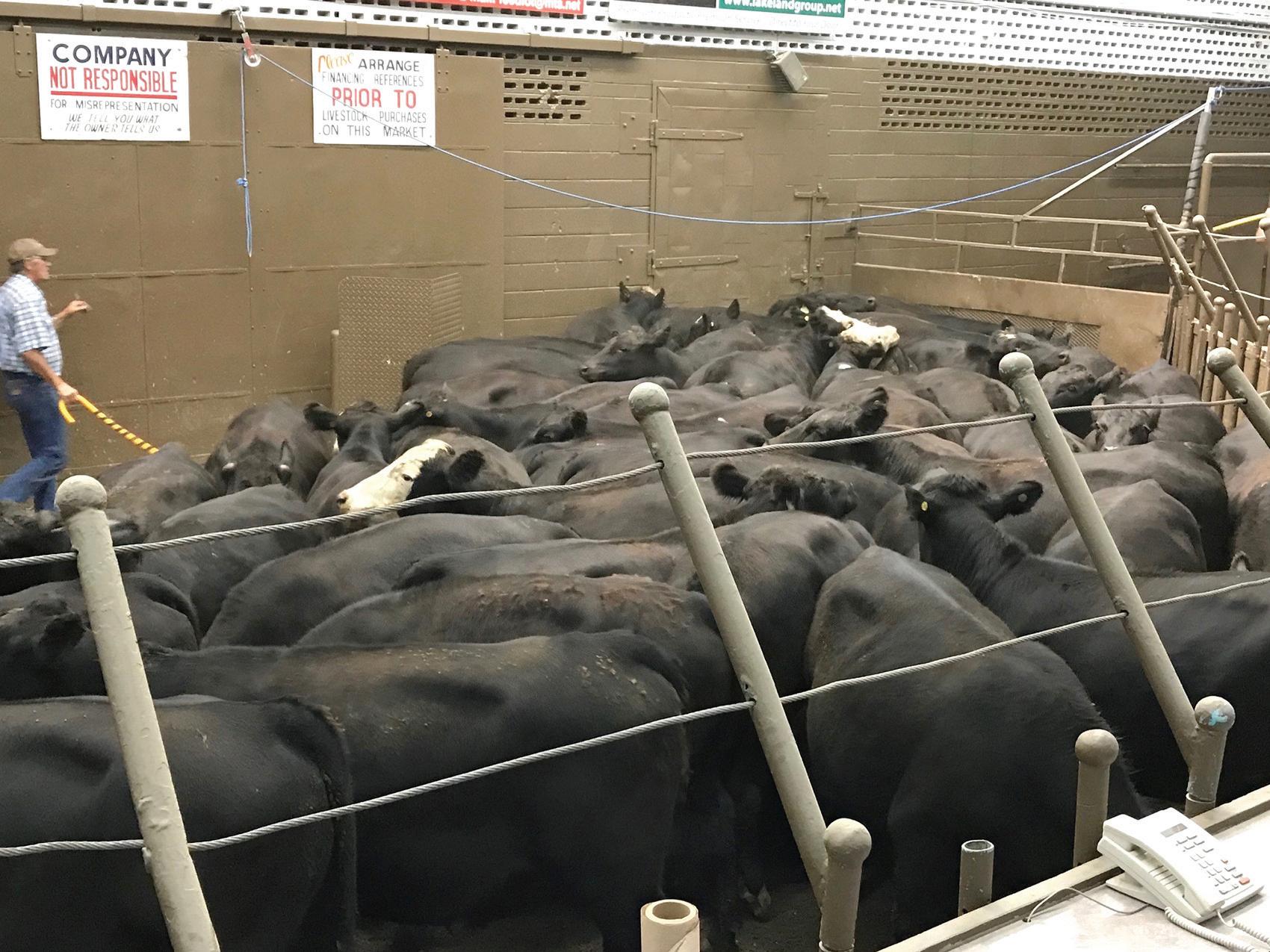
Matthew Atkinson, president of Manitoba Beef Producers, says the end of regular sales at the Brandon auction mart will create noticeable changes for cattle producers across the province, especially during the busy fall calf run. “But a lot of calves from my area in northwest Neepawa, as well as other areas around here, still went to Brandon to market.
Losing that option will make quite a difference.”
By Harry Siemens
Matthew Atkinson, president of Manitoba Beef Producers, says the end of regular sales at the Brandon auction mart will create noticeable changes for cattle producers across the province, especially during the busy fall calf run.
“My understanding is that they still have a couple of field reps covering the area, which is good, and they still run Heartland out of Virden,” Atkinson says. “But a lot of calves from my area in northwest Neepawa, as well as other areas around here, still went to Brandon to market. Losing that option will make quite a difference.”
Producers still have alternatives, but Atkinson says the timing matters.
“There are other choices out there, but during the fall calf run, those places are already busy,” he says. “You need to book well in advance. It’s going to take a little more planning while other markets pick up the extra cattle.”
Manitoba Beef Producers will not take part in deciding where or how producers market their cattle.
“It’s hard for us to get involved in somebody’s marketing decisions,” Atkinson says. “We’ve seen more people using online sales or contracted sales, selling calves ahead of fall. That takes some pressure off the brick-and-mortar auction marts. But there are still a lot of calves that go through those physical markets.”
He points out that selling online often works best for larger lots.
“To sell online, you need a pot load, a semi load at a time, for it to be viable most of the time,” Atkinson says.
For his area, other physical markets remain in reach.
“From here, I have options—St. Rose, Gladstone, and Killarney all cover a big chunk,” he says. “But it’s going to mean more trailers lined up in different places than people are used to.”
The loss of Brandon sales will ripple into the city itself.
“We all know if you drive around Brandon on sale day, there were trucks and trailers in parking lots,” Atkinson says. “People did their shopping, bought farm supplies, and had lunch or dinner in town. That kind of traffic brings money into the city.
Without those sales days, that economic activity will drop.”
Atkinson operates his own cow-calf business.
“I calve later, more of a pasture-calving guy,” he says. “I market some calves in the fall and keep most of them on background until spring, then sell them into the grass-calf market. That takes me out of the big fall rush.”
He runs the farm with his wife and young daughter.
“We’re a few miles from my parents’ operation, and we work together on some things,” Atkinson says. “We share some equipment and help each other put up feed for winter, but the farms are separate.”
Looking ahead, Atkinson welcomes current cattle prices but says the industry needs a boost.
“I’m happy to see prices where they are,” he says. “We needed it. All the equipment, feed, and everything else we buy went up, but cattle hadn’t kept up. Now they have.”
Even so, high prices come with challenges.
“It’s still hard to compete for land, especially with varied climate conditions,” Atkinson says. “I’m in a really dry area right now. That highlights the need for good business risk management tools—better hay and pasture insurance so more people enrol and have coverage in times like this.”
Trade stability also matters.
“Hopefully, we can avoid trade disruptions and uncertainty,” he says. “We need to keep capitalizing on good calf prices.”
Maintaining Canada’s reputation for producing clean, safe grain is critical to keeping both domestic and international markets strong, and a national initiative is reminding producers of the steps needed to prevent costly allergen contamination in cereals.
Keep it Clean, a joint effort of the Canola Council of Canada, Cereals Canada, Pulse Canada and the Prairie Oat Growers Association, recently released updated best practices to help farmers and crop advisors protect wheat, barley and oats from the accidental introduction of allergenic grains.
Allergens such as mustard, soy and buckwheat pose unique risks in key export markets. Even trace amounts of these crops mixed with
cereals can have serious consequences, including severe allergic reactions for consumers, rejected or downgraded shipments, and long-term damage to Canada’s reputation as a reliable supplier.
Many export markets have strict limits on allergenic grain contamination noted the Keep it Clean bulletin adding that just a small amount can result in costly rejections or recalls.
Buckwheat, in particular, is considered highly allergenic and is flagged as a high-risk contaminant in cereal shipments. If detected, it can trigger health warnings and disrupt trade relationships.
Key strategies to reduce allergen risks - To minimize contamination and safeguard cereal shipments, Keep it Clean recommends that farm-
ers and handlers take extra care during harvest, storage and transport:
- Thorough equipment cleaning: Clean combines, grain carts, trucks and storage bins extensively if allergenic crops were previously harvested.
- Segregation: Store allergenic and non-allergenic crops in separate bins, and ensure trucks and rail cars are free of residue before loading cereals.
- Documentation and communication: Keep records of crop rotations, bin usage and cleaning protocols, and share this information with grain buyers when possible.
The organization stresses that these steps are not just about meeting regulations but also about protecting consumer health and Canada’s broader grain industry.
Atkinson says cattle numbers remain low across Manitoba, Canada, and North America.
“That’s one reason prices are strong—demand is high and supply is low,” he says. “But it’s unfortunate to see so many people get out of the industry.”
The low supply also makes it expensive for newcomers.
“It’s profitable now, but expensive to get in,” Atkinson says. “Cows are costly,
whether you’re expanding or starting from scratch. That’s a barrier to entry.”
The decision to stop sales in Brandon carries both practical and sentimental weight.
“I’ve heard from a lot of producers who feel nostalgic about losing what was once a flagship auction mart on the prairies,” Atkinson says. “It couldn’t stay right there in the valley forever. Since they built the Corral Centre, I’ve hated those lights at the bot-
tom of the hill when you’ve got a load of cows and they change on you. It just wasn’t going to last there forever.” Even so, the finality hits hard.
“The day you hear it’s not operating anymore is sad,” Atkinson says. “It was a big marketing centre, always busy. Back in the day, trucking companies dispatched from there. It’s tough to see an institution like that no longer operating.”




The mission included representatives from key Canadian agricultural groups, including Cereals Canada, Soy Canada,
Canada Beef, Pulse Canada, the Canadian Pork Council, and the Canadian Cattle Association. Together,
leaders, and local businesses to discuss market opportunities, regulatory challenges, and cooperation in research,
By Dan Guetre
In early August, Heath MacDonald, Minister of Agriculture and Agri-Food, completed a seven-day trade mission to Indonesia, Singapore, and the Philippines, highlighting Canada’s commitment to expanding agricultural and agri-food exports in the IndoPacific region.
The mission included representatives from key Canadian agricultural groups, including Cereals Canada, Soy Canada, Protein Industries Canada, Canada Beef, Pulse Canada, the Canadian Pork Council, and the Canadian Cattle Association. Together, they met with senior officials, industry leaders, and local businesses to discuss market opportunities, regulatory challenges,
and cooperation in research, innovation, and food safety.
The Indo-Pacific region already imports over a quarter of Canada’s agricultural exports, with potential for significant growth.
“By building on existing partnerships and making new ones, we’re positioning our farmers for success, making Canada the supplier of choice, and strengthening our Canada brand,” Minister MacDonald said.
MacDonald met with Indonesia’s Minister of Agriculture Andi Amran Sulaiman and Deputy for Food and Agriculture Coordination Ms. Widiastuti, ASEAN Secretary-General Dr. Kao Kim Hourn, Singapore’s Minister for Sustainability and Envi-
ronment Grace Fu Hai Yein, and the Philippines’ Secretary of Agriculture Francisco Tiu Laurel Jr.
He also attended the World Food Expo in the Philippines, the country’s largest agrifood trade show, connecting with Canadian exhibitors and facilitating discussions between industry representatives and local buyers.
Dean Dias, CEO of Cereals Canada, described the region as “one of Canada’s most significant and fastestgrowing markets for cereals,” emphasizing the role of the Indo-Pacific Agriculture and Agri-Food Office in supporting exporters.
Brian Innes of Soy Canada added, “With over 70% of our soybeans exported, including
$1.5 billion to the Indo-Pacific each year, face-to-face meetings show that in a world of uncertainty, they can count on Canada.”
Robert Hunter of Protein Industries Canada highlighted demand for sustainable protein, while Eric Bienvenue of Canada Beef noted the mission reinforced opportunities for reliable and predictable market access. Pulse Canada’s Julianne Curran emphasized long-term market diversification, and Canadian Pork Council Chair René Roy praised the Minister’s first ASEAN visit as a chance to strengthen global partnerships.
Tyler Fulton, President of the Canadian Cattle Association, said the mission allowed




Canadian beef producers to showcase high-quality, safe, and sustainable products to new markets. The trade mission also fo-
cused on overcoming market access barriers, diversifying export destinations, and promoting Canadian products as trusted, high-quality options.

By Harry Siemens
A sharp tariff hike from the United States triggers concern for many Canadian sectors, but pork producers remain cautiously optimistic under the protection of the Canada-U.S.-Mexico Agreement (CUSMA).
“While this 35 percent tariff sounds dramatic, it mainly applies to goods not covered under CUSMA,” says Florian Possberg, a partner at Polar Pork. “Roughly 90 percent of what Canada exports to the U.S., including pork, falls under CUSMA protections. But the uncertainty itself—that’s the real challenge.”
The Trump administration announced an increase in the general tariff on Canadian imports from 25 to 35 percent, effective August 1. While the surface rationale cites the U.S. fentanyl crisis, Possberg sees it as political theatre.
“Standing back and looking at it, a large part of what’s going on is all about politics. What they say the game is, isn’t always the real game,” he says. “To legally apply these tariffs, the President
needs a justification. Whether fentanyl plays a real role or not becomes irrelevant—it’s the legal doorway.”
Possberg says producers and regular Canadians lack any control over these moves.
“It’s a little confusing to figure out what the end games are in these negotiations,” he said. “But it creates instability. There’s no question about that.”
Possberg says Polar Pork exports 85 to 90 percent of its hogs to the U.S.
“So, we’re never entirely comfortable with uncertainty. But so far, we’ve escaped any negative consequences,” he said.
Even if pork avoids direct tariff impact, supply-managed commodities such as dairy and poultry remain flashpoints.
“There’s an irritant around supply management,” says Possberg. “Canada treats it as sacred. But if both sides dig in, and the U.S. holds more negotiating cards, it gets tricky.”
Other irritants unrelated to agriculture add complica-
tions.
“Canada’s foreign policy—say on Palestine—might trigger reactions in trade talks. That has nothing to do with pork or grain, yet it still affects the tone of negotiations,” he said.
Possberg wants a future built on clarity, not shifting sand.
“Long-term planning gets hard when everything feels undefined,” he said. “We’re watching it all unfold, but planning under these conditions proves tough.”
Despite the noise, Possberg sees strong U.S. demand for Canadian hogs.
“The Americans we supply value the health and quality of our pigs. They don’t want to lose them,” he says. “Trade exists because it makes sense. When it comes down to it, sound business usually wins.”
The existing business relationship offers encouragement.
“We know we have friends on the U.S. side lobbying for trade to continue. That’s a big comfort,” said Possberg.

Possberg believes that issues disconnected from agriculture must not interfere with longstanding supply chains.
“We hope that nothing external sideswipes these arrangements,” he says.
According to Possberg, Canada’s trade challenges didn’t begin this month. He thinks the tension can be traced back to Trump’s first term.
“Since his election, these trade uncertainties have lingered. Yes, we’ve seen progress with the EU, UK, Japan,
and Korea—but there’s a pattern,” he explains.
U.S. trade deals often result in zero tariffs for American exports, while imports from other nations face duties.
“We don’t want a one-way agreement,” says Possberg.
“Canada needs two-way zerotariff trade like we’ve had.”
Canada’s Prime Minister has already signalled that tariffs might return. Possberg finds that statement troubling.
“If tariffs apply to agriculture, that’s a big hit. A 15
percent tariff on meat, grains, and other key exports undermines competitiveness.”
For Possberg and many Canadian producers, the priority is to protect predictable trade, defend existing agreements, and keep politics from distorting what should be simple economics.
“At the end of the day, the reason we trade is because it works. That’s the logic we have to hold onto,” he says. “And we need our leaders to do the same.”
Despite two recent confirmed case of the Highly Pathogenic Avian Influenza (HPAI) subtype A (H5N1) in May of 2025, the threat of Avian Influenza (AI) or bird flu, as it is commonly called, remains low in Manitoba.
Since 2021, there have been a total of 26 cases of HPAI in Manitoba; all of them subtype H5N1 with the highest number of cases confirmed in both domestic and wild birds in 2022 at a whopping 21 cases. Since then, the numbers have remained low with two in 2023, one case in 2024 and the two confirmed in 2025.
According to the CFIA website, “Avian influenza (AI) is a contagious viral infection that can affect several species of poultry, such as chicken and turkey, as well as pet and wild birds. AI viruses can be classified into two categories-low pathogenic (LPAI) and high pathogenic (HPAI)-based on the severity of the illness caused in poultry. HPAI viruses typically cause severe illness and mortality, whereas LPAI viruses typically cause little or no clinical signs. Most AI viruses are low pathogenic; however, some subtypes are capable of becoming highly pathogenic. Historically, only the H5 and H7 LPAI virus subtypes are known to have the ability to become highly pathogenic and they are considered notifiable.”
The HPAI Type A virus is a strain of avian influenza thought to have originated in Asia in the late 1990s and in due course, has naturally migrated to North America.
“Scientific evidence indicates that the avian influenza virus circulates naturally in wild birds and waterfowl, and spreads through migratory
birds,” said Cortnie Fotheringham, Western Area Manager of Emergency Management with the Canadian Food Inspection Agency (CFIA).
The disease, like many other viruses, is spread through direct contact with infected birds through secretions and feces or indirect contact with equipment, human movement, contaminated feed or water. That is why stringent biosecurity practices are essential for poultry producers to prevent the disease.
The CFIA, as well as three other government agencies have been monitoring the situation since 2021 through wild bird surveillance on live and dead birds, and commercial production monitoring.
“In 2025, there have been 23 cases of HPAI detected in Canada so far,” reported Fotheringham. “To date, the predominant subtype detected in both domestic and wild birds has been H5N1. On November 8, 2024, we confirmed two cases of the H5N2 subtype in poultry in BC, representing the first detection of this subtype in Canada. On February 12, 2025, the H5N5 subtype was detected in poultry in Newfoundland and Labrador.”
This was not unexpected by the CFIA as they explained that viruses naturally evolve over time.
While the disease primarily affects the bird population, it can also infect other species – particularly predatory animals.
“In Canada, avian influenza has been sporadically detected in mammals such as raccoons, striped skunks, red foxes, cats and dogs,” said Fotheringham. “While most cases in mammals involve direct con-
tact with infected birds, exposure to heavily contaminated environments could also potentially lead to infection.”
Avian influenza can also infect humans, although rare. Illness can range from mild to severe and typical flu symptoms usually show up one to five days after exposure. A nasal or throat swab and lab tests are used to diagnose Type A influenza.
The US detected HPAI in dairy cattle in the spring of 2024 but it has not been detected in Canadian dairy herds.
HPAI is not a food safety concern in Canada.
So why the big concern about avian influenza? If other species of mammals, including humans can contract the disease, but it is not necessarily fatal, why the concern?
According to the Public Health Agency of Canada, “A major global human health concern is that outbreaks, particularly in domestic poultry flocks and other high-density populations of animals (e.g., farmed or wild mammals, including livestock), present an opportunity for ongoing genetic mutation or viral reassortment. Simultaneous co-infection with human influenza and AI viruses in an intermediary host (such as a human or pig) may provide an opportunity for an exchange of genes, with one possible outcome being the development of a new influenza virus subtype with pandemic potential (i.e., a novel strain of influenza with the capacity to infect humans and readily transmit from one human to another).”
In layman’s terms, it could lead to another pandemic. And we all know what happened the last time.
Nearly 30 national agriculture and agri-food organizations have written to Prime Minister Mark Carney calling for agriculture to be placed at the centre of the federal government’s economic agenda, warning that without stronger investment and leadership, Canada risks falling behind global competitors.
In the open letter, the groups welcomed the government’s stated focus on strengthening productivity, easing regulatory burdens, and building trade and infrastructure. But they cautioned that agriculture has too often been overlooked in national policy, despite its scale and potential.
The organizations noted that Canada’s agricultural research and development spending has declined sharply in the past decade—from $860 million in 2013 to $680 million in 2022—leaving Canada last among the top seven OECD countries. Meanwhile, Canada’s global market share in agriculture has dropped 12 per cent since 2000, even as competitors such as Brazil and Australia have expanded.
“Our enthusiasm is tempered by ongoing concern that agriculture has too often been overlooked in national policy and investment decisions,” the letter states. “Without a clear
shift in approach, Canada risks falling permanently behind in a sector critical to domestic and export growth, food security, and economic resilience.”
The agriculture and agrifood sector contributes nearly $150 billion annually to Canada’s GDP and employs 2.3 million people—more than the automotive, forestry, steel and aluminium, and oil and gas sectors combined. It is also the largest manufacturing sector in the country.
Despite this, the groups warn that Canada’s average annual productivity growth has slowed from 2.2 per cent in the early 2000s and is projected
Canada’s Minister of Agriculture and Agri-Food, Heath MacDonald, has released the initial list of regions eligible for the federal Livestock Tax Deferral in 2025.
The program allows livestock producers in designated areas—where drought, excess moisture, or flooding has forced them to sell all or part of their breeding herd—to defer a portion of that income until the following tax year. The provision is intended to ease tax burdens by enabling producers to offset the income from forced sales with the cost of restocking animals later.
“As we continue to see the very real—and challenging— effects of climate change, Canada’s new government is committed to supporting our livestock producers,” said MacDonald in announcing the list. “By offering a tax deferral option to those in affected areas, we are helping folks manage uncertainty,
make informed business decisions, and safeguard their livelihoods.”
This year’s list includes buffer zones designed to capture producers located just outside the official boundaries of affected regions who are experiencing similar conditions.
Federal officials noted that weather, climate, and production data from across the country will continue to be monitored throughout the remainder of the season. Additional regions will be added if they meet the program’s criteria.
To qualify for the deferral, producers must have reduced their breeding herd by at least 15 per cent. In areas experiencing consecutive years of drought or flooding, income from livestock sales may be deferred to the first year the region is no longer prescribed.
Eligibility is based on forage shortfalls of 50 per cent or more caused by drought,
excess moisture, or flooding.
The Livestock Tax Deferral has been in place for decades as a tool to help producers deal with natural disasters that reduce available forage for their animals. By deferring income into a year when herd rebuilding is possible, the provision is intended to help stabilize farm operations that might otherwise face sharp tax burdens in crisis years.
“Livestock producers are vital to Canada’s food system and rural economies,” MacDonald said. “This measure, alongside our suite of risk management programs, helps them plan ahead and remain resilient in the face of increasingly unpredictable conditions.”
The initial list of prescribed regions for 2025 is now available through Agriculture and Agri-Food Canada. Additional regions may be designated later in the season as monitoring continues.
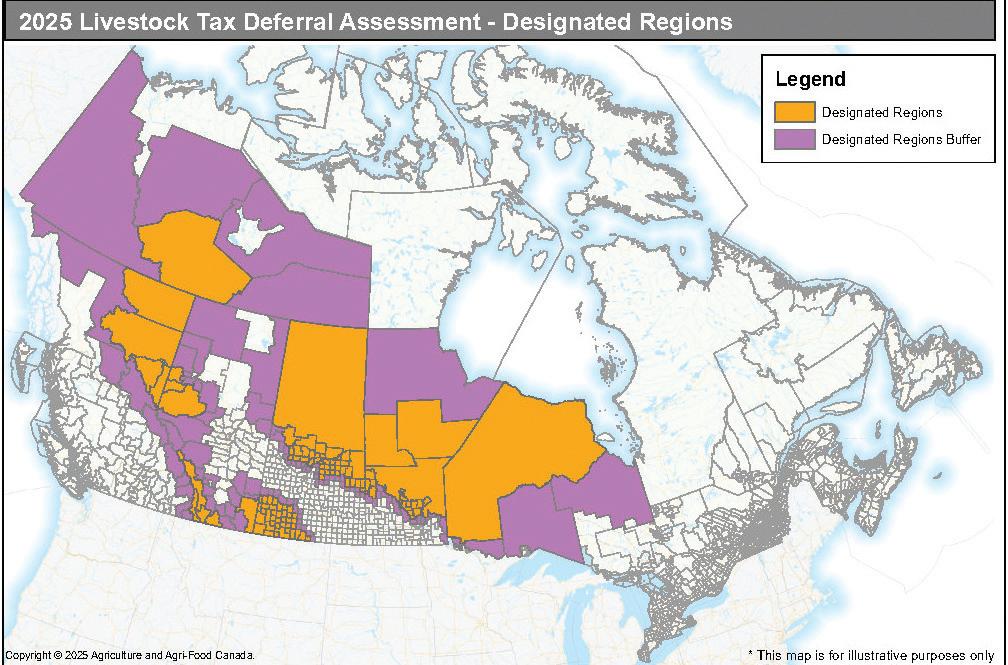
to drop to just 1 per cent by 2030. They argue that with the right policies and investments, the sector could generate an additional $100 billion in GDP growth over the next decade, reaching $250 billion by 2035.
The coalition urged the government to take immediate action in four areas:
1. Develop a national growth plan for agriculture and food security – including Indigenous agriculture, with clear targets for production, innovation, processing, exports, and labour supply.
2. Align regulations with competitiveness goals – by reducing regulatory burdens and ensuring Canada is an attractive destination for investment and agritech innovation.
3. Invest in transportation and trade infrastructure –including ports, rail, rural infrastructure, and coldchain systems, to ensure reliable access to markets at home and abroad.
4. Modernize risk management tools – making them more responsive to current climate and market realities, and capable of mitigating disruptions from
trade and weather-related events.
The letter emphasized that other countries are making bold investments in agri-tech, food processing, and export readiness, while Canada risks being left behind.
“The countries that feed the world will increasingly shape it,” the organizations wrote. “Canada, with the capacity to feed both itself and others sustainably, has every reason, and every asset, to be among them.”
The groups said they are ready to work with the government to advance agriculture as a strategic driver of economic growth, sustainability, and national resilience.
“We urge you to make agriculture a defining priority of your government’s economic and nationbuilding agenda,” the letter concludes.
Signatories to the Letter
- Canada Grains Council
- Canadian Aquaculture Industry Alliance
- Canadian Canola Growers Association
- Canadian Cattle Association
- Canadian Federation of Agriculture
- Canadian Hatching Egg Producers
- Canadian Meat Council
- Canadian Ornamental Horticulture Alliance
- Canadian Seed Growers Association
- Cereals Canada
- Canadian Pork Council
- Canadian Produce Marketing Association
- Canadian Sugar Beet Producers Association
- Canola Council of Canada
- Chicken Farmers of Canada
- CropLife Canada
- Dairy Farmers of Canada
- Egg Farmers of Canada
- Equestrian Canada
- F.A.R.M.S. (Forage Agricultural Resource Management Services)
- Fertilizer Canada
- Food and Beverage Canada
- Food, Health & Consumer Products of Canada
- Fruit & Vegetable Growers of Canada
- Grain Growers of Canada
- National Cattle Feeders Association
- Soy Canada
- NCIAF (National Circle for Indigenous Agriculture and Food)
- National Sheep Network
- Turkey Farmers of Canada

By Dan Guetre
The Do More Agriculture Foundation (Do More Ag) has announced the renewal of “AgTalk”, Canada’s dedicated online space for mental health support within the agriculture sector.
Launched in 2023, AgTalk operates as a specialty agricultural community within the Togetherall platform, providing a safe, anonymous, peer-to-peer space for farmers and others in agriculture to share experiences and access support. Backed by 24/7 clinical moderation, the platform has already seen more than 10,000 interactions since its inception.
The initiative is once again being supported by BASF Agricultural Solutions Canada Inc., RBC Foundation, and The McCain Foundation.
“The renewal of AgTalk marks a powerful step forward in creating accessible mental health supports in agriculture,” said Sartaj Sarkaria, Chair of Do More Ag. “We know that mental health can be hard to talk about, especially in rural and agricultural communities. That’s why we’re committed to supporting AgTalk—because connection saves lives.”
Statistics provided by Do More Ag highlight the platform’s impact: more than 60 per cent of AgTalk users are not receiving any other form of mental health support, and one in three reported having considered suicide. The most common concerns raised by users include stress, depression, anxiety, loneliness, and relationships.
Corporate and charitable partners say the renewal reflects the urgent need for resources tailored to the agricultural sector.
“At RBC, we recognize that the well-being of our agricultural producers is just as important as the work they do to feed our country,” said Lorna McKercher, National Director of Agriculture at RBC. “Mental health challenges can be isolating, especially in rural and remote areas where in-person services may be limited.”
“In agriculture, where long hours, unpredictable conditions and high stakes are part of daily life, talking about mental health can be difficult,” added Leta LaRush, Vice President at BASF Agricultural Solutions Canada Inc. “AgTalk is helping reshape how mental health is approached in our industry by creating space for real connection.”
Ann Evans, Chairperson of The McCain Foundation, said her organization is proud to continue its involvement. “We recognize that mental health is a serious concern in this sector and more support is needed. AgTalk is an innovative and impactful resource for farmers and agricultural workers across Canada.”
Togetherall CEO Matthew McEvoy also welcomed the renewed partnership.
“Easy, anonymous access helps members take that next step on their mental health journey and join a community of folks that can connect and relate to some of the challenges being faced,” he said. Togetherall recently expanded its trained peers program, which includes AgTalk, offering additional guided support within the community.
For Do More Ag, the renewal underscores the foundation’s mission of normalizing mental health conversations in agriculture.
“We understand that mental health journeys are deeply personal, and everyone moves at their own pace,” said Merle Massie, Executive Director of Do More Ag. “AgTalk is like the farmer coffee row within the Togetherall community, backed by trained clinicians. Anyone involved in agriculture is welcome. You don’t have to be in crisis to find AgTalk useful and powerful.”
Massie added that clinicians on the platform have helped users through difficult challenges. “It’s not a stretch to say that AgTalk saves lives.”

By Harry Siemens
Manitoba Agriculture reports fall harvest at four percent complete across the province, a cautious start as frequent showers recharge topsoil and slow fieldwork. The weekly crop report, notes strong early momentum in the Central, Eastern, and Interlake regions while the Southwest and Northwest wait for fields to firm up.
“We are seeing harvest progressing throughout the entire region,” says Ann Kirk, Cereal Crop Specialist with Manitoba Agriculture. “We did see a big push in the central, eastern and Interlake regions throughout the last week. In those regions, we are seeing that the winter cereal harvest is nearing completion.”
Kirk tracks uneven progress where rain lingers.
“In the southwest and northwest, we’re sitting at about 25 to 30 percent harvest completion in those regions,” she says. “For spring wheat, we see about 10 percent of the spring wheat crop off in the central and Interlake regions. The eastern, southwest and northwest range from one to five percent.”
Crews keep rolling on multiple crops.
“We’re also seeing some farmers harvesting barley and oats in the central, eastern
winter cereals are complete.”
Rainfall varies widely and drives the pace.
“We did have rainfall accumulations ranging from four millimetres to 107 millimetres, so a fairly wide range across the province,” Kirk says. “Recent rains have improved soil moisture conditions in the northwest, southwest and southern portions of the Interlake. Some areas of the Interlake and eastern region are still dry to very dry. Still, we are seeing optimal to wet conditions fairly prevalent in the northwest, southwest and central regions.”
Kirk stresses that moisture helps later crops even as it stalls combines.
“That rainfall will, depending on how much each region received, determine how long our harvest delays are,” she says. “If good weather continues, I’d expect people to be back in the field fairly quickly.”
Early yield indications offer a first look at crop performance across soil types and moisture zones.
“For winter wheat we’re seeing about 40 to 60 bushels per acre in drier areas and 60 to 90 in areas that received more moisture,” Kirk says. “For fall rye, it depends a lot on whether people are growing open-pollinated or hybrid
Spring cereals show promise where moisture held up during filling.
“For spring wheat, we’re seeing early yield estimates ranging from 45 to 75 bushels per acre, depending a lot on moisture conditions,” she says. “For canola, we are seeing just a small amount harvested, but preliminary yields range from 45 to 55. For peas, we’re looking at about 60 bushels per acre.”
Kirk expects a sharp uptick in activity once the surfaces dry.
“If we don’t get a lot of moisture in the next few days, we’ll have a big push for harvest as soon as field conditions allow entry,” she says. “I would expect quite a bit of harvest, but that’s weather dependent.”
Crop protection issues remain manageable so far.
“For the spring cereals, FHB seems fairly low throughout the province,” Kirk says. “It’s tough to know how the disease will impact a crop until we see more results, but FHB doesn’t look like a big factor. We will see effects from dry pockets, hail through the season, and some lodging from wind and rain events.”
Across the border, Saskatchewan producers weigh similar trade-offs after widespread rain through August 5–11.
“There’s been widespread
riculture. “The northeast part of the province got the most rain; the west and south areas have gotten scattered rainfall. Some areas got pretty significant rainfall, and others didn’t get any at all, so it’s been a mixed bag.”
Masich says later-seeded crops welcome the moisture.
“The rainfall is definitely going to help the later-seeded crops as they continue to develop pods and fill,” he says. “It’s probably too late for the early seeded crops to really benefit much from the moisture last week.”
Harvest there pauses as fields shed water.
“There wasn’t much harvest progress this last week,” Masich says. “Most of the crops harvested right now are winter cereal crops and some early seeded pulse and spring wheat crops as well. With all the rain in the southwest and the rest of the province, they’ve gotten a lot of moisture, which slowed harvest progress this past week.”
Both provinces now look for a warm, drying window. Producers have machines serviced, grain bags staged, and short hauls planned to keep combines moving as soon as ground conditions firm. Kirk sums up the outlook for Manitoba: watch the forecast and stand ready.
“If we keep the showers away and get heat and wind, the doors open for a big push,” she says. “Producers are ready. Field conditions
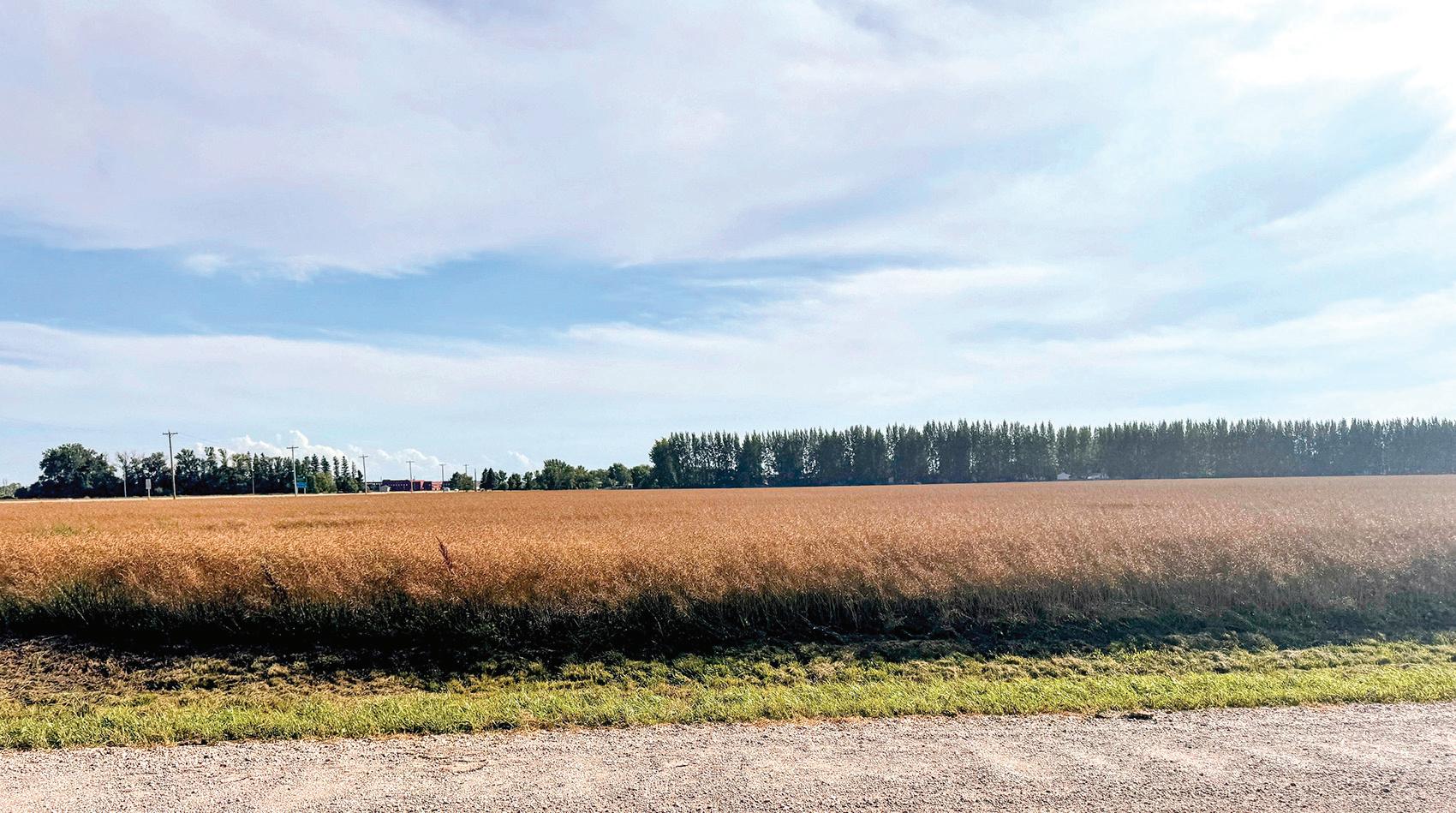
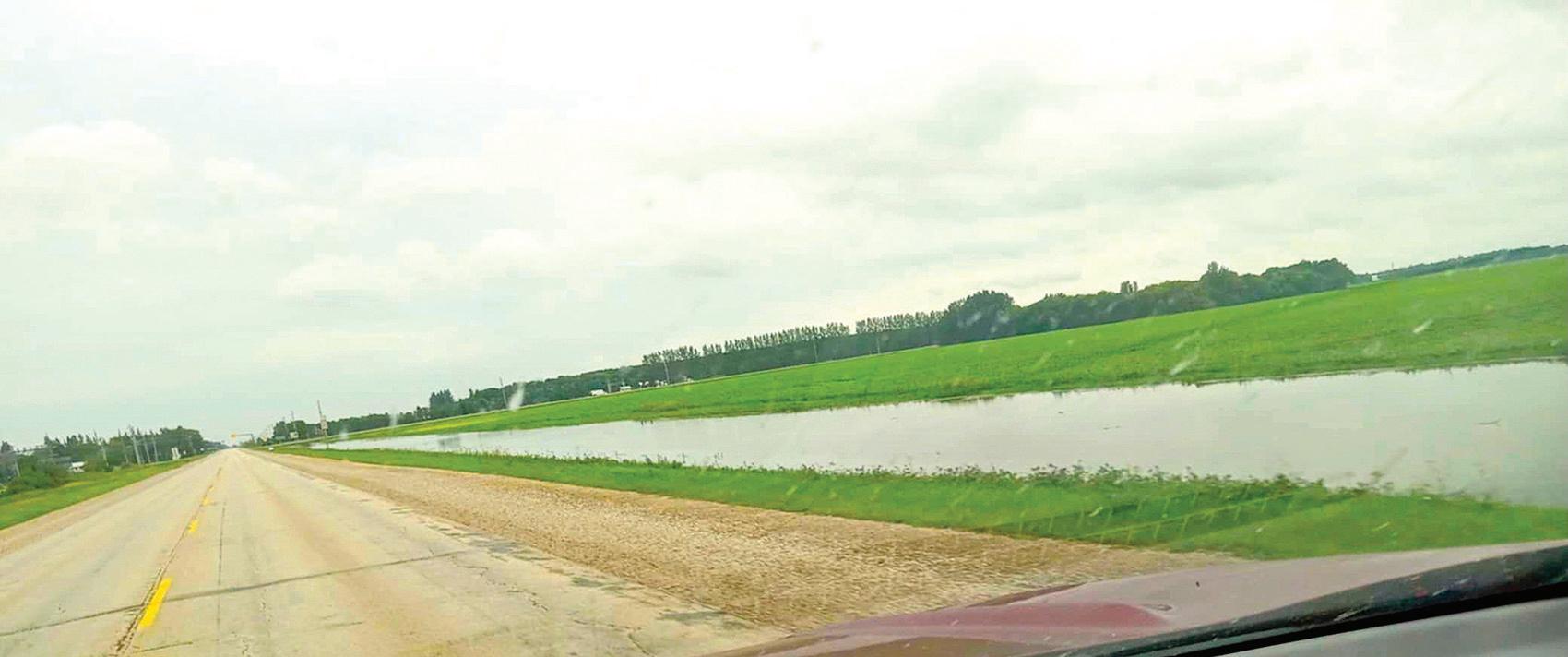
It always amazes me after decades as a dairy nutritionist that come fall, the corn harvesters are out and cutting down thousands of acres of corn. Next their loads are dumped at the silage pits to be packed down and covered for a good month of active fermentation.
Some of this chopped corn is exceedingly wet and green as “grass” while other tonnes come from brown fields of dried-out parchment. Although other tonnes are still green, it is drier than it looks. Nevertheless, I recommend that each producer do moisture tests on corn forage samples going into the pit and afterwards on ensiled samples. Such pertinent information will have a great bearing on the corn silage’s nutrition, once it is fed to high producing dairy cows.
The ideal moisture to harvest cornfields for high-quality silage is 65-70% (30 – 35% dry matter basis). It drives good fermentation, which is largely sight-unseen, but goes on something like this: for the next 3 days, tonnes of this wet corn bio-mass undergo aerobic respiration, where water, carbon dioxide and heat are produced until all free-oxygen is used up.
Then for the next 24 – 72 hours, heat-tolerant organisms start-off the anaerobic fermentation of the forage carbohydrates, where acetic and lactic acids and alcohols are produced. It is finally taken over by large populations of lactobacillus bacteria, and during the next 21 days – many litres of lactic acids are produced, which drops pH of the rendering bio-mass to below 4.0. Finally, this raw
cornfield forage is turned into well-preserved golden corn silage.
Most people that put up corn silage every fall have the common goal of harvesting cornfield at 65- 70% moisture levels, but there are many factors, which often derail even the best intentions. Over the years, I have examined several corn silage bunker-style pits when they were opened and its corn silage coming out was often less than perfect.
Here are some of my experiences:
- Drought corn silage – Many nutrient-analysis of drought corn silage usually shows a similar fibre and protein nutrient profile to good corn grown under ideal rainfall conditions. However, dietary energy/starch content is usually lower due to inadequate cob development. Plus, drought corn silage has surprisingly higher-than-expected moisture content due to water still locked in its stalks and ears. Poisonous nitrate levels are common and should be tested.
- Dry corn silage - Ensiling the corn crop at less than 60% moisture is not a good thing. Instead of most air being excluded for optimum anaerobic fermentation conditions; moulds and other microorganisms thrive in this environment of low oxygen and limited moisture. Note - a few years ago, I visited a dairy producer that ensiles corn silage at about 55% moisture in a bunker silo. Upon opening it up, he was shocked to discover a bright red line of mould running about a foot wide and outlined in blue across the silage face.
- Immature wet silage – Har-
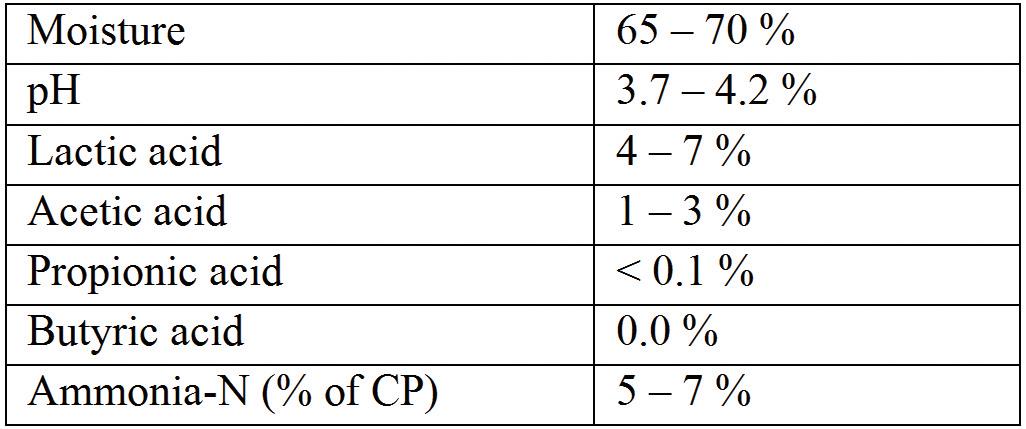
By Elmer Heinrichs
Manitoba offers a variety of farmers’ markets, showcasing local produce, crafts, and more.
Farmers markets flourish throughout the province with many in rural areas, and no matter where you are in the

vesting corn silage at moistures above 70% yields not only less dry matter content, but results in seepage of essential soluble proteins and energy-enriched starch and sugars. Clostridia bacteria fermenters convert forage starches, sugars and organic acids into butyric acid as well as dietary protein into ammonia. High levels of butyric acid give this silage a rancid peanut-butter smell. Once, I was going to take a handful of poor corn silage, and glad that I didn’t do it, because it was a rotten and weeping mess (see photo).
No matter on how any corn silage turns out and is ready to be fed to lactating dairy cows; it is very important to take corn silage samples and send them away for a laboratory forage analysis. I recommend: moisture, crude-protein, soluble-protein, ADIN, NDF, ADF, NFC, and starch tests. From these analytical results, we can re-balance any type corn silage into new lactation diets.
Case-in-point: A dairy producer that I work with - milks about 350-dairy cows, and seems to have all the luck in the world making excellent corn silage. Every year, he puts up - thousands of tonnes of corn silage that has an ideal moisture content going into the bunk and coming out. And every year, I take a handful of sweet-smelling golden corn silage that will support high levels of high milk and milkfat produced from his dairy cows.
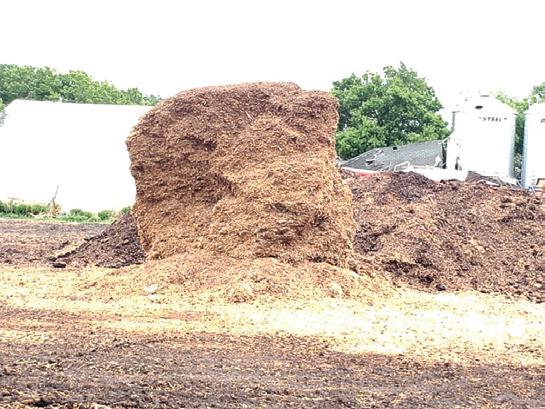
photos Peter Vitti
By Elmer Heinrichs
Canadian-grown wheat, canola and peas have some of the lowest carbon footprints in the world—so low that, in some cases, they could be shipped to Europe 17 times before matching the emissions of the same crops grown there.
The study out of University of British Columbia Okanagan Campus (UBCO) in Kelowna, BC compared the carbon footprints of these crops from Canada, France, Germany, Australia and the United States. Led by Dr. Nicole Bamber of UBCO’s , the research shows that Canada’s lower emissions are mainly due to Canadian soils storing more carbon and farming releasing less nitrous oxide. This is largely thanks to widespread low and no-till farming practices and the climate of Western Canada.
“The idea that ‘local is always lower-carbon’ doesn’t hold true,” says Bamber, the paper’s lead author. “In fact, for many food products, transportation only accounts for a small part of the emissions.
“When you look at the full lifecycle of crop production, Canada’s Prairie-grown wheat, canola and peas consistently outperform their international counterparts, even when you factor in shipping thousands of kilometres to market.”
Dr. Bamber and Dr. Ian Turner, post-doctoral research fellows, worked alongside Associate Professor Dr. Nathan Pelletier in his Food Systems Priority Research for Integrated Sustainability Management Lab (PRISM).
Canada’s low emissions come mainly from reduced nitrous oxide release and the ability of prairie soils to store carbon. This is thanks to decades of conservation tillage and careful farming practices that help soils act as carbon sinks rather than sources.
In other countries, soils often lose carbon because of heavier farming methods as well as less favourable soil and climate conditions.
Canada’s production advantages aren’t accidental,” says Dr. Pelletier. “They come from deliberate farming choices, supportive policies and environmental conditions.”
The research assessed full lifecycle greenhouse gas emissions from crop production to the farm gate, including fertilizer production, field activities, field-level nitrous oxide emissions and soil carbon changes.
The study questions common beliefs about “food miles” and suggests that buying and marketing decisions should consider more than just distance. The authors say the data can help focus efforts to cut emissions and show how Canadian crops can support global climate goals.
“This gives Canada a competitive edge for Canadian agriculture in global markets that are increasingly sensitive to sustainability,” says Dr. Pelletier.
city, there’s a market nearby where you can shop and support local vendors.
One such market, is the South Osborne Farmers’ Market, a project of Fireweed Food Co-op, runs every Wednesday, 4 pm to 8 pm, from mid June to early October and offers a wide variety of locally raised meats, spray-free organic vegetables from our farmer members, plus dozens of vendors selling local honey,
sourdough bread, baked goods, preserves, handicrafts and much more.
It runs as a weekly outdoor market in the rink featuring 40-plus food and craft vendors, food trucks, children’s activities, live music, local beer and more.
In addition to the organization’s summer markets they also have two indoor events with a holiday market and a Mothers’ Day event and plant sale.

By Elmer Heinrichs
Manitoba potato growers have officially started harvesting this year’s crop, with early reports indicating healthy yields across the province.
Susan Ainsworth, general manager of the Keystone Potato Producers Association, says conditions have been favourable for farmers.
“It’s been a really good season. We had good temperatures and moisture to get the crop off to a good start,” Ainsworth notes. “The quicker we can get that crop established, the better the yields, and that’s why the crop looks really good.”
Harvest started earlier this week, slightly later than usual, by about five days to a week. Ainsworth adds that timing is influenced by last year’s larger crop, which caused a bit of carryover. This year, Manitoba farmers planted roughly 74,200 acres of potatoes, down about 5,800 acres from 2024. Of these, approximately 54,000 acres are dedicated to processing potatoes, used for frozen products and chipping.
“That reduction is largely due to provincial cuts in processing,” Ainsworth says. “Roughly on a provincial basis, we’re down 11 per cent in volume.”
Processing crops are grown across the province but are more concentrated in the west. Fresh table potatoes are more common in the east, though pockets of production exist throughout Manitoba, including in Portage, McGregor, Baggett and Austin. While some regions faced drier-than-normal conditions, most of the process potato fields are fully irrigated, which has helped maintain crop health.
“All of the process crop is fully irrigated,” Ainsworth continues. “It was one of the drier years that we’ve had on record in certain regions.”
She adds that recent rainfall across parts of the province has further supported the crop.
“In other places, towards more of the eastern side of the province and Winkler, they did have more rain, especially earlier on. I don’t think the crop has suffered as a result. I think the guys have been able to adjust.”
Ainsworth remarks that growers have not faced unusual pest or disease problems this season. Late blight, a common concern for potato farmers, has not been reported anywhere in the province this year. Earlier in the year, some growers faced challenges with processing contracts, particularly with companies like McCain and Simplot. Ainsworth notes the situation has been addressed, though it contributed to the reduction in planted acreage.
Harvesting continues, with McCain already working on new crop potatoes and Simplot expected to begin shortly. Despite a few challenges, Manitoba’s potato crop is shaping up well for 2025. Farmers are optimistic as the harvest progresses, with healthy plants and good weather conditions supporting what could be an above-average yield year.

By Harry Siemens
Closing the Loop: Circular Economy in Crop Production offers a timely and essential perspective on sustainability in agriculture. As General Manager of the Keystone Potato Producers Association and with nearly 30 years in Manitoba’s potato sector, Susan Ainsworth brings insights into practical strategies for reducing waste, reusing resources, and building a circular, climate-smart future.
Her background across retail, government, education, and on-farm operations informs her leadership today— and points to how Manitoba’s potato industry can continue leading in sustainable production.
Ainsworth describes her path as one that evolved naturally. Beginning as an agronomist in 2011, she saw firsthand the challenges of producing potatoes at scale. Later, while completing her MBA in sustainability at Cape Breton University, she explored how regenerative agriculture could function across sectors. That research planted the seed for her current push: moving beyond silos and toward shared solutions.
Global processors like McCain have introduced regenerative agriculture frameworks, including integrating livestock into crop rotations. While promising, those ideas are harder to apply in Manitoba, where most potato farms cannot add cattle, and slaughter capacity is limited.
Still, opportunities exist. In other regions, custom grazers bring cattle to cover crops or green manures, managing everything from fencing to feeding. Similar systems could help Manitoba growers improve soil health and reduce input costs.
“What we need are partnerships that allow each sector to contribute its strengths,” Ainsworth says. “The point is to design systems where one industry’s byproduct or challenge becomes another’s opportunity.”
Some Manitoba growers already practice forms of the circular economy. Culled potatoes often go to feedlots, a step up from disposal, but still not a full cycle. A more complete model links multiple industries together.
For instance, True North Foods, Manitoba’s only slaughter facility, lacks a land base to expand. Meanwhile, potato growers could produce
feed for cattle, while processors return manure or organic material for fields.
This concept is already happening in smaller ways. Some potato growers plant multispecies mixes, harvest them for silage, and trade with cattle producers for manure. The manure is composted and applied back onto potato fields, creating a loop where both sides benefit.

“That’s what circularity looks like,” she explains. “It’s proactive, not reactive. It’s about creating cycles that benefit everyone in the chain.”
While sustainability dominates the conversation, economics still drives decisions.
Recent tariff threats highlighted how vulnerable potato growers are to outside forces. Potatoes grown for processing have one outlet: processors. If crops fail to meet quality standards, they often go to cattle feed. Heavy reliance on a single outlet leaves growers exposed.
“If potatoes only have one market, growers are too vulnerable. Collaboration can reduce that,” Ainsworth notes.
Many confuse supply chains with circular economies. A supply chain is linear: inputs go in, products come out, and waste management only occurs at the end. A circular economy reintroduces resources into the system, creating shared value.
Ainsworth’s MBA research found few examples of fully integrated circular economies in agriculture, yet she believes the opportunities are significant.
“It’s not about reinventing farming,” said Ainsworth. “It’s about looking at what we already do and finding ways to connect the dots across sectors.”
Still, sustainability cannot succeed without profitability.
Farmers run businesses, and if a practice doesn’t make financial sense, it won’t be adopted. She points out that the food system conditions consumers to expect artificially cheap food. The actual costs of production—water, soil health, ecological services— rarely appear in the price.
Processors pay farmers based on yield and quality, not stewardship.
“That disconnect puts pressure on growers. If we want sustainable practices, the incentives must align so farmers get rewards for adopting them,” she argues.
Barriers remain. Farms differ widely, and what works in one region may not fit another. On rented land, sustainability is harder because growers lack long-term control.
Succession adds tension, as younger farmers may want to try new methods while older ones prefer tradition. Social and generational dynamics matter as much as economics. Many growers already view themselves as sustainable— correctly so, since survival in farming requires constant adaptation.
Ainsworth stresses that recognition must go hand-inhand with encouraging innovation.
“There’s no one-size-fitsall answer. What works for one farm may not work for another just 10 miles away,” said Ainsworth. “That’s why flexibility and collaboration are key.”
Despite the hurdles, she sees Manitoba’s potato industry poised to lead. By linking sectors—potato land supporting feed crops, livestock manure enriching potato soils—producers can close the loop in practical ways. Collaboration reduces waste, builds resilience, and strengthens the food system.
“Manitoba agriculture has strengths across many sectors. If we connect them strategically, we can build a climate-smart future that supports growers, consumers, and the land itself,” said Ainsworth.
The vision is simple but powerful: every byproduct becomes a resource, industries collaborate instead of compete, and profitability aligns with sustainability. Closing the loop isn’t just a concept—it’s a path forward for potato producers and agriculture as a whole.
By Joan Airey
I hope everyone that needed rain received some on Monday. My husband had been hauling water for our garden but finally the first real rain since June 1st at our farm.
Yesterday I decided to try the potato plant I had growing on the deck to see if there were enough potatoes for supper. What a nice surprise! The potatoes were big enough so I used two for baked potatoes for supper from the gallon pail of potatoes I found in the planter. I’d planted a potato left from last year’s crop that was not suitable to eat and ended up with a pail of usable potatoes. It shows with good soil and regular watering it was a fruitful endeavour. I had used Pro-mix soil in the planter I bought at our local Home Hardware.
Vintage Farmhouse Garden by Rhonda Kaiser, a newly published book, arrived a couple of days ago and it’s full of gardening info and gorgeous photos. Here’s some tips from the book and there are hundreds more in it.
Have you ever noticed that plants look healthier and more vibrant after a rain shower? There’s a reason for that! Rainwater contains nitrate, a natural form of

Cleanfarms is marking its 15th year with strong progress in recovering agricul-
nitrogen that plants absorb through their roots and leaves to support green growth. So, the next time rain is on the way, consider moving your indoor potted plants outside to give them a healthy dose of nitrate.
During the growing season, vegetables require a minimum one inch of water per week and even more during warmer months.
Never compost diseased plants! They can reinfect your garden! Most home compost piles don’t reach a temperature high enough to kill diseases.
Have you ever wondered what the numbers on a fertilizer package mean? In short, they represent the percentage of essential plant macronutrients nitrogen, phosphorus, and Potassium (N, P, K) within that fertilizer. These numbers are always listed in the same order nitrogen, phosphorus, and potassium. Nitrogen promotes healthy, green leaves, phosphorus aids in root development, flower and fruit growth, and potassium helps plants stay healthy and resist disease, and it encourages fast growth.
Did you know hummingbirds can consume more than twice their body weight in one day?
Different species of pollinators are attracted to specific colours. While many bee species are attracted to flowers with a cool tone, hummingbirds and butterflies are more heavily drawn to colours within a warm palette.
Did you know monarch butterflies’ taste with their feet and smell with their antennae, both processes that help them identify their host plants prior to egg laying?
To harvest your seeds, cover seed heads with cheesecloth before they brown. Let the pods dry, then cut the stems evenly and hang them in bundles upside down. The seeds will drop into the cheesecloth, making it easy to collect then bag and label them for next season. Never store seeds in plastic until they are completely dry because they might mould and rot. Envelopes are also good for storage, and you can buy small seed storage envelopes online or at a garden center. This book is full of gorgeous decorating ideas and helpful garden info.
For readers who like to preserve their own pickles and fruit I was able to order 78 cm lids from our local Home Hardware. With a couple of hundred jars that size, I really don’t want to buy new jars.
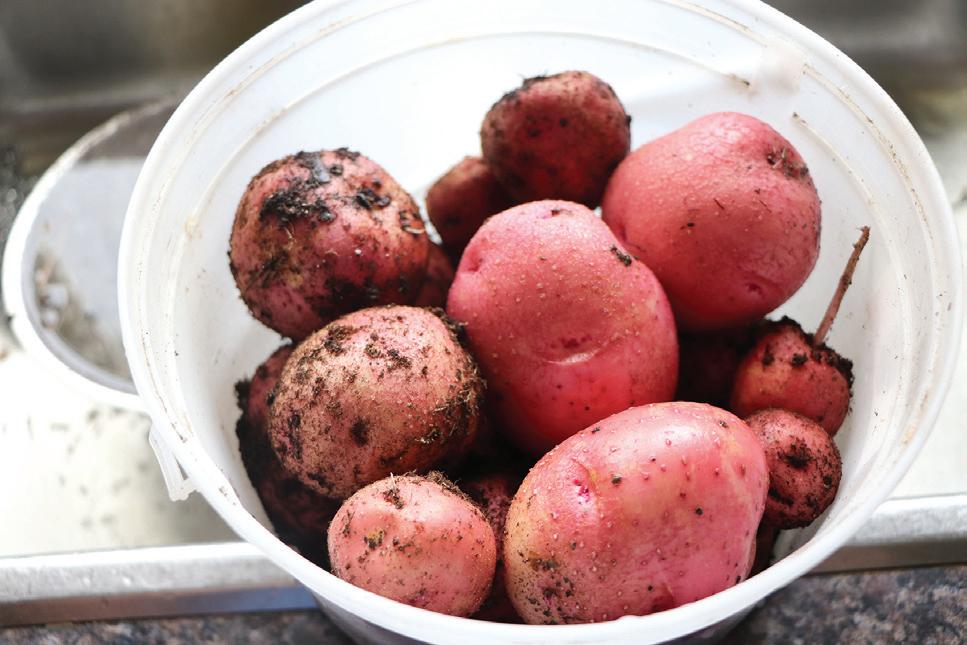
By Dan Guetre
The National Farmers Union (NFU) is urging Ottawa to withdraw Bill C-2, the “Strong Borders Act”, saying the legislation could harm farm workers, undermine food production, and infringe on the rights of both migrants and Canadians.
The proposed law would give the federal government power to cancel, suspend, or alter immigration documents — including work and study permits — on the grounds of “public interest.” It would also allow for deportations of asylum seekers without a hearing if they entered Canada more than a year earlier.
According to a Charter analysis released by the Minister of Justice, these provisions could interfere with rights to life, liberty, and security guaranteed to migrants and refugees. Advocacy groups such as the Migrant Rights Network warn that the measures could increase risks of deportation, labour trafficking, and limit access to fair hearings for asylum seekers.
“The NFU has long advocated that expanding rights and protections for migrant workers strengthens agricultural production, while Bill C-2 threatens to undermine them,” said NFU President Jenn Pfenning.
Farmers argue the legislation could destabilize the agricultural workforce. In 2022, one in four farm workers in Canada were temporary foreign workers. NFU members — many of whom are immigrants or hire migrant labour — say the proposed law could prevent workers from building stable lives in Canada.
The union is also raising alarms over privacy concerns, pointing to provisions that would permit warrantless surveillance of Canadians’ electronic and paper communications, allow law enforcement to open mail, and enable information-sharing with U.S. authorities.
“The expansion of surveillance enabled by this legislation sets a dangerous precedent for intrusion into our personal lives,” said NFU board member Matthew Wiens.
The federal government has argued the “Strong Borders Act” is necessary to strengthen immigration controls and protect national security, though full details of its intended application have not yet been released.
The NFU has joined other civil society organizations in calling for the withdrawal of the Bill and the repeal of the Safe Third Country Agreement with the United States, saying Canada must balance border security with human rights protections.
tural plastics, with Manitoba recording some of the most notable year-over-year increases.
Across Canada, Cleanfarms collected 10.1 million kilograms of agricultural plastics in 2024, up from 9.2 million kilograms in 2023. National collection rates also improved: the three-year average recovery for small containers under 23 litres reached 81% (up from 78% in 2023), while bulk container recovery rose to 62% (up from 59%).
“We’re seeing the results of strong partnerships and hard work on the ground,” said Barry Friesen, Executive
Director at Cleanfarms. “It’s farmers who are preparing their materials properly and bringing them to collection sites, site staff who provide the drop-off locations, and our recycler partners who keep these materials moving through the value chain that are making this happen, day by day.”
In Manitoba, small container collections climbed to 263,000 kilograms, compared to 183,000 kilograms in 2023. Ag film and twine recovery also grew significantly, rising to 94,000 kilograms, up from 60,800 kilograms the year prior.

By Peter Vitti
Many calves are still “truck weaned” as a low cost and management option, but it is a wasteful and outdated practice. It often costs the seller and/or the buyer, a lot of money. Fortunately, better weaning methods are available compared to the abrupt removal of calves from their mothers. These better weaning alternatives are effective in reducing weaning stress in sold calves as well as put more money in everybody’s pocketbook.
It’s no secret that the immunity/health status of truckweaned calves’ is compromised as contrasted to calves put through good weaning programs weeks ahead of ac-
tual weaning. Reliable field data report that many stressedout calves never fully recover from truck-weaning and suffer from significant rates of pneumonia and dysentery within weeks of being put in a feedlot. High mortality rates are also recorded. Truck-weaned calves also suffer from a higher shrinkage rate compared to preconditioned calves, once they get to their new feedlot home. In today’s market, where historical highs seem to be reached every week; a 650 lb truck-weaned calf which loses an extra 6% of its bodyweight or 39 lb @ $ 550 cwt is worth more than $200 less than a more relaxed properly weaned pen-mate.
Much of this stress in truckweaned calves is due to the breaking of the instinctive maternal bond between mother and calf. University of Saskatchewan demonstrated that when cow-calf pairs of a herd were split in half and each group of cows were given the other group’s calves following weaning; both cows and calves kept searching for their own partner. Before separation, many of these calves were spending little time nursing on their dams (re: 6 months of age - calves receive from less than 15% of their nutrient requirements from mother’s milk). But, after separation, it was proved that the dam still provides mum’s comfort to her calf.
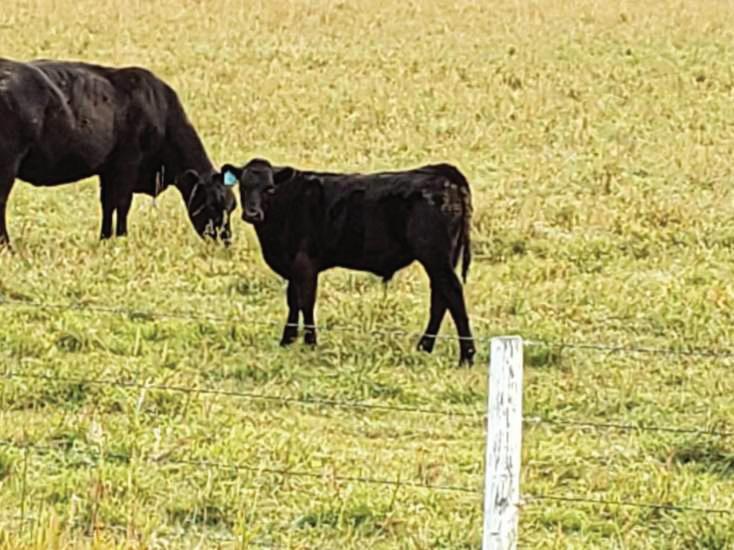
Slowly breaking this maternal bond between mother and calf during weaning can be employed in the following ways, which not only reduces stress, but get calves familiar onto a new diet and adjust to a foreign environment:
- Complete separation – Put cow-calf pairs in the same feedlot pen for a few days to a week. Once the calves get used to the feed-bunks and waterers, move the cows, out.
- Fence-line weaning – Separate cows and calves by a fence, which prevents them

from touching one another, but allows visual contact to reduce stress on both sides of the fence.
- Two – step weaning – A method developed by the University of Saskatchewan that outfits each nursing calf with a nose “anti-nursing” device for about 7 – 10 days, before these calves and cows are separated.
- Early weaning – This is a method that can employ each one of the above methods in one way or another, where calves are weaned at 4 – 5 months of age (and as early as 6 weeks of age).
A friend of mine that runs about 400 cow-calf pairs takes a different approach when it comes to weaning his
calves in late-fall. He believes the key to good weaning is to fill up the calves’ bellies, a few weeks before they are actually separated from the cows. At this time, the carrying capacity of his pastures is low and there might even be a little snow on the ground. So, he makes up a brood-cow TMR, which contains lots of barley silage, some grassy hay, no grain, and a well-balanced trace mineral-vitamin pack.
Then, he dumps this load right on pasture in front of the cow-calf pairs. It takes only a couple weeks of doing this and then these filled-up calves are removed from pasture and put into my friend’s home feedlot to be backgrounded until late-
February. One or two calves may ball for a day, but most of them have already nicely adjusted, once feedlot pengates are closed.
My friend has gone through many successful weaning seasons. It is a great testimony of reducing autumn calf stress, not only when they are taken away from their mothers and weaned, but helps them get onto new feeding programs in usually a strange and new environment. Such challenges may never be completely eliminated, but using this or similar common-sense approaches goes a long way. And today’s saleable weaned calves bid at over $ 5 – 7 cwt are just too valuable to be truck-weaned.
By Lesley Kelly
Burnout is more than just feeling tired—it’s an emotional, mental, and physical reaction to constant stress. On the farm, when demands and pressures keep piling up, it can leave you feeling overworked, unappreciated, and irritable. Burnout steals energy and productivity, spilling into your personal life. You may come home drained, dread the next day, or feel like you have nothing left in the tank.
If you’re feeling this way, you’re not alone. A University of Guelph study found that nearly half of Canadian farmers feel ineffective, disengaged, or overextended. Chronic stress puts farmers at risk for mental health challenges and other serious health conditions.
Farming often prizes hard work. Many of us were taught to work seven days a week, twelve hours or more per day. Over time, exhaustion can become so normal that it feels like there’s no alternative. That’s why talking about burnout in agriculture is essential. Chronic stress leads to feelings of helplessness and extreme fatigue, threatening productivity, labour retention, and the overall success of farms and the industry.
The good news: You can be successful without constant stress and exhaustion—and you’ll likely be more effective when you step out of burnout. What is Burnout? Burnout is exhaustion from
prolonged emotional, physical, and mental stress. On the farm, it happens when the daily demands of work and life feel overwhelming and unmanageable.
Possible Causes:
- Lack of control: Limited influence over markets, weather, or resources can contribute.
- Dysfunctional workplace dynamics: Family or work relationships that feel undermining or micromanaging increase stress.
- Extremes of activity: Monotonous or chaotic work that demands constant focus can lead to fatigue.
- Lack of social support: Isolation on the farm or personally can heighten stress.
- Work-life imbalance: When work consumes all your time and energy, burnout can set in quickly.
Signs of Burnout:
- Cynicism or criticism at work
- Difficulty starting tasks or dragging yourself to the farm
- Irritability with family or staff
- Low energy or inconsistent productivity
- Trouble concentrating
* Using food, drugs, or alcohol to cope
- Changes in sleep
- Unexplained headaches, stomach issues, or other physical complaints
Answering “yes” to several of these questions may indicate burnout.
Tips to Manage
Stress and Burnout
1. Recognize Early Warn-
ing Signs - Burnout erodes self-awareness. Watch for subtle cues: everyday tasks feel over stimulating, you cut activities you know are good for you, say “yes” despite being overextended, or find everyone and everything irritating.
2. Draw—and Respect— Your Own Lines - Set personal boundaries. No one else can do it for you. Saying no may feel uncomfortable, but it protects your capacity and well-being.
3. Reduce Your Stimulation Level - Stress hormones from overwork make relaxation and sleep difficult. Combat this with exercise, deep breathing, or other relaxation techniques.
4. Prioritize Enjoyable Activities - Engage in hobbies or social activities that bring joy, relieve stress, or promote health. Physical activities like sports or exercise can provide additional benefits.
5. Seek Support - Share your struggles with trusted family, friends, or a trained therapist. Professional guidance can help you manage emotions, practice self-care, and improve communication.
If you or someone in your farm team is struggling, reach out to a professional. Local crisis contacts and resources are available at domore. ag/crisis-contacts.
Lesley Kelly is a farmer and co-founder of the Do More Agriculture Foundation. This article has been edited for length.
By Joan Airey
Friday evening the chore team competitions took place. Chore Team Competition
1. West Spring Percherons (Cody Ferguson)
2. Ferguson Ranch & Horse Training (Scott Ferguson)
3. Brenda Hunter Chore Team Log Skid
1. Ferguson ranching and Horse Training (Scott Ferguson)
2. West Spring Percherons (Cody Ferguson)
3. Cloud Nine (Tara Reimer Chore Team Cultivating
1. West Spring Percherons (Cody Ferguson)
2. Ferguson Ranching and Horse Training (Scott Ferguson)
3. Brenda Hunter
4. Tara Reimer
Overall winner for the chore team events was West Spring Percherons, Scott Ferguson.
Saturday was a full day of showing for the heavy horse classes. Sunday the 6-horse hitch was in the show ring after lunch.
1. West Spring Percherons Scott Ferguson (Minnedosa)
2. Wallace Clyesdales, Dauphin, Manitoba
4 Horse Hitch
1. West Spring Percherons
2. Ner Gee Belgium’s ---Olds, Alberta
3. Wallace Clydesdales
4. Meadowlark Percherons
5. Chopper K Light Draft Team
1. Meadowlark Percherons—St. Alphonse, MB.
2. Wallace Clydesdales
3. West Spring Percherons-Minnedosa
4. Robert Berry & Brenda Hunter
5. Cloud 9-Tara Reimer-Steinbach Heavy Draft Team
1. West Spring Percherons
2. Wallace Cydesdales
3. Ner-Gee Belgium’s
4. Chopper K Ladies Cart
1. Ner Gee Belgium’s Shelley Gee
2. Brenda Hunter
3. West Spring Percherons
4. The Kryshevski Family Rae Ann
5. Cloud Nine Tara Reimer
6. Touchwood Trails Bonnie Yewsuk
Virden Heavy Horse Show is held the last weekend in July and brings out people from across the province and west as far as Olds, Alberta. I have only written some of the results of the classes to show readers the variety of classes available to watch. There were numerous classes for Juniors too.
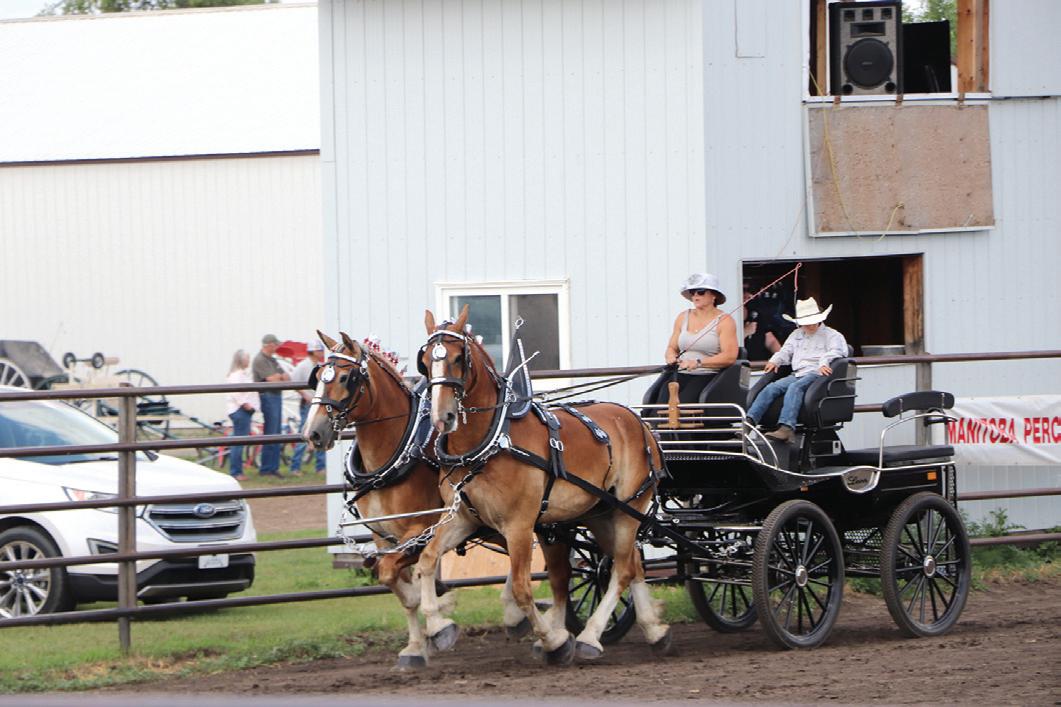
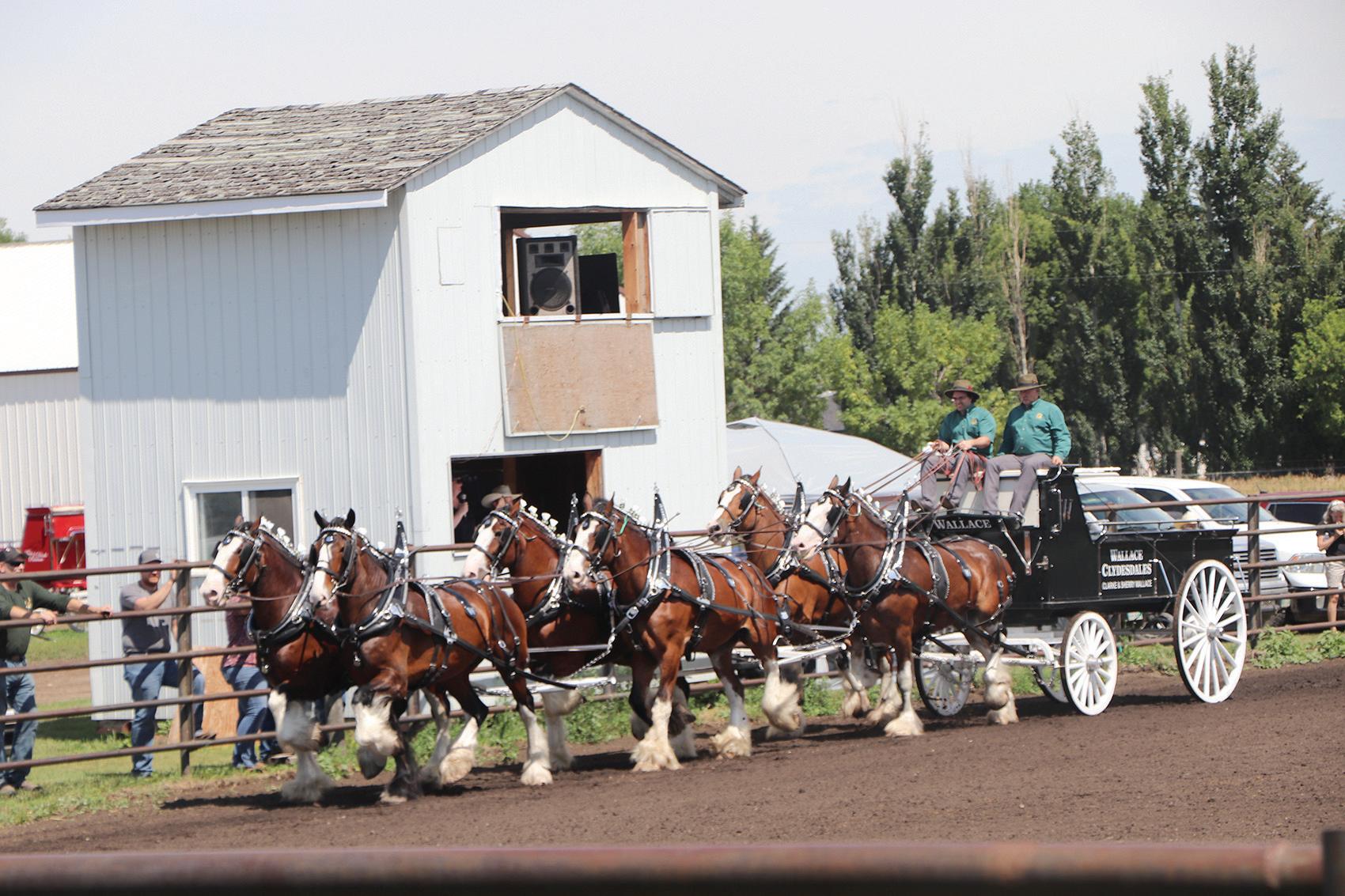
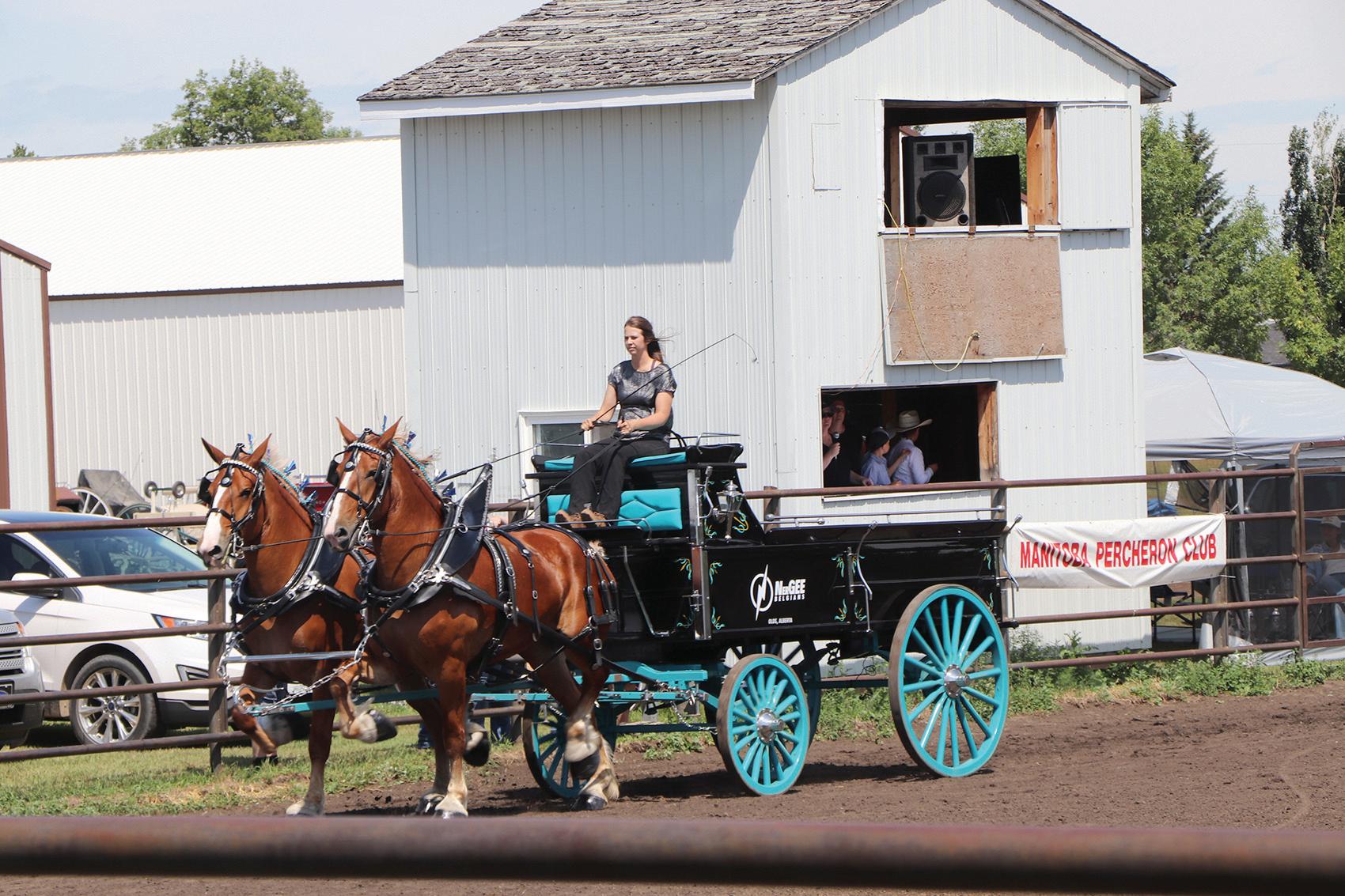

Manitoba Canola Growers Association (MCGA) has announced the recipients of the 2025 high school scholarship program, awarding five $1,000 scholarships to graduating students in Manitoba.
This year’s recipients are heading into a variety of academic paths, from nursing to engineering, but all share a strong connection to rural life and caring for the land. Whether headed to large universities or faith-based institutions, each student expressed a passion for contributing to their communities and pride in their agricultural roots.
The 2025 MCGA scholarship recipients are:
- Addison Bruce, Miami, MB: Bachelor of Science
- Sarah Krahn, Rivers, MB: Pre-Nursing, Bachelor of Science
- Addison Schmidt, Elm Creek, MB: Briercrest College and Seminary
- Makenna Sumner, Neepawa, MB: Bachelor of Science
- Trent Tomoniko, Franklin, MB: Bachelor of Science in Engineering
“The talent and dedication we saw in this year’s applications were truly inspiring,” says Warren Ellis, Chair of MCGA. “These students are already making a difference in their communities, and we’re proud to support them as they take the next step in their journey. Congratulations to this year’s winners.”

MCGA’s high school scholarship program began in 2014 and has since awarded 55 students with $1,000 scholarships to support their post-secondary education.

By Joan Airey
On the August long weekend, the Annual Manitoba Youth Beef Round-Up was held in Neepawa. If you are unfamiliar with Round-Up it was started by a group of cattle people for commercial and purebred cattle young people interested in a learning weekend. The weekend includes workshops on everything from grooming cattle to judging cattle and promoting cattle.
The Cook-Off included 18 teams and three teams of judges. Each team barbecued a steak which they had marinated in their favourite marinade. With teamwork they made everything from a salad to dessert following a theme of their choosing.
My judging partner and I enjoyed everything from Canadian to Mexican food but I noticed that everything from the meat to the dessert was raised in Canada. Desserts included Manitoba fruits such as Saskatoons and B.C peaches. One Saskatoon Crisp was exceptionally good showing what grows in Manitoba can make delicious dessert for anyone’s meal.
If you’d like to know more about the winners at Manitoba’s Youth Beef Round-Up in Neepawa the results of all the events will be posted on Facebook. Over a hundred young people participated this weekend.
These young people showed with a little imagination you can prepare a delicious meal with only Canadian grown products. All the groups we judged had laid out the food to make it eye appealing.
Personally, I’ve been trying to shop Canadian and locally when possible. We visited our local Deerboine Colony and purchased vegetables to do us a week. Sunday, we attended the open house at Clack’s Museum and another local colony had donated large bags of vegetables to the fundraiser. For ten dollars I came home with enough cucumbers to make a gallon of refrigerator pickle, a cucumber salad and a jar of my husband’s favourite way to eat fresh cucumber. Also a couple of zucchinis that will make more muffins than my freezers will hold at the moment. Plus, enough radishes to feed two families.
Refrigerator Pail Pickles
For brine:
4 cups sugar
2 cups vinegar
2 Tablespoons pickling salt
1 teaspoon turmeric
1 Tablespoon mustard seed
1 teaspoon celery seed
1 teaspoon alum
Heap an ice cream pail with thinly sliced cucumbers and onions (amount of your preference. Mix all above ingredients together. Bring to boil, pour over cucumbers and onions. Stir cucumbers into brine (they will shrink down into pail with the hot brine). Cool then refrigerate. Stir occasionally for the first few days to ensure cucumbers are well covered in brine.
I always make these pickles in a gallon glass jar.
As I mentioned the Saskatoon pudding the contestants made for the cook-off, I remembered a crisp recipe I used from an old cookbook in my collection.
Saskatoon Crisp Pudding
4 cups fresh Saskatoons (Blueberries can be substituted for Saskatoons)
1/3 cup granulated sugar
2 teaspoons lemon juice
4 Tablespoons butter or margarine
1/3 firmly packed brown sugar
1/3 cup all-purpose flour
3/4 cup quick cooking oats
Place washed Saskatoons in a 1 1/2 quart buttered baking dish. (If using frozen berries, thaw almost completely first). Sprinkle it with sugar and lemon juice. Combine remaining ingredients, cutting in butter or margarine until crumbly. Spread over berries. Bake at 375F for 35-40 minutes, Serve with cream or softened ice cream. Serves 6.


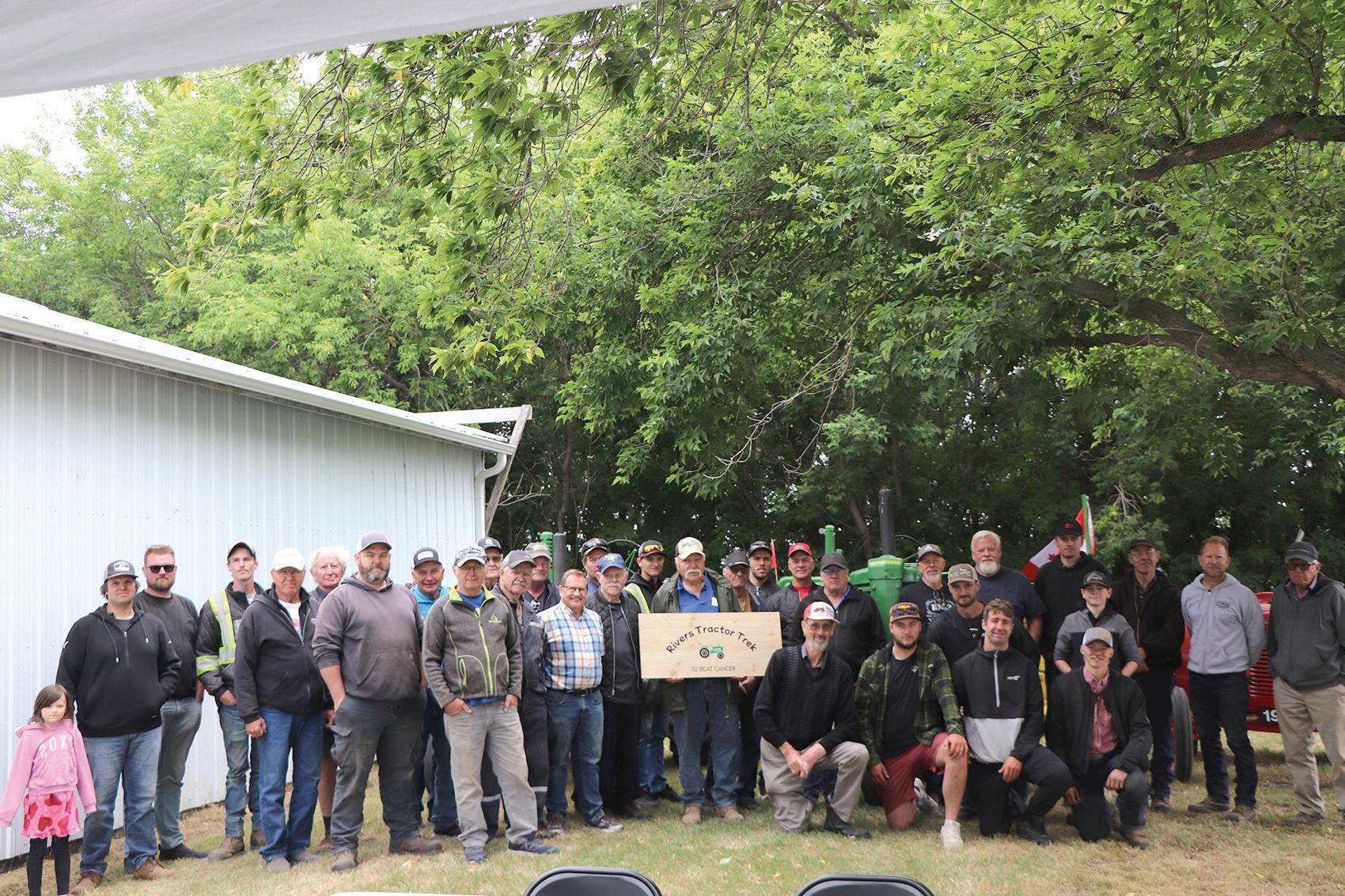
By Joan Airey
Thirty-one tractors and their drivers made the trek from Rivers, via the Provincial Campgrounds, to Clack’s Museum, six miles northwest of Rivers. After visiting the museum and enjoying refreshments, the participants returned to Rivers. The event raised over $5,000 for the Hamiota Hospital District Foundation Chemo Unit.
Redfern Farm Services in Rivers generously allowed the group to use their facilities for registration, lining up tractors, and provided financial support to cover event
Gordon Allan, a longtime supporter of the Trek, purchased the first blanket for $300 and then donated it to the Chemo Unit for use there. Josh Krahn bought the second blanket for $300 as well.
J Embroidery (Judy Hart) of Brookdale, donated two ball caps featuring the Rivers Tractor Trek logo for auction. Sophia Berard and Evan Smith each purchased a cap for $40.
Waves of Hope Dragon Boat Racers donated a gift basket for a raffle, with ticket sales raising $580. Organizers expressed gratitude for their continued support.
For the past four years, the board and staff of Clack’s Museum have opened their doors to event participants and organizers, putting in countless hours to welcome the trekkers. A new volunteer
this year described the museum as a “hidden gem that should be promoted more.”
Harry Airey and Tom Ryall plan the trek route each year, aiming to include new scenery. Kaylee Hatley kindly took photographs this year, and organizers received additional photos from other contributors. For the past two years, a book has been printed showcasing photographs of all drivers and tractors, along with other interesting details about the Trek.
Some wondered how the event raised so much when the suggested donation from drivers is only $25. Many drivers contribute larger sums, and generous community members also donate directly to the Chemo Unit. This year, Lorne Green of CJ’s Snack Shack asked local campers to pass a bucket for donations. Organizers ensured that all
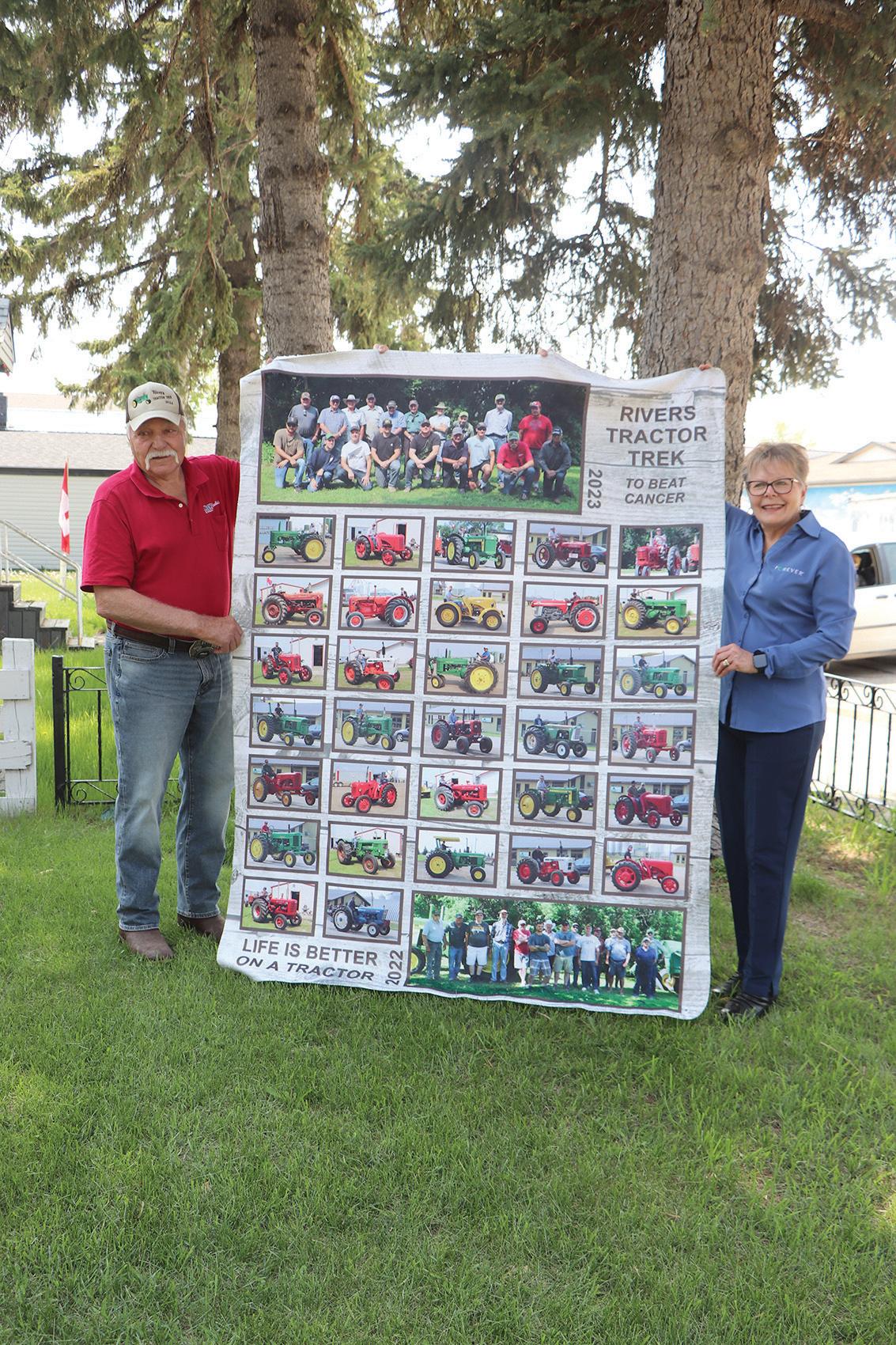
By Elmer Heinrichs
The City of Brandon is taking applications for residents to create rain gardens on their property next summer, and the program is filling up fast.
The city opened applications Wednesday morning, and had already received about 40 by the afternoon, said Lindsay Hargreaves, environmental initiatives co-ordinator for the city.
“Having a rain garden has its benefits for managing stormwater, filtering pollutants before it enters our storm drains, good for pollinators,” Hargreaves said.
To be eligible, residents have to have room for a garden on their property within the City. It would have to be installed at least three metres away from a house’s foundation, be in a low-lying location and be clear of trees and underground services, according to a city press release.
This program is important for the neighbourhood, she said, especially with climate change.
funds collected were sent directly to the Chemo Unit. The event would not be possible without the dedication of tractor enthusiasts who spend hours preparing their equipment. Tom Ryall provided six tractors from his collection for drivers and drove one himself.
“Because of our changing climate, our storms have been more intense in a short amount of time. We’ve received significant heavy rains,” Hargreaves added. “Just encouraging to help not overwhelm our stormwater system, to encourage homeowners to manage stormwater on their property.”
Other benefits of the garden include attracting birds and insects, while not becoming an area for mosquitoes to breed, said a press release.
While only 25 properties will be given rain gardens next year, other approved properties will be rolled over to subsequent years.
Hargreaves said it will likely continue to be 25 properties per year in 2027 and onward, although that could change if the watershed district brings on more landscapers.