


The Bureau expressed concerns about Bunge’s ability to influence G3 Global Holdings, a significant
shareholding and access to confidential information.
By Harry Siemens
The Competition Bureau in Canada has raised significant concerns regarding Bunge Limited’s proposed acquisition of Viterra Limited in Canada’s agricultural markets.
According to the Bureau’s analysis, this acquisition will likely lead to substantial anticompetitive effects and a significant rivalry loss between Viterra and Bunge.
In a detailed report submitted to the Minister of Transport, the Bureau outlined its
concerns, which will play a crucial role in Transport Canada’s public interest review of the transaction. The national transportation implications are of particular concern and must be noticed.
The Bureau’s assessment identified potential harm to competition in key markets, including grain purchasing in western Canada and the sale of canola oil in eastern Canada. Additionally, the Bureau expressed concerns
about Bunge’s ability to influence G3 Global Holdings, a significant competitor to Viterra, due to Bunge’s minority shareholding and access to confidential information.
These findings underscore the importance of maintaining fair competition and market integrity in Canada’s agricultural sectors. They also highlight the need for careful consideration and scrutiny of the proposed acquisition to protect the best interests of consumers and industry participants.
Keystone Agricultural Producers (KAP) responded to the Competition Bureau’s report on Bunge’s proposed acquisition of Viterra.
“Today’s report from the Competition Bureau raises the concerns that KAP has shared with the Competition Bureau, as well as other impacted stakeholders involved in this review,” said KAP general manager Brenna Mahoney. “We are currently analyzing the complete report to determine how to use this data
Continued on Page 2...
For 2024-25, assuming normal weather conditions and a return to trend yields, production and supply for most crops are expected to increase with total principal field crop production returning to normal levels at 94.4 million tonnes, 5 per cent and 4 per cent higher than the five-year and ten-year average, respectively. Despite near-normal to above-normal precipitation across most of the Prairie growing region in April, the most significant climate-related risk to realizing a return to trend yields remains widespread dry conditions across most of western Canada as reported in the Canadian Drought Monitor as of April 30, 2024.
Planting is underway on the Prairies and recent precipitation has led to a much-needed improvement in topsoil moisture conditions for most of the region, with the exception of the Peace region.
Despite some relief, subsoil moisture remains well below normal due to multi-year precipitation deficits and, as such, timely rains will be critical during the growing season to reach yield potential.
Seeding of spring cereals is virtually finished in eastern Canada, while corn and soybean planting has experienced delays due to rain and cool weather.
Uncertainty in the world’s grain markets remains above normal because of Russian aggression against Ukraine and other ongoing geopolitical risks.
 competitor to Viterra, due to Bunge’s minority
Submitted photo
competitor to Viterra, due to Bunge’s minority
Submitted photo


to advocate for the interests of Manitoba producers effectively.”
Following the release in late April, KAP will work with producers and other stakeholders in Manitoba to determine the full impact of this proposed transaction on their operations and the agri-food value chain.
“We will work with our producer and commodity group members and other stakeholders from across the value chain to determine the next steps as we monitor the proposed transaction,” said KAP president Jill Verwey. “This must begin, however, with a fulsome review of the detailed report to provide evidence to support any actions moving forward.”
“Additionally, we recognize that Transport Canada will provide their public interest assessment in the coming months. We look forward to reviewing that assessment when it becomes available,” said Mahoney.
Elie, Manitoba farmer Gunter Joachim, the president of the
Wheat Growers Association, expressed concerns regarding the proposed merger between Viterra Limited and Bunge Limited after the first initial announcement in June 2023.
“While mergers can benefit shareholders, they may not necessarily be advantageous for farmers,” said Joachim. He emphasized the importance of competition in the agricultural industry, stating that more players in the market benefit everyone involved.
Regarding the impact on local farmers like himself, Joachim noted that it would depend on whether the merged entity would close or expand elevator capacity. He expressed scepticism, noting that mergers often lead to consolidation and the closure of facilities, which may not benefit farmers.
Joachim viewed mega-mergers involving significant real estate and financial stakes as problematic, highlighting their potential challenges and uncertainties to the agricultural sector and local
farming communities.
The Agricultural Producers Association of Saskatchewan (APAS) acknowledged the Bureau’s report, highlighting significant risks to Canadian farmers due to potential reduced competition and increased market concentration.
Ian Boxall, President of APAS, expressed deep concerns about the potential negative impacts of the merger on farmers. He emphasized the risks of escalated costs, diminished profits, and the overall threat to farmers’ livelihoods, rural communities, and the sustainability of Canadian agriculture.
Boxall pointed out that the merger could make it more challenging for grain producers to succeed, potentially leading to farmers subsidizing large grain companies if approved.
“With reduced competition, grain companies could gain more leverage, leading to onesided contracts, limited delivery options, lower prices, and decreased transparency in the
supply chain,” said Boxall adding that APAS remains vigilant about protecting the interests of farmers and advocating for fair and competitive markets in the agricultural sector.
The Competition Bureau’s review of Bunge Limited’s proposed acquisition of Viterra Limited involved thoroughly examining various sources of information. This included analyzing records, submissions, and data from the involved parties and G3 Global Holdings. The Bureau conducted interviews with over 70 stakeholders and sought the advice of two independent experts to gain comprehensive insights into the potential impacts of the transaction.
Transport Canada is currently engaged in a public interest assessment of the proposed acquisition. The deadline to complete this assessment and provide it to the Minister is June 2, 2024. The Competition Bureau continues participating in this review process, ensuring competition concerns and market integrity.
A new study shows that five Manitoba-grown crops are providing the province with a major economic boost.
Commissioned by the Manitoba Crop Alliance and carried out by GlobalData, the study found the total economic impact of the crops - wheat (excluding durum), barley, grain corn, sunflower and flax - averaged
roughly $6.9 billion over the past three years, including more than 28,000 Manitoba jobs and $2.5 billion in wages.
The crops, which are represented by the Manitoba Crop Alliance, account for a large part of Manitoba’s agriculture industry. Several of the crops are also the foundations for important food industries, both within the province and beyond.
“This study shows the major role our crop types play in the economic well-being of the province and the country,” said MCA chair Robert Misko, who farms east of Roblin, MB.
“As farmers, we have long known our position in the system and how we contribute to the province’s success, but it is heartening to see those contributions laid out in a measurable
way that anyone can understand,” he said.
This economic assessment was modelled after work done last year by Cereals Canada on wheat, barley, durum and oats. That study showed the Canadian-grown cereals had an estimated total impact of $68.8 billion, including more than 370,000 Canadian jobs, and $27 billion in wages.
The Canadian Food Inspection Agency (CFIA) has released a comprehensive update following the detection of Highly Pathogenic Avian Influenza (HPAI) in unpasteurized milk from dairy cattle in the United States. This development has raised concerns about the potential impacts on both Canadian consumers and the dairy industry.
The United States Department of Agriculture (USDA) reported finding HPAI in unpasteurized milk from dairy cattle in certain regions of the U.S. Affected cattle exhibited clinical signs such as reduced milk production, thicker milk consistency, and decreased feed consumption. Despite these symptoms, the cows generally recover after a period of illness. It is suspected that the virus was initially introduced by wild birds,
with asymptomatic infected cattle potentially spreading the disease.
In a statement released by the CFIA it reassures Canadians that pasteurized cow’s milk and milk products remain safe to consume. Canadian regulations mandate the pasteurization of milk before it reaches consumers, a process that eliminates harmful bacteria and viruses, including HPAI. They added that Canadian dairy producers are advised to take extra precautions to protect their herds. This includes monitoring cattle for signs of illness, contacting veterinarians for suspected cases, and adhering to biosecurity measures. Producers are encouraged to reach out to provincial or national associations for enhanced biosecurity protocols.
Veterinarians should report any suspected HPAI cases to their local CFIA an-
imal health office and refer to the Guidance for private veterinarians. The CFIA’s response to HPAI detections differs between cattle and poultry due to the varying impacts of the virus.
While HPAI spreads rapidly and causes high mortality in birds, cattle show milder symptoms and recover within weeks. There have been no cattle fatalities due to HPAI, and there are no current trade impacts for live cattle or their products.
The World Organisation for Animal Health (WOAH) does not currently recommend movement restrictions on healthy cattle and their products. However, Canada has implemented additional import requirements, including HPAI testing for lactating dairy cattle imported from the US as of April 29 and export certification for cattle intended for immediate slaughter as of May 24.

In response to the situation, Canadian health and agricultural agencies, including CFIA, the Public Health Agency of Canada
(PHAC), and Health Canada, are intensifying their monitoring efforts. This includes enhanced testing of milk at the retail level
and voluntary testing of asymptomatic cows. These measures aim to ensure the safety of Canada’s food supply and livestock.


Spring planting progress across Manitoba has moved past the five-year average over the past week. Manitoba Agriculture’s May 21 report shows planting is now 47 per cent complete across the province, slightly ahead of the five-year average of 29 per cent.
Heavy rain Friday May 24 across most of central and eastern regions has put a halt to planting and it may take farmers till later in June before setting aside the seeders.
Dennis Lange, a pulse and soybean specialist with Manitoba Agriculture and editor of the provincial crop report says most areas did receive rainfall through the past week and that has really improved soil moisture
conditions.
Lange says reports’ coming in from most areas is that soil conditions for planting are almost ideal.
“Growers are able to get into moisture and there’s also some crop emerging on some of that early stuff that was planted before that rain shutdown,” says Lange.
The spring wheat and barley is sitting at about 58 percent complete across the province and the central region is most advanced at about 80 percent complete.
“Grain corn is about 60 per cent complete across the province as well. Growers like to get that corn in nice and early,” says Lange.
But when you start looking at crops like oilseeds, canola is a bit further behind. We’re about six per
cent complete right now but most growers really haven’t gotten started there. Growers have been focusing on getting other more sensitive crops into the ground. With canola they like to get it in a little bit later and hope for a quicker emergence, possibly avoid some flea beetle issues.
Sunflower planting on the oilseed side is sitting at about 13 per cent complete across the province.
One of the early crops, when it comes to some of the pulses, is field peas and we’re sitting at 72 per cent complete across the province right now. And, soybeans are coming in as well at about 15 per cent complete, with central region up at about 30 per cent.
“What we’re seeing is
that growers are taking advantage of the good soil conditions and, if a field is ready to plant, they go and start planting,” notes Lange.
“Soybeans like it warmer and soil temperatures are warming up a bit now so that’s why soybeans are going in.”
Lange says when the sun comes out; growers will be back in the fields and getting the rest of the crop in.
With warmer weather and some wind, planting will be finished before you know it.
Central regions experienced several rainfall events accompanied by lightning and high winds this past week and left soils in the RMs of Morris and Montcalm too wet to access fields for several days.
But seeding has progressed with spring wheat, barley and oats at 90 per cent complete.
It was a rainy week in eastern regions with producers struggling to make progress on seeding and field work. Winter cereal stands continue to grow rapidly, and overall spring seeding stands at about 55 per cent complete, but about 85 per cent of wheat, oats and barley is in the ground. About 80 per cent of the potatoes are also planted.
Warmer temperatures and recent precipitation have benefited hay and pastures. Nearly all creeks, streams, dugouts and sloughs have refilled to capacity. The first spring cereals have emerged and are looking healthy.
Protein Industries Canada has announced a new project focused on addressing the spread of herbicide-resistant weeds in Canada, particularly those affecting protein-rich crops. Through a partnership between Precision AI, Geco Strategic Weed Management, the Global Institute for Food Security (GIFS) at the University of Saskatchewan and Sure Growth Solutions, the project will see the development of an AI-powered early detection system that will help farmers and agronomists identify and treat herbicide-resistant weeds.
“Building on the successes of their first Global Innovation Clusters–funded project, Precision AI and its project partners will be leveraging AI to spur innovation and drive economic growth by assisting farmers in detecting and managing herbicide-resistant weeds,” stated François-Philippe Champagne, Minister of Innovation, Science and Industry. “Through the Pan-Canadian Artificial Intelligence Strategy, Protein Industries Canada is supporting the continued growth of the sector and cementing Canada’s standing as a pre-
mier supplier of high-quality crops and ingredients.”
“Our farmers are always looking for new ways to make their operations more resilient, so they can keep producing top-quality food for Canadians to enjoy. This innovative AI-powered system will help treat herbicide-resistant weeds more effectively, helping farmers improve the quality of protein-rich crops and enhancing the whole value chain,” said Lawrence MacAulay, Minister of Agriculture and Agri-Food.
The partners will build off of technology developed in a project led by Precision AI under Protein Industries Canada’s first round of funding. They’ll add to it a new software application that utilizes drone and satellite imagery to examine each weed in the field with plantlevel precision, leveraging advanced AI techniques to deliver timely alerts to farmers about potential resistance issues.
“Strong primary agriculture is the foundation of Canada’s agrifood sector, so it’s important that farmers have the tools they need to continue
to grow the crops that will become the protein ingredients of the future,” Protein Industries Canada CEO Bill Greuel said. “Investments into AI technology are helping develop and commercialize such tools, creating benefits that ripple through the plant protein ecosystem and out to Canadian families.”
The development and adoption of AI technology can help farmers and agronomists address herbicide-resistant weeds more sustainably and more effectively. By identifying and targeting specific weeds using prescribed herbicides, farmers can reduce their crop inputs and field passes, while increasing yields and improving crop quality. The benefits of the new technology are expected to affect the full value chain, improving the ingredient supply chain and leading to a more consistent, high-quality supply of products for ingredient processors and food manufacturers.
“By using AI to detect resistance early and provide precision herbicide application, we have a realistic path to reducing or even eliminating resistant strains in
Canada. We look forward to our collaboration with Protein Industries Canada, Geco Strategic Weed Management, Global Institute for Food Security and Sure Growth Solutions in the essential work of helping conquer herbicideresistant weeds, which are a growing threat to Canadian producers,” Founder and CEO of Precision AI Dan McCann said.
“A weed population evolves over years and disrupts crop yields over hundreds of acres. Geco is working with a range of weed detection technologies to provide our 50-plus farms with predictive weed control and resistance detection. We are looking forward to quantifying the value to the farm that will be achieved at plant-level resolution,” Geco Founder and CEO Greg Stewart said.
“The Global Institute for Food Security is pleased to collaborate on this important project to advance innovation for the more precise treatment of herbicide-resistant weeds,” said Steven Webb (PhD), Chief Executive Officer of GIFS. “Working together using essential analytical tools and AI mod-
els, we will help make crop protection more efficient and provide economic benefits to farmers, leading to more sustainable production of safe and nutritious food.”
“By empowering businesses to thrive through strategic guidance, AI technology can unleash hidden opportunities to grow agriculture forward. We’re proud to be working with our project partners to help create and commercialize the technology that can help Canadian farmers move their own agriculture work forward, while managing the weeds that are of most concern in their fields,” said Sure Growth Solutions Founder Terry Aberhart.
A total of $6.2 million has been committed to the project, with Protein Industries Canada investing $2.8 million and the partners investing the remainder. Protein Industries Canada’s artificial intelligence stream is funded as part of the Pan-Canadian Artificial Intelligence Strategy, through which the Government of Canada is investing in efforts to drive the adoption of artificial intelligence across Canada’s economy and society.
In a positive step towards the resilience of Canada’s Canadian pork sector, the Federal government announced that $9,645,586 will go towards funding 29 African Swine Fever Industry Preparedness Program (ASFIPP) projects across Canada, including Manitoba.
African Swine Fever (ASF) is a viral disease that only impacts pigs. While it has not been found in Canada to date, as it spreads around the globe, it poses a significant risk to the health of the Canadian swine herd, the pork industry, and the Canadian economy.
“Animal diseases, including African Swine Fever, are a serious threat to Canada’s pork
sector, and it’s vitally important that all orders of government and industry take steps to prevent and prepare,” said Lawrence MacAulay, Minister of Agriculture and AgriFood. “These projects are a key part of Canada’s efforts to prevent an ASF outbreak while ensuring our pork sector is ready to respond.”
A detection of ASF in Canada would immediately stop exports of pork products and live pigs, which could significantly impact the pork industry, a major economic driver which supports over 100,000 direct and indirect jobs and generates over $24 billion for the Canadian economy.
This investment will fund
ASF research, improved biosecurity measures, wild pig management activities, retrofits of existing abattoirs, regional preparation for the welfare depopulation and disposal of healthy hogs, and sector analysis, engagement and education tools, and will help ensure the sector is prepared should a case be detected.
“This strategic focus not only protects our swine producers and their livelihoods but also upholds Canada’s reputation as a reliable supplier of safe and high-quality pork products globally,” added René Roy, Chair of the Canadian Pork Council.
Since 2018, ASF has spread through parts of Asia and

Submitted data
An investment of up to $1.08 million for the Canadian Centre for Agricultural Wellbeing (CCAW) will be used to improve understanding and programs to improve access to the mental health needs of producers.
This project funds five activities aimed at supporting the mental health of Canadian farmers. This includes supports for mental health literacy education for agriculture educators across the country, the development of a mental health tool-
kit to support the sector in case of catastrophic events, and aims to help industry further develop capacity throughout the sector and facilitate the sharing and expansion of national farm mental health strategies and resources.
“I know firsthand the challenges that come with life on the farm. You work around the clock, 365 days a year, facing unique demands and significant pressure,” said Lawrence MacAulay, Minister of Agriculture and Agri-Food.
Europe, and was detected in the Caribbean in 2021. It has never been found in Canada or the United States.
The Canadian pork industry exports roughly two-thirds of its pork production and millions of live hogs per year. In

The Canadian Pork Council (CPC) has been selected to receive a little over $400,000 in funding under Agriculture and Agri-Food Canada’s (AAFC) African Swine Fever Industry Preparedness Program (ASFIPP). The CPC’s ASFIPP initiative, titled “Development of a low-cost pen-side assay for rapid detection of African Swine Fever Virus,” is a crucial step in enhancing the swine industry’s readiness against the threat of African Swine Fever (ASF).
The primary objective of the CPC’s ASFIPP is to develop an ASFMeter, a portable and low-cost tool, for rapidly diagnosing ASF in the field. This innovative program, in collaboration with McMaster University, aims to revolutionize ASF detection by providing a convenient and effective solution for on-site testing.
“Our focus on developing a low-cost pen-side assay aligns with our commitment to proactive and innovative solutions for the swine industry,” said Canadian Pork Council chair René Roy.
“This program represents a significant step forward in safeguarding Canadian swine herds and strengthening our industry’s resilience against ASF,” added Roy. “The collaboration with AAFC and McMaster University brings together expertise in research and technology, ensuring that the ASFMeter meets the rigorous standards required for rapid and accurate ASF detection.”
“With everything else our producers have to manage, it can be hard to check in on yourself and prioritize your mental health. This new funding for the Canadian Centre for Agricultural Wellbeing will help more farmers gain access to the mental health support they need, with services and tools that are tailored to them.”
The CCAW will also develop Canada’s first evidencebased agriculture literacy training program in collaboration with the Rural Physicians Society of Canada in
order to deliver the training to rural physicians who interact with Canadian farmers and organize two national conferences that will enable mental health information sharing with stakeholders from across the sector.
“The CCAW seeks to work with grass roots, community-based organizations across the country, to provide meaningful support of Canadian agricultural wellbeing,” added Briana Hagen, Chief Executive Officer and Lead Scientist for The Canadian Centre for Agricultural
Wellbeing. CCAW is a collaboration between researchers and mental health professionals looking to expand access to counselling and develop new resources for people in agriculture. CCAW virtually brings together national and global leaders in the agricultural mental health field to conduct cutting-edge research to develop evidencebased community-informed programming and education to address challenges related to well-being among Canadian farmers.

 By Harry Siemens Relations Board (CIRB),
The Wheat Growers Association (WGA) called for urgent federal action to prevent a looming shutdown of the Canadian rail system due to a union strike action which could jeopardize the viability of Canada’s economy.
The WGA said farmers rely heavily on rail for transporting grain, fertilizer, and other essential inputs. A rail shutdown severely disrupts the supply chain, leading to significant challenges for farmers, exporters, and global customers.
“When grain deliveries cease, grain exports halt, undermining Canada’s reputation as a reliable exporter,” said the WGA media release.
Over the past dozen years, ten major rail stoppages have occurred due to union actions. Each instance has adversely affected everyone involved in the food supply chain, from farmers and exporters to processors and consumers.
While the Wheat Growers Association appreciates the Minister of Labour and Seniors, Seamus O’Regan’s request for a safety review from the Canada Industrial
they believe this is merely a temporary measure that fails to address the root cause of a potentially major disruption.
Current Status of the Potential Rail Strike
As of mid-May 2024, the potential rail strike involving workers from the Canadian National Railway (CN) and Canadian Pacific Kansas City (CPKC) remained a significant concern. Over 9,300 rail workers, represented by the Teamsters Canada Rail Conference (TCRC), have voted overwhelmingly in favour of a strike mandate. A strike could have started as early as May 22, if the parties don’t reach a new agreement during ongoing contract negotiations.
In early May, the Minister, Seamus O’Regan suspended the right either to strike or lock-out pending the ruling of the CIRB. The CIRB is currently reviewing whether a strike by rail workers would jeopardize public health and safety, which could delay the start of the strike. Both rail companies and the union are under pressure to reach an agreement to avoid wide-
spread disruptions.
Key Issues in Negotiations
The primary issues in the negotiations include rest periods and working conditions. The union argues that current rail company proposals to eliminate safety-critical rest provisions will increase crew fatigue risk and compromise public safety. CN and CPKC are pushing for changes they believe will modernize operations and address crew availability issues, but the union contends these changes are inadequate for ensuring safety.
A strike would significantly impact Canada’s economy, disrupting supply chains across North America. This disruption would affect various sectors, including agriculture, manufacturing, and retail, leading to concerns among farmers and businesses relying on rail transportation. The WGA emphasizes that proactive measures are necessary to prevent such a disruption and protect the economic stability of the agricultural sector and the broader economy.
Saskatoons, sour cherries, and plums are in full to late bloom. With the recent rain events during the saskatoon flowering period, growers are applying fungicides to prevent Entomosporium Leaf
Raspberry cane leaves have emerged with good winter survival.
Straw mulch has been removed off all strawberry fields. Most strawberry fields showed good winter survival.

Strawberry growers continue to transplant into new fields. Growers will be planting nearly 800,000 strawberry transplants in 2024.
This year’s crops will be ready for picking and at farmers’ markets soon!


Erica Charlton, Director of the Emergency Management Division of Animal Health Canada, urged the public to become aware of and involved in the efforts to eradicate wild pigs from the environment.
Animal Health Canada chairs the African Swine Fever Executive Management Board, which includes representatives from federal, provincial, and territorial governments and the swine sector. This board supports developing and delivering strategies for African Swine Fever prevention, response planning, and preparedness.
To raise awareness of the risks posed by wild pigs and to bring together stakeholders involved in addressing this issue, Animal Health Canada, in partnership with Assiniboine Community College, Squeal on Pigs Manitoba, and Manitoba Pork, hosted a three-day Wild Pig Summit in Brandon from April 22 to April 24. During the summit, participants discussed strategies and shared knowledge on managing and eradicating wild pigs effectively.
Charlton highlighted that while wild pigs are present across Canada, the prairie provinces are particularly affected. These invasive animals pose significant risks to agriculture and native ecosystems, making coordinated efforts crucial for their management and eradication.


is crucial for starting the
said Tim Hore, Dean, Ag & Environment Department, School of Agriculture & Environment at the
“The wild pigs cause a lot of ground damage with their rooting and the foraging and disturbing crops and things like that, but the real risk is they’re carriers of African Swine Fever more than anything,” she said.
The World Organization of Animal Health said if someone finds a case of African Swine Fever in the country, whether in domestic pigs or feral pigs, there will be trade implications, and officials will close the borders.
Charlton expressed significant concern from the commercial sector regarding the risks posed by wild pigs. These animals threaten the environment and present potential dangers through the interface between wildlife and domestic animals. There is a particular worry about the possibility of transmitting diseases to commercial livestock, which underscores the need for vigilant management and eradication efforts. The environmental impacts of wild pigs are also a major concern, affecting both agricultural lands and natural ecosystems.
Charlton noted that while provinces have been working independently on wild pig management, the summit aimed to unify efforts, share knowledge, and learn from each other to create a cohesive national strategy. This collaboration brought all the right people together, built awareness, and educated them on what is happening in different jurisdictions regarding research, communications, and field tools.
“The ultimate goal is to eradicate wild pigs, supported by a 10-year strategy that needs thoughtful implementation,” she said.

Wild pigs are present across Canada, with hotspots in the prairie provinces, particularly outside Brandon, where established populations are breeding and thriving. There are reports of sightings in Ontario and British Columbia. The focus is on established populations because they grow and create significant risks.
The summit highlighted progress in tracking and removing wild pigs, with significant efforts reported in Manitoba and Saskatchewan. Presentations indicated that sightings of wild pigs have decreased in some areas over the past five years, suggesting that control measures are making headway. Public reporting via the Squeal on Pigs hotline and website helps track and verify sightings.
The 10-year wild pig strategy aims for eradication. The summit served as a kick-off for more coordinated national efforts, with plans to continue building awareness and stakeholder engagement.
The African Swine Fever Executive Management Board, which has been ac-
tive for five or six years, will continue its work, though its current funding expires at the end of March 2025.
Manitobans are encouraged to report wild pig sightings through the Squeal on Pigs Manitoba website or call the 1-833-SPOT-PIG hotline. Public participation is crucial for tracking and managing wild pig populations. Hunting wild pigs independently is discouraged, as it disperses
populations and complicates trapping efforts. There are various resources and links on provincial government websites for reporting sightings and learning more about the initiative.
The summit began a more unified approach to wild pig management in Canada, emphasizing collaboration, public involvement, and strategic planning to protect livestock, crops, and natural habitats
from the threats posed by these invasive animals. The strong turnout and active participation in the summit underscore the importance of ongoing dialogue and cooperation among all stakeholders.
Charlton suggested, “If you google ‘squeal on pigs’, you’ll find information on efforts in the various jurisdictions to address wild pigs and how to report sightings.”

 To raise awareness of the risks posed by wild pigs and to bring together stakeholders involved in addressing this issue, Animal Health Canada, in partnership with Assiniboine Community College, Squeal on Pigs Manitoba, and Manitoba Pork, hosted a three-day Wild Pig Summit in Brandon. During the summit, participants discussed strategies and shared knowledge on managing and eradicating wild pigs effectively.
“We are excited to receive funding from the province through the Sustainable Canadian Agriculture Partnership for a project focused on DNA sampling to track wild pigs in Manitoba. This funding
project.”
reception at the ACC on Monday, April 22.
James Hofer Hog Boss Starlite Colony at Starbuck, MB and Rick Prejet, chair of Manitoba Pork Council.
The first stop on the field trip to Spruce Woods Park, Manitoba.
Photos submitted by Harry Siemens
To raise awareness of the risks posed by wild pigs and to bring together stakeholders involved in addressing this issue, Animal Health Canada, in partnership with Assiniboine Community College, Squeal on Pigs Manitoba, and Manitoba Pork, hosted a three-day Wild Pig Summit in Brandon. During the summit, participants discussed strategies and shared knowledge on managing and eradicating wild pigs effectively.
“We are excited to receive funding from the province through the Sustainable Canadian Agriculture Partnership for a project focused on DNA sampling to track wild pigs in Manitoba. This funding
project.”
reception at the ACC on Monday, April 22.
James Hofer Hog Boss Starlite Colony at Starbuck, MB and Rick Prejet, chair of Manitoba Pork Council.
The first stop on the field trip to Spruce Woods Park, Manitoba.
Photos submitted by Harry Siemens

National Farmers Union (NFU) Director of Climate Crisis Policy and Action, Darrin Qualman, noted a strong desire among farmers to do more to tackle greenhouse gas emissions but he agrees with the recent Canada’s Commissioner of the Environment and Sustainable Development findings that Agriculture and Agri-Food Canada (AAFC) has “yet to develop a strategy for how it would contribute to Canada’s 2030 and 2050 greenhouse gas mitigation and sequestration goals.”
“Farmers want to do more,” says Qualman, “but they need more support and direction from government.”
In the recent report by Canada’s Commissioner of the Environment and Sustainable Development, Jerry DeMarco, wrote “without a strategy to provide the sector with a long-term vision and direction, the department’s path to help achieve Canada’s 2030 and 2050 goals remains unclear.”
The Report acknowledges AAFC programs that may begin to reduce emissions— such as the On-Farm Climate Action Fund (OFCAF) but states that, “The department’s delays in funding approvals resulted in recipients missing a growing season, which
limited the greenhouse gas reduction results achieved by January 2024. In addition, 2 of the 3 programs had not yet set or finalized all of their performance targets for climate change mitigation. ... Setting targets and tracking results [is] important.”
The Commissioner’s report also notes significant and probably continuing increases in agricultural emissions: up 39% between 1990 and 2021.
Many government programs, such as OFCAF, are oversubscribed leading many agricultural sectors to develop ambitious emission-reduction plans of their own.
Qualman also noted eagerness among many AAFC staff to move ahead with emissions reduction. The OFCAF program is one example. Another is the Sustainable Agricultural Strategy (SAS).
“At the SAS-AC table,” said Qualman, “we consistently see AAFC representatives eager to find ways to increase sustainability and decrease emissions.”
Over the past year-and-ahalf, the NFU has been one of twenty-one organizations convened by AAFC to form the Sustainable Agriculture Strategy Advisory Committee (SAS-AC).
Qualman points to a potential solution.

“The federal government, in continuing consultation with farmers, needs to finalize a strong, clear Sustainable Agriculture Strategy; that strategy needs to contain ambitious emission-reduction targets and plans,” he explained. “AAFC needs to release that strategy soon - before harvest and they need to show farmers they’re serious by allocating significant funding for effective programs to reduce emissions, speed adaptation, and build resilience.”
He believes that a rapid completion and release coupled with significant funding and support for farmers will go a long way to remedying the problems highlighted in this Report by the Commissioner of the Environment.
Assiniboine College is giving high school students the chance to experience handson learning in horticulture, environmental sciences, and agriculture at a North Hill Campus Field Day.
“It’s important to give high school students a firsthand look at our campus and program offerings, connecting them with courses they are interested in,” said Chris Budiwski, Academic Chair in the Russ Edwards School of Agriculture & Environment at Assiniboine. “With careers in Agriculture in such high demand, this event will give students some insight into career opportunities they can pursue, and the training we offer at the college that will give them an advanced skill set to prepare
them for these careers.”
Working in groups, students will rotate through four stations, led by Assiniboine faculty and students from the Agribusiness, Land and Water Management and Horticultural Production programs. Spending time outdoors and inside Assiniboine’s Sustainable Greenhouse, students will get a chance to learn more about integrated pest management in the greenhouse, water sampling and testing at our on-campus creek, get their hands dirty at a soil station, and identify weeds in our on-campus weed ID garden.
“At a time when many high school students are exploring their future career path, giving them the chance to experience hands-on oppor-

tunities in these programs can help them with the decision about what they might like to pursue,” said Erin Lambert, Manager of Recruitment at Assiniboine College. “Our hope is that we can help them in their next step on their career path.”
Students will also learn about the applied research projects happening with Assiniboine faculty, researchers and students. Throughout the event, staff will share insights into programs and unique learning opportunities, share the diverse career paths available through the programs being explored, and showcase the relevant learning spaces that support learning by doing philosophy.


 By Joan Airey
Every morning, I walk along the side of my garden to see what is growing, but things seem to be slow germinating this year. So far we have been enjoying asparagus, rhubarb, and green onion fresh from the garden so far.
We planted 25 new raspberry canes recently for fresh eating in the future. T & T Seeds sent out a newsletter on improving production of fruit, thought maybe their info would be of interest to some gardeners.
Are your strawberry plants big but have no strawberries?
There are several reasons for poor strawberry production. Factors like poor growing conditions or improper watering is a leading cause.
Here are some of the most common reasons for strawberry plants with no fruit: Patience is a Virtue: New strawberry plants focus on root development in the first year, so don’t be discouraged by a lack of fruit.
In fact, pinching off flower buds during this time can encourage stronger roots for a
fruitful future!
Location, Location, Location: Strawberries thrive in well-drained, organic soil with a balance of warm days and cool nights. Avoid extreme heat, which can hinder fruit production.
Watering Wisdom: Shallow root systems make these plants thirsty. Provide consistent moisture, especially during the growing season, but avoid over watering, which can lead to crown rot.
Pest Patrol: Keep an eye out for pesky insects and diseases that can steal your
harvest. Try to maintain dry foliage to prevent fungal issues.
Nutrient Necessities: Balanced fertilization is key! Amend your soil with compost for essential nutrients, and avoid overdoing nitrogen fertilizer, which can favour foliage growth over fruit production.
Our yard is so full of birds that we have to protect a lot of fruit with netting or they harvest it before we do.
Yesterday I visited one of our local greenhouses, Trestle Greenhouse to pick up

some Giant Pansies to plant in pots on our patio. I’m sure before the month is over, I’ll visit Walkers Greenhouse and Trestle more than once.
I always find I learn something every time I visit them like if you have your own greenhouse and have trouble with mice getting in and devouring young plants, put some bounce around them. Since we are having a cool rainy day, I was able to take time to study a new gardening book “Your Outdoor Room” by Manoj Malde. This book will take you on a journey to design your own personal haven for entertaining a place to relax and drink a cocktail or even a secluded area for weekly workouts.
Unlock the confidence to discover what your really want from your outdoor space, and to create an extension of your home. From finding inspiration and creating a design throughout, bringing it all to life, this is a book for anyone who wants
to make more of their garden but doesn’t know where to start. Packed with tips to make small gardens feel bigger, practical knowledge for planting success, ideas for low maintenance upkeep as well as encouraging sustainable practices.
I’m hoping the frost warnings are a false alarm as our fruit and ornamental trees are all in bloom. At the moment it is pouring rain in our area, quite a change from sunshine yesterday. Happy gardening.


According to Agriculture and Agri-Food Canada, precipitation across Manitoba was generally above normal in April, with much of the province receiving more than 150% of normal precipitation. Mid-month storms brought in much needed precipitation and snowfall across the province. Mean monthly temperatures were near normal for most of the province, with northern Manitoba experiencing temperatures over 3 degrees above normal. The warmer than normal temperatures led to early snowmelt and low snow cover in the first two weeks of April. Frost depths across the province were shallower than normal due to above-normal winter temperatures, which could be good news for the province in the upcoming months as shallower frost depths potentially allow for more infiltration of melt water. Southern Manitoba saw improvements to drought conditions including a reduction to Moderate (D1) and Severe Drought (D2) and the removal of Extreme Drought (D3) due to recent short-term precipitation events, a lack of drought impacts reported and improvements to long-term precipitation deficits. Manitoba went into winter with better conditions than Alberta and Saskatchewan and, as such, had a ‘carry over effect’ that conserved more soil moisture. However, southern Manitoba is still vulnerable to drought conditions and will be closely monitored for changes this upcoming spring and summer. This data is not updated to include the precipitation received in May.

A veterinary group says it will soon offer the first program of its kind in Canada to train everyday people to vaccinate and deworm cats and dogs in communities that have historically lacked access to those services.
The Manitoba Veterinary Medical Association’s “Limited Access Vaccinator Program” will send licensed veterinarians to remote and northern communities as well as all First Nations in the province, training people to
deworm and administer different vaccines to cats and dogs.
“We hope to see many more animals in these communities being vaccinated for rabies, but also distemper and parvovirus,” Corey Wilson, executive director of the Manitoba Veterinary Medical Association, said recently. Each trained Designated Vaccinator (RVT or Lay Person) will work under the indirect supervision (virtual/distant) of the Supervising Veterinarian to provide
they could provide? Want to test out a cover-cropping system and be a part of practical research?
Manitoba Crop Alliance is looking for participants to establish sites for research in partnership with the University of Manitoba. Participants would be required to:
services to canine and feline patients by administering vaccines for rabies, feline viral Rhinotracheitis-Calicivirus-Panleukopenia +/Chlamydia (FVRCP), canine Distemper-Andenovirus2Parainfluenza-Parvovirus (DA2PP), non-prescription deworming medication, microchips and over the counter (OTC) medication.
The program, created in partnership with the Winnipeg Humane Society and the Manitoba government, is set to launch in June.
- Establish eight large strips in the field for treatments (cover crop vs. no cover crop).
- Allow access for university researchers to take samples and measurements throughout the season.
If you are interested or want more information, please contact Katherine Stanley (Katherine@mbcropalliance.ca) or Afua Mante (Afua.Mante@ umanitoba.ca). Graphic via agriculture.canada.ca
Are you interested in fall shoulder cover crops, but aren’t sure what benefits
- Establish a fall shoulder cover crop this fall (preferably rye) and continue for three-plus years.

As the global plant-based landscape evolves, so must the Canadian ecosystem. To support the continued competitiveness and profitability of Canadian companies, Protein Industries Canada is investing in a new project with Roquette, Prairie Fava, BioNeutra and Plant Up to improve efficiencies, develop new ingredients and food products, and explore new markets for co-products.
By focusing on continued innovation, diversified product offerings and process improvement, this project will help Canadian companies address some of their most pressing challenges, while ensuring Canada remains a global leader in plant-based ingredients, food and feed.
“As the plant-based protein market evolves, we will continue to work with Protein Industries Canada, one of our Global Innovation Clusters, to ensure Canadian ingredients remain competitive in the global market, both in quality and cost,” said François-Philippe Champagne, Minister of Innovation, Science and Industry. “With the help of Roquette and its
project partners, this innovative project will contribute to more sustainable food ingredients and products, strengthening the economy and further solidifying Canada’s global leadership in plant protein manufacturing.”
“The demand for plantbased food and ingredients is growing here in Canada and around the world. Innovations in pea processing and new fava-based products will help establish more export markets and strengthen the competitiveness of our agricultural sector,” said Lawrence MacAulay, Minister of Agriculture and Agri-Food.
The $24.5 million project will see the companies work together to address some of the most pressing challenges facing their industry, including increased global competition, and demands from CPG companies and consumers for taste and ingredient functionality. The consortium will build on their past success with both pea and fava to explore new fava-based ingredients and food products, while creating applications for pea starch and fibre. The re-
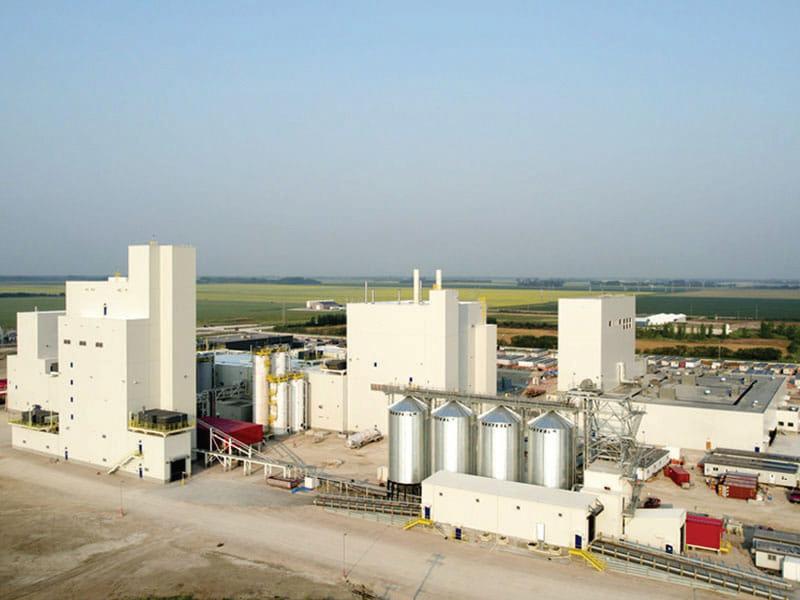
More than $24 million will be invested into the project, with the partners investing $13.7 million and Protein Industries Canada investing the remaining $10.7 million. Roquette, the project lead, will focus on improving the efficiency of pea processing while further exploring the development of new ingredients at their facility in Portage la Prairie. Submitted photo
sult will be a more diversified product offering, with new and expanded markets for protein, starch and fibre. Additionally, the improved processes will ensure profitable and competitive Canadian companies.
“As we work towards the goal of a $25 billion ingredient manufacturing and food processing sector for Canada, we must be focused on our competitiveness, and ensure we have profitable and successful companies,” CEO of Protein Industries Canada Bill Greuel said. “As is evidenced by this project, the Global Innovation
Clusters support companies to innovate and commercialize new products, helping them meet global challenges and remain competitive within the domestic and global market.”
More than $24 million will be invested into the project, with the partners investing $13.7 million and Protein Industries Canada investing the remaining $10.7 million. Roquette, the project lead, will focus on improving the efficiency of pea processing while further exploring the development of new ingredients at their facility in Portage la Prairie.
Keeping in mind that soybeans contribute $4.6 billion to the Canadian economy and Canadian corn production accounts for almost $1 billion in export revenue, the Federal Government has announced up to $5,733,852 to the Canadian Field Crop Research Alliance (CFCRA) to promote more diverse crop rotations on farms. The Cropping Systems Cluster, led by CFCRA, will develop the characteristics and practices to encourage diverse crop rotations for soybean, corn and oat. The research aims to reduce business risk for farmers by developing crops that are resilient to climate change and weather stresses, protect against losses caused by diseases and insects, and are profitable for producers overall. This will be achieved by developing oat varieties with improved traits for eastern and western Canada, as well as improving soybean varieties for short-season production environments in Canada.
“The research outcomes will support diverse crop rotations that can reduce GHG emissions, improve environmental resiliency and grow the economic stability of the Canadian grain sector,” said Wade Hainstock, CFCRA President. Research activities will also explore how diverse crop rotations can play a central role in reducing greenhouse gas emissions and how better genetics, land management, and fertilizer use can improve nitrogen use efficiency to protect the environment.


Aaron Sumrall, PhD is the Director of Outreach, Education, and Research at Pig Brig, a role he has held since joining the team in the fall of 2021. His research and management focused on feral pig management, including diseases, biology, behaviour, economics, damage, and human/feral pig dynamics.


the population, as the pigs become more wary and their movement patterns become less predictable,” he said. Trapping systems and coordinated, low-pressure strategies are more effective in maintaining control and preventing the spread of disease.
Sumrfall leads Pig Brig’s global outreach, working with about 35 countries on wild pig management. His responsibilities include addressing concerns related to wild pigs, assisting with resource management and policy development, and collaborating with different cultures to establish sustainable solutions for feral pig issues.
He explained the PigBrig trap system is the only patented net trap system. It was developed as an in-house product by leveraging years of experience from various company projects. Recognizing the necessity of an effective and adaptable trapping solution, Pig Brig extended this innovation to global use.
“This trap system represents not just a product but a dedicated team and family committed to its success and implementation worldwide.”
At the April Canadian Wild Pig Summit in Brandon, MB, a recurring question was why traps are used to eradicate wild pigs instead of relying on hunters.
But according to Sumrall, it won’t have the effect people might think it would have.
“Right, you’re not going to shoot your way out of a pig problem,” he said.
Wild pigs, or feral hogs, are creatures of habit. They often develop specific movement patterns and rotational behaviours in their habitats. Utilizing these predictable patterns can significantly enhance the effectiveness of eradication or control efforts.
When a group of pigs, known as a sounder, establishes a routine, it becomes easier to implement strategies for total control or eradication. Trapping systems like the Pig Brig net trap system can exploit these habitual behaviours by strategically placing them along their known routes and frequented areas.
However, using firearms to harvest individual pigs can disrupt these patterns. When one pig is shot, the remaining members of the sounder tend to scatter, making it much harder to track and trap them subsequently.
“This scattering behaviour complicates efforts to control

When dealing with solitary wild pigs that have established a predictable pattern, firearms can efficiently and quickly remove these individuals. Additionally, firearms can temporarily push back wild pigs in agricultural areas where planted crops are being heavily damaged. This provides critical time to implement other, more comprehensive management strategies for larger groups. In these contexts, firearms offer a quick response to immediate threats, helping to protect crops and manage individual pigs, while broader strategies are put into place for long-term control.
“But by and large though, whenever you reach for a rifle to manage a population like what we have with pigs, you’re reaching for a bandaid to put on a broken leg,” said Sumrall.
Wild pigs cause significant damage to farmland, and many farmers may not be fully aware of the extent of this issue. The problem is astronomical and increasing, with data suggesting that in the lower 48 states alone, wild pigs cause over $2.5 billion annually in direct losses at the farm level.
Collaboration with wildlife management authorities and initiatives like Squeal on Pigs can also help manage and reduce the wild pig population.
In states like Texas and
Oklahoma, the economic impact of wild pig damage is significant. Texas estimates around $300 per pig per year, while Oklahoma values it at $390 per pig per year. This substantial economic toll underscores the importance of effective wild pig management.
Throughout his career, people inquired about coming to Texas or the South to hunt wild pigs.
“They believe they can help with our pig problem, but there are other solutions than hunting,” Sumrall said. Often, hunters from areas with few pigs enjoy the experience so much that they illegally transport pigs back home to establish local populations for future hunting.
“This illegal transport exacerbates the issue, leading to astronomical damages to agriculture and native biodiversity. The only thing that keeps pigs from establishing themselves in new areas is the absence of water, as they thrive in almost any environment with sufficient water.”

Devon Baete, field operations manager for Squeal on Pigs Manitoba, is focused on expanding wild pig trapping across Manitoba. With an education in Natural Resources Management and 15 years of experience working one-on-one with landowners as a watershed project manager, Baete brings a grassroots approach to wild pig eradication.
He started the province’s only trapping program as a volunteer in 2018 and has worked with Squeal on Pigs Manitoba since 2020 and full-time since 2023.
At the recent Canadian Wild Pig Summit in Brandon, MB he presented his experience and then took the group on a personal tour of Spruce Woods Park, demonstrating drone surveillance and trapping setups.
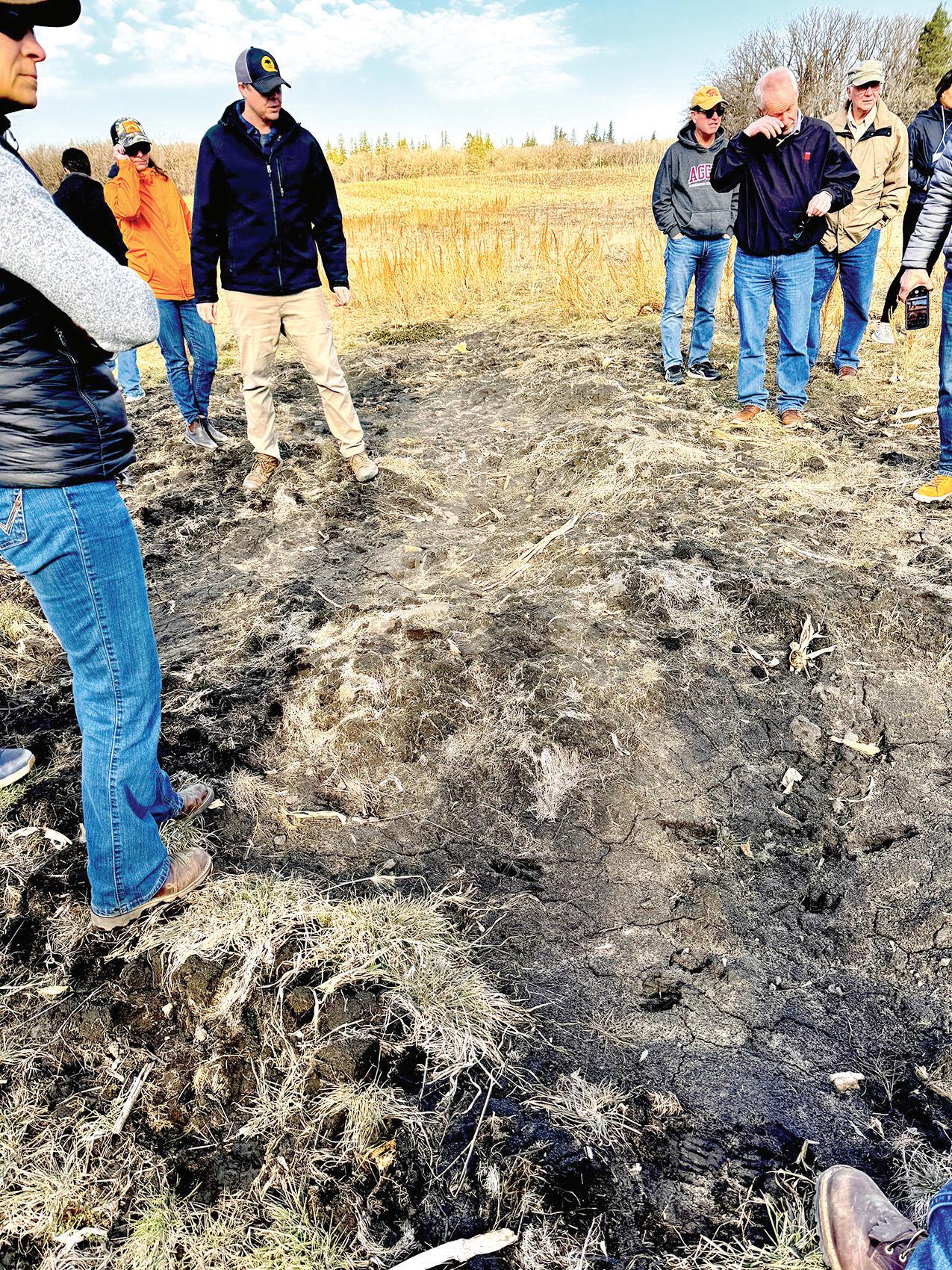
The tour on April 24 stopped near an area dug up by wild pigs, particularly in the previously grown corn field, which attracts them to feed.
“We’ve observed quite a bit of rooting in the vicinity with several farmers moving around more traps to address the situation,” he said.
Baete and his crew found significant additional rooting near that area the week of May 20 as the pigs move through Spruce Woods Park, travelling and feeding.
“They don’t tend to stick around for long but cause damage while there,” he said.
Recent photos of the pigs’ rooting and damage could help understand the extent of the problem and plan more effective control measures.
At the recent summit, Devon shared how the setup involves around 30 corral traps distributed to landowners. These landowners are responsible for managing these sites and consistently capturing pigs.
“Some landowners captured pigs last week despite ongoing meetings and other activities,” he said. “Significant planning is underway for the upcoming year and beyond, with a strong focus on increasing trapping efforts within Spruce Woods Park.”
Baete said the specific technique and equipment vary depending on the location and the targeted pigs. Typically, the public reports rooting or damage. Then the team goes out to confirm the presence of pigs, setting up cell cameras to monitor the area. Sometimes, the pigs do not
return to these areas, but the cameras continue to provide surveillance. When pigs return, they set up metal corral traps with bait, and the team works closely with landowners to manage the trapping process effectively.
Trapping efforts near Spruce Woods Park involve various techniques and equipment, including corral traps, net-style traps, and thermal drones. The approach depends on the specific situation and pig activity, often guided by public reports of rooting and damage.
The team collaborates with landowners for effective management, with the biggest concentration of wild pigs in Manitoba found around Spruce Woods Park.
“While the exact population is unclear, current data from cameras and monitoring suggests that the population may drop,” noted Baete.
Baete is adding more cameras to increase monitoring efforts, and continues setting up additional traps.
“Collaboration with landowners is critical to managing the pig population,” he said.
Success stories, particularly those north of Cypress River, show significant impacts from long-term trapping efforts. Expanding these efforts to other regions will yield similar positive results.
The largest number of pigs trapped at one time was 13 during a winter capture, including two sows weighing over 300 pounds and containing 16 foetuses, along with 11 juvenile pigs weighing 50
to 80 pounds each. In total, the mass of pigs captured exceeded 1,000 pounds.
After dispatching the pigs, the workers collect tissue samples, particularly spleens, and send them to the National Centre for Foreign Animal Disease (NCFAD) in Winnipeg along with the National Centre for Animal Diseases in Lethbridge, Alberta for testing and creating a tissue bank. The landowner determines the fate of the pigs by composting the poor-quality pigs but has the option to process them, but common sense says no due to the high potential for parasites.
Fellow journalist Ed White, who has taken the tour before, noted the high risk associated with consuming these pigs, which are not comparable to heritage or organic pork.
“This collaborative approach with landowners, who manage the traps, proves more effective than hunting,” said Baete.
Next, Baete explained the intricate benefits of using drones to capture and eradicate wild pigs. Thermal drones require experience to use effectively, as pigs tend to stay under cover, unlike deer or elk, which are often out in the open. Pigs typically bed down under spruce trees, appearing as hot, oval-shaped thermal spots. Multiple pigs cluster together, creating large white thermal shapes under tree cover.
“Identifying pigs is challenging, necessitating a focus on suitable habitats and careful observation of these thermal patterns,” said Baete.



Drones and robots will be put to work in the orchards of Kelowna, BC this spring as part of a pilot project to promote what the equipment maker calls “precision farming.”
The city is collaborating with BC company InDro Robotics to use its aerial drones and ground-roving industrial robots to patrol 80 hectares of apple, pear, and cherry trees to monitor fruit health and growth.
A statement from the city said the equipment will help farmers better manage their crops.
InDro Robotics CEO Philip Reece said autonomous robots and drones can inspect crops and provide real-time data on plant health, soil moisture and infestations.
The pilot project will last two years, with funding from Agriculture and Agri-Food Canada. Data gathered by the drones and robots will be stored by the city and is expected to help farmers increase yields and improve resiliency amid climate change, the statement says. The selection of farms for the project is being co-ordinated with the Regional District of Central Okanagan.
“Last year was an exceptional year for potatoes. People that have been in this industry for the last 40 years say they’ve never seen something like this,” said Isaiah Hofer, who grows about 560 hectares of potatoes at Acadia Colony Farms, northeast of Carberry, MB.
“We had at least almost 100,000 bags of surplus potatoes,” said Hofer. “In potato language, a bag is 100 pounds [45 kilograms].”
Hofer explained that last year’s weather made for a
bumper crop of spuds, not just at his farm but all across Canada. Usually a surplus can be sold off to fill shortfalls at other farms, but not when so many farmers are facing a surplus.
He considered using the potatoes for animal feed, or returning them to the earth where they would rot and become fertilizer.
But then he saw an email from the industry group Keystone Potato Producers Association, highlighting the work of a US-based non-profit called the Farmlink Project.
The Farmlink Project was founded in 2020 during the COVID-19 pandemic. It works to rescue food that is at risk of going to waste, and get into the mouths and bellies of people who need it.
Hofer wasn’t the only Manitoba farmer to step up. Together with a donation from Blumengart Colony Farms in Plum Coulee, MB, the Farmlink Project received 5.4 million kilograms (12 million pounds) of potatoes to divide up into smaller batches. They were delighted to receive the donation.
The Indian government will now allow the duty-free imports of yellow peas through to the end of October, after extending the period eliminating tariffs on the pulse for the third time this year.
In November 2017, the Indian government placed a 50 per cent levy on pulse imports, including yellow peas. That changed during 2023 when the government began to waive the duties on a temporary basis.
Jeff English, vice-president, marketing and communications for Pulse Canada, stated that succession of extensions has been very beneficial for Canadian exports of yellow peas to India.
“We’ve seen in the time that
the market has been open, peas continue to move to India,” he said.
The Canadian Grain Commission reported almost 750,000 tonnes of peas have been shipped to India from licensed facilities through March of the 2023/24 marketing year. A year ago that was zero, but now India has become Canada’s number two customer, only a pinch behind China at about 785,000 tonnes to date while Bangladesh is a distant third at slightly more than 90,000 tonnes.
“Having another trader is a good thing for Canadian farmers, certainly for the options on the table,” English added, suggesting the reopening of the India pea market is
partly behind the sharp reduction in Canadian pea stocks.
On May 7, Statistics Canada released its report on stocks of principal field’s crops as of March 31, with total pea stocks at 716,000 tonnes, for a drop of nearly 49 per cent from a year ago.
While English acknowledged farmers’ seeding plans have been pretty much set, there might be something of an increase in Canadian pea area for 2024/25.
Statistics Canada projected 1.26 million hectares of dry peas are to be seeded this spring, slightly more than the estimated 1.23 million seeded in 2023/24.
In Manitoba most of the peas are grown in the northwest and southwest regions.
The dry bean breeding program at Agriculture and Agri-Food Canada’s Morden Research Centre in Manitoba will continue for at least another five years under a new arrangement involving McGill University in Quebec and AAFC’s Harrow Research Centre in Ontario.
An earlier proposal from the federal government would have seen the program cut or moved to On-
tario entirely, but Manitoba Pulse and Soybean Growers (MPSG) executive director Daryl Domitruk says MPSG was successful in negotiating an agreement that will maintain funding to develop new pinto, black, and navy bean varieties with improved disease resistance in Manitoba.
MPSG will be contributing just over $300 thousand to the $2 million-plus program over the next five years, notes Domitruk. The new five-year $11 million pulse research cluster was just recently announced by the federal government. The federal funding comes under the Sustainable Canadian Agricultural Partnership.
“The new arrangement will allow breeders in Morden to tap into innovative plant breeding techniques that are being developed at the Harrow Research Centre in Ontario and at McGill University in Quebec,” says Domitruk.
In the last couple years, I have noticed that most dairy lactation diets contain a fortified level of chelated trace minerals. When I ask dairy producers why they feed them over conventional ones; they often say they don’t know or their nutritionist thinks it is a good idea. I have to admit there is nothing technically wrong with feeding chelated trace minerals to lactating dairy cows, but I also believe that feeding them in such a broad way is costly and is likely not necessary. That is why I take a practical approach and recommend feeding chelated trace minerals to lactating dairy cows in specific situations.
By definition - Chelation is a type of biological bonding of specific molecules to metal ions. The former is usually an organic molecule such as an amino acid bound to the latter, but not necessarily. This results in a chelationeffect, which yields greater bioavailability; superior absorption, retention and general metabolizable properties to the resident metal in dairy nutrition as compared to inorganic “rock” trace minerals.
Chelated examples include: positive (+) charged trace mineral bound to an amino acid - zinc methionine, copper lysine, and manganese methionine. It should be noted that a negative (-) charged trace mineral such as selenium cannot be truly chelated. Rather, organic selenium is produced by feeding inorganic selenium to yeast, which incorporates it into their body proteins.
Before, I decide to formulate chelated trace minerals into a lactation dairy diet, I often take a step back and question – what trace miner-
als are going to be required in the first place and at what dietary levels.
For example, the Research Council (NRC) recommends that the copper requirement to support these functions in dairy cattle is 10 mg/kg of diet (re: dm basis), which given a dry matter intake of 25 kg (dm, basis) means we need to supply about 250 mg per head per day. Research also dictates that feeding higher amounts of copper (as well as essential zinc, manganese and selenium) does not produce a beneficial response as widely believed. In fact, the opposite may be true – isolated dairy cases of copper toxicity have been reported at dietary levels as little as 400 mg/hd/day.
Consequently, I implement inorganic “rock” trace minerals in my own lactation feeding programs for dairy producers – largely based on NRC recommendations. That’s because inorganic copper sulphate, zinc oxide, manganese sulphate and sodium selenite have a suitably high degree of digestive, absorption and retention rates. Where these trace mineral rock sources tend to fail is when certain environmental situations arise - which significantly reduces their dairy bioavailability properties to the point where animals cannot meet respective nutrient requirements.
In these situations, I then switch to comparable chelated trace minerals, as such:
- Antagonistic minerals in forages – It is well-documented that high molybdenum in forages binds inorganic copper sources when both are ingested by the average dairy cow. Molybdenum is classic when it combines with this copper
sulphate in rumen and rest of the digestive tract to form insoluble complexes, which are easily excreted. Since, chelated copper-lysine cannot be bound by molybdenum, its natural metabolism to meet the lactating cows’ copper requirement remains uninterrupted.
- Build trace mineral status
– Trace mineral status is very important in the workings of immune function and reproduction, especially ovulation. Deficient levels of copper, manganese, zinc and selenium are known to cause anestrus in fertile cattle. Ohio State University animal scientists reported that cystic ovaries were diagnosed in 19% of a split group of dairy cows injected with organic selenium compared to a 47% incidence of cystic ovaries in untreated cows.
- Strengthening hooves – Zinc-methionine does strengthen cattle hooves. About 10 years ago, I balanced the dry cow and lactation diets for a 100-cow dairy herd. The dairy herd had a high incidence of footrot, and white-line sole separation. So, I suggested that we feed zinc-methionine (a specific chelated-zinc) at 4 grams per head, daily. After six-months, most of these hoof issues were almost non-existent. The hoof-trimmer even commented that the cowherd’s hoof-horn became much harder during trimmings. No other significant changes were implemented in their diet during this time.
These are three personal testimonials that demonstrate the strategic use of chelated trace minerals in lactation dairy diets. Whether dairy producers do use them in
Some of the first food aid to enter war-torn Gaza came from the Canadian Prairies.
Regina-based AGT Foods took its idea of a family parcel ration program to the United Nations in 2016. Together they developed a 26-kilogram box containing Saskatchewan-produced lentils, peas and chickpeas, combined with other nutritional products.
International aid agencies distribute the boxes.
More than one billion refugees have been fed since a pilot program launched in 2017, said AGT Foods chief executive officer Murad AlKatib.
“This is not philanthropy,” he said. “It’s a profit-making venture for us. We made millions of dollars and the United Nations saved billions of dollars on its consolidation and supply chain efficiency.”
“I’m proud that when the humanitarian corridor in Gaza opened that Saskatch-

such defined ways or in mainstream dairy nutrition is really a matter of choice. In both ways, they should satisfy respective lactating dairy cow trace mineral requirements.
Take a practical approach and feed chelated trace minerals to lactating dairy cows in specific situations.


ewan products were the first products that moved through the Egyptian corridor to Gaza refugees,” he said. “This year we’re projecting to do maybe $300 to $400 million of food aid to Gaza refugees.”
This week vessels are sailing from Thunder Bay with locally grown lentils that will be sold to the UN to help tackle one of the largest humanitarian crises, he added.
In an interview, Al-Katib said governments have always viewed food as a stabilizer to world unrest.

New Prairie-wide Fusarium head blight (FHB) risk maps are now available to producers in Manitoba, Saskatchewan, and Alberta. The tool provides assessment of Fusarium head blight index (FHBi), Fusarium-damaged kernels (FDK), and Deoxynivalenol (DON) risk levels in spring wheat, winter wheat, barley and durum based on weather conditions.
These risk maps were created as part of a three-year research project led by the University of Manitoba’s Dr. Paul Bullock, with collaborators from Alberta Ministry of Agriculture and Irrigation, Saskatchewan Ministry of Agriculture, Manitoba Agriculture, Manitoba Crop Alliance (MCA), Saskatchewan Wheat Development Commission (Sask Wheat), Saskatchewan Barley Development Commission (SaskBarley) and Alberta Grains.
“The Faculty is very pleased to release this important risk management tool for the agriculture industry,” says Dr. Martin Scanlon, dean of the faculty of Agricultural and Food Sciences at the University of Manitoba. “The project is a great example of multiinstitutional collaboration, where the combined skills and talents of both federal and provincial agricultural personnel, plus university collaborators, have facilitated research outcomes that could not have been achieved otherwise.”
The weather-based risk is calculated using realtime weather data from more than 500 stations operated by Environment and Climate Change Canada, the Manitoba AgWeather Program, Saskatchewan Public Safety, Alberta Climate Information System and Metos Canada.
The risk algorithms are “homegrown” based on research data collected from 600 plot sites across 15 locations in western Canada each year from 2019 through 2021 and tested in more than 300 producer fields on the Prairies during the same period. Previous FHB risk maps from each provincial agriculture ministry utilized imported FHB risk algorithms with limited accuracy testing and could not assess risk in barley or durum, nor for either FDK or DON. The risk mapping tool is publicly available and accessible using a smartphone, tablet or desktop computer.
The risk for disease severity varies considerably by location and year because of variable weather during the lead-up period prior to flowering. The tool has both financial and environmental benefits, since the need to apply fungicide for disease control at a given location also varies from one extreme to the other.
“We are proud to help provide Manitoba wheat and barley farmers with a powerful tool to combat FHB in their fields,” says MCA CEO Pam de Rocquigny. “These new risk maps are an excellent example of MCA’s vision in action – an investment that will make our farmer members more productive and sustainable.”
The new tool can be found at prairiefhb.ca.
Soil contamination of forage from pocket gopher infested fields can be a major concern that a grower may not even be aware of unless trying to balance a ration with forage from an infested field.
Pocket gophers, sometimes called moles are fairly well known to most hay growers throughout Manitoba.
The damage they do by cutting off the roots systems of forages like alfalfa isn’t always noticed immediately. What is more notable is the damage that the mounds do to equipment and the overall yield of a stand.
Forage contains ash. This ash comes from two sources: internal, e.g. minerals like calcium, magnesium, potassium and phosphorus, and external, e.g. dirt, bedding, sand, etc. The average internal ash content of alfalfa is about 8 percent and of grasses is about 6 percent. Additional ash in a hay or silage sample is contamination from dirt, sand, etc. Looking at some feed results out of Wisconsin we see levels as high as 18 percent, which means that these producers are feeding their cattle a lot of dirt. Here in Manitoba I don’t suspect that it would be any different.
Hay fields that are heavily infested with mole hills can contribute to the external source of ash that shows up in feed. Every time the harvesting equipment encounters a hill it spreads soil from that mound on to the freshly cut forage that then makes its way into the hay or silage.
Because pocket gophers burrow underground their burrowing unearths mounds of soil that are large and
make the ground rough and hard on haying equipment. Rotating fields out of forage into annual crops discourages pocket gopher activity but it usually results in them relocating to nearby forage fields. Where forage stands are still productive producers wanting to extend the productive life of a field will look at levelling the mounds every couple of years early in the spring. Typically this might be done using a blade or set of blades set at least ¾ of an inch above the ground so that the only time it comes in contact with the ground is when it hit a hill.
Although a lot of the implements can be set to apply the full weight of the machines on the blades caution should be considered as to timing of the operation. When levelling alfalfa fields one needs to be aware of new growth buds that develop from the crown at the soil surface. Dragging a field when these new buds
are appearing could damage them requiring the plant to send out new buds thus delaying spring new growth. Setting blade height to avoid damaging the plant but still level the mounds should be considered.
Controlling pocket gophers in a forage field can be very
difficult and time consuming. A better approach might be to consider approaching the problem with the goal of managing the problem with a variety of techniques such as trapping, rodenticides and crop management practices.
John McGregor is with MFGA Extension Support.

Forage contains ash. This ash comes from two sources: internal, e.g. minerals like calcium, magnesium, potassium and phosphorus, and external, e.g. dirt, bedding, sand, etc. The average internal ash content of alfalfa is about 8 percent and of grasses is about 6 percent. Additional ash in a hay or silage sample is contamination from dirt, sand, etc.


Gordon Janzen, Manitoba representative of the Canadian Foodgrains Bank (CFB) joined some Africabased staff touring project
crops here in Manitoba. These staff members work with our member agencies to support local partners in implementing nature based food security programs.
Janzen hosted three CFB staff members, Florence Nduku from Kenya, Meslin Mathewos from Ethiopia, and Sisay Kasu, also from Ethiopia, on a tour of


farm operations in southern Manitoba.
In addition to touring the visitors were at the Mennonite Collegiate Institute chapel in Gretna to talk
about their experience with the impacts of a changing climate in east Africa. Later they visited four farm sites to learn about farm seeding practices in Manitoba.
Since these visitors from east Africa work with farmers who cultivate much smaller fields they were eager to see parallels between farming in Africa and farms in Canada.


a
At the recent Canadian Wild Pigs Summit in Brandon, MB, the Government of Canada and the Province
four years. The campaign aims to identify, control, and remove wild pigs from Manitoba, ultimately aiming for their eradication.
Field technicians will work with landowners to coordinate tracking and trapping activities and provide neces-

sary tools. The initiative also includes a comprehensive communications and public relations campaign. This funding, supported by Manitoba Pork, the Government of Canada, the Province of Manitoba, and the agricultural sector, will help protect livestock, crops, and the environment from the threats posed by wild pigs.
Submitted photo
Lawrence MacAulay, Minister of Agriculture and AgriFood for Canada, said wild pigs can spread disease and cause severe damage to cropland and natural habitats.
“This vitally important campaign, backed by federal and provincial investments under the Sustainable Canadian Agricultural Partnership, will help manage the population of wild pigs and keep our land and livestock safe,” said MacAulay.
Manitoba’s agriculture minister, Ron Kostyshyn, told the group he’d like to speak about a more cheerful situation. “But I think the reality is that this is probably one session of many to come, given the challenges we want to avoid in the long run with the wild pigs.”
He didn’t think anyone five or ten years ago would have thought this would be a session or a conversation people would have, but it is here.
“The best thing we can do is use this as a great example, communicate, and work together from various sectors of the organizations we represent,” he said.
Addressing the wild pig issue promptly is crucial to
mitigating potential consequences. The sooner the situation gets managed, the less worry there will be about the risks these pigs pose to livestock, crops, wildlife, and the landscape.
The collaborative efforts, backed by new funding, aims to protect agricultural production, animal health, and the natural environment from the threats posed by wild pigs.
“By working together and utilizing resources effectively, the goal is safeguarding the province’s resources and biodiversity,” said the minister.
“Wild pigs continue to thrive across Manitoba and are vectors for many diseases that have a devastating impact on both domestic pigs and other animals,” said Dr. Wayne Lees, project coordinator of Squeal on Pigs Manitoba.
Lees said the partners, including Manitoba’s agricultural sector and stakeholders, will use this new funding to increase tracking, trapping, remove wild pigs from the landscape, and protect the province.
Manitobans are encouraged to report any evidence of wild pig sightings or signs of activity to help track their
movements and support eradication efforts. Reports can be made through the website squealonpigsmb. org or by calling the 1-833SPOT-PIG hotline.
Residents must also refrain from hunting wild pigs alone, as this can disperse the populations, alter their movement patterns, and hinder trapping efforts.
The Manitoba Invasive Swine Eradication Project rebranded as Squeal on Pigs Manitoba, was launched in January 2022. This initiative is a partnership between the Government of Canada, the Province of Manitoba, and Manitoba Pork, funded through the Canadian Agricultural Partnership.
The Sustainable Canadian Agricultural Partnership (CAP) is a five-year agreement (2023-2028) with a budget of $3.5 billion. This partnership aims to enhance the competitiveness, innovation, and resilience of the agriculture and agri-food sector. The funding includes $1 billion for federal programs and activities and $2.5 billion cost-shared by federal (60%) and provincial/territorial (40%) governments for programs designed and delivered by the provinces and territories.
This year, when my sisterin-law passed away, at her funeral there was a photograph of the farm yard where she grew up in the 1940’s/1950’s. My husband said he’d like a copy of that photograph. I decided more than likely with a little research on my computer I could locate the company who had the photographs now.
After a bit of searching, I found the company Homestead Aerial Photo Ltd., was now owned by Kim Bessette and his wife Eileen Deringer. They have digitized over one
and half million photographs of farms and other sites such as hospitals, churches, town sites and businesses covering Manitoba, Saskatchewan, Alberta, British Columbia and Prince Edward Island, some areas of Nova Scotia, and Ontario dating back to 1953.
Kim located three photographs of the Airey farm site which was homesteaded by my husband’s grandparents over hundred years ago. Through those photographs you can see how the yard changed over the times. Now it’s the site of HTA Charo-

lais Farms sale barn, calving barn, and numerous loose housing sheds. My husband purchased the farm from his Dad in the mid sixties and our son Shawn and his wife
Tanya purchased the cattle operation in the 2020’s. Their children are very interested in the cattle operation and their son Chase is helping me put the history of HTA Charolais Farms together going through photo albums.
Homestead Aerial Photo
Ltd. was able to show the changes in the farm site from 1950’s through to 1970’s. The photos were originally taken by Superior Air Photograph which was started in 1953. Then Bessette and Deringer purchased it in 1993. Coincidentally when I was looking for Homestead Aerial Photograph they had a display at Ag Days in Brandon which was unknown to me.
“We have displayed every year at Ag-Days in Brandon, Canadian Farm Show (previously known as Farm Progress Days) in Regina and in July at Ag-in Motion in Saskatchewan. We plan
to be in the Swan River, Kamsack and Roblin area this summer with displays,” said Bessette.
“As farms grow steadily in size over the years hundreds of old farm houses and buildings are knocked down to clear the land. Customers can give me the land description (township and range) describing the buildings and locations. I will find the photographs they are looking for and can print and frame them,” added Bessette. “People’s reactions when they find those old photographs with personal and emotional ties are the highlights of my day.”
Homestead Aerial Photo Ltd. is based in Calgary, Alberta. At their website homesteadaerial.com all you have to do is fill out the farm search form and they will email the sample to you. For my search I used the legal description of our farm to locate the photos. Then when you purchase photographs they are printed from the original negatives.
Why not record your farm
history while family is around to help you record the facts correctly. For example my parents farmed in the Coulter area and I have a photograph from the company of the farmyard taken in the fifties. The fifteen-room brick house no longer stands and the other buildings were destroyed by a twister in 1961.
The present owner no longer lives in her farm home and my family has never visited the area so it is lost history.
Another way to record your farm history would be to put together photographs in a book with the history. It’s easy with companies such as Forever and other
on-line companies or most photography shops. You can have one book or ten printed depending how many family members want a copy. I’m slowly getting photographs digitized so next winter I can put a farm history together.
It’s hard to believe that over a hundred years ago my husband’s grandmother traveled from Alexander to the home farm west of Rivers with an ox pulling a stone boat with three little boys. She had to cross the Assiniboine River via ferry I believe. With her husband she raised eight children of her own and two orphans at their new homestead.

A long time ago, I helped a producer feed loose mineral to his herd of 60 beef cows. It was at the start of summer and during their breeding season. We just rip open a couple of bags and pour the mineral into an old wooden crate near a full dugout of drinking water. Often, he would let them run out, but he didn’t care as long as each cow got bred. Such practice is unacceptable today. Assured good mineral intake by the breeding beef cows builds up their good macro-, trace-mineral and vitamin status, which contributes to optimum health and high conception rates. All it really entails is that each cow eats a few ounces of a nutritious mineral on a daily basis. At times, this simple task is challenging, but with good committed management can be achieved. Consequently, there are many factors that either promote or hinder the consumption of a commercial cattle mineral, so that each cow consumes 56 – 112 grams (2 – 4 oz), daily. Here is an outline of some major factors:
1. Mineral formulation
– Salt-free mineral is eaten to a lesser extent than one containing 10 – 15% salt. If salt makes up at least 20% of this mineral, one should adjust suggested mineral intakes, accordingly. Note - cattle also may shy away from mineral that contain excessive amounts of limestone (calcium), phosphorus (over 10%), or salt (over 25%).
2. Water quality – The mineral content and salinity in the cows’ drinking water is one of the biggest challenges to get breeding cattle to eat
loose-fed mineral. A few years ago, I recommended a 2:1 cattle mineral (with 10% salt) to a 200 cow-calf operation that grazed rotational pasture - drawing water from a natural spring. It contained low levels of salt and minerals; the cattle ate about 4 oz. of mineral, daily. Weeks later, the cattle were moved to a new pasture in which its well-water was very saline. As a result, cattle minerals consumption fell to zero.
3. Timing – Whether cattle are overwintered on a good mineral program or not; it seems that providing loose mineral on pasture is a new experience for even the most mature cowherd. Over consumption of cattle mineral is initially expected, which should taper off after a week or so. Because of this phenomenon, it important to keep loose mineral available at all times.
Overcoming these few obstacles to good cattle mineral consumption is a matter of consistent mineral-management.
We should: (1) calculate the amount of mineral that you would need to carry the cowherd, every few days. It goes something like this: 300 cows x 112 grams of mineral x 3 days = 100 kg or 4 x 25 kg bags of mineral, (2) place about 1/3-bag in about a-dozen durable mineral feeders (one per 30 cows) and (3) check back every few days and refill mineral feeders. Note- adjust mineral consumption as the summer progresses and spring calves start eating minerals, too.
By experience, I prefer to fill with mineral the 3-compartment plastic mineral-
feeder covered with a thick rubber flap.
A few years ago, I knew a producer with the same amount of beef cows as above (roughly 300 cowcalf pairs); he mounted seven new mineral-feeders on tractor tires. These mineral feeders were spread out over summer pastures, with one or two of them placed near water-filled dugouts in which the cattle congregate. Caked and clumps of mineral were removed and fresh mineral was placed every few days.
The funny thing is that this producer had low mineral problems for the first few weeks of that year’s summer. His cowherd would eat barely ½ ounce (15 grams) of saltfree mineral per day. Subsequently, he solved/increased his herd’s mineral consumption in three ways. (1) Switch to a mineral with 15% salt. Removed most of the freechoice blue-salt blocks from pasture. Mixed 1/3 salt with 2/3 of this new newly formulated mineral – pour it into the mineral feeders. (2) Moved feeders closer to the dugouts (3) Stopped feeding liquid molasses in a lick-tub near one of the mineral feeders. As a result, mineral consumption levelled off to 70 grams per head per day.
It feels good to hear such mineral intake success stories. It wasn’t solved with a lot of scientific fanfare, but with some common sense. It also reminds me that good mineral intake of a cattle mineral goes hand-in-hand with a well-balanced mineral formula. One that meets the essential mineral and vitamin requirements of breeding cows and eventually helps get them pregnant.
Over the years when visiting friends in Vernon, BC, Joyce and I have made a visit to Davison Orchard and enjoyed their delicious apple cider which is freshly squeezed, apple pie, and before going home a delicious ice-cream cone. The business is run by three generations and Grandpa Bob as people refer to him is a wealth of knowledge when it comes to fruit.
This is a family that practices “value added”. They grow the fruit and vegetables that you can buy fresh or you can enjoy the scrumptious food in their little restaurant. Or if
I follow Tamra on YouTube to get some of her delicious recipes. The following Creamy

1 giant Walla Walla Onion (chopped). Sauté the onion until tender
For the creamy sauce
1/4 cup butter
1/4 cup flour
3/4 cup half and half cream
1/4 cup chicken broth
Cook over a low heat stirring to keep it smooth. When it’s thickened add 3 Tablespoons Parmesan Cheese.
1/2 teaspoon salt
Fresh ground pepper
Stir into cooked onion.
If you are in Vernon I recommend visiting them for a tour, enjoy some of their delicious produce or relax in their home cooking in their restaurant. They are presently printing a new cookbook which will have lots of recipes to use our Canadian grown produce and fruit.
Since we have been having cool rainy days frequently, I have been making soup once in a while. Normally I use what we grow but I decided maybe a change of menu would be nice so I made Clam Chowder a recipe I use regularly.
Clam Chowder with Bacon and Croutons
1/4 cup butter

2 onions, finely chopped
1/4 cup of all-purpose flour
4 cups milk
3 medium potatoes peeled and diced
1 teaspoon dried thyme
1/4 teaspoon salt
1/4 teaspoon pepper
2 tins clams with juice (5 oz. or 142 grams each)
6 slices bacon cooked crisp

1/2 cup chopped bread croutons
3 green onions chopped
Melt butter in a large saucepan or Dutch oven.
Add onions, Cook until fragrant but do not brown.
Add flour.
Cook over medium low heat, stirring, for five minutes.
Cool slightly. Whisk in milk. Bring to a boil.
Add potatoes, thyme, salt and pepper.
Reduce heat, cover and simmer until potatoes are tender about 20 minutes.
Add clams and juices and heat thoroughly. DO NOT BOIL.
Taste and add seasoning if necessary.
Serve garnished with green onions, bacon bits and croutons.
Preparation time is 15 minutes. Cooking time 25 minutes. I half this recipe if just the two of us as it’s enough for more than one meal. This is a Manitoba Milk Producers recipe I have used for 30 plus years.
