2023 Harvest in Manitoba Continues Ahead of Schedule
African Swine Fever Rocks the Swedish Pork Industry
By Harry Siemens
International trade in pork continues to face disruptions as several countries block imports of Swedish pork due to a recent outbreak of African swine fever (ASF) in wild boars in Sweden. Even though the disease has only been detected in wild boars and poses no danger to humans, Armenia, Australia, Japan, the Philippines, Singapore, Taiwan, and Ukraine have all suspended Swedish pork imports.
The Swedish Meat Industry Association expressed frustration, emphasizing that this action seems unreasonable, given that the meat is safe. The ASF virus is highly contagious and fatal for pigs and their wild relatives, which makes any outbreak potentially devastating for the pork industry.
The recent outbreak in Sweden, with seven cases found in wild boars since September 6, has led to immediate measures, including blocking public access to forest and wildlife areas in a significant zone around the affected area.
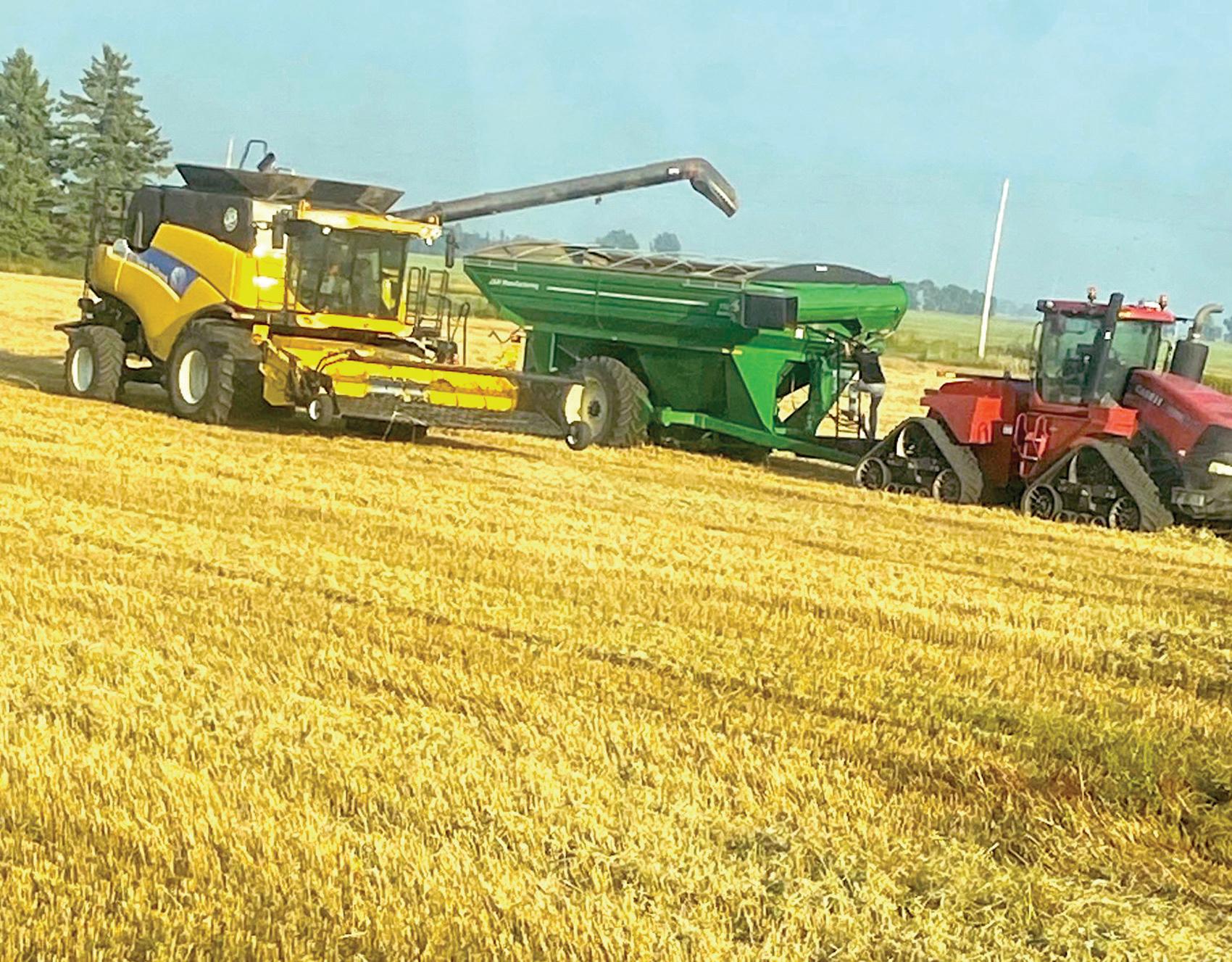
Ron Krahn was harvesting wheat on August 28.
By Harry Siemens from fair to mostly good.
Dennis Lange, a pulse and soybean specialist with Manitoba Agriculture, expects soybean and canola harvests to accelerate with favourable weather conditions.
Lange said harvest progress in Manitoba currently stands at about 75 per cent complete across the province. Harvest activities continued depending on the localized rain events in various cereal crops, with barley at 95 per cent, oats at 95 per cent, and spring wheat at 93 per cent completion. Overall, cereal crop conditions range

Regarding corn, many fields have reached growth stage R6 and are in the drying-down phase. Canola harvest is ongoing, with approximately 55% of acres harvested across the province. Soybean fields are primarily in growth stages R7 to R8, with provincial harvest progress at 21%.
Producers should regularly inspect their fields for weed infestations that may have escaped control measures, a crucial aspect of integrated pest management. Waterhemp, for instance, has been identified in
the central and eastern regions, emphasizing the importance of promptly identifying and managing unusual pigweeds.

In oilseeds, canola harvest continues, with around 55 per cent of provincial acres harvested and 75 per cent completed in the Central region—the overall condition of the canola crop ranges from fair to mostly good. Sunflower fields are transitioning to growth stage R9, with the crop generally in good to excellent condition.
Flax crop growth stages vary, with some fields at late stage
Submitted photo

11 (brown capsule) to stage 12 (seed ripe). Flax harvest in the central region is approximately 40% complete, with the crop’s condition rated as fair to mostly good.
In the pulses and soybeans category, soybean fields are predominantly in growth stages R7 to R8, with harvest progress at 25 to 30 per cent provincially. Soybean yields have shown variability, ranging from 20 to 40-plus bu/acre, depending on summer rainfall. Overall, the condition of the soybean crop remains good.

Continued on page 2...
World-renowned veterinarian consultant Dr. John Carr points out the severity of the situation, stating that it can potentially destroy Sweden’s pig industry. He raises concerns about the disease introduction, considering Sweden’s biosecurity measures and the possibility of deliberate introduction.
One point of contention in the report is the reference to a 2018 outbreak in China, the world’s largest pork producer, where China slaughtered millions of pigs to curb the spread of ASF. Dr. Carr said that ASF continues to spread and cause chaos in China. Additionally, Ukraine, which experienced an ASF outbreak over a decade ago, is currently grappling with catastrophic ASF outbreaks.
The report underscores the gravity of ASF outbreaks and their immediate impact on global pork trade as countries respond by suspending imports to prevent the spread of the disease.
“The ASF is raging in Ukraine right now. It’s a disaster, commented a Ukraine Vet friend of mine!” said Dr. Carr. “They want me to do additional biosecurity training.”
� The AgriPost
2023 Harvest in Manitoba Continues Ahead of Schedule
Dry bean harvest is approximately 72% complete, with reported yields ranging from 1200 lbs/acre to 2500 lbs/acre.
Corn silage harvest is underway in the eastern region in the forages and livestock, with some interruptions due to scattered rain showers. Straw baling for bedding and cattle feed is in progress. Beef producers are working on the second cut from predominantly grass fields and baling straw when available.
Some producers are considering taking a second cut on alfalfa fields that are in full bloom. Forage growth on hay and pasture has most-
Continued from page 1...
ly concluded due to dry conditions and the approaching end of the growing season.
Regarding livestock, some producers are supplementing hay on pasture to meet cattle nutrient requirements and reduce grazing pressure on grass. Dugout water levels are low, particularly in areas with consistent rainfall deficits. Grass conditions on pasture are declining as fall progresses, primarily influenced by moisture levels, grazing management, and soil type.
Flies remain abundant, with grasshoppers also impacting pastures. Producers are relocating cattle to fall grazing areas, and more cattle are entering auction marts as producers leverage wet days to work with livestock. Recent rainfall in the Southwest region has improved pastures, providing a renewed sense of green growth.
Manitoba Agriculture reports that fall cereal and field pea harvests are complete, with spring cereals nearing completion. Growers are transitioning to the soybean, canola, and dry bean harvests. Despite variations in crop yields and quality, most growers are satisfied with this year’s crop.
Overall, Manitoba’s agricultural sector is moving steadily through the harvest season, focusing on optimizing crop yields and quality in the remaining weeks.
Manitoba Crop Alliance 2023-24 PostSecondary Bursaries
The Manitoba Crop Alliance is now accepting post-secondary bursary applications for the 2023-24 school year.
They established their bursary program to assist with the financial needs of students who are enrolled in a postsecondary agricultural program within the province of Manitoba. Bursaries valued at $2,000 each will be awarded to six students.
Applicants must submit an application letter and transcript by January 12, 2024. Successful applicants will be notified by February 9, 2024, and announced at the MCA Annual General Meeting (AGM) on February, 15, 2024. Go to mbcropalliance.ca for more information.
September 29, 2023
2
The AgriPost
Ken Foster was harvesting rye on July 31 at Arborg, MB.
Submitted photo
FCC Marks 20 Years of Drive Away Hunger with $1M Match Program
their contributions to Drive Away Hunger with whatever means they have.” said Hendricks. “Whether it’s a cash donation online or perhaps a company that would like to redirect surplus product or seconds through Drive Away Hunger, you can ensure your donation benefits food insecure people in your community.”
Drive Away Hunger has evolved over its 20 years into an industry-driven initiative that works together for vulnerable Canadians. Through the program, donors in the industry can get connected with charitable food security agencies in hopes of creating long-term, sustainable relationships.

In celebration of the 20th year of Drive Away Hunger, Farm Credit Canada (FCC) is announcing it will match up to $1 million in new donations to food security agencies in Canada.

For two decades, Drive Away Hunger has brought the agriculture and food industry together to support food banks and food security programs. Last year, Drive Away Hunger raised a record 40 million meals and FCC hopes to inspire an even bigger impact this year with its match program.
“The results of Drive Away Hunger are incredible. Not only from the size of donations, but also from the real
difference it makes in the lives of Canadians, said Justine Hendricks, FCC President and CEO. “Marking this milestone 20th year, we are confident the Canadian food system will come through with its trademark generosity and make the most of FCC’s match program.”
FCC’s match will be shared by Food Banks Canada and Second Harvest Canada who will direct the funding to underserved rural and remote areas in need of support.
29% of Canada’s food banks are in rural and remote communities, where food can be more expensive and difficult to access.
Being a part of the Drive
Away Hunger community is easy to do. Donations can come in the form of cash or food, it all makes a difference. Nearly 20% of Canadians are getting their food from charitable organizations like food banks. The demand continues to increase and the Canadian food system can provide help through its vast network of agricultural and food companies and producers.
“Good work has already been done, but there is so much more potential for donations, that is why we are putting the call out to the agriculture and food industry to use FCC’s match program as a way to make the most of

A Winter Whiteout Is on the Way!
Drive Away Hunger has evolved over its 20 years into an industry-driven initiative that works together for vulnerable Canadians. Through the program, donors in the industry can get connected with charitable food security agencies in hopes of creating longterm, sustainable relationships. FCC works with partners and communities to identify opportunities and create meaningful results in communities across Canada.
Cash and food donations can be made online at driveawayhunger.ca.
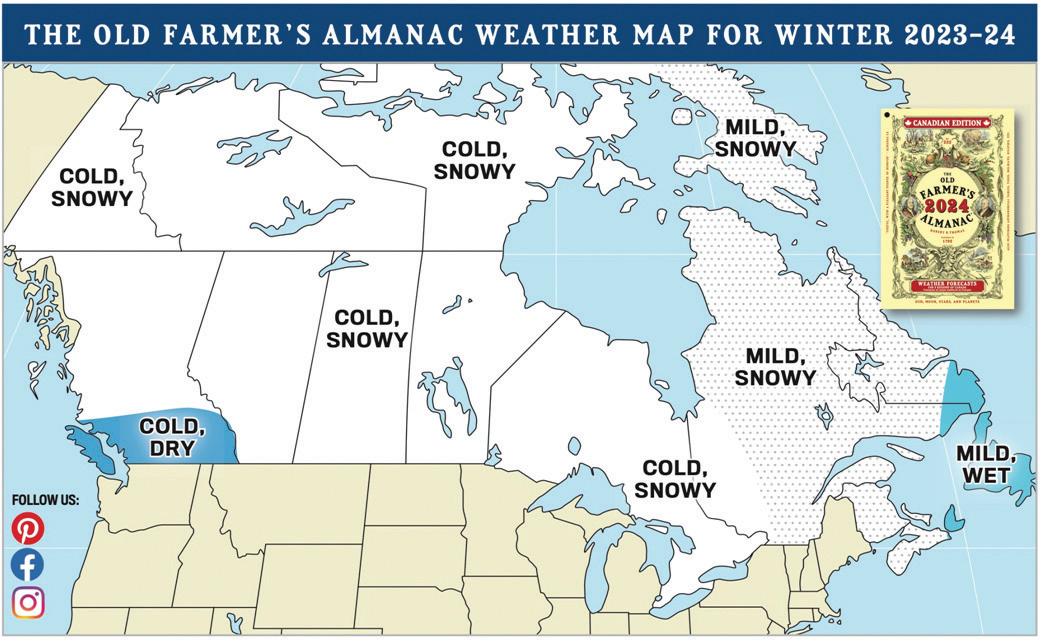
From the Atlantic seaboard to Arctic shores to the Pacific Coast—in almost every nook and cranny that typically sees snow—Canadians should expect oodles of fluffy white throughout the season according to the 2024 Old Farmer’s Almanac Canadian Edition. This will be coupled with seasonably chilly temperatures at or below normal.
3 September 29, 2023 The AgriPost
Submitted photo
The Importance of Careful Voting in Manitoba’s Election and its Impact on Agriculture
Now, with the possibility of the NDP winning the upcoming election, as some polls indicate, voters need to understand the potential implications for agriculture and food prices.
ture boosted the economy and created numerous job opportunities in rural communities.
food prices.
As Manitoba heads into its election year on October 3, voters must consider their choices carefully. One particular concern is the stance of the NDP party towards agriculture, specifically animal agriculture and hog production. In 2011, then-Premier Gary Doer’s government passed legislation limiting the hog sector and stifling expansion.
However, when the conservatives and Premier Brian Pallister took over in 2015, Manitoba witnessed significant growth in this industry because of a slight change to that legislation and hog production expansion continued.
Agriculture is a fundamental industry that forms the backbone of Manitoba’s economy. When treated with respect, honour, and love, it is a renewable resource that ensures the well-being of the environment, the soil, and the people it feeds. Farmers play a critical role in nurturing the land and caring for the animals they raise, including cows, pigs, chickens, horses, etc. Their dedication to sustainable farming ensures a consistent and reliable food supply while safeguarding the environment.
When given the right political environment and freedom to farm sustainably, agricul-

With an increased focus on hog production, farmers were able to meet the growing demand for meat products while adhering to strict quality and safety standards. Expansion in agriculture not only benefits farmers but also contributes to food security and stability in the province.
I’m not here to support any political party but for you to know what is at stake.
However, it concerns me with the possibility of the NDP winning the election; the party’s previous legislation in 2011 limited hog expansion, hindering the growth and progress achieved so far. If the NDP were to regain power, there is a risk that we could face such limitations again, impeding the development of animal agriculture and negatively impacting
Given the potential consequences for agriculture, it is vital for voters to carefully evaluate the parties and candidates before casting their ballots. Consideration should be given to their stance on agriculture, particularly their support for animal agriculture and hog production. It is essential to ensure that the elected representatives will continue prioritizing the industry’s growth, sustainability, and the welfare of farmers and animals.
To maintain Manitoba’s thriving agricultural sector, voters must understand the significance of their choices.
Supporting candidates who value and prioritize agriculture and understand the importance of sustainable farming practices will help secure the industry’s future. By nurturing the environment, treating the soil with care, and en-
suring the welfare of animals, farmers play a vital role in providing safe and nutritious food to the population.
As the Manitoba election approaches, voters must carefully consider the implications of their choices, particularly concerning agriculture and its impact on food prices. By electing representatives who prioritize sustainable farming practices and support animal agriculture, voters can help secure a prosperous future for Manitoba’s economy, environment, and food security. Remember, agriculture is a fundamental industry deserving of respect, honour, and love – let’s preserve it for generations to come.
I continue to serve agriculture, a basic industry with a renewable resource. Remember, as my good friend Orion Samuelson used to say, “If you eat, you are involved in agriculture.”
Manitoba Harvest Well Advanced
By Elmer Heinrichs

Combines have been picking up the swaths, those long rows of crop in fields, or straight-combining grains and oilseed crops for six weeks now and Manitoba agriculture reports that harvest progress sits at 64 per cent complete across the province which is ahead of the five-year average.
Harvest continues in spring cereal crops, with barley at 95 per cent complete, oats at 95 per cent complete and spring wheat at 93per cent complete. Overall, cereal crops remain in fair to mostly good condition.
Many corn fields had achieved growth and in drying down mode, canola harvest continues with approximately 55 per cent of
the acres being harvested across the province. Soybean fields are reaching maturity and harvest progress 21 per cent) is growing by the day.
Producers are encouraged to scout their fields for weeds that have escaped control.
The Manitoba potato harvest is in full swing with about a third of potatoes having been harvested, says Manitoba Agriculture’s Plant Pathologist Vikram Bisht. Direct-from-field harvesting for processing continues.
The dry bean harvest is about 72 per cent done with yields from 1,200 to 2,500 lbs per acre.
Spotty rain showers halted harvest for some in cen-
tral region, with Portage la Prairie farmers receiving the most rainfall at 12 mm. However sunny weather allowed producers to return quickly and farmers made decent progress with canola, flax, dry beans, soybeans and the potato harvest.
Harvest of spring cereals including oats and barley, is mostly complete with wheat yields variable depending on how much rainfall the crop received. Most spring wheat yields have been 35 to 65 bu/ac, oats have yielded 80 to 130 bu/acre, and barley between 70 and 100 bu/acre.
Rainfall and low temperatures slowed harvest and field work in eastern region and producers look forward to making significant prog-
ress on the canola and soybean harvest this week.
Spring wheat harvest stands at about 95 per cent complete with average yields better than expected of around 70 bu/acre with 13.5 per cent or higher protein levels and grading No. 1 or No. 2 Canada. Oats yielded 130 bu/acre with good bushel weights and barley averaged about 100 bu/acre.
In central region, canola harvest continues with about 75 per cent done with yields averaging close to the 3040 bushel range, with some fields by Elie achieving 70 bu/ac. Soybean harvest is underway, with low 20-25 bushels an acre yields. Edible beans are yielding 1,200 to 2,500 lbs/acre.
Eastern reports that sunflowers are reaching the desiccation stage, and that the crop remains in excellent to good condition.
Yield estimates for canola are for around 60 bu/acre with good quality.
Corn silage harvest is well underway throughout eastern region. Straw is being baled for bedding and cattle feed. Producers are taking second cuts of hay and alfalfa. Some producers are supplementing hay on pasture to ensure nutrient requirements of cattle are being met.
Producers are currently busy with harvest, seeding winter wheat, and many are working with harvest weed applications, and preparing feed for winter.
September 29, 2023 The AgriPost �
The AgriPost
Farmers’ Political Engagement Matters
By Harry Siemens
The political landscape is taking centre stage in the heart of Manitoba’s farmlands, where crops sway in the breeze, and livestock graze on expansive pastures. As the province gears up for its upcoming election on October 3 a resounding message echoes through the fields and barns: Farmers’ political engagement matters.
Cam Dahl, the General Manager of the Manitoba Pork Council, has a message that resonates with farmers across the province, regardless of the type of agriculture they practice. It emphasizes farmers’ pivotal role in shaping the regulatory environment that governs their livelihoods.
“Governance matters, and with 57 Members of the Legislative Assembly to be elected, each one holds the power to influence the agricultural sector’s future, either for better or worse,” Dahl said.
Manitoba’s agriculture sector boasts a remarkable success story that deserves sharing with these politicians seeking office. From rural to urban communities, the province thrives due to investments made by farmers, value-added processors, and input suppliers.
Over $200 million has been invested in new hog barns and renovations in recent years, bolstering the swine industry’s growth. Maple Leaf Foods poured $182 million into expanding its processing facilities in Winnipeg. In comparison, Topigs Norsvin established a $35
Produced on the Prairies, a New Partnership
million facility near Plumas.
Last month, Winkler Meats announced a $52 million partnership to expand its operations. These investments ripple through the province, spurring infrastructure development in the form of hospitals, community centers, schools, and roads.
The ManPork general manager said the agriculture sector is the economic engine of Manitoba, with the pork industry alone accounting for 22,000 jobs and contributing $2.3 billion to the GDP. Annually, the sector injects $139 million into provincial tax revenues and $87 million into municipal governments. These numbers complement the contributions of other agricultural sectors, including canola, cereal crops, pulses, potatoes, bison, dairy, poultry, and more.
Farmers can actively engage in the political process by reaching out to local candidates, not just those from the favoured party.
Candidates continuously interact with their central campaigns, noting the issues constituents raise. “Imagine the impact if candidates from all major parties received feedback about the positive contributions of modern agriculture. It would reinforce the sector’s significance in the eyes of policymakers,” Dahl said.
Farmers have a crucial role to play in advocating for sound agricultural policies. One pressing issue is the need for candidates to base their policy positions and regulations on sound science
rather than the latest social media trends.
“Activists can drive social media with an agenda to limit modern agriculture,” he said.

Their vision, rooted in nostalgia for the past, threatens the sustainability of farming practices, the environment, and farmers’ livelihoods. Instead, animal care regulations, environmental guidelines, and best practices rooted in peer-reviewed scientific research and consensus with farmers are needed.
Candidates can also champion consumer education about the sustainability of modern agriculture. While tremendous progress continues in reducing environmental impact, many consumers must be aware of these advancements.
“For instance, hog farms use significantly less water and land today and emit fewer greenhouse gases than half a century ago. Improved
barn designs enhance energy efficiency, while advanced feeding and watering systems reduce waste,” said Dahl.
Bridging this information gap through initiatives like Agriculture in the Classroom – Manitoba and the Bruce D. Campbell Farm and Food Discovery Centre can foster a better understanding of the industry. Ultimately, the most critical question for candidates is whether they support agriculture and its people. With increased awareness of agriculture’s positive impact, support will likely follow.
Informed candidates and parties that understand the value of agriculture can pave the way for good public policy.
As election day approaches, Cam Dahl said, “Do not forget to cast our votes on October 3rd. For in the act of voting, we shape the future of Manitoba’s vibrant agricultural sector.”
Manitoba AG EX Entries Now Open
With plans well underway for the 2023 Manitoba AG EX, the Provincial Exhibition has announced that entries to the province’s largest livestock industry event are now open!
The 2023 AG EX, which will be making its 50th Anniversary, is scheduled to run from October 25-28 in the Keystone Centre’s Western AG Centre of Excellence in Brandon.
Entries to all nine cattle shows, including Host of the Nationals for Angus, Charolais, Western Hereford,
Shorthorn and Simmental are now open. As well as entries for the Gelbvieh, Limousin, Speckle Park and the Scottish Highland Breed.
For those interested in entering, please visit provincialexhibition.com/manitobaag-ex-participate.
This year’s AG EX promises to be one of, if not the biggest in recent memory says Chairman, Dallas Johnston.
“We’re very happy with how preparations are going for this year’s Nationals Show,” he said. “We couldn’t be happier with
the response that we’ve had from our many sponsors, exhibitors and producers.”
“It will be great to see more livestock, an expanded tradeshow and equipment displays,” he added.
Among the shows expected to draw much attention will be the Lady Classic, Jackpot Bull and Friday’s Supreme Breed Extravaganza.
Friday’s show will be followed by a special “Party in the Dirt” social, featuring live music from Hicktown!
Tickets to the social will be “free” to all producers and
exhibitors and $10 for the general public, however, you must be 18+ years of age to attend. Those tickets are yet to go on sale, therefore be sure to watch their social media and website for further updates.
Other highlights of this year’s event will include the 2nd Annual Sheep Show and Sale as well as over forty tradeshow exhibits, and equipment displays.
For more information on this year’s Manitoba AG EX be sure to visit provincialexhibition.com.
Two Manitoba icons are joining forces. Manitoba Ag Days and Great Tastes of Manitoba are excited to announce a partnership that will help bring stories of agricultural innovation and accomplishment to audiences across Canada.
In celebration of the 35th anniversary season of Great Tastes of Manitoba, the producers of Manitoba’s most watched cooking show will partner with Manitoba Ag Days to create a series of documentaries about the community of passionate people who work in Manitoba’s agricultural and agri-food sector. There is no shortage of stories to tell when it comes to the food, beverage, fuel, fibre, equipment, technology and brain trust that the local agriculture and agri-food sector offers to the world.
“Produced on the Prairies” will premiere at the 2024 Manitoba Ag Days event and will be followed by broadcasts on CTV Winnipeg and The Rural Channel in fall 2024.
“In past seasons, we have primarily showcased folks who work in food production - livestock and grain farmers – from across the province. We’ve compiled over sixty stories about farms and agricultural communities and everyone we’ve met has been so welcoming and genuine in their passion for what they do,” says Great Tastes of Manitoba’s Senior Producer, Donalee Jones. “Now, to be able to share the stories, not just about the food produced on the prairies, but of all the ways in which agriculture impacts the life of an average Manitoban, is a very exciting opportunity.”
Viewers will get an exclusive behind the scenes look at a world of agriculture that goes well beyond the farm gate. One in twenty jobs in Manitoba is in the agriculture and agri-food sector.
Great Tastes of Manitoba is a farm-to-table cooking series hosted by popular Winnipeg media personality, Dez Daniels. In every episode Dez is joined by a local food expert who shares recipes made with the nutritious and affordable ingredients produced by Manitoba’s farmers.
In addition to the delicious recipes, viewers will be taken on a behind the scenes journey into the world of agriculture where they will be introduced to farmers and agricultural communities in our province.
Great Tastes has been a staple in the hearts and homes of Manitobans since its establishment in 1991. The series is produced by Frank Digital with funding provided by the Government of Canada and Manitoba Agriculture through the Sustainable Canadian Agricultural Partnership and Manitoba’s farmers and ranchers through their non-profit industry associations: Manitoba Beef Producers, Hello Canola, Manitoba Chicken, Manitoba Crop Alliance, Manitoba Pork, Manitoba Pulse & Soybean Growers, Manitoba Turkey Producers.
Manitoba Ag Days is Canada’s largest indoor farm show. The 47th annual event will take place January 16 – 18 in Brandon, Manitoba. The three-day exposition includes world class speakers, and over 550 exhibitors. During the show, the 540,000 square foot Keystone Centre is transformed into a hub for all things agricultural.
“Manitoba Ag Days takes great pride in bringing the Ag community together. We strive to create a welcoming environment where farmers can come together to do business, face-to-face, with Ag manufacturers, companies and retailers. They can find the latest technology and services to build their businesses,” explained Manitoba Ag Days General Manager, Kristen Phillips.
“It is great to see these two organizations that are so passionate about agriculture come together to celebrate all of the people, products, economic development, job opportunities that are Produced on the Prairies,” said Brad Crammond, Co-Chair of the Manitoba Ag Days Board of Directors. “We can’t wait to share the first episodes at Manitoba Ag Days in January!”
� September 29, 2023
Cam Dahl, General Manager of the Manitoba Pork Council asks the farming community to not forget to cast their vote on October 3rd.
Submitted photo
HyLife Opens New Global Headquarters

HyLife, Canada’s leading pork producer, marked the official relocation of its headquarters to Steinbach, Manitoba.

The move is a significant milestone in the company’s journey. Spanning an impressive 47,462 square feet, the new HyLife headquarters is situated in the Millbrook Market development, in Steinbach.
“This is more than a building; it is a new home and anchor for HyLife that we hope will become a community landmark,” said Grant Lazaruk, President & Chief Executive Officer, HyLife. “After several years envisioning, planning, and building, we look forward to settling in and collaborating in this world-class space.”
Steinbach’s Mayor, Earl Funk, was on hand to celebrate the grand opening, and is confident that this move will give the city an economic boost.
“We anticipate that the opening of this state-of-theart facility will influence other large businesses to move here, further solidifying Steinbach as a centre for high-tech agribusiness opportunities. With HyLife’s operations having the international scope, we look for-
opening bringing Steinbach recognition, not only at the local table, but at the global table as well,” shared Funk.
Rural Manitoba’s construction industry is also feeling the positive impact. HyLife prioritized homegrown partnerships throughout the project; three Way Builders and PennLite were responsible for construction and electric/mechanical work, while Manitoba’s Cibinel Architecture oversaw the design.

“A remarkable aspect that stood out was HyLife’s profound dedication to nurturing the local economy; an astounding majority – over two thirds – of the project was skilfully executed by gifted local tradespeople and suppliers. This profound alignment with the community echoes the deep-rooted values of HyLife, exemplified not just through their presence at local events, but as an organic extension of their core belief in enriching their communities,” said Nic Thiessen, President, Three Way Builders.

Sustainability was also key in the construction of the headquarters, with various eco-friendly features integrated into its design. The four-story structure maxi-
mizes natural light, thanks to a full south-facing wall adorned with over 10,817 square feet (about twice the area of a basketball court) of reflective low E glass. The building incorporates energy-efficient walls and materials and electric vehicle charging stations, encouraging sustainable transportation. The hydronic HVAC system provides optimal employee temperature comfort.
“Witnessing HyLife’s unwavering commitment to excellence, we were truly inspired by the meticulous attention given to crafting a cutting-edge, comfortable and professional environment that focused on their teams needs and success,” shared Thiessen.
HyLife’s dedication to employee well-being and collaboration is evident throughout the building. Each employee’s workspace offers a connection to nature, with window views of a retention pond and landscaped area. Additionally, the headquarters boasts collaboration spaces, coffee stations conveniently located on every floor, and a 2,000 square foot fitness centre for employees and their families to use.
September 29, 2023 The AgriPost �
Spanning an impressive 47,462 square feet, the new HyLife headquarters is situated in the Millbrook Market development, in Steinbach. Submitted photo ward to this
Harvests Underway for Canadian Foodgrains Bank Growing Projects
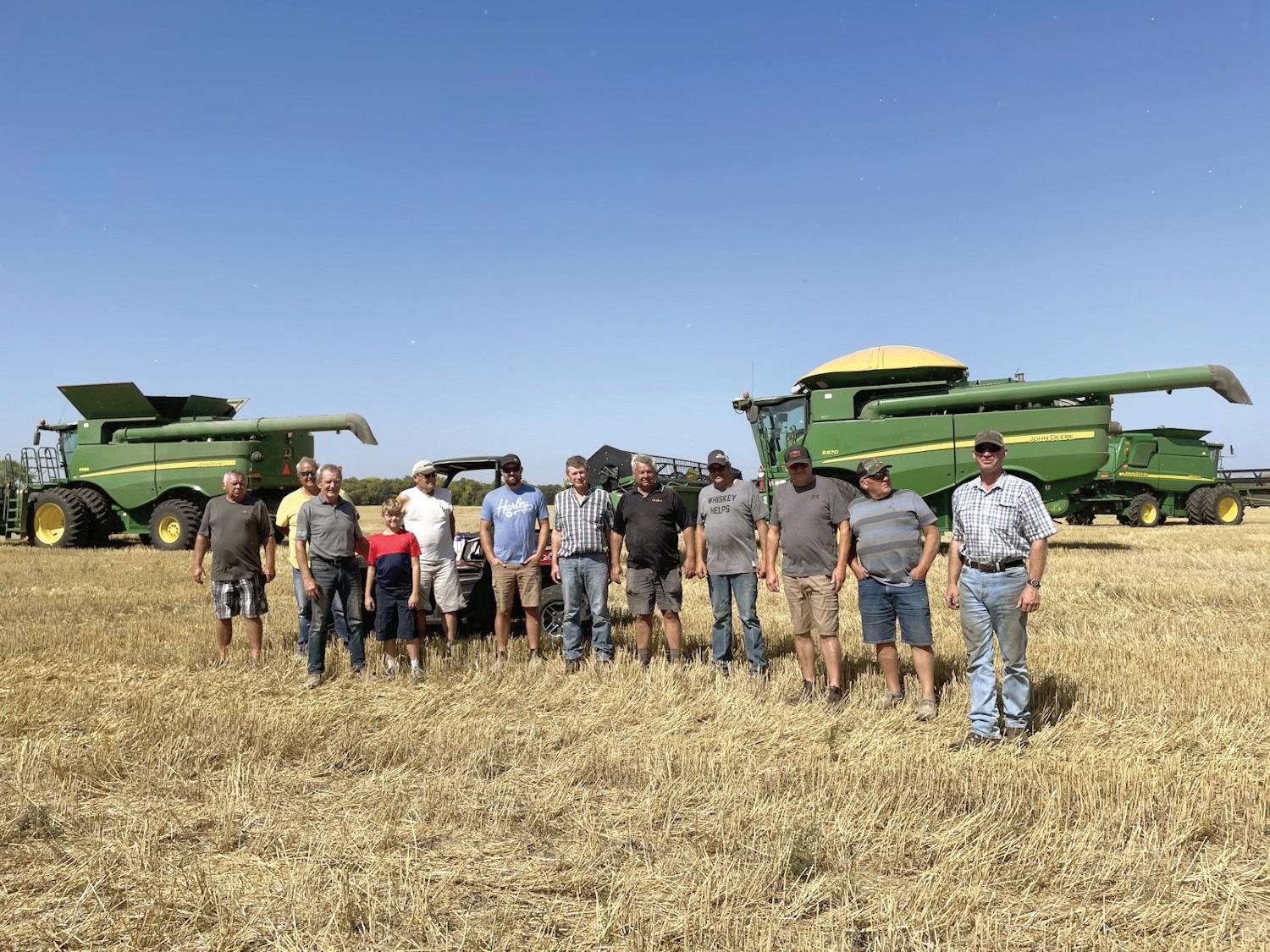
Harvest of community grow projects is now in full swing across Manitoba. And just as farmers are scrambling to harvest all their crops when the weather is favourable, growing project groups have the additional challenge of gathering farmers together for their community projects, says Gordon Janzen, Manitoba co-ordinator of the Canadian Foodgrains Bank.
“Given this busyness on farms during harvest season,
adds Janzen. “This year we have almost 40 growing projects across Manitoba with over 4,000 acres dedicated to raising support for Canadian Foodgrains Bank.”
Most of the growing projects are growing one of three main crops: wheat, canola or soybeans. Some of the projects work together on a single community field.
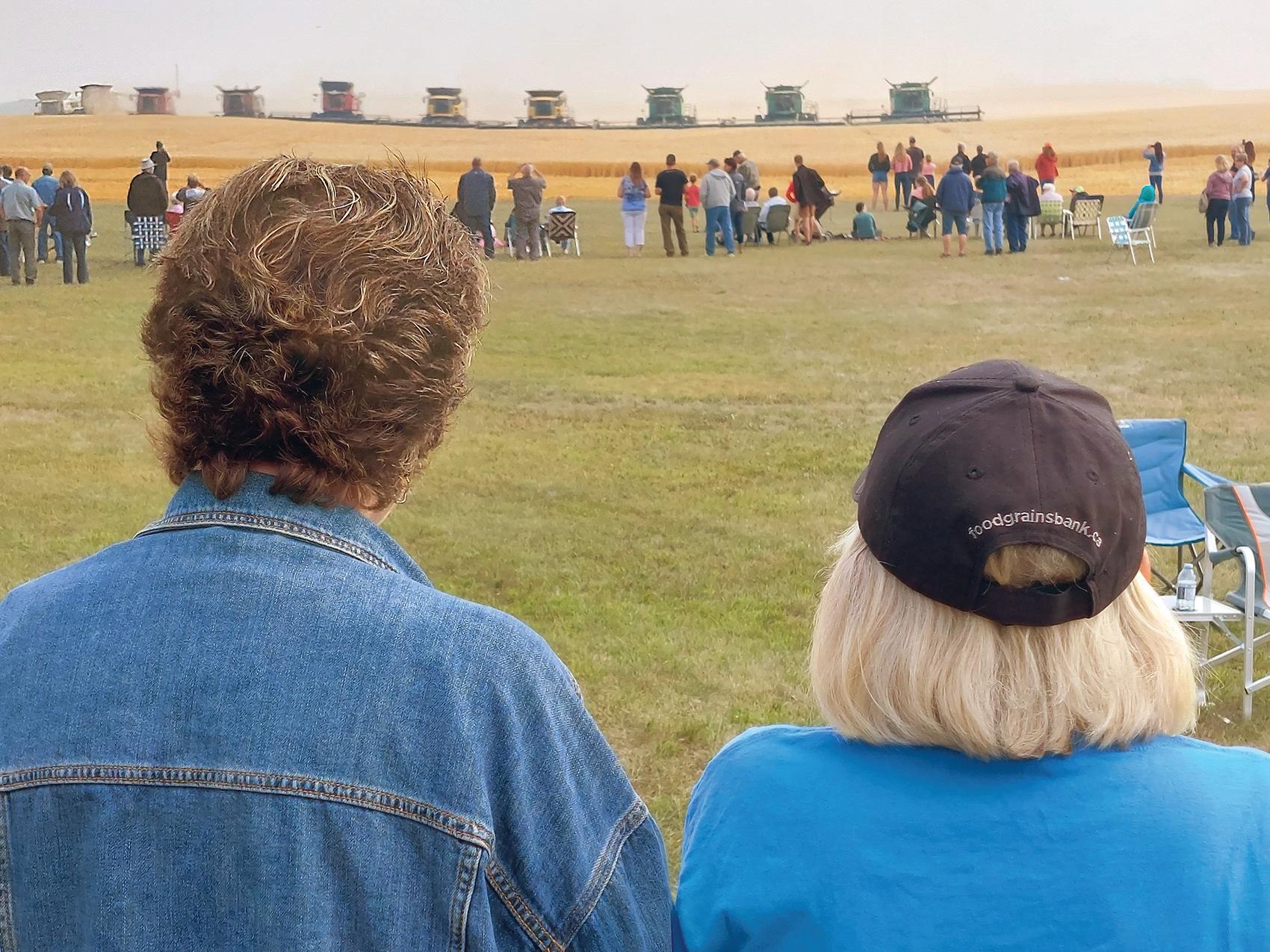
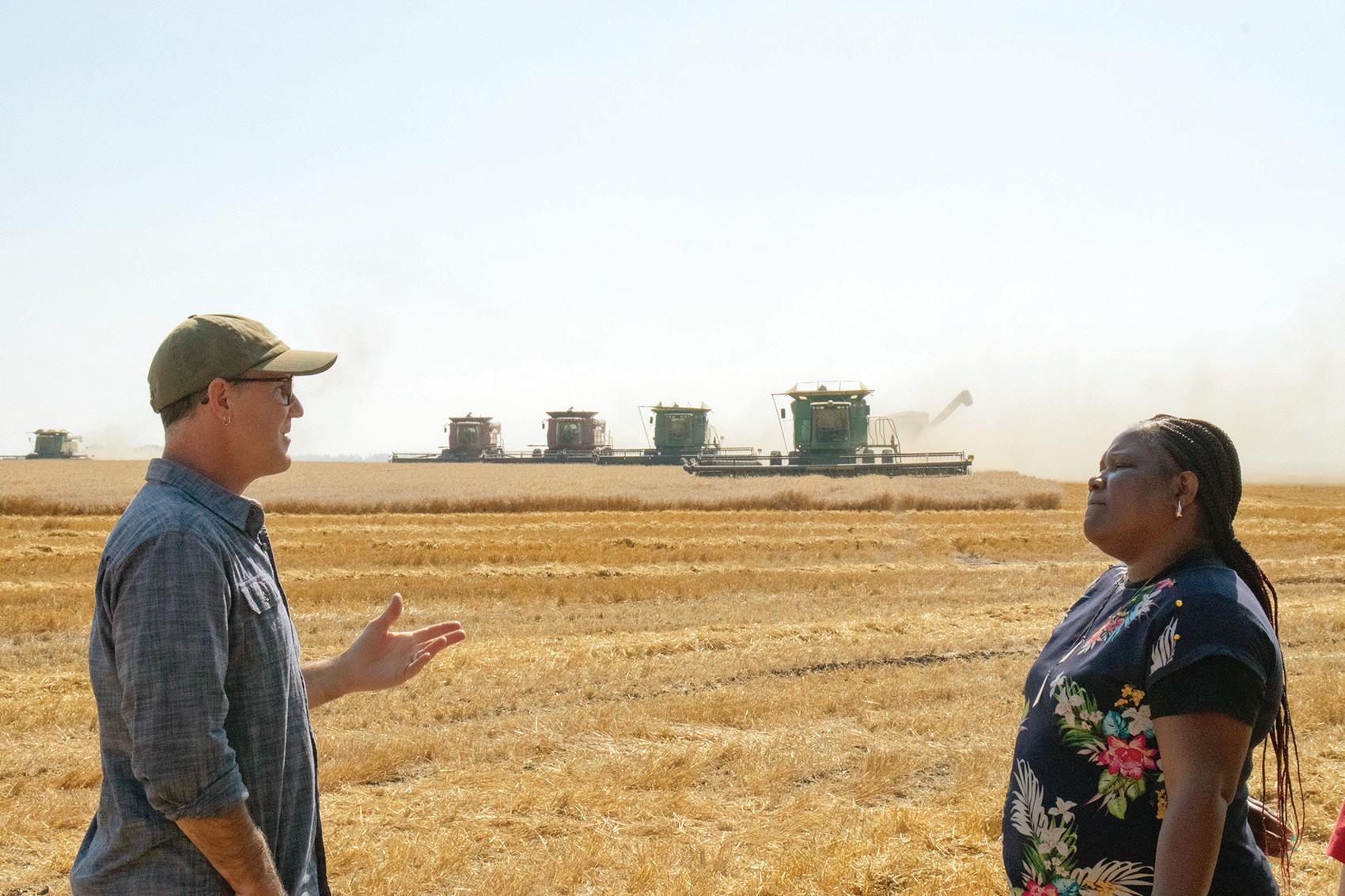
However, when other projects have been unable to secure a common field to work, then farmers have pledged parts of their regular farm acres for their contribution to the Foodgrains Bank. In those cases, instead of gath-
ering on a harvest day, those groups tend to have some sort of gathering after harvest season to celebrate their collective efforts, explains Janzen.
Ten of the growing projects already harvested with crops grown and harvest dates are: Killarney, 160 acres wheat, August 29; Landmark, 160 acres wheat August 30; Pembina GP, Manitou, 300 acres wheat, September 2; SHARE GP, Morden, 300 acres wheat, September 2; Louise GP, Mather, 40 acres wheat September 3 ; Crossborders GP, 270 acres canola, September 12; Roblin GP, 120
acres canola, September 13; BMW GP near Boissevain,, 300 acres wheat, September 18; CHOICE GP at Carman, 80 acres soybeans, September 18, and Heritage Hasrvest GP at Austin, 65 acres of canola.
Janzen also notes that Sil-
ver Winds Hutterite Colony hosted a gathering of the MCC Grow Hope supporters on August 27. With a shared meal and a short program. It provided an opportunity for visiting among non-farmer supporters and their Hutterite hosts.
“Many of the supporters were non-farmers and appreciated the opportunity to learn about current farming practices, and how proceeds of the project contribute to MCC’s international food programs through the Foodgrains Bank,” he said.
Morden project harvest.
Photo by Bailey Cousins
Harvesting at the Landmark grow project.
Photo by Gordon Janzen
Killarney harvest taken off the field.
By Elmer Heinrichs
Submitted photo

September 29, 2023 The AgriPost �
A Video on the Threat Posed by Water Hemlock Becomes a Call to Action
By Harry Siemens
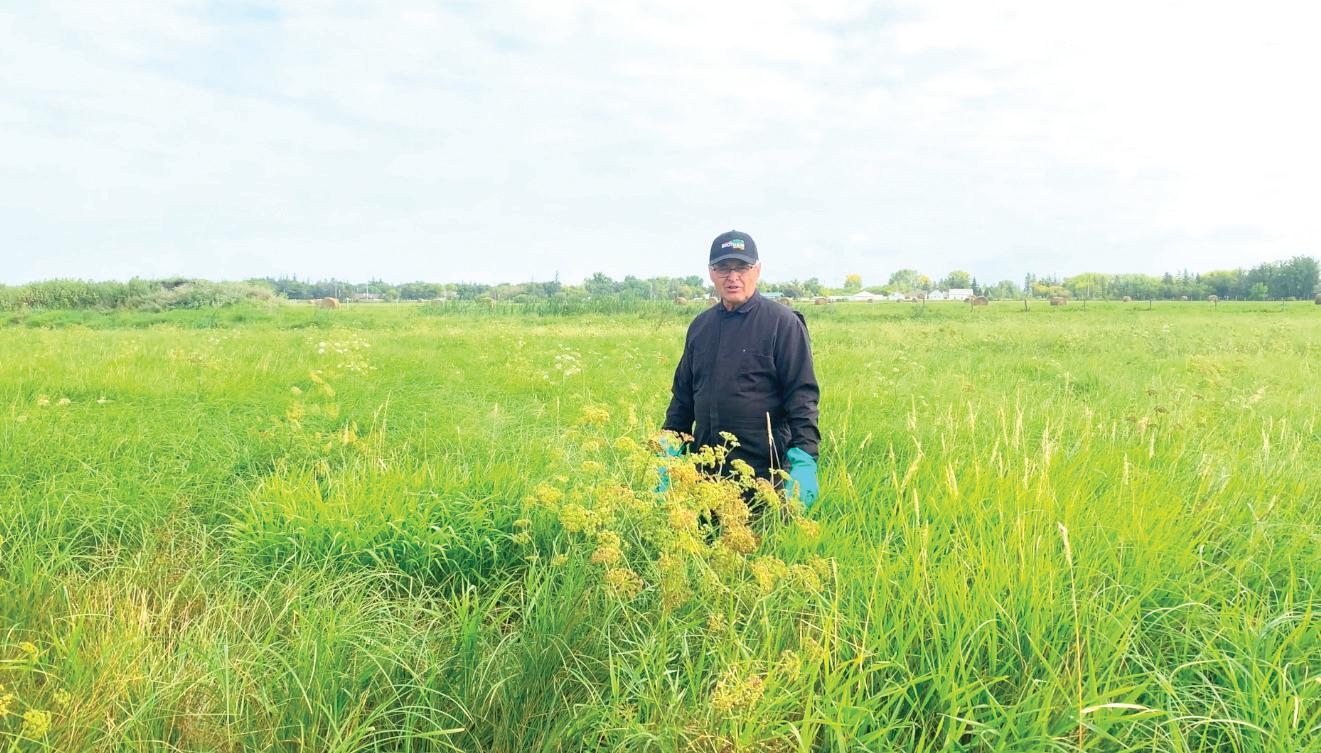
Orval Proctor of Woodlands, MB is a Shoal Lakes Flooded Landowners Association board member and co-producer of the Water Hemlock video. Every department the organization contacted wanted video evidence of how widespread the water hemlock weed is.
“We decided, you know what, let’s take it one step further. Let’s not only give them that information, let’s do a video explaining the plant and warn everybody else to be on the lookout for it,” said Proctor.
The Shoal Lakes Flooded Landowners Association, an organization with a legacy dating back to the late 1990s, is the proud sponsor of this video. Comprising landowners within the Shoal Lakes complex, this group shares a deep connection to the land, ideally suited for Forage Livestock Production. The Association’s executive body represents the Regional Municipalities of Armstrong, Coldwell, St. Laurent, and Woodlands, all located in the southern part of Manitoba’s Interlake region.
Initially formed to advocate for a controlled outlet for the Shoal Lakes, the Association has evolved into a voice for various regional concerns. One such pressing issue is the alarming proliferation of Water Hemlock, posing a significant threat to livestock and human health.
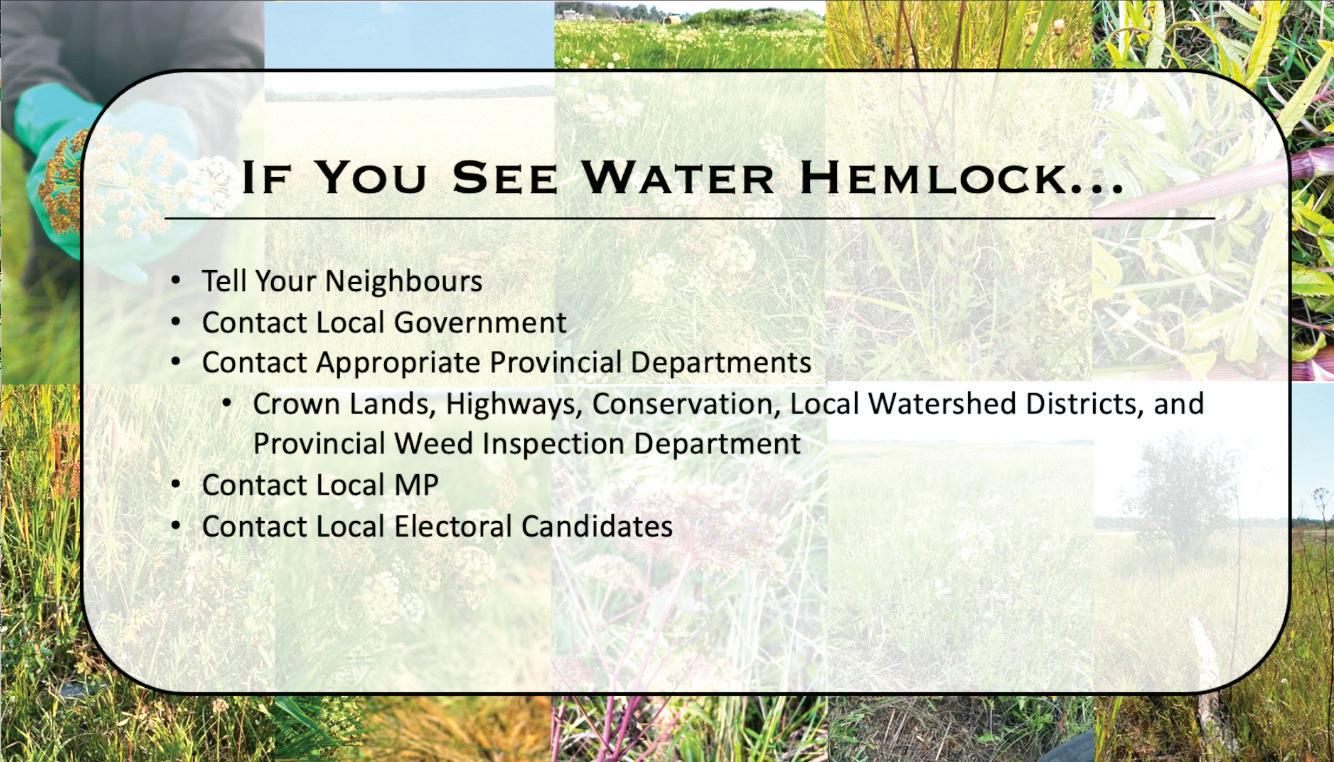
The video serves as a call to action, imploring viewers to rally behind the Association’s efforts in urging municipal, provincial, and federal governments to collaborate. Only through a concerted effort between landowners and authorities can we hope to mitigate the impending threat before the next growing season.
The video highlights the dangers of letting Water Hemlock persist.
What - Unmasking the Culprit: Water Hemlock is the antagonist of this narrative. The video reveals its true nature. What it looks like, its botanical classification, the imminent dangers it poses, the human and livestock health risks, available control methods, the perils of inaction, and the financial toll it exacts on affected producers. The video explores risks associated with potential control measures, making a compelling case for upgrading Water Hemlock’s status from tier three to tier one on the noxious weed scale.
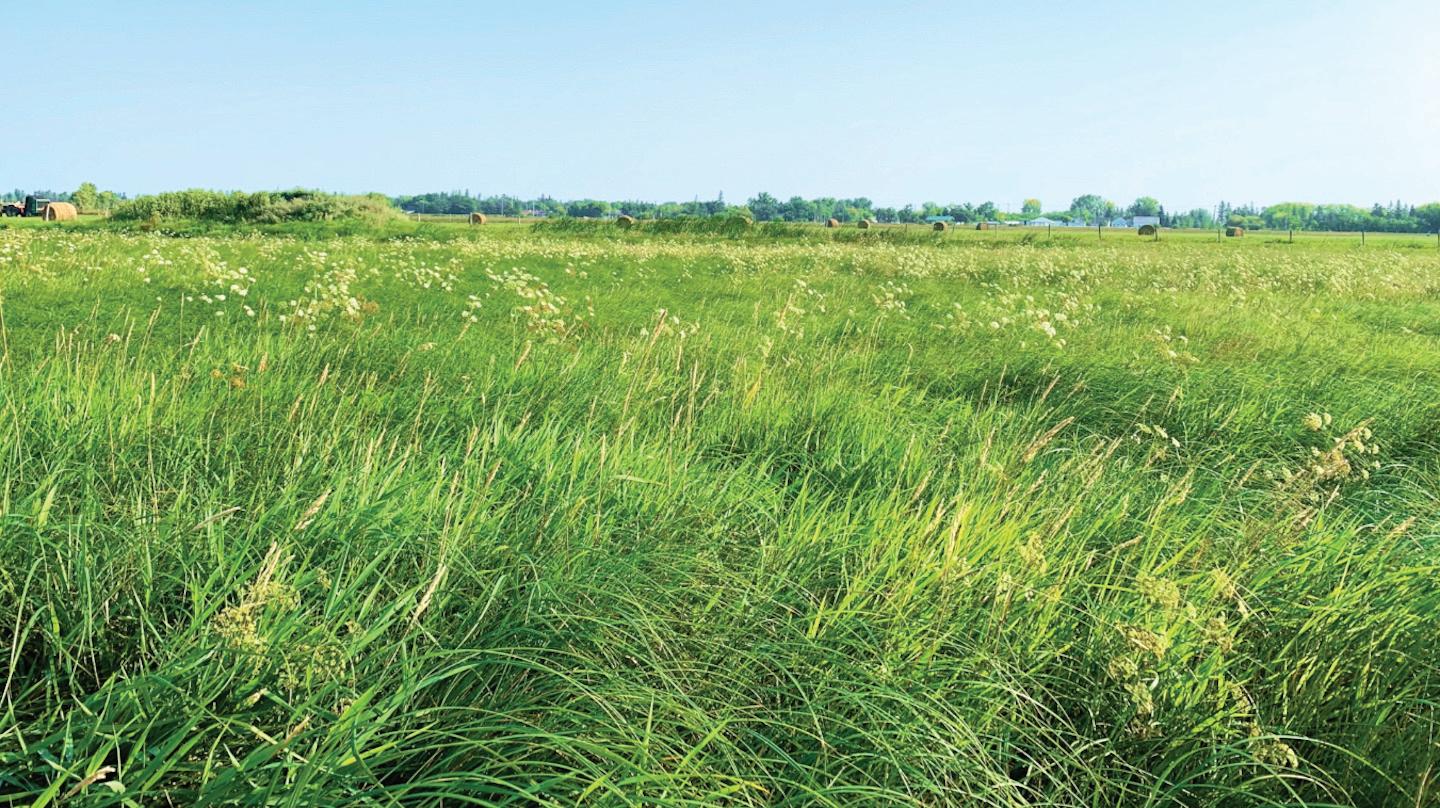
Where - Stealthy Infiltrator: Water Hemlock finds fertile ground in municipal and provincial ditches, drains, and other waterways across our region. Reports also indicate its presence in other parts of the province.
“Not confined to rural areas, it has even crept into our towns and established a sinister presence in significant drainage systems such as the Sturgeon Creek Drain and tributaries of the Grassemere Drain,” said Proctor.
Alarmingly, it has infiltrated federal jurisdictions, including Nature’s Conservatory properties.
How - The Perpetrator’s Tactics: The seeds of Water Hemlock are cunningly disseminated through various means - water, mud, and even in baled feed, posing a continuous threat to the region.
When - The Urgency of Now: The time for action is upon us. Deliberations must commence immediately to address the ramifications of this year’s infestation before they become painfully apparent.
Why - A Call to Conscience: Why should the public care about Water Hemlock? This video underscores the multiple reasons, including severe health risks
to humans and livestock, the economic toll of lost pasture and hay supplies, and the perilous presence of the plant in our drainage systems. Moreover, with the R.M. of Woodlands standing 50 feet higher than Winnipeg, the fear of Water Hemlock contaminating the Assiniboine and Red River shorelines looms large. This video aims to educate and raise awareness, hoping to galvanize positive action with growing support.

In conclusion, through this video, the Shoal Lakes Flooded Landowners Association seeks to rally individuals and communities to address the growing menace of Water Hemlock.
“We can safeguard our lands, livestock, and future with timely intervention and collective effort,” said Shoal Lakes Flooded Landowners Association board member Orval Proctor.
He highlighted the importance of video evidence in showcasing the extent of the Water Hemlock infestation. Proctor explained their decision to go further by creating an informative video depicting the plant’s characteristics and warning the broader community to remain vigilant.
Regarding the ongoing challenges, Proctor elaborated, “Because the drying out is strictly by evaporation. There’s a minimal drain at the north end of the North Lake. Past that, it’s a closed system.”
Proctor’s statement underscored the urgency of addressing the Water Hemlock issue, “I mean, there still needs to be more cooperation. Our point in the video is, is this too late for this year? But, we need all parties on the same page working together so that next year we can attack this thing at the stage where it means something.”
9 September 29, 2023 The AgriPost
Shoal Lakes Flooded Landowners Association video reveals Water Hemlock’s true nature highlighting its botanical classification, the imminent dangers it poses, the human and livestock health risks, available control methods, the perils of inaction, and the financial toll it exacts on affected producers.
Orval Proctor, a member of the Shoal Lakes Flooded Landowners Association, noted that Water Hemlock finds fertile ground in municipal and provincial ditches, drains, and other waterways across our region.
A video produced by the Shoal Lakes Flooded Landowners Association seeks to rally individuals and communities to address the growing menace of Water Hemlock.
Submitted photos
Wheat Growers Association Says Nitrogen Fertilizer Reduction Will Not Safeguard Food Supply
By Harry Siemens
Gunter Jochum, president of the Wheat Growers Association said there is a pressing issue that requires attention. Jochum also operates a family farm at Eli, MB.
He said the repercussions of inflation, primarily driven by COVID-19 and monetary policies have been felt by all. Still, it has hit hardest for those struggling to put food on the table. Concurrently, he said supply chain disruptions have left store shelves empty of essential items.
“However, the most troubling aspect is that this situation is poised to deteriorate,” said Jochum.
He believes that obstacles have been created in the production of food including the latest threat from the proposal of a 30 % reduction in nitrogen-based fertilizer use, without consulting the fertilizer industry or Canadian grain farmers. He said such a drastic reduction
could have disastrous consequences, affecting not only Canadians but potentially causing food shortages on a global scale.
Jochum said wheat, a staple food for 35 per cent of the world’s population, is Canada’s largest field crop.
“Our nation ranks fourth globally in wheat production, exporting to 70 countries and contributing 12 per cent to the world’s wheat supply,” said Jochum.
With the ongoing war in Ukraine, posing a significant threat to wheat production, Canadian wheat production has never been more critical.
He sees reduced fertilizer use and rising input costs causing farmers to produce less. A reduction in production would lead to increased food costs and further strain an already fragile supply chain he said.
He noted, paradoxically Canada’s highly efficient
farmers, use less fertilizer than many other nations and employ modern agricultural technologies to produce crops sustainably.
If Canada reduces its production, less efficient countries will need to fill the gap, leading to a net increase in global fertilizer usage. On the other hand the federal government has set ambitious targets to increase Canadian agricultural exports by 55 per cent by 2025.

“It’s a desire to have one’s cake and eat it too, and these policies don’t add up. They will harm families and could contribute to food shortages and even famine,” he said. “The time has come to act and safeguard our food supply.”
Jochum said the Wheat Growers Association, as a voluntary farmer-run advocacy organization will need the support of everyday Canadians. The association recently convinced the federal
Minister of Agriculture and Agri-Food to reverse course on imposing grading standards on country elevator deliveries.
“Increased support will amplify our voices and make our elected leaders more attentive to our calls,” said Jochum.
He said this involvement is especially crucial when government policies directly impact our citizens’ well-being. He said without action, the threat of fertilizer cuts could exacerbate the situation, potentially leading to global food shortages and famine.
Jochum is calling on support from every segment of Canadian society to signing a petition and share the message in support of the Wheat Growers Association in order to lobby the government.
“Stand with us to secure our food future,” said Jochum.
September 29, 2023 The AgriPost �0
Gunter Jochum, president of the Wheat Growers Association operates a family farm at Eli, MB. He said the repercussions of inflation, primarily driven by COVID-19 and monetary policies have been felt by all.
Submitted photo
“Discover the Farm” Event Sheds Light on Manitoba’s Thriving Agricultural Sector
 By Harry Siemens
“Discover the Farm” is more than just an event; it’s an opportunity for visitors to delve into the rich tapestry of food production in Manitoba and grasp the pivotal role of agriculture in the province’s economy.
With a staggering direct output of $17.1 billion and over 36,000 people employed, representing approximately one in 20 jobs in Manitoba, the agriculture and agri-food sector is undeniably a cornerstone of the province’s prosperity. Adding to its prominence, Manitoba boasts 24 agrifood research and development centres, each housing world-class research programs.
the general manager at Manitoba Beef Producers, shared his insights on the event and the importance of raising awareness about the origins of our food.
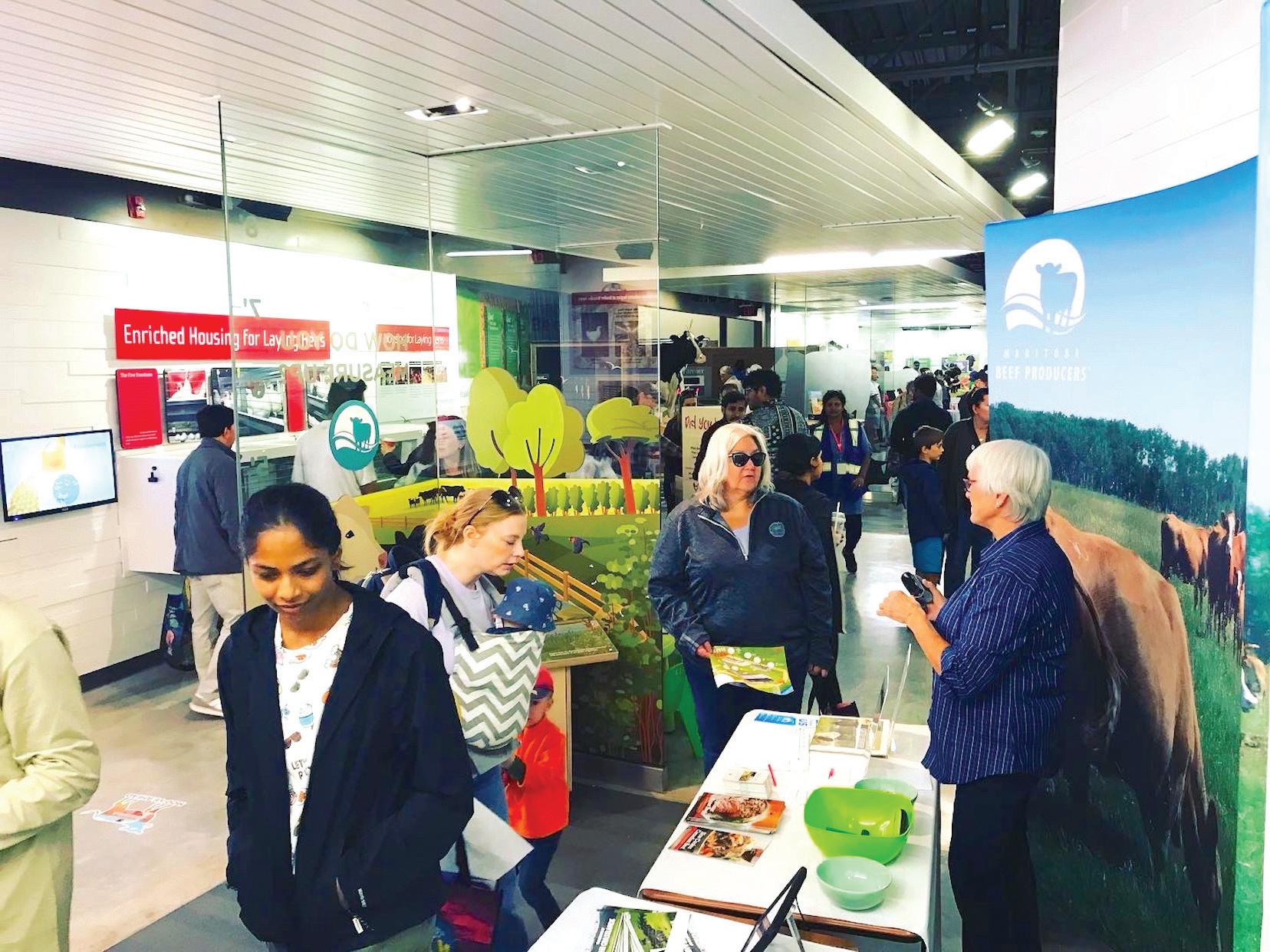
Callum expressed the enthusiasm surrounding the event, recounting that those who tended to the Manitoba Beef Producers booth found it an awesome event.
He acknowledged the primary objective. “Yeah, the key is to get the word out about, where does that steak, and where does that bologna come from, right?”
Understanding the journey from farm to fork is essential in an era where food is a hot topic, exacerbated by food prices and security concerns.
contribution to preserving endangered landscapes like grassland habitats.
“We’re there to get that message out for all the things we do on the land from a sustainability standpoint,” he stressed.
Regarding the current state of the cattle industry, the conversation veered toward the recent surge in cattle prices. He acknowledged that the past few years had been challenging for cattle producers, but he saw a silver lining on the horizon.
 Callum,
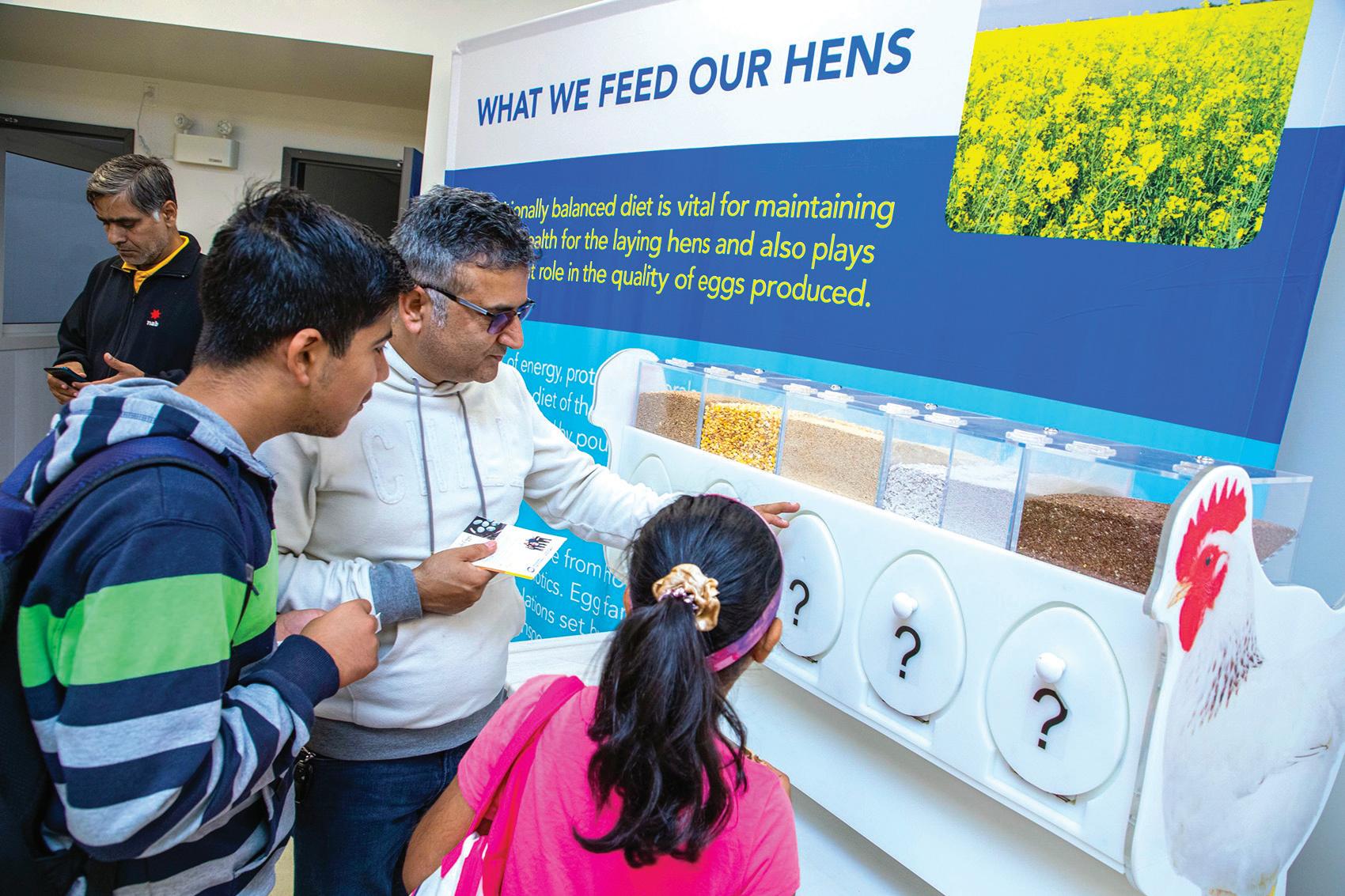
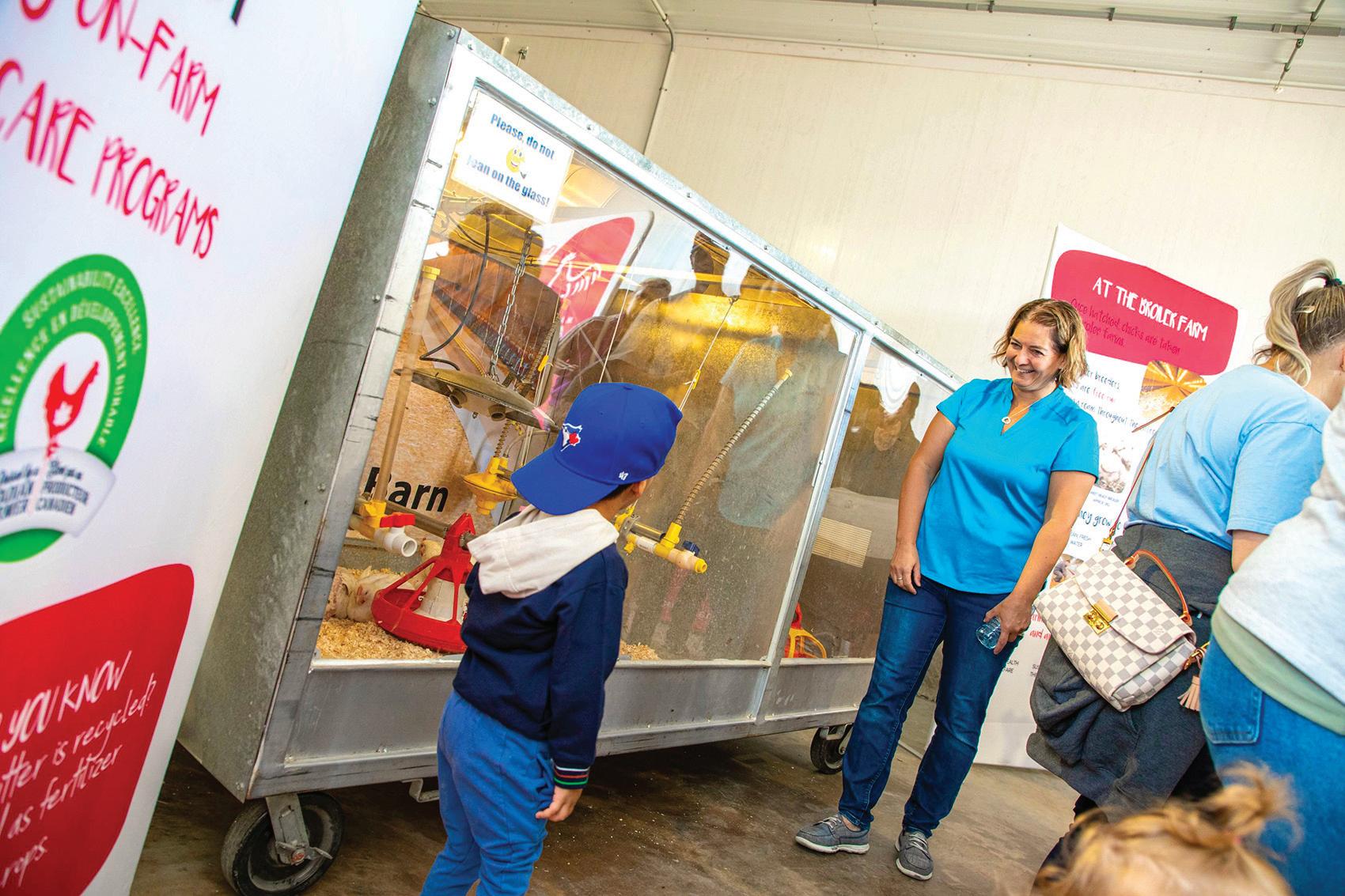
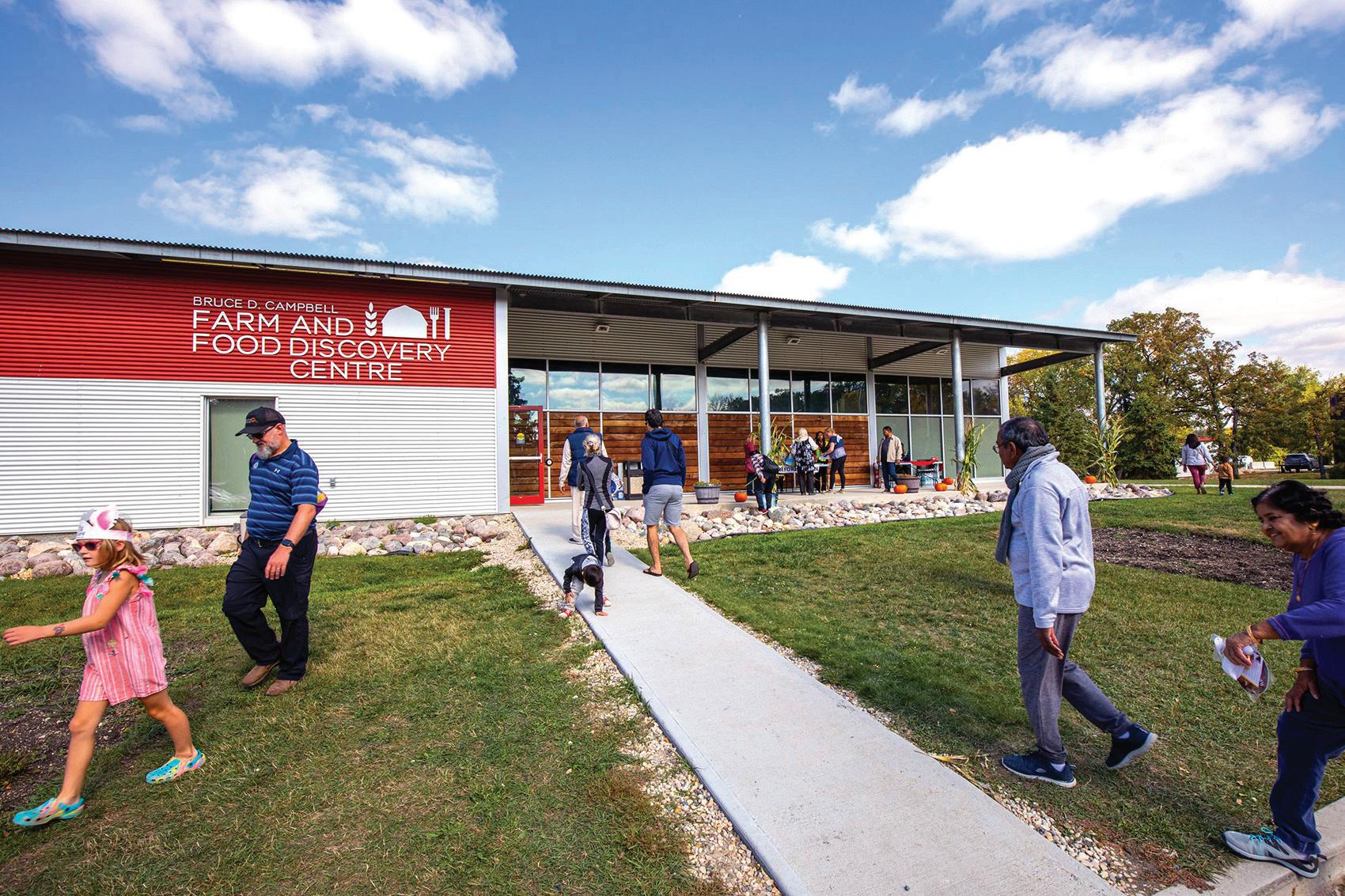
On Sunday, September 17, “Discover the Farm” lived up to its much-anticipated status, drawing nearly 1,400 urban and rural Manitobans eager to explore the intricacies of farming and food production. It was an event where curious minds could unravel the origins of their daily sustenance. Carson
Callum emphasized the event’s focus on connecting urban communities with the agricultural roots of Manitoba. It’s an opportunity for city dwellers to comprehend the vital role of local agriculture in their daily lives.
“Our beef station, I know, had a lot of good discussions, and I think folks even got to taste some meatballs,” said Callum. “That was good, too,” he added.
When asked about the attendees’ questions, Callum explained that they typically had inquiries about beef production, mainly how producers raise and treat their cattle.
“Yeah, the last, I would say five or more, have been quite challenging, as you’re well aware. But this is the first year where we’ve seen prices start to increase to be a little more favourable for producers,” he remarked.
He expressed optimism about cattle producers experiencing better returns in the coming years. He attributed this positive shift to the upward trend in live cattle prices, aligning with the broader industry’s experience of inflationary pressures. Despite the rough years, cattle producers might finally see profits when they market their calves, either in the upcoming fall season or later. Callum emphasized the significance of this upturn and its potential to revitalize the industry.
Carson Callum, the general manager at Manitoba Beef Producers, noted that the last five or more years have been quite challenging for the cattle industry. But this year seems to be the first where prices have started to increase.
However, one of the crucial messages they aimed to convey was the positive impact of beef production on the environment. Addressing the misconception that beef production is detrimental to the environment, Callum highlighted the industry’s sustainable practices, emphasizing its
In closing, Callum appreciated the “Discover the Farm” event and its success.
He envisioned more successful events in the future.
“These events would continue to bridge the gap between urban and rural communities, fostering a deeper understanding of agriculture’s critical role in Manitobans’ lives.”
�� September 29, 2023 The AgriPost
On Sunday, September 17, “Discover the Farm” lived up to its much-anticipated status, drawing nearly 1,400 urban and rural Manitobans eager to explore the intricacies of farming and food production.
Submitted photos

September 29, 2023 The AgriPost �2
Altona Community Garden Opens New Pavilion

 By Elmer Heinrichs
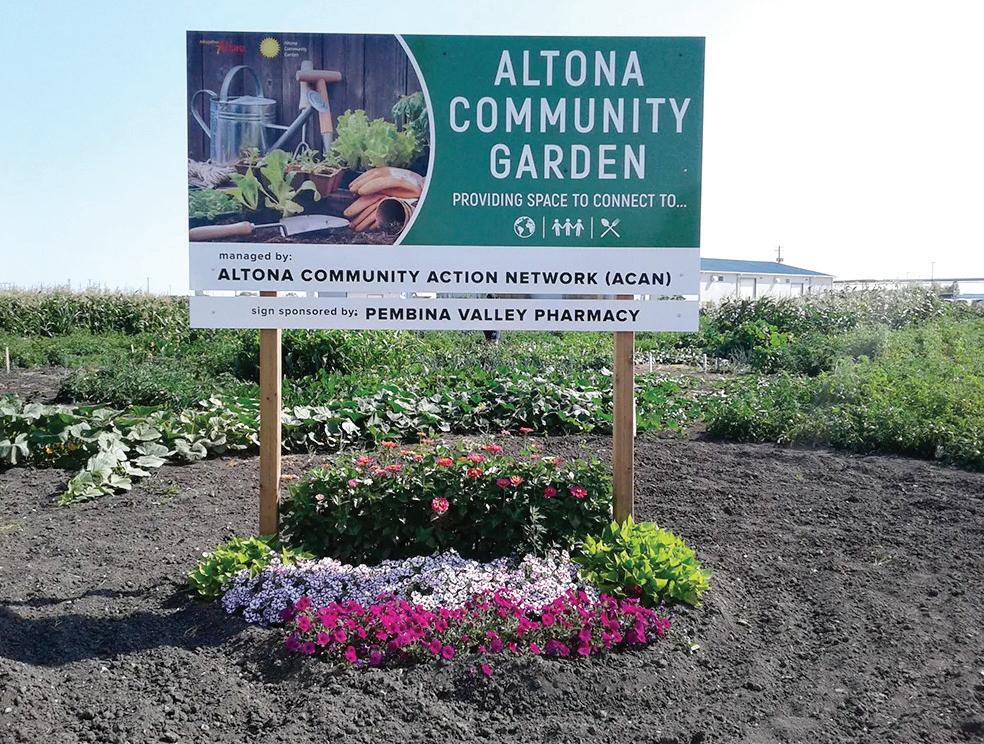
A brand new pavilion was opened recently at the busy Altona community garden. Four years after it began the community gathered here for grand opening celebrations of its new common area, which includes a timber frame pavilion and washroom facility.
What started out as a space in the middle of the grounds where gardeners could access tools, water and compost, quickly grew.
A three-person task force was formed that year to further develop the garden nucleus and, in 2019, they added a crop swap table where gardeners could share their excess produce with one another.


Eventually, Equal Access
accessible garden beds, and that’s been done. Now, visitors to the gar-
Pansy Couple Harvesting Vegetables for Food Banks
By Elmer Heinrichs
Head out about 25 km south of Steinbach and you’ll find Pansy, Manitoba and a little “Garden of Eden.”

It began when a retired farming couple here planted a 2.5 acre garden to help fight hunger in their community and support newly arrived Ukrainian families.
den come in from the west through a park-like entrance, down a gravel path lined with plants, shrubs and benches before arriving at the pavilion which is flanked by garden plots to the north and south. A series of gravel paths continue throughout the middle, connecting to the accessible plots, a shed and a sandbox for the kids to enjoy!
Altona Mayor Harv Schroeder expressed surprise at the result.
“When I look around today, it reminds me that it’s more than just a garden,” said Schroeder. “It’s a testament [of what] we can achieve when we come together as a community. This beautiful pavilion is the center of this community, where people can grow together.”
Melvin Kachur and his wife Helen say they have the garden with the goal of donating the produce to local food banks at the end of the season. This year they grew potatoes, corn, tomatoes, beans, raspberries and strawberries, thanks to some large donations from seed companies and potato growers.
Kachur says this is all possible thanks in part to the volunteers who came to help. Not only did they assist the Kachurs with the planting, and some have now helped with the harvest. He notes that many of the volunteers were newcomers from Ukraine.
There was probably a group of three families with five or six kids and they helped him plant the garden, he recalls.
‘And about a week ago, they came to harvest,” he said.
Kachur notes these families helped collect a lot of vegetables to be sold at the Pansy fall supper. Proceeds from these sales, as well as from farmers markets this summer are helping to fund their mission.
Kachur explains the money allows them to pay for some of their expenses this year, plus it helps them to set aside money for next year’s operation. Any surplus gets donated to food banks.
Kachur’s motto is “Let’s fight hunger”. He notes that the food banks are always short of veggies.
“Everybody seems to be short of veggies,” he said.
�3 September 29, 2023 The AgriPost
Altona caught wind of the task force’s dream and approached it with the idea of building
The new timber frame pavilion.
Submitted photos
Visitors to the garden come in from the west through a park-like entrance, down a gravel path lined with plants, shrubs and benches before arriving at the pavilion which is flanked by garden plots to the north and south.
Manitoba Forage and Grassland Association (MFGA) is proud to be the first organizational supporter of the “Think Outside The Fence” Podcast, a monthly podcast co-hosted by Arron Nerbas, of Nerbas Bros Angus, a family-run operation in Shellmouth, MB, and Amy Hughes, a cow and sheep farmer from Yorkshire, UK with a passion for communication and knowledge-sharing in agriculture, that focuses on inspiring positive change in agriculture.
“We are excited to have MFGA come on board,” said Nerbas. “The vision of the podcast and the vision
of MFGA align nicely around innovative thinking and creativity leading positive change in the industry”.
The podcast sponsorship, according to MFGA, made perfect sense.
MFGA Hops Aboard International Podcast Discovering the Heart of Manitoba Agriculture: Food Awareness Week
“As leading-edge practitioners and early adopters on regenerative agriculture practices, especially around healthy soils and all the good that comes from healthy soils for water, biodiversity, carbon and on-farm profitability, our MFGA network prides themselves on learning from and connecting with the rationales and farming practices of others, both at home and abroad,” said Duncan
Morrison, MFGA executive director. “Amy and Arron are hand-picking their guests from their respective countries to celebrate this way of advanced on-farm thinking. There is a natural alignment between the content flow of their podcast and the interests of many - if not all - in the MFGA farmer network.”
The MFGA podcast sponsorship kicks off October 1, 2023 on the next podcast. MFGA’s sponsorship covers one year with the option for extension at year’s completion. More information can be found at @TOTFpodcast and sites.libsyn.com/476343.
By Harry Siemens
On a bright Sunday morning, nearly 1,400 urban and rural Manitobans gathered to celebrate and explore the essence of farming and food production at the second annual “Discover the Farm” event. Hosted at the Bruce D. Campbell Farm and Food Discovery Centre, just a short drive south of Winnipeg on Highway 75, this event marked the kick-off of Farm and “Food Awareness Week” in Manitoba.
The day was filled with excitement and curiosity as attendees had the unique opportunity to connect with the heart of agriculture and gain insight into where their food originates. With most Manitobans being two to three generations removed from farming, “Discover the Farm” was an invaluable platform for bridging the gap between urban and rural communities.
Many enthusiastic participants couldn’t help but express their delight at the event’s success.

Kristen Matwychuk, community engagement coordinator for Manitoba Pork, delved into the significance of this event and the role of Manitoba Pork in showcasing the agricultural world to the public.
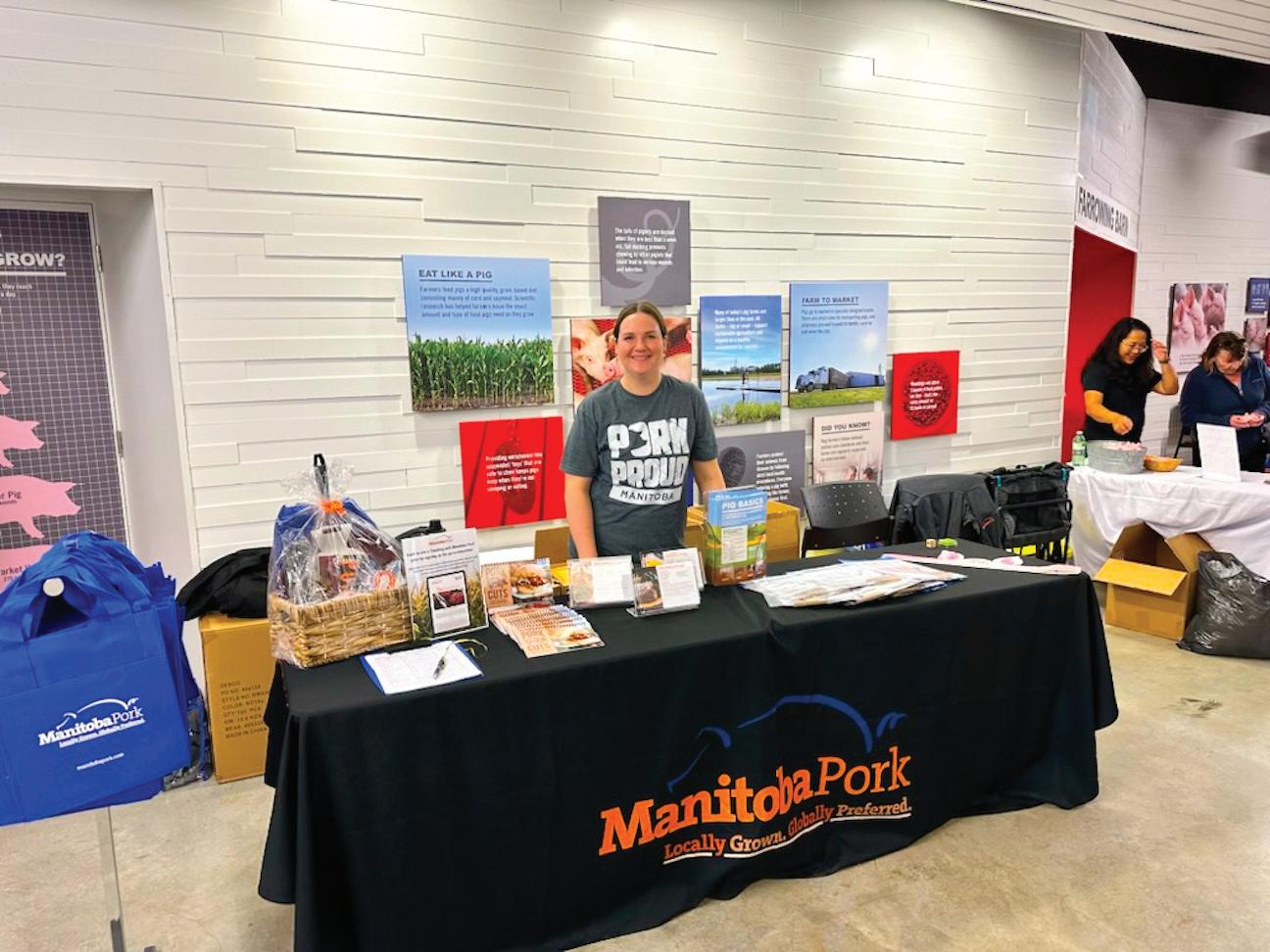
Matwychuk explained that the event allowed visitors to peer through windows into a working hog barn at the research station.
“These windows provided a glimpse into the day-to-day care and dedication involved in ani mal husbandry,” she said.
Alongside these educational opportunities, visitors had the chance to interact with knowl edgeable volunteers who an swered questions and provided insights into barn operations.
As for the types of questions asked, Matwychuk mentioned that people were primarily cu rious about animal welfare and well-being. They inquired about the enrichment devices used in the barn, such as toys for the
animals. They sought to understand the role of technology, such as electronic sow feeders, in enhancing animal care and efficiency.
The event helps to open minds and create a space for genuine, transparent dialogue. Matwychuk’s role as Community Engagement Coordinator at Manitoba Pork involves actively engaging with the public through various events and sponsorships. From Assiniboine Park Summer Entertainment Series to charitable sponsorships, Manitoba Pork seeks to inspire consumers to ask questions and learn more about the agricultural sector.
What makes Matwychuk’s role particularly fulfilling is her dedication to developing curriculum-linked resources in collaboration with organizations like the Farm to Food Discovery Center and Agriculture in the Classroom Manitoba.
“These resources aim to provide accurate information about Manitoba’s hog sector, contributing to greater student awareness and understanding,” said Matwychuk.
Discover the Farm is more than just an event; it’s a bridge that connects urban and rural communities, fostering an appreciation for agriculture and food production.

September 29, 2023
��
The AgriPost
Kristen Matwychuk with Manitoba Pork was on hand at the second annual “Food Awareness Week” to create a space for genuine, transparent dialogue.
On a bright Sunday morning, nearly 1,400 urban and rural Manitobans gathered to celebrate and explore the essence of farming and food production at the second annual “Discover the Farm” event. Submitted photos
Welsh Ponies Take Centre Stage
By Brenda Hunter
The 47th Manitoba Welsh Pony & Cob Association (MWPCA) show was held over the weekend of August 26 and 27 under sunny skies at the fairgrounds in Virden.
The annual specialty show features registered purebred and part bred Section A, B, C, and D Welsh ponies. It boasts over 60 classes for every age and in every discipline possible: halter and showmanship, in-hand trail, bareback, English and Western saddle classes, a full slate of driving classes, liberty, pole bending, barrel racing, reining and even some classes for fun.
Just over 20 ponies competed at this year’s show from exhibitors throughout Manitoba and Saskatchewan. The judge for the event was Brian McClelland of Calgary, Alberta.
JMR Narcissus, a Section B stallion owned by Marg Allen of Glenella was crowned Supreme Champion. Reserve Champion was CWMFE Mogs Choice, a Section D stallion owned by Louise Saunders of Borden, Saskatchewan and exhibited by Haley Moats.
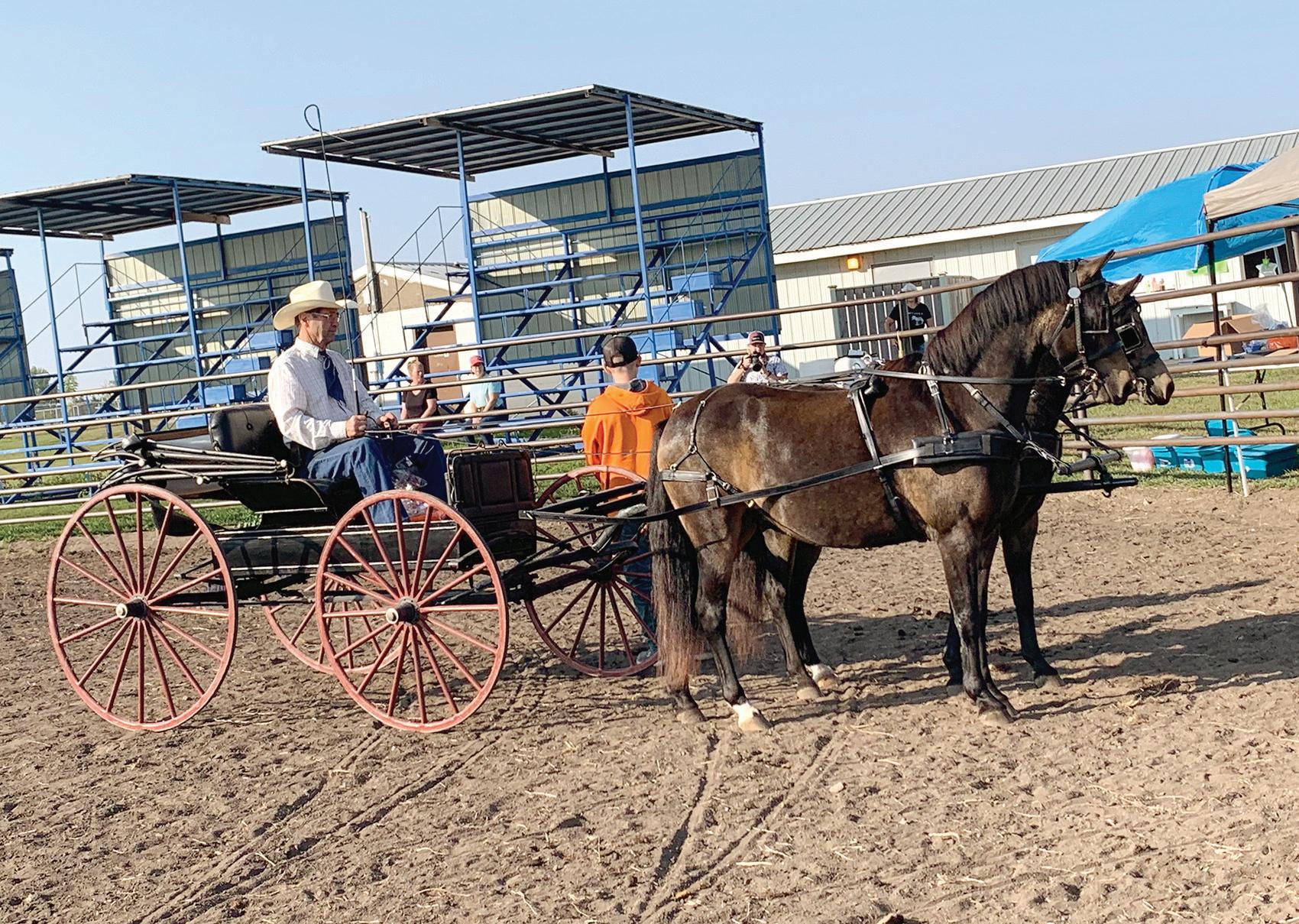
A highlight of the show was an exhibit of local resident and well-known area veterinarian, Everett More, with his well-matched team of registered Section B ponies, seven-year-old mare, Frontier Pixie Dust, and four-yearold gelding, Frontier Dusty Boots, in the Welsh pairs under harness class. The ponies proudly pulled the modified vintage wooden-wheeled buggy; the same buggy that Everett drove to school back in 1957 and has been in the family ever since.
More reported that his Dad bought the buggy at an auc-
tion in 1957 so that Everett, then Grade 6, could drive him and his brother to the local school of Westhall. That only lasted a year. Due to declining enrolment, West Hall was forced to amalgamate with the neighbouring school of Dand, before it eventually closed and students attended Elgin School for a short time, before moving on to Hartney.
More graduated from Hartney School, having attended four different schools in the span of six years, yet having never moved from the farm!
The last time the buggy was used by More, was in a parade in 1982, and since then it has been in storage.
This was not More’s first time attending the MWPCA show. His daughter, Aleaha, exhibited at the show as a youngster approximately 30 years ago, but never in the harness division.
When he made the decision to once again get involved with Welsh ponies, it sparked a renewed interest in driving, and the well-maintained family heirloom was brought out of retirement.
He has no idea the age of the vehicle; however, it does have a name plate of the manufacturer attached which reads “W. Johnston & Co. Wpg, MB, General Accts Of the North West” which would indicate that it was made prior to Manitoba becoming a province in 1870.
More is living proof that a Welsh Ponies are suitable for everyone. They range in size from under 12.2 hands for a Section A, to horse size (over 14.2) for a Section D making them one of the most versatile breeds in the world, well suited to various disciplines and ages, meaning you never outgrow a Welsh!
KAP Releases Election Priorities
By Elmer Heinrichs
Keystone Agricultural Producers (KAP) president Jill Verwey said as the provincial election approaches, “I want to highlight five priorities that matter to me as a producer, namely removal of education from property taxes, the passing of right-torepair laws for farm machinery, improving Infrastructure – railways, highways, flood infrastructure, wireless communication, agricultural support, hydro services, solve labour shortages in agriculture and deliver better healthcare and safety in rural areas.
Verwey added, “The elec-
tion is critical to me both personally and professionally. The decisions made by legislators hold considerable sway over the lives of Manitoba producers like myself, as these choices invariably impact our operations.”

Manitobans head to the polls on October 3rd.
KAP says there are 14,500 farms in Manitoba encompassing 17.6 million acres of land, and in the last year alone, the collective efforts of primary producers yielded $9.73 billion in farm income. The agriculture and agri-processing sector employs more than 35,000 Manitobans.
A highlight of the show was an exhibit of local resident and well-known area veterinarian, Everett More, with his well-matched team of registered Section B ponies, seven-year-old mare, Frontier Pixie Dust, and four-year-old gelding, Frontier Dusty Boots, in the Welsh pairs under harness class. The ponies proudly pulled the modified vintage wooden-wheeled buggy; the same buggy that Everett drove to school back in 1957 and has been in the family ever since.
Photo by Brenda Hunter
Grand Opening of Spenst Bros. Premium Meats a Triumph of Resilience Despite Adversity
By Harry Siemens
Spenst Bros. Premium
Meats celebrated the grand opening of their new building expansion, a journey that began during the BSE crisis in 2003 when cattle prices plummeted. This family-run
business faced challenging times but found a way to survive by developing a storefront operation to sell their meat locally.
During the grand opening, former Winkler Mayors Neil Schmidt and Martin Harder
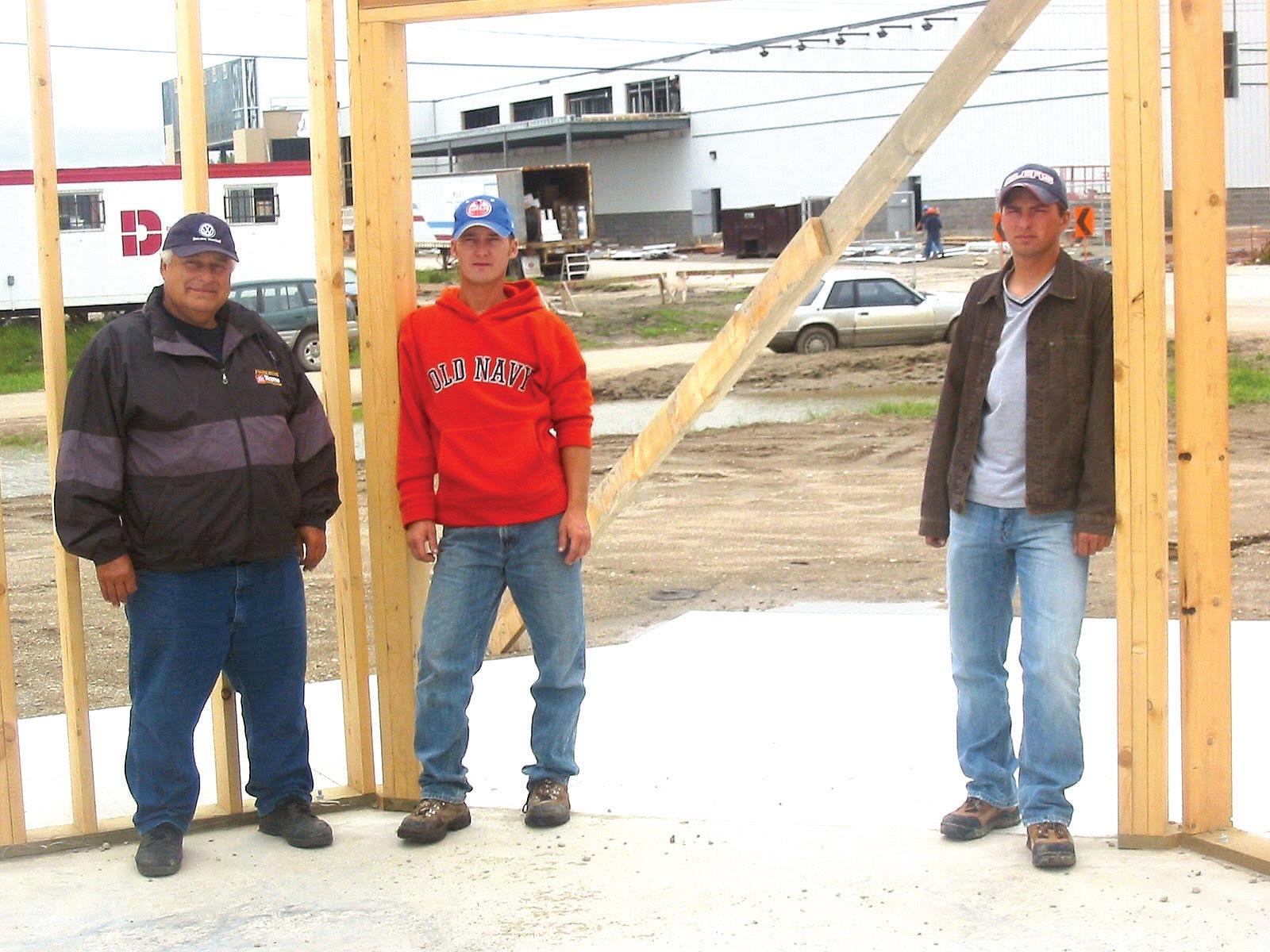
shared their involvement in helping the family establish their local meat sales operation. Current Mayor Henry Siemens described their story as desperation, perseverance, and faith.
Founder and owner Garry
Spenst opened the event with Proverbs 3:5-6, emphasizing trusting in the Lord and acknowledging their success is not about self-boasting but giving glory to God for His faithfulness.
Co-owner and Sales Manager Paul Spenst thanked the trades people, store owners, dignitaries, and community members who supported the Spenst family. The celebration included a free all-youcan-eat pizza, burger lunch, and tours of the new facility.

Paul Spenst said that the new 22,000-square-foot Federal meat processing plant will enable them to produce federally inspected meats and pizzas, expanding their reach to Saskatchewan and Alberta. He highlighted the positive feedback they receive from customers who appreciate the quality of their pizzas, made from scratch with a thin crust and quick preparation.

Throughout the event, Garry Spenst emphasized humility; that their success is not about showing off but about helping others and serving good food to people. The Spenst family’s journey is a testament to faith and resilience in adversity.
On May 11, 2005, Spenst Bros. Premium Meats celebrated the first grand opening of a 4,500-square-foot meat processing and retail store. This family-run business, born out of the BSE crisis in 2003, has now successfully transitioned into a thriving venture, providing high-quality meat products to its customers and emphasizing its commitment to delivering top-notch, naturallyproduced meat.
Before the opening of their original store, Paul Spenst,
co-owner and Sales Manager, reflected on the past ten months of hard work, sharing a mix of excitement and a touch of fear as they prepared to open their doors to the public. However, their confidence in the quality of their products is unwavering.
The first new facility had 4,500 square feet of space, with around 1,200 square feet dedicated to retail. The remaining space housed the meat processing areas, including a pizza oven as a bread-baking oven. Customers buy from a fresh meat counter, a deli cooler, and various bread baskets in the retail space.
Spenst Bros. Premium Meats sources its fresh beef from its farm, pork from local pig farmers, initially ensuring it is raised without growth hormones and fed no animal by-products. This commitment to clean, naturally-produced meat extends to their pork suppliers, who adhere to the same strict rules.
Despite competition from major grocery stores, Spenst remained confident in serving customers well. They aim to compete on price, service, and, most importantly, quality. They can stand out in the market by focusing on delivering top-quality products.
One unique feature of their business plan was the pizzeria, taking their offerings to the next level. With freshly baked bread and buns, sandwich meats, and beverages, they decide to install a pizza oven and a dough-making machine. This addition complements their deli and gives customers a more comprehensive range of options.
They decided to diversify their business after exploring
various ideas, including setting up a drive-in restaurant. However, the border closure due to the BSE crisis was the final push they needed to make this change. The family recognizes the need for a new direction, and their current venture reflects their commitment to adapt and thrive in the ever-changing market.
In the face of potential challenges, such as increased competition if the border reopened which it did, Paul Spenst closely monitors costs. The family’s approach is to sell high-end cuts and hamburger meat and utilize the entire animal efficiently. They establish processes to turn meat cuts that may sell less well into marinated steaks, providing customers with more affordable options without compromising taste and quality.
Paul managed the store, allowing his brother and father to handle the farming duties. They hired five to six additional employees to operate the store six days a week, to offer extended hours to accommodate customers. With the support of their dedicated team, the Spenst family successfully brings their vision to life and offers their community high-quality meat products.
The grand opening of Spenst Bros. Premium Meats new facility marks a momentous occasion, showcasing the realization of a dream that began during the challenging times of the BSE crisis. The family’s commitment to providing top-notch meat, dedication to their community, and focus on quality make this venture a promising addition to the local food market.
September 29, 2023 The AgriPost ��
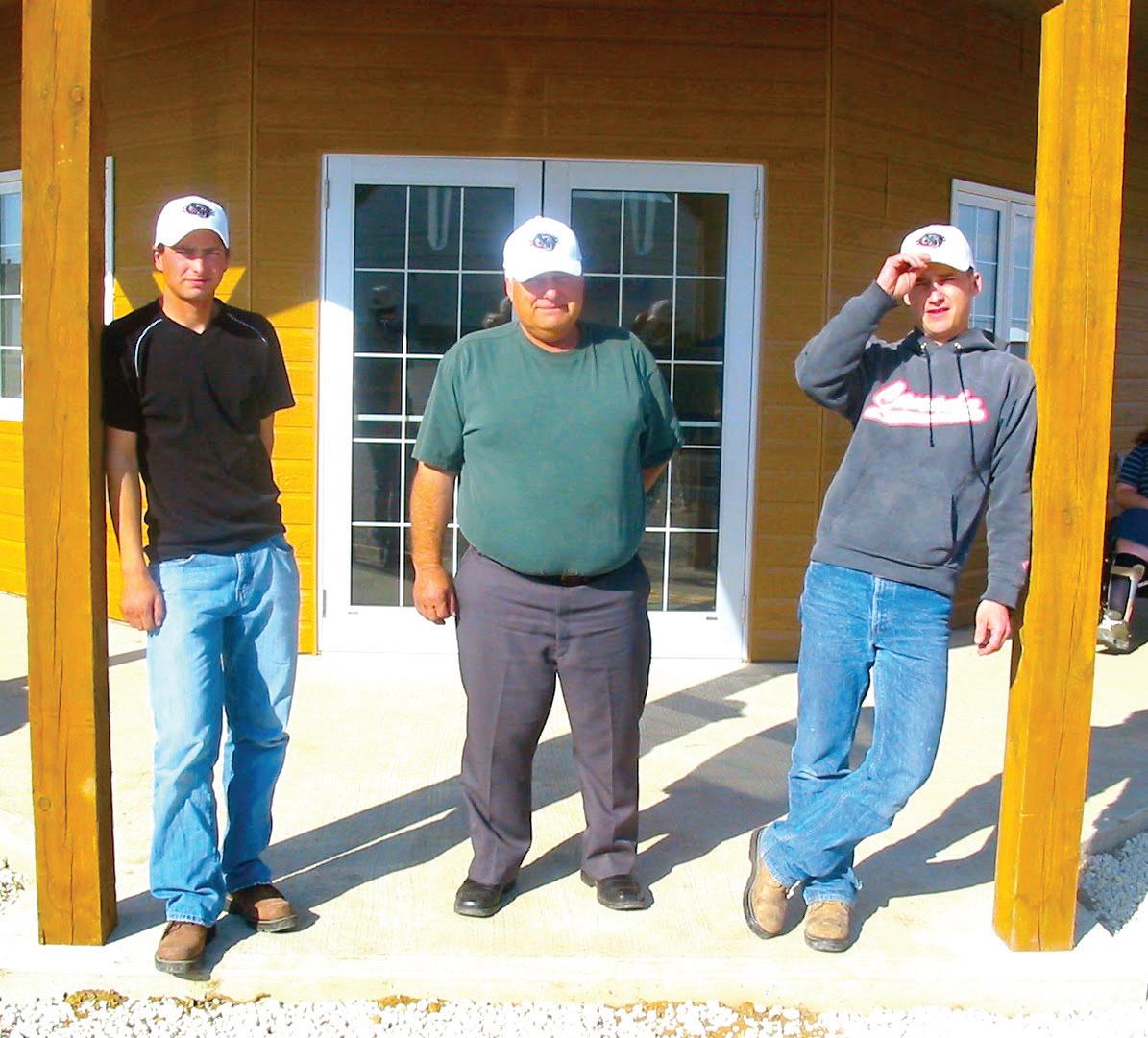
This family-run business has successfully transitioned into a thriving venture, providing high-quality meat products to its customers and emphasizing its commitment to delivering top-notch, naturally-produced meat.
Winkler’s current Mayor, Henry Siemens, described their story as desperation, perseverance, and faith.
This family-run business, born out of the BSE crisis in 2003, has now successfully transitioned into a thriving venture. Garry, Paul and Garrett Spenst.
Grand opening of the 4,500-square-foot meat processing and retail store.
Family Tree of Hundreds Grows from Simple Homestead

The 3rd Bertholet Family Reunion held in September at the family’s homestead located just west of the Village of Grande Clairiere, MB Photos courtesy of Dillon Bertholet the call to join in the 3rd Bertholet Family Reunion in early September.

ering of decedents recently
The homestead is located just west of the Village of Grande Clairiere, MB and currently owned by grand-

son Gerry Bertholet and his wife Linda. The provincially recognized Century Farm is well known in the area as Maple Lake Stock Farms.
According to Linda, the family tree has grown to
include 641 people, an increase of 115 since their previous reunion hosted 6 years earlier.

Joseph and Laure Bertholet had 12 children in all and the last living child,
Ann Marie “Nannie”, was a honoured guest at the event.
Relatives came from the local areas of Manitoba and afar – Winnipeg, Flin Flon, The Pas, Saskatoon,
Calgary and Edmonton, Alberta, British Columbia, and Colorado.
The weekend was filled with fun and activities, but foremost was the visiting, according to Linda.
Joseph and Laure Bertholet had 12 children in all and the last living child, Ann Marie “Nannie”, was a honoured guest at the event.
The weekend was filled with fun and activities, but foremost was the visiting, according to Linda.

September 29, 2023 The AgriPost ��
Trauma of Post Heat-Stress Overshadows Dairy Cows in Fall
Good research demonstrates that summer heatstress negatively affects the performance and health of lactating and dry dairy cows. The funny thing is most people forget that a good bout of heat-stress during the summer cause many problems that extend into the cooler autumn months. Therefore, we should be aware of the ways that post heat-stress trauma still lingers and then take immediate corrective steps. Plus, we should plan more preventative actions against heat-stress during next summer to shrink its dark shadow.
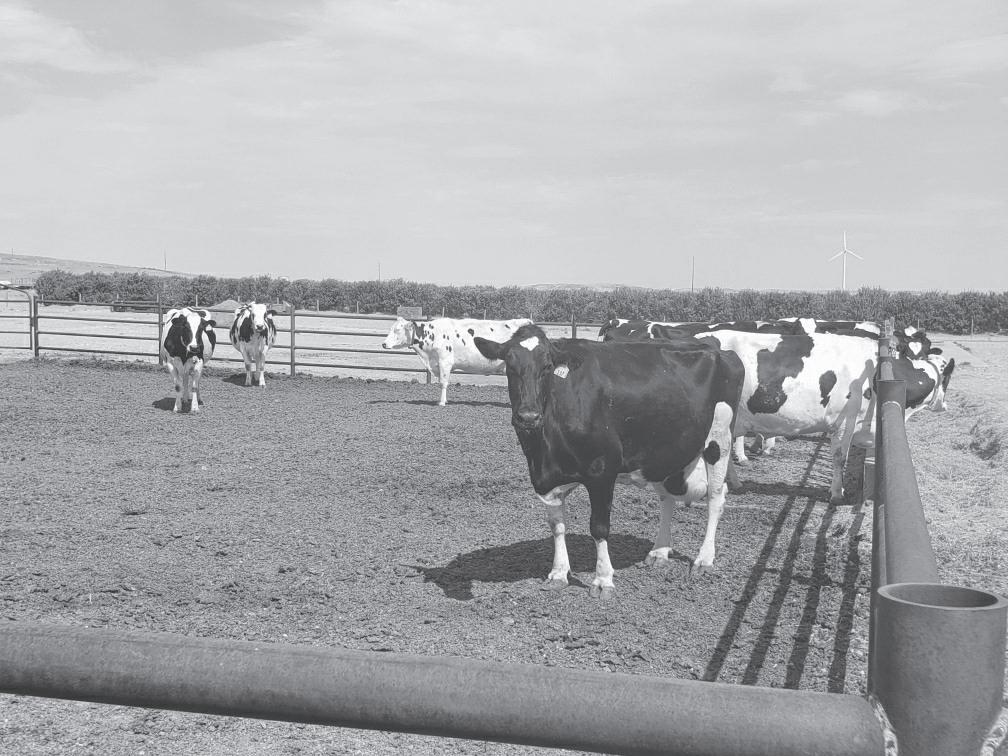
Heat-stress in cattle starts when the air temperature exceeds about 25C at a humidity of about 55 – 60%. Because dairy cows don’t sweat like us to dissipate heat, they must rely on panting if they are going to survive. As a dairy nutritionist, I often see severely heat-stressed dairy cows, both breathing heavily and drooling. Many of them are standing in place, rather than lying down and most of them are not chewing their cud. As the summer progresses to become hotter and/or more humid - without any cooling relief; dairy performance declines, rapidly. Good reproduction records in heat-stressed dry and lactating cows virtually melt away (pun) - University research proved a long-time ago that dairy cows have two to three normal follicular waves during an estrus cycle and heat-stress retard growth and impair the function of the dominant ovarian follicle. It is also believed
Dates
that heat-stress decreases the fertilization rate and increases early embryonic deaths before pregnancy status is confirmed. Erratic hormone and metabolic oxidative activities are thought to be contributing factors to such reproductive dysfunction.
From a practical standpoint, I speculate that the more severe and longer the heat-stress is - the harder it becomes to get cows pregnant with their next calf. For example, a typical hot and humid summer of Manitoba creates many groups of “open” cows. And if this happens during the last hot days of mid-September, I have witnessed - lower pregnancy rates that will follow a cowherd well into November. That’s because the comfortable cow most likely resets – proper follicular development/hormone functions during her next estrus cycles held under much cooler conditions. Yet, it could take one or two cycles to successfully complete.
Most people also don’t realize that such late-August/ September heat-stress usually causes adverse metabolic hormone changes in both faraway and close-up dry cows as well. Such phenomena may seem unrelated to the above primary reproductive problems, but they happen at the same time. Such secondary hormonal changes reduce post-partum mammary cellular function, mammary development and milk synthesis in subsequent autumn lactation.
Case-in-point: the Mississippi State University ex-
Cases of Blisters Demonstrate Value of Rule-Out Testing
amined over three hundred lactation records (over six sites) and found that heatstress in the early part of the cow’s dry period (re: 60 days pre-partum) had profound milk production losses during subsequent early and mid-lactation periods. Similar evidence was reported in Mexico in which dairy cows were cooled during the entire dry period. As a result, they gave birth to calves of higher birth-weights and then gave over three kilos more milk per day during their early lactation stages compared to non-cooled counterparts.
Although it is good to know that summer heat-stress affects fall-time breeding and other aspects of dairy cow productive life, we should ask ourselves, “What can be done to correct this annual problem?” Luckily, dairy producers can utilize a few nutrition, reproduction and management tools during autumn and in subsequent summers to overcome post heat-stress trauma.

- Implement a specific faraway and close-up dry cow program – It should promote good dry matter intake and cud-chewing. This won’t reverse the past reproductive autumn failures, but prepares otherwise fertile dairy cows for next summer.
- Set up an estrous-sync breeding program - Kansas State University (KSU) showed heat-stressed anestrous cows (cows that did not show visible signs of estrus) assigned to a timed scheduled breeding program had a 40% improvement in pregnancy rate at 27 days after insemination.
- Improve your heat-stress prevention plan – Next summer provide more waterers and shade to both dry and lactation cows. Implement a water-sprinkler system in both areas. Improve heatstress management such as reduce waiting times before the cows are milked.
Consequently, I discussed these suggestions with a 150cow dairy producer in which he thought they would be effective against post heatstress trauma that extends into his every autumn. He wished that he had focused upon them earlier this year (2023) - against a typical Manitoba hot summer, which dipped to cooler temperatures in July and then bounced back for a second shot of heat stress at the end of August and well into September.
Set for MBP Fall District Meetings
By Dan Guetre opportunity to explore possible resolutions for debate at the 45th AGM or to suggest action items for MBP.
The Manitoba Beef Producers (MBP) has announced the dates for their fall 2023 district meetings. The meetings scheduled will take place in the even-numbered districts where director elections are required and followed up with a virtual meeting where all beef producers can learn more about what MBP has been doing this year.
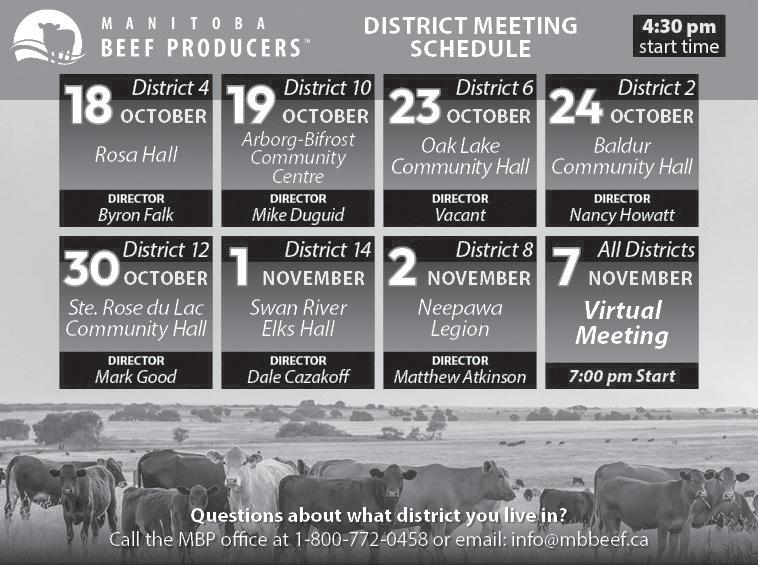
This year’s in-person meetings in even-numbered districts will start at 4:30 pm with some presentations. There will be a break around 5:45 pm for a free beef on a bun meal and fellowship. At 6:30 pm, presentations will resume and director elections will be held. There will also be an
Producers from odd-numbered districts are invited to attend a meeting in an evennumbered district if it is convenient for them, but they are not eligible to vote in the director elections there.
There is no charge to attend a session but advance registration is appreciated to assist with meal counts for in-person meetings.
There will also be an evening virtual meeting to provide updates to those unable to attend an in-person meeting. It will be held on Tuesday, November 7 starting at 7 pm.
If you are unable to attend
a district meeting, MBP will have a form available on its website for producers wishing to put forward resolutions to be considered for possible debate at the 45th AGM. That
form will be available later this fall.
The 45th Annual General Meeting (AGM) is scheduled for February 8-9, 2024 in Brandon.
By Harry Siemens
In the world of swine health, rule-out testing emerges as the surefire way to determine the cause of blisters in pigs.
Dr. Jette Christensen, the Canada West Swine Health Intelligence Network (CWSHIN) manager, underscores the importance of this approach, emphasizing that it provides the certainty needed to safeguard against Foot and Mouth Disease (FMD) and Seneca Valley virus (SVV).

CWSHIN’s recently released swine health surveillance report for the second quarter sheds light on two incidents in Manitoba and Saskatchewan. In both cases, sows displayed troubling signs of blisters, prompting the initiation of FMD and Seneca Valley virus rule testing. The results, however, were negative for both diseases.
Dr. Christensen highlighted the significance of ruleout testing, saying, “It’s a complex investigation because first CFIA needs to rule out Foot and Mouth Disease and Seneca Valley Virus or other viruses that can cause blisters, and then the herd practitioners will come in to figure out, if it’s not Foot and Mouth Disease, it’s not Seneca Valley virus, what is it?”
In one of the cases, laboratory histopathology suggested a potential link to burns. Dr. Christensen explained that “burns” encompasses various causes, including frostbite, sunburns, and chemical burns. However, despite a thorough investigation, the veterinarian couldn’t pinpoint any specific causes of burns within the barn.
“So, we know for that specific herd that it wasn’t Foot and Mouth, it wasn’t Seneca Valley, but we’re not sure what it was,” Dr. Christensen admits.
The story repeats itself on the other farm. Extensive testing ruled out Seneca Valley Virus, Foot and Mouth Disease, and other viruses that could cause blisters. While the vets identified some chemicals as potential causes of burns, definitive laboratory confirmation remained elusive.
Dr. Christensen sums it up concisely. “The bottom line for both of these cases was we know what it was not, but we are not certain what it was.”
The key takeaway from these incidents, Dr. Christensen asserts, is that not all blisters in swine result from bacterial or viral causes. This underscores the critical need for robust surveillance, particularly in Foot and Mouth Disease cases and the Seneca Valley virus.
She emphasizes, “There are blisters out there, but not all caused by bacteria or viruses. Therefore, our Foot and Mouth Disease and Seneca Valley virus surveillance must investigate every case of blisters thoroughly.”
In the ever-evolving landscape of swine health, ruleout testing is the linchpin to ensuring the well-being of our swine populations. As Dr. Christensen aptly demonstrates, ruling out potential diseases is an essential part of the puzzle, allowing them to eliminate threats and focus on safeguarding the health and vitality of our swine herds.
“With each case of blisters meticulously examined, we strengthen our defences and enhance our ability to protect against the most significant challenges facing the swine industry.”
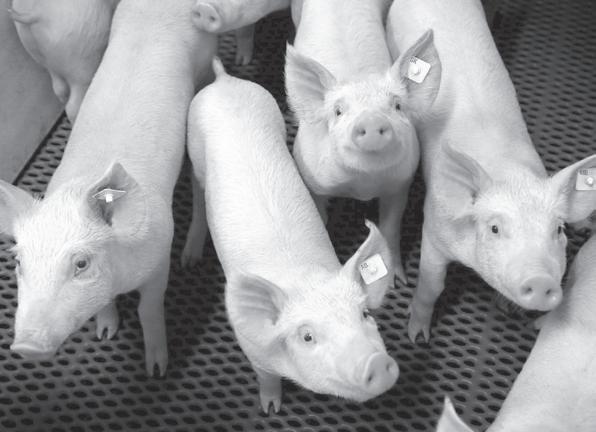
Dr. Christensen said there are blisters out there but not all are caused by bacteria or viruses. Hence, it’s critical for the Foot and Mouth Disease and Seneca Valley virus surveillance for every case of blisters to be investigated.
Dr. Jette Christensen explained the recent cases of blisters found in specific hog barns wasn’t Foot and Mouth or Seneca Valley.
Submitted photos
�9 September 29, 2023 The AgriPost
Dr. Jette Christensen, the Canada West Swine Health Intelligence Network (CWSHIN) manager
Manitoba Beef Producers (District Meetings) Photo from X (Twitter)
Heat stressed dry cows
Photo by Peter Vitti
Preventing African Swine Fever: Understanding Feed Controls for Importers
By Harry Siemens
In recent updates, the Canadian Food Inspection Agency (CFIA) advises the hog industry on crucial information regarding feed controls to prevent the spread of African Swine Fever (ASF). This update responds to the ASF cases discovered in Sweden, as this highly contagious disease can travel through contaminated feed or feed ingredients. It is of utmost importance that producers take every precaution to ensure the safety of their swine feed.
ASF poses a significant threat to the hog industry, and controlling its spread is paramount. The CFIA introduces changes to import permit requirements, specifically addressing secondary control zones concerning ASF. The focus is ensuring that imported feed and ingredients meet stringent safety standards.
Producers should always source swine feed from reputable suppliers with robust biosecurity controls. The update means understanding where the feed ingredients come from and verifying that everyone involved used proper biosecurity measures throughout their production and handling. Feed importers must provide this crucial information, particularly regarding ingredient sourcing and processing, before entry into Canada.
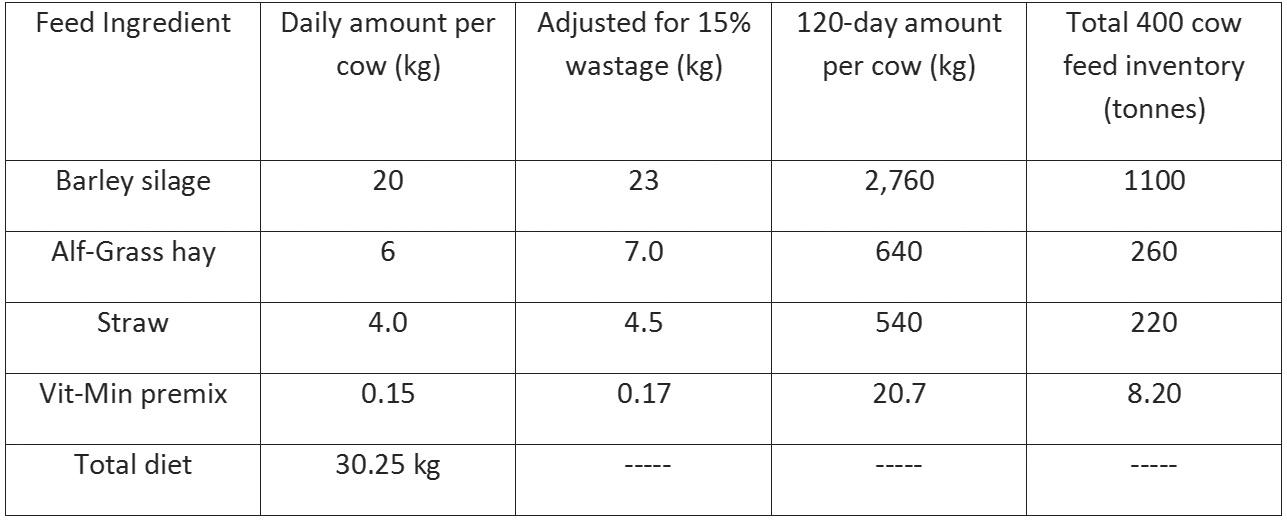
ASF can travel through contaminated feed or ingredients from countries where the disease is present. Everyone involved in the feed supply chain needs to be well-informed about ASF. Familiarizing oneself with frequently asked questions about this animal disease is essential in preventing its spread.
Importing livestock feeds may be subject to further conditions enforced by the CFIA. Depending on the product’s origin and type, it might require an additional CFIA plant health import permit. In some cases, restrictions may entirely prohibit the importation of certain plant products, regardless of their intended use.
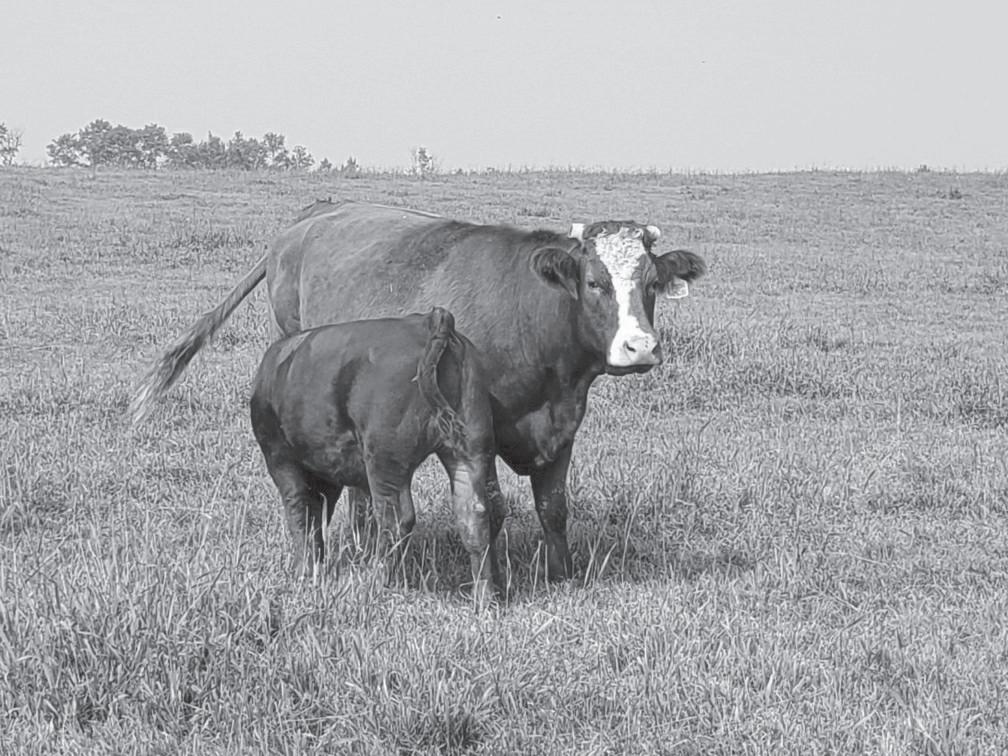
All importers must know the specific import requirements for the products they intend to bring into Canada. Ensuring that each shipment complies with these requirements is essential when crossing the Canadian border. The Automated Import Reference System (AIRS) provides a valuable resource for understanding the import requirements for CFIA-regulated commodities.
Bill Alford, the h@ms Marketing Services Co-op general manager in Winnipeg, MB, emphasized the potential risks of importing mainly organic soy products from China. These imports could pose contamination risks for diseases like PEDv and ASF.
Alford highlights that many feed additives are imported from China, underscoring the importance of consulting with feed companies to understand the measures to safeguard against contamination risks. He also recalls a significant food safety scandal in China involving melamine found in baby formula a few years ago, demonstrating the significance of food safety precautions.
In conclusion, preventing the spread of African Swine Fever is a shared responsibility among all stakeholders in the hog and feed industries. Vigilance, strict adherence to safety standards, and a thorough understanding of import requirements are vital elements in safeguarding the industry and ensuring the well-being of swine populations. Food safety remains a top priority for all, and collaboration is essential to maintain the highest standards in the face of potential threats.
Good Winter Feed Supplies Start with Good Beef Nutrition in Autumn
By Peter Vitti
After spring calves are weaned, early gestation beef cows require the lowest amount of nutrients compared to the rest of the year. Some people see this as a sign to save money by putting them on low-quality pastures or other poor feeds. Rather, it should be seen as a spring-board to map out a good winter-feeding plan as these beef cows will require better nutrition as they move through pregnancy until calving and the initial months of lactation.
That’s why as a beef nutritionist, I believe that bred early-gestating cows should be put on a well-balanced nutritious feeding program from early autumn until the first snows. It will simply reward us with good beef cow performance and healthy newborn calves in the early months of next year.
Coined as “fetal programming” - It theorizes that the life-time performance of new calves can be positively or negatively affected by the soundness of cow nutrition received during all trimesters of gestation (from conception to calving).
Although bovine physiology demonstrates that most fetal growth occurs during the last trimester; early and mid-term nutrition of the gestating cow (and her fetus) are just as important, because this is where maximum growth and vascularization of the placenta takes place, which regulates fetal growth. In addition, major fetal organs such as its liver, lungs, brain and kidneys become significantly developed compared to “fetal growth” of muscle and fat tissue, which occur later.
We obviously cannot see that the fetus is developing properly inside the cow, but we can look at the current cowherd body condition, which is a reflection of
their present early-gestation nutrition. It just so happens that I recently drove through a pasture with the owner of 400 red Angus x Simmental cows with their spring calves (to be weaned in about a month).
It was my afternoon assessment that this pasture with all lot of good prairie grass and mineral-salt licks has properly supported their optimum body condition score of 5 – 6 (1 – emaciated to 9 – obese). Therefore, I am quite confident that most of them would continue into the winter with a good healthy fetus.
Consequently, the producer also updated me that his cows will be moved onto adjoining pastures of equal carrying-capacity supplemented by 20% molasses lick tubs by the end of the weaning season until Christmas. Afterwards they will be feed a drylot TMR ration; made up of barley silage, mixed alfalfa hay and a 1/4 lb/hd/day premix until the
end of the calving season in late-April. No significant amount of grain will be fed, unless the weather drops below -20°C.
Here is an inventory of his overwintering diet; fed to about 400 cows for a 120day period until the first cow calves (see Table 1 below).
Like this producer, most people usually have a good general idea of how much over-winter forage and other feeds that they will need by fall-time. Yet, I often recommend that a mid-winter inventory is also taken, accordingly. That’s because I would regret any surprises for anybody during the winter months that would put their cow-calf operation into a dire position of running out of the better-quality forages. Particularly, during the latter part of the winter, when late-gestation cow requirements are at their highest demands before calving.
For example, I remember a 200-cow beef producer
that noticed a significant amount of “tough-bales” of nearly pure 2nd cut alfalfa that went moldy and could not be fed. Fortunately, his neigbour was overstocked with an equal amount of good quality mixed-grass bales that he carried over to his herd for the rest of the winter.
Much like other experienced producers, this producer usually assessed the body condition of his cowherd, shortly after the weaning season. By then he had a good idea of his forage and feed inventory that overwintered his cowherd. I understood at the time of our visit that he would extend his pastures as autumn permitted. Then he moved them home and fed a TMR diet all the while improving their nutrition toward calving. In this way, rather than save money on their initial lowest nutrient needs, he invested in a progressive feeding program for a successful calving season and beyond.
September 29, 2023 The AgriPost 20
Table 1: an inventory of overwintering diet; fed to about 400 cows for a 120-day period until the first cow calves
I recently drove through a pasture with the owner of 400 red Angus x Simmental cows with their spring calves (to be weaned in about a month). It was my afternoon assessment that this pasture with all lot of good prairie grass and mineral-salt licks has properly supported their optimum body condition score of 5 – 6 (1 – emaciated to 9 – obese). Therefore, I am quite confident that most of them would continue into the winter with a good healthy fetus.
Photo by Peter Vitti
The AgriPost
Stress Research Shows “Primed” Plants Tolerate Drought Better
Plants suffer from drought stress when they do not have sufficient water for their growth and reproduction. Drought stress can cause food crops to become less productive, not produce a crop at all, or even die. Drought stress is a major problem in places where crop production mainly relies upon rainfall to supply crop needs.
The weather cannot be controlled, but to some extent, plants can. Since they cannot move, plants need to adjust and adapt to changes in their environment, such as drought, high temperature, or salt. Scientists are trying to use this ability to help plants respond to stress faster or more effectively to improve production and survival.
Although plants do not have brains or a nervous system, they can ‘remember’ the stress after experiencing it multiple times through a process called “stress memory.” The repetition of the stress “trains” the plant to recognize the stress when it happens again.
Plant physiologists, scientists who study how plants function - are trying to use stress memory to improve crops’ tolerance to drought stress. One approach to prepare plants to stress before it occurs is by “priming” them. Although not exactly the same, the idea of priming is like administering a vaccine to the plant.
Just as vaccines give a small amount of a virus to activate our immune system, we expose plants to low levels of stress to activate stress responses. When people get vaccinated, they may experience some symptoms but recover after a short time. Then, if exposed to the virus, that person will have immunity and generally not experience severe symptoms.
Primed plants show a similar response. During the priming treatment, they show mild stress symptoms such as slight wilting or lower metabolic activity. Ideally, the priming treatment does not reduce growth but alerts
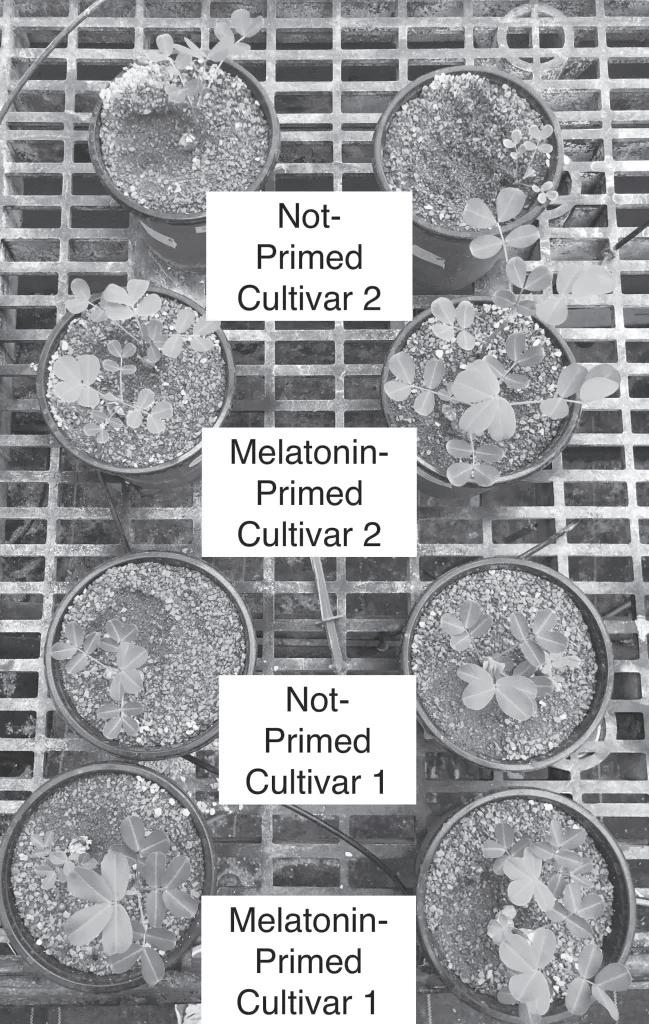

the plant to be prepared for stress. Once the plants are returned to normal conditions, they recover and are ready to perform better if the stress occurs later in the growth cycle.
Aline de Camargo Santos, a PhD student at the University of Florida, works on plant and soil nutrition and crop stress physiology in order to develop affordable technologies and strategies to overcome the many adversities that affect farmers.
She is investigating how to increase drought stress by testing two different priming techniques, using the peanut plant as her subject.
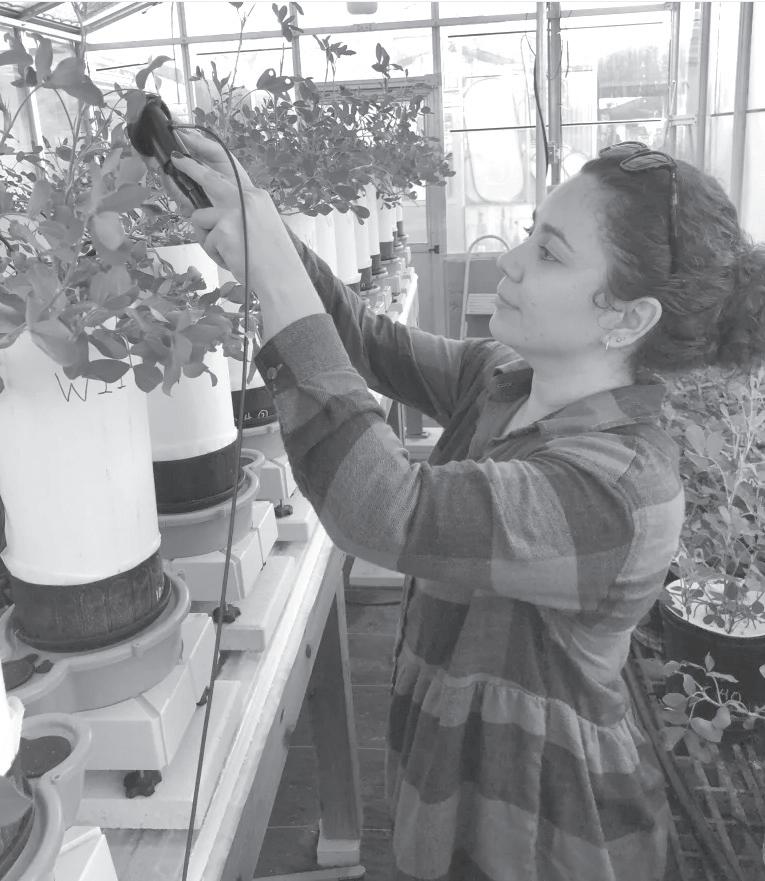
“In the first approach, we apply mild water stress at the beginning of the crop cycle as a priming treatment” explained de Camargo Santos.
“Primed plants receive less than the recommended irrigation for peanut during the priming period, which is about 2-3 weeks.”
Following this period, she then ensures that the plants receive plenty of water, so they can recover and build their defense system.
“Later in the season, we stress the plants again by completely stopping all irrigation to test if the priming treatment increases stress tolerance,” she added. “After that, we harvest the plants, and the productivity of the primed and not primed plants is compared. This approach can potentially reduce the amount of irrigation applied while maintaining yield and increasing the peanut plants’ stress tolerance.”
In the second approach, her team primes seeds before planting with naturally occurring plant natural chemical compounds that the plants already use to signal stress and activate stress responses. Melatonin, abscisic acid, and salicylic acid are some examples of these compounds.
“The germination process is considered quite stressful for the seed,” she explained.
“The seeds must absorb a lot of water in a short time to produce the first leaves and
Discover the Farm: Unearthing Agriculture’s Delights
By Harry Siemens
In its second year, “Discover the Farm” has become a cherished event, evolving from the much-loved Open Farm Day that once graced the landscapes of Manitoba. The Bruce D. Campbell Farm and Food Discovery Centre, nestled within the University of Manitoba’s Glenlea Research Station, has been at the heart of this agricultural celebration. However, the pandemic cast a shadow, forcing the cancellation of Open Farm Day in 2020, leaving a void still unfilled.
Crystal Jorgenson, a communications specialist in the Faculty of Agricultural and Food Sciences at the University of Manitoba, sheds light on the Center’s journey. In 2022, their dedicated staff decided to revive the open house concept, partnering with various commodity groups to birth the first “Discover the Farm” event.
establish the root system. For this method, seeds are primed by treating them with a melatonin solution for a few hours. That allows the seeds to absorb as much water as they need from the solution. The seeds also absorb some melatonin that helps them to prepare to germinate. Preliminary results from this research show improved and more uniform early establishment and vigor in young plants. Once melatonin-primed plants are exposed to stress, they are healthier than the not-primed plants and potentially show improved tolerance against drought stress.”
She admitted that drought stress impact on crop production is complex and unlikely to be solved with a single method, hence the diverse strategies needed to be developed to address the problem.
“The use of priming is one way we can improve how crops are produced under drought conditions,” she said. “Further research is necessary to understand priming and to adjust all aspects of the method (effective stress levels, duration of the priming treatment, and timing of application) specifically for each crop and production environment.”
Jorgenson reflected on its success, saying, “It was very successful, and we decided to hold it again this fall with almost 1,400 visitors attending on Sunday, September 17.”
This newfound enthusiasm surpassed the previous glory of Open Farm Day, leaving Jorgenson and the team thrilled by the overwhelming response.
But what makes an event like “Discover the Farm” resonate with farmers and Ag enthusiasts?
The answer lies in collaboration. The event boasts valuable partnerships with key players in the agriculture industry, including Manitoba Pork, Manitoba Chicken Producers, Manitoba Beef Farmers, Manitoba Egg Farmers, Dairy Farmers of Manitoba, and Manitoba Canola. To add to the excitement, Agriculture and Agri-Food Canada joined the ranks this year. Together, they hosted various stations where they shared valuable insights to engage visitors in fun and handson activities.
One of the event’s highlights is the active participation of producer members from these commodity groups, who interact with the public, offering a firsthand glimpse into modern farming practices.
Looking ahead, “Discover the Farm” has a promising future. It will continue to be a beacon of agricultural education, aligning with another public outreach day called “Discover Agriculture in the City”, an annual event held for nearly two decades in March at The Forks.
Yet, what impact does “Discover the Farm” leave on its visitors, and what questions do they have? The answer lies in the engaging conversations that transpire during the event. Partners report that they have enlightening discussions with attendees, who pose honest and thought-provoking questions. These exchanges offer a unique opportunity for producers to share insights into modern farming practices.
Moreover, the event encourages visitors to complete surveys, providing valuable feedback.
From these responses, it’s evident that people walk away with a deeper understanding of food production, particularly in the realm of livestock care and cultivation. The ultimate goal of such outreach events is to empower individuals to seek accurate information about how Manitoba’s farmers, processors, and agrifood industry professionals work tirelessly to produce safe, high-quality food for families, communities, and people worldwide.
In the heart of Manitoba, “Discover the Farm” continues to flourish, bridging the gap between farmers and consumers, fostering understanding, and planting the seeds of knowledge about the intricate world of agriculture.
“It’s a testament to the enduring connection between those who grow our food and those who savour its bounty, nourishing our bodies and our shared appreciation for the land and its abundance,” Jorgenson said.
2� September 29, 2023
Photo courtesy of Edivan R. de Souza
Aline de Camargo Santos evaluating stress in primed and not primed peanut plants using equipment that measures the light reflected by plants – an indicator of stress in plants. Her research shows that treating peanut seeds with a melatonin solution before planting can help the crop deal with drought stress.
Peanut seeds soaking in solution (left: Melatonin primed seeds, right: not primed seeds in deionized water). Melatonin-primed seeds are covered with aluminum foil to protect them from light since melatonin is reactive to light.
Photo courtesy of Aline de Camargo Santos
Melatonin-primed and not primed peanut plants from two cultivars after 14 days of planting. Melatonin is a natural plant compound – treating seeds with a solution of melatonin before planting may help with drought stress. Note the “non-treated” groups have less foliage, a sign of plant health.
Photo courtesy of Aline de Camargo Santos
Muffins, Spareribs and Cucumber Salads
By Joan Airey
These muffins that taste like doughnuts are a favourite with one of the grandchildren. Thought maybe some of you who make school lunches would find the recipe handy.
Muffins That Taste Like Doughnuts
For the muffins:
2 cups of all-purpose flour
1/2 cup granulated sugar
1/4 cup brown sugar
2 teaspoons baking powder
1/2 teaspoon baking soda
1/2 teaspoon salt
1/2 teaspoon ground nutmeg
1/2 teaspoon cinnamon
2/3 cup buttermilk
1/4 cup unsalted butter, melted
1/4 cup vegetable oil
2 large eggs
1 teaspoon vanilla extract
Muffin Coating

1/2 cup unsalted butter melted
1 cup granulated sugar
1 teaspoon cinnamon
Preheat your oven to 375F. In a large mixing bowl blend flour, granulated sugar, brown sugar, baking powder, baking soda, salt, ground nutmeg, and ground cinnamon. In a separate bowl, combine the buttermilk, melted butter, vegetable oil, eggs, and vanilla extract. Stir together. Combine the liquid and the dry ingredients. Spoon the batter into parchment lined muffin pans. Bake the muffins for 15-18 minutes or until toothpick inserted comes out clean. Melt the butter for the coating in a small dish. Put the sugar and cinnamon in another dish. Let the muffins cool for a few minutes after you remove them from the oven. Dip them in the melted butter and gently roll them in the sugar/ cinnamon mixture.
Note: I halved the coating and it was enough for the 12 muffins. I just coated the top of the muffins.
More than likely, I have more cookbooks than most people since I enjoy cooking and baking. I used this recipe for oven barbecued spareribs several times then tried other recipes for spareribs. Last week while looking for something different to make I came across it in a magazine I bought over twenty years ago. So made it for supper and still think it’s tasty.
Oven Barbecued Spareribs
6 pounds pork spareribs
3 cups ketchup
1 1/2 cups packed brown sugar
3/4 cup chopped onion
1 teaspoon garlic powder
4 to 5 teaspoons liquid smoke, optional.
Cut ribs into serving-size pieces, place them bone side down on a rack in a shallow roasting pan. Bake, uncovered at 350F for 30 minutes. Meanwhile in medium saucepan combine ketchup, brown sugar, onion, garlic powder and liquid smoke if desired. Simmer uncovered for 20 minutes, stirring occasionally. Drain ribs, pour sauce over all. Cover and bake for 30 to 40 minutes or until tender. Uncover bake 30 minutes longer, brushing several times with sauce. Yield 6-8 servings.
Note: I used a third of the sauce to cook enough for the two of us. But I used lots of onion.
Cucumber with Dressing
1 cup mayonnaise
1/4 cup sugar
1/4 cup vinegar
1/4 teaspoon salt
4 cups sliced cucumbers
1 cup sliced onions
Dill weed
In a large bowl, combine mayonnaise, sugar vinegar and salt. Add cucumbers and onion toss to coat. Sprinkle with dill weed. Cover and refrigerate for two hours.
If you are still lucky like us and so far, have no frost you can store fresh unwashed cucumbers in the fridge for ten days. Yesterday we dug our corn stalks and fed it to the cows. That always makes me feel it is time to clean up the rest of the garden.
Porcine Sapovirus Weighs Heavily on Swine Health
By Harry Siemens
Porcine Sapovirus is mak ing waves in the swine in dustry, and its impact on weaning weights is under the spotlight. With poten tial losses of up to $22 per sow annually, this emerg ing virus is causing concern among practitioners and re searchers alike.
Despite being identified in the United States in 1980, Porcine Sapovirus, the in dustry only recently linked it to diarrhea in US swine herds.
Dr. Will Fombelle, a swine practitioner at Carthage Vet erinary Services, shed some light on this infection’s characteristics.

“Typically, it manifests in sow herds and induces diar rhea in young piglets. While the mortality rate remains low, the morbidity is high, adversely affecting wean ing weights,” said Dr. Fom belle.
He describes the clinical presentation in sow herds, where healthy farms, par ticularly multiplication sow farms, are most suscep tible. The infection typi cally emerges in mid to late lactation, with piglet diar rhea occurring from day 12 of age and beyond. The consistency of the diarrhea resembles vanilla pudding, similar to other diseases like coccidia and late Rotavirus. It leads to rough-haired pigs and significant wean weight effects, amplifying the morbidity rate.
The economic consequences of Porcine Sapovirus are substantial. Dr. Fombelle estimates that a one-pound loss in weaning weight translates to a staggering $22 per sow per year. This financial burden underscores the importance of budgeting for treatment. Fortunately, effective vaccines are available to manage this virus alongside recommended practical management strategies.
To delve deeper into this issue, the Swine Health Information Center and the American Association of Swine Veterinarians have organized a webinar on Porcine Sapovirus. This educa-
Typically, Sapovirus manifests in sow herds and induces diarrhea in young piglets. While the mortality rate remains low, the morbidity is high, adversely affecting weaning weights, says Dr. Will Fombelle a swine practitioner at Carthage Veterinary Services in the US.
tional resource offers valuable insights into the virus’s characteristics and management strategies.
Prairie Diagnostic Services has stepped up its efforts to address the Porcine Sapovirus challenge in Canada.
In response to the first Canadian reports of this virus in January, the lab is now screening samples collected from piglets with diarrhea.
Dr. Yanyun Huang, CEO of Prairie Diagnostic Services, emphasizes the importance of this diagnostic test since the virus was first associated with piglet diarrhea in the U.S. in 2019.
Dr. Huang highlights the collaboration between Prairie Diagnostic Services and the Veterinary Diagnostic Laboratory at Iowa State University, which fasttracked the availability of this diagnostic test in Canada. While offering the test a research test with a disclaimer, its use is crucial in identifying and addressing porcine Sapovirus. Identifying the virus accurately is essential, given that its clinical signs mimic those of other enteric viruses, ensuring the proper treatment.
The Canada West Swine Health Intelligence Network (CWSHIN) also actively monitors the situation. Dr. Jette Christensen, CWSHIN Manager, acknowledges the
Submitted photo
collaborative efforts among practitioners and laboratories. The group discussed the emergence of Sapovirus in the second quarter of the swine health surveillance report for the region. The virus had initially presented challenges due to limited diagnostic resources in Canada, with samples sent to the US for testing.
Dr. Christensen commends the incredible collaboration in the region, which led to the development a diagnostic test within six months.
“It’s amazing that the practitioners, the laboratory experts in the regions can collaborate and develop a test and dig into a completely new virus within six months. That’s a testament to an incredible regional collaboration,” she said.
However, there is still much to learn about the role of Sapovirus in causing scours. Researchers and practitioners are working diligently to understand this emerging virus better.
Porcine Sapovirus has emerged as a significant concern in the ever-evolving landscape of swine health. The collaboration among practitioners, laboratories, and researchers is instrumental in addressing this new challenge and safeguarding the swine industry’s future.
September 29, 2023
22
The AgriPost
Read the AgriPost online at AgriPost.ca
Muffins That Taste Like Doughnuts Photo by Joan Airey
The AgriPost
Regenerative Agriculture is for Everyone
By Dorthea Gregoire plant choices.
Over the last few years, terms like regenerative agriculture (aka regen ag), cover crops, soil health, carbon sequestration and soil biology/ microbes have been popping up more and more in agricultural circles and have become the topic of discussion for many of us.
This sudden surge in interest has been further fueled by federal, provincial, and corporate funding designed to get farmers on board with a series of practices aimed at improving the health of (i.e., the life within) our soils.
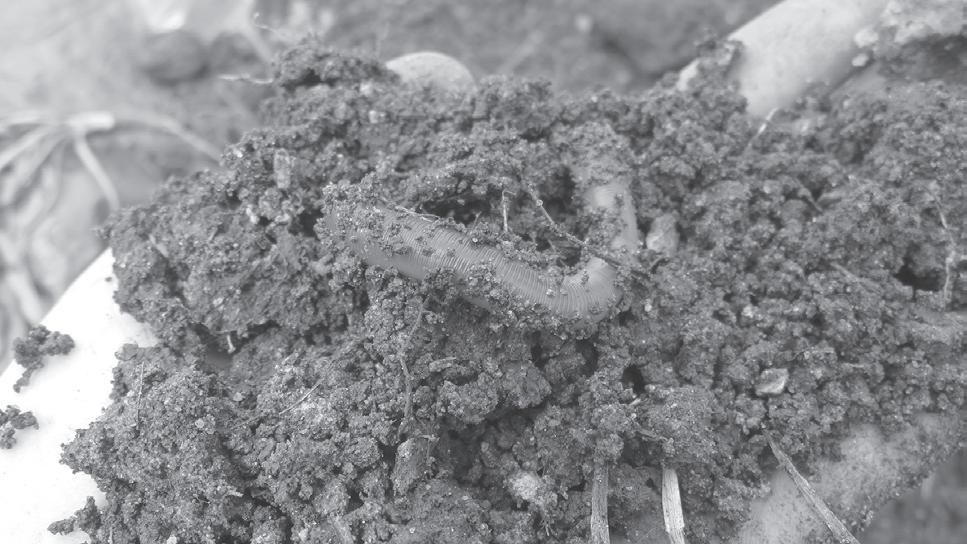
But what is regenerative agriculture and how does it relate to all of the other terms we hear thrown around alongside it? I’ve yet to come across a truly satisfactory and succinct definition of regenerative agriculture but, to be honest, I don’t need one. For me, regen ag is an approach to agricultural management that focuses on the soil as a living eco-system that can be used to address our most pressing on-farm issues. This includes water management, drought and flood resilience, soil compaction, crop quality, erosion, the use of synthetic inputs (pesticides and fertilizers) as well as the economic/ financial viability of the farm, itself, and so much more.
One of the most empowering aspects of regenerative agriculture is that in order to start out you do not need to purchase specific equipment or expensive soil amendments, and you don’t need to follow any one “expert’s” prescriptive plan to be successful. Anyone can get started by simply making smart
When you think about plants (including crops, garden plantings, native areas etc.) in a regenerative system you must think of them as tools that you can use to address a need. Gone are the days when a farmer has the luxury of thinking of their crop as a simple commodity to be grown and sold. Each plant that is put in the ground (by you or by Mother Nature) has something to offer to the farmer and the farmer must seek to understand that plant’s potential and use it to their advantage.
For example, the large-rooted radish (e.g., daikon) can break through compaction, the fibrous roots of grasses can spread and build carbon and soil organic matter, the overwintering lifecycle of fall rye and perennial plantings can offer protection to the soil from erosion. Similarly, the thistle patch may be telling you that you have a compaction issue, the flush of spring weeds that you have excess nitrates and the horsetails that your soil is wet for too long. Once we begin to take note of what’s going on around us and start to view plants as our tools and allies the opportunities become endless.
To get started, straightforward changes to a crop rotation, such as including a legume in rotation, can work to restore nitrogen reserves and reduce the need for synthetic fertilizer.
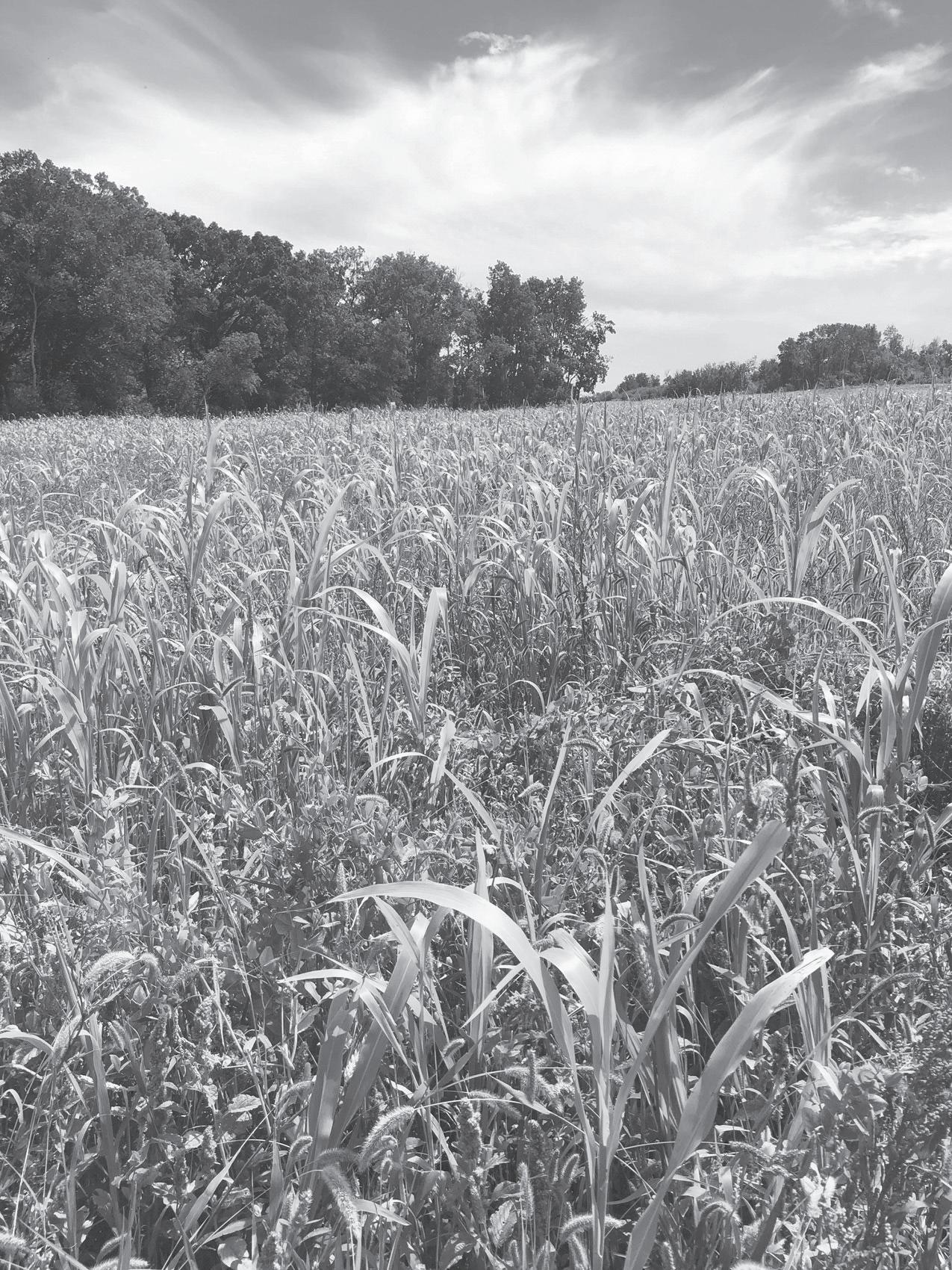
The inclusion of perennial hay (e.g., alfalfa) in rotations can drastically reduce unwanted weeds such as Canada thistle. Even more powerful results can be seen when mul-
tiple species of plants are used together in intentional combinations such as cover crops (grown in lieu of cash crops), intercrops (grown alongside cash crops) and relay crops (seeded into cash crops to do most of their growing after the cash crop is harvested). If you have livestock, switching to a rotational grazing system instead of continuous grazing or grazing cropped areas can bolster the soil building process. Each of these actions can address possible issues while simultaneously building up the health of the soil by feeding soil biology (helpful microscopic fungi, bacteria, and others) and creating resilience within the soil.
For many, the transition to regenerative agriculture has come from a very personal realization that they can no longer afford to farm in the “same old way”. Not only is the cost of inputs skyrocketing but the need for more on every acre increases year over year. Productivity today is not what it was 50 years ago. Even in organic systems where the cost of inputs is mostly avoided, there is recognition that overworking of soil is leading to an increasing number of problems that need new and creative answers.
If you have thought about the longevity of your farm and see a need for change but are unsure of where to start, you are not alone. This year in southeastern Manitoba several dozen farmers - from small mixed farms to large
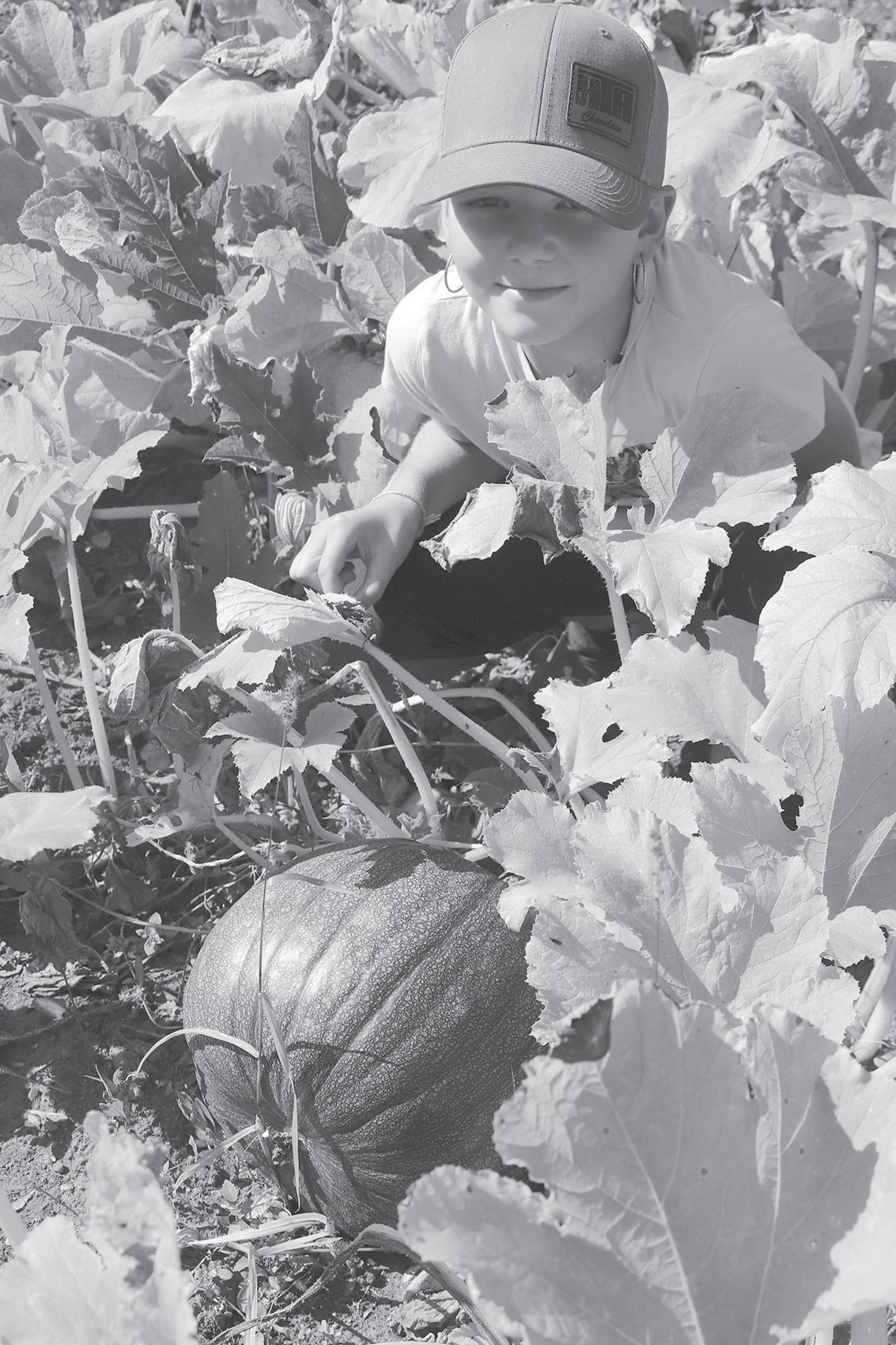

Outdoor Gardening Is Coming to an End!
By Joan Airey
As I write this on September 19, we have not had frost in our yard. This morning I dug the last row of potatoes but still have peppers, carrots, pumpkins, etc. left in the garden as long as the frost stays away, I will let them grow.
grain operations - are on their journey into regenerative agriculture. Some of these farmers are just starting out, adding a small area of cover crop or making a small change to their rotations, while others have decades of experience under their belts – making big changes and seeing big results.
The regenerative journey never ends, offering us each the opportunity to outdo ourselves over and over. Most importantly, with each farm that joins the regen ag community comes new experiences, allowing us all to move forward together, learning from one another’s mistakes and building upon our combined successes.
For those interested in meeting like-minded people I strongly recommend attending a local field day, reaching out to a community innovator, or checking out MFGA’s Regen Ag Conference in the fall. You can also visit websites including those hosted by Regeneration Canada and Understanding Ag for more information or sign up for a free course like those offered through the Farm Resilience Mentorship (FaRM) Program. When it comes to regenerative agriculture, the most important thing you can do is to take the first step. Reach out to a colleague, investigate a new practice, or read up on a new method.
Brought to you by the Stuartburn Emerson-Franklin Local Food Initiative. Find us on Facebook.
Carrots, beets, and parsnips require cool, moist but ventilated storage such as fresh produce bags (the kind scored with small holes) placed in a fridge if possible. Preferably not one that self-defrosts but as of this week I’m still using carrots from last year that were stored in a self-defrosting fridge. Last year I gave pails of carrots away. This year my carrots didn’t germinate the first planting so are smaller than usual.
Potatoes, onions, and garlic do best in cool dark, dry conditions. I read recently that storing onions next to potatoes may cause the potatoes to sprout sooner so I’m going to keep them in another room, not my cold room.
If you are one who loves house plants there is a new book out on that subject by Kamili Bell Hill “Happy Plants Happy You”. It not only tells you how to care for your plants but how they are good for your health.
Many news releases have come across my desk on the importance of helping birds and bees by maintaining bird baths so they have water during our hotter than normal weather. In the garden this week I have seen more bees in my sunflowers than all summer. I believe my cucumber crop wasn’t as prolific as usual because of lack of bees.
The Prairie Garden will soon be announcing the arrival of their 2024 book which is an excellent gift for gardeners. A newsletter from them recently was full of great advice for gardeners from not putting diseased plants in your compose and not putting weeds in that had seeds on them. Tropical plants should be bought indoors before it drops below 10 °C. They also suggest making new compost from the fallen leaves, kitchen vegetable scraps, fruit peelings and excess lawn clippings.
Why not start some herbs indoors to use over the winter. Sage Garden Greenhouses suggests growing basil as a baby green or growing it under lights or taking stem cuttings root them in water and the cuttings will adapt to indoor life better than full-sized plants.
Personally, I’m going to start from scratch when I bring in plants, I seem to always bring in some bugs.
23 September 29, 2023
Dorthea Gregoire is with the Canadian Organic Growers.
The goal is to build up the health of the soil by feeding soil biology (helpful microscopic fungi, bacteria, and others) and creating resilience within the soil.
To get started, straightforward changes to a crop rotation, such as including a legume in rotation, can work to restore nitrogen reserves and reduce the need for synthetic fertilizer.
Submitted photos
Grandchildren helping harvest your garden gives you a new prospective on life.
Photo by Joan Airey

September 29, 2023 The AgriPost 2�
