By Harry Siemens
Lawrence MacAulay, Minister of Agriculture and AgriFood, recently concluded a productive visit to Beijing, China, where he worked to strengthen trade opportunities for Canadian farmers, processors, and exporters. The Minister’s mission focused on advocating for fair competition, a level playing field for businesses, and fostering sustainable and inclusive trade relationships between Canada and China.
During his visit, Minister MacAulay engaged with Chinese industry leaders, importers, and Canadian stakeholders to address opportunities and challenges in agricultural trade.
He raised concerns about China’s anti-dumping investigation on Canadian canola seed imports, pressing for a fair resolution and the restoration of full market access for Canadian beef and dry pet food containing poultry ingredients.
MacAulay also emphasized Canada’s commitment to resolving delays in China’s approval process for other market access requests.
“Canada has the best products in the world, and it’s my job to promote them,” Minister MacAulay stated. “This was my sixth trade mission to China over two terms as Minister of Agriculture and Agri-Food. I am always proud to help showcase our delicious, high-quality, sustainable foods while advocating for our trading relation-

Pork Council, and Lawrence MacAulay Minister of Agriculture and Agri-Food.
ship to be fair and beneficial to our hardworking producers.”
As the keynote speaker at the Canada China Business Council Annual General Meeting and Business Forum, MacAulay highlighted the Council’s crucial role in strengthening trade ties. He showcased how the Canada Brand program elevates the reputation of Canadian products for their quality, innovation, and sustainability, providing exporters with a competitive edge.
Minister MacAulay also visited the MARS Global Food Safety Centre in Canada and China to learn about its cutting-edge work in food safety research and stakeholder collaboration.
A significant development during the visit was the announcement that the Canadian Meat Advocacy Office would go up in Beijing. Supported by a federal investment of $223,850 over two years through the AgriMarketing program, this office will provide an on-the-
ground presence for Canada’s red meat sector, facilitating access to Canadian products in the Chinese market. Minister MacAulay expressed his satisfaction with the collaboration, which included participation from Chris White, President and CEO of the Canadian Meat Council and Canada Pork, and Stephen Heckbert, Executive Director of the Canadian Pork Council.
China remains Canada’s second-largest customer for agriculture, agri-food, and fish and seafood products, with sales totalling $11.5 billion in 2023.
It is Canada’s top canola seed trade partner, importing over 4.5 million tonnes valued at $3.8 billion in the same year. However, challenges persist, such as the anti-dumping investigation on canola imports launched by China on September 9, 2024. Minister MacAulay reaffirmed Canada’s commitment to standing up for its
businesses and workers against unfair trade practices.
This visit also highlighted Canada’s broader Indo-Pacific strategy. In February 2024, Minister MacAulay opened Canada’s first-ever Indo-Pacific Agriculture and Agri-Food Office (IPAAO), marking a new chapter in Canada’s engagement with the region.
Encompassing 40 economies and over $47.19 trillion in economic activity, the Indo-Pacific region represents the world’s fastest-growing market and includes 11 of Canada’s top 20 trading partners.
Minister MacAulay’s efforts in Beijing underline Canada’s dedication to fostering fair, resilient, and prosperous agricultural trade relationships with one of its most significant trading partners.
There have been many discussions on trade with China however not as much is known about the current canola issue and EV tariffs.
China has launched an antidumping investigation into Canadian canola seed imports, following Canada’s 2024 tariffs on Chinese-made electric vehicles and other products.
Announced on September 3, 2024, the investigation aims to determine if Canadian canola is sold below market prices in China, potentially leading to further trade restrictions.
Canola is a key agricultural export for Canada and is highly economic, particularly in trade with China. The investigation
The Manitoba government is freezing the scheduled rental rate for agricultural Crown land (ACL) forage leases for the 2025 growing season to ensure ACL leases remain affordable for Manitoba cattle producers.
“Freezing the 2025 forage lease and permit rates to match the 2024 rate will provide support to Manitoba producers,” said Agriculture Minister Ron Kostyshyn. “We are also extending the timeline for producers to submit an appraisal report and apply for improvement costs to leased land for leases expiring this year.”
In 2024, the province effectively froze ACL forage lease and permit rental rates, noted the minister. For 2025, the annual rent will be set at the same rate as 2024 for ACL forage leases and permits, which means producers won’t see an increase to the rate on their invoice for 2025.
Manitoba’s agricultural Crown lands are parcels of land leased to producers for agricultural use including grazing, haying or annual cropping. Agricultural Crown lands are important public assets economically, environmentally and socially, and essential to supporting and growing the livestock industry in Manitoba and providing mitigation and adaptation to climate change, noted the minister.
has already affected markets, with canola futures prices dropping immediately after the announcement.
The Canola Council of Canada remains confident the investigation will confirm Canada’s adherence to rules-based trade. Minister MacAulay and other officials have emphasized the importance of maintaining open and stable trade rela-
tionships, expressing concern over the potential impact on producers.
This development highlights the fragile nature of Canada-China trade relations, with agricultural commodities often becoming leverage points in broader disputes. The investigation’s outcome could have farreaching consequences for Canada’s canola industry and agricultural exports.



By Harry Siemens
The Senate in Ottawa is rife with several bills passed by the House of Commons that the agricultural sector is grappling with, causing some heavy concerns that could involve trade and key agriculture sectors.
The Canadian agri-food producers commend the Senate Foreign Affairs and International Trade Committee for amending Bill C-282 so that it does not apply to existing, renegotiated, or currently negotiated trade agreements.
Greg Northey, president of the Canadian Agri-Food Trade Alliance (CAFTA), said, “CAFTA has repeatedly called on the Senate to reject C-282, which poses a direct threat to Canada’s agri-food sector, our trade relationships, and the thousands of farmers and their families that rely on open access to global markets to make a living.”
Ninety percent of Canadian farmers depend on trade to sell their commodities, and Bill C-282 would limit Canada’s flexibility in trade negotiations, potentially leading to lost market opportunities.
Michael Harvey, CAFTA’s Executive Director, highlights the significance of Senator Peter Harder’s efforts, “His proposed amendment removes risk from Canada’s relationship with key trading partners, including the US.”
While CAFTA still believes the Senate should reject the Bill, “the amendment significantly reduces the risk that our country simply cannot afford in the current international environment,” said Harvey.
An editorial submitted on behalf of the Dairy Farmers of Canada, Egg Farmers of Canada, Chicken Farmers of Canada, Turkey Farmers of Canada, and Canadian Hatching Egg Producers states Canada is an attractive trading partner for many nations.
Arguing that countries would abandon trade talks simply because Canada aims to protect its domestic dairy, poultry, and egg sectors is unsupported rhetoric.
Comprehensive trade deals are just that—comprehensive. Making supply management and the livelihoods of farmers and rural communities scapegoats does our nation a great disservice.
Trade laws and policies are in place to balance the needs of all sectors, and this is precisely what Bill C-282 aims to accomplish. Canada has negotiated 15 trade deals, and only the last three agreements have required negotiators to concede market access to our domestic supply-managed sectors. This track record demonstrates that safeguarding supply management does not hinder Canada’s ability to secure beneficial trade deals, nor does it imply that Bill C282 would hold the entire Canadian economy hos-
tage. Instead, this important Bill provides a clear negotiating stance that can expedite other trade talks and yield positive results for a broad range of Canadian sectors.
Manitoba Senator Don Plett said people must distinguish Bill C-282 from a supply management bill rather than a trade one. This Bill will directly impact trade negotiations— not just with the US, where everybody is jumping all over it, saying it has become more of a problem now that Donald Trump is president-elect. But the Bill served its own problems even before.
Plett said the Conservative Party, certainly under Stephen Harper, negotiated more trade agreements than any other prime minister. He also managed to negotiate free trade agreements while protecting supply management. And Pierre Poilievre is undoubtedly capable of doing that as well.
Senator Plett emphasized the Conservative Party’s commitment to supporting supply management, noting, “We are a party that has been supporting supply management.”
However, Plett explained the need for flexibility in trade negotiations, referencing former PM Harper’s approach: “If you go into a free trade negotiation and put something on the table as non-negotiable, the other country will respond in kind.”
He cautioned that Bill C-282 would restrict the

government’s ability to negotiate, particularly on contentious international issues, stating, “It would bind the government in not being able to deal with a certain issue. It is not an agricultural bill, in my opinion. It’s a trade bill.” This fact supported the decision to send it to the Foreign Affairs Committee rather than the Agricultural Committee.
Plett said if Bill C-282 passes as amended, it won’t restrict the government in existing or renegotiated trade agreements. For instance, “it will not apply to CUSMA if we renegotiate CUSMA, nor to any existing free trade agreements.” This amendment significantly limits the Bill’s impact, ensuring it doesn’t bind Canada’s government in ongoing or future trade negotiations.
The editorial on behalf of the represented supplymanagement sectors said with international tensions and supply chain vulnerabilities rising, securing Canada’s access to essential food is more crucial than ever. This goal lies at the heart of Canada’s supply-managed sectors, which provide a stable, high-quality food supply while supporting our domestic farmers and rural communities. Through supply management, Canadians enjoy reliable access to safe, high-quality dairy, poultry, and egg products produced to rigorous standards.
It’s hard to avoid taking sides on farmer-related and food-producing issues. Still, Canada must be careful not to hamper or curtail trade negotiations and trade deals because, aside from supply-managed commodities, Canada exports over 75 to 90 percent of the other food commodities grown and produced in Canada.
By Harry Siemens
Third-generation cattle producer Andre Steppler of Miami, MB, recently re-elected director for District 3 of the Manitoba Beef Producers, said it’s an excellent time to own cattle.
He said, there’s no doubt about it. Cattle markets are up, there’s lots of feed and the fall keeps getting longer and longer.
Steppler, noted, it’s a good time to be in the cattle business, though many are still surprised by current market conditions.
“We talked to producers last night and throughout the Ag Ex week in Brandon,” he shared.
“As they watch their calves sell or receive their checks, there’s a bit of sticker shock with the prices their cattle are fetching,” said Steppler.
He acknowledged that while cattle prices are high, producers face significantly increased expenses across the board.
“Yes, cattle prices are up, but so are the costs,” he explained.
“Tractor prices have doubled, fertilizer costs are rising, and overall business expenses continue to climb.”
Despite these rising costs, there’s still profit to be made in the cow-calf sector, though producers remain cautious. Many recall the market downturn in 2003, a reminder that high prices may not last, underscoring the importance of managing growth wisely.
slightly decreased from previous years. This diversification has helped maintain their herd size in the 500 range, making it manageable to source the inventory needed to keep these numbers. While the current market makes herd expansion tempting, they’re considering a cautious approach.
calf producers—gains disproportionately. He also shared his hope for younger producers to enter the industry, ensuring continuity and resilience. Overall, Hull sees promising years ahead for committed producers.
However, Hull referred to the significant cost challenges in cattle production, with expenses rising across fuel, equipment, and supplies. For example, balers now exceed $100,000, while front-wheel-assist tractors can cost upwards of $250,000, pushing the need for high cattle prices to keep the industry viable.


Steppler noted that many producers still hesitate to expand their herds despite favourable market conditions. Instead, they’re focused on paying down debts and stabilizing financially, preferring to capitalize on high prices rather than taking risks with herd expansion. Reflecting on his operation, he shared that the 2021 drought affected herd size, and while they currently calve around 500 to 550 head, they have yet to return to their pre-drought numbers of 650.
Submitted photos
Steppler explained that they’ve diversified their herd by adding Black Angus and Simmental breeds to their bullpen, while their white cattle numbers have
Steppler shared his belief in the importance of selling cattle at high prices, emphasizing the need to capitalize on favourable market conditions rather than focusing solely on growth. This approach helps maintain a stable operation. Despite the current cautious trend, a fellow cattle producer, Tom Teichroeb, is considering gradually increasing his herd over the next two years in a controlled, organized way. Andre agreed that this careful strategy could be effective.
Levi Hull, District 5 director for the Saskatchewan Cattlemen’s Association and a Yorkton-based producer, expressed optimism for the cattle industry. He noted that the industry is currently positioned for profitability, with benefits reaching all parts of the chain, from cowcalf operations to feedlots and packers. Hull emphasized the importance of a balanced profit distribution so that no one segment—whether packers or cow-
Hull observes that while some producers are starting to retain females and breed heifers, a general contraction persists in the cow herd, and many seasoned producers are considering exiting the industry.
“There’s also a notable lack of young producers stepping in to manage herds, resulting in continued herd reductions,” said the Yorkton area producer.
He attributes the current high prices to the lowered supply and sees it as a potential advantage for the remaining producers, potentially ushering in profitable years. He hopes this will encourage young farmers, including himself, to gain stable footing and benefit from the industry’s future.



Read the AgriPost online at agripost.ca
Past issues in archive

One of the most significant changes this year is the election of Donald Trump as President of the United States which has sparking widespread discussion and speculation about what his presidency would mean for Canada, particularly in agriculture.
As the agricultural industry faces uncertainty and opportunity, Canadian farmers are left wondering how changes in U.S. policy will ripple across our borders. From trade agreements to market access, the implications of this political shift could reshape the landscape of farming and food production in Canada.
It’s essential to remain informed and proactive in times of change. The coming months and years will reveal much about Canadian
agriculture’s challenges and opportunities. Together, we must navigate these waters with wisdom and resilience, steadily focusing on the values and principles that guide our work in this vital industry.
As a businessman, Trump’s style may be more refined, with less ego and more focus on practical outcomes than the first time. If we play our cards wisely, this could open new opportunities for Canada-U.S. agricultural trade. But this also comes
with a warning: if we throw darts across the border, we should prepare for missiles in return.
A cooperative approach could level the playing field, especially if Canadian stakeholders are united in their strategy. We need a stakeholders’ meeting to prepare, as any missteps in dealing with Trump’s administration could have severe consequences for Canadian farmers.
A friend of mine believes that dealing with Trump will
require more tact and diplomacy than ever before. He returns to office with the advantage of foreknowledge—he knows precisely who stands with and against him.
If we attempt to challenge Trump with the equivalent of a .22-caliber rifle (which may be all we have in our arsenal), we should expect a response akin to cannon fire in return. Ultimately, it’s about understanding who depends on whom more.
By Sylvain Charlebois
Make no mistake, the real issue for Canada’s agri-food sector isn’t what’s happening in Washington – it’s what’s happening here at home.
While many Canadians worry about what the next four years might hold with President-elect Donald Trump’s return, the focus should be on whether Ottawa is doing enough to support our food security, supply management, and the well-being of our farmers. For those concerned about the future of Canada’s agrifood sector, the reality may be less about doom and more about data-driven strategies to maintain competitiveness.
First, let’s examine food inflation during Trump’s first term. Back in 2016, when Trump was first elected, the political climate was similarly intense, with concerns about potential tariffs, renegotiated trade deals, and an America-first policy that could impact US relations with Canada.
Upon taking office, Trump inherited a US food inflation rate of minus four per cent – a figure that might sound beneficial to consumers, but low food prices often discourage corporate investment and stall innovation in the industry. Over the course
of his term, food inflation eventually rose to four per cent but generally stayed manageable, averaging between 1.5 and 2.5 per cent.
Despite widespread fears of tariffs on Canadian goods, no measures were imposed that disrupted Canada’s food supply chain, which proved resilient.
Then came the United States-Mexico-Canada Agreement (USMCA), Trump’s landmark trade deal, which reshaped commerce across North America. Ratified in 2020, Trump’s final year in office, this agreement led to a nearly 57 per cent surge in Canada’s agri-food exports to the US, reaching almost $60 billion last year. Previously, under the Obama administration, approximately 48 per cent of Canada’s agri-food exports went to the U.S. market, but today, nearly 60 per cent of these exports flow south. This heavy reliance on the US market is both a blessing and a curse – while Canada’s agri-food sector benefits from access to the vast American market, it also leaves the economy more susceptible to shifts in US policy. Well-known for his America-first approach, Trump is keenly aware of this dependency and has
leveraged it in trade negotiations.
Trump’s policies drew Canada into a closer commercial relationship with the US, particularly in agrifood. During his first term, Trump also pressured Canada to make concessions on its supply management system, allowing increased US access to Canadian markets for products like dairy. Recently, Canada’s Senate criticized Bill C-282, which would protect supply-managed sectors – including dairy, eggs, and poultry – in future trade deals. Critics warn that, if left intact, C282 could turn supply management into an even bigger target for Trump’s administration.
But make no mistake, under a second Trump term, Canada will likely face additional pressure to grant more market access to American producers, and Canadian taxpayers may end up shouldering even larger subsidies for affected sectors. Supply management boards may frame these payments as “compensation” for potential losses, but in reality, they are subsidies that stem from necessary quota adjustments.
The larger challenge, however, lies in Canada’s ability
to maintain a competitive agri-food sector. Trump’s second-term agenda promises to cut energy costs, reduce regulatory red tape, lower taxes, and boost American farmers through a Farm Bill nearing $2 trillion. Since 2019, Canada’s wholesale food prices have risen nearly 40 per cent faster than in the US, putting Canadian producers at a significant disadvantage. Without prompt action from Ottawa to enhance Canada’s competitiveness, Canadian grocers may increasingly turn to more affordable American imports to keep prices down for consumers.
In the end, while Trump’s return may prompt some changes, Canadians should turn their attention to Ottawa’s actions – or inactions – in supporting our agrifood sector. Trump’s policies could indeed result in a greater presence of American products in our grocery stores, but the real solution lies in ensuring Canada’s agri-food sector remains robust and competitive. Instead of focusing on a distant White House, Canadians might be wiser to scrutinize decisions made closer to home on Parliament Hill.
end of the world, and any potential challenges can be managed by focusing on the data. The real concern is not Washington but rather our government’s commitment to safeguarding and supporting the health of Canada’s agri-food sector. The views, opinions and positions expressed by all Troy Media columnists and contributors are the author’s alone. They do not inherently or expressly reflect the views, opinions and/or positions of Troy Media.

The bottom line? Trump’s re-election doesn’t signal the
By Dan Guetre
The Manitoba Crop Alliance (MCA) has released its latest crop updates, offering a comprehensive look at the state of key agricultural commodities. Tight supplies, fluctuating demand, and market pressures are shaping the outlook for wheat, sunflowers, barley, corn, and flax.
Canadian non-durum wheat exports have reached a robust 5.5 million tonnes through week 14, only slightly behind last year’s record-breaking pace. Strong export demand is rapidly depleting supplies, leaving Canadian stocks tight as the 2025 harvest approaches.
In contrast, US wheat ending stocks are forecast to rise to 815 million bushels, the highest in four years, bolstered by larger carryouts of hard red spring and hard red winter wheat. Globally, while sup-
plies among major exporters are expected to remain tight in 2024/25, reduced global import demand and aggressive exports from Russia are weighing on futures prices. In western Canada, however, tightening supplies and strong exports are driving higher basis levels, offering some relief from declining futures.
Sunflower supplies in both Canada and the US are significantly reduced for 2024/25, with the largest declines in oil types such as black birdseed. This shortfall could lead to increased imports, but globally lower supplies and higher costs may present challenges.
Canadian sunflower exports totalled 3,100 tonnes in September, exceeding the five-year average, driven by strong demand for confection types from the US. However, low Canadian supplies are expected to slash export po-
tential by half in the coming year.
Rising global sunflower oil prices, fuelled by reduced production in the EU and Ukraine, reflect broader market constraints, while U.S. sunflower bids are climbing earlier than usual due to sharply reduced 2024 production levels.
Barley markets are grappling with reduced Canadian supplies in 2024/25, which are expected to limit domestic feed use as corn and other feed grains fill the gap. Barley exports reached 160,000 tonnes in September, significantly higher than last year’s slow start, with China and Japan as key buyers. European barley exports are at multiyear lows due to poor harvests and higher domestic demand, further tightening global availability. Despite these challenges, Canadian
barley has remained competitively priced compared to other exporters, benefiting from rising prices in Ukraine and Argentina and support from a weaker Canadian dollar.
In the corn sector, US production estimates have been revised downward, with yields reduced to 183.1 bu/ acre, trimming total production to 15.1 billion bushels. While ending stocks remain the largest since 2018/19, strong export sales have kept markets balanced.
In Canada, corn imports into western provinces continue to decline, with just 140,463 tonnes recorded in September, a drop partly attributed to the weaker Canadian dollar. Corn prices have found stability following harvest, with higher bids emerging for future delivery windows as buyers
By Harry Siemens
Farmers in Manitoba, Saskatchewan, and Alberta shared candid responses in a survey on X regarding the Canada Post workers’ strike.
Opinions ranged from “we don’t need it” and “don’t use it” to “we rely on it for some things but could get by without it”.
Many farmers emphasized how technology has transformed their operations. Billing, payments, and communication are now primarily handled online, through direct deposits, or via email.
Despite this shift, some acknowledged that postal services remain crucial in areas where alternatives are limited, underscoring the regional differences in reliance on Canada Post. The feedback reflects the diverse needs of rural and agricultural communities, offering a snapshot of how farmers are adapting to modern tools while still navigating the challenges of accessibility in remote areas.
Paul Robertson, a Manitoba grain and cattle farmer, said, “Most of the time, we get cheques when we finish delivering, but now, with extended terminal hours, the cheque writers are long gone home.”
Robertson said longer terminal hours are impacting traditional payment methods in farming, creating delays that were less common in the
past. This shift underscores the evolving landscape of the agricultural industry and the increasing reliance on more automated or digital solutions for timely transactions.
Joe Widdup from Kindersley, SK, said Canada Post has priced itself out of the market for shipping with most major supply companies. “Grainger, Gregg’s, McMaster Carr, Construction Fastener, Applied, Wajax, Motion, and probably many more I don’t deal with are courier only,” he explains. These comments highlight a growing shift toward courier services in the industry.
Manitoba farmer Jim Pallister from Portage la Prairie shared his perspective on rural communities’ challenges. “Rural people get victimized all the time. Carbon tax?
We lost our rural route 45 years ago and had to drive 20 miles. The rural routes left, now only operate three days a week—unless it’s a holiday weekend, which leaves a four-day gap. We will survive without the post office.”
Pallister’s comments reflect both frustration with the current system and resilience in adapting to these limitations.
Kari in southern Saskatchewan has to go to town for groceries, so they pick up needed items at the elevator and can’t remember ever having one mailed.
She shops online from city stores, and Canada Post is almost always the shipper. Kari has Christmas presents stuck somewhere and is glad she paid for insurance.
Tessa, a dairy farmer from Alberta, explained how Canada Post is essential for her operation. “Many parts only come via Canada Post, and we also rely on it for receiving bills and mailing cheques. This service definitely affects farmers. We don’t have time to drive an hour to the city for many things, so we ship them, and since many carriers don’t deliver to our house, the Post Office acts as our receiver.”
James Olson shared his frustrations with banking changes. “Our bank has started putting a 5-business-day hold on grain cheques, even from the big companies—so frustrating! On top of that, they closed the local branch, leaving us with a 40-minute drive to deposit a cheque.”
Walter Moebis reflected on changing times, noting that while options still exist, practices have evolved. He highlighted how grain cheques were once readily available after delivery but are now handled differently, with cheques often picked up at the elevator rather than mailed.
Christi Friesen, a Peace Country, Alberta farmer, highlighted the various rea-
look ahead.
Flax markets are showing a mixed outlook, with Saskatchewan yield reports suggesting the 2024 crop could be larger than initially estimated, potentially reaching 300,000 tonnes. Despite this, supplies remain historically low. Flax exports dipped to 14,500 tonnes in September, with shipments destined for the US, China, and the EU. Shipments to Thunder Bay for EU export signal positive trends, even as overall elevator shipments lag behind average lev-
els. Flax inventories in China have normalized after a spike in late 2023, and bids in western Canada and the US continue to rise as markets adjust to the limited supply.
The latest updates from the MCA underscore the complexities of navigating agricultural markets amid shifting global dynamics. Tight supplies, evolving demand patterns, and market volatility highlight the need for producers and stakeholders to stay informed as they plan for the year ahead.

sons farms use APP programs. She noted the quirks of EFT settlements, which sometimes arrive before or after the funds, emphasizing the importance of reviewing settlements for discrepancies. Christi also shared her preference for printed cheques whenever possible, adding a touch of humour to her observations.
Keith Fournier relies on online services. “All my billing and receipts come online, and I pay online unless the vendor doesn’t offer that option—almost all do now. I’d be fine with once-a-week mail delivery.”
Kevin Bender shared a specific example of reliance on Canada Post. “I ordered a part from Lethbridge. Canada Post was the only listed option for delivery.”
Blake Duchek, a farmer from Altwater, SK, highlighted his adaptability to changing systems. He shared, “They can stay on strike. Our payments get preauthorized, and I handle anything else online, from invoices received by email. All our grain cheques get directly deposited, and the one-off ones usually get wired. The money is typically in our account within 24 hours of finishing hauling.”


By Harry Siemens
In November, Manitoba Pork hosted its annual Fall Producer Meetings in Niverville and Portage la Prairie, offering an opportunity to engage with producers and tackle critical issues facing the industry. The meetings featured in-depth discussions on African Swine Fever (ASF) planning and preparedness, government funding opportunities, and updates on Manitoba Pork’s ongoing initiatives across its program areas.
A key focus was Manitoba Pork’s ASF Integrated Emergency Response Plan, a comprehensive resource developed in collaboration with Manitoba Agriculture. This plan outlines proactive and reactive measures designed to mitigate the impact of ASF, ensuring producers have the
tools and knowledge to protect their operations.
By addressing these pressing topics, Manitoba Pork reaffirmed its commitment to supporting producers and safeguarding the province’s vital hog sector.
While a dedicated panel focused on this critical topic, Manitoba’s African Swine Fever Integrated Emergency Response Plan is a comprehensive preparation manual published by Manitoba Pork.
ASF poses a significant threat to Manitoba’s hog industry, which accounts for 90% of its production as exports. If trade ceases due to an outbreak, Manitoba’s $2.3 billion contribution to the GDP will vanish, along with the 22,000 high-quality jobs the hog sector supports.
To mitigate such risks, Manitoba Pork and Mani-

The meetings featured in-depth discussions on African Swine Fever (ASF) planning and preparedness, government funding opportunities, and updates on Manitoba Pork’s ongoing initiatives across its program areas.
toba Agriculture have a longstanding partnership to proactively address animal health and welfare challenges. Together, they have developed an integrated emergency response plan funded by the Government of Canada’s African Swine Fever Industry Preparedness Program.
This plan outlines proactive and reactive measures to manage ASF and other largescale emergencies.
Manitoba Pork emphasizes
the importance of producers knowing the plan, its implications, and the steps they need to take in the event of an outbreak. The collaborative efforts ensure Manitoba remains prepared to protect its vital hog sector and the livelihoods it supports.
Todd Bergen-Henengouwen, a farmer, consultant, and researcher at Serecon Consulting near Picture Butte, Alberta, moderated the panel at the MP producer meetings

preparing for African Swine Fever.
Bergen-Henengouwen’s goal was to create a dynamic and engaging discussion environment. His approach focused on fostering a natural conversation rather than delivering a formal presentation.
“It’s about having the experts in the room share their insights on the topics they’ve built and developed instead of me standing up there talk-

ing about the project for an hour.”
His role was to guide the discussion and ensure the audience understood the work comprehensively, highlighting the collaborative efforts behind the project.
Bergen-Henengouwen has been involved for a number of years in these types of projects. He took on this project to assist with developing the Integrated Emergency Response Plan, specifically to facilitate coordination and guide the plan’s development.
“They brought me in as a consultant to help with some of that work, and it’s been great working with them as part of this initiative,” Bergen-Henengouwen added. He highlighted several critical takeaways for producers from the panel discussion on Manitoba’s African Swine Fever Integrated Emergency Response Plan.
First, he praised the Manitoba pork sector for developing a robust emergency response structure capable of being deployed in a crisis.
“There’s a system in place that can respond to this type of situation,” he noted.
Second, he emphasized ongoing efforts to develop depopulation and disposal techniques producers could use in emergencies. While hoping such measures would never be necessary, he acknowledged the significant thought and planning that have gone into preparing for such scenarios.
Lastly, Bergen-Henengouwen stressed the importance of early action and listening to industry experts during an emergency.
“If Manitoba Pork or Manitoba Agriculture is asking producers to take certain steps in response to disease detection, it’s crucial to heed that advice and implement their recommendations.”
Reflecting on the audience’s response, he observed engagement despite the topic’s grim nature.
“The goal is to raise awareness of the risks, but also to show there are solutions and ongoing efforts to assist in these situations,” he said.
By Elmer Heinrichs
Canada is set to remain the world’s third-largest wheat exporter for the second consecutive year, driven by increased production across the Prairie Provinces, according to BNN Bloomberg.
Data from the US Department of Agriculture (USDA) shows Canada has overtaken Australia for the third spot in global wheat exports for the 2023-24 crop year, with projections indicating a similar outcome for 2024-25.
This places Canada behind only Russia and the European Union in wheat export volumes. The latest 202425 outlook from Agriculture and Agri-Food Canada (AAFC) forecasts a 1.8 per cent increase in Canada’s production of all major field crops compared to last year, bringing production levels 2.4 percent above the fiveyear average.
The recent fall harvest, nearly complete, reflects improved yields in western Canada, where drought conditions have been less severe
than in previous years.
Despite last year’s drought, Canada’s wheat production secured third place globally due to weather-related declines in Australian crop yields.
Canada exported nearly 21.8 megatonnes of wheat to 65 countries during the 2023-24 season, with China, Indonesia, Japan, Bangladesh, and the United States being the top buyers, as reported by AAFC.
Justin Shepherd, an economist with Farm Credit Canada, noted that global wheat export rankings can shift based on regional weather patterns, yet Canada’s wheat exports have been growing consistently over time.
“We did see a much smaller wheat crop to export in 2021 due to a fairly significant drought on the Prairies that year. But overall, as long as Canada is able to grow an average or above-average crop, we have seen exports grow over time,” Shepherd explained.
Global wheat consumption
is anticipated to increase by 0.6 per cent in 2024-25, with rising demand from North America, the Middle East, and Southeast Asia, according to the USDA.
In particular, Canadian durum wheat—a variety widely cultivated in the southern Prairie Provinces and used for pasta continues to see strong demand from European and North African markets.
The Canadian Grain Commission has reported that durum wheat exports through Canada’s licensed elevator system are already 25 per cent ahead of last year’s levels this fall.
Wheat’s water-intensive nature makes it more vulnerable to drought than other staples like maize, rice, and soy. The World Resources Institute projects that by 2040; nearly three-quarters of global wheat production will be under threat from water scarcity and climateinduced stress.
However, Canadian farmers have managed to enhance
wheat yields through advances in crop genetics and breeding, allowing the country to remain resilient despite challenging weather conditions.
“In Canada we’ve worked really hard on our wheat genetics to withstand some of the drought stress that maybe previous varieties of wheat didn’t have,” said Stewart Oke, a central Alberta farmer and director with the Alberta Grains producer group.
He emphasized that Canada’s wheat yields, and production has continued to grow, even in the face of difficult weather.
Moreover, Canadian wheat exporters are benefiting from the weaker Canadian dollar, which makes the country’s agricultural exports more attractive to international buyers.
“Not only are they getting the best wheat in the world, but they’re able to buy it at a bit of an exchange deficit, which just makes it more affordable for those buy-
By Elmer Heinrichs riculture.
The Manitoba government has released its seasonal summary for the 2024 growing season, with crop yields and quality across the province reported as generally good.
It looks like 2024 was a good year for peas and cereals and not quite as good for canola. Many Manitoba crops, including soybeans, barley and oats, were punching above Statistics Canada expectations, according to initial October estimates.
According to the Manitoba Agriculture crop report, canola yields ranged from 25 to 60 bushels an acre, with averages ranging from 30-45 bu. /acre, with 98 per cent of the crop harvested.
In its crop predictions in September, Statistics Canada expected to see averages close to the higher end of that range. It put expected canola harvest in Manitoba at 41 bu. /acre, just over the 10-year average of 40.64 bu. /acre from 2014-23.
A wet and cool spring, coupled with other weather-related stressors, led to thinner stands in some fields, according to Sonia Wilson, oilseed specialist with Manitoba Ag-
The corn and sunflower harvests were expected to continue, with corn estimated at 55 per cent complete and sunflowers around 40 per cent.
Fall fertilizer application has been widespread, and the majority of fall field work has been completed.
Winter wheat yields ranged from 60 to 90 bu/acre with fall rye yields ranging from 80 to110 bu/acre. Good quality for both crops. Manitoba 5-year average yield for winter wheat is 55 bu/acre and 60 bu/acre for fall rye.
Planted acres of winter cereals appear comparable to other years with some regions reporting slight increases due to the open fall with good planting conditions. Spring wheat yields ranged from 60 to 95 bu/acre. Quality of spring wheat in all regions is good with protein levels in the 13.5 to 15 per cent range. Average spring wheat yields across the province are in the 55 to 60 bushel range. Manitoba’s 5-year average yield for spring wheat is 60 bu/acre.
Barley yields averaged between 80 to 120 bu/acre, with
some exceptions. Quality was good. The 5-year average yield for barley is 74 bu/acre.
Oat yields were overall good this year reporting 110180 bu/acre. Test weights in oats ranged between 37 to 44 lbs/bushel. The 5- year average yield for oats is 102 bu/acre.
Corn yields ranged from 120 to 180 bu/acre with averages around 150 to 180 bu/acre. Harvest is currently at 55 per cent complete with corn moisture ranging between 15 to 24 per cent.
Canola yields were variable across the province ranging from 25 to 65 bu/acre. The 5year average yield for canola is 39 bu/acre. High moisture and humidity created conditions conducive to crop diseases in canola, where verticillium stripe was most prevalent, followed by sclerotinia and blackleg. A significant presence of verticillium stripe was evident this year.
The majority of canola has graded at 1CAN with reports of dockage due to small/light seed.
Average flax yields varied by region, but provincially averaged between 25 to 30 bu/acre. The 5-year average
ers,” Oke explained.
Oke noted the importance of Canada’s current position, and, especially for western Canada.
“It’s certainly a feather in Canada’s cap — particularly western Canada — to move into that third spot,” he remarked. He added that Canadian farmers are committed to maintaining this rank.
“Both from a producer level, but also as an export market, we want to hold that third po-
sition,” Oke said. While advancements in wheat genetics and advantageous currency conditions contribute to Canada’s export strength, Oke acknowledged that the industry still relies heavily on favourable weather conditions.
Canadian farmers are determined to continue improving their wheat production to uphold and strengthen Canada’s standing in the global market.
yield for flax is 28 bu/acre.
Oil sunflower yields are in the range of 1,200 to 2,000 lbs/acre. Current harvest progress at 39 per cent complete.
Most regions reported average pea yields in 2024 ranging from 40 to 60 bu/ acre. Provincially, yield is expected to be around 45 bu/ acre which is below the 5year average of 50 bu/acre. Good quality was reported. Fungicide application occurred on fields with dense crop canopy and rainfall increased disease pressure.
Soybean yields have been very good this year ranging from 34 to 65 bu/acre. Provincial average is expected to be around 40 bu/acre. The 5-year average for soybeans is 35 bu/acre.
Dry bean yields ranged from 500 to 3,000 lbs/acre. The provincial average for 2024 is expected to be slightly higher than the 5year provincial average of 1,700 lbs per acre over all bean classes. Lower quality dry beans were reported in the Winkler region due to a September heavy rainfall event. The affected beans are still marketable.


By Harry Siemens
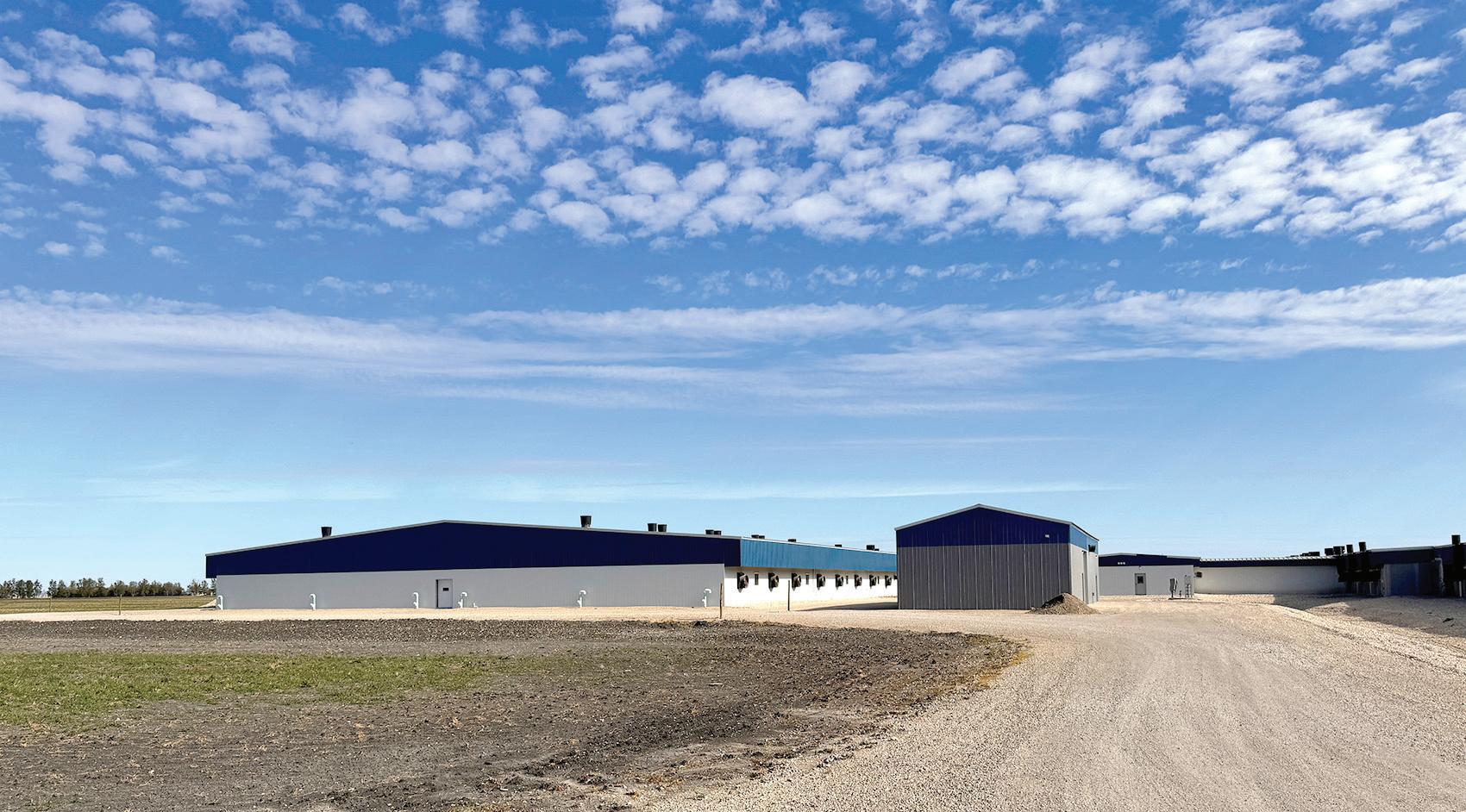
MB, shared his insights on their recently renovated group housing hog barn. Maendel highlighted the renovation’s efficiency and functionality, particularly how the barn’s layout design creates a seamless flow.
“It’s well set up,” Maendel noted, describing the lack of obstructive alleyways or separate buildings, which allows for a smooth workflow.”
He emphasized that this renovation transformed a 30-year-old barn into a modern facility capable of housing 1,200 sows, proving the remodel was practical and highly effective.
The Canadian pork industry has developed its own Code of Practice to guide producers in the ethical and practical care of farm animals.
Mark Fynn, Manitoba Pork’s Director of Animal Care and Quality Assurance, recently highlighted the upcoming requirements for group sow housing, a practice mandated by Canadian standards with a July 1, 2029 deadline. This transition requires producers to shift from traditional confinement methods to group housing, allowing sows to move more freely and encouraging natural behaviour.
Larry Maendel, hog boss for the Blue Clay Colony,
began the recent tour with palpable pride, sharing, “We’re going to see a stateof-the-art, farrow-to-finish unit—everything.”
The facility, fully equipped with the latest technology, is a modern marvel in hog production.
“It’s the most advanced equipment and technology that the industry has to offer,” Larry notes, adding, “and it’s working awesome.”
This unit stands out not only for its cutting-edge features but also for its integration of smart technology. Maendel controls the ventilation remotely, allowing staff to monitor and adjust conditions directly from their phones. Larry points out that every system is set up to alert them with texts and calls for any irregularities such as from feeding issues to low water pressure - ensuring prompt attention around the clock.
While he admits, “It’s a bit annoying sometimes, especially at two or three AM,” he values the constant updates for the precision and control it brings. The unit accommodates around 1,200 farrow-to-finish sows, showcasing how far technology has transformed agricultural operations.
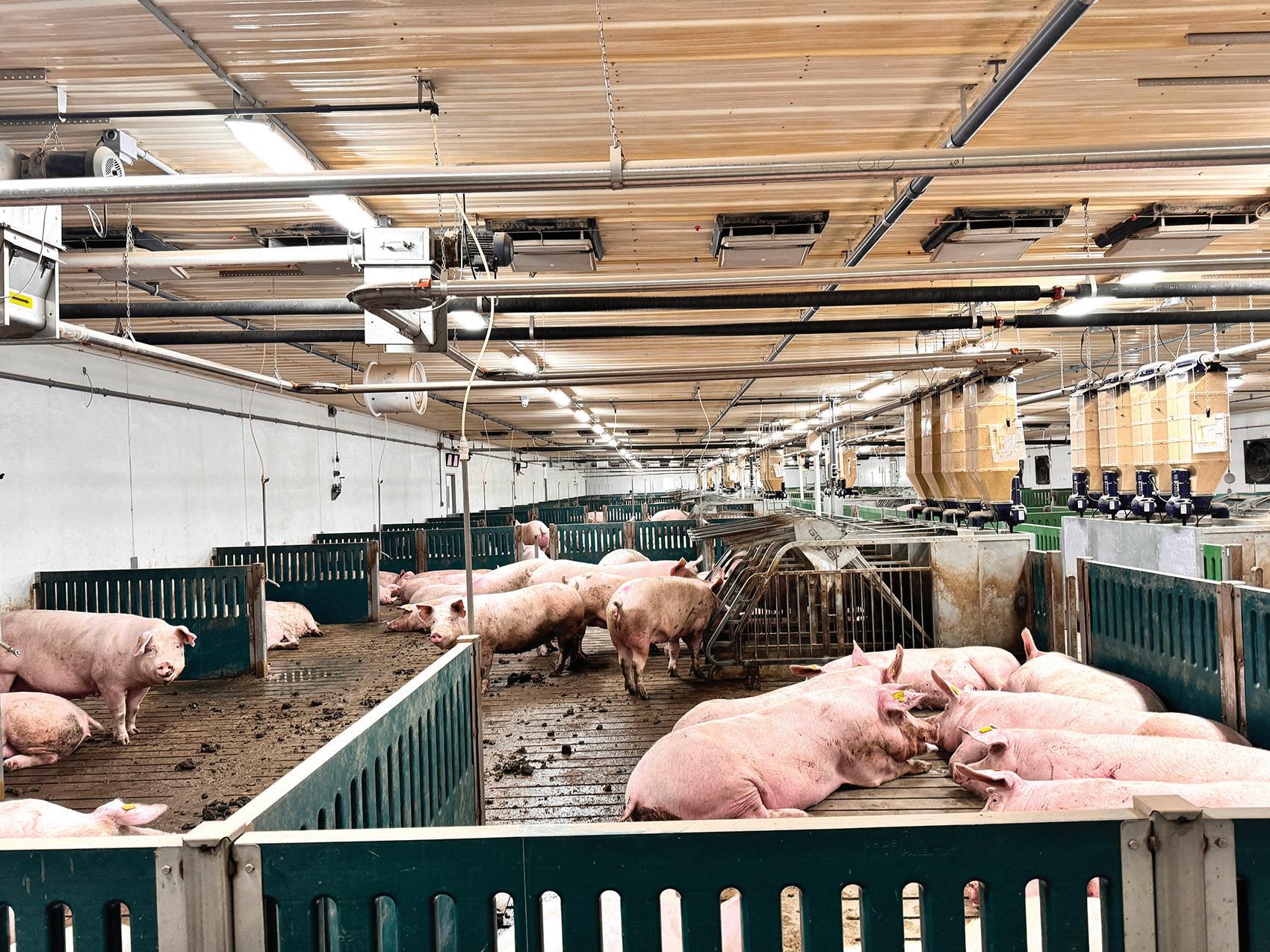
The hog boss of 30 years enthusiastically explains the loose housing setup, calling it “a big step up from crates.” He shares, “I’d never go
back. We love it.”
Transitioning from traditional stalls to loose housing required adapting their management techniques, but he feels it’s been more than worth it.
“There was a learning curve, but we’re in it now, and it’s going great,” he said.
Larry highlights animal welfare when asked what makes the system so effective.
“The hogs can choose where they want to go when they want to eat, and where to lie down. If one gets a bit aggressive, the others can move away.”
He notes that any initial scrapping lasts only a few minutes, after which they relax.
“You’ll see it when we walk through. They’re so calm they won’t even get up,” he adds, emphasizing how much the pigs benefit from the freedom and reduced stress in the new system.
He speaks highly of Hypor genetics, sharing, “We love them.” He explains that Hypor has focused on loose housing for over 15 years, explicitly breeding out aggressiveness in their hogs to make them well-suited for this system.
“Everything’s on camera,” he said. “If they find an aggressive one, she’s culled. They think they’ve got it, and I feel they do because these animals aren’t aggressive at all.”
The farm’s decision to transition early aligns with industry regulations set for 2029. Rather than waiting, Larry’s team upgraded now, especially since their older barn needed repairs.
“We’re glad we did. We’re miles ahead of other farms,” he shares, emphasizing that this proactive shift benefits animal welfare and positions the farm well for the future. Each pen holds approximately 55 sows in the group housing area, with ten pens in the barn. The farrowing wing alone houses around 265 sows, and we can accommodate about 470 across the entire facility.
“Sows stay in each pen for 26 consecutive days, providing continuity in their care.”
Larry said newly farrowed
sows can sometimes be aggressive, particularly in group settings. However, the computerized system helps manage health and behavioural issues effectively, as it can identify sick animals through data tracking.
“We aim to wean 730 sows a year.”
They maintain in-house genetics to ensure biosecurity, producing their maternal lines and only bringing in semen to prevent biosecurity risks.
“We’re at 31 pigs per sow annually,” Larry said.
He attributes the success of their advanced operation to his dedicated team.
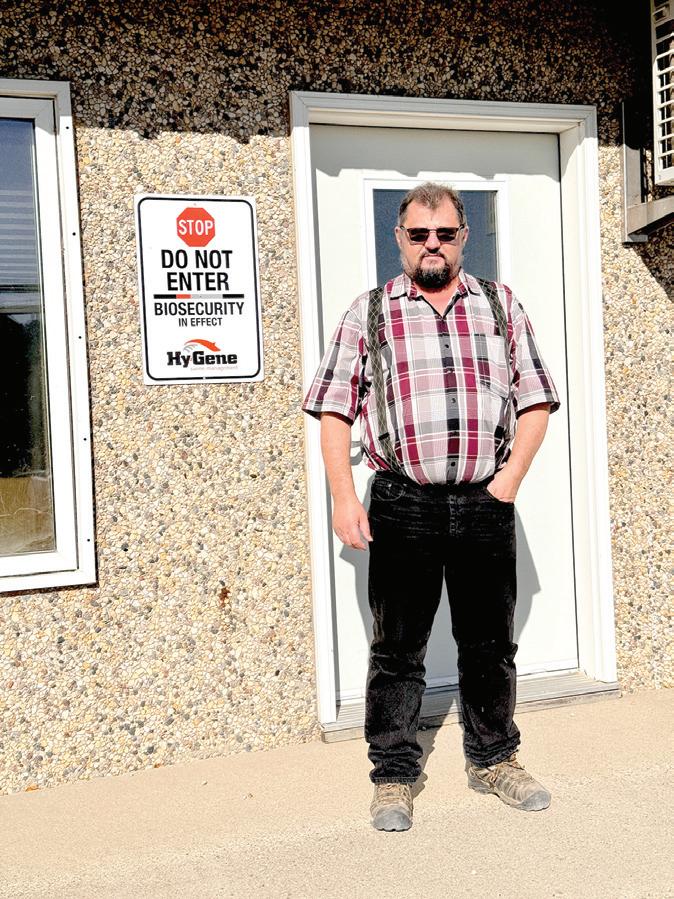
“It’d be tough without good staff,” he says, praising his five employees for their skill and commitment.


By Harry Siemens
Manitoba Crop Alliance (MCA) and Manitoba Pulse and Soybean Growers (MPSG) are making a transformative investment of $691,591 into Manitoba Diversification Centres to boost research capacity across the province. This funding addresses key equipment, infrastructure, and operational efficiency challenges to enhance agricultural research that directly benefits farmers.
“We identified inadequate equipment as one of the primary challenges holding back research capacity in Manitoba, and this investment will help bridge that gap,” said Katherine Stanley, research program manager for special crops with MCA.
The investment will fund the purchase of specialized equipment such as tractors and seeders, enabling di-
versification centres to enhance operational efficiency and expand their research capabilities. Stanley emphasizes the importance of these centres, noting their critical role in conducting applied research that reflects Manitoba’s diverse soils and climate.
Cassandra Tkachuk, research project manager with MPSG, said, “Each diversification centre has a capable team that we believe in and rely on each year to carry out mainstay projects and to be agile in accommodating new research.
“We are pleased to collaborate with MCA in supporting the expansion of field research capacity at the centres to continue sending value back to farmers,” said Tkachuk.
The investment follows an MCA-commissioned study identifying four main
challenges: equipment, infrastructure and land, funding programs, and human resources. This funding directly tackles the equipment gap, ensuring that research remains impactful and innovative for the province’s farmers.
Manitoba Diversification Centres are non-profit, farmer- and industry-directed organizations conducting applied research, such as AgriScience Program cluster projects, regional variety trials, and product evaluations. The centres in Carberry, Roblin, Arborg, and Melita study a range of agroclimatic conditions and soil types, allowing them to test alternative crops and agronomic practices.
The funding breakdown is as follows:
- Manitoba Crop Diversification Centre (MCDC) receives $198,697 from MCA.
By Elmer Heinrichs
Agriculture and Agri-Food Canada, in its November report for the 2024-25 crop year outlook that incorporates crop production estimates from Statistics Canada’s (STC) shows production of all principal field crops is estimated to have increased.
The estimated increase is 1.8 per cent year-over-year, which would be 2.4 per cent above the previous fiveyear average, largely due to improved yields in western Canada.
Harvest in western Canada is complete. Initial indications from the Canadian Grain Commission (CGC) on grain harvest and export quality suggest that the quality of the 2024 western Canadian crop is generally fair to good. In eastern Canada, the harvest is winding up,
with better than anticipated yields despite some difficulties during the growing season.
Supplies of principal field crops are up by almost 1 per cent from last year, as a slightly lower carry-in moderates the rise in production.
Demand for Canada’s principal field crops remains strong with usage of grains and oilseeds forecast to rise marginally while total demand for pulses and special crops increases by 8 per cent.
Total domestic use is projected slightly down on lower consumption of grains and oilseeds while Canadian consumption of pulse and special crops rises by 4 per cent.
Post-harvest movement of field crops has been smooth with farmer deliveries in western Canada running 12
per cent ahead of last year based on Canadian Grain Commission (CGC) data. Exports of CGC-monitored crops are up 28 per cent compared to October last year while domestic disappearance is marginally ahead of last year’s pace.
Carry-out for all principal field crops is projected to fall by 3 per cent as lower grain and oilseed stocks more than offset a rise in pulse and special crop carry-out.
Prices for most principal field crops are significantly lower year over year, except for wheat (excluding durum), corn, flaxseed, and sunflower seed.
Uncertainty in Canadian and international grain markets remains elevated because of the Russian aggression against Ukraine, ongoing geopolitical risks and uncertainty around trade.
- Parkland Crop Diversification Foundation (PCDF) receives $64,237 each from MCA and MPSG.
- Prairies East Sustainable Agriculture Initiative (PESAI) receives $122,000 each from MCA and MPSG.
- Westman Agricultural Diversification Organization (WADO) receives $63,860 from MCA and $56,560 from MPSG.
Gary Barker, chair of WADO, highlights the importance of this investment.
“On behalf of the WADO board, we are excited to partner with MCA and MPSG on the capital investments grant. Purchases will help WADO build capacity efficiencies, reduce risk from
wildlife losses, and assist with monitoring greenhouse gases in future projects.”
This collaboration between MCA and MPSG reflects a shared commitment to advancing agricultural research and supporting Manitoba farmers with the tools and knowledge needed to thrive in a rapidly evolving industry.
The Manitoba Crop Alliance (MCA) was established in August 2020 as a non-profit organization representing over 7,700 farmer members. MCA focuses on enhancing the competitiveness and profitability of wheat, barley, corn, sunflower, and flax production through research, agronomy, market development, and
communications. By investing in these key areas, MCA ensures sustainable production choices for Manitoba farmers.
The Manitoba Pulse and Soybean Growers (MPSG) was founded in 1984. MPSG represents over 3,500 Manitoba producers growing soybeans, edible beans, peas, lentils, chickpeas, and faba beans. The organization supports its members through focused research, advocacy, and industry partnerships to provide production knowledge and market development. MPSG’s funds come from a 0.5% check-off levy governed by a board of active producers and industry representatives.


By Dan Guetre
The National Farmers Union (NFU) has raised alarms about the global aviation industry’s plan to replace petroleum-based jet fuel with biofuels sourced from agriculture. Dubbed Sustainable Aviation Fuel (SAF), this initiative aims to power jets with biobased feedstocks such as grains, oilseeds, agricultural residues like straw and corn stover, and eventually dedicated energy crops like fast-growing grasses and trees. The strategy, championed by organizations like the US Department of Energy’s Bioenergy Technologies Office and Canada’s Canadian Council for Sustainable Aviation Fuels (C-SAF), aspires to create a low-carbon aviation future.
The Canadian Council for Sustainable Aviation Fuels (C-SAF) was created by leaders from over 60 airlines operating in Canada to promote and accelerate low-carbon and sustainable aviation fuels (SAF) in Canada.

However, a new NFU report argues that the scale of this transition could create significant challenges, particularly for the agricultural sector.
“The aviation industry’s climate solution creates an agricultural emissions problem,” said Darrin Qualman, the NFU’s Director of Climate Crisis Policy and Action and lead author of the report.
One primary concern is the increased reliance on nitrogen fertilizer to produce the vast quantities of biomass required for SAF production. Fertilizer usage is a leading contributor to on-farm greenhouse gas (GHG) emissions, and ramping up production could worsen the problem.
In addition, the large-scale removal of agricultural biomass could hinder soil carbon sequestration, a critical process for climate adaptation and soil health.
“One good-news story with regard to agricultural emissions, sustainability, soil health, and climate adaptation is the move to reduce tillage and increase rates of soil carbon storage – sequestration,” Qualman noted.
“Aggressive biomass removals for SAFs, other biofuels, biomaterials, and bio-energy with carbon capture and stor-

age (BECCS) will have significant adverse impacts on farmers’ attempts to sequester carbon and build healthy soils.”
The aviation industry’s ambitious growth projections exacerbate these concerns.
Airlines plan to more than double flights and passenger volumes by 2050, driving fuel demand to an estimated twothirds of a trillion litres annually. To meet this demand, vast amounts of agricultural feedstocks would be needed, placing significant pressure on global farmlands.
“Producing two-thirds of a trillion litres per year, most of it from biomass, will require billions of tonnes of feedstocks annually,” Qualman added.
Beyond the environmental impacts, the NFU report warns of broader conse-
quences, including higher food prices, reduced sustainability of food systems, and slowed progress on decarbonization in other sectors due to strained supplies of clean, renewable energy. Qualman emphasized that the SAF initiative risks shifting emissions rather than reducing them, undermining its goals of slashing GHG emissions from aviation.
“The immense scale of the global SAF project creates significant potentials to move us away from many of our food system, climate, decarbonization, sustainability, and social justice goals,” he cautioned.
As the aviation industry accelerates its push for SAF, the NFU’s findings serve as a critical reminder of the interconnected challenges posed by such initiatives.
By Elmer Heinrichs
The global agriculture technology exchange received acknowledgement during Lieutenant Governor Anita Neville’s remarks, as she highlighted the government’s plans for Manitoba. Manitoba’s agricultural sector received multiple mentions during the November 19 throne speech. Highlighted was a new vision for downtown Winnipeg that includes Manitoba’s agricultural sector, she said.
“The new Global Agriculture Technology Exchange (Gate) campus will bring visitors to Manitoba and Manitoba’s grains to the world at a time when we need to diversify and expand our markets.”
The $102-million-dollar project will support research, development and innovation focusing on milling, food processing and end-product development. And it will serve as the headquarters for Cereals Canada.
Cereals Canada was pleased to see “Gate” recognized during the speech.
“The Gate project is driven by ambition and a vision for the Canadian cereals industry to grow and thrive in both domestic and international markets now and in the future,” Cereals Canada CEO Dean Dias said in a statement. “We look forward to working with the Province of Manitoba, and all levels of government, to bring this world-class facility to down-
town Winnipeg.”
In addition, Lieutenant Governor Neville mentioned Manitoba agriculture’s government investments.
The government is “leaning into our strengths with new investments in agriculture” and other industries, she said.
In January of this year, for example, Manitoba and the federal government, through the sustainable Canadian agricultural partnership, agreed to advance horticulture programming at Assiniboine College. Prior commitments by the government such as opening two Manitoba agricultural services corporation offices and allocating $200,000 in rural Manitoba in 2025 were also noted.




By Harry Siemens
With Donald Trump officially returning to the White House, Canadian farmers wonder where they fit in this new political landscape.
and agricultural stakeholders can better negotiate with US policymakers and ensure their interests are protected in future trade agreements.

Photo by Harry Siemens
Cam Dahl, general manager of Manitoba Pork, makes some excellent points moving forward.
“Now we know precisely which version of protectionism we’re facing,” said Dahl. “Donald Trump will be President again.”
Dahl noted that Trump promised to bring manufacturing back to the US by imposing tariffs on imported goods and is linking political objectives to US market access. For instance, continued US support for the CanadaUnited States-Mexico Agreement (CUSMA) is likely to be conditional on increased defence spending by Canada. Agriculture, particularly the dairy sector, will undoubtedly be in the crosshairs of US negotiators.
Dahl said the first step would be to develop a strategic plan for agriculture and food trade before the 2026 CUSMA review.
“I cannot find evidence of such a plan. The Government of Canada is responsible for calling together farmers, processors, and provincial governments to develop a strategic response to US policymakers calling for limits on agriculture and food trade. There can be no further delay,” Dahl said.
He said there will need to be key elements in the strategic plan for agriculture and food trade.
Dahl said the first component is not to trade off one commodity group or region of the country to protect others.
“We saw the potential for this to occur when the Chinese government instituted an investigation into canola exports from Canada as a response to Canadian tariffs on
electric vehicles, aluminium, and steel,” said Dahl.
Second, Canada must stress the benefits to US national security created by open trade.
In an uncertain world, government leaders can use agriculture and food trade as a weapon in political disagreements between countries. Canada and the US are each other’s largest markets for food and agricultural products.
“We need to demonstrate to US negotiators that diplomatic disputes will not threaten this trade, which may happen when trading outside North America. It is in the national security interest of both countries to secure trade between us and to limit any political uncertainty within the North American market,” said Dahl.
Third, due to growing protectionism, Canada must be ready to demonstrate the cost to US consumers. For example, recent changes to
US country of origin labelling regulations will discriminate against Canadian pigs, cattle, and red meat exports. This will introduce new costs into the North American supply chain, raising consumer prices and lowering farmers’ returns.
“Why is the Government of Canada not aggressively pushing back on this legislation? At a minimum, we should advocate for alternative means of informing consumers while protecting the integrated North American market, ‘a product of North America’ label,” he exclaims.
Dahl said that the fourth key point is for Canada to stress the importance of unified national standards when preparing for the CUSMA review.
Canada negotiated a trade agreement with the US, not with 50 individual states, noting that recent actions from state governments have
reached beyond their jurisdictions. For example, Proposition 12 in California sets out the conditions under which producers will raise animals in the State and imposes conditions on other jurisdictions, including Canada. Other states are contemplating similar measures.
“Moving away from national standards will further fragment North American trade and cost consumers and farmers on both sides of the border,” said Dahl.
Finally, Dahl said Canada must speak with a common voice across governments, industry, and farmers. Many voices must deliver the same message to Washington and State Capitols throughout the US, returning to the importance of calling all stakeholders together to develop a national trade strategy for agriculture and food trade.
Dahl stressed that time is of the essence.

By Elmer Heinrichs
Wind was blowing in the right direction for charity this month, says Betty Turner, as volunteers cut
160 acres of canola to fundraise and fight international hunger.
At her piece of land 10 miles from Killarney, more
than a hundred people gathered to harvest crops. Turner said everything went right on the recent Saturday, as even the wind
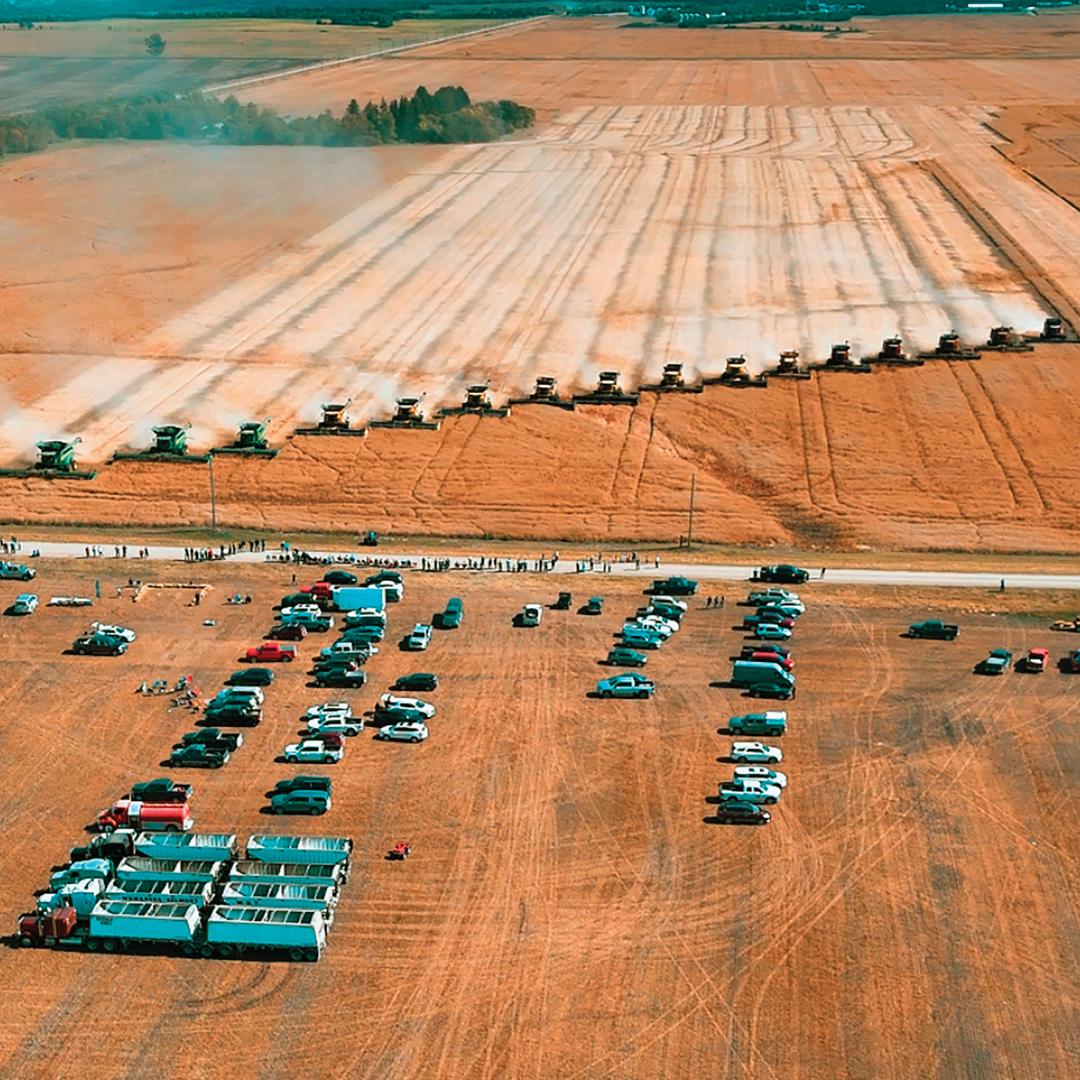

blew dust and chaff away from the crowd on the farm property as combines cut the canola.
It was part of a Canada Foodgrains Bank harvest day for a community growing project, one of many across Manitoba which grows food and sells it to raise money for charity.
The proceeds are donated to buy food and provide training to places experiencing hunger worldwide.
“It was unbelievable really,” said Turner, a farmer who has retired but rented her land out for the charity grow this season. “We had
17 combines show up. And three grain carts and four semi trucks. And about 150plus people came to help us celebrate.”
Turner said more than 150 people gathered at her property, where pulled pork was served also by volunteers.
Some operated combines on the field, while the wind blew the resulting dust and chaff away from the group that had set up a lunch area nearby — making a pictureperfect day in her eyes.
Regional representative
Gordon Janzen said the event is a testament to good spirit and community across
Manitoba. Killarney was just one of about 41 community growing projects this year. The local organizing committee finds land, he said, and they will organize for someone to seed it and find fertilizer and do all of the input to lay the groundwork for a harvest in the fall.
The Canada Foodgrains Bank is a Christian charity partnership of 15 Canadian churches and church-based agencies working to end global hunger. It was founded in 1983, and now provides emergency food assistance and development support in over 30 countries.
By Elmer Heinrichs
Six post-secondary students from southern Manitoba are each receiving a $1,000 scholarship award from Manitoba Beef Producers (MBP) for 2024-25.
The students are all pursuing an agriculture related field of study, or acquiring a skilled trade or pursuing a career that would be beneficial to the rural economy.
The application process included preparing an essay or video submission discussing the topic, “What the beef industry means to my family, my community and Manitoba.”
The recipients are Annika Sund (Woodlands ) who is pursuing a diploma in Ani-
mal Science Technology Beef Science at Lakeland College; Madisyn Robertson (Neepawa) as she pursues a Bachelor of Science in Agriculture & Bioresources at the University of Saskatchewan; Megan Beswitherick (Austin) who is pursuing an Agriculture advanced diploma at Assiniboine Community College; Keenan Karish (Fraserwood) to pursue a Bachelor of Science in Agriculture Animal Science at the University of Manitoba; Lainie Muir (Glenella) who is pursuing a Bachelor of Science in Agriculture Soil Science at the University of Saskatchewan; and Shayla Woychyshyn (Minnedosa)
in order to pursue a Bachelor of Science in Agriculture & Bioresources at the University of Saskatchewan.
“It is MBP’s pleasure and privilege to recognize Annika, Keenan, Lainie, Madisyn, Megan, and Shayla who are from beef producing families and pursuing further education,” remarked Carson Callum, general manager, Manitoba Beef Producers. “We also extend our heartfelt thanks to Audrey KuikSchweitzer and the late Larry Schweitzer for recognizing the importance of post-secondary education and providing an additional $400 contribution towards each scholarship,” added Callum.
The Russ Edwards School of Agriculture and Environment at Assiniboine College is building a network of critical partners and educative resources, to further promote and advance soil health practices for western Canadian crop production.
The network will support farmers in identifying and implementing practical and viable best management practices specific to their operation.
Their initiatives include: - The collation of practical and locally relevant soil
health information and research focused on producer choices and beneficial practices within an easily accessible web site (www. soilhealthnetwork.ca). The site highlights important work that has been done by others.
- A (SHAPE) Soil Health Action Plan Exercise that may help producers identify and purse their next highest soil health priority. (See soilhealthnetwork.ca)
- Encouraging and facilitating producer peer groups to share soil health practice successes and identify key
needs for further improvement. Partners are helping us identify potential farmer hosts for peer groups. Volunteers welcomed.
- The gathering of interested organizational partners in each western Canadian province to share important work they have done, and intend to do in soil health, and to create the opportunity for collaborative responses to the most relevant soil health farm priorities.
This is the second year of a five-year project across western Canada.
Protein Industries Canada and Innovate-UK unveiled the first collaborative research and development projects from their bilateral partnership. The organizations, along with the consortium members, are investing $5.7 million into two collaborative R&D projects that advance the development and commercialization of plant-based ingredients and foods on both sides of the Atlantic.
“Bilateral relationships such as this one are helping advance the development and commercialization of plant-based ingredients and foods that benefit us all,” said François-Philippe Champagne, Canada’s Minister of Innovation, Science and Industry. “Innovative projects like these are help-
ing strengthen Canada’s supply chains while expanding Canada’s plant-based food sector.”
“These UK-Canada collaborative R&D projects highlight the power of international partnerships in driving forward innovation in the plant-based protein sector. They open up promising export opportunities for the UK, fostering economic growth, while simultaneously responding to global consumer demands for sustainable and nutritious food options,” Interim Executive Chair and Executive Director for the Healthy Living and Agriculture Domain at Innovate UK Dr. Stella Peace said. “By addressing key challenges such as food security, sustainability and public health, these innovations will
contribute to a healthier population and a healthier planet, reinforcing the importance of collaboration in making life better.”
The projects are a result of an ongoing partnership between the two countries to further collaboration in the areas of science and innovation, with a focus on plantbased food and ingredients.
A joint call for R&D projects was issued in September 2023; since then each country has hosted delegations from the other, resulting in new collaborations in the food and ingredient processing sector.
“As Canada builds towards its goal of a $25 billion ingredient and food processing industry, we know that we will not reach that goal by only working within our
A recent announcement by Prime Minster Justin Trudeau and his Indonesia counterpart President Prabowo Subianto on the substantive conclusion of negotiations for a free trade agreement is very promising for Canada’s soybean industry. Improved access to this significant and growing market could enable more trade with lower risk for farmers and the soybean value chain depending on the details of the agreement.
“News of potential new trade opportunities is fantastic, especially given the protectionist headwinds dominating the news cycle in North America,” says Brian Innes, executive director of Soy Canada. “We’ve been sharing with Canadian negotiators for several months how an agreement could help to eliminate tariffs and address non-tariff barriers our sector faces when exporting to Indonesia. We hope our advice will be reflected in the agreement and we look
forward to seeing it soon.”
As soy exports to Indonesia have grown, the risk of tariff and non-tariff barriers related to plant health and seed regulations have also increased. Working with members, Soy Canada has highlighted to Canadian negotiators how an agreement would be beneficial for the soybean industry if it eliminates tariffs on soybeans and soy products. Under current conditions, Indonesia could apply a 27 per cent tariff to Canadian soybeans.
Recently, trade has flowed without any tariffs applied, and the industry’s expectation is that tariff free trade should be confirmed to provide ongoing stability.
An agreement is also beneficial if it implements measures to reduce the risk of non-tariff barriers such as:
- Improving upon current WTO commitments to science-based plant health regulations, so that issues related to the regulation of weed
seeds and insects is predictable and based on science.
- Establishing commitments and a cooperation mechanism on seed technology such as biotechnology and gene editing so that customers can purchase the soybeans they want with the confidence that any trade related issues can be managed through dialogue to improve predictability.
- Recognize that other sanitary and phytosanitary measures such as those related to crop protection products should be managed through a predictable and sciencebased approach.
Indonesia represents the fifth largest soybean export market for Canadian soy, with exports reaching $210 million in 2023, up from an average of $134 million from 2018-2022. Canada’s soybeans are in demand from Indonesian food manufacturers who primarily use them to make soy milk and tempeh.
own borders,” Interim CEO Frank Hart said. “Canada requires customers — whether that be a food company using Canadian ingredients, or a consumer in a grocery store. Collaborations such as this one are key to supporting Canadian companies in advancing their innovation, acquiring those new customers, and entering global supply chains with high-value products.”
The first of the two projects sees Canadian companies Liven Proteins and ALTPRO Advantage partner with UK companies New Wave Biotech Ltd. and Formidable Foods Ltd. (through its brand Juicy Marbles) to deliver ingredient solutions to enhance plant-based meat analogues and pet nutrition.
“Liven’s goal through ingredient innovation has always been to help sustainable protein brands in creating healthier, tastier products,”
CEO of Liven Fei Luo said. “We’re excited to collaborate with Canadian and UK brands to test our animal-free collagen ingredients in both human and pet food products. This partnership will enable
further improvement and validation of our solutions and support our innovative partners in bringing exciting whole-cut meat alternatives and enhanced pet nutrition options to the market.”
The second project brings together Canadian companies Tartistes and Wamame with UK partners Jampa’s and the University of Nottingham to launch a range of plant-based products with a uniquely improved nutritional profile that will match or better that found in animalbased products and current PBMAs (plant-based meat analogues).
“With the support of Protein Industries Canada and Innovate UK, Tartistes is able to expand both our range of plant-based products and our reach into new markets,” President of Tartistes Geraldine Pelletier said. “The market for premium quality plant- based ready-made meals has gone through many challenges the past few years. The ability to work with consortium members, Wamame and Jampa’s, will help us bring new and
improved premium products to customers here in Canada and across the UK.”
With global consumers looking for new, more sustainable protein options, companies around the world can partner to create innovative products that exceed expectations. Strategic programs and initiatives offered by organizations such as Innovate UK and Protein Industries Canada are helping establish and solidify these partnerships, setting companies up for a successful international collaboration experience.
Protein Industries Canada is one of Canada’s five Global Innovation Clusters. Protein Industries Canada and its members are working to embrace the $25 billion opportunity presented by Canada’s ingredient manufacturing, food processing and bio-product sector. Projects such as these add value to, and create new markets for, Canadian crops, generating local jobs and supporting new economic development in locations across Canada.

By Sylvain Charlebois
As Canadians recall the shock of Donald Trump’s first presidential victory, the news of his recent return to the White House has stirred both anxiety and anticipation. Trump’s re-election is undeniably a pivotal moment, and this time, Canadians may approach it with more reservation, reflecting on the changes his first term brought
to our shared economy and agri-food trade.
During Trump’s first administration, Canada performed reasonably well economically, even amid intense political rhetoric and policy shifts. Our GDP per capita grew by 6.3 per cent, far more robust than the stagnant growth we are experiencing today. The agrifood trade between Canada and the US also flourished,

growing by almost 20 per cent from 2016 to 2020. Despite the “America First” focus, our food sector benefited from stronger cross-border trade – a trend that may continue, though with potentially higher stakes.
However, Canadian farmers now face a more challenging landscape. Trump’s campaign promises include measures to reduce costs for American farmers to enhance their competitiveness, while agricultural costs in Canada have steadily increased. Since 2019, wholesale food prices in Canada have risen nearly 40 per cent more than in the US, placing Canadian producers at a disadvantage and making it harder for them to compete. A second Trump administration could deepen this gap, increasing the pressure on Canada’s agricultural sector.
Environmental policies could also become a major point of contention. During his first term, Trump reversed over 100 environmental regulations, many of which President Joe Biden later re-

instated. With Trump back in the Presidency, Canada’s already controversial carbon tax could put additional strain on cross-border trade. Since 2019, the carbon tax in Canada has increased from $20 per tonne to an expected $95 per tonne by 2025, drastically raising the cost burden on Canadian agriculture. Trump’s less restrictive environmental approach could give American farmers a cost advantage, leaving Canadian agriculture facing higher operational expenses.
Trump will also likely support an updated almost US$2 trillion Farm Bill, bolstering US crop insurance, subsidies, and agri-food research to counter China’s global influence. With China tensions simmering, Canada may have to carefully navigate this increasingly competitive and politically fraught landscape. The likelihood of higher ethanol production and a continued hard line on Chinese tariffs, policies that the Biden administration largely upheld, underscores that Canada’s alignment with
US agricultural strategies will be critical to avoid potential trade disruptions.
In global trade, the stakes are equally high. The BRICS nations (Brazil, Russia, India, China and South Africa) are strengthening their alliances to counterbalance Western influence, and a more isolationist US approach under Trump could force Canada to choose its alliances carefully. This strategic recalibration won’t be easy, as Canada’s role as a middle power may come under strain in a world more polarized between competing economic blocs.
On North American trade, Canada must confront a transactional approach from a Trump-led U.S. that may bring both predictability and hard-nosed negotiations.
Trump’s proposed renegotiation of the North American trade agreement could mean sensitive areas like dairy will return to the bargaining table. Bill C-282, which would protect Canada’s supply management systems from future trade deal concessions, might be an early casualty. If en-
acted, Canada could face immediate pressure from the US to scrap the legislation, complicating efforts to safeguard our agri-food sector’s unique protections.
Canada’s agri-food industry stands at a crossroads, where costs, environmental policy, and geopolitical pressures intersect. While Trump’s return might yield certain economic benefits, it would also challenge Canada’s trade policies, cost structures, and environmental standards. Canada’s agri-food stakeholders will need to prepare for complex adjustments with Trump’s second presidency.
Dr. Sylvain Charlebois, a Canadian professor and researcher specializing in food distribution and policy, is a senior director of the Agri-Food Analytics Lab at Dalhousie University and co-host of The Food Professor Podcast. He is frequently cited in the media for his insights on food prices, agricultural trends, and the global food supply chain. The views, opinions and positions expressed by all Troy Media columnists and contributors are the author’s alone. They do not inherently or expressly reflect the views, opinions and/or positions of Troy Media.
By Joan Airey
As I write this today snow is falling at the moment. Earlier it was pouring rain.
My gardening activity has slowed down to a Chesapeake Pepper plant and a parsley plant I bought indoors.
I’m waiting for the latest edition of The Prairie Garden to arrive. It has articles on ways to keep within budget but still have a great garden. I’ll share more info on it when I receive my copy. It’s written by gardeners who garden in Manitoba or the other Prairie provinces.
Currently I’m reading a book that Jill Ragan has written, “The Tiny Farm Planner” published by Cool Springs Press. It’s colourful and has a place to organize your gardening from postseason right through till harvest.
The Fourth Edition of “Square Foot Gardening” will be hot off the press January 14, 2025. I think it looks to be a great gift for someone who has retired to town.
Personally, I’m going to use information from my copy for growing lettuce next spring. I have a habit of planting a whole row of let-
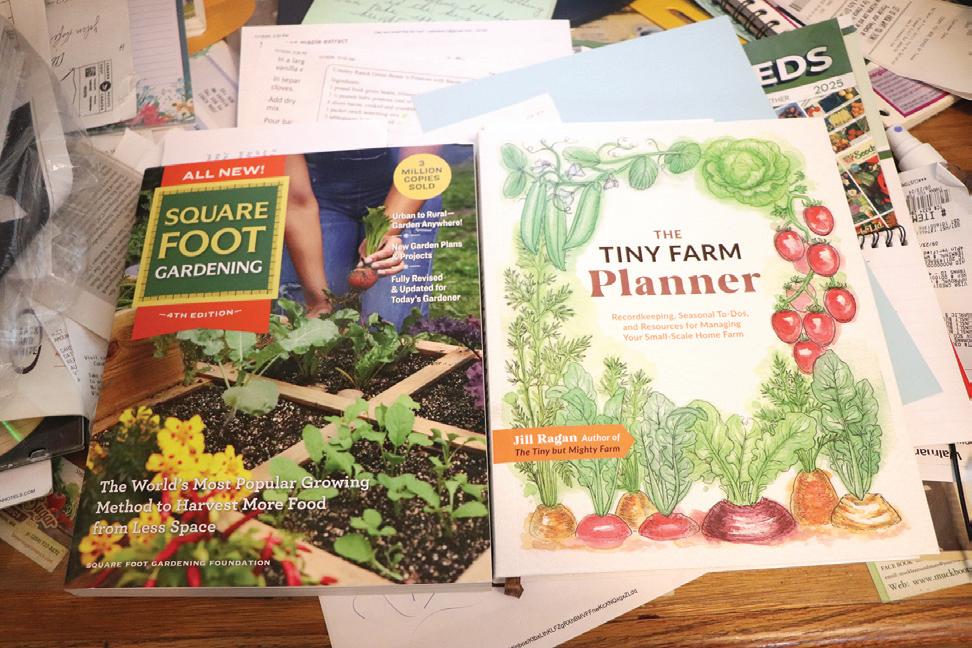
Tiny Farm Planner”. If things go as planned I hope to have some plant photos for you next month from my travels depending on what the road conditions are like.
tuce and a lot of it ends up bolting, this year I let what didn’t get eaten on time go to seed. I’m hoping I get some volunteer lettuce next spring even though my husband tilled my garden this fall. Gift certificates for seed companies, nurseries or greenhouses are great gifts for gardeners. If you have extra plants, share them with fellow gardeners any time. Even the Dollar Store has some neat gardening gifts for gardeners. I shared plants grown in pots from the Dollar Store last spring and the recipients told me they were happy with the way different plants they received performed from flowers, peppers to tomato plants. Next time I’m in the city I’m looking for a planner to put on the wall that I can use a marker on that wipes off. I want to use it to plan meals using what I have in the freezer and cold room. I also like to keep things I need for making meals that have to be purchased on hand in the winter just in case we get snowed in.
Hope everyone has a wonderful Christmas season and Best Wishes for 2025

Dr. Lees said much of the information on Eurasian wild boars originated in the United States. Still, data collected during eradication efforts over two years in Manitoba provides new insights, and Manitoba is developing its sense of managing the problem.
By Harry Siemens
The coordinator of Squeal on Pigs Manitoba, Dr. Wayne Lees, said that as scientists learn more about the behaviours and feeding patterns of feral Eurasian wild boars in Manitoba, strategies for their capture and eradication evolve.
Squeal on Pigs Manitoba coordinates Manitoba’s efforts in collaboration with
groups throughout North America to eradicate wild pigs from the landscape.
Dr. Lees said much of the information on Eurasian wild boars originated in the United States. Still, data collected during eradication efforts over two years in Manitoba provides new insights, and Manitoba is developing its sense of managing the problem.
He noted that wild pig sightings have been handled individually until now, but as more data is collected, they’re gaining a better understanding of these pigs’ locations and behaviours. This includes re-evaluating assumptions about their habits, such as feeding patterns and reproductive capacities, while they live in the wild. These insights are shaping more strategic approaches to managing the wild pig population and addressing their impact on the landscape.
“We must apply some science to this. Instead of just receiving reports of pigs and then going out to try eliminating them, we should
understand their behaviour, movements, breeding practices, etc., to use that information to control the population better,” said Dr. Lees.
The study aims to analyze their movements, breeding practices, and environmental impact. These wild boars, initially imported as part of a farming venture in the ‘80s and ‘90s, have since escaped and pose a significant risk due to their destructive nature and potential to spread diseases like African Swine Fever.
Dr. Lees further explained the distinction between escaped domestic pigs and Eurasian wild boar. Escaped domestic pigs, such as potbellied pigs or outdoor farm pigs, are typically isolated incidents, with small populations that may not be breeding in the wild. It’s important to differentiate between these two groups.
“Management strategies for domestic pigs would differ from those applied to the more destructive, diseasecarrying Eurasian wild boar populations thriving in the
By Elmer Heinrichs
Protein Industries Canada has put an open call out for projects exploring the blending of pulses and cereal crops to create new ingredients and plant-based food products as well as improve existing ones in store shelves.
As the demand for plantbased foods, higher-protein goods, and healthier products continues to rise, Protein Industries looks to partner and fund new projects exploring the blending of pulses and cereals to accommodate.
Lisa Campbell, the senior director of programs with Protein Industries Canada, has seen the growth through previous years and knows the value this can bring to Canadian agriculture.
“Five years of the first framework, we saw some new infrastructure come up and we saw some new products hit the market.
“So, in this round of funding, we’re seeing those same companies taking off and moving forward, but we also
are looking a little bit wider here as we look to build towards that $25 billion goal we want to encompass Canada’s entire plant-based value chain and we can’t do that without looking at wheat and barley.”
Protein Industries Canada is a well-established plantbased food manufacturer, investing almost $600 million dollars into 72 projects over the years, but has mainly dealt solely with pulse crops such as peas and faba beans.
This call for projects is the first time they’ve looked at expanding using cereal crops.
Canada is one of the premier growers of cereal crops in the world, growing nearly 34.3 million tonnes of wheat in 2024, and fifth in the world producers of barley, according to Cereals Canada.
By exploring the ability to blend these cereal crops with pulses to create higher quality plant-based food products, it opens a whole new door for Canadian agriculture to grow and expand within the plantbased foods industry, which
is poised to increase to $25 billion dollars by the year 2030.
Campbell sees the excitement and new opportunity a project of this magnitude can bring to agriculture in Canada.
“It’s very exciting. It’s more and more high value markets for Canadian crops, great news for Canadian farmers, Canadian producers and for Canadian consumers,” said Campbell. “Lots of people are choosing plant-based foods for a variety of reasons, everything from dietary preference right over to allergies and intolerances so it’s great to have these very nutritious, well priced products on the market.”
Protein Industries Canada is looking to invest $10 million into these projects; blending Canadian pulse and cereal crops within Canadian manufacturing companies to create healthy, high-quality, protein-rich food products to go on Canadian grocery stores for Canadian consumers.
wild,” he said.
People are developing new initiatives to address the wild pig situation. One significant effort is using public sightings to locate wild pigs, which aids in drone surveillance and setting up trail cameras or traps.
However, sightings are scarce in less populated areas. To tackle this, researchers are working on a new technique to analyze water samples from streams for wild pig DNA. This project, conducted with Assiniboine College and BDX Laboratories, aims to validate the test and enhance wild pig detection in remote areas.
Over two years of removal efforts, the group has gathered valuable data, including the number of wild pigs captured, their age, and sex distribution. This research reveals insights into Canada’s Eurasian wild boar population, which appears to be significantly different from the US Canadian wild pigs, which are fewer and harder to locate than their US counterparts.
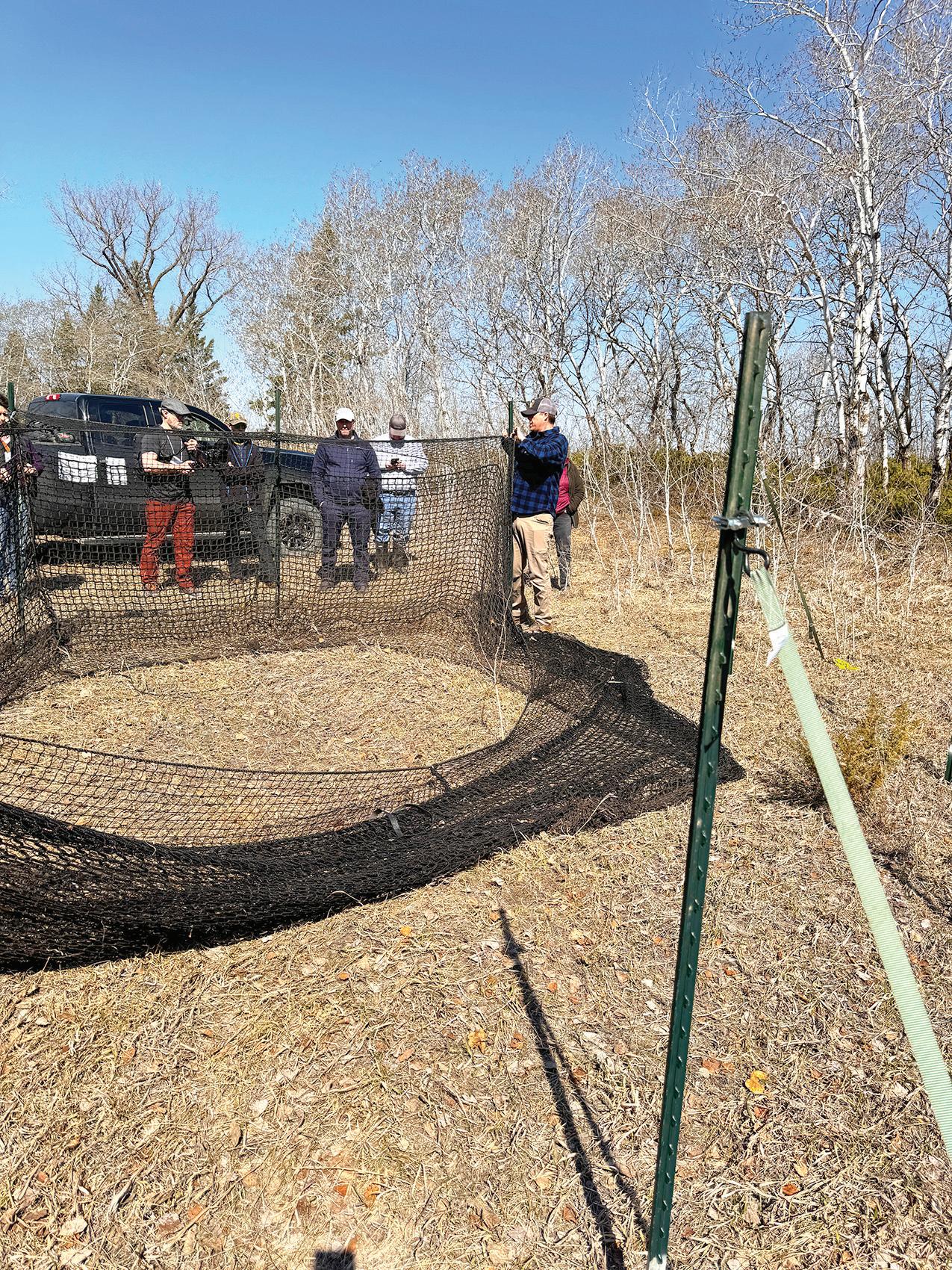
“The ongoing work will enhance our understanding of wild pig behaviour population dynamics and improve management strategies specific to the Canadian context,” said Dr. Lees.
Western Canada has far fewer numbers than the US, and due to colder weather and a limited food supply, they don’t tend to breed as prolifically as in the US.
Dr. Lees emphasizes that to address the wild boar problem, it’s crucial to understand the current be-
haviour of these invasive species. Older data, while interesting, no longer provides accurate insight into the pigs’ movements, breeding habits, and population levels. By focusing on their behaviour now, researchers have a real opportunity to eradicate the Eurasian wild boar population.
Interested parties can visit squealonpigsmb.org or call 1-833-SPOT-PIG to report sightings or stay informed about new findings and updates.


Photo by Joan Airey
By Elmer Heinrichs
An agriculture and food industry tour hosted by Steinbach Economic Development and Manitoba Agriculture was designed to showcase career opportunities to attendees, made up of career counsellors, apprenticeship program staff, immigrant settlement organizations and others.
Hosted successfully in other Manitoba communities, it was in Steinbach for the first time. The bus load of attendees embarked on a day-long tour that included visits to Steinbach Credit Union, HyLife Foods, Steve’s Livestock, Country Meat & Deli and Alterra Innovation.
Director of Steinbach Economic Development Michelle Bezditny said the tour helps promote their vision for the community.
“Promoting and marketing Steinbach as the centre of advanced agribusiness drives development for Steinbach’s entire ecosystem and is beneficial for the entire region,” she said. “We know that the ecosystem specifically in the ag-adjacent sectors is quite robust so we’re leveraging our strengths.
Leanne Sprung, in charge of youth leadership development for Manitoba Agricul-
ture said their goal in each tour is to take attendees on a journey from farm to fork, identifying opportunities with jobs and careers along the way.
“Our goal is to help bridge the gap between the employees’ needs and what companies need,” she said.
The tour concept was based on a successful model developed by the Canadian Manufacturers and Exporters, and Sprung said it has worked well for them as well, attracting a range of interest.
“We have lots of different folks from different companies, from different postsecondary institutions, as well as newcomer organizations,” she said.
Steinbach’s tour is similar to others done across the province, but Sprung admits because it’s a bigger community, there is more breadth and depth of companies.
“The industriousness of Steinbach and the surrounding area is just awesome,” she said. “It’s well known across the province.”
Sprung said attendees heard about the importance of soft or human skills, such as work ethic, communication, and leadership skills.
“All of the companies have opportunities to advance and learn within their companies,” she said.
HyLife Foods was one of the hosts and also treated attendees to lunch. Janelle Braun, director of human resources for the farm side of the operation said it’s invaluable to take part in something like this.
“I think the opportunity is definitely to connect with people who are influencing those looking for careers and HyLife is always wanting to bring in new talent and develop and grow people,” she said.
It was also a chance to share the wide variety of careers available in a company such as HyLife which includes legal, information systems, technology, HR, engineers and much more.
“We want to follow that mission of ensuring people know that we take care of our employees, our communities, our customers, and our animals,” she said.
Attendees also included Lane Curry, the director of Red River Technical Vocational Area (RRTVA) and Andy Reimer, a high school apprenticeship program teacher under the same umbrella. RRTVA operates
programs from Morden to Dominion City and Morris but attracts students from as far east as Sprague, north to Rosenort and Sanford and west to Morden.
Reimer said the contacts developed on the tour can be beneficial in matching students to opportunities.
“I’m looking to just increase my network with folks who are working with the apprenticeable trades, partnerships with companies that need electricians, plumbers, welders, mechanics,” he said.
Curry agreed, saying it was nice to make connections and see new technology. Most impressive to him was HyLife’s demonstration of their new Class 1 semidriving simulator.
“It certainly opens up more opportunities for us to connect with the people that hire, people that do human resources (HR),” he said of the event.
And while Reimer said he must have heard it before, there was one statistic shared by Manitoba Agriculture that stuck with him.
“One in four jobs in Manitoba is connected to agriculture,” he said. “People need to know how important this is.”
By Elmer Heinrichs
Brandon’s economy will benefit from a $250,000 federal investment to build tourism routes nearby, according to the city’s tourism department.
A federal agency called Destination Canada announced in September the launch of “Field to Fork,” a route for tourism between Manitoba and Saskatchewan. The route leans into agriculture, and Brandon’s tourism department this month said it will be a benefit as Brandon becomes a gateway city in the plan.
“Our city will greatly benefit from this corridor,” Brandon Tourism director of marketing and communications Lanny Stewart stated in a press release. “This Field to Fork con -
cept will generate a new, sustainable level of tourism that, in my opinion, could rival any agritourism sector around the world. Whether it’s annual events such as Manitoba Ag Days, which draw significant attendance numbers from outside the province or culinary expertise with several local establishments showcasing local ingredients which are grown right in our own backyard.”
The corridor is part of a strategy to make the tourism industry stronger in Canada. This is done by creating destinations, such as the corridor announced in September. The aim is to make Canada more appealing to tourists.
Other gateway cities will be Winnipeg, Regina and
Saskatoon. According to Destination Canada, the most frequently desired activity among global travellers is trying local food and drink. That is something local businesses can look out for as the corridor increases Brandon’s presence on the tourism stage of the world.
The corridor is part of a strategy to make the tourism industry stronger in Canada. This is done by creating destinations, such as the corridor announced in September. The aim is to make Canada more appealing to tourists.
“Visitors can gain a greater understanding and awareness of where our food comes from in Canada through farm-to-table culinary experiences, edu -
cational workshops, Indigenous agritourism and festival,” Destination Canada said in a September press release. “Agritourism also provides an opportunity for those attending business-related meetings or conventions to learn about industrial processes, their impact on society and the environment, and their role in shaping the economy.” When speaking about tourism draws, Stewart mentioned Manitoba Ag Days, and food establishments that grow ingredients right in the backyard of the Prairies. In the province, 7.2 per cent of GDP and 5.1 per cent of provincial jobs last year came from the agriculture and agri-food sector, according to Manitoba. ca.
By Harry Siemens istered
Marcus and Paige Dueck of Four Oak Farms in Kleefeld were named Manitoba’s Outstanding Young Farmers for 2024 in March at the Manitoba Region’s Recognition Event held at Elkhorn Resort. Both were preparing to head to Lethbridge, AB, to participate from November 27 to December 1, 2024, where the AB/NWT region will honour the best of the best as young farmers from across Canada showcase their remarkable achievements in agriculture.
Combining strong agricultural roots with extensive education and professional experience, the Duecks have developed an innovative operation that milks 49 registered Brown Swiss cows using the only tie-stall robot in western Canada, while managing 785 acres of crop, earning multiple awards for milk quality and production.
“Our farm is a family-owned and operated with four main sectors: mixed grain production, dairy farming, hay cultivation, and agricultural consulting,” said Marcus. “We’re proud to be a third-generation farm with four generations living on the property.”
Paige said they milk 49 reg-
Brown Swiss cows, a distinctive feature of their operation.
“What makes it even more unique,” she says, “is that we use a tie-stall robot, which is currently the only one west of Ontario. It’s an innovative system that allows us to manage our dairy efficiently while providing excellent animal care.”
Paige explains their innovative tie-stall robot, moves on wheels along the barn aisle, catching and guiding each cow into the milking setup.
“It uses neck rollers to guide the cow into place gently, and then a regular free-stall milking arm takes over,” she says.
The robot operates three times daily in a programmed counter clockwise routine, offering both efficiency and adaptability.
Marcus said their cows follow a prescribed milking schedule three times a day.
“They don’t get the opportunity to cut in line with this robot,” he says, highlighting the system’s orderliness.
Paige added, “Nor is there candy to entice them in. It’s just a rhythmical routine, and we train them ahead of time, so nobody fights it.”
She explains how the cows adapt to the predictable process.
“They see it coming, know they’re next, stand up, and start backing in before it even makes them. It’’ like any other animal training - routine and consistency make it seamless.”
Marcus’ consulting work focuses primarily on nutrient management for livestock operations.
“We look at soil and manure tests to create a fertilizer application plan,” he says.
This consulting includes manure application, commercial fertilizer, and methods to maximize crop potential or farm economics.
“There are many unknowns about how manure interacts with the ground and crops,” said Marcus. “It’s an area with limited expertise, so we’ve focused on it.”
Paige noted, “We also handle manure management plans, which farmers file with the government when required, ensuring compliance with regulations and optimizing farm operations.”
Paige shares their preparations for the upcoming national event, highlighting the smooth transition thanks to
the beautiful fall weather.
“Nobody’s sweating around here,” she says. “It’s down to some last-minute fieldwork and prepping the barn for our absence for a week in two weeks.”
She adds, “The countdown’s on, and we’ll also be away from our two little kids for the first time for more than one day. So that’s another thing to prepare for.”
Marcus explains that their hay business began with small square bales, driven by their meticulous approach to haymaking, which attracted the horse hay market. However, aging equipment prompted a change.
“We found a baler in Germany that produces a unique format - eight individually tied bales inside a medium square bale,” he says.
This innovation allows them to handle the bales with a tractor, reducing manual labour.
“Customers can cut three strings, and the bale opens into eight smaller, hand-manageable bales,” said Marcus. Paige said, “This eliminated the hand-bombing process, saving time and physical effort, especially as we farm with aging parents. It also
keeps our small square bale customers happy.”
The system balances efficiency with customer satisfaction.
Paige highlights the key to working together as a husband-and-wife team
“You need to love each other and share the same vision. We each want the best for the other without scrutiny or judgment. It’s about working symbiotically toward the same goal, making it feel easy,” said Paige.
Marcus adds, “We split
management responsibilities. Paige oversees the cows, and I handle the fieldwork. While we collaborate on both sides, having one person dedicated to decisions in each area ensures clear leadership and efficiency.”
Paige shares that she manages the farm’s books, while Marcus handles doublechecking and government submissions. Marcus jokingly refers to his role as “data entry”, though he acknowledges bookkeepers might not appreciate the term.
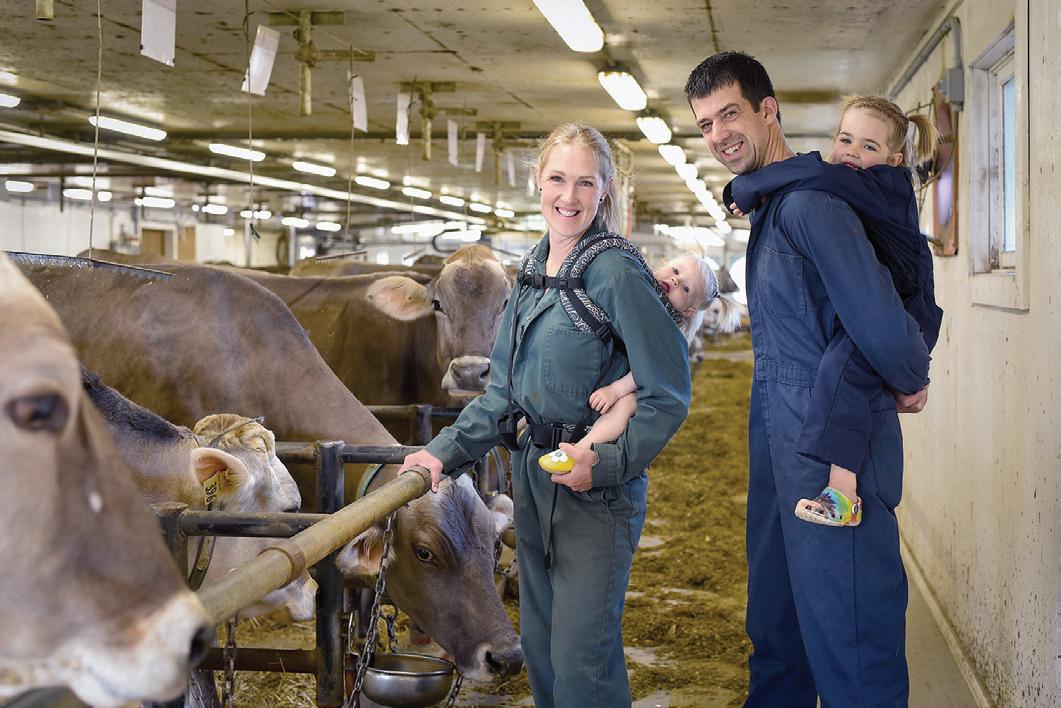
Paige, Marcus, Brielle and Sutton Dueck in the barn manger. Paige said they milk 49 registered Brown Swiss cows, a distinctive feature of their operation. Their family-owned and operated farm is focused on four main sectors: mixed grain production, dairy farming, hay cultivation, and agricultural consulting. “We’re proud to be a third-generation farm with four generations living on the property,” said Marcus Dueck. Submitted photos / Courtesy of Nicole Watt Photography

By Dan Guetre
The Canadian Senate held an intense debate over the Standing Senate Committee on Foreign Affairs and International Trade’s report on Bill C-282, a proposal to amend the Department of Foreign Affairs, Trade and Development Act to safeguard supply management in international trade negotiations.
The original bill sent to the Senate by the House, sought to prohibit concessions on supply-managed sectors - such as dairy, poultry, and eggs - in any new or renegotiated trade agreements. However, an amended version currently being debated in the Senate limits the bill’s application to trade agreements not yet in force or under negotiation. It gives a pass to agreements that are already in place, currently in discussions, and the negotiations and renewing of current agreements.
Senator Peter Boehm, Chair of the Standing Senate Committee on Foreign Affairs and International Trade, defended the amendments as a pragmatic effort to “de-risk” the legislation and maintain Canada’s flexibility in future trade talks.
“The amendment would limit the bill’s application to avoid undermining critical agreements, such as the 2026 review of CUSMA (Canada-United States-Mexico Agreement),” Boehm explained. He emphasized that the committee focused on trade policy impacts rather than taking a stance on the merits of supply management.
Opposition to the amendments was vocal, with Senator Amina Gerba decrying them as rendering the bill “symbolic at best, and completely ineffective at worst.” Gerba argued that supply management is vital for Canada’s agricultural stability, shielding domestic producers from market volatility. She called for unwavering commitment to protect the sector against potential demands for concessions, particularly from the US, as a renewed Trump administration looms.
Senator Jean-Guy Dagenais echoed these sentiments, condemning the amended bill as a capitulation to foreign pressures.
“With protectionism on the rise, we must stand firm. Passing the amended version of this bill sends the wrong message to our trading partners and jeopardizes Canadian producers,” he stated.
While supply-managed sectors expressed concerns over potential erosion, other agricultural and trade groups warned against the economic harm the unamended bill might cause. A coalition of 40 Canadian agriculture organizations, representing export-focused industries, cautioned in a letter to the Senate that strict prohibitions could harm Canada’s ability to secure broad trade deals, jeopardizing key provisions such as dispute resolution mechanisms and labour standards.
Senator Mary Coyle highlighted these concerns, noting the potential impact on Canada’s broader economic interests.
“No special interest group is worth the onslaught of economic harm that Bill C-282 in its original form would bring,” she said lobbying for the amended version and citing fears of strained relationships with major trading partners if the un-amended version becomes law.
The debate also touched on the political undercurrents shaping the discussion. Senator Julie Miville-Dechêne criticized the timing and motivations behind the bill’s urgency, linking it to potential election manoeuvring. Meanwhile, Senator Marc Gold defended the government’s support for the bill in its original form, asserting that protecting supply management aligns with Canadians’ overwhelming public support for the system.
As Bill C-282 continues its journey through the legislative process, its fate remains uncertain. Senators must balance the need to protect a cornerstone of Canadian agriculture with the risks of alienating trading partners and limiting negotiators’ flexibility.
With the shadow of a potential US-Canada bilateral agreement and the 2026 CUSMA review, the stakes are high. Whether the Senate embraces the amendments or reverts to the original version will have far-reaching implications for Canada’s trade policy and agricultural sector.
High quality milk replacers have been around for a long time. They have proven to be a cost-effective whole milk alternative to feed baby dairy calves. Need-less to-say, many producers would rather use saleable whole milk to feed their feed baby calves, because they think that milk replacer costs too much money or it causes unwanted problems that whole milk doesn’t seem to do in the calf barn. As a dairy nutritionist, I believe the present economics of feeding milk replacer is sound and any wrong perceptions can be addressed, which should turn any doubter into a milk replacer advocate.
One such non-believer told me that he cannot remember when calf milk replacer was so expensive. Instead, he feeds 35 pre-weaned calves born of his 150 dairy milk cows; 6 litres of whole milk per calf per day or 210 total litres. Surprisingly, he never penciled-out the current cost of feeding milk replacer, but he felt milking extra cows was a lot cheaper.
Consequently, I put his economic conviction to the test by inputting current market prices - milk replacer of $95 per 20 kg bag & use rate of 150 g/litre of water, saleable milk of $0.95/liter, and cost of feeding one lactation cow of $12.00 per day that produces 35 kg of whole milk.
The $ output is illustrated:
- Whole milk $ (saleable intap) – 35 x 6 x $0.95/litre = $ 199.50
- Milk replacer $ - 35 calves x 6 litres x 150 g/litre = 31.5 kg x $ 95/20 kg = $149.62
- Whole milk from extra cows - 210 litres/35 = 6 cows x $ 12.00/cow = $ 72.00.
As a result, there is a present loss of revenue opportunity of about $50 per day, because this producer is feeding in-tap milk to feed his calves. The funny thing is that his barn is crowded with lactation cows (some are housed on an outside straw-pack), which seems to invalidate feeding “extra” cows in the first place.
Aside from the above economics, many producers feed whole milk; because they often say their calves don’t grow as well or have health issues when fed milk replacer. Much of latter issues are not caused by the milk replacer, but are largely due to:
- Milk replacer mixing errors
– Years ago, I scoured about 15 dairy calves during a demonstration that I gave to a couple of dairy producers. In error, I eye-balled a couple of scoops of milk replacer powder and added them to about 3 litres of water. I was taught later-on by another dairy producer that all milk replacer must be weighed out on a tared-scale and mixed into water as per rates of 130 g per litre of milk replacer solution (150 g/litre of water); which is similar to the concentration of solids in cow’s milk.
- Poor water quality – Farm water with levels higher than
1000 mg/ml Total Dissolved Solids (TDS, encompasses salinity) is not safe for baby calves to drink. Plus, water hardness, (no significant effect on water safety for calves) plays a significant role in how well the milk replacer powder is mixed into it. For example, water with more than 120 mg/litre as CaCO3 often causes the failure of milk replacer powder to be dissolved into it.
- Abomasum bloat – The total particles in a typical mixed up milk replacer meal has been thought on occasion to slowdown digestion in the pre-weaned calf’s abomasum. Such delay allows naturally-occurring clostridia to ferment milk replacer lactose, which in turn may cause excessive gas and thus abomasum bloat. Since, whole milk has a natural total particle concentration (280 – 290 millimoles/litre) similar to that of blood; it rarely leads to a similar digestive upset. Yet, if milk replacer powder is weighed and properly

mixed into water at a rate of 130 grams per litre of total milk replacer solution, it can mimic whole milk particle concentrations in order to significantly reduce abomasum bloat.
Years ago, I talked to a dairy producer that milked about 300 dairy cows about feeding milk replacer in his calf barn. He said that he could not afford spending the money on a hired-hand and the time that it took him to mix and feed milk replacer to about 50 calves.
His employee was instructed to fill several buckets of whole milk from the bulk tank and bring them over to the calf barn. Today, I understand that same dairy producer bought one of the first computerized automatic feeders to feed milk replacer to his baby dairy calves.
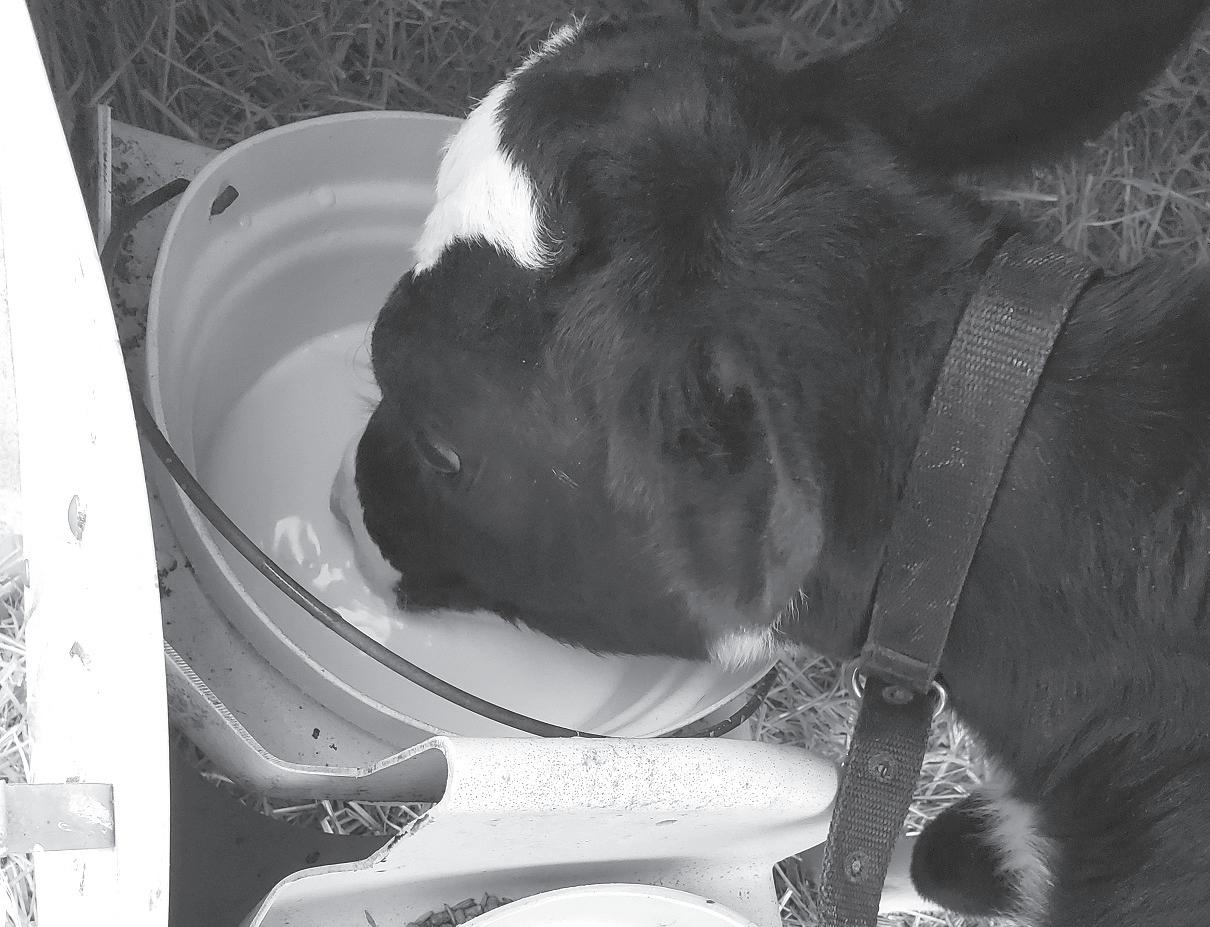
By Elmer Heinrichs
A Manitoba company competed against the cream of the crop at the world’s largest dairy expo and came out the big cheese.
Von Slick’s Finishing Touch, a flavoured butter company based in Middlebro, Manitoba, competed in a number of categories at the World Dairy Expo’s product contests held in October.
The buttery biz came away the first and only Canadian winner at the event held in Madison, Wisconsin.
The Manitoba butter company melted judges’
hearts and took home gold at the recent World Dairy Expo. Von Slick’s Finishing Touch, available in an easyto-use push tube, came first in the creative and innovative products category.
The Middlebro entrepreneurs trekked to Wisconsin for the event where companies vie for recognition in cheese, butter, milk, yogurt and ice cream categories. Von Slick’s flavoured butter sticks were among some 1,300 competition entries. The expo drew more than 55,000 people from 96 countries.
It’s a pretty good feeling,” said Rob Sengotta, cofounder of Von Slick’s.
“We turned a lot of heads,” he said.
Von Slick’s also placed second in the flavoured butter category; a Minnesota company was crowned champion.
Sengotta and business partner Landon Kroeker were the only Canadians to claim gold at the expo this year. They said they’re the only Canadian butter company to achieve such status at the 57-year-old competition.
But the Middlebro production site is near the Minnesota border, and a midwestern US market is much bigger than the market here. With that in mind, Sengotta and Kroeker have deemed an American expansion their new year’s goal. They made connections at the World Dairy Expo, Sengotta said.
The duo began Von Slick’s in 2021 and the company has since expanded throughout western Canada. Next, the entrepreneurs want to sell their butter in the United States — something made complicated by international dairy regulations.
By Joan Airey
Normally I don’t write about the same cookbook twice but I find myself finding recipes in Tamra Davison and her family’s cookbook that use what I have on hand. The recipes pass the critics around here’s taste test. Joyce Stewart told me she felt the cookbook was so good she has bought extra copies to give as gifts. This Pumpkin Cake comes from their cookbook.
Pumpkin Cake
2 cups pumpkin puree
1 1/2 cups granulated sugar
1 cup canola oil
4 eggs, slightly beaten
1 teaspoon vanilla extract
2 cups all-purpose flour
2 teaspoons baking soda
1 1/2 teaspoon pumpkin pie spice
1 teaspoon ground cinnamon
1 teaspoon salt
Directions: Preheat the oven to 350F.
Coat a 10 x 15 x 1 inch baking sheet with cooking spray. Beat the pumpkin puree, sugar, and oil together until well combined. Add the eggs and vanilla and beat well until combined.
In a separate bowl, whisk together the flour, baking soda, pumpkin pie spice, cinnamon and salt. Add the dry ingredients to the pumpkin mixture and stir until well combined.
Pour into the prepared baking sheet and spread evenly. Bake until a toothpick inserted into the centre of the cake comes out clean, 25-30 minutes. Place on a wire rack to cool completely.
Maple Cream Cheese Icing
1/2 pkg. (4oz.125g) cream cheese, softened
3 Tbsp. butter
1 Tbsp. half and half cream
1 teaspoon maple extract
2 cups icing sugar
Directions: Beat the cream cheese with the butter until light and fluffy.
Add cream and maple extract and mix until well combined. Slowly mix in the icing sugar, 1/2 cup at a time. Beat until the icing is smooth and airy, 2-3 minutes.
At this point, the icing can be stored in an airtight container in the refrigerator for up to 3 days or in the freezer for up to 2 months. Bring to room temperature and beat until fluffy before using.
Cover the cooled cake with icing.
Leftover cake can be stored in an airtight container in the refrigerator for up to 3 days or in the freezer for up to 3 months.
If you want more of the Davison Orchards recipes follow them on Facebook for recipes not in the cookbook or order the cookbook from their website.
I tried this Pumpkin loaf yesterday with a cup of leftover pumpkin I had on hand. Last year my grandchildren had a big crop of pumpkins in the garden and I’m finally getting it used up from my freezer. But will have to grow more next year as we all like pumpkin desserts.
Pumpkin Bread
1 cup Pumpkin Puree
1 cup sugar
1/2 cup vegetable oil
2 large eggs
1 teaspoon vanilla extract
1 1/2 cups all-purpose flour
1 teaspoon baking soda
1/2 teaspoon salt
1 teaspoon ground cinnamon
1/2 teaspoon ground ginger
1/4 teaspoon ground cloves
Directions: Preheat oven to 350F. Grease and flour a 9 x 5 inch loaf pan.
In a large bowl, whisk together pumpkin puree, sugar, vegetable oil, eggs, and vanilla extract until well combined.
In separate bowl, whisk together flour, baking soda, salt, cinnamon, ginger and cloves.
Add dry ingredients to wet ingredients and stir until just combined. Do not over mix.
Pour batter into prepared loaf pan and bake for 45-50 minutes, or until a toothpick inserted into the center comes out clean. Let cool in pan for 10 minutes before transferring to a wire rack to cool completely.
The following recipe I just tried recently using canned beans as my garden was cleaned up long ago. It was eaten before I could take a photo. I recommend reading the recipe over before starting as it takes time to make.
Country Ranch Green Beans
1-pound fresh green beans trimmed
1 1/2 pounds baby potatoes halved or quartered
6 slices bacon cooked and crumbled
1 packet ranch seasoning
3 Tablespoons butter, melted
2 cloves, garlic minced
Salt and pepper to taste
Fresh parsley, chopped for garnish


Directions: Cook the potatoes in a large pot; bring salted water to a boil. Add the potatoes and cook for 10-12 minutes, or until they are tender when pierced with a fork. Drain and set aside.
In the same pot, bring water to a boil and cook the green beans for 5 to 7 minutes, until tender-crisp. Drain and set aside. Cook the bacon. While the veggies are cooking, fry the bacon in a skillet until crispy. Remove the bacon and crumble it. Reserve 1 Tablespoon of the bacon grease in the skillet.
Make the Ranch Butter: in a small bowl, whisk together the melted butter, ranch seasoning, and minced garlic. Combine everything in the skillet with the reserved bacon grease, toss the cooked potatoes, green beans, and crumbled bacon. Pour the ranch butter mixture over everything and gently toss to coat.
Season with salt and pepper to taste. Garnish with fresh parsley and serve warm.

By Harry Siemens
In November, the Manitoba Wildlife Federation (MWF) held three preliminary town hall meetings in Brandon, Pilot Mound, and Portage la Prairie to raise awareness.
Rob Olson a senior scientific advisor to the Manitoba Wildlife Federation said the goal was to inform hunters, anglers, agricultural producers, cottage owners, and workers in forestry and mining about the threats to their access to Crown Land and resources.
“These threats stem from the government’s one-sided approach to allocating access to those Crown resources,” said Olson.
It’s essential to ensure everyone who depends on ac cess to Crown Land and its resources understands the challenges ahead and has a platform to voice their con cerns. The meetings aim to
bring affected communities together to discuss practical solutions and advocate for balanced policies that respect the needs of all stakeholders.
Olson said all three meetings held in Brandon, Pilot Mound and Portage la Prairie, saw strong attendance, particularly from agricultural and beef producers, who shared valuable insights and raised pressing concerns.
“A big topic of discussion was access to Crown Land for grazing,” Olson noted.
The beef industry depends on Crown Land for grazing and haying, especially with rising land prices and more land becoming crop agriculture. The meetings provided a productive platform for producers to voice these concerns and engage in meaningful dialogue about their industry’s challenges.
Olson delved into emerg-
ing concerns like land access issues and transparency in decision-making processes. In Portage, one farmer raised an issue about when a parent in a cattle-producing family wants to pass their haying or grazing lease on crown land to their children; it’s more complex. The land is now first considered for Indigenous use or possibly treaty land entitlement.
“That’s a potential shift, and we’re trying to track the details,” said Olson.
He noted that agricultural producers’ consistent turnout and engagement were terrific but there was sense of surprise among attendees. Many don’t fully understand land use decisions and want more transparency from provincial and federal governments about how people share resources are being shared across Manitoba.
Olson emphasized the general support for governments collaborating positively with Indigenous communities.
“There’s big support for that,” he stated. “But people don’t want to be left behind in the process, and right now, they feel that way,” said Olson.
The growing interest in the town halls has been remarkable he said.
“When we finished up in Pilot Mound, we had requests from 15 to 20 more towns asking us to come,” Olson said. “Winnipeg residents are also asking why we’re not there. It’s exploded. We’re scrambling to keep up, but it’s a good problem to have. People want to know more, and there’s a lot of interest.”
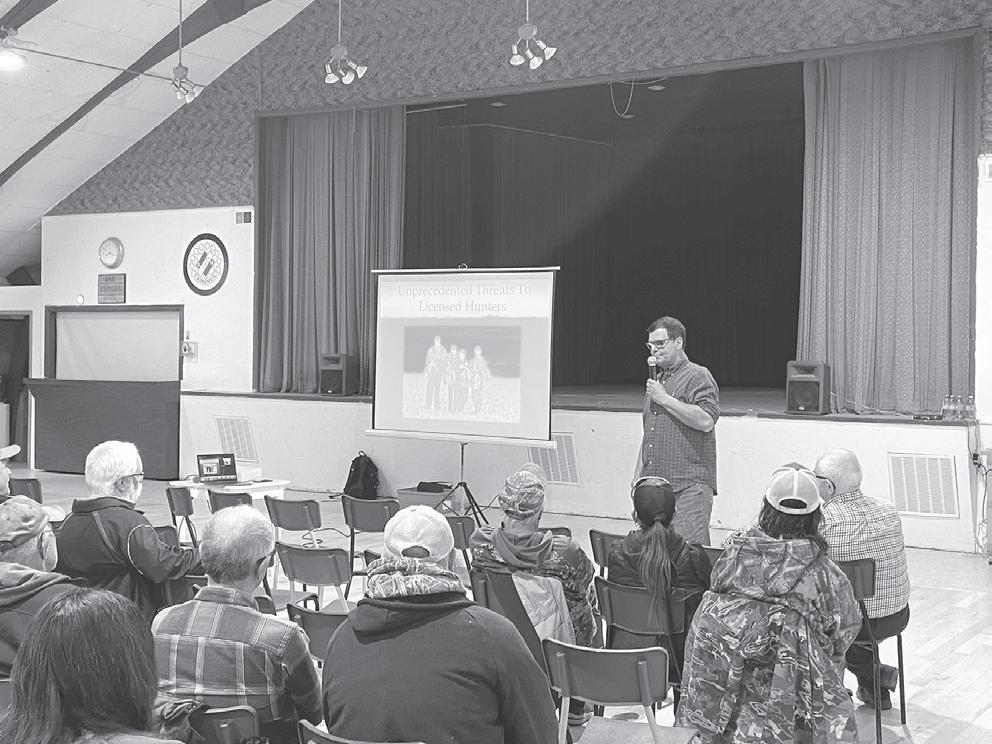
better this movement, which has become something of a phenomenon,” said Olson.
courtrooms, participate, and find a fair middle ground between all parties,” he said.
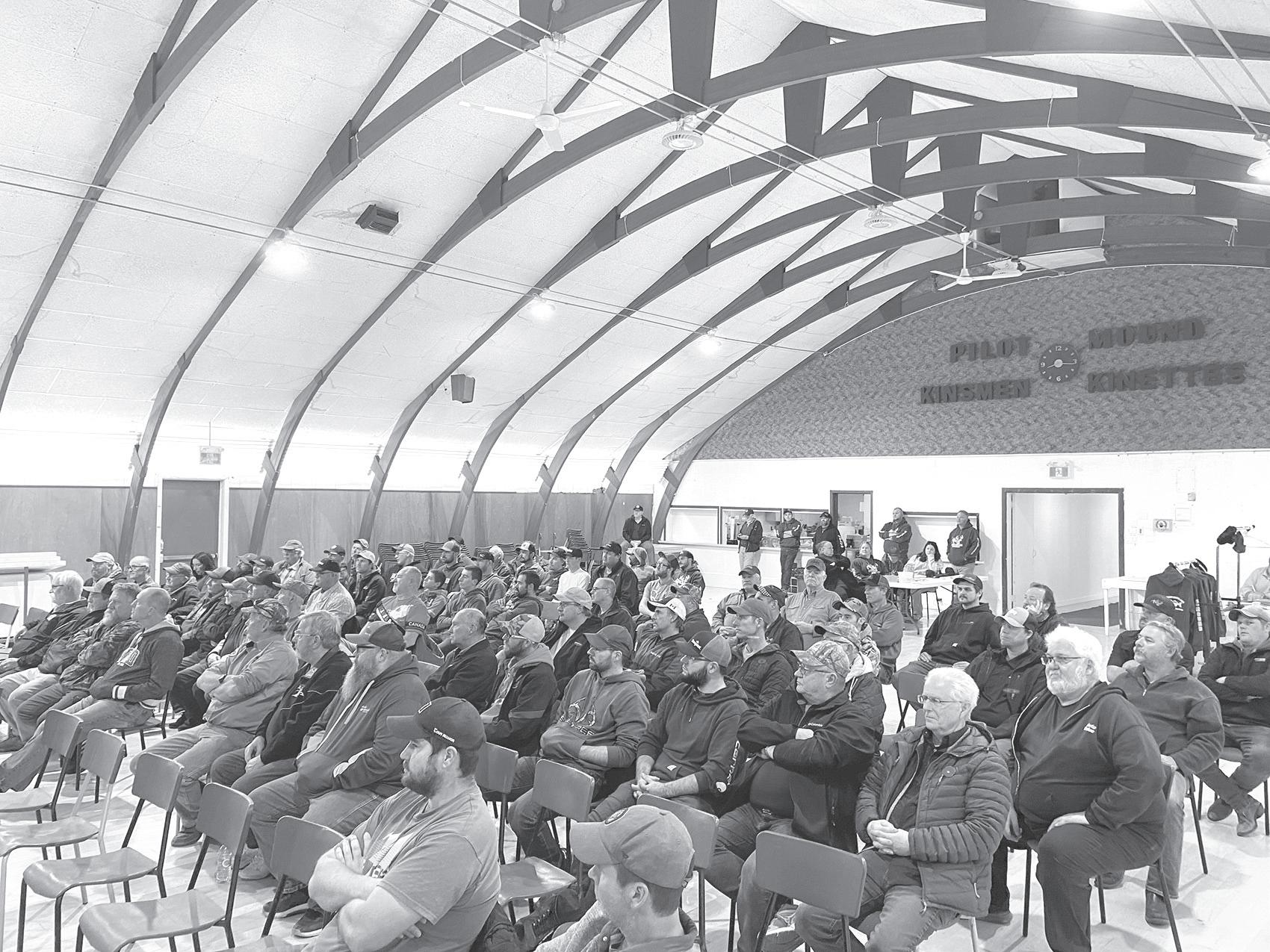
Despite this uncertainty,
Regarding the MWF’s next steps, Olson said it is important to take a strategic pause to reflect on the progress made through their recent town hall meetings.
“We’ve agreed to take a moment to reflect on what we’ve done here, consolidate all the notes from the discussions, and create a report for our members and everyone involved,” he said.
This pause will help MWF better understand the unprecedented level of engagement they’ve witnessed and plan for the future.
Olson explained that MWF is enhancing its organizational capabilities as part of its regrouping process.
“We’re working on a relaunch of our website to host
Olson anticipates reigniting efforts in January, focusing on Winnipeg’s high interest while revisiting previously engaged communities.
“We’ll expand into Winnipeg and build on the foundation we’ve established,” he said, aiming to foster continued dialogue and engagement across the province.
In addition to these public meetings, the MWF had a significant week in court, focusing on a judicial review of the province’s decision to cut moose tags. While the initial case revolved around hunting regulations, the broader conversation now centers on who controls Manitoba’s natural resources.
He said the meetings helped grow MWF’s membership and financial support, noting increased donations for their legal efforts.
“We must show up in
According to Olson the issue resonates beyond hunters, affecting agricultural producers, anglers, cottage owners, snowmobilers, and foresters—all groups excluded from resource allocation discussions by provincial and federal governments.
“These people are realizing they’re in the same boat,” Olson remarked. They understand that sticking together is their best chance of the government hearing them.” Olson commended the leadership role MWF has assumed, drawing attention from various groups.
“Any one of these organizations could have led this effort, but the world was looking for leadership, and the MWF stepped up,” he concluded, underscoring the growing unity among stakeholders seeking inclusion in policy-making.
Each year, Canadian farmers embrace greener solutions to manage their used agricultural plastics, pack-
portunities increase through Cleanfarms’ evolving collection programs.
Cleanfarms is a national stewardship organization
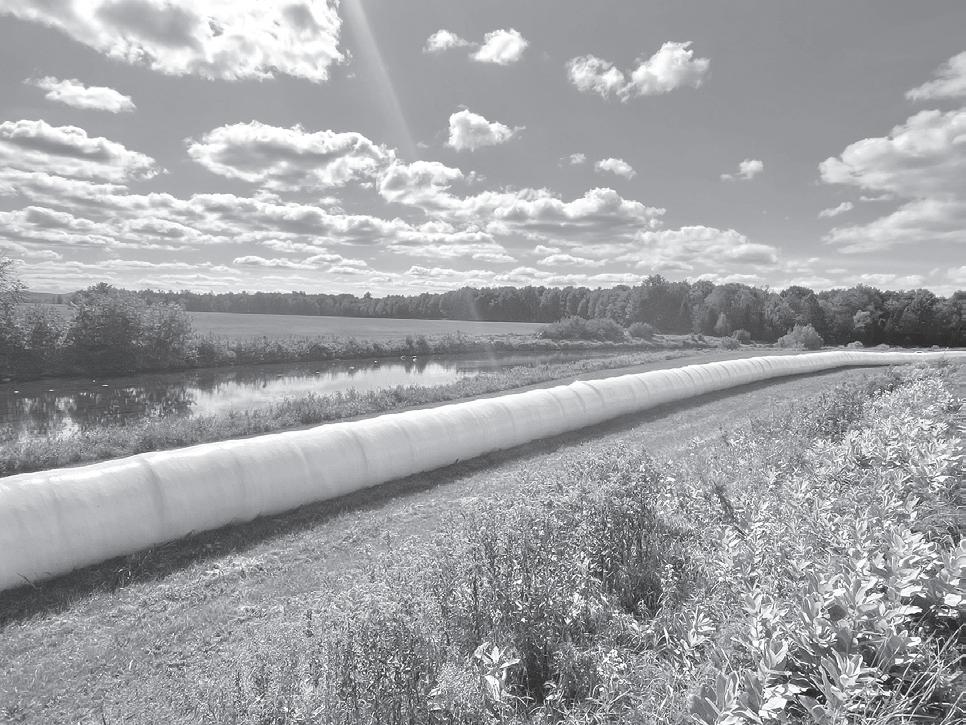
Submitted photo
that develops and operates collection programs to help farmers responsibly dispose of on-farm agricultural waste materials. It is most well-known for its flagship collection program for pesticide and fertilizer containers under 23L.
The most recent recovery rate for these containers, from 2023 sits at 87% - an impressive 17% increase over the prior year, demonstrating farmers’ continuing commitment to eco-friendly waste management.
“Seeing the collection rate for containers under 23L increase each year motivates us to keep working with our partners and farmers across Canada to offer new
and improved opportunities to properly manage these and other essential agricultural tools after use,” said Barry Friesen, Cleanfarms’ Executive Director. “Canadian farmers, our members and partners inspire us, and we’re excited to see what we can achieve together over the next five and even ten years as we continue.”
The pesticide and fertilizer containers collected through this program are recycled by processors throughout North America and turned into new valuable products like drainage pipe or lumber products that are used back on farms. But these aren’t the only materials Cleanfarms collects.
In all provinces except Brit-
ish Columbia, farmers can return empty seed, pesticide and inoculant bags along with their containers under 23L – bagged separately in plastic collection bags. Collection sites for containers under 23L and seed, pesticide and inoculant bags will continue to accept new dropoffs until the end of October, when sites close until Spring 2025.
Cleanfarms collects many more used agricultural plastics and products, varying from province to province. These include but are not limited to:
- Grain bags and plastic baler twine.
- Large non-deposit totes and drums.
- Silage plastic and bale wrap.
- Empty peat moss, fertilizer bags and animal feed bags.
- Unwanted pesticides and old livestock/equine medications (across the country on rotation, every three years).
Cleanfarms also operates pilot programs across Canada to develop solutions for agricultural materials that have yet to be captured by permanent programs.
“Cleanfarms permanent and pilot programs enable us to work closely with farmers and collection partners to put in place tangible solutions that tackle a wide variety of materials essential to modern farming practices in our country,” Friesen added.
Manitoba Ag Days is approaching quickly and the speaking theatres will be filled with must-attend sessions.
“Farming is a complex business and we know how important it is to keep up with all aspects of a farming operation,” said Kristen Phillips, General Manager, Manitoba Ag Days. “You will continue to see a strong focus on agronomy as well as sessions focused on emerging technology, livestock and marketing.”
The full speaker schedule will be posted at agdays. com in December. Until
then, Manitoba Ag Days is excited to announce the 2025 featured speakers:
- Tuesday – “David Mielke
- Outlook for Oils & Fats and Implications for Canadian Canola” and “Quick Dick McDick - A Bearded Perspective”.
- Wednesday – “Brian Hefty
-Pushing the Limits: More Bushels Per Acre” and “Patti Durand - Farm Transition
- Start Where You Are”.
- Thursday – “Jacob Shapiro - Geopolitics: What Lies Ahead?” and “Kristjan Hebert – Farming Roots to Corporate Suits – The Rise of the Farm CEO”.
“Manitoba Ag Days has always been known for its complimentary speaking program. Through our partnerships with Farm Credit Canada, Meyers Norris Penny, Manitoba Canola Growers Association, Manitoba Crop Alliance, Manitoba Pulse and Soybean Growers Association and Manitoba Agriculture this years’ lineup has something for everyone,” stated Hannah Minshull, program committee lead for Manitoba Ag Days.
The Manitoba Ag Days show is an annual threeday exposition of agricul-
ture production expertise, technology and equipment that attracts exhibitors and visitors from across Canada and the United States of America held at the Keystone Centre in Brandon. The speaking program will take place throughout the three-day event in the FCC and MNP Theatres. The 2025 show dates are Tuesday, January 21 - Thursday, January 23.
For more information or the latest updates please visit agdays.com or follow them on Facebook, X or Instagram @mbagdays.
By Peter Vitti
Cornfields grown especially for overwintering beef cows are a patch-work across our Prairies. Its whole corn plants can provide substantial nutrition to maintain precious body condition of gestating beef cows. Yet, nobody should open up the gate to any field and allow cows to stampede into it. That’s because there are still some issues that must be taken into account in order to make grazing standingcorn, a good winter forage. So, I recommend that a mid-winter review of any such feeding program be made to assure all-essential nutrient cowherd requirements are met.
For example, the higher dietary energy of standing corn makes it nutritionally more attractive as compared to other common overwinter forages as illustrated in Table 1.
I recognize that the nutrient requirements of mid-gestation cows need 52-55% TDN and about 8-9 % crude protein on a daily basis to maintain an optimum body condition of 5 – 6 and an early-term fetus. As they move into the last trimester of pregnancy (where 75% fetal growth occurs), pre-calving cows need 56 – 58% TDN and about 11 – 12% protein.
It seems to me that corn grazing will cover care both phases of dietary energy requirements.
Unfortunately, cows grazing standing-corn acres as their source of overwinter feed will barely meet crude protein requirements during mid-gestation and fail to meet them during late-gestation. That’s why, there are many commercial protein supplements that help compliment a gestation beef feeding program based on grazing cornfields.
For example, many producers purchase protein range cubes/pellets, often made from high-protein distillers’ grains or 20 – 30% protein cattle lick-tubs, which can be placed for every 25 beef cows throughout the cornfield.
Supplementing protein to grazing corn seems like a straightforward fix, however I have talked to many producers and they tell me that there are other unique hurdles. Here are some of their experiences to overcome them:
- Field acidosis – One producer moves his 150 Black Angus cows from one grazed paddock to a fresh paddock of 10 acres, every week. In this way, he prevents acidosis upsets, since palatable ears of corn are eaten first (2 – 3 days), then the leaves and thin stalks (2 – 3 days) and finally leftover hard stalks.
- Mold and mycotoxins –During a particularly wet fall, I drove past a field of standing-corn in which its leaves were literarily blue with sur-
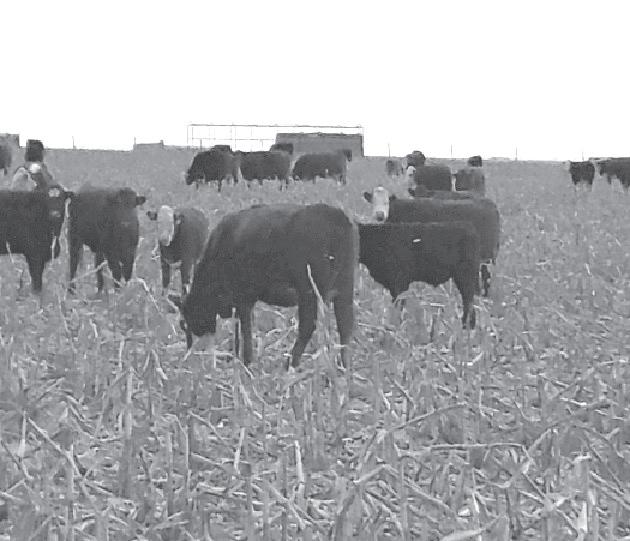
face mold. In order to prevent abortions possibly caused by potential mycotoxins; I formulated a mineral with mycotoxin binders that was fed to this cowherd grazing within its blue cornfield acres.
- Water intake – Many producers rely upon adequate snowfall throughout the winter to meet the natural water requirements of their grazing beef cows. In one particular case, there isn’t enough snow, so the producer dug a waterline and placed an accessible waterer along the cornfield near his home-farm.
- Mineral program – For example, corn plants are notoriously low in calcium content. Since a beef cow requires up to 30 grams of calcium per day (as well as other macro, micro-minerals and vitamins); a well-balanced highcalcium/modest phosphorus commercial mineral should be provided at 70 - 100 grams per head per day.
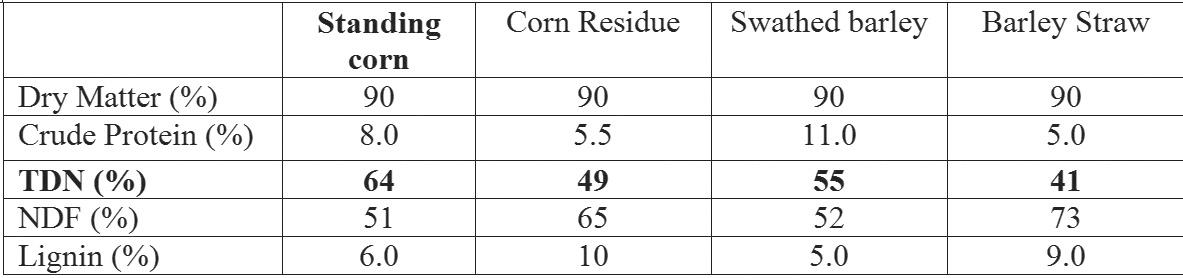
Submitted photo / table Peter Vitti
A multi-disciplinary group of agricultural researchers from the University of Manitoba are looking for farmers to collaborate with on landscape surveys to document the innovative ways farmers are leading the way in sustainable agriculture, biodiversity, and reducing GHG emissions. This is a great opportunity to use real world data to inform policy and future research. For more information, please visit umanitoba.ca/agricultural-food-sciences/leap.
By Elmer Heinrichs
Drought followed by flooding that has hit Manitoba in the last two years underscores the need for a federal program that promotes clean technology among producers, said Canada’s agriculture minister.
“It’s a big challenge, but Manitoba farmers are taking action to rebuild their resilience to extreme weather and climate change,” said Marie-Claude Bibeau during a news conference.
- Cold weather – As the winter weather becomes much colder; the beef cows’ dietary energy requirement, just to stay warm increases by 2% for every 1°C drop in temperature below 0°C. This means that when the outside temperature is -25°C; the cow’s energy requirements increase by 50%. To remedy this issue, many producers provide energy-enriched supplementary feeds.
One producer told me that he did not set aside and grow 200 acres of standing cornfields that he normally would have planted in the last ten years. Instead, he planted and set up barley swaths (also nutrient value outlined above). The reason for the switch - three years of drought had caused not enough corn-biomass on its own merit to overwinter his 350 beef cows.
The way this producer and other people still assess it –grazing standing-corn is good forage to overwinter beef cows. Its success depends upon how well its nutrition (and overcoming hurtles) keep the cowherd in good body condition until calving time. Namely, a healthy cow gives birth to a vibrant newborn calf.
With the help of $1.4 million from Agriculture and Agri-food Canada’s agricultural clean technology program, True North Foods cut the ribbon recently on a $14-million, 23,000-square-foot expansion in Carman. Twenty-eight projects across Canada are expected to receive a total of $8.7 million as part of the latest round of funding under the federal Agricultural Clean Technology Program, she said. It includes a total of more than $2.5 million for five projects in Manitoba.
True North Foods near Carman, MB, will receive $1.39 million to install a rapid organic converter and rendering system. Seymour Farms Ltd. in Manitou and JDD Farms Ltd. in Gilbert Plains will receive $132,728 and $193,143, respectively, to install new grain dryers. Bibeau described how she visited cattle producers last summer in the province’s Interlake region who were devastated by drought.
“One farmer was brought to tears as he told us how he was forced to sell his cows due to the lack of feed, and this year, we have gone to the other extreme. Heavy rains and flooding have delayed or prevented planting for many farmers in the province,” said Bibeau.
The program includes a technology adoption stream that ranges from green energy and energy efficiency to precision agriculture and bio-economy solutions. It also provides funding for research, development, demonstration, and commercialization of agricultural clean technologies.
Ottawa recently added $329 million to the program, up from $165.7 million. The initiative has so far approved $42.3 million for 138 projects across Canada, said Bibeau.
Finding the best ways for farmers to cut greenhouse gas emissions and adapt to climate change is a complicated problem that will require extensive research, said Bill Campbell, president of Keystone Agricultural Producers.
He said in an interview that progress must be cautious to ensure producers aren’t led up blind alleys after making significant capital investments. Farming is a business, “and we need to be able to make money and we need to show that there is profitability in the steps and processes.”