Farmers Face Significant Challenges Going into 2023
By Harry Siemens
A survey of farmers on Twit ter on October 15 asking about the three top challenges farm ers face going into 2023 yield ed interesting results.
Chris a grain farmer near Edmonton, AB said human resources like finding good people to work on the farm. Also, government policy and ensuring governments listen to the commodity commissions farmers fund [pay for] with their checkoffs to advise and work with governments. His third point dealt with inflation and rising costs.
“If we keep the same margin as before but increased risk, we are headed for a world of hurt,” said Deven Bailey, a young farmer from Western Virginia, tweeting in response that high interest rates, supply chains, government policy, and consumer influence.
As someone who studies the agriculture sector at the University of Saskatchewan, Stuart Smyth said the follow ing three challenges may be important: The potential fall out of the proposed federal government fertilizer use lim its. With the COP-15 meetings in Montreal in December, the federal government may make additional carbon tax commit ments to show Canada’s world climate conference is doing it correctly. And increased activ ist pressure to ban glyphosate would hurt production signifi cantly.
Günter Jochum, who farms with his family west of Win nipeg and is the president of the Western Canadian Wheat Growers agreed with Smyth.
“Especially since those policies will not change our food’s high quality, safety and affordability. These policies will achieve the op posite.”
Ron Krahn who farms at Rivers, MB said govern ment policy that proponents base on idealism rather than practical and logical thought.
“We should encourage farm ers to produce sustainably not throw up every road block possible as farmers grow food.”
Korey Peters at Randolph, MB said volatile markets, es pecially if commodity prices fall, the input costs won’t follow at the same speed.


“Government red tape with possibilities of more unedu cated/non-reality based poli cies coming. We need a seat at the tables and the rising cost of labour and finding ways to keep employees on
the farm.”
Rob Sommerville of Alber ta said the unpredictability of everything. “An already high debt load limits ag’s resilien cy and ability to adapt. With the challenges and obstacles the ability and wherewithal to learn fast enough to re main competitive. One ex ample is the limited internet in many rural areas.”
Cam Dahl, general man ager of Manitoba Pork raised several issues for discussion. The international market volatility and uncertainty both for inputs and products sold. Also the availability of labour and how it impacts growth, productivity, bios ecurity, and interest rates.
Julie Mortenson who farms in Saskatchewan said the big risk of high fertilizer costs and current high commodity prices. “I’d bet grain prices will drop first and farmers
will feel the pinch hard.” Also the widening gap between consumers/government and farmers. Land ownership as it relates to high land prices and higher interest rates and competing with increased in vestment by groups other than farmers and continued foreign ownership.
Brian Kennedy of Calgary, AB said the number one chal lenge is the rising cost of in puts and debt. In Alberta and parts of Saskatchewan drought because in many areas it is still desperately dry and the short age of farm labour.
Other respondents said risk management-hedging strate gies have become costly, and the political instability world wide influences markets and input and land costs eroding profit margins.
Another Manitoba farmer said high inputs and supply chain concerns. Increased risk with farmers holding higher input costs before producing the crop. “And with a reces sion looming or will be in near future and how that’s going to affect grain prices.” In addi tion the challenging weather patterns and unknown govern ment policies and what reduc ing emissions by 30 per cent will look like. He doesn’t think it will reduce current rates be cause food security is a world wide concern. “And reducing rates will reduce yields, mak ing farming not feasible.”
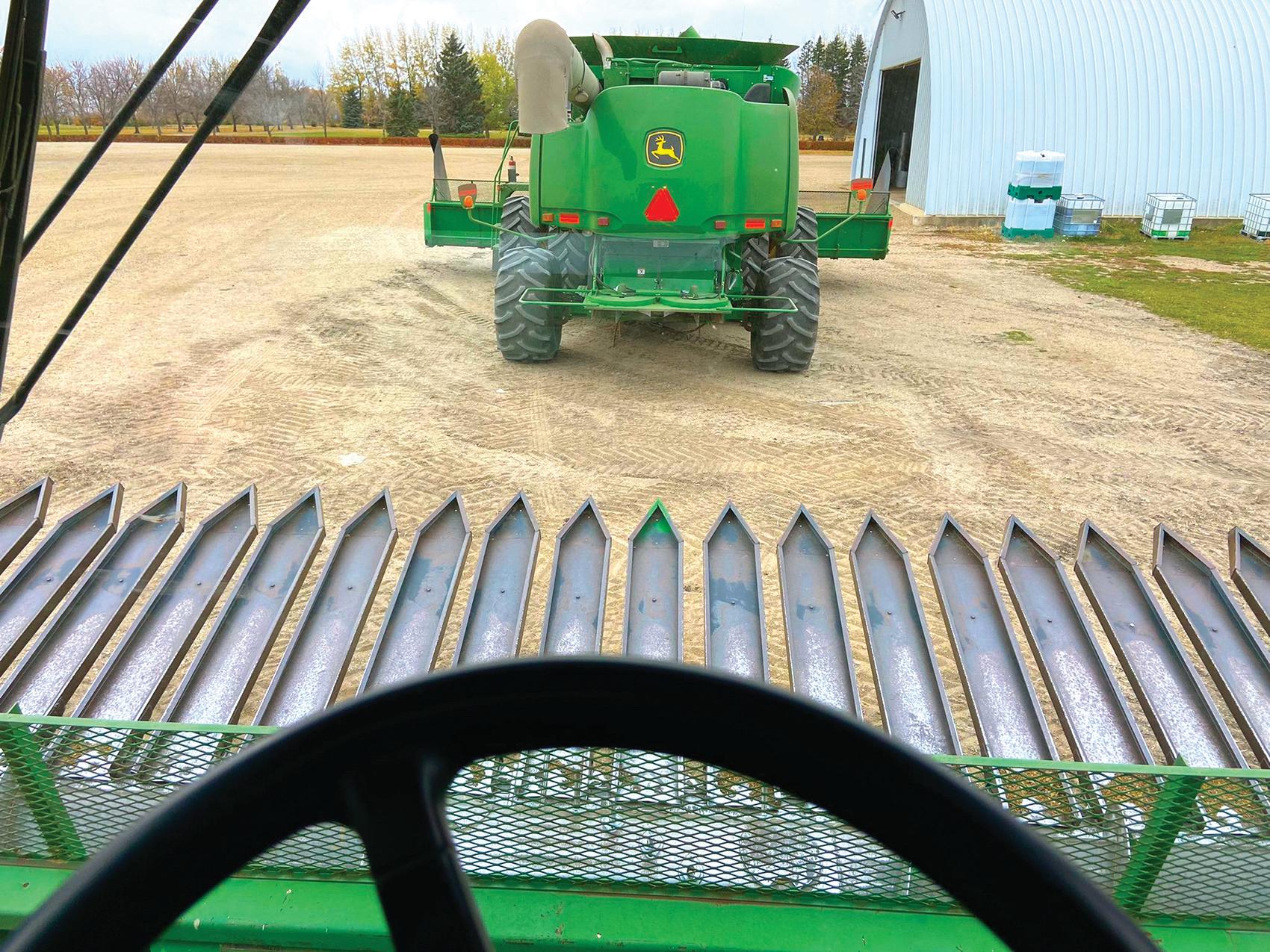
Ron Krahn said “Harvest 22 is complete. Feels good. Been a long season again. Despite a late and muddy spring, we will call this year a success#grateful.”
Excessive Moisture Insurance Coverage Levels to Increase
Manitoba producers will receive higher Excess Moisture Insurance (EMI) coverage levels as part of the AgriInsur ance program for the 2023 crop year.
“Extreme weather conditions continue to challenge and threaten the viability of many producers,” said federal Ag riculture and Agri-Food Minister Marie-Claude Bibeau.
“With the increasing cost of inputs, these enhancements to the AgriInsurance program’s Excess Moisture Insur ance will allow for greater coverage in the event of finan cial losses.”
Basic EMI coverage is a standard feature of the Agri Insurance program that provides protection against the inability to seed due to wet conditions. Producers can choose increased coverage options at higher premiums. Since 2000, basic EMI coverage has been $50 per acre, while higher coverage options increased in 2014 to $75 and $100 per acre. For 2023, basic coverage will increase to $75 with higher coverage options increasing to $100 and $125.
These changes were made in consultation with producer groups that have expressed interest in higher coverage levels due to rising farming costs. The province’s share of premiums for the 2023 EMI program is estimated to be $8.6 million.
Manitoba Agricultural Services Corp. (MASC) reports there were 866,000 unseeded acres in Manitoba this year (approximately eight per cent of the total acres), resulting in estimated EMI indemnities of $53.5 million.

“The excessive moisture during the growing season this year brought extremely challenging conditions for pro ducers across our province,” said Manitoba Agriculture Minister Derek Johnson. “The AgriInsurance program exists for them in these kinds of situations. The newly in creased coverage provided through Manitoba Agricultural Services Corporation will bring further assistance and re lief to those who need it most.”
MASC will send EMI confirmation letters to all exist ing AgriInsurance clients later this month to reflect the new coverage levels and premiums. Producers have until November 30 to make changes to their EMI coverage for 2023 by contacting a MASC Service Centre.
Under the Canadian Agricultural Partnership, AgriInsur ance premiums for most programs are shared 40 per cent by participating producers, 36 per cent by the Government of Canada and 24 per cent by the Manitoba government. Administrative expenses are paid 60 per cent by Canada and 40 per cent by the Manitoba government.
�October 28, 2022The AgriPost
Ron Krahn said “Harvest 22 is complete. Feels good. Been a long season again. Despite a late and muddy spring, we will call this year a success - #grateful.” Submitted photo.
Challenges Continue in the Cattle Industry
By Harry Siemens
Cow-calf producer and grain farmer Warren Graydon of Woodmore, MB detailed an interesting year that saw the bottom line no better with high cattle prices than in 2021 with lower prices.
Between high fuel prices and high feed prices, if anybody had to buy feed, which he didn’t, it still costs money to make feed. The cost of production on an alfalfa bale is around $100 a bale. Also for some

cattle producers they saw record snow and cold with three Colorado lows in a row during calving in April.
A wet spring with a half-decent fall made getting the crop off a challenge between grain, chopping corn, getting the cattle home and calves off to market.
“I am not making any more money this year than last,” said Graydon. “However, the return on investment is no different than last year. Everything’s up, fertilizer, fuel, and parts, if the dealer can find the parts.”
After doing some early morning research, he said what concerns him for the Manitoba cattle indus try are the 5,000 bred cows that farmers have put up for sale before Christmas. Some of those bred cows will be bought and put back into production, but most of those cows will go for hamburger meat.
“There are no young people in the beef industry. I am considered young at 44-years old,” he said.
Graydon had adequate feed last year and again in 2022 so he bought heifer cows for replacements and is looking at another herd of cows to increase with new bloodlines without using bull power.
However, cattle producers in the Interlake are not yet ready to start re-buying cows. They’re still sell ing he said. The drought persists

in the western side of the province and those producers haven’t recov ered from last year. The same holds for southern and eastern Saskatch ewan cattle producers. Alberta is in a short-feed situation and also not buying.
Graydon said there is only one place for these cows to go, and that is Long Prairie, Minnesota or several other big cow plants in the state. These plants turn those bred productive cows into hamburger meat for fast food restaurants.
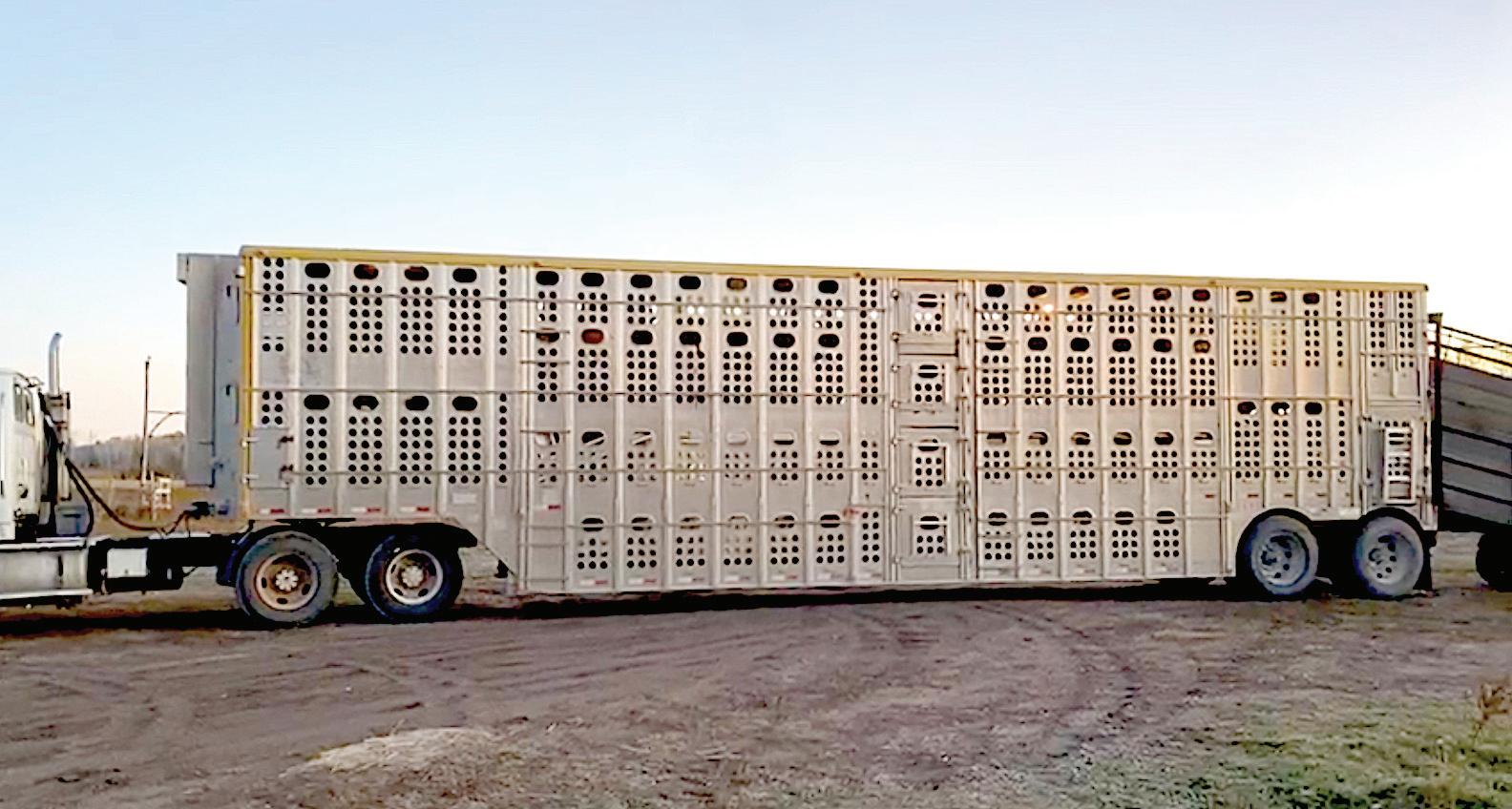
“A sad reality of good working cows. Nobody can either afford to buy them or afford to feed them,” he said. “I know guys that are roughly my age getting out of this industry because they’ve had enough.”
While Graydon has the land base to increase his cow herd substan tially, it would mean hiring some one to help him because he’s the lone ranger. He said that his cow herd is a little long in the tooth and it will require a hard cull.
“They’re still walking and in good shape but getting old. So I don’t think I’m going to increase. I’ll still be around that 250 mark,” said Graydon.

He’s sorted the cows and calves, pulled the heifers to keep; ending up with 30 instead of 10 and bought 60 heifers for breeding next year.
“But I won’t get much bigger than the 250 to 300 mark. I run this show
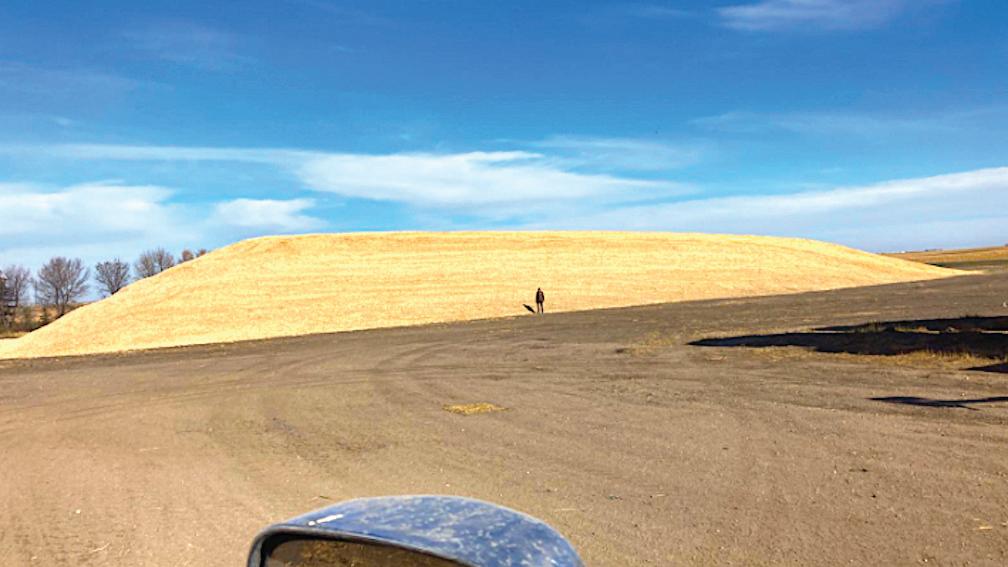
Warren Graydon, a cattle rancher near Woodmore, MB, said he is not making any more money this year than last.
on my lonesome here,” said Gray don. “I have the land base and the pasture on a good year to be up around 350 to 400. But I’m not going to get that big because I got to hire someone.”
On the grain side, when Gray don bought the family farm and land became available, he was too strapped to buy it.
“Much of the rented land for cash crop grain came for sale; I couldn’t buy it. So now I’ve lost that opportunity,” he said.
He signed a four-year lease on 300 acres of marginal land with incorporated hog manure, plus he hauls all his cattle manure to make that land more productive.

October 28, 2022 The AgriPost2
Graydon had adequate feed last year and again in 2022 so he bought heifer cows for replacements and is looking at another herd of cows to increase with new bloodlines without using bull power.However, cattle producers in the Interlake are not yet ready to start re-buying cows. They’re still selling, he said.
Graydon said there is only one place for these cows to go, and that is Long Prairie, Minnesota or several other big cow plants in the state. These plants turn those bred productive cows into hamburger meat for fast food restaurants. Submitted photos
Read it online! www.agripost.ca
Foodgrains Grow Projects Wrapping Up Good Crops
The regional representative for the Canadian Foodgrains Bank reported returns from the fields they’ve harvested so far this year have been good. Of the 33 growing projects, Gordon Janzen said they’re two-thirds of the way through harvesting.
By Elmer Heinrichs a good group of people pull ing off 150 acres of wheat just north of Arborg. With good weather and refreshments provided, it was a great har vest day. On September 11 the Louise Foodgrains Bank growing project near Crys tal City harvested 130 acres of wheat with six combines.
“We’ve had good crops, good yield and it’s not the highest or the biggest bum per crop, but it seems like the prices of a lot of the crops and commodities are good,” said Janzen. “So, we’re hoping for a pretty good year from the growing projects that are sup porting us.”
“The growing project base is really important for us in the Foodgrains Bank,” added Janzen.
He said the member agencies that make up the Foodgrains Bank will receive the dona tions and use them in their food programs abroad.
“We’ve had numerous food related crises, and this will make a big difference,” he said.
On Tuesday, October 4 Janzen noted the Arborg Foodgrains Bank project had
And on September 25 the 160 acre field of Henry and Anna Dyck, located southeast of Killarney, was like Grand Central Station, when 16 combines, 2 grain carts, and a half-dozen semis and super B’s drove up into formation. It yielded 64.38 bu. /ac.
After a 2-year hiatus due to COVID restrictions, fellow farmers, community stake holders and Foodgrains Bank supporters joined for the noon meal of pulled pork, provided by the Willow Creek Hutter ite Colony. It was a welcome community celebration.
Also in September Land mark harvested 10,000 bush els of spring wheat, a good crop yielding 66 bushels per acre worth about $110,000 and organizers hope to send this amount to CFGB (if donations can cover local
expenses) to be matched by CIDA four-to-one resulting in large donation for interna tional hunger relief.
On October 7 the Darling ford food grain project har vested a total of 2,730 bu. of wheat from a field yielding a very respectable 65 bu. an acre. This was followed the CHOICE project on Octo ber 11 that harvested their 80 acres of canola on Helen Rempel’s field north of Elm Creek, and the COOL project at Springstein which took off their 80 acres of wheat.

And on October 20 the community came with com bines to harvest the 300-acre Common Ground canola crop in support of Canadian Foodgrains Bank, east of Rosenfeld which yielded very well.
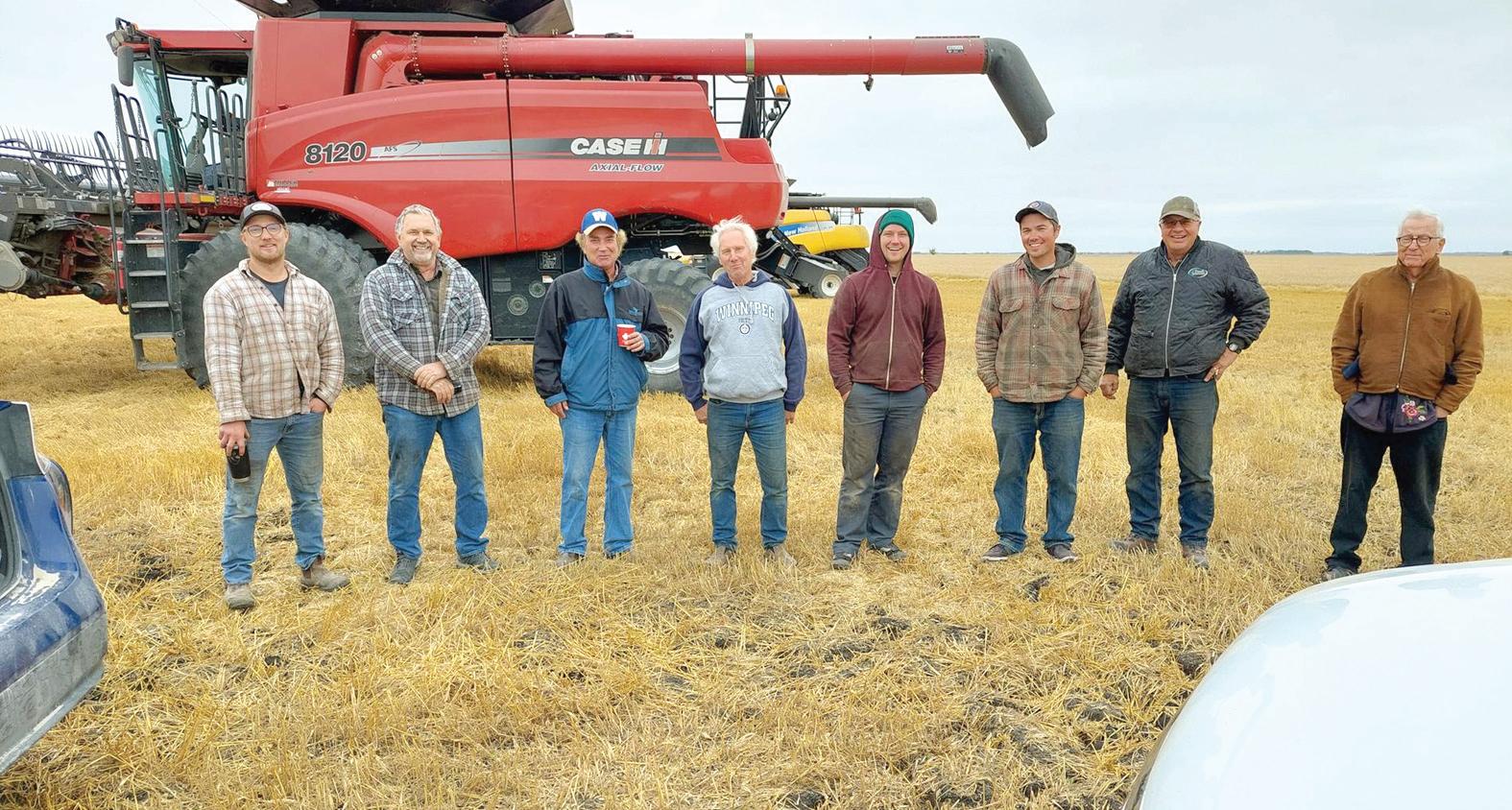
Supporters of the CHUM grow project also harvested on October 20 with four com bines clearing 150 acres of canola north of Altona which yielded 40 bu. an acre.
“Currently I’d say about 90 per cent of our growing proj ects are harvested with just a few more to go,” concluded Janzen.
Enhancements Made to the Grain Grade Dispute Resolution Process
Grain producers will now have more time to ask for a Final Quality Determination from the Canadian Grain Commission (CGC) in the event of a grain grading dispute on their deliveries into Canadian Grain Com mission-licensed primary elevators.
Formerly known as “Sub ject to Inspector’s Grade and Dockage”, producers can now ask that a sample of their grain delivery be sent to the Canadian Grain Com mission for a Final Quality Determination for up to sev en calendar days after the date of their grain delivery.
This right is available for grain producers who deliver a regulated grain into a Ca nadian Grain Commissionlicensed primary elevator.
The CGC has implemented these changes to the Canada Grain Regulations to sup port fair transactions in the Canadian grain sector. These regulatory updates have been made to reflect and keep pace with the cur rent operational realities of grain handling and delivery in Canada.
“We are very pleased to implement these enhance ments to Final Quality De termination for grain pro
ducers. This important producer right now reflects the realities of today’s grain sector and responds to feed back received during the Canada Grain Act review,” said Doug Chorney, Chief Commissioner of the CGC.
The amendments clarify how long samples must be stored and allow more flex ibility for producers and elevator operators to de cide who will store delivery samples and where. In ad dition, grain producers will not need to be present at the time of delivery to request a Final Quality Determina tion.

�October 28, 2022The AgriPost
The regional representative for the Canadian Foodgrains Bank reported returns from the fields they’ve har vested so far this year have been good. Of the 33 growing projects, Gordon Janzen said they’re two-thirds of the way through harvesting with had good crops, good yield
Submitted photo
Are Farmers Food Producers or Commodity Producers?
to shift their perspectives and look at themselves as food producers rather than produc ers of commodities.
So what do we call those people who risk every year tilling the soil, planting the seed, taking care of the plants as they grow and produce more seed; and when harvest comes hope they have enough margin to feed the world and put in another crop the fol lowing year.
I’ve often struggled to de termine what I will call them this time. In one particular publication, the instruction was to call them a farmer.
When growing wheat, they are a wheat farmer said an other publication, or canola grower, potato grower hog or pig farmer or producer. Sometimes I even went as far as a corn producer, corn silage grower-producer, and so on.
Cam Dahl, the general man ager of Manitoba Pork, is encouraging pork producers
I have no problem with that, but first, let me say that most food products and commodities now have com modity groups going by the name of the commodity they represent. For example, the Manitoba Pork Council. Will we call it the Manitoba Food Council? I know it may sound a little facetious but I’m just making a point.
The other thing of note for me is that many people who work in those food and com modity organizations often have little connection with the man or woman who pro duces or grows that food.
“We are food producers,” said Mr. Dahl.
People often refer to farmers as producers: Wheat produc ers, canola producers, cattle producers, hog producers, etc. While these references are logically rooted in the com modities grown on individual farms, they don’t provide a bridge to consumers filling their grocery carts.
Suppose we change how we look at what farmers do, away from these traditional labels. In that case, agriculture can more effectively engage con sumers, asking, “Where does my food come from?”
Dahl argues farmers are not commodity producers but food producers. Viewing farmers as food producers changes perceptions in two ways. First, the needs and drivers of consumers shift from mattering only to the companies at the end of the value chain. He maintains far removed from farmers when [certain powers that be, my emphasis] make farming practice decisions.
Second, the silos built up around individual commodi ties start to break down.
Dahl said when farmers view themselves as commod ity producers; they tend to think that the responsibility for their products ends upon delivery to the processing fa cility or the elevator.
That is not the case. The demands of consumers flow back through the entire value chain to the farm gate. What
happens on the farm mat ters to consumers and farm practices impact Canadian agriculture’s ability to access key markets and influence the prices farmers receive for the food they produce.
A great point when Dahl refers to the audited and sci ence-based assurance pro grams, like the updated Cana dian Pork Excellence (CPE) programs, is so important.
“This is partly how Cana dian agriculture meets the public’s expectations for food producers on safety, environ mental impact, and animal care.”
Helping to recognize and answer consumers’ questions about how farmers produce their food is one reason to shift how consumers view farmers from commodity producers to food producers. Another rea son is to help agriculture step out of commodity silos when working to address the needs and wants of the public.
Consumers do not buy com modities at the grocery store. Instead, they buy a basket of food that will help them make a meal. The whole plate mat
ters, not just the individual ingredients.
Dahl said when non-farmers and consumers view farmers as food producers, there are fewer differences between the farmers that produced the cheese for the meal or the bread that will accompany that delicious pork loin. How ever, consumer expectations are the same for all, no matter what ingredient for the meal comes from individual farms.
“Given this, everyone in Canadian agriculture should look for ways to enhance collaboration between those working to answer consum ers’ questions and address is sues of public trust with con sumers,” emphasizes Dahl.
The Canadian agriculture community is rightfully proud of the plated food producers deliver to consumers.
“We know this plate used the highest standards for animal care, environmen tal impact, quality, and food safety. Viewing farmers as food producers allows us to deliver these messages more successfully to consumers,” says Dahl.
Manitoba Harvest Nears Completion
By Elmer Heinrichs

It comes as no surprise that the grain harvest in Manitoba is running late this year, if we think back to the spring and the continuous rain and Colo rado lows that went through the province. Seeding was delayed and some farmers started changing their crop rotations.
Manitoba agriculture in its October 18 report says har vest is now 90 per cent com plete, nearly caught up to the five-year average of 91 per cent. Farmers were wrapping up the harvest in many areas of southern Manitoba with fall fieldwork, tillage, fertil izing and drainage work well underway.
Winter cereal crops appear in good condition, but soil moisture is low, and rainfall is needed to recharge soil
moisture reserves ahead of spring planting.
Farmers were fortunate this year with the first killing frost delayed till October with yields from the wheat harvest average to above average with good grain quality for most of the crop, with some down-grading on late-har vested grain affected by rains, high humidity and frost.
The oat harvest is wrapped up, with good yields, and bar ley generally has run above 60 bu/acre with low vomi toxen levels. Corn is drying down following frost and high winds with harvest most advanced in Red River Val ley and yields have been very good, above average 150-200 bu/acre.
The canola harvest is ad vancing with yields varying from 20 to 60 bu/acre spread
across most of the province with an average yield of 42 bu/acre, close to the provin cial average.

Most flax crops have been harvested in central and east ern regions with very good yields above 30 and up to 55 bu/acre. The sunflower har vest is estimated at 25 per cent done and yields have been good to better than expected with average yields between 2,000 to 2,300 lbs. /acre.
With the return of typical temperatures and healthy amounts of precipitation throughout the growing sea son, Manitoba had successful pea and dry bean crops during the 2022-23 crop year.
Dennis Lange, provincial pulses specialist, comments on pulses noting that soy beans are 75 per cent done and yielding very well, 40 to
50-plus bu/acre, while har vest of dry beans, perhaps a highlight crop this year, is virtually done with very good yields from 2,000 to 3,000 pounds an acre.
Overall, production of all grains is much better than last year when the second year of drought really cut into yields. The improvement this year compared to last year is best illustrated by looking at the livestock industry. Cattle pro ducers are still putting up feed, and yields are above average.
Preliminary potato yield es timates range from 250 to 550 hundredweight (cwt) an acre in various fields. Good yields were achieved even in later planted fields due to extended harvest period.
In central region the grain harvest is winding up with many farmers turning to corn
and sunflowers, and all are trying to progress on field work, fertilizer application and drainage works.
In eastern region rain and light snow limited harvest progress for a time, but most grain farmers are finished, with some corn and sunflow ers left in the fields. Much fieldwork remains to be done and fertilizer application is behind last year’s pace due unsuitable field conditions.
Cattle remaining on pasture are being supplement with baled hay, the last cut for ages are bring baled and corn silage yields have been excel lent across the province.
Livestock water supplies are adequate, the fall cattle roundup from community pastures continues, and some have been moved to stubble or on cut hay fields.
October 28, 2022 The AgriPost�
Canada Has a Food Affordability Problem
By Sylvain Charlebois States is 13th.
Did you know that there is a global food security index?
The well-known magazine The Economist has just pub lished its 11th edition.
The Global Food Security Index comprises a set of indi ces from more than 120 dif ferent countries. Since 2012, the index has been based on four main pillars: food access, safety, sustainable develop ment, and affordability.
The approach is quite com prehensive and robust. Index indicators include nutritional standards, urban absorptive capacity, food consumption as a percentage of household expenditure, food loss and waste, protein quality, agri cultural import tariffs, dietary diversification, agricultural infrastructure, volatility of agricultural production, pub lic spending on agricultural resource and development, corruption, risk of political stability, and even the suf ficiency of supply. In short, anything goes.
Finland ranks first this year, followed by Ireland and Norway. Canada is well-po sitioned compared to other countries around the world since we are ranked seventh globally, the same as last year. Not bad. The United
In terms of food access –which measures agricultural production, farm capacities, and the risk of supply disrup tion – Canada ranks sixth, which is not too surprising. Despite our recent episodes of empty shelves and stock outs, Canada can boast about its food abundance. We pro duce a lot and are part of a fluid North American econ omy focused on cross-border trade, which allows for better food access.
Another pillar focuses on sustainable development, the environment, and climate adaptability. This pillar as sesses a country’s exposure to the impacts of climate change, its sensitivity to risks related to natural resources, food waste management, and how the country adapts to these risks. In this regard, Canada is ranked 29th, far behind Norway and Finland, who are first and second in this category. Food waste remains Canada’s Achilles’ heel, as we waste more than just about anyone else on the planet. But with higher food prices, more than 40 per cent of Canadians, according to a recent study, are wasting less than they were 12 months ago.
When it comes to food safe ty and quality, Canada ranks first in the world. Canada is ahead of everyone, even Den mark and the United States, both renowned for their pro active approaches to food safety. Food safety in Canada is perhaps the facet most un derappreciated by consum ers.
Despite a few momentary failures and periodic remind ers, sanitation practices in the country are exemplary. Can ada has consistently ranked well for years, except perhaps when traceability is mea sured. We have a long way to go, but the industry and public safety regulators are performing relatively well.
But the area where Cana da’s performance is of some concern is food affordability. This measure is dedicated to consumers’ ability to pur chase food, their vulnerability to price shocks, and the pres ence of programs and policies to support consumers when shocks occur.
Canada fell one spot again this year and sits at 25th in the world. Australia, Singa pore, and Holland top the list for affordability. Given the resources and food access we have, Canada should do better. Since July 2021, food
inflation has always exceeded general inflation in the coun try, and everything is already costing more these days. Higher food prices at the gro cery store over the past year have been difficult for many of us to accept. Canada needs a food autonomy policy, a more robust food processing sector, and better logistics do mestically.
And with winter coming and our dollar visibly weak ening against the US dollar, we could see significant price jumps again, especially in the produce and non-perishables sections. As wages stagnate and food prices rise, it’s hard to predict when Canada will do better in terms of afford ability. Specific fiscal mea sures such as tax reductions to help consumers would be more than timely.
Post-Secondary Bursaries Available
Manitoba Crop Alliance (MCA) is now accepting bursary applications for the 2022-23 school year. MCA established the bursary to as sist with the financial needs of students who are enrolled in a post-secondary agri cultural program within the province of Manitoba. Bursa ries valued at $2,000 each are available and will be awarded to six students who: - Have completed their first or
second year of post-second ary education at the college or university level (diploma or degree) and are enrolled full-time for the 2022-23 school year in an agricultural program within the province of Manitoba.
- Have achieved a minimum cumulative grade point aver age (GPA) of 3.0.
- Have an interest in wheat (spring or winter), corn, bar ley, flax or sunflower crops,
or agriculture in general, as demonstrated in a brief, onepage letter.
- Are from a farm that is a member in good-standing of MCA (you can inquire about this at hello@mbcropalliance. ca).

- Have not previously been awarded an MCA Bursary.
Applicants must submit an application letter and tran script. Successful applicants will be notified by Febru
ary 10, 2023 and announced at MCA’s Annual General Meeting (AGM) on February 16, 2023.
Applications must be emailed to Katherine Stan ley (katherine@mbcropal liance.ca) with the subject line “MCA Bursary Applica tion 2022-23” by January 13, 2023, at 4:30 pm.
Call 204-745-6661 for ap plication information or visit mbcropalliance.ca.
New E-book Tells Story of 150 Years Manitoba Agriculture
By Elmer Heinrichs and the federal government.
The governments of Canada and Manitoba have launched “50 Years of Farm ing in Manitoba”, an e-book developed in partnership with Keystone Agricultural Producers (KAP) that shares the 150-year evolution of the agriculture and agri-food sector in Manitoba.
150 Years of Farming in Manitoba was written by Bill Redekop and devel oped through a partnership between KAP, the province
The e-book highlights the economic, societal and en vironmental benefits of ag riculture in Manitoba, with a particular focus on the in novations of the last 50 years including those related to animal care, crop produc tion, soil research and food safety.
The e-book’s publication came recently on the last day of Manitoba Agriculture’s Farm and Food Awareness Week, an annual occasion
for celebrating the province’s diverse, vibrant and sustain able agri-food system.
Support for the e-book initiative has been shared between the federal and Manitoba governments using funds through the Canadian Agricultural Partnership, de veloped in partnership with KAP.
Agriculture in Manitoba has evolved through the hard work and innovation of those who have come before us and by those who continue to
lead us today, and being able to reflect on the previous 150 years gives us an opportunity to bring forward the lessons of history, said Bill Camp bell president, Keystone Ag ricultural Producers.
“Throughout the past 150 years, agriculture has de fined Manitoba’s people and has been the backbone of the province’s economy. This story pays tribute to the voices and forces that have shaped Manitoba itself,” added Campbell.
New Online Environmental Farm Plan Platform Launched
The governments of Canada and Manitoba have an nounced the launch of Manitoba’s new online Environ mental Farm Plan (EFP) platform.
The Importance of Nitrous Oxide in Agriculture
By Jon Gerrard
Nitrous oxide is an important greenhouse gas. It is pro duced when nitrogen is converted to nitrous oxide in the presence of oxygen. It is of particular interest to farmers because the nitrogen fertilizer applied to fields, which is converted to nitrous oxide, goes up in the air and is therefore not available to help plants grow.
“Canadian agriculture’s long-term sustainability de pends on its ability to adapt to emerging climate condi tions,” said federal Agriculture and Agri-Food Minister Marie-Claude Bibeau. “Manitoba’s new online Environ mental Farm Plan allows producers greater access to re sources, so they can prioritize best management practices that make the greatest impact on their farm.”
In 2020, the governments of Canada and Manitoba invested $990,000 through the Canadian Agricultural Partnership in a three-year contribution agreement with Keystone Agricultural Producers (KAP) to develop the online EFP platform.
Farming using techniques to reduce the conversion of nitrogen to nitrous oxide can make more of the nitrogen available to plants and can increase crop yields.
Reducing the conversion of nitrogen to nitrous oxide is a win for farmers. It is also a win for the climate because the nitrous oxide which enters the air in our atmosphere acts as a powerful greenhouse gas – more than 250 times as potent as carbon dioxide.
The EFP is a voluntary, confidential self-assessment of a producer’s farm. The purpose of the EFP is to assess the features and management practices of a farm in order to develop an action plan to mitigate identified risks.
Reducing the conversion of nitrogen to nitrous oxide thus reduces a significant greenhouse gas which makes up approximately 15% of greenhouse gas emissions in Manitoba.
“Our government is committed to supporting sustain able agriculture production practices such as sustainable water strategies and climate change mitigation activities,” said Manitoba Agriculture Minister Derek Johnson. “The EFP is a valuable and proactive risk management tool. It includes a strong educational component that will con tinue to provide positive environmental outcomes while enabling the province to meet its goals for enhancing public trust in the agricultural sector.”
The federal government has set a goal to increase yields and to reduce nitrous oxide emissions, echoing the view that a win-win situation is possible for helping farmers and for helping the planet.
While the Conservative MLA for Portage la Prairie re cently expressed scepticism in the legislature that a 30% reduction in nitrous oxide is unlikely to be achieved, there are in fact quite a number of ways which have been shown to substantially reduce nitrous oxide production.
The new online version of the EFP is modern, effi cient and easy for producers to use and is designed with leading-edge cybersecurity and privacy policies to ensure data is always protected. Online tutorials are available to guide producers through the process. The system has up dated and streamlined content and several features that allow producers to customize EFP workbooks to specific farm operations. Once a workbook is complete, producers can submit it for third-party review by KAP reviewers.
A simple example is improved drainage, because the conversion of nitrogen to nitrous oxide occurs more rap idly when soils are overly wet or flooded.
Another example is injecting the nitrogen fertilizer more than 5 cm deep into the soil. The deeper injection of the nitrogen applied to fertilize crops means less ni trogen is exposed to the air which contains the oxygen necessary for conversion of nitrogen to nitrous oxide.
The online platform integrates national and international sustainable sourcing standards that will allow producers to address market requirements for specific commodity groups. This integration adds value to the Manitoba EFP and reduces the burden for producers, noted Johnson.
A meta-analysis of 239 studies showed that nitrogen fertilizer application more than 5 cm into the soil could reduce nitrous oxide production by more than 30%. A type of nitrogen fertilizer, which uses a polymer coating of urea or a fertilizer using a nitrification inhibitor were also able to achieve greater than 30% reduction.
“KAP is pleased to have worked with both levels of government on delivering a tool that producers can confi dently and easily use as they work to more easily employ sustainable farming practices in their operations,” said Bill Campbell, president, Keystone Agricultural Produc ers. “This new platform will help increase the accessi bility of the EFP program for Manitoba producers and sends a strong signal to consumers about the efforts taken to deliver sustainably grown agricultural products to the marketplace.”
The 4R approach – using fertilizer from the right source, in the right place, at the right time and at the right rate has also shown success in reducing nitrous oxide production.
While there have been those, like the MLA for Portage la Prairie, who are keen to attack the federal government, perhaps it is time for all to work together in the common interest of farmers, consumers and our planet. Further, his recent suggestion that the federal government might be trying to reduce food production is ridiculous!
A completed EFP is required for farms participating in most agri-environmental cost-shared programming, which directly supports initiatives of the Made-in-Mani toba Climate and Green Plan by enhancing the resilience and sustainability of the agricultural sector.
Johnson noted that by implementing an EFP, produc ers are able to improve air, water and soil quality, con serve biodiversity on Manitoba farmland, contribute to environmental protection and conservation, and make Manitoba-grown commodities more marketable to envi ronmentally conscious consumers.

We all know that the world is in a tough spot at the moment and that increased food production is needed, particularly as a result of the situation in Ukraine. Now is a time for everyone to pull together for the benefit of farmers, food vendors, consumers and the planet, rather than to malevolently impugn the motives of others to try to score political points and mislead the industry and the public.
Jon Gerrard is the MLA for River Heights and Mani toba Liberal Agriculture Critic.
More information on the EFP and a link to the online EFP portal can be found at ManitobaEFP.ca.
�October 28, 2022The AgriPost
Dr. Sylvain Charlebois is senior director of the agri-food analytics lab and a professor in food dis tribution and policy at Dalhousie University.
Russ Edwards School of Agriculture & Environment Named at Assiniboine Community College

Assiniboine Community College recently announced the naming of the Russ Ed wards School of Agriculture & Environment.

The college has been grow ing its agriculture and en vironment programming to help address skills shortages in this key economic sector. Further, agriculture and food is the largest area of applied research at Assiniboine. The college has been fundraising for a new Prairie Innovation Centre for Sustainable Ag riculture, which will enable further education, research and industry engagement. The formal naming of the School represents another step in this journey.
Russ Edwards, founder and owner of WGI Westman Group, has been a leader in the business community for nearly 50 years, and a cham pion at the forefront of the agricultural sector across the Prairies.
Edwards’ business roots stem back to his first busi ness in Winnipeg in 1976, constructing culverts, steel roofing, and siding. In the 45 years following, WGI West man Group has carved out a remarkable and uncharted path under Edwards’ leader ship. It has grown into one of Canada’s largest manu facturers of steel products.
Edwards announced a gift of $4 million towards the school.
“This is an incredible gift, and we are eternally grate
ful to Mr. Edwards and his family for their commitment to help us build unparal leled educational opportuni ties in Manitoba,” said Tim Hore, Dean of Russ Edwards School of Agriculture & En vironment. “It will have a long-lasting impact as our college continues to advance its vision for leadership in agricultural education.”
This is the first time the college has named one of its academic schools after an individual. Assiniboine has a long and dedicated history of delivering agri cultural and environmental education throughout the province, with some of its longest-standing programs focused on agriculture and related training.
“Growing up on a farm in La Broquerie, Manitoba, I learned about caring for the land, planting seeds, and watching them grow. With Westman Steel and Behlen Industries both headquar tered here in Brandon, Mani toba, some of the early seeds of WGI Westman Group’s success were planted right here in this community,” said Edwards, Chairman of WGI Westman Group Inc. “In fact, my wonderful wife Edna received her nursing degree in the very building in which we now make this announcement.”

“My family and I are in credibly grateful to now be in the position to make this donation to the School and
establish the Russ Edwards School of Agriculture and Environment,” Edwards added. “I hope generations of students will be able to use the knowledge gained here to plant their own seeds of success as well.”
Incredibly hardworking, yet modest in his success as an entrepreneur and gen erosity as a lifelong philan thropist, Edwards embodies the essence of staying true to Prairie roots and principles.
“We are honoured that Mr. Edwards would allow us to include his name so promi nently in a school so core to our vision for the college,” said Mark Frison, President of Assiniboine. “We feel deeply moved that Russ rec ognizes our college’s efforts to date and shares our vision for the future. As Manitoba’s ag college, this commitment and naming designation will elevate Assiniboine’s promi nence in training and applied research efforts for years to come,” Frison added.
The gift will help advance priorities for the Russ Ed wards School of Agriculture and Environment, includ ing the Prairie Innovation Centre for Sustainable Ag riculture—the college’s cor nerstone project to address critical labour shortages, ad vance applied research, and facilitate industry engage ment. To date, Assiniboine has raised more than $16 million through its Ag Be longs Here campaign.
October 28, 2022 The AgriPost�
Russ Edwards, founder and owner of WGI Westman Group, has been a leader in the business community for nearly 50 years, and a champion at the forefront of the agricultural sector across the Prairies. This is the first time the college has named one of its academic schools after an individual.
Submitted photo
Increased WCVM Seats Will Be Funded to Address Critical Shortage of Agricultural Veterinarians
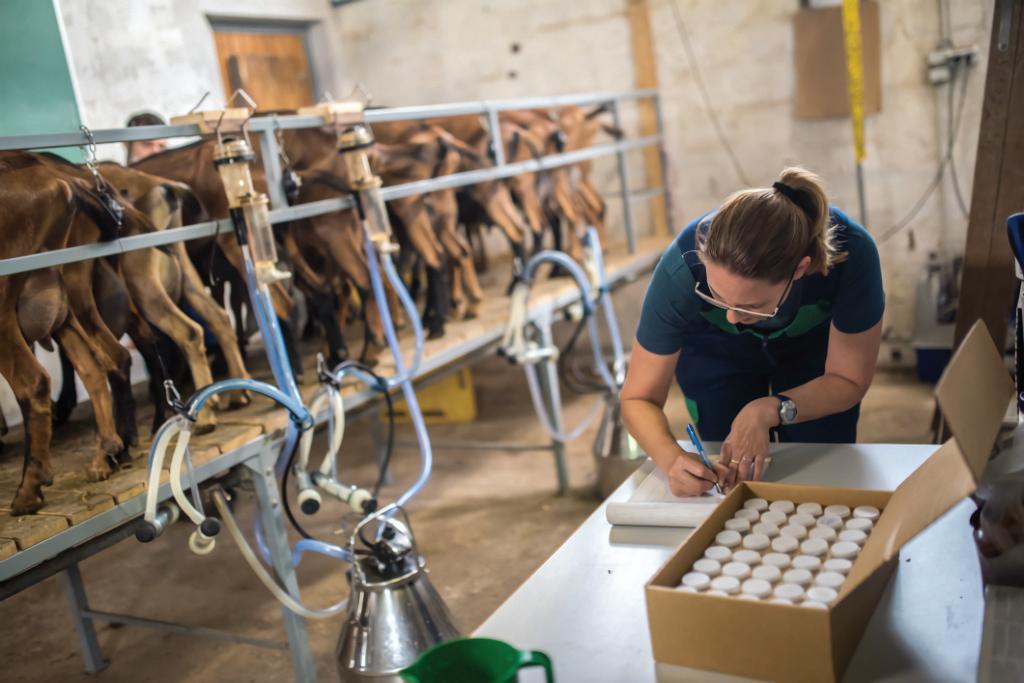
The Manitoba government has finalized further details of its new plan to attract, train and retain veterinarians to support commercial agri culture in rural areas.
“Our government has in vested in this new strategy to address the critical shortage of veterinarians providing care for commercial livestock and poultry operations in ru ral Manitoba,” said Agricul ture Minister Derek Johnson. “The agricultural sector is vital to our provincial econo my and we are committed to providing support to address the sector’s needs.”
The government has ex panded its inter-provincial agreement with the West ern College of Veterinary Medicine (WCVM) at the University of Saskatchewan to provide increased annual funding for the acceptance of an additional five Manitoba students beginning in 202324, as part of its strategy to build the province’s animal health-care capacity.
Manitoba currently receives 15 guaranteed subsidized seats at the Saskatoon-based WCVM for new entrants an nually. The province will in crease its funding contribu tion to WCVM by $539,200 for the 2023-24 academic year to a total of $7,009,600,
toba intake students to 20 from 15 and to a student quo ta – the number in the four years of the program – to 65 from 60. The province’s gradually increasing funding commitment will bring its in take to 20 seats from 15 seats every year until it supports 80 Manitoba students annu ally through the four-year program.
Given the particular need for veterinarians to support com mercial livestock and poultry operations in rural Manitoba and for improved biosecu rity, the five new intake seats will be targeted for an expan sion of veterinary care for the agricultural sector.
Manitoba Agriculture will work closely with WCVM to attract and select students with the rural background, knowledge and passion to become successful as vet erinarians who will return to rural Manitoba to support the livestock and poultry indus tries.

Along with these attributes, students who are selected will be expected to have an expressed desire to pursue veterinary practices in com mercial agriculture in rural Manitoba; a solid academic foundation through achieve ment in a university-level animal science program; and practical knowledge and ex
perience in the livestock or poultry industries, gained through significant experi ence prior to enrolment.

“Our government will col laborate with stakeholders and WCVM in upcoming years to ensure the objectives of this targeted approach are met,” said Johnson. “Manito ba Agriculture will also work with educational institutions, agricultural organizations and other stakeholders to en sure information on the new strategy is shared widely.”
More technical criteria for the new intake seats will be developed for 2024-25 and beyond, Johnson added.
“This is an important step toward addressing the short age of veterinarians in rural Manitoba,” said Tyler Ful ton, president, Manitoba Beef Producers. “We appre ciate the focus on recruiting students who have a direct interest and first-hand ex perience in working with animals, and who have been raised in a rural environment. We thank the provincial gov ernment for its investment in training more vets.”
In addition, Manitoba Ag riculture is exploring options to work collaboratively with the industry to further sup port these efforts to address its labour market needs, Johnson said.
Canada Harvesting Record Corn Crop
By Elmer Heinrichs
LeftField Commodity Re search in its October monthly newsletter to the Manitoba Crop Alliance says Canada is expected to have a recordlarge corn crop of 14.86 mil lion tonnes, driven by an alltime high yield.
Manitoba’s crop may be
up 50 per cent from 2021 to 1.32 million tonnes.
Corn grain yields were anticipated to rise to 164.3 bushels per acre, with har vested area expected to rise to 3.6 million acres.
Statistics Canada (StatsCan) reported that on August 31 corn stocks were at a record
2.75 million tonnes.
Much of the big number was due to large commercial inventories which are par tially the result of massive imports in 2021/22.
As a result Manitoba corn prices have moved higher with a relatively strong futures market and weak loonie.
�October 28, 2022The AgriPost
Source: Manitoba Veterinary Medical Association/mvma.ca
The Manitoba government has expanded its inter-provincial agreement with the Western College of Veterinary Medicine (WCVM) at the University of Saskatchewan to provide increased annual funding for the acceptance of an additional five Manitoba students beginning in 2023-24, as part of its strategy to build the province’s animal health-care capacity.
Bibeau Concludes G20 Agriculture Ministers’ Meeting
Canada’s Minister of Ag riculture and Agri-Food, concluded what they call a productive annual G20 Ag riculture Ministers’ Meet ing, where Canada took a leadership role in advancing priorities and agricultural interests regarding global
food security, resilient and sustainable agriculture and open and rules-based trade.
Throughout the meetings, Canada’s Minister of Ag riculture Marie-Claude Bi beau, took part in conversa tions with her counterparts on finding innovative and

equitable solutions to inter national issues in agricul ture. Bibeau reiterated the Government of Canada’s commitment to sustainable agriculture, advocating for research and innovation as the most reliable paths to long-term food security and
to enable for more farmers worldwide to bring more product to market.
At the G20 Agriculture Ministers’ Meeting, Bibeau also conducted a series of bilateral meetings with her counterparts from Indonesia, US, India, the EU and Tur

key. She also had a meeting with Stanlake Samkange, Senior Director, Strategic Partnerships Division of the World Food Programme.
Bibeau also took the op portunity to highlight Can ada’s steadfast commitment to supporting Ukraine and
the Ukrainian people, who have been impacted by Rus sia’s brutal and unjustifiable invasion since February. Likeminded countries at the G20 ministerial meeting joined the Government of Canada in condemning the Russian invasion and rec ognizing the need to address the challenges posed by it, including the impacts on supply chains, food prices, and food security around the world. Ministers from these countries committed to maintaining international leadership and in finding in novative solutions.
“Canada joined other G20 members in our condemna tion of Russia’s brutal in vasion of Ukraine, and to outline the serious conse quences for the agriculture sector, food prices and food security,” said Bibeau.
Earlier in the G20, Bibeau participated in a forum on “Digital Agriculture Trans formation in Accelerating Women and Youth En trepreneurs.” This forum provided an opportunity to discuss challenges and best practices to ensuring equi table access to digital tools and resources for women and youth.
Bibeau shared Canada’s efforts to eliminate the digital divide in rural areas with increased investment in high-speed broadband, as well as the ongoing effort to empower youth and women to participate in the agricul ture and food sector, includ ing through Canada’s Youth Agriculture Council.
“Research, innovation, women and youth empow erment, along with a sci ence and rules-based trade are the keys in our objec tive to eradicate hunger in the world,” added Bibeau.
“Canada will continue to take concrete actions and engage in international dia logue through the G20 and other organizations, to help farmers feed the world sus tainably.”
October 28, 2022 The AgriPost8
Photo credit: AAFC/Twitter
Throughout the meetings, Canada’s Minister of Agriculture Marie-Claude Bibeau, took part in conversations with her counterparts on finding innovative and equitable solutions to international issues in agriculture.
Federal Government Invests in Food Research to Support Disease Prevention
The federal government has announced an investment of up to $106,000 to the Prairie Oat Growers Association for new research trials to better understand the role oats play in disease prevention. Find ings from this project will help create new market op portunities for Canadian oat producers.
With funding under the AgriScience Program, the St. Boniface Hospital Re search Centre in Winnipeg is working with the association to conduct animal feeding trials with oats. The goal is to determine exactly how oat protein is digested and what effect it has on reducing cho lesterol and blood glucose levels. The data, which is expected to be published and peer-reviewed by early 2023, is part of a verification pro
cess needed to make a health claim that oat protein can positively affect cholesterol and blood glucose.
“This project is not only an investment in the health of Canadians, it opens doors to new market opportunities for our farmers and food proces sors,” said Marie-Claude Bi beau, Minister of Agriculture and Agri-Food.
Oats are already recog nized as a healthy food be cause of their soluble fibre content. Consumer interest in the health benefits of the grain have helped Canadian oat producers transform their sector from a bulk exporter 30 years ago to one that to day is largely selling valueadded products and ingre dients. A new health claim about oat protein could help the industry further diversify
market opportunities, stimu late increased demand and economic benefits for Cana dian oat growers, while con tributing to healthier diets for consumers.
“This type of funding is essential for commodities like oats to be able to have the necessary research to ap ply for potential new health claims,” added Shawna Mathieson, Executive Di rector, Prairie Oat Growers Association. “Health claims let consumers have a better understanding of how eating certain foods can help im prove their health and, if the results are positive, give con sumers yet another reason to eat the safe and healthy oats produced right here in Can ada.”
Canada is the largest ex porter of oats in the world,
with export sales valued at $465 million in 2020. The three Prairie Provinces ac count for more than 90 per cent of Canada’s oat produc tion.
Farmland Value Increases Override Concern of Higher Interest Rates
Average farmland values continued to increase in most parts of Canada, despite higher interest rates in the first half of 2022, according to a mid-year review by Farm Credit Canada (FCC).
“Strong farm cash receipts, buoyed by robust com modity prices, have managed to quell some of the prof itability challenges from higher interest rates and farm input costs,” said J.P. Gervais, FCC’s chief economist.
“Producers are still making strategic investments in their operations and buying farmland, which is in short sup ply and high demand. This healthy farmland market is a good indication there is confidence and optimism in the future of the industry among producers.”
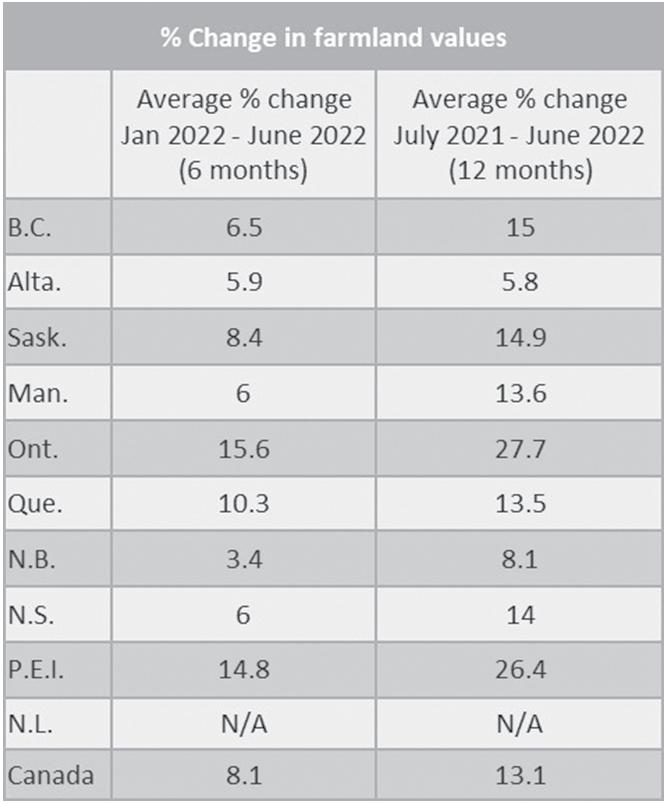
The highest average farmland value increases were re ported in Ontario (15.6 per cent), Prince Edward Island (14.8 per cent) and Quebec (10.3 per cent), followed by Saskatchewan (8.4 per cent), which was closest to the national average increase of 8.1 per cent. More modest increases were reported in the rest of the provinces.
Canada is the largest exporter of oats in the world, with export sales valued at $465 million in 2020.
Storage Aeration and Drying Can Prevent Grain Spoilage
By Richard Kamchen
A delayed, wet harvest will force some Manitoba farm ers to dry and aerate their stored grain.
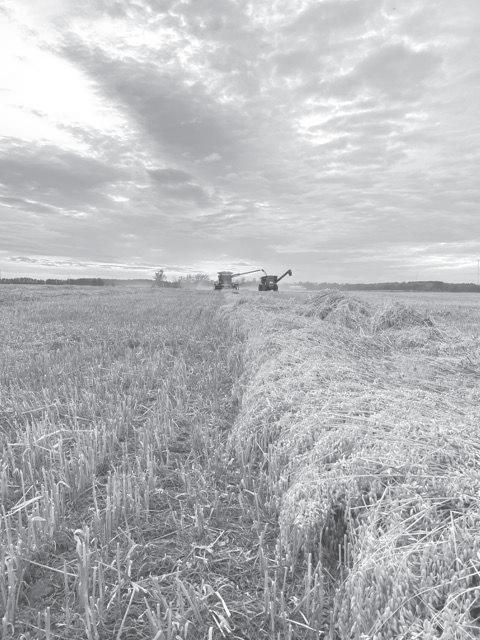
Wet conditions prevented harvest operations at times, and also caused grains and oilseeds to come off in tough to damp condition.
“The risk of spoilage in creases with increasing mois ture content,” noted Digvir Jayas, University of Manito ba’s previous Vice-President (Research and International).
“Delayed harvest also in creases risk because natural air does not have much dry ing potential at low tempera tures to dry the grain.”
Tough and damp Grain within accept able limits of moisture is a “straight grade,” but with increasing moisture content, grain may be referred to as tough, damp, moist or wet, explains the Canadian Grain Commission.
The agency said tough or damp crops are more likely to become mouldy or in fested with insects, but that proper drying and aeration in storage can reduce the risk of spoilage.
Charley Sprenger, project leader and engineer-in-train ing at Prairie Agricultural Machinery Institute, advises
tough grain be aerated im mediately to prevent heat ing. It should then be dried using natural air grain dry ing (NAD), with or without supplemental heat, depend ing on ambient conditions, she said.
Damp grain, however, should be dried with supple mental heat, Sprenger said. “Grain temperature and moisture should be moni tored regularly when tough or damp grain is being man aged in storage,” she added.
Spoilage risks
High moisture grain that sits without aeration may respire, causing heating and eventual spoilage.
Mould is another likely outcome and will speed up spoilage. Left unchecked, mould may also cause a hot spot to develop in the bin, causing degraded quality in cluding bin burnt kernels and darkened kernels, Jayas said.
“Grain could cake and be come not free flowing, thus unable to unload using an auger. In the worst-case sce nario, a frontloader may be required to empty the bin,” he said.
Jayas recommended that farmers cool their grain to as low a temperature as possi ble through aeration in their bins. If they haven’t got an
automated system in place, they should let their fan run continuously, thereby low ering the temperature when outside air is cool, and re moving some moisture when it’s warm.
Supplemental heat of 5°C to 10°C above ambient tem peratures can help with the drying process, he said.
Crops that are frost dam aged will spoil even faster than sound grain, and will re quire more cooling and dry ing attention. Ideally, these crops are kept separate.
Optimizing airflow
Good airflow is paramount in successfully cooling and drying grain.
“Overloading a bin could result in insufficient airflow being able to aerate the en tire grain bulk if fans aren’t sized appropriately,” said Sprenger.
Reduced airflow from a fan undersized for a certain depth will require more time for grain to dry, potentially increasing the chances of spoilage.
“The amount of airflow has to be sufficient and should be calculated based on grain type, initial moisture con tent, harvest date, and grain depth,” said Jayas.
Don’t treat every crop the same either.
“Larger sized grains can be aerated easier-more pore space for air to flow,” said Sprenger. “Some crops, such as oilseeds, are more suscep tible to heat damage if sup plemental in-bin or heated air drying is utilized.”
Jayas added that canola offers greater resistance to airflow than wheat and shouldn’t be placed in a bin with a fan sized to wheat.
“Canola depth will have to be reduced to less than half of that for wheat to use the same system,” he points out.
Airflow can also be stymied by grain peaks in bins. Grain augured into a bin forms a peak at the top of the pile, which significantly reduces airflow through the core.
Coring
Coring the bin can elimi nate those peaks and slash drying time and if hotspots have started developing, corning can also help remove grain from those areas.
Developing hotspots can be detected using temperature cables, or by manually mea suring grain temperature in the top one to two metres of grain by inserting a tempera ture probe, said Jayas.
“Frequency of coring will depend on the number of times grain gets heated,” he said.
There were insufficient transactions in the Yukon, Nunavut, Newfoundland and Labrador to fully assess farmland values.
Most land transactions were agreed to prior to the most significant interest rate increases. However, Gervais believes the more recent increases will not completely deter some producers from making land purchases that make sense for their operations.
“There’s little doubt that higher borrowing costs will slow the demand for farmland,” he said. “But the fact that the supply of farmland available is limited and farm incomes are trending in the right direction could offset the impact of interest rates increases.”
Provinces with a higher percentage of arable land, such as Saskatchewan and Alberta, seem to experience a slower pace of increase in land values, according to the mid-year review. Ontario’s average increase was bol stered by the central regions of the province, where com petition for arable land is strong but supply is limited.
Farm cash receipts climbed 14.6 per cent year-overyear for the first half of 2022, although grain, oilseed, and pulse receipts were slightly lower in the first six months, as expected due to the drought across many parts of the Prairie provinces in 2021. Receipts are projected to in crease 18 per cent for the full 2022, relative to 2021.
Despite inflationary pressures and geopolitical tensions, new crop prices continue to be elevated and should gen erate positive profit margins, given the latest production and yield estimates, according to the mid-year review.
Gervais recommends operators maintain a risk man agement plan to protect their businesses against unfore seen circumstances, such as increases in borrowing costs and unfavourable movements in commodity prices.
Land Values Chart
�October 28, 2022The AgriPost
FCC
Photo Source Prairie Oat Growers Association/poga.ca
Challenging Crop Year Plays Havoc with Winter Cereals in Manitoba
By Harry Siemens ed,” said Ammeter.
In 2021-22 significant ac cumulation of snow through out last winter helped to keep the soil temperature warm enough for winter wheat to overwinter and yield amaz ingly well.
Ashley Ammeter, agrono my extension specialist- ce real crops with the Manitoba Crop Alliance said it’s too early to determine how many winter cereal acres farmers planted in Manitoba although it is safe to say likely less than in some other years.
“As you’ll be well aware, this was a challenging har vest preceded by a challeng ing season,” said Ammeter.
The late canola harvest delayed those farmers who seed winter wheat into har vested canola fields made seeding winter wheat very challenging.
“By the week of the crop insurance seeding deadlines, I believe the canola harvest across the province was only 30 per cent complete making for many potentially planned winter cereal acres not plant
On average, Ammeter said winter cereal yielded 60 to 70 bushels per acre range. Some were significantly lower, down into the 30 bu. per acre range and some were higher. The quality and yields were good with some seeing local ized fusarium.
When farmers speak of av erage yields those averages keep rising because of wheat breeding.
“Our breeders are con stantly working to increase our genetics,” said Ammeter. “And then the other side to that coin is that we’re con stantly getting better at our agronomics, so better pes ticides, we’re getting better at our fertility. It all helps to further increase our yields in winter wheat, in wheat in general, in all of our crops.”
Several years back a farmer at Plum Coulee, MB report ed how the wheat yielded 60 bushels an acre and that the area during the growing sea son received about an inch of rain.
She said it’s incredible how
much progress has occurred because, over a long time, the number one winter wheat variety in Manitoba was CDC Falcon. The yield aver aged 80 bu. an acre, based on the Manitoba Crop Variety Evaluation Trials (MCVET) but its quality was not as good. Today’s new varieties yield is excellent she said. For example, the Emerson variety, now the top variety in Manitoba, has fusarium head blight resistance.
“When comparing the older varieties with some of the newer varieties, we’re making a lot of progress. The breeders are doing great work,” said Ammeter.
According to Ammeter the winter cereals planted this fall going into winter across a lot of the province are in good shape. However, some areas are lacking in soil moisture. Getting those winter wheat crops well established may need a little moisture to get them going she commented.
“The next challenge is making sure that our win ter wheat crops overwinter.
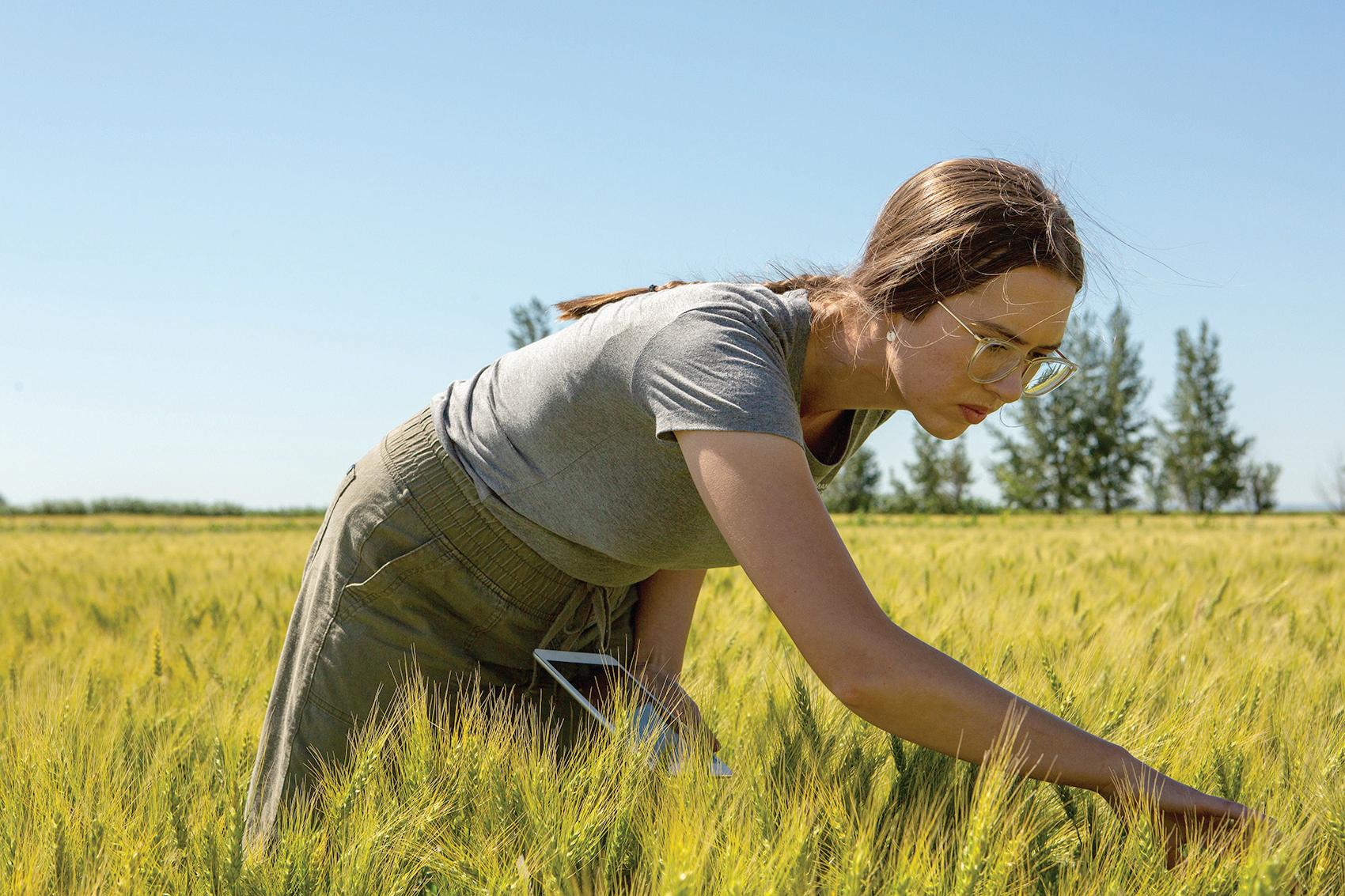

Ashley Ammeter, the agronomy extension specialist - cereal crops with the Manitoba Crop Alliance, said this year was a challenging harvest preceded by a challenging season. Breeders are constantly working on genetics, she said. Submitted photo
And so there are some things farmers can do to get them off to as good a start as pos sible,” said Ammeter.
A good snow cover is al ways essential, so is seeding into taller stubble always at the right time around late August to mid-September to get them off to a good start.
“If farmers did everything
right, it’s a matter of waiting for what the winter turns out like,” said Ammeter.
She said that a warm fall like the third week in Octo ber is good but if the snow falls early, there is concern about getting the plants hard ened off properly, leaving them more susceptible to cold injury.
“If we end up in the spring with some freeze-thaws, the winter wheat doesn’t re ally like those. So going into 2023, it’s just a matter of , setting your winter wheat up for success much as possible, and then keeping an eye on the weather and hoping it co operates with us,” said Am meter.
October 28, 2022 The AgriPost�0
Canadian Farmers Edge 2021 Recycling Rate
Canadian farmers/produc ers continue to demonstrate their commitment to ensur ing empty ag-product con tainers used for pesticides and fertilizers are returned for recycling.
Cleanfarms, the national stewardship organization that develops and operates programs to help producers manage on-farm agricultural waste materials just released the recovery rates for 2021 for ag packaging of various types that is collected for re cycling or safe disposal.
The flagship program re covers empty plastic jugs 23L and smaller that deliver ag pesticides and fertilizers to producers. In 2021, farm ers returned more than three quarters of the containers sold into the marketplace, more than 2.25 million kg, edging up the three-year roll ing average recovery rate to 77%.
The recycling recovery rate has soared since 2011
when it was 69%. In 2019, it was 71% and in 2020, it was 76%, indicating that pro ducers continue to look for ways they can manage onfarm waste materials in an environmentally appropriate manner.
The recovery rate measures the percentage of containers collected for recycling com pared to the number of con tainers sold into the market in that year. The three-year rolling average recovery rate evens out the rate over three years taking into consider ation factors that could cause variations such as differing needs due to weather.
“Empty plastic jugs aren’t the only ag containers pro ducers are recycling,” said Cleanfarms Executive Di rector Barry Friesen. “They are bringing back several es sential items used on farms for recycling – like empty non-deposit bulk drums and totes, too.
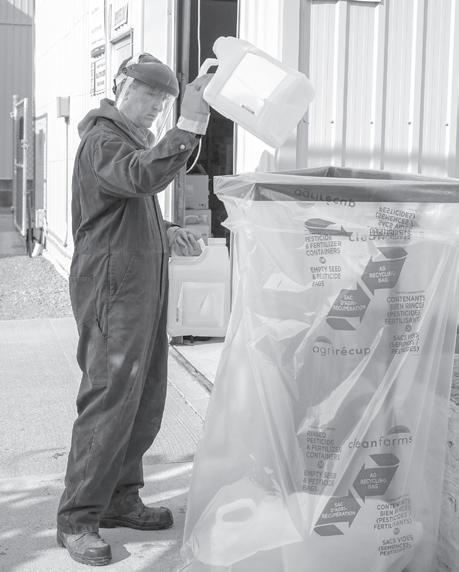
This recycling program
for bulk containers is newer, only a few years old. By re turning them for recycling, farmers are ensuring the plas tic in both smaller and larger containers is used to make new products in a circular economy. We are grateful that producers are respond ing to the programs in such a positive way.”
In 2021, farmers returned 54% of the bulk contain ers sold in the marketplace, or more than 71,000 drums and totes. That’s an increase from 50% in 2019 and 52% in 2020.
Manitoba has established industry responsibility (called extended producer responsibility) on grain bags and twine.
“Cleanfarms’ recycling programs are like the ‘blue box’ or ‘blue bag’ for grow ers. We are working every day to find better ways to de liver these programs conve niently and efficiently to pro ducers so that more of these
In 2021, farmers returned 54% of the bulk containers sold in the marketplace, or more than 71,000 drums and totes.
materials can be returned to be repurposed in the circular economy,” Friesen said. Materials recovered through Cleanfarms’ pro grams are processed by small and large companies within North America to form recy cled plastic pellets and flake that are recycled into new products such as farm drain age tile, dimensional lumber, lawn edging and agricultural film plastics.
International Collaboration Needed to Keep ASF and Other Diseases at Bay
By Harry Siemens
While making progress in dealing with African Swine Fever in the Caribbean, elimination is likely a long way off according to Dr. Paul Sundberg, the Executive Di rector of the Swine Health Information Center (SWIC). Eliminating ASF from His paniola will require a longterm effort.
The SHIC’s global swine disease surveillance report for October indicates there were over 45 thousand pigs culled in the Dominican Re public since the identification of ASF in 2021.
The good news from the Dominican Republic is the number of positive cases has decreased from about 40 per cent when it started a year and a half ago to less than 20 percent.
While the number is drop ping realistically, ASF on the island of Hispaniola, which includes Haiti, has mini mal opportunity or ability to eliminate ASF from that is land quickly.
“Many things the abilities of the governments, produc ers, with the surveillance, with all of the things that need to happen with regula tions, controls, movements and decreasing the popula tions of positive pigs that we’re probably looking long term of that virus on the is land,” said Dr. Sundberg.
Dr. Sundberg said that the USDA is assisting the Dominican Republic with a laboratory that’s capable of testing for ASF. They will have real-time diagnostics much quicker than compared to shipping samples to Plumb Island.
That said, ASF is still cir culating the world with new infections in multiple areas. Dr. Sundberg noted there are recent outbreaks in South Ko rea for several months with a variety of different farms and different sizes. There is an active government program to depopulate positive farms and to do ring testing around those farms. South Korea is moving as quickly and ur gently as possible to try to control ASF, but these new outbreaks in their commer cial herds are concerning.
“We’re keeping an eye on it because it’s also an indication of further endemic disease in that area of the world,” he said.
As well a suspicious and unique infection was re ported eight months ago by the government in Ecuador with a mortality incident in volving only ten pigs. With much testing for both Classi cal Swine Fever and African Swine Fever, all tests have returned negative for CSF and ASF.
“They have instigated a massive Classical Swine
Fever vaccination program in that area,” said Dr. Sund berg. “So even though their test was negative, they are actively trying to vaccinate for CSF.”
As an outcome of that out break and of finding out about this disease incident, the In ternational Organization for Animal Health has contacted Ecuador offering assistance. Through those contacts, the USDA has offered to con firm the tests from Ecuador on Plum Island and Ecuador has agreed.
“We’re waiting for those samples to ship from Ecua dor to Plum Island for test ing,” he said.
Dr. Sundberg said North American pork producers and sector stakeholders must be aware and vigilant. Espe cially about the continued infection in the Dominican Republic, the African Swine Fever in Southeast Asia and China, Eastern Europe and elsewhere.
“It is an example and a reminder for people here in North America that we re main under that pressure,” he said. “We have effective ways to prevent ASF from being introduced into North America.”
The issue is implementing them all the time and being diligent and consistent in ap plying those prevention ef forts.
“And it’s just a 24/7 activity we’ve got to do all day every day,” Dr. Sundberg said.
For producers, specifically on the farm, they’re the last brick in the wall.
“I say brick in the wall because should a virus with CSF, ASF, Foot and Mouth Disease, anything else, any other transboundary disease, get through our preventive efforts on the borders of our countries, that it doesn’t cause an infection in pigs if it doesn’t get to a pig,” he said.
This means it is up to the producer to maintain high biosecurity protocols and do the best they can to partner in this effort and ensure that doesn’t happen. It is not just a government responsibil ity; it’s a state or provincial, federal, and producer indus try responsibility to prevent those types of transboundary diseases from getting into North America.
Dr. Sundberg said espe cially for this situation in Ecuador and elsewhere there are international eyes on all cases worldwide. Ecuador is an excellent example of an international collaborative effort to provide assistance.
“And to have the Ecuador ian government say they’re glad to have you participate in this and give us some help and confirmation,” said Dr. Sundberg.
Bright Outlook for Manitoba Spring Wheat Growers
By Richard Kamchen
Rebounding production and quality, plus promising foreign demand, spell good news for Manitoba’s spring wheat growers.
Crop prospects are much improved from last year, when drought slashed provincial output by nearly 30% to 3.7 million tonnes. Statistics Canada’s last estimates forecast Manitoba’s output to return close to pre-drought levels with 5.05 million tonnes. The government agency’s next production report is scheduled for release in December.
Another positive for farmers is the crop’s condition, as Manitoba Agriculture reports very good quality for the bulk of the crop.
Sales projections
Also favourable are demand prospects for Canada Western Red Spring (CWRS), Manitoba’s most widely grown wheat class, and a high protein, premier bread wheat.
“Demand for high quality CWRS remains decent,” said David Drozd, president and senior marketing analyst of AgChieve Corporation. “Concerns excessive rain in east ern Australia will downgrade wheat in the region helps to support high quality wheat prices. The low Canadian dollar is also supporting wheat basis and cash prices here at home.”
Tight global wheat stocks are also generally bullish for local producers. USDA in its October World Agricul tural Supply and Demand Estimates (WASDE) lowered its 2022-23 ending stocks projection one million tonnes to 267.5 million, which represented a sharp drop from the previous year’s estimated 276 million, and 290.4 million in 2020-21.
Drozd however is cautions that tight world wheat stocks aren’t a home run for producers here.
“As much as we want to believe this will create demand for our wheat, it will not be as big a demand as we would hope,” he said. “Pricewise it is supportive, but it is just making our wheat more costly to countries who normally purchase from Canada.”
Jonathon Driedger, vice president of LeftField Com modity Research, said tight supplies for major wheat ex porters is good news for demand potential out of Canada over the course of the year. Even so, don’t expect prices to go up in a straight line, he warns.
Russia-Ukraine
“There is tremendous uncertainty around the war in Ukraine, and that often adds a bullish element to the mar ket, but also can cause swift price pullbacks when senti ment shifts the other way,” Driedger said. “That type of geopolitical volatility will stay with us for a while.”
Drozd added, “In general, the continued conflict in Ukraine and Russia will cause anxiety for world wheat buyers, due to the uncertainty of exports out of the Black Sea region.”
Recently, news emerged that Russia was prepared to reject renewing its Black Sea export corridor deal with Ukraine. Drozd also advised against believing Russia’s record large wheat crop won’t find its way to market.
USDA predicted Russia will produce a 91 million tonne wheat crop, although there are trade estimates closer to 100 million. USDA also forecasted Russia exporting 42 million tonnes of wheat, bad news for North American producers.
“With world economies struggling and food short ages a major concern, developing countries will look to source the cheapest wheat possible, so expect the Middle East and Arab countries to find a way to access Rus sian wheat, and bypass less competitively priced North American supplies,” said Drozd.
Lower quality
Manitoba Agriculture also reported some downgrading on the late-harvested grain affected by rains, high humid ity, and frost. Still, affected producers should be able to find buyers.
“Domestic demand for feed wheat will remain firm,” Drozd predicted, noting recent appreciation in the prices of other feed grains. Driedger added, “Any downgraded wheat will easily be blended or, more likely, go into a feed market that is still showing good prices from a his torical perspective.”
��October 28, 2022The AgriPost
Photo Source Cleanfarms Inc.

October 28, 2022 The AgriPost�2
Agreement on Sustainable Use of Nutrients Renewed
The Manitoba government, Keystone Agricultural Pro ducers (KAP) and Fertilizer Canada have signed a fourth memorandum of understand ing (MOU) to reaffirm their ongoing commitment to the 4R Nutrient Stewardship for the sustainable use of nutri ents in crop production.
“Initiatives that balance crop production with envi ronmental protection mea sures are critical to ensuring Manitoba’s agricultural sec tor is well-equipped to meet the needs of future genera tions,” said Agriculture Min ister Derek Johnson. “This MOU supports and strength ens our government’s objec tives in food security and affordability, in addition to environmental performance, with the nutrient stewardship programming developed by Canada’s fertilizer industry.”
The 4R Nutrient Steward ship (Right Source @ Right Rate, Right Time, Right Place) is a science-based
nutrient management frame work established by Fertiliz er Canada. The framework is desirable to farmers because it recognizes unique man agement principles and prac tices that take into account a combination of climatic, soil, landscape, cropping and operational conditions while achieving the ultimate goal of environmental, economic and social sustainability.
“Manitoba farmers are great stewards of the land in their use of sustainable practices and work every day to feed the world and contribute to agricultural sector employ ment while protecting the environment,” said Johnson. “Farmers continue to rec ognize the responsible use and application of nutrients in their operations is funda mental to their ability to put affordable and healthy food on plates across the globe. By applying nutrients using the 4R principles, they maxi mize fertilizer performance
and minimize effects on the environment.”
“Improving water quality and climate-change mitiga tion are priorities for our gov ernment, and pursuing these goals in partnership with the agricultural sector is impor tant for our environment and sustainable growth,” said Environment, Climate and Parks Minister Jeff Wharton. “This tri-partner agreement reaffirms our ongoing col laboration to minimize nega tive impacts to air, soil and water quality by optimizing the source, rate, timing and placement of fertilizer use.”
The new MOU will con tinue through December 31, 2024.
“At a time when sustain ability and environmental stewardship in agriculture is at the forefront, KAP is pleased to be a signatory to this critically important agreement and has long sup ported the use of 4R prin ciples by Manitoba farmers,”
said Bill Campbell, presi dent, Keystone Agricultural Producers. “The number of farmers utilizing these prac tices continues to grow every year thanks to their commit ment to sustainable farming, and through KAP work ing collaboratively with the Manitoba government and industry partners to promote the science-based 4R prin ciples.”
“Manitoba continues to show its commitment and dedication to climate-smart agriculture practices,” said Karen Proud, president and CEO, Fertilizer Canada. “We are pleased to continue this partnership that offers farm ers sustainable solutions for their crops.”
A 4R MOU implementa tion committee, which in cludes staff from Manitoba Agriculture and Manitoba Environment, Climate and Parks, will continue to move forward with a work plan and budget, noted Wharton.
Why Pennycress is a Good Cover Crop
To help protect the health of soil, one of the first meth ods farmers might turn to are planting cover crops in their fields with pennycress look ing like a great alternative to traditional cover crops.
Cattle Sector’s Optimism Only Cautious After Better Year
By Richard Kamchen
Better weather and prices in 2022 were welcome news for Manitoba cattle producers, but the sector isn’t out of the woods yet.
“We’re hoping good weather conditions this year and higher prices will help improve the situation long-term,” said Manitoba Beef Producers’ general manager Carson Callum.
Overall, the growing season turned out far better than last year’s, greatly improving forage and pasture condi tions from a year ago, he said. Extended grazing should further assist with feed availability challenges.
That’s in sharp contrast to the severe drought last year, whose effects were felt throughout the sector in Manitoba and across Canada in 2021.
“We saw that drought spread from northwest Ontario all the way into BC, so feed availability was poor all through there,” Callum said.
Rebounding cattle values in 2022 were also a muchneeded boost to the industry, and may help retain produc ers whose optimism has been somewhat renewed. But better prices also presented an opportunity for retirement or transition on a high note.
“Coming off a couple of really hard years, I’m sure there’s still that discussion happening, whether they stay in or not,” Callum said. “Producers are tired. There’s a lot of farmer fatigue out there.”
Outlook
Callum said better prices in 2022 have contributed to some cautious optimism, but adds there remains some challenges from last year’s drought, like cash flow issues and/or feed availability going into this winter. Any sec tor bounce back will depend on stringing together a few years of good prices and adequate feed availability.
The benefits of the use of cover crops on agricultural land have been known for decades. However, the total acreage using these crops is extremely small. The main reason is that cover crops generally don’t turn a finan cial profit, so it is costly for farms to implement this great resource.
in the second year. While pennycress grows, it actively provides benefits like other cover crops. It protects the soil against erosion, nutrient leaching, and early season weeds. It also acts as an at tractive option for pollinators in early spring when other flowers are rare.
profits. For this reason, pen nycress has been called the “cash cover crop”.
Pennycress has enormous potential in the realm of sus tainable agricultural intensi fication such that farmers use the same amount of land for more output, all while help ing the farmer’s farm profits, protecting the environment, and promoting soil health.
“Some farmers may not be looking at rebuilding at cur rent prices, especially with cash flow they may have,” Callum said. “But the long-term outlook with prices in the sector will hopefully stabilize some of the industry pressures we’ve seen over the last number of years.”
Shawn Cabak, Manitoba Agriculture’s forage and live stock specialist, predicts 2022’s rebound year will en courage producers to at least maintain their current num bers, but he doesn’t expect much more than that.
“It will take a few good years for [herd] expansion to happen. Even though cattle prices are higher, so are in puts, including fuel and fertilizer,” Cabak said.
Pennycress is an alternative cover crop for farmers in the Midwest. It not only provides cover crops services, like erosion control and providing pollen for pollinators, it also serves as a cash crop in its second season. The seeds have oil which can be used in biodie sel, bioplastics and as a source for inexpensive plant-based pro teins.
Photos by Zenith Tandukar
Zenith Tandukar with the University of Minnesota, is eyeing pennycress to bridge the gap between harvest for one year through to planting
While pennycress serves as a living cover on other wise fallow croplands, it also produces oil-rich seeds. The crops also can be used to make bioplastics and is an inexpensive source of plant-based proteins. With proper infrastructure and supply chain optimization, using pennycress as a cover crop followed by harvest can substantially increase farm
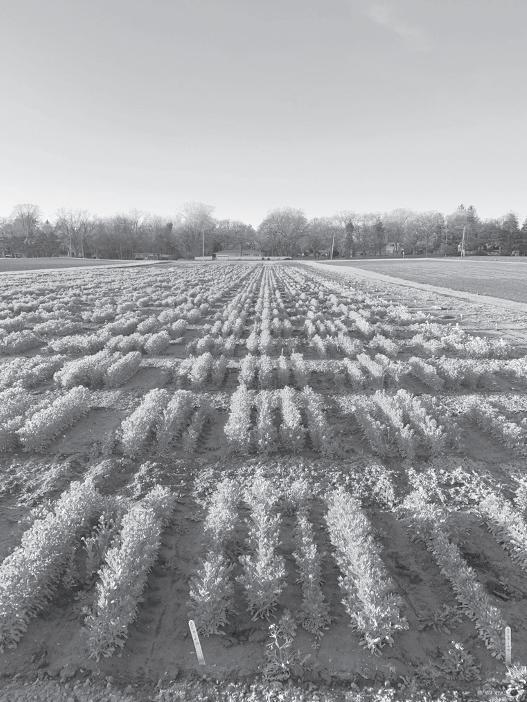
Pennycress plots in their rosette stage will remain dormant for months under the snow and survive the ex treme cold temperatures. The picture on the right is the same field 7 days after the first picture was taken after a snowfall. Pennycress can withstand snow and extreme cold (-34.4 °C/-30 °F) and still provide an excellent cash crop the following year.
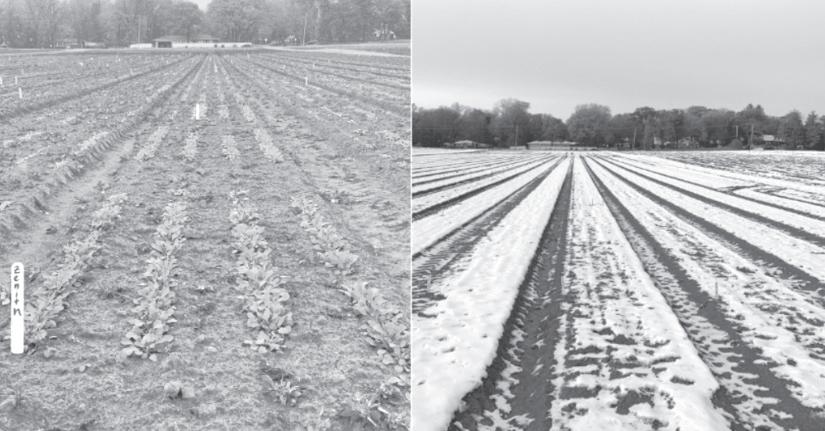
Pennycress plants come out of their dormant stage after the snow melts and enter their repro ductive phase where they will first flower, and then set seed. These seeds are extremely oil rich with 29% – 40% oil (on average) and can be used as a source of oil for renewable diesel.

New entrants are also a ways off from joining the indus try, as high grain prices and previously low interest rates drove up land values and rents. Plus, buying in at high cattle prices is less economical.
“It will take a few years of stronger cattle prices to en courage an expansion in the cattle industry,” said Cabak.
“A profitable cattle industry will encourage farm kids to either stay on the farm or come back to it to take it over down the road.”
Sector challenges
Cattle producers have had a tough go of it and the num bers bear this out. As of July 1, total Canadian cattle in ventories were down 2.8%, and beef cows 1.7% lower, according to Statistics Canada. Manitoba followed a sim ilar trend with beef cows down 5.3% and beef replace ment heifers down 11.2%.
“This isn’t surprising considering not only last year’s drought, but several years of dry conditions which caused major feed shortages,” said Cabak.
Last season was particularly challenging, not only from a drought and feed shortage side, but the fact the winterfeeding period featured a lot of snow and cold, and the spring was very wet and sloppy, Cabak explained.
“This made for a very tough year for cattle producers feeding their livestock all winter and trying to keep them healthy, especially during calving,” he said. Addition ally, high grain prices over several years drove farmers to convert forage acres into annual crops, Cabak added.
Callum points out that even with improved cattle val ues, prices still haven’t caught up with those of some other crops.
��October 28, 2022The AgriPost

October 28, 2022 The AgriPost��
Gardening Season Is Coming To An End!
By Joan Airey
Yesterday my husband disked my garden to bury the leaves I had spread out and open it up a little so mois ture could seep into it in the spring. The disc turned up a few good potatoes we had missed when we dug them. Earlier I hauled away the tomato plants and put the tomato cages away for the winter.
This morning I just read an article saying one should disinfect their tomato cages so disease isn’t transferred on them to next year’s crop so I will do that in the spring when I get them out. Also, if you had any disease in this year’s tomato crop you should pick any diseased tomatoes up and dispose of them.
The 84th edition of The Prairie Garden 2023 is com ing out in October; it makes a good gift for a friend or for yourself.
“As gardeners, we care for our bountiful vegetable gardens, beautiful perennial flower beds and aromatic herbs as well as the fruit bushes and trees, and the birds and other creatures in our gardens. This caring also extends to our Earth in this time of climate change. So how can gardeners help?
Firstly, we need to define climate change, and how it will affect my gardening practices. Our guest editor for The Prairie Garden this year, Dr. Danny Blair is a co-director of the Prairie Cli mate Centre and a professor in the Department of Geog raphy at the University of Winnipeg.

His research looks at cli mate change with a particular focus on the Prairie Provinc es. Dr. Blair, his colleagues, and other authors, help you understand climate change, how it is affecting us now and how to adapt our home gardening in the future.
Once we know what cli mate change is all about,
step two is how can we help?
There is much that home gar deners can do to adapt their gardening practices in the face of the changing climate. Read about the use of native and drought-resistant plants, water management; com posting, and the importance of healthy soil.
“Discover how to reduce your carbon footprint by using less plastic, planting more trees and using mulch. And, as always, whether you are a newcomer or a veteran gardener, there are also ar ticles of general interest to all who garden in our shortseason planting zones.” said Ian Wise, Chairperson The Prairie Garden.
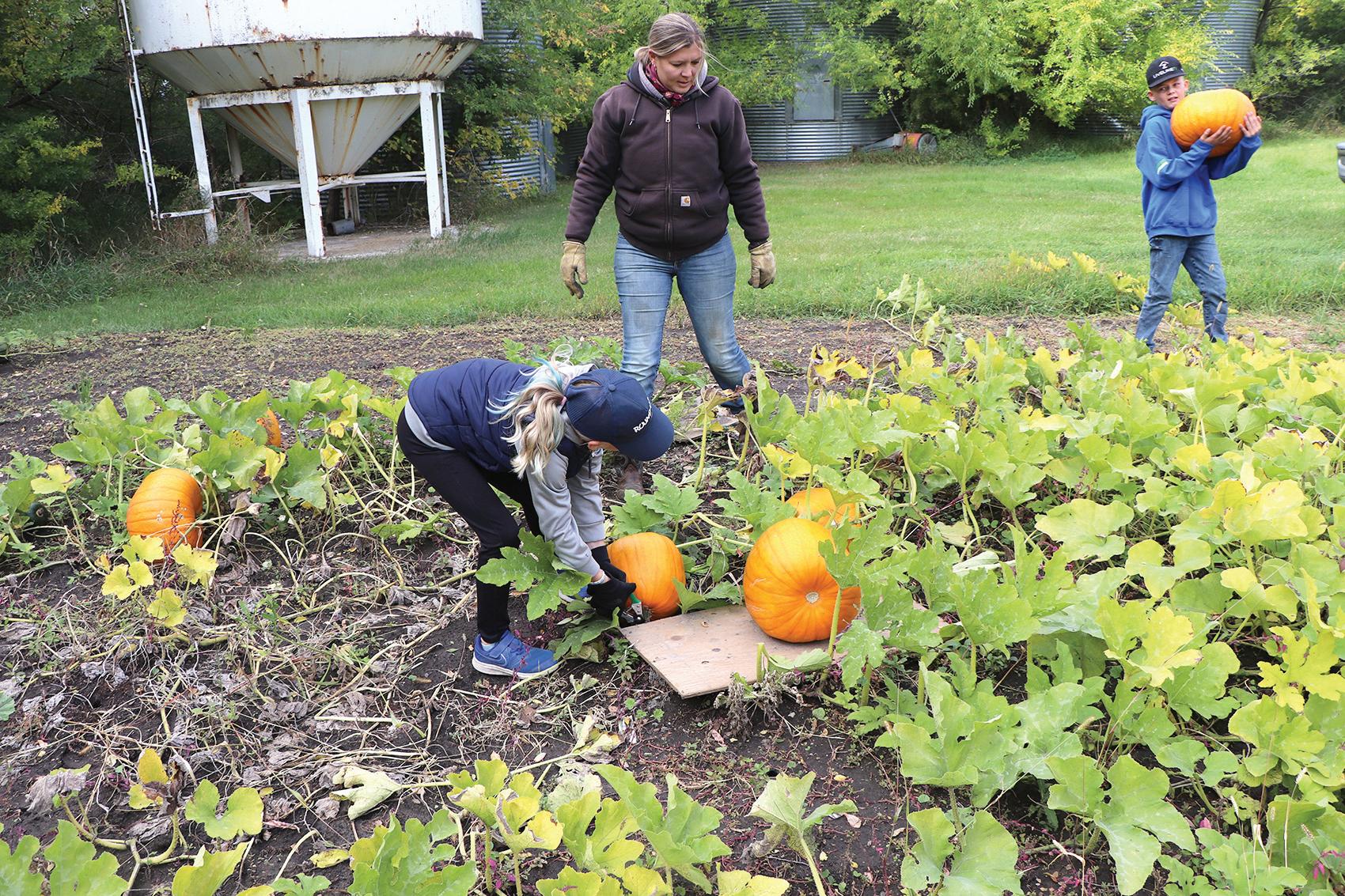
I’m planning on doing some rereading of my 2022 Prairie Garden on growing indoors and in smaller places before I start growing lettuce under grow lights for winter use. Several of The Prairie Garden from previous years are available for sale online directly from their office in Winnipeg.
Ladies don’t forget the Manitoba Farm Women’s Conference is in Brandon November 15 and 16. I’m looking forward to spending the day in the newly redone Dome Building as I haven’t seen it since it was redone. The conference is always fun and a great learning experi ence.
Temporary Rent Reduction Coming for Forage Leases on Agricultural Crown Lands
In response to the impacts of extreme moisture over the past two years and stakeholder feedback, the Manitoba government is implementing a temporary rent reduction for forage leases on agricultural Crown lands.
“The Agricultural Crown Lands Program supports a vi brant and sustainable agricultural sector, and our govern ment is committed to ensuring it continues to meet the needs of Manitoba’s livestock industry,” said Agricul ture Minister Derek Johnson. “Stakeholders have told us that rental rates on forage lands are challenging with the hardships they are experiencing following the past two years of extreme weather conditions. We are respond ing to their concerns by implementing this rent reduction program over the next three years, which will provide ranchers with up to $4 million in relief.”
The forage lease rent reduction will be in place for the next three years with a 50 per cent reduction in 2023, a 33 per cent reduction in 2024 and a 15 per cent reduction in 2025. Forage leaseholders do not need to apply for the support, Johnson noted, adding the reduction will be automatically applied to next year’s bills.
Adverse conditions ranging from severe drought the past two years to excess moisture this year have signifi cantly affected the productivity and forage capacity of agricultural Crown lands. This temporary rent reduction will be in place as the productivity of the land recovers and as further improvements to the Agricultural Crown Lands Program are implemented, the minister noted.
In addition to the rent reduction program, Manitoba Agriculture is exploring other policy, program, regulation and service improvements to enhance the productivity and sustainability of agricultural Crown forage lands includ ing mechanisms for leaseholders to invest in productivity and adjustments to the terms and conditions of leases.


��October 28, 2022The AgriPost
Blake and Chase harvested their pumpkins earlier this month with their mom’s help and shared them with their cousins and friends. They are already making plans to grow pumpkins in 2023. Photo by Joan Airey
Successful Annual Youth Pumpkin Contest Organized By Alexander 4-H Club
By Joan Airey
Those participating in the 2nd Annual Youth Pumpkin Contest organized by Alexan der 4-H met at Roseland Hall near Brandon for the weighoff on October 2. Volunteers manned the scale and the 44 pumpkins weighed from 0.38 to 40.52 lb.


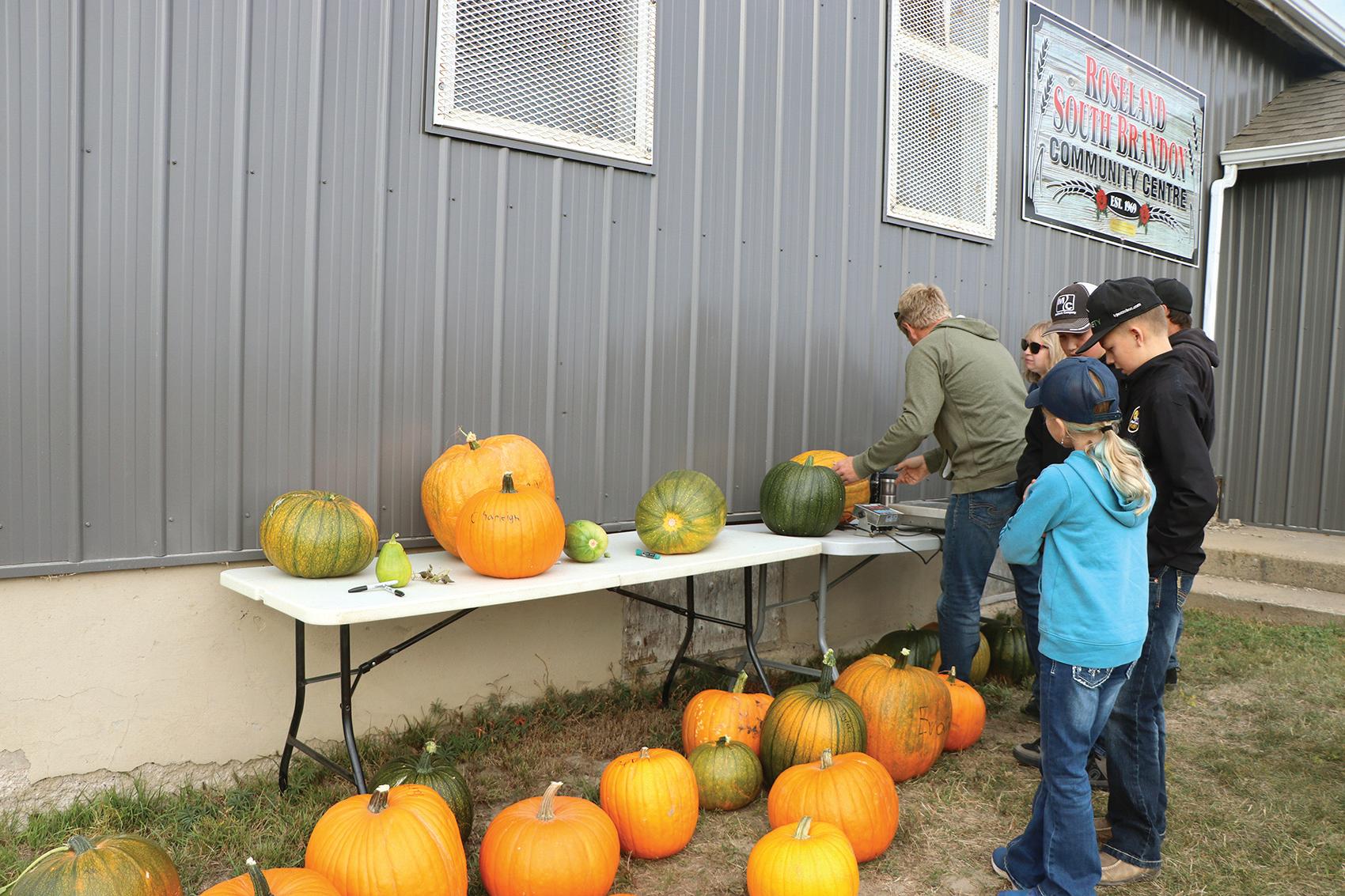

Evan Whetter grew the winning pumpkin with a weight of 40.52 taking home the Grand Prize of $100.
Honourable Mention went to Jaxon Szeteina at 39.98 pounds. Elizabeth Dewd eny brought in the smallest pumpkin, weighing in at only 0.38 of a pound.
“This is the second year our club organized a Youth Pumpkin Growing Contest. Funding and in-kind sponsor ship was received from the Manitoba 4-H Council and McKenzie Seeds,” said Carlie Whetter. “Fifty-nine young
people from south-western Manitoba grew the seeds we provided with many stories of success and failure. We provided everyone with Con necticut Field Pumpkin seeds to use in the contest. You don’t have to be in 4-H to par ticipate though the majority of our growers this year were 4-H members from Alexan der 4-H Club, 4-H Explorers, Rivers Beef and Roseland South Brandon 4-H.”
All pumpkin growers at tending took part creating “oozing pumpkins” a STEM challenge that was messy and fun at the same time. Everyone attending also en joyed a piece of pumpkin pie along with a drink and visit ing with other attendees.
“We hope to run this con test again in 2023. Watch for details in the New Year so you can enter.” said Whetter.

October 28, 2022 The AgriPost��
Oozing pumpkin created by one of the teams.
Pumpkins of all sizes at the weigh-in.
Participants gather for the 2nd annual Youth Pumpkin Contest orga nized by Alexander 4-H. Photo by Carlie Whetter
Photos by Joan Airey
3D Printing Plant Cells Shows Promise for Studying Cell Function
By Mick Kulikowski
A new study from North Carolina (NC) State Uni versity shows a reproduc ible way of studying cellu lar communication among varied types of plant cells by “bioprinting” these cells via a 3D printer. Learning more about how plant cells com municate with each other and with their environment is key to understanding more about plant cell functions and could ultimately lead to creating better crop varieties and op timal growing environments.
The researchers bioprinted cells from the model plant Arabidopsis thaliana and from soybeans to study not just whether plant cells would live after being bio printed and for how long but also to examine how they ac quire and change their iden tity and function.
“A plant root has a lot of different cell types with spe cialized functions,” said Lisa Van den Broeck, an NC State postdoctoral researcher who is the first author of a paper describing the work. “There are also different sets of genes being expressed; some are cell-specific. We wanted to know what happens after you bioprint live cells and place them into an environ ment that you design: Are they alive and doing what they should be doing?”
The process of 3D bioprint ing plant cells is mechani cally similar to printing ink or plastics, with a few neces sary tweaks.
“Instead of 3D printing ink or plastic, we use ‘bioink,’
or living plant cells,” Van den Broeck said. “The me chanics are the same in both processes with a few notable differences for plant cells: an ultraviolet filter used to keep the environment sterile and multiple print heads rather than just one to print differ ent bioinks simultaneously.”
Live plant cells without cell walls, or protoplasts, were bioprinted along with nutrients, growth hormones and a thickening agent called agarose, a seaweed-based compound. Agarose helps provide cells strength and scaffolding; similar to mor tar that supports bricks in the wall of a building.
“We found that it is critical to use proper scaffolding,” said Ross Sozzani, professor of plant and microbial biol ogy at NC State and a cocorresponding author of the paper. “When you print the bioink, you need it to be liq uid, but when it comes out, it needs to be solid. Mimick ing the natural environment helps keep cellular signals and cues occurring as they would in soil.”
The research showed that more than half of the 3D bio printed cells were viable and divided over time to form microcalli, or small colonies of cells.
“We expected good viabil ity on the day the cells were bioprinted, but we had never maintained cells past a few hours after bioprinting, so we had no idea what would happen days later,” Van den Broeck said. “Similar vi ability ranges are shown af
ter manually pipetting cells, so the 3D printing process doesn’t seem to do anything harmful to cells.”
“This is a manually dif ficult process, and 3D bio printing controls the pres sure of the droplets and the speed at which the droplets are printed,” Sozzani said. “Bioprinting provides bet ter opportunity for high throughput processing and control over the architecture of the cells after bioprinting, such as layers or honeycomb shapes.”

The researchers also bio printed individual cells to test whether they could re generate, or divide and mul tiply. The findings showed that Arabidopsis root and shoot cells needed different combinations of nutrients and scaffolding for optimal viability.
Meanwhile, more than 40% of individual soybean embry onic cells remained viable two weeks after bioprinting and also divided over time to form microcalli.
“This shows that 3D bio printing can be useful to study cellular regeneration in crop plants,” Sozzani said.
Finally, the researchers studied the cellular identity of the bioprinted cells. Ara bidopsis root cells and em bryonic soybean cells are known for high prolifera tion rates and a lack of fixed identities. In other words, like animal or human stem cells, these cells can become different cell types.
“We found that bioprinted cells can take on the identity of stem cells; they divide and grow and express specific genes,” Van den Broeck said. “When you bioprint, you print a whole popula tion of cell types. We were able to examine the genes expressed by individual cells after 3D bioprinting to un derstand any changes in cell identity.”
The researchers plan to continue their work studying cellular communication after 3D bioprinting, including at the single-cell level.
“All told, this study shows the powerful potential of us ing 3D bioprinting to iden tify the optimal compounds needed to support plant cell viability and communication in a controlled environment,” Sozzani said.
Youth Help Fill Empty Shelves in Community Food Drives
By Elmer Heinrichs
Three communities were bustling with activity as area youth in Altona, Morden, and Winkler canvassed their communities collecting nonperishable food items for the Rhineland Area Food Bank (RAFB), Morden Caring and Sharing (MCS) and Winkler Food Cupboard (WFC).
In Altona and surround ing communities, 4,650 lbs of non-perishable food items was collected for the Rhine
land Area Food Bank.
Youth and other volunteers from South Park Mennonite Brethren, Rosetown, Berg feld EMMC, Altona EMMC, Gospel Family Church and Youth for Christ all par ticipated in Wednesday eve ning’s effort.
Organizers were pleased with the response but also noted that client numbers at the food bank have been steadily rising over the last six months.
MCS confirmed their shelves were empty leading up to the drive and expressed her gratitude for the 9,060 pounds gathered to fill them up.
Winkler had a record num ber of youth volunteers, over 350 turned out for the drive collecting 14,363 lbs of food.
Farm Credit Canada’s Cathy Sandercock has con firmed there is an overall in crease in need this year, up to a 30 per cent increase, adding
the demographic of people in need is changing and rising costs are affecting families it never has affected before.
She was pleased with the total 28,073 lbs collected in the area, noting the Pembina Valley traditionally stands out nationally for the amount of food donated.
She thanked the area youth and volunteers for coming out to make the Drive Away Hunger Food Drive such a success.
On Farm Thoughts: Knowing Your Cost of Production Helps Manage Risk
By John McGregor
When one talks about Cost of Production (COP) they normally refer to the average cost of producing one unit of a commodity (e.g. $135 per ton of hay or $1,550 per calf). This value is calculated by totalling all of the costs associated with a farm enterprise and dividing that total by the output (yield) produced. This seems at first like a very simple formula. However, total cost of a farm en terprise frequently includes different cost categories that must be estimated and managed independently.
When one looks at determining COP it is typically broken down into three areas.
- Operating or Variable Costs.
- Fixed Costs.
- Owner/ Living Costs.
Operating or Variable Costs - expenses that vary with levels of output.
Some examples include seed, fertilizer, fuel, repairs etc. These are often referred to as cash costs or out-ofpocket expenses and typically vary depending on the scale of production or management.
Fixed Costs - expenses that are incurred whether or not production occurs.
These expenses do not vary within a production period and are costs such as depreciation, taxes, land, building and interest on mid- and long-term loans. Fixed costs are important to consider when making long term decisions.
Owner/ Living Costs - the most important expense on a farm.
The idea of paying one’s self first can be tough when commodity prices are low or production falls below expectations, but having a reasonable income built into your COP provides a better understanding of what your actual costs will be and what level of production will be necessary if you are going to cover all your costs.
Determining COP can be a challenge. Because you’re projecting for the future you must estimate production, related expenses and what prices you expect for com modities.
Looking at inputs and production from previous years can be helpful toward estimating what inputs will be needed to meet production expectations. Estimating costs and market prices for your COP plan gets trickier the further out you are but the nice thing is that once it’s developed, you can make changes as more information becomes available.
Developing a COP is useful in that it helps you:
- Know what price is necessary for making marketing decisions.
- Compare different cropping and/or livestock options.
- Determine your fixed costs and whether they can be reduced.
- Make informed decisions about equipment upgrades and repairs.
- Evaluate insurance programs, farm expansion, diversi fication and land rentals.
- Help determine prices for products sold off the farm such as hay.
- Benchmark with comparable farms.
- Provide an idea as to what might be available for per sonal use.
Even if you can’t always be precise, calculating Cost of Production is helpful.
Cost of Production Guides & Calculators
Manitoba Agriculture offers a variety of free crop and livestock budgeting resources for producers interested in developing a deeper understanding of their produc tion costs, a fundamental step toward managing risk and maximizing profit. These excellent tools can be accessed at gov.mb.ca/agriculture. In the drop down search choose Farmer and Farm Management. Then choose Production Economics.
For more information on or help developing a COP for your operation contact your local MB Ag office or call 1-84-GROW-MB-AG; 1-844-769-6224.
John McGregor is with MFGA Extension Support.
��October 28, 2022The AgriPost
Plant cells are bioprinted by a 3D printer that has a few necessary tweaks. Photo by Lisa Van den Broeck, NC State University
Manitoba Sheep Industry Sees Room for Growth
By Harry Siemens
The Manitoba Sheep Asso ciation (MSA) held its show and production sale after a 3-year absence on August 19 and 20 at the Minnedosa Fair Grounds.
“We enjoyed excellent pro ducer and sponsor support for our event with signifi cantly more entries and for the first time to run the event with a modest surplus,” said Morgan Moore chair MSA.
It was a strong sale con sidering the market factors at the time and 200 lots brought over $75,000. Adding sev eral educational components got a good response and support. New this year were stock dog demonstrations, shearing and wool handling demonstrations and discus sions on nutrition.
Moore runs a sheep and beef cattle operation eight miles west of Brandon, MB with commercial ewes that include purebred Sussex and purebred Île-de-France
sheep. To round out his sheep and cattle farm he has several off-farm roles to fill in the gaps when not busy enough with the beef cattle and sheep.
“I sit on the Farm Product Council of Canada in Ot tawa, the Canadian Coop erative Wool Growers Board and Manitoba Sheep Asso ciation,” said Moore.
Moore farms with his wife Amber and three teenag ers, Jaynie, Ty and Caleb who are all quite involved on the farm, especially with the sheep. That raises an in teresting point about how he started with sheep. Moore said that for whatever reason, from a young age, he had a keen general interest in live stock. At age 13, his parents bought the first three sheep for his 13th birthday. That makes it almost 30 years for him to raise sheep in some fashion.
Sheep appealed because getting into the sheep indus
try takes significantly less infrastructure.
“You can do it on smaller land holding; certainly be cause smaller size appeals to a younger and female demo graphic,” Moore said. “So we have probably a higher percentage of women in agriculture involved in the sheep industry than perhaps in the other of the livestock producing commodities.”
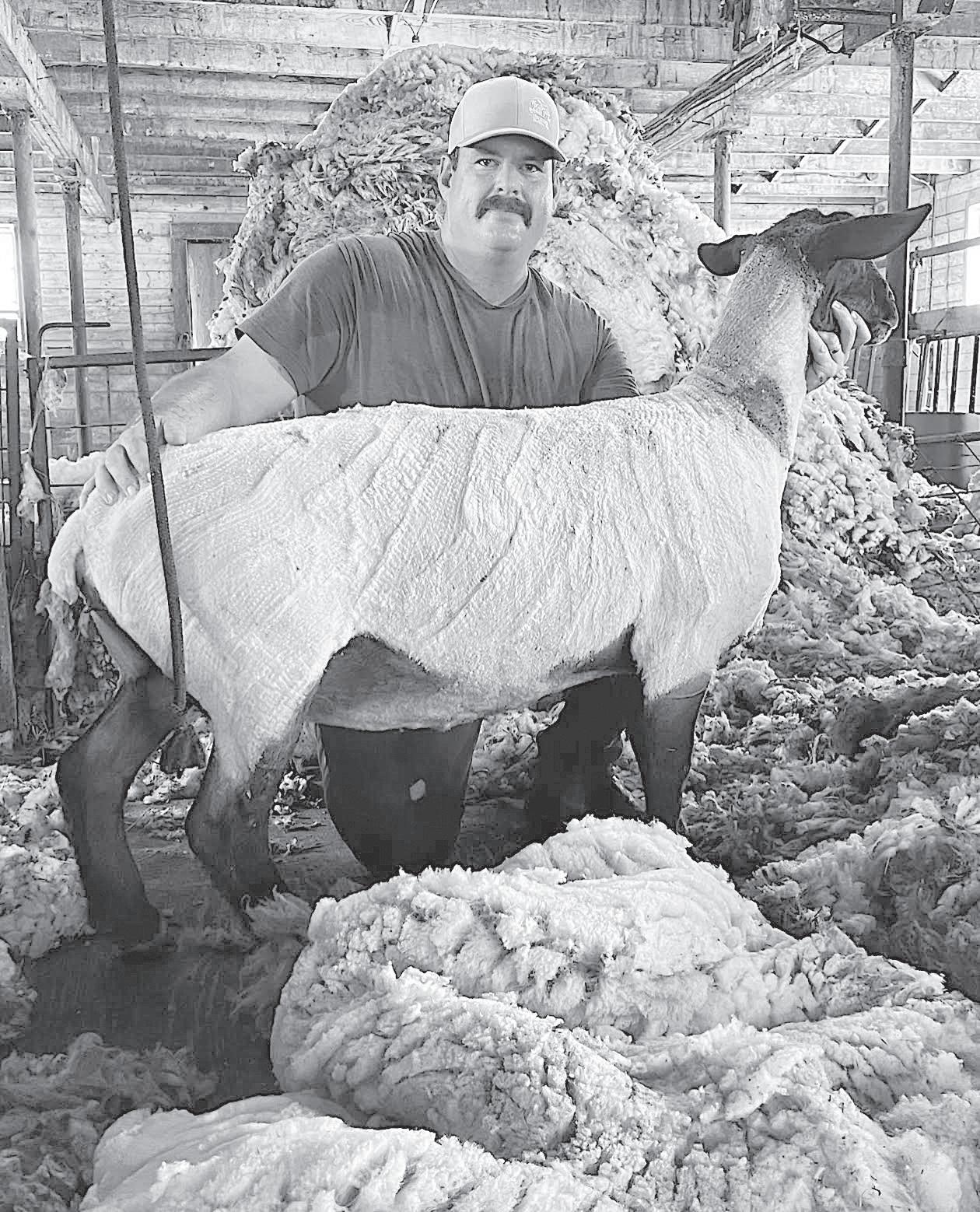
The MSA chair said when asked about the state of the sheep industry that over the last 3.5 years, 200 new en trants have been added. On the other hand the largest operator which accounts for almost 50 per cent of the provincial flock went into receivership.
“While our numbers are taking a huge hit, it doesn’t reflect the interest and growth in the industry,” said Moore. “It will take some doing to work through the implications and ramifica tions of losing 50 per cent of
our youth.”
The fundamental produc tion factors driving the mar ket haven’t changed so the trends should continue. How ever, the loss of a significant number of the lambs pro duced in Manitoba and the Prairies will make for next year and beyond a signifi cantly less number of lambs available to the industry.
“This will drive the demand for lambs even higher be cause we only produce about 40 per cent of the lambs con sumed in this country and rely on importation of the other 60 per cent,” he said.
This country’s other meatproducing commodities rely heavily on an export market.
“We’re the opposite where everything we produce has a home within Canada, and for every lamb we produce, we still have to bring another lamb and a half in, so that’s the market at home here that’s driving our industry,” explained Moore.
New Business Pathways Website Launched to Support Food, Agri-Product Businesses
The Manitoba government has launched a new Business Pathways website to support food and agriproduct entrepreneurs, businesses and organizations throughout all stages of the business life cycle.
“Whether you have a new food product idea, you see an unmet demand for local food, or you want to grow a food business, the Business Pathways web site can help you build your future in food,” said Agri culture Minister Derek Johnson. “This comprehensive resource fosters economic development and provides the business management, product and process de velopment and marketing support that new and exist ing agri-food businesses need to effectively enter and compete in the domestic and global marketplaces.”
The new website incorporates resources, programs and services provided by business service providers and industry partners from the entire ecosystem.
With an abundance of productive farmland, di verse commodities, state-of-the-art research facili ties, world-class transportation infrastructure and a highly skilled labour force, Manitoba is an ideal place for food and beverage manufacturing, the minister noted. The Business Pathways website complements this business-friendly environment by providing agrifood businesses with tailored information and re sources as they start up, build, grow and transition, Johnson added.
“Agriculture is a major driver of Manitoba’s economy and small businesses create many of our province’s skilled careers,” said Economic Development, Invest ment and Trade Minister Cliff Cullen. “Entrepreneur ialism in the food space is exciting and innovative and offers great potential for growth and expansion. This new website will take out so much of the guesswork involved in launching, marketing and succeeding as a new business.”
For more information, visit manitoba.ca/foodbusiness.
Verticillium Stripe a Concern in Canola Crops
By Harry Siemens
Despite flooded lands, fields and approaches along the Red and Rat rivers in southern Manitoba farmers still harvested an average or better crop according to agronomist Brunel Sabourin of Antara Agronomy Servic es of Ste. Jean-Baptiste, MB.
Harvest is mostly wrapped up with the exception of corn although there were not as many corn or soybeans acres planted compared to previ ous years because of the late start. Acres did increase for canola and wheat and for the most part, the crop looks good. Canola is the one crop that struggled with yields. Some canola seeded against the river did well while other fields yielded below average.
“A bit disappointing be cause of how it looked with some extra potential. We found verticillium stripe and blackleg on the stubble, which could have hurt the yields by five or ten bushels an acre given the weather and the growing conditions,” said Sabourin.

While some fields yielded in the thirties and forties oth ers topped 60 bushels an acre. The fields seeded on time yielded more but the later plantings were hammered by rain in late May and yielded less.
“We were average or better on most crops so I don’t think anybody is complaining,” he said.
Sabourin said going into 2023 the price of commodi ties and input costs are still very high with everything that’s going on in the world.
“We’re fearing fertilizer shortages or for sure the price will stay high going into spring with some supply con straints so farmers would like to put more down this fall,” he said.
Many farmers planted some crops in the fall last year but the late flood resulted in fer tilizer loss. As a result some farmers are reluctant to put in more fertilizer this fall de spite excellent field and till age conditions.
It’s not just the Red River Valley that planted late and in different parts of western Canada there could be supply issues.
“It’s just condensed every thing into a bit of a crunch here because we could be done in a week or two de pending on what mother na ture brings our way,” said Sabourin.
He said verticillium stripe is a new disease that first ap peared two years ago in the 2021 drought but this year it’s back causing concern.
“There’s nothing we can do other than lengthen our rota tions between canola crops to help manage it,” he said. “So it is an ongoing concern.”
Verticillium stripe is a soilborne disease that farmers don’t really notice until the canola is potting and at grain
fill time.
“You’ll see half the stem die off and half the plant finishes early, so it still makes seed, but the seed is very small.”
He said it’s a yield robber in the sense that half the stem will turn brown and the other half will still be green. But because it affects the stem, it affects the nutrient flow into the plant and the seeds don’t fill as well.
There was also lodged canola this year from early rains that didn’t allow the plant to root as well as it should. The year progressed into warm, wet weather and frequent showers which was conducive to splashing up blackleg making it worse.
He said now is the perfect time of year to look at and diagnose their canola stubble and have Antara Agronomy send samples into the labs to identify any prevalent dis
ease, and also the prevalent type of disease genes.
“There are different re sistance genes in different canola varieties so it’s im portant to match up the race to the resistance gene,” said Sabourin.
It is important to know the type of blackleg in advance to be more proactive when selecting varieties that have the right genes for a field.
Sabourin said more her bicide-resistant weeds keep showing up especially fol lowing this year’s flood. While not large-scale, water hemp is showing up mostly in ditches but it is a concern that will only ramp up in the future. It appears to have come in with the flood water from the south. This is some thing to watch closely he said because it adds a whole other level of costs to manage these herbicide-resistant weeds.
October 28, 2022 The AgriPost�8
Picture supplied by Antara Agronomy Services of Ste. Jean-Baptiste, MB
Brunel Sabourin said crop results were a bit disappointing this year because earlier it looked like there was some extra potential.
Morgan Moore, chair of the Manitoba Sheep Association, explained raising sheep can be done on smaller land holdings and thinks be cause of the smaller size it appeals to a younger and female demo graphic. Submitted photo
Forage Fibre Needs to Be Effective in Lactation Dairy Diets
High producing dairy cows always need a good level of effective forage fibre in their well-balanced lactation diet that not only supports good milk and milkfat produc tion, but promotes good cow health and digestion. So, anytime, I walk into a dairy barn, I take a minute and watch the cows resting in their stalls. If most of these cows are actively chewing their cud, I am confident that their diet has enough effec tive forage fibre.
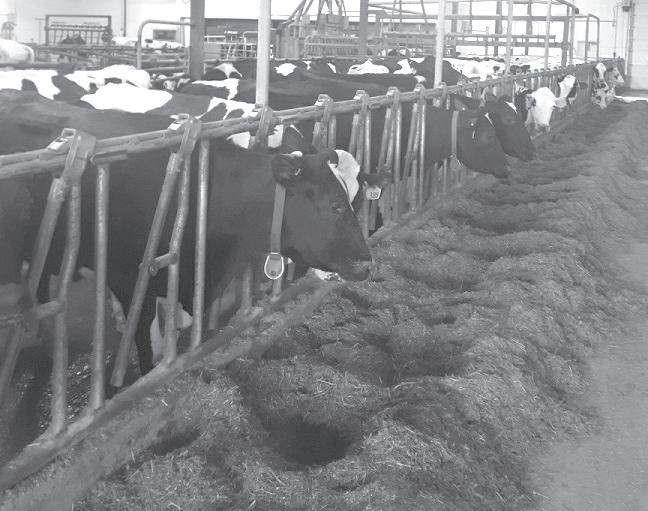
Unlike energy and protein, fibre is not a true nutrient for dairy cows, but there is a requirement for it in their diet. Its job is to maintain a healthy population of ru men microbes, which in turn drives feed fermentation, and gut mobility. Good cudchewing is a vital part of this natural process, because it helps keep the cow’s diges tive system in good working order. Lack of rumination or cud-chewing may underlie several associated problems due to low dietary fibre; re duced feed intakes, poor feed digestion, sub-clinical rumen acidosis (SARA), feet and leg problems, butterfat de pression and ultimately poor milk production.
By definition, “effective” forage fibre stimulates the ru men into regurgitating them back into the cow’s mouth, which she chews into small
er pieces and swallows them again. Such repetitive rumi nation also produces large volumes of saliva which is rich in sodium bicarbonate that buffers volatile fatty ac ids produced from feed car bohydrates. It is estimated that an individual cow can produce about 300 - 400 li tres of saliva per day which maintains a normal pH of 6.0 to 6.5 in a healthy rumen - essential for good milk and butterfat production in the udder.
The most common rec ommendation for providing enough effective fibre in a dairy diet is to provide 28% NDF with 75% of this NDF coming from forage sources. Furthermore, forages should be chopped at a cut length of 1/2” to provide 15 – 20% of the dietary particles being over 1.5” long that is thought to create a good rumen mat, essential for efficient feed fermentation.
For example, NDF is a measure of all the fibre con tent found in forages; a sum of cellulose, hemi-cellulose and lignin derived from cellwalls of plants. Bulkiness of forage is positive correlated to its NDF value, which is understandably - negatively correlated with feed intake of dairy cows. In contrast, ADF measures cellulose and lignin content only, from which animal trials show
that increasing forage ADF decrease the amount and rate of fibre digestion.
Of these fibre fractions, quantitative research show that existing forage hemicellulose is digested almost immediately by present for age-fermenting microbes at a steady rate and is easily broken down by chemical hydrolysis. Whereas, the cel lulose fraction which often makes up about 30% of dairy forages takes a lot longer to digest; up to 3 hours after invitro post-introduction and then lost at a steady rate of digestion. Lignin on the oth er hand is indigestible and as the forage matures will “lig nify” mainly the cellulose fraction.
Such valuable fibre infor mation gives me some in sight as to how many types of forages will be digested in the dairy cow. Therefore, I can use it to solve some complex dietary issues in the dairy barn that come up on occasion. For example, I worked on a dairy diet for a 200-lactation dairy barn, which had a high proportion of early lactation dairy cows that came down with ketosis within a week of entering the milk-line.
In reviewing their current lactation diet, it was com prised of 2/3 alfalfa-haylage and 1/3 corn silage in its forage base. The total NFC
was 37.5%, starch level was 22.5% and enough forage fibre was fed (22 % eNDF). I then reversed the amounts of forage fed; 2/3 corn silage and 1/3 haylage in order to take advantage of the higher digestible hemi-cellulose amounts found in corn si lage. As a result, the ketosis issue gradually disappeared. Milk production and milkfat content were maintained.
I can’t say for certain that solving all dietary dairy is sues will be simply due to the types of forage-fibre and how they are fermented. I had a similar ketotic situation in which I took out barley si lage and replaced it with all corn silage; both with similar NDF profiles. And ketosis disappeared too. All I can be sure of – all effective forage fibre requirements were met in both situations in order to promote good milk/milkfat production in healthy lactat ing dairy cows.

Filling the Gap in Seed Errors & Omissions Coverage
You might be a seed grower if… you have tried ev ery tool in your toolbox to find an easier way to help you scrape flax out of a truck corner. If you have ever stopped for hours to clean out your combine, swather, trucks, augers, bins, etc. while your neighbours cruise from field to field with their combines, you might be a seed grower. If you have ever done calisthenics to get your above-average sized body into a hopper bin to clean out every possible seed inside, without knowing if you will fit out of the same bin again, you might be a seed grower. If you have worked every day through out the winter regardless of the cold temperatures, the excessive snow-drifts, and the lack of feeling in your fingers, to make sure you get everything processed be fore spring, you might be a seed grower.
One of the most challenging situations for businesses buying insurance is learning about your coverage, or lack thereof, when you need it the most. There are ex clusions and conditions of coverage that apply to all forms of insurance. It is the role of an insurance broker to explain the coverage conditions to clients, to provide options and to give advice to clients.
Seedsmen’s Errors & Omissions (E&O) Liability In surance is widely known to anyone breeding, research ing, producing, cleaning or selling seed. This magical coverage is thought to provide indemnity for all situa tions where seed is involved, and for the most part, the insurance industry has grown the coverage available to be quite comprehensive. However, there is one sce nario that continues to surprise the industry when they find out it is not covered.
I will start by explaining that E&O insurance, whether related to seed or not, is coverage that insures the named insured against financial losses to a third-party caused by actual or alleged mistakes or a failure to perform a service. Therefore, when a seed operation purchases E&Oinsurance, it is buying protection for financial losses to the third-party seed purchaser, whether partial or total loss of crop due to an issue with the seed.
Trade Relationships and Corridors Discussed at Tri-National Agricultural Accord
The Manitoba government has reinforced the importance of the province’s trading re lationship with Mexico at the 31st annual Tri-National Ag ricultural Accord recently in Saltillo, Mexico, where pro vincial and state agricultural representatives from Canada, the United States and Mexico gathered to discuss improved trade across North America.
“It is critical that Manitoba agricultural companies, or ganizations and other stake holders emphasize with their
partners in Mexico the impor tance of strategic relationships and alliances that benefit both jurisdictions,” said Agricul ture Minister Derek Johnson. “Mexico is a particularly im portant market for Manitoba’s agricultural and agri-food sec tors and industries.”
The Tri-National Agricul tural Accord has long been an effective and crucial mecha nism for pursuing, building and maximizing relationships between North American partners under the Canada-
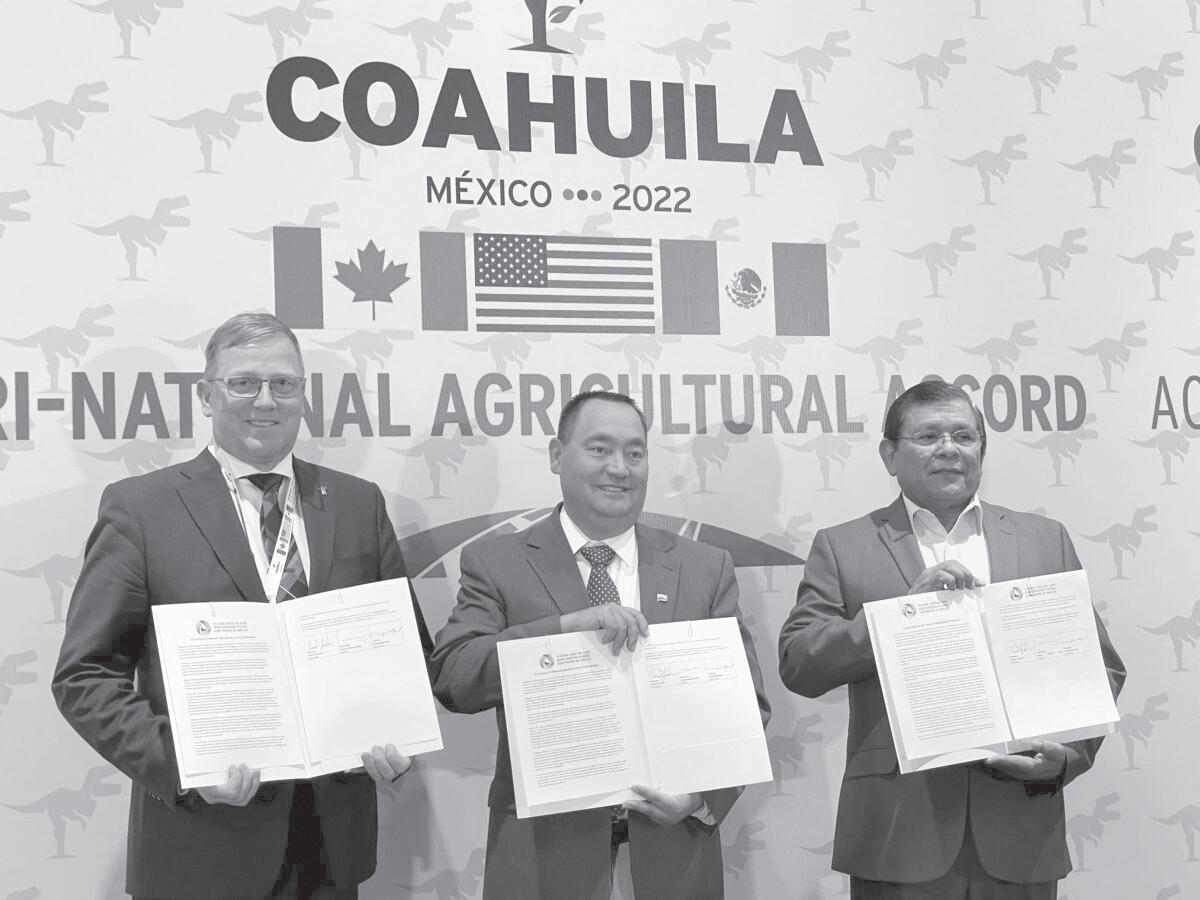
United States-Mexico Agree ment and for ensuring trading corridors between the three countries are effective, said Johnson, who led the Canadi an delegation in Mexico and co-chaired a bilateral meeting with the US, as well as tricountry meetings on harmo nization, rural development and animal health.
The accord, which ran from October 17 to 19, also involved meetings on issues such as food security, af fordability and sustainabil ity, labour, animal disease management, and the roles of innovation and science in a strong and sustainable food system. Johnson joined other delegates in committing to advance technology and in novation discussions, in ac knowledging the ability to tranship small ruminants and in pursuing the One Health approach to managing animal diseases from a North Ameri can standpoint.
In addition, delegates dis cussed the COVID-19 pan
demic and its effect on vul nerabilities in international movements of products and services, and affirmed their commitment to policies that promote free trade throughout the continent. Federal part ners were asked to work with provincial and state officials to develop and implement policies to secure the supply chain, facilitate cross-border trade and protect against food insecurity.
Following the accord, John son travelled to Mexico City to meet buyers of Canadian products as well as freight transport company Kansas City Southern de México and organizations including the National Agricore Council and the Mexican Association of Grains and Oilseed Suppli ers. The Canadian delegation also visited the Canadian Em bassy and Central de Abasto, the world’s largest market, and attended the 40th an niversary of the Canadian Chamber of Commerce in Mexico.
The gap in coverage that surprises producers is when they learn of a potential issue with the seed before it gets planted in the ground. By catching the issue before it is seeded, the financial loss to the third-party is now removed and along with it, the trigger for coverage un der Seedsmen’s E&O coverage. The seller of the seed has now mitigated the problem by catching it before it grew (or failed to) into a much larger issue. This is where most insurance policies fail to cover the gap, as the seller of the seed is now the proud owner of unsel lable seed that most of the time cannot be resold with out some serious remediation.
In discussing this situation with insurance companies, it comes to light that it is deemed a moral hazard to offer coverage for seed sellers in this situation, and therefore most insurers do not provide any option to cover the gap.
Fortunately, when you work with someone who un derstands your line of work, solutions can be found. On top of sourcing a comprehensive Seedsmen’s E&O Pol icy, there are solutions available to cover portions of the first party exposures that any seed seller could get stuck paying out-of-pocket if a seed issue is caught before it gets buried in the ground. This saves the hassle of deal ing with angry customers, the bad “PR” that comes with a poor field being featured on Twitter all summer with your business as the #hashtag, and saves you the dent in your bottom-line profits by writing off potential income.
We get it and understand your business - not all seed is the same. Not all seed growers are the same. Work with an insurance broker who used to fit in the bin and has cleaned out the corners and has experience grow ing, cleaning and selling seed. You may just find that not all insurance is the same, either…
David Schmidt is an Account Executive at Rempel Insurance Brokers in Morris, MB, specializing in in suring farms and businesses across Manitoba and Sas katchewan. Call or text 204-746-2320, email davids@ rempelinsurance.com or visit rempelinsurance.com.
Submitted photo

��October 28, 2022The AgriPost
Dairy cows at bunk.
(L to R) Manitoba Agriculture Minister Derek Johnson, Wyoming Direc tor Doug Miyamoto and Sinaloa Secretary Jaime Montes Salas.
Discrepancy in Russian Wheat Crop Estimates
By Harry Siemens
Mike Lee, the owner of Green Square Agro Con sulting and Black Sea Crop Forecasts, provides analysis and agribusiness news from Ukraine, Russia, Moldova, Romania, Kazakhstan and Belarus and continues with his watchful eye and coun terparts in the field.

On October 18 Lee tweeted that Ukraine’s deputy min ister of Agrarian Policy, Markiyan Dmytrasevich, confirmed the internal food security of Ukraine is fully ensured, and there is no rea son for a significant increase in prices.
Russian farmers in Kursk have resumed harvesting and planting after heavy rain stopped operations for four weeks. However, across cen tral Russia, farmers still wait for soils to dry up.
In his Black Sea Crop up date from October 19, Lee said the USDA was not con vinced of a record of Rus sian wheat crop. The USDA estimate for Russian wheat remained unchanged at 91MMT, which appears at odds with the 100MMT fig ure now accepted as fact by many analysts and reporters.
His last forecast of Sep tember 8 was 89MMT also remains unchanged and boils down to, “We think Russia’s extra yield is wheat stolen from Ukraine.”
The USDA doesn’t go as far as that in their recent Foreign Agricultural Service report Circular Series WAP 10-22 October 2022, but they are sceptical. USDA crop pro duction estimates for Rus sia exclude estimated output from Crimea, all Ukraine currently under conflict, and any stolen grain from the conflict zones.
Lee also commented on the extension of the Istanbul agreement being fragile but still possible.
Following the attack on the Kerch Bridge and the FSB
reports saying the explo sives originated from Ode sa, Russia would terminate or not extend the agreement beyond November.
“I’m now revising my thoughts on this and think the agreement may con tinue, albeit under different terms, as there would be no real benefit to Russia if they stopped Ukraine from ex porting grain,” said Lee.
Some might argue there is a military reason – reducing Ukraine’s revenue to fund their war efforts, but given the number of countries supplying arms, Lee doesn’t think that stacks up.
On the contrary, a working agreement allows Russia to apply pressure in the broad er negotiations by threaten ing to withdraw the agree ment; the moment they do, they have effectively spent their negotiation capital and can no longer apply pres sure.
“The threat of taking his ball away allows the ball owner to dictate the game’s playing; once he’s taken his ball away, he has little influence over the others,” noted Lee.
Lee said Central Russian weather continued to cause problems with farmers in the Kursk region resum ing field work after heavy rain in September stopped operations. It affected the harvesting of late crops and the sowing of winter crops, including wheat.
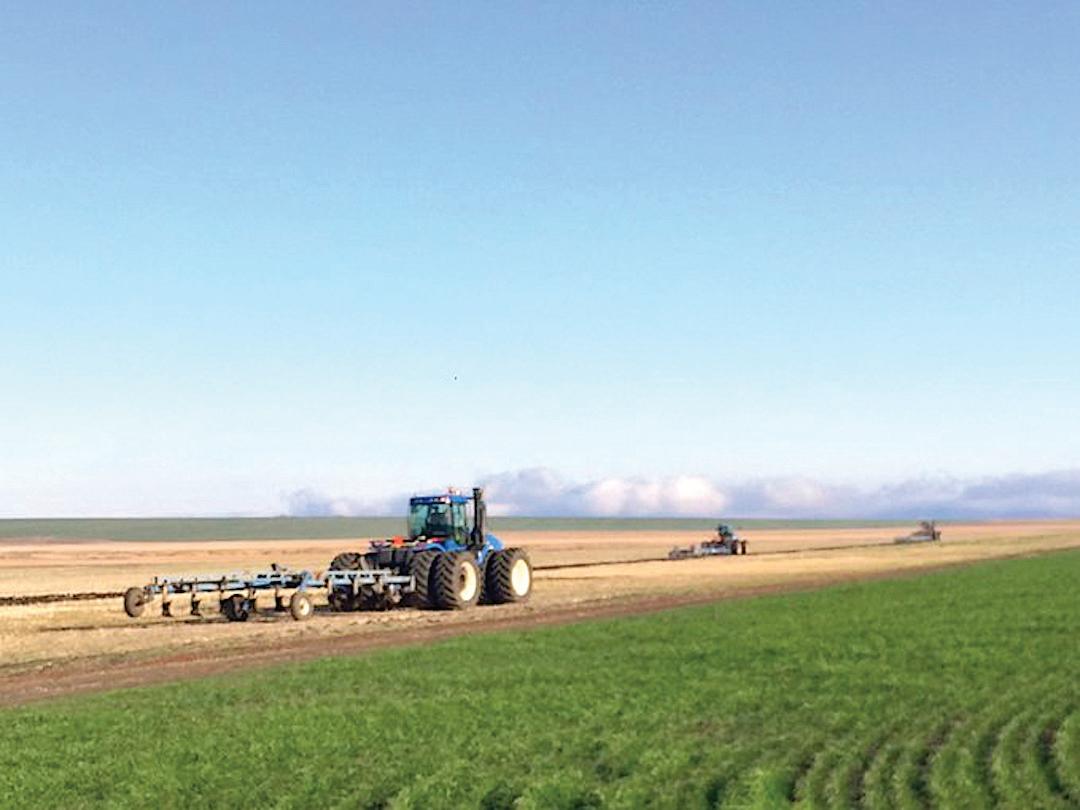
“Winter sowing stands at 54 per cent of the planned area and is unlikely to catch up, meaning farmers will plant more spring crops,” he said.
Wet weather continues to hinder fieldwork in Bel gorod, Lipetsk and Oryol, which all declared an emer gency, a formality required to trigger state compensa tion and allow farmers to extend credit obligations.
Russian farmers in Kursk have resumed harvesting and planting after heavy rain stopped operations for four weeks.
Image supplied
Markiyan Dmytrasevich, confirmed the internal food security of Ukraine is fully ensured, and there is no reason for a significant increase in prices.
Image Supplied
Paying Tribute to An Unforgettable Horseman
Free Computer Skills Workshops Offered
Manitoba Agriculture staff will be offering farmers free in-person computer skills workshops over the next few weeks.
Topics of the workshops are Basic Email and In ternet Skills, How to find Funding opportunities and website navigation, How to fill out online applica tions, and How to save, attach and email an online application.
They run from November 8 to December 2. These will be evening workshops running from 5 to 6:30 pm or from 7 to 8:30 pm.
Registration is required so please contact their toll free general enquiries line for more information and to reserve your preferred time at 1-844-769-6224 or email agriculture@gov.mb.ca.
Tuesday, November 8 - Gimli, MB
East Interlake Watershed District Office, 74 First Ave
By Brenda Hunter
On October 1, 2022, horse enthusiasts from in and around south-western Mani toba came together at the fairgrounds in Minnedosa, to pay tribute to a life-long horseman and an unforget table, one-of-a-kind person, in Wes Ferguson.
Wes touched the lives of a great many people over the years through his in volvement with horses. He showed draft horses for several decades and at vary ing times in his long career, managed to show each of the predominant draft horse breeds – Percheron, Belgian and Clydesdales. Wes also preferred to farm with horses using them for all facets of farm life possible, and still found time to hitch up and go for coffee to one of the local restaurants just a few miles from his farm. His favourite thing to do was to cut hay with the horses using an old sickle mower.
“A good horse is a good horse, no matter the colour,” he’s been heard to say.
When he wasn’t driving or working with horses, he was known to frequent the area auction marts in hopes of finding a suitable horse or two for a good price.
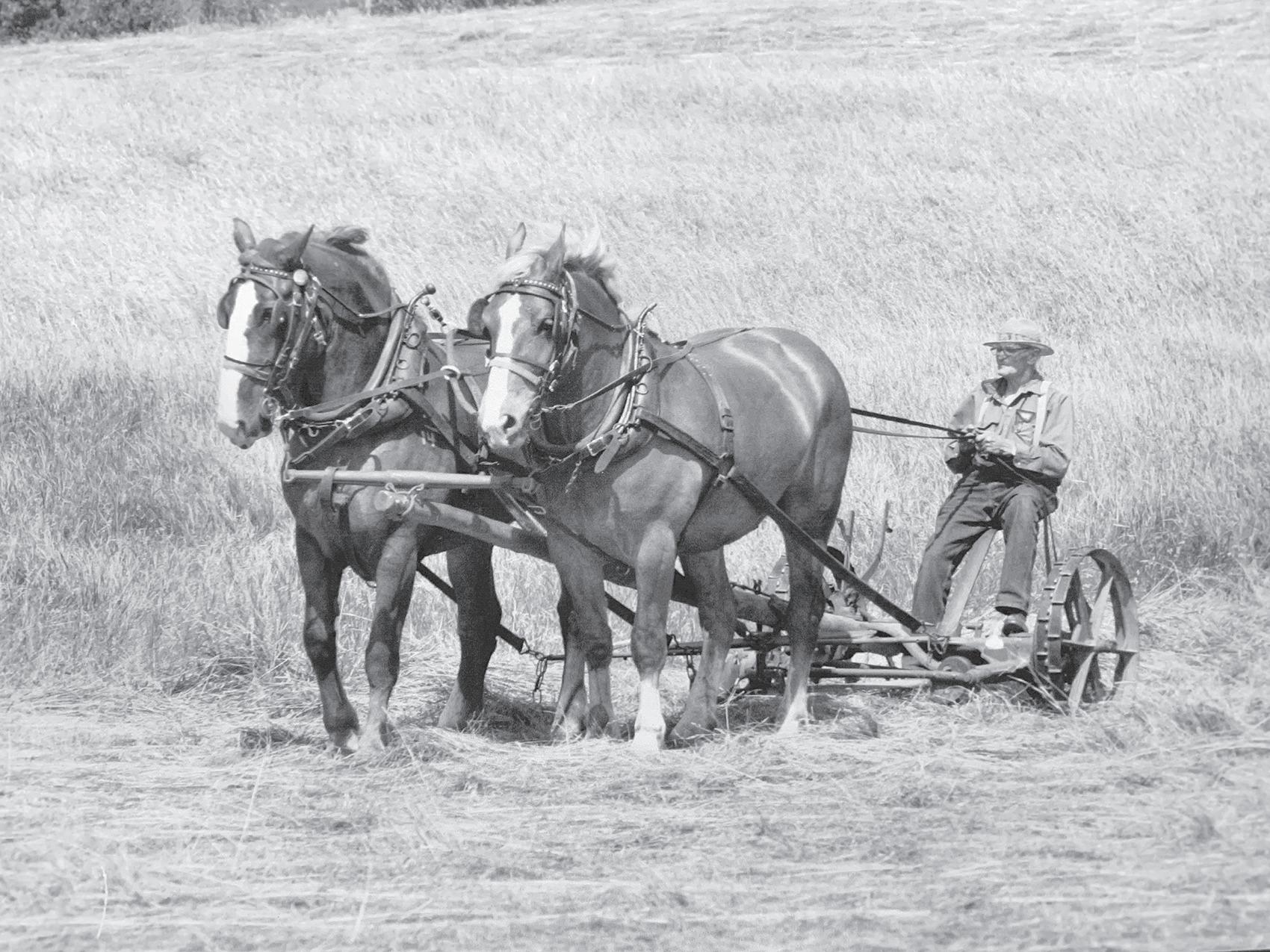
“He had an eye for a good horse,” reminisced his neph
ew, Scott, who lived with Wes from the time he was 12 years old. “Chances are if there was a kids pony go through the (auction) ring, Wes would bring it home because he knew of some kid that needed it.”
Wes became known far and wide for his horse prowess and was not shy about shar ing his knowledge. Folks would seek him out to learn the ropes; whether it was learning how to drive a team or multiples, to farming with horses, to what to expect at their first show, and every thing in between. Wes’s barn had an open-door policy – if you were willing to work and wanted to learn, you were more than welcome.
Wes believed in treating all people well, regardless of their age, upbringing, creed or skin colour. He had a giv ing nature. He didn’t sugarcoat anything. But if you crossed him or didn’t agree with him, he didn’t have any trouble calling you out.
He took a countless number of people under his wing to get them started in the busi ness, including his own son, Lloyd, who took his upbring ing on the Ferguson farm, to the next level, becoming a career professional teamster – first with the Carlsberg hitch out of Ontario, and then
32 years on the lines for the famed Budweiser hitch.
“Growing up on the farm was only part-time for me as after I was eight years old, we moved to California so my fa ther could run the West Coast Budweiser Clydesdale hitch,” said Lloyd’s son, Chris, who also spent the majority of the summers of his youth at Wes and Elsie’s. “People dream of moving to California, but I couldn’t imagine anything worse. I did not want to leave Grandpa and the farm. I loved the draft horses, the dogs, and the freedom Wes gave me on the farm.”
There were always more than a few kids around the farm to help out, learn about horses, life and hard work, all while having a good time doing it.
“I was lucky,” said Andrea Detweiler (Hoffman) of Oel wein, Iowa, who got her start in the draft horse industry at the Ferguson farm. “You can’t buy the education I got there. I learned more about life than I did about horses under the tutelage of Wes.”
And that was the thing about Wes. There were more life lessons cleverly disguised as fun for the kids that passed through those barn doors.
Life skills that were learned at Wes and Elsie’s served the ‘graduates’ of the program
well later in life regardless of the path they chose. It truly was training for life.
“We drove horses more than anyone,” said Chris of Wes’s insistence of using the horses to farm and for fun, and his belief that to get a horse broke, you had to give it a job. “I vividly remember sitting on a horse-drawn ve hicle behind a team and Wes saying (to me), ‘They just need miles, Chris. Just put the miles on’”.
This memory as did other life lessons learned during his ‘dryland training’ time at the Ferguson farm served Chris well later in life as he went on to a career with the US Navy SEALS.
Wes was an uncomplicat ed man with simple values: work hard, live simply and with integrity, be humble and kind.
To say he had a life-long passion for horses would be an understatement. He lived his 90 years according to his own terms, of which horses were a non-negotiable piece of the puzzle.
“What I hold close was all the times when I rode on some wagon with Grandpa, the team was trotting along a dirt road,” said Chris wist fully. “We didn’t say much at all; we didn’t need to. We just drove on and enjoyed life.”
Canada Plays Key Role in Feeding the World
By Elmer Heinrichs
Sunday, October 16 marked World Food Day. When it comes to the global food crisis an estimated 345 million peo ple live with food insecurity.
The Canadian Foodgrains Bank is a Christian Response to hunger. Through the Food bank, farmers take part in local growing projects with
proceeds being donated to the Canadian Foodgrains Bank to help feed the world’s hungry.
Those projects generally see farmers donate their time, land and machinery and har vest those crops. Some farm equipment dealers will do nate time on their equipment; while agriculture input com panies tend to step up with
crop supplies.
In 2021-22, individual Ca nadians, community groups, growing projects, businesses and churches helped raise over $18 million.
Included in that total, $4.5 million dollars is from Mani tobans with $2.2 million com ing from community growing projects.
Canada is a key player in feeding the world. Statistics show that Manitoba’s top pro tein and crop exports for 2021 included canola and products, pork and products, wheat and flour, potatoes and products, soybeans and products, oats and products, live swine, bar ley and malt, live cattle and dried peas.
Wednesday, November 9 - Lundar, MB
West Interlake Watershed District Office, 9 Main Street
Thursday November 10 - Ashern, MB
Fieldstone Ventures Education, 61 Main Street
Monday, November 14 - The Pas, MB
The Pas Provincial Building, 3rd St and Ross Ave
Tuesday, November 15 - Swan River, MB
Swan Lake Watershed District Office, 559-4th Ave
N
Wednesday, November 16 - Ethelbert, MB
Intermoutain Watershed District Office, P.R. # 274
Thursday, November 17 - Inglis, MB
Assiniboine West Watershed Office, Building 211, P.R. # 366
Friday, November 18 - Minnedosa, MB
Minnedosa United Church, 48 Main St. S
Monday, November 21 - Virden, MB
Virden Provincial Building, 27 Wellinton Street W
Tuesday, November 22 - Reston, MB
Souris River Watershed District Office, 4th St & 4th Ave
Wednesday, November 23 - Deloraine, MB
Souris River Watershed District Office, 102 Broad way St. S
Thursday, November 24 - Manitou, MB
Pembina Valley Watershed District Office, 261 Main Street
Friday, November 25 - Holland, MB
Redboine Watershed District Office, 109 Broadway Street
Monday, November 28 - Ochre River, MB
Ochre River Community Hall, 401 Mann St
Tuesday, November 29 - Carberry, MB
MB Crop Diversification Centre, Jct of Hwys #1 and #5, N on #5
Wednesday, November 30 - Carman, MB
MB Agriculture Carman, 65 3rd Ave NE
Thursday, December 1 - Vita, MB
RM of Stuartburn Office, 108 Main St
Friday, December 2 - Steinbach, MB
Roadhouse 52, 375 N Front Dr unit b
2�October 28, 2022The AgriPost
Wes Ferguson doing what he loved.
Submitted photo
Eat What You Grow!
By Joan Airey
This year garden carrots were abundant in our area. My young grandchildren and I dug enough carrots for both our homes plus gave several friends carrots. I prefer to bake car rots in the oven to boiling them on the stove.
Oven Baked Carrots
2 lbs. carrots cut into 1/4 inch sticks
1 Tablespoon green onions, chopped
1 teaspoon salt
1 teaspoon sugar
1/4 teaspoon basil
1/4 cup butter
1/2 cup boiling water
Put carrots into casserole. Sprinkle with onions, salt, sugar and basil. Dot with butter.
Pour boiling water over and mix gently. Cover tight ly. Bake at 350 F, about 45 minutes. Recipe can be doubled.
It’s a very simple recipe with great flavour. When I don’t have green onion I use part of a cooking onion. This recipe can be baked at 400 F if you are baking potatoes in the same oven. I like it when we have guests because there is no pot on the stove to watch.
If you have zucchini still on hand these muffins are delicious. They can be made with canola oil but I prefer them made with butter.
Zucchini Muffins
2 large eggs
1 1/3 cups sugar
2 teaspoons vanilla extract
3 cups grated fresh zucchini
3/4 cup butter, melted 2 3/4 cups all purpose flour
1 teaspoon baking soda
1 teaspoon baking powder
1/4 teaspoon salt
2 teaspoons cinnamon
1 teaspoon ground ginger
1/2 teaspoon nutmeg
1 cup walnuts (optional)
1 cup dried cranberries or raisins (optional)
Heat oven to 350 F. Beat the eggs in a large bowl. Mix in sugar, vanilla extract. Stir in the grated zucchini and melted butter.
Mix in a separate bowl flour, baking soda, baking powder, cinnamon, ground ginger, nutmeg and salt. Stir these dry ingredients into the zucchini mixture. Do not over mix. Stir in walnuts, raisins or cranberries if using them. Put muffin liners in your muffin pans and fill them with a quarter cup using measuring cup. Bake at 350 F for 20- 30 minutes. Test muffins with a toothpick to make sure they are done.
Set on wire rack to cool for 5 minutes before removing them from pan.
I get 18 muffins from a batch –normally I make two batch es as they disappear fast. Personally, I use cranberries in these muffins.

October 28, 2022 The AgriPost22
A double batch of Zucchini Muffins fresh from the oven.
Photo by Joan Airey
Culling Beef Cows is Pure Economics
By Peter Vitti
In the fall, when the spring-calves are weaned and removed from the cow herd, most producers walk through their herd on pas ture or at home and typically think about which cows they should cull. Once candidates are picked out, another deci sion is made as to whether to sell them immediately or feed them for the next few months in order to put on some sale able weight. Whatever, final decision is made, it is based upon pure economics.
There might be many reasons that beef cows are culled, yet on the top of most peoples’ cull list is open-cows. After all, it’s the life-blood of all generating cow-calf revenue and profits - when all cows should be pregnant by 80 – 90 days af ter calving, so that each cow drops a calf at the same time every year.
Straggler cows that often breed/calve outside a tight breeding/calving season are also potential cull can didates. They tend to upset the perennial generation of weaned calves of uniform size and heavier weights that translate into more income for the operation.
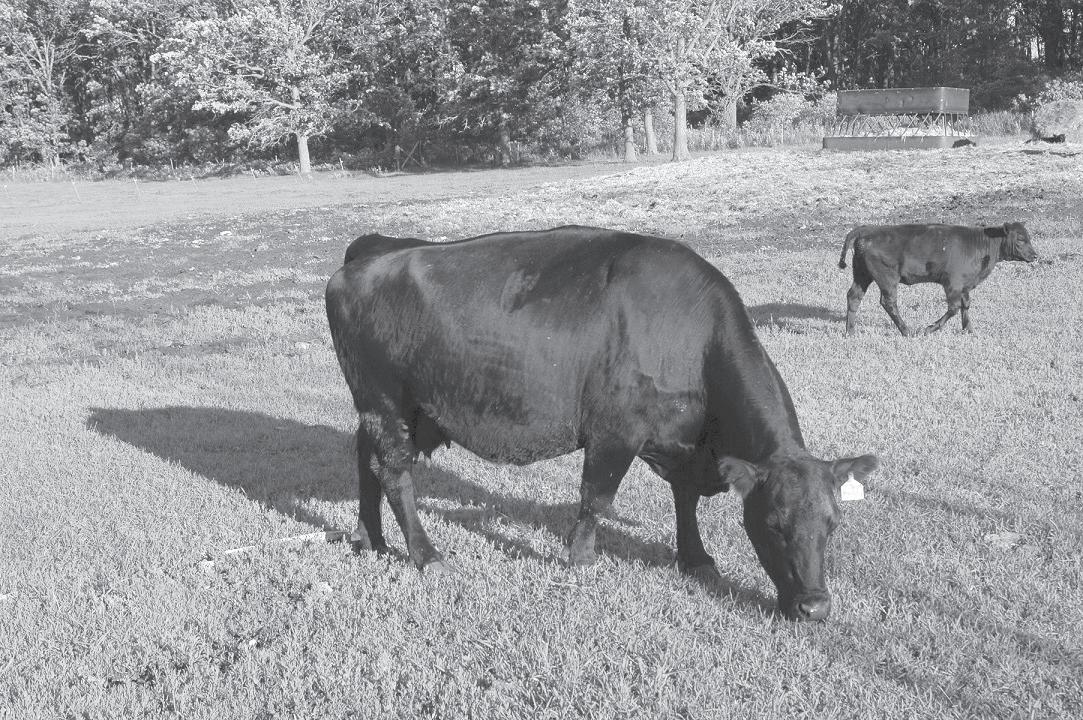
Consequently, I asked a long-time producer, whom operates a 400 Angus/Sim mental cowherd, if there were any exception to the rule of culling an open-cow. He said that even if she were the best cow of the herd and was guaranteed to re-breed next season, she is clearly a depreciated item, because – 1. She did not give birth to a calf that generates one cent of saleable revenue, 2. She will then incur at least a
In the fall, when the spring-calves are weaned and removed from the cowherd, most producers walk through their herd on pasture or at home and typically think about which cows they should cull. Once candidates are picked out, another decision is made as to whether to sell them immediately or feed them for the next few months in order to put on some saleable weight. Whatever final decision is made, it is based upon pure economics. Submitted photo
$3 a day bill for overwinter feed and housing costs (200 days) or a $600 liability, and 3. Still retains a current at tractive cull value, which al lows good replacement bred heifers of less market value to enter the herd.
In addition, it might not be the fault of the cow in the first place. For example, since much of this produc er’s cowherd breeding sea son falls during the hottest days of summer; many ap parent infertile cows (as well as breeding bulls) might ac tually suffer from heat-stress related infertility. My friend above says, it’s unfortu nate, but these cows must be culled.
Aside from open-cows, culling old cows out of the herd is another good rea son. That’s because: healthy and fertile beef cows have a viable reproductive life to about 7 - 8 years of age. Then, overall fertility slips by 10 years old, and steeply
declines after the cow is 12 years old.
Furthermore, as young cows become old cows, their bodies slowly break down; teeth become broken, worn down and periodic digestive upsets take their toll on nutri ent uptake. As well as teats and udders collapse for good milk production, plus uterine disorders increase and repeat themselves. General lame ness becomes more frequent.
Whether to sell off these open- and old beef cows immediately or put them in a drylot to gain a couple of hundred pounds is based on pure economics as illustrated in my following spreadsheet.
The parameters of my spreadsheet are based upon: (1) feed mature beef cows (1300 lbs) in to gain 200 lbs in 60 days, (2) feed them a typical beef cull cow diet, (3) cull feed efficiency = 10 lbs dm diet/lb gain or ADG = 3.23 lb/head/d (4) yard age = $0.50/head/day and (5)
breakeven cull cow selling price is based on live body weight. (See Table 1 below)
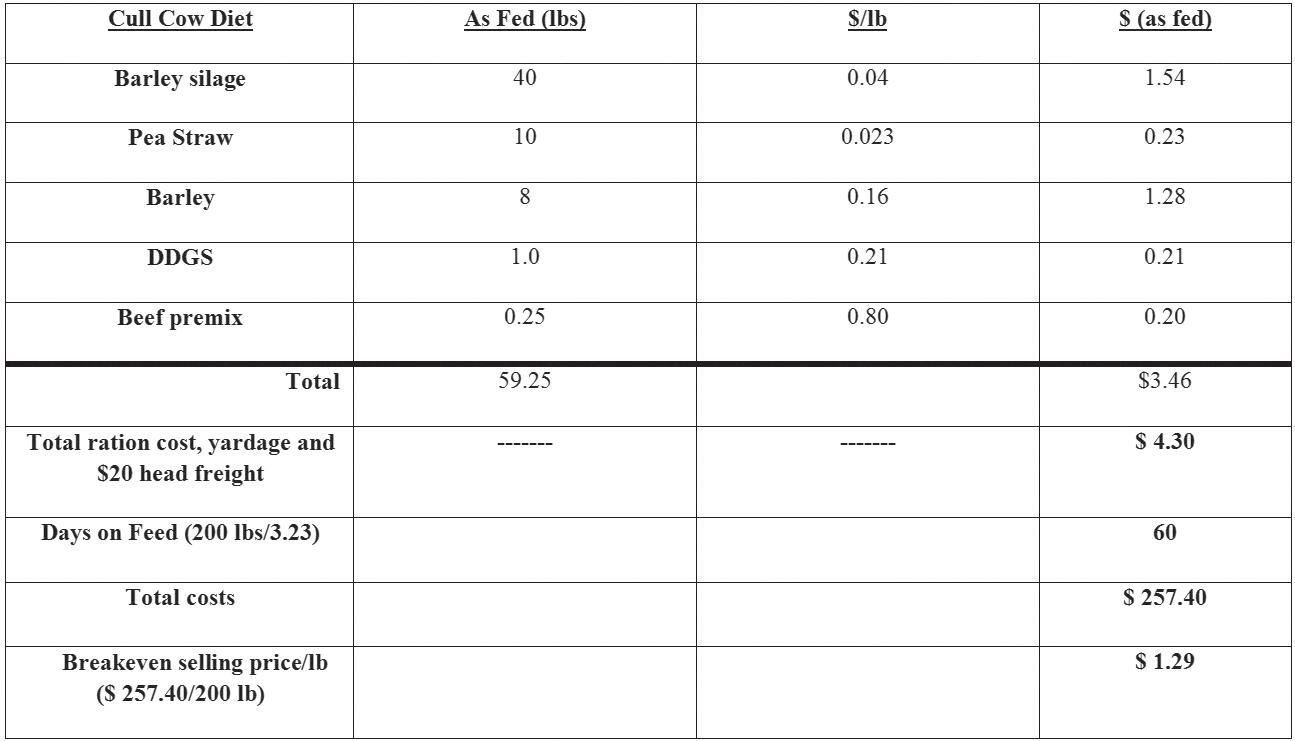
As a matter of personal management, the above cowcalf operator sold a truckload of old cull cows during latersummer and received $1.28 - $1.33/lb for his 1400 lb cull cows. Since then, I expect the cull market in November/ December, since a significant volume of cull cows tradi tionally enters the market. The above spreadsheet might dictate that the best time to sell-off cull cows is still within a couple weeks of the upcoming weaning season.
Despite any marketing op portunities for cull cows, there are usually about 15 – 20% of the cows in most cowherds that should be culled. Therefore, producers should always make good decisions based on their pure economic status; eliminate or cull cows that don’t make profit and keep the majority of cows that do.
Saskatchewan Pork Industry Symposium to Highlight Antibiotic Use
By Harry Siemens
Dr. Greg Wideman, a veterinarian with Southwest Vets in Listowel, ON, said while the use of antibiotics in ani mal agriculture declines, health status continues as king.
The use of antibiotics or not will be up for discussion as part of the Saskatchewan Pork Industry Symposium 2022 in Saskatoon, SK scheduled for November 15-16.
Dr. Wideman said a farm able to produce pigs without the use of antibiotics could, in theory, have a marketing advantage over a farm that is unable to do so.
According to Dr. Wildeman the market does indicate that there is consumer appetite for pigs raised without antibiotics under a raised without antibiotics label.
“From 30 thousand feet, health is still king and so a farm that is free from certain diseases that drive antibiot ic use or a farm that could be made free of those diseases through disease elimination in some form, that’s number one,” said Wideman.
Tied closely to being disease free is biosecurity on the farm and whether or not the health status can be sus tained over time. There are other considerations though.
Wideman said not all antibiotic-free programs and la bels are the same.
Some of have restrictions on how the producer treats the animals within the farm when antibiotics are needed and how animals move to market are important consid erations that can make or break the success of the pro gram for an individual farm.
“I think that antibiotic use in food animal production remains a high-priority issue because of our understand ing of antimicrobial resistance a very real human health problem,” he said.
“Holding that in balance with the need for us as veteri narians and as pig farmers, in this case, to care for ani mals, including sick animals and the fact that sometimes antibiotics are required,” he said.
Dr. Wideman said the rules around antibiotic use have changed somewhat since he started working with pigs. The biggest change came at the end of 2018 when all antibiotics for use in food animal species fell or came to fall under veterinary prescription.
“The main thrust of this talk is going to be the specific mode of production, which we would call antibiotic-free production, which is not governed by regulations per se or is not a changing legal framework,” Dr. Wideman said. “It’s a market opportunity that some producers are considering for their operation.”

While the use of antibiotics in theory could have a marketing advantage over a farm that is unable to do so it’s important for every producer to keep pigs healthy, protect the welfare of the pig and protect food safety.
Dr. Wideman thinks that regardless of whether a farm is conventional or some form of antibiotic-free, it’s impor tant to look at what is the minimum amount of antibiot ics needed to protect the welfare of the pig and protect food safety.
“I looking forward to seeing people face-to-face again at the Saskatchewan Pork Symposium, and I’m hoping that we have a good interactive session on this topic of raising pigs antibiotic-free,” he said.
2�October 28, 2022The AgriPost
Dr. Greg Wideman, a veterinarian with Southwest Vets in Lis towel, ON, will speak at the Saskatchewan Pork Industry Sympo sium about the use of antibiotics in animal production and that antimicrobial resistance is a very real human health problem. Submitted photo
Table 1

October 28, 2022 The AgriPost2�
