
By Harry Siemens
U.S. fertilizer producers, wholesalers, and retailers are urging the Trump administration to exempt Canadian fertilizer products from upcoming tariffs, as 95% of the potash used by American farmers is imported, with 80% coming from Canada. Global potash prices could rise significantly without an exemption, impacting food costs and availability worldwide. At a time when the agricultural industry faces the
challenge of feeding a growing population, increasing production costs could make farming less efficient and food more expensive.
Matt Simpson, CEO of Brazil Potash, brings extensive expertise in the potash market and the broader agricultural supply chain.
Simpson sees the U.S. tariffs on Canadian potash significantly impacting global supply chains and prices.
“That’s going to be huge,”
he says. “The U.S. consumes about 10.5 million tons of potash annually, making it one of the largest consumers in the world. They import 95% of their supply, with 80% coming from Canada, the rest mostly from Russia and a small amount from Israel.”
If the U.S. imposes a 25% tariff on Canadian potash, Simpson warned it will be challenging to replace that supply. “It’s not just a matter of shifting imports—there are real challeng-
es in displacing that tonnage,” he explains. The consequences could ripple through the agricultural sector, driving up costs for farmers and ultimately affecting global food prices.
Simpson highlights logistical challenges as a key issue.
“A lot of Canadian potash moves through inland rail systems, making it difficult for imported material to reach the U.S. at a reasonable cost. The lack of warehousing and storContinued on Page 2...
The Federal Government has announced the expansion of the On-Farm Climate Action Fund (OFCAF), which will provide an additional $300 million to over a dozen organizations in continuation of their efforts to help farmers become more climate resilient over the next three years.
Both the Manitoba Association of Watersheds and the Manitoba Métis Federation will be beneficiaries of this fund.
By lowering implementation costs for adopting onfarm practices, facilitating the availability of information and agronomic services, and enabling knowledge transfer to producers and agronomists through outreach and training, OFCAF helps remove obstacles to the broader adoption of beneficial management practices. Direct support to farmers falls under these target areas:
- Cover Cropping: activities such as fall- or springplanted cover crops (intercropping), and full-season annual or perennial cover crops in a rotation. Planting cover crops, like clover and alfalfa, cover the soil rather than being harvested, in turn adding nutrients that build organic matter, increase water access and, reduce soil erosion.
- Nitrogen Management: activities like optimizing nitrogen use by increasing legumes in rotations, and using manure and other fertilizer substitutes can provide lasting benefits to soil, air and water quality.
- Rotational Grazing: practices include new fencing and watering systems, and activities to implement low methane pastures. Rotational grazing is the practice of containing and moving livestock through pasture to allow forage plants to recover, deepen their root systems and improve soil health.
Organizations will redistribute funding through individual application intakes. Farmers are encouraged to use the On-Farm Climate Action Fund Web Tool for Farmers to determine which organization best serves their geographic area and needs.
Since 2022, OFCAF has provided support to over 7,500 farmers on more than 2,400,000 hectares of land, and has trained approximately 3,000 agrologists and 27,000 producers who have attended knowledge exchange and peer-to-peer learning activities.


age infrastructure adds to the problem,” he explains.
Finding alternative sources for the displaced 8 million tons yearly is also a major hurdle.
“Only two other countries produce enough potash to replace Canada—Russia and Belarus. But Belarus is already under U.S. sanctions, leaving Russia as the only option,” he says.
This shift would come at a steep price for American farmers.
“Canadian producers won’t fully absorb those 25% tariffs, meaning farmers will face significantly higher costs,” Simpson warns.
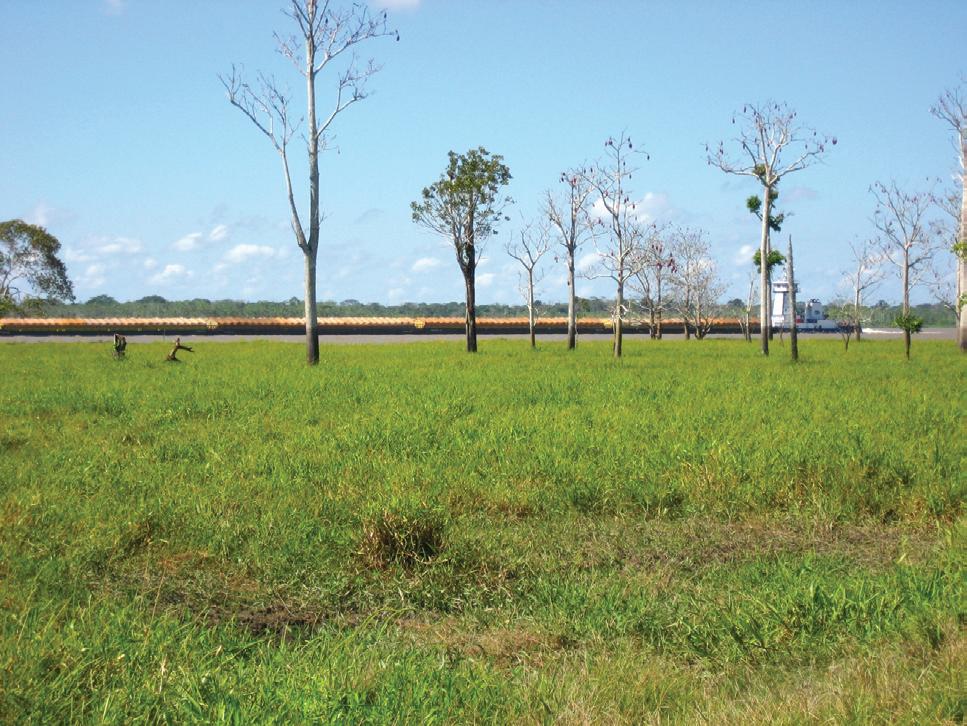
Brazil is the world’s largest importer of potash, consuming 14 million tons annually while relying on imports for 98% of its supply. Brazil Potash aims to develop a new mine eight kilometres from a central inland river system connected to Mato Grosso, the country’s largest farming region. By producing potash domestically, the company can significantly cut costs, delivering potash to farmers at around $130 per ton—far cheaper than competitors, who spend over $200 per ton just on transportation. Since potash transport costs are 2.5 times higher than mining and processing, Brazil’s potash holds a major cost advantage by operating within the country.
“Brazil Potash significantly reduces geopolitical risk,” Simpson explains. “Over the past three years, potash prices have been highly volatile. Normally, it sells for around $300 to $400 per ton, but prices doubled when the U.S. sanctioned Belarus in 2021.
Then, when Putin invaded Ukraine, prices skyrocketed from $600 to nearly $1,200 within a year.”
This volatility has serious consequences.
‘When potash prices spike that high, the ripple effects across global agriculture are massive,” he says. “When potash prices rise, farmers can’t afford to apply as much, leading to lower crop yields,” Simpson explains. “That directly impacts food availability and drives up grocery prices.”

He highlights a major geopolitical concern.
“About 42% of the world’s potash comes from Russia and Belarus, meaning Putin has significant control over global supply. If he decided to cut it off, the impact on food production worldwide would be huge,” said Simpson.
Brazil Potash offers a solution by producing potash where it’s needed most.
“With Brazil being the second-largest and fastestgrowing market, domestic production reduces reliance on unstable regions,” he says. “It also helps mitigate risks from rail and port strikes, like the ones we saw in Canada last year.”
“It’s a bit of a question mark whether these tariffs will happen,” Simpson says. “Was this a negotiating tactic to get something else, or is Trump serious? It’s hard to say. No one knows what’s going on in that man’s head.”
He points to the timing of the announcement.
“It looked pre-scripted—he announced on a Saturday that tariffs would start Tuesday, only to delay them after suddenly making border concessions,” said Simpson.
Simpson believes the move is more about economics than security.
“A lot of people see this isn’t really about stopping the flow of drugs, gangs, or weapons—it’s an economic lever,” he said.
Simpson also notes strong opposition within the U.S. farming industry.
“There’s a lot of lobbying against fertilizer tariffs because the impact on farmers would be massive.”
Regardless of Trump’s decision, the bigger issue remains.
“A huge share of the world’s potash—about 50% if you include Israel—comes from countries under sanctions or at war. That’s a major risk to global supply,” said Simpson.
By Elmer Heinrichs
The stories in 2024’s edible bean season were not the same for Ontario and Manitoba’s growers.
With a cool, windy spring, Manitoba agriculture’s pulse and soybean specialist Dennis Lange says he never expected to see record edible crops in the province in 2024, but that was before strong summer growing conditions pushed the average yield for all edibles over 2,000 pounds per acre.
Here’s a look back at the ups and downs of the last growing season and issues that may impact the new crop.
In Ontario, growers, depending on where they farm,
saw both good and bad growing conditions in 2024, says Hensall Co-op origination manager Wade Bickell. The spring started well, “and then it started to rain.”
The Ontario crop was finally in the ground around June 20, but in some areas, such as Oxford County, the rain just kept coming.
“The water lying in the fields was some of the worst I’ve ever seen,” says Bickell.
In Manitoba, the big yield story emerged from pinto bean fields where 109,636 harvested acres yielded an average 2,264 pounds per acre and blew past both the 5 and 10-year average. Lange says there’s plenty of grow-
er enthusiasm heading into 2025 and he expects acres to stay steady with potential for a small up tick based on market opportunities.
When it comes to 2025 markets, Bickell says growers will see good opportunities in a number of classes, including white, navy, black and dark red kidney beans. He notes the market is also keeping a close eye on the potential impact of U.S. tariffs.
He believes tariff talk is leading buyers and end users to rethink the way supply chains could work moving forward and edible beans may end up finding different ways to market.
By Elmer Heinrichs
The impending threat of a trade war between the United States and Canada looms close, despite U.S. President Donald Trump’s announcement that tariffs on Canada will be delayed at least 30 days after Canada’s commitments to improve border security.
Still, multiple industry groups have spoken against the proposed 25 per cent tariffs, highlighting the potential damage to citizens of both countries.
The Canadian Agri-Food Trade Alliance (CAFTA) released a statement emphasizing the pressure a 25 per cent tariff on Canadian imports to the U.S. would put on producers and consumers.
“These tariffs will drive up costs, disrupt supply chains, and harm American, Canadian, and Mexican consumers and producers,” said Greg Northey, president of CAFTA.
These concerns were echoed by the Canola Coun -
cil of Canada (CCC) and Canadian Canola Growers Association (CCGA), who drew attention to a recent analysis that shows the U.S. economy derives an average annual economic benefit of US$11.2 billion from Canadian-grown canola, including US$1.2 billion in wages.
“The damaging blow of these duties will be felt by every canola farmer, starting with the price they receive at delivery and will extend to the full range of their operations, ultimately reducing farm profitability,” said Rick White, CCGA president and chief executive officer. “The destructive consequences for our farms, as well as our rural and national economies, are evident.”
The Grain Growers of Canada (GGC) highlighted the inevitable increase in food prices associated with tariffs on more than $17 billion worth of Canadian grain and grain products the U.S. imports annually.
GGC went beyond food prices, examining the additional threat to the broader U.S. agricultural economy introduced by the tariffs. Canadian grain imports allow American farmers to focus on high-value exports, securing better returns for their crops, the GGC said in their statement.
The Canadian Federation of Agriculture (CFA) said they were disappointed with the tariff implementation and called for collaboration between the two markets to secure North American agriculture’s place in the global market.
“Our agriculture sectors rely on each other, not just to sell products to one another but also to provide essential inputs to grow food such as fertilizer,” said Keith Currie, president of the CFA. “No one wins in a trade dispute between Canada and the U.S. except for our competitors around the world. Tariffs are quite simply, bad business.”
The governments of Canada and Manitoba are providing $4.7 million in grant funding under the Sustainable Canadian Agriculture Partnership (Sustainable CAP) to support 36 projects, including several that benefit the future of crop health in Manitoba, under the Research and Innovation Program over the next three years.
“When we invest in innovation, we’re investing in a stronger, more sustainable future for Canadian agriculture,” said federal Agriculture and Agri-Food Minister Lawrence MacAulay. “With support from the Sustainable CAP, farmers in Manitoba will be able to tap into digital tech – cutting costs, improving efficiency and helping them stay on the cutting edge.”
The Research and Innovation Program supports the development of science-based solutions and tools that address known challenges, prepare for potential disruptions and climate threats, and capture emerging opportunities in the agriculture and agrifood sector. The program
provides funding to eligible applicants for research and capacity-building projects aimed at promoting the agriculture sector’s growth and sustainability, helping to put Manitoba at the forefront of sustainable agriculture research.
“Research and innovation are key drivers for Manitoba’s economic growth and enhancing profitability for our farmers,” said Manitoba Agriculture Minister Ron Kostyshyn. “Our government is committed to fostering growth and sustainability through innovation. This includes developing new technologies and practices, creating new products and advancing knowledge to ensure Manitoba remains resilient, competitive and efficient.”
Funding will support 36 projects across Manitoba including:
- Manitoba Crop Alliance: research how crop residues influence soil, water and carbon and weed populations.
- University of Manitoba: creation of genomic selection models to improve the

efficiency of winter wheat breeding.
- Manitoba Pulse and Soybean Growers: identify resistance sources for soybeans root rot and assess the impact of inoculation strategies.
- Agriculture and Agri-food Canada: development of molecular markers to breed improved oat varieties.
“This investment into University of Manitoba research aimed at sustainable agricultural systems and tools will translate into real benefits for producers and consumers, and will create exciting training opportunities for our students, who will drive the next generation of agricultural innovation,” said Martin Scanlon, dean, faculty of agricultural and food sciences, University of Manitoba.
The Sustainable Canadian Agricultural Partnership is a five-year, $3.5-billion investment by Canada’s federal, provincial and territorial governments to strengthen the competitiveness, innovation and resiliency of the agriculture, agri-food and agri-based products sector.


Read the AgriPost online at agripost.ca
Past issues in archive

What did you do on Agriculture Day this February 11? Many will have yet to notice that it was AgDay in Canada. Why? Most people take their food for granted; others couldn’t care less. Then, we debated food security and those who felt farming needed significant improvement to be more sustainable.
Farming is everyone’s business, not only because it furnishes our daily food but because it is the base of many industries and so much of Canada’s trade and commerce. Agriculture is our most important single industry.
As my mentor, colleague and friend, Orion Samuelson. He said, “Harry… Serving agriculture, the basic industry, is such a privilege and
honour,” and he retired after 50 years behind the same microphone as a farm broadcaster at WGN Chicago.
Let’s raise a fork for the food we love and the people who produce it every time we eat. Orion also said, “If you eat, you are involved in agriculture.”
February 11 Agriculture Day across Canada was a day to celebrate Canadian agriculture, consumers, and farmers and to engage in conversations about improving Canadian agriculture! One out of every 9 Canadian jobs is in agriculture or agrifood. Ninety-two percent of Canadians say it’s essential that the eggs they purchase come from Canada. There were over 190,000 farms in Canada as of 2021. Young people are getting involved. Farming in Canada is a serious business! Like other natural resource sectors, farming contributes massively to Canadians’ livelihoods directly and indirectly. And if treated
right, it remains a renewable resource.
For example, hundreds of thousands of farming jobs exist across the country. In turn, these workers supply the raw goods the much larger Canadian food manufacturing and processing industries need to create many of the agricultural products we see stocked on the shelves in our grocery stores.
With Canada having so much land spanning multiple landscapes, it’s no wonder Canadian farmers produce diverse crops and livestock products. As a result, we have abundant natural resources, from blueberries and cranberries to beef and pork. And while we’re busy feeding ourselves and the world, farmers across Canada are intently focused on reducing their environmental footprint by adopting more eco-friendly practices. It’s a win-winwin situation for Canadian workers, our economy and the global environment when
our agricultural sector is strong.
In 1900, households allocated approximately 39% of their budget to food. By 2020, this share had decreased to around 9%, reflecting a significant decline in the proportion of household spending on food over time.
Canada is indeed recognized as the fifth-largest agricultural exporter in the world. Notable exports include about 85% of the world’s maple syrup and the largest grower and exporter of flax seed, canola, pulses, and durum wheat. Canada also exports pigs and cattle to the United States, which is why it’s so concerning that Canada can’t properly position itself regarding tariffs and the like.
Author Kim Kooper of Chatham, ON writes Chris Hadfield, the first Canadian to command the International Space Station, grew up on a grain farm in southern Ontario. He credits farming for teaching him how machinery
worked long before receiving his first mechanical engineering degree.
Farmers and food producers grow over 125 fruits and vegetable crops in Canada from coast to coast.
For me serving that basis, the renewable farming and food-producing industry gets more challenging yearly. Not because of age and maybe that too, but because certain elements from in Ottawa to some of our farm leaders want to change how they farm. Despite following practices that improve the soil, increase production and serve the environment well, we still have naysayers. Here’s hoping you stand by our farmers and food producers and continue to enjoy the healthiest, cleanest, safest, and most cost-effective food ever.
I’m so proud to have spent my entire life living on the farm, farming with my father and brother for ten years, and then 53 years and counting of farm journalism.
By Dan Guetre
The Trump administration’s decision to impose a 25% tariff on Canadian and Mexican food products has sent shockwaves through Canada’s agri-food sector. While a temporary delay in implementation provides a brief reprieve, Dr. Sylvain Charlebois, a leading food policy expert and researcher at Dalhousie University, warns that Canada’s own policy shortcomings pose an even greater long-term threat.
“Canada now faces a critical test of its ability to remain competitive in an increasingly protectionist global economy,” Charlebois stated.
Charlebois adds that according to the Global AgriFood Most Influential Nations Ranking, compiled by the Agri-Food Analytics Lab at Dalhousie University and commissioned by MNP, Canada ranks 13th among G20 nations in terms of
global agri-food influence.
The United States holds the top spot.
While Canada performs well in food security and political stability, it struggles in key areas such as innovation, trade diversification, regulatory efficiency, and interprovincial trade barriers—issues that have become glaringly apparent amid the threat of U.S. tariffs.
Canada’s agri-food trade surplus stands at $13.3 billion, ranking fifth among G20 nations. The U.S. is Canada’s largest agricultural trade partner, and a 25% tariff would undermine Canadian food exports, reduce profit margins for producers, and drive up costs for consumers.
Beyond U.S. tariffs, Charlebois warns that Canada’s own inefficiencies are making the industry less competitive. Key concerns include:
- High logistical costs due to Canada’s vast geography.
- Regulatory obstacles pre-
venting small businesses from scaling up.
- A lack of investment in value-added food processing.
- Interprovincial trade barriers that restrict the movement of food within Canada.
“These barriers, ranging from differing provincial regulations to taxation inconsistencies, increase costs for producers and limit economic growth,” Charlebois explained.
With the uncertainty of U.S. trade policies looming, Canada must take decisive action to reduce reliance on raw commodity exports and strengthen domestic food production. Charlebois outlines six key policy measures:
- Increase R&D Investment
– Canada must prioritize agri-food innovation, including advanced food processing, precision agriculture, and sustainable farming practices.
- Regulatory Reform – A
streamlined, transparent regulatory environment would allow startups and small businesses to scale up and compete globally.
- Trade Diversification
– Canada must expand its trade agreements beyond North America, focusing on Europe, Japan, and Southeast Asia to reduce reliance on the U.S. market.
- Boost Domestic Processing
– More investment in food processing facilities would allow Canada to retain economic value rather than exporting raw materials.
- Strategic Infrastructure Development – Addressing high transportation costs and supply chain inefficiencies is essential for competing in global food markets.
- Interprovincial Trade Reform – Removing barriers that limit the free movement of food products between provinces would improve market efficiency and competitiveness.
Charlebois stresses that
Canada stands at a crossroads. The uncertainty surrounding Trump’s tariffs has exposed deeper structural weaknesses in the country’s trade policies and industry resilience.
“The U.S. trade policies are a stark reminder that Canada cannot afford to rely too heavily on a single trade partner,” Charlebois said. “Diversifying trade relationships and strengthening domestic food production and processing are now imperatives, not just aspirations.” Without urgent policy changes, Canada risks falling further behind leading agrifood nations like the U.S., Japan, China, and Germany. However, by investing in innovation, streamlining regulations, and expanding global trade partnerships, Canada has a unique opportunity to redefine its role as a global leader in agriculture.
“The time to secure Canada’s agri-food future is now,” emphasized Charlebois.
By Matthew Wiens
The impending 25% American tariff on all Canadian exports is playing havoc with farmers’ incomes and consumers’ food security. Key sectors - beef, pork, grain and oilseeds – depend on U.S. markets, while much of our fresh fruit and vegetables as well as processed food are imported. You may not know that our dairy, poultry, and eggs are safe from tariff threats because they are raised, processed and consumed within Canada, in the right amounts at the right time to ensure we always have enough without wasteful surpluses.
Supply Management provides dairy, poultry, and egg farmers with a level of economic stability that is the envy of farmers in the U.S., and beyond. South of the border, when the market price of milk plummets, the econom-
ic hardship frequently causes farming families to lose their farms. This type of devastating price fluctuation for milk doesn’t happen in Canada. The reason: Supply Management.
As the name suggests, Supply Management imposes management upon the total supply of dairy, poultry and eggs produced in Canada, and ensures that our farmers produce no more, and no less, than the market needs.
Managing supply helps prevent large swings in prices. It also eliminates massive overproduction and the resulting waste of good food that occurs in a number of other countries, including the US. Managing supply, sometimes referred to as production discipline, is one of three key pillars of Canada’s Supply Management system.
The other two key pillars of Supply Management are
cost-of-production pricing, and import controls. Cost-ofproduction pricing ensures that farmers receive a fair income for their efforts. Import controls provide for predictable and adequate supply by preventing foreign products from flooding our markets and putting our farmers out of business.
Under Canada’s system Canadian consumers have the benefits of steady supply and steady prices. If a trade war happens, it will have minimal impact on our ability to buy milk, poultry and eggs, because we import and export very little of these foods. We produce domestically for a domestic market. Under supply management we have a certain level of food security with dairy, poultry and eggs that we don’t necessarily enjoy with things like beef, pork and vegetables. With Supply Management farm-
By Elmer Heinrichs
Tariffs and other trade disruptions should not distract Canadian agriculture from seizing a generational opportunity that awaits it, said Justine Hendricks, President and CEO of Farm Credit Canada (FCC). Canada can be a global leader in sustainable food production if it can accelerate its operating speed, handling of risk and boost its productivity, she insisted.
Hendricks said, “The sector’s strong fundamentals and a rocksolid foundation are not enough to reach its potential and seize the generational opportunity before it. It must face Trump tariff threats with boldness.”
“It will take all of us, working together, to get the job done,” said Hendricks adding that Canadian agriculture “must be ready to meet the needs of a hungry planet, ready to face the future and whatever challenges it may present. Not only would we be helping to secure our future, human health and hunger and the climate challenge but we would be laying the foundation for additional global economic growth in the trillions of dollars.”
Hendricks said in the past year she has talked with Bay Street investors, academics, industry insiders and outsiders who all expressed a wish to help. During the same time, there has been some good economic news with supply chains stabilizing, interest rates dropping and inflation retreating.
“The Ag and food sector continues to be a bulwark of Canada’s GDP with growth that routinely outperforms the rest of our economy and generates exports that regularly exceed industry targets,” she noted. Tariffs would present a massive challenge and FCC has been in regular communications with industry associations, various levels of government, our custom-
ers and financial partners to be ready to deal with whatever arises, she said. In the meantime, the focus is on the critical things that can be controlled.
“I have seen the incredible resilience of our farmers and producers, the imagination of our entrepreneurs, the creativity of our technology and our innovators,” said Hendricks.
However Canada is too siloed with the result that too often misses opportunities because it is too slow at adopting new processes and technologies. It also needs to increase the amount of investment available to the Canadian food and agriculture sector.
“In 2021, RBC reported that U.S. Ag tech companies benefited from almost $7 billion in venture capital financing. At the same time, Agtechnology companies in Canada attracted just $270 million,” said Hendricks. “Adjusting for population and other factors, the Canadian figure should be at least three times that number. We’re not making a more profitable widget. We’re addressing a basic human need.”
“It has been estimated that to meet global food demand by 2050, the planet’s food production will have to climb annually at a rate of 1.9 per cent. In Canada, the current rate of annual productivity growth is less than one per cent,” she said. “FCC’s own analysis tells us that addressing our productivity gap would generate a $30 Billion revenue opportunity for Canada during the next decade.”
FCC has made some progress during the last year. “Working with our newly created direct equity team we’ve conducted due diligence on over 50 deals and, so far, invested $148 million since April of last year. Our goal is to ramp up to $1 billion in new equity support by 2030,” she said.
ers are at not at risk of losing their markets and having to sell the farm due to a trade war with the United States, because they do not produce for the U.S. market.
Stable farm income under Supply Management has averted extreme farm consolidation and the mega-farm trend that has occurred with the U.S.’s get-big-or-get-out approach. Our smaller-scale farms mean that manure management is easier and the risk of environmental problems are lower. Also, more smaller-scale farms translates to more family farms on the landscape, with more people invested in being part of local communities.
Supply Management keeps the economic value of dairy, poultry and eggs within Canada. Greedy multinational corporations would love to break apart our system and extract this
value for themselves. Under CETA, the CPTPP and now CUSMA, trade agreements have chipped away at Supply Management, and today 18% of Canada’s valuable dairy market has been grabbed by multinationals. The result is our consumers’ food dollars flying out of our country.
Preventing more erosion of Supply Management was the motivation for Bill C-282, which sought to remove Supply Management from future trade negotiations. Bill C-282 was supported overwhelmingly in the House of Commons, but died on the floor of the Senate when Parliament was prorogued in January.
You have likely been hearing the narrative that protecting Supply Management puts Canada in a straight jacket at the trade negotiation table. This narrative plays well for multinational corporations that want to use our system as
a bargaining chip. What you may not have been hearing is the long successful history of Supply Management in safeguarding farmers’ livelihoods, and the food security and food sovereignty of Canadians. I encourage you to learn as much of this history as possible and then challenge the corporate narrative at every opportunity.
Defending our food sovereignty, the ability to democratically control what we produce and what we eat, is worth all the knowledge and passion we can harness. Let’s defend and then strengthen Supply Management.
Matthew Wiens’ family raises dairy goats, laying hens, hay and vegetables as members of a co-operative farm operation near Beausejour, MB. Matthew is a board member and the Regional Coordinator for the National Farmers Union in Manitoba.


By Harry Siemens
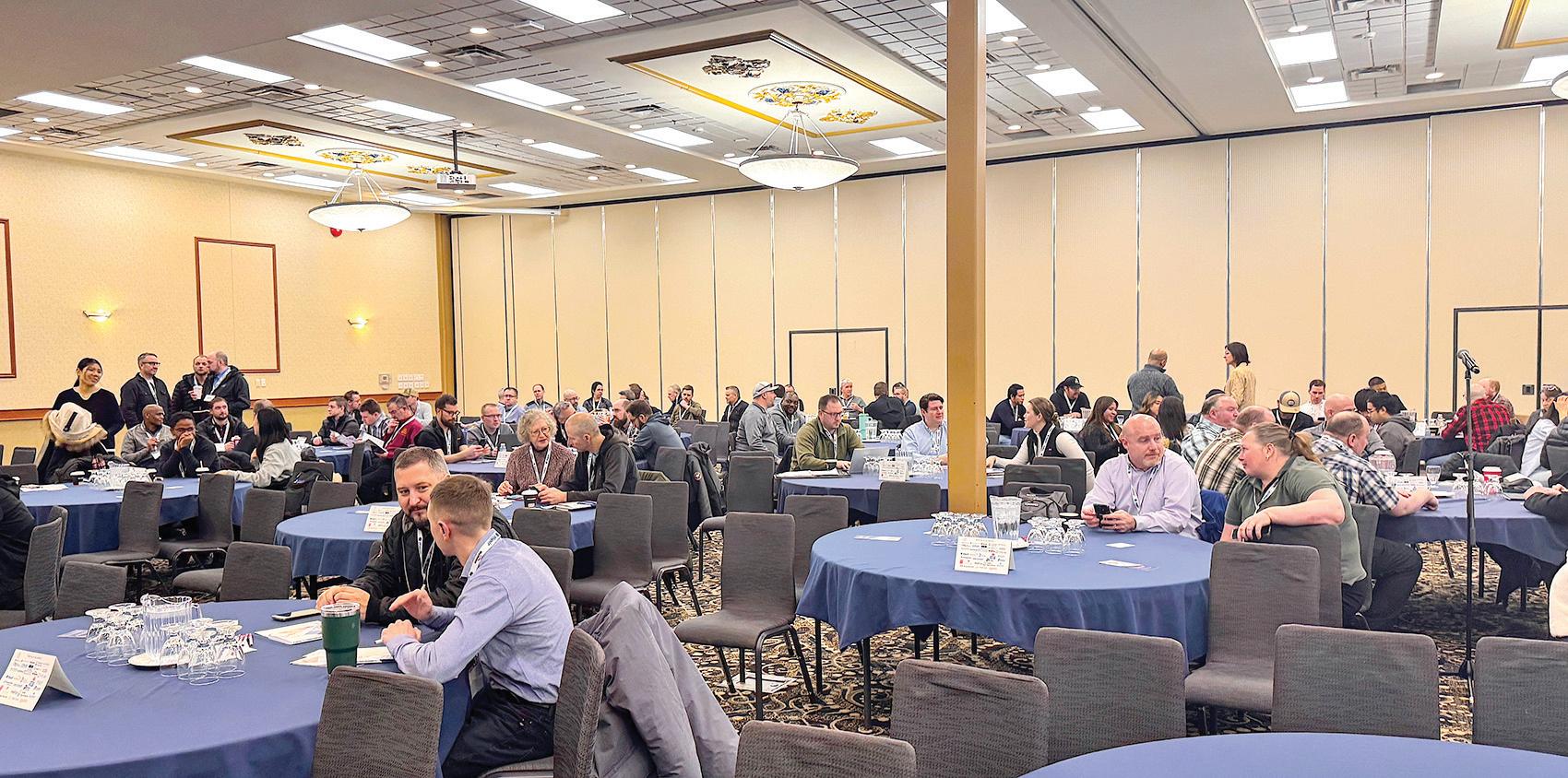
Day One of the Manitoba Swine Seminar in Winnipeg, February 5, saw nearly 600 producers, suppliers, and industry experts gather to discuss the pork sector’s latest developments. The focus was herd health and production insights. But beyond herd health was a pressing concern that took centre stage: forward contracting.
With all major companies halting forward contracts due to tariff threats and ongoing uncertainty, producers face a volatile market with limited risk management options.
Raising hogs for the North American market is challenging; the risks only increase without forward contracting.
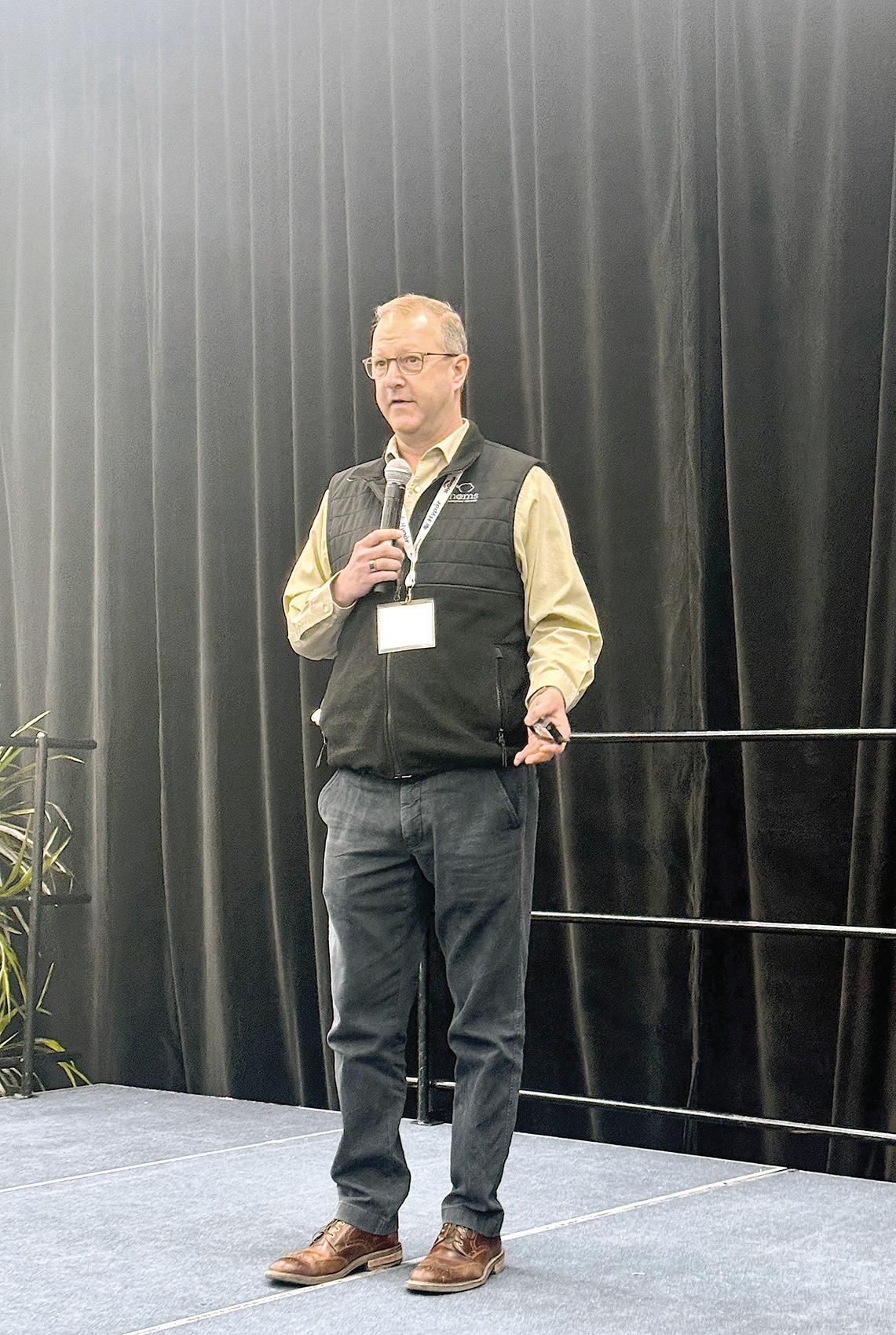
Paul Marchand, Senior Risk Management and Market Analyst for h@ms Marketing Services, a producer-owned co-op based in Headingley, MB offered insights on what this means for Western Canadian hog producers.
Paul Marchand addressed the issue directly, acknowledging the challenge producers now face with the halt in forward contracting.
“It’s a structural pause—we don’t have a choice,” he explained. “Moving forward, this is a barrier suspension, and we’re re-evaluating risk portfolios before we can safely reopen these programs.”
Marchand emphasized the need for financial resources to sustain forward contracting in the long term.
“When you have an unprecedented event like this, you must step back and reevaluate the situation,” he explained.
He pointed to the importance of strategic timing.
“It goes back to the presentation—understanding correct entry points,” he said. “When
with to position yourself for margin capture.”
He emphasized that existing forward contracts remain unaffected by tariffs, preserving margins and price certainty.
“When programs reopen, strategically entering forward contracts will likely be the best approach,” he advised.
Marchand’s advice was simple: “Don’t panic—just keep doing what you do best.”
He highlighted a structural shift in the market, indicating increased pork consumption at higher prices, signalling strong demand.
“We just got the latest USDA customs data this morning, showing year-overyear improvements in the export profile,” he noted.
However, he acknowledged that this could change under a tariff model. Structurally, fewer sows are farrowing, reducing overall animal numbers, though productivity gains in the U.S. are helping offset some of the decline.
“Despite fewer animals, the big numbers keep trending upward on average,” he said.
“The reality is that fewer sows are farrowing, which is tightening supply,” Marchand explained. “With strong demand, that’s naturally lifting prices.”
He noted that until American producers decide to expand their herds again, the market will likely see price support in the immediate future.
As for how a cooperative like h@ms Marketing plans to navigate this shift, Marchand emphasized the importance of staying vigilant.
“Monitoring the fundamental situation on the ground is number one,” he said. “It comes down to the mathematics of running a program and conducting proper price discovery.”
Marchand explained that h@ms Marketing relies on a three-year model for pricing,
as it responds more effectively to market fluctuations.
“If you use a five-year average for base pricing, it can mute some trends and include some ugly numbers,” he said. “We’re only in 2025, so a five-year average still includes 2024, creating some unusual dynamics that could understate the situation.”
The key, he emphasized, is staying as responsive as possible to changing market conditions and maintaining a clear understanding of on-the-ground realities—especially in the face of an unprecedented tariff situation. He pointed out that the current tariff situation lacks clear justification, unlike Section 232, which primarily targeted Canada and China under national security claims.
“There’s no real citation for this one, especially with China in the picture,” he noted. “Yes, fentanyl may originate from China, but the issue is much broader. Now, we’re even seeing tariff threats against the European Union.” He described the situation as an unprecedented market externality, emphasizing the need for adaptability.
“As economists would say, it’s a unique challenge, and we must stay as nimble as possible to navigate these marketing uncertainties,” said Marchand. Paul Marchand addressed the issue directly, acknowledging the challenge producers now face with the halt in forward contracting.
By Dan Guetre
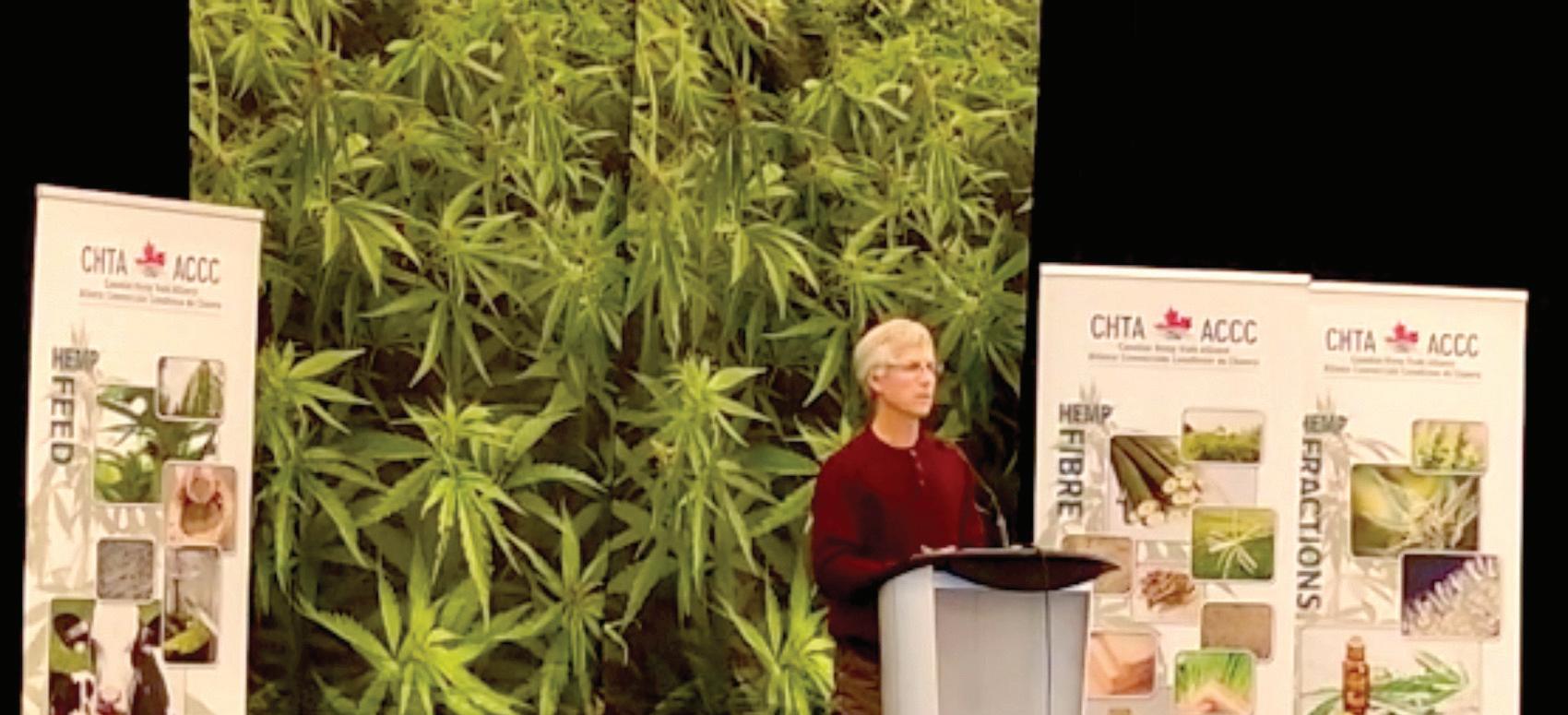
As the hemp industry steps into 2025, leaders are reflecting on progress made and the promising future ahead. Will Van Roessel, Interim Board Chair of Hemp Canada Chanvre (HCC), emphasized the significant strides in standardization and classification of hemp over the past year, positioning Canada as a key player in the global hemp market.
“In 2024, organizations worldwide, particularly in the U.S., dedicated substantial resources to hemp standardization and classification projects,” said Van Roessel. “This push for clear, consistent guidelines is essential for the continued growth and credibility of the hemp industry.”
The Canadian Hemp Trade Alliance (CHTA) has been instrumental in these efforts, maintaining a strong presence at ASTM International—a leading organization developing global standards. Through ASTM, CHTA has worked with international leaders to define essential aspects of hemp grading, including:
- Length & Width – Key measurements that impact material properties.
- Strength – Including tensile, torsion, and cohesion properties.
- Cross-Sectional Area – A critical factor in fiber classification.
- Linear Density – Measuring fineness for industry applications.
- Cleanliness – Evaluating purity and non-fiber content.
“These factors are vital in ensuring consistency and quality across the hemp
industry,” said Van Roessel. “They set the stage for hemp to be recognized as a standardized material for commercial acceptance.”
Looking ahead, CHTA remains committed to advancing hemp standards in collaboration with ASTM and international partners. A major research initiative continues in partnership with Dr. Miroslava Kavgic and her team at the University of Ottawa. This project aims to:
- Develop cost-effective methods to classify hemp hurd content in fiber samples.
- Explore how different densities of hemp hurd influence insulation properties, potentially opening new applications in construction and beyond.
After more than a decade of effort, a major milestone was reached in October 2024, when the Canadian Industrial Hemp Research and Promotion Agency (CIHPRA) was officially established by the Governor General in Council.
The journey to this achievement began in 2012 with a motion at the CHTA Annual General Meeting, followed by a 2016 producer vote where 95% supported the initiative. However, delays—largely due to federal election cycles—stalled progress until last year’s proclamation.
To ensure a more accessible name, the agency will operate as Hemp Canada Chanvre (HCC). The interim board, composed of CHTA PRA committee members, will oversee initial operations. The first priority will be to elect a permanent board in February 2025.
Board Structure:
- Seven regional representatives – One from each hemp-producing province (BC, Alberta, Saskatchewan, Manitoba, Ontario, Quebec, and the Maritimes).
- Two industry representatives – One from the supply chain and one from importers.
“All growers who have cultivated hemp within the last two years are eligible to apply for board positions,” Van Roessel explained. “The election package, including details on eligibility and timelines, will be sent out in February.”
Once the permanent board is in place, HCC will finalize bylaws and secure approvals from the Farm Products Council of Canada (FPCC) and the Department of Justice.
The agency will then begin collecting a 0.5% nonrefundable levy on:
- Hemp seed
- Hemp stalks
- Hemp biomass/chaff
- Hemp roots
Buyers and importers will collect and remit the levies, which will fund research and promotional projects.
Additional funding will likely come from government and industry partnerships, maximizing the impact of these initiatives.
“The interim board members are excited for the future and encourage everyone in the industry to help out whenever possible to make this program a reality as quickly as possible,” said Van Roessel.
With a clear roadmap for growth, standardization, and innovation, the Canadian hemp industry is poised for a transformational year in 2025.



By Joan Airey
Christine Kulas, Program and Events Manager for Agriculture in the ClassroomManitoba (AITC-M), recently spoke at the Manitoba Farm Women’s Conference, emphasizing the vital role agriculture plays in the education system. Working with a team of 11, Kulas helps deliver agricultural education to 459 schools across the province from her office in Winnipeg.
“It’s amazing to think that in just six harvests from now, today’s Grade 6 students will be high school graduates, stepping into a world where they will be making decisions that shape our future,” Kulas said. “We believe it’s crucial to start educating them about agriculture now.”
AITC-M provides highquality resources and programs that connect agriculture to the school curriculum across multiple subjects. By equipping teachers with these tools, students not only gain critical thinking skills but also develop a deeper understanding of food production and career opportunities
in the agricultural sector.
“Our success would not be possible without the volunteers and partners from the agricultural industry,” Kulas added. “Their expertise, time, and financial support help bridge the gap between the farm and the classroom, providing students with realworld experiences that inspire the next generation of agricultural leaders.”
Kulas, who joined AITCM two years ago, shared how her career quickly became her passion.
“Growing up in the city, I didn’t understand agriculture or where my food came from,” she said. “But a visit to a vegetable farm 15 years ago opened my eyes to the vital role this industry plays in our daily lives. Managing programs like Seed Survivor and The Amazing Agriculture Adventure has been incredibly rewarding, allowing me to learn alongside students and witness firsthand the importance of agriculture in our community.”
Kulas highlighted AITCM’s recent successes, including:
- Reaching 37,000 students in 459 schools in 2023, marking a 9,000-student increase from 2022.
- Creating over 407,000 student learning experiences in 2023, a 220% increase from the previous year.
- Quadrupling the number of teachers involved over the last four years.
- Expanding its presence in urban areas, with 1 in every 3 schools in Manitoba participating in AITC-M programs.
- Engaging over 300 new educators, 119 new volunteers, and 12 new communities in 2024.
One of the most sought-after programs is the classroom gardening initiative, Little Green Thumbs and Sprouts, which provides year-round, hands-on agricultural learning.
“These programs have been amazing for both teachers and students,” Kulas noted.
“In 2024, we had 140 classroom garden sites across Manitoba, and we’re excited to grow that number to 200 in 2025. These living labs teach students and teachers about soils, nutrients, plants,
food production, nutrition, and environmental sustainability.”
Kulas emphasized the need for volunteers to support AITC-M’s programs. Opportunities range from sharing agricultural knowledge in classrooms during Canadian Agriculture Literacy Month to guiding students through interactive stations at the Amazing Agriculture Adventure. Volunteers can also assist in assembling resource kits for educators.

“Our programs truly rely on the generosity of volunteers,” Kulas said. “We provide training, both in person and virtually, tailored to each program or role.”
For those interested in volunteering, visit aitcdashboard.ca/volunteers to create a profile and complete an application.
With a growing impact on education, Agriculture in the Classroom-Manitoba continues to cultivate the next generation of informed consumers, decision-makers, and agricultural leaders.
The Do More Agriculture Foundation is pleased to open the 2025 Community Fund for rural mental health education. Proudly presented by Farm Credit Canada (FCC), the Community Fund empowers rural communities across Canada to create space for mental health conversations for learning, hope and change. When more people understand mental health, communities build better health outcomes for everyone.
Applications for the Community Fund are open until March 2, 5:00 pm central time.
“FCC’s steadfast and bold commitment to support rural community action for mental health is inspiring,” stated Dr. Merle Massie (PhD), Executive Director of The Do More Agriculture Foundation.
“Communities have told us, again and again, what happens at these events. They’ll say: ‘My community is leaving with new skills and a better understanding of how to support our peers. I’m proud
to see this kind of change in our community.’ When communities tell us that it’s helping, we just want to do more,” said Massie.
“Mental health supports are a critical component in building strong and resilient rural communities. That’s why FCC is proud to be a longstanding partner of the Do More Agriculture Foundation and the Community Fund”, said Justine Hendricks, FCC President and CEO. “Providing tools, education, and support that foster mental health and resilience go a long way in a farm’s success, and in the vitality of rural communities. This partnership underscores FCC’s commitment to the mental health of Canadian farm families.”
The Do More Agriculture Foundation is excited by FCC’s commitment to increase its support which will allow more communities to champion mental health learning workshops than ever before. Last year, 140 communities applied for funding,
showcasing a strong need across Canada for more mental health learning at the community level.
As the program grows, there is learning, including for Do More Ag. “Communities say that shame and fear can stop people from signing up for workshops. We are building additional resources for community champions, to help them touch and welcome a wide variety of people,” said Massie.
While communities are a top priority, The Do More Agriculture Foundation thinks about ‘community’ broadly. It welcomes champions from agriculture associations, small industries tied to agriculture, financial and accounting businesses, pharmacies and hardware stores, faith communities, rural governments and health care businesses and any other communitybased champion to lead these events.
“We are so proud of Canadian agricultural communities. The number of communities
who have applied for and hosted workshops with us has grown year over year, showcasing a growing appetite for communities to actively find ways to improve mental health,” Massie added.
Program offerings include the popular Talk Ask Listen and In the Know sessions, SafeTALK suicide support workshops, and intensive Mental Health First Aid training. A peerto-peer grief support group will continue. The Field of Mind men’s mental health support sessions will expand in 2025. Specialized AgCulture courses will continue to provide mental health professionals with an in-depth understanding of the specific challenges unique to the agricultural sector.
The fund welcomes applications from across Canada. For further details and to submit applications, please visit The Do More Agriculture Foundation: Community Fund at domore.ag/community-fund.


By Harry Siemens
Manitoba’s cattle industry navigates a landscape filled with challenges and opportunities. The province maintains a significant beef cattle population, with approximately 882,600 head reported in 2024, though herd numbers continue to decline in line with national trends. High cattle prices reflect strong demand, yet producers remain cautious about herd expansion due to rising land costs—up 19% in 2023—and concerns over market sustainability. Despite these challenges, Manitoba remains a cornerstone of Canada’s beef sector, with cow-calf operations shaping the industry’s foundation.
As the year unfolds, Manitoba’s cattle industry faces both promise and uncertainty.
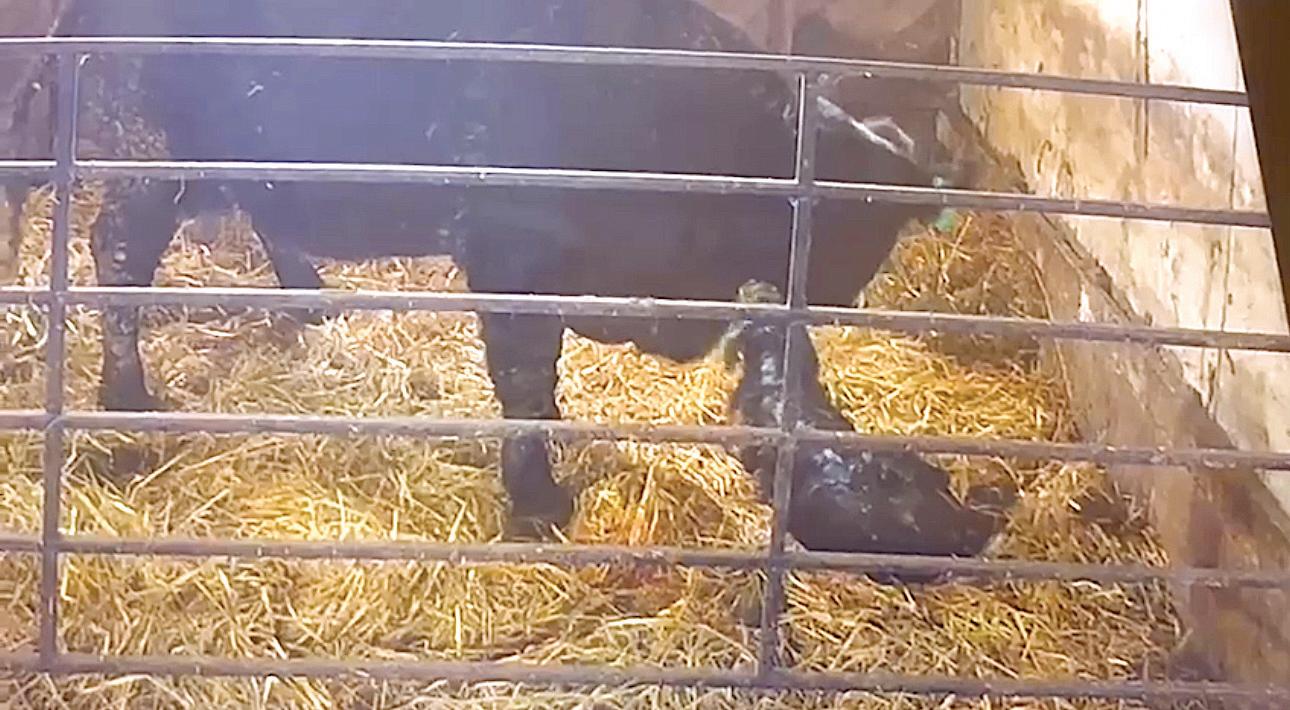
Warren Graydon, a cow-calf producer from Woodmore, MB, reflects on the current state of the market and the challenges ahead.
“We’ve never seen a market like this, and it’s holding longer than expected,” Graydon says. “Experts suggest calf prices could rise another 10% to 15% this fall, adding roughly $300 per calf. But will it happen? I don’t know.
I’m afraid the market will fall apart.”
Signs of volatility in the U.S. market add to his concerns.
“I saw a 10-day-old calf sell for $1,220 U.S. That’s $12 a pound. Normally, a bottle calf sells for a few hundred dollars. It just doesn’t seem real,” said Graydon.
Social media also reflects soaring prices.
“At 3 am, while waiting for a cow to calve, I saw a buddy selling bottle calves for nearly $1,000 each,” he noted.
Despite the uncertainty, Graydon has expanded his herd.
“We’re just under 300 cows now. One of my lease operators retired after 12 years, so
I had to buy his herd to keep my farm going. He gave me a fair deal, but it was still a big purchase,” he said. The high cattle prices make selling tempting.
“I could cash out today, clear my debts, and retire at 47. But then what? Mexico sounds good when it’s minus 30, but farming is what I do,” said Graydon.
He credits luck as much as a strategy for his success.
“Am I smart in this business? No, I was crap-house lucky. I won’t lie. I made deals at the right time for the right values. Did I pay full price? Of course not. I had a little help,” he said.
The harsh conditions make stepping away tempting.
“It’s hard to keep doing this at minus 30 when I could cash in, sit on a beach, or work at a vet clinic. Maybe even become a chauffeur,” he commented.
Still, Graydon isn’t ready to walk away.
“What keeps me in this? I’m not smart enough to be a doctor or lawyer. I can’t work in an office. My kindergarten teacher told my parents I don’t play well with others, so I work best alone.
I’ve been self-employed my whole life,” said Graydon.
Even in previous jobs, independence was key.
“As a truck driver, I worked for someone else, but I picked my loads and made my own schedule. Then, as an owneroperator, I was fully in charge. Now, I’m back to doing this, and again, I’m my own boss—just with 300 hungry mouths to feed every day in winter,” he said. “I can’t sit around and do nothing.
Selling remains an option, but not an easy one.
“If I sold 300 bred cows at $4,000 each, that’s $1.2 million. That would clear my debt and leave some cash. Add in land sales, maybe another $3 or $4 million. I could
sit and do nothing for years if I invested it right,” he said. “But I can’t.”
Graydon’s feed situation is in good shape.
“Believe it or not, I’m still feeding corn silage from 2023. I haven’t touched my 2024 silage yet. The same goes for my alfalfa. I’m using some silage bales for a select group of calves, but overall, I’m set for feed, and I don’t see people in my area scrambling,” he noted.
Feed prices also remain reasonable.
“I just bought 500 small square wheat straw bales from a buddy for $3 a bale delivered. That’s a friend deal, but even at market rates, big square bales are going for $20 to $35, depending on quality. Right now, you can probably buy feed cheaper than you can produce it,” said Graydon.
As the market fluctuates, Graydon, like many producers, remains watchful, balancing risk with the long-term sustainability of his operation.
Since that conversation in January, the uncertainty has increased due to the tariff situation with the United States. In short, since the tariff spat began brewing, Manitoba cattle prices have not crashed—yet. They’ve held firm at elevated levels seen in late 2024.




By Joan Airey
The November 2024 Manitoba Farm Women’s Conference offered attendees a choice of four tours: MacDon, the harvesting specialist; the Royal Aviation Museum; Capital K Distillery; and Peak of the Market. Intrigued by their wide range of offerings beyond potatoes, I eagerly signed up for the Peak of the Market tour.
Founded in 1942, Peak of the Market has grown into a pillar of Canada’s agricultural industry, supplying fresh, high-quality produce from asparagus to zucchini across Canada and into 37 U.S. states. With over 80 years of operation, the company continues to thrive through innovation, sustainability, and strong partnerships with growers and retailers.
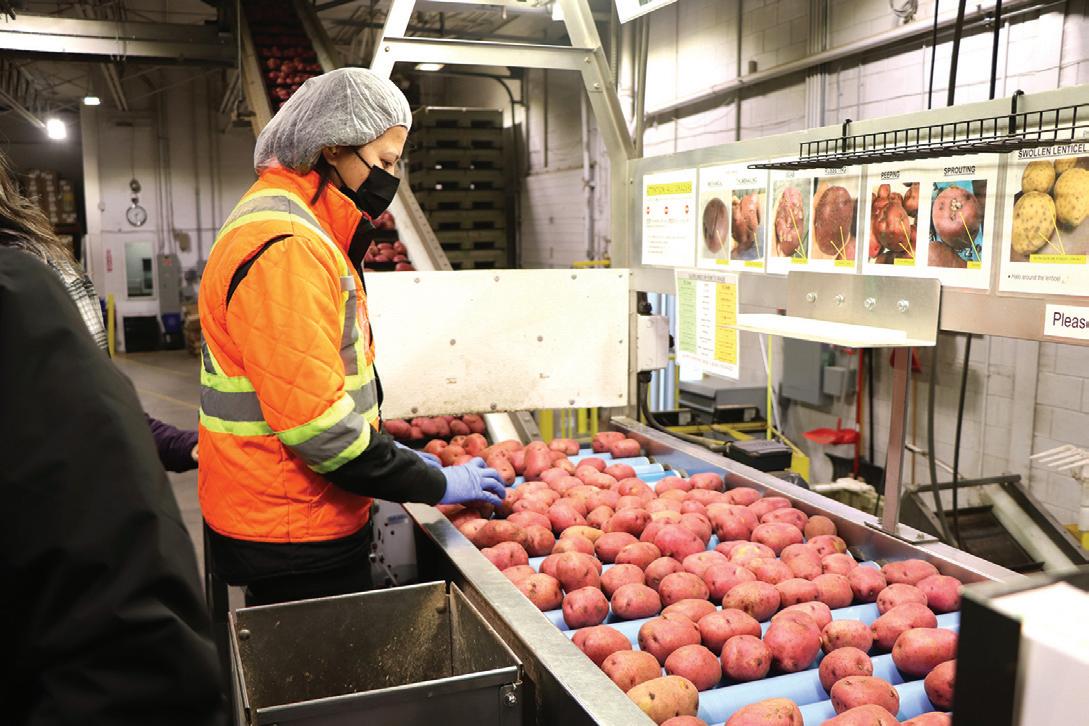
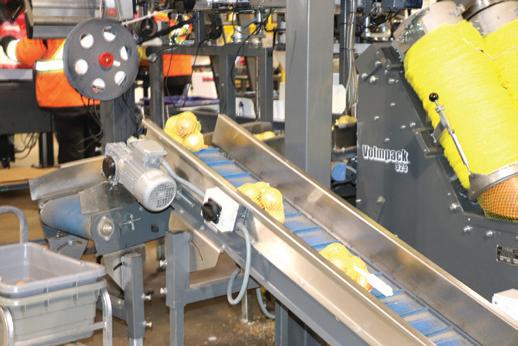
Committed to sustainability, all Peak of the Market products are packaged in recyclable materials, including plastic, paper, and even the quick locks on our bags.
“We have 80 employees in Winnipeg, keeping the plant running 24 hours a day from Monday to Friday and a day shift on weekends,” explained Pamela Kolochuk, CEO of Peak of the Market.
“Additionally, we operate a warehouse in Calgary with five employees. The company is owned by 11 shareholders, all of whom are growers, ensuring a direct connection between production and distribution.”
To maintain a year-round supply of potatoes, Peak of the Market growers cultivate a variety of types, including reds, yellows, whites, russets, fingerlings, and creamers. In addition, the company supplies processing potatoes and chip potatoes to McCain Foods.
The company ensures that no vegetables go to waste— any produce unsuitable for human consumption is redirected as animal feed.
As a grower-owned business, Peak of the Market manages its entire supply chain—from seed to plate. With a full-service team handling sales, logistics, packing, and distribution, they maintain strict quality control while providing fresh, nutritious food across North America.

By Elmer Heinrichs
“We also partner with a grower in Costa Rica to help distribute his pineapples, and we focus on connecting great growers with caring consumers,” said Kolochuk. Peak of the Market actively supports food security initiatives across Canada.
“We work with Harvest Manitoba, Second Harvest, and Canadian Food Banks to ensure vegetables are accessible to those in need,” Kolochuk noted. “Locally, we’ve partnered with the Winnipeg Blue Bombers to help distribute fresh produce to community groups in Winnipeg.”
Beyond potatoes, Peak of the Market works with approximately 24 different vegetables grown in Manitoba, though the selection varies annually. For vegetables that cannot be grown year-round in Manitoba, the company partners with growers in the U.S. and Mexico to ensure continuous supply.
Their website, peakofthemarket.com, offers detailed grower information and an availability chart for each vegetable.
With a legacy built on sustainability, innovation, and community, Peak of the Market continues to be a leader in Canadian agriculture, delivering farmfresh produce to households across the country and beyond.
As U.S. President Donald Trump continues to dangle the threat of steep tariffs on Canadian imports, Canada’s Minister of Export Promotion, International Trade and Economic Development, Mary Ng is citing new trade deals with Ecuador and other nations as proof that its trade diversification strategy is working.
Ng explained that the free-trade agreement with Ecuador, the sixth-largest economy in South America, is the 16th such deal signed since the government launched its trade diversification push eight years ago.
A lot of the existing trade with Ecuador is agricultural, with the South American nation sending Canada tropical fruit such as bananas, cocoa beans and seafood, while Canada sends wheat, cereal and lentils.
Statistics Canada says the top products traded between the two nations also include petroleum products, fertilizers and precious metals. Ng said she sees opportunities in services as well.
When the Canada-Ecuador Free Trade Agreement has entered into force, Canada will have trade agreements with all the countries on the South American Pacific coast.


By Canadian Agricultural Safety Association when
Whether travelling by car, motorcycle, or tractor, we all have a responsibility when it comes to road safety. However, too often, there are reports of traffic incidents involving motor vehicles and farm equipment. Sadly, these many of these incidents have serious consequences for both drivers and equipment operators.
According to Canadian Agricultural Injury
Reporting data, traffic collisions accounted for approximately 5% of all agriculture-related fatalities from 2011 to 2020. Here are some tips to help ensure everyone’s safety while on the road:
Motorists
• Tractors and other farm equipment travel significantly slower than typical traffic, meaning a motor vehicle driving at the speed limit can close the distance on farm machinery much faster than anticipated. Always reduce your speed
approaching any farm equipment.
• Keep in mind that spring planting and fall harvest seasons are when more agricultural equipment is travelling on public roads, especially in rural areas.
• Always keep a distance behind farm machinery, which provides a better view to determine when it’s safe to pass and helps the equipment operator see you.
• Although it may be frustrating when behind a slowmoving vehicle, it’s important to only pass when it’s safe to do so.
• Be aware that some farm equipment is very wide and may take up more than one lane.
• Tractors and other farm vehicles often make wide left turns. If you see a tractor veer to the right, there is a good chance it is about to turn left – this is NOT a signal for motorists to pass!
Farm Equipment Operators
• Whenever possible, use side roads rather than highways due to the size and
slower speeds of farm machinery. Take the time to plan your route before hitting the road.
• Ensure your equipment it outfitted with reflective materials and a slow-moving vehicle (SMV) sign that is in good condition and visible.
• Before going out on any road, check that all lights, beacons, and turn signals are clean and working properly.
• Double-check that all loads are secure and that your equipment won’t leave debris on the road or send any projectiles toward motorists.
• Understand the width and height of your equipment and adjust mirrors accordingly. This will help ensure safe travel and clearance from potential obstacles like road signs, overhead wires, and bridges.
• When transporting oversized loads or operating on high-speed roadways, it’s best practice to use a pilot vehicle whenever possible.
(NOTE: Some provinces

have specific requirements regarding pilot vehicles, while others do not. Be sure to check your provincial highway traffic legislation to confirm requirements in your area.)
Remember: We all share the same public roads, which means we all have a role to play in making sure everyone gets home safely. For more farm health and safety tips, please visit agsafetyweek.ca.
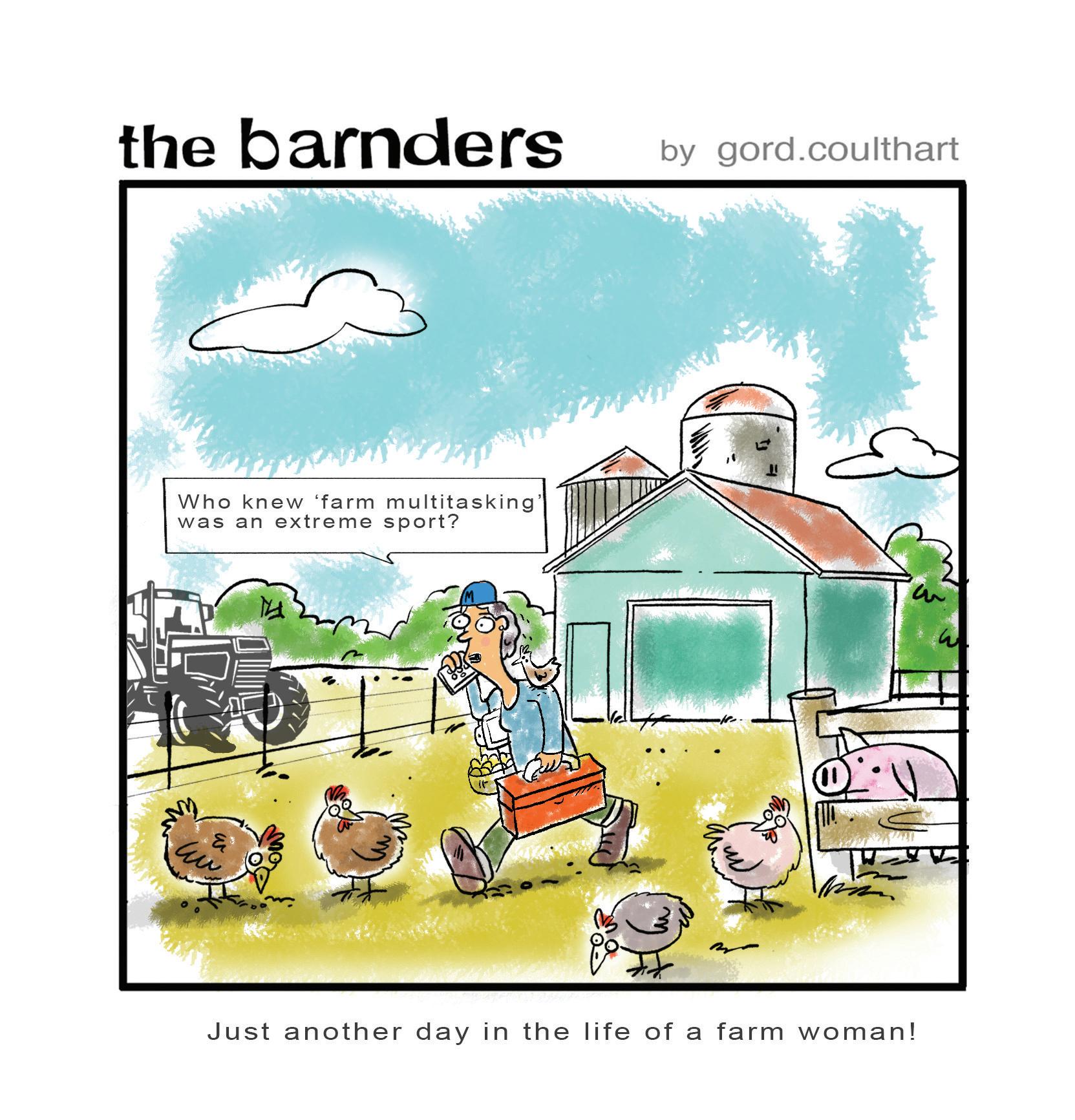
There’s no question that women are vital to the strength and success of Canadian farms. But despite their indispensable role on family farms, particularly with wellness and safety, women’s contributions are often undervalued.
Women are often responsible for “invisible work” around the farm and home, balancing childcare, family responsibilities, and household management, along with tasks on the farm. This workload and the unique challenges that women in agriculture face can lead to burnout and isolation.
To create a healthy balance between farm duties, family needs, and personal wellbeing, establish routines and responsibilities and encourage open communication within the family. Building connections and a support network can provide reassurance that you’re not alone in your experiences.
By collectively supporting women in agriculture, we can expand agricultural opportunities for future generations. This Canadian Agricultural Safety Week, let’s commit to prioritizing farm safety every day. For more info, please visit agsafetyweek.ca.
Life on a farm can be incredibly rewarding, but it’s far from easy.
Farmers face a long and ever-changing list of challenges. Those challenges, combined with the long hours that come with farming, can place signifi-
cant strain on a person’s mental health, potentially leading to high stress, anxiety, or depression.
Taking care of your mental well-being is essential to farm health and safety. Incorporating healthy behaviours into your routine
can go a long way towards protecting your mental well-being. That includes practicing self-care regularly, reaching out to friends to avoid isolation, setting realistic expectations, and limiting negative thoughts.
Remember, there’s never any shame in asking for help.
This Canadian Agricultural Safety Week, let’s commit to prioritizing farm safety every day. For more information, please visit agsafetyweek.ca.
The Canadian Centre for Agricultural Wellbeing (CCAW) is proud to announce the launch of the National Farmer Wellness Network (NFWN) Crisis Line, 1-866-FARMS01 (1866-327-6701), a transformative initiative designed to address the unique mental health challenges faced by Canada’s farmers, farm families, and agricultural workers.
This program, made possible through an investment of $1.5 million over three years from Farm Credit Canada (FCC), provides tailored mental health support delivered by licensed professionals trained in the Canadian Agricultural Literacy Program (CALP).
“The National Farmer Wellness Network ensures farmers have access to vital, farm-tailored mental health support. With FCC’s backing, it tackles industry-specific stressors and strengthens resilience in Canada’s agricultural communities,” said Dr. Briana Hagen, Chief Executive Officer and Lead Scientist, Canadian Centre for Agricultural Wellbeing. “Since 2022, CCAW has worked to bridge mental health service gaps for farmers. The National Farmer Wellness Network Crisis Line fills a critical need, providing urgent support and ensuring continuity of care nationwide.”
Farming is one of the most demanding and high-stress occupations. The financial pressures, isolation, and emotional demands of caring for livestock and crops can take a toll on mental health.
The National Farmer Wellness Network Crisis Line bridges the gap by offering accessible, culturally informed, and confidential crisis services, ensuring farmers receive care tailored to their needs in moments of crisis.
“The National Farmer Wellness Network is more than a program; it’s a commitment to Canada’s agricultural families,” explained Deborah Vanberkel, Chief Programming
Officer, National Farmer Wellness Network. “We’re here to provide support that understands and respects the unique realities of farming life. Together with FCC, we’re creating a network that farmers can trust to navigate their challenges and prioritize their wellbeing.”
Farmers can access immediate, no-cost mental health and crisis support specific to the agricultural community by calling the National Farmer Crisis Line at 1-866-FARMS01. This helpline ensures secure, confidential assistance for farmers and those in the agricultural industry.





By Sylvain Charlebois
Few topics in Canadian agriculture spark as much debate as supply management in the dairy sector. The issue resurfaced when U.S. President Donald Trump criticized Canada’s protectionist stance during NAFTA renegotiations during his first term, highlighting the need to reassess the system’s long-term viability.
Proponents say supply management ensures financial stability for farmers and protects them from global market swings. Critics argue it inflates prices, limits competition and stifles innovation. A policy assessment titled “Supply Management 2.0: A Policy Assessment and a Possible Roadmap for the Canadian Dairy Sector”, conducted by Dalhousie Uni-
versity and the University of Guelph, exposes inefficiencies and presents a compelling case for reform.
Created in the 1970s to regulate production and stabilize prices, Canada’s supply management system uses strict quotas and high import tariffs. However, successive trade agreements such as the USMCA, CETA and CPTPP have eroded these protections.
The federal government’s $3billion compensation package to dairy farmers for hypothetical trade losses underscores the system’s fragility. Instead of building resilience, supply management fosters reliance on government payouts rather than market-driven efficiencies. If current trends persist, Canada could lose nearly half of its dairy farms by 2030—regardless of who

is in the White House.
Consumer sentiment is shifting. Younger Canadians are questioning the sustainability and transparency of the dairy industry, particularly after scandals such as ButterGate, where palm oil supplements used in cow feed altered butterfat content, making butter harder at room temperature.
Additionally, undisclosed milk dumping of between 600 million and one billion litres annually has further eroded public trust. These factors highlight the industry’s failure to align with evolving consumer expectations.
The policy assessment highlights overcapitalization in the dairy sector. Government compensation payments, coupled with rigid quotas, encourage inefficiency rather than fostering innovation. Unlike their counterparts in Australia and the European Union—where deregulation has driven productivity gains—Canadian dairy farmers remain insulated from competitive pressures that could otherwise drive modernization.
The report also highlights a growing geographic imbalance: over 74 per cent of Canada’s dairy farms are concentrated in Quebec and Ontario, despite only 61 per cent of the national population residing in these provinces. This concentration exacerbates supply chain inefficiencies and increases price disparities. Consumers in Atlantic Canada, the North and Indigenous communities face disproportionately high dairy costs, raising serious food security concerns. Addressing these imbalances requires policies that promote regional diversification in dairy production.
Modernization must include gradual reform of quotas and tariffs. The existing quota system restricts farmers’ ability to respond dynamically to market signals. While quota allocation is managed provincially, harmonizing the system at the federal level would create a more cohesive market. A flexible quota model tied to demand would enhance competitiveness and efficiency.
Tariff policies also warrant reassessment. While tariffs protect domestic producers, they contribute to artificially inflated consumer prices. A phased reduction in tariffs, complemented by direct incentives for farmers investing in productivity-enhancing innovations and sustainability initiatives, could strike a balance between maintaining
food sovereignty and fostering competition.
Despite calls for reform, entrenched interests within the sector resist change. Industrial milk prices in Canada are now the highest in the Western world, making the sector increasingly uncompetitive globally. While supply management also governs poultry and eggs, these industries have adapted more effectively through innovation. The dairy sector, however, continues to grapple with structural inefficiencies.
Abolishing supply management outright is neither desirable nor practical. Sudden removal of protections would expose Canadian dairy farmers to aggressive foreign competition, risking rural economic stability and domestic food security. A balanced approach that preserves the core benefits of supply management while integrating market-driven reforms is essential.
Canada’s supply management system, once a pillar of stability, has become an impediment to progress. As global trade dynamics shift and consumer expectations evolve, policymakers have an opportunity to modernize the system. The Supply Management 2.0 recommendations emphasize regional diversification, value-chainbased pricing models aligned with market demand, and a stronger focus on research and development. Performance-based government compensation, rather than blanket payouts that preserve inefficiencies, would improve long-term sustainability.
The question is no longer whether reform is necessary, but whether the dairy industry and policymakers are ready to embrace it. A smarter, more flexible supply management framework is crucial to ensuring Canadian dairy remains resilient, competitive and sustainable for future generations.

Dr. Sylvain
is a Canadian professor and researcher in food distribution and policy. He is senior director of the AgriFood Analytics Lab at Dalhousie University and co-host of The Food Professor Podcast. He is frequently cited in the media for his insights on food prices, agricultural trends, and the global food supply chain.
© Troy Media / Supplied photo
By Harry Siemens in Manitoba.”
Manitoba Pork is preparing to host its 60th annual AGM and Banquet on Thursday, April 10, at The Fairmont Winnipeg. Producers, sector stakeholders, and industry representatives are invited to a full day of business meetings and guest speakers, followed by an evening banquet celebrating the past year and the organization’s history.
Manitoba Pork, formerly known as the Manitoba Pork Marketing Board, was established in 1965 to represent and support the province’s hog producers.
In 1996, eliminating the single-desk hog marketing system allowed producers to contract directly with processors. This significant change led to the evolution of the Manitoba Pork Marketing Board into what is now known as Manitoba Pork. Despite the structural changes, the organization has continued to serve as the representative body for all pork producers in Manitoba, focusing on industry programs, quality assurance, food safety, and animal care.
Hams Marketing Co-op is a direct result of removing the Manitoba Pork Marketing Board. Following the deregulation of hog marketing in 1996, the Co-op provides producers with market access, pricing transparency, and risk management tools without a centralized marketing system.
The 60th anniversary AGM serves as a milestone, reflecting on six decades of growth, challenges, and achievements within Manitoba’s pork industry.
Reflecting on Manitoba Pork’s 60th Annual AGM, General Manager Cam Dahl acknowledged the industry’s long history, stating, “It’s a long time ago already.” He highlighted the resilience of Manitoba’s hog producers, saying, “You can’t be faint of heart and be a hog producer
Dahl recalled the transition from the hog marketing board, noting, “I remember it when it was a hog marketing board.”
The change was beneficial, explaining, “I think you’ve seen the growth of processing here in Manitoba that I don’t think you would have seen otherwise and the growth of production as well.”
He emphasized the industry’s economic impact, stating, “There are 22,000 Manitobans that depend on the industry for their jobs. I don’t think you would have seen that if we hadn’t made that change.”

As Manitoba Pork awaits the March 4 deadline tied to President Trump’s proposed tariffs, General Manager Cam Dahl highlighted ongoing discussions with U.S. counterparts.
“We have been meeting with our U.S. counterpart,” he said, referencing a recent visit to Minnesota.
Collaboration among Canadian provincial pork organizations is also strengthening.
“Our Alberta Pork and Saskatchewan Pork joined us,” Dahl shared, calling this growing cooperation a positive step.
However, uncertainty remains.
“I think there’s an understanding in the U.S. that this is going to hurt, and it’s going to hurt their individual states,” he noted. Despite recognizing the economic impact, he admitted, “Like us, they’re not quite sure what to do about it.”
Dahl reflected on “Made in America” and the ripple effect of tariffs. As concerns over President Trump’s tariffs grow, Dahl confirmed that the January 26 “Made in America” policy is still in effect, stating, “That is still on the books, and that’s going to add to the problems.”
While the full impact remains unclear, he estimated,
As Manitoba Pork awaits the March 4 deadline tied to President Trump’s proposed tariffs, General Manager Cam Dahl highlighted ongoing discussions with U.S. counterparts.
“We’re looking at probably six months before that. I think you’d start to see an impact on people choosing to buy Canadian isoweans or not.”
Dahl emphasized that the issue extends beyond a single tariff on Canadian pigs or pork exports to the U.S. He explained, “An isowean goes into Iowa; it’s finished and processed in Iowa. The hams go into Mexico for deboning, pressing, and processing. Then, the packages come back into the U.S. and Canada for retail. Well, that package will potentially get hit three times with tariffs.”
Using another example, he pointed to Canadian pork processed in Winkler, MB, and exported to the U.S. for products like Johnsonville sausages, which then return to Canada.
“Well, that’s going to get hit with two-time tariffs. So it’ll potentially be 50% more expensive when it gets to the store shelves,” he said.
His conclusion was clear, “How will that not impact consumers’ prices? Of course, it will.”
The cascading effect of multiple tariffs could significantly drive up costs for producers and consumers.


By Harry Siemens
As of February 21 Manitoba is moving towards implementing mandatory livestock inspection system, marking a significant shift for the province’s beef industry.
On February 20, members of Manitoba Beef Producers (MBP) passed a resolution at their annual general meeting in Winnipeg to work with the provincial government to establish this system. This decision follows years of debate, as Manitoba remains

the only western Canadian province without mandatory livestock inspection, unlike Alberta and Saskatchewan.
Momentum for mandatory livestock inspection is growing, driven by economic pressures and producer support. While not yet implemented, the MBP resolution signals intent and a push toward regulatory change that could reshape the industry.
Carson Callum, MBP’s general manager, emphasized the significance of the AGM and the high level of producer engagement.
“Many producers took time off their farms to come out and debate various issues.
We had excellent presenters providing updates on opportunities and challenges in the sector, so overall, it was a really good event,” said Callum.
One of the key topics was livestock inspection services, a long-debated issue.
“This is a longstanding debate in our industry, going on for decades,” he said. “It

was terrific to discuss with industry leadership and attendees the benefits an inspection service could bring to Manitoba.”
Callum acknowledged that while there is support, implementing an inspection system comes with challenges.
“Many factors need addressing before a mandatory inspection service can be fully implemented,” he said.
With the resolution passed, MBP has a clear directive to move forward.
“With our resolution passing with strong support at our AGM, the board has a clear direction to check the boxes to complete the process,” said Callum.
This includes reviewing legislative requirements, defining inspectors’ powers, and engaging with Livestock Services Saskatchewan (LSS), which operates in Saskatchewan and Manitoba.
“We need to look at proper legislative changes to ensure inspectors have the necessary authority and work with
providers like LSS to explore service options. We also need to look at the added benefits, such as improving movement reporting of animals,” said Callum.
One of the most significant advantages of livestock inspection is its role in proving cattle ownership and preventing theft.
“We’ve seen major theft and fraud cases over the past few years that put this issue in the spotlight. That’s a major reason why producers support this,” he said.
Beyond theft prevention, mandatory inspection services provide additional benefits, including movement tracking and disease traceability.
‘Other western provinces use inspection services to track animal movements, essential for responding to disease outbreaks,” he said.
Recent tuberculosis (TB) cases in Manitoba and neighbouring provinces have exposed gaps in traceability.
“Tracking where animals
have gone through CFIA is a challenge because we have gaps in documentation and knowledge of movement.
Inspection services can help fill that gap,” he said.
Callum pointed out that government involvement will be critical. Saskatchewan has already implemented its inspection system, and Manitoba will need government support to do the same.
Callum said past votes were close and hotly contested— sometimes just a majority vote or even defeated. “But the recent decisive vote in favour sends a message that producers want this change,” he said.
That strong backing from producers signals to the provincial government that it’s time to act.
With much stronger cattle prices in recent years, security in the value chain has become even more critical. Beyond producers, lending and financial institutions also benefit from increased security in the industry.
“It’s important not only for producers on the ground but also for financial institutions that support them. They need stability in the system as well,” he said.
With producer support firmly in place, MBP will begin discussions with government officials, industry stakeholders, and potential service providers to determine how best to implement an inspection system in Manitoba.
The coming months will involve regulatory reviews, industry consultations, and financial assessments to ensure a smooth transition.
While full implementation is still a work in progress, MBP’s resolution marks a significant turning point for Manitoba’s livestock industry.
“This is about strengthening our sector, improving security, and ensuring our industry remains competitive. The mandate is clear—now, we take the next steps to make it happen.”
By Elmer Heinrichs
National Farmers Union (NFU) president Jenn Pfenning says Canadian farmers need greater support for domestic food production as uncertainty over tariffs continues to disrupt trade.
“We in Canada have focused a lot of our efforts in agriculture around export markets. Successive governments have pushed Canadian farmers to scale up to meet export demand, largely outside our borders,” says Pfenning.
That focus, she says, has increased reliance on imported food, leaving the country vulnerable to sup-
ply chain disruptions.
Pfenning points to storage crops as an example of how Canada can produce more local food throughout the year.
“I’m a vegetable farmer, and we’ve still got roots in storage that we’re packing and selling. There needs to be more of that,” she said.
Tariffs, she adds, make life more expensive for everyone, as costs are passed down to consumers.
“That 25 per cent doesn’t come out of the government’s pocket. It comes out of my pocket, your pocket, and the consumers’ pockets,” said Pfenning. “It’s essentially a tax on the people.”
She warns that trade uncertainty, particularly with the U.S., creates volatility for Canadian producers. Greenhouses along the border, for
example, rely heavily on exports and may struggle to redirect surplus production into the domestic market if tariffs remain.
“We do need to refocus. When a farm business is set up for export, it’s not easy to pivot overnight,” she said.
Pfenning also defends Canada’s supply management system, which regulates production of dairy, eggs and poultry to prevent market fluctuations.
“The system ensures farmers can plan and that markets remain stable. Without it, we’d see overproduction, then shortages, causing prices to crash and driving farmers into bankruptcy.”
She argues that maintaining supply management is essential, despite U.S. Criticism.
Pfenning says ensuring food sovereignty is key to maintaining Canada’s independence.
“If we can’t feed ourselves, we can’t hope to remain a sovereign nation. We’re at the mercy of whatever country we’re getting food from, and they can dictate the price,” she said. She urges governments to support farmers in diversifying their markets and prioritizing local food production.
“Looking to our own backyard and making sure we can supply ourselves doesn’t mean shutting out the rest of the world,” she said. “It means being more strategic about where we get our food and how much comes from outside our borders.”
“Trump has repeatedly said he wants it gone, but it’s what allows farmers in Canada to earn a stable living.”
By Joan Airey
Yesterday when it was below -30°C with a windchill I returned from walking our golden retriever and turned on Facebook to find a post from Walkers Greenhouse situated just east of Rivers on 25 highway then south on 116W. It was a photo of lettuce growing in their greenhouse plus another of peppers peeping out the soil. Sure, makes me want to welcome spring soon.
Walkers Greenhouse owned by Travis and Kendra Walker of Rivers, also have a second greenhouse at Holland, MB. Travis is in charge of the general day-to-day operations at the greenhouse. He also owns Party Jockeys Music which keeps him busy when the greenhouse isn’t in full swing. Kendra does the most of the colour planning, custom order/ designs. Kendra also teaches school so the greenhouse is a relaxing place to be after a hard day teaching. Travis’s mother Valerie Walker runs there Holland Division at her yard eight miles north of Holland on highway 34. She always looks forward to meeting customers when gardening season arrives.
I asked the Walkers for some tips on getting the best bedding plants you can and these are the pointers they shared.
Tips and Pointers for buying bedding plants from Travis and Kendra!
1. Have a plan - most garden centres, whether small and independent or a big chain store, will have a huge selection of plants to choose from. So, it’s in your best interest to know kind of what you are aiming for before you go.
2. Ask the staff questions! We are here to help! Especially at the privately owned garden centres, this is our living, so they want to make sure you’re happy and keep you coming back.
3. Measure your planting area before you come - some plants have a compact growth habit, some can trail out to a very large size, so it helps to know what kind of space you are wanting to fill.
4. Fertilize! Most garden centres have their plants on a fertilizer program, which usually will carry the plants for a month or so after you take them home. From there, it’s up to you to keep up with their needs if you want them to stay healthy all season. This can be done thru water soluble fertilizer, composting, even granular slow-release fertilizer (be careful with this one though, you can overdo it easily). Once again, ask your garden centre professional.
5. Some of the big box stores sell plants that have been treated with PGR’s (plant growth regulators). The sole purpose of this is to keep the plant at a manageable size throughout the retail season. While these are generally harmless, it’s good to be aware of them as they will slow your plants up, and you might wonder why nothing seems to be growing very quickly when you get them home.
Small, independent businesses generally don’t use these, which is why you might see much better growth when you purchase from them.
For example, the only growth regulator we would ever use here is a pair of
scissors, ha-ha! It’s the same old story; you get what you pay for!
6. Lastly, it’s better to buy local. If your plants come from a “mom and pop shop”, you can be certain they were raised and grown right inhouse. Which means they will be better acclimated to our environment, and they are a Canadian product! Box stores can source plants from anywhere so you really don’t know what you are getting, or if it was even grown in this country. Small businesses are going to become more and more important as we all move forward for just this type of reason.
Walkers Greenhouse also sells fruit trees and ornamental trees etc. grown in Manitoba. You can look up their greenhouse at walkersgreenhouse.ca.
If you’d like to see the photo that got me excited about spring coming check out their Facebook page “Walkers Greenhouse.”
Next month I will feature another local greenhouse and as the weather improves, I hope to feature more Manitoba greenhouses each month.
I planted a pot of radishes and lettuce under my grow lights this morning. Thanks to the Walkers for the motivation to do so. Looking forward to visiting their greenhouse this spring.
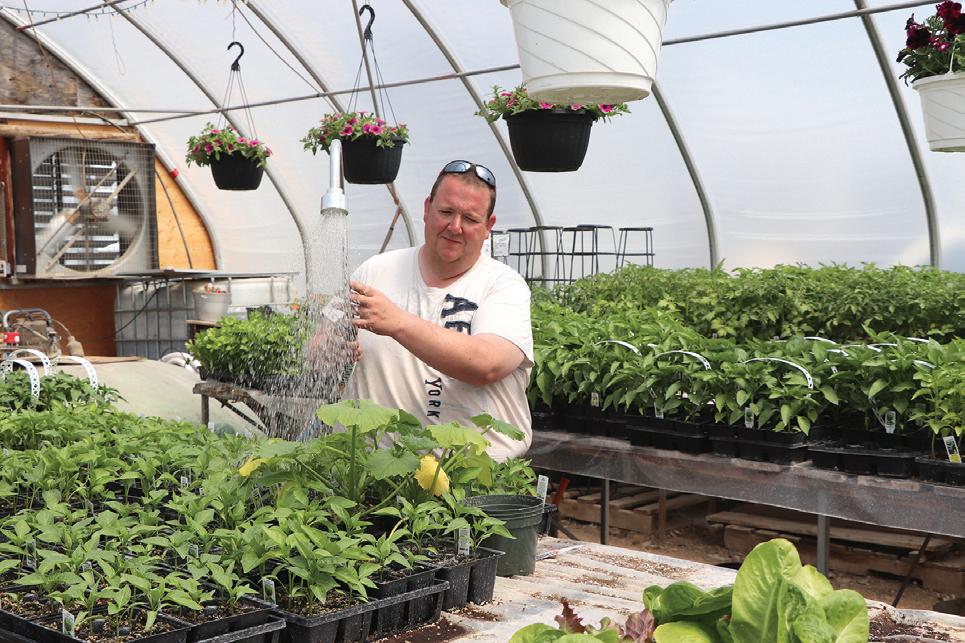
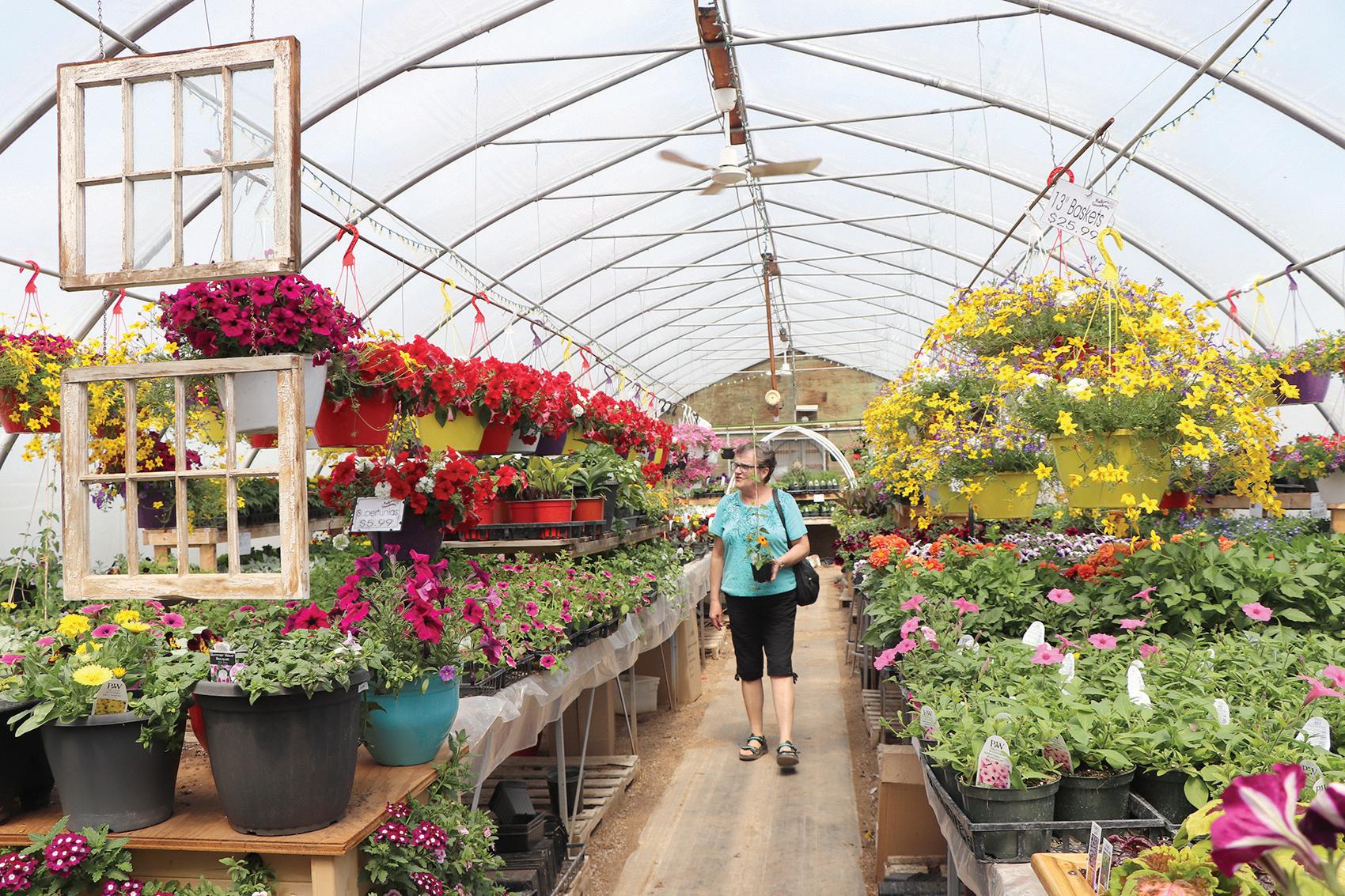


By Elmer Heinrichs
The governments of Canada and Manitoba are providing $4.7 million in grants to support 36 research projects.
Several are designed to improve crop health, according to Agriculture and Agri-Food Minister Lawrence MacAulay.
“When we invest in innovation, we’re investing in a stronger, more sustainable future for Canadian agriculture,” MacAulay said. “Farmers in Manitoba will be able to tap into digital tech – cutting costs, improving efficiency and helping them stay on the cutting edge.”
The research and innovation program supports the development of science-based solutions and tools that address known challenges, prepare for potential disruptions and climate threats, and capture emerging opportunities in the agriculture and agri-food sector.
Funds will go to Manitoba Crop Alliance for research on how crop residues influence soil, water and carbon and weed populations.
The University of Manitoba will create genomic selection models to improve the efficiency of winter wheat breeding.
Manitoba Pulse and Soybean Growers will work to identify resistance sources for soybeans root rot and assess the impact of inoculation strategies.
Agriculture and Agri-food Canada will study how to develop molecular markers to breed improved oat varieties. Funding is coming from the Sustainable Canadian Agriculture Partnership.
By Elmer Heinrichs
The world’s top fertilizer producer, Nutrien Ltd., sees sales volumes of nitrogen and potash on track for a potential record this year, with increased corn seeding in the U.S. and Brazil expected to boost demand for crop nutrients.
The bullish outlook for fertilizer comes even considering the uncertainties hanging over the industry as U.S. President Donald Trump threatens to slap tariffs on goods from Canada.
The Canada-based company forecasts corn dominating U.S. plantings this year with as much as 93 million acres, compared with 90.6 million a year earlier. Nutrien also predicts more corn seedings in Brazil.
A recent corn rally is making the grain more attractive to U.S. farmers this year than soybeans. That’s good news for Nutrien as corn, unlike soybeans, is heavily reliant on fertilizer to grow. The industry has faced extreme market volatility over the last few years as well as problems with excess inventory amid crop slumps that slowed farmer demand.
Trump’s tariff talk is a wild card for the year ahead. While a trade war presents more risks, it also may bring some benefits, if supply concerns translate into higher nutrient prices.
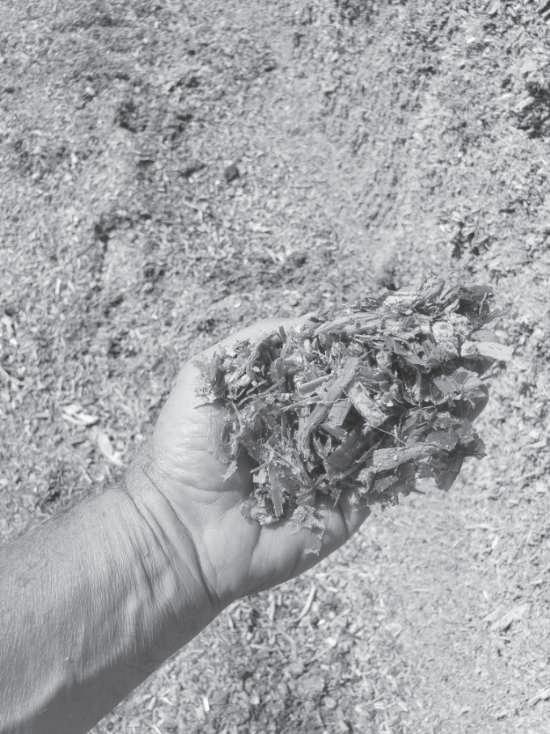
One of the first things that I do when receiving any current corn or cereal silage lab analysis is to look at its starch level. I then look back to see if its forage starch level has changed substantially from the previous years’ silages fed to lactating dairy cows.
One of the first things that I do when receiving any current corn or cereal silage lab analysis is to look at its starch level. I then look back to see if its forage starch level has changed substantially from the previous years’ silages fed to lactating dairy cows. I also look at its fibre (ADF, NDF, Ndf30) values to see what kind of effective-fibre foundation that we may be dealing with in any new lactation diets.
That’s because forage starch levels and effective-fibre content will significantly contribute to the overall energy density of the lactation dairy diet. Balanced together, they should maintain both good health and excellent milk production in lactating dairy cows.
In one particular case from last October (2024) on a 350dairy cow operation – its last bag of 2023 corn silage fed to the lactating dairy cows from then until now. Part of the issue in feeding it was its forage analysis (accompanied chart) revealed a relatively low NDF and high digestibility as well as a grain-enriched starch level of 31.0% and NFC of 44.2 %. Subsequently, the pending TMR diet was in danger of having inadequate effective-fibre (eNDF) to maintain good rumen health in the cowherd.
Six months ago, I made the best changes to the above lactation TMR diet - 1. Corn silage was limited to about 10 kg, dm. to limit its starch and NFC intake – offset by alfalfa silage. 2. Grain corn was severely cut back
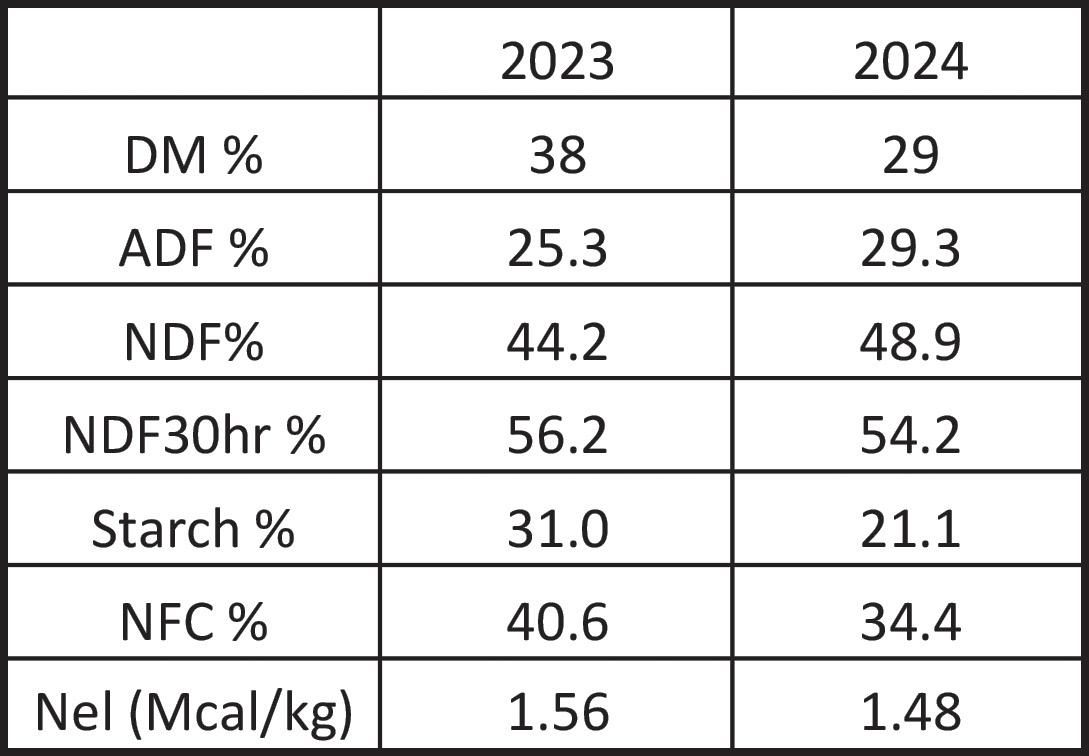
to 3.6 kg to do the same. 3. Alfalfa haylage was used to help raise effective-forage fibre levels, but its fair levels of eNDF and high soluble protein reduced its use and effectiveness 4. Canola meal was limited to curb its vegetable oil intake, and 5. Beet pulp was added at 1.5 kg. In summary – on a dry matter basis; forage/concentrate ratio was 63.5%, eNDF = 22.5%, starch = 23.20%, NFC = 39.40%.
Now the first bag of 2024 corn silage has been opened up and its analysis is shockingly different (accompanied chart) from 2023. It is much wetter. It has higher ADF and NDF values with a precipitous drop in starch of 21.1% and an NFC of 34.4%.
For the time-being, I have yet to change the integrity of the forage-base of the lactation TMR, but have increased grain-corn levels to 4.5 kg in order to achieve a dietary starch level of about 21.0%. Plus, I still adhere to the maintenance of an overall 28% NDF in the entire TMR with 21% forage-NDF level to prevent digestive upsets or the onset of SARA (subclinical acidosis). As a result, current milk production hovers around 38 kg per head with a 4.5% milkfat.
Although, the producer and I are satisfied with the current body condition score of the lactation cows - average of 3.0 – 3.5, we feel that above milk performance flatlined at 135 DIMs. We believe that the starch and NFC level of the TMR is adequate, but the rate of starch digestion is lower than it should be.

Since, no barley is fed on this dairy farm, I suggested that a load of barley be brought in and replace up to 2.5 kg of the grain-corn fed. Here is why - barley grain may contain a lower amount of starch compared to corn (58% to 72%), but its starch is more rapidly digested in the gut and therefore its energy release is quicker. In contrast, the endosperm of corn starch is embedded in a highly resistant protein matrix which repels microbial invasion. In addition, a significant portion of cornstarch is forced into the small intestine to complete its digestion that in some cases may limit the rumen microbes’ activities for efficient digestion of forages, grains and protein concentrates in order to release their essential nutrients for lactation purposes. Dairy producers that feed barley silage to their lactation dairy herd might think that this is an only corn silage problem. I have reviewed many barley silage samples taken from the harvest of 2024 and their starch levels have also fallen (i.e.: 17% to 10 – 11%) with higher-thanexpected ADF and NDF levels. As a dairy nutritionist, I recommend that simply feeding more barley grain to lactating dairy cows isn’t necessarily the answer in these cases, but maybe feeding some barley in combination with corn.
By Elmer Heinrichs
“The Central region crop meetings were really there to try and equip farmers with the latest knowledge and strategies to maximize profitability on their farm in 2025,” explained Callum Morrison, crop production extension specialist. “I think it’s really important that we have these meetings because they provide farmers with timely research-based insights on pressing agronomic challenges including pest threats and farm management practices and, really, it’s so important
we have these because we have evolving pest pressures, which are changing every year.”
Crop production meetings help us stay informed and connected said Callum.
“And, of course, with not just tariffs, but with our shifting markets, I think that staying informed is really key to maintaining a productive and profitable farm operation this year,” he said.
On the agenda at meetings in Carman, Altona and Holland were agricultural specialists with an update on
verticillium stripe, along with the latest insect information including forecasts and scouting and management tips.
As well attendees heard a weed specialist deliver details on which weeds to watch out for this year and how to control them, followed by a session, “Finding Profit in 2025”, by farm management specialists Crystal Berthelette and Roy Arnott.
“I like to think that these meetings provide a very important opportunity for networking and community engagement as well,” added
Morrison. “It allows producers to connect with not just fellow farmers, but also agronomists and, of course, our wonderful Manitoba agriculture specialists in kind of an informal way.
“I feel like it’s really important for us to foster collaboration and knowledge sharing. So, even though it’s important for us to get our great Manitoba agriculture fact-based knowledge shared out there, I think it’s also important that we’re hearing from the farmers so that comes back to us as well,” concluded Morrison.
By Harry Siemens
Dennis Schindler, Senior Land Conservation Specialist with the Manitoba Wildlife Federation (MWF), shared details about the recent open house in Arborg coordinated by MWF and its local affiliate, the Arborg Rod and Gun Club.
“A big thank you to the Arborg Rod and Gun Club for helping organize last night’s town hall and to everyone who expressed their concerns,” he said. “This community’s passion for protecting our outdoor traditions couldn’t be clearer.”
The meeting followed the format of MWF’s town hall events, covering key issues such as the 75% reduction in moose tags, night lighting, and the proposed Protected Area in the southeastern Interlake, led by the Canadian Parks and Wilderness Society (CPAWS) and Fisher River Cree Nation.
Schindler explained that the discussion also served as a follow-up to a new conservation initiative in the Interlake region, managed by CPAWS on behalf of Fisher River Cree Nation and two other First Nations.
“Attendees were adamant that the management of Manitoba’s natural resources and Crown lands remains under the authority of democratically elected officials here in Manitoba,” he added.
Schindler said MWF attended an open house in Riverton about two weeks ago, hosted by CPAWS.
“We developed a huge amount of concerns, so we rapidly moved into action, did our research, and hosted a town hall meeting in Arborg this past Thursday,” he said.
The turnout reflected strong community interest.
“Numbers aren’t always the biggest factor, but in some meetings, they matter,” Schindler noted. “We set up chairs for 300, and judging by the turnout, it was very close to that number.”
Schindler confirmed a strong presence of farmers.
“We took a show of hands to gauge the room, and there were a large number of farmers in attendance,” he said. “It was clear that this issue resonates deeply within the agricultural community.”
Schindler’s key takeaway from the meeting was the community’s frustration over a lack of clear answers.
“Insufficient responses make people uncomfortable with the proposals,” he said.
Concerns were particularly high regarding CPAWS leading the process.
“Given their mandate to create parks, there’s understandable skepticism,” he added.
Another major issue raised was the potential impact on oth-
er Crown land users.
“One CPAWS employee stated that all Crown land is treaty land—that’s his opinion—but when comments like that raise even more questions, not just for hunters and anglers, but for all Crown land users,” said Schindler.
Schindler emphasized the broader concern.
“Where does it stop? We’re seeing the federal and provincial governments in Manitoba working closely with environmental groups to establish these protected areas, providing significant funding for their creation—yet the process is happening without the involvement of all Manitobans.”
He pointed to this lack of public input as the core issue.
“That’s the crux of the matter,” he said. “And that’s exactly why the farmers were there. They want a say in decisions directly impacting their land and livelihoods.”
Schindler noted that similar to the situation in western Manitoba with the Manitoba Land Stewards, farmers in the Interlake are organizing.
“We’re connecting Interlake farmers with the farm stewards to ensure they get answers to their questions and have a voice in managing our Crown resources,” he said.
Schindler said the more governments work behind closed doors without including organizations like ours in management discussions, the more concerns will grow. He pointed to Erickson as an example of how a lack of engagement leads to community division.
“We don’t want to see that happen again, but governments must take responsibility.”
Schindler highlighted the difference in approach between conservation groups and those in the agriculture sector.
“These organizations focus on preservation, but MWF and the farmers we’ve spoken with believe management is key,” he said. “We know that managed grazing improves biodiversity and wildlife habitat and that responsible forestry can do the same.”
He also raised concerns about the economic impact of largescale land protection.
“If 15%, 25%, or even 30% of Manitoba gets restricted from any activity, how will we sustain a growing economy?” he asked. “And more importantly, how will we continue to feed the world?”
Schindler sees a growing grassroots movement across Manitoba.
“People at the local level feel unheard by governments, so they’re organizing to make their voices heard,” he said. “It’s real democracy in action.”
He drew a parallel to the early 2000s hog expansion in southern Manitoba, where producers faced intense public scrutiny.
“Back then, environmental groups demanded transparency, and we delivered,” he said. “We strengthened the technical review process and addressed every concern.”
Now, farmers are asking for the same level of transparency from the government, but, he noted, “We’re not getting it.”
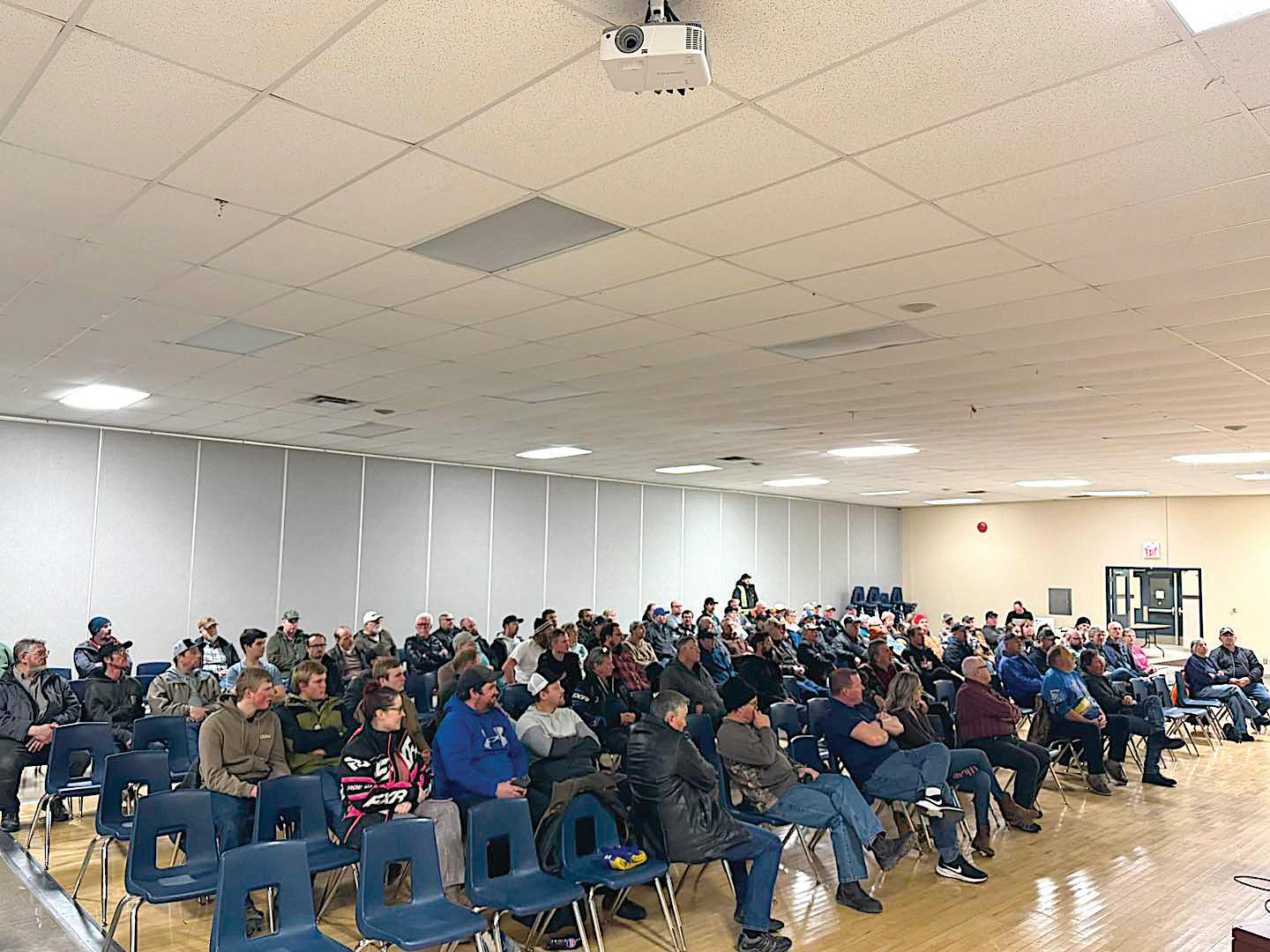

By Elmer Heinrichs
Cattle producers are seeing a strong 2025 in what could be a good year to see prices rise and cattle herds repopulate following years of harsh conditions.
That was the focus of a recent look that Farm Credit Canada (FCC) took for the cattle industry and what it has to contend with in 2025.
Leigh Anderson, a senior economist with the FCC, talks about his optimism for the industry for the year.
“In general, finding the cattle outlook very positive coming off of some very strong prices that we’ve been seeing recently driven by really a small North American cattle herd,” said Anderson.
The prices have been rising due to a reduction in herd size which came about thanks to droughts in the early 2020’s; with Anderson saying he expects to see those come back in the near future.
“Maybe in the next couple of years,” said Anderson. “We still don’t have the numbers to show that it is rebuilding, but I have heard of producers starting to retain more replacement heifers going forward. So positive news there is that maybe we’ll start to see that in the next couple of years of it turning around. Profitability and prices remaining very high are supportive of that.”
Having a big impact on trade and the economy is tariffs between Canada and the US, effecting cattle markets.
“It will impact Canadian cattle prices, the North American market is so integrated that cattle move back and forth across the border. Whether we export feeder calves south of the border to be fed and slaughtered in the U.S. or vice versa, it does impact,” he said.
Our prices in Canada trend very closely to the U.S.
“The difference between that futures price and cash price here in Canada, we call a basis. So we would expect that basis to widen, which ultimately lower Canadian cattle prices slightly going forward if tariffs are applied,” continued Anderson.
Supply could also be impacted with that having an effect on prices as well.
Anderson says that overall there are three factors people should keep an eye on in 2025, one of which is consumer resiliency in the beef market.
“One thing that we’re really seeing right now is that the high record cattle prices across North America, is the consumer has been really resilient. They’re still purchasing and consuming beef even at these high retail prices,” he said. “Now will that continue to last? Do consumers, I guess, have a tipping point? At what point do they start consuming less beef or eating other protein substitutes?”
“Another trend to monitor in 2025, of course, is the value of the Canadian dollar. So any depreciation in the dollar will provide a boost to Canadian prices received up in Canada, but it can also boost the cost of feed grains,” cautioned Anderson. “So that’s where the impact of a tariff can be a little hard to predict because it changes the calculation tremendously.”
“The other trend to monitor for 2025 is voluntary country of origin labelling. It’s not going to take effect in the U.S. until January 1, 2026, but you could see the U.S. cattle industry and slaughter industry start to adjust the way they’re going to be sourcing cattle prior to that date.”
By Harry Siemens
The Eastern Manitoba Holstein Club (EMHC) supports Holstein breeders and enthusiasts in Eastern Manitoba. They organize various events, such as dairy seminars and shows, to promote the Holstein breed and foster community engagement among dairy farmers.
Recently, the EMHC hosted a dairy seminar in Friedensfeld, Manitoba, which was well-attended and supported by generous sponsors. Additionally, they have announced an upcoming Junior and Open Show at the La Broquerie arena on Saturday, April 25, starting at 10 am.
Phillipa Robinson, a dairy producer from Giroux, has been farming alongside her parents for the past 28 years. Their family moved to Canada in 1997 from Wales, UK, as dairy farmers settling near Giroux, and they have continued their passion for dairy farming ever since.
The Robinson dairy farm operates with a parlour system and milks 180 cows. It has not transitioned to robotic milkers and is unsure if it will in the future.
One key reason for sticking with it is flexibility—recent quota increases have been easier to manage by simply milking more cows. With robotics, once each unit reaches capacity, expanding requires
investing in an entirely new system. The farm is in a transition phase, uncertain whether the next generation will take over, making longterm decisions even more complex.
Robinson, 35, is at a crossroads in deciding whether to take over the family dairy farm.
“I love the dairy industry,” she says, “but large dairies surround us, so we’re a bit landlocked.”
Despite the challenges, she believes success is still possible.
“You can make a great living with 170 cows,” she said. Her family remains involved to some extent.
“I have a sister who was back farming for a while,” said Robinson.
Five girls are on the dairy farm, including one sister and me. She’s in Saskatchewan right now, and I’m unsure if she’ll return.”
As for her future, she’s leaning toward staying.
“Probably 80% sure I’ll be here full time,” she said. When asked what prompted her parents to move to Manitoba, Robinson says, “Just more opportunity. My dad loves supply management. He went through the European system, where milk prices crashed, similar to the U.S., and he values the stability here.”

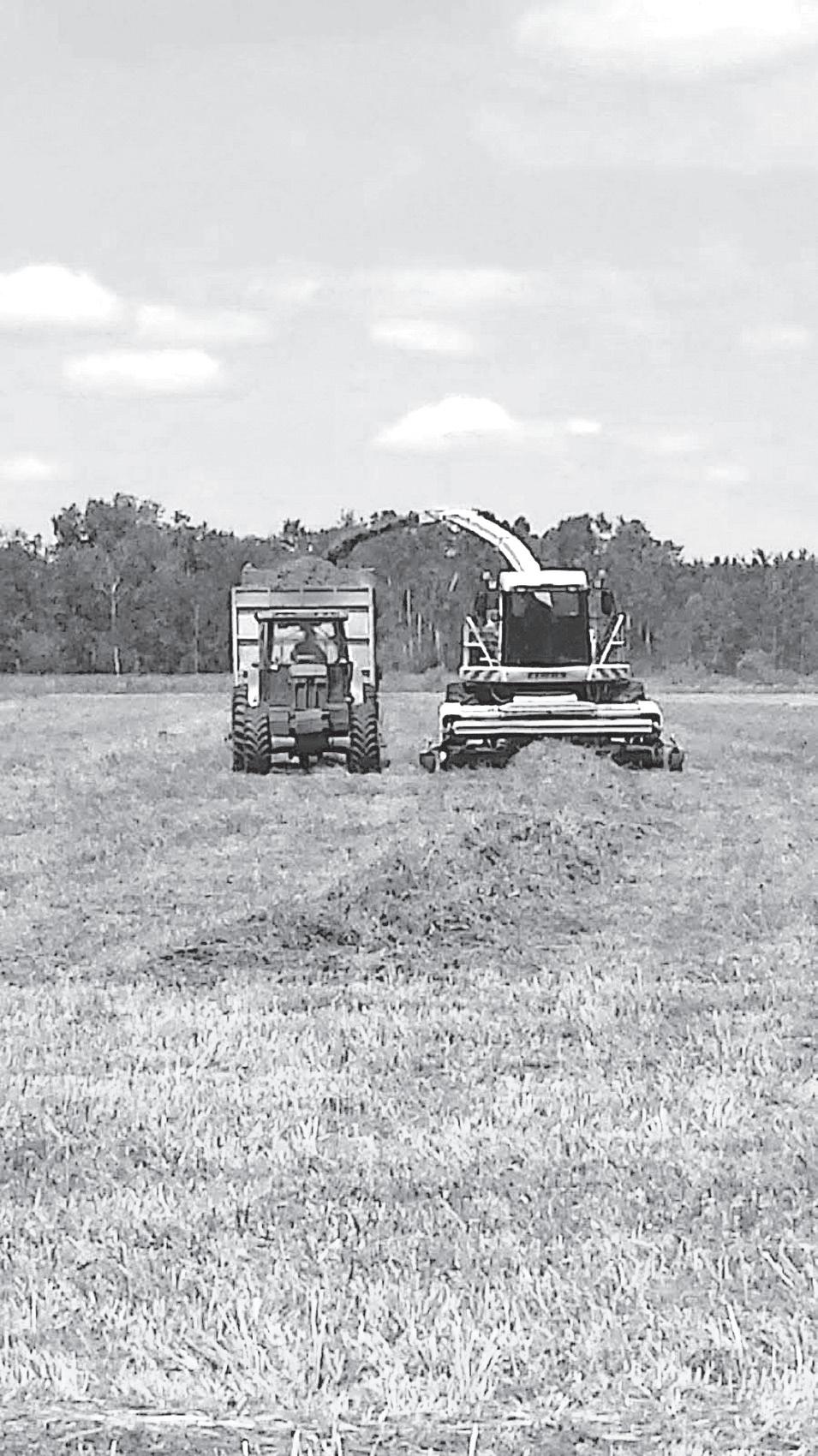
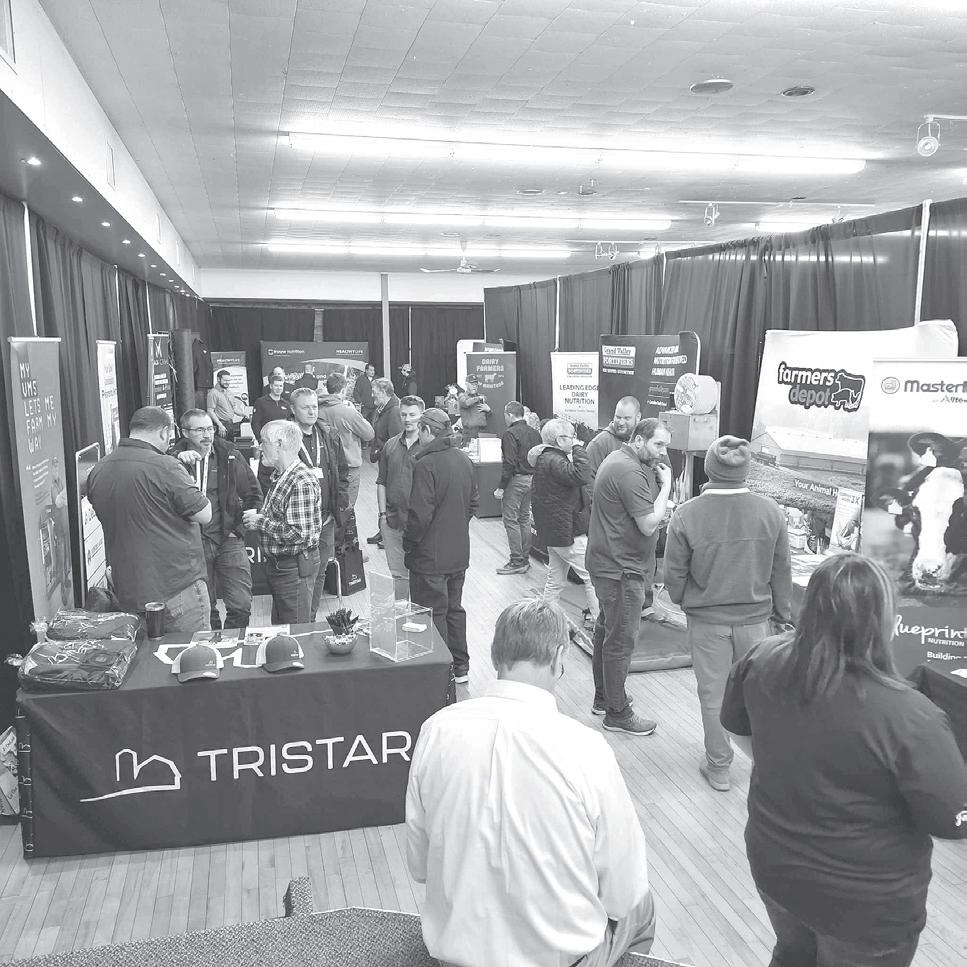
by
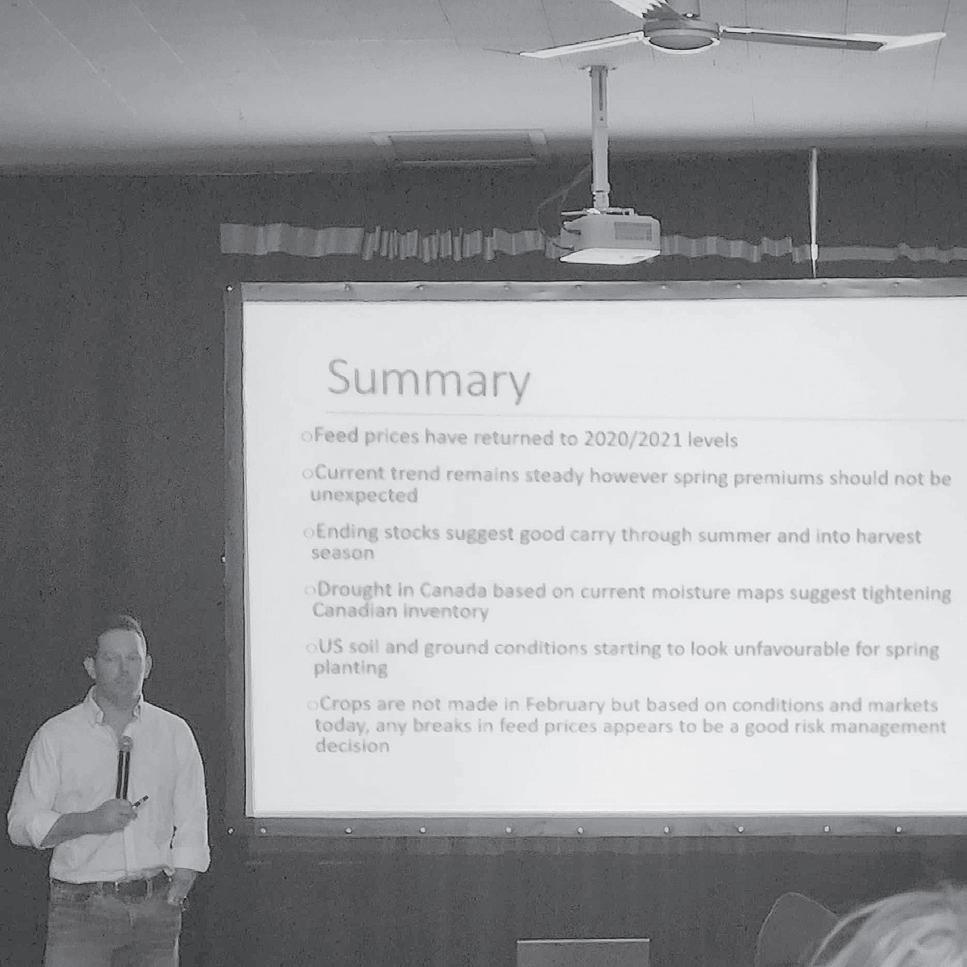
The move also offered room for growth.
“Back in Wales, we were pretty surrounded by dairies,” she said. “With five daughters, my dad thought, ‘let’s go somewhere with more opportunity.’ So he did.”
Robinson got involved with the Eastman Dairy Holstein Club to give back.
“I was the president, but we didn’t elect a full-on president this year since I planned to step back a bit. Our dairy industry keeps shrinking, so finding volunteers has been harder,” she noted.
Her involvement started early.
“I did 4-H with the Southeast 4-H Club and participated in the Western Canadian Classic. The Holstein Club was always a big part of that,” said Robinson.
She credits the club for hosting significant events over the years.
“When we were young, we did the La Broquerie show every year and the Morris Stampede—lots of fun,” she calls.
Now she wants to return the favour.
“I get so much out of it, and I just wanted to give back a little,” she said.
“We have a succession plan pretty much laid out,” said Phillipa. “But my sister wants to return and farm, so we’re
figuring out how that looks.”
Keeping the dairy farm in the family remains a priority.
“We want to leave the door open for the next generation. We have a tonne of nieces and nephews, and even though I don’t have kids yet, I’m sure we will. The goal is to keep the dairy in our family.”
Despite industry challenges, her passion remains strong.
“It’s easy to focus on the doom and gloom, but we have such a fantastic industry with great people. And the cowsworking with them every day is a blessing. They’re just incredible animals,” she said.
Also showcased at the dairy seminar was Steve Dziver of TrueAg who provided a crop and market forecast, sharing precipitation graphs and noting that conditions look more favourable for Manitoba this year than last year’s drought. He also addressed concerns about tariffs, reassuring attendees that there’s no need to panic as the market tends to correct itself. His perspective was uplifting amid the negativity surrounding tariffs.
In the afternoon, John Winchell of Alltech covered silage management, discussing soybeans, corn, and optimal harvest timing. He emphasized the importance of selecting the right crops for the region, and his presentation was well-received.
The expansion phase of the Prairie Watershed On-Farm Climate Action Project: “Deploying Real, Measurable, and Practical Climate Solutions for the Canadian Prairies” has been approved to receive up to $40,012,707 over the next three years under Agriculture and Agri-Food Canada’s Agricultural Climate Solutions Program – On-Farm Climate Action Fund. This expansion phase will be delivered exclusively within Manitoba according to the Manitoba Association of Watersheds (MAW).
The first phase of the Prairie Watersheds Climate Program (PWCP), launched in 2022, spanned Manitoba and Saskatchewan and supported 4,100 producers and landowners, administering over $69 million. It focused on increasing the uptake and awareness of Beneficial
Management Practices (BMPs) and was also funded by the OnFarm Climate Action Fund. The eligible BMPs under the PWCP are grouped into three key categories: rotational grazing, nitrogen management, and cover cropping. These practices will remain integral to the program’s efforts in the next three years.
“We are thrilled to continue to offer the Prairie Watersheds Climate Program in Manitoba through Manitoba’s watershed districts,” said Lynda Nicol, executive director, Manitoba Association of Watersheds. “The success of the pilot phase project can be directly attributed to the work on the ground down by watershed district staff, and the relationships they have with local communities. We look forward to continued partnership with watershed districts to sup-
port land management practices that protect our watersheds.”
The expansion phase of the project will run until March 31, 2028, with MAW continuing as the lead organization managing the PWCP in Manitoba. Manitoba’s Watershed Districts will continue to serve as delivery agents for the program, working directly with producers to implement practical climate solutions.
“We couldn’t be happier with the success of the PWCP and the partnership MAW has had with the watershed districts delivering the program since 2022” added Garry Wasylowski, MAW board chair. “We look forward to three more years of funding to support landowners in making better decisions for their farm, which in turn supports the health of our provincial watersheds.”
By Peter Vitti
Last spring (2024), my girlfriend and I took a 12-hour flight from Vancouver to Seoul and from there travelled another four hours south to Naju City. After a couple of days of rest, we drove to its outskirts to visit her uncles’ Hanwoo beef operation. About a month ago (2025), we made our second voyage to South Korea and got another great opportunity to revisit her family’s farm.
To appreciate their farm as well as the special beef industry in Korea, we should compare the typical Korean palette with our eating habits in Canada. For example, Canadians consume about 30 kilograms of beef, while we eat less than 8 kilograms of fish and seafood on an annual basis. Koreans on the other hand, consume over 60 kilograms of fish and seafood and about 15 kilograms of beef. Furthermore, a Korean plate of beef is rarely shouldering a steak as we know it, but often displays stewed heart, tripe, chitlins, oxtail and other offal.
In a similar sense, Canada slaughter’s about 2.0 million cattle per annum, while Koreans slaughter nearly 900,000 Hanwoo beef feeders, which originates in their country. Plus, I can attest that from Seoul to Naju City (pop. 120,000); I did not see any open-air feedlots, which are a common sight in western Canada. Rather, most of them in Korea are like my girlfriend’s uncle and aunt – Sang June Kim and Hee Jong’s operation; an openroof and dairy-like barn with two longitudinal rows of cattle pens. I reported last year that they bought 170 Hanwoo feeder steers at 8 – 9 months of age
and weighed between 300 – 350 kg. Their plan was to raise and market these calves to 1,000 kg at 24 months of age. Upon our second visit, most of these calves have been sold; now 150 spayed 5 – 6-month-old Hanwoo heifers weighing about 250 kg were trucked-in. They will be raised until they are marketed at 750 kilograms, which I am assuming is their slaughter weights.
According to Sang June (using my girlfriend as an interpreter) – they made a handsome profit on last years’ steers. Given a new group of feeder steers is of an unprecedented high input cost and would have resulted in razor-thin profit; he penciled it out and decided to buy light-weight Hanwoo heifers. Sang June acknowledged that heifers may gain less per day than comparable steers, but should have better overall feed-efficiencies for an attractive financial return.
On the farm with the steers, he cut and loaded plastic-wrapped bales (500 - 600 kg, each bale) of complete diet (forage + concentrate) in a small TMR mixer, which was mounted on a small truck and then equally unloaded in front of the steers. Now, Sang June lays only chopped hay (wrapped 500 kg bales imported from Australia) in front of the heifers and in a more precise manner; feeds a complete grain ration through individual selfdrop feeders on the other side of the heifer pens (as illustrated in the photo on below).
It is my further understanding that this heifer concentrate is made up of rolled corn, rolled soybeans, ground barley and mineral-vitamin pack. The amount of this concentrate diet is distributed on a weight per head basis and then increased respectively as these animals grow heavier. As a footnote – no implants are used on this operation.
Another change that Sang June made this year is that all growing heifers are still housed to about 3 – 5 animals per pen, but a thick layer of clean rice hulls lines each pen. In comparison, last years’ steers laid on their own manure.
According to Sang June – his goal of continuous improvement is to keep all animals as clean and comfortable as possible, particularly during the autumn rainy season. He simply believes that it contributes to good health and better weight gains.
A second guided tour of this beautiful operation was totally unexpected. I was thrilled to learn about the significant improvements made to it in less than one-year’s time. Subsequently, I encourage all readers to look back at my Agri-Post article from last spring to read or re-read about my first excellent visit. Both visits certainly made me appreciate ever more of the beef industry in another country and here at home. Best of all - I want to thank Sang June and Hee Jong again for their great hospitality in welcoming us to their farm and home.
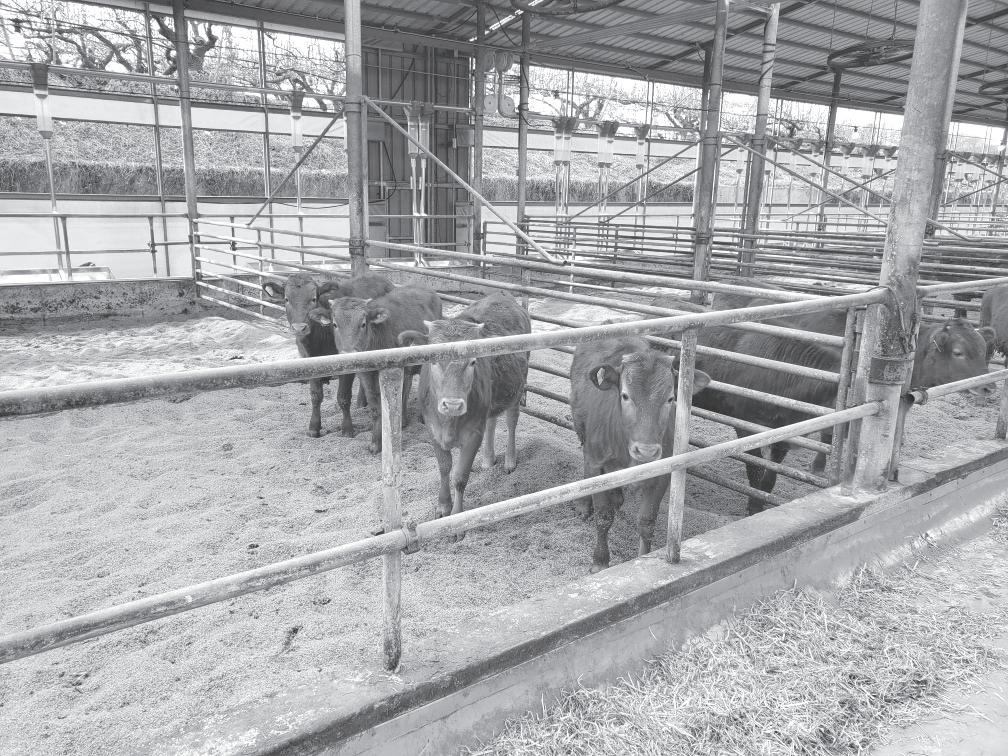
By Joan Airey
I have always tried to buy local food that we don’t grow ourselves. Our family is purebred Charolais breeders so our freezer is always stocked with Canadian grown beef as numerous farm families are. During the summer we grow a lot of our own fresh fruit and vegetables.
This past week when I grocery shopped, I was able to purchase B.C. apples, Alberta cucumbers and tomatoes. Our local drug store had all Canadian food products marked. I brought home Something Special Gourmet Cranberry, which I have never tried before but thought I would as it’s made in Canada. I normally buy several bags of cranberries freeze them and make cranberry sauce as we need them to serve with chicken or turkey.
I use my slow cooker a lot when cooking for just us two. This past week I made Slow Cooker Chicken with Stuffing. I only used two large chicken breasts and there was enough leftover chicken to make a couple of chicken subs the next day. Now I need to find a stuffing mix that is truly made in Canada.
Four Ingredient Slow Cooker Chicken with Stuffing
4 boneless skinless chicken breasts
Salt & Pepper to taste
1/2 cup no-sodium chicken broth
1 10 oz can cream of mushroom soup
1 6oz box stuffing mix
1/4 cup water
Instructions: Season chicken with salt and pepper, then place in a slow cooker. Add broth over the chicken. Combine soup, stuffing mix and water in a bowl.
Layer stuffing equally over the chicken. Cook on high for 4 hours or low for 6-7 hours. Serve and enjoy with a side of veggies or salad. I cooked ours on low for 6-7 hours.
I purchased a new stove last fall and even when you aren’t cooking convection a fan goes all the time and I don’t like the noise so I’ve been cooking roast beef in the slow cooker.
Classic Slow Cooker Pot Roast
3 lbs. beef chuck roast
1 onion chopped
4 carrots sliced
4 potatoes, sliced and quartered
2 cups beef broth
2 Tablespoons Worcestershire sauce
2 teaspoon garlic powder
Salt and pepper to taste
Season the beef roast with salt, pepper and garlic powder.
Instructions: Place the chopped onion, sliced carrots and diced potatoes in the bottom of the slow cooker. Place seasoned beef on top of the vegetables. Pour the beef broth and Worcestershire sauce over the beef. Cover and cook on low for 8 hours or until beef is tender. Serve the pot roast with the vegetables and gravy. Left overs of beef I warm the next day in the crockpot. And serve with Yorkshire Puddings and gravy, plus a salad or vegetable.
Leanne’s Yorkshire Puddings
1 cup flour
1/2 cup water
1/2 cup milk
4 eggs
Pinch of salt.
Instructions: Mix flour, water and milk thoroughly with whisk. Add eggs individually, stirring well after each addition. Add salt and stir until light and a little bubby. Put 1/2 teaspoon of oil in each muffin cup. Fill it half way with batter. Preheat the oven to 400F and bake for 30 minutes.
For this recipe it is best to make batter ahead of time and let it stand on the counter for at least a couple of hours.
For two people I half the recipe.
It was Leanne Weinbender, a fellow Charolais breeder who shared this recipe with me years ago. I used Harvest canola spray on my pans the last couple times I made Yorkshire puddings and it worked great.