


By Harry Siemens

Driedger from LeftField Commodity Research in Hanover, Manitoba, provided valuable insights into the current state of agricultural markets. Driedger shared his perspectives on the market dynamics affecting various crops as the recorder started rolling.
When asked what’s going on in the markets right now, Driedger said, “It varies a little bit by crop,” he began. “Canola’s been a bit of a bright spot, but most markets have been under some pressure. Whether you’re looking at wheat, soybeans, or corn, the market conditions largely respond to the fact that crop conditions, for the most part, are pretty good both in Canada and the US.”
Driedger, “In aggregate, crops are getting bigger in North America rather than smaller, and prices are behaving accordingly. We’re still a little behind in heat units, and some areas
are a bit wet, but it’s growing the crop.”
He highlighted the cautious approach to yield estimates, saying, “We’ve been a little wary about being too aggressive in walking our yield estimates up because the crop is behind in some areas.”
The heat is helping pull it along, but some areas have been too wet, and parts of western Canada are too dry. These factors need watching.
“We’re watching the forecast with some high temperatures, which could potentially set us back. But all else equal, crops are getting bigger rather than smaller for the most part. Canola might be more of a question mark, but overall, things look pretty good,” said Driedger.
Conditions also vary between Saskatchewan, Alberta, and Manitoba. Driedger stressed the importance of not getting ahead of the season.
“We still have a lot of weather ahead of us. Walking into
the field always looks different than passing by at highway speed. We’re always a little wary about getting too far ahead of ourselves at this point in the year, but overall, it’s pretty good,” he said.
Addressing international pressures, Driedger, “There’s always moving parts with international markets. Russia and Ukraine, for example, are massive producers and exporters of wheat and other crops. They will have a smaller wheat crop this year, but that’s been known for a while, and the market factored it in already.”
Bigger wheat crops in Canada, the US, Australia, and Argentina offset some of this.
“However, if you look at the bigger picture, the wheat market may be overdone to the downside. Prices typically come under pressure as we start harvesting winter and spring wheat unless there’s a significant problem,” he noted.
Driedger wrapped up with some reflections on market dynamics and future expectations.
While travelling between Carmen and Winkler, some farmers could harvest early winter wheat crops within a few weeks. It was a late wet spring for much of western Canada, especially Manitoba but earlyplanted crops are doing well, and higher temperatures are helping others catch up.
“Most farmers would rather have a good yield, even if the price isn’t ideal than a high price with a poor yield. Hopefully, we’ll get that balance of heat and showers to keep the crops growing well,” said Driedger.
His insights underscore the complexities and ever-changing dynamics of agricultural markets, highlighting the importance of weather conditions, market expectations, and international factors in shaping the outlook for various crops.
Less
By Elmer Heinrichs
Canadian farmers reported planting more soybeans, lentils, dry peas and oats, but fewer acres of wheat, canola, corn and barley, according to the Statistics Canada June 2024 field crop survey.
Conditions in western Canada were drier than average over the winter, resulting in concerns about soil moisture leading into the 2024 growing season.
However, beginning in April, most of the Prairies began receiving much needed precipitation. Widespread rainfall resulted in some seeding delays; however, precipitation has helped improve soil moisture conditions.
Provincial reports indicated slower seeding progress compared with the five-year average, but most areas had been planted by early June. In general, average temperatures across the Prairies were mixed, with some cooler areas receiving snowfall and near-freezing conditions during planting.
At the national level, farmers reported seeding fewer acres of wheat in 2024, down 1.1 per cent to 26.6 million acres. Although this is down compared with the previous year, wheat area remained well above the five-year average of 25.0 million acres, possibly because of favourable pricing.
Lower total wheat area was driven by spring wheat (-2.8 per cent to 18.9 million acres) and winter wheat (-5.8 per cent to 1.3 million acres), offsetting higher durum wheat area (+5.5 per cent to 6.4 million acres).
Manitoba producers reported that total wheat seeded area decreased 1.4% to 3.2 million acres in 2024.
Nationally, soybean area rose 2.0 per cent to 5.7 million acres in 2024. This is above the fiveyear average and the highest area since 2018. Producers in larger soybean-growing provinces may have opted to seed soybeans based on good prices relative to other crops, such as corn. But Manitoba farmers reported planting less soybean area compared with the previous year, decreasing 10.6 per cent to 1.4 million acres in 2024.

By Dan Guetre
The Canadian Federation of Agriculture (CFA) convened its Summer Board Meeting in mid-July in Whitehorse, Yukon, gathering farm leaders from across the nation to address pressing agricultural issues and prepare for the Federal-Provincial-Territorial (FPT) Agriculture Ministers Roundtable.
Key discussions during the meeting covered a variety of critical policy areas affecting Canadian agriculture, including mental health and national farmer wellness, the unique challenges and opportunities in growing agriculture in the Yukon,
Canada’s agri-food innovation ecosystem.
A significant point of discussion was the growing disconnect between the level of investment available to Canadian farmers and the sector’s contributions to the economy and global food security. The CFA board emphasized the need for ambitious governmental investment to keep the sector competitive, drive innovation, and attract necessary investments.
The CFA also reviewed its international engagements, including leadership roles at the World Farmers’ Organization (WFO), ongoing participation with the World Trade Organization (WTO), and strong representation

at United Nations climate negotiations. The board underscored the importance of maintaining a resilient domestic agricultural sector while fostering a dynamic export-focused sector, particularly in light of the upcoming Comprehensive and Progressive Agreement for Trans-Pacific Partnership (CPTPP) review.
On July 17, the CFA hosted the Annual FPT Agriculture Ministers Roundtable, where Canadian Agriculture Ministers met with farm leaders to discuss pressing challenges and the crucial role of data in future sector growth. In line with its commitment to data transparency, the CFA Board agreed to join Ag Data Transparent as an industry member.
During the Roundtable, the CFA highlighted the pivotal role of data and innovation in boosting productivity in Canadian agriculture. Enhanced economic outcomes, more effective risk management, improved sustainability benchmarking, and better protection of animals and crops from diseases were identified as key benefits.
To unlock the potential of data in agriculture, the CFA

made several recommendations to the Ministers:
- Develop a Pan-Canadian Data Strategy to support public and private investment in research, programming, digital skills, and outcome-based measurement and reporting.
- Expand investment in rural connectivity to ensure adequate in-field network access for emerging agtech opportunities.
- Establish programs to support the adoption of connectivity solutions and legislate for farm equipment interoperability.
- Build capacity for farm groups to protect farmers’ data and invest in standards and agricultural extension services to support agtech adoption.
The discussions continued during the Annual FPT Minister’s Meeting on July 17.
“The FPT Roundtable is
a unique opportunity for the agriculture sector to meet with the Ministers and come together to iron out our collective vision for the sector,” said Keith Currie, CFA President. “Data is critical as farmers continue to explore opportunities to increase efficiencies and measure their sustainability. Creating the conditions to optimize access to and use of on-farm data is needed to harness the sector’s astounding potential as a driver of environmental solutions, economic development opportunities, and a significant contributor to food security in Canada and abroad. At CFA, we truly believe that Canadian agriculture is uniquely positioned to feed Canadians and the world while delivering climate solutions. Investing in data and data-driven solutions is the critical lynchpin

to achieving that goal.”
The CFA’s Summer Board Meeting and subsequent Roundtable and Minister’s Meeting highlighted the ongoing commitment of Canadian farm leaders and policymakers to address key issues and leverage data and innovation for a sustainable and prosperous agricultural future.
Summary of Items from the 2024 Annual Meeting of Federal, Provincial and Territorial (FPT) Ministers of Agriculture
Grocery Sector Code of Conduct
Ministers are pleased that all major retailers have now joined the industry-led Grocery Sector Code of Conduct. The Grocery Sector Code of Conduct will be implemented by June 2025.
This working group was formed to improve pesticide management and gain insight into the regulatory decision-making processes on issues such as changes to the registration of lambdacyhalothrin. The Action Plan focuses on: enhancing consultations, increasing the sharing of science and evidence-based information and expertise, and advancing research and knowledge transfer to support the adoption of effective, innovative and diverse pest control products and approaches, including biopesticides and other alternatives.
Ministers discussed considerations and possible approaches to harmonizing with the United States on the issue of material prohibited from animal feed (currently, SRM) and disposal requirements. They noted the need for the Canadian Food Inspection Agency (CFIA) and cattle sector to continue working towards this objec-
tive, while ensuring appropriate safeguards are in place to protect animal health and food safety, as well as Canada’s international trade reputation.
Ministers discussed the work that is underway on the CFIA risk analysis on the importation of honey bee packages from the United States. Once complete, the risk assessment and a risk management framework outlining the associated expectations for risk mitigation proposals will be consulted with the stakeholders. All risk mitigation proposals submitted to the CFIA will be reviewed to determine if they may significantly reduce the risk posed to Canadian bee health. Currently, the importation of honey bee packages from the United States is not permitted. The import status remains unchanged until all activities associated with the risk analysis are completed.
Alberta is presently running a pilot to explore potential changes to the program to the benefit of livestock producers. The pilot is currently collecting data from producers. The results of the pilot will help to inform any future changes to AgriStability.
Emergency Management Ministers were apprised of efforts underway to renew the 2016 FPT Emergency Management Framework for Agriculture. This renewal will aim to help ensure an integrated and collaborative approach to dealing with emergencies impacting the full value chain. The updated framework stresses the need for enhanced collaboration, improved data sharing, and continued partnership with industry.
Ministers raised issues related to administrative burden and highlighted the importance of working collaboratively with stakeholders to address these concerns. Ministers highlighted the progress made on several interprovincial trade pilots, such as the upcoming publication of a regulatory amendment related to the Lloydminster pilot, advancing work on a plan with Ontario and Quebec for slaughter availability, and exploring opportunities to support provincially regulated meat establishments seeking growth opportunities outside their province within Canada, such as “Ontario Ready to Grow.” Ministers signalled interest in accelerating these efforts and exploring the possibility of additional interprovincial trade pilots. Any efforts in this area must protect Canada’s food system, without compromising Canada’s international trade agreements and market access opportunities.
By Dan Guetre
In a recent ceremony at Red River Exhibition Park, Fred Tait was inducted into the Manitoba Agricultural Hall of Fame. Tait, along with his wife Sandra, farms and raises cattle near Rossendale. The Hall of Fame honoured Tait for his lifelong dedication to advocating for a healthy environment, thriving rural communities, and sustainable farming practices throughout Manitoba and across Canada.
In his acceptance speech, Tait reflected on the challenges and principles that have guided his farming journey.
“It hasn’t been easy. On our farm, we often took a course that was contrary. And we were lectured, from the time that we were first farming, that you must obey the signals of the marketplace; there is no room for sentiment—you must only follow the rules of the marketplace and deal in personal interest. But, of course, to care and to share is a human trait. And that was
our path. We cared about our neighbours, we cared about the communities, we cared about the economic and environmental sustainability, and still we care about that until this day.”
Tait highlighted the ongoing struggle for farmers and agricultural communities to retain a fair share of the wealth they produce.
“In this struggle that we’ve been involved in all these years, it always comes down to the same thing. It’s about farmers and agricultural communities being able to retain a suitable proportion of the wealth that they have produced. And, of course, it is always a contest. There are those on the other side that desire the wealth that we produce, and they are very capable of collecting it. Historically, farmers collected 34% of their production as net income. More recently, we get to 2 and 3%. I’ve never known agriculture to be more productive than it is today, and I’ve never known it with less capacity to retain
the wealth it is producing.”
Tait also spoke about his long-standing involvement with the Farmers Union, which he joined in 1983.
“I knew I’d found a home. In the Farmers Union the role you play was determined by the commitment that you would make to help other farmers retain their farms, maintain our communities, and maintain the environmental sustainability that is so essential if agriculture is to survive. The work is not over. There are issues today, as there will always be issues; there is the issue of Crown land allocation; there is the issue of delivery contracts wherein if nature takes a farmer’s crop they are compelled to pay a grain company—the injustice of that overwhelms me; there is the issue of the constant attack on the Canadian Grain Commission; all these things will occupy my time. This is a lifetime’s work, and after 82 years, I don’t see that I’m really prepared to call an end yet.”
In a letter supporting his nomination, the National Farmers Union (NFU) praised Tait, stating, “Fred Tait stands among the great leaders of the Canadian farm movement, and his induction
to the Manitoba Agricultural Hall of Fame is timely and well deserved.”
Fred Tait’s induction into the Manitoba Agricultural Hall of Fame marks a significant recognition of his
unwavering commitment to sustainable farming and the well-being of rural communities. His dedication and advocacy continue to inspire farmers and agricultural communities across Canada.

For over 50 years, Cereals Canada has promoted the high quality of Canadian grains and the Canadian system by providing expert support to customers around the world. Facing the end of its lease in a building that is not meeting the current and future goals of the organization, the Winnipeg-based organization has proposed an innovative and collaborative vision, branded the Global Agriculture Technology Exchange (Gate).

“Cereals Canada monitors market access issues, provides market support and programming, and promotes the use of Canadian cereals in the global marketplace,” said Dean Dias, Chief Executive Officer of Cereals Canada. “Gate will ensure the long-term viability of our world-renowned organization, inspiring new innovation, conversations, and research while giving us the capability to meet the growing demand for wheat, barley, and oats, and provide value to our members.”
With a preliminary cost estimate of approximately $100 million, the currently defined vision of Gate is based on an extensive functional needs assessment. It allows Cereals Canada to maintain the globally recognized, best-in-class expertise needed to support today’s global markets and ensure end-user success without limiting its ability to explore the new market trends and technologies of the future.
Cereals Canada continues to engage with members and other stakeholders to find the optimal balance between present needs and future opportunities.
“Cereals Canada works to advance the Canadian cereals industry,” said board chair and producer representative Brett Halstead. “The board of directors strongly supports Cereals Canada including the vision for Gate.”
Locating Gate in Winnipeg’s downtown creates opportunities to further strengthen connections between long-standing agriculture and food businesses, and related organizations in the heart of Winnipeg.
In the coming months, Cereals Canada will be kicking off a capital campaign to raise funds to build and equip the new facility. The campaign will target contributions from industry groups, agribusinesses, and individuals, as well as support from the three levels of government.


Like other professions, careers, and life choices, farming presents challenges. Yet, farming is also a primary industry that builds communities, feeds the world, and provides an excellent rural living standard.
In today’s highly regulated world, government officials decide about things they know little about. Very little thought goes into how these decisions will affect production, application, production costs, and independent livelihoods.
Much of this came to my mind while travelling across the Prairies, looking at crops, their stage of growth, and the amount of moisture or lack thereof on our recent honeymoon trip to Sylvan, Lake, AB.
Yes, a shout out to my lovely new wife, Angelinda, who moved in with me in Winkler, Manitoba.
Stories will appear in this month’s AgriPost outlining a good crop across Manitoba, the Prairies, and parts of the
United States. Yet localized areas show some heavy drowning out, and heat and dryness in other parts shut down some crops for the season. Then you have all the millions of acres in between.
Not to speak of the markets in seasonal doldrums down from the highs of the last three years. It makes for some worrisome and stressful times when it costs $400 to $600 an acre to put in a crop without guaranteeing any return until it is in the bin. Farm community builders keep reminding me that as the farmer goes, so do many of the smaller rural communities. When cattle, pig and crop prices barely reach the break-even points, communities suffer.
That is the farmer’s input side of things. Cam Dahl, the general manager of Manitoba Pork, keeps raising regulatory issues and urging the federal government to take action to improve the regulatory competitiveness of Canadian agriculture domestically and internationally.
Cam, a great farm leader with an astute eye on what is happening or who is doing what to the farmer and a personal friend, says that while
some regulations, such as those related to food safety, are necessary, regulations always come with a cost.
“We compete in an international marketplace. When we find that the cost of regulations on Canadian agriculture is higher than in other countries like the United States or Brazil, it means that Canadian farmers are less competitive in the international marketplace, which reduces the bottom line for producers here at home,” says Dahl.
It leaves less money to invest in the industry’s growth, provides fewer jobs, builds good viable farm operations, and, of course, affects the development of local communities.
Dahl said one of the most cited examples is the carbon tax, and I agree with him wholeheartedly.
“That’s a regulation or legislation that imposes a tax on Canadian farmers that doesn’t exist in other countries. It’s making it more expensive to heat and cool barns here in Canada and Manitoba, making us less competitive,” said Dahl
The carbon tax hurts not only in controlling barn temperatures but also in deliver-

ing produce, live hogs, feed procurement, market deliveries, and all other fun things.
Again, Dahl said we need to find a way to balance the need for regulations to meet the safety requirements for food or workers with the need not to have rules just for the sake of regulations and impose that extra cost on Canadian farmers.
He notes governments
worldwide are taking actions to limit the flow of Canadian agricultural goods, such as the US voluntary country labelling and European regulations restricting Canadian red meat exports.
He calls on the Government of Canada to do everything in its power to counter those foreign regulations that undermine the competitiveness of Canadian farmers.
The governments of Canada and Manitoba are providing funding under the Sustainable Canadian Agricultural Partnership (Sustainable CAP) to assist Manitoba agri-food and agri-product producers and processors in adopting and improving food safety and traceability practices.
“Agri-food and agri-product businesses right across Manitoba are producing safe, top-quality food for folks here in Canada and around the world,” said federal Agriculture and Agri-Food Minister Lawrence MacAulay.
“With investments through the Food Safety and Traceability Equipment Program, we’re making sure they can modernize their operations, grow and stay competitive,
while tapping into new export markets.”
The Pre-Approved Food Safety and Traceability Equipment Program assists in the purchase of pre-approved common equipment used to monitor and control food safety parameters and to improve traceability systems. Food safety and traceability are not only important for public safety but also a requirement for many regulators, associations and customers. In 2023-24, a total of 37 projects were approved for close to $200,000.
“The Manitoba government continues to support the agrifood and agri-product sectors through these programs to protect consumer safety and increase market access and export capacity,” said
Manitoba Agriculture Minister Ron Kostyshyn. “We are proud to provide programming that meets the demands of sustainability and that leverages traceability as an effective tool to prevent and respond to animal health or food emergencies, making Manitoba food products competitive on a global scale.”
Eligible applicant groups that may apply for funding under the Pre-Approved Food Safety and Traceability Equipment Program include primary producers, agri-food processors, agri-product processors, licensed commercial kitchens, food and ingredient wholesalers, abattoirs and Indigenous communities, groups and governments. There is a maximum funding
limit of $30,000 for all food safety items and $30,000 for all traceability items.
“Food and Beverage Manitoba is proud to support the vibrant food and beverage industry in this province,” said Michael Mikulak, executive director, Food and Beverage Manitoba. “As part of our core mandate, we provide food safety training to companies of all sizes. Funding from Sustainable CAP can help ensure that our province remains competitive and is able to access markets that require the highest standard of safety and traceability. We are pleased to see the governments of Canada and Manitoba continue to prioritize the safety and transparency of our food supply, both domestically and abroad.”
The Sustainable CAP is a five-year, $3.5-billion investment by federal, provincial and territorial governments to strengthen competitiveness, innovation, and resiliency of Canada’s agriculture, agri‐food and agri‐based products sector. This includes $1 billion in federal programs and activities and a $2.5-billion commitment that is cost-shared 60 per cent federally and 40 per cent provincially/territorially for programs that are designed and delivered by provinces and territories. Applications are being accepted until January 23, 2025. Details on the program, including a complete list of eligible expenses, are available at manitoba.ca/ scap/resiliency/food-safety.
By Dan Guetre
A recent project summary from Agriculture Agri-Food Canada (AAFC) has highlighted a stark reality: approximately 75 per cent of Canada’s grasslands have been lost over time. This alarming statistic was underscored by the Manitoba Forage and Grasslands Association (MFGA) in their latest newsletter, sparking a call to action for grassland conservation.
Duncan Morrison, MFGA Executive Director, emphasized the critical importance of natural grasslands.
“From MFGA’s viewpoint, natural grasslands are incredibly important ecosystems. These are the lands that are often right out of our farmer or ranchers’ back door or a few fields over that can graze and feed our livestock, cradle our calves, gallop our horses, store our carbon, slow our floodwaters, clean our air, hatch our birds, bolster our biodiversity, multiply our species at risk, flourish our flora and fauna, host our wetlands, embrace our traditional medicines, respect our cultures, educate and train our students, showcase our farm families and connect us terrestrially via grasslands as a shared continental resource among the three North American countries,” wrote Morrison.
Morrison pointed out the undervalued nature of grassland benefits.
“Outside of the land/lease asset valuation of the farm or community or the financial books of the livestock farms and herds, or grassland conservation easements, not one of these incredibly important grassland features has a market value or an easily qualified price tag,” he added.
As a farmer-led group, MFGA recognizes the pressures on grasslands from both rural and urban development. This understanding, Morrison clarified, is not an endorsement of the continued loss of grasslands but rather a call to action. Grasslands are central to MFGA’s mission for both economic and environmental sustainability, encompassing natural and seeded systems.
Grasslands, Morrison stressed, require “all hands on deck.” He pointed to a Canadian Wildlife Federation (CWF) survey revealing a lack of awareness among Canadians about the critical status of grasslands. The survey found that while most Canadians recognize grasslands are at some risk, only one in four identify them as especially at risk. In a ranking of ecosystems at risk, grasslands placed sixth, behind Arctic/Polar Ice Caps, Tropical Rainforests, Coral Reefs,
Northern Forests, and Wetlands, but ahead of Deserts.
In response, the CWF has initiated a collaboration of organizations, including MFGA, to elevate the profile of grasslands in national consciousness. This collaboration aims to generate greater awareness and promote conservation efforts.
Morrison highlighted the ongoing efforts of individual farmers and conservation programs.
“Individual farms and farmers, some generously bolstered by conservation funding and targeted government programs, are pretty much holding the fort here on a good portion of Canada’s valuable existing grassland acres on our working agricultural landscapes,” noted Morrison.
MFGA continues to advocate for on-farm incentives and dedicated focus on grassland-inclusive or restoration-willing farms as part of a broader strategy to preserve and restore Canada’s grasslands. The association calls for heightened awareness and action to safeguard these vital ecosystems for future generations.
“We all need to be aware of that,” Morrison concluded, emphasizing the collective responsibility to protect and sustain Canada’s remaining grasslands.
Producers who were not paid for grain delivered to Zeghers Seed Inc. (operating as Zeghers Canada) will be fully compensated for their eligible claims through the Canadian Grain Commission’s Safeguards for Grain Farmers Program.
Following a review of individual producer claims, the Canadian Grain Commission determined that there were 27 eligible claims for unpaid deliveries to Zeghers Seed Inc. The Canadian Grain Commission will issue compensation totalling over $1.2 million from the company’s security to these producers. Producers will receive 100% compensation for their eligible claims for unpaid deliveries.
“The Canadian Grain Commission is committed
to ensuring producers are fairly compensated for their deliveries. Our Safeguards for Grain Farmers Program plays a key role in securing payments for producers, and we are pleased to be able to provide 100% coverage of eligible claims for unpaid deliveries to Zeghers Seed,” said David Hunt, Chief Commissioner, Canadian Grain Commission.
The Canadian Grain Commission revoked the licences of Zeghers Seed Inc. on March 25, 2024. The company held a grain dealer licence and a primary elevator licence for an elevator located in Holland, Manitoba.
The Canadian Grain Commission’s Safeguards for Grain Farmers Program regulates grain companies to mitigate the risk of payment
The organic industry is one of the fastest growing sectors in Canada. Organic farming techniques can help improve soil health, promote biodiversity, and boost farm resilience in the face of climate change.
To mark the 15th anniversary of the Canada Organic Regime, Lawrence MacAulay, Minister of Agriculture and Agri-Food, recently announced an investment of more than $2 million to two organizations through the Sustainable Canadian Agricultural Partnership.
“With increasing demand for local organic products from folks here in Canada and around the world, I have no doubt this investment will have a positive impact right across the value chain,” said MacAulay.
The Canada Organic Trade Association is receiving up to $1,175,841 over three years, under the AgriMarketing Program, to facilitate the growth of an innovative and profitable organic sector by resolving market access issues, ensuring Canadian organic products are competitive, building export capacity, and developing domestic opportunities. Activities include incoming and outgoing trade missions, international trade shows, technical training, and marketing campaigns.
“This support has been instrumental in advancing our mission at the Canada Organic Trade Association, enabling us to expand our reach, enhance our marketing strategies, and ultimately strengthen the organic sector in Canada,” shared Tia Loftsgard, Executive Director, Canada Organic Trade Association. “This funding has not only empowered our growers and manufacturers but has also reinforced Canada’s position as a global leader in organic agriculture.”
The Prairie Organic Development Fund is receiving up to $985,985 over three years, under the AgriCompetitiveness Program, to advance the organic sector in Canada by building evidence for organics through data aggregation and benchmarking, growing organic supply and leadership through education, tools, and skillbuilding, and strengthening public trust in Canadian organics.
“The goal of the project is to increase profitability, improve environmental outcomes and increase public trust in the Canadian organic agri-food industry,” added Jim Robbins, President, Prairie Organic Development Fund. “The funds will help improve data collection and develop tools and skill-building activities, making an important contribution to growing organic supply and helping farmers adopt agronomic practices, making them more resilient to climate change.”
Organic food and beverage sales in Canada exceeded $7.94 billion in 2022 (up from $7.24 billion in 2021). The total organic sector, which includes non-regulated products such as textiles and pet food, grew to $10.26 billion in sales in 2022 (up from $9.35 billion in 2021).
failure to producers and to support the grain quality assurance system. As a condition of licensing, licensed grain companies are required to tender security for outstanding grain liabilities to producers to the Canadian Grain Commission as a bond, letter of credit, letter of guarantee, or payables insurance. If a licensed company does not meet its payment obligations, the Canadian Grain Commission uses the company’s security to compensate eligible producers. If a licensee fails to meet its obligations, producers are eligible for compensation within 90 days from the date of their grain delivery or within 30 days from the date a cash purchase ticket or cheque was issued to them. The lesser of these two time periods applies.
Two beef and cattle organizations will receive more than $6 million from the Federal government through the AgriMarketing Program. The targeted funds are to be used to drive the growth of Canada’s beef industry through promotional activities that increase awareness and demand for Canadian beef in existing and new markets.
Canada Beef is receiving up to $5,865,110 and the Canadian Cattle Association is receiving up to $453,364. The two projects incorporate promotional activities such as advertising campaigns, incoming and outgoing trade missions, technical training, and educational seminars.
Increasing trade in foreign markets will boost economic activity in Canada and positively impact farmers and businesses at all levels of the supply chain.
“…this funding will support initiatives that increase awareness of the value proposition of Canadian beef and veal exports in international markets vital to the success of Canada’s beef industry,” noted Eric Bienvenue, President of Canada Beef.
“Expanding and opening markets abroad for Canadian beef to meet global demand requires proactive efforts to build relationships,” added Nathan Phinney, President of the Canadian Cattle Association. “These local, national and international relationships open doors to trade and collaboration, and the AgriMarketing program support will help to ensure Canadian beef producers are represented at these global tables.”
The value of Canadian beef exports has increased in recent years. From 2018 to 2022, the value increased from $2.7 billion to $4.7 billion, and, in 2023, the value of Canadian beef exports exceeded $5 billion.
In 2023, the top importing countries for Canadian beef included the United States ($4B), Japan ($351M), Mexico ($284M), South Korea ($122M), and Vietnam ($79M).

By Harry Siemens tracting.
Bill Alford, General Manager of Hams Marketing Services, shared his insights on western Canadian hog farmers’ current trends and challenges. Alford delved into market conditions, regulatory issues, and the impact of recent developments in the industry.
Alford said, “Futures prices for hogs you could book earlier this year were at excellent margin levels, and feed costs had come down quite a bit.”
Margins have been very good for the first half of 2024. However, the futures market has set new contract lows and gone pessimistic, which hasn’t shown up in the cash market yet.
“If the futures market’s predictions hold, it will be a pretty tight end of the year,” he cautioned.
Alford highlights the importance of forward con-
“Fortunately, we had a good percentage of hogs booked on a forward contract when prices were higher. It’s a good way to manage your price risk,” he said.
When asked about the effects of US Proposition 12, Alford said, “None of the processors are purchasing Prop 12 hogs. A small group of producers in Alberta got certified, but the Trochu plant they were using had a catastrophic fire. They’re now looking for another market, possibly shipping directly to California or a US plant, but that has issues with shipping pigs that far.”
The Sunterra Meats facility in Trochu a town of about 1,100 people roughly 145 kilometres northeast of Calgary was damaged in a blaze on June 17, affecting 140 jobs.
Alford also touched on the broader economic context.
“Prices for everything, including transport and general goods, haven’t subsided. That’s kind of the new normal,” he said.
Alford provided his perspective on the recent announcements from Maple Leaf Foods.
“You would have read a lot of the news releases. There’s not a lot of detail about the motivations for their decision. But representing independent hog producers, we look for them to be more focused on primary pork processing and procurement,” said Alford.
This might open up opportunities for reinvestment in their operations, such as Brandon, and procurement programs. All the other significant processors have significantly changed their procurement buying programs in western Canada.
“Maple Leaf has done a few things but needs to catch
up. This might allow them to catch up,” he said.
Alford also raised concerns about Maple Leaf Foods’ emphasis on protein.
“The pork side, especially since the pandemic, was carrying the load for Maple Leaf Foods. The plant-based products were a significant drag on them,” he said. “Our base is mostly Hutterites, and it’s a thorn in their side to see money lost on plant-based products without reinvestment in the animal protein side, specifically pork.”
Looking ahead, Alford sees significant changes on the horizon.
“By 2029, loose-farrowing housing will be mandatory. Some producers might not participate due to costs, leading to decreased hog supplies,” he noted. “This decision allows them to be more flexible over the next five years.” Alford said with new leadership at Maple Leaf Foods. The new CEO comes from Smithfield and might lead the company in
a new direction.
“We’ll be looking closely at the future hog and procurement strategies of Maple Leaf or the new company, whatever its name,” he said.
Bill Alford’s insights underscore the challenges and opportunities facing the western Canadian hog industry. As the market adapts to new regulations and economic pressures, strategic decisions will be crucial for maintaining competitiveness and ensuring a sustainable future for hog farmers.

By Elmer Heinrichs
Warmer conditions across Manitoba during the week ended July 16 helped advance crop growth, with recent rainfall leaving most of the province with wet or optimal soil moisture conditions, according to the latest provincial crop report.
Fall rye and winter wheat were at the soft to hard dough stage with the most advanced fields ripening.
Spring wheat ranged from flag to soft dough stages, with some lodging evident due to wind and rain events.
Canola ranged from rosette to early podding. Fungicide applications in spring wheat and canola were continuing, and aerial applications were common with the wet field conditions. Field peas have reached the R1 to R3 stage, with some fungicide application occurring for mycosphaerella blight.
Field peas continued to suffer in some regions with the extended wet conditions.
The majority of soybeans were in the R1 stage.
“I think we need to get into some warmer conditions to really help with dry beans and soybeans and get them
moving along,” says Manitoba pulse specialist Dennis Lange.
The warm weather allowed for strong growth in forage crops. Haying was underway and initial yields were reported to be normal to above average. However, dry down was reportedly difficult with continued rainfall and high humidity.
Progress on first-cut harvest of hayfields was behind and producers were concerned about both the quality and quantity of harvested feed that’ll be available this winter.
In Central regions warmer temperatures this week allowed soils to dry, and water has mostly receded from low spots within fields. Warmer temperatures this week have promoted rapid development over the past few days.
Crop stage varies greatly at the local level across the region, with crops in the north at a young developmental stage than those in the Pembina valley. Fall rye and winter wheat are mostly in the soft to hard dough stages, with most advanced fields ripening. In Eastern areas tempera-
tures this past week were much warmer than previous weeks, and field crops that were not suffering from extended water stress had significant growth. Standing water is subsiding in areas that did not receive significant rain but is still an ongoing issue.
Rapid soybean development was noted in the past week with the warm temperatures. In general, the crop looks to be handling the excess moisture as well as can be expected. Field peas continued to suffer in some regions with the extended wet conditions. The majority of soybeans were in the R1 stage.
The warm weather allowed for strong growth in forage crops. Haying was underway and initial yields were reported to be normal to above average. However, dry down was reportedly difficult with continued rainfall and high humidity.
Progress on first-cut harvest of hay fields was behind and producers were concerned about both the quantity and quality of harvested feed that will be available this winter.


By Joan Airey
On June 22, the Pioneer Power and Equipment Club Show drew a large crowd to the Brandon Airport Mu seum area. Interest in antique and vintage tractors is grow ing each year evident by the crowd that was watching. This year there was a large number of antique and re stored cars on display.
After enjoying a pancake breakfast, the events began. Five tractors took part in the slow race which was won by Rod Paterson on his Massey Ferguson Super 90 and Cam Hales was second on his Cockshutt Super 90. Followed by the parade of the tractors on display.

ed with the Allen Campbell Memorial award for “Best Antique Display of his Minneapolis Moline G 706 and U Diesel. Phillips plans to have his tractors on display at Austin Thresherman’s Reunion.
The tractor pull was of interest to everyone attending the winners were as follows.
In the 6,000 lbs. and under class, 1st went to Wes Pankratz, International Harvester MD and 2nd to Lanny Westwood, Minneapolis Moline U.
In the 8,000 lbs. and under class 1st place went to Rod Paterson, Massey Ferguson super 90 and 2nd was Jim James, International Harvester 650.
In the 10,000 lbs. and under class in 1st place was Greg Campbell, John Deere 830 and 2nd went to Neil Jardine, John Deere R.
In the 10,000 lbs. and over class it was a tie for 1st with Garnett Bell, international Harvester 856 and Gerry Wilson, Cockshutt 1900. Mark Phillips was present-
“Tractor numbers were about the same as in the last few years. Definitely more cars as we get set for the show next August 1, 2 and 3 in 2025 in conjunction with the Western Canadian National Car Show.” said Mark Phillips.
A car that stood out to me was a 1938 Chevrolet two door sedan owned by Harold Kuipers of Brandon that reminded me of a car my Dad drove in the 1950’s. On display there was every type of car and truck you could think of.
“My 1938 Chevrolet is a two-door sedan. It has power windows, air conditioning, cruise control and a tilt steering wheel. It’s powered by a 350 small block with a 700r4 automatic transmission,” said
Harold Kuipers. “The car is what we would refer to as a pro-built street rod. I purchased the car two years ago. I wanted a car that was basically 95 percent complete as it’s getting a little harder to work on cars as I get a little older. The nice thing about this particular body style is that it’s a larger car which makes it roomier and a little more comfortable, a Gentleman’s Hot Rod. The car has nine thousand miles on it since its completion fourteen years ago. I have changed the wheels/tires, steering wheel, exhaust system, mufflers, relocated the steering column and reshaped the seat. All these things were done to improve the handling and comfort of the car. I also added cruise control and a yellow daytime driving light to improve the visibility for oncoming traffic. The car now feels more like ‘my’ car.”


The popularity of tractor and car shows seems to be growing steadily in Manitoba.
By Joan Airey
This year’s Farm Women’s Conference will be held from November 18 to 20 at the Victoria Inn Hotel & Convention Centre in Winnipeg. You can book your rooms by just letting them know you’re going to the conference.
Attendees can look forward to a variety of sessions covering topics such as sus tainable farming practices, financial management, rural leadership, mental health, and wellness, and more. The program is struc tured to balance educational content, interactive ses sions and opportunities for personal and professional growth.
tendees, share stories and insights, and build lasting relationships with the agriculture community.
Overall, the programs for the Manitoba Farm Women’s Conference are designed to educate, encourage, and empower women in agriculture, providing
them with valuable knowledge and resources to thrive in their farming endeavours and make a positive impact in their communities.
You can follow Manitoba Farm Women on Facebook or check out their website mfwc.ca to know the latest announcements.

Additionally, the program may include social events, group activities, tours, and more that allow participants to connect with fellow atYou might even learn to line dance at conference!


By Harry Siemens
Southman Gleaners came about after a group of men were encouraged to set up a food drying facility in southern Manitoba. With abundant vegetables grown locally, many potatoes, onions, and carrots need to meet grade requirements due to appearance issues.
This locally grown food can be salvaged and dehydrated into dried soup mixes, ensuring long shelf life and reducing the weight to enable economical shipping to various destinations worldwide to feed needy and hungry people.
Southman Gleaners aims to gather, process, and dehydrate different foods, making the finished product available to Christian mission organizations for distribution. Soup mixes distributed by these organizations to hungry, needy people will enable them to work, thereby reducing poverty.
The three or three-and-ahalf-pound bags are enough
to give 100 people a bowl of soup in the countries where it is needed.
In a recent interview Abe Janzen, chair of the Southman Gleaners in Winkler, Manitoba, shared exciting updates about the organization’s upcoming grand opening and progress in its mission to fight hunger, as well as the organization’s operations, goals, and community involvement.
Janzen reflected on the significant progress since their big breakfast event on October 28 last year.
“Yes, we are in full production. We are currently mostly into potatoes. We dice them up, dehydrate them, and we are making soup mixes for needy, hungry people, about at least 20,000 bowls of soup per day is what we’re currently doing,” he shared.
He outlined the foundational elements essential to their operations.
“One is we need the product, which is readily available in the Winkler area, mostly
By Joan Airey
Our late potatoes have flowered like crazy and our early potatoes only a few of them have bloomed. When visiting with a gardening friend she said their potatoes had not flowered but they were having new potatoes for supper. That prompted me to dig a hill of our potatoes so we enjoyed a meal of new potatoes. I’m really curious what has caused the no blooms.
Neighbour Jean Ryall bought me this recipe she got from another neighbour to keep deer from eating your peas, etc.
Keep Deer Away
1 cup water
1 cup milk
2 eggs
2 Tablespoons Dawn Blue Soap Blend all together and spray on with a little hand sprayer. Has to be repeated if it rains.
Next year I will definitely try it on my peas as our resident doe have eaten my peas off for the second year. For several years now she has her fawn in our yard between the trees and keeps it there while she eats elsewhere. Some evenings they will wander across the lawn and I love watching them but sharing my peas isn’t part of the deal.
We’ve been enjoying tomatoes from the planters on the patio and cucumbers are growing there great too. Garden tomatoes and cucumbers will be a while before they are ready to harvest.
potatoes. Then we need volunteers to look at each potato, so that’s the second one. Then, we need the generosity of people in our community for financial support to keep going,” said Janzen.
While potatoes are the primary focus, Southman Gleaners also processes a variety of other vegetables.
“We’ve already had some onions, some carrots and broccoli I believe eggplant I’ve seen. So, various vegetables come a little more from the Carman-Portage-La Prairie area. Our goal is to make a variety of soup mix,” Janzen explained.
The process begins with receiving raw products from various sources, including home gardens.
“It comes in as a raw product from farmers’ fields and your garden if you have excess,” he said.
The volunteers cut it up, remove whatever is not edible, and dice it into smaller pieces. The dehydrated product goes in wet and comes


out dry two hours later. This removes the moisture and makes shipping around the world much more efficient.
“So we will package this into about a three or threeand-a-half pound bag, which is enough to give 100 people a bowl of soup in the countries it is needed.”
Janzen extended an open invitation to the community as the grand opening approached. “You’re welcome. Even if you have yet to let us know, just come. It’s right in Reinfeld, two miles east of Winkler, MB.”
He humorously recounted his involvement with the project.
“I went to the coffee shop once too often and was invited to a meeting. Everybody thought it was a good idea, so I helped get it rolling,” said Janzen.
Highlighting their advanced dehydration process, Janzen described the machinery involved.
“With heat and with airflow. A six-foot-wide stain-
less steel belt and you add about an inch or so of your wet product at one end. It comes out two hours later at the other end, and it’s down to shallow moisture so that it will store well indefinitely almost,” explained Janzen.
The work of Southman Gleaners is a testament to community collaboration, innovation, and a shared commitment to alleviating hunger. Janzen’s enthusiasm and dedication inspire all who support this vital cause as they prepare for their grand opening.


By Harry Siemens
Bruce Burnett, Director Markets and Weather for Glacier Farm media, an expert in weather conditions and their impact on global agricultural markets, recently shared his detailed observations on the current state of crops across the prairies. Burnett highlighted the significant factors affecting this year’s yield in a comprehensive rundown and provided an optimistic outlook despite some localized challenges.
“Certainly, it looks like rain is making rain this year,” Burnett began, emphasizing the overall positive impact of consistent rainfall across the Prairies. Having travelled approximately 3,500 km over the past five days to assess crop conditions firsthand, Burnett reported, “This is one of the most consistent crops I’ve seen across the Prairies.”
His extensive travels and satellite data indicate that the prairies are on track to produce close to a record crop this year.
While the general outlook is promising, Burnett acknowledged the presence of localized issues.
“A lot of our rain this year has come from powerful thunderstorm activity, making it rather localized compared to the general areas of the prairies,” he explained.
This localized rainfall has led to concerns about dis-

eases in certain crops. However, he noted, “In wheat, most of the crop has finished flowering, starting to head out, or starting to fill up, and there’s minimal leaf disease in the canopy.”
Burnett pointed out that while some pulses and canola crops in rain-affected areas are vulnerable to disease, the overall condition remains favourable. The forecast for hot weather over the next two weeks may pose additional challenges, particularly in low spots where crops are more susceptible
to heat stress.
“I’m projecting near record yields but not quite record yields because of that,” Burnett concluded.
Regarding insect activity, Burnett observed that the recent hot, dry weather has helped keep insect populations at bay.
“There are some concerns again in those wetter areas about insect pressure, especially with wheat midge in wheat, but right now, it doesn’t look as if the insect pressure is that significant,” he stated.

Addressing questions about climate change and its impact on agriculture, Burnett offered a practical perspective. He acknowledged the debate surrounding the causes of climate change but emphasized its tangible effects on farming.
“For western Canadian farmers, warmer temperatures during the growing season, extending our growing season, is pretty good news because it allows us to grow different crops, and it helps improve our yields,” he explained.
Burnett underscored the importance of adaptation, noting, “The climate is warming, and we’re going to have to adapt to that.”
He stressed that the most relevant factor for farmers is the extension of the growing season, which provides new opportunities for crop production.
His analysis underscores farmers’ resilience and adaptability to changing weather patterns. His observations offer a balanced view of the current crop conditions, highlighting the potential for near-record yields and the challenges posed by localized diseases and heat stress. As farmers navigate these complexities, Burnett’s insights provide valuable guidance for optimizing yields and ensuring food security, empowering them to prepare for and adapt to the changing climate.
Manitoba Crop Alliance (MCA) is now accepting nominations from farmer members to serve as delegates on its
“Our unique governance structure ensures a strong voice for each crop type we represent,” says MCA CEO Pam de Rocquigny. “It also provides plenty of opportunities for a whole-farm, cross-commodity approach to decisionmaking, which is important because the majority of our farmer members grow several different crops.”
MCA delegates work towards strengthening the mandate of research, agronomy, market development and access, and communication and advocacy initiatives within each of the four crop committees: corn, flax, sunflower, and wheat and barley. They also receive personal growth opportunities, such as the chance to network with fellow farmers, researchers and industry stakeholders, while gaining a deeper understanding of all the crop industries MCA represents.
This nomination period, there are four open positions on each of the corn, flax and sunflower committees, as well as five open positions on the wheat and barley committee.
“We take great pride in the collaborative, farmer-driven nature of our organization,” says de Rocquigny. “By becoming a delegate, farmer members get to help determine how their check-off dollars are invested. I encourage farmer members who are interested in guiding the direction of our industry to get involved and add their unique knowledge and perspectives to our committees.”
The nomination period will close at 4:30 pm CDT on October 1, 2024. For more information on the nomination or election process – including eligibility requirements, responsibilities of a delegate, time requirements and how to submit a nomination form visit their website at mbcropalliance.ca/about-manitoba-crop-alliance/governance/ nominations-and-elections or contact them by email at hello@mbcropalliance.ca or phone at 204-745-6661.


By Harry Siemens
Dr. Sylvain Charlebois, “The Food Professor” said the news that Walmart Canada and Costco Canada will sign onto the “Grocer Code of Conduct”, joining all other significant grocers is excellent news.
“While securing the commitment of all five major grocers was critical, the real challenge lies in ensuring compliance and tangible results. Canadians’ scepticism will likely persist until they witness the benefits of these reforms first-hand,” said Charlebois.
“If you had asked me five years ago if a code of conduct was possible in Canada, I would have said you’re crazy, but here we are,” said Charlebois.
He especially thanked the media for doing its job, covering this important story, making it a national issue, and increasing competition in Canada.
In a recent joint statement from the Federal-Provincial-Territorial Ministers of Agriculture on the Grocery Sector Code of Conduct they announced this significant milestone for Canada’s grocery supply chain.
“All major retailers have agreed to join the Grocery Sector Code of Conduct. This
Code of Conduct includes prominent names such as Loblaw, Sobeys, Metro, and most recently, Walmart and Costco,” said the statement.
This development marks a positive step towards achieving greater fairness, transparency, and predictability within Canada’s grocery supply chain, benefiting suppliers and consumers. The Grocery Sector Code of Conduct aims to address and mitigate issues related to unfair practices and power imbalances in the grocery sector, ensuring a more equitable and efficient marketplace.
The commitment of these major retailers signifies a collective effort to foster a more cooperative and accountable industry. By adhering to the principles outlined in the Code, these companies demonstrate their dedication to ethical business practices and the long-term health of the Canadian agricultural and food sectors.
The group thanked the Grocery Sector Code of Conduct Interim Board for their tireless work and dedication. Their efforts in bringing together various stakeholders and facilitating constructive dialogue have been instrumental in reaching this agreement. The Board’s commitment to establishing a fair
By Elmer Heinrichs
and transparent framework has laid the foundation for a more robust and reliable grocery supply chain in Canada.
In the future, the group anticipates that implementing the Grocery Sector Code of Conduct will increase suppliers’ confidence, enhance competition, and, ultimately, better outcomes for Canadian consumers. This initiative is a testament to what is achievable through collaboration and a shared commitment to improving industry standards.
“We look forward to continued cooperation and progress in our ongoing efforts to support and strengthen Canada’s agriculture and agri-food sector,” said the Federal, Provincial, and Territorial Ministers of Agriculture statement.
Soon after the announcement, several comments in the form of questions appeared on X.
Korry said, “It will take a couple of years to see the positive impact. Unless you work in Accounts Receivable in food, it’s less than 90 days.”
Doug added, “How will benefits (or negative impacts) be measured, and how will we be sure it’s a result of the ‘code’ and not some other conditions in the complex food logistics sector?”
By Joan Airey
This year Rivers Tractor Trek teamed up with Clack Museum’s Board and Volunteers to raise $4,115. The money has been turned over to Hamiota District Health Centre (Chemo Unit).
Twenty tractors took part in this year’s Tractor Trek. Registration took place at Redfern’s Farm Service and the tractors left at 10 am to parade through the town making sure to go past our local hospital. Redfern’s bent over backwards to help us make this event possible which everyone appreciates.
Tractor drivers came from Rivers, Oak River, Rapid City, Hamiota, Birtle and Brandon and without these participants this event wouldn’t be possible.
Arrangements were made with Rivers Provincial Park to make a circle around the
top of the Campgrounds before heading to Clack’s Museum.
After arriving at the Museum refreshments and visiting were enjoyed by everyone in attendance. Our local Heritage Co-op helps make all this possible.
Volunteers make this event possible. One couple drive from Napinka every Tractor Trek to help serve and clean up. Yesterday two men arrived at the museum from Erickson wanting to see the tractors and donate to our cause. Until the minute I left for town there were people contacting me wanting to help and donate.
Joane Boyd, our local Forever Ambassador donated the printing of a Rivers Tractor Trek Memory Book. Ken Hudson from Hamiota auctioned off the book and hat. Tom Ryall was the winning
bidder of $350. Each year we have Judy Hart of Brookdale design a couple of hats especially for the Trek. Winning bidder for the hat was Dick Heapy, Oak River at $40.
Members of the Waves of Hope (dragon boat racers) came out from Brandon to support the fundraiser and encouraged us to keep this event going. We live in a great community where people working together help make medical care better.
On Saturday, July 13, Manitoba’s farming community dusted off their tractors for a good cause. Eden’s Tractor Trek, an annual fundraiser in its 17th year, offered vintage tractor enthusiasts a show while raising money for the many programs that Eden Health Care Services offers to the community. This year, 54 tractors took part.
The participants of the event attended a Show & Shine in the Emmanuel Mennonite Church parking lot in Winkler before departing on the Trek through the countryside.
The Show & Shine was accompanied by a community barbecue in partnership with Gardenland Co-op.
Apart from allowing viewers a glimpse into the world of farming today and yesterday, the trekkers also played an important role in the event’s fundraising.
“We actually rely on the trekkers to raise the funds, so they get pledge sheets, and they head out into the community and tap the shoulders of their business contacts, friends, and family,” said Jayme Giesbrecht, director of development at Eden. “Some of the trekkers fund-raise thousands of dollars, and others simply pay their own $150

vious years. Eden Foundation often sees more donations trickle in to top up the total


By Peter Vitti
Endless summer rain showers plague the harvest of good nutrition from hayfields and turning it into a good supply of winter forages for beef cows and other cattle. While rained-on hay will never take the place of the best high-quality hay, its negative impact upon cattle may be reduced if we know – how rain affects hay quality, and then get it tested in order to plan the best means of dealing with it. I recently talked to a beef producer that operates a 400 Angus/Simmental cowherd. It usually takes him three consecutive sunny days to make good-quality prairie grass hay; Day 1 – he cuts down the hayfield with a mower-conditioner, Day 2 – his wife rakes it and Day 3 – they bale it in 1,200 lb. round bales. Later-on they bring them home to a large storage shed. This summer – not so good; they still have a few hundred acres of raked hay-swaths drying in the field after three showers fell on it.
Here are half-dozen things that are happening to their hay crop as each day passes and it fails to dry down for baling:
- Rain does not allow the hay to cure quickly and the plant continues to use up essential nutrients that could be otherwise utilized by the overwintering beef cowherd.
- Rainwater causes significant leaching of the more water-soluble nutrients in the hay that has been cut down.
- Significant dry matter con-
content after a 2.5 cm (1 inch) rainfall after one day, while similar cured hay without rain damage loss about 6% dry matter.
- Lots of leaf shattering occurs by the time it is finally cured – this is where a lot of protein and non-fibre carbohydrates (energy) are stored compared to left-over plant stems.
- While the sun dries the hay – it tends to bleach and leach the top of the swath, while slowly penetrating the hay in direct contact with the ground.
- It doesn’t take long for molds and mycotoxins to establish themselves in hay that is not cured under 15% moisture. These organisms often continue to grow in tough hay from the field to stored bales.
Once this hay is finally pulled from the field and baled, beef producers must make sure as whether - it has enough nutrition to be fed to pregnant beef cows (and other cattle) during the upcoming winter. Plus, does it contain dangerous mold? Notably, it’s a myth that beef cattle can detoxify large amounts of moldy hay and therefore it has no effect upon them, especially during pregnancy. In reality, some hay is so nutritionally compromised or moldy that it should never be fed.
One way to determine beef forage quality is to take hay samples from bales and get them analyzed by a commercial lab. A mold/mycotoxin test might be also considered.
When I review the results of a complete analysis of such rained-on hay, there is always something about its essential nutrients for beef
cattle that I expect to see:
- Lower crude protein - due to the extent of sun damage and leaching. Related soluble-protein content may be lower, but it has been my experience that is not always the case.
- Higher ADIN (acid detergent insoluble nitrogen) –indication of heat-damaged or bound protein that is indigestible by beef cattle. This often occurs in moist hay bales, where mold-growth triggers the caramelization of forage proteins.
- Higher NDF and ADF –measure of forage fibre and its fibre digestibility (ADF is inverse to forage-fibre digestibility). It is a result of soluble nutrient leaching as well as leaf loss, with higher remaining plant-stem fibre content. Higher lignin (indigestible fibre) is exhibited. - Lower NFC (non-fibre carbohydrate) – It is an estimate of rapidly available carbohydrates (to the beef cow or other cattle) in forages. NFC = 100% - % crude protein, % NDF, % Fat and % Ash (minerals).
Rained-on hay that is mold-free can still be formulated in just about any overwintering beef cow/calf or other livestock diet. For beef nutritionists like myself; it usually is a straightforward exercise. It can be offset by more nutritious forages like cereal/corn silage or other haylages. Or it may be complimented by added grains and byproducts such as DDGS. If such checks and balances are done in a correct manner, it reduces much of the negative effects that rained-on hay may pose in feeding it, once the snow flies.

By Harry Siemens
Cam Dahl, general manager of Manitoba Pork, recently shared his insights on regulatory competitiveness. He focused on how regulations impact Canadian agriculture, specifically hog production.
While focusing on hog production, the concept would also apply to other agriculture, processing, and industry sectors.
Dahl explained the concept of regulatory competitiveness.
“Regulations always come with a cost. They’re sometimes necessary, like those around food safety, for example,” said Dahl. “But we compete in an international marketplace.”
He points out that Canadian farmers are disadvantaged because Canadian agriculture regulations—specifically for hog production—are more stringent and costly than those of countries like the United States or Brazil.
“This reduces the bottom line for producers here at home, leaves less money to invest in the industry’s growth, and provides fewer jobs,” said Dahl.
Dahl emphasized the need to balance necessary regulations with those that impose extra costs, making Canadian farmers less competitive.
“One of the most cited examples is the carbon tax. It imposes a tax on Canadian farmers that only exists in other countries, making it more expensive to heat and cool barns here in Canada and Manitoba. This makes us less competitive,” he explained.
Dahl cited Canada’s slow approval processes for new crops, animal health products, and animal nutrition products.
“If our competitors in the
US have access to a new product that improves gut health, but we don’t due to our slow regulatory approval process, they gain an advantage,” he said.
Dahl believes that harmonizing Canada’s regulatory processes with those of trading partners can mitigate these challenges.
“We need to focus on harmonizing our processes with our trading partners with robust regulatory agencies,” he said.
Dahl gives an example.
“If a company has gone through the expense and effort to produce a data package for the FDA in the US, Health Canada should be able to use that same data package for our approval process,” said Dahl.
This approach would reduce time and costs, allowing Canadian farmers access to innovations and lowering the price of the regulatory system.
“It would also reduce the potential for trade barriers, which is crucial in our increasingly protectionist world,” said Dahl.
Dahl warns, “Failure to harmonize can lead to individual US states using the lack of harmonization on pesticides as a trade barrier. With rising protectionism globally, minimizing trade irritants is essential.”
He said the competitive disadvantage for Canadian farmers is that other countries have access to innovations and technologies unavailable in Canada.
“If our competitors have access to innovations and technologies that we don’t, they can produce pigs at a lower cost, making us less competitive. These are significant
consequences for Canadian farmers,” he emphasizes.
Dahl underscores the broader implications of regulatory competitiveness on food security and sustainability.
“Whenever we can lower the cost of production and increase competitiveness, we meet food security needs not just for Canadians but for people worldwide who seek secure supplies of protein,” he said. “This doesn’t just improve the bottom line; it also enhances global health.”
Dahl highlights the importance of timely action in addressing these regulatory issues.
“Now is a crucial time to tackle this issue. The topic of harmonizing product approval processes has been on the table for multiple governments and health ministers,” he notes.
With the upcoming renewal and review of Canada-United States-Mexico Agreement (CUSMA) there are opportunities to reduce regulatory barriers he noted.
“The Regulatory Cooperation Council, established between Canada and the US, aims to reduce regulatory barriers. This subject should be at the top of their list,” Dahl asserts.
He believes that pushing for reducing barriers now would positively impact Canadian agriculture, especially with rising protectionism.
Dahl’s insights highlight the need for balanced and harmonized regulations to ensure the competitiveness of Canadian agriculture. Addressing these regulatory challenges can enhance industry growth, support global food security, and contribute to the overall health and sustainability of the agricultural sector.
By Elmer Heinrichs
Another handful of seeds have been sown in a growing effort to build reconciliation between Indigenous peoples and settlers in the Pembina Valley.
“Steps Toward Reconciliation”, a grass roots organization based in Altona, has established a medicine garden donated by the town’s community gardens based on the Indigenous worldview known as the “medicine wheel”.
The medicine garden was conceived as a way to honour the teachings the group received from Elders Jeannie White Bird and Audrey Logan at a seminar in May. That structure also has four sacred plants, one of which is tobacco used for ceremonial purposes, with beans squash and corn as other plants.
Another vegetable seeded in the plot located on the south side of the community gardens is a squash variety known as Guatemalan Blue,
By Dan Guetre
Keep it Clean, a joint initiative involving the Canola Council of Canada, Cereals Canada, Pulse Canada, and the Prairie Oat Growers Association, has issued a strong advisory against the use of glufosinate-ammonium on pulse crops. This warning highlights the elevated risk of maximum residue limit (MRL) related trade disruptions if glufosinate is applied to pulses due to the lack of MRLs or very low MRLs in key export markets.
Although glufosinate is registered for use on lentils in western Canada under certain conditions, its application is discouraged. The use of glufosinate on any other pulse crop in the region is both off-label and illegal. Keep it Clean emphasizes that to maintain market access, it is crucial for growers to use only acceptable pesticides and strictly follow product labels regarding application rates, timing, and pre-harvest intervals.
The Canadian pulse industry relies heavily on exports, shipping pulses to over 130 countries worldwide. Compliance with pesticide MRLs in these diverse markets is critical for continued success. Recent years have seen increased scrutiny on MRLs, leading to more frequent residue testing in export markets. This trend necessitates extra precautions from the Canadian pulse industry to ensure compliance and avoid potential trade disruptions.
Pulse Canada and its partners are actively working to mitigate the risk of MRL-related trade disruptions. Their efforts include identifying potential MRL risks, working towards obtaining the necessary MRLs in export markets, and advocating for broader MRL harmonization and regulatory cooperation globally. These measures aim to balance the need for effective crop protection products with the imperative to maintain export market access.
The advisory from Keep it Clean serves as a crucial reminder to pulse growers of the importance of adhering to pesticide regulations to avoid jeopardizing international market access. By using only approved pesticides and following label instructions meticulously, growers can help ensure the continued success of the Canadian pulse industry on the global stage.
which can grow up to 3 feet long.
The medicine garden was made possible by the inaugural grant from the Richard Neufeld Legacy Fund, administered by the Altona Community Foundation.
The group’s Orange Bench - a tool to tell stories from an Indigenous perspective, mostly from the Roseau River Anishinaabe First Nations, has been moved to the medicine garden to help explain the significance of each plant.

“Denmark’s methane emissions tax unfairly targets and financially penalizes meat lovers and cheese enthusiasts.”

By Sylvain Charlebois
Starting in 2030, Denmark will impose a groundbreaking tax on livestock farmers for the greenhouse gases emitted by their cows, sheep, and pigs – key sectors in the country’s agricultural economy. This makes Denmark the first nation to implement such a tax, targeting a significant source of methane emissions, one of the most potent contributors to global warming.
Danish livestock farmers, who do not control their own pricing; will face a tax of approximately C$58 per ton of carbon dioxide equivalent, increasing to around C$145 by 2035. However, with a 60 percent income tax deduction, the effective cost per ton will start at about C$23 and rise to about C$58 by 2035.
Methane, which traps about 87 times more heat than carbon dioxide over a 20-year timescale, has seen rapid increases in levels since 2020. According to the U.N. Environment Program, livestock
accounts for approximately 32 percent of human-caused emissions. This is likely why Denmark is moving ahead despite New Zealand’s government having to abandon similar plans due to farmers’ protests.
Given Canada’s track record of adopting environmental policies without fully considering their impact, many Canadians have every reason to believe we could be next.
With Environmental and Climate Change Canada heavily influenced by wellresourced environmental lobbyists, farmers may find themselves at a disadvantage. Urban-centric environmental policies have prevailed under the Trudeau regime, often implemented without a comprehensive understanding of their impact on food security and affordability. A new tax on methane emissions could be the next challenge to our food industry.
The Danish tax on methane emissions unfairly targets specific diets. Meat
lovers and cheese enthusiasts, who have enjoyed centuries of culinary artisanship, will face financial penalties. These foods have shaped many cultures worldwide and highlighted the importance of agriculture for centuries.
Transforming plants into animal proteins has always required dedication and ingenuity, even if our modern lifestyles don’t always appreciate it. Animal proteins are part of our heritage, bringing people together and serving as a powerful uniting force.
The Danish tax is the first time a government has deliberately targeted specific agricultural sectors, and it’s a misguided approach. Reducing methane emissions is critical, but before compromising a nation’s food security, governments should first seek to lower emissions in other sectors and exclude agriculture. Food is not only essential for our survival but also deeply embedded in our culture and traditions.
Safeguarding the planet is crucial, but so is preserv-

ing our food mosaic and dietary heterogeneity.
Reducing methane emissions is a worthy objective, but unless we understand how these policies impact our nation’s food security, moving forward with such measures is both reckless and disrespectful towards farmers and food companies that have provided us with great animal-proteinbased products for centuries.
It is imperative that Ottawa not draw inspiration from Denmark on this issue, as its approach to regulating the livestock industry has significant flaws.

By Harry Siemens
Maple Leaf Foods Inc., on July 9, 2024, announced a strategic plan to separate into two independent public companies, each with a focused growth strategy and a solid commitment to sustainability.
According to the company, this move unlocks significant shareholder value by enabling specialized entities to pursue their business goals better.
Maple Leaf Foods will continue its mission to be the most sustainable protein company on Earth as a focused, brand-led consumer packaged-goods company. Meanwhile, the newly formed Pork Company, whose name will appear in the coming months, will operate independently, leveraging its position as a leader in sustainable meat production.
Curtis Frank, President and CEO of Maple Leaf Foods said, “This transaction is the start of a new era to unlock the full potential of two outstanding businesses, each
with a distinct value proposition and growth opportunities.”
Frank said as separate companies, Maple Leaf Foods and the new Pork Company will each have exciting prospects, with dedicated management team, and financial independence.
Maple Leaf Foods will retain a 19.9% ownership stake in the new Pork Company and establish an evergreen pork supply agreement to ensure a secure supply of highquality, sustainable pork at market prices. This arrangement will support Maple Leaf Foods’ Prepared Foods business while providing the new Pork Company with a strong anchor customer. Maple Leaf Foods will also offer brokerage services and other support to the new entity.
The separation, expected to be completed in 2025, has received approval from Maple Leaf Foods’ Board of Directors and the full backing of its largest shareholder, McCain Capital Inc., and the McCain family.
Michael H. McCain, Executive Chair of Maple Leaf Foods, said, “This is the right transaction at the right time as we move forward with our sustainability vision, seeking to create value for all stakeholders.”
He said that under Frank’s leadership, Maple Leaf Foods is on a path to deliver best-in-class consumer packaged goods performance. In contrast, the new Pork Company, under Dennis Organ’s leadership, will be able to leverage its unique capabilities and industry-leading performance to take advantage of new prospects for growth.
Dennis Organ, incoming CEO of the new Pork Company, said the new Pork Company will offer investors direct access to one of the world’s foremost premium value-added pork producers with a clear vision to produce meat the right way while delivering industry-leading financial performance.
“We are already setting the standard for best practices in sustainability, animal wel-

fare, and high-quality pork production,” said Organ.
The company said Maple Leaf Foods aims to drive growth in sustainable meats, expand its US market reach, and diversify its protein product portfolio.
Frank added, “This announcement is a pivotal next step in Maple Leaf Foods’ journey to becoming a globally admired, brand-led consumer packaged goods powerhouse. Global demand for
sustainably produced protein is expected to grow significantly, and we have built the right platform to unlock stakeholder value as we meet that demand.”
The new Pork Company will focus on growth, optimizing operations, and enhancing its industry-leading sales mix and margins. It will maintain an evergreen pork supply agreement with Maple Leaf Foods and leverage its North American sales network.
According to the statement, the strategic separation of Maple Leaf Foods into two focused, independent entities marks a significant step forward in the company’s commitment to sustainability and growth. This transaction positions Maple Leaf Foods and the new Pork Company to achieve long-term success, benefiting stakeholders and advancing best-in-class practices in the food industry.

By Elmer Heinrichs
The Discovery Nature Sanctuary on the eastern edge of Winkler will be a hive of activity this summer as a roster of volunteers takes turns tending to its new pollinator garden. The promotion of that garden and its need for volunteers is just one of several eco-friendly initiatives recently undertaken by the Pembina Climate Action Network (PCAN) in Southeast Manitoba.
“The Pembina Climate Action Network is a group of climate concerned people from the Pembina Valley, including Morden, Winkler and the Stanley area, who are looking for ways to take action in our communities around adaptation and mitigation of the impacts of climate change,” explains Sandy Plett, the co-chairperson of PCAN and the climate action coordinator for the Mennonite Church Canada.
“PCAN was created as a way of helping climate concerned individuals find each other so that we can begin to build a strong climate response in our region,” Plett elaborates. “Having a local group organized around climate concern means that others in the area can find like-minded people to take action together with. And we believe that working together with others is the only way to work sustainably at the big issues that are already facing our communities related to the changing climate.”
Edith Lovatt of Morden was one of the climate concerned individuals who helped Plett with the development of PCAN. Now as part of the group’s general membership she is eager to do what she can to mitigate the ill effects of the climate crisis.
“I have a great love and respect for the outdoors, coming from a family of gardeners, camping with my Girl Guide group, and later doing all those things with my own children,” Lovatt says. “Now as a grandmother I am very concerned about what kind of world there will be for my grandchildren.”
PCAN’s first initiative was a community conversation held in Morden in early May. That event provided those who were interested with the opportunity to voice their concerns about climate change issues and share their ideas about what can be done in the Pembina Valley in response to those changes.
Attendance at that initial meeting demonstrated that there are sufficient numbers of Pembina Valley residents who share Plett and Lovatt’s concerns and their desire to be proactive. Both acknowledge, however, that their group may face some resistance from other members of their conservative communities.
“I do expect it to be a long hill to climb,” Lovatt admits. “[As] there are many people that do not believe the science behind the climate change information. There is so much distrust of the government and the reason for the carbon tax.”
In recognition of that potential resistance, Plett emphasizes that PCAN will always have to remain cognizant of the need to speak kindly and carefully about climate change related issues.
“We hope to avoid polarization and increase mutual understanding by providing spaces for open conversation about the changing climate, the impacts on our health as communities and individuals, and to address these things with care and patience,” she elaborates.
“We are happy to look for shared concerns like our water, air and land and talk together with others about how we can better care for these parts of our environment that we rely on for life.”
While much of PCAN’s work is currently focused on making connections, raising awareness about its existence and aims, and promoting its website and Facebook page, the group’s members have already participated in a couple of climate change related events. In early June, they lent their time to the Invasive Plant Species Education and Lake Cleanup Day at Lake Minnewasta in Morden, and on June 9 they distributed seedlings at Morden’s Arbor Day Festival.
“We hope to be an active part of our communities,” Plett says. “Working at climate education, adaptation and mitigation, and encouraging a reciprocal relationship with the land on which we live.”

On any of my dairy farm visits, I might spend most of my time with the lactat ing cows, but I always take a look at the baby dairy calves. Whether they are housed in a brand-new facility or outdoor hutches, all of them go through many feeding challenges. One of which is a shift onto dry calf starter while they are drinking milk or milk replacer.
Part of this phenomenon is natural and the rest is dictated by management. A little common sense in feeding baby calves a meal of grain-based calf starter on a daily basis usually results in a smooth wet to dry feed transition.
Dry calf starter is usually provided to baby dairy calves within the first two weeks of their birth. At this time, they have a small undeveloped rumen without an established microbial population (calves gets this from its environment later on). Therefore, these animals rely upon a few digestive enzymes in order to
break down simple nutrients, which are only found in milk such as casein and other milk proteins, lactose sugar, and saturated fats.
By 4 weeks of age, the calf’s rumen has a variety of new digestive enzymes as well as a limited type of microorganisms, which together can convert starches/ sugars from grain-based calf starters into volatile fatty acids that are absorbed across the rumen wall.
It is these absorbed VFAs, particularly butyric and propionic acids that stimulate the tissue lining of the young calf’s rumen to become activated - rumen papillae elongate and the rumen walls thicken. The whole rumen grows in size, and the small calf is on its way to become a true dairy cow.
Unfortunately, many producers introduce dry calf starter to them, either – way too early or too much in one meal. I have witnessed on several occasions of otherwise healthy calves scour
right after they were introduced to home-made or texturized calf starter ration. That’s because, when I look into their plastic buckets, there is often a mountain (over 1.5 kg) of calf starter in each one. And that is way too much calf starter to feed at one time.
By feeding too much calf starter – research proves that pre-weaned calves less than fifty-days of age can get SARA (sub-clinical rumen acidosis – similar to when the pH in a cow’s rumen fluid falls below 5.8).
For example, the University of Tennessee (1998) fed large amounts of calf starter pellets to a group of milkfed calves from one week to twelve weeks of age. It didn’t take long before most calves developed digestive upsets and show initial signs of acidosis, namely; profuse scouring.
Therefore, I present a very practical table, which shows the proper amount of commercial calf starter pellets or

By Elmer Heinrichs
which is listed as a Manitoba historic site, recently opened for the 2024 season with a new addition.
Over the winter, a new exhibit area was created on the second floor, featuring a fashion and baby section, featuring everything from dresses, shoes and coats, and decor of the time carefully arranged in era-accurate settings with little extra artefacts to carry visitors back in time.
As well, the museum wel-
comes a special guest this season. Ceramic artist and educator Grace Nickel is delighted to feature several of her pieces in the main floor gallery.
The 108-foot high elevator, one of the most modern for its time, was gifted to the town in 2002 and today serves as the community’s museum.
The Prairieview Museum is open throughout July and August.

texturized ration that should be fed to baby calves. It is largely based upon the age of the calf. For those producers that feed home-made chop, this feeding table is applicable as long as their feed is not too dry or contains lots of fine material. It was adapted from the University of Minnesota extension service (2009) (see Table 1 below). Plus, we can use this feed table to target the optimum age to wean dairy calves from milk or milk replacer. Such protocol should not be solely based upon their age or body statue but also on how much calf starter that they are consuming.
For example, I recommend that a dairy calf can be weaned from a six-week milk feeding program, when it is eating about 1.0 – 1.2 kg of calf starter per day for three consecutive days. When candidates are getting closer to their prescribed weaning date, feed the halfallotment of milk or milk replacer in their week to encourage more calf starter consumption. Note – a good supply of clean drinking water should be always available.
After weaning calf starter consumption skyrockets until replacement heifer calves are old enough to be switch to a well-balanced heifer grower diet, fed along with forages. Again, the degree of such successful weaning will be largely dependent upon how well we matched the amount of calf starter (as illustrated in the table) with their age/

Museum
The
By Joan Airey
When it’s hot I like to make desserts that are no-bake so I tried this No Bake Strawberry Cheesecake Lasagna. This recipe makes a 10 by 13 inch dish. Today I divided it between two smaller dishes and sent half next door because it says 400 calories per serving. My friend from BC tells me BC blueberries are in stores now. I checked and found they are on sale at some stores. Check prices because they sure vary.
No Bake Strawberry Cheesecake Lasagna
1-pound strawberries, hulled and sliced (3-4 cups sliced) 1/2 granulated sugar
1 Tablespoon lemon juice
16 oz. cream cheese softened
1 cup powdered sugar
1 teaspoon vanilla extract
2 cups heavy whipping cream
2 cups graham wafer crumbs
1 /2 cup unsalted butter, melted Fresh mint and additional sliced strawberries for garnish
Directions:
1. In bowl combine sliced strawberries, granulated sugar, and lemon juice. Let them marinate for about 15 minutes until they release their juice.
2. In another bowl beat the softened cream cheese until smooth and creamy. Add the powdered sugar and vanilla extract and continue to beat until well combined. In a separate bowl, whip the heavy whipping cream until stiff peaks form.
3. Gently fold the whipped cream into the cream cheese mixture until you have a smooth and fluffy cheesecake filling.
4. Mix the two cups of graham wafer crumbs with the melted butter and mix until well combined.
5. In a 9 by 13-inch baking dish, spread a layer of graham cracker mixture as the base.
6. Top the graham cracker layer with half of the cheese cake filling, spreading it evenly.
7. Add a layer of sliced strawberries on top of the cheesecake filling. Repeat the layers: graham cracker mixture, remaining cheesecake filling and more sliced strawberries.
8. Garnish with fresh mint leaves and additional sliced strawberries.
9. Refrigerate the lasagna for at least 4 hours or overnight to allow the layers to meld.
The above dessert is tasty but I would only make it when I have enough guests to eat it as the strawberries on top look more appealing when it is freshly made and been refrigerated for only 4 or 5 hours.
I’ve been trying to keep the house cool so tried this Slow Cooker French Onion Meatballs.


Prep Time: 20 minutes / Servings: 4-6
Cook Time: 6-8 hrs (low)/3-4 hrs (high)
Total Time: About 7-9 hours
Ingredients:
1 lb ground beef
1 packet French onion soup mix
1/2 cup breadcrumbs
1/4 cup milk
1 egg
1/2 cup grated Parmesan cheese
2 tablespoons olive oil
2 large onions, thinly sliced
2 cups beef broth
1 tablespoon Worcestershire sauce
Salt and pepper to taste
Fresh thyme for garnish
Directions: 1. Prepare Meatball Mixture: In a large bowl, mix the ground beef, French onion soup mix, breadcrumbs, milk, egg, and Parmesan cheese until well combined. Form the mixture into meatballs.
2. Brown Meatballs: In a skillet over medium heat, heat the olive oil. Add the meatballs and brown them on all sides. Once browned, transfer the meatballs to the slow cooker.
3. Caramelize Onions: In the same skillet, add the sliced onions. Cook until the onions are golden brown and caramelized, about 10-15 minutes. Add the caramelized onions on top of the meatballs in the slow cooker.
4. Make Gravy: In a bowl, mix the beef broth and Worcestershire sauce. Pour the mixture over the meatballs and onions in the slow cooker.
5. Cook: Set the slow cooker on low for 6-8 hours or on high for 3-4 hours. Adjust seasoning with salt and pepper as needed.
6. Garnish and Serve: Before serving, garnish with fresh thyme. Enjoy the meatballs hot!

By Joan Airey
The World Charolais Congress tour’s first stop of Charolais herds in Manitoba was at Steppler Charolais in Miami followed by a visit to HTA Charolais in Rivers and then Hunter Charolais in Roblin.
The first Charolais cattle were purchased by HTA Charolais in 1970 and it’s been the way of life ever since for three generations. Shawn and Tanya Airey, with their children Chase and Blake, made this their full-time occupation in 2013. Shawn grew up working with Charolais cattle and Tanya has a livestock background as well. Shawn is currently President of the Canadian Charolais Association.
The Airey’s will be taking part in the World Charolais Congress Genetics for the World Sale on July 3 in Calgary.
The World Charolais Congress tour started in Toronto on June 21.
“The excitement has been building for this great event and we are thrilled to showcase our genetics plus Canadian hospitality,” said Craig Scott, General Manager of the Canadian Charolais Association. “The congress tour will be a great mix of cattle and some very special tourist events.”
He followed this up by welcoming the guests from Australia, Estonia, Canada, Hungary, New Zealand, Sweden, England, USA, Wales, Hungary, France, Czech Republic, Ireland, and Mexico. The tour across Canada ended at the Calgary Stampede.
Wednesday afternoon two buses arrived at the cattle headquarters at HTA and were welcomed into the sales barn for refreshments before touring the HTA herd and the pen display of cattle by HTA Charolais, Prairie Dawn Charolais, Oak Lake and R & G McDonald Livestock.
At the barn they had a guessing contest on the weight of a herd sire and a cow/calf pair that were displayed in the pens. Two prizes were handed out to winners, one of the herdsire whose weight was guessed. HTA Spiderman 9103G, a 5-year-old bull weighed (2,390 lbs) 1,086 kg. The winning guess of 1,089 kg was a tie between Reet Pikkmets of Estonia and Milton De Jonge from Australia.
The weight of HTA Bobby Jo 691D and her Legacy’s Hulk Hogan 50J bull calf pair weighed (2,357 lbs) 1,071 kg. The winning guess was 1,085 kg from Kristina Bergman of Sweden.
Late afternoon the buses filled with the guests and many of the Manitoba area breeders headed for the Rivers Community Centre for a catered buffet supper and more visiting.
During presentations that evening, Donnie Leddy from the American Charolais Journal and Shawn Airey reminisced about the time Brent Theil rode HTA Tundra 222B in a parade in South Dakota.
During the evening, several presentations were made to Shawn, Tanya, Blake and Chase from Australia. One thing they received was a boomerang for their great hospitality. Craig Scott presented Chase and Blake with backpacks and their parents with mementos.
People were impressed with the facilities in Rivers and the Australians especially had many questions about the arena and curling facilities. A hundred people from around the world had lots of positive comments about hospitality and cattle in the area.
The tour was organized by Helge and Candace By, of By Livestock of Regina, Saskatchewan.
By Harry Siemens
Manitoba Agriculture reports that the past week’s warmer temperatures have significantly advanced crop growth in some regions despite variable rainfall and hail.
Anne Kirk, a cereal crop specialist with Manitoba Agriculture, said, “We did have much warmer temperatures over this past week, which advanced crop growth, especially in those warmer-season crops like corn and soybeans. However, scattered storms and thunderstorms brought variable amounts of rain and, in some areas, hail.”
Kirk explained that crop quality varies across the province.
“For example, most crops would be rated as good for spring wheat,” said Kirk. “A small percentage in each region as poor and another small percentage as excellent.”
She noted that areas with prolonged precipitation have experienced drowned-out patches and delayed crop growth.
“In most areas for most crops, we are seeing some drowned-out areas in fields where precipitation sat for quite some time, leading to yellow or delayed crop growth,” added Kirk.
Over the past week, heavy storms caused lodging in cereal fields, particularly for spring cereals. Field peas in some regions face chal-
lenges due to wet conditions, increasing concerns about root rot and poor field conditions.
“Iron deficiencies and sclerotinia in soybeans are also showing up due to the moisture conditions,” Kirk added. “General crop conditions look good overall, but it depends on how wet certain areas have been because crops don’t like being underwater for extended periods.”
Kirk emphasized the importance of the upcoming weather.
“Warmer temperatures forecast over the weekend and next week should help advance crop growth, but it’s still too early to estimate the yield potential because so much can change between now and harvest,” she said.
Jason Voogt, owner and agronomist at Field 2 Field Agronomy Inc., highlighted the impact of recent rains.
“The rains on the Canada long weekend put the nail in the coffin on some crops in some areas south of Winkler and in sandier soils west of Elm Creek and south of St. Claude,” Voogt said. “Early cereals took it well since they were bigger and could take up the moisture, but some later canola and corn in the sands suffered more.”
Voogt observed that field peas have surprisingly managed to look good despite the conditions, and winter crops like fall rye should also perform well. He advised grow-

With some areas receiving long periods of precipitation corn and soybeans are suffering the most. As warmer temperatures were felt, most crops are recovering from excess moisture and cold weather. The warmer temperatures and upcoming forecasts bring hope for improved crop conditions, but the variability in weather and regional differences continue to present challenges for Manitoba farmers.
Source: Canadian Agronomics and Antara Agronomy
ers to check peas for pea aphids and scout canola for lygus bugs and diamondback moth larvae.
Brunel Sabourin of Antara Agronomy in St. Jean-Baptiste, Manitoba noted that crops are progressing with the warmer weather.
“Farmers have sprayed cereals with fungicides, and they look good. If they can stay standing, I think there is potential for a big crop,” said Sabourin.
Sabourin added that earlyseeded canola looks good, while later-seeded canola is struggling with excess moisture.
“Corn and soybeans are suffering the most. They are recovering from excess moisture and cold weather,” he said.
Sabourin pointed out the
variability within corn fields, with some plants ranging from 12 inches to 4 feet tall. He also suspects higherthan-normal nitrogen losses from leaching and denitrification this spring and noted that they are 30% behind in degree days compared to last year.
“The soybeans are also recovering from higher-thannormal levels of iron deficiency chlorosis. They are greening up and well into flowering. The recent heat wave will help these two crops turn around,” he concluded. The warmer temperatures and upcoming forecasts bring hope for improved crop conditions, but the variability in weather and regional differences continue to present challenges for Manitoba farmers.
Assiniboine College is the recipient of a $1 million investment through the Canada Foundation for Innovation (CFI), and an additional $1 million from Research Manitoba. The funding will support the expansion of horticultural applied research capacity to address climate change and food security.
As part of the college’s Applied Research Strategy, the Russ Edwards School of Agriculture & Environment is consistently working to respond to sector challenges and industry needs. This investment will help the school expand on greenhouse operations, allowing faculty and students to research the roles greenhouses can play in addressing food production, and improve food security.
“We are proud to be recognized as a premier applied research institution in Manitoba, and we are grateful for this investment made by CFI’s College Fund and Research Manitoba,” said Assiniboine President, Mark Frison. “This funding will enable Assiniboine to acquire the equipment and build the necessary spaces for our faculty researchers and students to expand on their work and help us in our goal to become a top 50 research college in Canada.”
Over recent years, the applied research being conducted at Assiniboine has had significant contributions to advancements in agricultural practices, sustainable horticulture, and environmental stewardship. The research
focuses on crop sustainability, pest management, soil health, and clean technologies, addressing industry and regional food production challenges.
“The Edwards School is consistently working to address industry demands and challenges we experience at a local and global level,”
said Tim Hore, Dean, Russ Edwards School of Agriculture and Environment at Assiniboine College. “Collaborative efforts and support from industry partners help Assiniboine continue to conduct research that will enhance food self-reliance, environmental sustainability, and economic growth.”

By John McGregor
For alfalfa producers, the first cut has been begun or completed and safely stored. Why? Because they are trying to put up good quality Dairy feed that is high in energy and protein.
Very soon, the grass hay harvest will start with the majority being stored as round bales for winter feeding to the Beef herd. Depending on protein and energy levels, this hay may be adequate for beef cows to make it through the winter in good condition and continue to be productive.
There are several things that will influence the nutrient content of a hay crop but the greatest factor is the stage of maturity that the plant is harvested at. When grass is cut young and leafy, the protein content could be 13-15%.
Once a seedhead appears, the plant begins to produce a stem with lots of fibre to extend the seedhead. The plant has changed from vegetative (producing leaves) to reproductive (producing seed). Once the seedhead appears (late boot stage), the protein and energy level in the forage begins to slowly decrease, while the fibre level slowly increases.
The timing of hay cutting will influence the nutrient content. If it is cut at the late boot stage, high quality hay can be produced. But the levels begin to drop, so that if the plant reaches the seed stage protein levels can be cut in half. This decrease does not occur rapidly, but happens gradually over time.
If you look at the various studies that have been conducted, there is virtually no

difference in the protein and energy level between tall fescue, orchard grass, and timothy if they are all cut at the same stage of maturity. Differences occur if they are cut at different stages.
To produce high quality grass hay you need to make timely hay harvest a priority. Keeping in mind that maturity provides us an indication when we should harvest grasses and legumes.
First, focus on cutting at the late boot stage. Research has shown that for every day forage displays a seed head or bloom, digestibility declines by 1⁄3 to 1⁄2 percentage units. The weather may not cooperate, but that should be your goal.
Second, adding legumes to grass hayfields such as red and white clover or alfalfa which have higher protein and energy levels, will raise the nutrient content a few percentage points.
Mother Nature can make
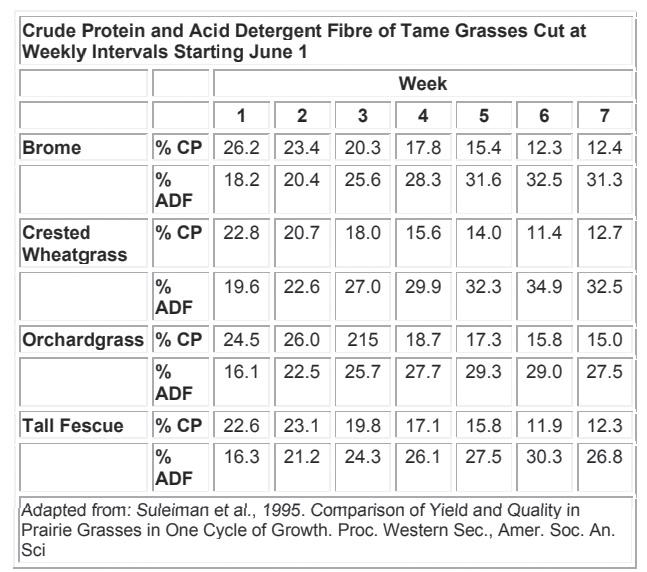
timely harvest a very difficult task due to frequent rains or poor drying conditions. However, harvesting overly mature forage generates lower quality forage that will affect beef animal productivity at all stages of development.
If you are going to go to the expense and effort to make hay, you might as well produce good quality hay.
Submitted charts
Cutting early and planting legumes will improve your hay quality. If you are going to be short of feed and/or are going for tonnage, you might want to consider cutting some of your fields for high quality feed to supplement those fields that are cut late and could possibly be lower in quality.
John McGregor is with MFGA Extension Support.
By Elmer Heinrichs
Dozens of Manitoba farms and several affordable housing projects will soon have help to reduce greenhouse gas emissions as the federal and provincial governments announced nearly $11 million in clean technology grants June 27.
Tracy Schmidt, the provincial environment minister, and Terry Duguid, a Liberal MP announced the first 32 recipients of the low-carbon economy fund’s (LEF) merit-based program at the University of Winnipeg.
The projects will “help Manitobans reduce green-
house gas emissions and energy use, and save money by lowering energy bills,” Duguid said.
“It’s about becoming more energy efficient, cutting energy costs and building resilient communities, all the while contributing to meeting Canada’s 2030 emission reduction targets,” he added.
More than a third of Manitoba’s annual greenhouse gas emissions come from the agricultural sector - a significant portion of which comes from fuels used in farm equipment.
Rick Rutherford, the thirdgeneration owner of Ruther-
ford Farms north of Winnipeg, said the grant will help fund a switch to cleaner fuels for his grain dryer which consumes large amounts of fuel to heat and dry grain and support electrification projects throughout his operation.
“Sustainability has been the cornerstone of what my vision has been for the last number of years,” Rutherford said. “We want to move to a carbon net-zero farm.”
By Harry Siemens
Cargill, a global leader in food and agriculture, has announced a significant investment in sustainable agriculture with a $1 million grant to Colorado State University’s AgNext research program. This funding supports cutting-edge research on reducing methane emissions from cattle, a critical environmental challenge in the beef industry.
“Working closely with industry partners like Cargill, researchers, and producers, AgNext is helping develop innovative, scalable solutions that move the livestock industry toward a more sustainable future,” said Dr. Kim Stackhouse-Lawson, director of AgNext and Co-Principal Investigator. “An important part of that is developing robust baseline greenhouse gas emissions data from cattle.”
The grant targets a pressing issue in animal agriculture: enteric methane emissions from feedlot cattle. Naturally produced during digestion, these emissions significantly contribute to greenhouse gas levels. Current USDA guidelines make assumptions about the effects of different feeding strategies on methane emissions, such as grain processing and various feed additives. However, more empirical data is needed to support these assumptions. The AgNext program at CSU aims to fill this gap through several groundbreaking experiments over the next two years.
The research will evaluate the impact of various ingredients and additives on enteric methane emissions in cattle diets and explore whether combining these additives can further reduce methane.
“Cargill is committed to working with researchers, farmers, and ranchers to advance creative sustainability ideas and accelerate best-in-class conservation practices within the industry,” said Eliza Clark, Cargill Protein & Salt Sustainability Leader. “The knowledge generated from this innovative research will pave the way for testing new technologies in cattle feeding and continue to improve the reduction of greenhouse gas emissions in the beef supply chain.”
Cargill’s commitment to sustainability is part of its broader mission to provide food, ingredients, agricultural solutions, and industrial products safely, responsibly, and sustainably. By partnering with farmers and customers, Cargill aims to source, produce, and deliver essential products that support everyday life. With 160,000 team members, Cargill innovates with purpose, helping businesses grow, communities prosper, and consumers live well. With 159 years of experience, Cargill remains true to its values by putting people first, reaching higher, and doing the right thing—today and for future generations.
AgNext is a leading research program dedicated to animal and ecosystem health while enhancing the profitability of the supply chain. It serves as a crossroads for producers, industry partners, and researchers, fostering innovation and providing real-time solutions for sustainable animal agriculture. The program’s research focuses on advancing the science of animal agriculture to ensure a safe, secure, and nutritious food supply.
AgNext’s mission is to identify and scale innovations that promote the health of animals and ecosystems, supporting profitable industries and vibrant communities. This collaboration between Cargill and CSU exemplifies a significant step towards sustainable practices in agriculture. It highlights the importance of research and innovation in addressing environmental challenges and supporting the global food supply.
Altogether, the province estimates the projects will contribute $33 million to Manitoba’s economy.
A full list of the 32 approved projects is available at: www.canada.ca/en/environment-climate-change/ news/2024/06/manitobasmerit-based-program-32projects-approved-underfirst-round.html
Eligible recipients for the LCEF fund include municipalities, government entities, industry, Indigenous communities and not-for-profit organizations. Investments in climate action initiatives, such as the ones announced today, are necessary for Manitoba and Canada to achieve their climate goals and build a strong, clean economy for everyone.

