With the weather turning quite nice, and with a little moisture, farmers are optimistically preparing for a start on spring seeding in the weeks ahead.
Early seeding helps crops take full advantage of available moisture, a major concern for farmers across the prairies this year after a warm winter with little snow cover.
Dennis Lange, pulse and soybean specialist with Manitoba agriculture, says farmers have been out in the Altona, Winkler, Homewood and Carman area putting in a little wheat, and perhaps some barley and oats.
Once underway producers will soon be putting in their small grains oilseeds, corn soybeans and other crops.
The Manitoba Bull Test Station plays a crucial role in advancing the quality and performance of cattle breeds, contributing significantly to the agricultural landscape in Manitoba and beyond.
By Harry SiemensThe Manitoba Bull Test Station at Douglas is one of the most extensive bull testing facilities. The Manitoba Beef Cattle Performance Association Inc., a non-profit organization with a nearly 60-year history, oversees the facility. The association develops bulls and heifers that meet the
evolving needs of the cattle industry, catering to both purebred and commercial cattlemen.
The station welcomes visitors throughout the year, offering insights into its programs and providing statistics and access to quality livestock during the test season.
The Manitoba Bull Test
Station plays a crucial role in advancing the quality and performance of cattle breeds, contributing significantly to the agricultural landscape in Manitoba and beyond.
Cam Wood, the general manager of the Manitoba Bull Test Station in Douglas said three producers started the bull test station 60 years
ago after recognizing the need for such a facility in the province. Despite this being his first year as manager, Wood is proud to be part of this longstanding tradition and longevity in an era when few things reach the 60year mark.
In an interview a day before the 60th bull sale in March, Continued on page 2...
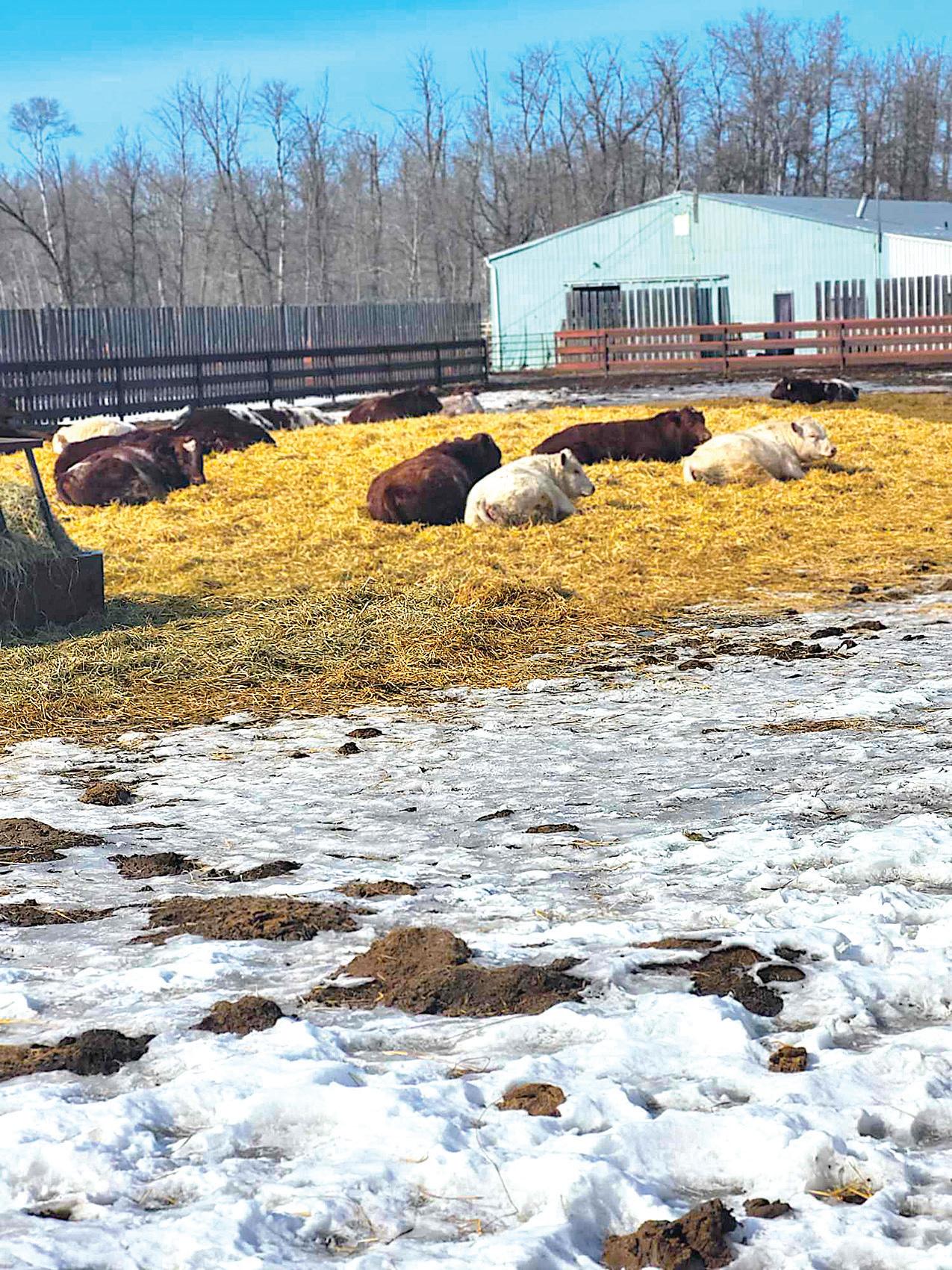
An advantage of earlier planted crops may be that they’re better able to use available soil moisture through the growing season after a warm winter with little snow cover.
It may also increase the likelihood of avoiding high temperatures and dry conditions during the critical flowering and grain fill stages.
While seeding in mid-April is not uncommon in some parts of Manitoba, dry soil conditions have made it possible for seeding to start quite early, with the biggest driver being the potential for higher yields.


Wood emphasized the significance of the Manitoba Bull Test Station in providing producers with a platform to performance-test their bulls against others in the province.
“The station’s standardized conditions ensure fair comparisons, allowing smaller, older, or younger producers to showcase their bulls and genetics,” he said.
This opportunity is crucial for these producers to market their genetics effectively and contribute to the diversity and quality of the cattle industry, especially for both older, smaller producers and younger producers who are just starting in the cattle business.
“The station provides an opportunity for these producers to showcase their bulls and gain exposure, especially for those who don’t have enough numbers to participate in larger production sales,” Wood said.
He said the station’s sale was the primary event for selling bulls in the province, with strict criteria for inclusion. The bull test station had about a hundred bulls on test, and 65 were set for sale, indicating continued interest and participation in the station’s programs.
Typically, bulls arrive in October and undergo a two to three-week warm-up period on feed to ensure they are on the same feeding regimen. Towards the end of October, Wood weighs them to begin the testing phase, and they are weighed every 28 days for a total of 112 days until they come off the test in mid-February.
Throughout this period, Wood monitors the bulls for average daily gain and assesses their meat characteristics through ultrasounds. Before the sale day, the bulls’ pictures and videos get catalogued online. Some bulls get culled for various reasons, and the best ones sell.
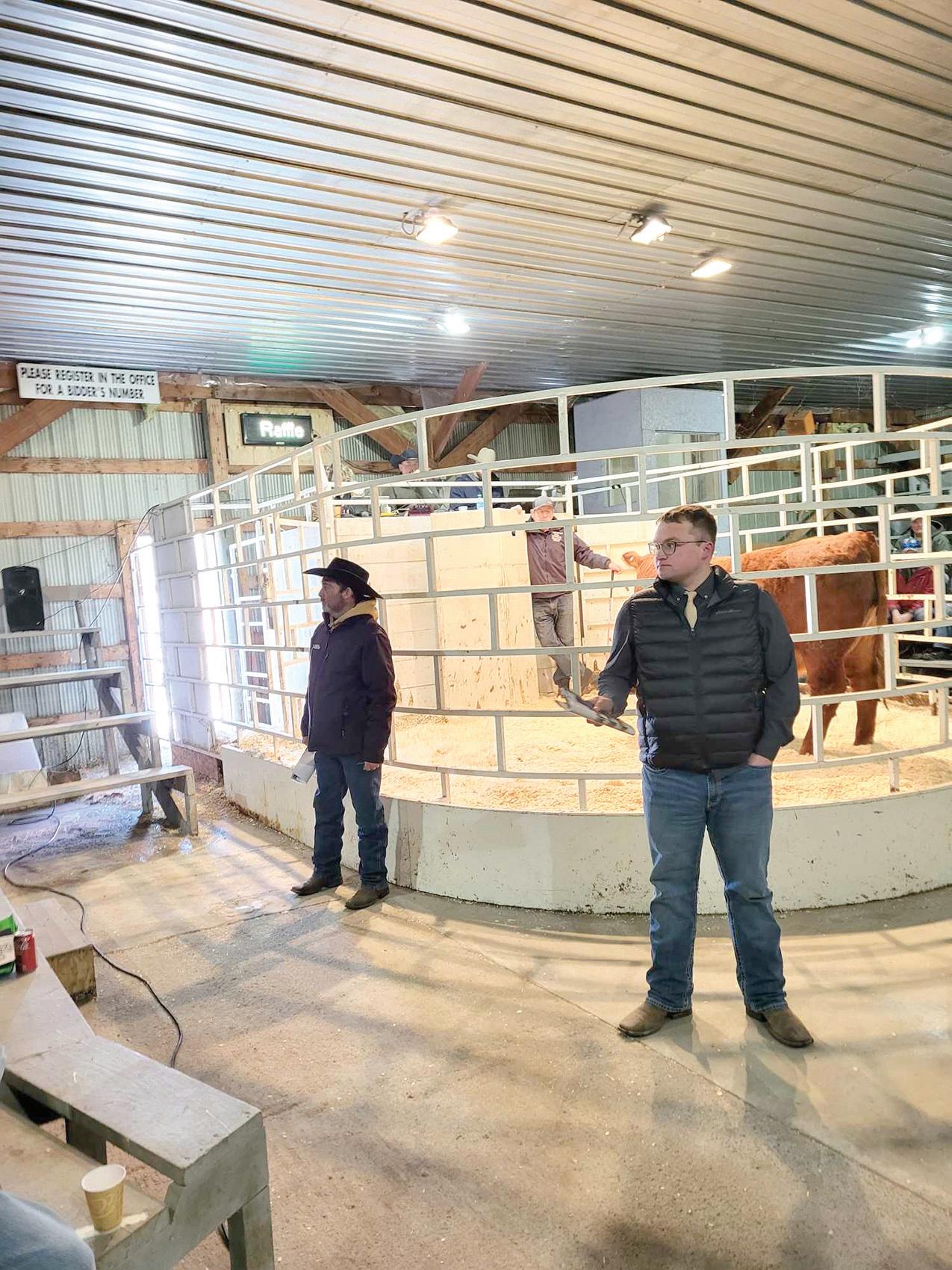
Wood reported a great sale with excellent attendance, 195 bidders, and good online support.
“Good weather, good people and a great set of cattle on offer,” said Wood.
The sale sold sixty bulls for $328,050.00 at an average of $5,467.50 per bull. Twenty-four heifers sold for $100,700.00, with an average price per heifer of $4,195.83. These figures reflect the successful outcome of the sale, showcasing the value and quality of the bulls and heifers offered and the satisfaction of both buyers and sellers in the agricultural community.
The sale featured the Simmental, Maine-Anjou, Angus, Shorthorn, Limousin, and Hereford breeds.
Twenty-two Simmental bulls sold at an average price of $5,625, while 7 Simmental heifers fetched $5,000 each. Additionally, 1 Maine-Anjou bull sold for $8,000 and 2 Maine-Anjou heifers sold at $5,125 each. In the Angus category, 17 bulls averaged $5,780 and 8 heifers at $4,420 each. Thirteen Shorthorn bulls sold for an average of $4,593 and 7 Shorthorn heifers at $3,325 each. Five Limousin bulls sold for $4,950 each, and two Hereford at $4,500 each. Overall, 60 bulls yielded $328,050, averaging $5,467.50 per bull, and 24 heifers sold for $100,700, averaging $4,195.83 per heifer. Three semen lots sold at an average price of $383.33 per lot.
Argyle, MB cattle producer Ian Smith said four bulls didn’t get the floor price of $4,000.
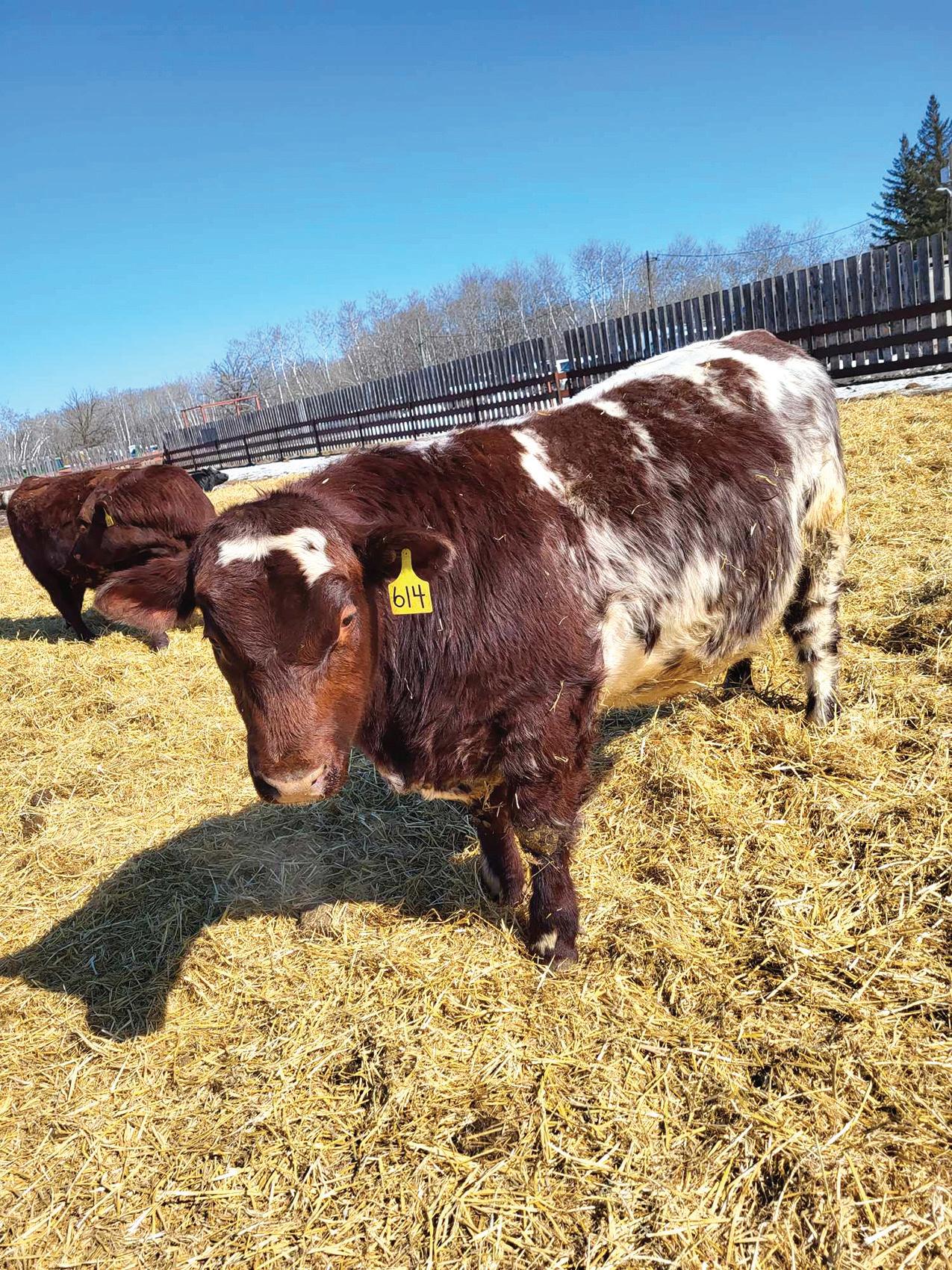
“One of his bulls, a 1,200 lb Shorthorn bull, did not get a bid, so it returned home,” said Smith. “But my favourite bull, Lazy Larry, sold for $4,400 to a producer at Oak Point. My other bull sold for $4,100 to a producer at Stratton, Ontario.”
Ministers from around the globe convened at the World Trade Organization’s (WTO) 13th Ministerial Conference (MC13) in Abu Dhabi to assess the efficacy of the multilateral trading system and chart a course for future WTO endeavours.
Among the key areas of discussion was agriculture, a longstanding point of contention in WTO negotiations. However, despite efforts, the conference concluded without significant progress in this crucial sector.
Representatives from Canada, including the Canola Council of Canada, Canadian
Association, Cereals Canada, Canadian Cattle Association, and Grain Growers of Canada, attended MC13 to advocate for the preservation of the global rules-based trading system and to support Canadian negotiators in safeguarding these principles.
According to the Canadian Agri-Food Trade Alliance (CAFTA), expectations were modest heading into MC13. Factors such as the US and Indian election cycles and escalating geopolitical tensions dampened hopes for substantial agreements.
In light of recent events casting doubts on the WTO’s
ability to lead, Canadian officials approached the negotiations with cautious optimism, aiming to prevent regression toward protectionism rather than seeking significant liberalization. In this regard, MC13 could be considered a modest success.
However, ministers were unable to overcome differences on critical issues, particularly concerning agriculture. Disagreements persisted regarding the public stockholding issue, with India’s insistence on a permanent solution meeting resistance from other member states.
India’s Market Price Support system, which allows the
country to build food stocks through purchases from farmers at inflated prices, drew criticism for distorting global markets. The inability to resolve questions about public stockholding as a standalone outcome or as part of a comprehensive package stalled negotiations, leaving many decisions postponed until the next Ministerial Conference.
The Cairns Group, which includes Canada among its members, expressed disappointment with the outcome, highlighting the challenges facing the global trading system, particularly concerning food security, development, and the environment.
Canadian farm cash receipts set a record in 2023 at $988.6 billion, up 3.6 per cent from the 2022 record.
Cash receipts represent the cash income received from the sale of agricultural commodities as well as direct program payments made to support or subsidize the agriculture sector.
All provinces except Ontario set new farm cash receipts records in 2023 and Ontario’s performance was a very close second to last year. Manitoba’s share of Canadian farm cash receipts held at 10.3 per cent. Farm cash receipts are the top line revenue in agriculture for the calendar year.
For the fourth year in a row, a new record high for farm cash receipts was set in Manitoba with the classic sectors, wheat and cattle, earning this record in 2023.
Manitoba realized 2023 farm cash receipts of $10.19 billion, up $373 million or 3.8 per cent over 2022.
Canola, wheat, hogs, cattle, soybeans, potatoes, poultry and eggs, dairy, corn for grain and oats make up the top 10 sectors for cash receipts for 2023. Crops contributed 64.4 per cent of total receipts for 2023; livestock generated 32.2 per cent, while direct
payments totalled 3.4 per cent of receipts.
The top five sectors by farm cash receipts were canola, wheat, hogs, cattle and calves, and soybeans.
Canola produced $2.28 billion in receipts, 22.3 per cent of Manitoba’s total. Wheat brought in a record $1.91 billion, representing 18.8 per cent of total receipts.
Hogs contributed $1.47 billion, providing 14.4 per cent of Manitoba’s total receipts.
Cattle and calves generated a record $945 million in receipts, accounting for 9.3 per cent of total receipts while soybeans realized $835 million, or 8.2 per cent of total farm cash receipts.
These top five sectors brought in 73 per cent of Manitoba’s farm cash receipts. Rounding out the crops, potatoes were fourth with a record $405 million, a significant increase from last year’s $357 million record while corn generated $333 million, likewise surpassing its 2022 record of $288 million.
Manitoba’s livestock sectors produced record high receipts of $3.28 billion in 2023, up 7.4 per cent from $3.05 billion last year. The hog sector generates 45 per cent of all livestock receipts at $1.47 billion in 2023,
which was 2.8 per cent lower
than in 2022. Cattle and calf receipts rose by 32.3 per cent to a record, $945 million in 2023.
Receipts from supply-managed commodities were $735 million in 2023, up 4.6 per cent compared to 2022. Supply managed commodities made up 22 per cent of total livestock cash receipts. Milk sales contributed $359 million, up 1.5 per cent, while poultry contributed $230 million, up 6.8 per cent and eggs contributed $171 million, up 10.5 per cent. Sheep and lamb receipts at $13.9 million were 20.7 per cent lower in 2023, compared to 2022. Honey remained near last year’s $50 million record with a showing of $49 million for 2023.
Manitoba is Canada’s second biggest honey producer, after Alberta, with 18 per cent of all Canadian honey receipts. For 2023, program payments totalled $347 million, down 45.3 per cent from 2022.
Crop Insurance payments were $187 million, private hail insurance was $53 million, AgriInvest was $36 million and AgriStability payments came in at $31 million. Direct payments comprised 3.4 per cent of total farm cash receipts for 2023.
By Elmer Heinrichs toba as reported in the Canadian Drought Monitor as of March 31, 2024.
For 2024-25, assuming normal weather conditions during the growing season, production and supply for most crops is expected to rise and return to average levels with the assumption of a return to trend or neartrend yields. Currently, the most significant climaterelated risk to realizing a return to trend yields is that dry conditions remain across most parts of western Canada.
In particular, conditions remain significantly drier than normal from Edmonton through the Peace River and across southwest Mani-
To achieve average yields, normal weather and growing conditions over the spring and summer are assumed. Currently, abnormally cold spring temperatures and continued dryness across Alberta and Saskatchewan are the most significant climate-related agricultural risks to realizing average yields, according to the national agroclimate risk report.
Carry-out stocks are expected to increase marginally as normal production levels combined with larger carry-in stocks (beginning-

year inventories) will lead to a small rise in total supply, while exports are expected to continue to be relatively robust and domestic use is expected to remain at average levels.
Uncertainty in the world’s grain markets remains above normal as a result of Russian aggression against Ukraine and other ongoing geopolitical risks.
In general, prices are projected to decrease but still remain relatively strong as expectations for an increase in global supplies exert downward pressure on prices, while support is expected to come from continued strong world demand.



It is not often, in fact, very seldom, that I get to write the Forward to a published book. I did that recently for a book by Martin Harder of Winkler, MB, who is also no stranger to Manitoba’s farming, political, family, and faith sectors.
I got to know and follow Martin when he first moved to Winkler to manage the Cargill site and later the Cargill site at Elm Creek, MB. Only a short time after, Harder left Cargill and start-
ed Delmar Commodities in Winkler as a phone broker. More on that later.
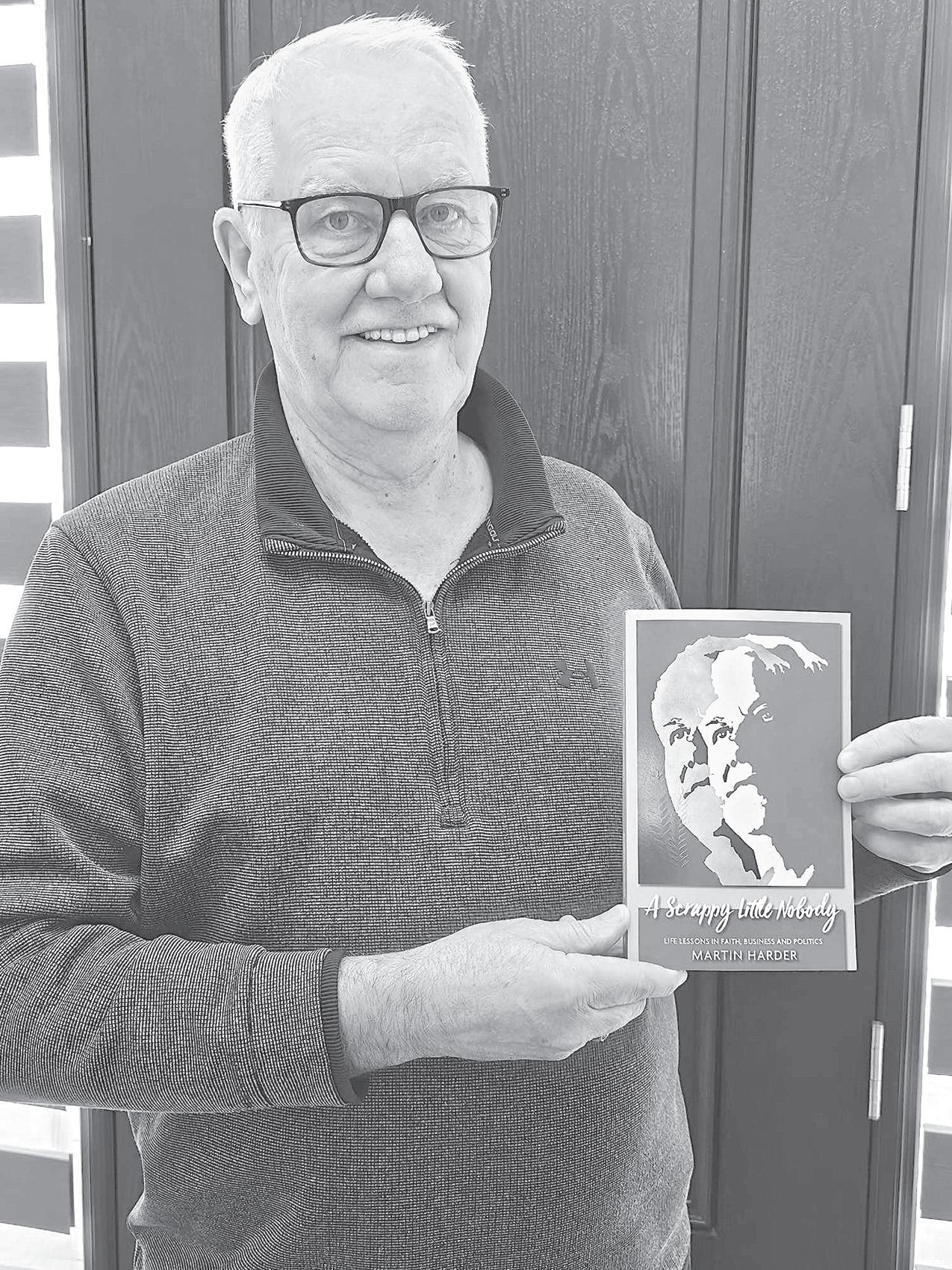
In a recent interview at his home in Winkler, I looked at the book cover, “A Scrappy Little Nobody”, which contains life lessons in faith, business, and politics and asked why he decided to write a book.
“My life has been a very varied experience over the last 70 years. And my children have said for years, I should write a book,” Harder said.
About 15 years ago, Les Kletke wrote a book for various people in the grain business, asking Martin to write a chapter, which birthed the
idea of his book.
“In reality, the experiences in my life are many that I would say usually should never have happened, but yet things did happen,” said Harder. “I’d often find myself backed against the wall, trying to figure a way out, and that’s where the concept of being a ‘scrappy little nobody’ originated.”
I had the privilege of reading the initial draft, and once I started, I couldn’t stop. Martin’s message about getting things done right resonated with me, and I immersed myself in his words until the end. Having known him personally and having written several articles about his work, it clicked into place. It gave me a new perspective on Martin Harder, the businessman, family, faith leader, and 16-year Mayor of Winkler.
“Perhaps that’s precisely what you intended,” I told him adding, “to provide clarity and insight through your writing. If so, mission accomplished!”
Martin told me that despite not having a strong educational background, he hopes readers will understand that his book is not just a collection of his achievements, although there are many. It’s about the journey, the process itself.
“What intrigues me most is looking back and seeing how that process unfolded, leading to the creation of this book. I felt compelled to write it down so that others going through their journeys, albeit in different circum-
stances, can relate to some of the stories.
“Another aspect I appreciate about the book is its structure. Each chapter represents a segment of my life, allowing readers to pick it up, read a chapter, and come back later to explore another segment,” he said.
“It’s like Dizzy Dean said, you know, the all-star pitcher?”
It ain’t bragging if it’s true though.
“Well, this is the story from my record, my reflections, my recollections, and my side of the story. It may not be somebody else’s side, but mine,” he told me.
Martin’s last comment:
“The place that God has placed in my life has brought me through these circumstances. You can read the book if you’re not religious; you can still read it and get some value in it. However, when you see the hand of God, I hope that people will realize the importance that God has placed in my life, and that’s my aim.”
On March 24, 1997, the Jordan Corner, where Provincial Roads 3 and 23 intersected, emerged as an ideal site for a grain elevator business.
Martin Harder, a seasoned grain elevator manager at Cargill Ltd. in Manitoba, made a significant move by purchasing the elevator owned by the Local Association of Manitoba Pool Elevators. Remarkably, since then, his operations under Delmar Commodities Ltd. have consistently avoided negative profit margins, surpassing Manitoba Pool’s grain
movement in just seven or eight months compared to their previous year. Notably, a significant % of the grain handled—80%—consisted of non-Canadian Wheat Board grain, primarily serving the local feed market.
Martin’s transition from Cargill to an independent phone broker in the grain business marked a shift toward legitimacy. He had long dismissed the role of phone brokers in the industry and sought an opportunity like this elevator acquisition to establish credibility. Reflecting on this move, Martin noted, “To be a phone broker tended not to give you legitimacy in the grain business.”
For seven years, he drove past the Jordan Corner facility on his way to manage the Elm Creek facility for Cargill. Martin wasted no time when the opportunity finally arose to buy the Jordan Corner facility. He reached out to the executive of the MPE Association to inquire about the elevator’s availability for sale. Initially, the answer was no, as the association had a long-term agreement with Manitoba Pool to sell the facility. However, the executive discovered their standing in the pecking order with Manitoba Pool, likely realizing that Manitoba Pool intended to shut down the elevator within the next year due to falling grain volumes. After calling for tenders, Martin’s bid for 150 thousand dollars was successful. The rest they say “Is History!” Hence the book, “The Scrappy Little Nobody”.
The Canadian Federation of Agriculture (CFA) was disappointed to see a lack of investment in Canadian agriculture in the 2024 budget.
In light of sustained highinterest rates, a price on carbon for essential farming activities, for which farmers have no viable alternatives, and an increased risk of extreme weather events that are testing the limits and effectiveness of Canada’s suite of risk management programs,
the recent Federal Budget falls short for Canadian farmers, the CFA wrote in a statement.
“While we understand there are competing priorities for government funds, with erratic weather and high prices tremendously increasing the risk profile of Canadian agriculture, the government can ill-afford to ignore food production and Canadian farmers,” said Keith Currie, CFA President.
While the budget did have some positive investments in the sector, such as the re-commitment to launch of consultations on interoperability, carbon rebates for small businesses and previously announced funding for temporary improvements to the Advanced Payments Program, there was no mention of pivotal issues for the sector such as investments in environmental programming, chronic labour issues in food
production or improvements to transportation and trade infrastructure.
At the same time, CFA was pleased to see the Government of Canada respond to CFA’s recommendation to increase to the Lifetime Capital Gains Exemption, a critical tool in supporting intergenerational farm transfers. However, the increase to the inclusion rate holds the potential to make these same transfers more challenging given the amount
of capital required to remain competitive in modern agriculture. CFA will be assessing the full implications of these changes for intergenerational farm transfers in the coming days.
“If Canadian agriculture is to seize its full economic and climate potential, we cannot keep missing opportunities while our international competitors continue to invest in their agriculture industries,” Currie added.
The interest-free limit of the Advance Payments Program has been set at $250,000 for the 2024 program year. This is the portion of advances on which the Government of Canada pays the interest on behalf of producers.
Advances are available on over 500 crop and livestock products across Canada.
With this support at the start of the production cycle, farmers will be able to purchase important inputs to support production this growing season. The program also provides some marketing flexibility by allowing producers to sell their agricultural products at the most opportune time rather than the need for cash.
“In the face of so many challenges, our hardworking producers continue to show their resilience and produce top-quality products for Canadians, and the world,”
said Lawrence MacAulay, Minister of Agriculture and Agri-Food. “Increasing the interest-free portion of the Advance Payments Program means improved cash flow and savings for farmers as we head into the 2024 planting season.”
Canadian producers have faced significant challenges, including elevated input prices and interest rates, which have impacted their cash flow. As farm operating costs remain uncertain heading into the 2024 crop year, this change will save approximately 11,950 participating producers an additional $4,916 in interest costs on average, for a total savings of up to $58.7 million.
The Advance Payments Program gives producers easy access to low-cost cash advances of up to $1 million, based on the expected value of their agricultural product.
Under the program, producers normally receive the first $100,000 interest-free. The higher limit announced today will give producers access to additional cash flow and interest savings to help cover costs until they sell their products.
In 2022, the government increased the interest-free portion of APP loans to $250,000 to aid with pandemic recovery, and subsequently increased the threshold to $350,000 in 2023 to aid with escalating costs of crucial farm inputs such as fertilizer and fuel. Prior to this announcement, the APP was scheduled to return the interest-free portion to $100,000 in 2024.
“Increasing the interestfree portion to $250,000 is welcome news to producers across Canada as these loans assist with cash-flow issues without any financial pen-
alty. Farming is extremely time-sensitive and farmers must often make purchases for the next growing season before they have been paid for the last,” said Canadian Federation of Agriculture (CFA) President, Keith Currie.
“Given the costs facing farmers are only expected to increase, we hope this change can set a new permanent baseline for interestfree advances and that the APP will continue to make adjustments that keep pace with rising farm expenses in the coming years.” Currie added.
The CFA has been advocating strongly to retain the increased interest-free portion of the APP loans to reflect the significant inflationary pressures producers have experienced since the interest-free portion was first set at $100,000.
Keystone Agriculture Producers (KAP) recognizes the recent Manitoba 2024 budget has some good news producers and for rural Manitoba in general.
“While changes were made to the School Tax Rebate for residential properties, KAP is pleased to see the 50% rebate maintained for farm properties,” said KAP General Manager, Brenna Mahoney. “We encourage the province to continue working toward the complete removal of the tax on farm properties and that this is taken into account when developing the new provincial education funding model.”
Addressing labour challenges is an area where KAP has focused heavily, and this budget provided some wins, including the restoration of the rural doctor recruitment
fund, $1.5 million to increase apprenticeship training seats, and an investment to support the implementation of a provincial veterinary strategy.
“KAP is excited to see $135,000 announced in this budget that will go toward the implementation of the veterinary strategy, which we developed in partnership with the team at Manitoba Agriculture,” said Mahoney.
KAP noted supports for Manitoba producers that were included in Budget 2024, such as $146.9 million for BRM program funding, the reopening of 2 MASC centres, the creation of a Livestock Predation Prevention Strategy, extension of the gas tax by three months, freezing Ag Crown Land lease rates, and supports for young farmers.
“These components of
Budget 2024 are welcomed by Manitoba producers across the province,” said KAP President, Jill Verwey.
“In particular, the lending fee credit through MASC for farmers under 40, increases to the Young Farmer Rebate loan amount to $300,000 and maximum rebate to $30,000 will provide significant benefits to the next generation of farmers. That said, KAP would like to see further investment in highways and infrastructure prioritized through increased capital funding, as well as legislative amendments that would enable Right to Repair for farmers.”
Rural healthcare and crime were two areas identified by Manitoba producers throughout the past year as priorities, and investments in this budget reflect this as a priority.
“KAP welcomes the $13.7 million increase to policing grants which support rural police services who keep communities safe, as well as the creation of a $300 security camera rebate to provide producers with some support to install security systems on-farm,” continued Verwey. “We also applaud the commitment to hire 1,000 new healthcare workers and 13.5% general increase in Health, Seniors and LongTerm Care.”
KAP noted that additional important items to highlight include $30 million for the repair and upgrade to the railroad and Port of Churchill, investments in CentrePort Canada, the creation of a provincial trade strategy and creation of a value-added strategy for Manitoba farm products.
The Manitoba government will continue to provide funding to the Manitoba 4-H Council to offer programming for rural Manitoba youth, Agriculture Minister Ron Kostyshyn announced recently.
“The 4-H program has a long history in Manitoba of working with rural youth to help develop leadership, self-confidence, communica-
tion and many other practical skills,” said Kostyshyn. “Our government appreciates the volunteers who dedicate their time to helping guide young Manitobans and build communities.”
The Manitoba government has provided $900,000 over three years starting in 2022 to Manitoba 4-H Council to deliver programming across the province to over 100 4-
H clubs for more than 1,000 members, the minister said.
“We appreciate the support of the Manitoba government.” said Shannon Carvey, executive director Manitoba 4-H Council Inc. “The funding from the Manitoba government allows us to provide quality programming for our members, leaders and volunteers at regional and provincial events.”
Daryl Fransoo, the Chair of the Wheat Growers Association, voiced his disappointment on the 2024 federal budget.
“Once again, the federal government has missed the opportunity to support agriculture and those who work in the industry,” said Fransoo. “The real issues impacting us are the cumulative effect of the carbon tax on everything we do, the growing need for coordinated grain research, increased funding for the PMRA, and industry efficiency through an improved Canada Grains Act.”
According to Fransoo the federal government’s efforts to defeat C-234, a bill aimed at providing immediate relief to grain farmers from the negative impact of the carbon tax on grain drying, showcased a lack of understanding of how these costs affect farmers’ ability to grow grain for both domestic and export markets.
He said the government changed its policy on the Advanced Payments Program and increased the interest-free limit from $100,000 to $250,000 without consulting with the industry.
Fransoo sees these new measures for biofuel production not applicable to food production today and instead will result in increased costs in the future.
According to Fransoo, grain research across the country is lagging compared to international work and will result in negative outcomes for Canadian farmers.
“To remain competitive, we must be putting the needed funds into research and the work of the PMRA,” he said.
“The Canada Grain Act has had limited legislative changes in the last number of years and has not been thoroughly reviewed to bring it in line with today’s reality in the grain trade,” said Fransoo. “There are many efficiencies that could be gained by bringing the Act into the 21st Century. As an example, farmers are paying for double inspections on over 70% of export vessels simply because customers of Canadian grain demand the 3rd party certificate rather than CGC’s legislated certificate. This costs farmers tens of millions of dollars annually based on outdated legislation.”
“It’s unfortunate the federal government has once again failed to support Canadian grain farmers. We are most efficient at growing highest quality grains and oilseeds, yet the government is either putting roadblocks into the supply chain or not supporting the changes needed to continue to grow this sector,” closed Fransoo.
4-H was founded in Roland, Manitoba in 1913 and has been supported by the Manitoba government since the early 1920s. Manitoba’s financial support helps further the program’s goal to provide young members with the foundations for success in their future, noted the minister.
For more information on Manitoba 4-H, visit 4h.mb.ca.

The Executive Director of the Swine Health Information Center (SHIC) reported that 43 research proposals were submitted in response to its 2024 Plan of Work Competitive Call for proposals and are now under review.
In January, the Swine Health Information Center formally requested proposals to address 11 of 36 research priorities and topics outlined in its 2024 Plan of Work.
SHIC Executive Director Dr. Megan Niederwerder said the 43 proposals from 21 different institutions in the US and Canada are an out-
cluded academic institutions, government institutions, and private institutions.
“We received a great proposal response, with a diversity and breadth of topics covered. Most have a six- to twelve-month timeline and a budget of between $50,000 and $150,000,” said Dr. Niederwerder.
The criteria used during the review process looked at the value to pork producers, the cost-effectiveness of the technology, the chance of success, and the experimental design or methodology regarding the conclusions of the proposals.
“We’re examining the jus-
within the specified timeframe,” said Dr. Niederwerder.
She mentioned that a task force comprising members from the Swine Health Information Center Working Group and stakeholders such as pork producers, swine veterinarians, academic faculty, allied industries, and private company representatives is currently evaluating the proposals.
The 2024 plan of work research program encompassed: monitoring and mitigating risks to swine health; responding to emerging diseases; and surveillance and discovery of emerging dis-
Proposal research included examining high-risk product importation and traveller entry at the borders, seaports, and airports. Understanding the highest-risk importation items depends on the current outbreak situation in the country of origin.
“We are focusing on wholesale and secondary market biosecurity and disease surveillance. Additionally, we’re exploring engineering biosecurity controls through site construction design and strategic renovation,” Dr. Niederwerder said.
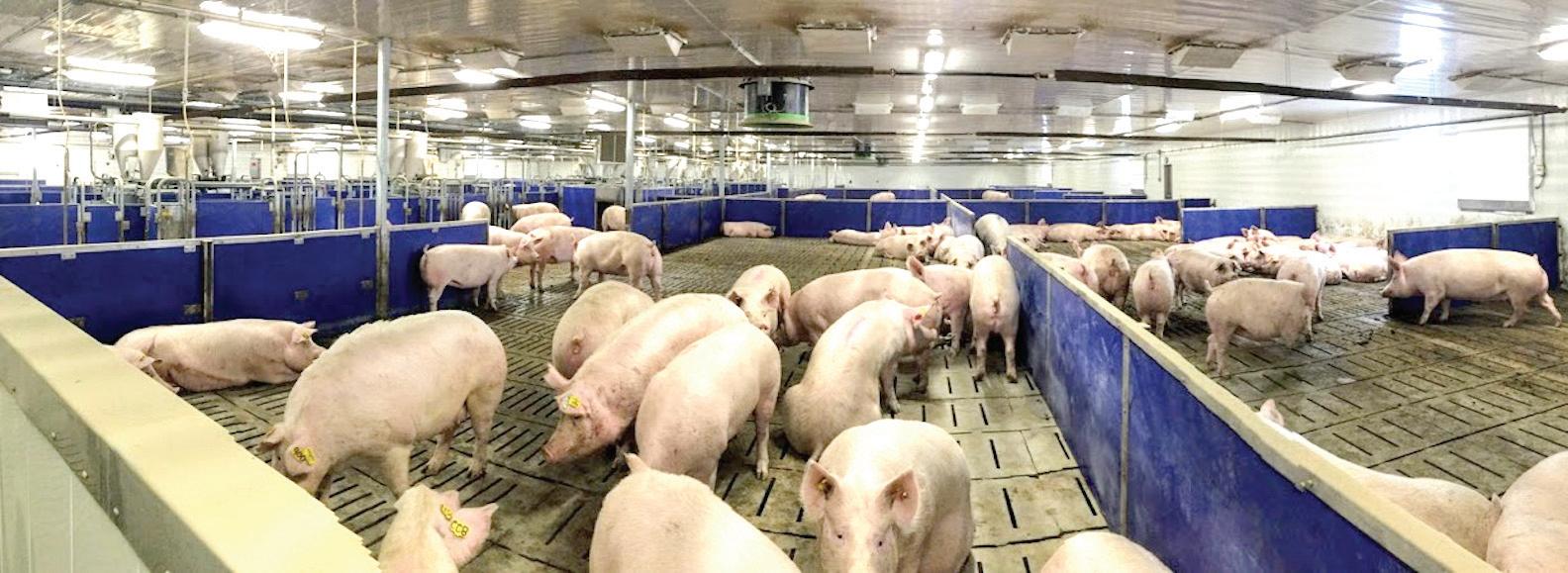
In responding to emerging diseases, the group identified a couple of priorities for research proposals. These include porcine circovirus type 2, type 3, and the emerging porcine circovirus type 4. They also sought proposals to help identify early disease outbreak warning signals by analyzing farm and regional data. They requested diagnostic assay development proposals to confirm the efficacy of cleaning and disinfection protocols. Additionally, they are exploring population-based sample types such as environmental swabs, oral fluids, process-
ing fluids, and insect exposure to detect emerging diseases early. Their focus also includes environmental sample types for emerging disease surveillance and understanding the clinical relevance and epidemiology of newly identified agents at the veterinary diagnostic lab submission level.
Many of the proposals under review, focus on aspects like experimental design, methodology, cost, budget justification, and the justified timeframe. The goal is to identify the greatest value for pork producers cost-effectively. The review process could take several weeks to complete by the end of April, and select projects for funding at the beginning of May.
For more information, visit the Swine Health Information Center’s website, swinehealth.org, and navigate to the “Plan of Work” section.
“Reviewing this plan will provide a comprehensive understanding of SHIC’s goals and objectives to mitigate emerging disease risks for US swine,” she said.
To date out of the 43 pro-

posals received, 36 have been chosen as strategic priorities in the 2024 Plan of Work. The task force will provide ongoing updates on research results as they become available.
Additionally, they welcome feedback from stakeholders regarding the swine industry’s priorities and needs. Stakeholders can provide feedback through the website under the “Plan of Work” section. Their input helps SHIC remain responsive to current industry needs.

Mara Rozitis of Tache, MB, calls herself a pig farm problem solver. The owneroperator of Signature Swine Solutions provides hands-on support for hog farms.
“Lately, this has involved temporary labour because nobody is too interested in producing more pork! I can jump into any role without training, smoothing out tough times when farms are short-staffed or facing a disease,” said Rozitis.
In better times, she provides production consulting to improve the bottom line. Many input costs in pig farming don’t change much, so improving production by any margin makes a big difference to profitability.
“My specialty is improving productivity and efficiency by working with existing staff and leadership team,” she said.
She recounts, that a sow farm experienced a PED outbreak during understaffing, creating a challenging situation. Recognizing the urgency, she stepped in to provide temporary labour and focused on the most critical tasks, such as processing
and assisting with farrowing sows. This proactive approach helped the farm maintain smooth operations and morale high amidst the crisis.
As labour costs escalate combined with high feed prices, biosecurity needs and staffing present undue challenges for Manitoba hog producers, Rozitis interviews farm leadership to understand their main objectives and areas of concern.
This initial step often involves data analysis, which helps pinpoint where improvements are most needed. Once on-site, she works closely with staff and management to build rapport and gain a deeper understanding of the challenges and opportunities unique to that farm.
After identifying critical areas for improvement, Rozitis collaborates with the leadership team to develop an implementation plan addressing one or two high-impact areas. This strategic approach ensures the changes will add significant value to the farm’s operations.
“Throughout the implementation process, I prioritize communication and support,
making myself available to address any questions or issues,” she said.
Rozitis believes in allowing sufficient time for each change to take root and become ingrained in the farm’s culture before moving on to the next improvement opportunity. This gradual approach allows for measurable successes, keeps staff motivated, and fosters ongoing engagement.
Last year, she collaborated with a sizable farrow-to-wean operation facing production and staff morale challenges. By immersing herself in every aspect of their operations, she pinpointed areas for improvement. One critical step was assisting the leadership in hiring new managers who were more receptive to change, as the existing managers resisted improvements.
“I supported the new management and barn staff during this transition, providing guidance and leadership during a challenging period,” said Rozitis.
The primary concerns of the farm leadership were to boost weekly pig production while maintaining high
The United States Department of Agriculture (USDA) made waves on March 11 with its announcement of stringent new labelling regulations for animal products. Under the new rules, slated to take effect in 2026, any product bearing the “Product of the USA” or “Made in the USA” label must have been born, raised, slaughtered, and processed within the United States.
While this move has been hailed by some in the US as a step toward bolstering domestic agriculture and promoting transparency in labelling, it has also raised concerns among its international trading partners, Canada and Mexico.
Canadian Minister of
Agriculture Lawrence MacAulay and International Trade Minister Mary Ng have voiced apprehension about potential disruptions to North America’s meat and livestock industries. They intend to address these concerns with Agriculture Secretary Tom Vilsack at the next agriculture ministers meeting under the Canada-United States-Mexico Agreement (CUSMA).
Mexico, another key player in North American trade, has taken a more aggressive stance against the USDA’s new regulations. The Mexican Ministry of Economy has criticized the rules as discriminatory to Mexican producers, arguing that they could impede Mexico’s exports of cattle and beef to
the United States. Mexico contends that the regulations violate principles of economic integration outlined in the CUSMA and the World Trade Organization (WTO).
In a strongly-worded statement, the Mexican government expressed its preference for resolving the dispute through dialogue but emphasized its readiness to utilize available mechanisms within both the CUSMA and the WTO to ensure compliance with trade commitments.
As tensions simmer over the USDA’s labelling regulations, international stakeholders are bracing for potential trade disputes and seeking avenues for diplomatic resolution.

pig quality to satisfy their buyer. Over three months, we achieved significant improvements, including reducing pre-weaning mortality rates, lowering labour costs, cutting sow mortality in half, and consistently increasing weekly pig weaning rates by 3-6% at total market value. These improvements have continued to yield benefits nearly a year later.
Key factors contributing to the success of this project included effective communication with the farm leadership and staff.
She noted that one common efficiency challenge on hog farms is the tendency to stick to traditional methods without considering alternative approaches.
Rozitis often encounters the mindset of, “We’ve always done it this way, and it works fine.” However, her experience has shown that exploring different methods can significantly improve efficiency.
For instance, a common oversight on many farms is the need for more emphasis on individual sow care. Treating a sick sow promptly can make a substantial difference. If an ill sow gets treat-
ment on day 1, the chances of her fully recovering are much higher than waiting until day 2.
“Delayed treatment can result in complications such as abortion or the need for euthanasia, which are not only distressing but also costly,” she said.
By instilling discipline in the daily care routine to ensure every sow is checked and treated promptly, farms can save time and money and maintain high staff morale. This simple shift in approach can significantly impact overall farm efficiency and productivity.

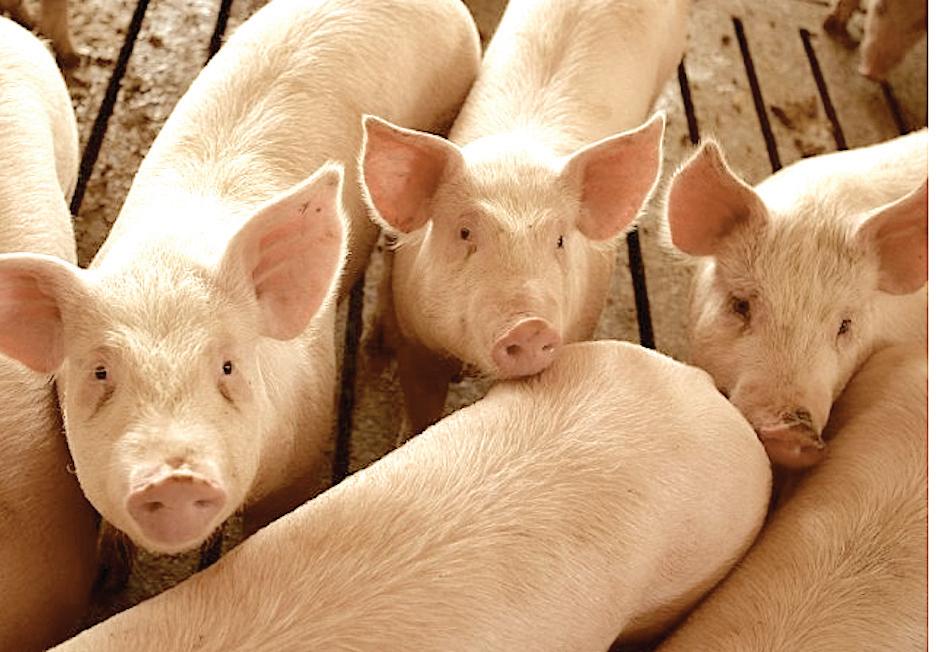

Stephen Heckbert, the Executive Director of the Canadian Pork Council, warns that consumers will pay more for their pork because of US voluntary country of origin labelling.
The new rule announced recently by US Agriculture Secretary Tom Vilsack will come into effect by January 1, 2026.
Under the new voluntary rule, the “Product of USA” or “Made in the USA” label claims on meat, poultry and egg products will only be allowed when those products come from animals born, raised, slaughtered and processed in the United States. Heckbert said that this approach to labelling would disrupt the ability of pork producers in Canada and the
US to work together, limit the movement of pigs and products across the border and drive up pork prices.
This action comes from the US government and politicians elected by American citizens, so working with the US pork producers is vital.
“This is a US regulatory change, and we must figure out how to work with American producers to see if we

can’t get these regulations to align with what works,” said Heckbert.
Heckbert said, US Secretary, Vilsack has shown interest in this for a long time, but the politics is hard to understand, creating many new problems.
“We hope that eventually common sense prevails and people understand that it is not going to deliver for consumers,” said Heckbert.
He said the number one problem is that consumers will pay more, and budgets are tight.
Heckbert hopes this matter can be resolved at the trade table rather than through a World Trade Organization challenge, as was the case with US M-COOL repealed following a successful WTO challenge in 2015.
“Again, it’s so prescriptive for them to bring it back and have this voluntary label around it,” he said.
Canada ships many weanlings, three million from Manitoba annually, and Americans ship pork to Canada. The relationship across borders is a good example that other industries should follow.
“Regarding how coopera-
tive we are and how much we work together, we both submitted comments to their commentary. Just leave pork out of it, and you know how that turned out,” added Heckbert.
The current rules allow for labelling products as Products of the USA using factors like processing and packaging in the US. However, the new V-COOL rules require that products be born, raised, slaughtered, and processed entirely within the US to use such labels. The adoption of these new labels will depend on industry uptake, since it’s a voluntary measure.
The shift in rules is a significant difference that could impact the WTO perspective. However, the critical concern is to avoid escalation into a WTO dispute but to engage in dialogue, particularly within the United StatesMexico-Canada Agreement (CUSMA) framework, to find common ground and avoid contentious trade issues.
This shift means that processors and retailers don’t have to only label products as “Product of the USA”; they do so voluntarily.
“However, if major retail-
ers like Kroger opt to sell pork labelled as ‘Made in the USA’ exclusively, it could trigger widespread adoption of voluntary labelling, leading to strict requirements for processors and producers to meet,” said Heckbert.
The pork industry did not request these changes and is asking US Agriculture Secretary Vilsack to reconsider applying these rules to the pork industry.
“The industry hopes for a resolution that avoids unnecessary regulatory burdens and maintains smooth cross-border trade without compromising consumer choice,” said Heckbert
The Canadian Pork Council (CPC) will look to collaborate with the Canadian government regarding the country of origin labelling issue. They plan to advocate for their industry’s interests and keep the government informed about their efforts. Additionally, they will continue to urge the government to take action on behalf of the pork industry, ensuring government addresses the industry’s concerns and that regulatory measures are fair and supportive of cross-border trade.
I am going to take a month off from my regular routine. Rather than discuss the latest in Canadian beef nutrition, I am going to examine a new beef experience, almost 10,000 km west of Winnipeg to the outskirts of Naju City in South Korea. In short order, my girlfriend and I took a two-week vacation to South Korea and we had a once in a lifetime opportunity to visit a typical Korean beef finisher operation.
Before I get started on our visit, let me put in perspective, some important numbers comparing South Korea to Manitoba/Canada. The population of South Korea is 52 million people living in 1/3 of a total land mass of about 100,000 sq. km (2/3 is mountains). Compared to 1.4 million Manitobans living within 650,000 sq. km (including 100,000 lakes).
South Korean agriculture encompasses about 3.25 million acres, while Manitoba tills about 17 million acres, both for a variety of crops. For example, half of the arable land in South Korean is set aside for rice fields and the rest seems to be pear farms (produce 185,000 metric tonnes/year of Asian pears). On the livestock side – Canada slaughters about 2.0 million cattle per annum, while Koreans slaughter nearly 900,000 Hanwoo beef steers, which originates in this country.
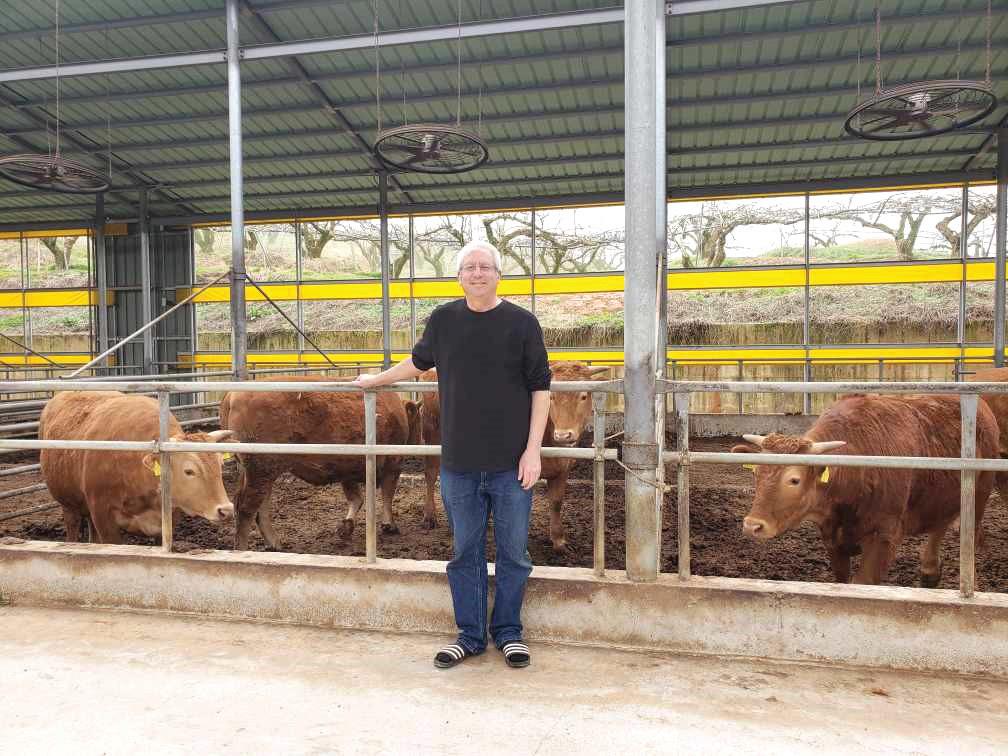
With such information, we are now ready for our visit to a traditional Hanwoo beef finishing operation as mentioned is located right outside Naju City (pop. 120,000). It just so happens, that the owners are my girlfriend’s uncle and aunt – Sang June Kim and his wife, Hee Jong. They bring in about 170 Hanwoo-steer calves at about 8 – 9 months of age and weigh about 300 – 350 kg. These calves are raised and marketed at 1,000 kg at 24 months of age. No hormonal implants are used at all on this operation.
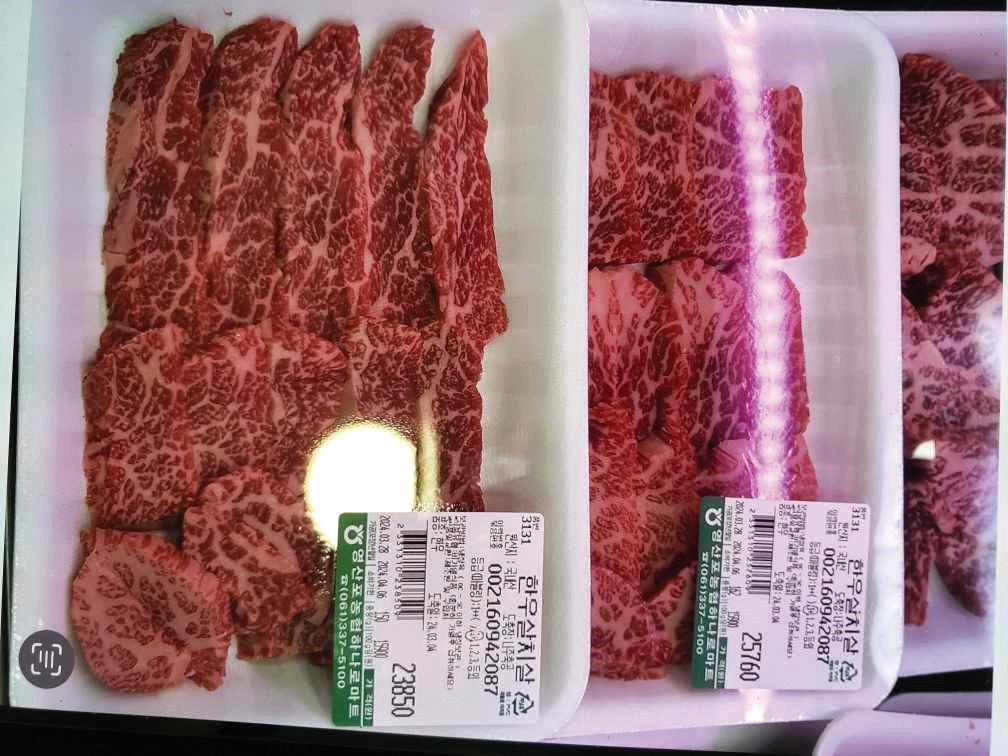
It just so happened that I took a snap-shot of a few Hanwoo meat slices sold at the local Korean store in Nagu city. It sold for about $16 (CDN) per 100 grams!
As the picture shows – all animals are housed in pens with an open-roof barn, which reminds me of an American dairy barn. There are 3 or 4 steers per pen with plenty of living and bunk space. No straw bedding is provided.
There is once-a day feeding, which is done at 3:30 pm, sharp. Sang June, first blows the bunks absolutely clean of residual feed with a leaf-blower. He then cuts and loads plastic-wrapped bales (500 - 600 kg, each bale) of complete diet (forage + concentrate) in a small TMR mixer, which is mounted on a small truck. I calculate that he feeds about 7 – 8 bales per afternoon.
With the same truck, Sang June can self-unload the feed along the feed-bunk in a very precise manner. Subsequently, I took up a handful of diet, which is a grower-type diet because it contained about 50% rice straw and 50% concentrate. The concentrate portion was rolled corn, rolled soybeans, and ground barley.
I also understand from Sang June that the rice-forage portion is locally purchased from a feed-mill, which combines it with grains, proteins and a mineral-vitamin pack that are imported from Australia. Although, I didn’t confirm it, I would assume that these cattle are fed a higher concentrate ration as they move
into the latter finishing stages of growth to market.
Consequently, I calculate their overall growing - finishing ADGs to about 1.5 kg (3.2 lb) per head per day. Comparably, our Canadian finishers are slaughtered at about 650 – 700 kg at about 18 months of age, which yield comparable ADGs.
Hanwoo carcass yields are also similar to those recorded in Canada, which are about 60 - 63%. Yet, Hanwoo cattle are raised to unaccustomed hefty weights and their inherent breed meat quality differs substantially from our typical Angus- or Hereford- terminal cross. For example, a Hanwoo ribeye contains about 40 – 50% fat compared to a Canadian cut of marbled 20 - 25% fat. It just so happened that I took a snap-shot of a few Hanwoo meat slices sold at the local Korean store in Nagu city. It sold for about $16 (CDN) per 100 grams!
In the end, this excellent tour in itself was totally unexpected. That’s because I didn’t know my girlfriend had an uncle and aunt that raised beef in the first place. Plus, it taught me that high quality beef is raised in other countries with both, different and familiar feedstuffs. And saving the best for last – I want to thank Sang June and Hee Jong for their great hospitality in welcoming us to their farm and home.
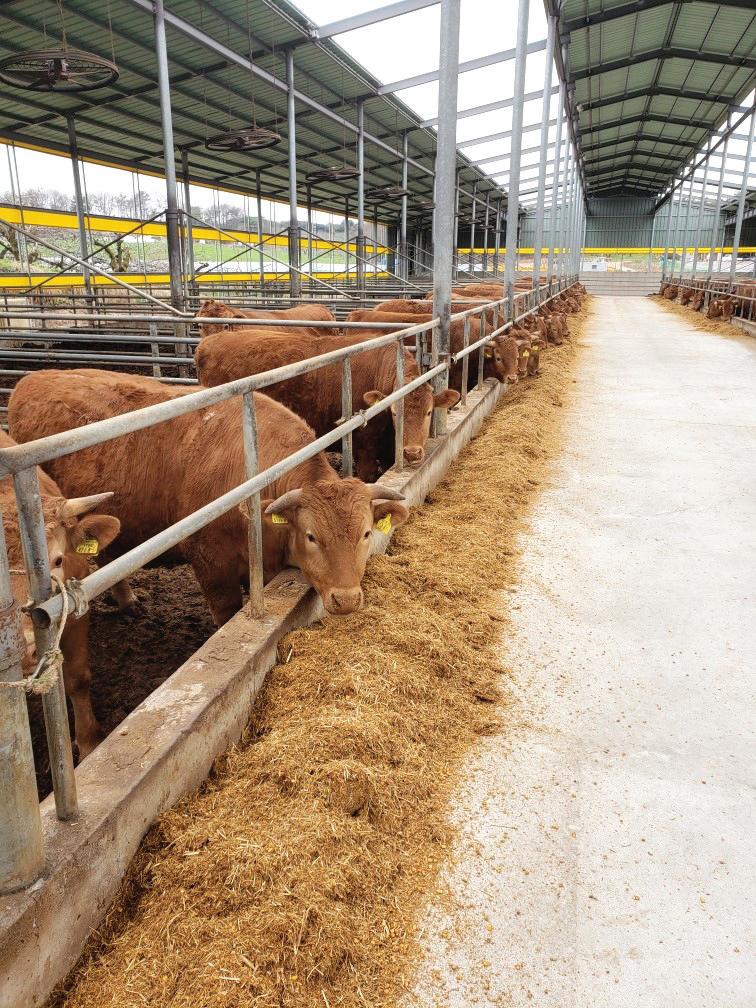
They bring in about 170 Hanwoo-steer calves at about 8 – 9 months of age and weigh about 300 – 350 kg. These calves are raised and marketed at 1,000 kg at 24 months of age. No hormonal implants are used at all on this operation. These were on a grower-type diet because it contained about 50% rice straw and 50% concentrate. The concentrate portion was rolled corn, rolled soybeans, and ground barley.

With the rains recently, I noticed the lawn starting to green up. This is a good indication that pastures will begin to green up, and producers will be anxious to turn cattle out on pasture.
Most tame pastures in Manitoba consist to a high degree of cool season grasses. Coolseason grass tends to grow rapidly in the spring because they start growing once the temperature gets above 0 Celsius (C) for about 5 days. How quickly they grow is then very dependent on daytime temperatures, or growing degree days (GDD) and moisture.
Although it is tempting, pastures that are green and starting to grow shouldn’t be grazed until they reach grazing readiness. Grazing too early can and does affect the long term productivity of those pastures. Grazing readiness depends on a number of factors, including the species of grass, available moisture, weather, and past management. The general recommendation is not to start grazing based on plant growth or when the plants are at least 4- 6 inches tall. A better/different method is to use the development stage to determine when to start grazing. For tame (cool season) grasses that would be at least the three-leaf stage and for native (warm season) grasses the 3½ leaf stage.
Grazing before grasses reach the appropriate growth stage can reduce total production by as much as 60 percent during the grazing period.
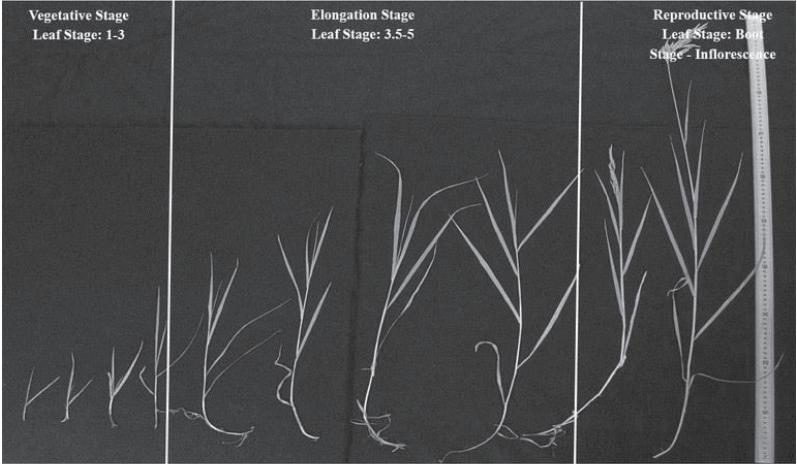
When we look at grazing readiness, one of the considerations to keep in mind is what happened last summer and fall. Manitoba had a dry growing season in 2023, not necessarily a drought, but we saw pastures go dormant early in the grazing season, and it wasn’t until the fall that we received timely rains that we saw some rejuvenation of pastures, and cattle were able to graze late in the summer and early fall.
This late grazing of little new growth had the potential to enable cattle to graze grasses below the growing point, grazing the fall tillers. Removal of these tillers in the fall can delay growth in the spring as the plant will need to initiate a new tiller, which has the potential to further delay grazing readiness by two additional weeks.
So, here is how to answer the real question: when do I turn cattle out? Ideally, you
will want to start grazing when the grasses are about 6 to 8 inches tall, but not before they are 4-6 inches tall and the ground is dry enough to support the weight of the livestock without causing damage to the forage base. The more residues left from the previous year, and consequently, the more root bases and fall tillers, the earlier you can normally graze without damage.
If there is a high proportion of a legume, especially alfalfa, an increased height of 8-12 inches should be used.
Once pastures are ready to graze, it is important to maintain a stop grazing height to help forages from getting too far ahead and going to seed which leads to dormancy. Rotating cattle quickly through your paddocks and just allowing them to clip the tops of the plants during the rapid spring growth spurt keeps plants in the reproduc-
tive stage and extends the grazing period because as you clip the top third or so of the plant, it initiates new growth in the form of tillers and leaves during the rest period.
Unlike previous years, Manitoba experienced a fairly mild winter, which for the most part enabled producers to stretch forage inventory. For those with forage still on hand, cattle can continue to be fed until pastures are ready to be grazed. If forage supplies are tight, you may have to consider sacrificing a paddock until the rest of the paddocks are ready to graze.
Remember, we are not only trying to maximize forage production, we are also trying to bring forage fields back from the stress that they have had over past grazing seasons.
John McGregor is with the MFGA Extension Support.
The annual spring thaw and surface runoff is underway in most Manitoba basins.
And, while flood risks remain reportedly low and localized across southern Manitoba, Manitoba Forage and Grassland Association (MFGA) is offering the MFGA Aquanty Model and Forecasting Tool free of charge to stakeholders in the Assiniboine River Basin interested in how much water is in the system or cascading and pooling overland on their fields.
“Our MFGA Aquanty Model is the premiere wa-
ter movement model on the Canadian Prairies,” said Mike Duguid, MFGA chair. “There is no other water-focused forecasting technology on par with the MFGA Aquanty Model Forecasting Tool in North America. As a farmer-led group, we want farmers, land managers and communities to benefit from our model during the annual spring thaw where waters can rise and fluctuate on short notice, and the option to access our model for free and in a pinch can help plan and prepare for what’s coming down the waterways or
running across fields.”
The MFGA Aquanty Model and Forecasting Tool Portal can be accessed at MFGA.net. Duguid says MFGA has developed significant interest and uptake from groups such as watershed districts that want to use the model to better inform their land use decisions by better understanding the water resources in their jurisdictions via the eight categorical measurements provided by the model, from surface water to groundwater to satellite field views, all via real-time measurements. Light Detec-
Protein Industries Canada has announced a $31 million investment along with Corteva Agriscience, Botaneco, Bunge, Rainfed Foods and Northeast Nutrition Inc. to increase the demand and market opportunities for high-protein canola, sunflower protein and novel oilbody products. Protein Industries Canada is investing $13.4 million, with the consortium partners investing the remainder.
This project will support the commercialization of a high-protein canola meal for use in the aquaculture, feed and food sectors as well as improve sunflower protein characteristics for a wide range of plant-based food applications. Through the development of high quality, high-protein products, Canada will improve the competitiveness and profitability of Canadian canola and sunflower in both domestic and international markets.
“Projects like this demonstrate how Protein Industries Canada and its project partners are positioning Canada as a leader in sustainable food and feed production,” said François-Philippe Champagne, Minister of Innovation, Science and Industry. “By developing higher-quality feed and food ingredients from canola and sunflower meal, and helping bring them to market, this project will foster new economic opportunities and create more jobs for Canadians.”
Corteva and Botaneco are the project’s leading collaborators and will work with Bunge and Northeast Nutrition to introduce and test canola meal in end-use feed rations.
Corteva will continue its focus on delivering highprotein canola seed, which will produce meal characterized by an increase in protein and reduction in fibre, enhancing its usability in animal feed.
Bunge will partner with Corteva to produce high-protein canola meal for feeding studies and consumer sampling, building commercial acceptance and increasing the nutritional value in end-use products.
Northeast Nutrition will test Botaneco’s Alofin canola protein in their aquafeed formulations, while Rainfed Foods will incorporate Botaneco’s Purezome sunflower oilbodies and protein isolates in their milletbased alternative milk products to enhance nutrition.
“Made in Canada innovations like these are vital to the continued growth and success of the sector. This investment in getting high-protein canola and sunflower meal to market will help strengthen our agricultural value chains and create new opportunities for Canadian crops,” Lawrence MacAulay, Minister of Agriculture and Agri-Food said.
tion and Ranging (LiDAR) is one of the many datasets that can be incorporated into the MFGA Aquanty Model for better understanding of water resources within MFGA Aquanty Model run scenarios.
MFGA will be closing the free access to the model and forecasting tool after the 2024 spring thaw subsides and passes. Training on the model and forecasting tool will continue to be held on request-by-request basis. Contact MFGA for more information on all MFGA Aquanty Model enquiries.



 By Joan
Airey horses and her ability to build confidence in them so they could accomplish their dreams.
Tara Reimer grew up breeding and showing Belgians with her family Swynar Tiny Creek Belgians of Pansy, Manitoba.
I first met Reimer when she taught my granddaughters to vault. I was impressed with her patience when teaching young people to work with
“Most people that know me think that riding is my passion but actually it has always been showing draft horses. I love the power and energy of the show horses,” said Reimer. “A couple of
years ago I felt that I had achieved the successes in the show ring that I had worked for, so now it was time to pursue my dream of showing my own draft horses. I specifically wanted to see if could train my own so I bought a foal from Brenda Hunter in Virden and the local horseman, Melvin Rush.”
“We trained her for the MB Pennwoods Futurity in 2023.
I had no idea how we would measure up so I was elated to win the Futurity with this two-year filly called Image Acre Cloud,” recalled Reimer.
Reimer’s passion doesn’t stop with this achievement.

The Keep it Clean initiative’s 2024 Product Advisory is now available to inform growers about potential market risks associated with certain crop protection products when used on some crops.
With 90 per cent of Canadian canola, 65 per cent of Canadian wheat, barley and oats and 85 per cent of Canadian pulse production being exported annually, the Product Advisory is a vital tool growers can use to ensure they’re meeting global agricultural export standards.
“Canada is a major agricultural exporter, and our success is in large part due to our well-earned global reputation for quality and consistency,” said Krista Zuzak, Director of Crop Protection and Production at Cereals Canada. “The 2024 Product Advisory will help strengthen this reputation by providing growers access to the latest information to grow market-ready crops.”
This year’s advisory describes usage for products including fluopyram, tetraconazole, chlormequat, glyphosate, saflufenacil and glufosinate-ammonium on cereals and pulses.
Growers are encouraged to review the 2024 Product Advisory at keepitclean.ca/tools-resources/product-advisory and consult with their grain buyers prior to applying crop protection products that have an advisory associated with them.


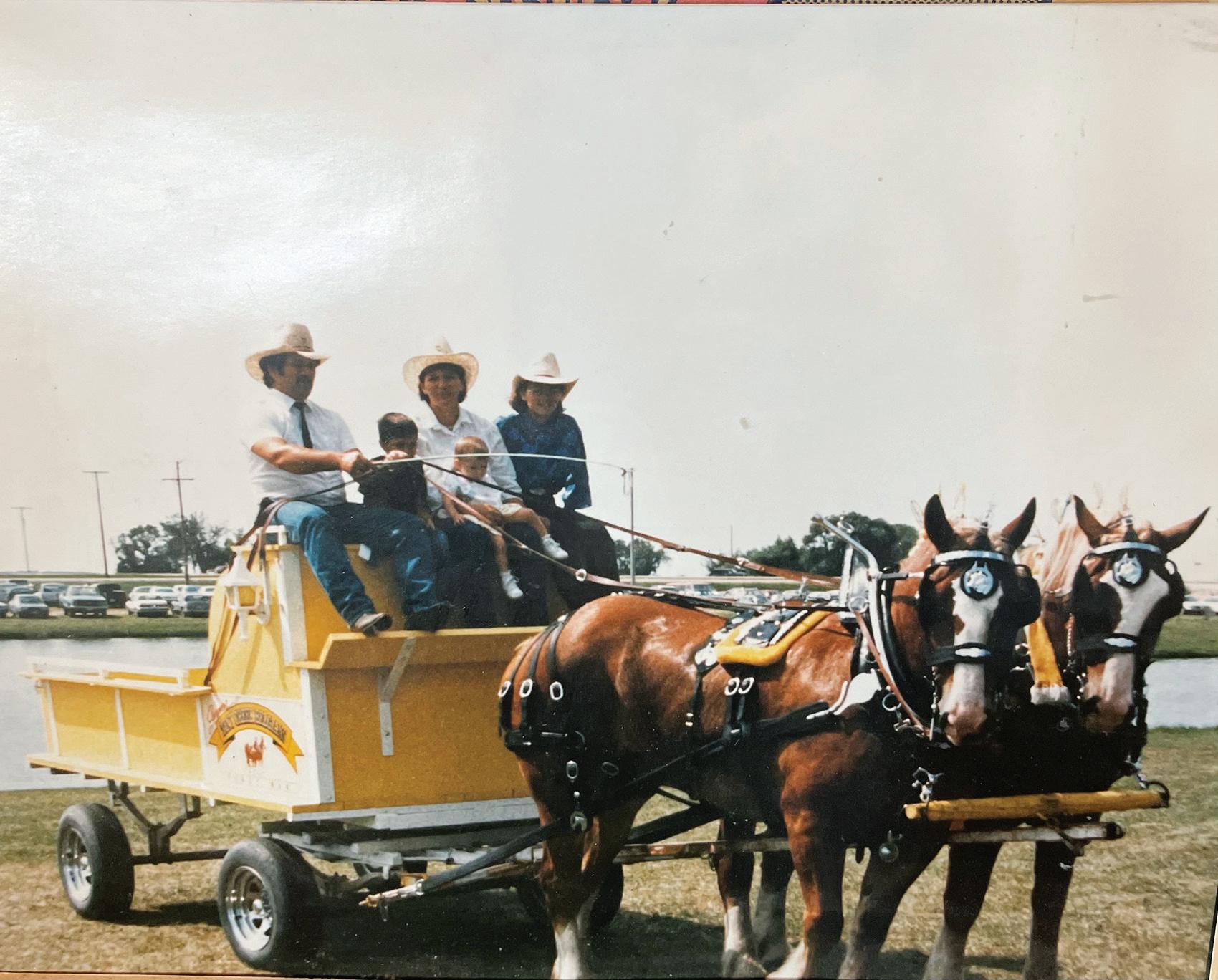
“When you have one heavy horse you need more. After volunteering at World Clydesdale show in Brandon last summer, I realized the diversity of the breed and became interested in showing one at the World Show 2025 in the riding and cart classes,” said Reimer. “Monty Thomson sold us a beautiful aged mare who is a pleasure to ride and drive. To match Abby, Tom Lane of Creekside Belgians sold me a filly for the MB Pennwoods Futurity and 2026 Futurity. I am really enjoying training our own horses!”
“This was my first time showing draft horses at the RMWF, but I had shown western pleasure, also barrel raced and done reining as a youth so I knew the excitement of showing in the big arena!” said Reimer.
“I only heard the end of January that there was a Chore Team competition and that intrigued me so I could do it with Abby and our Percheron cross grade mare that had trained Abby. Since I was coming, I decide I would enter the cart classes with Abby.”
Jaz Brindle-Barkman is a riding student of Reimer’s. She spent the week helping Reimer get the horses ready for the show.
“I knew Jaz drove her grandpa’s horses and showed dairy cattle she had experience showing and being under pressure,” said Brindle-Barkman. “We practiced only twice at home and once the night before at
the show. Jaz really handled Abby well. I was really proud of her showing in the Junior class especially since I am the one who normally drives Abby so she had to get used to Jaz’s voice and timing of commands.”
“For my ladies’ cart class, it was a dream come true just to be in the arena showing, especially a horse I had trained and she is only 3!” noted Reimer. “Winning was unbelievable and I was quite emotional. My Dad was always my biggest cheerleader and who I would FaceTime or call to tell him how my horses were doing. He died February 20th, 2024 and knew I had entered the show. When we won the class, I kept thinking, ‘Dad we did it!’ I couldn’t even guess his response had he been here experiencing it. This was too good to be true!
I really appreciate the beautiful belt buckle to commemorate the win!”
When I asked Reimer if she was teaching people to drive heavy horses now her comments were.
“I will teach anyone anything I know! I do give many the opportunity to harness, hitch and drive with through our mental health therapy sessions or because you happen to be on our yard,” said Reimer. “We have many students and clients daily at Cloud 9 so there is always someone around to get involved. We still teach vaulting but I think it would be more popular
Continued from page 13...
if there were competitions to go to with other facilities. Several of our vaulters take regular riding lessons now. Vaulting remains a popular choice for birthday parties as all the non-horsey friends can take part as well.”
Reimer’s plans don’t stop in the show ring. Her passion includes working with youth and families.
“Since 2003 I have been teaching riding lessons and training horses here as well as boarding, camps, clinics and hosting shows. The past eight years I have been working with therapists to provided mental health therapy using horses. This is now my full-time position at the ranch and I’m hoping to be accepted to the Providence College Therapist Master’s Program to pursue my own Therapist designation,” said Reimer. “Then we can reach more clients. It is life changing what we can learn from horses and then apply to our daily lives to make a difference. Anyone can benefit and I really enjoy working with teens and families to work through their struggles. With us adopting teen boys seven years ago, we understand the struggles and want to help other. I also train others on our therapy model so many others can use their horses to connect with people and help them heal.”
Tara and husband Derek and sons live near Steinbach where Tara operates Cloud 9 with her family.

Three young women who met at a clinic and began to ride together, eventually created the Truco Trick Riders. Truco is the Spanish word for trick.
The Truco Trick Riders practice at team member Shayda King’s farm near Corning, Saskatchewan. Other members of the Saskatchewan team include Kyla Dyer of Oxbow, Charlize Hallberg of Weyburn, and Bailey Steeves and Jordanna White from Carnduff.
Why they trick ride elicited various responses from the team members.
“Knowing that it’s such a unique sport and being able to allow people to experience it with us... and seeing the impact it has on the kids watching,” said Hallberg.
“I trick ride because I love the danger,” added King.
“I trick ride because I love the adrenaline rush, nothing compares to it,” mentioned Jordanna White.
“I trick ride because I love the adrenaline rush and of course the glitter!” noted Dyer.
While their reasons may vary there is no doubt a serious bond was formed between team members. When Dyer was diagnosed with Aplastic Anemia in December 2022, the team rallied to support her in any way they could. At each performance they always have the Warrior flag on display in the arena where they are performing.
The team was formed in 2022 and started performing in 2023. Last year they performed at twelve different locations, putting on twenty-
owned
for 11 years and have been with me almost since the beginning. They taught me a lot of lessons,” said Miller of the equine members of the team.
“It’s crucial to have a close connection with your horse when trick riding.”
“Things I do to build a connection with them is going out, and going for a relaxing trail ride, working on new skills with them, brushing them, feeding, cleaning the barn, bathing them, and just simply spending time with them,” she added.

To perform trick riding requires a certain regiment and dedication for the rider.
“To be a trick rider you really need to make sure you take care of yourself,” said Miller. “The biggest thing is to eat healthy, workout and stretch. You have to have the strength to pull yourself into and out of tricks. If you’re sore or not stretched, you will hurt yourself.”
The horse requires similar attention.
“Same with your horse, they need to be worked and in shape, stretched,” she added. “Sometimes I will go the extra mile and give them massages as well as applying special boots and blankets that promote blood flow and reduce the possibility of being sore.”
In order to create a balance between the rider and horse, the equipment needs to be correct.
“Our saddle is one of the most important parts of the sport, without it we can do much or anything really,” noted Miller. “What is so special about the saddle is the 5–6-inch horn that allows us to have extra room for us to hold onto.”
“Next, we have the crouper hand holds. These can be used for a variety of tricks but mainly the crouper vaults,” she continued. “Next is the drag straps, we use these for
any trick that requires us to have our foot locked in for us to ‘drag’ our body’s along with the horses. Next is the hippodrome strap. This goes across the saddle and allows us to stand up (must be twisted) as well as a one-foot stand, and if we untwist it we can do superman or the arrow. We also have tail drag straps that allow us to drag behind the back of the horse. Along with the saddle we also have a great collar that comes with various straps that allow us to have more stability in tricks or do tricks like the shoulder stand.”
She explained that you can either use barrel reins or trick reins but the latter is favoured.
“The special thing about trick reins is it has a tightening feature that makes it safe for vaulting so we don’t get a foot caught. It also has a nylon strap along the inside to make it stronger than the average leather reins; this applies to all trick straps as well. Trick reins are longer than barrel reins so we can hold them in tricks without being on the horse’s face,” said Miller. “We will tuck our reins into the throat latch of our bridal to keep them out of the way as well.”
Safety is the most important thing in trick riding.
“It’s not a matter of if you’re going to get hurt but it’s a matter of when and how bad,” Hallberg said. “When we are in tricks, our tack must be in perfect condition so straps don’t break. Along with tack being in good condition, you as a rider must also count your horses’ strides when doing tricks. It’s important we drop into tricks when their feet are on the ground… if they are not on the ground then we can possibly take the horse down with us. It is also important to never do tricks on the corner as the horse drops their shoulder and is less stable on the corners.”


 Charlize Hallberg of Weyburn, Saskatchewan performing the one foot stand.
Shayda King from Corning, Saskatchewan performing a full fender at the Royal Manitoba Winter Fair on Wednesday night. She is a member of the Truco Trick Riders. Submitted photos
By Joan Airey “I’ve
these horses
Charlize Hallberg of Weyburn, Saskatchewan performing the one foot stand.
Shayda King from Corning, Saskatchewan performing a full fender at the Royal Manitoba Winter Fair on Wednesday night. She is a member of the Truco Trick Riders. Submitted photos
By Joan Airey “I’ve
these horses
Protein Industries Canada has unveiled an ambitious project aimed at revolutionizing the hemp protein market by enhancing yield per acre and delivering high-quality, cost-effective products.
Teaming up with Verve Seed Solutions, Farmer’s Business Network Canada (FBN), and Fresh Hemp Foods (FHF), Protein Industries Canada aims to establish an innovation value chain focused on developing hybrid hemp cultivars with sought-after physical and functional traits. By enhancing hemp genetics, the project seeks to bolster yield per acre and improve the crop’s cost competitiveness for farmers.
François-Philippe Champagne, Minister of Innovation, Science, and Industry, lauded Protein Industries Canada’s commitment to fostering innovation in Canadian agriculture.
“It is great to see Protein Industries Canada continue supporting projects that add value to, and create new markets for, Canadian crops, generating local jobs and supporting new economic development in locations across Canada,” said Champagne. “By developing a hybrid hemp seed with higher yield, this project is helping strengthen the diversity and sustainability of Canada’s crops while solidifying Canada’s global leadership in plant-based ingredients.”
Over the course of five years, the partners will collaborate to position hemp as a protein-rich crop with expanded usage in ingredients and food products. The project entails a total investment of $5.7 million, with Protein Industries Canada contributing $2.5 million and the partners funding the remainder.
Lawrence MacAulay, Minister of Agriculture and Agri-Food, emphasized the significance of investing in top-quality, low-cost hemp protein to meet the growing demand for plant-based products.
“Our agricultural sector is leading cutting-edge research, creating new novel-food ingredients and products, and adding value to home-grown commodities. This investment in developing top-quality and low-cost hemp protein will provide manufacturers and consumers with more options for plantbased products, while creating new markets and opportunities for our Canadian farmers,” MacAulay said.
The project’s ultimate goal is to commercialize hybrid hemp cultivars that offer value to all stakeholders, including producers, processors, and consumers.
“The diversity and sustainability of Canadian crops are further strengthened with innovation and investment into new varieties,” CEO of Protein Industries Canada Bill Greuel said. “Improving the yield of hemp increases the profitability of the crop, bringing benefit to farmers, while also bringing more healthy and sustainable high-protein options for ingredient manufacturers and food processors.”
Through collaboration and innovation, Protein Industries Canada aims to revolutionize the hemp protein industry, paving the way for a more sustainable and prosperous future for Canadian agriculture.
A favourable winter has fruit growers in Manitoba berry optimistic about the year ahead.
Anthony Mintenko, a fruit crop specialist with Manitoba Agriculture, says “its still early days but overall an encouraging outlook for fruit crops in Manitoba with the recent rain event and the mild winter.”
“Things are just about ready to get going, growing-wise, for the province’s fruit crops. By next week, we will probably start seeing some of the
fruit trees starting to bud out,” said Mintenko. He explains that while it may be early spring, things are looking optimistic as long as we get some showers, unlike last year.
“Last year was just hard on the plants to come out of dormancy and start growing without that good precipitation. Growers do have irrigation, especially all strawberry growers irrigate. But irrigation isn’t the same as a good rain,” he continues. “As long as we get the rain this spring, we’ll be in good shape. It was such
a mild winter, which is good for a lot of the fruit crops, especially strawberry growers. They are quite hopeful for at least average yields this year, given the mild temperatures we had this winter.”
Mintenko reiterated that fruit crop producers are overall content with the current conditions, setting the stage for what he hopes will be a promising season ahead.
Over winter enough snow was trapped by the orchards and shelterbelts surrounding berry crops to protect crops from cold temperatures and provide moisture in the spring melt.
“With adequate rain throughout the spring we expect good plant vigour and bloom. All strawberry crops and most fruit crops are irrigated as well to supplement precipitation,” said Mintenko.
“With few winter days below even -25°C across southern Manitoba there was lower risk of winter injury on fruit trees (apple, sour cherry, haskap, saskatoons), raspberries and strawberries, which are also protected by straw mulch,” he said.
There are many scholarships available to young people to apply for. If you don’t take the time to apply you will not receive them.
As I sit on a few boards I have found not all scholarships are applied for. Earlier this year Doris Doelger Chairperson of the Manitoba Farm Women’s Conference compiled a list and posted them on Facebook encouraging young people to apply.
The following one is sponsored by MFW Confernece for those entering the agricultural field.
Scholarships – apply now if you are a student from rural Manitoba with a passion for agriculture.
The Manitoba Farm Women’s Conference (MFWC) is proud to offer two $500 scholarships to support your educational journey in agriculture, such as agricultural business, food science and industry, animal sciences and industry, sustainable food and farming, agri-engineering, or in agricultural education.
Application Criteria: - Applicants must be a student from rural Manitoba
- Enrolled in a university or accredited college in North America (proof of acceptance required)
- Completed application form with relevant documents in .jpg or .pdf format
Do not miss this opportunity to further your education and pursue your passion for agriculture! Application Deadline is May 10, 2024.
To apply and for more information, visit redriverex. com/scholarships-and-bursaries/agriculture-scholarship. Invest in your future in agriculture with the MFWC Scholarships!
On the above website you will find other scholarships listed. Notably while speaking with a young woman who is working while in high school to save money to enter veterinary college next year, I learned how much debt in student loans a vet student can accumulate for a much needed profession.
At the moment there are numerous professions that need more workers from nurses, lab technicians, doctors plus veterinarians and numerous other fields. Scholarships help offset student loans.
We had robins around then none. After an inch of rainfall Wednesday there were at least fifty on our front lawn looking for grubs or worms. I always feel when the Hummingbirds return, spring really should be here, they generally arrive here May 15th to 17th.
The following syrup is what I put in my feeders for them.
Nectar Recipe
- Bring 4 cups of water to a boil.
- Add 1 cup white granulated sugar.
- Stir well until sugar is dissolved.
- Boil mixture for 2 minutes to prevent spoilage.
- Pour in a clean hummingbird feeder.
We always feed the birds year-round. The Blue Jays in our yard are so used to being fed they make enough noise we know if their feeder is empty.
The last two mornings we have got up to the ground covered with snow which is much needed moisture.
My house plants were getting a little sad looking but with all the windows to the south maybe they were getting a little too much sun and not enough watering. So, I got my trusty old Gus Hendzel book out and checked what the problem was.
Yellowing of the leaves, shaft, stems and dropping leaves indicate over watering. Cure, hold back on watering and trim the yellow leaves.
I think mine are suffering
from under watering and lack of fertilizer after we started to have several days of sunshine. Gus always said the most common problem for some is knowing when and how much to water a plant.
A simple technique is to push your index finger into the soil to a depth of one inch.
Bedding plants are keeping me busy these days. I love the smell of tomato plants growing and looking forward to that first ripe tomato but it’s a couple of months away. That is unless I break down and buy one more advanced plant from a local greenhouse.
Hope everyone has a good

Canada is in the beginning stages of enacting a bill to prohibit the live air export of horses for the purposes of human consumption to countries like Japan, which begs the question…… which livestock sector will be targeted next?
On the surface, it may seem like an insignificant issue; not many consumers in this part of the country eat horse meat as a source of protein, and it affects a small niche group of producers. However, the crux of the matter would appear to be whether horses are classified as livestock and can/should be used as a meat source. The ramifications this precedent-setting bill could have on other species of livestock, is significant and hits a little more closely to home.
“Let us be honest,” said Conservative MP for Dauphin - Swan River - Neepawa, Dan Mazier, during the House debate at second reading. “The only reason the Liberals are moving ahead with this politically motivated and scientifically baseless legislation is because of a group of self-proclaimed activists who have never raised livestock for a living. These activists have singled out one species of livestock solely to exploit society’s emotional connection to horses, but let us not be fooled...I do not believe for a second that these activists will stop at horses if this bill becomes law. The fact is that these activists do not believe any animal should be transported for slaughter to feed the world, so my question is this: What is next? Where does this end?”
It would seem that Mazier may be on to something. According to the CHDC (Canadian Horse Defence Coalition) FAQ page, they admittedly mention that targeting horses is their first step of what could be a long hard road for all livestock
shouldn’t slaughter and eat horses, then logically the next step will be to examine the welfare of all animals used for food...it has been our experience that if we ask for too much from the government, we risk getting none of it. Small steps are sometimes more effective in achieving our goals because there is less risk of industry convincing our leaders that the steps being taken are too drastic and unfair.”
“The precedent this will set is very scary for the entire livestock industry,” said Jennifer Woods, certified animal welfare auditor. “If they [the activists] are able to pass this, they will move to their next cause…This is not just a concern for the exporters. Everyone in agriculture should be very concerned about this.”
Woods is an expert in the field of animal welfare with many credentials to her name. She is able to present the facts to the people who will debate the issue, weigh the arguments and ultimately have the power to pass or oppose the ruling.
“I speak from experience when I say that exporters are meeting and exceeding Canada’s animal welfare standards for transport, which provide the same protections for all animals in this country,” Woods continued. “An animal’s end use should not be what is used to determine their welfare during life – and that is what is happening here.”
Over one billion people or 16% of the world’s population in at least 15 countries eat horse meat. Canada alone consumes 900 to 1,200 tonnes per year, most of that being in Quebec. In addition to being a viable protein source providing 20% more protein than beef with 25% less fat, 20% less sodium and double the iron of a beef sirloin, if is also a major protein source for zoo animals.
The live air export of horses intended for human consumption generates around $19 million for Canada. Approximately 2,800 draft
horses were live exported to Japan in 2022. Most are purpose-bred to be meat animals, no different than a beef animal, chicken or pig is bred for meat. They are purchased by feedlots at weaning and fed until they are a year and a half to two years of age.
Since 2013, 45,000 horses have been exported to Japan.
The Japanese market demands that horse meat be fresh and less than three days old from processing to plate, meaning it has to be processed in that country. For that reason, they only process three to five animals per day in a calm, low-stress environment. In a ritual ceremony prior to a quick and humane end, each horse is blessed by the Japanese and thanked for giving its life to sustain theirs.
Raw horse meat is called Sakura or sakuraniku, both forms of sushi. As well, it is also sometimes found on menus as a type of barbeque known as yakiniku. The entire horse is used, from tongue to intestines and everything in between, making very efficient use of the animal.
“The Japanese have a very deep regard and respect for horses and horse meat is deeply imbedded in their culture,” explained Woods. “They do import horses from other countries but prefer Canadian horses for the quality and welfare standards Canada has. The threat to ban the export is definitely a trade issue between Canada and Japan. They do not want to see it stopped.”
Woods continued. “As an animal welfare specialist in Canada and former producer, I am part of the agri-food industry that raises livestock to provide a source of protein to people that want to eat it - just like any other of the livestock species.”
So, is Bill C-355 one rooted in truth, reality and economics or that of emotional bias and political duress?

“Again, we, as rural handson operators, are being ruled by an urban population,” one anonymous breeder stated.
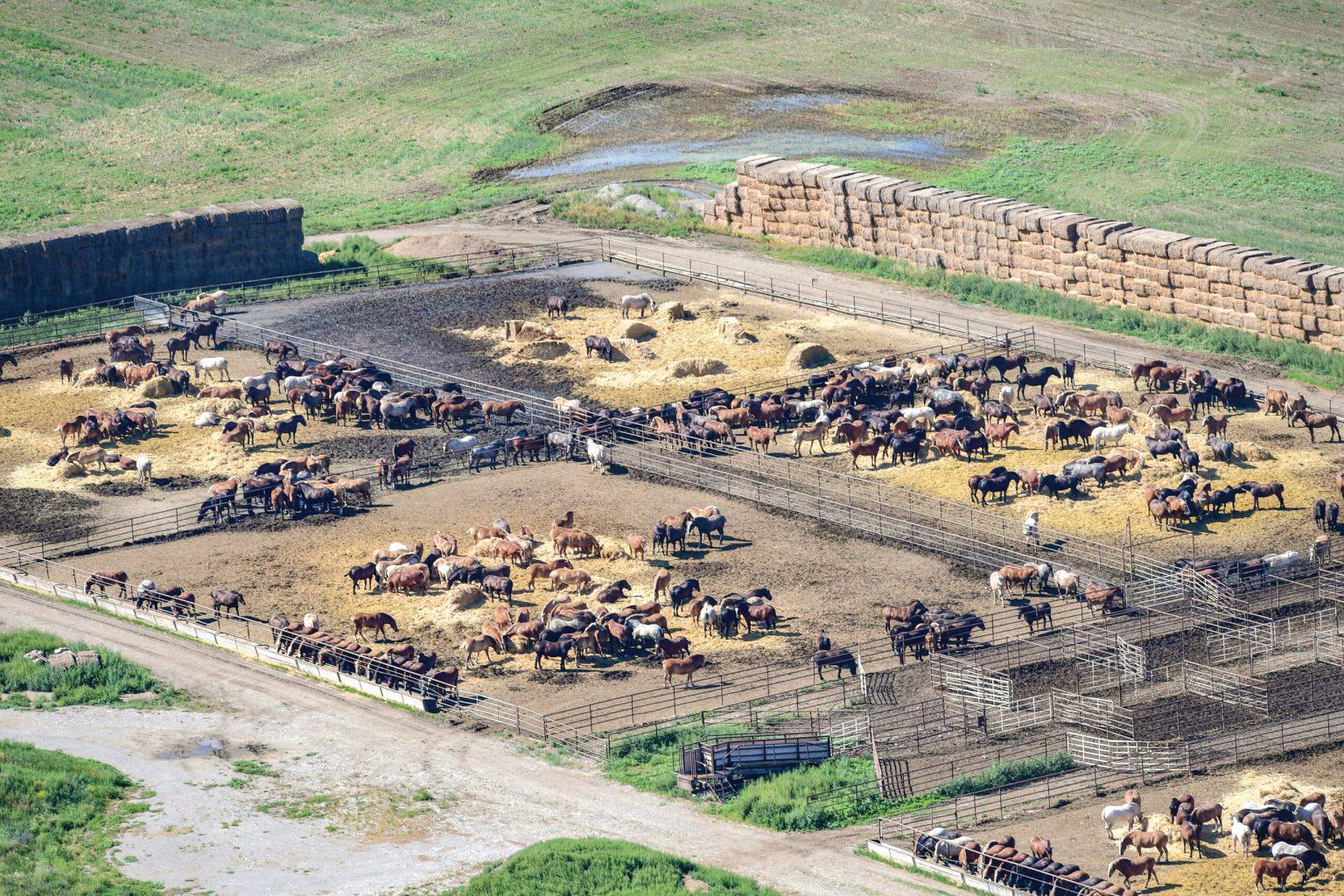

A long-term, international collaboration between researchers at the University of Manitoba and the Leiden University Medical Centre in the Netherlands has uncovered vital information about the porcine reproductive and respiratory syndrome virus (PRRSV). This pathogen causes severe disease in pigs, leading to significant economic losses for pork producers across the globe.
“This disease in pigs is important worldwide and is economically fairly significant,” said Marjolein Kikkert, Associate Professor of Virology at Leiden University Medical Centre. “The aim of the project was to improve vaccines for this disease, and it turned out that it was very difficult.”
It’s estimated that PRRS costs the Canadian pork industry $130 million annually.
Kikkert and collaborator Brian Mark, Dean of the Faculty of Science at the University of Manitoba, looked at targeting a type of protein called a protease. PRRSV uses these proteins to suppress a host’s immune system, causing severe illness. By changing the structure, researchers can design altered viruses upon which to base new vaccines.
With the help of the Canadian Light Source (CLS) at the University of Saskatchewan (USask), Mark and Kikkert were able to visualize the unique structure of the PRRSV protease. What they learned in their study is valuable for developing new vaccines against PRRSV and also helps inform development of vaccines against emerging human viruses.
The team has conducted similar research on coronaviruses - which also use proteases to suppress human and animal immune systems - and has successfully designed new vaccines.
“The trick and hypothesis we had for improving the PRRSV vaccine didn’t quite work,” said Kikkert. “However, we did learn a lot about how these viruses work. And it may certainly be a basis for further work into possibilities for improving vaccines against these viruses and coronaviruses.”
The team’s findings also unlock new doors to understanding how viruses like PRRSV use proteins to replicate, making this a significant academic discovery.
“The Canadian Light Source provided the technology we needed to determine the structures of these proteases, and this knowledge has provided tremendous insight into the biochemistry of these viruses, which is the cornerstone of modern vaccine development,” noted Mark.


Lars Brunse, CEO and partner at Best Farm A/S in Denmark spoke at the recent Manitoba Swine Seminar in Winnipeg, MB. Brunse a seasoned expert took the stage in the vibrant hall filled with eager farmers and enthusiasts. His voice, infused with decades of experience, echoed through the room, conveying inspiration and possibility.
“I’ve spent over 30 years in the pig industry,” Brunse began, eyes scanning the attentive audience. “And let me tell you, it’s not just about knowing how to do it, it’s about finding inspiration in every detail.”
With a confident tone, Brunse delved into the intricacies of effective management, innovative equipment design, and crucial sow support. He painted a vivid picture of the challenges faced by farmers worldwide and the solutions that lay within reach.
“We can’t just settle for ‘good enough’,” Brunse emphasized, resonating with the crowd. “We must strive for excellence in every aspect of farming, from management practices to equipment design.”
As he spoke, a fellow farmer from Denmark, proud of her hands-on approach to management, shared insights
into the daily routines that ensure the well-being of both sows and piglets.
“We treat our sows like royalty,” she declared, her passion evident in every word. “By providing the right care and attention, we ensure that our pigs thrive.”
Brunse’s journey exposed him to many experiences and innovations from Denmark to Canada. He shared stories of farms implementing cutting-edge equipment designs tailored to enhance sow comfort and piglet welfare.
“With the right equipment,” he explained, “we can revolutionize the way we farm, creating environments where pigs can thrive.”
The audience listened intently as Brunse unveiled the future of pig farming with free farrowing systems. He showcased farms where sow welfare took centre stage, with spacious pens and innovative features designed to mimic natural behaviours.
“This is the future of farming,” Brunse proclaimed, his eyes shining with conviction. “A future where sow and piglet welfare are paramount, and innovation paves the way for success.”
“Free farrowing in Denmark means after four days, we open the boxes so the sow can move around,” Brunse explained. “This is freedom for the animals, allowing them to roam and nurture their young in a more natural environment.”
“The best system is when the piglets are not hungry,” he emphasized, his gaze sweeping across the room. “We provide them with a piglet nest where they can eat and relax while the sow has ample space to rest and move comfortably.”
As Brunse delved deeper into the mechanics of free
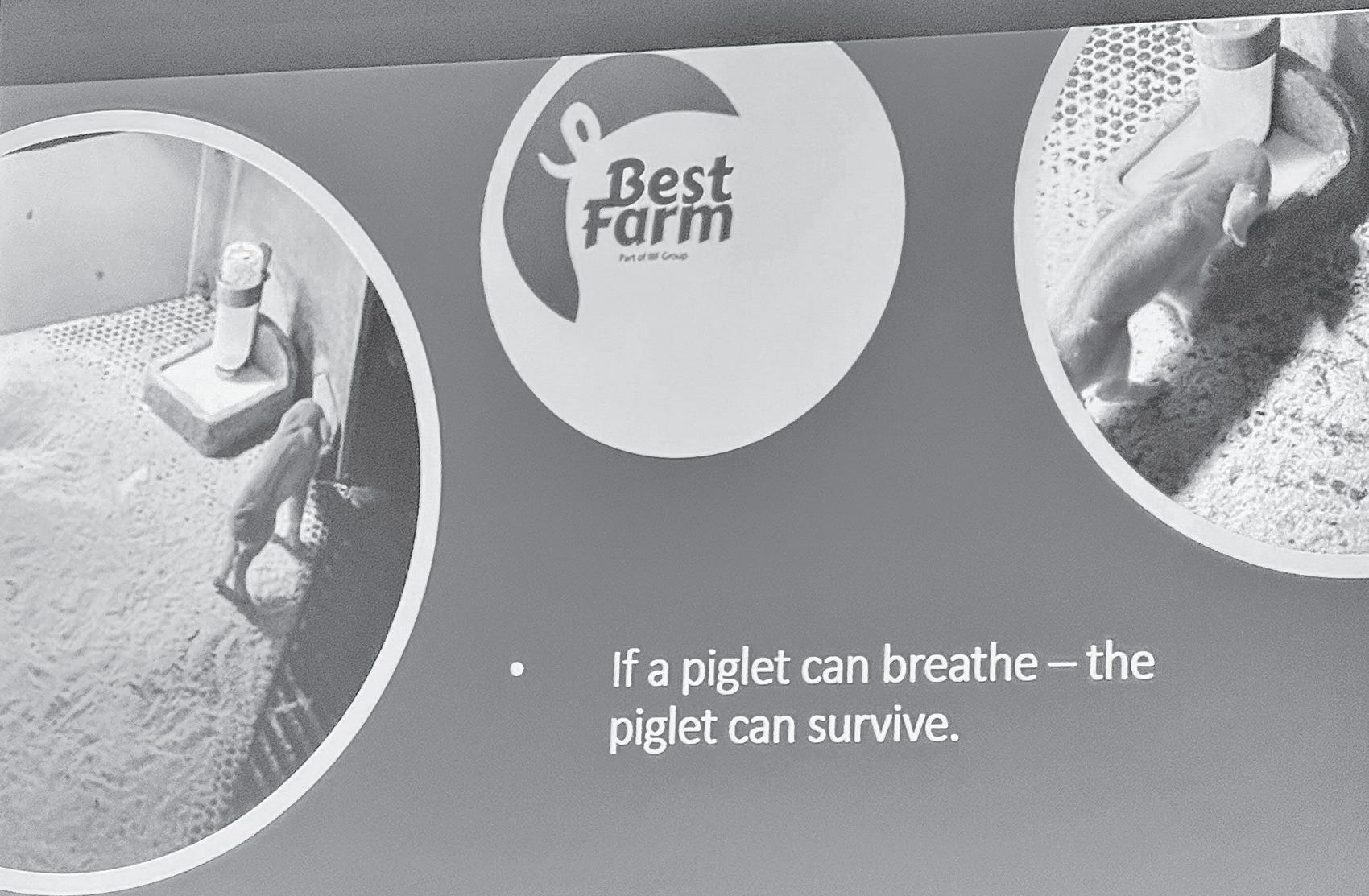
farrowing, detailing the benefits of separating the sow from her piglets to minimize the risk of danger, his passion for animal welfare shone through.
“We want the piglets to stay inside the nest, away from potential harm,” he gestured animatedly. “It’s about creating a safe and nurturing environment for the sow and her offspring.”
Questions flew fast and each was met with a thoughtful response from Brunse.
“Our government is pushing for a higher percentage of farms to adopt free farrowing systems,” he revealed. “It’s not just about animal welfare; it’s also about meeting the demands of our export market and ensuring the sustainability of our industry.”
“So then, how does this fit into proposition 12?” A voice from the crowd queried.
“This is the way into that because, as you could see in the movie,” Brunse noted, “we are using strength we have, free with the sow the whole way.”
“We also try to have some farms where they are free the whole time,” he continued. “When they come in, when they’re out again, we have more for this proposition 12, the space.”
He paused, allowing his words to sink in before driving home the significance of the proposition. “We have space enough in what we, in Denmark, want to have, 6.5 square metres at least. Not only 5.5, but 6.5 or more.”
Brunse spoke with a blend of pragmatism and optimism.
“More and more, the producers respect it and they know how to do it,” he asserted. “We have farmers saying this is my business, and I can still build the normal one. I will do that because I want to earn money, but most farmers are ready to do it in Denmark because the system is more and more ready.”
As the discussion turned to the cost implications of implementing free farrowing systems, Brunse provided a straightforward explanation, ensuring transparency and clarity for his audience.
“Yeah, it’s a free faring; it is one to 1.5 more square meters,” Lars explained. “So it costs a little bit more.”
That’s why the Denmark government pays a little bit because then they take the difference, so for the farmer, it’s the same price explained Brunse.
Ever since a young age I have been creative and expressed myself through various forms of art.
When I was 10, my grandma taught me how to sew. I remember the exact day… one morning she taught me the basics of the sewing machine and how to sew patchwork squares together. She had to run into town for a few hours, so she told me to keep practicing sewing together squares. Later that afternoon when she came home, I had sewn together enough lines of squares for an entire front panel of a patchwork blanket. That afternoon she helped me make a backing for the blanket. My love for sewing grew from that moment forward.
As a teenager I started refashioning and up-cycling clothing for myself as a hobby, which eventually combined with another hobby of mine… 4-H.
I started 4-H when I was 9, doing every creative skill they offered. When I was 16, I decided to do “create your own skill” and titled it: Starting a Business. For that 4-H year I started a business creating refashioned clothing and accessories and started attending a local farmers market every Saturday to sell my creations. I loved every part of it! The business, the creativity, being part of the community, and the lovely customer interactions.
After high school this business was put on hold as life changed and I explored new adventures. Little did I know I would end up coming back
to it a few short years later.
Inspiration for my current business, Poppy & Mae Co. came about five years ago when my daughter was one year old. I was having a hard time finding country themed clothing for her, so I began sewing her some clothing using refashioned fabrics.
When we went out in public, I kept getting comments on her clothing and accessories - people kept asking where I bought them. After telling a few people that I made them I realized there was a demand for country kid’s clothing, and I thought to myself… I could make this into a business, so I did! Since then, Poppy & Mae Co. has grown to include all of my creative hobbies. I do online sales as well as in person farmers’ markets and craft sales throughout Manitoba (but mostly here in the southeast prairies, the place I’ve called home my whole life).
My shop focuses on creating quality apparel and products for everyday country style and living! My company slogan is - “one stop country shop” because I make a variety of products including: sewn and refashioned
country clothing for children and women, crocheted & sewn farm toys, garden & egg aprons, unique country/farm houseware, handpainted country home decor, and yummy goodies for your pantry including canning and sourdough baking!
All of my current available products can be viewed in the photo albums on my Facebook page facebook. com/poppymaeco. I also post daily on my Instagram page instagram.com/poppyandmaeco. If you don’t have social media, come visit me at one of my upcoming market locations, or view my products this summer at the Mennonite Heritage Village (Steinbach) in the General Store.
I offer Canada wide shipping, but if you are local to the southeast area, I often drop off orders, or have them available for free pickup at my homestead in Tolstoi.
If you see me around the community, feel free to say hello, I would love to meet you!
Brought to you by the Stuartburn Emerson-Franklin Local Food Initiative, initiativelocalfood@gmail.com. Find them on Facebook.


Once, I was searching for a dairy producer of a 150-cow dairy farm. After checking out his free-stall lactation barn, I found him in a small pen in the cornerstone, sitting on a stool and holding up a bottle of Ca-Mag solution that was followed by a small hose, ending a subcutaneous needle stuck in a fresh cow’s neck. She looked half-past dead with her eyes rolled back. The producer
gave me the bottle to hold, while he switched it to a second bottle. While its liquid was fully drained into the cow, we went for coffee and cake. And when we got back an hour later, she was back on her feet, and eating hay as if nothing had happened.
I haven’t experienced such clinical milk-fever for years, because most dairy producers are feeding and managing post-partum dairy cows much
Protein Industries Canada has announced a new coinvestment into advancing the Canadian fava bean ecosystem. Building on the success of past projects, partners Prairie Fava, DL Seeds and Three Farmers are coming together to test the functionality of new fava bean varieties for use in consumer-facing products, particularly snack foods.
“Canada is a top global producer of high-protein crops and we’re leading the way with cutting-edge research,” said Lawrence MacAulay, Minister of Agriculture and Agri-Food. “This partnership is an excellent example of cooperation across the value chain to grow new crop varieties and bring high-quality protein ingredients to Canadian-made products.”
“By bolstering the cultivation and processing of fava beans for use in Canadian ingredients and food, this project will increase the selection of healthy and sustainable food options for Canadians,” added FrançoisPhilippe Champagne, Minister of Innovation, Science and Industry.
As a crop growing in both acreage and use in plantbased products, fava is an ideal option for innovative work in the ingredient and finished goods market. Prairie Fava is building on this by growing DL Seeds’ fava varieties and then utilizing them in their patented processing methods, testing them for functionality and feeding information back to DL Seeds in order to inform new variety development. They’ll then supply Three Farmers with fava ingredients for further functionality testing in Three Farmers’ line of snack foods.
“By working together across the ecosystem, crop breeders, ingredient manufacturers and food processors can capture the growing global protein opportunity, while providing consumers with a variety of healthy, high-protein snack options,” explained Protein Industries Canada CEO Bill Greuel.
A total of $13.2 million has been committed to the project, with Protein Industries Canada investing $5.4 million and the partners investing the remainder.
“Prairie Fava welcomes the opportunity to work with DL Seeds to expand development of high-quality fava varieties for our grower community,” said Prairie Fava Co-Founder Hailey Jefferies. Prairie Fava is located in Glenboro.
“Fava represents a tremendous opportunity for Canada’s food and agriculture sector. DL Seeds is proud to be part of this project to focus on improving fava in ways that benefit consumers as well as producers. Prairie Fava and Three Farmers are tremendous partners and share our vision for the future of fava,” added DL Seeds General Manager Chris Anderson. DL Seeds is a Manitoba-based seed developer.
better than when I walked into that barn. However, its invisible partner or subclinical milk fever; triggers a state of blood hypocalcemia (calcium deficiency), caused by the demands of making colostrum – still leads to high rates of retained placentas, uterine infections, displaced abomasums, chronic mastitis, and failure to breed back. Fortunately, by feeding specifically formulated close-up dry cow diets, we can retain adequate blood-calcium levels to prevent subclinical milk fevers from occurring in the first place.
As a dairy nutritionist, I like to formulate “old school” transition diets. Once fed, they create contained bloodcalcium deficiencies in close-up dairy cows that trigger specific parathyroid hormones (PTH) to be released. In turn, Ca-bone mobilization is stimulated to release adequate calcium back into their bloodstreams. University studies demonstrate that feeding less than 10 g/head/d calcium (a dry cow requires 40 g/head/d for maintenance) is largely effective in preventing milk fever.
In addition, I also minimize the amount of dietary potassium that is being fed to close-up dry cows. That’s because potassium contributes to alkaline blood, which suppresses bone-calcium mobilization. By keeping dietary potassium levels to less than 0.65%, it has been shown to reduce the incidence of milk fever and above-mentioned fresh cow problems. For example, I have occasionally reformulated transition diets to increase its feed intake from 6 to 12 lbs. per close-up cow. I am not the biggest fan
of feeding so much close-up diet, but it seems to dilute the inherent potassium content of any forage, which results (by experience) in reducing milk fever related retained placentas.
In a lesser way, I have seen that preventing subtle magnesium deficiencies in postpartum dairy cows will limit subclinical milk fever. That has been shown by research field trials, which proves that dairy cows with low bloodmagnesium levels have a higher incidence than the norm of getting subclinical milk fever. They explain that dietary magnesium plays an essential role in the mobilization of bone-calcium during early lactation. Therefore, I ensure that the dietary magnesium level is formulated at about 0.5% in those close-up diets that come across my desk.
The odd thing is such dietary application of keeping calcium, potassium and magnesium in check in a wellbalanced dairy transition diet doesn’t always seem to work. Or do they?
Case-in-point is a 200-cow dairy that I visit on occasion, feeds about 15 close-up dry cows in a single pen on a straw pack. They are fed a close-up dry cow diet for 21day prior to calving, consisting of: lactation diet refusal, a 16% transition cow pellet (my formulation) and the remainder – a few pounds of alfalfa hay (1.8% potassium). These cows were on this diet for at least three months, without any significant formula changes.
One day, the producer called me and said that 5 fresh heifers showed subtle signs of subclinical milk fe-
ver, namely retained placentas and subsequent metritis. Plus, they had lethargic dispositions.
I was unable to go to the farm and see the cows, yet the producer and I reviewed the three-month diet and nothing seemed a miss. Fortunately, the dairy lactation barn had a herd-health visit at the same time, and the situation was discussed with the veterinarian.
The vet correctly figured out that there was an influx of about 7 - 10 more dry cows, which caused these timid heifers to eat the feed-refusal of high potassium alfalfa hay. Once, some of the mature cows were moved out and

onto pasture near the barn, the problem was resolved.
As a dairy nutritionist, I remain to take a conservative approach to this case as well as other similar present situations. I apply an all-encompassing dietary protection plan that should reduce the incidence of subclinical milk fever in the first place. Even when an unrelated curve-ball is thrown in for good measure as above – I know the foundation of its science works.
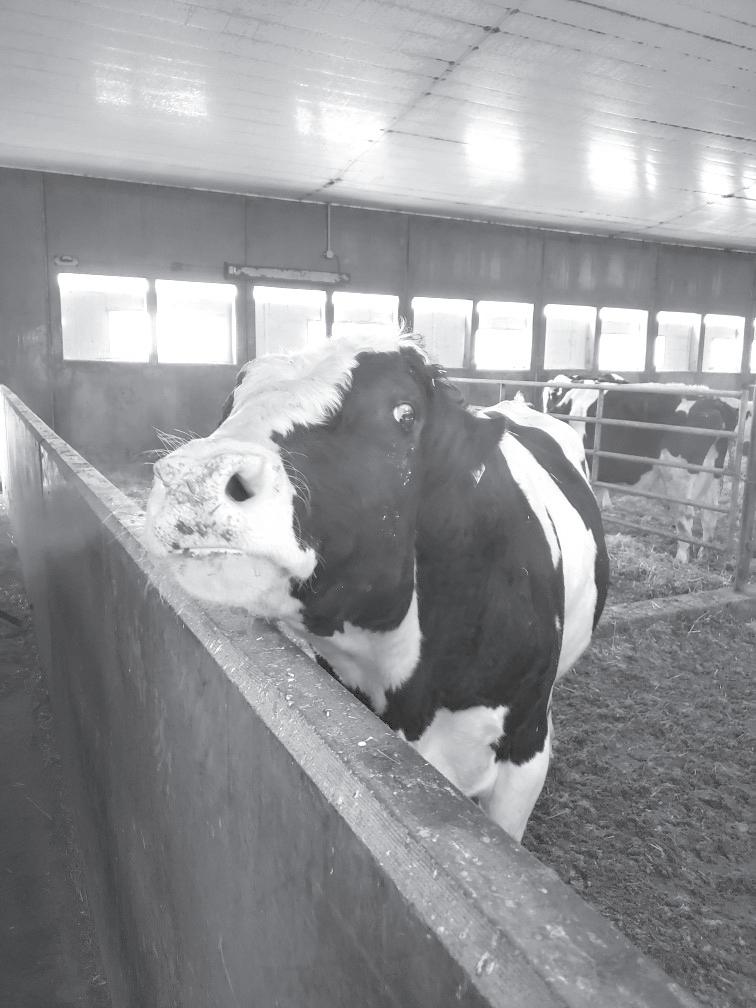
By Elmer Heinrichs port up to $293 million since 2018.
It’s been decades since there’s been this kind of optimism around the Port of Churchill and how it could be developed into a transportation hub.
The money is flowing. Last month, Manitoba premier Wab Kinew announced $60 million in provincial and federal funds to get the Hudson Bay Railway between The Pas and Churchill back up and running reliably, as well as upgrades to the port. That brings combined federal and provincial investment in the
The new funding “means jobs will be maintained,” said federal northern affairs minister Dan Vandal. “This means mining and forestry opportunities will open up, including, of course, critical minerals, which are essential to our country’s north. Manitobans, through the Bay Line communities, will have the opportunity to position themselves as a true gateway to the Arctic and a true gateway to the world.”
For the agriculture sector,
it could mean a closer seaport than the Port of Vancouver.
The port’s recent history has been messy, with the sole rail line linking Churchill with the rest of the province plagued by service disruptions.
The high-water mark for Churchill’s grain shipments happened in 2006, when 621,000 tonnes moved through the port’s terminals. Its viability at the time depended almost completely on grain from the Canadian Wheat Board (CWB) and wheat accounted for 90 percent of the site’s traffic. Upon
the demise of the CWB’s single desk selling authority in 2012, volumes began to slide. Operations ceased in 2015.
Hopes are running high for the Port of Churchill, but securing grain traffic for the facility faces obstacles, including lack of interest from grain companies, which have their own terminals on the West Coast and at Thunder Bay.
Getting passenger and resupply trains going would be a step in the right direction, and that traffic is now moving and growing.
cess, plans are underway to expand these outdoor markets this year, promising an even more extensive and diverse experience for visitors and vendors alike. The market’s approach demonstrates its commitment to supporting local businesses. On Saturdays, selected vegetable vendors would enjoy exclusivity, and no other vendors selling the same items would be allowed.
“This exclusivity and the market’s robust marketing efforts ensure maximum visibility and sales potential for the chosen vendors,” said Kovalik.
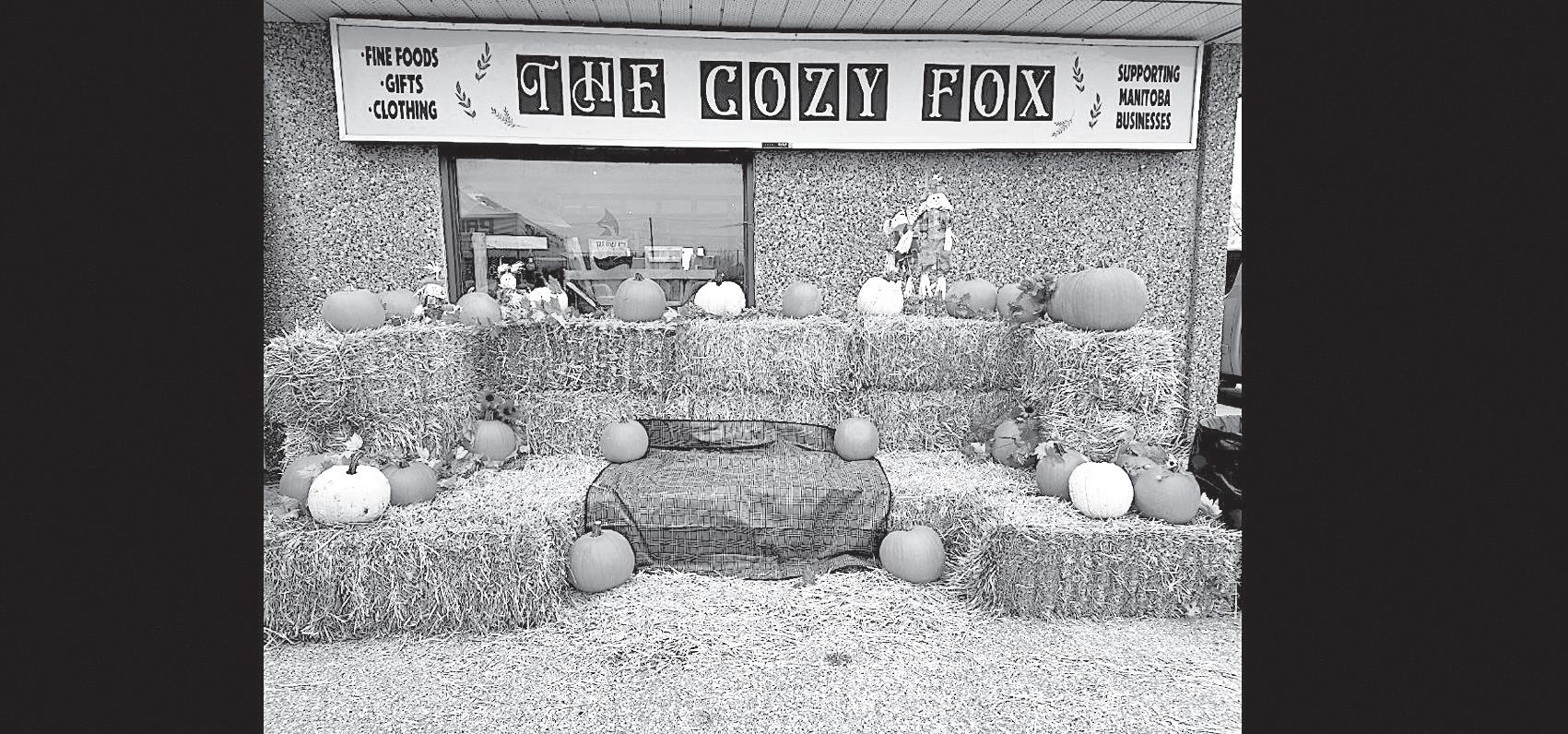
looking for a platform to showcase your creations or a customer seeking unique, locally made treasures, The Cozy Fox Market welcomes you with open arms and promises an unforgettable experience,” said Kovalik, a co-owner and director of marketing.
“We are looking for a Manitoba vegetable grower to sell their products at our market. There is no cost to them,” he said. “We run a year-round store, and the store and markets are about supporting Manitoba Businesses.”
He said they would be exclusive to the Cozy Fox market if they find someone who meets those qualifications, provided they commit to every Saturday.
“We would not have anyone else selling the same items,” said Kovalik. “We consider having vegetables at the market a draw with people asking for them!”
One of the market’s defining features is its ambiance - a blend of country charm and welcoming warmth that greets visitors as soon as they enter.
“This ambiance is carefully curated, reflecting the market’s ethos of providing a shopping experience and a memorable journey through creativity and community spirit,” said Kovalik.
The Cozy Fox market hosts a vibrant farmers market with its spacious lot. Due to its overwhelming suc-
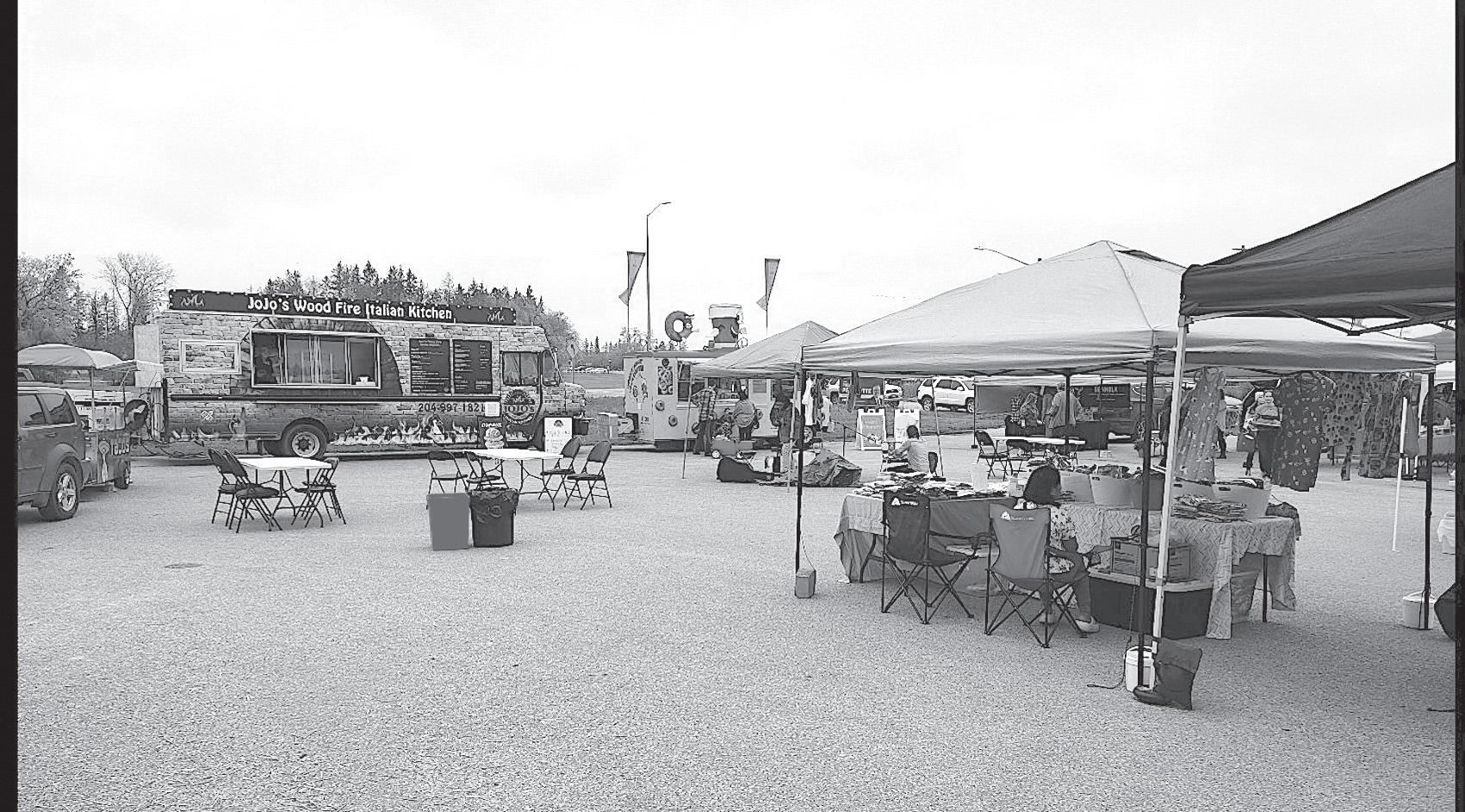
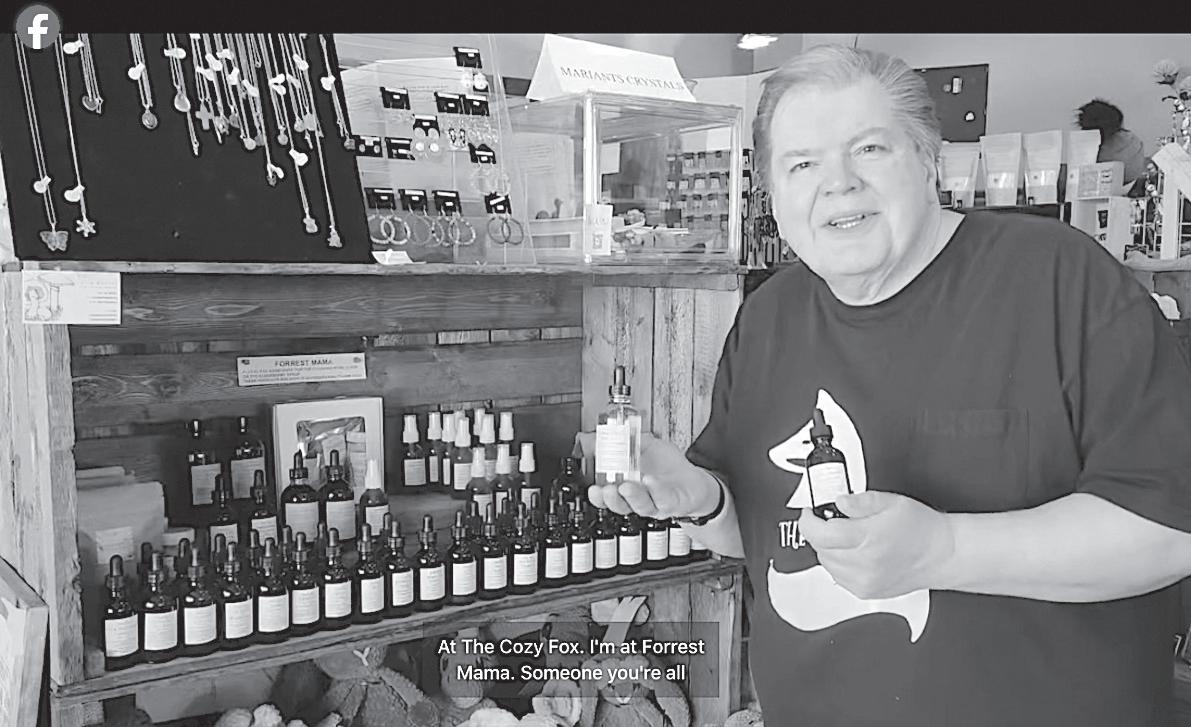
Marketing plays a crucial role in The Cozy Fox Market’s success story. From regular social media updates on platforms like Facebook, Instagram, and TikTok to ads in local newspapers and collaborations with community organizations, the market remains firm in promoting its vendors and events. Each vendor is spotlighted through video promotions on Facebook, fostering a sense of connection and customer engagement.
Behind the scenes, The Cozy Fox Market is a labour of love and vision. The idea stemmed from a desire for a more permanent and impactful solution than traditional weekend markets. With their collective expertise and dedication, the market’s founders turned this vision into reality, creating a market and a beloved community institution.
The response from the Selkirk community has been overwhelmingly positive, with patrons praising the market’s unique offerings and atmosphere. However, one recurring request is the need for more vegetable vendors. This feedback has spurred the market’s search for dedicated vendors committed to providing fresh, local produce every Saturday, with additional weekday selling opportunities.
As The Cozy Fox Market continues to grow and evolve, its commitment to supporting local talent and fostering a sense of community remains unwavering. The Cozy Fox Market is a shining example of achievement when likeminded individuals come together with a shared purpose through collaborations, innovative marketing strategies, and a deep-rooted passion for creativity.
In a significant development for the Canadian canola industry, Tessa Ritter, Stakeholder Relations Manager at Viterra, has been elected as the new chair of the Canola Council of Canada (CCC) board of directors. Ritter’s appointment follows the conclusion of Jennifer Marchand’s two-year tenure as chair, though Marchand will continue to serve on the board as a director.
Expressing gratitude for the contributions of outgoing members and excitement for the road ahead, Ritter remarked, “On behalf of the board, I’d like to thank Jennifer Marchand for her service as our board chair and our outgoing board members David Kelner and Ryan McCann for their contributions to our industry.”
The CCC warmly welcomed two new directors to help partner the industry across the value chain to identify and pursue opportunities, address challenges and drive the industry forward.
Joining the CCC board for the 2024/25 term are Chris Anderson from DL Seeds and Tyler Groeneveld from Corteva Agriscience, both nominated by life science companies.
At the Canola Council of Canada’s (CCC) annual general meeting, president & CEO Chris Davison presented the 2023 annual report titled “Growing Opportunity”. Reflecting on the achievements of the past year and the promising prospects ahead, Davison highlighted the industry’s strengths and commitment to innovation and collaboration.
“This was a year to build on past achievements while also nurturing new opportunities for the Canadian canola industry,” said Davison. “Strong collaboration, research, and a drive to innovate are among the things that will help us realise those opportunities moving forward.”
The report outlines several key opportunities in 2023 across various aspects of the CCC’s strategic plan. These include expansion into biofuels markets, increased investment in research and market access and development, establishment of resources in the Indo-Pacific region, strengthened connections with key markets, including China, enhanced understanding of canola agronomy in the brown soil zone and promotion of innovation in plant breeding and crop protection products.
For further insights, the entire 2023 Annual Report is available.
The 2024/25 Canola Council of Canada Board of Directors comprises representatives from all industry segments, nominated by organizations representing growers, processors, exporters, and life science companies.
Under the stewardship of this diverse board, the Canola Council of Canada continues its mission to advocate for the interests of canola growers, processors, life science companies, and exporters. With the strategic plan “Keep it Coming 2025”, the council remains committed to ensuring the industry’s growth, stability, and success.
For more information on the Canola Council of Canada and its initiatives, visit canolacouncil.org or follow CCC on Twitter @canolacou.

The Canola Council of Canada elected Tessa Ritter,
Gene editing, a revolutionary tool in agriculture, is transforming the landscape of plant breeding. Pierre Petelle, the president and CEO of CropLife Canada, shed light on this innovative technology during a panel discussion at the Keystone Agricultural Producers (KAP) 40th AGM. He eloquently compared plant gene editing with traditional genetic modification, highlighting its significant differences and advantages.
“Gene editing is working within the plant’s genome,” Petelle explained.
He emphasized that unlike genetic modification, which involves introducing genes from other organisms into the plant’s DNA, gene editing focuses solely on the plant’s genome. This distinction makes gene editing more akin to traditional plant breeding, where breeders make crosses to achieve desired traits.
Scientists can use gene editing to modify specific genes within a plant’s genome accurately. This precision allows them to identify genes that determine certain traits, such as plant height, and make targeted edits to produce desired outcomes, such as shorter varieties of crops like corn or wheat. This approach enables breeders to achieve their goals more efficiently and effectively.
prohibitive.
The potential of gene editing in agriculture goes beyond efficiency and cost-effectiveness.
“It can address the industry’s critical challenges, such as climate change, food security, and environmental sustainability. By harnessing the plant’s genetic code, gene editing enables breeders to develop crops more resilient to adverse conditions, require fewer resources, and produce higher yields,” said Petelle.
One of the critical tools driving gene editing is CRISPR (clustered regularly interspaced short palindromic repeats), which received the 2020 Nobel Prize in Chemistry. CRISPR technology offers unparalleled precision and accessibility, allowing researchers to edit specific pieces of DNA with unprecedented accuracy.
Gene editing has a wide range of applications in agriculture. By using this technology, breeders can enhance the beneficial characteristics of crops, like disease resistance, nutritional content, and shelf life. At the same time, they can remove undesired traits.
Unlike genetically modified organisms (GMOs) that insert foreign DNA into plants, gene editing focuses primarily on making changes that could occur naturally but in a more precise and controlled manner.
The advantages of gene editing in agriculture are numerous. This technology can promote resource efficiency and reduce the need for chemical inputs, thus improving environmental sustainability. Furthermore, gene-edited crops have the potential to adapt to changing climatic conditions, ensuring food security in the
face of challenges caused by climate change.
Furthermore, gene editing holds promise for addressing global health issues by enhancing the nutritional quality of crops and reducing food waste. For instance, developing low-gluten wheat varieties could benefit individuals with gluten sensitivities while reducing allergens in food products.
Despite its tremendous potential, the widespread adoption of gene editing in agriculture hinges on regulatory frameworks that govern its use. Petelle noted ongoing efforts to align gene editing regulations with those of GMOs, emphasizing the need for clear and favourable policies to facilitate innovation and adoption.
Petelle is optimistic we’ll see the proper regulations in the next six months, bringing seven years of work to fruition. While some groups try aligning gene editing to be more like GMOs and call it the new GMO, the gene editing group keeps making headway in regulatory alignment.
“If this last policy direction
gets published in the next six months, we’re done. Canada will have given clear direction on where it stands on gene editing, and it’s very favourable. So it’s promising,” he said.
Petelle said despite the talk and jokes about Ottawa, science usually prevails.
“It seems like a convoluted path, but ultimately, the individuals working in these departments are like me. They have a scientific education and political influences, but given the opportunity to make choices, they tend to make the right decisions that lead us to the desired outcome,” he said.
In summary, gene editing is a groundbreaking advancement in plant breeding with exceptional precision, efficiency, and flexibility. As scientists continue to explore its possibilities, gene-edited crops have the potential to transform agriculture and tackle some of the most critical issues confronting the world today. With appropriate regulatory backing, gene editing promises a more sustainable and brighter future for agriculture worldwide.
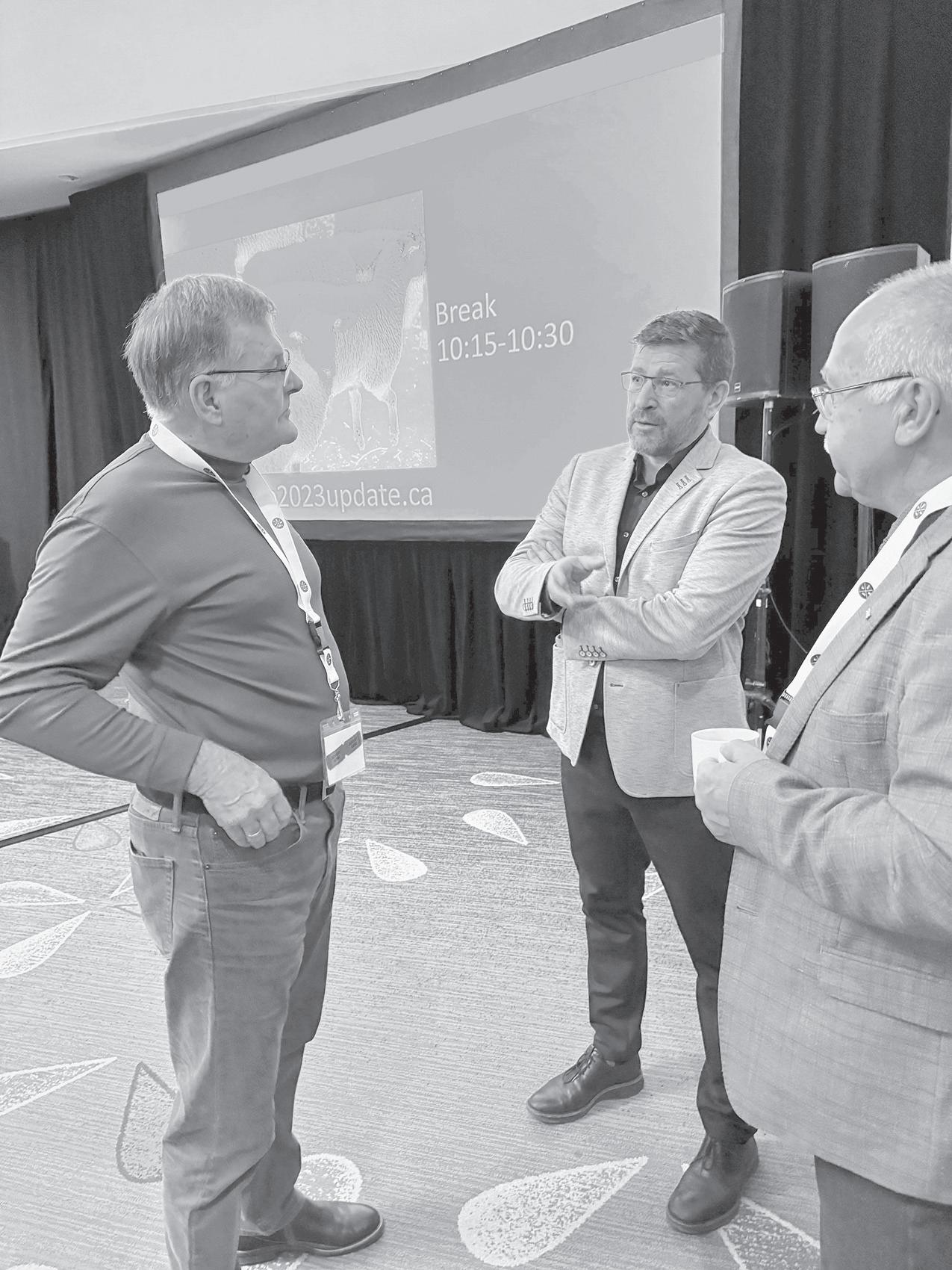

In Canadian legislation, few bills have stirred as much controversy and debate, such as Bill C-282. Positioned on the threshold of becoming law, this bill has sparked intense scrutiny and opposition.
At its core, Bill C-282 “An Act to amend the Department of Foreign Affairs, Trade and Development Act (supply management)” seeks to enshrine immunity for supply-management from potential trade negotiations, effectively shielding this sector from future market access concessions without reciprocal benefits.
Recently Sylvain Charlebois, a Professor at Dalhousie University, observed, “This is far from an optimal scenario, and the implications of this bill spell bad news for Canadians.”
Supply-management, governing poultry, egg, and dairy production, has long been upheld as a pillar of Canada’s agricultural policy.
However, some people are questioning its efficacy and relevance in today’s globalized economy arguing it prioritizes the interests of a select few over the nation’s broader economic well-being. Others argue that it prioritizes food security from a global food system that has increased food insecurity with only a select few global food corporations benefiting.
Supply–management aims to shield family farms that provide perishable products from economic volatility, reduce government farm subsidies, and provide food security that is predictable and adequate to meet Canada’s domestic market needs,
indicating significant spikes in the cost of essential dairy products like yogurt.
Based on Statistics Canada 2022 data, supply-management accounted for 350,000 jobs, added $30 billion to Canada’s GDP resulting in $7 billion tax revenue.
According to Charlebois there is disproportionate influence wielded by proponents of supply-management that is a cause for concern. With considerable sway over politicians of all stripes, these advocates have successfully pushed for measures like Bill C-282, prioritizing the interests of a niche sector at the expense of broader economic prosperity.
“Proponents of supplymanagement exert considerable influence over politicians across party lines, compelling them to support this bill to safeguard the interests of less than 1% of our economy, much to the ignorance of most Canadians,” said Charlebois.
According to Charlebois the implications of Bill C282 extend beyond the agricultural sector. By entrenching protectionist policies, Canada risks alienating key trading partners and hindering the growth prospects of non-agricultural industries.
Charlebois emphasized, “Forging trade agreements with key partners such as India, China, and the United Kingdom is imperative not only for sectors like automotive, pharmaceuticals, and biotechnology but for the vast majority of farms in livestock and grains to thrive and contribute to global welfare and prosperity.”
Moreover, the experiences of other nations serve as cautionary tales against the pitfalls of protectionism. The United Kingdom’s decision to walk away from trade negotiations with Canada underscores the perils of en-
trenched market barriers.
Charlebois points out, “Increased competition in the dairy section would also help drive prices down, a welcome relief given current economic challenges.”
He said Bill C-282 represents an initiative driven by entrenched interests and prioritizing protectionism over competition. Charlebois noted that Canada risks stifling innovation, impeding growth, and undermining its position on the global stage.
“Embracing further protectionism will not only harm consumers yearning for more competition at the grocery store but also impede the growth opportunities of various agricultural sectors striving to compete globally and stifle the expansion prospects of non-agricultural sectors seeking increased market access.”
He also said governments, whose representatives primarily hail from urban areas, rely on voters who believe, for the most part, that food magically appears on grocery store shelves.
“The need for more understanding about the hard work behind the safe and abundant food we are privileged to purchase daily affects public perceptions,” said Charlebois. “It’s led us to this point. Over time, this divide has provided us with short-sighted policies.”
Granting Canadian farmers the benefit of the doubt is crucial for developing more effective food policies. Unlike grocery stores, which should be more attentive to consumers’ needs, farmers bear the brunt of fluctuating prices and have no control over the market.
“Before the situation escalates, remember that farmers are the foundation of the food systems and we need to start listening to our farmers,” he said.
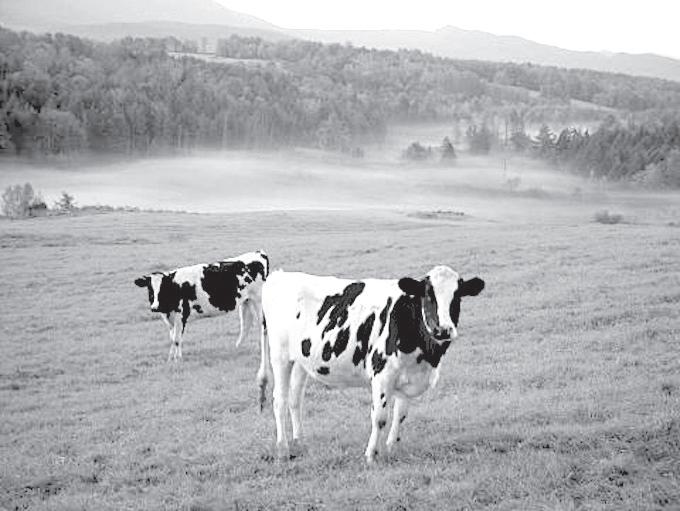

It was one of those days where I had been doing spring clean-up all day and decided to make a Plum Crisp for supper dessert. I put the crisp in the oven and went out to get a load of jeans off the clothesline. When I walked back in the house within like 5 minutes I smelt my crisp burnt. My stove is over ten years old and I’d already put a new thermostat and a computer panel in it 5 years ago so after talking to my appliance repair people decided to buy a new one. This would be the most economical. Tomorrow my new stove is to be delivered – but its five days without an oven. Instead have had to use my slow cooker, stove top and air fryer. The following roast tastes great cooked in a slow cooker.
Herb Beef Pot Roast
3.5- or 4-pound roast (rump, sirloin tip, round)
Freshly ground pepper
1 Tablespoon canola oil
1 onion sliced thinly
2 carrots, grated
2 cloves garlic, minced
1 can (398ml) tomato sauce
1 Tablespoon Worchester sauce
1/4 cup beef broth or dry red wine
1/2 teaspoon basil
1/2 teaspoon marjoram
1/2 teaspoon oregano
1/2 teaspoon thyme
Slow cooker method: Sprinkle beef on all sides with pepper. Heat oil in large Dutch oven or electric frypan. Add beef. Brown well on all sides. Meanwhile in lightly greased slow cooker combine onion, carrots and garlic. Top with beef. In small bowl combine remaining ingredients. Pour over beef. Cover Cook at low setting 810 hours or until beef is tender.
Oven Method: Prepare roast as directed above. Place into lightly greased baking dish or roasting pan. Cover. Bake at 325F at least 3 hours or until beef is tender.
I used a chuck roast because I was cooking it slower in the slow cooker and it was tender. Also, since I had no oven I put some onions, potatoes and carrots in with the roast to cook which worked great. I didn’t grate the carrot or slice the onion. I put them in the slow cooker in bite size pieces. The sauce from the roast I will use as a base for making Taco soup tomorrow.
Recently I made a couple of lemon pies for dessert since I had made pie crusts ahead and froze them. It was a quick dessert.
Lemon Pie Filling
3 or 4 egg yolks
1 1/4 cups sugar
4 Tablespoons cornstarch
1/8 teaspoon salt
1/3 cup lemon juice
2 cups water
1 teaspoon butter
4 Tablespoons lemon rind optional
Beat egg yolks. Mix cornstarch, sugar, salt, and lemon rind. Add lemon juice, lightly beaten egg yolks, water and butter. Cook in a pot on the stove until thick. When cooled, pour into baked pie shell and make meringue with leftover egg whites. I always add cream of tartar to my egg white when I beat them with a 1/8 teaspoon and 1/4 cup sugar. Put evenly over lemon filling making sure it touches the crust. Lightly brown Meringue in the oven at 350F.
Personally, I use 4 eggs to make this recipe and I use 1/2 cup of lemon juice.