
Manitoba Farm Income Declines in 2024, Despite Record Livestock Receipts
By Harry Siemens
Manitoba’s agricultural industry faced mixed results in 2024. Farm cash receipts dropped by 4.2%, totalling $9.8 billion, down from $10.2 billion in 2023. While livestock receipts reached new records, crop receipts experienced a significant decline, resulting in a decrease in overall farm income.
Farmers in Manitoba faced numerous challenges, including declining crop prices, throughout 2024. Crop receipts totalled $5.94 billion, a 10% decrease from the previous year. Drops in the prices of major crops largely drove this decline. Canola sales fell by 12.4%, generating $2.0 billion, while wheat sales dropped 12.1%, bringing in $1.71 billion.
Soybeans experienced the sharpest decline, dropping 37.1% to $525 million, while grain corn receipts decreased 9%, totalling $303 million.
Oats also saw a 7.6% decline to $227 million. However, potatoes provided some relief for farmers, with receipts increasing by 21.6% to reach $508 million in 2024.
In contrast, the livestock sector saw positive growth. Livestock
receipts rose by 5.4%, totalling $3.45 billion in 2024, up from $3.27 billion in 2023. The hog sector was a major contributor, with receipts rising 8.2% to a record $1.58 billion. Cattle and calf receipts also performed well, increasing 4.3% to a record $982 million. Dairy farmers saw a 5.6% increase in milk receipts, totalling $377 million, and egg receipts grew 2.6% to $177 million.
Despite these gains, some categories saw declines. Chicken receipts fell 3.3% to $168 million, turkey receipts dropped 0.3% to $28 million, and honey receipts took a significant hit, falling 19.6% to $42 million.
Program payments from the government also increased in 2024, rising by 14.5% to $409 million, up from $358 million the previous year. These payments helped cushion some of the financial difficulties caused by the downturn in crop prices.
Operating expenses in 2024 decreased by 0.6% to $7.68 billion. Fertilizer and fuel costs dropped by 7.5% and 3.5%, respectively, offering some relief to producers. However, interest expenses rose sharply by
23.3%, and purchases of livestock and poultry increased by 3.7%. Other notable changes included an 11.4% decrease in commercial feed costs, a 13.1% decline in crop and hail insurance premiums, and a 5.8% increase in cash wages, as well as an increase in room and board.
Net cash income, calculated as farm cash receipts minus operating expenses decreased by 15.4%, falling to $2.12 billion in 2024. This decline was primarily due to lower crop receipts, driven by reduced crop prices.
Realized net income, which factors in depreciation, also saw a significant decline, falling by $365 million, or 23.0%, to $1.23 billion compared to 2023.
When considering inventory changes, total net income for Manitoba farmers plummeted by 50%, falling from $1.87 billion in 2023 to just $917 million in 2024. This decline primarily resulted from lower crop receipts and a decrease in the value of crop inventories, due to a decline in crop prices at the end of the year. This marks the lowest level
of farm income in Manitoba since 2020.
Despite the record performance in livestock receipts, the overall decline in farm income paints a challenging picture for Manitoba farmers. The drop in crop prices, particularly for soybeans and wheat, coupled with rising interest rates and operational costs, has put many producers under financial pressure.
Government support through program payments has been essential in offsetting some of the challenges; however, it may not be sufficient to fully compensate for the reduced income from crops and rising expenses. As the year progresses, farmers will continue to navigate these economic pressures while adjusting to an ever-changing agricultural landscape.
Looking ahead, the remainder of the growing season will be crucial. Producers are hoping for better crop yields and improved market conditions to help turn things around. The agricultural community will need to stay resilient and adaptable in the face of these ongoing challenges.

Canadian Pork Council Adds Voice to
By Dan Guetre
The Canadian Federation of Agriculture (CFA) has officially welcomed the Canadian Pork Council (CPC) as its newest member organization, enhancing its mandate to represent farmers across Canada with a unified national voice.
The CPC, which represents over 7,000 pork farms in nine provinces, joins the CFA’s roster of members that together speak for more than 190,000 Canadian farmers and farm families. The addition is seen as a strategic move to bolster collaboration on key issues affecting the sector, from trade and labour to sustainability and emergency preparedness.
“We are so pleased to welcome the Canadian Pork Council as a member of the CFA,” said CFA President Keith Currie. “With CPC at the table, our unified national voice grows even stronger, particularly when engaging with the federal government on complex issues like sustainability, labour, animal health and emergency preparedness, trade, and competitiveness.”
The pork sector is a significant contributor to Canada’s agricultural economy, supporting over 100,000 jobs nationwide. The industry exports approximately 70 per cent of its production, contributing more than $5 billion annually to the national economy.
René Roy, Chair of the Canadian Pork Council, emphasized the importance of joining forces with other commodity groups.
“As a national organization representing pork producers from nine provinces, it’s important for us to be part of a collective voice that speaks for Canadian agriculture as a whole,” he said. “We believe in the value of unity across sectors and

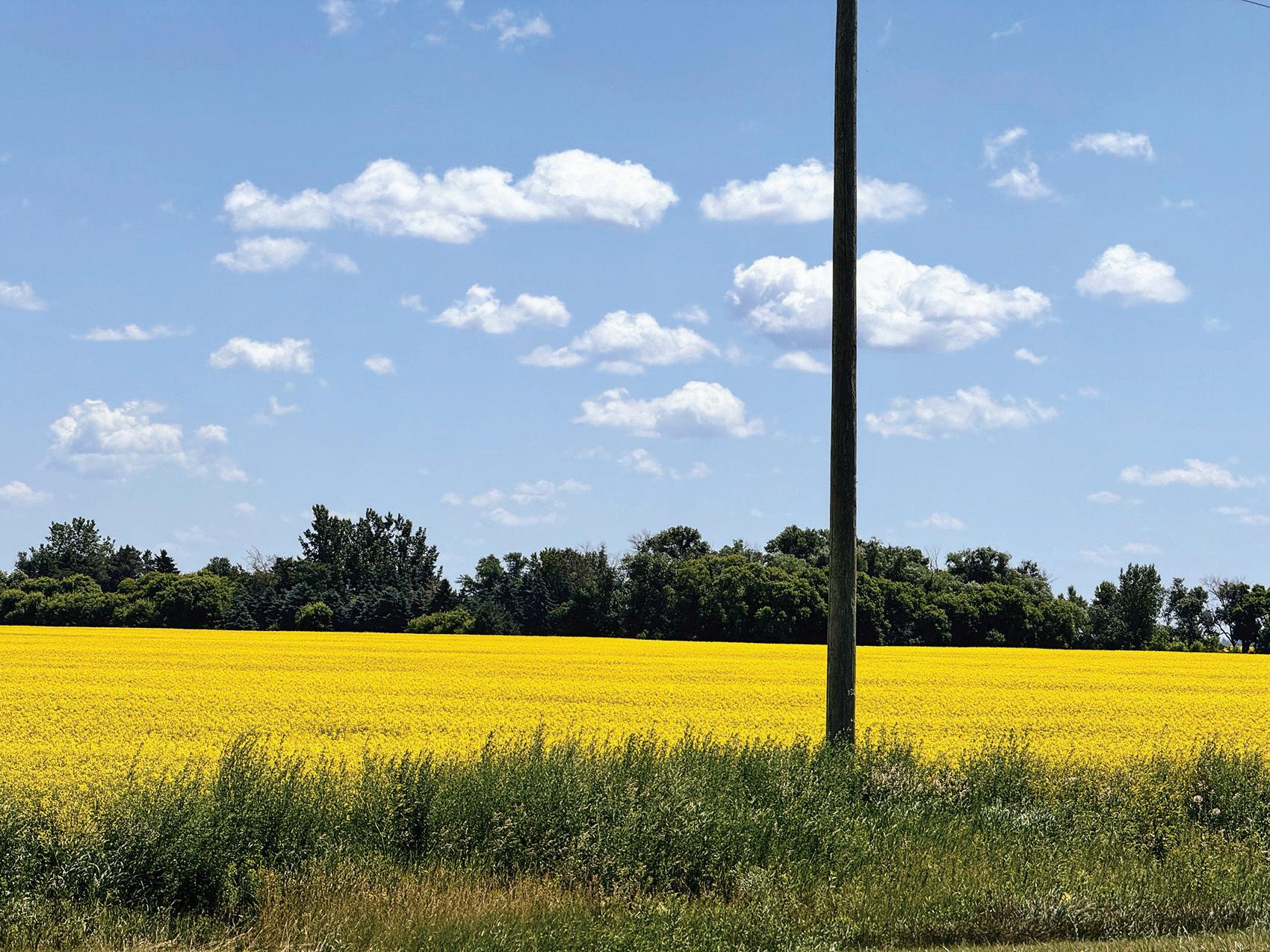
Looking ahead, the remainder of the growing season will be crucial. Producers are hoping for better crop yields and improved market conditions to help turn things around.
Photo by Harry Siemens




IICA Canada Hosts Landmark Agriculture and Food Security Forum
The Inter-American Institute for Cooperation on Agriculture (IICA Canada) hosted a groundbreaking event last month, bringing together more than 1,000 participants—both in person and virtually—for the inaugural Americas Agriculture and Food Security Forum, held June 15 and 16 in Kananaskis, Alberta.
Timed to coincide with the G7 Summit, the forum sought to address a key issue notably absent from the G7 agenda: agriculture. The event created a unique platform for dialogue, drawing a diverse mix of stakeholders including government officials, industry leaders, farmers, ranchers, academics, students, financial institutions, and development experts from across the Americas.
Approximately 250 guests attended on-site, with more than 800 participating online. Together, they explored strategies to bolster food security, sustainability, agricultural innovation, and trade partner-
ships across the hemisphere.
“This forum was not only timely but also essential,” said Ryan Beierbach, Vice President of the Canadian Cattle Association (CCA) and Chair of the Canadian Roundtable for Sustainable Beef (CRSB).
“It allowed us to highlight Canada’s leadership in sustainable beef production and advocate for collaborative approaches to resilient food systems.”
Beierbach participated in a high-level dinner on June 16, where CRSB Certified beef was featured, and also served as a panellist on the sustainable livestock panel. He emphasized Canada’s progress in beef sustainability, referencing results from the National Beef Sustainability Assessment (NBSA), and called for ongoing pre-competitive collaboration among industry partners.
The two-day event underscored the need for crosssector cooperation. Sessions ranged from investment and
trade to soil health, water stewardship, and nutrition.
Strong support emerged for building networks that break down silos between sectors in order to create more sustainable and secure food systems.
The Canadian Federation of Agriculture, Farm Credit Canada, Agriculture and Agri-Food Canada, and Senators such as Rob Black were among the key national participants. For many, the event served as an important opportunity to build new partnerships and strengthen existing ones.
Organizers and attendees alike hailed the forum as a vital step toward positioning agriculture as central to global discussions on sustainability, development, and economic security.
With plans already underway for future editions, the Americas Agriculture and Food Security Forum may become a recurring focal point for collaboration across the hemisphere.
Pork Producers Unite to Strengthen Food Security and Animal Health Cooperation
By Dan Guetre
Pork industry leaders from Canada, the United States, and Mexico reaffirmed their shared commitment to food security, responsible animal care, and sustainable pork production at a recent trilateral summit hosted in Ontario by the Canadian Pork Council (CPC).
Representatives from the CPC, the U.S. National Pork Producers Council (NPPC), and Mexico’s Organización de Porcicultores Mexicanos (OPORMEX) gathered to discuss common challenges, exchange ideas, and coordinate strategies to enhance animal health and production practices across North America.
“This was an opportunity for pork industry representatives to exchange ideas, discuss mutual challenges and possible solutions, and explore areas of common interest,” said René Roy, CPC Chair and host of the summit. “We’re united by a foundation of science-based practices that ensure excellent animal care, environmental sustainability, and the delivery of safe, highquality, and affordable pork.”
A key focus of the meeting was cross-border col-
laboration to reduce the risk of animal disease outbreaks, particularly African Swine Fever (ASF), which continues to pose a threat to global pork production. Industry leaders emphasized the importance of coordinated biosecurity efforts and swift response planning.
“The North American pork industries – including both producers and pigs – are strongest when we collaborate, share challenges and solutions, and learn from one another,” said NPPC President and Ohio pork producer Duane Stateler. “American pork producers value these annual meetings with our Canadian and Mexican counterparts to work together toward a resilient and responsible pork sector.”
OPORMEX President Heriberto Hernández Cárdenas also stressed the strategic importance of North American unity, not only as a trading region—which accounts for nearly half of global pork exports—but as a region of cooperation in maintaining animal health and meeting international demand.
“From an animal health perspective, North America
is a strategic region,” said Hernández Cárdenas. “This exchange of experiences helps us take coordinated action in each of our countries to better address the challenges facing our industries.”
Beyond disease prevention and trade, the trilateral discussion also addressed shared public concerns around animal welfare and antimicrobial stewardship. Leaders acknowledged the growing importance of societal expectations regarding how pigs are raised and how resources are managed.
“North Americans should feel confident that their pork farmers are capable stewards of their animals and deeply committed to meeting our customers’ and our fellow citizens’ needs and expectations,” said Roy.
The trilateral meeting underscored the interconnectedness of the pork industries across borders and reinforced the value of collaboration in advancing sustainable agriculture, promoting animal well-being, and ensuring a secure and affordable food supply for consumers across North America and beyond.
The Inter-American Institute for Cooperation on Agriculture (IICA Canada) hosted a groundbreaking event last month, bringing together more than 1,000 participants—both in person and virtually—for the inaugural Americas Agriculture and Food Security Forum. Submitted photos
CCA Vice President Ryan Beierbach was a panellist at the America’s Ag Forum hosted by IICA.
Canadian Pork Council Adds Voice to Canadian
Federation of Agriculture
Continued from Page 1...

see this membership as an opportunity to strengthen collaboration and ensure pork producers are well represented on the national stage.”
While the CFA and CPC have previously collaborated on shared priorities, this formal membership deepens their relationship and lays the groundwork for more coordinated advocacy. Both organizations see the move
as essential for navigating the challenges and opportunities facing modern agriculture, particularly in trade.
“Trade is vital to the success of Canadian agriculture,” Roy added. “By working together through the CFA, we can better advocate for strong trade frameworks that support farmers and rural communities across the country.”
The CFA reaffirmed its
commitment to building a resilient, competitive, and sustainable agriculture sector. The inclusion of the Canadian Pork Council enhances its ability to advocate with a broader, more representative voice.
“This announcement takes us one step further,” Currie said. “It’s critical that our industry work together to advance common solutions.”
Canadian Cattle Association Promotes Sustainability and Trade Japan’s Expo Events
The Canadian Cattle Association (CCA) recently represented Canadian beef producers on the international stage during a series of key trade and promotional events in Asia, strengthening Canada’s agri-food presence and advancing discussions on trade and sustainability.
On June 10, the CCA participated in a high-profile event hosted at Canada’s EXPO Pavilion in Osaka, Japan, organized by Canada Beef. With the 2025 World Expo’s overarching theme focused on the “necessities of life”, including food production, the event provided a fitting platform to spotlight Canadian beef.
Japanese clients and stakeholders gathered to learn
the care, science, and sustainability that underpin the industry. The event also served as an opportunity to share the Canadian beef sector’s progress through the National Beef Sustainability Assessment, which highlights environmental stewardship and responsible management practices.
Government of Canada officials from the Canadian Embassy in Japan and Canada’s EXPO leadership were in attendance and held productive discussions with CCA on strengthening trade relations with Japan and the broader Indo-Pacific region.
Following the Expo, CCA traveled to Seoul, Korea, to continue its promotional and trade efforts. While attending the Seoul Food Show, CCA joined Canada Beef at a showcase featuring a variety of Ca-

Agriculture Ministers Advance Risk Management and Trade Initiatives at National Meeting
By Dan Guetre
Federal, provincial, and territorial Ministers of Agriculture met virtually recently to explore ways to improve the resilience and competitiveness of Canada’s agriculture and agri-food sectors. The discussions focused on addressing current challenges in international trade, enhancing business risk management programs, and expanding interprovincial trade opportunities. In response to ongoing trade uncertainties and adverse climate conditions in parts of the country, Ministers agreed to implement temporary enhancements to the AgriStability program for the 2025 program year. The compensation rate will increase from 80% to 90%, and the maximum payment limit will double from $3 million to $6 million. These measures aim to provide additional financial support to Canadian produc-
ers facing rising risks.
Looking ahead to 2026, Ministers also endorsed further program adjustments, including a new optional inventory valuation method for on-farm use and the inclusion of feed costs associated with rented pasture as allowable expenses. A review of AgriStability’s allowable expenses will continue, with updates to be shared at the September annual meeting.
The Ministers also turned their attention to interprovincial trade, discussing several proposals to reduce internal barriers and boost domestic market opportunities. These include expanding support from the Canadian Food Inspection Agency for small and medium-sized businesses seeking federal food licenses, enhancing regional slaughter capacity, and permitting the interprovincial trade of low-risk manufactured foods without a federal license.
Two pilot projects focused on meat trade and slaughter regulations are being accelerated to inform these efforts. The goal is to support busi-
ness growth while upholding Canada’s food safety standards.
Ministers also highlighted the need to maintain and expand international market access. Discussions included the role of the federal IndoPacific Agriculture and AgriFood Office and strategies to deepen engagement with China to improve trade relations and remove tariffs affecting Canadian agriculture and seafood exports. Existing trade agreements were recognized for their ongoing benefits, and attention was given to the impacts of tariffs on Canadian businesses.
Manitoba’s Agriculture Minister Ron Kostyshyn reiterated his province’s commitment to supporting agricultural producers through collaborative programs that promote sustainability, food security, and economic stability.
The next in-person meeting of FPT Ministers of Agriculture is scheduled for September 7–9, 2025, in Winnipeg, where they will revisit progress on these key initiatives.
nadian agri-food products.
During their visit, CCA met with officials at the Canadian Embassy in Seoul to address key trade priorities, including efforts to reduce the current tariff rate on Canadian beef and accelerate its elimination. The delegation also discussed the 100-day residency rule, a long-standing issue affecting beef trade between Canada, the U.S., and Korea.
CCA’s presence in both Japan and Korea underscores its ongoing commitment to strengthening market access and promoting the Canadian beef industry’s leadership in sustainable production practices. As global interest in responsible food systems grows, Canadian producers continue to build bridges with international partners through transparency, innovation, and quality.

The Canadian Federation of Agriculture (CFA) has officially welcomed the Canadian Pork Council (CPC) as its newest member organization, enhancing its mandate to represent farmers across Canada with a unified national voice. Submitted photo
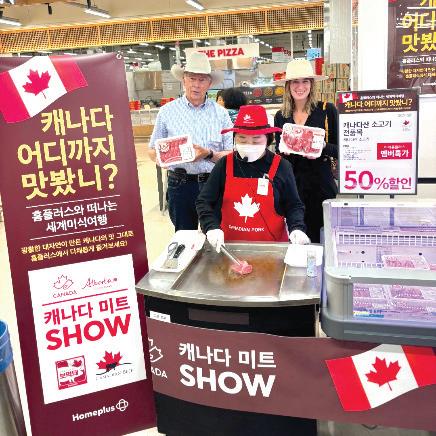
Japanese clients and stakeholders gathered to learn more about how Canadian beef is produced, with CCA representatives emphasizing the care, science, and sustainability that underpin the industry. Submitted photos

Read the AgriPost online at agripost.ca
Past issues in archive

Reality Check for the 2025 Harvest Season

We’ve got some fundamental uncertainties ahead—alongside a few firm realities—in farming, food production, and agriculture. After talking with several farmers, it’s clear that crop development is uneven. Moisture levels, or the lack of them, continue to shape the growing season. In some regions, crops look decent. In others, they look better. But in many places across Manitoba, Saskatchewan, and Alberta, conditions aren’t as favourable.
Walter Smith, a grain farmer from Pilot Mound, MB shared a sobering point. “If I only get 55 to 60 bushels an acre on wheat, I’ll be in the red,” he said. “I need 75 to 80 bushels an acre just to break even.”
That’s the harsh math facing many growers this year.
I also checked in with Jona-
than Drieger of Left Field Commodity Research. I’ve talked with Jonathan many times over the years. He confirmed the wide variation in moisture conditions and urged caution on grain marketing. “Farmers shouldn’t be too quick to pull the trigger,” he said. “If possible, avoid selling during harvest—it’s usually the low point for prices.”
Walter and Jonathan echoed the same concern: with rising input costs, the margin for error is razor thin. Many producers rely on harvest sales to cover their bills. Drieger encourages those with storage to use it. “Storing grain gives you time to wait and see. Each operation is different, but flexibility helps,” he said.
Layered on top of this are trade uncertainties. On August 1, the U.S. is planning to impose tariffs of up to 35%. While the Canada-U.S.Mexico Agreement currently exempts our sector, the threat alone creates concern. Mean-
while, Canada still faces 100% tariffs on canola oil and canola meal exports to China. There’s talk of Australia cutting a deal to resume shipping canola to China. If that happens, we’ll be watching closely to see what it means for Canadian producers.
The truth is, we don’t yet know what kind of harvest we’ll get. Will it be enough? Will it be below expectations? Will it be more than the market needs? Until we know, we can’t answer whether 2025 will be profitable or painful.
This isn’t about fear mongering. Over my 53 years in this business, I’ve always stood with farmers. I’ve cheered when there’s reason to cheer, and I’ve been realistic when times get tough. Today, I choose realism.
As I drive across Manitoba and beyond, I see a mix. Some crops look strong. Others are struggling. Cattle markets are strong, too, but input costs for feed and land are climbing. Tom Teichroeb, a cattle producer near Langruth, told me,
“Farming isn’t luck. You’ve got to know your numbers and steer your operation wisely.”
That mindset applies across the board. Whether you raise crops, cattle or hogs, you must understand your costs. Decisions—especially selling decisions—get easier when you know your break-even point.
I recall the inflation-driven interest rate spikes of the 1980s and 1990s. Many farmers faced similar challenges. One farmer told me my com
had pushed his credit lines without fully understanding his numbers. It didn’t end well.
So, here we are in 2025. Another year. Another harvest. Another test of resilience. I hope this year goes well for you. But if it doesn’t, don’t just hope things will fix themselves. Check your numbers. Understand your position. Know your limits.
Farmers don’t need pity— they need perspective. Let’s ensure to prepare for what’s next, whatever it may turn
Farmers Eye August Harvest
By Elmer Heinrichs
Another week of varied precipitation across Manitoba allowed crops to progress in their development, said the province’s weekly crop report released on July 15.
Rainfall for the week ended July 13 ranged from none at all in some areas to 38.8 millimetres in Sprague, located in the southeast corner of Manitoba. Bagot in the eastern region received 37.7 mm; Gimli in the Interlake had 33.3 mm and Shilo in the southwest got 30.8 mm.
The Manitoba crop report for July 15, 2025, indicates a mix of conditions across the province. While some areas received beneficial rainfall, others are still experiencing dry conditions. Crop development varies widely due to seeding dates and moisture availability.
Winter wheat and fall rye are in the grain-fill stage, a majority of corn fields range from V8 to tasselling, with the earliest seeded spring wheat reaching the grain fill stage, with spring wheat quality rated as good, with 10 per cent of crop reported as fair across the province.
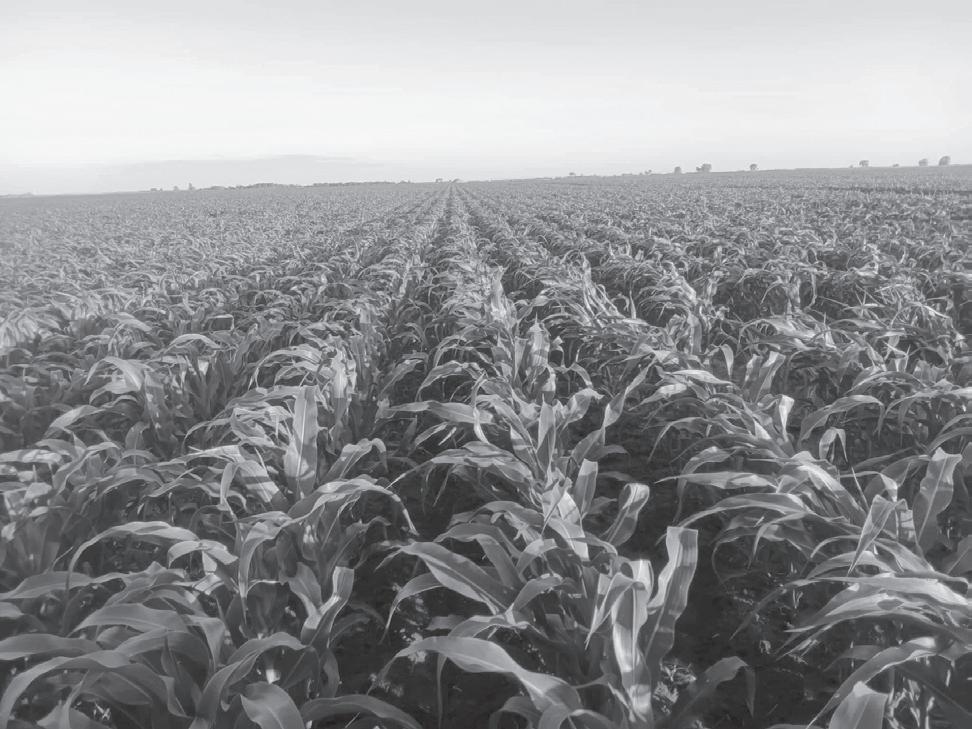
The earliest planted corn has reached the early tassel stage. Fields in the southern part of the region are generally in excellent condition, with many plants ranging from waste height to over six feet. Corn in the mid to northern central region appears less healthy due to lower rainfall.
Dennis Lange, Manitoba pulse and soybean specialist says soybeans acres are up from last year to approximately 1.5 million acres, the crop is looking reasonably good at this stage but some
areas could use some moisture.
Dry beans acres are higher than last year. There are approximately just over 200,000 acres planted with primarily pinto black and navy beans. To date there is no particular issue hampering this crop making the outcome look good at this stage.
The Prairie soybean crop in July 2025 is facing mixed conditions. While some areas are quite dry, others have seen beneficial rainfall. The overall outlook depends heavily on future precipitation.
Canola is mostly in the full to late flowering stages, sunflowers are progressing well, and most fields are in great condition, and flax has finished flowering.
For the most part, field peas are doing well, showing strong growth, with flow-
ers and pods continuing to develop. Soybean are in full bloom with pods developing in the lower canopy.
In eastern region producers continue to hope for more rain to help crops mature. Fungicide applications in spring wheat are about complete, and the earlier corn is in the early tassel stage. Recent rains have helped crop development.
Canola crops on average look to have good yield potential, and soybeans are growing well, and field pea crops continue to flower and fill pods and the crop looks good. Some fields on lighter textured soils shows signs of moisture stress.
Sunflowers are in budding stage, and very limited flax acres have finished flowering.
Hay yields were average
to below-average as producers used the week for harvest. However, above-average yields were found in the northwest due to good moisture in the region.
Pastures responded positively to the rainfall during the week. Yields range from average to less for older stands. Above average hay yields have been reported in diverse pockets with more rains.
Cattle on pasture were in good condition despite fly pressure. Dugout water levels were sufficient, but levels remained low due to a lack of moisture.
Producers are also harvesting native hay. While the dry conditions have made it possible to access low-lying areas that are typically too wet for equipment, yields remain well below normal.
Corn field in western Manitoba.
Photo by Harry Siemens
Unstung Heroes: Canada’s Honey Bees are not Disappearing – They’re Thriving
By Peter Shawn Taylor
Canada’s Bee Apocalypse began in 2008. That was the year the Canadian Association of Professional Apiculturists (CAPA) first reported unusually high rates of winter bee colony losses. At 35 percent, the winter die-off that year was more than twice the normal 15 percent rate of attrition.
“Successive annual losses at [these] levels ... are unsustainable by Canadian beekeepers,” the CAPA warned. This set off an avalanche of dire media reports that now appear on a regular basis. Among the many examples over the years: Huge Honey Bee Losses Across Canada” and “Canada’s bee colonies see worst loss in 20 years”. As each of these stories reminds readers, the disappearance of honey bees will doom our food supply, given their crucial role in pollinating crops including canola, soybeans, apples, tomatoes and berries.
This year the black-and-yellow striped “Cassandras” are back at work, with headlines shouting “Scientists warn of severe honeybee losses in 2025” and “The Bees are Disappearing Again”.
If it’s spring, the bees must be disappearing. Again.
It is, however, mathematically impossible for any species to be in an allegedly continuous and calamitous state of decline over nearly two decades and never actually reduce in number. For despite the steady supply of grave warnings regarding their imminent collapse, Canada’s bees are actually buzzing with life.
In 2007, according to Statistics Canada, there were 589,000 honey bee colonies in Canada. In 2024 they reached 829,000 just shy of 2021’s all-time high of 834,000.
Figuring a conservative summertime average of 50,000 bees per colony that means there are approximately 12 billion more honey bees in Canada today than when the Bee Apocalypse first hit.
As for beekeepers, their numbers have also been growing steadily, and now stand at 15,430 – the most recorded since 1988. As CAPA’s report acknowledges, “the Canadian beekeeping industry has been resilient and able to grow, as proven by the overall increase in the number of bee colonies since 2007 despite the difficulties faced every winter.”
How is this possible? As is usually the case where there’s a need to be filled, the market holds the answer.
It is true that Canadian
honey bees face a long list of threats and challenges ranging from mites and viruses to Canada’s harsh winters. It is also true that they perform a crucial service in pollinating crops, the value of which is estimated at $7 billion annually. However, this underscores the fact that bees are a livestock bred for a particular agricultural purpose, no different from cattle, chickens or pen-raised salmon. They are a business.
And in spite of its alleged status as an environmental totem, the honey bee isn’t even native to North America. It was first imported by European settlers for its honeymaking abilities in the 1600s. Since then, it has been cultivated with deliberate commercial intent – allowing it to outcompete native pollinators such as bumble bees and butterflies even though it is poorly suited to the local winter. (This highlights the irony of all those native-plant pollinator gardens virtuously installed in neighbourhoods across Canada that end up supporting an invasive honey bee population.)
The significance of the bee economy means that when a beehive collapses over the winter for whatever reason, beekeepers have plenty of motivation to regenerate that colony as swiftly as possible.
While hives can create their own queens over time, this can be a slow process given the cold Canadian climate. The better option is to simply buy a new queen from a warmer country.
In 2024, Canada imported 300,000 queens worth $12 million, mostly from the U.S., Italy, Australia and Chile. That works out to $40 each. In a miracle of nature, each of these new queens can lay up to 2,500 eggs a day, and each egg takes just two to three weeks to reach full maturity as a worker or drone. It is also possible to import entire “bee packages” that include a queen and 8,000 to 10,000 bees.
As a result, even a devastating 50 percent winter loss
rate, something that has occurred only rarely in Canada in individual provinces and never nationally, isn’t necessarily fatal to any beekeeping operation. The beekeeper can purchase imported queens in April, split their existing colonies and be back in business by May or June.
And regardless of the honey bee’s apparent difficulties with Canada’s unforgiving weather (efforts are ongoing to breed a hardier Canadian variant), there’s no shortage of bees worldwide. Earlier this year, the German statistical agency reported the global beehive count rose from 69 million in 1990 to 102 million in 2023. Another study looking back to 1961 by New Zealand researchers found the number of honey bee colonies has “nearly doubled” over this time, while honey production has “almost tripled.”
As the New Zealand report observes, “Headlines of honey bee colony losses have given an impression of largescale global decline of the bee population that endangers beekeeping, and that the world is on the verge of mass starvation.” Such claims, the authors note, are “somewhat inaccurate.” In truth, things have never been better for bees around the world.
Here in Canada, the ability to import queens from other countries, together with their prodigious reproductive capabilities, backstops the amazing resiliency of the bee industry. Yes, bees die. Sometimes in large numbers. But – and this

Submitted photo
is the bit the headlines always ignore – they come back. Because the market needs them to come back.
If there is a real threat to Canada’s bee population, it’s not environmental. It’s the risk that unencumbered trade in bees might somehow be disrupted by tariffs or similar boneheaded human interventions. Left on their own, bees have no problem keeping busy.
Peter Shawn Taylor is C2C Journal’s Senior Features Editor. Peter was the only member of Queen’s University’s Economics class of 1987 to find work as a wrangler in Wyoming, achieving a lifelong ambition to become a cowboy and compete in the rodeo. Peter has written for numerous and diverse publications including Maclean’s, National Post, Globe & Mail, Toronto Star, Canadian Business, Saturday Night, Reader’s Digest, National Review, Waterloo Region Record, Alberta Report and Walrus. C2C Journal is now primarily an online magazine publishing original commentaries, stories, reviews and investigative reports.

$4.3M Investment Set to Boost Canada’s Soybean Sector and Plant-Based Innovation
Canadian farmers and agri-food innovators are at the centre of a new $4.3 million project aimed at strengthening Canada’s identity-preserved (IP) non-GMO soybean market and accelerating innovation in the plant-based protein sector. Led by NRGene Canada, Pulse Genetics, Hensall Co-op, and Yumasoy Foods Ltd., with funding from Protein Industries Canada, the initiative is poised to enhance opportunities for Canadian growers and processors while expanding access to high-value international markets.
“This is Canadian innovation meeting its purpose at home and on the global stage,” said Mélanie Joly, Minister of Industry. “The project will expand soybean production across our country, helping to create new economic opportunities and meet the increasing global demand for quality plant-based products.”
The initiative responds to rising international demand for specialty soybeans—particularly in Asian markets for products like tofu and soya milk—by addressing a gap in non-GMO seed varieties and strengthening Canada’s competitiveness in the premium export market.
At the core of the project is a breeding program to develop early-maturing, high-protein, non-GMO soybean varieties tailored to northern growing regions such as Manitoba and northern Ontario. The new varieties will offer improved yields, enhanced resistance to soybean cyst nematode (SCN), and better adaptation to varied climates, giving farmers more resilient, higher-value crop options.
“Canadian farmers have a proud history of producing high-quality, identity-preserved soybeans,” said Robert Hunter, CEO of Protein Industries Canada. “This investment gives them the tools to stay competitive while opening up new economic opportunities at home.”
NRGene Canada will apply advanced genomics to accelerate development of regionally adapted, food-grade soybean varieties. “By combining genomics with farmer-driven breeding goals, we’re enabling more producers—from southern Ontario to northern Manitoba—to compete in high-value markets,” said Masood Risvi, General Manager of NRGene Canada.
Pulse Genetics will lead breeding efforts focused on innovation and adaptability. “Our goal is to create varieties with unique quality traits for both domestic and export markets,” said Pete Giesbrecht of Pulse Genetics. “This will generate real value and expanded opportunity for Canadian farmers.”
Hensall Co-op, a leading exporter of IP soybeans, will bring its agronomic and supply chain expertise to the project. “We’re proud to help advance high-protein, non-GMO soybean varieties suited for northern growing regions,” said Brad Grabham, General Manager of Food Products and Strategic Business Development.
“This aligns with our mission to deliver traceable, sustainably grown products that meet the high standards of global food markets.”
In its second phase, the project will introduce a novel plant-based protein product made from extruded whole non-GMO soybeans. Created by Yumasoy Foods Ltd., this single-ingredient meat alternative is designed to mimic the texture and versatility of conventional proteins like tofu, chicken, and pork, while preserving the full nutritional profile of the soybean.
“This investment is a game changer,” said Gina Arsens, CEO of Yumasoy Foods. “It allows us to scale a uniquely Canadian product that transforms whole soybeans into a clean-label, meat-like protein—opening new doors for consumers and the future of food innovation.”
Protein Industries Canada contributed $1.9 million to the project, with the remaining $2.4 million coming from the industry partners.
Peter Shawn Taylor.

Recent Rains Boost Crops but More Moisture Still Needed
By Harry Siemens
Brunel Sabourin of Antara Agronomy Services in St. Jean-Baptiste, MB says recent rainfall has helped crops across much of the Red River Valley. However, many areas still require additional rainfall to recover from early-season dryness fully.
“Most areas picked up some rain this past week—some more than others—but we’re still in need of quite a bit more to top things up,” said Sabourin. “In general, most crops and fields are holding on, but there are pockets that are struggling.”
The recent moisture brought a welcome boost to plant development.
“Most of the Valley picked up some decent rain, which was just what the crops needed,” he said. “The fields look fresh, and growth has taken off. That said, with lush canopies filling in, keep watching for waterhemp flushes that can slip through any thin spots or along field edges.”
Corn has put on a lot of height over the week—many fields are now pushing 10 to 11 leaf collar stages.
“The rain came at exactly the right time, and with no insect issues to speak of, it’s been a good stretch for corn growth,” Sabourin said.
Cereal crops are also responding positively. Wheat is moving from early grain fill into the milk stage, and overall, the stands look quite good. The extra rain helped alleviate some of the drought stress that was evident on lighter soils. Sabourin added that there’s still no significant sign of leaf disease, and another inch of rain would still be welcome to keep crops progressing smoothly.
Canola is now in the early to mid-podding stages, with fields appearing uniform and healthy.
“Diamondback moth larvae numbers remain low, so nothing to worry about there,” he
said. “Continued moisture will be key to help fill those pods and push yield potential.”
Soybeans are thriving with the recent rains. However, Sabourin notes new weed flushes, especially waterhemp, are starting to poke above the canopy in some spots. He encourages producers to keep scouting and manage escapes early to prevent future problems with resistance and spread.
When asked about foliar application of nutrients, Sabourin offered a cautionary take.
“A plant’s makeup requires taking fertilizer up from the roots,” he said. “That’s not to say foliar fertilizers don’t work, but it’s a much less effective way to get nutrients into the plant.”
He explained that foliar treatments typically require small amounts, as products can be salty, cause tissue burn, and may not mix well with pesticides.
“Usually, foliar application is something you do as a rescue treatment if you spot a deficiency visually or through tissue testing,” he said. “But
often if we’re seeing symptoms, it’s already late, and whatever we do may not be economical.”
Foliar fertilizers also tend to be more expensive than granular forms, so the goal is to have nutrients available in the soil from the start.
“We like to have everything available to the crop in the ground or furrow,” said Sabourin. “It’s just a more efficient way to feed the plant.”
That said, Sabourin acknowledged there’s room for fine-tuning.
“We’ve had success applying UAN post-anthesis in wheat to bump up protein,” he said. “We’ve also done it in canola after flowering and seen a response. These aren’t typical practices, but they can help make small adjustments when needed.”
He concluded with a reminder of Manitoba’s limited growing window.
“With our short season, we have very few chances to do all these applications,” said Sabourin. “So, it’s critical to plan, build fertility into the soil, and only rely on foliar when it’s truly necessary.”
Good Year for Manitoba Fruit
By Elmer Heinrichs
While Manitoba grows only two per cent of Canada’s strawberries overall, it’s the largest strawberry producer on the Prairies. In 2024, the province boasted 500 strawberry acres, with 250 of those yielding fruit.
The Prairies had good wintering conditions and Mani-
toba enjoyed some of the best weather of the three, according to Anthony Mintenko, Manitoba agriculture fruit crop specialist.
A bulk of strawberry harvesting occurred in July with some farms starting on the last weekend of June. Then came the Saskatoon berries, followed by the dwarf sour
Strategic Research Chair in Sustainable Protein Appointed
The University of Manitoba has welcomed Dr. Filiz Koksel as the new Manitoba Strategic Research Chair in Sustainable Protein, a role that continues to advance sustainable agri-food innovation and leadership in plant and animal protein research and innovation.
Dr. Koksel, an associate professor in the Department of Food and Human Nutritional Sciences, leads an interdisciplinary research program that aligns closely with Manitoba’s Protein Advantage Strategy. She holds BSc and MSc degrees in Food Engineering and earned her PhD in Food Science from the University of Manitoba.
“My vision for this Chair is to position Manitoba as a global leader in sustainable protein innovation by uniting scientific discovery with industry partnerships,” said Dr. Koksel. “Together, we will create solutions that advance food security and climate resilience for generations to come.”
Dr Koksel’s current work focuses on developing novel, environmentally friendly protein ingredients from crops such as peas, soybeans, faba beans, and hemp. Using advanced processing techniques like extrusion cooking, Dr. Koksel enhances the texture, nutrition, and sensory quality of plant-based foods, supporting the growing demand for sustainable protein options.
Her research also explores adding value to food industry co- and by-products, transforming waste from sectors such as brewing, oilseed processing, and meat processing into high-value ingredients for both human and pet food. She integrates cutting-edge, non-invasive technologies—such as ultrasonic and thermal imaging—for real-time quality control in food processing environments.
Looking ahead, Dr. Koksel will expand her research into hybrid protein products that combine plant and animal proteins, as well as innovative uses for dairy proteins. These efforts will contribute to Manitoba’s circular economy and reinforce the province’s role as a hub for sustainable agri-food innovation.
“Her interdisciplinary approach and strong industry collaborations make her ideally suited to lead this important initiative,” said Dr. Martin Scanlon, Dean, Faculty of Agricultural and Food Sciences.

cherries, Haskap berries and raspberries.
Other fruits like chokecherries and various bush fruits come with different stages of growth.
Other fruits such as blueberries, chokecherries, Saskatoon berries, and bush fruits like currants and gooseberries also grow well here.

Dr. Filiz Koksel.
Submitted photo
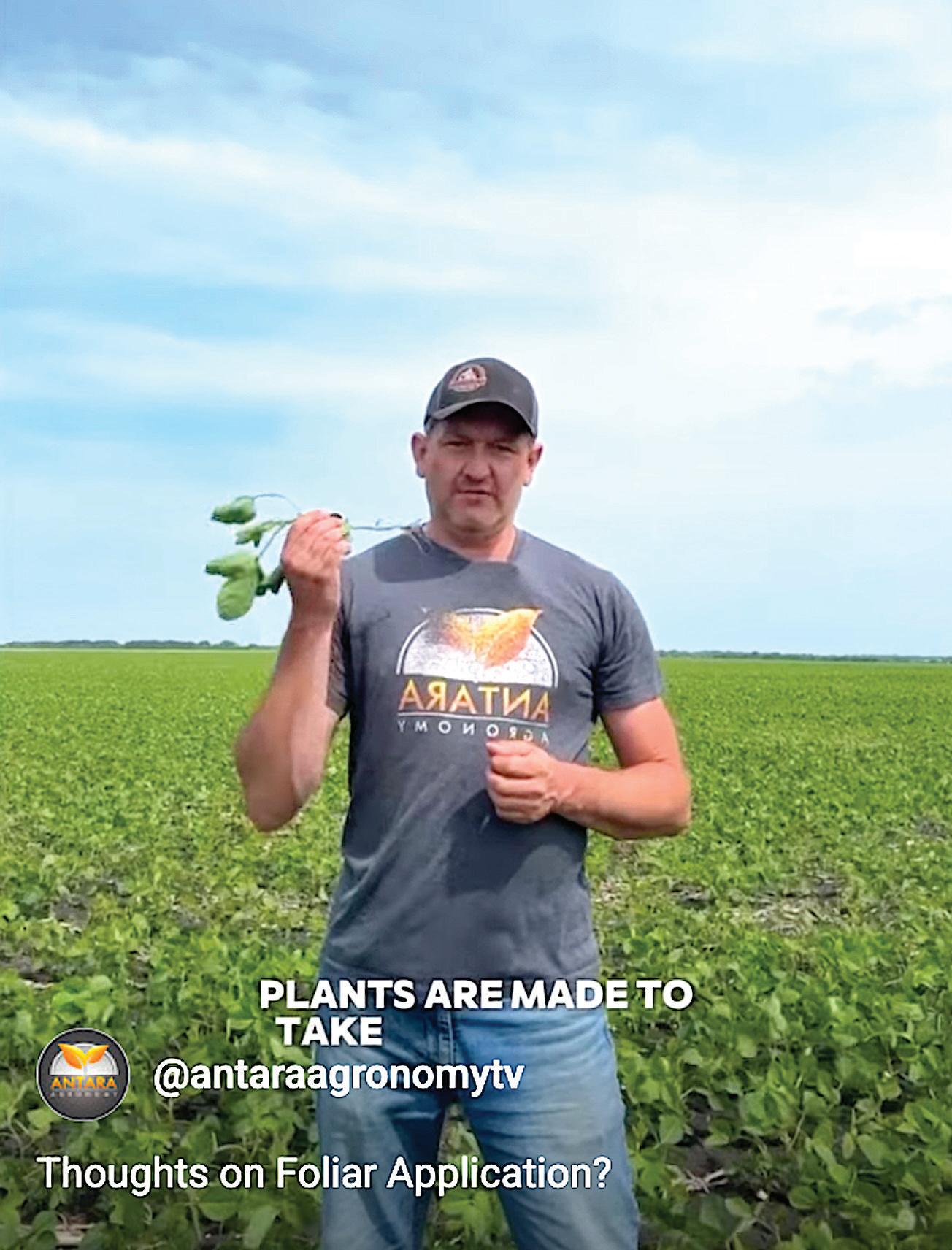
Brunel Sabourin of Antara Agronomy Services in St. Jean-Baptiste, MB says recent rainfall has helped crops across much of the Red River Valley. However, many areas still require additional rainfall to recover from early-season dryness fully.
Submitted photo

Tariff Threats Loom, But Canadian Pork Prices Stay Steady
By Harry Siemens
Paul Marchand, Senior Risk Management Analyst with HAMS Marketing Services says Canada’s pork producers aren’t facing direct tariff impacts yet. Still, the biggest risk remains if U.S. pork becomes a target of foreign retaliation.
“We’re not seeing any tariffs on pork under the CanadaU.S.-Mexico trade deal,” says Marchand. “That’s the shield holding so far. But if another country retaliates against the U.S. with tariffs on pork, that hits us too.”
Canadian hog prices tie closely to U.S. market prices.
“We get our pricing from the USDA and U.S. futures markets,” he says. “So if pork backs up in the U.S. and prices drop, that pressure flows into our system—even if we’re not directly involved in the dispute.”
While Canadian producers don’t export much pork themselves, domestic processors and packers do.
“They have exposure to the U.S. market,” Marchand says. “If they take a hit, it affects how much they pay producers here.”
Marchand points to China’s 145% tariff on U.S. pork during a past trade spat as an example of real damage.
“U.S. pork exports to China dropped from 35,000 metric tons a month to just 6,700 in May,” he says. “China used to be a top-five buyer—then they slid to the bottom of the list.”
That dramatic drop opened the door for new players, such as Colombia, which imported more than 12,600 metric tons that month.
“Colombia passed China in volume,” says Marchand. “That shows how fast a market can shift when tariffs hit.”
Despite the impact, Marchand says U.S. exports have started to recover.
“Forward-looking pork orders to China are picking up again,” he says. “There’s always a lag in the data, but the signs of recovery are there.”
Still, Marchand believes the bigger threat lies with Mexico.
“Mexico takes about 40% of U.S. pork exports,” he says. “If they retaliate with tariffs, that’s when things get serious.”
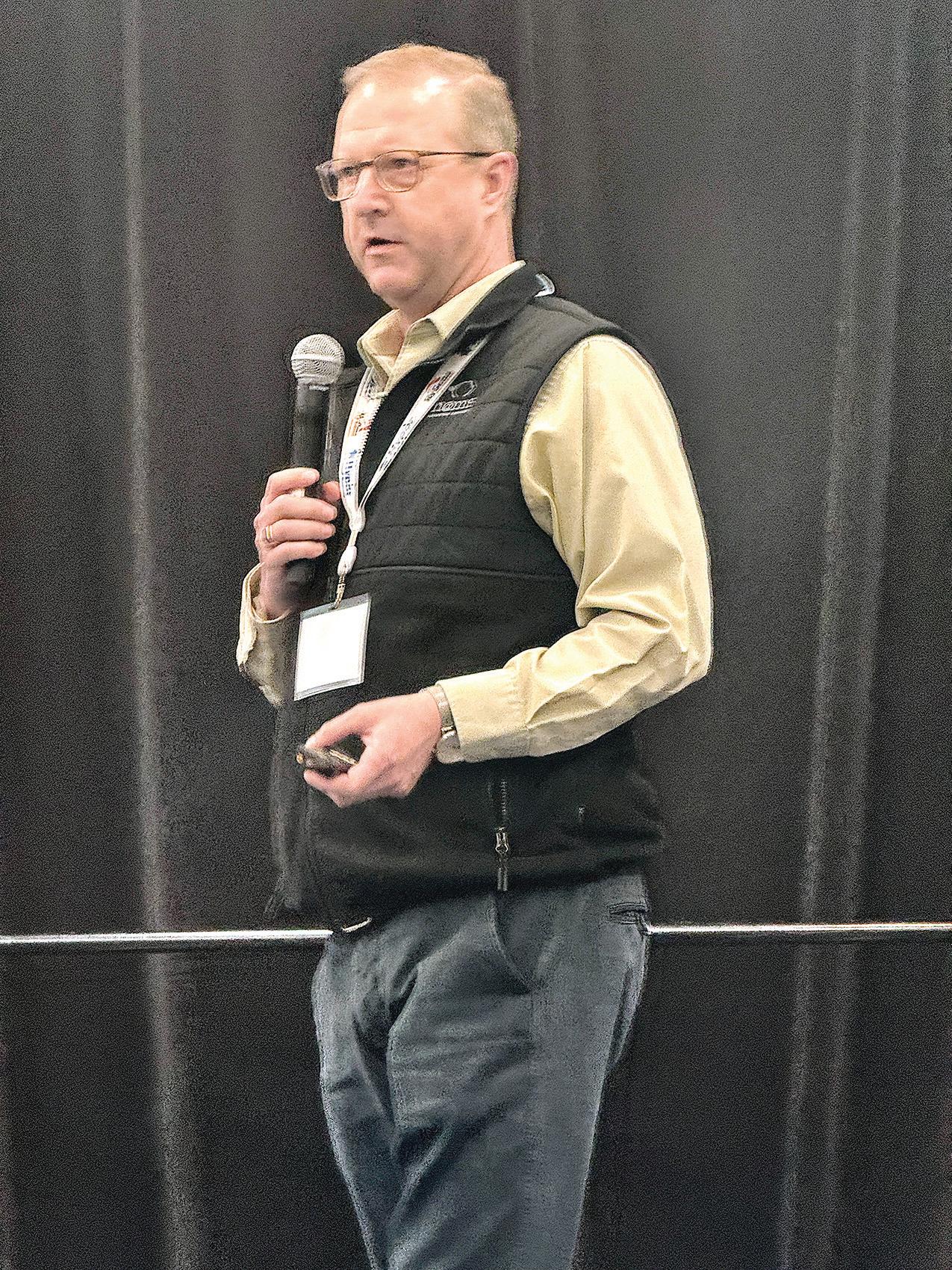
“We’re not seeing any tariffs on pork under the Canada-U.S.-Mexico trade deal,” says Paul Marchand Senior Risk Management Analyst with HAMS Marketing Services. “That’s the shield holding so far. But if another country retaliates against the U.S. with tariffs on pork, that hits us too.”
Mexico, so far, has handled the pressure calmly.
“They’ve said, if something happens, they’ll respond then,” says Marchand.
“That’s smart. Less drama. More strategy. Our government could learn from that.”
He cautions Canada against retaliating against the U.S. with pork tariffs.
“That hurts our producers,” he says. “We export too much pork to disrupt the North American trade balance.”
His advice to Ottawa?
“Do not tariff U.S. pork. Period,” said Marchand. “That only causes demand destruction and backs up product— here and in the U.S.”
Even recent live hog shipments from Ontario into U.S. plants or western Canadian plants haven’t affected Manitoba prices.
“That’s more about plant closures in Quebec,” Marchand says. “It’s a logistics issue, not a pricing one. Prices here still depend on U.S. fundamentals.”
On how the federal government is managing the trade tensions, Marchand urges a quieter approach.
“Too much of this battle plays out in public, especially on social media,” he says. “Markets need policy, not posturing.”
Photo by Harry Siemens
He adds, “Let the trade professionals do their jobs. Less noise. More certainty.” So far, the Canada-U.S.Mexico Agreement (CUSMA) has protected the pork industry. But with renegotiations set for 2026, Marchand expects more tariff threats in the years ahead. “That seems to be the new strategy— threaten tariffs to push people to the table,” he says.
Even with regular threats, pork markets haven’t reacted dramatically.
“Lean hog futures mostly stay flat when threats pop up,” Marchand says. “The market waits for real action. Not just talk.” He remains cautiously optimistic.
“Demand stays strong, supplies are tighter than last year, and prices are historically high,” he says. “So far, no major trade disruptions have hit Canadian pork.” Looking ahead, Marchand sees a clear path.
“Keep markets open. Avoid self-inflicted wounds,” says Marchand. “And prepare for more negotiating tactics.”
As policymakers look to protect Canadian hog producers, Marchand says, “Give us stable rules. Don’t start tariff fights. That’s the best support you can offer.”
Feeder Demand Drives Strong Cattle Prices Across Manitoba
By Harry Siemens
Cattle markets in Manitoba continue to reflect strong demand, with feeder prices climbing across weight classes. Auction barns report active bidding and solid volumes, as buyers seek out quality calves and yearlings to fill feedlots.
Prices for feeder steers show strength across the board. Heavier steers over 1,000 pounds trade from $300 to $335 per head.
Steers in the 900–1,000 lb range sit between $316 and $371. Prices move higher for lighter weights: 800–900 lb steers command $360 to $420, 700–800 lb steers fetch $410 to $475, and 600–700 lb steers bring in $455 to $520. Calves between 500–600 lbs reach the highest range, selling between $470 and $645 per head.
Buyers continue to pay premiums for uniform lots with good flesh and solid vaccination programs. Grass cattle see strong competition, especially in the 600–800 lb range, with many producers still turning out pairs or backgrounding calves for fall.
Feeder heifer prices closely track those of steers, with noticeable strength in the middleweight classes. Heifers in the 900–1,000 lb range sell from $295 to $360. Those weighing 800–900 lbs bring $350 to $411. Lighter heifers see steady gains, with 700–800 lb lots ranging from $390 to $435, and 600–700 lb cattle from $408 to $485. The 500–600 lb heifers lead the market, with prices ranging from $500 to $528 per head.
Auction markets across the province confirm that feeder cattle prices are now $15–20 per cwt higher than they were earlier this year. That increase
reflects tightening supply and ongoing demand from both Canadian and U.S. feedlots. Many producers delayed marketing calves this spring, hoping for better conditions and stronger bids—and they appear to be getting both.
Slaughter cattle prices also hold firm. Dry-fed cows range from $208 to $217 per head. Good-fleshed cows move from $195 to $240. Lean cows trade in the $175 to $200 range. Strong bull prices remain consistent, with good bulls reaching $255 to $260 per head. Packers continue to seek well-finished animals as retail beef demand stays steady across the Prairies.
Manitoba also sees solid activity in the bred cow and pair market. Good-quality cowcalf pairs move from $5,300 to $5,950 per pair. Buyers show strong interest in young pairs with good udders and calves that match their preferences. Demand comes from both commercial ranches and smaller operators looking to expand herds as pasture conditions improve.
Market analysts cite several key drivers behind the current price strength. Calf supplies remain tight due to drought-driven reductions in herd numbers in recent years. At the same time, feed prices have stabilized in parts of the province, and many producers feel more confident about their profitability heading into fall. U.S. buyers continue to show interest in Canadian feeders, especially as the Canadian dollar remains favourable.
Strong prices for lightweight calves reflect forward-looking optimism. Buyers prepare for tighter supplies as 2026
approaches. Many expect herd rebuilding to accelerate in the coming year, which is likely to put upward pressure on replacement and feeder markets.
Auction barns also note improved buyer turnout. Both in-person and online bidding activity remain strong. Winnipeg Livestock Sales Ltd., for example, reports excellent demand on a week-overweek basis. Market momentum builds as more feeders move through local rings in anticipation of fall contracts and grass turnouts.
Across the province, producers continue to focus on marketing quality, uniform cattle. Buyers reward clean pens, proper weaning programs, and solid vaccination records. With supply tightening and competition increasing, sellers who sort and prep cattle well often earn the top end of the price range.
Industry observers stress the importance of staying informed. Prices change quickly, especially during periods of high demand. For the latest updates, producers can contact local auction markets, connect with marketing agents, or visit livestock sales websites for the most up-todate information.
The tone remains positive across Manitoba’s cattle industry. While weather and input costs still factor into longterm planning, feeder markets suggest strong fundamentals. Demand remains high, supplies remain tight, and producers who bring forward well-prepared cattle continue to see strong returns.
As one longtime auctioneer put it, “Good cattle still sell well—and this market proves it.”
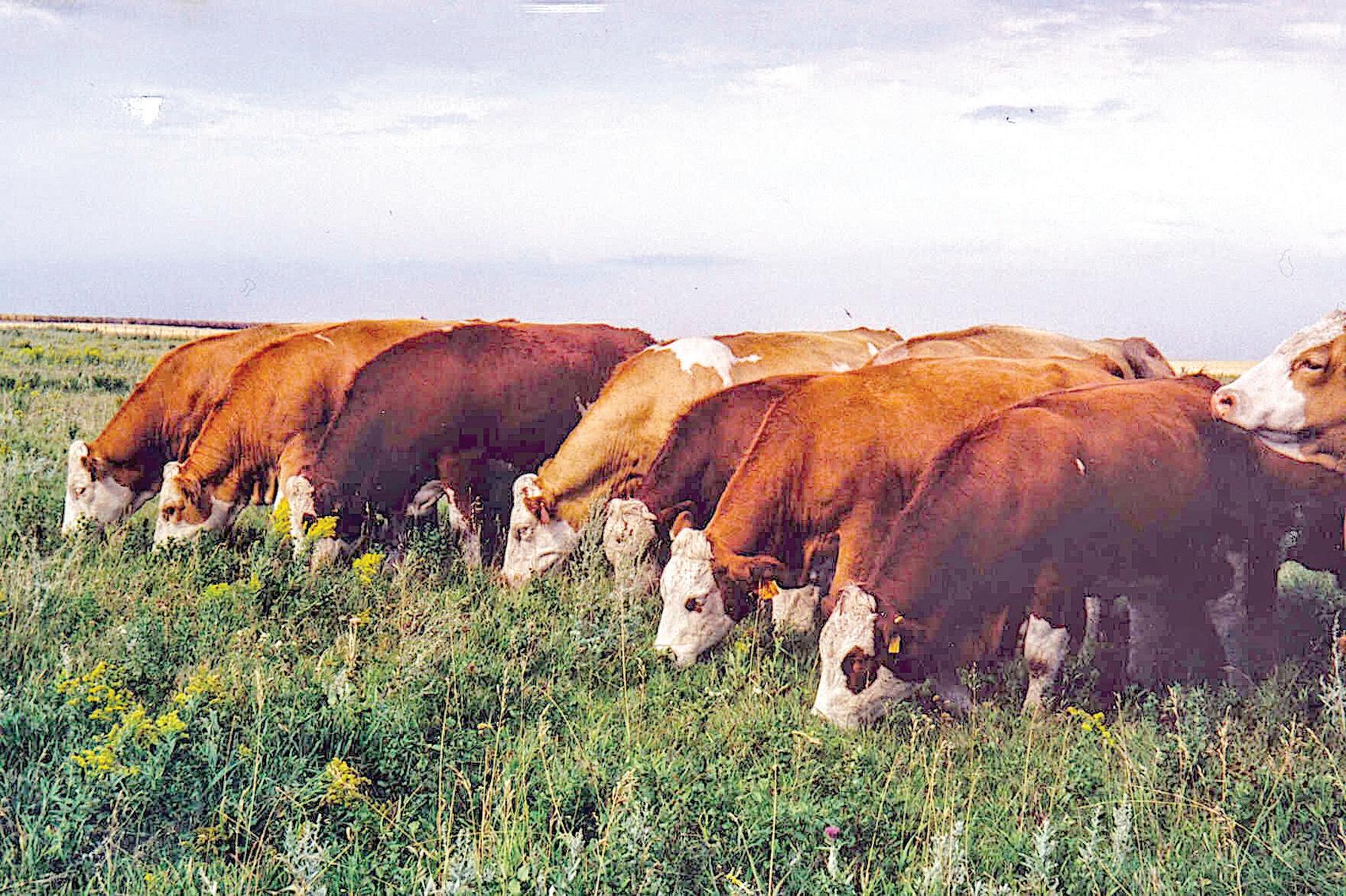

Cattle markets in Manitoba continue to reflect strong demand, with feeder prices climbing across weight classes.
Submitted photo

Grain Market Analyst Discusses Current Conditions and Challenges in Agriculture
By Harry Siemens
Grain market conditions across Canada have been fluctuating this year, with a mix of dry and wet patches affecting many growing regions. Grunthal’s Jonathon Driedger, Senior Market Analyst with LeftField Commodity Research in Winnipeg, offers insight into the current state of Canadian agriculture. While some areas are facing challenges, overall conditions are better than expected.
“Generally speaking, crops are looking better than they did a few weeks ago,” Driedger said. “If you look back to mid-June, many areas were dry and on the verge of serious trouble. Now, while some regions are still struggling, conditions overall have improved significantly.”
Driedger noted that specific regions, such as southwestern Saskatchewan, continue to experience drought. In contrast, other areas have benefited from sporadic thunderstorms—though this rainfall has been highly localized. “One field gets perfect rain, and just a couple of miles away, another field gets missed,” he explained. “Thunderstorms cause this variability, which makes it hard to assess conditions broadly.”
As an example, Driedger recounted a story from a farmer in Langruth, Manitoba, who received two inches of unexpected rain—while most of his neighbours saw none. “It’s just how these things go,” Driedger said. “Some areas get hit, others don’t.”
Closer to home, Driedger has witnessed the same inconsistencies. “We’ve missed a lot of rain at our place, but just a few miles south they’ve received quite a bit,” he said. “That’s the nature of summer thunderstorms.”
Despite these disparities, Driedger said the growing season remains promising for many producers. “We’ve had some rain recently. It’s been uneven, but we’re in a much better position than we were earlier this year.”
On the marketing front, Driedger acknowledged ongoing volatility in crop prices. “Farmers need strong yields to make money,” he said. “If wheat yields come in at 55 or 60 bushels per acre, margins will be tight. We really need 75 to 80 bushels per acre to be profitable.”
While wheat prices are currently sitting around $7 to $8 per bushel, rising input costs are eroding profitability. “Costs are up across the board—fertilizer, machinery, land, interest rates,” he said. “It’s not just about what you get for your crop; it’s about the margin. Prices aren’t as high as they were in 2021 or 2022, and even though they’re above historical averages, strong yields are essential.”
Driedger also noted that grain storage can offer marketing advantages. “If you can store your crop and avoid selling immediately after harvest, prices might improve over the winter,” he said. “But you need the storage space and financial flexibility to wait.”

“I think generally speaking, crops are looking better than they did a few weeks ago,” Driedger shared. “If you look back to mid-June, many areas were dry, and things were on the cusp of being dire. Now, while there are still areas struggling, the general conditions are much better than anticipated.”
He emphasized that forward selling can help manage risk, but it’s not without its challenges. “It’s important to know your costs before making a sale,” he advised. “Producers who pre-sell during better pricing windows—like late winter or early spring— tend to be in a stronger position. But that strategy isn’t for everyone.”
While the grain market continues to present challenges, Driedger remains optimistic about the long-term outlook. “Farmers need to be sharp with their business planning,” he said. “Tools like futures and options can help manage risk, but success comes from having a strategy and executing it carefully.”
As the growing season progresses and harvest nears, Driedger encourages farmers to stay informed. “Patience is key, but so is planning. Know your costs, manage your risks, and be ready to act when the right opportunities come along.”
Recognize the Signs of Fusarium
Keep it Clean encourages Canadian cereal growers to take a proactive approach to managing fusarium head blight (FHB) this growing season.
Fusarium head blight (FHB) is a serious fungal disease of wheat, barley, oats, other small cereal grains and corn. Durum wheat, spring wheat, barley and corn are most affected by FHB. FHB can cause both crop production and market access issues for growers. FHB affects kernel development, reducing yield and grade. It can also contaminate grain with fungal toxins (mycotoxins) produced in infected seeds. FHB and mycotoxins in harvested
grain can negatively impact livestock feed, baking and milling quality of wheat, biofuel (ethanol) production, and malting and brewing qualities of malt barley. In cereals and corn, the mycotoxin deoxynivalenol (DON) is commonly known as vomitoxin. As most importing countries have strict maximum limits for DON, the presence of DON can limit the end uses and marketing potential of grain. It is important that producers are familiar with this potentially damaging disease and incorporate management practices to reduce FHB development in their crops. To maximize your return on investment and help keep

marketing options open for your harvested grain, Keep it Clean recommends growers and agronomists scout for stage and not symptoms when it comes to FHB. Scout for stage and apply fungicide when there is an elevated risk of FHB. Timely application of foliar fungicide can help protect crops at critical stages for FHB infection. The risk of fusarium infection increases when hot, humid, or wet conditions persist during head emergence and flowering, taking as little as three days for infection to occur. Additional tools like the new Prairie-wide FHB risk maps are now available at prairiefhb.ca.

Submitted photo



Restoring History One Tractor at a Time
By Harry Siemens
For Ken and Agnes Harpelle of Cypress River, MB, tractors are more than machines—they’re memory keepers.
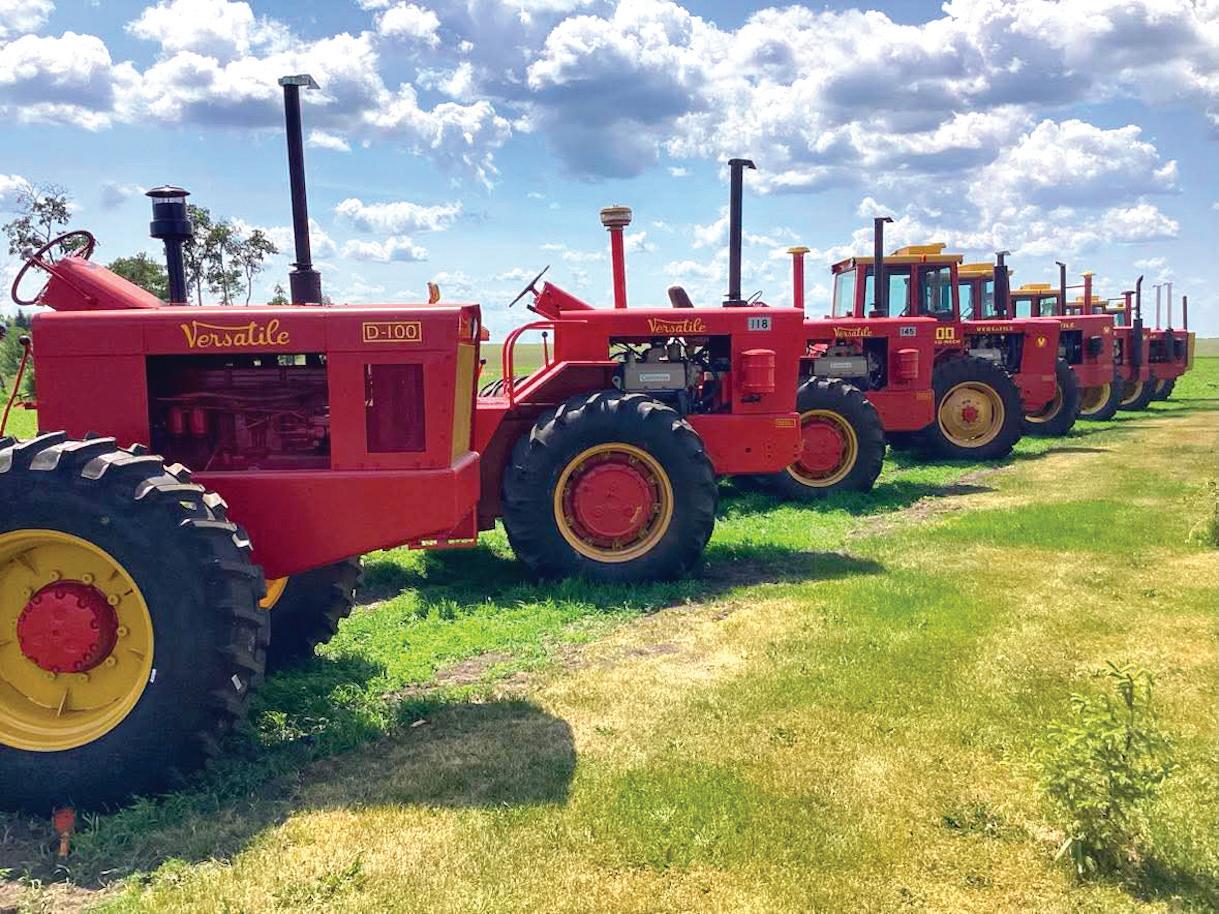
From July 15 to August 15, the Harpelles will open their farm to visitors for a rare chance to view over 20 restored vintage four-wheeldrive tractors. Their private display, open daily with refreshments and hospitality, will highlight machines that once roared across prairie fields. The event includes a supper gathering on August 1 at 6 pm.
Ken took over the family farm at just 17, when his father suffered a heart attack.
“He survived, but after something like that, people took it easy,” Ken said. “So I became the farmer.”
He and Agnes married in 1985.
“Forty years of farming, raising three daughters, and living life with good neighbours and lots of luck,” he said.
But a few years ago, Ken scaled back the operation due to health. They sold off their 135-head Charolais cow-calf herd around the time their daughters left home.
“It was a big change,” he said. “We had just finished building a heated calving barn with steel pens and could water and feed inside. We only
the BSE crisis changed ev erything.”
After slowing down, Ken returned to a longtime love: tractors.
“I always loved the feel of four-wheel drives—the power, the smooth motion,” he said. “We only farmed five quarters, but I ran three Versatiles. People thought I was crazy, but I didn’t have to unhook often.”
His collecting began about seven years ago.
“We were fishing, and a buddy showed me a listing for a Co-op Bearcat. I called from the boat and bought it,” said Ken.
That started a streak.
“One year, I bought seven. I had five tractors sitting across western Canada that I hadn’t
“They were basically scrap prices.”
Then he found the rare ones.
“I bought a barn-built Steiger in Spyhill, Saskatchewan,” Ken said. “It was hand-built, incredibly rare. That’s when I got the bug.”
Now he collects Versatile and Steiger tractors, focusing on four-wheel drives.
“I’ve got nearly every Versatile up to the 35 series—except a Gas 100. Right now, I’m looking at one in the U.S.,” said Ken. “They only made 27. It’s rare, but I’d love to get it home.”
Ken does all the restoration work himself.
“Painting, restoring, redoing the cabs, fixing the transmissions, replacing the tires—I
do it all,” he said. “I had 30 tires dropped off at once and did them by hand.” He displays the collection every two years. This is his third time.
“I think I have 21 or 22 tractors on display this summer,” Ken said. “They all run. Nothing’s been towed in. When people come, they stay for hours. Two years ago, over 200 people visited. Agnes puts out cookies and cake. We sit and swap stories.”
One story still brings a smile to Ken’s face.
“I bought a Panther 2 Co-op from Maple Creek, Saskatchewan. It had a blown engine. A little guy—about seven years old—came up and said, ‘That was my grandpa’s tractor.’ I told him I’d find a toy version for him,” said Ken.
That wasn’t easy.
“They only made about 12 of those tractors,” he said. “Nobody makes a true toy replica. Most of the ones you see are just rebranded with stickers.”
Ken contacted Scott, a friend in Iowa and a registered toy maker.
“At first, he said it couldn’t be done. Then, a couple of months later, he called me up—he’d made one with a 3D printer,” said Ken.
Scott sent two to Canada.
“I told him, I don’t collect toys. This was for the little boy in Maple Creek,” explained Ken.
Scott added more to the package—bale racks, a shredder, and other miniature tools.
Ken phoned the boy’s mother. “I asked her to video him opening the box. When I saw that footage... he has three toy tractors he never plays with. That Panther 2? He’ll never touch it. It’s too special.”
Ken continues to chase history. He’s trying to track down the rare Tiger 2 Co-op.
“They only made three. One was sold in Manitoba, but I haven’t found it yet.”
He also shares stories and swaps parts with other major collectors.
“There are three of us in North America who do this— me, Chris Watham in Illinois, and the Swensons in Minot,” he said.
Ken’s passion goes beyond machines.
“It’s about people. Everyone sees different value in these tractors, and everyone has a story,” he said.
Ken’s favourite tractor?
“I’ve got a few. I picked up the 100 Versatile last year, along with the Co-op Cougar 1 and some others. Each one means something,” he said.
Even the ones he found rusted and seized.
“I paid double the original price for a seized 100 Versatile,” said Ken. “But now it’s repainted, re-rimmed, and running great.”
For Ken Harpelle, every tractor tells a story. And for one month this summer, he’s inviting others to come and listen.


Ken Harpelle took over the family farm at the age of 17. “My dad had a heart attack just after I finished school. He survived, but back then, if you made it through something like that, you took it very easy afterward. So I stepped in.”
Ken Harpelle of Cypress River collects Versatiles and Steigers. He currently has almost every Versatile up to the 35 series, except a Gas 100. Ken paints, restores, and replaces tires by hand one tractor at a time.
Photos by Harry Siemens

Tractor Trek Rolls Through Southern Manitoba
By Harry Siemens
Eden Foundation’s 18th annual Tractor Trek brought together community, commitment, and horsepower, raising more than $75,000 this year alone and pushing the lifetime total to well over $1.2 million. With tractors of all ages rolling through southern Manitoba, the event celebrated not only vintage machinery but also the power of local people standing together for mental health.
“This event started because many of Eden’s supporters are from the Winkler and Morden area,” said Dave Sawatzky, Director of Development for Eden Foundation.
“It gave vintage tractor drivers a chance to show off machines they’ve kept running for half a century or more. But more than that, it became a way to thank the community and raise money for the mental health services Eden provides.”
The Trek works like a charity bike-a-thon, with drivers gathering pledges from friends, family, and neighbours. All funds go directly to the Eden Foundation, which supports psychiatric care, housing, therapeutic counselling, and employment services across southern Manitoba.
“This isn’t just about tractors,” Sawatzky said. “It’s about supporting people in our communities who are facing mental health challenges and making sure they get the care they need.”
Eden Foundation helps fund operations across four interconnected areas. The first is
ing, featuring on-site staff that assists tenants in managing their schedules, budgets, and medications to maintain independence.
The third is counselling, provided through the Recovery of Hope program. With 24 Masters level counsellors across three communities, Eden ensures individuals and families can access therapy, regardless of their financial means. The fourth is employment services, delivered through Segue. This program provides job readiness training, matches clients with employers, and offers continued support to help individuals succeed in their workplace and recovery journey.
Eden also offers affordable housing to individuals who may not have a mental health diagnosis but need deeply affordable accommodations.
“Even if they don’t initially need support, that safety net is there if or when they do,” Sawatzky said.
For the first time, this year’s Trek welcomed all tractors, not just vintage models.
“We wanted to broaden the reach and include more people,” Sawatzky said. “We had great participation and expect even more next year.”
The event also drew support from local dignitaries. Ryan Hildebrand, representing the City of Winkler, praised the community’s commitment.
“It’s amazing to see over $1.2 million raised through this event,” he said. “Eden impacts not only Winkler but all of southern Manitoba— through housing, employment programs like Segue, and mental health services.”
Morden Mayor Nancy Penner echoed the sentiment.
“This is what community is all about—gathering to support mental health and enjoying the horsepower on display,” she said. “Thank you to the Eden Foundation, the volunteers, and the trekkers who make this happen year after year.”
MLA Carrie Hiebert, who serves as the PC critic for housing, addictions, homelessness, and mental health, shared her personal connection.
“This work is close to my heart,” she said. “I visited Eden during Mental Health Week and connected with staff doing incredible work.”
Hiebert highlighted the organization’s province-wide impact.
“Our region serves as a model for mental health support in Manitoba. What you do here matters deeply,” she said.
She also pointed out that Jamie, an Eden staff member, was not only helping others in mental health but also participating in the Trek as a driver.
“Let’s give Jamie a hand,” she added, prompting applause.
In a lighthearted moment, Hiebert shared a family anecdote.
“When my husband and I moved to Morden, he wanted to bring his 1954 International 300 Utility tractor. We compromised—he brought his front-mount John Deere riding mower instead. It cuts grass quickly and lets him golf more,” she joked.
For Sawatzky, now nearing his first anniversary with Eden Foundation after a career in IT and leadership, the heart of the event is always the people.
“Every year I’m touched by how personal this is for so many,” he said. “Almost everyone I talk to knows someone—a family member, friend, or neighbour—who Eden has helped.”
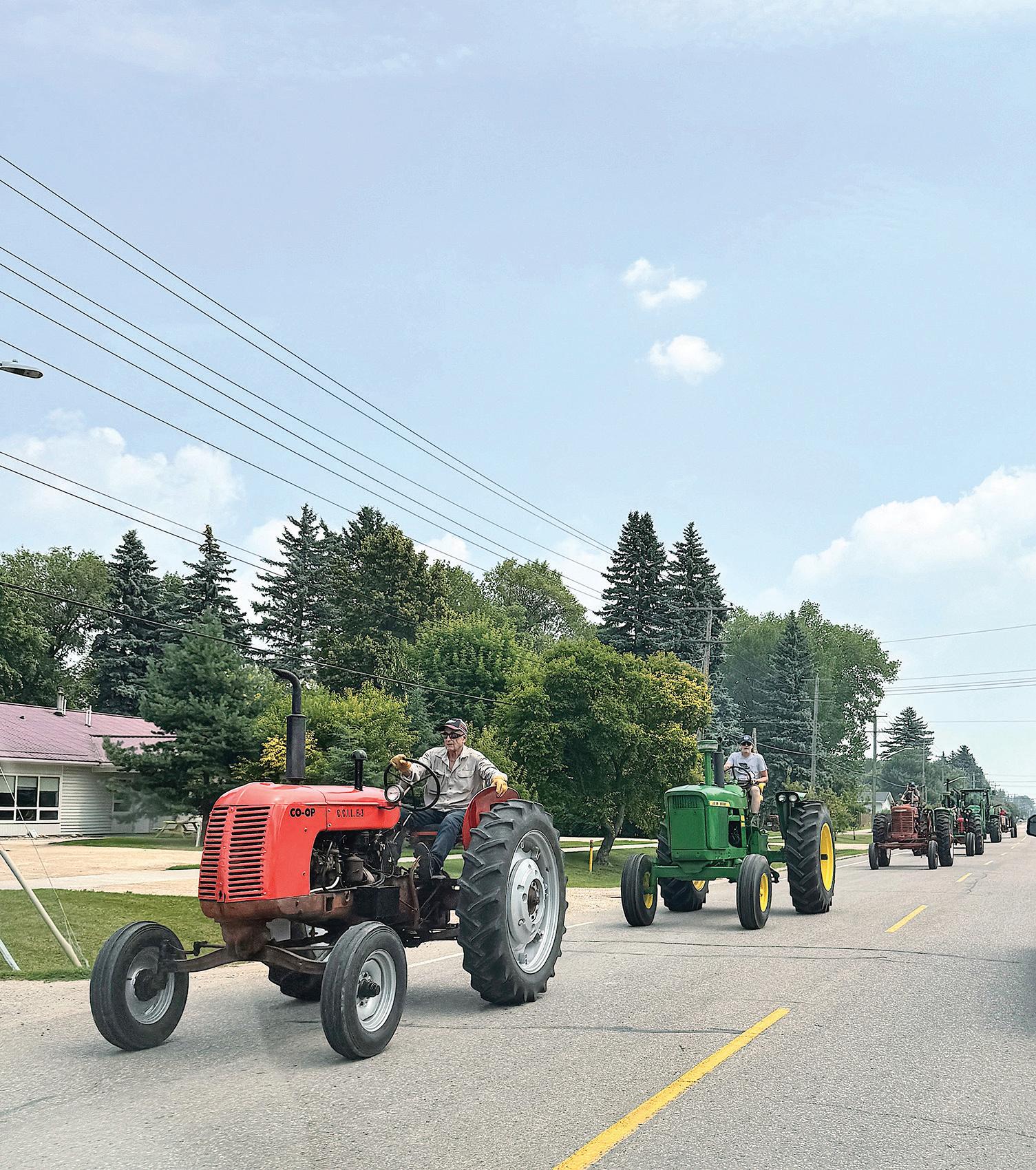
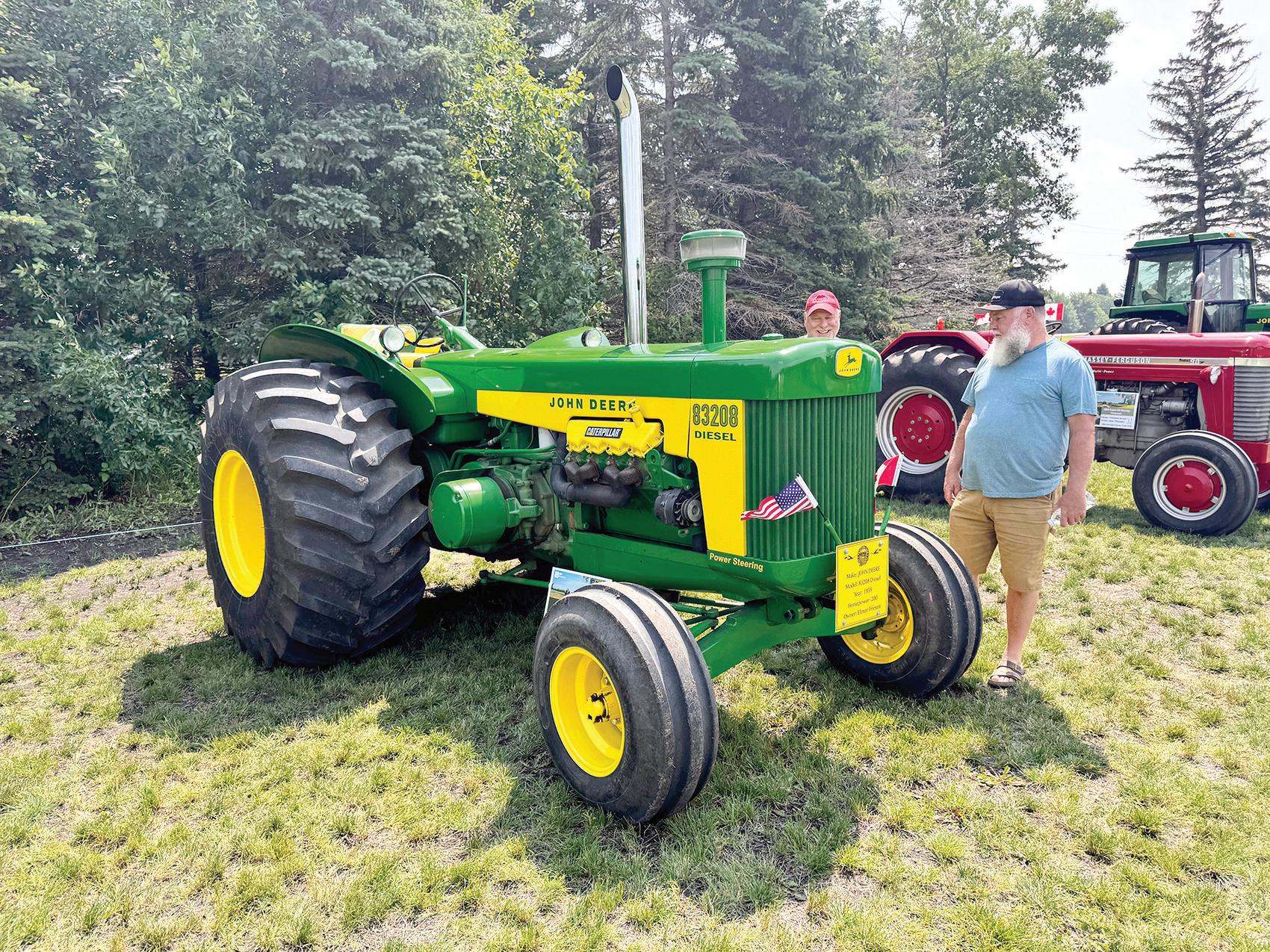
As the tractors rumbled through the fields and towns of southern Manitoba, the message came through loud and clear.
“You’re not just showing your tractors,” Sawatzky said. “You’re showing up for mental health—and that means everything.”
To support Eden Foundation or learn more, visit edenhealthcare.ca.
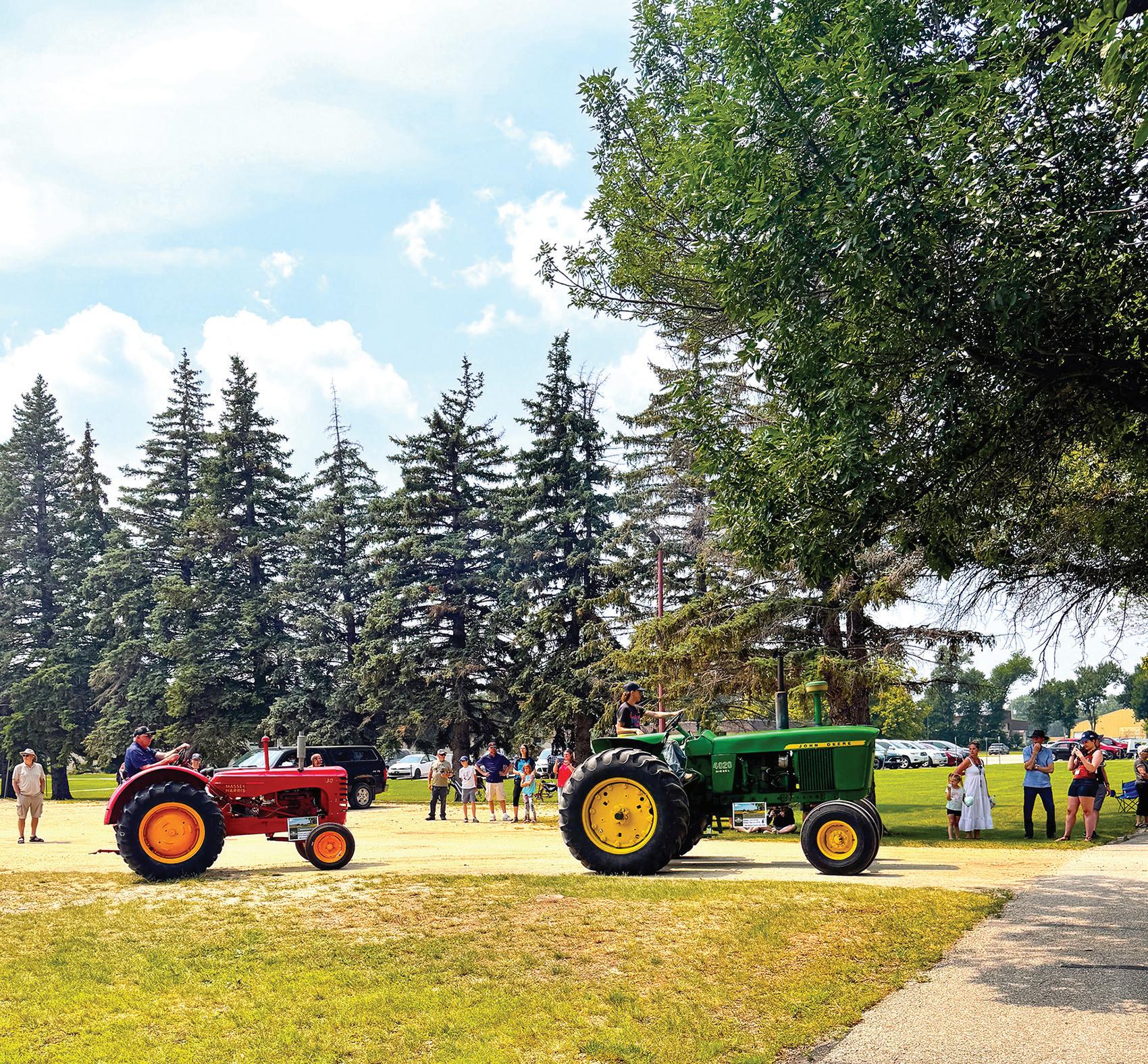

“It gave vintage tractor drivers a chance to show off machines they’ve kept running for half a century or more. But more than that, it became a way to thank the community and raise money for the mental health services Eden provides.”
For the first time, this year’s Trek welcomed all tractors, not just vintage models. “We wanted to broaden the reach and include more people,” Sawatzky said.
Eden Foundation’s 18th annual Tractor Trek brought together community, commitment, and horsepower, raising more than $75,000 this year alone and pushing the lifetime total to well over $1.2 million.
Report Urges On-Farm AgTech Adoption to Drive Sustainability and Growth in Canadian Agriculture
By Dan Guetre Canadian farms,
A new report is calling for immediate action to accelerate the adoption of digital agriculture technologies on
emphasizing that real change will only happen if innovation is rooted in the realities of producers.
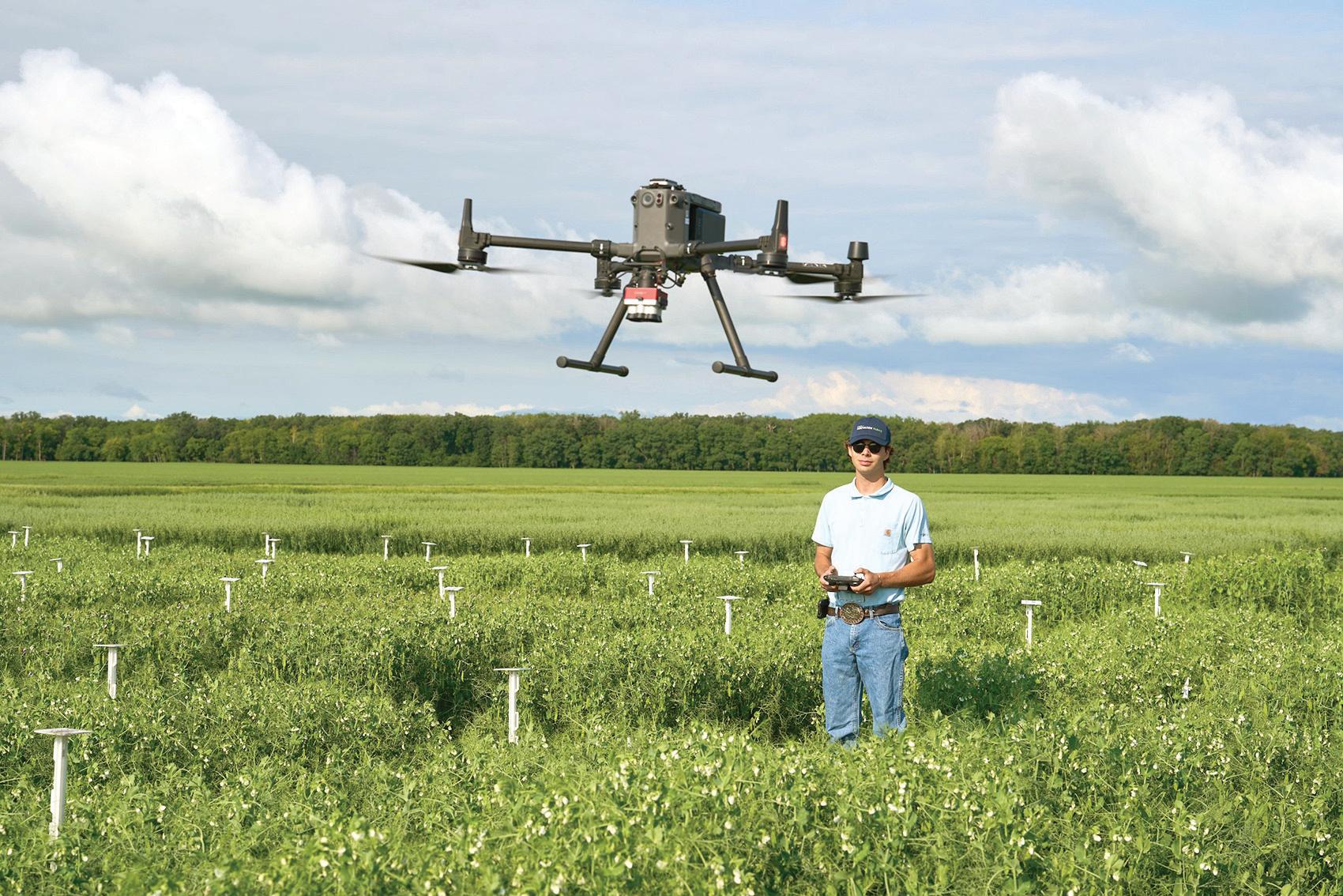
Photo by David Lipnowski
Titled The Future is Digital: Digital Agriculture and Canadian Agriculture Policy, the report—co-authored by experts from the Canadian Agri-Food Policy Institute (CAPI) and Manitoba’s Enterprise Machine Intelligence Learning Initiative (EMILI)—says Canada risks falling behind unless digital agriculture becomes a national policy priority.
“Digital tools have enormous potential to boost productivity, sustainability, and profitability on Canadian farms,” said Dan Lussier, EMILI’s Director of Strategy and a contributing author. “But to see that potential realized, adoption has to happen where it matters most—on the farm.”
The report critiques the current Canadian policy landscape as fragmented, with too much focus on the theoretical benefits of technology and not enough on the practical needs and payoffs for farmers. It
notes that federal-provincial programs under the current Sustainable Canadian Agricultural Partnership (S-CAP) largely ignore digital agriculture, despite its growing importance.
Informed by international comparisons, stakeholder interviews, and policy analysis, the report outlines five key recommendations to support wider adoption:
- Recognize digital agriculture as a national priority and incorporate it into the next federal-provincial-territorial (FPT) agricultural policy framework.
- Create regional digital agriculture hubs to bring together farmers, innovators, and policy leaders.
- Develop a coordinated support program focused on infrastructure, largescale tech testing, and incentives for early adopters.
- Encourage value creation from agricultural data, en-
suring farmers benefit directly.
- Implement a national data strategy to enable better integration of agtech with the digital economy.
The report aligns closely with ongoing work at Innovation Farms powered by AgExpert, a real-world testing site for agtech tools located on the 5,500+ acre Rutherford Farms north of Winnipeg. Led by EMILI, Innovation Farms is currently partnering with nearly 30 companies to validate new technologies during the 2025 growing season.
“EMILI’s work is about enabling farmer-centric innovation,” said Lussier. “What we’re hearing in the field matches our findings—agtech must be practical, profitable, and easy to use if adoption is going to scale.”
To help bridge the gap between innovation and implementation, EMILI is
hosting two major events at Innovation Farms near Grosse Isle, Manitoba: - Manitoba 4R Day – August 6, 2025 – Focusing on 4R Nutrient Stewardship, this event is open to producers, agronomists, researchers, and industry leaders.
- EMILI Field Day – August 26, 2025 – Showcasing EMILI’s work to advance digital agriculture, the event invites participants from across academia, industry, and government. With the next FPT policy framework (2028–2033) already in early discussions, Lussier says the time to act is now. “Digital transformation isn’t optional—it’s essential. This report is a call to modernize Canada’s agriculture policies to meet the future head-on.”
More information about EMILI’s projects and upcoming events can be found at emilicanada.com.

The report—co-authored by experts from the Canadian Agri-Food Policy Institute (CAPI) and Manitoba’s Enterprise Machine Intelligence Learning Initiative (EMILI)—says Canada risks falling behind unless digital agriculture becomes a national policy priority.
FCC Loan Changes Ease Family Farm Transfers
By Harry Siemens
Family farm transitions can be complex, emotional, and financially challenging. But recent changes to loan terms from Farm Credit Canada (FCC) aim to ease the process for both buyers and sellers.
Curtis Grainger, Director of Lending Products and Pricing at FCC, explains that the new transition loan structure is designed to reduce financial strain and provide long-term flexibility during farm ownership transfers.
FCC’s new loan option allows farm transactions to be spread over a period of up to 10 years. Rather than the buyer taking out a large loan for the full amount and paying interest on the entire sum from the outset, this structure enables staggered disbursements—reducing upfront financial pressures.
“The transition loan allows the seller to receive payments over time, which can be beneficial for both sides,” says Grainger. “It helps the seller avoid a large lump sum, which could impact their taxes, while the buyer can ease into ownership without the burden of a full loan from the start.”
For example, in a $2 million transaction, the seller could receive $200,000 annually over 10 years instead of receiving the entire amount at once. This approach helps the seller manage potential tax implications and gives the buyer a more manageable repayment schedule. The loan structure can also be tailored for either equity-building or
cash flow-friendly repayment strategies.
For buyers, the equity-building option means paying interest only on the disbursed amount, allowing them to reduce the principal more quickly and build equity faster. Alternatively, the cash flowfriendly model offers interestonly payments on the funds disbursed—helping ease into debt service obligations.
“The beauty of this loan is that it’s not a one-size-fitsall solution,” says Grainger. “We’ve designed it to meet the specific needs of both the seller and buyer, depending on their financial situation.”
Grainger emphasizes that family farm transitions often stall due to financial barriers and the difficulty of initiating conversations. “Sometimes the hardest part is just talking about it,” he says. “Many families put off these conversations, which can lead to unnecessary complications. We encourage families to start early and work with advisors.”
FCC offers advisory services to help families navigate transition planning. Grainger stresses that professional advice is essential for these capital-intensive processes.
The new loan terms apply to both incorporated and nonincorporated farm operations, making them adaptable to a wide range of farm structures—from family businesses to neighbour-to-neighbour land sales.
Grainger recalls a Manitoba dairy farm family who, after an unexpected health crisis,

realized they had no transition plan. They took steps to create one, and five years later, when a family member passed away suddenly, the plan ensured a smooth and financially stable handoff.
“This is a powerful reminder of why planning is so critical,” Grainger reflects. “It’s not just about the financial side; it’s about ensuring the future of the farm, the family, and the community. Having a plan in place makes all the difference.”
Grainger’s advice to families is simple: start early, have the conversation, and seek professional support. FCC’s new transition loan can be a valuable tool—but planning and communication remain key to a successful transfer.
“These transitions can be difficult,” he says, “but they don’t have to be overwhelming. With the right tools and a clear plan, we can help make these transitions work for the farm and the next generation.”
For more information about FCC’s transition loans or to speak with an advisor, visit fcc.ca/transitionloan.
New Foodgrains Rep Busy Making the Rounds to Meet Partner Members
By Elmer Heinrichs
Dale Friesen, the new Manitoba and northern Ontario representative (up to Thunder Bay) for Canadian Foodgrains Bank, has been making the rounds, touring across his region to meet and greet partner members of Foodgrains communities and learn more about their projects.
Friesen stepped into the role upon the retirement of former rep, Gordon Janzen. He says the first five months of this new position has been great in getting to know the folks behind the projects.
“It’s been great to see some of the different farm projects as a whole and a wide variety of those different kinds of projects,” shares Friesen. “And it’s been interesting. It
hasn’t just been farming projects. There are also some auction sales and some of those other fundraising events. Every one of them is important to the Foodgrains Bank.”
“As I write this”, says Friesen, “we find ourselves in an interesting time – the crops are in the ground and beginning to emerge, and as one farmer said ‘it’s been a dream planting season,’ but there’s a growing need for rain to support plant development.”
Approximately 35 projects and 4,000 acres in total have been dedicated to raising funds for the Canadian Foodgrains Bank this year.
Each community has its own culture and unique way of promoting their Foodgrains project. Friesen says the proj-
FCC and EMILI Expand Innovation Farm Network with First Potato Site
Farm Credit Canada (FCC), in partnership with the Enterprise Machine Intelligence & Learning Initiative (EMILI), is expanding its Innovation Farm Network with a 6,000acre addition near MacGregor, Manitoba—marking the network’s first-ever inclusion of a potato-focused operation.
The site, located at JP Wiebe Ltd., dedicates 2,600 acres to potato production and will serve as a new hub for testing cutting-edge agricultural technologies. The expansion aligns with FCC’s broader strategy to strengthen Canada’s position as a global leader in agricultural innovation and productivity, offering producers practical, low-risk opportunities to adopt new tools.
“This expansion reflects our commitment to supporting a wide range of Canadian producers,” said Justine Hendricks, FCC president and CEO. “World-leading innovation is essential to helping Canadian farmers keep pace in a highly competitive global industry.”
The MacGregor farm will be managed in collaboration with EMILI, a Winnipeg-based non-profit that leads FCC’s Innovation Farms program. EMILI will spearhead testing and validation of emerging technologies at the site, focusing on irrigation, nutrient management, and yield optimization in potato production and associated crop rotations.
Among the five new technologies being trialed is a sensor-based storage monitoring system developed by Cellar Insights, an FCC Capital portfolio company. Other tools include Agi3’s CropSentry, a field-scale monitoring platform, and ForeSite by Ukko Agro, a decision-support tool for managing growing conditions.
“With the addition of this site, we can evaluate more technologies in more settings and see how they perform in prairie conditions and on different crops,” said Jacqueline Keena, EMILI managing director. “FCC’s multi-year investment helps us reach more farmers and support more innovators, accelerating the adoption of on-farm technology.”
The move comes just months after FCC announced a $2-billion commitment through FCC Capital to support Canadian agtech companies in scaling viable, on-farm solutions.
The Innovation Farm Network serves as a real-world testbed for these innovations, reducing barriers for both producers and startups.
Potatoes are Canada’s most valuable vegetable crop and the fifth-largest agricultural crop overall. As one of the country’s top exports in both table and seed form, the sector offers strong potential for transformation through digital agriculture—particularly in areas like precision irrigation and storage optimization.
The addition of the MacGregor site brings the FCC Innovation Farm Network to more than 17,000 acres across Canada.
ects and the committees behind them are hugely diverse, and yet similar from the standpoint.
“That these are people who really care deeply about food and food insecurity in our world,” said Friesen. “And so, the projects, they all look so different, and they are different, but yet at the heart of it, it’s just people who care deeply about food and that people should have the right to food in our world.”
“It’s really quite amazing and it’s humbling to be a part of,” adds Friesen.
“Thank you, as always, Manitoba and Northwestern Ontario supporters, for your commitment to supporting those in need,” concludes Friesen.

Curtis Grainger. Submitted photo


50%, petals are falling fast,” he said. “If they land without protection, disease sets in. You’re wasting money.” He wrapped up with a strong message. “Don’t wait for perfect conditions. Scout your fields, stage them properly, and protect your petals.”
screenshots

Sclerotinia Pressure and Fungicide Strategy in Canola Fields
By Harry Siemens
Todd Drummond from Bayer Crop Science told farmers at a recent Manitoba Agriculture CropTalk webinar that this year’s weather made sclerotinia a serious threat in Manitoba’s canola fields. He urged growers to pay close attention to staging, risk factors, and fungicide timing to protect yields.
“Sclerotinia hasn’t changed,” Drummond said. “Its cycle stays the same—it just waits for the right conditions.”
Sclerotinia, the disease’s resting bodies; remain in the soil for years. When surface moisture sticks around for more than a week, they produce apothecia, which release spores into the air. These spores land on canola petals. When infected petals fall into the canopy and the environment stays moist, infection takes hold.
“The petal is the target,” he said. “You’re not protecting the leaf or stem. You’re protecting those petals before they fall.”
Drummond recommended spraying fungicide between 20 and 30 percent bloom, when the main stem holds 14 to 20 open flowers. He advised ignoring the tallest plants or shortest patches and instead averaging across at least 10 plants. Growers with drones can scout for consistent canopy coverage and focus on riskier zones.
“You want to hit that field at peak yellow,” he said. “When petals start falling, you’re already late.”
Bayer offers two options: Proline and Proline Gold. Both contain prothioconazole (Group 3), but Proline Gold includes fluopyram (Group 7) for extra persistence and punch, especially in wet years.
“Think of Proline Gold as the extra-strength version,” Drummond said. “It brings
more active ingredient and a second mode of action.”
Trials back that up. In 2021, a grower using Climate FieldView saw a three-bushel bump from Proline Gold over Proline. In 2022, Pipestone trials showed Proline added three bushels over untreated and Proline Gold added another one. In 2023, during dry conditions near Altona, Proline Gold still delivered four bushels over untreated. In 2024, under extreme pressure near Carman, Proline Gold gave up to 30 bushels more than untreated.
Drummond said growers need to weigh potential returns against their risk. Bayer ran models on spray return based on three moisture levels. When rainfall dropped below 85% of normal, fungicide gains were small, under a bushel. Between 85% and 115% of normal rainfall, Proline Gold provided a solid 2–3 bu/ac gain. Under heavy disease pressure, yield jumps were much higher.
“Fungicide is insurance,” Drummond said. “If you’ve got a full canopy and moisture, it pays.”
He pointed to Bayer’s digital platform that uses biomass imagery to build variable rate maps.
“We can direct more fungicide to areas with heavier biomass,” he said. “You save money and hit the spots that matter.”
During the Q&A, a grower asked if a 50% bloom was too late. Drummond answered yes.
“By 50%, petals are falling fast,” he said. “If they land without protection, disease sets in. You’re wasting money.”
Others asked about foggy or dewy mornings. Drummond confirmed that they increase the risk.
“You don’t need rain,” he said. “If that canopy stays
wet, infection starts.”
When asked about the threshold for return on investment, Drummond pegged it at 35 bu/ac in earlier years. With current canola prices, he said, even a two bu/ac gain justifies the cost.
John Gavloski, Provincial Entomologist, joined the webinar and added updates on insect threats. He noted cabbage seedpod weevil levels are higher than previous years, with one Carman-area field exceeding 229 weevils in 25 sweeps. But most fields remain below economic thresholds. Gavloski advised against tank-mixing insecticides with fungicides unless scouting confirms the need.
Diamondback moth larvae are present in small numbers. Gavloski encouraged growers to scout for windowpaning on leaves or chewed flowers.
Crop development varies across the province due to spread-out seeding dates. Some canola fields are flowering, while others are still bolting. Winter cereals are well into seed fill, and spring wheat shows signs of drought in areas. Fusarium fungicide applications are half complete. Soybeans look slightly behind last year and will need rain in August to finish strong.
Peas are flowering and podding, and Gavloski reported little aphid pressure so far. Soil moisture varies widely, with some fields dry and others sitting at ideal levels.
Drummond wrapped up with a strong message.
“Don’t wait for perfect conditions. Scout your fields, stage them properly, and protect your petals,” he said.
In a year with wide moisture swings and high yield potential in pockets, that advice could be the difference between profit and disappointment.
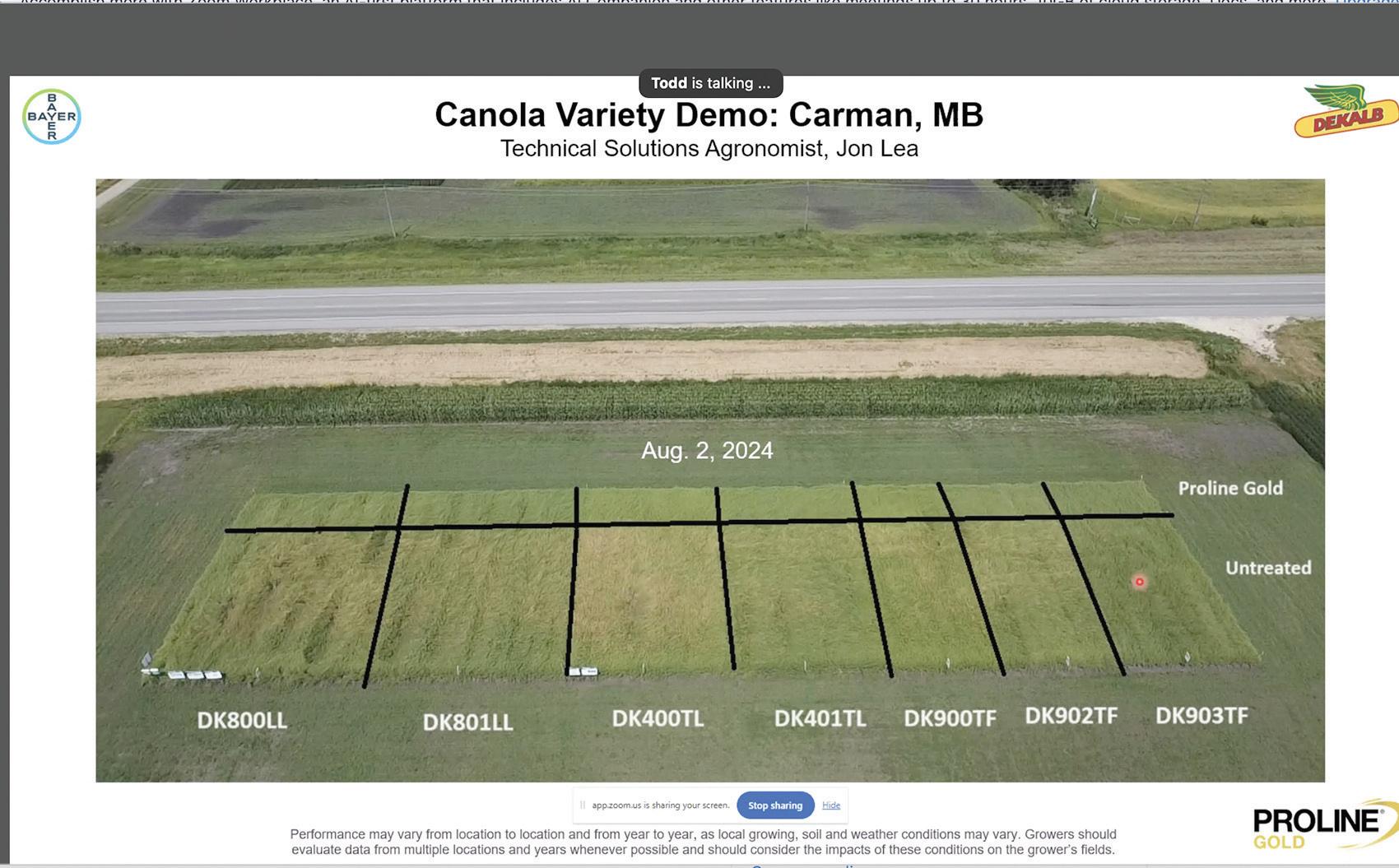
In 2024, under extreme pressure near Carman, Proline Gold gave up to 30 bushels more than untreated.
During the Q&A at the Bayer Crop Science event, a grower asked if a 50% bloom was too late. Todd Drummond answered yes. “By
Todd Drummond from Bayer Crop Science told farmers at a recent Manitoba Agriculture CropTalk webinar that this year’s weather made sclerotinia a serious threat in Manitoba’s canola fields.
Submitted
Rain, Resilience, and Reality: A Conversation with Langruth Cattle Producer Tom Teichroeb
By Harry Siemens
When a rare rain burst dropped two inches over Langruth, MB, it marked a turning point for rancher Tom Teichroeb’s season—and for his cattle.
“It just formed over us out of nowhere,” he said. “It didn’t go very far—maybe an inch and a half elsewhere—but we got the full two inches. It was hard and heavy, but straight down—no hail, no wind— just what we needed.”
Teichroeb, a long-time cattle producer and former president of Manitoba Beef Producers, said the rain revived corn that had begun to curl from stress.
“It was suffering,” he said. “Now, after two or three rains, it’s like a new world.”
But he knows many others haven’t been as lucky.
“My neighbour’s crops got some rain, but too late in spots,” he said. “The colour’s off. It’s tough out there for a lot of people.”
Teichroeb and his wife, Michelle, moved to Manitoba in 2002, drawn by the opportunity to purchase affordable land. That decision, coupled with a conservative approach to financial commitments, helped them weather crises such as the BSE and the 2011 floods.
“BSE hit everyone,” he recalled. “But because our overhead was lower, and we bought in at a reasonable price, we could survive. That, along with reliable rainfall most years and a frugal mindset helped us build something sustainable.”
Teichroeb added, “The one thing that I wanted to add, you asked about surviving BSE and the 2011 flood. It would have been easy to drown (literally) in self-pity. And for those of us who were young enough and stayed the course, we found a way not only to survive but thrive.”
He emphasized that running an efficient operation has always been key.
bought what worked and focused on staying in the black. Budgeting, gross profit analysis, and knowing your numbers—those were our survival tools.”
When asked about the most pressing issues facing Manitoba’s cattle industry, Teichroeb didn’t hesitate, “The shrinking pastureland base. Land producers broke from pasture to cultivation for crops, but this is failing. That’s not only bad for the environment; it’s hurting cattle producers.”
He views it as a long-standing concern that lacks sufficient political will to address it.
“We’ve talked about this at every level—coffee shops, provincial meetings, national gatherings—but nothing changes. It’s a huge issue, and the clock is ticking,” he said.
On the business side, Teichroeb says today’s cattle prices offer rare opportunities.
“I just heard about 550pound heifers selling for $3,000 and 670-pound steers at nearly $3,800. These are very good numbers, even with higher expenses,” says Teichroeb.
Despite that, he admits the temptation to capitalize on current prices is real.
“I’m not ready to pack it in—I love this industry—but I’d be foolish not to consider whether this is the time to sell high. Every producer should
but you should be thinking: is this the time to maximize?”
Teichroeb believes there are other paths too—renting land, taking a year off, or selling a portion of the herd.
“It doesn’t have to be all or nothing,” he said. “But if you’ve got equity in your herd and prices are high, at least run the numbers.”
He shared examples of land near Highway 16 that was once good pasture but has since failed as crop land.
“It’s been a disaster,” he said. “Investor after investor has tried to turn it into grain land. Its class 5-6 soil—perfect for grazing, terrible for crops.”
Teichroeb also pointed to land once owned by Bill Finney, a respected cattleman involved in the Lake Manitoba Rehabilitation Committee. After Finney sold it post-flood, several new owners attempted to crop it, with poor results.
“It produced for the Finneys because it was used properly, as pasture. That’s the point,” he explained.
After more than two decades of ranching in Manitoba, Teichroeb’s passion for the industry remains strong, but so does his realism.
“You’ve got to love it. But you’ve also got to be smart. And if you don’t at least ask the question—when is the right time to take advantage—you’re not treating it like a business,” he said. And in these unpredictable
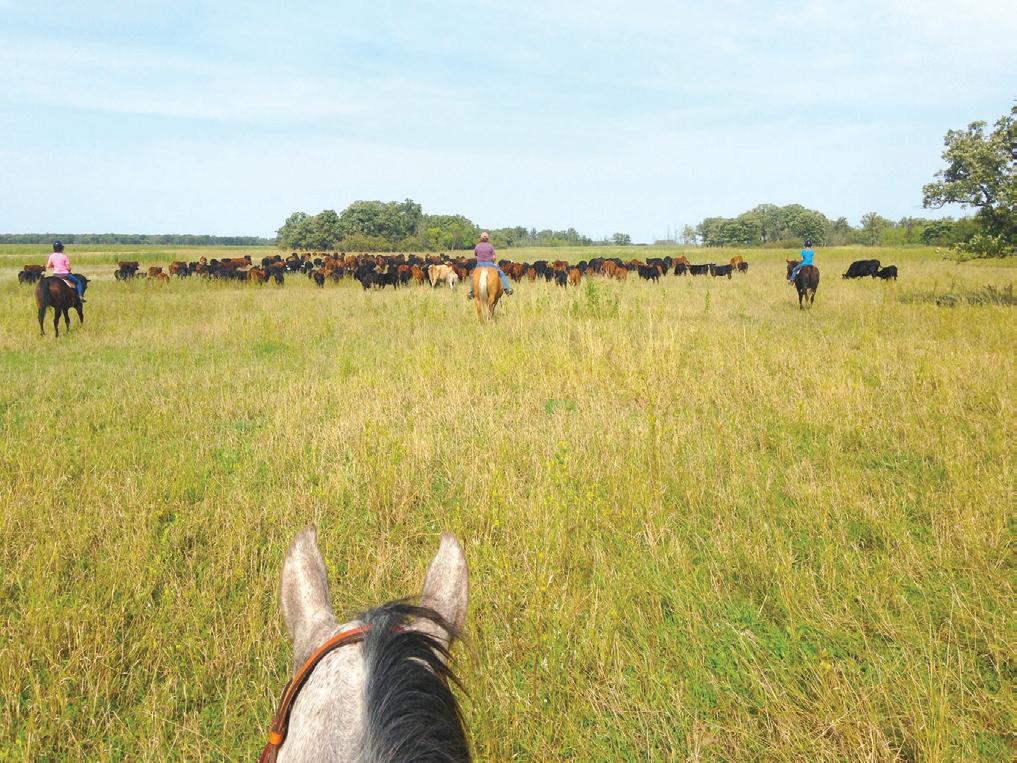
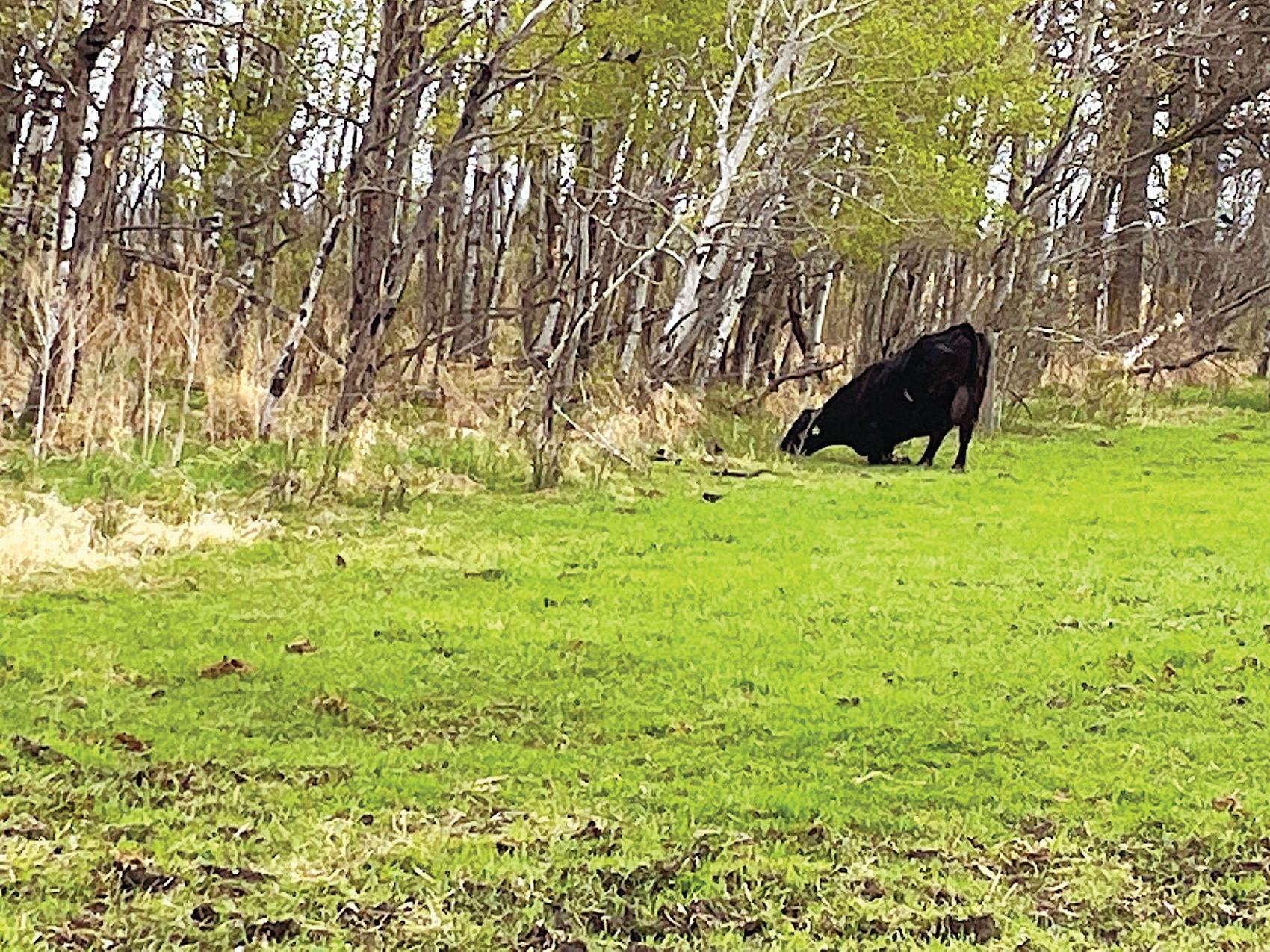
Brandon Mourns Robert (Bob) Mazer
By Elmer Heinrichs
On Sunday, July 6th Manitoba said farewell to one of our province’s true leaders in the agriculture industry. Founder, president and CEO of Mazergroup, Bob Mazer, passed away quietly surrounded by his family after what seems a short battle with cancer.
His passing comes just six days after the 10-year anniversary when all of the New Holland dealerships in Manitoba would fly the Mazergroup flag in 2015. He was 75 years old and leaves a legacy of entrepreneurship, leadership and community building on many levels. Mazer was recognized as a builder, the driving force behind Mazergroup and a steadfast supporter of Brandon’s growth and progress, the group’s chief financial officer, Wally Butler, who worked with Mazer for 28 years, said recently.
“I affectionately called him ‘Bob the Builder,’” Butler said. “That’s really what he did all his life - build things. From launching irrigated potato acres near Rivers Air Force Base to transforming downtown Brandon by investing in the Town Centre, Bob was always working to grow something.
Premier Wab Kinew also paid tribute to Mazer in a public statement Monday night.
“Bob was a great Manitoban who helped to make Westman and our province a better place,” he said. “His legacy will live on with Mazergroup, in the ag industry, and through his philanthropy. He will be missed.”
A statement released by Mazergroup described Mazer as “a true industry pioneer” whose connection to farming began early. He started farming at just 17 and by 1969 had joined his father in running the family’s agricultural equipment dealership in Brandon.
Under his leadership, the small business evolved into Mazergroup, now a major dealership network with 18 locations and more than 400 employees in Manitoba and Saskatchewan.
“Bob’s vision for exceptional customer service, strong communities and a dedicated team,” laid the foundation for the group’s continued success, the company said.


Founder, president and CEO of Mazergroup, Bob Mazer. Manitoba said farewell to one of our province’s true leaders in the agriculture industry. Submitted photo
“The most cost-effective, environmentally sustainable, and productive method of fence line grass and brush control I’ve ever used,” said Tom Teichroeb of Langruth, MB. #BeefHarvesters
And in these unpredictable times, Tom Teichroeb said, “It’s not about luck. It’s about decisions.”
Submitted photos
Western Canadian Oat Growers Lead the World in Low Carbon Oat Production
New study confirms Canadian prairie oat growers as global leader in sustainable oat farming.
The Prairie Oat Growers Association (POGA) is celebrating the release of its new research which confirms what many Canadian farmers already know: Western Canada is leading the world in low-emission, sustainable oat production.
The comparative carbon footprint study, released July 7 by GIFS, analyzed oat and barley production across Canada and internationally, and Western Canadian farmers produce oats with the lowest carbon intensity relative to other jurisdictions in the study.
“This study validates the efforts our farmers have been making for decades,” said Ambrely Ralph, POGA Co-President. “From reduced tillage and diverse rotations to precision fertilizer use and continued innovation, our growers are showing the world what sustainable agriculture really looks like. This is a major win for Canadian oats on the global stage.”
The study’s carbon life cycle analysis followed globally recognized standards, and the findings are consistent with previous research on crops such as wheat, canola, peas, and lentils. One of the key differentiators in the Western Canadian production system is the integration of regenerative practices that both reduce emissions and increase soil carbon sequestration.
“Canadian oat growers are not only producing a healthy, in-demand food product — they’re doing it with an environmental footprint that’s second to none,” Ralph added. “This kind of data gives us a more information to use when talking to potential international customers and when working with Governments around the world, including right here in Canada.
POGA believes this evidence-based research is essential to informing future policy and trade decisions, ensuring that sustainability standards reflect actual on-the-ground practices and outcomes.

Creep Feeding Pays Good Profits in 2025
By Peter Vitti
There are many reasons among cow-calf operators as to whether they bring out their creep-feeders during the grazing season. To some producers, it is a matter of pure economics to put on profitable extra weight on spring calves. While to others, creep-feeding makes for better autumnpreconditioned calves.
Last and not least, there are producers, whom don’t see the value of creep-feeding. Many of them might have valid reasons. Yet it seems to me that whether, one doesn’t want to creep feed or those that haul out their creep feeders by the end of summer, I advocate that one should calculate its present economics, plus its practical advantages in 2025.
A new beef producer that I met last year inherited a 250 cow-calf operation. He asked me to determine the economic value for him; of putting out his creep feeders at the end of this July. He doesn’t expect his spring calves (mostly born at the end of February) to eat much creep-feed until wellinto-fall. That’s because his pastures up to now have received a few timely rains and thus have good carrying-capacity as well as his cows and 1st calf dams are milking well.
Once the weather cools off, he expects all calves eat up to 3.0 kg of creep per head per day. With a feed conversion of 6.5 lbs of creep-feed (costing 15 cents per lb) to 1.0 lb of gain; it should be no problem to add 60 lbs extra weight onto calves that would otherwise weight 700 lbs at weaning time if the creep feeder remained by his machine shed. With such pertinent information added into the following spreadsheet (see Table 1
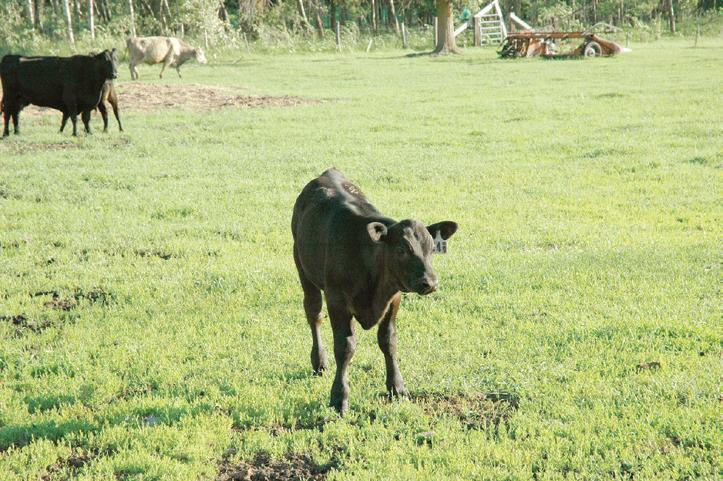
below) as well as an already pre-established contract price of $4.85 per lb of weaned-calf sold this October; a tidy profit of about $162.50 per 760 lb calf or a return on investment (ROI) of 278% will be directly attributed to creep-feeding. Here is a general review of the major factors that determined this profit of $ 162.50 per head:
1. Established calf price – Cash and future calf prices estimate that calf prices at about $ 5.00 on 7 cwt steers (25 cents less on slaughter heifers). Some ag-news state that grass and feeder calves are selling on historical highs driven by depressed feedlot placements in the United States.
2. Calf price gradients – There is a sliding price discount as calves hit higher weight classes. In my example, I used a price-discount of about $10 cwt. As this price gradient narrows between weightcwt classes, creep feeding becomes more profitable.
3. Feed costs – Creep-feeding profits are attractive, when calf prices are high, relative to low feed costs. In 2025, I see that forage and grain prices are modest, which contribute to substantial 2025 creep profits.
4. Feed Efficiency (FE) – The conversion of a well-balanced creep feed into saleable weaning-weight is a major driver in the profitability due to creep-feeding. It ranges from 6 – 8 lb/lb gain for most grain-based creep feeds. For example, for every 0.5 lb FE improvement means an extra $ 4.50 revenue per calf. Aside from the almost unbelievable economics of 278% return on investment, there are other practical benefits to creep feeding calves. Some
Creep-feeding profits are attractive when calf prices are high, relative to low feed costs. In 2025, forage and grain prices are modest, which contribute to substantial 2025 creep profits.
other producers have told me that their creep-fed calves are not as dependent on the nursing cow by autumn. As a result, calves are much easier to wean with less stress. Other producers say that creep-fed calves are bunk-broke, which is a real advantage when put onto background feeding programs.
Despite such positive and practical creep-feeding advantages, I spoke with another cow-calf operator that runs about the same-sized ranch and he never considers creepfeeding his spring calves. It’s not that he has anything against creep-feeding, but he believes his cows milk well throughout the summer due to his heavily managed rotational pastures. Plus, he grows cover-crops, in which he pastures both cows and calves on its re-growth from August to late-November. As a result, he successfully gets similar performance on his calves’ weaning-weights compared to his neighbours’ calves that are crept-fed. In summary, I value what this producer had to say, but I also value the experiences of people that seem to put their creep feeders onto pasture, every year. For them and those new cow-calf operators that might consider creep feeding their calves in 2025, it’s a hard-to-beat profitable creep feeding year.
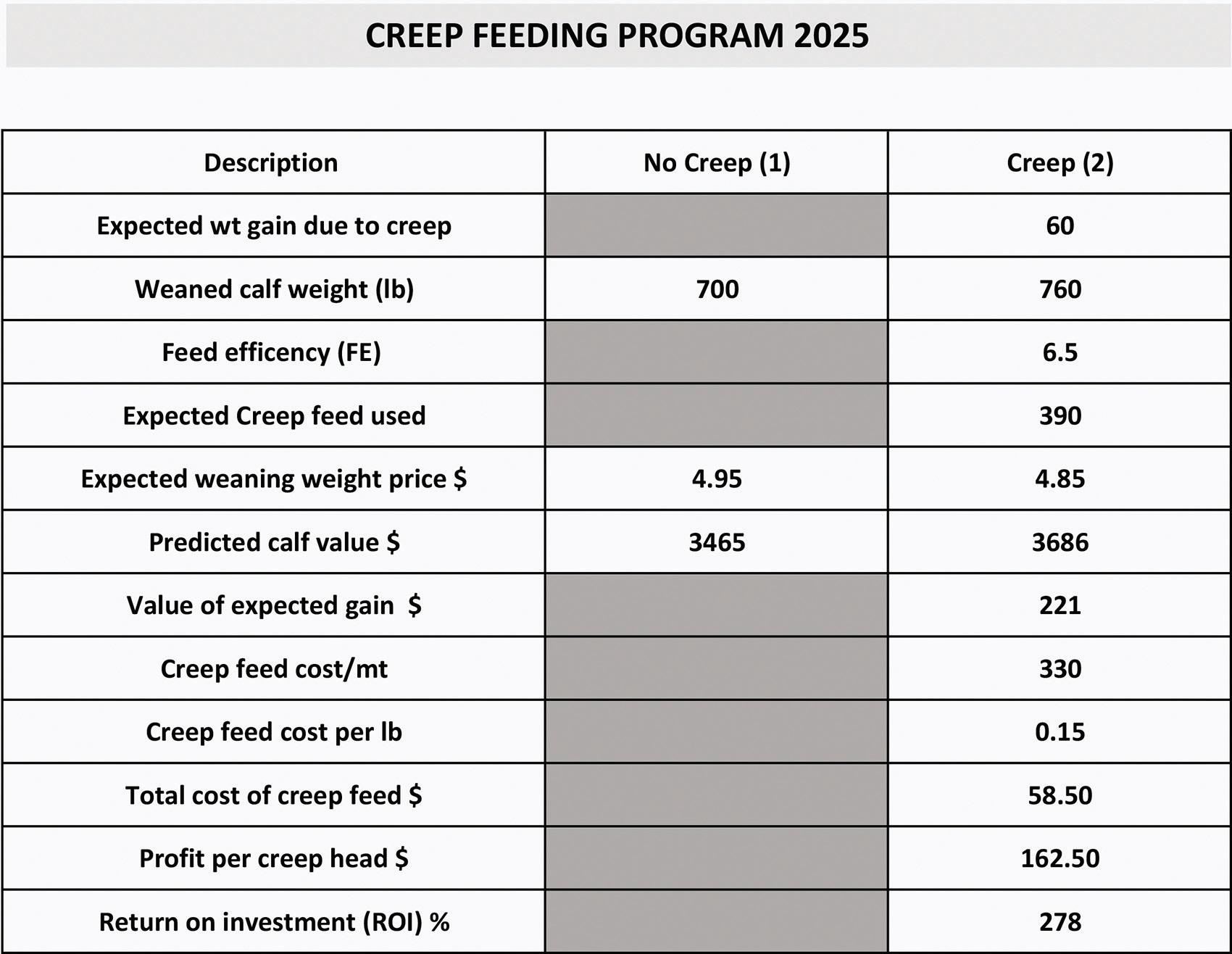
Submitted photo/chart Peter Vitti
Keeping Garden Strawberries Fresh Longer
By Joan Airey
A friend told me if you put a layer of paper towel in a container then put in a layer of fresh strawberries (not washed or hulled) then another layer of paper towels another layer of strawberries then paper towel again it will keep the moisture out and the strawberries will stay fresh longer. After layering the strawberries put the lid on the container to keep out moisture and put it in the refrigerator.
Numerous people have been telling me potato bugs are bad
this year. Some pick them off and put them in soapy water but I have picked them off and put them in diesel fuel. Some have even recommended different types of chemicals to kill them.
Today Manitoba Gardener on Facebook gardeners had numerous advice on how to rid your garden of them.
Coffee grounds are supposed to be good for Zucchini and I like them for baking so I put all the grounds I’d saved around mine today to see if they grow any better. Our area is lacking in rain so
Garden Fresh Fruit and Vegetables Grown in Manitoba Available!
By Joan Airey
Now we have our own lettuce and spinach. It’s time to make some tasty salads.
Spinach Salad with Mandarin Oranges
Salad:
10 oz. fresh spinach
1 can Mandarin oranges, drained
1 cup sliced fresh mushrooms
3 bacon strips cooked and crumbled
Dressing:
3 Tablespoons ketchup
2 Tablespoons cider vinegar
1 1/2 teaspoons Worcestershire sauce
1/4 cup sugar
2 Tablespoons chopped onion
1/8 teaspoon salt
Dash of pepper
1/2 cup vegetable oil
Toss spinach, oranges, mushrooms and bacon, set aside. In a blender combine ketchup, vinegar, Worcestershire sauce, sugar, onion, salt and pepper. Process until smooth. While processing, gradually add oil in a steady stream. Toss with salad just prior to serving. Yields 4-6 servings.
Rose’s Spinach Salad
Salad:
1 pkg. spinach
1 cup bean sprouts (optional)
1 small onion chopped
1 to 2 eggs chopped (optional)
Dressing:
1/2 cup brown sugar
1/3 cup vinegar
1/2 cup canola oil
1/3 cup ketchup
1 Tablespoon Worcestershire sauce
Beat dressing ingredients together and pour over salad just before serving.
I don’t use eggs in this salad because I feed some fussy people and if I don’t have bean sprouts, I just omit them.
Orange Cranberry Romaine Salad
1 medium head of Romaine lettuce, torn
2 cups, drained orange segments
1 cup sliced celery
3 green onions, sliced
3/4 cup dried cranberries
3/4 teaspoon poppy seeds
1/4 cup canola oil
1/4cup vinegar
1/4 cup sugar
1/4 teaspoon salt
In a large salad bowl, mix lettuce with the oranges, celery, onions, cranberries and poppy seeds. In a small bowl combine canola oil, vinegar, sugar and salt. Pour over salad, toss and serve immediately.
my husband has been hauling water for the garden. With a broken leg I have been helpless gardening this past six weeks. Watering all the plants on our patio has been my extent of gardening.
We’ve been enjoying tiny tomatoes from the patio but my lettuce didn’t like the few hot days we had and sunburned. Next planting will be in a large pot on the patio definitely in the shade.
Germination of my carrots was poor in places and many friends say theirs didn’t germinate very well. We never
used to have problems with carrots germinating but in recent years I hear it more and more. The carrots I have growing on the deck are doing fine. We are still eating last year’s carrot crop. I’m not sure that we’ll have enough carrots to supply this year.
when I get rid of my boot will be cleaning my cold room and organizing it. I find I have to make lists of what is in my freezers so I can organize my menu for each week.
Hope everyone is having a successful garden and having moisture when required.
This past week with help from a college student I have defrosted my freezers and organized them ready for freezing fruit and vegetables. Our house has too many steps for someone with a leg in a cast as none of my freezers are on the main floor. Next week Photos by Joan Airey
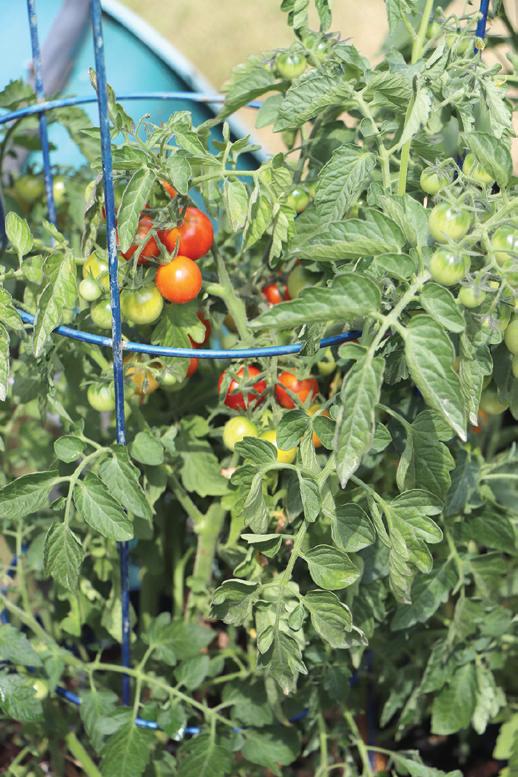
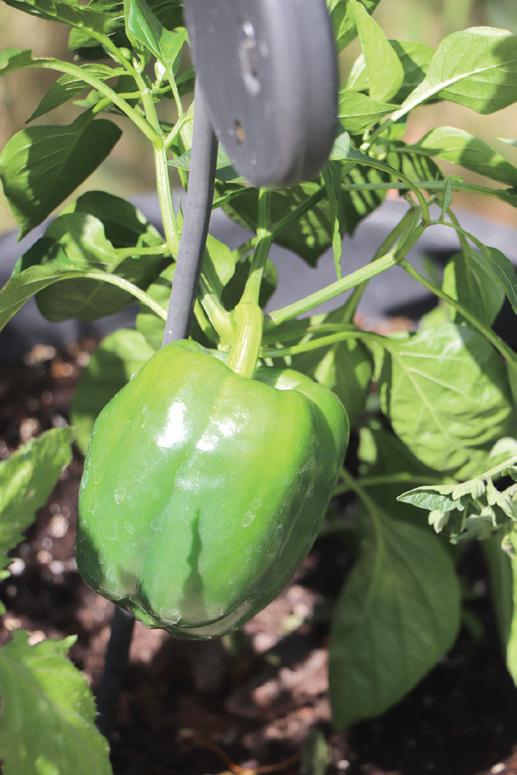

Containers on your patio or deck are a convenient place to grow a few early tomatoes, cucumbers, and peppers plus a few flowers to enhance the area.
Manitou Celebrates 140th Annual Fair
The Manitou Agricultural Society’s annual Fair was held recently with people enjoying the beef shows, petting zoo, mutton busting and antique tractor show. The fair was a hub of family fun with the community coming together to organize a wide range of activities, from 4-H to horse shows.
The fair marked its 140th anniversary this year. For Society president Andy Keen, this year’s festivities offered an opportunity for reflection on the longstanding history of the fair.
But the fair isn’t just looking to the past. “It’s absolutely about the kids” shared Keen, when asked what is core to the fair. “4-H is alive and well here in Manitou” Keen noted.
The community’s 4-H group also provided interactive exhibits for kids and families.
A highlight of Sunday was the equine events, which included timed competitions and a very special award to honour the late Kevin Johnson.
Other entertainment at the fair included a Junior Farm Competition supported by A.R.K. NewTech. Keen shared that the fair is only possible thanks to community support, both through businesses and volunteer work.
As for the future, there’s big plans laid for infrastructure at the fairgrounds. A permanent picnic structure is planned to be constructed parallel to the current horse arena and will serve the community throughout the year.

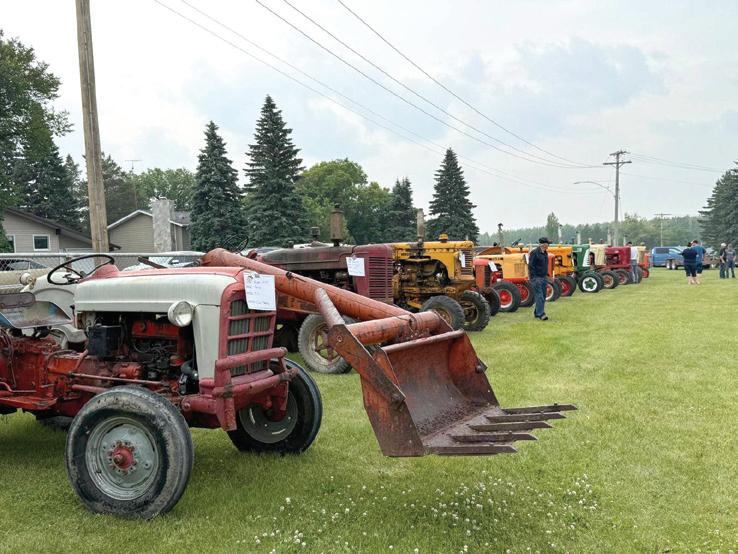

Calculate the Current Cost of Your Dairy Lactation Diet
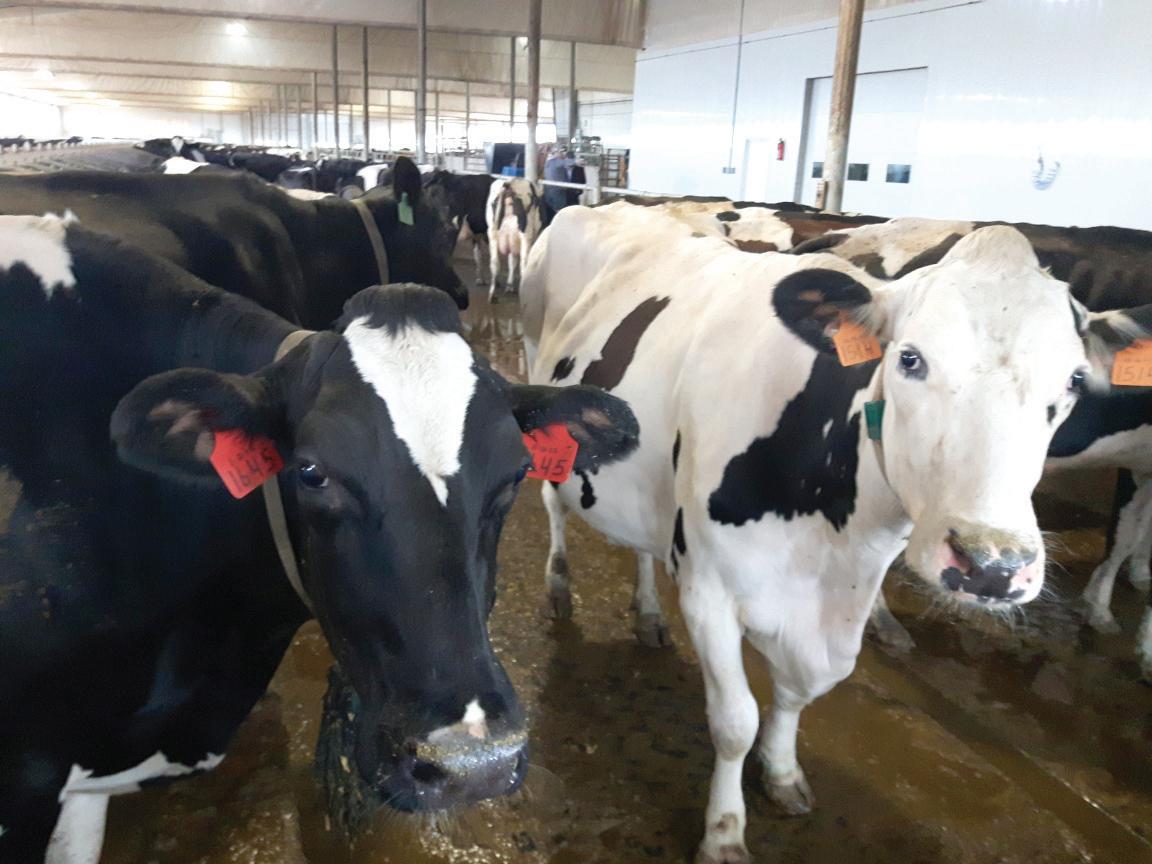
By Peter Vitti
As a dairy nutritionist, I often calculate the cost of lactation diets for high producing dairy cows. It’s an exercise of recording the current cost of each ingredient and put them together to calculate the total cost of any lactating TMR. The nice thing about it is that anybody can do it by either pencil/paper or entering their own costs on a computer spreadsheet. My lactation diets are practical and are designed to promote good dry matter intake amongst early to mid-lactation dairy cows (60 – 150 DIM), which produce 40 kg milk, 4.30 % milkfat and 3.3% protein. I do this exercise by relying on a foundation of high-quality forages augmented with palatable grains and grain by-products. A complimentary dairy premix is added containing essential macro-minerals as well as important trace-minerals and fat-soluble A, D and E vitamins. Limit-fed by-pass fat and dietary feed additives are also formulated in the final dairy diets.
See Table 1 below - In this illustrated case, it costs just pennies over $10 per day to feed a lactating dairy cow. This is a common way to express feed costs, yet there are other ways. For example: $5.81 per kg of milk fat, $11.43 per cwt of milk produced, or $ 0.43 per kg of dairy diet consumed.
Regardless, all of the above costs of feeding a cow are bunk-feed numbers. So far, I did not account for storage and mixing losses as well as feed refusal by lactating dairy cows. I conservatively es-
timate these numbers at 15% and 2%, respectively. So, our raw feed cost of $10 per cow might be closer to $12 per cow, despite some salvageable value of feed refusal, which is frequently fed to older replacement heifers.
In the same way, most people don’t talk about the additional costs associated with dumping this $12 feed in front of the cows or so-called yardage costs. Subsequently, I define “yardage” as the daily operating costs of using equipment, labor and fuel to feed the lactation dairy cowherd. I estimate that these direct non-feed costs in a freestall lactation barn are at least $1.25 per head per day. Such new and relevant information could elevate a dairy diet into the $13 – $14 range per lactating cow.
With the daily expense of nearly $14 per lactating cow to produce over 100 lbs of inquota milk, I look for ways to see where substantial feed costs might be saved without sacrificing lactation performance. Here at some costsaving measures to take a good look:
- Know ingredient/feed costs
– It depends on one’s philosophy. One can enter many

types of feed costs into a spreadsheet, such as cost-ofproduction, replacement or market feed costs. I prefer to input market feed costs such as $100 corn silage.
- Feed high quality forages
– For example, good quality corn silage supplies a significant amount of dietary energy and digestible fiber to support good milk and milkfat. Plus, it reduces the need for more expensive grain or off-farm purchases of other feedstuffs.
- Review the lactation diet
– Substitute more expensive ingredients with less costly ones. Palm fat often comprises up to 15% of total feed costs. Although, it accounts for a scientifically proven 0.2 – 0.4% milkfat, some producers often maximize cost-effective forage fiber to partially replace it.
- Analyze forages and grains
– These feed tests match dietary nutrition with the nutrient requirements of high producing lactation cows. It also helps avoid feeding excessive amounts of nutrients. Test moisture of silages and their final TMR diet on a weekly basis.
- Good feed management – A TMR that is pushed up to free-stall cows throughout the day, promotes good dry matter intake, more milk production and less feed refusal. Improving mixing and unloading procedures also significantly reduces feed wastage. Implementing such cost-cutting measures were taken into consideration in the above 2025 cost of feeding lactating cows spreadsheet. I advocate that most dairy producers can format a similar one to calculate their own cost of feeding their lactation dairy herd.
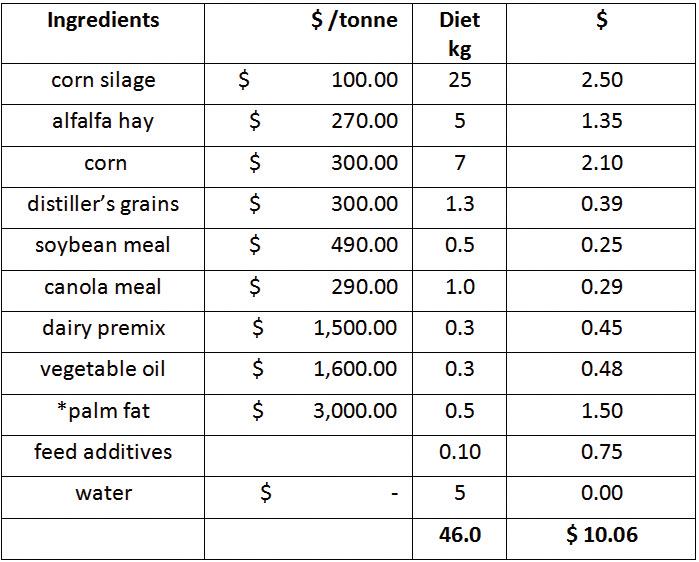
Table 1.
The fair was a hub of family fun with the community coming together to organize a wide range of activities, from antique tractors and 4-H to horse shows. Submitted photos
A TMR that is pushed up to free-stall cows throughout the day, promotes good dry matter intake, more milk production and less feed refusal. Improving mixing and unloading procedures also significantly reduces feed wastage. Submitted photo Peter Vitti
Potatoes Grown Across the Prairies Have Become an Important Crop
By Elmer Heinrichs
There could be a potato grower moving unto cropland next to your farm on the Canadian Prairies.
It used to be that Canadians associated potato growing with Prince Edward Island and New Brunswick. But no longer.
Alberta grows around 25 per cent of Canada’s potato crop, closely followed by Manitoba with 23 per cent and PEI trailing with only 20 per cert of Canada’s potato tonnage.
In terms of acreage, it means Alberta is at 80,000, Manitoba at 70,000 and Saskatchewan at 7,000 acres.
The crop occupies 166,000 acres of prime Prairie agricultural land, primarily irrigated land. Potatoes must be in a one-in-four or one-in-five crop rotation, meaning roughly 700,000 acres of Prairie potato cropland production are in a four-to-five-year crop rotation.
Irrigated cropland is very expensive, ranging up to $4 million a quarter section. Saskatchewan is slated to spend
Manitoba now grows around 23 per cent of Canada’s potato crop. Submitted photo
$4 billion on irrigated cropland in the next few years
Presently 60,000 to 65,000 acres of Alberta’s cropland are irrigated, 60,000 in Manitoba and likewise the 7,000 in Saskatchewan.
Financially, potatoes are the fourth most important crop in Manitoba, ahead of corn but behind soybeans. Some 90 per cent of Manitoba’s frozen
potato products are exported to the U.S., as is the case in Alberta.
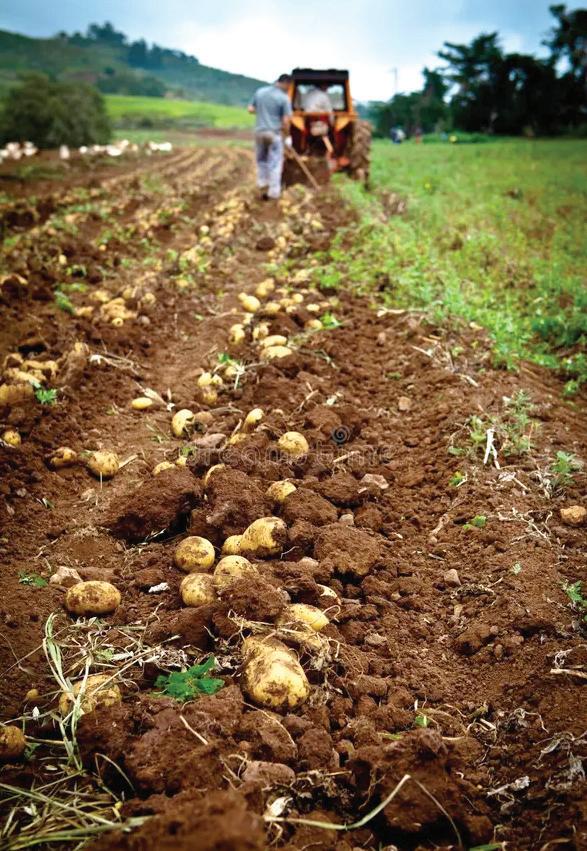
In recent years, some 80 per cent of all potatoes grown in Canada and the U.S. were Russet Burbank (a.k.a. Russets Gems, Idaho Bakers). This was dictated by the french fry industry and in particular the fries sold by “hamburger” outlets.
Heritage Farms Brewing Now Open in Winkler
By Elmer Heinrichs
Winkler’s first craft brewery taproom is officially pouring.
After hitting shelves across Manitoba last fall, Heritage Farms Brewing Company held its grand opening celebration on June 27 at its new taproom in Winkler.
Founded by Johnny Trinke, the brewery blends a love of craft beer with a deep-rooted family legacy in agriculture.
working family farms in the area.”
While Heritage Farms Brewing is new, the dream behind it has been fermenting for years.
“We always had a passion for craft beer,” said Trinke.
“When I lived in England, I took a traditional alcoholic beverages course, which really deepened my understanding of brewing. That was a turning point for me.”
we’re doing merchandising, we go to Prairie Sky Promotions in Winkler. If we need signage, we use Steeltree,” explained Trinke. “We believe that every dollar spent locally has a multiplying effect on the community.”
Ergot Contamination Threatens Canadian Cereal Quality and Market Access, Experts Warn
Farmers across Canada are being urged to take proactive steps to manage ergot, a fungal disease that threatens the quality and marketability of cereal crops including wheat, barley, oats, durum, rye, and canary seed.
While ergot infections, caused by the fungus Claviceps purpurea, may not significantly reduce yield, they pose a serious risk to grain quality and access to both domestic and international markets. According to the latest message from Keep It Clean, a national initiative supporting Canadian grain farmers, early and effective management is crucial to keeping crops market-ready.
“Even low levels of contamination can result in the downgrading or outright rejection of grain shipments,” the campaign warns. “Farmers must remain vigilant, particularly during the flowering stage when crops are most vulnerable.”
Ergot infects cereal plants when airborne spores land on the flowers and germinate, eventually forming sclerotia—hard, dark fungal bodies that replace healthy grain kernels. These sclerotia contain toxic alkaloids harmful to humans and livestock. Flowering, or anthesis, is the most critical period for infection, especially under cool, wet weather conditions.
Key concerns around ergot include:
- Health risks due to toxic alkaloids, also known as mycotoxins.
- Its impact as a grain grading factor in Canadian cereals.
- Trade implications, as some export markets have strict limits on ergot contamination.
- Economic costs associated with grain downgrading and added cleaning requirements.
Experts stress that monitoring weather forecasts and field conditions during flowering can help producers mitigate ergot outbreaks. Preventative measures and timely intervention are essential to protect the integrity of Canada’s cereal supply chain.
“With global markets keeping a close eye on grain quality, it’s up to every farmer to ensure their crop meets the highest standards,” Keep It Clean stated. “By following best practices, we can protect both our crops and our reputation as a reliable supplier of top-quality cereals.”
For more information on ergot management and crop readiness, farmers are encouraged to visit keepitclean.ca.
Heritage Farms Brewing is built on the concept of “grain to glass”, where local sourcing is central to the brand’s philosophy.
“We prioritize local suppliers whenever possible. If
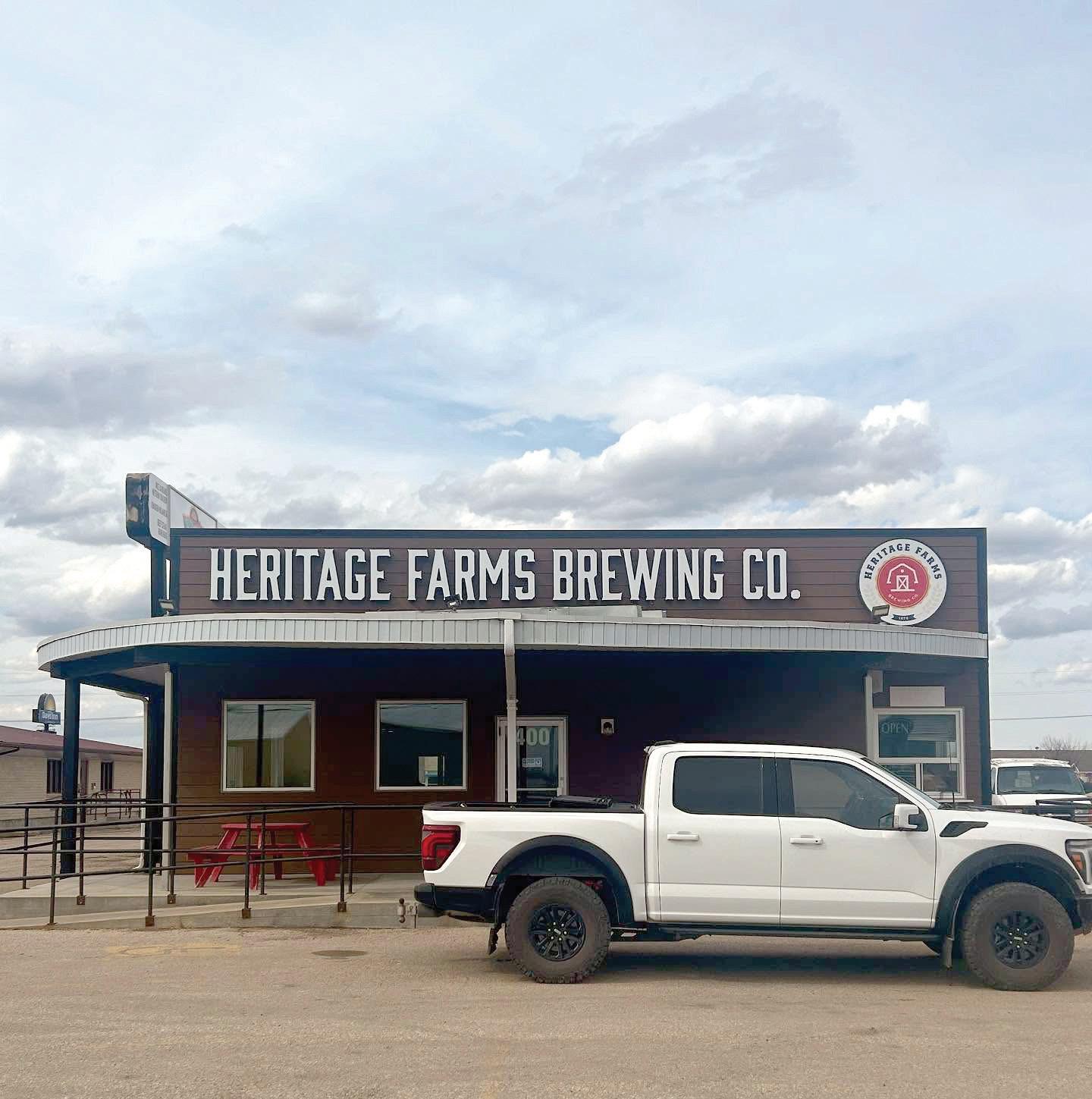
The brewery’s flagship lineup includes the Farmer’s Daughter Blonde Ale, Harvest Pale Ale, and Hired Hand Brown Ale, all crafted with approach-ability and affordability in mind.

Submitted

Heritage Farms Brewing is built on the concept of “grain to glass”, where local sourcing is central to the brand’s philosophy.
Founded by Johnny Trinke, the brewery blends a love of craft beer with a deep-rooted family legacy in agriculture.
photos