Manitoba’s Harvest is Varied But Good Overall

Changes Coming for Agricultural
Crown Land Use
The Manitoba government is making changes to the Agricultural Crown Lands (ACL) Leases and Permits Regulation to support improving forage productivity, growing the livestock industry and advancing sustainability after receiving public feedback.
Agricultural Crown lands are parcels of land vested to Manitoba that the government leases to producers for agricultural use, including grazing, haying or annual cropping. Agricultural Crown lands are important public assets economically, environmentally and socially. Agriculturally, these Crown lands are essential to supporting and growing the livestock industry in Manitoba, and provide mitigation and adaptation to climate change, the minister noted.
Based on the public feedback, the revised ACL Leases and Permits Regulation will enable outgoing leaseholders to choose the value of improvements for compensation at either the value set out in the appraisal report or a lesser value they specify.
Harvest
By
On August 15, Reg Friesen of Prairie Sky Crop Solutions of Niverville, MB, updated farmers on the various insects still making their rounds.
Harry Siemens into the later-seeded canola,” said Friesen. “Keep a close eye on your fields as it may take work to control the pests by only doing 2 or 3 border passes of the field if we are lucky.”

Lygus bugs were increasing substantially with lots of the early-seeded canola past the point of mattering. However, the later-seeded canola is still very susceptible, making a sweep of the field an option.
The grasshoppers moved from ripening fields to green fields such as soybeans and corn.
“Hoppers are also moving
Pre-harvest crop desiccation on the mid-seeded canola and wheat was also happening. Crops in this seeding period are more stagey because the spring weather caused the soils to dry up quicker.
“With days becoming shorter, it will help to dry down the crops” said Friesen. “I see a bit of wheat and oats coming off
the field now, so harvest is on its way.”
Friesen noted rainfall was varied with some drought pockets being seen however after a few rounds on the combine and Friesen said its better than expected.
Ray Giesbrecht, who farms in the Winkler, MB area, wasn’t combining because his grain was not officially dry.
“I could have harvested, but why would I put moist or damp grain into my bin at this time of the year?” said Giesbrecht.
Anne Kirk, a provincial cereal crop specialist with Manitoba Agriculture, said on average, the harvest is at about three percent complete, which is right on the five-year average.
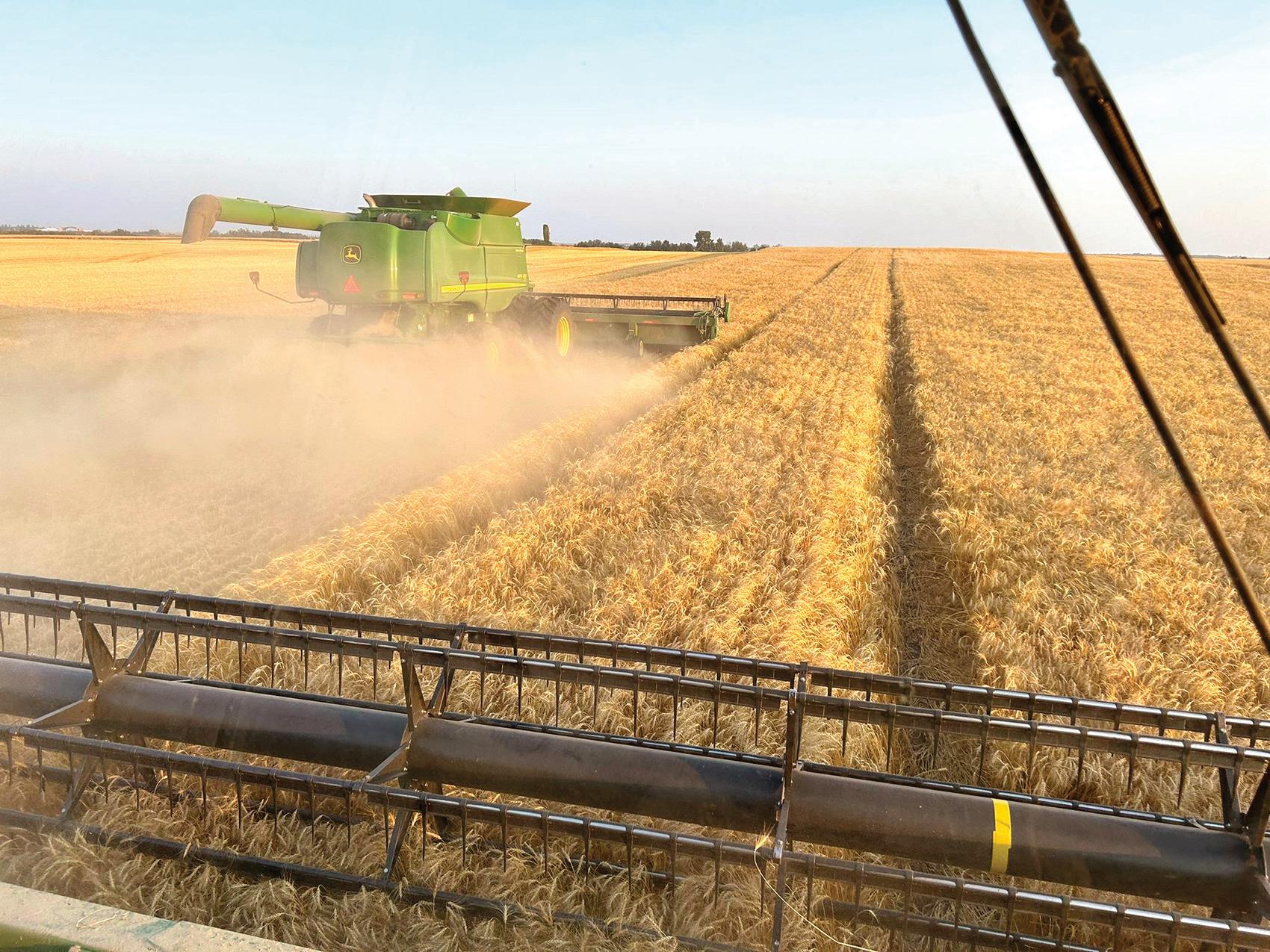
Farmers had completed most of the winter cereals, about 80 to 90 percent of winter cereals in all areas except for the southwest region, which dropped to 40 percent. Most of the spring wheat harvest was happening in the central region, with pockets coming off across the province.
Continued on Page 2...
The current amendments to the ACL Leases and Permits Regulation include: reducing forage lease rents over the next several years to help producers recover from drought and flood conditions in recent seasons; extending lease terms to a maximum of 20 years from 15 years when producers invest in forage productivity improvements; enabling 15-year leaseholders to transfer the remaining years of their leases to an eligible third party; developing a process that could enable legacy leaseholders to transfer their agricultural Crown lands to a third party by nominating the next leaseholder, if the agricultural Crown lands are not selected under Treaty Land Entitlement and do not impact Indigenous treaty rights; including non-profit Indigenous organizations to be eligible to hold forage leases, in addition to the bands that are already eligible; and formalizing the process for assessing land productivity used to determine rent to create an incentive to manage the land and invest in its productivity.
The amendments to the ACL Leases and Permits Regulation will come into force on January 1, 2024.

� August 25, 2023 The AgriPost
is in full swing now says Ron Krahn. Farmers had completed most of the winter cereals, about 80 to 90 percent of winter cereals in all areas except for the southwest region, which dropped to 40 percent. Most of the spring wheat harvest was happening in the central region, with pockets coming off across the province. Submitted photo Ron Krahn
Manitoba’s Harvest is Varied But Good Overall

Continued from Page 1...

Grasshoppers are also moving into the later-seeded canola said Reg Friesen of Prairie Sky Crop Solutions in
Kirk said farmers were taking off small amounts of barley, oats, and field peas about 25 to 30 percent in the southwest, central and Interlake.


Field pea harvest has not started in the eastern region but it has begun in the northwest areas.
“We haven’t had much disease pressure so, with the earlier harvested cereals, we’re not seeing many fusarium damaged kernels or Deoxynivalenol [DON] samples, or so we’ve heard. So far quality is fairly good,” said Kirk.
Kirk has heard of some reports of ergot in fall rye, which is normal. At the same time, the winter wheat averages about 60 bushels per acre.
“For fall rye, the yields are averaging from 60 to 90 bushels per acre, but I’ve heard reports as low as 30 bushels per acre in some
very dry areas,” she said.
It’s too early in the harvest to report on the spring cereal crops regarding yield. The yield range for the field peas is about 45 to 55 bushels per acre in the southwest and central regions.
Kirk said moisture reserves are pretty low in some areas, particularly the central region, which has caused some heat stress, especially in soybeans and corn. Still, recent rain and cool temperatures have alleviated some of that stress.
Submitted photos
Manitoba’s Unpredictable Growing Season
By Harry Siemens absence
In the heart of St. Jean Baptiste, Manitoba, Luke Hemphill, an agronomist working with Antara Agronomy, stands amidst the ever-changing landscapes of agricultural fields. The conversations between Hemphill and customers paint a vivid picture of farmers’ challenges and triumphs in this unpredictable growing season.
Hemphill’s voice carries a mix of amazement and concern as he describes the dramatic fluctuations in precipitation that have plagued the region.
“So hit-and-miss. It’s unbelievable the precipitation we’ve had,” said Hemphill, his tone conveying a sense of astonishment. Further adding that the whims of nature have bestowed their gifts unevenly upon the land, creating stark disparities between neighbouring fields.
“So I’d show up to a field, and one field will have gotten almost an inch, and the field right next to it will have gotten two-tenths,” he said. “The rain has just been so variable.”
Late May brought scorching heat that dried the earth. The
of precipitation during this period took a toll on cereals, leaving them struggling to cope.
“We had that one wicked heat wave and no precipitation that did a number on the cereals,” Hemphill explains, his voice tinged with concern. He said the once lush fields of wheat and oats were now thin and fragile, a testament to the fragility of nature’s delicate balance.
Amidst the challenges, Hemphill’s observations provide glimpses of hope. His experienced eyes have witnessed the resilience of soybeans and corn that managed to thrive despite the erratic conditions.
“I’ve seen some really good soybeans and corn,” he shared, his tone brightening momentarily.
However, these successes remain islands in a sea of uncertainty, as the abundance or scarcity of rain dictates the fate of each field.
“But again, it’s just hit-andmiss based on how much rain a given field has gotten,” said Hemphill.
The timing of emergence
further underscores the erratic nature of this growing season. He describes the wide range of emergence he’s witnessed, with soybeans emerging as late as two weeks ago and canola taking up to a month to show its face. These variations translate into varying levels of success, as plants that emerged early managed to establish robust root systems, tapping into the elusive moisture deep within the soil. On the other hand, later emerging plants struggled, their underdeveloped roots unable to access the limited water reserves.
As the conversation shifts to the prospect of harvest, Hemphill paints a picture of ongoing field activity. Some wheat fields have already seen the reaping of rewards, while others are on the brink of harvest.
His description of the various crops still awaiting their turn in the spotlight reveals a mixed bag of progress.
“Other than that, the corn’s still got a ways to go. The canola still got a ways to go. The soybeans have a ways to go,” Hemphill said.
August 25, 2023 The AgriPost 2
Anne Kirk, a provincial cereal crop specialist with Manitoba Agriculture, said on average, the harvest is at about three percent complete, which is right on the five-year average.
Federal and Provincial Funding Boosts Winkler Meats Expansion
By Harry Siemens
Funding from the Federal and Provincial governments of almost $2.4 million will assist with Winkler Meats’ $53 million expansion by supporting its capital investment; enhance efficiency, productivity and environmental sustainability. The approved funding comes form the Sustainable Canadian Agricultural Partnership capital infrastructure and investments program. The expansion project for the southern Manitoba business is expected to create jobs and divert animals from export to the US. The upcoming capital project at Winkler Meats in Winkler, MB, will increase the number of jobs at the facility from about 80 to 155.
Federal Agriculture and Agri-Food Minister MarieClaude Bibeau and Manitoba Agriculture Minister Derek Johnson made the joint announcement in Winkler in July. The Manitoba government has also approved over $7.8 million in loan financing and tax rebates in addition to the Sustainable CAP contribution.
Government funding will go toward new harvesting and processing equipment and a high-capacity packaging line. The expansion is a joint venture between Winkler Meats and Johnsonville Sausage, which sources some of its live sow supply from western Canada.


The Ministers noted the project will increase the volume of harvesting and processing, which will advance value-added opportunities within Manitoba. More than double the number of jobs at the facility, to 155 full-time equivalent (FTE) positions. The expansion will also enhance the resiliency and benefits of the existing supply chain and divert millions of kilograms of live animals from export to the United States, reducing the num-
ber of trucks transporting live animals and associated freight-related greenhouse gases. It will expand the company’s contribution to Manitoba’s Gross Domestic Product (GDP) by five times to $23 million annually.
The project aligns with the Manitoba Protein Advantage Strategy, which aims to attract $1.5 billion in investments and create 1,550 new jobs in the animal and plant protein sector by 2025, said Manitoba Ag minister Johnson, adding that it will also enhance benefits for producers and processors through value chain collaboration.
The expansion work will happen in consultation with Efficiency Manitoba, which has identified opportunities for energy savings on the design and construction of the building to help it be more environmentally friendly and contribute to economic competitiveness with lower energy costs for the company.
Marie-Claude Bibeau, federal Minister of Agriculture and Agri-Food, said Manitoba’s agri-food processing sector plays a vital role in the province as an economic driver. With this investment, Winkler Meats can deliver more high-quality, valueadded products.
“Working in collaboration with the partners in this project will strengthen the sector and supply chain and make it more sustainable,” said Bibeau.
Derek Johnson, Manitoba Minister of Agriculture, said, “Our government is taking concrete action to accelerate development in Manitoba’s agri-processing sector by assisting with capital investments that enhance efficiency, productivity and environmental sustainability.”
Johnson said enabling companies to scale up production creates new jobs, supports the skill development of existing employees, increases the value and vol-
ume of Manitoba-processed foods and strengthens our province’s economic competitiveness.
Jeff Senebald, president of Winkler Meats, said, “We are grateful to receive support from Sustainable CAP and Manitoba’s Capital Infrastructure and Investment program. This further cements Manitoba as a leading protein centre in North America.”
Senebald said the occasion to partner with a company like Johnsonville to share respective skill sets to grow and improve the pork supply chain is an exciting opportunity for Winkler, Manitoba, and Canada.
Michael Stayer-Suprick, CEO of Johnsonville Holdings, said, “Johnsonville appreciates the collaboration with Winkler Meats, the Province of Manitoba and Canada. We’re confident that with our respective capabilities and experience, Johnsonville and Winkler Meats can continue providing a solid pork supply chain and quality products for retail customers and our end consumers.”
Rick Préjet, chair of Manitoba Pork, said it’s great for Manitoba’s hog sector to see this new investment in valueadded processing right here at home and is a shining example of Manitoba’s protein advantage. Fifty-five percent of agriculture and agri-food processing jobs rely on the hog sector and its producers.
“It excites us to build on the over 20,000 Manitobans that rely on our sector for a well-paying job across our province. These new jobs in Winkler are possible because of open trade between Canada and the United States,” said Préjet, “This announcement continues our crucial partnership with our neighbours to the south, a partnership that we must work to preserve.”
AAFC Sees Severe Drought Affecting Crop
By Elmer Heinrichs
Agriculture & Agri-Food Canada (AAFC) in its July monthly crop bulletin for 2023-2024 says the most significant agricultural risk is climate-related as severe drought continues across western Canada, with the most impact felt in southern Alberta and western Saskatchewan.
Significant uncertainty remains at this time regarding estimates of crop yield and production. Harvest in western Canada is now underway and is expected to progress rapidly for most crops.

Total field crop production and supply are forecast to decrease as higher carryin stocks (beginning-year inventories) are offset by a
decline in output. Exports are forecast to decrease on lower supplies but are expected to remain strong on firm world demand.
In general, prices are projected to decrease as higher global supplies pressure prices lower, with underlying support provided by continued strong world demand.
3 August 25, 2023 The AgriPost
The expansion project for the southern Manitoba business is expected to create jobs and divert animals from export to the US.
An upcoming capital project at Winkler Meats in Winkler, MB, will increase the number of jobs at the facility from about 80 to 155.
Submitted photos
I Love the Harvest Time, Whether Big or Small
nature keeps us on our toes and shows our farmers’ strength.
Hey there, it’s that time again – the end of August, when the whole Prairie turns into a buzz of activity. Fields are alive with the hard work of farmers during the harvest. You can hear the hum of combines and the rustle of ready-to-harvest crops. Thinking about all this reminds me of the harvest’s colourful picture that’s been a part of my life for nearly 70 years.
The weather around here can be unpredictable. Sometimes it’s rainy; other times, it’s dry as a bone. This backand-forth nature shapes our farming world and makes each harvest a unique story. I’ve walked across fields where one part looks different from another. It’s like
Farmers are masters of adapting. When their crops don’t turn out as hoped, they change their plans and work hard to improve. I’ve seen it before – first, there’s a bit of disappointment, but then a sense of accomplishment shines as the harvest continues. This year is following that same pattern.
Right now, we’re about 15 per cent into the harvest in Manitoba. The weather could be steadier, with rain coming and going. These rain showers make farmers pause for a bit in their work. But here’s the clever part – they stop when wet because they don’t want to store damp grains. This year, the focus is on winter cereals like rye and winter wheat. They make up a big chunk of the harvest, around 80 to 90%.
Now, you might be wondering if late August rains can still help. Well, for some
crops, they can make a difference. Take corn, for example. It loves the extra moisture in the later part of the season. The same goes for soybeans, which are all about September. Even potatoes can get some benefit from more rain. Some potatoes already get watered by special systems, showing how innovative our farmers are.
Each little raindrop matters. It’s not just about this year’s crops – it’s also about getting the fields ready for next time. Water is essential for farming, like the magic ingredient that keeps everything going. When the fields are dry, it’s a reminder to ensure enough water for planting winter wheat and taking care of the soil.
When those big machines get going, time becomes super precious. They can harvest many acres with 10 to 14 hours of work. I recently drove to Steinbach, and the fields told a story of two sides. Some fields stood tall and looked like they’d give
a big harvest, while others were a bit thin and might give around 60 bushels per acre or just 35 to 40 bushels. But here’s the thing – the quality is still excellent, which means we’re in for a good harvest.
While we’re right in the middle of the harvest buzz, there’s something we can’t ignore – the costs that are getting higher and higher for our farmers. Everything is getting more expensive because of inflation. The fuel, tools, and everything needed for farming cost more now, putting much pressure on farmers. These increased costs aren’t just about the farm – it affects everything from start to finish, making things cost more for all of us.
A story from a farmer got me thinking. He got a propane delivery, something he needs to dry his crops. But the bill came with a hefty carbon tax of $5,500 for 55,000 litres of propane. That’s a big chunk! And this cost ends up affect-

ing everyone in the chain. When we see high prices at the store, it’s because of things like this.
Through all these challenges, our farmers keep their spirits high. They keep going, even when things are tough. They work super hard, and it’s more than just numbers. It’s the heart of our communities. They’re the ones growing the food we enjoy.
So, to all the farmers out there, my fellow friends of the land, I want to give you a boost. Your hard work doesn’t go unnoticed, and your never-give-up attitude inspires all of us. Let’s be patient and careful around farm equipment on the roads. Let’s stick together to support the backbone of our province. We can enjoy this year’s harvest journey when we unite and understand the challenges. It’s a journey where nature keeps us guessing but guided by the strong spirit of those who care for our land.
Enhanced Opportunities for Indigenous Participation in Manitoba Agricultural Sector
Funding is now available for initiatives that will support Indigenous participation, address barriers and build on opportunities in the agriculture and agri-food economy under the Sustainable Canadian Agricultural Partnership (Sustainable CAP).
“Ensuring Indigenous communities and organizations are equipped with the agricultural knowledge, skills and technology to increase their participation in the agricultural economy is critical,” said federal Agriculture and Agri-Food Minister Lawrence MacAulay. “We recognize that Indigenous communities have diverse and unique realities and the flexibility of the programs announced today reflect that diversity. Fostering relationships and working in partnership with Indigenous Peoples will support inclusive growth of the agri-food sector and contribute to economic reconciliation.”
As a result of engagement, two streams of funding have been developed to support equitable access to funding and strengthen relationships with Indigenous Peoples.
The Indigenous Agriculture and Food Systems supports actions and activities that increase food security and sovereignty in communities, including supporting and enhancing the revitalization of traditional food systems and increased participation in the agriculture and agri-food sector.
The Relationship Development and Engagement will support actions and activities that engage and enhance relationships between Indigenous Peoples, industry and academia with an aim to encourage collaboration and advance opportunities in agriculture.
“We are encouraged that these new programs focus on Indigenous-led agriculture and food systems
work here in Manitoba,” said Julie Price, Northern Manitoba Food, Culture and Community Collaborative. “Annually the Northern Manitoba Food, Culture and Community Collaborative provides funding and support to nearly 50 Indigenous-led initiatives across Manitoba, however, most initiatives have received little or no provincial or federal agriculture support despite being funding-ready. By explicitly focusing on Indigenous projects, these new programs are an important step towards a stronger, more inclusive food systems and agricultural sector.”
Programming has been developed to increase Indigenous sector participation, establishing and growing food systems, and supporting partnerships and collaboration. The Indigenous Agriculture and Food Systems program will provide funding across four fund-
ing streams consisting of planning and consulting activities, which support access to community-driven, culturally relevant services and the development of resource materials, up to a maximum of $80,000; training activities, which support sharing skills, group learning and knowledge transfer events, up to a maximum of $10,000; enhancing Indigenous food systems activities, which support the design and development of community-based food systems from planning and training through to implementation, up to a maximum of $200,000 and capital equipment and software activities, which support access to capital items required in implementing and/or scaling up food system/agriculture projects from production and processing to preservation, with a 50 per cent government and 50 per cent applicant cost-sharing up to
a maximum of $50,000 in funding.
The Engagement and Relationship Development program will provide small funding grants of up to $5,000 per application to support meaningful engagement activities prior to exploring ideas and initiating projects.

Funding is available for food system work guided by traditional knowledge systems, including activities that have not been funded under previous frameworks, such as traditional gathering and processing practices.
Projects are anticipated to vary greatly and be specific to communities’ needs. They could range from building a community garden to completing agricultural feasibility studies.
The program is open until October 27. For additional program details and application forms, visit gov.mb.ca/ scap.
August 25, 2023 The AgriPost �
The AgriPost
A Near-Average Crop for Manitoba
By Elmer
Harvest of winter wheat and fall rye began earlier this month across the province, with most of these crops already combined, and exhibiting mostly average yields for both.
Heinrichs has started in spring cereal crops, with the majority of harvest happening in the central region. Overall, cereal crops remain in fair to mostly good condition.
Manitoba agriculture reported there was “a welcome rain over the week to most of the southwest which will help the crop fill, and was very important for the soybean crop as well as pasture land and second cut for hay crops. Harvest in most areas had stopped due to the rainfall.”
As the fields dried, producers were back in the field continuing pea, winter wheat and fall rye harvest and pre-harvest applications for cereal crops. In general, crops look average but the recent rain will help early crops fill and later seeded crops progress.
Early yield reports for winter wheat are averaging about 60 bu/acre. Harvest
Anne Kirk cereal crop specialist with Manitoba agriculture says moisture reserves are fairly low in some areas, particularly the central region which has caused some heat stress; especially in soybeans and corn but recent rain and cool temperatures have alleviated some of that stress.
Provincial pulse specialist Dennis Lange says field peas are about 22 per cent harvested with yields of 45-55 bu/acre noted; some 138,000 acres of dry beans need another week to mature and 1.5 million acres of soybeans look good but yields will be down from last year’s record yields.
Canola is turning and some desiccation and swathing has begun on some fields and recent rainfall has alle-
viated the stress in the corn, soybean and dry bean crops due to the lack of rainfall.
Central region reports fall rye yields have varied greatly depending on how much rainfall the crop received with most yields in the 60 to 90 bushels an acre range, but some yielding as low as 30 bushels an acre. Winter wheat yields have been around 60 bushels an acre.
Harvest of spring wheat, barley and oats is underway, with most crops now at the hard dough stage. Early yields have varied from 35 to 65 bushels an acre, largely dependent on how much rainfall a crop received. About 25 per cent of pea crops are harvested with yields of 45 to 55 bushels an acre.
Eastern region reports that rains limited progress on harvesting, swathing, preharvest applications, but most producers viewed the additional rainfall as supportive of yields in canola,
soybeans, sunflowers and corn. Winter wheat yields have been averaging around 65 bu/acre.
Harvesting of spring cereals is just beginning here, and some early seeded fields of canola have been swathed. Overall crop conditions range from fair to mostly good. Both corn and sunflower crops remain in good to excellent condition.
Field pea harvest continues in most parts of the province, with about 22 per cent of harvest completed. Early yield reports in the southwest and central regions are in the 45 to 55 bu/ acre range. Crop desiccation is ongoing. The majority of the crop remained in good condition, but in drier areas fields are in fair condition and demonstrating lower yield potential.
Pastures are greening up in some areas as a result of recent rainfall, and grazing sites will be in a better position to sustain herds.
Project Funding Announced to Support Sustainable Farming in Manitoba
The governments of Canada and Manitoba are providing over $1.9 million in funding under the Sustainable Canadian Agricultural Partnership (Sustainable CAP) to 54 projects supporting sustainable farming in Manitoba through the Resilient Agricultural Landscape Program (RALP).
“As good stewards of the land, Manitoba producers are prepared to embrace new, proactive on-farm projects that help mitigate the effects of climate change,” said MacAulay. “Support for sustainable farming projects through these programs helps producers take a leadership role in shaping the future of Manitoba’s resilient agriculture sector.”
There are two streams of funding provided through the RALP: Watershed Resilience and Carbon Seques-
Setting Sights on Working with Farmers, Exploring New Ideas
Dear Editor:
Manitoba Liberals stand for a strong rural Manitoba and a strong agricultural community. We support KAP advocacy on improving Agri-Stability, exempting grain drying and livestock buildings under the Greenhouse Gas Pollution Pricing Act, maintaining the trust in agricultural products, ensuring farm safety, investing in research and taking advantage of opportunities for economic growth.
As Liberals, we know decisions made locally take into account local conditions and achieve better results.
We will reverse the Conservative government decision to take away municipal powers to be able to reverse municipal decisions.
In health care, we will reverse the extreme centralization of the NDP and Conservatives and will return more decision making to local communities.
On Crown Lands, we will restore unit transfers as this encourages better land stewardship practices. Climate change is here. There is a large potential to store carbon in soils, in wetlands and in trees. Farmers should get financial benefits for land stewardship which addresses climate change and promotes biodiversity.
Valid audits of carbon storage are needed for this. We need a system which brings in dollars from provincial and federal governments and from companies needing carbon credits to meet climate goals. We propose implementing this first along ecological corridors.
tration and Grassland Resilience that support on-farm management practices and projects that sequester carbon and improve sustainability through grassland management and agroforestry practices, such as maintaining and restoring grasslands and wetlands.
The watershed resilience stream provides funding to watershed districts to collaborate with farmers to implement projects on agroforestry, grasslands and grazing management, natural upland area enhancement and rejuvenation, riparian area enhancement, water retention and runoff management, and wetland restoration and enhancement.
Selected watershed districts received up to $100,000 per project at 100 per cent of the total approved eligible costs and projects will be
complete within 18 months.
Farmers are encouraged to contact their local watershed districts to inquire about any potential programming that may be available.
The carbon sequestration and grassland resilience stream provides funding to community pastures, agricultural Crown land forage leaseholders, Indigenous farmers and communities, and farmers outside of watershed district boundaries to support on-farm projects that increase the productivity of grasslands that support a strong and viable livestock industry in Manitoba. These projects enhance valuable ecological goods and services and provide mitigation and adaptation practices to support producers in a changing climate.
Selected applicants received a maximum of $15,000 per
project at 75 per cent of the total approved eligible costs and projects will be complete within 18 months.
“Watershed districts are committed to educating communities on the importance of land management and supporting landowners to implement projects that protect and enhance their local landscapes,” said Garry Wasylowski, chair, Manitoba Association of Watersheds (MAW).
Projects were evaluated on their ability to increase the environmental resilience of agricultural landscapes by adopting practices that increase environmental benefits that improve soil and water quality; reduce greenhouse gas emissions; reduce stream-bank degradation; improve nutrient and water retention; and improve biodiversity and wildlife habitat.
We are transitioning to electric vehicles. Electric vehicles are much less costly to operate than gasoline or diesel vehicles. In Manitoba, each year we spend about $4 billion dollars a year for gas and diesel to power vehicles. If all vehicles in Manitoba were switched to electric, collectively we would save between $3 and $3.5 billion dollars. That is a lot of money to put in peoples pockets. Most farmers have large bills for gas or diesel and can see the value in making this change. There will be many challenges to achieve this change – As Liberals we like the idea of saving Manitobans $3 to $3.5 billion dollars a year. We want to work with you to help make these savings happen in agriculture and in other areas.
Agriculture is also an important contributor in relation to the greenhouse gases nitrous oxide and methane. There are savings here as well. I have talked with farmers who are taking measures to reduce nitrous oxide, and have found they need less nitrogen fertilizer and are saving money. The province needs to help facilitate this transition and to save farmers money. A similar approach is possible with methane emissions.
We in the Liberal Party want to work with famers and with the Keystone Agricultural Producers to benefit farmers and to lower farm costs. We look forward to a dialogue and to a good strong working relationship between farmers and our Manitoba Liberal Party.
Jon Gerrard MLA River Heights
5 August 25, 2023
Pilot Scale Vaccine Manufacturing Facility Expects to Speed up Vaccine Development
By Harry Siemens
A new pilot-scale vaccine manufacturing facility in Saskatoon will speed up the development of new vaccines for both animals and humans.
The Vaccine and Infectious Disease Organization VIDO, on the campus of the University of Saskatchewan, has completed the construction and commissioning of its new on-site pilot-scale vaccine manufacturing facility.

VIDO director and CEO Dr. Volker Gerdts said access to in-house vaccine manufacturing will speed up the development of new vaccines.
“To develop vaccines or therapeutics in a timely way, in a rapid response to a new disease, you must have inhouse capacity,” said Dr. Gerdts. “You can’t rely on other organizations to manufacture the different components that go into a vaccine.”
Dr. Gerdts said, unfortunately, that occurred during COVID when there wasn’t access to such a facility. It meant outsourcing all of the manufacturing, and that always takes longer. Having access to in-house manufacturing capacity, the prototype candidate can come into the lab allowing for the demonstrated proof of concept in animal trials by taking this prototype directly into manufacturing without wasting any time. That’s the critical factor here.
“Access to in-house manufacturing will enable us to make vaccines much faster,” he said.
This will allow VIDO to manufacture these candidates developed in research

laboratories that have been tested in animal models, to manufacture in-house and get to the next phase of clinical testing. This allows animals to manufacture vaccines up to market penetration commercially.
Dr. Gerdts said time matters in responding to any disease, and the goal of the G-8 countries is to have a vaccine candidate within 100 days of detecting a pandemic threat that can go into clinical testing.
He said the manufacturing facility is probably one of the most versatile facilities in the world. It is capable of manufacturing both human and animal vaccines. The facility can manufacture human vaccines up to phase two clinical trials. In addition for animals the facility can manufacture vaccines up to market penetration.
“Within the same facility, we can make both human and animal vaccines to switch between these campaigns from a human vaccine to, for example, an animal vaccine,” said Dr. Gerdts.
Furthermore, the facility ties into the high containment facility, making it possible to make vaccines even for those pathogens that require a higher level of containment. Lastly, this facility has the equipment to make all relevant vaccine technologies from the newly developed RNA vaccines to viral vectors, protein subunit vaccines, inactivated vaccines, and life-attenuated vaccines.
With the new facility VIDO will be able to even commercially manufacture vaccines and serve those markets in need. He said an example
is one of the projects that is developing a new vaccine for sheep in western Canada. The sheep population is so small that it could be of great economic interest to large commercial manufacturers.
“But VIDO can serve this niche population by making a vaccine for it and providing these producers with a new vaccine for this respiratory disease that currently is causing many problems in western Canada,” said Dr. Gerdts.

The VIDO business model is to develop vaccines as a research organization.
“We do not want to be a commercial vaccine manufacturer but work in partnership with larger organizations with small and large pharma, with collaborators from around the world,” he noted.
VIDO develops these new vaccines and gets them to the manufacturer and the populations needing them. Then to out-license the technologies to companies who can commercially produce these vaccines in the future.
Dr. Gerdts said it is enormous to reach the higher level of containment because it’s recognizing that VIDO is the Canada Centre for Pandemic Research. The leading institute in the country to respond to emerging diseases, new diseases that can potentially cause the next pandemic.
“And so by upgrading our ability to work even in containment level four, which is the highest level of containment, it allows us to work now in the future with any pathogen, whether it’s a human or an animal pathogen,” said Dr. Gerdts.
August 25, 2023
�
The AgriPost
The director and CEO Dr. Volker Gerdts of the Vaccine and Infectious Disease Organization on the campus of the University of Saskatchewan, which has completed the construction and commissioning of its new onsite pilot-scale vaccine manufacturing facility to develop vaccines or therapeutics quickly.
Submitted photo
The AgriPost
The Growing Threat of Waterhemp in Manitoba: A Looming Agricultural Challenge
By Harry Siemens
Waterhemp, a formidable weed that has made its presence known across North America, is increasingly becoming a concern in Manitoba.

In an interview with Luke Hemphill, an expert from Antara Agronomy, the gravity of the situation becomes evident. He shed some light on the characteristics of Waterhemp, its rapid spread, and the urgent need for awareness and proactive measures to mitigate its impact on agriculture.
According to Hemphill, water hemp’s invasion in Manitoba is alarming due to its deceptive resemblance to common weeds like red root pigweed and green pigweed. This uncanny similarity makes identifying Waterhemp challenging, contributing to its unchecked proliferation. He emphasized that the danger lies in its physical resemblance and potential to hybridize with other weeds, further complicating its identification and control.
vealed the alarming pace at which Waterhemp has infiltrated Manitoba from the United States.
“Within just one growing season—from 2021 to 2022—the number of munic-
Support for Droughtstricken Western Producers Announced
Secondly to enhance control efforts, he recommended genetic testing to accurately identify the plant and herbicide resistance testing to determine which herbicide groups are ineffective against the specific Waterhemp population.
In Manitoba, his recommendations are part of a comprehensive effort to manage Waterhemp. Herbicide resistance testing is available through laboratories in Ontario, with plans to establish similar services in Winnipeg.
“This region’s collaboration exemplifies the collective determination to tackle the Waterhemp challenge head-on,” he said.
With the significant challenges livestock producers in Western Canada are facing due to exceptionally dry conditions, Minister of Agriculture and Agri-Food, Lawrence MacAulay has announced an initial list of designated regions where Livestock Tax Deferral has been authorized for 2023 due to extreme weather conditions.
The criteria for identifying regions for Livestock Tax Deferral is forage yields of less than 50 percent of the long-term average caused by drought or excess moisture. Eligible regions are identified based on weather, climate and production data, in consultation with industry and provinces.
“Early designation of the Livestock Tax Deferral provision provides assurance so they can make informed decisions to manage their herds. We have also enhanced support available under BRM programs and we will continue to work closely with provinces to get producers the additional support they need as quickly as possible,” said MacAulay.
The Livestock Tax Deferral provision allows livestock producers who are forced to sell all or part of their breeding herd due to drought or excess moisture to defer a portion of their income from sales until the following tax year. The income may be at least partially offset by the cost of reacquiring breeding animals, thus reducing the tax burden associated with the original sale.
Waterhemp hybrids like this happen when there is no competition. Size 11 boot for reference. How many seeds are on this monster? Easily 100,000 seeds are on one plat according to Antara Agronomy’s Luke Hemphill of St. Jean Baptiste, MB.
ipalities in the province with DNA-confirmed tall Waterhemp more than doubled,” he said.
This rapid increase underscores the situation’s urgency and the need for swift action to curb its advance.
Under Hemphill’s guidance, Antara Agronomy is vital in addressing this weed’s threat offering two key strategies for managing the infestation.
The emergence of Waterhemp in Manitoba is a significant agricultural concern that demands immediate attention. The interview with Hemphill underscores the situation’s urgency, emphasizing the need for increased awareness, accurate identification, and innovative control measures.
“As Waterhemp continues infiltrating the province, proactive efforts from agricultural experts, farmers, and local authorities are crucial in preventing this invasive weed from wreaking havoc on Manitoba’s agricultural landscape,” he said.
As a preliminary list of prescribed drought and flood regions is usually completed in the early fall, designation of this provision earlier in the year helps provide assurance for producers as they make difficult herd management decisions. The federal government says it will continue to monitor conditions across the country and will add other regions throughout the year if they meet the criteria.
Producers have access to a comprehensive suite of business risk management (BRM) programs that are the first line of defense for producers facing disasters, including AgriStability, AgriInsurance and AgriInvest.
Manitoba – 2023 Livestock Tax Deferral Initial List of Designated Regions

- Dufferin
- Grey
- Lorne
- Louise
- Macdonald
- Montcalm
- Morris
- Norfolk-Treherne
- North Norfolk
- Pembina
- Portage la Prairie
- Rhineland
- Roland
- St. Laurent
One of the most pressing concerns with Waterhemp is its remarkable herbicide resistance. Hemphill said that most of the plants in Manitoba are already resistant to herbicides and can develop resistance to additional groups. This resistance threatens to render traditional herbicide-based control strategies ineffective, highlighting the urgent need for alternative approaches.
There is a need for awareness. The prevailing lack of awareness among farmers and landowners exacerbates the Waterhemp problem he noted.
“Despite the increasing prevalence of Waterhemp, many individuals cannot still identify the weed accurately,” said Hemphill.
This unawareness hampers the early detection and timely intervention required to prevent Waterhemp from taking root and spreading further.
There is a rapid spread from south to north. Hemphill re-
“The first involves manually removing Waterhemp plants, which is crucial given the weed’s prolific seed production,” he said.
By staying informed and united in the fight against Waterhemp, the province can safeguard its farm productivity and ensure a sustainable future for its farmers and communities.

- Stanley
- Thompson
- Victoria
- WestLake-Gladstone
- Woodlands
� August 25, 2023
Current areas in where the Livestock Tax Deferral applies.
Meteorologist’s Journey to Develop User-Friendly Weather App
 By Harry Siemens
In a world increasingly shaped by technology, weather forecasting remains a frontier where innovation has the power to empower and protect.
Scott Kehler, the visionary mind behind WeatherLogics, has embarked on a journey to bring advanced meteorological insights to the public through a cutting-edge weather app.

Kehler’s fascination with weather began early, a spark ignited by nature’s ever changing moods. His inquisitive mind led him to study meteorology, and his passion for deciphering weather patterns grew stronger. Kehler recognized a glaring gap between the intricate world of meteorology and the public’s accessibility to accurate weather information. Thus, the seeds for the WeatherLogics app.
WeatherLogics was born from a desire to empower individuals with the knowledge to confidently navigate the whims of weather. Kehler’s vision wasn’t merely about providing forecasts but about demystifying meteorology,

allowing users to understand the forces behind weather events.
Kehler explains, “Weather affects everyone’s lives daily. Yet, the complexity of meteorological processes often remains shrouded in mystery. I envisioned an app that could bridge this gap, offering accessible and accurate information to users, ultimately helping them make informed decisions based on real-time weather insights.”
Developing an app that delivers accurate and userfriendly weather information requires a deep understanding of meteorology and cuttingedge technology. Kehler’s WeatherLogics app combines data from multiple sources, including satellites, radars, and specialized weather models. This information is then distilled into clear and concise forecasts, all available at users’ fingertips.
“What sets the WeatherLogics app apart is its ability to provide hyper-localized forecasts,” Kehler shared. “Users can receive weather predictions specific to their exact location, empowering
them to plan their activities precisely.”
Creating a weather app that caters to the public comes with challenges. One primary hurdle Kehler faced was translating complex meteorological data into easily understandable insights. The app’s user interface had to strike a delicate balance between accuracy and accessibility, ensuring that users could access valuable information without feeling overwhelmed by technical jargon.
“The challenge was to design an interface that anyone, regardless of their familiarity with meteorology, could engage with,” Kehler elaborates. “Through user feedback and iterative improvements, we managed to create an app that offers insights even to those who may not have a background in weather science.”
The app isn’t just a forecast tool; it’s an educational avenue. Kehler’s passion for meteorology extends to his desire to foster weather literacy among users. The app explains meteorological phenomena, helping users understand the “why” behind the
“what” of weather events.
“Weather education is at the core of our mission,” Kehler asserts. “By unravelling the mysteries of meteorology, we hope to empower users to comprehend better and anticipate weather changes, making their daily lives safer and more efficient.”
As the WeatherLogics app continues to gain traction, Kehler envisions a future where meteorological knowledge becomes second nature for users. He envisions a network of individuals who can confidently interpret weather forecasts, plan their activities accordingly, and even contribute their observations to improve the accuracy of predictions.
“We’re not just building an app; we’re building a community of weather enthusiasts,” Kehler envisions. “Imagine a future where informed discussions rather than uncertainties mark weather conversations. That’s the world we’re striving to create.”
Kehler’s app is a reliable beacon in a world where unpredictability often reigns supreme. Through his relentless
dedication to bridging the gap between meteorology and the public, he enables individuals to navigate life’s adventures with weather wisdom. As the sun rises and sets, guided by the WeatherLogics app, users embark on journeys empowered by the magic of foresight in the ever-changing canvas of the skies.
Recently Kehler and his crew on the WeatherLogics Twitter page released an update in a beta app which includes some improvements to weather reports. App users can now report up to three conditions simultaneouslySmoke/haze, thunderstorms/ lightning, blowing dust, cloud cover and sunny conditions.
August 25, 2023 The AgriPost �
This air stream continued to fuel a line of “training” storms from the southern Interlake to the US border at #mbstorm.
The Storm Map displays why there was such strong storms recently fed by warm, humid, and unstable air flowing in from the southwest.
Submitted photos
Cattle Producers in Woodlands Battle Invasive Waterhemlock
By Harry Siemens
In the tranquil landscapes of Woodlands, Manitoba, where lush pastures and productive farms thrive, a formidable opponent has emerged in recent years, casting a shadow over the region’s cattle industry. Waterhemlock, a notorious and invasive weed, has become a significant concern for cattle producers like Orval Proctor, raising alarms about its impact on forage quality, livestock health, and the delicate balance of local ecosystems.
Waterhemlock, scientifically known as Amaranthus tuberculatus (Rough-fruited Waterhemlock), is a highly competitive and adaptive weed that can rapidly spread through fields and pastures. Its resilience lies in its ability to produce many seeds, which wind, water, and farm machinery can quickly disperse. Its presence is particularly worrisome for cattle producers, as water hemlock is resistant to various herbicides and can potentially reduce the nutritional quality of forage that livestock depends upon.
Orval Proctor, a dedicated cattle producer in Woodlands, has witnessed the gradual encroachment of water hemlock on his pastures. The challenge lies in the weed’s ability to out compete desirable forages and its potential to taint the feed quality provided to his
livestock.
Proctor explains, “Waterhemlock is a relentless adversary. It competes fiercely with our forages for resources like sunlight, water, and nutrients. Moving the weed to different areas can reduce available feed for our cattle, affecting their health and overall productivity.”

As Waterhemlock proliferates, its negative implications extend beyond fields and pastures. Cattle are susceptible to changes in the nutritional quality of their feed. The weed’s presence can lead to decreased palatability and digestibility of forages, resulting in reduced weight gain, lower milk production, and even potential health issues for livestock.

“The well-being of our cattle is paramount,” emphasizes Proctor. “We strive to provide them with the best nutrition; water hemlock directly threatens that mission. We’ve seen cattle avoid grazing areas infested with water hemlock, further restricting their access to high-quality feed.”
Environmental Balance at Risk
Beyond the immediate impact on livestock, water hemlock’s unchecked growth can disrupt the delicate balance of local ecosystems. The weed’s rapid spread threatens native plant species, degrades soil quality, and impairs the environment’s
overall health. For cattle producers like Proctor, striking a balance between sustainable agriculture and preserving the local ecosystem becomes an intricate challenge.
A Call for Collaborative Action

The battle against water hemlock requires a collaborative effort involving producers, agronomists, researchers, and regulatory authorities. Solutions must address the immediate threat and the long-term sustainability of the region’s agriculture. Integrated weed management strategies, including rotation of herbicides and cultivation practices, are being explored to curb the spread of water hemlock while minimizing the impact on beneficial plants.
“Agriculture is a community effort,” says Proctor. “We must work together, share knowledge, and implement best practices to effectively manage the water hemlock challenge. Education and awareness are crucial in equipping producers with the tools they need to safeguard their livelihoods.”
As the battle against Waterhemlock continues, Orval Proctor and his fellow cattle producers remain committed to safeguarding their operations and ensuring the wellbeing of their livestock. The efforts extend beyond individual farms to a collective drive to protect Woodlands’
agricultural heritage.
“Adaptation is key,” affirms Proctor. “While the Waterhemlock challenge is significant, it also prompts us to evolve and refine our practices. We’re investing in research, learning from each other’s experiences, and implementing solutions to foster resilience in the face of this threat.”
As the sun sets over the rolling hills of Woodlands, cattle producers like Orval Proctor stand resolute, ready to confront the challenges water hemlock poses headon. Through collaboration, innovation, and unwavering dedication to their craft, they are determined to preserve the quality of their feed, the health of their livestock, and the thriving agricultural legacy of the region they call home.
A responses on Twitter, from Michael Harms of Crystal City, said he has noticed about ten plants on 30 acres. “I am just making sure because I know how deadly water hemlock is.”
Manitoba Beef Producers
also reported on July 27 that they had received calls about the proliferation of water hemlock in pastures and hay land and how to identify one
of the most toxic weeds in beef cattle production, the symptoms of possible poisoning, and how to control its spread is important.
a notorious and invasive weed, has become a significant concern for cattle producers like Orval Proctor in the Woodmore area and it is raising alarms about its impact on forage quality, livestock health and the delicate balance of local ecosystems.

� August 25, 2023 The AgriPost
It is important to learn how to identify one of the most toxic weeds in beef cattle production, the symptoms of possible poisoning, and how to control its spread.
Waterhemlock,
Submitted photos
Brandon Hosts Canadian Charolais Youth Association Annual Conference


 By Madisyn Robertson
Three youth from Alberta, Saskatchewan, Manitoba, Ontario, Quebec and Nova Scotia participated.
The conference started out with the keep and cull competition where members are
presented with 5 cow/calf pairs to choose 3 keepers and 2 culls.
The evening started with the ever popular welcome mixer - this year games were held that involved maple syrup, flour, eggs and water - and ended in the wash rack before participants were allowed back to their campers or hotel rooms.
On the second day, participants began with individual judging of bred heifers, market steers and heifer calves. Members, depending on age, are required to present oral reasons on at least one class, with seniors required to present on all classes. Once they completed their judging, members were placed in groups of 3 for the team grooming competition. The morning concluded with a BBQ lunch at Manitoba Beef and Forage Initiatives Brookdale Farm before our educational seminars began. Participants were grouped by age and participated in body scoring, herd health, forage identification and sampling along with calving using Clover the Cow.


The third day began with
showmanship, judged by Katie Serhienko from Maymont, SK. Katie used this opportunity to talk to each participant and give helpful hints. Afternoon activities involved team judging, team marketing and individual marketing activities. Supper was a grab and go pizza so that the participants could head off with their herdsman groups for ice cream, socializing or pool time.
One of the highlights of the conference is the Little Chars program. This was designed so that children ages 5-7 could still participate, albeit in a safe and age appropriate manner. Keegan Blehm and Haley Rosso were their lead-
ers and 11 participants tended to their rubber cows in the wash rack, tie outs and stall. These members also participated in their own judging class, practiced grooming and showmanship.
On the final day the morning started with the CCYA AGM. Tyson Black, the 2022/2023 President chaired the meeting, along with Justin Harcourt, Logan Saunders, Madisyn Robertson and Alumni Director Haley Rosso. The newly elected National Board Members were introduced at the Awards Banquet.
The executive for 2023/2024 will be President Justin Harcourt (SK), Vice-President
Cassidi Elder (SK), Secretary Payton Caldwell (at large), Treasurer Travis Saunders (ON) and the newly created position of Social Media Liaison Madisyn Robertson (MB) along with directors Kim Turnbull (AB), Logan Jameson (AB) and Madison Saunders (ON). The Alumni Directors for the 2023/2024 year will once again be Keegan Blehm and Haley Rosso. The board extends sincere appreciation to outgoing president Tyson Black for his years of dedication and leadership.
The afternoon was the conformation show, judged by Dennis Serhienko and Katie Serhienko. They sorted through over 65 head and provided excellent comments for participants. Saturday evening was the awards banquet and dance held in the Dome Building with the dance floor being packed until the DJ stopped. The conference was a great success and enjoyed by all with many new friendships formed.
The showmanship and conformation shows can be viewed on Cattlevids.ca

August 25, 2023 The AgriPost �0
The Canadian Charolais Youth Association held the annual conference and show at the Keystone Centre, Brandon, Manitoba from July 26 to 29. Eighty
J&J Angelina 225K, exhibited by Ben Fox, Dauphin, was Champion Junior Female.
EMB Mirabelle 5D, exhibited by Fisher Cavers, La Riviere, was Champion Mature Female. Her calf, C2 Luxx 3L, was Champion Bull Calf.
KCH Sugar N’ Spice 228K, exhibited by Kendra Hinsburg, Rapid City, was Reserve Junior Champion Female.
The conference started out with the keep and cull competition.
Eighty Three youth from Alberta, Saskatchewan, Manitoba, Ontario, Quebec and Nova Scotia participated.
Submitted photos
Resilience and Passion: One Family’s Journey as Petting Zoo Owners
By Harry Siemens
The Miami Fair and Rodeo held earlier this year is a family-friendly event, including the line-up of attractions for children. One of those attractions is the Ricklyn Farms and Petting Zoo allows kids of all ages to interact with friendly farm animals.

In the heart of St. Claude, Manitoba, lies Ricklynn Farm, a place where child-

vating petting zoo. Owned and operated by Rick and Terrilyn Gerbrandt, this haven welcomes children of all ages to experience the magic of interacting with diverse animals.
Rick Gerbrandt’s journey from Sommerfeld, Manitoba, to becoming the heart and soul of Ricklynn Farm’s petting zoo is a testament to the dedication, resilience, and the enduring power of dreams.


From a young age, Gerbrandt held a dream close to his heart. He dreamed of creating a special space where people could connect with animals. His childhood on a farm in Sommerfeld, instilled in him a deep love for great and small creatures. As life led him through different places and pursuits, that dream remained a constant, quietly guiding his path. His journey led him through Morden, Winnipeg, and beyond. Along the way, he encountered various experiences, each contributing to the mosaic of his life. The dream of a petting zoo never left him, illuminating his path as a beacon. His passion for animals, cultivated in his early years, found new avenues of expression as he ventured through life’s twists and turns.
Building Ricklynn Farm: A Dream Realized
The culmination of Rick’s dream found its home in St. Claude, Manitoba. Ricklynn Farm was a testament to his unwavering dedication and love for animals. With 160 acres as his canvas, Rick created a space where individuals of all ages could experience firsthand the joy and wonder of interacting with animals. Ricklynn Farm’s petting zoo, owned by Rick and Terrilyn Gerbrant, became a place for dreams to take flight and etch memories in the hearts of visitors.
Ricklynn Farm’s petting zoo is a tapestry woven from various animals. Alpacas, llamas, miniature horses, donkeys, goats, sheep, geese, ducks, rabbits, chickens, and even emus find a home within their embrace. The petting zoo is a testament to his curiosity and dedication, a haven where people can learn about, appreciate, and connect with diverse creatures.
Ricklynn Farm’s petting zoo isn’t merely a collection of animals—it’s an experience designed to transcend age barriers. From the smallest children to seniors seeking moments of wonder, Rick’s passion ensures everyone can participate. The accessibility of the petting zoo, with accommodations for wheelchair users and handicapped individuals, exemplifies a commitment to sharing the joy and magic of the animal kingdom with all.
Rick and Terrilyn’s journey hasn’t been without its challenges. The impact of the COVID-19 pandemic led him to take on additional
work, including long-haul truck driving, to sustain his passion. Their commitment to overcoming obstacles underscores the depth of his love for the animals and
their transformative impact on visitors.
Looking ahead, Rick envisions expanding the reach of Ricklynn Farm’s petting zoo to touch even more lives. In
a world that often rushes by, Rick Gerbrandt’s journey reminds people to embrace dreams, cultivate passions, and hold onto the magic that can bring people together.
�� August 25, 2023 The AgriPost
Rick Gerbrandt’s journey from Sommerfeld, Manitoba, to becoming the heart and soul of Ricklynn Farm’s petting zoo is a testament to the dedication, resilience, and the enduring power of dreams.
Ricklynn Farm isn’t just a petting zoo, it’s a place to nurture dreams, treasure shared experiences and celebrates the connection with animals.
Ricklynn Farm’s petting zoo is a tapestry woven from various animals. Alpacas, llamas, miniature horses, donkeys, goats, sheep, geese, ducks, rabbits, chickens, and even emus find a home within their embrace.
Photos by Harry Siemens

August 25, 2023 The AgriPost �2
Fall Planting for Next Year’s Garden
Some of the garden’s bounty this summer.
 By Joan Airey
A few people have contacted me since I mentioned fall planting of carrots so I decided to do some more research on the subject.
I did some in the 1980’s when Joe Tsukamoto introduced it to members of Brandon Horticultural Society. Mr. Tsukamoto was employed at the Brandon Research station. He told us that he seeded carrot, head lettuce, leaf lettuce, onions, parsley, parsnips, radishes, beets and spinach during the first week of November. All seeds emerged earlier than
the same vegetables seeded in the spring throughout the growing season, and were advanced in plant growth. He was successful with leaf lettuce, spinach, parsley, parsnips and carrots. He recommended planting the first week in November. If you are a collector of The Prairie Garden and have the 1982 issue there is an article in it by Joe Tsukamoto.
The 1983 issue has an article on the subject by Paul Ragan, a horticulturist at the time with Alberta Horticulture Research Centre in Brooks, Alberta. He rec-
ommends onions, carrots and parsnips for fall planting. He said Cole (cabbage family) crops are spotty in germination. Peas, beans and corn do not survive fall planting. He said you cannot leave carrots in the garden too late or they can go to seed. The soil must be prepared well in advance and seeds sown only at the last opportunity. Seeding too early will result in seeds taking up water and freezing with the soil. Freezing water in the seed will kill the seed.
One of my neighbours
in previous years has had a terrible time with potato beetles. This year she planted some potatoes in mineral tubs and she said it’s worked great. No beetle problems this year. By next month’s issue we will be putting our gardens away for the year. My sister stores her potatoes in a culvert put down into the floor of her garage. She gave me potatoes from it late in July to make potato salad they sure had kept great. Wish I’d seen that way to store potatoes before we built our house in the late seventies.
The governments of Canada and Manitoba are investing up to $6.4 million to establish the Prairie Crops and Soils Research Facility (PCSRF) at the Fort Garry campus of the University of Manitoba.
Manitoba Advanced Education and Training is providing funding of up to $5.9 million in capital investment over three years, and the Sustainable Canadian Agricultural Partnership (Sustainable CAP) is providing up to $500,000 to create a new state-of-the-art 20,000-sq.-ft. facility to find solutions to critical questions about our food supply.
The total budget for the PCSRF is $20.7 million, including investments from agricultural industry organizations. The new facility is set to be operational by June 2026.


“This is a significant investment that will greatly enhance our capacity for research, education programs, and collaborations with producers for more sustainable crop production,” said Martin Scanlon, dean, faculty of agricultural and food sciences, UM. “The PCSRF sets the stage for our researchers to develop an integrated approach to robust agronomic systems that will benefit Western Canadian producers and consumers across Canada for years to come. At the same time this will allow our students to become the next generation of agrifood leaders.”
According to the University of Manitoba, the current facility at the Faculty of Agricultural and Food Sciences is nearing the end of its lifespan, and this new facility will expand and modernize agronomic research and training.

�3 August 25, 2023 The AgriPost
New Agricultural Research and Training Facility Established at U of M
Photo by Joan Airey
KAP Welcomes Return of MacAulay as Minister of Agriculture & Agri-Food
Prime Minister Trudeau’s recent cabinet shake up saw the return of a familiar face back in the agriculture portfolio as Lawrence MacAulay becomes Minister of Agriculture & Agri-Food, a position he previously held for 4 years.

“On behalf of all Manitoba farmers, I want to welcome Minister MacAulay back to his role as Minister of Agriculture & Agri-Food that he previously held from 2015-2019,” said KAP President, Jill Verwey.
Verwey also thanked former Minister Marie-Claude Bibeau for her service to the agriculture sector and for working with producers in her time serving as Minister of Agriculture & Agri-Food.
“We thank Minister Bibeau for the work she undertook as Minister,” said Verwey. “We appreciate the willingness demonstrated by Minister Bibeau to work collaboratively with producers and for championing the principles outlined in the Guelph Statement, which resulted in increases to funding for producers through the recently negotiated Sustainable Canadian Agricultural Partnership.”
MacAulay’s previous experience in this role will provide a unique opportunity to engage with a new Minister who already has an understanding of some of the key issues facing the agriculture sector.
“We know that Minister MacAulay has a strong interest in agriculture and the work of our sector,” said KAP General Manager, Brenna Mahoney. “Agriculture has the solutions to many of the challenges we face, and KAP is ready to work alongside the Minister and his team to ensure the priorities of our sector are aligned with what the Minister will be putting forward as his own.”
Having producers engaged directly with the Minister and his team will be critical in the development of any policies, regulations, goals, strategies, and other initiatives that will impact the sector.
“KAP has long advocated to all levels of government to ensure farmers have a seat at the table in the development of any initiatives that impact their ability to operate their business and drive Canada’s economy. We look forward to Minister MacAulay taking this approach in his new role and welcome engaging with him in the near future,” concluded Verwey and Mahoney.
The AgriPost
Manitoba Youth Beef Round-Up Going Strong After 16 Years
 By Lois McRae
I concluded that the cattle industry is in good hands after watching the participants at Roundup go through their educational and cattle show weekend. From August 46, seventy-one enthusiastic Manitoba, Saskatchewan and Ontario Junior Cattle Producers attended the 16th Annual Manitoba Youth Beef Roundup in Neepawa, Manitoba. Excitement in the cattle industry brought out a quality group of interested cattle producers and 77 head of cattle. This year 31 new members attended Roundup for the first time.
Where else can you attend an event with 71 Junior members of all breeds working together as teams and in individual competitions, to learn the skills needed in the livestock industry. This is not just any cattle show, it is an all-around event to promote and educate youth to continue in the livestock industry.
16 years ago, this AllBreed Committee along with new directors has developed over the years with over 286 Juniors participating in the weekend. This show would not happen without our dedicated sponsors, parents, juniors, judges, volunteers and committee members who have stood behind this Junior All Breeds Show and helped to make it a success. Platinum sponsors for 2023 are Enns Brothers and Neepawa Veterinary Clinic Ltd.
The weekend started off Friday afternoon with all Juniors participating in the Ag Challenge, trying new skills and competitions with their new team members as a mix er. Then on to presentations on Herd Health with Dr. Grayson Ross, Nutrition with Trouw Nutrition, and Show manship with Naomi Best. Education is an important part of day one at Roundup, helping the Juniors learn new skills.
On Saturday, the Juniors were busy with many differ ent events. In the morning Junior cattle producers had hands on workshops on Judg ing Cattle, Sheep and Goats; Oral Reasons and how to fill out the Judging cards. In the afternoon, the Juniors took part in Team Judging and Team Grooming. The Pee Wees participated in work shops on parts of the animal
demonstrations and learning new skills. A huge number of the Juniors exhibited Art, Photography, Graphic Design, and Scrapbooks for the competitions.
Saturday evening was wrapped up with the CookOff competition sponsored by our Platinum sponsor: Enns Bros Equipment. Here the Junior Teams prepare 2 steaks along with a vegetable and a dessert with their own theme with unique costumes. It was exciting to see the Juniors creations and tasty end products. This was judged by Trevor Bennett, Enns Bros; Dr Liz Ostendorf, Neepawa Vet Clinic and Jan Ivey; Cam Kloeck, Mazergroup Neepawa; Matthew and Jewel Kulbacki of Kulbacki Ag Supplies; Murray Parrott, Town of Neepawa and Lesley Hedley, founding director of Manitoba Youth Beef Roundup.

Sunday was cattle show day. Show day judges, Owen Legaarden and Darren Ippolito two beef producers did an outstanding job on the Judging Clinic and the cattle show, giving the Juniors many pointers to help them in their future in the Beef Industry.
Juniors participated in showmanship classes in the morning sponsored by Neepawa Vet Clinic and then conformation classes in the afternoon. The day was rounded up with a Parade of Champions and a Parade of 4-H Champions.
This year was the first time Manitoba Youth Beef Round-Up had a Supreme Female at the Show and was awarded to Brooke Collins of Darlingford on her Simmental cow and heifer calf. Judges for the Supreme were Darren Ippolito, Owen Leegarden and Jessy Milne
Smith. The weekend was completed with the awards presentation.
This year’s Showmanship winners were Senior Showmanship Champion Allie Lavich, Reserve Senior Showmanship Champion Cora Baker, Intermediate Showmanship Champion Madisyn Robertson, Reserve Intermediate Showmanship Champion Sophie Koshel, Junior Showmanship Champion Rhett Sigurdson, Reserve Junior Showmanship Champion Cohen Canart, Pee Wee Showmanship Champion Khloe Stocki, and Reserve Pee Wee Showmanship Champion Breelee Bootsman.
The Grand Aggregate winners were Pee Wee Aggregate Khloe Stocki, Junior Aggregate Blake Airey, Intermediate Aggregate Madisyn Robertson and Senior Aggregate Allie Lavich.
August 25, 2023
��
Lawrence MacAulay, Minister of Agriculture & Agri-Food. Submitted photo
Supreme champion Female owned by Brooke Collins.
Cook-off competition L to R; Platinum sponsor Dr Liz Ostendorf (Neepawa Vet Clinic) and Jan Ivey.
Photos by Prairie Pistol Designs
Preserving the Past - A Journey in Tractor Restoration
By Harry Siemens
In the quiet countryside, where the hum of engines and the scent of soil hang in the air, lives a man named Willie Rempel near Hochfeld, a tiny village south of Winkler, MB. A man who, alongside his trusty friend Steve Klassen embarked years ago on a unique journey of reviving the past and breathing life into old, often forgotten tractors.
The tale began in 1993 when Rempel decided to leap into the world of tractor restoration. His passion was ignited, his hands itching to restore these mechanical relics to their former glory. It all started with a humble shop and a bad clutch on his tractor.

Enter Steve Klassen, a friend who wasn’t too busy then, who would become an integral part of this restoration odyssey and forged a partnership.
As winter set in, they took their first steps. Clad in overalls and armed with determination, they set to work.
Year by year, tractor by tractor, the restoration projects unfolded. From the dusty corners of forgotten barns to the worn-out fields where memories lingered, these tractors got a new lease on life. It wasn’t just about reviving machinery but weaving together threads of heritage and passion. The numbers grew – a couple of tractors in the first year and
then a cascade of restorations, leading to an impressive tally of 85 tractors over a decade.

When asked why do you do it? Rempel’s response was simple but profound. He spoke of their love for old tractors beyond metal and mechanics. It was a labour of love, a journey driven by a shared passion and a need for a meaningful pastime. As the winters came, they lent their hands to the tractors of others, a gesture of generosity that spoke volumes about their dedication.
The conversation delved deeper, touching on the realm of commercial restorations. Yes, they had taken on projects from those seeking to breathe life back into their faithful workhorses. Tractors that had weathered the trials of construction sites that bore the marks of hard labour found refuge in the hands of Willie and Klassen.
On whether or not he sells his restored tractors, Rempel’s response revealed a heart warming twist – an attachment that ran deep. He didn’t typically sell his restored tractors; he cherished them as a father would his children. However, there was an exception, a touch of empathy – if he had acquired a tractor from someone else, he gave the family the option to repurchase it after restoration.

The art of restoration, as Rempel explained, was a
careful dance. Preparation was the crux – meticulous cleaning, removing old paint and grease, and disassembling to reveal hidden nooks and crannies. Painting was a form of resurrection itself, a process that required dedication and precision. How much they put into it directly translated into the final result.
Rempel said cost is not the first concern.
“It was a secondary concern. Replacing broken parts and not compromising quality. The fresh coat of paint would withstand the test of time,” Rempel said.
Rempel and Klassen understood that each tractor carried stories, and their restoration work aimed to honour those narratives.
Questions flowed like the steady rhythm of a tractor’s engine. The men addressed the concern for original parts.
“We sourced parts from various places, including aftermarket suppliers,” said Rempel.
The goal was functionality and compatibility, ensuring the tractors were operational and aesthetically pleasing.

As the conversation meandered, a question arose about the persistence of love for tractors through the years.
Did Rempel still possess the same enthusiasm he had in 1993? The answer had a touch of wistfulness.
He said while the energy might have waned, the jour-
ney had been remarkable.
“Encouragement from friends, wisdom from elders, and the wealth of information from specialized magazines fuelled their endeavours,” said Rempel.
The story of Willie Rempel and Steve Klassen, two friends united by a passion for restoration, embodies more than just the revival of tractors. It’s a testament to preserving the past, cherishing heritage, and the enduring spirit of craftsmanship. In their hands, rusted metal and forgotten machinery found redemption, and in their journey, they unearthed stories that were once buried deep in the soil.
As the sun sets over the
workshop, a sense of accomplishment lingers. The legacy they’ve woven isn’t just in the restored tractors but in the hearts of those who appreciate the past and who recognize the beauty of breathing
new life into the old. Through their hands and dedication, these tractors become more than just machines – they become symbols of resilience, dedication, and the art of transformation.
A parade of tractors on the August long weekend for people to view and inspect. The numbers grew from a couple of tractors in the first year and then a cascade of restorations, leading to an impressive tally of 85 tractors over a decade.
While Willie Rempel encourages his brother Frank, Frank isn’t part of the restoration projects. Frank contacted AgriPost on behalf of his brother Rempel.
Willie Rempel with a restored 730 John Deere. Submitted photos
Fighting Against Food Insecurity
By Elmer Heinrichs
Food insecurity is a huge problem in Manitoba. Now is the time to do something about it. According to a recent Winnipeg Free Press article, Vince Barletta, Harvest Manitoba’s chief executive officer, indicated that in May, “46,000 Manitobans relied on a food bank to meet a portion of their monthly food needs.”
With the rising cost of groceries and most incomes not keeping up with the cost of inflation, many Manitobans are having a hard time putting food on the table.
In May, we as individuals in Manitoba might be hard pressed to source additional food to meet our families’ needs. We can donate from our pantries but little grows outdoors that early in the season. In the middle of summer however, everywhere one goes, we see fruit trees loaded with fruit, or back-yards front yards or community gardens loaded with verdant garden growth.
Manitobans know how to produce food. Even in Winnipeg, there’s a lot of produce growing. However food waste is a real issue. We can all avoid food waste by using what’s in our refrigerators and pantries, and donating what we don’t need.
But there’s still more we can do. All over Winnipeg and throughout Manitoba, apple, apricot and pear fruit are ripening. Harvesting from these trees and from our gardens is well within our capabilities.
Making use of that food is the best way to honour those elders who planted your tree long ago. If you can use that fruit, that is great! Dehydrating, canning, freezing and eating fresh fruit are all ways to make use of your garden’s treasures.
Let’s step up and help out by sharing what’s already in our gardens, on trees, and in our hearts. Let’s fight hunger together.
Donated Visitation Shelter to House Vita Food Bank
By Elmer Heinrichs
There is a new food bank coming to the southeast corner of the province and Jane Roman of Vita is helping to get it started.
And a donated pandemic visitation shelter will house the Manitoba community’s first food bank. Volunteers in Vita are using a pandemic cast-off to help fight hunger, as they work to transform one of the province’s decommissioned visitation pods into the town’s first food bank.
Repurposed shipping containers were first used to visit loved ones at personal care homes during the height of the COVID-19 pandemic, but then stopped being used.
When Jane Roman heard the province was giving the pods away, she rushed to apply for the one set up outside the Vita and District Personal Care Home.
“To have it be available just when we needed it was kind of a miracle,” she said.
Roman and a group of volunteers had recently started meeting to make plans for a food bank in Vita, which is about 90 km southeast of Winnipeg, and soon realized the small town is short on spare buildings to house it.
“It just seemed to be the right thing for us,” she said noting that right now, people who need food hampers have to drive all the way to Grunthal, an hour-long round trip.
The AgriPost
Mycotoxins in the Cornfield and Bunker are a Threat to Dairy Cows
Dairy cows are very susceptible to the poisons of corn-based mycotoxins. That’s because their diets often contain a significant portion of these forages, grains and even by-products that originate from a contaminated cornfield or bunkersilo. Producers must combat any respective molds that produce mycotoxins by taking corrective action, as well as any preventive measures to minimize their disastrous impact.
Consequently, many types of molds end up in the dairy diet. But only three major species pose the greatest threat by producing deadly mycotoxins. They are Aspergillus fluavus that produce aflatoxins, Fusarium molds that produce vomitoxin and zearalenone, and Penicillium fungi that produce Penicillium Mycotoxins.
Most Canadian climates do not to favour the growth of Aspergillus flavis and thereby aflatoxins are of little threat to most dairy cattle. Yet, if they are found in dairy feed
intakes, low milk production, and increased metabolic problems as well as somaticcell spikes. Fortunately, corn distillers’ grains sourced from the US seems the only likely aflatoxin culprit.
By comparison, Fusariumderived mycotoxins are more of a threat to our livestock, because they thrive under cool climates. The bestknown fusarium mycotoxin; deoxynivalenol, commonly known as vomitoxin, became widespread in western Canadian crops (including corn) during the early 1990s, after a few years of cool and damp summer and harvest weather. Initially, it was thought to be toxic to ruminants; however, University field trials fed up to 66 ppm in dairy cattle rations, which did not produce significant adversity, aside from lower grain quality.
In contrast, zearalenone, another fusarium mycotoxin has estrogen-like properties which cause infertility in cattle. Contaminated Z-corn has been implicated in disrupting heat cycles, reducing conception rates, causing swollen vulvas, and prolapsed
vaginas, and spontaneous abortions. Furthermore, metabolism of zearalenone can cause liver damage and will shut-down parts of the dairy cows’ immune system. The poisonous threshold of zearalenone is 300 ppb in grain-corn.

About ten years ago, that’s what I suspected happened in a 150-cow dairy that fed visibly moldy corn to a group of 20 dairy heifers. This corn was coated with a finemusty gray dust and when it was augured out of the bin, a black “smoke” was also released. The producer ignored all such warnings of zearalenone and other contaminates; so, he mixed it at 2.0 kg per head into the heifers’ TMR of corn silage and alfalfa hay. Afterwards, many of these heifers exhibited “silent heats” and the ones that did show estrus did not conceive. Samples were sent to a commercial laboratory by the producer’s brother, which showed the presence of zearalenone and other toxic fusariums.
Unlike fusarium (including zearalenone) mycotoxins, Penicillium mycotoxins are usually a result of poorly ensiled corn silage as well as poor bunker-management. They not only lead to infertility in dairy cattle, but also have been shown to cause poor intakes and poor digestion of their daily diet.
line about a foot wide, which was outlined in blue running across the silage face. We tested a couple of silage samples taken from this moldy line and confirmed the presence of penicillin-mold. In turn, the producer simply forked off the contamination, discarded it, and fed remaining clean silage. Expectedly, his lactating cows milked well on this latter mold-free corn silage.
These are two real-life threats of mold/mycotoxins upon a typical dairy farm. Yet, preventing such occurrences has a lot to due by putting up good quality corn silage or harvesting dry grain corn in the first place. For example, mold-free corn silage is the end result of harvesting tonnes of chopped whole corn plants at about 65 – 70% moisture and tractorpacking it onto a bunker-silo concrete pad, plus encasing this ensiling bio-mass with a heavy-mil plastic. It also means that once the bunk is opened up, the bunk-face is maintained to minimize air exposure until the next round of feedings.
Dairy cows are very susceptible to the poisons of corn-based mycotoxins. That’s because their diets often contain a significant portion of these forages, grains and even by-products that originate from a contaminated cornfield or bunker-silo.
It just so happened that a few years ago, I visited another dairy producer that attempted to ensile very dry corn silage at about 45% moisture in a concrete bunker-silo. Upon opening it, he discovered a bright red
It also means that reducing the dairy threat of mycotoxins, which are produced in cornfield or bunker, is really a matter of personal choice. In the worst moldy cases –do not feed it at all, but more likely it means take feed samples and perform a mycotoxin lab-test on them in order to come up with a plan of action to feed it, safely.
FCC Supports Customers Impacted by Dry Conditions in Western Canada
Farm Credit Canada (FCC) is offering support to customers in Manitoba and the other western provinces facing financial hardship as a result of dry conditions that are impacting crop quality and grazing lands.
Crops are at a critical state with extremely dry and hot weather creating adverse conditions in parts of all four provinces. Depending on the area, quality and yield are expected to be significantly reduced by drought. Subsequently, feed is a major concern for livestock producers, particularly in the beef and dairy sectors.

For many producers, the lack of moisture since June of this year is an extension of multiple years of below-average precipitation. This has also created drought-related pest infestations for some, compounding the challenges.
As a result of the ongoing challenges preventing a productive harvest, producers may experience a cash shortfall, particularly in the fall and winter.
“Agriculture and food is the only industry we serve, so we have a deep understanding of the challenges that come with the business,”
said Sophie Perreault, FCC executive vice-president of operations, in announcing the support for customers.
“We stand by our customers over the long term. This year’s dry weather in parts of British Columbia, Alberta, Saskatchewan and Manitoba has certainly been challenging for many producers,” said Perreault. “As a Crown corporation, we have a unique responsibility to partner with our customers and ease their financial stress where possible.”
FCC will work with customers to come up with solutions for their operations
and will consider deferral of principal payments and/or other loan payment schedule amendments to reduce financial pressure on producers. Although dry conditions are affecting western Canada specifically, FCC offers flexibility to all customers through challenging business cycles and unpredictable circumstances on a case-bycase basis.
Customers are encouraged to contact their FCC relationship manager or the FCC customer service centre at 1-888-332-3301 to discuss their individual situation and options.
August 25, 2023
��
Six Years in the Making
By Brenda Hunter
The recent World Clydesdale Show (WCS), held from July 19 - 23 at the Keystone Centre complex in Brandon saw over 350 horses entered from 78 exhibitors across the United States and Canada. It was the first time that one of the western Prairie Provinces has hosted the prestigious event specific to the Clydesdale breed. Brandon previously played host to both the World Percheron Congress, the last one being in 2022, as well as the North American Belgian Championships, last held in 2012. Only once has the WCS been held in Scotland (in 2022), the native homeland of the Clydesdale breed.
Classes ranged from the traditional halter and hitch classes, to Clydesdales under saddle in English and Western Pleasure, Barrel Racing, Jumper over fences, Dressage and Trail to specialty classes such as the costume class, team skills competition, team barrel race and youth classes.
Third generation Clydesdale breeder, Calvin Martin, and his niece, Britney, capably served as co-chairs of the event. They were thrilled
with the outcome at the conclusion of the show, and all the support it received; from sponsors, to exhibitors, to volunteers, to the crowds that attended the event, as well as the Keystone Centre facility itself.

“When we started planning, our hope was to have a successful horse show, but we did not anticipate the crowds we had come through the gate,” said Britney, who was also appreciative of the many volunteers, too numerous to mention, who helped make the whole event run so smoothly.
For the committee, which was formed in late 2017, it has been almost six years in the making. They faced much adversity during that time, most notably the difficult decision to delay the show in 2021 due to COVID.
“It was a dream come true to (finally) bring the event to Manitoba,” said Charity (Martin) Thevenot, secretary of the organizing committee responsible for hosting the show.
A lot has changed personally during that period of time, including for Thevenot, a wedding, the birth of two children, the most recent be-
ing their daughter, Sawyer, born in May of this year, and also having to deal with a fairly major health issue.
An active exhibitor along with her sister Britney and their behind-the-scenes team of Charity’s husband, Eric, Britney’s finance Tyler, parents Blaine and Trinda Martin, their uncle Calvin, and a host of friends and family, they brought a total of 16 head of horses to town. To say the event was busy for them would be an understatement.
Given the two-year delay due to the pandemic, they were also thrilled that exhibitors on both sides of the border supported the show so well. Canadian exhibitors hailed from Quebec to British Columbia, and those from as far away as Florida in south, to Oregon, Washington and Utah in the west, to seven Midwestern United States also attended. Organizers were appreciative of the fact that the Keystone Centre held up their end of the bargain, by not increasing prices in a post-COVID world where inflation is rampant.
“They honoured their contract and held all costs the
same,” added Calvin. “They [the Keystone] were fabulous to work with.”
The Martins not only helped put on a successful show, but also had a pretty amazing week themselves especially in the hitch division with home bred, raised and trained horses carrying the Boulder Bluff prefix.
Other area participants in no particular order were: Reg and Carol Madsen, Hamiota, Sadie Jo Gardham, Arrow River, Dale Newton, Shoal Lake, Jack Chisholm, Elk-
horn, Darryl Horn, Virden, Chris & Heather Arthur, Brandon, Michael and Sandy Mychalchuk, Swan River, Clarke and Sherry Wallace, Dauphin, Brad Delgaty, Minnedosa, Rick Kachur and Kim & Taylor Buchberger, Langenburg, SK, Michelle Newton, Moosomin, SK.
The World Heavy Horseshoeing Championships were also held in conjunction with the World Clydesdale Show with nine teams hailing from across North America taking part.
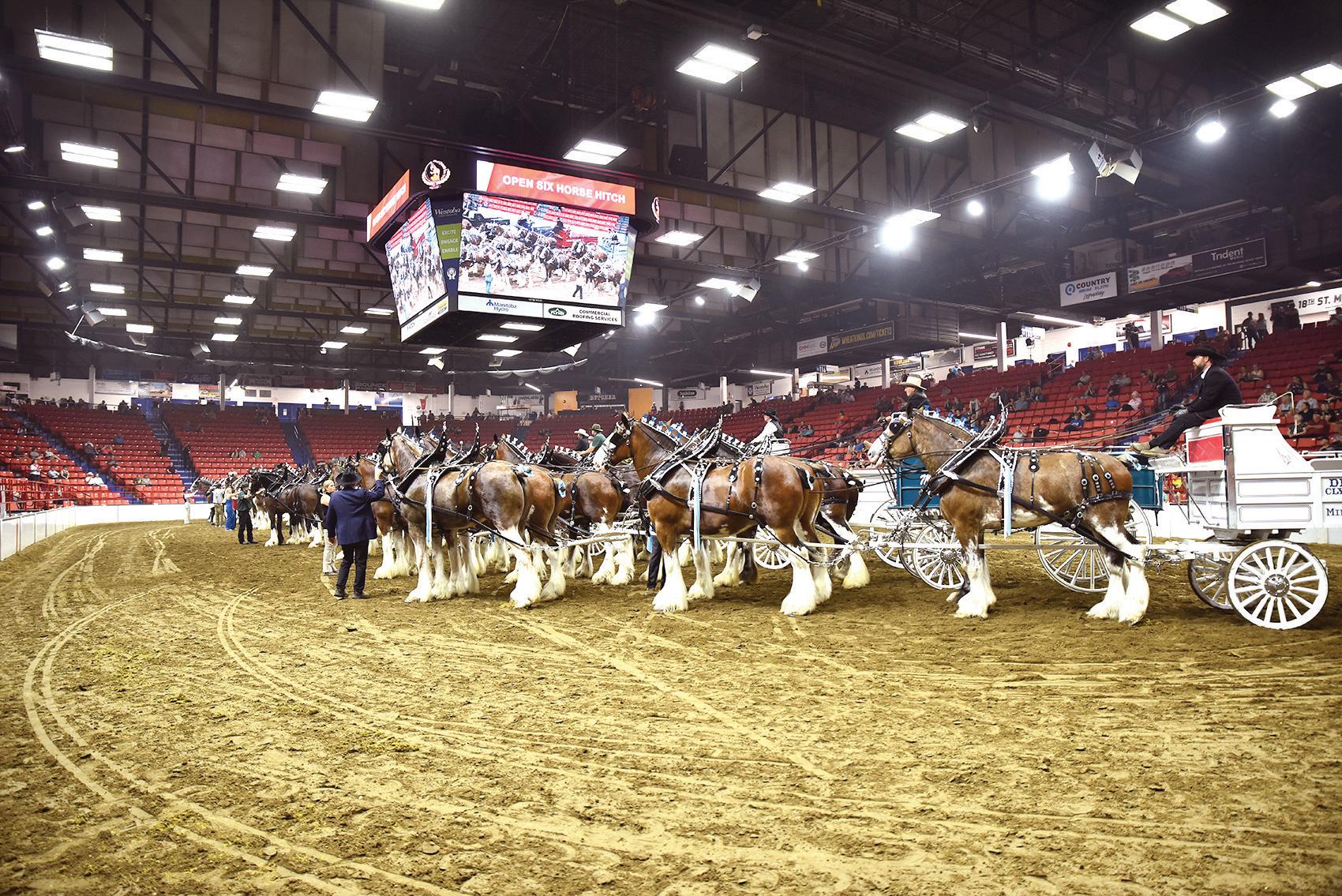
Organizer, Jonathan Greene, a farrier from the Winnipeg area, explained that teams consisting of two and four members were required to forge horse shoes from piece of steel and hot shoe a horse in a set amount of time. They were then judged on their abilities and a winner was crowned.
“Part of the test is to do really good work, but in a time limit,” he explained.
The competition took place over three days during the show.
�� August 25, 2023 The AgriPost
The recent World Clydesdale Show (WCS), held at the Keystone Centre complex in Brandon saw over 350 horses entered from 78 exhibitors across the United States and Canada. Photo by Brenda Hunter
Welcome Rain Delays Saskatchewan Harvest
By Harry Siemens
Rainfall over the past week in Saskatchewan has introduced a slight delay in the ongoing harvest, but farmers across the province are expressing their gratitude for the much-needed moisture.
Saskatchewan Agriculture’s latest weekly crop report, released yesterday, shed light on the progress and challenges facing the region’s agricultural sector.
According to Mackenzie Hladun, a crop extension specialist with Saskatchewan Agriculture, the current state of affairs paints a positive picture: crops have reached a harvesting rate of nine percent, surpassing both the five-year and ten-year averages of eight and five percent, respectively.
Hladun emphasized the significance of the recent rain showers that temporarily interrupted the harvest.
“While these scattered showers caused a brief pause in harvesting activities, the overall consensus among producers was one of appreciation for the moisture infusion,” she said.
Farmers eagerly resumed their work when moisture levels returned to suitable conditions, re-entering their combines to continue harvest. The past week brought significant rainfall across the province, a welcome occurrence eagerly awaited by the farmers.
Specifically, the Esterhazy area received substantial precipitation, measuring around 67 mm. Following closely, the Lipton area received 63 mm of rainfall. This past week marked the first increase in soil moisture levels after a series of dry weeks. Regarding topsoil moisture distribution, the current figures are as follows: 26 percent of cropland boasts adequate moisture levels, 45 percent falls short, and 29 percent is deemed very short. Concerning hay and pasture land, 21 percent exhibit adequate topsoil moisture, 45 percent are short, and 34 percent are very short.
Reflecting on the broader weather patterns, Hladun acknowledged that while historical weather data isn’t readily available, the overarching theme of this year has been relative dryness. The region has contended with persistent dry and hot conditions, amplifying the significance of the recent week’s moisture-rich weather system. The timely arrival of this moisture has substantially contributed to the replenishment of soil moisture levels, much to the satisfaction of agricultural stakeholders.
In response to the need for water supply and quality assessment, crop reporters documented water-related aspects of the agricultural landscape. Notably, moderate water supply shortages are currently being experienced by livestock producers across the province, with many anticipating more severe shortages shortly. Some have already reported severe water scarcity.
Water quality emerged as a parallel concern among producers. Those concerned about water quality are encouraged to avail themselves of a testing service provided by local, regional offices, where water samples can be analyzed.
Given the heightened fire risk due to the prevailing dry conditions, Hladun underscored the importance of fire mitigation preparedness. Farmers and landowners need to have resources and strategies to combat potential fire outbreaks. Furthermore, Hladun called on motorists to exercise caution around farm equipment traversing highways in the interest of safety. Granting these vehicles additional space and consideration can contribute significantly to road safety.
In summary, the recent rainfall in Saskatchewan, while causing a brief harvest delay, has renewed farmers’ optimism. The progress of the harvest, surpassing historical averages, is encouraging. Despite ongoing challenges related to water supply shortages and quality concerns, the agricultural community is resilient and proactive in finding solutions. As the region navigates through dry conditions, safety measures and collaborative efforts remain paramount to ensuring a successful harvest season.
Quest for Profit in Beef Background Feed Programs Remains Same
By Peter Vitti
Years ago, I took one of my first beef marketing courses from a professor that wore a clean white lab-coat to class. There was nothing wrong with that, but his previous class was a red meat-cutting class. One of the first things that he taught us is how to determine background-feeding profit; if its expenses – mainly the cost of the calf and cost of feed to bring it from four to seven cwt is less than the sold calf revenue, a profit is enjoyed. If not, a loss is incurred. Today, this goal for profit rings true as well as taking into account a list of new costs unheard back then.
Another thing that really hasn’t changed in nearly half-a-century (wow) is that “backgrounding feeding programs” means different things to different people. Recently, I reviewed a number of market articles about value of yearlings that have come off grass that are feedlot-bound. This background situation differs from a producer that might calves his cowherd in the late-spring, creep-feed their nursing calves during the summer and then overwinter weanedcalves in drylot to be sold in the new year.
Consequently, I find that most beef producers that background their cattle (grassers and late-calvers, included) fall into three general categories:
1. Small-framed calves to be overwintered on all-forage diets to gain about 1.0 – 1.5 lb per head per day. They will most likely be returned to pasture during the next grazing season. Yearlings weighing over 750 lbs, which are taken off pasture, might be put onto growingfinishing rations in feedlot.

2. Lightweight calves that gain 1.5 – 2.2 lbs per head per day on all forage diets, which might be supplemented with medium-energy by-products or limit-grain fed. These calves might be returned to pasture or go onto a feedlot. This class could also include late-spring calves that are backgrounded all fall/winter and sold in early new year to a feedlot.
3. Medium to large framed calves that gain 2.0 – 2.5 lb per head that are put on a high-plane of nutrition and are put in a feedlot. This class may include, December
– January calves that are and have heavy weaning-weights by fall-time.
A friend of mine that operates a 400 Angus-Simmental cowherd that calvesout in late-spring is a good case-study for option #2. All calves are weaned in middle of October, about 35 replacement heifers are pulled and the rest of them are backgrounded until middle of February. He sells the steers, first and then the heifers a couple of weeks later. For the first time in a decade, he is considering selling all weaned-calves by November 1 – for two valid reasons; 1. Forage inventory is tight due to local-drought and 2. Future backgrounding profits are risky.
In order to help him make a educated decision, I created this accompanied balancesheet to determine the profitability of feeding his steer calves from autumn (2023) to be sold next February (2024). The main parameters of his backgrounding feeding program, follows:

- Weaned 550 lb steer calves are brought to his home drylot (re: backgrounded 475 lb heifers are on a similar, but segregated program) and raised to 850 lbs, when they are sold.
- Backgrounding diets are based upon feeding corn silage as forage base, heavyscreening pellets for supplemental energy, canola meal for protein, a well-balanced mineral-vitamin premix w monensin. Estimated ADG is 2.2 lbs per head, daily, which keeps them in the drylot for 136 days.
- Commodity prices are based on the current markets for feeds. Expenses associated with yardage (labor and fuel), trucking and manure clean-out are similarly taken, but from local sources.
Financial costs such as interest paid on bank loans, livestock insurance protection and commission are tailored to this operation.
- Saleable revenue of 550 lb weaned calves as well as backgrounded 850 lb animals are taken from the current livestock trade in western Canada. For illustration purposes, this is a straightforward transaction of cattle at the time of sale.
In this real-life case, the expense of putting on 300 lbs of saleable weight on these steers is higher than the revenue brought-in by these 850 lb backgrounders. Notably, about a $200 loss incurred per sold calf. At face-value, this producer is better to sell
his all his spring calves (assuming backgrounding heifers fare no better) within weeks after this autumn’s weaning season.
His situation is not unique, but a current state of affairs in the backgrounding industry. To test my conclusion, I substituted in some reasonable, yet lower input costs in the same spreadsheet and the end-result did not significantly change. That’s because the input values of most feeder cattle are at historically highs coupled with the high cost of feeding them. Plus, there are high non-feed costs such as high yardage and finance costs that were not even imagined four decades ago.
August 25, 2023 The AgriPost ��
Backgrounder beef feeding financial spreadsheet August 2023.
How to determine background-feeding profit; if its expenses – mainly the cost of the calf and cost of feed to bring it from four to seven cwt is less than the sold calf revenue, a profit is enjoyed. If not, a loss is incurred. Today, this goal for profit rings true as well as taking into account a list of new costs unheard back then.
Dauphin’s Massive Greenhouses to Grow Year-Round Produce
 By Elmer Heinrichs
With one massive facility ready for housing plants in the new year, construction is continuing on massive state-of-the-art greenhouses just outside of Dauphin.

Nearly a decade in the making, this project by Vermillion Growers worth more than $32 million, will see an initial 10 acres of tomatoes expanding to 70 acres of greenhouses in the following couple of years. Additional greenhouse will add sweet peppers and cucumbers to the tomato crop.

The Manitoba government has supported the project through a number of tax incentives, including support through the small business venture capital tax credit program and funding through the Manitoba works capital incentive program for up to $4.2 million.
As part of the first phase of the project, the facility is expected to produce about 10 million pounds of vine tomatoes every year.
“Controlled-environment growing, of course, is the future,” said Maria Deschauer co-founder and managing director of Vermillion Growers. “For example, we will be growing and harvesting fresh tomatoes on the vine in November, December, January, February, March. This is why it’s so important for Manitoba and for central Canada to start incorporating this technology that allows us to provide year-round produce to our population.”

What makes the facility innovative is that it cuts down on the amount of water that is needed from outside sources by gathering moisture and rainwater. The greenhouse also features a coating that allows for extra reflection from the sunlight, as well as diffused glass to distribute the sunlight evenly.
“It [the greenhouse] has the capacity to harness all the melted snow and the rainwater, collect all of that in a pond and then reuse it,” said Ricky Elz, the account product manager with Gakon Netafim, the company that provided materials and installation for greenhouse.
Deschauer said the greenhouse will not only provide tomatoes, but will also bring economic growth to the Dauphin area. Vermillion expects to employ about 34 staff for the first phase of the project, and then 210 employees upon the completion of the second phase.
“We’re looking at job creation and all the spinoffs of creating those jobs within our community here,” she said.
�� August 25, 2023 The AgriPost
For the second phase of the greenhouse project in Dauphin, Vermillion plans to grow sweet peppers and cucumbers. In the coming years, the site will expand to 70 acres.
Source: Vermillion Growers Greenhouses/Facebook
What makes the facility innovative is that it cuts down on the amount of water that is needed from outside sources by gathering moisture and rainwater. The greenhouse also features a coating that allows for extra reflection from the sunlight, as well as diffused glass to distribute the sunlight evenly.
Vermillion expects to employ about 34 staff for the first phase of the project, and then 210 employees upon the completion of the second phase.
Western Grains Research Foundation to Grow the Agronomy Sector

The Western Grains Research Foundation (WGRF) under the AgriScience Program – Clusters Component, part of the Sustainable Canadian Agricultural Partnership was awarded over $4M from the Federal Government.
Agronomy, or the science and practice of crop production and farmland management, brings together knowledge of how plants, soils, insects, microorganisms and climate interact with each other in a given area. The Agronomy Cluster will deliver innovative research and knowledge transfer resulting in more resilient, productive crops and increased yields.
The sector generated approximately $39.0 billion in farm cash receipts in 2022, up from $32.3 billion in 2021.
WGRF makes investments in crop research to benefit western Canadian grain farmers. One of the priority areas for WGRF is funding integrated crop agronomy. To reach this goal, the WGRF has established six crosscutting research priorities: weed management, disease management, insect pest management, plant nutrition, response to weather variability and climate change, and sustainable resource management.
It’s expected that the research activities in this Cluster will generate a better understanding of the relationship between soil moisture conditions and the productivity and profitability of management strategies in western Canada, increase economic returns through developing and optimizing site-specific cropping systems in Western Canada, and facilitate the adoption of a biovigilance-based approach to weed mitigation in the Canadian prairies.
“Opportunities and challenges in crop production cannot always be addressed by studying individual crops in isolation, it is important to include the interaction of crops within a cropping system. This Cluster provides WGRF the opportunity to continue funding multi crop agronomic research that will ultimately provide farmers valuable insight and tools as they tackle widespread agronomic challenges,” said Laura Reiter, chair, Western Grains Research Foundation.
The Cluster consists of research activities in each of the AgriScience program priority areas: Climate Change & Environment, Economic Growth & Development, and Sector Resilience & Societal Changes.
The Western Grains Research Foundation is a farmer-funded and farmer-directed non-profit organization investing in agricultural research that benefits western
Tweaking Production to Meet Global Demand
By Brenda Hunter
In this day and age with the world’s population increasing and a predicted global food shortage looming, it is more important than ever for farmers to be able to produce the most they can with even fewer acres available due to urban growth and development.
Statistics show that over a five-year period, Canada lost 4.1 percent of its farmland, which equates to around 6.8 million acres. In response, the United Nations predicted that farmers would need to up their production by 70 percent without the use of additional land or water, in order to keep up with global food demands.
That’s where folks like Marcel Kringe of Bushel Plus help to provide a solution. He developed the Bushel Plus drop pan system which is used to identify and quantify yield loss for the farmer during harvest, and recently acquired MAD Concaves of Hamiota, which offers a solution by reducing and/or eliminating rotor loss and dockage at harvest.
“When the guys from MAD concaves approached me about this opportunity a couple years ago,” said Marcel Kringe, Founder and CEO of Bushel Plus Ltd. headquartered in Brandon, “it was more jokingly because I was ‘a young guy running around’ [who was] also helping farmers make their combines more efficient. But we quickly realized the synergy of our products and more importantly, our vision and determination to do the right thing for the farmer.”
The German-born Kringe, with multi-generational and global farm experience on his side, and an education in ag engineering and agronomy, worked in the ag industry for a time when he made the move to Canada in 2013 with little more than ‘a bag of clothes’ and the willingness to learn English on the fly. What he began to notice was that everywhere he had worked – Canada, Russia, Brazil – farmers, during the critical harvest season, were losing yields based on the amount of grain they were throwing over during combining. In his spare time, he worked on a method for farmers to safely and efficiently measure the amount of grain they were losing, and came up with the Bushel Plus Harvest Loss system – a drop pan system that easily mounts to the combine which farmers can activate or ‘drop’ by remote, then quickly and accurately measure the loss using the smartphone app. This allows them to calculate dollars per acre and/or hours lost, and make the necessary combine setting adjustments to correct it.
He built a prototype and gave it to some farmers to try. The results were astounding. “One of them called me after he had used the prototype a week,” recalled Kringe. “He said, ‘Hey, we did the math on this and it saved us $60,000 to $70,000’.”
Needless to say, the invention went gangbusters, and soon he quit his job at Cargill and began to manufacture and market his product fulltime, as well as develop new products designed with farmers in mind.
“I stood beside my greatgrandfather, grandfather, and father and learned a lot,” said Kringe about growing up on the family farm in Germany, and the basis of his work ethic and problem-solving, entrepreneurial nature. “They could fix anything, and they worked hard. Growing up like that, you gain a different perspective on life.”
Eventually, he crossed paths with the MAD Concaves marketing team of Alan Armstrong and Murray Skayman, and the rest, as they say is history.
“We started to help each other at tradeshows and took on the international shipping for MAD concaves,” said Kringe of the mutual and progressive move to merge both businesses. “The products they invented are very innovative and technical; we have a lot of respect for what (they have) created and that they trust us to take on
their legacy.”
Bushel Plus have distributed their products around the world since their inception in 2016; on every continent and in 33 countries, including the Drop Pan system and a mini combine, as well as now, MAD concaves.

Kringe’s products have won many awards and accolades in the agricultural industry in the few short years he’s been operational, and in 2022 he received the Brandon Chamber of Commerce Outstanding Young Entrepreneur of the Year award. He has also partnered with John Deere and Case IH.
“Our number one priority will always be making farms more profitable,” said Kringe on his farmers-first approach to business, which is one of the things that attracted MAD Concaves do business with him in the first place. “Happy customers are what drives us!”
Manitoba Beef and Forage Receives Funding for its Innovative Research
The governments of Canada and Manitoba are investing up to $2.85 million over the next five years for Manitoba Beef and Forage Initiatives (MBFI) through the Sustainable Canadian Agricultural Partnership (Sustainable CAP) in southwestern Manitoba.
“The Manitoba Beef and Forage Initiatives play an important role in peer-to-peer knowledge sharing and accelerating the adoption of best practices in the cattle sector,” said federal Agriculture and Agri-Food Minister Lawrence MacAulay. “Support for the organization will ensure they’re able to continue conducting innovative research that helps increase productivity while minimizing the
sector’s carbon footprint.”
MBFI is a collaboration between Manitoba Beef Producers, Ducks Unlimited Canada and Manitoba Agriculture to undertake beef and forage research and demonstration trials with extension programming to support increased profitability and environmental sustainability in the beef industry.
The funds will expand MBFI’s operational capacity by creating additional positions to focus on technology and field operations, as well as supports for outreach to producers. Funds will also expand the Manitoba Advanced Grazing Systems Mentor Program, connecting producers to peers with real-world
experience in diverse grazing management systems.
“Through ongoing engagement with our beef and forage communities, MBFI outcomes will lower risks for producers by scientifically evaluating existing practices or creating new practices to promote excellence, efficiency and sustainability of practice on farms,” said Tracy Gilson, board chair, MBFI. “The commitment from our collaborators and the provincial and federal governments is critical to accelerating the beef and forage industries.”
Developed in 2014, MBFI operates two research and demonstration farms in western Manitoba where farm practices are evaluated at a
field scale, including a research herd of more than 130 cow-calf pairs. The Brookdale farm provides the ideal landscape to study the interface between cattle and wetlands, and the Johnson farm provides replicated pastures ideal for research.
Since 2018, MBFI has worked with 28 collaborators to deliver more than 40 innovative studies to improve economic and environmental impacts of beef production. Research and demonstration projects include precision ranching, rangeland drought response, soil health assessment, pasture rejuvenation, habitat assessment, herd health and forage variety testing along with others.
August 25, 2023
20
The AgriPost
MAD Concaves partners with Bushel Plus Harvest Loss system.
Laura Reiter, WGRF Board Chair with Lawrence MacAulay, Minister of Agriculture and Agri-Food Canada, and Wayne Thompson, WGRF Executive Director. Submitted photo
Photo by Brenda Hunter
Supporting Young Rodeo Competitors
By Brenda Hunter
The Canadian High School Rodeo Finals held in Brandon over the August long weekend saw cowboys and cowgirls from across the Prairies competing for titles in their chosen events. However, there was at least one local person there taking part behind the scenes who didn’t have his sights set on catching a steer or making an eight second ride.
Athletic Therapist (AT), Dillon Hunter of Kenton, has been a member of the Canadian Professional Rodeo Sport Medicine Team (CPRSMT) since 2017, and was in attendance at the event to provide care, education and treatment, as well as to build trusting relationships with the young cowboys and cowgirls.

“The best part about rodeo is the relationships we make,” said Hunter about his involvement with the sport. “It’s one of my favourite parts of the job. A community between the rodeo athletes exists, which is quite different from many other sports.” The sport of rodeo, is synonymous with toughness; both mental and physical. This could potentially make it more difficult for folks like Hunter to do their jobs. However, because of the strong relationships they build and develop, this mindset, and the willingness of cowboys to ask for help, is being overcome.
“The athletes know that I understand where they are coming from and the culture that follows,” explained Hunter, who grew up in the area, and credits his rural roots in helping him in his career as an Athletic Therapist and with the CPRSMT. “Having a strong relationship with our athletes is so critical because when they trust us, they will tend to tell us more about what’s going on. Coming from the agricultural community, we understand the mentality
and injuries the athletes deal with, and until recently, had very few resources to help them manage with both the physical and mental injuries. By being at these events the CPRSMT are helping to change the mentality of the sport by educating athletes.”
This is actually one of the reasons Hunter first pursued a career in Athletic Therapy which has taken him across the world and given him the opportunity to be involved in many sports: rugby, lacrosse, football and hockey to name a few, some even at a professional level including the Stockton Heat (now the Calgary Wranglers) of the American Hockey League (AHL).
“I love working in the sporting environment and helping high performance athletes return to their sport,” he said of what inspired him to get involved with athletic therapy. “I really enjoy educating athletes and clients about what’s going on and why something is happening, which I find really helps to empower them in their own healing process.”
Hunter explained that the CPRSMT arrives at an event at least two hours prior to the start of the performance which allows for adequate time to perform any new injury assessments, complete injury follow ups, provide any stretching, manual therapies, taping or exercise prescriptions that are needed. He works alongside another AT, a chiropractor and registered massage therapist as part of the SM team, and in conjunction with the local EMS for injuries requiring immediate medical assistance. He also reported that ATs are the first to respond in the arena. However, their job doesn’t end once the rodeo is over and the crowds have dissipated; they continue to assess and treat injuries and are involved in rehabilitation plans, ensuring the athlete has continuity of care.
Drones Can Identify Weeds and Pests Faster than Humans
Did you know about the new world of drones that help produce each bite of your meal?
Drone advancements and lower costs have helped drones become more common in the daily activities of crop science research. They can replace the hard work of walking through fields, taking measurements, and identifying problems. They help scientists accelerate discoveries and reduce labour costs to create more nutritious, high-yielding, and flavourful crops.
With his agricultural background and having been raised on a farm that continues to run a purebred cattle operation, it helps him to better relate to the characteristics of the extreme sport of rodeo: what drives the cowboys and cowgirls, being comfortable in a non-clinical setting with livestock nearby, and the fast-paced, split-second decision making that takes place during an action-packed event like rodeo.
“Working on the CPRSMT keeps me on my toes, since you never know what you’re going to come across when it comes to injuries,” he said of the nature of the job. “Things happen pretty fast and we have to rely on our training, experiences and gut feels.”
Unfortunately, as is also the nature of the job, he has seen his fair share of wrecks: from a lacerated liver, a knee completely obliterated from a bad dismount, and his worst to date, a crushed chest.
Through his service with the CPRSMT, he attends between 20 to 25 events per year. The CPRSMT covered
179 rodeos and bull riding performances in 2022 and has grown substantially in the 40 years since its inception, from four volunteers back in 1983, to over 60 caregivers currently. He worked the recent PBR event held in Brandon earlier this year.
Hunter recently moved back to Manitoba from Alberta, where the sport of rodeo is abundant and the CPRSMT team is based. They are working at establishing teams across the prairies.
“We are currently building our team out here and starting the conversations that will help raise the funds/sponsorships to get us to more events in Manitoba and Eastern Saskatchewan,” he reported. Hunter, who plans to resume his education in the related field of physiotherapy, will continue to work with the CPRSMT, with the hopes of opening a private clinic/training facility in the area.
“I want to allow more rural athletes to have the same training opportunities that are in the urban areas,” he said of his future plans.
Winnipeg Sprouts Community Gardens
By Elmer Heinrichs
Three years ago, the City of Winnipeg’s gardening team swapped its flower beds on the west side of city hall to welcome three sisters: squash, corn and beans.
Originally planted in 2020, at then-mayor Brian Bow-
man’s request, the gardens are sprouting their fourth edible harvest for the 2023 season. In the concrete jungle of downtown Winnipeg, it’s the area’s greenest-kept secret.
“Our downtown gardening staff maintain all the flo-
rals including those beds,” said Karl Thordarson, park superintendent. “We plant them up every spring. As the vegetables become ready, we have signs out there that invite the public to pick them while they’re available.”
Now, a team of gardening
The sun emits radiation, which is called the “electromagnetic spectrum.” This includes the visible light that we see and also microwaves, near infrared waves, x-ray, and gamma-rays. We can “see” different parts of the spectrum by attaching specific sensors to drones, just like wearing night vision goggles to detect the heat of people hiding in the woods. By using sensors and drones, we can distinguish plants from their surroundings and capture images of the inner workings of crops.
Just like you can tell that a person is looking pale and green in the face if they are sick, we can use drones to measure the health of plants. We can use drones and sensors to scan a field for the presence of crop diseases or low crop productivity.
Even more impressive, a map of the location of unhealthy plants can be built to then guide a spraying drone so that pesticides or fertilizers can be applied specifically and directly to disease-stricken plants. Research in crop science includes discovering which sensors and parts of the electromagnetic spectrum are useful for measuring plant health and even to distinguish specific crop diseases.
Telling different species of plants apart by eye is no easy feat. But we can use drones to distinguish weeds from crops. We can find weeds because different plant species use the energy from the Sun’s electromagnetic spectrum in different ways. Those differences can be detected using the sensors on drones.
Once weeds are detected, spraying drones now can be used to eliminate weeds in the field with targeted herbicide application. This targeted spraying is sustainable, reducing herbicide use, labour costs, human health, and environmental impacts.
In the future, drones could be used more and more by farmers and scientists to make people’s lives easier. With the reducing costs of drones, sensors, and tools to use the data, they will become more accessible worldwide. Drones are used to help make decisions to produce what you are eating.
staff tend to a box of strawberries, tomatoes, beans, peas and herbs. A modest, mud-stained lawn sign tells visitors to help themselves. Thanks to municipal funding, a swath of community gardens is growing across Winnipeg.
Two drone images of potato breeding plots taken 40 and 70 days after planting (DAP). At the bottom, see the estimated plant height (EPH) calculated from the location of the red dotted line in the drone images. The arrows indicate short potato individuals in the population identified by drones!
Source: Filipe Matias

2� August 25, 2023 The AgriPost
Athletic Therapist (AT), Dillon Hunter of Kenton, has been a member of the Canadian Professional Rodeo Sport Medicine Team (CPRSMT) since 2017, and provides care, education and treatment, as well as builds trusting relationships with the young cowboys and cowgirls. Submitted photo
Assiniboine Introduces New Mechatronics Program
Assiniboine Community College is offering two new programs, Mechatronics Engineering Technology and Horticulture Production.
Mechatronics engineering is the design of computercontrolled electromechanical systems.
“Mechatronics is critical to support evolving manufacturing, processing, and food development sectors in Manitoba,” said Mark Frison, President of Assiniboine. “It’s a critical program to support industrial automation and help the sectors be competitive.”
The three-year diploma program will be an integral part of the Russ Edwards School of Agriculture and Environment. It will welcome 24 students in September 2024.
The college’s Horticulture Production program has been delivered at the North Hill campus in Brandon for many years. With this announcement, the program will expand to the college’s Parkland campus in Dauphin, welcoming an additional 14 students in September 2024 to receive training to work in jobs such as junior growers, greenhouse gardeners and warehouse supervisors.
“We are proud of the programs we’ve built in Sustainable Foods and Horticulture as part of the Russ Edwards School of Agriculture and Environment,” said Frison. “This expansion to our Parkland campus in Dauphin helps to meet the need of the growing greenhouse and food development industry there.”
Those interested in more information about these new programs can visit assiniboine.net/mechatronics or assiniboine.net/hortproduction.
Sunflower Selfies Return
By Elmer Heinrichs
Along the Trans-Canada Highway in Manitoba stands a sea of sunflowers, a place where Manitobans can go to take selfies, all for a good cause.

The flowers are located near MacGregor, and if people want to take pictures, all they have to do is donate, with money raised going to the Canadian Foodgrains Bank.
This is one of several fundraisers being put on by FOCUS (Feed Other Countries, Undo Starvation), a collective of farmers and volunteers between Austin and Elie who work to raise money for the Foodgrains
Dean Toews, FOCUS chairperson, says they raised
Have you Been Invaded by Zucchini?
“It’s important to lock your car doors especially now. Your friends and neighbors and even strangers will put free Zucchini in your car!”
Banana Zucchini Muffins
2 cups shredded zucchini
2 cups all-purpose flour
1/2 teaspoon baking soda
1 teaspoon baking powder
2 teaspoons ground cinnamon
By Joan Airey
My favourite is Zucchini Cranberry Muffins but everyone needs some variety in their diet and among the number of recipes I use, is one of my granddaughter’s requests, Chocolate Zucchini Cupcakes.
Chocolate Zucchini Muffins
1 cup oil
1 1/2 cups of sugar
2 eggs
1 teaspoon vanilla
2 1/2 cups flour
3/4 cup cocoa
1 teaspoon baking soda
1 teaspoon baking powder
1/2 teaspoon salt
1/2 cup sour cream
2 cups grated zucchini
In a bowl, beat oil and sugar. Once combined, adds eggs, one at a time then add vanilla.
Combine the flour, cocoa, baking soda, baking powder and salt.
Add the dry mixture to the creamed mixture alternately with the sour cream until combined. Fold in zucchini.
Fill muffin tins 3/4 full and bake at 350F for 20-25 minutes or until a toothpick comes out clean. Cool and frost if desired.
These cupcakes are good with no topping but sprinkling chocolate chips on top before baking is a sweet addition. That way my family likes them. For a special occasion you could use this creamy frosting.
Creamy Frosting
1 cup cold milk.
1 pkg. instant chocolate pudding
8 oz. carton whipped topping or 2 cups whipped cream
Beat the milk and pudding mix; fold in whipped topping or cream. Frost the cupcakes.
I normally skip the frosting. This recipe is a new one I started using this season.
1/2 teaspoon salt
1 cup granulated sugar
2 eggs
1 cup canola oil
2 teaspoons vanilla extract
1 cup mashed banana
Preheat oven to 350F and prepare muffin pans I use parchment liners

Sift together the flour, baking soda, baking powder, cinnamon and salt.
In large bowl put mashed bananas. Add in the sugar, eggs, oil and vanilla. Mix well.
Add the dry ingredients and stir until just combined. Add in the shredded zucchini and stir until incorporated. Add 1/3 cup batter to each cupcake liner.
Bake for 22-26 minutes or until an inserted tooth pick is removed with some crumbs, not wet batter. Tops should be rounded and golden brown.
Zucchini Lemon Loaf
4 eggs
1 cup sugar
1 1/4 cups canola oil
1 1/4 cups milk
3 Tablespoons lemon juice
1 teaspoon lemon extract
4 cups flour
1 Tablespoon baking powder
1 ¼ teaspoons baking soda
1/2 teaspoon salt
1 pkg. (4 serving size) lemon instant pudding
2 cups grated zucchini with rind
Beat eggs until light and fluffy. Add sugar, oil, milk, lemon juice and extract. In a large bowl, mix flour, baking powder, baking soda, salt and lemon pudding. Make a hole in the center and add creamed mixture. Stir well for one minute. Add zucchini and mix only until blended. Fill loaf pans ¾ full. Bake at 325F for 1 hour and 10 minutes. Check the center with a knife. If a knife comes out clean, the loaf is cooked. Makes 2 loaves.
I check with a toothpick. You can make these into muffins too. Bake at 350F for 20 to 30 minutes it depends on your oven. My guys like it in a loaf.
Book Your Room for the Farm Women’s Conference!
By Joan Airey
The flowers are located near MacGregor, and if people want to take pictures, all they have to do is donate, with money raised going to the Canadian Foodgrains Bank. File photo
If you would like to see who the speakers are and see what tours are available at the conference, check out their website mfwc.ca. The conference takes place in Winkler from November 21 to 23. If you can’t attend the all of the days, you can also register for a single day.
Personally, I have booked my room and have decided
on which tour I’d like to take. The mission statement for the Manitoba Farm Women’s Conference is “Providing a conference that connects multiple generations and agricultural backgrounds through education, encouragement and employment.”
“The Manitoba Farm Women’s Conference is just over three months away and
the committees are working hard to bring something for everyone. The goal of conference is to educate, empower and encourage all women in Ag,” commented Tracey Chappell, Chairman of the Planning Committee. “We have a great line up of speakers and excursions planned. You asked for it we got it. We will be having a Combine Clinic
option on day one as well as a greenhouse/farm tour option. We have speakers talking about mental health, farm safety and workforce development, developing public trust through promotion rather than defending our practices, women in leadership roles as well as minimalist mindset.”
Hope to see you all in November!
August 25, 2023
22
The AgriPost
Muffins for all occasions.
Photo by Joan Airey
The AgriPost
Pork Producers Receive Funds to Prepare for a Possible ASF Outbreak
The Government of Canada is announcing an investment of $944,340 to the Manitoba Pork Council through the African Swine Fever Industry Preparedness Program (ASFIPP) to help Canada’s pork industry prepare for the possibility of African swine fever (ASF) entering the country.
With this investment, the
Manitoba Pork Council will undertake several projects that aim to enhance efforts to control wild pigs in the province, develop an integrated response plan that focuses on animal welfare, disease response and sector recovery, and encourage the adoption of best management practices to improve biosecurity measures through targeted
awareness campaigns.
ASF is a contagious and deadly viral disease affecting both domestic and wild pigs. ASF is not a threat to human health and cannot be transmitted from pigs to humans, nor is it a food safety issue. Since 2018, ASF has spread through parts of Asia and Europe, and was most recently detected in the Ca-
ribbean. It has never been found in Canada or the United States.

“African swine fever poses a tremendous risk to our province’s hog sector, and we need to do everything we can to ensure that we are prepared in the event that horrible day comes upon us,” said Rick Préjet, Chair of Manitoba Pork.
Veterinary College Explores the Cause of Ear Tip Necrosis
By Harry Siemens
Dr. Matheus Costa, an Assistant Professor with the Western College of Veterinary Medicine, said that efforts to determine the cause and develop strategies to prevent ear tip necrosis are more about animal welfare than economics.
In response to increased reports in western Canada of ear tip necrosis, the Western College of Veterinary Medicine is investigating the cause of the condition in hopes of preventing it. While ear tip necrosis does seem to have an infectious cause, it appears a combination of additional factors plays a role in determining the severity of the condition. Ear tip necrosis is a progressive loss of the ear cartilage.
“Surprisingly, it’s more about animal welfare and a customer perception issue than truly a production disease,” said Costa. “It does not limit animal performance or growth, as shown in a re-
cently published study from a group in Europe.”
That study shows that pigs that develop ear necrosis did not gain weight less efficiently than normal pigs. “So it does not seem to affect animal performance but I agree it definitely must hurt,” he said.
It does affect animal welfare and public perception is another criterion always to keep in mind. “We want to make sure that everybody understands that we put a lot of effort into keeping our animals healthy and finding a way to mitigate or reduce ear tip necrosis is an important step,” said Costa.
Dr. Costa said it appears this is not a viral infection but rather is at least partially a bacterial disease, and re searchers are examining var ious bacterial agents in hopes of identifying a cause and ul timately developing preven tion or control measures.
Ear tip necrosis typically affects pigs after weaning,


where the tip of the ear turns necrotic leading to partial or complete loss of the ear.
In the College’s research, the first step was determining whether it has an infectious cause.
“We were able to partially induce ear tip necrosis in pigs by developing a model where we could observe lesions in the pigs’ ears,” he said. “It was partly because we did not see the full-blown ear tip necrosis where the ear cartilage disappears.”
At the tip of the ear where the researchers inoculated the pigs, they started losing tissue, but it did not progress to severe disease observed in the barn. With that said, they established that this disease
is another factor that would contribute to the severity of the lesions. “We can induce scores one and two, so the initial lesions where there’s partial necrosis of the ear tip in the lab,” said Costa.
He said they found no evidence of viruses in the lesions suggesting this is not a viral disease but partially a bacterial disease.
Researchers examine various bacterial agents to identify a cause and ultimately develop prevention or control measures. Fixing this issue will benefit the swine industry in general where producers can control the disease hopefully and reduce the incidents. It is a disease that mutilates pigs.
Manitoba Agriculture, Manitoba Crop Alliance and FMC Canada have announced that Carbine insecticide has been approved for use to control lygus bug in confection sunflowers in Manitoba.
The need for an emergency use registration was identified in the wake of the re-evaluation of lambda-cyhalothrin product use in Canada, which left a void in lygus bug control in confection sunflowers. This insect pest is a serious economic threat to human consumption market confection sunflowers.

Lygus bug feed on developing sunflower seeds, which can cause kernel brown spot, a physical scar on the bare seed, and a bitter taste when consumed. Sunflower processors allow only 0.5 per cent damage in physical product. Since tolerance is at an absolute minimum, confection sunflower farmers need an insecticide product to control lygus bug to maintain the quality that is so highly demanded.
Lygus bugs can damage 30 to 35 seeds per head per adult. With the industry standard allowing for a maximum of 0.5 per cent kernel brown spot, the economic threshold for lygus bugs on sunflowers is about one lygus bug per nine heads. In research trials, damage to sunflower heads were approximately twice as severe when infestations occurred at late bud and early bloom compared to stages when heads had completed flowering. Thus, lygus bug management should be initiated prior to or at the beginning of the bloom stage if adult densities approach the economic threshold. Also, fields should be monitored for lygus bugs until flowering is complete to reduce incidence of kernel brown spot damage to confection sunflowers.
Please note that confectionary sunflower farmers interested in using Carbine on their sunflowers are recom-
23 August 25, 2023
Carbine
Sunflowers Submitted photos
Lygus damage on sunflower seeds.
Approved for Emergency Use on Lygus Bugs in Confection
Dr. Matheus Costa, an Assistant Professor with the Western College of Veterinary Medicine, said Ear tip necrosis is about animal welfare.

August 25, 2023 The AgriPost 2�
