Middle Years Programme Overview
What is MYP?
The MYP is designed for students aged 11 to 16. It provides a framework of learning that encourages students to become creative, critical, and reflective thinkers. The MYP emphasizes intellectual challenge, encouraging students to make connections between their studies in traditional subjects and the real world. It fosters the development of skills for communication, intercultural understanding, and global engagement: essential qualities for young people who are becoming global leaders.
The Curriculum
Subject Groups
The IB Middle Years Programme consists of eight subject groups:
Language and Literature
Language Acquisition
Individuals and Societies
Sciences
Mathematics
Arts: performing & visual
Physical and Health Education
Design
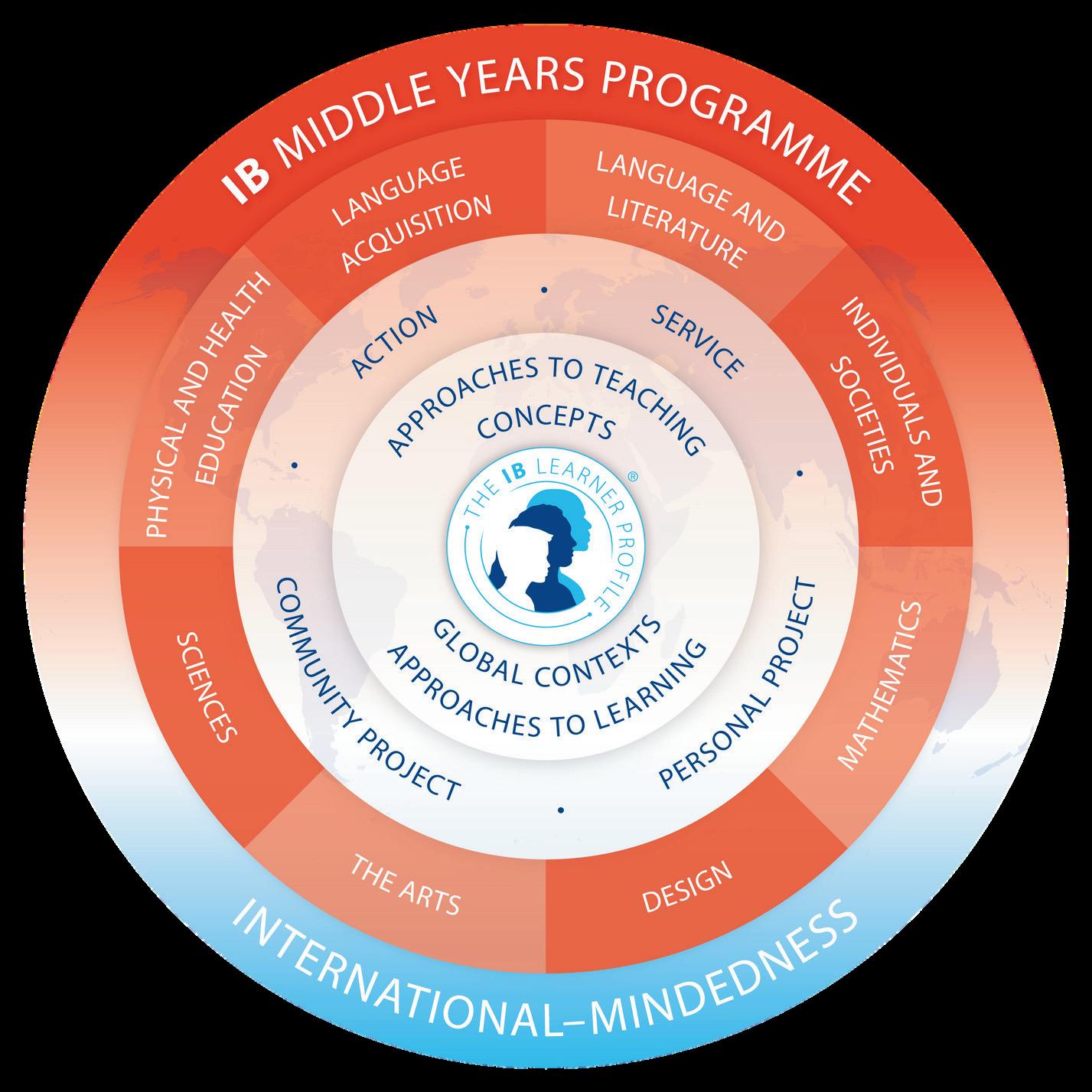
The MYP aims to help students develop their personal understanding, their emerging sense of self and responsibility in their community. MYP teachers organize the curriculum with appropriate attention to:
Teaching and learning in context
Students learn best when their learning experiences have context and are connected to their lives and the world that they have experienced. Using global contexts, MYP students explore human identity, global challenges, and what it means to be internationally minded.
The Global Contexts are:
Identities and relationships
Orientation in time and space
Personal and cultural expression
Scientific and technical innovation
Globalization and sustainability
Fairness and development
02
Conceptual understanding
Concepts are big ideas that have relevance within specific disciplines and across subject areas. MYP students use concepts as a vehicle to inquire into issues and ideas of personal, local and global significance and examine knowledge holistically.
03
Interdisciplinary learning
Students are required to study a minimum of one interdisciplinary unit (IDU) per year level. As part of IDU, student inquiry and assessment are guided by a shared conceptual understanding that combines two or more disciplines or subject groups to create a new understanding.
04
Service as action
Action (learning by doing and experiencing) and service have always been shared values of the IB community. Students take action when they apply what they are learning in the classroom and beyond. IB learners strive to be caring members of the community who demonstrate a commitment to service—making a positive difference to the lives of others and to the environment. At Discovery College, students are required to participate in meaningful service through a cycle of inquiry, action, and reflection. They are encouraged to connect their classroom learning with real-world experience. You can find more information in our Service As Action Handbook
MYP service learning outcomes:
With appropriate guidance and support, MYP students should, through their engagement, with service as action:
Become more aware of our own strengths and areas for growth
Work collaboratively with others
Undertake challenges that develop new skills
Consider the ethical implications of our action
Discuss, evaluate and plan student-initiated activities
Persevere in action
Develop international-mindedness through global engagement, multilingualism and intercultural understanding
Language and identity
MYP students are required to learn at least two languages (language of instruction and an additional language). Learning to communicate in a variety of ways is fundamental to their development of intercultural understanding and crucial to their identity affirmation.
Personal project
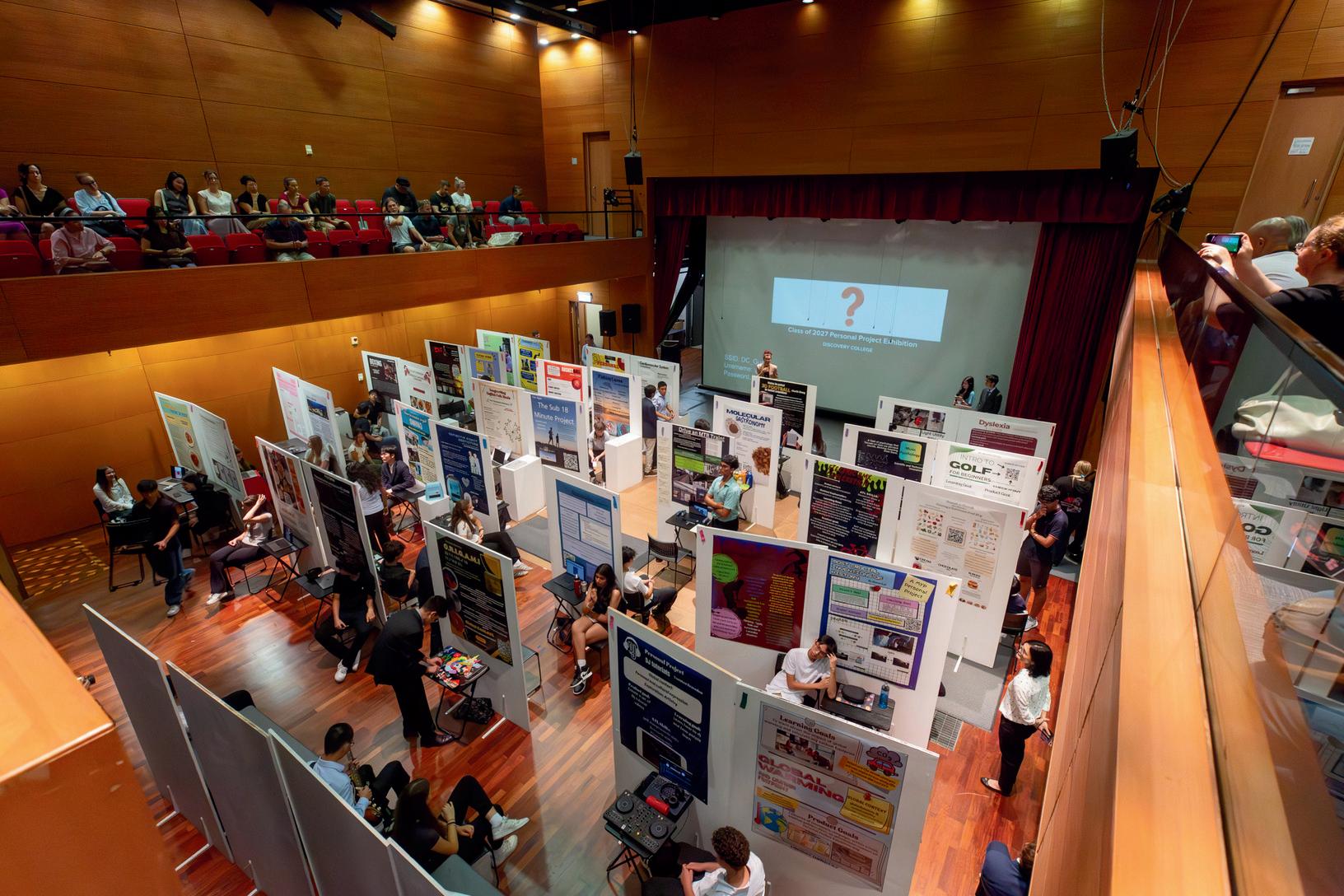
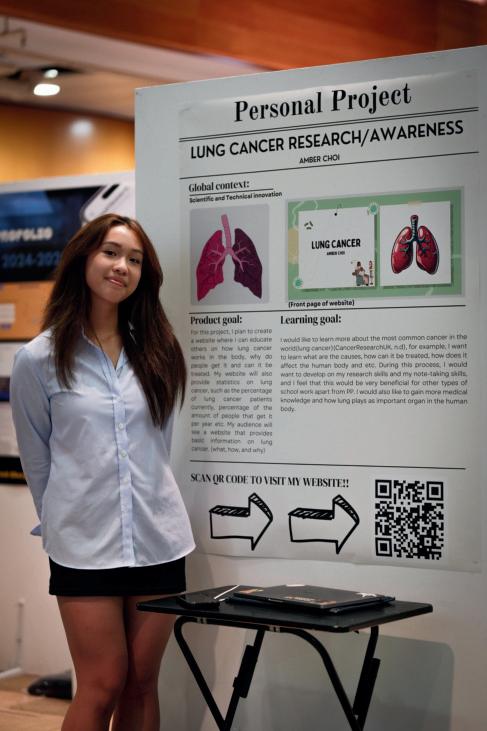
In Year 11 (MYP Year 5), each student is required to research and create a unique Personal Project, an independent inquiry-based study in an area of particular interest that links skills from several academic subjects and a global context. The Personal Project may be a research essay, artistic production, scientific experiment, invention, some other means of expression, or improve the quality of life for a community or group. It is the capstone of the MYP. In addition to producing a product, a detailed process journal is kept and a report is required for IB submission.
Each student is assigned a supervisor and students are required to meet regularly with their supervisor, who guides the student in setting goals; making plans; initiating action; reflecting; evaluating; utilizing their process journal. Supervisors will also ensure the student’s personal project satisfies ethical and legal practices. The supervisor is not necessarily an expert in the chosen topic, but is available to advise about the process of carrying out a project and seeing it through to a successful conclusion.
The MYP personal project is an independent and significant piece of work completed by students in Year 11. Approximately 25 hours are required to complete this long-term project. While students are responsible for their own time, one weekly ATL Seminar class (40 minutes) is allocated during Discovery Time to help them develop approaches to learning skills necessary to complete their Personal Project.
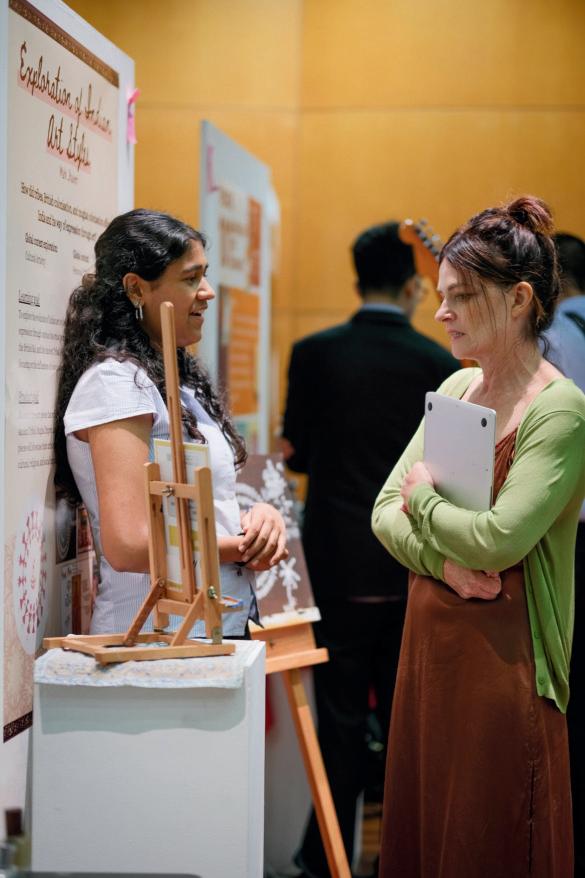
The Personal Project is introduced to Year 10 students at Discovery College and students begin brainstorming their learning goal and product for their Personal Project. Final completion of the Project is required at the beginning of the second semester of Year 11. Students will participate and get involved in the Personal Project Exhibition to showcase their learning and share their achievement with the Discovery College
Approaches to learning (ATL)
Approaches to learning skills are a set of skills that are a unifying thread throughout all MYP subject groups. ATL skills provide the foundation for independent learning and encourage the application of students' knowledge, understanding, and skills in unfamiliar contexts. Developing and applying these skills help students learn how to learn. The five approaches to learning categories and clusters are:
Skill category
MYP Skills Focus Areas
Communication
Communication
Exchanging thoughts, messages and information effectively through interaction Reading, writing and using language to gather and communicate information
Social Collaboration Working effectively with others
Self-management
Organization
Managing time and tasks effectively
Research
Affective skills
Self-management
Reflection skills
Information literacy skills
Managing state of mind (e.g. mindfulness, emotional management, perseverance, selfmotivation, resilience)
(Re)considering the process of learning; choosing and using approaches to learning skills
Finding, interpreting, judging and creating information
Media literacy skills Interacting with media to use and create ideas and information
Critical thinking skills
Analysing and evaluating issues and ideas
Creative thinking skills Generating novel ideas and considering new perspectives
Transfer skills
Using skills and knowledge in multiple contexts
Assessment
The purpose of MYP assessment is to provide feedback to students, teachers, and parents on student progress in relation to the MYP objectives and criteria. Students demonstrate their understanding through a variety of activities/tasks during the learning process. Assessment allows students to apply their knowledge and practice their skills. Through this process, they can identify their learning strengths and work on their weaknesses. Assessments provide teachers with feedback on the effectiveness of their instruction as well as the progress of their students.
Assessment in the MYP is criterion-related, which means that students are assessed against specific criteria rather than being ranked against each other. Teachers are required to evaluate student achievement using their professional judgment, guided by the prescribed subject-group criteria that are public, and known in advance to ensure the validity and transparency of the assessment.
All subject-specific assessment criteria are available in the MYP Assessment Guidance Handbook for Parents in Students. They are also explained to students at the beginning of the academic year, or when they start at the school.
School assessments include different approaches:
Formative assessment
Formative assessment is an assessment that happens during learning rather than at the end. It is designed to provide students with feedback on their understanding and progress, as well as to help teachers adapt their teaching. Often, formative assessment involves class discussions, quizzes, and self-reflection.
Summative assessment
Summative assessment is part of every MYP unit. It is designed to provide evidence for evaluating student achievement using the required MYP subject-group-specific assessment criteria. Summative assessments provide a summary of students' overall performance in one or more areas, and they are graded based on their achievement.
Peer & self assessment
Peer assessment involves students evaluating their peers' work, while self-assessment involves students reflecting on their own learning. Students can benefit from both types of assessments as they gain a better understanding of MYP objectives and criteria, and take on responsibility for their own learning.
Assessment criteria for all MYP subjects
Each MYP subject assesses students on four equally weighted criteria, except for interdisciplinary learning and the MYP Personal Project, which has three criteria. Some of these criteria will have the same letter in each subject where those criteria are assessed. For example, Knowing and Understanding will always be criterion A, and Communicating will always be criterion C.
MYP Assessment Objectives
Subject
Individuals
MYP Final Exams
Year 11 students will take the MYP Final Exams in Language & Literature, Language Acquisition, Science, Math, and Individual & Societies at the end of Year 11. All of these exams should be considered as a snapshot of where each student is at, and should not be overly emphasised as the most important measurement of the student's current level of achievement. The criterion-related grades from the MYP Final Exams are included in the overall determination of the student's semester 2 grade and are only weighted at the same level as a regular major assignment.
The purpose of the MYP final exams is to familiarise Year 11 students with the practice of sitting formal exams in the DP. It is also to develop their exam-taking strategies and help them learn how to deal with exam pressure.
Reporting
In order to keep students and their families informed about their progress, the following reports are provided: 10
Progress Reports
In the MYP, courses are organised into different units of work. Based on the assessment tasks upon completion of a unit of work, teachers provide students with feedback and evaluate their performance using one or more subject-specific assessment criteria.
Student progress reports include the next steps (feedback from teachers), students' reflections in response to their teachers' feedback for further improvement, and relevant criteria grades. The ESF Ding app will update parents on their child's progress monthly. Unit progress reports are always available in the app in the ARR (Assessment Recording Reporting) section.
Semester Reports
In the MYP Semester Reports, we provide a brief course outline of what has been accomplished during the semester. A student's achievement grade is determined exclusively by the assessment tasks completed during that Semester. Grades do not “carry over” into the next Semester. The Semester system is used because many universities, particularly those in North America, require transcripts from Year 10 onwards.
In the Semester Reports published in February and June, an overall 1-7 MYP grade summary is included for all subjects. The Three-Way Conferences will take place every mid-semester, and teachers will be able to discuss students' progress in each area of the curriculum at these meetings.
Learning Teams and Learning Advisors
Each student is assigned to a Learning Team based on their house. Each morning, Learning Teams meet for 10 minutes, and on Wednesdays, they have extended learning team time. The time together will be spent either assisting the students in looking at curriculum progress, goal setting, checking on due dates, or providing academic and pastoral support. The Learning Advisor will be the centre of the student support system and be supported by a Dean responsible for that year level.
Learning Advisors get to know each student in their group, help to monitor their welfare and progress, and are the constant at the start of every school day. Learning advisors and Year-level Deans deliver the Personal and Social Education curriculum to their student groups in the Extended Learning Team Time. Personal and Social Education programmes are linked to positive learning approaches and developmental outcomes such as knowledge of self, self-efficacy, healthy decision-making and risktaking, goal setting, negotiation, reflection, and empowerment.
12
Timetable
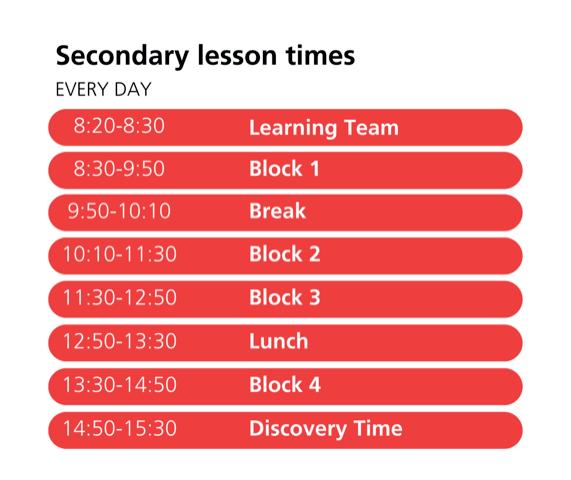
The timetable is made up of four blocks each day, covering Language and Literature, Language Acquisition (Chinese or Spanish), Individuals and Societies, Mathematics, Science, Physical and Health Education, Design or the Arts (Visual Arts, Theatre, Music, and Media Arts in Year 10 &11). Subjects rotate biweekly. Each block lasts 80 minutes.
Discovery Time occurs each day, and ageappropriate classes are offered depending on the Year Level. During this time, students may participate in year-level assemblies, guided study classes, service learning planning, and house-based activities, or they can choose their own activities under adult guidance during the Agency in Action class. Year 11 students may also use this time to meet with their Personal Project supervisors or student mentors.
Teachers from most subject areas are available to help students with their learning during this block. This is a time to specifically provide an environment where students assume increasing independence and responsibility.
The Five DC Outcomes
The 5 DC learning outcomes represent how the Discovery College education will impact students. These outcomes include achieving highly, being internationally minded, flourishing, taking principled action, and being agentic. All of these outcomes are equally important and are designed to help students succeed academically and personally. Each outcome is focused on developing specific skills and mindsets, such as empathy, intercultural understanding, creative and critical thinking, and personal responsibility, that will help students become well-rounded and engaged learners.
Outcome
Achieving Highly
We are learning to achieve highly by embracing high expectations and passions, and developing learning behaviours that allow us to grow our knowledge, understandings, and skills.
Be Internationally Minded
We are learning to be internationally minded by developing our intercultural understanding, global engagement, and multilingualism.
Flourish
We are learning to flourish by developing the capacity to feel good, function well, and do good.
Take Principled Action
We are learning to take principled action by developing empathy, a sense of community responsibility, and the intrinsic motivation to implement individual, local and global change.
Be Agentic
We are learning to be agentic by developing our individual responsibility and seeking opportunities for voice, choice, and ownership.
Outcome Indicator
Learning to do our best and be creative to meet high expectations in all aspects of life.
Becoming knowledgeable and developing skills and competencies that enable us to be successful in our chosen pathway.
Being courageous and learning to be resilient to overcome obstacles or difficulties and achieve our goals.
Being open-minded, learning to value diversity and recognise and reflect on our own perspectives, as well as the perspectives of others.
Developing local and global awareness, perspectives, and action, to empower ourselves as learners committed to service in the community.
Being good communicators and developing the ability to communicate in a variety of ways in more than one language.
Making our wellbeing visible, being reflective, and developing our strengths and areas of growth in all aspects of life.
Being balanced in learning to maintain healthy physical, social, emotional, and overall wellbeing habits and practices. Showing kindness, learning to take care of ourselves and others, and nurturing positive relationships.
Being caring and learning to show respect, empathy, and compassion for others.
Learning to act with integrity and community responsibility. Learning to influence positive individual, local, and global change.
Being curious inquirers who are responsible for our own learning and educational goals.
Learning to advocate for ourselves and others. Being critical and creative thinkers and learning to demonstrate leadership skills.
Language and Literature
Aims
The aims of MYP Language and Literature are to encourage and enable students to: use language as a vehicle for thought, creativity, reflection, learning, selfexpression, analysis and social interaction develop the skills involved in listening, speaking, reading, writing, viewing and presenting in a variety of contexts develop critical, creative and personal approaches to studying and analysing literary and non-literary texts engage with text from different historical periods and a variety of cultures explore and analyse aspects of personal, host and other cultures through literary and non-literary texts explore language through a variety of media and modes develop a lifelong interest in reading apply linguistic and literary concepts and skills in a variety of authentic contexts.
Course
Students must take English Language and Literature in each year. Throughout this course, students will study language and literature in a variety of genres, as well as literature in a variety of settings and styles. A range of language modes will also be covered in the courses, including oral, written, and visual.
Concepts
Key Concepts
communication | connections | creativity | perspective
Assessment
Related Concepts audience imperatives | character | context | genre | intertextuality | point of view | purpose | selfexpression | setting | structure | style | theme
Assessment for Language and Literature courses in Years 7-11 is based on the following criteria:
Language Acquisition
Aims
The aims of MYP Language Acquisition are to encourage and enable students to: gain proficiency in an additional language while supporting maintenance of their mother tongue and cultural heritage develop a respect for, and understanding of, diverse linguistic and cultural heritages develop the student’s communication skills necessary for further language learning, and for study, work and leisure in a range of authentic contexts and for a variety of audiences and purposes enable the student to develop multiliteracy skills through the use of a range of learning tools, such as multimedia, in the various modes of communication enable the student to develop an appreciation of a variety of literary and nonliterary texts and to develop critical and creative techniques for comprehension and construction of meaning enable the student to recognize and use language as a vehicle of thought, reflection, self-expression and learning in other subjects, and as a tool for enhancing literacy enable the student to understand the nature of language and the process of language learning, which comprises the integration of linguistic, cultural and social components offer insight into the cultural characteristics of the communities where the language is spoken encourage an awareness and understanding of the perspectives of people from their own and other cultures, leading to involvement and action in their own and other communities foster curiosity, inquiry and a lifelong interest in, and enjoyment of, language learning.
Course
MYP Language Acquisition supports mother tongue and cultural heritage while developing proficiency in an additional language. The course develops students' understanding, interpretation, and communication skills. This course also explores cultural contexts and connections between the target language and students' own languages.
Discovery College students study Mandarin as part of their additional MYP language due to our location in Hong Kong. We also offer Spanish classes if a student meets one or more of the following criteria: has a Spanish-speaking heritage has significant language background in French, Italian, Portuguese, Romanian has current or foreseeable engagement with Spanish-speaking communities. has studied Spanish at a previous school.
Concepts
Key Concepts communication | connections | creativity | culture
Related Concepts
Phase 1-2
Related Concepts
Phase 3-4
Related Concepts
Phase 5-6
audience | context | conventions | form | function | meaning | message | patterns | pronunciation | purpose | structure | word choice
audience | context | conventions | empathy | function | idiom | meaning | message | point of view | purpose | structure | word choice
argument | audience | bias | context | empathy | idiom | inference | point of view | purpose | stylistic choice | theme | voice
Continuum of language development
Assessment
Assessment for Language Acquisition courses in Years 7-11 is based on the following criteria:
Individuals and Societies
Aims
The aims of MYP Individuals and Societies are to encourage and enable students to: appreciate human and environmental commonalities and diversity understand the interactions and interdependence of individuals, societies and the environment understand how both environmental and human systems operate and evolve identify and develop concern for the well-being of human communities and the natural environment act as responsible citizens of local and global communities develop inquiry skills that lead towards conceptual understandings of the relationships between individuals, societies and the environments in which they live.
Course
All students are required to study Integrated Humanities in each year of the MYP. The course incorporates disciplines traditionally studied under the general term “the humanities” (such as history and philosophy), as well as disciplines in the social sciences (such as economics, business management, geography, sociology and political science). The study of individuals and societies helps students to develop their identities as individuals and as responsible members of local and global communities.
Concepts
Key Concepts change | global interactions | systems | Time, place and space
Assessment
Related Concepts causality (cause and consequence) | equity | innovation and revolution | processes | choice | globalization | perspective | resources | culture | identity | power | sustainability
Assessment for Individuals and Societies courses in Years 7-11 is based on the following criteria:
Sciences
Aims
The aims of MYP Sciences are to encourage and enable students to: understand and appreciate science and its implications consider science as a human endeavour with benefits and limitations cultivate analytical, inquiring and flexible minds that pose questions, solve problems, construct explanations and judge arguments develop skills to design and perform investigations, evaluate evidence and reach conclusions build an awareness of the need to effectively collaborate and communicate apply language skills and knowledge in a variety of real-life contexts develop sensitivity towards the living and non-living environments reflect on learning experiences and make informed choices.
Course
All students are required to study Integrated Sciences in each year of the MYP. The courses are designed to develop students’ understanding of concepts from Biology, Chemistry, Physics and Earth Sciences while at the same time integrating the understanding of science as a human endeavor and science inquiry skills.
Concepts
Assessment
Assessment for Individuals and Societies courses in Years 7-11 is based on the following criteria:
Mathematics
Aims
The aims of MYP Mathematics are to encourage and enable students to: enjoy mathematics, develop curiosity and begin to appreciate its elegance and power
develop an understanding of the principles and nature of mathematics communicate clearly and confidently in a variety of contexts develop logical, critical and creative thinking develop confidence, perseverance, and independence in mathematical thinking and problem-solving develop powers of generalization and abstraction apply and transfer skills to a wide range of real-life situations, other areas of knowledge and future developments appreciate how developments in technology and mathematics have influenced each other
appreciate the moral, social and ethical implications arising from the work of mathematicians and the applications of mathematics appreciate the international dimension in mathematics through an awareness of the universality of mathematics and its multicultural and historical perspectives appreciate the contribution of mathematics to other areas of knowledge develop the knowledge, skills and attitudes necessary to pursue further studies in mathematics develop the ability to reflect critically upon their own work and the work of others.
Course
The Mathematics course aims to develop students' understanding of concepts from numerical and abstract reasoning (number and algebra), thinking with models (functions), spatial reasoning (geometry and trigonometry), and reasoning with data (statistics and probability). Through inquiry-based learning, students will develop critical thinking, problem-solving, and analytical skills that are applicable in real-life situations.
In Years 10 and 11, we offer Standard and Extended pathways. The Standard pathway prepares students for the DP Standard Level course, allowing time to develop and master essential skills. The majority of students follow this pathway. Students in this pathway are not eligible for the DP Higher Lever course. The Extended pathway prepares students for the DP Higher Level course, covering all the topics of Standard plus additional content and greater depth. When enrolled in the Extended Mathematics Course, students must achieve a minimum of a 5 in all criteria and units.
Key Concepts
form | relationships | logics
Pathways to DP courses
MYP
Related Concepts
approximation | generalization | quantity | space | change | models | representation | systems | equivalence | patterns | simplification | validity
Mathematics Years 7- 9 (MYP Years 1-3)
Mathematics STANDARD Years 10- 11 (MYP Years 4-5)
Mathematics EXTENDED Years 10- 11 (MYP Years 4-5)
DP
Mathematics
Analysis and Approaches
Analysis and Interpretation
Standard Level
Assessment
Mathematics
Analysis and Approaches
Analysis and Interpretation High Level
Assessment for Mathematics courses in Years 7-11 is based on the following criteria:
Criterion
Criterion B Investigating patterns
Criterion C Communicating
8
Design
Aims
The aims of MYP Design are to encourage and enable students to: enjoy the design process, develop an appreciation of its elegance and power develop knowledge, understanding and skills from different disciplines to design and create solutions to problems using the design cycle use and apply technology effectively as a means to access, process and communicate information, model and create solutions, and to solve problems develop an appreciation of the impact of design innovations for life, global society and environments appreciate past, present and emerging design within cultural, political, social, historical and environmental contexts develop respect for others’ viewpoints and appreciate alternative solutions to problems act with integrity and honesty, and take responsibility for their own actions developing effective working practices.
Course
Students in MYP Design develop skills and design literacy that enable them to solve complex, real-life problems and have relevant skills when they graduate from Discovery College.
The curriculum is designed to progress in a structured manner. In years 7 and 8, students are introduced to design through units that present contrived design situations with real-life connections. Guided by their teacher through the design cycle process, students develop a product that tends to be focused and specific, with a limited scope for different outcomes.
Units in years 9, 10, and 11 present design situations that are not just theoretical, but also relate to students' daily lives. These units pose interesting and provocative problems for students to solve, making the learning process engaging and relevant.
As our students progress through the units from year 7 to 11, they develop sound design principles, methodologies, and practical skills. These skills, acquired through hands-on learning, prepare them for further success in Food Science & Technology and Design Technology in the Diploma Programme.
Design
Course
In years 7, 8 and 9, students complete three design units, one each term. In years 10 and 11, students complete two design units, one each semester. Students develop product and textiles skills in years 7, 8 and 9. Beginning in year 9, they add food design to their design experiences. Product and textile design courses focus on designing, manufacturing, and assembling products like furniture, jewellery, and tote bags. Food design courses focus on food design, production, and presentation.
In all of their design courses, students not only develop solid design concepts and skills, but also explore various materials, techniques and processes. This hands-on learning approach helps them develop their creative, critical and reflective thinking skills, which are crucial for their future success in this subject.
Concepts
Key Concepts
communication | communities | development | systems
Assessment
Related Concepts
adaptation | collaboration | ergonomics | evaluation | form | function | innovation | invention | perspective | markets and trends | resources | sustainability
Assessment for the Design courses in Years 7-11 is based on the following criteria:
8
The Arts
Aims
The aims of MYP Arts are to encourage and enable students to: enjoy lifelong engagement with the arts explore the arts across time, cultures and contexts understand the relationship between art and its contexts develop the skills necessary to create and to perform art express ideas creatively reflect on their own development as young artists.
Course
Years 7-9 students will rotate through Visual Arts, Music, and Theatre. Year 10 students have the option of choosing two semester-long electives from the arts group to explore and develop their interests in Media Arts, Music, Theatre, or Visual Arts. Year 11 students can choose one year-long elective course from the arts group in either Media Arts, Music, Theatre, or Visual Arts. This is a way to further develop and refine their technical skills, expand their knowledge, and enhance their conceptual understanding. The year-long course allows students to gain depth and mastery in their chosen art subject, which will also help inform their IB DP/CP subject selections.
Concepts
Key Concepts aesthetics | change | communication | identity
Assessment
VA Related Concepts audience | boundaries | composition | expression | genre | innovation | Interpretation | narrative | presentation | style | visual culture
PA Related Concepts audience | boundaries | composition | expression | genre | innovation | Interpretation | narrative | play | presentation | role | structure
Assessment for the Arts courses in Years 7-11 is based on the following criteria:
Physical and Health Education
Aims
The aims of MYP Physical and Health Education are to encourage and enable students to:
use inquiry to explore physical and health education concepts participate effectively in a variety of contexts understand the value of physical activity achieve and maintain a healthy lifestyle collaborate and communicate effectively build positive relationships and demonstrate social responsibility reflect on their learning experiences.
Course
Students are required to study Physical and Health Education in Years 7-11. In this course, students learn the importance of overall wellness in order to maintain a healthy, balanced lifestyle. As part of this, students acquire knowledge of physical fitness and health, as well as aesthetic movement, along with an understanding of the benefits of physical activity, nutrition, and mental health. Students also develop the ability to evaluate risk and make informed decisions to support their own and others' health and wellbeing.
Concepts
Assessment
Assessment for the Physical and Health Education courses in Years 7-11 is based on the following criteria:
MYP Assessment Calendar 2025-2026
The Assessment Calendar is a valuable tool for both students and parents, aiding in effective planning and preparation for assessments. By utilizing the calendar, students can carefully schedule study sessions, allocate revision time, and ensure an organized approach to learning. It provides an overview of upcoming assessments, allowing students to clarify requirements and deadlines. Parents can also refer to the calendar to support their child's planning and offer guidance. Monthly updates will be made to the assessment calendar.





Year 7 Teachers
Language and Literature
English
7.1 & 7.2 Ms Claire NEALE
7.3 & 7.4 Ms Fiona TATE
Chinese Ms Amy YANG
Language Acquisition
Chinese
Phase 1A
Phase 1B Ms Candice CHEN Ms Maggie LEE
Phase 2A Ms Elaine LEUNG
Phase 3A Mr Danny SHIH
Spanish
Phase 1 Mr Obdulio FONSECA
Individuals and Societies
7.1
Mathematics
7.1 Mr Alastair MACK
7.3 Ms Chantelle DE WET
7.4 Mr Mark Jobling
Physical & Health Education
Learning Teams
Holy Yoong
Year 7 | English Language and Literature
August
- November
Unit 1: Poetry Anthology
In Unit 1, “Poetry Anthology,” students study the key concept of personal and cultural expression by exploring various types of poems. The unit divides into two parts: analysing a poem and writing a free verse poem. In the first part, students learn to annotate and analyse poetic devices, and communicate ideas using the TEEAL format. Teachers assess this section using two criteria: Analysing (A) and Organising (B). For the creative task, students write a free verse poem, focusing on a chosen topic and poetic elements. Teachers assess this using Producing Text (C) and Using Language (D). Students also compare authorial choices between poems, which is assessed against Criterion A: Analysing.
November
- February
Unit 2: How Do I Influence Others? - Book Launch
In the "Book Launch" unit, students study communication by sharing their experience of reading a self-chosen book, culminating in a reimagined book cover with annotations using visual literacy techniques and a TED Talk presentation. This unit focuses on rhetorical language, characterisation, plot, reviews, recommendations, and visual literacy. Students demonstrate their understanding of their chosen text through an engaging TED talk (B: organising), an updated book cover with annotations (C: producing text), and a persuasive TED Talk speech (D: using language).
February
- May
Unit 3: My Stories, My Identity
Students explore the concept of identity through Roald Dahl's “Boy”. They analyse how he uses descriptive techniques to create engaging stories. Students annotate an extract from "Boy" and write a TEEAL paragraph, assessing their abilities in analyzing and organizing (Criteria A and B). They also write autobiographies that contain a life timeline and sample chapter, assessing their abilities in producing text and using language (Criteria C and D).
May - June
Unit 4: The 21st Centry Family
Students look at what constitutes a 21st Century Family using the key concept of relationships. Students look at a number of family structures and discuss how the stereotype of the traditional nuclear family is changing rapidly. This unit culminates with a formative assessment where students plan and write a piece of creative writing which tells a story about a family structure of their choice.
Year 7 | Chinese Language and Literature
August - October
Unit 1: Poetry 诗歌
In the "Poetry" unit, students learn how poets use rhyme, structure, and imagery to allow audiences to imagine an environment and experience the mood they were in when they created the poem, thereby bridging time and space. They also utilise poetry's "coding rules" to decode unknown poems and encode their own. This not only allows students to understand poems more deeply, but also gives them the ability to express themselves in poetry. Analysing and producing text criteria are evaluated in this unit.
October - December
Unit 2: Story Creation
The "Story Creation" unit explores fables, novels, and plays. They have been written for a variety of audiences at various times and places, transmitting cultural identities and ideas via characters and plots that have inspired generations of thought and creativity. Students investigate how authors form the characters in their stories and portray their connections to each other in order to create a good story that meets the needs of their audience. Organizing, producing text, and using language criteria will be assessed in this unit.
January - March
Unit 3: Visual Text Analysis
In the "Visual Text Analysis" unit, students analyze visual symbols and creative elements in visual texts to understand the author’s intention, cultural significance, creative goals, and audience needs. By comparing and evaluating different works, students develop skills in comparative analysis and assessment of creative effects. This process deepens their understanding of a visual text’s message and its impact on the audience. Analysing and organizing criteria are assessed in this unit.
March - June
Unit 4: Travelogue
In the “Travelogue” unit, as a result of analyzing the elements of effective travel writing, including descriptive language, sensory details, and narrative structure, students explore the ways in which writers use language to create vivid and engaging travelogue prose that reflects their personal experiences and perspectives. Through this exploration, students gain an appreciation for the art and craft of writing and a deeper understanding of the importance of travelogue writing in conveying a travel experience. Producing text and using language are assessed in this unit.
Year 7 | Chinese Language Acquisition
August - October
Unit 1: Who am I?
In the 'Who am I' unit, students explore identity through inquiry, describing themselves, their families, and nationalities in different contexts. With the guidance of the teacher, students will acquire vocabulary related to self-expression, sentence structures, and engage in activities that promote reading, listening, speaking, and writing skills. They learn different sentence structures that allow them to communicate their personal identities effectively. Their listening (A) and reading (B) skills are assessed in this unit.
October - December
In the 'Countries and Languages' unit, students explore the world's cultural and linguistic diversity through inquiry into different nations and their languages. With the guidance of the teacher, students acquire vocabulary related to countries, nationalities, and languages, and engage in activities that promote reading, listening, speaking, and writing skills. They learn basic grammatical structures that allow them to communicate about personal relationships and engage in role-play activities focused on pronunciation and writing fundamentals. Their speaking (C) and writing (D) skills are assessed in this unit.
January - March
Unit 3: Work and Transportation
The "Work and Transportation" unit introduces students to fundamental Chinese vocabulary related to occupations and transportation. Throughout this unit, students acquire knowledge of commonly used occupational words and develop skills in describing various types of jobs. They learn how to construct descriptions using basic grammar and sentence patterns. Additionally, students engage in conversation and written exercises to practice vocabulary in transportation. In this unit, students' listening (A) and reading (B) skills will be assessed.
April - June
Unit 4: Colours and Clothing
The "Colours and Clothing" unit covers the basics of Chinese vocabulary related to colours and clothing. In this unit, students learn common colour words and how to describe various types of clothing items. They engage in conversation and written exercises to practice using these words and explore how cultural background and personality can influence communication conventions. The assessment criteria for this unit are Speaking and Writing, which evaluate students' learning progress.
Year 7 | Chinese Language Acquisition
August - October
Unit 1: All About Me 关于我
In the 'All About Me' unit, students learn how to introduce themselves, including sharing basic information such as age, nationality, family members, friends and daily activities. They learn about the different ways in which people introduce themselves, such as handshakes, hugs, and hellos. They also explore the concept of personal space and the importance of respecting others' boundaries. A variety of text types are studied, including presentations, interviews, and letters. In this unit's assessment, students are required to introduce themselves in both speaking and writing.
October - December
Unit 2: Daily Routines ⽇常⽣活
In the "Daily Routines" unit, students explore how school life can be made more enjoyable through effective daily routines. A number of topics are covered in this course, including daily routines, dates, time, jobs, and transportation. Students learn everyday life and routines in Mandarin, such as how to set up their daily schedule, how to talk about jobs and how to use public transportation. Time management and personal organisation are also discussed. The text types studied include emails and letters. Listening and reading skills are assessed in this unit.
January - March
Unit 3: Appearance ⻓相
In the "Appearance" unit, students explore topics such as appearance, the concept of beauty, and family relationships. Students to consider the concept of beauty from multiple perspectives and develop their own understanding of it. In addition, they discuss how we present ourselves in relation to our cultures, backgrounds, and beliefs about beauty. Students also consider how beauty standards can change over time and across cultures. The text types studied include letters and speeches. This unit assesses speaking and writing skills.
April - June
Unit 4: Hobbies
In the "Hobbies" unit, students explore topics such as school activities, sports, spare time hobbies and friendships. It is possible to strengthen relationships by connecting with people from different backgrounds through common hobbies. Activities in different cultural contexts and weather conditions are also explored. The text types studied include speeches and blogs. The language activities focus on developing linguistic skills such as describing hobbies and interests and expressing opinions. This unit assesses their listening and reading skills.
Year 7 | Chinese Language Acquisition
August - October
Unit 1: Living Environment
In the "Living Environment" unit, students learn how to describe their house environment and name different furniture items in each room. As well as identifying the living room, kitchen, bedroom, and other rooms, they also describe their layout in Mandarin. They learn about place prepositions and how to use them to describe the location of the items. They also practice describing house-moving experiences. The text types studied in this unit include letters and blueprints of homes. This unit assesses their listening and writing skills.
October - December
Unit 2: Three Meals A Day
In the "Three Meals A Day" unit, students discuss healthy and unhealthy eating habits, describe the taste of a variety of foods, and express their preferences and dislikes for different foods. They discuss how cultural and geographical factors affect food choices in different countries. The students investigate the three meals a day in different countries. They also learn the importance of a balanced diet and the importance of making healthy food choices. The text types studied in this unit include letters and brochures. This unit assesses their reading and speaking skills.
January - March
Unit 3: Sickness
In the "Sickness" unit, students study vocabulary and sentence structures related to sickness and health, including describing symptoms of sickness, seeking advice on how to get better, expressing concerns about health, and describing treatments. The text types studied in this unit include sick leaves and diaries. Additionally, they discuss different treatments for the same illness. They also learn to talk about preventive measures, such as vaccinations and healthy lifestyle habits. This unit assesses students' listening and writing skills.
April - June
Unit 4: Subjects
In the "Subjects" unit, students learn about the different types of school subjects that and discuss their preferences. They learn about different types of education. As part of their learning, they also learn how to describe their learning plans and experiences. Additionally, they discuss effective Chinese learning strategies. Reflection on education opportunities for privileged and less privileged students is encouraged. The text types studied in this unit include timetables and blog posts. This unit assesses their reading and speaking skills.
Year 7 | Chinese Language Acquisition
August - October
Unit 1: School Life
In the "School life" unit, students learn about school facilities, school characteristics, and extracurricular activities provided in various contexts. Students learn about different types of educational systems and describe their experiences at school. In addition, they explore and compare different school systems in different countries. Finally, they discuss how cultural values and beliefs are reflected in schools and how these functions and perspectives shape them. The text types studied in this unit include speeches and letters. The unit assesses their reading and writing skills are assessed in this unit.
October - December
Unit 2: Family Relationships
In this unit, “Family Relationships”, students explore how mutual understanding and respect of roles can lead to strong family relationships. They learn about Chinese family terms and the importance of family connections. They also discuss the importance of communication and conflict resolution in family relationships. Students discuss how to maintain family relationships through regular communication. The text types studied in this unit include presentations and articles. This unit assesses students' listening and speaking skills.
January - March
Unit 3: Customs and Traditions
In the "Customs and Traditions" unit, students explore festivals and celebrations. They learn about the cultural significance of these events, the different traditions associated with them, and how people celebrate in different cultures. They also discover the foods that people enjoy during festivals and how they use them to honour the event or celebrate their culture. Along with sharing their cultural traditions, they reflect on similarities and differences between cultures during this unit. The text types studied in this unit include emails and articles. This unit assesses their reading and speaking skills.
April - June
Unit 4: Travel & Leisure
In the "Travel & Leisure" unit, students inquire into famous scenic attractions in a local context. They explore their cultural, historical, and natural significance. They learn to appreciate the beauty of these places and to understand their role in the local community. They also learn how to plan visits to these destinations, taking into account factors such as budget, transportation, and accommodations. Students learn how to prepare for and respond to emergencies during a trip. The text types studied in this unit include dairies and articles. This unit assesses their listening and writing skills.
Year 7 | Spanish Language Acquisition
August - October
Unit 1: Personal Relationships | Las Relaciones Personales
The "Personal Relationships" unit focuses on vocabulary related to personal relationships and family, enabling students to describe themselves, their family, siblings, nationality, and physical characteristics. They learn how to construct descriptions using basic grammar and sentence patterns. Additionally, they enhance their speaking skills as they practice conversational exchanges about personal relationships and engage in roleplay activities. In the writing component, they compose paragraphs and short texts related to personal relationships. This unit assesses their speaking and writing skills.
October - December
Unit 2: School Life | Mi Escuela!
In the "School Life" unit, students learn how to provide detailed information about their school routines, describe the characteristics of their school, discuss the facilities available, describe school timetables, and discuss different subjects. The students share their experiences and feelings about their school life, practice asking questions, and express their opinions. In addition, they learn about different school systems in different countries. They also reflect on their own experiences and attitudes toward school. This unit assesses their listening and reading skills.
January - March
Unit 3: Home Sweet Home | Mi Casa
In the unit "Home Sweet Home" students are able to describe their homes and provide details about the location of rooms in the house using prepositions of place. They can also identify the furniture and objects found in each room. Additionally, students can use the vocabulary learned to describe their house in Spanish. Collaboration is encouraged, with students actively encouraging others to contribute and share their ideas. Assessment measures proficiency in expressing themselves orally and comprehending written materials through reading and speaking.
March - June
Unit 4: Free Time | Tiempo Libre
In this unit, "Free Time" students actively communicate their preferences for sports, hobbies, and things they enjoy doing in their free time. They talk about their favourite activities and express their preferences. They discuss how culture can influence the things we like and the choices we make. Throughout the unit, they practice speaking and writing skills, learning how to organize their ideas and express them clearly. Assessment measures proficiency in understanding spoken content and effectively expressing themselves through listening and writing
Year 7 | Individuals and Societies
August - November
Unit 1: Hong Kong Stories
In the "Hong Kong Stories" unit, students conduct a social investigation into their relationship with this amazing city. Students examine Hong Kong through geographical and historical lenses. In preparation for the summative assessment, they practice source analysis and conduct an interview to provide different perspectives regarding a change they have observed in Hong Kong. This builds their communication, media literacy, and transfer skills. They are assessed on how well they can evaluate primary and secondary sources and how well they can consider different perspectives.
November - January
Unit 2: Adventure Landscapes
The "Adventure Landscapes" unit is where students practice skills in map reading and navigation as well as software such as Google Earth. They learn about what is considered an adventure landscape and how human activity affects them. Throughout the process, they practice creative thinking and transfer skills, which is evident in the assessment where students demonstrate their understanding of sustainable use of adventure landscapes by completing an action plan that leads to the design of a brochure to showcase two landscapes of their choosing.
January - March
Unit 3: Forces of Nature
In the “Forces of Nature” unit, students learn about how natural hazards create social, economic, and environmental impacts on societies. They pick up on the formation of different hazard types and are able to illustrate these processes visually and verbally through their summative assessment by creating a mock news presentation about a natural hazard and its impact on a past event. The assessment evaluates their communication and collaboration skills.
March - June
Unit 4: The Power of One
In the "The Power of One" unit, students learn about the lives of influential figures such as Nelson Mandela and Martin Luther King Jr., and their fight against discrimination. They have a variety of options available to demonstrate their understanding of these topics, such as recording video PSAs and writing multiple newspaper articles. Through the process, they practice media literacy and critical thinking skills. Students demonstrate their understanding of Nelson Mandela's life by writing a newspaper article based on two criteria: knowing and understanding, and thinking critically.
Year 7 | Sciences
August - October
Unit 1: Working as a Scientist
In the “Working as a Scientist” unit, students acquire essential skills for scientific inquiry, focusing on laboratory safety, equipment use, and the scientific method. They learn to recognize hazard symbols, identify safety gear, and adhere to lab protocols. Hands-on activities include using scientific tools like the Bunsen burner. The unit covers the scientific method steps, enabling students to formulate hypotheses, design experiments, analyze data, and present findings in lab reports. Assessment involves a lab design and report on using limonene as an alternative fuel to crude oil.
October - December
Unit 2: Matter Matters (Chemistry)
In the “Matter Matters” unit, students study the particle model to understand states of matter, changes of state, diffusion, and dilution. They classify elements, compounds, and mixtures, and explore separation techniques such as distillation and chromatography. The unit covers differences between chemical and physical changes, evidence of reactions, and constructing word equations. Students are introduced to acids and bases, test pH, make indicators, and explore neutralisation. Learning is consolidated through a topic test and a research task on separation methods.
January - March
Unit 3: A Delicate Balance (Biology)
The "A delicate Balance" unit explores the intricate relationship between environments, ecosystems, and food webs. Students learn to measure and evaluate the impact of biotic and abiotic factors on global environments through engaging case studies. They also acquired skills in the proper and responsible use of devices for measuring abiotic factors. During summative assessments, students analyze human activities and environmental sustainability. Students demonstrate their ability to effectively communicate their reflections using APA formatting, including in-text citations.
April - Ju
In the “Watt’s the Attraction” unit, students study electrical safety, circuit components, and differences between series and parallel circuits, investigating current flow and brightness. They explore magnet properties, magnetic poles, induced magnetism, and the uses of permanent and electromagnets. The unit introduces light behaviour, including shadows and reflection. Practical activities and problem-solving deepen understanding of these physical concepts. Assessment includes a topic test and a Maglev train research task.
Year 7 | Mathematics
August
- October
Unit 1: Being a Mathematical Communicator
In unit 1, "Being a Mathematical Communicator", students study mental numeracy, various arithmetic operations, and practice communication and critical thinking ATL skills. In this unit, students demonstrate their understanding by completing a Number Operations Test, a Patterns Investigation and the 'Let's go shopping' assessment, which are assessed against Knowing and Understanding, Investigating Patterns, Communicating, and Applying Mathematics in Real-life Contexts.
October - December
Unit 2: Fractions, Decimals, and Percentages
In unit 2, "Fractions, Decimals, and Percentages", students study various fraction concepts and operations. They learn how to add, subtract, and multiply fractions, as well as understand the concept of reciprocals when dividing fractions. Additionally, students explore the nature of fractions as real numbers and as division. They practice communication and transfer skills. In this unit, students demonstrate their understanding by completing the "Fractions Criterion A Test" and the "Real-world Recipe Test", which are assessed against knowing and understanding, communicating, and applying mathematics in real-life contexts.
January - March
Unit 3: Geometry
In unit 3, "Geometry", students study identifying angles, classifying polygons, finding sums and missing angles, constructing polygons and triangles, as well as bisecting angles. They also calculate the area and perimeter of regular and irregular polygons, as well as triangles. In this unit, students practice critical thinking ATL skills and demonstrate their understanding by completing the "Redecorating My Bedroom Wall Test", which is assessed against Applying Mathematics in Real-life Context and Communicating.
March - June
Unit 4: Directed Numbers
In unit 4, "Directed Numbers", students study integers on number lines, compare and order integers, interpret integers in real-world situations, and perform operations with integers, including the order of operations and fractions. They also study Arithmetic and Geometric Sequences, leading to finding the nth term of given sequences. In this unit, students practice the transfer ATL skill and demonstrate their understanding by completing the "Directed Numbers Test" and the "Sequences Test", which are assessed against Knowing and Understanding, Investigating Patterns, Communicating, and Applying Mathematics in Real-life Contexts.
Year 7 | Physical and Health Education
Students in different class sessions complete Physical and Health Education units at different times due to limited facilities, ensuring equitable access to resources.
Unit 1: Personal and Social Responsibility
In the "Personal and Social Responsibility" unit, students study how relationships can impact team performance and practice collaboration. In this unit, students demonstrate their understanding by setting an individual goal to improve performance and a reflection, which are assessed against planning for performance and reflecting and improving performance.
Unit 2: Let's Get Physical
In the "Let's Get Physical" unit, students participate in a range of physical activities to improve physical health and practice organization. In this unit, students demonstrate their understanding by completing a written test, a physical activity log, and reflection, which are assessed against Knowing and understanding, planning for performance, reflecting and improving performance.
Unit 3: Gymnastics
In the "Gymnastics" unit, students study gymnastic movement concepts and practice creativity and innovation. In this unit, students demonstrate their understanding by completing a movement plan, performance, and reflection, which are assessed against Planning for performance, Applying and performing, and Reflecting and improving performance.
Unit 4: Striking
In the "Striking" unit, students study the game of Softball and the decisions made during the game and practice critical thinking. In this unit, students demonstrate their understanding by completing a softball game and reflecting on performance, which is assessed against Applying and performing, and reflecting and improving performance.
Unit 5: Net Games
In the "Net Games" unit, students study the Game of Badminton and its similarities and differences to Table Tennis and practice transfer of learning. In this unit, students demonstrate their understanding by completing a game of Badminton and a written quiz, which are assessed against knowledge and understanding, and applying and performing.
Year 7 | Arts
Through the course of an academic year, students in Years 7-9 will rotate through Visual Arts, Music, and Theatre. These classes allow students to explore and appreciate the different art forms, and to develop their own artistic skills. Students are given the opportunity to express themselves creatively and to develop their own talents.
Unit: Foundations & Ceramics | Visual Arts
"Foundations & Ceramics" investigates the formal qualities: Elements of Art, Principles of Design and Composition, to develop skills in a variety of 2D mediums like drawing, painting and collage. Year 7 uses the design cycle to investigate concept ideation and develop 3D sculpture skills in Ceramics. Inquiring with specific environmental concerns, students use synthesis to communicate to viewers and consider context globally, culturally, locally and personally. After creating a final sculpture, artist statements evaluate how artwork educates audiences and garners emotional responses.
Unit 1: West African Percussion | Music
In the "West African Percussion" unit, students learn to compose, improvise and arrange music on West African tuned and un-tuned percussion instruments with a steady beat, correct rhythm, and developing technique. Through this unit, students gain an understanding of West African culture and music. They practice what they learn by performing, composing, and improvising using these musical conventions through a range of composition and creation tasks. Students are measured by performing and evaluating criteria.
Unit 2: Blues and 1950s Rock | Music
In Year 7 Music, students explore the development of Blues and 1950's rock, and understand how form influences creativity and personal and cultural expression. They study the musical traditions of the past and develop their own understanding of how music can be used to express emotion and ideas. They also develop their skills in composition and improvisation, learning to use their creativity to create unique pieces of music. They demonstrate their knowledge of Blues and 1950's Rock Music by becoming ethnomusicologists, writing lyrics, discussing the history, and analyzing music. Additionally, students practice and perform a cover version of a 1950's rock song, showcasing their acquisition and development of skills. Students are being assessed on investigating and creating/performing criteria.
Unit: Darkwood Manor | Theatre
In the Theatre unit “Darkwood Manor”, students explore the ways in which to enhance tension on stage. Through spooky roles and eerie settings, students create characters who go on scary adventures! This introduces students to basic conventions of drama; teacher in role, students in role, improvisation, use of sound, physical theatre and reflection in the context of a simple, engaging theme. We look at how to create suspense through the use of tableaux, stage geography, physical levels, the use of recorded music/sound effects and students explore the theatrical techniques of Physical Theatre, Narration, Hot-Seating and making a Sound Corridor. Their work is assessed using all four Arts criteria.
Year 7 | Design
Unit 1: Mini Me Light
In the 'Mini Me Light' unit, students learn how products can express emotions and contribute to our well-being. Through the design process, students learn to negotiate ideas, provide and receive constructive feedback, and evaluate information sources. The culmination of their learning is the design and assembly of a handheld light with a battery-powered electric circuit, a tangible demonstration of their design, communication, and collaboration skills. Learning is assessed using four criteria: Inquiring and Analysing, Developing Ideas, Creating the Solution, and Evaluating.
Unit 2: The Organization Advantage
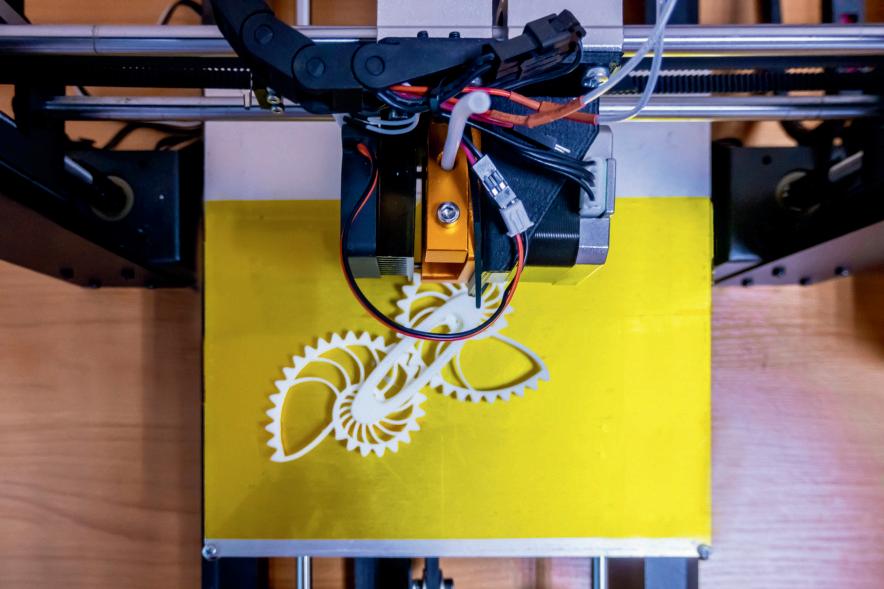
In "The Organisation Advantage" unit, students explore 3D modelling and 3D printing. They learn to sketch and manipulate shapes using CAD (computer-aided design) software. By designing and printing their own objects, they discover the abilities and limitations of 3D printers. Ultimately, students design 3D-printed objects that organise their learning spaces, demonstrating the practical outcomes of their learning. Through this process, they gain design, reflection, and critical thinking skills. Learning is assessed using two criteria: Inquiring and Analysing & Developing Ideas.
Unit 3: Power of Play
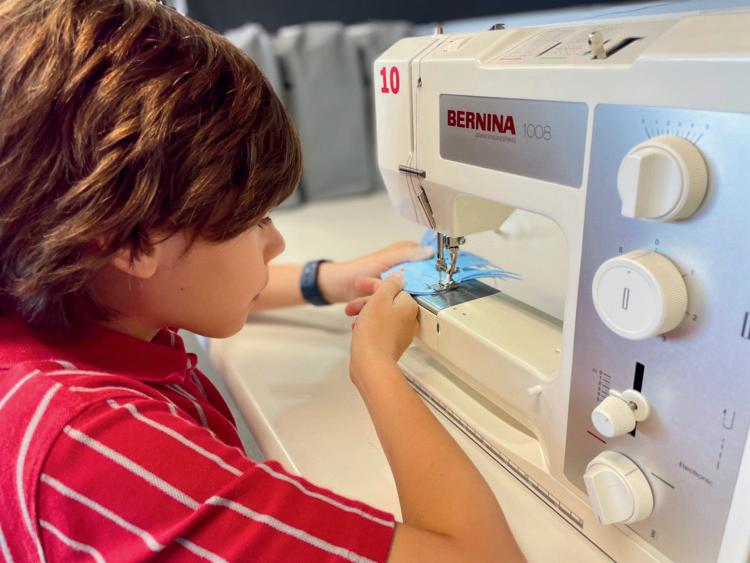
In the "Power of Play" unit, students learn basic hand-sewing techniques and stitches. They practice using different materials, such as felt and cotton fabrics. Ultimately, they design and assemble an original soft toy that is both fun and educational. This unit develops students' design, creative thinking, and critical thinking skills. Learning is assessed using two criteria: Creating the Solution and Evaluating.
YEAR 8
Year 8 Teachers
Language and Literature
English
8.1
8.2 & 8.3
8.4
Mr Alan KIRK
Mr Steve BOLTON
Ms Vanessa VIIRRET
Chinese Ms Elaine LEUNG
Individuals and Societies
8.1 & 8.2
8.3 & 8.4
Ms Nicola GRANT
Mr Daniel HANSSON
Physical & Health Education
8.1 & 8.3
8.2 & 8.4
8.1 & 8.3
8.2 & 8.4
Ms Amy PROSSER
Mr Chris RYAN
8.1 & 8.3
8.2 & 8.4
Sciences
Ms Natalie FONG
Ms Beverley O’GORMAN
Design
Mr Tod BAKER
Ms Martina O’CONNOR
Language Acquisition
Chinese
Phase 1B Mr Danny SHIH
Phase 2A
Phase 2B
Ms Amy YANG
Mr Simon MAN
Phase 3B Ms Valerie MAO
Spanish
Phase 1B
8.1 & 8.3
Mr Obdulio CARCAMO FONSECA
Mathematics
Ms Meena VENKATASUBRAMANIAN
8.2 Ms Chantelle DE WET
8.4
Mr Peter DE WET
Arts
Music
Ms Megan GIBSON
Visual Arts Ms Jane MITCHELL
Theatre
Ms Sarah SWEETMAN
Learning Teams
Blue Mr Obdulio FONSECA
Green Mr Tod BAKER
Purple
Ms Meena VENKATASUBRAMANIAN
Red Mr Peter DE WET
Yellow Ms Candice CHEN
Year 8 | English Language and Literature
August -
October
Unit 1: Heroes and Villains
In the "Heroes and Villains" unit, students learn how writers create heroes and villains in literature and practice communication skills and creative thinking skills. Throughout the unit, students look at works from a range of authors, such as Roald Dahl and J.K. Rowling, and analyze how characters are constructed through descriptive language and the use of dialogue. In response to this, students demonstrate their understanding by creating an extract to showcase both heroic and villainous characters descriptively. This is assessed against organizing, producing Text, and using language criteria. In addition to the extract, they produce a rationale to illustrate how literary devices are used intentionally to create an impact on the audience. Analyzing criterion is assessed.
October -
February
Unit 2: See It My Way: Persuasive Language
In the "See It My Way" unit, students study the key concept of communication through the use of rhetorical language and techniques in advertisements to persuade others to buy products. This unit assesses students' ability to collaborate and create advertisements - both print and moving images - for a product. The group then has to 'pitch' their product in a group presentation in which they explain why and how the persuasive techniques are used in their ads meaningfully. This is assessed against analyzing, organizing, producing Text, and using Language criteria.
February - May Unit 3: ‘Skellig’
In the 'Novel Study' unit, students study the concept of connection through the novel "Skellig" by David Almond. Students are encouraged to explore how the author uses these relational elements to explore themes of transformation, empathy, and the human experience. To showcase their skills and understanding of the novel, students write a critical essay in relation to a question prompt. The TEEAL structure is used to convey ideas logically and effectively in the body paragraphs. The assessment is based on analysing, organizing, and using Language.
Year 8 | Chinese Language and Literature
August - October
Unit 1: Character Portrayal ⼈物剪影
In the "Character Portrayal" unit, students analyse two literary works, "卖炭翁" and "我 的⽼师". They identify and interpret characters' traits, motivations, and actions. Besides learning drama script characteristics, they perform "卖炭翁" as an experimental stage performance. In their drama performances, they practice collaboration skills by helping others succeed and taking responsibility for their actions. The final assessment involves writing a drama script based on an epic character in Chinese history. Organization, producing text, and using language criteria are assessed.
November - December
Unit 2: Material Selection & Tailoring
In the "Material Selection & Tailoring" unit, students learn the art of selecting and tailoring materials effectively. As they explore how to choose materials, they focus on the main idea while discarding irrelevant information. They learn how to critically evaluate the available options and choose materials that best reflect the core aspects of the subject at hand. They practice critical thinking skills by considering ideas from multiple perspectives and developing opposing arguments. The final assessment measure is textual analysis assessed against criterion A: analysing.
January - March
Unit 3: Lyrical Writing
In the unit of "Lyrical Writing 万物有情", students develop lyrical writing skills through activities such as analyzing lyrics, writing their own lyrics, and performing their works. In addition, they learn about the power of words and how to effectively express their ideas. They gain an appreciation for the art of music and how lyrics can be used to convey powerful messages. Throughout the process, they are practicing communication, transfer, and affective skills. Their learning is assessed against four criteria: analysing, organizing, producing text, and using language.
April - June
Unit 4: Song Poetry
In the unit " Song Poetry 词曲欣赏," students develop their skills by engaging in activities and textual analysis to analyze a series of Song poems that convey emotions through scenery. They research a famous historical figure and create a personal Instagram account. They demonstrate their understanding of Chinese Ci (词) lyrical writing by producing two pieces of creative writing. Throughout the process, they practice communication, information literacy, and critical thinking. Four criteria: analysing, organizing, producing text, and using language are assessed.
Year 8 | Chinese Language Acquisition
August - October
Unit 1: All About Me 关于我
In the 'All About Me' unit, students learn how to introduce themselves, including sharing basic information such as age, nationality, family members, friends and daily activities. They learn about the different ways in which people introduce themselves, such as handshakes, hugs, and hellos. They also explore the concept of personal space and the importance of respecting others' boundaries. A variety of text types are studied, including presentations, interviews, and letters. In this unit's assessment, students are required to introduce themselves in both speaking and writing.
October - December
Unit 2: Daily Routines ⽇常⽣活
In the "Daily Routines" unit, students explore how school life can be made more enjoyable through effective daily routines. A number of topics are covered in this course, including daily routines, dates, time, jobs, and transportation. Students learn everyday life and routines in Mandarin, such as how to set up their daily schedule, how to talk about jobs and how to use public transportation. Time management and personal organisation are also discussed. The text types studied include emails and letters. Listening and reading skills are assessed in this unit.
January - March
Unit 3: Appearance ⻓相
In the "Appearance" unit, students explore topics such as appearance, the concept of beauty, and family relationships. Students to consider the concept of beauty from multiple perspectives and develop their own understanding of it. In addition, they discuss how we present ourselves in relation to our cultures, backgrounds, and beliefs about beauty. Students also consider how beauty standards can change over time and across cultures. The text types studied include letters and speeches. This unit assesses speaking and writing skills.
April - June
Unit 4: Hobbies 爱好
In the "Hobbies" unit, students explore topics such as school activities, sports, spare time hobbies and friendships. It is possible to strengthen relationships by connecting with people from different backgrounds through common hobbies. Activities in different cultural contexts and weather conditions are also explored. The text types studied include speeches and blogs. The language activities focus on developing linguistic skills such as describing hobbies and interests and expressing opinions. This unit assesses their listening and reading skills. Phase
Year 8 | Chinese Language Acquisition
August - October
Unit 1: Living Environment
In the "Living Environment" unit, students learn how to describe their house environment and name different furniture items in each room. As well as identifying the living room, kitchen, bedroom, and other rooms, they also describe their layout in Mandarin. They learn about place prepositions and how to use them to describe the location of the items. They also practice describing house-moving experiences. The text types studied in this unit include letters and blueprints of homes. This unit assesses their listening and writing skills.
October - December
Unit 2: Three Meals A Day
In the "Three Meals A Day" unit, students discuss healthy and unhealthy eating habits, describe the taste of a variety of foods, and express their preferences and dislikes for different foods. They discuss how cultural and geographical factors affect food choices in different countries. The students investigate the three meals a day in different countries. They also learn the importance of a balanced diet and the importance of making healthy food choices. The text types studied in this unit include letters and brochures. This unit assesses their reading and speaking skills.
January - March
Unit 3: Sickness
In the "Sickness" unit, students study vocabulary and sentence structures related to sickness and health, including describing symptoms of sickness, seeking advice on how to get better, expressing concerns about health, and describing treatments. The text types studied in this unit include sick leaves and diaries. Additionally, they discuss different treatments for the same illness. They also learn to talk about preventive measures, such as vaccinations and healthy lifestyle habits. This unit assesses students' listening and writing skills.
April - June
Unit 4: Subjects
In the "Subjects" unit, students learn about the different types of school subjects that and discuss their preferences. They learn about different types of education. As part of their learning, they also learn how to describe their learning plans and experiences. Additionally, they discuss effective Chinese learning strategies. Reflection on education opportunities for privileged and less privileged students is encouraged. The text types studied in this unit include timetables and blog posts. This unit assesses their reading and speaking skills.
Year 8 | Chinese Language Acquisition
August - October
Unit 1: Community 社
In the "Community" unit, students learn to describe their living environment, including where to find different facilities in the community and the location between those facilities and their houses. They are also learning how to describe the functionality of each facility and how those facilities improve their life experience by living there. We conclude the unit with a reflection on the DB community in which our school is located and how we can help make this community better. Their listening and writing skills are assessed in this unit.
October - December
2: Pets and Friends
The "Pets and Friends" unit focuses on vocabulary related to personal relationships and personality, enabling students to describe themselves, their friends, pets, and physical characteristics using basic grammar. Additionally, students enhance their listening, speaking, reading, and writing skills through conversational exchanges, role-play activities, and composing texts about relationships with pets or friends. They read and compose paragraphs and short texts related to relationships with pets or friends. This unit assesses their reading and speaking skills.
January - March
3: Shopping
In the "Shopping" unit, students learn relevant nouns and adjectives associated with clothing, accessories, and gifts. They acquire oral communication skills necessary for inquiring about items, bargaining, and describing products in a store setting. Further, students practice articulating what specific items they want to buy and explaining the reasons behind their choices, improving their communication skills. Real-life scenarios provide students with opportunities to apply these skills in authentic contexts. Listening and speaking abilities are assessed through practical exercises and role-playing.
April - June
Unit 4: New Technology Applied in Daily Life
In the "New Technology Applied in Daily Life" unit, students learn key nouns and adjectives for technology products and everyday devices. They build communication skills to describe how technology is used, discuss its benefits, and compare features. Students express opinions on digital tools and evaluate their impact on daily routines. Real-world tasks encourage authentic language use, with assessments focusing on reading practical texts, writing about technology, and participating in speaking activities that simulate daily tech interactions.
Year 8 | Chinese Language Acquisition
August - October
1: Learn Chinese
In the "Learn Chinese" unit, students learn about describing their experiences learning Chinese. The students examine the characteristics of the Chinese language and discuss the advantages and challenges of learning Chinese. They also learn strategies for effectively studying Chinese and identify resources to help them learn Chinese. They reflect on their experiences learning Chinese and set goals for continuing to study the language. Students learn to express their own opinions in Chinese and practice giving presentations in Chinese. Assessment is measured by speaking and writing criteria.
October - December
During the "Diet and Health" unit, students investigate healthy eating habits and how they affect wellbeing. They also discuss the features of different Chinese cuisines and the ones highlighted in the traditional Chinese festivals; examine the way Chinese people use food in their daily life and celebrations, as well as the potential health issues that are not widely known. They learn the importance of a balanced diet and how it affects their health. Additionally, they learn how to make healthy food choices. Their listening and reading skills are assessed in this unit.
January - March
In the "Community Events" unit, students learn to explain which types of events they participate in within the community and describe some voluntary work experiences. Through engaging in community service, they develop social responsibility and empathy, and they gain a deeper understanding of community connections. They also learn to collaborate with others and work together to achieve a common goal. This gives them an opportunity to practice their communication and problem-solving skills. This unit assesses their reading and speaking skills.
April - June
In the "New Technology" unit, students discuss the positive and negative influences of modern new technologies and how these technologies are affecting their daily lives. Additionally, they compare how different technologies function in their leisure time. They explore how different technologies are changing the way people interact with each other and with the world. They discuss how teenagers' lifestyles are affected by technology and explore the ethical implications of using technology. Their listening and writing skills will be assessed in this unit.
Year 8 | Spanish Language Acquisition
August - October
Unit 1: Shop for Clothes | La Ropa
In the "Shop for Clothes" unit, students learn how to describe what they wear for different occasions as well as shop for clothes. They practice their language skills through role-playing, discussing different clothing items, and using descriptive language. They also learn to identify different types of clothing. They practice their Spanish skills learned throughout the course, such as clothing vocabulary, adjectives, and expressions used when shopping for clothes. They practice organisation, collaboration, and creative thinking. Both listening and speaking are assessed.
October - December
Unit 2: Food | La comida
In the "Food" unit, students describe what they usually eat, and different meal times. They contrast their own meal times with those in Spanish-speaking countries. They also learn how to order food in a restaurant and shop for items at the market. They learn to recognize and name basic food items in Spanish. Through this unit, students gain an understanding of the importance of food in different cultures and the language used to describe food. Students develop creative thinking, transfer, and affective skills. They are assessed against two criteria: reading and writing.
January - March
Unit 3: The Area Where I Live | El area donde vivo
In the "The Area Where I Live" unit, students learn how to describe their city and district, including its characteristics and features, and compare it to its past state. They also acquire the ability to describe distances and provide directions to various locations within the town. They strengthen their Spanish language skills and gain a better understanding of their culture and the local community. The unit emphasizes collaborative, affective, and creative thinking skills. Their learning is assessed based on two criteria: listening and reading.
March - June
Unit 4: Holidays | Las Vacaciones
In the "Holidays" unit, students use a range of connectors, temporal expressions, and opinions to describe current and past holidays. They practice writing narratives about holidays and discussing their personal holiday experiences. They learn to use a variety of language structures to express their ideas and opinions. Additionally, they practice using the correct tense to describe past events. Throughout the process, students practice communicative, organisational and critical thinking skills. They are assessed against two criteria: listening and reading.
Year 8 | Individuals and Societies
August - October
Unit 1: Slavery
The "Slavery" unit explores both historical and modern forms of slavery, and the concept of fair trade. In the context of fairness and development, it examines slavery's causes and effects on individuals, communities, and society. The unit also looks at strategies to end slavery and promote fair trade. Students complete three summative assessments: Slavery OPVL, Slavery Action Plan, and Slavery Socratic Seminar. These assessments will assess their ability to analyze primary sources, develop action plans for positive change, and engage in meaningful dialogue on complex social issues.
November - January
Unit 2: Ancient Civilisations
In the "Ancient Civilizations" unit, students study ancient civilizations, their origin and development. They investigate how each empire rose and fell, the historical timeline of this progression, key attributes that contributed to the success of each empire (organization, government, military, scientific innovations, etc.) and how these empires were able to expand so quickly. The empires are tied together via an investigation into the technological innovations within each of the empires and how these innovations are still impacting us today. Summative assessment involves students creating a video, guide or blog that celebrates a government, military, scientific or cultural achievement.
February - March
Unit 3: Conflict
In the "Conflict" unit, students examine how systems of power, identity, development, religion, culture, and natural resources contribute to conflict. The unit covers basic map skills and types, establishing a foundation for geographic analysis. Through exploring real-world case studies, students analyze the relationship between these factors and specific conflicts. Assessment includes a newspaper article, research plan, and map analysis, encouraging students to investigate causes and consequences of conflict from multiple perspectives.
March - June
Unit 4: Who am I?
In the "Who Am I" unit, students explore how cultural and personal experiences shape identity, promoting self-awareness and personal growth. The unit focuses on key psychological theories, such as social learning theory, and explores how culture influences our sense of self. Students analyze individual and community factors that contribute to identity formation. Assessment takes place at the end of the unit, with students conducting an interview case study analysis on a peer or family member, applying their knowledge on how experiences influence identity.
Year 8 | Sciences
August - October
Unit 1: You’ve Got To Move It (Physics)
In the "You've Got to Move It" unit, students study forces, motion, and energy. Calculating speed, understanding forces, exploring energy, and discovering Newton's laws of motion are some of the topics covered. Students investigate how objects move, calculate speed, and analyze the effects of balanced and unbalanced forces on motion. They also explore the different forms of energy and how they relate to potential and kinetic energy. The final assessment involves an investigation on parachutes, which is assessed against inquiring and designing, processing, and evaluating.
November - December
Unit 2: Climate Crisis
In the "Climate Crisis" unit, students investigate the energy sources used for electricity generation. They explore the origins and availability of energy resources, the mechanics behind power station generators, and the societal impacts of both renewable and nonrenewable energy as solutions to climate change. Additionally, the unit examines human impacts on the environment, the interconnectedness of global systems, and the concepts of globalisation and sustainability.
January - March
Unit 3: You Are What You Eat (Biology)
The "You Are What You Eat" unit explores how our choices have consequences that shape our identity, relationships, and interactions between various systems within our body. Along with learning about the digestive system, respiratory system, and circulatory system, students also examine what constitutes a healthy lifestyle. They are encouraged to consider the interplay between medical interventions and lifestyle changes in maintaining optimal health. In the final assessment, students investigate the effect of exercise on heart rate based on inquiries, designs, analysis, and evaluation.
April - June
Unit 4: Periodic Pursuits (Chemistry)
In the “Periodic Pursuits” unit, students learn about subatomic particles, electron arrangements, and ion formation. They investigate how the Periodic Table organizes elements and predict property trends. Students explore the composition of air, as well as reactions and tests for various gases. Through experiments, they distinguish chemical and physical changes, write word equations, and apply the law of mass conservation. The final assessment is an "Impacts of Elements" essay, evaluated on knowledge, understanding, and reflection on the impacts of science.
Year 8 | Mathematics
August - October
Unit 1: Number
In the "Number" unit, students study rounding, operations with directed numbers and fractions, converting between fractions, decimals, and percentages, converting repeating decimals to fractions, and exploring ratios and proportions. They practice organization skills and demonstrate their understanding by completing the "Criterion A Test" and the "Fun Denominators Assignment", which are assessed against Knowing and Understanding, Investigating Patterns, and Communicating.
October - January
Unit 2: Statistics
In Unit 2, "Statistics", students study measures of center, the 6 steps of statistics, differentiate between sample and census, create frequency tables, choose appropriate measures of center, calculate range, and construct and interpret various graphs and plots. They practice organization as an ATL skill and demonstrate their understanding by completing the "Criterion A Test", the "Six Steps of Statistics Project," and the "Appropriate Measure of Centre Assignment," which are assessed against Knowing and Understanding, Communicating, and Applying Mathematics in Real-life Contexts.
January - May
Unit 3: Geometry
In the "Geometry" unit, students explore the different types polygons, quadrilaterals and triangles, finding angles in parallel lines, finding perimeter and area of polygons, working with circles, composite figures, 3-D solids and nets, and converting units in the metric system. In this unit, students practice organization skills and demonstrate their understanding by completing the "Criterion A Test" and the "Garden Plots assignment", which are assessed against knowing and understanding, investigating patterns, communicating, and applying mathematics in real-life contexts.
May - June
Unit 4: Algebra
The "Algebra" unit explores concepts such as exponent laws, expanding brackets, factorisation, combining like-terms, substitution and solving equations. There are a variety of delivery methods including inquiry-based, investigative, flipped, direct teaching, and practice exercises. The unit encourages students to develop their problemsolving skills by encouraging them to think critically and apply their knowledge to realworld situations.
Year 8 | Physical and Health Education
Students in different class sessions complete Physical and Health Education units at different times due to limited facilities, ensuring equitable access to resources.
Unit 1: Aerobix
In the "Aerobix" unit, students study Aerobic movements, the concepts of choreography, and practice Collaboration. In this unit, students demonstrate their understanding by completing a movement plan, performance, and reflection, which are assessed against planning for performance, ppplying and performing, and reflecting and improving performance.
Unit 2: Wellbeing
In the "Wellbeing" unit, students study the way in which exercise contributes to their wellbeing, strategies for and the importance of maintaining an active lifestyle, and practice transfer skills. In this unit, students demonstrate their understanding by completing a written test, which is assessed against knowing and understanding.
Unit 3: Aquatics
In the "Aquatics" unit, students study the management of hazards and lifesaving rescue techniques and practice critical thinking skills to evaluate and manage risks in water environments. In this unit, students demonstrate their understanding by completing a written test identifying hazards and applying knowledge of rescue techniques, which is assessed against knowledge and knderstanding.
Unit 4: Gymnastics
In the "Gymnastics" unit, students study gymnastic movement concepts to develop a plan and master this in order to complete a gymnastics routine meeting certain criteria. A major focus is practicing organization skills. In this unit, students demonstrate their understanding by completing a movement plan, performance, and reflection, which are assessed against Planning for performance, Applying and performing, and Reflecting and improving performance.
Unit 5: Space
In the "Space" unit, students study attacking and defensive strategies in invasion games and practice Reflection. In this unit, students demonstrate their understanding by completing a game situation performance, which is assessed against Planning for Performance, Applying and Performing, and Reflecting and Improving Performance.
Year 8 | Arts
Through the course of an academic year, students in Years 7-9 will rotate through Visual Arts, Music, and Theatre. These classes allow students to explore and appreciate the different art forms, and to develop their own artistic skills. Students are given the opportunity to express themselves creatively and to develop their own talents.
Unit: Expressive Portraiture | Visual Arts
"Expressive Portraiture" explores the proportions and features of the face, along with the concept of self-reflection. Year 8 first investigates observational drawing to create depth, form and expression, further engaging with chiaroscuro techniques. Students deepen an understanding of expressionism, focusing on how to convey their personality in a self-portrait. Developing critical thinking skills, students make insightful connections to represent identity with techniques and the formal qualities: Elements of Art and Principles of Design. Using the design cycle, the unit culminates with a research project where students use inquiry to question traditional portraiture, applying symbolism and metaphors to express identity.
Unit 1: I'm a Musician, Too | Music
In the "I'm a Musician, Too" unit, students develop independent musicianship on an instrument of their choice. They learn how to source quality resources, critique music tutorials, and discuss strategies that contribute to effective practice. They create a music tutorial video teaching their chosen song on their instrument. They also rehearse as a band and perform their songs during a lunchtime concert. In this unit, students develop the ATL skills of communication, reflection, and critical thinking. Students are measured by performing and evaluating criteria.
Unit 2: Music for Games | Music
In the "Music of Games" unit, students explore music written for video games. They investigate elements of video game music that conveys character, mood, atmosphere and action and learn how to apply this to their own video game scene. They compose a piece of music using Music Technology software. They also work in bands to learn a piece of music on their instruments. Students develop ATLS skills of self management, thinking, and communication. Students are assessed on investigating, developing and creating criteria.
Unit: Mime and Masks | Theatre
In the "Mime and Mask" unit, students study different types of mime and how to use physicality and characterization to perform effective mime. They practice communication and transferable skills by applying mime skills to support and develop their use of mask. They demonstrate their understanding by completing a presentation on non-verbal Theatre traditions (investigating), exploring a variety of mime and mask skills using improvisation (developing), expanding their use of stimulus to devise a group mime/mask performance (performing), and reflecting on their growth as a performer (evaluating). Their progress is assessed through the Student Process Journal; a portfolio of their work that supports the lesson practicals with written understanding.
Year 8 | Design
Unit 1: Tell Your Story
In the "Tell Your Story" unit, students learn to create wall hangings that reflect unique identities and enhance their spaces. They explore artistry and techniques, seeking inspiration for their creations. Using computer-aided design (CAD) software, they design and 3D print wall hangings for their rooms, study spaces, or hang-out spots. Along the way, they develop resilience and reflection. Learning is assessed using four criteria: Inquiring and Analysing, Developing Ideas, Creating the Solution, and Evaluating.
Unit 2: Design What Works
In the "Design What Works" unit, students design and print objects customised for their unique needs. Using a design-for-manufacturing approach, they advance their computer-aided design (CAD) skills by creating more complex 3D models. These models become 3D printed solutions that are useful (they actually work) and well-designed (they look good and feel right). Throughout the design process, they practice observing to recognise problems. Learning is assessed using two criteria: Inquiring & Analysing and Developing Ideas.
Unit 3: Trash to Treasure
In the "Trash to Treasure" unit, students explore how fashion connects us to our culture and lets us express who we are through what we wear. They research different cultures and their designs, hunt for materials that can be upcycled, and then design sustainable tote bags. Through this process, they gain practical skills in design, creative thinking and collaboration. Learning is assessed using two criteria: Creating the Solution and Evaluating.
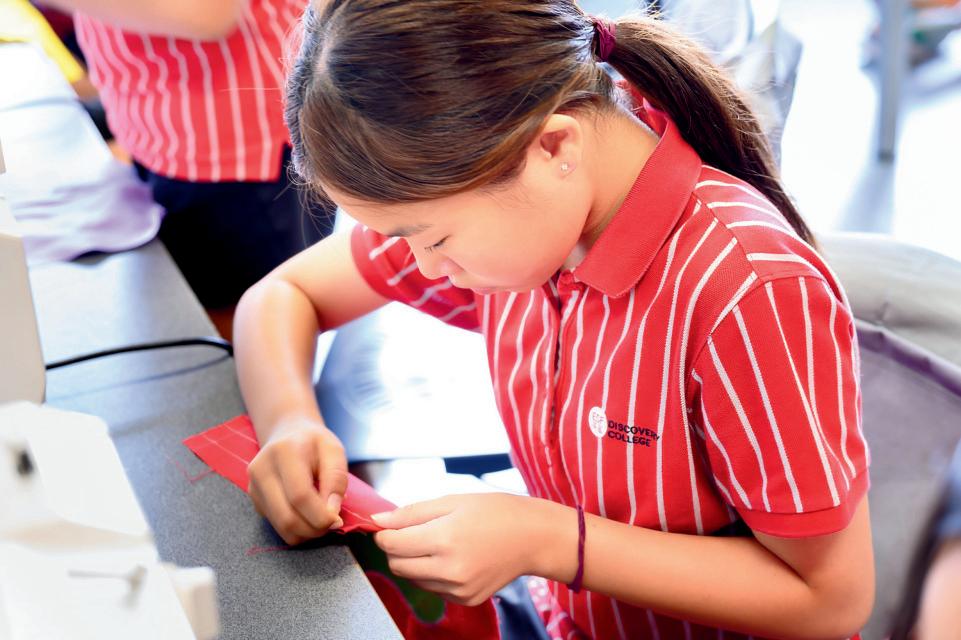
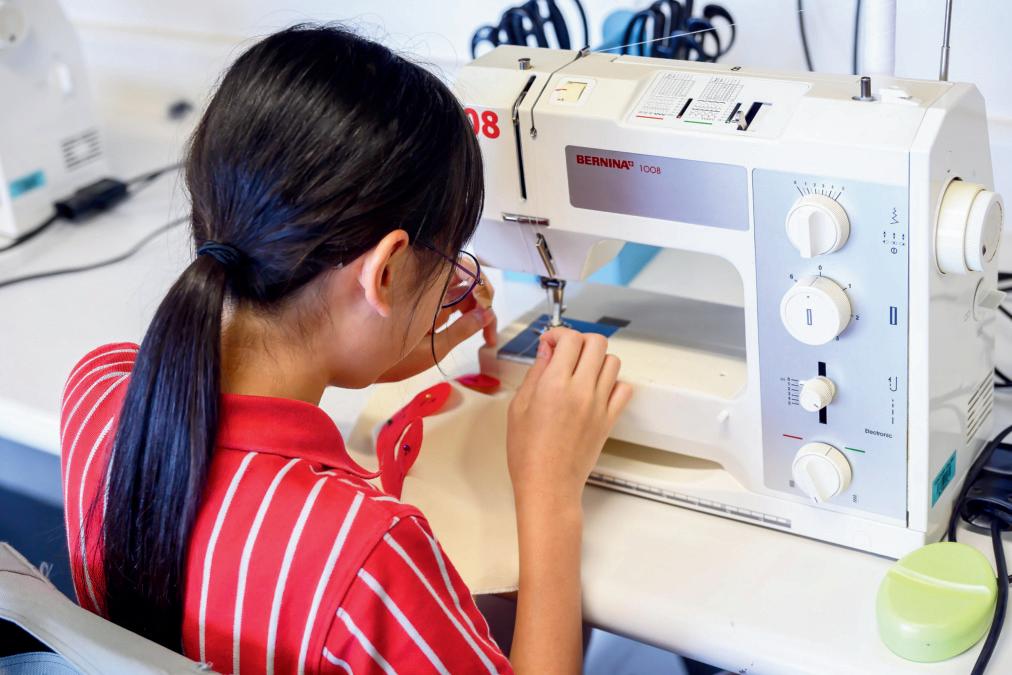
Year 9 Teachers
Language and Literature
English
9.1 & 9.2 Ms Claire NEALE
9.3 Ms Fiona TATE
9.4 Mrs Annette GARNETT
Chinese
Ms Candice CHEN
Individuals and Societies
9.1
9.2
Physical & Health Education
9.1 & 9.3
Product Design
Food Design
Sciences
Design
Mr Eugene TASKER
Ms Martina O’CONNOR
Mr Tom LEE
Ms Alison YANG
Language Acquisition
Chinese
Phase 2A Ms Elaine LEUNG
Phase 2B Mr Simon MAN
Phase 3A
Phase 3C
Spanish
Phase 2A
Music
Ms Valerie MAO
Mr Danny SHIH
Mr Obdulio CARCAMO FONSECA
Arts
Mr Matt DAVIS
Visual
Ms Jane MITCHELL Theatre
Ms Danielle VEILLEUX
Learning Teams
Blue Ms Aj LIM
Green Mr Gillian WHITTAKER
Purple Mr Simon MAN
Red Mr Barry WILKINSON
Yellow Mr Mark MACKENZIE
Year 9 | English Language and Literature
August - December
Unit 1: Hunger Games
In the "The Hunger Games" unit, students study the key concept of relationships and systems through a focus on the dystopian fiction text 'The Hunger Games'. As well as responding to the text analytically in a written analysis, students respond creatively by producing their own films based on sections of the novel. Students are taught communication skills through reading critically and for comprehension, and collaboration through working as part of a group to create a film scene from The Hunger Games. In this unit, students demonstrate their understanding by completing a close reading of a familiar text assessed against criterion A (analysing); creating a Newsflash assessed against three criteria: organizing, producing text, and using language.
January - March
Unit 2: Elements of Science Fiction
In Unit 2, “Elements of Science Fiction”, students study the key concept of creativity through a focus on a range of Science Fiction short stories. They respond creatively to these, by writing their own stories based on one of the short stories studied. Students are taught creative skills through analysing short stories and identifying and applying stylistic features. In this unit, they demonstrate their understanding by completing a short sci-fi story, which is assessed against three criteria: organising, producing text and using language.
April - June
Unit 3: Rights of The Child
In Unit 3, "Rights of the Child", students study the key concept of perspective through exploring and promoting children's rights using different media. They apply analytical skills to diverse text types, including photography, poetry, documentary clips, and film. Students learn reflection skills by considering ethical, cultural, and environmental implications, and media literacy skills by understanding the impact of media representations and modes of presentation. In this unit, students demonstrate their understanding by participating in a formal debate assessed against analyzing, organizing, and using language criteria. Additionally, they write a compare and contrast analytical paragraph which is formatively assessed.
Year 9 | Chinese Language and Literature
August - October
Unit 1: The Complexities Of The World 世态⼈情
In the "The Complexities Of The World" unit, students explore how authors present their concerns about relevant social themes and their views on different values through the characterization, plotting, and setting of their novels. Through close reading and analysis, students gain a deeper understanding of how authors use literary elements to convey their messages and explore the complexities of the world. Students demonstrate their understanding by completing text analysis and writing exercises. These exercises are assessed against analyzing, organizing, producing text, and using language criteria.
October - December
In the "Natural Beauty" unit, students explore how authors portray different scenes in scene-writing prose using diverse literary techniques, connecting the scenes to individual characters to convey feelings and perceptions and give readers a sense of beauty. They discuss how these techniques can be used to create a sense of atmosphere, mood, and emotion, and how readers can interpret beauty differently. Students demonstrate their understanding by completing text analysis, which is assessed against analysing and using language criteria.
January - March
In the "Argumentative Prose" unit, students study the characteristics of argumentative prose and explore how authors use different argumentative techniques to construct a personal stance and discuss topics related to digital life with readers. Students also learn to recognize and avoid fallacies in their arguments, enabling them to construct strong and convincing arguments. Students demonstrate their understanding by completing individual orals and text analysis task, which were assessed against Analysing, Organizing and Using language.
March - June
In the "Life Values and Lifestyles" unit, students study how ancient authors shared their values of life and pursuit of an ideal lifestyle through their literary works. These works have the power to influence and inspire readers to this day, providing a timeless reminder of the ideals that shape our lives. By studying these works, students can gain insight into their own lives and values, and how they can relate to those of previous generations. They demonstrate their understanding by completing writing exercises, which are assessed against organizing, producing text, and using language.
Year 9 | Chinese Language Acquisition
August - October
Unit 1: Living Environment
In the "Living Environment" unit, students learn how to describe their house environment and name different furniture items in each room. As well as identifying the living room, kitchen, bedroom, and other rooms, they also describe their layout in Mandarin. They learn about place prepositions and how to use them to describe the location of the items. They also practice describing house-moving experiences. The text types studied in this unit include letters and blueprints of homes. This unit assesses their listening and writing skills.
October - December
Unit 2: Three Meals A Day
In the "Three Meals A Day" unit, students discuss healthy and unhealthy eating habits, describe the taste of a variety of foods, and express their preferences and dislikes for different foods. They discuss how cultural and geographical factors affect food choices in different countries. The students investigate the three meals a day in different countries. They also learn the importance of a balanced diet and the importance of making healthy food choices. The text types studied in this unit include letters and brochures. This unit assesses their reading and speaking skills.
January - March
Unit 3: Sickness
In the "Sickness" unit, students study vocabulary and sentence structures related to sickness and health, including describing symptoms of sickness, seeking advice on how to get better, expressing concerns about health, and describing treatments. The text types studied in this unit include sick leaves and diaries. Additionally, they discuss different treatments for the same illness. They also learn to talk about preventive measures, such as vaccinations and healthy lifestyle habits. This unit assesses students' listening and writing skills.
April - June
Unit 4: Subjects
In the "Subjects" unit, students learn about the different types of school subjects that and discuss their preferences. They learn about different types of education. As part of their learning, they also learn how to describe their learning plans and experiences. Additionally, they discuss effective Chinese learning strategies. Reflection on education opportunities for privileged and less privileged students is encouraged. The text types studied in this unit include timetables and blog posts. This unit assesses their reading and speaking skills.
Year 9 | Chinese Language Acquisition
August - October
Unit 1: Community 社
In the "Community" unit, students learn to describe their living environment, including where to find different facilities in the community and the location between those facilities and their houses. They are also learning how to describe the functionality of each facility and how those facilities improve their life experience by living there. We conclude the unit with a reflection on the DB community in which our school is located and how we can help make this community better. Their listening and writing skills are assessed in this unit.
October - December
2: Pets and Friends
The "Pets and Friends" unit focuses on vocabulary related to personal relationships and personality, enabling students to describe themselves, their friends, pets, and physical characteristics using basic grammar. Additionally, students enhance their listening, speaking, reading, and writing skills through conversational exchanges, role-play activities, and composing texts about relationships with pets or friends. They read and compose paragraphs and short texts related to relationships with pets or friends. This unit assesses their reading and speaking skills.
January - March
3: Shopping
In the "Shopping" unit, students learn relevant nouns and adjectives associated with clothing, accessories, and gifts. They acquire oral communication skills necessary for inquiring about items, bargaining, and describing products in a store setting. Further, students practice articulating what specific items they want to buy and explaining the reasons behind their choices, improving their communication skills. Real-life scenarios provide students with opportunities to apply these skills in authentic contexts. Listening and speaking abilities are assessed through practical exercises and role-playing.
April - June
Unit 4: New Technology Applied in Daily Life
In the "New Technology Applied in Daily Life" unit, students learn key nouns and adjectives for technology products and everyday devices. They build communication skills to describe how technology is used, discuss its benefits, and compare features. Students express opinions on digital tools and evaluate their impact on daily routines. Real-world tasks encourage authentic language use, with assessments focusing on reading practical texts, writing about technology, and participating in speaking activities that simulate daily tech interactions.
Year 9 | Chinese Language Acquisition
August - October
Unit 1: School Life
In the "School life" unit, students learn about school facilities, school characteristics, and extracurricular activities provided in various contexts. Students learn about different types of educational systems and describe their experiences at school. In addition, they explore and compare different school systems in different countries. Finally, they discuss how cultural values and beliefs are reflected in schools and how these functions and perspectives shape them. The text types studied in this unit include speeches and letters. The unit assesses their reading and writing skills are assessed in this unit.
October - December
Unit 2: Family Relationships
In this unit, “Family Relationships”, students explore how mutual understanding and respect of roles can lead to strong family relationships. They learn about Chinese family terms and the importance of family connections. They also discuss the importance of communication and conflict resolution in family relationships. Students discuss how to maintain family relationships through regular communication. The text types studied in this unit include presentations and articles. This unit assesses students' listening and speaking skills.
January - March
Unit 3: Customs and Traditions
In the "Customs and Traditions" unit, students explore festivals and celebrations. They learn about the cultural significance of these events, the different traditions associated with them, and how people celebrate in different cultures. They also discover the foods that people enjoy during festivals and how they use them to honour the event or celebrate their culture. Along with sharing their cultural traditions, they reflect on similarities and differences between cultures during this unit. The text types studied in this unit include emails and articles. This unit assesses their reading and speaking skills.
April - June
Unit 4: Travel & Leisure
In the "Travel & Leisure" unit, students inquire into famous scenic attractions in a local context. They explore their cultural, historical, and natural significance. They learn to appreciate the beauty of these places and to understand their role in the local community. They also learn how to plan visits to these destinations, taking into account factors such as budget, transportation, and accommodations. Students learn how to prepare for and respond to emergencies during a trip. The text types studied in this unit include dairies and articles. This unit assesses their listening and writing skills.
Year 9 | Chinese Language Acquisition
August - October
Unit 1: Education and Career
In the “Education and Career” unit, students explore the potential advantages and challenges of study tours and studying abroad. They gain an understanding of the benefits of international study, such as increased cultural awareness and understanding of other languages. They also discuss strategies for managing the challenges of studying abroad, such as language barriers and cultural differences. Topics covered include summer school in China and further education abroad. Their reading and writing skills are assessed in this unit.
October - December
Unit 2: Social Relationships
In the “Social relationships” unit, students explore the issues teenagers face in a local context and possible solutions to address these challenges. They learn about the importance of building positive relationships with peers, family, and teachers and the benefits of having supportive networks. They discuss strategies to cope with difficult social situations. They also learn about identity formation, self-esteem, roles and role models. Topics covered include teen issues and peer influence. In this unit, listening and speaking skills are assessed.
January - March
3: Communication and Media
In the "Communication and Media" unit, students explore different communication platforms, such as social media and traditional communication platforms to gain a better understanding of digital life, virtual environments, and the information age. They also gain an understanding of the impact of technology on communication and how social media apps affect the way people interact with each other. Different media platforms and social media's influence are covered. Their listening and speaking skills are assessed in this unit.
April - June
Unit 4: Environment and Experience
In the "Environment and Experiences" unit, students explore how people impact the environment and how environmental protection can be promoted in schools. Students learn about the importance of conservation, how to reduce pollution, and how to protect our natural resources. They also learn the importance of taking action to protect our planet and how to create positive change. Students are introduced to environmental issues and the importance of protecting the environment in schools. Their reading and writing skills are assessed in this unit.
Year 9 | Spanish Language Acquisition
August - October
Unit 1: Mass Media | Los Medios de Comunicacion
The "Mass Media" unit enables students to explore and articulate their media consumption preferences. Students learn to explain the types of programs they watch and to describe films or series they have watched recently using past tenses. They engage in activities that enhance their affective, communicative, and reflective skills. Throughout the unit, students examine the role media plays in their lives and practice conveying their ideas and experiences effectively. Assessment is measured by Reading and Speaking criteria.
October - December
Unit 2: Healthy Living | La Salud
The "Healthy Living" unit enables students to describe what constitutes a healthy life and understand the Mediterranean diet while making connections with their own dietary habits. Students practice communicative, information literacy, and creative thinking skills. Throughout the unit, students examine various aspects of healthy living and actively engage in discussions and activities that allow them to apply their learning. Their progress is assessed against two criteria: Listening and Writing.
January - March
Unit 3: Environment | El Medio Ambiente
The "Environment" unit enables students to understand the main issues that endanger the environment and express their own opinions on what actions they would take differently in the future. Students practice organization, critical thinking, and communicative skills. Throughout the unit, they explore environmental challenges and actively engage in activities and discussions that promote awareness and problemsolving. Assessment is measured by Speaking and Reading criteria.
March - June
Unit 4: New Technologies | Las Nuevas Tecnologías
The "New Technologies" unit enables students to detail their use of the internet and social media while expressing both the advantages and disadvantages. They articulate their opinions across present, past, and future tenses. Students practice creative thinking, reflection, and collaboration techniques. Throughout the unit, they engage in activities and discussions that encourage critical evaluation and innovation in the digital landscape. Assessment is measured by Listening and Writing criteria.
Year 9 | Individuals and Societies
August - October
Unit 1: Inequalities in Development
In the "Inequalities in Development" unit, students learn about different indicators used to measure development in society, the economy, and politics, and explore factors contributing to inequality and its impact. They practice interpreting data through cartoon analysis, scatter graphs, and choropleth maps to compare countries and development levels. Students also create an infographic showcasing a problem contributing to inequality, using supporting data and suggesting a possible solution. Knowledge, understanding, and critical thinking skills are evaluated.
November - January
Unit 2: We're in Business
In the "We're in Business" unit, students explore business and marketing fundamentals through primary data collection, business plan writing, and presentations. They examine examples of innovative businesses, the needs they address, and the impact of technology on innovation. Students discuss collaboration, ethics, accessibility, affordability, cultural influences, and balancing priorities. Summative assessments consist of a business plan and pitch presentation, with investigating and communicating skills evaluated.
February - April
Unit 3: World Religions
The "World Religions" unit explores how religious systems shape identities, relationships, cultures, and traditions. Students learn to appreciate diverse beliefs and engage respectfully with others, practicing note-taking, critical reading, and perspective-taking. Assessment involves OPVL analysis and creating an educational board game focusing on knowledge and understanding as well as critical thinking skills.
April - June
Unit 4: Move and Grow: Populations on the Go
In ‘Move and Grow: Populations on the Go’, students explore population, demographics, and migration, examining their impact on culture and identity. They study population growth, momentum, ageing and youthful populations, and different types of migration, and resistance to change. The unit concludes with students creating documentaries about controversial population issues, developing their investigating and communication skills.
Year 9 | Sciences
August - October
Unit 1: Waves In Action (Physics)
In Unit 1, "Waves in Action," students explore the types of waves (traverse, longitudinal, seismic, water, and sound waves), and the transfer of matter and energy. They will learn the properties of waves, the ways in which they interact with their environment, and how they are used in everyday life. In this unit, students demonstrate their understanding by completing the "Speed of Waves" investigation, which is assessed against Inquiring and Designing, and Processing and Evaluating criteria. Electromagnetic Waves assessment is measured against knowing and understanding, as well as Reflecting on the impacts of science criteria.
October - December
Unit 2: Charge and Change (Chemistry)
As part of the 'Charge and Change' unit, students investigate trends in the Periodic Table, focusing on alkali metals, halogens, and noble gases. The reactivity series of metals is introduced, with experiments analysing oxidation, reduction, and rust prevention. Students also study rates of reactions, exploring how surface area, concentration, temperature, and catalysts influence reaction rates using collision theory and energy profile diagrams. Practical opportunities reinforce their understanding of chemical patterns and processes.
January - March
Unit 3: Dynamic Earth (Environmental)
In the "Dynamic Earth" unit, students explore how natural and human landscapes have changed through space and time. This includes the creation of continents, seismic activity, rock types and formations, and the effect of natural and human activities such as weathering, erosion, and acids on the environment. They demonstrate their knowledge and understanding through knowing and understanding criterion in the form of mini-quizzes.
March - June
Unit 4: Meaning of life (Biology)
In the "The Meaning of Life" unit, students explore the characteristics of living things, levels of biological organization, and cell structure and function. They investigate vital processes such as respiration and photosynthesis, understanding how cells utilize energy to adapt to their environment. By examining life as a system, they gain insights into how cells interact and function harmoniously. They also acquire skills in the proper and responsible use of a microscope. In the vaccine assessment, students apply their understanding of living systems to improve and protect human lives. In addition, they take mini quizzes.
Year 9 | Mathematics
August - October
Unit 1: Algebra
In the "Algebra" unit, students study the fundamentals of algebra, collect like terms, solve various types of equations, work with fractions, cross-multiply, and solve literal equations. In this unit, students practice communication and organization skills and demonstrate their understanding by completing the "Algebraic Equations Test" and the "Portfolio", which are assessed against knowing and understanding, communicating criteria.
October - December
Unit 2: Surds and Pythagorean Theorem
In the "Pythagorean Theorem" unit, students study simplification of radicals, solving of equations involving square roots, applying the converse of the Pythagorean theorem, and solving of real-world Pythagorean problems. In this unit, students practice organization skills and demonstrate their understanding by completing the "Radical Expressions and Pythagoras Test," "Real-world Pythagorean Project", and "Pythagoras on the Coordinate Plane," which are assessed against knowing and understanding; investigating patterns; applying mathematics in real-life contexts.
January - March
Unit 3: Linear Modelling and Coordinate Geometry
In the "Linear Modelling and Coordinate Geometry" unit, students study finding solutions to linear equations, work with gradients, interpret real-world applications of gradients and intercepts, write equations in various forms, sketch lines, and graph solutions of simultaneous equations. In this unit, students practice organization skills and demonstrate their understanding by completing the "Linear Equations Test", the "Inquiry Task on Slope", and the "Gym Membership Project", which are assessed against knowing and understanding; investigating patterns; communicating; applying mathematics in real-life contexts criteria.
March - June
Unit 4: Geometry - Exploring Segment and Angle Relationships
In this unit, students study segment addition, classify angles, add angles, identify vertical angles and linear pairs, explore parallel lines, analyse angles in triangles and quadrilaterals, calculate the area of triangles and quadrilaterals, and apply circle theorems. Students apply prior knowledge of solving algebraic equations, simplifying surd expressions, and Pythagoras.This unit evaluates students' knowledge, understanding, and communication skills as they complete the "Final Assessment," a cumulative test, and "Geometry Portfolio."
Year 9 | Physical and Health Education
Students in different class sessions complete Physical and Health Education units at different times due to limited facilities, ensuring equitable access to resources.
Unit 1: Ultimate
In the "Ultimate" unit, students develop skills and techniques to enhance their ultimate frisbee performance. They set SMART goals for skill improvement. To demonstrate their abilities and understanding, they perform a variety of skills during game situations. They then reflect on their final performance referring to their ultimate skills and strategies. Assessment criteria include planning for performance; applying and performing; reflecting and improving performance.
Unit 2: Super Coach
In the "Super Coach" unit, students study coaching and learning styles and practice communication and collaboration skills. In this unit, they demonstrate their understanding by completing a coaching plan and analyzing a peer's coaching performance along with a self-reflection, evaluated through planning for performance; reflecting and improving performance.
Unit 3: Volleyball
In the "Volleyball" unit, students study the skills and systems involved in volleyball and practice organization skills. During this unit, students complete a written test, apply knowledge of volleyball rules and positioning in game situations, and demonstrate a range of volleyball skills and techniques, strategies, and movement concepts. Knowledge and understanding, and Applying and Performing criteria are measured.
Unit 4: Swim Smart
In “Swim Smart,” students study how to improve their swim technique and practice information literacy. In this unit, students demonstrate their understanding by producing a report outlining corrective strategies to improve their swim technique and doing a pre- and post-swim test to measure improvement, which is assessed against Knowledge and Understanding, and Applying and Performing.
Unit 5: Community Dance
In the "Community Dance" unit, students study movement sequences and practice working collaboratively in groups to produce a community dance. In this unit, students demonstrate their understanding by completing personal and group goals and designing and explaining a community dance routine. These assessments are assessed against planning for performance; reflecting and Improving performance.
Year 9 | Arts
Through the course of an academic year, students in Years 7-9 will rotate through Visual Arts, Music, and Theatre. These classes allow students to explore and appreciate the different art forms, and to develop their own artistic skills. Students are given the opportunity to express themselves creatively and to develop their own talents.
Unit: Surrealist Subconscious | Visual Arts
"Surrealist Subconscious" uses watercolour and mixed media to synthesize imagination, dreams and nightmares to reveal the unconscious. After investigating the cultural origins of Surrealism and watercolour techniques, Y9 applies specific choices to inform visual studies. Utilizing a particular artist investigation, focused skills and methods are applied to concepts of their own, showcasing development with creativity and comprehension. After reflecting on studies, students refine their strongest example of juxtaposition in a final artwork. The resolved piece is then evaluated within an artist statement and exhibited to audiences.
Unit 1: The Message of Reggae Music | Music
In the "The Message of Reggae Music" unit, students explore the context and significance of Reggae music and the messages behind the songs. They learn about the stylistic characteristics of Reggae music and apply this to learn to play a Reggae song. They analyze the lyrics of classic Reggae songs and apply what they learnt through inquiry into the history and context of Reggae music and the social issues surrounding it to infer the messages the songs contain. Finally, students produce a magazine article and perform a Reggae song of their choice. Students develop the ATL skills of research and self-management. Students are assessed on criteria for investigating and performing.
Unit 2: Activism Through | Music
In the "Activism Through Music" unit, students study how music can impact positive change and how to compose a song and lyrics. Students in groups will compose an original song highlighting an issue they have identified and researched. They practice creative thinking and reflection skills. Their composition and performance is assessed against developing and performing/creating criteria
Unit: Devising Original Theatre | Theatre
In the unit "Making Theatre" students work as creator, designer and performer to generate material for group performance. This exploration is founded on the works of exciting companies like Frantic Assembly, Paper Birds and Gecko, and students investigate common practices such as Viewpointing and Ensemble work to further their understanding (investigating). In groups they will create (developing) and perform (performing) their work to a live audience. Throughout this unit students will be aware of their growth and development as creator, designer and performer (evaluating).
Year 9 | Design
In Year 9, students rotate through product design, food design and textile design courses. Each course lasts a term. These assigned term-long courses ensure our students experience the full depth of our MYP Design programme.
Unit: Eat Well, Live Well
In the "Eat Well, Live Well" unit, students study 'how to stay nourished' with a focus on staple foods. Students also inquire into the many factors influencing food selection and practice affective, organization, and critical thinking skills. In this unit, students demonstrate their understanding by designing and creating an original food product for teenagers focusing on cultures. Learning is assessed using four criteria: Developing Ideas, Creating the Solution, and Evaluating.
Unit: Details Make the Design
In the "Details Make the Design" unit, students follow the well-established design principle of iteration to design and create a stand for a product they have in their homes. They demonstrate their understanding of iterative design by studying existing products that show clear examples of this approach. Throughout the process, they practice creating by imitating the work of others, proposing various solutions, and using models to explore complex issues. Learning is assessed using four criteria: Inquiring and Analysing, Creating the Solution, and Evaluating.
Unit: Sew Electric
In the “Sew Electric” unit, students study use of sewing machines and e-textiles components and implementation, and practice critical thinking and reflection skills. Students demonstrate their understanding in this unit by completing a textile product that includes a sewn LED circuit, solving a specific problem for a real user. Learning is assessed using three criteria: Inquiring and Analysing, Developing Ideas, and Evaluating.
YEAR 10
Year 10 Teachers
Year 10 | English Language and Literature
August - November
Unit 1: History of English Language
In the "History of English" unit, students study accents and dialects, code-switching, the influence of politics in shaping language, and the history of English itself. They also examine three case studies: Singaporean English, Indian English, and Malaysian English. Students demonstrate their understanding of the unit through in-class questioning, formative assessments, and a formal presentation to the class where they will create an infographic and discuss their own personal history with English. This is assessed against the four criteria: analysing, organizing, producing text, and using language.
November - February
In the "Exploring Macbeth" unit, students engage with Shakespeare's play by analyzing its themes, motifs, and literary techniques. Through various activities and assessments, students develop critical thinking, analytical, and writing skills. They read and analyze the play, examine the main characters, explore the use of literary techniques, investigate the historical and cultural context, and engage in creative interpretation. Students write a literary essay that analyzes a particular aspect of the play, drawing on evidence from the text and secondary sources. The literary essay is assessed against four criteria, providing students with an opportunity to demonstrate their understanding of Macbeth and their development as critical thinkers and writers.
March - June
Unit 3: Overcoming Differences
In the "Overcoming Differences" unit, students study a variety of short stories such as "Fish Cheeks" by Amy Tan and "Who's Irish?" by Gish Jen to develop skills in tone, mood, and point of view. They practice communication skills through class discussions and group activities and use thinking skills such as observation, interpretation, analysis, and evaluation to analyze the stories and explore themes related to cultural differences and identity. In the culminating assessment task of the unit, students demonstrate their understanding by presenting a scripted drama. This task is assessed against three criteria: analysing, producing text and use of language.
Unit 2: Macbeth
Year 10 | Chinese Language and Literature
August - October
In the "Attitude towards Life" unit, students analyze both argumentative and nonliterary texts to identify attitudes conveyed by the author or characters. They examine the factors that influence the formation of attitudes, such as culture, upbringing, and personal experiences. Throughout class, students analyze texts, practice writing, participate in class discussions, produce multimodal texts, and make oral presentations in order to gain a deeper understanding of attitudes. Assessments are based on three criteria: organizing, producing text, and using language.
October - December
In the "Text & Social Relations (Part One)" unit, students explore roles and role models through a close study of both narrative literary texts and non-literary texts. Students learn how to analyze texts, identify implicit information, underlying biases, and rhetorical devices. By analyzing a variety of texts, students develop a deeper understanding of how roles and role models shape our perceptions, behaviours, and aspirations. As part of their assessment, students complete a text analysis, which measures their ability to analyze, organize, and use language.
January - March
In the "Dramatic Parallel" unit, students explore the concept of the social construction of reality through the study of multimodal literary (drama) and non-literary texts (videos). Through a close examination of dramatic texts, students explore the intricacies of characters, plots, and conflicts, gaining insights into how they reflect and influence the construction of social realities. Additionally, they examine how media shapes and expresses social reality through non-literary texts. Students' abilities to produce and use language are evaluated in the assessment.
March - June
In the "Text & Human Nature (Part One)" unit, students engage with short novels to analyze the complexities of human nature in relation to peace and conflict. They also critically evaluate non-literary texts to gain insights into real-world instances of peace and conflict. They analyze different perspectives, evaluate arguments, and consider the ethical implications of actions and decisions related to peace and conflict. Through a text analysis assessment, which assesses their abilities to analyze, organize, and use language, they demonstrate how human nature shapes peaceful or troubled societies.
Year 10 | Chinese Language Acquisition
August - October
Unit 1: Community 社区
In the "Community" unit, students learn to describe their living environment, including where to find different facilities in the community and the location of those facilities relative to their houses. They also learn how to describe the functionality of each facility and how those facilities improve their life experience. We conclude the unit with a reflection on the DB community, where our school is located, and discuss how we can help make this community better. Listening (Criterion A) and Writing Skills (criterion D) will be assessed in the assessments.
October - December
Unit 2: Ask for Direction 问
In the "Ask for Directions" unit, students explore essential vocabulary related to transportation and basic directional terms, learning to effectively ask for and give directions in real-world scenarios. They also practice creating and offering simple travel route suggestions, enhancing their practical communication skills. This unit culminates in a practical task where students apply their skills in a simulated environment, helping them consolidate their learning. Reading (Criterion B) and Speaking (Criterion C) skills will be assessed.
January - March
Unit 3: Pets and Friends
The "Pets and Friends" unit focuses on vocabulary related to personal relationships and personality, enabling students to describe themselves, their friends, pets, and physical characteristics using basic grammar. Additionally, students enhance their listening, speaking, reading, and writing skills through conversational exchanges, role-play activities, and composing texts about relationships with pets or friends. They read and compose paragraphs and short texts related to relationships with pets or friends. This unit assesses their listening and speaking skills.
April - June
Unit 4: Shopping
In the "Shopping" unit, students learn relevant nouns and adjectives associated with clothing, accessories, and gifts. They acquire oral communication skills necessary for inquiring about items, bargaining, and describing products in a store setting. Further, students practice articulating what specific items they want to buy and explaining the reasons behind their choices, improving their communication skills. Real-life scenarios provide students with opportunities to apply these skills in authentic contexts. Reading and writing abilities are assessed through practical exercises and role-playing.
Year 10 | Chinese Language Acquisition
August - October
Unit 1: School Life
In the "School life" unit, students learn about school facilities, school characteristics, and extracurricular activities provided in various contexts. Students learn about different types of educational systems and describe their experiences at school. In addition, they explore and compare different school systems in different countries. Finally, they discuss how cultural values and beliefs are reflected in schools and how these functions and perspectives shape them. The text types studied in this unit include speeches and letters. The unit assesses their reading and writing skills are assessed in this unit.
October - December
Unit 2: Family Relationships
In this unit, “Family Relationships”, students explore how mutual understanding and respect of roles can lead to strong family relationships. They learn about Chinese family terms and the importance of family connections. They also discuss the importance of communication and conflict resolution in family relationships. Students discuss how to maintain family relationships through regular communication. The text types studied in this unit include presentations and articles. This unit assesses students' listening and speaking skills.
January - March
Unit 3: Customs and Traditions
In the "Customs and Traditions" unit, students explore festivals and celebrations. They learn about the cultural significance of these events, the different traditions associated with them, and how people celebrate in different cultures. They also discover the foods that people enjoy during festivals and how they use them to honour the event or celebrate their culture. Along with sharing their cultural traditions, they reflect on similarities and differences between cultures during this unit. The text types studied in this unit include emails and articles. This unit assesses their reading and speaking skills.
April - June
Unit 4: Travel & Leisure
In the "Travel & Leisure" unit, students inquire into famous scenic attractions in a local context. They explore their cultural, historical, and natural significance. They learn to appreciate the beauty of these places and to understand their role in the local community. They also learn how to plan visits to these destinations, taking into account factors such as budget, transportation, and accommodations. Students learn how to prepare for and respond to emergencies during a trip. The text types studied in this unit include dairies and articles. This unit assesses their listening and writing skills.
Year 10 | Chinese Language Acquisition
August - October
Unit 1: Family Life 家
In the "Family Life" unit, students explore topics such as communication, conflict resolution, and parenting. They learn about the impact of family structure and dynamics on individual development. They gain an understanding of the importance of family relationships and the importance of family support. Furthermore, they identify how parenting differs or is similar in various cultures. They learn to recognize the importance of family diversity, and how to recognize and appreciate cultural differences. Assessment is measured by listening and reading criteria.
October - December
Unit 2: Tourist Attractions & Travel
In the "Tourist Attractions and Travel" unit, students explore travel destinations worldwide. They learn about the different cultures, people, and food that each destination offers. They describe famous historical sites, tour planning, and visiting experiences in different contexts. They also learn about the importance of cultural awareness and respect when interacting with people in other cultures. They discuss the importance of safety, budgeting, and respecting local customs when exploring a new place. Their speaking and writing skills are assessed in this unit.
January - March
Unit 3: Importance of Language
In the “Importance of Language" unit, students learn the importance of language in communication and the impact of language on culture. They also explore the value of language in terms of identity, creativity, and self-expression. In addition to analyzing others' opinions, students develop strong arguments and communicate those arguments effectively in written and spoken Chinese. As part of this unit, academic literacy skills and source analysis are stressed. Assessment is measured by listening and speaking criteria.
April - June
Unit 4: Urban and Country Life
The "Urban and Country Life" unit explores the similarities and differences between urban and country life. Students learn about the unique opportunities and challenges of living in urban and rural areas. They explore the relationship between urban and rural areas, and how each affects the other. They also learn about the different lifestyles that urban and rural communities offer. They consider how these lifestyles shape the way people live, work, and interact with each other. Assessment is measured by reading and writing criteria.
Year 10 | Chinese Language Acquisition
August - October
Unit 1: Community Life 社
⽣活
The "Community Life" unit focuses on fostering empathy and strengthening community bonds. Students develop listening skills by comprehending diverse perspectives within the community. Topics explored include the importance of understanding different cultures, the importance of helping others, and the power of unity. Through hands-on activities and group discussions, students gain a more holistic view of their community. They learn to write formal letters and narrate personal experiences. The assessment evaluates listening comprehension and speaking proficiency.
October - December
Unit 2: Arts
The "Arts" unit explores how artists express their concerns and connect with audiences through diverse styles. Students develop reading skills to understand abstract texts and visualize their content. They also learn to use verbal and nonverbal communication to express their ideas. They gain a better understanding of the importance of art in society and the impact of art on culture. They learn the structure and language of debate speeches, enhancing their ability to present persuasive arguments. Assessment focuses on reading comprehension and writing proficiency.
January - March
Unit 3: Career Planning
The "Career Planning" unit explores the influence of technology on future careers and encourages open-mindedness in career decisions. Students develop speaking skills for discussing career-related topics and providing feedback. They learn to comprehend various text types and complex sentence structures, as well as the structure and language of debate speeches. Assessment focuses on writing skills and speaking proficiency. This unit helps students gain insights into career trends, communicate their ideas confidently, and discuss their futures.
April - June
Unit 4: Environment Protection 环
The "Environment Protection" unit raises awareness of environmental conservation and emphasizes individual actions' global impact. Students develop listening skills through note-taking and learning concessive sentence structures and create informative materials like brochures to promote environmental awareness. Assessment focuses on listening and reading comprehension. By the end of the unit, students are more aware of environmental issues, better able to listen and note-take, and analyze written material related to environmental issues critically.
Year 10 | Spanish Language Acquisition
August - October
Unit 1: Tourism
In the "Tourism" unit, students explore different types of holidays, discussing their advantages and disadvantages. They learn about the different factors that can affect tourism, such as the economy, technology, and natural resoruces. Additionally, they discuss the impact of tourism on the environment and how to be a responsible tourist. They investigate the impact of tourism on natural and human landscapes and resources. They create blogs to promote sustainable tourism. Their learning is assessed against two criteria: listening and speaking.
October - December
Unit 2: Entertainment
In the "Entertainment" unit, students learn about digital entertainment. They analyze the cultural and linguistic patterns of digital entertainment in different countries and regions. They investigate the impact of digital media conventions and messages on contemporary culture and society. They reflect on the role of language and culture in facilitating intercultural communication in digital entertainment contexts. They create digital entertainment materials like trailers for movies or social media posts. They conduct interviews. Readiing and writing criteria are assessed.
January - March
Unit 3: Festivals
In the "Festivals" unit, In the "Festival" unit, students discover different forms of celebration and rites of passage. They explore the relationship between identity and celebration. Additionally, they discuss how different cultures celebrate and mark special life events and reflect on their own values and respect for other cultures. They reflect on the role of language and culture in facilitating intercultural communication in the festival and belief system contexts. They create cultural presentations and videos about festivals and belief systems and design brochures. Listening and speaking are assessed.
March - June
Unit 4: The World of Work
In the "The World of Work" unit, students learn about different types of jobs and industries, the skills and knowledge needed for each job, and the steps required to find and land a job. They also discuss the importance of having a career plan and the value of learning new skills. They investigate the impact of connections between language, culture, identity formation, and professional conventions and idioms on the workplace. They create resumes, business emails, formal letters, and CVs to demonstrate their understanding. Their learning is assessed against reading and writing criteria.
Year 10 | Individuals and Societies
August - October
Unit 1: Human Behaviour
In the "Human Behaviour" unit, students investigate how identity and relationships shape moral actions and decision-making. They explore psychological concepts such as authority, group dynamics, and conformity, focusing on key ideas like the role of authority, in-group and out-group dynamics, and the bystander effect. These theories are applied to the analysis of real-world scenarios. Assessments include researching psychological theories, source analysis, and applying these theories to scenarios in a timed assessment to explain human behaviour.
October - January
Unit 2: Going Global
In “Going Global” students learn about Globalisation processes and how they create an exchange of ideas, goods and services that bring both benefits and costs to people and the environment. Students learn about economic changes, transnational corporations, supply chains, trade blocs, labour exploitation, and their impact on societies and the environment. Students are assessed on their timed presentation about globalisation in a country of their choosing, which is assessed through criteria A (Understanding) and C (communicating). Communication and Media literacy skills are developed in this unit.
February - April
Unit 3: A Revolution Is Not A Dinner Party
In the "A Revolution Is Not a Dinner Party" unit, students explore the causes, events, and effects of social, political, and economic revolutions on societies. They analyze case studies to understand how these transformative changes impact communities. For Assessment 1, students create an advertisement series to demonstrate their understanding of revolutionary change (Criterion A), and for Assessment 2, they curate an artefact exhibition to analyze the legacy and significance of a selected revolution (Criterion D).
May - June
Unit 4: Human Rights
In the "Human Rights" unit, students examine the historical development of human rights and international declarations that shape our understanding today. Students analyze case studies and discuss real-world examples of human rights violations and organisations that work to improve human rights in different contexts. For the final assessment, students make a presentation advocating and proposing solutions to human rights challenges. Working in small groups at various times in the unit develops students’ skills in communication , collaboration and transfer.
Year 10 | Sciences
August - October
Unit 1: Balancing Act (Biology)
In the "Balancing Act" unit, students study how human body systems (nervous, endocrine, and immune) maintain homeostasis through feedback loops. They explore the importance of homeostasis and how it is achieved through negative feedback control. They also learn how the nervous and endocrine systems work together to regulate blood glucose levels. In this unit, students demonstrate their understanding by completing an investigation on Reaction Time vs Age. The investigation is assessed on inquiring and designing; processing and evaluating; knowing and understanding.
October - January
Unit 2: Make or Break (Chemistry)
In the "Make or Break" unit, students explore the world of systems, atomic models, periodic table patterns, chemical reactions, and the importance of chemical composition. They learn how systems impact science and technology, understand the model of the atom, and uncover patterns in the periodic table. Through hands-on experiments and investigations, they discover how chemical reactions work within systems and explore the factors that influence them. During the assessment, students write an essay about radioactive isotope applications, which evaluates the impact of science criterion.
February - March
Unit 3: Cultivating Sustainability (Environment)
In the "Cultivating Sustainability" unit, students analyse food choices and food production systems. They examine how different philosophies and lifestyles shape approaches to food choices and implementing sustainable practices in food production. Culture, religion, economics, and social factors can affect these beliefs and values. Students research a scientific solution that could serve as a sustainable environmental approach to food production in the context of a specific society. The assessment for this unit is reflecting on the Impacts of Science.
March - June
Unit 4: Energy of Motion (Physics)
In the "Energy of Motion" unit, students explore the causes of movement, investigating the role of forces and understanding how they affect the motion of objects. In addition, they learn how to measure speed, acceleration, force, and pressure, as well as how to calculate speed. Furthermore, they differentiate between scalar and vector quantities, understanding the difference between magnitude and direction in quantities. To assess their understanding of the unit, students conduct an investigation into catapulting an object across the floor and complete an end-of-unit topic test.
Year 10 | Standard Mathematics
August - October
Unit 1: Quadratic Algebra
In Unit 1, "Quadratic Algebra", students study expanding polynomials, factorising quadratics, solving quadratic and rational equations, graphing quadratic functions from standard form, factored form and vertex form, real-world applications of quadratics, finding x-intercepts and the vertex of quadratic equations algebraically and using GDC. In this unit, students practice communication and information literacy skills and demonstrate their understanding by completing the "Quadratic Equations Test"
Criterion A and the "Real-World Quadratic Applications Task", Criterion C/D, which are assessed against knowing and understanding, communicating; applying mathematics in real-life contexts.
October - December
Unit 2: Number Patterns
In Unit 2, "Number Patterns", students study number sequences, find the "nth" term of a sequence, write formulas for arithmetic, geometric, and quadratic sequences, and use the difference method for sequences. In this unit, students practice thinking skills and demonstrate their understanding by completing the "Sequences and Patterns Test" and the "Number Patterns Investigation", which are assessed against knowing and understanding; investigating patterns.
January - February
Unit 3: Surds, Pythagoras and Exponents
In Unit 3, "Surds, Pythagoras and Exponents" students study on simplifying algebraic expressions that involve Laws of Exponents and Laws of Surds. Students use these skills and apply them to Pythagoras applications. In this unit, students practiced thinking skills as an ATL skill and demonstrated their understanding by completing the "Indices, Surds, and Pythagoras Test" and the "Investigating Patterns with Surds", which were assessed against Knowing and Understanding and Investigating Patterns.
Year 10 | Standard Mathematics
February - Aprial
Unit 4: Triangles and Trigonometry
In Unit 4, "Triangles and Trigonometry", discover the Trigonometric ratios from investigating similar triangles. Students studied trigonometric ratios from right-angled triangles, sine, cosine, and tangent, finding unknown sides and angles, problem-solving with angles of elevation and depression, Pythagoras, area of a triangle. In this unit, students practiced information literacy as an ATL skill and demonstrated their understanding by completing the "Triangles and Trigonometry Test" and the "How tall is that?" assessment, which were assessed against Knowing and Understanding, Communicating, and Applying Mathematics in Real-life Contexts.
October - December
Unit 5: Coordinate Geometry and Functions
In Unit 5, "Coordinate Geometry", students studied distance between two points on the coordinate plane, finding midpoint, finding the gradient and the gradient of a perpendicular line, writing equations of parallel and perpendicular lines, converting between different forms of linear equations, solving simultaneous equations algebraically and graphically. Students practiced creative thinking as an ATL skill and demonstrated their understanding by completing the "Coordinate Geometry Test" which is assessed against Knowing and Understanding.
Year 10 | Extended Mathematics
August - October
Unit 1: Quadratic Algebra
In Unit 1, "Quadratic Algebra", students study factorising, expanding, solving quadratic and rational equations, graphing quadratic functions from standard form, factored form and vertex form, real-world applications of quadratics, finding x-intercepts and the vertex of quadratic equations using GDC, completing the square, and proving the quadratic formula. In this unit, students practice communication and information literacy skills and demonstrate their understanding by completing the "Quadratic Equations Test" Criterion A and the "Real-World Quadratic Applications Project", Criterion C/D, which are assessed against knowing and understanding, communicating; applying mathematics in real-life contexts.
October - December
Unit 2: Number Patterns
In the "Number Patterns" unit, students studied number sequences, finding the "nth" term of a sequence, writing formulas for arithmetic, geometric, and quadratic sequences, and using the difference method for sequences up to cubic sequences. In this unit, students practiced thinking skills as an ATL skill and demonstrated their understanding by completing the "Sequences and Patterns Test" and the "Exploring Sequences Project", which were assessed against Knowing and Understanding and Investigating Patterns.
January - February
Unit 3: Surds, Pythagoras and Exponents
In the "Surds, Pythagoras and Exponents" unit, students study on simplifying algebraic expressions that involve Laws of Exponents and Laws of Surds. Students use these skills and apply them to Pythagoras applications. In this unit, students practiced thinking skills as an ATL skill and demonstrated their understanding by completing the "Indices, Surds, and Pythagoras Test" and the "Exploring Sequences Project", which were assessed against Knowing and Understanding and Investigating Patterns.
Year 10 | Extended Mathematics
February - April
Unit 4: Triangles and Trigonometry
In Unit 4, "Triangles and Trigonometry", students studied trigonometric ratios from right-angled triangles, sine, cosine, and tangent, finding unknown sides and angles, problem-solving with angles of elevation and depression, bearings, 3D trigonometry and Pythagoras, area of a triangle using trigonometry, special right triangles of 30, 45 and 60 degree angles and an introduction to sine and cosine graphs. In this unit, students practiced information literacy as an ATL skill and demonstrated their understanding by completing the "Triangles and Trigonometry Test" and the "RealWorld Trigonometry Project", which were assessed against Knowing and Understanding, Communicating, and Applying Mathematics in Real-life Contexts.
April - June
Unit 5: Coordinate Geometry and Functions
In Unit 5, "Coordinate Geometry and Functions", students studied distance between two points on the coordinate plane, finding midpoint, finding the gradient and the gradient of a perpendicular line, solving simultaneous algebraically and graphically. Understanding functions, function notation, domain and range of various functions. Students practiced creative thinking as an ATL skill and demonstrated their understanding by completing the "Functions Test" which is assessed against Knowing and Understanding. There is an optional Criterion B assessment dealing with patterns in simultaneous equations.
Year 10 | Physical and Health Education
Students in different class sessions complete Physical and Health Education units at different times due to limited facilities, ensuring equitable access to resources.
Unit 1: Juggle
In "Juggle", students will study skill learning and put this into practice through the process of designing a juggling routine. They will complete a sport psychology research and review essay, perform a juggling routine, and engage in self-reflection. The assessment criteria will focus on Knowledge and Understanding, Applying and Performing and Reflecting and Improving Performance
Unit 2: Parkour
In the "Parkour" unit, students learn and attempt parkour movements to create and complete a sequence based on their skill level. In this unit, students demonstrate their understanding by planning and completing a routine, performing the planned parkour skills, and engaging in self-reflection on the sequence's execution. These tasks are assessed against planning for performance; applying and performing, and reflecting; improving performance.
Unit 3: Striking, Throwing, Catching
In the "Striking, Throwing, Catching" unit, students learn the basic skills and rules of cricket, softball, and rounders while practicing information literacy skills. In this unit, students demonstrate their understanding by completing a presentation that outlines the similarities, differences, and strategies and tactics for each sport. These presentations are assessed against knowing and understanding, as well as reflecting and improving performance.
Unit 4: Fitness
In "Fitness", students study personal fitness plans and practice organisational skills. In this unit, students will design and complete a personal fitness program and reflect on the effectiveness of the program based on the outcome, which will be assessed against Planning for Performance, and Reflecting and Improving performance.
Unit 5: Dream Team 3v3 Basketball
In the "Dream Team 3v3 Basketball" unit, students study skills, techniques, strategies, and movement concepts while practicing collaboration through exercising leadership and roles and responsibilities within teams. In this unit, students demonstrate their understanding by completing a coaching plan, applying basketball skills, and reflecting on the interpersonal skills used. These tasks are assessed against planning for performance, applying and performing, and reflecting and improving performance.
Year 10 | Visual Arts
Year 10 students have the option of choosing two semester-long electives from the arts group to explore and develop their interests in Media Arts, Music, Theatre, or Visual Arts. The visual arts course consists of three units.
Unit 1: Abstract Horizons
"Abstract Horizons" reviews the formal qualities: Elements of Art and Principles of Design, to prepare for painting analysis. Y10 develops critical thinking, debating whether abstract art must start with a source or can be purely formal. Investigating colour theory and acrylic painting techniques, skills are developed using a limited colour palette. Critically investigating an abstract landscape or cityscape artist, students use critique to develop lines of inquiry in visual studies. Situating their own work within a global, local, cultural and personal context, students evaluate how purposeful painting techniques can function and communicate nuanced meaning for different audiences.
Unit 2: Conceputal Printmaking
"Conceptual Printmaking" investigates the history of mass production along with artists who use multiples and text. Y10 engages with conceptual artists that use language to inform how minimalist artwork easily communicates powerful themes. Developing typography design and carving skills, students will make multiples and experiment with repetition and teamwork. Finally, a series of personal and collaborative prints will be evaluated with artist statements, inquiring on how printmaking can accessibly reach the masses and how language can create an educational and emotional impact for audiences.

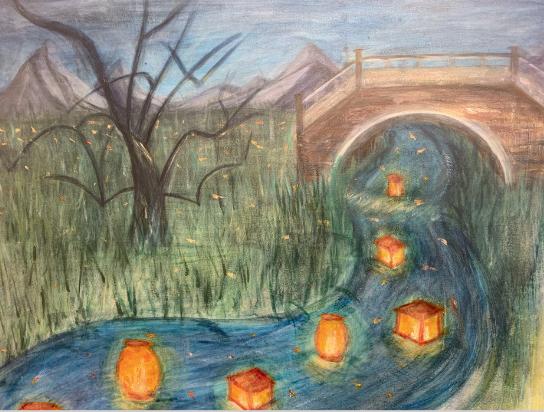

Year 10 | Music
Year 10 students have the option of choosing two semester-long electives from the arts group to explore and develop their interests in Media Arts, Music, Theatre, or Visual Arts. The music course consists of three units.
Unit 1: The Classical Style
In the "The Classical Style" unit, students will learn about innovations of composers from the Classical period focussing on structure and styles developed during this important period of music. Students also learn to analyse important Classical repertoire, think creatively through a composition process. In this unit, students are assessed against the criteria of investigating, developing and creating. They develop their music theory knowledge using music theory software. By the end of the unit, students will be able to identify and appreciate the different structures found in Classical music. As students analyze Classical music and experiment with and create musical ideas, they develop compositional skills as well.
Unit 2: World of Improvisation
In the "Worlds of Improvisation" unit, students listen to, analyze, and research the improvisation techniques and conventions of Blues, Indian Classical, and Chinese music while practicing creative thinking skills. They gain exposure to a wide variety of musical styles, and then use this knowledge to experiment with the improvisation conventions of these musical cultures. Through this, students build their improvisational skills and develop a greater appreciation for music from different cultures. Students demonstrate their understanding by completing a Portfolio showcasing their improvisation experiments and idea development. The portfolio is assessed against the criteria of developing and evaluating progress and growth.
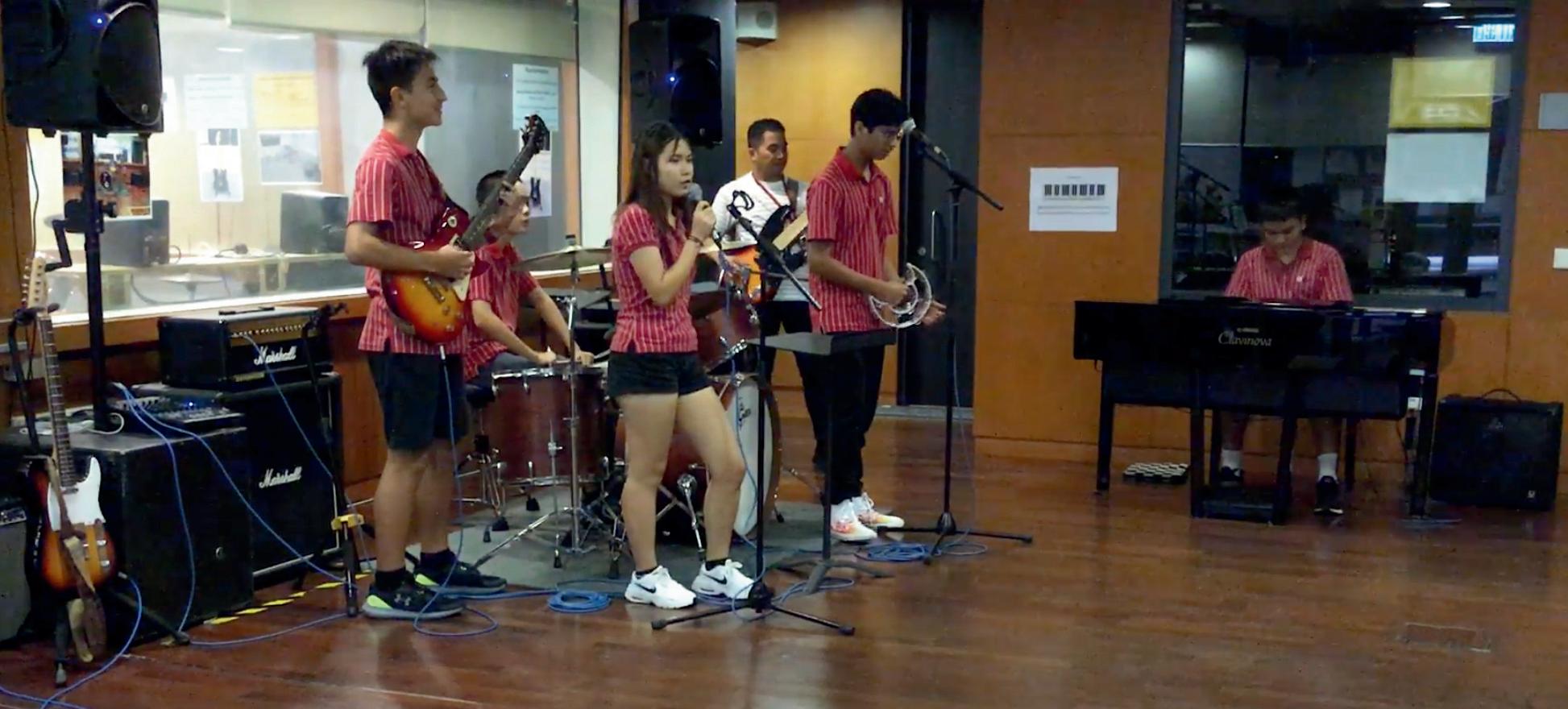
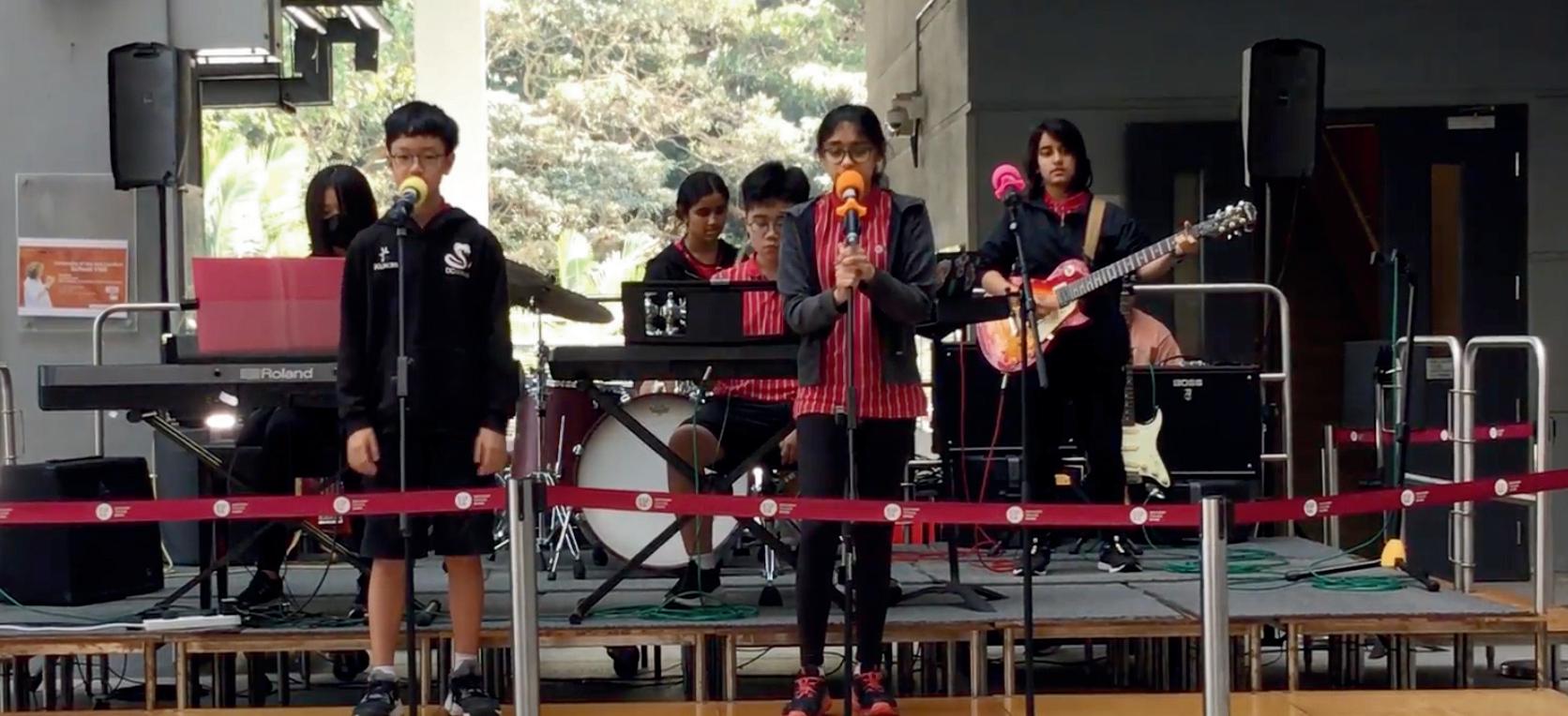
Year 10 | Theatre
Year 10 students have the option of choosing two semester-long electives from the arts group to explore and develop their interests in Media Arts, Music, Theatre, or Visual Arts. The theatre course consists of four units.
Unit 1: Technical Theatre
In "Technical Theatre," students are introduced to the key production elements of set, sound, lights, projection, and costume design. Through the analysis of several plays and the works of stage designers, students decipher the principles of design and the conveyance of a setting, in order to create their own designs for an existing text. They practise their creative thinking skills by connecting ideas across these production elements. After a short study on stage productions (investigating), students develop their understanding of one of their areas of interest. This leads to the creation of their own designs. The unit ends with a student reflection on their learning (evaluating).
Unit 2: Performing Solo
In the unit "Performing Solo," students explore how actors effectively analyse and understand scripts. Students will practically engage with how to bring scripts to life on stage through their character and delivery choices (developing), culminating in their performance of a monologue of choice (performing) to a live audience. Of all our units in Theatre, we have found this one builds self-confidence and strength of character most, and is the most successful with our students
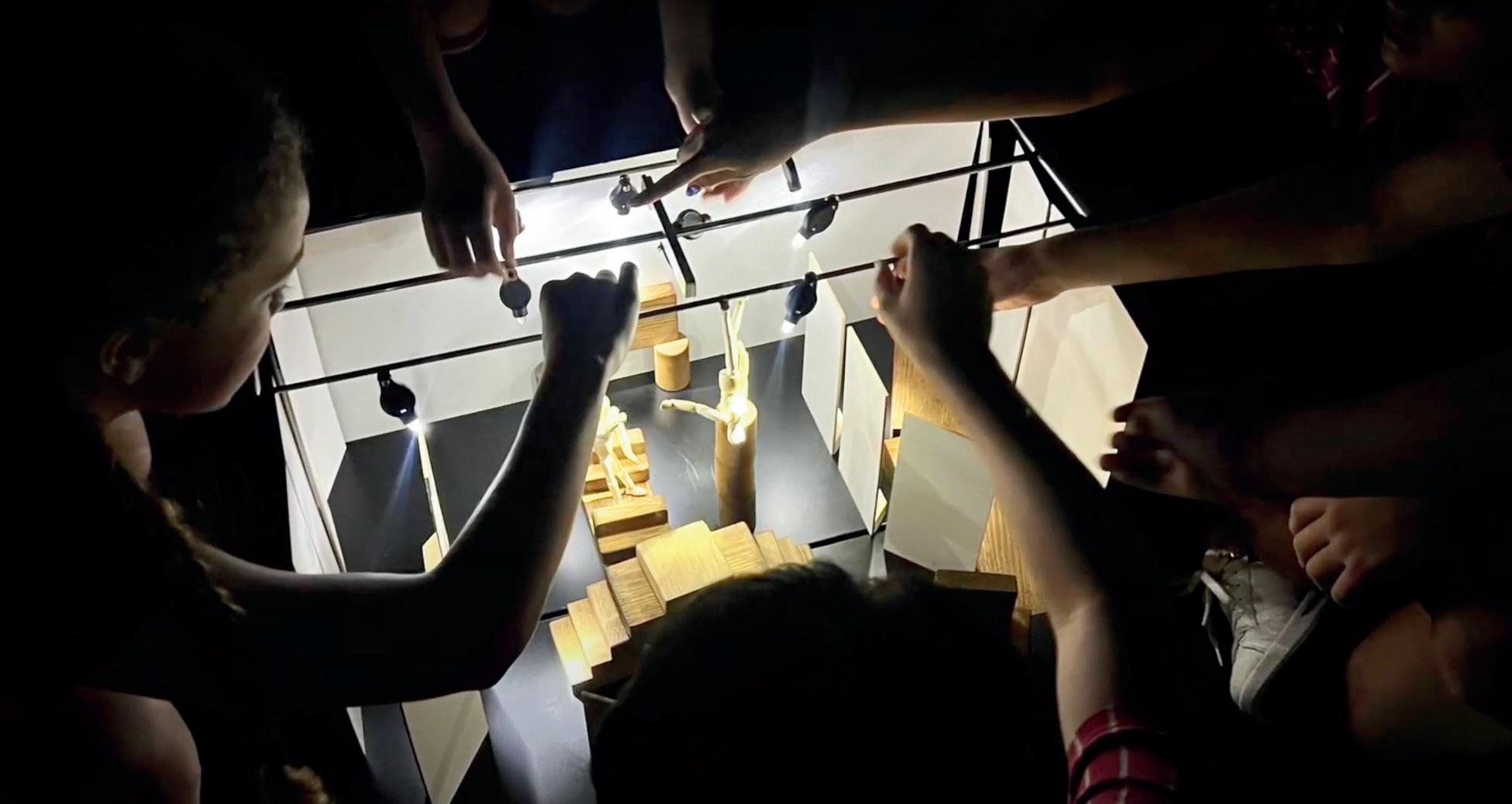
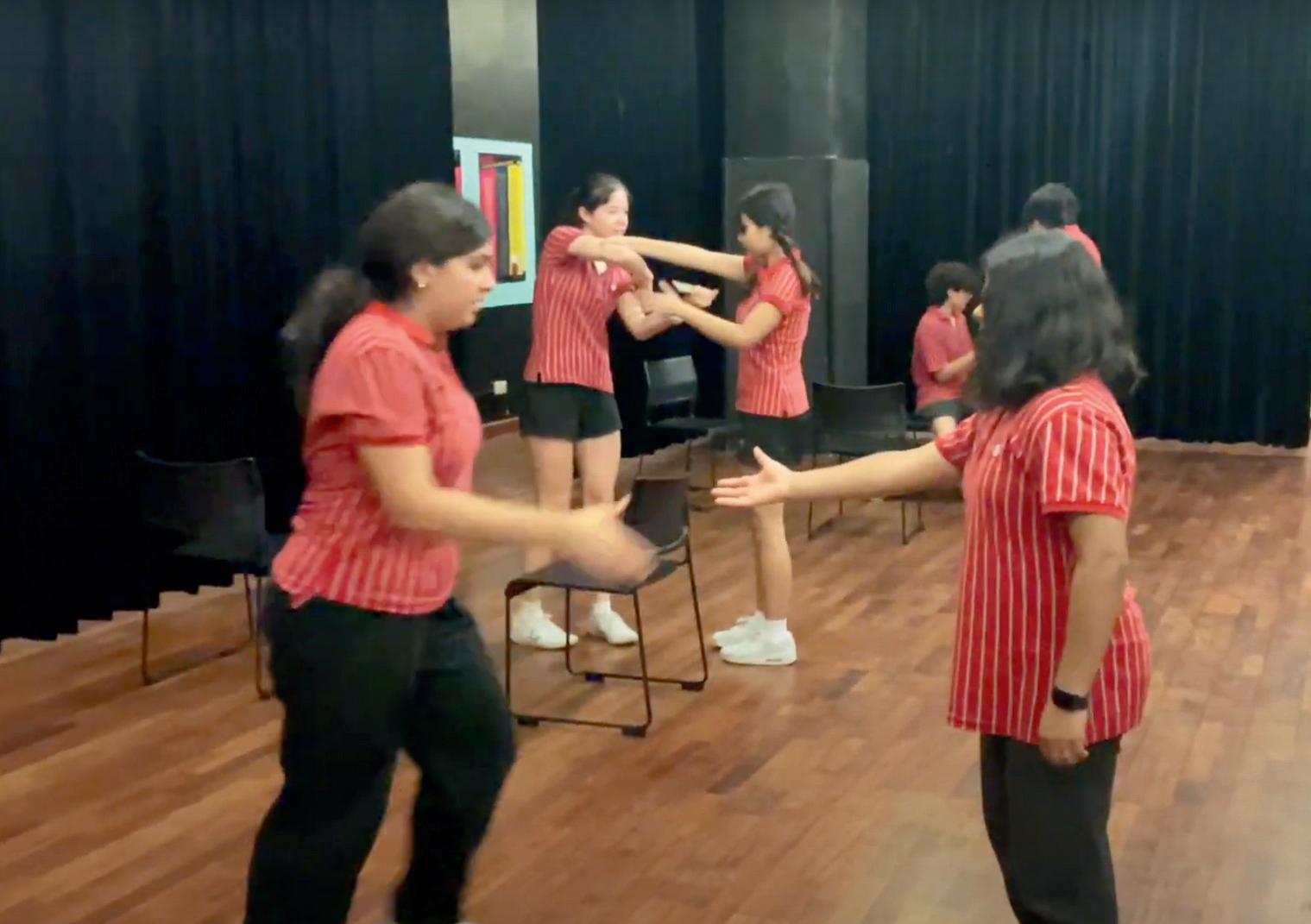
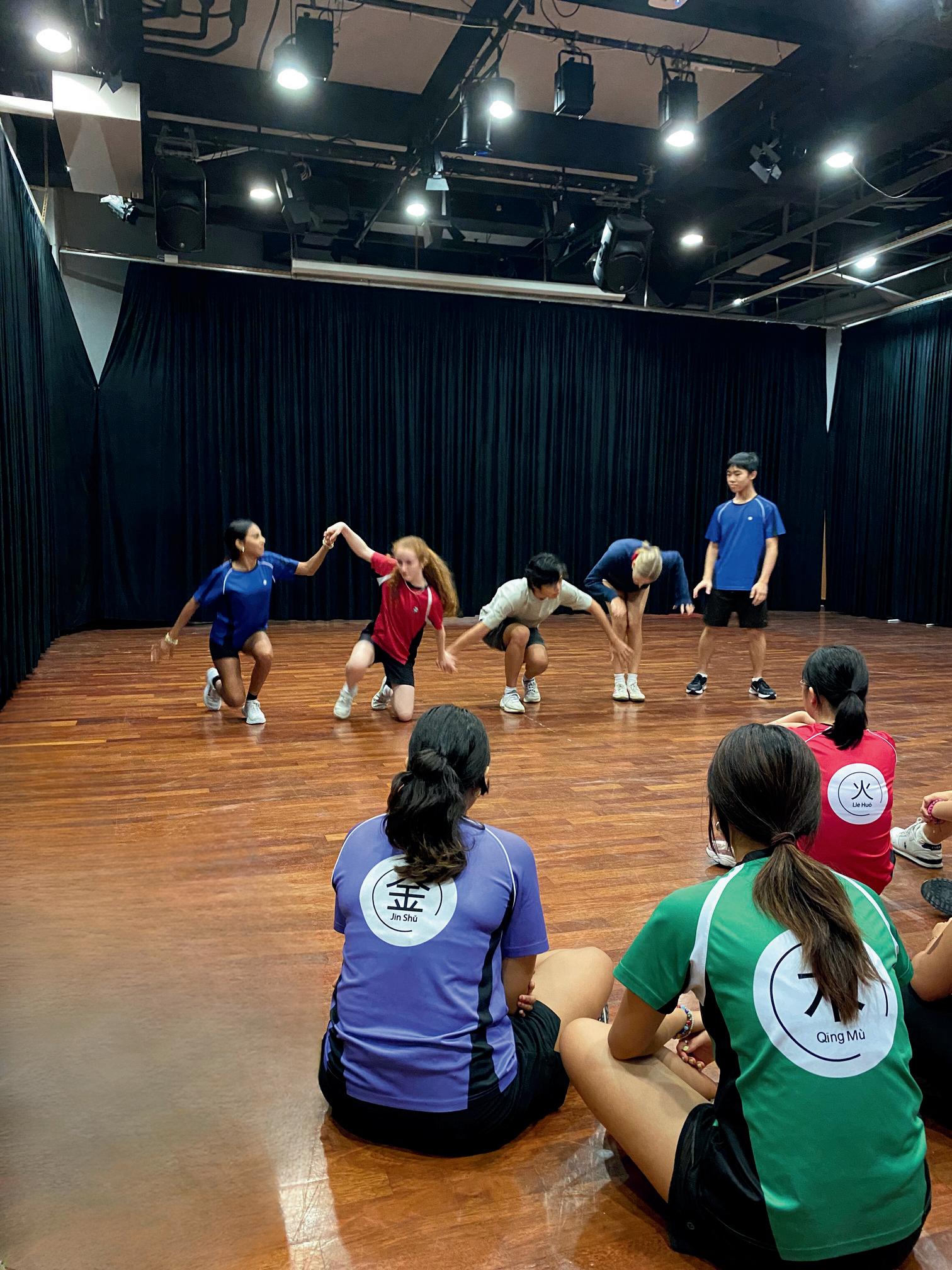
Year 10 | Media Arts
Year 10 students have the option of choosing two semester-long electives from the arts group to explore and develop their interests in Media Arts, Music, Theatre, or Visual Arts. The media arts course consists of two units.
Unit 1: Photography | Media Arts
In the "Photography" unit, students study the key concept of aesthetics through a focus on famous photographers and photographic techniques. They respond to photos analytically and creatively by producing their own photographs in the style of different photographers. Students are taught communication skills through using different styles of photography to convey different ideas, and creative thinking skills through creating original works. In this unit, students demonstrate their understanding by completing analyses of famous photographers' works (Investigating), and they create a portfolio of their own best works that is assessed against the following criteria: developing, creating/performing, and evaluating.
Unit 2: Intro to Horror Films | Media Arts
In the "Introduction to Horror Films" unit, students learn about the history of horror and the cinematic conventions associated with the genre. Students also analyse a variety of short horror films and discuss the significance of the genre in popular culture. Students evidence their learning through a video essay, and through working collaboratively to create their own short horror films that demonstrate their understanding of the codes and conventions of horror.



Year 10 | Design
In Year 10, students experience food or product design once each semester. Product design courses focus on designing, manufacturing, and assembling products. Food design courses focus on food design, production, and presentation.
Unit: Let’s JERF (Just Eat Real Food)
In the "Let's JERF (Just Eat Real Food)" unit, students study the nutrients (macro and micro), the impact of ultra-processed foods, and the consequences of eating habits on one's health. Students practice several ATL skills, including organization, information literacy, critical thinking and creative thinking. They demonstrate their understanding by completing the summative assessment task of designing and creating a new product to replace an ultra-processed food. Learning is assessed using four criteria: Inquiring and Analysing, Developing Ideas, Creating the Solution, and Evaluating.
Unit: Get the Word Out!
In the “Get the Word Out” unit, students research markets and trends and use insights from their original research to design and make a product that conveys a message from a relevant Sustainable Development Goal (SDG). They also practice organisation as well as creative thinking skills. Students demonstrate their understanding in this unit by completing an informative jewellery item for a chosen target audience. Learning is assessed using four criteria: Inquiring and Analysing, Developing Ideas, Creating the Solution, and Evaluating.
Unit: Lighten Up
In the "Lighten Up" unit, students follow design principles to design and create a lamp for a specific purpose in their home. They demonstrate their understanding of the design process by studying existing products that show clear examples of this approach. Throughout the process, they practice organization and critical thinking skills by proposing various solutions, using models, and various materials, to explore complex issues, and identifying obstacles and challenges. They are encouraged to consider multiple alternatives and apply existing knowledge to generate new ideas. Learning is assessed using four criteria: Inquiring and Analysing, Developing Ideas, Creating the Solution, and Evaluating.
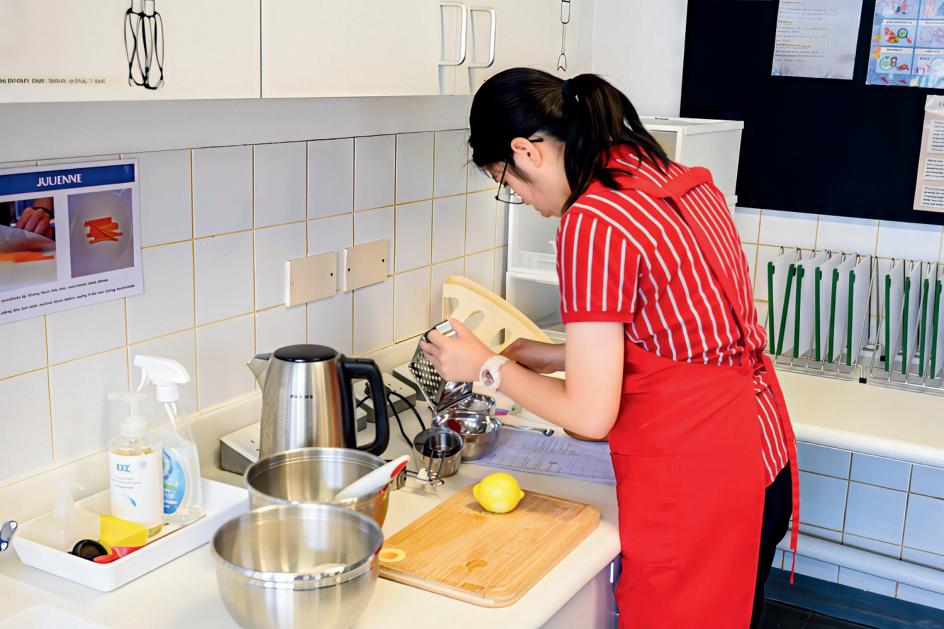
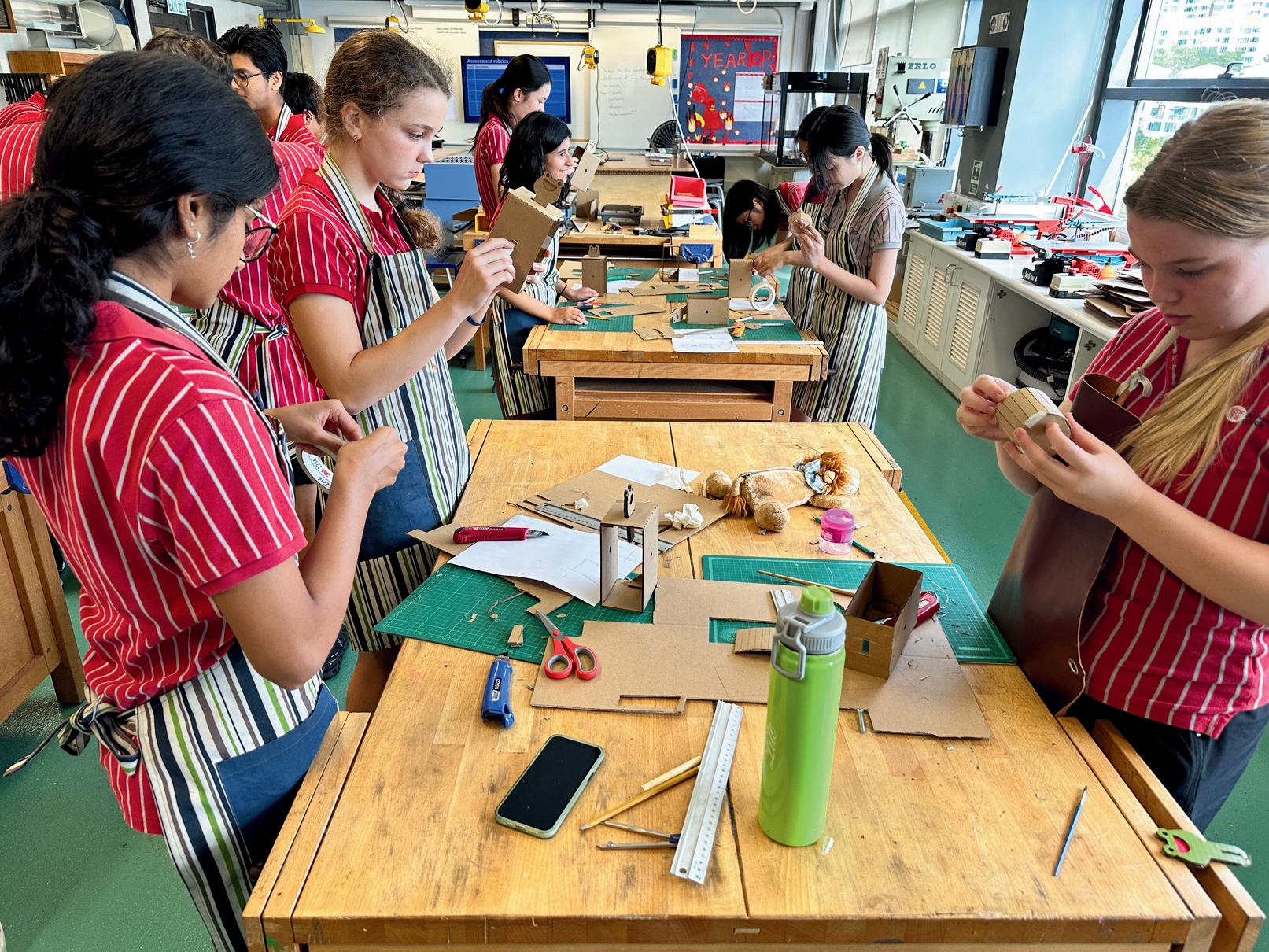
YEAR 11
Year 11 Teachers
Language and Literature
English 11.1
Education
Phase
Phase
Phase
Phase
Phase
Learning Teams
Year 11 | English Language and Literature
August - October
Unit 1: Poetry: Voices of Dissonance & Harmony
As part of Unit 1, students identify, analyze, and utilize literary devices in poetry. They also examine the non-literary type of photography, and discuss their characteristics and conventions in regards to purpose and audience. In exploring the ethical and cultural implications of poetry, students practice persuasive speak through oral debate. Students learn to read critically, comprehend a range of English terms, and write for various purposes. They demonstrate their understanding by presenting a comprehensive line-byline analysis on a classic poetic work and creating an original poetic composition that is complemented by an explanation of their artistic choices.
October - December
Unit 2: The Crucible
During “The Crucible” unit, students study character, setting, and theme in the period play by Arthur Miller and develop critical arguments related to these concepts. They also examine interviews, infographics, and satirical cartoons as non-literary text types and explore how their conventions and characteristics influence an audience. To demonstrate their conceptual understanding of the play, students compose an analytical paragraph focused on a major theme from the play. They are also assessed on the nonliterary works discussed in the unit in the form of an in-class essay written on a previously unseen text.
January - March
Unit 3: The Sound of Waves
When reading Yukio Mishima's The Sound of Waves, students do extensive research on its historical context and participate in literature circles, where they discuss excerpts, debate discussion questions, make intertextual connections, develop creative responses, and reflect on how they understood and interpreted it. They will also continue their exploration of non-literary text forms by examining editorials, news reports, and speeches. To demonstrate their overall understanding of the novel, students will have a one-on-one oral assessment with the teacher where they respond to a prompt and/or excerpt from the novel.
March - June
Unit 4: The Social Dilemma
In the "The Social Dilemma" unit, students look at the language of film and how different techniques create an impact on the viewer, particularly in regards to the documentary genre. Students engage in a variety of debates and discussions about how to view social media in relation to the lens of global contexts. Students also build upon the visual literacy concepts explored through infographics, political cartoons and photography by looking critically at graphic novels as a text type. For the final assessment, students will create a brief excerpt from a graphic novel that transforms the documentary into a new medium while preserving its tone and purpose.
Year 11 | Chinese Language and Literature
August - October
Unit 1: Text & Social Relations (Part Two)
In the "Text & Social Relations (Part Two)" unit, students explore how texts reflect cultural and societal issues, enabling them to develop a greater sense of personal efficacy and agency. By examining a diverse range of literary and non-literary texts, students uncover the complex connections between texts and cultural and social issues. Furthermore, they cultivate empathy, cultural sensitivity, and a broader understanding of the world as they explore the interplay between texts and society. Assessment is based on analyzing, organizing, producing text, and using language criteria.
October - December
Unit 2: Text & Human Nature (Part Two)
In the "Text & Human Nature (Part Two)" unit, students engage in a focused study of narrative and descriptive literary texts, particularly short novels, along with non-literary texts, to explore the topic of power and privilege. They study elements such as text structure, language usage, and character development to gain a deeper understanding of the complexities and diversities of human nature. They examine the portrayal of power and privilege in texts, including social classes, gender, race, and social status. Analyzing, organizing, producing text, and using language criteria are assessed.
January - March
Unit 3: ⼈⽣
戏 Drama and Reality
In the "Drama and Reality" unit, students explore the topic of inequality by studying multimodal literary texts, specifically dramas, as well as non-literary texts in the form of videos. By analyzing these diverse mediums, they examine how inequality is portrayed, represented, and critiqued. They study the structural and narrative elements employed in dramas and videos, including the choice of narrative perspective, the handling of time and space, and the relationship between themes and narrative techniques. Producing text and using language criteria are assessed.
March - June
Unit 4: Universal Beliefs Across Texts
In the "Belief in Life" unit, students explore the topic of philosophies and ways of life through a close study of both literary and non-literary texts. Through a variety of texts, they explore the universal aspects of human experiences and emotions. They analyze how different authors express and convey their beliefs through the use of language, rhetoric, and storytelling techniques. By analyzing and reflecting critically on the shared human condition, students gain a deeper understanding of how beliefs influence identity and behaviour. Analysing, organizing and using language criteria are assessed.
Year 11 | Chinese Language Acquisition
August - October
Unit 1: Life of Travel
Phase 2C
In the "Life of Travel" unit, students will discuss their travel experience and develop their language skills in reading and writing. The focus will be on acquiring vocabulary related to travel experience, hotel booking, transportation, and other travel-related topics. Through interactive activities and practice exercises, students will enhance their ability to communicate effectively in exchanging real-life travel experiences. Assessments will be designed to evaluate students' reading and writing skills within the context of travel.
October - December
In the "Chinese Festivals" unit, students study traditional Chinese festivals and events that are celebrated in Hong Kong each year to learn about local customs and culture. They also learn about the history and cultural significance of these events. Finally, they discuss the importance of celebrating traditional festivals and events and how to do so in a modern context. Their experiences and feelings are shared in the classroom, and they practice asking questions and expressing opinions. Assessors measure students' ability to comprehend material by listening and speaking.
January - March
In the "Modern Technology" unit, students explore a variety of common technology products, gaining an understanding of their functions, advantages, and disadvantages. The focus is on expanding vocabulary related to technology, including electronic devices, software applications, and digital services. They examine the impact of technological advancements on society, encouraging the development of critical thinking skills and cultural awareness. In this unit, students are assessed on their listening and reading skills.
April - June
In the "Healthy Life" unit, students embark on an engaging exploration of habits and lifestyles, concentrating on essential topics such as diet, sleep, and exercise. This unit aims to provide students with a deeper understanding of the significance of maintaining a healthy lifestyle. Additionally, students explore how different cultures and backgrounds influence people's habits and daily routines, offering a broader perspective on health and wellness. Their speaking and writing skills are assessed.
Year 11 | Chinese Language Acquisition
August - October
1: Learn Chinese
In the "Learn Chinese" unit, students learn about describing their experiences learning Chinese. The students examine the characteristics of the Chinese language and discuss the advantages and challenges of learning Chinese. They also learn strategies for effectively studying Chinese and identify resources to help them learn Chinese. They reflect on their experiences learning Chinese and set goals for continuing to study the language. Students learn to express their own opinions in Chinese and practice giving presentations in Chinese. Assessment is measured by speaking and writing criteria.
October - December
During the "Diet and Health" unit, students investigate healthy eating habits and how they affect wellbeing. They also discuss the features of different Chinese cuisines and the ones highlighted in the traditional Chinese festivals; examine the way Chinese people use food in their daily life and celebrations, as well as the potential health issues that are not widely known. They learn the importance of a balanced diet and how it affects their health. Additionally, they learn how to make healthy food choices. Their listening and reading skills are assessed in this unit.
January - March
In the "Community Events" unit, students learn to explain which types of events they participate in within the community and describe some voluntary work experiences. Through engaging in community service, they develop social responsibility and empathy, and they gain a deeper understanding of community connections. They also learn to collaborate with others and work together to achieve a common goal. This gives them an opportunity to practice their communication and problem-solving skills. This unit assesses their reading and speaking skills.
April - June
In the "New Technology" unit, students discuss the positive and negative influences of modern new technologies and how these technologies are affecting their daily lives. Additionally, they compare how different technologies function in their leisure time. They explore how different technologies are changing the way people interact with each other and with the world. They discuss how teenagers' lifestyles are affected by technology and explore the ethical implications of using technology. Their listening and writing skills will be assessed in this unit.
Year 11 | Chinese Language Acquisition
August - October
Unit 1: Education and Career
In the “Education and Career” unit, students explore the potential advantages and challenges of study tours and studying abroad. They gain an understanding of the benefits of international study, such as increased cultural awareness and understanding of other languages. They also discuss strategies for managing the challenges of studying abroad, such as language barriers and cultural differences. Topics covered include summer school in China and further education abroad. Their reading and writing skills are assessed in this unit.
October - December
Unit 2: Social Relationships
In the “Social relationships” unit, students explore the issues teenagers face in a local context and possible solutions to address these challenges. They learn about the importance of building positive relationships with peers, family, and teachers and the benefits of having supportive networks. They discuss strategies to cope with difficult social situations. They also learn about identity formation, self-esteem, roles and role models. Topics covered include teen issues and peer influence. In this unit, listening and speaking skills are assessed.
January - March
3: Communication and Media
In the "Communication and Media" unit, students explore different communication platforms, such as social media and traditional communication platforms to gain a better understanding of digital life, virtual environments, and the information age. They also gain an understanding of the impact of technology on communication and how social media apps affect the way people interact with each other. Different media platforms and social media's influence are covered. Their listening and speaking skills are assessed in this unit.
April - June
Unit 4: Environment and Experience
In the "Environment and Experiences" unit, students explore how people impact the environment and how environmental protection can be promoted in schools. Students learn about the importance of conservation, how to reduce pollution, and how to protect our natural resources. They also learn the importance of taking action to protect our planet and how to create positive change. Students are introduced to environmental issues and the importance of protecting the environment in schools. Their reading and writing skills are assessed in this unit.
Year 11 | Chinese Language Acquisition
August - October
Unit 1: Community Life 社
⽣活
The "Community Life" unit focuses on fostering empathy and strengthening community bonds. Students develop listening skills by comprehending diverse perspectives within the community. Topics explored include the importance of understanding different cultures, the importance of helping others, and the power of unity. Through hands-on activities and group discussions, students gain a more holistic view of their community. They learn to write formal letters and narrate personal experiences. The assessment evaluates listening comprehension and speaking proficiency.
October - December
Unit 2: Arts
The "Arts" unit explores how artists express their concerns and connect with audiences through diverse styles. Students develop reading skills to understand abstract texts and visualize their content. They also learn to use verbal and nonverbal communication to express their ideas. They gain a better understanding of the importance of art in society and the impact of art on culture. They learn the structure and language of debate speeches, enhancing their ability to present persuasive arguments. Assessment focuses on reading comprehension and writing proficiency.
January - March
Unit 3: Career Planning
The "Career Planning" unit explores the influence of technology on future careers and encourages open-mindedness in career decisions. Students develop speaking skills for discussing career-related topics and providing feedback. They learn to comprehend various text types and complex sentence structures, as well as the structure and language of debate speeches. Assessment focuses on reading comprehension and speaking proficiency. This unit helps students gain insights into career trends, communicate their ideas confidently, and discuss their futures.
April - June
Unit 4: Environment Protection 环保
The "Environment Protection" unit raises awareness of environmental conservation and emphasizes the impact of individual actions in a globalized world. Students develop listening skills through note-taking and understanding complex sentence structures. They learn to create informative materials including brochures, pamphlets, or booklets to promote environmental awareness. The unit ends with students becoming more aware of environmental issues and advocating for the protection of the environment through written materials. Assessment measures listening and writing skills.
Year 11 | Chinese Language Acquisition
August - October
Unit 1: Life Style ⽣
Phase 5A
The "Life Style" unit explores Chinese culture and lifestyle. Students master relevant vocabulary and phrases, learn to design effective survey questionnaires, and write comprehensive survey reports. They understand report stylistic requirements and use idioms to convey cultural aspects. Assessments focus on listening and writing skills. By the end of the unit, students proficiently use lifestyle-related language, effectively communicate cultural nuances, and have a deeper understanding of Chinese lifestyle and communication practices.
October - December
The "Unique Experience" unit explores the topic of virtual reality. Students learn specialized VR vocabulary and practice using grammatical structures like resultative complements and comparison sentences. They also develop skills in summarizing paragraphs by identifying keywords and selecting relevant examples to support persuasive arguments. The unit improves students' understanding of virtual reality, their ability to express experiences and changes, and their persuasive communication skills. Assessments focus on reading comprehension and speaking abilities.
January - March
Unit 3: Communication and Media
The "Communication and Media" unit focuses on developing students' critical thinking and communication skills. Students learn to understand their audience, make inferences, and consider different viewpoints. They distinguish between factual information and propaganda in advertisements, understand the style of ads and news, and improve their listening skills for current events. Additionally, they practice describing observations clearly, master communication techniques, and express their opinions on events. Assessments focus on listening and writing skills.
April - June
Unit 4: Globalization 全
The "Globalization" unit helps students develop critical thinking, effective argumentation, and cross-cultural empathy to better understand and engage with global issues. They learn key vocabulary related to globalization, interpret and present data using various numerals, and express complex ideas using cohesive conjunctions. They also develop skills to interpret survey data, establish empathy, summarize information, and effectively communicate and argue points based on survey findings. Assessments focus on speaking and reading skills.
Year 11 | Spanish Language Acquisition
August - October
Unit 1: The Art | El arte
In the "Artistic Expressions From the Hispanic World" unit, students learn how to describe a piece of art, including the author, type, and meaning in the targe language culture. They discover Hispanic music and learn about different instruments such as Tango, flamenco, salsa, etc. They reflect on the aesthetics and art of communication and identify different types of literacy. Artists use their talents to convey messages about social and cultural events, thereby communicating values and beliefs of a society. Unit 3 assessments are measured by reading and writing.
October - December
Unit 2: Global Problems | Problemas Globales
In the "Global problems" unit, students investigate a variety of global issues, including natural disasters, unemployment, and alcohol abuse. They learn to analyze the causes and effects of these issues and to identify potential solutions. They also learn about the interconnectedness of these issues, and how they can be interconnected and addressed. Finally, they explore how a healthy lifestyle can benefit both us and the environment. Understanding the impact of human activity on our environment, they strive to develop empathy and commitment. Assessments are measured by speaking and listening.
January - March
3: Volunteer Work | Trabajo voluntario
In the "Artistic Expressions From the Hispanic World" unit, students learn how to describe a piece of art, including the author, type, and meaning in the targe language culture. They discover Hispanic music and learn about different instruments such as Tango, flamenco, salsa, etc. They reflect on the aesthetics and art of communication and identify different types of literacy. Artists use their talents to convey messages about social and cultural events, thereby communicating values and beliefs of a society. Unit 3 assessments are measured by reading and writing.
March - June
Unit 4: Responsible Consumerism | Consumo responsable
In the "Responsible Consumerism" unit, students analyze fast fashion and discuss what can be done as a society to put an end to it. They engage in debates about second-hand shops, exploring the advantages and disadvantages. They investigate the differences and similarities between recycling policies in the Hispanic world and their home country. Additionally, they examine how Hong Kong schools practice responsible consumption. In exploring consumption, they analyze how their choices affect the environment and society. Assessments are measured by speaking and listening.
Year 11 | Individuals and Societies
August - October
Unit 1: Leaders And Change
The "Leaders And Change" unit focuses on two major 20th-century leaders: Hitler and Gandhi. Students explore the societal contexts in which these leaders rose to power. They examine their methods of achieving their goals and analyse the impacts of their actions on society. Students then compare and contrast the two figures, and discuss power and leadership implications. They explore ethical dilemmas leaders face, and how their decisions can lead to far-reaching consequences. A historical essay comparing two leaders will be graded on students' ability to research, analyze sources, and communicate. Investigating and critical thinking are evaluated in this unit.
November - January
Unit 2: Contemporary Global Issues
In the "Contemporary Global Issues" unit students explore what constitutes a global issue and then examine some of the key issues facing the world today. They analyze the causes, consequences, and potential solutions of these issues, and then discuss their findings with their peers. Throughout the unit, students explore how perspectives shape decisions that can impact natural and cultural envi interpreting climate graphs, understanding stakehold and balancing local and global needs. The final ass analysis and a Pecha Kucha presentation. Communicat understanding are evaluated in this unit.
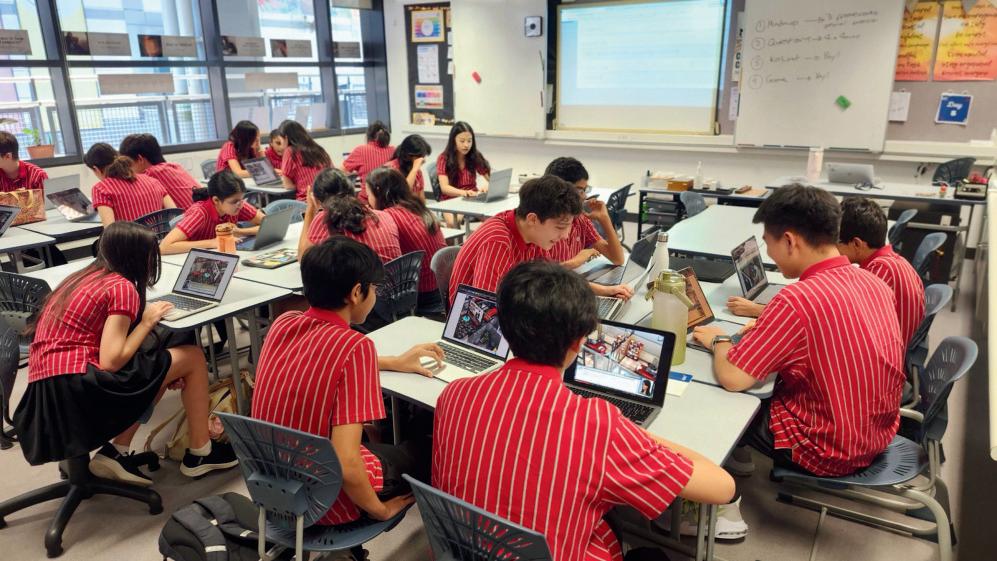
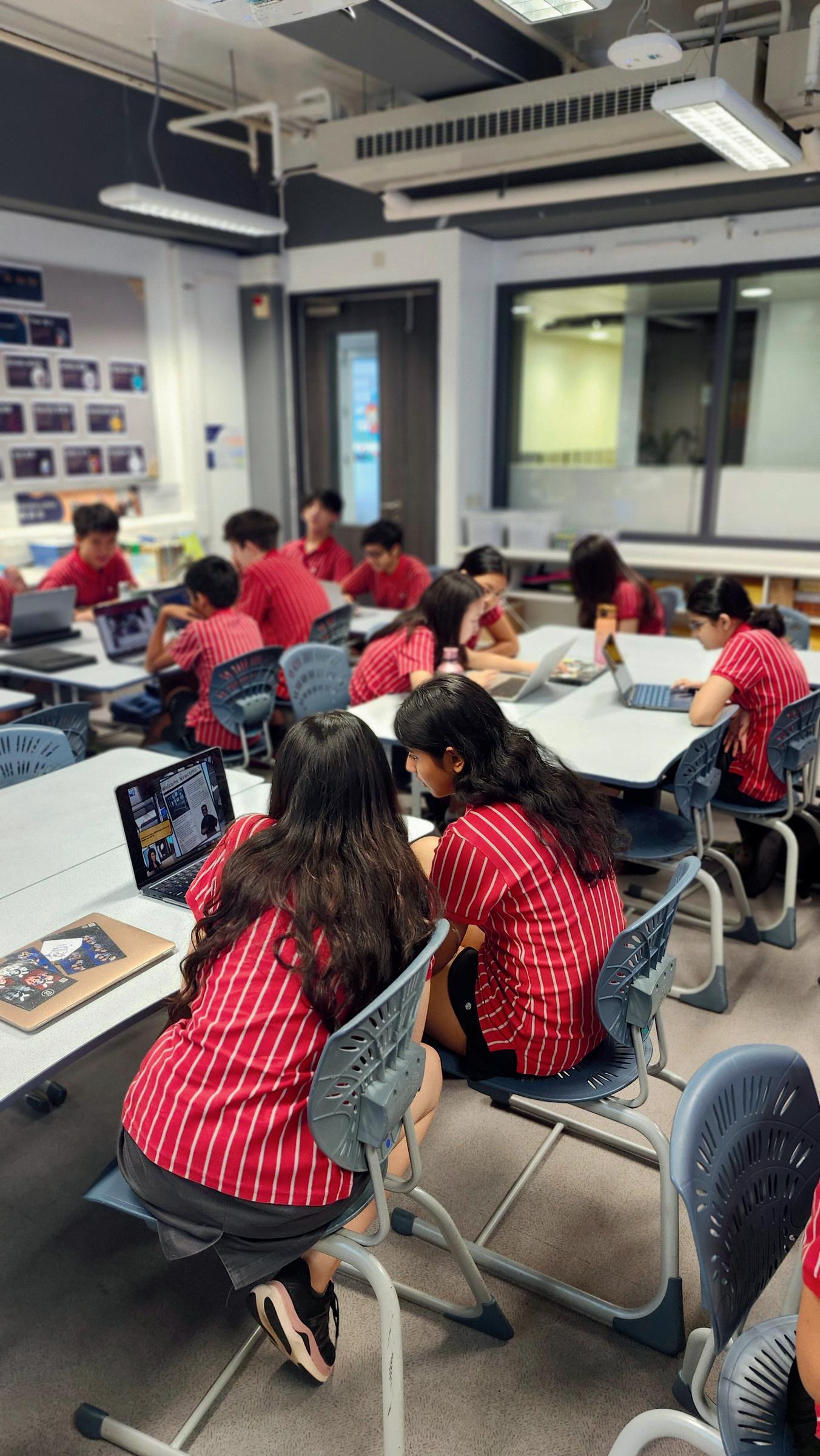
Year 11 | Individuals and Societies
January -
March
Unit 3: Demystifying the Economic Engine
The unit "Demystifying the Economic Engine" introduces students to the core concepts and principles of economics. Students will explore how systems of resource allocation and power dynamics impact economic processes, and how these factors influence economic growth and development over time. Students will study the complex networks of interrelated economic agents and components that govern the allocation and use of scarce resources. Through this unit, students will investigate how different resource allocation models (e.g. free market, command economy, mixed economy) and power structures (e.g. monopolies, oligopolies, government regulations) impact the economic processes of production, distribution, and consumption. They will analyze historical and contemporary case studies to understand how these systemic factors have facilitated or hindered economic growth and development in various regions and time periods. Overall, this unit encourages students to think critically about the systemic forces that drive economic activities and outcomes, and to consider how these systems can be designed and managed to promote more equitable and sustainable development. Knowing and understanding and critical thinking are evaluated in this unit.
March - June
Unit 4: Sustainable Cities
The unit "Sustainable Cities" focuses on urban development and sustainability. Students will explore the historical evolution of cities and examine case studies in developing countries to understand the potential for small-scale changes that contribute to sustainability. They will learn how to design and implement strategies to reduce environmental impacts and improve livability in cities. The final assessment will evaluate their comprehensive redesign of Hong Kong, reflecting their application of sustainable principles and innovative solutions for urban development. Investigating and communicating are evaluated in this unit.
Year 11 | Sciences
August - November
Unit 1: Chemical Odyssey (Chemistry)
In the 'Chemical Odyssey' unit, students explore the principles driving chemical reactions. Energetics concepts include exothermic and endothermic reactions, calorimetry experiments, and enthalpy changes calculated from bond energies and energy-level diagrams. Students study reversible reactions, dynamic equilibrium, and factors affecting equilibrium. Redox processes are analysed through ionic equations of displacement reactions and electrolysis. The unit also introduces the mole concept, empirical and molecular formulas, and reaction mass calculations. The unit is assessed through a topic test and a lab investigation on the energy change in displacement reactions.
November - February
Unit 2: Genes in Action (Biology)
The "Genes in Action" unit covers gas laws, evaporation, expansion, specific heat capacity, latent heat, electric charge, and electric circuits. Students study thermal physics, electricity and magnetism, to build a solid understanding of how airconditioning units and refrigerators work. Technology advancements are discussed in relation to energy. Additionally, students will learn how to measure temperature and calculate pressure through experiments. Summative assessments include a test and an investigation lab report on the factors that affect the resistance of an electrical circuit.
April - June
Unit 3: Guardians of the Earth (ESS)
"Guardians of the Earth" engages with the critical themes of biodiversity, conservation, and the human impacts on Earth's systems. Students will explore the intricate web of life, examining the importance of biodiversity and the various strategies employed to conserve it. The unit highlights the significant threats posed by human activities, fostering a deep understanding of how these impacts affect both local and global environments. Students will apply their knowledge and understanding of key concepts through a Criterion D assessment, as well as an end-of-unit test.
April - June
Unit 4: Electrifying Forces (Physics)
The "Electrifying Forces" explores mitosis, DNA structure, DNA replication, genetic engineering, biotechnology, and theoretical human genetics. Students explore the processes involved in mitosis and gain an understanding of DNA structure and replication. They will also explore how genetic engineering and biotechnology contribute to advances in biology. Additionally, they will study theoretical human genetics, examining the fundamental principles underlying inheritance and genetic traits. The assessments include a biotechnology essay and a biology test.
Year 11 | Standard Mathematics
August - October
Unit 1: Equations and Line
In the "Equations and Lines" unit, students study straight lines, perpendicular bisectors, simultaneous equations, surds, exponents, and solving equations. They practise organization and critical thinking skills throughout the unit. To demonstrate their understanding, they complete the "Equations and Lines Test" and the "Criterion B Assessment." These assessments are being assessed against the criteria of Knowing and Understanding and Investigating Patterns.
October - January
Unit 2: Geometry
In Unit 2, "Geometry," students study Measurement, Volumes, Capacity, Right-angled Trigonometry, and Non-right-angled Trigonometry. In this unit, students practice transfer as an ATL skill and demonstrate their understanding by completing the "Geometry Test" and the Criterion C/D assessment, which are assessed against Knowing and Understanding, Communicating, and Applying Mathematics in Real-life Contexts.
January - March
Unit 3: Sequences and Series
In the "Sequences and Series" unit, students study arithmetic sequences and series, geometric sequences and series, sigma notation, sigma algebra, and infinite geometric series. In this unit, they practice communication and creative thinking as ATL skills.
April - June
Unit 4: Probability and Statistics
In Unit 3, "Probability and Statistics," students study experimental and theoretical probability, compound and conditional events, tree diagrams, Venn diagrams, sampling methods, measures of central tendency, measures of spread, and data representation. In this unit, students practice communication and creative thinking as ATL skills and demonstrate their understanding by completing the "Probability and Statistics Test," the Criterion B assessment, and the "Probability Pitch," which are assessed against Knowing and Understanding, Investigating Patterns, Communicating, and Applying Mathematics in Real-life Contexts.
Year 11 | Extended Mathematics
August - October
Unit 1: Functions
In Unit 1, "Functions," students continue their study of quadratic functions and extend their knowledge of rational and composite functions, both in familiar and unfamiliar contexts. They also study function transformations. In this unit, students practice organization and critical thinking as ATL skills and demonstrate their understanding by completing a test and the "Exploring Intersections of Functions," which are assessed against Knowing and Understanding and Investigating Patterns.
November - December
Unit 2: Trigonometry
In Unit 2, "Trigonometry," students study trigonometric ratios, problem-solving using trigonometry, 3-dimensional problem-solving, solving trig equations using trig identities, radian measure, the unit circle, Pythagorean relationship, trigonometric functions, modeling and graphing trigonometric functions, transformations of trigonometric functions, area of a triangle, the sine rule, ambiguous case of the sine rule, and the cosine rule. In this unit, students practice transfer as an ATL skill and demonstrate their understanding by completing the "Trigonometry Test" and the Criterion C/D assessment, which are assessed against Knowing and Understanding, Communicating, and Applying Mathematics in Real-life Contexts.
January - March
Unit 3: Statistics and Probability
In Unit 3, "Statistics and Probability", students study experimental and theoretical probability, compound and conditional events, tree diagrams, Venn diagrams, sampling methods, measures of central tendency, measures of spread, and data representation. In this unit, students practice communication and creative thinking as ATL skills and demonstrate their understanding by completing the "Probability and Statistics Test", Investigating Patterns assessment, and the "Probability Pitch", which are assessed against Knowing and Understanding, Investigating Patterns, Communicating, and Applying Mathematics in Real-life Contexts.
April - June
Unit 4: Sequences and Series
In the "Sequences and Series" unit, students study arithmetic sequences and series, geometric sequences and series, sigma notation, sigma algebra, and infinite geometric series. In this unit, students practice communication and creative thinking skills and demonstrate their understanding by completing a test.
Year 11 | Physical and Health Education
Students in different class sessions complete Physical and Health Education units at different times due to limited facilities, ensuring equitable access to resources.
Unit 1: Dance
In the "Dance" unit, students choreograph and perform an original dance routine while practicing creativity and innovation. In this unit, students demonstrate their understanding by completing a movement plan, performing their dance, and reflecting on the outcome of their final performance. These tasks are assessed against planning for performance, applying and performing, and reflecting and improving performance.
Unit 2: Athletics
In the "Athletics Pentathlon" unit, students study biomechanical principles and apply them to athletics performance while practicing critical thinking and transfer skills. In this unit, students demonstrate their understanding by completing a movement analysis of athletics technique and competing across five athletics events. These tasks are assessed against knowing and understanding, as well as applying and performing.
Unit 3: Double Dutch
In the "Double Dutch" unit, students study compulsory and freestyle double dutch skills, and they perform a choreographed routine in groups while practicing collaboration and perseverance. In this unit, students demonstrate their understanding by competing in a double dutch competition. Their performance in the competition is assessed against Applying and performing, as well as Reflecting and improving performance.
Unit 4: Flag Football
In the "Flag Football" unit, students study skills, tactics, and strategies of flag football and design plays to maximize team performance. They practice critical thinking throughout the unit. In this unit, students demonstrate their understanding by completing a team playbook and competing in an in-class tournament. These tasks are assessed against planning for performance, applying and performing, and reflecting and improving performance.
Unit 5: Exercise and Energy
In the "Exercise and Energy" unit, students study exercise physiology and practice drawing reasonable conclusions and generalizations. In this unit, students demonstrate their understanding by completing an analysis of physiological changes during performance. This analysis is assessed against knowing and understanding.
Year 11 | Visual Arts
Year 11 students choose one year-long elective course from the arts group in either Media Arts, Music, Theatre, or Visual Arts. This is a way to further develop and refine their technical skills, expand their knowledge, and enhance their conceptual understanding. The visual arts course consists of three units.
August - November
Unit 1: Situated Still Life
"Situated Still Life" explores the symbolic and cultural significance of household objects through observational painting. Y11 investigates traditional and contemporary artworks, analyzing how personal narratives are conveyed with everyday items, fostering intercultural understanding for viewers. Applying their research to observational drawing, photography practice and mathematical composition skills, students create a basis for their final artwork. Using oil and canvas, students create original paintings that communicate cultural perspectives to an audience, encouraging international mindedness through Visual Art.
November - February
Unit 2: Poetic Assemblage | Visual Arts
"Poetic Assemblage" explores the concept of individual human experience by creating mixed-media sculptures from found objects and personal collections. Y11 analyzes how these collections can serve as powerful communication tools, transforming specific narratives of the artist into interpretable compositions for the audience. Students investigate the origins of assemblage and the concepts surrounding "found objects". When collecting, students use reflective analysis to situate their chosen objects in multiple contexts, and what happens when different symbols are placed together. After compositional practice, students will exhibit a final assemblage and evaluate the purpose and function in an artist statement.
March - June
Unit 3: Independent Study | Visual Arts
"Independent Study" fully embraces inquiry through an understanding of the design cycle. Y11 first investigates an inspirational artist and analyzes their work, which informs the technical and ideation process. Developing exploration in studies and both documenting and evaluating these in a process portfolio will allow students to critically engage through reflection, dictating refinements for their final work. The end goal of the project is to have students learn to use inspiration while still creating a piece of work that is a reflection of their own unique style. Ultimately, this project will allow students to express creativity while developing their own artistic language.
Year 11 | Music
Year 11 students choose one year-long elective course from the arts group in either Media Arts, Music, Theatre, or Visual Arts. This is a way to further develop and refine their technical skills, expand their knowledge, and enhance their conceptual understanding. The Music course consists of four units.
August - October
Unit 1: Music from the Romantic Period and 20th Century | Music
In the "Music from the Romantic Period and 20th Century" unit, students study composers from both eras. They examine how the composers expanded the range and complexity of musical expression and music vocabulary. They also analyze how music influenced and was influenced by societal and cultural trends of the time. Students learn compositional and orchestrating techniques and apply this to compose their own piece of music. Students will also undertake a personal performance project by getting into bands, choose a song, practice and perform the piece on their chosen instrument. Investigating, developing and creating criteria are assessed.
October - January
Unit 2: Electronic Music Production | Music
In the "Electronic Music Production" unit, students study and experiment with a range of electronic music production techniques. Students complete a number of small experimental tasks, learning common and popular techniques in their Digital Audio Workstation. They then create an electronic music composition, applying a range of production techniques, and share insights into their music decision-making and selfevaluation in their project portfolio. Performing/creating and evaluating criteria are assessed.
January - March
Unit 3: All that Jazz | Music
In the "All that Jazz" unit, students explore how the performing arts and culture can bring about cultural change. They inquire into the characteristics of jazz through jazz analysis and the performance of jazz standards in bands on instruments of their choice. They also explore and develop skills for Jazz improvisation. Throughout the unit, students gain an appreciation of the cultural and historical context of jazz music. Their performance culminates in a musical celebration during Jazz Night at the end of the unit. Investigating and creating criteria are assessed.
Year 11 | Theatre
Year 11 students choose one year-long elective course from the arts group in either Media Arts, Music, Theatre, or Visual Arts. This is a way to further develop and refine their technical skills, expand their knowledge, and enhance their conceptual understanding. The visual arts course consists of three units.
August - December
Unit 1: Staging a Play | Theatre
In the "Staging a Play" unit, students study the craft of producing a performance from page to stage and practice organization skills by planning the use of their time and preparing set, props, and costumes alongside their acting parts. In this unit, students demonstrate their understanding by developing a play on stage (developing) and hosting two performances for audiences (performing). Finally, they reflect on their growth as performers (evaluating).
January - March
Unit 2: Stage Combat | Theatre
In this unit, students engage in fun and practical activities on stage combat; both armed and unarmed.They start with an investigation into 6 essays on the role of combat on stage an in film. They create a manual on how to perform moves such as hair pulling, face slaps, punches and kicks, all without harming their co-actors. After that, students learn to parry and strike with swords. The students then choreograph and perform the opening of Shakespeare's Romeo and Juliet, which they analyze and perform. The unit culminates in a public performance at school, where the students perform a staged combat opening of Romeo and Juliet as a live performance, and a brief evaluation of learning ends the unit.
March - June
Unit 3: Alternative Theatre Styles | Theatre
The unit aims to expose students to modern and controversial forms of theatre that are becoming more mainstream in the hopes to be transformative catalysts for society. Students learn about immersive theatre, personal theatre, verbatim and puppetry, and site-specific theatre, to explore the variety of ways in which we can express ideas and change perceptions in the audience. The focus in the unit is exploration, experimentation and learning, rather than assessment of understanding.
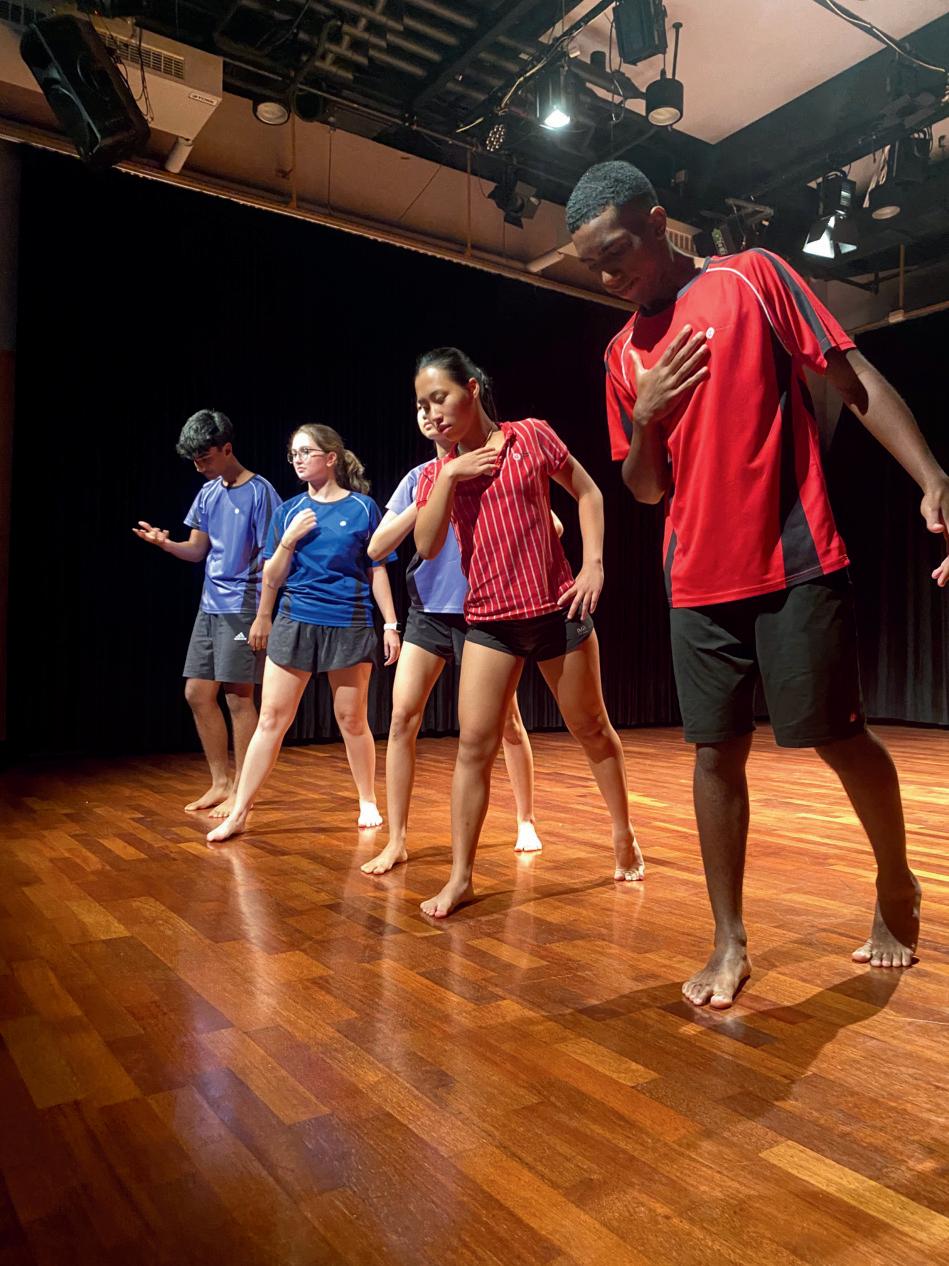
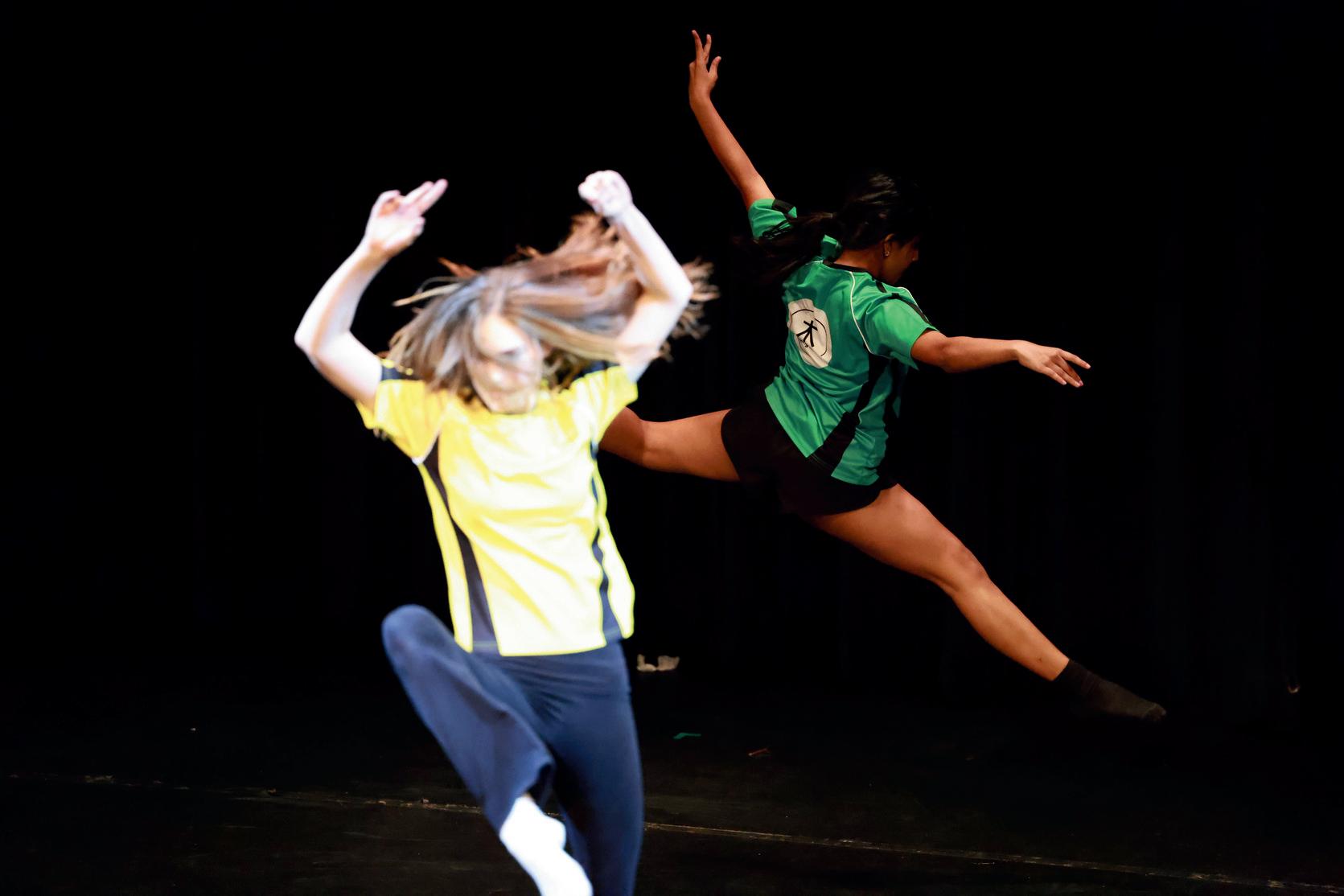
Year 11 | Media Arts
Year 11 students choose one year-long elective course from the arts group in either Media Arts, Music, Theatre, or Visual Arts. This is a way to further develop and refine their technical skills, expand their knowledge, and enhance their conceptual understanding. The visual arts course consists of three units.
August - November
Unit 1: Diversity in Advertising
In the "Diversity in Advertising" unit, students examine how media advertising affects identity and self-esteem by analyzing representations of gender and diversity in various ads. They develop communication and creative skills while researching campaigns and collaboratively designing a stop-motion hashtag campaign. Assessment includes campaign analysis, oral presentation, creative production, and reflection on the campaign’s impact.
November - January
Unit 2: Filmmaking Toolbox Development
“Filmmaking Toolbox Development” unit, students choose a cinematic technique—such as camera shots, angles, movement, lighting, sound, editing, or storyboarding—to master. They research its use in storytelling and develop technical skills through handson practice, then teach their chosen technique and its creative impact to a small group of peers.
February - April
Unit 3: Music Videos
In the "Music Videos" unit, students look at the history of music videos and how different musical genres are represented. They also study how technological advances have influenced music video production at different times, as well as controversial music videos and the inspiration for them. Students demonstrate their understanding by creating their own music videos for a music extract of their choice.
May - June
Unit 4: Teen Drama
In the "Teen Drama" unit, students study TV series from the teen drama genre and how representations of teens and the challenges they face have changed over time. They analyse shows in terms of the film techniques used and the cultural context of the shows. Students also learn about the process of creating a TV show and demonstrate their understanding by pitching their own ideas for a teen drama pilot episode.
Year 11 | Design
In Year 11, students continue to experience food or product design once each semester. Product design courses focus on designing, manufacturing, and assembling products. Food design courses focus on food design, production, and presentation. In this program's final year, students develop their design concepts and skills, explore various materials, techniques and processes, and develop their creative, critical and reflective thinking skills.
Unit: Food for Fuel | Food Design
In the "Food for Fuel" unit, students study the nutrients, staple foods, target groups, special dietary needs, and the consequences of different eating habits on one's health. Students practise organisation, information literacy, and critical thinking skills. In this unit, students demonstrate their understanding by completing the summative assessment task of designing and creating a new product for a specific target group based on staple food. Learning is assessed using four criteria: Inquiring and Analysing, Developing Ideas, Creating the Solution, and Evaluating.
Unit: Veg Out | Food Design
In the "Veg Out" unit, students study the food industry's current trends and animal agriculture's impact. Students look at the many perspectives of a plant-based/vegan diet. Students practise organisation, reflection, communication, and critical thinking skills. They demonstrate their understanding by completing the summative assessment task of creating a vegan/plant-based meal with an informative flyer for a specific target group. Learning is assessed using four criteria: Inquiring and Analysing, Developing Ideas, Creating the Solution, and Evaluating.
Unit: Flat Pack | Product Design
In the "Flat Pack" unit, students follow design principles to design and create a product that can be packaged as a flat pack. They demonstrate their understanding of the design process by studying existing products that show clear examples of this approach. Throughout the process, they focus on the ethical and environmental implications of being a consumer. They focus on using existing ideas in new ways, proposing various solutions, and communicating ideas effectively to their audience using multiple media and formats. Learning is assessed using four criteria: Inquiring and Analysing, Developing Ideas, Creating the Solution, and Evaluating.
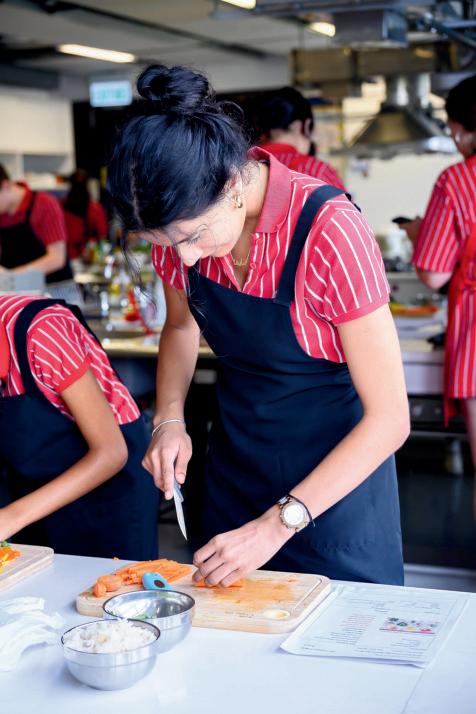
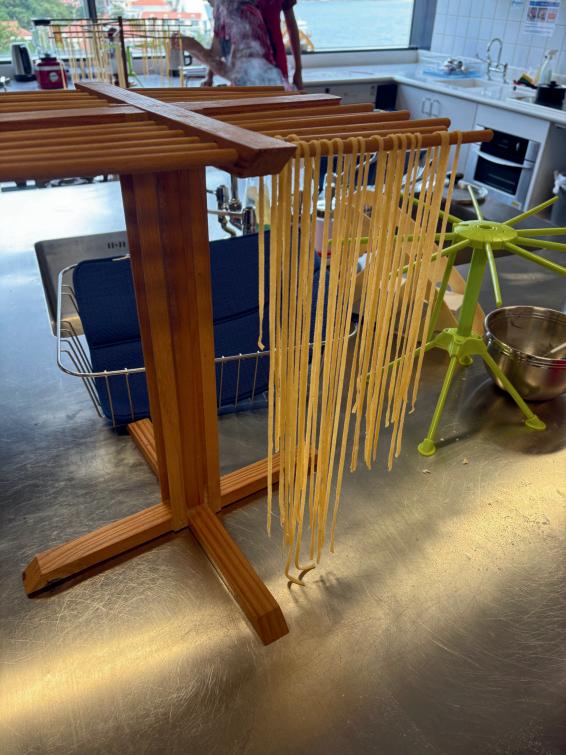
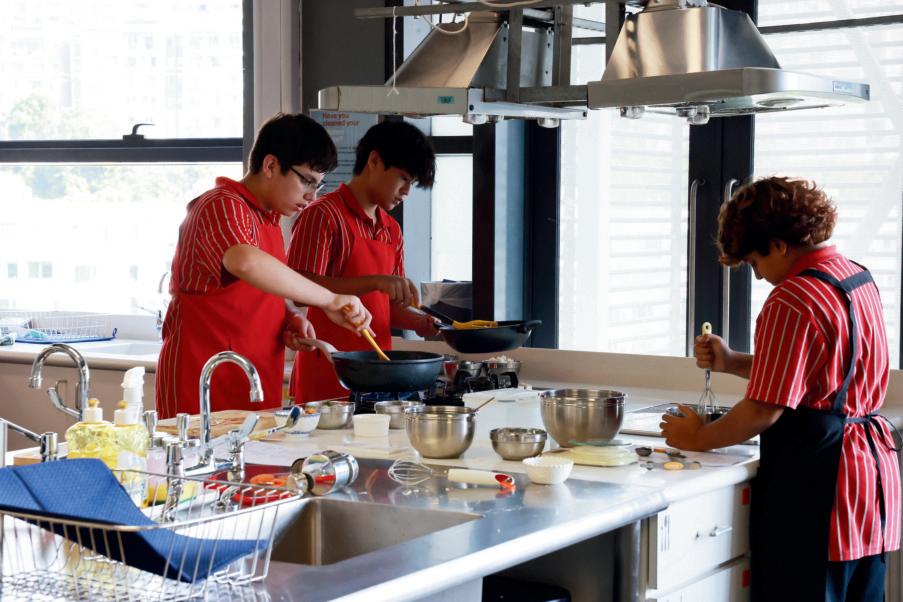
Year 11 | Design
In Year 11, students continue to experience food or product design once each semester. Product design courses focus on designing, manufacturing, and assembling products. Food design courses focus on food design, production, and presentation. In this program's final year, students develop their design concepts and skills, explore various materials, techniques and processes, and develop their creative, critical and reflective thinking skills.
Unit: No Batteries Required! | Product Design
In the “No Batteries Required” unit, students conduct authentic primary research, learn about mechanisms and practice information literacy and affective skills. Students demonstrate their understanding in this unit by completing a mechanical toy to teach young children mechanisms. Learning is assessed using four criteria: Inquiring and Analysing, Developing Ideas, Creating the Solution, and Evaluating.
Unit: The (Green) Apprentice | Product Design
In the “The (Green) Apprentice” unit, students learn about upcycling and sustainability, conduct authentic primary research, and practice communication and collaboration skills. Students demonstrate their understanding in this unit by creating an innovative product using upcycled material. Learning is assessed using four criteria: Inquiring and Analysing, Developing Ideas, Creating the Solution, and Evaluating.
Unit: Go With the Flow | Product Design
In the "Go With the Flow" unit, students follow design principles to design and create a unique product that traditionally needs timber to be bent to create. As creative people, we innovate through adaptation and ingenuity. During this unit, students adapt the skills learned in the lattice cutting practical task to create their own product. Throughout the process, they are led to make unexpected or unusual connections between objects and ideas, creating novel solutions to complex problems by transferring current knowledge to new technologies. Learning is assessed using four criteria: Inquiring and Analysing, Developing Ideas, Creating the Solution, and Evaluating.
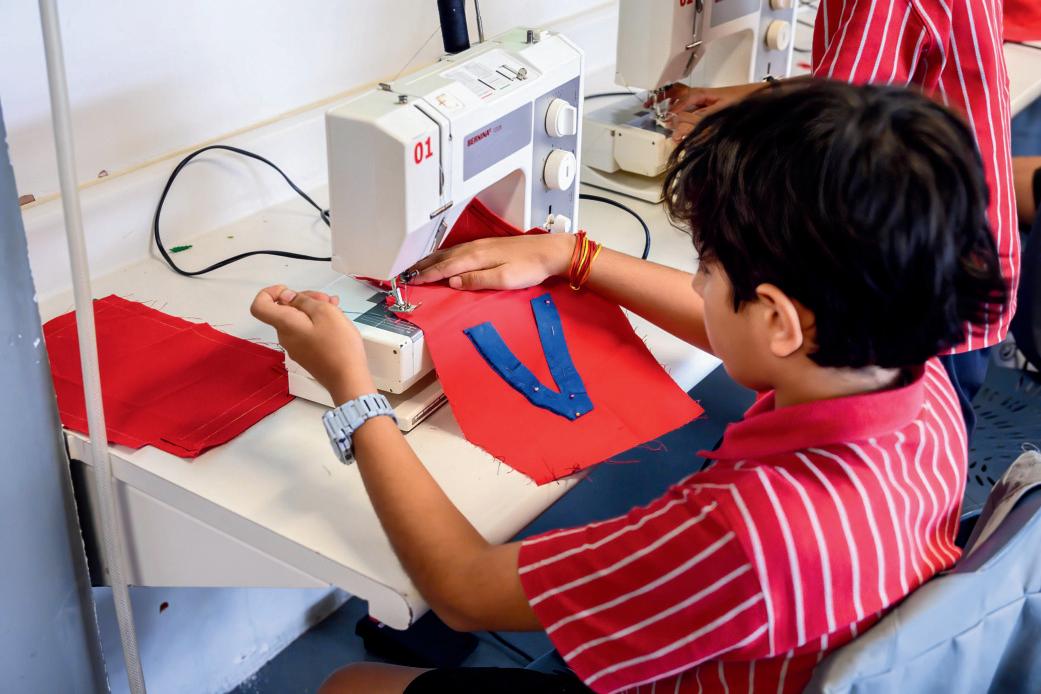
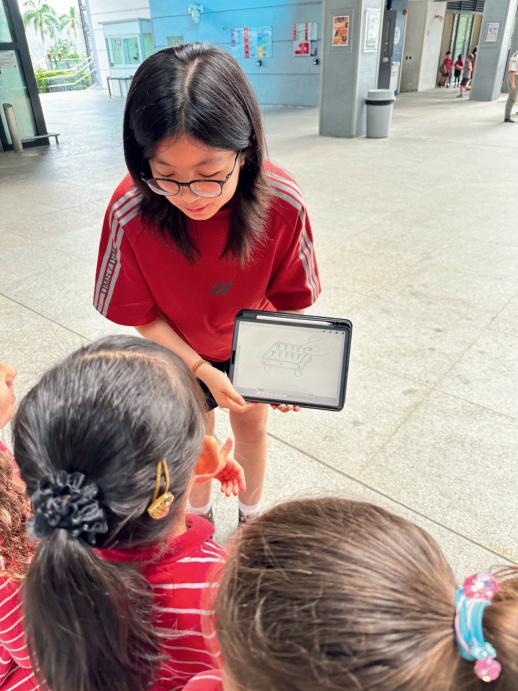
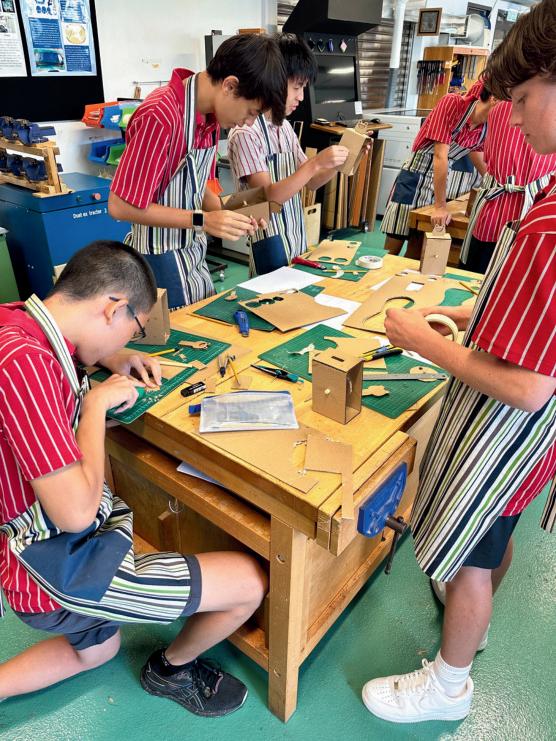
Notice
The year-level units for each subject may be subject to change based on several factors, which include the students’ interests, readiness, and relevance. This flexibility aims to tailor the curriculum to better align with the individual needs and preferences of the students. By considering these factors, teachers can provide a more engaging learning experience. We appreciate the understanding and support of parents in recognizing the importance of meeting the diverse needs of students.