Domestic animals play an integral role in the day to day lives of many in the Northern Grampians Shire community. Council recognises the importance of promoting responsible pet ownership and animal welfare while protecting the community and our environment, ensuring that pets, their owners and non-pet owners can comfortably coexist in the community.
The Domestic Animal Management Plan (DAMP) is a statutory requirement for all Victorian councils prescribed by the Domestic Animals Act 1994. It is intended to provide the Northern Grampians Shire Council with a management plan for dogs, cats and domestic animal businesses in our shire. It achieves this through the provision of a strategic framework that coordinates policy direction and action plans for animal management over the next four years.
The DAMP aims to:
● Document current processes under council’s animal management responsibilities.
● Increase pet owners’ knowledge of the principles of responsible pet ownership and enhance community safety and awareness.
● Strengthen relationships with animal rescue groups, vets and other relevant services to respond to crisis situations and assist in rehoming animals.
● Reduce the risk of dog attacks.
● Balance the needs of those who own pets and those who do not.
● Decrease the numbers of dogs and cats being euthanized.
● Maximise the numbers of dogs and cats that are registered across the municipality.
● Minimise the harmful effect of domestic pets on the population of native birds, mammals and reptiles.
● Take community views on animal management matters into account.
● Comply with the relevant provisions of the Domestic Animals Act 1994.
Council’s 2025-29 Domestic Animal Management Plan is part of a suite of strategic materials that collectively set the direction for council over a four-year period. Every four years, council sets strategic objectives for the shire through a formal Council Plan process. This involves a range of different analysis, consultation and engagement initiatives to ensure the plan accurately addresses the needs and aspirations of the community.
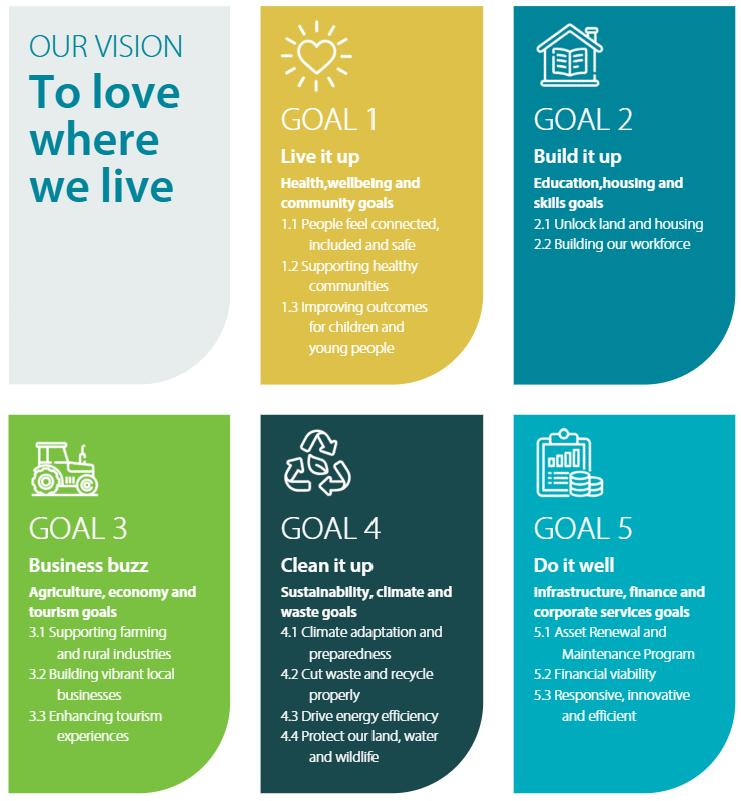
Council’s 2025-29 Council Plan outlines five key goals which are underpinned by 15 strategies, 42 actions and hundreds of individual tasks. Collectively, these support the overarching 20-year Community Vision – to love where we live. You can view current and past council plans on our website here https://www.ngshire.vic.gov.au/Council/Governance-and-transparency/Council-publications/Council-Plan
The DAMP aligns with the strategic goals and objectives outlined in council’s 2025-29 Council Plan and supports key actions associated with Goal 1, with specific reference to 1.2 Supporting health communities.
• Dog registrations: Peaked in 2023-24 followed by a slight drop in 2024-25
• Cat registrations: Consistent growth until 2023-24, with a minor decline in 2024-25
• Barking dog complaints: Gradual decline indicates improved pet behaviour across the shire.
• Wandering complaints: Significant drop in 2024-25 due to increased patrols.
• Cat trap requests: Sharp rise in 2023-24 points to feral cat hotspots which stabilised in 2024-25
• Dog attacks: Highest total recorded in 2024-25 driven by increased incidents involving pets and people.
• Adoptions: Strong growth in 2023-24 but declined in 2024-25 which may reflect reduced intake and/or rehoming challenges.
• Reclaims: Rebounded after a dip in 2022-23 showing better pet ownership engagement.
• Euthanasia: Spiked in 2022-23 due to feral cat influx which has since stabilised in the following years.
Under Section 68A(1) of the Domestic Animals Act 1994, every council must prepare a Domestic Animal Management Plan that is required to be completed and lodged with Department of Energy, Environment and Climate Action (DEECA) by December 4, 2025 Section 68A outlines the following requirements:
(1) Every council must prepare a DAMP at four-year intervals and provide the Secretary of the Department of Energy, Environment and Climate Action (DEECA) with a copy of the plan along with any amendments
(2) Council must publish an evaluation of the plan’s implementation in its annual report.
(3) A DAMP prepared by a council must:
a. Set out a method for evaluating whether the animal control services provided by council in its municipal district are adequate to give effect to the requirements of this Act and the regulations; and
b. Outline programs for the training of authorised officers to ensure that they can properly administer and enforce the requirements of this Act in council's municipal district; and
c. Outline programs, services and strategies which council intends to pursue in its municipal district:
(i) To promote and encourage the responsible ownership of dogs and cats;
(ii) To ensure that people comply with this Act, the regulations and any related legislation;
(iii) To minimise the risk of attacks by dogs on people and animals;
(iv) To address overpopulation and high euthanasia rates for dogs and cats;
(v) To encourage the registration and identification of dogs and cats;
(vi) To minimise the potential for dogs and cats to create a nuisance; and
(vii) To effectively identify all dangerous dogs, menacing dogs, and restricted breed dogs in that district and to ensure that those dogs are kept in compliance with this Act and the regulations.
d. Provide for the review of existing orders made under this Act and local laws that relate to council's municipal district with a view to determining whether further orders or local laws dealing with the management of dogs and cats in the municipal district are desirable; and
e. Provide for the review of any other matters related to the management of dogs and cats in council's municipal district that it thinks necessary; and
f. Provide for the periodic evaluation of any program, service, strategy or review outlined under the plan.
g. Every council must:
(i) Review its domestic animal management plan annually and, if appropriate, amend the plan.
Section 68A(1B)(b) of the Domestic Animals Act 1994 requires council outline and deliver training programs to equip authorised officers to administer and enforce the requirements of under the Act within council's municipal district.
Community Safety Officers are required to be suitably qualified with a sound understanding and knowledge of a range of legislation including the Domestic Animals Act 1994. Authorised officers receive annual training in animal management that ensures they are equipped to manage the demands of the role. Training in health and safety, customer service and workplace behaviours is included in the training program to ensure officers act professionally and proper.
Council is committed to offering minimum training requirements for Community Safety Officers includes and in some instances is not limited to the following training needs.
• Workplace health and safety including how to administer first aid.
• Certificate IV Government Investigations
• Managing conflict and challenging behaviours.
• Dog Bite Prevention
• Compliance to animal management control and regulations
• Apply regulatory powers
• Assess, investigate and enforce non-compliances
• Preparation of evidence (proceeding to court)
• Impound animals
• Provide care to impounded domestic animals
Annual performance reviews are conducted to ensure that authorised officers have the required skills to deliver animal management to the community Authorised officers attend industry related information sessions and seminars, and legislative training sessions delivered through State Registered Training Organisations (RTO) for skills development.
4.1.2
Council’s Community Safety Unit consists of 4.69 Full Time Equivalent (FTE) staff for the proper and lawful enforcement of councils General Local Law 2022 (GLL 2022) and the Domestic Animals Act 1994.
Plan 1: To ensure all Community Safety Officers have adequate training.
Actions
Identify training requirements.
Annually All training requirements assessed on industry standards and embedded into the recruitment and selection process and linked to the Training Needs Analysis (TNA) for authorised officers
Annual performance appraisals completed.
Ensure authorised officers have completed all training requirements.
Ensure authorised officers undertake additional training opportunities
Plan 2. Capability and capacity building.
Actions
Maintain and expand the Training Needs Analysis and training register.
Monitor performance and provide guidance to employees where needed
Skills development for de-escalation and mitigation of conflicting behaviours.
Knowledge sharing via attendance at industry forums and networking with neighbouring LGA’s
Annually Training gaps are identified through annual performance reviews and aligned with TNA.
As need basis As determined by Animal Welfare Victoria’s (AMV) industry standards
When Evaluation
Ongoing Authorised officers meet minimum training standards.
Ongoing
Annual performance appraisals completed
Annually Completed training and competency achieved.
Quarterly Number of forums attended and broadening knowledge.
Plan 3: Develop and maintain a training register for Community Safety Officers.
Actions
Update training register once Officer satisfactorily completes the competency.
When Evaluation
Annually Training register is reviewed in accordance with state and industry training requirements.
Section 68A(2)(c)(v) of the Domestic Animals Act 1994 requires council outlines programs, services and strategies to encourage the registration and identification of dogs and cats, addressing 68A(2)(a), (c)(i), (c)(ii), (d), and (f).
Registration data
Registration and identification of domestic animals is critical to the functions of council’s animal management plan as it helps identify animal owners and provides avenues to investigate serious animal related reports. Animal registration fees ensure council can provide an effective animal management service and deliver community updates on performances within this DAMP.
Domestic animals also have a greater chance of being returned home if found wandering and reduces the stress on the owners and the animal if it is registered and identifiable.
Council data shows that registration trends vary from year to year.
General Local Law 2022 | Policy and procedures
Council currently has in place a Registration of Restricted Breed and Declared Dangerous Dogs Policy (May 2025) to ensure the safety and wellbeing of the shire’s residents and visitors by restricting the registration of declared dangerous dogs and declared restricted breeds. The Policy also supports the refusal to register dogs declared dangerous including those assessed to be restricted breeds whose importation into Australia is prohibited.
Council procedures relevant to domestic animal registration and identification include:
• Letter of registration renewal
• Letter of reminder of registration renewal
• Notice to comply to register
• Infringement Notice
Council’s existing and relevant General Local Law 2022 include:
• Excess animals in residential areas
• Excess animals in rural areas
• Cats in Halls Gap area
• Impound of animals
• Returned/deceased/departed animal registration
• Infringement entry
Annual registrations
Council notifies all residents who have an existing domestic animal registered within the shire of the annual registration renewal. The requirement to register a domestic animal is also communicated via council’s website and contains information for residents of the requirement to register, the associated fees and how to pay for the renewal, and restrictions of dangerous dog breeds declared ‘banned’ within the Northern Grampians Shire.
Authorised officers issue Notices to Comply (NTC) for non-payment of domestic animal registrations. If payment for the registration is not honoured, council indexes a penalty as set by the Victorian Treasurer and issues an infringement.
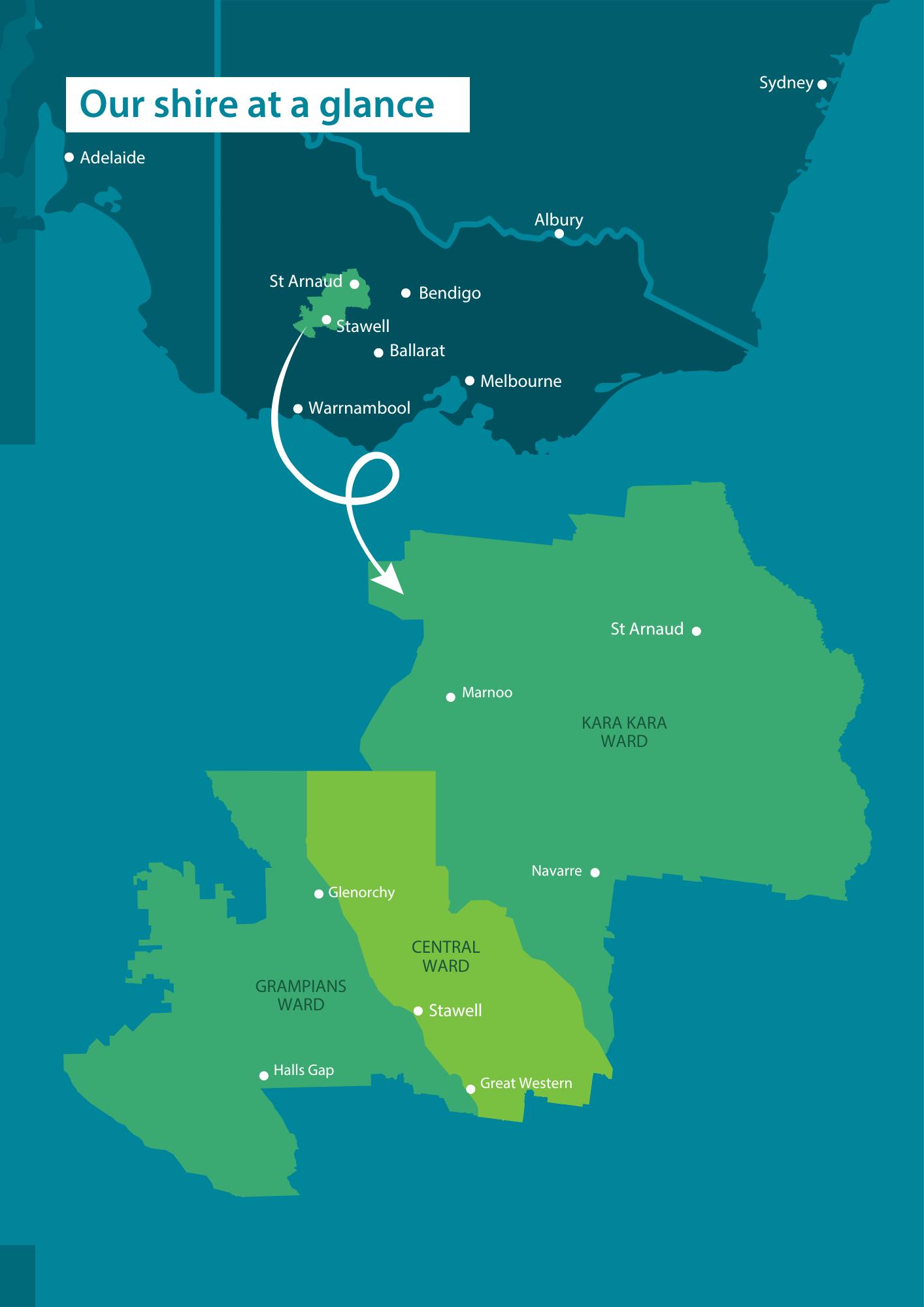
The community of Halls Gap, which is in the southern part of the shire, has been designated as a cat free zone due to its proximity to native wildlife in the Grampians National Park. It became a cat free zone on October 21, 1993. No occupier of a property in the Halls Gap area may keep a cat in their possession, unless the cat was living before this date. Council enforces this by issuing Notices to Comply and infringements as required to residents of Halls Gap caught housing cat/s in the cat free zone.
Plan 1: Increase domestic animal registration rates across the shire.
Actions
Ensure all impounded animals are registered prior to release
When Evaluation
As per impounded animal
Issue Notices to Comply for nonregistration. June
Provide responsible pet ownership literature.
Provide free registration for eligible animals or 50% fee reduction for first year registrations as an incentive to register animal and improve responsible pet ownership
February and March
Conduct quarterly reviews of impoundments
Increased compliance with animal registration.
Compare and measure total number of animals registered compared with the previous year’s registration data.
Ongoing Number of animals registered.
Review registration fees Annually Align fees to recover full costs of administration and state royalty
Undertake annual animal registration campaign. April Paid and updated registrations
Monitor registration trends, including that of impounded animals
Ongoing Number of animals registered and unregistered
Identify and follow up on unpaid animal registrations May and June
Number of Notice to Comply issues.
Ensure that animal complaints are checked for registration compliance as part of the process
Promote registration requirements and benefits via appropriate council communication channels
Ongoing Number of Notice to Comply issued.
Ongoing Registration requirements promoted
Plan 2: Review policies, procedures and strategies relating to animals and enforcement.
Actions
When Evaluation
Develop a Compliance and Enforcement Policy and Framework 2026 Policy and Framework developed.
Section 68A(2)(c)(vi) of the Domestic Animals Act 1994 requires council outlines programs, services and strategies to minimise complaints related to nuisances from dogs and cats, addressing 68A(2)(a), (c)(i), (c)(ii), (d), and (f)
Nuisance animals cause unnecessary stress on the community and council is committed to investigating and resolving all domestic animal complaints within agreed customer service timeframes.
The number of complaints/reports received for domestic animals wandering uncontrolled remains high with approximately three reports received each week. Animal owners have a responsibility to ensure that this type of nuisance is abated, with council working closely with animal owners to ensure they meet compliance.
Feral and stray cats continue to be a problem for the community Council continues to make cat traps available to the community and works closely with animal welfare agencies to best manage the problem.
The table below reports complaints received within the period of the previous 2021-2025 DAMP.
General Local Law 2022 | Enforcement procedures and actions
Council procedures relevant to domestic animal complaints and nuisance include:
• Excess animals in residential areas
• Excess animals in rural areas
• Cats in Halls Gap area
• Dogs on leash in all municipal places
• Clean up animal excrement
• Notice to Comply
• Infringement
• Prosecution
Council has an internal Customer Request Management System which ensures that incoming enquiries and complaints are documented and managed. Council targets the shire’s feral cat population by lending traps to shire residents for use on their own properties.
Domestic animal education and behaviour management program
Council aims to apply continuous improvement for the management of domestic animals and will work closely with Animal Welfare Victoria to tailor an education program targeting better animal management and behaviours in the 2025-2029 DAMP. The goal is to minimise the number of complaints received by the community.
Council’s current compliance activities relating to domestic animal complaints and nuisance include:
• Cat ban in Halls Gap area (as per council’s General Local Law 2022)
• Issuing of Notices to Comply and infringements where necessary
• Investigation of all nuisance complaints, including barking dogs and animals wandering at large.
• Provision of cat traps on request
Plan 1: Reduce nuisance complaints and response timeframes.
Actions
Promote responsible pet ownership messaging through website, social media, and attendance at community events
Ongoing Reduction of complaints, increase in pet owner compliance and increase community satisfaction
Council owned cat traps available to residents for capturing feral cats. As need basis Reduced number of wild/feral cats captured via trapping program.
Monitor complaints via councils Customer Response Module (Merit – CRM) Monthly Response times, and reduced number of complaints
Plan 2: Minimise the environmental and community impact of nuisance dogs and cats.
Actions
Conduct a review of dog off leash areas and rules relating to dogs in public places.
2026
Review completed
Investigate the introduction of new cat control orders. 2026 Investigation completed.
Implement findings of the dog off leash area review and cat control investigation 2026-27 Findings implemented.
Consider applying for State Government funding for desexing schemes when available to reduce nuisance, semi-owned and feral cat reports.
Ongoing Applications submitted
Plan 3: Review policies, procedures and strategies relating to animals and enforcement.
Actions
Develop a Compliance and Enforcement Policy and Framework 2026 Policy and Framework developed
Develop cat trapping procedure to support officers and community needs. 2026 Procedure developed
Investigate the renewal of the Community Safety After Hours service. 2026 Investigation completed.
Develop a Barking Dog procedure and Information Pack to provide to the community to assist with resolving barking dog nuisance.
2028 Barking Dog Procedure and Information Pack completed
Section 68A(2)(c)(iii) of the Domestic Animals Act 1994 requires council outlines programs, services and strategies to minimise the risk of attacks by dogs on people and animals, addressing 68A(2)(a), (c)(i), (c)(ii), (d), and (f).
Dog attacks have continued to impact the livelihood and safety of our community. These types of attacks have also extended to domestic animal and Livestock loses. Council actively works with victims through the court system at time of owner/s prosecution. However, compliances that are underpinned in the GLL 2022 and state policy and legislation rely heavily upon the owner to follow all measures of responsible pet ownership.
The table below indexes dog attack reports received within the period of the 2021-2025 DAMP.
General Local Law 2022 | State legislation and policy
Council has in place the following policies related to the management of dog attacks within Northern Grampians Shire.
• Registration of Restricted Breed and Declared Dangerous Dogs Policy – May 2025
Council follows advice on relevant state Acts, policy and procedures of the management of dog attacks in accordance with state legislation Domestic Animals Act 1994
Council’s position on dangerous and restricted breed dogs within Northern Grampians Shire is provided to the community via our website. At the time of a report of a dog attack, councils’ Community Safety Officers respond to each complaint with a matter of urgency subject to available resources. Throughout an investigation, council Officers deliver important messages to the pet owner highlighting the responsibilities of responsible pet ownership
As a part of the 2025-2029 DAMP, a community awareness campaign will commence early 2026 to tailor the delivery of proper pet ownership to help combat the rise and risk of dog attacks in the community.
Compliance
Council’s current compliance activities relating to dog attacks include:
• Investigation of the alleged dog attack reported to council.
• Animal impoundment – if offending owner surrenders at will
• Animal impoundment – at lawful direction from council to seize.
• Issuing of Notices to Comply.
• Issuing an infringement/penalty at conclusion on investigation
• Prosecution at court
• Destruction by order of the court
• Additional penalties imposed to the owner by order of the court
• Additional costs imposed to the owner for victim compensation
Dog attacks are a serious matter for council and the state’s court system, with reducing the number of attacks remaining a shared priority. Community Safety Officers will continue to deliver compliance activities and improve existing processes to further reduce the occurrence of dog attacks within the shire.
Plan 1: Reduce the number of dog attacks.
Actions When Evaluation
Promote responsible pet ownership –messaging through website, social media, and attendance at community events.
Actively patrol areas of nuisance wandering dogs
Review dog attack reports to identify trends to assist in improving awareness.
Ongoing
Reduced number of reported dog attacks, increased pet ownership compliance and increased community satisfaction.
As need basis Reduced number of reported dog attacks, increased pet ownership compliance and increased community satisfaction
Ongoing Data cleansing and qualifying improvements in pet owner compliance.
Strengthen patrols and follow-up on complaints Ongoing Reduction in repeat offences and increase in community satisfaction
Plan 2: Review policies, procedures and strategies relating to animals and enforcement.
Actions
Develop and review a Compliance and Enforcement Policy and Framework
Investigate the renewal of the Community Safety After Hours service.
Develop an information pack for owners of dogs involved in dog attacks outlining the investigate process and explaining the legislative powers and requirements.
When Evaluation
2026 and then annually Policy and Framework developed Reviews undertaken annually
2026 Investigation completed
2027 Information pack completed.
Section 68A(2)(c)(vii) of the Domestic Animals Act 1994 requires council outlines programs, services and strategies to effectively identify all dangerous dogs, menacing dogs and restricted breed dogs in that district and to ensure that those dogs are kept in compliance with this Act and the regulations, addressing 68A(2)(a), (c)(i), (c)(ii), (d), and (f).
Menacing and dangerous dog declarations are an effective method to reduce the risk of further dog attack incidents. As of August 2025, council has received three dogs declared as dangerous following reports and investigations of dog attacks.
General Local Law 2022 | State legislation and policy
Council has in place the following policy for lawful and proper management of menacing and dangerous dogs within Northern Grampians Shire.
• Registration of Restricted Breed and Declared Dangerous Dogs Policy – May 2025
Council follows advice on state Acts, policy and procedures of the management of dog attacks in accordance with state legislation Domestic Animals Act 1994.
Council’s existing and relevant Local Laws under council’s General Local Law 2022 include:
• Dogs on leash
• Excess dogs in residential area
• Excess dogs in rural area
Domestic Animals Act 1994
Pursuant to Section 3 (1) of the Domestic Animals Act 1994, a restricted breed dog is defined as any one of the following breeds.
• Japanese Tosa
• Fila Brasileiro
• Dogo Argentino
• Perro De Presa Canario (or Presa Canario)
• American Pit Bull Terrier (or Pit Bull Terrier)
Council policy
Council has adopted the Registration of Restricted Breed and Declared Dangerous Dogs Policy – May 2025, which provides lawful direction for authorised officers to deliver safety and wellbeing of residents and visitors through the right of refusal to register restricted breed dogs and dangerous dogs in the shire.
The policy is a discretionary directive available to council under the Domestic Animal Act 1994, enabling council to instruct authorised officers not to register or renew the registration of restricted breed dogs or declared dangerous dogs in the municipality.
Dogs may be declared dangerous by council if the dog.
• Causes a serious injury to or kills a person or another animal.
• Is a declared menacing dog and its owner has received at least two infringements notices for offences of being outside the owner's premises not muzzled or controlled on a lead
• Declared dangerous in another state or territory
Council procedures relevant to the management of dangerous, menacing, and restricted breed dogs include:
• Impound of animal.
• Infringement entry
• Evidence gathering - points of proof.
• Restricted breed dog declaration.
• Menacing/dangerous dog declaration.
Community information
A copy of the Registration of Restricted Breed and Declared Dangerous Dogs Policy – May 2025 is available on council’s website with information on the registration of dangerous and restricted breed dogs within Northern Grampians Shire.
Compliance
To increase compliance relating to dangerous, menacing and restricted breed dogs, authorised officers undertake regular inspections and audits of declared dogs. Where appropriate, enforcement actions are initiated, including the issuance of notices and infringements, and the seizure of dogs that fail to meet legal requirements or are alleged to have been involved in an attack.
In July 2005, council supported the move for authorised officers to decline to register dogs declared dangerous (other than guard dogs) including those deemed to be a restricted breed dog. The Registration of Restricted Breed and Declared Dangerous Dogs Policy – May 2025 ensures that council promotes responsible pet ownership to maintain safety within our community
Plan 1: Ensure owners of declared dogs are compliant with relevant legislation and regulations.
Actions When Evaluation
Conduct property inspections of listed declared dogs to ensure owners are meeting compliance. As need basis Pet owner compliance.
Repeat menacing dog offenders are escalated to declared dangerous dogs in line with legislation As need basis Pet owner compliance.
Investigate allegations and complaints of menacing, dangerous or restricted breed dogs
Ensure all declared dogs are accurately registered on the Victorian Dangerous Dog Registry
As reported Investigations concluded that compliance are achieved
Ongoing All declared dogs are registered and the portal is updated.
Plan 2: Identify and register all Declared Dogs in the municipality.
Actions When Evaluation
Officers to undertake Restricted Breed dog training to ensure proper identification.
As need basis Attainment achieved and officers can assess the breed as restricted.
Plan 3: Review policies, procedures and strategies relating to animals and enforcement.
Actions
Develop and review a Compliance and Enforcement Policy and Framework. 2026 and then annually Policy and Framework developed Reviews undertaken annually.
Investigate the renewal of the Community Safety After Hours service. 2026 Investigation completed.
Review council’s Restricted Breed Dog Registration Policy. July 2029
Policy objectives met
Section 68A(2)(c)(iv) of the Domestic Animals Act 1994 requires council outlines programs, services and strategies to address any over-population and high euthanasia rates for dogs and cats, addressing 68A(2)(a), (c)(i), (c)(ii), (d), and (f).
It has been reported during the period of the 2021-2025 DAMP that Northern Grampians Shire trends in high rates of euthanasia in cats resulting from a feral cat problem in local industrial sites. This is an ongoing issue that council is managing with the access of cat traps.
Over the four-year period between 2021–22 to 2024–25, council experienced notable fluctuations in the outcomes of impounded domestic animals.
• Adoption rates saw a modest increase of 1.87% in 2022–23, followed by a significant rise of 20.18% in 2023–24, before declining sharply by 27.48% in 2024–25.
• Reclaim rates dropped by 28.41% in 2022–23 but rebounded with a 58.73% increase in 2023–24 and a further 10% rise in 2024–25, indicating improved owner engagement and recovery efforts.
• Euthanasia rates spiked dramatically by 185% in 2022–23, likely due to an influx of feral cats captured, but stabilised in subsequent years with a slight decrease of 3.51% in 2023–24 and a 3.64% increase in 2024–25.
These trends highlight the importance of targeted strategies in rehoming, registration and community education to reduce euthanasia and improve animal welfare outcomes.
Council owns and operates a fully compliant pound in accordance with the Domestic Animals Act 1994 and the Code of Practice for the Operation of Shelters and Pounds. Council has in place the following procedures and agreements related to the management of overpopulation.
• 84Y Agreements
• Excess animals in residential area
• Excess animals in rural area
• Cats in Halls Gap area
• Impound of domestic animals
• Pound attendant procedure.
• Health Management Plan for pounds
• Animals impound information sheet
As part of council’s continuing commitment for rehoming domestic animals, 84Y Agreements are in place with 21 animal rescue groups. On occasions, authorised officers facilitate adoption directly from the council pound and support 84Y Agreement participants to assist with rehoming domestic animals. When appropriate, authorised officers list animals for adoption through council’s website and social media channels.
Compliance
Council duties are managed by authorised officers to effectively reduce overpopulation and euthanasia fates.
• Excess animal application assessments and enforcement
• Investigating reports of illegal and unregistered puppy farms
• Issuing of Notices to Comply for animal registrations
• Desexing all domestic animals prior to release from the pound*.
• Cat traps available for the public
• Officer patrols and response to nuisance complaints.
*Not including animals released under 84Y Agreements.
Plan 1: Assess reasons for euthanasia fate.
Actions
Work with Veterinarians to determine the fate of impounded domestic animals factored on poor health.
Work with Veterinarians to undertake behavioural assessments of domestic animals with poor behavioural traits
Plan 2: Actively reduce the number of feral cats.
Actions
Work with animal rescue groups to identify and address problem areas
Work with animal rescue groups to rehome friendly and healthy cats
Continue cat trapping program as needed, providing cat traps to residents
Incentivise pet owners to desex by providing discounted registration fees for desexed domestic animals.
When
Case by case basis
Case by case basis
Review health assessment for best possible outcome
Review behavioural assessment for best possible outcome
When Evaluation
Ongoing
Case by case basis
Case by case basis
Ongoing
Reduction in complaints relating to feral cats and reduction in requests for cat traps.
Reduction in the number of cats euthanised
Reduced number of wild/feral cats captured via trapping program
Increase in desexed animals within the shire, lesser population growth
Plan 3: Investigate illegal breeding establishments.
Actions
When Evaluation
Investigate known breeding establishments Ongoing Compliance of registered breeding establishments.
Monitor social media activity for selling and trading (marketplace) domestic animals. Ongoing Reduction in illegal pet farm breeders and unlawful breeding programs.
Plan 4: Review policies, procedures and strategies relating to animals and enforcement
Actions
When Evaluation
Develop and review a Compliance and Enforcement Policy and Framework 2026 and then annually Policy and Framework developed Reviews undertaken annually
Section 68A(2)(c)(ii) of the Domestic Animals Act 1994 requires council outlines programs, services and strategies which council intends to pursue in its municipal district to ensure that people comply with this Act, the regulations, and any related legislation, addressing 68A(2)(a), (c)(i), (d), (f) (c)(i), (c)(ii), (d), and (f).
As underpinned in the Code of Practice for the Operation of Breeding and Rearing Businesses, a Domestic Animal Business (DAB) is a Victorian business involved in breeding, rearing, training, boarding or selling pets, such as pet shops, kennels and shelters, which must be registered with council and comply with welfare codes under the Domestic Animals Act 1994
The specific number of fertile female dogs or cats and whether the animals are sold determines the business's classification and requirements, with larger breeding operations requiring commercial breeder approval from the Minister for Agriculture.
2021-2025 DAMP insights
There are no registered Domestic Animal Breeding Businesses within the municipality Council works with the RSPCA to investigate all reported illegal breeding businesses. The Community Safety Unit works alongside council’s Planning Department in managing any enquiries relating to any proposed Domestic Animal Businesses.
Domestic animal businesses
These are defined by the Domestic Animals Act 1994 as:
a) An animal shelter, council pound or pet shop; or
b) An enterprise which carries out the breeding of dogs or cats to sell and has three or more fertile females; or
c) An enterprise which trains or boards dogs or cats for the purpose of profit; or
d) An enterprise that is run for profit which carries out the rearing, training, or boarding of dogs or cats.
Information on applicable organisations can be found at the Agriculture Victoria website herewww.agriculture.vic.gov.au.
Compliance
Domestic Animal Business registration is controlled by the Domestic Animals Act 1994. Council will continue to investigate all reports of illegal Domestic Animal Breeding Businesses and seek compliance for any nonregistered Domestic Animal Business by conducting property inspections.
Council currently undertakes the following activities to ensure compliance with businesses registered and the identification of unregistered businesses:
• Annual audits of registered Domestic Animal Businesses.
• Follow up on properties identified through complaints regarding alleged illegal Domestic Animal Businesses
Plan 1: Assessment of applications for registering a Domestic Animal Business.
Actions When Evaluation
Assess permit applications requesting registration of a Domestic Animal Business to determine whether registration is required
Receipt of permit application
Eligibility criteria met underpinned by the Domestic Animals Act 1994.
Plan 2: Ensure all registered Domestic Animal Businesses are compliant with legislation.
Actions
Annually inspect and audit registered Domestic Animal Businesses
Investigate reports of alleged illegal Domestic Animal Businesses.
Audit animal registration data to ensure properties with excess animals are not an illegal breeding facility
Annually Registration meets compliances underpinned by the Domestic Animals Act 1994
Case by case basis
Case by case basis
Outcome of the investigation determines the requirements of compliance to be met.
Outcome of the investigation determines the requirements of compliance to be met.
Plan 3: Review policies, procedures and strategies relating to animals and enforcement.
Actions
Develop and review a Compliance and Enforcement Policy and Framework 2026 and then annually Policy and Framework developed Reviews undertaken annually
Plan 4. Improve customer services and process to adopt animals.
Actions
Create a customer friendly and accessible approach to rehoming domestic animals
Audit Pound facility to ensure compliance is achieved.
Ongoing Increase in animal adoptions and decrease in euthanasia fate
Annually Establish compliance underpinned by the Code of Practice for the Management of Dogs and Cats in Shelters and Pounds (rev1)
Council is committed to embed a culture of continuous improvement in the 2025-2029 Domestic Animal Management Plan by systematically evaluating, refining and enhancing animal management practices, policies and services. Applying these improvements will ensure the plan remains responsive to our community needs, meets legislative changes and addresses emerging trends in domestic animal welfare and safety.
The purpose of the Continuous Improvement Plan is to ensure ongoing relevance and effectiveness of the 2025-2029 DAMP via structured annual reviews and community engagement. To achieve this, Council will undertake the following actions:
a) Promote innovation and adaptability in service delivery, compliance and education initiatives.
b) Strengthen data-driven decision-making by improving systems for monitoring, reporting and evaluating animal management outcomes.
c) Foster collaboration across council departments, community groups and industry stakeholders to achieve shared goals in domestic animal welfare.
d) Support transparency and accountability by publishing progress and outcomes in council’s Annual Reports and public communications.
Strategic alignment to the Continuous Improvement Plan aims to ensure that all animal management initiatives are integrated with council’s broader goals, reflect evolving legislative and community expectations, support evidence-based decision-making, enhance operational efficiency, and foster collaboration across departments and external stakeholders to deliver consistent, high-quality outcomes in domestic animal welfare and safety.
• Enhance service delivery in animal management.
• Strengthen compliance and education around responsible pet ownership.
• Reduce incidents such as dog attacks, nuisance complaints and euthanasia rates
• Improve data collection and analysis for informed decision-making
• Align with evolving community expectations and legislative changes
Conduct community and industry consultation Biennially Feedback incorporated into 2025-2029 DAMP updates
Publish implementation and evaluation of Council’s Annual Report
Inclusion in Council’s Annual Report
Actions
When Evaluation
Expand the use of digital media and automation Quarterly Engagement metrics met (reach and feedback)
Targeted outreach with a focus on highrisk areas (Halls Gap cat ban)
Incentivise and promote desexing of domestic animals
Undertake surveys for the community to provide feedback on council’s animal management performance
Ongoing Community satisfaction
Annually Increase in registrations and desexed pets
Annually Increased community satisfaction and evaluation of performance metrics to apply service improvements
Council prioritises urgent animal welfare needs during emergency events and deploys welfare service recovery activities in conjunction with the Northern Grampians Shire Municipal Emergency Management Plan (MEMP).
• Coordinate disposal of dead stock.
• Coordinate emergency feed/fodder supplies.
• Identify holding areas for stock/pets.
• Provide cages/leads etc. for animals and relief/recovery centres.
• Round up escaped stock.
Plan 1: Ensure 2025-2029 DAMP aligns with the Municipal Emergency Management Plan.
Ensure the 2025-2029 Domestic Animal Management Plan aligns with relevant Council emergency plans including the Municipal Emergency Management Plan (MEMP) and the Emergency Animal Welfare Plan (EAWP)
Ensure council has the resources to assist during an emergency
Ongoing Updated 2025-2029 DAMP, MEMP and EAWP to reflect relevant animal management considerations in emergencies
Ongoing
Training opportunities made available to all staff Agreements with Veterinarians businesses and rescue groups to support animals in an emergency
General Local Law 2022 is a Local Law made under Division 3 of Part 3 of the Local Government Act 2020 and Section 42 of the Domestic Animals Act 1994.
The objectives of the Local Law are to provide:
a) The peace, order and good governance of the municipality
b) A safe and healthy environment so that the community within the municipality can enjoy a quality of life that meets expectations
c) The safe and fair use and enjoyment of municipal places
d) The protection and enhancement of the amenity and environment of the municipality.
e) The fair and reasonable enjoyment of private land
f) The protection of assets vested in council
g) The uniform and fair administration of the General Local Law 2022.
Clause
(1) Without a Permit, an owner or occupier of premises in a residential area must not keep, or allow to be kept, any animals in excess of the number specified below:
a) Two cats
b) Two dogs
c) 10 pigeons
d) 10 poultry
e) 10 domestic rats
f) 10 domestic mice
g) Four guinea pigs
h) Four domestic rabbits
i) Six reptiles
j) Four ferrets
(2) Without a Permit, an owner or occupier of premises in a residential area must not keep, or allow to be kept, more than four different types of animals at the premises.
(3) Progeny of animals kept will not be considered for the purpose’s subclause (1) or subclause (2) until they are 12 weeks of age.
(1) Without a Permit, an occupier of rural land must not keep, or allow to be kept, more than:
a) Four cats
b) Four dogs
(2) Progeny of animals kept will not be considered for the purpose of subclause (1) until they are 12 weeks of age.
(1) A person in the Halls Gap area (Maps 35, 36 and 37 of the Northern Grampians Planning Scheme as identified in Schedule 2) must not keep a cat which was not in their possession and being kept in the Halls Gap area before 21 October 1993.
(2) The owner of a cat which is exempt under subclause (1) must ensure:
a) that the cat is confined totally indoors or in an escape proof closure on the owner’s premises
b) when outside the owner’s premises the cat must be confined to an enclosed vehicle
In accordance with section 68A (3) of the Domestic Animals Act 1994, council must:
a) Review its Domestic Animal Management Plan annually and, if appropriate, amend the plan
b) Provide the Department of Primary Industries’ Secretary with a copy of the plan and any amendments to the plan
c) Publish an evaluation of its implementation of the plan in its annual report.
An annual review of the 2021-2025 Domestic Animal Management Plan has been included in council’s 2024-25 Annual Report and includes statistics of animal impounds and actions. These statistics drive the assessment of current orders and Local Laws for adequacy and are a basis for identifying the urgency of any changes required.
Community feedback will be sought from the community prior to the adoption of this plan to ensure that this plan is consistent with community expectations.
A copy of councils 2025-29 Domestic Animal Management Plan will be provided to the Secretary of the Department of Agriculture for review following adoption by council in late 2025.
Plan 1: Engage and consult with the community
Actions
Consult the community and provide an opportunity for feedback.
Biennially Feedback provided and considered for the implementation of service improvements, increase in community satisfaction
Plan 2: Provide transparency regarding the effectiveness of the 2025-29 DAMP.
Actions When Evaluation
Publish evaluations of the 2025-29 DAMP performance metrics in council’s Annual Report and extend this information to the community.
Annually 2025-29 DAMP evaluation accepted by council.
DAMP
NGSC
Domestic Animal Management Plan. A statutory plan required under Section 68A of the Domestic Animals Act 1994 to guide council's management of domestic animals.
Northern Grampians Shire Council The local government authority responsible for implementing the DAMP.
DEECA Department of Energy, Environment and Climate Action. The Victorian Government department to which the DAMP must be submitted.
Authorised Officer
Community Safety Officer
Restricted Breed Dog
Dangerous Dog
Menacing Dog
Domestic Animal Business (DAB)
84Y Agreement
General Local Law 2022 (GLL 2022)
Notice to Comply (NTC)
Infringement
Declared Dog
Victorian Dangerous Dog Registry
Applicable Organisation
Municipal Emergency Management Plan (MEMP)
Emergency Animal Welfare Plan (EAWP)
Training Needs Analysis (TNA)
CRM (Merit)
A council officer trained and empowered to enforce the Domestic Animals Act 1994 and related legislation.
Council staff responsible for delivering community safety objectives, including domestic animal management.
A dog of a breed prohibited under the Domestic Animals Act 1994, including Japanese Tosa, Fila Brasileiro, Dogo Argentino, Perro De Presa Canario, and American Pit Bull Terrier.
A dog declared dangerous under the Domestic Animals Act 1994 due to aggressive behaviour or attacks.
A dog declared menacing due to threatening behaviour, often following repeated infringements.
A business involved in breeding, rearing, training, boarding, or selling pets, which must be registered with council under the Domestic Animals Act 1994
An agreement between Council and animal rescue groups to facilitate rehoming of impounded animals.
Council’s Local Law regulating domestic animal ownership, including limits on animal numbers and specific provisions for areas like Halls Gap.
A formal notice issued by council requiring a resident to rectify noncompliance with animal management regulations.
A penalty issued for breaches of the Domestic Animals Act 1994 or council’s Local Laws.
A dog officially classified as dangerous or menacing under legislation.
A state-wide database where declared dogs must be registered.
A recognised body (e.g. Dogs Victoria) whose members may be subject to different DAB registration thresholds.
Council’s plan for managing emergencies, including animal welfare considerations.
A plan outlining council’s response to animal welfare needs during emergencies.
A framework used to assess and plan training requirements for authorised officers.
Council’s Customer Request Management system used to log and manage complaints and service requests.
Stakeholder / Agency Role / Relevance
Legislative / Operational Department of Energy, Environment and Climate Action (DEECA)
Agriculture Victoria
Animal Welfare Victoria (AWV)
Oversight of DAMP compliance and reporting Receives DAMP submissions under Domestic Animals Act 1994
Provides policy, guidance, and regulation for domestic animal businesses and applicable organisations
Sets industry standards for training and welfare.
RSPCA Victoria Investigates animal cruelty and illegal breeding operations.
Registered Training Organisations (RTOs)
Deliver accredited training for authorised officers
Hosts information on applicable organisations and breeding codes.
Guides training needs and education programs.
Partner in enforcement and welfare investigations.
Provide qualifications like Cert IV in Government Investigations
Victorian Dangerous Dog Registry Maintains records of declared dangerous and menacing dogs. Required registry under Domestic Animals Act 1994.
Applicable Organisations (e.g. Dogs Victoria)
Local Veterinary Clinics
Animal Rescue Groups
Neighbouring LGAs
Community Members and Pet Owners
Municipal Emergency Management Planning Committee
Planning Department (NGSC)
Membership-based bodies for breeders.
Conduct health and behavioural assessments for impounded animals
Rehome impounded animals and reduce euthanasia rates
Collaborate on training, enforcement, and knowledge sharing.
Influence DAB registration thresholds.
Support euthanasia decisions and rehoming efforts
Operate under 84Y agreements with council
Support regional consistency and joint initiatives.
Participate in education, registration, and compliance. Engage via CRM, surveys, and outreach.
Coordinates animal welfare planning for emergencies
Aligns DAMP with MEMP and EAWP
Assesses permit applications for DABs Ensures land use compliance for animal businesses.