Northern Grampians Shire Council 2024-25 Annual Report
Northern Grampians Shire Council acknowledges Traditional Owners; Wotjobaluk, Jaadwa, Jadawadjali, Wergaia, Jupagalk and Dja Dja Wurrung peoples who are the Traditional Custodians of the land we call Northern Grampians Shire.
We pay our respects to the Elders both past and present and extend that respect to our other Aboriginal clans.
We express our gratitude in the sharing of this land, our sorrow for the personal, spiritual and cultural costs of that sharing and our hope that we may walk forward together in harmony and in the spirit of healing. We pay our respects to their Elders past, present and emerging.
From the Mayor
In this Annual Report, we are pleased to showcase the culmination of a significant period of growth in our municipality, headlined by the opening of new buildings, a comprehensive road safety program and extensive community consultation to shape our short and mediumterm future.
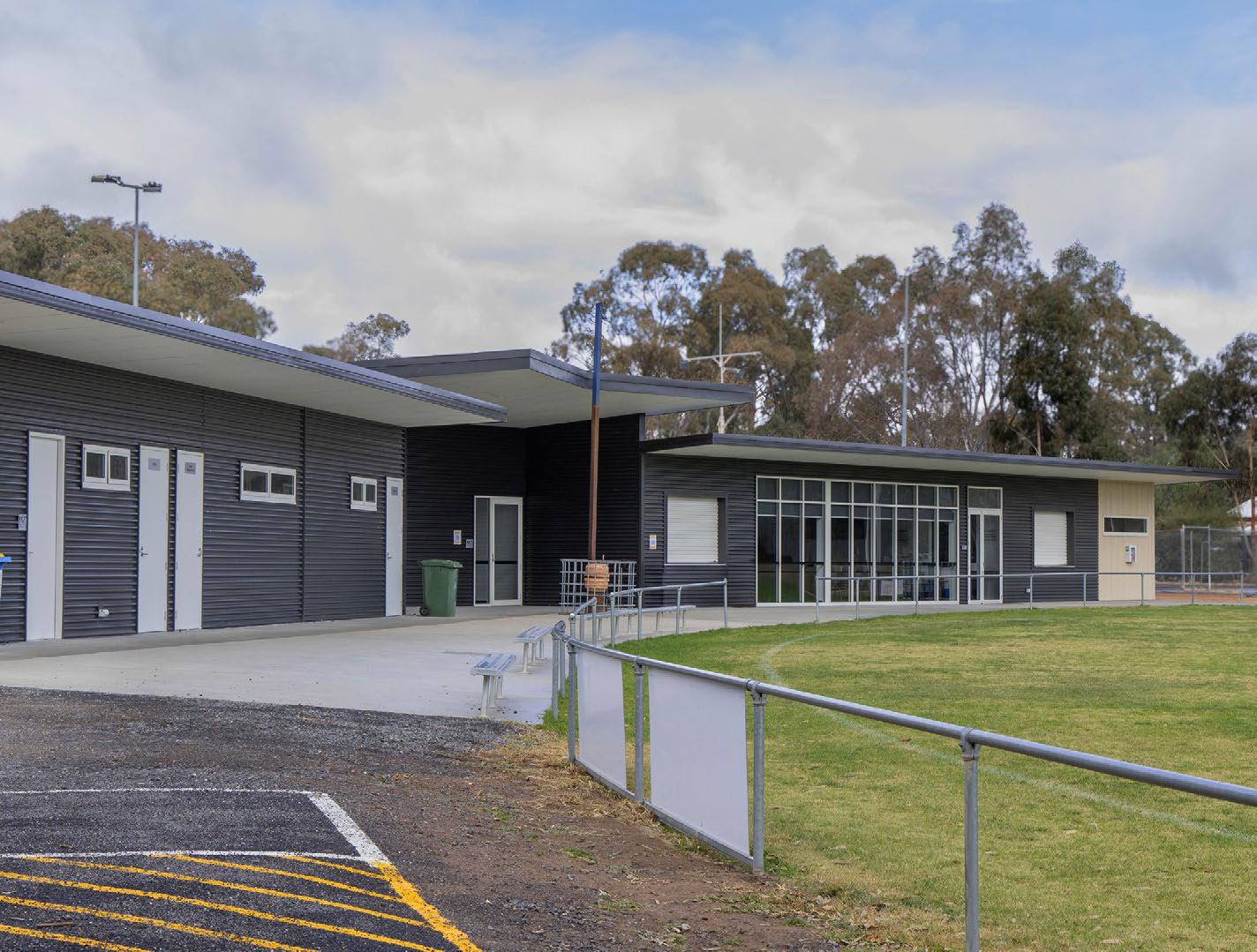
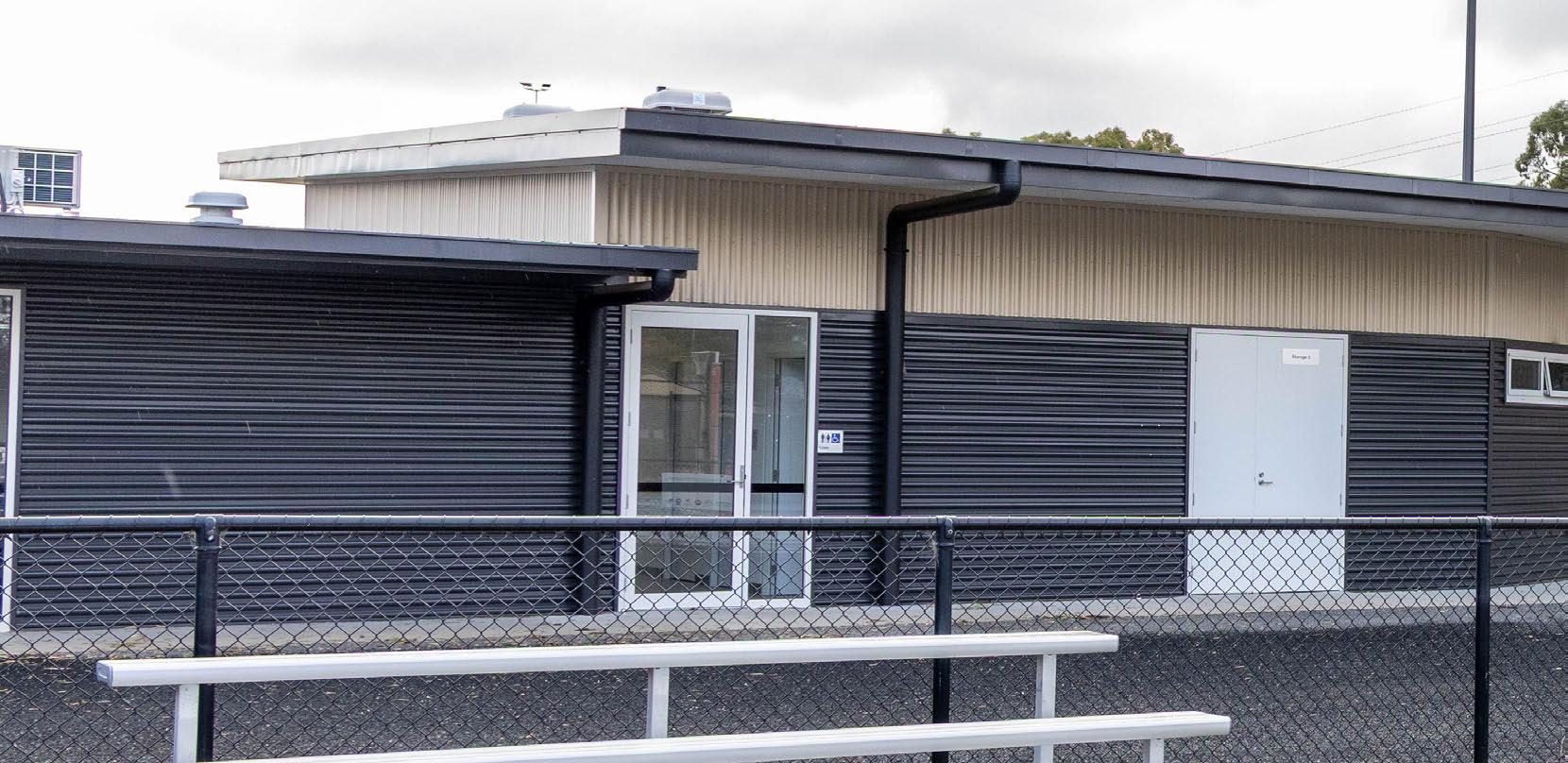
In February, we opened the Great Western Pavilion – now officially known as the Thomson Community Centre – the new home of Great Western Football Netball Club.
This year also marked the start of development works at Navarre Recreation Reserve, with major works pencilled in for the back half of 2025. Plans include building new change rooms and upgrading the reserve’s existing function and social spaces.
These facilities are pivotal for communities, particularly our smaller ones as they not only service sporting groups but act as vital community hubs.
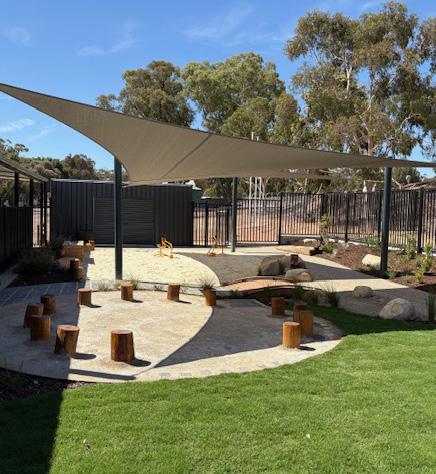
Another infrastructure highlight was the completion of the St Arnaud Modular Kindergarten project, at the St Arnaud Primary School site. The kindergarten has been operating since March, delivering three and four-year-old programs.
On behalf of my fellow councillors, I am thrilled to present our first Annual Report as a new council, reflecting on the past 12 months in Northern Grampians Shire.
Cr Karen Hyslop
Northern Grampians Shire Council Mayor
Northern Grampians Shire was one of six Local Government Areas selected for phase one of the Victorian Government’s Pre-Prep roll-out in 2025, which involves children enrolled in four-year-old kindergarten programs accessing 16 to 30 hours of learning per week.
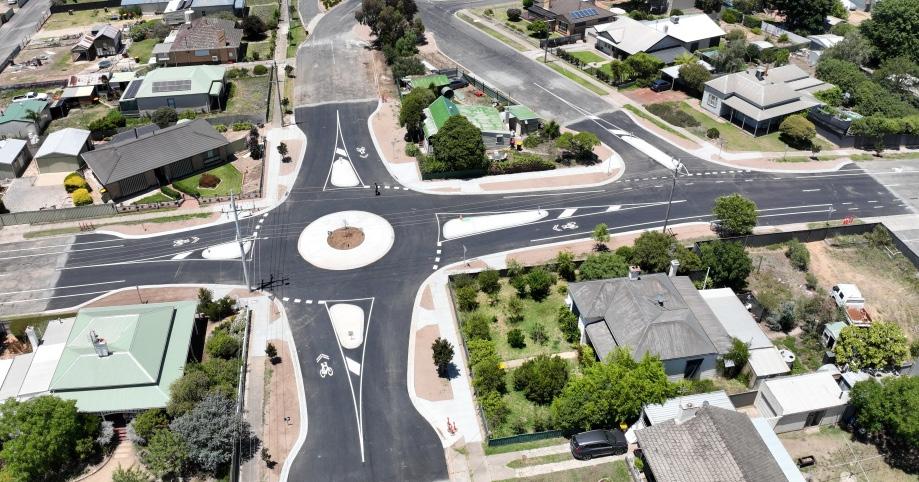
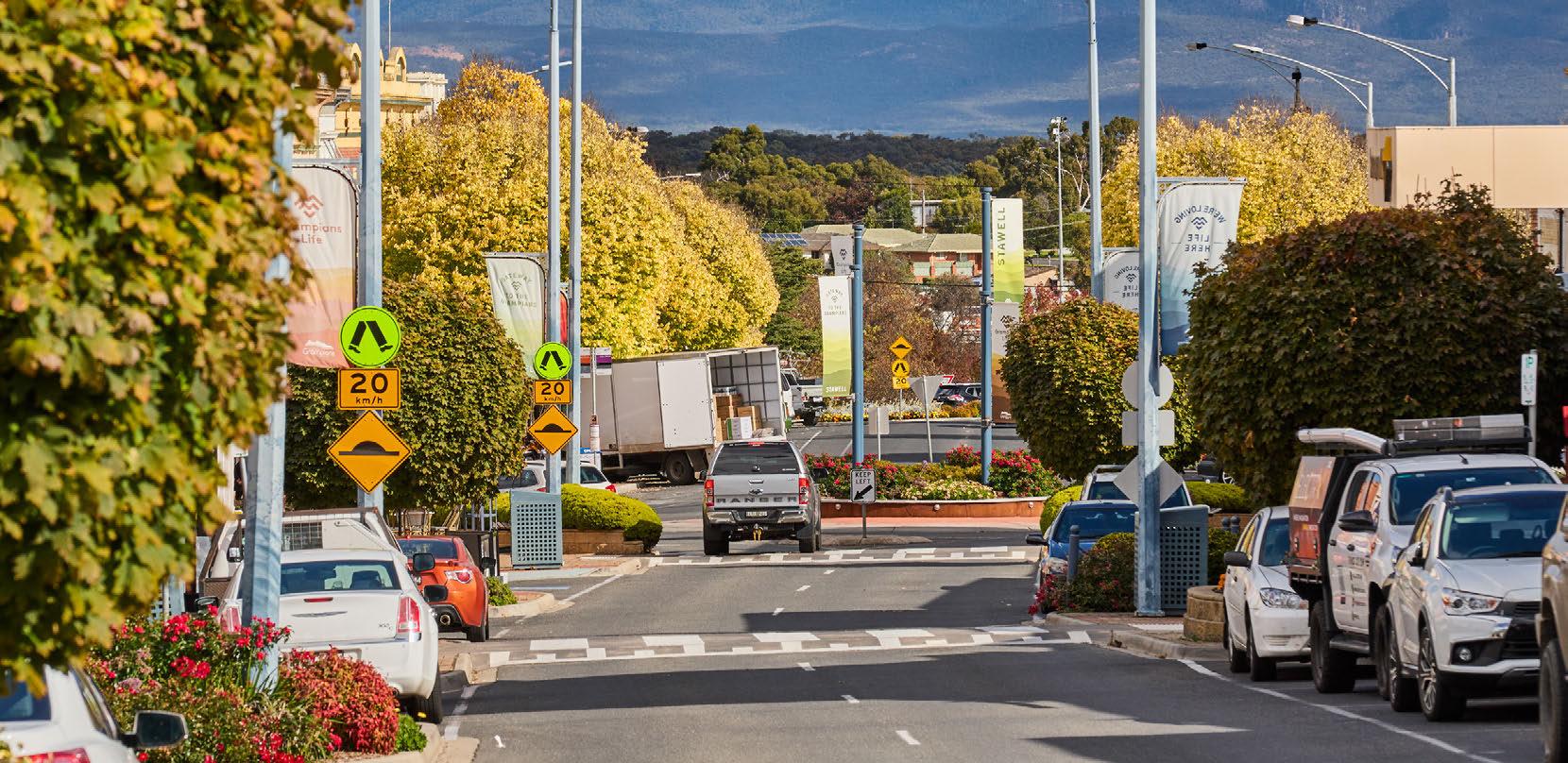
This year saw the completion of the eight-stage Sloane Street Road Safety Project, delivering a range of riskmitigation works to help improve safety for motorists, cyclists and pedestrians alike.
Works involved speed reductions, new roundabouts, new centre medians, new kerb outstands, improved signage and improved safety for pedestrians and cyclists. The works have been delivered at multiple locations along Sloane Street from Patrick Street all the way through to the Western Highway.
We also opened the upgraded Halls Gap Visitor Information Centre and Community Hub, a major milestone in improving frontline visitor servicing and community infrastructure, and won national industry recognition for our Discover Northern Grampians tourism marketing campaign, aimed at cementing the region as a must-visit destination.
Halls Gap reaped the rewards of the Discover Northern Grampians campaign when it was named a finalist in the Victorian Top Tourism Town Awards in June – ultimately winning silver in the Tiny Tourism Town category.
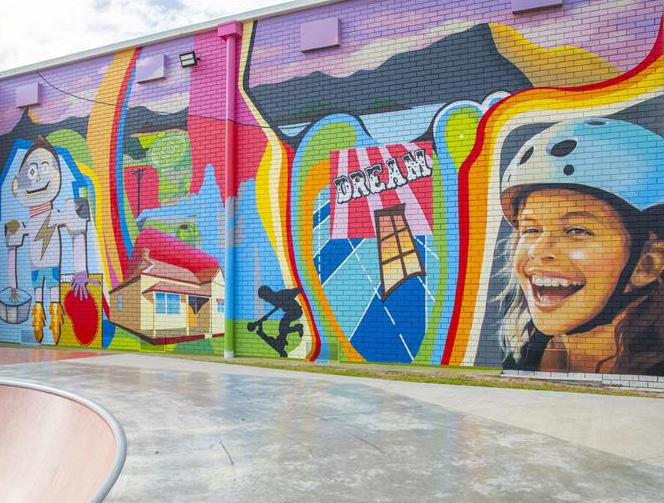
The Stawell Skate Park Mural Project was completed following input from the community at mural art workshop, with council supporting a plethora of social, community and environmental initiatives throughout the past 12 months.
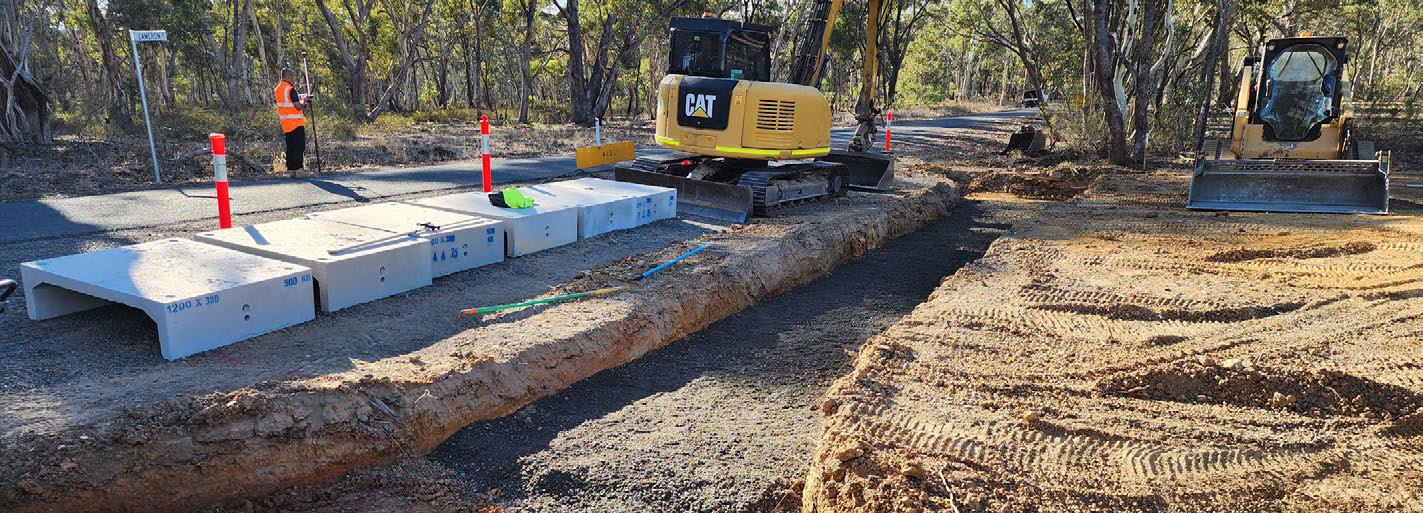
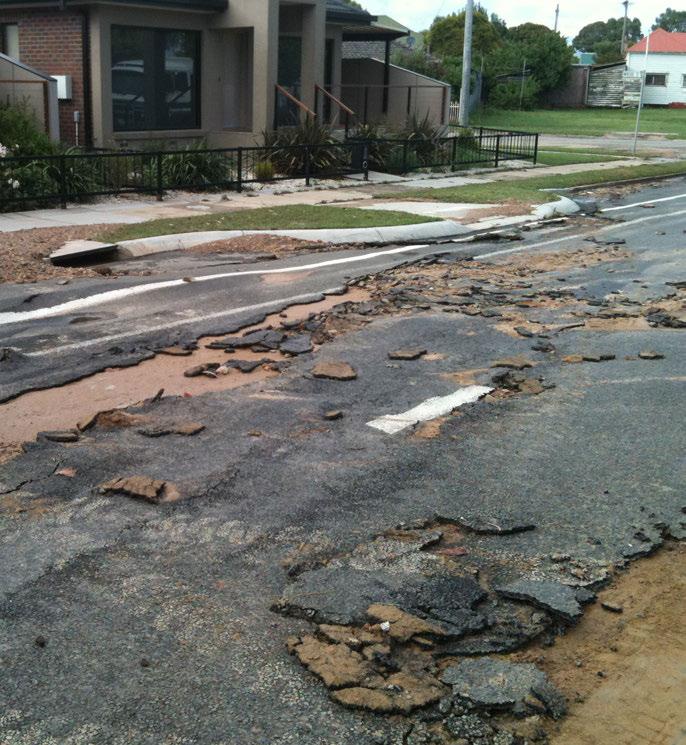
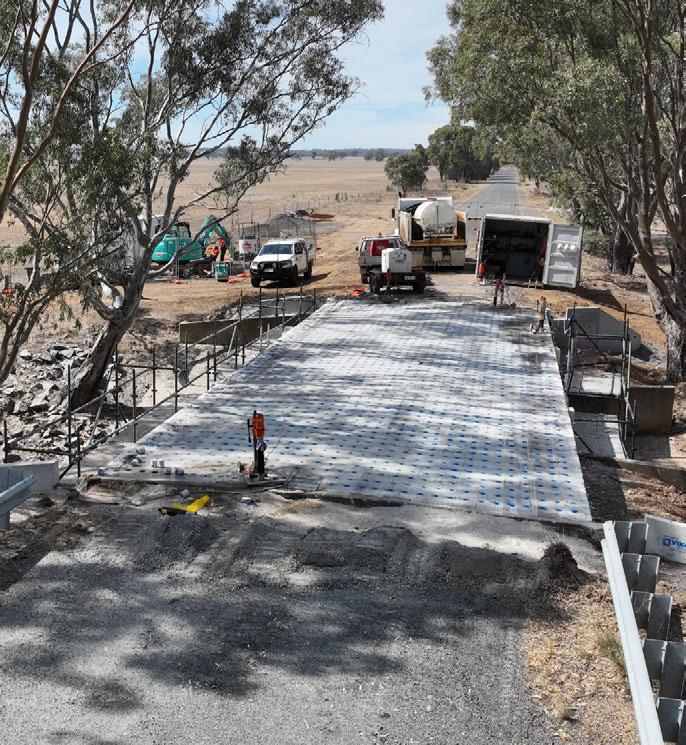
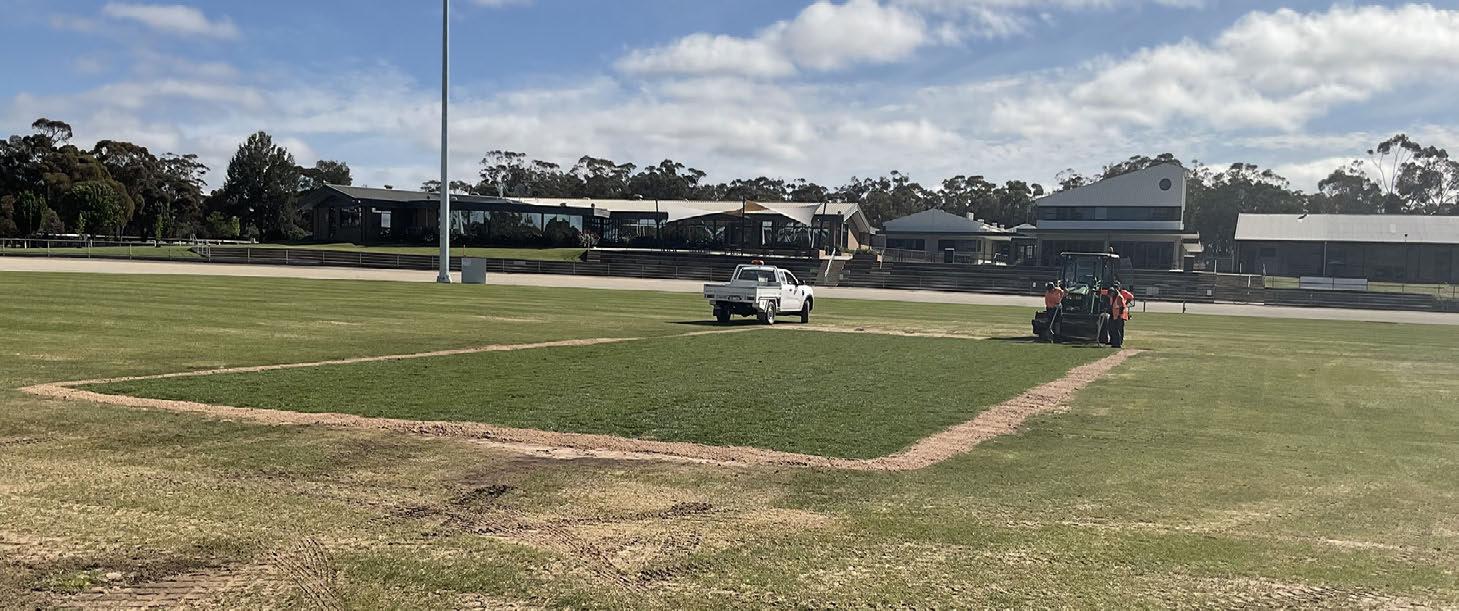
Other highlights include the start of flood recovery and drainage works at Glenorchy; completion of Stawell Flood Study; completion of the Grampians Peaks Trail trail head; installation of the Stawell Airport Precision Approach Path Indicator System; resurfacing of Lord Nelson Park oval at St Arnaud; and bridge upgrades at Wallaloo East and Greens Creek roads.
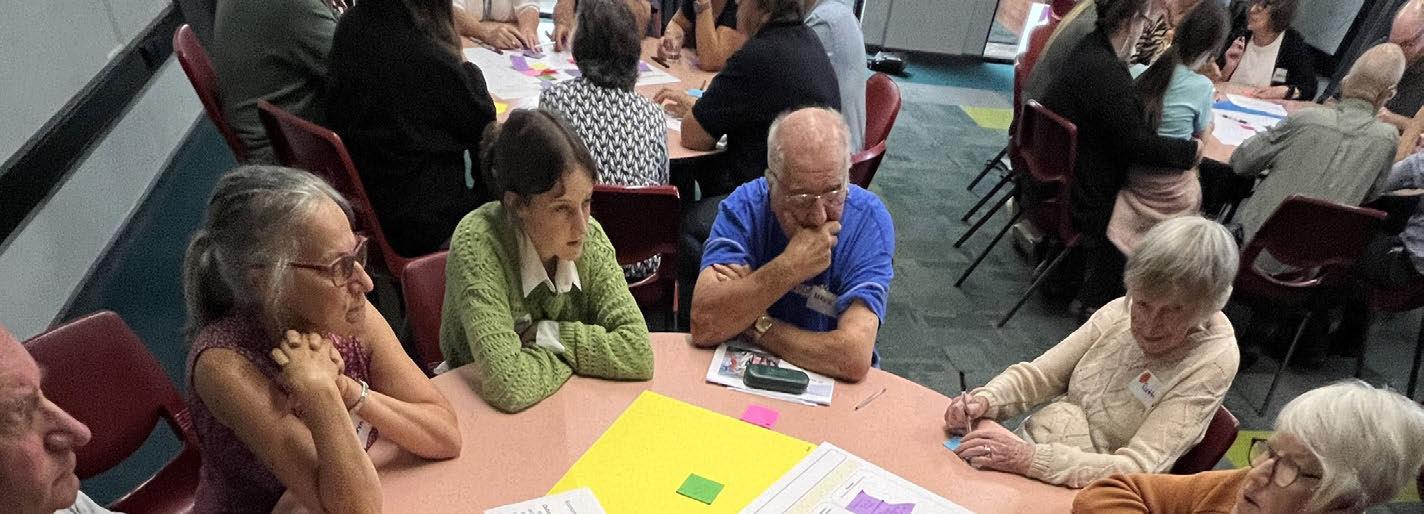
Throughout February and March, council engaged in extensive community consultation as we embarked on several key plans and strategic documents designed to shape our municipality for the next four to 10 years.
This consultation was pivotal in informing our 2025-29 Council Plan and Municipal Public Health and Wellbeing Plan. This is the first time we have combined the MPHWP into the Council Plan, which is a new option available to LGAs to more efficiently align health and wellbeing priorities.
The information and opinions we received throughout the initial consultation process as well as the draft feedback period helped shape our strategic direction for the next four years. It also informed our 10-year asset and financial plans. I thank everyone who took the time to tell us what they want for our municipality’s future and how we can continue to work towards our Community Vision 2041, ‘To love where we live’.
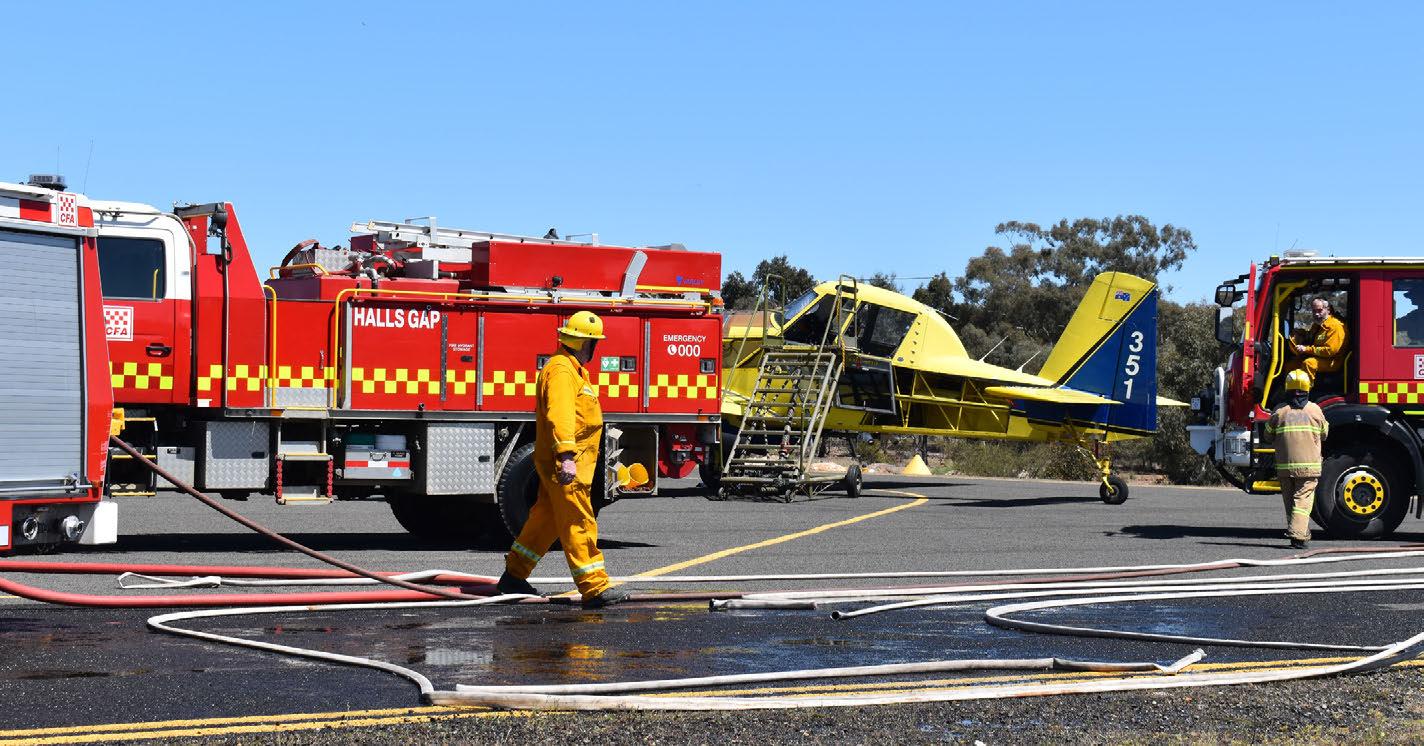
Unfortunately, one of the downsides to the wonderful place we live in is the ongoing risk of bushfire. The bushfire that broke out in Grampians National Park on December 17 and associated fires that burnt for several weeks culminated in a long, stressful fire season. While Halls Gap township was physically spared, business owners and tourism operators were devastated, and council has spent months advocating for government support on their behalf.
A positive to come out of the incident was the way council staff jumped into action during the active emergency and recovery phases. Council was responsible for running the relief centre in Stawell and helping with road closure and traffic management activities. We also had the responsibility of ensuring our community was proactively informed of active threats and facilitated community information sessions across several weeks in the busy Christmas and summer holiday period.
I would like to take this opportunity to thank council staff for their efforts, not only during the emergency, but in the months after.
While this report details a raft of achievements and infrastructure highlights, it is important to reiterate that moving forward, our budgeting for 2025-26 has a strong focus on financial viability and long-term sustainability. Our next chapter has been influenced by a range of factors including a small population base from which to generate rate income; reduced funding opportunities from state and federal governments; and cost of living pressures.
Despite entering a ‘business as usual’ mode, we will continue to work hard to ensure Northern Grampians Shire is a wonderful place to live, work, invest and visit.
Cr Karen Hyslop, Mayor
Your Councillors
Northern Grampians Shire has six elected councillors, representing three municipal electoral wards. A council term is for a period of four years, with the current councillors elected to serve for the term November 2024 to October 2028.
Kara Kara Ward
Cr Karen Probst
First elected: 13 November 2024
Term expires: October 2028
Cr Murray Emerson
First elected: 27 October 2012
Term expires: October 2028
Central
Ward
Cr Karen Hyslop
In November 2024, Cr Karen Hyslop was elected Mayor and Cr Justine Hide was elected Deputy Mayor for a oneyear term.
First elected: 11 November 2022
Term expires: October 2028
Cr Jenny Greenberger
First elected: 13 November 2024
Term expires: October 2028
Grampians Ward
Cr Justine Hide
First elected: 13 November 2024
Term expires: October 2028
Cr Jack Blake
First elected: 13 November 2024
Term expires: October 2028
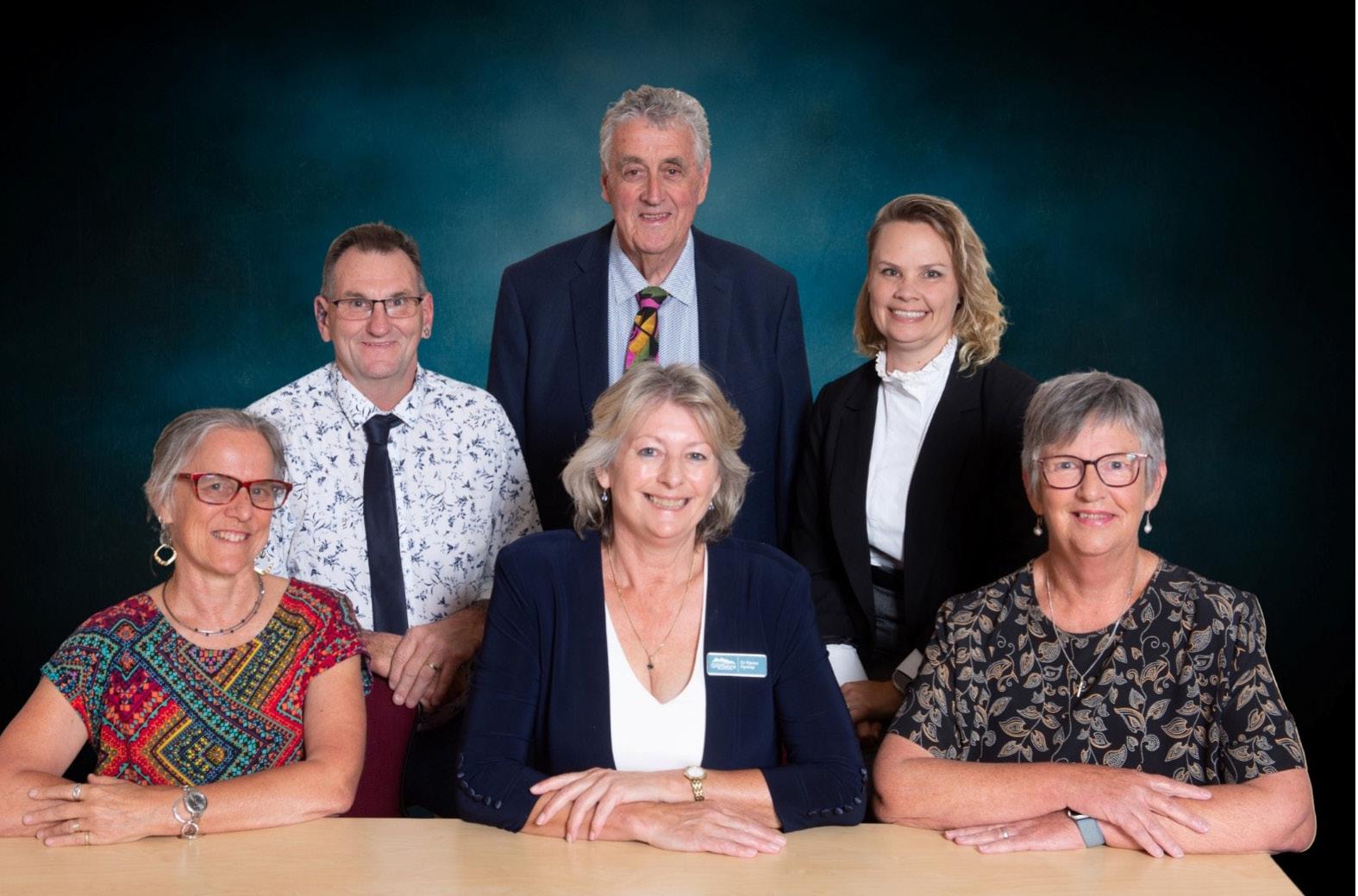
From left, back, Cr Jack Blake, Cr Murray Emerson and Cr Justine Hide; and front, Cr Karen Probst, Cr Karen Hyslop and Cr Jenny Greenburger.
Community Vision
The community vision was created by the community as part of the development of the 2021-2025 Council Plan. Community engagement undertaken to inform the development of the 2025-2029 Council Plan reconfirmed this is as the Community Vision. The Community Vision is a shared hope of how our community sees life here in the next 15 years. It is all about what the community wants
OUR VISION
To love where we live
GOAL 1
Live it up
and hopes for people living in the Northern Grampians. It serves as a guide for collective action and decisionmaking to make that vision a reality.
This vision is at the forefront of this Council Plan, informing the development of the goals, strategies, initiatives and actions.
Health,wellbeing and community goals
1.1 People feel connected, included and safe
1.2 Suppor ting healthy communities
1.3 I mproving outcomes for children and young people
GOAL 2
Build it up
Education,housing and skills goals
2.1 Unlock land and housing
2.2 Building our workforce
GOAL 3
Business buzz Agriculture, economy and tourism goals
3.1 Suppor ting farming and rural industries
3.2 Building vibrant local businesses
3.3 Enhancing tourism experiences
GOAL 4
Clean it up
Sustainability, climate and waste goals 4.1 Climate adaptation and preparedness 4.2 Cut waste and recycle properly 4.3 Drive energy efficiency 4.4 Protect our land, water and wildlife
GOAL 5
Do it well
Infrastructure, finance and corporate services goals
5.1 Asset Renewal and Maintenance Program
5.2 Financial viability
5.3 Responsive, innovative and efficient
2025-25 Highlights
Great Western Thomson Community Centre officially opened
December/January Grampians bushfire emergency management and recovery efforts
2024-25 Highlights
2025-29 Council Plan and Municipal Public Health and Wellbeing Plan community engagement and consultation
Glenorchy flood recovery and drainage works started
St Arnaud pre-prep modular building officially opened
Stawell Flood Study completed
2024-25 Highlights
Grampians Peaks Trail, trail head completed
Stawell Airport Precision Approach Path Indicator system installed
Bridge upgrades for Wallaloo East Road and Greens Creek Road
Lord Nelson Park oval resurfaced
2024-25 Highlights
Stawell Skate Park mural completed
Sloane Street road safety program completed
5,918 sq. kms in size
3,370 kms of local roads
1,342,450 sq. m of open space
11,948 residents
49 median age
9,600 rateable properties
500,000+ annual visitors
$50.9m total revenue
$1,037B gross regional product
1,213 local businesses
Operational report
Northern Grampians Shire Council is required under the Local Government Act 2020 to prepare a Council Plan containing the strategic objectives of the council, strategies for achieving those objectives, and indicators to monitor the achievement of those objectives. In order to achieve the goals set out in the Council Plan 2021-25, a Council Action Plan 2024-25 was adopted by the council at its 2 September 2024 council meeting.
The Council Action Plan 2024-25 supports the Council Plan by providing key actions that Northern Grampians Shire Council is to deliver within the third year to accomplish the strategic objectives outlined in the Council Plan. Updates are provided three times a year to the council and the community to give a clear indication as to whether the council’s goals and objectives are on track to meet delivery targets.
The action plan outlines the major initiatives that are to be carried out in the final year of the Council Plan. The report provides a summary of the progress towards achieving the objectives set out in the Council Action Plan 2024-25.
Enhance Lifestyle and Community
ACTION
Wellness and Welfare
Design Central Park Netball Courts * 30-Jun-24 30-Jun-25
Improve pedestrian safety in the St Arnaud Civic Precinct Market Square Car Park * 30-Jun-24 30-Jun-25 OFF TRACK
Funding dependent. Seeking funding opportunities.
Design and deliver the Navarre Recreation Reserve Facility Upgrades * 30-Jun-24 30-Jun-25 ON TRACK In progress.
Design the Great Western Football & Netball Clubrooms and Lighting * 30-Jun-24 30-Jun-25
Investigate St Arnaud Integrated Early Learning Centre *
Develop a new Stuart Mill Community Plan *
Cultural awareness training and develop a protocol *
Advocate for funding to upgrade Central Park netball change rooms
Improving Connectivity
Support schools to create their own Transport Safety Management Plans *
30-Jun-24 30-Jun-25 ON TRACK In progress.
30-Jun-24 30-Jun-25 COMPLETE Complete.
30-Jun-24 30-Jun-25 ON TRACK Ongoing.
30-Jun-24 30-Jun-25 MONITOR
Ord St, Stawell pedestrian safety treatments underway. Seeking funding for further pedestrian treatments on Barnes St and Cooper St Stawell.
Develop an Agency Partnership Framework 30-Jun-25 30-Jun-25 MONITOR Ongoing.
Undertake a Drainage Improvement Works Program 30-Jun-25 30-Jun-25
Undertake a Kerb and Channel Improvement Program
Undertake a Footpath Improvement Program 30-Jun-25 30-Jun-25
Undertake a Major Rural Roads Improvement Program 30-Jun-25 30-Jun-25
Undertake a Rural Residential Road Improvement Program
30-Jun-25 30-Jun-25
Undertake a Town Road Sealing Improvement Program 30-Jun-25 30-Jun-25
Enhance Lifestyle and Community
Improving Connectivity (cont’d)
Undertake an Urban Residential Road Improvement Program 30-Jun-25 30-Jun-25
Undertake a Cyclist Safety Improvement Program 30-Jun-25 30-Jun-25
Undertake a Stawell Flood Study * 30-Jun-24 28-Feb-25
Complete. Study in draft and ready to initiate the planning amendment process.
Deliver Open Space and Active Transport Plan * 30-Jun-24 30-Jun-25 COMPLETE Complete.
Protect key heritage buildings and precincts *
30-Jun-24 30-Jun-25 ON TRACK In progress.
Complete the St Arnaud Wayfinding Signage Program 30-Jun-25 30-Jun-25 COMPLETE Complete.
Protecting the Natural Environment
Implement the Walkers Lake Management Plan - Historical Plaque Project 30-Jun-25 30-Jun-25 COMPLETE Complete.
Implement the Walkers Lake Management Plan - Access, Tracks and Signage *
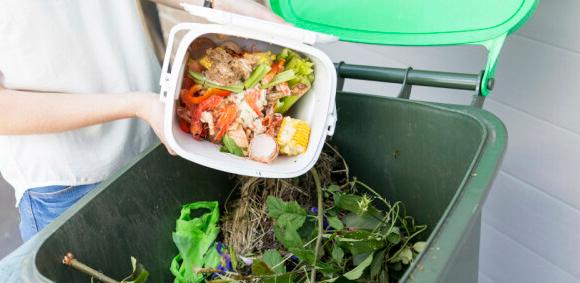
Investigate and prepare for a separate Food Organic and Garden Organic (FOGO) waste collection *
30-Jun-24 30-Jun-25 ON TRACK On track.
FOGO Trial in St Arnaud is complete, which determined that a small-scale localised processing of FOGO was not financially viable compared with using existing regional processors.
Alternative processor has been engaged and successfully rolled into services delivered in St Arnaud.
Undertake Food and Green Organic Waste Composting Trial *
30-Jun-24 30-Jun-25 OFF TRACK
Kerbside contract is tendered and ready for the roll-out of additional services throughout the remainder of the council.
Service standards from Recycling Victoria are not yet confirmed for the mandatory service roll-out by June 2027. The nature of the future service is entirely dependent on the outcome of these Service Standards.
30-Jun-23 30-Jun-25 COMPLETE Complete.
Enhance Lifestyle and Community
Protecting the Natural Environment (cont’d)
Investigate and prepare for a separate glass recycling collection *
30-Jun-24 30-Jun-25 OFF TRACK
Supporting Vulnerable People
Undertake Positive Ageing Services Service Level Review
Advancing Education
Kerbside contract is tendered and ready for the roll-out of services throughout the council.
Service standards from Recycling Victoria are not yet confirmed for the mandatory service roll-out by June 2027. The nature of the future service is entirely dependent on the outcome of these Service Standards.
30-Jun-25 30-Jun-25 ON TRACK In progress.
Develop a Youth Strategy * 30-Jun-23 30-Sep-24 COMPLETE Complete.
Develop a multi-agency Early Years Strategy *
Deliver a Youth Engage Program
30-Jun-25 30-Jun-25 ON TRACK Not until 2025-29 Council Plan.
30-Jun-25 30-Jun-25 ON TRACK In progress.
Boost Economic Growth
Boosting Tourism
Deliver the Grampians Peaks Trail Halls Gap connection *
Support Victoria’s Goldfields to be given UNESCO World Heritage status *
Build More Housing
Investigate ‘Urban Growth Area’ opportunities and constraints to accommodate long-term housing supply in Stawell *
Growing Local Business
Complete.
Ongoing.
In progress.
Advocate for funding for the Halls Gap Heath Street Bridge * 30-Jun-24 30-Jun-25 OFF TRACK Ongoing.
Advocate for an outer township gateway at the proposed London Road intersection, Stawell * 30-Jun-25 30-Jun-25 ON TRACK Ongoing.
Upgrade B-Double routes 30-Jun-25 30-Jun-25
Develop a Priority Investment Prospectus * 30-Jun-24 30-Jun-25
Advocate to State and Commonwealth Governments for the implementation of key recommendations in the Wimmera Southern Mallee Regional Digital Plan * 30-Jun-24 30-Jun-25
Explore options for improved wayfinding (incl. signage and local information) along key urban routes * 30-Jun-24 30-Jun-25
Secure funding for the Halls Gap commercial centre Rear Laneway Commercial Expansion * 30-Jun-24 30-Jun-25
Establish land use precincts along the Western Highway, Stawell *
Undertake a Bridges and Major Culvert Renewal Program
Ongoing.
On hold.
Complete.
Migration support * 30-Jun-24 30-Jun-25 ON TRACK Ongoing.
Revitalise and reactivate retail opportunities in Stawell and St Arnaud * 30-Jun-24 30-Jun-25 ON TRACK Ongoing.
Provide Sustainable Infrastructure
Building a Better Council
Finalise lighting LED conversion *
Undertake a Road Resealing Program
Undertake a Road Resheeting Program
Review the Building and Facilities Asset Management Plan
Review the Kerb and Channel Asset Management Plan
Undertake a Stawell Cemetery Improvement Program * 30-Jun-24 30-Jun-25
Assess the condition of road and drainage assets *
Undertake a Quarry Resource Material Review * 30-Jun-24 31-Dec-24
Undertake ‘Reduce Red Tape Projects’
Improve water quality and capacity at Mooney Dams, Stawell * 30-Jun-23 30-Jun-25
Develop a Victorian Protective Data Security Framework Plan *
Complete.
Ongoing.
Complete.
Draft largely complete, further detail and mapping being sought.
Working with Grampians Wimmera Mallee Water on standardising planning conditions, which is expected to improve processing times. Once in place, we intend to use this as a catalyst for other referral authorities.
TRACK Grant unsuccessful to date. No grants available on the horizon.
Implement a new records management system * 30-Jun-24 30-Jun-25 ON TRACK
2024-25 reporting and 2025-26 action planning is in progress.
Functionality implementation is in progress - user roll-out will be completed by the end of this year.
Plant and Equipment Review * 31-Dec-22 30-Jun-25 COMPLETE Complete.
Economic Initiatives
In the 2024-25 financial year, council delivered the following programs within the Economic Development and Tourism teams.
Business Growth Program
The Business Growth Program has become a cornerstone of council’s commitment to supporting local businesses. It includes Business Connections, Business Development, Funding Accelerator, and Regional Collaboration to promote job creation, exports, economic and environmental sustainability, and innovation.
Key Achievements
Business Connections and Development – Council enhancing business communication and networking by:
• Providing more than 190 businesses with one-on-one consultations for tailored support.
• Listing 428 businesses in the Council Business Directory.
• Supporting 40 businesses to attend five networking events, including the Business After Hours events in Stawell and St Arnaud and a retail trip to Dimboola.
• Issuing 32 Business E-Newsletters and eDMs to 506 subscribers, achieving a 47.84% conversion rate.
• Providing a concierge service to five businesses through the permit and approval processes.
• Supporting two businesses with small business mentoring services.
Business Funding Accelerator – Council supporting businesses to access more external funding opportunities and support with high quality grant applications by:
• Attracting 191 registrations for the Northern Grampians Shire Council ‘Grant Funding Finder’.
• Marketing 1,975 grants via Grant Guru emails to businesses throughout the year.
• Supporting two businesses with writing and submission of grant applications for two different State Government grants.
GROW Grampians was one business that utilised the Grant Writing Service to apply for the Victorian State Government Regional Tourism Investment Fund for large-scale projects. GROW Grampians was successful in receiving a grant for Stage One of the Grow Grampians Wellness Resort Development.
Council also worked with Barkly Property Ventures to secure funding through the Victorian State Government Regional Tourism Investment Fund, Stream 2, for a new 77-room hotel in Stawell called LOAM Hotel. This development is designed to support tourism in the region, particularly visitors to the Grampians, and will be part of the Choice Hotels AsiaPacific international network in their upscale Ascend Collection.
The project is expected to create 174 direct construction jobs and generate 53 ongoing hospitality jobs, and inject $150 million into the region’s economy throughout the next decade. It’s scheduled to open by mid-2026.
The Economic Development team will continue business visits and promote the program to existing and new businesses, as well as through the monthly newsletters and social media campaigns.
Main Streets Activation Program
St Arnaud Main Street Revitalisation
Commencing the St Arnaud Main Street Revitalisation, council developed and delivered vacant shopfront decals on four vacant properties on Napier Street. The four decals provide community and tourists with a look into what St Arnaud previously looked like, transport history, trails you can explore, and a view of artwork by local artist, Kyle Torney.
Following these improvements, the Shopfront Improvement Program was launched with a Visual Merchandising Workshop. Delivered by Pop Creative Collective, 12 businesses participated in the workshop to gain helpful information about updating shopfront displays. The Shopfront Improvement Program expression of interest (EOI) process was announced following the workshop. Expressions of interest were open for two weeks. Seventeen applications were received and six businesses were chosen to take part in the program. This program will continue into the 2025-26 financial year, with completion due by end of October 2025.
Christmas and Easter Street Decorations
Council continued its activation of the main shopping precincts of Stawell, St Arnaud, Great Western and Halls Gap during Christmas, as well as Stawell during Easter. The Stawell business group ran a Christmas market at the Stawell Community Christmas Carols, which supported small home-based businesses.
Investment Attraction
Discover Northern Grampians New Resident Handbook
Following the launch of the Northern Grampians Shire Council Discover Northern Grampians Industry Investment Prospectus, attracting new investment to the region, council developed the New Resident Handbook. The New Resident Handbook is designed to help make any new resident’s transition into the community a smooth one. The New Resident Handbook contains 12 pages of council information, town profiles, council services and community services. It has been provided to major employers to hand out to new employees, along with real estate agents, Stawell and St Arnaud libraries and council’s Customer Service centres. A digital version is also available on council’s website and for the council’s rates team to provide to new residents when notified.
Economic Initiatives
Economic Activity
Compared with the previous year, Northern Grampians Shire Council experienced notable growth across several key economic indicators:
1. Gross Regional Product (GRP): The GRP, which measures the total value of goods and services produced within the region, has increased by 6.5% compared with the previous year. Since 2016, GRP has increased by $321.148 million, reflecting a compounding annual growth rate (CAGR) of 4.74%.
2. Output (Gross Revenue): Like GRP, gross revenue has risen by 7.7%, climbing from $2.1 billion to $2.4 billion. This increase is a positive sign of heightened economic activity and suggests that local businesses are experiencing greater demand for their products and services.
3. Employment Growth: Employment in the region has grown by 1.2%, reflecting a strengthening labour market and increased job opportunities for residents.
4. Regional Exports: The value of goods and services exported from Northern Grampians Shire has risen by 4.3%.
5. Business Counts: The total number of businesses in Northern Grampians Shire for 2024 is estimated at 1,213. This is an increase of 17 businesses from the previous year.
6. Wages and Salaries: Wages and salaries earned by NGSC employees have risen by 7% from last year, reflecting the region’s commitment to providing competitive remuneration for its workforce. Since 2016, wages and salaries have increased by $118.295 million, reflecting a compounding annual growth rate (CAGR) of 3.89%. This growth is vital for supporting the local economy.
7. Housing Market: The current median house price in Northern Grampians Shire is $315,000, significantly lower than the Victorian mean house price of $899,700 and the national mean of $1,002,500. This affordability factor makes the region an attractive option for potential homebuyers and investors.
Enabling Infrastructure
Upgraded Tottington and Baldwin Plains Roads, Gre Gre, from gravel to sealed standard, significantly improving freight efficiency and all-weather access to local quarry and surrounding agricultural areas. The project reduces maintenance costs, lowers vehicle operating expenses for businesses, and supports local economic growth.
Tourism
Northern Grampians Shire Council’s Tourism team works collaboratively with community members and key partners, including Grampians Wimmera Mallee Tourism, to grow and strengthen the region’s visitor economy. Key initiatives delivered this year include:
Township Tourism Strategies and Action Plans
The Stawell and St Arnaud Tourism Strategies and Action Plans, adopted in 2022, continue to guide projects aligned with economic growth, resilience and tourism enhancement. These plans focus on priority themes that highlight the unique people, places and experiences of each township, and lay the groundwork for strengthening Northern Grampians Shire’s tourism offering. The 14 identified actions continue to guide key projects and initiatives led by council’s Economic Development and Tourism teams.
In 2025/26, this strategic approach has been extended to include Great Western and Halls Gap, with destination branding and tourism action plans currently in development. These new plans will help shape the future of tourism in two of the shire’s most prominent visitor destinations and will be informed by industry consultation, community input, and alignment with regional and state tourism priorities.
In 2024/25, council continued to grow the Discover Northern Grampians destination brand, strengthening regional identity through compelling storytelling, strategic marketing and increased industry collaboration. The brand showcases the unique appeal of our towns and natural attractions, positioning the region as a must-visit destination for both domestic and international visitors.
The DNG brand was formally represented in 2024/25, holding presence in marquee spaces at each of the four events listed below. While encouraging eventgoers to explore and immerse themselves within the Northern Grampians region, the aim was to entice repeat visits or even convince visitors to stay for good. It was also showcased at two major events in 2024/25, the Grampians Grape Escape and the Stawell Gift.
• Victorian State Merino Field Day (2 August 2024)
Crowds of 650-700 gathered to see the merino rams exhibited.
• Outdoor Living and Caravan Expo in Ballarat (11-13 April 2025)
Northern Grampians Shire, in among other councils, represented our region at the expo, encouraging people to ‘Visit Grampians’. Locals and visitors from far and wide attended the show, with the highest visitation on Saturday (12/04) where 3,000 people attended.
• Stawell Gift (19-21 April 2025)
The DNG marquee was located at the maroon gate off Main Street. Hundreds of event-goers visited the marquee to ‘guess the number of lollies’ in a jar - and if they followed DNG on social media they were granted two guesses. 159 followers were gained on social media. Overall, more than 11,000 people attended the event itself.
• Grampians Grape Escape (2-4 May 2025)
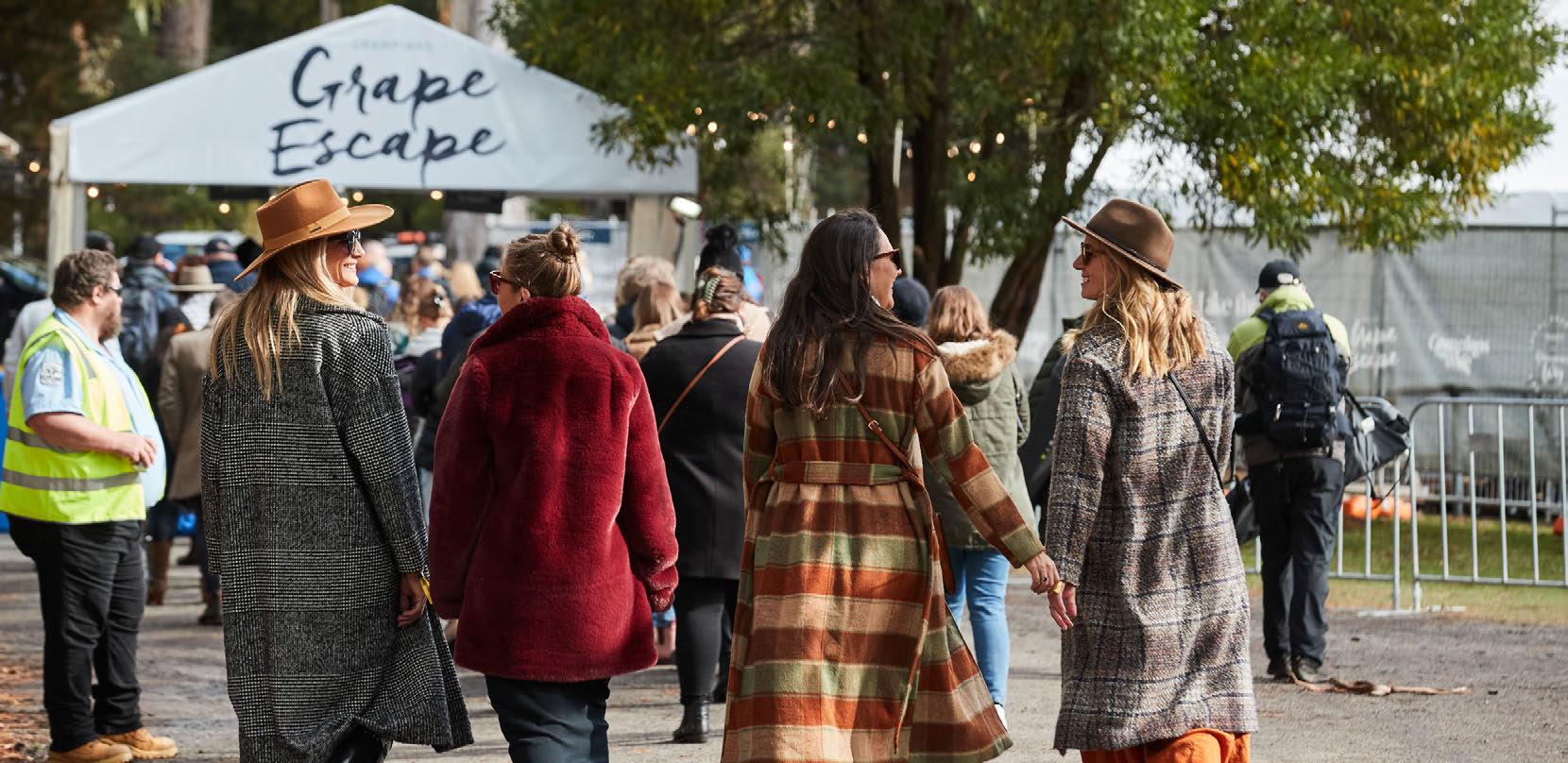
The event boasted up to 5,000 people in attendance. Across the two days of activation, attendees were challenged to ‘guess the number of lollies’ in the jar and - and if they followed DNG on social media they were granted two guesses. Each day there was a lucky winner. Adults could go in the running to win a Frank Green drinking set once they followed DNG on social media. Many were already following DNG on social media. All the same, the exercise enhanced brand awareness and 78 followers were gained.
Media Opportunities Featuring Halls Gap (via Grampians Tourism)
• Postcards (Channel 9) – Halls Gap was featured in a dedicated segment highlighting the town’s natural beauty, familyfriendly experiences, and access to the Grampians Peaks Trail. The episode aired to a broad Victorian audience and was supported by social media promotion.
• Sunrise (Channel 7) – A live weather cross from Halls Gap showcased the town’s iconic views, local wildlife, and outdoor experiences. This national broadcast provided excellent exposure to morning viewers across Australia.
• Herald Sun Travel Feature – Halls Gap and the surrounding Grampians region were included in a travel spread focusing on nature-based getaways, boosting awareness of hiking, wildlife and wellness experiences.
• Australian Traveller Magazine and Online – Halls Gap was included in a Grampians feature that promoted the town as the ideal base for exploring the national park.
• Visit Victoria digital and campaign support – Halls Gap has been regularly featured in collaborative digital campaigns and itineraries developed through partnerships with Grampians Tourism and Visit Victoria.
• Influencer and travel media – Grampians Tourism has hosted a range of social media influencers, travel writers and photographers in Halls Gap, resulting in high-quality user-generated content and wide social media reach.
DNG Social Media Performance
Our social media channels continue to play a critical role in inspiring travel and supporting local tourism operators. The Discover Northern Grampians Instagram and Facebook platforms experienced significant growth in both reach and engagement in 2024–25:
• Instagram: Followers increased by 14%, with a reach of 295,000 and engagement rate of 9.3%.
• Facebook: Page followers grew by 11%, with an overall reach of 340,000 and a 7.8% engagement rate.
High-performing content included user-generated posts, scenic reels, Grampians Peaks Trail stories, and behind-thescenes tourism initiatives.
Through these platforms, the brand has received not only likes but also positive feedback from the community. Weekly updates about the region and upcoming events are shared across social media (these figures are reported monthly in the councillor bulletin).
Tourism (cont’d)
Tourism Signage Strategy
Council recognised the need to develop consistent and relevant signage across the region that leverages key visitor economy strengths, capturing the high-traffic flow from major arterial roads and to encourage visitor dispersal across the region. In June 2024, council endorsed the Tourism Wayfinding Strategy, a 10-year plan to improve visitor signage. Implementation begins in 2025–26, with initial actions including:
• Development of a Signage Policy, Style Guide and Application Process.
• Updates to ‘i’ signage at the Halls Gap Hub/Visitor Information Centre.
• Revision of signage implementation and town entrance signs.
Silo Art Trail
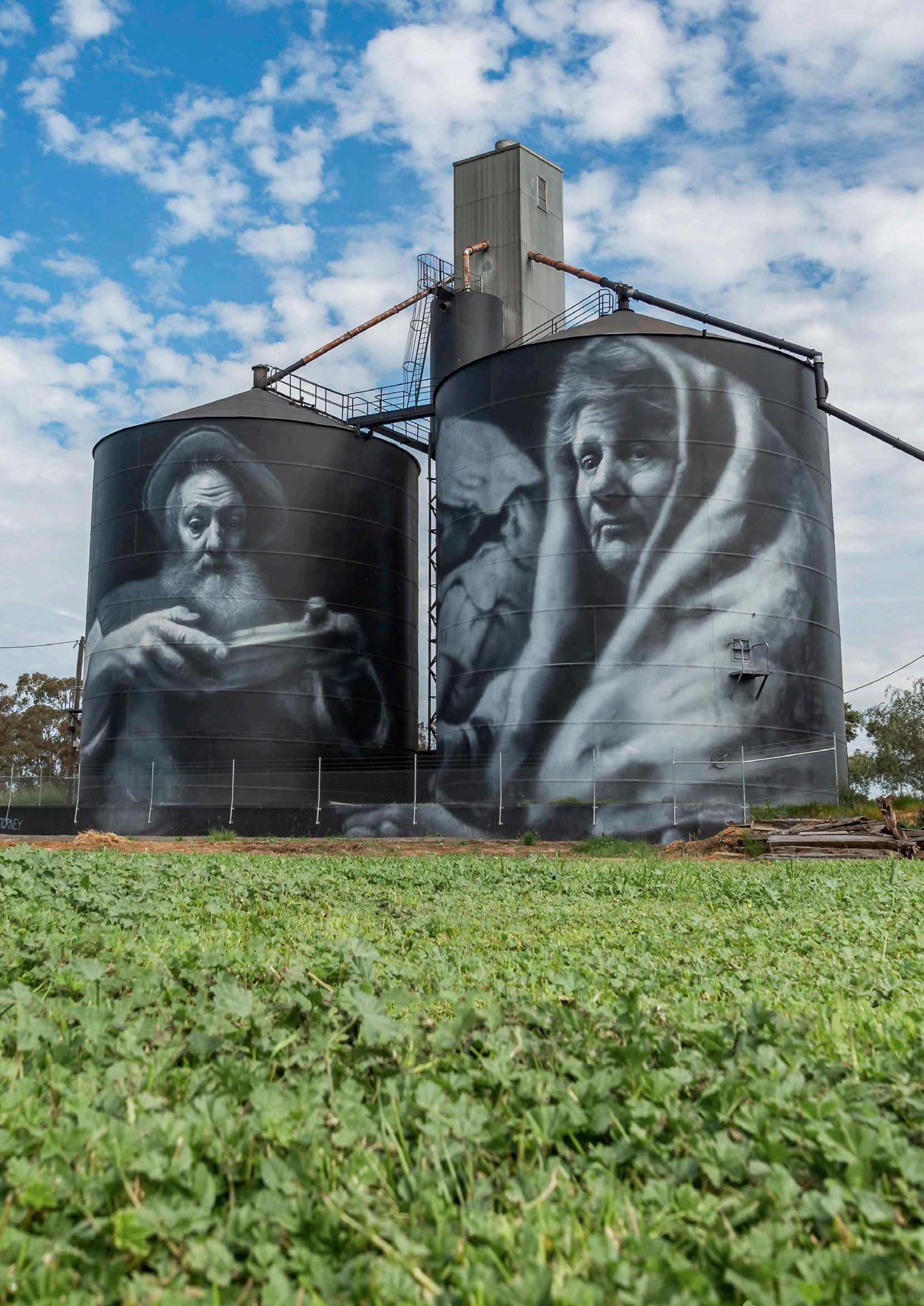
The St Arnaud Silo Art Trail officially joined the Wimmera Mallee Silo Art Trail and is now included in all associated marketing materials. In 2024/25, council rolled out a signage project with three signs at the silos, and 17 plaques (one at each mural) were installed.
Halls Gap Wins Silver at Top Tourism Town Awards
In July 2025, Halls Gap was awarded silver in the Top Tiny Tourism Town category at the Victorian Top Tourism Town Awards, proudly recognising the town’s unique visitor experience, vibrant tourism industry, and strong community spirit. This prestigious accolade reflects the dedication of local businesses, volunteers and community members who contribute to making Halls Gap a welcoming and memorable destination for visitors from around the world.
The award is a testament to Halls Gap’s growing reputation as the heart of the Grampians, offering access to world-class hiking, Indigenous heritage, local food and wine, and breathtaking natural landscapes. Council was proud to celebrate this achievement alongside tourism stakeholders and regional partners.
Grampians Information Digital Kiosks
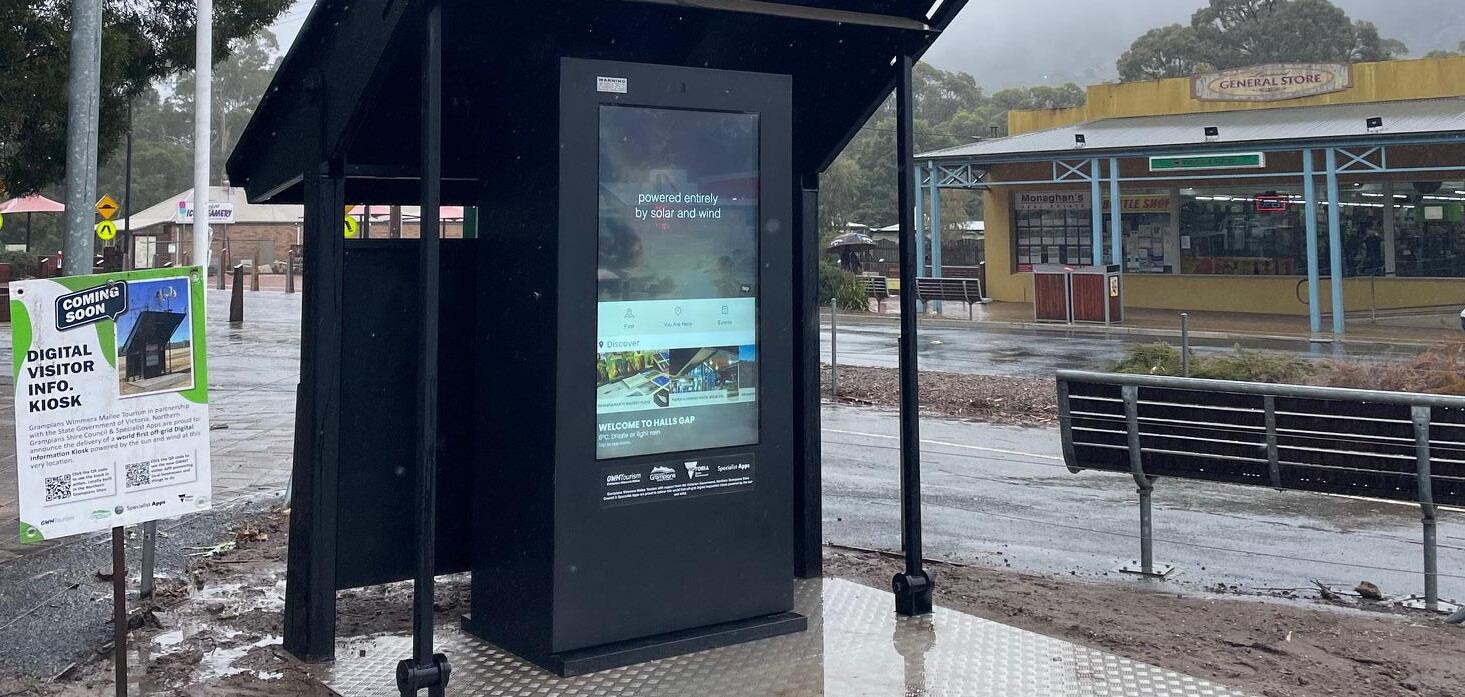
Northern Grampians Shire is proud to be part of a world-first initiative delivering AI-powered digital visitor kiosks across the Grampians and Wimmera Mallee regions. These innovative kiosks provide real-time visitor information in high-traffic locations, supporting visitors 24/7 with tailored travel suggestions and wayfinding support. This project is an outcome of strong regional collaboration and is expected to significantly improve visitor servicing outside of traditional hours.
Economic Initiatives
Visitor Servicing and Halls Gap Hub Management
Council manages the Halls Gap Hub and provides visitor information services, which include the Victorian accredited Visitor Information Centre (VIC) in Halls Gap and volunteer-run VICs in St Arnaud and Stawell.
These services are essential for promoting our region to post-arrival visitors and encouraging exploration beyond the Grampians National Park. Visitor Information Centres (VICs) are crucial hubs for tourists to access up-to-date, accurate information and expert advice, enhancing their overall experience. These centres facilitate visitor dispersal throughout the region and encourage extended stays.
The Stawell and St Arnaud Visitor Information Centres operate seven days a week, supported by more than 20 volunteers at each location. In 2024-25, these centres collectively welcomed 4,869 visitors, highlighting their vital role in catering to tourists’ needs. The operation of the Stawell and St Arnaud VICs heavily relies on the success of the Volunteer Ambassador Program, making it essential to continually recruit and retain volunteers. Three familiarisation tours were held this year to educate volunteers about local experiences. Regular team meetings and fortnightly Toolbox meetings (specific to the Halls Gap VIC) are held to keep the team informed of any changes and to visitor offerings.
In addition, the Halls Gap and Grampians Visitor Centre welcomed 45,388 visitors last year. The hub employs two volunteers and five staff members. The Halls Gap VIC has hire spaces available, comprising a meeting room, kitchen, centenary hall and a main stage, plus five smaller zones for business pop-up displays.
In 2024-25 the hub hosted 200 (free of charge) events, ranging from community meetings, Neighbourhood House and other local community group meetings, community engagement sessions and educational workshops.
In addition, there were 11 single day hires for local and external businesses, and 10 multi-day events including gospel fellowships, spirituality and meditation workshops, Wonderland Run, GPT 100 Run, orchid displays, clothing pop-ups, dancing groups and weddings.
The Hub also hosted major local community events including Run the Gap, Grampians Brushes and Textures workshops (which includes two seven-day events annually), and Halls Gap GLOW Festival.
Visitor Servicing and Halls Gap Hub Management (cont’d)
Impact of December 2024 Grampians Bushfires
The December 2024 Grampians bushfires had a significant impact on tourism across the region, with Halls Gap particularly affected due to temporary park and road closures, evacuations, and widespread media coverage. The fires occurred during the critical summer holiday period, resulting in booking cancellations, reduced foot traffic, and a marked decline in visitation. While the community and local tourism operators acted quickly to support emergency services and ensure visitor safety, the disruption created economic strain for many small businesses during what is traditionally their busiest time of year.
Council worked closely with emergency services, Grampians Tourism, and Visit Victoria to support real-time visitor communication and recovery efforts. Digital messaging and social media updates from Discover Northern Grampians helped manage expectations and maintain traveller confidence once conditions stabilised. Recovery marketing campaigns were activated in early 2025 to encourage return visitation and reinforce that the Grampians region remains open, resilient, and ready to welcome guests.
Halls Gap Visitor Information Centre and Hub Upgrade Project
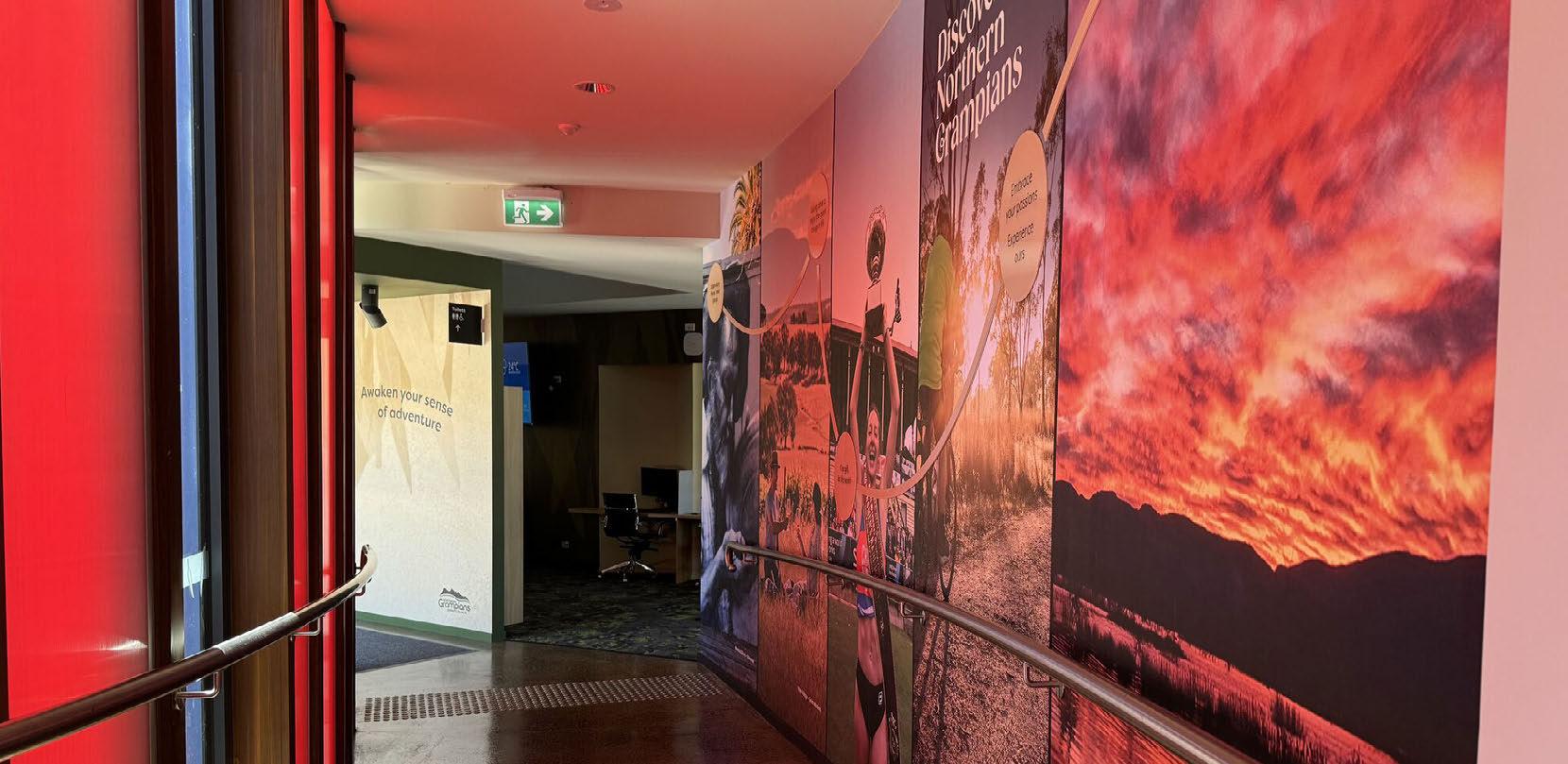
In 2025, council officially opened the upgraded Halls Gap Visitor Information Centre and Community Hub, a major milestone in improving frontline visitor servicing and community infrastructure. The revitalised space includes modernised displays, enhanced digital touchpoints, upgraded retail (with more to come) and storage capacity, and improved accessibility and amenity for both visitors and residents. The project aligns with long-term tourism objectives and supports Halls Gap’s position as the region’s premier gateway to the Grampians National Park.
Economic Initiatives
Events
In 2024-25, a total of 121 events were registered within the shire with community events exceeding tourism events.
• Community Events: 113 events (93%)
• Tourism Events: 8 events (7%)
Events categories were recorded as follows:
• 30% Entertainment
• 27% Sports
• 21% Other (various other community events such as weddings, Anzac Day, Australia Day etc)
• 7% Fun run/ride/walk
• 5% Agriculture
• 5% Culture
• 5% Christmas
The majority of the events were hosted in council venues. With the new venue online booking tool (SpacetoCo) implemented in late November 2024, the event compliance experience was also significantly enhanced.
In alignment with the 2023-33 Event Strategy, council continued the following programs.
Major Tourism Events Partnership Program
Partnerships were established with three key events in late 2024:
• Grampians Grape Escape
• Grampians Arts (Textures and Brushes)
• Run the Gap
The partnership with the Stawell Gift continued. Key benefits of this partnership include:
• Supporting events to become financially and operationally sustainable.
• Driving economic development outcomes.
• Raising awareness of Northern Grampians Shire Council locations and enhancing the Discover Northern Grampians brand and marketing opportunities.
A total of $175,524 was distributed through this program (via payment and in-kind works).
Events (cont’d)
Nascent Events - Tourism Events Grant Council has supported emerging tourism events in their early stages, with events grants aiming to achieve economic, marketing and community benefits for the shire. Three events in 2024-25 received funding valued at a total of $30,000 through the Tourism Events Grant:
• Great Western Show and Shine
• StawellBiz - Stawell Easter Main Street Extravaganza
• Victorian State Merino Field Day (Marnoo)
Stawell Easter Festival
A total of 17 activities were registered for the 2025 Easter Festival, offering a variety of attractions for all ages, including fine arts, horse racing, bingo, religious practices, a street extravaganza, markets, and various sports, with the Stawell Gift being the highlight.
The Stawell Gift is a significant contributor to the local economy and a prominent showcase for the region, with Finals Day broadcast nationally on the Seven Network and reaching more than a million viewers. The Gift saw unprecedented attendee numbers with Gout Gout as a contender in this year’s event. Attendees at the 2025 Stawell Gift, entering through the maroon gate, were greeted by staff who invited them to the Discover Northern Grampians (DNG) marquee to ‘guess the number of lollies in the jar’. Two guesses were granted to those who opted to follow DNG on social media, alternatively one guess to those who did not opt to follow DNG. 160 extra followers were gained over the three-day event. Many Stawell balloons and promotional pens were also given away. Staff provided information to encourage attendees to maximise their Easter weekend experience to stay longer and go further and inspire future visits to the Northern Grampians.
Local businesses along Main Street played a crucial role during the Easter weekend, supported by flags displayed outside Central Park to attract visitors. Main Street traders hosted a Main Street Extravaganza on Saturday morning, drawing more than 500 attendees, with street closures allowing community groups to fundraise and showcase their talents.
Social, Community & Environment Initiatives
Direct Care Services
Our trained and skilled staff work with residents who require support to remain living independently in the community. These home-based services are delivered using a collaborative approach to determine the residents’ individual care needs. Together with the client a care plan is developed that outlines the individual’s preferences and the most important factors to be considered when delivering services for them.
In 2024-25, council’s direct care workers delivered a total of 17,260 hours of services to 484 residents who require assistance to remain living independently in the community. Most of the services were domestic assistance and personal care (80% of services), with most services provided to people over the age of 70 years (80%).
This year the Home Care client management software was changed to increase efficiency and meet the new requirements of the pending new Aged Care Act. This was a significant project delivered with no additional staffing.
A mix of staff and dedicated volunteers spent 12.5 hours a day delivering 10,169 meals to residents living in Stawell and St Arnaud, prepared by East Wimmera Health Service and Grampians Regional Health (Stawell Hospital).
Carers Recognition Act 2012
Council has taken all practicable measures to comply with its responsibilities outlined in the Carers Recognition Act 2012. Council has promoted the principles of the Act to people in care relationships who receive council services, people in care relationships and the wider community by:
• Undertaking home-based intake assessments, including assessing the care and support carers may need.
• Hosting annual Seniors Day celebration events across the municipality, recognising the important role of carers and providing opportunities for carers to participate.
• Networking with, and providing information to, organisations that provide services and support to older people and their carers.
• Advocating for carers’ rights according to the Act in Community Care client newsletters.
Council induction and training programs for staff, contractors and volunteers include information about the principles and obligations of the Act.
Stawell Sports and Aquatic Centre (SSAC)
With large growth in our swim programs last financial year, we managed to maintain our bookings with just under 500 students enrolled in swimming lessons at SSAC over the past 12-months. We finished the financial year with 327 active members and nearly 70,000 visits to the centre.
SSAC has welcomed a large demographic of patrons, however notably the 50-plus age group has been a consistently committed group participating in Active Ageing classes. The centre had 75 people older than 75 years of age take up a Platinum Membership which is also a great result.
With support from the Thrive Healthy Ageing Hubs team, we were able to introduce pickleball to our local Stawell and surrounding communities, offering six months of free access to rock-up sessions. The sessions ran for three days and continued into the second half of the financial year with an average of 20 people attending every week. The SSAC team has also been able to deliver a chair-based program offsite for senior citizens with about 15 attendees each week for 30 weeks.
SSAC’s reach and popularity both in and outside of our shire continues to be extremely strong. Not only do we offer services to the Northern Grampians community, but we also attract many people from neighboring councils such as Ararat Rural City Council, Horsham Rural City Council, Pyrenees Shire Council, Buloke Shire Council and Yarriambiack Shire Council.
Our school program continues to grow with 15 schools accessing aquatic and sport programs. During the year the centre also ran a mixed netball competition with 10 teams competing at the North Park netball courts last summer (November 2024 – February 2025).
Summer Outdoor Pools
This summer was our quietest summer in St Arnaud for a few years with just over 7,500 visitors through the gates of St Arnaud Swimming Pool to seek respite from the summer sun. The ‘no fee’ access to the pool, the fun water aerobics sessions, school swimming groups, and local and regional swimming carnivals resulted in a range of ages enjoying the pool over the summer. We also delivered our Swim and Survive Program in St Arnaud last season, with 85 students enrolled and great community feedback received. We also offered infant and preschool classes which gained a great response from the community with more than 15 children aged between six months to four years participating in the program.
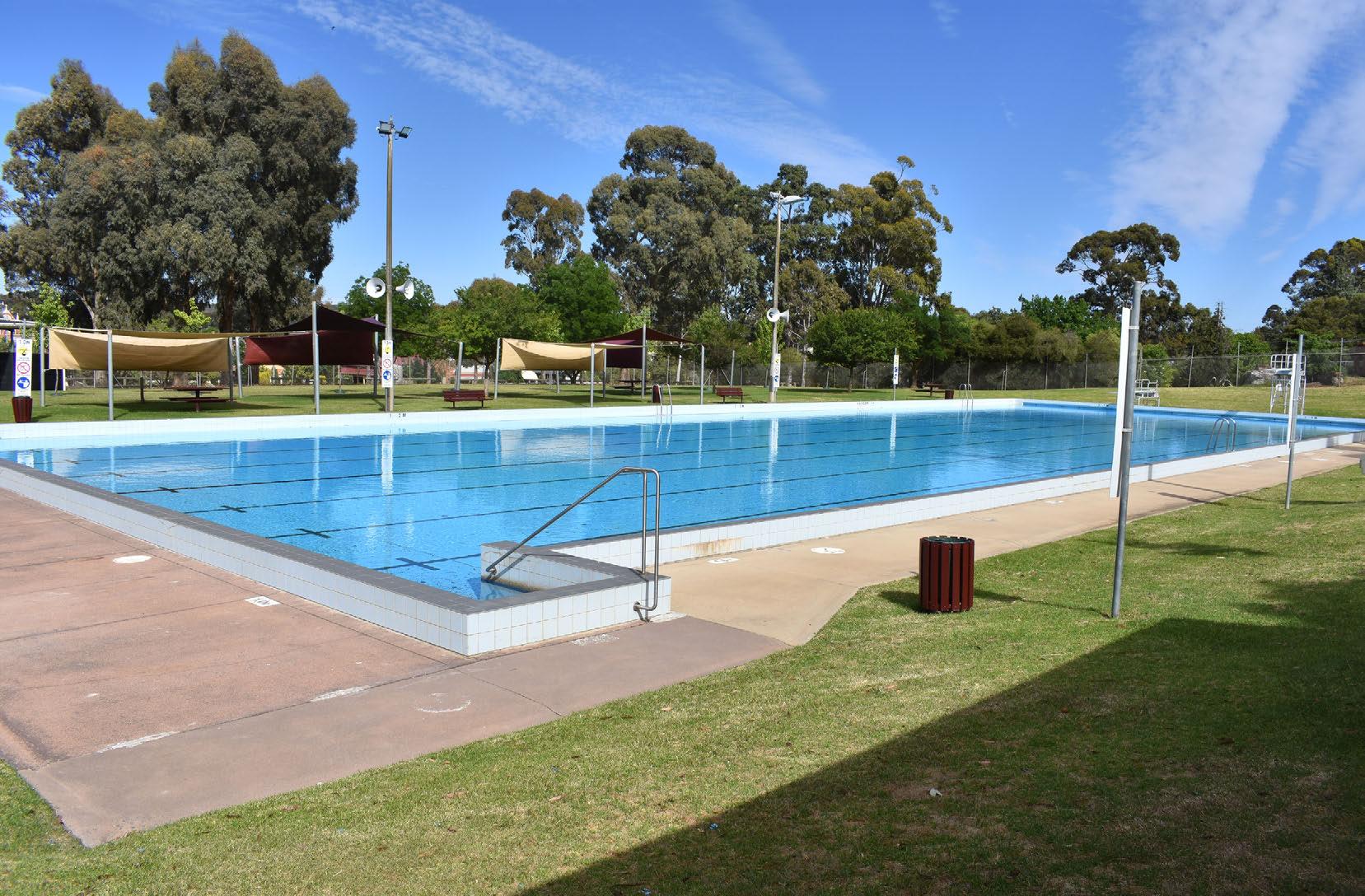
The water slides at the Stawell outdoor pool continued to be a drawcard for many, with patrons travelling from near and far to use these on hot days. School swimming lessons and carnivals resulted in high usage of the outdoor pool during the school terms, while children and families enjoyed the pool and surrounding area for summer picnics, birthday parties and everyday summer fun.
Libraries
The libraries at both St Arnaud and Stawell have been a hive of activity over the past 12 months. We have offered many programs and sessions to promote literacy and social inclusion, such as a ladies cuppa chat, meditation, social writers, topic of conversations, poetry conversations, story time (including sensory sessions), holiday activities and Lego club.
The bookable spaces in the library have been booked close to 1,500 times in the past 12 months.
We have hosted several authors, offered cyber safety sessions, simultaneous story time and celebrated Library Week and Children’s Book Week.
There have been just under 39,000 visits to the libraries and close to 34,000 items borrowed. We have delivered literacy programs to more than 4,000 community members and more than 290 hours of digital literacy.
We have delivered health and wellbeing programs that include social inclusion, chats, health-related talk and clubs to more than 800 community members.
Social, Community & Environment Initiatives
St Arnaud Early Learning Centre
St Arnaud Early Learning Centre continues to provide high-quality care and education through three long day care rooms, each catering to different age groups: 0-2 years, 2-3 years, and 3-5 years. We currently have 104 children enrolled across our long day care service.
Throughout the past year, we have implemented a range of targeted strategies to better manage our waitlist and respond to the growing demand for places. These efforts have been successful, resulting in reduced wait times for families compared with previous years. We are pleased to see more families are now able to access care and early education services in a timely manner.
This year we have participated in an intergenerational program, visiting the local schools for cooking sessions, and a range of incursions and excursions. St Arnaud Early Learning Centre is committed to celebrating and acknowledging important events throughout the year, such as National Reconciliation Week and Children’s Week. With a strong emphasis on community involvement, the centre invites the St Arnaud community and families to participate in activities as much as possible.
St Arnaud Kindergarten
Early 2025 saw the opening of the St Arnaud Kindergarten at 8 Dunstan Street, St Arnaud, next to St Arnaud Primary School. The new modular facility includes two rooms fully furnished, each with a capacity of 33 places. We were able to offer two funded kindergarten programs in 2025 for three and four-year-old children.
Our four-year-old kindergarten program offers 22.5 hours per week delivered across three days, and our three-year-old kindergarten program offers 15 hours per week. A total of 71 children are participating in our kindergarten program, an increase from 56 children in 2024. The Victorian Government has continued to offer free kindergarten for all children.
Each kindergarten session is thoughtfully structured to support children’s development and includes:
• Relaxation time.
• Self-help morning tea.
• Engaging group incursions and excursions.
• Our much-loved Bush Kinder sessions.
The Bush Kinder program, held once a week during terms two and three, enables children to engage in outdoor activities within the natural bushland, fostering a deep connection to Country. These experiences are designed to foster independence, curiosity and a love of learning in a nurturing environment.
Maternal and Child Health
Our Maternal and Child Health Service (MCH) continues to provide health, wellbeing and parenting support for all families with children aged 0-6 across the shire. The service is jointly funded by the Victorian Government and council and is free for all families. Birth notifications across the shire were higher than the previous year, with 120 birth notifications in 2024-25.
The main service provided by the MCH team is the Key Ages and Stages (KAS) appointments for children aged up to six years at 10 important developmental stages. In 2024-25 our nurses attended 1,057 KAS appointments including home visits.
The MCH service also provides a range of programs and support for children and families. Such programs and supports include but are not limited to parenting groups, managing childhood behaviour, sleep and settling guidance, and health promotion. We also refer families requiring specialist assistance to external agencies.
Our MCH team also continued to offer families assistance via the Wimmera Southern Mallee ‘By Five’ project. This place-based initiative helps to improve health and development of children, with a view that ‘every Wimmera-Southern Mallee child succeeds in learning and life’. The MCH team works with families and offers telehealth co-consultations with pediatricians based at the Royal Children’s Hospital. This program has been a great success story across the Wimmera.
Supported Playgroups
Supported Playgroups (SPGs) provide opportunities for local families with children aged 0-5 to come together to make social connections and learn educational ways to play with their children. Many parents require additional support to help their children achieve their potential health and development, and for some, getting to a community playgroup is not possible. Our SPGs focus on sharing healthy food, linking playgroup to other events happening in the community and the wider world, as well as creating play ideas with simple items found at home –making play accessible no matter the economic situation of the family.
In 2024-25 due to demand we have seen growth in the number of playgroups delivered by Northern Grampians Shire Council. During 2024 we had two playgroups running, one in Stawell at the Neighbourhood House and one in Navarre at Navarre Primary School. Both groups operated with great success.
Navarre playgroup has been a fantastic example of bringing a small community together. The success of this playgroup was presented as a case study at the yearly playgroup conference in Melbourne. In late 2024, a need was identified for another playgroup in Stawell due to the increase in births. The ‘Babies and Crawlers’ playgroup was created, which has been a great playgroup for new parents to attend.
St Arnaud has plenty of activity options for families with children under five. A trial of a new ‘Babies and Crawlers’ playgroup in St Arnaud was offered in term two. This program is currently being refreshed and, with support from St Arnaud families, will return in term four 2025.
Along with our weekly playgroups we also ran pop-up playgroups in various towns in the shire, which were well attended.
Supported Playgroups are fully funded by the Victorian Government.
Social, Community & Environment Initiatives
Immunisation Service
National Immunisation Program (NIP) is a collaborative initiative involving all levels of government - national, state and territory, and local, as well as healthcare providers, administrators and researchers.
In Victoria, some immunisation services are a function of Local Government Authorities (LGAs) outlined in the Public Health and Wellbeing Act 2008. There are two components of the immunisation program. These are the infant and child program for 0 to 5-year-olds and the adolescent program, run in secondary schools for students in years seven and 10.
At times, Local Government can offer special immunisation programs, such as Japanese Encephalitis and seasonal immunisations such as Respiratory Syncytial Virus (RSV).
During 2024-25 we provided 951 vaccines to approximately 410 children at sessions in Stawell and St Arnaud. The service also continued to provide immunisation pop-up sessions throughout the shire.
Strategic Planning Planning Scheme Review
The Northern Grampians Planning Scheme Review has been completed and will be reported to council following the adoption of the 2025-29 Council Plan. The planning scheme review includes a list of recommendations to implement the review. The first recommendation, a planning scheme amendment to action several minor changes, edits and corrections to the scheme, will be reported to council along with the review report itself. The planning scheme amendment would progress in early 2026.
Amendment C64: St Arnaud Framework Plan
The St Arnaud Township Framework Plan (2023) was adopted by Council in October 2023 and seeks to guide the growth and development of the settlement of St Arnaud in a way that respects the township’s heritage and character, reinforcing St Arnaud’s role as a district town that supports surrounding settlements.
Amendment C64 is required to incorporate the key land-use planning directions from the Framework Plan into the Northern Grampians Planning Scheme to guide future growth and development. This amendment will offer greater certainty for the future of agricultural, industrial and residential land use in St Arnaud, aligning with community expectations as identified through consultation on the Framework Plan.
The amendment was reported to the 2 September 2025 council meeting, in which council resolved to seek authorisation from the Department of Transport and Planning to exhibit the amendment. Authorisation from the Department was received on 3 July 2025. The amendment will be on public exhibition from 7 August to 7 September 2025.
Amendments C66 St Arnaud Flood Study and C67 Marnoo Flood Study
The St Arnaud Flood Study was completed and adopted by council in March 2023. The St Arnaud Flood Study was updated in early 2025 to ensure that mapping responded to recent climate change scenario updates. The study assesses flood risk, mitigation and management strategies, and flood disaster response strategies for the township of St Arnaud and informs the future implementation of the Flood Overlay (FO) and Land Subject to Inundation Overlay (LSIO) within the township and surrounds.
The Marnoo Flood Study was completed in 2023 and adopted by council in February 2024. The study assesses flood risk, mitigation and management strategies, and flood disaster response strategies for the township of Marnoo and provides the basis for the future implementation of the Flood Overlay (FO) and Land Subject to Inundation Overlay (LSIO) within the township and surrounds.
The drafting of planning scheme amendment ordinance and documents will commence in late 2025 with a proposed amendment to proceed in 2026.
C68 Stawell Flood Study
The Stawell Flood Study was completed in December 2024 with mapping updated in May 2025 to ensure that the study responded to recent climate change scenario updates. The study provides an assessment of flood risk, mitigation and management strategies, and flood disaster response strategies for the township of Stawell. The study and the updated mapping inform the preparation of the Flood Overlay (FO), Land Subject to Inundation Overlay (LSIO) and Special Building Overlay (SBO) within the township and surrounds. The drafting of planning scheme amendment ordinance and documents has commenced.
The Stawell Flood Study planning scheme amendment documentation will be presented to council in late 2025 with the proposed amendment to proceed in 2026.
Heritage Planning
Northern Grampians Shire Council is committed to protecting key heritage assets. In August 2024, council adopted the Interim Thematic and Environmental History April 2024 and NGSC Heritage Study July 2024 (comprising precinct citations and statements of significance for Stawell Main Street, St Arnaud Commercial and Old Civic Precincts). The precinct citation and statement of significance for the Queens Avenue, St Arnaud Precinct was also completed in February 2025.
Further work is being undertaken to progress these four precincts via a planning scheme amendment.
Social, Community & Environment Initiatives
Sport, Recreation and Open Space
Walkers Lake
Recreational water continues to be a significant contributor to the social and economic wellbeing of rural communities. Walkers Lake continues to host many visitors for skiing, fishing, recreational use and for the enjoyment of the natural environment.
The Walkers Lake Advisory Group supported the delivery of the Walkers Lake Management Action Plan, which continues. The process has also involved engaging key stakeholders such as the Traditional Owners – Dja Dja Wurrung – VRFish, local Landcare groups and local community members to ensure the lake continues to provide recreational, ecologcial and cultural value to visitors and community. The group generally meets every quarter.
Reduced water levels have now been maintained following the floods of the previous 18 months, therefore access is opened to all visitors. With water levels now holding at between 2.0m and 2.5m we have completed the track works in the western and northern sections that were subject to a Cultural Heritage Management Plan. In addition to these works, council engaged the local Landcare group to survey/monitor the reserve for vulnerable, endangered and state/nationally listed flora and fauna species to ensure we manage the diverse environment, including recreation, native vegetation and cultural heritage values, at the site.
Council will continue to complete monthly inspections to monitor maintenance, the health of the reserve and ongoing management requirements.
Navarre Recreation Reserve Facility Upgrade
Council signed a funding agreement with the State Government on 31 October 2022 for $600,000 investment towards the project. With a total budget of $2.1 million, the co-designed project progressed in late 2023 with a high level of engagement from the user groups. Construction has started in two stages. Stage one is the construction of new change rooms, and stage two is the extension of the existing social rooms to include public amenities.
The project is on track to deliver upgraded facilities –including female-friendly change rooms with amenities, two female-friendly umpires change rooms with amenities, an upgraded social space and upgraded public amenities – by February 2026.
Great Western Recreation Reserve Pavilion Upgrade
As an outcome of the Great Western Recreation Reserve Master Plan and Council Plan, and following successful advocacy for investment, council signed a funding agreement with the State Government on October 31, 2022 for $1.5 million in grant funding. With a total budget of $2.4 million, council awarded the design contract on 3 April 2023 and the project progressed to construction in May 2024 with completion in February 2025.
The project delivered facilities in line with AFL, Cricket Australia and Netball Victoria facility standards –four female-friendly change rooms with amenities, umpires change rooms and amenities, first aid room, administration office, accessible amenities and family change rooms, covered spectator area, storage, social/ community space, canteen/kiosk/kitchen and femalefriendly public amenities.
Central Park Netball Court Infrastructure Upgrade
This project has been in the planning and development stage for the past couple of years. In March 2025 an application for $790,000 was submitted to the State Government for funding under the Regional Sports Infrastructure Fund, Women and Girls stream. In July 2025, council was notified of the successful grant. The project will deliver an upgrade to the existing netball court including realignment, concrete base including acrylic surface and 200 lux LED lighting. The project also includes shelters, seating and accessible pathways for players, officials and spectators.
Stawell Gymnastics Club
Council staff have been working with the club and Sport and Recreation Victoria to deliver this project. In an election commitment, the State Government has funded $100,000 through its Community Sport and Recreation Grants towards a project that will include equipment upgrades as well as increasing participation and programming opportunities. The major equipment includes 20cm foam flooring, a fixed tumble tramp and uneven bars for increased outcomes for the community. The project is expected to be completed by early 2026.
2025-29 Municipal Public Health and Wellbeing Plan
Council has a legislative responsibility to develop a Municipal Public Health and Wellbeing Plan (MPHWP) over the life of a council. This is a critical strategic document that addresses the priority health and wellbeing concerns of the community and is aligned with the statewide Victorian Public Health and Wellbeing Plan.
Council has partnered with a diverse range of health, community service and education providers across the municipality to work with the community to improve the health and wellbeing of residents across the shire, under the final year of the 2021-25 plan.
During 2024-25, council continued to collaborate with community and key service providers on outcomes related to the five goals of the plan:
• Improve mental health and wellbeing.
• Increase access to health services.
• Reduce family violence.
• Increase healthy eating and active living.
• Act on climate change.
Key achievements throughout the year delivered across several council departments include:
• Endorsement and early implementation of the Youth Strategy 2024-28.
• Partnership support of the Grampians Public Health Unit HeatHELP project (aligned with Emergency Management, resilience work, Healthy Ageing Hubs, multicultural actions, and Community Care).
• Collaborative healthy food systems’ work with schools and early learning centres.
• Delivery of engagement and leadership opportunities for young people.
• Delivery and promotion of healthy lifestyle opportunities for older people.
• Delivery of family violence prevention campaign activities including 16 Days of Activism.
• Delivery of the food organics compost trial in St Arnaud.
• Ongoing delivery of diverse active recreation opportunities, tailored to community need.
Work completed in the Community Development, Arts and Culture, Young People, Community Resilience Strategy, Healthy Ageing Hubs and Multicultural areas also contributes to outcomes of the 2021-25 MPHWP. Council will continue to build on the outcomes of this work going forward, aligned with the integrated Council and 2025-29 Municipal Public Health and Wellbeing Plan.
Social, Community & Environment Initiatives
Community Development
Council proudly supported a range of community development initiatives, designed to empower the community, build on existing strengths and increase resilience, to ensure the prosperity and wellbeing of the community.
Council adopts a flexible and responsive approach, focusing on community-led and place-based initiatives. In support of community strengthening work across the shire, council has:
• Delivered the Community Conversations engagement sessions in St Arnaud and Stawell aimed at identifying what groups need to build resilience and sustainability. From this engagement the following Building Strong Community Groups workshops were identified and delivered, with further sessions planned for 2025-26:
• Community Grant Writing Workshop
• Managing Volunteers with Confidence
• Plan and Promote Successful Events
• Delivered and administration of Bulgana Green Power Hub Community Benefit Fund.
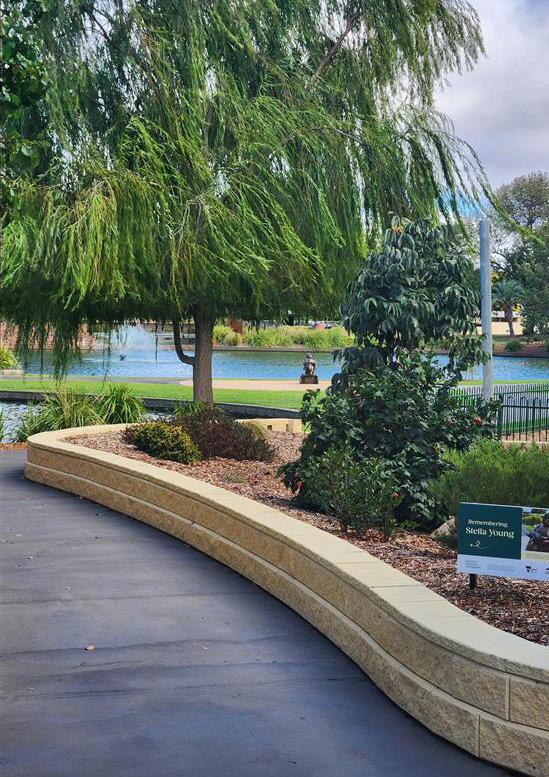
• Successfully delivered the Universal Access to the Stella Young Statue at Cato Park, Stawell project, which provided accessible footpaths.
• Undertaken recognition day activities relating to IDAHOBIT Day, NAIDOC Week, National Sorry Day, Reconciliation Week, and International Day of People with a Disability.
• Developed a funding policy that incorporated grants, sponsorships and contributions.
• Reviewed and redeveloped the Community Development grants program, including the initiation of the Grant Writing Support Service.
Arts and Culture
Council has continued to support the development of Arts and Culture activities across this shire, with 2024-25 highlights including:
• Delivery of the Stawell Skate Park Mural.
• Delivery of Mural Art workshops in Stawell and Halls Gap.
• Recruited to, managed and consulted with the Public Art Reference Group.
• Reviewed and updated the Public Art Guidelines 2024 to better reflect the role of the Public Art Reference Group.
• Support of community groups via letters of support, project support (Raillery Hub Vinelander proposal) and council-branded signage for community-led artworks (Stawell Gift Hall of Fame Mural).
Social, Community & Environment Initiatives
Community Development Grants
Council provided substantial support to local community and not-for-profit groups through financial contributions, enabling ideas, initiatives, events and projects to thrive across the shire. This support was delivered through the Community Strengthening Program. Projects that have received council funding in 2024-25 include:
Awarded Community Grants (totaling $34,977)
• Central Grampians LLEN is delivering “Dream Seeds” workshops across three Stawell primary schools. These workshops focus on teaching senior primary students the values of aspiration, resilience and connection, as well as the importance of community, teamwork, decision-making and goal setting.
• St Arnaud Brass Band has restored the worn and unsafe flooring in the band kitchen and trophy room, ensuring a safer and more functional space for members.
• Concongella Primary School is creating a dedicated area for students who prefer passive play over physical activity, supporting diverse play preferences.
• Concongella Hall is undertaking a comprehensive rejuvenation project, including an upgrade of the switchboard and power supply to support future improvements such as a kitchen upgrade.
• Grampians Multicultural Hub engaged a consultant to support its transition to an incorporated body and to develop a comprehensive marketing plan.
• Halls Gap Community Garden is upgrading its facilities to create a more welcoming space where the community can gather, connect, and share locally grown produce.
• Grampians Studio and Gallery is hosting an art workshop aimed at strengthening the painting skills of local residents with an interest in visual arts.
• Swifts Great Western Cricket Club is updating team uniforms to align with the requirements of its new cricket association.
• Grampians Field and Game Australia Inc. is upgrading the kitchen in its new facility to better host events and make the venue available for use by external community groups.
Awarded Arts and Culture Grants (totaling $19,940)
• Great Western Performing Arts Centre - Common School 1867 Project - To engage a heritage consultant to complete a repairs and maintenance report for future improvements to the building.
• St Arnaud Raillery Hub - Writers Workshop by Catherine Deveny.
• Halls Gap Neighborhood House - Pop Arts - Four pop-up art workshops teaching new skills to create community art installations/projections in the township.
• Introduction of the Creative Education Fund with the following projects successfully funded:
• Stawell Primary School - Foundation School Play
• St Patrick’s School, Stawell - Billy Tea Bush Dance
• St Arnaud Secondary College - Principal’s Art Prize
• Halls Gap Primary School - Bugs, Bugs, Bugs
• Concongella Primary School - SPACi excursion and library visit
• St Arnaud Primary School - 150-year celebration
• Stawell Secondary College - Artist Workshop
Awarded Minor Grants (totaling $4,036)
• Stawell Probus purchased a portable Square terminal.
• St Arnaud Raillery Hub establishment of a Youth Art Group.
• Grampians Field and Game bought club uniforms.
• Swanwater Cemetery Trust ran a gathering to open new facilities at the cemetery.
• Grampians Trail Running Group purchased headlamps for participants to use in winter months.
• St Arnaud Football Club purchased helmets for its junior football team.
• St Arnaud Neighborhood House purchased a new fridge for user groups and volunteers.
Awarded Community Events Grants (totaling $12,805.48)
• Glenorchy Hall Committee had a town reunion called Glenorchy Then and Now.
• St Arnaud Secondary College ran its second Diversity Dash in conjunction with the primary school.
• Banyena Hall Committee hosted a Winter Solstice Ball featuring Mick Thomas and the Roving Commission.
• Stawell Orchid Society is hosting the Stawell Spring Show in September.
• Navarre Historical Society ran its annual Australia Day celebration.
• Stuart Mill Progress Association hosted its annual town Christmas party.
Awarded Sponsorships (totaling $18,990)
Council provided funding to several local organisations with the understanding there would be mutual benefits, including promotional opportunities, brand visibility, advertising, and participation in associated events and activities.
These partnerships not only support important community initiatives but also strengthen the visibility and presence of Northern Grampians Shire Council across the region.
• St Arnaud Turf Club received support for the Weir’s IGA St Arnaud Cup Day, where council was promoted through the Discover Northern Grampians platform. A Discover Northern Grampians sign was prominently displayed at the finish line.
• Grampians Produce Group hosted two ‘Relaunching’ workshops for regional producers and food makers, with council recognised as a major sponsor across event promotions.
• Stawell Tennis Club included the council logo on players’ shirts during its invitational tennis tournament, enhancing brand visibility throughout the event.
• Central Grampians Local Learning and Education Network (LLEN) allocated funding toward the L2 Program, acknowledging council’s support on all promotional materials.
• St Arnaud Secondary College used the funding to purchase t-shirts for its Energy Breakthrough Challenge team, proudly featuring the council logo.
• Fit to Drive Foundation delivered a workshop at Stawell Secondary College, incorporating the council logo in its promotional materials to recognise support.
• WAMA Foundation used funding for the opening of the National Centre for Environmental Art. Council was acknowledged through logo placement on promotional materials, and councillors and staff were invited to attend the opening events.
• St Arnaud Netball Club used the funding to support a ‘Pink Day’ fundraiser for Breast Cancer Network Australia. Council’s logo featured on event promotional materials.
• Pinnacle Inc. applied the funding to help reduce the cost for athletes with a disability to attend the Tri-State Games. Council’s contribution was promoted through key promotional material featuring the council logo.
• Stawell Harness Racing Club received its final year of funding support for its cup day, with NGSC recognised as a sponsor through the naming of a race in its honor.
Awarded Contributions
(totaling $5200)
• St Arnaud and Stawell secondary colleges were provided funding to contribute to end-of-year presentation nights.
• Stawell Primary School and Stawell West provided a scholarship to grade-six students at the end of the year.
• Stawell Interchurch Council was awarded a three-year contract to receive an annual contribution to contribute towards its annual running costs.
• Stawell Athletics used its final year of funding out of three to contribute towards its annual running costs.
• St Arnaud CFA – $400.
Grant Writing Support Service
The Grant Writing Support Service is to assist local community groups to access external funding over $5000. Through this service:
• Banyena Hall received support to apply for a Foundation for Rural and Regional Renewal (FRRR) grant to upgrade its roofing and guttering.
• Glenorchy Hall Committee is applying for an FRRR grant to install solar panels and a battery system, enhancing the hall’s functionality during emergencies and power outages.
• Marnoo Soldiers Memorial Park Recreation Reserve is seeking funding through a FRRR grant to install blinds and an awning, enabling the space to be used comfortably in all weather conditions.
Social, Community & Environment Initiatives
Young People
In 2024-25, council successfully delivered a range of youth-focused initiatives supported by VicHealth grants including Leading Healthy Communities, Building Resilience in Children and Young People, and the Victorian Local Government Partnership program.
This work has focused on strengthening youth engagement, amplifying the voices of young people to help shape a healthier future. It is also guided by the three priorities of council’s Youth Strategy 2024-28, which focuses on ensuring that young people are connected and have a voice, are safe and well, and are supported to achieve in education, training and employment.
Throughout the 2024-25 year, more than 500 young people across the shire participated in activities supported or led by council, including events, workshops and leadership opportunities. Planning and/or delivery of the following youth actions included:
• The Digital Storytellers intergenerational project.
• The Northern Gramps Girls Can campaign.
• Three early learning or school-based healthy food systems projects.
• Engagement and planning for outdoor exercise equipment – St Arnaud.
• Planning for a rural school-based active transport program.
• Support of a combined schools’ engagement project.
• Support of youth-led alcohol and drug-free events.
• A council audit of social determinants of mental health and wellbeing.
• Delivery of Let’s Talk About BIG Weather project featuring young people as leaders.
• Establishment of the Northern Grampians Youth Collaborative network.
• Collaboration on Skate Park mural and activation.
Ensuring young people’s representation in the development of the 2025-29 Council Plan and Municipal Public Health and Wellbeing Plan was a priority action, with 197 young people undertaking a Youth Survey. This feedback directly contributed to the development of the draft plan and associated goals and actions.
In 2025, the Northern Grampians Youth Collaborative Network was established as a joint initiative between Northern Grampians Shire Council, Central Grampians LLEN, and Grampians Community Health. This local government area meeting brings together professionals working with young people across education, health and community sectors. The goal is to foster a more coordinated and collaborative approach to supporting youth in the region. The formation of the network was driven by ongoing discussions over the past year, which highlighted common challenges unique to our LGA, such as service gaps, limited communication, and missed opportunities for partnership. In response, the network was created to support the sharing of ideas, resources and strategies to strengthen and improve support and outcomes for young people in our community.
VicHealth funding is ending 31 December 2025 with potential for future VicHealth grants in 2026. Council will continue working towards the Youth Strategy priorities to empower young people throughout the region.
Community Resilience Strategy
The development of the Resilience Strategy has laid the foundation for a structured and coordinated approach to embedding resilience across council operations. Moving beyond reactive or ad hoc responses, the strategy provides a consistent framework to guide future initiatives and promote continuity across departments.
To support the implementation of the Resilience Strategy, a dedicated Resilience Officer was appointed for the 2024-25 financial year (September 2024 to June 2025). During this period, strategic actions were selected based on community engagement and support, alignment with existing programs, available staff capacity and their potential impact on long-term resilience.
Key Activities and Outcomes
• VicHealth Leading Health Communities Grant
Secured grant funding to support initiatives aimed at building resilience in children and young people across the shire.
• Community Conversations Program
The Resilience Project worker led and coordinated the Community Conversations Program in conjunction with the Community Development team. To assist with ongoing capacity building, a resource library was purchased through iclick2 learn, enabling community members to access hundreds of webinars and resource materials.
• Community Connector Program Framework
Designed a framework to enhance two-way communication between council and communities before, during and after emergency events.
• Community-Driven Resilience Planning
Launched a place-based resilience planning initiative. A tailored plan for Halls Gap was completed in partnership with Happy Changemakers, with planning underway in other townships.
• CommunityConnect App Expansion
Promoted and integrated the CommunityConnect app into more remote and outlying communities to improve access to information and services.
• Community Development Grant Alignment
Aligned community grants with the Resilience Strategy and introduced a Grant Writing Support Service to assist community groups in accessing funding opportunities.
Social, Community & Environment Initiatives
Healthy
Ageing Hubs
and Intergenerational Projects
The Thrive 50+ Healthy Ageing Hubs continued to deliver a comprehensive range of healthy ageing support to people aged 50 and older throughout the 2024-25 financial year.
Combining a face-to-face walk-in model of support five days per week from Stawell Library and the St Arnaud council offices, with a range of health promotion, capacity building and community development elements, the hubs aim to keep older residents healthy, active, connected and empowered. Strategies include:
• Increasing opportunities for social connection across the shire including smaller townships.
• Improving health literacy and capacity to engage in the health system, in the target cohort.
• Empowerment of the target cohort to navigate government systems and make informed choices about their independent care needs.
• Increasing engagement in preventative health measures (e.g. regular health checks, screening, healthy eating etc) to lower the risks of chronic conditions developing.
• Increasing engagement in active living activities as both a preventative and a management approach to chronic conditions.
• Increasing IT/device capacity in the target cohort, as a means of improving health access and social connectivity.
• Building capacity and sustainability in local social connection activities and groups.
The 2024/25 financial year saw the Thrive 50+ Hubs deliver:
• Support to more than 220 individuals.
• 84 activities, workshops and events delivered.
• New partnership projects delivered:
• Navarre Community Outreach sessions (GCH).
• Active4Life and Fit4Life programs (SSAC, Stawell and St Arnaud Seniors Citizens).
• Stawell Pickleball (SSAC).
• Healthy Food Program (Grampians Health and SNH).
• Planning for St Arnaud Pickleball.
The Thrive 50+ Hubs have facilitated a range of health promotion events designed to improve health literacy, and increase connection between community and health services, particularly to isolated residents, and those in small townships. Expansion to townships such as Marnoo will be prioritised in the coming 12 months. Promotion and development of social connection opportunities has also been a key priority over the past 12 months, promoting existing activities and groups in addition to development of new opportunities where gaps exist.
Engagement across the shire has been overwhelmingly positive. The hubs have a seen a strong demand for support relating to volunteering and capacity building for local groups to ensure sustainability and growth in the range of activities and events on offer in the community. This has included requests for support for activation of groups and spaces, particularly where gaps in activities are identified. The 12-month extension will see a focus on consolidating the Thrive 50+ Hub work achieved thus far and building on collaborations across the shire to promote the ‘Healthy, Active, Connected and Empowered’ message to the target cohort.
Multicultural Work
In 2024-25, council continued the development and implementation of the Multicultural Action Plan (MAP), a strategic initiative that builds on council’s commitment to support both established migrant residents and the emerging multicultural communities in our region.
The MAP aligns with the principles outlined in the Multicultural Victoria Act 2011, which aims to promote a harmonious and inclusive society in Victoria. By valuing and celebrating diversity, recognising the rights of all citizens, fostering an inclusive environment, and identifying key issues and opportunities, we aim to create a pathway for a more cohesive society that helps people from culturally diverse backgrounds to thrive meaningfully in our broader community.
The strategic focus of the MAP in 2024-25 included a strong commitment to improving social inclusion, building cross-cultural connections, strengthening access to services for multicultural communities, collaborative work with stakeholders to support migrant workers’ wellbeing and their connection to essential and emergency services.
Specific initiatives delivered include:
• Engagement and collaboration with local employers, particularly Thomas Foods, to support social inclusion.
• Engagement and collaboration with the Palm Scheme Community Connections program and initiation of the local Palm Scheme Community Connections Network.
• Development of connections between multicultural residents and essential/emergency services (SES, CFA, Ambulance Victoria) to promote communication, resilience and emergency preparedness.
• Collaboration and support of locally delivered skillbuilding programs, including English language and Road Safety Awareness classes.
• Development of regional sporting connections, supporting the local community to host Warrnambool Timor Leste soccer team in Stawell.
• Recognition and support of Harmony Week.
• Capacity-building support for Grampians Multicultural Hub – enabling it to become incorporated and develop strategic objectives.
• Support of infrastructure improvements to bike path signage on Abattoir Road, improving safety for migrant workers in Stawell.
• Representation and advocacy via membership of the Victoria Multicultural Commission – Regional Advisory Council network.
Emergency & Risk Initiatives
Council has continued to maintain a high level of involvement with Emergency Management (EM) partners and stakeholders at local, regional and state level in planning for multi-agency activities which help all involved in EM to be prepared for several contingencies.
Emergency management exercises and programs run or attended by council staff in 2024-25
DATE EVENT LOCATION
LIAISON ACTIVITIES (cont’d)
October 2024 2024-25-NCM Higher Risk Weather Season Preparedness BriefingLocal Governments Online
October 2024 Vulnerable Persons Register Information Session Online
October 2024 Grampians Fire Conference Glenorchy
October 2024 Emergency Relief Centre site audits with DFFH Stawell, St Arnaud, Marnoo, Navarre
November 2024 State MEMEG meeting Online
April 2025
VCOSS Workshop: Collaboration for disaster resilience in West Wimmera and Grampians (with Neighbourhood House network) Halls Gap
June 2025 Young People Taking the Lead (Let's Talk About Big Weather) St Arnaud
Weekly throughout the year Regional Emergency Management Team Meetings Online
Monthly throughout the year Municipal Fire Prevention Officer catch-ups (all Vic councils) Online
Monthly throughout the year Municipal Emergency Management Enhancement Group (Grampians councils) Meetings Online / Ararat
Monthly throughout the year Strengthening Local Government Partnerships Network Online
September / December 2024 / March / June 2025
Municipal Emergency Management Planning Committee Meetings Stawell/Online
September 2024 / March 2025 Municipal Fire Management Planning Committee Meetings Stawell/Online
July – November 2024 GPT100 Miler Emergency Management Team meetings Online
December 2024 GPT100 Miler After Action Review Online
December 2024 –February 2025 Activities in relation to the Yarram Gap Rd bushfire Various
Emergency & Risk Initiatives
Emergency Management Planning
Council, in partnership with emergency service agencies, undertook a review of the Northern Grampians Shire Municipal Emergency Management Plan (MEMP) and the Municipal Fire Management Plan (MFMP) in accordance with the Emergency Management Act 2013. Both plans are ready for approval by the MEMPC, after which the plans will go to the Grampians Regional Emergency Management Planning Committee for final endorsement. Council has worked to prioritise a people focus for this update of the MEMP, including a more comprehensive snapshot of our communities.
The Northern Grampians Shire Municipal Emergency Management Planning Committee (NGS MEMPC) meets four times annually, with a high level of participation and coordination achieved by the relevant agencies and organisations that constitute the committee.
Council’s new Extreme Heat Plan was approved and published in December 2024. Council is working with Grampians Public Health Unit on the Heatwave HELP (Health Emergency Local People) project to ensure individuals at high risk of severe impacts from extreme heat are supported to prepare for a heatwave before it happens.
Council’s Emergency Relief Centre Operations Plan has been thoroughly tested due to relief centre activations in February and December 2024. The plan has been reviewed and updated, with the new version almost ready for internal approval.
Council keeps abreast of strategic and regional planning through participation in the Regional Emergency Management Planning Committee, Local Government Emergency Management Group and Grampians Municipal Emergency Management Enhancement Group (MEMEG). This involvement assists council to understand the changes introduced throughout the state as a result of changes to EM processes driven by Emergency Management Victoria and changes to EM legislation.
Council’s involvement in the Grampians MEMEG has allowed for cooperation and networking with other regional municipalities and Local Government Victoria to discuss and resolve issues relating to EM. Some of the items discussed and planned include undertaking EM exercising and training together.
Training and Capacity Building
Due to the development of a new recruitment strategy by the EM team, the number of staff across council who hold emergency roles has increased to enable better resourcing across emergency relief and recovery, as well as council’s MEMO (emergency response) on-call roster.
Council has developed a new database to record emergency staff roles and training requirements. The database, which is nearing completion, will allow the emergency team to monitor council’s capacity and capability to fulfill our responsibilities during an emergency event, and to ensure staff are suitably trained and prepared to respond.
Key achievements in 2024-25 include:
• 29 council staff with emergency roles completed Psychological First Aid training.
• 18 council staff with emergency roles attended emergency relief centre exercises in October and December 2024.
• Council facilitated Gender and Disaster Australia ‘Lessons in Disaster’ training to be delivered to the MEMPC.
• Council supported and attended the Stawell Airport emergency exercise.
• During the Yarram Gap Road bushfire response in December 2024 to January 2025, the Stawell Relief Centre was activated and operational for six days (plus four days on standby). The centre was well supported by 23 council staff in emergency roles (as well as eight staff from neighbouring councils), with positive feedback from community attendees. Three council staff attended the Horsham Incident Control Centre (ICC) in the role of Emergency Management Liaison Officer over an eight-day period.
Grants and Funding Opportunities
The Municipal Emergency Resource Program (MERP) supplies grant funding for council’s emergency management activities on a four-year cycle, the current period being 2024-28. The financial acquittal report has recently been completed for 2024-25.
The CommunityConnect digital application was launched in August 2024. The purpose of CommunityConnect is to increase resilience through improving community connection and emergency preparedness. The app will provide localised information for communities across the shire. Funding from Emergency Recovery Victoria has been instrumental in enabling council to undertake community engagement activities to assist the community in downloading and using the CommunityConnect app.
Vulnerable People in Emergencies
Council works in partnership with the Department of Families, Fairness and Housing and other service providers to identify vulnerable persons not receiving services in the municipality. It is important to note the strong working relationships that are maintained with the various health service providers and other organisations, in ensuring the Vulnerable Persons Register and the Vulnerable Facilities Register are maintained and kept up to date. The systems used mean that the information is readily available to authorised organisations and to Victoria Police when planning for or responding to emergency events or incidents.
The MEMP contains information pointing to systems that indicate locations where vulnerable people might be located (such as schools, childcare facilities, hospitals, intellectually disabled, disabled, and aged care facilities). It also recognises the need for these people to be encouraged to be prepared to relocate early if an emergency situation threatens and the need to work with the various service providers to ensure plans are in place for any assisted evacuations.
Collaborative Work
Council completed a review of Bushfire Places of Last Resort and the Victorian Fire Risk Register - Bushfire with the assistance of the Country Fire Authority (CFA) and other Municipal Fire Management Planning Committee (MFMPC) members and stakeholders. We also represented on the Committee for Community Safety along with councillors, Victoria Police, Neighbourhood House and other community stakeholders. Monthly meetings are held to discuss areas of local concern and those vulnerable persons in the community, and this continues throughout 2025 and beyond.
In partnership with the Department of Energy, Environment and Climate Action (DEECA) and the CFA, we meet to discuss fire management issues such as timing and restrictions for burn permits. We work with CFA and DEECA staff on fire management activities, and fuel and risk reduction strategies have occurred throughout the year. We also liaise with the Department of Transport via the MFMPC to discuss issues relating to emergency road diversions.
The Recovery Hubs Program leverages the inherent strengths and opportunities present within each community, ensuring that activities are tailored to address the specific needs and priorities identified by local residents. Each initiative is developed with careful consideration of the unique characteristics of the target community, ensuring the approach is both relevant and effective.
This community-centred approach allows for a more customised response to recovery, rather than applying a uniform strategy across the entire shire. As a result, the program fosters the growth and resilience of communities through methods that are best suited to their individual contexts. By embracing the diverse needs of different communities, the Recovery Hubs Program strengthens local capacities, supports sustainable development, and encourages active participation from residents, ultimately leading to more meaningful and impactful outcomes.
The Recovery Hubs’ work combines programs, activities, mechanisms and resources to enable:
• Strengthening of emotional, psychosocial and financial support.
• Increased resilience and leadership in the affected communities through capability building initiatives.
• Strengthened social connection and social capital.
• The creation of effective communication channels.
Key activities implemented in 2024-25 include: Further Development of the CommunityConnect App
The CommunityConnect initiative progressed significantly with the employment of a dedicated project worker, the development and launch of the CommunityConnect app, and enhancements to its functionality. Promotional materials were created and distributed as part of a targeted awareness campaign, while community capacity building activities supported the start of widespread adoption.
Glenorchy Community Workshop
A community workshop on recovery infrastructure upgrades was held in Glenorchy, with 15 community members in attendance. The session provided an opportunity for participants to give feedback on proposed drainage plans and discuss local priorities for future improvements.
Building Resilience in Glenorchy - Project Planning and Implementation
The township of Glenorchy has taken important steps towards strengthening community cohesion through collaborative planning and action by focusing on the issue of rabbit control. Residents have begun working together more effectively since the October 2022 floods. This renewed unity was reflected in a series of community meetings and the engagement of Project Platypus to support a coordinated approach to rabbit control.
Glenorchy Community - Then and Now Event
A community event celebrating the history and resilience of Glenorchy was organised by key representatives involved in the initial recovery work. This event, funded by a council Community Event Grant, and supported by the Recovery Hub project worker aimed to boost community pride and foster a sense of unity within the township, strengthening community connection and social capital to enable residents to better cope with disruptions and disasters.
Banyena Community: Unbreakable Farmer Session
As part of an ongoing series of events, a session focused on the theme of resilience for farmers, titled ‘Unbreakable Farmer’ was held in Banyena. Although funded by another program, the session was supported and attended by the Recovery Hub project worker, contributing to the broader community-building efforts.
Halls Gap Resilience Building Activities
Funding was provided to Snappy Gappians to host a series of events from December 2024 to March 2025. Events included an emergency services barbecue and information night, a community New Year’s Eve dinner, yoga sessions, a pool party and a wellbeing barbecue. These events and activities have been integral to building community connection and social capital, which will contribute to increased resilience in times of disruption and emergencies.
Let’s Talk about BIG Weather – Young People Leading the Way
The Let’s Talk About BIG Weather initiative is part of a long-term effort to build disaster resilience across the Northern Grampians. It aims to raise awareness –especially among young people – provide practical tools for preparedness, strengthen community connections, support youth leadership and promote wellbeing. Key achievements of the project include strong engagement during field days, which helped connect with local leaders and stakeholders. The communication campaign reached more than 60,000 people via email and social media, significantly raising awareness of the program. A total of 104 community surveys were completed, providing valuable feedback to guide future work. A major community event drew 150 attendees, reflecting strong local interest and participation. The initiative also saw meaningful collaboration with St Arnaud Secondary School, with two students presenting at the community event.
Insights and ideas gathered through the project will help shape future actions and strategies in the region and will include:
• Partnering with schools: Exploring opportunities to collaborate with educators to integrate climate and disaster resilience into schools’ programming.
• Supporting youth mental health: Exploring programs that equip young people with the skills and confidence to support their peers, particularly around mental health challenges linked to climate anxiety, natural disasters and other stressors.
• Fostering youth leadership: Identifying suitable youth leadership programs that build skills, confidence and pathways for young people to lead in their communities.
• Strengthening community resilience: Working alongside key community groups, organisations and emergency services to enhance local emergency preparedness, response and recovery strategies – with youth voices and perspectives at the centre.
Council Staff Capacity Building
• Two staff members who have recently been appointed to the role of Municipal Recovery Manager (MRM) have undertaken the Foundations in Recovery course.
• Four staff have been trained in the administration of the CommunityConnect app.
• Five council staff were directly involved in the Future of Halls Gap session, providing them with exposure to the principles of community-led recovery, as well as the opportunity to experience this approach in practice through active participation in the session.
Halls Gap Resilience/Recovery Plan Development
Engagement with Snappy Gappians to expand their mandate to include a Community Resilience and Recovery Committee. Support was provided to the group to establish a process that ensures broader community representation and enables the identification of community-led priorities and initiatives.
The facilitation of the Halls Gap Resilience and Recovery Plan, supported by the Recovery Hub project worker and guided by the Happy Change Makers, is an example of a structured, community-led resilience planning process.
This initiative empowers local leadership through the Halls Gap Kitchen Cabinet and strengthens community-driven coordination structures.
Emergency & Risk Initiatives
December 2024 Bushfires
On 16 December 2024, a day of declared Extreme Fire Danger, lightning storms across the Grampians ignited three bushfires in the southern section of Grampians National Park, which merged on 18 December to form a single bushfire known as Yarram Gap Road. By 20 December the fire had spread north to threaten the Halls Gap and Bellfield communities, which were then evacuated.
Relief centres were activated in Ararat (20-28 December) and Stawell (21-30 December). Halls Gap and Bellfield were reopened to residents on 27 December. While the township of Halls Gap was not physically damaged by the fire, the stresses of the event caused significant impacts on mental health, and the event and related park closures resulted in large economic losses to local businesses.
In response to this event, council has been involved in the following activities:
• Activation and operation of the Stawell Relief Centre.
• Council EMLOs present at the Horsham Incident Control Centre.
• Community meetings attended throughout the response, relief and recovery phases.
• Close liaison with neighbouring councils to support community recovery.
• Attendance at regular Regional Emergency Management Team meetings.
• Attendance at regular Regional Relief and Recovery Coordination meetings.
• Council staff and agency debriefs in relation to the event and the running of the Stawell Relief Centre.
• Review and improvements made to council’s Emergency Relief Centre Operations Plan, in consultation with council staff in emergency roles and partner agencies.
• Engagement with the Halls Gap community (council’s Emergency Management and Community Development teams).
• Support for community events in Halls Gap in collaboration with the newly formed Halls Gap Kitchen Cabinet (informal Halls Gap community recovery group).
Community Engagement in Emergency Management
Council’s commitment to community engagement remains strong. Council leads the review of the MEMP and is engaging the NGS MEMPC community representatives in this process. Council’s EM and Community Development teams continue to work closely to plan engagement activities to build resilience across Northern Grampians Shire communities.
The EM team continues to work with Recovery, Community Development, and Resilience work areas within council to enhance community emergency preparedness and resilience. Collaborative community engagement work is planned for September/October 2025.
Meeting Local Priorities
Fire hazard reduction activities for the year were conducted, including roadside fuel reduction operations and fire hazard inspections. This involved liaison between council infrastructure staff, DEECA, and the CFA. Updated procedures were completed for Fire Hazard Inspections in preparation for the 2025-26 fire season with additions to improved actions for FPN issue and re-inspection practices, as well as the issuing of infringements.
Environment & Community Safety Initiatives
Council’s Community Safety team operates to protect public health, safety and amenity throughout the municipality. The team is responsible for enforcing a range of legislation, including the Domestic Animals Act 1994, Impounding of Livestock Act 1994, and General Local Law 2022
Enforcement of the legislation is undertaken through varying means, with education used as a key tool to ensure and encourage compliance. It is the aim that education and communication will facilitate voluntary compliance where possible.
Community Safety Response and Performance Metrics
Throughout the 2024-25 financial year, the Community Safety team responded to 1,301 customer requests. The majority of these requests related to animal management, with a significant number of dog-related requests, including an increase in serious dog attacks which is of concern. Council will address this increase in a review of its Domestic Animal Management Plan and through the introduction of a Compliance and Enforcement Policy in the new reporting year.
2021-25 Domestic Animal Management Plan Review
In accordance with the Domestic Animals Act 1994, council is required to prepare a Domestic Animal Management Plan (DAMP) at four-yearly intervals and evaluate its implementation in the annual report.
Council adopted the Domestic Animal Management Plan 2021-25 on 8 November 2021. The purpose of the DAMP is to:
• Document current processes and practices under NGSC animal management responsibilities.
• Increase compliance with the Domestic Animals Act 1994.
• Increase pet owners‘ knowledge of the principles of responsible pet ownership.
• Enhance community safety and awareness.
• Assist the Bureau of Animal Welfare (Agriculture Victoria) to achieve its stated objectives of reducing the numbers of dogs and cats being euthanised. This is an ongoing problem that council is constantly trying to address.
• Maximise the numbers of dogs and cats that are registered in Northern Grampians Shire.
• Take community views on animal management matters into account.
• Comply with the relevant provisions of the Domestic Animals Act 1994.
In August 2025, the Community Safety Unit commenced a review of the 2021-25 DAMP to measure the performance of the objectives and purpose of the plan. The review will encompass areas of success to develop an education framework for informing the community of animal management regulations through promotion of best practice animal care for the new 2025-29 DAMP.
The new 2025-29 DAMP will tailor a message for the community for better animal care, targeting:
• Responsible pet ownership.
• How to engage animal care practitioners for advice regarding health and wellbeing of domestic animals.
• How to engage council for advice on regulations and responsibilities of pet ownership.
• Registration requirements, permits and approvals.
• School-based education programs tailored to promote proper care for animals.
On conclusion of the review of the current 2021-25 DAMP, the new 2025-29 DAMP will be presented to council for adoption and enacted by council on 4 December 2025 and will operate on a four-year term. There have been several key improvement areas in council’s animal management services aligned with the objectives of the 2021-25 DAMP.
SERVICE RESPONSE REPORT
Barking dog < 80%
Community Complaints
Community Requests
Animal Management
Court Action
Animal Registrations
Wandering at large < 78%
Dog attacks on livestock < 75%
Cat trap > 113%
Animals collected
Animals reclaimed
Animals rehomed
Prosecutions
Registrations
305 for 2023-24
264 for 2024-25
101 for 2023-24
110 for 2024-25
Increase > 8%
Nil
2,306 animals on council records 91% of domestic animals registered
Environment & Community Safety Initiatives
Stawell Pound Upgrades
The Stawell Pound has recently been upgraded to meet regulatory compliance requirements underpinned by the Prevention of Cruelty to Animals Act 1986 (POCTA), the Domestic Animals Act 1994 and the Code of Practice for the Management of Dogs and Cats in Shelters and Pounds.
An audit of Stawell Pound concluded in 2020 identified areas for improvement. The audit showed 24 improvement areas and 13 recommendations to apply improvements addressing the following:
• Upgrade dog pens, gates and closures – dangerous dog pens.
All completed works have reinstated regulatory compliance requirements for council to continue caring for domestic animals.
Asset Initiatives
On the road again
Council’s Civil Works team continues to play a vital role in maintaining and improving the safety, usability and longevity of the shire’s road, bridge and footpath assets. Throughut the past year the team delivered the following key outcomes:
• Upgraded CFA water tanks at Joel Joel to support firefighting and farming needs.
• Applied 75,319 tonnes of gravel for resheeting and road construction.
• Used more than 150 cubic metres of concrete for footpath repairs.
• Upgraded or replaced nearly 600 road signs.
• Processed more than 2,500 work tickets under the Road Management Plan.
The team also supported the Infrastructure Department with the successful delivery of several capital projects, including the annual resheeting program.
In 2024-25, Northern Grampians Shire Council delivered a wide range of infrastructure upgrades across the municipality, with a strong focus on safety, accessibility and asset renewal. The Wallaloo East Road Bridge was successfully upgraded to remove the proposed load limit, enabling safe passage for heavy vehicles and ensuring the bridge meets current standards. In Lake Fyans, 1.3km of Kelleys Beach Road was sealed to improve access for residents and visitors, particularly during peak summer periods, significantly reducing ongoing maintenance demands. Road rehabilitation works were completed on Raluana Road in Marnoo, involving 1.675km of pavement rehabilitation and widening to 6.2m, and on Lake Road in Stawell, where a key roundabout was renewed to support safer urban traffic flow.
Urban safety upgrades were a major focus in Stawell, particularly along Sloane Street through the federally funded Black Spot Program. Planning works, audits and designs were completed for a series of safety interventions, including the installation of roundabouts at Cooper Street and Shirreff Street intersections, kerb outstands at Little Dawson Street and new bicycle lanes from Cooper Street to the Western Highway. These projects improve sightlines, reduce intersection risk and support active transport. In the rural area, 7km of Stuart Mill Low Road at Carapooee was widened and sealed to cater for increasing freight volumes on this rural collector.
Council also invested in footpath connectivity, with new footpaths constructed on Clyde Street and Raglan Street in St Arnaud and Smith Street in Stawell, improving access to schools and residential areas while also addressing localised drainage issues. At Stawell 502 Primary School, two existing unmanned school crossings on Ord Street were replaced with raised pedestrian crossings to enhance student safety. Kerb and channel renewal was completed on Sundial Avenue and Bellfield Crescent in Halls Gap, addressing ageing infrastructure and stormwater management. In Glenorchy, drainage upgrades were implemented throughout the township to address long-standing water ponding and flooding issues. Finally, council upgraded Tottington and Baldwin Plains roads in Gre Gre from gravel to sealed standard, supported by a local quarry’s material contribution and external grant funding, improving network resilience and reducing maintenance costs.
These projects demonstrate council’s commitment to delivering well-planned, strategic infrastructure that meets both current and future community needs.
Asset Initiatives
Airport
Council made significant progress in enhancing the safety and operational efficiency of Stawell Aerodrome this year, aligning with priorities set out in the Aerodrome Master Plan. Key achievements include:
• Installation of a Precision Approach Path Indicator (PAPI) to improve pilot safety and support future development.
• Hosted 50 to 65 personnel daily during emergency operations, including FFMV staff, aviation crews, and NGSC civil works teams.
• Recorded more than 3,000 aircraft movements during fire response activities.
• Maintained full aerodrome serviceability throughout operations — with special thanks to our Airport Reporting Officers (AROs).
These improvements strengthen the aerodrome’s role as a critical asset for emergency response and regional connectivity.
Buildings
Council manages a diverse property portfolio comprising 137 buildings across nine townships and districts. These community assets support a wide range of services and are maintained to meet council, occupational health and safety, and legislative requirements. As vital infrastructure, they represent a significant investment in the community’s health, wellbeing and lifestyle.
Key works delivered in 2024–25 include:
• Redevelopment of the Great Western Recreation Reserve facility.
• To improve mobility access and meet Disability Discrimination Act compliance, a new lift is being installed at Stawell Town Hall.
• Construction of new change rooms in Navarre.
• Restoration of the Stawell Entertainment Centre floors.
• Completion of more than 200 essential safety checks across more than 30 community and commercial buildings.
• Application of more than 400 litres of paint to buildings and outdoor furniture.
• Repair and installation of fountains and lighting upgrades at Cato Lake, Stawell.
• Coordination of more than 350 inductions, meetings and events across council facilities.
These projects reflect council’s ongoing commitment to maintaining safe, functional and welcoming community spaces.
Parks and Gardens
Council plays a key role in delivering and maintaining open space assets that support a wide range of community activities, including recreation, sport, cultural events and leisure. These spaces contribute significantly to the region’s liveability and wellbeing, and their ongoing development aligns with council’s 2021–25 Council Plan objective to enhance lifestyle and community through wellness and welfare.
Key achievements in 2024–25 include:
• Major renovation works at Lord Nelson Park, St Arnaud.
• Car park and open space upgrades at Lord Nelson Park.
• Installation of a new playground at North Park, Stawell.
• Continued delivery of the nature strip management program, including new street trees across Stawell and St Arnaud.
• Extensions and landscaping works at local lawn cemeteries, including turf and garden installations.
• Preparations and oval enhancements in support of the Stawell Gift.
These projects ensure our open spaces remain vibrant, accessible and fit for purpose for both residents and visitors.
Waste Initiatives
Council’s Waste Management team ensures that all waste services align with the Circular Economy Act 2021 (the Act), NGSC Waste Management Strategy 2020–2030, and Waste Action Plan 2020–2030.
The Act, plan and strategy establishes council’s objectives for delivering waste collection services to the community, maintaining critical infrastructure, following and abiding government mandates, and monitoring and managing environmental regulations.
FOGO Initiative
The FOGO (Food Organics Garden Organics) kerbside trial is coming to an end and will continue as an ongoing service in St Arnaud before being rolled out across the municipality in future years. The success of the trial is underpinned by reporting that shows 267 tons of organics waste was diverted from landfill during 2024-25 financial year.
FOGO Processing
To ensure council was following environmental compliance requirements with handling, sorting and processing organic waste, an assessment was carried out in August 2024 to determine if the process of managing organic waste was meeting Environment Protection Authority Victoria’s requirements. The assessment found the current processing of organics at the St Arnaud transfer station was not compliant.
In September 2024, council sought qualified contractors to process organics on site at the St Arnaud transfer station. Following the procurement process, it was determined the best option for council was for the organics to be transported from the St Arnaud transfer station to a fully compliant processing facility. Council awarded a contract to Bio Gro Pty Ltd to accept and process organic waste.
Bio Gro Pty Ltd is an Australian company specialising in the recovery and processing of organic materials into products for horticulture, agriculture, viticulture and landscaping. It operates composting and manufacturing facilities, primarily in Victoria and South Australia, and focuses on recovering materials such as green organics, commercial timber, and whey from various industries. Council’s organic waste is transported to Bio Gro Pty Ltd’s Newbridge facility southeast of Bendigo.
Litter Lock Trial – Halls Gap
The Halls Gap community has continued to raise concerns with council regarding the nuisance caused by native cockatoos rummaging through kerbside bins in search of snacks. The cockatoos are cunning – they are lifting the lid on the bin, and sifting through waste to find a food source, in turn, leaving an unsightly mess within the streetscapes of Halls Gap.
To address residents’ concerns, council’s Waste Management team undertook industry research and found there was an inexpensive solution to help eliminate the issue, called The Litter Lock system. To assess and evaluate the benefits of the Litter Lock system, Northern Grampians Shire Council engaged a select group of residents in Halls Gap, offering an opportunity to participate in a trial of the Litter Lock system.
The Litter Lock system was installed on general waste and comingled recycling bins at 25 selected properties. The trial commenced on 2 June 2025 and is still in operation. Residents have shared the following feedback to assist the council with evaluating the system:
• Better than previous locking systems.
• Bins are easy to open with the Litter Lock device attached, even when both hands are full.
• A resident has witnessed cockatoos trying to open the bin, without success.
• Cockatoos have moved onto bins that do not have the lock.
• Bins cannot be placed too close to each other; it can make it hard for the truck to pick up the bin.
• Some residents have recommended the Litter Lock system to their friends.
• All 25 participants agree the Litter Lock system is a good solution in addressing the litter mess.
The trial will end in September 2025 and will be assessed and evaluated for implementation. A small budget will be required to deliver the Litter Lock system to all properties within Halls Gap for 2025-26 financial year.
Ecobatt System
More than 400 million batteries are used throughout the country, with only 15 per cent being recycled, resulting in 8,000 tonnes ending their lifecycle in landfill. To address this, Ecobatt has developed and implemented an innovative and safe recycling system to offset batteries entering landfill. The Ecobatt system offers a safe and reliable recycling process in the form of a ‘drop off’ service. The batteries are collected, sorted and recycled. Ecobatt has the most extensive battery collection program in Australia.
The council’s Waste Management team engaged Ecobatt, at no cost to council, to help address the growing number of batteries entering general waste. Ecobatt provided council with a solution to this problem and agreed to install collection bins (hubs) at the Stawell and St Arnaud customer service centres. These bins can cater for all sizes of batteries, with a large hub being installed at the St Arnaud Transfer Station to collect car batteries. It has been reported:
• The hubs at customer service centres collect about 40 kilograms of batteries each week.
• The hub at St Arnaud Transfer Station is filling quickly, now including batteries typically dropped off at the E-waste container.
Business Transformation Initiatives
Business Transformation activities throughout 2024-25 have continued to focus on supporting improvement in three strategic priority areas – accessibility, usability and security – as identified in the Business Transformation Strategy 2022-26.
Two major transformation projects, Better Records – Together, and the CORE project – partially funded by the Rural Councils Transformation Program and undertaken in collaboration with Southern Grampians Shire Council and the Borough of Queenscliffe, and including West Wimmera Shire Council for the records project, have continued to be a major focus throughout 2024-25.
The Better Records – Together project, to replace the classic ‘lift and shift’ with a modern ‘in-place’ records management system, leveraging council’s investment in the Microsoft platform, has been ongoing throughout the year and will continue into 2025-26. This project involves the design of essential information management functionality to work with the compliance solution to provide a records management system that is both compliant and supports service delivery.
The CORE (COllaborative REenewal) project to migrate council’s core corporate systems to modern, web-based technologies was a great success, with the implementation of a new suite of systems and the transition to a new ‘business as usual’ throughout 2023-24. Following the implementation stages, 2024-25 provided opportunities to review and improve processes with the aim to standardise and align these across the partnering councils. An extensive employee survey was undertaken providing more than 400 insights, which have been developed into future action plans. Formal Communities of Practice have been created and are now actively working with teams across the partner councils, allowing for opportunities to share knowledge, resources and potentially services into the future. Work will now be ongoing to address the action plans developed from the surveys, aimed at improving efficiency, effectiveness and service delivery.
Following on from the success of the CORE project, a robust framework has been developed to ensure a strategic governance model is in place to support this ongoing collaborative partnership and provide a foundation for working together effectively into the future. Branded the CoOp (Collaborative Operations), a strategic partnership has been formed between Northern and Southern Grampians and the Borough of Queenscliffe, led by the CEOs and executive leadership teams from each of the partner councils, to evaluate future collaborative projects. This partnership has seen the successful implementation of a Human Resources Information System (HRIS) in 2024-25 across the three councils, with several further collaborative projects tabled for 2025-26.
Network management and cyber security continue to be key focus areas for the Business Transformation team. Consolidation work undertaken following the migration of council’s servers to a public cloud has led to cost savings. Implementation of the cyber security action plan is continuing, with penetration testing and subsequent improvement actions being undertaken. Implementation of the hardware replacement program and the WiFi network upgrade have both contributed to improved network security.
Following damage to the Mount William radio tower during the Grampians fires, a decision was made to expedite a project to decommission the council’s radio network. This has been enabled by the past and ongoing work to progressively replace the radio connections with NBN internet services. The decommissioning work will be completed in 2025-26.
Work has also continued in the ongoing development and delivery of council’s Protective Data Security Plan, in line with the Office of the Victorian Information Commissioner’s Victorian Protective Data Security Standards.
Financial Initiatives
Council continues to meet its reporting and accountability requirements. The Audit and Risk Committee, consisting of two councillors and three external representatives, meets four times each financial year as set out in the Audit and Risk Committee Charter. The committee’s role is to focus on identified risks to the organisation, risk management, financial and governance responsibilities, and to review processes to provide assurance regarding the council’s performance.
Work towards long-term viability and sustainability is ongoing. Council maintains a 10-year Financial Plan, which provides support for the integrated reporting framework that council works within. Councillors recognise the significant challenges in balancing the needs of our community with the financial resources available. In addition to improving operational efficiency, council is actively advocating for increased funding to support ongoing operations and asset renewals.
Internal Audit
The internal audit function is designed to provide independent and objective assurance that the appropriate processes and controls are in place across council. Internal audit projects are selected from items deemed to be of inherently high risk and appropriately qualified persons/organisations are engaged to undertake the audit. Third party audits and inspections by WorkSafe Victoria are reviewed by the Audit and Risk Committee and progress on addressing any issues raised is monitored. Specifically, an Internal Audit Report on Penetration Testing was tabled to the Audit and Risk Committee in June 2025.
External Audit
Council is externally audited by the Victorian Auditor-General. For the 2023-24 year, the annual external audit of council’s Financial Statements and Performance Statement was conducted by the Victorian Auditor-General’s representative. The external auditors attended the September Audit and Risk Committee meeting to present the annual Independent Audit Report. The external audit management letter and responses are also provided to the Audit and Risk Committee for review and recommendations.
Service Initiatives
Customer Experience
Northern Grampians Shire Council has customer support centres located in Stawell and St Arnaud. These centres provide an important resource for the community and serve as the principal point of contact for all enquiries. Our friendly customer support staff pride themselves on responding to queries and requests for a wide range of services, including receiving payments for council rates and charges or animal registrations, VicRoads procedures, council space bookings and public enquiries.
Media and Communications
In 2024-25 our Media and Communications team continued its focus on consistent messaging to the community about council activities, along with visually promoting the benefits of the shire through photos and video footage shown on our external and internal television screens and on social media platforms. They also actively engaged with local media over the past 12 months to share timely community updates, provide formal press releases and support news stories.
Council’s Media Policy and Guidelines provide the general principles and explain how to ensure media and communication activities are timely, accurate, compliant with applicable laws, responsive to the needs of the community and delivered within budget. They provide information about council branding and corporate messaging, legislative requirements, governance arrangements and protocols for media and communications tools. The policy and guidelines contain a focus on ensuring council’s communications reach all stakeholders, informing the community what it wants and needs to know.
Visit our website Like us on Facebook Watch our YouTube Follow us on LinkedIn
Organisational Structure
EXECUTIVE MANAGEMENT TEAM
Chief Executive Officer
Brent McAlister
Director Corporate Services
Vaughan Williams
Manager Governance
Mary Scully
Manager Business Transformation
Julia Smith
Manager People & Culture
Camille Buntsma
Manager Financial Services
Jay Driscoll
Director Strategy Prosperity & Engagement
Justine Kingan
SENIOR LEADERSHIP TEAM
Manager
Strategy Planning & Prosperity
Sarah Kernohan Manager Communities
Zander McDougall
Director
Infrastructure & Amenity
Trenton Fithall
Manager Infrastructure
Jeevan Pinto
Manager Operations
Heath Pohl
Manager Community Safety & Amenity
David George
Service Initiatives
Council Staff
Employment Type and Gender
TYPE / GENDER
Equal Opportunity
Council continues to be committed to the principles of equal opportunity. Any allegations of harassment or discrimination by an employee, independent contractor, volunteer or councillors will be immediately acted upon in accordance with council’s Equal Opportunity, Harassment and Bullying Policy and Procedure. Council is also committed to ensuring that equity and equal opportunity are built into all recruitment policies and procedures.
Council seeks to promote and provide an environment that supports all external and internal customers. Council is committed to combating discrimination, harassment, bullying and vilification by:
• Conducting Gender Impact Assessments on all revised or new policies and procedures that impact shire residents.
• Encouraging employee awareness through induction and training.
• Ensuring there is prompt and adequate attention to any issues raised.
Human Rights
The Victorian Charter of Human Rights and Responsibilities is a legal document requiring all public authorities to act in compliance with its standards and provides legal protection over the basic freedoms and rights of all Victorians.
Council is legally obliged to take into account the following human rights in all decision-making processes and day-to-day operations:
• Recognition and equality before the law.
• Right to life.
• Protection from torture and cruel, inhuman or degrading treatment.
• Freedom from forced work.
• Freedom of movement.
• Privacy and reputation.
• Freedom of thought, conscience, religion and belief.
• Freedom of expression.
• Peaceful assembly and freedom of association.
• Protection of families and children.
• Taking part in public life.
• Cultural rights.
• Property rights.
• Right to liberty and security.
• Humane treatment when deprived of liberty.
• Children in the criminal process.
• Fair hearing.
• Rights in criminal proceeding.
• Right not to be tried or punished more than once.
• Retrospective criminal laws.
Child Safe Standards
Council is committed to being a child-safe organisation, with zero tolerance for child abuse. Along with a range of organisations, we are working towards compliance with the latest Victorian Child Safe Standards.
Council aims to create a culture of child safety that reduces the opportunity for harm and gives staff a clear process to follow when someone raises concerns about child safety or reports abuse. Council has developed and implemented a Child Safe Statement of Commitment and a Child Safe Policy and actively endorses all its organisational responsibilities through all employees, volunteers, work experience students, contractors, contract employees and councillors.
Occupational Health and Safety
Council is committed to providing and maintaining a safe and healthy working and living environment for all employees, councillors and members of the public.
Council is insured for Workcover through Gallagher and Bassett, and through this relationship aims to provide:
• Continuous improvement in health and safety and return to work performance.
• Continuous improvements in injury prevention.
• Better human and financial outcomes in injury management.
Governance, Management & Other Information
Governance
Northern Grampians Shire Council is constituted under the Local Government Act 2020 to provide good governance of its municipal district for the benefit and wellbeing of the municipal community. Council must in the performance of its role give effect to the overarching governance principles:
• Council decisions are to be made and actions taken in accordance with the relevant law.
• Priority is to be given to achieving the best outcomes for the municipal community, including future generations.
• The economic, social and environmental sustainability of the municipal district, including mitigation and planning for climate change risks, is to be promoted.
• The municipal community is to be engaged in strategic planning and strategic decision-making.
• Innovation and continuous improvement are to be pursued.
• Collaboration with other councils, governments and statutory bodies is to be sought.
• The ongoing financial viability of the council is to be ensured.
• Regional, state and national plans and policies are to be taken into account in strategic planning and decisionmaking.
• The transparency of council decisions, actions and information is to be ensured.
Council is committed to effective and sustainable forms of democratic and corporate governance as the key to ensuring that council and its administration meet the community’s priorities. The community has many opportunities to provide input into council’s decisionmaking processes including community consultation, public forums and the ability to make submissions.
Council’s formal decision-making processes are conducted through council meetings. Council delegates the majority of its decision-making to council staff; these delegations are exercised in accordance with adopted council policies.
Council Elections 2024
Council elections were held in October 2024, consisting of an Election Period (Caretaker) which commenced at 12pm on 17 September and ended at 6pm on Election Day, 26 October. During the Election Period, there were limited council meetings and briefings as major or significant decisions could not be made during this time.
Council moved to a multi-councillor ward structure comprising six councillors across three wards, with two councillors per ward as set during the elections. The previous structure had seven councillors representing four wards prior to the election.
On 14 November 2025, six councillors were elected – four newly elected and two elected from the previous term.
Council Meetings
Council meetings are held on the first Monday of each month at 12.30pm and venues for meetings alternate between Stawell and St Arnaud. Any additional unscheduled meetings or changes to the council meeting timetable are publicised through local media avenues. Meetings are livestreamed and open to members of the community. Public Question Time is a regular feature at council meetings, giving residents an opportunity to ask questions about any council-related matter.
During 2024-25 there were 10 council meetings and three unscheduled council meetings.
Councillor Briefings
Councillors and administration staff meet weekly, informally, for the purpose of discussing the business of council. In 202425, there were 40 councillor briefings.
The following table provides a summary of councillor attendance at these meetings for 2024-25.
Governance, Management & Other Information
Conflict of Interest
By its very nature, local government is close to the community and it must be clear that personal or private interests do not affect the way duties for council are performed or compromise the ability to act in the public interest.
Councillors are elected by the municipality’s residents and ratepayers to act in the best interests of the community and that is a position of trust that requires councillors to act in the public interest.
When a council delegates its powers to a council officer or a committee, the committee or officer also needs to act in the public interest. The Local Government Act 2020 defines circumstances when there may be a conflict of interest and describes the actions that must be taken when a conflict exists. Council’s Governance Rules set out the procedures by which conflicts of interest must be declared.
While the procedures vary depending on the particular role and circumstances, in general they involve disclosing the relevant interests in a specific way and then stepping aside from the relevant decision-making process or from the exercise of the public duty. A register is maintained to record all disclosed conflicts of interest. During 2024-25, six conflicts of interest were declared at council meetings and 38 conflicts of interest at informal meetings of councillors.
Councillor Allowances
Mayors and councillors are entitled to receive an allowance while performing their duty as an elected official. On 7 March 2022, in accordance with section 23A of the Victorian Independent Remuneration Tribunal and Improving Parliamentary Standards Act 2019 (Vic), the tribunal made the Allowance Payable to Mayors, Deputy Mayors and Councillors (Victoria) Determination No. 01/2022.
The determination applies to all mayors, deputy mayors and councillors in all Victorian councils and takes effect from 18 December 2021. The determination sets a base allowance for each council member and Northern Grampians Shire Council remains a Category 1 council.
Base allowance ($ per annum)
As at 30 June 2025
The determination provides for further scheduled annual increases to allowance values until 18 December 2025. On 27 June 2024, the tribunal made the Allowance Payable to Mayors, Deputy Mayors and Councillors (Victoria) Annual Adjustment Determination 2024. The next increase will take effect on 1 July 2025, with another scheduled for 18 December 2025.
Councillors are also entitled to a Remote Area Travel Allowance.
The tribunal determined to:
• Set a remote area travel allowance for a council member who normally resides more than 50km by the shortest practicable road distance from the location or locations specified for the conduct of ordinary, special or committee meetings of the council, or any municipal or community functions which have been authorised by council resolution for the council member to attend.
• Set the remote area travel allowance at $47.50 for each day on which one or more meetings or authorised functions were attended by the council member up to a maximum of $5,937.50 per annum. An increase in the remote area travel allowance to $48.90 per day will be effective from 1 July 2025.
Councillor Expenses
Councillors and delegated committee members are to be supported in undertaking their duties by assuring that reimbursement of expenses and access to resources and support are provided in an equitable manner to cater for their full participation in council business, while also recognising individual needs and circumstances (in accordance with the Local Government Act 2020).
Council’s Council Expenses Policy provides guidance on the reimbursement of out-of-pocket expenses and provision of support for councillors and members of delegated committees of council to enable them to perform their duties and to ensure they are not financially or otherwise disadvantaged in undertaking their official council duties. Guidance is also included on entitlements, the process for reimbursement and reporting requirements.
The following table contains a summary of the allowances and expenses paid to each councillor during the year:
Cr Jack Blake (November
Cr Jenny Greenberger (November 2024 onwards)
Cr Trevor Gready (June to October 2024)
Cr
The Local Government (Planning and Reporting) Regulations 2020 require councils to detail councillor expenses in their Annual Reports in three distinct categories. The above summary of council paid expenses amounting to $8232.23 is detailed below into these categories:
Governance, Management & Other Information
COUNCILLORS
Cr Jack Blake (November 2024 onwards)
Jenny Greenberger (November 2024 onwards)
Cr Justine Hide (November 2024 onwards)
Cr Karen Hyslop
Cr Karen Probst (November 2024 onwards)
Cr Kevin Erwin (June to October 2024)
Cr Lauren Dempsey (June to October 2024)
Cr Trevor Gready (June to October 2024)
Cr Rob Haswell (Mayor June to November 2024)
Cr Eddy Ostarcevic PhD (June to October 2024)
Note: The Mayor is supplied with a vehicle in order to fulfil the duties of the role and these costs are allocated against ‘Expenses to support the performance of the role’.
Management
Council has implemented several statutory and better practice items to strengthen its management framework. Having strong governance and management frameworks leads to better decision-making by council. Council’s Governance and Management Checklist results are set out in the section below.
Audit and Risk Committee
Council must establish an Audit and Risk Committee, an independent advisory committee to council, established to:
• Monitor the compliance of council policies and procedures with overarching governance principles and relevant legislation.
• Monitor council financial and performance reporting.
• Monitor and provide advice on risk management and fraud prevention systems and controls.
A Committee Charter sets out the appropriate authority, composition, meeting requirements and responsibilities of the committee to ensure good practice and compliance with the requirements of the Local Government Act 2020 and is supported by council’s Audit Committee Guidelines.
The Audit and Risk Committee consists of three independent members and two councillors. Sitting independent members are Mr Peter Knights (Chair), Mr Tony Roberts and Mrs Lynn Jensz (term concluded on 30 April 2025). The Audit and Risk Committee meets at least four times a year and has authority to convene additional meetings, as circumstances require.
The chair is paid an annual allowance of $2,707 and the independent members remuneration of $272 per meeting attended.
AUDIT AND RISK COMMITTEE INDEPENDENT MEMBERS
Mr Peter Knights
Mr Tony Roberts
Mrs Lynn Jensz
$2,707.00
$0.00 (Donates time)
$255.00 (invoiced a discounted amount)
Total $2,962.00
Records Management
Council has particular responsibilities under the Public Records Act 1973 and has a current Records Management Policy that establishes a council-wide consistency in the management of records, along with a framework for the creation, capture, access, management, storage and disposal of records of all agency functions, irrespective of format, within the council.
Council also has a current Records Digitisation Policy, which establishes a framework for the conversion of hard copy documents (source records) to digital format and the subsequent disposal of the source records. It is mandatory that all Victorian government agencies that are digitising physical records with the view to disposing of the physical source records comply with Public Records Office of Victoria (PROV) Digitisation Specifications.
In 2023, council started work to implement a new records management system that will result in the organisation replacing its Electronic Document Records Management System with management of records ‘in place’ directly in Microsoft M365 Teams. This project is being undertaken in partnership with Southern Grampians, West Wimmera and Borough of Queenscliffe councils, providing procurement savings and group purchasing power and the opportunity to create a platform of similar systems and processes that can enable shared services into the future. Work on the project has been undertaken this year due to each council having previously been successful in obtaining Regional Council Transformation Program (RCTP) Round 2 grant funding.
Governance, Management & Other Information
Organisational Risk Management
Council recognises that effective risk management is essential to good governance, responsible financial management and the delivery of high-quality services to the community. Council has continued to embed a risk-aware culture across the organisation, in line with our Risk Management Policy and Framework, and in accordance with the Local Government Act 2020 and ISO30018 Guidelines.
As part of our commitment, council undertook a comprehensive review of its strategic and operational risk registers. This review aimed to assess the relevance, effectiveness, and terminology of our current risks and their controls in light of an evolving environment.
Key outcomes of the review included:
• Refinement of terminology used.
• Redundant and outdated risks were consolidated for clarity and management purposes.
• Focus on current emerging risk trends including cybersecurity and financial sustainability.
The Audit and Risk Committee has continued to liaise with the Executive Leadership Team to ensure full oversight of council’s risk management, with regular quarterly meetings where an analysis of operational and strategic risks, and their potential impacts, are assessed and ensured appropriate mitigation strategies are in place. The Audit and Risk Committee has been supported by the Risk Committee.
To ensure council is able to continually deliver its critical services, an external consultant was engaged to produce a Business Continuity Plan and update our existing Business Continuity Policy. This included several workshops and mapping processes.
As council continues to build on its risk maturity, we will continue to further strengthen our risk reporting through comprehensive assessments and strategic mitigation plans. We will continue to embed risk management practices into our culture to further develop our resilience for the future. We remain vigilant and adaptable, ensuring that we are prepared to address emerging risks and seize new opportunities as they arise.
Information publicly available under the Local Government Act 2020 or any other Act
Council is required to provide in its Annual Report a summary of the information that is publicly available for the purposes of the organisation’s Public Transparency Policy and the ways in which that information can be accessed by members of the municipal community.
The following documents are made available for public inspection in a number of formats including on the council’s website. On the website there is a list of all documents that the council makes available, including public registers; alternatively, by contacting council’s Governance team on (03) 5358 8700.
All documents for which council has a legislative requirement to make available to the public are also listed in the council’s FOI Part II Statement on our website.
NO ACT / SECTION DESCRIPTION
Building Act 1993
1. s 11(2)
2. s 31
3. s 74
4. s 126
5. s 192A(8)
Notice of the fact that a regulation under Part has ceased to have effect in the municipal district or part of it
Register of building permits
Register of occupancy permits and temporary approvals/amendments
Register of emergency orders, building notices or building orders
Copy of the most recent map given to council under subsection (7)
6. s 230 Register of exercise of powers of entry
Building Regulations 2018
7. r 50
8. rr 51 & 52
9. r 149(4)
Copy of any documents submitted with an application for a building permit
Certain information on request
Copy of each designated special area map applicable
Catchment and Land Protection Act 1994
10. s 22I(1) Approved roadside weed and pest animal management plan
11. s 22M(1) Consolidated version of approved roadside weed and pest animal management plan
Cemeteries and Crematoria Act 2003
12. ss 60(1) and 70(2)
Council as a Cemetery Trustee has a duty to make information in records available to the public for historical or research purposes and plans of existing place of interment available to the public
Country Fire Authority Act 1958
13. s 50F(4) Municipal Council Neighbourhood Safer Places Plan
Development Victoria Act 2003
14. s 56E(3) Register of Certificate
Domestic Animals Act 1994
15. s 10A(3)(a) Resolution made by council under s 10A
16. s 10C(5) Resolution made by council under s 10C
MANNER
Newspaper circulating in municipal district
Available for inspection by any person during normal office hours
Available for inspection by any person during normal office hours
Available for inspection by any person during normal office hours
Available for inspection at council offices during office hours free of charge
Made available for inspection by the Authority on request
On request of an owner/mortgagee of the building/ land or person authorised in writing by such person
On request and payment of a fee
Available for public inspection at the council office during office hours free of charge
Copy made available for inspection at council’s office during normal office hours and published on website as soon as practicable after the plan is approved
Copy made available for inspection at council’s office during normal office hours and published on website as soon as practicable after the plan is approved
Available for public inspection
Make available at council’s office for public inspection and website
Made available for inspection by Development Australia or any other interested person
Government Gazette and newspaper circulating in municipal district
Government Gazette and newspaper circulating in municipal district
Governance, Management & Other Information
NO ACT / SECTION DESCRIPTION
Domestic Animals Act 1994 (cont’d)
17. s 10D(6) Resolution made by council under s 10D
18. s 18 Register of all registered dogs and cats
19. s 25(3) Orders made by council under s 25(3)
20. s 26(3) Orders made by council under s 26(3)
21. s 68A(3) Publish an evaluation of its implementation of the Domestic Animal Management Plan
Electricity Safety (Electric Line Clearance) Regulations 2020
22. r 10(6) Electrical Line Clearance Management Plan
Emergency Management Act 2013
23 s 60AI(ab) (Municipal) Emergency Management Plan
Filming Approvals Act 2014
24. Sch 1 Principle 7 Film permits issued and any other relevant information
Food Act 1984
25. s 7E(6) Direction by the Minister
26. s 19 Order made relating to food premises
27. s 19U(4)
28. s 19UA(5)
29. s 43
The method of determining the reasonable costs of an audit payable under subsection (2) and the criteria fixed under subsection (3)
The method of determining a fee under subsection (3)(a) and the considerations that apply under subsection (4)
Records of registrations, renewals and transfers in relation to a particular food premises, including details of any relevant orders
Freedom of Information Act 1982
30. Part II
Information concerning functions etc and documents available for inspection and purchase
Gender Equality Act 2020
31. s 12(3)(a) Gender Equality Action Plan
32. s 13(3) A report or other document taken to be a Gender Equality Action Plan
33. s 15(2)(B) Amended Gender Equality Action Plan
34. s 20 Progress Report
Infringements Act 2006
MANNER
Government Gazette and newspaper circulating in municipal district
Made available for inspection at the council’s office
Government Gazette and newspaper circulating in municipal district
Government Gazette and newspaper circulating in municipal district
Annual Report
Available on website
Published on council’s internet site
Made available on council’s website
Annual Report
Made available by notice published in a newspaper or by any means
Available for public inspection
Available for public inspection
Available free of charge on request
In the Annual Report (can be website)
Made available on council’s website
Made available on council’s website
Made available on council’s website
Made available on council’s website
35. s 9 Enforcement Agency Guidelines and Policies Council’s discretion
NO ACT / SECTION DESCRIPTION
Land Acquisition and Compensation Act 1986
36. ss 19 and 23 Notice declaring interest in land to be acquired
Local Government Act 2020
MANNER
Government Gazette and newspaper circulating in municipal district (Copy published in newspaper as soon as practicable after publication in the Government Gazette)
37. s 11(8) Public register of delegations Unspecified
38. s 18(1)(d) Mayor must report on implementation of the Council Plan
Must report to the municipal community at least once a year
39. s 41(1) Expenses policy in relation to reimbursement of out of pocket expenses Unspecified
40. s 45 (4) CEO Employment and Remuneration Policy Unspecified
41. s 47(7) Register of CEO’s delegations Unspecified
42. s 48 Recruitment policy for members of council staff Unspecified
43. s 49 Code of Conduct for members of council staff (including a Gift Policy) Unspecified
44. S 54(1) Audit and Risk Committee Charter Unspecified
45. s 57 Public Transparency Policy Unspecified
46. s 60 Governance Rules Unspecified
47. s 63 Terms of Reference to Delegated Committee Unspecified
48. s 64 Terms of Reference to Joint Delegated Committee Unspecified
49. s 65 Terms of Reference to Community Asset Committee Unspecified
50. s 66(5) Must record in the minutes reasons for closing a meeting Minutes made available for public inspection
51 s 69 Election Period Policy (to be included in Governance Rules) Unspecified
52. s 73(c) Proposing a local law
53. s 74(4) Making a local law
54. s 74(5) Notice of local law made
55. s 75 Local law as made
56. s 76(3)
57. s 76(4)
Notice of amendment of any document, code, standard, rule, specification or method which contains any matter incorporated in a local law
Copy of any document, code, standard, rule, specification or method which contains any matter incorporated in a local law
Made available for inspection at council’s office and website (publish notice of proposed local law until made or altered)
Copy made available for inspection at council’s offices and website
Published in the Government Gazette, website and in any other manner prescribed by the regulations
Copy of local law as long as local law is in force made available for inspection at council’s office and website
Published on council’s website
Made available for inspection at council’s office and website
Governance, Management & Other Information
NO ACT / SECTION DESCRIPTION
Local Government Act 2020 (cont’d)
58. s 88 Community Vision
59. s 90 Council Plan
60. s 91 Financial Plan
61. s 92
Asset Plan (Information about maintenance, renewal, acquisition, expansion, upgrade, disposal and decommissioning in relation to each class of infrastructure asset under the control of the council)
62. s 93 Revenue and Rating Plan
63. ss 94 and 95 Budget
64. s 98 Annual Report
65. s 107 Complaints Policy
66. s 108 Procurement Policy
67. s 114(2) Selling, exchanging or transferring without consideration land
68. s 115 Lease of land
69. s 130(2) Register of disclosure of conflicts of interest at meetings
70. s 135(3) Summary of personal interest returns
71. s 138 Councillor Gift Policy
72. s 139(4) Model Councillor Code of Conduct
Summary of each election campaign donation return
MANNER
Unspecified
Unspecified
Unspecified
Unspecified
Unspecified
Unspecified
Unspecified
Unspecified
Unspecified
Publish notice four weeks prior to selling, exchanging or transferring, on website and in any other manner prescribed by the regulations
Unspecified (if lease not included in budget, must engage community engagement process in accordance with community engagement policy)
Unspecified iIn accordance with Governance Rules)
Made available for inspection at council’s office and website
Unspecified
Published on internet site
Summary made available on council’s website until the close of the roll for the next election
73. ss 307 and 308
Copy of election campaign donation return
Local Government Act 1989
74. s 157(2) Notice of change to valuation system
75. s 161(3) Differential rates
76. s 163(1B) Special rate and special charge – public notice
Copy made available for inspection at council’s office for four years
Publish public notice – can be via website as per definition
Made available for inspection at council’s office and website
Available for public inspection at the council office for at least 28 days after the publication of the notice
Publish public notice – can be via website as per definition
Unspecified
Government Gazette
Government Gazette
NO ACT / SECTION DESCRIPTION MANNER
Planning and Environment Act 1987
For the purposes of the Planning and Environment Act 1987 council makes a document available in accordance with the public availability requirements in s.197A if council makes the document or register available -
a. In person at council offices during office hours
b. Both electronically s.197E; and
c. On request to inspect at council offices during office hours.197D
A document or register made available in accordance with the requirements set out in this section must be made available free of charge unless otherwise provided by this Act.
The Northern Grampians Shire Council Planning and Building Register is made available on council’s website. The GreenLight Permit Manager allows customers to submit and pay for applications online, receive correspondence by email and monitor the status of their applications.
81. s 4H(1) and (2) Copy of approved amendment
82. s 4I
83. s 18
Copy of the Victoria Planning Provisions incorporating all amendments to them and of all documents lodged with those amendments
Amendment, the explanatory report, any document applied, adopted or incorporated in the amendment and any accompanying agreement
84. s 21 Copy of every submission
85. s 26 Panel hearing reports
Made available in accordance with the public availability requirements during the inspection period for two months after the amendment comes into operation (inspection period)
Made available for in person inspection (s 197B) after the inspection period on payment of the prescribed fee
Made available in accordance with the public availability requirements
Made available in accordance with the public availability requirements until the amendment is approved or lapses
Made available in accordance with the public availability requirements until the end of two months after the amendment comes into operation or lapses
Made available for in person inspection free of charge at council’s office during office hours
Made available in accordance with the public availability requirements during the inspection period – until the end of two months after the amendment comes into operation or lapses
Made available in person (s 197B) any time after receiving the panel’s report
86. s 41(1) and (2)
Copy of approved amendment lodged under s 40 and any documents lodged with it
87. s 42
Copy of the planning scheme incorporating all amendments to it and of all documents lodged with those amendments
88. s 49 Register of all applications for planning permits and decisions/determinations relating to permits
Made available in accordance with the public availability requirements for 2 months after the amendment comes into operation and after that period on payment of the prescribed fee (inspection period)
Made available for in person inspection (s 197B) after the inspection period on payment of the prescribed fee
Made available in accordance with the public availability requirements
Made available in accordance with the public availability requirements
Governance, Management & Other Information
NO ACT / SECTION DESCRIPTION
Planning and Environment Act 1987 (cont’d)
89. s 51 Copy of every application and the prescribed information supplied in respect of it
MANNER
Made available in accordance with the public availability requirements until:
(a) The end of the latest period during which an application for review may be made under ss 77, 79, 80 or 82 in relation to the application or the permit; or
(b) If an application for review is made to VCAT within that period, the application is determined by VCAT or withdrawn
90. s 56A Register of applications referred to council (as referral authority)
91. s 57(5) Copy of objection to planning permit
92. s 70 Copy of every permit issued
93. s 96C(8A) Copy of proposed permit when amendment to a planning scheme requested
94. s 97G(6) Copy of every permit issued under s 97F
95. s 179 Copy of agreement
Public Health and Wellbeing Act 2008
96. s 26(7) Municipal Public Health and Wellbeing Plan (unless s 27 applies)
Public Interest Disclosures Act 2012
Made available in accordance with the public availability requirements
Made available in accordance with the public availability requirements until the end of the period during which an application may be made for review of a decision on the application
Made available in accordance with the public availability requirements
Made available in accordance with the public availability requirements
Made available in accordance with the public availability requirements
Made available in accordance with the public availability requirements
Made available for inspection at the places at which the current Council Plan is available
97. s 59(4) Procedures Unspecified
98. s 91ZZE(3) Criteria for eligibility for the provision of housing if relevant By notice published in the Government Gazette
Residential Tenancies (Caravan Parks and Movable Dwellings Registration and Standards) Regulations 2020
99. r 17 Register of caravan parks
Road Management Act 2004
100. s 19 Register of public roads
101. s 22(4) Copy of summary of Ministerial direction
Unspecified Suggestion publication
Available for inspection by any person during normal office hours at a place or premises determined by council
Annual Report
NO ACT / SECTION DESCRIPTION
Road Management Act 2004 (cont’d)
102. s 54
Procedure for making or amending a road management plan
103. s 55 Availability of road management plan
104. s 86 Register of exercise of powers of entry
105. Sch 2 Cl 5(1)
Notice of the making, amending or revoking of a declaration made under s.42
Road Management (General) Regulations 2016
106. r 9(2)
107. r 9(4)
108. r 10(2)
Written report of review of Road Management Plan
A notice under r 9(3) that review of road management plan completed and notice under r 10 is not required
A notice to amend a road management plan that relates to the determination of a standard of construction, inspection, maintenance or repair under s 41 of the Act
109. r 13 Availability of amendments to road management plans
Sex Work Act 1994
110. s 81(1)(a)
Notice of the making of the declaration made under s 80
Subdivision (Procedures) Regulations 2021
111. r 33(4) Register of subdivision permits
Water Act 1989
112. s 32H Copy of approved management plan
MANNER
By notice published in the Government Gazette and in a newspaper generally circulating in the area in which the roads to which the road management plan applies are situated
By notice published in the Government Gazette and in a newspaper generally circulating in the area in which the road management plan is to apply are situated
Unspecified Suggested publication
Government Gazette
Available for public inspection at council offices during office hours and on website
Published in the Government Gazette and in a newspaper generally circulating in the area in which the roads to which the road management plan applies are situated
Published in the Government Gazette and in a newspaper generally circulating in the area in which the roads to which the road management plan applies are situated
Published in the Government Gazette and in a newspaper generally circulating in the area in which the roads to which the amended road management plan is to apply are situated
Published on two days in a newspaper generally circulating in the area in which the premises is situated
Available during office hours for any person to inspect free of charge
Available for public inspection at the council office during office hours free of charge
Governance, Management & Other Information
Contracts
In accordance with section 10(d)(i) of the Local Government (Planning and Reporting) Regulations 2020, the following table is a list of contracts entered into by council valued above the contract value at which the council must invite a tender or seek an expression of interest under its Procurement Policy (i.e. $150,000 for goods and services, $200,000 for works):
CONTRACT DESCRIPTION
Production and Supply of Meals for the Delivered Meals Service
Provision of Waste and Recycling Services
Provision of ICT Services and Support
Bituminous Surfacing Program
Provision of Street Cleaning Services
Processing of Food and Organic Garden Waste
St Arnaud Pool Changerooms Refurbishment
CONTRACTOR
Grampians Health Stawell; East Wimmera Health Service
Wimmera Mallee Waste Management Pty Ltd
Fourier Technology Pty Ltd
Boral Resources (Vic) Pty Ltd
Grampians Facility Services
Van Schaik’s Bio Gro Pty Ltd
Build Fourth Pty Ltd
In accordance with section 10(d)(ii) of the Local Government (Planning and Reporting) Regulations 2020, council did not enter any contracts valued above the contract value at which the council must engage a competitive process under its Procurement Policy but for which the council did not invite a tender or seek an expression of interest and which did not meet the conditions for the council to purchase goods or services without inviting a public tender or seeking an expression of interest.
Freedom of Information
In accordance with section 7(4AA)(a) and 7(4AA)(b) of the Freedom of Information Act 1982 council is required to publish certain statements in its annual report.
The FOI Act provides the opportunity for public access to council documents and establishes a legally enforceable right for the community to access information in document form held by council. The officer with authority to make a decision in relation to a request for access to documents under the Act is Mary Scully, Manager Governance. All requests for information must be in writing and require the payment of an application fee.
Council received three valid requests under the FOI Act for the period 1 July 2024 to 30 June 2025. There were no applications for review of a decision made or disciplinary action taken against anyone in respect of the Act’s administration. $98.10 fees were collected or waived by council.
A report of the operation of the Act is prepared each year and a copy of each report is available for public inspection during ordinary business hours at council’s customer service centre at Stawell Town Hall. Publications under Section 7 and 8 of the Freedom of Information Act 1982 are available to the public and can be obtained by contacting the Freedom of Information Officer.
Public Interest Disclosures
The Public Interest Disclosures Act 2012 (the Act) aims to ensure openness and accountability in government by encouraging people to disclose improper conduct within the public sector and provide protection for people who make disclosures.
In accordance with section 69 of the Act a council must include in its Annual Report information about how to access the procedures established by the council under Part 9 of that Act. Procedures detailing how to make a disclosure are publicly available on council’s website.
Council is also required to provide certain information about the number and types of protected disclosures complaints investigated during the financial year. During 2024-2025 no disclosures were notified to council officers appointed to receive disclosures, or to the Independent Broad-based Anti-corruption Commission (IBAC).
Road Management Act Ministerial Direction
In accordance with section 22 of the Road Management Act 2004, council must publish a copy or summary of any ministerial direction in its Annual Report.
No such ministerial directions were received by council during the financial year.
Australia Day Awards 2025
In 2025, Northern Grampians Shire marked Australia Day with formal celebrations in Stawell and St Arnaud, with all events well-attended.
Kara Kara Ward
Citizen of the Year – John Beggs
Senior Citizen of the Year – William ‘Dick’ Bray
Young Citizen of the Year – DustyRaiyn McIntyre
Community Event of the Year – St Arnaud Fire Brigade 150th Anniversary Torchlight Parade
Stawell, Central and Southwest Wards
Citizen of the Year – Linda Fearon
Local Hero – Jo Bertram
Young Citizen of the Year – Zachary Ford
Community Event of the Year – Stawell Agricultural Society Inc
Governance, Management & Other Information
Governance and Management Checklist
The following are the results in the prescribed form of council’s assessment against the prescribed governance and management checklist.
GOVERNANCE AND MANAGEMENT ITEMS
1 Community Engagement Policy (policy under section 55 of the Act outlining council's commitment to engaging with the community on matters of public interest)
2 Community Engagement Guidelines (guidelines to assist staff to determine when and how to engage with the community)
3 Financial Plan (plan under section 91 of the Act outlining the financial and non-financial resources required for at least the next 10 financial years)
4 Asset Plan (plan under section 92 of the Act setting out the asset maintenance and renewal needs for key infrastructure asset classes for at least the next 10 years)
5 Revenue and Rating Plan (plan under section 93 of the Act setting out the rating structure of Council to levy rates and charges)
6 Annual Budget (plan under s.94 of the Act setting out the services to be provided and initiatives to be undertaken over the next 12 months and the funding and other resources required)
7 Risk Policy (policy outlining council’s commitment and approach to minimising the risks to council’s operations)
ASSESSMENT
Adopted in accordance with section 55 of the Act.
Date of adoption: 5 May 2025.
Date of commencement of current guidelines: 1 March 2021.
Adopted in accordance with section 91 of the Act.
Date of adoption: 25 October 2021.
Listed for the August Council Meeting 2025.
Adopted in accordance with section 92 of the Act.
Date of adoption: 5 September 2022.
Listed for the August Council Meeting 2025.
Adopted in accordance with section 93 of the Act.
Date of adoption: 26 June 2025.
Adopted in accordance with section 94 of the Act.
Date of adoption: 24 June 2024.
Risk Management Policy
Date of commencement of current policy: 6 May 2019.
Reviewed 2 June 2023.
To be reviewed in July 2025.
8 Fraud Policy (policy outlining council’s commitment and approach to minimising the risk of fraud)
9 Municipal emergency management planning (participation in meetings of the Municipal Emergency Management Planning Committee)
Fraud Prevention Policy
Date of commencement of current policy: 6 March 2023.
Listed for the July Council Meeting 2025.
Municipal Emergency Management Planning Committee (MEMPC) meetings attended by one or more representatives of council (other than the chairperson of the MEMPC) during the financial year.
Dates of MEMPC meetings attended: 4 September 2024, 4 December 2024, 5 March 2025 and 4 June 2025.
10 Procurement Policy (policy under section 108 of the Act outlining the principles, processes and procedures that will apply to the purchase of goods and services by the council)
Adopted in accordance with section 108 of the Act.
Date of adoption: 2 June 2025.
GOVERNANCE AND MANAGEMENT ITEMS
11 Business Continuity Plan (plan setting out the actions that will be undertaken to ensure that key services continue to operate in the event of a disaster)
12 Disaster Recovery Plan (plan setting out the actions that will be undertaken to recover and restore business capability in the event of a disaster)
12A Complaint Policy (policy under section 107 of the Act outlining council’s commitment and approach to managing complaints)
12B Workforce Plan (plan under section 46 of the Act outlining Council’s commitment and approach to planning for current and future workforce requirements)
12C Payment of Rates and Charges Hardship Policy (policy outlining council's commitment and approach to assisting ratepayers who are experiencing financial hardship or difficulty paying their rates)
13 Risk Management Framework (framework outlining council’s approach to managing risks to the council’s operations)
14 Audit and Risk Committee (see sections 53 and 54 of the Act)
15 Internal audit (independent accounting professionals engaged by the council to provide analyses and recommendations aimed at improving council's governance, risk and management controls)
16 Performance reporting framework (a set of indicators measuring financial and non-financial performance, including the performance indicators referred to in section 98 of the Act)
17 Council Plan report (report reviewing the performance of the council against the Council Plan, including the results in relation to the strategic indicators, for the first six months of the financial year)
ASSESSMENT
Business Continuity Management Plan, currently being reviewed.
Date of commencement of current plan: 18 February 2014.
Included in the Business Continuity Management Plan. Currently being reviewed.
Date of approval: 18 February 2014.
Developed in accordance with section 107 of the Act.
Date of commencement of current policy: 5 December 2022.
Strategic Workforce Plan 2021-25
Developed in accordance with section 46 of the Act.
Date of commencement of current plan: 6 December 2021.
Financial Hardship Policy.
Date of commencement of current policy: 5 May 2025.
Risk Management Framework currently being reviewed to be completed July 2025.
Date of commencement of current framework: 13 June 2023
Established in accordance with section 53 of the Act
Date of establishment: 3 August 2020.
Internal audit projects are selected from items identified within the council’s Risk Register and appropriately qualified persons/organisations engaged to undertake the audit. Accounting professionals are employed when the project is relevant to their skill set.
Performance Reporting Procedure.
Date of adoption by Senior Leadership Team: 25 August 2015.
Council Action Plan Report provides the key actions that Northern Grampians Shire Council will deliver over the next 12 months to accomplish the strategic objectives set out in the Council Plan. Revised Council Plan 2021-25 was adopted by council on 24 June 2024. CAMMS software is populated to track the Council Plan objectives, strategies and actions for 2021-25.
Date of report: 2 September 2024.
Governance, Management & Other Information
GOVERNANCE AND MANAGEMENT ITEMS
18 Quarterly budget reports (quarterly reports to the council under section 97 of the Act, comparing actual and budgeted results and an explanation of any material variations)
19 Risk reports (monthly reports of strategic risks to council's operations, their likelihood and consequences of occurring and risk minimisation strategies)
ASSESSMENT
Reports presented to council in accordance with section 97(1) of the Act.
Dates reports presented: 2 September 2024, 21 October 2024, 3 March 2025, 5 May 2025.
Risk reporting is understood to be an important area for Local Government. The Audit and Risk Committee monitors strategic and operational risks and reports to the Executive Leadership Team monthly and to each Audit and Risk Committee meeting to provide the opportunity to comment on council’s direction and operational management of risk.
Dates of reports: 18 September 2024, 5 March 2025, 12 June 2025.
20 Performance reports (six-month reports of indicators measuring financial and non-financial performance, including the performance indicators referred to in section 98 of the Act)
21 Annual Report (annual report under sections 98 and 99 of the Act containing a report of operations and audited financial and performance statements)
22 Councillor Code of Conduct (code under section 139 of the Act setting out the standards of conduct to be followed by Councillors and other matters).
Model Councillor Code of Conduct (code under section 139 of the Act setting out the standards of conduct expected to be observed by councillors and other matters).
23 Delegations (documents setting out the powers, duties and functions of council and the Chief Executive Officer that have been delegated to members of staff, in accordance with sections 11 and 47 of the Act)
24 Meeting procedures (Governance Rules under section 60 of the Act governing the conduct of meetings of council and delegated committees)
Performance reporting legislation progress report provided to council for the six months ended 31 December 2018.
Date of reports: 1 July 2018 to 31 December 2018 reported to council 9 April 2018.
Presented at a meeting of the council in accordance with section 100 of the Act.
Date statements presented: 30 September 2024 and 21 October 2024.
Presented and adopted in accordance with section 139 of the Act.
Date reviewed and adopted: 1 February 2021.
Effective from 26/10/2024 - Council observes the prescribed Model Councillor Code of Conduct.
Council has published the prescribed Model Councillor Code of Conduct on its internet website.
Reviewed in accordance with section 11(7) of the Act and a register kept in accordance with sections 11(8) and 47(7) of the Act.
Date of review under section 11(7): 7 April 2025.
Governance Rules adopted in accordance with section 60 of the Act.
Date Governance Rules adopted: 15 August 2022.
I certify that this information presents fairly the status of Council’s governance and managanement arrangements.
Brent McAlister Chief Executive Officer
Dated: 30 June 2025
Cr Karen Hyslop Mayor
Dated: 30 June 2025
Report of Operations
SERVICE TEAM
Leisure Services
INITIATIVE
Advocate for funding to upgrade both facilities to ensure they meet the needs of the community into the future.
SERVICE TEAM
Libraries
INITIATIVE
Grow programs to increase participation at both libraries.
Implement recommendations from Library Review.
SERVICE TEAM
Building Maintenance
INITIATIVE
Continue to develop a list of buildings that are no longer required by the community and investigate the possible disposal of these buildings.
Review the management and maintenance requirements of council building assets.
SERVICE TEAM
Council Facilities Support
INITIATIVE
PROGRESS
Concept designs for the redevelopment of Stawell Sports and Aquatic Centre have been completed in partnership with the State Government. Advocacy options for this project are being presented to council early in the 2025/2026 financial year.
PROGRESS
Utilisation of the Stawell library has increased from previous years due to modern upgrades and creative programming.
Completed.
PROGRESS
Initial assessment of underused and ageing buildings has commenced.
Disposal options and processes are under investigation, and will align with the new Asset Policy, if adopted.
Community consultation and internal engagement processes will be developed to support future recommendations, once buildings are identified.
Work is ongoing to improve data accuracy in Brightly to better support long-term planning and compliance tracking.
A review of reactive versus preventative maintenance processes is underway to hopefully identify efficiency opportunities.
PROGRESS
Develop facility checklist. Facility checklists are being developed to standardise inspections across councilowned buildings and public spaces.
The checklist includes key compliance, safety, cleanliness and functionality items tailored to each facility type.
SERVICE TEAM
Community Development
INITIATIVE
Implementation of Arts and Culture Action Plan 2022-25.
PROGRESS
The majority of actions outlined in the Arts and Culture Action Plan have now been delivered, with several continuing as ongoing initiatives. Completed actions include partnering with community groups, promoting workshops and events, advocacy for local arts initiatives, profile initiatives including delivery of the Stawell Skate Park Mural, and administration of two arts and culture grant rounds, one of which had a specific focus on young people.
The Universal Access to the Stella Young Project, Cato Park, (new paths and garden beds) was also delivered.
Community planning redesign and implementation.
Implementation of Community Strengthening program.
Community planning has been implemented with a recovery lens over the 2024-25 period, with a focus on communities affected by disasters. Community Recovery Hub initiatives were delivered or supported to more than 300 community members.
These included:
• Glenorchy community workshop
• Building resilience in Glenorchy workshop
• Halls Gap resilience building activities and recovery planning
• Let’s Talk About Big Weather project
• Planning for Community Connector program
These initiatives are ongoing and will be further developed in line with the new Council Plan and Municipal Public Health and Wellbeing Plan (MPHWP)
In order to represent the needs and aspirations of all townships across the shire in the new Council Plan and MPHWP 2025-29, council hosted 15 community engagement workshops and listening posts, providing residents with enhanced engagement opportunities.
Implementation of the Community Strengthening program started with delivery of a series of Community Conversations engagement sessions, attended by more than 80 people. A subsequent eight capacity building workshops were delivered across St Arnaud and Stawell. These sessions focused on key topics identified by community groups, including grant writing, event promotion, flyer design, and volunteer management. A total of 77 participants attended these sessions. A review of this program will inform the 2025-26 focus.
More broadly, the Community Development team also provided support to 48 community groups, across more than 1,000 individual contacts, providing assistance across arts and culture, grants, recovery, and community project support.
Development, oversight and administration of community development grants program.
The Community Development Grants Program received a total of 47 applications for community grants, arts and culture grants, event grants, contributions and sponsorships. Of these applications, 33 were successful, with a total funding allocation of $92,000.
Council successfully administered the Bulgana Green Power Hub Community Benefit Program, receiving 25 applications. 19 projects were awarded funding, with a total of $136,000 distributed to support local community initiatives.
Responsive programming resulted in the introduction of the grant-writing support fund, which enabled three community groups to access professional grant-writing support.
Report of Operations
SERVICE TEAM
Community Development
The Multicultural Action Plan.
Work continued on the development of the Multicultural Action Plan, and implementation of actions including partnership initiation of the local PALM Scheme Community Connections Network; ongoing capacity building and grant support to local multicultural groups; celebration and promotion of significant cultural recognition days; support of bike safety improvements on routes to local employers; advocacy at regional advisory networks; and ongoing collaboration and partnership development with local industry and settlement services.
SERVICE TEAM
Sport, Recreation and Open Space Planning
INITIATIVE
Implement Walkers Lake Management Plan (2019-29) – Access, Tracks and Signage project.
PROGRESS
Completion of a Cultural Heritage Management Plan to enable a substantial amount of track work to improve wet weather access. Fencing of areas to manage vehicle access and protect state/federally-listed flora as well as cultural heritage values was implemented. Survey and monitoring of state/federally-listed flora and fauna was undertaken.
Implement high-priority projects in Stawell North Park Master Plan (2022): Pedestrian access and playground construction; Investigate athletics track upgrades.
Detailed design, including community engagement for construction of Navarre Recreation Reserve facility upgrades.
Detailed design for Great Western Memorial Park.
Detailed design for accessible fishing platform and boardwalk access.
Detailed design, including community engagement for construction of Stawell Central Park Netball Courts (Stage 1) and change rooms (Stage 2).
Project owner management for Great Western Football Netball Clubrooms construction.
Review St Arnaud Market Square Master Plan (2014) • Senior Children’s Playground Design.
Implementation plan for Open Space and Active Transport Strategy (2023).
Implementation plan for Sport and Active Recreation Strategy (2023).
New playground and pedestrian access were approved by council and completed. Cost estimates for athletic track upgrades were obtained.
Detailed design was completed and progression to construction commenced in 2024-25.
Staged community initiative “Sculptures and Walking Paths” aligned with the masterplan is being supported by council.
Cost estimates for the detailed design have been obtained.
Detailed design of the netball court was completed to support applications for funding. Concept designs were completed for netball change rooms.
Construction was completed in 2024-25.
Review of the playground has been deferred to commence in January 2026.
Implementation of outcomes aligned with 10 Year Capital Program and Council Plan 2021-25.
Implementation of outcomes aligned with 10 Year Capital Program and Council Plan 2021-25.
SERVICE TEAM
Strategic Planning
INITIATIVE
Implementation of St Arnaud Framework Plan (2023) in projects and into the Planning Scheme.
St Arnaud Flood Amendment to be implemented.
Implementation of the Stawell Structure Plan (2021) into the Planning Scheme, including the Urban Growth Area.
Delivery and implementation of a Planning Scheme Review.
Continued delivery of the Heritage Protection Project (Statements of Significance).
PROGRESS
Amendment C64, which seeks to implement the St Arnaud Framework Plan, was publicly exhibited from 7 August – 7 September 2025.
The St Arnaud Flood Study was updated in early 2025 to ensure that mapping responded to recent climate change scenario updates. The drafting of planning scheme amendment ordinance and documents will commence in late 2025, with a proposed amendment to proceed in 2026.
Work has been undertaken to progress the master plan including actioning the requirements identified by the Department of Transport and Planning.
The Northern Grampians Planning Scheme Review has been completed and will be reported to council following the adoption of the Council Plan 2025-29.
In August 2024, council adopted the Interim Thematic and Environmental History April 2024 and NGSC Heritage Study July 2024 (comprising precinct citations and statements of significance for Stawell Main Street, St Arnaud Commercial and Old Civic Precincts). The precinct citation and statement of significance for the Queens Avenue, St Arnaud Precinct was also completed in February 2025.
Further work is being undertaken to progress these four precincts via a planning scheme amendment.
Northern Grampians Infill Housing Project examining pathways to developing housing diversity within the townships to address community needs.
SERVICE TEAM
Statutory Planning
INITIATIVE
Improvement of the Greenlight application management software to ensure greater customer satisfaction and the introduction of a self-help service.
Creating a user-friendly, intuitive and informative website for customers looking to lodge planning and building applications.
Investigating opportunities for infill housing development and subdivision shire-wide in collaboration with the Strategic Planning Team.
Advocating community awareness of second dwelling opportunities across the shire in accordance with recent State Government changes introduced in the Planning Scheme.
Completion of the St Arnaud, Halls Gap, Great Western housing capacity mapping in April 2024. Further work is being undertaken to scope this project.
PROGRESS
Completed.
Completed.
Completion of the St Arnaud, Halls Gap, Great Western housing capacity mapping in April 2024. Further work is being undertaken to scope this project.
Information uploaded onto council’s website as a main tile on the planning services page. Further work will be undertaken to advocate community awareness in partnership with strategic planning.
Report of Operations
SERVICE TEAM
Building Control
INITIATIVE
Integrate and streamline building services and application processes through the newly initiated Greenlight application management system in collaboration with the Statutory Planning Team.
SERVICE TEAM
Emergency Planning
INITIATIVE
Work with at-risk communities and key agency partners to improve resilience and preparedness.
PROGRESS
Completed.
Review fire prevention inspection processes and procedures to ensure improved processes and increased community preparedness.
In partnership with the Municipal Emergency Management Planning Committee, review the Municipal Emergency Management Plan and relevant sub plans in line with requirements under the Emergency Management Legislation Amendment Act 2018.
Continuously improve the capability of council staff in emergency roles through available training programs and opportunities
Improve internal emergency planning and processes including communications, emergency relief, municipal coordination and impact assessment.
PROGRESS
Through the Recovery Hubs Program, council worked with the Glenorchy, Banyena and Halls Gap communities to improve resilience and preparedness through several events.
Events were supported by council in all communities, particularly Halls Gap in the wake of the Grampians bushfires to recover from the emergency.
A Let’s Talk About Big Weather event was held to build disaster resilience across the shire, to raise awareness and provide practical tools for preparedness, strengthen community connections, support youth leadership and promote wellbeing.
Council engaged with the Snappy Gappians in Halls Gap to expand its mandate to include a Community Resilience and Recovery Committee. This is an example of a structured, community-led resilience planning process that empowers local leadership and strengthens community-driven coordination structures.
Council reviewed the fire prevention inspection processes and procedures to ensure they aligned with legislative responsibilities and to manage the localised fire risks.
Following the Grampians bushfires, council has informed the Halls Gap community that Yarra Burgen is considered a fire-risk and commenced educating the community on its responsibilities for management of this plant.
Council reviewed the Municipal Emergency Management Plan and relevant sub plans in partnership with agencies, with the plan to be tabled to the Regional Emergency Management Planning Committee in 2025-26.
Council undertook a range of training programs in 2024-25 to improve the capability of staff, including fire prevention officer training, Lessons in Disaster, Stawell Airport Emergency Exercise, Stawell Emergency Relief Centre Exercise.
Council’s emergency planning arrangements were thoroughly tested during the Grampians bushfire event. Following the emergency, the relief centre plan was reviewed with a new version to be approved in 2025-26.
SERVICE TEAM
Community Safety
INITIATIVE
PROGRESS
Complete the review of Dog Off Leash areas. The review of the Dog Off Leash areas has been deferred to 2025-26 as part of the Domestic Animal Management Plan review.
SERVICE TEAM
Environmental Health
INITIATIVE
Preparation of a Land Capability Assessment Report for small towns without sewerage.
SERVICE TEAM
Sustainable Living
INITIATIVE
Advocate for funding for the management of invasive plant and animal species to support existing work programs.
SERVICE TEAM Waste
INITIATIVE
Explore collaborative opportunities for the council’s recycling processing.
PROGRESS
Completed.
PROGRESS
Council’s funding allocation has increased from $50,000 to $85,000 to manage invasive plant and animal species in road related areas, with unspent budget from previous years being approved for spending on the next year.
PROGRESS
Council will be participating with Ballarat City Council in a joint procurement scheme. The Ballarat Circular Economy Precinct (CEP) is a planned regional centre focused on sustainable waste management and innovation. It will feature a Materials Recovery Facility (MRF) and a Community and Industry Resource Recovery Centre (CIRRC). The precinct aims to enhance the value of recyclables and reduce waste to landfill. Once construction is completed, the MRF will accept kerbside recyclables from councils within the Grampians Central West Region.
Implement the new Waste Services Contract. Council commenced the implementation of the new waste services contract and due to contractual variations, a decision was made to proceed with a new procurement plan and seek submissions from the industry. A new Waste Services Contract will be implemented in 2025-26.
Establish a transition plan for a Glass Recycling Collection Service including the reuse of the recycled glass within the municipality or in partnership with neighbouring municipalities.
Establish a transition plan for a Food Organic and Green Organic Collection Service through the municipality including the reuse of the collected material within the municipality or in partnership with neighbouring municipalities.
Council is working alongside a Recycling Victoria (RV) kerbside reform group for the transition and implementation of kerbside glass collection to start in July 2027.
Council is working alongside a Recycling Victoria (RV) kerbside reform group for the transition and implementation of kerbside Food Organics Garden Organics (FOGO) collection to start in July 2027.
Report of Operations
SERVICE TEAM
Waste
Research new technology and innovations to support council’s waste management.
Council is networking with waste and recycling industries to obtain insights into better recycling techniques. Council has awarded a local organic recycler to assist with the processing of kerbside organics. The contractor is applying industry technologies and innovative processing methods approved by Australian Standards to produce high-quality growing potting mix, mulches and composts for a range of industries.
SERVICE TEAM
Cemeteries
INITIATIVE
Directional and informational signage for Stawell cemetery.
Stawell Cemetery Improvement/Expansion Plan.
St Arnaud Cemetery niche walls remediation and duplication.
Review and improve processes relating to the management of cemeteries.
Implement cemetery mapping and digitised records management software.
Increase level of cemetery maintenance to meet community expectations and address hazards.
SERVICE TEAM
Parks and Gardens
INITIATIVE
Secure alternative water supply to service Stawell and St Arnaud’s parks and gardens.
PROGRESS
On hold until cemetery mapping finalised.
Key groundwork, including leveling, kerbing and drainage, has been completed.
On hold.
NGSC Cemeteries Interment Guideline and NGSC Cemeteries Memorialisation Guideline developed.
St Arnaud Cemetery mapping and digitised records available. Pleasant Creek (Stawell) Cemetery is work in progress.
Pothole repair and tree safety audit including remedial works undertaken at Pleasant Creek (Stawell) Cemetery.
16 requests for cemetery maintenance finalised in time.
PROGRESS
Further investigations are commencing with GWMWater and other stakeholders regarding access to more recycled or non-potable water.
Site investigations are underway to determine infrastructure requirements for widening our recycled and storm water harvesting systems and storage.
More opportunities for water capture and reuse (e.g. stormwater harvesting) are also being considered as part of the broader strategy.
This initiative remains a key priority to reduce reliance on potable water and ensure sustainable irrigation of council’s open space assets.
SERVICE TEAM
Maternal and Child Health Services
INITIATIVE PROGRESS
Acknowledging the challenges women can experience with breastfeeding, the Victorian Government is investing $4 million dollars over four years (2023/24 to 2026/27) to provide additional breastfeeding support by MCH nurses who are trained to provide lactation consultations. The initiatives enable mothers, fathers and caregivers to access evidencebased breastfeeding education, support and care to make informed decisions on feeding infants and young children.
Program has been rolled out across the municipality with great success supporting parents with breastfeeding advice.
SERVICE TEAM
Positive Ageing
INITIATIVE PROGRESS
The Commonwealth Government is undertaking significant reform of aged care services, however the main service that NGSC delivers will continue in its current format until at least 30 June 2025. In 2024/25 Community Care will be focusing on efficiency changes and ensuring operations and procedures meet future obligations and governance standards.
SERVICE TEAM
Immunisation
Project has commenced on our ability to comply with the new Aged Care Act and recommendations on operational improvements to reduce the rate contribution.
INITIATIVE PROGRESS
Four-year independent reviews of the service monitored by the Audit and Risk Committee. The first is to be scheduled for 2026
Budgeted for the 2025/26 financial year.
Report of Operations
SERVICE TEAM
Economic Development
INITIATIVE
Business Growth Program.
PROGRESS
Provided more than 190 businesses with one-on-one consultations for tailored support.
Supported 40 businesses to attend five networking events, including the Business After Hours events in Stawell and St Arnaud and a retail trip to Dimboola.
Issued 32 Business E-Newsletters and eDMs to 506 subscribers, achieving a 47.84% conversion rate.
Provided a concierge service to five businesses through the permit and approval processes.
Supported two businesses with small business mentoring services.
Supported two businesses with writing and submission of grant applications for two different State Government grants.
Main Street Activation.
Northern Grampians Investment Prospectus and advocacy videos.
Commenced work with St Arnaud main street retailers to activate vacant shopfronts with decals and commenced a Shopfront Improvement Program along with a visual merchandising workshop.
Continued activation of shopping precincts in Stawell, St Arnaud, Halls Gap and Great Western with Christmas and Easter decorations.
Following the launch of the Investment Prospectus and advocacy videos in 202324, the New Residents Handbook was produced and delivered. These handbooks are available in both print and digital formats and have been delivered to real estate agents, large employers and the Stawell and St Arnaud customer service and libraries.
SGEM Partnership.
Pyrenees Pipeline Project.
Work closely with local, regional, state and private partners to identify emerging opportunities to address housing and workforce challenges.
Continuing to support SGEM through the existing partnership agreement. This included staff attending the Stawell Gift and providing a Discover Northern Grampians marquee throughout the event weekend.
Continuing to participate in the project working group and developing an advocacy strategy for the project.
Working closely with developers, State Government and agencies to identify opportunities for housing. This includes supporting applications for workforce accommodation grants, including one successful application.
SERVICE TEAM
Tourism
INITIATIVE
Grampians Wimmera Mallee Tourism Visitor Economy partnership, to deliver regional designation marketing and tourism projects. Current Projects include:
• Destination Marketing Plan and Local Area Action Plan
• Grampians Visitor Servicing Review and Strategy; Stream A State Government Funding
• Grampians Visitor Servicing Inspiration Passport; Stream B State Government Funding.
Delivery of Discover Northern Grampians destination brand.
VIC Hub (Halls Gap) transition from ‘Information to Inspiration’.
PROGRESS
Destination Marketing Plan – completed and endorsed by council in 2024. Local Area Action Plan – completed but not endorsed by council in 2024.
Grampians Visitor Servicing Review and Strategy (Stream A) – completed in 2024.
Grampians Visitor Servicing Inspiration Passport (Stream B) – completed and rolled out across the region. A digital kiosk has been installed in central Halls Gap and is being used regularly.
Brand identity finalised with strong community input. Roll-out has commenced across online platforms and marketing materials.
The Halls Gap Hub redesign and visitor experience upgrades were completed in 2024. A staff training program is underway to support the new servicing model, and council officially launched the new VIC experience in October 2024.
Implementation of shire-wide Wayfinding Plan. Implementation of the Northern Grampians Tourism Signage Strategy is underway. Policy, guidelines and application processes are being developed and scheduled for finalisation in 2025.
Local Business, and Local Tourism Ambassador Program.
Tourism events funding and implementation of Tourism Events Strategy.
The Discover Northern Grampians Tourism Ambassador Program had a soft launch in July 2025, with the first intake of ambassadors confirmed and strong community interest in future participation.
Event funding guidelines were updated to align with the Tourism Events Strategy. Support was provided to priority regional events including the Stawell Gift, Grampians Grape Escape, Run the Gap and Grampians Arts. Minor and Major Tourism Event Grants are now open for a new round.
Northern Grampians Signage Strategy. Implementation has commenced through the development of a Northern Grampians Tourism Signage Policy and Guidelines, with formal endorsement by council expected in 2025.
Easter Festival promotion and fireworks.
Successfully delivered in 2025, attracting strong community and visitor attendance. Council led targeted marketing across all Easter events in the shire, with the fireworks display proving a highlight. Planning for the 2026 event is underway.
Stawell Gift Event Management Partnership. A strengthened partnership agreement is in place with Stawell Gift Event Management. Joint promotions were delivered across regional and state platforms in 2024–25. This also included staff attending the Stawell Gift and providing a DNG marquee over the event weekend to promote the region.
Halls Gap Brand Strategy and Identity.
Great Western Brand Strategy and Identity.
Community Discovery Workshops were run in July 2025. A draft brand identity is currently being developed with a creative agency, with finalisation and integration into the Discover Northern Grampians brand anticipated by the end of 2025.
Community Discovery Workshops were run in July 2025. A draft brand identity is currently being developed with a creative agency, with finalisation and integration into the Discover Northern Grampians brand anticipated by the end of 2025.
Report of Operations
Roads, Bridges, Footpaths and Drainage
INITIATIVE
Repair and upgrade existing bridges and major culverts.
PROGRESS
Wallaloo East Road Bridge upgraded to cater for current heavy vehicle loads, removing the proposed load limit. New guardrails were installed to meet safety standards, improving freight efficiency and structural resilience.
Sealing high-use gravel roads that provide access to rural residential properties.
Mitigation of existing safety issues in rural road intersections.
Rehabilitation of existing failing sealed roads.
Street/lane works identified as priority works requested by the community.
Installation of new footpaths and renewal of existing footpaths.
Resealing works to sealed surfaces to meet current safety and design standards.
Sealed 1.3 kilometres of Kelleys Beach Road, Lake Fyans, from the existing seal to the inlet channel. Improved access for residents, the Lake Fyans Scout Camp, and high seasonal traffic, reducing maintenance costs.
Delivered Black Spot Program upgrades along Sloane Street, Stawell: roundabouts at Cooper Street and Shirreff Street, kerb outstands at Little Dawson Street and widened bicycle lanes from Cooper Street to the Western Highway. Works followed safety audits and detailed planning.
Rehabilitated and widened 1.675 kilometres of Raluana Road, Marnoo, to 6.2 metres of sealed width. Renewed large portions of the Lake Road roundabout in Stawell to improve durability and traffic flow.
Community requests have been reviewed and prioritised based on safety, access and connectivity. Design and planning for identified priority lanes and street sections is in progress. Delivery will be staged in accordance with available resources and strategic alignment.
Installed new footpaths on Clyde and Raglan streets, St Arnaud, and Smith Street, Stawell (with kerb works to improve drainage). Replaced two unmanned school crossings on Ord Street, Stawell, with raised pedestrian crossings and new lighting near 502 Primary School.
Incorporated reseal works into broader road rehabilitation projects, ensuring renewed surfaces meet safety, performance, and design standards.
Renewal of gravel pavement of gravel roads. Gravel roads with poor pavement structure are being prioritised for resheeting. Material sourcing and delivery planning is in place for seasonal rollout. These works improve road condition, reduce maintenance needs, and enhance safety.
Sealing gravel roads.
Installation of new kerb and channel, including renewal of existing for improved drainage on urban and rural roads.
Upgraded seven kilometres of Stuart Mill Low Road, Carapooee, with shoulder widening and sealing. Upgraded Tottington and Baldwin Plains roads, Gre Gre, from gravel to sealed standard, supported by quarry contributions and grant funding.
Renewed kerb and channel in Sundial Avenue and Belfield Crescent, Halls Gap, to address poor condition and improve stormwater management. Upgraded drainage in Glenorchy to resolve flooding and stagnant water issues.
SERVICE TEAM
Other works
INITIATIVE
Investigate funding opportunities for Stawell Aerodrome to implement the Stawell Aerodrome Master Plan.
PROGRESS
Funding pathways are currently being explored at both state and federal levels, including relevant aviation infrastructure and regional development programs.
The continued staged approach to implementing the master plan has been developed to align with potential funding opportunities and priority infrastructure needs.
Initial focus areas – including apron expansion, lighting upgrades and safety improvements – have been completed. We are now looking to runway upgrades and consolidation of land and expanding of hanger sites, all of which are key to supporting aerodrome functionality and compliance.
Ongoing engagement with stakeholders, including aviation users and funding bodies, is helping refine the scope and strengthen the business case for external support.
SERVICE TEAM
Private Works
INITIATIVE
Constantly review private works requests.
PROGRESS
Private works requests are being reviewed on an ongoing basis to ensure alignment with council’s service capacity, resource availability, and policy framework.
The current process includes tracking of all requests through the MERIT system, allowing for improved visibility and response time.
Work allocation is prioritised based on urgency, cost recovery feasibility, and impact on core council services.
SERVICE TEAM
Street Lighting
INITIATIVE
Replace halogen light bulbs with LED energy efficient lighting.
Seek funding opportunities to improve and increase public lighting.
PROGRESS
Priority areas with outdated halogen fittings have been identified; many areas have already been replaced and for other areas replacements are being rolled out in phases.
The transition to LED is expected to reduce long-term maintenance costs and improve lighting performance and safety across the network.
External funding opportunities are actively being pursued through relevant state and federal programs.
Targeted locations for lighting upgrades include high-use pedestrian routes, parks, and community gathering areas.
Report of Operations
SERVICE TEAM
Internal Services
INITIATIVE
Going live with a new records management system.
PROGRESS
Work to implement Microsoft 365 as a fully functional electronic records management system is continuing, with the design and implementation of enhanced records management features to be completed by the end of this year.
Improving data management, use and security. Penetration testing was undertaken in 2024-25 with improvement actions added to council’s Cyber Action Plan for ongoing management, implementation and improvement.
Undertake new and improved secretariat and strategic support to assist the Pleasant Creek and St Arnaud Cemeteries Trusts meet their legislative responsibilities.
SERVICE TEAM
Council appointed Cemetery Trust Secretariat and Cemetery Trust Officer to undertake and support legislative responsibilities for the Pleasant Creek and St Arnaud cemeteries.
Infrastructure and Asset Services
INITIATIVE
PROGRESS
Energy Efficiency Program implementation. Council installed a 34.76kW solar power system as part of its energy efficiency program. The system will generate clean renewable energy, reduce greenhouse gas emissions, and cut reliance on grid electricity, supporting long-term sustainability and positive environmental outcomes for the community.
Safe Local Roads and Streets Program. Council advanced the $2 million Safe Local Roads and Streets Program by submitting an Expression of Interest to the Department of Transport and Planning. This year’s focus has been on shortlisting priority projects and preparing applications to improve intersection safety, calm traffic speeds, enhance visibility, and reduce crash risks in line with Safe System principles.
Cyclist Safety Improvement Program.
Plant and equipment review.
Northern Grampians Shire Council has assessed cycling routes across eight townships, completing safety audits and conformity checks against the Active Transport Strategy. This work will lead to a prioritised 10-year program of upgrades, guiding investment in safer cycling routes, reducing crashes, supporting active transport, and strengthening long-term community wellbeing.
In 2024-25, we saw the commencement of a Plant and Equipment Management Plan to guide the sustainable management of council's fleet and machinery. The plan focuses on optimising service life, improving governance, planning for future demand, and managing environmental and health risks. This initiative will ensure value for ratepayers through efficient use, timely replacement and responsible disposal of assets
Certification of the Financial Statements
In my opinion the accompanying financial statements have been prepared in accordance with the Local Government Act 2020, the Local Government (Planning and Reporting) Regulations 2020, Australian Accounting Standards and other mandatory professional reporting requirements.
Jay
Driscoll
Responsible Accounting Officer
Dated : Stawell
23 September 2025
In our opinion, the accompanying financial statements present fairly the financial transactions of Northern Grampians Shire Council for the year ended 30 June 2025 and the financial position of the Council as at that date.
As at the date of signing, we are not aware of any circumstances which would render any particulars in the financial statements to be misleading or inaccurate.
We have been authorised by the Council and by the Local Government (Planning and Reporting) Regulations 2020 to certify the financial statements in their final form.
Karen Hyslop Mayor
Dated : Stawell
23 September 2025
Karen Probst Councillor
Dated : Stawell
Mr.
Brent McAlister
Chief Executive Officer
Dated : Stawell
23 September 2025 23 September 2025
Victorian Auditor General’s Office Report
Independent Auditor’s Report
Independent Auditor’s Report
To the Councillors of Northern Grampians Shire Council
To the Councillors of Northern Grampians Shire Council
Opinion I have audited the financial report of Northern Grampians Shire Council (the council) which comprises the:
• balance sheet as at 30 June 2025
Opinion I have audited the financial report of Northern Grampians Shire Council (the council) which comprises the:
• comprehensive income statement for the year then ended
• balance sheet as at 30 June 2025
• statement of changes in equity for the year then ended
Basis for Opinion
Basis for Opinion
Councillors' responsibilities for the financial report
• comprehensive income statement for the year then ended
• statement of cash flows for the year then ended
• statement of changes in equity for the year then ended
• statement of capital works for the year then ended
• statement of cash flows for the year then ended
• notes to the financial statements, including material accounting policy information
• statement of capital works for the year then ended
• certification of the financial statements
• notes to the financial statements, including material accounting policy information
• certification of the financial statements.
In my opinion the financial report presents fairly, in all material respects, the financial position of the council as at 30 June 2025 and their financial performance and cash flows for the year then ended in accordance with the financial reporting requirements of Part 4 of the Local Government Act 2020, the Local Government (Planning and Reporting) Regulations 2020 and applicable Australian Accounting Standards.
In my opinion the financial report presents fairly, in all material respects, the financial position of the council as at 30 June 2025 and their financial performance and cash flows for the year then ended in accordance with the financial reporting requirements of Part 4 of the Local Government Act 2020, the Local Government (Planning and Reporting) Regulations 2020 and applicable Australian Accounting Standards.
I have conducted my audit in accordance with the Audit Act 1994 which incorporates the Australian Auditing Standards. I further describe my responsibilities under that Act and those standards in the Auditor’s Responsibilities for the Audit of the Financial Report section of my report.
I have conducted my audit in accordance with the Audit Act 1994 which incorporates the Australian Auditing Standards. I further describe my responsibilities under that Act and those standards in the Auditor’s Responsibilities for the Audit of the Financial Report section of my report.
My independence is established by the Constitution Act 1975. My staff and I are independent of the council in accordance with the ethical requirements of the Accounting Professional and Ethical Standards Board’s APES 110 Code of Ethics for Professional Accountants (the Code) that are relevant to my audit of the financial report in Victoria. My staff and I have also fulfilled our other ethical responsibilities in accordance with the Code.
My independence is established by the Constitution Act 1975. My staff and I are independent of the council in accordance with the ethical requirements of the Accounting Professional and Ethical Standards Board’s APES 110 Code of Ethics for Professional Accountants (the Code) that are relevant to my audit of the financial report in Victoria. My staff and I have also fulfilled our other ethical responsibilities in accordance with the Code. I believe that the audit evidence I have obtained is sufficient and appropriate to provide a basis for my opinion.
I believe that the audit evidence I have obtained is sufficient and appropriate to provide a basis for my opinion.
Councillors' responsibilities for the financial report The Councillors of the council are responsible for the preparation and fair presentation of the financial report in accordance with Australian Accounting Standards, the Local Government Act 2020 and the Local Government (Planning and Reporting) Regulations 2020, and for such internal control as the Councillors determine is necessary to enable the preparation and fair presentation of a financial report that is free from material misstatement, whether due to fraud or error.
The Councillors of the council are responsible for the preparation and fair presentation of the financial report in accordance with Australian Accounting Standards, the Local Government Act 2020 and the Local Government (Planning and Reporting) Regulations 2020, and for such internal control as the Councillors determine is necessary to enable the preparation and fair presentation of a financial report that is free from material misstatement, whether due to fraud or error.
In preparing the financial report, the Councillors are responsible for assessing the council’s ability to continue as a going concern, disclosing, as applicable, matters related to going concern and using the going concern basis of accounting unless it is inappropriate to do so
In preparing the financial report, the Councillors are responsible for assessing the council’s ability to continue as a going concern, disclosing, as applicable, matters related to going concern and using the going concern basis of accounting unless it is inappropriate to do so.
Victorian Auditor General’s Office Report
Auditor’s responsibilities for the audit of the financial report
MELBOURNE
2 October 2025
As required by the Audit Act 1994, my responsibility is to express an opinion on the financial report based on the audit. My objectives for the audit are to obtain reasonable assurance about whether the financial report as a whole is free from material misstatement, whether due to fraud or error, and to issue an auditor’s report that includes my opinion. Reasonable assurance is a high level of assurance, but is not a guarantee that an audit conducted in accordance with the Australian Auditing Standards will always detect a material misstatement when it exists. Misstatements can arise from fraud or error and are considered material if, individually or in the aggregate, they could reasonably be expected to influence the economic decisions of users taken on the basis of this financial report.
As part of an audit in accordance with the Australian Auditing Standards, I exercise professional judgement and maintain professional scepticism throughout the audit. I also:
• identify and assess the risks of material misstatement of the financial report, whether due to fraud or error, design and perform audit procedures responsive to those risks, and obtain audit evidence that is sufficient and appropriate to provide a basis for my opinion. The risk of not detecting a material misstatement resulting from fraud is higher than for one resulting from error, as fraud may involve collusion, forgery, intentional omissions, misrepresentations, or the override of internal control.
• obtain an understanding of internal control relevant to the audit in order to design audit procedures that are appropriate in the circumstances, but not for the purpose of expressing an opinion on the effectiveness of the council’s internal control
• evaluate the appropriateness of accounting policies used and the reasonableness of accounting estimates and related disclosures made by the Councillors
• conclude on the appropriateness of the Councillors’ use of the going concern basis of accounting and, based on the audit evidence obtained, whether a material uncertainty exists related to events or conditions that may cast significant doubt on the council’s ability to continue as a going concern. If I conclude that a material uncertainty exists, I am required to draw attention in my auditor’s report to the related disclosures in the financial report or, if such disclosures are inadequate, to modify my opinion. My conclusions are based on the audit evidence obtained up to the date of my auditor’s report. However, future events or conditions may cause the council to cease to continue as a going concern.
• evaluate the overall presentation, structure and content of the financial report, including the disclosures, and whether the financial report represents the underlying transactions and events in a manner that achieves fair presentation.
I communicate with the Councillors regarding, among other matters, the planned scope and timing of the audit and significant audit findings, including any significant deficiencies in internal control that I identify during my audit.
Travis Derricott as delegate for the Auditor-General of Victoria
Financial Statements
Comprehensive Income Statement for the year ended 30 June 2025
The above comprehensive income statement should be read in conjunction with the accompanying notes.
Balance Sheet as at 30 June 2025
Statements
Financial Statements
Statement of Changes in Equity for the year ended 30 June 2025
The above statement of changes in equity should be read in conjunction with the accompanying notes.
Financial Statements
Statement of Cash Flows for the year ended 30 June 2025
Financial Statements
Statement of Capital Works for the year ended 30 June 2025
The above statement of capital works should be read in conjunction with the accompanying notes.
Notes to the Financial Report
for the year ended 30 June 2025
Note 1. Overview
Introduction
The Northern Grampians Shire Council was established by an Order of the Governor in Council on 20 January, 1995 and is a body corporate.
The Council’s main office is located at 59-69 Main Street, Stawell.
Statement of compliance
These financial statements are a general purpose financial report that consists of a Comprehensive Income Statement, Balance Sheet, Statement of Changes in Equity, Statement of Cash Flows, Statement of Capital Works and Notes accompanying these financial statements. The general purpose financial report complies with Australian Accounting Standards (AAS), other authoritative pronouncements of the Australian Accounting Standards Board, the Local Government Act 2020, and the Local Government (Planning and Reporting) Regulations 2020.
The Council is a not-for-profit entity and therefore applies the additional AUS paragraphs applicable to a not-for-profit entity under the Australian Accounting Standards.
Accounting policy information
1.1 Basis of accounting
Accounting policies are selected and applied in a manner which ensures that the resulting financial information satisfies the concepts of relevance and reliability, thereby ensuring that the substance of the underlying transactions or other events is reported. Specific accounting policies applied are disclosed in sections where the related balance or financial statement matter is disclosed.
The accrual basis of accounting has been used in the preparation of these financial statements, except for the cash flow information, whereby assets, liabilities, equity, income and expenses are recognised in the reporting period to which they relate, regardless of when cash is received or paid.
The financial statements are based on the historical cost convention unless a different measurement basis is specifically disclosed in the notes to the financial statements.
The financial statements have been prepared on a going concern basis. The financial statements are in Australian dollars. The amounts presented in the financial statements have been rounded to the nearest thousand dollars unless otherwise specified. Minor discrepancies in tables between totals and the sum of components are due to rounding.
Judgements, estimates and assumptions are required to be made about the carrying values of assets and liabilities that are not readily apparent from other sources. The estimates and associated judgements are based on professional judgement derived from historical experience and various other factors that are believed to be reasonable under the circumstances. Actual results may differ from these estimates.
Notes to the Financial Report
for the year ended 30 June 2025
Note 1. Overview (cont’d)
Revisions to accounting estimates are recognised in the period in which the estimate is revised and also in future periods that are affected by the revision. Judgements and assumptions made by management in the application of AAS’s that have significant effects on the financial statements and estimates relate to:
• the fair value of land, buildings, infrastructure, plant and equipment (refer to Note 6.2.)
• the determination of depreciation for buildings, infrastructure, plant and equipment (refer to Note 6.2.).
• the determination of employee provisions (refer to Note 5.4.).
• the determination of landfill provisions (refer to Note 5.4.)
• the determination of whether performance obligations are sufficiently specific so as to determine whether an arrangement is within the scope of AASB 15 Revenue from Contracts with Customers or AASB 1058 Income of Not-for-Profit Entities (refer to Note 3)
• the determination, in accordance with AASB 16 Leases, of the lease term, the estimation of the discount rate when not
• implicit in the lease and whether an arrangement is in substance short-term or low value (refer to Note 5.7)
• other areas requiring judgements
Unless otherwise stated, all accounting policies are consistent with those applied in the prior year. Where appropriate, comparative figures have been amended to accord with current presentation, and disclosure has been made of any material changes to comparatives.
Goods and Services Tax (GST)
Income and expenses are recognised net of the amount of associated GST. Receivables and payables are stated inclusive of the amount of GST receivable or payable. The net amount of GST recoverable from, or payable to, the taxation authority is included with other receivables or payables in the balance sheet.
Notes to the Financial Report
for the year ended 30 June 2025
Note 2. Analysis of our results
Note 2.1 Performance against budget
The performance against budget notes compare Council’s financial plan, expressed through its annual budget, with actual performance. The Local Government (Planning and Reporting) Regulations 2020 requires explanation of any material variances. Council has adopted a materiality threshold of the lower of 10% or $500,000 where further explanation is warranted. Explanations have not been provided for variations below the materiality threshold unless the variance is considered to be material because of its nature.
These notes are prepared to meet the requirements of the Local Government Act 2020 and the Local Government (Planning and Reporting) Regulations 2020.
2.1.1 Income / Revenue and expenditure
Notes to the Financial Report
for the year ended 30 June 2025
Note 2.1 Performance against budget (cont’d)
(i) Explanation of material variations
Variance
Ref
Explanation
1. A significant invoice was raised for outstanding debts that Council had not been able to substantiate for a number of years. This invoice allowed Council to recognise income relating to these services.
2. Council received 50% of it’s annual Financial Assistance Grant for 2025/26 from the Victorian Grants Commission early (before 30 June). this was not expected at the time of preparing the budget.
Council is also seeing the impact of the accounting requirements of AASB 15 and AASB 1058 to recognise income according to when it is earned instead of when it is received. Council budgets on a cash basis which means grants received in a previous year may have been budgetd in a previous year but not recognised until now. This is what has happened with a number of Council’s Community Development funding programs. We received the grant income in a previous year and therefore wouldn’t budget to receive it again, but accounting standards require Council to recognise it as actual income in a future year.
3. Council budgeted to recognise all grants received during the year but not all performance obligations were met for these multi year projects so these will be recognised on project completion in the future year.
4. Several Capital project contributions were unbudgeted as they weren’t known at the time of the budget adoption.
5. Reallocation of $620k income allocated to grants in the budget but which is actually other income as fee subsidy for childcare from the federal government.
6. There were significant carry forward projects that were not completed at the end of the previous financial year ($1.68m) which were not budgeted in the 2024/25 financial year. Their budget was carried forward from the previous (2023/24) financial year. There was also $1.30m of expensed capital works which means these were budgeted costs in the capital works area but were recorded in the profit and loss statement instead of the assets in the balance sheet. There was also a dramatic increase in waste charges due to a change in contract which saw a $1.27m increase to the waste budget during the year.
7. The movement in depreciation relates to the revaluations that were conducted in the 2023-24 year. The increase in the fair value over these categories increases the charged depreciation for the following year. The budget was constructed without knowing the impact of these revaluation changes.
8. Council recognised a number of potential bad debts in the current year.
9 There were 2 items that were unbudgeted but Council had committed to deliver. One was a contribution to the peaks trailhead and the other was the Bulgana Windfarm Community Fund which is funded by Bulgana but administed by Council.
10. Council chose to exit its agreement with the Wimmera Development Association which has resulted in this movement from budget.
Notes to the Financial Report
for the year ended 30 June 2025
Note 2.1 Performance against budget (cont’d)
2.1.2 Capital works
Notes to the Financial Report
for the year ended 30 June 2025
Note 2.1 Performance against budget (cont’d)
(i) Explanation of material variations
Variance
Ref
Explanation
1. There are a number of projects which were due for completion in this current year which have now been forecast to be complete in the 2025-26 year. These delays are due to a number of different factors including contractor availability.
2. The overspend in this compared to the original budget includes a number of pieces of plant that were ordered in the 2023-24 but delivered in this year.
3. As a result of contractor availability and grant funding a number of projects that were budgeted have been moved into future years for delivery.
4. The bridge program for this year budgeted the total expenditure with an anticipated completion in the current financial year, as a result of a number of factors these projects will be completed in the following year.
5. This asset category had a number of projects that were carried forward and completed from the previous year. Also within this category there are components that are budgeted within other programs which link to other asset class ie. Road Reconstruction.
6. This category is distributed across a number of different sections in the capital works statement including but not limited to buildings, plant and roads.
7. There are a number of projects that are still underway within the open space area which are due for completion in the 2025-26 financial year.
8. This category is distributed across a number of different sections in the capital works statement including but not limited to buildings, plant and roads.
Notes to the Financial Report
for the year ended 30 June 2025
Note 2.2 Analysis of Council results by program
2.2.1 Analysis of Council by program
Council delivers its functions and activities through the following programs.
Your Lifestyle
Community life provides high quality community focused programs, service delivery and communication to residents. Community life is comprised of community care, connected communities, family services, health communities, leisure and recreational services which includes parks and sporting ovals together with social planning and investment.
Growing Our Economy
Growing our economy supports local festivals and events and advocates on behalf of the community for major events, tourism and cultural opportunities. Growing our economy is responsible for economic development and events and tourism. It further encompasses the planning services area that includes the assessment of town development, planning strategy and urban growth.
Maintaining Assets
Maintaining assets is responsible for constructing new infrastructure and maintaining existing infrastructure across a very diverse range of assets that underpin the wellbeing of the community. These assets include roads, bridges, footpaths and drainage together with community buildings.
Community Safety
Community safety provides efficient and effective services to meet the growing needs of the community. The service area is dedicated to the health, safety and amenity of the community. The service includes environment and waste, building safety, community protection, emergency management and municipal resources.
Governance
Governance provides effective governance oversight of the organisation. Human resource management provides support to the organisation and ensures councils customer focus includes communication and community engagement processes. Service areas include governance, enterprise risk and legal services.
Finance and strategy provides efficient, effective and proactive support services across council to enable the delivery of policy commitments, council vision and mission. The provision of these services includes finance services, digital information and technology, property and procurement.
Notes to the Financial Report
for the year ended 30 June 2025
2.2.2 Summary of income / revenue, expenses, assets and capital expenses by program
Notes to the Financial Report
for the year ended 30 June 2025
Note 3. Funding for the delivery of our services
3.1 Rates and charges
Council uses capital improved value as the basis of valuation of all properties within the municipal district. The capital improved value of a property is its estimated realisable value if offered for sale at the time of the valuation.
The valuation base used to calculate general rates for 2024/25 was $6.544 billion (2023/24 $6.029 billion).
The date of the general revaluation of land for rating purposes within the municipal district was 1 January 2024 and the valuation was first applied in the rating year commencing 1 July 2024.
Annual rates and charges are recognised as income when Council issues annual rates notices. Supplementary rates are recognised when a valuation and reassessment is completed and a supplementary rates notice issued.
Notes to the Financial Report
for the year ended 30 June 2025
Note 3. Funding for the delivery of our services (cont’d)
3.2 User fees
User fees are recognised as revenue at a point in time, or over time, when (or as) the performance obligation is satisfied. Recognition is based on the underlying contractual terms.
Notes to the Financial Report
for the year ended 30 June 2025
Note 3. Funding for the delivery of our services (cont’d)
3.3 Funding from other levels of government
Grants were received in respect of the following:
(a) Operating Grants
Notes to the Financial Report
for the year ended 30 June 2025
Note 3. Funding for the delivery of our services (cont’d)
3.3 Funding from other levels of government (cont’d)
(b) Capital Grants
Notes to the Financial Report
for the year ended 30 June 2025
Note 3. Funding for the delivery of our services (cont’d)
3.3 Funding from other levels of government (cont’d)
(c)
Recognition of grant income
Before recognising funding from government grants as revenue the Council assesses whether there is a contract that is enforceable and has sufficiently specific performance obligations in accordance with AASB 15 Revenue from Contracts with Customers. When both these conditions are satisfied, the Council:
- identifies each performance obligation relating to revenue under the contract/agreement - determines the transaction price - recognises a contract liability for its obligations under the agreement - recognises revenue as it satisfies its performance obligations, at the point in time or over time when services are rendered.
Where the contract is not enforceable and/or does not have sufficiently specific performance obligations, the Council applies AASB 1058 Income for Not-for-Profit Entities.
Grant revenue with sufficiently specific performance obligations is recognised over time as the performance obligations specified in the underlying agreement are met. Where performance obligations are not sufficiently specific, grants are recognised on the earlier of receipt or when an unconditional right to receipt has been established. Grants relating to capital projects are generally recognised progressively as the capital project is completed. The following table provides a summary of the accounting framework under which grants are recognised.
recognised under AASB 1058 Income of
15
(d) Unspent grants received on condition that they be spent in a specific manner:
Unspent grants are determined and disclosed on a cash basis.
Notes to the Financial Report
for the year ended 30 June 2025
Note 3. Funding for the delivery of our services (cont’d)
3.4 Net gain/(loss) on disposal of property, infrastructure, plant and equipment
plant and equipment
Total net gain/(loss) on disposal of
and equipment (1,254) (6,270)
The profit or loss on sale of an asset is determined when control of the asset has passed to the buyer.
3.5 Other income
Interest is recognised as it is earned.
Other income is measured at the fair value of the consideration received or receivable and is recognised when Council gains control over the right to receive the income.
Notes to the Financial Report
for the year ended 30 June 2025
Note 4. The cost of delivering services
4.1 Employee costs
Contributions made exclude amounts accrued at balance date. Refer to note 9.3 for further information relating to Council’s superannuation obligations.
Notes to the Financial Report
for the year ended 30 June 2025
Note 4. The cost of delivering services (cont’d)
Expenses are recognised as they are incurred and reported in the financial year to which they relate.
Notes to the Financial Report
for the year ended 30 June 2025
Note 4. The cost of delivering services (cont’d)
4.3 Depreciation
Refer to note 6.2 for a more detailed breakdown of depreciation charges and accounting policy.
4.4 Other expenses
Auditors'
4.5 Derecognition of assets
As a result of Councils decision not to remain a member of the Wimmera Development Association, Council has derecognised this Investment in Associate.
Notes to the Financial Report
for the year ended 30 June 2025
Note 5. Investing in and financing our operations
5.1 Financial assets
Cash and cash equivalents include cash on hand, deposits at call, and other highly liquid investments with original maturities of three months or less.
(b) Trade & Other Receivables
Short term receivables are carried at invoice amount. An allowance for expected credit losses is recognised based on past experience and other objective evidence of expected losses. Long term receivables are carried at amortised cost using the effective interest rate method.
Notes to the Financial Report
for the year ended 30 June 2025
Note 5. Investing in and financing our operations (cont’d)
(c) Ageing of receivables
The ageing of the Council's trade & other receivables (excluding statutory receivables) that are not impaired was:
(d) Ageing of individually impaired receivables
At balance date, other debtors representing financial assets with a nominal value of $508,214 (2024: $75,916) were impaired. The amount of the allowance raised against these debtors was $508,214 (2024: $75,915). They individually have been impaired as a result of their doubtful collection.
The ageing of receivables that have been individually determined as impaired at reporting date was:
Notes to the Financial Report
for the year ended 30 June 2025
Note 5. Investing in and financing our operations (cont’d)
5.2 Payables, trust funds and deposits and contract and other liabilities
Notes to the Financial Report
for the year ended 30 June 2025
Note 5. Investing in and financing our operations (cont’d)
Trust funds and deposits
Amounts received as deposits and retention amounts controlled by Council are recognised as trust funds until they are returned, transferred in accordance with the purpose of the receipt, or forfeited. Trust funds that are forfeited, resulting in council gaining control of the funds, are to be recognised as revenue at the time of forfeit.
Contract liabilities
Contract liabilities reflect consideration received in advance from customers in respect of capital works and operational projects. Contract liabilities are derecognised and recorded as revenue when promised goods and services are transferred to the customer. Refer to Note 3.
Other liabilities
Grant consideration was received from various government bodies to support the construction of several capital assets. Grant consideration is recognised as income following specific guidance under AASB 1058 as the asset is constructed. Income is recognised to the extent of costs incurred-to-date because the costs of construction most closely reflect the stage of completion of these assets. As such, Council has deferred recognition of a portion of the grant consideration received as a liability for outstanding obligations.
Purpose and nature of items
Refundable deposits - Deposits are taken by council as a form of surety in a number of circumstances, including in relation to building works and the use of civic facilities.
5.3 Interest-bearing liabilities
by the general rates of the Council a)
for Council’s borrowings is:
Borrowings are initially measured at fair value, being the cost of the interest bearing liabilities, net of transaction costs. The measurement basis subsequent to initial recognition depends on whether the Council has categorised its interest-bearing liabilities as either financial liabilities designated at fair value through the profit and loss, or financial liabilities at amortised cost. Any difference between the initial recognised amount and the redemption value is recognised in net result over the period of the borrowing using the effective interest method.
The classification depends on the nature and purpose of the interest bearing liabilities. The Council determines the classification of its interest bearing liabilities based on contractual repayment terms at every balance date.
Notes to the Financial Report
for the year ended 30 June 2025
Note 5. Investing in and financing our operations (cont’d)
5.4 Provisions
Notes to the Financial Report
for the year ended 30 June 2025
Note 5. Investing in and financing our operations (cont’d)
(a) Employee provisions
The calculation of employee costs and benefits includes all relevant on-costs and are calculated as follows at reporting date.
Annual leave
A liability for annual leave is recognised in the provision for employee benefits as a current liability because the Council does not have an unconditional right to defer settlement of the liability. Liabilities for annual leave are measured at: - nominal value if the Council expects to wholly settle the liability within 12 months - present value if the Council does not expect to wholly settle within 12 months.
Liabilities that are not expected to be wholly settled within 12 months of the reporting date are recognised in the provision for employee benefits as current liabilities, measured at the present value of the amounts expected to be paid when the liabilities are settled using the remuneration rate expected to apply at the time of settlement.
Long service leave
Liability for long service leave (LSL) is recognised in the provision for employee benefits. Unconditional LSL is disclosed as a current liability as the Council does not have an unconditional right to defer settlement. Unconditional LSL is measured at nominal value if expected to be settled within 12 months or at present value if not expected to be settled within 12 months. Conditional LSL that has been accrued, where an employee is yet to reach a qualifying term of employment, is disclosed as a non-current liability and measured at present value.
Key assumptions:
Discount rates depend on the years of service and are based upon the rates released by the RBA which are the indicative mid rates of selected Australian Government Securities.
Notes to the Financial Report
for the year ended 30 June 2025
Note 5. Investing in and financing our operations (cont’d)
5.5 Financial arrangements
The Council has the following funding arrangements in place as at 30 June 2025.
5.6 Commitments
The Council has entered into the following commitments. Commitments are not recognised in the Balance Sheet. Commitments are disclosed at their nominal value and presented inclusive of the GST payable.
(a) Commitments
Notes to the Financial Report
for the year ended 30 June 2025
Note 5. Investing in and financing our operations (cont’d)
5.7 Leases
At inception of a contract, Council assesses whether a contract is, or contains, a lease. A contract is, or contains, a lease if the contract conveys the right to control the use of an identified asset for a period of time in exchange for consideration. To identify whether a contract conveys the right to control the use of an identified asset, it is necessary to assess whether:
• The contract involves the use of an identified asset;
• Council has the right to obtain substantially all of the economic benefits from use of the asset throughout the period
• of use; and
• Council has the right to direct the use of the asset.
This policy is applied to contracts entered into, or changed, on or after 1 July 2019.
As a lessee, Council recognises a right-of-use asset and a lease liability at the lease commencement date. The right-of-use asset is initially measured at cost which comprises the initial amount of the lease liability adjusted for:
• any lease payments made at or before the commencement date less any lease incentives received; plus
• any initial direct costs incurred; and
• an estimate of costs to dismantle and remove the underlying asset or to restore the underlying asset or the site on
• which it is located.
The right-of-use asset is subsequently depreciated using the straight-line method from the commencement date to the earlier of the end of the useful life of the right-of-use asset or the end of the lease term. The estimated useful lives of right-of-use assets are determined on the same basis as those of property, plant and equipment. In addition, the right-of-use asset is periodically reduced by impairment losses, if any, and adjusted for certain measurements of the lease liability.
The lease liability is initially measured at the present value of the lease payments that are not paid at the commencement date, discounted using the interest rate implicit in the lease or, if that rate cannot be readily determined, an appropriate incremental borrowing rate. Generally, Council uses an appropriate incremental borrowing rate as the discount rate.
Lease payments included in the measurement of the lease liability comprise the following:
• Fixed payments
• Variable lease payments that depend on an index or a rate, initially measured using the index or rate as at the commencement date;
• Amounts expected to be payable under a residual value guarantee; and
• The exercise price under a purchase option that Council is reasonably certain to exercise, lease payments in an optional renewal period if Council is reasonably certain to exercise an extension option, and penalties for early termination of a lease unless Council is reasonably certain not to terminate early.
When the lease liability is remeasured in this way, a corresponding adjustment is made to the carrying amount of the right-ofuse asset, or is recorded in profit or loss if the carrying amount of the right-of-use asset has been reduced to zero.
Under AASB 16 Leases, Council as a not-for-profit entity has elected not to measure right-of-use assets at initial recognition at fair value in respect of leases that have significantly below-market terms.
Notes to the Financial Report
for the year ended 30 June 2025
Note 5. Investing in and financing our operations (cont’d)
(a) Right-of-Use Assets
(b) Lease Liabilities
Short-term and low value leases
Council has elected not to recognise right-of-use assets and lease liabilities for short-term leases of machinery that have a lease term of 12 months or less and leases of low-value assets (individual assets worth less than exisiting capitalisation thresholds for a like asset up to a maximum of AUD$10,000), including IT equipment. Council recognises the lease payments associated with these leases as an expense on a straight-line basis over the lease term. Expenses relating to:
Notes to the Financial Report
for the year ended 30 June 2025
Note 6. Assets we manage
6.1 Non-current assets classified as “held for sale”
Non-current Cost of acquisition 1,015
non current assets classifed as held for sale 1,015
Additional disclosures:
Non-current assets classified as held for sale (including disposal groups) are measured at the lower of its carrying amount and fair value less costs of disposal, and are not subject to depreciation. Non-current assets, disposal groups and related liabilities and assets are treated as current and classified as held for sale if their carrying amount will be recovered through a sale transaction rather than through continuing use. This condition is regarded as met only when the sale is highly probable and the asset's sale (or disposal group sale) is expected to be completed within 12 months from the date of classification.
for the year ended 30 June 2025
Note 6. Assets we manage (cont’d)
Notes to the Financial Report
for the year ended 30 June 2025
Notes to the Financial Report
for the year ended 30 June 2025
Note 6. Assets we manage (cont’d)
Plant and Equipment
At fair value 1 July 2024
Accumulated depreciation at 1 July 2024
Movements in fair value Additions Disposal Write-off Transfers
Movements in accumulated depreciation
Depreciation and amortisation
Accumulated depreciation of disposals Transfers
At fair value 30 June 2025
Accumulated depreciation at 30 June 2025 Carrying amount
Notes to the Financial Report
for the year ended 30 June 2025
Notes to the Financial Report
for the year ended 30 June 2025
Note 6. Assets we manage (cont’d)
Notes to the Financial Report
for the year ended 30 June 2025
Footpaths and cycleways $
Parks open spaces and streetscapes $
Kerb and Channel (Previously part of roads)
Notes to the Financial Report
for the year ended 30 June 2025
Note 6. Assets we manage (cont’d)
Disclosure
Please note, the Kerb and Channel asset class has been split out from the Roads Class and has been restated to reflect this.
Acquisition
The purchase method of accounting is used for all acquisitions of assets, being the fair value of assets provided as consideration at the date of acquisition plus any incidental costs attributable to the acquisition. Fair value is the price that would be received to sell an asset (or paid to transfer a liability) in an orderly transaction between market participants at the measurement date. Refer also to Note 8.4 for further disclosure regarding fair value measurement.
Where assets are constructed by Council, cost includes all materials used in construction, direct labour, borrowing costs incurred during construction, and an appropriate share of directly attributable variable and fixed overheads.
In accordance with Council’s policy, the threshold limits have applied when recognising assets within an applicable asset class and unless otherwise stated are consistent with the prior year.
Notes to the Financial Report
for the year ended 30 June 2025
Note 6. Assets we manage (cont’d)
Land under roads
Land under roads acquired after 30 June 2008 is brought to account using fair value basis. Council does not recognise land under roads that it controlled prior to that period in its financial report.
Depreciation and amortisation
Buildings, land improvements, plant and equipment, infrastructure, and other assets having limited useful lives are systematically depreciated over their useful lives to the Council in a manner which reflects consumption of the service potential embodied in those assets. Estimates of remaining useful lives and residual values are made on a regular basis with major asset classes reassessed annually. Depreciation rates and methods are reviewed annually.
Where assets have separate identifiable components that are subject to regular replacement, these components are assigned distinct useful lives and residual values and a separate depreciation rate is determined for each component.
Road formations are not depreciated on the basis that they are assessed as not having a limited useful life.
Straight line depreciation is charged based on the residual useful life as determined each year.
Repairs and maintenance
Where the repair relates to the replacement of a component of an asset and the cost exceeds the capitalisation threshold the cost is capitalised and depreciated. The carrying value of the replaced asset is expensed.
Valuation of land and buildings
Valuation of land was undertaken by qualified independent valuers Ben Sawyer AAPI Certified Practising Valuer Preston Patterson Rowe Pty Ltd as at 30/06/2025. A revaluation and condition assessment of buildings was undertaken by Ashay Prabhu of Assetic Pty Ltd, MIE (Aust) CPEng, NPER: Membership 1102199 in the 2023/24 financial year. The valuation of land and buildings is at fair value, being market value based on highest and best use permitted by relevant land planning provisions. Where land use is restricted through existing planning provisions the valuation is reduced to reflect this limitation. This adjustment is an unobservable input in the valuation. The adjustment has no impact on the comprehensive income statement.
Specialised land is valued at fair value using site values adjusted for englobo (undeveloped and/or unserviced) characteristics, access rights and private interests of other parties and entitlements of infrastructure assets and services. This adjustment is an unobservable input in the valuation. The adjustment has no impact on the comprehensive income statement.
Any significant movements in the unobservable inputs for land and land under roads will have a significant impact on the fair value of these assets.
Details of the Council’s land and buildings and information about the fair value hierarchy as at 30 June 2025 are as follows:
Notes to the Financial Report
for the year ended 30 June 2025
Note 6. Assets we manage (cont’d)
Valuation of Infrastructure
The valuation method used for Council Infrastructure assets depends on the asset class. Roads, bridges, footpaths, parks & open spaces and drainage are all valued using the Fair Value method. All assets are reviewed for fair value on an annual basis in line with the requirements on AASB 13.
Valuation of road assets has been determined in accordance with an internal valuation undertaken by Mr Piyush Shah B.Engineering (Civil) MIE Aust as at 30/6/2025. This valuation was reviewed at 30 June 2025 it was deemed that the rates had moved materially so an indexation was applied to the category.
Valuation of kerb and channel assets has been determined in accordance with an internal valuation undertaken by Mr Piyush Shah B.Engineering (Civil) MIE Aust as at 30/06/2024. Kerb and channel has not increased materially, in the 2024-25 financial year.
Valuation of footpath assets has been determined in accordance with an internal valuation undertaken by Mr Kandee Balasingham B.Engineering (Civil) MIE Aust as at 31/12/2021. This valuation was reviewed at 30 June 2025 and the values were not indexed as these have not changed materially to the original valuation.
A revaluation and condition assessment of Parks, Open Space and Streetscape Assets was undertaken by Rapid Map Pty. Ltd. as at 31/12/2023. An indexation was applied in the 2024-25 year as the values have moved materially from the previous value.
A revaluation of Bridges and Major Culverts was undertaken by ARC360 Pty Ltd, in the 2024/25 financial year. It was deemed that the movements were immaterial.
Valuation of drainage assets has been determined in accordance with an internal valuation undertaken by Mr Piyush Shah B.Engineering (Civil) MIE Aust as at 30/06/2024 This valuation was reviewed at 30 June 2025 and the values were not indexed as these have not changed materially to the original valuation.
The valuation is at fair value based on replacement cost less accumulated depreciation as at the date of valuation in accordance with AASB 13.
Details of the Council’s infrastructure and information about the fair value hierarchy as at 30 June 2025 are as follows:
Notes to the Financial Report
for the year ended 30 June 2025
Note 6. Assets we manage (cont’d)
Description of significant unobservable inputs into level 3 valuations §Total§
Specialised land and land under roads is valued using a market based direct comparison technique. Significant unobservable inputs include the extent and impact of restriction of use and the market cost of land per square metre. The extent and impact of restrictions on use varies and results in a reduction to surrounding land values between 5% and 95%. The market value of land varies significantly depending on the location of the land and the current market conditions. Currently land values range between $0.05 and $226.62 per square metre. .
Specialised buildings are valued using a current replacement cost technique. Significant unobservable inputs include the current replacement cost and remaining useful lives of buildings. Current replacement costs are calculated by individual building components and the remaining useful lives are determined on the basis of the current condition of each of the various components. Replacement cost is sensitive to changes in market conditions, with any increase or decrease in cost flowing through to the valuation. Useful lives of buildings are sensitive to changes in expectations or requirements that could either shorten or extend the useful lives of buildings.
Infrastructure assets are valued based on the current replacement cost. Significant unobservable inputs include the current replacement cost and remaining useful lives of infrastructure. The remaining useful lives of infrastructure assets are determined on the basis of the current condition of the asset. Replacement cost is sensitive to changes in market conditions, with any increase or decrease in cost flowing through to the valuation. Useful lives of infrastructure are sensitive to changes in use, expectations or requirements that could either shorten or extend the useful lives of infrastructure assets. Parks and other infrastructure are valued using the cost method.
Notes to the Financial Report
for the year ended 30 June 2025
Note 6. Assets we manage (cont’d)
6.3 Investments in associates, joint arrangements and subsidiaries
(a) Investments in
Background
Council's investment in the Wimmera Development Association is based on the equity method of accounting. As at 30 June 2025, Council no longer holds an interest in the associate, resulting in derecognition of the investment.
Associates are all entities over which Council has significant influence but not control or joint control. Investments in associates are accounted for using the equity method of accounting, after initially being recognised at cost.
In 2024–25, Council derecognised its investment in the Wimmera Development Association following the loss of significant influence. The carrying amount of $428k was removed from the balance sheet, and a corresponding loss was recognised in the Comprehensive Income Statement. Council’s share of reserves totalling $68k was transferred to Accumulated Surplus, as disclosed in the Statement of Changes in Equity.
Notes to the Financial Report
for the year ended 30 June 2025
Note 7. People and relationships
7.1 Council and key management remuneration
(a) Related Parties
Parent entity
Northern Grampians Shire Council is the parent entity.
Subsidiaries and Associates
Interests in subsidiaries and associates are detailed in Note 6.3.
(b) Key Management Personnel
Key management personnel (KMP) are those people with the authority and responsibility for planning, directing and controlling the activities of Northern Grampians Shire Council. The Councillors, Chief Executive Officer and Executive Directors are deemed KMP.
Director Infrastructure and Amenity - Trenton Fithall
Director Strategy Prosperity and Engagement - Justine Kingan
Notes to the Financial Report
for the year ended 30 June 2025
Note 7. People and relationships (cont’d)
(c) Remuneration of Key Management Personnel
Remuneration comprises employee benefits including all forms of consideration paid, payable or provided by Council, or on behalf of the Council, in exchange for services rendered. Remuneration of Key Management Personnel and Other senior staff is disclosed in the following categories.
Short-term employee benefits include amounts such as wages, salaries, annual leave or sick leave that are usually paid or payable on a regular basis, as well as non-monetary benefits such as allowances and free or subsidised goods or services.
Other long-term employee benefits include long service leave, other long service benefits or deferred compensation.
Post-employment benefits include pensions, and other retirement benefits paid or payable on a discrete basis when employment has ceased.
Termination benefits include termination of employment payments, such as severance packages.
The numbers of key management personnel whose total remuneration from Council and any related entities, fall within the following bands:
Notes to the Financial Report
for the year ended 30 June 2025
Note 7. People and relationships (cont’d)
(d) Remuneration of other senior staff
Other senior staff are officers of Council, other than Key Management Personnel, whose total remuneration exceeds $170,000 and who report directly to a member of the KMP.
The number of other senior staff are shown below in their relevant income bands:
7.2 Related party disclosure
(a) Transactions with related parties
During the period Council entered into the following transactions with related parties: There were no transactions with related parties during the financial year.
(b) Loans to/from related parties
The aggregate amount of loans in existence at balance date that have been made, guaranteed or secured by the council to a related party as follows:
There were no loans to or from any related parties during the financial year.
Note 8. Managing uncertainties
Notes to the Financial Report
for the year ended 30 June 2025
Note 8. Managing uncertainties
8.1 Contingent assets and liabilities
Contingent assets and liabilities are not recognised in the Balance Sheet, but are disclosed and if quantifiable, are measured at nominal value. Contingent assets and liabilities are presented inclusive of GST receivable or payable, respectively.
(a) Contingent assets
Contingent assets are possible assets that arise from past events, whose existence will be confirmed only by the occurrence or nonoccurrence of one or more uncertain future events not wholly within the control of the Council. There are no known contingent assets as at balance date.
(b) Contingent liabilities
Contingent liabilities are:
- possible obligations that arise from past events, whose existence will be confirmed only by the occurrence or non-occurrence of one or more uncertain future events not wholly within the control of the Council; or - present obligations that arise from past events but are not recognised because: - it is not probable that an outflow of resources embodying economic benefits will be required to settle the obligation; or - the amount of the obligation cannot be measured with sufficient reliability.
Superannuation
Council has obligations under a defined benefit superannuation scheme that may result in the need to make additional contributions to the scheme, matters relating to this potential obligation are outlined below. As a result of the volatility in financial markets the likelihood of making such contributions in future periods exists.
MAV Workcare
Council was a participant of the MAV WorkCare Scheme. The MAV WorkCare Scheme provided workers compensation insurance. MAV WorkCare commenced business on 1 November 2017 and the last day the Scheme operated as a self-insurer was 30 June 2021. In accordance with the Workplace Injury Rehabilitation and Compensation Act 2013 , there is a six-year liability period following the cessation of the Scheme (to 30 June 2027). At the end of the liability period, an adjustment payment may be required (or received). The determination of any adjustment payment is dependent upon revised actuarial assessments of the Scheme's tail claims liabilities as undertaken by Work Safe Victoria.
(c) Guarantees for loans to other entities
The Council has provided bank guarantees in favour of the Commonwealth Bank to secure debts or obligations. The liability is contingent upon the satisfactory completion of contracts involving the following organisations.
Financial guarantee contracts are not recognised as a liability in the balance sheet unless the lender has exercised their right to call on the guarantee or Council has other reasons to believe that it is probable that the right will be exercised.
Notes to the Financial Report
for the year ended 30 June 2025
Note 8. Managing uncertainties (cont’d)
8.2 Change in accounting standards
Certain new Australian Accounting Standards and interpretations have been published that are not mandatory for the 30 June 2025 reporting period. Council assesses the impact of these new standards. As at 30 June 2025 there were no new accounting standards or interpretations issued by the AASB which are applicable for the year ending 30 June 2025 that are expected to impact Council.
In September 2024 the Australian Accounting Standards Board (AASB) issued two Australian Sustainability Reporting Standards (ASRS). This followed Commonwealth legislation establishing Australia's sustainability reporting framework. Relevant entities will be required to undertake mandatory reporting of climate-related disclosures in future financial years.
Public sector application issues remain under consideration and Council will continue to monitor developments and potential implications for future financial years.
8.3 Financial instruments
(a)
Objectives and policies
The Council's principal financial instruments comprise cash assets, term deposits, receivables (excluding statutory receivables), payables (excluding statutory payables) and bank borrowings. Details of the material accounting policy information and methods adopted, including the criteria for recognition, the basis of measurement and the basis on which income and expenses are recognised, in respect of each class of financial asset, financial liability and equity instrument is disclosed in the notes of the financial statements. Risk management is carried out by senior management under policies approved by the Council. These policies include identification and analysis of the risk exposure to Council and appropriate procedures, controls and risk minimisation.
(b) Market risk
Market risk is the risk that the fair value or future cash flows of Council financial instruments will fluctuate because of changes in market prices. The Council's exposure to market risk is primarily through interest rate risk with only insignificant exposure to other price risks and no exposure to foreign currency risk.
Interest rate risk
Interest rate risk refers to the risk that the value of a financial instrument or cash flows associated with the instrument will fluctuate due to changes in market interest rates. Council's interest rate liability risk arises primarily from long term loans and borrowings at fixed rates which exposes Council to fair value interest rate risk / Council does not hold any interest bearing financial instruments that are measured at fair value, and therefore has no exposure to fair value interest rate risk. Cash flow interest rate risk is the risk that the future cash flows of a financial instrument will fluctuate because of changes in market interest rates. Council has minimal exposure to cash flow interest rate risk through its cash and deposits that are at floating rates.
Investment of surplus funds is made with approved financial institutions under the Local Government Act 2020. Council manages interest rate risk by adopting an investment policy that ensures:
• diversification of investment product;
• monitoring of return on investment; and
• benchmarking of returns and comparison with budget.
There has been no significant change in the Council's exposure, or its objectives, policies and processes for managing interest rate risk or the methods used to measure this risk from the previous reporting period.
Interest rate movements have not been sufficiently significant during the year to have an impact on the Council's year end result.
Notes to the Financial Report
for the year ended 30 June 2025
Note 8. Managing uncertainties (cont’d)
(c)
Credit risk
Credit risk is the risk that a contracting entity will not complete its obligations under a financial instrument and cause Council to make a financial loss. Council has exposure to credit risk on some financial assets included in the balance sheet. Particularly significant areas of credit risk exist in relation to outstanding fees and fines as well as loans and receivables from sporting clubs and associations. To help manage this risk:
• Council has a policy for establishing credit limits for the entities Council deals with;
• Council may require collateral where appropriate; and
• Council only invests surplus funds with financial institutions which have a recognised credit rating specified in Council’s investment policy.
Receivables consist of a large number of customers, spread across the ratepayer, business and government sectors. Credit risk associated with the Council’s financial assets is minimal because the main debtor is secured by a charge over the rateable property.
There are no material financial assets which are individually determined to be impaired.
Council may also be subject to credit risk for transactions which are not included in the balance sheet, such as when Council provides a guarantee for another party. Details of our contingent liabilities are disclosed in Note 8.1(b).
The maximum exposure to credit risk at the reporting date to recognised financial assets is the carrying amount, net of any allowance for impairment of those assets, as disclosed in the balance sheet and notes to the financial statements. Council does not hold any collateral.
(d) Liquidity risk
Liquidity risk includes the risk that, as a result of Council’s operational liquidity requirements it will not have sufficient funds to settle a transaction when required or will be forced to sell a financial asset at below value or may be unable to settle or recover a financial asset. To help reduce these risks Council:
• has a liquidity policy which targets a minimum and average level of cash and cash equivalents to be maintained;
• has readily accessible standby facilities and other funding arrangements in place;
• has a liquidity portfolio structure that requires surplus funds to be invested within various bands of liquid instruments;
• monitors budget to actual performance on a regular basis; and
• sets limits on borrowings relating to the percentage of loans to rate revenue and percentage of loan principal repayments to rate revenue.
The Council’s maximum exposure to liquidity risk is the carrying amounts of financial liabilities as disclosed on the face of the balance sheet and the amounts related to financial guarantees disclosed in Note 8.1(c)., and is deemed insignificant based on prior periods’ data and current assessment of risk.
There has been no significant change in Council’s exposure, or its objectives, policies and processes for managing liquidity risk or the methods used to measure this risk from the previous reporting period.
With the exception of borrowings, all financial liabilities are expected to be settled within normal terms of trade. Details of the maturity profile for borrowings are disclosed at Note 5.3.
Unless otherwise stated, the carrying amounts of financial instruments reflect their fair value.
(e)
Sensitivity disclosure analysis
Taking into account past performance, future expectations, economic forecasts, and management’s knowledge and experience of the financial markets, Council believes the following movements are ‘reasonably possible’ over the next 12 months:
• A shift of + 3% in market interest rates (AUD) from year-end rates of 4.1%.
These movements will not have a material impact on the valuation of Council’s fianncial assests and liabilities, nor will they have a material impact on the results of Council’s operations.
Notes to the Financial Report
for the year ended 30 June 2025
Note 8. Managing uncertainties (cont’d)
8.4 Fair value measurement
Fair Value Hierarchy
Council’s financial assets and liabilities are not valued in accordance with the fair value hierarchy, Council’s financial assets and liabilities are measured at amortised cost.
Council measures certain assets and liabilities at fair value where required or permitted by Australian Accounting Standards. AASB 13 Fair value measurement, aims to improve consistency and reduce complexity by providing a definition of fair value and a single source of fair value measurement and disclosure requirements for use across Australian Accounting Standards.
Council has considered the amendments to AASB 13 Fair Value Measurement that apply for the 2024-25 financial year as a result of AASB 2022-10 Amendments to Australian Accounting Standards - Fair Value Measurement of Non-Financial Assets of Not-for-Profit Public Sector Entities. For assets, where the Council adopts a current replacement cost approach to determine fair value, the Council now considers the inclusion of site preparation costs, disruption costs and costs to restore another entity’s assets in the underlying valuation.
The AASB 13 amendments apply prospectively, comparative figures have not been restated.
The AASB 13 amendments have not resulted in any material impacts to Council’s financial statements.
All assets and liabilities for which fair value is measured or disclosed in the financial statements are categorised within a fair value hierarchy, described as follows, based on the lowest level input that is significant to the fair value measurement as a whole:
Level 1 — Quoted (unadjusted) market prices in active markets for identical assets or liabilities
Level 2 — Valuation techniques for which the lowest level input that is significant to the fair value measurement is directly or indirectly observable; and
Level 3 — Valuation techniques for which the lowest level input that is significant to the fair value measurement is unobservable.
For the purpose of fair value disclosures, Council has determined classes of assets and liabilities on the basis of the nature, characteristics and risks of the asset or liability and the level of the fair value hierarchy as explained above. In addition, Council determines whether transfers have occurred between levels in the hierarchy by re-assessing categorisation (based on the lowest level input that is significant to the fair value measurement as a whole) at the end of each reporting period.
Revaluation
Subsequent to the initial recognition of assets, non-current physical assets, other than plant and equipment, are measured at their fair value, being the price that would be received to sell an asset (or paid to transfer a liability) in an orderly transaction between market participants at the measurement date. (For plant and equipment carrying amount is considered to approximate fair value given short useful lives). At balance date, the Council reviewed the carrying value of the individual classes of assets measured at fair value to ensure that each asset materially approximated its fair value. Where the carrying value materially differed from the fair value at balance date, the class of asset was revalued.
Fair value valuations are determined in accordance with a valuation hierarchy. Changes to the valuation hierarchy will only occur if an external change in the restrictions or limitations of use of an asset result in changes to the permissible or practical highest and best use of the asset. In addition, Council undertakes a formal revaluation of land, buildings, and infrastructure assets on a regular basis ranging from 3 to 5 years. The valuation is performed either by experienced council officers or independent experts. The following table sets out the frequency of revaluations by asset class.
Notes to the Financial Report
for the year ended 30 June 2025
Note 8. Managing uncertainties (cont’d)
Where the assets are revalued, the revaluation increases are credited directly to the asset revaluation reserve except to the extent that an increase reverses a prior year decrease for that class of asset that had been recognised as an expense in which case the increase is recognised as revenue up to the amount of the expense. Revaluation decreases are recognised as an expense except where prior increases are included in the asset revaluation reserve for that class of asset in which case the decrease is taken to the reserve to the extent of the remaining increases. Within the same class of assets, revaluation increases and decreases within the year are offset.
Impairment of assets
At each reporting date, the Council reviews the carrying value of its assets to determine whether there is any indication that these assets have been impaired. If such an indication exists, the recoverable amount of the asset, being the higher of the asset’s fair value less costs of disposal and value in use, is compared to the assets carrying value. Any excess of the assets carrying value over its recoverable amount is expensed to the comprehensive income statement, unless the asset is carried at the revalued amount in which case, the impairment loss is recognised directly against the revaluation surplus in respect of the same class of asset to the extent that the impairment loss does not exceed the amount in the revaluation surplus for that same class of asset.
8.5 Events occurring after balance date
Council is not aware of any other after reporting date events.
Notes to the Financial Report
for the year ended 30 June 2025
Note 9. Other matters
9.1 Reserves
Asset revaluation reserves
Notes to the Financial Report
for the year ended 30 June 2025
Note 9. Other matters (cont’d)
(b) Other reserves
Economic Development Reserve - Funds held for use in enhancing the economic development of our towns.
Community Loans Reserve - Funds held for the restoration of shop front verandahs and other community benefits.
Waste Management - Funds held for the restoration of waste sites and bin replacement.
Long Service Leave Reserve - Funds held for employee long service leave.
Defined Benefits Reserve - Funds held for future calls on defined benefits superannuation.
Loan Repayments Reserve - Funds are being held for the future repayment of interest only loans.
Notes to the Financial Report
for the year ended 30 June 2025
Note 9. Other matters (cont’d)
9.2 Reconciliation of cash flows from operating activities to surplus/(deficit)
Notes to the Financial Report
for the year ended 30 June 2025
Note 9. Other matters (cont’d)
Note 9.3. Superannuation
Council makes the majority of its employer superannuation contributions in respect of its employees to the Local Authorities Superannuation Fund (the Fund). This Fund has two categories of membership, accumulation and defined benefit, each of which is funded differently. Obligations for contributions to the Fund are recognised as an expense in the Comprehensive Income Statement when they are made or due.
Accumulation
The Fund’s accumulation category, Vision MySuper/Vision Super Saver, receives both employer and employee contributions on a progressive basis. Employer contributions are normally based on a fixed percentage of employee earnings (for the year ended 30 June 2025, this was 11.5% as required under Superannuation Guarantee (SG) legislation (2024: 11.0%)).
Defined Benefit
Council does not use defined benefit accounting for its defined benefit obligations under the Fund’s Defined Benefit category. This is because the Fund’s Defined Benefit category is a pooled multi-employer sponsored plan.
There is no proportional split of the defined benefit liabilities, assets or costs between the participating employers as the defined benefit obligation is a floating obligation between the participating employers and the only time that the aggregate obligation is allocated to specific employers is when a call is made. As a result, the level of participation of Council in the Fund cannot be measured as a percentage compared with other participating employers. Therefore, the Fund Actuary is unable to allocate benefit liabilities, assets and costs between employers for the purposes of AASB 119.
Funding Arrangements
Council makes employer contributions to the Defined Benefit category of the Fund at rates determined by the Trustee on the advice of the Fund Actuary. As at 30 June 2024, an interim actuarial investigation was held as the Fund provides lifetime pensions in the Defined Benefit category. The vested benefit index (VBI) of the Defined Benefit category as at 30 June 2024 (of which Council is a contributing employer) was 105.4%. The financial assumptions used to calculate the VBI were:
Net investment returns 5.6% pa
Salary information 3.5% pa
Price inflation (CPI) 2.7% pa
As at 30 June 2025, an interim actuarial investigation is underway as the Fund provides lifetime pensions in the Defined Benefit category. It is expected to be completed by 31 October 2025. The VBI is used as the primary funding indicator. Because the VBI was above 100%, the 30 June 2024 actuarial investigation determined the Defined Benefit category was in a satisfactory financial position and that no change was necessary to the Defined Benefit category’s funding arrangements from prior years..
Employer contributions
(a) Regular contributions
On the basis of the results of the 2024 interim actuarial investigation conducted by the Fund Actuary, Council makes employer contributions to the Fund’s Defined Benefit category at rates determined by the Fund’s Trustee. For the year ended 30 June 2025, this rate was 11.5% of members’ salaries (11.0% in 2023/24). This rate is expected to increase in line with any increases in the SG contribution rate and was reviewed as part of the 30 June 2023 triennial valuation. In addition, Council reimburses the Fund to cover the excess of the benefits paid as a consequence of retrenchment above the funded resignation or retirement benefit.
(b) Funding calls
If the Defined Benefit category is in an unsatisfactory financial position at an actuarial investigation or the Defined Benefit category’s VBI is below its shortfall limit at any time other than the date of the actuarial investigation, the Defined Benefit category has a shortfall for the purposes of SPS 160 and the Fund is required to put a plan in place so that the shortfall is fully funded within three years of the shortfall occurring. The Fund monitors its VBI on a quarterly basis and the Fund has set its shortfall limit at 98% from 26 July 2024 (previously 97%).
Notes to the Financial Report
for the year ended 30 June 2025
Note 9. Other matters (cont’d)
In the event that the Fund Actuary determines that there is a shortfall based on the above requirement, the Fund’s participating employers (including Council) are required to make an employer contribution to cover the shortfall.
Using the agreed methodology, the shortfall amount is apportioned between the participating employers based on the pre-1 July 1993 and post-30 June 1993 service liabilities of the Fund’s Defined Benefit category, together with the employer’s payroll at 30 June 1993 and at the date the shortfall has been calculated.
Due to the nature of the contractual obligations between the participating employers and the Fund, and that the Fund includes lifetime pensioners and their reversionary beneficiaries, it is unlikely that the Fund will be wound up. If there is a surplus in the Fund, the surplus cannot be returned to the participating employers.
In the event that a participating employer is wound-up, the defined benefit obligations of that employer will be transferred to that employer’s successor.
The 2024 interim actuarial investigation surplus amounts
An actuarial investigation is conducted annually for the Defined Benefit category of which Council is a contributing employer. Generally, a full actuarial investigation is conducted every three years and interim actuarial investigations are conducted for each intervening year. An interim investigation was conducted as at 30 June 2024 while a full investigation was conducted as at 30 June 2023.
The Fund’s actuarial investigation identified the following for the Defined Benefit category of which Council is a contributing employer:
The VBI surplus means that the market value of the fund’s assets supporting the defined benefit obligations exceed the vested benefits that the defined benefit members would have been entitled to if they had all exited on 30 June 2024.
The total service liability surplus means that the current value of the assets in the Fund’s Defined Benefit category plus expected future contributions exceeds the value of expected future benefits and expenses as at 30 June 2024.
The discounted accrued benefit surplus means that the current value of the assets in the Fund’s Defined Benefit category exceeds the value of benefits payable in the future but accrued in respect of service to 30 June 2024.
The 2025 interim actuarial investigation
An interim actuarial investigation is being conducted for the Fund’s position as at 30 June 2025 as the Fund provides lifetime pensions in the Defined Benefit category. It is anticipated that this actuarial investigation will be completed by October 2025.
The last interim actuarial investigation conducted prior to 30 June 2025 was at 30 June 2024. The VBI of the Defined Benefit category at that date was 105.4%. The financial assumptions used to calculate the 30 June 2024 VBI were:
Net investment returns 5.6% pa
Salary information 3.5% pa
Price inflation (CPI) 2.7% pa
Council was notified of the 30 June 2024 VBI during August 2024. Because the VBI was above 100%, the Defined Benefit category was in a satisfactory financial position at 30 June 2024 and it is expected that the actuarial investigation will recommend that no change will be necessary to the Defined Benefit category’s funding arrangements from prior years.
Notes to the Financial Report
for the year ended 30 June 2025
Note 9. Other matters (cont’d)
The 2023 triennial investigation
The last triennial actuarial investigation conducted prior to 30 June 2023 was at 30 June 2020. This actuarial investigation was completed by 31 December 2020. The financial assumptions for the purposes of that investigation was:
Superannuation contributions
Contributions by Council (excluding any unfunded liability payments) to the above superannuation plans for the financial year ended 30 June 2025 are detailed below:
There were $0 contributions outstanding and $0 loans issued from or to the above schemes as at 30 June 2025. The expected contributions to be paid to the Defined Benefit category of Vision Super for the year ending 30 June 2026 is $61,000.
Notes to the Financial Report
for the year ended 30 June 2025
Note 10. Changes in accounting policies
There have been no changes to accounting policies in the 2024-25 year.
Certification of the Performance Statement
In my opinion the accompanying performance statement has been prepared in accordance with the Local Government Act 2020, the Local Government (Planning and Reporting) Regulations 2020, Australian Accounting Standards and other mandatory professional reporting requirements.
Jay Petty
Principal Accounting Officer
Dated :
In our opinion, the accompanying performance statement of the Northern Grampians Shire Council for the year ended 30 June 2025 presents fairly the results of council's performance in accordance with the Local Government Act 2020 and the Local Government (Planning and Reporting) Regulations 2020.
The performance statement contains the relevant performance indicators, measures and results in relation to service performance, financial performance and sustainable capacity.
As at the date of signing, we are not aware of any circumstances which would render any particulars in the performance statement to be misleading or inaccurate.
We have been authorised by the Council and by the Local Government (Planning and Reporting) Regulations 2020 to certify this performance statement in its final form.
Karen
Probst
Councillor
Dated :
Mr. Brent McAlister Chief Executive Officer
Dated :
Karen Hyslop Mayor
Dated :
Victorian Auditor-General’s Office audit report
Independent Auditor’s Report
Independent Auditor’s Report
To the Councillors of Northern Grampians Shire Council
To the Councillors of Northern Grampians
Opinion I have audited the financial report of Northern comprises the:
Shire Council
• balance sheet as at 30 June 2025
Opinion I have audited the accompanying performance statement of Northern Grampians Shire Council (the council) which comprises the:
• comprehensive income statement for the year then ended
• description of municipality for the year ended 30 June 2025
• statement of changes in equity for the year then ended
• statement of cash flows for the year then ended
• service performance indicators for the year ended 30 June 2025
• statement of capital works for the year then ended
• financial performance indicators for the year ended 30 June 2025
• sustainable capacity indicators for the year ended 30 June 2025
• notes to the financial statements, including material accounting policy information
• notes to the accounts
• certification of the financial statements
• certification of the performance statement.
In my opinion the financial report presents fairly, in all material respects, the financial position of the council as at 30 June 2025 and their financial performance and cash flows for the year then ended in accordance with the financial reporting requirements of Part 4 of the Local Government Act 2020, the Local Government (Planning and Reporting) Regulations 2020 and applicable Australian Accounting Standards.
In my opinion, the performance statement of Northern Grampians Shire Council in respect of the year ended 30 June 2025 presents fairly, in all material respects, in accordance with the performance reporting requirements of Part 4 of the Local Government Act 2020 and Local Government (Planning and Reporting) Regulations 2020.
Basis for Opinion I have conducted my audit in accordance with the Audit Act 1994 which incorporates the Australian Auditing Standards. I further describe my responsibilities under that Act and those standards in the Auditor’s Responsibilities for the Audit of the Financial Report section of my report.
Basis for Opinion I have conducted my audit in accordance with the Audit Act 1994 which incorporates the Australian Standards on Assurance Engagements. I further describe my responsibilities under that Act and those standards in the Auditor’s Responsibilities for the Audit of the performance statement section of my report.
My independence is established by the Constitution Act 1975 My staff and I are independent of the council in accordance with the ethical requirements of the Accounting Professional and Ethical Standards Board’s APES 110 Code of Ethics for Professional Accountants (the Code) that are relevant to my audit of the performance statement in Victoria. My staff and l have also fulfilled our other ethical responsibilities in accordance with the Code.
Councillors' responsibilities for the financial report
Councillors' responsibilities for the performance statement
My independence is established by the Constitution Act 1975. My staff and I are independent of the council in accordance with the ethical requirements of the Accounting Professional and Ethical Standards Board’s APES 110 Code of Ethics for Professional Accountants (the Code) that are relevant to my audit of the financial report in Victoria. My staff and I have also fulfilled our other ethical responsibilities in accordance with the Code. I believe that the audit evidence I have obtained is sufficient and appropriate to provide a basis for my opinion.
I believe that the audit evidence I have obtained is sufficient and appropriate to provide a basis for my opinion.
The Councillors of the council are responsible for the preparation and fair presentation of the financial report in accordance with Australian Accounting Standards, the Local Government Act 2020 and the Local Government (Planning and Reporting) Regulations 2020, and for such internal control as the Councillors determine is necessary to enable the preparation and fair presentation of a financial report that is free from material misstatement, whether due to fraud or error.
The Councillors are responsible for the preparation and fair presentation of the performance statement in accordance with the performance reporting requirements of the Local Government Act 2020 and Local Government (Planning and Reporting) Regulations 2020 and for such internal control as the Councillors determines is necessary to enable the preparation and fair presentation of a performance statement that is free from material misstatement, whether due to fraud or error.
In preparing the financial report, the Councillors are responsible for assessing the council’s ability to continue as a going concern, disclosing, as applicable, matters related to going concern and using the going concern basis of accounting unless it is inappropriate to do so
Victorian Auditor-General’s Office audit report
Auditor’s responsibilities for the audit of the performance
statement As required by the Audit Act 1994, my responsibility is to express an opinion on the performance statement based on the audit. My objectives for the audit are to obtain reasonable assurance about whether the performance statement as a whole is free from material misstatement, whether due to fraud or error, and to issue an auditor’s report that includes my opinion. Reasonable assurance is a high level of assurance, but is not a guarantee that an audit conducted in accordance with t he Australian Standards on Assurance Engagements will always detect a material misstatement when it exists. Misstatements can arise from fraud or error and are considered material if, individually or in the aggregate, they could reasonably be expected to influence the decisions of users taken on the basis of this performance statement.
As part of an audit in accordance with the Australian Standards on Assurance Engagements, I exercise professional judgement and maintain professional scepticism throughout the audit. I also:
• identify and assess the risks of material misstatement of the performance statement, whether due to fraud or error, design and perform audit procedures responsive to those risks, and obtain audit evidence that is sufficient and appropriate to provide a basis for my opinion. The risk of not detecting a material misstatement resulting from fraud is higher than for one resulting from error, as fraud may involve collusion, forgery, intentional omissions, misrepresentations, or the override of internal control.
• obtain an understanding of internal control relevant to the audit in order to design audit procedures that are appropriate in the circumstances, but not for the purpose of expressing an opinion on the effectiveness of the council’s internal control
• evaluate the overall presentation, structure and content of the performance statement, including the disclosures, and whether performance statement represents the underlying events and results in a manner that achieves fair presentation.
I communicate with the Councillors regarding, among other matters, the planned scope and timing of the audit and significant audit findings, including any significant deficiencies in internal control that I identify during my audit.
MELBOURNE
2 October 2025
Travis Derricott as delegate for the Auditor-General of Victoria
Performance Statements
Section 1 - Description of municipality
For the year ended 30 June 2025
Possessing some of the world’s most spectacular natural scenery and a rich golden heritage, the Northern Grampians Shire has established an exceptional reputation as an ideal place to live, work and invest.
Location
Located in the picturesque Grampians region of Victoria, the shire covers almost 6,000 square kilometres and services the major towns and villages of Stawell, St Arnaud, Great Western, Halls Gap, Navarre, Glenorchy, Marnoo and Stuart Mill.
National Parks
The Grampians National Park is one of Victoria’s most iconic holiday destinations, attracting more than 1.5 million visitors each year. Renowned for its breathtaking views and unspoilt nature, the area is a noted rock climbing destination, popular among campers and bushwalkers. Declared in 1884, the 168,000 hectare park is rich in Aboriginal culture, European heritage and stunning wildflower displays. It is also home to almost a third of the state’s plant species and an abundance of wildlife.
The Kara Kara National Park spans 13,900 hectares of predominantly steep terrain and allows visitors to experience what the forests were like before the gold rushes. The park has one of the largest intact areas of Box-Ironbark vegetation and encompasses the former Kara Kara State Park and much of the St Arnaud Range State Forest.
Industry
The shire’s economy is based on manufacturing, agriculture, tourism and wine production. The two main centres of Stawell and St Arnaud supply and service agricultural machinery and are home to industries including brick, steel fabrication and meat production.
QUICK STATS:
Area: Approximately 5,918 square kilometres
Population: Approximately 11,864
Road Length: 3,373km of local roads
Rateable Properties: 9,494
Industry:
T here are more than 2,200 businesses operating in the shire, with major activity based in the thriving tourism, manufacturing and agricultural industries.
Major Attractions: Stawell Easter Gift Festival, Grampians Grape Escape, Grampians Arts Trail, Grampians Wildflower Festival, Festival of St Arnaud, St Arnaud Country Music Festival, Great Western Rodeo, Stawell Gold Cup, St Arnaud Cup, Great Western Cup, Halls Gap Cup, Run the Gap, Stawell Gift Hall of Fame and Grampians National Park.
Performance Statements
Section 2 - Service Performance Indicators
For the year ended 30 June 2025
Results
Service / Indicator / Measure
[Formula]
Aquatic Facilities
Utilisation
Utilisation of aquatic facilities
[Number of visits to aquatic facilities / Municipal population]
Animal Management
Health and safety
Animal management prosecutions
[Number of successful animal management prosecutions / Number of animal management prosecutions] x 100
Food Safety
Health and safety
Critical and major non-compliance outcome notifications
[Number of critical non-compliance outcome notifications and major non-compliance notifications about a food premises followed up / Number of critical non-compliance outcome notifications and major non-compliance notifications about a food premises] x100
Governance
Consultation and engagement
Satisfaction with community consultation and engagement
[Community satisfaction rating out of 100 with how Council has performed on community consultation and engagement ]
Libraries
Participation
Library membership
[Number of registered library members / Population] x100
There has been an increase in the usage of the library during this period which has resulted in more membership of the service.
Section 2 - Service Performance Indicators (cont’d)
For the year ended 30 June 2025
Maternal and Child Health (MCH)
Participation
Participation in the MCH service
[Number of children who attend the MCH service at least once (in the year) / Number of children enrolled in the MCH service] x100
Participation in the MCH service by Aboriginal children
[Number of Aboriginal children who attend the MCH service at least once (in the year) / Number of Aboriginal children enrolled in the MCH service] x100
Roads Condition
Sealed local roads maintained to condition standards
[Number of kilometres of sealed local roads below the renewal intervention level set by Council / Kilometres of sealed local roads] x100
Statutory Planning Service standard
Planning applications decided within required time frames
[(Number of regular planning application decisions made within 60 days) + (Number of VicSmart planning application decisions made within 10 days) / Number of planning application decisions made] x100
Waste Management
Waste diversion
Kerbside collection waste diverted from landfill
[Weight of recyclables and green organics collected from kerbside bins / Weight of garbage, recyclables and green organics collected from kerbside bins] x100
There has been an increase in the use of the service by Aboriginal Children this year as a whole.
Council has implemented a new planning software systems and processes that has improved processing of applications. Council strives to meet its statutory timeframes and works with applicants to ensure a positive outcome for all.
Council has seen an improvement in landfill diversion during the reporting period, partly due to the introduction of a Food and Organics service in the previous reporting period. This diversion also reflects on operational gains in sorting, increased household/ resident participation, and improved organics recovery.
Performance Statements
Section 3 - Financial Performance Indicators
For the year ended 30 June 2025
/ Indicator / Measure [Formula]
Expenses per property assessment [Total expenses / Number of property assessments]
Revenue level
Average rate per property assessment
[Sum of all general rates and municipal charges / Number of property assessments]
Unrestricted cash
Unrestricted cash compared to current liabilities [Unrestricted cash / Current liabilities] x100
Obligations
Loans and borrowings
Loans and borrowings compared to rates [Interest bearing loans and borrowings / Rate revenue] x100
Non-current liabilities compared to own source revenue [Non-current liabilities / Own source revenue] x100
Asset renewal and upgrade
Asset renewal and upgrade compared to depreciation [Asset renewal and asset upgrade expense / Asset depreciation] x100
[Rate revenue / Capital improved value of rateable properties in the municipality] x100
N/A
N/A
Material Variations and Comments
There is a large amount of disposed assets during the year which include infrastructure along with the derecognition of the Wimmera Development Association.
Councils cash reserves at 30 June are higher as a result of receiving the Victorian Grants Commission grant in advance.
Councils cash reserves at 30 June are higher as a result of receiving the Victorian Grants Commission grant in advance.
Councils only current loan is a part of the LGFV program and is set to be paid in full in the first forecast year.
Councils only current loan is a part of the LGFV program and is set to be paid in full in the first forecast year.
This shows that council has a heavy reliance on non-own sourced funding to enable it to operate.
This indicator falls below the target due to a number of reasons which include but are not limited to contractor availability, reduced funding and an increasing renewal gap.
This year this indicator has fallen back within the targeted range as a result of the Victorian Grants Commission Grant being paid in advance.
The Victorian Grants Commission grants were paid in advance where in the previous year this was not the case. N/A
Performance Statements
Section 4 - Sustainable Capacity Indicators
For the year ended 30 June 2025
Indicator / Measure [Formula]
Population
Expenses per head of municipal population [Total expenses / Municipal population] $4,001.49 $4,033.21 $5,235.71 $4,777.35
During the current year management has made a concious effort to reduce costs across the organisation. This has resulted in a number of savings which is reflected here.
Infrastructure per head of municipal population [Value of infrastructure / Municipal population]
Population density per length of road [Municipal population / Kilometres of local roads]
Own-source revenue
Own-source revenue per head of municipal population [Own-source revenue / Municipal population]
Recurrent grants
Recurrent grants per head of municipal population
[Recurrent grants / Municipal population]
The Victorian Grants Commission grants were paid in advance where in the previous year this was not the case.
Disadvantage
Relative Socio-Economic Disadvantage
[Index of Relative Socio-Economic Disadvantage by decile]
Workforce turnover
Percentage of staff turnover
[Number of permanent staff resignations and terminations / Average number of permanent staff for the financial year] x100
The has been more staff turnover this financial year making it fall within the expected range.
Section 5 - Notes to the accounts
For the year ended 30 June 2025
5.1. Basis of preparation
Council is required to prepare and include a performance statement within its annual report. The performance statement includes the results of the prescribed, service performance, financial performance and sustainable capacity indicators and measures together with a description of the municipal district, an explanation of material variations in the results and notes to the accounts. This statement has been prepared to meet the requirements of the Local Government Act 2020 and Local Government (Planning and Reporting) Regulations 2020.
Where applicable the results in the performance statement have been prepared on accounting bases consistent with those reported in the Financial Statements. The other results are based on information drawn from council information systems or from third parties (e.g., Australian Bureau of Statistics or the Council’s satisfaction survey provider).
The performance statement presents the actual results for the current year and the previous three years, along with the current year’s target, if mandated by the Local Government (Planning and Reporting) Regulations 2020. Additionally, for the prescribed financial performance indicators and measures, the performance statement includes the target budget for the current year and the results forecast for the period 2025-26 to 2028-29 by the council’s financial plan.
The Local Government (Planning and Reporting) Regulations 2020 requires explanation of any material variations in the results contained in the performance statement. Council has adopted materiality thresholds relevant to each indicator and measure and explanations have not been provided for variations below the materiality thresholds unless the variance is considered to be material because of its nature.
Performance Statements
Section 5 - Notes to the accounts (cont’d)
For the year ended 30 June 2025
5.2. Definitions
Key term Definition
Aboriginal children
means a child who is an Aboriginal person
Aboriginal person has the same meaning as in the Aboriginal Heritage Act 2006
adjusted underlying revenue
adjusted underlying surplus (or deficit)
means total income other than:
• non-recurrent grants used to fund capital expenditure; and
• non-monetary asset contributions; and
• contributions to fund capital expenditure from sources other than those referred to above
means adjusted underlying revenue less total expenditure
annual report means an annual report prepared by a council under section 98 of the Act
asset renewal expenditure
asset upgrade expenditure
means expenditure on an existing asset or on replacing an existing asset that returns the service capability of the asset to its original capability
means expenditure that— (a) enhances an existing asset to provide a higher level of service; or (b) extends the life of the asset beyond its original life
critical non-compliance outcome notification means a notification received by council under section 19N(3) or (4) of the Food Act 1984 , or advice given to council by an authorized officer under that Act, of a deficiency that poses an immediate serious threat to public health
current assets
has the same meaning as in the Australian Accounting Standards
current liabilities has the same meaning as in the Australian Accounting Standards
food premises has the same meaning as in the Food Act 1984
intervention level means the level set for the condition of a road beyond which a council will not allow the road to deteriorate and will need to intervene
local road means a sealed or unsealed road for which the council is the responsible road authority under the Road Management Act 2004
Section 5 - Notes to the accounts (cont’d)
For the year ended 30 June 2025
5.2. Definitions (cont’d)
Key term
major non-compliance outcome notification
Definition
means a notification received by a council under section 19N(3) or (4) of the Food Act 1984, or advice given to council by an authorized officer under that Act, of a deficiency that does not pose an immediate serious threat to public health but may do so if no remedial action is taken
MCH means the Maternal and Child Health Service provided by a council to support the health and development of children within the municipality from birth until school age
non-current liabilities means all liabilities other than current liabilities
own-source revenue means adjusted underlying revenue other than revenue that is not under the control of council (including government grants)
population means the resident population estimated by council
rate revenue means revenue from general rates, municipal charges, service rates and service charges
relative socio-economic disadvantage in relation to a municipal district, means the relative socio-economic disadvantage, expressed as a decile for the relevant financial year, of the area in which the municipal district is located according to the Index of Relative SocioEconomic Disadvantage of SEIFA
restricted cash means cash, cash equivalents and financial assets, within the meaning of the Australian Accounting Standards, not available for use other than for a purpose for which it is restricted, and includes cash to be used to fund capital works expenditure from the previous financial year
SEIFA means the Socio-Economic Indexes for Areas published from time to time by the Australian Bureau of Statistics on its Internet site
unrestricted cash
means all cash and cash equivalents other than restricted cash