
3 It Makes No Never Mind
James Nalley
4 Maine’s Charles Herbert Best
The Pembroke scientist who co-discovered insulin Wanda Curtis
7 Ellsworth’s 1922 Tragedy
Drowning mystery engulfed the city
Brian Swartz
14 The Stonington Opera House
It brought the arts to Stonington and Deer Isle
Brian Swartz
20 The 1960s’ Milbridge Dredging
Congressman McIntire stood alone
Brian Swartz
24 Gouldsboro’s Luere B. Deasy
A quiet architect of law, community, and character
James Nalley
27 Raye’s Fish Market
Memories of visiting the Eastport shop
John L. Raye
30 The Mail Must Go Through
Slow mail plagued Aroostook County until 1872
Charles Francis
35 Bangor’s Georgia Marquis Nevins
The quiet making of modern American nursing
James Nalley
38 Bangor’s Harris Hawthorne Wilder
The Maine naturalist who helped pioneer forensic science
James Nalley
42 The Grand Army Of The Republic
The organization that brought veterans together
Doug Tibbetts
45 The Waverly Woolen Company
Pittsfield residents enthusiastic over new mill
Brian Swartz
48 Moosehead’s Early Salmon Camps
Chasing the fish that shaped its history
Thomas J. Roth
52 Lubec’s Hazel Marion Eaton
Riding the wall where courage had no gender
James Nalley
55 Pilgrim John Howland
The namesake to the town of Howland
Jim Lilley
Publisher Jim Burch
Editor Dennis Burch
Design & Layout
Liana Merdan
Contributing Writers
Wanda Curtis
Charles Francis
Jim Lilley
James Nalley
John L. Raye
Thomas J. Roth
Brian Swartz
Doug Tibbetts
Published by Burch, LLC
650 Main Street, Suite 204 South Portland, ME 04106 Ph (207) 874-7720
info@discovermainemagazine.com www.discovermainemagazine.com
Discover Maine Magazine is distributed to town offices, chambers of commerce, financial institutions, fraternal organizations, barber shops, beauty salons, hospitals and medical offices, newsstands, grocery and convenience stores, hardware stores, lumber companies, motels, restaurants and other locations throughout this part of Maine. NO PART of this publication may be reproduced without written permission from Burch, LLC | Copyright © 2026, Burch, LLC
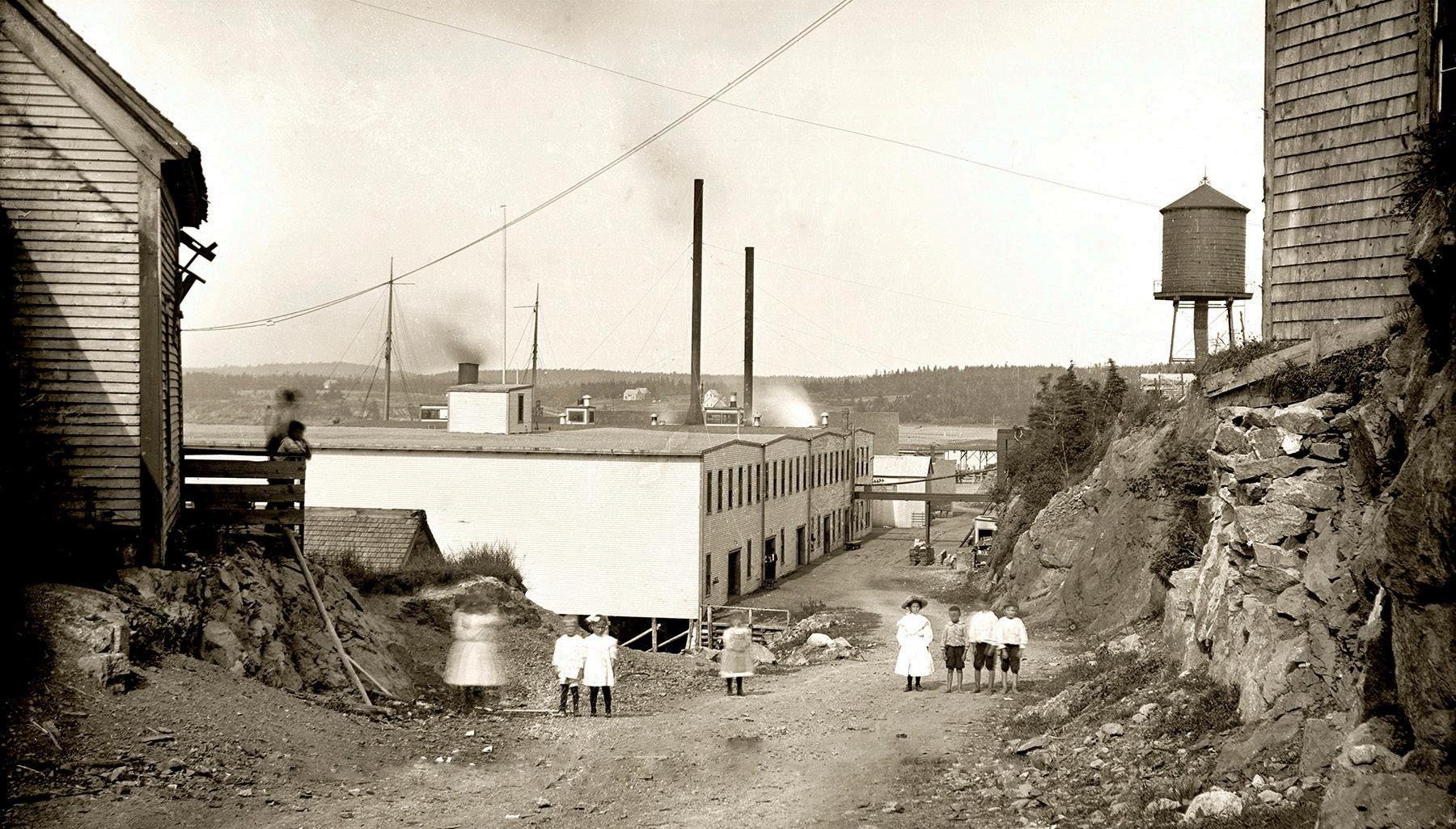
Front Cover Photo: Cleaves Tavern with Mr. Berry’s Nash Rambler station wagon in the foreground, ca. 1958. Item # 1977.55.1132.4 from the Carroll Thayer Berry Collection and www.PenobscotMarineMuseum.org
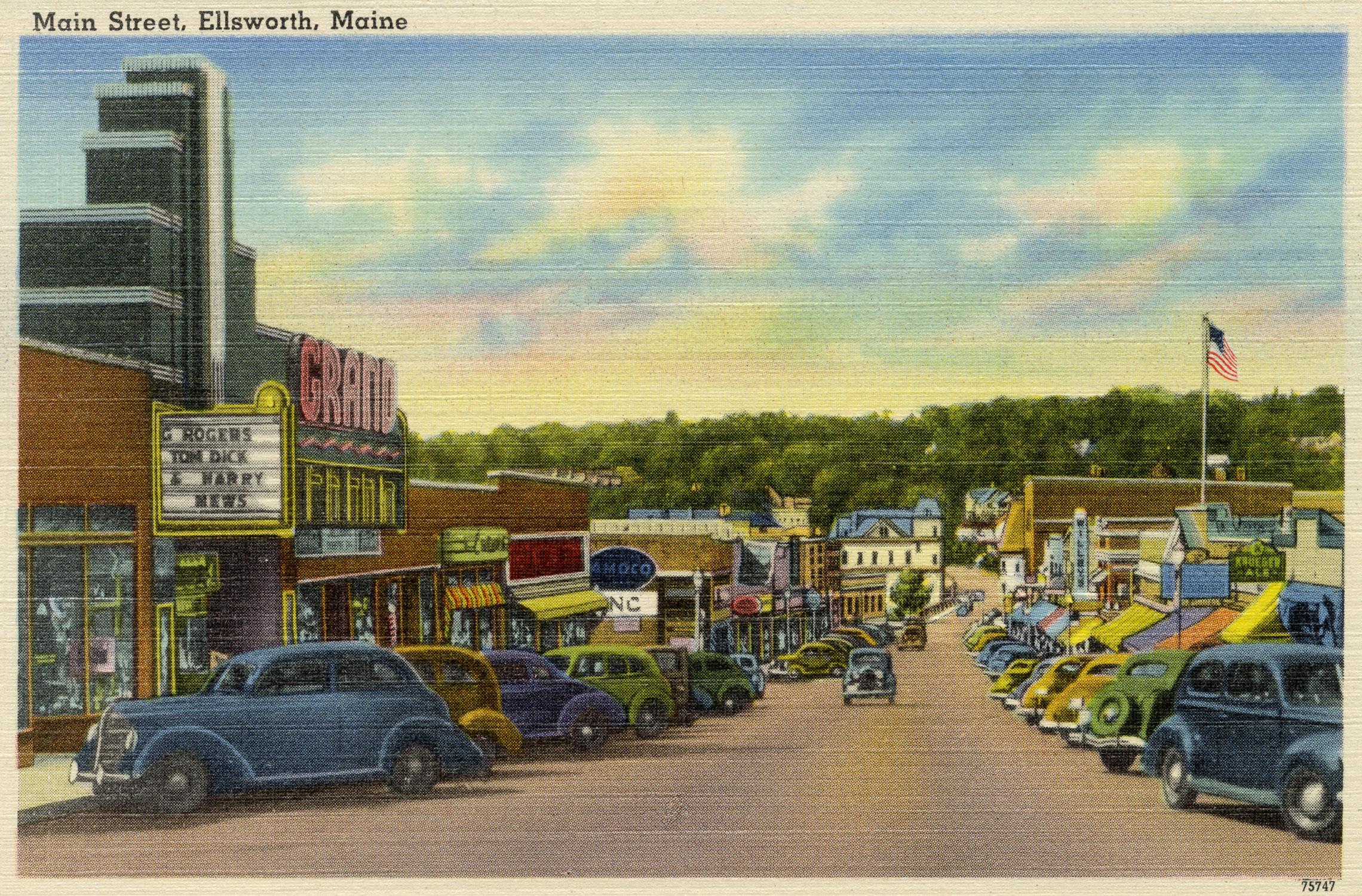
Back Cover Photo: Postcard published by Tichnor Brothers Printing Company, ca. 1941, showing Main Street in Ellsworth. Item # 157074 from the collections of the Maine Historical Society and www.VintageMaineImages.com
All photos in Discover Maine’s Hancock-Washington-Penobscot & The Highlands issue show Maine as it used to be, and many are from local citizens who love this part of Maine.
by James Nalley
y early July, Maine has shrugged off its long winter like an old coat finally tossed onto a hook by the door. Light lingers late into the evening, salt air drifts inland, and the landscape seems to exhale. Nowhere is this seasonal awakening more vivid than across Hancock, Washington, and Penobscot Counties, a three-part harmony of coast, forest, and river that sings at the height of summer.
In Hancock County, the light comes first. At dawn, it spills across Frenchman Bay, turning lobster boats into silhouettes and making even early risers pause mid-step. Meanwhile, Bar Harbor buzzes, but go a few miles inland or down a quieter road and the pace immediately softens. Wild blueberries stain fingers purple along granite ledges, and the scent of salt mixes with balsam fir. Acadia National Park may be the marquee name, but July is also about simpler pleasures: swimming holes hidden off old carriage roads, pop-up farmers’ markets loaded with strawberries, and evening fog that rolls in just in time to cool your sun-warmed skin.
Drive east into Washington County and the world grows wilder, quieter, and a little more stubborn. This is Maine’s bold edge, where tides rise fast and the


horizon feels unfinished. July here belongs to working waterfronts and long conversations on weathered docks. The towns of Lubec and Eastport lean into the summer light, offering whale sightings, art walks, and the thrill of being the first place in the country to greet the day. Inland, lakes lie still and dark, perfect for canoeing at dusk when loons call and mosquitoes politely wait just long enough to remind you where you are.
Then, there is Penobscot County, the green heart that keeps the rhythm steady. In this region, Bangor hums with festivals, riverwalk strolls, and the steady pulse of the Penobscot River gliding past town. Weekends in July mean backyard grills, youth baseball games, and trail runs where the forest canopy provides merciful shade. Outside the city, small towns feel suspended in a golden pause, with barns standing open, hayfields shimmering in the light, and every roadside stand seeming to sell the best corn that you have ever tasted.
What ties these counties together is not spectacle, but texture. For example, it is the grit of sand between your toes at a tidal flat, the creak of a dock plank underfoot, the sudden hush when

a breeze passes through pine needles. It is a place where time does not stop but slows just enough for you to notice it passing.
In early July, before summer crowds peak and after spring’s mud has dried, Hancock, Washington, and Penobscot Counties offer Maine at its most honest. Not polished. Not rushed. Just open, like a screen door held wide, inviting you to step inside and stay a while. On this note, let me close with the following jest: Bob, Nora, and Dan are fishing on a lake in northern Maine on a hot summer day. Dan accidentally drops his expensive sunglasses in the water and dives in after them. When he doesn’t resurface, Bob and Nora suddenly remember that Dan can’t swim. Bob jumps in after him and, about a minute later, hauls a body back into the boat. After performing mouth-tomouth resuscitation, Bob says “Wow, I don’t remember Dan’s breath being that bad.” Nora pauses, then replies, “That’s funny…I don’t remember him wearing a snowmobile suit, either.”


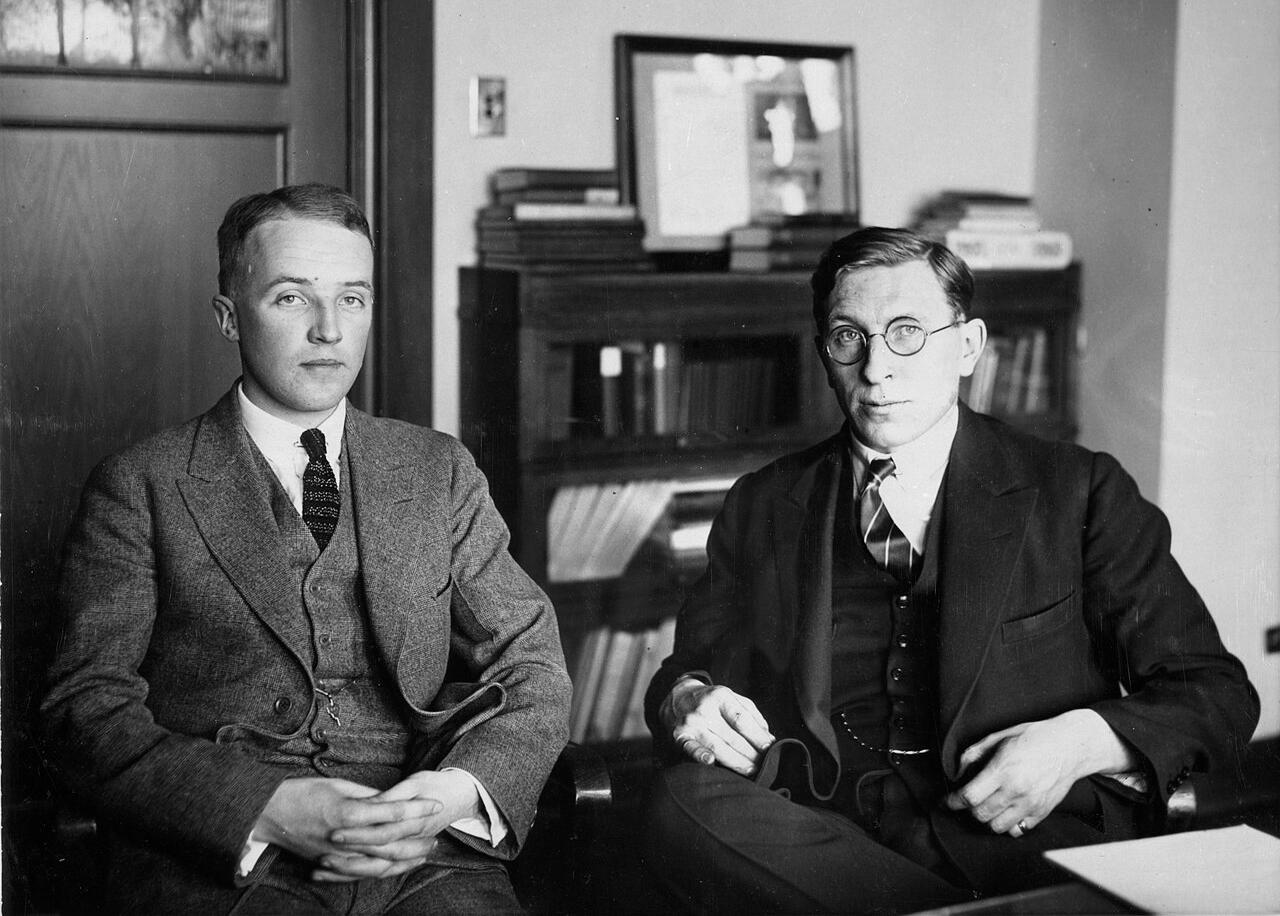
One of Maine’s noteworthy medical scientists was Charles Herbert Best, whose research helped to save millions of lives worldwide. He and Canadian physician/pharmacologist Frederick Banting co-discovered insulin, which quickly became the drug of choice for treating diabetes. Best also discovered the enzyme histaminase and the vitamin choline. He was one of the first to recommend using the anticoagulant heparin to treat blood clots. He developed a more purified form of heparin, making it possible to use the drug for open heart surgery and organ transplant surgeries.
Charles Best was the son of Herbert Huestis Best and Luella May Fish-
by Wanda Curtis — Dr. Charles H. Best —
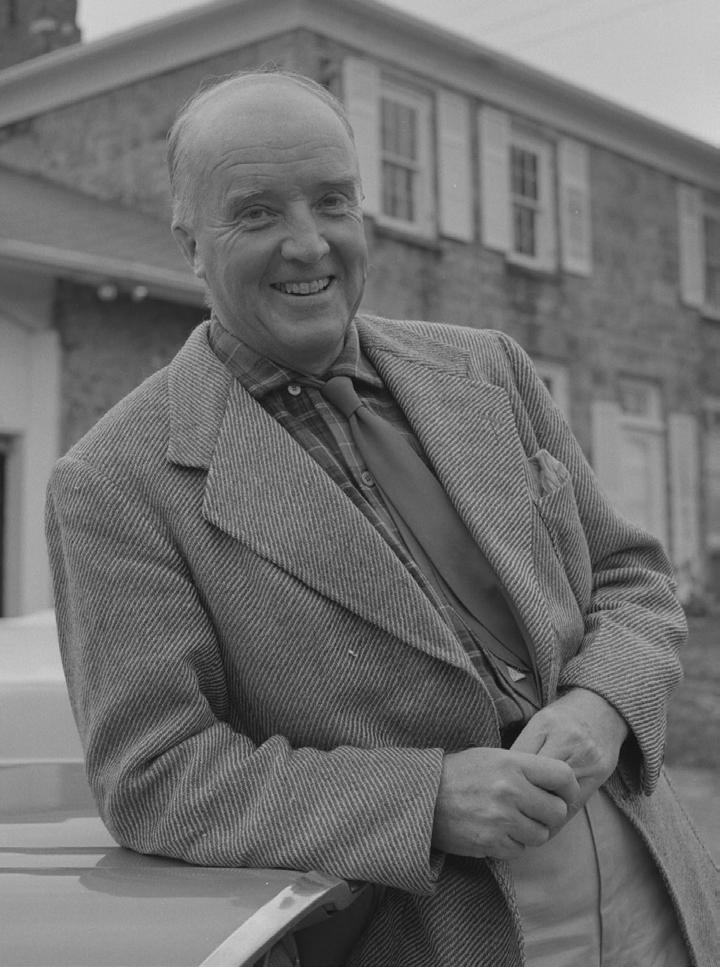


er Best. He was born in the small, rural town of West Pembroke (near Machias), where the economy was built upon sardine canning. Charles was raised and received his early education there. His father practiced medicine in West Pembroke while Charles was growing up.
According to Profiles, Before and After Insulin: Charles Herbert Best (1899-1978), Charles became involved in his father’s medical practice when he was only 12 years old. He would travel with his father to make house calls and help to drive the horse-drawn carriage on winter roads and frozen lakes. During emergencies, he would sometimes administer anesthesia while his




father performed surgeries on kitchen tables.
After graduating from high school, Charles enrolled in a general arts program at the University of Toronto but later switched to a physiology and biochemistry program. Students began to hear rumors of fighting in France, as World War I was raging at that time. Many, including Best. enlisted in the Canadian military. He sailed for England to begin training for the frontlines in France.
The authors of the article Profiles, Before and After Insulin: Charles Best (1899-1078) reported that just as Best set sail for England, the Great Flu Epidemic swept across the world. Many on the ship contracted the virus and were buried at sea. Best managed to escape the virus because, as he later explained, he was on mast duty each day keeping watch for other ships. That meant he slept on the top deck, apart from many other passengers. By the time that the
ship arrived in England, 28 passengers had succumbed to the virus but Best survived. His life was spared a second time when World War I ended, shortly



after he arrived in England. That was fortunate not only for him, but also for the millions of people whose lives have been spared because of his medical re(cont. on page 6)

(cont. from page 5)
After he returned home, Best resumed his studies at the University of Toronto. He worked as a research assistant for Professor J.J. Macleod while completing his degree. In 1921, Macleod shared Best’s services with Dr. Frederick Banting, who was working on a project to develop a pure form of insulin to treat diabetics. Best had a special interest in diabetes because his father’s sister (who was a nurse), developed adult-onset diabetes and died several years later.
Banting and Best conducted their research in a small University of Toronto lab. They began working with dogs, removing the pancreas to induce a diabetic state in the dogs. The two researchers were the first to isolate the insulin molecule from the pancreas. They used it to produce insulin which they injected into diabetic dogs. After several weeks, they were producing in-
sulin that was able to lower the blood sugar of dogs with diabetes.
In January 1922, the pair began testing insulin on humans. The first patient was a 14-year-old boy with severe diabetes. The boy was injected with insulin created from the pancreas of dogs, at the Toronto General Hospital. He had an allergic reaction to the first injection. So, the team headed back to the lab to work on purifying the insulin and were successful in creating a purer form of insulin from cattle. The new insulin lowered the boy’s blood sugar to almost normal. Later that year, Best entered medical school at the University of Toronto and he graduated in 1925.
For their work with insulin, Banting and Macleod received the Nobel Prize. Best wasn’t a recipient of the prize, reportedly because he hadn’t completed his medical degree yet. However, Banting volunteered to share half of his prize money with Best. Likewise,






Macleod shared half of his prize money with biochemist James Collip who assisted the team with the purification of insulin.
As a dedicated researcher, Best didn’t allow the lack of recognition to deter him from further life-saving discoveries. Instead, he formed a second research team and continued to work with insulin. He also worked to create a purified form of blood thinner known as heparin. By 1935, heparin was used successfully to prevent clotting during open heart surgeries and was later used for transplant surgeries, as well.
Though Best was born and raised in a small, relatively obscure Maine town, he achieved worldwide fame by conducting some of the most important medical research in history which has helped to save the lives of millions of people during the last century.



by Brian Swartz
Mystery will forever surround the drowning of four men in Green Lake in Ellsworth in November 1922.
Bangor resident John Thornton owned a camp on the lake’s northwestern shore, where the Maine Central Railroad’s line skirted the lake before turning south toward Little Rocky Pond. Thornton dropped by his camp in mid-November and discovered that a burglar had stolen bedding and other items.
Thornton contacted 43-year-old Hancock County Sheriff John E. Webster. The men met at the camp on Friday, November 17; someone posited that Joseph D. Clough and Arthur E.
Colson, “who were occupying the old Camp Comfort on the lower lake while cutting hoop-poles, might know something about it, or give some information,” reported a local newspaper.
The men “had both been mixed up in similar camp robberies” in the past, “but both were pretty thoroughly frightened” by past contact with the law.
Webster contacted Harry W. Haynes about taking a boat on Wednesday, November 22 to reach Camp Comfort from Uneeda Rest camp on Green Lake’s western shore. Deputy Sheriff Edwin T. Finn would go with the men, but Wednesday dawned with a strong wind churning up the lake.
Assessing the conditions, Haynes



advised Webster and Finn that “the wind was so high it would be impossible to cross the lake in a small boat.” Haynes did not accompany the lawmen when they decided to travel by horsedrawn carriage up the Mariaville road (modern Route 180) and stop at the house that Simon Garland owned in Lakewood, near the lake’s southeastern shore.
Haynes later reported that the lawmen believed Clough and Colson had nothing to do with the Thornton burglary, but they needed to be checked. Leaving their horse and carriage with Garland, Webster and Finn walked along the woods’ road that ran along Northeast Cove. “They had their guns
(cont. from page 7) with them” because they would pass “through a good game region,” the newspaper reported.
The lawmen headed out from Garland’s around 10 a.m. Camp Comfort lay three miles away; they should arrive there about lunchtime. The day passed, the sun set, and — silence.
Sheriff Webster missed supper, but his wife, Mabel, waited … and waited … and waited. In Thursday’s wee hours she finally alerted Haynes that the sheriff had not returned. Haynes and Harvard C. Jordan traveled to Garland’s house and made inquiries. Figuring that Webster and Finn stayed at Camp Comfort overnight with plans to hunt their way back to Lakewood on Thursday, Haynes and Jordan walked around Northeast Cove to Camp Comfort, which they “found … deserted,” evidence suggesting that someone had “left hurriedly and with the intention of an early return,” the newspaper report-

ed.
Searching the camp, Haynes and Jordan found nothing from Thornton’s camp and discovered the rifles and a handgun belonging to the missing lawmen. “On the table was a pipe, pocket-knife and plug of tobacco, with part of a pipeful whittled off and dropped … as if the smoker had been interrupted” while “filling his pipe.” The evidence suggested that Webster, Finn, Clough, and Colson were not headed on foot for Ellsworth.
Outside the camp, Haynes and Jordan found “no boat at the ramp.” If the missing men had started across Green Lake and not reached their destination, that meant serious trouble.
Plagued by a cold rain, searchers descending on the lake on Friday found a boat, oars, and Clough’s cap washed up on Black Island, about halfway between Northeast Cove’s entrance and the shore near Lakewood. Some 11 feet

in length and only 10 inches deep, the boat had “a flat-bottom” and straight sides and was “nothing more than a double-pointed punt,” the press reported.
Shouts went up a little while later when someone discovered Finn’s body floating “about 150 yards north of Black Island.” The search went past sunset and did not resume due to Saturday’s high winds. On Sunday “a larger force” hit the lake and found Webster around 10 a.m. and Clough “in the early afternoon.” Both bodies were near Black Island. The search continued for Colson.
Theories abounded as to what had happened. Perhaps Webster and Finn had decided to row to Lakewood, only “a short row across the mouth” of Northeast Cove. However, Clough and Colson could not accompany the lawmen because the punt “would not hold up four men in still water” and “was not



a safe boat for two men in rough water,” knowledgeable woodsmen pointed out. Using that boat against Wednesday’s wind would be “suicidal,” the newspaper commented.
The best scenario likely involved the lawmen borrowing a boat to row to Lakewood and the wind and waves flipping them outside Northeast Cove. Clough and Colson rowed out in their boat to rescue the lawmen, but that boat “was swamped and all four went down.”
The investigation turned up two men who, while crossing Northeast Cove in Clough’s boat, “were upset” near shore a few days November 22. Clough and Colson launched another boat and rescued the men. Searchers figured this probably happened to the four lost men, but the mystery remains to this day.



















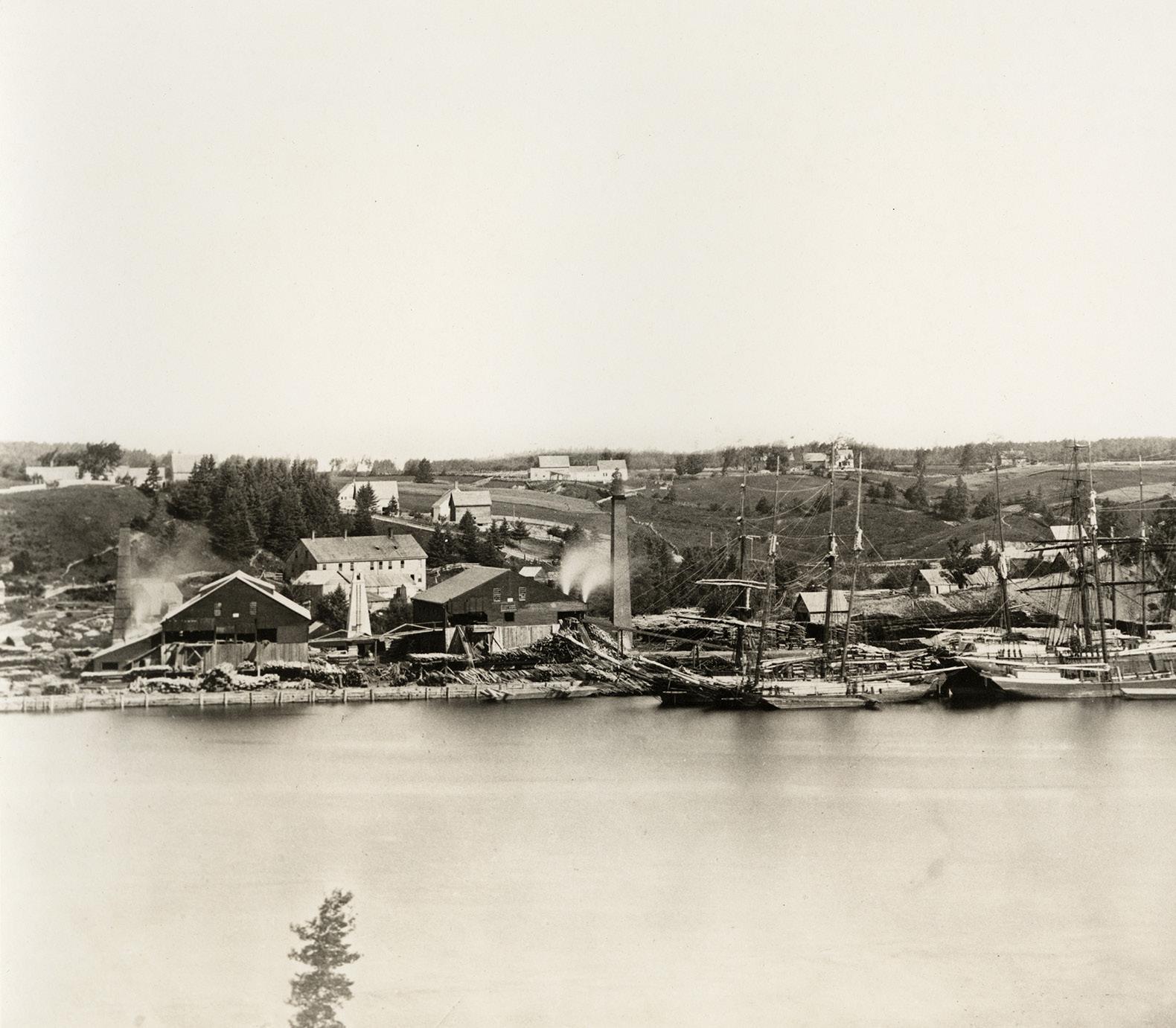


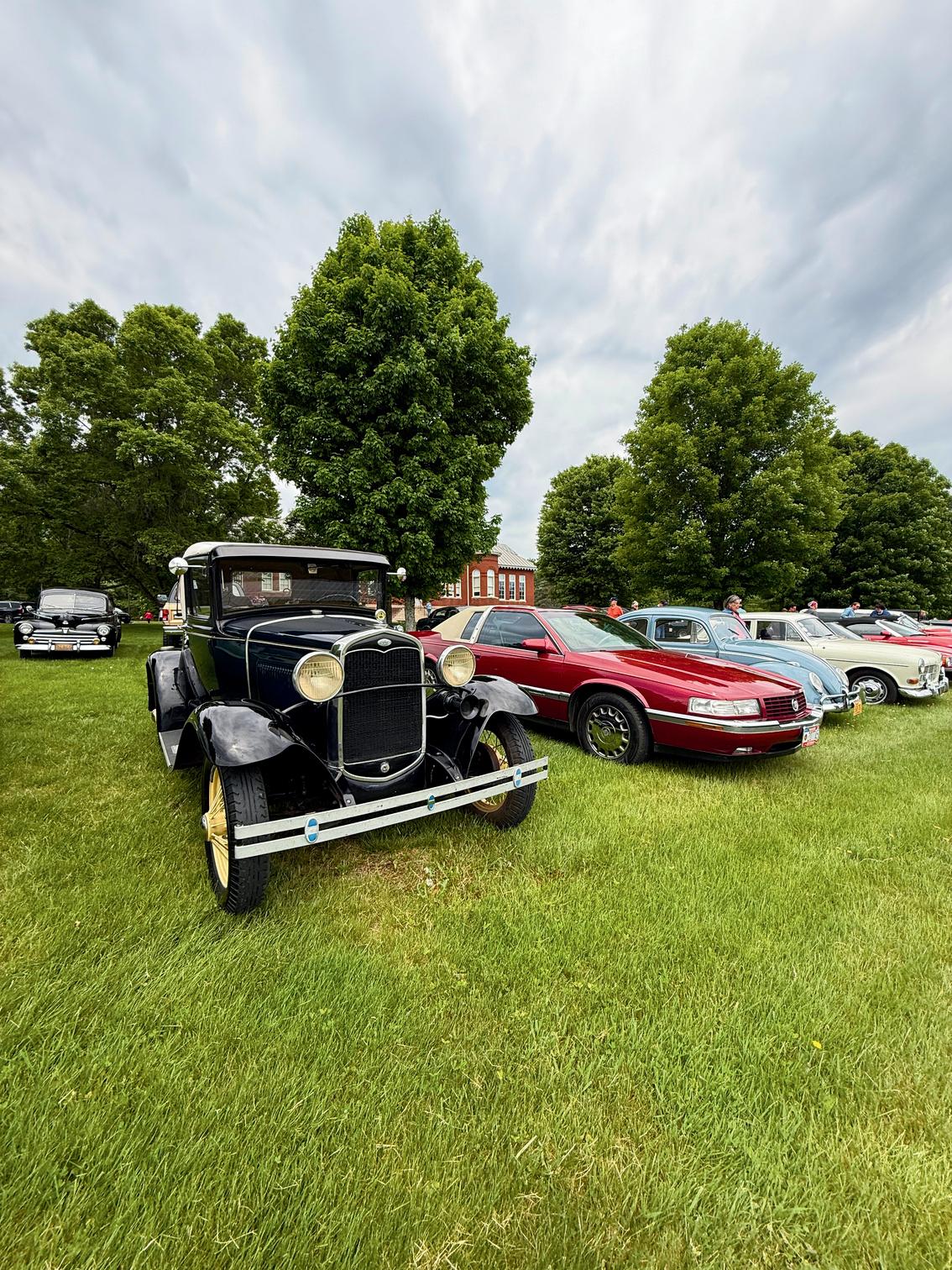


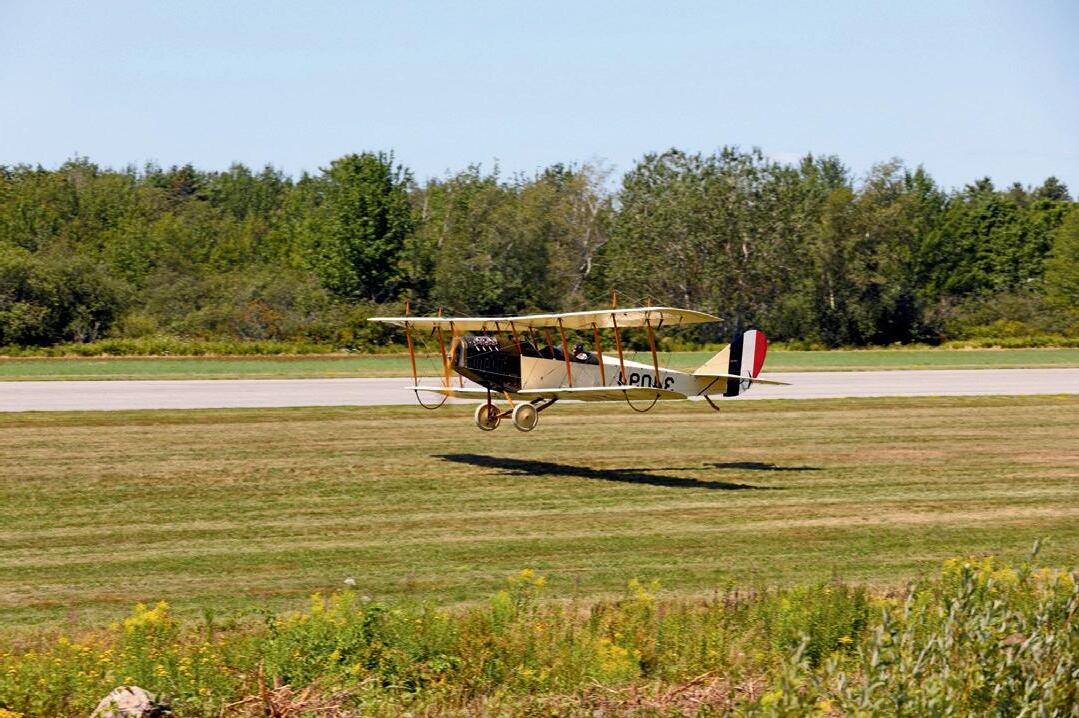



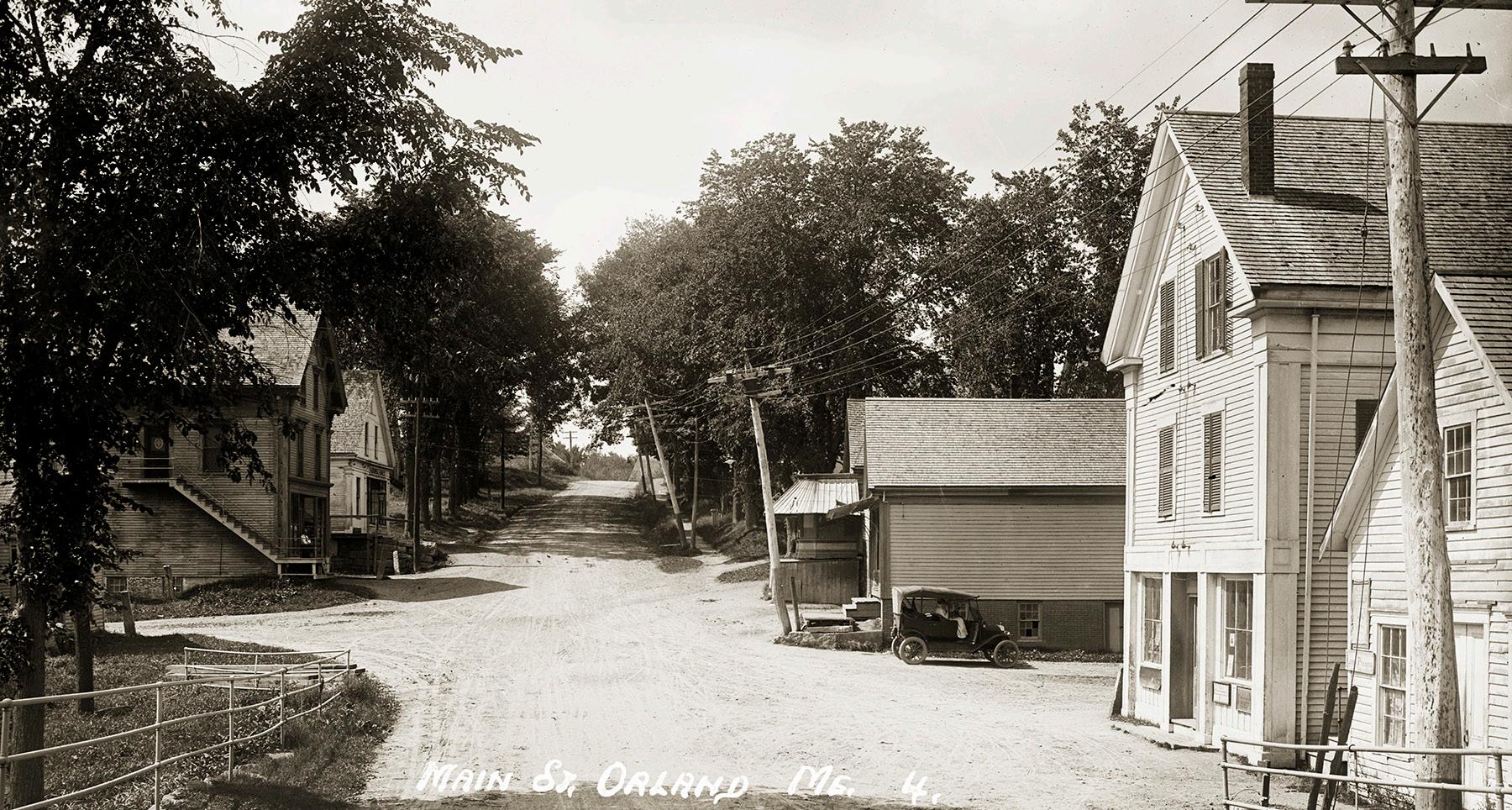











by Brian Swartz
More than 7,000 people from 47 states (plus a few foreign countries) cumulatively attended 75 days of programming offered by Opera House Arts at the Stonington Opera House in 2025. The year coincided with OHA’s 25th anniversary, and neither that celebration nor the programming would have occurred except for the foresight of four women who saw the great potential in the Opera House, long a Stonington landmark.
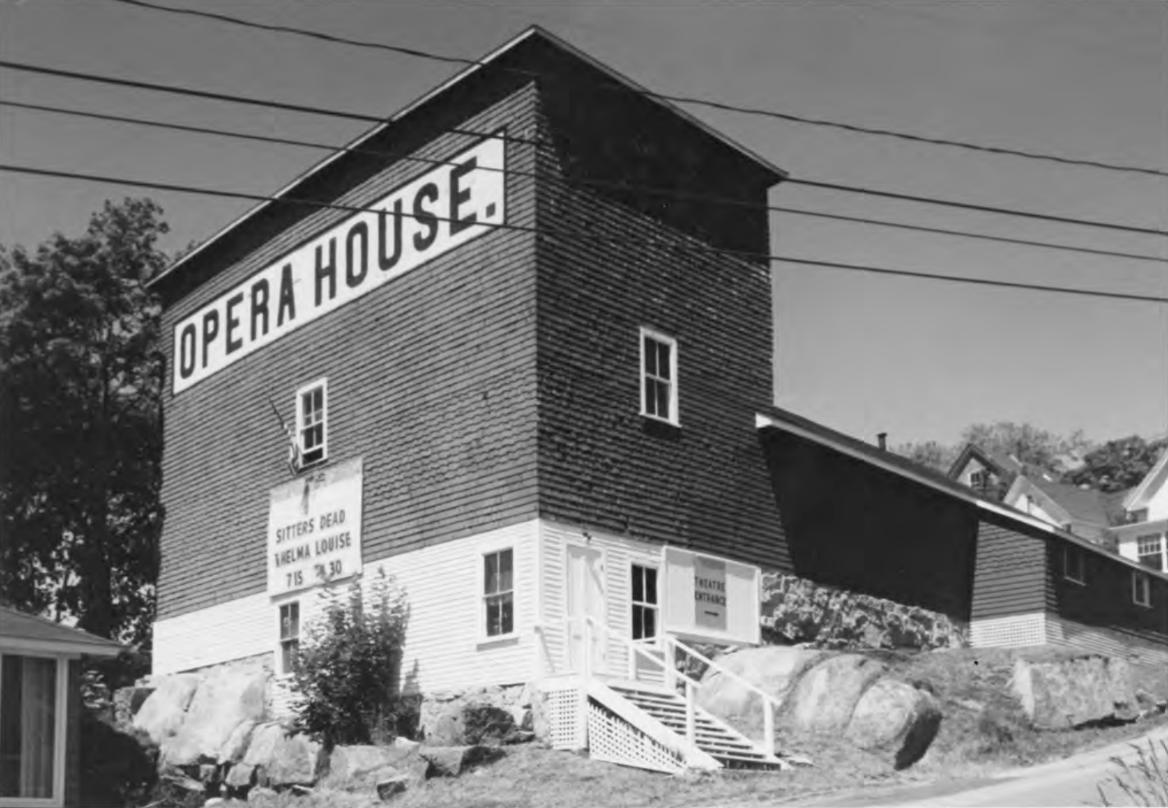
Charles B. Russ constructed a music-and-dance hall on Russ’s Hill above downtown Stonington in 1886. The hall became the Stonington Opera House, where national touring companies could entertain more than 1,000
people per show.
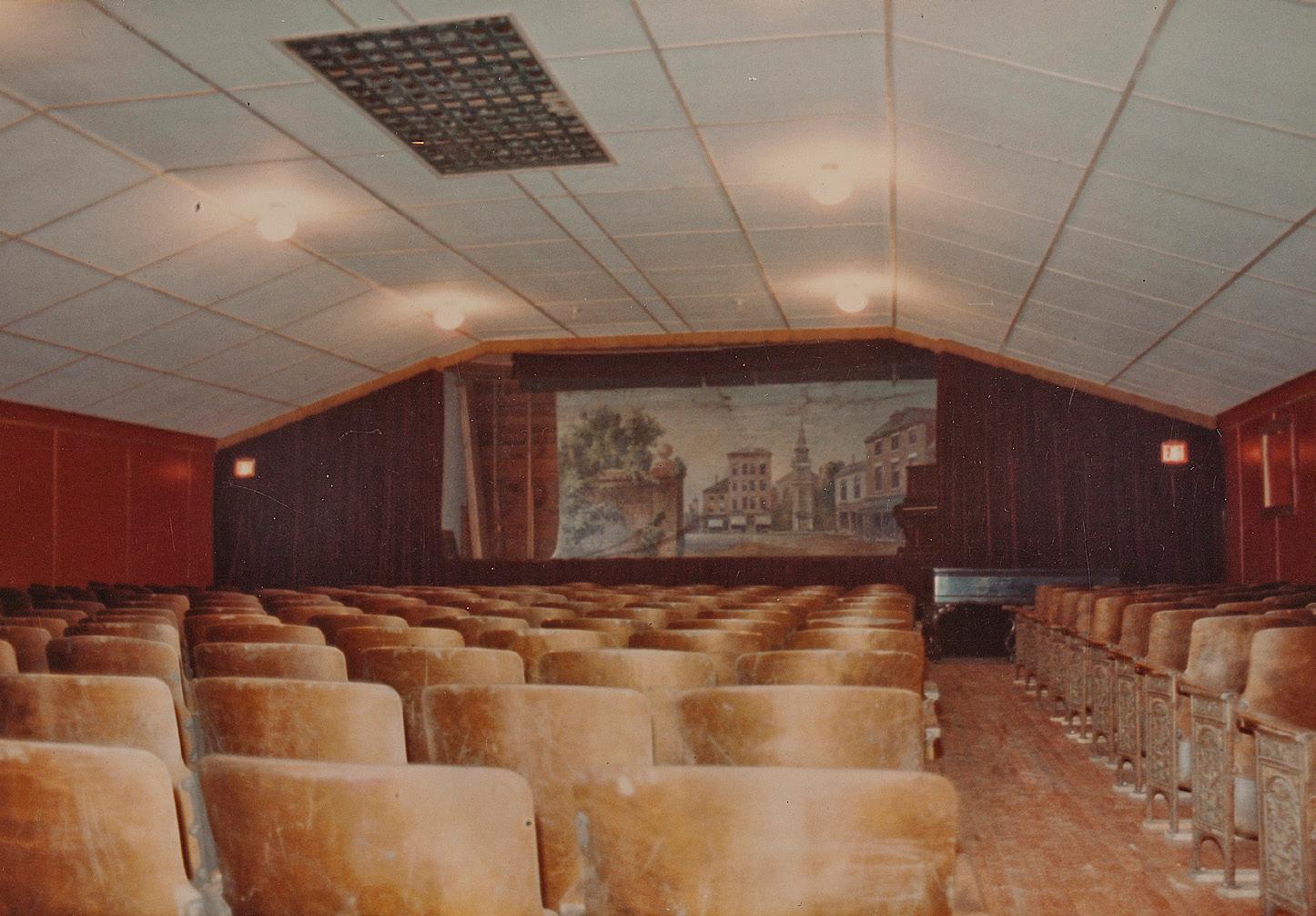
A 1910 fire destroyed the Opera House. Two years later Dr. B. Lake Noyes constructed on the same site a new Opera House that, during the ensuing decades, hosted such diverse activities as basketball games, movies, vaudeville acts, theater performances, concerts, recitals, and school graduations. As television became popular in the 1960s, people drifted away from live events, and the Opera House became a movie theater and roller-skating rink and passed through different owners.
Listed on the National Register of Historic Places in 1991, the Opera House deteriorated as the decade





passed. Carol Estey, Judith Jerome, Linda Nelson, and Linda Pattie purchased the building in 1999 and formed the non-profit Opera House Arts in 2000 to restore the theater as a community gathering space focused on making the arts, music, film, and theater available for the residents of Stonington and Deer Isle.
“The Stonington Opera House is woven into the fabric of the community of Deer Isle and Stonington,” said Opera House Arts Executive Director Erika Sanger. Renovations began in 2000 as OHA installed insulation and a new heating system and restored the building’s School Street wing. A $1 million capital campaign launched in 2008 re-




sulted in constructing an 800-squarefoot shop for building sets and a striking new lobby that, opened in 2015, featured a concession stand, restrooms, and floor-to-ceiling windows overlooking scenic Stonington harbor and the nearby islands. A nearby School Street building became office space and a costume shop.
Opera House Arts brings the arts to Stonington and Deer Isle residents by offering diverse programming at the Stonington Opera House, open year-round. The theater can accommodate 250 people in the historic removable Roosevelt seats that local dentist Dr. Lewis Tewksbury installed in the 1940s.
Held on the theater’s historic stage, programs range from original theater productions and music to movies and community programs. Popular annual programs include the annual mid-July Deer Isle Jazz Festival featuring award-winning jazz musicians, Broad-
way Comes to Stonington concert, and the popular storytelling event, Island Women Speak in January.





“Live! for $5” offers programs designed for audiences of all ages. Opera House Arts celebrated its 25th anniver(cont. on page 16)










(cont. from page 15)
sary “by making as many programs as affordable as possible,” Erika said. “We raised funds to ensure that over a third of our programs offered in 2025 were $5 or free. We want to continue this tradition of removing the financial barriers for people to access film and performing arts.” Live programs are free for Hancock County students in grades K-12 and half-price for anyone age 17 and under.
Inaugurated in March 2025, a Film Club offers classic films to be seen on the big screen. Six movies are selected by members for each series. Summer is the busiest season for Opera House Arts, which draws on out-of-state and local talent for its summer programs, said Artistic Director Kathryn Markey. “I am able to use my professional network to locate actors, directors, playwrights, designers, and musicians at the highest level to come here and share their work with us.

“Additionally, we look to train and employ locally based artists to work in collaboration with us,” she said. In

2025, for example, Jason Brown, a Penobscot Indian known as “Firefly,” presented The Firefly Experience, and



the Frogtown Mountain Puppeteers from Hancock County presented Everybody Loves Pirates. Opera House Arts collaborated with the Penobscot Theatre Company in Bangor to present the play Matinicus. “Our community is a critical and indispensable part of our operation,” Kathryn said. “We strive to make the Stonington Opera House a warm and welcoming place where everyone feels comfortable and looks forward to attending and participating in programs,” Erika said. “As stewards of an historic structure that has played such an important role in the lives of the people of Deer Isle and Stonington, we are taking the necessary steps to secure the Stonington Opera House facilities and finances of Opera House Arts so that we can be here for the next generation.”













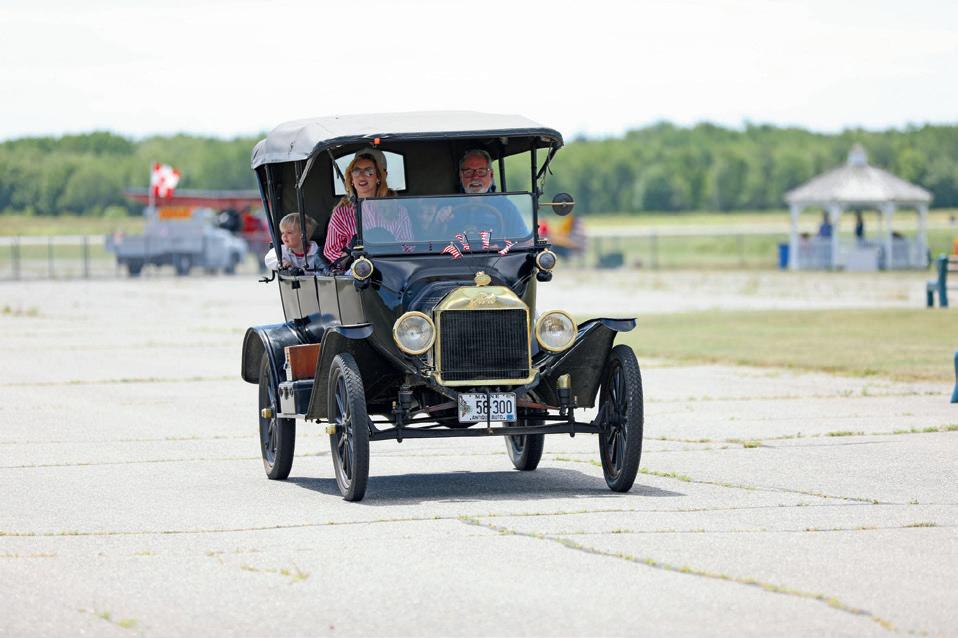
Come experience a timeless railroad journey on board the Downeast Scenic Railroad. Enjoy a ride on restored passenger cars, pulled by a vintage locomotive, on a rail line completed in 1884. Learn about the history of rail travel from a time gone by. Trains depart Saturdays and Sundays from Washington Junction for this excursion of approximately one hour and thirty minutes.





by Brian Swartz
In January 2022 Maine senators Susan Collins and Angus King jointly announced an almost $4 million congressional appropriation to fund dredging the Narraguagus River in Milbridge. The project garnered strong political support in Maine and Washington, D.C.
Almost 60 years earlier, a solitary Maine congressman realized he was alone in supporting a similar dredging project at Milbridge.
Congress had included the Narraguagus River project in the Public Works Flood Control Act passed the previous October. That bill, however, only told the Army Corps of Engineers
which dredging projects had high priority; Congress needed to appropriate funds for specific projects, and in Maine the major dredging needed in Portland Harbor got much more political and press attention than did dredging involving a Washington County river.
Missouri Representative Clarence Cannon chaired the powerful House Appropriations Committee and its Subcommittee on Public Works Appropriations. The subcommittee met on Thursday, June 13, 1963 to discuss which public-works projects should be funded during Fiscal Year 1964, slated to start in just 18 days.

The 1962 Public Works Flood Control Act had authorized spending $550,000 “for preconstruction engineering and to initiate dredging” in Portland Harbor. The Army Corps of Engineers had priced the full dredging project at $8,360,000.
Among the five Mainers testifying in support of the Portland project on June 13 were Senator Edmund Muskie, 1st District Representative Stanley R. Tupper, and 2nd District Representative Clifford G. McIntire. Governor John H. Reed submitted a written “statement of the interests of the State of Maine in this project.” Senator Margaret Chase Smith indicated her support, too.




Muskie got attention. “Senator, we are honored to have you with us today,” Cannon said. “We are glad to find you in such good company.”
“I am in excellent company, Mr. Chairman,” Muskie replied.
With witnesses detailing the economic importance of Portland Harbor, its dredging discussion ran a long while. Cannon and other subcommittee members asked detailed questions (particular of Tupper).
“Narraguagus River Dredging” was up next on the subcommittee’s agenda. A break may have occurred; when McIntire sat to testify about the Milbridge project, he probably looked around the hearing room — and realized he was alone. Muskie and Tupper had exited for parts unknown, there was no supportive letter from Reed, but McIntire was up for the challenge.
Addressing his remarks to Chairman Cannon, he explained that this particu-


lar dredging project involved “the Narraguagus River, which is in the county of Washington County, Maine, and is in the Second Congressional District.
“This is a river improvement dredging project.” McIntire stated. “It is a project which would improve the channel of the river to service the sardine industry, which is extremely important in this area of the Maine coast.”
To congressional representatives who had likely never been to Maine or even perhaps seen the Atlantic Ocean, the sardine industry was unfathomable, and the Narraguagus River might as well be in Canada. McIntire pointed out that subcommittee members “already have those [project details] in your records.
“I would only emphasize that this is a small item relatively … $500,000, which would require also a local contribution of $5,000,” he said.
But “it is one of those projects
which is so vital to the small community industries along the [Maine] coast … extremely important to the small community that is dependent on the small factory type of employment.”
In his submitted written testimony McIntire detailed how the silted Narraguagus River affected commercial fishing, particularly the sardine industry. “The shallow water conditions” interfered with navigation and made “it unwieldly, and sometimes impossible, for sardine and other fishing craft to ply their way in the channel.”
As elsewhere along the Down East coast, sardine canneries stood alongside the Milbridge shore. Vessels called “sardine carriers” (not “boats” or “ships”) trawled for sardines offshore and transported their catches to the local canneries.
The Narraguagus channel had silted so badly that inbound sardine vessels often waited in Narraguagus Bay until (cont. on page 22)


the tide was right to steam upriver to the Milbridge canneries. “Many times,” tidal conditions prevented the carriers from unloading before sardines spoiled in the holds, McIntire indicated.
The Army Corps of Engineers had recommended dredging “anchorages outside the [main] channel” so fishing boats could anchor and not block the channel, he noted. Boats had to anchor in the existing channel and doing so blocked other boats from using it.
The ACE recommended dredging the existing channel 11 feet deep and 150 feet wide from its Narraguagus Bay entrance up to Wyman; nine feet deep and 100 feet wide from there to the Milbridge canneries; and six feet deep and 100 feet wide up to the site near the Route 1A bridges where the town wanted to build a marina.
In his written statement, McIntire stressed “that the [Corps’] New England division engineer has found that (cont. from page 21)
the Narraguagus River channel to Milbridge is inadequate for commercial fishing carriers bringing fish to the canneries.”
The Milbridge hearing evidently ran no more than an hour, perhaps considerably less. “$500,000 is the total cost?” New York Representative John R. Pillion asked McIntire.
“Yes, sir,” the Maine congressman replied.
“How much is the capability for next year?” asked Pillion, wanting to know if Congress must appropriate even more money for the project.
“It is one item,” McIntire replied. The hearing ended.
Congress would fund that particular dredging project.




by James Nalley
In the quiet fishing town of Gouldsboro, where lobstermen and ship captains once set the rhythm of daily life, and the Atlantic tides broke against rocky coves, Luere Babson Deasy was born on a bitter winter morning in February 1859. From the start, his life reflected both Maine’s rugged independence and its deep civic spirit. The son of Daniel Deasy, a sea captain and merchant, and his wife Emma Moore, Luere was raised in Prospect Harbor, a village shaped by forested headlands and icy ports of the Schoodic Peninsula. There, among the close-knit communities, he developed a lifelong appreciation for Maine’s people and landscapes,


an attachment that would later guide his career in law, politics, and public service.
Building on this foundation, Deasy went on to study at the Boston University School of Law. According to the Archives and Luere B. Deasy Papers (hereafter The Deasy Papers) at the Jesup Memorial Library in Bar Harbor, “This was an ambitious step for someone from rural Maine at a time when advanced education was uncommon.” He returned to the coast in 1884 to establish a law practice in Bar Harbor, becoming the community’s first attorney. Known for his skill and integrity, Deasy quickly earned the respect and



trust of residents and fellow members of the legal profession.
Deasy’s influence extended far beyond the courtroom. In 1887, he co-founded the Bar Harbor Banking & Trust with Fred Lynam, George Grant, and Andrew Wiswell, creating a financial institution that supported both local businesses and the town’s residents. In this case, his leadership and civic vision did not go unnoticed. Local historian Bill Horner later described Deasy as “A skilled lawyer … a true leader in his community and founder of community institutions … which was the essential bridge between sophisticated summer cottagers and the islanders whose cooperation eventually conserved Acadia.”
Another enduring legacy was Deasy’s role in establishing the Jesup Memorial Library. In 1911, while serving as chairman of the library’s trustees, he delivered an acceptance speech for the gift from philanthropist Morris


K. Jesup, not only emphasizing “the library’s significance as a repository of books,” but also “as a civic cornerstone for the community.” His remarks reflected a lifelong commitment to public service and the belief that education and civic engagement lay at the heart of the town’s growth.
Deasy’s commitment to civic institutions and public life naturally drew him into public office. As noted in The Deasy Papers, “A dedicated Republican, he was elected to the Maine State Senate, representing Hancock County from 1907 to 1911, and served as President of the Senate in 1909–1910.” His legislative work combined pragmatism with principle, earning him respect across party lines and establishing his reputation as a thoughtful and effective statesman.
In 1918, Governor Carl Milliken appointed Deasy to the Maine Supreme Judicial Court, where he served with
distinction as an associate justice for more than a decade. Elevated to Chief Justice in 1929, he held the post until his retirement the following year, due to mandatory age limits. The Maine Legislature later noted that Deasy was “recognized for careful reasoning, a steady hand, and an unwavering commitment to the rule of law.” His tenure left a legacy of fairness and integrity that helped shape the character of Maine’s highest court.
Outside of law and politics, Deasy was deeply engaged in social and cultural life. According to the Maine: Hancock County Burial Records, “He was an active member of the Freemasons, the Knights Templar, and the Knights of Pythias,” fraternal organizations that played a central role in civic and charitable activities in early 20th-century America. His community involvement also extended to environmental stewardship. In this regard, he contributed (cont. on page 26)




(cont. from page 25)
and the
would later
and Maine’s natural
Despite his statewide influence, Deasy remained firmly rooted in his local community. In 1885, he married Emma M. (Handy) Clark, and together they raised two daughters, Blanche and Inez. Colleagues and historians remembered him as a “common man” in the best sense: scholarly yet approachable, and principled yet practical. All these qualities endeared him to both peers and neighbors.
When Deasy passed away on March 13, 1940, at the age of 81, the community mourned more than a jurist, politician, or businessman. As noted by the Maine: Hancock County Burial Records, his life “had become inseparable from the civic and cultural fab-



ric of Maine.” He was laid to rest in Ledgelawn Cemetery in Bar Harbor, a fitting resting place for a man whose influence left an enduring mark on both the town and state.
As for Deasy’s legacy, it is not merely measured by the offices that he held, but by the institutions that he helped build and the civic culture that he nurtured. From banks that supported local entrepreneurs to a library that enriched public life, and from legislative chambers to Maine’s highest court, his influence is woven into the very fabric of the state’s history. His life serves as a reminder that leadership grounded in community, rooted in place, and committed to the public good can resonate long after the final gavel falls.



by John L. Raye
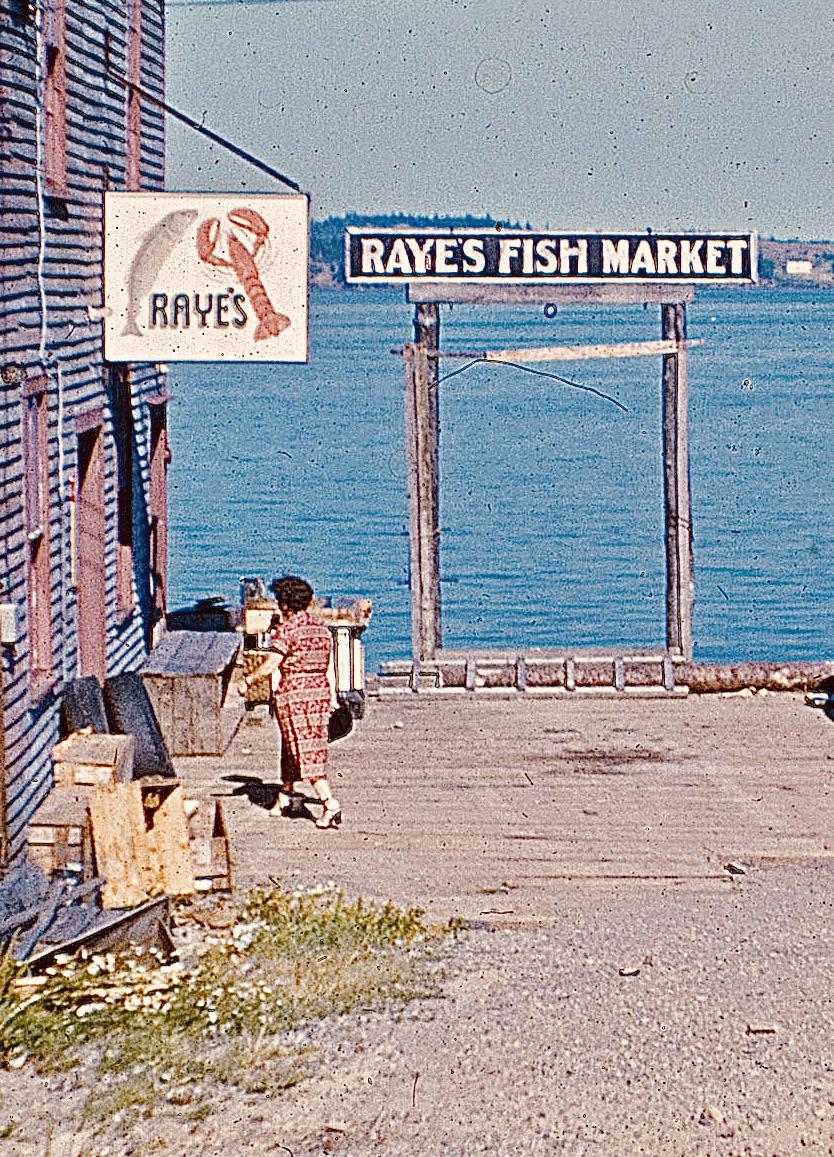
It was 1956 or 57 and I was in Eastport Maine visiting Raye’s Fish Market with my Dad. I was 4 or 5 years old and loved the atmosphere, with Harry Raye Sr. and Harry Junior filleting cod and haddock while spinning yarns. Dad joined in and there was a riot of laughter and good-natured fun.
While Dad was preoccupied with hilarity and tales of sea and shore I wandered out the back door onto the decaying wharf to take in the sea breeze and view the Canadian islands across the bay. Avoiding holes in the rotting wood I precariously ventured out for a better view.
I tripped over a rope as thick as my leg covered with barnacles and slippery

as hell. Trying to catch my balance my right leg hit some rot and went through. Halfway down the hole and holding on for dear life I looked down into the deep water filled with herring that looked to my frightened self for all the world like piranha.
Adrenaline kicked in and I hauled myself up onto sturdier planks. Panic took over and I didn’t move from clutching an old anchor. I was flat down on the ancient dock and too scared to move.
In what seemed a lifetime Dad discovered I had wandered off and came to my rescue. He advised me to toughen up while kindly carrying me around the maze of rotten wood and back into the (cont. on page 28)




(cont. from page 27)
fish shop.
We said our farewells and Harry senior gave me a large package on the house for a flavorful dinner later on.
I returned a few days later for more fresh caught fish but didn’t get anywhere near the rear door.
The warmth of my reception sealed my lifelong memories of a favorite colorful destination.
The Fish Market lasted two generations in the Raye family ( approximately 1929 through 1958) and provided Eastport with fresh seafood that was always available and appreciated. Captain Tom Raye started the business when the coasting trade ended. His son Harry Raye, Sr. worked there when he was old enough and his son, Harry Raye, Jr. worked there in turn.
During that time Eastport was the sardine capital of the world and all kinds of fish were plentiful in Passamaquoddy Bay. Many Eastporters fished



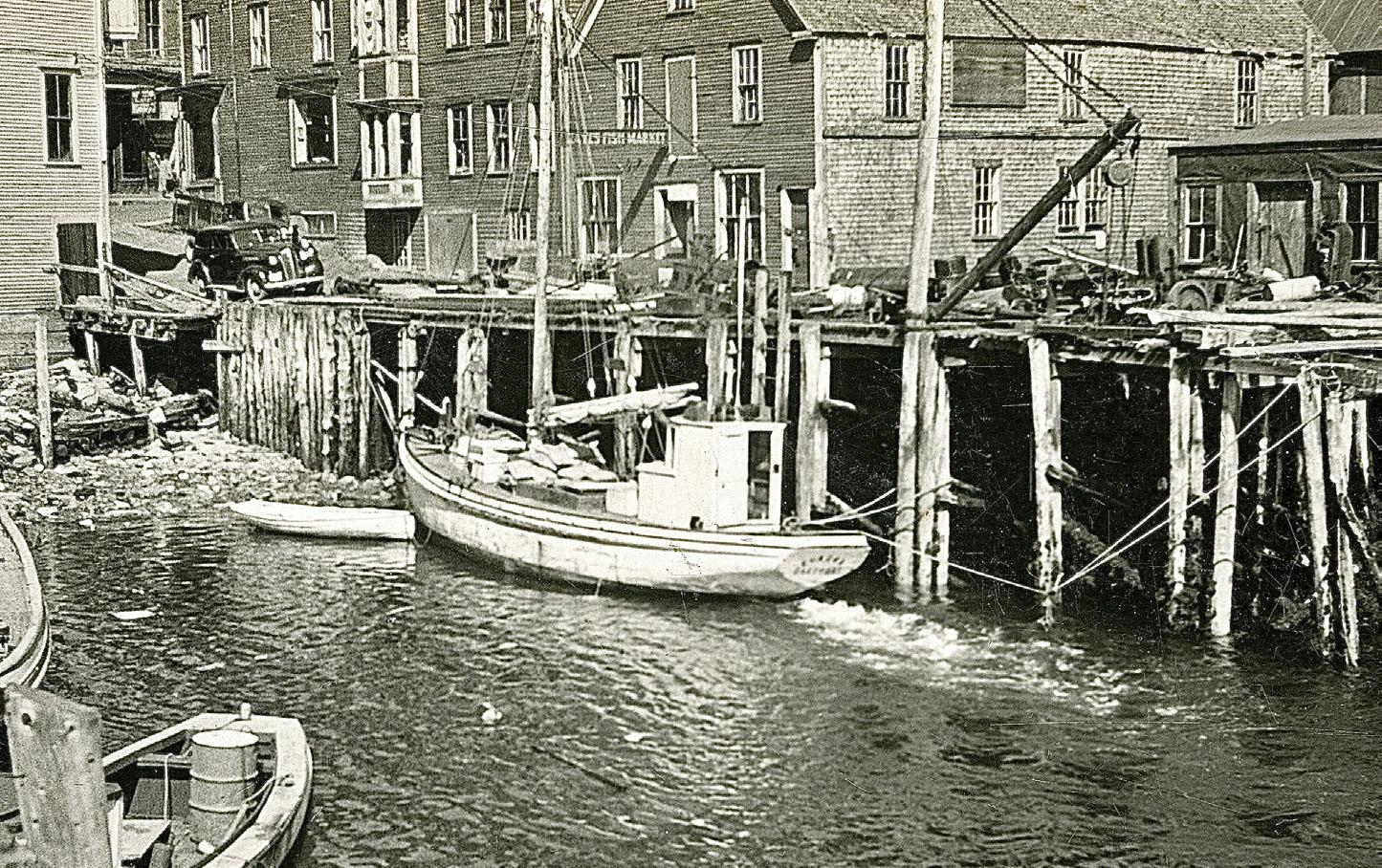
for a living and knew Raye’s would buy their catch if it looked appealing. The Rayes were fair and treated fishermen well. They also treated their customers well and greeted them cordially and as an extra bonus customers got stories of

the sea and current conditions on the bay.
Now, lots of old-time locals miss those days and long for their return and cordial smile when they used to come into the colorful market!


















by Charles Francis
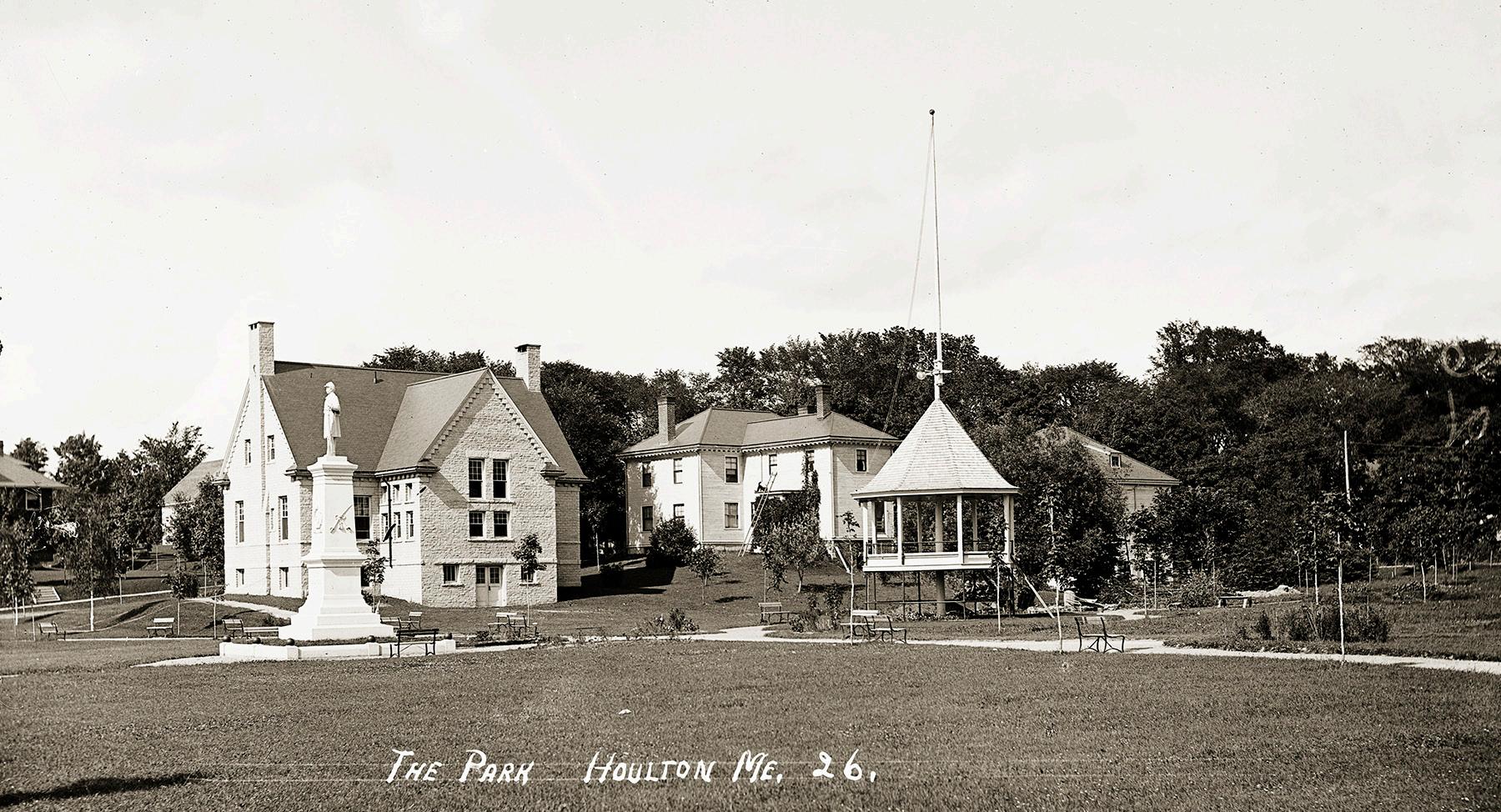
Long, long ago, when our greatgreat grandparents’ great grandparents were young, or thereabouts, the Aroostook mail was carried by stagecoach. It could be, if I have added one too many “greats” here, that we are talking about a time when the mail was carried on horseback. In fact, it might even have been carried on foot. Don’t be surprised by the fact that mail once got into and out of the Aroostook region “by foot.” Back in the 1820s that’s how mail was carried between Calais and Houlton. This particular mail route is not the subject of our piece but it serves to prove a point — Aroostook mail was slow. Of course, you want to ask, “How slow was it?”
Well there is an answer.
In the 1880s there was an extremely popular poem on the mail service into and out of Aroostook County that made the rounds. The first lines went “Oh, terribly slow is the Aroostook Mail / Slow as the pace of a palsied snail.” Now that’s pretty slow. Of course it is describing a time before the Bangor & Aroostook carried the mail. This doesn’t mean the mail wasn’t carried by rail in the 1880s, however. It was. Mail to “The County” was carried on New Brunswick trains. This doesn’t relate to the subject of our piece either. That subject was about a time when Aroostook County mail service was actually slower than that carried by foot. First,


however, it is worth making a comment as to the very first formal mail service into the Aroostook region. It should be noted that we are talking about a time when Maine was a state and mail was a function of the United States government, whether it be contracted or otherwise. There was a much earlier time when the French had mail service to their frontier outposts and forts. But we are not talking about that at all.
James Lander was the first Aroostook mail carrier. Back then mail for the Aroostook region came by boat to Calais. To begin with, Lander traveled through the woods between Houlton and Danforth on foot. In 1827 a road was cut through to Baskahegan Stream.





It was a seasonal road, if that — the early Baskahegan Road was commonly called the Baskahegan Trail. Road or trail, it allowed Lander to travel by horseback. Eventually there was improvement sufficient for Lander to travel by buckboard. Lander carried the mail between Houlton and Calais as late as 1856.
The fact that James Lander was carrying mail between Houlton and Calais into the 1850s doesn’t mean there were no other mail routes by this decade. There were. In fact, by the mid-1830s the Calais route was secondary. In the early 1830s Bangor became the major mail connection to Aroostook. In the early 1830s mail began traveling between Bangor and Houlton on the Military Road.
The Military Road connected Macwahoc and Hancock Barracks in Houlton. It was supposed to be an express route for military purposes. Did it improve the speed of the mail? Re-

member our poem on the speed of the Aroostook mail. There are other lines describing that speed, such as it is, as “Slow as the days to a debtor in jail / Slow as a skipper bereft of sail.” The poem is doggerel but it makes a point. Aroostook mail was decidedly laggardly. This is so in the 1820s, ‘30s and on to the 1860s. The worst is yet to come, though, in 1872. First a few brief words on the development of the Military Road and why it was important for more than just mail.

Before the coming of the Bangor & Aroostook, the Military Road was the principal route of communication with Aroostook County. The bulk of supplies for the County were hauled over the road. Lumbering operations were carried on close to it because supplies for the camps were hauled from Bangor. Stagecoaches ran on it. Hotels and other business sprang up along it. And then there was the all-important mail.
Reuben Ordway of Bangor held the (cont. on page 32)








(cont. from page 31)
first major mail contract for the route between Houlton and Mattawamkeag. (Bangor to Mattawamkeag was a separate route.) In 1840 Eben Woodbury moved to Houlton, taking over the contract. In 1847 the line was jointly operated by the firm of Woodbury and Bailey. The mail route had become a highly lucrative business, especially during the years of the Civil War.
In 1868 Woodbury and Bailey sold out to Asa Smith of Mattawamkeag. We are now getting close to our 1872 date, the date of the slowest mail service of all.
In 1870 Asa Smith sold out to the Eastern Express Company.
Eastern Express was big. It operated all over Maine. It served Portland and had connections to Boston. Eastern Express added a fine line of coaches for its run to Houlton. The coaches were drawn by matched teams of four swift horses. Frequent changes were
made. The running time under good conditions between Mattawamkeag and Houlton was timed at ten miles an hour. For well over a year things were wonderful. Then the unthinkable happened. Suddenly there were no horses, or rather the horses got sick.
1872 is the year of the “Great Epizootic.” It is the year Equine Flu hit. It was first noticed in July near Toronto, Canada. In 90 days it spread across the continent. It spread down the Atlantic seaboard and jumped to Cuba. On October 29th it was reported as spreading rapidly in Bangor. It raced west to the Pacific. Official estimates put the number of affected horses at between 80% and 99%. What “affected” means is that most horses simply couldn’t function. Not all that many horses died, maybe 2%.
What did no horses mean in 1872? When a major fire broke out in Boston, citizens pulled pumpers. Out west,

Army Cavalry fought Apaches on foot. In Maine the Eastern Express Company used oxen to pull its wagons and carriages. And there were not all that many oxen available. The mail carriers between Mattawamkeag and Houlton were pulled by just one ox.
The “Great Epizootic” spelled the end of the glory days of the Military Road. 1872 was also the year the New Brunswick Railroad reached Houlton. Eastern Express mail, passengers and freight went here. Not until the coming of the Bangor & Aroostook would mail bound for and out of Aroostook County have a major instate carrier again.
As to the service provided by the New Brunswick Railroad, just think of our poem. It was written in the 1880s when mail service to Aroostook County was “Slow as a poor man’s suit at law / Slow as a typical April thaw.”















by James Nalley
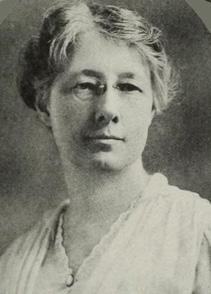
On a cold morning in early 20th-century Washington, D.C., Georgia Marquis Nevins walked the halls of Garfield Memorial Hospital with a quiet authority that commanded attention. Patients rarely knew her name, and physicians often underestimated her power, but within the hospital’s walls, her influence was unmistakable. At a time when nursing was still dismissed by many as little more than semi-domestic labor, Nevins was helping to transform it into a profession grounded in discipline, education, and public responsibility.
Born in 1864 in Bangor and raised in Easthampton, Massachusetts, Nevins
— Georgia M. Nevins in 1916 —
came of age at a time when women’s professional opportunities were sharply limited. Teaching and caregiving were among the few socially accepted paths, but Nevins entered nursing just as the field itself was undergoing a radical transformation. As Mary Logan notes in The Part Taken by Women in American History (1912), Nevins enrolled in the newly established Johns Hopkins Training School for Nurses in 1889, an institution designed to bring scientific rigor and standardized education to American nursing.
She was part of the school’s first graduating class, a cohort that would help redefine what it meant to be a (cont. on page 36)





(cont. from page 35)
nurse. Rejecting the informal apprenticeship model common in hospitals, Johns Hopkins emphasized anatomy, observation, sanitation, and professional conduct. Graduates were not only expected to assist physicians, but also to think critically, manage wards, and uphold institutional standards. Nevins absorbed this philosophy deeply and carried it with her throughout her career.
By 1894, just a few years after graduating, Nevins had already risen to superintendent of nurses at Garfield Memorial Hospital in Washington, D.C. Her ascent was swift but well deserved. At the time, hospital superintendents were responsible for staffing, training, discipline, and patient care standards, requiring as much organizational savvy as clinical expertise. Nevins excelled on both fronts. As stated by Logan, “Within a short time, she was promoted to superintendent of the hospital itself,



placing her in charge of one of the capital’s most important medical institutions.”
For more than two decades, Nevins helped transform Garfield Memorial into more than just a place for patient care, but a hub of professional training. She insisted on structured instruction for nurses, strict adherence to hygiene protocols, and clearly defined chains of responsibility. Nursing journals of the period, such as The Canadian Nurse (1905), cited her leadership as emblematic of a new generation of administrators who saw hospitals as educational institutions as well as sites of care.
Yet, Nevins’s ambitions extended beyond the walls of a single hospital. She believed that nursing required collective organization if it was to gain recognition and authority. As president of the Graduate Nurses’ Association of the District of Columbia, she helped build a sense of professional solidari-

ty among trained nurses. According to Logan, she also served as a founding officer of the Johns Hopkins Nurses’ Alumnae Association, fostering networks that supported mentorship, continued education, and a shared professional identity.
Nevins’s leadership soon reached the national stage when she assumed roles within organizations shaping hospital and nursing policy across the country. For example, during the 1916–1917 academic year, she served as third vice-president of the American Hospital Association, a remarkable position for a nurse at a time when hospital governance was dominated by male physicians and administrators. Her presence signaled a growing recognition that nursing leadership was not just supplementary/supportive, but essential to institutional success.
Then came war, and with it, crisis. In 1917, as the United States entered



World War I, Nevins was appointed director of nursing for the Potomac Division of the American Red Cross, placing her at the center of wartime medical mobilization and responsible for coordinating nurses across the region. Yet, the greatest challenge did not come from the battlefield, but from an invisible enemy.
In 1918, the influenza pandemic swept across the United States, overwhelming hospitals and decimating communities. With no effective antiviral treatments available, survival often depended on attentive nursing care, which included hydration, sanitation, observation, and rest. In this case, the demand for trained nurses far exceeded supply. As Logan writes, “In response, Nevins publicly called on women to volunteer, urging communities to support emergency nursing efforts and expand home-nursing instruction so that care could reach beyond hospital walls.”
She also championed the placement of public health nurses in small towns, recognizing that epidemics knew no geographic boundaries. Her vision of nursing was expansive, reaching beyond hospital wards and uniforms to embed care directly within communities. Nursing historians, such as Jonathan Keeling in the American Journal of Public Health (2010), later noted that such leadership during the influenza pandemic was critical, “since trained nurses dramatically improved patient outcomes when physicians and resources were scarce.”
After retiring from Red Cross service in 1920, Nevins gradually withdrew from public leadership, although her influence endured. By 1940, she was living quietly with family in Austin, Texas. She passed away on October 13, 1957, at the age of 92, having witnessed nursing’s evolution from a



marginal occupation into a cornerstone of modern healthcare. She was laid to rest in Chicago, Illinois, leaving behind a legacy of professional leadership and public service that continued to shape the field long after her death.
It is important to note that Nevins never sought fame. She left no memoir and cultivated no public persona. However, her career tells a powerful story of how institutions are built, not through spectacle, but through sustained commitment to standards, education, and service. In hospital corridors, in professional associations, and during moments of national crisis, she quietly shaped the nursing profession we know today. Even now, as nurses are recognized as essential leaders in healthcare systems worldwide, Nevins’s legacy endures, embedded into the structures that she helped create and the profession that she helped define.






by James Nalley
Long before fingerprints became routine tools in criminal investigations, one scientist from Bangor was quietly laying the groundwork for modern forensic identification. Harris Hawthorne Wilder, an accomplished zoologist and anatomist, was among the first Americans to recognize that the delicate ridges on human skin could serve as reliable markers of identity. In doing so, he helped bridge biology and criminal investigation at the dawn of the 20th century.
Wilder was born on April 7, 1864, in Bangor, the only child of Solon Wilder, a music director, and Sarah Watkins Wilder, the daughter of a physician. The pairing of art and science in


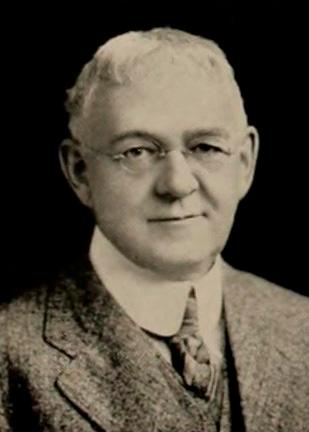
his household proved formative. After his family moved to Cambridge, Massachusetts, Wilder developed a deep fascination with natural history that would shape his life’s work. As Smith College’s Special Collections note, “He developed an early interest in biology through family influences and self-directed studies, including collecting animal skeletons by age 14.”
He earned his bachelor’s degree from Amherst College in 1886 and spent several years teaching high school biology in Chicago, Illinois, before traveling to Europe for advanced study. At the University of Freiburg in Germany, Wilder studied under prominent anatomists Robert Wiedersheim
Creative Options is looking for Shared Living Providers for our Adult Foster Care program: We need Shared Living Providers in Penobscot, Piscataquis and Hancock county to provide a home and support to an adult with intellectual disabilities. Shared Living is similar to adult foster care, wherein, you would provide someone with an opportunity to become part of your home and your family while providing them with care and support for their everyday needs. In turn, you will receive a generous, daily, tax-free stipend, paid out bi-weekly, plus training, respite, and room & board from the individual, which covers their rent and food while living with you in your home. Call us today if you are interested in making a difference in someone’s life, as well as your own!




and August Weismann. He completed his Ph.D. in 1891, with a dissertation on the anatomy of the aquatic salamander Siren lacertina, establishing himself early as a meticulous comparative anatomist.
In 1892, Wilder joined the faculty of Smith College in Northampton, Massachusetts, beginning a 36-year career that would leave a lasting impression on the institution. He founded Smith’s Zoology Department, introduced fieldwork to the curriculum, and later cotaught popular courses in evolution and anthropology with his wife, zoologist Inez Whipple, whom he married in 1906. Beyond the classroom, Wilder pursued ambitious research into comparative anatomy and human variation. His most enduring contribution emerged from an unexpected observation. While studying primates in the late 1890s, Wilder noticed striking similarities between the friction ridges on their hands and those of humans. This
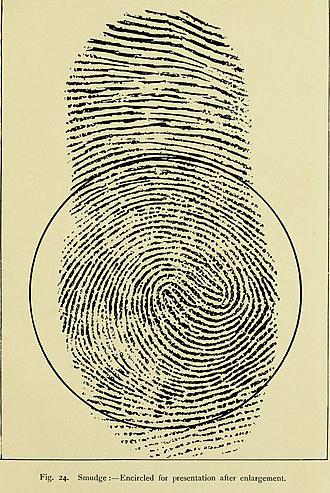
insight sparked a series of investigations that made him the first American scientist to systematically study fingerprint and palmar patterns – formally known as dermatoglyphics. At a time


when fingerprinting was still informal and unevenly applied, Wilder treated it as a biological phenomenon shaped by structure, variation, and permanence. That work culminated in Personal Identification: Methods for the Identification of Individuals, Living or Dead (1918), co-authored with Bert Wentworth. The book articulated how ridge patterns on fingers, palms, and soles displayed unique variability suitable for scientific identification. In grounding fingerprinting in anatomy rather than anecdote, Wilder helped transform it into a legitimate forensic discipline.
Colleagues later credited his research with shaping American forensic science well before fingerprints became standard in police departments. His early recognition of the individuality and durability of friction ridge patterns anticipated fingerprint systems now used worldwide.
Wilder’s curiosity extended beyond fingerprints. As noted in T.D. Stewart’s (cont. on page 40)




(cont. from page 39)
article “Pioneer Contributions of Harris Hawthorne Wilder to Forensic Sciences” in the Journal of Forensic Sciences, “He also conducted work in facial reconstruction from skeletal remains, contributing insights into how anatomical features could be used to infer aspects of identity, which is another pillar of modern forensic anthropology.” Together, these lines of inquiry reveal a scientist committed to applying anatomical knowledge to real-world problems.
Prolific and well connected, Wilder published seven books and nearly 40 scholarly publications. He also belonged to numerous professional organizations, including the American Society of Naturalists, the American Society of Zoologists, the American Anthropological Association, and the American Academy of Arts and Sciences. He and his wife also established the Anthropological and Zoological



Museum at Smith College, cataloging more than 1,000 specimens.
However, in recent decades, Wilder’s legacy has been reexamined. Historical accounts, including reporting by the The Sophian (Smith College’s student newspaper), document that Wilder and colleagues excavated indigenous burial sites in New England during the early 1900s, removing human remains for institutional study. Practices once considered routine are now widely viewed as ethically troubling, and many of the remains later became subject to repatriation under the Native American Graves Protection and Repatriation Act. These reassessments place Wilder within broader debates about the moral costs of early anthropological research and the treatment of ancestral remains.
Yet those who knew him often emphasized his devotion to teaching. Students remembered him as energetic and engaging, a professor who made com-
plex ideas vivid and accessible. Personal papers even reveal a playful side: Wilder composed lighthearted songs with zoological themes, indicating a sense of humor that matched his intellectual range.
On February 27, 1928, Wilder died suddenly of a cerebral hemorrhage in Northampton, Massachusetts, and was laid to rest at Bridge Street Cemetery. Obituaries in scholarly journals, such as Science, reflected on his rare combination of original research and pedagogical influence.
Today, Wilder’s work lives on in techniques central to modern forensic science. Dermatoglyphics, once an obscure anatomical curiosity, has become a cornerstone of personal identification. Wilder’s career stands as a reminder that careful observation and cross-disciplinary thinking can reshape entire fields, even when their full impact is not recognized until decades later.










by Doug Tibbetts
“Do you not know that a man is not dead while his name is still spoken?” (A quote from English author and satirist Terry Pratchett)
During the War of the Rebellion, the State of Maine would have an impact disproportionate to the size of its population. Approximately 73,000 to 80,000 Mainers, most who had never been more than a few miles from their homes, entered the U. S. Army and Navy, a higher proportion of men than any other state in the Union. Off to the great crusade they went with no idea of what may befall them but with an understanding of how important preserving the Union would be. It is estimated that around 9,400 Maine men did not survive the war with about two thirds
of that number dying from diseases or infections. The survival rate for various regiments did, however, vary considerably. Of note is the 1st Maine Heavy Artillery that suffered the highest battle casualties of any Union regiment in a single engagement. It lost over 600 men out of 900 in just 10-20 minutes during a charge at Petersburg on June 18, 1864. On the other hand, the 16th Maine Regiment during the duration of the war lost a total of 190 killed in battle and 261 dying of sickness or disease. Anyway you look at these numbers, they are astounding and hard to imagine today.
For the survivors, their experiences of sacrifice and suffering would undoubtedly become the most defining

period of their lives. It is easy to understand how the organization of The Grand Army of the Republic came about and how the veterans would cling to each other for the rest of their lives. When the assassin’s hand was at the throat of the Republic, they answered the call and enabled America to become the leader of the free world and the greatest country that has ever existed. Additionally, after the survivors returned home, they became very much respected, with many becoming leaders in government and business while helping Maine prosper into the 20th century.
When visiting a Maine cemetery, look for the metal G.A.R. markers beside headstones. These often identify



Civil War veterans’ regiments, with stones varying in shape and size; many bearing “sunken shield” carvings. I routinely check these stones, say the names, and sometimes record details. Using a book titled Maine in the War, I’ve occasionally matched regiments to specific veterans, even discovering the story of a friend’s ancestor who died in Libby Prison.
Occasionally, I discover some very interesting information inscribed on a stone. One, in particular, is in an obscure, somewhat uncared for cemetery in West Levant. The surname on the stone is Linnell with Charles E. Linnell being a former member of Co., D, 1st D.C. Calvary. He died of illness in Washington D.C. in 1864 at 22 years of age. Directly under his name is that of his brother, Virgil A. Linnell, who had traveled to Washington to care for his sick brother. While there he contracted an illness that resulted in his death at 24 years of age, shortly after returning to Levant. (cont. on page 44)








(cont. from page 43)
I often wonder if our average Maine high school student would be able to point out a G.A.R. marker and describe its meaning. That does trouble me some.
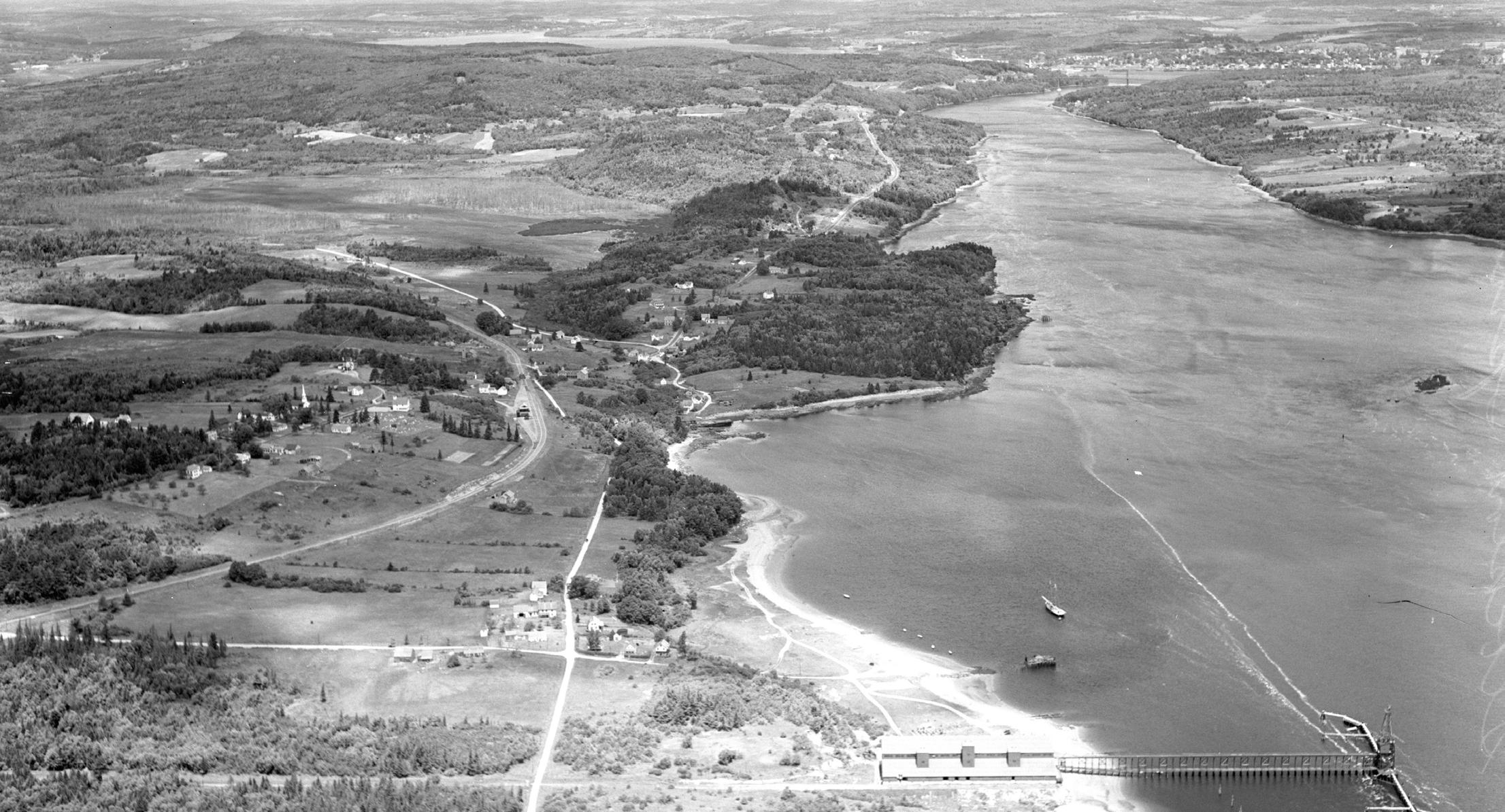
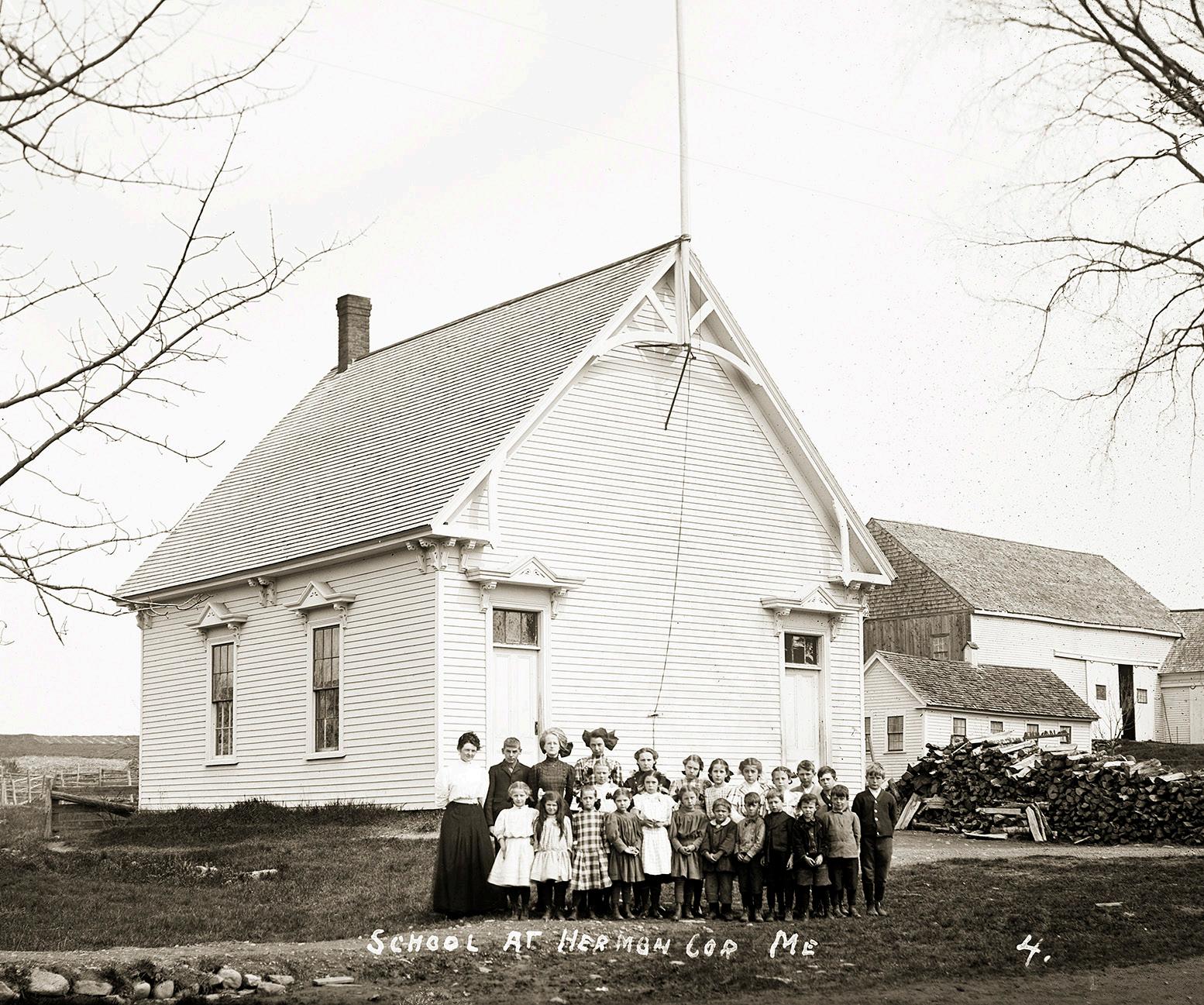
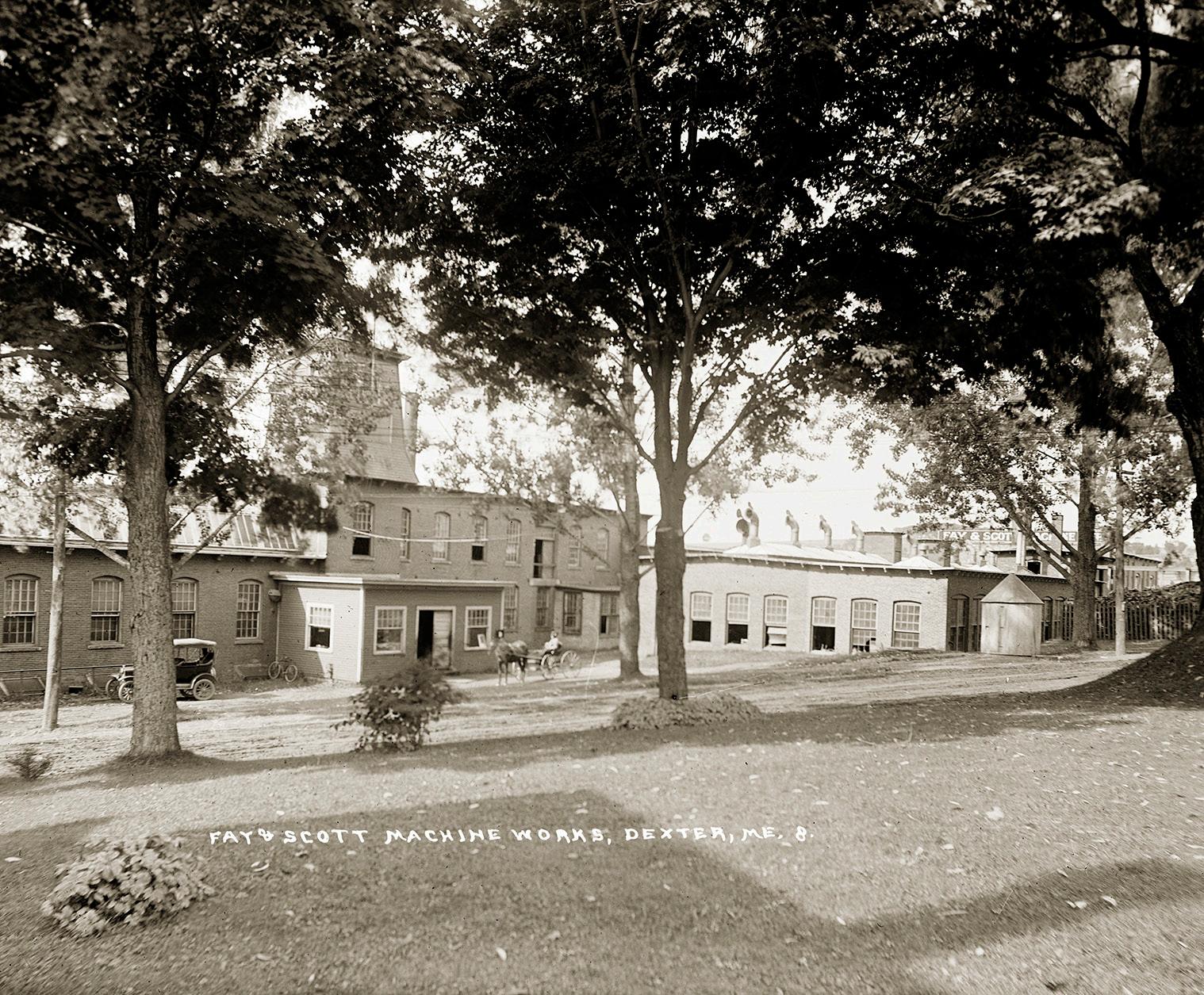
They are now very rare so I would encourage you to find one if you can. I often drive past one in the town of Garland and have included a photograph of the building. It is wonderful that the building has been preserved and I am sure that it means a lot to the community as there are many Civil War Veterans in the Garland cemeteries.
If you take the time to linger at a G.A.R. stone, you can delve into your innermost personal thoughts. Often, for me, it reminds me of the World War one poem In Flanders Fields written by Canadian physician Lieutenant Colonel John McCrae. One phrase that always comes to mind is “If ye break faith with us who die, we shall not sleep.”












by Brian Swartz
Looking to build a woolen mill next to the Douglas Dam on the Sebasticook River in Pittsfield, backers held a meeting in spring 1892 to seek financial support from town residents. The project got the sought-after local dollars — and then some.
Backers had incorporated the proposed venture as the Waverly Woolen Company, a name supported by Robert Dobson Sr., the driving force behind principal mill booster Robert Dobson & Co. Plans called for raising $150,000 in capital stock be selling shares for $100 per share.
Robert Dobson & Co. offered to invest $20,000 in Waverly Woolen stock,
as long as Pittsfield residents raised $40,000 toward the project. Dobson Sr. believed his family could could convince business contacts elsewhere in the Northeast that the mill was viable; he projected Robert Dobson & Co. could raise $40,000 to $75,000 out of state.
On Saturday afternoon, April 16, 1892, Pittsfield residents gathered in Union Hall to discuss raising the $10,000. Around a “hundred or so gentlemen” listened as backers outlined the benefits a new woolen mill would bring to Pittsfield.
So far backers had raised an astounding $57,400, with Robert Dobson


& Co. making the largest single investment. That firm would run the mill, but some “gentlemen” present in Union Hall questioned the project’s viability. A supporter dismissed such critics as men “who see a cat under the meal in everything.”
The proposed woolen mill was “a plain business transaction, not a ‘scheme.’ There are no holes in the skimmer,” the supporter indicated. As occurs at fund-raising events, project backers struck while the iron was hot. Opening the subscription book (the words “stock” and “subscription” were used interchangeably in that era), the supporters invited anyone and ev(cont. on page 46)




(cont. from page 45)
eryone to step forward and invest in Pittsfield’s future.
Several men did; when the meeting ended the woolen mill was $3,900 closer to becoming reality. Over the next few days backers raised another $700 locally.
Waverly Woolen supporters noticed that William Dobson left Pittsfield “on a business trip” on April 20. Rumors flew that he “will doubtless bring the subscription up to the full amount required in the course of two weeks.” He raised $20,000 in Augusta and $23,000 in Boston and $25,000.43 in Bangor and returned to Pittsfield with the requisite amount of financial support.
By April 21 backers had raised “an even $62,000.” Contributions ranged from $100 apiece from 32 people (including several women) to $200, $300, a single $400 subscription, $500, and subscription amounts rising through the low four figures. One Pittsfield

resident, A. P. McMaster, contributed $5,000.
Robert Dobson Sr. hoped “to see cloth woven in the new woolen mill” by spring 1893 and expected to personally manage it during its first year in operation.
“Already, by the quickening pulses of business, do we see some of the good results that will be brought about” by the proposed woolen mill, a supporter commented.
The Waverly Woolen project developed as construction took place that spring on a new planing mill in Pittsfield. The mill’s two-story, 40-by-60foot “main building” was so quickly erected that some power equipment became operational on April 21. The building was “covered with a fireproof iron roof,” and most machinery was installed on the second floor. The first floor contained an engine, a boiler room, and storage.
Official ground-breaking for the Waverly Woolen mill occurred on July 2. When completed, the three-story mill would be 298 feet in length and 60 feet in width, and two smaller wings would extend from the main building.
On September 29 “the chimney was ready,” and Florence Quinn (wife of Pittsfield “wooler-weaver” Wilbert Quinn) “went to the top of the tall chimney … 100 feet high, and triumphant laid the first brick” for the mill, reported the Pittsfield Advertiser. Florence Quinn, who was the newspaper’s society editor, “showed herself to be a lady of nerves as she displayed no trace of uneasiness under circumstances that would appall most women, not to say a few men.”
Completed in April 1893, the Waverly Woolen mill and the new planing mill brought more people to live in Pittsfield; workers did not commute long distances in those days. Robert









Dobson & Co. constructed 52 houses that mill workers rented.
Founded in New England in 1899, the American Woolen Company purchased the Waverly and Pioneer woolen mills in Pittsfield and a Newport woolen mill in 1914. The company owned 58 woolen mills in New England during the 1920s; that number included eight mills in Maine, with all but Old Town’s located in the Kennebec or Sebasticook valleys.
American Woolen struggled during the Depression and closed the Waverly Woolen mill in 1929. The last woolen mill to close in Pittsfield was the Pioneer, which shut down in 1954.







by Thomas J. Roth
Growing up in the 1930s in the wooded shores along Moosehead Lake was an adventurous setting for a young man. While others across the country would bemoan the Great Depression, the hardy Mainers and French-Canadians that inhabited the woods and waters in the Moosehead Region knew little of this thing they called a Depression. These people worked hard for the little they had, so a national economic scare hardly affected them.
Depending on your family you either worked the woods in the timber industry, or you worked as a guide putting fish and game in front of rich
out-of-state clients. Such was the case of the Stevens family of Lily Bay. Located on the eastern shore of Moosehead Lake, the Stevens family owned a neat little row of sporting camps that they would rent to visiting hunters and anglers. Their personal home served as the dining lodge, complete with a fourteen-foot long dining table with an assortment of wooden folding chairs. When the table was set up for clients, it could feed over a dozen men, as well as the guides they usually kept around. During the off season, the table was only set for five persons, Mr. Stevens, the family patriarch, Mrs.Stevens, the camp cook, and the two Stevens boys,

Jacob and Joseph, and finally little Emily Stevens, the youngest of the clan, but certainly not the quietest.
Jacob was 17 years old, finished with school, and ready to help his father run their fairly successful set of sporting camps. Robert Stevens, the father of the group, was a knowledgeable woodsman and a shrewd businessman. He had purchased the old sporting camp from a lumber mill operator from Greenville. The camps were used to house the Canadian lumberjacks who would work the week in Maine and return to Canada on the weekend. The large house served as the headquarters for the cutting operation. Once the



landowner finished working the woods near Lily Bay, he packed up his gear and set up a similar, more modern camp in Rockwood, leaving the old camp behind.
The cabins consisted of small logwalled one-room camps with pine floors and a screened-in front porch. A small cast-iron wood stove provided the necessary heat, and a centrally located outhouse handled those necessary chores. The cabins were warm, dry and cozy, just the rustic experience that wealthy sports from exotic places such as Boston and New York City were looking for.
Each cabin came with a seventeento twenty-one-foot Grand Laker Canoe. This was a sturdy cedar-ribbed canoe with heavy canvas stretched across the frame to provide lightweight strength. These boats, while looking small for the heavy waters of the mighty Moosehead, were very responsive and handled the chop well. A chair built of ash was placed near the front of the boat so the trolling angler could fish in comfort, while the guide operated the motor in the rear. Like most of the boats in the area, these were painted a forest green color. “Stevens’ Camps” was stenciled on the side for identification and advertisement purposes. The guides would paint and repair the craft over the winter so that each boat was ready for May fishing when the ice went out and the salmon were on the prowl.
Salmon angling on Moosehead Lake
meant trolling the many miles of the shoreline near Stevens Point, where the camps were centrally located. Several brooks led into the big lake, and once May rolled in, smelt would charge up these brooks at night to spawn and then retreat to the outlets in the daytime. Anglers would motor by the mouths of the brooks in hopes of intercepting a heavy salmon while they lay in ambush for the smelt. The Stevens’ Camp guides used a variety of tackle and gear to catch salmon, each swearing by his own secret combination.
Joe DuPlissis, a retired Canadian woodcutter, was the oldest guide, and had the best reputation for putting his clients onto fish. He favored a stout Montague Trolling Rod, topped with a Pflueger Sal-Trout model 1558 reel. This large reel held plenty of sturdy braided trolling line. He carried a spare already rigged with steel line for deep trolling later in the season when the fish drop down.
Joe used a variety of baits and lures, but trolling flies was his favorite method. In the 1930s a fly-tier from Upper Dam in the Rangeley Lake Region was gaining quite a following in the state. Carrie Stevens had invented a fly called the Grey Ghost, and won an award from Field and Stream with the large brook trout taken on it. It resembled a smelt, as do most popular salmon flies, but it seemed to have universal appeal on most Maine lakes. Joe tried Carrie’s fly when a client gave him one, and he


copied it and fished it almost exclusively after they boated five salmon, each weighing more than six pounds in less than an hour!
Joe also liked trolling sewn-on smelt when the smelt run was on. He reasoned that although the myriad of smelt-copying flies looked close enough to the real things, when the run was on, only a live smelt would do. Joe learned from a Penobscot Indian guide how to sew on a smelt. The time-consuming task was difficult to perform in a rocking boat, but when done properly, the smelt would troll along and occasionally perform a “death roll” that seemed to spur the fish into striking.
Another guide, Max Mueller, a young German immigrant who found his way to the Moosehead region after his family settled in the Houlton area to farm, was the official fly-fishing guide. When a sport from out-of-state arrived who strictly wanted to fly fish for the abundant salmon, he was the one that took the client out. Max used a long split bamboo rod made in Germany with a beautiful sterling silver reel. The tiny reel held a silk fly line that Max carefully cleaned and greased after each outing. The other guides would tease Max that his cabin looked like a woman’s laundry room, and his fly line that dangled off of every chair looked like a woman’s silk stockings drying in her bedroom! Max didn’t care. He knew his equipment would always perform, and since he often lent his prize (cont. on page 50)
(cont. from page 49)
rod to his angling clients, he wanted it to be in tip-top shape. Max kept a small circular tin in his shirt pocket which contained his leaders. They were made of catgut and needed to be dipped into the lake and softened before they would work. Once they were pliable enough, he attached them to the line and then threaded them on a fly. Max preferred to use flies that were traditional to the area, and since he had traveled throughout Maine to fish and guide, he often brought back other patterns to try.
While most clients wanted to troll for their fish, Max had a different technique that worked well in the early morning and late evening hours when the lake was at its calmest. Max frowned on the use of a gas outboard, claiming that it scared the fish away, so he paddled his Grand Laker with a long ash paddle. Max would sneak along the shoreline, instructing his clients to stay still and quiet in the boat. When a telltale splash or dimple on the surface signaled a fish was nearby, he would quietly slip close to that spot and instruct his sport to cast near the splash. Oftentimes, when the dry fly smacked the surface of the water, the fly would briefly disappear as a hungry salmon inhaled it, then water would spray out as the fish realized his mistake. This technique accounted for a great many trophy fish for Max’s clients, and a handsome tip at the end of the week.
There were other guides at the Stevens’ camps, but the most popular were


Joe DuPlissis, the “trolling guide” and Max the “Fly-fishing guide.” Over the years, the sports began to buy up their own camps on the huge lake and guiding became a less popular way to make a living. As cars invaded the area, roads formed from old twitch roads that the timber harvesters had used, bringing more sportsmen to Moosehead and ultimately, fewer fish. The Stevens’ Camps were eventually sold to individual own-
ers, and the family returned to working the woods as they previously had. No one was sure what happened to guide Joe DuPlissis, as he seemed to disappear once the camps were sold. Some say he returned to live out his remaining years in Canada with his family. Others tell of a “hermit” living near Seboomook who spoke of his early fishing days when a wayward hunter stumbled upon his cabin. As for Max, the

young German immigrant, he married Emily Stevens and they moved to New Brunswick to start a family and run a salmon camp on the famous Miramichi River. His family still remains in that region and they occasionally make a spring fishing trip to Moosehead Lake to fish where their grandfather got his start. The salmon in Moosehead have been stocked for the past several decades, so few of the breed that existed when the Stevens’ Camps was popular remain, but perhaps some of the bloodline was left behind. Anglers trolling around Lily Bay today still have a chance at decent fish, but not the quantity and size that were once present. If you fish that area, look for a clearing near Stevens Point and picture the large lodge and camps that once dotted the area. Don’t look too long, though, for you wouldn’t want to miss a salmon’s roll and a chance at the fish that shaped Moosehead’s history in the early part of the century.






by James Nalley
Hazel Marion Eaton was born on July 4, 1895, in one of the most improbable places imaginable: inside the tower of the West Quoddy Head Lighthouse in Lubec. Her father, Edwin Eaton, was the assistant lighthouse keeper, and when her mother sought refuge from the overpowering paint fumes in the keeper’s quarters, the lighthouse tower offered a safer refuge, and, unexpectedly, a delivery room. From the outset, Hazel’s life seemed marked by risk, resilience, and a touch of drama, as if she were destined to move through the world poised between safety and danger.
Lubec was quiet, maritime, and con-
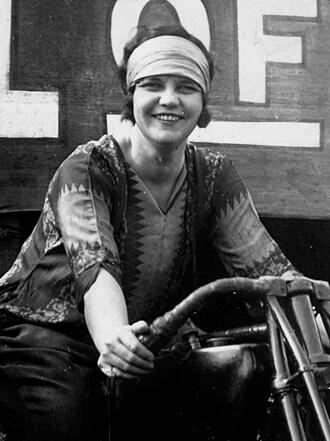
servative, an unlikely setting for the emergence of one of the country’s most fearless daredevils. Yet from an early age, Hazel displayed restless physical confidence that set her apart. Growing up on the rugged coast of Maine, she became known for competitive swimming and long-distance diving, athletic feats impressive enough to attract the attention of traveling carnival scouts. As noted in the article, “Hazel Marion Eaton’s Story” from Hazel Images [a family curated archival site], “Hazel left home in her mid-teens to join the Johnny J. Jones Exposition. Her early acts were strikingly varied, including shallow-water dives off elevated plat-







forms, hoop-rolling routines, an Annie Oakley impression, and performances alongside trained monkeys.”
Those first routines introduced her to the demanding, itinerant world of the carnival: rough-edged, overwhelmingly male, and driven by an unrelenting appetite for novelty. It was within this world that Hazel encountered the most extreme attraction of all: the motordrome, better known as the “Wall of Death,” a towering wooden cylinder in which riders defied gravity by racing motorcycles along vertical boards at terrifying speeds. Industry trade papers, such as Billboard, regularly reported that Wall of Death shows “took top money for the week,” underscoring their central role in carnival economics and their powerful grip on the public imagination.
Hazel did not merely enter this world; she mastered it. According to the Lighthouse Digest article, “Dare-


devil Cyclist was Born in West Quoddy Head Lighthouse” by Ruth Leubecker, Hazel “became the first of the ‘mile-aminute’ girls to ride her Indian motorcycle in a carnival motordrome labeled the ‘Wall of Death.’” Crowds watched as she leaned her body nearly horizontal against the curved wooden boards, relying entirely on centrifugal force, precision, and nerve. For audiences accustomed to male daredevils, this sight was startling. However, Hazel’s calm, unflinching presence suggested that danger, at least for her, was simply another problem to be solved.
However, the danger was real and relentless. Motordrome accidents were common, and Hazel herself suffered a serious crash when a locked brake sent her tumbling to the bottom of the structure. Hospitalized with head and facial injuries, she nonetheless returned to the Wall within a year. Looking back on her career in a 1939 interview with
the Portland Sunday Telegram, Hazel described the work with startling understatement, remarking that “flirting with death was a thrilling profession.” This phrase captured both the peril of the Wall and the psychological armor required to survive it.
In the same interview, Hazel dismissed the idea that fear governed her performances. She explained that although the feats “appeared to be clever,” she often carried them out without consciously dwelling on the risk, a striking insight into how repetition, skill, and resolve can dull even mortal danger. This refusal to dramatize her own courage only made her more remarkable.
In 1917, Hazel married Ira Watkins, a motordrome operator, and the two toured the United States relentlessly. Their daughter was born the following year, but the realities of carnival life meant that Hazel continued riding, (cont. on page 54)



(cont. from page 53)
while her child was raised by relatives. It was a sacrifice common among show performers, though rarely acknowledged publicly. By the 1920s, Hazel had moved beyond performer status, purchasing her own Wall of Death and running it as a business, an extraordinary achievement for a woman in an industry overwhelmingly dominated by men.
At the same time, trade publications, such as The New York Clipper and Billboard, routinely tracked the motordrome circuit, listing riders, earnings, and audience draw. These matter-offact accounts placed Hazel squarely within a bustling entertainment industry, not on its margins as a novelty act. In this regard, her career was built on far more than courage alone. It equally depended on logistical precision, solid contracts, reliable equipment maintenance, and the ability to manage crews on the road. In other words, these were

the unglamorous but essential skills that popular retellings of daredevil culture almost never bothered to mention.
As for Hazel’s personal life, it remained closely intertwined with the entertainment world. After divorcing Watkins, she married Jesse Reis, a circus auditor, in 1928. Together, they continued touring until the early 1940s. During this period, Hazel formed an unlikely friendship with Beatrice Houdini, the widow of the legendary magician Harry Houdini. In 1936, at Beatrice’s request, Hazel conducted a private séance to contact Houdini’s spirit. This event was later reported in Maine newspapers, capturing both the era’s fascination with spiritualism and Hazel’s enduring visibility in the public eye.
Eventually, the Wall of Death faded out of the spotlight, eclipsed by new forms of entertainment. Hazel retired from touring and returned to Maine,


later moving to Mt. Dora, Florida, for health reasons. She died on December 22, 1970, at the age of 75. According to genealogical burial records, Hazel was laid to rest in South Portland, returning, at last, to the state where she was born, raised, and first launched her extraordinary career in carnival thrill riding.
As for her legacy, it simply endures because it resists easy categorization. Hazel was neither a novelty nor a thrill-seeker. She was a highly skilled professional rider, a savvy businesswoman, and a woman who claimed both physical and financial independence at a time when such autonomy was rare. Her story challenges modern assumptions about early 20th-century gender roles, reminding us that courage and ambition often flourished far from conventional or “respectable” paths.


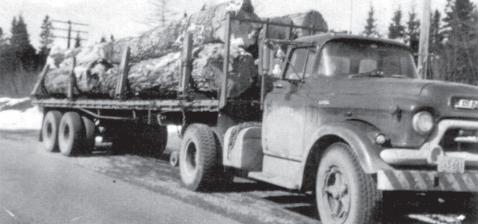

by Jim Lilley
On the night of September 15, 1620, a young man named John Howland was packing his bags prior to turning in for the evening. All he could think about was the following day, when he would set sail from England on a voyage to the New World. Little did John know that the ship he would sail on, the Mayflower, would go on to become one of the most famous ships in American history.
John was born in Huntingdonshire, England in 1592/3. He was the son of Henry and Margaret Howland, and the brother of Henry Jr. and Arthur. Both brothers immigrated to the New World just a few years after John’s arrival. At the time of the Mayflower depar-




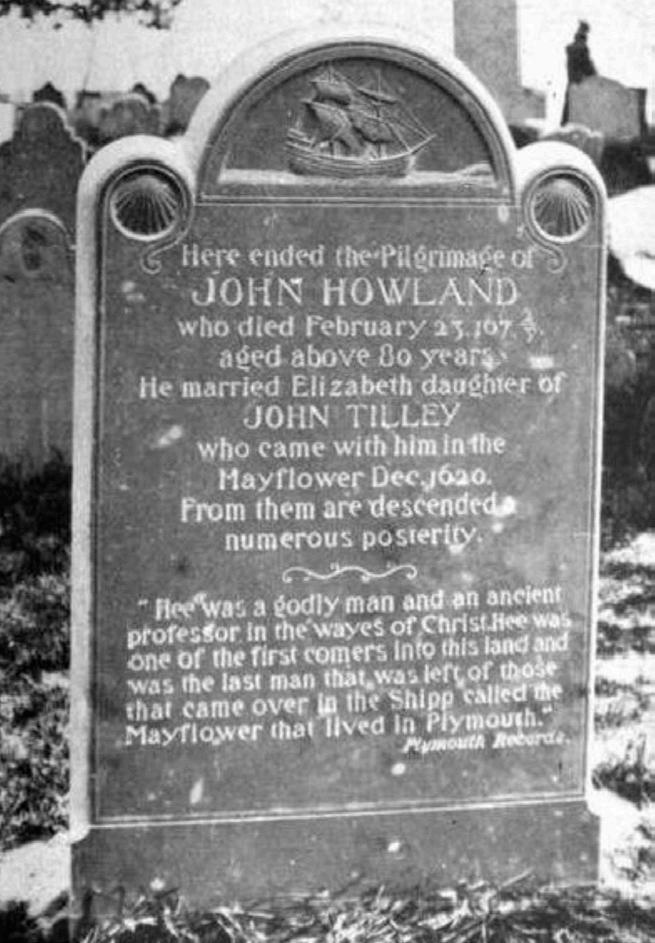
ture, John was in his late 20s and employed as an indentured servant to Deacon John Carver, one of the organizers of the voyage. Deacon Carver asked John to accompany him on his journey to the New World. Had the Deacon not paid for John to make the voyage, he most likely would never have set foot on American soil.
The trip across the Atlantic Ocean was a grueling one. The autumn weather produced rough storms with high winds and extremely cold conditions. The living quarters were crowded and damp. Passengers were required to sleep on wooden deck floors and use chamber pots as toilets. Rarely could they venture above deck to escape the damp, (cont. on page 56)
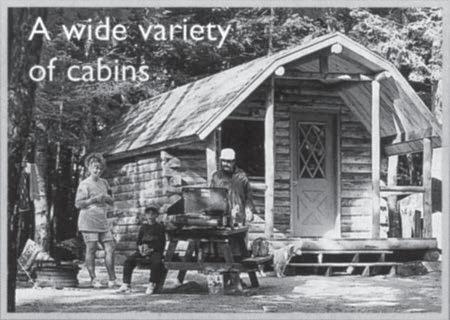





on


(cont. from page 55)
dark and crowded conditions. Worse yet, they had to endure those dreadful conditions for 66 straight days, the length of the Mayflower voyage. This was all because the Mayflower was not a passenger ship; it was designed and built to transport cargo.
At some point during the voyage, Howland decided to go above deck to get some much-needed fresh air and to stretch his legs. Some believe what happened next was a stroke of pure luck; others have no doubt it was divine intervention. Whichever it was, it saved John from drowning in the choppy waters of the north Atlantic.
While on deck, John slipped and fell from the ship. Just before he hit the water, a sail rope swung by and John was able to grab it. He was holding on for dear life. John became submerged but was able to hold onto the rope until two deckhands spotted him and pulled him aboard with the aid of a boat hook. Had John missed grabbing that rope,
he surely would have died. Due to this life saving event, John went on to live a long and productive life. He left an amazing legacy that lives on to this day through some of the most famous people in American history.
Upon arrival in the New World, John wasted no time building a wonderful life and a very successful career. John’s employment as an indentured servant to Deacon Carver was short lived, as the Deacon died just five months after arriving in the New World. John went on to be an assistant to Governor William Bradford of Plymouth Colony. He also held several other prominent positions, including Selectman, Deputy to the General Court, and Town Surveyor of Highways.
In 1623 John married Elizabeth Tilley. John met Elizabeth on the voyage across the Atlantic, as she and her parents were also passengers of the Mayflower. The couple would go on to have 10 children and 88 grandchildren. Over







time, this enormous family would result in John having an estimated two million descendants. A number of those descendants have created a legacy of their own, and it all began with the marriage of John and Elizabeth Howland.
Three American presidents are direct descendants of the Howlands, including Maine’s adopted presidents George H. W. Bush and his son George W., along with our 32nd president, Franklin Delano Roosevelt. Actors Humphrey Bogart, William H. Macey, Chevy Chase, and Christopher Lloyd are among several famous actors that are descendants of the couple. Other notables include Sarah Palin, Ralph Waldo Emerson, Henry Wadsworth Longfellow, Dr. Spock and Joseph Smith Jr. Joseph was the founder of the Mormon Church of the Latter-Day Saints.
In 1626, John was appointed to a committee that assumed Plymouth Colony’s huge debt to the English inves-

tors that financed the Mayflower voyage. To repay that debt, the committee decided to pursue trading with Native Americans. In 1628 they opened a trading post on the Kennebec River in the area that is now Augusta, Maine. John Howland was named the Trading Post Manager. At the time of John’s arrival, the area was inhabited by several Native American tribes that were known as the Wabanaki Confederacy. Archaeologists have found evidence that the Wabanaki people have lived in Maine for over 13,000 years.
When John first arrived in Maine to set up the trading post, the area they chose along the Kennebec River was known as Cushnoc. Cushnoc is the Native American term that means “head of tide.” Head of tide is the furthest point upstream in a river where the water is still affected by tidal fluctuations from the ocean. To this day, 400 years later, the Augusta section of the Kennebec
River is still considered “head of tide.” The outpost, known to settlers as the Plymouth Colony Trading Post, and to Native Americans as the Koussinoc, became highly successful and was the main enterprise that allowed the Pilgrims to survive, and to pay off their debt to the English investors. The settlers would bring European goods like firearms, ceramics, liquor and copper pots to trade for furs with the Native Americans. The main commodity desired by the settlers was beaver skins, although other furs were also traded, such as otter, sable and marten. Initially, the trading post was mutually beneficial to both the settlers and the Native Americans, but in 1661 when the beaver population became depleted, the post was abandoned. By then, the trading post had been in operation for 33 years.
John Howland managed the trading post for 10 years before returning home (cont. on page 58)







(cont. from page 57)
to Plymouth Colony in 1638. John and Elizabeth settled in Rocky Nook, in what was then known as the Massachusetts Bay Colony. Today Rocky Nook is a historic village in Kingston, Massachusetts. John went on to become a major landholder and civic leader in the Plymouth area. In his later years he enjoyed farming and spending time with his grandchildren.
On February 23, 1672/3, John Howland died in Plymouth, Massachusetts at the age of 80. His body was laid to rest in an unmarked grave on Burial Hill in Plymouth. John’s grave remained unmarked for 163 years, at which time several descendants placed a headstone on what they believed to be his final resting place. In 1897, a larger headstone was erected. When the new headstone was set in place, the original one was buried directly beneath it.


To this day, John Howland has never been forgotten. In 1826, the founders of Howland honored John by naming the







town after him. They felt he was worthy of the honor due to his contributions to the early development of Maine. John’s memory has also been preserved through The Pilgrim John Howland Society. The society was organized in 1897 by a group of his descendants. Over 125 years later, the society remains active to keep John’s legacy alive. It also maintains his homestead at Rocky Nook. Anyone who can prove direct descent from John Howland can become a member of The Pilgrim John Howland Society.


Cabins & Motel..............................................................26
Hatch’s Custom Meat Cutting LLC......................................................28
Herrick Excavation.............................................................................46
Highland Builders..............................................................................51
HW Dunn & Son Inc. ...........................................................................7
Irish Collision Center..........................................................................43
Island Approaches..............................................................................14
Island Traders Antiques.......................................................................5
J&J Construction................................................................................24
J. McLaughlin Construction, LLC.........................................................29
J.A. and Sons......................................................................................25
J.M. Brown Construction....................................................................36
JATO Highlands Golf Course...............................................................33
Jerry’s Shurfine..................................................................................54
John R. Crooker Agency.....................................................................13
Johnson Foundations.........................................................................48 Jon D. Woodward & Sons, Inc. ..........................................................6
Katahdin Air.......................................................................................32
Katahdin Shadows Campground & Cabins.......................................55
Katahdin Trust....................................................................................28
Kineo
Lund Construction.............................................................................26
Machias Bay Area Chamber of Commerce.........................................52
Machias Wild Blueberry Festival........................................................25
Maine Cedar Specialty Products........................................................53
Maine Equipment Company................................................................3
Maine Highlands Federal Credit Union.............................................44
Maine Historical Society......................................................................5
Maine’s Outdoor Learning Center......................................................51 Maine


• Coffee Roasting
• Cookware
• Wine, Cheese, Specialty Foods
• Fresh Baked Goods
• Cookbooks, Cards, Table Linens ... and much more! 29 Main Street • 207-667-8675

Visit us online at roosterbrother.com to ship our coffee anywhere