

A World in Motion
Leverage pre-configured KPIs, industry benchmarks, and advanced analytics to make smarter decisions.

“From a straight ROI perspective, we’re going to get a very strong ROI going with Exigo. There are no ifs, ands, or buts about it.”
Steve McCarthy, VP of Finance,
Empower your business to Run, Know, and Grow with Exigo Contact us today at sales@Exigo.com or scan the QR Code to book a free demo.


































































































APRIL 14 / 1:30PM-5PM (CT)





TUESDAY, APRIL 14, 2026
THE INDUSTRY AWARDS
JOIN US FOR
EVENT OF THE YEAR
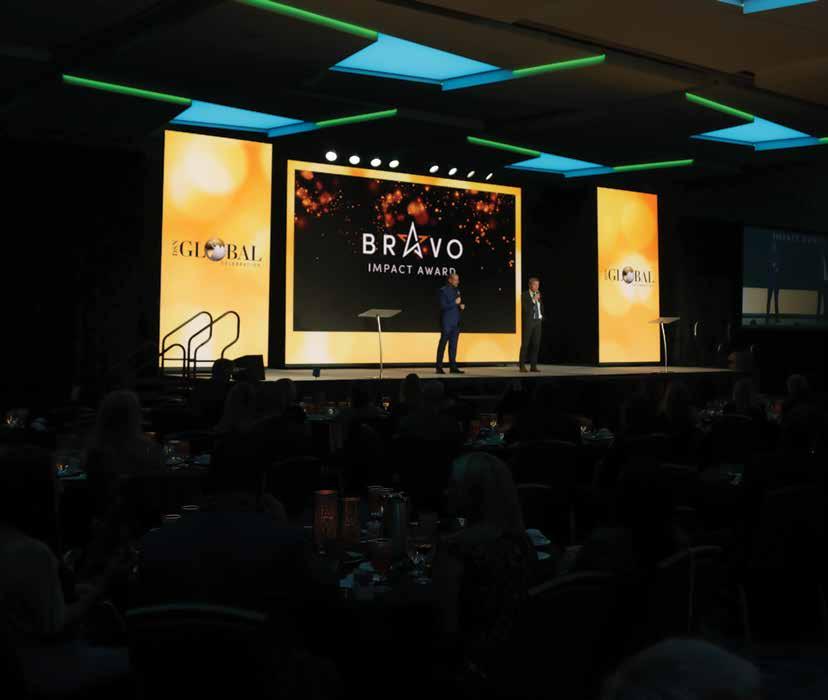
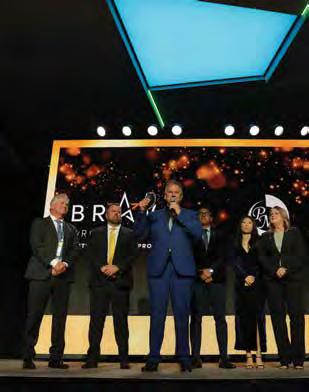
17TH ANNUAL DSN GLOBAL CELEBRATION The Oscars of Direct Selling!
The DSN Global Celebration is the premier event of the channel.
Each year, the highly anticipated DSN Global 100 List is revealed along with the DSN Bravo Awards recognizing the outstanding achievements of the channel’s elite companies and executives.
Tuesday, April 14, 2026

6 PM—7 PM (CT)
7 PM—10 PM (CT)

Winning in LATAM BY ALEX HOFFMANN
Canada’s Direct Selling Market BY PETER MADDOX
Direct Selling’s APAC Opportunity BY DSN STAFF WRITER
3 Key Trends in D2C Retail BY SUSANNAH SCHOFIELD OBE

COMPANY SPOTLIGHT
Neora: Battle Tested, Built to Last BY JENNY VETTER

70 96 90 34 74 80
DEPARTMENTS
FORWARD THINKING / Regulatory, Compliance, Analytics & AI BY LAUREN POEL
INSIGHTS FROM THE OUTSIDE / An Executive Decision BY DAN DEBNAM
LEGAL BRIEFS / Is the FTC’s Administrative Process Unconstitutional BY ED BURBACH & JANE FERGASON
FOR YOU / FOR YOUR FIELD / Your Essential Monthly Motivation BY CHELSEA HUGHES
WORKING SMART / From Activity to Impact BY CASSIE LEWIS

A WORLD IN MOTION
Direct Selling’s Global Snapshot
BY LISA ROBERTSON

Direct Selling News (ISSN 15546470) is published six times a year in January, March, May, July, September and November by Direct Selling Partners, 5717 Legacy Drive, Suite 250, Plano, TX 75024. Periodicals postage paid at Lake Dallas, TX and additional mailing offices.
POSTMASTER: Send address changes to 5717 Legacy Drive, Suite 250, Plano, TX 75024.
Subscription Rate: Free to direct selling and network marketing executives in the US.
©2026 Direct Selling News
All rights reserved. Material may not be reproduced in whole or in part in any form without written permission. No statement in this publication is to be construed as a recommendation to buy or sell securities or to provide investment advice.
Direct Selling News
5717 Legacy Drive, Suite 250, Plano, Texas 75024 / Phone: 800-279-5249 directsellingnews.com
DIRECT SELLING NEWS
Serving the Direct Selling and Network Marketing Executive Since 2004
A Direct Selling Partners Company
FOUNDER AND CEO
Stuart P. Johnson
PUBLISHER
Patricia White
EDITOR
Lisa Robertson editor@directsellingnews.com
NEWS EDITOR
Sarah Paulk pr@directsellingnews.com
CONTROLLER
Gabrielle Araujo
CREATIVE DIRECTOR
Susan Douglass
PRODUCTION MANAGER
Virginia Le
DIRECTOR OF MARKETING
Jason Maggiore
WEB MANAGER AND DIGITAL MARKETING
Laura Coppedge
COPY EDITOR
Laura Coppedge
CONTRIBUTORS
Ed Burbach Peter Maddox
Dan Debnam Sarah Paulk
Jane Fergason Lauren Poel
Dave Grimaldi Lisa Robertson
Alex Hoffmann Susannah Schofield OBE
Chelsea Hughes Jenny Vetter
Cassie Lewis
TO ADVERTISE: advertising@directsellingnews.com
TO SUBMIT EDITORIAL COMMENT: editor@directsellingnews.com
TO SUBMIT PRESS RELEASES: pr@directsellingnews.com
TO SUBSCRIBE/UNSUBSCRIBE: subscribe@directsellingnews.com
DIRECT SELLING NEWS
USPS 23713 • ISSN 15546470
There is POWER in Partnership>
What part of your business would benefit by bringing in outside expertise to help your team be more efficient and effective?
DDELEGATING time-intensive business functions to highly skilled suppliers provides the breathing room to focus on unique skill gaps, like training team members on best practices, getting up to speed with new technology or customer service response that many organizations overlook.
For your convenience, we have compiled a list of our display advertisers. When contacting these companies or those in our Supplier Directory (starting on page 103), please let all of our valued advertisers know that you saw them in DSN.
—IRENE SCHARMACK / CEO, QuickBox Fulfillment


/ QUICKBOX.COM

Exigo
214-367-9933 / EXIGO.COM INSIDE FRONT COVER

Ordergroove
MARKETING-TEAM@ORDERGROOVE.COM / ORDERGROOVE.COM/INDUSTRY/ DIRECT-SELLING PAGE 1

Momentum Factor
512-690-2134 / MOMOFACTOR.COM
PAGE 12


iCentris 801-383-3262 / ICENTRIS.COM PAGE 19

Quickbox Fulfillment 720-990-5642 / QUICKBOX.COM PAGE 69

Fluid 385-336-7404 / FLUID.APP PAGE 23

Nexio 877-551-5504 / NEX.IO
PAGE 30

Treel.ai
408-775-9964 / TREEL.AI
PAGE 14

LaCore Commerce INFO@LACORETECHNOLOGIES.COM / LACORECOMMERCE.COM
PAGE 16

Direct Selling Association Canada
+1 416-679-8555 / DSA.CA
PAGE 18
LaCore Payments Technologies SALES@LPT.IO / LPT.IO PAGE 31

Rallyware
877-858-8857 / RALLYWARE.COM/CONTACT PAGE 32

Nowsite 972-315-3505 / NOW.SITE PAGE 57
SocialSales.io 214-659-1549 / SOCIALSALES.IO PAGE 77
Katapult
407-915-9060 / KATAPULTEVENTS.COM PAGE 79
Teqtank 844-605-9624 / TEQTANK.COM PAGE 85

Direct Selling Association 202-452-8866 / DSA.ORG PAGE 100
InfoTrax 801-431-4900 / INFOTRAXSYS.COM BACK COVER











A Global Opportunity
AS WE GO TO PRINT, we are roughly 50 days into 2026. So far, the only constant seems to be change. From politics to economics to social issues, keeping up with news can be exhausting. Thankfully, direct selling isn’t experiencing that kind of turmoil. Our channel is still finding ways to thrive throughout the world. And in this issue, we’re focusing on direct selling’s global opportunity.
In our cover story, DSN takes a look at what’s happening in the Americas, Asia, Oceania, Europe and Africa based on data analyses from WFDSA’s latest STATS report that capture what’s working right now and what the future might hold.
Additional features in this issue take even deeper dives as experts in LATAM, North America, Europe and Asia weigh in on the specific trends and markets that are proving to be true global growth opportunities.
Our regular departments also provide insights into legal issues, technology, innovation, personal development and other hot topics, providing each of our readers with a holistic view of everything that’s happening in the channel right now.
And finally, our spotlight shines on Neora. This battled-tested company is turning 15 and experiencing a powerful resurgence. Learn about the products and programs that define Neora’s mantra of making people better.
At DSN, we strive to be your daily resource for global news impacting the direct selling channel. We have four podcasts, each tailored to meet the needs and expectations of direct selling executives—make sure to like and subscribe so you never miss an episode. And don’t forget to sign up for free text alerts by becoming a member of our VIP Community where you’ll always get the top stories first and fast!
The educational opportunities never end—Spring DSU and our Global Celebration are right around the corner— happening April 14-16 in Dallas. Make sure to register today for an event full of recognition, education and networking. You can secure your spot now at dsnevents.com.
All the best,
Patricia White | Publisher | pwhite@directsellingnews.com
This “Magic Wand” AI Coach delivers 18% boost in retention. Meet: Treel.ai
We’ve spent 20 years in the MLM trenches as IT consultants. Built breakthrough technology for this industry specifically.
So last year we asked a few dozen executives and field leaders a simple question: “If you had a magic wand, what 3 problems would you want to disappear?”. The answers were almost universal across distributors, customers, and leaders.
PROBLEM 1: PRIORITIZATION
Distributors don’t always know what the most impactful thing is that they should be working on right now.
“If Jenny has 20 minutes while her baby is napping, she needs to know exactly what to do. Right now she doesn’t.”
PROBLEM 2: FEAST OR FAMINE
Every day is a hard choice: prospect for new business or protect the customers you already have.
“9 out of 10 times I have to choose growth over retention. And my customers churn because no one is available to check on their progress.”
PROBLEM 3: VISIBILITY
Leaders rely on slow reports, have no real-time data on what’s actually working and have nothing that’s proactively looking out for things.
“I make a request to IT, wait two days, then get a heavy CSV file I need to dig into for hours.”
These problems slow you down. UNTIL NOW. REMEMBER THE MAGIC WAND? WE BUILT IT.

Meet Treel.ai — first proactive Accountability and Reporting AI Coach that boosts revenue.












FOR DISTRIBUTORS


An Accountability Coach that tells Jenny exactly what to do with her 40 minutes. Plus instant reporting without waiting on IT.
FOR EXECUTIVES
Ask anything about your business in plain English. Numbers, insights, trends. No CSV required.
FOR CUSTOMERS
24/7 product support and journey accountability. Someone checking on their progress even when their sponsor can’t.







The platform adapts UX to each user’s behavior so it never feels generic or robotic.
THE PROOF
We piloted Treel with over 18 months. The results:

For most companies, 1% represents $1M added to ARR.
Treel o cially launches April 14 at DSN. Integrations for 2026 are limited. If you want to secure your spot before the event, reach out directly: Alex Pshenianykov, CEO 408-775-9964 | alex@treel.ai
Gareth Hooper CIO Sunrider





Grow Your Impact Get
Build Powerful Connections
Connect
Discover What’s Next Explore



HEADLINES > 5
n Zinzino Announces Acquisition of It Works!
n Natura &Co Finalizes Sale of Avon International, Retains Latin American Operations
n Betterware de Mexico to Acquire Tupperware Operations In Latin America
n PM-International Announces Historic Distributor Income Increase
n G reenway Global Announces Major Ecological Goals

EVENTS
THREE International Hosts 2026 Dallas Pro Leadership Conference
THREE INTERNATIONAL WELCOMED LEADERS
to Texas for a two-day event filled with leadership development, strategic education and major company announcements. Simplicity was a key theme for the event as the company debuted its Simple Six System and a new suite of sales tools, designed to streamline the business-building process and help THREE ambassadors focus on duplicating their organizations while helping other leaders. Attendees enjoyed a blend of motivational messaging, business coaching and practical training as they worked to develop strategies for building their businesses.
The event also served as the launchpad for the company’s new GLP THREE product, a natural, injection-free solution that fits within the GLP-1 ecosystem. THREE stated that this new product innovation reflects its ongoing commitment to innovation and its “ability to respond to evolving market trends while maintaining a natural, science-backed approach to product development.”


Florida Direct
Sellers
& Consumers Coalition Hosts Kickoff Event at Florida Capitol
THE FLORIDA DIRECT SELLERS & CONSUMERS
COALITION held its inaugural kickoff event at the Florida Capitol, gathering business leaders, entrepreneurs, policymakers and industry advocates to advance its mission to “protect and strengthen the direct selling channel in Florida.”
The two-day event highlighted the substantial economic and entrepreneurial impact of direct selling across the state. Coalition members engaged in discussions with state lawmakers focused on fair regulation, consumer protections and policies that preserve opportunity while strengthening trust within the channel.
As part of the kickoff event, Coalition leadership participated in private meetings with senior members of Florida’s executive leadership, reinforcing the Coalition’s commitment to direct, constructive engagement on issues impacting direct sellers and consumers.
The Florida Direct Sellers & Consumers Coalition plans to continue its work by engaging policymakers, educating stakeholders and advocating for responsible legislation that supports innovation, entrepreneurship and consumer confidence.
“What’s happening with the Florida coalition shows how effective advocacy becomes when strong state coalitions are connected to DSA’s national strategy,” said Dave Grimaldi, Direct Selling Association CEO. “With leaders like Gordon Hester engaged locally, the channel is moving from reacting to proposals to helping shape how lawmakers understand the model as decisions are being made.”

Greenway Global Hosts Events in Qatar
GREENWAY GLOBAL SHARED AMBITIOUS PLANS for future development across Asia at its Leaderscamp conference in Bangkok, Thailand. The event welcomed qualified leaders from across Asia for a multi-day gathering that included high-level training sessions and a presentation of the company’s strategic vision for the Asian market delivered by Greenway Global executives. The event shared details of the company’s growth and engagement strategy within the Asian market, as well as its long-term commitment to the region.
“This was more than an event,” said Leonid Morgunov, Greenway Global Founder and President. “It was a statement of vision, leadership and the future of Greenway Global in Asia.”

LifeVantage Hosts “Breakthrough” Global Kickoff Event
LIFEVANTAGE CORPORATION CELEBRATED A SUCCESSFUL Global Kickoff event that encouraged consultants worldwide to unlock new levels of leadership, impact and business growth. Themed “Breakthrough,” the virtual event was designed to set the tone for 2026, casting vision for a year of growth, innovation and momentum.
At the event, leaders shared how the integration of LoveBiome has strengthened and expanded the company’s global sales force, aligning the two entities around a unified vision. Innovative tool launches were also key highlights, with the debut of Daily Activation, the new LifeVantage mobile app, and the Activate90 Challenge, designed to create consistent healthy habits and lifestyle practices that can be tracked directly within the new app.
PM-International Hosts Leadership Event 2025
PM-INTERNATIONAL WELCOMED MORE THAN 2,500 of its top-tier leaders from around the world for its annual Leadership Event. This year’s theme was “Sprint to $4 Billion,” focusing on the company’s ambition to reach $5 billion in retail sales by the end of 2027. PM-International’s current growth rate, according to the company, is 24 percent, making $5 billion a realistic and attainable goal.
“What we are doing here is impacting the world like no one has ever seen before,” said Rolf Sorg, PM-International CEO and Founder. “If we keep up this pace right now, we will have the $4 billion in the books. It’s a big step up, and yet we are just getting started.”
The event also celebrated major infrastructure milestones for the company, including the new Asia-Pacific Headquarters in Singapore, which will support expansion and operational capacity in the region, as well as the Headquarters America in Sarasota, Florida, designed to support accelerating customer demand and distributor growth in North and South America. Sorg announced additional investments on the horizon in the coming year, including up to $200 million in European infrastructure, IT projects and sales teams. DSN

For the full articles, visit directsellingnews.com/ announcements
EXECUTIVE ANNOUNCEMENTS




ERICH
FRITZ
/ Executive Vice President of Global Supply Chain, Nature’s Sunshine
Nature’s Sunshine announced the appointment of Erich Fritz to the role of Executive Vice President, Global Supply Chain. Fritz has more than four decades of executive experience in operations, supply chain and business development, with an expertise in operational efficiency and innovation and growth within consumer goods companies.
CARRIE LYSENKO / Chief Technology Officer, eXp Realty
eXp Realty announced Carrie Lysenko has been named Chief Technology Officer. Lysenko previously served as Chief Executive Officer of Zoocasa, which eXp World Holdings acquired in 2022, and has a track record of successful digital transformations. In this new role, Lysenko will drive eXp’s “innovation roadmap” and will focus on building tools that will simplify the agent experience and amplify productivity.
HOLLY MABERY / Chief Brokerage Officer, eXp Realty
eXp Realty announced Holly Mabery has been promoted to Chief Brokerage Officer. Mabery has served as Senior Vice President of Brokerage Operations since 2024 and played a critical role in supporting eXp’s scale while refining state brokerage teams and compliance framework components. In this new role, Mabery will work to elevate the brokerage experience and ensure safety, compliance and support for agents and clients.
KEVIN GUEST / CEO,
USANA
USANA Health Sciences, Inc. announced Kevin Guest has returned to lead the company as CEO. The leadership transition is part of USANA’s larger strategy to accelerate growth and enhance shareholder value. Over three decades with the company, Guest has served in a number of roles, including leading as CEO from 2015-2023. Guest will continue to serve in his role as Chairman.






MARIA FERNADA PIEDRA MARTINEZ / General Manager of Ecuador, 4Life
4Life announced Maria Fernada Piedra Martinez has been appointed General Manager of Ecuador. Martinez joined 4Life in 2014 and has served in a variety of roles within finance, marketing, events and recognition and human resources.
TRACEY
ASHFORD / National Sales Director for Canada, Partner.Co
Partner.Co announced Tracey Ashford has been appointed National Sales Director for Canada. Ashford brings nearly three decades of experience in the direct selling industry and expertise in field development, mentorship and collaborative leadership. In this new role, she will work closely with the company’s Vice President of Canada and Asia Pacific to build strong market momentum and support continued growth across Canada.
TAI TOLMAN / Chief Revenue Officer, ASEA
ASEA announced Tai Tolman has been appointed Chief Revenue Officer. Tolman brings experience building scalable, intentional sales systems and strengthening corporate and field partnerships and has served in leadership roles at other well-known direct selling brands. Tolman will now oversee leadership development, strategic sales programs and global field support to deliver a next-generation associate experience.
CHRISTINA MANISCALCO / Sales Strategist, Pomifera
Shaklee announced Christina Maniscalco has been named Sales Strategist for its Pomifera brand. Maniscalco brings experience across communications, training, operational efficiency, incentives, product launches and partner engagement. She will now focus on supporting Pomifera’s field systems, communications infrastructure and Partner experience as she works to improve clarity, streamline processes and equip leaders.

IDENETH VEGA / Global Executive Director of Sales Operations and Strategy, Hy Cite
Hy Cite welcomed Ideneth Vega as Global Executive Director of Sales Operations and Strategy. In this role, Vega will lead Global Sales Operations and Strategy across eight countries with a field footprint reaching more than 20 countries and will lead strategy execution to ensure revenue performance across markets.

FRANK CODINA / Executive Chairman, inGroup
inGroup, the parent company of inCruises, announced Frank Codina has returned as Executive Chairman. Codina has been consistently engaged in the company as Co-Manager, but worked predominantly behind the scenes. With this new title, he will return to a more visible role at the helm of the company and will be involved with all Operational and Financial teams.

MIKE EDWARDS / Chief Technology Officer, LifeVantage
LifeVantage has appointed Mike Edwards to the role of Chief Technology Officer. Edwards has more than 25 years of experience in senior executive technology leadership roles and brings expertise in leading transformation initiatives across ecommerce platforms, artificial intelligence implementation, customer relationship management systems, back-office operations, mobile applications and customer experience enhancement.

NICHOLAS JOHNSON / President, Medifast
Medifast Chief Field Operations Officer Nicholas Johnson has been promoted to the role of President. This transition is part of a planned leadership succession strategy in response to current Medifast Chairman and CEO Dan Chard’s decision to step down as CEO in June 2026. Johnson joined Medifast in 2018 as Market President of OPTAVIA USA and has held a number of senior leadership roles since then. Johnson will assume the role of CEO following Chard’s departure this summer.




ANDREW ARMSTRONG / Senior Director of North America Field Development, Partner.Co
Partner.Co welcomed Andrew Armstrong as the new Senior Director of North America Field Development. Armstrong has more than 15 years of direct selling experience, spanning independent field leadership, corporate roles and professional consultancy. In this new role, he will work closely with the North America leadership to support the company’s brand partners throughout the US and Canada.
MIKE BRODEUR / President, World Financial Group
Transamerica announced Mike Brodeur has been appointed President of World Financial Group (WFG). Brodeur has more than three decades of experience in financial services and technology, including leading WFG’s technology roadmap and data analytics strategy as COO. Brodeur will now lead strategy, operations, technology innovation and growth initiatives for WFG as Transamerica focuses on WFG’s middle market strategy and dedication to supporting its 92,000 independent agents.
DAVID MCMANUS / Area President of Greater China, Partner.Co
Partner.Co announced David McManus has been named Area President of Greater China. McManus brings more than three decades of direct selling leadership experience and has served on the board of the Direct Selling Association of Australia and chaired a number of sub-committees. The appointment is part of Partner.Co’s broader strategy to build momentum across Asia and invest in the market’s long-term growth.
LUCY WEST / Vice President for Canada and Asia Pacific and General Manager for Japan, Partner.Co
Partner.Co announced Lucy West will take on an additional role as General Manager of Japan. West already leads the Canada and Asia Pacific markets and has proven her ability to strengthen regional collaboration and brand partner engagement. She will now also oversee Japan to ensure continuity, momentum and strategic alignment across the Asia Pacific region.

KATE MARTIN / Vice President of Marketing and Strategic Growth, Bravenly Global
Bravenly Global announced Kate Martin has been appointed Vice President of Marketing and Strategic Growth. Martin brings more than 15 years of experience in marketing leadership, brand strategy and integrated communications and has particular expertise in driving growth through cohesive storytelling, operational excellence and high-impact campaigns.

DAVID STIRLING / Chief Executive Officer, döTERRA
döTERRA announced David Stirling has returned to the role of Chief Executive Officer. Stirling stepped away from the CEO role in 2022 to serve on a mission with The Church of Jesus Christ of Latter-Day Saints in Armenia and Georgia, but stayed connected to the company as a member of the board of directors. Stirling succeeds Kirk Jowers, who served as CEO for the last three years.


CAMI BOEHME / Chief Marketing Officer, Energywell
Energywell announced Cami Boehme has been named Chief Marketing Officer. Boehme brings almost two decades of career experience leading in the consumer-facing energy and clean technology space and has expertise building and scaling across retail, energy, solar and emerging energy platforms. Boehme will now lead the development of Energywell’s consumer brand and customer journey, focusing on translating sophisticated energy infrastructure into trusted experiences for customers and launching the company’s battery-enabled energy platform.
DEBORAH HEISZ / Chief Executive Officer, Rexair
Rexair announced Deborah Heisz has been named Chief Executive Officer. Heisz has served as CEO and Co-CEO for prominent direct selling companies for more than a decade and is widely recognized for leading companies through periods of transformation, operational modernization and sustained growth while honoring brand heritage and strengthening field engagement. In this new role, Heisz will focus on strengthening Rexair’s core business, advancing innovation across its product portfolio, enhancing distributor support and engagement and modernizing operational capabilities to support long-term global growth.
DSN
THE GUIDE 2026
A CURATED RESOURCE TO HELP YOU FIND STRATEGIC BUSINESS PARTNERS SPECIALIZING IN DIRECT SELLING.
THE CHANNEL IS EVOLVING RAPIDLY—companies and executives must stay ahead of emerging trends and technologies to build for the future. But it can be time consuming and hard to find the right suppliers to partner with.
That’s why we’ve developed The DSN Guide. In each issue, The Guide includes curated lists by category of expertise and service. These suppliers currently serve the channel—they understand the unique challenges and opportunities that come with direct selling and can help you implement your intiatives.
JANUARY / FEBRUARY D ESTINATIONS, TRAVEL SOLUTIONS, EVENT PRODUCTIONS & INCENTIVES
MARCH / APRIL C REDIT CARD & PAYMENT SOLUTIONS & COMMISSION PAYMENT SERVICES
MAY / JUNE S OFTWARE & TECHNOLOGY
JULY / AUGUST D ISTRIBUTION, FULFILLMENT & LOGISTICS
SEPTEMBER / OCTOBER BR ANDING & SOCIAL MEDIA SOLUTIONS
NOVEMBER / DECEMBER LE GAL, TAX, CONSULTING & EXECUTIVE SEARCH
We are passionate about empowering direct sellers like you with payment solutions that fuel growth. As one of the leading merchant providers for the industry, we don’t just offer domestic merchant accounts—we give you the tools to thrive! With personalized support from our customer success managers, we help you unlock higher approval rates, slash fraud, and maximize every transaction through our PCI-compliant payment orchestration APIs. Whether you’re growing here in the U.S. or looking to expand internationally, Nexio is your partner for limitless success.
Let's make big things happen together!
DOMESTIC PAYMENT PROCESSING NEXIO PLATFORM

Simplified payment processing for US-based businesses.
•Merchant accounts
•In-house underwriting team
•Card present transactions
•Card-not-present transactions
•In’house support team
Curate a unique payments strategy by connecting the payment tools, services, and integrations you need into a single API.
•Reduce decline rates
•Manage chargebacks
•Fight fraud
•Optimize cross-border payments
•Orchestrate payouts
•Auto-update subscriptions
•Dynamic transaction routing











The Next Era of Field Enablement
The field is changing fast. Comp plans are shifting, Gen Z is reshaping expectations, and digital transformation is redefining the rep experience. For direct selling leaders, 2026 isn’t just another year of change, it’s a make-or-break moment.
At Rallyware, for over 10 years, we’ve been the industry’s leading data-driven platform driving field success. What we see is clear: the organizations winning in this next era will be those that operationalize performance in the field, not just at HQ.
Here’s what the future of high-impact field enablement looks like, and what it demands of us now.
01. The Era of Dynamic Distributor Journeys
Gone are the days of static distributor onboarding and one-size-fits-all playbooks. Today’s field is more diverse, part-time, digitally savvy, and expects a consumer-grade experience from day one.
In 2026, leading companies are building dynamic seller journeys that evolve with rep behavior. That means real-time to-do assignments, automated reminders tied to comp plan milestones, and learning that adapts to performance and role. If your field experience still feels like a static to-do list, you're falling behind.




02. From Engagement to Precision Activation
Field “engagement” used to mean logging into a portal or completing a module. But in 2026, engagement only matters if it moves the needle.
Top teams are shifting from passive engagement to precision activation, guiding every rep toward the next best action that accelerates sales, retention, or rank advancement. These aren’t nudges. They’re data-informed performance levers, embedded into daily workflows.
The goal isn’t more clicks, it’s more revenue.




03. AI Isnʼt Just a Buzzword
AI adoption isn’t coming. It’s here. And for direct selling companies, its biggest impact is not just sales enablement, it’s sales acceleration.
The most innovative companies are using AI to deliver seller-specific recommendations, generate micro-learning content on the fly, and automate comms based on rep behavior. For teams managing tens of thousands of distributed consultants, AI is the only way to scale personalized support without ballooning headcount.
In 2026, AI should be always on, always tailored, and always aligned to your KPIs.


04. Compliance, Content, and Control, Without the Complexity
In an increasingly complex regulatory landscape, 2026 puts a spotlight on governance. But operational control can’t come at the cost of agility.
Modern platforms give Sales and Marketing leaders smart business rules that trigger desired behaviors, control who sees what, and keep sellers compliant, without adding burden to HQ. That means date-based automations, segmented content delivery, and visibility into how field activity links to outcomes.
This is field enablement that scales intelligently and safely.













05. Retention Starts with Predictability
The number one challenge we hear from executives?
We don’t know what’s happening in the field until it’s too late.
That’s why high-performing companies aren’t just tracking field activity, they’re predicting what’s coming next. Predictive models help leaders proactively support at-risk reps, optimize onboarding timelines, and replicate what’s working across high performers. In 2026, retention isn’t reactive, it’s modeled, monitored, and managed.
In 2026, the best retention strategy isn’t a new bonus. It’s better data.
Final Word: Operationalize Outcomes
If 2025 was about digital transformation, 2026 is about operationalizing outcomes. That means every campaign, comp plan, incentive, and onboarding journey needs to flow through a system that connects strategy to seller behavior, to business results.
At Rallyware, we believe the future belongs to the companies who move from managing the field to orchestrating it.
Are you ready?





IRegulatory Compliance, Analytics & AI
The future of direct selling oversight.
The Shift Toward Data-Driven Compliance
BY LAUREN POEL, GENERAL MANAGER / MOMENTUM FACTOR

N TODAY’S ENFORCEMENT ENVIRONMENT, compliance must be proactive, data-driven and scalable. Written policies and reactive enforcement no longer meet regulator expectations or support responsible growth. As regulators increasingly examine how compliance functions in practice, companies must demonstrate active oversight and continuous improvement
Regulators are increasingly interested in whether compliance programs are effective in practice, and that effectiveness must be demonstrated with data.
Analytics provide companies with visibility into the number, type and frequency of claims being made by the field, particularly income, lifestyle and product claims that pose heightened regulatory risk. Without this insight, companies may struggle to identify patterns or emerging issues until they escalate into enforcement actions or regulatory inquiries.
Tracking claims over time allows compliance teams to move beyond anecdotal enforcement. Instead of reacting solely to individual complaints or isolated posts, companies can identify systemic issues such as recurring claim language, spikes in specific representations or trends tied to certain products, campaigns or geographies. This longitudinal view is increasingly important in demonstrating reasonable oversight.

Data-driven compliance also enables legal and compliance teams to prioritize resources more effectively. Rather than treating all content equally, teams can focus attention on the highest risk behaviors, channels and trends—helping organizations understand where policies are working and where additional intervention may be needed.
DATA-DRIVEN COMPLIANCE
ENABLES L EGAL AND COMPLIANCE TEAMS TO prioritize resources MORE EFFECTIVELY.

Measuring the Effectiveness of Compliance Programs
Regulators increasingly ask not just whether a company has a compliance program, but whether it can demonstrate meaningful outcomes tied to that program.
Metrics such as the volume of non-compliant claims, response times, correction rates, repeat violations and escalation frequency provide insight into how well a compliance program functions in
real-world conditions. Declining violations over time may indicate that training and guidance are effective, while persistent or increasing violations may signal deeper structural or educational gaps.
Documenting these metrics as part of a broader compliance narrative helps companies demonstrate continuous monitoring, remediation and improvement. This documentation can be critical during audits, civil investigative demands or regulatory reviews, where companies must show good-faith efforts to prevent and address misconduct.
These metrics also support internal accountability, providing leadership with visibility into compliance performance and reinforcing the business value of compliance investment.


Visibility Across the Downline
One of the most significant challenges in direct selling currently is the decentralized nature of the sales force. Thousands, or even hundreds of thousands, of independent distributors may be creating content daily across social media platforms and digital channels that companies do not directly control.
There is a critical need for visibility across the downline. Without insight into what distributors are saying, companies cannot effectively manage risk, provide timely guidance or intervene before issues escalate.
WHEN COMPLIANT CONTENT IS E ASY TO ACCESS AND SHARE, DISTRIBUTORS ARE more likely to rely on approved materials RATHER THAN CREATING
THEIR OW N.
Visibility is not solely about enforcement. It also enables education and prevention. When compliance teams can identify common areas of confusion or misinterpretation, they can respond with clearer guidance, updated policies and targeted communications.
Early visibility into trends helps prevent isolated issues from evolving into systemic problems and demonstrates active oversight, an increasingly important expectation in today’s regulatory environment.

Targeted and Data-Driven Training
Effective training must be informed by real-world behavior. Analytics make it possible to tailor training programs to address specific risks rather than relying on generic, one-size-fits-all content.
For example, distributors who frequently use social media may require specialized guidance on compliant digital marketing practices. Those who struggle with income claim compliance may benefit from focused training on substantiation requirements, earnings disclosures and appropriate opportunity messaging.
Training effectiveness can also be measured through analytics, such as changes in behavior following training completion. This feedback loop allows companies to refine their programs, reinforce key concepts and demonstrate that training initiatives are producing tangible results.
From a regulatory standpoint, targeted training tied directly to observed risk strengthens a company’s compliance posture and supports a narrative of active, responsive oversight.
AI-Generated Compliant Content
AI-powered tools can help address one of the industry’s most persistent challenges: distributors creating non-compliant materials.
By providing AI-generated, pre-approved content aligned with company policies and regulatory guidance, organizations can significantly reduce the likelihood of misleading or unsubstantiated claims. These tools can generate compliant social media posts, captions, product descriptions and opportunity messaging that distributors can use with confidence.
When compliant content is easy to access and share, distributors are more likely to rely on approved materials rather than creating their own. This shifts compliance from reactive enforcement to proactive prevention, reducing both risk and administrative burden.
Scaling Compliance Through Content Distribution
Manual content review is not feasible for large, global sales forces operating across multiple platforms, languages and time zones.
Centralized content libraries and AI-supported workflows allow companies to distribute compliant messaging efficiently at scale. Analytics further enhance this process by tracking which content is used most frequently and identifying where additional guidance or training may be needed.
This data-driven approach enables continuous improvement in both compliance oversight and marketing effectiveness as organizations grow. Scalable solutions are essential for aligning compliance with expansion into new markets and channels.
Aligning Compliance and Business Objectives
Historically, compliance has sometimes been perceived as a barrier to growth, but it’s clear that strong compliance programs—supported by analytics and technology—can be a competitive advantage.
Clear, compliant messaging builds trust with consumers and regulators alike. Data-driven oversight reduces enforcement risk. AI-powered tools empower distributors to market effectively within established guardrails.
When compliance is integrated into the broader business strategy, it supports sustainable growth rather than constraining it, protecting both the brand and the field.
The Path Forward
The future of compliance in direct selling lies at the intersection of analytics, visibility and technology. Data provides the precise insight needed to assess effectiveness, while visibility enables proactive oversight and targeted training. AI-generated compliant content offers a scalable solution to reduce risk before it occurs.
As regulatory scrutiny continues to evolve, companies that invest in these tools and approaches will be better positioned to navigate compliance challenges while supporting responsible, long-term growth. DSN

LAUREN POEL helps to ensure client success and manages business development while being responsible for operations at Momentum Factor in her role as General Manager. She has a wealth of experience in business that includes client relations, communication, sales and more.


An Executive Decision
Why
CEOs are choosing to own the AI agenda.
BY DAN DEBNAM / FOUNDER & CEO, INOVARA
OVER THE PAST FEW YEARS, I’VE SPENT TIME IN LEADERSHIP ROOMS across markets, industries and levels of maturity. Different accents, same whiteboards, same question: why isn’t AI delivering the impact we expected?
Most executives assume the risk sits in the technology. Picking the wrong platform. Backing the wrong vendor. Moving too slowly on agents and automation. In reality, the organizations struggling to see value from AI are rarely blocked by technology at all.
They are blocked by adoption.
That is why AI has moved decisively onto the CEO’s agenda. Not because the tools suddenly got harder to use (quite the opposite), but because the organizational challenges around using them properly can no longer be delegated.

From Experiment to Infrastructure
Across regions, AI has crossed a clear threshold. It is no longer treated as an innovation experiment or functional upgrade. Increasingly, it is viewed as core infrastructure—something that reshapes how decisions are made; work is structured; and value is created.
I see this shift consistently, whether organizations are based in North America, Europe or Asia Pacific and whether they operate inside or outside the direct selling channel.
At the same time, ROI expectations have compressed dramatically. Where boards once tolerated a three-to-five-year horizon, many now expect meaningful returns within 12–24 months. This isn’t a local adjustment. It’s a global reset. And it has exposed an uncomfortable truth: many organizations were not as ready to adopt AI as they believed.
Why Adoption (not Technology) Is the Bottleneck
When adoption fails, it rarely does so loudly. It shows up as pilots that never scale. Teams using generic tools for marginal gains. Licenses piling up. AI notetakers outnumbering participants in meetings. Prompt courses rolled out. AI-generated slides everywhere.
Plenty of movement. Very little meaningful change.
In most organizations, AI is technically “in use” but not embedded. Intent exists, but behaviour does not shift. The result is predictable: uneven uptake, modest gains and disappointing ROI.
This matters because the technology is delivering value. Large cross-industry studies show that more than 80 percent of organizations already report positive AI ROI, with most of the remainder expecting it within the next year. But dig one layer deeper and the picture changes.
The majority of gains come from basic efficiency—time saved, tasks accelerated, output marginally improved. Useful, yes, but more vanity than value. Far fewer organizations are seeing improvements in decision quality, revenue growth or the creation of genuinely new capabilities—the areas where long-term value actually compounds. AI is working. Just mostly at the shallow end of the pool. The gap isn’t technical. It’s human and organizational.
The Human Constraint
I’ve written before about the human economy, where trust, connection and empathy become the real currencies as change accelerates. This isn’t a leadership ideal. It’s a practical requirement for adoption.
AI cannot be forced onto an organization. People need to understand it, trust it, see where they fit and have clarity on what the company will—and will not—do with it. When leaders skip that groundwork, resistance builds quietly; adoption stalls; and progress plateaus without anyone quite noticing.
That’s why AI adoption breaks down when it’s treated as a software rollout rather than an organizational shift that changes how people work, decide and are rewarded.

WITHOUT redesigned workflows, governance AND incentives, MORE ADVANCED CAPABILITIES SIMPLY DON’T STICK.
The Agent Reality Check
Nowhere is the adoption gap clearer than in the current excitement around AI agents. Despite the hype, only a small minority of enterprise AI use cases run with anything resembling true agent-level independence. The vast majority remain assisted or partially automated with humans still initiating, overseeing and correcting the work.
This isn’t failure. It’s realism. But it does highlight a familiar misalignment. Organizations are racing ahead conceptually while lagging operationally. Without redesigned workflows, governance and incentives, more advanced capabilities simply don’t stick.
Direct Selling’s Excuse Has Expired
Historically, the channel has been underserved by enterprise technology. Legacy systems, fragmented data and uneven investment were real constraints—and for a long time, fair ones.
That excuse no longer holds.
AI has leveled the playing field. Capabilities are cloud-based, commoditized and accessible regardless of size, geography or sector. In that world, “we’ve been behind on technology” doesn’t cut it—not in direct selling, not anywhere.
Some of the most effective AI adoption I’ve seen up close hasn’t come from large enterprises. It’s come from smaller, more agile organizations without decades of technical debt. They deploy, iterate and move fast. They’re not experimenting, they’re executing.
Larger players can catch up. But only if they abandon incrementalism. Because the pace these leaner organizations are moving at is real, and it’s already leaving some behind in the rearview mirror.
Why CEOs Are Stepping In
Across industries, the organizations seeing stronger AI returns share a common trait. They treat adoption as organizational transformation, not a technology rollout.
They invest in capability, not just access. They redesign workflows instead of bolting AI onto old habits. They align incentives so people are rewarded for changing how work gets done, not for protecting the status quo.
These are not functional decisions. They cut across governance, risk, talent and operating models. They surface trade - offs between speed and control, autonomy and compliance, efficiency and reinvention.
Only the CEO has the authority to resolve those coherently.
The Real Risk Ahead
This shift is not a reflection of poor leadership or lack of ambition. Most organizations are genuinely trying to move forward. The problem is that meaningful AI adoption requires creating space for change at a time when teams are already stretched. Without explicit executive ownership, that space rarely appears.
Over the next few years, the gap will widen between organizations that treat AI adoption as a strategic discipline and those that treat it as a collection of tools. The former will compound gains as capabilities spread. The latter will remain stuck in cycles of experimentation, wondering why the returns never quite arrive.
For direct selling leaders, the implication is clear. The question is no longer whether AI will matter, or even which technologies to adopt. It’s whether the organization is genuinely prepared to absorb what AI makes possible—and whether leadership is willing to own the structural change adoption requires. DSN

DAN DEBNAM is a highly sought-after speaker and trusted expert in digital transformation, AI strategy and innovation within the direct selling and network marketing industry and beyond. Known for his engaging style, humor, practical approach and ability to turn complex technologies into actionable strategies, Dan regularly inspires and equips audiences across major direct selling events in the UK, Europe and the USA.
Is the FTC’s Administrative Process Unconstitutional?
Pending rulings from the Supreme Court could soon settle the issue.
BY ED BURBACH & JANE FERGASON / PARTNERS, FOLEY & LARDNER
IN 2026 DSN READERS SHOULD LEARN WHETHER COMPANIES OPERATING IN THE UNITED STATES HAVE THE RIGHT to have legal claims brought against them by the federal government determined by courts, rather than through an administrative process designed and operated by the very federal government agency—such as the FTC—which brings the claims.
The US Supreme Court can step in and resolve conflicting interpretations of federal law issued by different federal intermediate appellate courts. In January 2026, the US Supreme Court announced that it will do just that. The Federal Communications Commission (FCC) and the Justice Department asked the US Supreme Court to resolve a split in opinion between the Fifth Circuit Court of Appeals (which has jurisdiction over federal court appeals in Texas, Louisiana and Mississippi) and the Second Court of Appeals (which has jurisdiction over federal court appeal in New York, Connecticut and Vermont).


THE COURT HELD THE SEC’S ADMINISTRATIVE PROCESS UNCONSTITUTIONAL FOR DEPRIVING THE SEVENTH AMENDMENT OF THE RIGHT TO A JURY TRIAL.

The cases involve the FCC’s decision to issue almost $200 million in fines against AT&T, Verizon and T-Mobile (including Sprint, which it acquired) over alleged misuse of customer location data. The Fifth Circuit prohibited the FCC from using its own in-house administrative process to issue fines against AT&T whereas the Second Circuit allowed such a process against Verizon.
The Fifth Circuit’s opinion is consistent with a previous case, Jarkesy, wherein the US Supreme Court affirmed the Fifth Circuit’s opinion holding that another federal agency, the Securities & Exchange Commission (SEC), could not issue fines outside of court orders. The court wrote that “‘Traditional legal claims’ must be decided by courts, whether they originate in a newly fashioned regulatory
THERE IS ANOTHER CASE MAKING ITS WAY UP THROUGH THE FIFTH CIRCUIT COURT OF APPEALS CHALLENGING THE FTC’S ADMINISTRATIVE PROCESS.

scheme or possess a long line of common-law forebears. The Constitution prohibits Congress from ‘withdraw[ing] from judicial cognizance any matter which, from its nature, is the subject of a suit at the common law.’” The Court thus held the SEC’s administrative process unconstitutional for depriving the Seventh Amendment right to a jury trial.
How This Impacts Direct Selling
While the US Supreme Court considers these issues regarding the FCC’s administrative process, there is another case making its way up through the Fifth Circuit Court of Appeals challenging the FTC’s administrative process.
In Asbury et al. v. FTC national automobile dealer Asbury similarly seeks an order prohibiting the Federal Trade Commission (FTC) from taking further action in an administrative proceeding brought against it and one of its managers. Asbury’s experience outlined in its federal court complaint describes an experience with the FTC which is similar to that experienced by numerous retailers—including direct selling companies.
Asbury is among the largest franchised automotive retailers in the United States. Like many retailers, it became the target of the FTC. It spent two years and countless monies responding to the FTC’s civil investigative demand (CID).
After completing its document production,
Asbury heard nothing from the FTC until months later when the FTC sent a draft administrative complaint. To avoid the filing of the draft complaint, the FTC demanded that Asbury agree to a consent order, including payment in an amount Asbury considered to be exorbitant and unjustified. Further, the FTC’s demand gave only a month to engage in “consent negotiations.” The FTC then gave only a week to make a counteroffer and the “framework for calculating harm.”
The FTC staff then recommended commencing an administrative proceeding which was approved and filed even though the FTC’s Acting Assistant General Counsel confirmed in response to a FOIA (Freedom of Information Act) request that the FTC had received no complaints from consumers over the preceding five years regarding the dealerships at issue.

The FTC nevertheless claimed to have a “survey” of consumers reflecting that the consumers were charged for “Add On” products without their consent, even though the consumers had repeatedly confirmed such purchases in writing. It also claimed to have an “analysis” evidencing “disparate impact” discriminatory charges. The FTC refused, however, to provide its “survey,” “analysis” or any details.
On October 4, 2024, the Asbury Plaintiffs filed their federal court lawsuit challenging the FTC’s administrative process. The lawsuit sets forth five challenges to the constitutionality of the FTC’s

administrative process: Count I: Article III (Right to trial in a federal court: adjudicating private rights in a non-Article III tribunal); Count II: 7th Amendment (Right to a jury trial); Count III: 5th Amendment (Right to due process); Count IV: Article II (FTC Adminstrative Law Judges unconstitutionally protected from removal by the President); and Count V: Article II (FTC Commissioners unconstitutionally protected from removal by the President).
On August 11, 2025, the federal trial court in Ft. Worth, Texas initially issued its Order denying Plaintiffs’ request for a temporary injunction and granting the Defendants’ motions to dismiss certain of Plaintiffs’ claims. However, days later, the Fifth Circuit issued its decision in Space Exploration Technologies Corp. v. NLRB , holding the National
Labor Relations Board’s (NLRB) administrative process unconstitutional with an analysis which conflicted with the Asbury trial court’s order.
The FTC thereafter dismissed its disparate impact claims and has agreed to stay the administrative proceeding while the Asbury federal court lawsuit makes its way through the courts.
It is not yet clear when the court will rule in Asbury, but the result will likely affect all retailers in the United States, including direct sellers. DSN


EDWARD “ED” BURBACH chairs Foley & Lardner’s Government Solutions Practice, co-chairs its State Attorneys General and FTC Consumer Practices, and leads the Austin office, advising on regulatory and consumer protection matters. JANE FERGASON is a corporate partner focused on mergers, acquisitions and transactions across direct sales, franchising, distribution, retail and advertising.


YOUR COMPETITIVE EDGE LIBRARY

THE DSN LIBRARY is the most comprehensive collection of direct selling education and insights available anywhere.
As a DSN Supporter, your entire corporate sta gains access to over 2,000 curated resources designed exclusively for the direct selling channel. From leadership insights to technology trends, global expansion strategies to compliance guidance—this is where industry leaders turn for trusted, actionable knowledge.




■ Channel Trends & Updates
■ Artificial Intelligence (AI) & Emerging Technologies
■ Leadership & Executive Insights
■ International & LATAM Expansion

■ A liate Marketing Strategies
■ Amazon & Ecommerce Integration

■ Legal, Regulatory & Compliance Guidance

■ Customer Experience & Brand Loyalty



■ Salesforce Engagement & Retention
■ Marketing & Brand Building
■ And Much More!




■ INSTANT, CURATED ANSWERS
Get results tailored to your needs.

















■ AI-POWERED INSIGHTS
Search across 375+ videos, 250+ podcasts and 1,600+ articles in seconds.
Smart Search uses the power of AI to instantly provide relevant answers to your most urgent questions. From comp plan trends to LATAM expansion—your next big idea is just a search bar away!

■ STRATEGIC FILTERING
Narrow results by topic, format or keyword to quickly pinpoint the information you need.
The direct selling industry thrives when leaders like you invest in its growth. By joining the DSN Supporter Program, you’ll gain access to the exclusive DSN Library featuring the AI-powered Smart Search tool, unparalleled recognition and opportunities to shape the future of the channel.
■ Explore tiers and benefits at directsellingnews.com/supporter
■ Contact support@directsellingnews.com
■ Secure your spot in the DSN Supporter program today!
SUPPORTER PROGRAM
THE DSN SUPPORTER PROGRAM is your company’s key to thriving in the direct selling industry. With exclusive access to the DSN Library, cutting-edge
AI-powered tools like Smart Search and premium recognition at every DSU event, this program positions you as a leader in the direct selling channel.
Become a DSN Supporter for 2026 and receive these benefits:
TOTAL ACCESS TO DSN LIBRARY WITH AI-POWERED SMART SEARCH
Your entire company can easily access 2000+ resources—from past DSU event presentations to research reports—anytime, anywhere.
EXCLUSIVE VIP EXPERIENCES
Be seen onstage at events, featured in print and digital and recognized across the industry.
THE ULTIMATE STATEMENT OF SUPPORT
Your contribution and commitment drives DSN’s mission to provide education, insight and connection to global direct selling leaders.
All Access to DSN Library, with the AI-powered Smart Search of more than 2,000 total assets
Invitations to exclusive VIP networking events
Invitation to qualified companies for your Founder/CEO/Lead C-Level Executive to attend in-person CEO Forums held throughout the year
Executive Q&A featured in DSN (print or digital version)
Company Convention Recap in DSN, featuring your company’s annual convention and announcements (print or digital version)
Direct Approach podcast interview
Reserved VIP table placement for up to 10 guests at annual DSN Global Celebration Event










WINNING IN LATAM
WHAT’S DRIVING SUCCESS RIGHT NOW—AND WHY.
BY ALEX HOFFMANN

DIRECT SELLING THRIVES IN LATAM FOR ONE PRIMARY REASON: economic need.
AT THE BEGINNING OF 2025, DIRECT SELLING NEWS HELD THE FIRST LATAM DSU
IN MIAMI, FLORIDA, an event that gathered some of the most visionary corporate executives, company owners and brilliant minds in our channel. The energy was electric. We immersed ourselves in conversations about the potential in each Latin American market; shared best practices from companies thriving in the region; and discussed the current opportunities and political complexities that continue to shape the direct selling landscape.
The consensus was clear: LATAM remains a vibrant and fertile region—maybe one of the most exciting arenas for expansion in the global channel. Yet we must also acknowledge the political fluctuations that sweep through the region and, at times, become unpredictable burdens for international business.

So, the questions I hear almost everywhere I go are the same: “What country should we enter first?” “Which one is the most profitable?” “Which one is the easiest?”
My answer is always the same: It depends on your company’s mission and vision and your short-, mid- and long-term goals. Understanding the specific culture of the market you wish to enter is also a very important foundation of any international expansion. Without this alignment, even the most brilliant business strategy becomes fragile.
Culture: The Core of Expansion
One of the concepts I have repeated for years at events, in boardrooms and in private consultations, is how crucial culture is within a business framework, especially when expanding internationally. We have all heard the famous Peter Drucker quote, “Culture eats strategy for breakfast.” I have lived this truth throughout my entire career.
Being half Latino and half American has given me a front-row seat to the deep contrasts between cultures, not just in language, but in how people perceive opportunity, money, community and entrepreneurship. Every company has a culture. Every country has one, too. The question is: how do you marry both cultures to build a profitable, sustainable business?
THREE KEY TAKEAWAYS
1 / CULTURE—NOT CONVENIENCE— DETERMINES LATAM SUCCESS
Market entry decisions should be driven by cultural alignment. Companies that deeply understand local behaviors, values and entrepreneurial rhythms build more resilient, scalable businesses.
2 / ECONOMIC VOLATILITY FUELS DIRECT SELLING GROWTH
In LATAM, economic pressure doesn’t suppress opportunity—it activates entrepreneurship already embedded in the culture.
3 / FOCUSED EXPANSION BEATS BLANKET EXPANSION
LATAM is not one market. Prioritizing high-potential countries allows companies to achieve double-digit growth without unnecessary political or operational risk.
This is the question too many executives forget to ask. They laser focus on the profitability model, pricing, logistics, compensation plans without understanding that—once again—culture eats strategy for breakfast. And when the venture struggles or shuts down, only then do they realize culture wasn’t just a detail…it was the missing piece. Understanding and adapting to a local culture is much more than translating marketing materials. It requires walking the streets, visiting the markets, talking to local business owners, observing how people interact, work, hustle and dream. You must understand the rhythm of the country, not just the numbers.
CURRENCIES ARE SHIFTING.
GOVERNMENTS ARE INTERVENING.
ECONOMIC MODELS ARE BEING TESTED AND RESTRUCTURED. AND THE WORLD OF BUSINESS IS
undergoing a transformation we haven’t seen in decades.

Direct selling thrives in LATAM for one primary reason: economic need. The informal economy plays a key role, representing approximately 41 percent of GDP and more than half of all employment.
Long before Avon, Tupperware or any direct selling pioneer entered Latin America, people were already selling products from home, running small shops and relying on community-based commerce. Entrepreneurship is embedded in the region’s DNA. LATAM people were born into environments that shaped them into entrepreneurs. It’s cultural. It’s generational. And that foundation is one of the greatest reasons for the massive success of direct selling in the region.
A Region in Transition
Throughout 2025, I traveled extensively around LATAM. In Peru, a taxi driver proudly told me their currency (soles) had strengthened from 4 to 3.5 per dollar. In Colombia, another driver shared a similar observation: the Colombian peso was strengthening from 4,300 to 3,800 per dollar. In Mexico, conversations were even more animated. People celebrated how their peso had strengthened from 23 to 18 per dollar in just a few years.
These taxi drivers were only seeing one side of the coin: local economies were becoming stronger, while the US dollar was weakening. Whether we call it a recession or a depression, we are clearly living through a global economic transition. Some local economies are strengthening while some others are weakening.
Currencies are shifting. Governments are intervening. Economic models are being tested and restructured. And the world of business is undergoing a transformation we haven’t seen in decades.
But here is the good news for us. When economies go down, our channel goes up. While some executives hesitate to enter emerging markets out of fear, true entrepreneurs recognize that these environments unlock extraordinary opportunities.
Growth Opportunities
Mexico continues to amaze me as one of the most strategic and accessible markets for expansion in LATAM. But don’t be fooled, its proximity to the US and its trade agreements do not guarantee a smooth entry. You must still learn the culture; understand the risks; and identify the real opportunities for your product category. If you set it up correctly, Mexico—now the 8th-largest market in the direct selling channel—can become a strong portion of your company’s revenue.
Then we have Brazil, an economic giant with a bureaucratic government structure that fiercely protects local industry and often discourages foreign investment. High tariffs and slow bureaucracy create obstacles for companies in nutritional and beauty categories. Yet, for those who succeed, Brazil can become a monumental win.

BRAZIL CONTINUES TO BUILD; ARGENTINA IS STABILIZING; AND THE ENTIRE REGION IS PREPARING FOR a wave of growth that savvy leaders will capitalize on.
After these two giants, Colombia and Peru stand out as highly entrepreneurial markets, naturally aligned with our channel. When you observe successes like Natura &Co, Omnilife, Yanbal, Belcorp, Fuxion, Leonisa, Muscari and others, you quickly understand the strength of direct selling in the region.
Argentina is reawakening. Companies like Nu Skin, who remained patient during years of economic instability, are now thriving as the country rebounds from decades of mismanagement. Argentina is becoming one of the fastest-growing markets in LATAM.
Then you have smaller but stable nations like Chile, Uruguay and Paraguay. Their populations are small, but their democratic structures are solid, making them reliable, though not transformative markets. On the other hand, countries with heavy political or criminal influence like Venezuela, Nicaragua, Bolivia, Ecuador and several Caribbean nations remain too risky for most expansion strategies.
Companies that focus on the top five can achieve double-digit growth without venturing into the more complicated markets.
I also believe in leveraging Amazon’s emerging logistics infrastructure and grouping Central America and the Caribbean into what I call the CAC Hub: Panama, Costa Rica and the Dominican Republic. These countries have a strong direct selling culture and a well-educated base of entrepreneurs hungry for opportunities.
Infrastructure: A Country’s Economic Pulse
My father taught me something simple but powerful: wherever you see cranes, construction and new buildings you see economic growth. And this never fails.
Take Puerto Rico, for example. The absence of new construction reveals decades of mismanagement and economic stagnation. Contrast that with Panama, where you sometimes can’t tell if you’re in downtown Miami or Panama City.
In 2025, I was impressed by Peru’s stunning new airport, full of modern retail stores and restaurants. I saw new skyscrapers in Peru and Colombia, emerging factories in Mexico and massive foreign investments pouring in across multiple regions.
Mexico is becoming the “China of the Americas” a powerhouse of manufacturing, logistics and skilled labor. Over 17 new Chinese electric vehicle brands entered Mexico, dominating a market that the US never imagined it would lose.
Brazil continues to build; Argentina is stabilizing; and the entire region is preparing for a wave of growth that savvy leaders will capitalize on.

Why LATAM
Latin America has embraced direct selling for decades, long before many global giants even looked south. Nearly 80 percent of the population has participated in the channel directly or indirectly. This isn’t just because of economic need. It’s because LATAM’s cultural DNA is perfectly aligned with entrepreneurship.
In much of the region, entrepreneurship isn’t optional, it’s a survival skill. Families grow up understanding that income is something you create, not something you wait for. People sell food, clothes, beauty products and household goods. They trade, they hustle, they use community networks as economic engines.
This is why direct selling thrives here. The entrepreneurial spirit doesn’t need to be taught, it just needs to be activated. Word of mouth is a cultural norm. When a product resonates, it doesn’t simply spread, it explodes. Entire families, neighborhoods and communities mobilize together. Momentum here has a different intensity.
Layer on a major demographic advantage: LATAM is young. With millions of people entering the workforce each year, the appetite for opportunity is enormous. In contrast to aging markets in Europe or North America, LATAM offers fresh energy, ambition and a hunger for financial mobility.
And then there’s resilience. LATAM people reinvent themselves constantly through political shifts, economic cycles and currency swings. This resilience
WITH MILLIONS OF PEOPLE ENTERING THE WORKFORCE EACH YEAR, the appetite for opportunity IS ENORMOUS.
makes them some of the most resourceful entrepreneurs in the world. When companies build here, they are partnering with a population that knows how to adapt—and win.
At the same time, the region is modernizing fast. Ecommerce is booming. Social media usage is among the highest globally. Infrastructure is improving. Foreign investment is accelerating. This creates a fertile landscape for companies looking to scale quickly and sustainably.
All of this is why, for 2026, my top markets for LATAM expansion are:
1 / Mexico
2 / Peru
3 / Colombia
4 / Argentina
5 / The CAC Hub: Panama, Costa Rica, Dominican Republic
If you want to win in LATAM, you must start with culture, understanding the people, their aspirations and the realities of daily life. Empower local leadership. Align with the rhythm of the country. Build with humility, curiosity and respect. Do that, and LATAM won’t just be another expansion, it will become one of the most powerful growth engines in your entire global strategy.
Y que viva LATAM. DSN

ALEX HOFFMANN has more than three decades of experience in the direct selling industry leading both corporate and distributor teams within the channel with expertise in building profitable markets across North America, LATAM and Europe.












A World in Motion

BY LISA ROBERTSON
DSALES WERE ESSENTIALLY FLAT YEAR-OVER-YEAR, REPRESENTATIVE COUNTS STABILIZED AND—IN MANY MARKETS—THE SENSE IS not one of retreat but of recalibration.

IRECT SELLING HAS ALWAYS REFLECTED THE MOMENT IT OPERATES IN—shaped by consumer confidence, economic realities, cultural norms and the everyday needs of people looking for flexibility, income and connection.
In 2024, that reflection was complex, uneven and unmistakably human. The World Federation of Direct Selling Associations’ latest global data shows an industry that has stopped sliding, even if it hasn’t yet surged forward.

THREE KEY TAKEAWAYS
1 / THE INDUSTRY HAS STABILIZED—CREATING A CLEARER PLANNING HORIZON
Global sales and field participation have leveled off, signaling recalibration rather than contraction. This stability gives leadership teams a more reliable baseline for strategic investment, innovation and market prioritization.
2 / MARKET NUANCE NOW OUTWEIGHS MARKET SIZE
Performance is increasingly driven by local dynamics—not scale alone. Success depends on understanding regional differences in demographics, regulation, digital adoption and entrepreneurial culture, particularly across Asia and Latin America.
WFDSA FOUND THAT SALES WERE ESSENTIALLY FLAT year-over-year, representative counts stabilized and—in many markets—the sense is not one of retreat but of recalibration1
In the past, we’ve used WFDSA’s data and report to focus solely on billion-dollar markets, but this year we’ve decided to take a fresh approach based on WFDSA’s findings and insights, one that provides a snapshot of how direct selling feels on the ground right now: cautious in some regions, quietly resilient in others and—in select pockets around the world—newly energized.
Against a backdrop of inflation hangovers, geopolitical tension, regulatory scrutiny and economic uncertainty, direct selling continues to do what it has always done—adapt locally while thinking globally.
What follows is a regional look at where the channel stands today; what pressures are shaping it; and where opportunity still lives.
1 (Source: WFDSA 2024 Stats Report, pp. 9, 16)
3 / HUMAN CONNECTION REMAINS THE CHANNEL’S CORE DIFFERENTIATOR
In a crowded, AI-driven marketplace, trust-based, person-to-person engagement continues to set direct selling apart. Companies that modernize without losing this advantage are best positioned for sustained growth.
Source: WFDSA 2024 STATS Report, pp. 2-6.
Asia Pacific—Scale, Shifts and a New Center of Gravity
Asia Pacific is still the largest and most influential region in direct selling, according to WFDSA’s report. But it most certainly is not a monolith, and the forces shaping mature East Asian markets differ dramatically from those driving growth across South and emerging Asia.


ASIA IS
UNDERSTOOD NOT AS A MONOLITH, BUT AS two parallel realities.

In East Asia and the more developed Pacific markets, direct selling is navigating maturity. Japan and South Korea, long-standing industry leaders, are experiencing softer growth as populations age; consumer behavior shifts; and digital-first commerce reshapes how products are discovered and purchased2. These are not markets in decline so much as markets in transition—where loyalty, quality and brand trust matter more than rapid expansion. China sits in a category of its own. After several years of contraction, WFDSA reported that the market returned to growth in 20243, offering a meaningful signal of renewed momentum ahead of the 20th anniversary of the resumption of direct selling4. Regulatory oversight remains significant, but WFDSA’s report suggests that the rebound means both companies and consumers are re-engaging cautiously.
As Sun Xuanzhong, Professor and Ph.D. at China University of Political Science and Law, explained, “The industry is shifting from traditional off-line sales to an expanded direct selling model that combines off-line and on-line approaches as well as digital tools. This change centers on consumers
BEST
SCAN HERE for in-depth market analysis from global experts.


and urges a reconstruction of the core values of good products, good models and good culture. Consequently, the industry is developing higherquality international markets.”
Across these markets, wellness and nutrition continue to anchor product portfolios, though companies are increasingly challenged to modernize engagement models and attract younger participants.
REGIONAL SNAPSHOT:
ASIA PACIFIC (EAST & DEVELOPED ASIA)
n 40% of global direct selling sales originate in Asia overall
n 8 of the world’s 21 billion-dollar markets are in Asia Pacific
n Mature markets face slower growth and demographic pressure
n Wellness remains dominant, but competition from digital retail is intense
Source: WFDSA 2024 STATS Report
Asia Beyond the Pacific—India, South Asia & Emerging Asia
If Asia Pacific reflects maturity and recalibration, the rest of Asia tells a story of momentum still forming. India stands out not just for its current growth, but for its long runway. With one of the world’s largest populations of working-age adults and a deeply ingrained entrepreneurial culture, direct selling increasingly appeals as a low-risk entry point to business ownership. Digital adoption, mobile commerce and social selling are accelerating reach well beyond major urban centers.
Elsewhere in South and Southeast Asia—markets such as the Philippines, Vietnam and Indonesia— direct selling remains closely tied to wellness, nutrition and household essentials. These markets can be economically sensitive, but they are also highly responsive when consumer confidence improves. Even modest increases in participation or spend can translate into significant gains due to population size.
2 (Source: WFDSA 2024 Stats Report, p. 16)
3 (Source: WFDSA 2024 Stats Report, p. 13)
4 (Source: WFDSA 2024 Stats Report, pp. 14, 21)
5 (Source: WFDSA 2024 Stats Report, p. 21)
6 (Source: WFDSA 2024 Stats Report, p. 22)
7 (Source: WFDSA 2024 Stats Report, p. 22)
NORTH AMERICA REMAIN S THE industry’s single largest regional contributor, ANCHORED
BY THE UNITED STATES.
Taken together, Asia is best understood not as a monolith, but as two parallel realities: established markets redefining their value propositions and emerging markets still discovering the full potential of the channel.
REGIONAL SNAPSHOT: INDIA, SOUTH ASIA & EMERGING ASIA
n India ranks among the fastest-growing large markets globally
n Hundreds of millions of potential entrepreneurs across the region
n Mobile-first commerce is a primary growth driver
n Wellness and personal care lead product demand
Source: WFDSA 2024 STATS Report
North America—Rebuilding Confidence in a Mature Market
North America remains the industry’s single largest regional contributor5, according to WFDSA’s data, anchored by the United States. But size brings scrutiny, and 2024 was another year of adjustment.
In the US, WFDSA found that post-pandemic normalization continues6. Consumer spending has been selective, inflation-sensitive and valuedriven. Direct selling companies are navigating a more skeptical consumer, increased regulatory attention and competition from every corner of the digital marketplace. Canada faces similar pressures, compounded by trade uncertainty and economic headwinds7


BILLION DOLLAR MARKETS
In 2024, 21 markets worldwide generated more than $1 billion in annual direct selling retail sales, collectively accounting for more than 90 percent of global industry volume. Even amid economic uncertainty, regulatory pressure and shifting consumer behavior, these markets remain the backbone of global direct selling—providing both stability today and a foundation for future opportunity.



Yet beneath the surface, the fundamentals that built the channel remain intact. Wellness, personal care and household products continue to resonate, according to WFDSA’s finding, when paired with authenticity and clear value propositions. Layoffs and corporate restructuring—often driven by automation and AI—have also quietly renewed interest in flexible income options.
Peter Maddox, President of DSA Canada, is optimistic about the channel’s future in North America. He feels direct selling’s ability to pair personal connection with quality products is the industry’s superpower in a world crowded with AI noise and distraction.
“Personal recommendation and trust are what sets us apart. I believe the path to short- and long-term growth in our market is leaning into this differentiator.”
The challenge in North America is less about demand and more about perception. Companies that can modernize their narratives, simplify entry points and demonstrate real-world income relevance are finding traction. The opportunity here is not explosive growth, but durable reinvention.
REGIONAL SNAPSHOT: NORTH AMERICA
n Largest single regional sales contributor globally
n Post-pandemic sales normalization continues
n Wellness and personal care remain core categories
n Growing interest in flexible income amid layoffs and AI-driven disruption
Source: WFDSA 2024 STATS Report
LATIN AMERICA TELLS one of the most dynamic stories IN GLOBAL DIRECT SELLING RIGHT NOW.
Latin America—Volatility Meets Momentum
Latin America tells one of the most dynamic stories in global direct selling right now. It is a region where economic instability and opportunity coexist—sometimes within the same market.
Brazil and Mexico continue to anchor the region8, supported by large populations, established field infrastructures and strong cosmetics and personal care demand.
“In Mexico, we believe that sales will continue to grow, although at moderate rates, likely in the single digits and close to 5 percent,” said Adelfo Enríquez, President of the Mexico DSA, “This performance would be consistent with what has been observed over the past two years.”
Colombia stands out as a market where direct selling remains closely tied to informal employment and household economics9, offering resilience even amid broader uncertainty, according to the report.
According to Elizabeth Acuna of the Colombia DSA, “The direct selling sector in Colombia continues to consolidate itself as one of the fundamental pillars of the collaborative economy and the livelihood of thousands of families.”
WFDSA notes in its report that Argentina’s headline growth in 2024 is inseparable from inflation dynamics, but it also reflects renewed activity following regulatory and monetary shifts10. While volatility remains a defining feature across the region, direct selling’s adaptability— low barriers to entry, immediate earning potential and community-based selling—keeps it relevant.
8 (Source: WFDSA 2024 Stats Report, p. 13)
9 (Source: WFDSA 2024 Stats Report, p. 22)
10 (Source: WFDSA 2024 Stats Report, p. 19)
As Gonzalo Falcón, Executive Director of the Argentine DSA explained, “2026 is projected as a period of economic realignment with international estimates anticipating GDP growth between three and four percent. This presents a clear opportunity for direct selling.”
Product preferences skew heavily toward beauty and personal care, but wellness is gaining ground as consumers prioritize health amid economic stress.
Latin America’s opportunity lies in its entrepreneurial spirit: direct selling is often not supplemental income here—it is essential income.
REGIONAL SNAPSHOT: LATIN AMERICA
n One of the most volatile—but dynamic—regions
n Beauty and personal care dominate, with wellness gaining ground
n Direct selling often represents primary income, not supplemental
n High responsiveness to economic shifts and regulatory change
Source: WFDSA 2024 STATS Report
Europe—Resilience Under Pressure
Europe’s direct selling landscape is shaped by regulation, maturity and fragmentation. Overall sales dipped slightly in 2024, according to WFDSA’s research, the region’s story is more nuanced than the top line suggests.
Germany remains Europe’s cornerstone market11, even as it navigates softer growth. France and Italy reflect broader economic caution, while markets like the United Kingdom and Poland face their own mix of consumer restraint and structural change. At the same time, pockets of resilience are evident. Some Eastern and Southern European markets are showing renewed energy, driven by entrepreneurial necessity and changing workforce expectations. Across Europe, sustainability, transparency and compliance are not optional—they are table stakes. European consumers tend to be discerning and value-driven, favoring quality, trust and longevity over hype.



Susannah Schofield OBE, Director General of the Direct Selling Association for the UK and Ireland, characterized the region as having a renewed emphasis on human connection.
“As consumers navigate economic uncertainty and digital fatigue, we are seeing a growing appreciation for trusted, person-to-person retail models. Ultimately, the future of our sector lies in proving the innovation and human connection are not opposites but partners.”
For companies willing to operate within a tighter regulatory framework, Europe still offers stable, long-term opportunity—particularly in wellness, home and personal care.
REGIONAL SNAPSHOT: EUROPE
n Most regulated direct selling environment globally
n Germany anchors regional sales, but growth is uneven
n Consumers prioritize trust, quality and sustainability
n Long-term opportunity favors stability over speed


While WFDSA found that Africa— High Potential, High Volatility
Africa remains the smallest region by sales12, but also one of the most compelling from a long-term perspective. The continent’s direct selling markets are early stage, fragmented and deeply influenced by local economic conditions.
Armand Friess, Direct Selling and MLM Expert for the African continent, shared his thoughts on the market. “Africa plays by different rules and does not develop efficiently from a distance. Today, two relatively stable and structured entry points stand out for serious players: Morocco and South Africa.”
South Africa continues to serve as a regional hub, even as it faces economic strain13. Elsewhere, informal economies, youthful populations and limited access to traditional employment make direct selling a meaningful pathway to income. Infrastructure challenges, currency volatility and regulatory inconsistency remain real barriers. Yet digital adoption—particularly mobile commerce— offers a leapfrogging opportunity. In many African markets, direct selling’s person-to-person model aligns naturally with cultural norms around trust and community.
As Friess explained, “By 2050, Africa is expected to host around 1.4 billion urban residents, including roughly 800 million people of working age, concentrated in megacities such as Lagos, Nairobi and Cairo. Within 20 to 30 years, Africa will become one of the world’s primary engines of human and entrepreneurial growth.”
REGIONAL SNAPSHOT : AFRICA
n Smallest region by sales, but high long-term upside
n Direct selling closely tied to informal economies
n Mobile technology enables leapfrogging traditional retail
n Education and infrastructure remain key growth barriers
Source: WFDSA 2024 STATS Report
11 (Source: WFDSA 2024 Stats Report, pp. 14, 24)
12 (Source: WFDSA 2024 Stats Report, p. 24)
13 (Source: WFDSA 2024 Stats Report, p. 24)
THE CHANNEL ABSORBED PANDEMIC - ERA DISTORTIONS, WEATHERED ECONOMIC SHOCKS AND emerged more clear eyed ABOUT WHAT GROWTH WILL REQUIRE NEXT.
Middle East—Selective Growth, Structural Complexity
The Middle East occupies a unique position in the global direct selling landscape. While regional sales remain relatively small, certain markets show signs of selective, high-quality growth—often tied to wellness, premium personal care and digitally enabled selling models.
In countries such as the United Arab Emirates14, high digital penetration, diverse expatriate populations and strong logistics infrastructure support newer, more agile direct selling approaches. Elsewhere in the region, regulatory complexity and market fragmentation require careful navigation.
Overall, the Middle East favors precision: targeted products, culturally attuned messaging and strong compliance frameworks rather than broad-based expansion.
REGIONAL SNAPSHOT : THE MIDDLE EAST
n Small share of global sales, but above-average digital readiness
n Growth concentrated in select, well-regulated markets
n Wellness and premium categories outperform mass-market goods
n Opportunity favors focused, compliant market entry
Source: WFDSA 2024 STATS Report
Oceania—Small Markets, Sharp Adjustments
Oceania’s direct selling markets are modest in size but revealing in trend. Australia and New Zealand— long considered stable and predictable—have faced sharper adjustments in recent years, based on WFDSA’s data. Rising cost of living, cautious consumer spending and competition from subscription-based and influencer-led models have pressured traditional approaches.

Yet these markets also illustrate how quickly direct selling can pivot. Digital tools, social commerce and hybrid models that blend retail, community and content are gaining traction. While sales volumes may be lower, the experimentation happening here often foreshadows broader industry shifts.
Geoff Mulham, CEO of Direct Selling Australia believes that this blended approach is working well in the market. “In Australia and New Zealand, we are seeing real growth in our member companies that are focusing on the right mix of traditional direct selling (face-to-face) combined with social media interaction and promotion.”
Opportunity in Oceania is less about scale and more about sophistication—rethinking engagement, modernizing field support and meeting consumers where they already are.
REGIONAL SNAPSHOT: OCEANIA
n Highly developed but economically sensitive consumer base
n Digital-first engagement outpaces traditional in-person models
n Strong experimentation with hybrid and social commerce strategies
n Opportunity favors innovation over scale
Source: WFDSA 2024 STATS Report
A Moment, not a Verdict
Globally, direct selling in 2024 felt like a pause—not a plateau. The channel absorbed pandemic-era distortions, weathered economic shocks and emerged more clear eyed about what growth will require next.
The global sales force has stabilized. The industry remains overwhelmingly powered by women, according to WFDSA’s report findings. WFDSA’s report also found that younger participation has softened, but older cohorts—often with stronger purchasing power and relationship networks— are increasingly engaged. Product innovation, particularly in wellness and personal care, continues to evolve alongside consumer expectations15
Most importantly, as WFDSA’s report notes, direct selling remains grounded in relationships. Whether those relationships are built in living rooms, WhatsApp groups or livestreams, the core value proposition remains unchanged: products shared through trust; opportunity created through connection.
This moment in time is defined not by exuberance, but by resilience. And for an industry that has thrived through decades of change, that may be the most hopeful sign of all. DSN
14 (Source: WFDSA 2024 Stats Report, p. 35)
15 (Source: WFDSA 2024 Stats Report, p. 16)
DSN wishes to thank WFDSA for the use of its data and insights from the annual STATS report, and the service it provides to the direct selling industry.

READ THE REPORT
For more insights on channel dynamics, download the World Federation of Direct Selling’s Global Statistical Data Report.




CANADA’S DIRECT SELLING MARKET

BY PETER MADDOX / PRESIDENT, DIRECT SELLERS ASSOCIATION OF CANADA

FOR US DIRECT SELLING EXECUTIVES, CANADA IS OFTEN
VIEWED as the most logical international expansion market. Shared language, cultural overlap and a historically integrated trade relationship make it appear familiar.
Yet, on top of recent trade challenges, seasoned leaders know that success in Canada requires more than proximity. The Canadian direct selling environment is defined by robust regulation, informed consumers and growing expectations around transparency and accountability— factors that create both operational challenges and long-term opportunity. As the global direct selling industry continues to evolve, Canada stands out as a market where compliance, credibility and strategic patience are essential competitive advantages.
IN CANADA, COMPLIANCE IS NOT SIMPLY A LEGAL OBLIGATION, it is a strategic asset.

The Canadian Market at a Glance
Canada’s direct selling industry represents a meaningful economic force. In 2024, DSA Canada research showed annual retail sales exceeded $2.12 billion (US). At the same time, approximately 1.12 million Canadians were engaged with direct selling companies as independent sales consultants.
The appetite is growing for more earning opportunities. A March 2025 study on the gig economy, released by H&R Block Canada, showed that 23 percent of Canadians report having taken on a gig or side hustle to boost their income, and that many more have the desire or financial need to seek out a similar role.
DSA Canada plays a central role in supporting this ecosystem, promoting ethical standards, industry collaboration and constructive engagement with policymakers. Membership is a vital consideration for US companies in the market. Recent advocacy wins relating to regulation and trade have further cemented this role and helped to boost future expectations for the channel.


A Regulatory Philosophy Built on Prevention
Canadian regulators share the same overarching goals as their US counterparts—protecting consumers and promoting fair competition—but the regulatory philosophy differs in execution. Canada emphasizes pre-market compliance, requiring companies to demonstrate adherence to regulations before products or claims reach consumers.
This approach affects income representations, product claims, labeling and compensation plan disclosures. While it can extend launch timelines, it also reduces enforcement uncertainty and reputational risk. In practice, companies that invest early in compliance experience fewer disruptions once operations are underway. For executive teams, the message is clear: in Canada, compliance is not simply a legal obligation, it is a strategic asset.
Health Products: High Demand, High Scrutiny
Health and wellness products account for a significant share of Canadian direct selling sales, mirroring US trends. However, they are subject to rigorous regulatory oversight in the market. Health Canada regulates Natural Health Products (NHPs) through a licensing system that governs ingredients, dosage levels, manufacturing practices, labeling and approved health claims.
Unlike the US dietary supplement framework, Canadian regulations require pre-approval. For direct selling companies, this creates both cost and opportunity. Products that secure Health Canada approval often benefit from enhanced credibility with consumers, healthcare professionals and regulators—an increasingly valuable differentiator in a trust-driven market.
In good news for direct sellers, the impending threat of Health Canada introducing a fee structure for both product approvals and the ongoing right to sell them, has been defeated thanks to concerted advocacy by DSA Canada and partner industry groups. Furthermore, in the interests of global competitiveness, Canada’s government has signalled an intent to cut red tape relating to health products and to consider some level of regulatory harmonization with select and trusted international markets.
Trade, Logistics and Cross-Border Strategy
In unsettled times, the United States-MexicoCanada Agreement (USMCA) continues to provide a somewhat stable foundation for most cross-border commerce. Canada remains the largest export destination for US goods, with hundreds of billions of dollars in annual bilateral trade.
For direct selling companies, however, success depends on more than tariff relief. Leaders must navigate customs procedures, shipping logistics, currency fluctuations and bilingual labeling requirements. While these requirements add operational complexity, they also reflect Canada’s relatively predictable trade environment— an advantage compared to less stable international markets.
As the potential for renegotiation of USMCA looms in 2026, DSA Canada has been working closely with its counterparts in the US and Mexico, as well as the World Federation of Direct Selling Associations, to influence the decision-making of North American governments. Advocacy has focused on maintaining direct selling-specific language from the current USMCA agreement and promoting policies such as de minimis and flexible rules of origin, which can help to ease friction at shared borders.
On the Horizon
One item that may impact direct sellers in the coming years is the potential for changes to how not-for-resale exemptions are policed. This regulatory exception allows Canadians to import small quantities of unapproved health products for personal use, while prohibiting active marketing of these products in Canada by the seller. It is both a
CANADA REMAINS THE largest export destination for US goods, WITH HUNDREDS OF BILLIONS OF DOLLARS IN ANNUAL BILATERAL TRADE.

gray area of regulation and an option that is regularly utilized by some direct selling businesses. With new customs collaborations, practices and systems coming online, which more closely track seller details and importers of record, it may be increasingly difficult to take this path to market in the future.
A Market That Rewards Doing It Right
For US direct selling leaders, Canada is not a low-effort expansion, but it is a high-reward one. Its regulatory framework favors companies committed to quality, ethics and consumer trust. Canada also serves as a proving ground for governance, compliance and operational excellence that can strengthen global organizations.
In an era where credibility is currency, Canada rewards companies that take the time to get it right.
For executives willing to invest strategically, the market offers not just growth but long-term resilience and reputational strength. DSN

PETER MADDOX has served as the President of DSA Canada since 2018. As President, he is passionate about promoting the growing positive impact that direct selling has on Canadian individuals and communities, as well as ensuring that the association remains an influential representative of its member companies. His role at DSA Canada includes strategic planning, government relations, regulatory affairs, media relations and member engagement as well as being the public face of the organization.

EVALUATING SINGAPORE’S ROLE IN YOUR ASIA PACIFIC STRATEGY.

BY DSN STAFF WRITER

THE ASIA PACIFIC (APAC) REGION HAS BECOME THE LARGEST GLOBAL MARKET FOR DIRE CT SELLING,
reflecting a steady shift in both consumer demand and distributor growth. According to the World Federation of Direct Selling Associations’ (WFDSA) 2024 Global Sales Report, APAC accounted for 40.3 percent of global retail sales, surpassing the Americas at 37.3 percent.
The region also represents half of the world’s top ten direct selling markets, with continued year-overyear gains in countries such as China and Malaysia. From 2021 to 2024, APAC was the only region to record positive compounded annual growth in distributor participation—driven in part by a growing middle class and strong interest in entrepreneurial income opportunities.
Combined with high demand for health and wellness products and a long-standing cultural familiarity with relationship-based selling, APAC continues to draw attention from companies evaluating new or expanded regional strategies.
Singapore: Strategic Gateway to Asia Pacific
Within this broader APAC landscape, Singapore is often evaluated as a preferred regional base due to its geographic location, regulatory clarity and business infrastructure.
Singapore consistently ranks high in global competitiveness indices, including IMD’s World Competitiveness Ranking, reflecting strengths in economic performance, business efficiency and governance. These characteristics have made the citystate a popular choice for multinational companies establishing Asia Pacific headquarters across multiple industries, including direct selling.
Direct selling is permitted and regulated in Singapore, with a legal framework designed to distinguish legitimate business models from prohibited pyramid schemes. This clarity can reduce uncertainty for companies seeking a stable regulatory environment while operating across multiple APAC jurisdictions with varying legal standards.
In practice, some organizations are using Singapore as a coordination point rather than a primary growth market—housing regional leadership teams, operational functions or innovation initiatives while executing market-specific strategies elsewhere in Asia.

APAC’s Regional Test Environment
Singapore’s connectivity to other APAC markets has positioned it as a preferred testing ground for regional initiatives, including product pilots, leadership programs and operational frameworks.
APAC IS NOW THE LARGEST GLOBAL MARKET FOR DIRECT SELLING, accounting for 40.3% of global retail sales, SURPASSING THE AMERICAS AT 37.3% in 2024.
Its transportation links and proximity to Southeast Asia, Greater China and Australia allow companies to convene teams from multiple markets with relative ease.
Several global direct selling organizations— including Amway, Herbalife, PM-International, Nu Skin, USANA, Young Living and Unicity—have established regional offices in Singapore, citing access to talent, infrastructure and administrative efficiency as factors in those decisions.

SINGAPORE OFFERS A DIVERSE RANGE OF VENUES AND exceptional experiences.

These headquarters typically support strategy, training, supply chain coordination or digital initiatives serving wider APAC markets rather than focusing solely on domestic sales within Singapore.
Top Leadership Meeting and Incentive Destination
Situated in the heart of APAC and home to the award-winning Changi Airport, Singapore offers excellent air connectivity to over 170 cities in 50 countries and territories worldwide. Companies organizing their regional or global meetings or incentives—no matter the scale—can easily convene participants from across the world.
From an operational standpoint, Singapore offers a diverse range of venues capable of hosting leadership meetings, recognition events and training sessions, along with reliable transportation and hospitality infrastructure.
Singapore also offers unconventional venues to create unique, one-of-a-kind experiences. From heritage spaces such as the iconic National Gallery Singapore, closed street parties in Chinatown to networking receptions onboard the Royal Albatross, Asia’s only luxury tall ship, Singapore offers endless possibilities for events that aim to connect, inspire and make an impact.
For companies exploring APAC expansion, incentive trips or leadership meetings in Singapore can also serve as reconnaissance opportunities—allowing executives and field leaders to gain firsthand exposure to the region’s business environment, regulatory norms and operational considerations.
Examples from the Field
Several direct selling organizations have held regional or international events in Singapore in recent years. Nu Skin Korea hosted a Success Trip in 2024 for more than 500 leaders, incorporating business sessions alongside cultural activities.
Herbalife selected Singapore for its Future President Team Retreat in 2022, where 1,700 distributors from over 14 markets came together and will do so again. The success of the event gave Herbalife confidence to hold their bigger flagship event, Herbalife APAC Extravaganza, in Singapore twice, first in 2023 for over 20,000 people and later this year with close to 25,000 people.
These examples illustrate how companies have used Singapore as a convening location, integrating business development activities with recognition and networking.
A Practical APAC Consideration
Singapore is not the only pathway into Asia Pacific, nor is it a universal solution for every company’s expansion strategy. Growth across APAC remains highly market specific, shaped by local culture, regulation, consumer behavior and economic conditions.
However, for companies seeking a centralized base for regional coordination—or a neutral meeting ground for leadership teams spanning multiple countries—Singapore remains an intriguing option with its unmatched connectivity, global business hub reputation, highly skilled workforce and opportunity for execution across diverse APAC markets.
As direct selling companies continue to assess where and how to invest in Asia Pacific, Singapore represents one of several established platforms from which regional strategies can be developed, tested and refined. DSN








3KEY TRENDS IN D2C RETAIL
From transactional commerce to relational commerce, human connection, trusted recommendations and entrepreneurial opportunity are set to dominate
BY SUSANNAH SCHOFIELD OBE / DIRECTOR GENERAL, DIRECT SELLING ASSOCIATION, UK AND IRELAND



WITH 2026 FIRMLY UNDERWAY,
Direct-toConsumer (D2C) retail is poised to further reinforce its place as a driving force in the retail landscape. While artificial intelligence (AI) and automation dominate operational efficiency, the real differentiators are profoundly human: authentic interaction, trust-driven decision making and flexible entrepreneurship. These trends are not just shaping D2C; they signal where retail is heading as a whole.
1 / The Human Touch in an AI World
AI now powers everything from inventory optimization to customer experience (CX). But as automation scales, human interaction becomes a rare and valuable commodity. Consumers increasingly crave experiences that feel personal, not programmed. Arguably, the more digital our world becomes, the more meaningful human connection feels.
D2C brands are uniquely positioned to deliver the human touch because they own the customer relationship end-to-end. Unlike traditional retail, which often relies on intermediaries, D2C brands control every touchpoint, from product design to post-purchase care. This enables authentic gestures like 1-2-1 conversations to make more informed product recommendations, locally focused representatives and more authentic relationships with customers.
The winning formula in 2026 will be AI for scale, humans for significance. Automation should handle routine tasks like order tracking, FAQs, stock tracking and predictive analytics, while reserving human expertise for high-emotion moments like onboarding, sales, returns and advisory services. When a customer feels seen and heard, loyalty deepens. In a world of bots, the human touch is a luxury, and—for D2C brands—it’s their signature.

AS AUTOMATION SCALES, human interaction BECOMES A RARE AND VALUABLE COMMODITY.

81%
OF CONSUMERS
NEED TO TRUST A BRAND BEFORE BUYING AND typically trust recommendations FROM FRIENDS AND FAMILY OVER OTHER FORMS OF ADVERTISING.

2 / Consumer Spend and the Power of Peer Recommendations
Economic pressures are squeezing finances, and shoppers are scrutinizing every purchase. Discretionary spending is down, and value-driven decision-making is up. Trust has become the ultimate currency: 81 percent of consumers need to trust a brand before buying and typically trust recommendations from friends and family over other forms of advertising. Word-of-mouth isn’t just influential, it’s decisive.
This is where D2C shines. By fostering communities and amplifying user-generated content (UGC), brands can turn satisfied customers into advocates. Referral programs, micro-influencer partnerships and authentic storytelling are no longer options, they’re essential.
Research shows that referrals drive 200 percent more spending than other sources, and UGC makes 78 percent of shoppers feel more confident in a purchase. For retailers, the takeaway is clear: invest in advocacy, not just advertising.
Peer influence (and therefore D2C) works because it feels relatable and risk-reducing. When someone “like me” endorses a product, it signals shared values and similar needs. This dynamic thrives in
private spaces such as WhatsApp groups, niche forums and micro-influencer communities, where recommendations feel authentic and unfiltered. For D2C brands, creating these spaces isn’t just smart marketing; it’s a significant potential growth engine.
Entrepreneurship and Flexible Earning: A New Generation of Sellers
The entrepreneurial spirit is thriving in 2026, but it looks different. Today’s generations, especially Millennials and Gen Z, have been rejecting rigid “traditional” career paths in favor of autonomy, flexibility and purpose. They want to earn on their own terms, adjusting effort and income month by month to fit their lifestyle. This shift aligns perfectly with the D2C model, which offers low-barrier entry points for entrepreneurs and side hustlers.
Direct selling brands have long championed relationship-driven selling, and now they’re doubling down on digital tools to empower independent sellers. Take Avon: while its famous representatives remain central to its strategy, Avon’s omnichannel model combines brick-and-mortar and ecommerce with personal selling, enabling representatives to manage their businesses online while maintaining human connections. Sellers can scale their involvement up or down based on personal circumstances, making D2C an attractive option for anyone seeking supplemental income.
The industry recognizes this opportunity and is investing heavily in skills development. The UK Direct Selling Association is currently working with the British Government’s Department of Work and Pensions (DWP) to develop an Entrepreneurial Pathways Program, which will see training delivered in marketing, finance and digital selling strategies, equipping individuals to thrive as independent business owners. These programs are designed for accessibility—low cost, low risk and tailored to the realities of modern entrepreneurship.
For D2C brands, this represents a massive recruitment opportunity: by making entrepreneurship seamless through digital platforms, social selling tools and robust training, they can tap into a generation that values independence and purpose. This isn’t just about selling products; it’s about creating pathways to independence which extend well beyond work.
What This Means for Retail
For the wider retail industry, these trends signal a shift from transactional commerce to relational commerce.
Success in 2026 won’t hinge on who has the smartest algorithms; it will belong to brands that combine technology with humanity, trust with transparency and commerce with community.
Retailers should ask themselves:
n How can we retain the human touch amidst digital experiences?
n Are we leveraging peer advocacy as a growth engine?
n Can we adapt our business to how new generations want to earn?
The future of retail isn’t just about selling products; it’s about building relationships and empowering people in a world increasingly dominated by technology and AI. D2C brands are leading the way. The question is: who will follow? DSN

SUSANNAH SCHOFIELD OBE is the Director General of the Direct Selling Association UK. Prior to her appointment as leader of the Direct Selling Association, Susannah spent 18 years at Royal Mail, culminating in her holding the Board-level role of Commercial & Innovation Director, where she led a team of over 800 people. A passionate advocate for women and young people in business, Susannah was awarded an OBE for her work in this area in the 2015 New Year’s Honours List.

EVERYTHING we think you (and your field) should be reading, listening to and utilizing in order to stay engaged, informed and one step ahead.
BY CHELSEA HUGHES
AI TOOL / Perplexity
BY MINTEL
Designed for fast, decision-oriented research, Perplexity easily verifies facts and claims with inline citations. Perplexity is perfect for monitoring markets and competitors, tracking regulatory changes, reviewing numerous sources and synthesizing findings into clear reports. While ChatGPT excels at creative tasks, Perplexity is built for accuracy and research-driven insights.
VIDEO / TED Talk: The Unexpected Benefit of Celebrating Failure
FEATURING ASTRO TELLER
Astro Teller is an entrepreneur, scientist, author and the Captain of Moonshots at X, Alphabet’s innovation lab. In this timeless TED Talk, Teller explains why embracing failure is both a morale booster and a strategic advantage. For leaders in dynamic industries like direct selling, this talk reinforces the importance of experimentation, psychological safety and iteration.
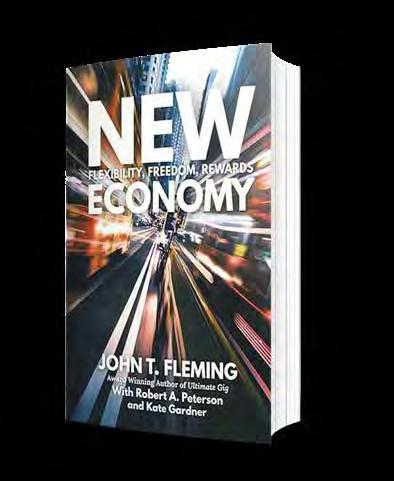
BOOK / NEW ECONOMY: Flexibility, Freedom, Rewards
BY JOHN T. FLEMING, WITH ROBERT A. PETERSON AND KATE GARDNER
Technology and the rise of gig and platform economies are reshaping how people work—and workforce expectations are shifting alongside it. Independent workers are moving away from traditional employment to regain control over their time, income and lifestyle. In his book, NEW ECONOMY, Fleming blends data, trends and real world stories to explain this shift and what it means for direct selling.
W ORDS TO L EAD BY:
“ Gratitude is the quickest path to happiness.
—ANONYMOUS

AUDIOBOOK / Tribes: We Need You to Lead Us
BY SETH GODIN
Bestselling author and marketing guru Seth Godin demystifies leadership in Tribes: We Need You to Lead Us. He explores our innate desire to belong, showing how the internet and social media empower anyone to unite people around shared values. This audiobook illustrates how influence thrives through authentic connection, consistent communication and bold action.
“One of the most important leadership traits is knowing how to create and lead a tribe. Valuing people within your tribe generates loyal, lasting connections, which was a key focus at our recent Leadership Summit.”
—NANCY BOGART, FOUNDER & CEO, JORDAN ESSENTIALS
SOCIAL MEDIA INFLUENCER / Sahil Bloom
Sahil Bloom is best known for turning complex ideas about business, wealth and personal growth into actionable insights as an influencer and thought leader. With millions of followers across social media and the goal of “helping you build a high-performing, healthy, wealthy life,” Bloom consistently shares practical lessons on strategic thinking and personal discipline, especially valuable for growing relationshipdriven businesses.
PODCAST / My First Million
WITH SHAAN PURI AND SAM PARR
The My First Million podcast, hosted by Shaan Puri and Sam Parr, is a compelling resource for ambitious business builders. The podcast blends creative thinking with real-world analysis of entrepreneurial success stories. For those focused on building a relationship-driven business, it boosts innovative thinking and a problem-solving mentality in the listener DSN

MAKE A RECOMMENDATION!
Personal and professional development is the cornerstone of direct selling. We’d love to hear from you about your essential books, podcasts and other media that keep you and your teams on track! Scan the QR code to make your recommendation. We’ll select one each issue to feature on these pages.















Unique Podcasts




CRAFTED FOR THE DIRECT SELLING AUDIENCE

























DIRECT APPROACH







DIRECT APPROACH is a bi-weekly podcast hosted by Wayne Moorehead, marketing, brand strategy and direct-to-consumer industry expert. Each episode provides timely insights, fresh perspectives and relevant takeaways to help grow and evolve your businesses.


















BUILT TO LAST
BUILT TO LAST is our newest podcast hosted by Rob Sperry. Each episode spotlights the companies shaping the future of direct selling. These journalistic deep dives are designed to reveal the strategies, products and systems that set these companies apart and make them truly built to last.


SUBSCRIBE TODAY!












SHIFT










SHIFT, hosted by Blake Mallen, explores the transformative shifts in entrepreneurial mindset, skillset and strategy, featuring in-depth conversations with subject matter experts and the industry’s most dedicated and high-performing distributors.















THE DSN PODCAST



The DSN Podcast provides insightful, in-depth reporting direct from the pages of DSN magazine in podcast form, giving you yet another way to engage with tips, trends and insights specifically designed to help today’s direct selling executives lead from the front.
The DSN family of podcasts is designed to keep you informed, engaged and one step ahead. Scan this QR code to make sure you never miss an episode.
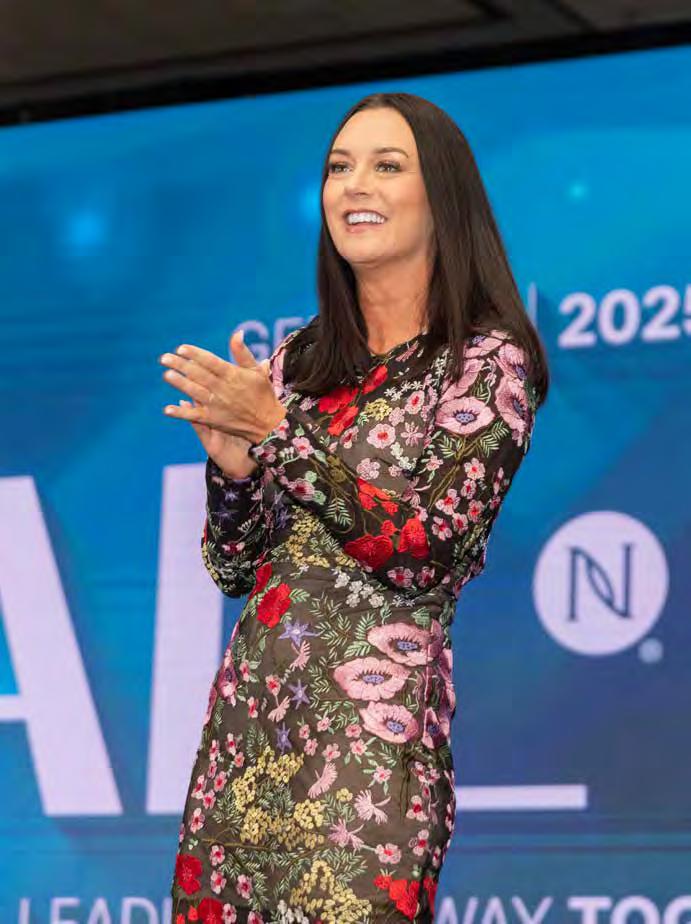
Neora: Battle Tested, Built to Last
BY JENNY VETTER
WHEN AMBER OLSON ROURKE AND HER FATHER, JEFF OLSON, launched Neora in 2011, they set out to show the world how impactful direct selling could be. Since then, Neora has invited prospective Brand Partners to make the company their home; for new direct sellers to discover a simple, successful way to build a business; and for experienced direct selling leaders to make one “last run” at building a legacy. As the company celebrates its 15th anniversary, Amber and the leadership team are celebrating something even more exciting—a renaissance.



FOUNDED: 2011
US HEADQUARTERS: Dallas, TX
TOP EXECUTIVES: Amber Olson Rourke, CEO & Jeff Olson, CEO
PRODUCT CATEGORY: Skincare, Personal Care & Wellness

A Modern Social Selling Movement
If it doesn’t beat the best of what’s on the market, then we don’t launch it.
AMBER OLSON ROURKE / CEO “
As the direct selling space competes against the largest players in every sector, the industry has had to evolve—and for many direct selling companies, that evolution has been a frenetic one. Navigating social media, influencer marketing and a customer experience that changes with every innovation has driven companies to either go too far or not far enough in their attempts to adapt.
But Neora took a simpler approach, defining what Amber and her team have called a “modern social selling movement,” one that focuses on only two variables: how people want to shop and how they want to work.

As she explained, “I think a lot of direct selling companies have been scared to play in the spaces that consumers are finding other brands. We view it really differently. Our competition is anywhere someone can buy a skincare or wellness product because we have to compete at that level. That dictates the packaging we select, the shipping experience, the ordering experience, the return experience, the customer rewards—everything has to reflect what consumers expect.”
On the business side, Neora is asking the same questions about how people want to work, how they want to sell and how they want to build—if building is even a priority. Amber wanted the modern person to easily understand the business model and the paths available without having a background in direct selling.
“It’s been a practice of simplifying everything to be understandable to consumers,” she shared. “We now have a much larger percentage of the population that understands how you can earn income for sharing a product that you like with affiliate programs and with influencers being a mainstream concept. The concept is more well understood by the masses than it has ever been.”
Neora’s simplified approach is not only working, but exceeding expectations at an incredible time in the company’s story. Following the historic victory in its battle with the FTC, the company enjoyed a period of tremendous success, ending 2025 with 47 percent year-over-year growth. Additionally, over 80 percent of Neora’s revenue comes from customers, reflecting its customer-first model and stellar product performance.
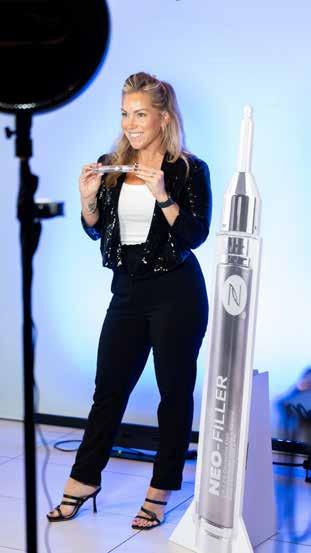
This rare combination of stability in the face of adversity and record-breaking growth has built a solid foundation that serves as a second ground floor for Neora. New Brand Partners are often unaware of what the company has navigated in recent years; they’re simply ready for an exciting opportunity with a legacy company and a groundbreaking product profile.
Singular Focus
Since its launch, Neora’s Age IQ Night Cream has been the cornerstone of its product portfolio, leading the company’s sales story. But all that changed in 2025 when Neora released what they called “the future of filler.”

Amber’s medical spa background inspired her to pursue an alternative to injectables such as fillers and Botox that have dominated medical cosmetics for years. Growing concerns around the safety and cost of injectables created a gap in the market that Neora could fill—if they could develop a best-incategory product.
“If it doesn’t beat the best of what’s on the market, not just in the direct selling space, but in any space, then we don’t launch it. It’s why we only launch one core product a year because we iterate on the development of each product for a long time until it meets our standards.”
Years of development led to the Neo-FILLER Lift + Fill Corrective Elixir, designed to train skin to plump and fill itself through a potent blend of growth factor peptides, plant stem cells and a natural biostimulator to target wrinkles, loss of volume and elasticity.
Launched in May 2025, Neo-FILLER completely shifted the sales story at Neora, energizing Brand Partners and engaging customers like never before. This new “tip of the spear” product had the results, differentiation and social media buzz to become Neora’s lead story—and will continue to inspire its product messaging throughout 2026.
“
The Brand Partner brings personal testimony, personal results and personal experience. Technology is the tool that helps to amplify that.
AMBER OLSON ROURKE / CEO
But Brand Partners aren’t walking into 2026 with just Neo-FILLER and its wide-reaching results. In September 2025, Neora launched its Intelli-SKIN™ facial scanning technology, an AI-powered skin analysis tool that analyzes multiple skin metrics, provides powerful skin insights and generates customized skincare regimens—all from a smartphone. This gives Brand Partners a simpler, more actionable way to connect with customers.
“It’s so much easier to start a conversation when you’re leading with value versus leading with kind of a pitch about your product,” Amber said. “The Brand Partner brings personal testimony, personal results and personal experience to a product. Technology is the tool that helps to amplify that message. We’re very focused on that marriage of high tech and high touch.”
Making People Better
Brand Partners share Neora products in over 13 countries, reaching customers where and how they like to shop for personal care and wellness products. Neora’s notable success in 2025 was the result of clearly defined goals, consistency and simple systems at scale.
“We outlined the goals and strategies for 2025 of what we wanted to achieve and all of those ended up happening because we stayed really committed to the plan,” Amber explained. “We remained disciplined in our simplicity and our focus and remained disciplined in the actions we were training our Brand Partners to take, continuously giving them better tools to amplify that message.”

As Neora blazes into 2026, Amber is most excited about what the year holds for current and prospective Brand Partners, as her passion centers on creating an ecosystem where people can achieve their individual goals. Whether they want free product, an additional income or want to build a legacy business, Neora’s compensation plan and ecosystem is set up to accommodate every size dream.
The company’s second ground floor—a fresh start with a fresh product innovation—offers Neora’s field endless opportunities to build a first-time business or a “last run” legacy, a term coined by Co-Founder Jeff Olson. After decades of success in direct selling, Jeff wanted other veterans to feel confident in choosing Neora as the place to build their final run.
“Our mission of making people better has never changed,” Amber reflected. “A big part of my role going forward is to ensure we make every decision in alignment with that.”
Our mission of making people better has never changed.
AMBER OLSON ROURKE / CEO
This mission has guided Neora through 15 years of evolution; to record-breaking growth and industry-leading innovation. As both newcomers and veterans discover Neora’s next chapter, they’re finding what Jeff and Amber set out to create from the beginning: direct selling at its best and built to last. DSN
From Activity to Impact
Rethinking engagement strategies.
BY CASSIE LEWIS, DIRECTOR OF CLIENT EXPERIENCE & PARNERSHIPS / BYDESIGN
REPRESENTATIVE ENGAGEMENT IS OFTEN MEASURED BY SIGNALS that are simple to track and quick to report, which makes them tempting indicators of success. But many organizations are finding that high participation does not always translate into higher productivity, stronger retention or sustainable growth. The challenge is not getting people to participate. It is creating engagement that consistently leads to meaningful action across very different business models, field roles and customer experiences. To close that gap, companies must move beyond participation metrics and start designing engagement around behavior.
ACROSS MODELS, LEADERS FACE THE SAME FUNDAMENTAL QUESTION: Which behaviors actually lead TO SUSTAINABLE SUCCESS, AND are our systems and programs reinforcing THOSE BEHAVIORS?


Engagement Challenges Across Models
Engagement does not look the same across all models. In party-based organizations, engagement depends on event scheduling, host coordination, follow-up and reward fulfillment. In dropship- or ecommerce-driven models, engagement may center on customer acquisition, repeat purchase behavior and content-driven outreach. Hybrid models must support multiple paths to success at the same time, often blending social selling, personal storefronts and traditional relationship-based selling.
While the workflows differ, the underlying challenge is consistent: activity does not always translate into progress. Across models, leaders face the same fundamental question: Which behaviors actually lead to sustainable success, and are our systems and programs reinforcing those behaviors?
Engagement Shaped by Design vs. Motivation
When engagement drops, the instinct is often to launch new campaigns, refresh incentives or increase communication. While these efforts may temporarily boost participation, they rarely solve the underlying problem.
In most cases, disengagement is not caused by a lack of motivation. It is caused by friction, confusion or inconsistent reinforcement. Representatives struggle when priorities are unclear, workflows are fragmented, progress is difficult to track and effort does not reliably produce results. In these environments, even highly motivated people can lose momentum.
That is why engagement must be treated as a design challenge, not simply a communication or compensation challenge. Systems, processes and feedback loops shape behavior far more consistently than short-term motivational pushes.
Behavior Is the Missing Link
Most direct selling companies today have invested significantly in technology designed to support the field. The question is whether technology is helping people take the right actions at the right time. Although engagement looks different across business models, the behaviors that matter most share the same things in common: they require clarity and repetition.
Organizations that understand which behaviors correlate with long-term success are better positioned to guide the field intentionally instead of relying on broad participation programs. This does not require tracking every possible action. In fact, clarity often improves when companies focus on a smaller set of meaningful indicators rather than an overwhelming volume of activity data.
When leaders can see where momentum is building and where it is stalling, they can intervene earlier, coach more effectively and reinforce the right habits.
Engagement Must Live Inside Systems
Even when leaders understand which behaviors matter, engagement will struggle if systems do not support those behaviors naturally. If representatives must jump between platforms, interpret complex reports or manually track progress, consistency becomes difficult to maintain. Friction compounds, especially in high-volume or high-touch environments, and newer or part-time representatives are often the first to disengage before they ever build momentum.
Engagement improves when:
n Priorities are visible within daily workflows
n Progress is easy to track
n Next steps are clear without additional effort
When support is embedded into everyday activity, engagement becomes habitual rather than dependent on periodic campaigns.
ENGAGEMENT IS ULTIMATELY REINFORCED
THROUGH HOW ORGANIZATIONS communicate and recognize performance.

Reinforcing Engagement through Communication and Recognition
Engagement is ultimately reinforced through how organizations communicate and recognize performance. Broad messaging builds awareness, but relevance drives action. Guidance should reflect where the representative is in their journey and align with the challenges they are facing in that moment.
That same principle applies to coaching. Coaching is most effective when it connects directly to observable behavior, not just end results. Recognition then reinforces those behaviors at scale. When recognition highlights actions that align with longterm success, it strengthens the habits that sustain growth and signals clearly what the organization truly values.

When Engagement Becomes a Strategic Advantage
When engagement is designed around behavior, supported by workflows and reinforced through communication and recognition, it becomes a competitive advantage.
Leaders gain:
n Earlier insight into performance trends
n Stronger alignment between strategy and execution
n Greater confidence that investments in tools and programs are producing results
Representatives gain:
n Clear expectations
n Reduced friction
n Greater confidence that effort leads to progress
At that point, engagement no longer depends on constant initiatives to stimulate activity. It becomes part of how the business operates.
What This Means for You
Moving from activity to impact does not require abandoning participation metrics. It requires putting them in proper context.
Engagement strategies are strongest when they are built around three core principles:
1 / Understand which behaviors truly drive success across your business model(s).
Party-based, hybrid, dropship and social selling models each have unique workflows, but all rely on repeatable behaviors that sustain momentum.
2 / Design systems and processes that make those behaviors easy to repeat.
Engagement should be supported by workflows, not dependent on extra effort.
3 / Align communication and recognition with long-term performance, not short-term spikes. What gets reinforced becomes what gets repeated.
When these elements work together, engagement stops being a measurement challenge and becomes a growth strategy.
Participation will always matter. But participation alone does not build sustainable businesses. By shifting focus from activity to behavior and from visibility to impact, organizations can create field experiences that support long-term growth across every selling model they operate. DSN

CASSIE LEWIS brings more than a decade of experience to her role as Director of Client Experience & Partnerships at ByDesign, the leading provider of software for the direct selling industry. Cassie works directly with clients and assists them in fully leveraging technology to facilitate their business plans for growth, including optimizing their technology platform, accelerating field adoption and empowerment and implementing best practices for an ideal customer experience.












2026 is the year for direct selling’s voices to resound in the halls of power, whether on Capitol Hill or in statehouses nationwide.
This is the moment to show how the channel protects independence and leads with integrity.
Add your voice to this effort. Renew your membership or join the Direct Selling Association today to help shape the channel’s future.




The Stories That Shape the Next Chapter
AS THE UNITED STATES enters its 250th year, the country is again confronting a familiar question: whether the rules that govern work still reflect how Americans actually live and earn.
For generations, Americans have built livelihoods by choosing independence, adapting to change and finding opportunity outside traditional structures. Direct selling has long been part of that tradition. In 2026, as lawmakers revisit how independent 1099 work is classified and regulated, it matters more than ever that this model is understood.
What is evolving is not the substance of DSA’s advocacy, but how the story of direct selling is carried forward. Increasingly, that story is being told by the people who live it.
At a time when it is no longer enough to simply demonstrate compliance, DSA is empowering direct sellers across the country to explain—in their own words— why independent contractor status works for them and why an employment model would not. These first-person accounts bring clarity to debates that too often rely on assumptions rather than experience. They reflect deliberate choices made by people who understand the tradeoffs and value flexibility, control and continuity.
Those voices are informing DSA’s work across Washington and the states. In Congress, DSA is actively engaged

DAVE GRIMALDI CEO of the US Direct Selling Association

in developing a Senate companion to HR 3495 to provide clarity and certainty for independent direct sellers.
In Delaware, DSA continues working constructively with lawmakers on HB 162 to address consumer protection concerns without undermining legitimate entrepreneurship. In California, discussions around PAGA underscore a broader concern DSA is raising nationwide. When enforcement systems presume misclassification despite sellers’ clear, informed choice to work independently, companies’ penalty exposure can be substantial.
Across these efforts, DSA is ensuring policymakers hear directly from the people most affected. Individuals explain why control over their schedules, continuity of work and the ability to adapt to life’s changes matter.
This approach also reaches the executive branch. Earlier this year, DSA met with officials at the Office of the US Trade Representative to introduce direct selling not as an exception to the economy, but as an America-First success story.
As decisions are made in Congress and in statehouses, the stakes are not abstract. They will determine whether Americans can continue building businesses that reflect their lives, their families and their ambitions. DSA’s role is clear: ensure those realities are understood, not regulated away. DSN
GROWTH BEYOND BORDERS
Navigating International Markets in Direct Selling
EVENT SCHEDULE
8:00AM - 9:00AM Registration, Networking Continental Breakfast
9:00AM - 4:00PM General Session (lunch provided)
4:00PM - 5:00PM Networking


Businesses Supporting Your Business
LOOKING TO BECOME more efficient and effective? Consider bringing in an outside resource and relying on their expertise. The companies on the following pages are proven partners to direct selling companies. They understand the challenges you face—and have the experience and expertise to help you solve them.
LPT
901 Sam Rayburn Hwy Melissa, TX 75454 sales@lpt.io lpt.io
LPT is a payment platform designed to support direct selling companies globally. Our services include: Global connectivity to 150 countries in 50 currencies, including direct connectivity to most alternative payment types, secure tokenization, customized fraud solutions, including our proprietary Fraudhawk™, advanced reporting tools, and online dispute management.
PAYQUICKER
400 Linden Oaks, Suite 320 Rochester, NY 14625 844-258-3006 payquicker.com
PayQuicker is the leading global payout provider to direct selling organizations. Instantly make secure and compliant payouts to your field in local currency across the globe with our award-winning solution that provides the largest selection of flexible and modern spend options.
WORLDPAY
8500 Governors Hill Drive Cincinnati, OH 45249
866-622-2390 worldpay.com
Worldpay powers businesses of all sizes to make, take, and manage payments. Whether online, in store or mobile, you’ll find Worldpay at the heart of great commerce experiences globally.

LACORE COMMERCE
901 Sam Rayburn Hwy Melissa, TX 75454
801-891-5873
lacorecommerce.com
At LaCore Commerce, we turn your Amazon chaos into control—and your brand into a revenue machine.With $200M+ in sales managed and thousands of unauthorized sellers and listings removed, we’re the go-to partner for 50+ direct selling companies. If you’re tired of losing control on Amazon, let’s fix it—for good.
GOBI INSIGHTS
90 W 500 S Bountiful, UT 84010
877-359-1870 gobi-insights.com
Gobi Insights optimizes post-checkout e-commerce operations for direct selling companies. Using its CARO process, Gobi identifies cost-saving opportunities in payments, sales tax, fulfillment, and more—enhancing efficiency and profitability without requiring changes to the existing e-commerce platform.

STRATEGIC CHOICE PARTNERS
2201 Long Prairie Road, Suite. 107-316 Flower Mound, TX 75022 407-891-9265 strategicchoicepartners.com
SCP offers the most holistic consulting services specific to direct selling companies today. We’ve worked with more than 70 companies over the last three years alone, and served more than 250 years collectively in the industry.
SUPPLIER DIRECTORY

CHECKOUT.COM
40 10th Ave.
New York, NY 10014
tyler.chapman@checkout.com checkout.com
Checkout.com is a global payments platform built for performance. In a complex, fast-changing industry, we provide the technology and expertise to help you thrive—one transaction at a time. Trusted by leading brands like Sony, Wise, and GE Healthcare, we turn payment challenges into opportunities for innovation.
CITCON USA LLC.
2055 Gateway Place, Suite 500 San Jose, CA 95110 808-647-4409 citcon.com
Citcon delivers innovative, reliable payment solutions enabling merchants to accept over 150 global mobile wallets and alternative methods via one single API. Our unified platform simplifies local to local, cross-border, online, in-store, and mobile transactions, enhancing security, speed, and customer satisfaction.

NEXIO
727 N 1550 E, 3rd Floor Orem, UT 84097 877-551-5504 nex.io
Nexio simplifies and accelerates payment processing in the Direct Sales Industry. Nexio offers swift deployment to distributors, streamlined payment operations and seamless integration with software solutions allowing you to navigate payment complexities with ease and confidence.
RUNA
Leading fintech, Runa, provides the infrastructure powering payouts to 5 billion+ consumers across 190+ countries. Businesses instantly transfer funds to cards, wallets, or through gift cards, boosting revenue & simplifying transactions. Based in London & New York, Runa is backed by leading investors.

GLOBAL ACCESS, LLC
2889 W Ashton Blvd, Suite 350 Lehi, UT 84043
801-420-9200
globalaccess.com
Global Access provides end-to-end international shipping solutions for direct selling companies, specializing in cross-border logistics, duties and taxes, compliance, and technology. Our platforms streamline global fulfillment, reduce costs, and ensure seamless delivery to customers worldwide.

MINER GROUP LLC
11905 Sara Road Laredo, TX 78045
956-712-8842
minergroup.net
Miner Group LLC offers solutions for the Mexican Market! For over 30 years, we have helped companies expand to or optimize their operations in Mexico. We offer product and ingredient evaluations, customs clearance, regulatory compliance, label translations, and logistic services for the Mexican market.
LACORE LOGISTICS
900 Wilmeth Road
McKinney, TX 75069 214-817-4802
lacorelogistics.com
LaCore Logistics provides distribution and order fulfillment services. Our highly automated distribution center provides both domestic and international directto-consumer shipping solutions. We offer omni-channel fulfillment solutions ranging from marketplace fulfillment for leading marketplaces to business-to-business fulfillment for leading retailers.

QUICKBOX FULFILLMENT
11551 E 45th Ave. Unit C. Denver, CO 80239 720-990-5642 quickbox.com
QuickBox is an omnichannel 3PL partner for high-growth eCommerce and B2B brands shipping 10,000+ orders monthly in health, wellness, beauty, nutrition, and supplements across DTC, retail, and Amazon.

BLOO KANOO
827 W 525 Highlake Rd., Suite 628 Winfield, IL 60190 blookanoo.com
Bloo Kanoo empowers direct selling distributors with interactive livestream shopping, enabling real-time engagement, product demonstrations, and seamless purchasing. Our platform blends online and in-person experiences, helping distributors build authentic connections, boost sales, and enhance customer confidence through shoppable video commerce.
runa.io

ORDERGOOVE
382 NE 191st Street, Suite 56661 Miami, FL 33179 marketing-team@ordergroove.com ordergroove.com/industry/direct-selling
Ordergroove is the leading subscription platform for direct selling brands, driving predictable, recurring revenue. The world’s largest and fastest-growing brands like Juice Plus+, Plexus Worldwide, and Metagenics rely on Ordergroove’s seamless and frictionless subscription experience to maximize customer lifetime value.

ADI MEETINGS & EVENTS
6380 Silver Sage Dr. Park City, UT 84098 dianna@adimeetings.com 321-423-7229 adimeetings.com
ADI meetings is a women owned global corporate incentive travel, meetings, and event management company. We curate once-in-a-lifetime experiences for your attendees, connecting top achievers to your brand while understanding and meeting the needs of your industry.
KATAPULT EVENTS
5840 Red Bug Lake Road, Suite 140 Winter Springs, FL 32708 407-915-9060 katapultevents.com
Fresh. Exciting. Bold. Your field deserves the best and we help you deliver. Out-of-the-box creative production with experienced show management. We execute on budget and make you look AMAZING!
MERESTONE
82625 S. Wilson St., Suite 101 Tempe, AZ 85282 480-945-4631 merestone.com
Merestone is an award-winning production company with 50 years of expertise, specializing in creative services, trade show design, scenic fabrication, and cutting-edge audio-visual and lighting solutions to create immersive, high-impact brand experiences at events worldwide.
MULTI IMAGE GROUP
1701 Clint Moore Road Boca Raton, FL 33487 800-523-2682 mig.cc
Founded in 1979, Multi Image Group (MIG) is a women-owned, family-run creative event production company fueled by innovators, strategists, and technologists who craft custom live, hybrid & virtual experiences for some of the world’s biggest brands.

DIRECT SALES EXPERTS INC. EXECUTIVE SEARCH
8305 Via Vittoria Way Orlando, FL 32819
craig@directsalesexperts.com 407-489-3351 directsalesexperts.com
Direct Sales Experts is a highly confidential Global Executive Search Firm with over 50,000 top direct sales executives on file. Let us help you find A Players to grow your business.
HANNA SHEA
844-344-7177 hannashea.com
Since 2007, Hanna Shea Executive Search has been the go-to search firm in support of the direct selling industry. Hanna Shea finds top talent for companies in need of building or improving an executive leadership team for organizational success.

MOMENTUM FACTOR
4801 Spicewood Springs Rd., Suite 250 Austin, TX 78759 512-690-2134 momofactor.com
Momentum Factor is a leading digital risk management firm specializing in online compliance monitoring and global online reputation management services for the direct selling industry. Our passion and mission are to protect companies from the brand and regulatory risks associated with online and social media technologies.

FLEXPAY
410 Saint Nicolas St, Suite #007 Montreal, QC H2Y 2P5 817-300-1996 flexpay.io
FlexPay is the leading failed payment recovery platform for auto-ship and recurring payment businesses. FlexPay’s innovative platform uses multiple technologies to achieve the highest failed payment recovery rate, resulting in reduced involuntary churn and faster revenue and profit growth.
SUPPLIER DIRECTORY

APPTOR.AI
Yitzhak Sade 37 Tel Aviv, Israel +972-5467-06315
apptor-ai.com
Apptor.AI powers AI-driven messaging and automation for direct selling companies and distributors, seamlessly integrating into your existing CRM and back-office systems. Our platform helps distributors engage customers, predict behavior, personalize communication, and drive sales through intelligent, automated actions that boost retention and revenue.
BOARDS
691 S. Milpitas Blvd, Suite 212 Milpitas, CA 95035 boards.com/brands
Boards is a field activation and communication platform used by over 3 million distributors worldwide. With Boards, brands can connect with their fields, tailor content and communication, enhance training, and gain valuable data insights.

BYDESIGN
Overland Park, KS sales@bydesign.com 813-253-2235 bydesign.com
ByDesign provides configurable software solutions for direct selling companies, offering tools to manage commissions, ecommerce, and field performance. The platform helps organizations scale efficiently, innovate confidently, and deliver seamless experiences for their distributors and customers.

EXIGO
1600 Viceroy Drive, Suite 125 Dallas, TX 75235 214-367-9933 exigo.com
The leader in commissions, back office and eCommerce software and services. The global leader in cloud-based Platform-as-aService (PaaS) for direct selling companies. An open framework for billion-dollar giants to startup companies. Exigo supports MLM, Party Plan and Affiliate models, operating in single global markets.
FLUID
139 Hunters Grove Lane, Suite 207 Lehi, UT 84043
385-336-7404 fluid.app
The front end for Direct Selling. AI-Powered E-commerce, Mobile App, Website Builders, and Social Selling.

FLIGHT COMMERCE
1208 E. Kennedy Blvd., Suite 222 Tampa, FL 33602 813-277-0625 flightcommerce.com
Global Operations Management Software. Advanced Comp Plan Programming. Sales Force Backoffice & Automation. Web Site Design & Replication.

HUSSLE
1633 W Innovation Way, 5th Floor Lehi, UT 84043
800-544-7044
hussle.tech
Hussle’s all-in-one solution makes it easier for sellers to connect, share, and sell. We guide them to the right actions at the right time so they can sell smarter, perform better, and fuel serious revenue growth.

ICENTRIS
707 West 700 South Site 104 Woods Cross, UT 84067 801-383-3262
contact@icentris.com icentris.com
iCentris empowers direct selling companies with scalable eCommerce, back office, and party plan platforms. With over two decades of experience, we deliver intuitive tools, real-time analytics, and automation. *Now featuring 2.0 versions of our mobile app and party plan.
INFOTRAX SYSTEMS
1875 S. State Street, Suite 3000 Orem, UT 84097
801-431-4900 infotraxsys.com
Software & SaaS solutions for startup, emerging, and global direct selling companies. See our ad on the back cover.

INOVARA
1 Enterprise Road Devon, EX31 3YB, United Kingdom hello@inovara.ai inovara.ai
Inovara helps direct selling companies and their networks of representatives, to adopt artificial intelligence (AI) to drive business and personal growth.
We specialise in supporting non-technical teams, building their confidence and capability in AI-powered tools, platforms and processes.

JENKON
201 NE Park Plaza Dr., Suite 220 Vancouver, WA 98684 360-256-4400 jenkon.com
Constant innovation and software stability are the reason world leaders rely on Jenkon. Tailoring software partnerships, unique to each customer, empower our five decades of leadership. Jenkon customers control their own destiny, while leveraging our latest innovations. Contact Jenkon today!

NOWSITE now.site
Nowsite is an AI-powered platform for network marketers that makes social media, lead generation, and sales simple. In just 30 days, the impact of Nowsite is significant — the average user achieves a 132% increase in social media engagement, 80% more leads and 40% more sales. Trusted by over 100,000 users in 130 countries and 150 languages, Nowsite helps network marketers sell more, recruit faster, and grow their businesses with ease.

RALLYWARE
650 Castro St, Suite 120-376 Mountain View, CA 94041 877-858-8857 rallyware.com
Rallyware is the Field Enablement Platform delivering a modern distributor daily experience—personalized sales and recruiting guidance, training, and incentives. As a trusted technology partner to top global brands, Rallyware is committed to sustained growth and field success.

ZIPLINGO
355 South 520 West, Suite 100 Lindon, UT 84042 info@ziplingo.com ziplingo.com
Ziplingo is a messaging platform for Direct Selling companies—automating realtime communication with distributors and customers. It connects to your back-office and powers global channels like Email, SMS, WhatsApp, Telegram, and more, streamlining messaging across teams, markets, and languages.
AVALARA
512 S Mangum St. #100 Durham, NC 27701 niki.hocking@avalara.com avalara.com
Avalara automates tax compliance for businesses, managing sales tax, VAT, and global tax regulations. Trusted worldwide, Avalara simplifies complex processes across borders so companies can stay compliant and focus on growth.
JUNE 10-12, 2026
MARRIOTT HOTEL REGENTS PARK / LONDON, UK
DSU Europe is returning to London!
EUROPE’S TOP DIRECT SELLING LEADERS

WILL GATHER ONCE AGAIN to explore the latest insights, strengthen industry connections and discover new opportunities for growth. Learn from the industry pioneers, seasoned executives and visionary leaders who are shaping direct selling. Our speakers are poised to ignite inspiration, spark meaningful dialogue and provide actionable insights to propel your business to new heights.
Don’t miss this chance to participate in an event that promises to elevate your business and continue shaping the future of direct selling in Europe.

REGISTER NOW & SAVE THE DATE
SCAN TO LEARN MORE & TO REGISTER
SPEAKERS

STUART JOHNSON Direct Selling News Founder & CEO

ASHLEY FARMER Cambridge Weight Plan CEO

SUSANNAH SCHOFIELD OBE DSA UK & Ireland Director General



MICHAEL CODY Genistar Chief Operating O cer



DAN DEBNAM Inovara Founder & CEO


ISABELLE LAROQUE Greenway Global Director of International Development


JULIE MASTERS Influence Nation Founder & CEO EMRE TUNA Farmasi President

AURELIO FERNÁNDEZPACHECO Immunotec VP Europe PETER GRISCOM It Works! President & COO ALEX LONG Avon General Manager UK LISA GARLEY-EVANS DSA UK Code Administrator

GRIMALDI DSA USA CEO
AMANDA SLY Aquasource Director of Operations UK & EU and Board Chair of DSA UK

VITAL SELDIA Executive Director



SCHOFIELD OBE DSA UK & Ireland Director General GEOFF MULHAM DSA Australia CEO
FRÉDÉRIC BILLON FVD (DSA France) Executive Director

MORRIS Herbalife Government A airs Manager

GILLIAM FieldWatch Founder & CEO
IMELDA