How direct selling companies are strengthening people, communities AND The future of the channel
THE NEW AI RULES / EVERYONE’S GETTING A PROMOTION LATAM’S POWERHOUSE OPPORTUNITY / DON’T
TUESDAY, OCTOBER 6
1PM-5PM CT
5PM-6:30PM CT
6:30PM-8:30PM CT
NEW FORMAT
WEDNESDAY, OCTOBER 7
9AM-8PM CT (THREE 3-HOUR SESSIONS)
THURSDAY, OCTOBER 8
ARTIFICIAL INTELLIGENCE DEEP DIVE EVENT
9AM-1PM (CT)
Everybody Gets a Promotion / The New Rules of AI Leadership Rules BY KATHLEEN ROSS
Community by Design BY JENN ASHBY
What’s Working in Direct Selling BY
INTERNATIONAL FOCUS
LATAM’s Next Powerhouse Opportunity BY ALEX HOFFMANN
COMPANY SPOTLIGHT
Beneve: Flipping the Script on Direct Selling BY JENNY VETTER
32
DEPARTMENTS
FORWARD THINKING / The Digital Fatigue Shift BY AMBER OLSON ROURKE
LEGAL BRIEFS / Don’t Be the FTC’s Next Target BY KATRINA EASH, BRANKO JOVANOVIC & JULIET BELLIN WARREN
INSIGHTS FROM THE OUTSIDE / The Long Game of Building a Personal Brand BY JASMINE STAR
FOR YOU / FOR YOUR FIELD / Your Essential Monthly Motivation BY CHELSEA HUGHES
WORKING SMART / AI’s Best Use Case in Direct Selling BY JUSTIN BELOBABA 36
STORY
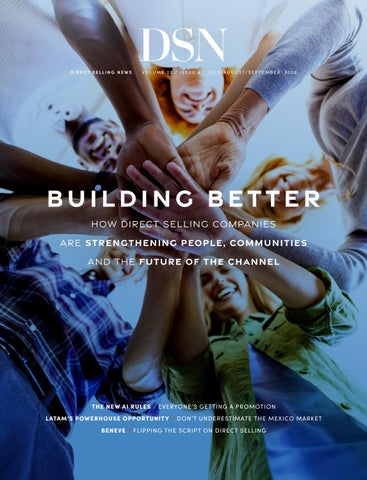
BUILDING BETTER
How direct selling companies are strengthening people, communities and the future of the channel.
BY DEANA NALL
Direct Selling News (ISSN 15546470) is published five times a year in January, March, May, July and October by Direct Selling Partners, 5717 Legacy Drive, Suite 250, Plano, TX 75024. Periodicals postage paid at Lake Dallas, TX and additional mailing offices.
POSTMASTER: Send address changes to 5717 Legacy Drive, Suite 250, Plano, TX 75024.
Subscription Rate: Free to direct selling and network marketing executives in the US.
All rights reserved. Material may not be reproduced in whole or in part in any form without written permission. No statement in this publication is to be construed as a recommendation to buy or sell securities or to provide investment advice.
Direct Selling News
5717 Legacy Drive, Suite 250, Plano, Texas 75024 / Phone: 800-752-2030 directsellingnews.com
Serving the Direct Selling and Network Marketing Executive Since 2004 A Direct Selling Partners Company
FOUNDER AND CEO
Stuart P. Johnson
PUBLISHER
Patricia White
EDITOR
Lisa Robertson editor@directsellingnews.com
NEWS EDITOR
Sarah Paulk pr@directsellingnews.com
CONTROLLER
Gabrielle Araujo
CREATIVE DIRECTOR
Susan Douglass
PRODUCTION MANAGER
Virginia Le
DIRECTOR OF MARKETING
Jason Maggiore
WEB MANAGER AND DIGITAL MARKETING
Laura Coppedge
DIGITAL CONTENT SPECIALIST
Jayla Jackson
COPY EDITOR
Laura Coppedge
CONTRIBUTORS
Jenn Ashby Branko Jovanovic
Juliet Bellin Warren Deana Nall
Justin Belobaba Amber Olson Rourke
Katrina Eash Sarah Paulk
Dave Grimaldi Kathleen Ross
Alex Hoffmann Jasmine Star
Chelsea Hughes Jenny Vetter
TO ADVERTISE: advertising@directsellingnews.com
TO SUBMIT EDITORIAL COMMENT: editor@directsellingnews.com
TO SUBMIT PRESS RELEASES: pr@directsellingnews.com
TO SUBSCRIBE/UNSUBSCRIBE: subscribe@directsellingnews.com
DIRECT
USPS 23713 • ISSN 15546470
There is POWER in Partnership>
What part of your business would benefit by bringing in outside expertise to help your team be more efficient and effective?
DDELEGATING time-intensive business functions to highly skilled suppliers provides the breathing room to focus on unique skill gaps, like training team members on best practices, getting up to speed with new technology or customer service response that many organizations overlook.
For your convenience, we have compiled a list of our display advertisers. When contacting these companies or those in our Supplier Directory (starting on page 90), please let all of our valued advertisers know that you saw them in DSN.
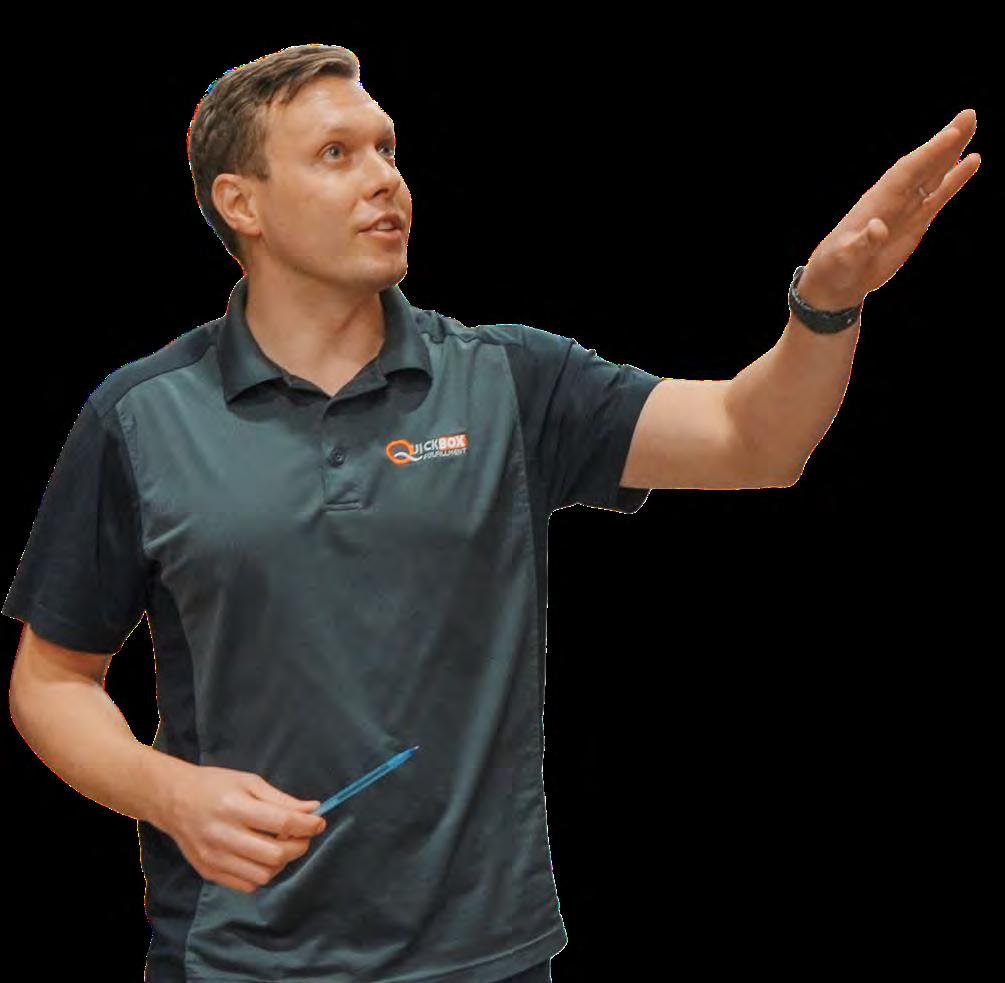
Partnering with DSN has helped QuickBox emerge into a vertical of great merchants and vendors alike. They have helped us grow and understand the industry and how we can better support the great companies in it.
SUMMER IS IN FULL SWING. As we send this issue to print, we have just wrapped DSU Europe. We gathered in London June 10-12 with some of the industry’s top global companies for an impactful conference that examined the channel’s biggest challenges and opportunities. I’m so thankful for the generosity and candor of our speakers and attendees—we’ll see you again next year in Brussels!
Historically, these months are a quieter period for direct selling, and we think that makes it a perfect time for a bit of a reset. That’s why we’ve packed this issue with informative articles that offer practical, actionable tips designed to help you next level your business.
But before we do that, we kick it off with a cover story that explains how direct selling builds it better—communities, people, products and opportunities that offer something more, something better to aspiring entrepreneurs and discerning consumers.
From there we offer intriguing articles on the business building opportunity in Mexico, AI best practices, personal brand building and intentional culture and community. We also shine our Company Spotlight on Beneve.
An informative piece on new legal issues surrounding income disclosure statements and an in-depth look at digital fatigue along with personal development recommendations plus industry news and notes round out this issue’s content.
We are currently planning our Fall DSU event which is happening in Dallas October 6-8. Make sure to secure your spot now at dsnevents.com!
At DSN, we strive to be your daily resource for global news impacting the direct selling channel. From our magazine to our podcasts, events, website and more— we keep you up to date on everything happening in the channel. You can also sign up for free text alerts by becoming a member of our VIP Community where you’ll always get the top stories first and fast!
Hope to see all of you in Dallas in October! All the best,
Patricia White | Publisher | pwhite@directsellingnews.com
EVENTS
Mary Kay Hosts Largest-Ever Women in STEMK Day
MARY KAY WELCOMED ALMOST 100 GIRLS AND FACULTY from the Lewisville Independent School District, as well as local and national elected officials, to its Richard R. Rogers Manufacturing and Research & Development Center for Women in STEMK Day.
More than 60 corporate employees volunteered at the event and served as expert panelists, tour guides and lab scientists as students rotated between three stations designed to provide an inside look at STEM career possibilities. Stations included a behind-thescenes facility tour, a hands-on “create your own lip gloss” lab experiment and mentor panels led by resident expert women in STEM.
“Unlocking the potential of the next generation of women in science and innovation isn’t just important—it is transformative,” said Dr. Lucy Gildea, Mary Kay Chief Brand and Scientific Officer. “When we equip young women with the confidence, tools and knowledge to pursue STEM, we’re not just opening doors—we are redefining the future.”
PM-International Celebrates Ribbon Cutting at New Spain Offices
PM-INTERNATIONAL CELEBRATED THE GRAND OPENING of its new Valencia, Spain offices with a ribbon-cutting ceremony. The new office was designed to create a modernized workspace with room for expanded storage capacity and a multi-purpose meeting environment. This new subsidiary will allow the company to improve its accessibility for its partners across Spain and expand its event and training opportunities in a more professional environment.
“With the opening of our new subsidiary in Valencia, we are strengthening our position in one of our key European markets and creating the foundation for sustainable growth,” said Tetiana Lisovska, PM-International General Manager Spain
The company expects the new facility’s infrastructure and strategic location between Barcelona and Madrid will strengthen operational efficiencies, improve brand visibility and support recruitment in the region.
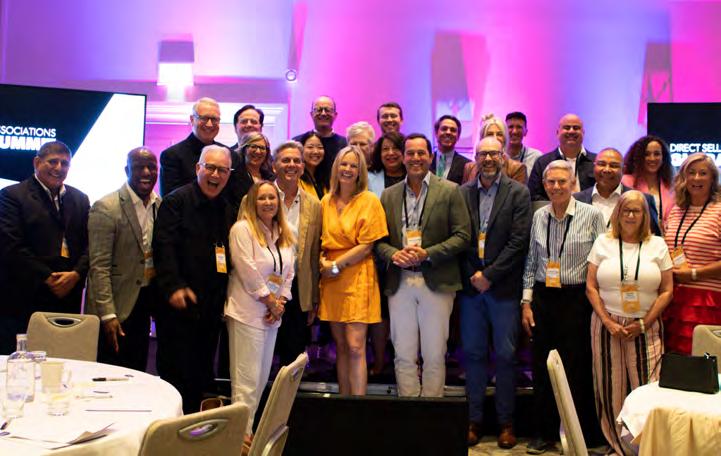
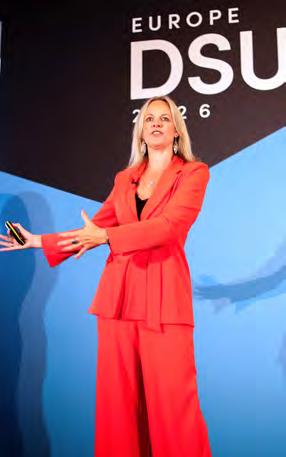
MORE THAN 200 PEOPLE FROM 60+ COMPANIES attended the TED-style talks to hear from over 30 expert speakers.
DSU Europe 2026 Welcomes Attendees Back to London
DSU EUROPE RETURNED TO LONDON
JUNE 10–12 at the Marriott Hotel Regents Park, bringing together executives, founders, association leaders and industry experts for three days of education, strategy and collaboration. The event, hosted by Direct Selling News (DSN) and emceed by Susannah Schofield OBE, explored the trends, challenges and opportunities shaping the future of direct selling through speakers, workshops and networking events.
DSN’s Founder and CEO Stuart Johnson explained the event’s importance. “Direct selling thrives when its executives can share and learn from each other. I’m thrilled DSU can provide the perfect platform for that kind of open and honest exchange.” DSN
For the full articles, visit directsellingnews.com/ announcements
EXECUTIVE ANNOUNCEMENTS
ANTHONY CONTE / Chief Financial Officer, LegalShield
LegalShield announced Anthony Conte has been appointed Chief Financial Officer. Conte brings more than two decades of experience leading high-growth organizations, as well as expertise in financial strategy, operational leadership, business scaling and transformation. In this new role, Conte will oversee LegalShield’s finance organization and support the company’s continued focus on disciplined growth, operational strength and long-term value creation.
RAÚL DEL VILLAR / Chief Financial Officer, BeFra
Betterware de México, S.A.P.I. de C.V., also known as BeFra, announced Raúl del Villar has been named Chief Financial Officer. Previously, del Villar served as Vice President and Corporate CFO for a multi-national consumer company and has experience leading public and international debt issuances and enhancing financial reporting standards to meet global exchange requirements.
LifeVantage Corporation appointed Terrence Moorehead as Chief Executive Officer. Moorehead brings more than 25 years of executive and leadership experience in both the direct selling and consumer goods industries, with expertise in revitalizing brands, accelerating customer growth and delivering sustained financial performance.
ORKUN GÜL / Chief Commercial Officer, Oriflame
Oriflame announced Orkun Gül has been named Chief Commercial Officer and is now a member of the company’s Global Leadership Team. In previous senior leadership roles, Gül led successful market growth across Europe, the Middle East, Africa and APAC, and served as President of the Turkey Direct Selling Association, where he championed ethical and sustainable network marketing.
MARIBETH DODD / Executive Vice President of Leadership Development & Strategic Expansion, Bravenly Global
Bravenly Global announced Maribeth Dodd has been appointed Executive Vice President of Leadership Development & Strategic Expansion. Dodd brings two decades of experience guiding companies through “explosive growth,” meaning 200 percent year-over-year improvements and specializes in helping organizations align vision with leadership behavior to create environments that foster shared purpose and clarity among teams.
BIANCA COSENTINO / General Manager of Australia and New Zealand, Shaklee
Shaklee announced Bianca Cosentino has been appointed General Manager of Australia and New Zealand. Cosentino brings expertise in innovative digital engagement strategies, community-centered marketing initiatives and scaling successful brands, and will focus on operational excellence, field development, talent cultivation and expanding the company’s regional presence through modern digital platforms and meaningful community engagement.
CAMERON WARNER / Senior Vice President, Legal and General Counsel, 4Life
4Life announced Cameron Warner has been appointed Senior Vice President, Legal and General Counsel. Warner brings 15 years of experience in multiple practice areas and has worked as both a federal prosecutor and in-house counsel within the direct selling industry. Warner will now work within 4Life’s Legal, Compliance and International Product Registration (IPR) teams.
MAHONRI LUKAS SUBANDRIYO / General Manager of Indonesia, 4Life
4Life announced Mahonri Lukas Subandriyo has been promoted to General Manager of Indonesia. Subandriyo joined 4Life in 2012 as a customer service supervisor and was promoted to a number of roles, including Senior Manager. During his tenure at 4Life, he led a cross-functional team of four managers and 32 staff members across marketing, business development, IT and customer service.
PAMELA FERRY / General Manager of Australia and New Zealand, Sisel International
Sisel International appointed Pamela Ferry as the new General Manager of Australia and New Zealand. The company stated that Ferry’s appointment is part of a broader strategy focused on long-term growth across Australia and New Zealand and reflects its continued momentum in the Asia-Pacific region.
NICHOLAS JOHNSON / Chief Executive Officer, Medifast
Medifast, the parent company of OPTAVIA, announced Nicholas Johnson has been named Chief Executive Officer. Johnson has almost two decades of experience in the direct selling industry and joined Medifast as Market President of OPTAVIA USA in 2018. He was appointed President of Medifast in 2026. Johnson succeeds Dan Chard, who will remain actively engaged as Chairman of the Board
REN-HAU LAI, PHD / Vice President of Product Innovation, Plexus Worldwide
Plexus Worldwide announced Ren-Hau Lai, PhD has been named Vice President of Product Innovation. Dr. Lai’s experience building and scaling wellness brands through the combination of scientific rigor and commercial execution, as well as his educational background in Traditional Chinese Medicine, Biochemical Nutrition and his PhD in Nutritional Sciences, will bring an even stronger focus on the science behind Plexus products as he leads product innovation and oversees product marketing and Research & Development for the company’s gut health and wellness portfolio.
MARTINE GIROTTO / General Manager of Canada, Plexus Worldwide
Plexus Worldwide announced Martine Girotto has been promoted to General Manager of Canada. Previously, Girotto served as Plexus Director of Sales in Canada where she developed a growth strategy for the company that created strong results. In this new role, she will lead the company’s Canadian business operations, strategic sales and marketing growth initiatives as well as local market execution, customer engagement and operational performance.
AdvoCare announced Kyle Billingsley has been named Chief Financial Officer. Billingsley brings what the company described as a “highly operational perspective” to this new role as a result of his experience across finance and operations in the consumer products and retail sectors with an expertise in leading operational transformations and driving market growth.
JOHN HNANICEK / Chief Technology Officer, Nature’s Sunshine
Nature’s Sunshine Products, Inc. announced John Hnanicek has been named Chief Technology Officer. Hnanicek is an experienced senior leader across consumer, retail and direct-to-consumer organizations and previously served as Chief Digital Innovation Officer at another well-known direct selling brand. Hnanicek specializes in technology, digital innovation and ecommerce transformations and technology modernization DSN
THE GUIDE 2026
A CURATED RESOURCE TO HELP YOU FIND STRATEGIC BUSINESS PARTNERS SPECIALIZING IN DIRECT SELLING.
THE CHANNEL IS EVOLVING RAPIDLY—companies and executives must stay ahead of emerging trends and technologies to build for the future. But it can be time consuming and hard to find the right suppliers to partner with.
That’s why we’ve developed The DSN Guide. In each issue, The Guide includes curated lists by category of expertise and service. These suppliers currently serve the channel—they understand the unique challenges and opportunities that come with direct selling and can help you implement your initiatives.
2026 ISSUE CATEGORY
JANUARY / FEBRUARY DESTINATIONS, TRAVEL SOLUTIONS, EVENT PRODUCTIONS & INCENTIVES
MARCH / APRIL CREDIT CARD & PAYMENT SOLUTIONS & COMMISSION PAYMENT SERVICES
MAY / JUNE SOFTWARE & TECHNOLOGY
JULY / AUGUST / SEPTEMBER DISTRIBUTION, FULFILLMENT & LOGISTICS
OCTOBER / NOVEMBER / DECEMBER
BRANDING & SOCIAL MEDIA SOLUTIONS, TAX, LEGAL & CONSULTING
Miner Group Laredo, TX minergroup.net rmg@minergroup.net 956-712-8842
a2b Fulfillment Greensboro, GA a2bf.com bizops@a2bf.com 706-454-0195
Staci Americas Avondale, AZ staciamericas.com
YOUR COMPETITIVE EDGE LIBRARY
THE DSN LIBRARY is the most comprehensive collection of direct selling education and insights available anywhere.
As a DSN Supporter, your entire corporate sta gains access to over 5,700 curated resources designed exclusively for the direct selling channel. From leadership insights to technology trends, global expansion strategies to compliance guidance—this is where industry leaders turn for trusted, actionable knowledge.
Smart Search uses the power of AI to instantly provide relevant answers to your most urgent questions. From comp plan trends to LATAM expansion—your next big idea is just a search bar away!
■ AI-POWERED INSIGHTS
Search across 425+ videos, 250+ podcasts and 5,100+ articles in seconds.
SMART SEARCH FEATURE HIGHLIGHTS:
■ STRATEGIC FILTERING
Narrow results by topic, format or keyword to quickly pinpoint the information you need.
Join the 2026 DSN Supporter Program Today!
The direct selling industry thrives when leaders like you invest in its growth. By joining the DSN Supporter Program, you’ll gain access to the exclusive DSN Library featuring the AI-powered Smart Search tool, unparalleled recognition and opportunities to shape the future of the channel.
■ Explore tiers and benefits at directsellingnews.com/supporter
STEPS TO JOIN ▼
■ Contact support@directsellingnews.com
■ Secure your spot in the DSN Supporter program today!
THE DSN SUPPORTER PROGRAM is your company’s key to thriving in the direct selling industry. With exclusive access to the DSN Library, cutting-edge AI-powered tools like Smart Search and premium recognition at every DSU event, this program positions you as a leader in the direct selling channel.
Take advantage of our prorated pricing for the remainder of 2026!
TOTAL ACCESS TO DSN LIBRARY WITH AI-POWERED SMART SEARCH
Your entire company can easily access 5,100+ resources—from past DSU event presentations to research reports—anytime, anywhere.
UNMATCHED INDUSTRY RECOGNITION
Be seen onstage at events, featured in print and digital and recognized across the industry.
THE ULTIMATE STATEMENT OF SUPPORT
Your contribution and commitment drives DSN’s mission to provide education, insight and connection to global direct selling leaders.
All Access to DSN Library, with the AI-powered Smart Search of more than 5,100 total assets
Invitations to exclusive VIP networking events
Invitation to qualified companies for your Founder/CEO/Lead C-Level Executive to attend in-person CEO Forums held throughout the year
Executive Q&A featured in DSN (print or digital version)
Company Convention Recap in DSN, featuring your company’s annual convention and announcements (print or digital version)
Direct Approach podcast interview
Reserved VIP table placement for up to 10 guests at annual DSN Global Celebration Event
CONSUMERS TODAY ARE NOT JUST OVERWHELMED BY THE VOLUME OF CONTENT THEY ARE EXPOSED TO— they are tired of it.
The Digital Fatigue Shift
Why the future of growth could be happening face-to-face.
BY AMBER OLSON ROURKE / CO-FOUNDER & CO-CEO, NEORA
FOR YEARS, GROWTH STRATEGIES
WERE BUILT ON A SIMPLE PREMISE: MORE CONTENT CREATES MORE OPPORTUNITY. More posts, more campaigns and more visibility were expected to translate directly into stronger engagement and higher conversion.
And for a time, it worked—but now that equation is beginning to break down.
Consumers today are not just overwhelmed by the volume of content they are exposed to—they are tired of it. Despite getting more messages than ever before, customers are increasingly feeling ambivalent. Nearly 70 percent of consumers now question whether what they see online is real or fake, and only 25 percent say they trust advertising at all.
They scroll quickly, filter aggressively and question the validity of what they see. Instead of responding, many are choosing to disengage. And that level of skepticism fundamentally changes how decisions are made. It represents a move away from a growth model that is primarily focused on content toward something more foundational: trust.
The Conversion Gap
Digital channels remain powerful, but their role has shifted. Visibility is still achievable, but belief is no longer automatic. The gap between awareness and action has widened, and more exposure does not necessarily close it
In fact, increasing output often compounds the problem. Fatigue is not driven by a lack of information—it’s driven by an excess of it. As brands compete for attention in increasingly crowded environments, messages blur together and differentiation becomes harder to establish.
At the same time, trust in traditional digital signals is eroding. Sixty percent of consumers say they trust influencers less than they did just a few years ago, reinforcing a broader trend: authority is no longer assumed—it must be earned.
As a result, the strategies that once scaled effectively—more messaging, more frequency, more visibility—are delivering diminishing returns.
OF CONSUMERS QUESTION IF ONLINE CONTENT IS real or fake 70%
SOURCE: FORRESTER RESEARCH; EVENTTRACK STUDY
SOURCE: FORRESTER RESEARCH; EVENTTRACK STUDY
WHEN EVERYTHING IS BEING COMMUNICATED, nothing stands out.
The Trust Equation
As digital fatigue grows, a countertrend is emerging. Consumers are placing greater value on experiences that feel direct, personal and unfiltered. They are seeking opportunities to engage in ways that allow them to observe, question and connect without relying solely on digital interpretation. This shift is not theoretical—it is behavioral.
Nearly 68 percent of consumers say they feel nostalgia for pre-digital experiences, and one in three actively plans to choose offline brand experiences in the coming year.
This signals a meaningful rebalancing. Digital interaction is no longer sufficient on its own. Consumers are seeking environments where trust can be built more naturally—through presence, interaction and shared experience.
A Natural Advantage for Direct Selling
This shift plays directly into the strengths of our channel. Long before digital platforms existed, direct selling was built on conversation, demonstration and relationship. Those fundamentals remain unchanged, but their relevance has increased in a fatigued and skeptical marketplace.
While other industries are now trying to recreate authenticity, direct selling already operates within it. Person-to-person interaction provides something content alone cannot replicate: context. It allows consumers to ask questions, evaluate outcomes and build trust in real time.
In this environment, that interaction becomes more than a differentiator—it becomes a necessity.
In-Person Events Drive Results
The resurgence of in-person engagement is not simply a trend; it is a response to digital fatigue. Consumers are seeking fewer distractions, more meaningful interaction and greater confidence in their decisions. In-person environments provide all three. They allow for focused attention, real conversation and immediate validation of the product experience. It is quickly becoming the quickest way to build the highest-converting metric: trust.
The data reflects this shift clearly. Eighty-five percent of consumers are more likely to purchase after attending a live brand event, and 70 percent go on to become repeat customers after just one in-person experience.
What digital often struggles to achieve over multiple touchpoints, in-person experiences can accelerate.
Simplicity in a Fatigued Market
Alongside fatigue, another issue has become more visible: complexity. As product offerings expand and messaging multiplies, it becomes harder for both consumers and distributors to navigate what matters most. Multiple entry points and competing narratives create friction, particularly in environments where attention is already limited.
When everything is being communicated, nothing stands out.
Simplicity offers a way forward. Clear, focused messaging allows for repetition, and repetition builds understanding. In a fatigued environment, clarity becomes more effective than comprehensiveness.
This does not require fewer products. It requires greater discipline in how those products are introduced and communicated.
A Return to What Works
The rise of digital fatigue does not diminish the importance of digital—it redefines it. Digital remains essential for building awareness and extending reach. But it is no longer sufficient on its own to establish trust or drive sustained engagement. That responsibility increasingly shifts to human interaction—through conversation, experience and community.
Organizations that recognize this are adjusting accordingly. They are using digital to initiate interest while creating opportunities for deeper one-on-one connection. In other words—they are aligning with how consumers are actually behaving right now.
In many ways, this moment represents a return to fundamentals.
n Clarity in communication.
n Consistency in execution.
n Authenticity in interaction.
These principles have always mattered. But in a crowded and fatigued marketplace, they matter even more. Going forward, success will not be measured in the amount of content produced. It will be defined by the companies that create the most meaningful connection. DSN
AMBER OLSON ROURKE has more than a decade of leadership, marketing and direct sales experience and has been an integral part of Neora’s strategic development and growth. She provides strategic vision and leadership supporting the company’s global expansion while overseeing sales, product development, marketing, branding, communications and digital strategy.
Don’t Be the FTC’s Next Target
Make sure your Income Disclosure Statement stands up to scrutiny.
BY KATRINA EASH / PARTNER, KING & SPALDING, LLP, BRANKO JOVANOVIC, PHD / PARTNER, EDGEWORTH ECONOMICS & JULIET BELLIN WARREN / MANAGING CONSULTANT, EDGEWORTH ECONOMICS
ADIRECT SELLER’S INCOME DISCLOSURE STATEMENT (IDS) IS A RESOURCE used to set earning and expense expectations. It is vital that direct sellers accurately disclose the business experience in their IDS. And the Federal Trade Commission (FTC) has made it clear that it is laser-focused on—and has high expectations for—the contents and use of an IDS.
Here, we’ll discuss the current regulatory environment surrounding deceptive earnings claims and identify best practices direct sellers should consider in order to avoid becoming the low-hanging fruit accused of making (or facilitating) deceptive claims.
Those best practices include:
n Using reliable proxies to identify distributors engaging in businessbuilding activities within a defensible look-back period and including all such distributors in the IDS;
n Accurately representing distributor earnings by, for example, reporting median earnings, the earnings distribution and earnings/share of distributors by highest rank achieved;
EACH COMPANY SHOULD work with experienced counsel IN CREATING AN IDS THAT IS BOTH ACCURATE AND FULLY SUBSTANTIATED.
n Clearly and conspicuously disclosing the number of distributors who had no documented earnings;
n Clearly and conspicuously disclosing that the earnings represented are gross;
n Clearly and conspicuously disclosing businessrelated expenses readily identifiable in the data, including the amount thereof (e.g., registration/ renewal fees, website fees, shipping, conference fees) and other expenses not readily identifiable (e.g., travel, lodging, food, internet); and
n Implementing a robust IDS compliance program and providing distributor training on the proper use of the IDS and strict enforcement thereof.
Best practices will look different for each direct seller, as the FTC has recognized that “what constitutes a reasonable basis is fact-specific and depends on the claim that is being made and the surrounding circumstances.” Each company should work with experienced counsel in creating an IDS that is both accurate and fully substantiated.
Regulatory Focus on Deceptive Claims and Disclaimers
In the FTC’s battle against Neora, the FTC alleged Neora violated the FTC Act “by making deceptive representations that Neora [distributors] are likely to earn a substantial income.” In 2023, the Neora court soundly rejected that allegation, relying in part on the fact that Neora created an IDS; instructed its distributors how to use it; and policed such use. The court also noted that the FTC neither challenged the substance of Neora’s IDS nor provided evidence related to its impact on distributor decision making.
Reading the court’s tea leaves, the FTC took action. In April 2024, the FTC published its updated Business Guidance Concerning MultiLevel Marketing, which emphasizes that earnings representations should reflect the experience of a typical distributor and must be based on reliable evidence. The 2024 Guidance details the FTC’s view of the proper substance of an IDS.
Shortly after, Bosley et al. published research on the adoption of self-regulatory guidance in direct selling “as it relates to earnings claims and disclaimers.” Their key finding: “actual disclaimers [direct sellers were using at the time of Bosley et al.’s research] have no impact, while guidancealigned disclaimers do impact consumer judgments and interest.” The FTC will likely rely on this research in arguing that direct sellers must ensure their distributors are instructed on proper IDS use and strictly police them.
Clearly, the FTC and other regulators are laser-focused on curing perceived deficiencies exposed in Neora. And they’re not just talking— they’re taking decisive action. In April 2026 alone, the FTC entered consent judgments with Forever Living Products, Stormy Wellington and Steven and Gina Merritt, with deceptive earning claims driving each enforcement action.
So, what best practices can direct sellers employ to avoid becoming the next target?
DIRECT SELLERS
MUST ENSURE their distributors are instructed ON PROPER
IDS USE A ND STRICTLY POLICE SAME.
The FTC’s IDS Guidance and Compliance
Since early 2024, the FTC has published three documents summarizing its views on IDS. Boiling the guidance down, the FTC considers the following when assessing a direct seller’s IDS:
1 / Has the direct seller included all participants except those who do not exhibit behaviors consistent with a desire to pursue the earnings opportunity?
2 / Has the direct seller accurately represented the experience of a typical distributor by, for example, reporting median earnings, the earnings distribution and earning/share of distributors by highest rank achieved?
3 / Has the direct seller clearly disclosed the number of distributors who had no documented earnings?
4 / Has the direct seller clearly disclosed whether earnings are inclusive of costs and disclosed typical business expenses, such as costs of travel for conferences, sales aids or trainings?
Robust IDS Compliance Programs Are Vital
Turning from substance to use, direct sellers can further reduce their exposure through IDS compliance training and enforcement. Best practices include:
n Strict prohibitions on misleading earnings claims, with examples of prohibited claims;
Where a direct seller cannot reliably capture the experience of a typical distributor, the FTC demands that it “refrain from making any earnings claims and ensure its participants do the same.”
We do not take a position as to whether the FTC’s guidance aligns with the law. Rather, we have taken it at face value and identified best practices that direct sellers should consider in crafting (or updating) their IDS. Every company is different, but where appropriate, deploying the practices identified in the introduction can significantly reduce exposure to deceptive claims allegations.
n Mandatory use of clear, conspicuous and prominent disclaimers where truthful claims are permitted, with examples of proper IDS use; and
n Records demonstrating strict enforcement of these prohibitions and guidance.
Direct sellers engaging in these compliance practices are much less likely to become the target of deceptive claim allegations. Our client’s goals always align as to at least one thing—reduce exposure to costly regulatory investigations wherever possible. We hope this article provides practical guidance in doing so. DSN
KATRINA EASH is a Partner at King & Spalding, LLP. She has substantial experience defending direct selling companies in high-stakes, bet-the-business disputes. She has successfully defended dozens of direct sellers facing class claims and regulatory investigations. She also regularly advises direct sellers on best practices and regulatory compliance.
BRANKO JOVANOVIC, PH.D. and JULIET BELLIN WARREN at Edgeworth Economics offer testimony and consulting services to direct sellers facing regulatory and litigation challenges. They combine innovative economic analysis, combined with in-depth industry experience, to assist clients in complex matters.
The Long Game of Building a Personal Brand
Using online content to scale your business.
BY JASMINE STAR / FOUNDER & CEO, SOCIAL CURATOR
FOR A LONG TIME, I BELIEVED MY ROLE WAS TO CONVINCE PEOPLE.
I stood on stages and spoke to thousands— sometimes tens of thousands—about marketing, branding and content. I explained why showing up online mattered and why building a personal brand could change the trajectory of a business.
Over time, I realized something important: the people who were ready to act didn’t need convincing, and the people who weren’t ready wouldn’t be persuaded by more information. So, I stopped trying to convince. Now, I simply present my case.
And that case, simply put, is this: building a personal brand is no longer optional for anyone who wants to scale in today’s environment. Personal brands are built digitally. And the leaders and companies that understand how to operate within that framework will move far faster than those who don’t. The question isn’t whether this shift is happening. The question is whether we are willing to lead into it.
THE OPPORTUNITY IS NOT JUST TO CREATE MORE CONTENT, BUT TO create more creators.
Leadership Is Modeled, Not Mandated
One of the most consistent challenges I see in direct selling is a gap between expectation and behavior. Leaders encourage their teams to create content, to share their stories and to build visibility—but leaders are hesitant to do those things themselves.
That hesitation is understandable. Content creation takes time. It can feel uncomfortable. And early efforts often don’t produce immediate results. I’ve experienced that personally. I’ve spent time creating content that generated little engagement, and it is easy in those moments to question whether the effort is worthwhile.
But the issue isn’t whether or not every post performs. The issue is whether leaders are willing to model the behavior they want to see. People learn far more from observation than instruction. When a leader consistently shows up online—creating, experimenting and improving—it establishes credibility. It also changes how teams respond when they are asked to do the same.
Personal Branding as a Scalable Media Strategy
In a traditional business model, marketing is centralized. Messaging flows from the top down, and reach is limited by budget and distribution channels. In direct selling, that structure is fundamentally different. Every distributor has the potential to act as a media channel. When individuals within your organization create content, they extend the reach of the brand exponentially. Instead of relying on a single voice, the company gains hundreds or thousands of points of visibility. This creates a distributed media network that is both scalable and adaptable.
However, most companies are not fully leveraging this opportunity. A small percentage of distributors typically generate most of the content. Expanding that base—even incrementally— can have a profound impact on overall reach and engagement.
The opportunity is not just to create more content, but to create more creators. Companies that understand this don’t just market better—they scale faster and more efficiently.
Social Proof Drives Conversion
Consumers do not make decisions based solely on product features or brand positioning. They make decisions based on belief—and belief is often built through other people’s experiences.
Highly produced marketing assets have value, but they are often less persuasive than authentic, user-driven content. A real person sharing a real result carries a level of credibility that traditional marketing can’t replicate.
The transformation associated with a product is not communicated through the product itself, but through the individual using it. That is what creates social proof.
For direct selling, this is particularly important. The model depends on relationships, and relationships are strengthened through visibility and authenticity. Encouraging individuals to share their experiences—consistently and realistically— builds a foundation of trust that supports long-term growth.
Content Creates Momentum
In every business I’ve built or advised, there are moments when growth slows or engagement plateaus. In those moments, content can act as a powerful catalyst. It reintroduces attention, sparks conversation and creates new entry points for customers and prospects.
This does not happen through isolated efforts. It requires consistency and alignment. When content is created strategically—focused on specific products, initiatives or outcomes—it can drive measurable movement. Momentum doesn’t happen by accident. It’s built through sustained visibility.
THE TRANSFORMATION ASSOCIATED WITH A PRODUCT IS NOT COMMUNICATED THROUGH THE PRODUCT ITSELF, but through the individual using it.
Overcoming the Barrier to Entry
While the strategic value of personal branding is clear, the execution is often where people hesitate. The barrier is rarely technical. It is emotional.
Creating content requires a willingness to be visible, and that visibility introduces risk. There is concern about how content will be received, whether it will meet expectations and whether it will reflect well on the individual or the brand.
This hesitation is natural, but it is also one of the primary reasons many people never get started or do not engage consistently.
The truth is that most people aren’t held back by a lack of strategy—they’re held back by a fear of being seen trying. One of the greatest advantages I’ve developed is simple: I’m willing to do what others won’t. I’m willing to show up before I feel ready, to post when it
JASMINE’S PLAYBOOK:
Getting Started with Personal Branding
BUILD MOMENTUM THROUGH THESE SIMPLE, REPEATABLE ACTIONS.
1 / START BEFORE YOU’RE READY
Waiting for the right setup, message or timing delays progress. The most effective creators jump in and improve over time.
2 / FOCUS ON REAL EXPERIENCES
Highly produced content is less important than authenticity. Real use cases, transformations and day-today moments build stronger trust than polished campaigns.
3 / USE VIDEO WHENEVER POSSIBLE
Video has become the dominant form of communication across platforms. It creates faster connection and typically receives greater visibility than static content.
4 / CREATE CONSISTENTLY, NOT OCCASIONALLY
Momentum comes from repetition. Even low-performing posts contribute to longterm visibility and audience trust.
5 / LEAD BY EXAMPLE
Adoption starts at the top. When leaders create consistently, teams are more likely to follow.
TYPES OF POSTS
THAT BUILD TRUST FAST 5
1 / BEFORE + AFTER
Real transformations outperform polished product shots.
2 / DAY-IN-THE-LIFE
Show how the product fits into everyday routines.
3 / WHY I STARTED
Personal origin stories build emotional connection.
4 / BEHIND-THE-SCENES
Messy, imperfect content increases relatability.
5 / LIVE / REAL-TIME VIDEO
Drives higher engagement and platform reach.
feels uncomfortable and to improve in public.
One of the most important shifts I made in my own approach was accepting that content does not need to be perfect to be effective. In fact, content that feels overly polished can sometimes create distance rather than connection. What resonates most is content that reflects real experiences and real progress.
Companies that want to increase participation must address this barrier directly. That means normalizing imperfect content, providing clear frameworks and reinforcing that consistency is more important than perfection.
ACCESS TO PLATFORMS, TOOLS AND AUDIENCES HAS NEVER BEEN GREATER. But access alone does not create results.
Action does.
Building in Public
A key component of personal branding is the willingness to build in public. Waiting for ideal conditions—perfect timing, perfect messaging, perfect production—delays progress. In reality, those conditions rarely exist.
When individuals document their journey as it unfolds, they create a narrative that others can follow. This builds relatability and strengthens connection. It also provides a record of growth, which reinforces credibility over time.
Encouraging this approach can significantly increase engagement. When people see others participating without needing to meet unrealistic standards, they are more likely to contribute themselves.
Adapting to a Video-First Environment
Another critical shift shaping personal branding is the move toward video. Across platforms, content consumption has evolved. Video is the dominant format for engagement. It allows for faster communication, stronger connection and more dynamic storytelling. As platforms prioritize video content, those who adopt it early gain increased visibility.
This does not require high production value. It requires clarity and consistency. Simple, direct communication often outperforms more complex formats because it’s both easier to consume and create.
For leaders, this shift requires more than awareness. It requires action. Teams need guidance on how to use video effectively, what types of content to prioritize and how to integrate it into their existing workflows. Understanding the change is not enough. It must be operationalized.
Consistency Over Immediate Results
One of the most common questions surrounding content creation is return on investment. It is reasonable to ask how time spent creating content translates into measurable business outcomes.
The reality is that personal branding operates on a longer timeline than traditional marketing tactics. Individual posts may not produce immediate results, but consistent effort builds an asset over time. And that asset is trust.
Over time, that trust compounds—making every future action more effective. From a strategic perspective, this makes personal branding a long-term investment rather than a short-term tactic. The return is not always immediate, but it doesn’t have to be.
A Strategic Decision
Building a personal brand ultimately comes down to a decision.
It is a decision to prioritize visibility, even when it is uncomfortable. It is a decision to lead by example, even when results are not immediate. And it is a decision to invest in a strategy that compounds over time rather than one that delivers only short-term gains.
It is also a decision about culture. Do you create an environment where people are encouraged to participate, experiment and improve? Or do you maintain a structure where content creation is limited to a small group?
The answer to that question will shape how effectively you can scale in a digital-first environment.
The Long Game
Personal branding is not about a single post, a single platform or a single campaign. It is about consistency over time.
It is about showing up when it’s inconvenient, continuing when results are not immediate and improving through repetition. It is about understanding that visibility leads to trust, and that trust—in turn—leads to growth.
The opportunity in front of us is massive. Access to platforms, tools and audiences has never been greater. But access alone does not create results. Action does.
What happens next is a choice. A choice to create. A choice to lead. And a choice to play (and win) the long game. DSN
JASMINE STAR is a world-class speaker, podcast host and entrepreneur dedicated to helping business owners grow. She has served more than 40,000 entrepreneurs through her membership platform, online courses and software subscription. Jasmine built a globally recognized brand from scratch, earning her consulting contracts with enterprise companies and leading to a series of seven-figure course launches.
Everybody Gets a Promotion
The new rules of AI leadership
BY KATHLEEN ROSS / FRACTIONAL CHIEF MARKETING OFFICER & AI EDUCATOR
THE BIGGEST BARRIER TO AI SUCCESS ISN’T YOUR TEAM’S WILLINGNESS. It’s leadership.
Think back to your first promotion.
YOU WORKED HARD FOR IT, and when it finally came, it felt like validation of everything you’d been doing right. Then the hard part hit. Nobody warned you that the skills that got you to that moment weren’t necessarily the same ones that would make you successful in your new role. You had to learn how to develop others; how to think at a higher level instead of just executing; how to delegate and actually let go. It was uncomfortable, and it was necessary.
I’m here to tell you that you just got another promotion.
Whether you feel ready or not, your job has changed. Every leader in every industry is now managing something they’ve likely never been formally trained on. We are all—at this moment— managers of AI, and just like that first promotion, success from here forward is going to look different.
What Your Team is Actually Worried About
I speak to leadership teams across the country and globe about AI transformation, and the number one thing I hear is frustration about slow adoption. Leaders push out new tools and wonder why nothing changes. Here’s what the research actually says: your team is mostly optimistic about AI and ready to explore it—but they feel like tools are being handed to them without a roadmap, without real training and without a culture that makes experimentation feel safe.
According to McKinsey, the biggest barrier to AI success isn’t your team’s willingness. It’s leadership. And most of the leaders I talk to haven’t adjusted their own habits at all.
When it comes to this promotion, you can’t lead something you don’t understand. You can’t evaluate whether your team is using AI well if you’ve never really integrated AI into your workflows and used it yourself. You can’t make the right calls on where it belongs in your organization if you’ve outsourced your AI education to someone else on the payroll. I believe you must know the way to show the way, and right now too many leaders are skipping that step.
The Wrong Scorecard
Right now, the metrics being celebrated at most organizations are the wrong ones. How much content was written by AI? How many agents deployed? How many hours did the tool claim it saved? I was testing a platform recently that told me I’d saved fourteen hours on email drafting, and I looked at my calendar and thought: those fourteen hours did not actually show up anywhere. So, let’s be clear about what we’re measuring and why.
These metrics may feel like you are making progress, but they really just signal activity. They say almost nothing about whether what you’re building actually matters to the bottom line.
McKinsey’s most recent State of AI data shows
THREE KEY TAKEAWAYS
1 / AI LEADERSHIP STARTS WITH PERSONAL ADOPTION
Organizations move faster when leaders actively use AI themselves instead of delegating understanding to others.
2 / ACTIVITY DOES NOT EQUAL TRANSFORMATION
Real AI advantage comes from building scalable systems and measurable outcomes—not simply deploying more tools.
3 / HUMAN JUDGMENT
BECOMES MORE VALUABLE AS AI EXPANDS
As automation handles repeatable work, leadership, relationships and strategic thinking become stronger competitive differentiators.
that 88 percent of organizations are using AI in at least one function, which sounds impressive until you put it next to the other numbers: Gartner found that only one percent of executives consider their AI rollout mature, and McKinsey reports that only 39 percent of organizations are seeing any measurable business impact. We are not as far along as the noise suggests.
There is a lot of AI activity happening. There is very little AI transformation happening, and we have to stop celebrating them as if they’re the same thing.
AI WORKS BEST WHEN SOMETHING is repeatable, documented, measurable and teachable.
Adoption is not Advantage
The distinction between AI adoption and AI advantage is the one most organizations are getting wrong right now. Adoption looks like tools without a plan or using AI to do the same work faster without ever asking whether that work should be redesigned entirely. It looks like every team member doing their own thing with no shared standards, where output quality depends entirely on who happened to be working that day.
Advantage looks like systems. Not a stack of tools, but a real system that anyone on your team can run, built on shared workflows and shared institutional knowledge that compounds over time rather than staying siloed in individual prompts. Here’s the part that makes this manageable: you’re probably not as far behind on AI as you think, but you may be further behind on systems than you realize. And systems are something every leader already knows how to build. That is the actual opportunity right now.
Where AI Actually Belongs
AI works best when something is repeatable, documented, measurable and teachable. If your team does the same research every week; if you have a content process that follows consistent patterns; if you have a playbook that top performers already follow, those are the natural places to start. Where it still struggles is in the work that requires real relationships, real judgment and the kind of deep specialized expertise that comes from years of experience—much of which has never been written down anywhere a model can learn from.
That’s good news for most of us. The knowledge and judgment you’ve built over your career is something AI doesn’t have access to yet, and your ability to walk into a room and know exactly what’s needed is something a model cannot replicate. My prediction is that as more work gets automated, genuine people skills and relationship-building will become more valuable, not less. And for anyone in a leadership role centered on people, that’s a very good development.
What a Real System Looks Like
Most teams right now are using AI to write emails, do quick research and generate first drafts, which is a perfectly reasonable starting point. But most of that use is individual and unstructured, so nothing compounds. The quality of the output depends entirely on who is doing the prompting that day, and you never capture the institutional advantage that comes from building something shared.
A real system looks different. Imagine an agent trained on your brand standards and your top-performer playbooks, coordinating with other agents handling research and drafting, where the output arrives ready for a human to review and refine. Your team shifts from doing the work from scratch to overseeing and improving something that runs at scale. Teams are building versions of this right now, and the gap between organizations that have real systems in place and those still running one-off prompts is going to widen significantly over the next year.
A New Scorecard
If adoption is the wrong scorecard, what should we be measuring instead? It starts with leadership modeling, meaning you are actively learning, testing and demonstrating the behavior you want to see from your team rather than delegating your AI education to someone else because it feels overwhelming or because you’re too busy continuing to work the way you always have.
From there, the goal is building systems that anyone on the team can run. If your best AI results depend on one person, you haven’t built a system yet. Then measure what actually matters: are conversions improving; is your cost per output going down; is your team getting to market faster? That’s where the real impact shows up, and that’s the scorecard worth chasing.
Accept the Promotion
Every event I attend right now has the same energy. Leaders want the secret tool, the fastest shortcut, the thing that will finally make their AI investment feel worth it. I tell them the same thing I’m telling you here: the technology is not the hardest part. The hardest part is what it’s always been—accepting that what made you successful before isn’t necessarily what will make you successful from here on out.
You’re going to have to change the way you work, and your teams need to see you do it, not perfectly and not all at once, but visibly and honestly. I still sit down every month and ask myself whether I’ve gotten too comfortable; whether I’m testing enough; and whether I’ve kept the right people around me who will keep pushing me forward.
AI is a team sport, and the leaders and organizations that win with it will be the ones that learn together, share what works and build cultures that celebrate exploration.
The honeymoon phase of AI is over. The era of real transformation is just getting started. Accept the promotion—because your job has changed, and the best thing any of us can do right now is stop fearing that and start creating what comes next. DSN
KATHLEEN ROSS is a Fractional CMO, AI educator and keynote speaker helping marketing leaders build AIready teams and systems. Follow her at KathleenRossCreative.com.
Building Better
How direct selling companies are strengthening people, communities AND The future of the channel
BY DEANA NALL
TODAY’S CONSUMERS WANT AUTHENTICITY. EMPLOYEES WANT PURPOSE. DISTRIBUTORS WANT CONNECTION AND MENTORSHIP. COMMUNITIES WANT COMPANIES willing to invest beyond the bottom line.
LONG BEFORE “PURPOSE-DRIVEN BUSINESS” BECAME A CORPORATE CATCHPHRASE, DIRECT SELLING COMPANIES UNDERSTOOD THE VALUE OF INVESTING IN PEOPLE. At its best, the channel creates entrepreneurs, develops leaders and builds communities. In an era defined by economic uncertainty, social isolation and declining institutional trust, those strengths are becoming increasingly valuable—not just culturally, but strategically.
Today’s consumers want authenticity. Employees want purpose. Distributors want connection and mentorship. Communities want companies willing to invest beyond the bottom line.
THREE KEY TAKEAWAYS
1 / BUILDING BETTER PEOPLE CREATES BETTER BUSINESSES
Direct selling companies have recognized that leadership development, mentorship and authentic connection are long-term growth and resilience strategies.
2 / PURPOSE-DRIVEN COMPANIES BUILD DEEPER TRUST Companies that align mission, products and community investment are strengthening engagement with consumers, distributors and employees alike.
3 / COMMUNITY MAY BE DIRECT SELLING’S GREATEST DIFFERENTIATOR
In an era marked by loneliness and disconnection, direct selling creates meaningful relationships, mentorship and belonging that many people struggle to find elsewhere.
PRODUCTS DO MORE THAN GENERATE REVENUE. They create belief.
PRODUCTS REMAIN CENTRAL TO THAT EQUATION. Innovation has been the heartbeat of direct selling for more than 150 years, helping companies differentiate themselves in increasingly competitive markets. As consumers become more selective about where they spend their dollars, products backed by research, experience and meaningful value continue to serve as important trust builders for both distributors and customers.
But products do more than generate revenue. They create belief. They provide a tangible expression of a company’s mission and give distributors a story worth sharing. When strong products are paired with leadership development, authentic connection and purpose-driven cultures, they become part of something larger: a foundation for long-term trust and sustainable growth.
Many direct selling companies are responding by building business strategies centered around leadership development, innovation, philanthropy and human connection. Increasingly, those efforts
are proving to be more than goodwill initiatives. They are becoming competitive advantages that help create stronger, more resilient organizations.
Because when companies build better people, stronger communities and more meaningful customer experiences, they are also helping build a stronger future for the direct selling channel itself.
Building Community in a Disconnected World
As we reported last year, America is facing what experts describe as a loneliness epidemic.
In 2023, the US Surgeon General warned that loneliness and social isolation have become significant public health concerns, with health risks comparable to smoking up to 15 cigarettes a day. Meanwhile, remote work, digital communication and post-pandemic behavioral shifts continue reshaping how people connect with one another. That environment creates a unique opportunity for direct selling.
Unlike many modern business models, direct selling is fundamentally relationship driven. Mentorship, collaboration, training events and teams are built directly into the channel’s structure. For many distributors, the business offers not only income opportunity, but also belonging, support systems and personal connection.
What makes direct selling particularly relevant in this moment is that community is not simply a byproduct of the business model—it is one of its defining characteristics. The most successful field organizations are built on relationships that extend beyond transactions.
Leaders coach and encourage team members. Distributors celebrate milestones together.
Corporate events bring people together around shared goals and common purpose. In many ways, direct selling functions much like a modern-day community, connecting people who may never have met otherwise.
Research consistently shows that social connection is one of the most effective antidotes to loneliness. Communities create what sociologists call social capital—the networks, relationships and support systems that help individuals feel connected, valued and engaged. Direct selling naturally creates those opportunities through mentorship, recognition, training and shared experiences.
Companies that create strong cultures and authentic connection often build stronger retention, deeper engagement and more resilient organizations. In an era increasingly defined by disconnection, direct selling remains one of the few industries intentionally built around bringing people together.
FOR MANY DISTRIBUTORS,
THE BUSINESS OFFERS NOT ONLY INCOME OPPORTUNITY, BUT ALSO belonging, support systems and personal connection.
Personal Development: Direct Selling’s X Factor
Direct selling has never been just what companies sell—it is the people they develop. And for generations, direct selling has offered something few industries can claim: a built-in system for personal growth.
Long before leadership development became a corporate priority, direct selling companies were teaching goal setting, communication, resilience, time management and public speaking.
That philosophy helped shape generations of direct selling leaders who drew inspiration from personal development icons like Napoleon Hill, Dale Carnegie, Norman Vincent Peale, Jim Rohn and John C. Maxwell. Their teachings became foundational to a channel built on helping people see possibilities in themselves that they may not have recognized before.
The impact extends far beyond business performance. While people may initially join direct selling for products or income opportunities, many stay because of what they become in the process. Distributors develop confidence, leadership skills and belief in their own potential. Those qualities often influence every area of life, from careers and finances to relationships and community involvement.
BUILDING BETTER IN ACTION: THE CASE STUDIES
AMWAY / A CULTURE OF GIVING
SINCE ITS INCEPTION, AMWAY HAS OPERATED AS A VALUES-DRIVEN COMMUNITY. This commitment means using strengths, time and resources to help make the world a better place.
“Amway focuses our funding on three pillars of Health + Wellbeing, Empowerment and Engagement,” shared Michael Nelson, President and CEO at Amway. “We chose these areas based on our products that support a healthy and active lifestyle; our business model that empowers individuals to build a path toward long-term financial stability; and a culture where employees and business owners connect and contribute to their communities.”
Amway fosters a culture of giving year-round, but the company highlights its philanthropic efforts locally every August during Amway Cares: Week of Service. During this week, Amway employees step away from their desks to address local needs in the company’s West Michigan community.
During last year’s Week of Service, more than 1,100 Ada-based employees volunteered their time to support over 35 community partners— contributing over 6,500 service hours supporting a variety of initiatives focused on housing and food insecurity, fresh produce distribution and creating safe environments for children to play—all in service of a healthier, stronger West Michigan.
But the giving doesn’t stop in their backyard. Amway contributed more than $17.7 million to support the company’s global communities in 2025. “Giving is not a separate initiative; it’s woven into how we do business every day,” Nelson explained. “We’re proud to help build healthier, more empowered communities around the world.”
SENEGENCE / HOMETOWN HEROES
SENEGENCE HAS BECOME AN UNEXPECTED CATALYST for economic revitalization in Sapulpa, Oklahoma, where the company has purchased multiple historic buildings throughout the city’s downtown district as part of a long-term effort to restore activity and investment to the area.
The initiative is deeply personal for Founder and CEO Joni Rogers-Kante, who grew up in Sapulpa and has spoken about the values and sense of community that shaped her childhood.
“I had so much fun and trust while growing up in this community,” Rogers-Kante recalled. “There’s something magical here, where your word is your bond. I think ultimately, that’s what brought us back.”
That personal connection helped shape the company’s vision for its hometown investment. Rather than viewing Sapulpa simply as the location of its corporate headquarters, SeneGence saw an opportunity to help preserve the character, history and economic vitality of a community that had played an important role in its own story.
The company chose to invest directly into the city surrounding its headquarters, helping preserve historic architecture while creating momentum for new business development and tourism.
SeneGence’s investments have included renovations to aging properties, restoration efforts and redevelopment projects designed to breathe new life into downtown Sapulpa. Local leaders have credited the company with helping generate renewed excitement and economic activity throughout the district.
The approach reflects a growing trend across direct selling as companies increasingly recognize that investing in local communities can strengthen corporate culture, employee engagement and long-term brand identity.
USANA / HELPING THE HUNGRY
SINCE LAUNCHING IN 2012, THE USANA FOUNDATION HAS FOCUSED on addressing hunger and malnutrition through sustainable, empowerment-driven solutions rather than short-term aid alone.
One of the Foundation’s flagship initiatives is its Garden Tower program. The vertical growing systems allow families to grow nutritious produce using very little space and water—an approach designed to create long-term food independence in underserved communities around the world.
The Foundation has installed over 56,700 Garden Towers in 15 countries, where they collectively help provide more than 62 million meals annually. A fully developed Garden Tower can produce more than five meals per week for a family, while surplus produce can also be sold to generate supplemental income.
For Brian Paul, President of the USANA Foundation, the impact extends far beyond nutrition. “Programs like our Garden Towers help families grow their own nutritious food using very little space or water. That changes the conversation from temporary aid to empowerment.”
Paul recalled visiting communities in the Philippines where homes were once surrounded by trash and debris. When he returned a year later, the transformation was dramatic. “The trash was gone. The homes and yards were completely cleaned up. The Garden Towers were thriving, and families had started growing vegetables out of anything they could turn into a container.”
The Foundation’s work is also heavily supported by USANA’s distributor community through donations, volunteer service and humanitarian trips—creating a direct connection between the company’s mission and its field culture.
DIRECT SELLING CREATES ENVIRONMENTS WHERE PEOPLE ARE ENCOURAGED NOT ONLY TO BUILD BUSINESSES, BUT TO become better communicators, stronger leaders AND MORE CAPABLE VERSIONS OF THEMSELVES.
In a world where technical skills can be learned almost anywhere, opportunities for personal transformation are increasingly rare. Direct selling creates environments where people are encouraged not only to build businesses, but to become better communicators, stronger leaders and more capable versions of themselves.
Jim Rohn famously taught that success is less about what a person earns and more about what they become in the process. That idea continues to resonate throughout direct selling today. The channel’s enduring strength is its ability to help ordinary people discover potential they did not know they possessed—and then provide the support, mentorship and community needed to develop it.
Aligning Mission and Message
Today’s consumers expect companies to stand for something larger than profit. Companies are recognizing that authentic purpose enhances trust with consumers, distributors and employees alike.
Young Living illustrates how direct selling companies combine sourcing, philanthropy and brand identity into a cohesive mission strategy. Through the Young Living Foundation, the company invests heavily in education and community development initiatives in Ecuador, where it operates one of its major farms and distillation facilities.
The Young Living Academy, established near the company’s Ecuador farm, provides education opportunities for underserved children in the surrounding community. The organization recently committed funding for seven additional classrooms as part of its long-term investment in the region.
Damsel in Defense provides another strong example of how direct selling companies align product strategy with purpose-driven impact. Founded around the idea of empowering women through personal safety and preparedness, the company’s product portfolio—including pepper
spray, stun devices and emergency tools—supports a broader mission centered on education, awareness and protection.
Damsel in Defense also provides personal safety education and supports initiatives focused on protecting women and children. Through programs like Safe Hearts, the company helps educate families about abuse prevention, body safety and healthy boundaries while promoting conversations around personal protection and preparedness.
The company has also supported organizations focused on combating abuse and human trafficking, helping reinforce its broader mission of empowering and protecting vulnerable communities.
Rather than treating philanthropy as a separate corporate initiative, these companies have built cohesive ecosystems where products, education, involvement and advocacy reinforce the same core message: creating better, more connected communities.
Building a Better Industry
Direct selling has always been a people business. But increasingly, the companies shaping the future of the channel understand that long-term success depends on more than sales performance alone.
The strongest organizations are building ecosystems of growth—developing leaders, empowering communities, investing in meaningful causes and creating products that genuinely improve lives. Those efforts are helping create a more durable, trusted and resilient industry.
At a time when many institutions are struggling to build authentic loyalty and connection, direct selling still offers something uniquely powerful: people helping people succeed. And when companies build better people, better communities and better products, they are ultimately building something infinitely more important—a better, brighter future for direct selling. DSN
Community by Design
WHY THE FUTURE OF DIRECT SELLING DEPENDS ON BELONGING, CONTRIBUTION AND CULTURES BUILT WITH INTENTION.
BY JENN ASHBY / COMMUNITY & CULTURAL AMBASSADOR, NEW U LIFE
WHAT ULTIMATELY DETERMINES WHETHER PEOPLE STAY ENGAGED LONG TERM IS how they feel inside the culture itself.
ONE OF THE BIGGEST MISCONCEPTIONS IN DIRECT SELLING IS THAT COMMUNITY HAPPENS AUTOMATICALLY.
We assume that because people gather around a product, a mission or an opportunity, culture will naturally form on its own. We think momentum creates connection. We think growth creates loyalty. We think a shared compensation plan is enough to keep people aligned.
But after nearly two decades in this industry, I’ve learned that strong communities rarely happen by accident. They are intentionally designed, reinforced and protected over time. And when they are not, companies eventually feel the effects everywhere— through retention challenges, inconsistent duplication, leadership breakdowns and stalled momentum.
For years, the channel has focused heavily on systems, tools and tactics designed to accelerate growth. There is always another launch, another incentive, another strategy promising to create momentum. But many organizations are trying to solve cultural problems with operational solutions. What they are experiencing is not always a sales issue or even a leadership issue. Often, it is a community issue.
That distinction matters because people do not stay committed to environments where they feel invisible. They stay where they feel connected.
Direct Selling Is a “Be-In” Industry
Direct selling has always been a relationship business, but in today’s environment, relationships are no longer just part of the business model—they are becoming the business model itself. Technology continues to accelerate communication, automate systems and streamline processes, but none of those things replace the human need for belonging. If anything, they make it more valuable.
People are looking for places where they feel seen. They want to contribute to something meaningful. They want to know that who they are matters beyond what they produce.
That is why I often describe direct selling as a “be-in” industry.
People are not simply joining to purchase products or participate in compensation plans. They are joining communities. They are searching for environments that give them purpose, identity and connection. Yes, products matter. Compensation matters, too. But what ultimately determines whether people stay engaged long term is how they feel inside the culture itself.
The challenge is that many companies unintentionally allow culture to develop by default instead of by design.
Creating Agreement in Motion
Corporate teams often view themselves as separate from the field—as if the company operates independently from the community that represents it every day. But culture is not created solely through policies or leadership messaging. It is created through repeated experiences. It is shaped by what people consistently see, hear and feel when they interact with the organization and with one another.
That means leadership has a responsibility not just to manage operations but to intentionally shape environments.
Community is not simply a Facebook group, a chat thread or proximity between people. To me, community is “agreement in motion.” It is a shared identity expressed consistently through action. It is people moving together with common values, expectations and purpose. When that alignment exists, organizations become significantly more resilient.
I believe intentional community building solves three of the biggest challenges facing direct selling today: retention, duplication and momentum.
Why Belonging Drives Retention
Retention, for example, is often misunderstood. Companies frequently assume people leave because of products, compensation or market conditions. Sometimes those things contribute. But more often, people disengage because they no longer feel emotionally connected to the environment they joined.
People stay where they feel valued. They stay where they feel known. They stay where relationships extend beyond transactions or performance metrics.
That emotional connection becomes even more important during difficult seasons. Momentum naturally rises and falls in every business. Excitement fades. Markets shift. Challenges emerge. When people are connected only to hype, they disappear when excitement slows. But when they are connected to community, they continue building because their investment is deeper than temporary momentum.
Belonging creates emotional investment, and emotional investment creates longevity.
THREE KEY TAKEAWAYS
1 / STRONG COMMUNITIES ARE BUILT INTENTIONALLY— NOT ACCIDENTALLY
Culture shapes retention, duplication and momentum, making community design a strategic responsibility for leadership.
2 / BELONGING CREATES STRONGER RETENTION THAN HYPE
People stay engaged when they feel seen, valued and emotionally connected to the community they are helping build.
3 / OWNERSHIP TRANSFORMS PARTICIPANTS INTO CONTRIBUTORS
Brands become more sustainable when people stop simply consuming the culture and begin actively protecting and building it together.
Systems Don’t Duplicate— Environments Do
The same principle applies to duplication.
One of the industry’s biggest mistakes is believing systems alone create duplication. Systems matter. Training matters. Structure matters. But systems do not duplicate behavior nearly as effectively as environments do.
People absorb culture through repetition. They mirror the standards, energy and expectations around them. If the environment feels disconnected or uncertain, hesitation spreads. If the environment feels supportive and aligned, confidence spreads, too.
That is why some organizations with relatively simple systems outperform organizations with far more sophisticated infrastructure. The difference is often cultural clarity.
People move faster when they understand who they are; what they are part of; and how they are expected to show up.
Identity and Language Shape Culture
One of the most important ways companies create that clarity is through identity.
Strong communities know exactly what they stand for. They define the values that shape the culture, not just the products that drive revenue. People need to understand the bigger mission they are participating in. Without that emotional connection, engagement becomes transactional and short term.
Language also plays a critical role in shaping culture. The phrases organizations repeat PEOPLE STAY WHERE THEY FEEL valued.
consistently become part of how people interpret the business itself. Shared language creates shared expectations. Over time, it reinforces behavior, identity and belonging. That is why culture is often felt before it is formally explained.
Another important shift happens when companies move beyond simply telling people what to do and begin defining how people are expected to show up within the community.
The healthiest cultures are not built entirely around compliance or correction. They are built around shared standards and mutual accountability. People understand the values of the organization because they experience them consistently in leadership behavior, communication and interaction.
One of the simplest but most important lessons I’ve learned is that complexity creates hesitation.
When people are overwhelmed by too many systems, too many priorities or too many competing messages, they stop moving. They question themselves. Their confidence weakens. Simplicity creates momentum.
When people clearly understand what to do; why it matters; and how it connects to the larger mission, participation becomes easier and duplication becomes more natural. Clear direction removes friction.
Consistency also builds trust. Community is strengthened through repeated rhythms—weekly calls, recognition, events, communication and shared experiences that reinforce belonging over time. These moments are not valuable simply because they transfer information. They matter because they create emotional continuity.
Perhaps the most important shift happens when people stop feeling like participants and start feeling like contributors. The strongest communities are built around ownership.
That ownership changes the language people use. It changes the way they engage. Organizations stop feeling like something being managed “for” them and begin feeling like something being built “with” them. And that difference is powerful.
When people feel ownership, they naturally begin protecting the culture, reinforcing standards and helping others succeed. This is where real momentum comes from—not manufactured excitement, but emotional investment.
Leadership still matters deeply in that process. Ownership does not replace leadership; it is anchored by it. Strong communities require leaders who create vision, clarity and integrity. But sustainable culture emerges when the community itself begins carrying that vision forward.
Building Something Worth Protecting
Ultimately, people do not fight for what they simply join. They fight for what they help build.
That is the opportunity in front of this industry right now.
Not just to create better systems or bigger launches, but to intentionally build environments where people feel connected, valued and empowered to contribute. Because when community becomes intentional, everything else becomes more sustainable—retention, duplication, momentum and long-term growth.
And in a world increasingly defined by distraction and disconnection, that kind of belonging becomes one of the most valuable things any company can offer. DSN
JENN ASHBY specializes in blending simplicity, aesthetics, strategy and execution to create extraordinary results. She has scaled a brand from zero to $150 million in just four years; built communities of over 1 million members; and launched multiple brands to $100,000+ monthly recurring revenue. Her diverse background spans project management, personal and corporate branding, community and culture building, marketing system creation, lead generation and leadership.
EVERYTHING we think you (and your field) should be reading, listening to and utilizing in order to stay engaged, informed and one step ahead.
BY CHELSEA HUGHES
AUDIO BOOK
/
The Power of Habit: Why We Do What We Do in Life and Business
BY CHARLES DUHIGG
With over three million copies sold, The Power of Habit explores how changing our habits can transform our lives. Through compelling stories ranging from the boardroom of Proctor & Gamble to the front lines of the civil rights movement, author Charles Duhigg shares insights into human nature and its potential. By applying the science behind habits, Duhigg demonstrates how businesses, communities and personal lives can improve.
AI TOOL / Owll: AI Note Taker & Assistant VOCALBEATS.AI
Owll is an AI-powered app designed to make busy workdays feel more manageable. It records conversations, transcribes meetings, creates easy-to-read summaries and keeps important notes organized in one searchable place. Instead of striving to recall details or taking constant notes, users can stay focused on the conversation while Owll automatically captures action items and key takeaways. Owll helps you work more efficiently while staying focused on relationships and business growth.
PRODUCT / Skylight
When your days are packed with nonstop meetings, work trips, family activities and personal commitments, it’s easy for things to slip through the cracks. Skylight’s calendar simplifies life by bringing the entire family’s schedules into one shared, visual system. Instead of juggling multiple apps, sticky notes and mental reminders, Skylight provides a two-way, auto-synced daily overview everyone can access which improves communication, reduces stress and helps prevent scheduling conflicts.
“WORDS TO L EAD BY:
The secret of happiness is freedom; the secret of freedom is courage.
BLOG / The Sales Blog
BY ANTHONY IANNARINO
Created by bestselling author, international speaker and coach Anthony Iannarino, The Sales Blog is full of practical advice for sales professionals looking to grow their confidence, communication skills and results. Iannarino shares real-world insights on topics like building stronger client relationships; improving prospecting conversations; handling objections without sounding pushy; and creating more value. The Sales Blog can provide fresh motivation, sharpen sales skills and help create stronger customer connections.
Read People Like a Book: How to Analyze, Understand and Predict People’s Emotions, Thoughts, Intentions, and Behaviors
BY PATRICK KING
Success in sales often comes down to understanding what people are thinking and feeling beyond the words they say. In Read People Like a Book, bestselling author and social interaction specialist Patrick King explains how human behavior is shaped by emotions, communication styles and unspoken signals. Learning how to read people more effectively can help sales professionals respond more thoughtfully and create long-term relationships built on trust
APP / Priori
Designed to help people make meaningful progress on the goals that matter most, Priori combines AI-powered planning with habit-building principles inspired by Stanford research and James Clear’s bestselling book Atomic Habits. The app breaks larger goals into manageable daily actions that feel realistic, motivating and easier to maintain over time. Trusted by more than 15,000 users striving to become their most fulfilled selves, Priori brings structure without adding extra stress. DSN
Unique Podcasts
CRAFTED FOR THE DIRECT SELLING AUDIENCE
DIRECT APPROACH
DIRECT APPROACH is a bi-weekly podcast hosted by Wayne Moorehead, marketing, brand strategy and direct-to-consumer industry expert. Each episode provides timely insights, fresh perspectives and relevant takeaways to help grow and evolve your businesses.
BUILT TO LAST
BUILT TO LAST is hosted by Rob Sperry. Each episode spotlights the companies shaping the future of direct selling. These journalistic deep dives are designed to reveal the strategies, products and systems that set these companies apart and make them truly built to last.
WHAT’S WORKING
SUBSCRIBE TODAY!
WHAT’S WORKING IN DIRECT SELLING
WHAT’S WORKING IN DIRECT SELLING is our newest podcast hosted by Rob Sperry, where proven field leaders break down the specific strategies, systems and results driving their success right now. No flu . No theory. Just what’s working today and how you can use it immediately.
THE DSN PODCAST
The DSN Podcast provides insightful, in-depth reporting direct from the pages of DSN magazine in podcast form, giving you yet another way to engage with tips, trends and insights specifically designed to help today’s direct selling executives lead from the front.
The DSN family of podcasts is designed to keep you informed, engaged and one step ahead. Scan this QR code to make sure you never miss an episode.
What’s Wor king in Dir ect Se lling
One of DSN’s most popular podcasts is getting a new vision, a new host and a new Name.
BY DSN EDITORIAL STAFF
DIRECT SELLING NEW S IS USHERING IN A NEW ERA for one of its most popular media platforms.
After nearly 100 episodes and three years of conversations with some of the direct selling channel’s most respected leaders, the SHIFT podcast is evolving into something new: What’s Working in Direct Selling, hosted by industry coach, consultant and author Rob Sperry.
The transition marks more than a rebrand. It represents a renewed commitment from DSN to provide field leaders, distributors and executives with actionable insights, trusted perspectives and real-world strategies from across the channel. Having worked closely with both corporate teams and field leaders for more than two decades, Sperry hopes to help each side better understand what’s actually driving growth in today’s marketplace.
People
want to cut through the noise and know what’s actually working. Every guest will come in focused on the thing they do exceptionally well .
ROB SPERRY “
Words of Wisdom
Overheard on the new What’s Working in Direct Selling podcast.
“
The leaders who survive change are the ones who keep building real relationships.
—JOHN MELTON
“
When I stopped trying to be everything to everyone, I started attracting the exact people I was
meant to lead.
—JULIA THORNHILL
“
Authenticity is going to matter even more in the AI era.
—JAMES ZHENG
ORIGINALLY LAUNCHED BY LONG -TIME INDUSTRY LEADER BLAKE MALLEN, SHIFT was created to fill what he described as a “gap” in the profession—a trusted platform where distributors and entrepreneurs could hear directly from top performers.
“Over the last nearly 100 episodes, we’ve had a front-row seat to some of the most successful top performers and achievers in the channel,” Mallen said during the podcast’s finale episode. “People who took time away from their teams and families to transparently share the greatest shifts in mindset, methodology and strategy that helped them become who they are today.”
Now, DSN is building on that foundation with a refreshed format and a new voice behind the microphone.
Sperry, who has spent more than two decades coaching leaders and consulting with direct selling companies, brings a uniquely broad perspective to the role. A former top field leader himself, he has trained more than 1,700 verified six- and seven-figure earners and worked closely with both corporate executives and distributor leaders.
“This feels like an emotional episode,” Sperry said during the handoff conversation with Mallen. “You put your heart and soul into this. I feel honored to help take that mantle and do my best to continue it.”
Unlike traditional interview podcasts that focus primarily on inspiration or storytelling, What’s Working in Direct Selling is designed to deliver highly practical, implementationfocused insights listeners can immediately apply in their businesses.
“
DSN is always looking for new ways to serve the direct selling channel with timely, practical and trustworthy content.
STUART JOHNSON
“People want to cut through the noise and know what’s actually working,” Sperry explained. “Every guest will come in focused on the one thing they do exceptionally well, and we’ll break that down into actionable takeaways.”
The structure is intentional. Sperry plans to focus each episode around “the rule of three”— three practical lessons, strategies or systems that listeners can implement immediately.
For DSN, the evolution aligns perfectly with the organization’s longstanding mission of serving as a trusted source of information and leadership for the channel.
“DSN is always looking for new ways to serve the direct selling channel with timely, practical and trustworthy content,” said Stuart Johnson, Founder and CEO. “SHIFT built a strong foundation. Rob and What’s Working in Direct Selling will take that mission even further by giving leaders direct access to the strategies, insights and conversations shaping success in today’s marketplace.”
Mallen believes the timing for the podcast’s evolution could not be more important. “We are still in this season of rapid evolution and transformation as a channel. We need access to people who are willing to share what’s working today and how they’re navigating change.”
The new format also reflects broader shifts happening across entrepreneurship, social selling and digital business building. Rather than relying solely on broad motivational messaging, Sperry says today’s leaders are searching for clarity, specificity and duplication.
“What works is what duplicates. If someone is getting results with Facebook groups, tell me the top three things they’re doing. If someone is building face-toface, show me exactly how they’re doing it. I want listeners leaving every episode with ideas they can implement immediately.”
The balance between inspiration and implementation helped make SHIFT resonate with listeners across multiple generations of direct sellers. Over nearly 100 episodes, the podcast featured conversations with legendary leaders, rising stars, executives and entrepreneurs from virtually every corner of the profession.
Reflecting on the experience, Mallen said one of the biggest lessons from hosting the show was discovering the common patterns shared by successful leaders— regardless of company, background or generation.
Those themes will continue into the next chapter of the podcast, but with an even sharper focus on actionable leadership and field execution. Subscribers to SHIFT will automatically continue receiving episodes under the new What’s Working in Direct Selling brand across all major podcast platforms.
BLAKE MALLEN “
We are still in this season of rapid evolution and transformation as a channel .
For Sperry, the mission behind the microphone remains simple. “My goal is to bring out the best from every guest and share strategies that can genuinely help people grow.”
And for DSN, the evolution represents another step in its ongoing effort to serve the direct selling profession through credible journalism, meaningful conversations and practical leadership resources that help the channel move forward. DSN
BY ALEX HOFFMANN / GLOBAL SENIOR C-SUITE EXECUTIVE
ENTREPRENEURSHIP IS deeply embedded in the culture, OFTEN OUT OF BOTH OPPORTUNITY AND NECESSITY.
Demographic and Historical Strength
AS GLOBAL DIRECT SELLING COMPANIES SEARCH FOR THEIR NEXT MAJOR GROWTH ENGINE, one market continues to separate itself from the rest: Mexico.
After more than 25 years working in Mexico and over three decades across LATAM, Europe and the Americas, I continue to see the same pattern: companies underestimate Mexico at the beginning, then later realize it became one of their largest and most profitable markets.
Mexico sits at the intersection of demographics, entrepreneurship, culture and digital acceleration. It has the scale of a major global economy; the relationship-driven culture that direct selling thrives in; and the strategic advantage of being directly connected to the United States.
Mexico is not an emerging experiment for direct selling. It is already one of the largest and most established markets in the world. According to the Asociación Mexicana de Ventas Directas (AMVD), the industry generates approximately 100 billion pesos annually—approximately $6 billion in US dollars—and Mexico ranks as the #8 direct selling market globally.
With more than 130 million people, Mexico is also one of the largest consumer markets in Latin America. Its population is young, increasingly digital and highly social—creating ideal conditions for ecommerce, social selling and hybrid direct-to-consumer models. Historically, Mexico has always been a center of commerce and entrepreneurship. From the legacy of the Maya and Aztec civilizations to today’s manufacturing and export economy, the country has consistently demonstrated resilience and adaptability. Combined with its proximity and economic integration with the United States, Mexico continues to strengthen its position as one of the most strategic markets in the Western Hemisphere.
A Massive and Engaged Sales Force
One of Mexico’s greatest strengths is its people. More than three million individuals actively participate in direct selling across the country, with some estimates placing the broader network closer to four million distributors nationwide.
This makes Mexico one of the largest direct selling workforces in the world. More importantly, it reflects a culture that embraces entrepreneurship, flexibility and income diversification.
For many families, direct selling is not simply extra income. It is a pathway to financial mobility, independence and ownership. During difficult economic periods, the channel has consistently adapted faster than many traditional industries because of its entrepreneurial nature.
A Culture Built for Direct Selling
One of the biggest mistakes international companies make is trying to apply a “copy-and-paste” strategy from the US or Europe into Mexico. Mexico operates differently because relationships function differently.
This is a country built around family, community and trust. Consumers prefer buying from people they know. Recommendations carry enormous weight. Word-of-mouth still outperforms many expensive marketing campaigns.
Direct selling in Mexico is not a foreign concept—it is part of everyday life. A large percentage of Mexicans grew up surrounded by family-run businesses, known locally as abarrotes. These neighborhood businesses range from small grocery stores and restaurants to salons, repair shops, construction businesses and local services. Entrepreneurship is deeply embedded in the culture, often out of both opportunity and necessity.
Beyond economics, Mexico’s strong cultural identity, cuisine, music and sense of community create fertile ground for brands that localize effectively and connect emotionally with consumers.
A Global Economic Power
From a macroeconomic perspective, Mexico combines market scale with economic resilience. By early 2026, it ranked as the world’s 13th largest economy by nominal GDP and the second largest in Latin America after Brazil. Its growth is fueled by a robust manufacturing base, accelerating digital adoption, competitive labor costs and an expanding middle class that continues to strengthen consumer demand.
This is one of the reasons many global executives now refer to Mexico as the “China of the Americas.” The comparison is not just about manufacturing. Like China during its rapid growth phase, Mexico combines scale, entrepreneurship and digital acceleration. But Mexico has one major advantage over China for American companies: proximity.
THREE KEY TAKEAWAYS
1 / MEXICO HAS BECOME A STRATEGIC GROWTH PRIORITY
Its scale, entrepreneurial culture and proximity to the United States make it one of direct selling’s strongest long-term expansion opportunities.
2 / RELATIONSHIPS—NOT REPLICATION—DRIVE SUCCESS IN MEXICO Companies that localize leadership, embrace community and adapt to cultural dynamics outperform those using “copyand-paste” expansion strategies.
3 / DIGITAL ACCELERATION IS AMPLIFYING PERSON-TOPERSON SELLING
Social commerce, mobile platforms and hybrid selling models are helping Mexican distributors scale relationships faster and more effectively.
MEXICO IS NO LONGER A SECONDARY EXPANSION PLAY— it is a strategic priority.
The Biggest Strategic Advantage
I often describe this dynamic as a “two-way freeway.” The rapid growth of the Hispanic population in the United States is creating a powerful cross-border bridge where brands, talent, trends and revenue move in both directions. Did you know that remittances from the US to Mexico rank as the third largest source of income for the country? This is significant because these funds are sent back by Mexicans to support their families, and those same individuals will be the ones advocating for your business in Mexico.
Companies that understand this early can scale much faster than competitors trying to treat the two markets separately. When expansion is planned strategically, Mexico and the US Hispanic market can become one of the strongest combined revenue engines in the channel.
Digital Acceleration and Social Commerce
Mexico is experiencing rapid digital transformation, particularly among Millennials and Gen Z entrepreneurs. Social media penetration is extremely high; mobile commerce continues to expand aggressively; and platforms like TikTok, Instagram, Facebook and WhatsApp are no longer considered mere communication tools—they are business-building platforms.
Digital tools are not replacing direct selling; they are amplifying it. The future of direct selling in Mexico is hybrid: personal relationships build trust while digital platforms create scale.
MONAT Global is a strong example of this evolution. The company entered Mexico with a streamlined logistics structure and a TikTok-first strategy that helped generate profitability almost immediately while producing sustained doubledigit monthly growth during its first several months of operation.
What Success Looks Like Now
Several companies have already demonstrated what success in Mexico looks like—here’s some key strategies they follow.
1 / Community Creates Scale
Herbalife has built one of the strongest direct selling operations in Mexico by shifting from simple transactional selling to community-based consumption. Its nutrition club model transformed the business by creating daily engagement, recurring consumption and strong social connection. Those clubs became communities, not just sales locations, and this model has been replicated across multiple markets globally.
The lesson is clear: in Mexico, community-driven engagement often outperforms traditional selling models.
2 / Local Culture Wins
Founded in Guadalajara, Omnilife understands something many foreign companies initially miss: Mexican consumers connect emotionally before they connect commercially.
The company has built its success around entrepreneurship, personal growth and emotional connection. Today, Omnilife remains one of the strongest nutrition players in the region because it understands the culture first.
3 / Mexican Heritage Meets Global Scale
Celebrating its 30th anniversary, NICE has grown into one of the most influential direct selling companies in the Americas. Built on more than 80 years of jewelry manufacturing expertise across three generations, the company operates one of the world’s largest jewelry factories, exporting millions of pieces to more than 27 countries.
With a network of more than 2 million independent entrepreneurs across Mexico, the United States and Costa Rica, NICE combines relationship-driven selling with ecommerce scale. Its success demonstrates how Mexican brands can compete globally through manufacturing strength, cultural authenticity and entrepreneurial opportunity.
Navigating Challenges: Political and Regulatory Realities
Like every international expansion market, Mexico comes with challenges. Political uncertainty, regulatory complexity and security concerns in certain regions require careful planning and experienced local leadership.
Companies that underestimate localization often struggle operationally. However, these challenges are manageable with the right structure, compliance systems and local expertise.
Organizations like the AMVD continue to play an important role in supporting ethical standards and industry stability.
A Strategic Imperative
Over the past several years, I have helped multiple companies enter and scale within Mexico, and the pattern is remarkably consistent: once companies truly understand the culture and adapt their strategy to the local market, growth accelerates rapidly.
Mexico is no longer a secondary expansion play— it is a strategic priority. However, success requires more than simply launching operations. Companies must understand the market’s complexity; empower local leadership; and execute against a clear short-, mid- and long-term expansion strategy.
The combination of a deeply entrepreneurial culture, significant distributor potential, rapid digital adoption, economic scale and close proximity to the United States creates one of the most compelling and balanced growth opportunities in the global direct selling industry today.
For future-focused companies, the question is no longer whether to invest in Mexico, but how quickly they can scale within it. The companies that win will be the ones willing to think boldly, invest aggressively and demonstrate long-term commitment to the market. That means hiring strong local talent, putting experienced teams on the ground, investing in products, compensation structures and operations— and giving local leadership the authority to build momentum and trust with the field.
When distributors see that corporate leadership believes in the market and is committed for the long term, growth follows. Mexico represents a massive opportunity, but success depends on having local expertise, empowering teams and adapting the business model to the realities of the market.
Viva México! DSN
ALEX HOFFMANN is a seasoned executive with more than 33 years of experience in the direct selling space across LATAM, the Americas and Europe, including over 25 years of experience operating in Mexico.
Beneve: Flipping the Script on Direct Selling
BY JENNY VETTER
AFTER BUILDING MULTIPLE
SEVEN‑FIGURE BUSINESSES and pouring her heart and soul into teams that had become family, Judy Willodson was ready to walk away from nearly four decades of success in direct selling. She couldn’t handle facing another crushing heartbreak of building a business from the ground up and climbing through the ranks, only to face disappointment at the top. But she also couldn’t walk away from the teams she’d built, loved and served for so many years. There was only one thing to do—build something new.
FOUNDED: 2023
US HEADQUARTERS: Daytona Beach, FL
TOP EXECUTIVES: Judy Willodson, Founder & CEO Ken Eggleston, Founder & President
PRODUCT CATEGORY: Wellness & Nutrition
Building What She Wished She’d Had
Our passion was to create a company where people can be valued, be heard, be appreciated, be loved and—more importantly—protect the businesses that they built and worked so hard for.
JUDY WILLODSON / FOUNDER & CEO “
In 2022, after building yet another successful direct selling business, Judy Willodson found nothing but frustration instead of a brass ring. She’d spent most of her professional life in the industry, achieving a level of success most entrepreneurs only dream of.
“I’ve been in the industry full time since the late ’90s when I was ‘bitten by the bug’ on the concept of leveraging my time for money,” she explained. “I jumped in headfirst and haven’t turned around and looked back yet. There’s been a lot of good; there’s been a lot of bad, a lot of ugly—being disappointed in the leadership, the ownership, the narcissism, the egos, a formula change, a compensation plan change, being sued, being locked out of your sevenfigure income many times over. My husband and I were ready to step out of the industry.”
Fellow direct selling veteran Ken Eggleston had seen it all in his decades building and consulting for direct selling companies, but he’d never seen anyone quite like Judy. He’d watched her simultaneously reach unparalleled sales goals and deeply invest in the people on her record-breaking team, caring for her team as if they were family and leading through service. As Judy began to step away from the industry, Ken persuaded her to consider a different kind of leadership.
Together, in May 2023, Judy and Ken launched Beneve—a wellness company built, as they say, “different, on purpose.” In many ways, this new business represented the type of stable, transparent home that Judy wished existed earlier in her career.
“Our passion was to create a company where people can be valued, be heard, be appreciated, be loved and—more importantly—protect the businesses that they built and worked so hard for,” Judy explained. “We also wanted to create efficacious products that truly do what they say and a culture and community where we meet people where they’re at.”
Beneve, inspired by the idea of benevolence and doing good, is home to more than 10,000 Independent Influencers across the United States. This dynamic field shares Beneve’s sciencebacked functional beverages and supplements designed to serve a range of goals, including weight management, digestive support, energy, performance and hydration as well as collagen and beauty.
Turning Everything Upside Down
Judy and Ken designed a company that didn’t just talk about values; they wanted to live the values that mattered to them. They’d both experienced the best and worst of the direct selling industry and believed that Beneve could offer a way of doing business that no one had seen.
“We wondered what if we became the lighthouse in the industry,” explained President and Co-Founder Ken Eggleston. “What if we inverted the model, where rather than corporate taking 65 percent and giving 35 percent to the field, we invert that, and our corporate offices operate on 35 percent and we pay 65 percent to the field.”
This inverted financial model became the foundation for how Beneve would do business, turning industry norms upside down in the process. Judy wanted everything about Beneve to be rooted in stability and transparency for entrepreneurs, so she chose to launch the company without investors. Every check needed to launch Beneve came from Judy’s own checkbook, ensuring that the company could launch without debt.
As operations ramped up, Judy went a step further and absorbed her own investment, wiping the slate entirely clean. This was the ultimate proof of concept: a founder who wasn’t building toward an exit and personal financial gain, but toward something that would last—specifically, something that would outlast her.
To further protect its Influencers, Judy introduced Beneve’s Influencer Bill of Rights, a first-of-its-kind agreement that documents a set of protections designed to give Influencers the security and transparency Judy had never been afforded in her own career.
“You can say a lot of things, but when you put it in writing and they see it; they can feel it; touch it and share it—then it makes all the difference,” Judy shared.
We wondered what if we became the lighthouse in the industry.
KEN EGGLESTON / Founder & President “
Leading By Serving
For Judy, the Influencer Bill of Rights was simply a reflection of the leadership style she’d been developing for decades, grounded in relationships, service and care. She’s actively involved in opportunity calls, mentors Influencers and hosts intimate retreats with leaders, where she’s been known to make breakfast for a houseful of guests.
“I may be the Founder and CEO of Beneve, but that’s just the title,” she shared. “I don’t want to be put on a pedestal. I want to be treated as a sister, as a friend, as somebody who’s just an individual who’s trying to do what’s right in this world.”
While some founders may operate at a distance from their field, Judy’s role is uniquely embedded in the field. In fact, she isn’t compensated from the corporate side of the business at all. Judy serves as Beneve’s master distributor, so the same compensation that pays every Influencer in the field pays Judy, too.
Judy’s instinct to lead from alongside rather than above has drawn a powerful field of like-minded Influencers to Beneve, responsible for the company’s consistent pattern of strong growth. The company generated $3 million in its first year; $18.4 million in its second; $34.5 million in its third and is well on its way to Judy’s goal of $100 million within five years, boasting nearly 160,000 customers and counting.
Growing organically with a pace that’s allowed leadership to pressure test its systems and compensation structure, Beneve has the nimbleness to adjust and prioritize where it needs to. The company continues to operate debt free; owns its own warehouse; and manages its own IT department, responsible for Beneve’s recently launched fitness app. With new products for the whole family—including pets—on the horizon, Beneve’s product portfolio is positioned for growth, as well. And Judy is thrilled to have a front row seat for all of it.
“I truly mean it when I say that I’m here for the long haul,” she shared. I want to see the legacies of all these families, of the people who have come here, who have given their time to build something here. I’m going to see it through. And we will be—mark my words—we will be a billion-dollar-ayear company.”
Judy’s billion-dollar vision is nearly 40 years in
I want to be treated as a sister, as a friend, as somebody who’s just an individual who’s trying to do what’s right in this world.
JUDY WILLODSON / FOUNDER & CEO “
the making, and is the result of the personal, servant-hearted leadership style she’s been known for all this time. The philosophy is simple and powerful: build the right culture; protect your people; lead by example—and the numbers will follow. DSN
AI’s Best Use Case in Direct Selling
Why activation—not content creation—is the industry’s biggest opportunity.
BY JUSTIN BELOBABA / FOUNDER & CEO, NOWSITE
AGROWTH DOES NOT COME FROM SIGN‑UPS ALONE. IT COMES FROM helping new distributors become productive quickly.
RTIFICIAL INTELLIGENCE (AI) HAS QUICKLY BECOME one of the most discussed technologies in direct selling. But much of the conversation is focused on the wrong problem.
Across the channel, companies and distributors are experimenting with AI-generated captions, graphics and social posts. The result is often more content—but not necessarily more productivity. In many cases, distributors sound increasingly similar, social feeds feel repetitive and audiences are becoming less responsive to templated messaging.
The issue is not that AI lacks value. It’s that most organizations are applying it at the wrong stage of the distributor journey.
The most important problem in direct selling is not content creation. It’s activation
The Industry’s Real Challenge
For years, direct selling companies have concentrated heavily on enrollment and recruitment. Compensation plans, incentives and field strategies have largely centered on expanding the top of the funnel.
But growth does not come from sign-ups alone. It comes from helping new distributors become productive quickly.
That remains one of the industry’s biggest challenges.
Too many new distributors join with excitement and then immediately encounter friction. They log into a back office filled with videos, dashboards and training materials, but they still lack clarity around the most important question: what should I do next? When early momentum stalls, many disengage before making a first sale.
This is not a new problem, but it is one the industry has never fully solved. And it may represent one of the largest growth opportunities in direct selling today.
Why Most AI Strategies Fall Short
Historically, direct selling has seen repeated waves of technology positioned as transformational— social commerce, livestream shopping, non-fungible tokens (NFTs) and the metaverse among them. Most generated attention, but few fundamentally changed distributor performance. AI is different, but not because it can generate more content.
The greater opportunity is using AI to reduce the cognitive load that prevents new distributors from taking action. Many current AI tools focus on helping distributors appear active online. But activity and productivity are not the same thing. What changes outcomes is helping people execute simple, relevant actions early in their business journey. That distinction matters.
From Information to Action
One of the biggest misconceptions in AI adoption is treating chatbots and content generators as complete solutions. While those tools can improve efficiency, they do not necessarily improve activation. The more meaningful development is the rise of AI agents—systems designed not just to answer questions, but to guide action.
In practical terms, that means helping distributors identify who to contact, what to say and what task matters most today. Instead of overwhelming a new distributor with dozens of training modules, AI can narrow the focus to a few actionable next steps. The difference between those two experiences is significant. Content generation helps distributors look active. AI agents help distributors become active.
Traditional onboarding often asks distributors to absorb information before taking action. An AI-assisted approach prioritizes execution immediately—surfacing likely customer prospects, suggesting relevant messaging and simplifying decision making in the first critical days. This is not simply a better interface. It is a fundamentally different onboarding model.
INSTEAD OF OVERWHELMING A NEW DISTRIBUTOR WITH DOZENS OF TRAINING MODULES, AI can narrow the focus TO A FEW ACTIONABLE NEXT STEPS.
Why First Sale Rate Matters
For years, direct selling organizations have emphasized metrics like enrollments, rank advancements and recruiting growth. But the metric that matters most is much simpler: whether a distributor makes a first sale quickly.
First Sale Rate—the percentage of new distributors who generate a sale within their first 30 days—has historically received far less attention than it deserves. That is beginning to change.
In deployments where AI-driven guidance is focused specifically on activation, companies are seeing measurable improvements in early distributor engagement and first sale activity. More importantly, those gains appear connected to long-term retention and productivity.
Distributors who achieve early success are significantly more likely to remain active, continue selling and build sustainable customer relationships over time.
The implication is important: improving First Sale Rate is not simply an onboarding optimization. It is one of the strongest predictors of long-term distributor value. Distributors who make a first sale in their first thirty days generate roughly five times the lifetime value of those who do not—the difference between a $400 distributor and a $2,000 distributor.
Raising the Floor, Not Just the Ceiling
One of the most common patterns in technology adoption is that new tools disproportionately benefit top performers first. AI is no exception.
The highest-performing distributors are already using AI to move faster, create more content and operate more efficiently. But if companies focus exclusively on enhancing top field productivity, they risk overlooking the much larger opportunity.
The goal is not simply helping elite distributors become incrementally better. It is helping average or brand new distributors become active and productive sooner. That shift has the potential to reshape field performance at scale.
When new distributors experience progress early, confidence increases. Engagement improves. And the business becomes more duplicable across broader segments of the field.
The Bigger Opportunity
Direct selling has long described itself as part of the relationship economy, and that remains true. Trust, community and personal recommendations continue to drive customer behavior in ways traditional advertising often cannot. But relationships only matter if distributors remain engaged long enough to build them.
If AI can help simplify onboarding, reduce confusion and create earlier wins, it will finally give more distributors the opportunity to participate meaningfully in the relationship driven model the industry has always promoted.
The future of AI in direct selling is not about replacing people or generating endless streams of content. Its greatest value lies in something much more practical: helping more people get started successfully.
And the companies that solve that problem first will gain one of the most important competitive advantages of the next decade. Within 36 months, First Sale Rate will be the most-watched metric in direct selling, the way enrollments and rank advancements have been for the past two decades. DSN
is a seasoned entrepreneur and technology
with a track record of building and scaling innovative businesses. As the Founder & CEO of
Justin has spearheaded the development of AI-powered marketing solutions that help businesses and entrepreneurs thrive in the digital landscape. Recognized for his visionary leadership and expertise in AI, healthcare and digital marketing, Justin continues to innovate and drive success in his endeavors.
JUSTIN BELOBABA
leader
Nowsite,
Who Tells the Story Matters
IN EARLY MAY, discussions among detractors of the direct selling channel reinforced something DSA has believed for a long time: personal stories matter.
Even critics acknowledged the challenge of responding to authentic firsthand experiences. Data, research and policy arguments all have an important role to play, but they rarely carry the same weight as individuals explaining—in their own words—why they chose this model and how it fits into their lives.
You may disagree with someone’s conclusions, but it is far more difficult to dismiss firsthand accounts of why people chose this model and how they use it.
Across Washington and throughout the states, policymakers continue to examine independent work, worker classification, entrepreneurship and consumer protection. The legislative calendar continues to shrink as the country moves closer to the midterm elections, while the number of issues affecting the channel continues to grow. Those conversations are taking place on Capitol Hill, within federal agencies and in statehouses across the country.
Earlier this year, DSA launched America at 250: Direct Selling, An All-American Story to bring more of
DAVE GRIMALDI CEO of the US Direct Selling Association
those voices into the conversation. The initiative invites direct sellers to share why they chose independence; how they structure their work; and how direct selling fits into their lives. Every story adds another firsthand perspective to a discussion that is often dominated by statistics, assumptions and competing interpretations of the channel.
But collecting stories is only the beginning. In September, direct sellers from across the country will travel to Washington for DSA’s Direct Selling Day on Capitol Hill on September 23, 2026. Lawmakers will hear directly from the people whose lives and businesses are affected by the policies under discussion.
As a college student, I built a business in direct selling. That experience continues to shape how I engage in these conversations today. It also reminds me that no two direct selling journeys are exactly alike.
So, my request is simple. Help identify distributor stories. Capture those stories on video. Encourage your field leaders to participate in America at 250. And, most importantly, help bring direct sellers to Washington this September.
The future of direct selling will be shaped by many voices. Let’s make sure policymakers hear from the people who know this business best. DSN
Businesses Supporting Your Business
LOOKING TO BECOME more efficient and effective? Consider bringing in an outside resource and relying on their expertise. The companies on the following pages are proven partners to direct selling companies. They understand the challenges you face—and have the experience and expertise to help you solve them.
LPT
901 Sam Rayburn Hwy Melissa, TX 75454 sales@lpt.io lpt.io
LPT is a payment platform designed to support direct selling companies globally. Our services include: Global connectivity to 150 countries in 50 currencies, including direct connectivity to most alternative payment types, secure tokenization, customized fraud solutions, including our proprietary Fraudhawk™, advanced reporting tools, and online dispute management.
PAYQUICKER
400 Linden Oaks, Suite 320 Rochester, NY 14625 844-258-3006 payquicker.com
PayQuicker is the leading global payout provider to direct selling organizations. Instantly make secure and compliant payouts to your field in local currency across the globe with our award-winning solution that provides the largest selection of flexible and modern spend options.
WORLDPAY
8500 Governors Hill Drive Cincinnati, OH 45249
866-622-2390 worldpay.com
Worldpay powers businesses of all sizes to make, take, and manage payments. Whether online, in store or mobile, you’ll find Worldpay at the heart of great commerce experiences globally.
LACORE COMMERCE
901 Sam Rayburn Hwy Melissa, TX 75454 801-891-5873 lacorecommerce.com
At LaCore Commerce, we turn your Amazon chaos into control—and your brand into a revenue machine.With $200M+ in sales managed and thousands of unauthorized sellers and listings removed, we’re the go-to partner for 50+ direct selling companies. If you’re tired of losing control on Amazon, let’s fix it—for good.
GOBI INSIGHTS
90 W 500 S
Bountiful, UT 84010
877-359-1870
gobi-insights.com
Gobi Insights optimizes post-checkout e-commerce operations for direct selling companies. Using its CARO process, Gobi identifies cost-saving opportunities in payments, sales tax, fulfillment, and more—enhancing efficiency and profitability without requiring changes to the existing e-commerce platform.
SCP offers the most holistic consulting services specific to direct selling companies today. We’ve worked with more than 70 companies over the last three years alone, and served more than 250 years collectively in the industry.
CHECKOUT.COM
40 10th Ave.
New York, NY 10014 tyler.chapman@checkout.com checkout.com
Checkout.com is a global payments platform built for performance. In a complex, fast-changing industry, we provide the technology and expertise to help you thrive—one transaction at a time. Trusted by leading brands like Sony, Wise, and GE Healthcare, we turn payment challenges into opportunities for innovation.
CITCON USA LLC.
2055 Gateway Place, Suite 500 San Jose, CA 95110
808-647-4409
citcon.com
Citcon delivers innovative, reliable payment solutions enabling merchants to accept over 150 global mobile wallets and alternative methods via one single API. Our unified platform simplifies local to local, cross-border, online, in-store, and mobile transactions, enhancing security, speed, and customer satisfaction.
NEXIO
727 N 1550 E, 3rd Floor Orem, UT 84097
877-551-5504
nex.io
Nexio simplifies and accelerates payment processing in the Direct Sales Industry. Nexio offers swift deployment to distributors, streamlined payment operations and seamless integration with software solutions allowing you to navigate payment complexities with ease and confidence.
RUNA
Leading fintech, Runa, provides the infrastructure powering payouts to 5 billion+ consumers across 190+ countries. Businesses instantly transfer funds to cards, wallets, or through gift cards, boosting revenue & simplifying transactions. Based in London & New York, Runa is backed by leading investors.
GLOBAL ACCESS, LLC
2889 W Ashton Blvd, Suite 350 Lehi, UT 84043
801-420-9200 globalaccess.com
Global Access provides end-to-end international shipping solutions for direct selling companies, specializing in cross-border logistics, duties and taxes, compliance, and technology. Our platforms streamline global fulfillment, reduce costs, and ensure seamless delivery to customers worldwide.
MINER GROUP LLC
11905 Sara Road Laredo, TX 78045
956-712-8842 minergroup.net
Miner Group LLC offers solutions for the Mexican Market! For over 30 years, we have helped companies expand to or optimize their operations in Mexico. We offer product and ingredient evaluations, customs clearance, regulatory compliance, label translations, and logistic services for the Mexican market.
LaCore Logistics provides distribution and order fulfillment services. Our highly automated distribution center provides both domestic and international directto-consumer shipping solutions. We offer omni-channel fulfillment solutions ranging from marketplace fulfillment for leading marketplaces to business-to-business fulfillment for leading retailers.
QUICKBOX FULFILLMENT
11551 E 45th Ave. Unit C. Denver, CO 80239 720-990-5642 quickbox.com
QuickBox is an omnichannel 3PL partner for high-growth eCommerce and B2B brands shipping 10,000+ orders monthly in health, wellness, beauty, nutrition, and supplements across DTC, retail, and Amazon.
BLOO KANOO
827 W 525 Highlake Rd., Suite 628 Winfield, IL 60190 blookanoo.com
Bloo Kanoo empowers direct selling distributors with interactive livestream shopping, enabling real-time engagement, product demonstrations, and seamless purchasing. Our platform blends online and in-person experiences, helping distributors build authentic connections, boost sales, and enhance customer confidence through shoppable video commerce.
runa.io
SUPPLIER DIRECTORY
ORDERGOOVE
382 NE 191st Street, Suite 56661 Miami, FL 33179 marketing-team@ordergroove.com ordergroove.com/industry/direct-selling
Ordergroove is the leading subscription platform for direct selling brands, driving predictable, recurring revenue. The world’s largest and fastest-growing brands like Juice Plus+, Plexus Worldwide, and Metagenics rely on Ordergroove’s seamless and frictionless subscription experience to maximize customer lifetime value.
ADI MEETINGS & EVENTS
6380 Silver Sage Dr. Park City, UT 84098 dianna@adimeetings.com 321-423-7229 adimeetings.com
ADI Meetings & Events is a women-owned global corporate incentive travel, meetings, and event management company. We curate once-in-a-lifetime experiences for your attendees, connecting top achievers to your brand while understanding and meeting the needs of your industry.
KATAPULT EVENTS
5840 Red Bug Lake Road, Suite 140 Winter Springs, FL 32708 407-915-9060 katapultevents.com
Fresh. Exciting. Bold. Your field deserves the best and we help you deliver. Out-of-the-box creative production with experienced show management. We execute on budget and make you look AMAZING!
MERESTONE
82625 S. Wilson St., Suite 101 Tempe, AZ 85282 480-945-4631 merestone.com
Merestone is an award-winning production company with 50 years of expertise, specializing in creative services, trade show design, scenic fabrication, and cutting-edge audio-visual and lighting solutions to create immersive, high-impact brand experiences at events worldwide.
MULTI IMAGE GROUP
1701 Clint Moore Road Boca Raton, FL 33487 800-523-2682 mig.cc
Founded in 1979, Multi Image Group (MIG) is a women-owned, family-run creative event production company fueled by innovators, strategists, and technologists who craft custom live, hybrid & virtual experiences for some of the world’s biggest brands.
Direct Sales Experts is a highly confidential Global Executive Search Firm with over 50,000 top direct sales executives on file. Let us help you find A Players to grow your business.
844-344-7177 hannashea.com
Since 2007, Hanna Shea Executive Search has been the go-to search firm in support of the direct selling industry. Hanna Shea finds top talent for companies in need of building or improving an executive leadership team for organizational success.
Momentum Factor is a leading digital risk management firm specializing in online compliance monitoring and global online reputation management services for the direct selling industry. Our passion and mission are to protect companies from the brand and regulatory risks associated with online and social media technologies.
FLEXPAY
410 Saint Nicolas St, Suite #007 Montreal, QC H2Y 2P5 817-300-1996 flexpay.io
FlexPay is the leading failed payment recovery platform for auto-ship and recurring payment businesses. FlexPay’s innovative platform uses multiple technologies to achieve the highest failed payment recovery rate, resulting in reduced involuntary churn and faster revenue and profit growth.
HANNA SHEA
APPTOR.AI
Yitzhak Sade 37 Tel Aviv, Israel +972-5467-06315 apptor-ai.com
Apptor.AI powers AI-driven messaging and automation for direct selling companies and distributors, seamlessly integrating into your existing CRM and back-office systems. Our platform helps distributors engage customers, predict behavior, personalize communication, and drive sales through intelligent, automated actions that boost retention and revenue.
EXIGO
1600 Viceroy Drive, Suite 125 Dallas, TX 75235 214-367-9933 exigo.com
The leader in commissions, back office and eCommerce software and services. The global leader in cloud-based Platform-as-aService (PaaS) for direct selling companies. An open framework for billion-dollar giants to startup companies. Exigo supports MLM, Party Plan and Affiliate models, operating in single global markets.
FLIGHT COMMERCE
FLUID
139 Hunters Grove Lane, Suite 207 Lehi, UT 84043 385-336-7404 fluid.app
The front end for Direct Selling. AI-Powered E-commerce, Mobile App, Website Builders, and Social Selling.
BYDESIGN
Overland Park, KS sales@bydesign.com 813-253-2235 bydesign.com
ByDesign provides configurable software solutions for direct selling companies, offering tools to manage commissions, ecommerce, and field performance. The platform helps organizations scale efficiently, innovate confidently, and deliver seamless experiences for their distributors and customers.
1208 E. Kennedy Blvd., Suite 222 Tampa, FL 33602 813-277-0625
flightcommerce.com
Global Operations Management Software. Advanced Comp Plan Programming. Sales Force Backoffice & Automation. Web Site Design & Replication.
HUSSLE
1633 W Innovation Way, 5th Floor Lehi, UT 84043 800-544-7044 hussle.tech
Hussle’s all-in-one solution makes it easier for sellers to connect, share, and sell. We guide them to the right actions at the right time so they can sell smarter, perform better, and fuel serious revenue growth.
ICENTRIS
707 West 700 South Site 104 Woods Cross, UT 84067 801-383-3262 contact@icentris.com icentris.com
iCentris empowers direct selling companies with scalable eCommerce, back office, and party plan platforms. With over two decades of experience, we deliver intuitive tools, real-time analytics, and automation. *Now featuring 2.0 versions of our mobile app and party plan.
INFOTRAX SYSTEMS
1875 S. State Street, Suite 3000 Orem, UT 84097 801-431-4900 infotraxsys.com
Software & SaaS solutions for startup, emerging, and global direct selling companies. See our ad on the back cover.
INOVARA
1 Enterprise Road Devon, EX31 3YB, United Kingdom hello@inovara.ai inovara.ai
Inovara helps direct selling companies and their networks of representatives, to adopt artificial intelligence (AI) to drive business and personal growth.
We specialise in supporting non-technical teams, building their confidence and capability in AI-powered tools, platforms and processes.
SUPPLIER DIRECTORY
JENKON
201 NE Park Plaza Dr., Suite 220 Vancouver, WA 98684 360-256-4400 jenkon.com
Constant innovation and software stability are the reason world leaders rely on Jenkon. Tailoring software partnerships, unique to each customer, empower our five decades of leadership. Jenkon customers control their own destiny, while leveraging our latest innovations. Contact Jenkon today!
NOWSITE
now.site
Nowsite is an AI-powered platform for network marketers that makes social media, lead generation, and sales simple. In just 30 days, the impact of Nowsite is significant — the average user achieves a 132% increase in social media engagement, 80% more leads and 40% more sales. Trusted by over 100,000 users in 130 countries and 150 languages, Nowsite helps network marketers sell more, recruit faster, and grow their businesses with ease.
RALLYWARE
650 Castro St, Suite 120-376 Mountain View, CA 94041 877-858-8857 rallyware.com
Rallyware is the Field Enablement Platform delivering a modern distributor daily experience—personalized sales and recruiting guidance, training, and incentives. As a trusted technology partner to top global brands, Rallyware is committed to sustained growth and field success.
SOCIALSALES.IO
(214) 659-1549
socialsales.io
Socialsales.io is an AI-powered sales enablement platform purpose-built for direct selling. Its AI Sales Assistant combines personalized field coaching with built-in compliance safeguards, multimarket intelligence, and enterprise-grade analytics so organizations can scale AI confidently across every market.
ZIPLINGO
355 South 520 West, Suite 100 Lindon, UT 84042 info@ziplingo.com ziplingo.com
Ziplingo is a messaging platform for Direct Selling companies—automating realtime communication with distributors and customers. It connects to your back-office and powers global channels like Email, SMS, WhatsApp, Telegram, and more, streamlining messaging across teams, markets, and languages.
AVALARA
512 S Mangum St. #100 Durham, NC 27701 niki.hocking@avalara.com avalara.com
Avalara automates tax compliance for businesses, managing sales tax, VAT, and global tax regulations. Trusted worldwide, Avalara simplifies complex processes across borders so companies can stay compliant and focus on growth.
Companies in the Supplier Directory are not endorsed by DSN. The Supplier Directory is provided strictly as a resource. It is each company's responsibility to verify and investigate providers and services.