Overview
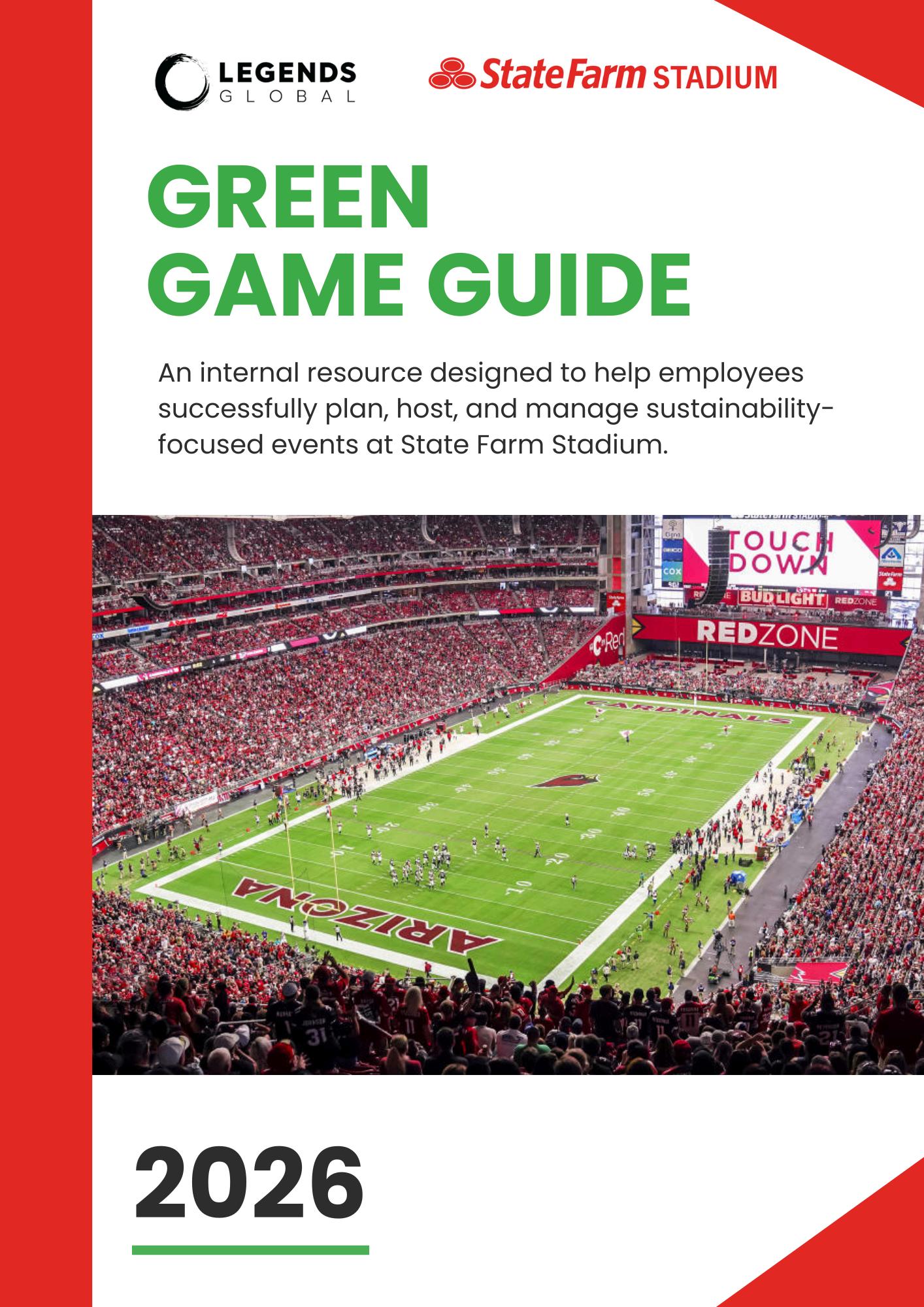
The Green Game Guide is an internal resource designed to help employees successfully plan, host, and manage sustainability-focused events at State Farm Stadium (SFS). This guide focuses on hosting a Green Football Game at SFS and is designed to be replicable for future events at the stadium. This guide provides step-by-step guidance for all phases of a game, including pre-game, during-game, and post-game. During these phases, the guide outlines what to track and report, as well as the staff roles and responsibilities.
Some of the core components of this guide include a clear waste-sorting guide and standardized waste-tracking methods to ensure consistency in data collection and reporting across events. Another core component is a detailed event-day checklist for staff to follow along with clearly defined roles and responsibilities, to ensure accountability and smooth coordination across events. Additionally, the guide includes an example timeline to illustrate how an event might unfold, from the day before to the day after it ends Finally, the guide outlines best practices for sustainability messaging to equip staff with consistent, effective ways to engage with fans.
A Green Game is a sustainability-focused event to be hosted at State Farm Stadium, designed to transform an event day into a demonstration of what environmentally responsible, large-scale management can look like This type of event is important for showcasing sustainability in a fun and engaging way while displaying the effectiveness of eco-friendly efforts when individuals come together.
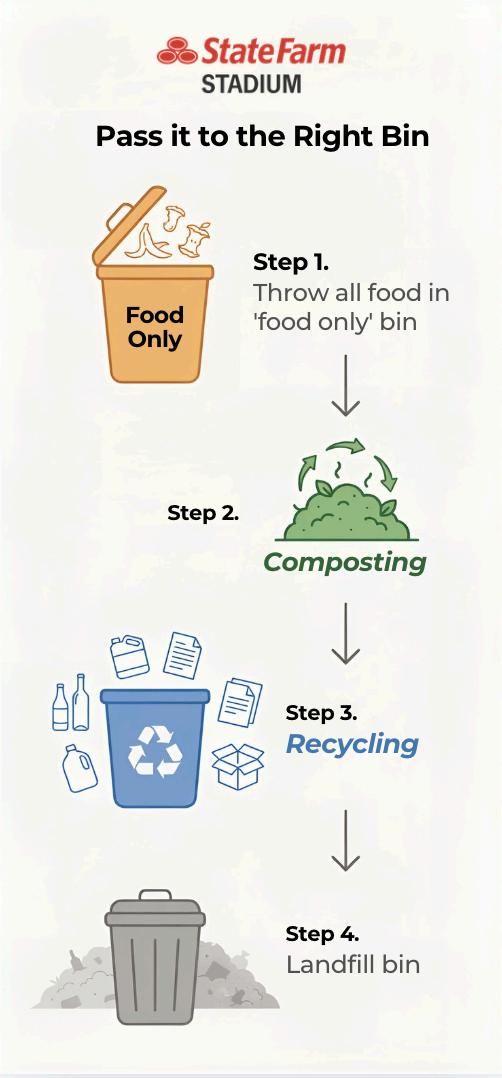
PASS IT TO THE RIGHT BIN
In an effort to minimize waste and divert as much material as possible from landfill, we ask all fans to follow the sorting system below. Every item placed in the correct bin helps us reduce our environmental impact
1. FOOD BIN
All leftover food
Ex: fries, pizza, nachos, popcorn, etc.
*No cups, wrappers, or packaging
2. COMPOST
Napkins and paper towels
Greasy pizza box bottoms
Paper food trays
Compostable plates, bowls, and utensils
3. RECYCLING
Aluminum cans
Plastic bottles
Plastic cups and lids
Clean cardboard and paper
*Always pour out liquids first
4. LANDFILL
Chip bags and candy wrappers
Foam containers
Plastic-lined paper cups
Condiment packets
Quick Tips
● Empty liquids into the landfill first, then recycle.
● Separate items when possible (lid from cup).

● Look for labels such as “compostable” or “recyclable.”
● If still unsure, place it in the Landfill to avoid contamination of other bins.
Have a question? Ask a Green Team member
Waste Sorting Guide
Food (Brown Bin) Landfill (Black Bin) Recycling (Blue Bin) Compost (Green Bin)
All food scraps Chip bags
Candy wrappers
Aluminum cans (beer, soda, seltzer) Compostable Utensils
Plastic water bottle
Foam containers Clean plastic cups
Plastic-lined cups
Plastic bags
Plastic lids
Clean pizza lid (no grease)
Condiment packets Flyers, papers, cardboard, etc.
Most Common Contamination Streams
Look out for these items that can commonly be confused and contaminate a waste stream:
● Food-soiled recyclables (pizza boxes with grease)
⚬ Reduces recyclability
Paper food trays and boats
Napkins and paper towels
Wooden stir sticks and toothpicks
Paper drink carriers (no plastic lining)
Greasy pizza box bottoms
● Mixed materials: paper cups with polyethylene lining or mixed plastic and paper (Starbucks-style)
⚬ Often not recyclable
⚬ Plastic film (bagged napkins, wrapper film)
⚬ Tangles MRF equipment
Tricky Items and Recommended Sorting
● Paper cups (poly-lined): If the local processor accepts polypropylene-lined paper cups (check with waste hauler), place in
recycling; otherwise, landfill.
● Plastic utensils and straws: Landfill
● Condiment packets: Landfill
● Lids vs. cups: When in doubt, place both parts in the recycling bin only if they are empty, and the material type is accepted
Quick Sorting Guide
1. Is the item food or food-soiled? → Compost
2. Is the item a clean metal, glass, or plastic? → Recycling (make sure it’s empty)
3. Is the item greasy, coated, or a mixed material? → Landfill
4. Is the item a branded paper cup (Starbucks, etc.), and you don’t know? → Landfill
5. Still unsure? → Ask other staff OR throw in the landfill
Fan Engagement Best Practices
Fan engagement and messaging are the core of Green Games. The goal is to maintain confident, consistent, and welcoming interactions across the board. No matter what attitude you may encounter, do your best to stick to the recommended talking points below
FAQs & Quick Responses
The following are examples of common attendee questions you may encounter, along with recommended responses to use as a reference:
"Where does my recycling actually go?"
● Once recyclables are collected and sorted, they're sent to a materials recovery facility for sorting and processing. Our waste hauler tracks each load, so we know exactly how much is being diverted.
"Does this food waste really get composted?"
● Yes — compostable materials collected today are diverted from the landfill and sent to a composting facility. The Stadium tracks diversion by weight for every event.
"Why are there so many different bins?"
● Each bin is designed to keep materials separate so they can actually be processed correctly with minimal intervention. Mixing them together causes contamination, making proper disposal difficult.
"What if I already threw something in the wrong bin?"
● It happens! Just do your best going forward. Every correctly sorted item still makes a difference.
"Does this really get recycled?"
● See the Handling Skepticism section.
When to Direct Attendees to QR Codes
QR codes are available throughout the stadium to support fan education and engagement. Direct attendees to these resources in the following situations:
A fan wants more detail about the sorting guide than you can provide verbally
● Point them to the QR code on the nearest bin or signage.
A fan wants to take the sustainability survey, but doesn't want to stop and chat
● Direct them to scan the QR code at their own pace.
A fan asks about real-time diversion progress
● Point them to the nearest concourse screen showing live data, or refer to the most recent update you've received from your operations lead.
When directing fans to screens or QR codes, always encourage them to return to you or another employee if they have additional inquiries. Interpersonal engagement is the most important part!
Handling Skepticism
Skepticism is one of the most important fan interactions you will have. Approach these moments with patience: a well-handled skeptical question is one of the most effective tools for changing minds. Some examples of skepticism may look like the following:
"Does this really get recycled, or does it all just go to the same place?"
● Yes—everything is tracked and properly recycled All waste from each event is weighed and monitored, so we have clear data on what’s being diverted and exactly where it goes. This ensures materials are handled correctly and recycled as intended. "Recycling is a scam and doesn't actually help.”
● It's true that recycling has faced real challenges, and
contamination is a big part of that problem. What we're doing today is focused on keeping each stream clean so materials can actually be processed. That's exactly why sorting correctly matters so much.
"Does this even matter when large-scale polluters are doing so much worse?"
● It can be difficult to feel like you’re making an impact when it seems so small. But State Farm Stadium generates around 30 tons of waste per game When we divert even a fraction of that, it has a meaningful, measurable impact. Events like this also help build habits and awareness that extend beyond the stadium.
General Guidance for Skeptical Interactions
● Acknowledge the concern do not dismiss it or invalidate their feelings.
● Remain factual Only make claims that you can accurately back up
● If a fan remains unconvinced, that is okay. Thank them for engaging and move on. Do not argue.
● If a question falls outside your knowledge, direct them to the State Farm Stadium sustainability page or provide them with the contact information of someone who may be able to answer.
Team Roles & Responsibilities
Director of Operations & Sustainability: Strategic Oversight
● Set diversion targets
● Approve bin placement + staffing plans
● Lead pregame sustainability briefing
● Monitor live dashboard metrics
● Lead post-game debrief
ABM: Material Quality Control
● Monitor contamination in waste streams
● Swap bags BEFORE overflow
● Flag repeated contaminants, overflow hotspots, and signage failures to supervisors
CRAFT Culinary: Point of Sale Education
● Recognize what packaging is compostable
● Verbally guide fans towards putting their items in the proper bins
● Promote Refill stations
● Educate fans about concession discounts and in-app challenges
● Reinforce proper disposal at the point of handoff
● Reduce unnecessary packaging (napkins, lids, utensils)
● Highlight sustainable/default packaging options
S.A.F.E. Management & Insignia Guest Services: Front-line Messaging
● Prepare to answer common fan questions
● Remember key phrases to use (“Food waste goes in green bins”)
● Direct fans to the nearest waste stations
● Maintain a positive and encouraging tone when guiding behavior
● Help reduce confusion around sorting
Social Media Team: Real-time Amplification
● Repost hashtags
● Post leaderboards for recycling or the gamification aspect
● Record behind-the-scenes or green team content
● Track challenges or initiatives with the highest engagement
● Share quick educational posts during the game
● Highlight fan participation and user-generated content
Copia: Sorting
● Coordinate sorting shifts for during and post-game
● Pre-stage collection areas for efficient sorting
● Track recovered food volumes
● Ensure proper separation before donation or redistribution
Waste Haulers: Back-of-house Stream Protection
● Coordinate haul schedule
● Ensure compost/recycling loads aren't mixed
● Verify proper disposal destination
● Confirm bin streams match hauling processes
● Optimize pickup timing to prevent overflow
Data & Reporting Lead: KPI Tracking
● Track diversion, contamination %
● Create a post-game impact report compared to past games
● Establish baseline metrics pre-event
● Identify high- and low-performing zones
● Track fan participation and engagement trends
● Translate data into clear insights for stakeholders
Green Team (future role): On-site Behavioral Intervention
● Help attendees with waste sorting
● Provide real-time waste sorting guidance
● Educate attendees about stadium initiatives
● Gather attendee feedback on new stadium initiatives
● Monitor contamination trends
Timeline- Before Game
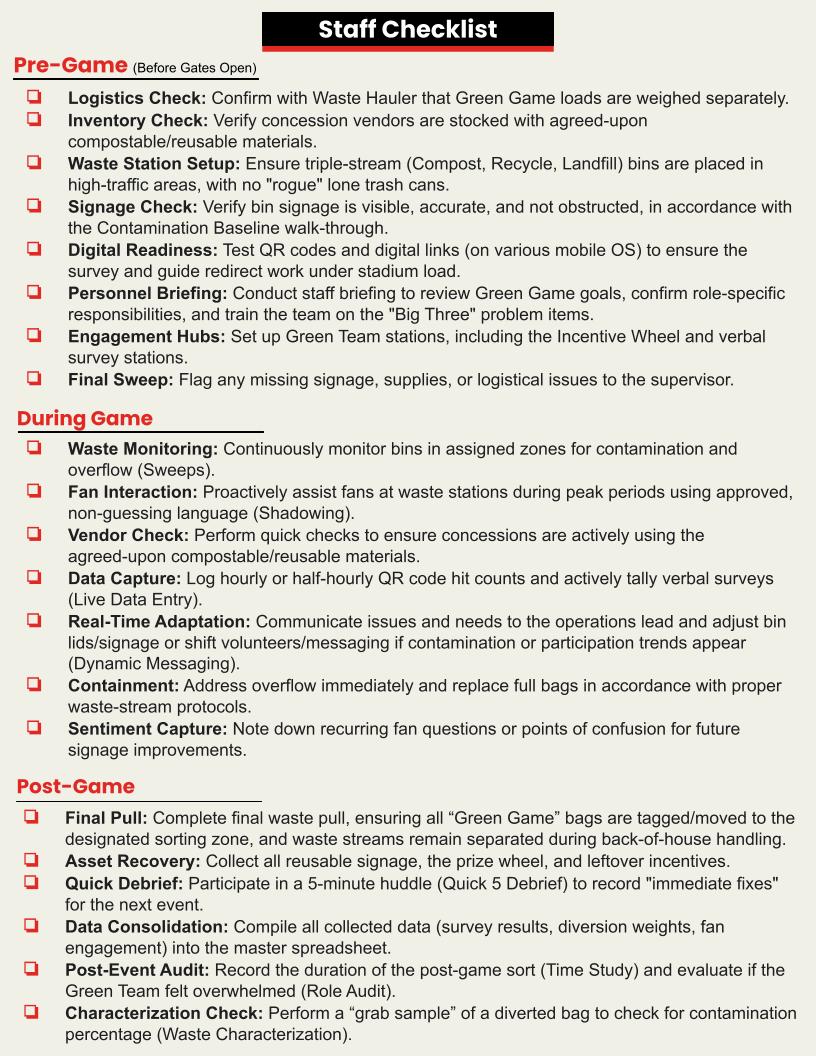
Gameday Timeline (Run of Show): Before Game
Time Period
1 Day ahead of time or 4-6 hours before the event
2-4 hours before the event
Final Stretch Before Doors Open, 2 hours before
Duties: Before Game
Initial Logistics and Coordination
Hauler Coordination: Confirm with the waste management provider that “Green Game” loads will be weighed separately for accurate diversion data
Pre-Pre-Event Prep: Walk-through with the alliance to further plan and determine what needs to be done for event prep
Event Walk-Through: Determine any specific sustainability requirements
Initial Signage Setup: Set up signage as attendees drive into the parking lot
Concession Setup: Set up sustainable products (compostable/reusable cups).
Waste Sorting Station Setup: Determine/set up the main Waste Sorting Stations
Infrastructure & Personnel Setup
Station Setup: Set up stations for the Green Team (ASU volunteers, Legends Global employees, Sustainable Stadium Alliance members)
Bin Placement/Messaging Checks: Verify all bin placement and messaging
“Green Game” Signage: Put up “Green Game” messaging within the stadium.
QR Code Placement: Put up the QR code with the survey or guide in the stadium
Staff Briefing: Conduct the main staff briefing
Final Checks and Readiness
Contamination Baseline: Walk the concourse to ensure no rogue bins are left out and that bins have clearly labeled signage and are easy to follow.
Digital Integration: Test QR codes on different mobile OS to ensure the survey redirect works under stadium load.
Verbal Survey Stations: Set up stations where people can take the survey verbally with a Green Team member, with tallies accounted for
Timeline- During Game
Gameday Timeline (Run of Show): During Game
Time Period
Continuous Operations
Real-Time Adaptation
Between Quarters, Halftime, and Peak Traffic
Duties: During Game
During Event Duties
Monitor high-traffic Areas: Observe waste patterns (correct/ incorrect sorting), engagement patterns, and fan engagement plan implementation.
Active Stations: Staff information stands for education
QR Code Stations: Run incentive loop (prize wheel for survey completion) and actively tally QR code scans/surveys taken
Active Sweeps: Perform active sweeps of each floor to check that everything is going as planned
Shadowing: Have Green Team members hold different traffic areas at timed intervals to count the successful vs. failed waste-sorting events by attendees.
Vendor Compliance: Perform Quick Checks to ensure concessions are actually using the agreed-upon compostable/reusable items.
Sentiment Capture: Log hourly or half-hourly QR code hit counts to see which game periods are most active.
During Event Adaptation & Changes
Active Feedback: Gather active feedback from the team and stadium partners (Green Team, Craft Culinary) to improve during the event and for future planning
Dynamic Messaging: Shift a volunteer or update the messaging method in a location if one floor is lacking survey participation
Specific During Event Focuses
Sweeps: Check bin fullness levels to ensure “overflow” is not happening; if fullness is high, note visible contamination
Engagement Tally: Mark down how many fans engaged with the information stand vs. just aiming for the incentives (questions asked, interest noted, tally incentives given).
Timeline- POST GAME
Gameday Timeline (Run of Show): Post Game
Time Period
Immediate Post-Game
Immediately after to 24 hours after the event ends
Duties: Post-Game
Immediate Post-Game duties
Final Pull: Ensure all “Green Game” waste bags are tagged or moved to the designated sorting zones
Quick 5 Debrief: Gather Alliance for a 5-minute huddle while energy is high to record “immediate fixes” for the next event
Asset Recovery: Check for all reusable signage, prize wheel, and leftover incentives
Duties from the immediate end to 24 hrs after the event ends
Cumulate Data: Compile the data into a spreadsheet/Excel file (survey questions, waste diverted, fan engagement, attendees who requested more information)
Digital Export: Download survey results and QR scan timestamps
Time Study: Record the duration of the post-game sort to calculate labor efficiency for future planning
Waste Characterization: Perform a “grab sample” of a fiverated bag to check for contamination %
Engagement Correlation: Compare the number of surveys completed to the total stadium attendance
Role Audit: Evaluate if the “green team” felt overwhelmed and if the ratio of fans to volunteers was manageable
Post-Game Email: Send a follow-up email to staff, volunteers, and key partners summarizing the event outcomes, highlighting successes, sharing key metrics, and noting any opportunities for improvement.
Tracking Metrics
1. Waste Per Fan (lbs/person)
● Measures the total waste generated per attendee.
● Helps normalize performance based on overall game attendance.
● Example: “Today: 0.82 lbs per fan (↓ 12% from game average).”
2. Recycling Capture Rate
● Measures the percentage of recyclable material successfully captured.
● Compares the amount correctly placed in recycling bins to the total recyclable material generated.
● Indicates how effectively fans are sorting recyclable items.
3. Compost Capture Rate
● Measures the percentage of food scraps and compostable materials diverted from landfill.
● Compares the compostable material collected to the total compostable waste generated.
● Indicates how effectively organic waste is being captured.
4. Total Landfill Avoided (lbs)
● Measures the total weight of waste prevented from going to landfill.
● Includes materials successfully recycled or composted during the event.
● Demonstrates the overall impact of diversion efforts.
5. Diversion by Section
● Tracks waste diversion performance by individual stadium seating sections.
● Displayed using a heat map visualization to highlight leading sections.
● Example: “Section 132 leading with 74% diversion.”
6. Waste Station Interactions
● Measures fan engagement at waste stations throughout the stadium.
● Includes the number of QR code scans and sorting confirmations.
● Tracks interactions between fans and staff at sorting stations.
7. Green Team Engagements
● Measures the number of fans assisted by Green Team members.
● Tracks how many people received help with proper waste sorting.
● Example: “Green Team helped 1,240 fans sort correctly.”
8. Refill Station Use
● Tracks the number of bottles refilled at stadium refill stations.
● Estimates the number of single-use bottles avoided.
● Demonstrates the impact of reusable bottle participation.
Where Results Will Be Shared
● Website – Post-game sustainability updates and metrics
● Post-Game Email – Summary of Green Game performance and impact
● Real-Time Progress Dashboards – Live data displayed in the stadium through Spare-it technology
Acknowledgements
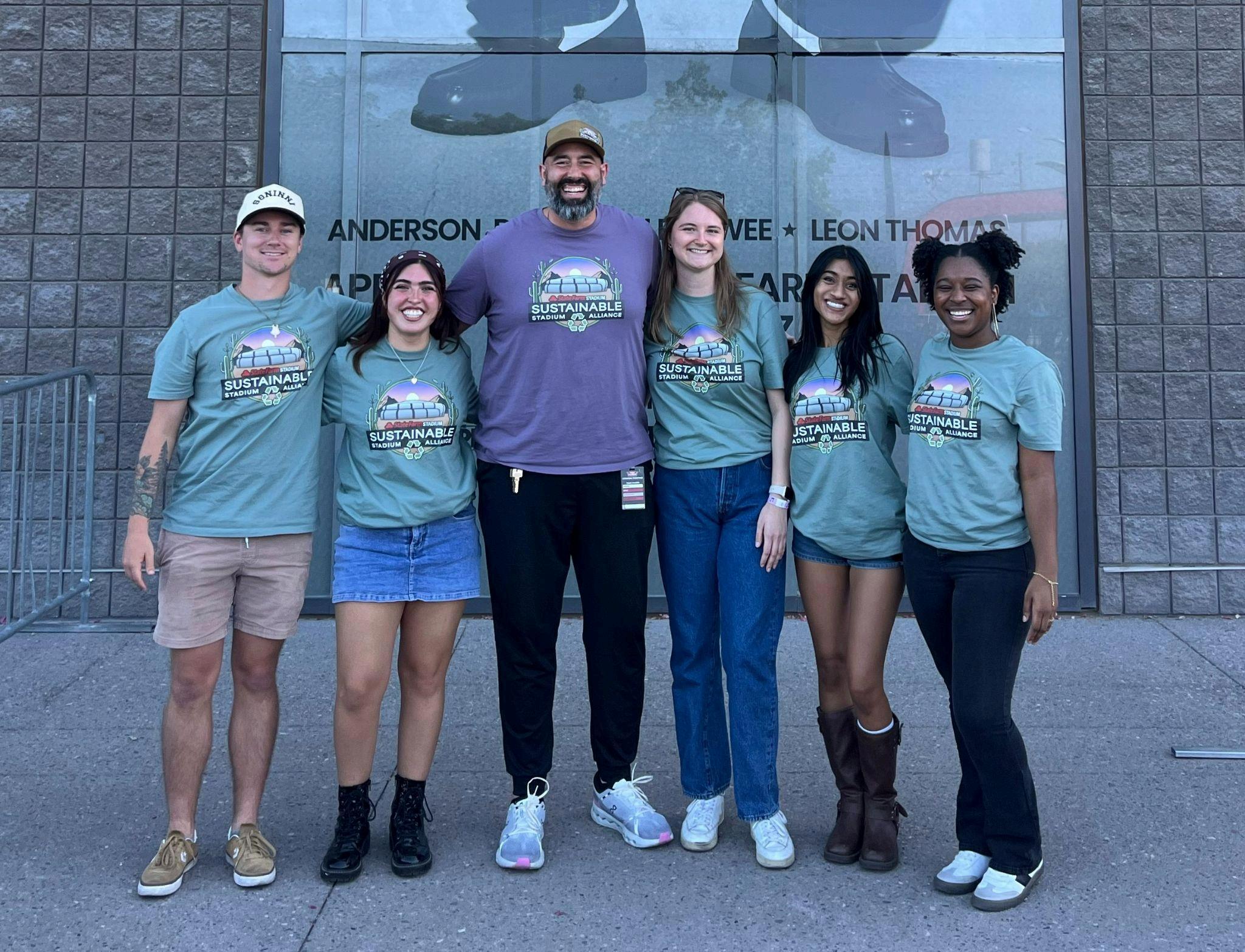
We would like to extend our sincerest thank you to every staff member, volunteer, and partner who showed up, sorted waste, answered questions, and guided fans toward better choices.
The work you do on game day is what transforms a written plan into real-world impact Every bin monitored, every fan interaction, and every waste item sorted reflects your effort and dedication.
Sustainability at this scale is more than a one-person job. It takes a village, a team of people choosing, again and again, to do the right thing
As this initiative grows, so does the legacy of those who built it from the ground up. You are part of something that extends far beyond game day.
Again, we sincerely thank you. We truly could not do this without you.