
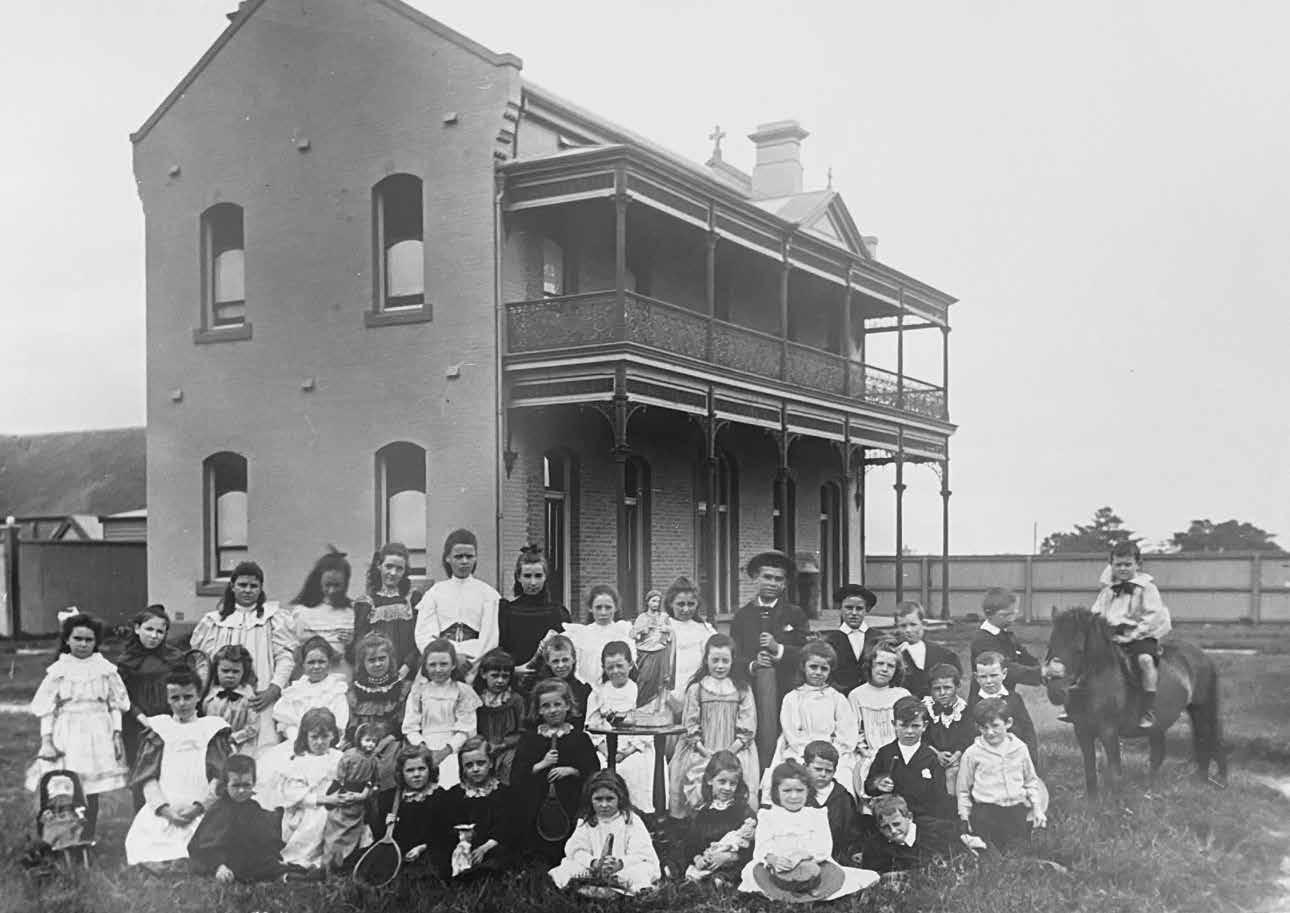
SNAPSHOTS IN TIME
1833 – 2021 A FOCUS ON SCHOOLS IN THE CATHOLIC DIOCESE OF MAITLAND-NEWCASTLE
FRANCES DUNN
MARIE HUGHES rsj
ELIZABETH LATHAM
Our regions CATHOLIC SCHOOLS
All
Manning
North
Current Schools
Current Schools
Current Schools
Central Region Current Schools
Lakes Region Current Schools
Krambach
Cundletown Kendall
joined Lismore Diocese)
Laurieton
Millers
Raymond Terrace
Carrington Tighes Hill
(4)
Contents
DEDICATION
Late one afternoon in 2019 on the verandah outside Bishop Bill’s office, a casual conversation arose. A conversation I have now come to recognise as when the very early framework was laid to produce this snapshot into the stories of our Catholic schools. I was there to discuss the upcoming Bicentenary of Catholic Schools in Australia 2021, and what was possible for our involvement in the planned year of celebrations across Australia to mark this historic occasion.
(I was yet to know that most of our plans were to be subsequently derailed by the COVID-19 pandemic.)
Bishop Bill, as was his style, just sat and listened and then with a grin replied, ‘Well, Liz, this is a subject of interest – I would think that the first school in the Diocese was at East Maitland.’
‘Well, that is a point of contention, Bishop Bill,’ I countered. ‘Initial research into the opening of our earliest school indicates certainly Maitland, but not in the “Government Town” of East Maitland but the “Peoples Town” of West Maitland. And so was kindled my inspiration and Bishop Bill’s ongoing support.’
Snapshots in Time is dedicated to our late Bishop William Wright, an avid historian who enjoyed glimpses into the stories of those early pioneers striking out across the abundant pastures of this Hunter Valley district, settling, struggling and even thriving, with the establishment of a Catholic church and school often the centrepiece of newly established communities.
Bishop Bill was indeed looking forward to this publication, which seeks to identify and bring clear focus on each and every school in what we know today as the Diocese of Maitland-Newcastle, while celebrating an historic 200-year in the history of Australian Catholic education.
LIz Latham
Introduction
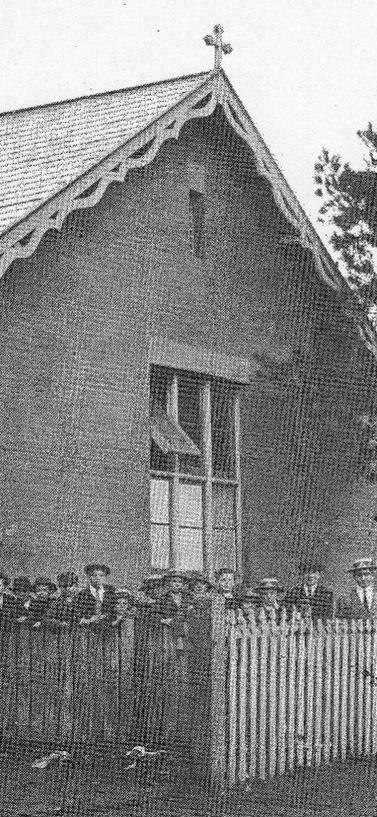
WITH A WIDE-ANGLE LENS
The unfolding educational landscape of the Diocese of Maitland-Newcastle over the last 200 years is one of broad parameters, not only in terms of miles and kilometres but of an ever-widening vista settlements scattering along navigable waterways, fledgling communities forging a life in rural isolated areas, luring prospects of land ownership, coal and ships and wool, rail lines confidently snaking further afield build corridors for trade and communication, post-war expansion following two world wars, economic depression and large scale migration from Europe. All this unfolding within the wider context of a changing social and political climate, a colony grappling with that critical, insistent and ultimately divisive of issues, education for all children. Added within that frame was a potent mix of church, state, power and funding.
Education had its foundations in the mostly poor, rough and ill-equipped schools set up in the early 1800s in Sydney Cove and Parramatta, and for the Catholic community these were ‘The Priestless Years’. Up until 1820, prayer services were organised, lay people ministered to each other, and Catholic schools were started’, Maurice Ryan writes.
Much has been made of sectarianism, and there certainly were some nasty combatants. However, Ryan contends that distance from home muted rivalries, forgotten or rather submerged, and there was much ecumenical cooperation and harmony. Cooperation becomes a good idea when necessity is the goad.
‘Significantly, the first Catholic school teacher was a lay person, with lay staffing continuing to pass on the Church’s faith and traditions prior to 1880s when religious congregations outnumbered them.’
Fr Brian Maher in his book Planting the Celtic Cross estimated the number of lay teachers in New South Wales between 1848 and 1880 to be 800.
But the writing was clearly upon the wall and when the foreshadowed Public Instruction Act formulated to establish an education system that was ‘free, compulsory and secular’ became effective in 1883, lay teachers had no option but to leave their employment. Funds were not available to provide a salary consistent with a reasonable standard of living for them and their families. Many left to teach in the public sector where renumeration was secure.
In the eyes of the Catholic bishops, strongly focused by Bishop Murray of the Maitland Diocese, the way forward for the maintenance of the Catholic faith was for the church to have its own schools, in which its faith, traditions and customs could be taught and caught. Government-run secular schools as ‘seedplots of future immorality, infidelity and lawlessness’ were not an option. The bishops took up this challenge and over the next eighty years, ways and means were found. Pivotal to this was an increasingly insistent call to overseas religious orders of both men and women, and in all, ten orders were to make their mark within the Diocese, beginning 1864 in Maitland with the Sisters of the Good Shepherd, known as the Good Samaritans. Religious were welcomed by the clergy: Vaughan suggested they ‘would give a tone and a thoroughness to the rising generations’, while Fogarty comments that Therry from his early experience in the colony saw the influence of religious teachers ‘as a powerful antidote to the virus of immorality and indifference that spread unchecked under the appalling conditions of his day’.
And importantly, religious were welcomed by the people. ‘For them [parents] schooling was the key. It was a means of expressing their identity, their long term hope, their sense of community and their sense of belonging.’ Over the ensuing years, the struggle to establish and to continue schools meant many privations for the clergy and religious brothers and sisters, often sharing in the poverty of the families they had come to serve, and in doing so gaining their respect. Those stories have become legendary, and many such instances have been quoted within the school page entries.
Equally legendary are the stories of Catholic lay support and co-operation. Anne Benjamin comments that ‘momentous contribution of laity … emphasises one of the enduring yet unrealised principles of Vatican 11: participation’. There is a wealth of instances paying tribute to such participation: covering payments for coach and train travel for the sisters, clearing debts, donating land, construction time and equipment, provisioning convent larders, sewing, paying wages, enabling free accommodation, manning school tuck shops, raising funds, holding bazaars and fetes, joining mothers clubs, initiating the Parents and Friends Association, establishing an Old Boys Union, supporting congregations, arranging bequests … the list is endless. For many of these individuals and families, the making of such a considerable investment in
the present and the future was a means of building community, of belonging and of gaining respectability. And in making outstanding efforts, men and women often came to be recognised in local newspaper reports, so taking their rightful place as agents of change.
Zimmerman so clearly sums up, ‘Priests and religious men and women depended totally on the determination and the generous support of the laity for the growth and survival of Catholic schools.’
Surely, upon the shoulders of these heroic giants, later giants stood.
Our early schools were established with unfolding terminology, emanating from a shifting umbrella of colonial regulations and funding: terminology even perpetuating class divisions – private, denominational, national, provisional, church, convent, select, and boarding. Later came provision for secondary education. School names were changed somewhere around 1984/5, often from a name given by the order of teaching religious to a name in line with parish title.
Administrative structures developed in recognition of the reality; the need for more centralised policy making and efficient management of Catholic parishes and schools. Boundaries needed to be changed, and pivotally the implementation of the Wyndham Scheme brought about much needed rationalisation around secondary education, with richer curriculum content and accessibility for feeder parish primary schools.
‘By the middle of the twentieth century the climate of the 1870s and 80s was replaced by one more inclined to offer assistance to non-government schools. Concurrent with this development was the growing awareness by parliamentarians of the political advantage to be had in granting aid to nongovernment schools’.
The rapidly increasing enrolments during the 1960s made it apparent that the religious congregations of sisters and brothers who staffed the schools had insufficient numbers. Now with government funding relatively assured, and with the Catholic Schools Office in place to manage accountability, governance and child safeguarding, the laicisation of both leadership and staff of Catholic schools unfolded and is now an accepted and integral part of today’s school landscape.
Spiritual formation for lay teachers has become a vital component for the building of Catholic school identity, and in seeking to make the Gospel central, real and inspirational, has often been the recognition of a founding charism, that spiritual capital imbued into the very fabric of each school by their particular religious order. Used as a rich resource, charism can underpin shared ownership and co-responsibility of leadership, contributing to goals while building and renewing the whole church and standing as witness to Gospel values.
SNAPSHOTS WITH COLOUR – TEAM OF THREE
While each school is recorded in snapshot format and may read rather clinically of facts, dates, timelines and names, the reality has a far more human trace – one of community, parents, lay men and women, religious orders, families, clergy and parish all guided, supported and encouraged within newly forming parishes and changing diocesan boundaries.
Quotations have been included to ‘colour’ each entry, chosen not solely from academic pages but from the refreshing perspective of those at the coal face, predominately from a surprising source of four storage boxes with files relating to every school. This collection point had been initiated some years previously by Marie Hughes rsj, educator and historian, and had gradually expanded to contain reminiscences, histories, architectural plans, newspaper clippings, jubilee booklets, year books and photos.
Identified by Liz Latham at the Catholic Schools Office in the context of 200 years of Catholic Education in Australia as a valuable source of historical detail and anecdotal evidence, a Team of Three came together: leader with drive and purpose, overseeing educational guru and an enthusiastic data recorder. The way forward gradually took shape: to compile an accurate publication containing entries for each and every school opened between 1833 and 2021, all within the changing boundaries of what we know as today’s Diocese of Maitland-Newcastle.
Frances Dunn
BETWEEN 1833 AND 2021
135 SCHOOLS WERE OPENED
58 SCHOOLS OPEN TODAY
For each and every school we have sought to:
f realign the school story
f capture snapshots of the past and present
f acknowledge the struggles f record gently the human experience
f value the pioneering communities f honour the legacy with fresh expressions f identify the core Gospel values within the warp and weave of 200 years of school history
Let us now sing the praises of famous men [and women], our ancestors in their generations … There were … those who led the people by their counsels and by their knowledge of the people’s lore; they were wise in their words of instruction … Some of them have left behind a name, so that others declare their praise. But of others there is no memory; they have perished as though they had never existed.
Sirach [Ecclesiasticus] 44:1,4,8-9 (NRSV)
Footnotes
1 Ryan, M
2 ibid
3 Maher, B
4 Vaughan, R
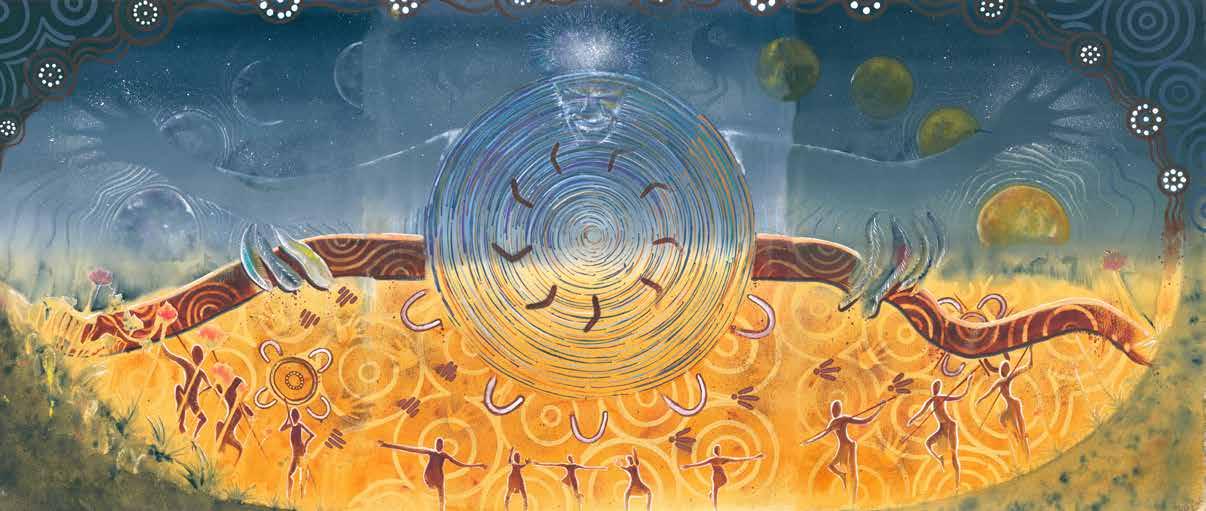
Acknowledgement of Country and Traditional Owners
We acknowledge and pay our respects to the traditional custodians, past and present, of this land who, long before us, lived, loved and raised their children on this land.
We also acknowledge the Aboriginal and Torres Strait Islander families in our community and their deep physical and spiritual connections to their land.
FOR THOUSANDS OF YEARS
The Traditional Custodians of the lands written about within this publication are of many Aboriginal tribes. Widely surrounding the lake, its lands and waters are the Awabakal; from the ranges and over vast and lordly river catchment areas to ocean entrances, the Biripi and Guringai and Worimi; north of the mighty river valley on land bounded by four rivers, the Worimi people; and the upper river area and surrounding regions peopled by the Wonnarua, Kamilaroi, Tulong and Murrain.
Many attempts have been made to establish traditional Aboriginal boundaries and most of these studies have been in the contemporary setting. However, the exact boundaries in many instances will never be known.
These Aboriginal inhabitants and custodians are critical to the rivers and valleys of this imposing and remote wilderness, enabling the exploration of its vast and difficult terrain by playing an often-pivotal role in locating essential human needs of fresh water and food, in the discovery of the natural resources of coal and wide grasslands, and also by giving daily assistance as trackers, interpreters, diplomats, and pathfinders.
Prepared by Aboriginal people for Pope John Paul II’s visit to Alice Springs in 1986
Artwork Punaal, Ponte-Boone, Biamie by E Heath
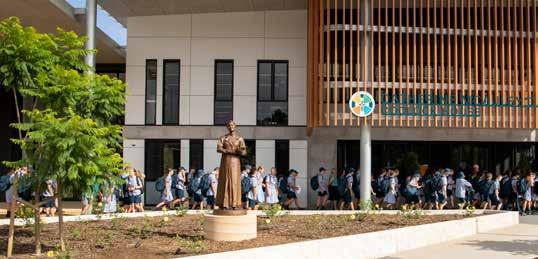
A FOCUS ON CATHOLIC SCHOOLS
1820 – 2021
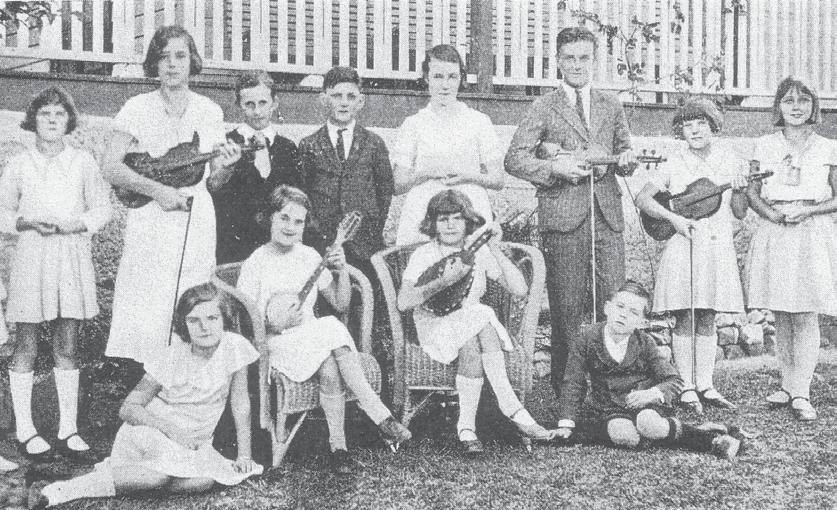
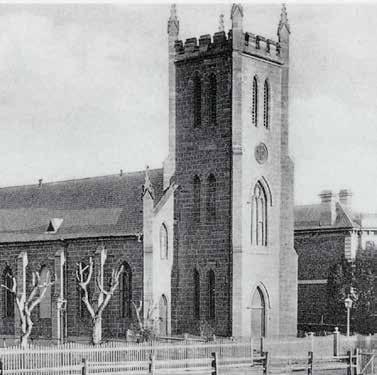
A FOCUS ON CATHOLIC SCHOOLS
1820 –1865
Newcastle penal settlement closes in 1824 enabling settlement of the region, and with ports on the Hunter River, established first at Morpeth followed soon after at Maitland some 40 kms upstream, river trade flourishes. Accessible coal seams already in operation, lush red cedar stands to hand and promising alluvial soils all combined to attract early pioneers to take up land grants. With settlements bringing plentiful convict labour prosperity is on the increase. Further exploration along ancient Aboriginal trade routes to the north and west continues apace.
Now operating within the Archdiocese of Sydney, Catholic pioneers arrive in Maitland. Fr Roger Therry establishes a chapel on land opposite Stockade Hill and work commences on a stone church. With official east/west boundary clearly defined, parochial districts are declared; East Maitland followed by Newcastle then West Maitland. East Maitland is the main springboard for the apostolic endeavours of the Hunter region.
Educational opportunities begin with the opening of private or church schools dependent on government funding –limited to land, funds to build and salaries (predominately Irish born lay teachers) all managed by the parish priest. The first denominational schools open in 1833 in Hunter Street, Maitland, and in 1838 in St Joseph’s Church East Maitland. Visioned to spread funds equitably between four denominations, the 1836 Church Act enables school openings to gather pace across the wider Hunter region and as far north as Singleton.
Controversy grows around how to bring schools into one system. In 1848, the Board of National Education is established to further control national and denominational schools under two Boards, operating until 1866. Fr John McEncroe represents Catholic schools in dealing with the Denominational Board.
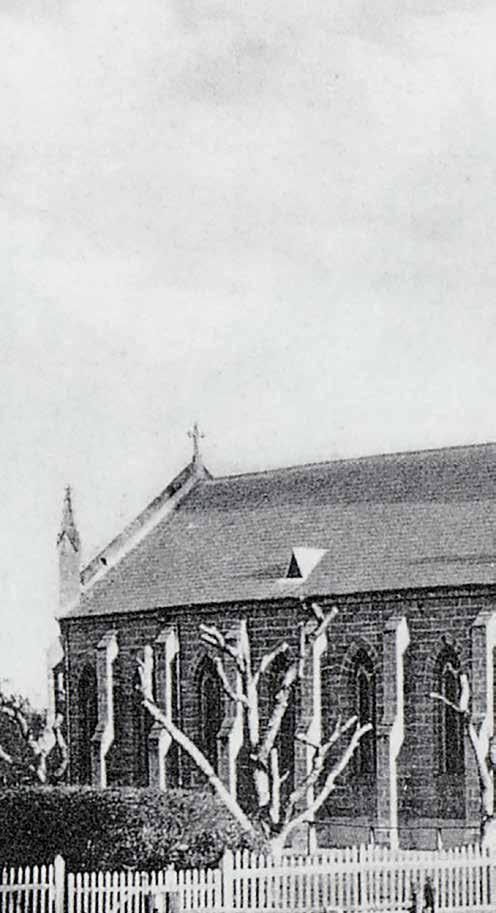
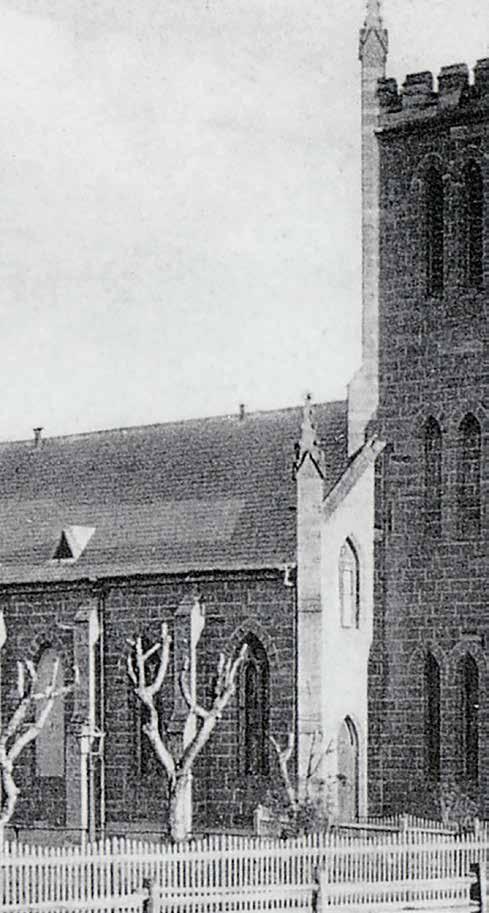
‘A poor thing it was, but an achievement in the circumstances, filling for the nonce the double role of a church on Sunday and a school during the week. The roof was of bark and the walls of slabs so loosely put together that the openings between had to be plugged with mortar fortified with chunks of wood.’
C 1833 Plaistowe Street, Horseshoe Bend, Maitland
1820
Fr John Therry
Founds 1st Catholic school in Hunter Street, Parramatta, later transferred to grounds of present St Mary’s Cathedral
1831
NSW Legislative Council
Richard Bourke, appointed Governor of New South Wales
1832
Australian Catholic Church
Fr John McEncroe arrives in Sydney from Ireland, appointed official chaplain
1833
NSW Legislative Council
Governor Bourke, Catholic schools began changes towards equity in denominational funding
West Maitland
Denominational school in Hunter
Street established. Continues as St John the Baptist
1835
Australian Church
Bishop Polding arrives in Hobart, then Sydney, Vicarate includes all Australia
NSW Legislative Council
Governor Bourke requests that the boundary defining East Maitland and West Maitland be clarified
East Maitland
Parochial District established within the Archdiocese of Sydney
1836
NSW Legislative Council
Governor Bourke sets in motion The Church Act established equitable funding for Catholic and Protestant denominations, and removed many of the privileges that the Church of England had enjoyed in the colony
1838
Newcastle
Parochial District established, Archdiocese of Sydney
East Maitland
Denominational school opens in St Joseph’s Church will continue as St Joseph’s
Maitland
St John’s Boys School opens, will continue as All Saints College – St Peter’s Campus
1840
Document signed in London
Order-in-Council to formalise cessation of convict transportation to colonies
1841c
Newcastle
Denominational School will continue as St Mary’s to 1873
1841
Newcastle
Denominational School opens, will continue as St Mary’s Star of the Sea
West Maitland
Parochial district established within the Archdiocese of Sydney 1842
Lochinvar
Denominational school opens, will continue as St Patrick’s
Morpeth
Denominational school opens, will continue as St Francis Xavier’s 1843
Singleton
Denominational school opens, will continue as St Francis Xavier’s School 1844
Millers Forest
Denominational school opens, will continue as St Patrick’s School 1847
Rome Maitland Diocese established as Titular See within the Archdiocese of Sydney 1848
NSW Legislative Council
Governor Fitzroy establishes two Boards – Board of National Education (BNE) and Denominational Schools Board (DSB) 1849
Singleton
Denominational school will continue as St Patrick’s 1850
NSW
Convict transportation to NSW ends
Raymond Terrace
Denominational school opens, will continue as St Brigid’s 1851
Raymond Terrace
Denominational school will continue as St Brigid’s
1852
Black Creek
Denominational School opens, will continue as St Brigid’s (Branxton)
1856
West Maitland
St John the Baptist Victoria Street, continuing 1833 Denominational school
Sydney Australian Catholic Teachers Association First meeting 1857
Maitland
Denominational schools all operating under the Denominational Schools Board (DSB)
Maitland Denominational Schools Board
Local Board Members –
Fr Dean Lynch, Rev John Kenny, Dr McCartney, Mr W Lawn, Mr P O’Keefe
1860
Murrurundi
Denominational school, will continue as St Joseph’s
1861
NSW Legislative Council Robertson Land Acts open up large tracts of Crown Land for purchase and occupation
Cooranbong
National school, will continue as Catholic school
Muswellbrook
Denominational school, will continue as St James
1862
NSW Legislative Council 1836 Church Act repealed. State Aid to religious institutions abolished, aid continues to Catholic schools through Denominational Schools Board
Gunnedah
Denominational school, will continue as St Mary’s College
1864
Maitland
St John’s Boys School / All Saints College
St Peter’s Campus, continuing 1838 Denominational school
Clarence Town
Denominational school, will continue as St Joseph’s at Dungog
CATHOLIC SCHOOLS
1866 –1880 A FOCUS ON
Beginning as a pivotal year, 1866 sees the Board of National Education with the dual system of administration proving inadequate and expensive resulting in tighter controls around inspection and certification. This move heightens tensions with the closure of many church schools often in poor condition, while an increase in number of National schools becomes evident.
Newly arrived from Ireland, Rev. James Murray is appointed Bishop of the established Diocese of Maitland and takes up the challenge around this looming funding uncertainty, influenced by strong statements from Rome and by bad reports of National schools in Ireland.
When end of state aid, proposed in 1872 to take effect in 1883, the Archbishop of Sydney together with the bishops of Maitland, Bathurst and Goulburn assume an increasingly harder stand visioning a separate school system. A call is sent out to religious communities in Europe to provide staff to educate the children of the workers in ‘the one true faith’. The call becoming increasingly insistent and gaining momentum based not merely on economic necessity, but on an almost moral necessity.
And the call is answered.
Four orders/congregations arrive and make their mark in the field of education, some with short tenure others with much longer tenure; the Good Samaritans, Dominicans, Mercies and the Congregational Josephites. In all, another seven are to arrive. Called by their bishop, warmly welcomed and generously supported by the people, all came to serve with zeal and commitment, changing the face of Catholic schooling and indeed, confounding the authorities as had been foreshadowed.
Lay teachers whose salaries the Catholic community cannot afford, read the writing on the wall and gradually leave, transferring to the state system or choosing to remain and work alongside the religious as they begin to staff and manage the established schools.
1866
Maitland
Rev James Murray installed as Bishop in Diocese of Maitland
Bathurst
Rev Matthew Quinn installed as Bishop in Diocese of Bathurst (Cousin of Bishop J Murray)
NSW Legislative Council
NSW Legislative Council Public Schools Act
– Council of Education established, Boards abolished, grants relied on inspection. Staff appointments and salaries now under Government control
Newcastle
St Mary’s Star of the Sea, continuing c1841 Denominational school
Blandford
Denominational school, will continue as Holy Rosary School
1867
Maitland
Dominican Order arrives from Ireland at request of Bishop Murray, establishes First Foundation continues St John’s Boy’s School / St Joseph’s / St Mary’s
Maitland
St Mary’s High/Boarding continues as St Mary’s Campus All Saints’ College
Archdiocese of Sydney Catholic Association for the Promotion of Religion and Education established by Bishop J Murray and Bishop M Quinn –ceased 1872
1868
Singleton
St Patrick’s, continuing as St Xavier’s
Largs
Denominational school, will continue as St Joseph’s
1871
Lambton
Denominational school, will continue as St John’s
Glendonbrook
Provisional school, will continue as Catholic School
Wallsend
Denominational school, will continue as St Patrick’s
1872
NSW Legislative Council End of state aid to all church schools
1873
Newcastle
St Mary’s Star of the Sea, St Thomas College
Newcastle St Convent School
Newcastle
St Mary’s Primary School
1874
Newcastle
St Mary’s Dominican Convent School
1875
Newcastle
Institution for Deaf and Dumb, will continue at Waratah 1889, Mayfield 1993
Singleton
Mercy Order arrives from Ennis Community Ireland establishes Foundation
Singleton
St Catherine’s Catholic College
Scone
Denominational school, will continue as St Mary’s
1876
Hamilton
Denominational school, will continue as Sacred Heart
Hamilton
Denominational school, will continue as St Aloysius High
Merewether
Denominational school, will continue as St Joseph’s
1877
Singleton Mercy Orphanage
1878
Campbells Hill
Sacred Heart College
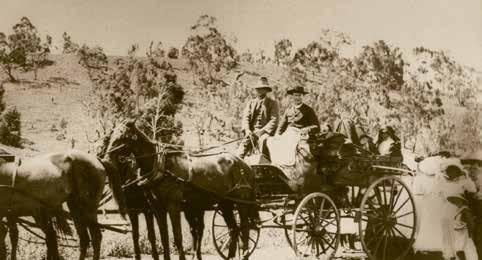
Photo: 1885 Merriwa – Sisters of St Joseph arriving accompanied
1879
NSW Catholic Bishops
Pastoral Letter - Bishop Vaughan reiterates that Catholic children must attend Catholic schools
Murrurundi
St Joseph’s, continuing 1860 Denominational school
Blandford Holy Rosary School, continuing 1866 Denominational school
Gunnedah
St Mary’s College, continuing 1862 Denominational school 1880
NSW Legislative Council
Public Instruction Act – ends financial aid to Catholic schools, effective end of 1882 Teachers employed under previous Act now Civil Servants of the Crown and classified according to attainments. Statistics – 83 Catholic schools, 190 teachers, and over 16,000 students.
Cooranbong
Sisters of St Joseph arrive in Cooranbong to take up school later to be known as Congregational Josephites
Catholic School, continuing 1861 National school
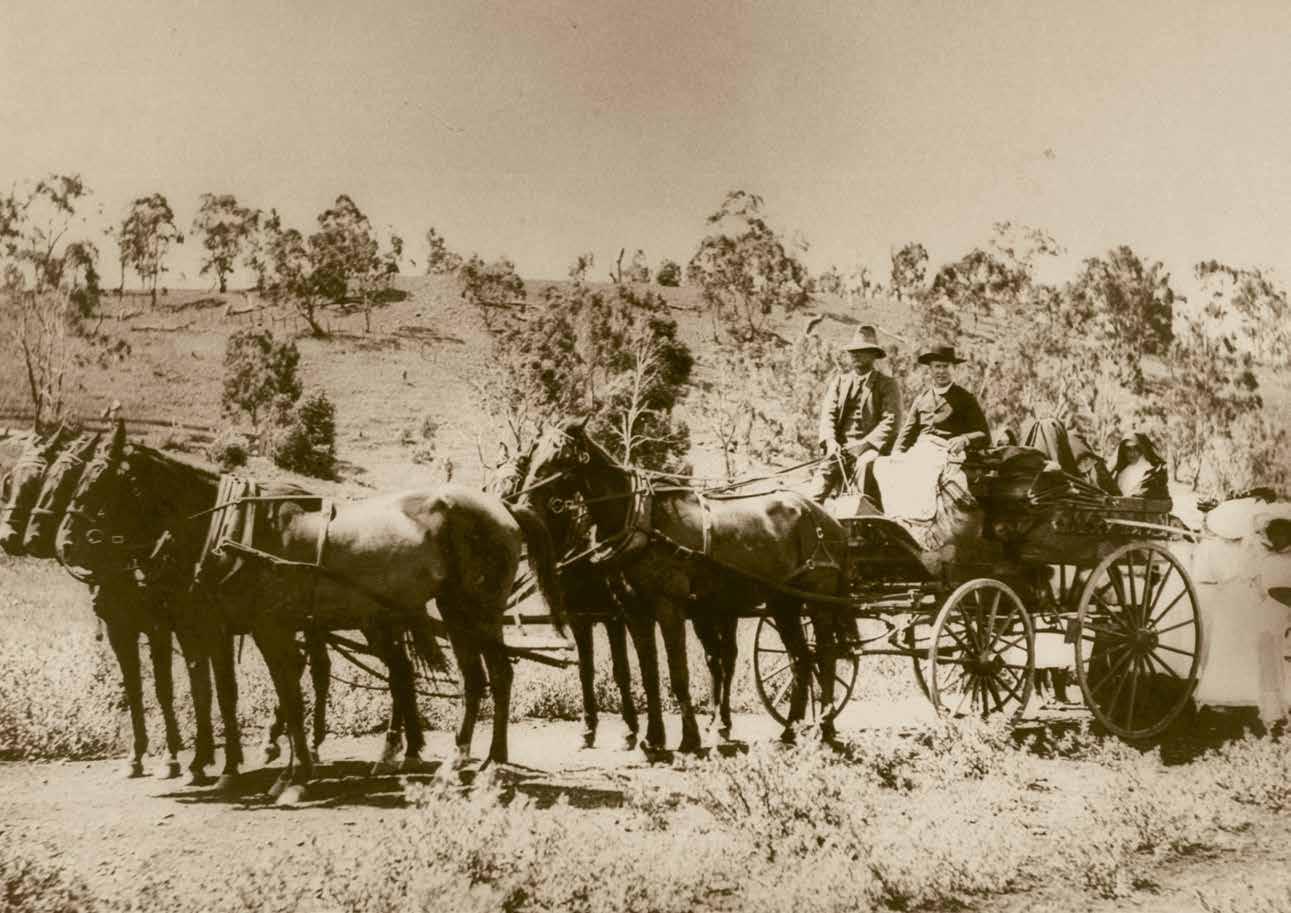
To get there, the Sisters travelled by train to Muswellbrook where they were met by Fr Kearns - Merriwa’s Parish Priest – and driven in a special coach to Denman. There they had a late dinner, hosted by a Catholic parishioner, Mrs Doyle. Finally they continued onto Merriwa and arrived at 6 o’clock, met by welcoming Catholics. Not pausing to rest or settle in, they opened the school on Wednesday.
1885 St Joseph’s Merriwa
1881–1961 A FOCUS ON CATHOLIC SCHOOLS
Amid heightened tensions, the 1880 Public Instruction Act is passed making education ‘free, compulsory and secular’. Denominational schools continue with government registration but without funding. With Bishops now banning Catholic attendance at State schools, (their stand given strong impetus with beliefs around confession and hell), the arrival of another five orders/ congregations coming to make their mark is a critical factor, originally in the survival of existing schools, but increasingly in the establishment of new Catholic schools in every district and in every country town. The first three orders/congregations arrive in 1883 – the Patricians, the Brigidines and the Diocesan Josephites, soon after the Marists, while later the Daughters of Charity, the St John of God Brothers.
Schools are now staffed and managed by these orders, renamed in line with each religious order bringing their distinctive tradition and spirit. Many convents also open ‘select schools’ and provide music tuition to supplement the meagre income of the sisters while schools in country areas open as primary then extend to cater for secondary students.
Following the Bishops policy of ‘build the school first, then the church’, scarcity and privation become part of the landscape for the priests, religious and also the communities they have come to serve as tremendous efforts and sacrifices around provision of schools and churches, and support for the clergy and religious.
Diocesan boundaries are re drawn in the light of population growth and there is a restructuring of secondary education. World Wars, a disastrous mine lock out followed by years of a Depression, then 1955 Maitland floods all make their impact upon the establishment and growth of schools.
The ‘Green’ Catechism becomes central to religious instruction, while Catholic inspectors are appointed to improve standards, bringing uniformity and ensuring curriculum and syllabuses are followed equipping students for public examinations. Some indirect aid is provided by the government
– school supplies, free milk, free school travel, and a Bursary Endowment Act available for poor students, however with increased student numbers following a post war baby boom, a decline in the number of religious vocations, and a growing need to staff schools with lay teachers, pressures begin to build.
All coming to a head around the much needed and wide-reaching recommendations emanating from the 1961 Wyndham Report … the 1961 Goulburn Strike catapults ‘State Aid’ into the political limelight.
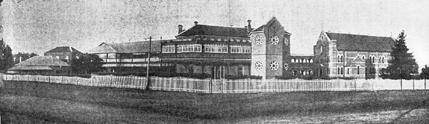
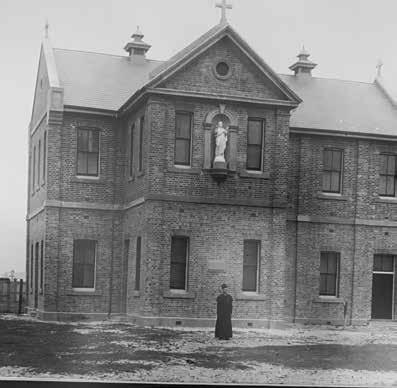
St Joseph’s College Lochinvar frontage 1923
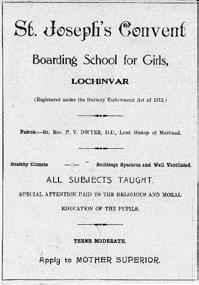
St Joseph’s School AD 1923
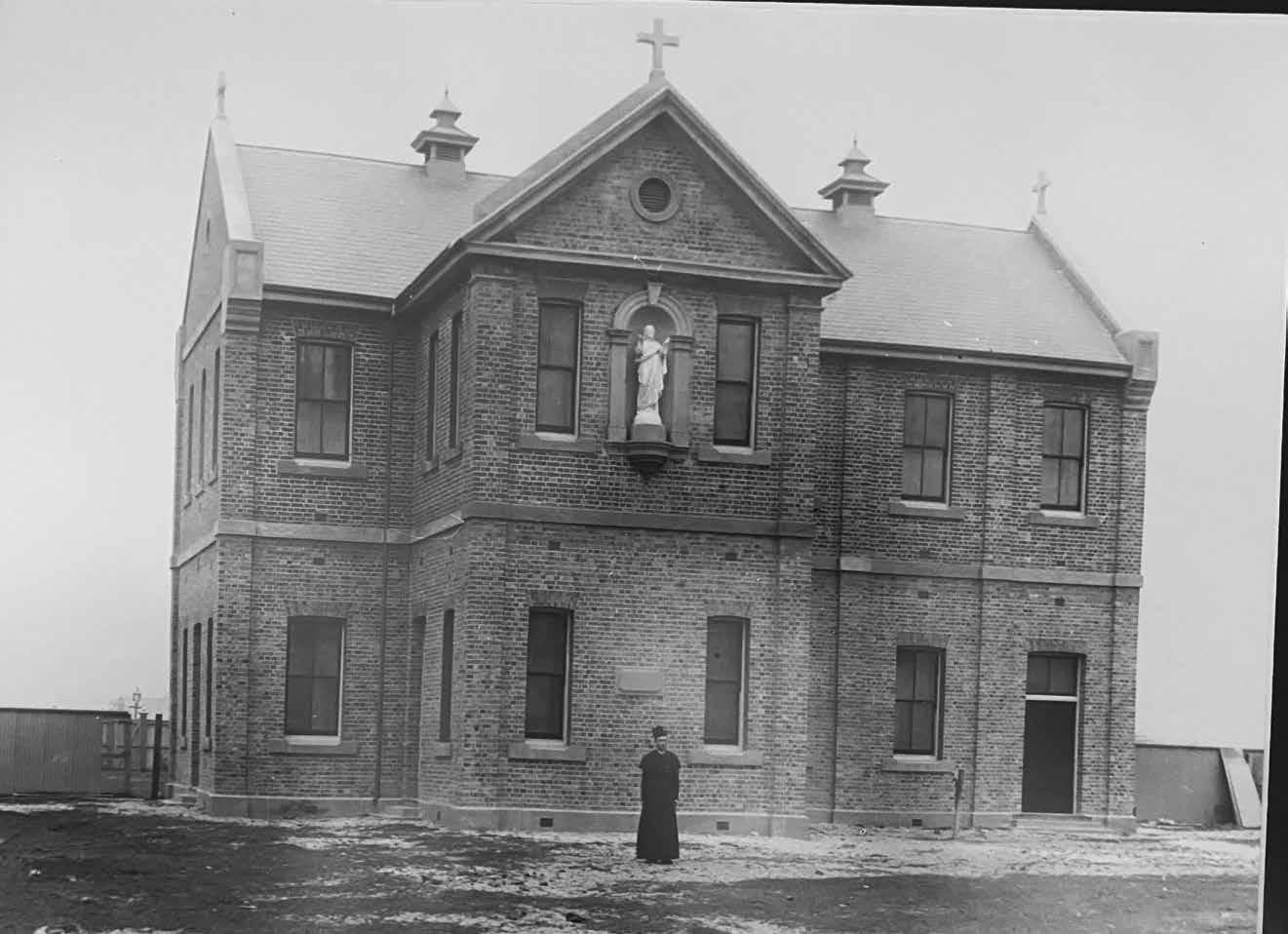
And the call is answered. Four orders arrive and make their mark in the field of education, some with short others with much longer tenure, the Good Samaritans, Dominicans, Mercies and the Congregational Josephites.
Sacred Heart School 1895, Hamilton
1881
Raymond Terrace
St Patrick’s, continuing 1851
Denominational school
Millers Forest
St Patrick’s, continuing 1851 Denominational school
1883
NSW Legislative Council
Government aid withdrawn from church schools; majority of teachers transferred to State System
CATHOLIC BOARD OF EDUCATION ESTABLISHED
Morpeth
St Francis Xavier’s, continuing 1842 Denominational school
Coonamble
Brigidine Order arrives from Ireland establishes Foundation
Coonamble
St Brigid’s, will continue within the Diocese of Bathurst
Lochinvar
Sisters of St Joseph arrive from Perthville Bathurst establish First Foundation
Lochinvar
St Patrick’s, continuing 1862 Denominational school
Campbells Hill
Patrician Brothers arrive from Ireland, establish Foundation
Lambton
St John’s, continuing 1871 Denominational school
Wallsend
St Patrick’s, continuing 1871 Denominational school
Muswellbrook
St James, continuing 1861 Denominational school
Merriwa
St Joseph’s Primary
1884
Campbells Hill
Patrician Brothers staff Sacred Heart College
Hamilton
St Aloysius Select continues as St Aloysius High School 1915
Hamilton
Sacred Heart Primary
Merewether
St Joseph’s High School
Maitland
St John’s School staffed by Patrician Brothers will continue as Marist Brothers
1885
Sydney
First Plenary Council of the Australian Catholic Church held- strong statement ‘building of school comes before building of parish church’
East Maitland
St Joseph’s
Quirindi
St Joseph’s Primary, will continue within the Diocese of Armidale
1886
Knockfin
St Joseph’s Primary School
Greta
St Mary’s School
Branxton
St Brigid’s, continuing 1852 Denominational school
1887
Armidale
Armidale Diocese established
Gunnedah
Included in Diocese of Armidale, e xcluded from Diocese of Maitland
Quirindi
Included in Diocese of Armidale, excluded from Diocese of Maitland
Coonamble
Included in Diocese of Bathurst, excluded from Diocese of Maitland
Nulkaba
St Patrick’s
Stockton
St Peter’s
Scone
St Mary’s, continuing 1875 Denominational school
1888
Newcastle
St Mary’s School for Boys
Carrington
St Francis Xavier’s
Dungog
St Joseph’s, continuing 1864 Denominational school Clarence Town
1889
Waratah Institution for the Deaf and Dumb
Largs
St Joseph’s, continuing 1868 Denominational school
Waratah Institute for the Deaf and Dumb
Brookfield
St Joseph’s
1890
Adamstown
St Columba’s
1893
Krambach
St Joseph’s
1895
Tighes Hill
Catholic School, continuing as St Patrick’s
1896
Aberdeen
St Joseph’s Primary
Wingen
St Patrick’s
1898
Campbells Hill
Marist Brothers arrive from Sydney Foundation to staff existing schools
Newcastle
St Mary’s Marist Brother’s Moobi
Catholic School
1899
Cundletown
Catholic school, will continue as St Joseph’s
1900
Glendonbrook
Catholic Primary School, continuing from 1871 Provisional school
1901
Wybong
St Bernard’s
Upper Wybong Catholic School
1903
Newcastle
Newcastle St Thomas Boarding Schools for Boys
1905
Broadmeadow
St Laurence O’Toole Primary
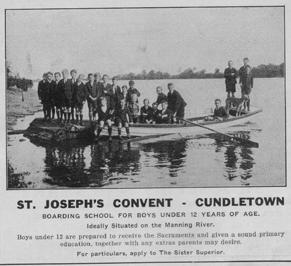
St Joseph’s Convent – Cundletown advertisement
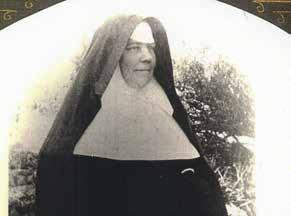
Mother Mary O’Driscoll rsm
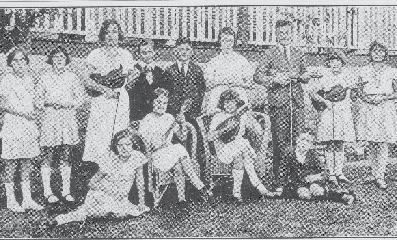
Charlestown Music Students 1933
Infants Bellbird
St Patrick’s Primary Nulkaba relocated to Cessnock
A FOCUS ON CATHOLIC SCHOOLS 1962 –1989
Acting upon the Wyndham Report recommendations puts immense pressure on the provision of buildings and the broadening of curriculum, while looming over the very survival of the Catholic school system is the decline in availability of religious as staff. The much-welcomed breakthrough in ‘State Aid’ becomes a reality following campaigns and petitions from parents, Bishops’ press statements and political lobbying of parties and individual politicians. The debate now more an economic issue rather than a sectarian one.
Vatican II is held in Rome, following which is a sizable shift in the known Catholic ground heralding much welcome change, but as well, much that is unsettling, controversial and of far-reaching educational impact. Also experienced are turbulent times within the wider society: – questioning and realigning of past and rigid values, controversy reigning around civil rights and feminist movements, while anti-war protests, university demonstrations, political assassinations, and the very first NSW teachers strike in Bondi 1968 all serve to dominate headlines and stir unrest.
Enrolments continue to flourish, and with religious orders in decline, lay teacher training becomes the paramount issue. Lay teachers begin to be admitted into established religious teacher training colleges, with the first qualified and recognised teachers taking their place within Catholic schools in the early 1960s. The Bonded Scholarship Scheme, initiated by Monsignor J Slowey, Director of the Catholic Education Office, Sydney was expanded, enabling lay students from the Maitland Diocese to attend the established Catholic Training Colleges at North Sydney and Castle Hill. On the completion of their study to be placed where the need called. (By the 1980s following rationalisation of teacher training colleges and hospitals, substantial government funding will be forthcoming in this sector).
Funding is accompanied by profound changes in management of Catholic schools in all Australian dioceses. Catholic Education Offices are established to centralise, coordinate and financially manage Diocesan schools leading to the rationalisation of systemic schools and shifting the educational management and responsibility away from religious orders and parish priests – a painful time.
Increased funding to Catholic Schools lead to the establishment of State and National Catholic Education Commissions providing coordination and representation of school authorities thus opening doors to programs attracting government funding: Disadvantaged Schools, Special Education and Multicultural Education.
Two similarly seismic events change the known landscape.
The first a Commonwealth referendum. Held in 1967, overwhelming support brings change to the 1901 Constitution extending recognition to our first peoples of Aboriginal and Torres Strait Island descent.
The second being an earthquake in 1989. Measuring 5.6 on the Richter Scale with its epicentre 15km SW of Newcastle around Boolaroo, 13 lives are tragically lost, and damage is widespread with many churches and school buildings affected.
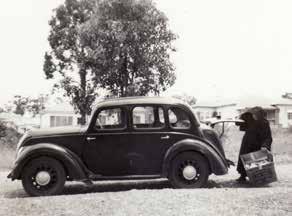
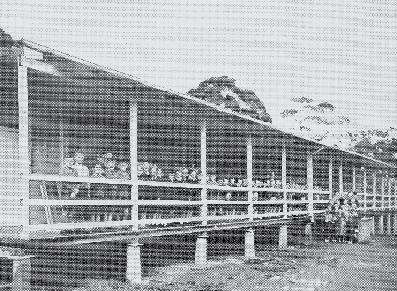
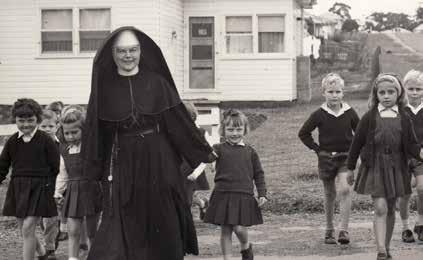
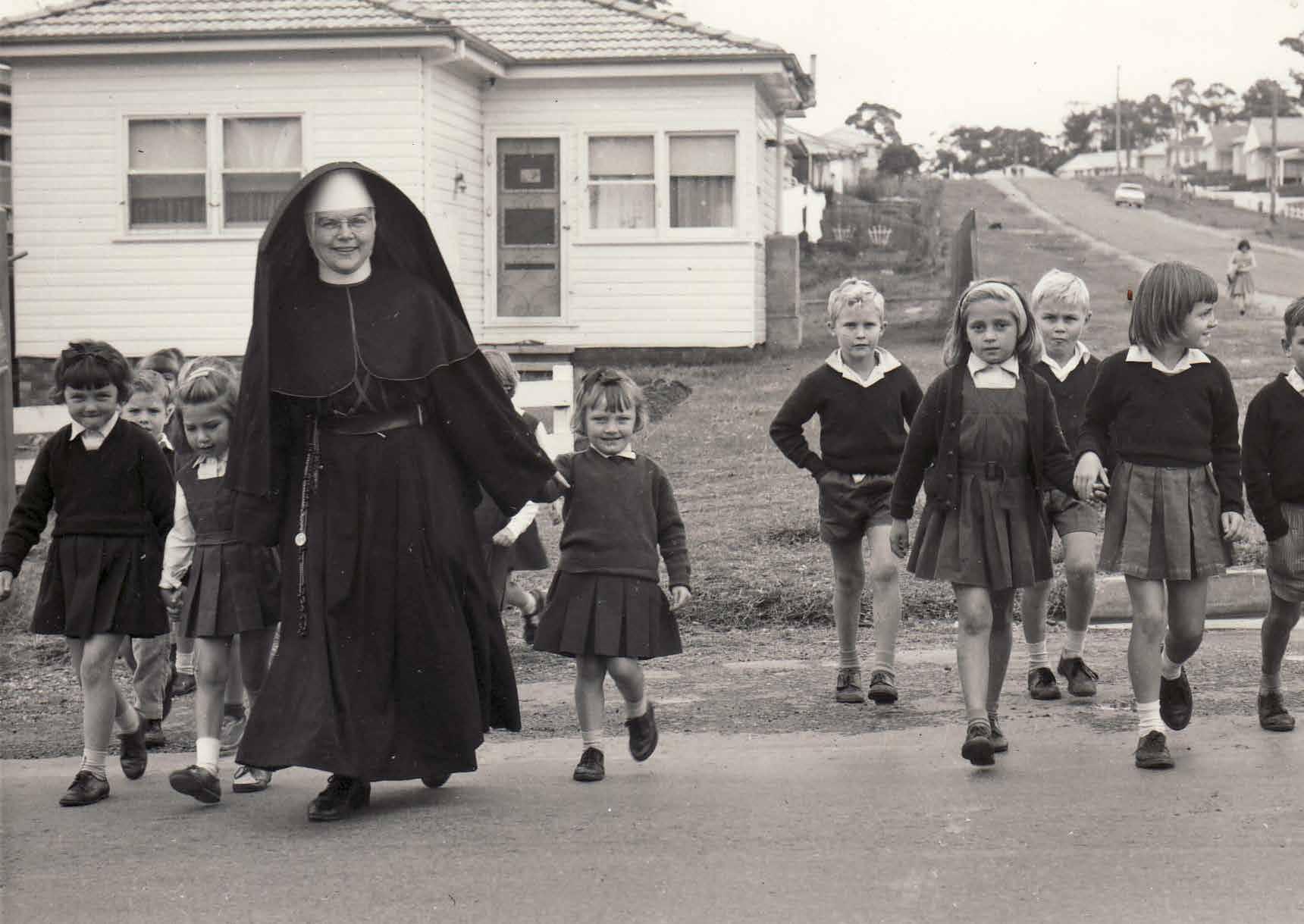
Photo opposite: Sister Cabrini rsj, guiding children across Main Road Edgeworth 1962
Sister Cabrini loading Mercia 1962 School Church Garden Suburb 1961
1962
Government Wyndham Scheme introduced
Goulburn
Goulburn School Strike draws attention to critical resourcing needs of Catholic schools
– proves to be a nationally significant catalyst for change
Morisset
St John Vianney Primary
Edgeworth
St Benedict’s Primary
Nelson Bay
St Michael’s Primary
1963
Rome
Second Vatican Council
1964
Commonwealth Government Grants for science laboratories and technical training
States Grants Act
Per capita grants made available
Tenambit
St Mary’s Primary
Gateshead
St Paul’s Primary
Gateshead
St Mary’s Catholic College
1966
Belmont, Boolaroo, Booragul, Morisset, Swansea, Toronto
Included in the Diocese of Maitland
Excluded from Archdiocese of Sydney
Kendall, Camden Heads (Laurieton),
Included in the Diocese of Lismore
Excluded from Diocese of Maitland
Adamstown
St Anne’s Girls High
Commonwealth Referendum Recognition to all Aboriginal and Torres Strait Islander peoples
Singleton Catholic Junior School
Aberdeen
St Joseph’s Regional High
Government
Legislation formalising funding arrangements for ‘systemic’ and ‘non-systemic’ schools
All States
Catholic Education Commission established in all state to liaise with government agencies
Kotara South St James Primary
Waratah Rosary Convent School for Deaf Girls, ceased in this form
Diocese Maitland Further reorganisation of secondary education
Booragul
St Paul’s Catholic College
Kilaben Bay
St Joseph’s Primary
Maitland
St Peter’s High
Mayfield Catholic Centre for Education of Deaf opens
Newcastle Earthquake
5.6 on the Richter Scale, many church and school buildings affected
A FOCUS ON CATHOLIC SCHOOLS 1990 – 2021
The Education Reform Act NSW (1990) leads to 11 Catholic Education Offices across the state taking over the quality assurance, registration and certification processes for all primary and secondary diocesan schools. Federal Government funding for schools is now centralised to the State and Territory Catholic Education Commissions managing the distribution of funding across the dioceses which is still the case today. By the mid1990s there are 216,625 students enrolled across some 564 diocesan and congregation schools.
In their 2007 Pastoral Letter ‘Catholic Schools at a Cross roads’ the Bishops of NSW and ACT call upon ‘all Catholic educational, staff, parents as well as the broader Catholic community to join them in recommitting to Catholic schooling for the 21st century.’ (1)
St Mary of the Cross MacKillop is canonized in Rome on 17 October 2010 by Pope Benedict as Australia’s first saint. Mary had pioneered a new form of religious life in Australia, founding a system of Josephite schools that would provide education, especially for the children of the poor. Across the Diocese of Maitland-Newcastle there remains today a remarkable legacy left by the Sisters of St Joseph who established their schools in the remote and regional areas, continuing the inspirational work of Mary MacKillop and Julian Tenison Woods.
During 2020 COVID-19, an infectious disease caused by SARS-CoV-2 virus impacts, brings uncertainty into every facet of social fabric, with implications for health, business, tourism and schooling dominating media outlets. By June there are Australia wide 30,000 COVID-19 cases, while states respond differently with social lockdowns following waves of infection all educational authorities shift their focus to Covid safe management of their schools. Closures, and the implementation of online and remote learning have enormous impacts on children, school staff and parents. These patterns are to continue throughout 2021 and will continue into 2022. While vaccinations and boosters are high, uncertainty remains.
Since the opening of our very first Catholic school in 1833, Catholic schools have been established encompassing the length and breadth of the Diocese, with schools at Chisholm and Medowie the latest in a vision to provide a continuum of school experience on a single campus.
The snapshot of 2021 has 58 schools within the Diocese of Maitland-Newcastle educating just over 20,000 students with 2,500 staff comprising teaching, support administration and general employees.
Another two orders arrive to serve within parish and school communities. Sisters of the Holy Family of Nazareth and the Sisters of the Immaculate Heart of Mary making in total, twelve orders to have served the Diocese of Maitland-Newcastle.
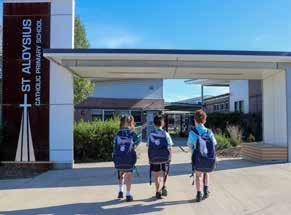
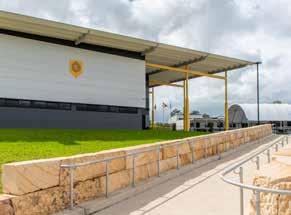
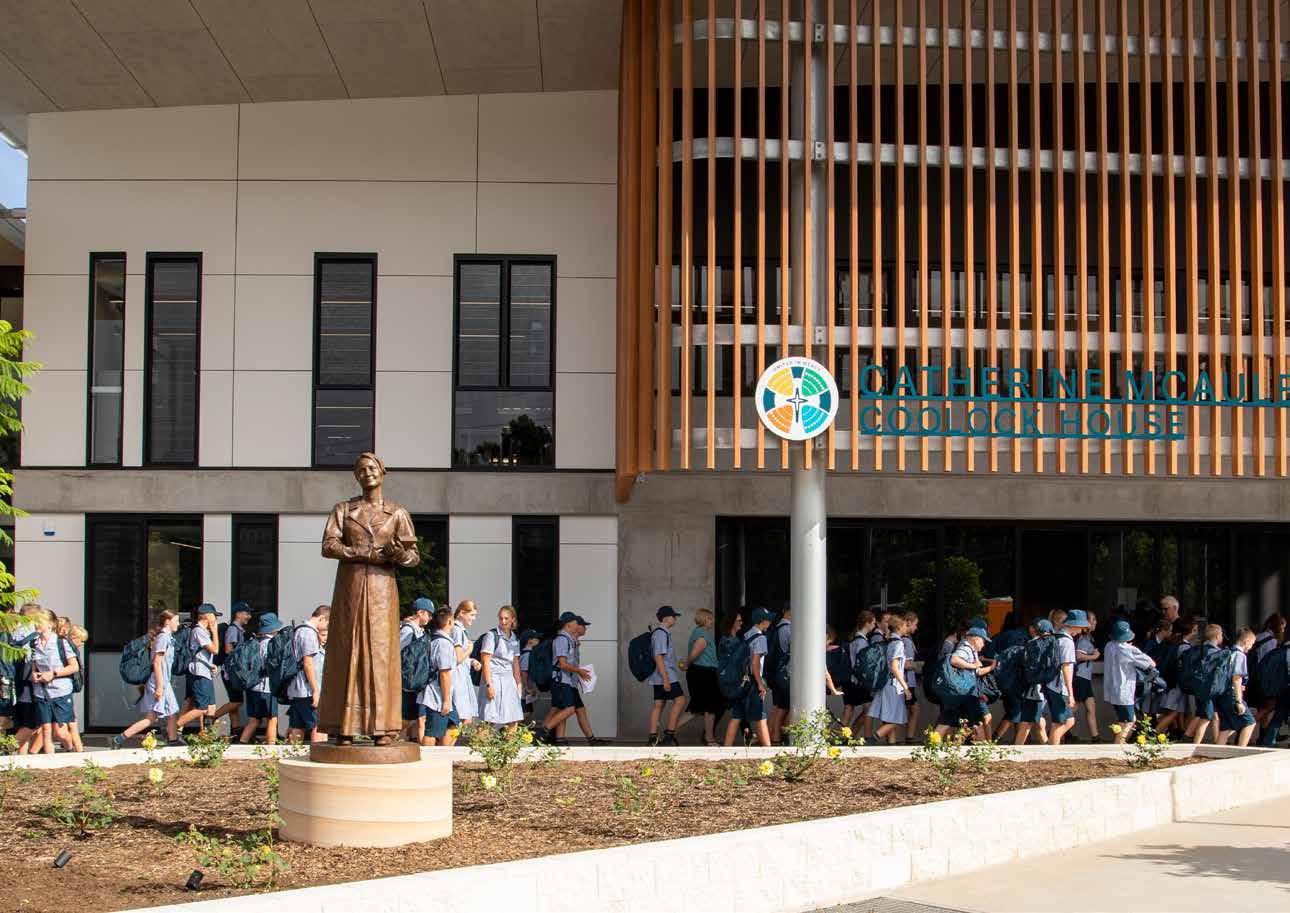
Photo: Medowie,Catherine McAuley Catholic College
St Aloysius Catholic Primary School, Chisolm
St Bede’s Catholic College,Chisolm
1992
Maitland
All Saints College – St Peter’s Campus continues 1864 St John’s Boys School
Maitland
All Saints College – St Mary’s Campus continues 1867 St Joseph’s / St Mary’s School
1993
Mayfield
St Dominic’s Centre opens, purpose built, continuing education of the deaf
1995
Sydney
Mary MacKillop beatified by Pope Paul VI as Blessed Mary MacKillop
1997
Hamilton
Catholic Schools Offices amalgamated and relocated to Hunter Street. Former offices in Newcastle and The Junction closed.
2007
Australian Catholic Bishops Conference
Catholic Schools at the Crossroads’ document – signals changes needed to make schools genuinely Catholic in their identify and life.
2010
Rome
Mary MacKillop canonised as St Mary of the Cross MacKillop
2011
Branxton
Rosary Park Catholic School, combines 1886
St Brigid’s Branxton and St Mary’s Infant School Greta 1886
2015
Chisholm
St Aloysius Catholic Primary
Cooranbong
Plaques mounted outside St Patrick’s & St
Brigid’s Church marking Pilgrimage Site for
St Mary of the Cross MacKillop
2018
Chisholm
St Bede’s Catholic College
2019
Broadmeadow
St Laurence Flexible Learning Centre
Edmund Rice Education Australia
2020-21
Worldwide COVID-19 pandemic
2021
Medowie
Catherine McAuley Catholic College
CATHOLIC SCHOOLS IN THE All Saints region
On Country:
Traditional custodians of the land the Wonnarua and Worimi peoples
The penal settlement at Newcastle came to represent the inherent contradiction in the founding of the early colony – its role as a place of penal servitude. This was constantly challenged and made difficult by the needs and activities of the militia and free settlers attracted by opportunity presented in the new colony. Governor Macquarie had been aware for some time that the growing demand for land, accompanied by the need for road access and services for the swelling ranks of free immigrants would make the opening of the Hunter Valley inevitable. He had written to Earl Bathurst in 1819, ‘Extensive plains of rich and fertile land being found at no great distance along the three principal sources of the River Hunter (have) now become an object of valuable consideration in the necessary increase in population.’ 1
Following the relocation of Newcastle’s penal colony to Port Macquarie, settlement gathered pace as expected upstream, with the Diocese’s first Catholic school opened in Maitland 1833 in the lower reaches of the Hunter Valley in the school region referred to today as All Saints. Settlers were drawn to the rich resources and abundant land of the Maitland district and with this migration education for the children of these settlers. ‘Catholic schools need to be understood as a major lay movement within the church, perhaps the most significant lay movement within Australian Catholicism.’ 2 Bishop Polding’s stated in 1839, ‘that the great goal of education in the colony was the improvement of the moral state of the community and to achieve this end no means with more strict attention to the younger generation.’3 Fr John Lynch, had travelled from Ireland, invited to the Hunter region by Dr Ullathorne to make Polding’s goal of a Benedictine clergy, a reality. Lynch was a dynamo, driven in his pastoral work of ministering to the needs of these early Catholic settlers, tireless in his work travelling from Maitland to the Queensland border establishing schools at Maitland, Black Creek (Branxton), Paterson and Lochinvar. The first teachers in these schools were lay teachers the first being freed convicts, Peter Cook at West Maitland and Bartholomew Hoare at East Maitland.
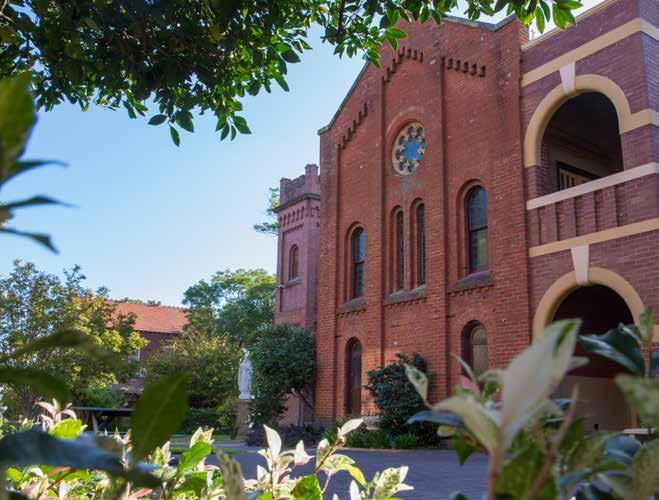
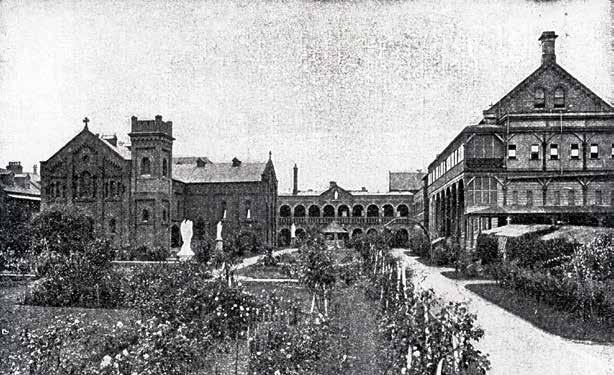
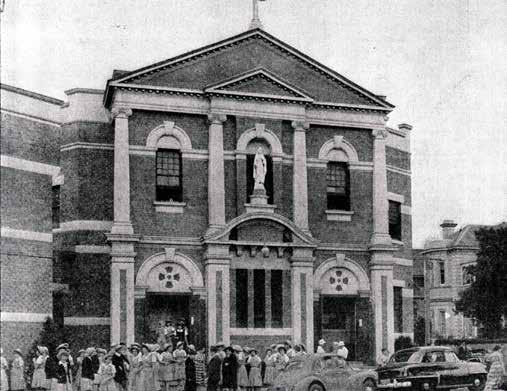
St Mary's Maitland home of the first Religious Congregation in Maitland Diocese
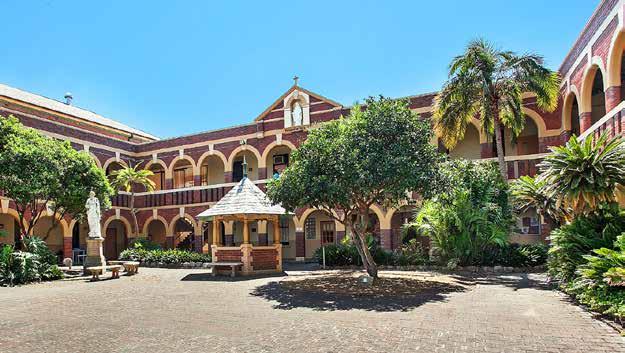
When Maitland’s first resident bishop, Rev James Murray arrived in 1866, the area had the second largest population outside of Sydney with a high proportion of these early settlers identifying as Catholic. 4 Murray, before leaving for Australia, had requested support from religious congregations across Ireland. In 1867, eight Dominican Sisters from Dun Laoghaire, Ireland responded willingly to this request to bring Catholic education to the newly created Diocese of Maitland, establishing their first foundation in West Maitland. On the 16th September 1867 they commenced teaching at St John’s Denominational School and for eight years these Dominican sisters remained the only religious congregation of women in the diocese, also establishing in 1926 a Teacher Training College for their sisters in Maitland. In 1955 following the devastating Hunter Valley flood of that year, the College was relocated to Sydney and then later to Canberra, open today as Signadou, the Canberra Campus of the Australian Catholic University.
Across the All Saints region settlements continued to be established around the rich agricultural and mineral resources of the lower valley. ‘Each new coal mining operation was soon surrounded by little mining hamlets and villages. The NSW State Government in its planning saw to it that the towns of Kurri Kurri, Abermain and Aberdaire were set up to accommodate the new mining populace in properly laid out areas.’ 5
By the middle of the 20th century Catholic schools were established, radiating out from Maitland, south to Tarro, east to Cessnock, north to Dungog and west to Branxton. Many of these schools are now closed reflecting both the ebb and flow of the movement of families away from hamlets into the larger towns and the amalgamation of landholdings into large national and multinational concerns, both agricultural and mining. Along with changes in land usage this era witnessed the impact from improvements in mechanisation and technology leading to reduced workforces and the consolidation of smaller schools into the schools of the larger towns with the availability of transportation.
Infants School
Joseph’s Sacred Heart College Sacred Heart Primary School Bishop Murray Memorial Home for Girls OLMC Home Science High School St Patrick’s Primary School Migrant Camp School
School, Primary School
Denominational School St Joseph’s Primary School
Mary’s
Vincent’s Primary School
School St Mary’s Campus
St Peter’s Campus
Catholic Denominational School
St John’s Boys School (Parochial) St Peter’s High School
Mary’s Boarding School
Mary’s High School
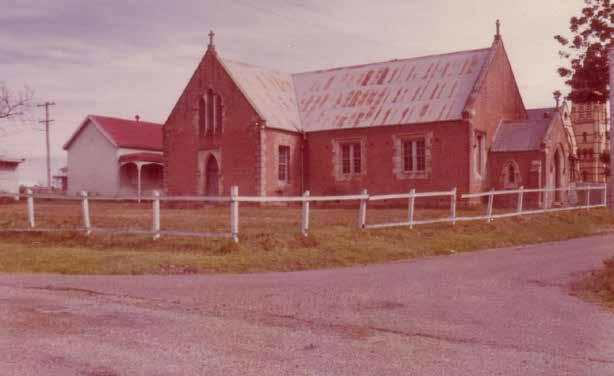
The first home of the Pioneer Sisters, Lochinvar
Many of the schools in the lower Hunter Valley commenced under the tutelage of lay teachers in receipt of Government funds, ‘St Francis Xavier at Morpeth was established in this manner in 1841.’ 6 With the proposed withdrawal of funding for denominational schools legislated by the Public Instruction Act NSW 1880, effective in 1883, there arose an urgency for additional religious to replace lay teachers, many of whom had moved to salaried positions in the Public Schools. With funding now cut, Bishop James Murray invited the Josephite sisters at Perthville (Bathurst) to become our Diocesan order of teaching sisters and these ‘Black Josephites’ came establishing their foundation at Lochinvar in 1883 from where they branched out to teach across the diocese particularly in regional and remote locations. Joining them were the Irish orders of the Sisters of Mercy, the Dominican Sisters and the Marist Brothers, an order originally from France.
In the aftermath of World War II the Greta Army base located 3 kilometres outside the town of Greta was turned into the Reception and Processing Camp for Displaced Persons and Migrants leaving a devasted Europe. Australia entered into an agreement with the International Refugee organization (IRO) to bring Displaced Persons and the existing Nissen style buildings were altered to accommodate these migrants arriving from the end of 1959. Between then and until its closure in 1960 (due to changes in the Australia’s immigration policy) it is estimated that 100 000 migrants passed through the camp changing the face of Australian society. It was the Josephite sisters who travelled out daily by bus from Lochinvar Convent to staff the Greta camp school for the families of these migrants.
A strategy to provide a Secondary School system in the Lower Hunter to cater for the growing population of the Maitland Region led to the move to three co-educational campuses forming All Saints College. St Joseph’s High School at Lochinvar and St Peter’s at Maitland providing education for Years 7–10 and St Mary’s College at Maitland providing Years 11 & 12 for the region. This was designed to ensure that the boys of the region had the same opportunities as the girls. Since its establishment in 1990 the Maitland
region has seen even greater growth with farmlands disappearing to make way for residential estates leading to a new phase for Catholic schooling within the Diocese, a time of construction of new schools to meet this growing demand for Catholic education. The consolidation of St Mary’s Infants Greta and St Brigid’s Primary at Branxton led to a new campus catering for Kinder to Year 6 at Rosary Park, Branxton. Two new schools at Chisholm, St Aloysius Primary the first new school opened in the Diocese in 37 years to be soon followed by the opening of St Bede’s Secondary College. The swelling population of the Lower Hunter led to another restructure of secondary education with St Joseph’s High School moving from the All Saints Cluster to become St Joseph’s College Lochinvar.
St Mary's Maitland
CHARISM
It is well to note that each of the religious orders engaged with education in the Diocese brought with them a distinctive charism or ‘deep story of their order which helped to shape the culture of the school.’ 7
Invited by Bishop Murray, four particular religious orders were to play an early and a major role in imbuing in all their schools their own particular and distinctive ‘charism’.
The Dominicans arriving 1867 from Kingstown Ireland, establishing their First Foundation in Maitland, now identified as the Dominican Sisters of Eastern Australia and the Solomon Islands.
The Sisters of Mercy from the Ennis Community Ireland, arriving 1875 to set up their First Foundation at Singleton, known from 2011 as The Institute of Sisters of Mercy of Australia and Papua New Guinea.
The Josephite sisters arriving 1883 from Perthville Bathurst to become a Diocesan order of teaching sisters, known as the ‘Black Josephites’, establishing their Foundation at Lochinvar.
The Marist Brothers, originally an Order from France arriving from their Sydney Foundation in 1898 establishing their Foundation at Campbells Hill, Maitland.
Footnotes
1. Macquarie. L. (1819) H.R.A. Letter Macquarie to Bathurst, 8 March Vol. X, pp.43–44,
2. Ryan. M. (2002) Religious Education in Australian Catholic Schools: Three Historic Snapshots Journal of Religious Education 50 (3) p.2
3. Fogarty. R. (1959) Catholic Education in Australia 1806ç1950. MUP Melbourne P.52
4. MacGinley, M.R. (2009) Ancient Traditions New World Dominican Sisters in Eastern Australian 1867–1958 p.39
5. Delaney. J. (1988) City of Cessnock 1788–1988 Cessnock Historical Society
6. Pilgrim. J. (1998) Tomorrow Belongs to You Morpeth Parish Publication
7. Kavanagh. A. & Pallisier. L. (2015) Will Catholic Schools be Catholic in 2030 Patrician Brothers Publication
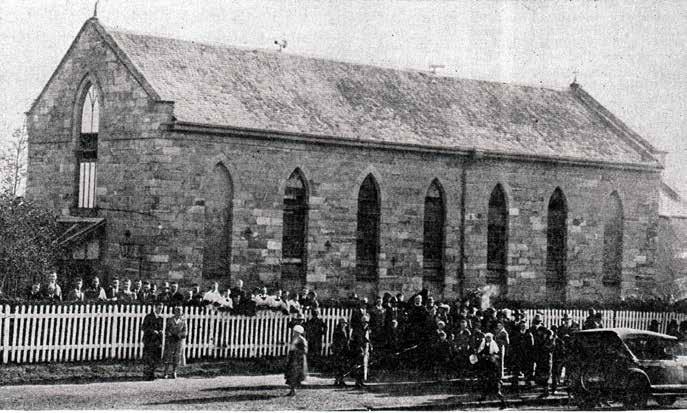
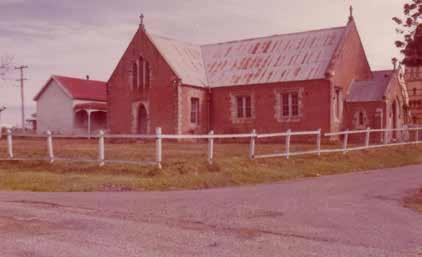
Morpeth St Bede’s Church/School circa 1861 (photo above from the 1980s)

Maitland
ST JOHN THE BAPTIST PRIMARY SCHOOL
On Country
Traditional custodians of the land, the Wonnarua people
Maitland
Named after Sir George Maitland, Under Secretary for the Colonies
Opened 1856
Preceded by
1833 Denominational School in Hunter Street
1839 in Plaistowe Street
1856 in Victoria Street
School today kindergarten to year 6
Charism: Dominican
Motto: Truth and Forgiveness
Location: 12 Victoria Street Maitland NSW 2320
Parish: East Maitland
Originally within the Archdiocese of Sydney, administered from East Maitland
1833
Denominational school conducted in ‘a small cottage in Hunter Street’ teacher Peter Cook ‘In 1834 Maitland was the only Catholic school in the country area, having been opened in 1833 by Peter Cook. … His school in Maitland was conducted in a small cottage in Hunter Street. Thomas and Mary Lynch took over the school in 1834 and remained there until the end of 1838.’ 1
1834
Denominational school continued, lay teachers Thomas and Mary Lynch, Cornelius Shannon, John Stapleton, Timothy Mahoney ‘1834 1 June – 30 Sept 1835 Gov paid rent of 31 pounds 6 shillings 1 ½ pence for a Catholic School House at Maitland until a School House could be built. Estimated rent for the year 1836, 23 pounds 8 shillings. A school house was to be built at Maitland according to an approved plan, at an estimated cost of 300 pounds. An allowance of 1 halfpenny a day was made to the teacher for each child attending.’ 2 ‘The sum actually paid by the Govt. to Thomas Lynch in 1836 for teaching 32 boys and 30 girls at the Maitland Catholic School, was 20 pounds. His assistant, Mary Ann Lynch received 10 pounds. The rent of the school house actually paid by the Govt. for part of the year 1836 was 17 pounds 11 shillings (Returns of the Colony of NSW, 1836).’ 2 Maitland originally referred to as West Maitland
1835
Governor Bourke requested that boundaries be marked to clarify Maitland, East and West
Parochial district of East Maitland established, within Archdiocese of Sydney
1838
Fr Edmund Mahoney and Fr John Lynch arrive in East Maitland
1839
Parish established in West Maitland
Wooden slab church / school in Plaistowe Street Horseshoe Bend, possibly Lot 11 5 ‘A poor thing it was, but an achievement in the circumstances, filling for the nonce the double role of a church on Sunday and a school during the week. The roof was of bark and the walls of slabs so loosely put together that the openings between had to be plugged with mortar fortified with chunks of wood.’ 7
1856
Land purchased in Victoria Street, foundation stone laid by Fr John Lynch (Dean)
Vision to build two storey brick building boys lower floor, girls upper floor
Primary education boys and girls began at St John the Baptist in Victoria Street, vision of Dean Lynch
1862
Land purchased by Archbishop Polding and Dean Lynch ‘for church and school purposes’ 2
1864 –1866
Sisters of Good Shepherd (Good Samaritan) took charge of the girls’ and infants’ sections, first Superior M. Gertrude Byrne
1866 –1867
Certification issued to West Maitland Roman Catholic Denominational School
Lay staff for interim time, Mrs B Healy and Miss A Healy 4
Dominicans arrived from Ireland invited by Bishop James Murray, eight sisters with Superior Agnes Bourke, establishing First Dominican Foundation in Australia
1867–1984
Dominican sisters, M Scholastica, M Donnellan, initially teaching alongside lay staff M Molloy in girls’ section, M Donnellan in infants’ 6
1869
September St John's Boys school land purchased, backed onto the land in Cathedral Street.
Lot 20 Land purchased adjacent to Boys school – Bishop Murray
1884
Lot 18 Land and cottage purchased –Bishop Murray
1885
First Plenary Council of Australia, principle established ‘If the choice for a local Catholic community was between building a school or a parish church, they should opt for the school – the parish could make do until later.’ 3
1887
Lot 22 Land and cottage purchased adjacent to boys school – Bishop Murray
1892
Enrolment girls 113 infants 115
1908
Enrolment girls 100, infants 105
1910
Further large additions, and reuse of existing areas
1936
Old St John’s school demolished, new eight room block built and opened
1946
Adjoining land purchased from Commercial Banking Company for playing fields, with an army hut relocated from Rutherford Military Camp installed as a school hall ‘Scholastica Hall’
1955
Renovations made following Maitland Floods
1956
Extensions to building, with the former Dominican commercial kitchen, now usable classrooms
1960s
Rigney building demolished, replaced with two storey brick building – assembly hall on ground floor, classrooms on upper 1970s
A number of ‘demountables’ were built to cater for increased enrolments, 9 classrooms now in use
1971
St John's became Kindergarten to Year 6 for both boys and girls
1983
Dominicans resigned from principalship of school
1984
First lay Principal, Mr Max McGinty
1985
Opening of major refurbishments, extensions and car park
1990
Recycled church became school library
2009
Refurbishment of facilities, removal of classrooms
Construction of library, multi-purpose hall, canteen and associated works
Replacement of administration facilities and classrooms, Special Education Centre built
2012
Extensive landscaping, drop off and pick up drive through established
2016
Refurbishment of internal spaces, creating a kindergarten block and addition of disabled facilities
References
1 McGee, C. (2012) The Forgotten Ones: Teachers in the Catholic Schools of NSW before 1880. Catholic Education Office Sydney.
2 Colonial Secretary – letters, RC clergy Mitchell Library Archives box No 4/2270.1 quoted by W.A Wood in article written on 26/5/1964
3 Ryan, M. J. (2006). Religious Education in Catholic Schools: An Introduction to Australian Students. David Lovell Publishing.
4 McGee, C. (2017). People of Faith and Generosity: The Catholic Teachers of New South Wales before 1883. Catholic Education Office Sydney.
5 Port Maitland Allotments The Property of James King 10/1840 National Library of Australia
6 Secretary of Council of Education Correspondence – / Inspector/ Murray/Donnellan 1876 – 1883
7 O’Brien, J. (1975). Men of ’38 and Other Pioneer Priests Lowden Publishing. Wood, W. (26/5/1964) St Joseph’s East Maitland article
Marist Brothers 1898–1984 Commemorative Booklet
The Newcastle and Hunter Valley Historical Society Journal
1985 Vol I No 1
Guildford, E. (2006) ‘Celebrating 150 Years’ St John’s Special Edition Journal 1856–2006
MacGinley, R. (2009). Ancient tradition – new world: Dominican Sisters in eastern Australia 1867–1958. St Pauls Publications.
Maitland Mercury
The Australian 14/12/1832
Maitland ST MARY’S HIGH SCHOOL
On Country
Traditional custodians of the land, the Wonnarua people
Maitland
Named after Sir George Maitland, Under Secretary for the Colonies Opened
1866
Bishop Murray purchased Albert Street property from protestant clergyman, Rev Colyer for 2,000 pounds
1867
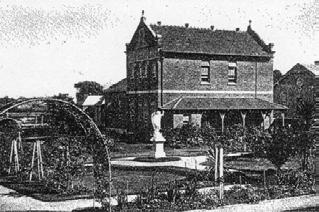
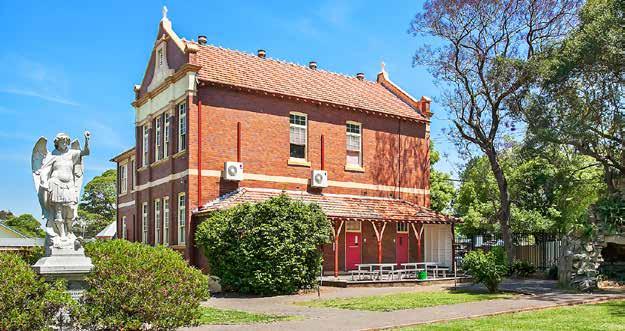
Dominicans arrived from Kingstown, Ireland invited by Bishop James Murray. Eight sisters with Superior Agnes Bourke as Superior, established the First Dominican Foundation in Australia
Dominican convent and chapel built Dominican sisters, M Scholastica, M Donnellan, initially teaching alongside lay staff St John’s Day School M Molloy in girls’ section, M Donnellan in infants’
Dominicans opened in convent, a day school for young ladies
Dominican Convent of St Mary and St Laurence O’Toole, Maitland. The Sisters of this Convent, lately arrived from Ireland have opened, on moderate terms, a Day School for Young ladies, whom they undertake to instruct in the English, French, Italian, and German Languages; History, Geography, and the use of Globes; Writing, Arithmetic, Needlework (plain and ornamental), Music (vocal and instrumental), Drawing, &c., &c. They will also be prepared to take a limited number of Boarders. 1
1868
St Mary’s Boarding School, for secondary students opened in the convent, primary students welcomed in 1871
1869
Two cottages were purchased from the Bishop, in Victoria Street
1870
Long connecting building constructed linking cottages to convent
1871
Two cottages in Victoria Street demolished, new convent built, architect Edward Gell of Bathurst
Enrolments increased, extensive additions completed
1872
Opening of Dominican Church of St Mary and St Laurence O’Toole
1877
Additional storey for original building in Albert Street, high and grand establishment ‘It now had three floors and was high and visible for miles, giving a grand appearance to the establishment and making it one of the finest institutions of its kind in the colonies. This new storey was now available for use as a dormitory for "young lady boarders", who would presumably be delighted by ‘magnificent views of surrounding countryside afforded.’ 2
1878
Three acres of adjoining land purchased, high enclosing wall built
1883
New wing for boarding school built and one year later a school hall
1894
University Class established marking the first breach in segregation of day / scholar classes
1900s
Implementation of three tiered system –primary, secondary and tertiary
1932
Large adjoining building purchased for Novitiate, extending from Victoria to Albert Street
1934
Commercial school opened
1963
Our Lady of Mercy Home Science School at Campbells Hill amalgamated with St Mary’s Maitland
Two Mercy Sisters on staff, along with students following closure of Campbells Hill Mercy Home Science School
1975
St Mary’s Boarding School closed
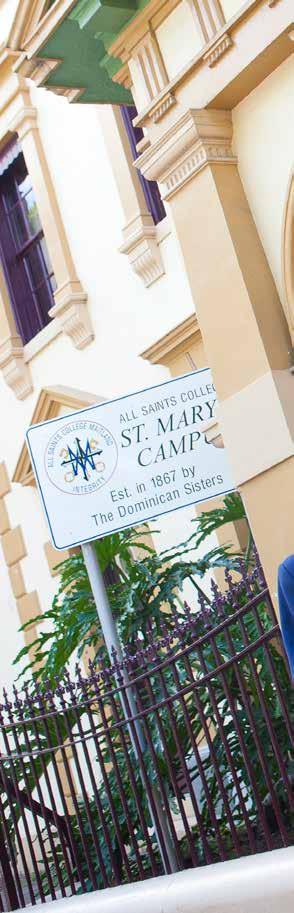
1989
Newcastle Earthquake resulted in major damage to buildings which took some time for reconstruction
1990
Decision to amalgamate the three Catholic High Schools in the Maitland region
1991
St Mary’s High School closed in its current form
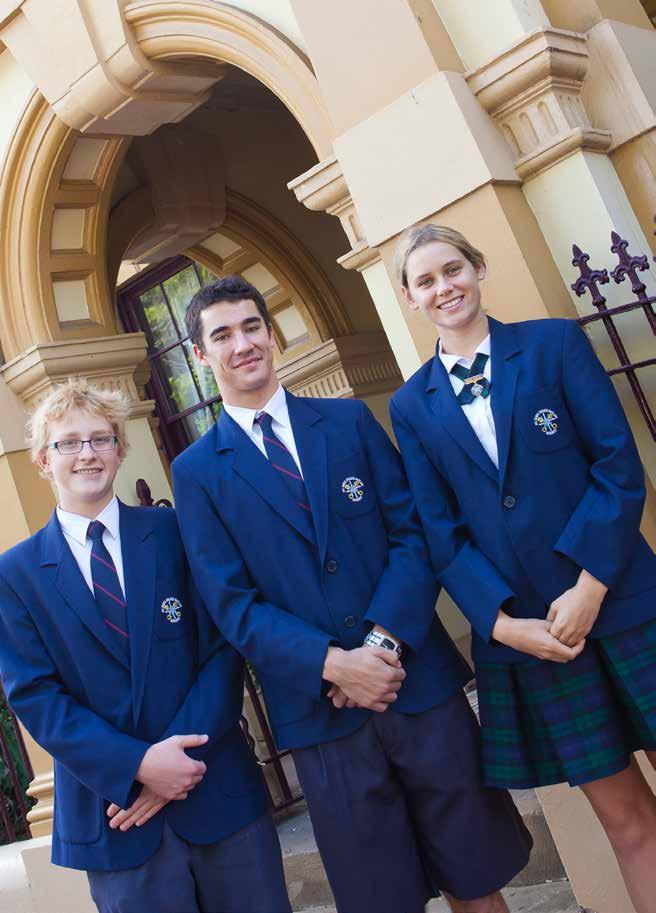
1992
All Saints College formed to include
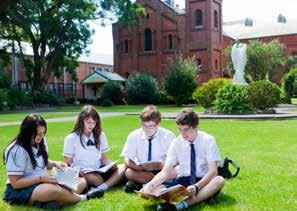
All Saints College St Mary’s Campus, Maitland, co-educational Years 11 and 12
All Saints College St Peter’s Campus, Maitland, co-educational Years 7 to 10
All Saints College St Joseph’s Campus, Lochinvar, co-educational Years 7 to 10
Maitland ST PETER’S HIGH SCHOOL
On Country
Traditional custodians of the land the Wonnarua people
Maitland
Named after Sir George Maitland, Under Secretary for the Colonies
Opened 1884
as St John’s Boy School
Preceded by
1838 St John’s Boys School (Parochial)
Known as
1917 St John’s High School
1920 Marist Brothers Maitland
1985 St Peter’s High School
Closed 1991
St John’s Boys School
St John’s Parochial School
Marist Brothers Maitland St Peter’s High School
1838
St John’s Boys School established, lay staff
1839
Parish established in West Maitland
1844
Land purchased in Free Church Street for church
1874
Whole school relocated to Free Church Street called St John’s Parochial school
1884 –1888
Patrician Brothers came to staff the school, residing at Campbells Hill
1898
By invitation of Bishop Murray, 11 Marist Brothers arrived from Sydney – 4 resided at Stockton travelling to staff St Mary’s School Newcastle with remaining 7 brothers residing at Campbells Hill, 3 of whom travelled to staff St John’s Parochial School Maitland. Principal Brother Anthony Rogers
1905
Marist Brothers came to reside in two storey wooden building in Charles, now Cathedral Street
1915
St John’s Boys School registered as Secondary School, fully registered 1917 ‘In 1917, threats to the success of the school occurred from two sources – there was a danger that the brothers may be conscripted for War Service and that the Batchelor Tax would be introduced. Either of these would have prevented the school from continuing because of financial considerations.’ 1
1917–1920
Becoming St John’s High School, Rector Brother William Molloy
1918
Marist Brothers’ High School, new building for the secondary students built and opened
1919
First Leaving Certificate class
Enrolment 166 in primary, 64 secondary students
1920
Gradually became known as Marist Brothers Maitland
1924
Marist Brothers Monastery built in Free Church Street
1936
St John’s school buildings demolished, stage 1 of current building completed
1945
Officially now, Marist Brothers High School Maitland
1952
Old Cathedral remodelled to accommodate four new classrooms for primary
1955
Following Maitland floods, the Old Boys Union became active supporters, enabling the construction of two technical drawing rooms built opposite Bishop’s House (site of original Brothers’ House)
1960
Enrolment 500 students, extra property purchased to ease overcrowding on the playground
1961
Wyndham Scheme introduced, and first lay teachers appointed
1963
Formation of Parents and Friends Association
1964
Extension and new classroom block parallel to Free Church Street, two wings built into main yard
1965
Purchase enabled by Parents and Friends Assoc. of 18 acres of land at Lorn for sporting facilities, Marcellin Park
1970
Last sixth class in St John’s Primary School, thus finishing primary education
The 12 stars above the ‘Ave Maria’or ‘M’ (Hail Mary) represent the 12 tribes of Israel or the 12 apostles.
1970 or 1975
Four cottages purchased in Free Church Street, used for remedial teaching and staff accommodation
1970s
Library and science wings built linking school with old cathedral. Area underneath becoming 5 new classrooms and 3 rooms used for study, art and sport
1971
Senior co-education began when St Mary’s High School girls came to complete years 11 and 12
1971–1984
Dominican sisters joined the staff, M Diana Mary Maher, M Lucy Davey
1984
Marist Brothers administration ended
1985
School renamed St Peter’s High School, staffed by lay teachers
First lay Principal, Mr Mark Bailey
1986
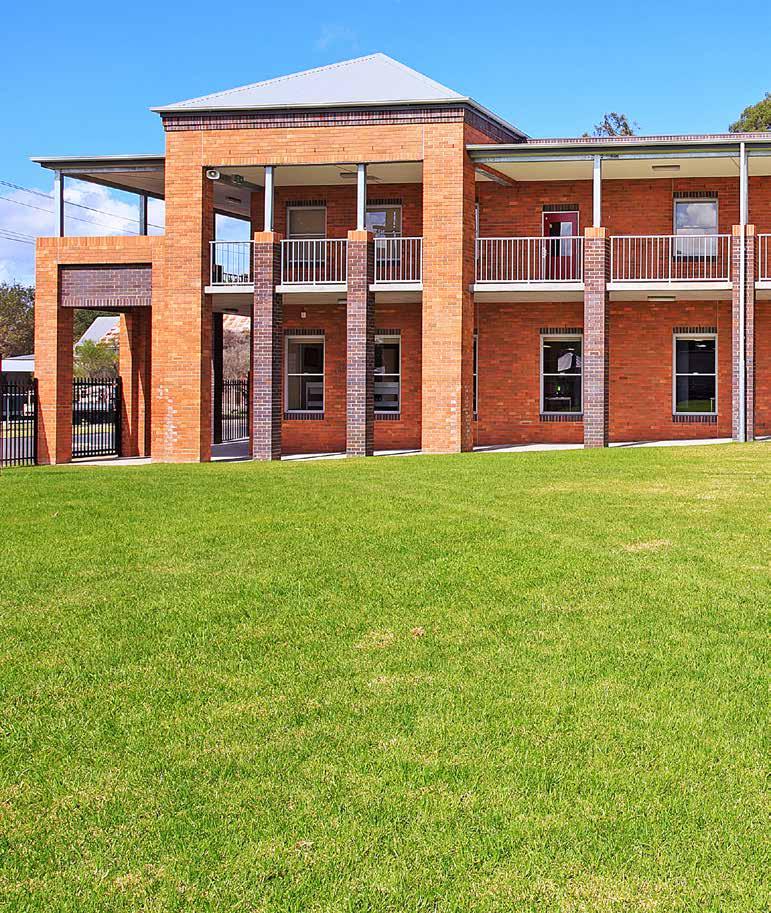
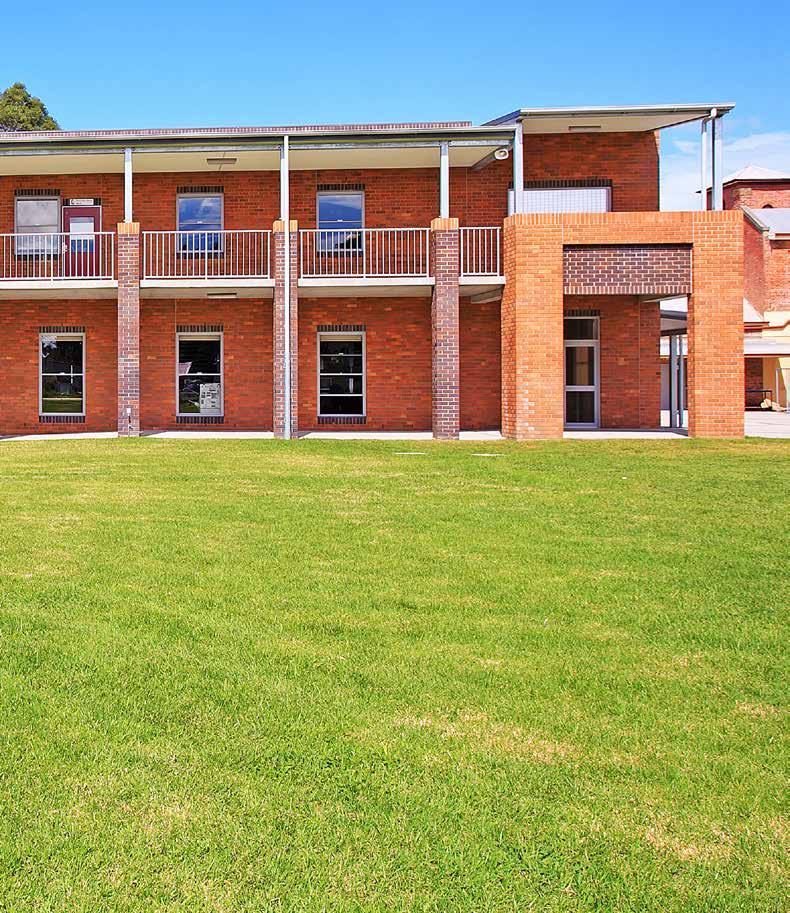
Conversion of former Monastery, new staff and administration facilities, allowing the demolition of four houses in Free Church Street
1990
Decision to amalgamate the three Catholic High Schools in the Maitland region
1992
All Saints College formed to include:
All Saints College St Mary’s Campus, Maitland, co-educational Years 11 and 12
All Saints College St Peter’s Campus, Maitland, co-educational Years 7 to 10
All Saints College St Joseph’s Campus, Lochinvar, co-educational Years 7 to 10
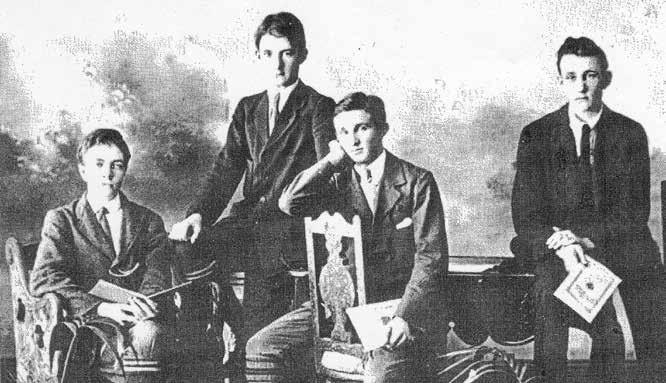
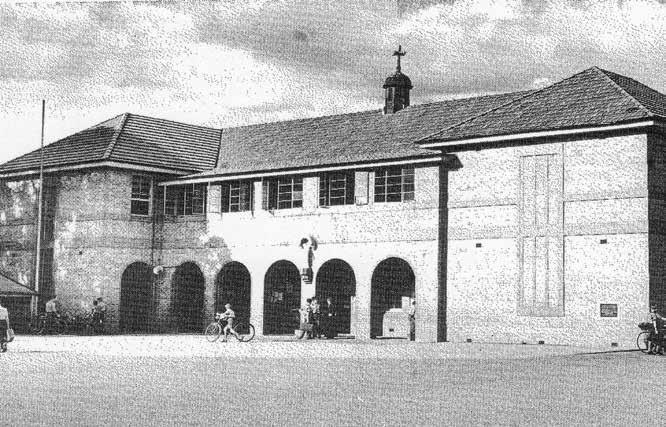
Maitland ALL SAINTS' COLLEGE
On Country
Traditional custodians of the land, the Wonnarua people
Maitland
Named after Sir George Maitland, Under Secretary for the Colonies
Opened 1992
School today St Mary’s Campus years 11 to 12 co-educational
Charism: Dominican
Preceded By: St Mary’s High School (1867–1991)
Location: 16 Grant Street Maitland NSW 2320
School today St Peter’s Campus years 7 to 10 co-educational
Charism: Marist
Preceded by: St John’s Boys School, St Peter’s High School (1838–1991)
Location: 9 Free Church Street Maitland NSW 2320
Motto: You Are Christ
School Opened Staff Years
All Saints’ College
St Mary’s MCampus
St Peter’s Maitland
1990
Decision to amalgamate the three Catholic High Schools in the Maitland region
1992
All Saints College formed to include
All Saints College St Mary’s Campus, Maitland, co-educational Years 11 and 12
All Saints College St Peter’s Campus, Maitland, co-educational Years 7 to 10
All Saints College St Joseph’s Campus, Lochinvar, co-educational Years 7 to 10
MARY’S CAMPUS
2003
Technical & Applied Science block, art room, general classrooms, student facilities with linking walkways
2005
Several ‘demountable’ classrooms replaced with new buildings
2007
Lift installed
2009
Refurbishment of school facilities, shade structure, external and internal works
Construction of trade training centre
2013
Hospitality teaching facility completed
ST PETER’S CAMPUS
2008
Stage 1– Construction of library and refurbishment of science laboratories
2009
Construction and furnishing of Trade Training Centre
2011
Stage 2 – Construction and refurbishment of music, technological facilities, administration, staff facilities and classrooms
2018
St Joseph’s Lochinvar left All Saints College structure to become St Joseph’s College Years 7 to 12
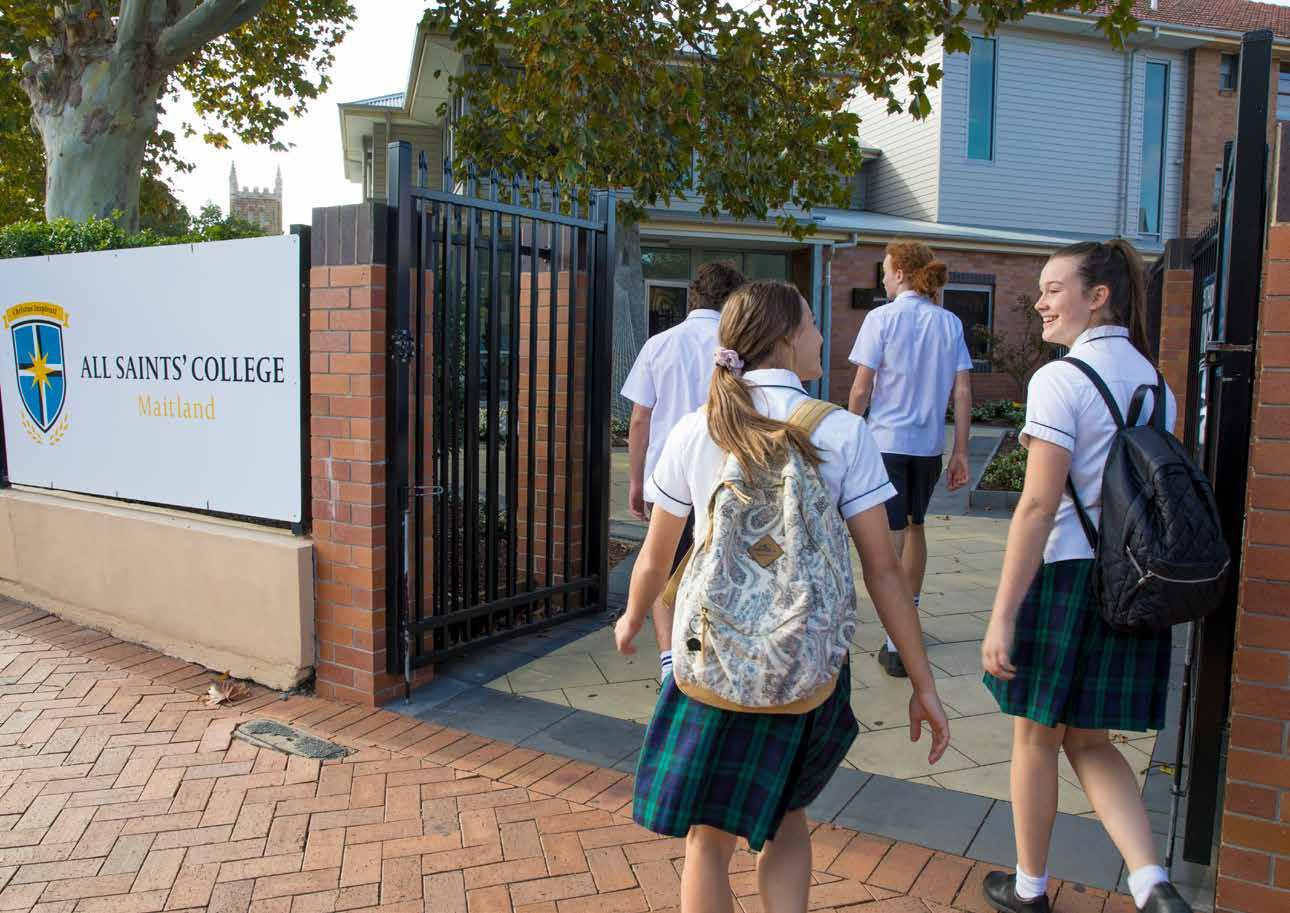
5
2
East Maitland
ST JOSEPH’S PRIMARY SCHOOL
On Country
Traditional custodians of the land the Wonnarua people
Maitland
Named after Sir George Maitland, Under Secretary for the Colonies
Opened 1885
Preceded by 1834 School in Chapel
1838 School in Church
School today kindergarten to year 6
Charism: Mercy
Motto: Together with Christ
Location: 55 King Street East Maitland NSW 2323
Parish: East Maitland
Office Sydney.
1829
Surveyor General Mitchell’s original plan marks site for Roman Catholic chapel, opposite gallows erected on Stockade Hill
1832
Confusion in terminology noted for Maitland
1834
Chapel constructed on the site, original stone building completed 1896, demolished 1933
Foundation stone laid for St Joseph’s Church by Fr Therry
1835
Governor Bourke requested that boundaries be marked, East and West determined
Parochial district of East Maitland established, within Archdiocese of Sydney
1838
Fr Edmund Mahoney and Fr John Lynch arrive in East Maitland
Title deeds for four acres issued to Trustees of the Catholic chapel, presbytery and School by Governor Richard Bourke 1
‘Bartholomew Hoare began a school in St Joseph’s Church East Maitland with the backing of Fr Christopher Dowling.’ –Catholic Denominational School 2
1840
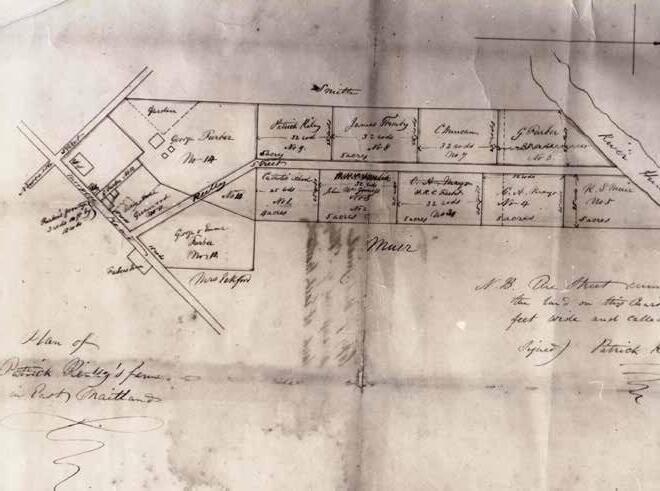
‘Patrick Reilly bequeathed 4 acres of land for a Catholic school in East Maitland.’ 3 Land not used
1882
East Maitland parishioners held a meeting to raise funds for sisters’ residence, collected 308 pounds
1885
Sisters of Mercy, first sisters M Evangelist O’Connell, M Josephine McCormack, M Baptist McDonnell
East Maitland Mercy convent established, ‘Select School’ opened
St Joseph’s school opened in brick church building as a primary school
1896
St Joseph’s School completed, blessed and opened Bishop Dwyer, cost 200 pounds 4
1905
New school opened in rooms attached to convent
1925
Extensions to the school opened
1934
New church St Joseph’s opened, ‘grand brick structure to cope with the increasing population’, architect Mr Peter Gannon, stonemason J.J. Edstein
1957
New primary school built and opened
1967
Mercy ‘Villa Maria’ caring for unwed mothers established opposite convent, incorporating a pre-kinder school
1969
Upon closure of St Francis Xavier’s Morpeth, students accommodated here
1970
St Joseph’s now primary school for the district Years 3–6
1979
Therry Centre opened ‘Great activity preceded the opening day. Working bees every Saturday morning saw large numbers of men hard at the landscaping and gardens.’ 5
1982
Library housed in a ‘demountable’ building
1986
Further ‘demountable’ classroom added
1991
First lay Principal, Mrs Maureen May Taylor
1999
Convent building refurbished, now used by the school for a variety of purposes
St Joseph’s had become a primary school only, Years 3–6
Decision made to bring three schools together on one site
2002
East Maitland – St Joseph’s Primary School as central school opened 29 April, Kindergarten to Year 6
Upon closure of St Vincent’s Eastville students accommodated here (opened 1961, becoming Infants 1970 )
Upon closure of St Mary’s Tenambit students accommodated here (opened 1965, becoming Infants 1970)
Extensive building program, library, classrooms and canteen
Refurbishment of historic old convent
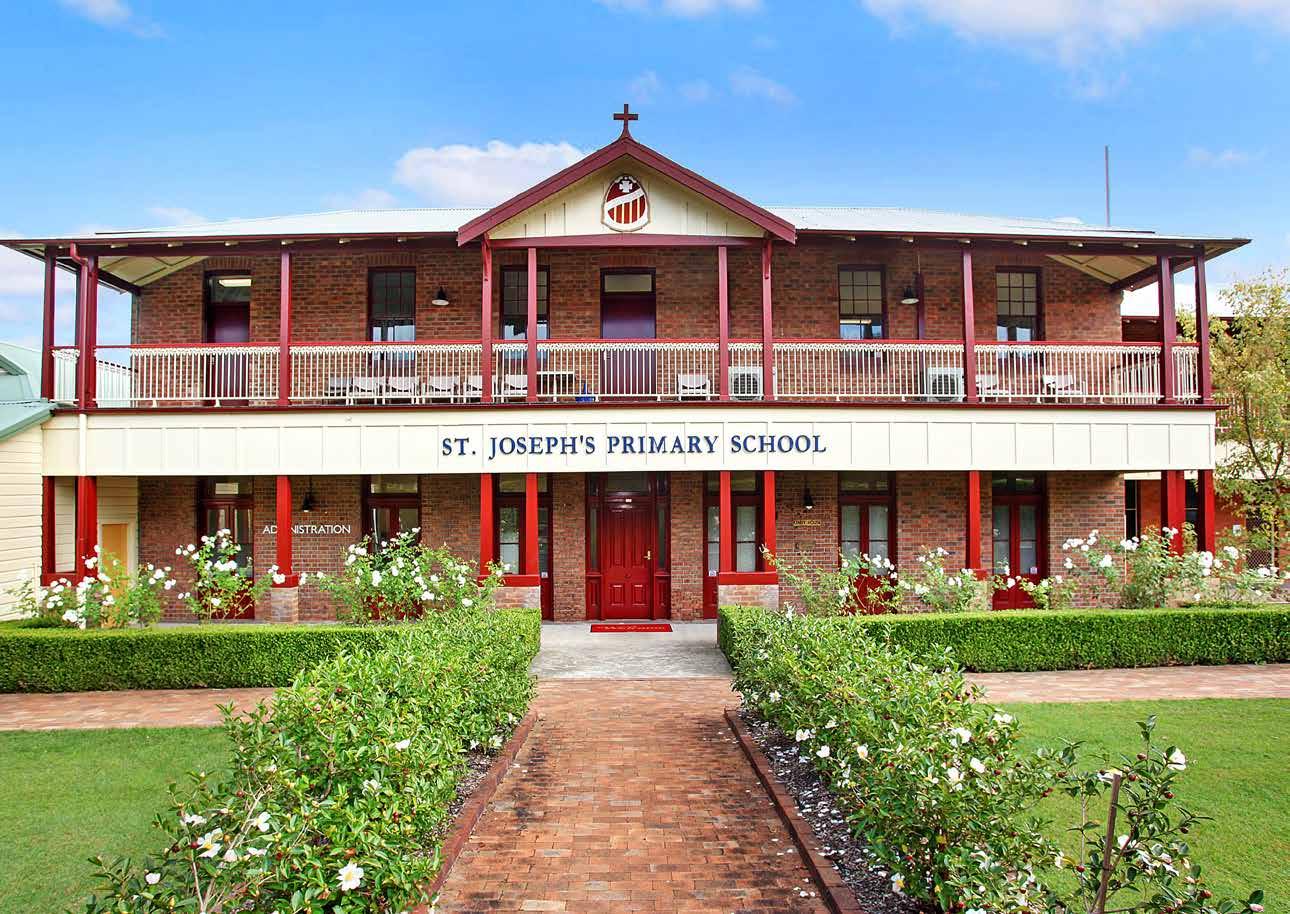
building for staff and administration facilities, library
Lift installed, library extended, classroom refurbishment and playground improvements
2009
Refurbishment of school facilities external and internal, security fence, Information technology equipment and infrastructure
Refurbishment of school buildings and library
On Sunday afternoon the ceremony of opening and blessing St Joseph’s new Convent of East Maitland was performed by the right Rev Dr Murray in the presence of a large congregation. The new building which was designed by Mr J W Pender architect is situate in King street [sic] in close proximity to St Joseph’s church and school room.
Maitland Mercury, 14 April 1885
Morpeth ST FRANCIS XAVIER'S PRIMARY SCHOOL
On Country
Traditional custodians of the land, the Awabakal people
Morpeth
Named after a town in Northumberland, near Newcastle on Tyne, England. Also known as Greenhills, early estate of Edward Close
Opened 1883
Preceded by
1842 Denominational School Morpeth 1880s Denominational School Boxtree
Known as 1861 St Bede’s, 1883 St Francis Xavier Primary School
Closed 1869
Location
Princess Street Morpeth NSW 2321
Within the Archdiocese of Sydney, administered from East Maitland parish
1836
James Street wooden chapel erected
1841
Land purchased for church and school in Hunter Street Hinton, sold in 1973
1800s –1885
Boxtree Catholic Denominational School operated with lay staff, teacher Miss Joanna Carey
1842
Catholic Denominational School, wooden chapel in James Street with lay staff, first lay teacher John Dwyer ‘Government aid was a key factor in establishing a Catholic Denominational School in Morpeth in 1841, with John Dwyer as Master. It was also the withdrawal of Government aid that was responsible for its demise.’ 1
1847
Parish of East Maitland transferred to Diocese of Maitland
1854
Enrolment 129 students
1861
Land given by Edward Close, Lot 2 bounded by George, James, Duke and Princess streets
Foundation stone laid for St Bede’s ‘temporary church and school house’ 1
St Bede’s School opened
1875
Parochial district of Morpeth established
1882
‘Work Mistress at Morpeth RC Denominational school resigns to enter the married state. Honora Hawley applies for the position vacated by her sister, Julia. Appointment recommended till 31/12/1882 when school will cease to receive state support.’ 2
1883
Morpeth Mercy convent established
Sisters of Mercy arrived to staff school, first sister M Aloysius O’Driscoll
1883 –1898
St Bede’s church and school, continuing as St Francis Xavier Primary School c1890 Weatherboard building in school grounds, known as the ‘Guild Hall’ used as ‘select’ school, closed c1905
1898
Parish church Immaculate Conception opened, allowing school exclusive use of St Bede’s church buildings
1923
Enrolment 110 students
1969
St Francis Xavier Primary classes closed, children then travelled on the bus to St Joseph’s East Maitland
St Bede’s used as church hall
1970
St Francis Xavier Infants classes closed, children travelled on the bus to St Mary’s Tenambit
1980
Mercy Convent closed
1994
St Bede’s church property sold for private residence
Morpeth St Bede’s Church/ School circa 1861 (photo above from the 1980s)
Eastville ST VINCENT’S PRIMARY SCHOOL
On Country
Traditional custodians of the land, the Wonnarua people
Eastville
Named being located east of the village of East Maitland
Opened 1961
School
Kindergarten to Year 6
Closed 2002
Location
Fieldsend Street East Maitland NSW 2323
1835
Parochial district of East Maitland established
1885
St Joseph’s school East Maitland opened as a full primary school
1960
New church / school built at Eastville, St Vincent de Paul
1961
St Vincent’s School opened Kindergarten to Year 6
First Mercy sister arrived to staff the school, Gemma Riley travelling from East Maitland convent
1970
Became infants school, with primary students accommodated at St Joseph’s East Maitland
1979
Mercy administration ended
1980
First lay Principal, Miss Kathy Gracz
1999
Decision made to bring three schools together onto one site
2002
Tenambit and Eastville schools closed, students accommodated at St Joseph’s East Maitland now K–6
References
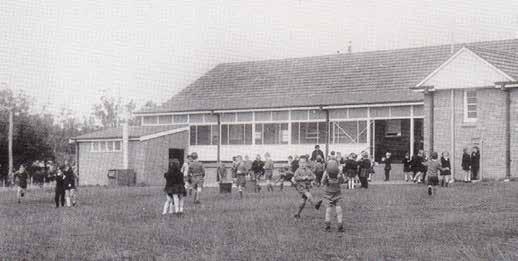
Photo: Eastiville school playground 1960
Tenambit ST
MARY’S PRIMARY SCHOOL
On Country
Traditional custodians of the land, the Awabakal people
Tenambit
Aboriginal name for ‘ the eastern point of a sharp bend in the river’
Opened 1964
School
Opened as Kindergarten to Year 3, 1970 Infants
Closed 2002 Location
Tenambit NSW 2323
1835
Parochial district of East Maitland established
1885
East Maitland – St Joseph’s school opened as a full primary school, becoming Year 3–6
1964
Sisters of Mercy opened St Mary’s school at Tenambit ‘The new school is situated on four acres of land which was formerly known as Bell’s hatchery. Very Rev. Father G.P. Youll purchased the property over 12 months ago as part of St Joseph’s Parish, East Maitland expansion.’ ¹
Large house and sturdy buildings on the property converted into school and mass centre
Opened as Kindergarten to Year 3
1965
Two sisters of Mercy travelled from East Maitland convent
St Mary’s opened Kindergarten to Year 3, becoming Infants in 1970
First Principal, M Laboure Gannon
Enrolment 52 students
1970
New school built and opened for Infants
1982
Mercy administration ended
1983
First lay Principal, Miss Kathryn Russell
1999
Decision made to bring three schools together onto one site at East Maitland
2002
Tenambit and Eastville schools closed, students accommodated in St Joseph’s East Maitland now K–6
Photo: Original building St Mary’s, Tenambit
Campbells Hill SACRED HEART COLLEGE
On Country
Traditional custodians of the land, the Wonnarua people
Campbells Hill
Named after a settler Patrick Frederick Campbell
Opened 1875
School
1878
1870 –1875
Residency of the Maitland clergy
1875
Sacred Heart College had its beginnings in small apartment next to St John’s Cathedral Maitland, continued in new school building in Free Church Street
Sacred Heart College re-established at Campbell’s Hill with a vision to become a Diocesan Seminary for Boys
1878
Opening and blessing of College taking in boys, both day students and boarders, vision ‘to prepare boys for higher learning’–university or seminary
Presidency by Diocesan priests, Rector Fr Michael Matthews, staffed by lay teachers including J M Canty
1883
Patrician Brothers arrived from Ireland, established their first Foundation in Australia
1884
Patrician Brothers staffed the St John’s Boys School Maitland, first brothers Dominick O’Neil and Fintan O’Neil
‘towards the end’ Bishop Murray gave College administration to Patricians, enrolment 20 day students, no boarders
1888
Patrician Brothers departed ‘… there is evidence of Bishop Murray’s dissatisfaction with the competence of the Brothers, and the beginnings of clerical interference in the schools’ ¹
1889
Diocesan priests, Rector Fr Patrick Vincent Dwyer
1891
‘Enrolment 54 students, 25 boarders and 29 day-boys’ ²
1897
Classes for University Entrance Examinations conducted by Mr Morgan O’Meara, graduate Melbourne University
1898
By invitation of Bishop Murray, 11 Marist Brothers arrived from Sydney – 4 resided at Stockton travelling to staff St Mary’s School Newcastle with remaining 7 brothers residing at Campbells Hill, 3 of whom travelled to staff St John’s Parochial School Maitland, 2 staffed College at Campbell’s Hill
Marist Director Br Gonzaga Brown
1899
Enrolment – 18 boarders and 37 dayboys
1904
Marist Brothers left Campbell’s Hill, residing in 2 storey wooden building Charles St, now Cathedral St Maitland
1905
Sacred Heart College closed
‘Polding’s “pet educational establishments, Subiaco and Lyndhurst [Sydney], decayed rapidly in the 1860’s [sic]. This was as a result of strenuous and successful efforts to attract Sydney children to boarding schools at Maitland and Bathurst”. … They established schools to draw away Polding’s pupils.’
‘Other writers however have given different reasons for the closure. Bishop Dwyer at the Distribution of Prizes at St John’s in 1916 “blamed the lack of parental interest for the failure of Sacred Heart College.’ ³
1908
Letter written by Brother Victor then Marist Provincial, to Bishop P.V Dwyer then Coadjutor Bishop ¹
‘I am pleased to notice that Your Lordship does not hold me responsible for the closing of the College nor for the discontinuance of the Secondary Classes in the Day School. Your Lordship will remember that our engagement regarding the first had expired while the encouragement accorded to the second did not warrant its continuance.’
1924
Marist Brothers monastery built in Free Church Street, Maitland
1973 –1982
College buildings used for Edmund Gleeson House of Studies
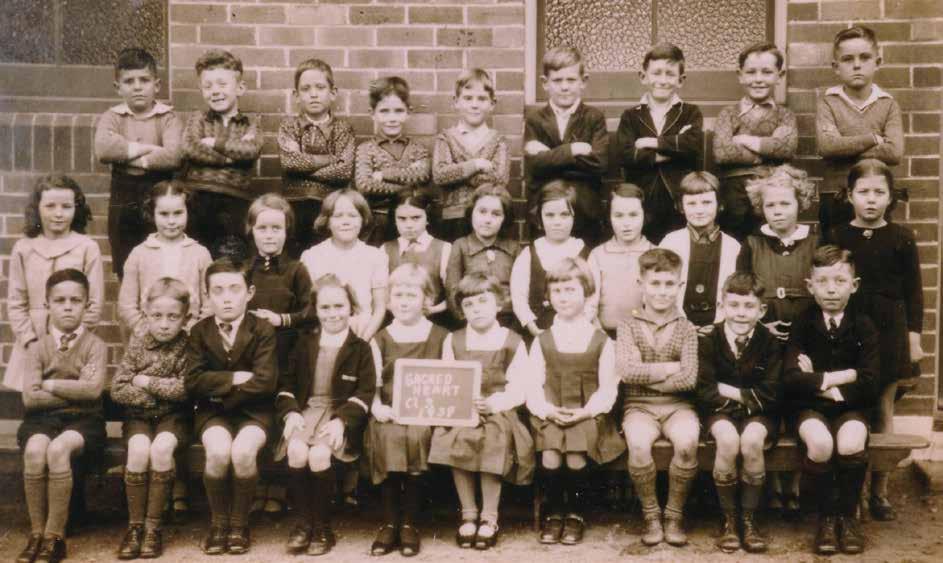
Sacred Heart Children, 1939
Campbells Hill SACRED HEART PRIMARY SCHOOL
On Country
Traditional custodians of the land, the Wonnarua people
Campbells Hill
Named after a settler Patrick Frederick Campbell
Opened 1909 School
Primary school for boys and girls (1909–1971)
Sacred Heart Infants School (1972–1980)
Closed 1980
Location
New England Highway Campbells Hill NSW 2320
1909
School opened with 27 students (boys and girls) from the local area
1909
Sisters of Mercy arrived, M Borgia, M Anthony, M Evangelist, M Mechtilde and M Dymphna
Sisters of Mercy travelled each day from East Maitland
Fr. O’Gorman drove the Sisters over in his buggy on the first day of school, which opened with twenty-seven children, both boys and girls; present also were Bishop Dwyer and the Cathedral administrator Monsignor V Peters ¹
Bishop Dwyer said the opening prayer in the school that had no desks, no blackboard, no equipment – just a bare room, the teachers and the taught. 2
1910
May 23 Bishop Dwyer opened and blessed Bishop Murray Memorial Home for Girls
1919
90 orphans and 79 day pupils enrolled at the Sacred Heart School
1940s
Boys in Third to Sixth Classes attended the Marist Brothers Primary School, Maitland
1971
Primary classes closed, pupils transferred to St Paul’s Rutherford
1972
Monte Pio Orphanage in process of closure
1972
School conducted as an Infants School
1977
Mercy administration ended
1978
First Lay Principal Miss Heather Tully
1980
After Easter, the Infants School closed –pupils transferred to St Paul’s
1980s
Buildings converted to provide a Conference Centre
School
Sacred Heart Primary 1909 1980 Mercies 71
References
1 Kelly, C. (1997) A Journey Through Light and Shadow: Sisters of Mercy Singleton 1875–1995. Hamilton NSW.
2 Campbell, H. (1966). The Diocese of Maitland, 1866–1966. Dimmock Press
Campbells Hill OUR LADY OF MERCY HOME SCIENCE SCHOOL
On Country
Traditional custodians of the land, the Wonnarua people
Campbells Hill
Named after a settler Patrick Frederick Campbell
Opened 1953
1870 –1875
Residency of the Maitland clergy
1898
Arrival and residency of seven Marist Brothers, three travelling to St John’s Parochial School Maitland
1905
Marist Brothers left Campbell’s Hill, residing in Maitland
1909
Campbells Hill Primary School opened, ‘attended by local and orphanage pupils.’
1910 – 1972
Bishop Murray Memorial Home for Girls, birth – 16 years
1910
Sisters of Mercy, staff of Orphanage ‘Although Bishop Dwyer claimed in 1915 that the girls received a good education, most orphanage children were trained only for rural and domestic work. Even as late as 1951, a Government officer commented that most of the Monte Pio girls were considered more suitable for domestic than commercial work. School-age children attended the Campbell’s Hill primary school attached to the orphanage complex. Thereafter, they worked in the laundry or in other areas of the institution. In 1953, Our Lady of Mercy Home Science School was opened in the complex and girls had access to formal secondary education.’ ¹
1953
Our Lady of Mercy Home Science High School for Girls was established with ten students from Sacred Heart Primary School and fifteen girls from Orphanage Sisters of Mercy, Principal Sr M Jude Murray
1962
School closed due to the requirements of the Wyndham Scheme
Upon closure, students were accommodated at St Columba’s Adamstown and St Mary’s Maitland, along with two sisters joining the staff
Campbells Hill BISHOP MURRAY MEMORIAL HOME FOR GIRLS
On Country
Traditional custodians of the land, the Wonnarua people
Campbells Hill
Named after a settler Patrick Frederick Campbell
Opened 1910
School
Orphanage for girls
Known as
Monte Pio Orphanage Also opened
1909
Fr Victor Peters ‘began planning for the orphanage.’
Campbells Hill Primary School opened ‘attended by both local and orphanage girls.’
1910
Monte Pio Mercy convent established, orphanage opened, 20 girls transferred from Singleton orphanage
Large brick building of two storeys, dormitory with thirty beds, also a chapel
1912
In residence 56 girls, 1917 in residence 92 girls
1924
In residence 64 girls
1926
Government assistance assured from State Child Endowment provisions
1936
Major extensions
End of 1930s Orphanage licensed to admit 94 girls, 20 under the age of 7 years
1942
Government assistance transferred to Commonwealth
Boys from Mayfield orphanage moved here, vacating premises for Army personnel, moved and returned at the end of the war
1945
Major building project commenced
Following the end of WW2, approved to take in twenty British migrant children, none arrived
1949
Sisters billeted flood evacuees from lower areas of Maitland
1950s
Additions and renovations
1956
United Nations Declaration of the Rights of the Child saw a change in focus for management of orphanages
Orphanage Licence reduced to accommodate 76 girls
1950 – 60
Renewed criticism from child welfare professionals
1960s
Government inspection of NSW children’s institutions became much more detailed
Men’s Committee formed attempting to comply with costly conversion to family type accommodation
Old weatherboard building, eventually renovated for use by the girls
1961
Catholic Family Welfare Bureau established in Hamilton, assumed responsibility for admissions
1967
Policy adopted in favour of scattered cottage homes staffed by married couples
1970s
Financial support available to assist families in crisis
1971
First group homes opened in Adamstown
1972
In residence 22 girls
1973
Remaining girls transferred to cottage home, former convent of Mercy Adamstown
May 7 Orphanage was formally closed, ending almost a century of segregated orphanage provision
1986
Country Comfort – Monte Pio Court and Conference Centre development 2020
‘Although Bishop Dwyer claimed in 1915 that the girls received a good education, most orphanage children were trained only for rural and domestic work. Even as late as 1951, a Government officer commented that most of the Monte Pio girls were considered more suitable for domestic than commercial work. School-age children attended the Campbell’s Hill primary school attached to the orphanage complex. Thereafter, they worked in the laundry or in other areas of the institution. In 1953, Our Lady of Mercy Home Science School was opened in the complex and girls had access to formal secondary education.’
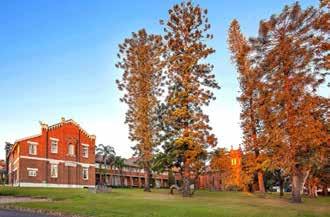
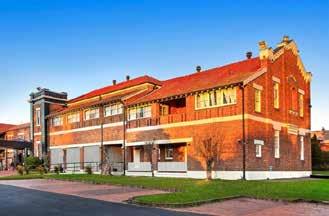
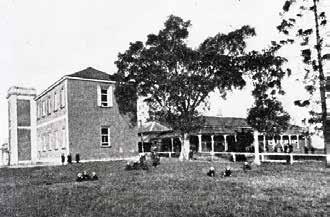
Mercure – Monte Pio Hotel and Conference Centre
Photos (R-L clockwise): Monte Pio present day, Monte Pio Orphanage, Catherine McAuley foundress of the Religious Sisters of Mercy, Monte Pio present day
1910 Monte Pio Orphanage, Campbells Hill
Lochinvar ST PATRICK’S PRIMARY SCHOOL
On Country
Traditional custodians of the land, the Wonnarua people
Lochinvar
Named after a Loch in Southern Scotland
Opened 1883
Preceded by
1842 Denominational School
Known as
1884 – 1983 St Joseph’s Primary School
1884 St Patrick’s Primary School
School today kindergarten to year 6
Charism: Josephite
Motto: Grow by God’s Gifts
Location: 65 New England Highway Lochinvar NSW 2321
Parish: Lochinvar
School Opened Staff Years
Denominational St Patrick’s 1842 1883 1996 Lay Teachers Diocesan Josephites Lay Teachers 41 113 25
References
1 Freemans Journal 08/12/1883
2 Maitland Mercury 29/11/1866
3 Dunlop, R. (2016). Planted in Congenial Soil: The Diocesan Sisters of St Joseph, Lochinvar 1883–1917 Lochinvar NSW.
4 Dilley, V. (1984) History of St Patrick’s Primary School, Lochinvar Cavanagh, A. (2013) The Lochinvar Story
McGee, C. (2012) The Forgotten Beginnings of Catholic Education in New South Wales. Catholic Education Office Sydney.
1841
Slab and shingle church / school built by Dean Lynch
1842
Catholic Denominational School opened, first teacher Thomas Ashton, later Miss Murray
1847
Originally within the Parish of West Maitland
1850
Land for church donated by Thomas Winder, currently church and cemetery Gregory Street site ‘In 1851 he gave a block of his land to each of the denominations then in the locality: blocks of four acres to Catholic, Anglican, Presbyterian and Wesleyan faiths.’ 3
1858
New Catholic Church opened as gothic style wooden building able to accommodate 300 people
1863
Denominational School in local Catholic church on Winder land
1865
Original church / school completely destroyed by fierce wind storm, teacher T Ashton had just dismissed students
1866
New brick church St Patrick’s erected and opened by Bishop James Murray, his first since arrival in the Diocese
‘A large congregation had assembled outside the church, and the children of the Roman Catholic Denominational School (the girls prettily arrayed in white) were arranged in two lines, through which the clerical party passed.’ 1
1883
Enrolment 80 students
First Diocesan Sisters of St Joseph arrived in Lochinvar, from 1872 Foundation at Perthville, Bathurst
Lochinvar Foundation sisters, M Ambrose Dirkin, M Baptist Dugan, M Imelda Flood, M Aloysius Cahill
Sisters began teaching in a building adjacent to convent, New England Highway site, taking in boarders ‘Lochinvar. The school at this very important little township is being conducted by Miss Murray, an excellent trained teacher, who so far has been very successful. From the spirit shown here during the last few years by the
Catholics in this place, it would not be a surprise if a convent for the Sisters of St Joseph would shortly be an accomplished fact.’ 2
1884
Classes resumed in St Patrick’s church School renamed St Joseph’s
1900
Wooden school built on western boundary of convent grounds, New England Highway site
1905
Parochial district of Lochinvar established
1908
Enrolment 80 students, while St Joseph’s was a parish school, primary boarders were also included
1911
One storey brick school built for primary, later used for expanding secondary school
1971–1972
Extensions for primary section, five classrooms, staffroom and small library
Photo:
1983
Construction began for a new primary school ‘Its numbers often supplemented by primary boarders, then after the closure of Largs by pupils from Largs and Bolwarra, and for a few years from Rutherford, with the development of Lochinvar in the last few years as a residential area, permission was given to build a new primary school.’ 4
1984
School officially opened as St Patrick’s on St Patrick’s Day 17 March as parish school, now on parish land Gregory Street adjacent to St Patrick’s church
1996
First lay Principal, Mr Chris Quinn
2002
Construction of canteen, withdrawal area and extensions to hall
2009
Refurbishment of school facilities, external and internal, upgrade of electrical reticulation
Construction of multi-purpose hall and classrooms
2016 –2018
Major building works began and completed – new administration and staff facilities, contemporary learning spaces and modern learning hub
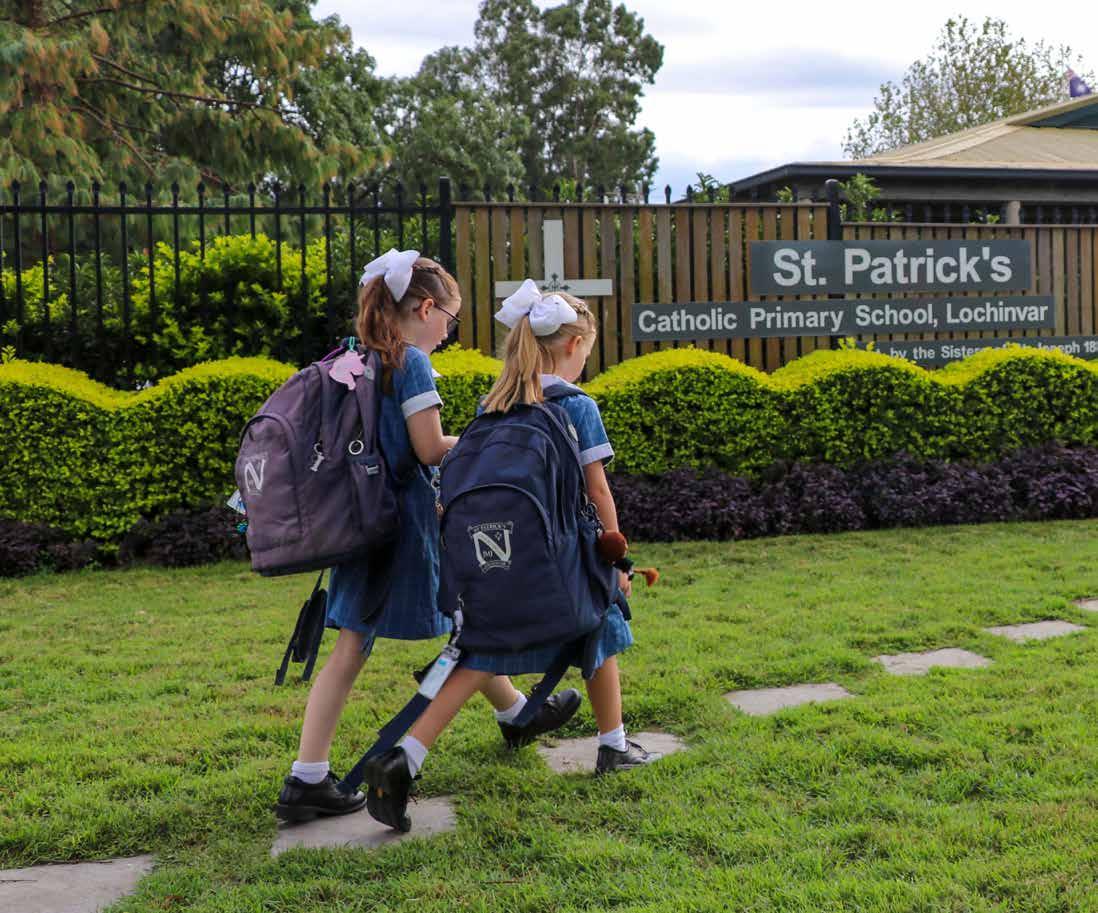
Lochinvar ST JOSEPH’S COLLEGE
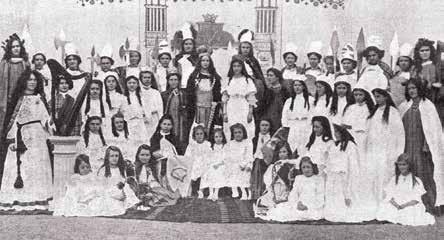
On Country
Traditional custodians of the land, the Wonnarua people
Lochinvar
Named after a Loch in Southern Scotland
Opened 1883
as school with boarding facilities
Preceded by
1842 Denominational School
1883 St Joseph’s Primary School
School today years 7 to 12 co-educational
Charism: Josephite
Motto: Strength in Difficulties
Location: New England Highway Lochinvar NSW 2321
Parish: Lochinvar
References
1 History of Land and Buildings Associated with Sisters of St Joseph
2 History of the Sisters of St Joseph of Lochinvar 1883–1965
Dunlop, R. (2016). Planted in Congenial Soil: The Diocesan Sisters of St Joseph, Lochinvar 1883–1917. Lochinvar NSW. Cavanagh, A. (2013) The Lochinvar Story
1847
Originally within the Parish of West Maitland
1883
Diocesan Sisters of St Joseph arrived in Lochinvar by invitation of Bishop Murray, travelling from Perthville Bathurst
First Sisters, M Ambrose Dirkin, M Baptist Dugan, M Imelda Flood, M Aloysius Cahill opened school with boarding facilities
1893
Convent built, architect Menkens. Old convent vacated and used for increasing number of boarders
1900
Wooden school built ‘The first separate school was built by the parish (Fr McCormack in charge) at western boundary of convent grounds (part of Doyle estate).’ ¹
1905
Parochial district of Lochinvar established
1911
One storey brick school built, secondary storey added 1933, further extensions made
1913
Secondary classes officially commenced, boarding facilities provided
1921
College fully registered under Bursary Endowment Act
‘The last of Mother Mary Aquin’s great works for the Congregation was the modern new Secondary School which was commenced in 1955 and opened and blessed in 1956 and stands today as a memorial of her industry and far sightedness.’ ²
1966
Addition of Year 10–12 wing
1967
Mount St Joseph’s Secondary School Cessnock closed, students accommodated here
1971–1972
Extensions for primary section, staffroom and library
1975
St Joseph’s College became a Systemic school, under Catholic Education Office, Diocese of Maitland-Newcastle
1980
Original wooden school demolished for home science room, kiosk became industrial arts room
1983 –1984
Boarding school renovations, primary school relocated over the highway to parish school St Patrick’s
1989
Diocesan Josephite administration ended
1990
First lay Principal Mrs Helene Hemphill
1991
St Joseph’s College closed as a girl’s school
1992
Boarding school closed.
Inauguration of All Saints College Junior Campus co-educational Years 7–10, amalgamating with St Mary’s Campus and St Peter’s Campus Maitland
1993
Improvements to buildings, car park, road access, fencing and playing fields
Jubilee Concert at Lochinvar 1908. The Bishop Murray Memorial Orphanage as it looked at the time of esablishment
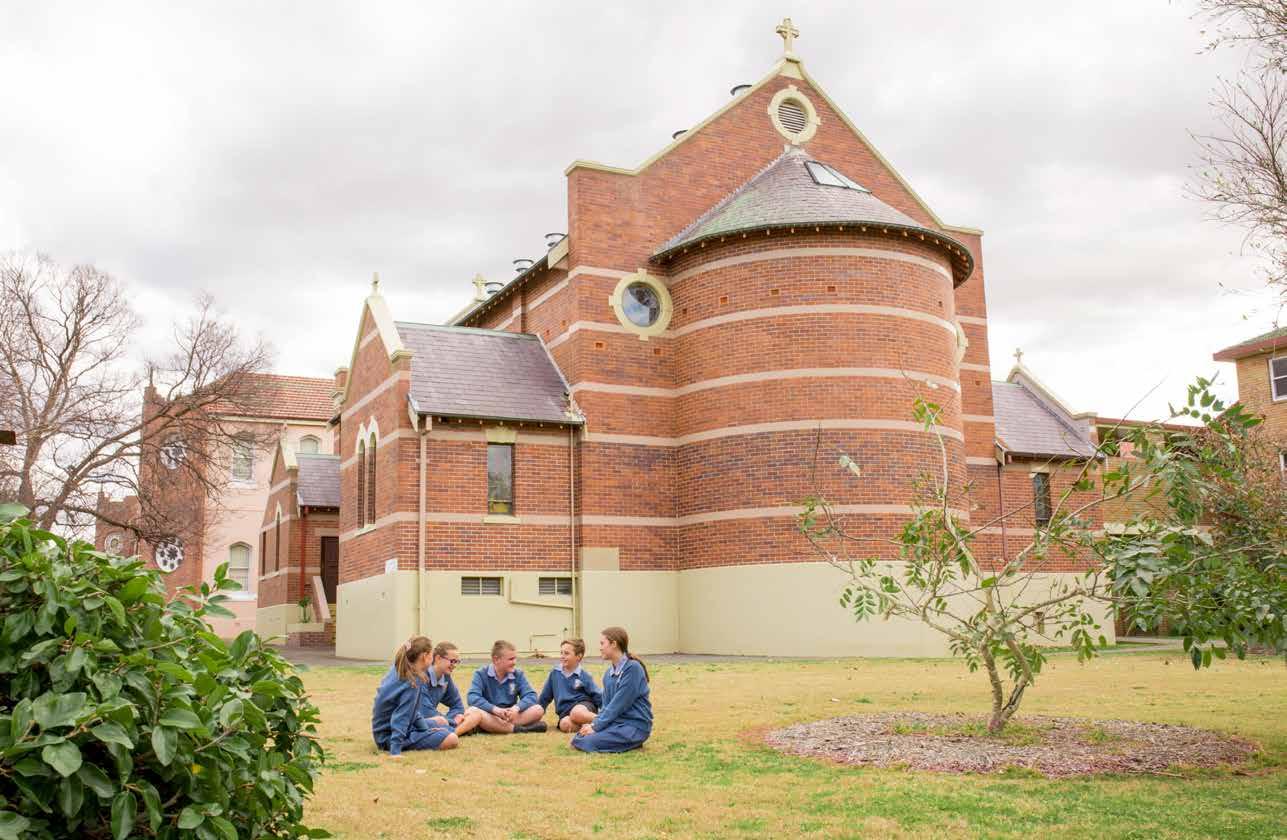
2000
Further improvements to renovate and re use rooms for secondary school
2009
Refurbishment of school facilities
Construction of trade training centre, agriculture and construction
2009 –10
Administration and staff facilities, library, technology facilities and classrooms
2013
Fully refurbished science laboratories and educational resource centre
2018
Re-established as a single entity, St Joseph’s College, Co Educational Years 7–12
Students in the grounds of St Joseph’s, Lochinvar
Knockfin ST JOSEPH’S
SCHOOL
On Country
Traditional custodians of the land the Wonnaruai people
Knockfin
Named by Vicars Jacob for his estate of 2,000 acres, after townland in parish of Drumreilly, Ireland
School Primary
Opened 1886 Closed 1900
Luskintyre Road Knockfin NSW 2321
1847
‘On Sunday last his Lordship the Right Rev. Dr. Murray blessed and opened a new convent at Knockfin. But where is Knockfin you may ask?
The very question is another tribute to the successful efforts of Dr. Murray to establish convents and schools in the remote and unknown portions of his extensive diocese. Well, a short distance from Lochinvar on the left bank of the winding Hunter is situate this classic spot. Mountain and valley, wild bush and fertile plain are here is pleasing contrast. …’
Maitland Mercury 17/11/1891
Originally within the parish of West Maitland
1872
Provisional school established, becoming a public school
1883
Diocesan Sisters of St Joseph arrived to set up a Josephite Foundation at Lochinvar
1886
Catholic School established at Knockfin with 16 students, ‘on the left bank of the winding Hunter’, on opposite side of the road to Provisional School
School opened on land owned by Mr Burgess, enrolment 16 students
served at Knockfin. … While staying at Knockfin, Sr Teresa was frightened when tramps occasionally came to sleep on the verandah. She was sheltered and inexperienced, and her reactions would have been shared by many other Sisters who were sent out to work in branch houses.’ ¹
Sisters travelled by buggy from Lochinvar convent, staying Monday to Friday Many school days were lost because of flooding and impassable tracks ‘Pupils paid school fees in money, or, failing that, in produce; the Sisters would bring any excess over to Lochinvar on the weekends.’ ¹
1891
School Opened Closed Staff Years
St Joseph’s 1886 19000 Diocesan Josephites 14
Sisters of St Joseph, M Evangelist Hyde, M Catherine Barry ‘Sr Teresa Kauter was another who
Convent opened at Knockfin ‘Having a small convent there meant that, if the river rose, school would not have to be cancelled. A subscription was held and donations were so generous that it opened free of debt.’
1900
Knockfin school closed, students relocated to St Joseph’s Primary School Lochinvar
Sometime after … the unused building was relocated to Lochinvar by bullock train, becoming known as ‘The Studio’ Used as Boarders Refectory, later as a Music Room, then Men’s Quarters, finally demolished
1902
‘Sisters still travelled weekly to Knockfin to give Religious instruction to the children, but they now went to the Knockfin State School opposite the site where they had taught.’ ²
References
1 Dunlop, R. (2016). Planted in Congenial Soil: The Diocesan Sisters of St Joseph, Lochinvar 1883–1917. Lochinvar NSW
2 Maitland Mercury 17/11/1891
Branxton ST BRIGID’S PRIMARY SCHOOL
On Country
Traditional custodians of the land, the Wonnarua people
Branxton
Originally known as Farmborough, then Black Creek. Named after a place in Northumberland, England
Opened 1886
Preceded by
1852–1857 Black Creek Denominational School
Also opened
1898 Select school as secondary
School
Kindergarten to Year 6, 1967 Year 3 – Year 6
Closed 2010
Location
Station Street Branxton NSW 2335
1841
Slab church built at Black Creek
‘At Black Creek there is a wooden chapel roofed and will soon be completed; to cost about 120 pounds. Site given by Mr Bowen, a Protestant, will contain more than 200 persons. … There are two schools in Maitland and one at Black Creek conducted by Mr Hyatt.’ 1
1852 –1857
Denominational school at Black Creek
1879
Parish of Branxton established
1886 –1987
Branxton Mercy convent Our Lady of Lourdes established, infants classes taught on verandah
1886
Mercy school opened in newly built brick church.
Sisters of Mercy arrived with Superior M Kosta Kirby. Five sisters travelled daily to Greta in a hooded buggy which was a gift to the sisters from the Greta and Branxton parishioners.
St Brigid’s School opened at Branxton, on the same day as St Mary’s at Greta.
1888
New Branxton church built allowing school to use buildings
Improvements made of two additional classrooms
1898
‘Select school’ opened to provide secondary education for girls
1908
Enrolment 52 students
1915
Former 1886 church building considerably extended
1916
Renovated church section used for infants classes, new section housed primary classes
1967
Following rationalisation of small schools, former school building demolished
New primary school opened ‘The new brick veneer school tones in well with the older church. … A large band of parishioners were present at the ceremony and members of the local church organisations formed a guard of honour for the Bishop’ 2
St Brigid’s became primary, St Mary’s at Greta became infants
1977
Mercy Administration ended
1978
First lay Principal, Mr Walter Pleasant
1987
Branxton convent closed
2011
St Brigid’s Primary and St Mary’s Greta closed, Rosary Park Catholic School replacing them
Greta ST MARY’S SCHOOL
On Country
Traditional custodians of the land, the Wonnarua people
Greta
Thought to be named after a small river in England. Named when town was surveyed in 1842.
School
Kindergarten to Year 2
Opened
1879
Parish of Branxton established ‘The township of Greta has long been subject to the rule of King Coal. Its population, the wealth or poverty of its inhabitants and even the number of houses have varied markedly as the numerous pits were opened, closed or were shut down by strike, lock-out or fire.’ ¹
1882
St Mary’s Church opened
1886
Five Sisters of Mercy resided in Branxton convent, three travelling daily in buggy to Greta
Hooded buggy was a gift to the sisters from the Greta and Branxton parishioners
Wooden church building used also as school, St Mary’s Kindergarten to Year 6, enrolment 55 students
St Brigid’s School Branxton opened, Kindergarten to Year 6, both schools opened on the same day
1892
‘104 students enrolled, 54 Catholics and 50 non-Catholics’ ¹
1900
School moved from church into a separate and new building, used also as community hall
1900
‘November Greta Colliery disaster – Fire forced the closure of the mine. Five miners were entombed when the colliery was sealed.’ ² East Great Colliery re opened after 23 years.
1950 –1960
Greta Migrant Camp School established and staffed by Sisters of St Joseph travelling daily from Lochinvar convent.
1953
Principal M Evangelist McBride
1955
New building opened 24 April, three classrooms
1960
With closure of Migrant Camp and school, peoples of many nationalities settled in Greta and Branxton
One building was purchased from Greta Migrant Camp for school use
1962
New brick veneer church of St Catherine’s opened
1963
Parochial district of Greta established
1967
New primary school opened at Branxton School parish rationalisation – St Mary’s at Greta became infants, St Brigid’s at Branxton became primary
1980
Old Ford bus painted and installed in playground for shade, supported by teacher Catherine Bridge ‘This was done so as the children had shade to eat their lunch. Cath spent many hours painting the outside with cartoon characters. For anyone who attended St Mary’s during this time, the bus was iconic.’ ³
1982
2000
Amalgamation of infant and primary school discussed
2007–2008
Play equipment installed
2010
2011
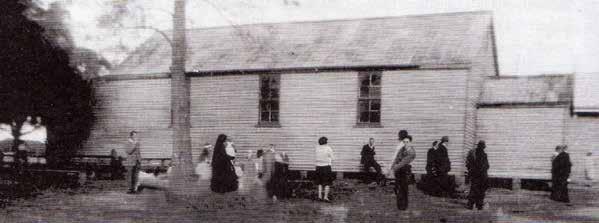
First lay Principal, Miss Heather Tully
St Mary’s Greta Infants School closed
Rosary Park Catholic School opened at Branxton, replacing St Mary’s Greta and St Brigid’s Branxton schools.
Photos: Student activities St Mary’s, Greta
1
Glendonbrook ST JOSEPH’S
PRIMARY
SCHOOL
On Country
Traditional custodians of the land the Wonnarua people
Glendon
Named after ‘Glendon’ home of Scott brothers Robert and Helenus, on 1822 Land Grants, East of Singleton
Preceded by 1871 Provisional School
Opened 1900 School
Kindergarten to Year 6
1870
Parish of Branxton established
1871
Provisional school opened in church school at John Boyce’s Glendonbrook
1883
On 19 Oct John Boyce gave one acre of his 1,000 acres on Webbers Creek to the Catholic church for a church / school
1889
St Paul’s weatherboard church opened
1900
Convent built
School opened 5 February
‘The new buildings were erected either side of the existing Church.’ 1
‘There was a playground for the game of rounders and a cricket pitch for the boys.’ 1
Diocesan Sisters of St Joseph ‘The local community had taken donations, and held sports and exhibition days to raise money for the Sisters to come. The Bishop had visited on 30 December 1899, and when he returned to bless the new buildings at the start of February in 1900, the Sisters of St Joseph came too.’ 1
First sisters, M Eugene McInerney, M Vincent Webber, M Paul Bourke ‘… the Glendonbrook people valued and supported them – with food, practical assistance and through fund raising events. Indeed, when they first arrived and were greeted by local ladies ’young and old’, the Sisters were presented with generous gifts: the shelves in the new pantry are literally groaning under the weight of the several presents, reported the Catholic Press.’ 2
School opened in one room, enrolment 42 students
1908
Enrolment 37 students
1920
Enrolment 12 students
School and convent closed, school building moved to Mitchell’s Flat, convent building used by parish
Nulkaba ST PATRICKS PRIMARY SCHOOL
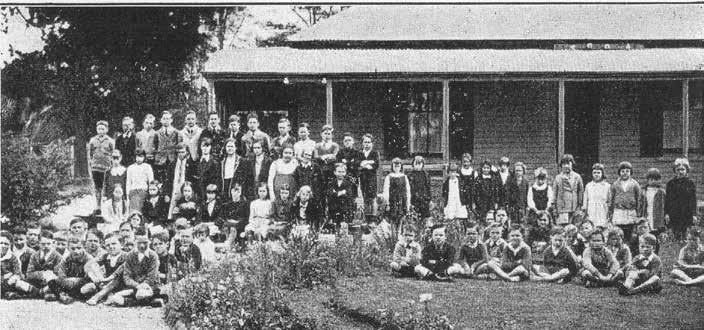
On Country
Traditional custodians of the land, the Wonnarua people
Nulkaba
Aboriginal word meaning ‘place of iron stone’
School
Primary
Opened 1887
Also opened
1906 Mount St Joseph’s High School Cessnock
1937 St Joseph’s School Bellbird
Closed 1937
Location
Wine Country Drive Nulkaba NSW 2320 (1927 renamed Pokolbin)
1886
Diocesan Sisters of St Joseph arrived, M Stanislaus Tobin, M Francis McNamara, M Xavier McInerney
Sisters lived in a rented cottage opposite St Patrick’s Church, prepared for opening of school
1887
Catholic school opened in St Patrick’s church / school with 16 students on Allandale Road
‘St Patrick’s, of pit-sawn slabs, with a shingle roof, was about thirty feet by twenty and rested on long sleepers (12” x 12”) laid on the ground.’ ²
1889
New convent built
1893
School Opened Closed Staff Years
St Patricks 1887 1937 Diocesan Josephites 51
References
1 Maitland Mercury 6/5/1893
2 Bloomfield, W. A.G. (1954) Cessnock 1826–1954 Centenary of 100 Years of Service in Cessnock Sisters of St Joseph 1986
New church built, allowing exclusive school use of church/school building, opening as St Patrick’s School ‘On last Friday afternoon our little township, usually so quiet, was all astir, and buggies and horsemen could be
seen coming from all directions, the centre of attraction being St Patrick’s Schoolroom, where a grand musical and entertainment was to be given by the pupils of St Joseph’s Convent assisted by several local amateurs.’ ¹
‘The number of pupils at this first school was never very large. By 1900, there were only 33 on the roll; in 1915 there were 11.’ ²
1905
Parochial district of Cessnock established
1906
St Joseph’s South Cessnock opened in Millfield Street Cessnock, beginning a flow of population to the area
1908
Enrolment 27 students, numbers at St Patrick’s decreased with the opening of St Joseph’s Cessnock
1909
Additions made to convent to accommodate boy boarders
1924
Enrolment 58 students
1929
The Lock Out from the mines saw dismissal of 8,500 miners, then followed the Depression years
1937
School and convent relocated from Nulkaba to St Patrick’s Wollombi Road, Cessnock
Nulkaba School Sisters of St Joseph, M Patrick and M Raphael transferring to St Patrick’s Cessnock
North Cessnock Convent and school children
Cessnock
ST JOSEPH’S SCHOOL | MOUNT ST JOSEPH’S PRIMARY SCHOOL
On Country
Traditional custodians of the land, the Wonnarua people
Cessnock
Named after an 1826 Land Grant, Cessnock Estate, owned by J. Campbell. Attributed to Robert Burns’ poem ‘On Cessnock Plains’
School
1906 – 1958 Kindergarten to Year 6 1959 – 1966 Kindergarten to Year 2
Opened
Millfield Street, Cessnock, NSW 2325
1886
Diocesan Sisters of St Joseph opened convent at Nulkaba
1887
Catholic school opened in St Patrick’s church / school with 16 students on Allandale Road, Nulkaba
1905
Parochial district of Cessnock established
1906
15 July – Bishop Murray blessed and opened the Cessnock church/school of St Joseph’s, Church Hill, Cessnock.
‘The Hall was 50ft by 20ft and originally built for £120 in Abermain. Owing to the tide of population flowing towards Cessnock, it was necessary to follow the flock, hence the removal of the church to present site, which commanded a grand panoramic view of the pits, also Ellalong, Wollombi, Mt. View, and the Branxton Ranges. Now the Church was lined, ceiled, and furnished for school purposes. The expense incurred in removal and furnishing would cost about £100. Dr Murray, by consenting to its removal, and sending Sisters to teach therein, had conferred a great favor upon the Cessnock people. The site was given gratis by Mr. O’Hara, of Tighe’s Hill. This generous
donation was an object-lesson for the people present, and he hoped they would come forward and do likewise ’
Sisters of St Joseph, M Magdalen Brimstone, M Aquin Leehy, M Dorothea Kealy ‘Sisters travelled in Joe Doyle’s horse drawn bus from the Nulkaba convent to teach there each day.’ ²
1908
Enrolment 108 students
1921
Parcel of land purchased on Bridge’s Hill for convent, hall, presbytery and St Joseph’s Church
1921
The former Bridge residence, renovated and enlarged, opened as convent for Sisters of St Joseph ³
1924
Enrolment 300 students
1929
Lock Out from the mines saw dismissal of 8,500 miners, then followed years of The Depression
1935
The Department of Education condemned the Old St Joseph’s School in High Street
May – Foundation stone for new school was laid on Convent (Bridges) Hill.
November – Opening and blessing of new brick school with six classrooms, one of which was an enclosed section on the end of a verandah. The school-hall demolished
Name change to Mount St Joseph’s Primary School
1958
Last year of the Primary Final at St Joseph’s. All Primary classes transferred to St Patrick’s in Wollombi Rd
1959
New Infant’s building to accommodate Infants Classes
1966
School closed – Infants classes transferred to St Patrick’s, in Wollombi Road
Cessnock
MOUNT ST JOSEPH’S HIGH SCHOOL
On Country
Traditional custodians of the land, the Wonnarua people
Cessnock
Named after an 1826 Land Grant, Cessnock Estate, owned by J. Campbell. Attributed to Robert Burns’ poem ‘On Cessnock Plains’
Preceded by
St Joseph’s School, South Cessnock
School
First Year to Leaving Certificate
Opened 1930
Closed 1967
Location
Millfield Street Cessnock NSW 2325
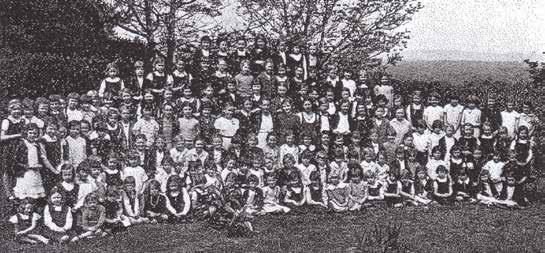
1931
‘Mount St Joseph’s Convent School, Cessnock Students sat for exams in connection with Newton Rapid Business College. Students secured passes in Intermediate Book-keeping, Junior Bookkeeping and Junior Shorthand.’ 2
1936
Land purchased in Wollombi Road
1958
First and second year classes moved to St Patrick’s Primary School, now on Wollombi Road, Cessnock
1959
Junior Secondary School finally established at Mount St Joseph
1967
Enrolment 97 girls
Announcement made to close at end of 1967 school year
June 11, Father Dilley, Director of Catholic Education addressed the people of Cessnock about the Maitland Schools Board recommendation that the school should close at the end of the year.
July, Father Dilley met with Cessnock community to announce the final decision that school would close. Cessnock girls would transfer to St Joseph’s Lochinvar, Kurri Kurri girls would transfer to St Mary’s Maitland. 3
Mount St Joseph’s Secondary School closed.
1968
Convent closed. School buildings moved to St Paul’s Primary School, Gateshead.
School Opened Closed Staff Years
Mount Joseph’s
Josephites
Cessnock Girl's High School, 1933
Cessnock ST PATRICK’S PRIMARY SCHOOL
On Country
Traditional custodians of the land, the Wonnarua people
Cessnock
Named after an 1826 Land Grant, Cessnock Estate, owned by J. Campbell. Attributed to Robert Burns’ poem ‘On Cessnock Plains’
Opened 1937
Preceded by
1887 St Patrick’s originally opened at Nulkaba 1906 First church/school St Joseph’s Church Hill Cessnock
School today kindergarten to year 6
Charism: Josephite
Motto: Loyalty and Virtue
Location: 155 Wollombi Road Cessnock NSW 2325
(originally known as West Cessnock)
Parish: Cessnock
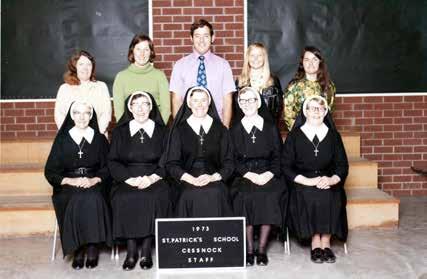
1905
Parochial district of Cessnock established
1906
Site on Church Hill given gratis by Mr O’Hara of Tighe’s Hill, building brought from Abermain, furnished as a school
First church/school opened as St Joseph’s Church Hill Cessnock, bounded by High, Cooper and Regent Streets
Nulkaba school moved to Church Hill original site St Joseph’s, following flow of population
1921
Parcel of land purchased on Bridge’s Hill, becoming convent, hall, presbytery and St Joseph’s Church
‘Father McAuliffe purchased from Abermain for 120 pounds, a hall measuring 50ft x 20ft. He moved it to the High Street site and furnished it as a school at the cost of 100 pounds.’ ¹
1929
The Lock Out from the mines saw dismissal of 8,500 miners, then followed years of The Depression
1935
St Joseph’s school buildings in High Street condemned, foundation for new school laid Bridge’s Hill
1936
The old presbytery relocated from High Street, and with additions, became St Patrick’s convent Cessnock
Land purchased in Wollombi Road, timber in new building sourced from Nulkaba presbytery and Great Northern Hotel, Newcastle
1937
St Patrick’s School opened
Nulkaba School Sisters of St Joseph, M Patrick and M Raphael transferred to St Patrick’s, Wollomi Road Cessnock
School relocated from Nulkaba to St Patrick’s Wollombi Road, Cessnock
1937–1957
St Joseph’s School operating at Bellbird
1958
Bellbird school closed, students accommodated here
1959
Primary pupils from Mount St Joseph’s transferred to St Patrick’s
1966
St Joseph’s School closed and Infant classes transferred to St Patrick’s
1970
New brick school built, then ‘demountables’ added
1980
Diocesan Josephite administration ended First lay Principal, Mr George Jackson
1996
Brick school extended for administration facilities, larger library and refurbished staffroom
2004
Construction and refurbishment of classrooms, staff facilities and library
2007
New wing built
2009
Refurbishment and renovations
Adjoining land of former Josephite Convent acquired for school use
Bellbird ST JOSEPH’S PRIMARY SCHOOL
On Country
Traditional custodians of the land, the Wonnarua people
Bellbird
Presumed named after bird species found in the region
School
Kindergarten to Year 6
Opened 1938
Closed 1958 Location
Crn Ruby and Hetton Streets Bellbird NSW 2325
1923
Bellbird church opened in parochial district of Cessnock
1938
Building became church / school. Built close by expanding Bellbird Colliery
Diocesan Sisters of St Joseph travelled from Cessnock convent
First Sister M Helen McLaughlin, M Pius Gallagher
‘In addition, this Community [Cessnock convent] also staffed the small Catholic School erected at Bellbird, adjacent to the Bellbird colliery. This catered for over 80 children and the Sisters, with Sisters Helen and Pius as pioneers, travelled out daily by bus from Wollombi Road. This school operated from 1937 to 1958 when availability of free bus services made St Patrick’s available to Bellbird school children.’
Enrolment 80 students
1940
Weather shed and tuckshop built, converted into classrooms – Kindergarten, Years 1 and 2 in weather shed, Years 4, 5, and 6 in church
1958
Principal, M Joseph Bolger School closed at the end of the year, when free bus services transported children into Cessnock
1958 –1959
Students were accommodated in St Patrick’s now in Wollombi Rd West Cessnock,
1978
Church and school buildings sold to J. Rigby, then demolished
Lots 2 and 4 sold to Basil Millington
1981
Lot 26 sold to Brian Kerwin
On Country
Kurri Kurri HOLY SPIRIT PRIMARY SCHOOL
Traditional custodians of the land, the Awabakal people
Kurri Kurri
Aboriginal name for ‘the very first’ or ‘beginning’
Opened 1908 as St Joseph’s Primary School
Known as St Joseph’s until 1991
School today kindergarten to year 2
Charism: Josephite
Motto: Peace and Justice
Location: Barton Street Kurri Kurri NSW 2327
Parish: Kurri Kurri
‘Each new coal mining operation was soon surrounded by little mining Hamlets and Villages. The N.S.W. State Government in its planning saw to it that the towns of Kurri, Abermain and Aberdare were set up to accommodate the new mining populace in properly laid out areas.’ ¹
1903
Monster land sale in Kurri Kurri, Bishop Dwyer purchased seven allotments in Barton Street ‘The church had taken steps to ensure that, as ‘Coal’ was going to make Kurri a large town, then it had dress circle positions for both the Church and the town of Kurri’s future.’ ¹
1904
Church / school built on Lot 7, section 28 fronting Barton Street.
‘Father T Rogers requested Mr M O’Rourke of West Maitland to prepare plans for a church-hall at Kurri in which a Fortnightly Mass Service’ could be held. … ‘The Church-Hall was a rusticated weatherboard structure with a corrugated iron roof.’ ²
1908
Schools opened in churches at Kurri Kurri and Abermain, both St Joseph’s kindergarten to year 6
Diocesan Sisters of St Joseph, travelled daily from Nulkaba convent to both Kurri Kurri and Abermain
First sisters, M Vincent Webber and M Sebastian Brimstone
Enrolment 140 students
1909
Convent blessed and opened in Kurri Kurri
1919
Parochial district of Kurri Kurri established
1928
Church / school destroyed by fire, local ambulance hall became school premises for eight months
1929
New brick school completed, used as church / school until 1963
1963
New church built Holy Spirit, allowing school to use building for classrooms and hall
1966
Following rationalisation of parish schools, infants classes at Abermain, primary classes at Kurri Kurri
1972
First lay Principal, Mr George Jackson
New convent built, old convent re sited, renovated to form classrooms, ‘demountable’ added behind convent
1981
Convent renovated, demolished 2005
Construction of new toilet block
1982
Diocesan Josephite administration ended
References
1987
School playground developed across the road
1991
Name change from St Joseph’s to Holy Spirit Primary School, in line with parish name
1996
School building of 1929 renovated and extended
2006
Construction of classrooms, administration facilities and amenities
2009
Refurbishment of school facilities, external and internal
Refurbishment of library, amenities, external and associated works
Replacement of covered outdoor learning area and associated works
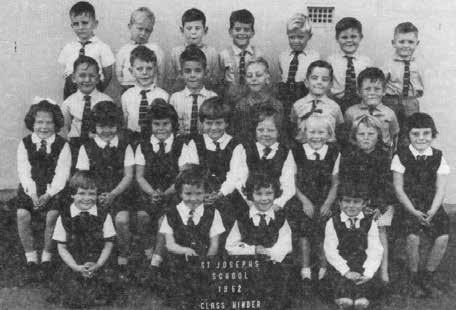
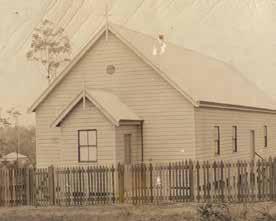
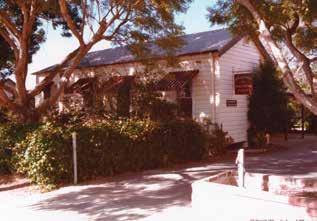
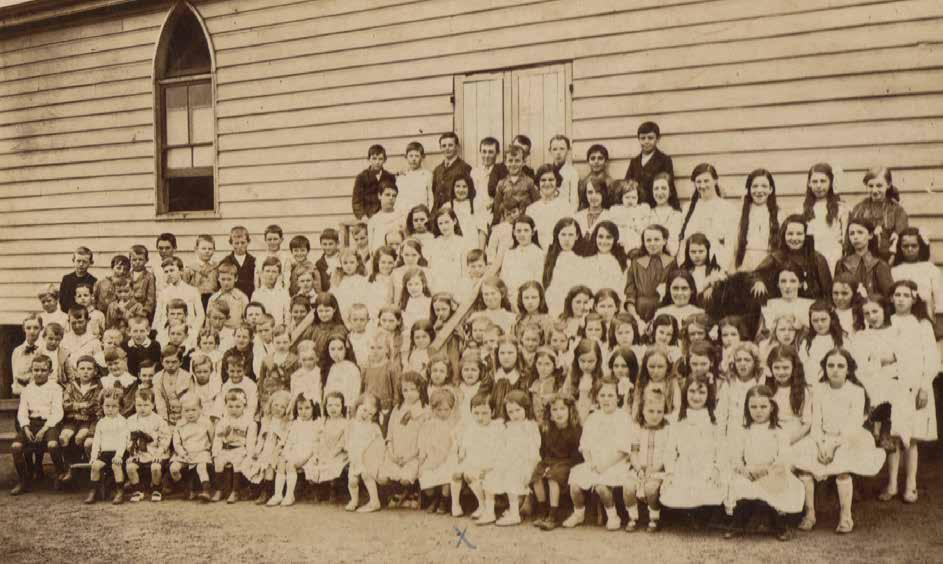
Photos (L-R clockwise): Kurri Kurri Kinder, 1962, Kurri Church School Hall, 1905, Former convent used for School Administration, Kurri Kurri pupils 1933
On Country
Abermain HOLY SPIRIT INFANTS SCHOOL
Traditional custodians of the land, the Wonnarua people
Abermain
Named after coal mining town in Wales, 1902 Coal Mine opened
Opened 1908
as St Joseph’s Primary School
Known as
1908 St Joseph’s, 1940 St Francis Xavier’s, 1966 St Joseph’s, 1991 Holy Spirit Infants School
School today kindergarten to year 2
Charism: Josephite
Motto: Peace and Justice
Location: Church Street Abermain NSW 2326
Parish: Kurri Kurri
Opened Staff Years
References 1 Delaney, J. (1988) City of Cessnock 1788–1988
‘Each new coal mining operation was soon surrounded by little mining Hamlets and Villages. The N.S.W. State Government in its planning saw to it that the towns of Kurri, Abermain and Aberdare were set up to accommodate the new mining populace in properly laid out areas.’ ¹
1902
Crown Land Auction sale, Mr Rigney purchased 83 acres, selling (possibly giving) one acre to the Catholic Church, transfer of deeds 30 September 1904
1904
Wooden church / hall opened, used as a public school until 1906
‘ … the Government Department of Public instruction immediately leased the building at a rental of fifteen shillings ($1.50) per week for use as a temporary school. The Catholic church retained the right to utilise the Abermain Church-Hall at weekends for Church Services, and other Church purposes. ’ ¹
1908
New Timber church/school opened Diocesan Sisters of St Joseph arrived to staff school – M Marcellus Treacey, M Rita Gallagher, travelling daily by horse drawn bus from Cessnock.
St Joseph Primary Schools opened at both Abermain and Kurri Kurri, enrolment at both 50 students.
1920
Abermain convent opened, sisters had been travelling daily from Nulkaba (Cessnock) convent, then from Kurri
1935
Additions made creating two separate classrooms
1940
Abermain school name changed to St Francis Xavier’s Church School
1952
New wooden school built, four classrooms and administrative office
1966
Rationalisation of parish schools, St Joseph’s Primary at Kurri Kurri, St Joseph’s Infants at Abermain
1979
Diocesan Josephite administration ended
1980
First lay Principal, Mrs Josephine Gossage
1991
Name change to Holy Spirit Infants School in line with parish name
1998
Upgrade of school facilities
2004
Construction of administration, staff library classrooms and store
2007
Old wooden school demolished, construction of administration and staff facilities, library and classrooms
2009
Refurbishment of school facilities, external and internal, canteen and fencing
2010
Refurbishment of multi-purpose hall, student hall and shade structure
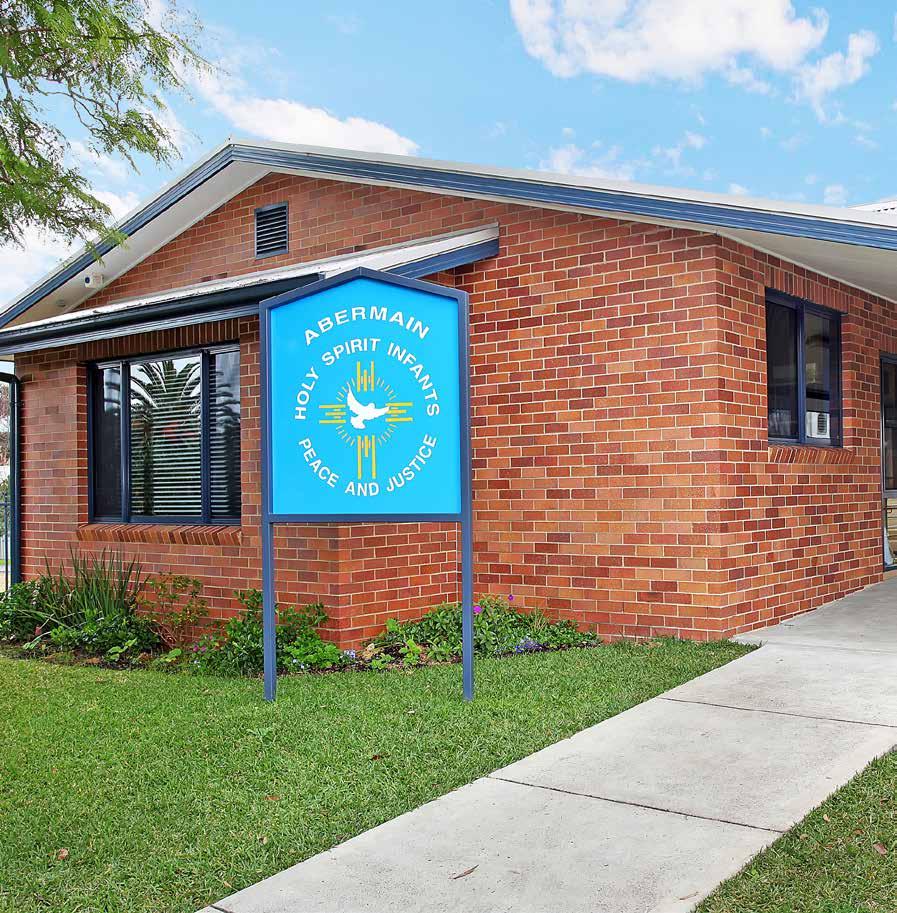
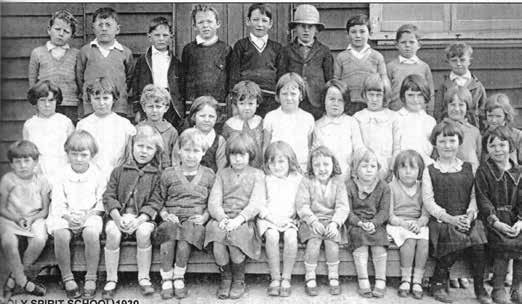
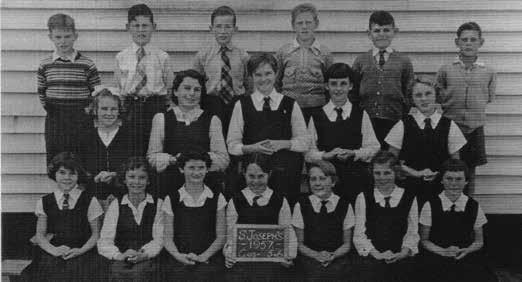
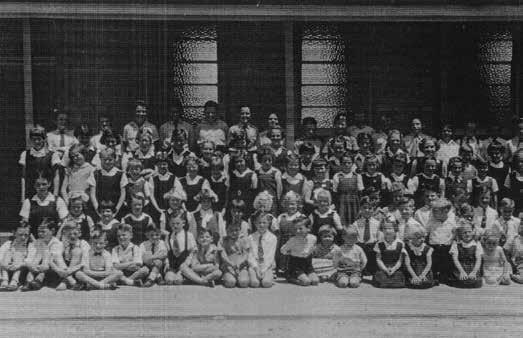
Dungog ST
JOSEPH’S PRIMARY SCHOOL
On Country
Traditional custodians of the land, the Worimi people
Dungog
Aboriginal name for ‘clear hills’
Opened 1888
Preceded by
1864 – 1873 Catholic Denominational School at Clarence Town
School today kindergarten to year 6
Charism: Josephite
Motto: God is Love
Location: 49 Brown Street Dungog NSW 2420
Parish: Dungog
School Opened Closed Staff Years
Denominational (Clarence Town)
Joseph's 1864
Sisters of St Joseph archives
St Mary’s Dungog 1860–1983 (1983) parish publication McGee, C. (2012) The Forgotten Beginnings of Catholic Education in New South Wales. Catholic Education Office Sydney.
1856
Chapel built in Clarence Town
1860
Parochial district of Dungog established
1863
St Patrick’s Church built in Clarence Town
1864
Catholic Denominational School in church at Clarence Town, closed 30 September 1873
Denominational school lay staff, J.M. McConnell
1870
St Mary’s church built and completed in Dowling Street Dungog
1888
Diocesan Sisters of St Joseph arrived to staff school , M Stanislaus Tobin, M Aloysius Cahill, M Agnes Tobin ‘… to get there, the Sisters caught a river boat to Clarencetown, then boarded Fr McAuliffe’s buggy to ride into town.’ 1
1889
Classes held in convent, rented cottage in Dowling Street ‘… the building’s shop front was converted into a school room ready for students.’ 1
‘ However, before many weeks had passed, the verandahs, back and front, were crammed, and there was scarcely standing room.’ 2
1891
New convent built in Brown Street 1892
Enrolment 93 students, former convent rooms used for school
1913
New brick school built and opened
1923
Extensions made to old school room
1952
New Infants School opened Dungog and Gloucester parishes closely connected, managed by the same parish priest
1957
St Joseph’s Brookfield School students accommodated in Dungog
1976
Brookfield school buildings relocated to Dungog, providing additional facilities
Library named Brookfield House Library
1985
Diocesan Josephite administration ended
1986
First lay Principal, Mrs Colleen Timoshenko
1997
Covent building used for school administration when Josephite sisters finally vacated
2004
Construction and refurbishment of classrooms and canteen
2009
Refurbishment of school facilities, external and internal, construction of shade structure
Construction of sports storage area, refurbishment of play areas
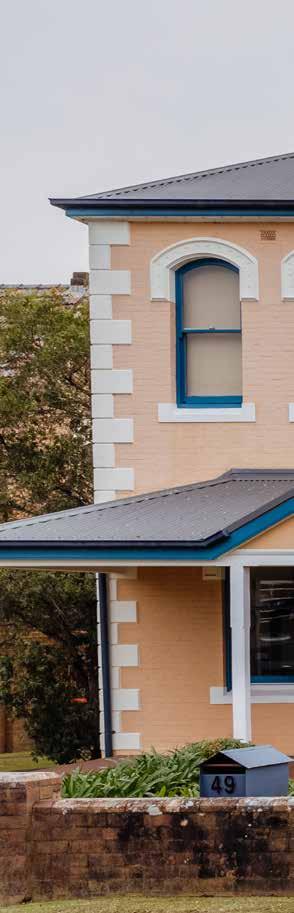
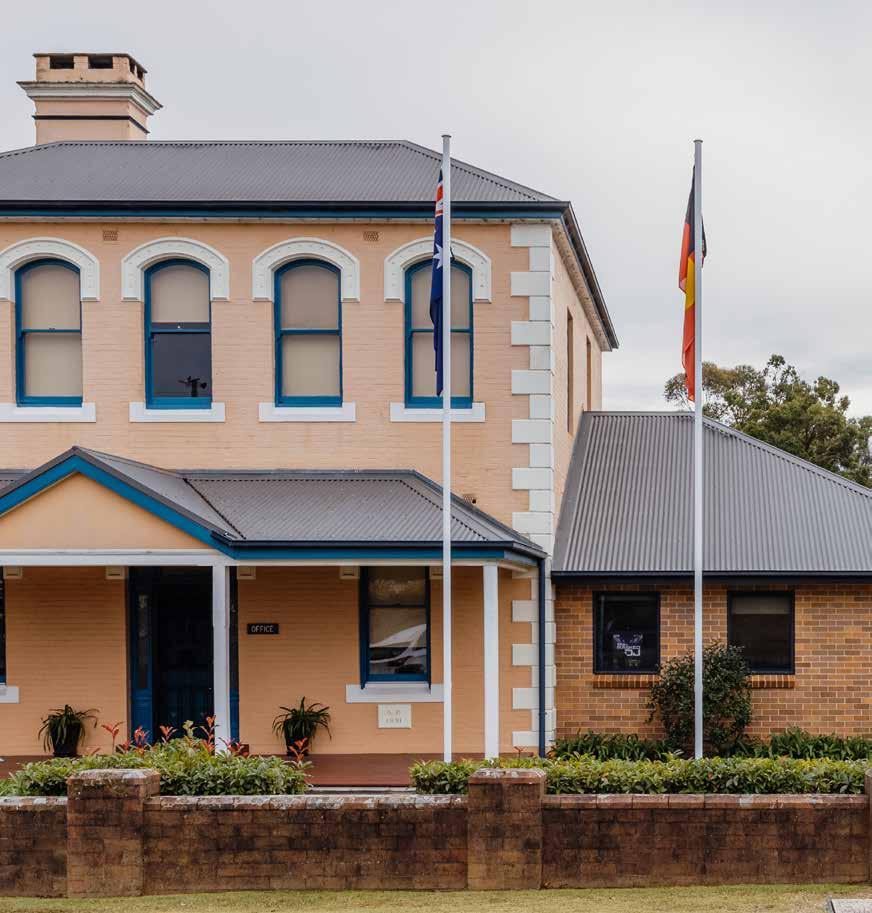
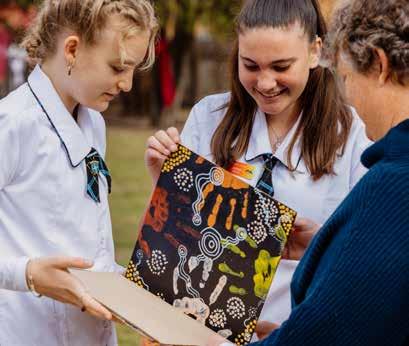
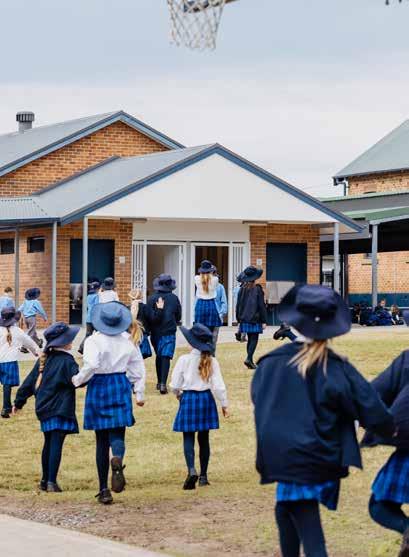
Brookfield ST JOSEPH’S SCHOOL
On Country
Traditional custodians of the land, the Wonnarua people
Brookfield
Originally the estate of Charles Smeathman, origin of name unknown
Opened 1889
School
Kindergarten to Year 6
Closed 1957
Location Main Road (1311 Glen William Road ) Brookfield NSW 2420 References
School Opened Closed Staff Years
St Joseph’s 1889 1957 Diocesan Josephites 68
1888
Dungog convent opened, close ties between Brookfield and Dungog Josephite communities
1889
Brookfield, new convent opened in Main Road
Diocesan Sisters of St Joseph arrived 2 Nov ‘The party was met at Clarencetown by Fr McAuliffe and driven by parishioner Mrs Dwyer to the new convent, where the local Catholic community had gathered to welcome them.’ ¹
First Sisters, M Brigid Moy, M Rose Philson, M Agatha Bussell
Part of the convent was used as a schoolroom
‘Church school opened on Monday 4 November with 45 pupils.’ ¹
1892
Newly built commodious schoolroom
1908
Enrolment 43 students
1928
New brick school
1957
Last Principal, Sr M Peter Parrott
School and convent closed, pupils accommodated at St Joseph’s Dungog
1976
School buildings moved to St Joseph’s School Dungog, now called Brookfield House
1981
Convent sold
2011
Former Brookfield convent for sale. ‘Clochare’ a Williams Valley property ²
1 Souvenir of the Silver Jubilee
2 The Newcastle Herald 26/02/2011
Photo:
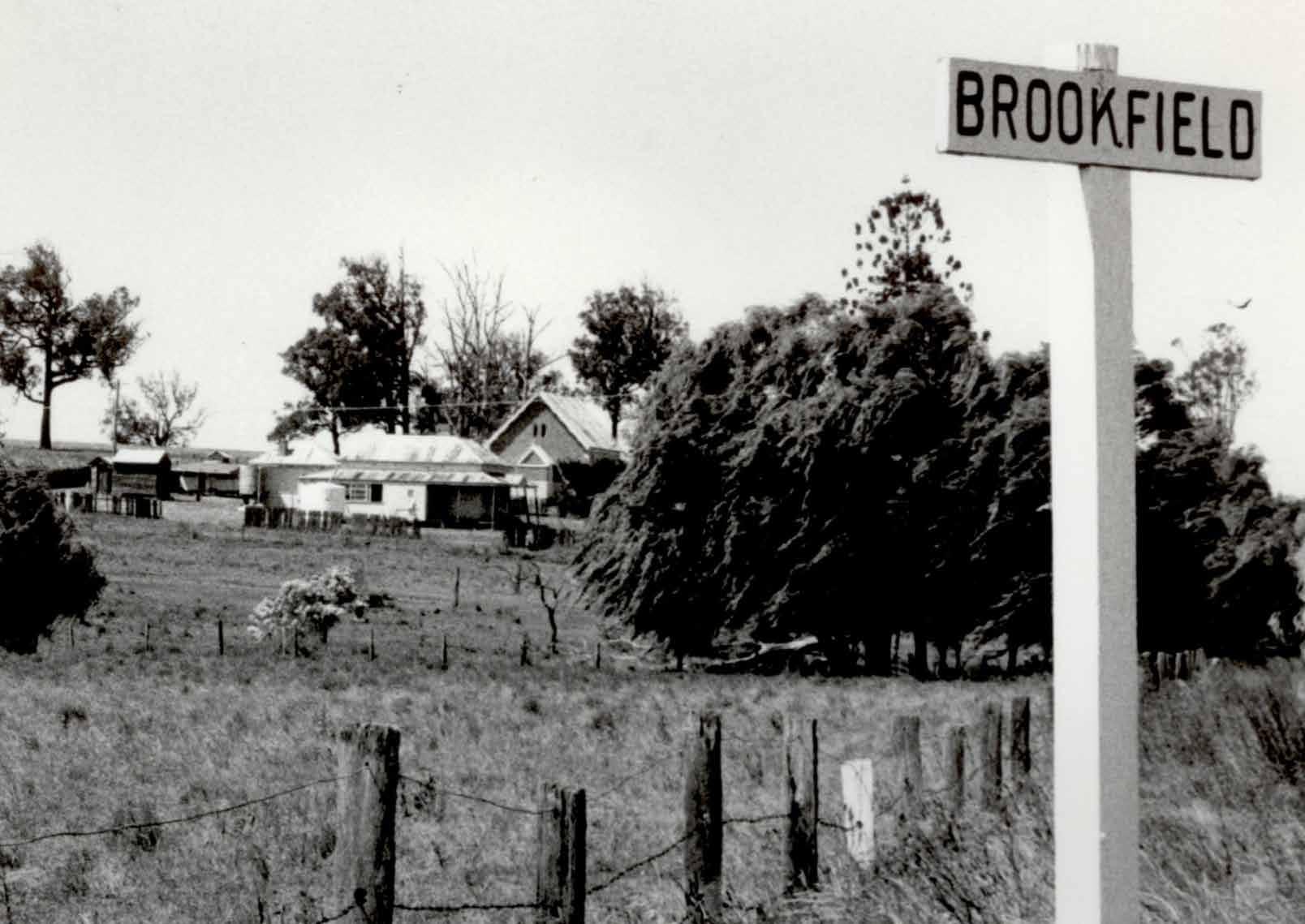
Largs ST JOSEPH’S PRIMARY SCHOOL
On Country
Traditional custodians of the land, the Wonnarua people
Largs
Named after a place in Ayrshire Scotland
Preceded by 1868 Denominational School
Known as
Until 1884 St Benedict’s Catholic School
Opened 1889
School
Kindergarten to Year 6 Closed
Cnr John and Church Streets Largs NSW 2320
School Opened Closed Staff Years
Denominational St Joseph's 1868 1889 1968 Lay Teachers Diocesan Josephites 20 79
1835
Parish of East Maitland established
1868
Denominational school, first teacher Miss Frost then Miss Ryan, 1884 Miss Ellen Drinan
School stood on corner block
‘A Tea Party and Ball were held in the new roman Catholic School Room at Largs. Proceeds to go to the new school fund.’ 1
‘The school was established on the “Voluntary Principle.” which meant that the people paid for the building and the teacher’s wage.” 2
1873
“Wooden school building reported to have leaned over 20 degrees in the full force of a storm. It was made straight.’ 3
1880
‘The RC schoolhouse was thoroughly repaired and painted also the teacher’s residence.’ 1
1884
School known as St Benedict’s Catholic School, enrolment 57 students
1889
Diocesan Sisters of St Joseph came to staff the school, first sisters M Ursula Barry, M Xavier McInerney, M Claver Comerford, M Rose. The Sisters ‘… were taking over an existing Catholic School, itself more than 25 years old. They lived in several rooms attached to the Church.’ 1
1892
Trustees for the Catholic Church purchased blocks 1, 2 and 15
1893
Brick convent built, neat four bedroom cottage and chapel
1899
Convent was a small cottage adjoining the school
Sisters continued to teach in the church
1909
Enrolments, peak year for students 74, lowest 27 in 1924
1910
Church of the Holy Family built
1930
New school built and opened
1968
Last sisters, M Marcella Bambach, M Ursula Barry, M Imelda
1969
Convent closed becoming residence of Fr Gleeson
2005
Convent offered for sale after extensive renovations by Nationwide Hunter Valley
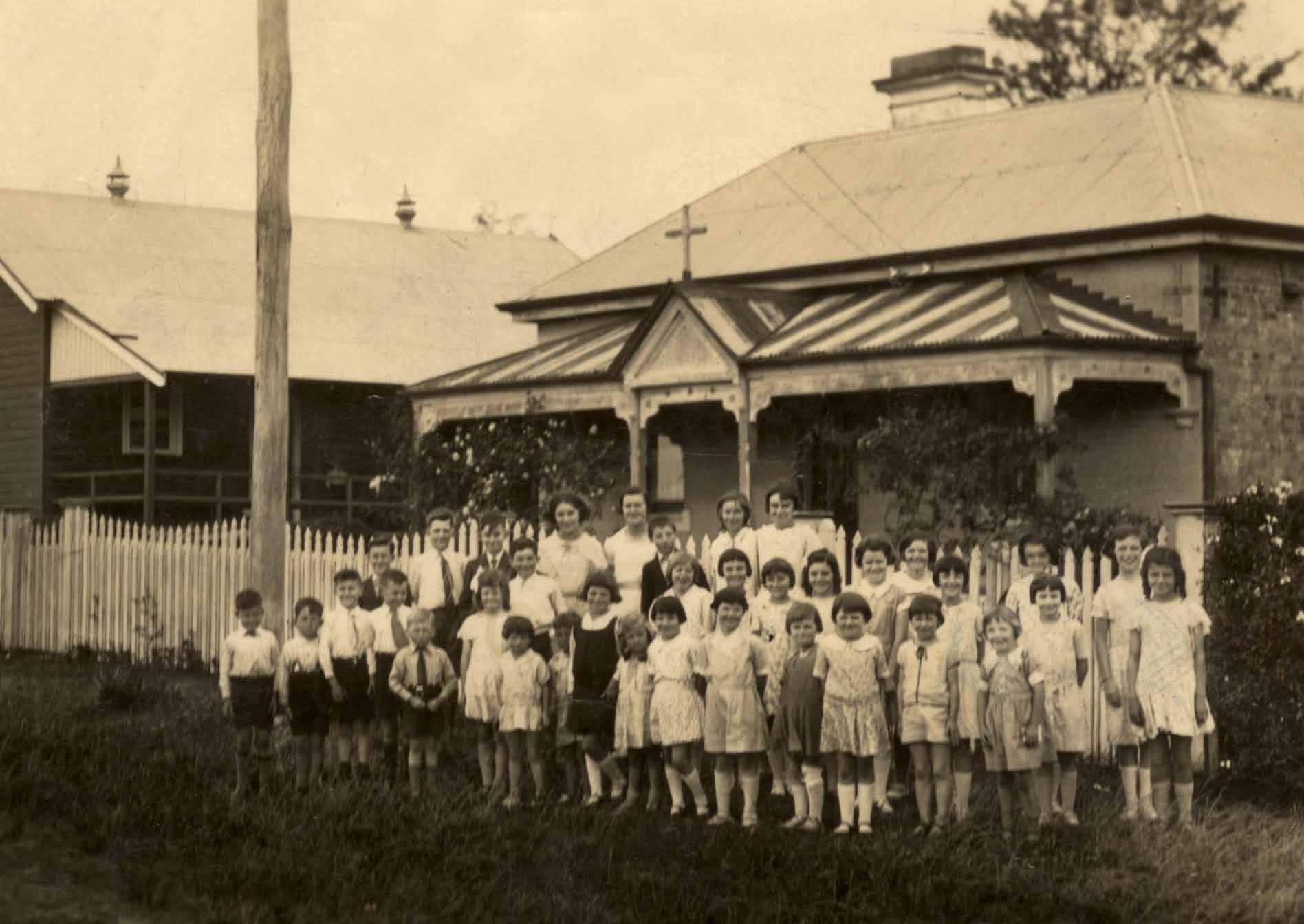
Greta Migrant Camp CATHOLIC SCHOOL
‘Greta Migrant Camp is the only Immigration Centre in Australia to have a Catholic School. It functions, yes, but the difficulties are legion. The most staff that, as yet, can be provided, is four teaching Sisters – the most accommodation that can be provided is one Camp Chapel with partitions that are far from sound-proof, and the most children that can be taken in (and are being taught) are about 200.’
1950 Catholic Migrant Camp School, Greta
On Country
Traditional custodians of the land, the Wonnarua people
Greta
Thought to be named after a small river in England, named when town surveyed in 1842
School
Kindergarten to Year 6
Parish of Branxton established
1939
First wooden barracks built for Army Camp ‘On 7 November 1939, the Department [of Defence] began surveys to determine the boundaries, valuations and owners of the land in question. The main area that the camp eventually occupied was the large triangle of land bounded on the east by the Great Northern Railway, on the west by Camp Road and on the south by Allandale Road. The camp buildings were to be located at the northern or Greta end of this triangle and it was this decision that saw the name of the camp altered in popular parlance from Allandale to Greta.’ ¹
1950
Greta Army Camp reused as Greta Migrant Camp at end of war by Department of Immigration
Greta Migrant Camp School established, also known as St Anthony’s Church-School
Diocesan Sisters of St Joseph travelled daily from Lochinvar convent
First sisters M Barbara O’Neill, M Phillipa Ormonde, M Pascal Brunton, M Stanislaus Curran
‘Greta Migrant Camp is the only Immigration Centre in Australia to have a Catholic School. It functions, yes, but the difficulties are legion. The most staff that, as yet, can be provided, is four teaching Sisters – the most accommodation that can be provided is one Camp Chapel with partitions that are far from sound-proof, and the most children that can be taken in (and are being taught) are about 200.’ ²
‘… the numbers from modest beginning of about a dozen pupils were to swell until there were about one-hundred-and-thirty children in the school, all wrestling and struggling with the intricacies of the English language.’ ³
1958
Sister of St Joseph on staff, M Chanel Garaty 1959 M Thaddeus Coleman
1959
Diocesan Josephite administration withdrew
1960
With closure of Migrant Camp and school many peoples settled in Greta and Branxton bringing into their schools children of many nationalities.
Many of the wooden buildings were relocated to various emerging Catholic schools
1967 St Mary’s at Greta became infants, St Brigid’s at Branxton became primary
Photo: Students and Sisters at Catholic School, Greta Migrant Camp
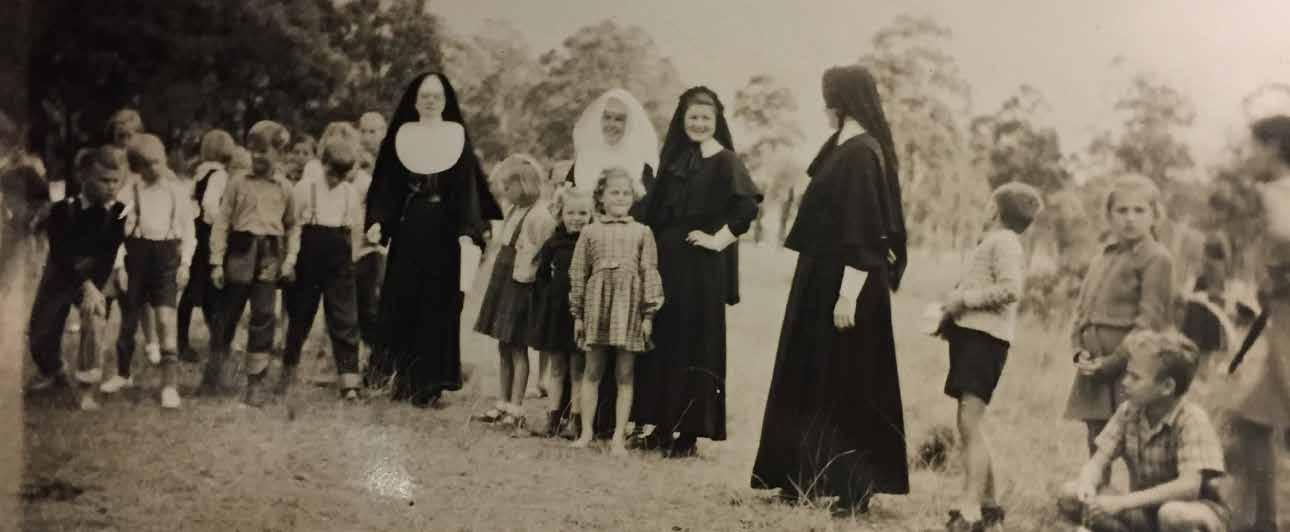
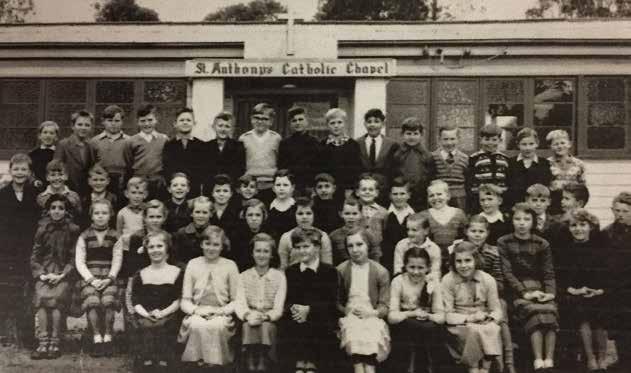
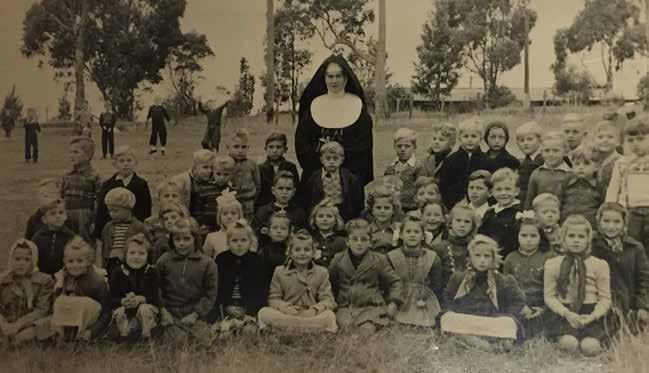
Tarro OUR LADY OF LOURDES PRIMARY SCHOOL
On Country
Traditional custodians of the land, the Awabakal people
Tarro
Aboriginal name for ‘stone’, area originally known as Upper Hexham
Opened 1944
School today Kindergarten to Year 6
Charism: Mercy
Motto: For the Greater Glory of God
Location: Anderson Drive Tarro NSW 2322
Parish: Beresfield
1922
Our Lady of Lourdes Church built at Tarro within parish of East Maitland
1944
Sisters of Mercy opened school in church, originally travelling daily from East Maitland convent
First sisters, M de Sales O’Gorman, M de Lourdes McClymont, enrolment 32 students
1947
Parochial district of Tarro established, originally called Beresfield
1958
School opened, brick veneer refurbishment, three classrooms and general-purpose rooms
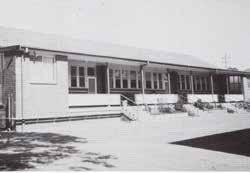
1962
Tarro Mercy convent Our Lady of Lourdes established, reconstructed from Greta Camp old hospital building ‘The new Convent is built out of part of the old Hospital at Greta Migrant Camp. Another part of the same building was used in the erection of the Church-hall built at Beresfield last year. … His Lordship Bishop Toohey [at the opening] congratulated all those who had been associated with its erection especially those voluntary workers who had prepared the grounds and assisted with the painting.’ ¹
1969
Two new classrooms, office and staff rooms
1970s
– 80s
Five ‘demountables’ added and school administration area built
1976
Mercy administration ended
1977
First lay Principal, Mrs Nancy Smythe
1985
Old church fitted out for K–2 Rainbow classroom and school hall, building now Heritage Listed
New administration block built and opened
2005
Construction and refurbishment of classrooms, administration and staff facilities and library
2009
Refurbishment of school facilities
Construction of multi-purpose hall space and student amenities
Our Lady of Lourdes Primary School, Tarro
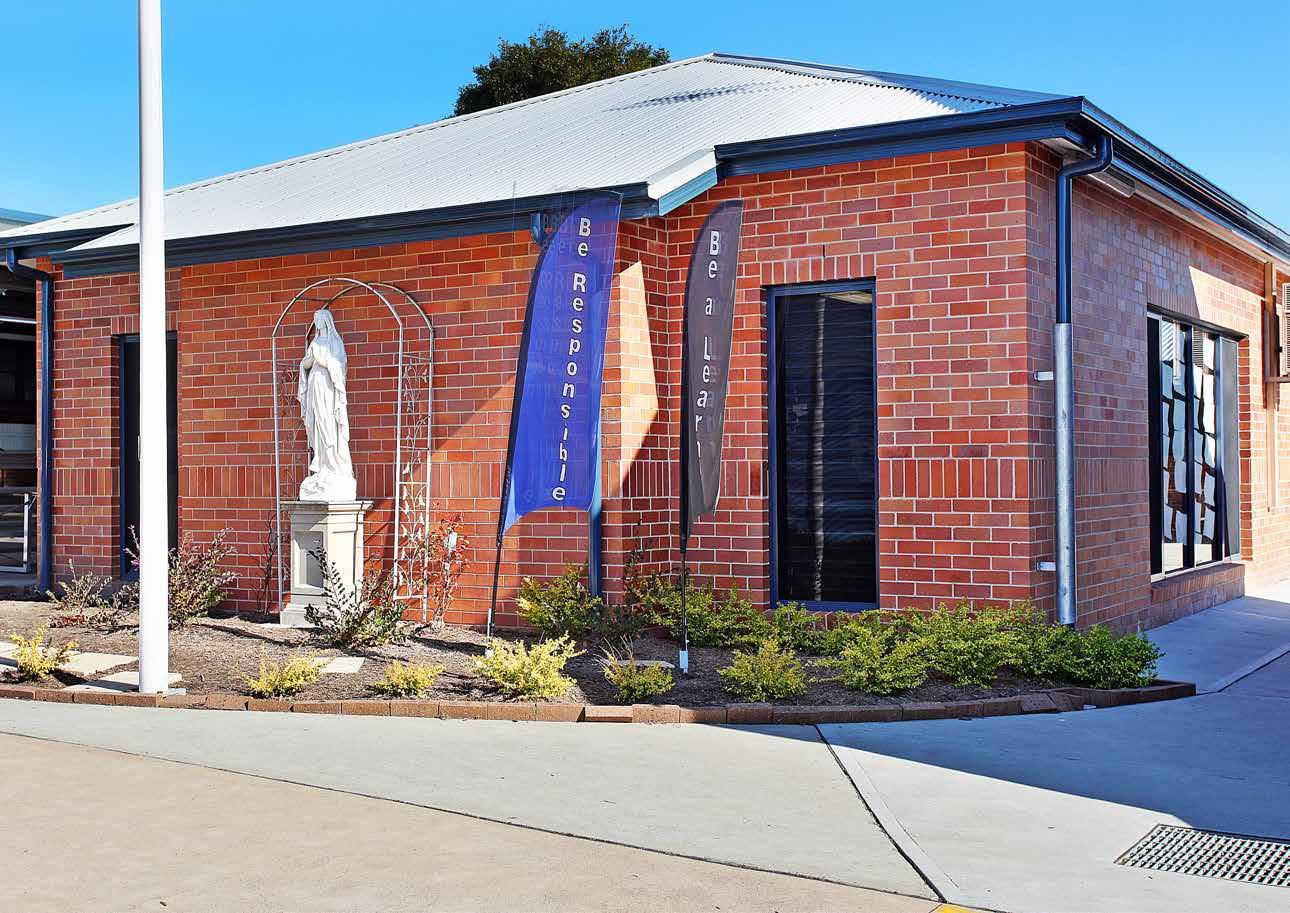
His Lordship Bishop Toohey [at the school’s opening] congratulated all those associated with its erection, especially those voluntary workers who had prepared the grounds and assisted with the painting.
1962 Opening of Our Lady of Lourdes Primary School Tarro
Rutherford ST PAUL’S PRIMARY SCHOOL
On Country
Traditional custodians of the land, the Wonnarua people
Rutherford
Named after an early settler George Shaw Rutherford
Opened 1957
School today kindergarten to year 6
Charism: Mercy
Motto: Stand Firm in Faith
Location: 90A Gillies Street Rutherford NSW 2320
Parish: Rutherford
1955
Maitland floods devastated surrounding areas and many people sought safer housing on higher ground
1957
Infants school in cottage, also contained priest’s living quarters with 64 students in first and second classes
Sisters of Mercy, first sisters M Agnes Riley, M Moya Lantry (Gonzaga) , travelling daily from Campbell’s Hill
Enrolment 64 students
New church / hall opened, St Paul’s in Young Street, where 2 blocks of land had been purchased
1958
Sr M Boniface Bowe appointed Principal Enrolment 102 students
1961
New building opened for primary school, four classrooms, staff room, office, closed in verandah, tuckshop, and basement shelter sheds ‘To celebrate the School Opening the parish of Campbell’s Hill is to have an ‘Opening Ball’ at St Paul’s Hall Rutherford on Friday the 29th September.’ ¹ Enrolment 115 students
1962
Rutherford, now a distinct parish with Fr Flynn first Parish Priest overseeing great development over 20 years
1965
Decision made to make Rutherford a Primary School, Campbell’s Hill an Infants School
1966
Infants classes transferred to Sacred Heart School, Campbell’s Hill
St Paul’s continued operating as a primary school
1978
Mercy Administration ended
1979
First lay Principal, Miss P Hayes
1981
Campbell’s Hill School closed with students transferred to to St Paul's during the Easter break
New infants school built and opened, school administration moved to former presbytery / school building
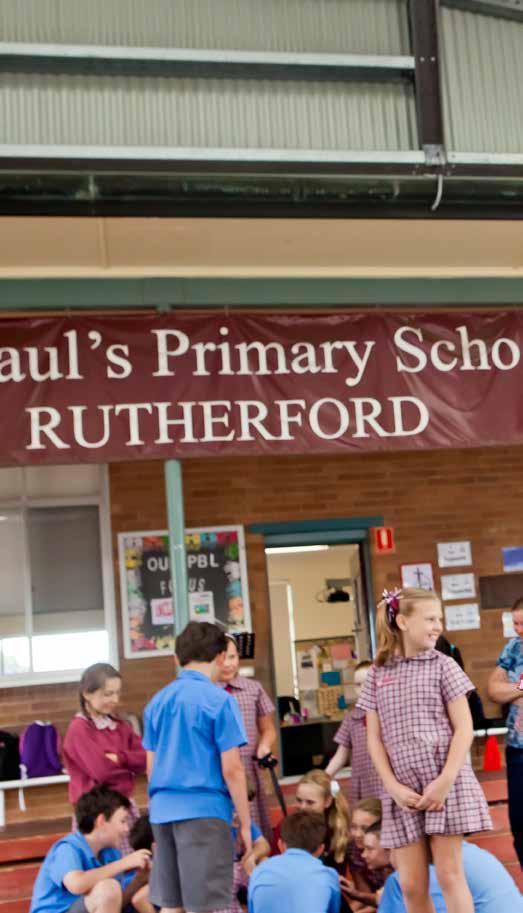
1999
‘Over 40 years, St Paul’s School has seen many changes. In 1999 on its 25th Anniversary the Parish Church was beautifully refurbished … In 2001 the Parish Hall that the school regularly uses was closed and refurbished by a group of dedicated workers.’ ²
2004
Major redevelopment of the school began Construction and refurbishment of classrooms, administration facilities, staff and library
2008
Opening of new school premises
2009
Construct shade area, refurbishment of schools facilities, Information Technology equipment and infrastructure
Construction of classrooms and library and covered linkways
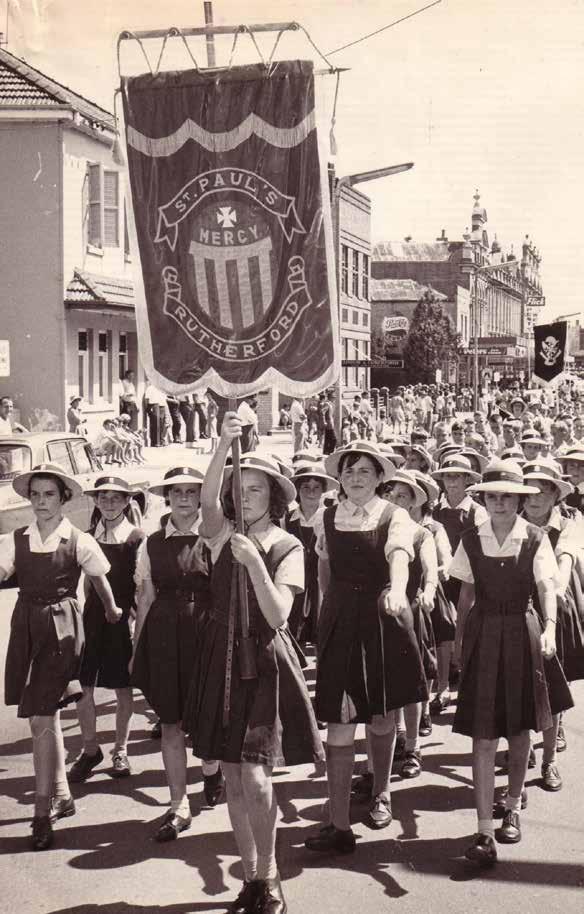
Chisholm ST ALOYSIUS CATHOLIC PRIMARY SCHOOL
On Country
Traditional custodians of the land, the Wonnarua people
Chisholm
Named after Caroline Chisholm, a 19th Century English humanitarian. Caroline Chisholm Cottage in Mill Street East Maitland has significant links with her support of females and family welfare in the district, and as so, is Heritage Listed. Suburb established in 2004
Opened 2015
School today kindergarten to year 6
Charism: Jesuit and Mercy
Motto: We Are Called
Location: 24 Heritage Drive Thornton NSW 2322
Parish: Morpeth
2013
Catholic Schools Office began a study for the provision of primary and secondary education within the Diocese. A key finding was for a secondary school at Chisholm, with St Aloysius Catholic Primary School colocated to provide a continuum of education in the area.
2015
Opened in February by Bishop William Wright, and named partly to recognise a previous Diocesan School at Hamilton. St Aloysius welcomed an opening enrolment of 223 students, with a projected capacity for 630.
The school has been architecturally designed to incorporate the natural landscape, with the building designed around a central courtyard and playground to provide a sense of community. Classrooms are connected to the outside using flexible walls and furniture thus providing an adaptable and stimulating learning environment. With latest computer technology and unique classroom features, this state-of-the-art school learning environment has been thoughtfully brought to fruition.
A first priority was to create a new school culture as a Catholic school, and second, to build community for parents to engage.
2018
November, the second stage comprising ten additional classrooms, three learning commons, a new administration block, refurbished Learning Hub/Library, new play spaces and equipment, extended car park and landscaping.
2019
Final stage comprises five new classrooms, two learning commons, relocation of two ‘demountables’, covered outdoor area, and soccer field.
On completion, the school will reach its capacity of 630 students.
School Opened Staff Years
Aloysius
Photo: St Aloysius Primary School, Chisholm
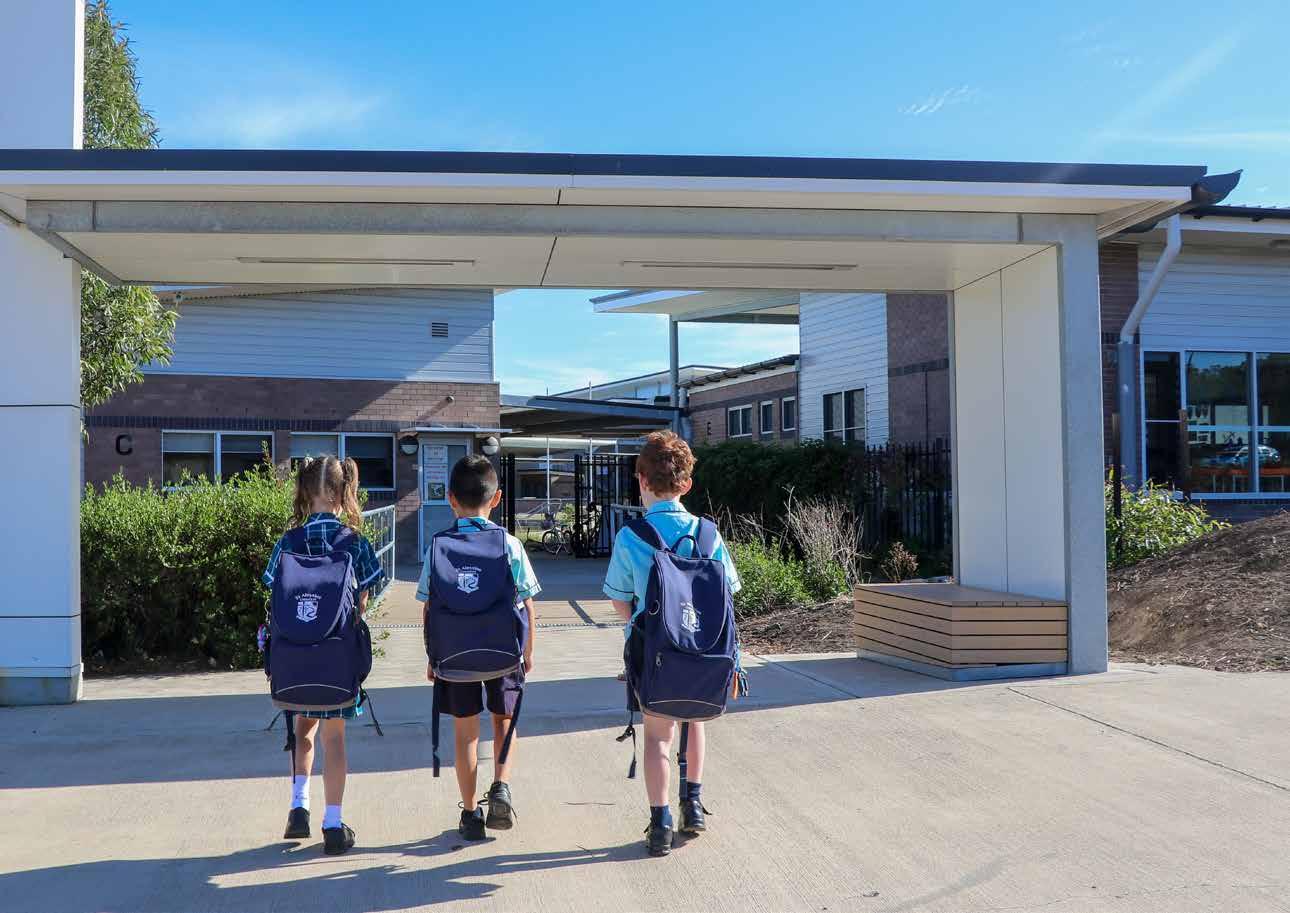
On Country
Branxton ROSARY PARK CATHOLIC SCHOOL
Traditional custodians of the land, the Wonnarua people
Branxton
Named after a place in Northumberland, England. Originally known as Farmborough, then Black Creek
Opened 2011
Preceded by
1852 Denominational School
1886 St Brigid’s Primary School
Renamed
2011 Rosary Park Catholic School
School today kindergarten to year 6
Charism: Mercy
Motto: Built on Faith, Knowledge and Respect
Location: Station Street Branxton NSW 2335
Parish: Branxton
1840
William Bowen gave a portion of his land for the erection of a Catholic chapel
1841
Wooden structure built for church / school
1841
Private school ‘There are two schools in Maitland and one at Black Creek conducted by Mr Hyatt.’ ¹
1852 –1857
Denominational school at Black Creek
1870
Parish of Branxton established, St Brigid’s
1886
Branxton Mercy convent Our Lady of Lourdes established, architect Menkens
Five Sisters of Mercy arrived to take charge of Branxton and Greta schools, M Kosta Kirby as Superior
St Brigid’s School opened at Branxton, on the same day St Mary’s at Greta
1960s
With buildings deteriorating, nuns travelled with students from Branxton to Greta awaiting new school build
1967
New school built, St Brigid’s now primary, St Mary’s at Greta infants
1977
First lay Principal, Mr Walter Pleasant
1987
Branxton Mercy convent closed
2009
Construction of security fence, procurement of furniture and equipment
2009
Construction of multi-purpose hall, classrooms, library and administration facilities
2010
New construction on parish land opposite St Brigid’s Primary
2011
Renamed as Rosary Park Catholic school as it was built on parish land known as ‘Rosary Park’
This school replaces St Brigid’s Branxton and St Mary’s Greta
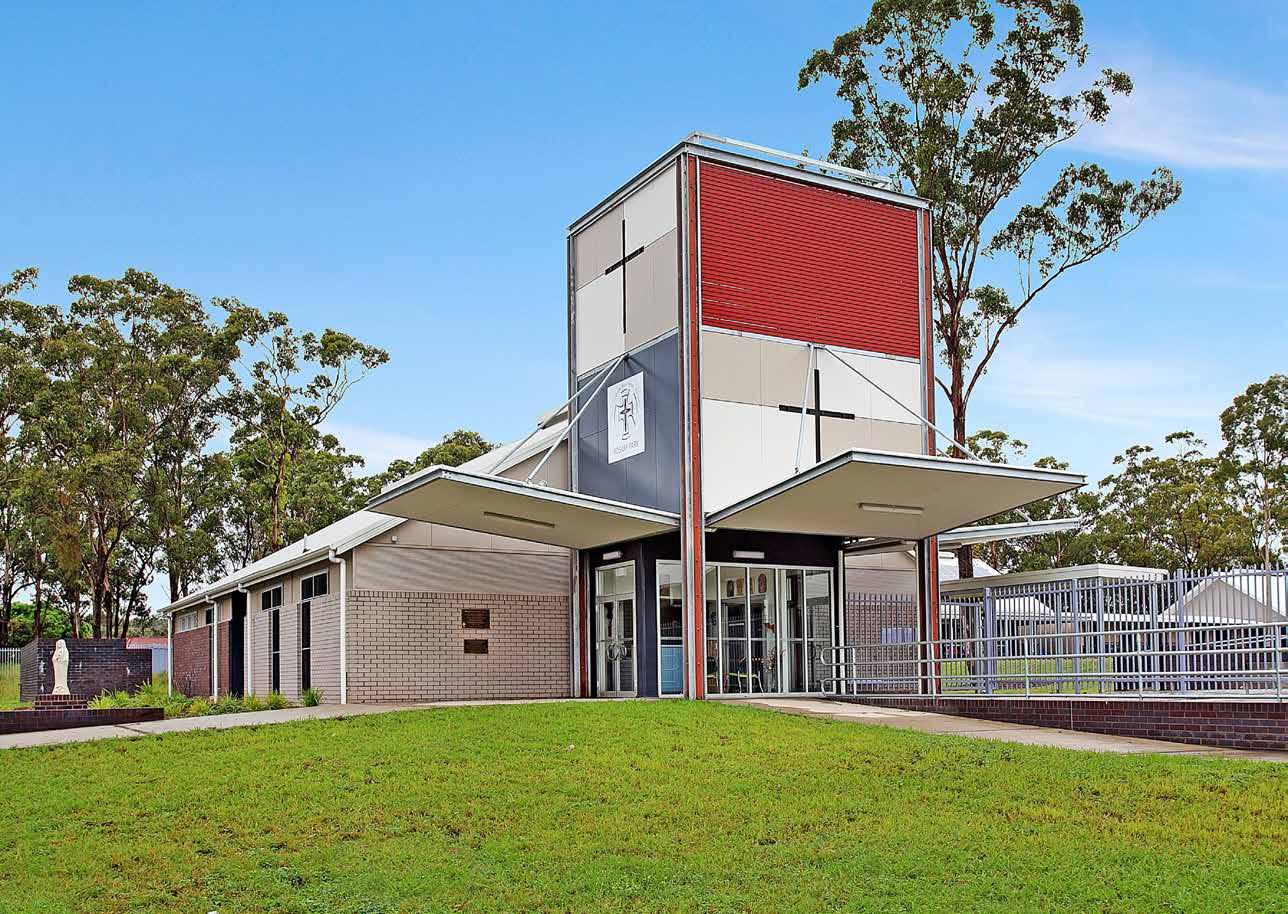
Chisholm ST BEDE’S CATHOLIC COLLEGE
On Country
Traditional custodians of the land, the Wonnarua people
Chisholm
Named after Caroline Chisholm, a 19th Century English humanitarian. Caroline Chisholm Cottage in Mill Street East Maitland has significant links with her support of females and family welfare in the district the cottage is now Heritage listed. Suburb established in 2004
Opened 2018
School today co-educational high school
Motto: Shine with Christ’s Glory
Location: 24A Heritage Drive Chisholm NSW 2322
Parish: Morpeth
School Opened Staff Years
St Bede’s College 2018 Lay Teachers 3
2013
Catholic Schools Office began a study for the provision of primary and secondary education within the Diocese. A key finding was for a secondary school at Chisholm, with St Aloysius Catholic Primary School colocated to provide a continuum of education in the area.
2018
Set within a new and growing suburb of Chisholm, St Bede’s opened Year 7 with an enrolment of 110 students.
Expansion will continue by one year group per calendar year until becoming a full Year 7 to Year 12 co-educational school in 2023. With some delay in construction, classes opened and operated in a Flexible Learning
Village with staff and students moving into the first building, the Benedict Building in Term 3.
2021
Forward construction program will see the Dominic Building completed
2022
The McAuley Building will be completed
2023
The Marion Building will be completed
Construction expected to be completed with four interconnected contemporary designed buildings, equipped and catering for a student population of about 1,100.
When completed St Bede’s will have a large playing field and a basketball court, and access to local council playing fields.
This and the open design of the College will allow students to enjoy generous outdoor facilities.
St Bede’s two feeder schools are St Aloysius Catholic Primary School located next door, and Our Lady of Lourdes at Tarro. Many other students come from a wide range of primary and secondary schools.
Photo: St Bede's Catholic College, Chisolm
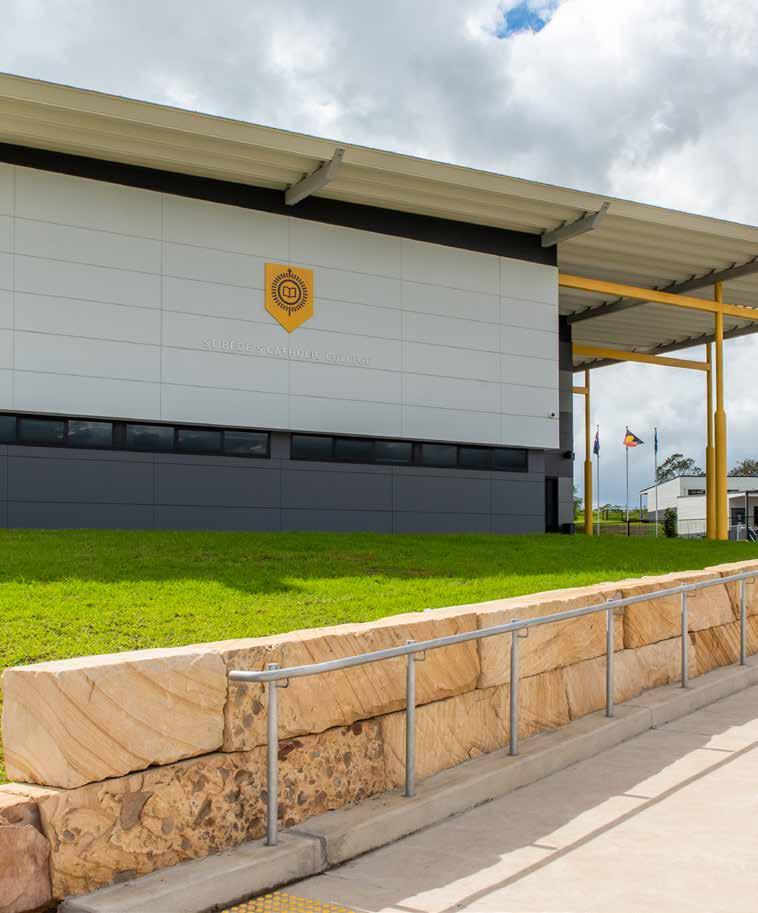
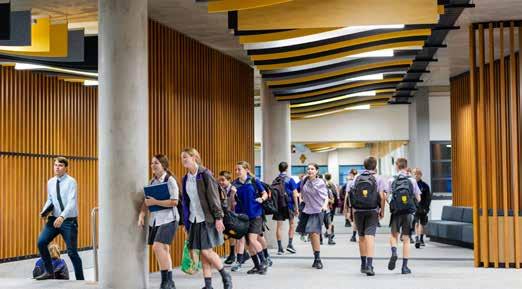
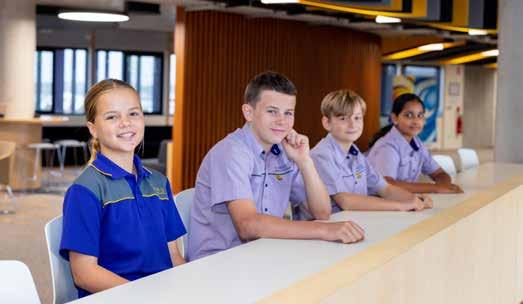
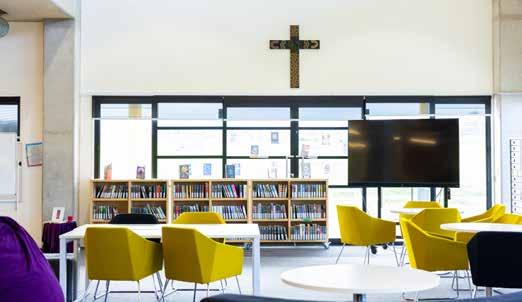
CATHOLIC SCHOOLS IN THE Central region
On Country:
Traditional custodians of the land the Awabakal people
It was an ancient landscape – a valley occupied by Aboriginal people from the coast to the mountains in the distance known as ‘Muloobinbah’ Newcastle’s original name. The Awabakal and Worimi peoples are the traditional custodians of the land and waters of Newcastle.
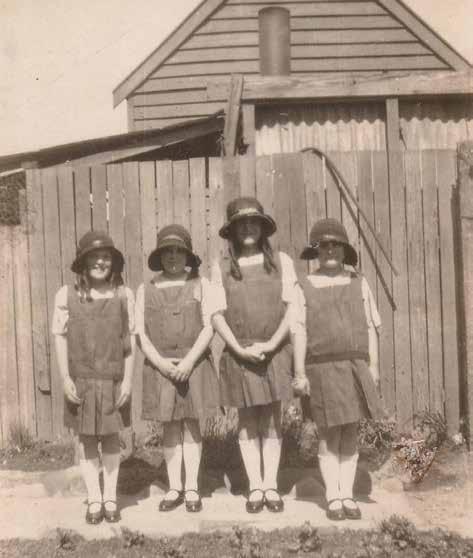
First known as Coal River, Newcastle marked the beginning of the Hunter Valley’s European and convict history. Accessible coal seams, ancient Aboriginal middens of oyster shells, lush stands of red cedar forests and a deep-water port providing safe anchorage for shipping made it an attractive location to the emerging colonial government. Today Newcastle is the world’s largest coal export port, exporting around 160 million tonnes per year to export markets across Asia ¹.
The Coal River penal settlement first opened in 1801 but quickly closed. After the Castle Hill Rebellion in 1804 the penal settlement was reestablished where it became the destination for exile and severe punishment of political prisoners and other convicts found guilty of additional crimes in the colony. The Colonial Government restricted access to the penal settlement which remained a small and isolated outpost causing settlers and freed convicts to bypass Newcastle and strike west to explore the vast pasture lands of the Hunter Valley along the Williams, Hunter and Paterson Rivers or moving overland following the ancient Aboriginal trade routes towards Singleton and beyond.
With the closure of the penal settlement in 1824 and the relocation of most of its convicts to Port Macquarie Government restrictions upon the village of Newcastle were lifted creating some opportunities for settlers. However coal extraction at the port of Newcastle was taken over by the Australian Agricultural Company (AACo). The AACo was a company incorporated by Charter and is today the oldest continuously operating company in Australia.
The AACo held a monopoly over the extraction of coal in the Newcastle region for thirty-one years. Their grant of coal land in the centre of Newcastle hampered the expansion of the early township. In 1831 the Company opened Australia’s first rail line in Newcastle running from the intersection of Brown and Church Streets to transport coal from Pit A to the port.
The AACo was granted one million acres . This land grant comprised three parcels of land stretching from Port Stephens to the Manning River and west to the Liverpool plains encompassing Tamworth.
Due to the restriction of the penal settlement in Newcastle the Diocese’s first Catholic schools established to the west in the district of Maitland. Our early schools were simple one roomed dwellings under the tutelage of ex-convicts and later emigrants from the United Kingdom and Ireland. Newcastle’s first school was established on the Hill above the harbour. The Catholic Denominational school opened in 1841 in the Long Room by the chaplain Fr Dowling. 4
‘It was a large brick building built over 4 dwelling-houses, these long rooms or sail-rooms were common on the waterfront. The sailors would go there and take their sails and stretch them out. There were no pillars and they could be stretched out the full length and the full breadth of a sail, and it was there that Father Dowling from 1838 to 1845 said Mass. It was furnished; it is on record that the Catholic soldiers in the regiment in Newcastle in 1838 gave a day’s pay to furnish the “Long Room”. It became a schoolroom, and thus also the site of the first Catholic school in Newcastle.’
As settlement in the village of Newcastle was slow to establish, the early pioneers to the Central Region followed the contours of the natural landscape and settled into villages the private towns of the regions coal mining companies. These coal mines centred around the rich resources across the region, the deep-water harbour, the coal seams of Carrington, Merewether, Stockton, Tighes Hill, Wallsend and Lambton. These villages were later destined to become the suburbs of Newcastle. Catholic denominational schools were established in the small villages along these transportation routes linking the districts coal mines, the Newcastle –Wallsend Mine at Wallsend, the Scottish – Australian Mining Company at Lambton, Newcastle Coal Company at Glebe, Newcastle Coal and Copper Company at Burwood, Waratah Coal Mining Company at Waratah and the New Lambton Colliery at New Lambton and Adamstown to Newcastle Harbour. 5
Lambton Wallsend
New Lambton
Suburb
St James School
These early mining villages were populated by skilled emigrants – coal miners from Ireland, England and Wales coming to extract the rich resources on offer along with agricultural workers and adventurers in search of a new life in the emerging colony. Many of these early pioneers brought with them a desire to continue their faith practices centred around a parish community. At this time, the role of the early colony was shifting from a penal settlement to an emerging commercial enterprise with a need to ensure that the children of the colony had access to education to raise the cultural, social and economic prospects of society. The Catholic community also saw the need for provision of education for their children to assure their place in the society, but in a school which had at its heart the mission of the Catholic church to preach the good news – and evangelise. Governor Burke had recognised this major shift in the philosophical purpose of the colony and enabled faith communities and other religious organisation, throug legislation of the Church Act 1836 (NSW), to access funds, establishing schools thus ministering to the children of their faith communities.
Over the intervening years these numerous scattered coal-mining villages surrounding the township of Newcastle expanded with demand for coal to supply the newly established Broken Hill Proprietary Limited (BHP) steel works at Mayfield opening in 1915. At the commencement of World War I BHP was to become the region's largest employer. The need for workers and associated industries lead to the expansion of these central villages. In 1938 an Act of the New South Wales Parliament created the City of Greater Newcastle, incorporating 11 municipalities including Merewether, Lambton, Adamstown, Hamilton, New Lambton and Wallsend into one local government area to form the greater City of Newcastle. 6
The present-day central region of schools encompasses in order of establishment St John’s Primary Lambton, St Patrick’s Primary Wallsend, St Joseph’s Merewether, St Columba’s Adamstown, St Laurence Flexible Learning Centre Broadmeadow, St Therese’s New Lambton, St Francis Xavier College Hamilton, Holy Family Merewether Beach, St Pius X High Adamstown and St James Primary Kotara.
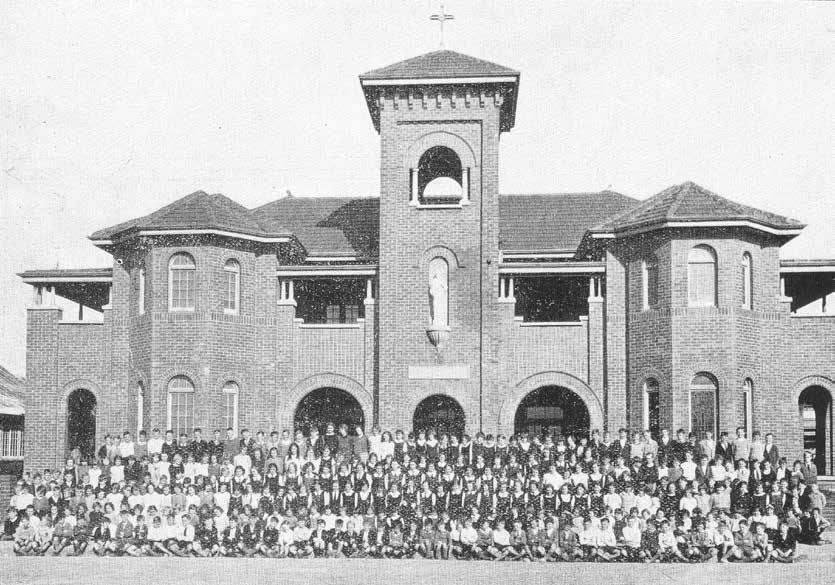
Photo: Opening of Holy Family School, Merewether Beach 1956
Merewether Convent and school children
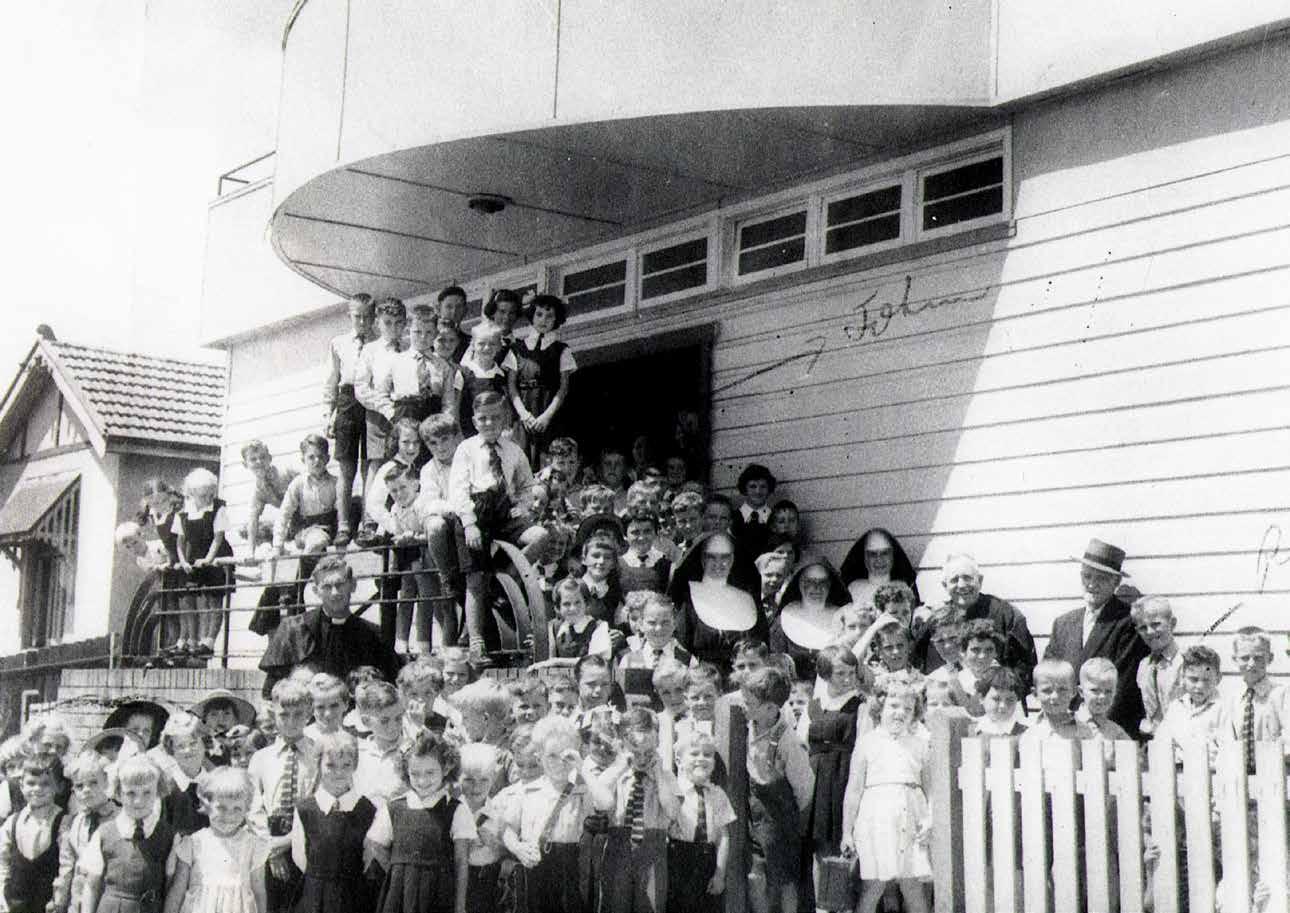
Newcastle
ST MARY’S PRIMARY SCHOOL | ST MARY’S SCHOOL FOR BOYS
ST MARY’S MARIST BROTHERS SCHOOL
On Country
Traditional owners of the land, the Awabakal and Worimi peoples
Newcastle
Named after England’s famous coal port. Also known as Coal River and King’s Town.
Opened 1866
Preceded by c1841Catholic Denominational School
Location Croasdill’s Longroom Newcomen Street Newcastle NSW
Relocated 1852 Perkins Street
Known as 1898 – 1918 St Mary’s School for Boys, Perkins Street
1838
Parochial district of Newcastle established, within the Archdiocese of Sydney
c1841
Catholic school in the ‘Long Room’ Newcomen Street, chaplain Fr Dowling ‘It was a large brick building built over 4 dwelling-houses, these long rooms or sailrooms were common on the waterfront. The sailors would go there and take their sails and stretch them out. There were no pillars and they could be stretched out the full length and the full breadth of a sail, and it was there that Father Dowling from 1838 to 1845 said Mass. It was furnished; it is on record that the Catholic soldiers in the regiment in Newcastle in 1838 gave a day’s pay to furnish the ‘Long Room’. It became a schoolroom, and thus also the site of the first Catholic school in Newcastle.’ ¹
1847
Diocese of Maitland, administered by Archdiocese of Sydney until 1873 (duration of Polding’s tenure as Bishop)
1852
Catholic school transferred to former presbytery / temporary church built
1853
Lay teachers John Breslan then Mrs Keck ²
1855
21 boys and 23 girls on the roll. Mr Keck was the teacher
1866
St Mary’s Star of the Sea Catholic Church opened on Perkins Street, ‘basement storey of stone’ for teacher residence and school, St Mary’s Primary School
1873
Parish of Newcastle transferred to Diocese of Maitland
Dominicans, residing in Maitland Foundation, invited to staff Denominational girls’ and infants’ schools
The Sisters took charge of the Denominational school which was located under the church in cramped and unsuitable conditions. There was also concern about the Sisters travelling outside the enclosure to this school.
1874
Girls and Infants classes move to Dominican convent site
1883
Enrolment 103 boys
1888 –1898
Lay staff at St Mary’s, Mr J.B. Callaghan, Mr McCannon, Mr & Mrs Gribben ²
1898
Lay Principal, Mr Gerald Maher with assistant Mr Street
By invitation of Bishop Murray, 11 Marist Brothers arrived from Sydney – 4 resided at Stockton travelling initially as staff to St Mary’s School, with remaining 7 brothers residing at Campbells Hill. Later the Brothers moved to a house in Brown Street near the school.
First Marist Principal, Br Justin Cooper, school now known as St Mary’s Marist Brothers School with high school students attending
1902
144 boys enrolled,
1908
115 boys enrolled. The roll reached a record 115 in 1908. In 1917, in wartime and in the middle of an influenza epidemic, it sank to 47. By 1920 numbers had improved to 140. Increasing numbers in the 1920s, however, forced a decision upon the authorities. ³
1928
Marist Brothers school transferred to new site in Parkway Avenue, Hamilton
Photo: St Mary’s
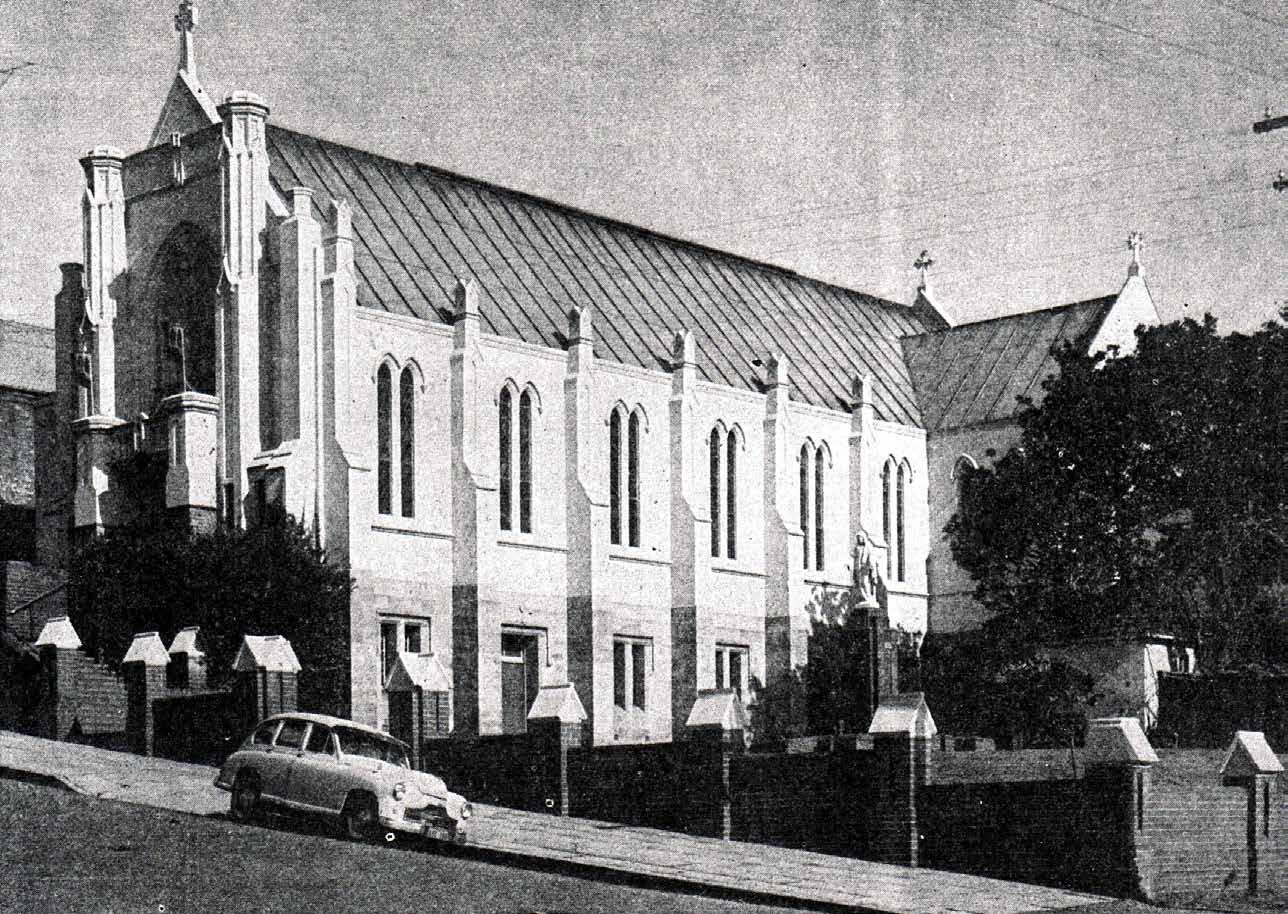
The First Catholic School in Newcastle
It was a large brick building built over 4 dwellinghouses, these long rooms or sail-rooms were common on the waterfront. The sailors would go there and take their sails and stretch them out. There were no pillars and they could be stretched out the full length and the full breadth of a sail, and it was there that Father Dowling from 1838 to 1845 said Mass. It was furnished; it is on record that the Catholic soldiers in the regiment in Newcastle in 1838 gave a day’s pay to furnish the ‘Long Room’. It became a schoolroom, and thus also the site of the first Catholic school in Newcastle.
C 1841 Denominational School, Newcastle
1
2
3
Newcastle
ST MARY’S DOMINICAN CONVENT SCHOOL
ST MARY’S STAR OF THE SEA PRIMARY SCHOOL
ST THOMAS’ BOARDING SCHOOL FOR BOYS
On Country
Traditional owners of the land, the Awabakal and Worimi people
Newcastle
Named after England’s famous coal port. Also known as Coal River and King’s Town.
Opened 1874
Preceded
Location
Land bounded by Wolfe, Tyrrell, Perkins and Church Streets, Newcastle NSW 2300
Known as St Mary’s Star of the Sea Primary School
Also opened
1874 Select Day School in convent 1875 – 1888 School for Deaf students, on this site 1903 St Thomas’ College
Known as 1907–1960 St Thomas’ Boarding School for Boys
1873
Land and ‘Mansion on the Hill’ (former home of Dr Bowker) purchased by Dominicans for convent to be known as ‘St Mary’s Star of the Sea’ ¹
Dominicans, residing in Maitland Foundation, invited to staff c1841 Denominational girls and infants schools
First Dominican sisters, Xavier Byrne Superior, M Pius Collins, M Veronica Meade
The Sisters took charge of the girls and infants’ denominational school which was located under the church in cramped and unsuitable conditions. There was also concern about the Sisters travelling outside the enclosure to this school.
1874
A Select Day School was opened in the reconditioned stables and was soon patronised by the leading citizens whatever their religion. The former residence of the sisters was allocated to the parochial school children enabling the sisters to move from the church basement
1875 –1887
School for Deaf students also conducted on this site
1892
‘1,2 and 3 infants and 109 other pupils enrolled in the two schools run by the Dominican Sisters at Newcastle.’ ²
1903
Dominicans open Newcastle convent as boarding school for junior boys, St Thomas’ College
1907
Residential college for junior boys opened, St Thomas Boys College conducted by Dominican nuns’
‘The school is situated in an elevated and healthful position, spacious and well appointed in every way. The recreation grounds are ample, the building commanding a fine extensive view of the Harbour and Ocean. Under careful supervision, the Pupils are allowed seabathing. Boys admitted up to the age of twelve years.
For particulars apply to Mother Prioress.’ ³
1908
Enrolment 68 girls, 82 infants
1960
Dominican administration ended, St Thomas’ Boarding School for Boys closed.
1961
Sisters of St Joseph invited to take over the convent and Star of the Sea Primary School
First sisters M Barbara O’Neill, M Cleophas Moylan and M Marie Craddock. Enrolment 75 students
1968
St Mary’s Star of the Sea Primary School closed
1969 Convent closed
1981
Church Office buildings at 70 Wolfe Street renovated as Catholic Education Office and Diocesan Offices
1989
Newcastle earthquake 5.6 on Richter Scale, hastened relocation of offices
1997
Catholic Education Offices (Wolfe Street and The Junction) relocated to 841 Hunter Street Newcastle West
2003
Campus redeveloped as Aventine apartment complex
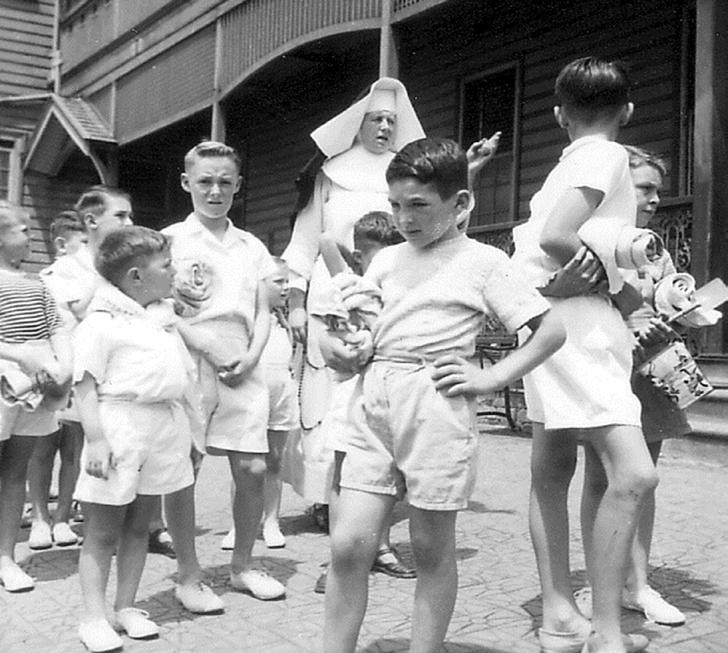
St Thomas’s School for Boys, Newcastle
Newcastle INSTITUTE FOR THE DEAF AND DUMB
On Country
Traditional owners of the land, the Awabakal and Worimi people
Newcastle
Named after England’s famous coal port. Also known as Coal River and King’s Town.
Opened 1875
Location
Land bounded by Wolfe, Tyrrell, Perkins and Church Streets, Newcastle NSW 2300
Relocated
1888 35 Bridge Street Waratah NSW 2298
1873
‘The deaf school began its formal existence under Sr Gabriel’s care with the enrolment of two pupils, Catherine Sullivan and Elizabeth Mary Rewald, on 8 December 1875.
Between 1875 and 1888, seventeen girls and thirteen boys were admitted to the school – a very small percentage of the Catholic deaf children in Australia. It was possibly this slow growth of pupils which urged Sister M. Gabriel to write to Bishop Murray, probably in 1883, stressing the necessity of making known the existence of the Newcastle School, and the importance of having Catholic deaf children sent there to be instructed in their faith.’
1875 Institution for the Deaf and Dumb, Newcastle
Land and ‘Mansion on the Hill’ (former home of Dr Bowker) purchased by Dominicans for convent
Dominicans, residing in Maitland Foundation, invited to staff Denominational girls’ and infants’ schools
First Dominican sisters, Xavier Byrne Superior, M Pius Collins, M Veronica Meade
1875
Dominican sister arrived from Ireland, Mary Gabriel Hogan, herself hearing impaired, trained in ‘manual alphabet’.
‘The deaf school began its formal existence under Sr Gabriel’s care with the enrolment of two pupils, Catherine Sullivan and Elizabeth Mary Rewald, on 8 December 1875.’ ¹ Thus began the Dominican apostolate for the education of children with hearing impairment.
‘Between 1875 and 1888, seventeen girls and thirteen boys were admitted to the school – a very small percentage of the Catholic deaf children in Australia. It was possibly this slow growth of pupils which urged Sister M. Gabriel to write to Bishop Murray, probably in 1883, stressing the necessity of making known the existence of the Newcastle School, and the importance of having Catholic deaf children sent there to be instructed in their faith.’ ²
1888
Deaf and Dumb Institute relocated to Rosary Convent and School, Waratah
Photo: Helen Keller, the famous
Rosario
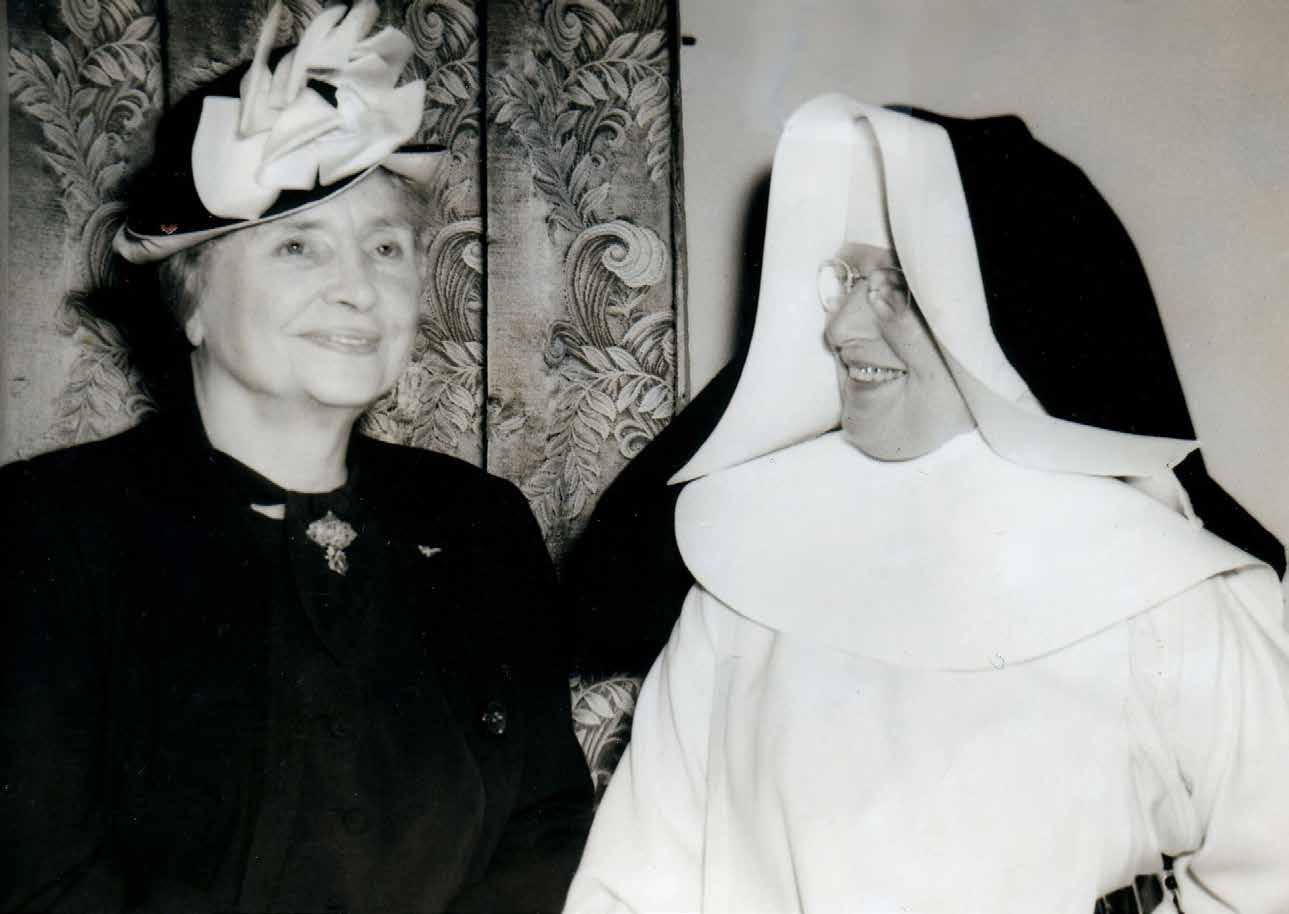
When we do the best that we can, we never know what miracle is wrought in our life, or in the life of another.
Helen Keller SNAPSHOTS
On Country
Lambton ST JOHN’S PRIMARY SCHOOL
Traditional custodians of the land, the Awabakal people
Lambton
Name created by the then Scottish Mining Company. Lambton proclaimed a municipal district 1871
Opened 1883
Preceded by
1871 Denominational School
Also opened 1889 Select School
School today kindergarten to year 6
Charism: Mercy
Motto: Love One Another
Location: Dickson Street Lambton NSW 2299
Parish: Blackbutt North
1864
Thomas Croudace donated land for Methodist, Church of England and Catholic communities
1871
St John the Evangelist Church built in De Vitre Street, building used for school on weekdays
1873
Parochial district of Lambton established
1875
Denominational school in church building De Vitre Street, first lay teacher Patrick Maloney
1881
Denominational school enrolment 130 students
1883
Lambton Mercy convent established. Sisters of Mercy staff school, first sister, M Stanislaus O’Neill
1889
‘Sisters conducting ‘Select School‘ alongside Lambton Primary’ ¹
Enrolment 15 students in ‘Select School’
1892
Land purchased in Dickson Street through to Young Street
1908
Enrolment 78 students
1921
New church built, St John the Evangelist, original 1871 wooden church building used by school
1929
New brick convent built in De Vitre Street
1936
Four new classrooms added which became the canteen, library and finally in the 1990's the Parish Centre
1952
Brick kindergarten built on convent grounds, four classrooms built later adjoining the old school
1960
Old school demolished, replaced by two storey brick school building
1963
Enrolment 330 students
1976
Mercy administration ended, sisters remained on staff for some years
1977
First lay Principal, Mr Phillip Maloney
1995
Mercy administration ended
Convent vacated, handed over to parish, building modified and extended for school use then opened in 1996
1996
Extensions to school, modifications to former convent
2005
Construction of library and refurbishment of classrooms
2009
Refurbishment of school facilities external / procurement of ICT equipment and associated infrastructure
Construction and refurbishment of classrooms and refurbishment of multi-purpose hall
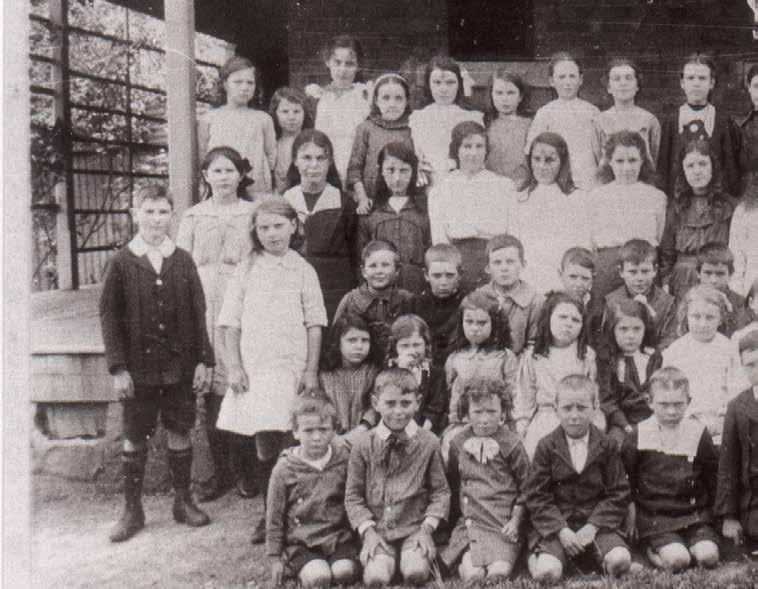
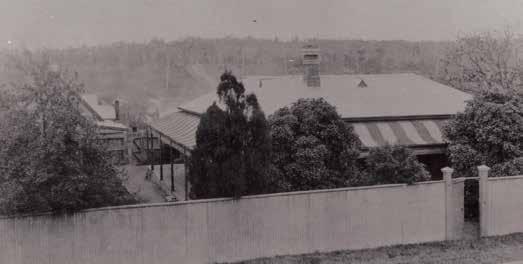
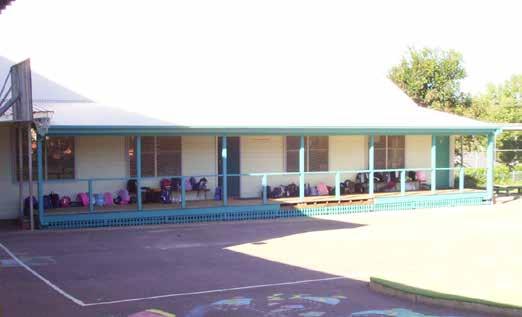
Photos: St John’s Primary School Lambton
Wallsend ST PATRICK’S PRIMARY SCHOOL
On Country
Traditional custodians of the land, the Awabakal people
Wallsend
After a place near Newcastle on Tyne, England. The suburb began as two mining towns – Wallsend and Plattsburg
Opened 1883
Preceded by
1871 Denominational School
School today kindergarten to year 6
Charism: Mercy
Motto: Faith Knowledge Respect
Location: Macquarie Street Wallsend NSW 2287 (previously known as Plattsburg)
Parish: Wallsend-Shortland References 1 Cranfield, C. (1965) A History of Education in the Mining Community of Wallsend (n.d.)
1883–1983 St Patrick’s School Wallsend. (1983) parish publication. Newcastle Chronicle School Opened Staff Years Denominational St Patrick’s 1871 1883 Lay Teachers Mercies Lay Teachers 12 91 46
First church / school built
1871
Denominational school was open and applied for state aid, certification given in 1875
Wallsend first lay teacher recorded, Miss Thompson, then 1875 Miss Punch
1873
‘The Roman Catholic School, which for some time being closed, owing to the absence of a teacher has again been opened, under the direction of Miss Thompson, a young lady who has been appointed to the position.’ ¹
1875
School certification obtained
1876
Stone church / school opened on the hill, opposite the present church
1883
Sisters of Mercy arrived to staff the school with M Patrick Gates Principal, originally travelling from Lambton convent in horse drawn buggy, then steam tram, electric tram, then car
1902
Land across the road from original stone church purchased for parish centre
Brick school built consisting of one large room with front and back verandahs
‘One end of the western verandah was closed in by wooden walls and used by the Sisters as a lunch room.’ ²
1908
Enrolment 101 students
1931
New church opened
1937
Wallsend parish established
1950s
Facing Neilson Street, two timber classrooms built with voluntary labour
1963
Facing Wentworth Street a new wing was constructed comprising an office, four classrooms, storeroom and canteen
Wallsend Mercy convent St Patrick’s established in Macquarie Street
1969
First lay staff were employed
1973
Mercy administration ended
1974
First lay Principal, Mrs Maureen Taylor
1978
Original 1902 building being used as a school hall, collapsed in a wind storm
1983
New hall, library and canteen opened
1990s
Cottage adjoining the school in Wentworth Street purchased, undergoing renovation for use as administrative and staff facilities
1996
New classroom, shade structure, and new student toilets built
2006
Construction of classrooms, administration, staff facilities, library and stores
2009
Refurbishment of facilities external and internal, multi-purpose hall and classrooms
2011
Existing multi-purpose hall extended, teaching space constructed and student amenities refurbished
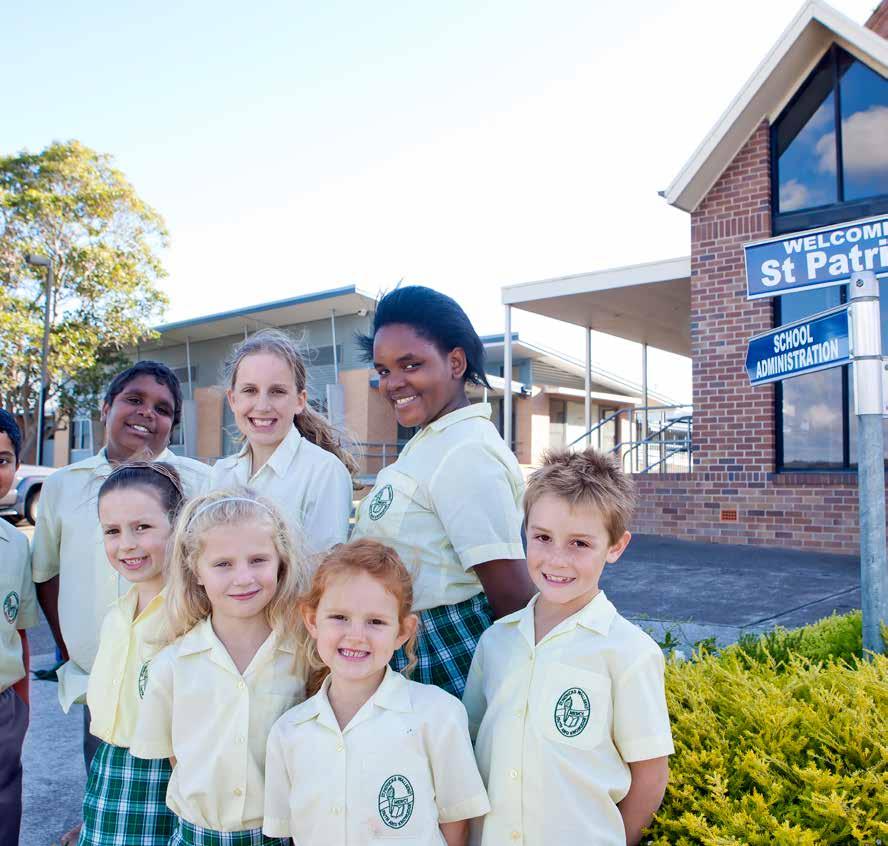
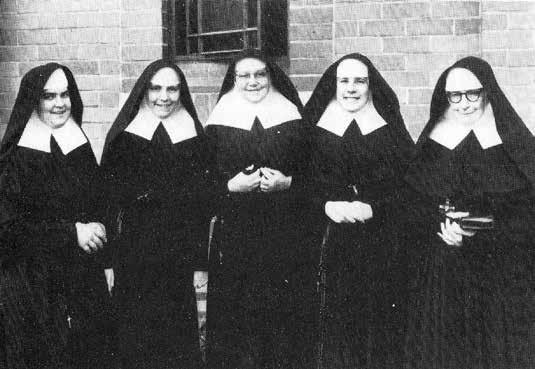
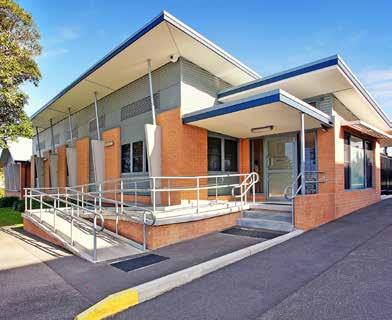
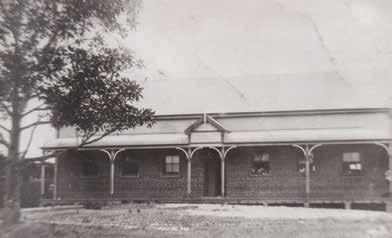
Photos: St Patrick’s Wallsend, students 2021, Sisters of Mercy administered St Patricks, School for 90 years, School Administration, Original Convent of Mercy
Hamilton SACRED HEART PRIMARY SCHOOL
On Country
Traditional owners of the land, the Awabakal and Worimi people
Hamilton 'Hamilton' was the residence of William Carlyle, the Secretary of the Australian Agricultural Company (AACo). The residence was named in honour of Edward Hamilton Governor of the AACo 1856–1898
1875
Two acres of land at Hamilton purchased from Australian Agricultural Company
First church / school built
1876
Catholic Denominational School, lay teacher Mr Larkin then Mr Maloney ‘Headmaster Mr Maloney residing in a small house attached to the church.’ ¹
Certified Catholic Denominational School, enrolment 114 students
1878
Enrolment 159 students
1883
Enrolment 113 students – 66 boys, 47 girls of which 110 were Catholic
1884
Parish of Hamilton established, church built on Hunter Street and dedicated to Sacred Heart
Hamilton Mercy convent built, Menkens architect, St Aloysius ‘Select School’ opened in convent Sisters of Mercy arrived, residing in headmaster’s cottage, first Principal M Regis Murray
1889
Enrolment 50 students
1892
Enrolment 228 students
1894
Foundation stone laid for new brick school, built in 1895
1895
Sacred Heart School opened – a two storey ‘substantial and spacious building’ ²
1908
Enrolment 170 students
1915
Wooden building of four rooms ‘On one side it was adjoined by a restful green paddock of green Lucerne, on the other side was a fowl yard and cow shed.’ ³
1923
Original school replaced with substantial brick structure, first storey added
1941 Air raid shelters were dug in the tennis court
1963
New two storey building completed following ten years of fund raising
First floor – assembly room, shelter shed and tuck shop. Second floor – classrooms, library and offices
1981
Mercy administration ended
1982 –1992
First Lay Principal Patricia Lynch
1992
School closed due to falling enrolments, students transferred to St Columban’s Primary School Mayfield
Original building now occupied by the Diocese and the Catholic Schools Office
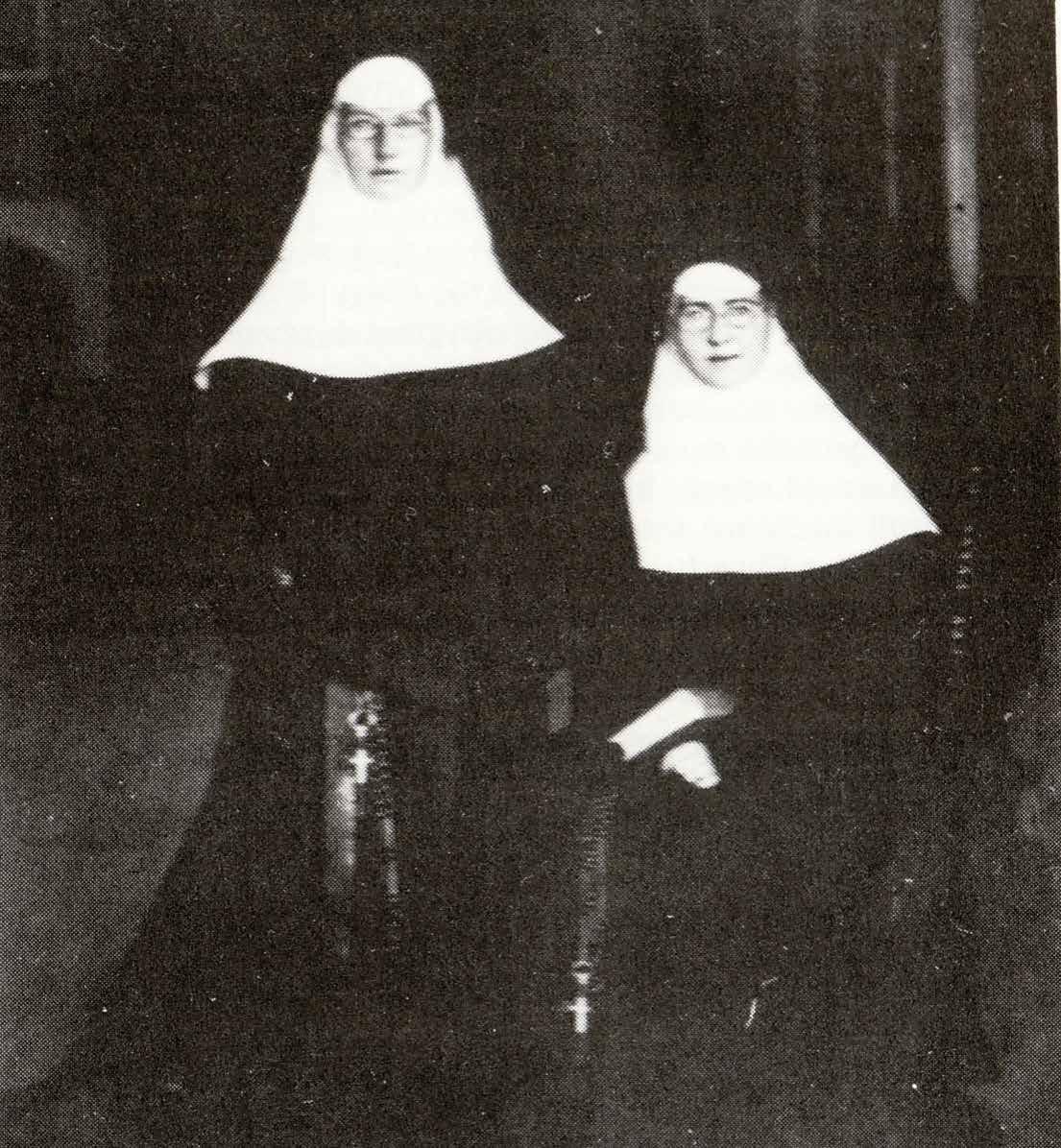
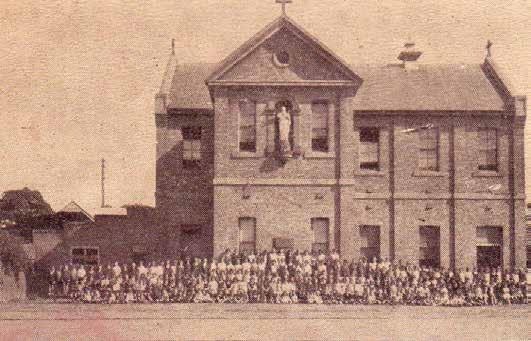
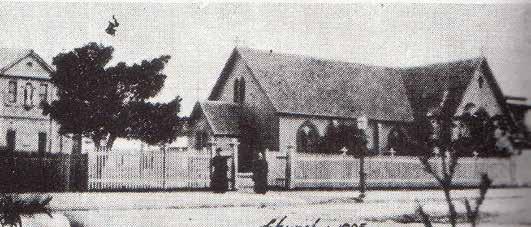
Photos: Sr M Patrick Garaty, Principal St Aloysius High School 1915–1939, and her sister Sr Veronica Gararty, Sacred Heart Primary School Hamilton 1884, First Sacred Heart Church, 1895 School in background.
Hamilton ST ALOYSIUS HIGH SCHOOL
On Country
Traditional owners of the land, the Awabakal and Worimi people
Hamilton 'Hamilton' was the residence of William Carlyle, the Secretary of the Australian Agricultural Company (AACo). The residence was named in honour of Edward Hamilton Governor of the AACo 1856–1898.
Opened 1915
Preceded by 1884–1915 ‘Select School’ St Aloysius
Renamed prior to 1928 known as St Aloysius Girls High
Parry Street Hamilton NSW 2303
1875
Two acres of land at Hamilton purchased from Australian Agricultural Company
1884
Parish of Hamilton established, church built on Hunter Street and dedicated to Sacred Heart
Hamilton Mercy convent built, Menkens architect, St Aloysius ‘Select School’ opened in convent
1899
Land purchased on Parry Street Lots 3,4,5,6,7 from Australian Agricultural Company
1915
School opened as St Aloysius High School on Parry Street, co-educational until 1928
First sisters of Mercy, Principal M Patrick Garaty, M Kotska, M Raymond ‘The girls played in the school grounds and the boys went out to the paddock where the Sacred Heart Church now stands. We sat along the convent fence eating our lunch and watching the traffic passing by. The roads were rough and the drivers, mostly in American cars, ensured a smooth ride by running along the tram lines’ ¹
1918
First Intermediate class sat for public examination
1923
Original school replaced with substantial brick structure, first storey added
New Secondary School opened, and extensive additions to the Convent of Mercy completed
1924
Successful Leaving Certificate students
1928
District school reorganisation – Mercy Girls, St Aloysius High School, Marist Boys, St Francis Xavier’s
Renamed – St Aloysius Girls High School ‘After the opening of the Brother’s school, when all … went off to Parkway Avenue, there reigned peace in the place’ ¹ ‘For Forty Hours, Sr M Nolasco took girls for the Latin Mass in the gallery of the old church where we practised steadily for weeks until the solemn High Mass and were rewarded by Monsignor Peters with a gift of oranges.’ ¹
1929
Commercial classes introduced, vision of Sr M Vianney
1934
Second storey enabled school to have commercial facilities within the secondary school
1953
Student memories of Principal Sr
Theophane ‘ … she replaced the school bell, which was not effective enough, by a loud horn which could be heard all over Hamilton and sounded like ships moving out of port.’ ¹
1963
Further extensions being new two storey wing
1966
March staff meeting minutes. ‘Please check up on girls coming late. Some have been seen outside the gates holding hands with boys from the Marist Brothers.’ ¹
School now operating as Years 7 – 10, senior classes transferred to St Anne’s High School Adamstown
1984
Secondary school restructuring for Newcastle area
School closed, students integrated into St Francis Xavier College now co-educational for years 11 and 12
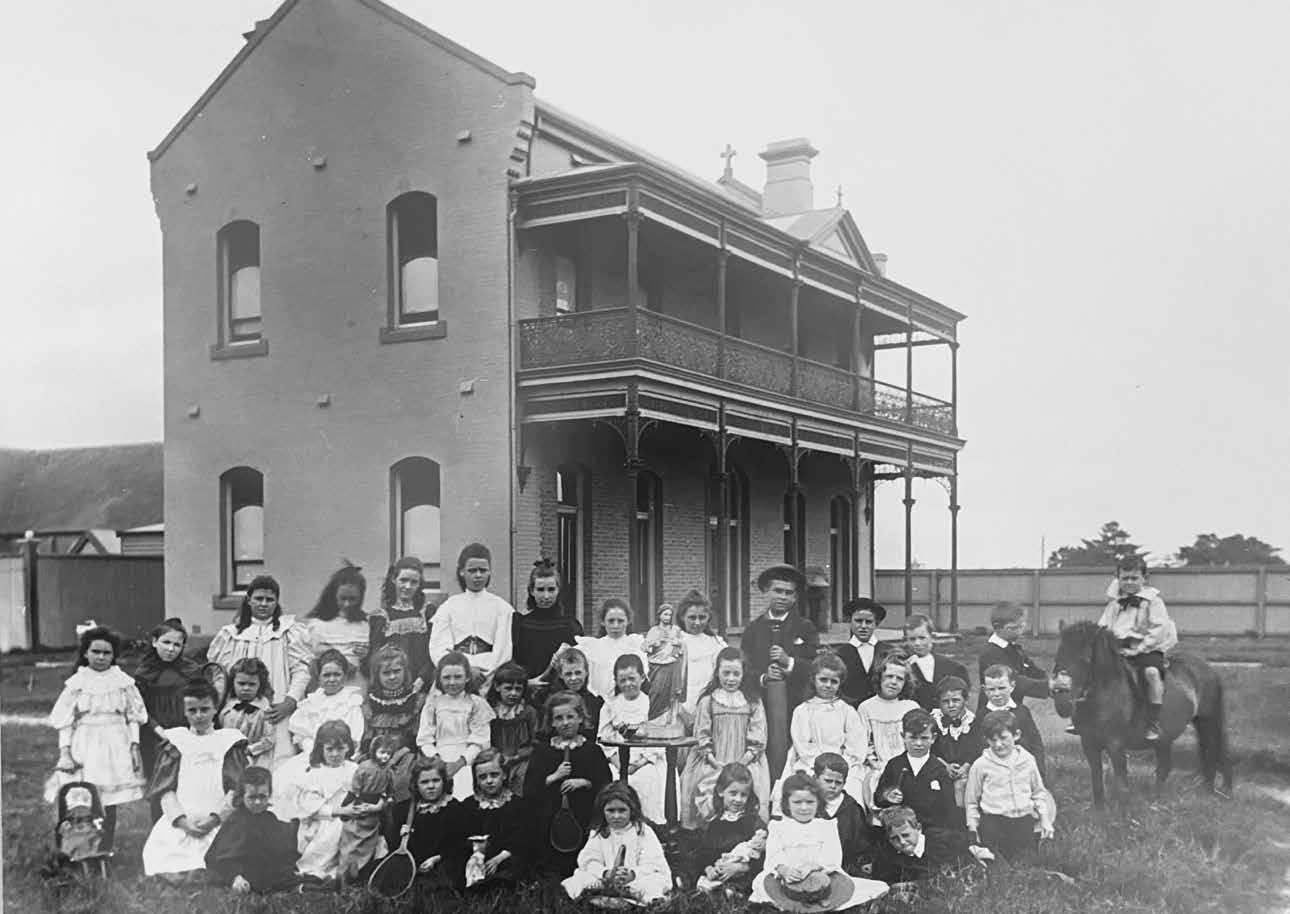
... she [Principal Sr Theophane] replaced the school bell, which was not effective enough, by a loud horn which could be heard all over Hamilton and sounded like ships moving out of the port.
1953 St Aloysius High Hamilton
Hamilton ST FRANCIS XAVIER REGIONAL
PRIMARY SCHOOL FOR BOYS
On Country
Traditional owners of the land, the Awabakal and Worimi people
Hamilton
'Hamilton' was the residence of William Carlyle, the Secretary of the Australian Agricultural Company (AACo). The residence was named in honour of Edward Hamilton Governor of the AACo 1856–1898.
Opened 1928
Preceded by
St Mary’s Marist Brothers School, Perkins Street, Newcastle
Closed 1953
On Hamilton site, relocated to Tighes Hill 1954
Location
Parkway Avenue Hamilton NSW 2303
References
1 Doyle, A. (1972) The History of the Marist Brothers in Australia 1872–1972 p 431
2 Campbell, H. (1966) The Diocese of Maitland 1866–1966 Letter from Bishop Gleeson 1929. Dimmock Press. Williams, G. (1998) On the Shoulders of Giants: The Story of the Marist Brothers in the Hunter Region 1898–1998. Drummoyne.
1925
Land purchased by Diocese from Australian Agricultural Company
‘The land purchased was very dusty and dirty, being adjacent to a disused coal mine in Beaumont Street’ ¹
1928
Diocese established a Regional Primary School for Boys on Parkway Avenue site. Boys were to come from the inner city parishes. ²
Original school was built as a single storey building of nine classrooms, topped by a turret
First Marist Principal, Brother Mel Patrick Morrissey. School under care of Marist Brothers, governance by Board of clergy with Bishop as Chairman, primary classes gradually phased out by 1957, becoming Marist Brothers High School ‘This is a new school opened at the beginning of the year … However, the school, considering all the difficulties that have been faced, is in satisfactory working order … The difficulties of organisation, always present in a new school, have been practically overcome. The prospects ahead of the school seem fairly bright. The masters and boys are working well together, and satisfactory progress is being made.’ Government Report ³
1932
250 boys enrolled in Primary school
1953
Last year of Primary School for Boys on Hamilton site
1954
Boys Primary School relocated at Union Street Tighes Hill
Broadmeadow ST LAURENCE O’TOOLE PRIMARY SCHOOL
ST LAURENCE FLEXIBLE LEARNING CENTRE (EREA)
On Country
Traditional custodians of the land, the Awabakal people
Broadmeadow
Part of the Newcastle Pasturage Reserve of 648 hectares
This school is thought to be named after the teaching seminary Laurence O’Toole in Harcourt Street Dublin, established with a large legacy from James Murray’s maternal uncle, specifically to promote Catholic education. It was named after Laurence O’Toole, the first Archbishop of Dublin.
Rev James Murray, Bishop of Maitland 1866 –1909, was on the teaching staff 1852 –1859. Zimmerman in her book suggests Murray derived from these years his practical teaching experience and also gained his abiding interest in education.¹
Opened 1905
Closed 1978
Reopened
1884
Parish of Hamilton established, encompassing Broadmeadow
1904
Wooden church / school built, opened and blessed by Bishop Murray
1905
Primary school opened ‘New Catholic school opened at Broadmeadow.’ ²
Sisters of Mercy, walking daily from Hamilton convent
1908 ‘78 pupils enrolled’ ³
1955
Principal M Gabrielle
1957
New school building opened
1964
Parish hall built, tuck shop and staff room built, playground concreted
1978
Primary School closed, students accommodated at Rosary Convent School Waratah
Mercy administration ended Premises continuing on as office education space including
- City State Schools Apostolate catering for Catholic students in State schools in Mayfield, Adamstown, Broadmeadow, Hamilton and Newcastle area
- The St Laurence Centre Counselling and Special Education Department for the Catholic Schools Office
- Christian library opened within this space
2019
Reopened as registered school catering for Years 9 and 10, enabling students to engage with a different model of school.
St Laurence Flexible Learning Centre SLFLC is an initiative of Edmund Rice Education Australia’s Flexible Schools Network Registered within the Diocese of MaitlandNewcastle, governance by Edmund Rice Education Australia
Hamilton MARIST BROTHERS HIGH SCHOOL
ST FRANCIS XAVIER HIGH SCHOOL FOR BOYS
On Country
Traditional owners of the land, the Awabakal and Worimi people
Hamilton
'Hamilton' was the residence of William Carlyle, the Secretary of the Australian Agricultural Company (AACo). The residence was named in honour of Edward Hamilton Governor of the AACo 1856–1898.
Opened 1928
Preceded by
1925
Land purchased by Diocese from Australian Agricultural Company
1928
Original school was built as a single storey building of nine classrooms, topped by a turret
Marist Brothers moved Newcastle high school campus to Hamilton, vision for combined primary and secondary The Brothers school was transferred to a site lined by Skelton Street, Parkway Avenue and Everton Street, Hamilton. ¹
First Marist Principal, Brother Mel Patrick Morrissey. School under care of Marist Brothers, governance by Board of clergy with Bishop as Chairman, primary classes gradually phased out by 1957, becoming Marist Brothers High School ‘This is a new school opened at the beginning of the year … However, the school, considering all the difficulties that have been faced, is in satisfactory working order … The difficulties of organisation, always present in a new school, have been practically overcome. The prospects ahead of the school seem fairly bright. The masters and boys are working well together, and satisfactory progress is being made.’ Government Report ²
1929
‘By 1929 the roll call exceeded 300’ ³
1931
‘At the Annual Prize Giving at the end of 1931, Brother Mel Patrick mentioned that there had been over 500 students on the roll during the year..’ ³
1932
New two storey wing added, known as the ‘Skelton Street wing’
Registration as a Secondary School
1939
Marist Monastery built on crn Parkway Ave and Everton Street, a move from rented premises in next street
1941
Air raid shelters were dug on the tennis court
1944
Original school extended with a more substantial brick structure facing Skelton Street
1946
Two additional storeys added to Parkway Avenue wing, turret was lifted in turn to surmount the building
1957
Final primary class, thus ending primary education at Hamilton
1960s
Land at Shortland purchased for playing fields, Marcellin Park
1963
School swimming pool built by Form 1 boys, design and construction supervised by Br Bartholomew Spratt
1965
Science Block opened ‘This gift of almost 20,000 pounds is the first assistance given to any Catholic school in the Diocese of Maitland in over eighty years by any Government.’ ³
1970
Extensive construction and refurbishment works
1971
School chapel completed
1974
Library and Science laboratories opened, overpass constructed
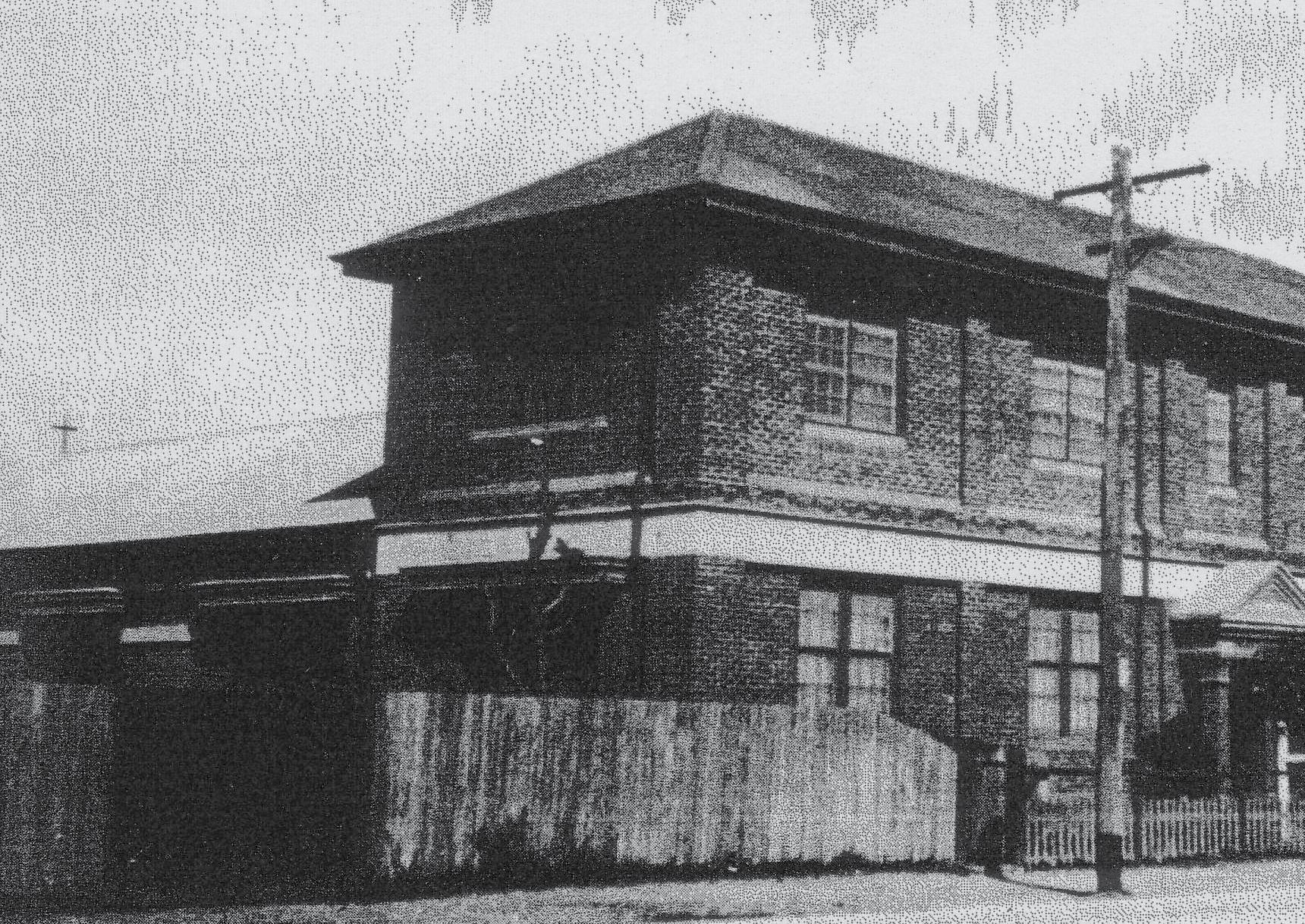
1981
Pastoral Letter issued re the restructuring of Secondary Schools in the Newcastle area. St Francis Xavier High School for boys to become the new co-educational senior College for all schools in the Newcastle area
1983
Transition to new structure begins with no Year 7 intake
1984
Secondary school restructuring for Newcastle area
Last year of Marist Brothers High School
Following closure of St Aloysius High School, Hamilton and St Joseph’s High School
Merewether students integrated into St Francis Xavier College, now senior co-educational secondary school for Newcastle area
Hamilton ST FRANCIS XAVIER’S COLLEGE
On Country
Traditional owners of the land, the Awabakal and Worimi people
Hamilton
'Hamilton' was the residence of William Carlyle, the Secretary of the Australian Agricultural Company (AACo). The residence was named in honour of Edward Hamilton Governor of the AACo 1856–1898.
Opened 1985 as St Francis Xavier’s College
Preceded by 1928–1983
Renamed St Francis Xavier’s College
School today years 11 and 12
Charism: Marist
Motto: Christ my Light
Location: 286 Parkway Avenue, Hamilton NSW 2303
Parish: Hamilton
School Opened Staff Years
St Francis Xavier’s College 1985 2018 Marist Lay Teachers 32 4
1925
Land purchased by Diocese from Australian Agricultural Company
1928
Original school was built as a single storey building of nine classrooms, topped by a turret
1984
Secondary school restructuring for Newcastle area
Following closure of St Aloysius High School Hamilton and St Joseph’s High School, Merewether students integrated into St Francis Xavier College, now senior co-educational secondary school for Newcastle area
1985
St Francis Xavier’s College co-educational for years 11 /12, Principal Brother Kenneth Moreland
The new co-educational college commenced – girls from feeder schools and boys from Marist Brothers and St Pius X High
Year 10 – Girls from St Aloysius, Hamilton, St Joseph’s Merewether, Boys from Marist Brothers
Year 11 – Girls came from St Aloysius, St Joseph’s, San Clemente Mayfield, St Mary’s Gateshead
Religious Sisters who worked at St Francis Xavier’s College
Josephite sisters – Megan Brock, Colleen Carney, Patricia Boland, Anne Rabbitt Mercy sisters – Margaret Burgess Dominican sister – Debbie Grigson
1989
Newcastle earthquake 5.6 on the Richter Scale caused considerable damage, taking two years to rectify buildings, others replaced
1991
Large covered area over main playground erected
1997
First lay Principal (acting) Dr Bryan Maher
1998
Marist Brothers resume administration of school
2004
Construction of multi- purpose hall
2009
Refurbishment of school facilities, external and internal, upgrade of electrical reticulation
2010
Trade training centre, construction and hospitality centre with commercial kitchens
2013
Accessibility upgrade including walkway replacement
References
1 Williams, G. (1998) On the Shoulders of Giants: The Story of the Marist Brothers in the Hunter Region 1898–1998. Drummoyne.
2 Sternbeck, M. (1985) With Hearts and Hands and Voices; The Centenary History of the Sacred Heart Parish Hamilton 1884–1984. Sacred Heart Parish Hamilton.
3 The Newcastle and Maitland Catholic Sentinel. 09/1965
4 The Newcastle Morning Herald, 08/01/2005
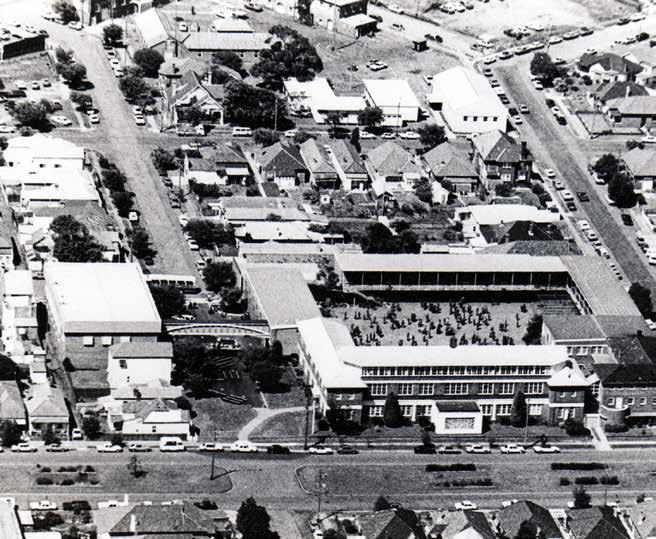
Photos: St Francis Xavier’s College aerial view, 2021 Senior students
Adamstown ST COLUMBA’S PRIMARY SCHOOL
On Country
Traditional custodians of the land, the Awabakal and Worimi people
Adamstown
Named after surveyor Thomas Adams, who surveyed the town in 1896
Opened 1890
School today kindergarten to year 6
Charism: Mercy
Motto: Reach out
Location: Lockyer Street Adamstown NSW 2289
Parish: All Saints Blackbutt
1884
Parochial district of Hamilton established
1890
Wooden church / school built on land purchased in 1899
Sisters of Mercy arrived to open school, originally travelling by tram from Hamilton convent
First sister, Principal M Regina
1892
Enrolment 63 students
1898
Roman Catholic Fair held to raise funds for schools in the Newcastle area
‘The opening ceremony was performed by the Mayor of Newcastle, Alderman Kidd, in the presence of a large and fashionable audience. The object of the fair is to raise funds on behalf of the Newcastle, Burwood, Carrington, Stockton, Tighe’s Hill and Adamstown Catholic Schools.’ ¹
1899
November, wooden school building destroyed by storm/cyclone. Student killed by falling debris ‘During the height of the storm the Roman Catholic school building at Adamstown entirely collapsed, and a few minutes afterwards all that remained of the church-school was a huge mass of building material. Fortunately, one of the sidewalks gave way outwards a few seconds prior to the total collapse of the structure, and the children seizing the opportunity, and urged on by their teachers, made good their escape. The pupils had scarcely gained a safe position when the remaining three walls of the building crashed inwards. One of the scholars, a little boy named Edward Hill, 6 ½ years of age, was instantaneously killed.’ ²
1900
New church / school built
1908
Enrolment 84 students
1925
Parochial district of Adamstown established
1929
Brick school built and opened 1930
1954
Adamstown Mercy convent established, named Marian House
1960
Infants’ school built
1986
Sisters of Mercy administration ended
1987
First lay Principal, Mr David Woodward
2009
Refurbishment of school facilities external and internal, construction of shade shelter
Refurbishment of multi-purpose hall, student amenities and classrooms
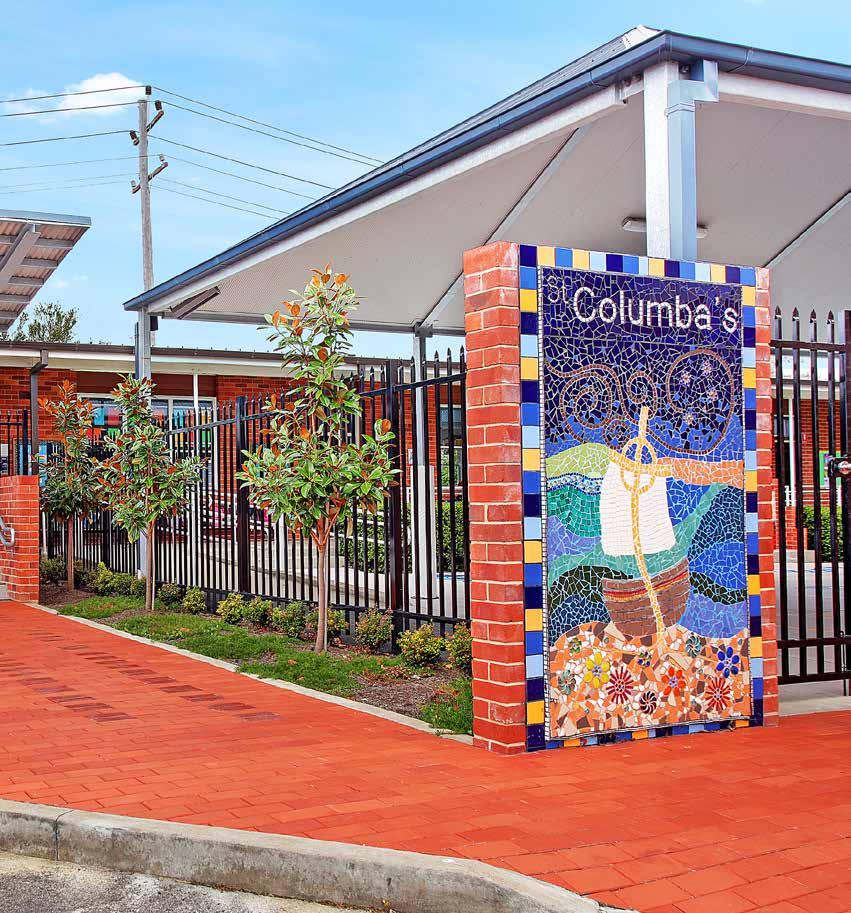
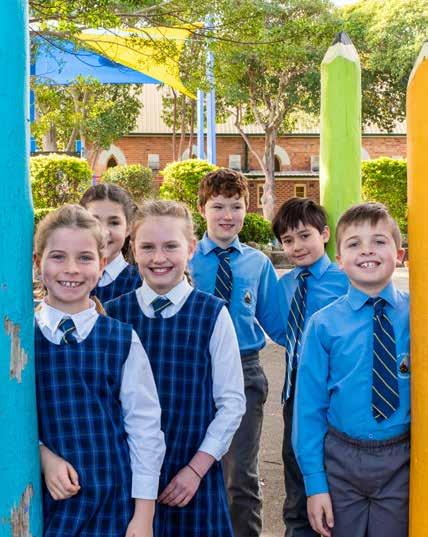
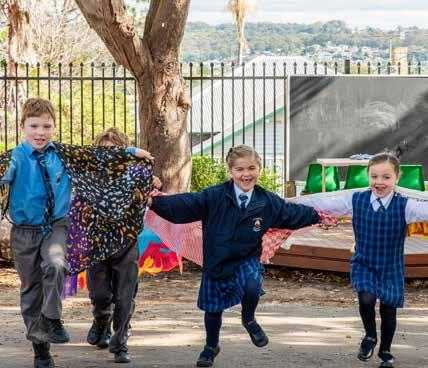
Merewether ST JOSEPH’S PRIMARY SCHOOL
On Country
Traditional custodians of the land, the Awabakal and Worimi people
Merewether
After Edward Christopher Merewether, superintendent of the Australian Agricultural Company, proclaimed a municipal district in 1885. Also known as Burwood
Opened 1884
Preceded by 1876 Denominational School
Also opened
1932–1984 St Joseph’s High School
School today kindergarten to year 6
Charism: Josephite
Motto: Live The Truth
Location: Farquhar Street Merewether / The Junction NSW 2291
Parish: Newcastle
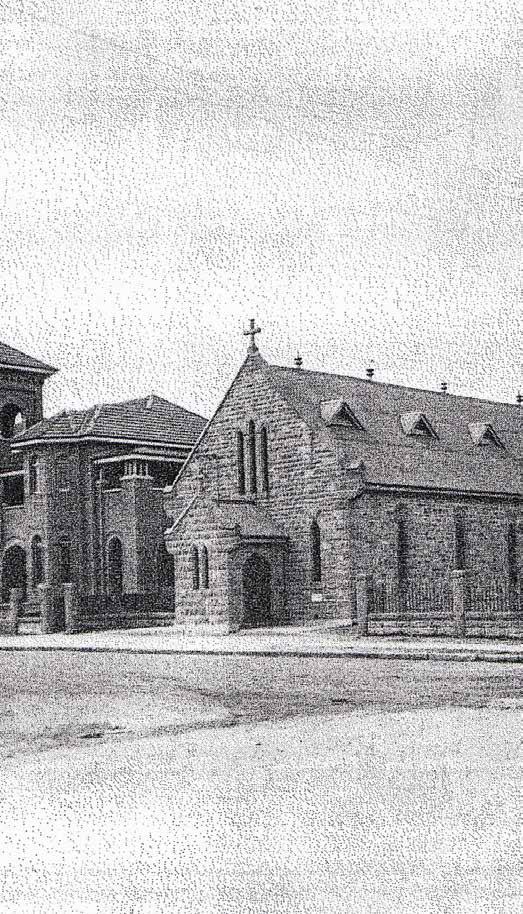
Burwood was a working-class suburb; most men there worked in the local mines, in the pottery or the brickyards.
1891 St Joseph’s Merewether
1876
Official opening of stone church / school crn Farquhar and Kendrick Streets
1882
Denominational Catholic school lay teachers, Mr Byrne, Miss E Murray, Mr P Durkin, Mr J Egan
1884
Denominational school enrolment 107 students
Sisters of Mercy, first sisters M Assissium Kennedy and M Gabriel Barry travelling from Hamilton by buggy
‘However, they found the daily travel difficult and had asked the Bishop for permission to leave; he had agreed to fill the vacancy, lay teachers were hired until Murray turned to the Sisters of St Joseph.’ ¹
1886 –1887
Lay staff, Mrs E M Dwyer
1888
Sisters of St Joseph, first sisters M Imelda Flood, M Alphonsus
Old cottage in Union Street rented then purchased for convent and school
1891
Parochial district of Burwood established ‘Burwood was a working class suburb; most men there worked in the local mines, in the pottery or the brickyards.’ ¹
1908
Enrolment 124 students
1909
Timber primary school built, frontage on Farquhar street, buildings demolished 1960s
1926
Convent built Farquhar Street
1936 –1973
Major buildings works in three stages, beginning on crn of Union and Kendrick Streets, four downstairs classrooms used by the primary school, first floor housed the Girl’s High School 1936
Classes to Year 10 Intermediate Grade
1947
Large Kindergarten building opened 1956
Stage 1 – Primary school begun. Primary moved from 1936 building, making rooms available for high school 1960s
The 1909 timber classrooms demolished and 1956 building extended to provide modern classrooms 1962
Stone church built in 1876 demolished, new and larger church built St Joseph’s opened 1963 1984
First lay Principal, Mrs Irena Romero 1986
One wing of former High school converted to administration area, library, and staff facilities for Primary school 2000
Primary school rented two classrooms from former High school 2003
Primary school expanded to use a further two classrooms 2004
Construction of administration, staff facilities, library, classrooms and store 2005
Parish of St Joseph's takes charge of entire school site
2009
Refurbishment of school facilities, external and internal
Refurbishment of multi-purpose hall, student hall and shade structure
2012
Josephite administration ended 1985
Blessing of the refurbished buildings
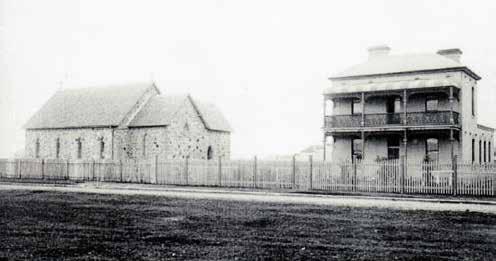
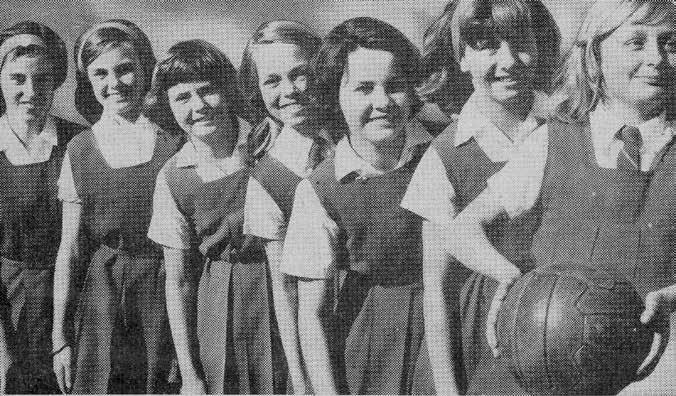
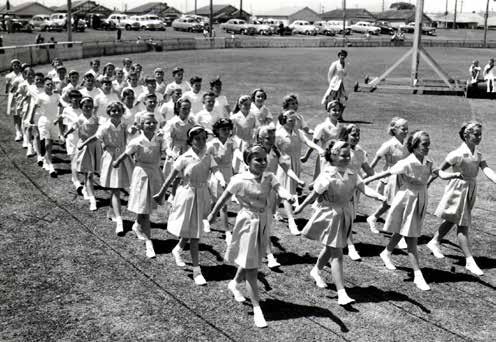
Merewether ST JOSEPH’S HIGH SCHOOL
On Country
Traditional custodians of the land, the Awabakal and Worimi people
Merewether
After Edward Christopher Merewether, superintendent of the Australian Agricultural Company, proclaimed a municipal district in 1885. Also known as Burwood.
Opened 1932
Preceded by
1884 St Joseph’s Primary School opened, staffed by Sisters of Mercy
Kendrick Street The Junction / Merewether NSW 2291
1876
Official opening of stone church / school crn Farquhar and Kendrich Streets
1884
St Joseph’s Primary School opened, staffed by Sisters of Mercy
1888
Diocesan Sisters of St Joseph open convent at Merewether and staffed Primary School
1891
Parochial district of Burwood established
1926
Convent built on Farquhar Street
1932
Intermediate High School was established in a weatherboard hall located behind the presbytery
Principal M Germain Cullen
1936
Property purchased by parish 24–32 Kendrick Street
1936 –1973
Major buildings works in three stages, crn of Union and Kendrick Streets. Stage 1 – four downstairs classrooms used by the primary school, first floor housed in the Girl’s High School
Classes to Intermediate Grade
1940s
All available ground floor space in Kendrick Street building converted to Air Raid Shelter using sandbags
1945
Registration gained to extend classes to Leaving Certificate
1949
Parish purchased property 176 –178 Union Street for future school expansion
1956
Primary School moved from 1936 building to make rooms available for High School
1960
Parish purchased 180 Union Street, then in 1963 purchased 182–184 Union Street
1965
Due to introduction of Wyndham Scheme, classes terminated at Year 10
1966
‘The Diocesan Education Board becomes responsible for the additions, the administration, the responsibility, the maintenance, the staffing, the equipment … parishes pay a quota to the Fund for Higher Education. We are relieved that the administration of all this is now not our responsibility, after 30 years of establishing, adding, hoping and emphasising.’ ¹
Stage 2 Construction of two storey block – laboratories, classrooms and covered assembly area
1972
Stage 3 Construction of two storey block –library, staffroom, administration and school hall
1981
Reorganisation of secondary schooling in Newcastle area – St Joseph’s High School to close
No intake of Year 7 students 1984
High school classes closed, primary school continued
Josephite administration ended 1985
Year 10 girls accommodated in St Francis Xavier’s Co-educational Senior College, Hamilton
1986–1996
The Catholic Education Office used section of High School buildings for Teaching and Learning Department known as St Thomas More Centre. Some classrooms rented by various tenants
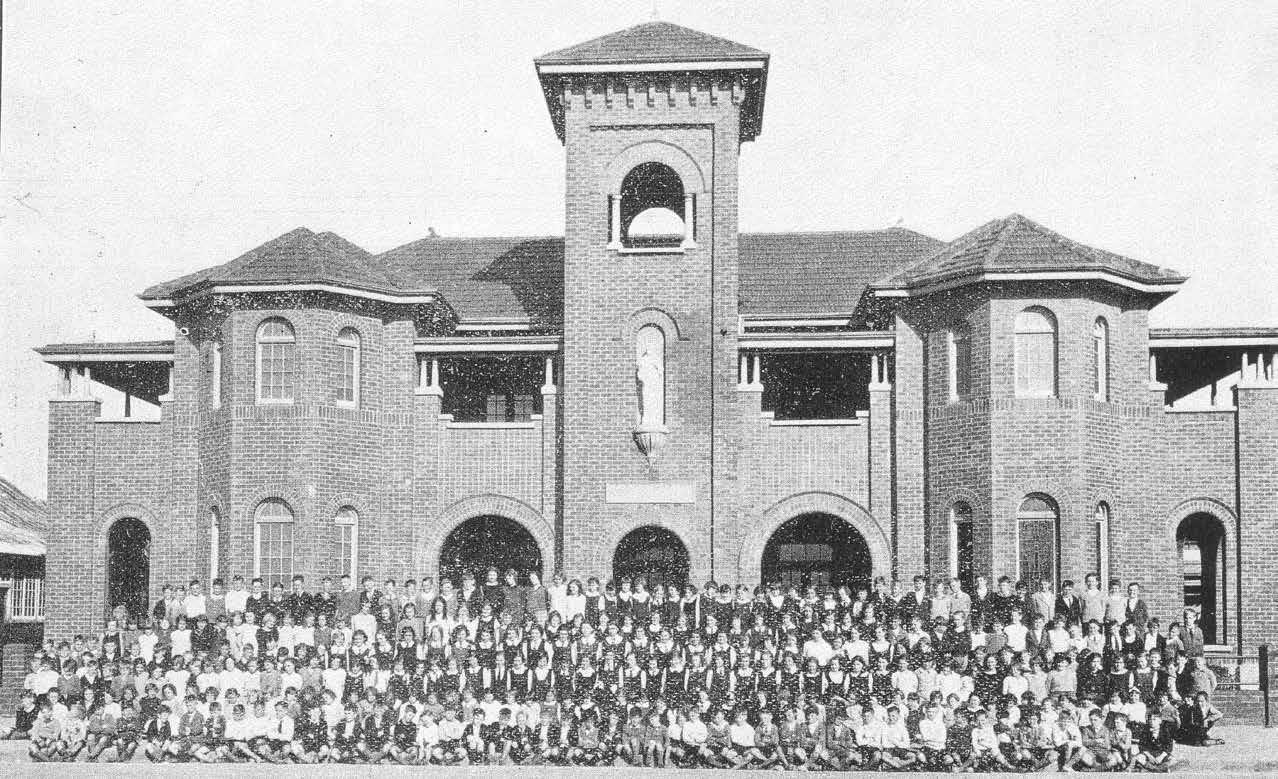
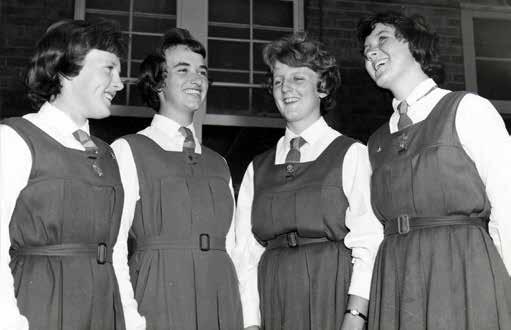
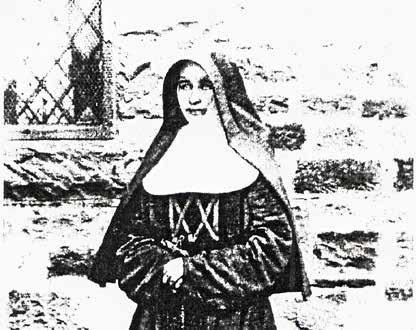
Parish of St Joseph's takes charge of entire school site
Photo
1
New Lambton ST THERESE’S PRIMARY SCHOOL
On Country
Traditional custodians of the land, the Awabakal people
New Lambton
Named by the then Scottish Mining Company, in 1871 proclaimed a municipal district
Opened 1926
School today kindergarten to year 6
Charism: Mercy
Motto: Mercy, Be True
Location: Burke Street New Lambton NSW 2305
Parish: Blackbutt North
1873
Originally within the Parish of Lambton
1926
St Therese of Lisieux Church / school opened in Royal Street
Church / school brick building partitioned to form three classrooms
Sisters of Mercy, first sisters M Cyril Stedman, M Rita McKinley, originally travelling from Hamilton convent
1928
Enrolment 144 students
‘We used to think it rather beaut if a funeral was held on a week day, as we would be sent out to play whilst the funeral rites were conducted.’ ¹
1954
Parish of New Lambton established, including Kotara South and Garden Suburb
New timber school of three classrooms and wide verandahs, in Burke Street
1955
New Lambton Mercy convent established consisting of two houses set side by side joined by closed verandahs
Three new classrooms added, duplicating the building opened the previous year
1956
Parish church now St Therese’s ‘On St Patrick’s Day there would be School Sports Day at the Show Ground. The Catholic Schools would take part in the street march wearing special uniforms of their school colours and carrying flags. There would be flag drill, maypole dancing and many other events.’ ¹
1959
Extra land facing William Street purchased from Church of England
1960
School library opened, ‘first primary school of such scope in the Diocese.’ ²
1966
Library officially opened
1982
Mercy administration ended
1983
First lay Principal, Mr Terrence Gleeson
1994
Administration and staff facilities built and opened
2004
New library as extension to administration building
2009
Refurbishment of school facilities
Construction of classrooms and multipurpose hall
2012
Opening of St Therese’s school hall
2019
‘Work will start in coming weeks on a $6 million rebuild of St Therese’s Primary the largest scale construction project the New Lambton school has seen in more than 60 years.’ ³
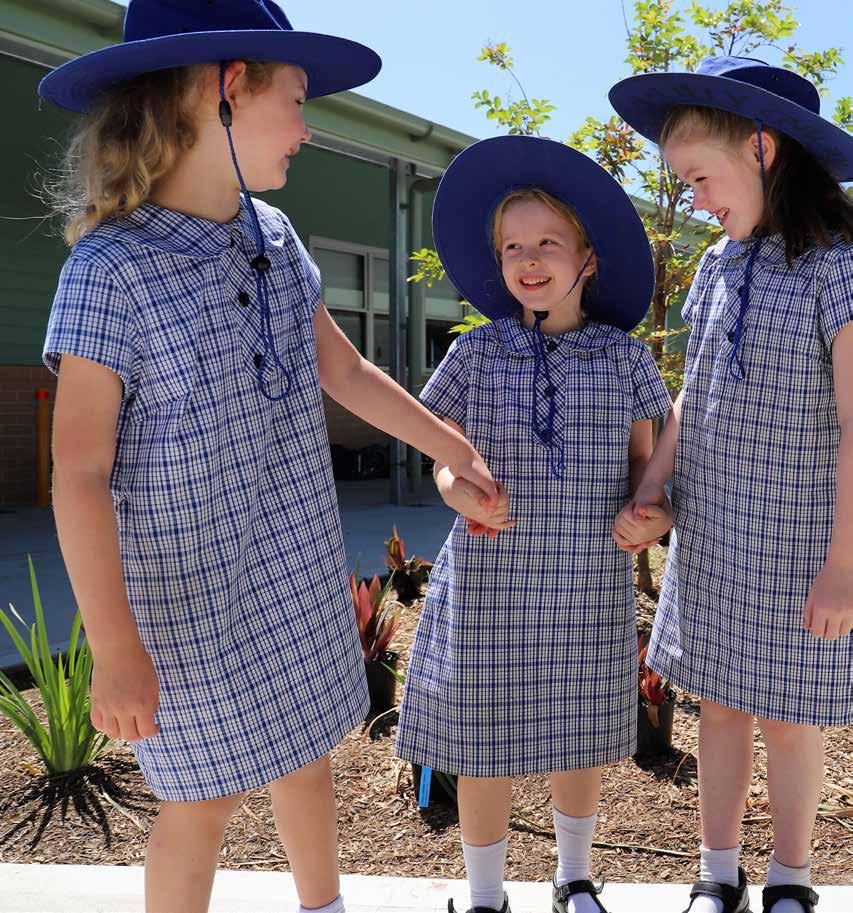
On St Patrick’s Day there would be School Sports Day at the Show Ground. The Catholic Schools would take part in the street march wearing special uniforms of their school colours and carrying flags. There would be flag drill, maypole dancing and many other events.
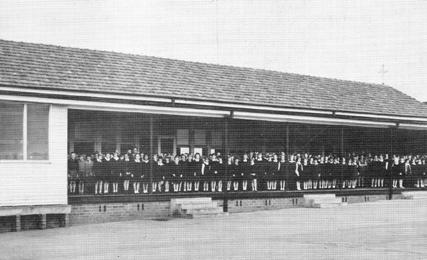
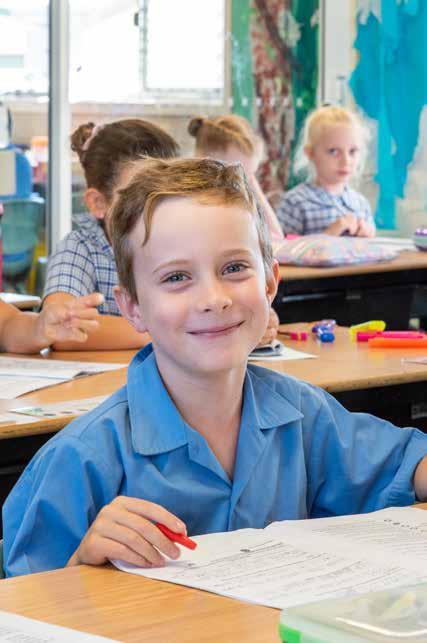
1956 St Therese’s New Lambton
Merewether Beach
HOLY FAMILY PRIMARY SCHOOL
On Country
Traditional custodians of the land, the Awabakal and Worimi people
Merewether
After Edward Christopher Merewether, superintendent of the Australian Agricultural Company, proclaimed a municipal district in 1885. Also known as Burwood
Opened 1956
School today kindergarten to year 2
Charism: Josephite
Motto: Thy Will Be Done
Location: 19 Janet Street Merewether Beach NSW 2291
Parish: Newcastle
1939
Parochial district of Merewether South established
Church first in Ridge Street cottage, then in church hall
1952
New brick church Holy Family built crn Pell and Ridge Streets, church hall converted for school use
1956
School opened in old church hall
Diocesan Sisters of St Joseph, originally travelling daily from Merewether convent
First sisters, M Ursula Kauter Principal, M Mary Jackson and M Patricia Hayes
1961
Merewether Beach convent opened, crn Janet and Pell Streets
New school built with four classrooms and ancillary rooms, later another wing
1983
Diocesan Josephite administration ended
1984
First lay Principal, Mr Michael Gore
1987
‘A parish maintenance committee formed each year and drawing mainly from the fathers of children enrolled at the school, cares for all parish grounds, resulting in attractive, well kept surroundings for the children, teachers and parishioners.’ ¹
1992
‘Demountable’ classrooms were purchased
1994
Infants toilets were upgraded, extra storage area provided
1997
Sisters withdrew from convent
Convent converted for school and parish use
1998
‘It was a sisterly reunion at Merewether’s Holy Family primary school yesterday when the school opened its new administration block. School founders Sisters Mary Jackson, Ursula Kauter and Patricia Hayes were on hand as Newcastle parish priest Father Peter Brock officially blessed and opened the building. Centrepiece of the opening was a mural tracing the school’s history.’ ²
2004
Construction of administration and staff facilities, library, classrooms and store
2007
Holy Family church closed as a Mass centre
2009
Refurbishment of school facilities, external and internal
Refurbishment of multi-purpose hall, student hall and shade structure
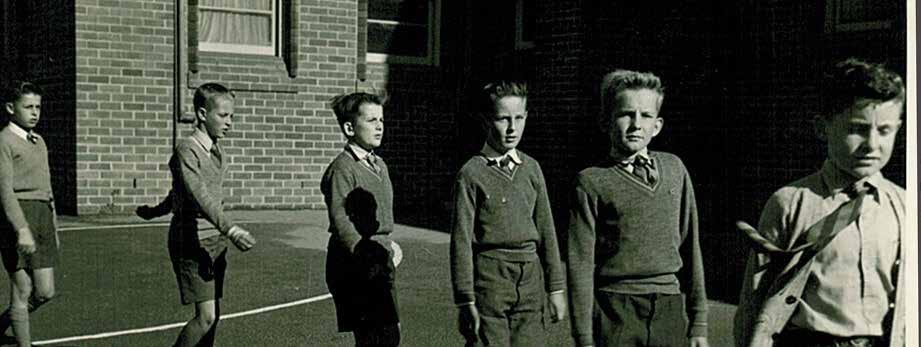
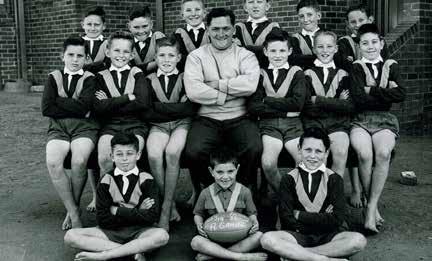
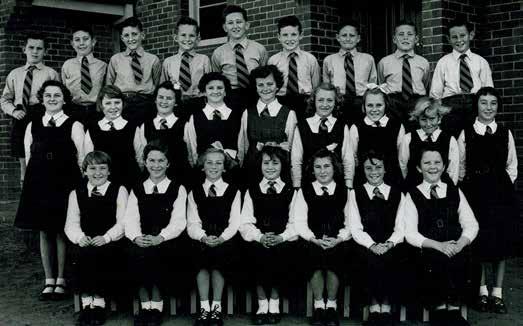
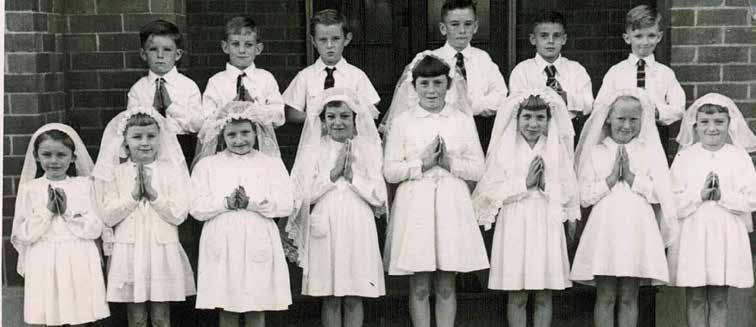
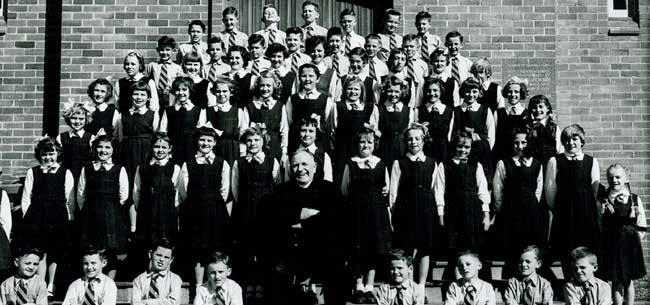
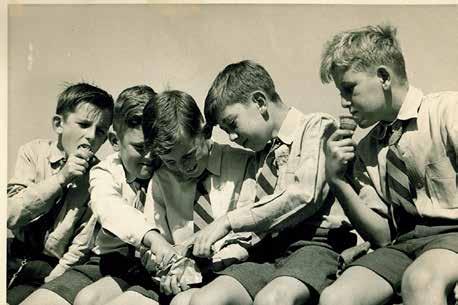
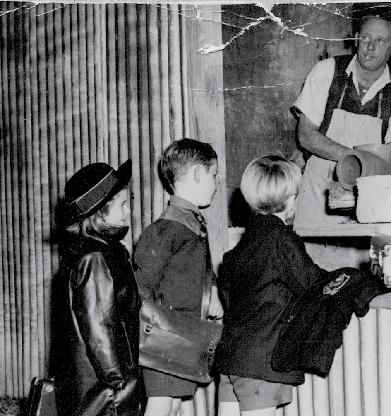
Garden Suburb ST JAMES PRIMARY SCHOOL
On Country
Traditional custodians of the land, the Awabakal people
Kotara
Aboriginal word for ‘a club’
Opened 1961
School
Kindergarten to year 4
Closed 1980
Location Myall Road Kotara / Garden Suburb NSW 2289
1958
Land purchased in Myall Road from BHP
1961
School opened Myall Road, Garden Suburb School opened in a building (formerly used as an operating theatre) relocated from Greta Migrant Camp.being a large building, half went to Tarro for convent and church, half to Kotara / Garden Suburb
Remainder of Greta hospital relocated for more classrooms and temporary church
Sisters of Mercy arrived, M Cordula Torpey, M Chrysostom Dolahenty travelling from New Lambton convent
Classes began for Kindergarten to Year 4
1962
Parish of New Lambton was established
1963
Kotara South parish established, Church of St Philip ‘The building was originally used as a bath-house for the Crofton Colliery … Fifteen to twenty men worked each weekend for about three months on the building to turn it into a church seating two hundred and fifty, the total cost having been about 2,000 pounds. … Mr Peter Gannon, architect of Newcastle, although not a parishioner, gave his services free and drew up the plan of converting the old building into a new Church.’ ¹
1971
School now Kindergarten to Year 6
1974
Twenty four acres of land purchased on Vista Parade, Kotara South
1975
‘Demountable’ classrooms purchased allowing full school relocation
1977
Mercy administration ended
1978
Infants classes relocated to ‘open plan’ classrooms at new site
1981
Entire St James School relocated to new school site on Vista Parade Kotara South, paid for by parish. Old school site sold to make way for a private nursing home
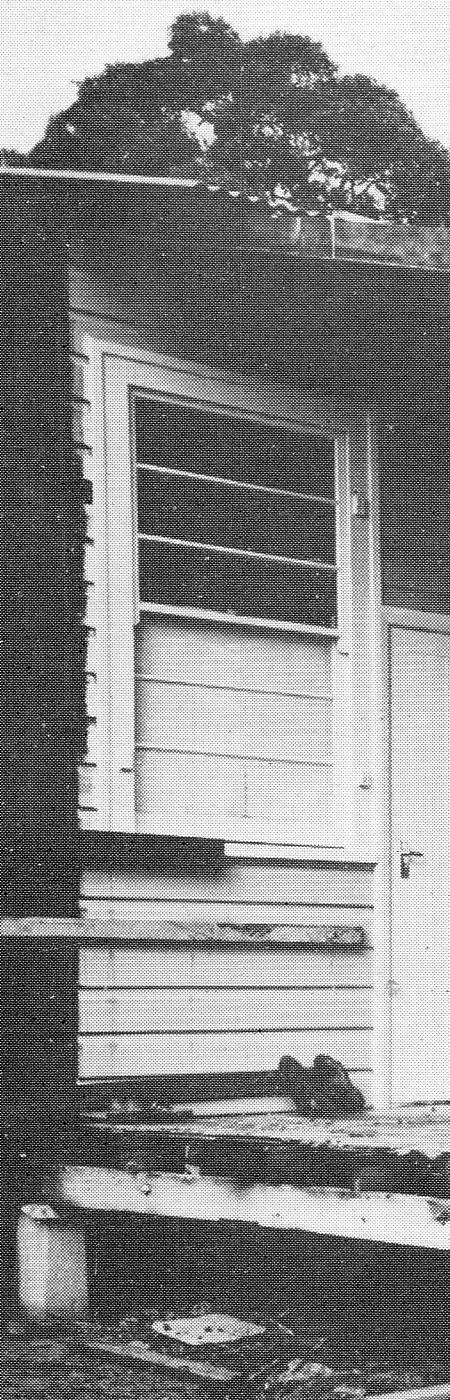
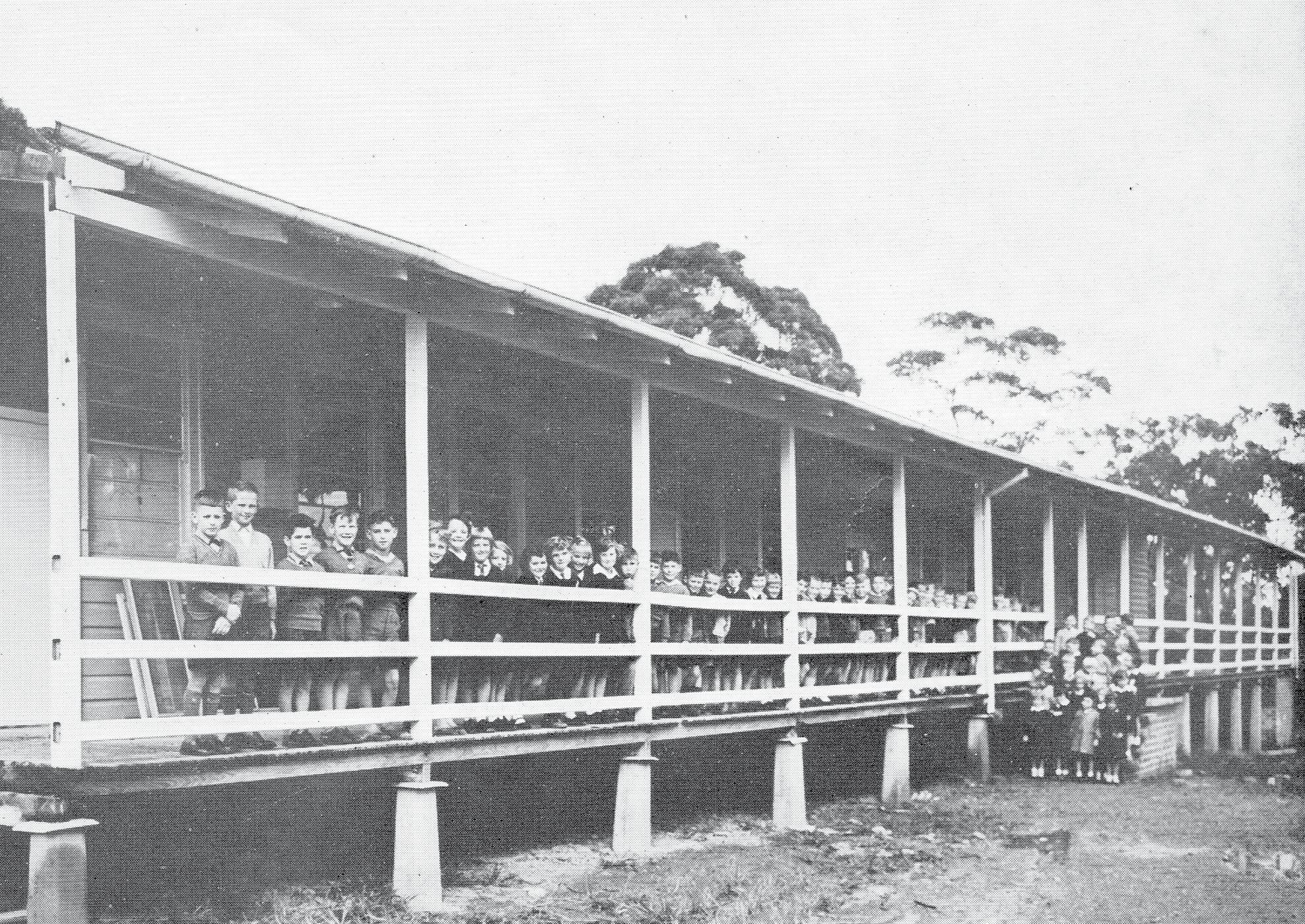
School opened in a building (formerly used as an operating theatre) relocated from Greta Migrant Camp. Being a large building, half went to Tarro for convent and church, half to Kotara / Garden Suburb. Remainder of Greta hospital relocated for more classrooms and temporary church.
1961 Garden Suburb
Kotara South ST JAMES PRIMARY SCHOOL
On Country
Traditional custodians of the land, the Awabakal people
Kotara
Aboriginal word for ‘a club’
Opened 1978
Preceded by
St James School relocated from Myall Road Garden Suburb
School today kindergarten to year 6
Charism: Mercy
Motto: In Faith We Learn
Location: Vista Parade Kotara South NSW 2289
Parish: All Saints Blackbutt
School Opened Staff Years
St James Primary 1978 Lay Teachers 43
Reference 1 Catholic Education Reporter 12/1981
1961
St James School kindergarten to year 4, originally built on Myall Road Garden Suburb
Sisters of Mercy, first sisters M Cordula, M Chrysostom travelling from New Lambton convent
1962
Parish of New Lambton established
1974
Twenty four acres of land purchased on Vista Parade, Infants section relocated there
1975
Old school site and ‘demountable’ classrooms purchased with a vision for full school relocation
1977
Mercy administration ended
1978
Infants classes transferred from Myall Road site to present site on Vista Parade. Classes held in new ‘open plan’ building fully funded by parishioners
Garden Suburb school site sold and demountable classrooms purchased to allow the school to be fully located on one site.
Founding Principal Kotara South, Mr Ian McDonald
1981
With the assistance of a building grant from the Commonwealth Schools Commission and support from parishioners, a permanent school was fully operational on the Vista Parade site by 1981
Completed relocation from Myall Road to Vista Parade, paid by parish of Kotara South
Permanent school built, reopened as kindergarten to year 6 ‘The school is set against a background of dense bush. Its central courtyard and reading court, both of which have been extensively landscaped by the parish, provides the school with a most attractive environment for education.’ ¹
2007
Construction of administration facilities and walkways
2009
Construction of shade structure, refurbishment of school facilities, external and internal
Construction of multi-purpose hall, refurbishment of library and associated works
2015
Establishment of outdoor education area
2016
Computer laboratory dismantled, new contemporary space established
Photo: St James, Kotara South students

The school is set against a background of dense bush. Its central courtyard and reading court, both of which have been extensively landscaped by the parish, provides the school with a most attractive environment for education.
Catholic Education Reporter 12/1981
Adamstown ST PIUS X HIGH SCHOOL
On Country
Traditional custodians of the land, the Awabakal and Worimi people
Adamstown
Named after surveyor Thomas Adams, who surveyed the town in 1896
Opened 1961
originally on Tighes Hill site 1959
Known as
until 1983 St Pius X College
School today years 7 to 10
Motto: To Renew All Things In Christ
Location: Park Avenue Adamstown NSW 2289
Parish: All Saints Blackbutt
1959
St Pius X Secondary School for boys opened at Tighes Hill, two First Year classes. School staffed by Diocesan priests.
1960
Park Avenue Adamstown property purchased from Lustre Hosiery, 16 acres with factory premises
1961
St Pius X College opened Adamstown 19 March when 170 students moved from St Pius X Tighes Hill
‘Father Newton said that at least two playing fields would be provided. He said that the school would probably absorb a large number of students from rapidly developing areas of Charlestown and Kotara. He said that the school had been forced to move because at Tighe’s Hill [sic] it was a case of “too little space for too many boys.’ ¹
College Rector Fr J. Newton, priests V. Dilly, L. Cicolini, T. Kennedy
1964
First Leaving Certificate year
1966
New classroom wing and minor works
1967
St Anne’s Senior High School for girls opened in the grounds of St Pius X College
1970s
St Anne’s became co-instructional Senior High School with St Pius X
1980
Parcel of land purchased
1983
Restructuring of Newcastle secondary schools with St Pius X becoming coeducational, in a staged process beginning with Year 7
No Year 11 students enrolled – boys transferring to St Francis Xavier’ High School Hamilton
Last Year 12 class
1984
Became a Junior Co-educational High School – name changed from St Pius X College to St Pius X High School
Buildings of St Anne’s School now utilised for St Pius X
First lay Principal, Mr Ray Kelly
2008
St Anne’s Hall renamed Sr Marie Hall, honouring long service to the school by Josephite, Sr Marie Therese Fahey
2009
Refurbishment of school facilities external and internal
Stage 1 – refurbishment of classrooms, administration facilities and multi-purpose hall
Completed – Trade Training Centre, Hairdressing Salon and Hospitality Commercial Kitchen
2011
Stage 2 – refurbishment of Science and Technology classrooms
Photo:
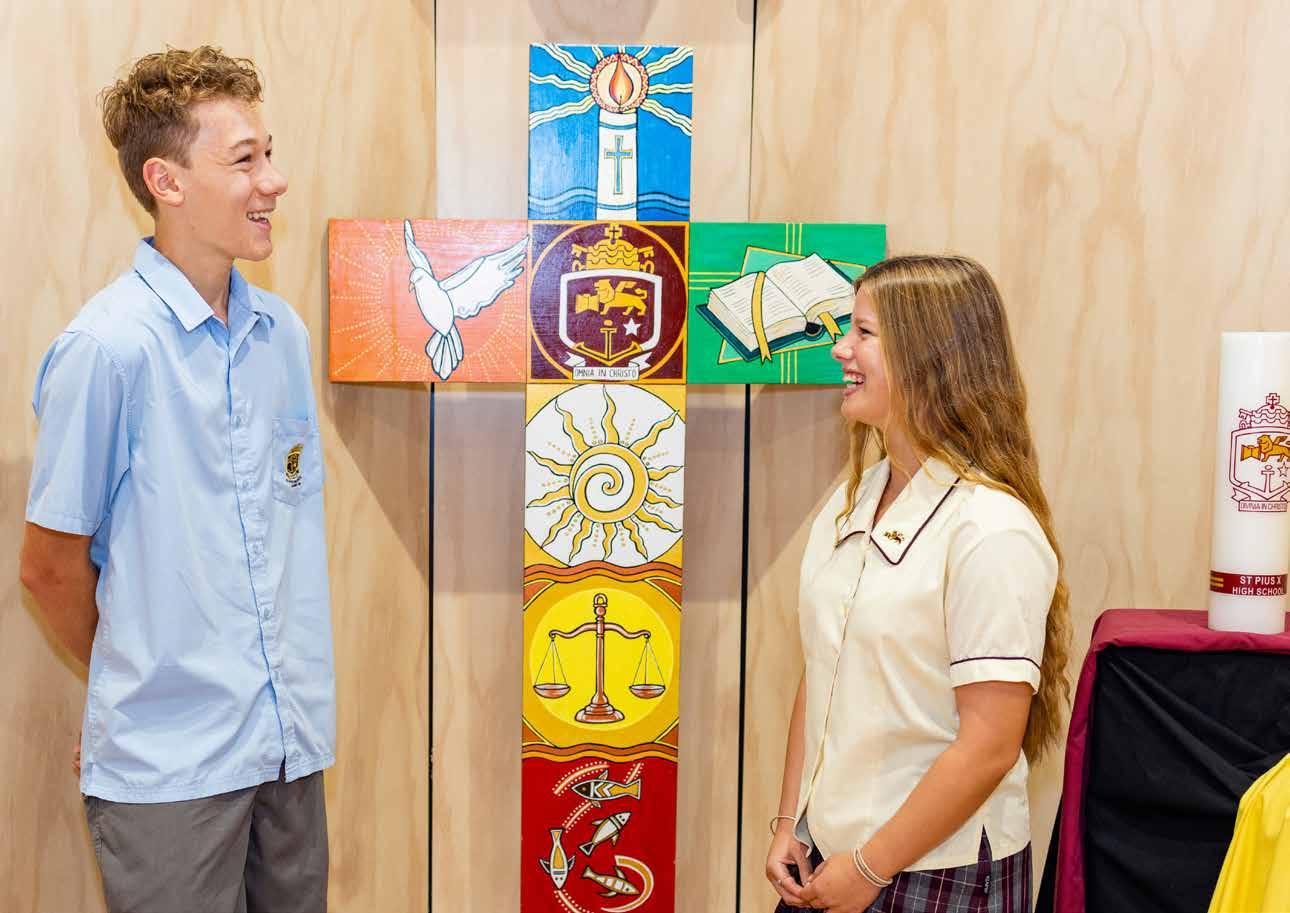
Adamstown ST ANNE’S HIGH SCHOOL
On Country
Traditional custodians of the land, the Awabakal and Worimi people
Adamstown
Named after surveyor Thomas Adams, who surveyed the town in 1896
Opened 1966
Fifth form began on Tighes Hill site
Location Park Avenue Adamstown NSW 2289
Closed 1985
1966
St Anne’s High School opened as a Senior Secondary High School for Girls in the Newcastle area.
‘The changes brought about by the implementation of the Wyndham scheme were difficult, especially for the teachers of the senior classes at St Aloysius. To cater for the range of subjects required under the new scheme, the diocesan authorities arranged that the four schools in the Newcastle area, San Clemente Mayfield, St Aloysius Hamilton, St Joseph’s Merewether and St Mary’s Gateshead should send their senior girls to the new academy to be known as St Anne’s High School. ¹ School staffed by Dominican, Mercy and Josephite sisters. The six sisters were Sr M Raphael (Levey) O.P., Sr M Phillipa O.P., Sr M Bartholomew rsm (Principal), Sr M Julie rsm, Sr Jane Frances rsj, and Sr Francis Xavier rsj.’
Fifth Form began in former school buildings at Tighes Hill as new school not completed. Laboratory facilities at Marist Brothers High School Hamilton were used while school operated in the temporary accommodation.
1967
St Anne’s Girls School opened on site adjacent to, but separate from St Pius X. The buildings included five classrooms, six tutorial rooms, two science labs, a geology room, library (15,000 books), assembly hall and administration offices. ²
1970s
St Anne’s became a co-instructional Senior High School with St Pius X College
‘In order to make the best use of teaching resources at the senior level a system of co-instruction was established with the adjacent secondary boys’ school, Pius X College Adamstown, which at the time was staffed mainly by diocesan priests. In practice this meant a sharing of staff and premises to cater for mixed senior classes in some subject areas.’ ¹
1984
Last Year 11 class enrolled
1985
School closed due to restructuring of Secondary education in the Newcastle area
Photo: St Anne’s Senior High School for Girls – on site at St Pius X College Adamstown Unique as the school staffed through cooperation of the three teaching orders of sisters in the diocese of Maitland-Newcastle Dominican, Mercy and Josephite Sisters. The original six sisters to staff
Anne’s were Sister M. Raphael (Levey),
(Principal), Sister
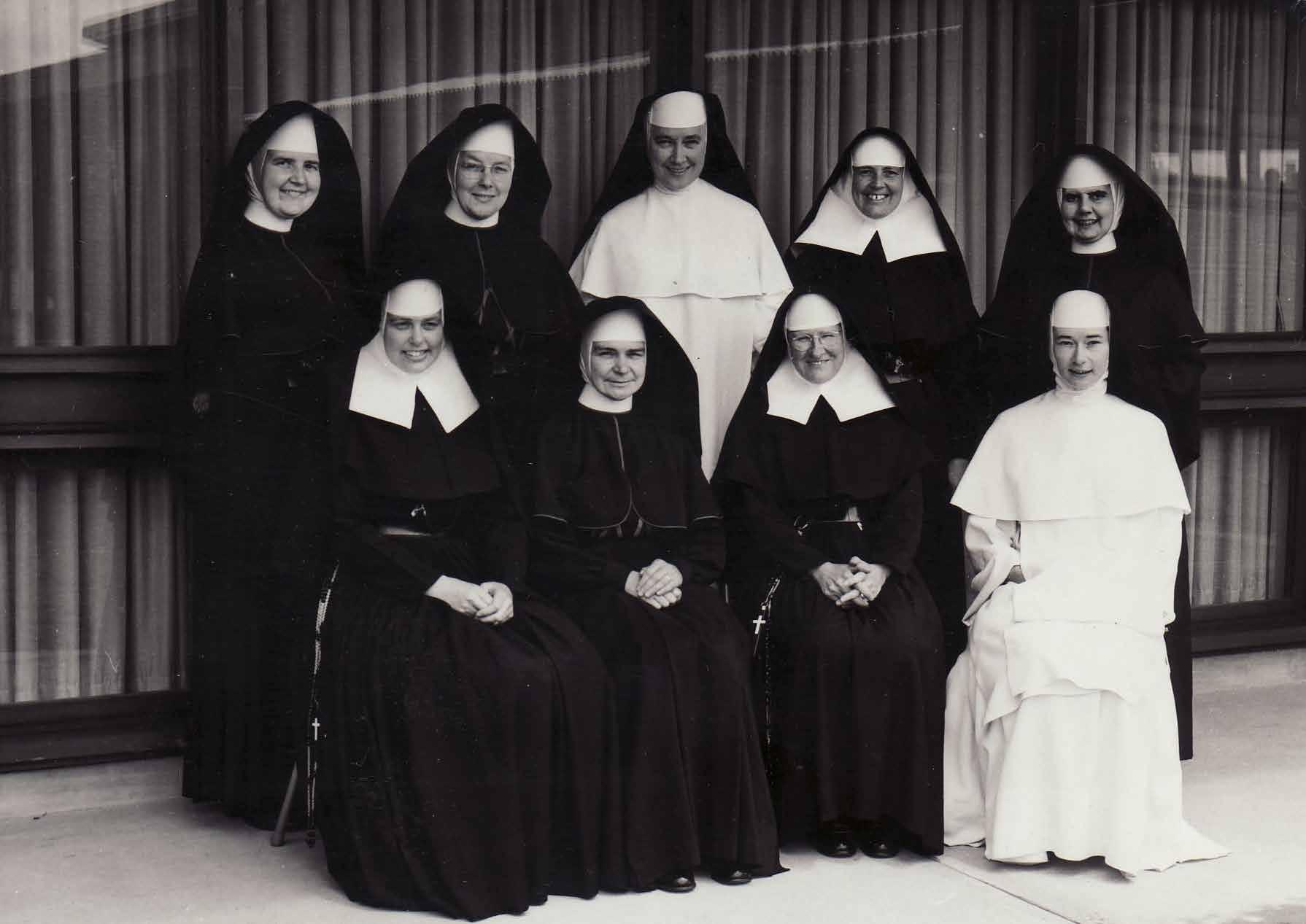
CATHOLIC SCHOOLS IN THE Lakes region
On Country:
Traditional custodians of the land the Awabakal people
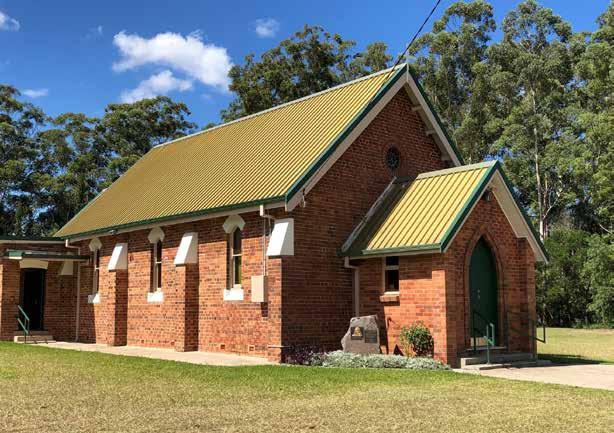
Lakes Region encompasses all Catholic schools surrounding Lake Macquarie.
Originally known by the Aboriginal name ‘awaba’ meaning ‘plain or flat surface’, then by extension,’awaba’ referring to the people native to this area, the Awabakal people were the traditional custodians of the land on which all our schools are now situated.
As Australia’s largest coastal salt water lake Lake Macquarie is found south of and adjacent to the City of Newcastle. Lake Macquarie is Australia's largest coastal salt water lake encompassing an area of 110 square kilometres, with a staggering shore line of 174 kms and a vital connection to the Tasman Sea by a short and since early times a controversially, shallow channel. Many districts grew up around the Lake's shoreline and hinterland. Settlement originally was based around early cedar cutting and logging industries, while later around coal extraction industries, then following post war expansion around mining, transport and commercial needs. Tourism unfolded as a major focus in more recent times. Critical factors in expansion came with transport connections: the 1879 rail line linking Newcastle to Sydney loosely meandering along the Lake’s western shore, the Pacific Motorway now the M1 humming along a similar route more westerly. While on the eastern and coastal shoreline connection came about with the 1895 Swansea bridge opening as a public roadway, evolving into the busy Pacific Highway of today.
Before 1823, Newcastle was strictly a penal settlement and with the express intention of isolating penal life and its associated vices from the growing Colony in Sydney, Governor Macquarie forbade settlement in the wider Hunter districts. Following transfer of most convicts to Port Macquarie, settlement north of Sydney became possible. 1826 saw the first land grant at Cooranbong and from this early and ultimately unsuccessful rural enterprise a fledgling cedar timber industry developed, soon thriving due to the navigable creek, lake and sea channel connection to Sydney.
St Patrick’s and St Brigid’s 6 Martinsville Road Cooranbong, mass center for parish of Morisset
Prior to 1861, Cooranbong community largely centred around six Irish convicts assigned for work on the 1826 land grant, used their strong Catholic influence and growing commercial interests to eagerly seek out educational opportunities.
Education for Catholic students began at Cooranbong in 1861 ¹, so it is here our story begins. This rural community built a humble timber church leased for 17 years to the National Board of Education for all children in the area as a National School. First Catholic teachers Jeremiah and Catherine Cronin opened the school with an enrolment of thirty-six students, of which twenty-six were Catholic. ²
Being then within the Archdiocese of Sydney and under the pastoral care of Archbishop John Polding, ³ Cooranbong’s church/school began as a mass center administered from the parish of Kincumber, with the priest riding vast distances on horseback around the Lake tending to the needs of his far-flung Catholic flock. In later years the trip was made easier on motor cycle, then car.
This National School lease agreement continued (1866 saw a transfer to Council of Education) with lay teachers on staff until 1880, ending with the implementation of the Public Instruction Act when government financial aid was withdrawn from all church schools. Bishops now faced a crisis, how to maintain existing Catholic schools on a severely reduced budget.
Fortuitously, the Sisters of St Joseph with then head of the Order Mary MacKillop, upon arrival in Sydney from Bathurst were offered eight foundations, Cooranbong accepted as one. Immediately upon opening the now called ‘Catholic School’ the ‘Brown Joeys’ as staff saw student enrolment increase to eighty-four, aided no doubt by a very strong
National / Catholic School
Bishop's Pastoral Letter ’encouraging’ parents to send their children to Catholic schools. Controversially and not surprisingly, enrolments at the recently established ‘State’ school dramatically declined necessitating temporary closure.
The ‘Brown’ Joeys remained at Cooranbong school and convent for sixteen years. Falling enrolments heralded closure, due largely to the much hoped for Sydney to Newcastle rail line bypassing Cooranbong in favour of Morisset, some six kilometres east. Upon inevitable closure in 1896, the Sisters relocated to Kincumber, establishing there a Josephite Orphanage and Convent, continuing their mission to the poor until 1989.4
The diaries of Mother Mary MacKillop had recorded both her 1895 visits to the sisters, and also her attendance at mass in the then timber church, so, when canonized in 2010 as Saint Mary of the Cross MacKillop, the church of St Patrick’s and St Brigid’s became recognized as a Pilgrimage Site. Closely following her canonization, commemorative plaques were placed outside this humble brick gothic church rebuilt in 1904, where today it continues to function on a rostered weekend basis as a mass center for the parish of Morisset.
Of relevance for modern day Cooranbong, is the unfolding presence of the Seventh-day Adventists. For in the same year as Mary MacKillop visited her sisters in 1895, a similarly strong and educationally focused woman also arrived. Ellen White had come seeking a suitable place to establish an educational facility for Adventism in Australia and from these humble origins, Cooranbong has continued as the central Australian home of Adventism, today a thriving community at Avondale
Other districts around the nor-western area of the Lake experienced post war expansion especially around that of mining and with subsequent population increase the provision of Catholic schools gained momentum. The Sisters of St Joseph arrived from Sydney opening a convent at Boolaroo staffing schools as needed on this western and northern side, while the Diocesan Josephites purchased land for a convent at Swansea on the eastern side of the Lake, initially as a rest and care center for their Lochinvar Congregation, but also travelling out to, establishing and staffing new schools. This arrangement remained in place until 1966, when Diocesan boundaries changed formally including all of Lake Macquarie in the Maitland Diocese.6 This Diocesan boundary change necessitated the gradual withdrawal of Congregational Josephites returning to schools within the new boundary of the Archdiocese of Sydney and their consequent replacement with Josephites from Lochinvar.
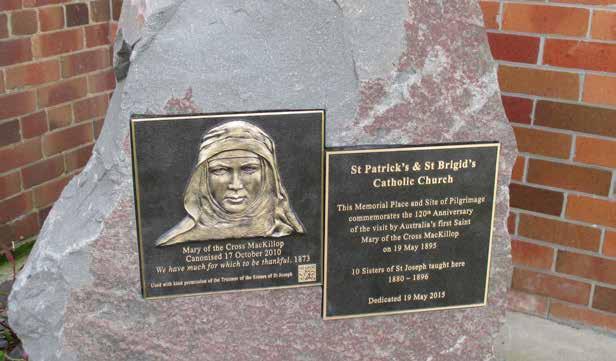
Establishment of ten primary schools was well underway during the 1950s and early 60s, however, provision of secondary education which had begun tentatively at Belmont and Glendale schools, began afresh when land was purchased at Gateshead in 1964 by the Diocesan Josephites. With the establishment of St Mary’s Catholic College Gateshead now providing accessible Catholic secondary education for primary school leavers on the eastern shoreline of the Lake, there was an early but increasingly insistent call to provide similar secondary schooling on the western shore. And so, twenty years on St Paul’s Catholic College at Booragul was established, continuing to provide for students completing their primary years at Catholic schools from the south and western districts of the Lake.
Slowly but surely over many years despite periods of change and uncertainty, with the assistance of several Religious Orders and many well qualified and devoted lay educators, a very strong Catholic Education System, of which we can be proud, has been established and is now thriving in the Lakes Region.
Footnotes
1 Keith, Clouten, Reid’s Mistake A History of Lake Macquarie 2000
2 ibid
3 Celebrating 150 Years of Catholic Presence 1861 – 2011 2011
4 Christine, E Bowry From the Mountains to the Sea A History of the Catholic Church on the Central Coast 1838–1998
5 Used with kind permission from the Congregational archives of the Sisters of St Joseph
6 Celebrating 150 Years of Catholic Presence 1861 – 2011 2011
Pilgrimage site – plaques erected 2011 to commemorate the canonization of St Mary of the Cross Mackillop 2010
Cooranbong NATIONAL SCHOOL / CATHOLIC SCHOOL
ARCHDIOCESE OF SYDNEY
On Country
Traditional custodians of the land, the Awabakal people
Cooranbong
Aboriginal word for ‘water over rocks’
Opened 1861
Archdiocese of Sydney
Closed 1896
Archdiocese of Sydney
Location
6 Martinsville Road Cooranbong NSW 2265
2015
School Opened Closed Staff Years
National/church Catholic school 1861 1880 1879 1896 Lay Teachers Congregational Josephites 18 16
1
2 Mother Mary MacKillop 1895 diary entries used with kind permission from the Congregational Archives of the Sisters of St Joseph 3 Freemans Journal 22/12/1906
4 The Sisters of St Joseph (1926) unknown author Bowry, C. (1998) From the Mountains to the Sea A History of the Catholic Church on the Central Coast 1838–1998 parish publication
A History of St Patrick’s and St Brigid’s Church and Cemetery (2011) parish publication
Cooranbong originally within the Archdiocese of Sydney, Kincumber Parish, Rev. H N Wolfrey OC
1822–1861
First land grants made in the area, thriving community built around timber industry
1861
Community built a humble wooden structure, 17 year lease as National School and Catholic church
1861–1879
Lay staffed, first teachers Jeremiah and Catherine Cronin, operated by the National Board of Education
1880
Three ‘Brown Joeys’ arrived, residing close by in a dwelling/convent ‘rent free’, along Mathew Valley Road
Sisters of St Joseph, from their new foundation in Sydney opened school after Easter in church school ‘… several sisters were sent directly from Brisbane to Tenterfield, while most of the others were instructed to break their journey in Sydney and accept foundations offered them by [Bishop] Vaughan.’ ¹
Sisters of St Joseph (later to become known as Congregational Josephites) arrived. First sisters M Collett Carolan, M Aloysius Ferricks, M Patrick Barry
Enrolment 67 students
1886
Enrolment 98 students
1889
Rail link Sydney to Newcastle opened, station built at Morisset thus by-passing Cooranbong
1892
Two storey convent built along Mathew Valley Road
1895
Congregational leader, Sr Mary MacKillop visited on two occasions ‘April 20th Saturday Mass, Holy Communion and Meditation early – going to Cooranbong. Met by Mr Healy. Fare cost 7/6.’ ‘Saw Fr Cohen and Fr O’Shea at Cooranbong. Fare 7/6’ ² ‘May 20th Mon. Mass and oratory, then started for Sydney via Gosford. Remained a few hours there. Went with the priest to two places about a room for School Teacher, secured promise of one at 12/– a week with Mrs Denny. Travelled with Dominican nuns to Hornsby. Got home 7.45pm.’ ²
1896
Josephite administration ended, convent and school closed.Cooranbong convent
‘The original cottage … purchased by Russell [family of Morisset], dismantled and now stands reassembled as the residence of the caretaker of “Lake Lodge” a holiday resort in Morisset.’ 4 ‘The Sisters left Cooranbong and established their Convent and Orphanage at Kincumber, so dear to the heart of Mother Mary of the Cross, in 1887.’ 4 Josephite Convent operated at Kincumber until 1960s functioning currently as a Retreat Centre.
1902
Title to 3-acre parcel of land church/school secured for 10 shillings, from the estate of Sir Daniel Cooper
1904
Humble gothic brick church built ‘in defiance to (sic) the weather and the white ants for many years to come’ 3, mass centre for Wyong parish
1947
Morisset parish included within Diocese of Maitland, St Patrick’s and St Brigid’s Church Cooranbong continuing as a mass centre, now for Morisset parish
2015
Two plaques mounted close to the front church corner to mark Mary of the Cross MacKillop Pilgrimage Site
West Wallsend ST JOSEPH’S PRIMARY SCHOOL
On Country
Traditional custodians of the land, the Awabakal people
Wallsend
After a place near Newcastle on Tyne, England. The suburb began as two mining towns – Wallsend and Plattsburg
Opened 1912
Closed 1978
Location 5 Hyndes Street West Wallsend NSW 2286
1872
‘The Right Rev Dr Dwyer, Bishop of Maitland, will bless the new convent on Sunday next at 8.15pm. The convent will supply a long-felt want in this populous district, and as the good sisters of St Joseph who will conduct the school are now well known as a teaching order, good results may be looked for. The Lochinvar Convent, under the same order of nuns, lately sent up a number of pupils, out of which no less than 24 passed the Bursary examination. The new convent was opened for school duties during the week and 32 names were recorded on the roll. The Very Rev. Father McAuliffe in whose district the convent is situated, is assured by his parishioners that by the end of the month the attendance will be at least 150 pupils’
Newcastle Morning Herald 24/1/1912, p. 6
Lambton parish established
1908
Wallsend included in Lambton parish
1910 –1911
Convent built, opened 1912
1912
Diocesan Josephite sisters came to staff the school, M Agnes Gallagher, M Dominic Barry, M Benignus Tobin, M Patricia Boland
St Joseph’s School opened with enrolment of 95 students
1913
Extensions built to both church and school
1915
Registration gained as Intermediate Certificate School ‘Meeting the public school standard became an important point later in 1912 when the Bursary Endowment Act was passed in New South Wales. For the first time, non-government school students were eligible to win a bursary for secondary or university study at a state or private institution. That institution, however, had to meet the educational standard prescribed for the qualifying and leaving certificates of the state school system.’ ¹
1931
With the Great Depression and the closure of mines, enrolment now fallen to 50 students
1937
West Wallsend established as parish
1955
West Wallsend and Glendale established as parochial district
1962
Sisters of St Joseph travelled to staff St Benedict’s Edgeworth
1960s
Infants classes moved to St Benedict’s Edgeworth, primary classes remained
1978
School closed, last Principal Sr Frances Slack rsj
1979
West Wallsend and Edgeworth schools combined, now established at St Benedict’s Edgeworth
1982 –2015
Convent used for parish work by both Sisters of Mercy and Sisters of St Joseph
Boolaroo OUR LADY HELP OF CHRISTIANS PRIMARY SCHOOL
On Country
Traditional custodians of the land, the Awabakal people
Boolaroo
Aboriginal word for ‘place of flies’
Opened 1926
Closed 1976 Location
Seventh Avenue Boolaroo NSW 2284 References
Boolaroo and Warners Bay originally within the Archdiocese of Sydney, until 1966
Land purchased at Boolaroo ‘… another mining centre on Lake Macquarie, the people of the district were chiefly engaged in the Stockton and Borehole Collieries, and Cockle Creek Sulphide Works.’ ¹
1917
Foundation stone laid for first church
1926
Convent at 24 Seventh Street and presbytery at 26 Seventh Street built by Fr Green, first parish priest ‘Fr Green – also a great carpenter – made desks and forms so that the people could use the latter at Mass.’ ²
Congregational Sisters of St Joseph residing at Kincumber convent invited to staff school at Boolaroo.
Sisters lived in the presbytery awaiting the completion of Boolaroo convent
First sisters M Winifred O’Brien, M Dolores Goss, M Rodrigues Millar, M Agnes King, M Joan O’Connor
School opened in church of Our Lady Help of Christians with 50 children
1930
Music centre opened in the convent
1934
Three new classrooms built
1954
Enrolment 145 students
1956
School painted and toilet block commenced
1959
Enrolment 98 students
1961
New church built, Our Lady Help of Christians, enabling extra classroom accommodation in old church, school extended to Year 6
1966
Boolaroo and Warners Bay parishes transferred to Diocese of Maitland
1968
Boolaroo Our Lady Help of Christians School became a St Mary's Primary School
1969
Students transferred by bus daily – infants classes to St Mary’s Warners Bay, primary classes transferred from St Mary’s Warners Bay to Boolaroo
First lay teacher employed
1975
Enrolment 69 students
1976
Boolaroo School closed, students accommodated at St Mary’s Primary School
With closure of school, buildings relocated to Warners Bay
Congregational Josephites remained at the Boolaroo convent, travelling daily to Warners Bay school
1981
Josephites withdrew from Warners Bay school, two sisters remained to continue parish work
1989
Convent at 24 Seventh Street damaged in earthquake, demolished in 1991, rebuilt 1993
1998
‘During February and March 1998 the old Church built in 1917 and the tuck shop and toilet block were all demolished.’ ²
Cardiff ST KEVIN’S PRIMARY SCHOOL
On Country
Traditional custodians of the land, the Awabakal people
Cardiff
Named after the capital of Wales at the suggestion of settler James Edward in 1889. Area previously known as Winding Creek, then Lymington
Opened
1917 St Joseph’s
Also opened
1958 Junior High School
Known as
1989 St Kevin’s
School today kindergarten to year 6
Charism: Josephite
Motto: Nurturing Mind, Body and Spirit
Location: 228 Main Road Cardiff NSW 2285
Parish: All Saints Blackbutt
1873
Parochial district of Lambton established
1906
Wooden church and convent built
1917
Diocesan Sisters of St Joseph came to open school, M Patrick Comerford, M Agatha Bussell, M Madeline O’Brien
School opened as St Joseph’s, enrolment 70 students
1928
Brick church built, existing buildings in Newcastle Street to be used for school purposes
1939
Cardiff parish established
1942
Wooden school buildings destroyed by fire, but because of war time school was not immediately rebuilt ‘Sister M Kilian with first class occupied the old tin shed … desks were made by resting boards on cases and the children sat on the cases … the AIP rooms … a shop … had been divided into two classrooms by a partition of Hessian
… Sr. M Bede taught second class and M Christina taught fourth and fifth … the men had erected a tin shed for Sr. M Felicitas and her sixth class. The shops and shed were not rain proof, very hot in summer and cold in winter.’ ¹
‘Gordon Swadling brought umbrellas for us in case it rained.’ ²
1944
New school building opened. Building of the new school was delayed because building materials were in short supply due to World War 2.
1958
New convent opened, closed 1980 then reopened 1981
Junior High School conducted in addition to primary grades
1969
Extensions were added to the school to cater for increased enrolments
1976 –1980
First lay Principal, Mr David Carty
1980
The convent was closed
1981
Sisters moved back into the convent as it was unsuitable for school expansion
1989
School named St Kevin’s, changed in line with parish name
1991
Diocesan Josephite administration ended
1992
Major extensions
Mercy sister Judith Murphy appointed Principal
1993
2009 Refurbishment of buildings, grounds, security fence
2009
Construction of multi-purpose hall, refurbishment of library
2012
Mercy administration ended
Opening of new facilities
The wooden school building which was the original church was destroyed by fire in October 1942. Because of the war, building materials were in short supply and a new school didn’t open until June 1944. In the meantime classes were held in various nearby locations.
Sister M Kilian with first class occupied the old tin shed … desks were made by resting boards on cases and the children sat on the cases …
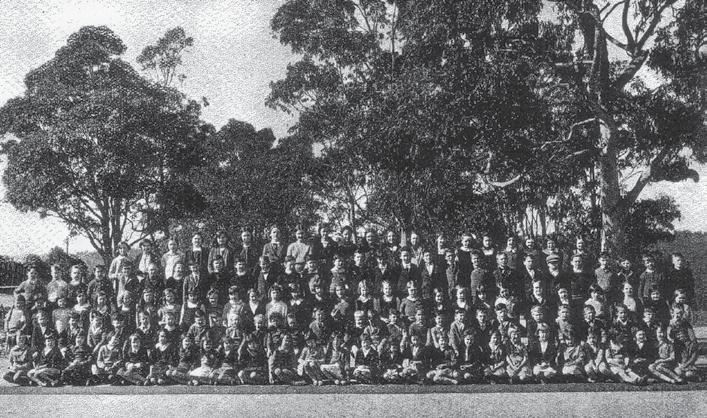
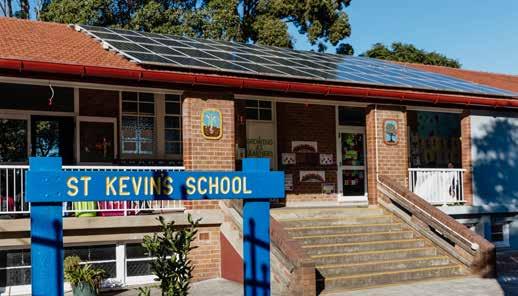
1942 St Kevin’s Cardiff
Charlestown ST JOSEPH’S PRIMARY SCHOOL
On Country
Traditional custodians of the land, the Awabakal people
Charlestown
Thought to be named after Charles Smith, manager of the Waratah Coal Company
Opened 1927
School today kindergarten to year 6
Charism: Josephite
Motto: Truth in Christ
Location: 32 Shelton Street Charlestown NSW 2290
Parish: MacKillop
1884
Parochial district of Hamilton established, encompassing Charlestown
1904
Church / school Mary Immaculate at 9 Milson Street
1927
Diocesan Sisters of St Joseph, M Benignus Tobin, M Stanislaus Donnelly, M Dominica Chapman
School conducted in church building, expanded with four weatherboard classrooms ‘Sunday, 9th August, was a beautiful sunshiny day and favoured the promoters of the “Sacred Concert” that was held in the Convent School in the afternoon. With weather so inviting and with the first public appearance of the St Joseph’s Percussion Band of 51 performers, the school was taxed beyond its capacity. The
young performers acquitted themselves with an earnestness surprising in children so young – their ages being from 5 to 12 years. The “Full Band”, when marching in with charming uniforms of royal blue and gold, were enthusiastically applauded by a very appreciative audience.’ ¹
1951
Parochial district of Charlestown established
1968
Two prefabricated classrooms added on limited site
1973
New school built in Shelton Street, opened 1975, Commonwealth Government Grant
1978
Enrolment of 400 pupils
1981
Diocesan Josephite administration ended
1982
First lay Principal, Mrs Nancy Smythe
2009
Refurbishment of school facilities external and internal, classroom joinery work
Construction of library, classrooms, refurbishment of administration and staff facilities
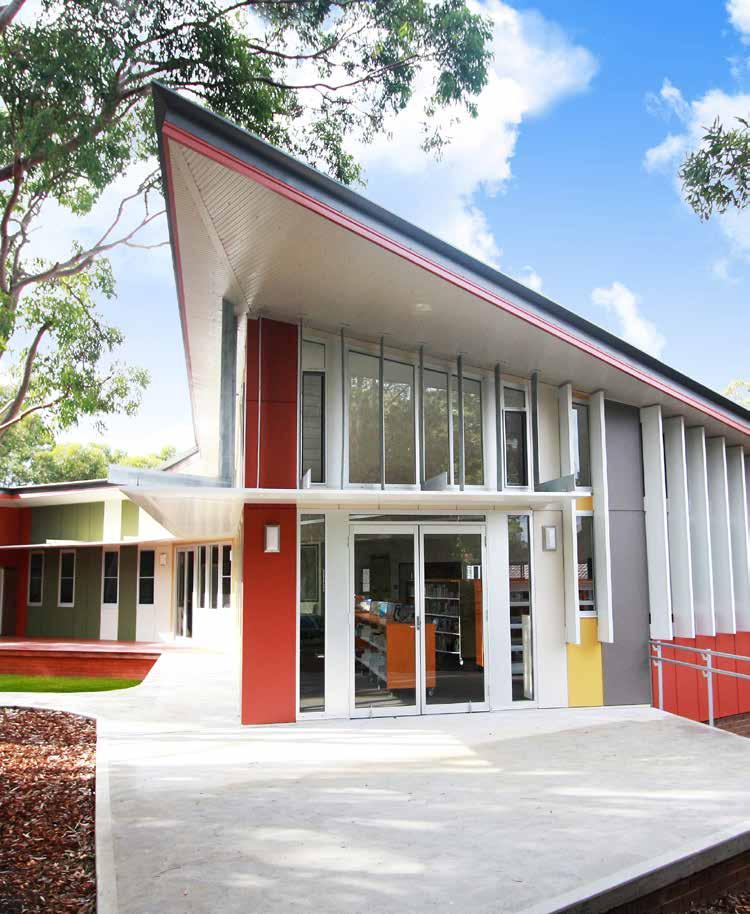
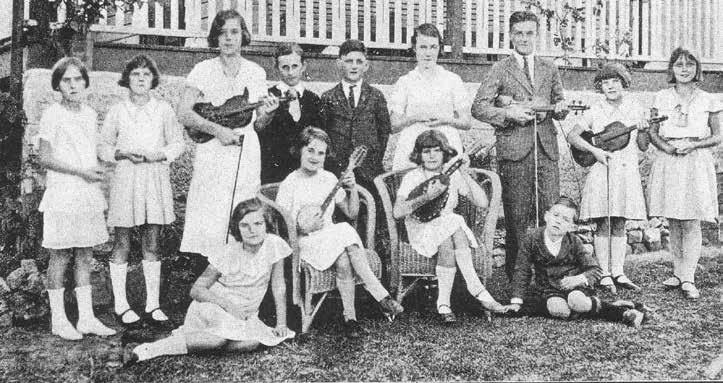
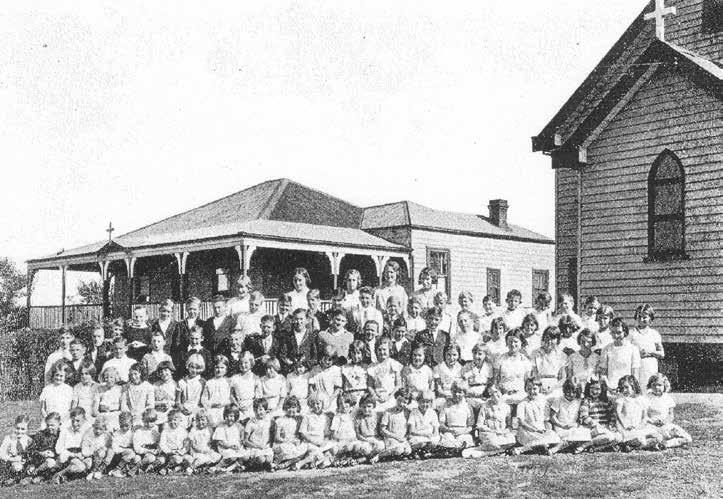
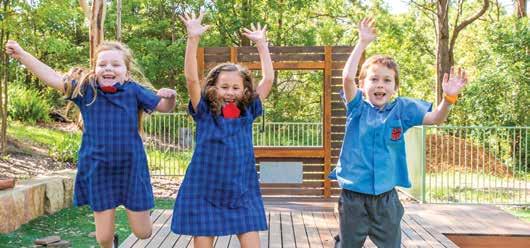
Toronto ST JOSEPH’S PRIMARY SCHOOL
On Country
Traditional custodians of the land, the Awabakal people
Toronto
Named after champion sculler Edward Hanlan, who hailed from Toronto Canada and arrived in Australia at the time of the sub division
Opened 1950 Closed
School
K. E. (1991). Unfurrowed fields: a Josephite story, NSW, 1872–1972. St. Joseph's Convent.
3 Kelly, C. (1997) A Journey… Through Light and Shadow: Sisters of Mercy Singleton 1875–1995. Hamilton NSW.
Toronto and Boolaroo parishes originally within the Archdiocese of Sydney until 1966
1903
Land purchased on the corner of Carey Street and Brighton Avenue by Archdiocese of Sydney, Cardinal Moran
1914
Parish of Wyong established, within the Archdiocese of Sydney
1915
St Joseph’s Church opened on Carey Street site operating as mass centre
1926
Toronto parish joined the parish of Boolaroo
1949
‘Wonderful news! We were to get two Brown St Joseph Sisters and have our own little school in the church.’ ¹
1950
First school opened in church building Carey Street Toronto, Kindergarten to Year 4
Congregational Sisters of St Joseph, travelled “in the miner’s bus” from Boolaroo convent ²
Sisters of St Joseph, M Patricia O’Brien, M Peter Julian, M Geraldine O’Meara, M Enda
1952
Sisters of Mercy purchase Convent of Our Lady of the Lake
Toronto Mercy convent established
1954
Parish of Toronto established, Archdiocese of Sydney ‘It could boast of no presbytery but did have three weatherboard churches, the Toronto building doubling for a school in the charge of the Brown Sisters of St Joseph and a quarry site containing a partially completed school building, at a standstill because the contractor had run into financial difficulties.’ ¹
Construction of school began on quarry site opposite church
1956
Sisters of Mercy appointed to staff school –Sisters M Heather McClymont, Principal, M Mary Bowe, M. Bernadine Cunningham.
New brick school on quarry site opened in September.
1960s
Lower playground behind church constructed by parishioners
1964
Building acquired from Rathmines Airbase, used to accommodate Years 5 and 6
First lay teacher, Mrs O’Brien
1966
Toronto parish transferred to Diocese of Maitland
1972
Mercy administration ended
1973
Diocesan Sisters of St Joseph arrived to staff the school, M Maureen Metz Principal, M Maureen Salmon, M Janice Kealy, M Carol Woodlands, travelling from Morisset convent ‘During this period the lower playground had been developed by voluntary labour, the Canteen area had been extended by the Men’s Service Club, the school grounds had been fenced, tree planted by the Lions’ Club and a car had been provided for use by the sisters following driving instructions where necessary by John Montgomery.’ ¹
1974
Residence at 237 Excelsior Parade converted to convent for Sisters of St Joseph
1976
Three ‘demountable’ classrooms were erected on edge of property, extra ones added in 1979
1982
School inspection showed that school facilities were grossly inadequate and limited registration was given
1983
Decision to widen road outside school made by Department of Main Roads and Lake Macquarie City Council
Forty acres were purchased in Kilaben Bay, including a large residence
Diocesan Josephite administration ended, convent property becoming privately owned
1984
St Joseph’s Primary School closed to be relocated at new school site, Kilaben Bay
Kilaben Bay ST JOSEPH’S PRIMARY SCHOOL
On Country
Traditional custodians of the land, the Awabakal people
Kilaben Bay
Aboriginal word for ‘shining, ’bright’, ‘glorious’
Opened 1984
Preceded by
1950 – 1983 St Joseph’s Toronto
School today kindergarten to year 6
Charism: Josephite
Motto: Love One Another
Location: 140 Wangi Road Kilaben Bay NSW 2283
Parish: Toronto
1984
New site at Kilaben Bay for church, presbytery, school and convent
New school completed and transfer of convent building to Kilaben Bay site
‘The new school which is of log cabin construction, is set in bushland 10 kilometres south of the town.’ ¹
First lay Principal, Mr Ian McDonald
1985
St Joseph’s School opened, with school buses delivering 400 children
2009
Refurbishment of school facilities, external and internal and shade structure erected
Construction of multi-purpose hall and refurbishment of classroom and other works
‘This undulating bushland site provided a challenge to the architects in designing the large BER funded multi-purpose hall ’ ¹
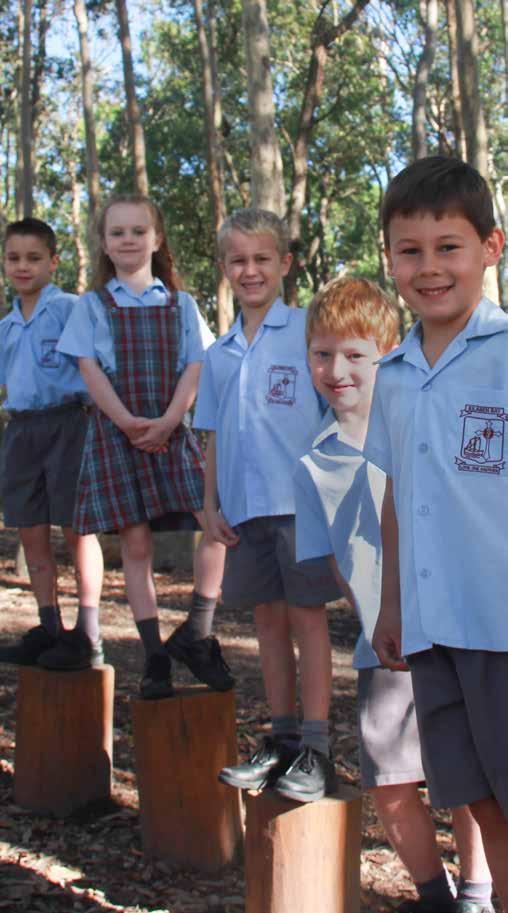
Photo: Kilaben Bay students 2021
Belmont ST FRANCIS XAVIER’S PRIMARY SCHOOL
On Country
Traditional custodians of the land, the Awabakal people
Belmont
Named by settler Thomas Williamson, after his home village on the Shetland Islands
Opened 1950
Also opened
1957 Secondary school opened
1950 St Joseph’s Primary 1996 St Francis Xavier’s
School today kindergarten to year 6
Charism: Josephite
Motto: Let Your Light Shine
Location: 42 Ernest Street Belmont NSW 2280
Parish: East Lake Macquarie
Belmont originally within the Archdiocese of Sydney, parish of Swansea until 1966
1950
School opened as St Joseph’s Primary
Diocesan Sisters of St Joseph travelled from Swansea convent, one hour trip by boat and bus, crossing the Swansea Channel until the convent at Belmont was built
First sisters came to staff school, M Virgilius Perkins, M Callista Nolan
School opened in Ernest Street, L-shaped wooden building of three classrooms and verandah ‘The school opened with little furniture. The desks which had been expected had not arrived in time for classes. Teachers therefore brought the seats from the Church and used these until high school desks from a brothers [sic] school eventuated. These desks were so large that the infants [sic] classes disappeared behind them. They were later cut down to size.’ ¹
1951
Belmont convent opened
1956
Grey stone cottage adjoining the primary school purchased
1957
Secondary School opened in cottage, first year girls only
Extensions undertaken on primary school ‘A significant factor contributing to the school’s expansion in these early years was the provision of voluntary labour. The teachers of this decade remember well the many numbers of occasions when parishioners gave of their time and labour to provide better facilities for the children and sisters. Of note, was the furnishing of the first additional room, the asphalting of the playground and the construction of two more rooms …’ ¹
1958
High school expanded to second year students
1959
High school expanded to third year, with students completing further schooling at St Joseph’s Merewether
1962
New two storey brick wing built adding five rooms for secondary students
1963
Secondary school closed with all buildings available for primary school expansion, students accommodated at St Mary’s Gateshead
1966
Swansea parish transferred from Archdiocese of Sydney to Diocese of Maitland
Parish of Belmont established, incorporating Swansea parish
1979
Diocesan Josephite administration ended
1980
First lay Principal, Mr Ray Hanley
1996
Name change from St Joseph’s to St Francis Xavier’s Primary School
1997
Construction and refurbishment –administration, extra classrooms, library, canteen and toilet facilities
2009
Refurbishment of school facilities, external and internal
Refurbishment of classrooms, library and associated works
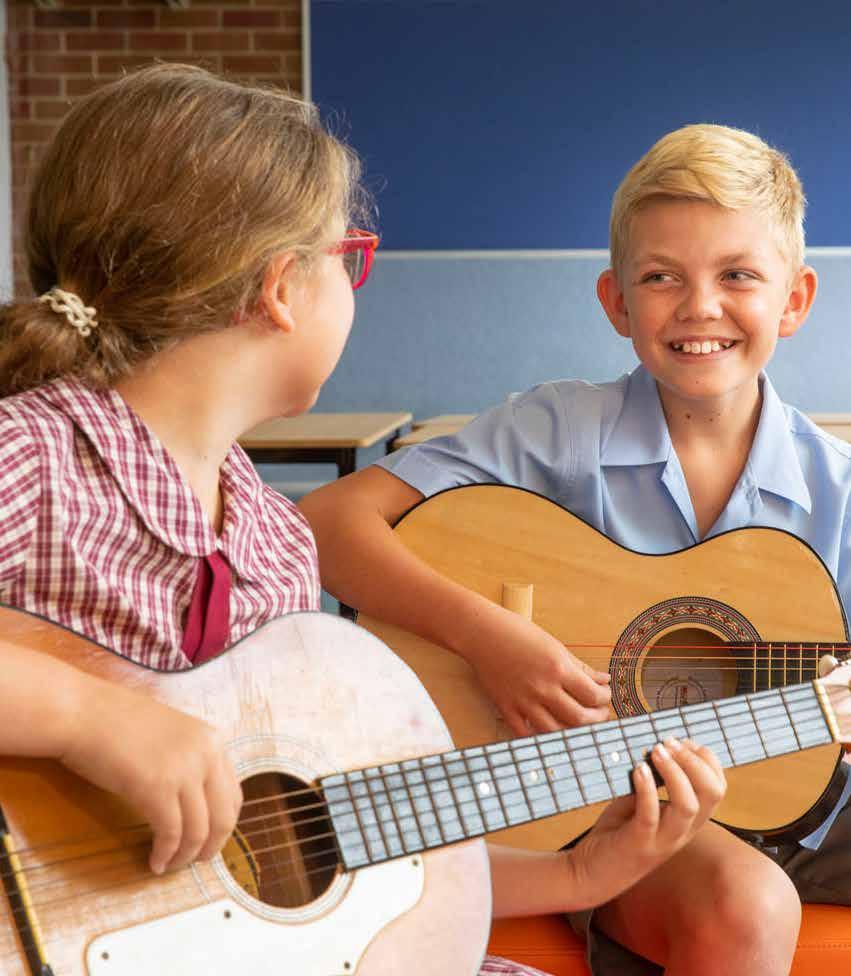
Belmont ST JOSEPH’S HIGH SCHOOL
On Country
Traditional custodians of the land, the Awabakal people
Belmont
Named by settler Thomas Williamson, after his home village on the Shetland Islands
Opened 1957
Closed 1963
Location
Ernest Street Belmont NSW 2280
Belmont originally within the Archdiocese of Sydney, parish of Swansea until 1966
1952
School opened as St Joseph’s Primary in Ernest Street, wooden building of three classrooms
1956
Grey stone cottage adjoining the primary school purchased
1957
Diocesan Sisters of St Joseph arrived to staff school First Principal M Joseph Mary Parmeter ‘Since there was no convent at Belmont at the time, the sisters were required to travel daily from the holiday convent at Swansea. As the convent was on Caves Beach Road and distant from the bus stops, Mr Tom Shanahan, the convent gardener, rowed the nuns across Black Ned’s Bay to a point on the highway where a bus collected and transported them to Belmont, via Mark’s Point – a trip which took nearly an hour.’ ¹
1958
High school expanded to second year students
1959
High school expanded to third year, with students completing further schooling at St Joseph’s Merewether
1962
New brick wing built adding five rooms for secondary students
1963
Secondary school closed with all buildings available for primary school expansion
Upon closure secondary students and staff and staff relocated to St Mary’s Gateshead, original convent used as a St Vincent de Paul Centre, second convent demolished for school expansion
1966
Swansea parish transferred from Archdiocese of Sydney to Diocese of Maitland
Parish of Belmont established, incorporating Swansea parish
Swansea ST PATRICK’S PRIMARY SCHOOL
On Country
Traditional custodians of the land, the Awabakal people
Swansea
Named from its resemblance to a seaport in Wales, by Captain R N Talbot, pioneer of the ship building trade.
Opened 1952
School today kindergarten to year 6
Charism: Josephite
Motto: Grow in Hope
Location: 213 Northcote Avenue Swansea NSW 2281
Parish: East Lake Macquarie
Swansea and Belmont originally within the Archdiocese of Sydney until 1966
1941
Diocesan Sisters of St Joseph purchased a property in Northcote Avenue, for sisters requiring rest and care
1952
Sisters asked to staff new school St Patrick’s in Wood Street Swansea. Opening enrolment 30 students
School building construction began
First Principal M Virgilius Perkins. ‘Initially, St Patrick’s Primary School was staffed by the Sisters of St Joseph. Its founding principal was Sr Virgilius Perkins. In those early days the nuns, who lived at Belmont, travelled to Black Neds Bay wharf by rowboat, where they moored and walked to the school which, at that time, was located on the site of what is now the McDonalds restaurant in Swansea. Local legend has it that, on more than one occasion, the boat capsized and gave the Sisters an additional bath for the day.’ 1
1954
Swansea parish, separated from Belmont parish, both within Archdiocese of Sydney
1966
Swansea and Belmont parishes transferred to Diocese of Maitland
1971
New school extensions opened in Wood Street, acclaimed for its modern amenities
1977 –1978
Relocation of church, classrooms and parish cottage to Josephite owned land in Northcote Avenue, on the shore of Black Ned’s Bay, land then donated to parish
1984
Diocesan Josephite administration ended
1985
First lay Principal, Mr Paul Neary
1986
Repairs and renovations to school buildings 1995
Convent moved from central site on the land parcel to new premises adjacent to school
Original convent dwelling demolished, St Teresa’s Cottages built adjacent to the site catering for Aged Sisters
Cottage in the grounds relocated to St Joseph’s Lochinvar near the Sports Field
1996
Sisters moved to adjacent site allowing school to expand
Two ‘demountables’ added for library and classrooms
2005 –2006
Old school demolished, new school built, also administration and staff facilities
2007
New school facilities officially opened
2009
Refurbishment of school facilities, external construction completed
Construction of multi-purpose hall


Glendale HOLY CROSS PRIMARY SCHOOL
On Country
Traditional custodians of the land, the Awabakal people
Glendale
Name is Scottish in origin, ‘glen’ for valley between hills, ‘dale’ also meaning ‘valley’
Opened 1958
Also opened
1961–1967 Girls High School
School today kindergarten to year 6
Charism: Mercy
Motto: We Dare We Share
Location: 326 Lake Road Glendale NSW 2285
Parish: Sugarloaf References
Several acres of land gradually acquired
1957
Parish of Glendale established, Diocese of Maitland
1958
School opened in ‘the Green Cottage’, a brick veneer structure of four rooms
Sisters of Mercy, originally travelling from Lambton convent
Sisters taught in newly erected church hall / school
First sisters, M Gonzaga Lantry, M Jacinta O’Connor
1958
Kindergarten to year 4, opening enrolment 105 students
1960
New primary and secondary schools and convent built
1961
Primary and secondary opened, buildings transported from Wangi Power Station and Greta Migrant Camp
Glendale Mercy convent established
1961 –1967
Girls High School operated
1968
Closure of high school enabled wooden style buildings to be used for primary classrooms
1974
First lay Principal Mrs June Bickle 1975
Open style building known as ‘The Unit’ constructed, uniting the school in one area ‘Gradually, better facilities were provided by the Parents and Friends of the school and the Mothers Club, so that it would now appear to be very well equipped. Many people, teachers and others who have been associated with Holy Cross School have sensed the existence of a very good spirit.’ ¹
1978
Sisters of Mercy resume administration of school
1988
Sisters of Mercy administration ends
2001
Construction of classrooms and student facilities
2009
Refurbishment of school facilities, internal works, IT equipment and infrastructure
Construction of multi-purpose hall and refurbishment of library
Photo: Glendale students 2021
Glendale HOLY CROSS GIRLS' HIGH SCHOOL
On Country
Traditional custodians of the land, the Awabakal people
Glendale
Name is Scottish in origin, ‘glen’ for valley between hills, ‘dale’ also meaning ‘valley’
Opened 1961
Closed 1967 Location
326 Lake Road Glendale NSW 2285
Several acres of land gradually acquired
1957
Cottage of four rooms, brick veneer structure
Parish of Glendale established, Diocese of Maitland
1958
Mercy sisters taught in church / hall, Kindergarten to Year 4
1961
Glendale Mercy convent established
Sister of Mercy, Principal M Louis Coote ‘From the beginning of the next school year the Sisters of Mercy will conduct a Secondary School for girls at Glendale. It will begin with one first year class and progress yearly until it will provide a full secondary school curriculum. For this purpose five class-rooms and a recreation room for the girls are being prepared. These classrooms are being constructed from buildings purchased from the Wangi Power Station project. A convent is also being provided for the Sisters of Mercy who teach in the present primary school and the new High School.’
Primary and Secondary opened in buildings transported from Wangi Power Station and Greta Migrant Camp
Girls High School opened, beginning with First Year, progressing each year to provide years first to sixth
1965
Five girls sitting the School Certificate won scholarships taking them to St Anne’s High School, Tighes Hill
1966
Registration granted under Bursary Endowment Act
1967
Sister of Mercy, Principal M Kostka Coote
Parents informed of expected closure at end of school year
Gradual closure of high school enabled wooden style buildings to be used for primary classrooms
Warners Bay ST MARY’S PRIMARY SCHOOL
The church owned our playing fields and nature area which was then a mass of bush. Another neighbour Mr Jack Finn, from the Water Board, sold us his property, hence we named it Finnland [sic]. There were a lot of new Australians present in our community at that time and many were Catholic.
1976 St Mary’s Warners Bay
On Country
Traditional custodians of the land, the Awabakal people
Warners Bay
Named after Johnathan Warner, residing on his original Land
Grant of 1280 acres, once called Awaba Bay
Opened 1958
School today kindergarten to year 6
Charism: Josephite
Motto: To Jesus Through Mary
Location: 2 Bayview Street Warners Bay NSW 2282
Parish: Boolaroo–Warners Bay
Warners Bay and Boolaroo originally within Archdiocese of Sydney until 1966
1957
School Building Committee formed
1958
Congregational Sisters of St Joseph opened a new school at Warner’s Bay, officially opened March
Two roomed school on parish land opened for Kindergarten and First class, enrolment 41 students
Sisters travelled daily from Boolaroo convent
1959
First sister, M Monica Joseph Enrolment 70 students
1960
School extended, now Kindergarten to Year 6
1966
Warners Bay and Boolaroo parishes transferred to Diocese of Maitland
1968
St Mary’s became Infants School for the parish, Boolaroo continued to cater for primary classes
1969
Students were transferred by bus daily –infants classes to St Mary’s Warners Bay, primary classes transferred from St Mary’s Warners Bay to Boolaroo
1976
Warners Bay parish purchased extra land at Warners Bay ‘The church owned our playing fields and nature area which was then a mass of bush. Another neighbour Mr Jack Finn, from the Water Board, sold us his property, hence we named it Finnland [sic]. There were a lot of new Australians present in our community at that time and many were Catholic.’ ¹
With closure of Boolaroo school, all students Kindergarten to Year 6 now accommodated at St Mary’s ‘Gradually with a shift in development from Boolaroo to Warners Bay, the school buildings at Boolaroo were eventually moved to Warners Bay. However, for some twenty years the two schools operated separately, one gradually decreasing and the other increasing’ ²
Boolaroo school buildings relocated to Warners Bay
1981
Congregational Josephite administration ended
1982
First lay Principal, Mr Greg Ginns
1986
Diocesan Sister of St Joseph appointed Principal M Marie Jones
New classrooms, administration block, relocation of existing classrooms, landscaping undertaken
1988
Diocesan Josephite administration ended 1989
Mr David Carty, Principal, 2005
Construction of classrooms, administration, staff facilities and library
2009
Construction of shade structure, security fence and general refurbishment
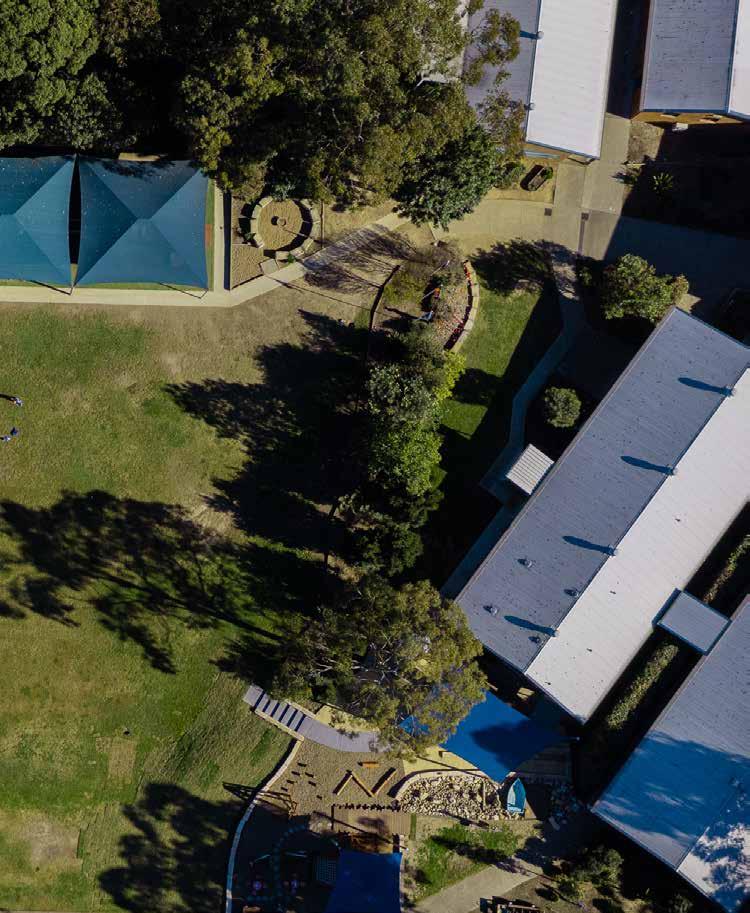
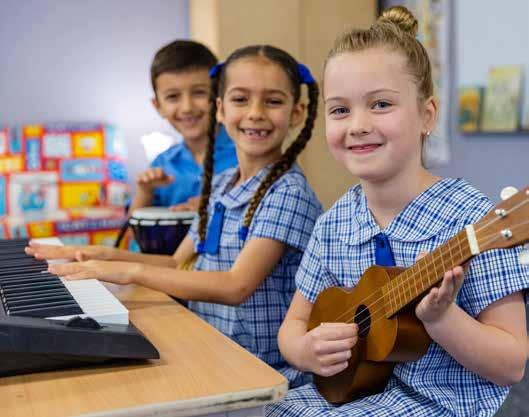
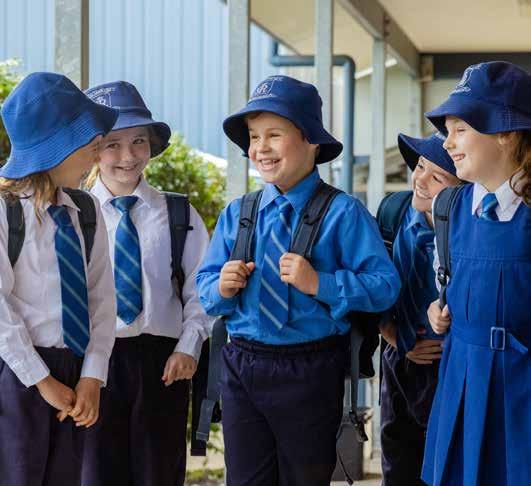
Windale SAINT PIUS X PRIMARY SCHOOL
On Country
Traditional custodians of the land, the Awabakal people
Windale
Named after an early settler Vere James Winn. Town was gazetted in 1951
Opened 1959
School today kindergarten to year 6
Charism: Josephite
Motto: Awake Aspire Learn
Location: 2 Lake Street Windale NSW 2306
Parish: East Lake Macquarie
Windale originally within Archdiocese of Sydney, parish of Belmont until 1966
1959
School classes began in church-hall building, enrolment 77 students
Convent opened for Sisters of St Joseph. Convent had been built under auspices of Archdiocese of Sydney
First Diocesan Sisters of St Joseph arrived to staff the school, M Virgilius Perkins Principal, M Anselm Brooder, M David (Loretta Mullins) ‘We found our school had people of special talents also: The sister who had uncanny marksmanship as she would fire her chalk at Ross Robinson to draw his attention to the board. The sister with the cleanest room in the school, at the expense of the childrens’ socks & to the annoyance of the parents, would not allow anyone in with shoes on.’ ¹
1966
Lakes Parishes transferred to Diocese of Maitland
1967
Parochial district of Windale established
1969 –1976
School buildings assembled – classroom relocated from Tighes Hill and a ‘demountable’ installed ‘The first one [tuck shop] began in Ruth & Bill Nelson’s kitchen across the road from the church, it operated for sometime until we obtained the building you now use as the library. Ruth would do the buying & and the ladies would assist in the preparation, load up the trays and carry them to the school. Mince was cooked & the children were served it hot in mugs or bowls that they brought from home. Sr Majella had a lolly tray & Thel Shultz a cake tray from which they sold their treats.’ ¹
1980
Diocesan Josephite administration ended
1981
First lay Principal, Mr David Carty
1986
Enrolment 135 students
Administration facilities completed
1993
Four new classrooms, tuckshop and toilet block added
1996
Mercy sister appointed Principal, Patricia Davidson
2009
Refurbishment of site landscaping, and school facilities both external and internal
Construction of library and multi-purpose hall
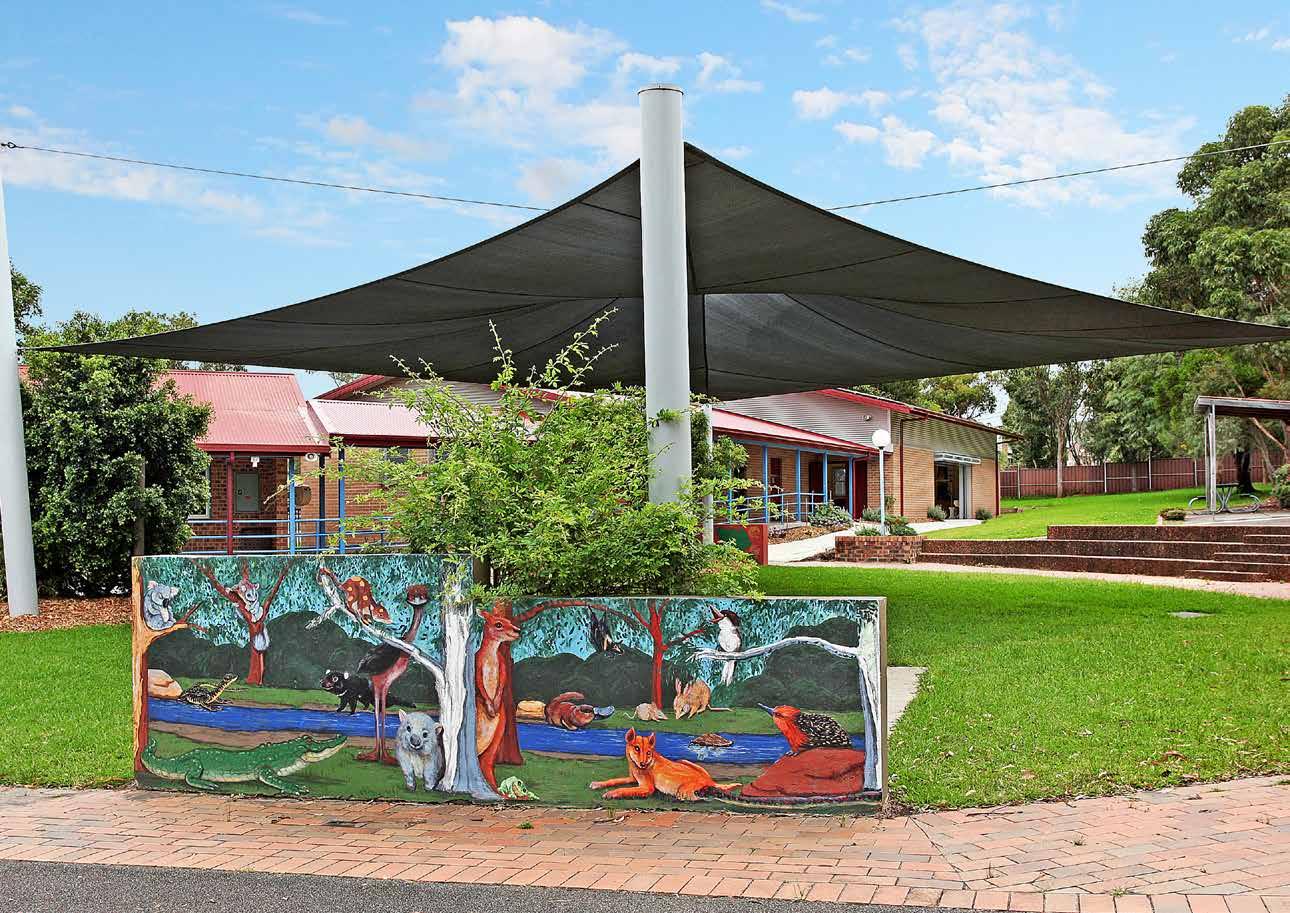
The first one [tuck shop] began in Ruth & Bill Nelson’s kitchen across the road from the church, it operated for sometime until we obtained the building you now use as the library. Ruth would do the buying & and the ladies would assist in the preparation, load up the trays and carry them to the school. Mince was cooked & the children were served it hot in mugs or bowls that they brought from home. Sr Majella had a lolly tray & Thel Shultz a cake tray from which they sold their treats.
1969 St Pius X Primary Windale
Morisset ST JOHN VIANNEY PRIMARY SCHOOL
On Country
Traditional custodians of the land, the Awabakal people
Morisset
Believed to be named after Major James Morisset, then Commandant of Newcastle Penal Settlement. In 1843 he made the first overland trip Newcastle to Sydney, camping on the western shore close to the present railway station.
Opened 1962
School today kindergarten to year 6
Charism: Josephite
Motto: Everyday our Best
Location: 60–66 Yambo Street Morisset NSW 2264
Parish: Morriset
Morisset originally within the Archdiocese of Sydney until 1966
1914
Parish of Wyong and Lake Macquarie established. Priest would travel from Wyong by train, say Mass in Morisset in a private home on Saturday, then ride a push bike 6kms to Cooranbong for Sunday Mass
1926
Wyong Parish established, encompassing Morisset and Cooranbong
1929
Land purchased in Yambo Street for church by Mr Dwyer
1930
Building relocated from Bridge Street to Yambo Street for church hall
1947
Parish of Morisset established, administered from Kincumber parish, Archdiocese of Sydney
1948 –1959
Parish administered by Fr Dominic O’Gorman OH (Order of John of God) residing at Morisset Park
1953
Land purchased 11 and 12 Dora Street, now included in school grounds
1958
Residence in Park Street (now Kent Street) rented then purchased for convent, refurbished 1961
1961
Diocesan Sisters of St Joseph arrived to staff school, school blessed
1962
St John Vianney School opened, first sisters
M Basil Tynan Principal, M Hilda Hayes, M Gonzaga Bradley
1964
Small hall with canteen built for use of school and parish, donated funds from Mr Condron
1966
Parish of Morisset transferred to Diocese of Maitland
1970
‘The IQ test was given to Sixth Class. The children participated in the Anzac Day March and the sisters took a bus load of children to see the Queen. Children in Second Class made their First Holy Communion.’ ¹
1972
Josephite administration ended
1973
First lay Principal, Mr Joseph Henchy
1981
‘Demountable’ classroom purchased
1984
Last Josephite Sister in the school
1991
Renovation / addition of classrooms and toilet block, ‘demountable’ relocated for office and staffroom
1996
Fence dividing two playgrounds removed, following lease of laneway from Lake Macquarie City Council
1997
Landscaping incorporating a swale running through the school grounds, all-purpose steel shelter built
2003
Portable building on site, with another ‘demountable’ added in 2006
2008
Administration block built
2009
Library and multi-purpose hall built, oval completed
2015
St Patrick’s & St Brigid’s Church, Cooranbong now Mary of the Cross MacKillop Pilgrimage Site, with two plaques mounted close to the front church corner
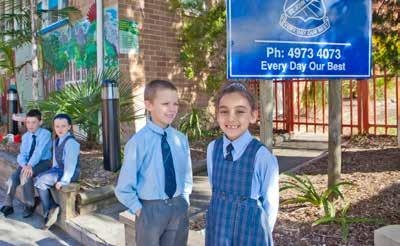
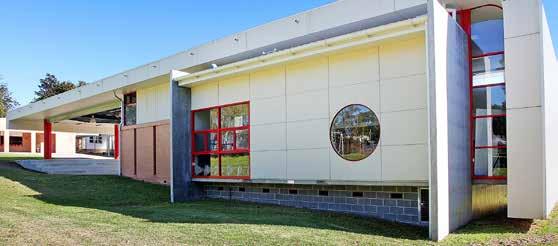
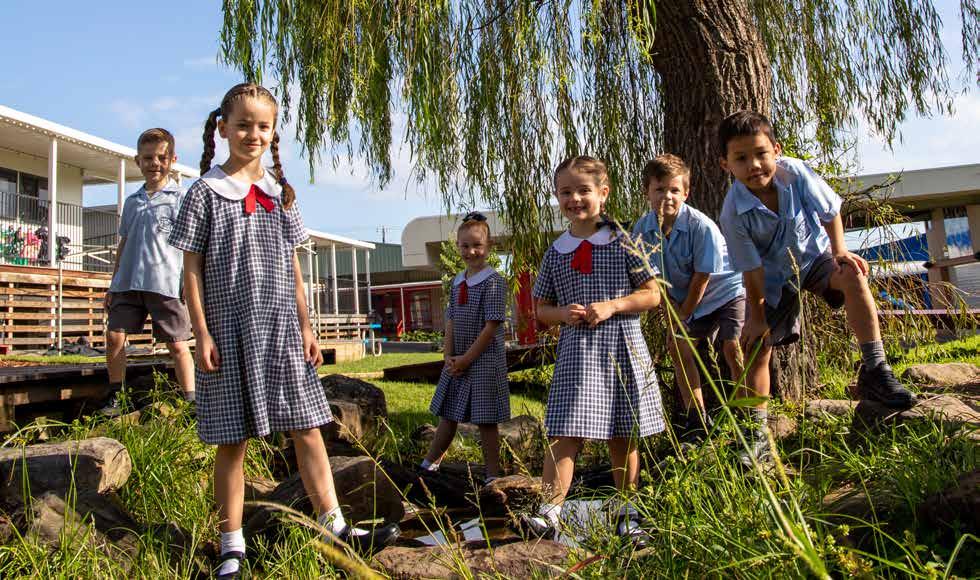
Photos: St John Vianney, Morisset children in the playground and buildings
Edgeworth ST BENEDICT’S PRIMARY SCHOOL
On Country
Traditional custodians of the land, the Awabakal people
Edgeworth
Named after Sir T W Edgeworth-David, Welsh geologist and Antarctic explorer, who discovered the Hunter Valley coalfields while working as assistant geologist for the NSW Government. Edgeworth was formerly known as Young Wallsend
Opened 1962
School today kindergarten to year 6
Charism: Josephite
Motto: Pray Together Work Together
Location: 839 Main Road Edgeworth NSW 2285
Parish: Sugarloaf
1960
Land purchased three and a half acres on Main Road
1962
Five wooden buildings from Greta Migrant Camp relocated for use by school, convent and parish ‘About three years ago Rev. Father B. Kennedy, the priest in charge of the Parish of West Wallsend, purchased three and a quarter acres of land on Main Road Edgeworth, and bought a hut from Greta Migrant Camp and had it converted for use as a Church which can accommodate 140 people. More huts were then obtained and converted for use as a school and have been in use for some time. Recently more huts were purchased and renovated for use as extra classrooms and a small convent.’ ¹
St Benedict’s became Infants School for West Wallsend and Edgeworth parishes
Diocesan Sisters of St Joseph arrived, M Cabrini Boyle, M Anne Mary Hatton, travelling from West Wallsend convent
School opened Kindergarten to Year 4, enrolment over 60 students. Primary students attended West Wallsend. ‘The new school is fairly well equipped, but Father Kennedy said this week that one thing it lacks is a piano for the kindergarten classroom. If anyone can help with their old piano or would like to give a second - hand piano to the school, it would be greatly appreciated.’ ²
1964
School and convent officially opened. Convent was a converted ‘hut’ from Greta Migrant Camp
1972
Convent closed to allow school use of building, sisters resumed travelling from West Wallsend Convent
1978
St Joseph’s School West Wallsend closed
St Benedict’s Edgeworth became full primary school for the area
1980
Extensions to school
1984
Diocesan Josephite administration ended
1985
First lay Principal, Mr Steve Murray
New administration and kindergarten block
Last religious in the school
1994
New administration block, three classrooms and canteen
2004
Construction of 6 new classrooms and library
2009
Construction of shade structure, refurbishment of school facilities, external works and upgrade of electrical reticulation
Construction of multi-purpose hall and classrooms
2011
Construction of 2 new classrooms and new much needed hall
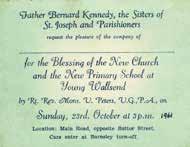
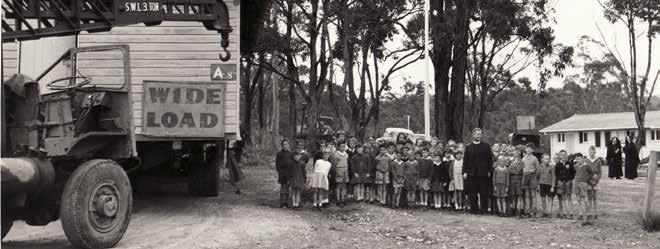
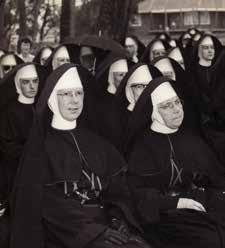
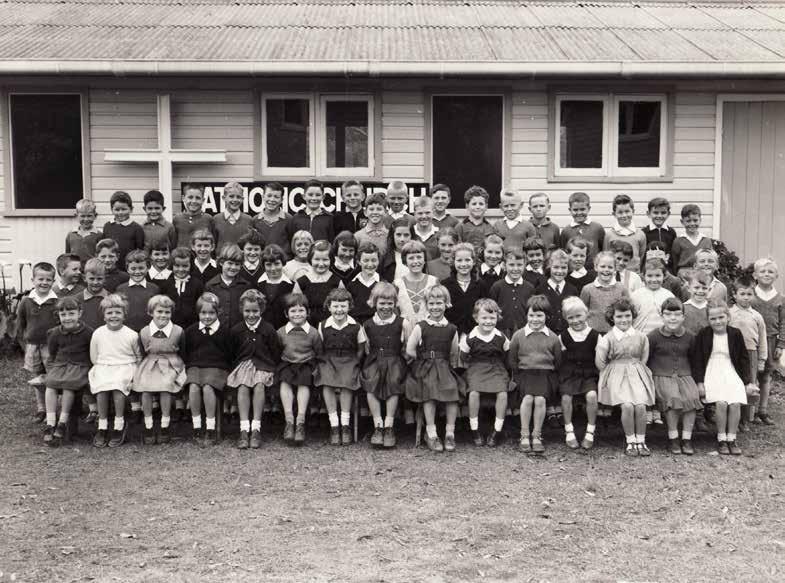
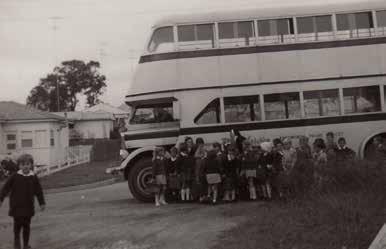
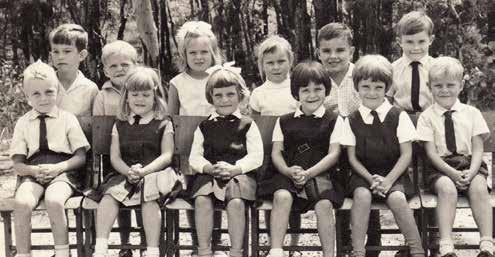
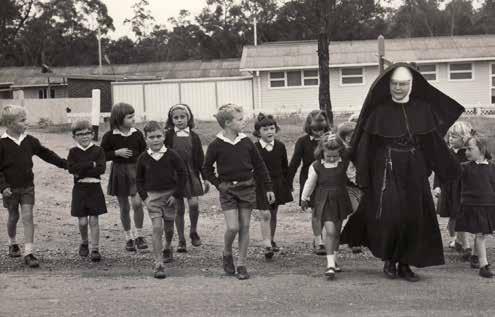
Photos (L-R top clockwise) : School site 1962, Sisters at opening 1961, Bus trip to Glenbawn Dam 1968, Sister Cabrini crossing the road with school students in 1961
Morisset ST JOHN OF GOD TRAINING CENTRE
On Country
Traditional custodians of the land, the Awabakal people
Morisset
Believed to be named after Major James Morisset, then Commandant of Newcastle Penal Settlement. In 1843 he made the first overland trip from Newcastle to Sydney, camping on the western shore close to present Morisset railway station.
Opened
Morisset within the Archdiocese of Sydney until 1966
1934
Purchase of 55 acre property ‘The Bluff’ at Morisset Park, from owner Bert Bailey by The Little Company of Mary, order of nursing nuns with Hospital and Provincial Home in Lewisham.
St Joseph’s Convalescence Home established as an adjunct to their hospital, and conducted by sisters as a retreat house for alcoholic and burnt-out priests.
‘They also established a cemetery there, where members of their Order, and also seven priests, were buried. They were responsible for the large statues of Our Lady and St Joseph still to be seen in the grounds.’ ¹
1947
Parish of Morisset established
Hospitaller Order of St John of God (OH) purchased ‘The Bluff’ from The Little Company of Mary.
St John of God Training Centre established as a special school for emotionally disturbed boys, later named Kendall Grange. The Centre was based on the model of a Boarding School. It accepted boys between 7 and 14 years with orphans being given a priority. The number of enrolments peaked at 93 of whom 20 were orphans. The Centre came under the auspice of St Vincent de Paul Society (SVDP), until such times as the brothers assumed full responsibility.
‘This was the first house established by St John of God Brothers in Australia. It was also their novitiate.’ ¹
First brothers to arrive, Brothers Herbert and Hartley
1948 –1959
Fr Dominic O’Gorman OSJD OH, chaplain for the Brothers, became parish priest of Morisset
1951
‘The farm attached to the centre produced 5,031 gallons of milk and 5,338 dozen eggs last year. This added 1,400 pounds to the centre’s funds. Cardinal Gilroy said that the committee had 2,200 pounds in hand before the meeting began.’ ¹
1966
Parish of Morisset included in the Diocese of Maitland
1967
Principal, Br Stanislaus Murray OH
1969
Brothers assumed full responsibility for Kendall Grange, after many years of SVDP support
1983
Administration of St John of God Brothers ended
1985
Constable Report recommends that a Board of Management be established
1992
Usher Report recommended closure of all large residential facilities Government policy encouraged the development of smaller group homes, but this was not implemented
St John of God residential facilities closed
1993 –2000
Behaviour Management Outreach Program which kept children in their family units was developed
1999
Decision made to not accept new enrolments and to phase out the current in-home Behaviour Management Outreach Program by September
2000
Sept 6 The last children left St John of God and the service closed
Sept 10 St John of God Family Services commenced 2004
Kendall Grange site sold to Johnson Property Group for proposed development 2020
All hostel buildings demolished, now developed as Trinity Point Estate
Gateshead ST PAUL’S PRIMARY SCHOOL
On Country
Traditional custodians of the land, the Awabakal people
Gateshead
Named after a town in England, by the first surveyor in the area 1876, Mr W.T. Verge
Opened 1964
School today kindergarten to year 6
Charism: Josephite
Motto: Love One Another
Location: Felton Street Gateshead NSW 2290
Parish: MacKillop
1963
Parish of Gateshead established, Diocese of Maitland
Land five and a half acres purchased on Pacific Highway for new high school (originally Buckton Milroy farm)
1964
Diocesan Sisters of St Joseph arrived, first Principal, M Kilian, enrolment 75 students
First community, Sisters Joan Blake, Anita Conroy, Marcellinus, Miriam Nicey, Kilian Casey, Maureen Idstein, Marie Craddock, Bernadette Casey, Betty Brown, Lynette Pearce
Infants School St Joseph’s opened in two classrooms of the High School
New church / school opened in May for Kindergarten to Year 2
High school opened, many buildings were relocated here from other parts of the Diocese and business world ‘One particular structure is outstanding in my mind. It was a prefabricated, post World War II, set of two classrooms which had to be moved from Glebe Public school grounds to make way for a new school there. Father Kennedy heard about it and bought it for $500. … In spite of the sweat and sometimes blood lost on these projects a wonderful comradeship grew up between the men working. … Fr Kennedy was a hospitable man and always provided refreshments for his workers. Some people on the outside said it was
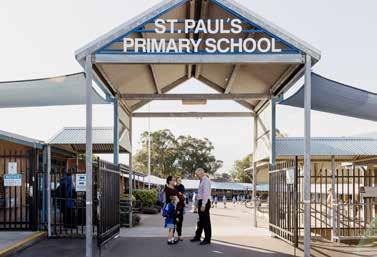
bribery, others a temptation, but to us it was a “thank you”. The deadline for classrooms had always to be met and there were times when we finished “past the midnight hour” and “driers had to be put to the paint”, so lately applied. Thank goodness for understanding wives!.’ Early memories from Dave Lester ¹ ‘Fr Kennedy … would like to pay a special tribute to the architect, Mr Kevin Gannon who designed the whole project … [using] as much voluntary labour as possible.’ ²
1967
St Paul’s School became full primary catering for Kindergarten to Year 6
Convent built for sisters teaching at Primary School
1968
Former cottage used for kindergarten at New Lambton moved here, new toilet block in construction
1970
Land purchasedthree and a half acres from Lands Department, extra classrooms built
1971
Enrolment 355 students
1973
To free up classroom space, parish built a new church
1984
Diocesan Josephite administration ended
1985
First lay Principal, Mrs Mary Young
2001
Construction of classrooms and student facilities
2002
New premises opened after three years of planning and construction work, at the rear of the same site
2009
Refurbishment of internal school facilities, Information and Communication Technologies equipment and infrastructure
Construction of multi-purpose hall and refurbishment of library
2012
School hall erected and used as a shared facility with St Mary’s Catholic College, Gateshead




Gateshead ST MARY’S CATHOLIC COLLEGE
On Country
Traditional custodians of the land, the Awabakal people
Gateshead
Named after a town in England, by the first surveyor in the area 1876, Mr W.T. Verge
Opened
1964 Known as 1964 St Mary’s High School School today years 7 to 10
Charism: Josephite
Motto: Love One Another
Location: 47– 49 Pacific Highway Gateshead NSW 2290
Parish: MacKillop
1963
Parish of Gateshead established, Diocese of Maitland
‘The success of a priest in Australia during the past depended not only on his spirit of prayer but also on his capacity to organise his people into a community. Added to that was needed a knowledge of finance, a building acumen, an estate agent’s sense of when and what to buy. Father Kennedy had all these qualities as you will see from all the work mentioned here.’ ¹
‘Every step was an exciting challenge. I had had good experience with voluntary workers in different places and saw it as a vital means of getting what was wanted. There were no money grants then, to do buildings – only loans.’
Land Five and a half acres purchased by Sisters of St Joseph on Pacific Highway for new high school
New school designed by and built by VF Doran & Sons
1964
New convent built by Diocesan Sisters of St Joseph
First community, sisters Joan Blake, Anita Conroy, Marcellinus, Miriam Nicey, Kilian Casey, Maureen Idstein, Marie Craddock, Bernadette Casey, Betty Brown, Lynette Pearce
St Mary’s High School opened for girls, secondary students transferred from, then St Joseph’s High School Belmont
Enrolment 160 students
1969
Part of convent used for secondary school 1971
School administered by Catholic Education Office 1981
Enrolment 420 students
1982 –1983
School began transition to Junior Secondary Co-educational High School 1983
Addition of facilities for home science, technics and change rooms
Diocesan Josephite administration ended
First lay Principal, Mrs Helen Hemphil
Enrolment 940 students
Construction of music rooms, student, science laboratories, senior learning area and TAS
2009
Refurbishment of school facilities external, construction of shade structure, upgrade of electrical reticulation
Trade training centre, dust control, fume extraction and agricultural equipment
2011
Refurbishment of science laboratories
2018
Transition to Stage 6 with Year 11
School renamed St Mary’s Catholic College
Photos : St Mary's Catholic College, Gateshead

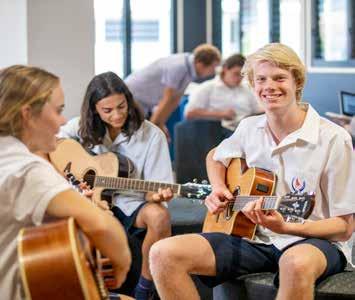
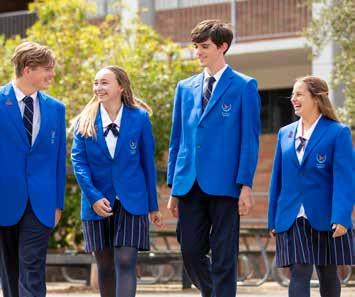
Booragul ST PAUL’S CATHOLIC COLLEGE
On Country
Traditional custodians of the land, the Awabakal people
Booragul
Aboriginal word for ‘summer’
Opened 1984
Known as
1984 St Paul’s Co-educational High School
2018 St Paul’s Catholic College
School today year 7 to 12
Motto: To Live is Christ
Location: 70 Primrose Street Booragul NSW 2284
Parish: Booragul
School Opened Staff Years
St Paul’s Catholic College 1984 Lay Teachers 37
References
1 Catholic Education Reporter 12/1981
2 Catholic Education Reporter 06/1986
Booragul originally within Archdiocese of Sydney, parish of Toronto, 1966 transferred to Diocese of Maitland
1972
Parish of Toronto set up Committee, aiming to establish a regional high school in Westlakes area ‘Public meetings were held in the parishes concerned and a survey was conducted seeking the response of Catholic parents to the idea of a regional Catholic high school. The response was enthusiastic.’ ¹
1980
Diocesan Education Board supported the establishment and unanimously recommended this to the Bishop. High School to draw from parishes of Boolaroo, Booragul, Cardiff, Glendale, Morisset, Sugarloaf, Toronto, Warners Bay and West Wallsend
1982
Land purchased from Housing Commission
1984
Opened as St Paul’s co-educational High School
Upon opening the school was fully ay staffed
Founding Principal, Mr David Moore ‘In those early days of St Paul’s (and in our context, two years is a long time in the life of a school!) there were no traditions, no established ways of doing things. Hopes and aspirations were very high from all members of our school community and there was a real commitment to the establishment of a school where Gospel values would permeate through into all its activities.’ ²
1985
Stage 1 commenced
1987
Stage 1 completed – administration block and first permanent classrooms
1994
Completion of permanent library
1999
Stage 2 Classrooms and speciality teaching rooms
2000
Construction of classrooms, canteen and Performing Arts area, senior courtyard, Holland Court
School extended to include Years 11 and 12
2001
Another parcel of land was purchased
2004
Opening of school hall on 25 May
2009
Sports Assembly area and Master Plan developed
Refurbishment, external works, upgrade of electrical reticulation, security fence built
Trade Training Centre – Construction, Hospitality Commercial kitchens
2013
Construction of general learning area, specialised library area, administration and covered outdoor learning area
2018
Renamed, St Paul’s Catholic College
Completed – new administration wing, classroom block, staff facility, and St Paul’s Chapel
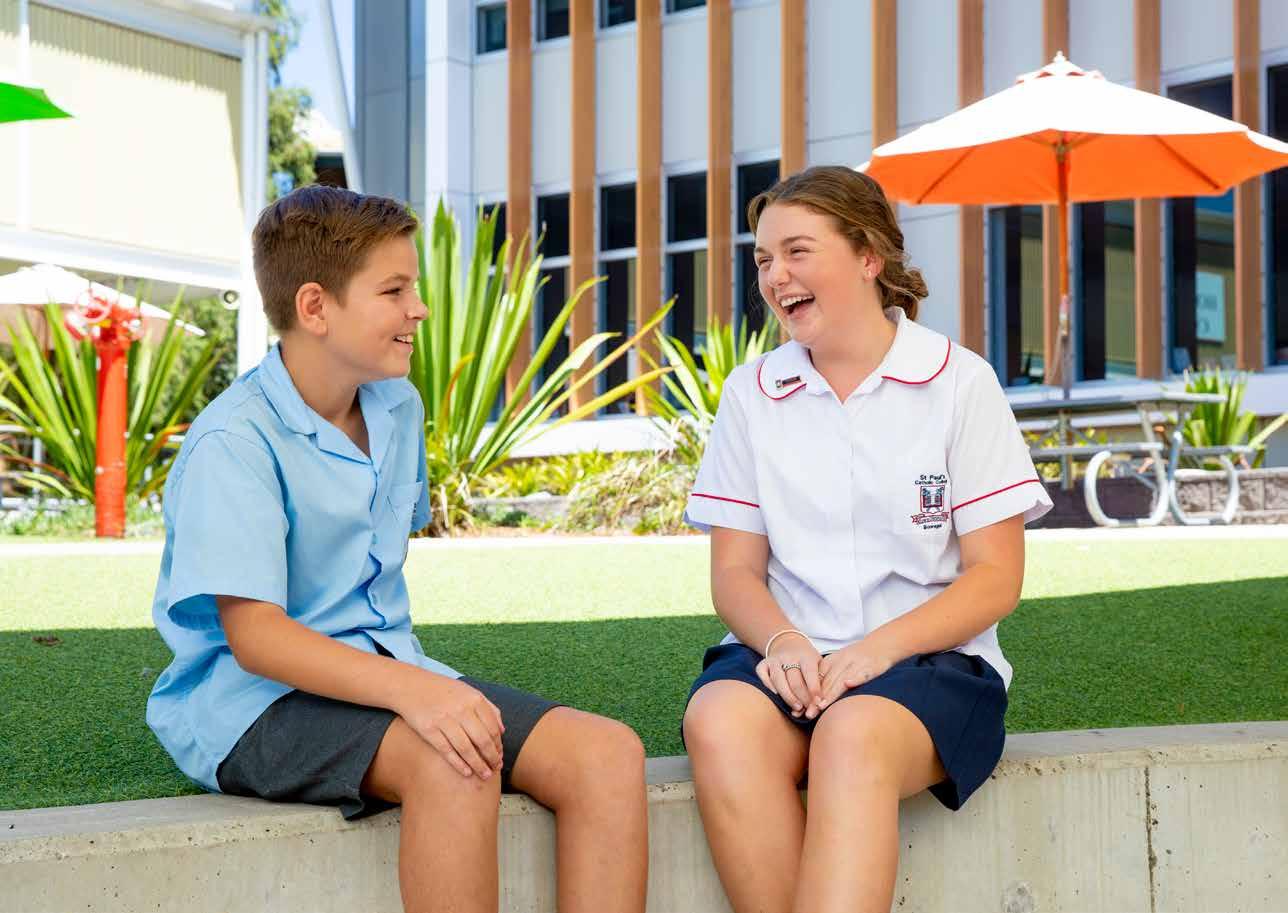
CATHOLIC SCHOOLS IN THE Manning region
On Country:
Traditional custodians of the land the Biripi, Guringai and Worimi peoples
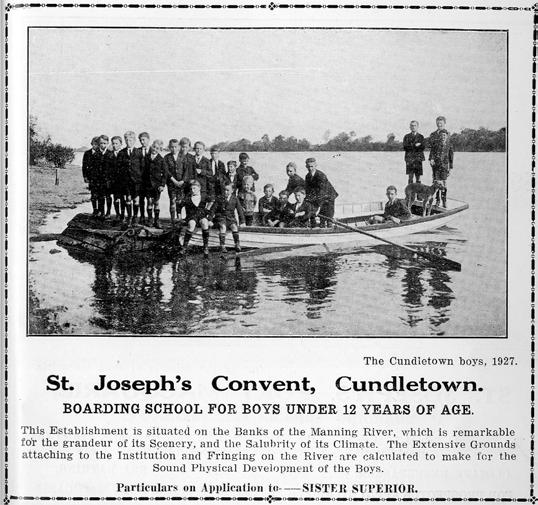
The Manning River begins its journey in the Guringai region of the Barrington Ranges and winds its way through remote rural lands for much of its upper catchment gathering volume from the many tributaries that flow into its course. At Wingham, it becomes a significant river which widens at Taree and separates into a double delta river, dividing the coastal land between its arms into several large islands. The south arm enters the ocean near Old Bar while the north arm is joined by the Dawson and the Lansdowne Rivers winding its way past Cundletown and enters the sea at Harrington.
This is the country of the Biripi people of the Bundjalung nation who called the river Booumbahlee meaning a place where the brolgas played.
European settlement in the Manning region was very limited before the mid –1800s. In 1826 the Manning River was declared the boundary of the Northern Counties thus restricting the area in which settlers were free to occupy land. However by 1830 cedar getters were located along the banks of the Manning. In response, Wingham which is located near the limit of navigation on the Manning, was established in 1840 as a Government settlement and the gateway to the Upper Manning. It was from Wingham that the cedar logs were floated down the river to Cundletown where a private town developed around the river trade.
Max Solling in his book, Town and Country, A History of the Manning Valley, gives an insight into the early settlers.
‘Presbyterian minister, J. D. Lang sought to transplant Presbyterian families from Scotland and Ireland along the North Coast and create an anti-papist peasantry there. Almost eighty per cent of Macquarie County in 1861 was Protestant and Catholics remained well below the state average along the north coast. As the largest voluntary grouping in colonial society, Protestant beliefs and practices exercised a powerful influence on the conduct of life.’ 1
The Catholic settlers in the Manning may have been a minority but their presence spread throughout the valley as free settlers from countries such as Ireland and Germany made their home in the region. The Parochial district of Manning River was established in 1855 with Cundletown as its centre. It was here that the Catholic community erected its first church in 1856 on a parcel of ground presented to them by the Cundle Land Company. 2 This was the first of many small churches that were built by Catholics in the scattered communities of the Manning region. Between 1870 and 1901 Churches were opened at Taree, Krambach, Camden Haven, Little Dingo (Wherrol Flat), Tuncurry, Nabiac, Upper Lansdowne, Oxley Island, Stewarts River and Wingham thus showing the commitment and dedication of these early Catholic settlers.
It was not until the 1890s that there was a movement towards establishing Catholic schools in the region. Without Government funding, it was necessary to seek a Religious Congregation to provide teachers. In the Manning, the Sisters of St Joseph, Lochinvar responded in the spirit of St Mary MacKillop and Father Julian Tenison Woods to provide Catholic education to children in rural areas.
Krambach was the first community to establish a Catholic school. Krambach, formerly known as Larry’s Flat was an important coaching stopover in the final quarter of the nineteenth century and was the third most populous Manning town housing 357 residents in 1901.³ Beverly Zimmerman’s book, The Making of a Diocese, relates the initiative of the solid Catholic fraternity in approaching Bishop Murray to establish a convent school in the village.
MANNING REGION MAP
‘On a trip to the North Coast the bishop called at Krambach, where he was met by a delegation of German and Irish Catholics who put their case to him. Murray stipulated that unless they had a certain number of children, a suitable school building and means to support a community of sisters, he could not meet their request. The German and Irish settlers gathered their resources and within a few weeks, had the required number of children and a school building. Gallagher offered accommodation for the sisters free of charge at his hotel until suitable convent could be built and promised that he and his brothers, Larry and Tom, would see that the sisters had adequate support. The first community of Sisters of St Joseph arrived at Krambach in April 1893.’ 4
Thus began a long association of the Sisters of St Joseph in Catholic education in the Manning Region.
Six years later in 1899, Bishop Murray escorted a community of Sisters of St Brigid from Coonamble to Cundletown where they planned to open an exclusive boarding school for young ladies. The Sisters’ stay in Cundletown was short lived and they moved to Sydney in 1905 and in January 1906 the Sisters of St Joseph from Lochinvar opened a school with 50 pupils including a Girl’s Boarding School. 5
The opening of the North Coast Railway linking Maitland, Dungog, Gloucester, Wingham and Taree in February 1913 provided a secure land route for the communities in the Manning Region and led to the development of these rural towns. With the increased population, the demand for Catholic education grew. In the spirit demonstrated by the Krambach community the Sisters of St Joseph were invited to respond to this need. A primary school was opened in Gloucester in 1919. In 1923 the Sisters went to Taree where they opened a primary school and in 1926 opened a high school. Wingham school was opened in 1935 including an Intermediate High School which operated until 1961. To cater for pupils who lived in isolated areas the Boarding School for Girls was transferred to Taree in 1923 and a Boarding School for Boys under 12 years of age was opened at Cundletown.
The schools at Bulahdelah and Forster were established in the 1950s and are situated to the south of the Manning River on the lands of the Worimi Aboriginal peoples. Originally these communities and the whole of the Wallamba and Myall districts were part of the Krambach parish.
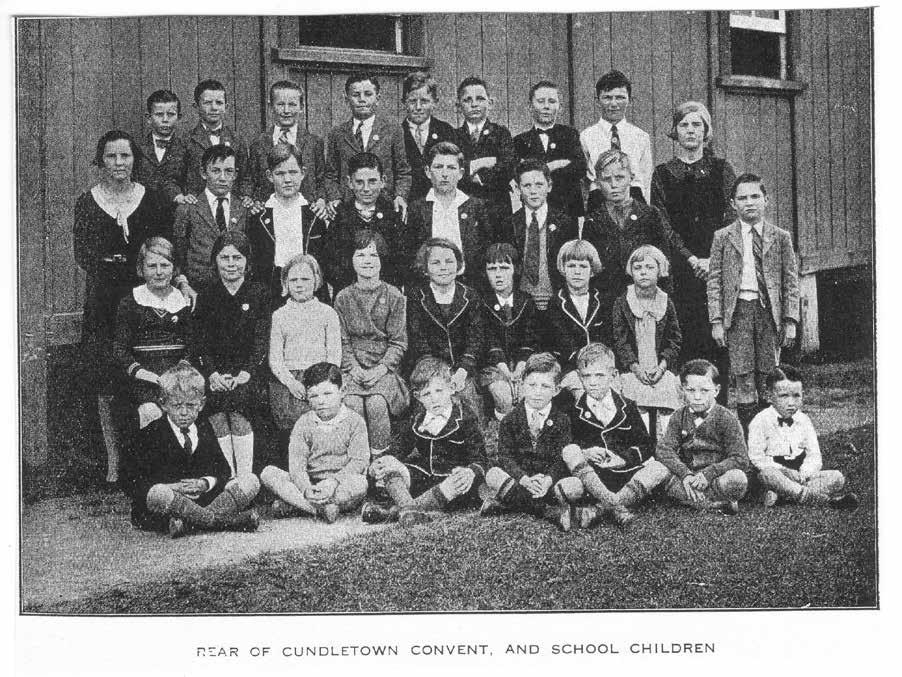
St Joseph’s Primary School at Bulahdelah was opened by Sisters of St Joseph in 1955 and from 1958 to 1966 an Intermediate High School was conducted there. When the Parish of Forster/Tuncurry was established in 1956 there was a movement to build a Catholic school. This was strongly supported by the families of the Italian fishermen who had made their home in Tuncurry as early as the late 1800s. 6 In January 1959 the Sisters of St Joseph, Lochinvar, moved into the home they had purchased in Tuncurry and later that month set up a school in the Holy Name Church/Hall in Forster.
The Sisters opened a school at Kendall, in the Camden Haven area in 1952. When the diocesan boundaries changed in 1966, Kendall became part of the Lismore Diocese and the school moved to Laurieton and became St Joseph’s Community School.
It is from these small beginnings that Catholic education in the Manning Region has been able to grow.
Footnotes
1.
2.
3.
4.
5.
Solling, Max, Town and Country, A History of the Manning Valley, Sydney, 2007, p.11.
Empire (Sydney), 16 October 1856, p.2.
Solling, p.291.
Zimmerman, Beverly. The Making of a Diocese, Melbourne, 2000, pp. 179–180.
50th Anniversary of Our Lady of the Rosary Church Taree 1930–1980 p. 63.
6. Gogarty, Susan, Tuncurry Tapestry of a Town, 2011, p. 112.
Students St Joseph’s Cundletown
Krambach ST JOSEPH’S
PRIMARY
SCHOOL
On Country
Traditional custodians of the land, the Biripi people
Krambach
The local mountain was called Krambach, and with increased settlement the village came also to be so named, possibly after the German Bavarian village ‘Krambuch’
Opened 1893
St Joseph’s 1893 1989 Diocesan Josephites Lay Teachers 88 7
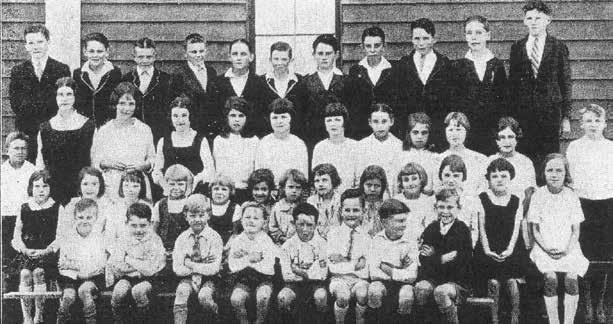
Originally the area was part of land belonging to the Australian Agricultural Company
1874
Krambach originally known as Larry’s Flat, settled by a mixture of Irish and German families
Original wooden church built, St Kilian’s (First church site)
1892
Consecration of new Roman Catholic Church St Kilian’s, 18 October (Second church site)
1893
Diocesan Sisters of St Joseph travelled from Dungog convent, journey of three days by boat and buggy
First sisters, M Francis Tracey, M Josepha Comerford, M Aquin Leehy ‘Well, there are mountains all around us and big shrubs. There are all kinds of lovely wild plants growing about and nice ferns. We get nice flowers too to decorate Our Blessed Mother’s Altar. There are thirty two children coming to school. We teach in the church. The convent and church are wooden buildings.’ ¹
Catholic school opened in church with 32 students, girl boarders accommodated from the early days
1895
‘By April it had 54 students.’ ¹
April ‘We have had a great lot of rain and very high floods since the New Year. Most of the farmers lost their crops.’ ¹
September ‘There is a great deal of dead timber about and I think every tree and log for miles around was on fire that night. I never saw such a sight in my life. We had to keep nine children here that night.’ ¹
1907
Parish of Krambach established
1908
Enrolment 58 students
1911
‘It was a positive time to be at Krambach, for that year a new brick school with two classrooms and a stage, was opened.’ ¹
1915
Opening of new presbytery
1928
Sisters were withdrawn in June over disagreement with Parish Priest Fr P O’Regan (PP died 8/10/1928 )
1929
Sisters returned the following January
1958
Storm completely destroyed parish church, St Kilian’s.
‘On Wednesday afternoon after school an 80 mile-an-hour wind accompanied by torrential rain swept through Krambach causing severe damage.’ ¹
1959
New school building and church “opened in spacious undulating grounds.” (Second church site) ¹
1962
Bus service began from Bucca Wauka, transporting children to Krambach
1963
New church built on First church site, now named St Bernadette’s
1981
Diocesan Josephite administration ended.
1982
First lay Principal, Mrs Ann Jones
1989
School closed, students accommodated at Taree School Opened Closed Staff Years
Students Krambach 1933
Cundletown ST JOSEPH’S
PRIMARY
SCHOOL
On Country
Traditional custodians of the land, the Biripi people
Cundletown
Cundel was the Aboriginal word for a plant we now know as Cockspur
Opened 1906
Preceded by
1899 Catholic Primary School opened by Brigidine Order, Coonamble
Also opened
1899 Select High School and Boarding school, Brigidine Order
1906 Catholic Primary School and Girls’ Boarding School, Josephite Congregation
Closed
1923 Girl’s Boarding School transferred to St Joseph’s Taree
Opened 1923 Boy’s Boarding School
Known as 1964 St Joseph’s College
Closed 1969 Primary School and Boy’s Boarding School
Location
52 River Stree Cundletown NSW 2430
1855
Parochial district of Manning River established, within the Archdiocese of Sydney
1857
St Patrick’s Church, first Catholic church in the Manning Region established, built of wood
1883
Community of Brigidines arrived in Australia, establishing their first foundation in Coonamble
1887
Diocesan boundary change, Coonamble excluded from Diocese of Maitland
1899
Six sisters from Coonamble arrived Cundletown with Bishop Murray aboard the coastal steamer ‘Coraki’
Brigidine sisters opened a Catholic school 19 October, residence leased for sisters ‘Cundle House’
‘Select’ High school for girl and boy boarders opened
1901
Bishop Murray visited the Manning and gave an address at St Patrick’s Cundletown ‘The first picnic in connection with the Brigidine Convent school, held on the extensive college grounds on Saturday, was a gratifying success. Amongst the visitors, were his Lordship Bishop Murray and many prominent non-Catholic residents of the district.’ ¹
1904
Enrolment 47 pupils
1905
Brigidine sisters leave Cundletown and move to their Sydney Foundation in Randwick
1906
Diocesan Sisters of St Joseph founding community arrived from Lochinvar Convent First sisters, M Alphonsus Londrigan, M Agatha Bussell, M Gonzaga Connolly, M Ligouri May
‘To get there from Lochinvar was an adventure – or an ordeal! The Sisters ’… left Newcastle on a steam ship at midnight Friday 12 January. Mid-morning they reached Cape Hawke (near Forster), where they stopped briefly before being driven by Gallaghers to Krambach (over 35km away). There they stayed the night and the following morning they travelled another 40km to Taree, after lunch they travelled the short distance to Cundletown.’ ²
1908
Enrolment 49 students
1909
New church of St Patrick built on River Street. Also built, new boarders’ dining, music and painting rooms
‘To get there from Lochinvar was an adventure – or an ordeal! [The Sisters] … left Newcastle on a steam ship at midnight Friday 12 January. Mid-morning they reached Cape Hawke (near Forster), where they stopped briefly before being driven by Gallaghers to Krambach (over 35km away). There they stayed the night, and the following morning they travelled another 40km to Taree, after lunch they travelled the short distance to Cundletown.’
1906 St Joseph’s Cundletown
1914
Convent destroyed by storm
1915
New convent built ‘neat timber buildingroomy, well ventilated’ ²
1923
Boys’ Boarding School opened for boys under 12. Girls’ facilities closed with students transferred to newly opened St Joseph’s Taree
1956
New convent and boarding school built, old convent used for school
1969
January 10 School and Boarding School closed
1975 –1976
Sisters of Mercy, Aboriginal Apostolate in convent building
1976
Old convent complex demolished, St Paul’s Hostel for Aged built, now St Paul’s Retirement Community
1989
Re opening of convent by Josephite Community
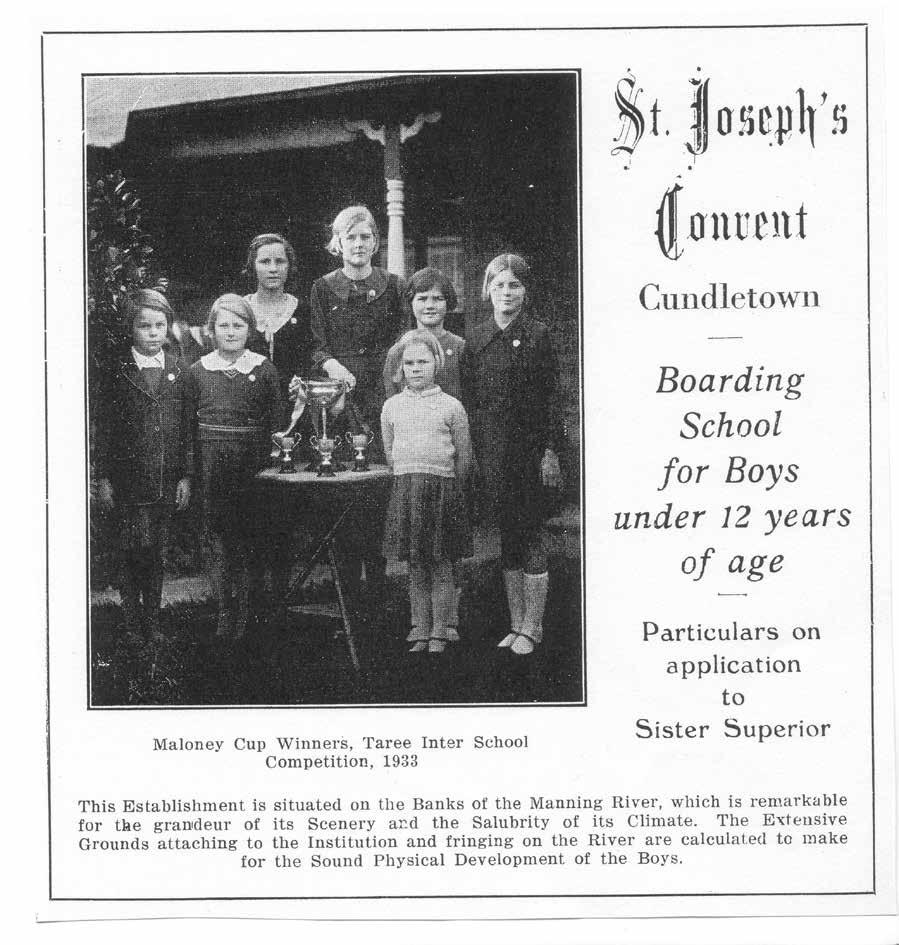
Gloucester ST JOSEPH’S PRIMARY SCHOOL
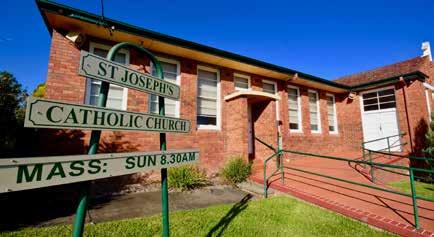
On Country
Traditional custodians of the land, the Guringai and Worimi people
Gloucester
Named after the Cathedral City in England
Opened 1919
School today kindergarten to year 6
Charism: Josephite
Motto: Reach out in Love
Location: 53 Denison Street Gloucester NSW 2422
Parish: Gloucester
1907
St Joseph’s wooden parish church built
1919
New convent blessed and opened Diocesan Sisters of St Joseph arrived, travelling from Dungog convent
First sisters, M Vincent Webber, M James McCann, M Bernadine Stanton
School opened in church building with two classrooms, enrolment 58 students
1929
Enrolment 37 students, lowest on record
1930s
Priest would come once a month to say Mass
1951
‘When I first came to Gloucester, I taught in an old garage. When the priest came from Dungog, all the school furniture had to be packed up so that his car could be put in.’ ¹
Free standing garage was sealed and lined to become Infants school
1954
Opening of new brick school / church ‘Father Bourke asked me to plan a school church, not a church school. Hence, we have the present church which used to be divided into large airy classrooms.’ Sr M Cyril 1
1955
Parochial district of Gloucester established
1964
Weatherboard classrooms built and opened for years 3–6, on the site of the old garage
Infants moved into school / church
1969
New brick school blessed and opened
1986
Diocesan Josephite administration ended
1987
First lay Principal, Mr Jim Fitzgerald ‘At the conclusion of the 1987 school year, the last teaching nun, Sr Catherine (Brazier), left St Joseph’s. Thus ended the long era of teaching by the sisters who, over the past few years were gradually replaced by lay teachers.’ ¹
1994
Building opened for administration, staff facilities and library
2009
Refurbishment of school facilities internal and external
Construction of multi-purpose hall and refurbishment of parish hall as library

Taree ST JOSEPH’S
PRIMARY SCHOOL
On Country
Traditional custodians of the land, the Biripi people
Taree
Aboriginal word ‘tareebit’ for ‘fruit of the fig tree’ which grew in profusion in the area
Opened 1923
Original location on Wynter Street
Also opened
1923–1926 Girls Boarding School
School today kindergarten to year 6
Charism: Josephite
Motto: God is Love
Location: 1 St Joseph’s Drive Taree NSW 2430
Parish: Taree
1893
Diocesan Sisters of St Joseph first came to the district settling in Krambach
1916
Parochial District of Manning River changed to Parochial District of Taree
1922
Bishop Dwyer laid foundation stone for school, his brother Bishop of Wagga laid foundation stone for convent
1923
New convent and school built on Wynter Street
St Joseph’s Primary and Boarding School for girls opened by Sisters of St Joseph, enrolment 88 students
First religious sisters, M De Sales Johnson Principal, M Teresa Kauter, M Hilary Dunn, M Benedicta Cross, M Anselm Brooder, M Pascal Bruton
St Joseph’s Cundletown girls’ boarding facilities closed, girls transferred to Taree
1926
St Joseph’s High School established on parish site
1958
Brick veneer refurbishment
1971
Rosary High School relocated to parish owned land of five acres at Davis Street, Taree
Primary school years 3–6 moved into recently vacated secondary school premises
1972
Original 1923 school building demolished, modern infants school built in Wynter Street – three classrooms enabling open plan teaching ‘Tuckshops were days of great joy for parents and children especially Father Mulcahy who wished the children to get full value for their sixpence. Sandwiches, cakes, homemade sweets and toffees were sold on these old tuckshop days held under the old primary school just demolished, and many will recall the exciting atmosphere they generated as well as the numerous bumps on the head that were entailed.’ ¹
1977
Rooms on lower floor of old presbytery used for Special Education ’A special programme began for under-achieving pupils in these Primary Classes. Children were helped individually in small groups to become more confident and independent students.’ ²
1986
Enrolment 418 students, 20 staff members
1988
Diocesan Josephite administration ended
1989
First lay primary Principal, Heather Brady
1998
New primary school opened 25 May on new site St Joseph’s Drive
2009
Refurbishment of school facilities, external and internal work
Extension to multi-purpose hall and classrooms, refurbishment of administration and amenities
References
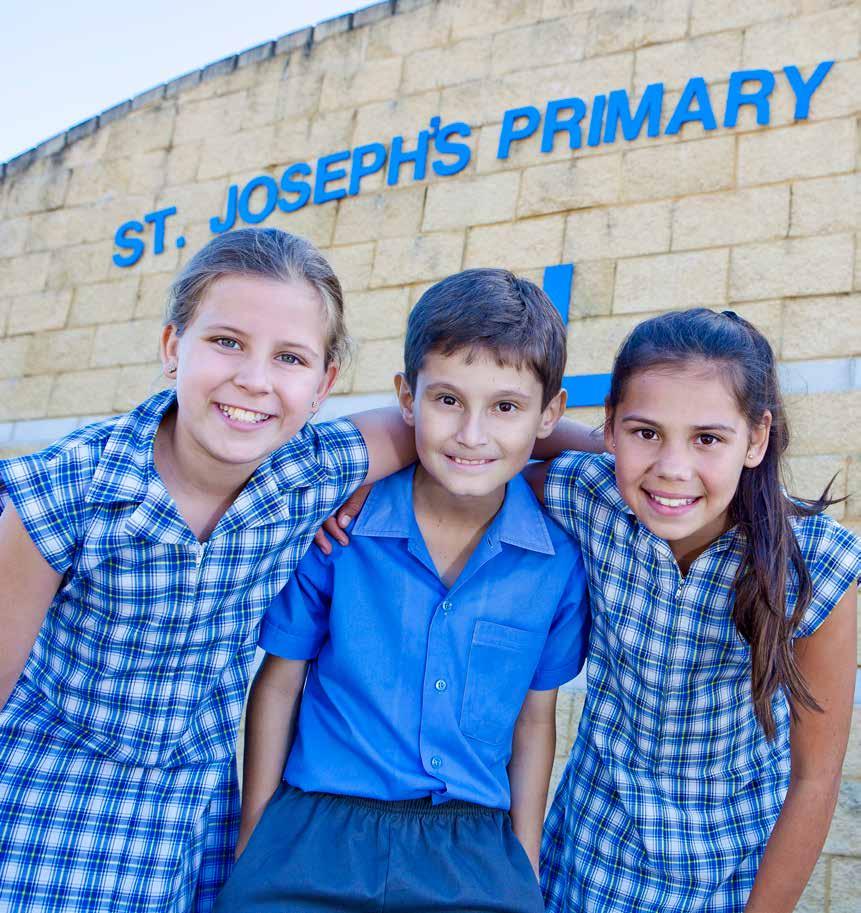
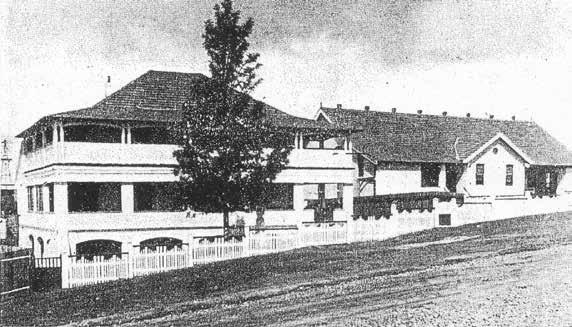
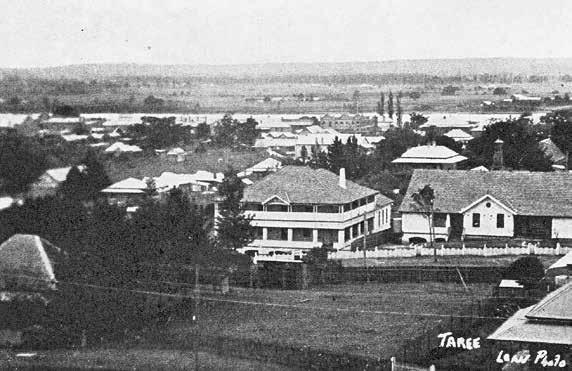
Taree ST CLARE’S HIGH SCHOOL
On Country
Traditional custodians of the land, the Biripi people
Taree
Aboriginal word ‘tareebit’ for ‘fruit of the fig tree’ which grew in profusion in the area
Opened 1970
Original location on Davis Street
Preceded by 1926 St Joseph’s High School
Known as
Rosary High School, 1962 Rosary College
Taree Catholic High School, 1986 St Clare’s High School
Also opened
1926 – 1965 Girls Boarding School
School today year 7 to year 12
Charism: Josephite
Motto: All for Christ
Location: Davis Street Taree NSW 2430
Parish: Taree
1923
Diocesan Sisters of St Joseph arrived, opened primary school and girl’s boarding school on Wynter Street
1926
St Joseph’s High School established on parish site, 20 students enrolled in First Year
First Year to Intermediate, co-educational with boarding facilities for girls
First religious secondary Principal, Sr Columbkille
1930
Our Lady of the Rosary Church opened, old 1873 church building renovated for high school use
1931
Rosary High School officially opened
1942
Leaving certificate classes ceased Commercial classes introduced, ceasing 1961
1961
Boarding school renovated and extended, closed 1965
1962
New school opened, Rosary College ‘ In Taree itself an urgent need had arisen for a new high school to cater for the growing number of students and the alteration of the school curriculum under the Wyndham Scheme.’ ¹
1970
Relocation to five acres of parish land on Davis Street, chosen site for new Regional Secondary School
1971
Opened and renamed Taree Catholic High School
Enrolment of 206 students
‘The trend of increasing numbers at the school can be seen in the following figures. In 1971, the year the school was opened, enrolments stood at 206 and from this point on numbers continued to rise. In 1974
figures were 265, 1976 saw numbers top 300 with 90 students enrolled in Year 7, in 1981 360 students were listed and finally by 1984, the year prior to the last building project, 445 students attended the school.’ ²
1979
Staff common room added and three new classrooms for Technical Drawing, Art and Mathematics
1984 –1985
New technics block, two science blocks, four new classrooms, new entrance and car park
1986
Renamed St Clare’s High School, with introduction of Year 11, progressing to Year 12
1987
First Higher School Certificate class
1989
Diocesan Josephite administration ended
1990
First lay Principal, Mr Larry Keating
1998
Additions included new library, two learning areas, fibre optic cabling and general refurbishments
2006
Construction of classrooms, music block and canteen refurbishment
2007
Construction of multi-purpose hall
2009
Refurbishment of school facilities, external and internal
Refurbishment of science laboratories and trade training centre
2010
Refurbishment of TAS and art classrooms
2012
Refurbishment of technical and applied science facilities
Kendall ST JOSEPH’S PRIMARY SCHOOL (DIOCESE OF LISMORE)
On Country
Traditional custodians of the land, the Biripi people
Kendall
Originally known as Camden Heads, renamed Kendall after Henry Kendall the Australian poet, who lived in the area 1875–1881 working as a Forest Inspector
Opened 1952
Known as
St Joseph’s Primary School
Location: Jackson Street Kendall NSW 2243
Parish: St John the Evangelist Kendall
Relocated
1975 to Laurieton
St Joseph’s Community School
Location: 421 Ocean Drive Laurieton NSW 2443
Originally part of the Diocese of Maitland Parish of Taree
1880
First Church of St John the Evangelist in the Camden Haven area opened
1891
The village of Camden Heads renamed Kendall
1918
Opening and blessing of new brick St John the Evangelist Church by Bishop Dwyer
1939
Parochial district of Kendall was established
1952
Convent for the Diocesan Sisters of St Joseph opened in the former presbytery
Sisters opened St Joseph’s Primary School
First sisters – Sisters Brendan Ruelle, Veronica O’Connor, Mark Nicey.
1966
Diocese boundary change – Kendall and the Camden Haven area included in the Diocese of Lismore
1975
Closure of St Joseph’s Primary School Kendall
1976
School transferred to Laurieton and became known as St Joseph’s Community School
1982
Diocesan Sisters of St Joseph withdrawn from Kendall convent but not from the school at Laurieton
1
On Country
Wingham
ST JOSEPH’S PRIMARY SCHOOL
Traditional custodians of the land, the Biripi people
Wingham
Named after a village in Kent, England
1961 Secondary classes
School today kindergarten to year 6
Charism: Josephite
Motto: In All Things Kindness
Location: Church Crescent Wingham NSW 2429
Parish: Wingham
1901
Church of Our Lady of Perpetual Succour, wooden building opened to serve as church and school
1935
St Joseph’s convent opened
First Diocesan Sisters of St Joseph arrived to staff school, M Michael Cahill, M Brendan Ruelle, M Joan Blake, M Camillus Roach, M Kieran Doherty
1935 –1961
Super primary classed offered
1947
Parochial district of Wingham established
Extensions made to church/school, verandah and two new rooms
1953
New church built allowing school use of entire original 1901 wooden church/school buildings
1955
High School Principal, M Brendan Ruelle
1961
Three secondary classes added
1974
New school opened, original building moved to property on Tinonee Road enrolment 80 students
1982
Convent closed, sisters came to reside in Taree convent with two sisters return travelling daily to school
1984
Diocesan Josephite administration ended
Convent building converted to administration offices and staff facilities, library and canteen. Previous administration area now converted into new classrooms for Years 5 and 6
New classrooms opened for Years 3 /4 and 4/5, each unit with its own withdrawal room for selective teaching
1985
First lay Principal, Mr Travis Graham
1986
‘The school has a most fortunate setting overlooking the Manning River and farmlands which provide spectacular views and most peaceful surroundings. The playground is a credit to the foresight of those responsible as it contains many native trees and shrubs, gardens, walkways and courtyard areas.’ ¹
2001
Construction and refurbishment of school facilities
2004
Refurbishment of site landscaping, internal and external facilities
2009
Construction of library, multi-purpose hall, covered walkways and canteen
‘The hall and library will offer more flexible learning spaces and new, clean, neat buildings that will appeal to modern pedagogy and the digital natives in our classrooms.’ ²
Restoration also completed of former convent buildings
2013
Second stage, refurbishment of specialised teaching areas
The school has a most fortunate setting overlooking the Manning River and farmlands which provide spectacular views and most peaceful surroundings. The playground is a credit to the foresight of those responsible as it contains many native trees and shrubs, gardens, walkways and courtyard.
1986 St Joseph’s Wingham
Bulahdelah ST JOSEPH’S
PRIMARY SCHOOL
On Country
Traditional custodians of the land, the Worimi people
Bulahdelah
Aboriginal word thought to mean ‘meeting place of two rivers’.
Named by John Oxley Surveyor General in 1818
Opened 1955
St Brigid’s
Also opened
1958 St Joseph’s Intermediate High School, closed 1966
School today kindergarten to year 6
Charism: Josephite
Motto: Love, Learning and Living like Jesus
Location: 26C Bulahdelah Way Bulahdelah NSW 2423
Parish: Myall Coast
1893
Catholic education began in the Manning region when Sisters of St Joseph established a convent and school at nearby Krambach
1907
‘The Roman Catholic parish of Manning River has been divided into two parishes, The Rev Father O’Regan late assistant priest Taree, has been appointed parish priest of the southern new parish, which extends from Krambach to Bulahdelah and includes the whole of the Wollamba and Myall districts.’ ¹
1922
Parochial district of Bulahdelah established
1955
Diocesan Sisters of St Joseph invited to Bulahdelah to open a new primary school, St Brigid’s
Sisters M Killian Casey, M Callista Nolan, M Augustine Krelle and M Annette Keyes resided in the former presbytery built in 1927
1958
St Joseph’s Intermediate High School conducted, in addition to primary grades
Sisters of St Joseph, Principal M Annette Keys
1966
High School closed, primary classes continued
1991
Diocesan Josephite administration ended
1992
First lay Principal, Mr Steve Corrigan
2002
All new school buildings
2006
With a significant Capital Grant, St Joseph’s Primary School was essentially re built
2009
Refurbishment of school facilities external and internal, security fence
Construction of covered outdoor learning area
Forster HOLY NAME PRIMARY SCHOOL
On Country
Traditional custodians of the land, the Worimi people
Forster
Named after William Forster, the then Secretary of Lands Town founded in 1862
Opened 1959
Known as
1959 St Joseph’s Primary School, 1961 Holy Name Primary School
School today kindergarten to year 6
Charism: Josephite
Motto: Concern for Others
Location: 41 Lake Street Forster NSW 2428
Parish: Forster-Tuncurry
Forster and Tuncurry originally within the parish of Krambach
1952
Two blocks of land were purchased in Lake Street by the parish
1956
Parochial district of Forster-Tuncurry established
1957
New church hall built and opened in Lake Street
‘Upon the arrival of Sisters from St Joseph Order at Lochinvar in January 1958, the hall was also used as a school.
The Sisters conducted classes in improvised classrooms in the church-hall until the new school was opened in 1961.
One parishioner recalls that ladies from the parish made curtains as partitions to divide the hall into separate classrooms.’ ¹
1959
Presbytery built on land next to church hall
Diocesan Sisters of St Joseph invited to set up school St Joseph’s in now converted church hall
First Sisters, M Francesca Bolton, M Hilda/ Pat Hayes, M Francis Mary/Florence Tobin
Sisters purchased property at 16 Manning Street Tuncurry for Josephite convent
Sisters and students needed to cross Wallis Lake on launch ‘Flying Jack’, prior to building of bridge
Bridge linking Forster and Tuncurry completed
1960
Land purchased at 41 Lake Street for present school
1961
New brick school opened as Holy Name Primary School, comprising three classrooms, teachers’ room, music room, tuck shop and other facilities
‘The building allowed for an enrolment of 150 pupils although it’s initial enrolment was only 35 pupils. It had wide verandahs to provide shelter and in addition to the classrooms had two music rooms and a tuckshop. It also had a septic system.’ ¹
1971
Land purchased for school, being Lots 9, 10, 17 and 18
1973
Diocesan Josephite administration ended
1974
First lay Principal, Mr David Carty
Extra buildings and renovations of infants section to cater for increased enrolments
1978
Diocesan Josephite administration ended
1980
New church built on land adjoining the presbytery
1981
Capital Grant enabled extensions to be made for rapidly increasing enrolments
1983
Further extensions and renovations, incorporating two classrooms and toilet block
2004
Construction of hall, administration and staff facilities, refurbishment of classrooms and computer room
2009
Refurbishment of school facilities, external and internal, security fence and shade structure
Refurbishment of classrooms, associated works and extension of library
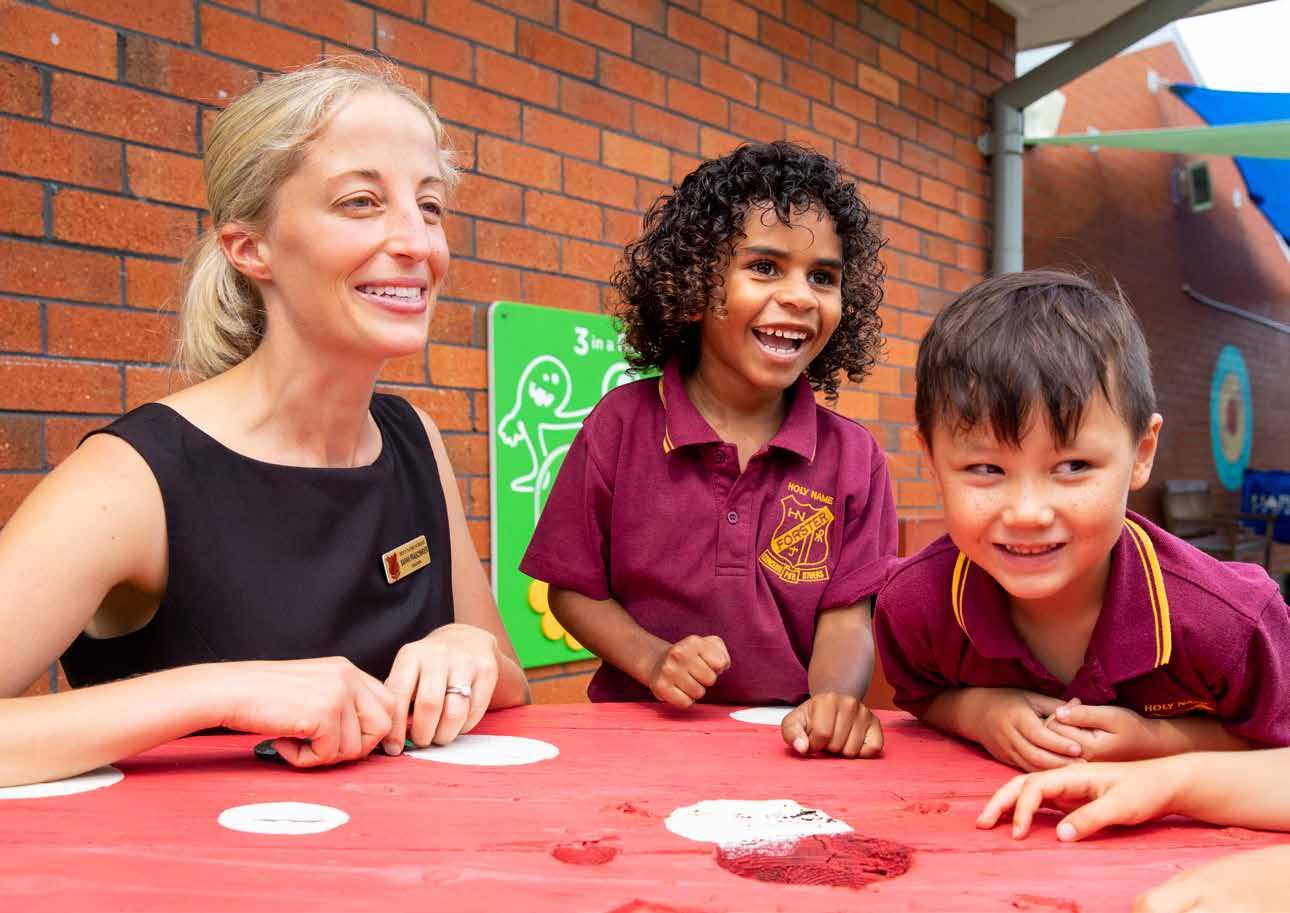
CATHOLIC SCHOOLS IN THE North region
On Country:
Traditional custodians of the land the Awabakal and Worimi peoples
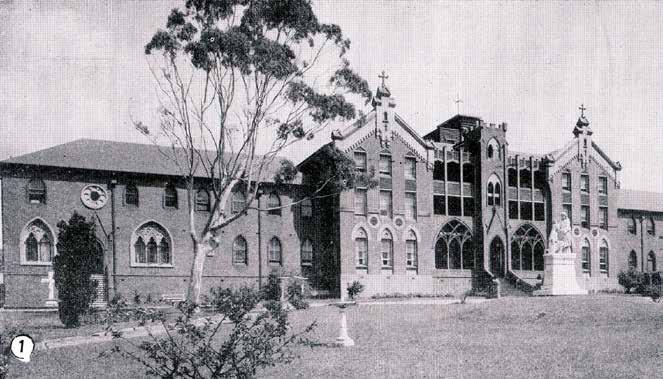
The northern side of the Hunter River is the land of the Worimi (Warrimay) who have always been and remain today the traditional custodians of a large tract of land bounded by four rivers, the Hunter River to the south, Manning River to the north, the Allyn and Patterson Rivers to the west.
The southern shore of the Hunter River is the traditional land of the Awabakal. ‘Awaba’ was the word for Lake Macquarie, meaning flat or plain surface and by extension referred to the people native to that area.
By 1818–1820, convict timber cutters had exhausted the supply of red cedar which defined the area to the west of Newcastle and to the east of the junction of the Williams and Hunter Rivers at present day Millers Forest. The clearing of the timber opened the rich alluvial soil of the floodplains to farming and Duckenfield, Woodberry, Berry Park, Osterley and Millers Forest all started this way. An offshoot of the Great North Road ran through Millers Forest on its way up the Hunter Valley but the predominant means of transportation for the abundant produce and grain grown in the area to supply Sydney was via the port of Raymond Terrace with the region to become ‘the first food bowl of Sydney’.
With a great number of farming families in and around Millers Forest, the demand for community infrastructure, such as schools and churches emerged. By 1844 a Catholic denominational school was operating at Millers Forest on the Maitland-Raymond Terrace Road. A Catholic school on Jacob’s estate (Millers Forest) appears to have been established in this area, the presence of so many Catholic families on the estate is an interesting demographic and probably reflects the great proportion of migrants of farming backgrounds that came to the Maitland area from Ireland in the late 1830s and 1840s.
Dominican Convent / Deaf and Dumb Institute Waratah
In 1887 St Patrick’s schoolhouse at Millers Forest was opened. Designed by the legendary architect Fredrick Menkens it shares its architectural pedigree with iconic buildings around Newcastle such as the Tabernacle on Laman Street, the Fred Ash Warehouse on Hunter Street Newcastle and the ornate Woods Chambers on Scott Street are just a few examples of Menkens work. The traditional cedar timber structure is uncomplicated, both in appearance and arrangement and still stands operating as a private residence at 49 Monkley Road Millers Forest.
Commercial activity on the southern shore of the Hunter River were the villages of Tighes Hill, Carrington, Mayfield and Waratah serving the port facilities and emerging heavy industry. Religious congregations from overseas arrived in the diocese at the request of Bishop Murray to staff schools to educate the children of the workers in ‘the one true faith’. The Dominican Sisters and the Marist Brothers from France remaining in the larger centres of Newcastle and Maitland. The Sisters of Mercy from Ireland settling in the larger centres but also taking over schools within a buggy ride of the mother house.
The Dominican Sisters recognised an additional need when children with hearing impairments were enrolled at St Mary’s Star of the Sea Catholic School on the Hill. A growing demand to cater for deaf children to be instructed in their faith saw a request to Bishop Murray for a specialist school incorporating boarding facilities leading to the Diocese purchasing four acres of land at Waratah and commissioning Frederick Menkens to design the Institute of Deaf and Dumb School in 1889. In 1948 Helen Keller, the American blind and deaf authoress visited the school.
Another need of the time was recognised with the establishment of orphanages across the diocese. Singleton: Campbells Hill – Monte Pio Orphanage for Girls and Murray Dwyer orphanage for Boys at Argyle House Mayfield.
Shortland
Schools Current Schools
St Pius X Primary School
St Pius X Secondary School
Murray-Dwyer Orphanage
Sancta Maria School
Christ the King Primary School
Nelson Bay
Stockton
Raymond Terrace Medowie
Mayfield
Waratah
Carrington
Tighes Hill
Millers Forest
St Brigid’s Primary School Denominational School
St Peter’s Primary School
Corpus Christie Primary School
Deaf & Dumb Institute
St Dominic’s Centre For Hearing Impaired
San Clemente High School
St Columban’s Primary School
St John’s Infants School
Our Lady of Victories Primary School
St Michael’s Primary School
Catherine McAuley Catholic College
Denominational School
St Patrick’s Primary School
St Francis Xavier’s Primary School
St Patrick’s Primary School
NORTH REGION MAP
Closed
Millers Forest ST PATRICK’S PRIMARY SCHOOL
On Country
Traditional custodians of the land, the Worimi people
Millers Forest
Named by Vicars Jacobs for his estate of 2,000 acres, presumably associated with cedar cutting industry
1844
‘a Catholic denominational school was operating at Millers Forest on the MaitlandRaymond Terrace Road.’ ¹
1847
Diocese of Maitland
1852
First lay teacher, Thomas O’Brien
1852 –1881
Lay teachers
1853
Parochial district of Raymond Terrace established
1857
‘n a Report of the Denominational School Board for 1857, we read of provision being made for teachers’ residences for the Catholic schools in Millers Forest and Raymond Terrace.’ ²
1860s
‘A Catholic school on Jacob’s estate appears to have been established in this area, … The presence of so many Catholic families on the estate is an interesting demographic and probably reflects the great proportion of migrants of farming backgrounds that came to the Maitland area from Ireland in the late 1830s and 1840s.’ ¹
1880
Lot 13 Vickers Jacob Grant, donated to church by Mr Jack Kearney
1881
Mercy Convent at Raymond Terrace established
Sisters of Mercy staffed Millers Forest, travelling by buggy across on punt from Raymond Terrace Convent
1887
St Patrick’s Roman Catholic Schoolhouse and chapel opened
Cedar timber dwelling built by Mr Monaro, local contractor of Italian background School officially opened by Bishop Murray
1889
Enrolment 120 students
1908
Enrolment 78 students
1955
Devasting Maitland floods, all thirty students were accommodated in St Brigid’s Raymond Terrace
School closed
1955 –1972
Building used as a place of worship, then as St Vincent de Paul storage
2001
Old schoolhouse built in 1887 ‘… must have been in a greatly deteriorated state for a long time.’ ¹
2017
Property at auction, after two previous private ownerships and restoration
Schoolhouse surviving and gracefully restored, officially recognised as designed by architect Menkens
‘A Catholic school on Jacob’s estate appears to have been established in this area, … The presence of so many Catholic families on the estate is an interesting demographic and probably reflects the great proportion of migrants of farming backgrounds that came to the Maitland area from Ireland in the late 1830s and 1840s.’
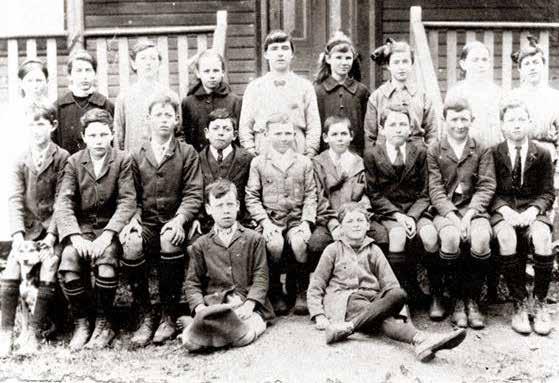
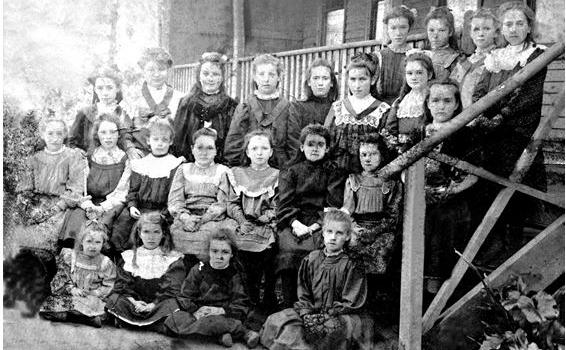
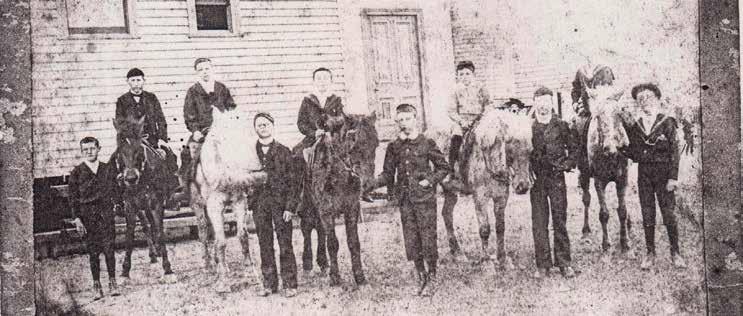
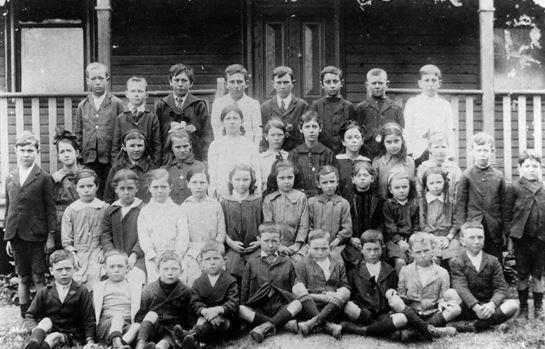
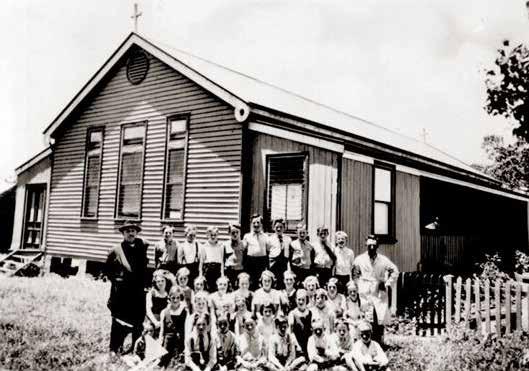
1860s Denominational school Millers Forest
Photos: Student groups at St Patrick’s Millers Forest, Riding to school on horseback was the practice of the day in the 1800s
Raymond Terrace ST BRIGID’S PRIMARY SCHOOL
On Country
Traditional custodians of the land, the Worimi people
Raymond Terrace
Named after midshipman Raymond who remarked on the ‘terraced appearance of the trees’ while observing from a boat on the Hunter River
Opened 1881
Preceded by
1851 Denominational School
School today kindergarten to year 6
Charism: Mercy
Motto: Truth and Trust
Location: 52 Irrawang Street Raymond Terrace NSW 2324
Parish: Raymond Terrace
1840
In October Bishop Polding visited Hunter Valley, celebrating mass in a tent at Raymond Terrace
1851
Denominational School opened in rented four room slab stone cottage with chimney, fronting William Street
1853
Parochial district of Raymond Terrace established
1854
First lay teachers William Vincent Bryan, then John Usher, then Daniel O’Leary
1861
Wooden school built
1862
Church of St Brigid’s erected of quarried stone, Denominational School probably relocated to here
1867
Raymond Terrace Roman Catholic School was registered a Certified Denominational School, signed Sir H Parkes
1880
‘I have the honour to acquaint the Minister of Education that the nuns at Singleton have received written instructions from the Rt Rev Dr Murray, Bishop of Maitland to take charge of the Certified R.C. Denominational School at Raymond Terrace. … I have had charge of this school for 11 years and 4 months, and I believe I have given satisfaction to both the people and Local Boards. Now, when it has increased both in numbers and attainments I am ruthlessly expelled without any previous notice.’ ¹
Stone school built
1881
Raymond Terrace Mercy convent established, single storey with slate roof fronting William Street
Sisters of Mercy arrived, first religious Principal M Xavier Ryan
1908
Enrolment 64 students
1912
New convent built alongside church, two storey colonial style fronting William Street
1920
School / church hall built opposite church, in simple brick with ornate entrance façade, extensions in 1953
1955
Following Maitland floods, St Patrick’s Millers Forest school closed, with 30 students accommodated here
1959
Stone school built in 1880 now demolished, new school built on same site
1960
New school opened
1984
New classrooms and toilet block added
1985
Mercy administration ended
1986
First lay Principal, Mr David Carty
1989
Student reminiscence. ‘Christmas brought with it an earthquake with a Newcastle epicentre: sadly people died as a result of the earthquake. St Brigid’s Primary didn’t go unscathed either with several buildings requiring significant repairs. In the interim, classrooms were established on the ‘middle’ oval whilst these repairs were undertaken.’ ²
1995
Convent converted into administration building, extensions to the library
2009
Large school community space, refurbishment of existing library and classrooms
2011
Major construction of large school hall, 5 new classrooms, also renovations to original 1960 and 1984 classrooms
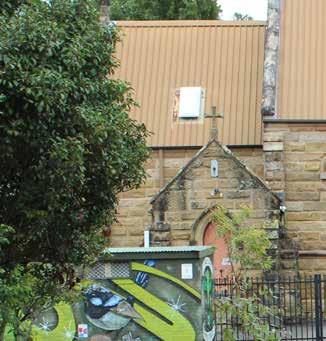
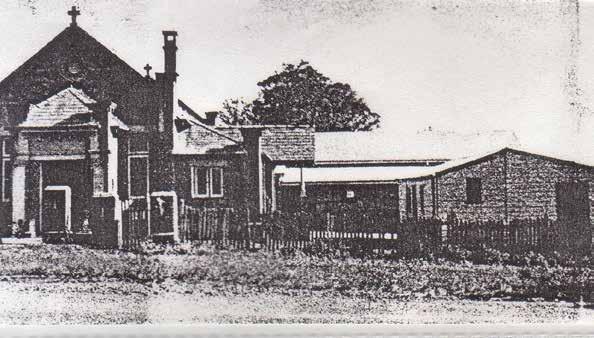
Photos: St Brigid's students and buildings SNAPSHOTS
Stockton ST PETER’S PRIMARY SCHOOL
On Country
Traditional custodians of the land, the Worimi people
Stockton
Named by John L Shortland, who discovered the estuary of the Hunter River, while searching for escaped convicts.
Opened 1887
School today kindergarten to year 6
Charism: Mercy
Motto: Strength in Christ
Location: 5 Dunbar Street Stockton NSW 2295
Parish: Stockton
1887
School classes began in new St Peter in Chains Catholic Church
Opening enrolment 75 students with lay staff
First lay teachers at the school, Miss Pierce and Miss Breen
1902
New weatherboard school erected, hall of 2 classrooms measuring 19 x 10.5 feet, 40 ft verandah on each side
1903
Sisters of Mercy arrived to staff school, travelling by tram and ferry from Hamilton convent
Prior to establishment of convent ‘My mother sent them a hot dinner to the school two days a week and Aunt Nell sent one, as did Mrs Fogarty and someone else. This went on for three years or longer.’ Terry Callen ¹
1919
Parochial district of Stockton established
1920
Stockton Mercy convent ‘Mount St Mary’s’ established, gift from Peter Callen with home ‘Rosemount’
Sisters of Mercy, M Borgia McSherry superior, M Alcoque Rooney, M Constance Casey, M Magdalen Irwin
‘Norbert Callen donated ship’s ballast to solidify the sand which covered the school grounds. The ballast consisted of small pebbles which students believed must be valuable coming from ‘far away places’. It soon became a favourite pastime, ’fossicking’ through the ballast looking for treasure.’ ²
1925
Brick school renovated as multi-purpose hall for school and parish use, opened
1939 –1945
Stockton peninsular heavily fortified owing to fear of Japanese invasion
1952
Convent sold to Mark Bailey
1953
Stockton parish purchased ‘The Laurels’ as residence for the sisters
1957
Kindergarten room opened in King Street, closed 1970, Kindergarten class then incorporated into existing 2 storied building
1971
Two storey brick school building opened, on same site as the 1903 original wooden church
1985
Mercy administration ended, convent vacated
1986
First lay Principal, Mrs Jennifer Skeffington
2004
Construction of classrooms, administration, staff facilities, library and shade structure
2009
Refurbishment of school facilities, external and internal
Refurbishment of multi-purpose hall and construction of a lift
2017
Parish hall used as a classroom
Carrington ST FRANCIS XAVIER’S
PRIMARY SCHOOL
On Country
Traditional custodians of the land, the Awabakal and Worimi people
Carrington
Named after Lord Carrington, Governor of NSW when the area was proclaimed a municipality
Opened
1888 as St Joseph’s
1937 St Francis Xavier’s Primary School
Closed 1970
Location
Gipps Street Carrington NSW 2294
1887
St Francis Xavier Church blessed and opened
‘Carrington was a tidal island ( also called Bullock Island) largely built up by rock ballast dumped from sailing ships that came to load up with coal; the first bridge to connect it to Newcastle was only built in the 1879s.’ ‘Men living there worked on ferries, at the shipping works, the railway, nearby mines, the foundry or the local engineering plant.’ ¹
1888
Within parochial district of Newcastle
Church building used also for school, sisters lived in rented cottage in Little Gipps Street
Diocesan Sisters of St Joseph arrived, M Xavier McInerney, M Bernard Taggart, M Clare Murphy
1889
Convent St Joseph’s blessed and opened
1908
Enrolment approx. 100 students ‘Starting from nothing, within three years they had 100 pupils and a new convent, a two-storey weatherboard building surrounded by a charming little garden, which their neighbours have made for the Sisters.’ ¹
1937
New school built and opened, church no longer used for school
Name change to St Francis Xavier’s, in line with parish name
1956
Parochial district of Carrington established
1960
Fund raising for verandah to make the school cooler, paving of school yard and general painting
1970
Diocesan Sisters of St Joseph withdrawn, school closed
St Francis Xavier’s Primary 1888 1970 Diocesan Josephites 82
Reference
1 Dunlop, R. (2016). Planted in Congenial Soil: The Diocesan Sisters of St Joseph, Lochinvar 1883–1917. Lochinvar NSW. School Opened Closed Staff Years
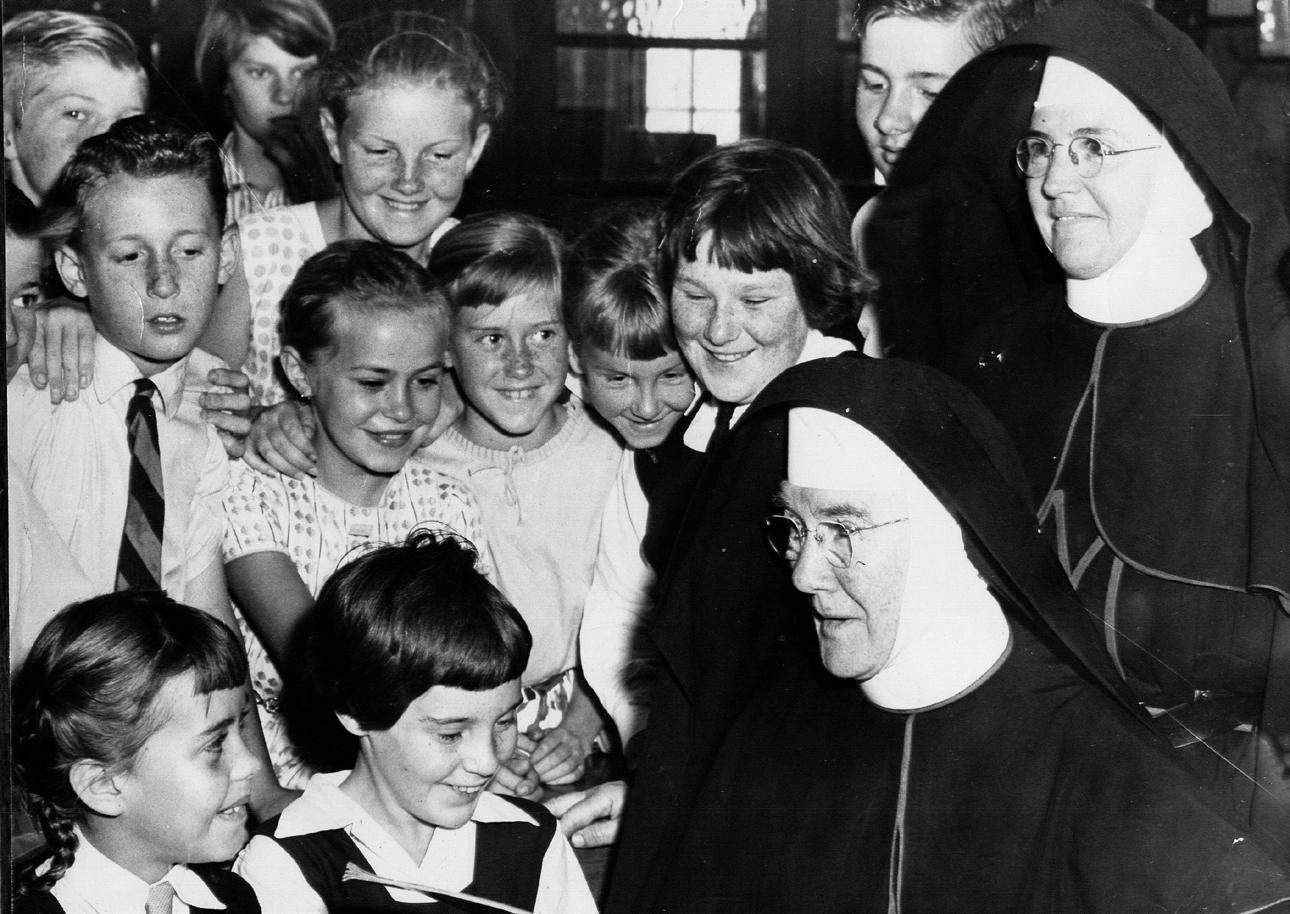
Waratah
CORPUS CHRISTI PRIMARY SCHOOL
On Country
Traditional custodians of the land, the Awabakal people
Waratah
Aboriginal word meaning ‘beautiful.’ Area marking the extreme northern boundary for this naturally occurring species. Hunter River to Victoria
Opened 1934
Preceded by
1907–1917 The Rosary Convent School
Known as 1918–1933 St Joseph’s Primary School
Renamed
1934 Corpus Christi Primary School
School today kindergarten to year 6
Charism: Dominican
Motto: Truth
Location: Platt Street Waratah NSW 2298
Parish: Blackbutt North
1875
Dominican Sisters arrived in Australia, invited to staff Star of the Sea School, Perkins Street Newcastle
1886
Four acres of land purchased in Waratah, bounded by Bridge, Lorna, Alfred and Platt Streets
Foundation stone laid for Dominican Rosary Convent, imposing brick building constructed, architect Menkens
1907
Dominicans open Rosary Convent School, order-owned on land opposite the convent
‘At Bishop Murray’s request, the Sisters at Waratah agreed to staff a primary school for the area, using for this purpose a cottage they had purchased opposite the convent. This developed into the official parochial school when Waratah became a parish in 1917.’ ¹
‘The school was directly opposite the main gate entrance to the convent grounds. For a playground, the children shared an adjoining paddock with a few cows.’ ²
1917
Parish of Waratah established, Rosary Convent School now a parochial school
1933
‘The enrolment at St Joseph’s primary school has increased to such an extent that the old weatherboard building in Alfred Street is unable to accommodate comfortably the various classes. If parish finances permit a new more commodious school will be built next year.’ ³
1934
Ground floor of new Corpus Christi parish school completed
1935
Larger school of five classrooms opened, built by parish with a new hall added for school and parish use
1954
Reconstructed school opened with second floor completed
1963
‘At Waratah, good progress is reported on the building of a School hall … It is of solid brick construction and is expected to be finished in a few months.’ 4
1967
Enrolment 267 students
1978
Rosary Convent School closed, with students relocated here
1979
Rosary Convent closed
1987
Dominican administration ended
1988
First lay Principal – Mr Paul Dangarfield 1989
First primary lay Principal, Mrs
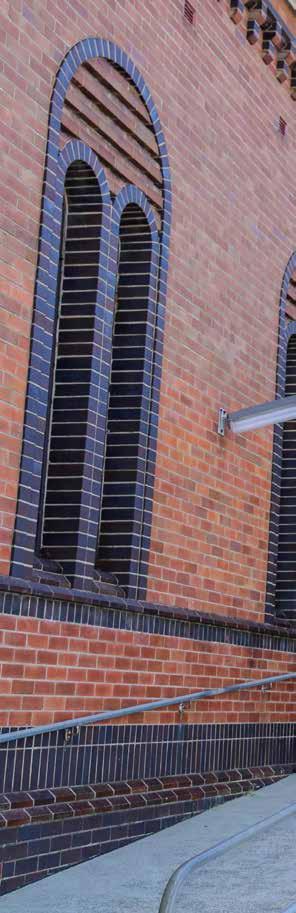
2002
Construction of classrooms, library, canteen, disabled facilities and general refurbishment
2009
Refurbishment of external and internal school facilities, library and multipurpose hall
2017
Two adjoining blocks of land purchased
2018
Two spaces utilised for active learning, play and fitness activities, one named 'The Dominic Courtyard'
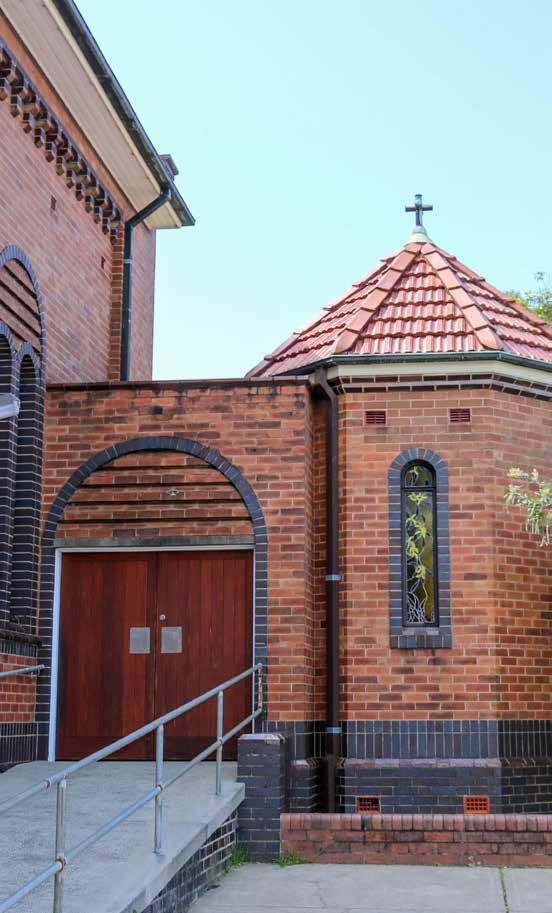
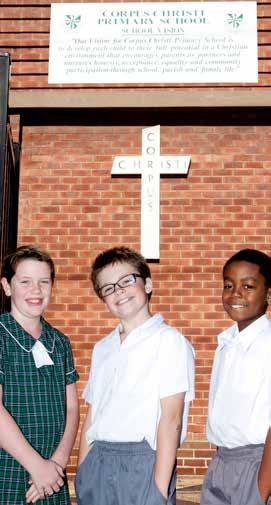
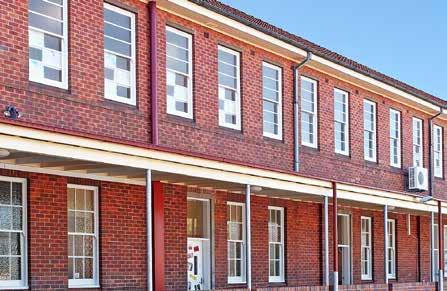
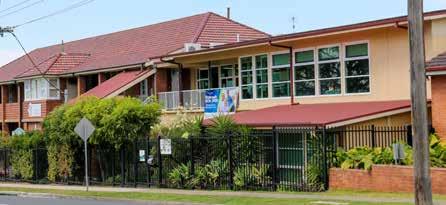
Waratah DEAF AND DUMB INSTITUTE
On Country
Traditional custodians of the land, the Awabakal people
Waratah
Aboriginal word meaning ‘beautiful.’ Area marking the extreme northern boundary for this naturally occurring species. Hunter River to Victoria
Opened 1888
Preceded by
1875–1887 Deaf and Dumb Institute, Perkins St, Newcastle
1867
Eight Dominican sisters arrived in Australia from Kingstown, Ireland. Invited to staff Denominational girls’ and infants’ schools becoming Star of the Sea School Perkins Street Newcastle
1875
With the enrolment of a few children with hearing impairment, the Dominican apostolate for these children began
From Ireland arrived Dominican sister, Mary Gabriel Hogan, herself hearing impaired, trained in ‘manual alphabet’
‘The deaf school began its formal existence under Sr Gabriel’s care with the enrolment of two pupils, Catherine Sullivan and Elizabeth Mary Ruwald, on 8 December 1875.’ ¹
1886
Four acres of land purchased in Waratah, bounded by Bridge, Lorna, Alfred and Platt Streets
Foundation stone laid for Dominican Convent, known as Rosary Convent.
Imposing brick building constructed, architect Menkens
1888
Deaf and Dumb Institute opened as boarding school for boys and girls, first Principal M Gabriel Hogan
1889
Students from the Institute in Newcastle relocated to Waratah, enrolment 24 students
1913
New wing built for Institute, hall used as Mass centre, becoming the first Catholic church in Waratah. During the week hall used as sewing room for senior girls ‘The industrial school at Waratah took orders for every type of needlework and maintained its own show room.’ ³
1916
Dominicans purchased a property at Mayfield, San Clemente
1918
Further additions to Convent, three storey edifice – drying and ironing room, servery, infirmary and dressing rooms
1963 School for Deaf Girls
1976 Catholic Centre for Education of Deaf
‘Between 1875 and 1888, seventeen girls and thirteen boys were admitted to the school – a very small percentage of the Catholic deaf children in Australia. It was possibly this slow growth of pupils which urged Sister M. Gabriel to write to Bishop Murray, probably in 1883, stressing the necessity of making known the existence of the Newcastle School and the importance of having Catholic deaf children sent there to be instructed in their faith.’ ²
1885
Decision made to establish a complete and separate Institution for the Deaf and Dumb
Day high school for the local area established in connection with Rosary Park Convent
1895
Sr M Columba appointed Superior of the Convent, serving education of the deaf until 1932
1907
Dominicans staff a primary school on land opposite the convent, known as Rosary Convent School to continue as Corpus Christi Primary School
1919
Whole establishment transferred to Havelock Street seven acre site, now known as San Clemente
1922
Four of the older boys transferred from Waratah to St Gabriel’s Castle Hill, Sydney, newly opened specialised school for the deaf staffed by Christian Brothers
1923
The sixteen remaining boys transferred to Castle Hill, and Waratah became a girls’ school
1925
Golden Jubilee celebrating the beginning of Catholic Deaf Education in Australia
1927
Lay teachers on staff, M. Bruyn, N. Burke, D Dendle, D. O’Neil, M. and N. Elligate
1931
Enclosed retreats for ladies began
1934
North and South wing added to building as industrial school for adult deaf girls, architect Mr H. Agabiti
1938
Fr Lucien Page C.S.V. Canadian teacher of the deaf, visited for five weeks. The speech method was then adopted in place of sign language
1948
Fire extensively damaged a section of the building, reconstruction in 1952
Helen Keller visited – US blind and deaf authoress
1952
Opening of reconstructed school
‘In his speech Dr Toohey said the Institute for teaching deaf children was the first of its kind in Australia and since its establishment at Newcastle in 1875, over 470 pupils from Australia, New Zealand and the Islands had passed through it.’ 4
1963
Now known as 'School for Deaf Girls
1976
The Rosary Convent School for Deaf Girls ceased to function in its current form, closing in 1979
Name change to Catholic Centre for Education of Deaf
1980
Integration Unit formed within San Clemente High School for hearing impaired and Autism Spectrum Disorder students
1986
Centre open for educational assistance for children with mild and moderate hearing losses
‘In his speech Dr Toohey said the Institute for teaching deaf childrem was the first of its kind in Australia and since its establishment at Newcatle in 1875, over 470 pupils from Australia, New Zealand and the Islands had passed through it.’
Dr Toohey 1952
1988
Dominican administration ended
1989
First lay Principal, Mrs Leola Loudon
1991
Convent and school buildings leased to Catholic Care of the Aged
1992
Catholic Centre for Education of Deaf closed at Waratah and moved to new premises at Mayfield adjoining San Clemente High School
References
1 Egan, M. (1975) History of Catholic Deaf Education in Australia 1875 – 1975
2 ibid
3 MacGinley, R. (2009). Ancient Tradition – New World: Dominican Sisters in Eastern Australia 1867 – 1958, St Pauls Publications.
4 The Newcastle and Maitland Catholic Sentinel 04/1952 Bourke, J..A. (1973) The Dominican Nuns’ School Journal of the Royal Historical Society
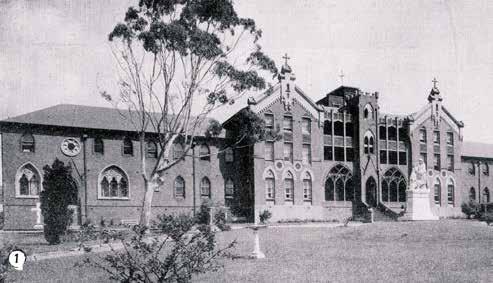
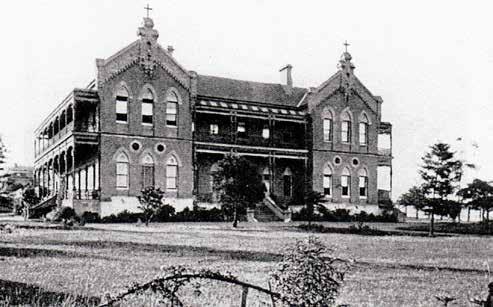
Photos: Dominican Convent / Deaf and Dumb Institute Waratah
Mayfield ST DOMINIC’S CENTRE
On Country
Traditional custodians of the land, the Awabakal and Worimi people
Mayfield
Named after May, daughter of John Scholey, who bought the area in 1881 and had it subdivided
Opened 1993
Preceded
by
1976 Catholic Centre for Education of Deaf
1980 Integration Unit for hearing impaired students at San Clemente High School, Mayfield
School today kindergarten to year 10
Charism: Dominican
Motto: Truth
Location: 76 Havelock Street Mayfield NSW 2304
Parish: Mayfield
St
St Dominic's Centre, Mayfield is a Kindergarten to Year 10 school that provides an education of excellence for children with a range of disabilities including hearing impairment, Autism Spectrum Disorder and Moderate Cognitive disability.
1976
The Rosary Convent School for Deaf Girls ceased to function in its current form, closing in 1979.
Name change to Catholic Centre for Education of the Deaf.
1980
Integration Unit formed within San Clemente High School for hearing impaired students.
1986
Centre open for educational assistance for children with mild and moderate hearing losses.
1992
Catholic Centre for Education of Deaf closes at Waratah and moves To Mayfield
1993
St Dominic’s Centre, purpose built to reduce ambient noise, opens at Havelock Street, Mayfield, adjacent to San Clemente High School
2009
Refurbishment of library, school facilities, external and internal, a specialised Information and Communication Technology infrastructure supports
2012
Accessibility and special needs upgrade
2014
Integration Unit within San Clemente High School relocates to St Dominic’s Centre
2016
St Dominic’s merged into one campus Kindergarten to Year 10
2018
First cohort of Autism Spectrum Disorder children accepted in Kindergarten and Year 1

Tighes Hill ST PATRICK’ PRIMARY SCHOOL
On Country
Traditional custodians of the land, the Awabakal people
Tighes Hill
Named after Atkinson Tighe an early resident, who purchased the estate in 1843
Opened 1895
Closed 1975
Location
Bryant Street Tighes Hill NSW 2297 References
1
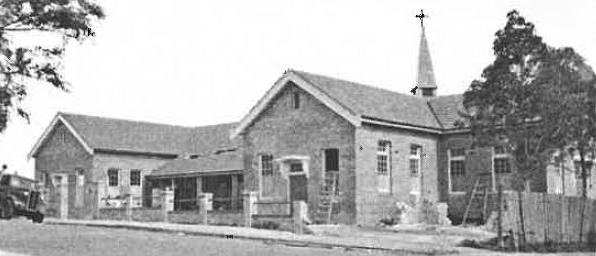
1884
Parochial district of Hamilton established, encompassing Tighes Hill
1895
Primary School opened in Rosedale Hall used for mass and school purposes
‘The new Roman Catholic school at Tighes Hill was formally opened today. Appropriate addresses were delivered by Bishop Murray, Bishop of Maitland, and Dr Lanigan, Bishop of Goulburn. The building is of a tasteful character, and will hold about 500 pupils. The school will be under the management of the Sisters of Mercy.’ ¹
Sisters of Mercy, walked daily from Hamilton convent, later travelled by tram
This journey by foot, tram or bus continues for about thirty-three years until a convent was built in 1928 ²
First sisters, M Stanislaus O’Neill, M Peter Bercini, M Ita Condon
1899
Land donated by Mr Charles O’Hara, modest wooden structure built for classrooms
Blessing of memorial stone to mark beginnings of new school / church
1900
The timber church named the Immaculate Conception completed
‘The church-school was by no means ideal, as teaching was difficult when classes from sixth down to second were all in one room while first class was into a small sacristy. The Australian Catholic Directory gives the enrolment in 1899 was 110.’ ²
1908
Enrolment 130 students
1912
Enrolment 180 students
1914
Brick school built, St Patrick’s Primary School of four rooms, with gradual additions
1921
Parochial district of Tighes Hill established
1928
Tighes Hill Mercy convent established on 2 acres of land purchased in Union Street. The two storey brick building with balconies around was set among artistic lawns and gardens. The Sisters now only had a short walk to the school
1954
Foundation stone laid for new parish church, Immaculate Heart of Mary
1970s
St Patrick’s school population was decreasing as young families continue to move to outer suburbs of Newcastle
1975
St Patrick’s Primary School closed. Children transferred to several schools in close proximity
School Opened Staff Years
St Patrick's Primary 1895 Mercies 80
St Patrick's, Tighes Hill
Tighes Hill
ST PIUS X PRIMARY SCHOOL | ST PIUS X HIGH SCHOOL
On Country
Traditional custodians of the land, the Awabakal people
Tighes Hill
Named after Atkinson Tighe an early resident, who purchased the estate in 1843
Opened 1955
Preceded by
Marist Brothers Regional Primary School, Hamilton
Closed 1958
Location
Union Street Tighes Hill NSW 2297
TIGHES HILL ST PIUS X PRIMARY SCHOOL
1954
Bishop Gleeson with the Marist Brothers built a new school at Tighes Hill at a cost of £26,000. As this school was to replace the Marist Brothers Regional Primary School at Hamilton, the cost was to be distributed throughout the parishes in the Newcastle area
The plan was to relieve Hamilton of its heavy primary class loading and to allow space for increased secondary enrolments 3
New School, Tighes Hill 1
All boys who desire to enrol in the fifth and sixth classes at the new school at Tighes Hill for 1955 should present themselves at the Marist brothers’ High school, parkway avenue, Hamilton on Tuesday 7th December 1954 at 9.30am. Each boy should ask his teacher for his last test marks and should also bring a pencil with him. Rev Brother Director 1
1955
St Pius X Primary School, staffed by Marist brothers travelling from Hamilton
The school was of unusual design with its low pitch roof and slanting ceiling but the four classrooms each 30ft by 24ft were very well lit, spacious and airy with excellent acoustics and ventilation. Underneath was a large basement to serve as a shelter shed and tuck shop. 3
1955 –1957
First principal – Br Faber Turnbull
1955 –1958
Marist Brothers
1957
Announcement made that school would become a secondary school
‘ … this means that no more boys can be taken into the Primary classes and that there will be no enrolments for Fifth Class next year.’ 2
1958
Primary School closes and Marist Brothers withdraw from school
TIGHES HILL ST PIUS X HIGH SCHOOL
1958
Decision to open a new Secondary School for boys to be staffed by Diocesan Priests
1959
Administration of secondary school passed to priests of the Diocese, overseen by Fr Newton
School began with two First Year classes with 94 boys
1961
Male students transferred to the newly opened St Pius X High School Adamstown
1966
School buildings used as temporary accommodation for Fifth Form students until the buildings for the new St Anne’s High School were being completed on land adjacent to St Pius X College at Adamstown. This school was a senior secondary school for girls in the Newcastle area staffed by Dominican, Mercy and Josephite sisters
1967
Female students transferred to newly completed St Anne’s Adamstown
Mayfield SAN CLEMENTE HIGH SCHOOL
On Country
Traditional custodians of the land, the Awabakal and Worimi people
Mayfield
Named after May, daughter of John Scholey, who bought the area in 1881 and had it subdivided.
Opened 1917
School today years 7 to 10 junior secondary co-educational
Charism: Dominican
Motto: Truth
Location: 78 Havelock Street Mayfield NSW 2304
Parish: Mayfield References
1867
Dominicans arrived in Australia from Kingstown Ireland, invited to staff Denominational School, becoming Star of the Sea School, Perkins Street Newcastle
1916
Dominicans invited to established a primary, secondary and boarding school in Mayfield
Purchase of property on Bull and Kerr Streets Mayfield
Dominican community established, called ‘San Clemente’ acknowledging Spanish origins of the Order, founding sisters M Concepta O’Donohoe, M Bonaventure Lamond and M Winifred Keating
1917
‘Sisters began with a fifty strong enrolment of parochial pupils and a few applicants for their day high school.’ ¹
1919
Purchased and moved to seven acre property of Julian Windeyer, crn Havelock and Crebert Streets Mayfield with ‘stately home in spacious grounds’ ‘Redcliff’, adjacent properties acquired later ‘… they moved to a large house ‘Redcliffe’ set on three acres of land where a larger day school was developed and registration as a secondary school to intermediate standard was obtained.’ ¹
1922
Major extensions, again in 1947 to accommodate day school students and boarders
1929
Convent and boarding school erected and opened
1968 –1969
Dominican Order sold ‘Redcliff’ property to the Maitland Diocese
1970
Library, two classrooms, book hire room and art room were added
1976
Dominican administration ended
1977
San Clemente High School became the first Diocesan high school to be staffed entirely by lay teachers
First lay Principal, Mr R Slattery
1978
School chapel built
1980
Integration Unit formed for the integration of hearing impaired students into general classes
1983
School became co-educational
Extensive new facilities – technics, art and craft, economics rooms and laboratories
1984
Extended library canteen, shower and toilet facilities
1990
Earthquake repairs following 1989 Newcastle earthquake
2008
Stage 1 Construction of classrooms
2009
Stage 2 Purpose built facilities including library, art rooms, general classrooms and music precinct
Refurbishment of administration, staff facilities and classrooms
Refurbishment of external school facilities and security fence
Construction of Trade Training Centre –Hospitality and Construction
2013
Additional Campus Unit for integration of hearing impaired and Autism Spectrum Disorder students
2014
This Campus Unit was relocated to St Dominic’s Centre 2017
Celebration of Centenary
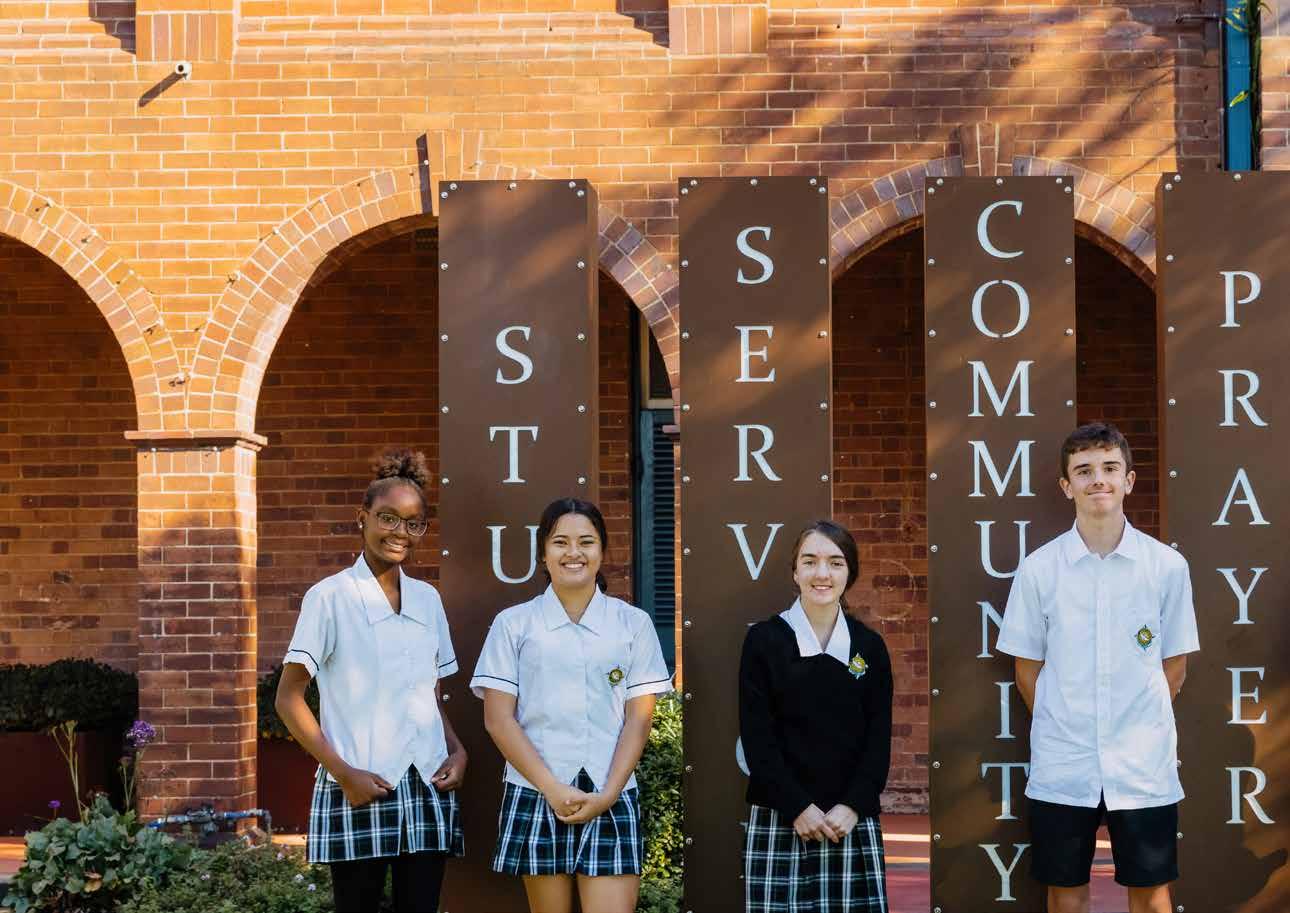
Construction of hall and adjacent classrooms 2020
Renovations with façade of the school repaired
1
Mayfield ST COLUMBAN’S PRIMARY SCHOOL
On Country
Traditional custodians of the land, the Awabakal and Worimi people
Mayfield
Named after May, daughter of John Scholey, who bought the area in 1881 and had it subdivided.
Opened 1917
Known as
Opened as San Clemente Primary School
1922 St Joseph’s 1954 St Columban’s
School today kindergarten to year 6
Charism: Dominican
Motto: Truth
Location: Church Street Mayfield NSW 2304
Parish: Mayfield
1917–1997
1916
Property purchased by Dominicans crn Bull & Kerr Streets – convent, primary, secondary and boarding schools
1917
Parochial district of Waratah established, embracing Waratah, Broadmeadow and Mayfield
Dominicans invited to established a primary school in Mayfield
‘The sisters began with a fifty strong enrolment of parochial pupils and a few applicants for their day high school.’ ¹
Dominican sisters, M Concepta O’Donohoe Superior, M Bonaventure Lamond and M Winifred Keating
Agreement – land given to parish by Dominicans, school built and maintained by parish
Parochial school set up within San Clemente grounds, primary school opened as San Clemente
1919
Dominican Order purchased 7 acres – land and home on corner Havelock and Crebert streets. Later adjoining land was purchased
Whole establishment of home and land named ‘San Clemente’
1922
Decision made to transfer primary section from Kerr Street to Church Street, along with a few classrooms and shed buildings, school known as St Joseph’s
1922 –1940
School building used as a parish church
1927
First part of St Columban's church/school opened
1940
Parish church opened as St Columban's
1950 –56
Major construction work, old classrooms renovated, new sections, canteen made from two trams
‘The tuck shop was a broken down old tin shed’! It’s a miracle there were no serious mishaps in it … Soon after it was officially publicised that buses were to replace trams, … a discussion took place at a Parents and Friends Association Meeting, regarding .“the suitability” of using a couple of the tram cars for a tuck shop. … The men did a wonderful job. The.“transformation” of the tram cars into a “tuck shop”, with “all modern conveniences”, was incredible. Everyone was delighted with “the new set up”. As you may well imagine, none more so than the ladies on the Tuck Shop Roster.’ ‘His Lordship Bishop Edmund Gleeson officially blessed and opened the Tram Tuck Shop.’ ²
1954
School name change now St Columban’s
1983
Dominican administration ended
1984
First lay Principal, Mr David Carty 1993
Students accommodated here from Christ the King Primary School Mayfield West,
2009
Refurbishment of school facilities, external and internal
Refurbishment of administration block and construction of library
2017
Grounds upgraded with new memorial garden
School celebrated its Centenary
2018
Improvements – inviting new infants corridor and new toilet block
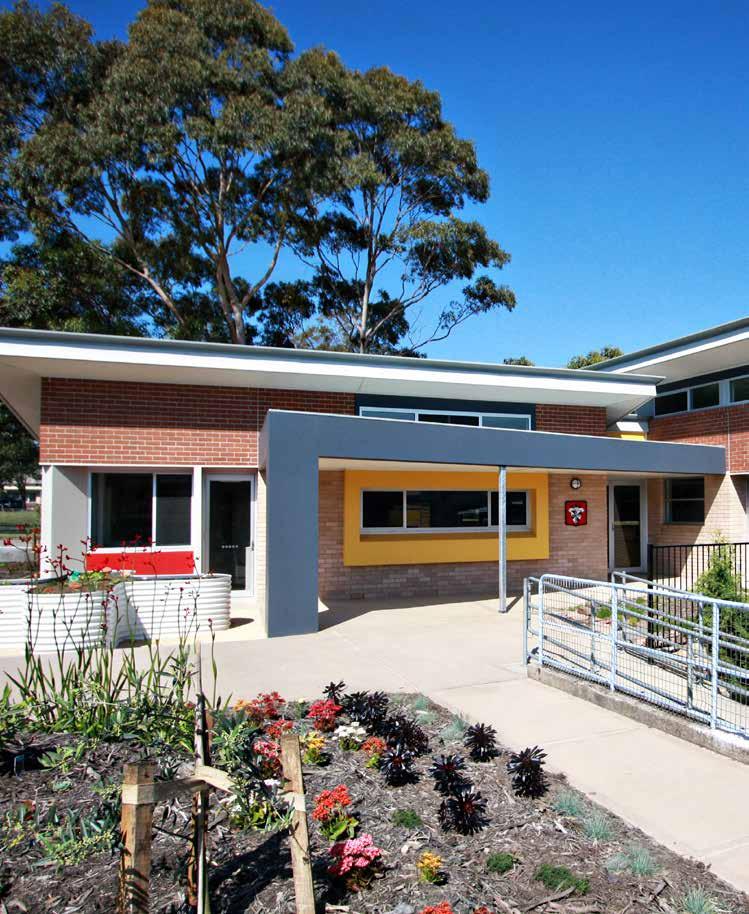
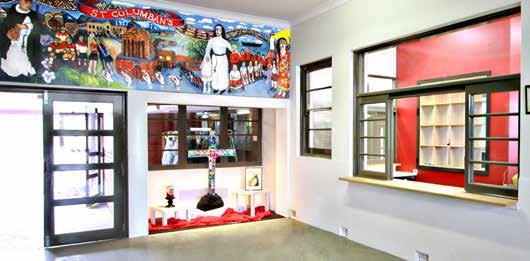
Mayfield MURRAY – DWYER ORPHANAGE
On Country
Traditional custodians of the land, the Awabakal and Worimi people
Mayfield
Named after May, daughter of John Scholey, who bought the area in 1881 and had it subdivided.
Opened 1933
1952 – 1956 Sancta Maria School
Location
Gregson Avenue Mayfield NSW 2304
1917
Parochial district of Waratah established, embracing Waratah, Broadmeadow and Mayfield
1933
Diocese purchased Mayfield property with a vision to conduct a boy’s orphanage, 38 acre site being residence of superintendent of Australian Agricultural Company
Orphanage named after the first two resident bishops of the Diocese.
Orphanage blessed and opened, licenced for total of 65 boys, including 12 boys under 7 years
Daughters of Charity (St Vincent de Paul) arrived to staff orphanage
First sisters, M Gertrude Minogue as Superior, M Margaret, M Monica, M Gabriel, M Philomena
Members of the SVDP Society asked to contribute to the furnishing of the residence
1933 –1944
Total of boys admitted, 246
1936
Orphanage extended to include new wing with dormitory, dining-room and play hall
1937
Report from government inspector – one dormitory for 28 beds actually accommodated 42 beds
1939 –1945
Buildings taken over by the military, 46 boys transferred to Monte Pio Orphanage Campbells Hill
1945
Approved to take in 30 British migrant boys
1946
The Sisters and boys returned to Mayfield ‘Besides the repairs necessary after army occupation a further wing was added to care for nearly a hundred boys from wartorn England.’ ¹
1948
Licenced amended to allow admission of 74 boys, with 21 boys under 7 years
Boys under 3 not admitted, boys between 11 and 12 years transferred to St Vincent's Boys Home, Westmead
1950s
Child migrant policy grant enabled additional dormitory for 30 beds, and extension to 3 classrooms
1950 –1960
Renewed criticism from child welfare professionals
1952
School known as ‘Sancta Maria’, Years 1–5 opened near the entrance to the orphanage
1956
United Nations Declaration of the Rights of the Child saw a change in focus for management of orphanages
Daughters of Charity administration ended, Sancta Maria School closed, buildings relocated to Mayfield West
1957
Students accommodated at Mayfield West school, then known as St John’s
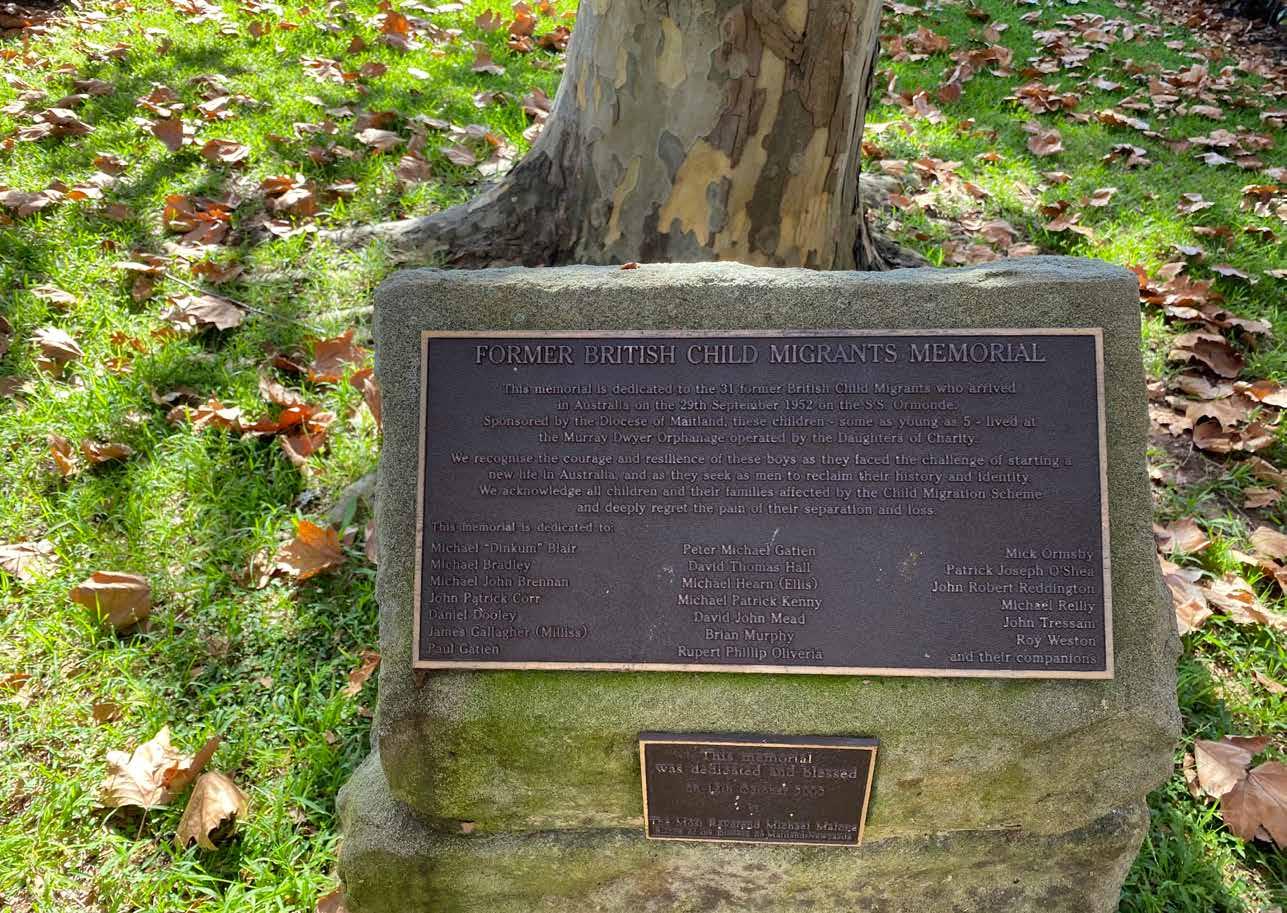
1961
Catholic Family Welfare Bureau (Centacare) established in Hamilton, assumed responsibility for admissions
1964
In residence only 37 boys
Late 1960s
Boys under 5 years not admitted
1967
Policy adopted in favour of scattered cottage homes staffed by married couples
1968
First homes began operating in Merewether
1969
Murray-Dwyer Orphanage formally closed. Property taken over by BHP
1973
Along with the closure of Monte Pio Orphanage at Campbells Hill, almost a century of segregated orphanage provision in the Diocese now came to an end
Mayfield ST JOHN’S INFANTS SCHOOL
On Country
Traditional custodians of the land, the Awabakal and Worimi people
Mayfield
Named after May, daughter of John Scholey, who bought the area in 1881 and had it subdivided.
Opened 1937
Also known as
Colloquially Snake Gully
School
Kindergarten to Year 2, operated as annex to St Columban’s Primary School, Mayfield
Closed 1952
Location
Hanbury Street Mayfield NSW 2304
1917
Parochial district of Waratah established, embracing Waratah, Broadmeadow and Mayfield
1937
Dominican sisters, first sister M Barbara, travelling daily from San Clemente convent by taxi
Church/school opened as St John’s, students progressing ‘up the hill’ to St Columban’s, Church Street, Mayfield ‘The Sisters relied heavily on the generosity of people like Stan Ryan, who answered their every call for help. At about midday, he could be seen approaching the school. He carried a tray which, one day might contain a bowl of soup or, on the next, a plate of homemade cakes.’ ¹
Partly dismantled buildings from Rutherford Army Camp relocated and rebuilt as church/ hall and church/school. Hall also used as entertainment hall, picture theatre and housie venue. ‘Even given Catholic school conditions of the time it was bad. There were fairly large holes in the wooden floor which were ignored until Fr McNamara tripped in one as he was saying Mass. The solution to the problem was the usual one. A raffle was organised and with the proceeds from this a piece of carpet was bought and placed in front of the altar.’ ¹
The school came to be known affectionately as ‘Snake Gully’ name coined by a parishioner – ‘down in the gully’ as distinct
from ‘up on Monastery hill’. The term ‘Snake Gully’ came from the then popular Dad ‘n Dave radio series. Presbytery in cottage next door School concerts were held in Sancta Maria Hall, Gregson Street Mayfield ‘When ‘Trams for Sale’ was the order of the day, we seized the golden opportunity and bought not one but two trams – one for a tuck shop and one for a shed.’ ¹
1937
Or soon after, air raid shelter 6 ft deep built in playground during Word War II years, demolished in 1946
1952
Dominican administration ended Upon closure, ‘Snake Gully’ school was amalgamated with St Columban’s Mayfield
1989
Hanbury Street property sold by parish, later developed into housing commission homes
1993
Parishes amalgamated – Christ the King Mayfield West and St Columban’s Mayfield
Mayfield West CHRIST THE KING PRIMARY SCHOOL
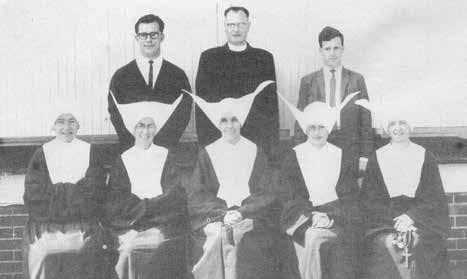
On Country
Traditional custodians of the land, the Awabakal and Worimi people
Mayfield
Named after May, daughter of John Scholey, who bought the area in 1881 and had it subdivided.
Opened 1957
Preceded by 1952 – 1956 Sancta Maria School on Gregson Avenue Mayfield Known as until 1971 St John’s Primary School
1917
Parochial district of Waratah established, embracing Waratah, Broadmeadow and Mayfield
1952
Sancta Maria School Years 1–5 opened at the entrance to the Murray-Dwyer Orphanage on Gregson Avenue
Sancta Maria School staffed by Daughters of Charity (St Vincent de Paul), coming from the Orphanage
1955
Parish of Mayfield West established, Christ the King
1956
Five blocks of land purchased Wilson / Fitzroy Roads establishing Mayfield West Church
Sancta Maria school closed
1957 –1958
Staffed by Dominicans
1959
Daughters of Charity (St Vincent de Paul) took charge of the school
1964
‘
… it is fitting here to express the gratitude of all concerned with St John’s to our two good lay teachers Mr J Henchy and Mr D Carty. Both masters have unstintingly given of their best, of the varied talents, and of their wide experience to play key parts in the life and progress of St John’s. We will always be indebted to them.’ ¹
1969
Daughters of Charity (St Vincent de Paul) administration ended
1970
Staffed by Dominicans
Fitzroy Street Mayfield West NSW 2304
Daughters of Charity administration ended, buildings and hall moved to new site on Fitzroy Street
1957
St John’s School opened accommodating students from Sancta Maria School Mayfield
1971
School name change to Christ the King, in line with parish name
1976
Dominican administration ended
1977
First lay Principal Mr Ray Hanley, first Diocesan Primary school to be fully lay staffed
1992
Reminiscences from the school secretary ‘Eight years ago I produced all the typing on a manual portable typewriter and when we acquired an electronic typewriter about three years ago, I thought life was wonderful. However, last year we progressed to the computer age and the school administration is now done on computer. This year has been a great challenge which I am slowly mastering …’ ²
School closed, students accommodated at St Columban’s Primary School Mayfield
1993
Parishes amalgamated – Christ the King Mayfield West and St Columban’s Mayfield
Photo: Father P Cotter with staff of St John’s School, Mayfield West.
Shortland OUR LADY OF VICTORIES PRIMARY SCHOOL
On Country
Traditional custodians of the land, the Awabakal and Worimi people
Mayfield
Named after Lieutenant John Shortland, who in 1797 while searching for escaped convicts, discovered the estuary of the Hunter River
Opened 1957
Known as
St Joseph’s School, K to Year 4
1964 Our Lady of Victories Primary School
School today kindergarten to year 6
Charism: Josephite
Motto: Truth
Location: 15 Lovell Parade Shortland NSW 2307
Parish: Wallsend-Shortland
Three acre block purchased from Mr Hanson
1949
Parochial district of Shortland established
1956
Church / school opened on land purchased by the parish between Sandgate Road and Lovell Street
1957
School opened, originally as St Joseph’s School, Kindergarten to Year 4, enrolment 81 students
Diocesan Sisters of St Joseph moved in convent – Sisters Marguerite Chapman Principal, M Cecily Keyes, M Matthew Bowe.
Rapid growth in the suburb, owing to the construction of War Service and Housing Commission homes
Diocesan Sisters of St Joseph, M Marguerite Chapman Principal, M Cecily Keyes, M Matthew Bowe
1958
Old church of St Joseph used for school classrooms
Presbytery garage converted to classroom, later meeting room, affectionally called ‘The Academy’
1959
Convent extended to accommodate eight sisters
1964
‘By dent of unflagging hard work and constant effort by Rev Fr Smyth, backed by the yeoman work and assistance of devoted and loyal parishioners, today the Parish of Shortland can boast a fine parochial plant comprising a school of over 300 pupils, a convent housing seven Sisters of St Joseph, a presbytery and from Sunday, November 1, a beautiful new Church.’ ¹
School name changed to Our Lady of Victories Primary School, in line with parish name
1977
First lay Principal, Mr Peter Samuel
1980
Diocesan Josephite administration ended
2004
Construction/refurbishment of classrooms, administration, staff facilities, library, toilets, canteen
2009
Refurbishment of school facilities, external and internal
Construction of multi-purpose hall and refurbishment of classrooms
2016
All classrooms refurbished, new carpet, roofs, data and electrical upgrade, spaces providing flexible learning areas
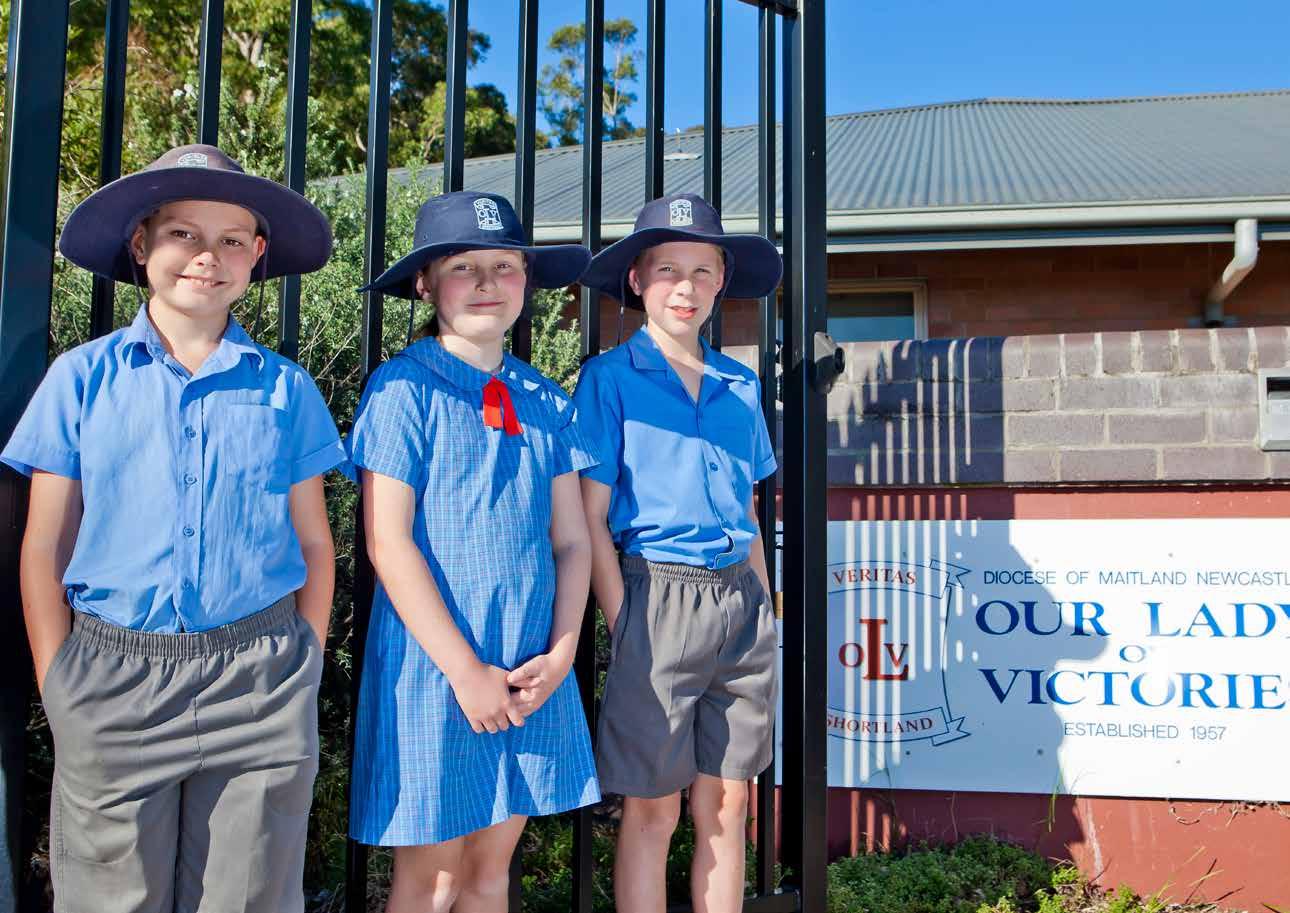
Nelson Bay ST MICHAEL’S PRIMARY SCHOOL
On Country
Traditional custodians of the land, the Worimi people
Nelson Bay
Named after the ship HMS Lady Nelson, which in 1801 was sent to survey the Hunter River and district.
Opened 1962
School today kindergarten to year 6
Charism: Mercy
Motto: Truth and Trust
Location: Sproule Street Nelson Bay NSW 2315
Parish: Nelson Bay
1939 –1945
During World War II 30,000 men were stationed between Newcastle and Nelson Bay
Land between Magnus Street and Victoria Parade donated to the church by Miss Dorothy Porter
‘Prepared to pay the market price to the solicitor, we received the welcome surprise of a free gift. Nelson Bay owes an immense debt to this generous lady, now living in Edgecliffe [sic]. She lent a book called ‘St Michael’ to the parish priest, and the name St Michael was thought of for the Church title, as a fitting thank you for the land.’ ¹
1947
St Michael’s church opened
1949
Arrival of migrant families from vacated military camps, and children of personnel at Williamtown Royal Australian Air Force Base
1952 –1953
Chaplaincy to the migrants began, with Sisters of Mercy attending to instruction of children on Sundays
1960
Parochial district of Nelson Bay established
1962
Nelson Bay Mercy convent and hall established, adjacent to presbytery in Victoria Parade
St Michael’s School opened in church/hall in Magnus Street, accommodating three classrooms with enrolment of 42 students
Sisters of Mercy, Principal M Edmund Cahill, M Aloysius Petherbridge, M Henrietta Hoban
‘On the 30 January 1962 three sisters began the work of Catholic education at the Bay in very humble circumstances, but their own enthusiasm and the evident appreciation of both pupils and parents made up for much that was lacking in the way of equipment.’ ²
Parish purchased large property at the end of Tomaree Street
1969
First section of new school opened at the end of Sproule Street, in Wahgunyah Street
1970
Two further classrooms added
1977
First lay Principal, Mr John Van Nus
1984
School extensions opened
1986
Mercy administration ended
1991
Lopes Library opened, named in honour of generous benefactor and parishioner Mary Lopes
2003 Administration facilities upgraded
2009
Replacement of ‘demountables’ with new classrooms, lift well and multi-purpose hall space, shade structure built
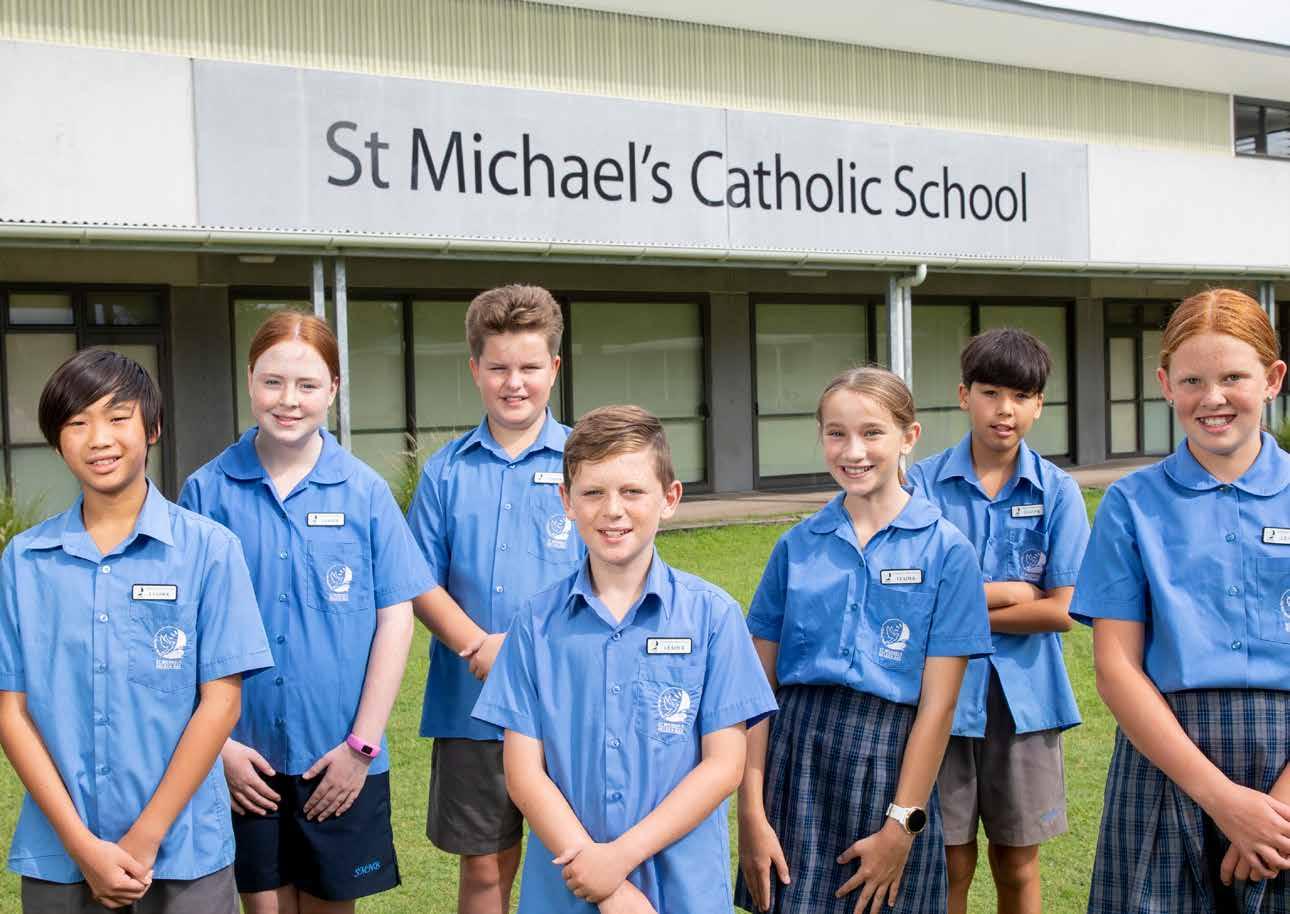
Medowie
CATHERINE MCAULEY
CATHOLIC COLLEGE
On Country
Traditional custodians of the land, the Worimi people
Medowie
Aboriginal word meaning ‘the place of tall trees’
Opened 2021
School today co-educational high school
Charism: Mercy
Motto: United in Mercy
Location: 507 Medowie Road Medowie NSW 2318
Parish: Raymond Terrace
2015 –2016
Analysis and study for the provision of secondary education, with recommendation 3 being adopted. Land purchased on Medowie Road. Vision to accommodate St Nicholas Early Learning Centre, primary and secondary schools and chapel to serve education communities and local parish community
2016
October 28 unveiling of foundation stone
2021
Upon opening school fully lay staffed
Opening with Years 7 and 8
2025
Expected to cover education for all classes Years 7 to 12
School Opened Staff Years
Catherine McAuley Catholic College 2021 Lay Teachers 1
Photo: Catherine Mcauley Catholic College, Medowie
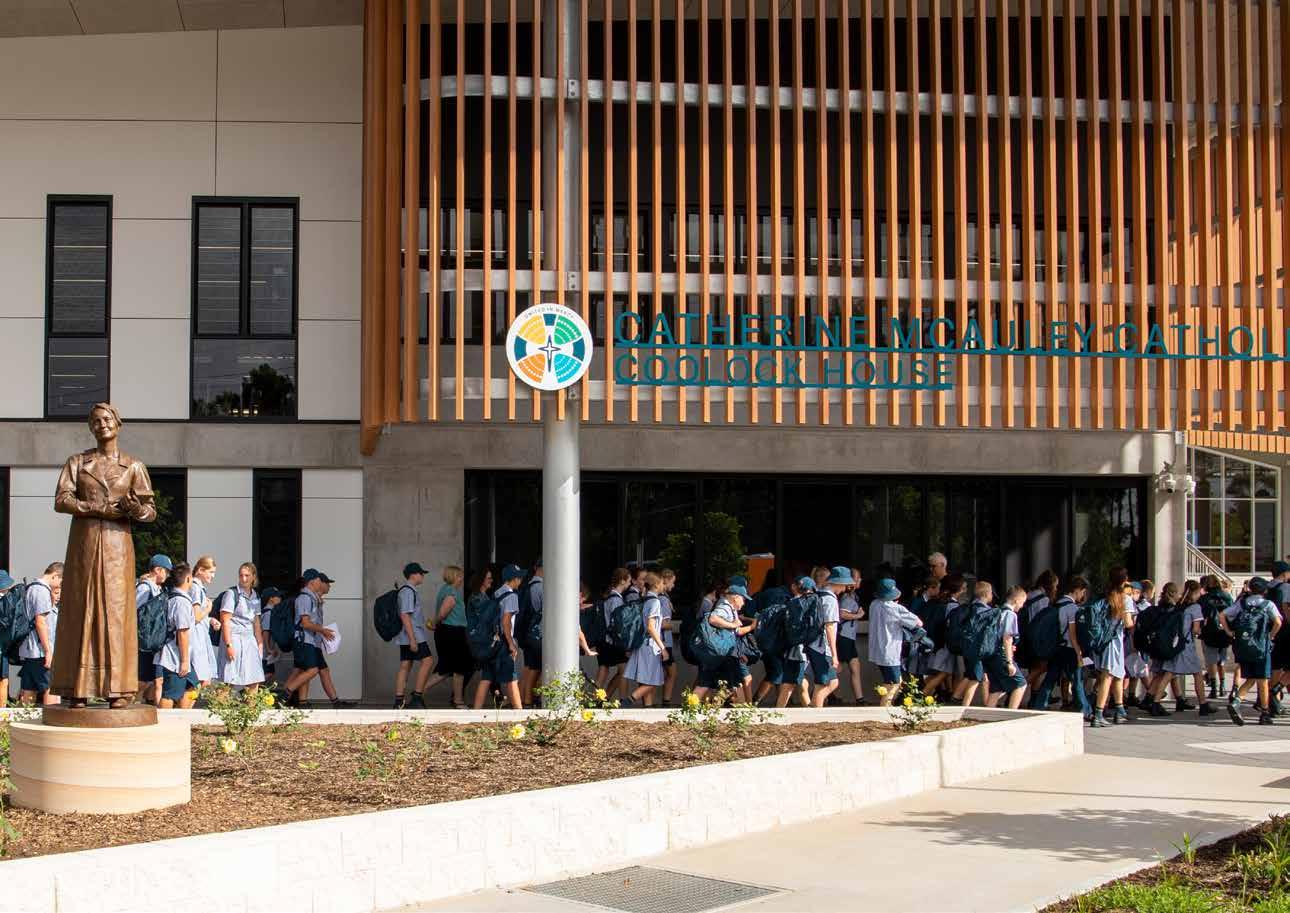
CATHOLIC SCHOOLS IN THE Upper hunter region
On Country:
Traditional custodians of the land the Wonnarua, Gamilaroi and Wiradjuri Indigenous peoples
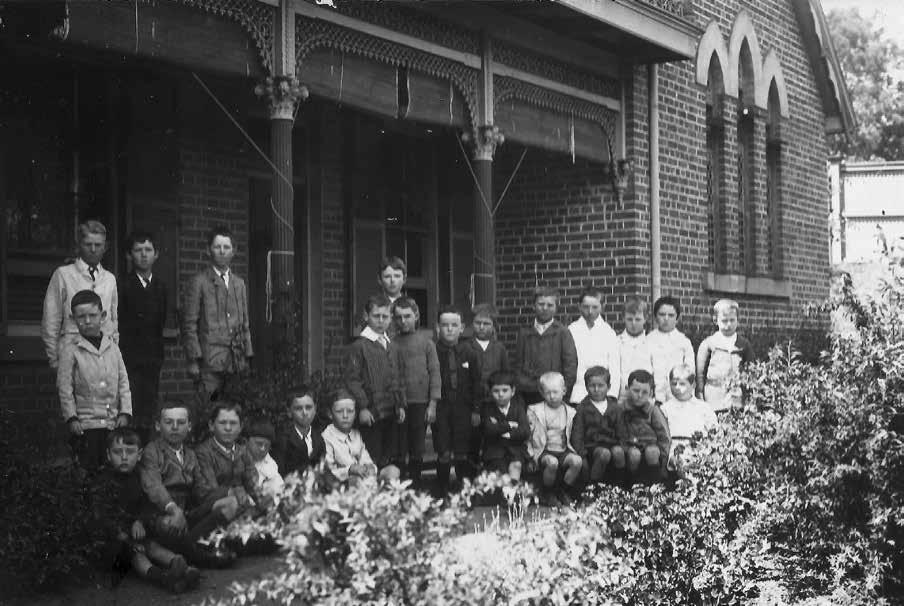
The rich pastoral area of the Upper Hunter River and surrounding regions has been the home of the Wonnarua people for over 30,000 years. The first European presence in this area was an expedition party led by John Howe in March 1820, who with the help of Aboriginal guides discovered a overland route connecting the Hawkesbury Region to the Hunter. He called the region St Patrick’s Plains and described the area in favourable terms. ‘It is the finest sheep land I have seen since I left England……. The grass on the low ground equals a meadow in England and will grow as good a swath and is, like the native grass found where old stockyards have been.’ 1 This discovery of rich farming and grazing lands soon led to the rapid expansion of the European colony as the region was opened up for settlement usually by means of grants and a plentiful supply of convict labour. The earliest settlement in this region was at Singleton, named after a member of John Howe’s expedition who moved to the area as early as 1821.
The first mention of a Catholic school was in 1843 when Rev. J. T. Lynch visited the school to examine the children under the tuition of Mr J. J. Walsh.2 By 1849 88 Roman Catholic inhabitants from Singleton had presented a petition to the Government in regard to the distribution of funds to Denominational Schools. This led to establishment of a funded Denominational school.3 There was a strong Catholic spirit in the Upper Hunter Region. Archbishop Bede Polding visited the region in 1860 to open the newly built St Patrick’s Church in Singleton and included in this visit the laying of the foundation stone for new churches at Muswellbrook and Scone and the opening of the church at Murrurundi. On his return he planned to visit Merton (Denman), Merriwa and Cassilis on his way to Mudgee. It was around these early communities that Catholic schools were established.
With the arrival of Most Rev. James Murray as the first resident bishop in the Diocese of Maitland in 1866 there was an increased emphasis on developing Catholic Education in the diocese. To support this he invited the Sisters of Mercy from Ennis, Ireland, to begin a foundation in the Diocese in 1875. Singleton was chosen for these Sisters because Bishop Murray knew they
Boy pupils, St James Primary School, Muswellbrook 1883
would be well supported by local Catholic Community. Two further female congregations were invited to the Diocese in 1883 – the Sisters of St Brigid established their foundation in Coonamble and the Australian order of the Sisters of St Joseph made their diocesan foundation at Lochinvar.
When the Diocesan boundaries changed in 1887 it fell to the Mercy and Josephite sisters to staff the schools of the Upper Hunter. The Sisters of Mercy established Convents in the major towns of the region – Singleton, Muswellbrook, Scone, Murrurundi while the Sisters of St Joseph resided in the smaller and more isolated country towns – Merriwa, Wybong, Denman, Aberdeen, Wingen. Beverly Zimmerman in The Making of a Diocese describes this distinction in the charism of the two congregations.
The Sisters of Mercy … were in the diocese to teach the children of the upwardly mobile families of Maitland’s established towns. The Sisters of St Joseph were the foot-soldiers who moved into small, remote areas of the diocese to continue the fight and to advance the cause of Catholic religion.4
To cater for students from isolated areas a Boarding School for girls was opened at St Catherine’s College Singleton, while the Sisters of St Joseph opened boarding facilities for children under 12 years at Aberdeen for boys at Denman for girls.
The Upper Hunter region has had periods of great prosperity as well as times of hardship. Today coal mining and electricity generation are prominent industries dramatically changing the landscape from its pastoral beginnings. Dairying and beef cattle, as well as vineyards and horse studs also add to the industrial diversity of this region. The story of the Catholic schools of the Upper Hunter show how they have continued to support the changing circumstances of the communities they serve. Smaller schools may have closed but with improved transport a comprehensive K-12 system strives to build on the rich heritage beginning in the 1840s.
Footnotes
Wood, W.A., Dawn in the Valley, Wentworth Books, Sydney, 1972 Maitland Mercury, 7/10/1843. Maitland Mercury, 18/8/1849 Zimmerman, Beverly, The Making of a Diocese, 2000, pp.185–86
UPPER HUNTER REGION MAP
Singleton
ST FRANCIS XAVIER’S PRIMARY SCHOOL
On Country
The traditional custodians of the land the Wonnarua people
Singleton
Named after Benjamin Singleton, a member of John Howe’s 1820 expedition into the area and the person responsible for the establishment of the township.
Opened
1868 St Patrick’s then St Xavier’s
Prededed by
1843 Classes in makeshift buildings
1849 Catholic Denominational School
Known as
1968 St Xavier’s
1979 St Francis Xavier’s Primary School
School opened as Kindergarten to Year 6, From 1972 Year 3–Year 6
Closed 2000
Location
Cambridge Street Singleton NSW 2330, original entrance on Patrick Street
1843
Classes conducted in make shift buildings, stone/brick with shingle roof
Lay teacher Mr J J Walsh
1844
Parochial district of Singleton established
1845
Wooden structure replaced with a weatherboard structure on land donated by John Brown
1849
Catholic Denominational School began, first lay teacher John Haynes
1857
New school and teacher residence built
1860
St Patrick’s Church built
1868
New school opened for the parish, St Patrick’s, later known as St Xavier’s ‘Old St Xavier’s School opened by Fr Leonard after a successful fund-raising campaign.’ ¹
1868 –1875
Lay staff including Mr and Mrs Coghlan
1876
Sisters of Mercy took charge of Catholic Denominational School, lay teachers continued until 1882
1951
New buildings added
1952
Blessing and Opening of St Francis Xavier Memorial School by Bishop Gleeson
1965
Stage 2 school buildings completed
1968
Original St Xavier’s school opened in 1868 was demolished
1969
Final stage of building works completed
1971
St Augustine’s Primary School South Singleton closed, primary students transferred to St Xavier’s
1972
Reorganisation of Catholic schools in Singleton parish
St Xavier’s Primary School established as Year 3–6 school
Infants classes transferred to the new Catholic Junior School in Patrick Street
1979
Name change to St Francis Xavier’s Primary School
‘We have been favoured with an inspection of the plans for the erection of a new Roman Catholic denominational school at Singleton, which is to be built near the church belonging to the same congregation. The building consists of a very large school-room, 70 feet long by 25 feet wide, and will easily accommodate from 250 to 300 children. The length of the school-room fronts the street, the monotony of this large frontage is relieved in the centre by a neat double entrance porch – one door being for boys and the other for girls. Great care has been taken to ensure thoroughly efficient ventilation, there being in addition to two doors and two fireplaces, no less than eight large windows.’
Maitland Mercury, 18/4/1867, p.3.
1992
Mercy administration ended
1993
First lay Principal Mr Roger Whitney
1999
School closed and amalgamated into new St Catherine’s College K-12
2000
Formation of St Catherine’s Catholic College Kindergarten to Year 12, combining three school entities – St Catherine’s College, St Francis Xavier’s Primary and Infants Schools
2020
Cambridge Street building used as offices for the parish of Singleton and Branxton
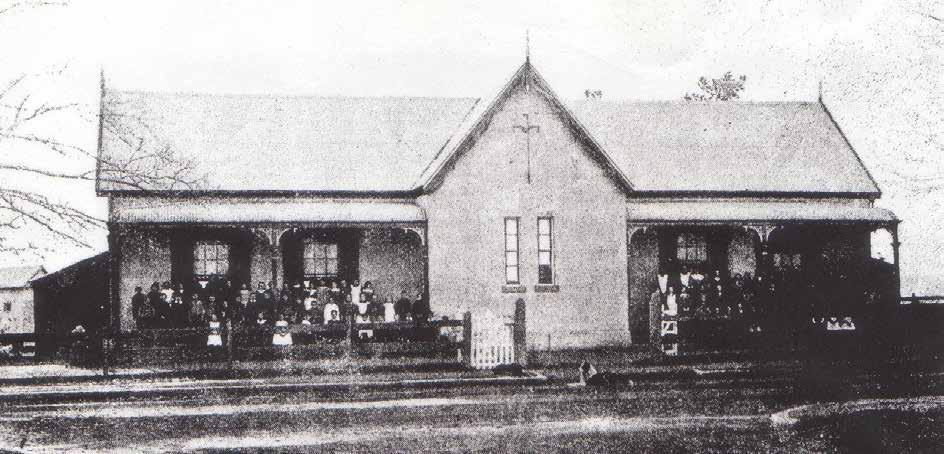
References
1 Sternbeck, M. (1909) The Catholic Church in Singleton
Photo: St Francis Xavier’s School, Singleton 1868
Singleton CATHOLIC JUNIOR SCHOOL / ST FRANCIS XAVIER’S INFANTS’ SCHOOL
On Country
The traditional custodians of the land the Wonnarua people
Singleton
Named after Benjamin Singleton, a member of John Howe’s 1820 expedition into the area and the person responsible for the establishment of the township
Opened 1972
Preceded by
St Augustine’s Primary School South Singleton
School
Opened as Kindergarten to Year 2 Renamed
1991 St Francis Xavier Infants School
Closed 2000
Location
Patrick Street Singleton NSW 2330
1875
Singleton Mercy Convent established becoming the mother house for the Mercy Order in Maitland Diocese
1951
St Augustine’s now catering for classes Kindergarten to Year 4
1971
St Augustine’s Primary School closed
1972
March 12, Bishop Toohey opened the Catholic Junior School, Singleton to replace St Augustine’s ‘The Catholic Junior School was considered innovative in design and teaching methods for this area at the time of its opening, … The building complex is comprised of three large units – one for each infants grade – with two teachers in each unit involved in team teaching. Two withdrawal rooms are attached to the main units and are used by groups for activities such as drama ’ 1
Sisters of Mercy staffed the school, travelling from nearby Mercy Convent
Principal – Sr Delores Kealy rsm
Students from St Augustine’s, South Singleton transferred to Catholic Junior School
1981
Sr Judith Glaister appointed Principal. She was very talented musically and introduced the Suzuki method of teaching violin in the school
1985
Mercy administration ended
1986
Mrs Mary Cutjar appointed as first lay Principal
Enrolment 168 pupils
1991
School named changed to St Francis Xavier Infants School
1999
St Francis Xavier Infants School amalgamated into the new St Catherine’s Catholic College K-12
2000
Classes continued on Patrick Street site, as transition was managed over to College site
2012
All classes finally settled on St Catherine’s Catholic College site
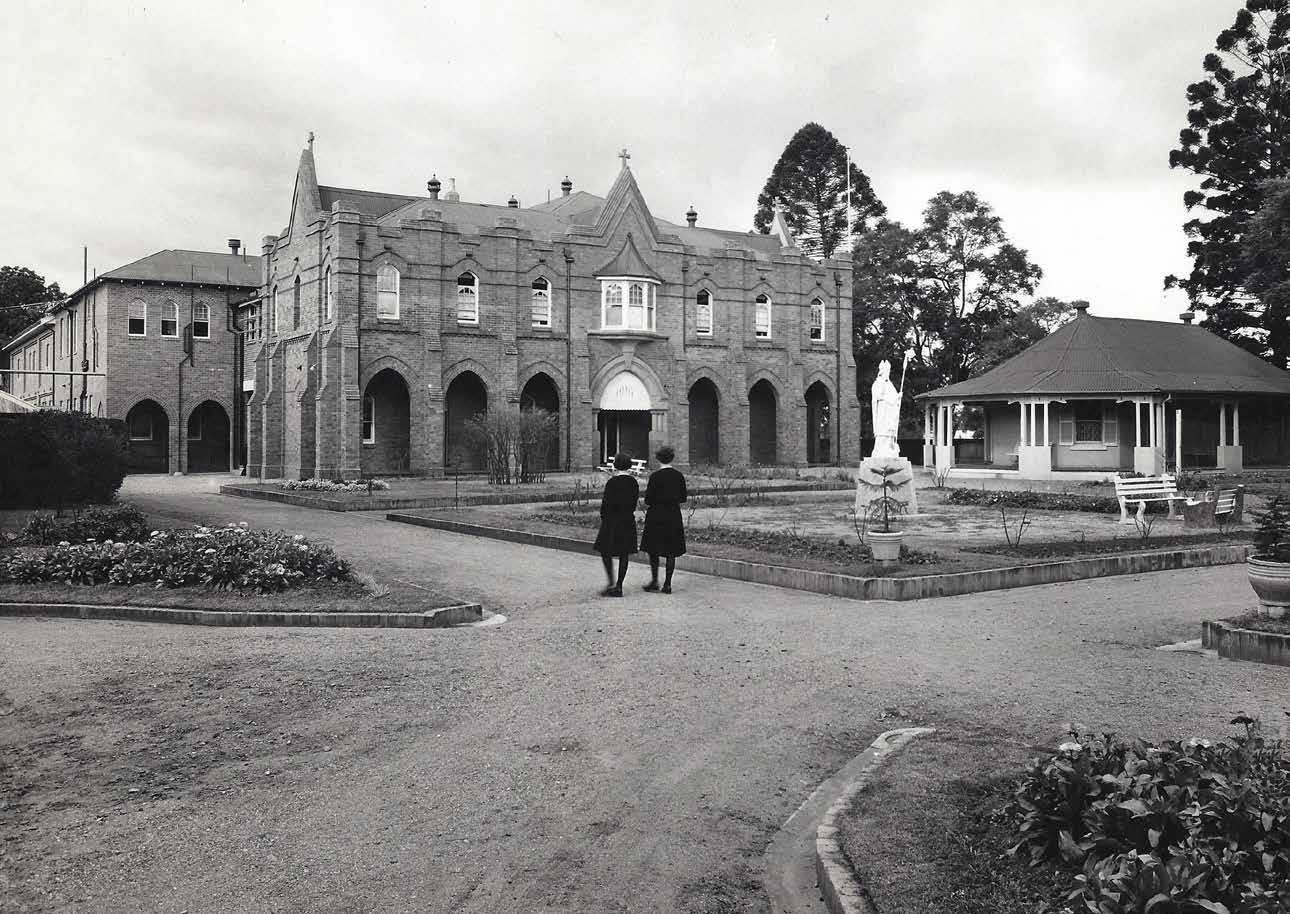
In 1875, the Sisters of Mercy were introduced into the diocese from Ennis, County Clare, Ireland. Bishops could foresee that the time was not distant when the educational question would bring even more serious repercussions than it already had, so when Bishop Quinn of Bathurst visited Ireland in 1874, he was asked by Bishop Murray to secure the services of some more Sisters for the Diocese of Maitland.
The new community of Sisters, comprising six professed Sisters and three postulants, set out from Ireland and were conducted into their little convent at Singleton in August, 1875. The first superioress was Mother M. Stanislaus Kenny.
1966 Fr Harold Campbell, The Diocese of Maitland 1866–1966
Singleton ST CATHERINE’S CATHOLIC COLLEGE
On Country
The traditional custodians of the land the Wonnarua people
Singleton
Named after Benjamin Singleton, a member of John Howe’s 1820 expedition into the area and the person responsible for the establishment of the township.
Opened 1875
Also opened 1875 day and boarding school for girls
Aso opened 1974 co-educational high school
School today kindergarten to year 12
Charism: Mercy
Motto: Harmony Faith Integrity
Location: 30 – 40 Combo Lane Singleton NSW 2330
Parish: Singleton
1844
Parochial district of Singleton established
1875
Six Sisters of Mercy arrived from Ennis Ireland, establishing their first Foundation, Mother M. Stanislaus Kenny as superior Singleton Convent became the mother house for the Mercy Order in Diocese of Maitland
St Catherine’s Day and Boarding school established as ‘Select School’
1986
Mercy administration ends
1910
Brick building opened providing extra classrooms and living quarters for boarding
1913
New convent building completed – St Catherine’s College registered under Bursary Endowment Board
1942
Singleton Army Base opened bringing an increase of population to the area
1960
Extensive building program, new science block added ‘It is one of the most up to date classrooms in the State. The room can seat 54 students in six rows of tiered seats that rise from floor level … By providing this type of seating the students have an unobstructed view of practical demonstrations conducted at the central workbench by the Sister demonstrator.’
1964
Acquired building became McAuley Hall, demolished 1992
1967
First lay teachers in the school
1969
Substantial additions – two storey classroom block, two science rooms, four classrooms, assembly hall, administration facilities
1970
Boarding school closed
1974
Beginning of co-educational high school with intake of boys in Year 7
1987
First lay Principal, Mr Ken Rodwell
1993
Last Mercy sister on staff, Sr Eva Hassett
2001
Formation of St Catherine’s Catholic College, Kindergarten to Year 12 combining three school entities – St Catherine’s College, St Francis Xavier’s Primary School and the Infant’s School
2003
All new school buildings
2004
Construction and refurbishment of classrooms
2007
Refurbishment of classrooms and administration facilities, upgrade of electrical reticulation
2009
Construction and refurbishment of classrooms
Trade Training Centre, purchase of farm 2010
All classes located on St Catherine’s Catholic College site
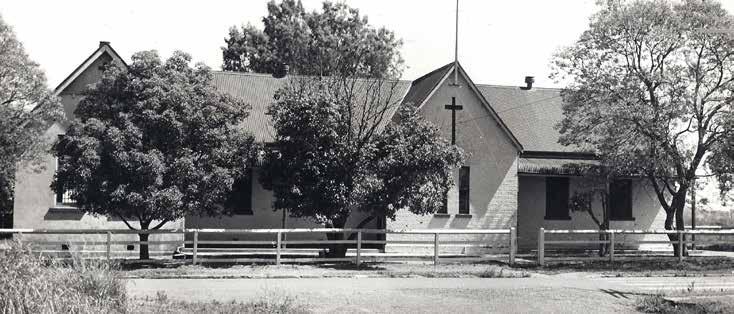
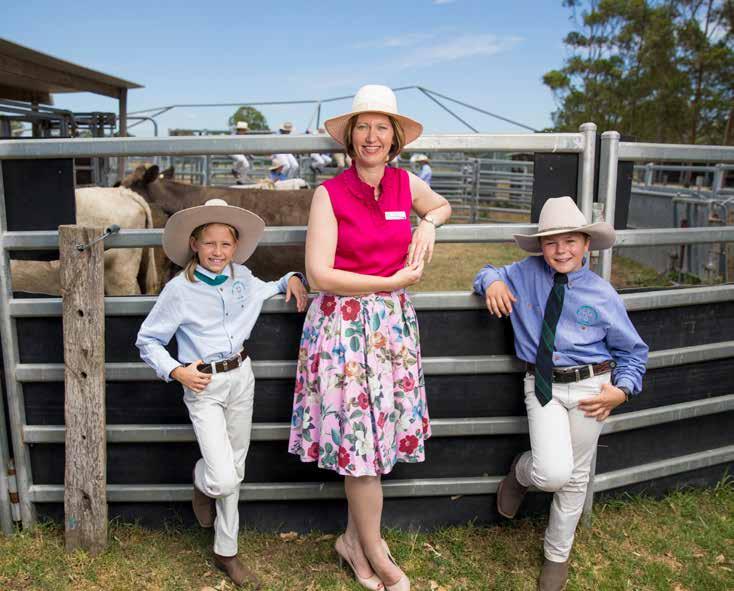
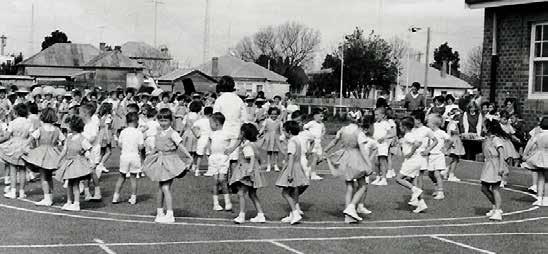
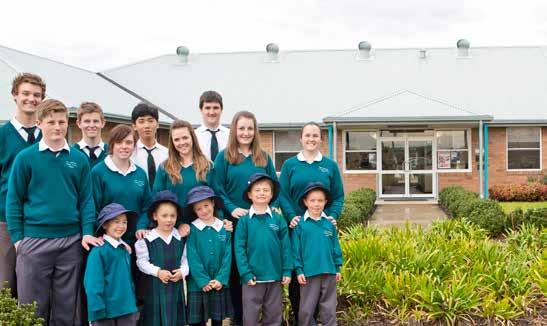
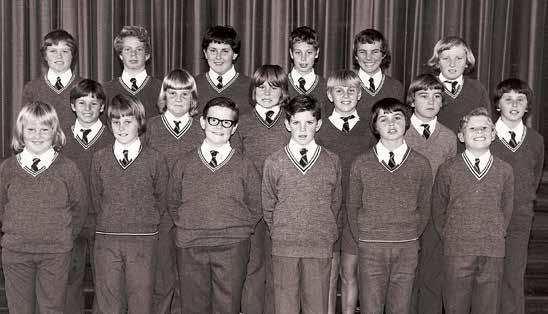
South Singleton ST AUGUSTINE’S PRIMARY SCHOOL
On Country
The traditional custodians of the land the Wonnarua people
Singleton
Named after Benjamin Singleton, a member of John Howe’s 1820 expedition into the area and the person responsible for the establishment of the township.
Opened 1927
School
Infants, then Kindergarten to Year 4
Closed 1971
Location
Bathurst Street South Singleton NSW 2330
1875
Singleton Mercy Convent established becoming the mother house for the Mercy Order in Maitland Diocese
1927
Foundation stone laid for new Catholic church-school
‘The school will be a brick building, 60ft by 30ft, with walls 15ft high. A verandah 46ft by 11ft will be on the north side, and also a porch. The back wall will be a temporary one of wood, to admit of extension if necessary. The roof will be of iron with a pine ceiling.’ ¹
Sisters of Mercy staffed the school, travelling from Mercy Convent
1950
School extensions to cater for the southern end of the township
1951
St Augustine’s now catering for classes Kindergarten to Year 4
1953
Enrolment 82 students
1954
School Opened Closed Staff Years
St Augustine’s Primary 1927 1971 Mercies 44
References
1 Singleton Argus 29/03/1927
2 Singleton Argus 20/08/1954
‘Perfect spring weather added much to the enjoyment of the many parents and friends who went to St Catherine’s College on Wednesday afternoon and to St Xavier’s and St Augustine’s Primary Schools on Thursday afternoon to join in the Education Week celebrations. … St Augustine’s School South Singleton gave an out-of-doors entertainment in their spacious playground and used a specially erected stage beautifully decorated with wattle and spring flowers.’ ²
1971
St Augustine’s closed, students transferred to Catholic Junior School and St Francis Xavier Primary School
1972
Reorganisation of Catholic schools in Singleton parish
Former school building became a parish hall alongside St Augustine’s Church
1974
‘Cooinda’ Home for the Aged built in the grounds of St Augustine’s Church
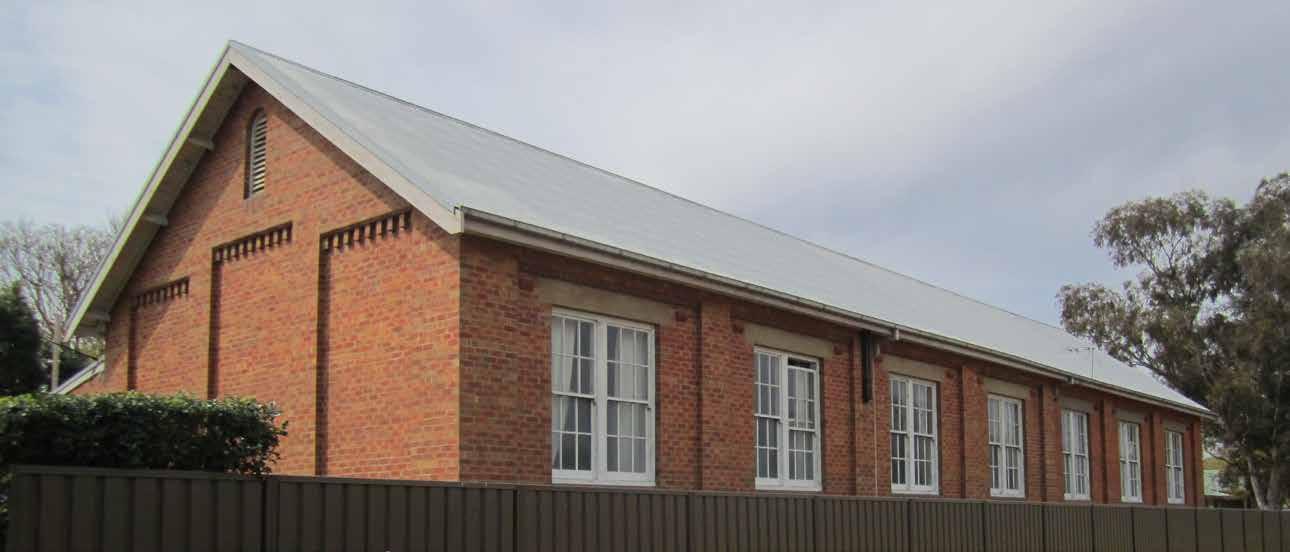
Singleton MERCY ORPHANAGE
On Country
The traditional custodians of the land the Wonnarua people
Singleton
Named after Benjamin Singleton, a member of John Howe’s 1820 expedition into the area and the person responsible for the establishment of the township.
Opened 1877
Closed 1910
Location
30–40 Combo Lane Singleton NSW 2330
1844
Parochial district of Singleton established
1875
Six Sisters of Mercy arrived from Ennis Ireland establishing their First Foundation, Mother M. Stanislaus Kenny as superior Singleton Convent became the mother house for the Mercy Order in Maitland Diocese
1877
Opening of Mercy Orphanage with four girls admitted
‘The first Catholic orphanage in the Diocese of Maitland was established at Singleton in 1877. It was conducted by a community of Irish Sisters of Mercy who arrived in Singleton from Ennis, County Clare in 1875.’ ¹
1893
Twenty three in residence, ‘a relatively small institution’
1894
0nly ten orphanes
1899
Nine orphanes so ‘to fill empty beds eleven women were admitted.’
‘It seems the orphanage always had financial problems. Although the cash revenue would have been supplemented by donations of food and clothing, it is clear this orphanage would have been a very poor institution.’ ²
1910
Orphanage closed when ‘Twenty girls were relocated to Campbells Hill Orphanage.’
1910 –1973
Bishop Murray Memorial Home for Girls opened at Campbells Hill Maitland, known as Monte Pio
‘The care of the orphan was a work very dear to M. M. Stanislaus and our early sisters, who began with four homeless girls in Singleton in 1877 in very humble accommodation. Increasing numbers needed their ministrations over the years, reaching twenty-two in 1909. The memorial booklet of M. M. Stanislaus pays tribute to her motherly concern for these children:
For them she had the greatest possible respect … Their home in Singleton was very humble, but with that exception, they were well cared for and so bright that one day she expressed a hope that their better home on Campbell’s Hill would never take away their happy spirit.’ 2
Muswellbrook ST MARY’S HIGH SCHOOL
On Country
Tradition custodians of the land the Wonnarua and Gamilaroi peoples
Muswellbrook
Named after a quantity of mussels were found in the vicinity.
Opened 1953
Preceded by
1883 St James Primary School
Mary’s Mount Providence
Location
Skellatar House
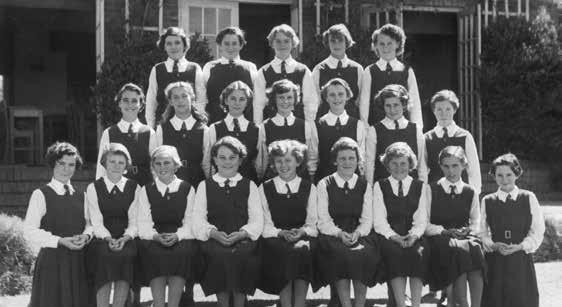
1847
Within the Archdiocese of Sydney, transferred to Maitland Titular See, administered from Singleton
1883
Muswellbrook Mercy convent established, Father Fitzgerald called the area Mount Providence
Sisters of Mercy arrived and established St James Primary School
1952
Large section of new development purchased by parish, including Skellatar House
The historic homestead Skellatar House had been built in 1883 by the Bowman family
1953
St Mary’s High School established in converted building, 18 students enrolled
‘Thanks to the untiring efforts of Rev. Father
Roger Kennedy and Father Terry Williams, along with the willing men of Muswellbrook, the school was soon made ready and really began operating on 28 January, 1953.’ ¹
First Mercy sisters, M Louis Coote, M Irenaeus Flynn –Extracts from her diary
‘During the weeks which followed much hard work and lots of fun went into preparing a tennis court, a basketball field and other playing areas for the girls.’
‘Any account of St Mary’s, however short, would not be complete without mentioning Mr Oakes Senior, and Mr and Mrs Vic Oakes who lived on the premises and who were at our beck and call for all kinds of things.
… On one occasion Mr Oakes did us the service of getting rid of a very unwanted visitor, a long six foot black snake which wriggled almost to the classroom door.’ ¹
1967
Enrolment 49 students
Decision made to close the secondary school owing to Wyndham Scheme requirements, Mercy administration ended
1968
Girls were accommodated at St Catherine’s Singleton
1977 –1984
Skellatar House used as a Teacher’s Centre, transferring to Sowerby Street Convent School after closure
St Mary's High school students
Muswellbrook ST JAMES’ PRIMARY SCHOOL
On Country
Traditional custodians of the land, the Wonnarua and Gamilaroi peoples
Muswellbrook
Named after a quantity of mussels were found in the vicinity
Opened 1883
Preceded by
1861 Catholic Denominational School
1871 St James Convent School
Also opened
1973–1975 St Mary’s Infants School
School today kindergarten to year 6
Charism: Mercy / Josephite
Motto: Living in Christ
Location: Skellatar Stock Route Muswellbrook NSW 2333
Parish: Muswellbrook
1841
Government grant of land to the church
1845
St James Chapel built
1847
Within the Archdiocese of Sydney, transferred to Maitland Titular See, administered from Singleton
1861
Muswellbrook parish established, stone church built in Brook Street, used as Catholic Denominational School
Catholic Denominational School in the ‘new stone church’, first lay teacher, Miss M Quinn 1871 Mr Frank Guilfoyle
1871
New school ‘St James Convent School’ and residence built in Brook Street “The schoolroom stands east and west with its handsome gable at each of the points: there are two porches, one at each end for girls and boys respectively.’ ¹
‘As there was talk of the coming of the Sisters of Mercy to Muswellbrook in the next year or so this necessitated the additions of a brick building for a dining room and kitchen at an estimated cost of 200 pounds ($400).’ ¹
1883
Muswellbrook Mercy convent established ‘Eventually, when the Denominational School was abandoned, the long schoolroom was partitioned and used by the sisters as a community room and refectory.’ ¹
Sisters of Mercy arrived to staff school, M Francis Fleming Principal, M Raphael McMahon, M Loyola Gates, M Monica Doherty ‘They lived in Mr Guilfoyle’s four room cottage as they taught in their new St James’ School.’ ¹
St James Primary School established
1885
New school built on the hill behind the church in Sowerby Street, second storey added 1914
‘At this time moveable partitions were used to separate the classrooms. When overcrowding took place some children were housed and taught in a tent.’ ¹
1892
Enrolment 86 students
1912
New stone church built, St James
1914
Second storey added, building now surrounded by verandahs and balconies
1931
New timber classrooms opened
1945
Wooden classrooms built for CUSA (Catholic United Services Association), later becoming school canteen
1953
Large property purchased by parish, including Skellatar House. High School
St Mary’s Mt Providence established, closing 1967
1956
Two storey brick classrooms built
1972
Mercy administration ended
1973
Diocesan Sisters of St Joseph came to reside in convent and staff schools, also travelling out to St Joseph’s Aberdeen
Sister M Ursula Kauter as Principal, seven sisters and six lay staff.
To alleviate crowding at St James, infants moved to Skellatar House, as St Mary’s Infants School
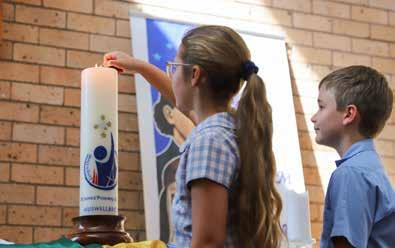
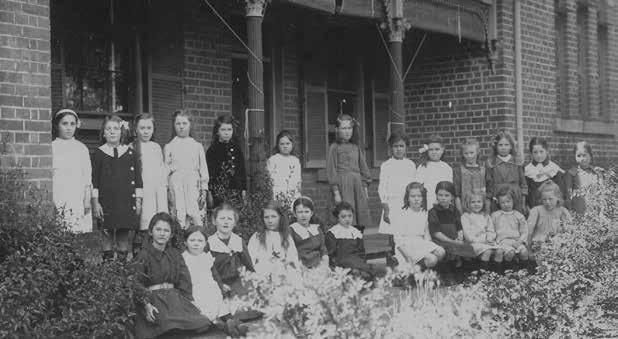
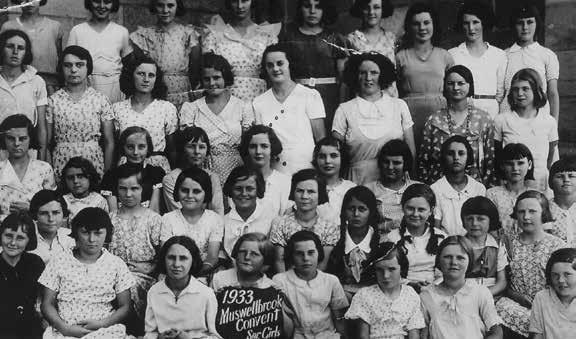
1975
St Mary’s Infants School students transferred back to St James Primary School
1980
Committee set up to consider new site for a new school
1983
New school opened on section of the original homestead property, four blocks of classrooms – separate kindergarten, infants and two primary blocks, library, administration block and a canteen, multipurpose hall and chapel arranged around a central quadrangle and assembly area
1990
Josephite administration ended
1991
Principal – Mrs Mary Cutjar
2009
Renovations of fencing and driveway, multipurpose hall built, refurbishment of library
2012
New school facilities
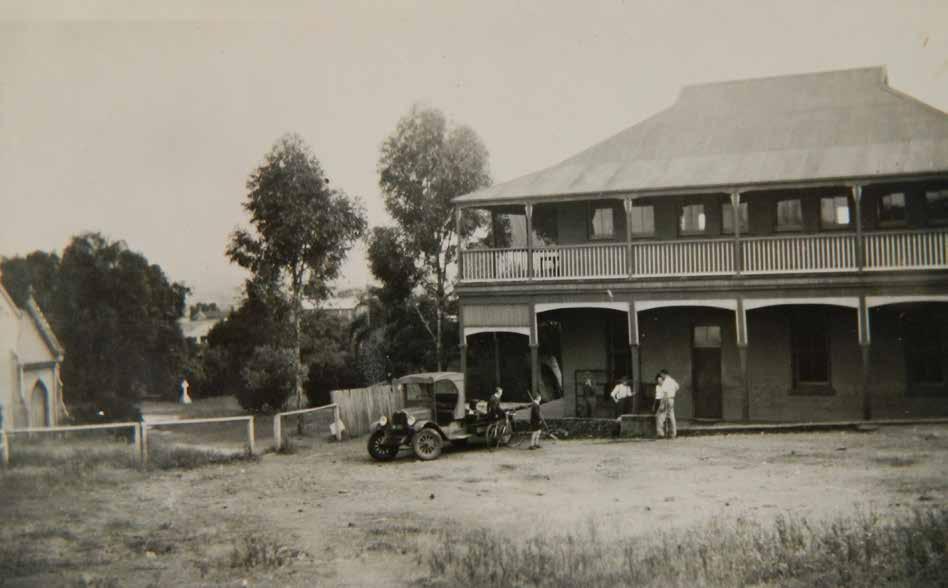
Scone ST MARY’S PRIMARY SCHOOL
The traditional custodians of the land the Tulong and Murrain people
Scone
Named after a place in Perthshire, Scotland
Opened 1877
Preceded by 1875 Denominational School
Also opened
1899–1918 St Angela’s Convent School
School today kindergarten to year 6
Charism: Mercy
Motto: Teach Us Wisdom Teach Us Love
Location: 12 Short Street Scone NSW 2337
Parish: Scone
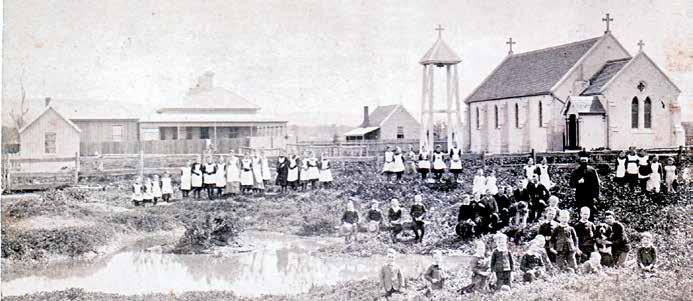
1860
St Mary’s Catholic Church opened
1875
Fr McGrath established a Denominational School, crn Kingdon and Hill Streets
Denominational school, teacher Miss Brigid Callen ‘She rode for some miles on horseback to teach the Catechism and the three R’s (sic) to the young folk of those days.’ ¹
1880
Parochial district of Scone established
1887
Sisters of Mercy arrived to staff school, Principal M Regis Murray, M Xavier Byrne, M Stanislaus McGoldrick, M Patrick Dawn
1889
Mercy convent called St Aloysius, built and opened with ‘select high school’ St Angela’s on convent verandah ‘This venture would have given some financial support to the Sisters when many families could not even afford the small fee of the primary school.’ ¹
1898 –1901
Sisters travelled out to Moobi teaching in private home of Mrs Coffey
1900
Enrolment 106 students
1901
Bishop Murray reported ‘There were more Protestant than Catholic pupils at the convent school in Scone.’ ²
1910
Reported in the Freeman’s Journal, convent school donated beds for Mercy Orphanage in Maitland
1918
St Angela’s convent High School closed
1925
New church opened Our Lady Queen of Peace
1953
New school built and opened on corner of Waverley and Short streets
1966
Two new classrooms built, also storage
student toilets, canteen and shelter
Four ‘demountable’ classrooms added for extra accommodation 1982
First lay Principal, Mrs Gloria Toohey 1986
Opening of new brick building with new extensions and alterations completed, ‘demountables’ replaced 1993
Sisters of Mercy left the school with the retirement of Sr Fidelis
Classrooms built, new library, staff and office facilities
Five new classrooms built with 1953 building refurbished for library, office and staff rooms
Construction of shade structure and external and internal refurbishments
Multi-purpose hall and associated works
Moobi CATHOLIC PRIMARY SCHOOL
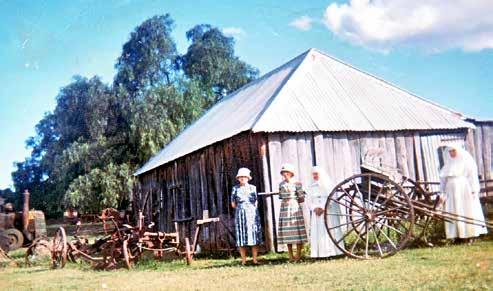
Traditional custodians of the land the Wonnarura and Gamilaroi peoples
Moobi Origin unknown
1880
Parochial district of Scone established
1887
Mercy sisters arrived in Scone
1889
Mercy convent St Aloysius built and opened in Scone
1898
School operated in Mrs Coffey’s house in a room separated from the kitchen by a partition
‘The sisters taught to the accompaniment of the rosary recited in Gaelic.’ ¹
‘As there was only enough work for one teacher, a lay teacher sat in the buggy shed during the day doing some sewing for the community.’ ¹
Sisters travelled out to Moobi teaching in a private home
Early companions – M Angela Fenelon, M Monica Doherty, M Assisium Kennedy, M Alacoque Lynch, M Benignus Moy
1899
St Michael’s Church opened in a small wooden church / school, built on land donated by Daniel Sullivan
‘There were so many changes in the Staff there, that Fr McGrath got disgusted and he one day remarked, ‘ I had one sister there who could teach and wouldn’t teach and another who would teach if she could and a third who wouldn’t if she could.’ ¹
1901
School closed
Photo: Moobi School
Murrurundi ST JOSEPH’S
PRIMARY SCHOOL
On Country
The traditional custodians of the land the Wonnarua people
Murrurundi
Aboriginal word for ‘five fingers’, referring to the five peaks surrounding the town
Opened 1879
Preceded
Within the Diocese of Maitland
1841
Stone church built in Murrurundi, district originally known as Haydonton
1860
Denominational School / National School opened, first lay teacher Mr McDonald
1869
Parochial district of Murrurundi established
1878
Sisters of Mercy from Singleton Foundation arrived to staff school, first sister Mother Bernard Gavin
1879
Murrurundi Mercy convent established, in row of houses along Mayne Street
St Joseph’s school conducted in old slab building divided into 2 rooms with a verandah, facing Victoria Street ‘The school bell in these years was hung from an old apple tree. It ceased to be when lightning struck it. It was later situated in the small school building.’ ¹
1880s
Convent built on land donated by Haydon family, additions in 1901
1881
Upon closure of Blandford Mercy school, the students were accommodated here
1887
Primary school built, demolished for building of new school in 1941
1890
‘Select’ St Mary’s High School opened in convent, officially opened 1912, for Catholic and non-Catholic students in front room of convent. Also taught were music, painting and needlework.
‘When a baby was brought to be baptised on a school day, Fr [Forde] would quickly call at the school to select a sponsor for the infant. Shy pupils would excuse themselves as “not having brought their hat”. ‘Borrow one!’ he would say, and, picking a hat would plonk it on a girls head and march that girl off to the church to be godparent to the infant – an enormous responsibility!’ ¹
1908
Enrolment 72 students
Students travelled to school, some from many miles distant ‘… some came on the luggage train whilst others walked through a tunnel –a dangerous practice.’ ¹
c1917
‘Select’ St Mary’s High School closed
1931
New brick school building opened, old school buildings now Kindergarten and typing room
‘It had two large class rooms divided by a folding door and a fire place at each end. … It was a most modern building at the time. … It had a spacious verandah. ... The old wooden school facing Victoria Street was used as a play room on rainy days. … Book keeping, business principles and typing were taught after school and on Saturday morning.’ ¹
1941
New school built
1970
Mercy administration ended and convent closed
St Joseph’s Primary and Infants schools closed, students travelled to St Mary’s Scone
1975
Convent became known as Murrurundi House
Murrurundi House opened as an Education Centre, renovated and upgraded for group accommodation, administered by the Catholic Education Office, transferred to parish administration in 1986
2001
Murrurundi House sold to private buyer
Blandford HOLY ROSARY SCHOOL
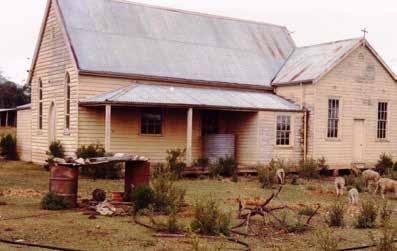
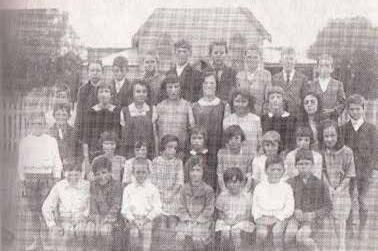
On Country
The traditional custodians of the land the Wonnarua people
Blandford
Named after a place in England, birthplace of W.H.Warland, early settler in nearby village of Harben Vale
Opened 1879
Preceded by
1866 Catholic Denominational School
1879–1918 St Stanislaus School
Known as
1918 Holy Rosary School
Closed 1931
Location
Blandford NSW 2285 out of Murrurundi
1866
Slab built school / church
‘The original Catholic School at Blandford was reputed to have been made of slabs and was in the far corner of the … Blandford Church property, adjoining Harben Vale. It was opened in 1866.’ ¹
Denominational School opened, first lay teacher, Mr Dennis (Daniel) Murphy
1867
“General muster of Catholics to meet new Bishop.”(Dr. Murray) ¹
1875
‘A grand concert and quadrille party in aid of the funds for the Blandford Catholic School was held in the Mechanics Institute on Monday evening week, and proved the most enthusiastic and generously attended entertainment held in this town for a long time past.’ ²
1879
Convent for Sisters of Mercy established in Murrurundi
‘The Roman Catholic Denominational School at Blandford – Mr V. Ellery – is to be examined next week.’ 2
Sisters of Mercy opened a little school, St Stanislaus School, first sister Mother M. Stanislaus
1881
Closure of Denominational School
1890
Recorded 50 pupils at Blandford ³
1918
With another section added on to form a T school reopened, now known as Holy Rosary School
Sisters of Mercy travelled from Murrurundi
1923
‘Two sisters travelled from Murrurundi in a horse drawn buggy driven by men and boys from the town. The boys attended themselves and then drove back to Murrurundi at the school’s end. The sisters had some hair raising escapes (unprintable), but survived.’ 4
1931
School closed very suddenly 1 April, students accommodated at Murrurundi
School Opened Closed Staff Years
Denominational St Stanislaus Holy Rosary 1866 1879 1918 1881 1931 Lay Teachers Mercies 15 52
References
1 Maitland Mercury 22/10/1867
2 Singleton Argus and Upper Hunter General Advocate 28/07/1875
3 Australasian Catholic Record 1890
4 Australian Town and Country Journal 20/08/1890
Photos: Blandford School 1880s and students 1930s
On Country
Merriwa ST JOSEPH’S
PRIMARY SCHOOL
Traditional custodians of the land the Gamilaroi people
Merriwa
Aboriginal name for ‘plenty of grass seed’
Opened 1883
The Convent School
Charism: Josephite
Motto: Actions Not Words
Location: Marquet Street Merriwa NSW 2329
Parish: Merriwa
1860
Opening of St Matthias Church
1874
Parochial district of Merriwa established
1879
Trustees appointed for the land set aside for Roman Catholic Church and Presbytery Original school site ‘... humble slab building in the town opposite the Post Office.’ 1
1881
New St Anne’s Church blessed and opened
1883
Catholic School opened, enabled by financial commitment of Catholic community
Lay teacher employed Miss Cooper as second lay teacher
People of the district agreed to pay ten pounds per month
1885
Merriwa, first Branch house opened by the Diocesan Josephites, fifteen months after establishment of Lochinvar
Purchase of a small wooden house for convent, Diocesan Sisters of St Joseph arrived from Lochinvar convent. ‘… the Sisters were taking over existing Catholic schools, previously staffed by lay teachers.’ 2
First sisters M Aloysius Cahill Superior, M Josepha Comerford and M Magdalen McNamara. ‘To get there, the Sisters travelled by train to Muswellbrook where they were met by Fr Kearns – Merriwa’s Parish Priest – and driven in a special coach to Denman. There they had a late dinner,
hosted by a Catholic parishioner, Mrs Doyle. Finally they continued onto Merriwa and arrived at 6 o’clock, met by welcoming Catholics. Not pausing to rest or settle in, they opened the school on Wednesday.’ 2
1886
‘There were 38 boys and 39 girls enrolled at the school.’ 2
1896
‘First St Patrick’s Day Sports held on Merriwa Common’ 3
1908
Convent established in McCartney street, Marquet Street convent sold and removed
1918
Convent replaced with a traditional colonial style sandstone building, gift from parishioners
1928
New school opened in Marquet Street, ‘spacious plot of over eight acres of grassy slopes beside the town’2
1954
Infants classroom opened ‘it was a modern building … it had central heating.’ 2
Junior Secondary school established by the Sisters, Principal M Francesca Balton
1961
Additional block of classrooms opened, initially used for the high school students
1968
Junior Secondary closed
1979
First acting lay Principal, Miss Louise Outram
1980
Multi-purpose building opened, canteen, covered shelter, storage area and toilet facilities
1985
Diocesan Josephite administration ended
1986
First permanent lay Principal, Michael Stanwell
2006
Refurbishment and extension of administration, staff facilities and library
2009
Construction of covered outdoor learning area shade structure and refurbishment of student amenities
2020
Restoration of 55 kilogram bell in tallowwood tower. Known to have existed close to well, in front of school building prior to 1920, possibly intended for installation in church 1889 Proceeds to R.C. belfry funds.1
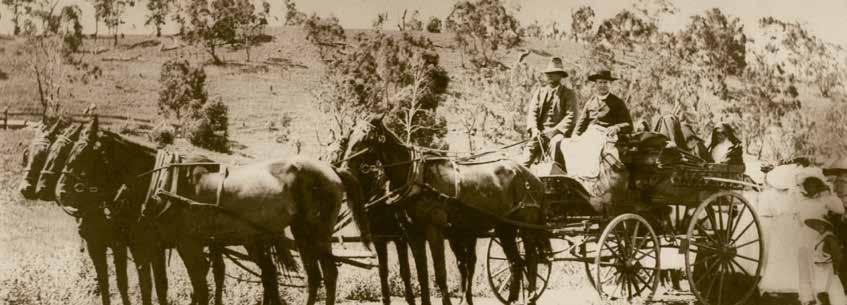
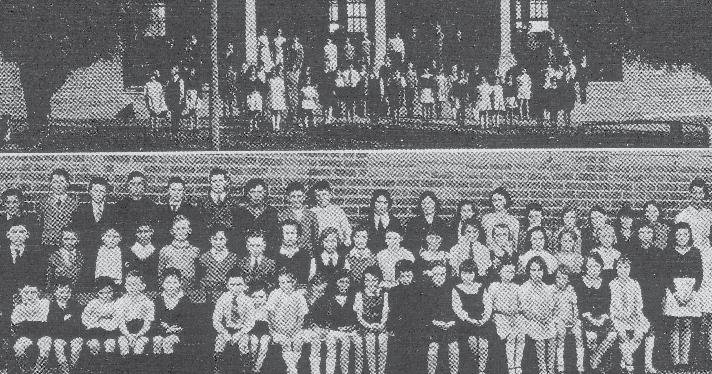
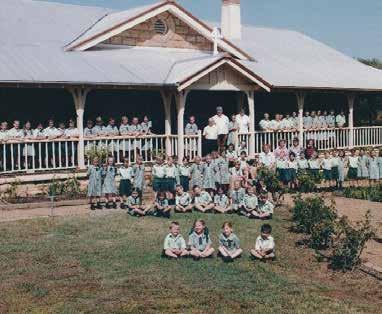
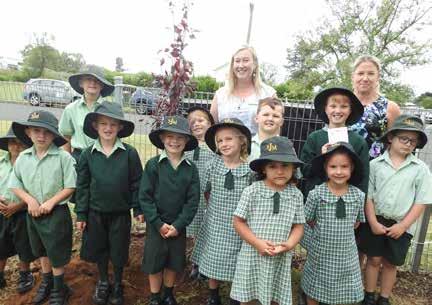
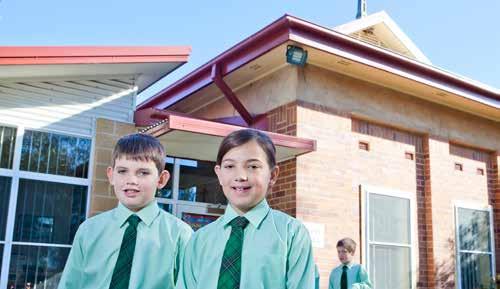
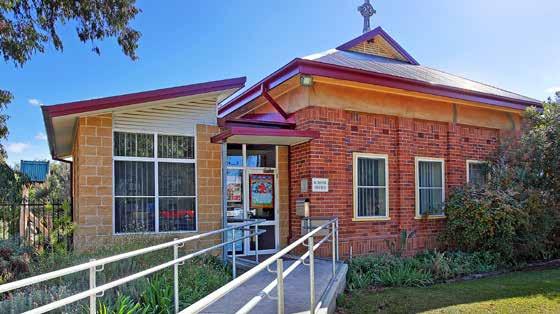
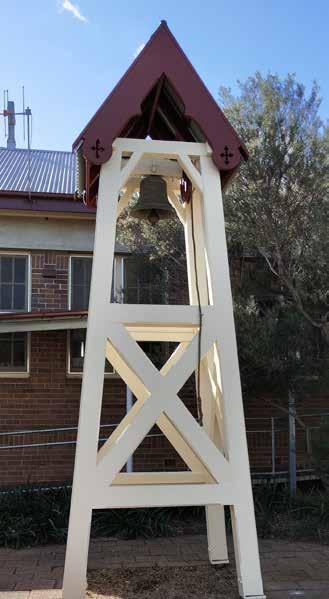
Wingen ST PATRICK’S PRIMARY SCHOOL
On Country
Traditional custodians of the land the Wonnarua people Wingen
Aboriginal word for ‘fire’ Burning Mountain is close by this district Opened 1896
Convent
‘The good Sisters of St Joseph, Wingen, are putting a fine addition to their convent, so as to be able to open a boarding school after the school holidays; and indeed, so far as health is concerned, it would be difficult to find a more suitable situation for a scholastic establishment in the colonies. The little township of Wingen is situated at the extreme end of the Hunter River,…nestling cosily at the foot of hills, which shelter its two sides, with the beautiful green valley of the Hunter spread out before it like a grand panorama.’
Freeman’s Journal, 2/9/1899, p.8
Parochial district of Scone established
1893
Church built, St Patrick’s
1896
Convent established in two room cottage opposite the church Church / school opened
First Diocesan Sisters of St Joseph arrived to staff school, M Agatha Bussell Principal, M Vincent Webber, M Cecilia Hillier ‘As soon as the train stopped, three ladies wearing the habit of the Sisters of St Joseph, were seen issuing from one of the carriages. They were taken in charge by the ladies in waiting and accompanied with a vehicle, and a start was made for the pretty little church of St Patrick in the valley. As soon as all were seated in the church, a very nice address of welcome was read.’ ¹
1898
‘The Sisters of St Joseph, who have only been established at Wingen since January 1896, have made wonderful progress in their scholastic labours. The effect this community of religious teachers had on that thriving village was such as to draw nearly the whole attendance from the local Public School, with the result that the Institution had to be closed by the authorities …’ ²
1899
‘The good sisters of St Joseph, Wingen, are putting a fine addition to their convent, so as to be able to open a boarding school after the Christmas holidays.’ 3
Sisters would conduct Catechism classes on Sunday afternoon for both children and adults
Additions to convent, two new rooms
1900
Boarding School relocated to new convent rooms
1908
Enrolment 41 students
1952
New church opened
1958
Last Diocesan Sisters of St Joseph, Principal M Alexius Boyle, M Regis Moylan, M Ninian Mc Rae
School closed
1959
Convent closed 11 January later sold
1996
Last mass at St Patrick’s parish church, 19 May
Aberdeen ST JOSEPH’S PRIMARY SCHOOL
ST JOSEPH’S BOYS BOARDING SCHOOL
On Country
Traditional custodians of the land the Wonnarua people who had close links with the Gamilaroi people who may also have occupied the area
Aberdeen
Named after George Gordon 4th Earl of Aberdeen, by Thomas McQueen for his 1828 Land Grant
Opened 1896
Also opened
1913–1971 Convent Boarding School
Closed 1971
1896
Diocesan Sisters of St Joseph invited by Bishop Murray to staff school
Day school opened by 4 sisters, taking in a few boys from outlying districts as boarders
Sisters M Aloysius Cahill, M Stanislaus Tobin, M Genevieve Luney, M Bernard Wood
School opened in rented cottage adjacent to St Thomas church grounds overlooking the Hunter River
1899
Brooderlin’s property purchased at rear of church grounds for convent and boarding accommodation
1908
Primary school opened for boys and girls
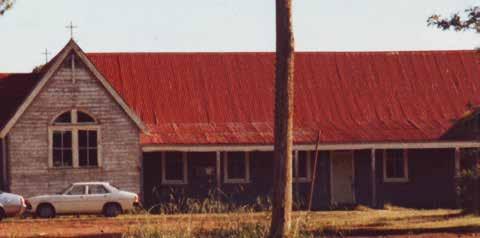
1913
Boarding school established for only boy boarders under 12
‘The cook at school in my time was Sister Aiden. She was a tall skinny thing but was very kind. She was a Connelly from Maitland. One of the other non teaching nuns was Sister Declan and she had a laugh like a kookaburra and could be heard all over the place. Her laughter always set us off.’ ¹
1940
Convent extended
1949
Brick building built as quarters for boy boarders
‘Polishing the floors of the Dormitory was a fun task which we performed on Saturday mornings. After we’d dropped some polish on the floors we would get old blankets and cloths and have ‘chariot races’ around the dormitory: one boy pulling while another boy sat on the end of the blanket and got whizzed around the floor.’ ¹
1962
Pool completed
1967
Additional classrooms built
Named St Joseph’s Boys College
1971
Primary and Boarding schools closed
1972
Diocesan Sisters of St Joseph transferred the ownership of the school to the Diocese of Maitland-Newcastle
Aberdeen ST JOSEPH’S REGIONAL HIGH SCHOOL
On Country
Traditional custodians of the land the Wonnarua people who had close links with the Gamilaroi people who may also have occupied the area
Aberdeen
Named after George Gordon 4th Earl of Aberdeen, by Thomas McQueen for his 1828 Land Grant
Opened 1972
Preceded by
1896 St Joseph’s Primary
Also opened
1913 Convent Boarding School
School today kindergarten to year 2
Charism: Josephite
Motto: Care for Justice Act with Integrity
Location: Segenhoe Street Aberdeen NSW 2336
Parish: Muswellbrook
St Joseph’s Regional High 1972 1980 Diocesan Josephites Lay Teachers 7 41
References
St Joseph’s Aberdeen 1896–1996 (1996) parish publication
1972
Opened as co-educational St Joseph’s Regional High School
Diocesan Sisters of St Joseph, first Principal, M Rosalie Jurd rsj
1976
New science laboratories opened Convent closed
1977
First year for students sitting the Higher School Certificate
1979
Diocesan Josephite administration ended 1981
First lay Principal, Mr T Colum McGovern ‘One of our greatest assets is the picturesque grounds on which our school is situated. The extensive views of green fields, cattle grazing, the Hunter River and distant mountains provide a relaxed and informal atmosphere for the school, which reinforces the creation of an ordered and studious environment within the school.’ ¹
Extensive building programme commenced
Construction and opening of new multipurpose Moylan Hall
Improved canteen facility and creation of specialist language laboratory
School celebrated Centenary
Construction of library, refurbishment of classrooms and administration area
Dedicated music area established
Construction of shade structure known as ‘The Shed’
Construction of fencing and formal entrance gateway
Upgrade of electrical reticulation
Refurbishment of Science Laboratories
Saint Mary MacKillop Trade Training Centre – metal, engineering, construction and agricultural science area
Construction of library, classrooms and staff facilities
Significant upgrade to existing buildings –1949 boarding school buildings demolished to allow construction for two new buildings with modern 21st Century learning spaces
Completion of building program with significant refurbishment of facilities
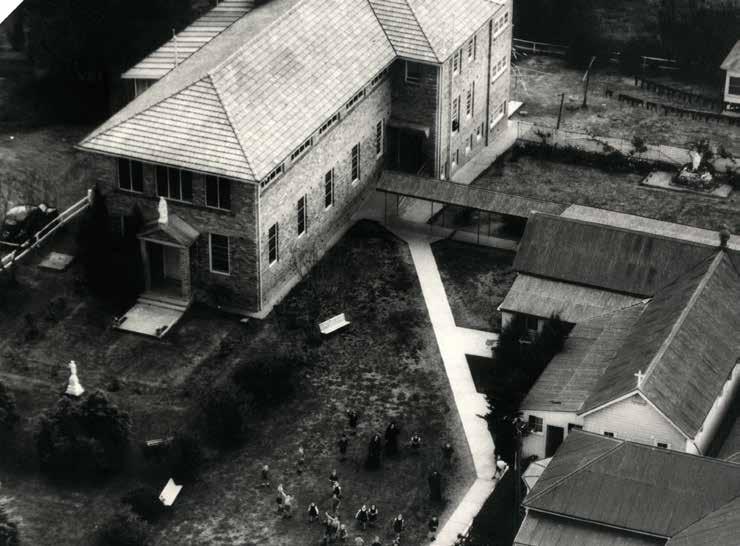
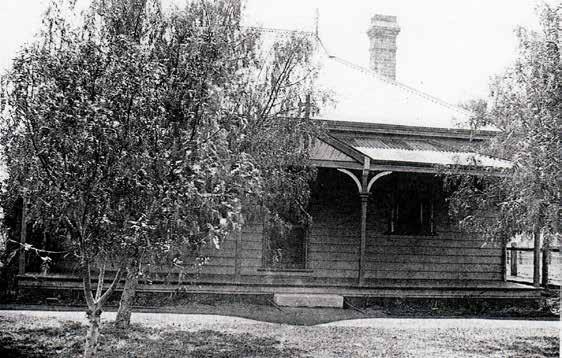
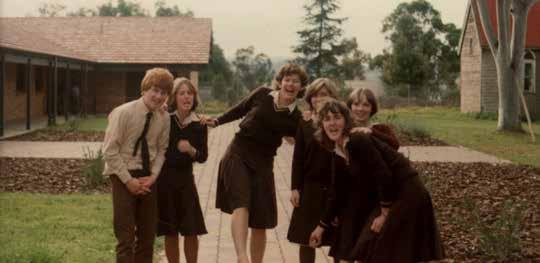
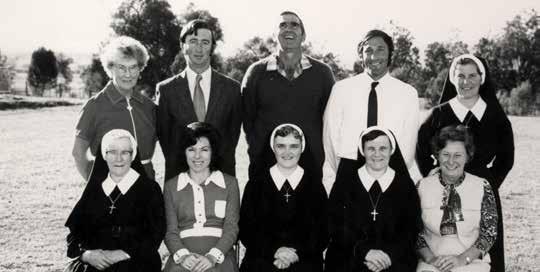
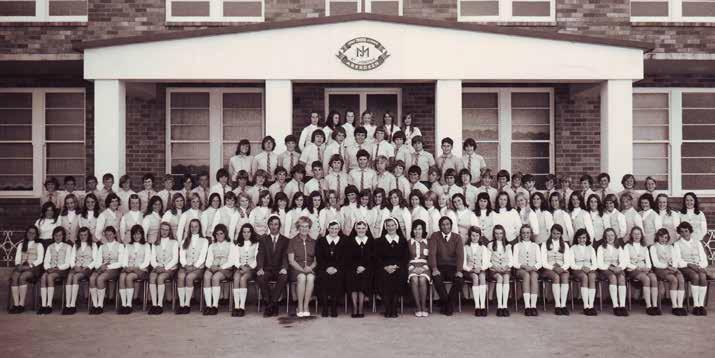
Wybong | Upper Wybong ST BERNARD’S CATHOLIC SCHOOL
On Country
Traditional custodians of the land the Wonnarua and Gamilaroi peoples
Wybong
Aboriginal name for ‘dead fire’
Opened 1901 (both schools)
School
Primary Classes
Closed
1908 Upper Wybong, 1915 Wybong
Location
Sandy Hollow Road (originally known as the Merriwa Road) Wybong NSW 2328
1872
First church at Denman built on southern end of Palace Street
1877
Parish of Muswellbrook established
1888
St Thomas Aquinas Church blessed and opened in Wybong
1901
Diocesan Sisters of St Joseph arrived to newly built four-roomed convent, built by Mr Hogan
First sisters arrived to staff school, M Columba Heagney, M Patrick Comerford, M Gabriel Hawley, M Baptist, M Baptist Dugan
School also took in boarders
1902
Two sisters travelled 6.5 kms daily to Upper Wybong in a hooded buggy with driver Annie Hogan who lived in a room adjacent to the convent kitchen
Upper Wybong School was a slab building with a shingle roof, property enclosed by a post and rail fence
The Lochinvar Silver Jubilee Book explains:
‘Only a few children attended at each place, the locality being too mountainous and too remote to admit of any considerable population. But if the convent is quiet, and the field of labour small, the kindness of the priest and the people, and the knowledge that even one soul’s salvation is worth looking for, are ample compensation for any little sacrifice entailed. The scenery surrounding the convent is extremely picturesque. The two little buildings nestle in the hollow between two high steep hills, to climb one of which, if not equal to Alpine climbing, is decidedly good exercise. The sisters have a neat little garden, in which they often surprise a wallaby. Mass is celebrated weekly at Wybong, and Benediction of the Blessed Sacrament given fortnightly.’ ¹
1908
Enrolment Wybong 13 students, Upper Wybong 13 students
Upper Wybong school closed
1915
Wybong school closed, students accommodated at St Joseph’s Denman
1916
Wybong school and convent buildings moved to Denman
Denman school St Joseph’s opened as primary school and girls boarding school
1919
Parish of Denman established
School Opened Closed Staff Years
References 1 Lochinvar Jubilee Book
‘Only a few children attended at each place, the locality being too mountainous and too remote to admit of any considerable population. But if the convent is quiet, and the field of labour small, the kindness of the priest and the people, and the knowledge that even one soul’s salvation is worth looking for, are ample compensation for any little sacrifice entailed. The scenery surrounding the convent is extremely picturesque. The two little buildings nestle in the hollow between two high steep hills, to climb one of which, if not equal to Alpine climbing, is decidedly good exercise.’
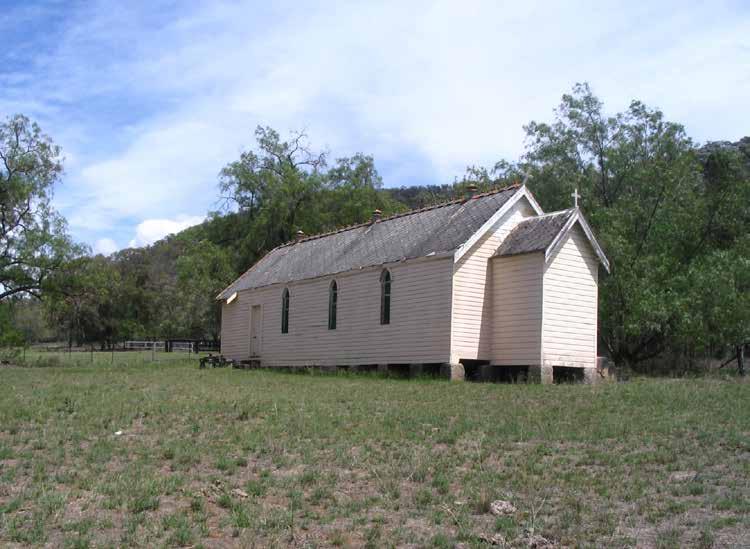
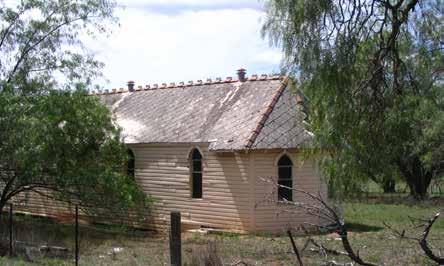
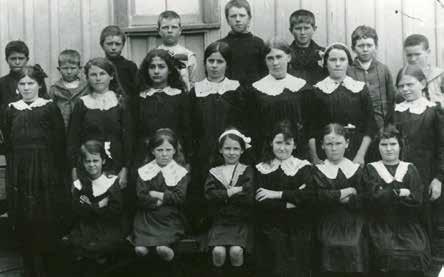
Photos: Catholic Church, Wybong (photo 2007), Wybong students C.1912
1902 St Bernard’s Wybong and Upper Wybong
On Country
Denman ST JOSEPH’S PRIMARY SCHOOL
Traditional custodians of the land the Wonnarua and Gamilaroi peoples
Denman
Named after Lord Thomas Denman, Lord Chief Justice of England, and grandfather of Lord Denman, Governor General of Australia 1911–1914
Opened 1916
Preceded
School today kindergarten to year 6
Charism: Josephite
Motto: Growing in Christ
Location: 80 Palace Street Denman NSW 2328
Parish: Denman
1851
National School established at Merton ( early name for Denman), serving Catholic children of the area
1872
First church St Bernard’s built at southern end of Palace Street
1877
Parish of Muswellbrook established
1884
Church moved to northern end of Palace Street, built as church/school originally known as St Bernard’s
1901
Catholic education began in the Denman area with schools at Wybong and Upper Wybong
1915
Denman school opened in old St Bernard’s church, second site at northern end of Palace Street
Upon closure of Wybong schools, students accommodated at St Joseph’s Denman or St Joseph’s Aberdeen
1916
Diocesan Sisters of St Joseph moved convent building from Wybong to Denman
New school opened as St Joseph’s primary and girls boarding school
1919
Parochial district of Denman established
1954
New weatherboard school opened close to main road, built by parishioners with local community support
1955
Hunter River floods necessitated a relocation of school
1956
New separate school built by parishioners
1963 –1964
Boarders apartments were incorporated into school facilities, later utilised as infants classrooms
1968
Girls’ boarding school closed
1971
‘The whole school, which was originally set adjacent to the Merriwa Road, was lifted and moved roughly 150 metres back to its present site which has lowered noise from the busy roadway nearby and extended the playground.’ ²
School moved from highway site to near old boarders dormitory
1980
School utilised old church building for school hall and canteen
St Bernard’s church opened
1982
Denman convent closed, sisters moved to Muswellbrook convent, travelling daily to Denman
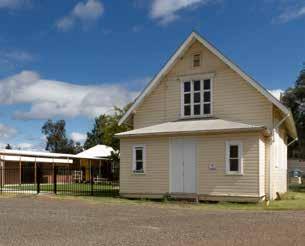
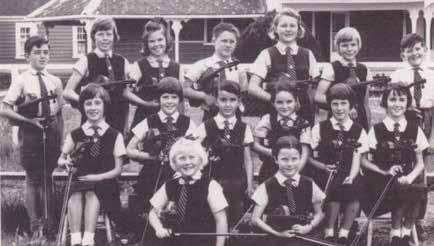
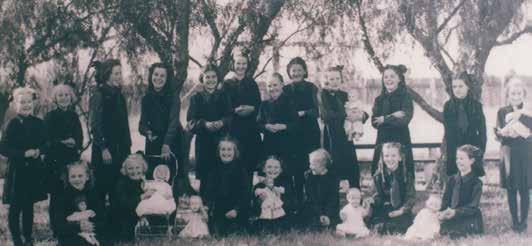
1983
First lay Principal, Miss Louise Outram
1984
Diocesan Josephite administration ended
1994
Classrooms for senior students, library, staffroom and administration area –buildings relocated from Waratah ‘From there on things moved quite swiftly–buildings were transported to the site …. Bernie Casey tendered successfully to erect, modify and assemble the structure. … All of these buildings have airconditioning installed, and the entire area is carpeted in brilliant emerald green.’ 1
2009
Refurbishment of buildings and grounds, data and communication infrastructure
Construction of library, administration, staff amenities, refurbishment of classrooms
2011
Opening of new school facilities
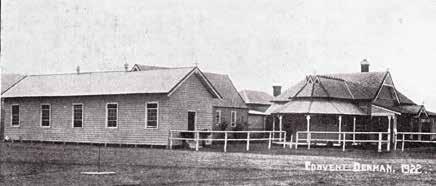
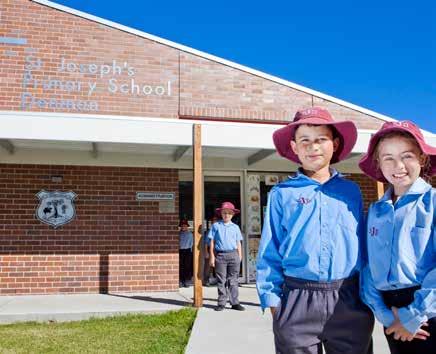
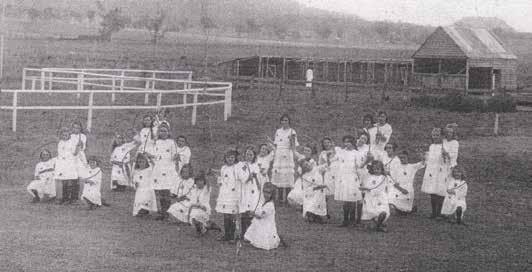
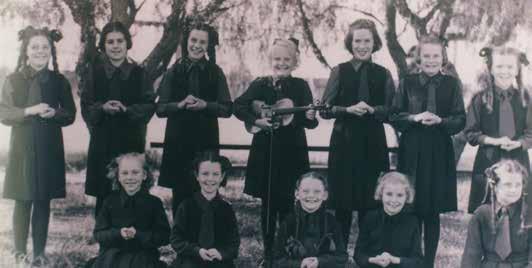
Photos (Top left clockwise): School Hall, Denman, Violin students 1968, Girl boarders, St Patrick’s Day Display, Music students, Students at School Entry 2013, Denman Convent and School 1922
Gunnedah – Diocese of Armidale
ST MARY’S COLLEGE
On Country
Traditional custodians of the land, the Gamilaroi people
Gunnedah
Aboriginal word for ‘many white stones’
Opened 1879
Preceded by
1862 Denominational School
Also opened
1879 Select School, 1879–1987 Boarding School
School today Diocese of Armidale
St Mary’s College Co-educational High School
Charism: Mercy
Motto: Virtue is a Way of Life
Location: 151/153 Bloomfield Street Gunnedah NSW 2380
St Xavier’s Primary School
School: Kindergarten to year 6
Location: 150 Bloomfield Street Gunnedah NSW 2380
1847
Within the Diocese of Maitland
1862
Denominational school established with lay staff, A Cullen and Mrs O’Leary
1866
Parochial district of Gunnedah established
1875
New Church built in 1875
1879
Mercy order establish their first Branch House at Gunnedah
Sisters of Mercy arrive to staff school, first sisters M Ignatius O’Brien and M Aloysius
Upon arrival, the primary school was located in the gallery of the new church ‘Three acres of land had been purchased for the Sisters of Mercy quite close to the church land.’ ¹
Convent rented from Mr G Cohen, small wooden house of four rooms in Maitland
Street, which proved to be a flood prone area
Convent also used as a ‘select’ high school ‘… with its average of fifteen and a Primary School of over one hundred children’ ¹
Primary school was located in the gallery of the church built in 1875
1880
New convent built, small two storey brick structure in Bloomfield Street
Convent blessed and opened ‘To celebrate the occasion a Tea and Quadrille Party was held in the large schoolroom on the ground floor. The Tea Party was most enjoyable. The festivities commenced at 8pm and dancing continued until daybreak. Over one hundred and fifty persons were present.’ ¹
1887
Gunnedah excluded from Diocese of Maitland, included in Diocese of Armidale
‘Four professed Sisters and one postulant from Singleton Convent of Mercy were ‘given to Gunnedah’ to form the nucleus of the new Congregation.’ ²
School today
Diocese Of Armidale ST MARY’S COLLEGE
CO-EDUCATIONAL HIGH SCHOOL
Charism: Mercy
Motto: Virtue is a Way of Life
Location: 151/153 Bloomfield
Street Gunnedah NSW 2380
1887
First Mercy superior of the new Foundation at Gunnedah, Mother M Aloysius O’Drisco
Closure of boarding school
2002
Transfer of governance from Sisters of Mercy to Diocese of Armidale
Coonamble – Diocese of Bathurst ST
BRIGID’S CATHOLIC PRIMARY SCHOOL
On Country
The traditional custodians of the land the Gamilaroi people
Coonamble
Name derived from Aboriginal work for ‘amazing site’.
Proclaimed a town in 1861
Opened 1883
Known as
1883 St Bernard’s School, 2003 St Brigid’s Primary School
Also opened
1889 Boarding School
School today Diocese Of Bathurst
St Brigid’s Catholic Primary School
School: Kindergarten to year 6
Charism: Brigidine
Motto: Strength and Gentleness
Location: 8 Tooloon Street, Coonamble NSW 2829
School Opened Staff Years
St Bernard’s St Brigid’s 1883 Brigidines Lay Teachers 4
Originally within the Archdiocese of Sydney, then in 1866 within the Diocese of Maitland
1855
Church services in the home of Michael McMahon, priest Fr Callaghan McCarthy from Mudgee
1870
Catholic church built
1876
First resident priest Fr Meagher
1883
Community of Brigidine sisters arrived establishing their First Foundation in Australia
School opened in church building, first sister Mother Mary John Synan
‘The Foundress Mother Mary John Synan, a woman of great faith and wide intellectual culture and possessed of unususal organising ability, immediately opened a school in the Church of the day until a school building made from pit sawn timber could be erected.’ ¹
1887
Diocesan boundary change, Coonamble excluded from Diocese of Maitland, included in Diocese of Bathurst
School today Diocese Of Bathurst
ST BRIGID’S CATHOLIC PRIMARY SCHOOL
1865
Diocese of Bathurst established
1887
Diocesan boundary change, Coonamble excluded from Diocese of Maitland, included in Diocese of Bathurst
1889
School continued as K–12, being the first Brigidine school in Australia
Brigidine Novitiate opened
1901
Novitiate relocated to their Sydney Foundation, Randwick
2003
School renamed St Brigid’s Primary School
Quirindi – Diocese of Armidale ST
JOSEPH’S PRIMARY SCHOOL
On Country
The traditional custodians of the land the Gamilaroi people
Quirindi
Aboriginal word with various meanings ‘nest in the hills’, ‘place where fish breed’,’dead tree on a mountain top’
Opened 1885
School today Diocese Of Armidale
St Joseph’s Primary School
School: Kindergarten to year 6
Charism: Josephite
Motto: Come! Share the Spirit
Location: 18 Thomas Street Quirindi. NSW 2343 References
St Joseph’s 1885
Originally within the Archdiocese of Sydney
1866
Parish of Gunnedah established 1869
Diocese of Armidale established 1885
Diocesan Sisters of St Joseph invited by Bishop Murray to establish a school in Quirindi First sisters, Imelda Flood, Patrick Comerford, Evangelist Hyde
1887
With the change of boundaries, Quirindi excluded from the Diocese of Maitland, now included in the Diocese of Armidale.
Diocesan Josephites withdrawn from school, returning to their foundation in Lochinvar.
School today Diocese Of Armidale
ST JOSEPH’S PRIMARY SCHOOL
1887
Congregational Josephites invited by Bishop Torreggiani to continue staffing the established school
1888
Four sisters arrived to staff the existing school School continued with an enrolment of 67 students
1895
Mother Mary MacKillop was present at the opening of the new convent (Canonised 2010 as St Mary of the Cross MacKillop)
Glossary
Also opened
Denoting a school opened in conjunction with main school, often in convent building or on verandah.
Denominational Schools
Operating from 1833 to 1883. Open to all children, controlled by a Denominational Schools Board (DSB). Each faith operated its own Board – Church of England, Roman Catholic, Presbyterian and Methodist, retaining the power to appoint and dismiss teachers, pay salaries and conduct inspections.
Josephites
Congregational Sisters of St Joseph of the Sacred Heart, affectionally known as ‘Brown Joeys’.
Founded from Penola South Australia, Mother House and administration at North Sydney. Diocesan Sisters of St Joseph, affectionately known as ‘Black Joeys’. Founded from Bathurst, Mother House and administration at Lochinvar.
Lay teacher
Teacher not belonging to a religious congregation and in receipt of a salary.
National Schools
Operating from 1848 to 1866. Open to all children, forerunner to present state schools, operated by the National Board of Education (NBE) who managed school staffing, paid salaries, conducted inspections. Renamed Public Schools in 1867.
Preceded by
Existing school continuing, often with change to religious staff, change in location or change of name.
Provisional Schools
Operating from 1867 to 1957, these were emerging National schools prior to certain practical conditions being met, such as enrolment numbers
Select schools
Initiated by some religious orders in answer to a demand for higher levels of education. These schools provided religious congregations with a different clientele, extended scope for their endeavours and were a means of financial support.
Began Teaching Location
Sisters of the Good Shepherd (Good Samaritans) 1864 West Maitland
Dominican Sisters 1867 West Maitland
Mercy Sisters 1875
Congregational Josephites 1880
Diocesan Josephites 1883
Brigidine Sisters 1883
Patrician Brothers 1884
Marist Brothers 1898
Daughters of Charity 1993
St John of God Brothers 1947
Further Orders providing Pastoral Care Support
Sisters of the Holy Family of Nazareth
Sisters of the Immaculate Heart of Mary
Singleton
Cooranbong
Lochinvar
Coonamble
Campbells Hill
Campbells Hill, Newcastle, Maitland
Mayfield
Morisset
Index of Schools
ABERDEEN
227 St Joseph’s Primary
227 St Joseph’s Boys’ Boarding School
228 St Joseph’s Regional High
ABERMAIN
60 St Joseph’s Primary
60 Francis Xavier’s Church School
60 Holy Spirit Infants
ADAMSTOWN
104 St Columba’s Primary
118 St Pius X College/High School
120 St Anne’s High
BELLBIRD
57 St Joseph’s Primary
BELMONT
134 St Joseph’s / St Francis Xavier’s Primary
136 St Joseph’s High
BLANDFORD
223 St Stanislaus / Holy Rosary
BOOLAROO
127 Our Lady Help of Christians Primary
BOORAGUL
152 St Paul’s High / Catholic College
BRANXTON
49 St Brigid’s Primary
76 Rosary Park Catholic School
BROADMEADOW
99 St Laurence O’Toole Primary
99 St Laurence Flexible Learning Centre (EREA)
BROOKFIELD
64 St Joseph’s School
BULAHDELAH
170 St Brigid’s / St Joseph’s Primary
170 St Joseph’s Intermediate High
CAMPBELLS HILL
38 Sacred Heart College
40 Sacred Heart Primary / Infants School
41 Our Lady of Mercy Home Science High
42 Bishop Murray Memorial Home for Girls / Monte Pio Orphanage for Girls
CARDIFF
128 St Joseph’s Primary / St Kevin’s Primary
CARRINGTON
182 St Joseph’s / St Francis Xavier’s Primary
CESSNOCK
54 St Joseph’s School / Mount St Joseph’s Primary (South Cessnock)
55 Mount St Joseph’s High
56 St Patrick’s Primary
CHARLESTOWN
130 St Joseph’s Primary
CHISHOLM
74 St Aloysius Catholic Primary
78 St Bede’s Catholic College
CLARENCE TOWN
62 Catholic Denominational School –Refer Dungog
COONAMBLE
232 St Brigid’s Catholic Primary
COORANBONG
125 National School / Catholic School
CUNDLETOWN
158 Brigidine Catholic School
158 St Joseph’s Primary
158 St Joseph’s Girls Boarding School
158 St Joseph’s Boys Boarding School
DENMAN
232 St Joseph’s Primary
232 St Joseph’s Girls Boarding School
DUNGOG
62 St Joseph’s Primary
EAST MAITLAND
32 St Joseph’s Primary
EASTVILLE
36 St Vincent’s Primary / Infants
EDGEWORTH
146 St Benedict’s Primary
FORSTER
172 St Joseph’s / Holy Name Primary
GARDEN SURBURB
114 St James Primary
GATESHEAD
149 St Paul’s Primary
150 St Mary’s Catholic College
GLENDALE
138 Holy Cross Primary
139 Holy Cross Girls’ High
GLENDONBROOK
52 St Joseph’s Primary
GLOUCESTER
160 St Joseph’s Primary
GRETA
50 St Mary’s
68 Migrant Camp Catholic School
GUNNEDAH
234 St Mary’s College
HAMILTON
94 Sacred Heart Primary
96 St Aloysius High
98 St Francis Xavier Regional Primary School for Boys
100 Marist Brothers High / St Francis Xavier High School for Boys
102 St Francis Xavier’s College
KENDALL
167 St Joseph’s Primary
KILABEN BAY
133 St Joseph’s Primary
KNOCKFIN
48 St Joseph’s Primary
KOTARA SOUTH
116 St James’ Primary
KRAMBACH
157 St Joseph’s / St Bernadette’s Primary
KURRI KURRI
58 St Joseph’s / Holy Spirit Primary
LAMBTON
90 St John’s Primary
LARGS
66 St Benedict’s Primary
66 St Joseph’s Primary
LOCHINVAR
44 St Joseph’s / St Patrick’s Primary
46 St Joseph’s College and Boarding School
46 All Saints College – St Joseph’s Campus
MAITLAND
24 St John the Baptist Primary
26 St Mary’s Dominican Convent and Boarding School / St Mary’s High
28 St John’s Boys’ Primary
28 Maitland Marist Brothers / St Peter’s High
30 All Saints’ College – St Mary’s Campus / St Peter’s Campus
MAYFIELD
192 San Clemente High
194 St Joseph’s / St Columban’s Primary
196 Murray – Dwyer Orphanage / St Vincent’s Boys Orphanage
196 Sancta Maria Primary
198 St John’s Infants
188 St Dominic’s Centre
MAYFIELD WEST
199 St John’s / Christ the King Primary
MEDOWIE
204 Catherine McAuley Catholic College
MEREWETHER
106 St Joseph’s Primary
108 St Joseph’s High
MEREWETHER BEACH
112 Holy Family Primary
MERRIWA
224 St Joseph’s Primary
224 St Joseph’s Intermediate High
MILLERS FOREST
176 St Patrick’s Primary
MOOBI
221 Catholic Primary
MORISSET
144 St John Vianney Primary
MORISSET / KENDALL GRANGE
148 St John of God Training Centre
MORPETH
35 St Bede’s Primary
35 St Francis Xavier’s Primary
MURRURUNDI
222 St Joseph’s Primary
222 St Mary’s Select High School
222 Murrurundi House
MUSWELLBROOK
218 St James’ Primary
218 St Mary’s Infants
217 St Mary’s High
NELSON BAY
202 St Michael’s Primary
NEWCASTLE
84 St Mary’s Primary
84 St Mary’s School for Boys / Marist Brothers
86 St Mary’s Dominican Convent School
86 St Mary’s Star of the Sea Primary
86 St Thomas’ Boarding School for Boys
88 Institute for the Deaf and Dumb
NEW LAMBTON
110 St Therese’s Primary
NULKABA
53 St Patrick’s Primary
QUIRINDI
236 St Joseph’s Primary
RAYMOND TERRACE
178 St Brigid’s Primary
RUTHERFORD
72 St Paul’s Primary
SCONE
220 St Mary’s Primary
220 St Angela’s Convent School
SHORTLAND
200 St Joseph’s / Our Lady of Victories Primary
SINGLETON
208 St Francis Xavier’s Primary
212 St Catherine’s College & Girls’ Boarding School
212 St Catherine’s Catholic College
210 Catholic Junior / St Francis Xavier’s Infants
216 Mercy Orphanage
SOUTH SINGLETON
214 St Augustine’s Primary
STOCKTON
180 St Peter’s Primary
SWANSEA
137 St Patrick’s Primary
TAREE
162 St Joseph’s Primary
162 St Joseph’s Girls Boarding School
164 Rosary High School/ Taree Catholic High / St Clare’s High
TARRO
70 Our Lady of Lourdes Primary
TENAMBIT
37 St Mary’s Primary
TIGHES HILL
190 St Patrick’s Primary
191 St Pius X Boy’s Primary / St Pius X Boys’ High
TORONTO
132 St Joseph’s Primary
WALLSEND
92 St Patrick’s Primary
WARATAH
186 Institute for Deaf and Dumb / Catholic Centre for Education of the Deaf
184 Rosary Convent School
184 Corpus Christi Primary
WARNERS BAY
140 St Mary’s Primary
WEST WALLSEND
126 St Joseph’s Primary
WINDALE
142 St Pius X Primary
WINGEN
226 St Patrick’s Primary
WINGHAM
168 St Joseph’s Primary
168 St Joseph’s Intermediate High
WYBONG and UPPER WYBONG
230 St Bernard’s Catholic School
Bibliography
Board of Education Correspondence (NSW) State Records
Colonial Secretary – letters, RC clergy Mitchell Library Archives Box No 4/2270.1 quoted by W.A Wood, W. (26/5/1964) article St Joseph’s East Maitland
Council of Education Colonial Secretary Correspondence Inspector / Murray / Donnellan 1876–1883 Department of Public Instruction, State Records
Hunter, C. Historical Assessment (2001) St Patrick’s Millers Forest Catholic Schoolhouse
Mother Mary MacKillop 1895 diary entries used with kind permission from the Congregational Archives of the Sisters of St Joseph, North Sydney
Observation Book of New Lambton School 1926, 1927, 1928, 1938
Port Maitland Allotments the Property of James King 10/1840 National Library of Australia
NEWSPAPERS MAGAZINES
Australasian Catholic Record (1850–932)
Australian Town and Country Journal (1870–1919)
Journal of The Royal Australian Historical Society (1906)
The Catholic Press (NSW) (1895–1942)
The Cessnock Eagle and South Maitland Recorder (1913–1978)
The Freemans Journal. New South Wales Australia (1850–1932)
The Maitland Mercury (1843)
The Newcastle and Hunter District Historical Society (1936)
The Newcastle and Maitland Catholic Sentinel: official organ of the diocese of Maitland (1931–1968)
The Newcastle Chronicle & Hunter River District News (1858–1876)
The Newcastle Morning Herald and Miners’ Advocate (1876–1954)
The Singleton Argus and Upper Hunter General Advocate (1874–1880)
The South Maitland Recorder (1913–1978)
The Sun-Herald (1953–1954)
BOOKS
Benjamin, A. O'Grady, S. (Ed.). (2020). Not Forgotten: Australian Catholic Educators 1820–2020. Biographical Dictionary of Australian Catholic Educators (Vol. 1). Coventry Press.
Blyton, G. (2012). Aboriginal guides of the Hunter region 1800 –1850: A case study in Indigenous labour history. History Australia 9, no. 3. 89–106.
Burford, K. E. (1991). Unfurrowed fields: a Josephite story, NSW, 1872–1972. St. Joseph's Convent.
Campbell, H. (1966). The Diocese of Maitland, 1866–1966. Dimmock Press.
Cavanagh, A. (2013) The Lochinvar Story Sisters of St Joseph, Lochinvar
Clouten, K. (1967). Reid's mistake: the story of Lake Macquarie from its discovery until 1890, Lake Macquarie Shire Council. Speers Point, N.S.W.
Como, P. (2011). Laughter Love and Loyalty: One Hundred Years of Mercy Education at St Catherine’s College, Singleton 1875–1975. Broadway NSW.
D’Orsa, J. (1999) Monsignor John Slowey. Catholic Education Office Sydney.
Doyle, A. (1972) The History of the Marist Brothers in Australia 1872–1972. E.J. Dwyer Drummoyne.
Dunlop, R. (2016). Planted in Congenial Soil: The Diocesan Sisters of St Joseph, Lochinvar 1883 – 1917. Lochinvar NSW.
Dunn, M. (2020). The Convict Valley: The Bloody Struggle on Australia’s Early Frontier. Allen & Unwin.
Egan, M. (1975) History of Catholic Deaf Education in Australia 1875
Etherington, B. (2011). Good Christians and Good Citizens: Marist Schools 1872–2010. The Hermitage NSW.
Foale. M.T. (1989). The Josephite Story: Mary MacKillop and the Sisters of St Joseph 1866–1893. St. Joseph's Convent.
Fogarty, R. (1959). Catholic Education in Australia 1806–1950: Catholic Schools and the Denominational system (Vol.1). Melbourne University Press.
Fogarty, R. (1959). Catholic Education in Australia 1806 – 1950: Catholic Education under the Religious Orders (Vol.2). Melbourne University Press.
Gogarty, S. (Ed.). (2011). Tuncurry: tapestry of a town. Great Lakes Historical Cooperative Society Ltd.
Kavanagh, A. & Palliser, L. (2014). Will Catholic Schools be Catholic in 2030: Exploration of issues that are of essence in the unfolding story of Catholic schools, and of Church, in Australia. Province of Patrician Brothers.
Kelly, C. (1997) A Journey … Through Light and Shadow: Sisters of Mercy Singleton 1875–1995. Hamilton NSW.
Kerr, B. (2009). The Congregational School. NSW
Luttrell, J. (1996). Worth the Struggle: Sydney Catholic Schools 1820 – 1995. Catholic Education Office Sydney.
Luttrell, J. (2003) The Inspector Calls. Catholic Education Office Sydney.
MacGinley, R. (2009). Ancient Tradition – New World: Dominican Sisters in Eastern Australia 1867–1958. St Pauls Publications Strathfield.
MacKillop, M. (1895). Mother Mary MacKillop: Diary entries used with kind permission from the Congregational Archives of the Sisters of St Joseph.
Maher, B. (1997). Planting the Celtic Cross: Foundations of the Catholic Archdiocese of Canberra and Goulburn. Union Offset Company.
McGee, C. (2012) The Forgotten Beginnings of Catholic Education in New South Wales. Catholic Education Office Sydney.
McGee, C. (2012) The Forgotten Ones: Teachers in the Catholic Schools of NSW before 1880. Catholic Education Office Sydney.
McGee, C. (2017). People of Faith and Generosity: The Catholic Teachers of New South Wales before 1883. Catholic Education Office Sydney.
O’Brien, J. (1975). Men of ’38 and Other Pioneer Priests. Lowden Publishing.
O'Farrell, P. (1992). The Catholic Church and Community: An Australian history. New South Wales Univ. Press.
Ryan, M. J. (2006). Religious Education in Catholic Schools: An Introduction to Australian Students. David Lovell Publishing.
Sternbeck, M. (1985). With hearts and hands and voices: the centenary history of the Sacred Heart Parish, Hamilton, 1884–1984. Sacred Heart Parish Hamilton.
Sweetman, S. (2009). Go Into the Vineyard: A History of the Patrician Brothers’ Australian and New Guinea Province 1883 – 2008. Patrician Brothers' Provincialate.
Williams, G. (1998). On the Shoulders of Giants: The Story of the Marist Brothers in the Hunter Region 1898 – 1998. Drummoyne.
Zimmerman, B. (2000). The Making of a Diocese: Maitland, its bishop, priests and people 1866–1909. Melbourne University Press.
OTHER SOURCES / ACKNOWLEDGMENTS
Diocesan and school websites
Dominican Archivist Elizabeth Hellwig OP Brigidine sisters, Kathleen Butler OSB
Congregational Sisters of St Joseph, Jo Robertson, Sally Camilleri RSJ
Diocesan Josephites, Marie Hughes rsj
Institute of Sisters of Mercy of Australia and Papua New Guinea Archives – Kaitlyn MacDonnell
St John of God Brothers, John Clegg OH
THANKYOU
“ To those who have worked so generously and devoted their time and effort in developing and furthering the presence of Catholic Education and the Lakes Region, we say thank you. And also to those who have worked so generously over time and have contributed your knowledge to produce this book.”
2021 John France