
DIOTODAY
JUNE 2026
























































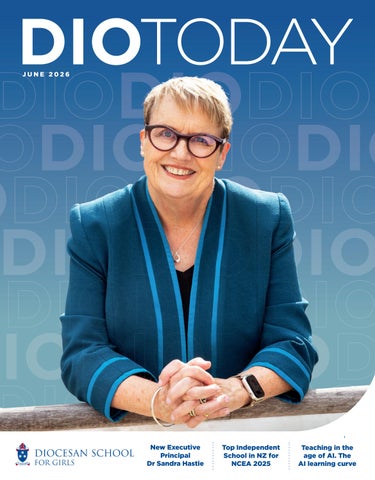
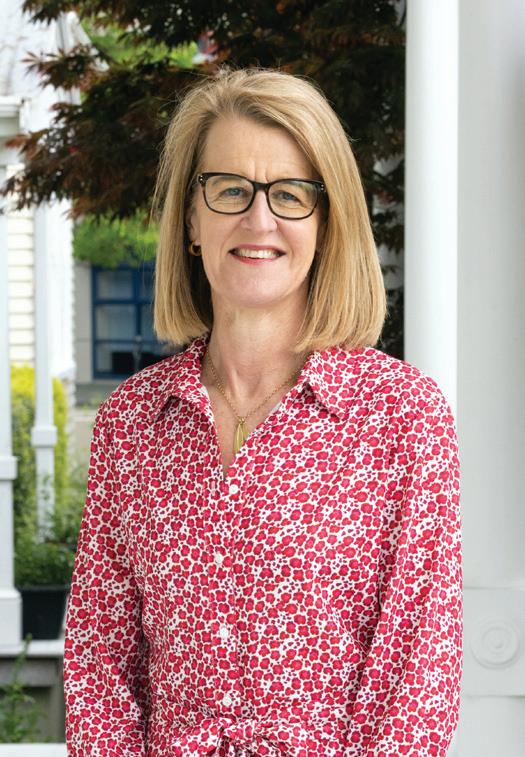
COVER: Dr Sandra Hastie, Diocesan's
Principal. Photograph by Nicola Topping, Real Image.
48 Wellbeing: Supporting every girl's journey
50 Sport: House competitions and summer sports round-up
65 Women2Watch: Celebrating the achievements of Talia Pua and Prudence Fowler
69 Protecting a precious place: King’s Service Award for Libby Fletcher
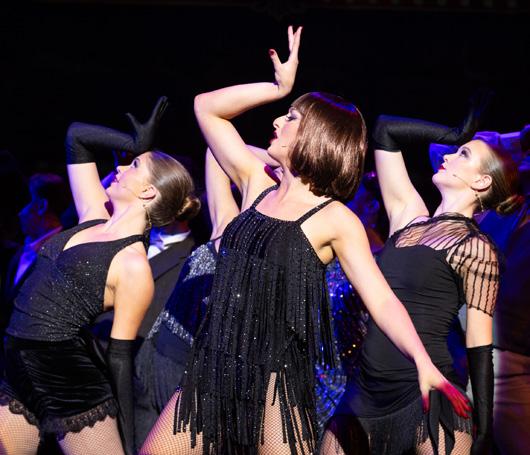
58 Performing arts: Audiences wowed by student productions and competitions 64 The impact of the DAA: A look behind the scenes at DAA activities and contributions
Dio happenings: Alumnae reunions and events









LEADING
FROM THE EXECUTIVE PRINCIPAL
Welcoming Dr Sandra Hastie, Executive Principal of Diocesan
School HONOURING THE DIO LEGACY
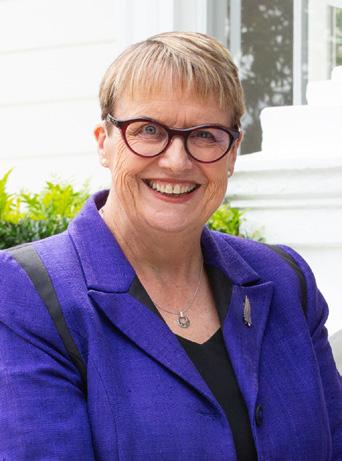
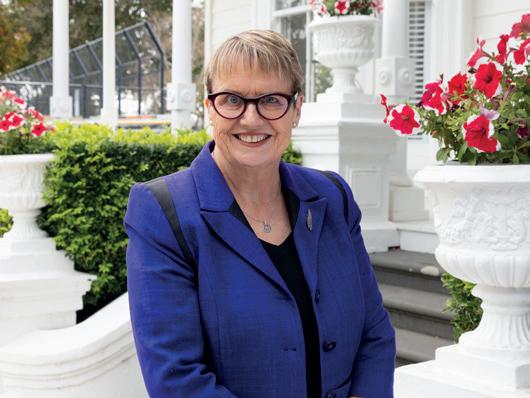
Dr Sandra Hastie Executive Principal
Dr Sandra Hastie joined Dio in Term 2 and is already a strong presence around our school.
Sandra has always admired Diocesan, and when she was invited to apply for the Executive Principal role, she knew she could not say no. She is deeply committed to empowering young women to lead with courage, compassion and conviction in a rapidly changing world, and believes in the power of education to unlock potential and shape equitable, thriving communities.
She brings more than 40 years of teaching and leadership experience across leading independent schools in Australasia, including Rangi Ruru Girls’ School, Somerville House and St Kentigern School.
My first sense of Diocesan is that this is a school with both deep roots and a clear sense of direction. In these early months, my priority has been simple: to listen, to learn and to begin understanding what I often describe as the ‘heartbeat’ of a school.
That heartbeat is found in people –in the conversations in corridors, the energy in classrooms, the pride on the sports field, and the quiet moments of care and connection that happen every day. I have spent time meeting students across year levels, speaking with staff, connecting with parents, and engaging with alumnae. Each conversation has added another layer to my understanding of what makes Dio such a special community and, crucially, what it means to educate young women for the world they are stepping into.
What has stood out most strongly is the strength of relationships. There is a genuine sense of belonging here,
a shared commitment to one another and a collective pride in the school’s identity. These are not things that can be manufactured; they are built over time, and they are deeply embedded in the culture of Dio. Importantly, they are also exactly the qualities that will serve our girls well beyond these school gates – the capacity to build trust, to collaborate, and to show up with integrity in whatever path they choose. I have also been reflecting on the legacy of this remarkable school. Diocesan has a long and proud history of academic excellence, pastoral care and opportunity. My role is not to change that legacy, but to honour and continue it while ensuring that we remain not just responsive, but genuinely forward-looking in how we prepare young women for a rapidly changing world.
Education today sits at a fascinating intersection. We are preparing students for a future that will be shaped in part by technologies such as artificial intelligence, tools that will transform how we live, work and lead. And yet, alongside this, the distinctly human qualities of creativity, empathy, critical thinking and collaboration have never been more valuable. I firmly believe that the education of girls plays a crucial role here. Research consistently tells us that young women who are educated in an environment that actively nurtures their confidence, voice and agency go on to lead with purpose and distinction. The ability to lead with emotional intelligence, to think creatively and to act with compassion will be a defining advantage in the years ahead, and these are qualities Dio has always placed at its core.
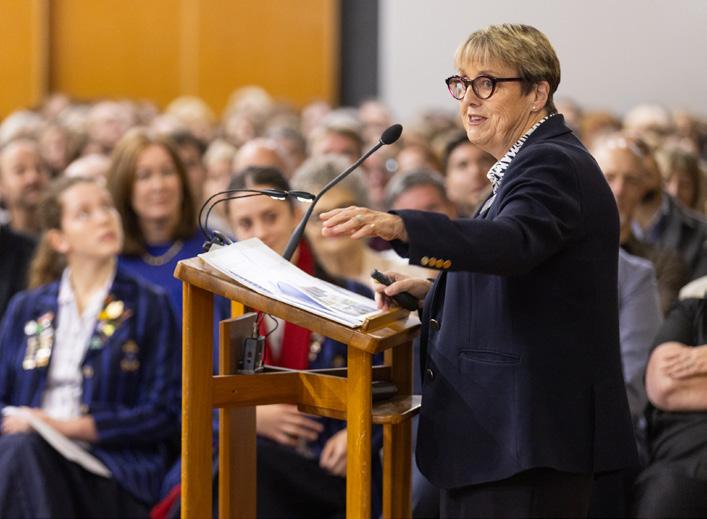
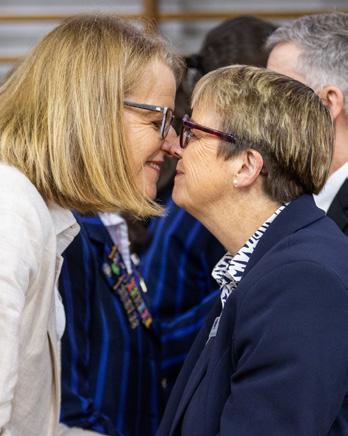
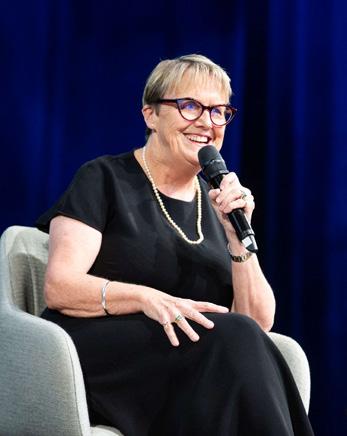
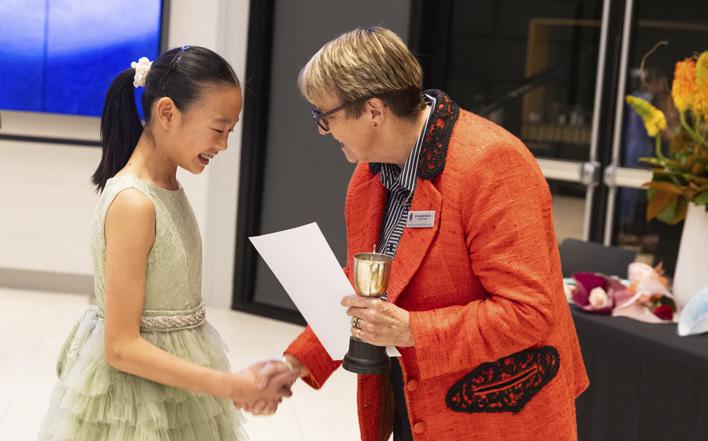
What has stood out most strongly is the strength of relationships. There is a genuine sense of belonging here, a shared commitment to one another and a collective pride in the school’s identity.
What excites me is that Dio is not simply reacting to change; it is actively shaping the kind of women who will lead that change. Whether in the classroom, on the stage, on the sporting field, or in service to others, I see girls here being stretched, challenged and supported to discover what they are truly capable of. That breadth of opportunity – and the expectation that every girl will engage with it fully – is one of Dio’s greatest gifts to its students.
At Diocesan, I see a school already embracing this balance, holding fast to its values while thinking boldly about what education for young women must look like in the decades ahead. I am excited to be part of a community that so clearly understands the importance of both.
My journey with Diocesan is only just starting. As it continues, my focus will remain on ensuring that every girl here feels known, valued and inspired to discover her strengths and her voice. When a young woman leaves Dio, I want her to carry not only her academic achievements, but a deep belief in her own capability, a strong moral compass, and the confidence to make her mark on the world. My guiding belief has always been that people may not remember exactly what you said or did, but they will remember how you made them feel. It is this philosophy – applied to every girl in our care – that will shape my leadership and my commitment to this extraordinary school.
I am proud to be part of the Diocesan community and excited for what lies ahead.
Ut Serviamus
BOARD OF GOVERNORS
FUTURE focused
The last couple of months have been a time of high emotion as the Board farewelled Heather McRae as our deeply loved and respected Principal, and introduced Dr Sandra Hastie to the Diocesan community.
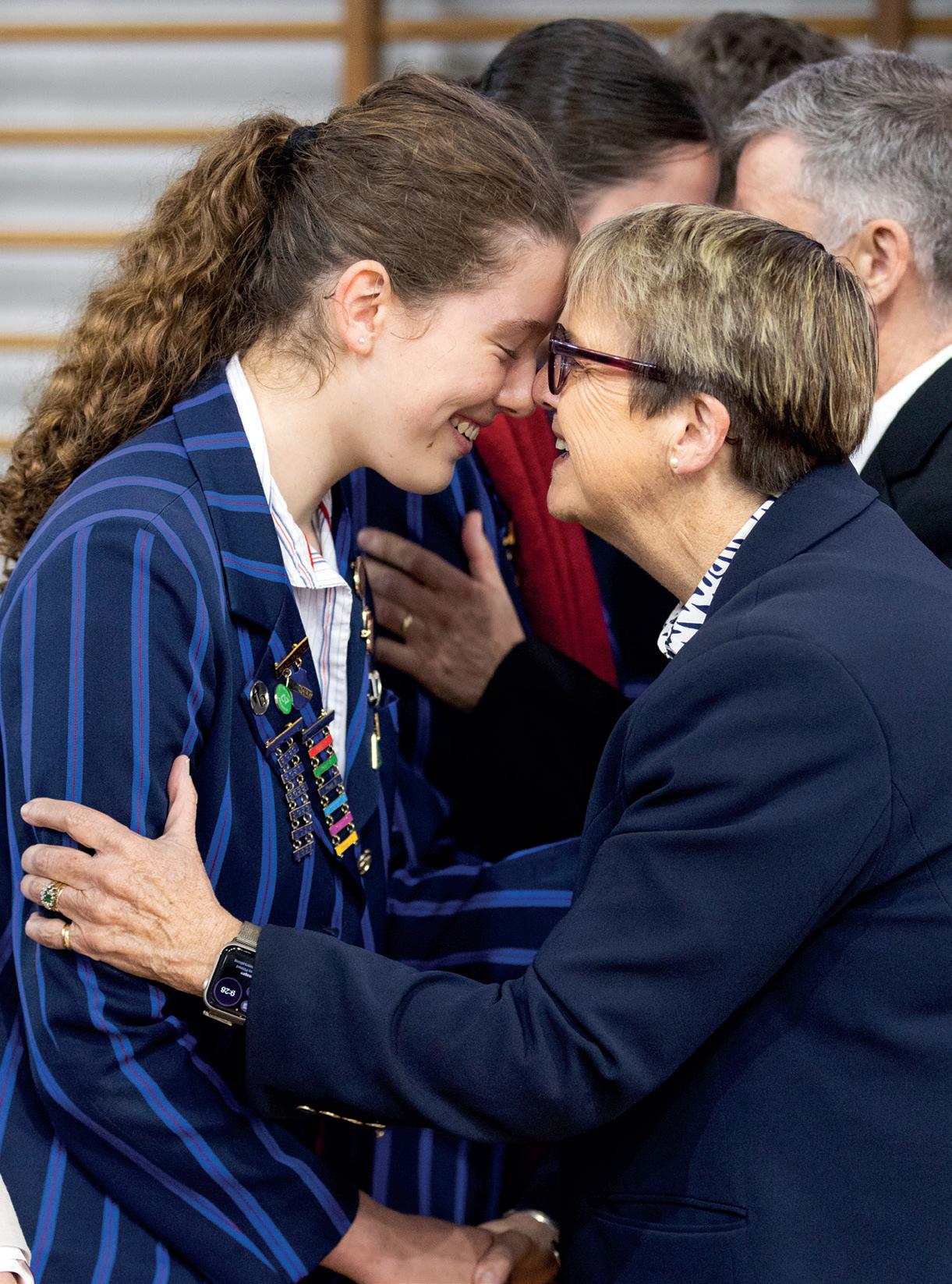
As I said to the Senior School at the pōwhiri to welcome Dr Hastie on her first day, it felt a little like delivering a child to their new school – full of hope and promise. Having appointed Sandra as Executive Principal, the pōwhiri was the Board’s opportunity to introduce her to the school.
The arrival of a new leader of any organisation provides the perfect platform to look to the future and to plan for the opportunities, initiatives and challenges we will embrace under this new leadership. This describes a key focus of the Board for 2026.
Diocesan School for Girls is a school that has, rightfully, always been ambitious for its students, and the current Dio girls and their families are the beneficiaries of the courageous ambitions and planning of past Dio generations, and particularly Dio boards. This Board adheres to that same standard and 2026 is a time for us to work with Dr Hastie and her exec team to answer some key questions. Among them, what will a Diocesan education – with all the richness that goes with it –look like in the future, and what do we need to plan over the short, medium and longer term to realise that vision?
A key component of our planning will be focused on the campus and on continuing to nurture and develop it to be the best possible place for the delivery of a world-class Dio education. In the spirit of recognising the importance of place, I want to acknowledge the hard work and dedication the entire Diocesan leadership team has so willingly provided as we have traversed the challenges posed by some significant capital projects on our campus over the last couple of years.
A key component of our planning will be focused on the campus and on continuing to nurture and develop it to be the best possible place for the delivery of a world-class Dio education.
The remediation of The Chapel of our Glorified Lord and St Barnabas Chapel, and the full rebuild of the Shrewsbury Block were each big projects and undertaking them concurrently risked putting the school under material strain. However, with an undying love for the school and everything it provides for our Dio girls, and a laser focus on delivering outcomes that are not just buildings but places for our students to grow and discover all their possibilities, the team has more than delivered, and the Board is grateful. The functional space, beauty and sense of place that has been created through these projects is outstanding and provides an incredible asset for current Dio students and the generations to come.
Finally, I want to convey how excited the Board is to welcome Dr Sandra Hastie to Diocesan and the Dio family, and to give our thanks that she, Bruce and Skye (their beloved dog) came home for us.
Jenny Spillane Board Chair
HE WAKA EKE NOA: Leading with belonging
At the first assembly of Term 1, Head Prefect Ruby Walker set the tone for the year ahead, sharing a vision centred on belonging, connection and the collective strength of the Dio community.
Standing alongside Deputy Head Prefect Millie Bridger, Ruby spoke about the importance of leading together, with a shared focus on creating an environment where every student feels they have a place.
Ruby introduced herself through her whakapapa, grounding her leadership in identity and connection. “Family has always shaped who I am,” she says. “From my immediate family to my wider whānau, including my marae, kapa haka, and tutor groups, I have always been surrounded by support.”
That sense of connection has continued throughout her time at Dio. Having joined the school as a Year 6 student, Ruby reflects on a journey spanning more than seven years. “I walked through the doors of Dio 2572 days ago,” she says. “Since then, there have been many experiences that have shaped who I am and helped me understand where I belong.”
Through moments of change and challenge, Ruby has developed resilience, patience and a willingness to step up. These experiences now shape the leadership approach she brings to the role.
Together, Ruby and Millie have chosen a theme that reflects both their journey and the culture they hope to foster across the school. “We kept coming back to the idea of belonging,” Ruby explains. “There is a real difference between fitting in and belonging. Fitting in is about blending into the group, while belonging is about being yourself and knowing you are valued for that.”
Their theme for 2026, He waka eke noa, captures this idea. Meaning ‘a canoe we are all in together’, it reflects a shared commitment to inclusivity and collective responsibility.
“Our vision is for every student and staff member to recognise the value they bring to Dio,” Ruby says. “We want to build a culture where people feel respected, supported and confident to contribute.”
Central to this vision is the school’s guiding framework, Ko Tātou. Ruby emphasises respect as the starting point. “It begins with being respectful,” she says. “Respect for yourself, for others, and for the contributions everyone makes to our shared waka.”
Leadership is reflected in the small, everyday actions of students, from supporting one another to showing kindness and having the courage to speak up. “We want this to be a place where students feel confident to try new things and support each other.”
At the heart of her approach is bringing people together and recognising the contribution each individual makes to the wider community.
“Dio is your school, your team, your whānau,” she says. “When we support each other, we all move forward together.”
Their message is clear. A strong community is built when every individual feels they have a place and a voice within it.
We want this to be a place where students feel confident to try new things and support each other.
RUBY
WALKER, HEAD PREFECT
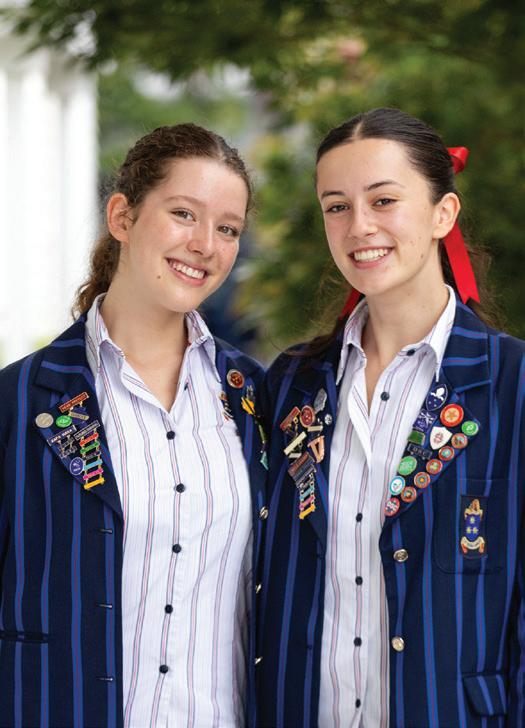
Head Prefect Ruby Walker (left) and Deputy Head Prefect Millie Bridger (right).


You are always WELCOME
Halfway through the year already, and 2026 is well underway. What began as a sense of possibility has quickly turned into momentum. Diaries are full, ideas are in motion, and it has been a strong start for our alumnae community.
Over the past few months, it has been great to see both new and familiar faces stepping forward, attending events, supporting initiatives, and contributing in their own way. Our calendar has come to life, with a number of moments already behind us and plenty more still to come. Alongside this activity, I have found myself reflecting again on what this community really represents. We have long had what could best be described as an unofficial rivalry with St Cuthbert’s College. No rule book, no real scoreboard, just years of goodnatured competition, shared history, and ultimately the same purpose: supporting young women to thrive.
If you had told me a few years ago that I would be catching up with their alumnae president to compare notes and learn from one another, I probably would have laughed. And yet, that is exactly what has happened. In a
AUCKLAND DIOCESAN ALUMNAE ASSOCIATION (INC)
President: Emily Steel (Houlker)
Vice president: Sarah Mackenzie (Macalister)
Treasurer: Felicity Buche (Olson)
Executive assistant: Nicki de Villiers (Dodds)
Alumnae news editor: Deirdre Coleman Committee: Sarah Liebmann (Gibbons) Liz Eglinton (Tingey), Nicky Gadsdon (James), Luba Murphy
Auckland Diocesan Alumnae Association Private Bag 99-939, Newmarket, Auckland 1149 www.diocesanalumnae.co.nz
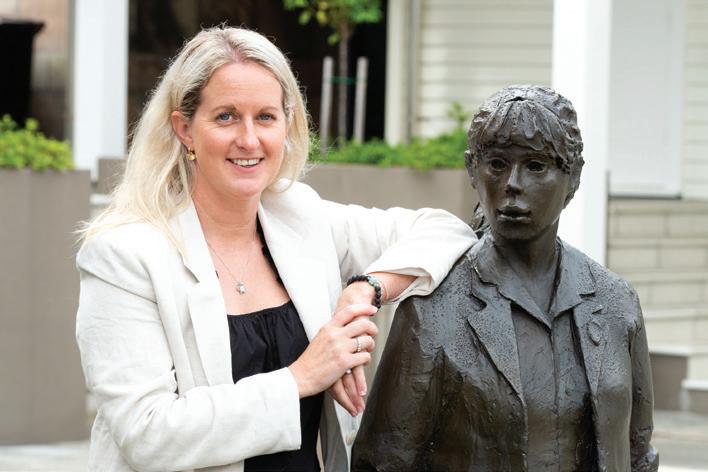
recent newsletter, their president, Kate Bacchus, shared a message that resonated deeply. She spoke about the hesitation some alumnae feel when reconnecting, a sense of not being enough when comparing themselves to others. Her reminder was simple and powerful: you are enough, and you are always welcome.
It is hard not to see how closely aligned we are in this thinking. At Dio, our strength has never been defined by one version of success. It lies in the breadth of journeys across our community: the quiet achievers, the community builders, the entrepreneurs, the creatives, the mums, the career changers, the volunteers, the adventurers, and everyone in between. It is this diversity, and the way we support one another, that makes our alumnae community what it is.
Perhaps that is where we are more closely aligned with our neighbours than we once thought – a shared understanding that it is the collective spirit, the everyday contribution, and the
strength of community that truly defines a school. Not just the headline moments, but the consistent, generous, behind-thescenes contributions. The women who show up, who mentor, who organise, who connect others, and who give their time and energy to something bigger than themselves. That is the spirit of Dio. As we move through the remainder of 2026, my hope is simple: That you feel welcome. That you feel there is a place for you here. Whether you attend one event or many, whether you are highly visible or quietly connected, you know you belong.
There is still plenty ahead this year. Opportunities to reconnect, to learn, to celebrate and to continue building something meaningful together. And in case it needs to be said again: you are enough.
We look forward to seeing you throughout the rest of 2026.
Emily Steel President, Diocesan Alumnae Association
Parents & Friends HIGHLIGHTS
As we reach the midpoint of 2026, it is a pleasure to reflect on what has been an energetic and rewarding first half for the Diocesan Parent and Friends’ Association (P&F). Our aim has always been to build community, support the school, and create meaningful opportunities for parents, students and staff to connect.
We began the year by warmly welcoming new families to the school through our Welcome Picnic and Morning Tea. These events are always a highlight, providing a relaxed and friendly setting for new parents to meet one another, connect with staff and begin building the sense of belonging that defines our school community. It was wonderful to see both new and long-standing families coming together, sharing conversations and laughter –despite the weather-impacted plans!
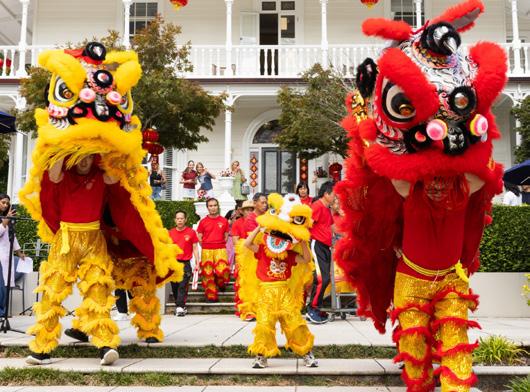
Earlier this year, P&F was delighted to be involved in supporting the Lunar New Year celebrations. This vibrant event was a fantastic opportunity to recognise and celebrate the cultural diversity within our school, bringing together families, students and staff to mark an important time for many in our community. We were also pleased to contribute to Dio Open Days, helping to showcase the school to prospective families and providing a welcoming presence on what are always significant occasions on the school calendar.
At the time of writing, planning is well underway for one of the most popular events of the year, the Senior School Breakfast of Champions. This event continues to be a firm favourite, with tickets typically selling out within hours, and we are excited to once again bring students, parents and inspiring speakers together for a memorable morning. This year we are also thrilled to again host a Junior School Breakfast of Champions
These events are always a highlight, providing a relaxed and friendly setting for new parents to meet one another, connect with staff and begin building the sense of belonging that defines our school community.
later in the year, extending this muchloved event to younger students and their families.
It has also been an exceptionally busy period in the school café, which continues to be an important hub for our community. In fact, one week in March recorded the highest turnover the café has ever seen. This is a testament to the dedication of our café team and the strong support from families. If you have ever considered volunteering in the café, now is a great time. The commitment is just one day per term, and it is a wonderful way to meet other parents while supporting a valued
school service. If you are interested, please contact our café manager, Jenny, at diocafe@diocesan.school.nz.
As always, none of this work would be possible without the generous support of our volunteers and the wider school community. On behalf of the P&F, thank you for your time, enthusiasm and involvement. We look forward to welcoming you to one of our upcoming events and to another rewarding second half of the year together.
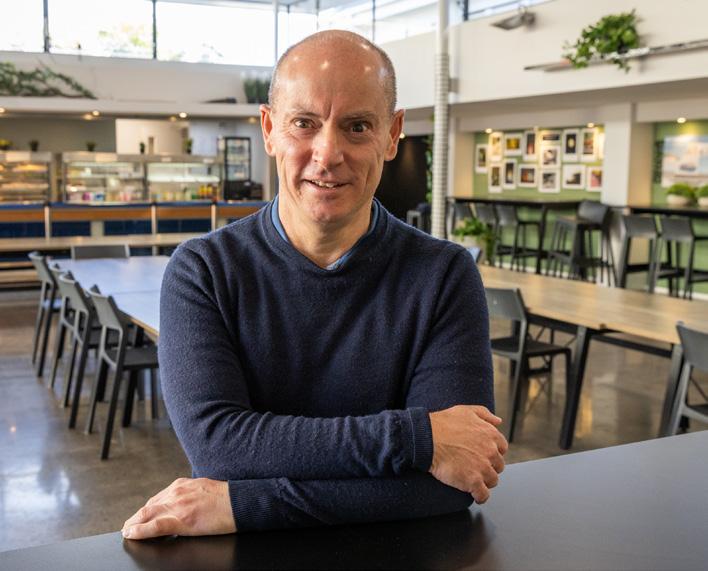
David Pacey President, Parents & Friends of Dio
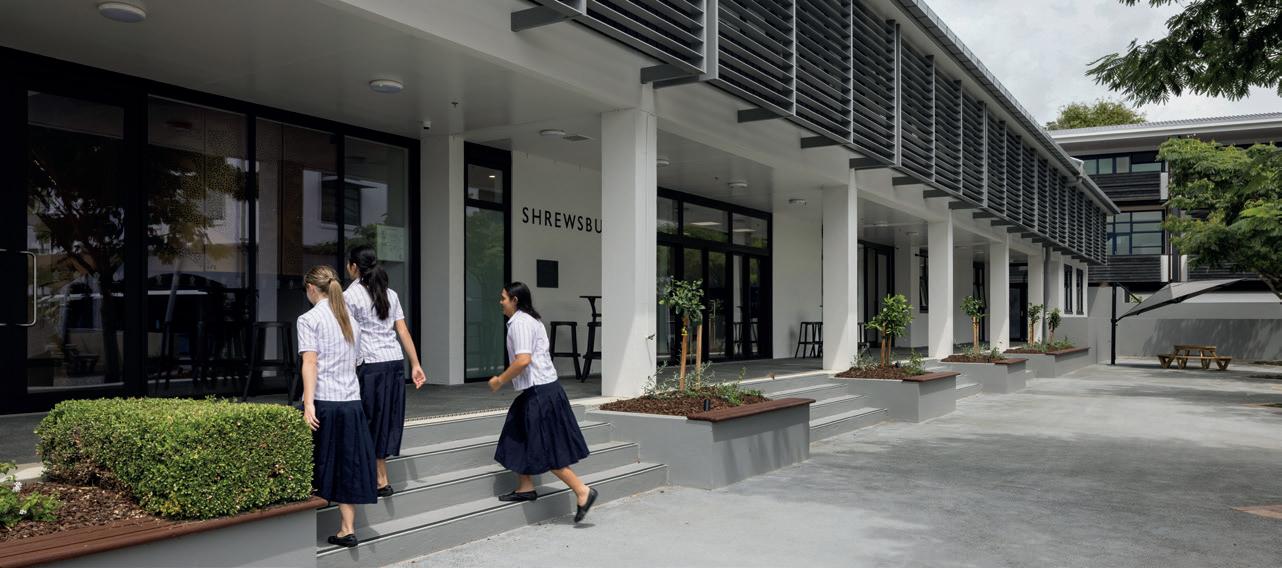


The transformation of the Shrewsbury spaces at Dio is most powerfully seen not in the building itself, but in the way students are now working, thinking and creating within it. What was once a familiar footprint has been reimagined into flexible, light-filled environments that are reshaping the student experience across a range of subjects.
Across visual arts, design and visual communication (DVC), materials technology and food technology, the redevelopment is evident in both space and practice. Purpose-built studios, maker spaces and commercial kitchens with industry-grade tools are enabling more authentic, hands-on learning. Flexible layouts, breakout areas and shared zones are also supporting collaboration, creativity and greater student ownership of learning.
As Head of Faculty Creative Industries Matt Bennett observes, “there is a real buzz about the building”. The shift in environment is driving stronger engagement, growing confidence and increased curiosity, as students explore how to use these spaces beyond traditional classroom boundaries.
That shift is particularly evident in senior visual arts. Teacher in Charge of Visual Arts Toni Carter describes the response as “incredible”. With dedicated studios, improved natural light and specialist equipment, students are
Inside Diocesan’s new creative spaces Where ideas TAKE SHAPE

working more independently while also engaging more actively with one another. The mezzanine level allows them to establish personal workspaces, leaving work in progress and returning to it as ideas develop.
Year 13 IB visual arts student Alice Li describes the impact as transformative. A personalised space allows her to “visually map out” her thinking, surrounding herself with evolving work and ideas.
Seeing peers’ work developing alongside her own creates momentum and encourages ongoing critique, an essential part of artistic practice.
In creative industries, the impact is equally significant. While the footprint of Shrewsbury remains unchanged, the interior has been redesigned to support a broader, more dynamic curriculum. Students now have access to tools such as 3D printers, laser cutters and workshop spaces, enabling smoother movement from concept to creation. This has opened up new opportunities. Model-making has become more accessible in senior DVC, supported by a dedicated maker space and a stronger emphasis on hands-on experimentation alongside digital design. As Matt Bennett notes, this brings the “hammers back to Dio”, reconnecting students to making physical artefacts alongside digital work. It also opens up new opportunities for cross-disciplinary


collaboration between design, making and presentation.
That connectivity is visible daily. Younger students observe senior work and gain insight into future pathways, while shared spaces encourage exchange of ideas across classes. Teachers move fluidly between groups, contributing expertise in a more responsive, integrated way.
Year 13 NCEA visual arts student Jemima Garnett describes the environment as “comfortable” and “breathable”, encouraging experimentation without restriction. Having a dedicated workspace has also had a clear impact on productivity, drawing students into the studio during independent study periods.
Toni Carter believes this sense of connection is one of the most significant outcomes of the redevelopment. Students are not only more engaged; they are choosing to be there. The spaces now function as creative hubs where collaboration and idea development extend well beyond timetabled lessons.
For senior students, the environments also provide a pathway that reflects tertiary study, supporting independence and preparation for future learning.
Ultimately, the value of the new Shrewsbury spaces lies not in the transformed building but the ways in which the students are now working and how their ideas are now taking shape.
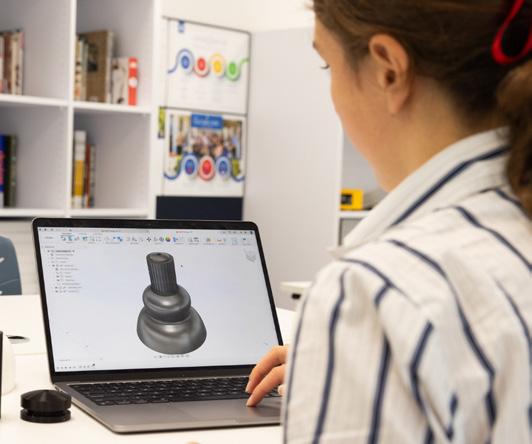
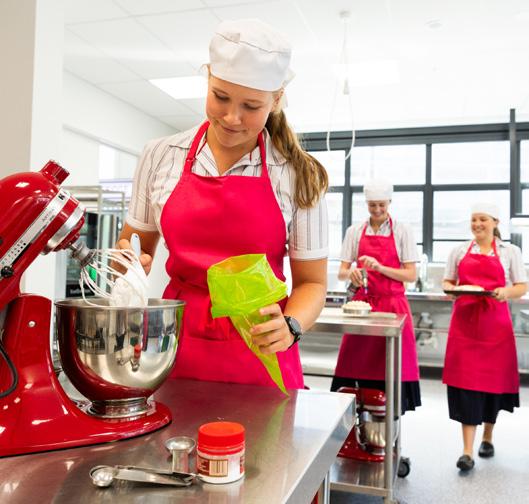
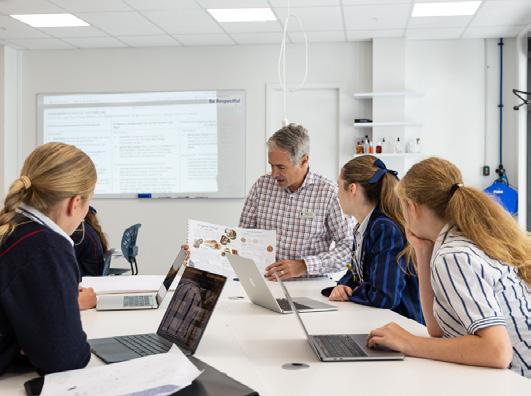
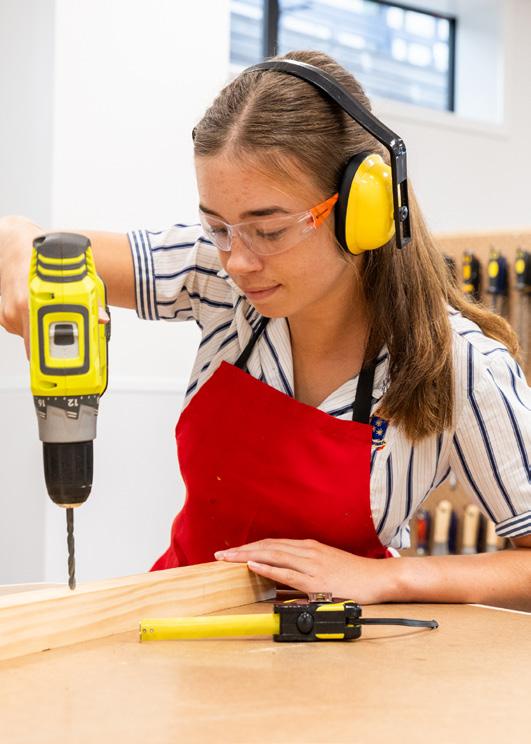
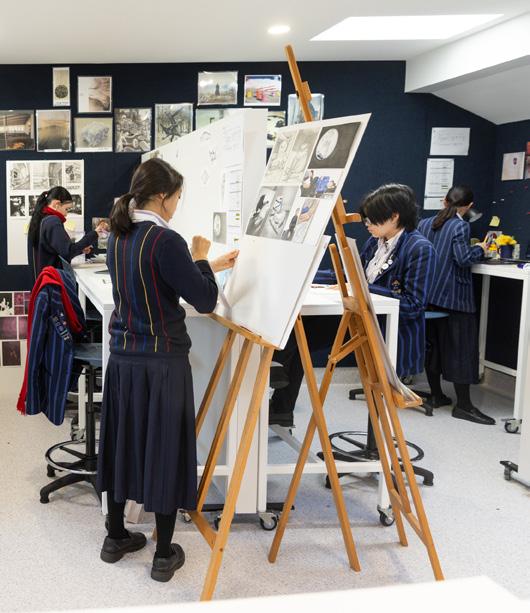
Students from arts and technology subjects are enjoying working in the newly reconfigured spaces in Shrewsbury building.
ROLLING FORWARD
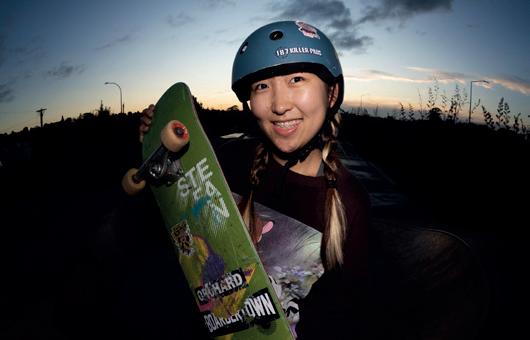
How one skateboard sparked a movement
Xinyu Jiang – Winner of the 2025 Ut Serviamus
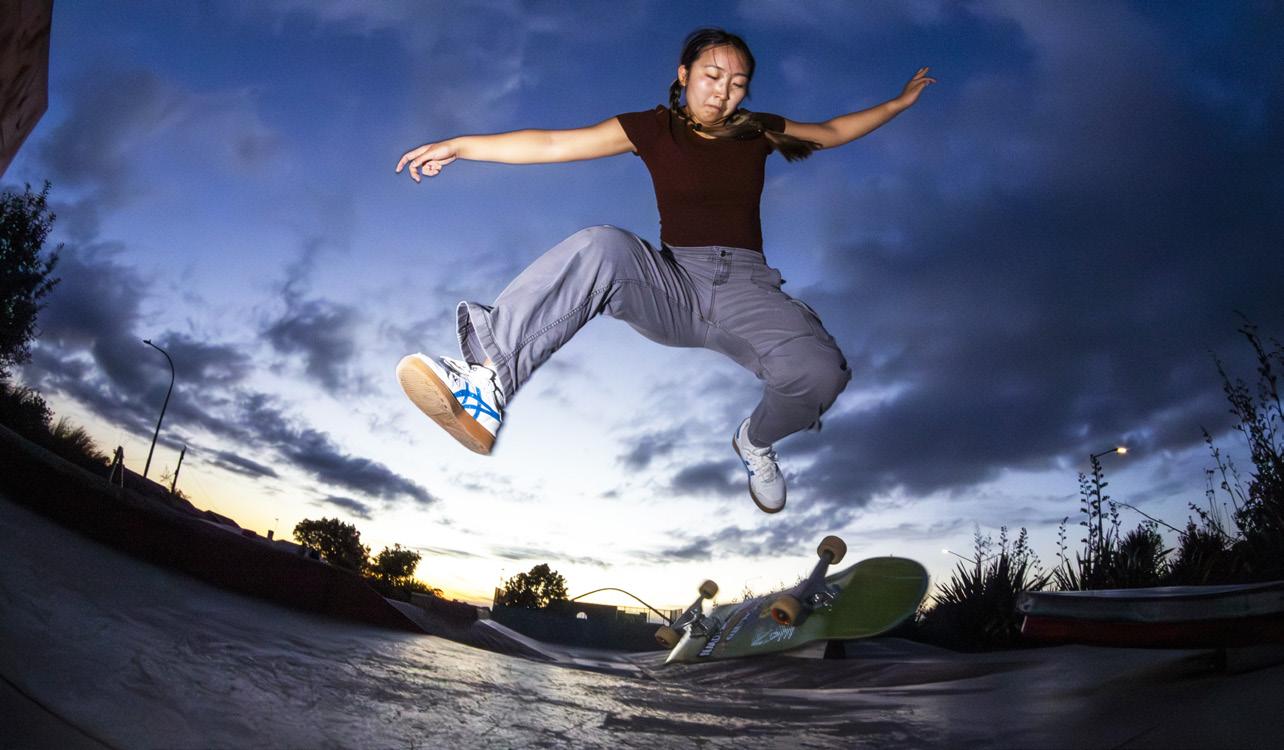
When Xinyu Jiang (Peer Year 2025) picked up a skateboard during the COVID lockdowns, it was simply a way to break up long days indoors. Armed with online videos and determination, she spent hours practising alone. Progress was slow and falls were frequent, but those early sessions sparked something much bigger.
Naturally introverted, Xinyu found skateboarding an unexpected outlet. Learning new tricks gave her a sense of independence and creativity. As restrictions eased, she spent more time at local skateparks. Entering spaces dominated by experienced, mostly male skaters was intimidating, but persistence and support from the skate community helped her find her place.
A defining moment came in 2021 at a skateboarding event in Beijing, where Xinyu noticed how few girls were skating and that there was no women's category. She realised that while interest was there, many lacked confidence, access to equipment, or a welcoming
way into the sport. Back in New Zealand, that insight inspired her to create more opportunities for girls to get involved.
What began as casual meetups soon grew into larger initiatives. Xinyu helped organise events including the Auckland Women's Skateboarding Festival and GIRLYPOP workshops, introducing beginners to the sport. Through partnerships and fundraising, more than $4500 worth of skate gear was secured, helping to remove financial barriers to participation.
For Xinyu, the most rewarding moments were seeing confidence grow, friendships form, and beginners encourage one another.
Her interest in building community extends beyond the skatepark. Alongside a friend, she co-founded the first TEDxWomen event in her community, Breaking the Mould, celebrating women in leadership, social impact, business, law, media and the arts. Bringing women of different generations together reinforced her
Award
belief that progress often comes through connection.
During the pandemic, Xinyu also launched Fuzzy Bunny, a youth-led sock brand, donating profits to women's refuges, including East Tamaki Women's Refuge. Volunteering remains part of her routine, including time with Everybody Eats, helping prepare meals using rescued food.
Her efforts have been recognised through awards including the Dio Ut Serviamus Award and the Zonta Young Women in Leadership Award. Looking ahead, Xinyu hopes to travel to Vanuatu to learn more about the experiences of women and girls in Pacific communities.
For now, she is often back where it all began, at the skatepark, cheering on first-timers and celebrating new tricks. What started as a way to pass time during lockdown has become much more meaningful. Xinyu credits her time at Dio with encouraging her to follow her interests, back herself, and use what she loves to make a difference.
LEARNING
GIRLS DO BETTER at girls’ schools
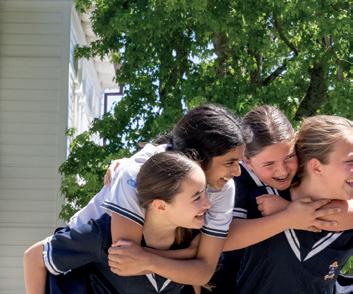
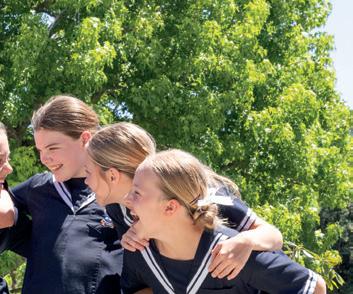
International research consistently suggests that girls’ schools provide a strong platform for achievement, confidence and aspiration. This is reflected in a clear focus at Dio: creating an environment where every student is encouraged to be the best she can be.
Strong academic results
Academic achievement is a defining feature of education at Dio, with students consistently achieving outstanding results across both NCEA and the IB Diploma Programme.
In 2025, Dio students achieved a 100% pass rate in NCEA Level 2, NCEA Level 3 and University Entrance. Merit and
Excellence endorsements also remained well above national averages.
Strong IB Diploma Programme outcomes were also achieved, with 83% of Dio students gaining 30 or more points (from the possible total of 45 points).
STEM feels open to everyone
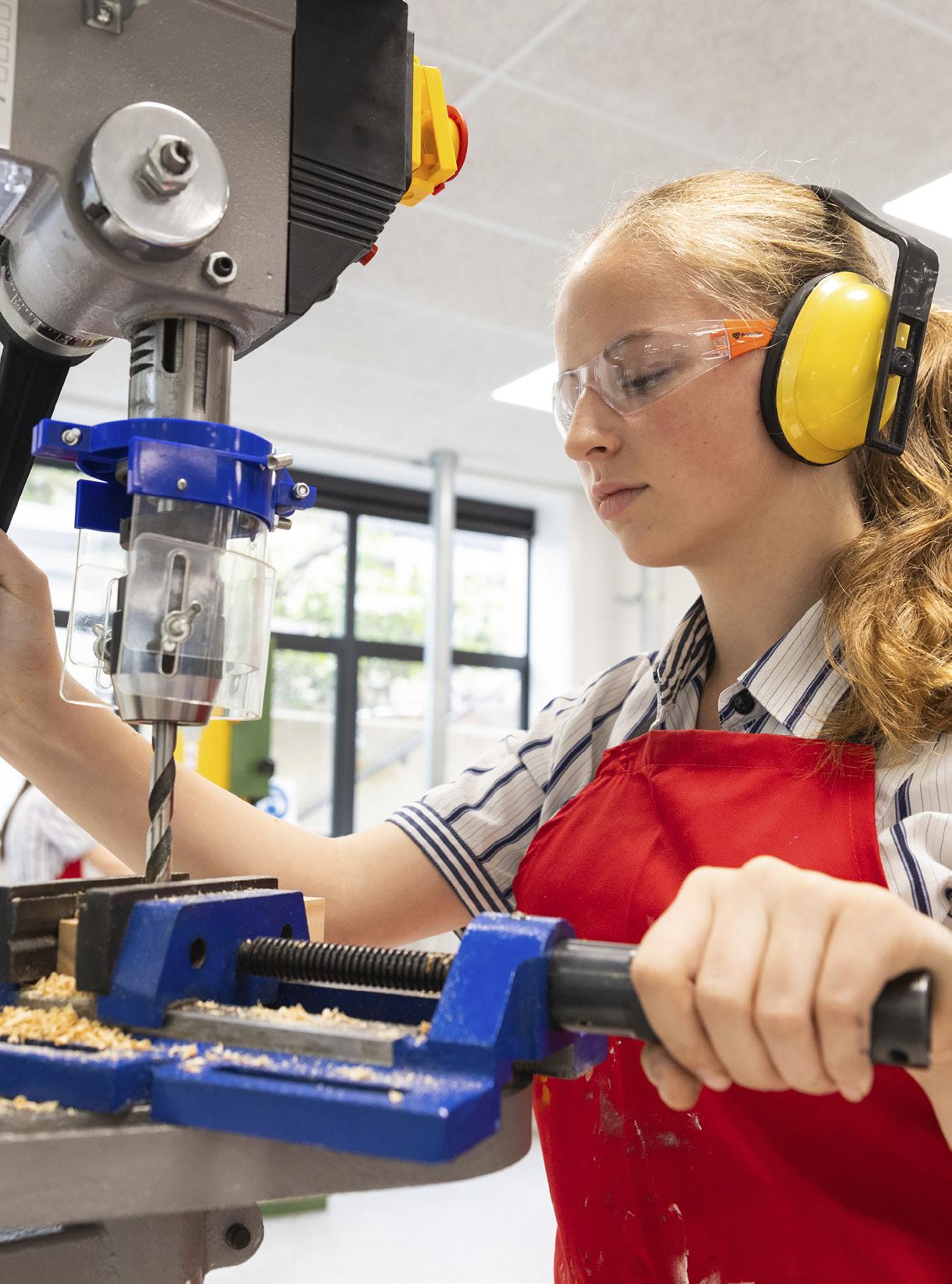
In girls’ schools, STEM subjects often feel more accessible from the outset. Without gendered expectations influencing subject choice, science, technology, engineering and mathematics become spaces of genuine curiosity and confidence.
At Dio, teaching is designed to encourage exploration and capability, helping students see themselves as able and confident in areas they may not
have previously considered. This early sense of possibility can shape future study pathways and career ambition.
Sport and physical education participation
Sport and physical education are central to school life at Dio, with strong participation across all year levels. Students are encouraged to take part, whether they are experienced athletes or trying something new.
This inclusive approach builds more than fitness. It develops teamwork, resilience and connection, while fostering a strong sense of belonging.
Leadership and confidence
One of the most visible outcomes of a girls’ school environment is confidence.
At Dio, leadership opportunities are authentic and student-led, from sports captains to debating and arts leadership roles. These experiences give girls regular opportunities to lead, speak up and step forward without hesitation. Over time, this builds a grounded confidence that extends well beyond school.
Encouraged to challenge gender stereotypes
A key strength of a girls’ school is the absence of subtle pressure around traditional gender expectations. Students are free to follow their interests without limitation.
This freedom opens pathways into leadership, diverse subject choices and future careers that might otherwise feel out of reach. It encourages ambition without constraint and supports students to make decisions based on passion and ability.
School choice is about more than academics. It is a formative decision that shapes confidence, capability and ambition. Within a culture of high expectations, students are supported to grow with purpose and belief in their own potential.
2026 off to a FLYING START
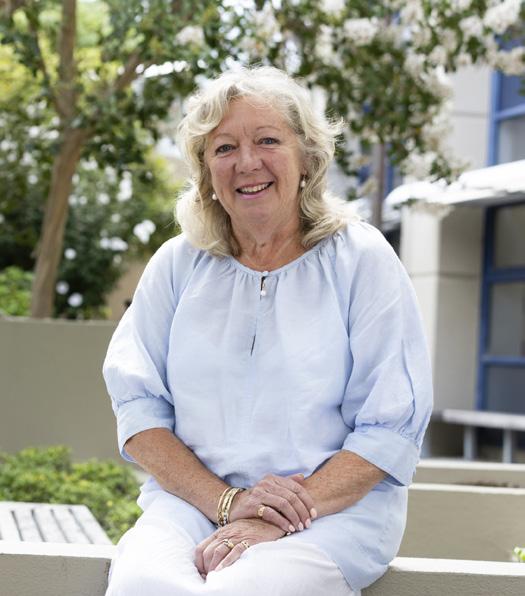
The 2026 academic year got off to a great start with the release of the examination results – an elusive perfect score of 45 in the IB Diploma, courtesy of Leer Mao, 100% pass rates across NCEA Levels 2 and 3, and University Entrance and Merit and Excellence endorsement rates that placed Diocesan as the top Independent School in New Zealand by NCEA results. We are immensely proud of the students and the hard work and determination that led to these results. That they achieve these levels of success while still heavily involved in the co-curricular life of the school is truly outstanding.
Staff at Dio can also take some of the credit for these results. The creative and stimulating courses they create, the resources they share with students, the commitment to going the extra mile to support all their students do not go unnoticed.
The changes to NCEA are still a few years away (expected for implementation in 2028 for the current Year 9 cohort) but staff are busy unpacking the new curriculum documents as they are released and planning for the courses that will run for Year 12 (2029) and Year 13 (2030). The Year 11 course (2028) is described as a Foundational Qualification that will measure literacy and numeracy. Freed from the demands of a centrally based Year 11 qualification, Dio staff have the ability to teach to a level (of both skill and content) that best prepares the students for Years 12 and 13, either the national qualification
or the IB Diploma. We think this in some way accounts for the results of the Year 12s last year as they experienced such a course in 2024.
Having received our MYP Authorisation last year with a string of commendations, we are now a full IB school. Years 7–10 are now fully involved in all aspects of the MYP curriculum, which culminates in the Community Project in Year 10. The MYP framework seamlessly embraces the importance of Service Learning, and this was a key reason the curriculum suited Dio so well.
The qualification results and the curriculum documents sit at the heart of the academic programmes at Dio, but on any day you will see that come to life in ways that are truly meaningful.
Some examples of our students’ learning outside the classroom recently include:
• Year 12 earth & space visited North Head volcano to explore the natural history of its eruption and changes in its shape over time. They made geological field observations, identifying different rocks to infer the steps of its eruption and finding evidence of different weathering processes such as tree-root fracturing and human quarrying.
• David Holmes (TIC Business) has established an Enterprise Pathway that allows the students to visit businesses as varied as Ecoya, Deloitte, Fatima’s and Flush Golf to see how they work in the real world. This is great preparation for their market days and the YES (Young Enterprise) Competition. Speakers such as Brooke Roberts (Sharesies) and Emma Lewisham come in to inspire another generation of entrepreneurs.
• Students from creative industries step beyond the classroom and into the future, connecting with pioneering companies like Weta Workshop, Google, Trade Me, AUT and Boxfish to explore the cutting edge of technology and innovation firsthand. The visit to Weta Workshop immersed students in the intersection of creativity and technology, inspiring them to see how imagination, craftsmanship and digital innovation combine to bring world-class storytelling to life.
• The Year 13 accounting class also visited the Weta Workshop to learn about the process of movie-making and special effects, a valuable learning experience for them to build a real-world connection to transfer to their class work, which centres on job costing.
These experiences outside the classroom enhance the experience for the students in a way that creates the intangible but vital connections between school learning and life learning.
Margaret van Meeuwen Head of Senior School
EXAMINATION results 2025
The examination results for 2025 were the best we have ever achieved at Diocesan. With 100% pass rate across both NCEA Level 2 and Level 3 and 100% pass rate for University Entrance our students achieved amazing results.
The NCEA results for Diocesan students were impressive in 2025. Diocesan School was the top independent school in New Zealand based on 2025 NCEA results. This is a huge achievement given the stiff competition within the independent school sector. We are also exceptionally proud of the level of Excellence Endorsements our students achieved. 62% of students were endorsed with Excellence at NCEA Level 2, and 43% of students at NCEA Level 3.
The IB Diploma results were especially exciting given that Leer Mao achieved the perfect score of 45. This is attained by just 0.1% of IB students worldwide, so her result puts Leer into an exclusive club. Four other students achieved 40+ and were invited to the National Awards Ceremony: Evie Hope (41), Emma Wang (41), Sophie Lockyer (40) and Jane Li (40). The overall pass rate was 97% against a worldwide pass rate of 79%.
Scholarship results were also very pleasing, with 56 Scholarships – a positive trajectory over the last three years. Diocesan’s top student was Anya Taylor (Year 12) who achieved Scholarships in history, English, drama and media studies. The faculties of Social Sciences, Arts and English accounted for two-thirds of the total Scholarships awarded.
These results do not just happen, the concerted efforts of staff and students over several years culminate in these achievements each year. We do not take them for granted and are very proud of our students, the staff who go the extra mile and the families who are supportive coaches in the background.
DIO NCEA RESULTS
62% Endorsed Excellence
43% Endorsed Excellence
56 awarded over a range of faculties
Over $2.2M in scholarships awarded to NZ and overseas universities
97%
TOP INDEPENDENT SCHOOL IN NZ
We are proud that, based on the 2025 NCEA results, Diocesan School for Girls was the top independent school in New Zealand.
Across all independent schools (and across girls', boys' and co-educational schools) Dio achieved the strongest overall NCEA outcomes across New Zealand.
What makes these results especially significant is not simply that students are passing, but the exceptionally high level at which they are achieving. An Excellence Endorsement is awarded to students who consistently perform at the highest level across multiple subjects throughout the year, reflecting sustained academic excellence rather than a single outstanding exam result. The Level 3 results particularly highlight the strength of Dio students’ performance. 43% of Dio students achieved an Excellence Endorsement at Level 3, compared with 14% nationally.
Dio’s 43% Excellence Endorsement rate at Level 3 was the highest among all independent schools in New Zealand, ahead of the next highest result of 36% achieved by a Wellington school. These results reflect more than strong academic outcomes. They demonstrate a culture where students are encouraged not only to succeed, but to strive for excellence and reach their highest potential.
NCEA LEVEL 2
NCEA LEVEL 3
SCHOLARS ’ Awards
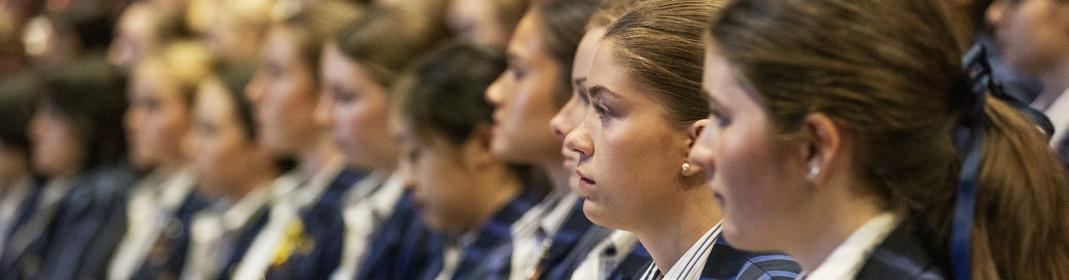
On 29 April we celebrated the academic successes of our senior students in 2025. Celebrating these students at a function with families present is important, as they have worked hard over several years and they can be rightly proud of their achievements. This was also an opportunity for Dr Sandra Hastie to address the audience. She acknowledged the hard work, persistence, determination and grit needed to achieve an award and reminded them that “success doesn’t come from what you do occasionally, but from what you do persistently.”
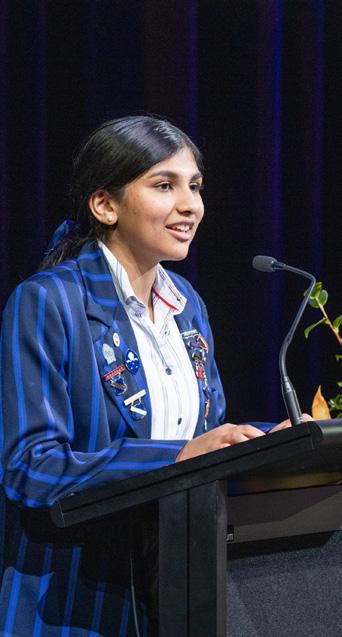
Academic Prefect Zara Khan also spoke about the community that supports us all to achieve. She linked her thoughts to the Year 13 theme He waka eke noa – we’re all in this together – and the impact of being surrounded by young women who are motivated, capable and quietly pushing themselves to be more than they ever imagined.
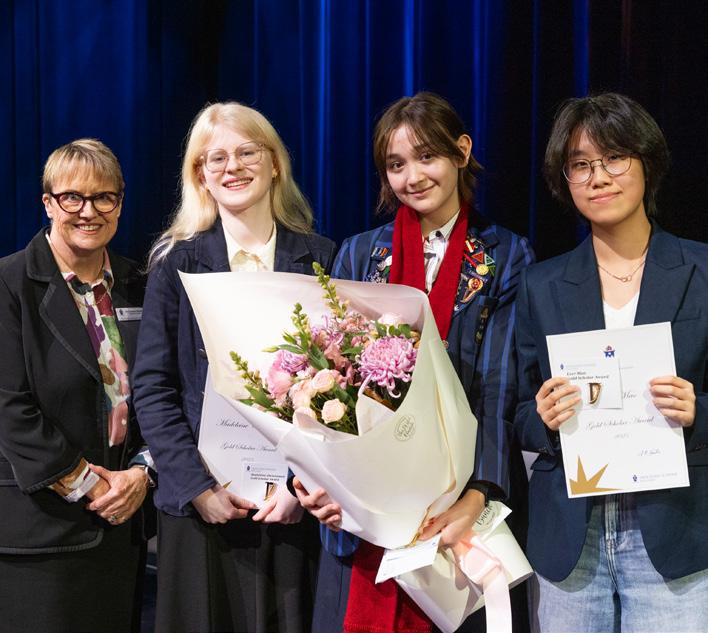
Gold Scholar Awards
We were especially pleased to celebrate the nine Gold Scholars. They achieved this distinction with a Diploma score of 40+ or at least three Scholarship awards in the 2025 round of exams.
• Leer Mao achieved the perfect score of 45, attained by just 0.1% of students worldwide. This is the second year Leer has received a gold award. In 2024, she achieved four scholarships, including three at Outstanding level, a feat she pulled off as a year 12 Diploma student. This also gave her recognition as a National Outstanding Scholar in 2025, of which there were just 55 nationwide. Leer is waiting to start her studies in business and economics at the University of Pennsylvania in September.
• Evie Hope scored 41 in her Diploma exams and is in Melbourne studying towards a Bachelor of Biomedical Science and a Bachelor of Commerce at Monash University.
• Emma Wang scored 41 and is currently at the University of Melbourne studying a Bachelor of Science degree, possibly going towards psychology.
• Sophie Lockyer achieved a score of 40 and is studying advanced commerce and arts at the University of Sydney on an academic scholarship at St Andrew’s College.
• Jane Li scored 40 and is currently studying at Monash University, doing a Bachelor of Biomedical Science.
• Hayley Liu achieved Scholarships in English, visual art print and health and physical education (Outstanding) and is at the University of NSW in Sydney doing a degree in arts and law.
• Holly Bricklebank achieved Scholarships in history, economics and statistics (Outstanding) and is studying a Bachelor of Laws/Bachelor of Commerce (Finance) at the University of Sydney.
• Madeleine Christiansen achieved Scholarships in English, Latin and music and is studying towards a
Executive Principal Dr Sandra Hastie with Gold Scholars Madeleine Christiansen, Anya Taylor and Leer Mao.
Academic Prefect Zara Khan
Bachelor of Global Studies at the University of Auckland, majoring in global politics and human rights. She is also enjoying playing with the Auckland Youth Orchestra and singing with the New Zealand Youth Choir.
• Anya Taylor achieved Scholarships in history, English, drama and media studies. This is particularly impressive as Anya was in Year 12 last year and a Diploma student, so the curriculum she was studying each day in her Diploma subjects did not always match the Scholarship curriculum.
Congratulations Anya on being both a silver and a gold award winner in the one year – a remarkable feat.
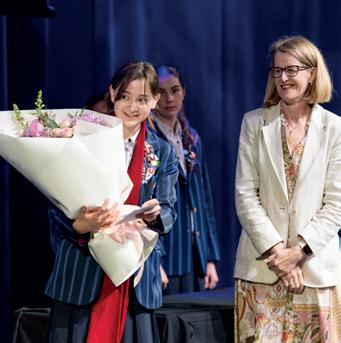
Tertiary Scholarship
The final award of the evening was the Diocesan Tertiary Scholarship, awarded to the student who had the best results in the New Zealand Scholarship examinations in the previous year. This award is for the value of $5000 and is given regardless of the university selected, either at home or overseas. It is open to students who sit the Scholarship exams in Year 12 or 13. We thank the Board for this generous contribution and ongoing support of Diocesan students to be more than they ever imagined. This year our winner of the Diocesan Tertiary Scholarship is Anya Taylor.
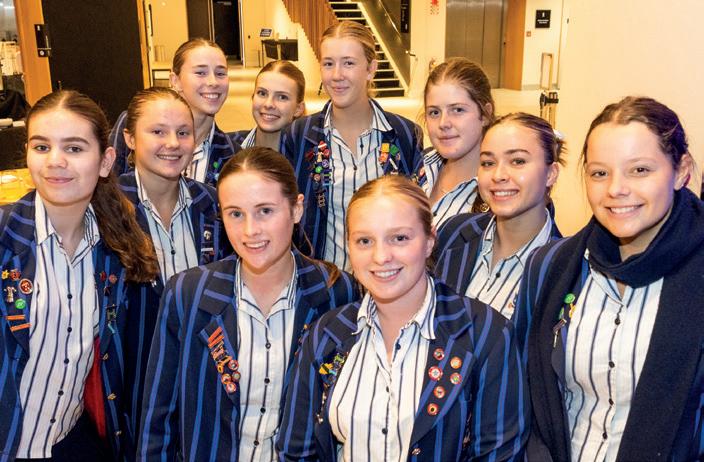
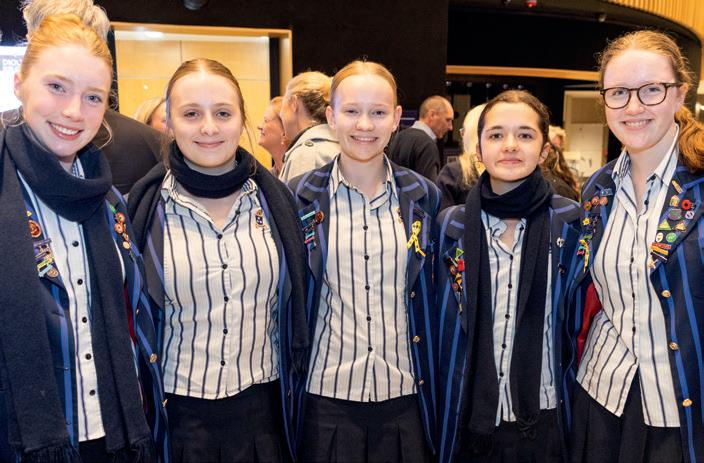
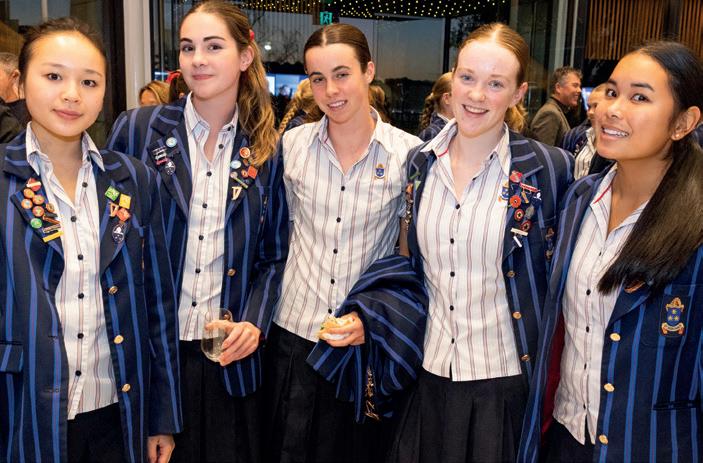
Back row, left to right: Sophia Glass, Emily Keene, Margot Wilson, Isabella Coleman, Emily Dick, Jaimie Webb. Front row, left to right: Ruby Ogg, Freya Motion, Ruby Waldegrave, Pippa Foreman
Left to right: Michelle Luo, Mia Platt, Sophie Haines, Annabel Smith, Alyssia Lowe
Left to right: Emily Penrose, Nina Hayes, Sarah Green, Kate Miller, Elizabeth Flint
Anya Taylor and Mrs Jenny Spillane, Board Chair.
Spotlight on OUR EDUCATORS
Great teachers make great schools. Meet four of ours.
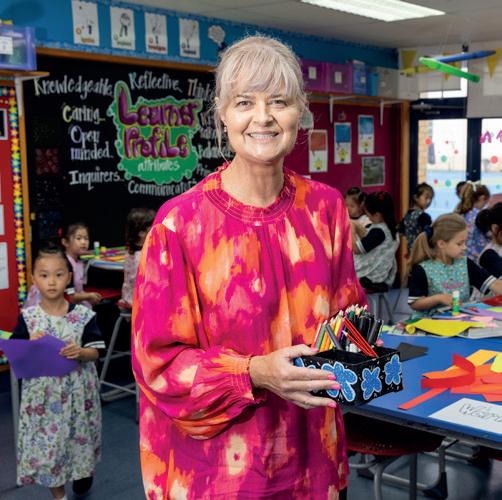
Kerrie Parker
Head of Art, Junior School
Art is the way Kerrie Parker understands the world, noticing small details others might overlook. As Head of Art in the Junior School at Dio, she brings that curiosity into a lively classroom where students quickly begin to see themselves as artists. “I love watching them realise they can do it,” she says.
Kerrie grew up in Hamilton and spent her childhood exploring the Coromandel beaches. Drawn to creativity early on, she discovered her interest in art and teaching while at Waikato Diocesan School for Girls. After completing a Bachelor of Education in History and Art History, she taught art overseas while continuing her own painting and exhibitions. She later spent six years at a school in Wimbledon, UK, before returning to New Zealand.
More than 350 Junior School students move through her art room each cycle. Kerrie promotes a ‘process over perfection’ approach, encouraging students to experiment, take risks and learn from mistakes. They build skills in drawing, painting, sculpture and mixed media, developing confidence and their creative voice.
After 16 years at Dio, Kerrie is still energised by the art room. Outside school, she enjoys family time, gardening, DIY projects and exploring both digital and traditional art, reflecting her belief that creativity never stops evolving.
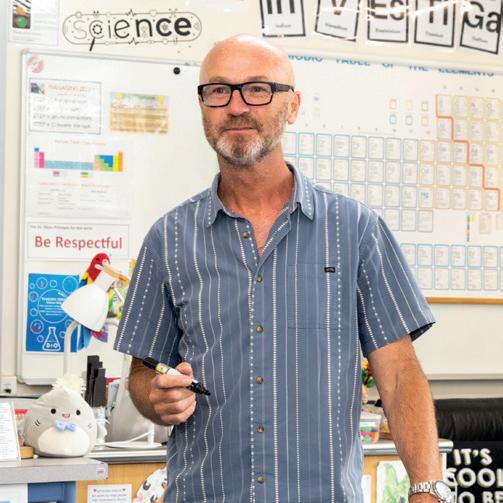
Bernard
Potter Head of Science Faculty
Bernard Potter, Head of Science Faculty, has always approached science as an adventure.
Growing up in rural KwaZulu-Natal, South Africa, Bernard spent his early years immersed in nature on a dairy farm. He attended school in a small mud rondavel classroom with just five students, where learning extended into the environment, including wildlife biology and exploration.
“That early experience shaped everything,” he says. “Science has always been about curiosity and noticing the world around you.”
After completing a biology degree, Bernard worked for the University of Auckland as a possum trapper, collecting DNA samples, before moving into teaching. Since joining Diocesan in 2020, Bernard has strengthened collaboration within the science team and developed clear pathways into NCEA and IB. He has also led the implementation of the MYP in Years 7–10, working with colleagues, including the Junior Science TIC, to support curriculum design and progression.
“I want students to leave Dio curious, adventurous and scientifically literate,” he says. “Community is key. We learn from each other every day, and I value the science team I work alongside, and the enthusiasm and fresh perspectives students bring.”
“I want students to leave Dio curious, adventurous and scientifically literate
BERNARD POTTER, HEAD OF SCIENCE FACULTY
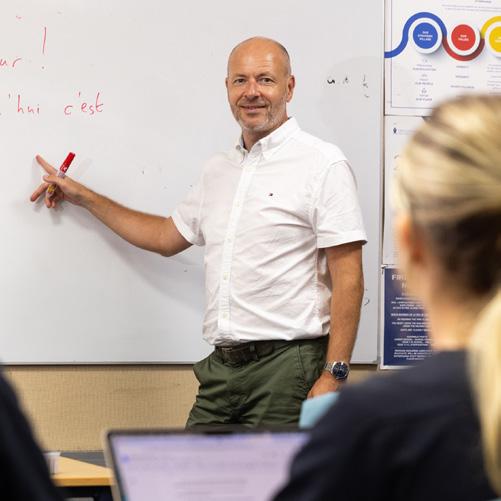
Neil Cheetham
Year 7 Dean and languages teacher
Neil Cheetham discovered his interest in teaching while working as an activity leader on summer programmes during university holidays in the UK. That early experience still shapes his belief that strong relationships sit at the heart of good teaching.
Raised in London, Neil studied French and German at school before completing a modern languages degree. A year at the University of Tübingen in Germany strengthened his language skills and deepened his interest in how language connects people and cultures.
At Dio, Neil sees teaching as fundamentally about people. He draws on Maya Angelou’s reminder that people remember how you make them feel, guiding his warm and consistent approach. As the first male Dean at Diocesan, he has focused on accessibility and trust.
Neil values supporting students through their full Junior High journey. With his background in languages, he enjoys opening Year 7 students’ minds to language learning, from Spanish to German, helping them build confidence and keep pathways open.
Outside school, Neil is a runner, footballer and father. Earlier this year he set himself the goal of breaking 19 minutes for 5km and achieved it by a single second.
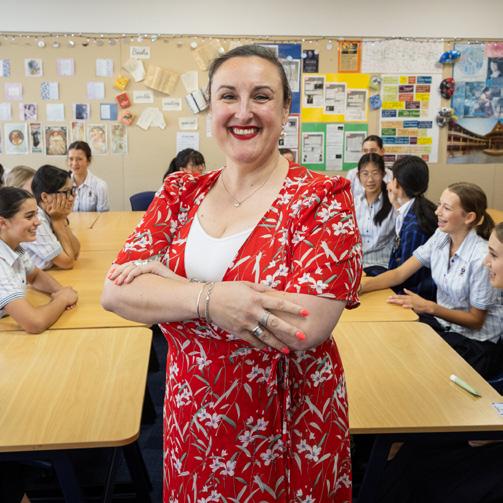
Paige Zinn
Assistant Head of English Faculty, English teacher and IB Co-ordinator
An inspirational teacher changed everything for Paige Zinn, herself now an English teacher, Assistant Head of Faculty at Dio, and new IB Diploma Coordinator. Mr Kletkey made English come alive, reading her work with an enthusiasm that made Paige feel genuinely seen. That experience now sits at the heart of her own classroom where she aims to give students the same sense of voice and possibility.
Raised in Ottawa, Canada, Paige studied English and history at Mount Allison University in New Brunswick. Her love of literature deepened through a creative writing course, while volunteering as a volleyball coach confirmed teaching as her path.
Passionate about poetry, she is committed to making Shakespeare accessible. “If we don’t demystify Shakespeare, it becomes this unattainable thing, which it shouldn’t be.”
Central to her teaching is student voice. “I always tell students I want to hear their voice, not what they think I want to hear.” Through open discussion, she creates space for independent thinking.
Outside the classroom, Paige deliberately becomes a learner herself, whether through pottery, te reo Māori, or belly dancing. Starting from scratch reminds her what learning feels like and continues to shape the empathy she brings to her students.
EOTC Week EMBRACING CHALLENGE
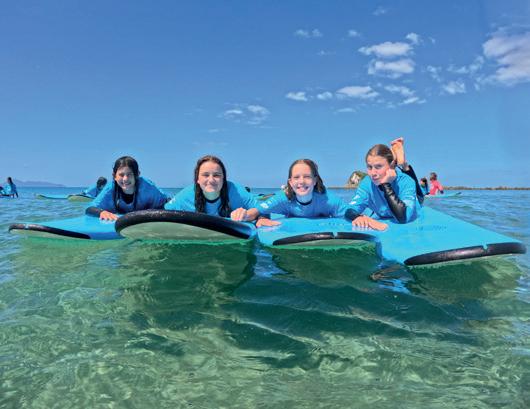
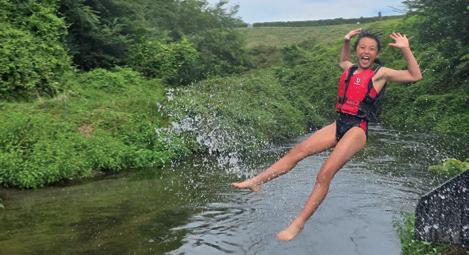
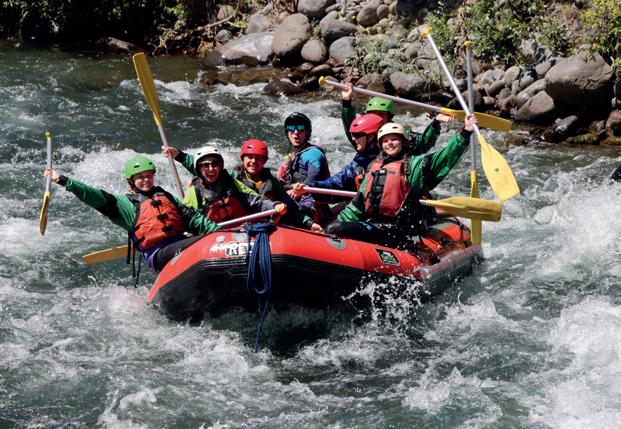
During Week 5 of the first term, Dio’s campus fell unusually quiet, but beyond the empty classrooms, students were immersed in one of the year’s most exciting experiences: Education Outside the Classroom Week (EOTC Week). From rock climbing, white water rafting and kayaking to tramping, bush skills and surfing, students embraced challenges that pushed them beyond their comfort zones and into real-world learning.
At Dio, every year group in the Senior School (Years 7–13) goes on EOTC Week. Each programme is carefully designed to match the growth and abilities of the different year levels. Year 7 students focused on friendship and teamwork, while Year 13 students explored leadership, decision making, and independence as they prepared for life after school. Across Auckland and in stunning locations such as Raglan, Tongariro National Park and
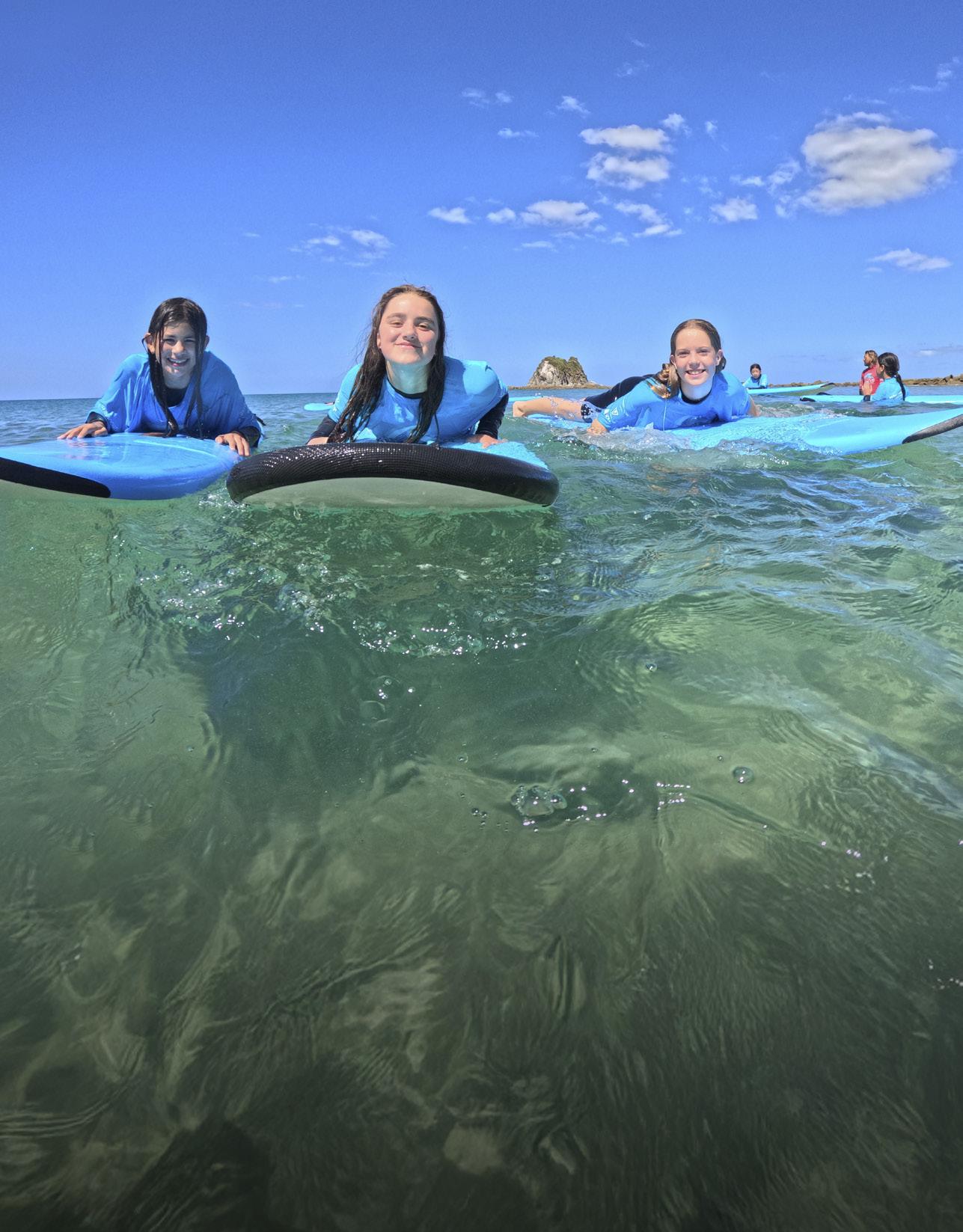
Mangawhai, students discovered resilience, confidence and a deeper connection to the outdoors.
EOTC Week is an opportunity for students to uncover passions that extend beyond the classroom. By stepping into unfamiliar environments, they gain practical knowledge and make unforgettable memories.
PICTURED: Year 8 Mangawhai Heads.



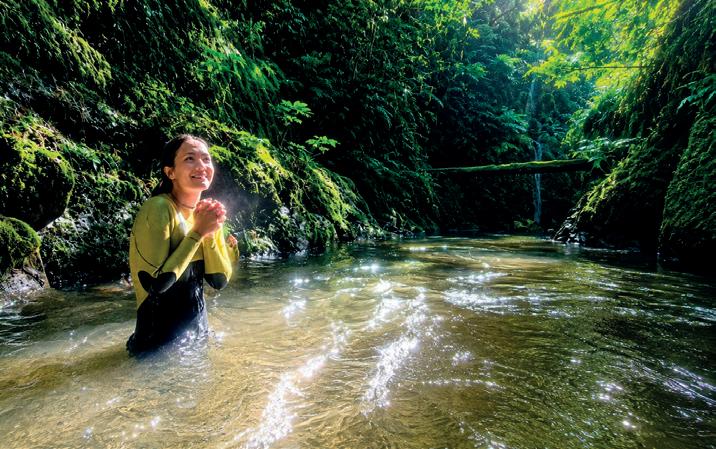
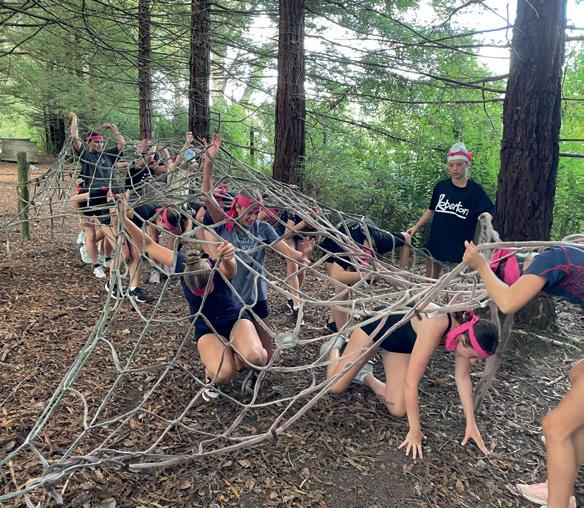

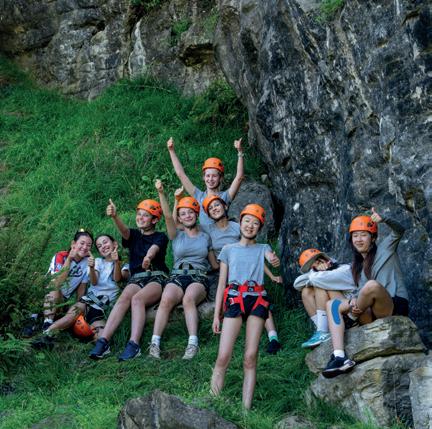

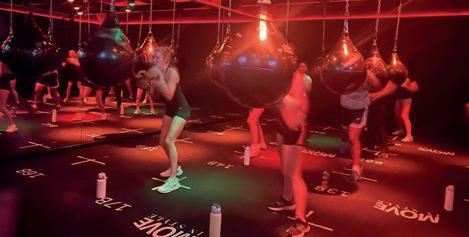


Year 11 Pukehinau Gorge in Tongariro National Park
Year 12 Box Fit, Auckland
Year 7 Totara Springs
Year 13 River rafting - Tongariro River
Year 9 Stone Valley, Raglan
Year 11 Tongariro Crossing
Year 10 Action Matakana
STUDENT EXCHANGES
Diocesan has a long history of exchanges – we currently offer opportunities for Year 10 to Hong Kong and Adelaide, and for Year 11 students we have established an exchange to a school in Connecticut, just outside of New York.
This year we re-established our partnership with Hong Kong Diocesan after a hiatus. In January, just before school returned for the academic year, the students travelled to Hong Kong to spend the last week of their holidays immersed in school life.
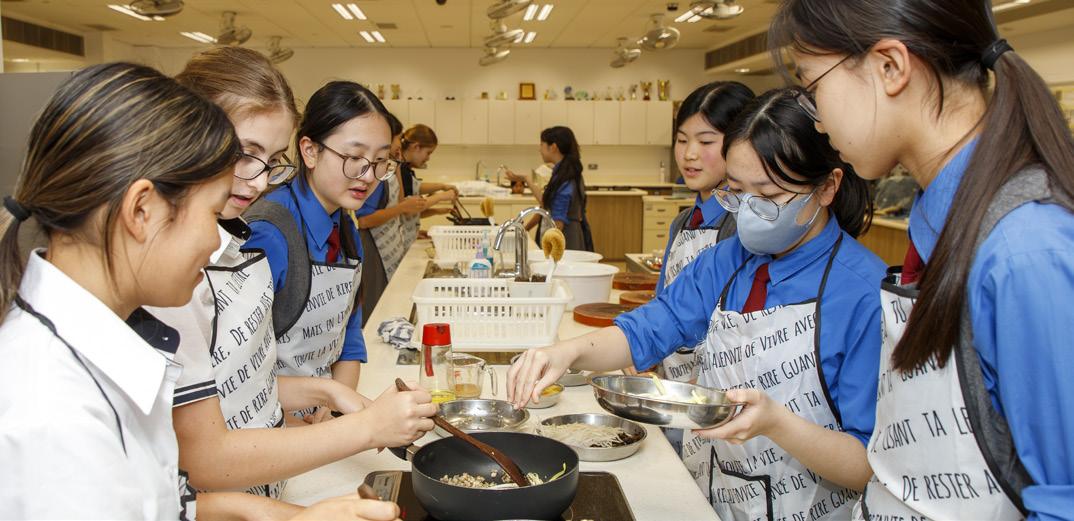
On arriving at the school after the flight, Alyssa Burrows, Jadelyn Hoy Fong, Lola Gordon and Kalie Chan were met by their Hong Kong Dio ‘sisters’ and family, having become friends via texts and emails over the summer break. The girls spent time with their family over the weekend before starting school. They found the large city exciting to explore and were able to see and experience the culture, markets, sites – including Hong Kong Disneyland –shopping and food for which Hong Kong is renowned.
The week at school was filled with new experiences, challenges and organised after-school activities. With their exchange partners and new friends,
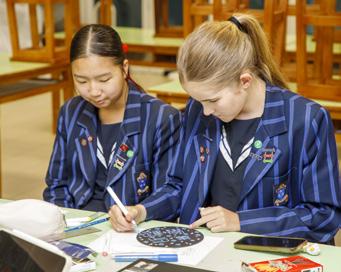
Exchanges play an important part in giving students the opportunity to experience schooling in another country and develop independence.
they took part in a Chinese cookery workshop, learned to play the Guzheng (a 21-stringed plucked instrument like a zither), and had a Chinese painting session. They returned home having broadened their horizons and becoming more global in their outlook.
We are looking forward to having our Hong Kong sisters join us at Dio in late
July/early August for their 10 days in New Zealand. We plan to run some similar experiences and know they will love making a pavlova, and learning a waiata and some te reo and tikanga.
In addition to our exchange programme, Diocesan offers a range of overseas curriculum-based trips as well as trips for sports and the arts. This year, in the July holidays, senior biology students will travel to South Africa with Operation Wallacea to undertake research into protecting biodiversity. The expedition is split into two parts: week one is focused on terrestrial wildlife conservation in Somkhanda Game Reserve, while the second week is in Sodwana Bay and focuses on marine wildlife.
A group of our senior dance and drama students are also excited to be travelling to New York. This trip will include the opportunity for students to participate in workshops, view performances on Broadway, and immerse themselves in the vibrant arts scene in one of the world’s most iconic cultural capitals. Further information about the exchange programme and overseas trip opportunities will be posted on DioConnect for students and parents in the coming terms.
Thank you, MRS MARRIOTT!
For more than three decades, students at Dio have been shaped by the guidance and encouragement of Susan Marriott, a teacher whose impact has extended well beyond the language classroom.
Susan joined Diocesan in 1992, teaching Japanese, German and French, and over the next 34 years became a familiar and respected presence within the school community. Her classes were known for being thoughtful, engaging and academically challenging, while her calm and steady approach helped students feel supported in their learning.
Alongside her teaching roles, Susan also contributed to school life in a number of other ways. She spent time as Careers Administrator in 1999 before being appointed Head of Faculty (Languages) in 2001. In 2017, she took on the role of IB Diploma Coordinator, a position that drew on both her organisational skills and her ability to guide students through the demands of the IB programme.
For many Diploma students, Susan became an important source of reassurance and practical support during a challenging stage of their education. Her careful planning and attention to detail ensured students felt prepared and well supported throughout the process. It was a fitting end to her time at Diocesan that in 2025 the school celebrated an IB score of 45, achieved by Leer Mao (PY 2025 Cowie).
For more than 20 years, and brought to a halt by the COVID pandemic, Susan organised an annual exchange programme between Diocesan and Juntoku High School in Tokyo. With her trademark attention to detail, girls enjoyed both cultural and educational activities and experienced homestay living in their host country. Hundreds of girls will have happy memories of their experiences both here and in Japan.
Former student Lucy Tucker (PY 2022 Mitchelson) remembers Susan as someone who challenged her to think

differently and more carefully about the world around her.
“Mrs Marriott taught me how to frame my ideas and interrogate my thoughts in a way that relies upon reason, tolerance and wisdom,” Lucy says. “What I do know, though, is that she instilled in me the skills and knowledge to approach my uncertain future with confidence, capability and excitement.”
Lucy’s reflection captures the experience of many students who
learned under Susan over the years. Beyond teaching languages and supporting IB students, she encouraged young people to think independently, communicate clearly and approach learning with curiosity.
As Susan Marriott retires from Diocesan, she leaves behind a legacy built not only on academic achievement and leadership, but on the many students whose lives and learning she helped shape throughout her time at the school.
Digital technology: EXPLORING NEW FRONTIERS
In the digital technology space our students have been busy in an array of activities. Digital technology is no longer just about using devices; it’s about creating, designing, problemsolving and thinking in new ways. From building underwater robots to developing apps, exploring augmented reality sports and engineering remote-controlled vehicles, our girls are discovering how creativity and technology combine to shape tomorrow’s opportunities.
Engineering on wheels
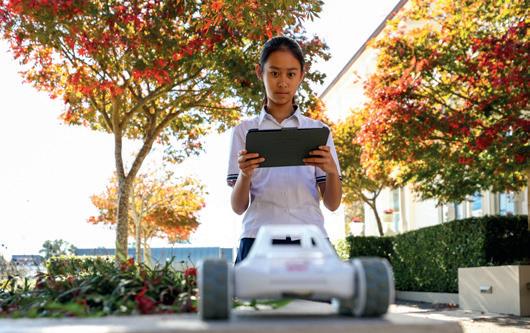
Robotics has provided students with opportunities to experiment, build and innovate through remote-controlled vehicles. Using RVRs (programmable robotic rovers), students explore how coding, engineering concepts and creative thinking come together in a hands-on way. Programming and testing their RVRs involves problem-solving, perseverance and plenty of fine-tuning, as they quickly discover that success often comes through trial and error and making improvements along the way.


Designing and building apps
Students have also stepped into the role of app developers, learning that successful apps involve much more than coding alone. They have explored the importance of user experience, interface design and understanding how people interact with technology. Students have brainstormed ideas, created prototypes and considered how to solve real-world problems through thoughtful digital solutions. Through this process they are learning creativity, empathy and computational thinking.
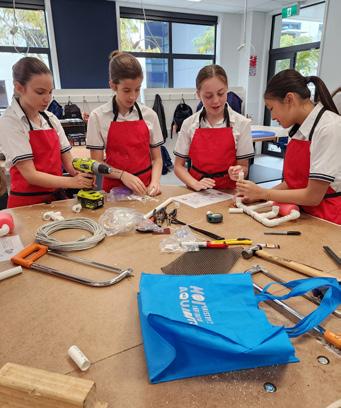
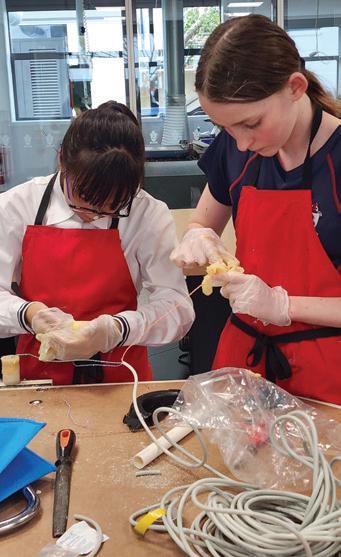
Making waves with AquaBots
Our students have been diving into the world of AquaBots, an exciting programme run through NZAquaBots and the Ministry of Inspiration. Working in teams, students design and build their own remotely operated underwater vehicles (ROVs) before putting them through a series of underwater challenges. From navigating obstacle courses to completing retrieval tasks beneath the water’s surface, every design choice matters. Along the way, students are learning engineering principles, teamwork, communication and problem-solving skills.

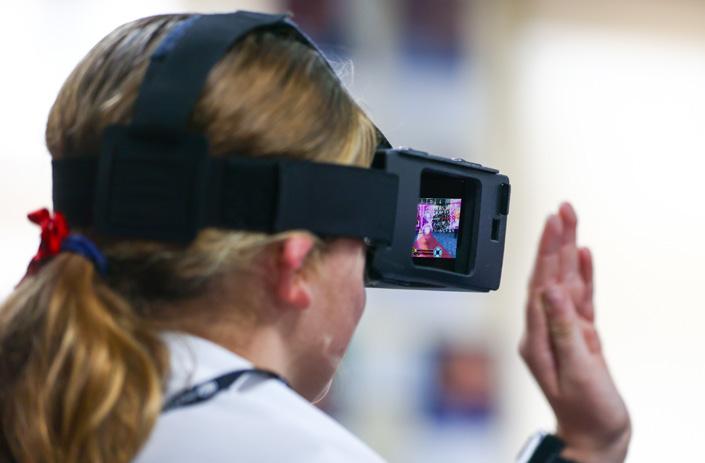
Stepping into the future with HADO
Technology and sport have come together through HADO, an Augmented Reality (AR) experience unlike anything students have tried before. Wearing specialised headsets and arm sensors, players enter a world where they can throw virtual energy balls and activate shields while competing on a real-life court. Quick thinking, teamwork and strategy become essential as students learn to react, adapt and communicate under pressure. HADO shows our students how emerging technologies can completely transform traditional experiences.



WHAT MAKES BAYLEYS ALTOGETHER BETTER?














WE BRING TO EVERY



Every house has its own energy. It’s a feeling you get the moment you walk through the door; the light, the layout, the way it just feels like home.










At Bayleys, we’re relentless about bringing out that energy in every home we sell, and bring our own unique energy to every detail, every conversation, every interaction.
Of course, success takes more than energy. It also calls for an unwavering commitment to service from the first handshake until the deal is done.
As a result, more people take notice, more genuine buyers show up and more value is unlocked
With Bayleys, you can expect more energy and Altogether Better service.
0800 BAYLEYS | bayleys.co.nz

















WHAT AI CANNOT TEACH
Every student at school is using AI; that much is settled. The interesting question is not what it can do, it’s what it cannot. And what it cannot do is what schools, at their best, are for.
Start with what AI does well. It can produce work: an essay, a code structure, a passable summary, a set of practice problems. In a recent study, high school maths students using ChatGPT answered 48% more practice problems correctly. A Harvard physics study around the same time, using a carefully designed AI tutor, found students learning roughly twice as much in less time than students in active-learning classrooms.
But producing work is not the same as learning. In that same maths study, when the AI was taken away, those students performed 17% worse than peers who’d never used it. While they looked more capable, they were becoming less capable.
What AI cannot do is decide which of those two things is happening for a particular student in a particular moment. That call requires knowing the child. It requires noticing that she’s been away for a week and is
missing the foundation of the unit. It requires recognising she’s close to a breakthrough and needs five more minutes alone. It requires understanding how this specific student, with this specific background, will misunderstand this specific idea, and what will shift her.
That is teacher knowledge. It is built over time, in relationships, and the research is clear about how much that matters. John Hattie’s synthesis of more than 800 meta analyses, drawing on data from millions of students, places the quality of the teacher-student relationship among the strongest single influences on learning, well above the average effect of classroom interventions. It is not something you can put in software.
AI also cannot hold productive struggle. Memory, motivation, metacognition: these are built through difficulty, not despite it. The brain encodes understanding through effort, not around it. The line between productive struggle and being stuck is real, though, and only someone who knows the student can see it. Removing every difficulty as soon as it appears
looks like efficiency. It is the opposite of learning.
And then there is what AI cannot even attempt: belonging, formation. The experience of being known by adults who are paying attention, and of growing up alongside people who will matter to you for decades. An Australian longitudinal study following more than 1500 young people from age 15 into their late twenties found that sense of belonging at school predicted lower mental health symptoms across multiple measurements into young adulthood. That is built in classrooms, on sports fields, and in the impromptu post-lesson conversation between the teacher and a student.
At Dio we use AI to assist learning, not to replace it. Knowing the difference is a human judgement; so is everything else that matters in a school: the relationships, the formation, the belonging. These things live in people who know your daughter and care about who she is becoming. That’s what a school is for.
Rob McCrae AI Lead
References Allen, K. A., Greenwood, C. J., Berger, E., Patlamazoglou, L., Reupert, A., Wurf, G., May, F., O'Connor, M., Sanson, A., Olsson, C. A., & Letcher, P. (2024). Adolescent school belonging and mental health outcomes in young adulthood: Findings from a multi-wave prospective cohort study. School Mental Health, 16, 149–160. https://doi.org/10.1007/s12310-023-09626-6. • Bastani, H., Bastani, O., Sungu, A., Ge, H., Kabakcı, Ö., & Mariman, R. (2025). Generative AI without guardrails can harm learning: Evidence from high school mathematics. Proceedings of the National Academy of Sciences, 122(26), Article e2422633122. https://doi.org/10.1073/pnas.2422633122 • Hattie, J. (2009). Visible learning: A synthesis of over 800 meta-analyses relating to achievement. Routledge.• Kestin, G., Miller, K., Klales, A., Milbourne, T., & Ponti, G. (2025). AI tutoring outperforms in-class active learning: An RCT introducing a novel research-based design in an authentic educational setting. Scientific Reports, 15, Article 17458. https://doi.org/10.1038/s41598-025-97652-6
A place to belong: BOARDING AT DIO
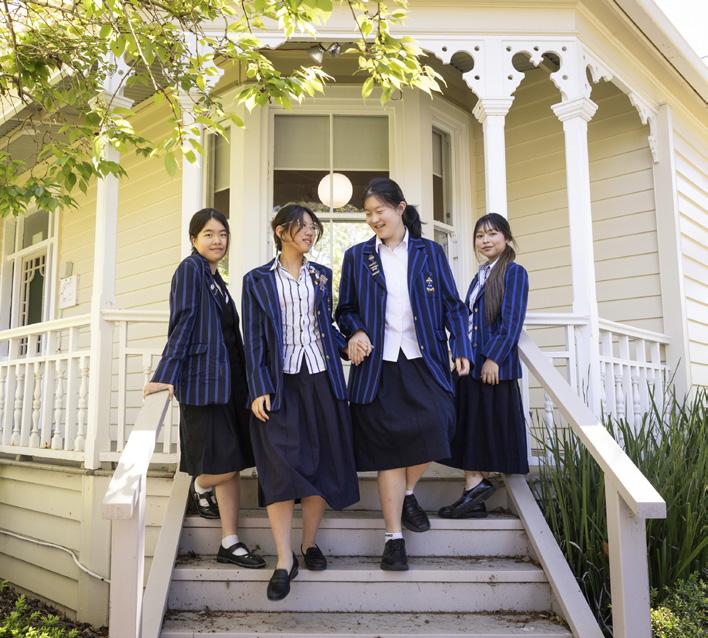
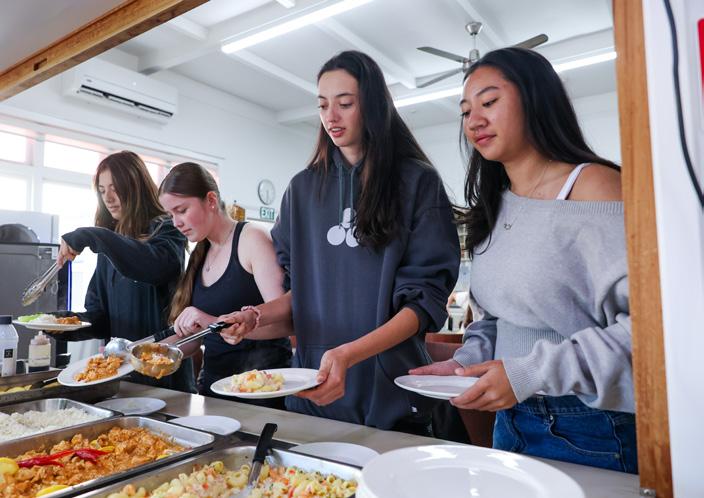
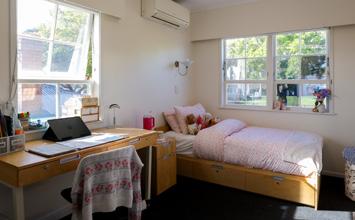
At Innes House, mornings begin with the familiar rhythms of boarding life: students gathering for breakfast, lunchboxes being packed and conversations flowing before the short walk across the road to school. With 57 boarders, Dio offers a boutique community where every student is known and supported. Boarders live in four villas in Epsom, directly opposite the school, which keeps them closely connected to daily life at Dio.
Students arrive from across New Zealand, from Kerikeri to Wānaka, alongside an international community that brings perspectives from around the world. Despite the diversity, life at Innes House feels personal. Older students know the younger ones by
name, staff notice when someone has had a difficult day, and milestones are shared collectively, whether a birthday, a sporting achievement or simply getting through the first homesick week.
Director of Boarding Caroline Agavale Isaia, who lives onsite, says the scale of the house shapes the experience. “The girls cannot disappear here,” she says. “We know them well, and we know their families too. That connection is what makes Innes House feel like home.” She believes the partnership between students, whānau and staff builds the trust that underpins the community.
For many families, the transition into boarding begins well before the first term. Welcome events, staff introductions and parent connections help ease the shift.
Once the year starts, the focus is on helping students settle into routines and friendships. Younger boarders are paired with older students through a buddy system, while shared traditions help create a sense of belonging.
A highlight is the annual boarding camp held at marae around the region. For Year 9 student Fay Stirling, a thirdgeneration Dio boarder from Kerikeri, the experience eased the nerves of starting school. “Staying on the marae was a wonderful experience,” she says. “I was delighted at how welcoming the staff and students were.”
While boarding was a practical choice for Fay’s family, she says the sense of connection has been the biggest surprise. Friendships form naturally across year levels, with younger girls quickly becoming part of the wider house community.
Much of that connection grows in everyday moments. Girls bake together in the kitchen on weekends, chat over Milo in the evenings, and share laughter before lights out. Weekend outings are another feature, with students exploring Auckland, attending pottery classes, going to movies or catching ferries to places such as Tiritiri Matangi Island.
The boarding calendar is filled with events that bring the house together. Formal dinners and chapel services sit alongside cultural language weeks and service initiatives supporting organisations such as Ronald McDonald House, the Breast Cancer Foundation and Youthline. A favourite tradition is the boarding house cooking competition inspired by My Kitchen Rules. Students are split into teams and challenged to cook Kiwi classics, with judging by staff, senior leaders and members of the Innes community. Caroline says the event is always lively and full of energy. “Everyone gets involved,” she says. “The


students take it seriously, but there is also so much laughter.”
For Head Boarder Antoinette Jessop (Year 13), boarding has been life changing. Originally from Samoa, her family chose Dio for opportunities that were harder to access at home. “When my family and I looked at my educational options, we realised the schooling system in Samoa had limitations,” she says. “We chose Dio because of its reputation for academic excellence and the supportive community.”
Leaving home was not easy. Antoinette remembers feeling homesick during her first terms, adjusting to life away from family and familiar routines. Over time, boarding became a home away from home. “You learn independence quickly,” she says. “But you also gain a strong support network. Some of my closest friendships have come from boarding.”
Living alongside domestic and international students is another defining part of the experience. Director of International Students Simone Clark says the diversity within Innes House helps students develop empathy, adaptability and cultural understanding. “Living together brings different perspectives into everyday life,” she says. “It teaches patience, empathy and respect in very real ways.”
As students move through the house, confidence grows alongside independence. By their senior years, they take greater responsibility for themselves and others, preparing for life beyond school while still surrounded by support.
For families considering boarding, Innes House offers something distinctive: a place where students are not simply accommodated but genuinely cared for. In a world where schools can feel large and impersonal, the strength of Dio’s boarding experience lies in its scale – small enough to feel like family, yet broad enough to open young people to the wider world.
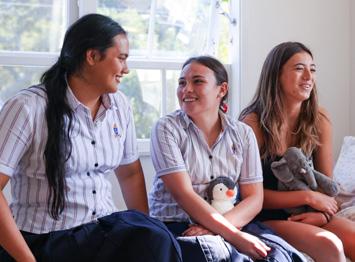
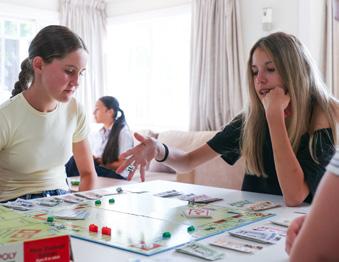
Boarders and boarding facilities at Innes House.
ENTREPRENEURSHIP AT DIO
At Dio, entrepreneurship is not confined to a subject or classroom; it is something students can step into, test and experience in practical ways. Running alongside academic study, the Enterprise Pathway offers a co-curricular opportunity that supports confidence, creativity and financial capability.
Developed in-house and led by Teacher In Charge of Business (TIC) David Holmes, the programme responds to a clear gap. While business studies provide theoretical foundations, not all students have opportunities to apply entrepreneurial thinking. The Enterprise
Pathway opens access to students from any subject area interested in business, innovation and problem solving.
“Not every student takes commerce subjects,” David explains. “But every student will need to understand money, risk and decision-making. This gives them early exposure in a practical, relevant way.”
A feature of the programme is its partnership with Dilworth School. Joint sessions bring students together across both schools, creating mixed teams and shared learning experiences. This introduces different perspectives
and reflects environments where collaboration across groups is valuable. Both schools are aligned in their goals and committed to ongoing development.
Enterprise in action
The journey begins in Year 10 with a three-day Enterprise Challenge. Working in teams, students respond to a problem or passion area, developing a hypothetical product or solution. The experience encourages collaboration, creative thinking and teamwork, while giving students the opportunity to test ideas quickly.
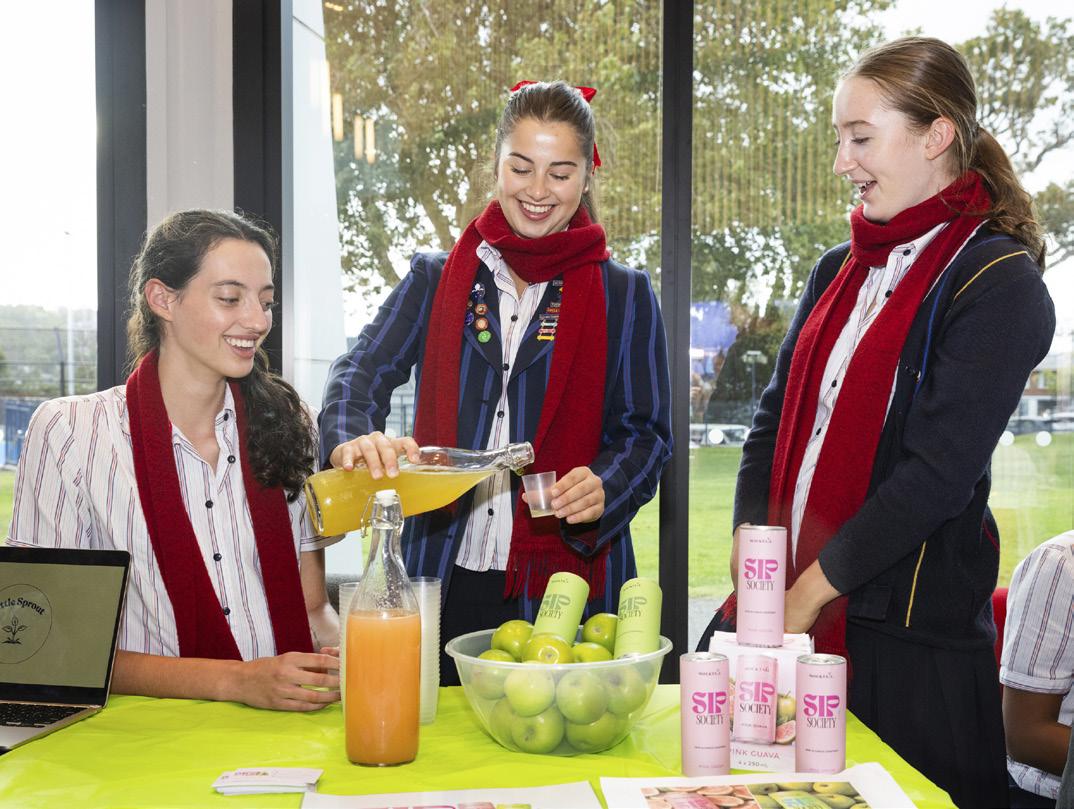
In Year 11, students take part in a one-day enterprise sprint focused on an industry challenge. This is often supported by visits to businesses such as Holiday Records or Fatimas, giving students insight into how organisations operate in practice. The experience links into the New Zealand Secondary Schools’ Business Case Competition, where students apply structured thinking in a competitive environment. By Year 12, learning becomes more applied and industry focused. Students participate in an advanced enterprise sprint centred on entrepreneurship, alongside visits to organisations such as Deloitte and Ecoya. These experiences give students insight into different sectors and help develop problem solving and analytical thinking. Students also prepare for the National Business Case Competition, responding to more complex business scenarios under time pressure.
In Year 13, students can bring their learning together through the Young Enterprise Scheme. Open to all students, including those who do not study business, the programme enables them to develop a product or service, build a business case and pitch their venture publicly. The programme concludes with a showcase evening where students present to peers, staff and industry guests.
This stage is further enriched through a two-day product development workshop involving alumnae including Anna Reeve, co-founder of Pals, Anna Southwell from brand agency Mark by South, and Sarah Walter from BFGS. Working directly with students, they share expertise in product design,
branding and pitching, helping students connect ideas with execution.
Exposure to the wider business world is also part of the programme. Events such as Women in Business connect students with alumnae and industry leaders who share their career journeys and entrepreneurial experiences. For many students, these interactions help them consider future pathways.
Financial capability and investment
Alongside entrepreneurship, the programme also includes a focus on financial capability. Through the Dio Investment Group, a weekly cocurricular club, students explore investing, markets and risk. This extends into Dio Investment Week, delivered in partnership with Craigs Investment Partners, where industry speakers share insight into financial decision-making and career pathways.
“These experiences help students understand finance in practical contexts,” David says. “They are not just learning concepts, they are seeing how decisions are made in practice and developing confidence in their own thinking.”
From experience to future pathways
For students, the impact of the Enterprise Pathway is often described in terms of confidence and opportunity.
Year 12 NCEA student Nina Hayes values the chance to gain experience outside her subjects. “These business sprints give me insight into a pathway I might choose in the future,” she says.
Felicity Morrissey, also in Year 12, takes part despite not studying business formally. “I’ve learnt so much from the

business sprints,” she says. “I want to make the most of opportunities like this because they give me experience I wouldn’t otherwise get.”
For London Leighton, a Year 12 business student, the programme extends classroom learning into practical contexts. “It’s an opportunity to keep evolving and apply what I’ve learnt in a practical way,” she says, These experiences reflect the purpose of the Enterprise Pathway. Success is measured not only through outcomes or competition results, but through growth in confidence, capability and curiosity over time.
In a world shaped by rapid change, the ability to think creatively, solve problems and work collaboratively is valuable. The Enterprise Pathway gives students both the mindset and practical skills to engage with different challenges and opportunities.
It’s this combination of accessibility and practical application that shapes the programme. By positioning entrepreneurship as a co-curricular experience, Dio ensures students from all backgrounds can participate, regardless of subject choice.
As David reflects, the aim is straightforward. “We want students to leave school not just with strong results, but with the confidence to take an idea and do something with it.”


View current student products bought to you via Dio Marketplace
ACADEMIC YEAR in full swing
A rich and varied curriculum is at the heart of what we do. Research consistently shows that students who engage in a wide range of learning experiences develop stronger critical thinking skills, greater creativity, and improved resilience. By offering diverse opportunities, we ensure that every student (regardless of their strengths or interests) has the chance to shine, grow, and discover new talents they may not have known they had. We want our students to leave school not only with strong academic foundations, but also with the confidence, curiosity and adaptability to thrive in whatever path they choose.
When students are given the chance to explore new disciplines and step outside their comfort zone, they develop not only new skills but also greater empathy, collaboration and a growth mindset.
These are the qualities that will prepare them to be confident, capable learners both now and into the future. Providing experiences across the arts, sciences, technology, and physical education allows
and mathematics, as well as the other curriculum areas. This half year, students have also participated in Maths Olympiad, Otago Maths Problem-Solving, Writers Festival, and Lit Ex, to name a few. By
When students are given the chance to explore new disciplines and step outside their comfort zone, they develop not only new skills but also greater empathy, collaboration and a growth mindset.
students to make meaningful connections across their learning and develop the well-rounded capabilities that will serve them throughout their lives.
Our academic programme provides varied and meaningful experiences for all students, no matter their ability level. Students across the school engage in a range of opportunities in English
providing a wide and robust curriculum, we ensure that every student – regardless of where they are in their learning journey – has access to experiences that challenge, inspire and help them grow.
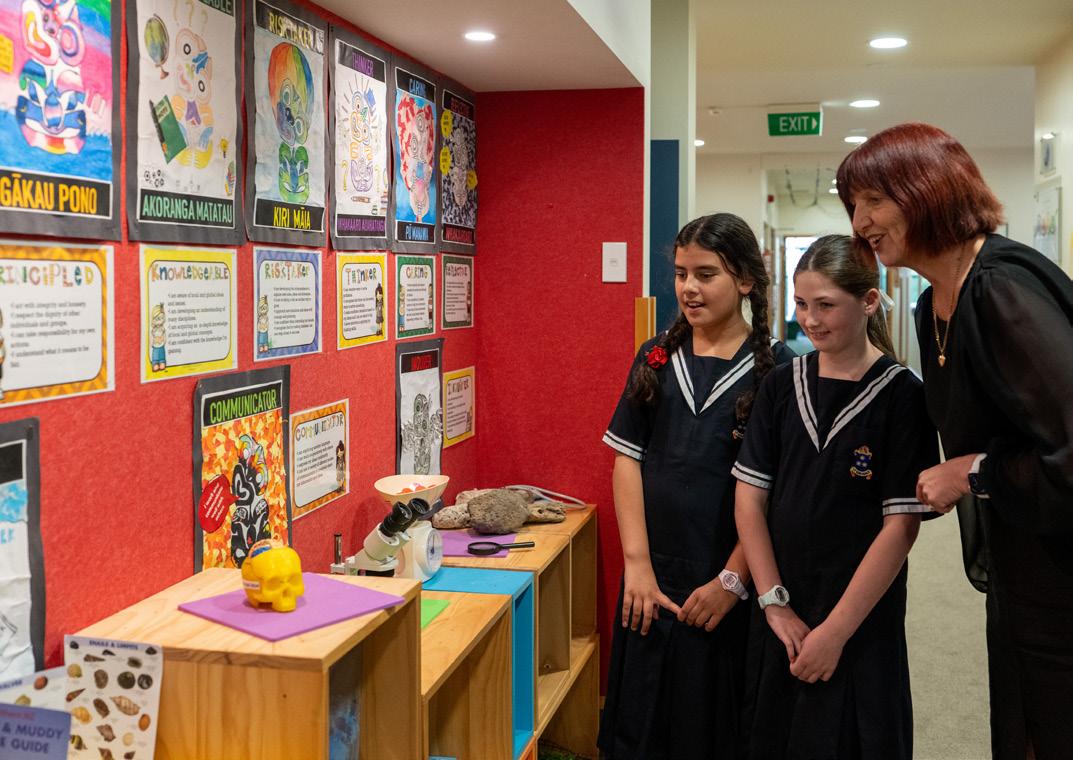
Head of Junior School Mrs Cattell and students exploring the science displays.
WHAT ’ S NEW in the classroom
This year, some new innovations have been added to our curriculum designed to challenge and extend all students.
Music
As part of the classroom music programme, we have additional music that starts from Year 4. In Year 4, all students learn a string instrument from itinerant music teachers in Terms 1 to 3. Most students learn violin, although a few learn double bass. In Year 5, during Terms 3 and 4, students learn a brass or woodwind instrument. A new and exciting addition to the programme this year is a band programme in Year 6 where there is a shift towards more advanced ensemble playing and small-group sectionals.
Physical education

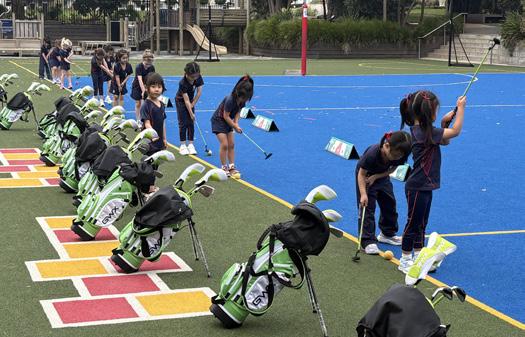
Golf is a new addition to the classroom PE programme and students are loving it! A class set of correctly sized clubs was purchased so each student can practise their shots together. Golf is a low-impact, non-contact sport that promotes handeye coordination, core muscle strength and motor skills. It also promotes balance, flexibility and coordination, which are all important for our young students.
STEM
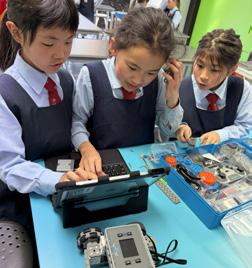
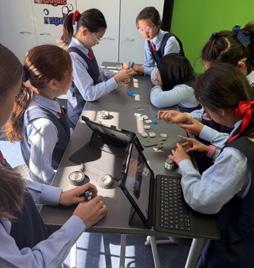
Our STEM (Science, Technology, Engineering and Maths) curriculum has been enhanced with the introduction of VEX Robotics. VEX provides an immersive, hands-on learning experience designed to inspire and excite students from a young age, giving them the opportunity to see how much fun STEM learning can be. Robotics is a powerful way to bring together science, technology, engineering and mathematics in a meaningful and engaging way. As students design, build and code their robots, they strengthen their computational thinking, spatial reasoning and teamwork skills. Importantly, it also helps students see themselves as capable problemsolvers and innovators – building confidence that extends well beyond the classroom. Students have begun putting the robots together and will enter the Robotics Competition later in the year, providing an authentic purpose for their learning and a chance to represent our school.
Sue Cattell Head of Junior School











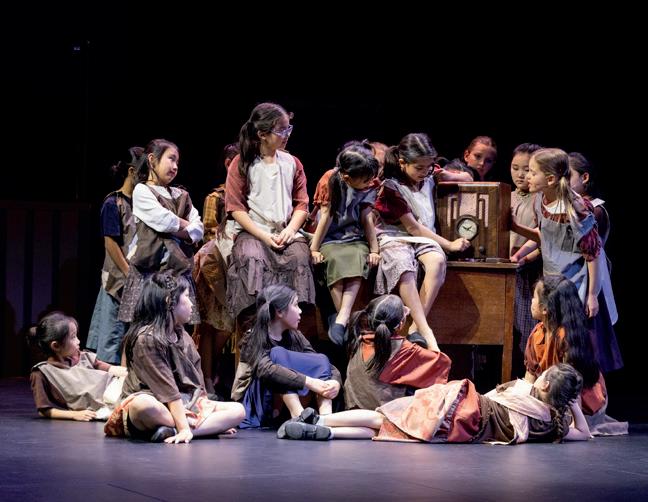
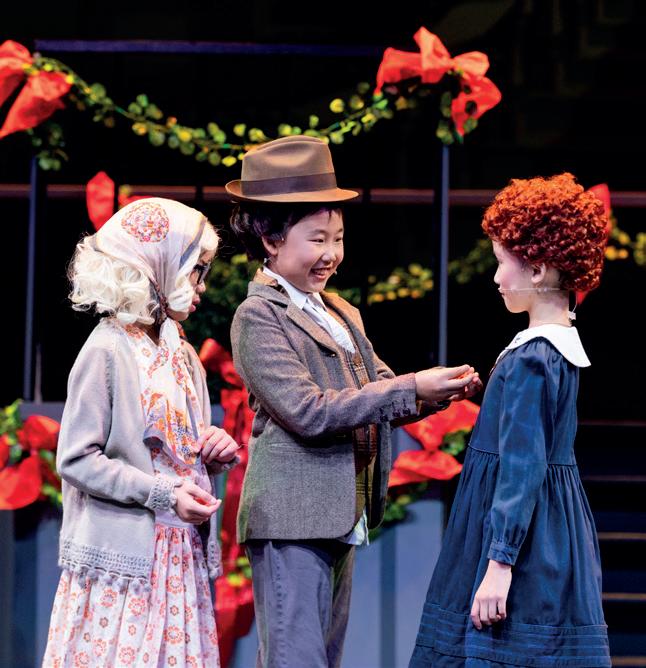
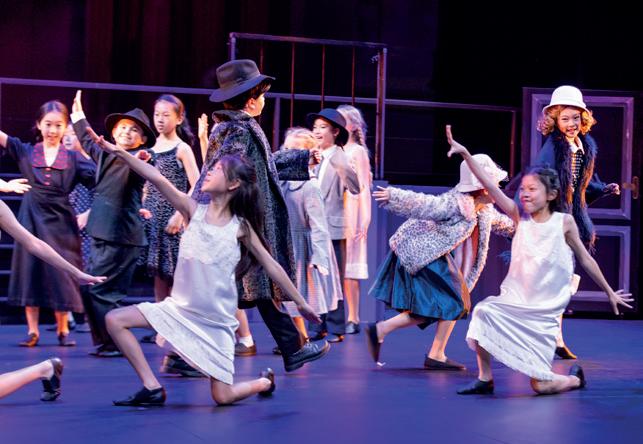
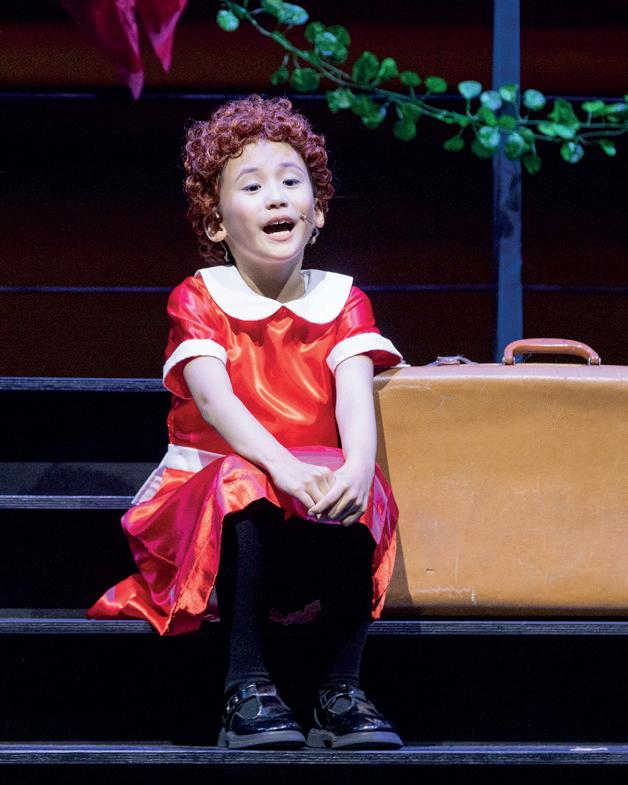
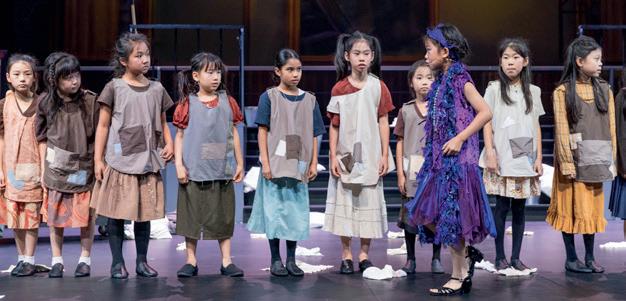
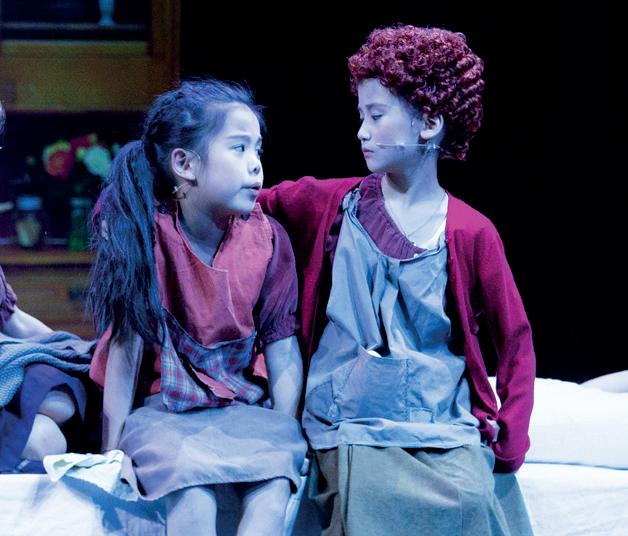
YEAR 5 PRESENTS ANNIE JR.

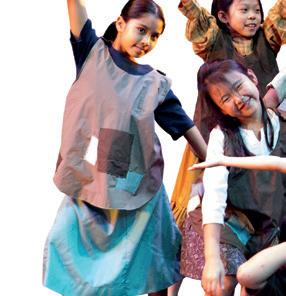
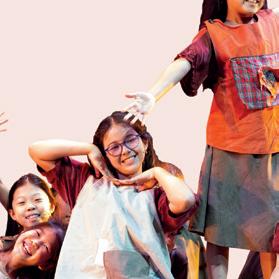
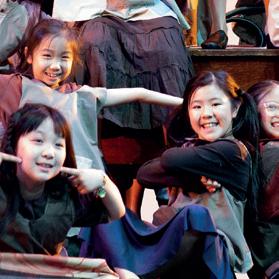
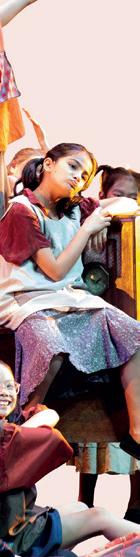
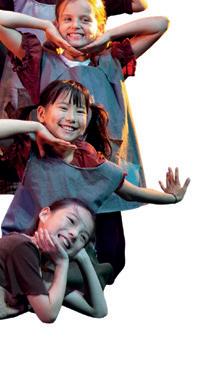
Bringing Annie Jr. to life showed clearly that this experience became far more than a show for our Year 5 students. Beyond learning songs, lines and choreography, they built confidence, developed resilience, and discovered what it means to work together towards a shared goal.
A production of this scale asks much more than talent and enthusiasm from young performers. It calls for persistence, flexibility and the willingness to keep going when things feel demanding. Every student in this production had an important role to play, and it was inspiring to see our girls encourage one another and step up to new challenges. Like the story of Annie itself, this experience reminded them that confidence, courage and optimism can grow through challenge.
Gemma Lee

Junior Music Teacher and Performing Arts Coordinator, Music Director for Annie Jr.

















Expressing OUR WORLD
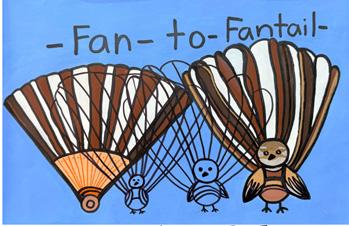
Creativity has been buzzing in the art room as Years 4, 5 and 6 explored identity, conservation and personal character through diverse artistic mediums.
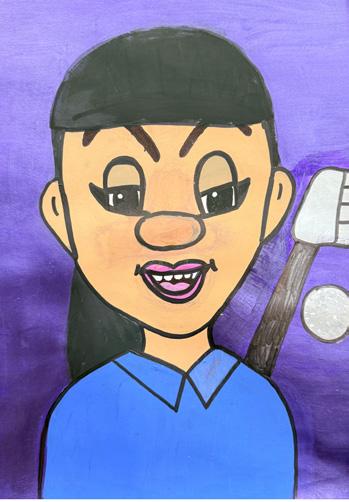
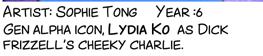
Our Year 6 students took inspiration from iconic New Zealand artist Dick Frizzell. As Generation Alpha, they decided it was time to update traditional Kiwiana. Students selected one of three creative briefs to challenge their cultural perspectives:
• Modern Portraits: Painting Gen Alpha heroes in the famous, bold Cheeky Charlie style.
• New Kiwiana: Inventing brand-new objects, food or toys relevant to their own generation.
• Art for Change: Designing and promoting a New Zealand charity in the footsteps of Frizzell.
Down the hall, Year 5 artists combined fine motor skills with global awareness. Connecting directly to their PYP Sharing the Planet unit of inquiry, they mastered the intricate craft of paper quilling. Each student selected an endangered New Zealand animal from the IUCN Red List. They painted vibrant watercolour habitats, incorporating visual elements to explain why these species are threatened.
Meanwhile, Year 4 students dived into the high-energy, bold world of Keith Haring. They studied his famous dancing figures and thick black outlines. Students then channelled this rhythmic style to depict an IB Learner Profile attribute of their choice. Through bright, kinetic figures, they visually communicated abstract values like being Principled, Caring or an Inquirer.
From redefining modern cultural symbols to advocating for wildlife, our junior artists have shown incredible depth, technical skill and global citizenship this half year.
Kerrie Parker Junior School Art Teacher






Junior SPORTS
The junior sports programme is thriving, with around 500 registrations across 13 codes this year, including gymnastics, basketball, flippa ball, football, hockey, netball, tennis, ski racing, taekwon-do and the Weetbix TRYAthlon. Girls are developing physically and socially, building character and having a great time along the way.
In Term 1 we hosted our Years 3–6 swimming sports, with top champions crowned: Chloe Guo (Year 3), Anna Lin (Year 4), Una Ma (Year 5) and Charlotte Chalanant (Year 6). Our top swimmers then represented Diocesan at the Central Zones Swimming Competition, placing third overall in the Girls’ Championship.
Also in Term 1, our ski racers competed in the first event of the Challenger Cup Ski Racing Series at Snowplanet, with points carrying forward across three events. In the Atlantis Flippa Ball league, it was a strong showing with the Years 3 and 4 Otters and Years 5 and 6 Mermaids both taking gold, and the Year 4 Seahorses earning bronze.
Winter sport is now in full swing with 12 netball teams, 11 hockey teams, 5 flippa ball teams and 3 Jump Jam teams. Early in Term 2, two Years 5 and 6 teams attended the Auckland Netball Pre Season Festival, gaining valuable playing experience. Competitive teams have also developed team charters built around shared values including respect, empathy, resilience, encouragement and commitment.
A wonderful highlight has been the growing connections between junior and senior students. The 2nd XI hockey team led a values session for junior hockey girls, and Years 5 and 6 netball girls supported the premier netball team during a grading game at Auckland Netball.
Our incredible community of around 80 coaches, many umpires and approximately 30 parent team managers all make this array of sports possible. Go team Dio!
Lucinda Batchelor Junior School Sports Manager
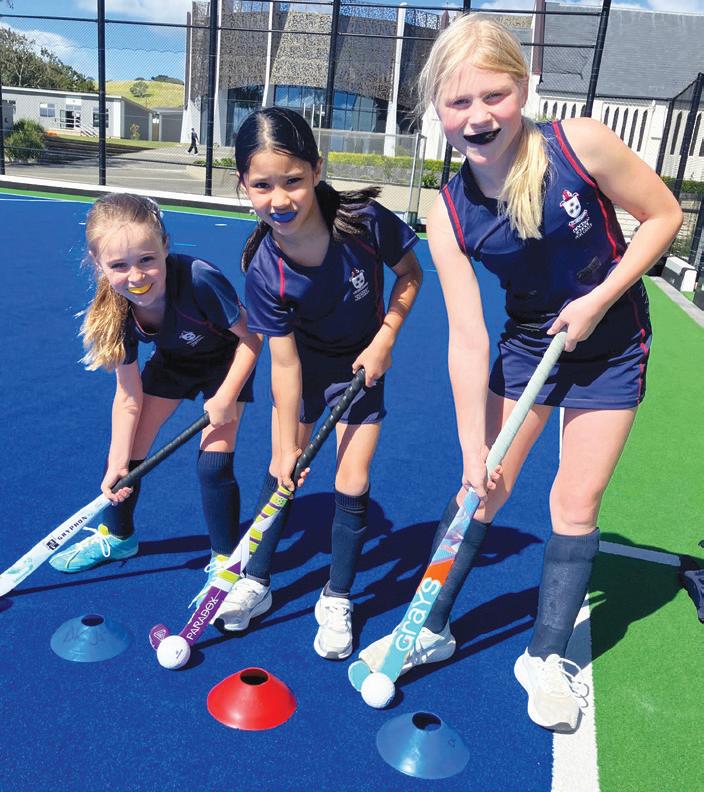

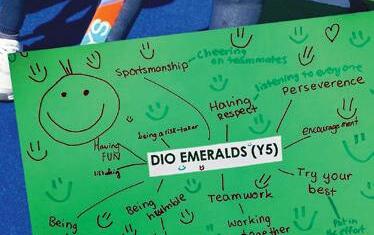
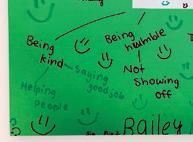


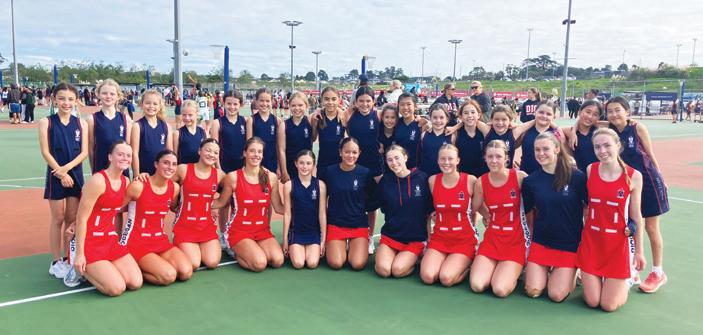

TOP IMAGE: Three Junior School hockey girls. INSET: Dio Emeralds charter. ABOVE: Junior School supporting senior premier girls at their grading game.

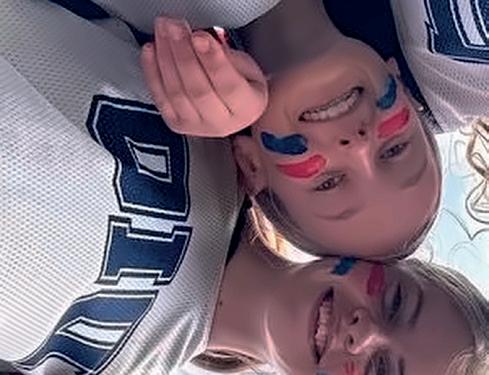
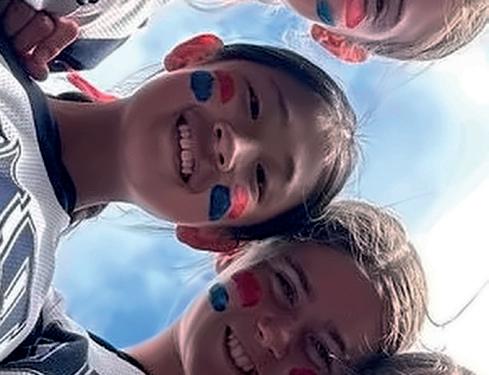
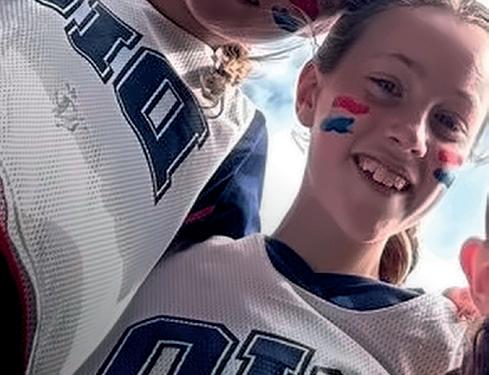
LIVING

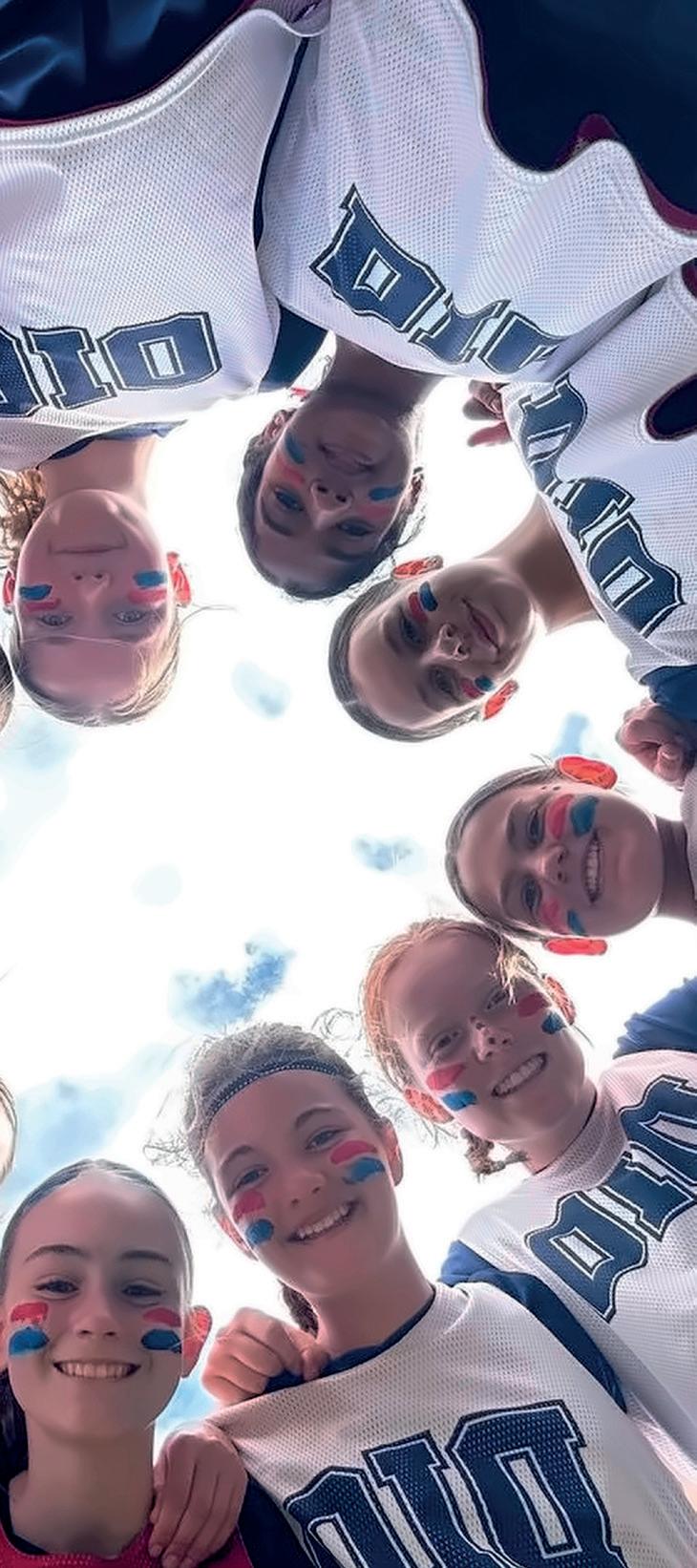
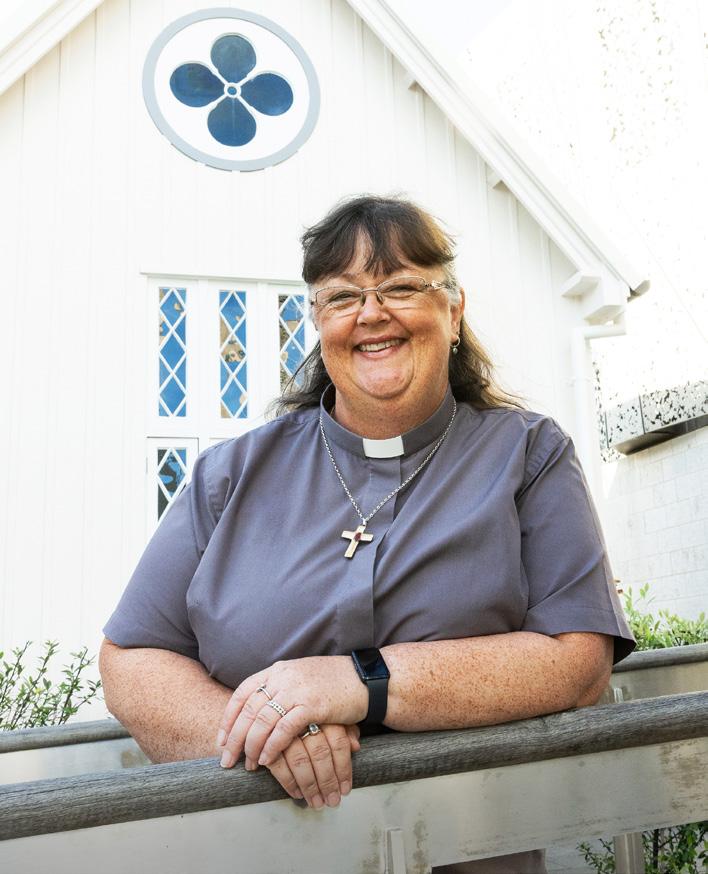
BELONGING not just fitting in
This year, at our first school assembly, Head Prefect Ruby Walker introduced the prefects’ theme for 2026 as ‘Belonging, not just fitting in’.
One of the most insightful distinctions made by researcher and author Brené Brown is the difference between belonging and fitting in. It is a distinction that resonates deeply in schools, where young people are discovering who they are while also trying to navigate friendships, expectations, achievement, identity and change. Yet it is equally relevant for adults, because the tension between belonging and fitting in does not disappear once we leave school. In many ways, it actually becomes more sophisticated.
Brown writes: “Fitting in is assessing a situation and becoming who you need to be in order to be accepted. Belonging, on the other hand, doesn’t require us to change who we are; it requires us to be who we are.” That simple insight speaks volumes. So many of us, regardless of age, know what it feels like to adapt ourselves in order to gain approval. We soften opinions, hide vulnerabilities, downplay passions, or present polished versions of ourselves because we believe that acceptance depends on meeting certain expectations.
For young people, especially girls, the pressure to fit in can be immense. Adolescence has always involved social negotiation, but today’s world adds
new layers of complexity through social media, comparison culture and constant visibility. There can be enormous pressure to look a certain way, achieve at a certain level, participate in the ‘right’ activities, or present a carefully curated image of success and happiness. Even within high-performing and supportive communities, students can quietly feel that belonging is conditional –dependent on achievement, popularity, confidence or perfection.
Adults are not immune to this, and many know the pressure to be what others need and want us to be. We spend years trying to fit into workplaces, communities or social circles where we feel we must continually perform competently, confidently or with composure. We learn how to wear professional masks, and we become skilled at appearing capable and unaffected. Yet, beneath that surface often remains the same human longing that exists in adolescence: the desire to be accepted not for what we achieve or project, but for who we truly are.
True belonging is different because it is rooted in authenticity rather than performance. It grows when people feel safe enough to be honest, imperfect and real. Brown reminds us that “True belonging doesn’t require you to change who you are; it requires you to be who you are.” That sounds simple but it demands remarkable courage. Authenticity always involves vulnerability because it means allowing ourselves to be seen without complete control over how others react or respond.
Schools play a profoundly important role in shaping this sense of belonging. A school community cannot eliminate insecurity or comparison entirely – these are part of being human – but schools can create cultures where students understand that their value is not dependent solely on performance. At Diocesan, we have a strong focus on the belief that every person is made in the image of God, and has been given their own unique set of gifts that enhance our community. Belonging is fostered when young people know they are respected not only for what they produce, but for who they are.
Importantly, belonging is not the same as homogeneity or uniformity. Genuine belonging must allow space for
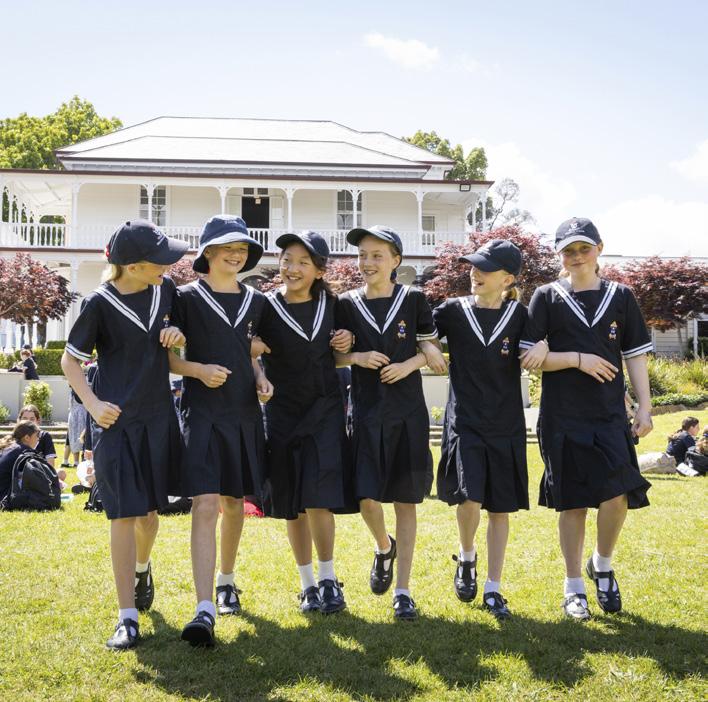
diversity of thought, personality, culture and experience. A healthy community does not ask people to erase parts of themselves in order to participate. Rather, it creates conditions where individuality is respected and where people can contribute authentically. This matters deeply in education because schools are not only places of academic formation; they are places where young people develop identity, confidence and character. Belonging emerges in communities where curiosity is welcomed, diversity is celebrated, and where compassion matters as much as achievement.
One of the challenges with ‘fitting in’ is that it can look successful from the outside. A student may appear socially connected while privately feeling anxious about maintaining an image. An adult may appear accomplished while quietly fearing they will disappoint others if they stop performing at an unsustainable level. Fitting in often depends upon external validation and because of that, it can be exhausting! Belonging, however, creates a steadier sense of worth because it is not built on constant performance.
Belonging is fostered when young people know they are respected not only for what they produce, but for who they are.
This distinction also invites us to reconsider the messages we communicate to young people. Achievement, excellence and ambition are valuable, and we rightly celebrate those things at school. Yet, alongside those aspirations must remain the deeper assurance that a person’s worth is never reduced to grades, leadership positions, sporting success or social confidence. Young people flourish most fully when they know they are valued for who they are and feel that they belong.
Perhaps this is why belonging is so closely connected to wellbeing. Human beings are wired for connection. Research consistently shows that strong relationships and authentic community are among the greatest protective factors
for mental and emotional health, while true belonging is vital for spiritual health. Conversely, the persistent feeling that one must continually prove oneself can contribute to anxiety, loneliness and burnout. This is true for adults as much as for adolescents.
There is also an important courage required in allowing others to belong. Communities become healthier when people resist the temptation to judge quickly or demand conformity. Belonging grows through small but significant acts: listening openly, welcoming difference, showing kindness without agenda, noticing the person who feels invisible, and creating spaces where people can speak honestly without fear of ridicule. These practices sound simple, but collectively they shape the culture of a school and the experience of everyone within it.
Brown writes, “Because true belonging only happens when we present our authentic, imperfect selves to the world, our sense of belonging can never be greater than our level of selfacceptance.” That insight is perhaps one of the most challenging of all. Belonging begins not only with external acceptance, but also with the willingness to accept ourselves. For young people growing into adulthood, and for adults still navigating life’s complexities, that remains a lifelong work.
In a world that often rewards image, certainty and performance, the choice to foster belonging is both countercultural and deeply important. It asks us to value authenticity over perfection and connection over comparison. It reminds us that education is not only about preparing students for success, but about helping them become grounded, compassionate and secure in who they are.
Perhaps that is the real invitation behind this year’s prefect theme. Not simply encouraging students to ‘be themselves’ in a superficial sense, but cultivating a community where people genuinely feel they do not need to become someone else in order to matter. In schools, in families and in wider society, that kind of belonging has the power to transform not only individuals, but entire communities.
Rev’d
Sandy Robertson Chaplain
COMMUNITY engagement
At Dio, we believe that community engagement is about creating a welcoming environment where the entire school community – past, present and future – feels a genuine sense of connection. It is where traditions are shared, relationships are strengthened, and the things that make Dio more than just a school are carried forward with purpose and pride.
A strong, connected community is not a by-product of school life; it is a fundamental part of it and something that requires consideration, respect
and nurturing. For independent schools in particular, where families actively choose to be part of a school, that sense of belonging and community matters even more. It sits alongside academic, cultural and sporting excellence as a defining part of the experience. For some, the connection and network that the school community can provide is of considerable importance.
Connection and a strong community network do not just happen by accident; they are built through events, gatherings and shared experiences that contribute
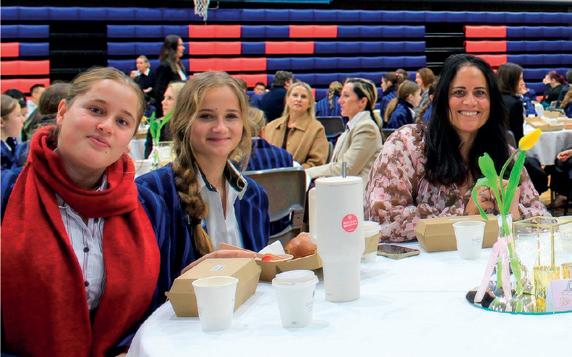
to the larger sense of community. These are the intentional moments where connections are formed, where people feel seen and included, and where a sense of belonging can grow and endure.
These moments matter. They shape a community where its people and their experiences are valued and part of something lasting. In turn, this builds strong foundations for the future wellbeing of the school, ensuring that generations to come are not only drawn to Dio, but choose to stay connected to it long after their time on campus has passed.
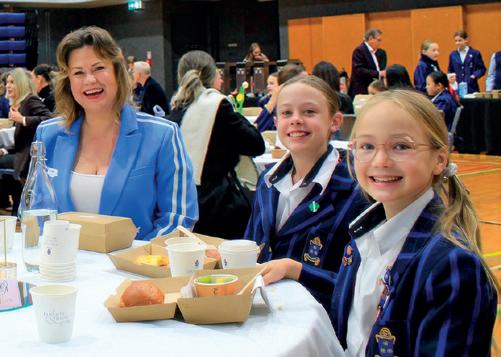
Breakfast of CHAMPIONS 2026
The Diocesan Parents and Friends were delighted to host the 2026 Breakfast of Champions in early June. This year, we were privileged to welcome renowned footwear designer Kathryn Wilson as our guest speaker.
Kathryn shared her inspiring journey, from a passion for design through to building a successful brand with a loyal following, with some memorable celebrity endorsements along the way. Her authenticity, energy and enthusiasm made a lasting impression
on everyone in attendance, reminding us how fortunate we are to have such exceptional people connected to the wider Diocesan community.
The event also provided a special opportunity for students to enjoy breakfast with a ‘champion’ in their own lives. This refreshed format reflects our commitment to ensuring every girl can share this experience with a significant person whether that be a parent, caregiver, or another important adult.
It was wonderful to see so many smiling faces, lively conversations, and meaningful connections across the room. We were thrilled that so many members of our community could join us for this memorable morning.
We look forward to hosting further events in the future and warmly encourage the community to join us.
Guest speaker Kathryn Wilson (in blue) enjoying breakfast with Champions’ Breakfast guests.
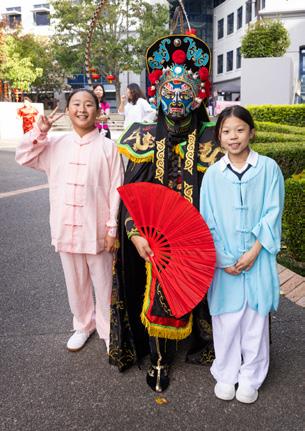
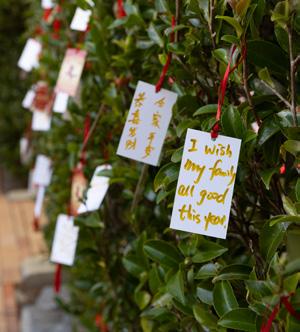
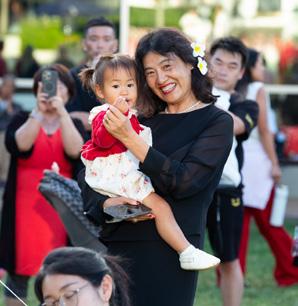
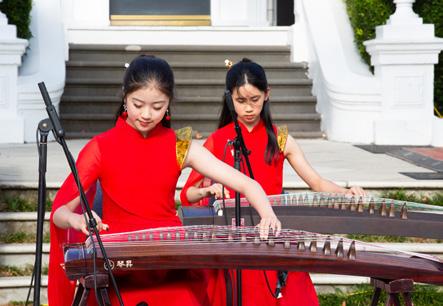
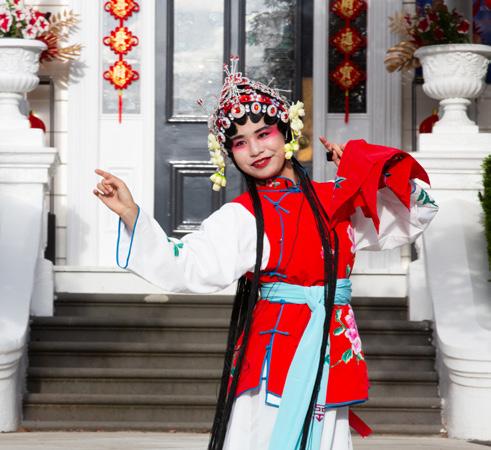
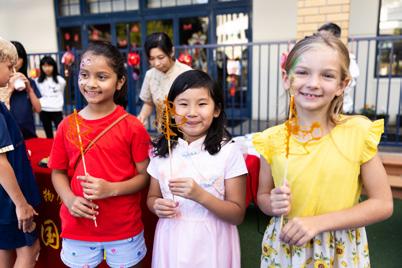
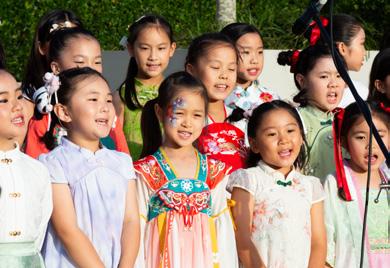
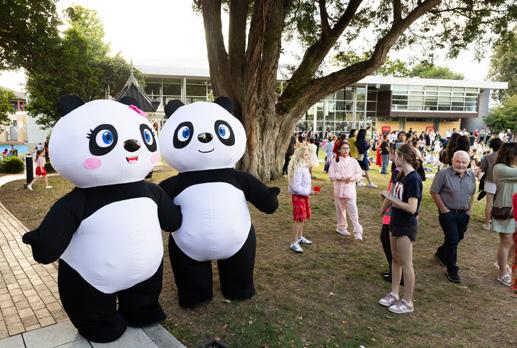
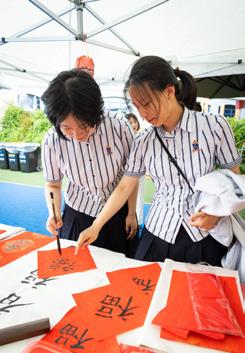
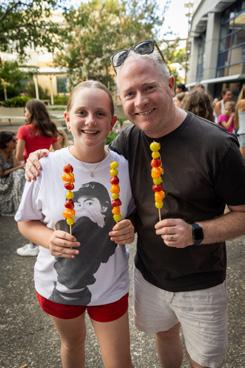
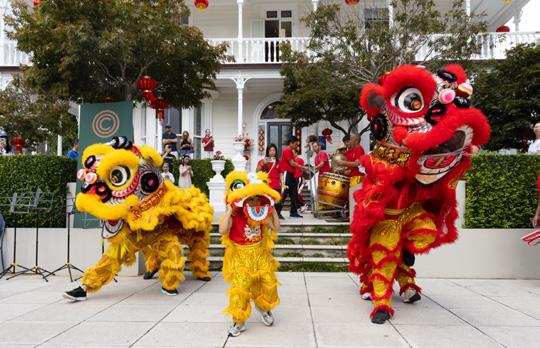
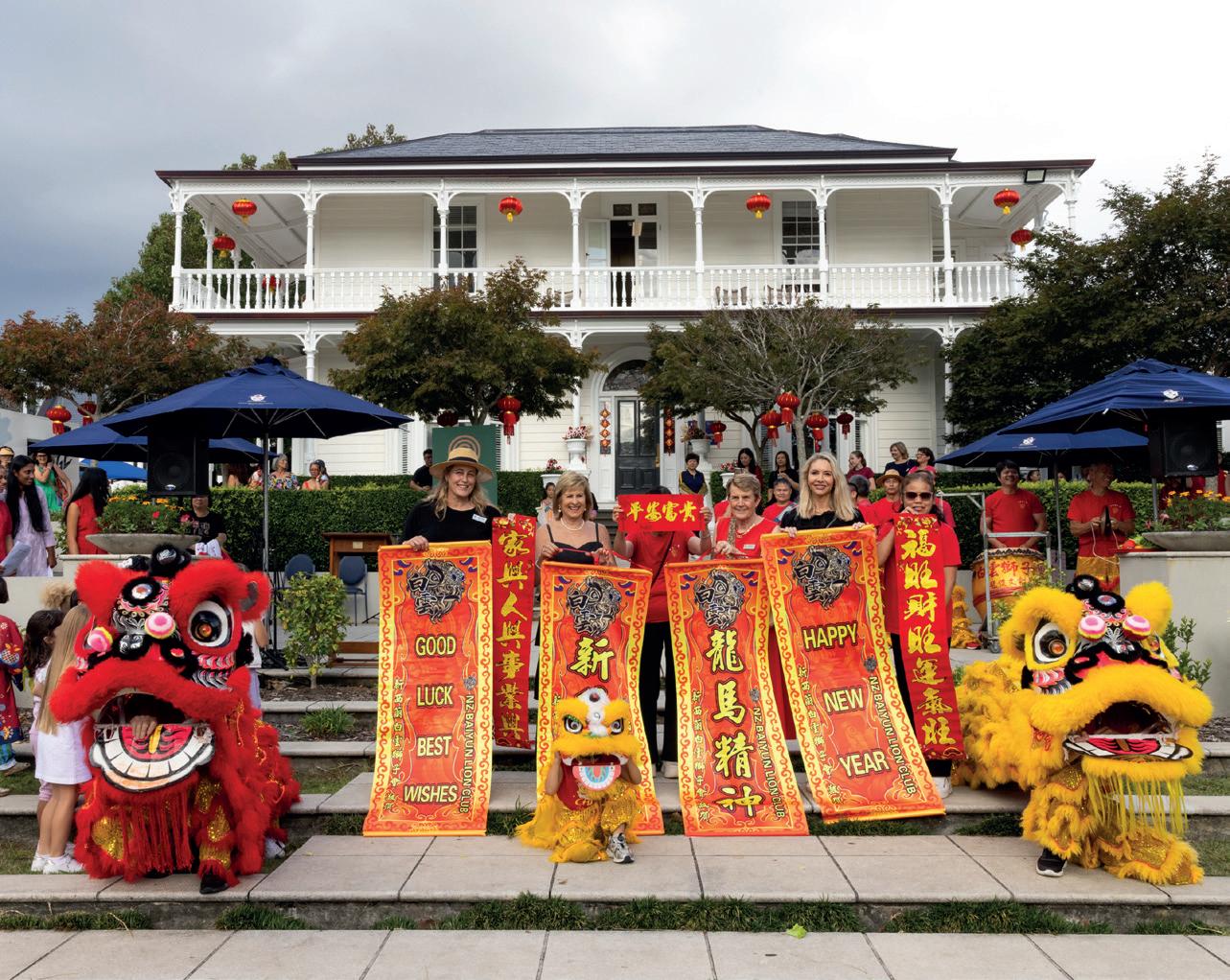
LUNAR NEW YEAR Festival
Lunar New Year marks the beginning of the year on the lunar calendar. With roots deeply grounded in Chinese culture and history, the Lunar New Year Festival is now celebrated across many cultures throughout Asia and around the world. It is a time for renewal, gratitude, family and hope for the year ahead.
The campus came alive with lanterns, music, food and activity, creating a welcoming and festive atmosphere for all who attended. A central highlight of the afternoon were the performances on the Lunar Lawn stage. Opening with a traditional Lion Dance, the programme continued with an array of student music, dance and song. These performances
showcased the talent and cultural pride of our students, bringing wonderful energy to the event. It was a day that reflected the diversity and strong sense of belonging within the Dio community.
A sincere thank-you to our cornerstone sponsors, Craigs IP, Bayleys and Winger Motors, our Parent Advisory Committee, and to the many community members and businesses who contributed their time, talent and generosity to make the festival such a success.
Strong communities are built with care, intention and open hearts. Our Lunar New Year Festival was a beautiful reminder of that. Thanks to everyone who played a part.
PARENT ADVISORY COMMITTEE
Harsha Reynolds
Ella Wang
Roger Liu
Margarite Ma
Shirley Sun
Dawn Fail
Kaitlyn Jiang
Jia Luo
Hannah Hong
Audrey Kim
Jasmine Yang
Ronnie Kang
Cici Guo
Amy Yan
SAVE THE DATE!
Join us on Saturday 13 February 2027 to celebrate the next Lunar New Year!
Sharing school life on GRANDPARENTS’ DAY
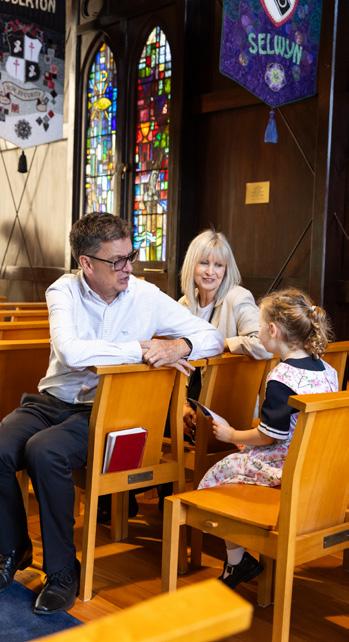
On the morning of 24 March, we were delighted to welcome the grandparents of our Foundation and Junior School students to the campus to connect with their grandchildren in their school environment and to enjoy a relaxed morning tea. It was a memorable occasion, celebrating the unique role grandparents play in our school community.
On arrival, guests were welcomed into the Performing Arts Centre where they were treated to a selection of morning tea treats as well as a musical performance from two of our talented Junior School students. The gathering provided a lovely opportunity to connect and share stories.
The formal address to guests highlighted the important role grandparents play in the lives of their
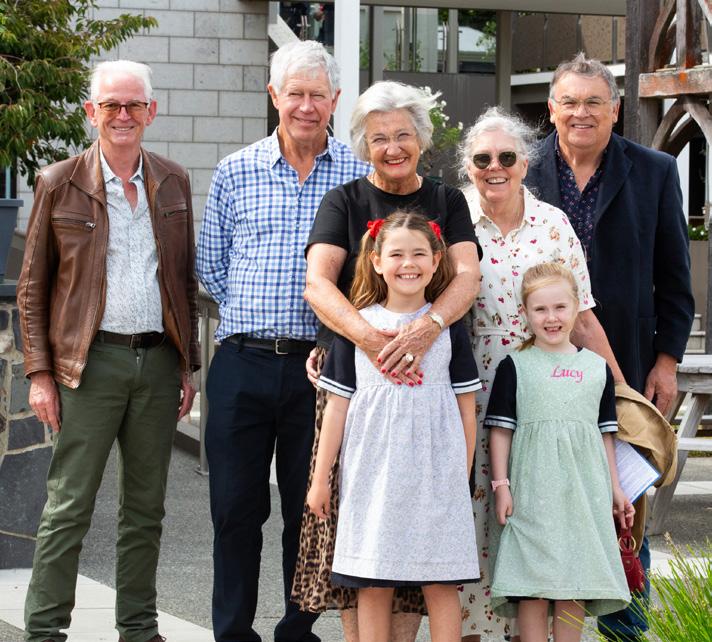
grandchildren, offering support, wisdom, a safe space and a strong sense of continuity across generations.
Following morning tea, grandparents made their way to the Junior School where the real magic happened. Classrooms came alive as students proudly shared their learning, introduced their friends and teachers, and in many cases took their grandparents on tours of our heritage buildings. It was a genuine joy to see these connections in action, with plenty of smiles, laughter, and a few proud moments along the way.
Most importantly, the morning gave students the chance to showcase their learning environment with pride, sharing a meaningful part of their everyday school life with people who play an incredibly special role in their lives.
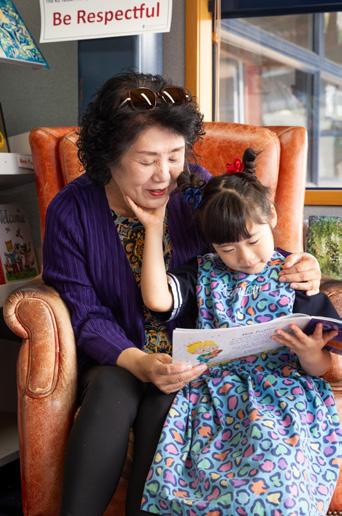
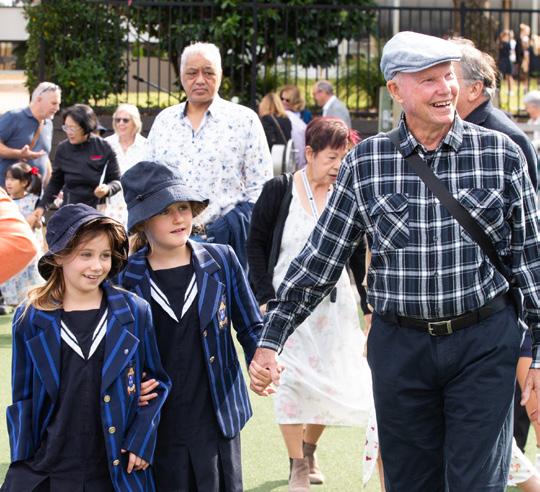
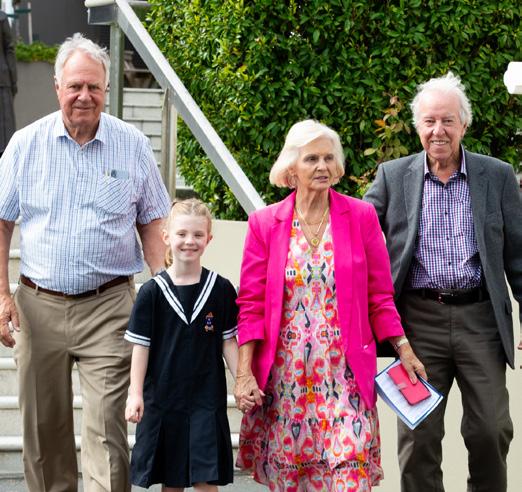
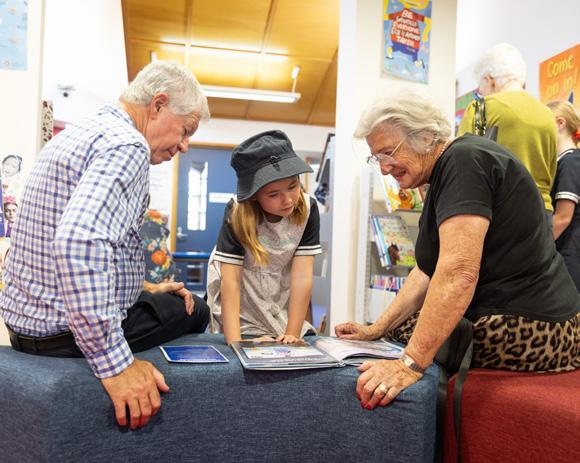
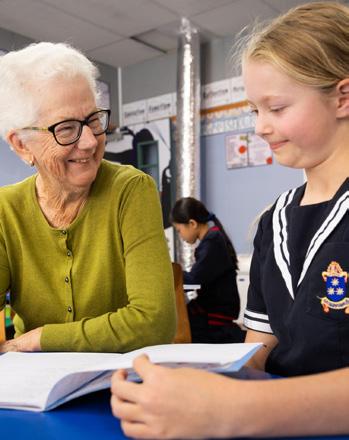
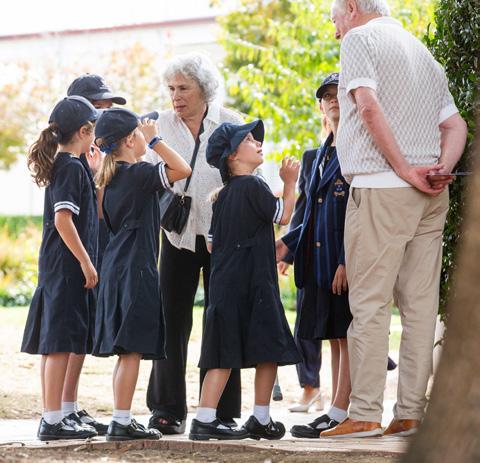
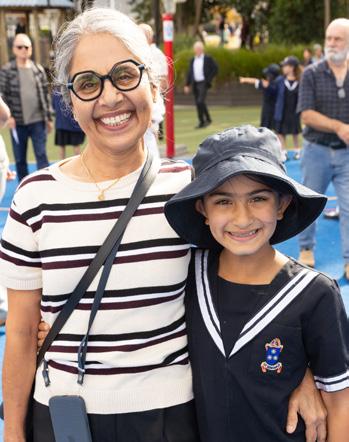
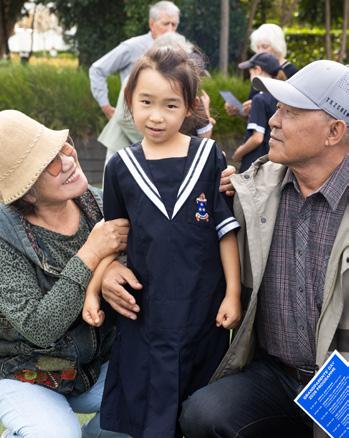
Te Korowai: He Kākahu Manaaki A CLOAK OF CARE
How Diocesan School for Girls is weaving a distinctive model of pastoral care, strand by strand, around every student.
At Diocesan, we have always believed that a student who feels known, safe and supported will flourish – in the classroom, on the stage, on the field and in life. Our pastoral care has long been a strength of the school. Now, we are giving it a name and a framework that honours both its depth and its growth: Te Korowai.
The metaphor
A korowai, a handcrafted feathered cloak, is one of the most treasured taonga in Te Ao Māori. It is woven strand by strand, each feather placed with deliberate care. Worn at occasions of significance, it wraps around its wearer as a mark of mana, belonging, protection and collective investment. The whole is greater than its parts.
This is the metaphor at the heart of our pastoral care system. Each strand of support we offer is woven into the korowai. Together, they enfold every student in our community. No single strand makes the korowai; all are needed. And as new strands are added, the korowai grows richer.
How
It
works in practice
At the centre of Te Korowai sits our collaborative approach – the patterned base on which every strand is woven. This is a systematic process of planning, implementation, monitoring and review. Every cycle, key stakeholders from across the school gather around the table: deans, counsellors, the chaplain, senior leadership, and others as required. Together, they share information and coordinate continual improvement in our practices.
To be effective, this is not a reactive system that waits for crisis but is proactive, collaborative and ongoing. It ensures no student slips through the gaps and that the school's response is timely, consistent and well-communicated. Information is available to all who need it; case management is activated where it is needed.
The strands of the korowai
Twelve strands are woven into Te Korowai – eight wellestablished, and four new additions that reflect our growing commitment to holistic, culturally responsive care.
Deans and tutors provide year-level pastoral leadership and are the first, most consistent point of contact for students
and whānau. At Dio, the tutor teacher and dean both follow their group from Year 7 through to Year 13, building deep and trusted relationships over time.
Counsellors offer confidential wellbeing support, recognising that emotional health, mental health and academic learning are inseparable. When specialist support is needed, referral pathways to external agencies are seamlessly facilitated.
The Health Centre provides physical health care and first aid through registered nurses across the school day, with onsite physiotherapy also available.
Chaplaincy, grounded in our Anglican identity, offers spiritual care and a pastoral presence across the whole community – it nurtures faith, personal identity and moral courage.
Waiora – Learning Support provides specialist pathways for neurodiverse learners, students needing support in recovery, gifted extension programmes, and anyone seeking strategies to strengthen their learning.
Boarding (Innes House) extends the korowai into a ‘home away from home’, with structured routines, caring supervision and the deep friendships that come from community living.
International support provides pastoral care, language assistance and cultural adjustment support, helping international students navigate a new educational environment while enriching our community with global perspectives.
Senior Leadership (SLT) provides systemic oversight, with each member holding responsibility for a year level – ensuring pastoral decision-making is informed, consistent and responsive.
Building belonging: transition support
Years 7 and 9 are key transition years, and we know that a sense of belonging does not happen by accident – it must be intentionally nurtured. Te Korowai wraps around new students from the very beginning.
All Year 7 students are supported by Year 12 House Circle Leaders who convene regular gatherings within their house, creating space for Junior High School students to connect, discuss how they are settling in, and build friendships across year levels. Year 9 students are supported by Unity Leaders throughout the year, while every new student is assigned a buddy from their house and academic class – a peer who guides them through those crucial first weeks. A dedicated staff member also checks in with new Year 9 students in
particular, and other year levels as needed, as the year progresses, ensuring that every student feels they belong.
This deliberate weaving of connection – older students caring for younger, peers walking alongside peers, staff holding the threads – is Te Korowai in action.
Vā Moana, in its third year now, provides culturally responsive pastoral care for our Pasifika students and their āiga. Coordinated by Gabby Oloapu, it honours the relational space – the vā – that connects people and communities, supporting students in wellbeing, academic success and cultural participation.
New strands for 2026
As our community grows, so too must our korowai.
LEAP (Leading Emerging Athlete Program) is a new wraparound programme supporting individual athletes, multisport athletes and team-sport athletes. LEAP recognises that high performance is built on more than training. It provides strength and conditioning, load management, mentoring and wellbeing support, helping girls thrive as confident, balanced young women in sport, school and life.
A korowai, a handcrafted feathered cloak, is one of the most treasured taonga in Te Ao Māori. It is woven strand by strand, each feather placed with deliberate care. Worn at occasions of significance, it wraps around its wearer as a mark of mana, belonging, protection and collective investment. The whole is greater than its parts.
Te Korowai – Grounded in Ko Tātou
The weft thread running through the entire korowai is Ko Tātou – Our Community, our relational culture and shared values. Grounded in Christianity, biculturalism and positive psychology, Ko Tātou calls us to be genuine, respectful, courageous and self-compassionate, and to act with empathy and integrity. It provides the foundation upon which every strand of pastoral care is woven. As a whole community, we live out Ko Tātou every day, and this means that all staff offer pastoral support to all students, all the time.
Why it matters
In a world of increasing complexity, a school’s pastoral care must be more than good intentions. It must be systematic, collaborative, culturally responsive and grounded in shared values. Te Korowai is all of these things.
It is a framework designed to grow, strand by strand, as our community evolves. It ensures that every student at Diocesan is enfolded in a cloak of care: known by name, supported by a team, and empowered to flourish as her truest self.
He kākahu manaaki. A cloak of care. This is Te Korowai.

SWIMMING Sports
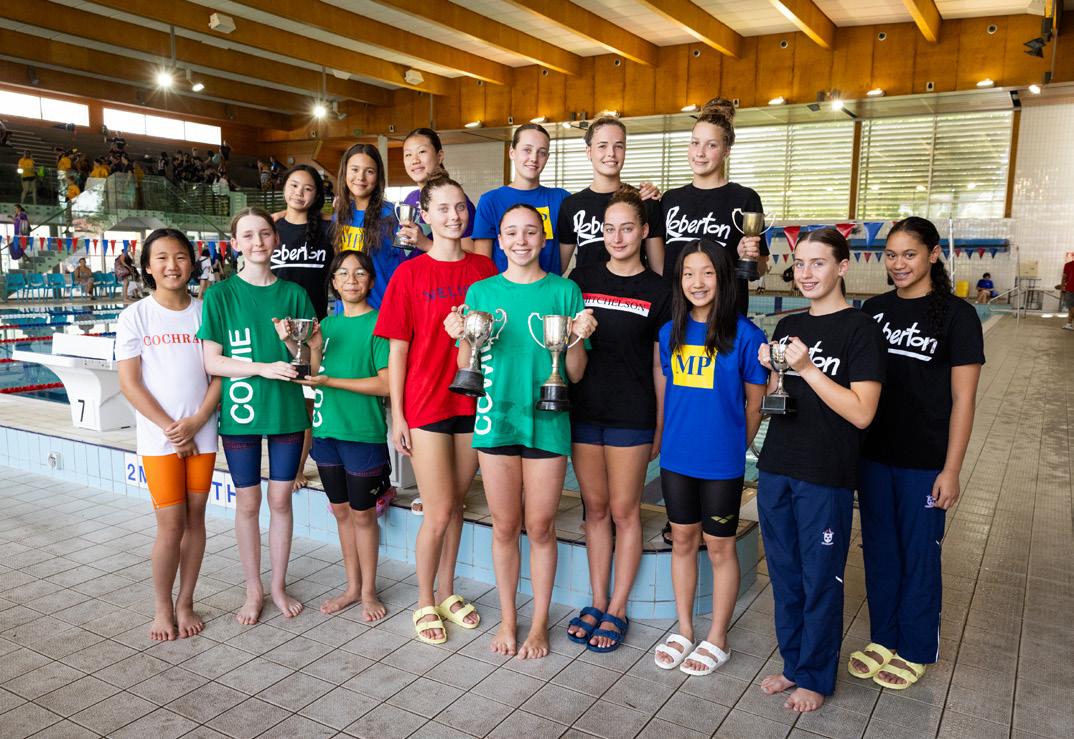
The 2026 Swimming Sports took place on Monday 9 February at the Diocesan Aquatic Centre. The day featured 45 events across our eight houses, with swimmers competing for championship points throughout the programme.
The Year 7 competition was closely contested, with Edeline Barnes (7CW) and Elle Yap (7CW) sharing first place, while Amy Chen (7CO) placed third. In Year 8, Annabel Croft secured first place, followed by Helena Fu and Sophia Sutton.
The Junior category saw strong performances from Anna Li (9RO), who placed third, and Ella van Schaik (9MP), who placed second. Catherine Li (9SE) won the division, claiming victories in the 100m freestyle, 100m individual medley and 50m breaststroke.
Catherine also broke the Junior 50m breaststroke record, previously held by Alice Waldow (2015).
In the Intermediate division, Olivia Oram (10MP) placed third and Indie Coe (11RO) second, while Henrietta YarrellStevenson (11RO) was first, winning the 100m freestyle, 100m individual medley, 50m backstroke and 50m butterfly.
The Senior division featured outstanding performances from code captain Frankie Dodunski (13CW), who won both the Senior Championship and Champion of Champions Cups. Amelie Schnauer (13MI) and Olivia Patterson (13NE) placed second and third respectively.
The Manu competition returned for its third year, with Selwyn winning overall. Honor Taylor (10SE) and Sina Maria Su’a (10CW) produced the top manus of the day.
There were fun relays throughout the event, which highlighted house spirit and allowed everyone to participate. Well done to all everyone for a day of energy, skill and enthusiasm.
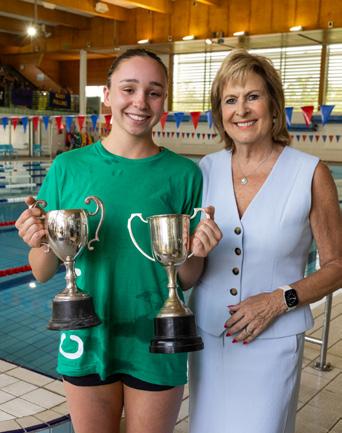
TOP OF PAGE: 2026 Swimming champions. ABOVE: 2026 Champion Frankie Dodunski and Heather McRae.
ATHLETICS Day
The 2026 Athletics Day took place on Tuesday 17 February at Mt Smart Stadium.
The day was filled with energy, and was led by the house leaders supporting the students across both the competitive and non-competitive track and field events.
House points were a priority for the day, with the three-legged races, and egg-and-spoon races added to the noncompetitive fun events. These joined our 11 competitive events where some of our top athletes came out to impress.
Categories were hotly contested and top performers included:
Year 7
1st Anna Qin (7ED)
2nd Lilian Thomas (7CO)
3rd= Savannah Hogg (7MI) and Nicola Greville (7NE)
Year 8
1st Mackenzie Lim (8CW)
2nd Madison Kay (8ED)
3rd Olive Heatley (8MI)
Junior division
1st Sally Youngman (9SE)
2nd Stella Leach (9ED)
3rd equal Phoebe Ulmer (9MI) and Olivia Harte (9MP)
Intermediate division
1st Eden Bretell (10ED)
2nd Anna Yuan (11MI)
3rd equal Abi Bethell (10ED) and Holly Fergusson (12RO)
Senior division
1st Hannah McManus (13MI)
2nd Tessa Lepionka (12MI)
3rd Sophie Pearce (13CW)
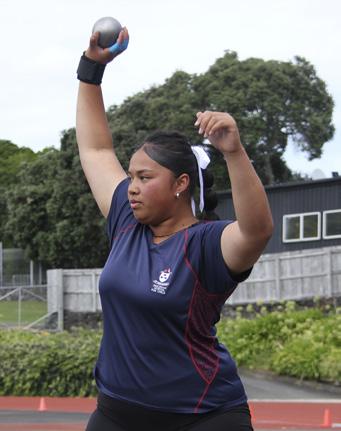
Several records were broken throughout the day. Sina-Maria Su’a (10CW) continued her field domination, setting new Intermediate shot put (15.91m) and discus records (48.3m), while Hannah McManus capped off her final year at Dio (13MI) by breaking the Senior 800m, shot put and discus records. Athletics code captain Emily Cowan (13SE) also impressed, breaking the 200m record in 25.69 seconds.
The day concluded with a highlight – the prefects vs staff relay, with the teachers once again claiming victory and bragging rights for the year.
Congratulations to all participants for an outstanding day of energy, enthusiasm and skill.
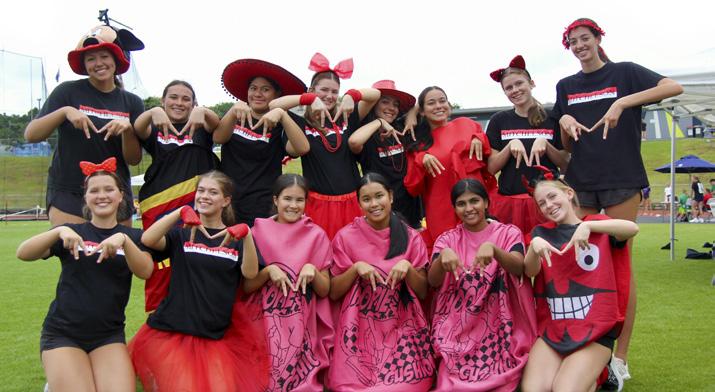
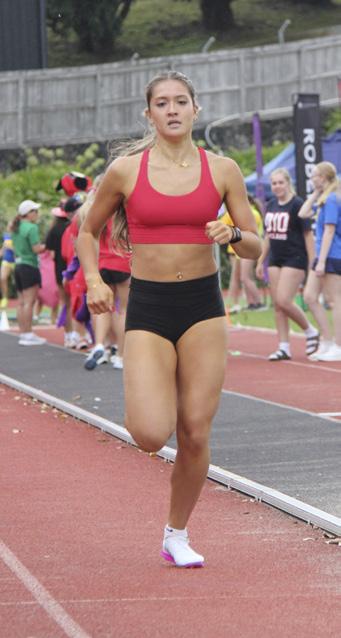
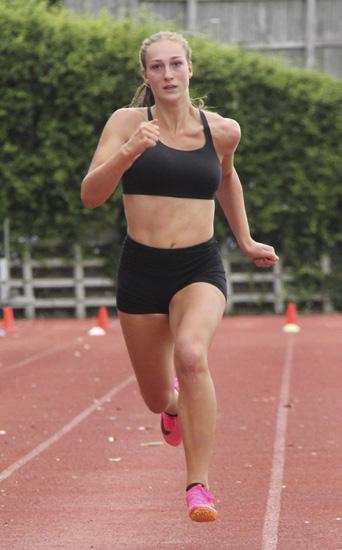
TOP LEFT: Sina-Maria Su'a. TOP: Hannah McManus. ABOVE: Emily Cowan. LEFT: Winning house - Mitchelson.
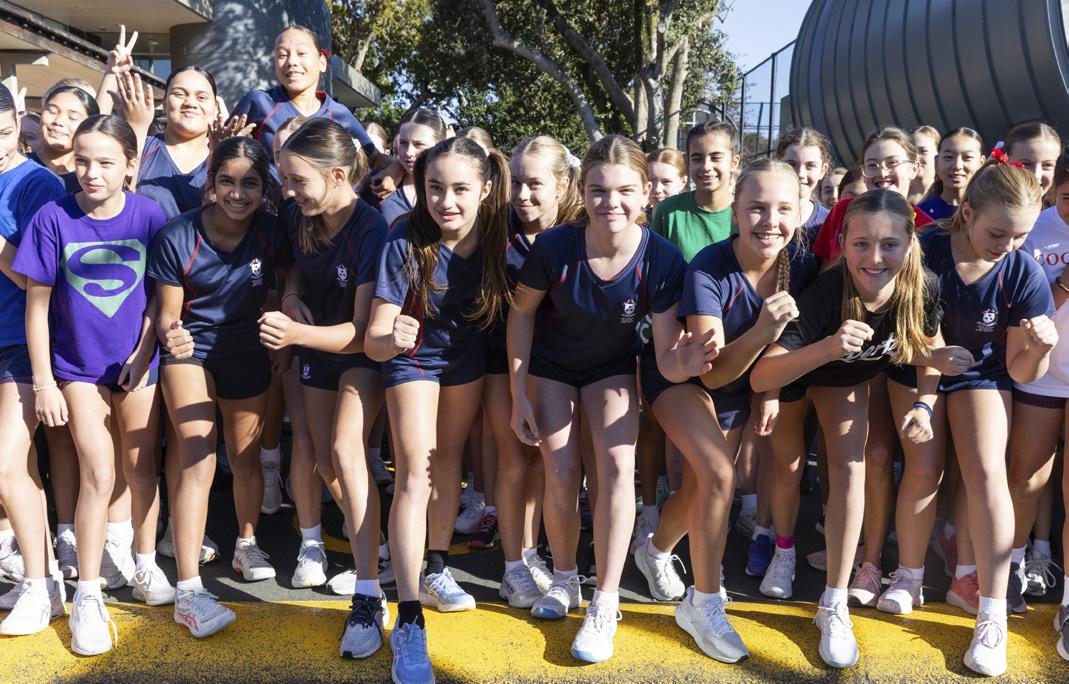
CROSS Country
The weather certainly made its mark early in May at the 2026 Senior School Cross Country.
With students from Year 7 through to Year 13 all taking part, the day was full of laughter, enthusiastic support, and some very impressive times. Whether running with peers to earn house points or competing in the competitive event, it was fantastic to see everyone getting involved and enjoying the day. Congratulations to all those who took part!
1 Start of the Cross Country. 2 Year 7: 1st – Savannah Hogg, 2nd – Ellie Atkinson, 3rd –Makayla Richardson. 3 Year 8: 1st – Charlotte Schofield, 2nd – Ella Ng-Wong, 3rd – Georgia Currey. 4 Junior: 1st – Stella Leach, 2nd – Olivia Sanders, 3rd – Emily Talacek. 5 Intermediate: 1st – Maggie Croft, 2nd – Abi Bethell, 3rd – Lucy Bell. 6 Senior: 1st – Indie Williams, 2nd – Hannah McManus, 3rd – Tessa Lepionka.

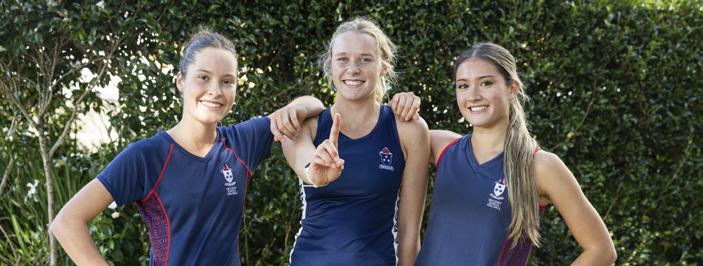
Following your PASSION

Bowie Wang’s journey on the fencing piste.

Dio student Bowie Wang (Year 12) has taken an unexpected path to success, representing New Zealand on the world stage in fencing. As a child she wasn’t very athletic, but her mum encouraged her to try different sports to develop a healthier lifestyle. Fencing seemed safe because of all the protective layers and equipment, though it quickly proved more
on the world stage in fencing. As a child she wasn’t very challenging than expected.
What drew Bowie to fencing was its mix of mental and physical challenge. The sport requires strategy, fast thinking and precision, and from the first time she held a foil, she loved the combination of fun and challenge that made every bout feel like solving a moving puzzle.

By age 12, Bowie’s passion had become serious and winning the Fencing North U-15 Women’s Foil Championship showed her potential. She recalls that result motivated her to keep pushing herself, but over time she grew to love fencing not just for winning, but for how it feels to be on the piste, confident, focused and fully engaged.

For Bowie, fencing is about constant growth. Every training session gives her a chance to improve physically and mentally, refine technique, react faster, and understand the game on a deeper level. It is the place where she truly feels she belongs, and that feeling inspires her to keep pushing her limits.

Her hard work has already led to remarkable achievements. At just 15, Bowie won the 2025 President’s Cup Senior Championship. In 2026, she reached the Top 16 at the Asian Cadet Championships, with a decisive 15–14 bout against the fifth seed, highlighting her composure under pressure.
In March this year, Bowie represented Dio at the Northern
In March this year, Bowie represented Dio at the Northern Secondary Schools’ competition and was selected in April to compete for New Zealand at the World Fencing Championships. She is also the only current New Zealand athlete to hold FIE points across cadet, junior and senior categories – a mark of her consistency, resilience and commitment.
Bowie balances fencing and school life, training three to four hours after classes and often longer on weekends. She has learned to manage her time, stay focused and give her best to both school and fencing. Dio has been very supportive, with teachers helping manage deadlines and encouraging students to pursue their interests.

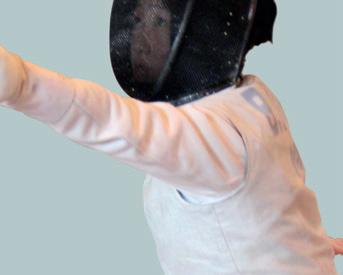










On advice to other students about following a passion, Bowie says: “Commit to what you love with dedication, discipline and enjoy the journey. The skills you gain, like resilience, focus and time management, will help in every part of your life.”
Reflecting on her dedication, Milly Farquhar, Dio Sports Manager for fencing, says: “Bowie’s discipline, focus and commitment set her apart. She has worked incredibly hard to reach this level, and the school is extremely proud of everything she has achieved. She is a real example of what can be accomplished when talent is combined with determination.”
From tentative beginnings to competing on the world stage, Dio student Bowie Wang shows what it means to follow your passions with dedication, discipline and heart.
Summer TOURNAMENT WEEK
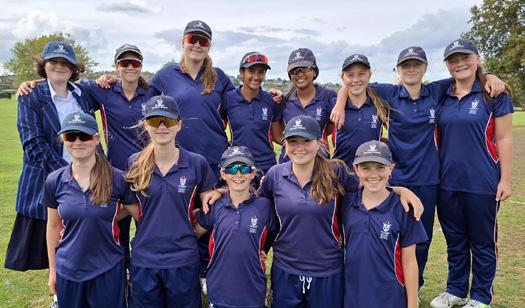
Cricket Summer Tournament
The Dio 1XI cricket team enjoyed a competitive Summer Tournament, taking on strong opposition throughout. The girls pushed Maclean’s College into the 19th over before narrowly going down in a close match, backing up with an excellent fielding performance against Lynfield. Unfortunately, poor weather cut the tournament short. Congratulations to Emily Chapman-Smith and Zara Khan, who were named MVPs across the two matches, and to captain Daisy Ellis for her calm leadership and positive attitude throughout the tournament.
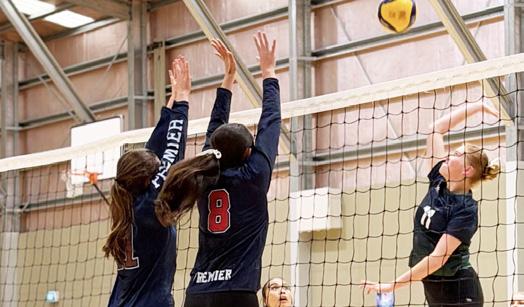
Volleyball Nationals and Satellite Tournament
Both Dio volleyball teams gained valuable experience at their respective tournaments this season. The Premier team attended Volleyball New Zealand Nationals for the first time and embraced the opportunity to compete against strong opposition from around the country. The Senior A team also enjoyed a successful North Island Satellite Tournament, continuing to grow in confidence and skill throughout the event. Both teams represented Dio with enthusiasm, energy, and a strong willingness to improve both individually and collectively.
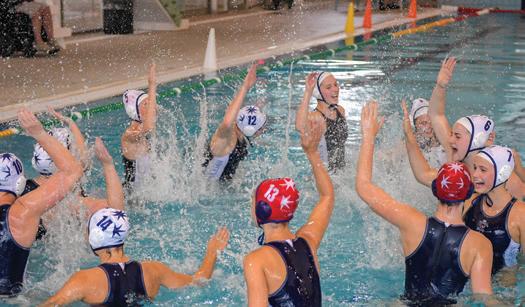
Water Polo North Island and National Championships
Dio Water Polo enjoyed an outstanding run across both the North Island and National Championships. The Premier team won the North Island title before going on to claim the Division 1 National Championship in dramatic fashion, winning both the semi-final and final in penalty shootouts. Senior B finished 5th overall in Division 2, while Senior A placed 7th in Division 1 after competing in a very strong pool. Jemma McKinley was named Tournament MVP, with Belle Imlah and Grainne Aitken also selected in the Tournament Team.

Sailing Auckland Teams Racing Regionals
Beatrix Sharpe, Kate Howse and Flora Oskam Stevens competed at the Auckland Schools’ Teams Racing Regionals as part of the Auckland Girls’ Combined Team. The regatta brought a variety of conditions, including strong winds, delays, and calm periods that tested the sailors’ adaptability and tactical awareness. The girls performed strongly throughout the competition, with the team finishing as the top girls’ school overall. Their result places them in a strong position heading into the national championships.
Steen
Bech 2026
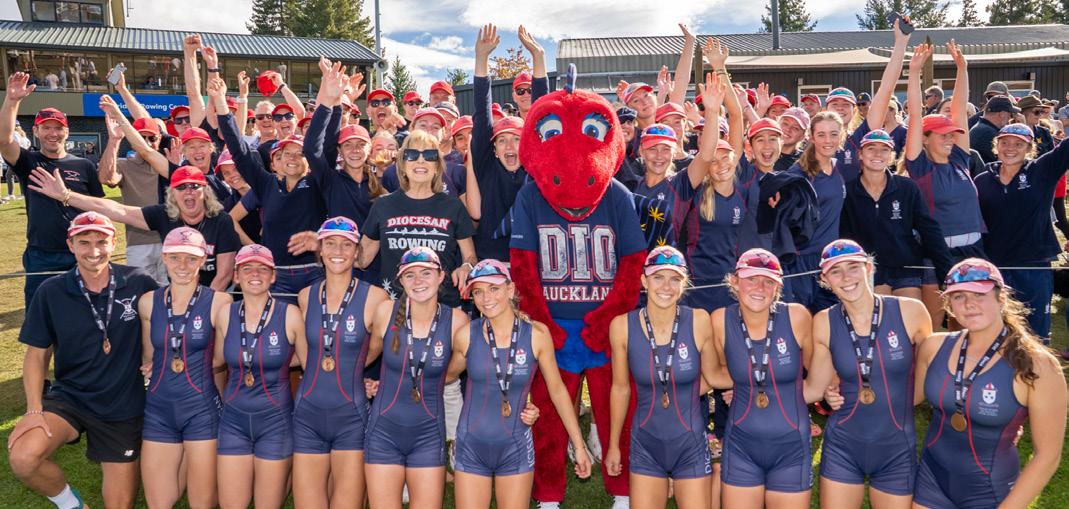
Rowing
Forty-three Dio rowers travelled to Lake Ruataniwha for the 2026 Maadi Cup, competing across all boat classes. The girls achieved several excellent results, including silver in the Girls’ U-15 Coxed Octuple Sculls and bronze medals in the U-15 Coxed Quad Sculls, U-17 Coxed Eight, and U-16 Coxed Four. It was a strong regatta for the squad and a fitting reward for the students’ hard work, commitment and preparation across the rowing season.
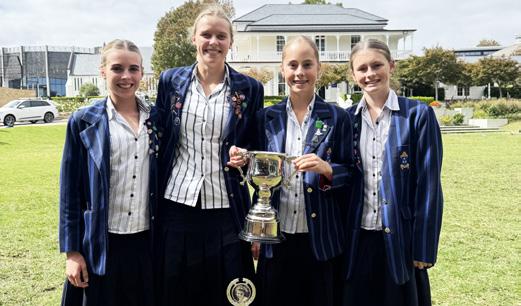
Triathlon Schools’ Championships
Dio students handled extremely difficult conditions well at the 2026 Schools’ Triathlon Championships in Mount Maunganui after severe weather forced the event to be changed to an aquathon. Indie Williams delivered the Athlete Oath at the opening ceremony before going on to win the U-19 female title. Maggie Croft finished second in the U-16 division, while Chloe Ulmer and Lucy Bell also competed strongly. Despite having only four students entered, Dio still secured the overall girls’ school title.
• Silver – Girls’ U-15 Coxed Octuple Sculls Olive Hunter, Niamh Loveridge, Blanca Ebbett, Sarbi Gardner, Elsie Sharpe, Sienna Anderson, Livvy Crosby, Rosie Reynolds, Olivia Allsopp-Smith
• Bronze – Girls’ U-15 Coxed Quad Sculls Olive Hunter, Sarbi Gardner, Sienna Anderson, Samantha Peacocke, Stella Benton
• Bronze – Girls’ U-17 Coxed Eight Emily Keene, Margot Wilson, Addison Hewlett, Liv Bethell, Emily Dick, Lucinda Day, Ada Findlow, Maddie Worrall, Rose Finlayson
• Bronze – Girls’ U-16 Coxed Four Isabella Turner, Mika James, Lizzie Hawksbee, Issy Berry, Florence Struthers
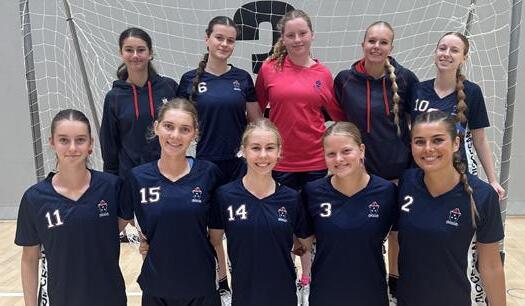
Futsal NZSS Championships
Dio’s Premier and Junior A Futsal teams both enjoyed strong tournaments at the NZSS Futsal Championships in Wellington. The Junior A team showed resilience throughout the tournament, finishing 11th overall, while the Premier team secured an impressive top 10 finish from 32 schools. Both teams competed hard across the three-day event and continued to improve with every match. It was also a special final tournament for several Year 13 players who represented Dio with pride and commitment throughout their time in the programme.
Maadi Cup 2026
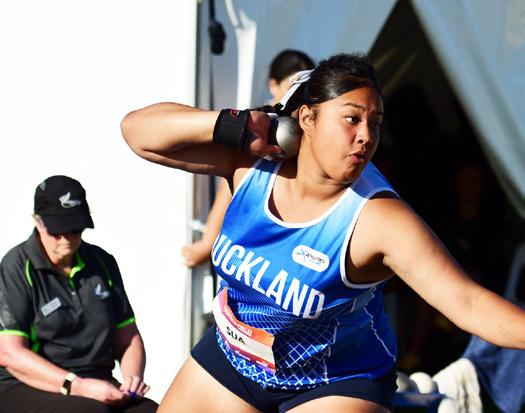
Athletics North Island Championships
Dio students produced excellent performances at the North Island Secondary Schools’ Athletics Championships after qualifying through strong results at the Auckland Championships. Emily Cowan won both the Senior Girls’ 200m and 400m titles, while Sophia Haines claimed silver in the 800m and bronze in the 1500m. Eden Brettell finished second in U-17 pole vault, and Sina-Maria Suā won both shot put and discus while also breaking a championship record. Congratulations to all students who represented their regions at the championships.
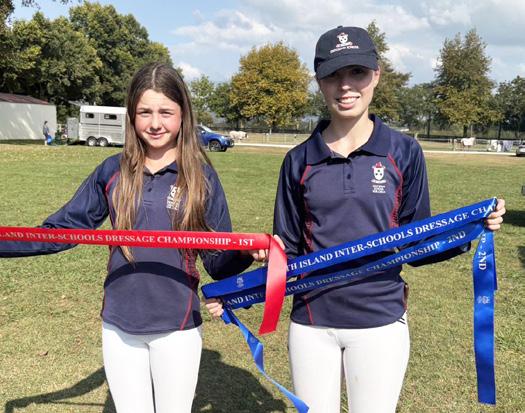
Equestrian Dressage North Island Secondary Schools
Dio riders competed strongly at the North Island Secondary Schools’ Equestrian Dressage Championships, finishing fifth overall in the team competition. Maggie Allen had an excellent event, placing seventh in the first test before winning the second test. Piper Hayton placed second in both rounds, while Isabelle Wood also recorded strong placings across the competition. The girls represented Dio exceptionally well and should be proud of their performances against strong riders from across the North Island.
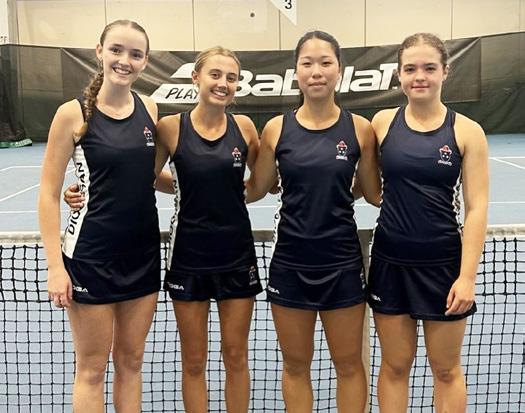
Tennis NZ Secondary Schools’ Championships
Congratulations to the Dio Premier tennis team of Jessica Wang, Luca Shortall, Piper Watts, and Gemma Twist on an outstanding performance at the New Zealand Secondary Schools’ Tennis Championships. The team progressed to the final after several strong performances, finishing with the silver medal following a close contest against St Kentigern College. The girls represented Dio exceptionally well throughout the tournament and should be proud of both their performances and achievements.
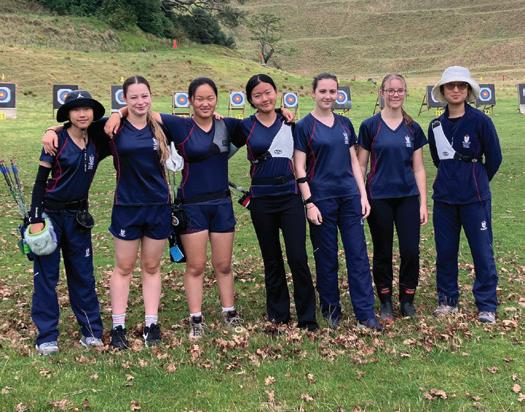
Archery Match Play and College Sport League
Dio archers achieved excellent results across recent competitions. Ashley Zu placed third in the Individual Bare Bow event at the Match Play Tournament before also winning the College Sport League title and breaking the league record. Eva Li earned silver in the individual compound division, while Maddie Bishop secured bronze medals at both the tournament and the regular College Sport League competition. These results reflect the commitment and work the students have put into their training throughout the season.
Dio shines at the SGCNZ SHAKESPEARE FESTIVAL
Diocesan School for Girls has been part of the SGCNZ Shakespeare Schools’ Festival for many years and 2026 marked a special milestone, as Dio welcomed the festival to the Performing Arts Centre.
Over two full days, the festival brought together more than 450 students from eight schools across the region, all performing extracts from Shakespeare’s plays. Dio had 86 drama students involved in the festival, performing in 12 different five- and 15-minute extracts from across Shakespeare’s works.
Diocesan students achieved exceptional success, with several performances and individuals recognised by the judges. Awards included:
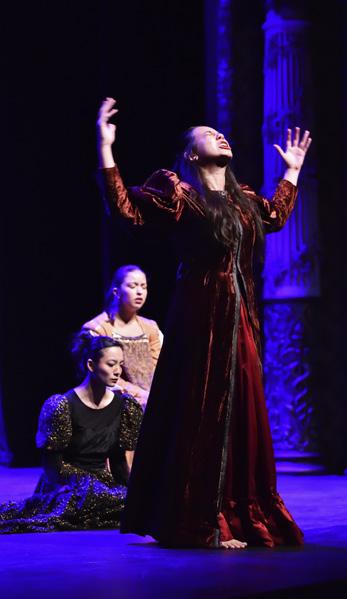
• Outstanding Movement or Dance for Year 10 drama class teacher-directed piece: Christina Davies
• Outstanding Delivery of the Text for Year 13 student: Isabelle Brabant as Hero
• Outstanding Female Actor in a Comedy Role for Year 12 student: Lara Wood as Benedick
• Best 15-Minute Scene: Richard III, performed by Francesca Eglinton, Claire Tong and Beatrice Taniguchi
• National Shakespeare Schools Production (NSSP) Award: Granting direct entry to the next phase of the festival in Wellington for Anya Taylor with her Macbeth performance
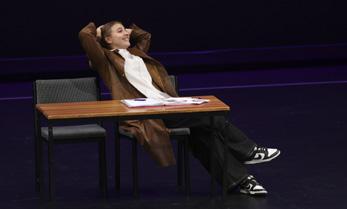
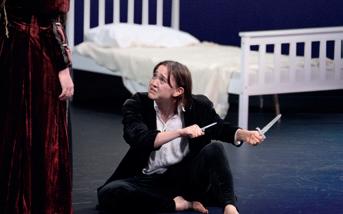
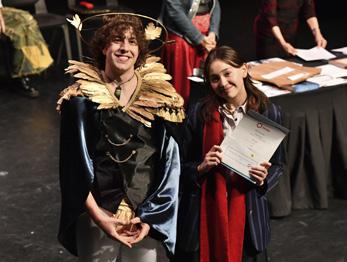
Dio students were also recognised in the festival’s design competitions, with the following students winning prizes: Costume Design
• Anya Taylor – first prize
• Abi Du – Commended Poster Design
• Lulu Smith – 2nd prize
• Natalie Stuart – Highly Commended
• Lucy Smale – Commended Video Title Card
• Sienna Worsnop – 2nd Prize
• Anya Taylor – Highly Commended SGCNZ Ida Gaskin Essay Competition with English at VUW
• Maikia Bonifant – 3rd prize
Following the regional festival, Anya Taylor, Francesca Eglinton, Beatrice Taniguchi and Claire Tong travelled to Wellington over King’s Birthday Weekend to take part in the next phase of the festival. There, they performed their Richard III scene again and were awarded Best Costume. Francesca also received another direct entry to the National Shakespeare Schools’ Production (NSSP) and was awarded Best Vocal Projection, an outstanding achievement at national level.
We are incredibly proud of all our Dio students for the skill, dedication and generosity they showed throughout the festival, as well as the warm and positive way they welcomed students from across the region. We also congratulate those students who continued on to represent Dio so successfully in Wellington and at the final stage of the competition.
Christina Davies
Teacher in Charge Drama
1 Beatrice Taniguchi, Francesca Eglinton and Claire Tong in Richard III 2 Lara Wood as Benedick. 3 Anya Taylor as Macbeth. 4 Costume Design first prize winner Anya Taylor.









CHICAGO
In March, our production of Chicago showcased the exceptional talents of senior students from Diocesan and Dilworth. The cast delivered a truly outstanding show, impressing audiences with their maturity, confidence and professionalism on stage. Leading the cast, Francesca Eglinton and Emma Lamberton delivered standout performances, captivating audiences throughout.
Every element of the production, from singing and dancing, to costuming, set design and lighting, was of the highest standard, rivalling that of preprofessional theatre.
Guests were welcomed by a vibrant 1920s-themed foyer, which set the tone and created a dazzling atmosphere for the evening. Opening night featured a special VIP event, which also created an added buzz.
Set in the 1920s, its themes feel unmistakably modern. In a world shaped by trial-by-media, viral outrage, fake news, and the blurring of fact



truth, power and the stories we choose



and performance, Chicago reminds us how quickly spectacle can replace substance. And beneath the razzledazzle is a razor-sharp commentary on truth, power and the stories we choose to believe. This feels startlingly relevant right now and the exceptional direction from Ms Andrea Creighton didn’t soften this message, it sharpened it.
from everyone was evident throughout


The professionalism displayed throughout is testament to the dedication and countless hours contributed by both the production team and the cast. It takes a village... and the commitment from everyone was evident throughout the entire Chicago journey.
incredible support from the community.





This year’s production also achieved record-breaking ticket sales for a Diocesan musical, reflecting the strength of the performance and direction, the standard of production elements and the incredible support from the community. There is no doubt that our 2026 production of Chicago was a glowing testament to the talent, dedication and spirit of our school community.





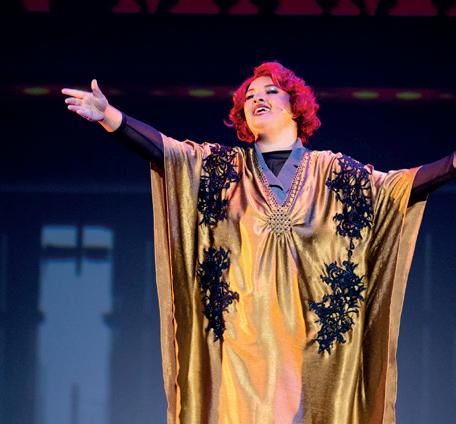
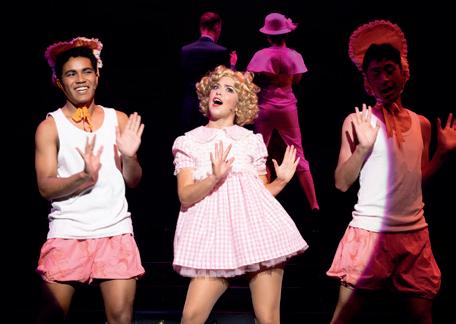
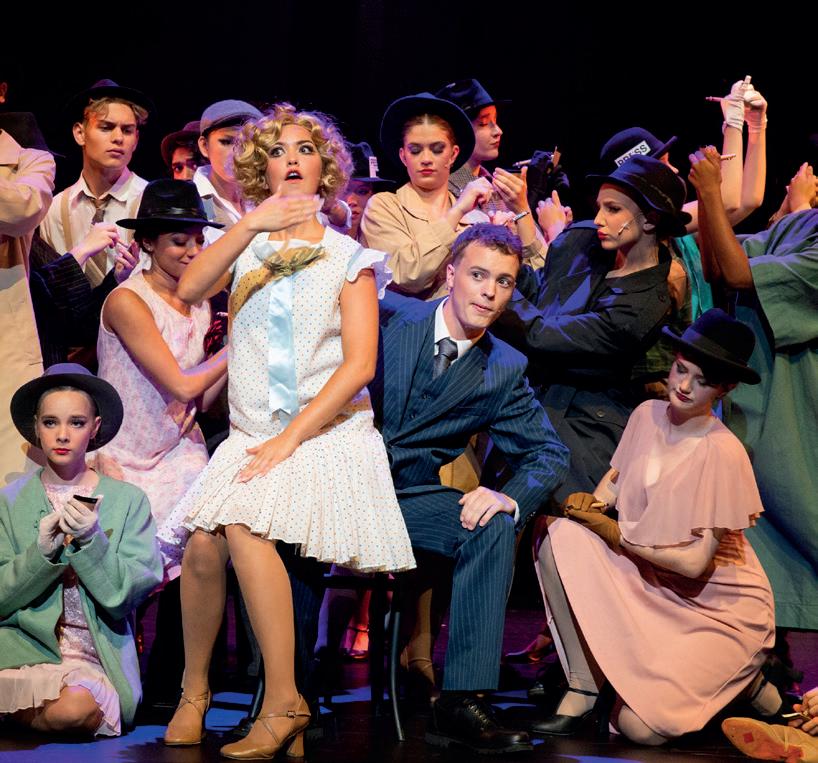
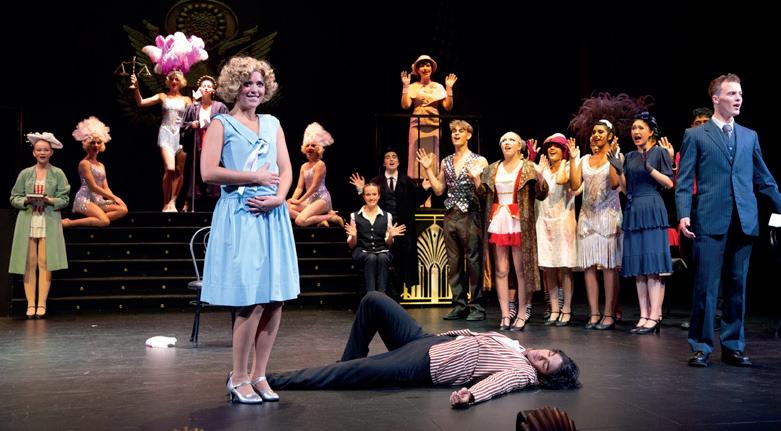
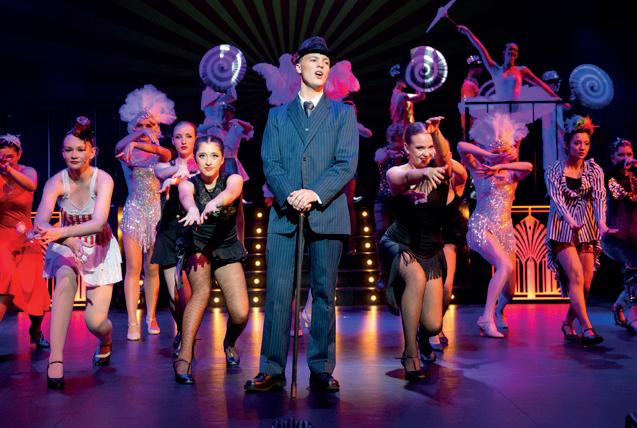
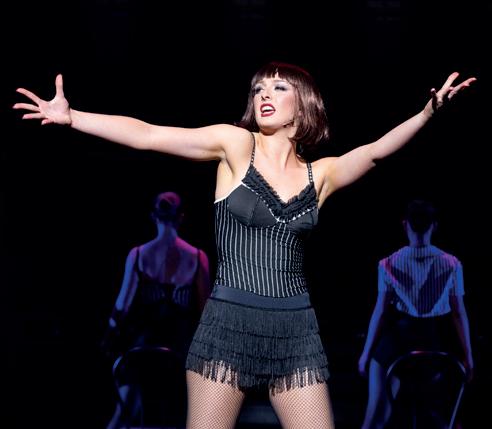
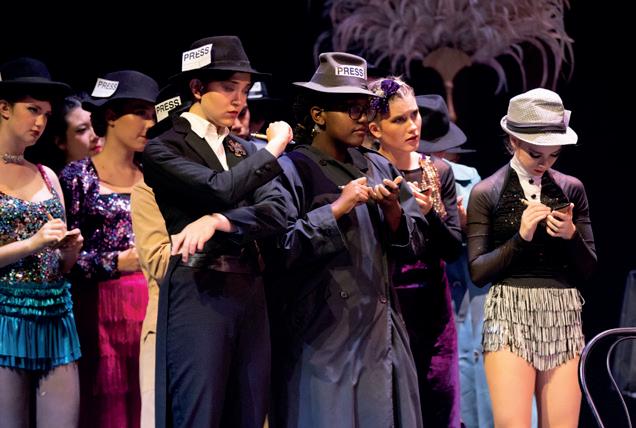









Concerto & Aria COMPETITIONS




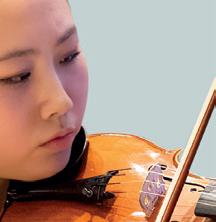


































Our annual Concerto and Aria competitions attracted over 70 auditioned entrants from which 24 Aria finalists and 16 Concerto finalists were selected to perform to external adjudicators. These events encourage students to engage deeply with classical music repertoire, with attention to stylistic and interpretive authenticity. The standards rise year on year, and the level of repertoire being performed by all competitors is unbelievable. Both audience and adjudicators, Ms Catrin Johnsson and Mr Mark Bennett, were blown away by the mature and musically stylistic performances from these young performers. The repertoire on display, especially at senior level, was advanced and very challenging; both adjudicators commented on the












stylistic and interpretive authenticity. The standards the mature and musically stylistic performances from sophisticated and poised performances. choristers. They form the core of our ensemble school productions.
Nearly every one of the finalists across both competitions, are multi-instrumentalists and choristers. They form the core of our ensemble programmes, and they give so much back to the school by representing Dio in our choirs, orchestras, concert bands, chamber groups, rockbands and
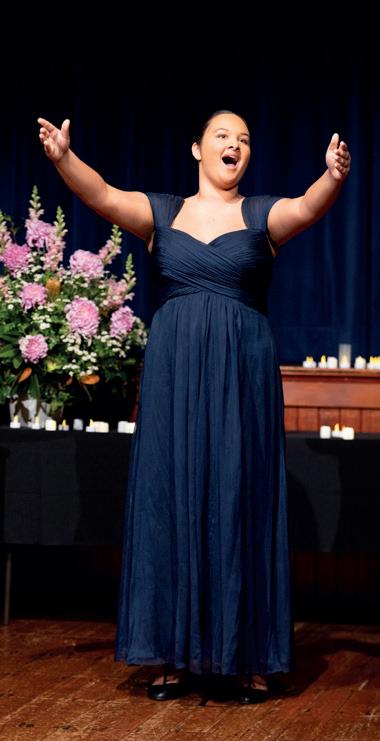
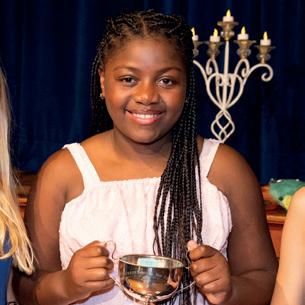
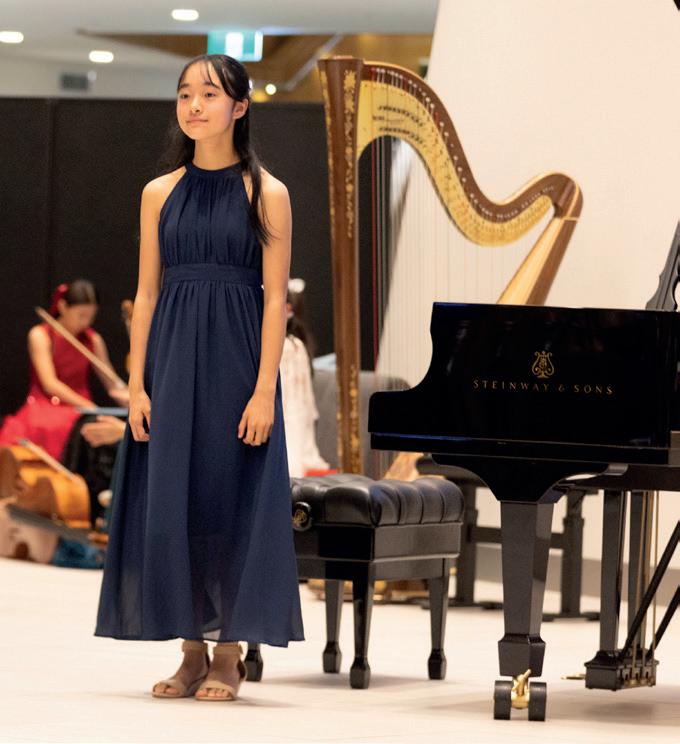
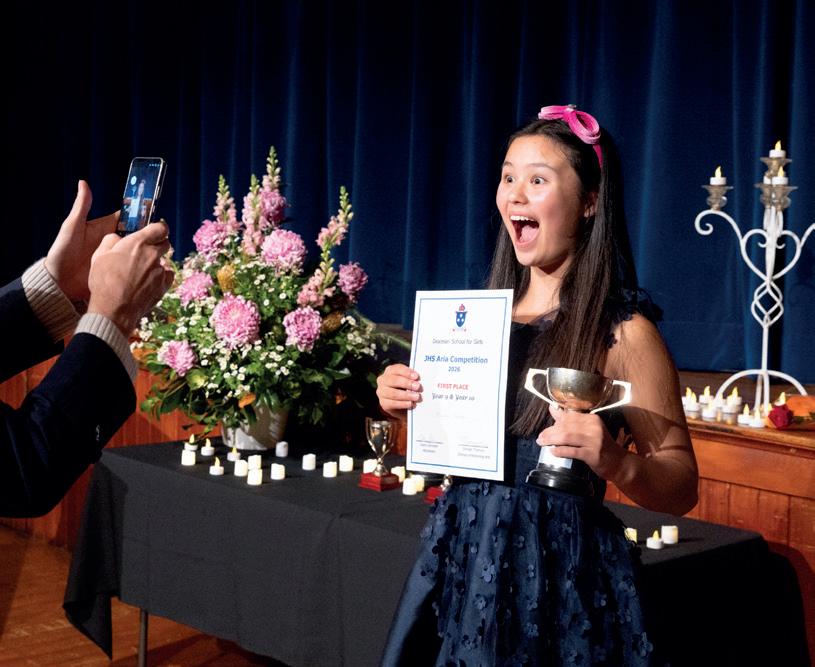
Aria winners
Years 7 and 8
1st Naledi Mhuka
2nd Robyn Jiang
3rd Olivia Bines
Years 9 and 10
1st Monica White
2nd Chloe Kwon
3rd Jasmine Hughes
Years 11-13
1st Gabrielle Ram
2nd Shiyu Zhang
3rd Emilia Young
Most promising performer: Selina Shi
Concerto winners
JHS winners:
1st Isabel Wong (Piano)
2nd Claire Nichols (cello)
3rd Emily Wang (piano)
Most Promising performer: Boyan Zhang (violin)
Senior winners:
1st Eve Lu (violin)
2nd Stacey Chen (piccolo)
3rd Chloe Xiao (oboe)
A night UNDER THE STARS
The school ball is always a huge night on the school social calendar. This year the theme was Eclipse: A Night Under the Stars.
With stunning dresses, sharp suits and plenty of sparkle, the dance floor was packed all night, creating the perfect mix of glamour and celebration. The Ball Prefects chose a theme that reflected the Year 13 theme for 2026 – He waka eke noa, celebrating the idea that we all shine brighter when we shine together.
We are proud that $20 from each ticket sale will be donated to the charity @iamhope_nz, raising funds for youth mental health, with more than $10,000 being raised for this worthy cause.
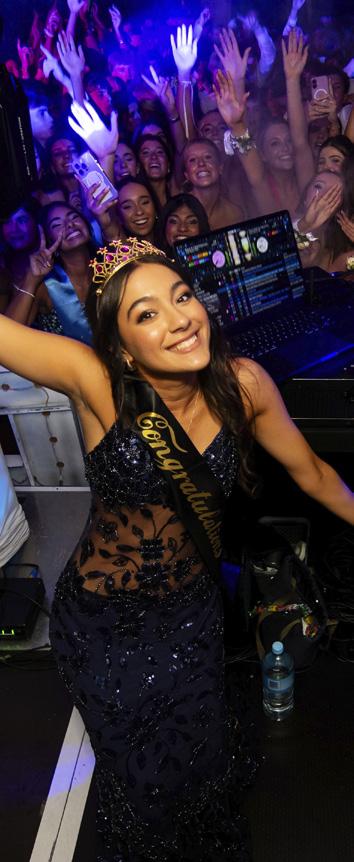
NOTICE OF ANNUAL GENERAL MEETING
The 115th Annual General Meeting of the Auckland Diocesan Alumnae Association will be held on Saturday 7 November at Diocesan School for Girls, Clyde Street, Epsom.
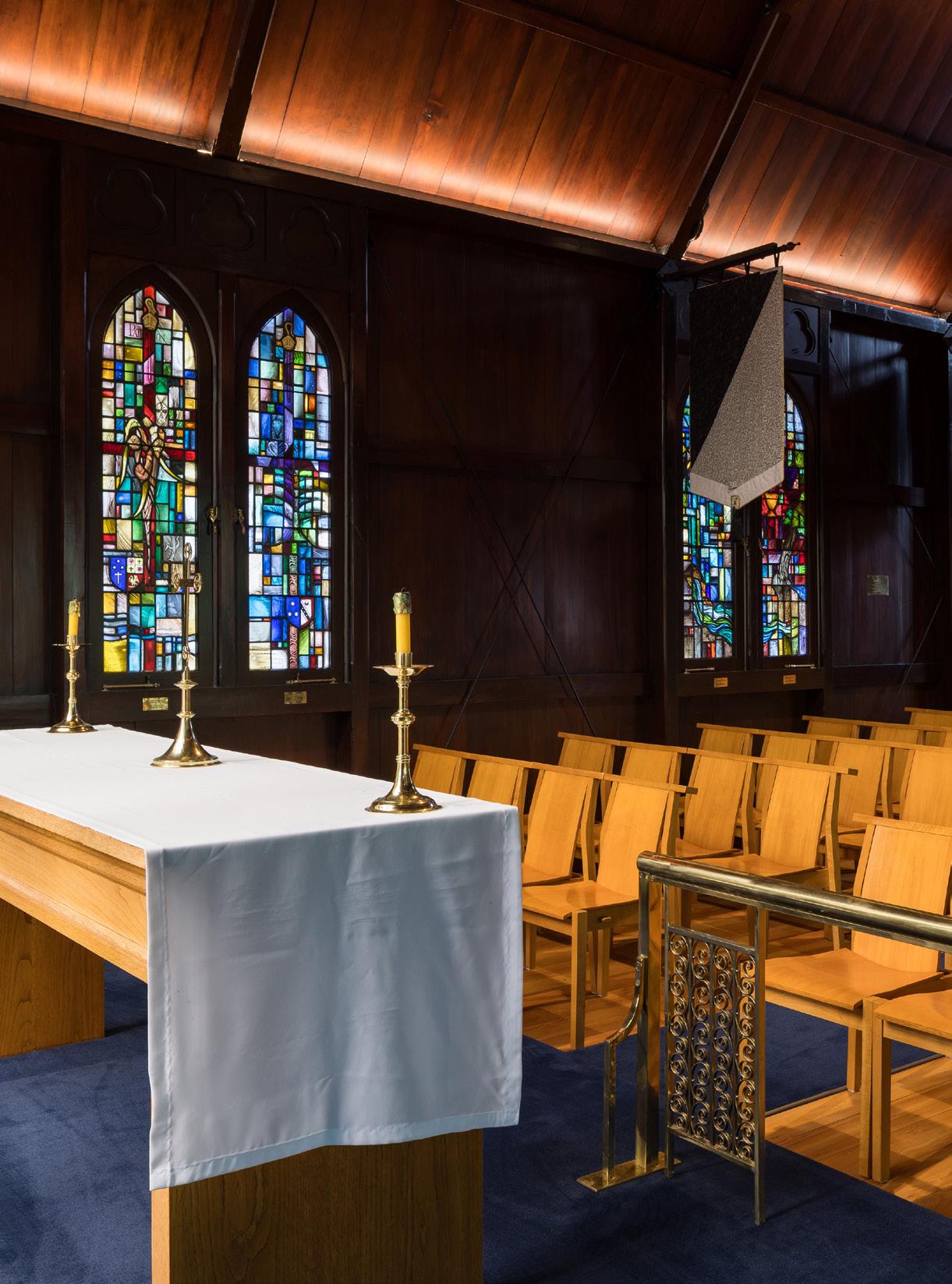
LIFELONG FRIENDS
Making an IMPACT
The Diocesan Alumnae network spans the globe, connecting 17,000+ members. At its heart, the Diocesan Alumnae Association is a group of dedicated volunteers who honour the school’s legacy through initiatives that inspire growth and learning, and celebrate success and friendship.
Here’s a snapshot of our recent activities, where our funds go, and the ways the DAA nurtures current Dio students and supports our alumnae community.
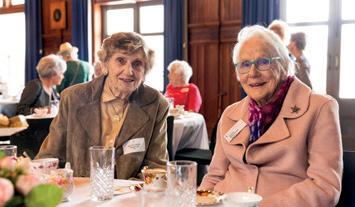
ALUMNAE EVENTS WE HOST
• Lunch & Learn speaker series – 130 attendees across 2 events in 2025.
• Alumnae Mothers’ Breakfast –175 alumnae mums and their Dio daughters in 2026.
• Graduation Ball – 183 Dio graduates. 500+ guests attended in 2025.
• Reunions – 1-year, 5-year and decade reunions. Overseas and regional reunions, when appropriate (Christchurch in 2025 and 2024).
• Senior Alumnae High Tea – a favourite for our senior Old Girls, held during Founders’ Day celebrations.
GIVING BACK TO DIO
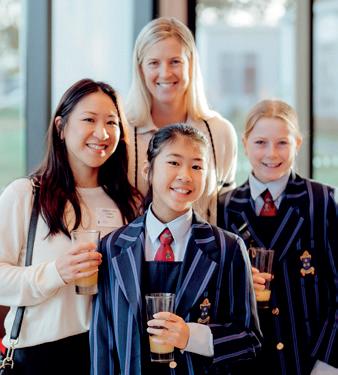
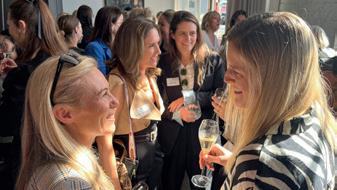
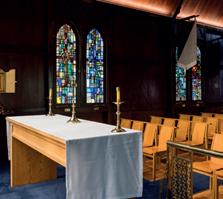
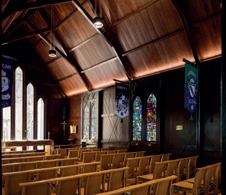
• Significant contributions toward the Chapel Restoration Project, including:
° 2025 – St Barnabas Chapel stained glass windows: $100,000
° 2023 – Chapel house banners: $37,000
• Leadership journals for 72 Year 6 students and alumnae guest speakers sharing their journeys and learnings.
second-hand uniform sales in 2025 (total earnings: $7579)
COMMUNICATIONS
• Alumnae news and profiles in Dio Today (2 issues a year). We also contribute to the magazine’s print and distribution costs.
• We launched our new dedicated website www.diocesanalumnae.co.nz in 2025.
• Facebook and Instagram social accounts.



SPIRIT OF ADVENTURE 10-DAY
CHALLENGE – Year 11 and 12 students
• 2026 – 15 full scholarships
• 2025 – 13 scholarships (50%)
• 2024 – 5 scholarships (50%)
OUTWARD BOUND – Year 13
• 2025 – 2 students awarded places on the 21-day course (value: $6549 each).
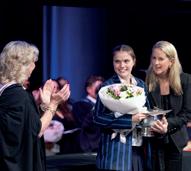
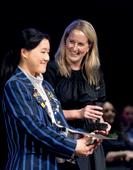
AWARDS AND SCHOLARSHIPS
• Alumnae Bursaries – 6 students receive 50% of their tuition costs
• Annual prize giving awards:
° Mary Pulling Award, Year 6: $1000. Years 7–12: $1200 each
° Ethel Sandford Music Prize, Year 11: $1000
° Ethel Sandford Music Scholarship, Year 13: $1200
301
new Alumnae Association memberships in 2025
LEARN MORE
Learn more about our events, reunions, awards and how we give back at diocesanalumnae.co.nz
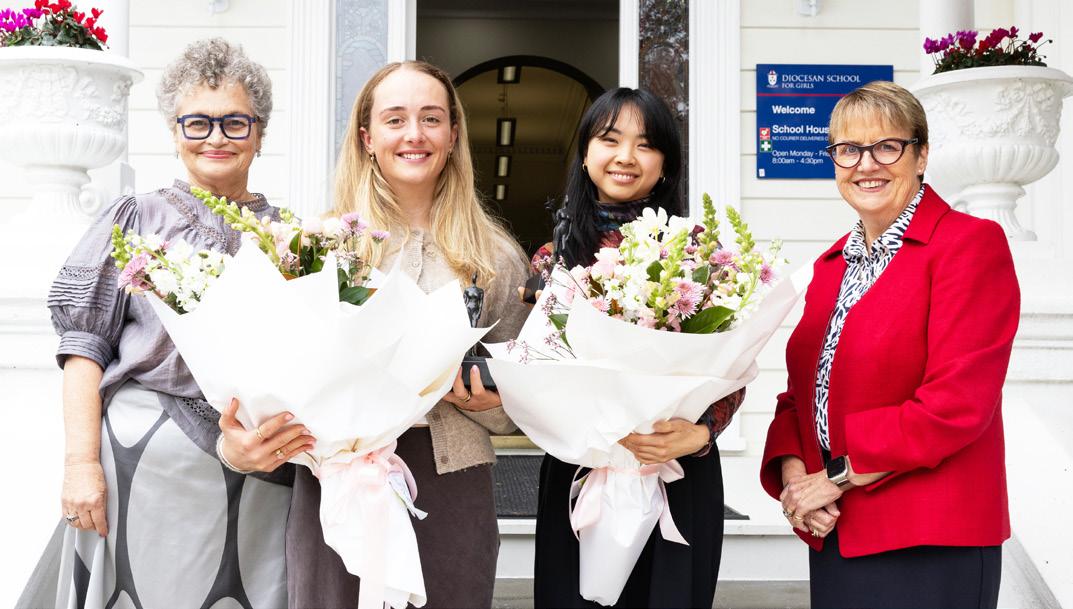
BRIGHT FUTURES
At the 2026 Women2Watch Awards in May, Diocesan celebrated the achievements of two exceptional young alumnae, Talia Pua (PY2016) and Prudence Fowler (PY2020).
An accomplished actor, playwright, director, set designer and puppeteer, Talia Pua has built a career in the arts, embracing every opportunity that’s come her way. Since gaining a Bachelor of Creative Technologies from AUT, she’s worked across all aspects of theatre performance and production, writing, directing, acting in, and designing sets and props for a string of well-received productions.
In 2020, Talia co-founded the independent theatre company Hand Pulled Collective, bringing stories from her community to the stage through powerful visual theatre. Among her successes was the award-winning Pork & Poll Taxes, which evolved from her Year 13 drama monologue exploring the experiences of early Chinese immigrants in New Zealand. Her playwriting and directing debut, it premiered at The Herald Theatre, Aotea Centre in 2021.
“A career is a journey that changes and evolves as you learn more about yourself,” Talia says, “and the only way to do this is to try things out.”
In 2025, she did just that, stepping off the stage and onto the silver screen to portray Mei-Ling in the hit New Zealand feature film Tinā
Track cycling champion Prudence Fowler has known highs and lows in pursuit of her sporting and academic goals. A member of the New Zealand Women’s Endurance Squad, Prue has competed against the world’s best since leaving school. She won a bronze in the 10,000m at the 2025 UCI Track Cycling World Championships in Chile, silver in the women’s madison at the Track Cycling World Cup in April this year, and gold in the women’s team pursuit at the UCI Track World Cup in Hong Kong. She has also recently been named in the New Zealand team for the Glasgow 2026 Commonwealth Games.
Prue’s accomplishments extend beyond cycling. She holds a Bachelor of Business and a Bachelor of Health Science from AUT and was named on the Dean’s
Honours Roll in 2023. As the top graduate in the Bachelor of Business Co-operative Education course, she was invited into the Beta Gamma Sigma international honour society, which recognises the world’s top business students. Prue was named AUT Sports Scholar 2025 and is now completing a master’s degree in psychology at Massey University.
Prue says, “After achieving one of your goals, don’t rush the exhale.” Instead, she likes to take time to refocus.
Established in 2002 by the Diocesan School Heritage Foundation, the Women2Watch Awards recognise alumnae who are making an exceptional start in their chosen fields while demonstrating leadership, character and service. The awards provide inspiring role models for current students and celebrate the diverse pathways a Diocesan education can make possible.
Our congratulations to Talia and Prue.
L to R: Women2Watch Committee Chair Jane Latimer with recipients Prudence Fowler and Talia Pua, and Diocesan Executive Principal Dr Sandra Hastie.
On their best BEHAVIOUR
Veterinarian Dr Emma Ruck (PY2008) and vet nurse Angela Fletcher (Sullivan, PY1996) are helping our furry friends in a special way. At Kiwi Vet Behaviour, an Auckland referral clinic that sees pets for behavioural problems, they’ve dealt with hundreds of cases ranging from separation distress and noise anxiety to house-soiling and aggression. Together they help people understand their animals and support them to become happier and more emotionally stable.
After graduating from Massey University, Emma moved to Australia where she spent eight years in general practice clinics in Adelaide – even working with koalas, kangaroos, possums, reptiles, birds and an echidna at a wildlife clinic.
Emma had wanted to be a vet from a very young age and volunteered at her local vet clinic for over a decade. “It gave me a good grasp on what the veterinary industry entails,” she says. “It’s definitely not all fluffy puppies and kittens.”
During this time, she learnt the importance of looking after animals’ emotions as well as their physical health, and with her interest in animal behaviour piqued, began taking on behaviourproblem cases at the clinic.
Becoming mum to Echo, her blue merle Australian Shepherd, was another driving factor. “She has generalised anxiety and separation distress,” explains Emma. “I can empathise with the struggles of living with an anxious pet. She’s one of the reasons I’m so passionate about helping other pets.”
Emma did further study through Sydney University, qualifying (with Distinction) as a Member of the Australia and New Zealand College of Veterinary Scientists in Veterinary Behaviour. On
ALUMNAE STORIES
To read more about the alumnae featured on these pages, visit www.diocesanalumnae.co.nz
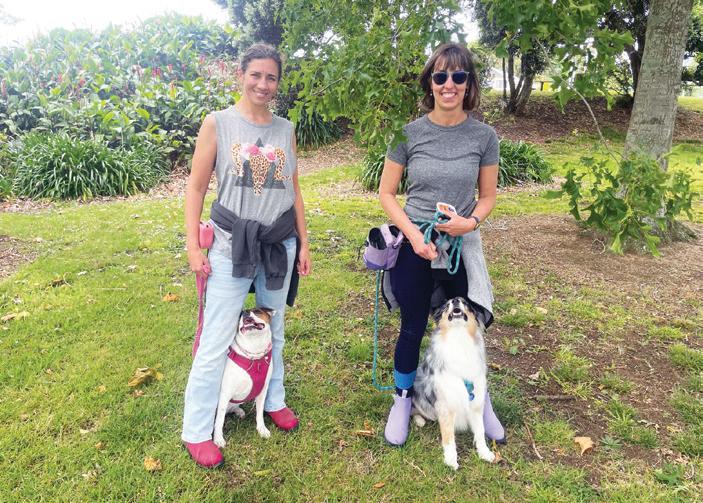
We employ only ethical ways of teaching, without fear or punishment
ANGELA FLETCHER (SULLIVAN, PY1996)
returning to New Zealand, she took a role at Ellerslie Veterinary Clinic and met fellow Dio alumna Angela Fletcher.
Animals have always been a passion for Angela, who grew up with a house full of rabbits, guinea pigs, birds, cats and dogs. After switching from psychology to veterinary nursing, she eventually moved up to head nurse and undertook more study in animal behaviour. Angela then began running puppy classes at her clinic and in 2019 launched her own training business called Pawfect Pet on the side.
Angela and Emma now put their skills to work at Kiwi Vet Behaviour referral centre. They use medication, management and behavioural modification to treat problems like aggression towards unfamiliar people and animals, noise anxiety, separation
distress, inter-pet aggression and generalised anxiety.
“We employ only ethical ways of teaching, without fear or punishment,” says Angela. “By enhancing communication and trust between pets and their people, we can help them build stronger relationships and work on the feelings that drive many of these behaviours.”
Angela is a certified separation anxiety trainer and her rescue dog Juno stars in the training videos she creates for clients. “Juno knows a huge range of tricks, including scent work and cooperative care. She has a lot of anxiety, and she’s helped me empathise more with my clients’ struggles.”
Emma and Angela want to help increase awareness of animal behaviour through workshops and teaching and speaking opportunities.
“People who come to us are already trying to do their best for their pets,” says Emma. “I love helping them understand what their pet is trying to tell them. It’s amazing to see the progress when everything falls into place.”
Behavioural vet nurse Angela Fletcher and vet Dr Emma Ruck with their dogs Juno and Echo.
A labour of LOVE
In March 2026, alumnae Sally Souness (PY1969) and her daughter Anna Silcock (PY1998) celebrated the 50th anniversary of Parnell Gallery, the business Sally founded in 1976 and Anna joined in 2011. What began as a small venture for a 23-year-old arts graduate has become a family story shaped by creativity and a lifelong connection to the arts.
A love of art runs through generations of Sally’s family. Her great-aunt, Betty Rhind, was a painter and influential fine arts teacher, and a contemporary of pioneering New Zealand artist Frances Hodgkins. Sally’s mother, Old Girl Diana Springhall, was a skilled woodcarver and ceramicist.
“I was surrounded by art from an early age, and it shaped my understanding of how naturally creativity can exist within everyday life,” says Sally.
Her interest in art continued to grow while studying art history and Italian at the University of Auckland. During her OE in Europe, Sally visited galleries and artworks she had previously only seen in books.
Returning to New Zealand in 1976, she pursued her dream of opening a gallery. Drawn to the atmosphere of Parnell, she found the space her business still occupies today. Over the decades, it has represented and exhibited a wide range of contemporary painters, sculptors and printmakers.
For Sally, the most rewarding aspect has been the relationships built with artists over time. “I’m proud of the longevity and continuity of those relationships,” she says. “The confidence artists have shown in remaining with the gallery speaks to the integrity and care behind everything we do.”
Fifteen years ago, Sally’s daughter Anna joined the business as co-director. After completing a commerce degree at the University of Auckland and spending six years in London managing corporate events, Anna returned home in 2009 and was drawn to becoming part of the gallery’s next chapter.

I was surrounded by art from an early age, and it shaped my understanding of how naturally creativity can exist within everyday life
SALLY SOUNESS (PY1969)
“Mum had always hoped I might join the gallery one day, but I wanted to establish my own career first,” says Anna. “I had no idea how rewarding it would be. What I love most is the variety: from strategy and planning, through to artist relationships. There’s a real sense of purpose in building something meaningful alongside people you genuinely care about.”
Anna believes their different strengths have allowed her and Sally to work well together.
“Sally leads the creative direction and curation, bringing decades of instinctive understanding of artists and artworks, while I focus more on the long-term direction of the business,” she says. “We approach things differently, and that balance has become our strength.”
For Anna, one of her proudest accomplishments is the position the gallery is in today.
“It’s evolved enormously over the years, with many people contributing their ideas and energy along the way. I feel incredibly proud to have played a part in that evolution, and to work alongside Sally and our dedicated team.”
It’s a sentiment Sally shares.
“What began as a small venture at 23 has grown into something enduring,” she says. “Building and sustaining Parnell Gallery for 50 years, and sharing the past 15 with Anna, has been deeply rewarding.”
Sally Souness (right) and her daughter Anna Silcock are co-directors of Parnell Gallery.
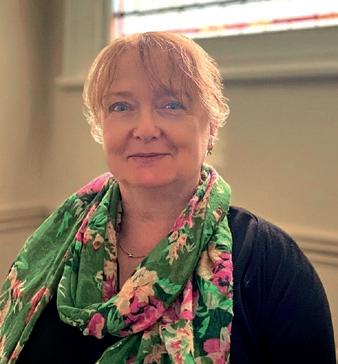
Introducing SANDRA WARD
DIO’S NEW ARCHIVIST
Sandra joined Diocesan School at the beginning of 2026 as our archivist, taking on the important task of bringing our Dio archives back to life. Through her careful work to sort, preserve and document this material, Sandra is helping transform the Dio Archives into a living resource for our school community.
At the heart of every great school sits its story, and through the archives and the stories they hold, we can truly connect with our history, traditions and origins. From times of war and social change to moments of celebration, friendship and everyday school life, these collections provide a deeply personal window into the experiences of the generations who came before us. Sandra brings extensive experience in working with heritage collections, museums, galleries and schools. Her work will help ensure Dio’s important stories continue to be preserved, understood and shared for generations to come.
If you have something to share that may be of interest to the Dio Archives, including family history, stories, photographs or artefacts, we would love to hear from you. Please get in touch at: archives@diocesan.school.nz
past staff REMEMBERING
Recently, the Diocesan community was saddened by the deaths of two wellknown and much-loved former physical education teachers, Jenny Lloyd and Jan Jacob. Both women made a lasting impact on the school through their dedication, energy and passion for all things sport. We also farewell beloved Junior School teacher Pat Cartwright. They will be fondly remembered by Diocesan colleagues and alumnae alike.
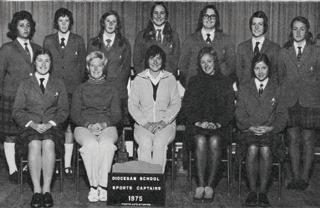

LLOYD arrived in New Zealand in 1966, having completed her physical education training in Kent, England, and taught at Dio from 1967 until 1991. Jenny was well known for her drive and enthusiasm for hockey, fencing and cricket, where her passion and commitment inspired generations of students. She brought energy, discipline and encouragement to every lesson and team she coached, fostering not only skill but also confidence and a love of sport.
PICTURED ABOVE: Jenny Lloyd (front row centre) and Jan Jacob (front row, second from right).
PATRICIA (PAT) CARTWRIGHT
taught in the Diocesan Junior School from 1974 to 1995. Adored by the younger students, she was a serene, caring and quietly admired teacher whose classroom was always calm and welcoming. Alongside the essential three Rs, she encouraged creativity and imagination, teaching practical and artistic skills like knitting, embroidery, hand sewing, painting and crafts. Pat never lost her beautiful and comforting Bahamian accent. She was a lifelong friend of Dio PE teacher the late Jenny Lloyd.
PICTURED RIGHT: Pat Cartwright.
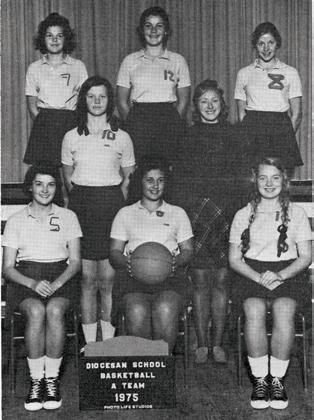
JAN JACOB taught with Jenny and the late Del Hooper from 1971 to 1975, and then as a relief teacher until 1994, bringing energy and enthusiasm to Diocesan’s Physical Education programme. A Dio parent of Amanda (PY1995), Jan was an outgoing and passionate teacher, remembered as the ultimate positive presence. Beyond her time at Dio, Jan went on to build a successful art business, later settling in Mangawhai where she embraced golf, travel and the company of her wide circle of friends.
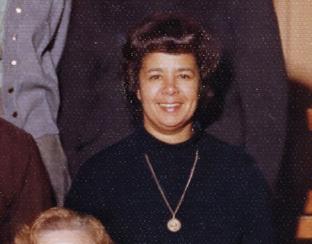
JENNY
PICTURED ABOVE: Jan Jacob with the 1975 Dio A Basketball team.
a precious place PROTECTING
Congratulations to Dio alumna Libby Fletcher (PY1965) who was awarded a King’s Service Medal in the 2026 New Year Honours for her outstanding service to the Lake Tarawera community.
Her award reflects a lifetime of dedication to environmental protection and community leadership at Lake Tarawera and highlights her values of stewardship and care for our natural world. For over a decade, Libby has been a driving force behind efforts to protect the health and future of the lake she’s loved since childhood. Her work has combined practical action, relationship building and a clear longterm vision, all grounded in a deep sense of responsibility to both place and people.
Libby served as Chair of the Lake Tarawera Ratepayers’ Association from 2013 to 2024. During this time, she helped unite volunteers, scientists, councils, mana whenua and government agencies around a shared goal of improving water quality and safeguarding the lake for future generations. Active volunteer environmental groups were established under her leadership, and Lake Tarawera Landcare was formed, combining conservation and pest control initiatives in one coordinated approach.
One of Libby’s most significant contributions was her push for the Tarawera Sewerage Scheme. Through advocacy and collaboration, she helped secure $6.5 million in funding in 2017. This enabled the installation of a reticulated wastewater system that connected around 400 households, replacing the ageing septic systems around the lake. The project represents a lasting environmental legacy for the area.
Reflecting on the honour, Libby emphasised the collective nature of the work, acknowledging all those she worked alongside over more than 12 years. Her leadership style has prioritised collaboration over recognition, and progress over profile.
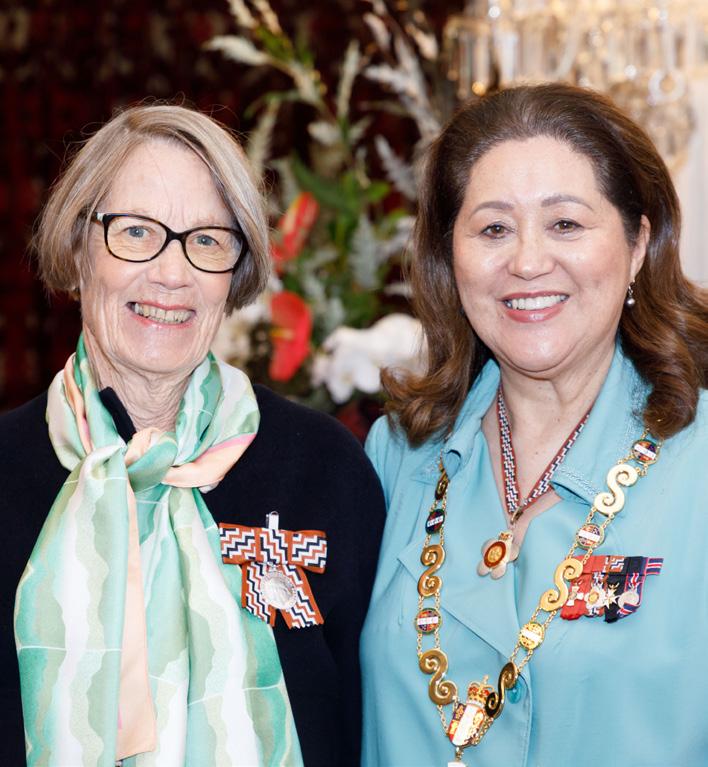
Libby’s connection to Lake Tarawera runs deep. Childhood visits to the area shaped her appreciation for the lake’s once pristine condition.
Libby’s connection to Lake Tarawera runs deep. Childhood visits to the area shaped her appreciation for the lake’s once pristine condition, and she eventually settled there permanently after years in Auckland.
Libby has also served the wider community, including as Chair of the
Laura Fergusson Trust Board, reflecting a broader commitment to service and social good. While she’s stepped back from formal leadership roles at the Ratepayers’ Association, she remains involved in land care initiatives and is focused on long-term environmental protection, guided by a 100-year vision for the area.
The King’s Service Medal is a fitting recognition of Libby Fletcher’s quiet determination, integrity and belief in doing the hard work that matters.
Thanks to Mathew Nash of the Rotorua Daily Post for original reporting.
Photo: Doug Mountain Photography
Libby Fletcher receiving her KSM from New Zealand Governor-General Dame Cindy Kiro.
ALUMNAE MOTHERS’ BREAKFAST
Dio alumnae joined their daughters for a breakfast in the Performing Arts Centre on 29 April.
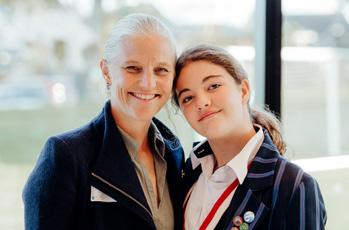
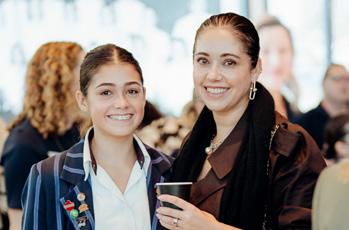
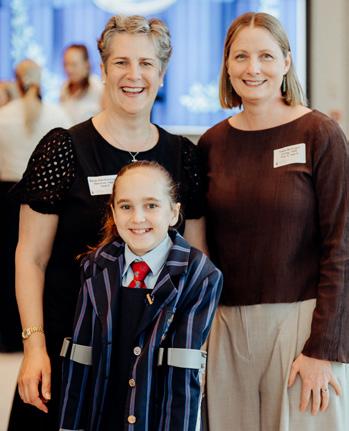
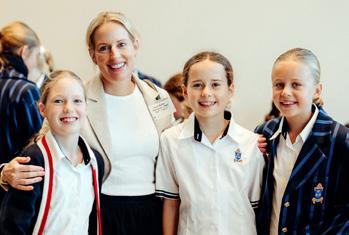
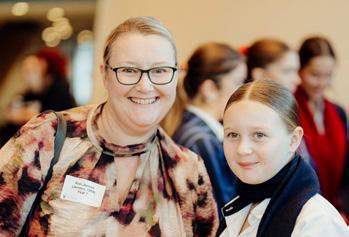
1 Michelle Reeves and Bella Gowans. 2 Gemma Rann and her daughter Lucia. 3 Valeria Lenskaia-Mamaeva with her daughters Alexa and Elsa.
4 Fay Stirling, Diana Stirling (Cooke), Frida Henderson and Hannah Henderson (Wills). 5 Jessica Wilsher and Francie Ellis with Head of Junior School
Sue Cattell and Freya Davies (Baker) and her daughter Wren Davies. 6 Sarah Stevens-Cross (Stevens) and Keziah Cross with Tessa McGregor (Irving).
7 Helen Worthington (Bird), Kate Elsmore (Corbett) and Lucy Farrugia (de Villiers). 8 Emily Mamo (Thomas) and Estella. 9 Sarah Walter (Springhall) with Sophia and Lucy, and Heidi Carter. 10 Casey McPike (Fletcher) and Tilly. 11 Ann Jensen and Alexis Mansell. 12 Tatum Savage with her daughter Valentina.
Photos: Belle Cooper Photography
REUNIONS
Alumnae from the classes of 2020 and 2024 gathered at La Zeppa restaurant in December 2025 for their five- and one-year reunions.

1 Sophia Jackson and Tash Wu. 2 Ava Tinkler, Claudia Avis and Isla Stephenson. 3 Laura Whitley, Kristen Hansen and Maddy Gault. 4 Lucy Bartlett chatting with friends. 5 Coco Frecker Netten and Georgi Wyborn. 6 Emma Badger with Heather McRae. 7 Georgia Rae and Lucy Kilgour. 8 Estella Loughlin, Lucy Church and Mimi Bond. 9 Meg McKinnon, Amy Shennan, Anaïs Hamilton and Harriet Fletcher. 10 Jamie Cottrell, Lia David and Kanishka Kapadia.
LUNCH & LEARN

See more images from this event at diocesanalumnae.co.nz

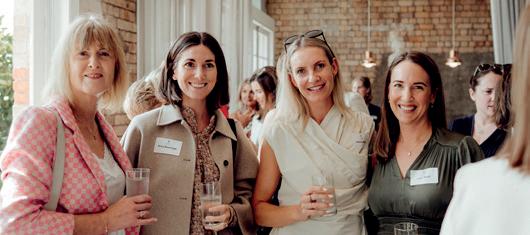

1 Kate Verkerk and Charlotte Whale. 2 Kate Elsmore and Sarah Mackenzie. 3 Claire Mitchell and Melanie Bourke. 4 Hannah Stuart, Eliza Walker and Jessica Wilsher. 5 Emily Steel, Anne O’Hanlon, Casey McPike and Charlotte Wiltens-Brown. 6 Tracey Cross, Prue Tyler, Angela Meyer and Rachel Davies.
7 Tracey Cross, Anna Beveridge, Jessica Miles and Lucy Scott. 8 Janice Germann and Susan Ewen. 9 Samantha Jacobson and Patricia McKelvey.
10 Aish Basrur and Erica McGeorge. 11 Nicki de Villiers and Emily Steel.
Photos: Belle Cooper Photography
Dio women gathered at Ebisu on 18 March to connect and learn about financial literacy and confidence.











Built to elevate every journey. Nappa leather interior
2.5T Hybrid AWD ANCAP 5-Star Safety



Available in 7 or 8 seats



All-new Hyundai PALISADE
From $129,990 + ORC

On the go charging capability