Here is an arcane but nevertheless interesting fact about June, named after Lunius, or Juno, the Roman goddess of youth and vitality: no other month of the year starts on the same day of the week
Another little-known fact is that this June is the 50th anniversary of National Smile Month. Sadly, this is not, as you would imagine, a celebration of light-heartedness, fun and good humour but, prosaically, just an ongoing campaign, organised by the UK’s Oral Health Foundation, to promote positive dental habits.
Perhaps more significant national events this month include: the Arietids meteor showers, which reach peak intensity on 8th; World Sauntering Day on 19th , encouraging people to slow down and enjoy life; the Summer Solstice and Fathers’ Day on 21st; and the Strawberry Full Moon at 00.57 on 30th, which is classified as a ‘micromoon’ because it occurs near the apogee – the Moon's farthest point from Earth – which means that it appears smaller and less bright than normal.
Local events and activities in June include: Great Maplestead’s Social Boules Fridays on the playing field (from 5th onwards, Page 6); Earls Colne’s Flower Festival at St Andrew’s Church (13th/14th , Page 25); the Men’s Breakfast Group’s First Responder talk in Great Maplestead’s Village Hall (20th, Page 29); and The Kings Head’s televised England World Cup game instead of a Quiz (but still with pizza!) (23rd , Page 14).
The next few long, hopefully warm summer months should provide some good opportunities for relaxing and reading in your garden or on the beach; the historical fiction and contemporary thriller the Bookworm has reviewed (Page 19) offer a couple of interesting reading alternatives.
In addition to our other regular articles, this issue also contains: a reminder of the Waste and Recycling changes coming into effect on 1st (Page 5); some details about the Maplestead’s Autumn Show (Page 8); information about Resource Grants available for young people studying undergraduate and postgraduate degree courses (Page 9); how to reduce the risks of falling victim to Cybercrime (Page 11); an update on the Bramford/Twinstead Power Line work (Page 12); and a report on Gestingthorpe’s unique, fund-raising Village Marathon (Pages 20/21).
Our feature series – Lost to Time – about local places, people of interest, and other aspects of parish life that have now disappeared, continues with the story of Gestingthorpe’s Roman Villa (Page 7), which was discovered by Ashley Cooper’s father in the late 1940s and is still revealing its secrets today. We would love to hear about other buildings, people or crafts that have been similarly Lost to Time: please e-mail your information, articles or pictures to the Editorial address (Page 31).
Our churches have been busy since the joy of Christmas. We have travelled through the great seasons of the Christian year. We journeyed through Epiphany, when Jesus’ light was revealed to the world. We walked through Lent, a season of reflection, repentance and preparation. Then came the triumph of Easter, celebrating Christ’s resurrection and the promise of new life. Ascension Day reminded us of Christ’s return to the Father, and then Pentecost filled the Church with the fire and power of the Holy Spirit.
Now, as June unfolds, we enter what the Church calls “Ordinary Time.” Ordinary Time is not “ordinary” in the sense of being unimportant or plain. Instead, it comes from the word ordinal, meaning numbered or counted. These are the weeks of the Church year that are not part of the major festival seasons. Yet they are deeply significant, because this is where most of our life is lived in the everyday rhythms of work, family, friendship and service.
Ordinary Time reminds us that God is not only present in the grand celebrations. He is with us in the quiet routines of daily life: walking the dog, school runs, cups of tea shared with neighbours, tending gardens, caring for loved ones and simple acts of kindness. The love of God is found in these ordinary, everyday moments.
This is also the season when community gathers for summer events. This is where we continue supporting one another through both joys and struggles, showing acts of kindness and friendship. A warm smile, a listening ear, or simply checking in with someone can seem ordinary, but it never is.
As summer approaches let’s celebrate and give thanks for the ordinary: a kind conversation, a glorious sunset, a helping hand. When we take time to slow down, we realise that life is never truly ordinary but a gift.
Blessings,
Rev’d Beverley. 01787 460 273
khvicar@gmail.com
BDC Waste & Recycling Changes
A reminder that BDC’s waste and recycling collection changes from June 1st .
The small food caddies will continue to be collected weekly but the Grey bins will now only be collected every three weeks. The new Red- and Blue-lidded bins will be collected four-weekly, alternating fortnightly.
A separate free service to collect Absorbent Hygiene Products, such as nappies and incontinence pads, is available on request by completing the application form at: https://www.braintree.gov.uk/bins-wasterecycling/applying-absorbent-hygiene-products-ahp-collection/1
Information about the service, including the new Collections Schedule, has now been delivered to residents. Follow this guidance and start using your new bins from the day after your last recycling collection in May.
Lost to Time – Gestingthorpe Roman Villa
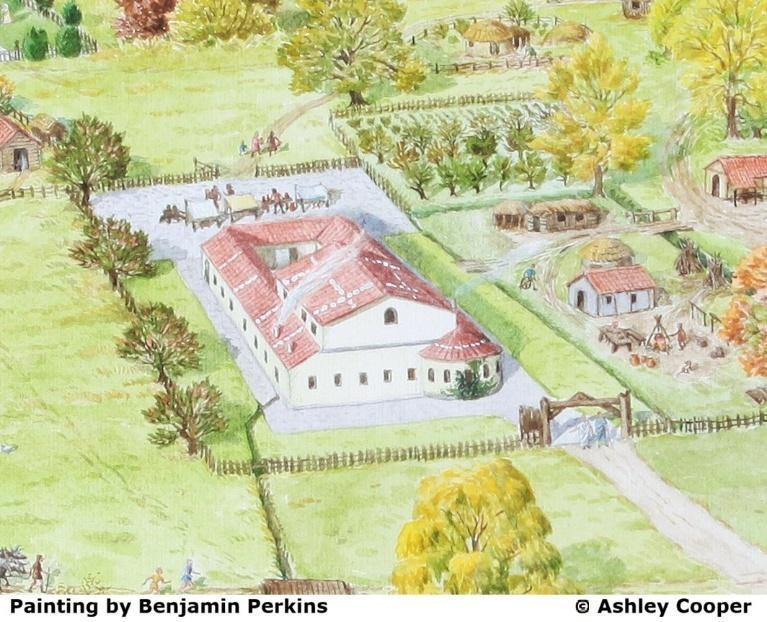
Probably the largest of the buildings which have disappeared from Gestingthorpe is the Roman Villa, which once stood about a mile east of today’s Church, not far from Wiggery Wood. Measuring some 36 meters in length and 18.4 meters in width, it stood amidst an enclave of smaller craftsman’s workshops, farm buildings and slave or peasants huts. Not far away passed the Roman road, which stretched from Braintree to Long Melford. Intriguingly, its exact location has not yet been found, although a trickle of finds provides an indication of its approximate situation.
Built on flint foundations, the villa appears to have had glass window panes, together with a ‘Bath Block’ consisting of a ‘hot room’ and a small ‘cold plunge.’ The ‘hot room’ was heated by a hypocaust (or under floor heating). At the southern end of the villa a semi-circular room was added, as the settlement prospered, which also had its own hypocaust. Adjoining it, the flint footings of other walls were discovered, presumably creating ‘rooms for the villa owner’s family’. At the northern end was a kitchen and other utility rooms.
The inside of the villa’s rooms can also be imagined, as fragments of coloured wall-plaster were recovered (principally white, red, green, blue and yellow). Although an impressive building, no mosaics were ever found, with the ‘best floors’ of the villa looking rather like a contemporary ‘terrazzo floor’, being made of crushed tile, pottery and stone, all set in lime mortar.
Like many of our local churches, the villa was constructed with two rows of wooden posts to support the roof, with aisles on either side. The roof had at least one white roof tile – and possibly more – creating a distinctive feature, amongst the red roof tiles around it. An open courtyard towards the northern end is not improbable.
When was the villa built? Probably in the late second, or early third century (around AD 200). However archaeology reveals that an earlier, smaller, building, dating back to the first century, which was destroyed by a fire, had preceded the villa.
Probably the greatest mysteries are that no graveyard has been found, the source of water is problematical and the date of the villa’s abandonment is also unknown. The latest coins to be found suggest that the latter occurred sometime after about AD 400, although the building possibly remained occupied for several more decades.
There is so much more to be discovered!
Ashley Cooper
The 2026 Autumn Show
Preventing Cybercrime
How to spot a fake website
As online shopping and digital services continue to grow, so too do the number of fake or less reputable websites trying to take advantage of unsuspecting consumers. However, with a few simple checks, you can reduce the risk of falling victim to scams or poor-quality sellers.
1. Check the web address carefully. Scam sites often use URLs that mimic well-known brands but include subtle changes. These can include extra characters, unusual spellings, or unfamiliar domain endings. If anything looks slightly off, avoid entering personal or payment details.
2. Look for secure connections. A legitimate site should use HTTPS, shown by the padlock icon in the browser bar. While this alone doesn’t guarantee trustworthiness, its absence is a clear red flag.
3. Assess the overall quality of the site. Poor spelling, broken links, blurry images, or generic product descriptions can signal a hastily made fraudulent website. Reputable businesses invest in clear, professional content. Checking the privacy statement or terms and conditions pages of a website can sometimes clearly show red flags in that the content is generic, incomplete or has other business names listed.
4. Research the company. Before buying, search for independent reviews. Do not just rely on testimonials posted on the website itself. A lack of an online presence or an excess of negative feedback from other users is a warning sign.
5. Check for clear contact information. Legitimate businesses provide physical addresses, telephone numbers and customer service details. It is also a legal requirement for the business names and company information to be on a website. Scam sites may list none or offer only generic web forms.
Staying alert and taking a few extra moments to verify a website can help protect your money, data and give you peace of mind. A cautious click is always better than a costly mistake.
Bramford to Twinstead Power Line – Update
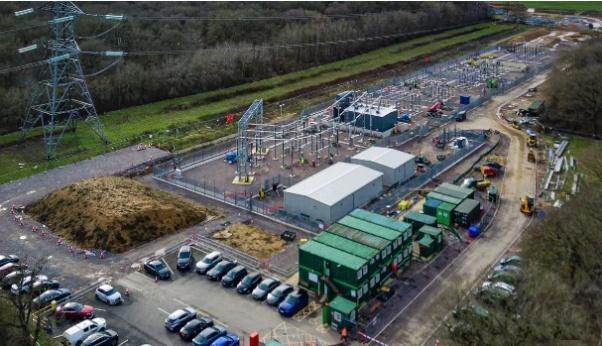
As a reminder, the approved plans for installation of the Bramford to Twinstead Reinforcement powerline include:
• building approximately 18 km of new 400 kV overhead line
• building approximately 11 km of new 400 kV underground cable
• removing around 27 km of existing 132 kV and 400kV overhead line between Burstall Bridge and Twinstead Tee
• additional works to support construction, including temporary construction compounds, site offices, haul roads and new road junctions (bell-mouths)
• works to deliver a minimum of 10% biodiversity net gain, including planting and other environmental enhancements.
The substation nearing completion at Twinstead Green (between Butler's Wood and Walegrave Wood), is where National Grid's high voltage transmission network will connect into the low voltage network run by UK Power Networks, the distribution network operator in this local area.
Current and upcoming work
During early 2026, National Grid has been carrying out vegetation clearance and creating new bell-mouths (road junctions) so that temporary haul roads for construction vehicles can be built. Throughout May Balfour Beatty, who are carrying out the construction work on National Grid’s behalf, have been clearing vegetation and coppicing trees, most noticeably and controversially along the A131. This has meant a series of short-term traffic management measures, which are still in place for the haul road construction, so that work can be carried out safely.
Before carrying out any vegetation clearance or coppicing, the maturity and condition of any vegetation impacted by the works is considered and approval sought from the District Council, in line with the conditions of the development consent order. Where the work impacts mature, veteran or high-value trees and hedgerows, coppicing rather than outright removal is being undertaken. Work is only being carried out when the appropriate permissions are in place and will be paused if nesting birds are identified – it will only continue once the nest is no longer active. Any removed planting will be reinstated at the end of the construction project, in line with the Reinstatement Planting Plans agreed with the Council.
Oak Road update
The planned closure and diversion for Oak Road (between Pebmarsh and Twinstead) from 11th May to 8th June, has not gone ahead as planned because some preparatory work that needed to be done before the traffic management started is not yet finished. The work is now expected to take place later in June; the confirmed dates, timings and diversion route will be notified to residents in the area via postcards, as was done originally, and on the website: https://www.nationalgrid.com/the-great-gridupgrade/bramford-to-twinstead/whats-happening-now
Nature Notes from a Cottage Garden
I think this spring has been one of the loveliest I can remember. A perfect combination of sun, showers, warmth, blossom and birdsong. And shades of green to challenge a painter’s palette. Our thrush has stopped singing for us now but birdsong still surrounds us here in the cottage garden.
I have a wondrous app on my phone. It’s called Merlin Bird ID. Developed by Cornell University, it identifies the birdsong it can hear around it. Here’s what it identified as singing in my garden over just a few minutes on one day last week: Blue Tit, Blackbird, Chiffchaff, Blackcap, Collared Dove, Barn Swallow, Robin, Song Thrush, Wood Pigeon, Garden Warbler, Greater Whitethroat and a Goldfinch (right). Quite astonishing and very reassuring.
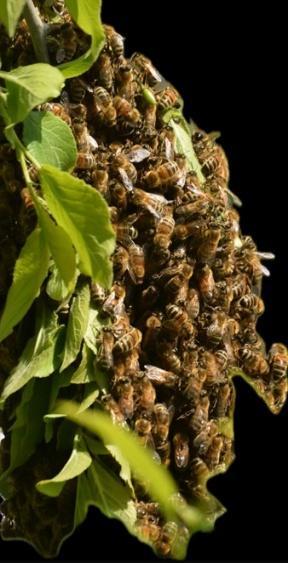
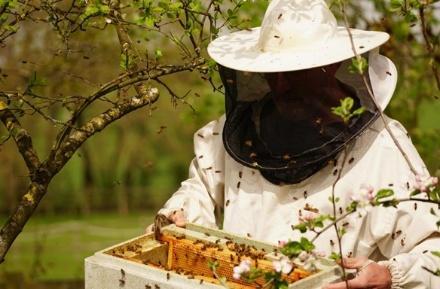
My son in law is a bee keeper. One of his hives began to swarm on a very warm and sunny day towards the end of April. The old queen had decided it was a good day to leave the hive and search for a new home, taking most of the workers with her. They didn’t go far and started to settle on a fence post a few feet away. But all was not well – instead of forming a tight close-knit ball around their queen, they seemed to be in quite an agitated state. Soon the reason for this became obvious. The queen was not there.
On the ground, amid the grass, a small clump of bees could be spotted and emerging from this clump, distinctive with her white marking dot, was the queen. She was walking away from the small protective group of worker bees as if she had lost her bearings. The beekeeper came to her rescue and picked her up. She was elderly and frail and it appeared that she was too weak to lead the swarm. The spirit was willing but the flesh was weak.
The beekeeper, taking pity on her, popped her gently back into the hive and watched to see what would happen next. Gradually the failing swarm on the fence post disintegrated and the bees, sensing their old queen was back in the hive, followed suit and joined her until the hive was full again and the status quo was regained – for a while.
Next day, after another failed attempt at a swarm, the old frail queen was found once again wandering about in the grass below her hive. Her future was now in doubt and most likely, even if she had had the strength to get back to the hive, she would have been quietly ejected by her worker bees and superseded by a new young queen brought on from one of her eggs within the hive.
This time the beekeeper decided not to intervene. But it’s hard not to feel desperately sorry for the old queen bee…
Patricia Fletcher
Gardening Corner
As we approach the longest day, the peak growing time is upon us.
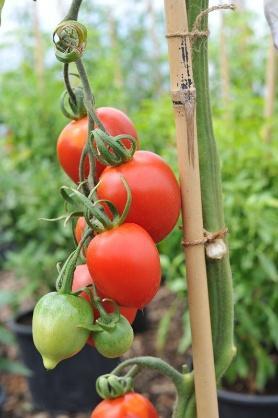
In the vegetable garden, keep earthing up main crop potatoes and, if you are growing tomatoes outside, make sure the plants are well staked and tied in, as the weight of the fruit can cause the plant to collapse. Also, when you plant outdoor tomatoes, it’s a good idea to sink a three-inch pot beside each tomato; this will act as a reservoir when watering. Water veg in the early morning or late evening; this will help avoid evaporation and the leaves being scorched by the heat of the sun.
For my plant of the month, I recommend Lilac [Syringa vulgaris] – there are many colours these days, from purple, white, through to dark red. Remember, these shrubs can reach a height of 4 to 7 metres. If you want to control the growth, prune back to two healthy buds on the main stems when the plant reaches about 2 metres. Thin out any weak growth and try and keep the lilac at this height. If you start being too enthusiastic with the secateurs, you will not get any flowers the following year.
Keep mowing lawns regularly or as the grass growth dictates – as I always say, avoid ‘scalping’ the lawn, as this will only encourage die back and moss in the winter months.
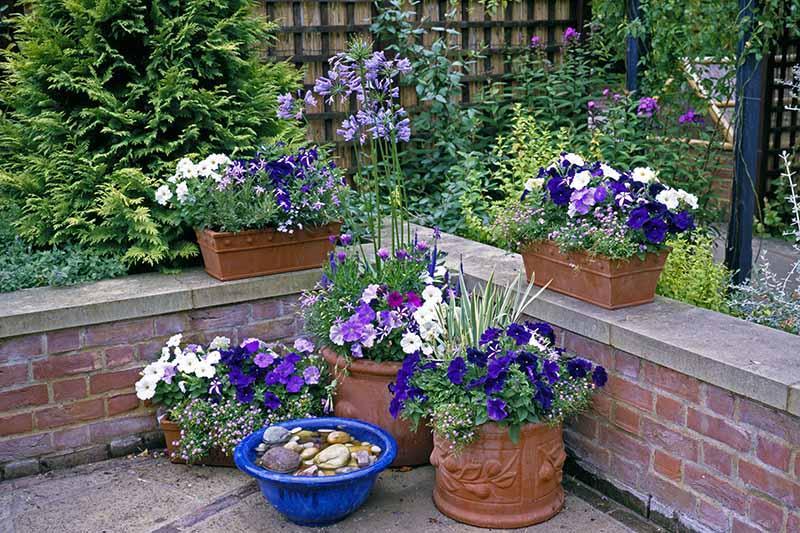
If you want to grow plants in containers and wish to avoid bedding plants, think about Agapanthus, figs, dwarf rhododendrons (use ericaceous compost), lavender and rosemary. The latter two are fragrant to the touch when in flower or when just brushing past the plant. Use a peat-free soil – John Innes No. 3 mixed with horticultural grit – and put a few crocks in the bottom of the pot before planting. This will help with drainage.
In the hot weather, keep some water containers on the ground for garden birds and small mammals. Wildlife in a garden makes it so much more interesting. I would also suggest looking out for wasp nests when strimming, cutting back shrubs or on your knees while hand weeding. Most of us have had a nasty surprise at one time or another!
Enjoy your plot The Arborist
Book Reviews
A choice of historical fiction and a contemporary suspense thriller this month, providing some interesting and enjoyable reading over the summer months.
THE GREATEST KNIGHT: Elizabeth Chadwick
Readers who, like me, enjoy historical fiction will be aware of, and have probably read novels by, Elizabeth Chadwick. She has a talent for interweaving historical fact with some fiction which she does to significant effect in this novel about William Marshall, a penniless knight who rose to become the foremost Knight of the Realm. He achieved greatness on the tournament/jousting circuit in the service of Henry II, his son Henry, who was crowned in his father's lifetime, and brother Richard I.
This novel follows Marshall’s career through all its ups and downs, all based on fact but the author also uses poetic licence to invent and speculate some events. William is painted as intensely loyal and devoted to the Queen, Alienor of Aquitaine, coming across as an unusual and very likeable character who treats women well. When eventually married to Isobel, an heiress of some substance, he proves a loving father and husband.
This novel scores 4.5 stars on Amazon, one reviewer stating: “There is everything in this book. It has excitement, plotting and counterplotting and a great deal of political manoeuvring but it also has much humanity and tenderness. It is long, but not a page too long”. I completely agree.
FINAL GIRLS: Riley Sager
A compulsive tale by Riley Sager, the New York Times bestselling author, about three young women, each of whom were sole survivors of horrendous massacres of their friends in completely separate circumstances. The story is told by Quincy, the survivor of a slaughter at Pine Cottage, while the novel explores her connection with Samantha and Lisa, two other lone survivors, who all jointly become known as ‘The Final Girls’ .
The book starts with Quincy’s escape from the carnage and rescue by a police officer who had arrived at the scene. Afterwards she has total amnesia, only gradually recalling what happened that fateful night. Ten years later, she’s built a life as a baking blogger, with support from both her fiancé, Jeff, and the policeman, Coop.
However, her tranquillity is shattered when Lisa is found dead, raising questions that Quincy can’t ignore. Samantha then shows up at Quincy’s door, stirring up old ghosts and hidden secrets. The narrative unfolds with a gripping central conflict: Who killed Lisa? And what really happened at Pine Cottage? A great twisty ending if you have managed to stay with the meandering build up to the final action. The Bookworm
Gestingthorpe Runs A Marathon (Part 1)…
It was a glorious day in Gestingthorpe when we all gathered on the playing field on Sunday 19th April to participate in the village’s attempt to run a marathon and to show support for Gestingthorpe resident Rachel Patten, running in the London Marathon the following week. Rachel was running for the Gestingthorpe Village Hall charity, raising funds to go towards the cost of a new kitchen and necessary repairs to the flat roof.
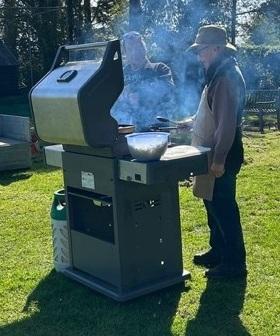
The playing field had been measured and we calculated that we needed to run 85 laps of the perimeter to achieve our goal. The BBQ was fired up in preparation to cook sausages for the hungry hoards taking part.
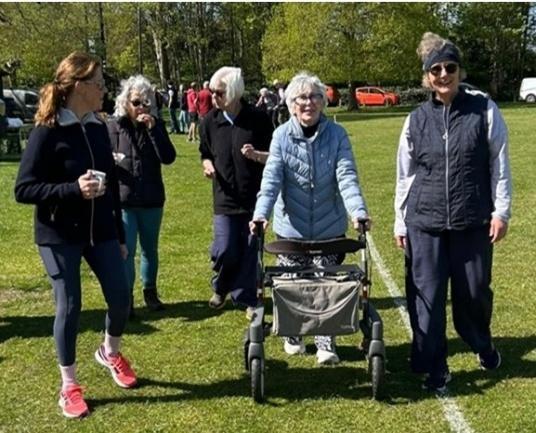
The first ‘marathoners’ turned up on the dot at 10.00am and ran the first laps. These were quickly followed by a steady stream of participants –some ran, some walked on their own and some with their dogs but most were in groups, chatting and enjoying the spring sunshine. Some people managed just one lap but many did several so the total soon mounted up.
We hit 85 laps in less than an hour so it was clear we were going to beat our target and still more villagers (and a few outsiders) turned up to participate. Thank goodness we bought a lot of sausages!
Just before the scheduled end of the event at 1.00pm, we had accumulated a massive total of 479 laps so a few stalwarts took to the field to bring the total to 485 laps, the equivalent of 5 marathons. What an achievement!
So how did Rachel do the following week? She smashed it! Spurred on by a family, friends and neighbours who went to London to support her and the thousands of well-wishers along the entire route, Rachel completed the marathon in an impressive 4 hours 8 minutes and 39 seconds. An amazing achievement and, importantly, she has helped us raise a significant amount towards our fundraising goal.
Gestingthorpe Runs A Marathon (Part 2)…
We’d like to extend a huge thanks to everyone who helped organise the Village Marathon and of course to everyone who took part in the event and/or donated funds either directly to the Village Hall or via Rachel’s London Marathon fundraising page.
All the event participants received a Village Marathon badge and, although there were a few sore muscles, everyone agreed they had an enjoyable day.
And our thanks again to Rachel for her amazing London Marathon run and all the hours of training she did over the winter in preparation.
As a result of these two events, we have raised over £5,200.
You can help increase this total by still making a donation, either by going to: https://2026tcslondonmarathon.enthuse.com/gestingthorpepc/profile or e-mailing gestingthorpevillagehall@gmail.com for bank account details.
Gestingthorpe Village Hall Coffee Morning & Book Exchange Fortnightly on Fridays from 10.00am to 12 noon
Join friends and neighbours in the Village Hall for tea, coffee, cake and a chat. All cakes are homemade and served by our fabulous team of volunteers. Tea or coffee and cake £3.00 – pay by card or cash.
Bring a book to swap or buy a book for £1. Our bookcase is located next to the big window in the small hall. There is a large range of books and genres to choose from.
The next Coffee Mornings and Book Exchange will be on 5th & 19th June and 3rd, 17th & 31st July
All funds raised go towards running & maintaining the Village Hall.
Forthcoming Local Events
Hedingham Heritage Society
We do hope you can join us for both of these interesting historical talks:
Thursday 4th June: ‘The Agricultural Revolution in Essex’. From the 18thC, Britain underwent a significant transformation in the way it managed and farmed land. In this talk, Neil Wiffen from the Essex Records Office will draw on archive material to illustrate how Essex saw a steady shift to cereal farming and market gardening.
7.30pm – Castle Hedingham Memorial Hall
Thursday 2nd July: ‘The De Veres and Bures Chapel’. On the hillside opposite the famous Bures Dragon just outside Bures, lies St. Stephen’s Chapel. Built on the spot where King Edmund is believed to have been crowned, it also houses the tombs of the three Earls of Oxford. The story of how they came to be here is the subject of this talk by local historian, Jan Cole.
7.30pm – Castle Hedingham Memorial Hall
Do join our local and natural history society. Annual membership for 2026 remains at £15.
Members come free to all walks and talks : Non-Members - £5. Everybody is Welcome. Contacts: Trudi: 01787 462 889 : Mark: 07906 472 636 E-mail: hedinghamheritage@gmail.com or visit www.hedinghamheritage.org.uk
Earls
Friends of Pebmarsh Church
Pebmarsh Church, this beautiful and peaceful building in the centre of our village, has offered services and prayers for a thousand years and has witnessed the lives of villagers through celebrations, mourning, war, defeat and victory.
The Friends of Pebmarsh Church is a charity established in 2020 to raise funds to support the upkeep of the church buildings and grounds, aiming to ensure its continued presence at the heart of our community. In this endeavour it has been very successful, raising £54,730 to date. This impressive total has been achieved through a mixture of regular donations and fundraising through events such as ‘A Bit of a Do’ and the ‘Wheelbarrow of Wine’. The Parochial Church Council has been grateful to use these funds to maintain the walls, roof, windows and to make essential repairs.
At the recent AGM of the Friends its long-standing Chair, Jonathan Nott, stepped down and we all would like to extend our grateful thanks to him for being the initial inspiration for the Friends and for the enthusiastic work he has done since beginning the charity. Perry Crimmins continues to be the Vice-Chair and I have been elected as the new Chair, a role I undertake with some trepidation as Jonathan’s shoes are big ones to fill.
At our next meeting we will decide how best to raise funds for the future repairs and upkeep of the church. Currently we have 21 members who donate either annually or monthly to the charity – these donations are very much appreciated and I would like to increase the number of new members. If you feel able to contribute to this local charity you can do so by donating directly to our bank account:
FRIENDS OF PEBMARSH CHURCH
Barclays
Sort Code: 20-19-97
Account Number: 20528609
Our next meeting is on Thursday 16th July at 7.00pm in the church –please come along to find out more about our beautiful church. If you would like to donate or support us with fundraising please get in touch via e-mail: belyndafellows@gmail.com. New members will be warmly welcomed with a coffee or something stronger!
Belynda Fellows Chair, Friends of Pebmarsh Church
Church Matters
Restoration and Café Church at St Giles’
During May, the Community Payback Team returned to continue their valuable work in the churchyard. This time they restored the much-loved oak bench, which had dried out over the winter months, and carefully repositioned it on new concrete slabs to help preserve it for the future. Their ongoing help around the churchyard is greatly appreciated.
Our recent Café Church was very well attended and centred around the story of The Velveteen Rabbit, alongside reflections on Book of Isaiah 40:29–31, which reminds us that God gives strength to the weary and renews those who place their hope in Him.
Members of the congregation were invited to bring along a favourite childhood toy and share the memories and stories connected with it, leading to some warm and thoughtful conversations. As always, the morning concluded with plenty of coffee, cake and chat together.
Denise & Paula – St Giles’ Churchwardens
Parish News Information
Advertising/Announcements/Articles
The 2026 Parish News Business Advertising Rates for the year (10 issues, pro-rated as applicable) and for monthly single-issue advertisements and event announcements are shown below, along with the Copy/Artwork Deadline dates for the next five issues of Parish News:
Contacts:
Advertising
Articles
Please submit these by e-mail, as a Word document attachment with separate jpeg/png images:
½ page: 150-160 words + images
Full page: 400-420 words + images
Ann Harris ann66harris@gmail.com
Editorial Parish News Team parishnewsmaplestead@gmail.com
The Parish Representatives, to whom articles and event announcement submissions should be sent, are listed on the Inside Front Cover