Digital marketing is the strategic promotion of products
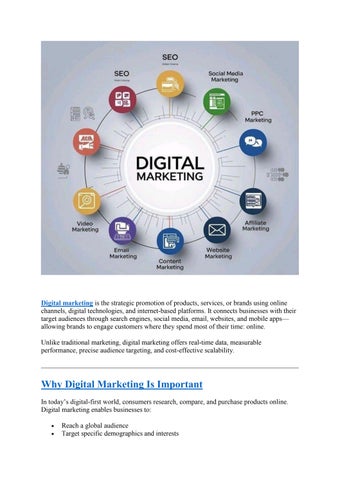
Digital marketing is the strategic promotion of products, services, or brands using online channels, digital technologies, and internet-based platforms. It connects businesses with their target audiences through search engines, social media, email, websites, and mobile apps allowing brands to engage customers where they spend most of their time: online.
Unlike traditional marketing, digital marketing offers real-time data, measurable performance, precise audience targeting, and cost-effective scalability.
Why Digital Marketing Is Important
In today’s digital-first world, consumers research, compare, and purchase products online. Digital marketing enables businesses to:
Reach a global audience
Target specific demographics and interests
Measure campaign performance instantly
Increase brand awareness and customer loyalty
Generate qualified leads and sales
Compete with larger brands using smart strategy
From startups to multinational corporations, digital marketing is essential for growth and sustainability
Core Components of Digital Marketing
1. Search Engine Optimization (SEO)
SEO is the process of optimizing a website to rank higher on search engines like Google. It improves organic (non-paid) visibility and drives long-term traffic by targeting relevant keywords and enhancing website structure, content, and authority.
2. Search Engine Marketing (SEM)
SEM involves paid advertising on search engines, such as Google Ads, to appear at the top of search results. It delivers fast visibility and measurable ROI.
3. Social Media Marketing (SMM)
This strategy uses platforms like Facebook, Instagram, LinkedIn, and TikTok to build brand presence, engage audiences, and drive conversions through organic content and paid ads.
4. Content Marketing
Content marketing focuses on creating valuable, relevant, and consistent content such as blogs, videos, infographics, and eBooks to attract and retain a clearly defined audience.
5. Email Marketing
Email campaigns nurture leads and maintain customer relationships through personalized communication, promotions, and updates.
6. Affiliate & Influencer Marketing
Brands collaborate with partners or influencers to promote products in exchange for commissions or sponsorship fees.
7. Pay-Per-Click Advertising (PPC)
Advertisers pay a fee each time their ad is clicked. PPC campaigns can run on search engines and social media platforms.
Key Benefits of Digital Marketing
Cost-Effective: Lower investment compared to traditional advertising.
Targeted Reach: Precise audience segmentation.
Measurable Results: Track clicks, impressions, conversions, and ROI.
Higher Engagement: Two-way communication with customers.
Global Access: Expand beyond geographical limitations.
Data-Driven Decisions: Analytics help optimize strategies.
The Future of Digital Marketing
Digital marketing continues to evolve with advancements in artificial intelligence, automation, voice search, and personalized experiences. Trends such as video marketing, short-form content, and data privacy regulations are shaping the future of online branding and communication.
Businesses that adapt to digital transformation and leverage data-driven strategies will remain competitive in the modern marketplace.
Conclusion
Digital marketing is more than just online advertising it is a comprehensive approach to building brand visibility, connecting with audiences, and driving measurable business growth. By combining creativity, analytics, and technology, businesses can create impactful digital experiences that convert prospects into loyal customers.