POSTAL PATRON















































































































































Wimberley Office
150 RR 3237, P.O. Box 727 • Wimberley, TX 78676
Office: 512/847-2278 • Fax: 512/847-5131





Wimberley Office
150 RR 3237, P.O. Box 727 • Wimberley, TX 78676
Office: 512/847-2278 • Fax: 512/847-5131
As early spring settles into the Texas Hill Country, I become more aware of the growth and changes that have brought us to this moment in the history of living things here. Many people dedicated their lives to the study, preservation, and understanding of the unique ecosphere of this beautiful part of Texas. Certainly, J. David Bamburger, founder of Selah, the Bamburger Ranch Preserve, has lent tremendous efforts to the continued research into what makes the Hill Country tick. I am eager to watch his experiment mature as we learn more about what controlling some of the most successful native species, like mountain cedar, can do for the larger natural systems, especially live springs and groundwater. His passing in January of this year leaves behind a life of inspiration and commitment to the preservation of some of Texas’ most treasured natural resources. Ladybird Johnson did more for the promotion of the wildflowers of Texas than perhaps any other single person, but she famously refused to take any personal credit, claimed “the good Lord set them all in motion and I just got aboard a moving train!” Many Wimberley area folks have done their part as well to spread the good word about the beauty and practical use of native plants. Mark Lundy, Olivette Beach, Patsy Glenn, and Martha Knies are only a few that come to mind.

by Kern Deschner
My father used to say, “winners never quit, and quitters never win,” but then he would add with a smile, “but if you never win, and you never quit, you might be an idiot.” I suppose that sums up a lot of things in life. In ````````
personal relationships, finance, business. When do you walk away, dump or buy the crypto, or trade in that old car? How do you know when to hold up and know when to fold up?
I wonder about that every time I watch the Olympics. Anybody who knows an Olympian knows the incredible sacrifice that it takes just to make the team. Just being at the Olympics makes you a winner. Television likes to show us the top five spectacular performances, especially the top three. We groan at somebody only getting a bronze but – holy cow – that’s a big deal! TV doesn’t spend any time on the guy in 14 place, who was 14 place at dozens of earlier competitions, but keeps showing up anyways. Why do they do that? Some countries never win a medal but they march at the opening ceremony just as proudly. Was that brief moment worth the years of work, expense, and sacrifice? th th
Alpaca shows are kind of that way. It used to be that shows were regional and that we would do extremely well. Now almost every show is a national show and there are five or six farms that will come from across the U.S. with big trailers full of animals. They have 3,000 acres and 3,000 animals and, just by chance if nothing ``
Every single person who supported the acquisition, planning, and ongoing operations of the Blue Hole Regional Park can proudly include themselves in this group of local saints. The current and future population of Wimberley will `

by Tim Thompson
forever owe a debt of gratitude to Peter and Mary Faye Way, who held the parkland in trust until the village of Wimberley could get itself organized to create the park.
As time goes on this community will continue to be blessed by the natural beauty of our springs, creeks, and rivers. Our lives will be filled with the wonder of our trees, flowers, grasses, and shrubs. Let us ever honor them and the marvel of life itself here.
Horticulturist Tim Thompson managed the garden center at King Feed for over 25 years. They offer everything you need to have the garden of your dreams without stressing your budget. Call King Feed at 512 847 2618.

else, are going to come up with animals that are better than yours. We consider it a win if we come in third or fourth behind one of these farms. Occasionally, we will be like the figure skater from Kazakhstan and unexpectedly win a gold medal, but it is predictable that one of these big farms will sweep up the championships.
Sometimes I worry that the big farms are killing the shows. So why don’t we quit going? Some farms have. However, I think, like the Olympics, that maybe it’s just the excitement to be in the games. You are there for the contest. It’s like dancers in the chorus line at a Broadway musical; at least they’re on Broadway! But I think the real answer is behind the scenes. TV might show the gold medalist walking around and hugging the guy in 14 place like a brother or sister. They have taken this journey together. After the alpaca shows, the show ring may be dark but, at our booth, the big boys will be with Rhonda, laughing, talking, exchanging ideas, drinking wine, eating cheese, and proving that the community, the camaraderie, and the sense of belonging is what makes it all worthwhile. That’s why we keep going. th
So I salute the tiny countries and the athlete in 14 place at the Olympics that keep showing up. They are not idiots, they are winners. th
Rhonda and Kern Deschner are experienced alpaca ranchers raising alpacas through all kinds of Texas weather since 1997. Tierra Prometida Alpaca Ranch can be visited by calling Rhonda at 512 753 9962, or at Tierra@AlpacaUSA.com.
There are 168 hours in a week. Recently, I read about data collected during a weekly time challenge that tracked daily time spent on various activities. I was sad to learn that parents did not spend much time with their children, perhaps a few hours per week. Does it matter if parents attend their child’s lessons? Yes, because I have seen how a parent’s presence at lessons benefits both the student and the parent. Often, children become anxious when their parent leaves the lesson to make a phone call, pick up another child, or sit in the car doing something else. Maybe the child feels disappointed that the parent will no longer be there to watch them at their lesson. At lessons, the parent may observe:
How the child learns and handles emotionally-charged learning moments. Is the child confused, difficult, celebratory, or overwhelmed?
What learning issues the child has. Does the child mix things up, learn in an unexpected way, or need processing time? Does the child eagerly move ahead, listen quietly to instructions, or insist that the learning units come in small packages?
How the child works with the teacher. Is the child teachable or reluctant, positive or negative, impulsive or hesitant?

by Casey Harrison, LDT, CSLDS, CALT-QIT
Every child deserves the chance to succeed in school, and classroom accommodations can help students with dyslexia succeed. Accommodations
don’t lower expectations or change what a child is expected to learn. Nor do they replace interventions. Instead, they change how a child can access information and demonstrate what they know, so that their effort, not their disability, is measured. Imagine your child needing extra time, not because they are slow learners, but because their brain processes written language differently. Or think about how much more confident a student feels when they can use audiobooks, text-to-speech tools, or oral responses on tests instead of being penalized for decoding difficulties. These are real examples of accommodations that help dyslexic students engage with grade-level work on an even playing field.
Unfortunately, many people misunderstand accommodations as unfair advantages or “crutches”. That couldn’t be further from the truth. Accommodations are tools used with intention and purpose, just like a calculator for math or a ramp for wheelchair access. They help students learn without changing learning goals or expectations.
The parent will be able to reflect later on the lesson. Is there anything the parent can do at home to help encourage, support, or grow the child’s success in lessons? Can the parent help the child practice? Can the parent enhance the child’s home environment for learning and practicing?
I hope parents reflect on any attitude or belief that the child is to learn independently of the parent. Children
by Paula E. Bird
thrive when a parent shows interest. A weekly 30-minute lesson is the perfect opportunity to reflect, observe, and take notes about ideas to implement at home, and the parent can also applaud and celebrate the child’s growth.
When parents help children practice daily, magic happens. The child’s ability to learn grows and expands. Soon, the child’s ability will grow and expand to benefit others, to become a gift to the family, the community, and the world.
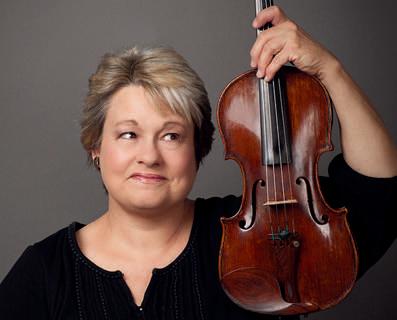
Paula E. Bird has taught in the Wimberley area for over 20 years. Recently retired from Texas State University and the Austin Symphony, she has performed at Carnegie Hall as a founding member of the Artisan String Quartet. Joined by her business partner, musician Ian Lee, the pair serves over 100 students in the Central Texas area. Contact her at birdtull@prodigy.net or (512) 694-7687.
As parents, one of the most powerful roles we have is to understand which accommodations support our child and to advocate for them in school. Early conversations with teachers, sharing your child’s strengths and challenges, and collaborating on a plan can lead to better support and stronger confidence.
When families and educators work together, students with dyslexia are not just accommodated; they’re empowered to thrive academically and socially. And in classrooms, that partnership strengthens our whole community.
For 10 years, Wimberley Dyslexia & Learning Center has served students in the Wimberley Valley and across the US through individualized dyslexia therapy and academic support. The center specializes in evidence-based, structured literacy interventions and partners with families to help students build strong reading, spelling, and writing skills and the confidence to advocate for themselves. To learn more, visit WimberleyDyslexiaCenter.com.
Casey is the founder of the Wimberley Dyslexia & Learning Center. She is a Certified Academic Language Therapist (ALTA), Licensed Dyslexia Therapist (TX, ALTA), Certified Structured Literacy Dyslexia Specialist (IDA), and a Qualified Teacher with over 27 years of experience. She works with parents, teachers, and PK-12th grade students at her private practice, providing dyslexia therapy, literacy instruction, consultations, resources, and training. She sits on the National Board at-large of the Academic Language Therapy Association. Her podcast, Together in Literacy, focuses on dyslexia, literacy instruction, and the whole child. Author of Teaching Beyond the Diagnosis - Empowering Students with Dyslexia Through the Science of Reading. She resides in Wimberley with her husband, their three daughters, and many animals in their little slice of the country. Contact Casey at 512 731 7106 13501 Ranch Road 12, #201
by Tom Wiley
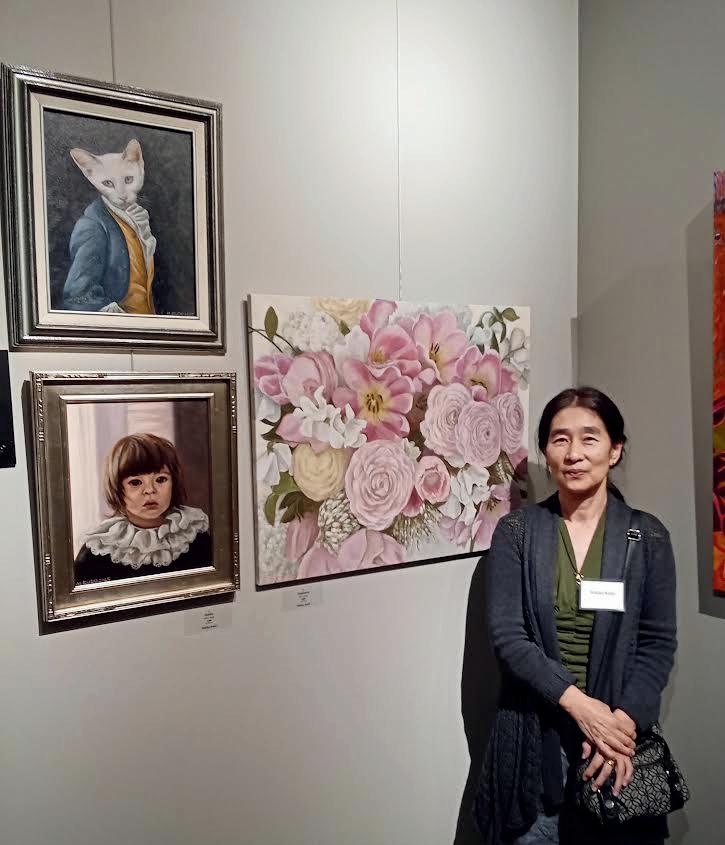
It’s funny how tumbling dice can bounce along before landing on a winning number. Sometimes life is like that. Mikiko Kudo might appreciate that analogy. Her life story followed an interesting path. Mikiko grew up in a rural area of Japan. Families farmed, seldom pursuing a higher education. Mikiko was the first in her family to go to college. Considering her background and thinking about job potentials, she earned a degree in Agriculture and Agricultural Chemistry. For the next two years, Mikiko volunteered for the Japanese Peace Corps in Kenya. She taught math, biology, and chemistry in a secondary school. It was an education for Mikiko, too, living in a setting with no running water or electricity. While there, she met volunteers in the American Peace Corps. Several members became lasting friends, even helping her later to come to America.


After this life changing experience, Mikiko knew she didn’t want to have “just a job” somewhere, but wanted to follow her passion and create art. College students in Japan were younger and more experienced in art. She lacked a portfolio of work or a level of art training. This is where the path made another interesting jump. One of her friends from the American Peace Corps encouraged Mikiko to come to Chicago to study art, an opportunity she quickly accepted. She earned a B.A. in Fine Art, which led to a job in graphic design. Chicago was also where she met her husband. His parents came to visit the young couple and shared information about their retirement home in Wimberley, Texas. And that’s how the “tumbling dice” landed in Central Texas.
Mikiko admired paintings by the Old Masters. Like their large portraits, her favorite subjects were family members. Next was a transition to a period of “Fantastic Animals”. A cat or dog would appear in a suit of clothes; a rooster in a regal robe. She also paints large canvasses filled with colorful flowers.
As a member of the Wimberley Valley Art League, she frequently submits work for exhibitions at the Wimberley Community Center. Paintings have won Best In Show awards and other honors. She also exhibits at Primal Gallery and 2 Moons Art Loft, both in nearby Dripping Springs.
Mikiko’s story demonstrates how small the world of art can be. From Japan to Africa, back to Japan, to Chicago, to Central Texas. Her success isn’t a random “game of chance”. She aggressively pursues opportunities to exhibit her work. This includes accepting commissions. Some oil paintings can be whimsical and playful, some reflect the beauty of nature. Her goal is to reflect the happiness and calm she strives for in life.
Mikiko Kudo
www.mikikokudo.com
mikikokudo@hotmail.com









by Sarah Geenberg

Ego. We all have it – a lot of it! My ego just had me say that and what just questioned me was your ego. Ego helps us survive and even to thrive. But like anything else, ego can get unbalanced and limit us.
In karate, it is what we have to pay attention to and balance the most. And
ego looks different at different ages. Kids have the least ego and easily see a way beyond it. Their ego looks like – you embarrassed me, I wanna get you back. Their ego stays easily in check, because the confidence they gain in karate helps them see that insults and taunts aren’t true and are non-threatening. Teenagers’ ego is bigger and is based in trying to prove they have something to offer the world. Mostly, they are trying to prove that to themselves. They are basically grown and are facing entering the world without their parents – and they have no experience at that. Ego gets them through it by pushing them to show that they are able. In karate, ego has them push themselves to try bigger and bigger things. As a result, they get good very quickly. They are also eager to show they know something by being helpful to others.

by Robert Donnelly, DDS
Adults’ ego is the worst and it gets worse as one ages. We get pretty set in it and it feels perfectly justified. Around karate, it usually it looks like: I don’t know if I’ll be safe. It also commonly looks like: I don’t want to look bad or I don’t want to bring the young ones down. Ego is what gets us hurt, no matter if we are doing karate, yoga, or trying to clean our gutters on that shaky ladder. Ego has us try to keep up with someone who is at a different stage, who doesn’t even care about what we can or can’t do. But our ego also is something that helped us get along in life and helped us face our challenges. It helped us learn a lot and we have a lot of wisdom to give.
It is a beautiful thing when older and younger people forget ego and help one another. Younger ones get to see they are worthwhile and older ones get to lose their fear and continue moving forward.
Sarah Geenberg is the owner of Wimberley Karate and Yoga Studio. They have classes every day except Sundays. First class is free, so come by, anytime.

In many cases, when people have any work on themselves done, they would like for the results to look as natural as possible. Whether it’s our hair, nails or some sort of cosmetic procedure, we may not want to look completely different,
but simply a better version of ourselves. Many people have that same mentality when it comes to their dental work. In cases such as teeth whitening, porcelain veneers and the like, our patients like to look as natural as possible. When it comes to fillings, you may find it difficult to feel secure in your smile if you have metal in it. Dr. Donnelly understands the importance of wanting to have a beautiful smile and is able to give his patients what they want using tooth-colored fillings. With tooth-colored fillings, your smile is able to look brand new, natural, and beautiful. Metal fillings, or amalgam fillings, can be toxic to our bodies as well as unappealing to the eye. Toothcolored fillings are more durable than amalgam fillings and they are able to match your existing smile exactly. Amalgam fillings can change shape depending on the temperature of your mouth, which leaves the possibility of expansion, cracking your tooth and inviting bacteria to make your smile its new home. The composite resin we use to make your tooth-colored fillings are more flexible and effectively
adhere to your tooth.

These are only a few of the many benefits of tooth-colored fillings. Investigate all the reasons with a dentist you trust knows how to bring out the best in your smile. It can make all the difference.
If you or someone you know suffers from dental anxiety, please contact us at 512 396 5225 so we can help you take the needed steps to get a healthy mouth and smile... and get rid of dental anxiety once and for all. Come see why Dr. Donnelly was voted a Texas Super Dentist by Texas Monthly Magazine and Best Dentist in Hays County!

The young woman sitting on my couch, cradling her very pregnant belly, had that special glow about her. However, she was glowing not from being with child, but from wishing to string up the biological father of the baby from the highest tree. For about fifteen minutes she ran down the list of his many faults, each one more grievous than the next. Before she sailed into the next page of his list of his faults, I stopped her and asked what he could do to make her happy. She thought for a moment, and then said, “He could buy me a stroller, the kind that has the car seat attachment.”
Surprised by the quick solution for his cornucopia of character flaws, I asked, “That’s it? All it’s going to take for you to be happy in this relationship is for him to buy you a stroller?”
Thinking a bit, she said, “Yeah. At least for now.” Ah, therein lies the rub of attempting to find happiness from outside ourselves. It’s just so darn elusive, as it glimmers seductively just over our next personal horizon. Happiness this week lies in the purchase of a baby stroller; next week it may find its way into our desire for the next shiny bauble. Whatever we may get, if we’re not happy within ourselves, after a while, that old familiar hollow feeling returns, urging us to fill up the void. When we try to find happiness outside of ourselves, we’re being outer-directed. Taking personal responsibility for our happiness means we’re being inner-directed, and we don’t use the cop-out of blaming others for our miseries. When we’re outer-directed, we’ve chosen to allow ourselves to be batted about by the whims, behaviors, and opinions of others. Being inner-directed means to `````

look only as far as our own thoughts and actions, and learning how to trust our intuition for what is best for us. The power of being inner-directed is not to allow others to control your emotions.
Dr. Richard Carlson, an author and therapist, writes about taking control of our happiness: “The first step in becoming a genuinely happy person is to make a

by Leslie Tourish, LPC
lifetime commitment to becoming more inner-directed than you already are. Each of us has experienced a great deal of disapproval in our lives. For many of us, a vast majority of this disapproval has come from the people we love the most – our family and friends. Unfortunately, there is no way to please everyone all the time. In fact, it’s difficult to please almost anyone very much of the time. Disapproval is as predictable as the sun coming up in the morning.”
Disapproval is inevitable; it’s more important to feel good about the decisions we make. Inner-directed people ask themselves many times a day: How do I feel about this decision? Is this what I really want to be doing? Taking control of our thoughts and learning to truly trust ourselves, lowers the chaos our insecurities can rain down on us. Only we can allow others to rent space in our heads for free. And if need be, we can take responsibility for ourselves by buying our own strollers with the car seat attachment, and not relying on the kindness of others. The money spent could be well worth the self-esteem saved.
Leslie Tourish, LPC, is a Dripping Springs psychotherapist in private practice. Visit LeslieTourish.com or www.LATourish.com
by MardeeCalkins
Real estate in 2026 feels different than it did a few years ago — and in many ways, that’s a healthy thing.
Here in the Texas Hill Country, buyers are still drawn to what makes our area special: ``
wide-open skies, outdoor living, strong community connections, and a slower pace of life. Having lived here for 30 years, I’ve watched our market evolve — and I’ve seen firsthand that while conditions change, the appeal of this place never does. While interest rates are higher than the historic lows of 2020–2021, they remain closer to long-term averages, and motivated buyers are still actively searching for the right home. What has changed is the pace. Homes no longer sell instantly just for being listed. Buyers are more thoughtful and selective. Pricing matters. Preparation matters. Presentation matters. Homes aligned with median price ranges in their neighborhood often move more quickly because the buyer pool is larger. As price points rise — especially for properties with acreage over $1 million — the pool of qualified buyers naturally becomes smaller. Those homes are selling, but they require patience, intentional marketing, and strategic positioning.
In today’s market, thoughtful preparation makes a meaningful difference. Simple updates, fresh paint, beautiful photography, and highlighting lifestyle features — outdoor living spaces, natural light, flexible rooms — help buyers envision themselves living there. With my background in design and construction, I enjoy guiding sellers toward improvements that truly add value and create a strong first impression.
The good news? Homes are selling across Wimberley, Dripping Springs, Driftwood, and surrounding Hill Country communities. The key is understanding the micro-market and approaching it with a clear, thoughtful plan.
If you’re considering selling — or dreaming about finding your perfect new place — please reach out with any questions. I truly love to help buyers and sellers navigate this market with clarity, confidence, and deep local insight.
Mardee is a 30-year Wimberley resident and a Realtor with Bramlett Partners. With decades of experience as both an architectural designer and real estate professional, she is client-focused and committed to integrity for all parties. MardeeCalkins.com Local. Knowledgeable. Trusted.
by Alice Lebkuecher
An option to back out
As a homebuyer or seller, an accepted contract is exciting. But hang on... the deal’s not done. Thankfully, if you’re working with a realtor, he or she can guide you through all the potential twists and turns on the way to closing.
For starters, most purchase contracts include a termination option. The buyer pays the seller a fee for a specified period of time during which the buyer can cancel the contract. The buyer can exercise this option for any reason. In fact, he doesn’t even have to explain why.
A closer look at the property
Buyers usually hire inspectors during the termination-option period. Inspections that reveal items in need of repair may prompt a buyer to ask for a price reduction or repairs prior to closing. Or the buyer may simply choose to cancel the deal.
Transactions sometimes unravel when a buyer cannot obtain the financing specified in the contract or the property does not meet the lender’s requirements. For example, appraisals can come in lower than the purchase price, or there may be issues with obtaining insurance for the home.

by Billy Pattison
The list goes on
Option periods, inspections, and financing are three common trouble spots for transactions, but there are many others. Problems with title insurance or the survey, disagreements about items that convey, issues related to home owner associations, or damage to the property after acceptance of the contract but before closing are a few examples of issues that can arise.
You have a valuable resource
Communicating with your realtor about each stage of the transaction will minimize surprises and increase the chances that your transaction will proceed smoothly.
For more information on this subject and others, give me a call today.
This article was written for the Texas Association of Realtors March 18, 2018.
Alice Gumbert Lebkuecher is a sales agent with Keller Williams Realty, Partners in Real Estate, in Wimberley. She works with both buyers and sellers in Wimberley and surrounding areas. To contact her, call her cell at 713 253 1311 or by email at AliceinWimberley@gmail.com.
Your roof is one of the most important parts of your home, yet it's often overlooked until there's a problem. Understanding the basics can help you protect your investment and avoid costly repairs.
How long does a roof last? The lifespan of ``
a roof depends largely on the material used and local weather conditions. Traditional asphalt shingles typically last 20–30 years, while metal roofing can last 40–70 years. Tile and slate roofs may last even longer with proper maintenance. Severe weather, poor ventilation, and improper installation can shorten any roof’s lifespan.
How do I know if my roof needs repair or replacement? Some warning signs are easy to spot. Look for missing, cracked, or curling shingles, sagging areas, water stains on ceilings, or granules collecting in gutters.
If your roof is over 20 years old and showing multiple issues, a full replacement may be more cost-effective than ongoing repairs. A professional inspection can help determine the best course of action. I recommend your roof be inspected at least once a year or immediately after a major storm.
Storm season is upon us, so it is important to know what steps to take if your home is affected by wind, hail, or a tornado. After a storm, it is imperative to have your roof inspected ASAP. Contact a reputable company and be sure they are knowledgable and trained to advocate for you (should you want) during your insurance process.
My name is Billy Pattison. I have been with Infinity Roofing (powered by Stronghouse) for over 20 years. My wife Chelsea and I have lived in Wimberley since 2019, raising our two children, William, 9, and Juniper, 6. We are very active in the Wimberley community and are so blessed to live and work in this beautiful town! Reach out at 832 696 1012 or BPattison@StrongHousePro.com.


by AJ Harwood
Nearly a quarter of Americans wait until the last minute to start preparing their ````````
returns. The earlier you prepare your return, the more time you have to determine if you qualify for deductions. Deductions allow you to reduce the amount of taxes you owe so you keep more money in your pocket.
Maximize your deductions: State and local property taxes You may be able to deduct what you paid in these taxes from your federal income taxes as long as you’re not subject to the alternative minimum tax (AMT).
Home mortgage interest Write off interest paid this year, up to $1 million, if the property is your primary or secondary residence. Interest on home equity loans Deduct interest paid on your home equity loan of up to $100,000, if you’re not subject to AMT.
Home buying expenses You may be able to write off these expenses, including loan origination fees, prorated interest on a new loan or prorated property taxes.
Child care Paying a babysitter while you work, look for work, or attend classes, may qualify for a refundable tax credit that is 2035% of $3,000 for one child or 20-35% of $6,000 for two or more children. Get your caregiver’s SSN or tax ID. If you use money
from a flexible spending account (FSA) and use it all, you may still be able to take credit for additional expenses up to the limit. College expenses If you’re paying for your child’s college education, you may choose to take one of three deductions. American Opportunity Tax Credit Up to $2,500, tuition, and fees, up to $4,000. Lifetime learning credit: $2,000
Medical expenses You may be able to deduct your out-of-pocket medical expenses if they exceed 10% of your adjusted gross income (AGI), or 7.5% of your AGI for those 65 or older.
Self-employment Claim business expenses, retirement plan contributions, 50% self-employment tax, workspace, car, and health insurance premiums for you, your spouse and dependents.
If you’re thinking of contributing to your Traditional or Roth IRA, check the IRS website to see if you’re eligible to deduct your contribution. Did you move in 2025? Update your mailing address with your employers, clients, and any businesses that hold your investments or accounts.
This information is designed to provide a brief overview of the subject matter covered and is offered for general educational and informational purposes only. Sources: NAR 2015 Profile of Home Buyers and Sellers. Used with permission by the Buffini & Company.
Allison “AJ” Harwood, JD, MBA, GRI, is a broker associate with Compass and Founder & Principal of the Hill Country Ranch Luxury Group. With decades of real estate experience and advanced legal and business credentials, AJ provides sophisticated representation for buyers and sellers. AJ’s background in law and business, combined with deep market knowledge, allows him to guide clients through complex transactions with confidence and clarity. Call today and begin a strategic conversation, 512 848 6612.

by Randy Lawrence
It’s well known that in central Texas, we have some of the highest water hardness levels in the country. Something you may not know is that those levels can vary greatly from one water source to another. The amount of calcium and other hardness
minerals dissolved in water is expressed using grains per gallon, or GPG. The amount of scale buildup and corrosion you’ll experience is directly proportional to the hardness of your water. It’s safe to say that, with a test result of 10 GPG or more, the home’s plumbing system and water-using appliances would benefit from a water softener.
Unfortunately there are few, if any, available ground or surface water sources in our area which contain less than 12 GPG. Most of our local municipal and community water supplies contain between 20 and 40 GPG. At the lower end of the range, visible issues can be relatively manageable with cleaning chemicals, but calcium scale will definitely accumulate in the pipes, fixtures, and water heater. The news isn’t any better with private wells. Depending on the location and depth of your well, hardness can range from 15 GPG to as much as 160 GPG. At the higher end of the range, the calcium will cause excessive buildup on fixtures and surrounding surfaces, etching of glassware and premature failure of water heaters, dishwashers, and other water-using appliances.
It’s important to know that treatment equipment is not one size fits all. Despite misleading claims by some, traditional salt or potassium-based softening is the only method which physically removes hardness from your water.
Recent advances in electronic controllers have made the new generation of softeners more reliable, efficient, and user-friendly than ever. A water treatment specialist can test your water in order to determine the necessary softener size for your home.
Randy is the owner of ProQuality Water Systems, a full service water treatment company. He is one of only six Class III Certified Water Treatment Specialists in Hays County (LIC# WT0002693). With over 25 years of experience he has serviced Wimberley and surrounding areas for over two decades.
“When

Spring is a great time to prepare your trees for the stress that accompanies our hot, dry summers. Issues to consider include insect pests, leaf diseases, and nutrient deficiencies in the soil. Defoliating caterpillars are common in many Texas trees during spring. Normally, a healthy tree can withstand some defoliation because it has energy reserves to regrow foliage. But drought stress has reduced or depleted those reserves in many of our Texas trees. A pest particularly attracted to weakened trees is the borer, and this insect can do significant damage. Having your trees treated for any seasonal pests and borer activity is a good way to help prepare them for summer’s harshness.
Leaf diseases can cause defoliation, too, and inhibit a tree’s or shrub’s ability to make its food, the energy produced through photosynthesis. These diseases also diminish the plant’s appearance in the landscape. If defoliation from leaf disease occurs in several consecutive years, tree health may severely decline. Many leaf diseases, such as anthracnose and leaf spot are caused by fungi, which can be controlled through a program of treatments that begin at bud break. Other controls may include canopy thinning for better air circulation and light penetration
Building an investment portfolio is a lot like making sure you eat more than just pizza for every meal. You wouldn’t want to live on ice cream alone, and you shouldn’t put all your money in one type of investment either. Both require mixing things up and checking in from time to time to make sure you’re not accidentally living on snacks or, in finance, betting everything on a single stock.
Just like a well-balanced meal includes grains, protein, fruits, veggies, and even the occasional treat, a smart investment portfolio has a little bit of everything: stocks for excitement, bonds for calm, real estate for something solid, cash for flexibility, and alternatives to smooth out bumps in the road. Each part does its job so your financial health doesn’t get out of whack—think of stocks as spicy salsa and bonds as mashed potatoes: you need both for balance.
Variety is the spice of life—and your portfolio. If you only ate bread, you’d miss out on vitamins and probably get bored. Similarly, investing in just one thing is a recipe for trouble. Diversifying means if one part of your portfolio struggles, something else might save the day. When stocks are having a meltdown, bonds might be holding steady, just like fruit helps keep you healthy when you’ve had too many burgers. By spreading your investments, you safeguard against the ups and
and avoiding irrigation methods that wet the lower canopy. Any canopy thinning should be done by a qualified arborist according to ANSI standards and, especially for oak trees, at the appropriate time of year.
Nutrient deficiencies in the soil can also affect tree health. Trees need adequate

by Joe Harris
amounts of macronutrients, such as nitrogen, and micronutrients, such as iron, to function and grow. Soil pH, a measure of the soil’s acidity or alkalinity, can impact the availability of nutrients to the plant. Soil testing is a good way to determine a soil’s pH and whether nutrient deficiencies are present. Then a qualified arborist can fertilize the tree according to the soil analysis prescription.
Caterpillars and leaf diseases love spring. Timely control and maintaining tree health can help your trees stand up to the challenges that our Texas summers present.
Joe grew up in Charlotte, Michigan, as a second-generation arborist. He attended Texas State, joining Bartlett while he was there. Joe worked 5 years as an arborist climber and crew leader, transitioning to Arborist Representative. He and his family love spending time on the San Marcos river. Visit Bartlett.com or call 512 392 1089 to schedule an appointment.

downs of any one asset, much like a varied diet protects your health. You also need to check in regularly. Sometimes your diet needs to change— maybe you’re training for a marathon, or maybe you just discovered kale. Similarly, your investments should match your goals: as you get closer to retirement, you might want to swap some spicy stocks for more mellow bonds. It’s like trading cookies for carrots—maybe not as fun, but definitely ``
better for your future. Regular reviews help ensure your portfolio stays aligned with your needs, much like adjusting your diet keeps your body and mind healthy.
Scott G. Hackett, CFP® is the president of the Hackett Financial Group LLC (HFG), a fee-only registered investment advisor. Visit HackettFinancialGroup.com or reach out at 512 847 0630. Email Scott at Scott@HackettFinancialGroup.com.


I recently received a favorable ruling on a motion in an interesting case. I was not surprised to get a phone call a few days later from the other side’s attorney offering a settlement. There are various points in the litigation process where the possibility of settlement is particularly high. For instance, let’s assume you just suffered a disappointing loss at trial, but the judge has either chosen to grant you a new trial “in the interest of justice” or you are considering your attorney’s suggestion that you might be successful on appeal. Either way you may have to go through another trial and might lose again. Nevertheless, your opponent is now faced with either another trial or an appeal. This is a prime time for the parties to revisit the possibilities of a settlement.
The possibility of settling a lawsuit exists from beginning to end. Immediately after trial can be a good opportunity for the parties to reconsider their respective settlement positions. Success on appeal or how a jury will respond to the same facts in a retrial is uncertain. Each party has seen the other party and their witnesses testify in front of a jury; they have seen their respective legal counsel make presentations to the jury; they have heard the comments of jury panel members expressing their feelings about the positions of the parties during voir dire; they know what the
jury thought of the case based upon its verdict. All of this information allows the parties to reassess their previous ````````````

by Roland Brown
settlement negotiation postures with a view to increasing or decreasing demands or offers.
Trials can be grueling, daunting events and the parties may be weary of the fight. In almost every case at least one, and often all of the parties, are paying their legal counsel and experts by the hour so costs will continue to rise if the case goes on. If the losing party is uninsured and lacks assets, the collectability of the judgment may be in doubt. For these reasons, it is not surprising that lawsuits often settle at this juncture.
Article originally published in March 2017 issue of the Wimberley Valley News & Views
Attorney Roland Brown handles exclusively personal injury claims. Roland, who offices in Wimberley, has been voted HAYS COUNTY’S BEST PERSONAL INJURY ATTORNEY for 2020, 2021, and 2023 in annual polls of Hays County attorneys. For more information call 512 847 2500.

by Carrie Campbell, J.D.
I receive multiple calls monthly requesting the creation of a Trust. For many years, it was standard practice to use trusts in Texas to minimize estate taxes, and it remains standard practice outside of Texas. However, during my
30 years of estate planning, the federal estate tax (which is the only death tax to apply in Texas since Texas does not have an estate tax of its own) has increased from $600,000 to $17 million per person. Few of my clients are at risk of paying estate taxes since married persons will double that exemption and be taxed only on assets over $34 million.
There are serious considerations when creating any trusts that demand there be benefits to outweigh the aggravation and expense. (1) Trusts are more expensive to create and maintain than using a single Will for asset distribution at the time of death. (2) Trusts have their own federal tax identification number and must file annual tax returns in addition to the individuals who create them. (3) The maximum tax rate for an individual and a trust is both 37%, but trusts are taxed much more aggressively. Individuals are taxed 37% only on taxable income over $640,600. Trusts are taxed 37% on taxable income over $16,000. (4) Capital gains are not necessarily avoidable using a trust. It depends on the type of trust, whether the trust is revocable or irrevocable, and
and how long the asset has been held by the trust. With increases from the date of property purchases to current market values, capital gains could be vastly more costly than the probate of a Will. Those who inherit property will get a step up in cost-basis to the date of death which greatly minimizes or eliminates any capital gain tax. (5) To successfully navigate the recording of trust income, gains and losses to minimize applicable taxes requires a sophisticated trustee with professional skills or the awareness to hire such an advisor.
To determine the best option for your family, consult an attorney experienced with estate planning.
Carrie Campbell has lived and practiced law in Wimberley since 1997. She is the managing partner of Mounger & Campbell law firm. Carrie is an active member of the Rotary Club of Wimberley and former president of the Wimberley Village Library Foundation. She proudly has three wonderful daughters and two lively grandsons. To contact Carrie, call 512 847 1308 or CarrieC1970@gmail.com.












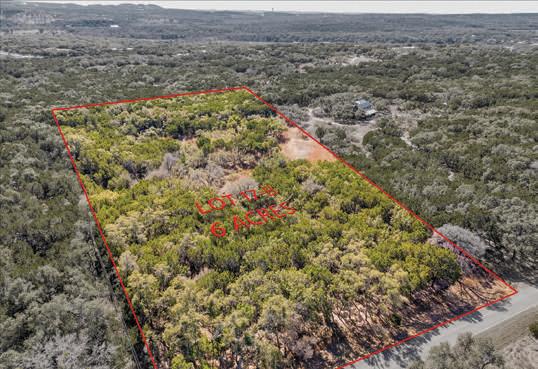

















Experience relaxed Hill Country living in Woodcreek, just minutes from charming downtown Wimberley. This inviting 3-bedroom, 2.5-bath home features soaring ceilings, a dramatic rock fireplace, and warm, timeless finishes. The kitchen with granite counters and stainless appliances flows easily into the living spaces. Step outside to a private backyard retreat with a multi-level deck, wetweather creek, workshop, and lush landscaping. New class-3 impact-resistant roof installed in 2024. $474,700.00