THE DROUGHT IS OVER! HERE COMES “THE CARMEN” LOCAL LIQUOR LAW CHANGE
DEER HORN TREE
4TH OF JULY/SUMMER CLASSIC RODEO ROOSEVELT HUNTING
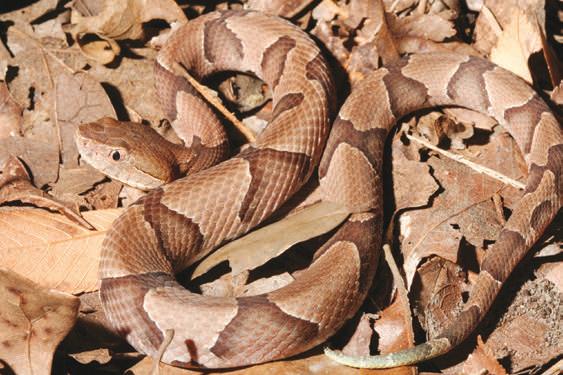
FIVE WAYS TO PREVENT NEGATIVE ENCOUNTERS WITH SNAKES
DUB SMITH: AN UNLIKELY STORY ABOUT THE POWER OF EDUCATION
WORSHIP WITH US
MESSAGE
Welcome to Kimble County!
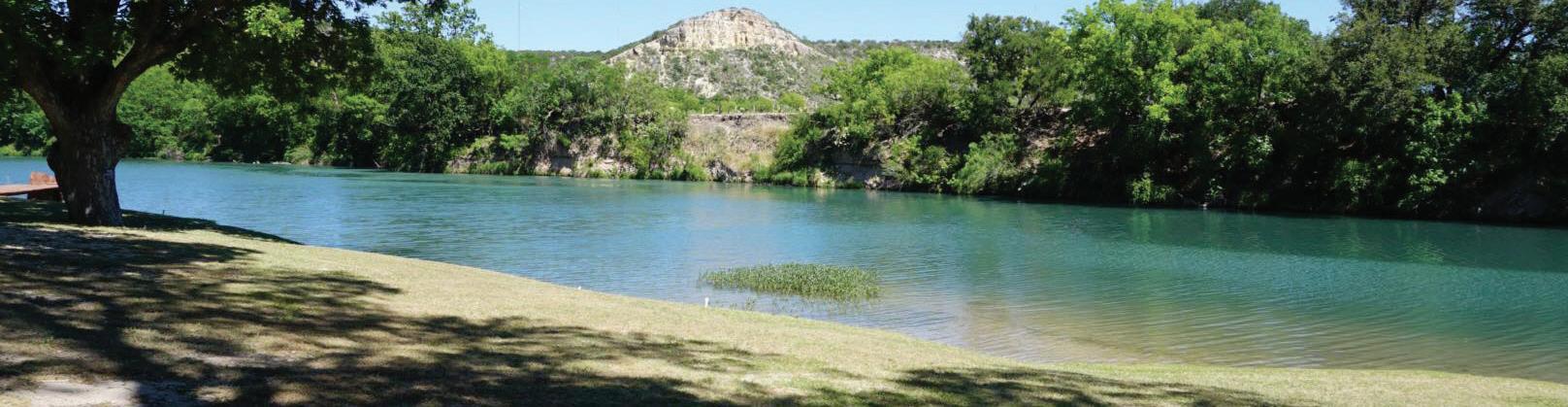
You’ve arrived in one of the most breathtaking destinations in the great state of Texas! I know, I know—everyone says that about their hometown. But here, in “The Land of Living Waters,” we invite you to experience it for yourself. With miles of crystal-clear, spring-fed rivers perfect for fishing, swimming, canoeing, and kayaking, plus wide-open spaces for camping beneath star-filled Texas skies, Kimble County offers an unforgettable adventure.
For those looking to escape the fast-paced urban rush, this is the perfect place to slow down and soak in the natural beauty. Whether you’re seeking a peaceful, restorative getaway or an exciting outdoor experience, you’ll find it here. Throughout the spring and summer, our community comes alive with rodeos, parades, golfing, disc golf, and some of the best fishing waters you’ll ever cast a line into.
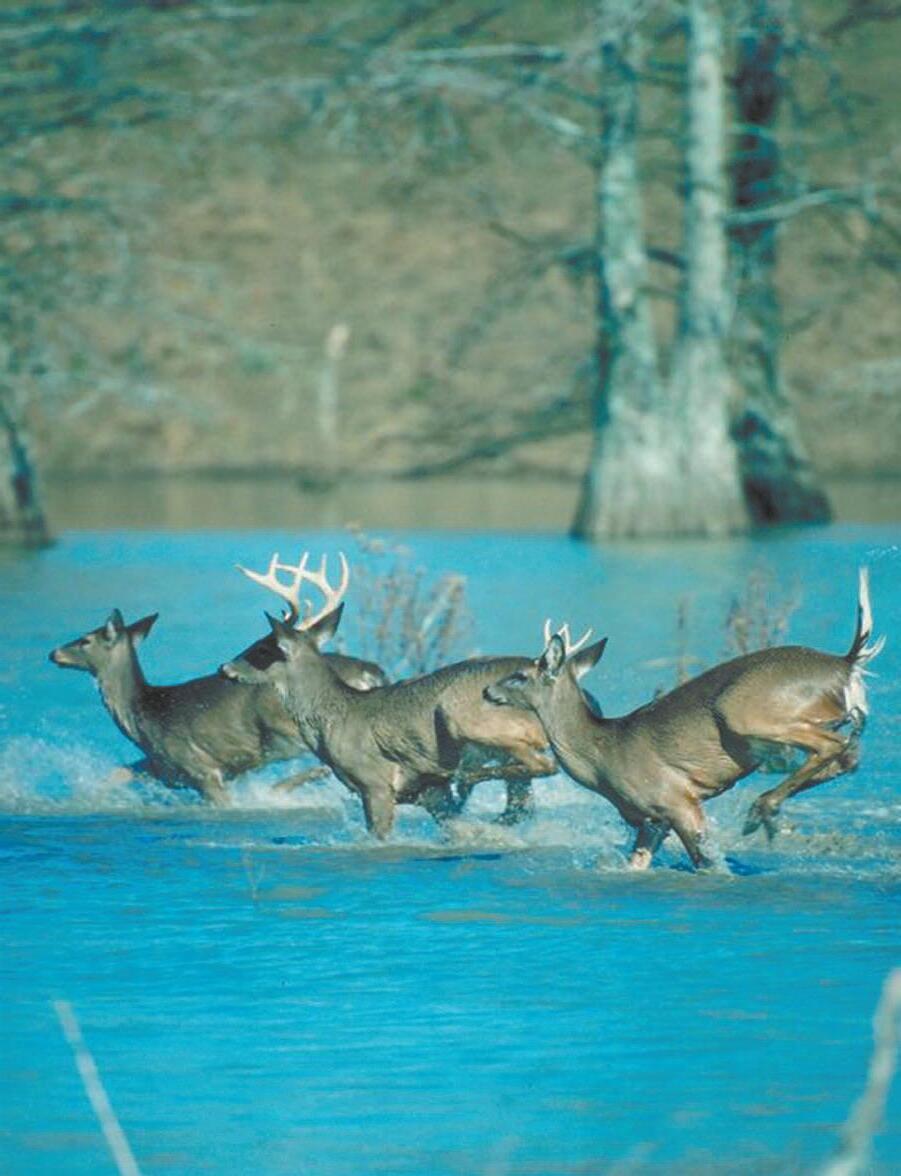
And if hunting is what brings you here—welcome! Kimble County is a hunter’s paradise, with thriving populations of deer, turkey, and more.
This guide is packed with resources to help you make the most of your visit— from local attractions and history to exciting new developments happening around the county.
A huge thank you goes to The Junction Eagle contributors for the time and effort it takes to create this publication. Asia Happner led the way in assembling this guide—no small task on top of her regular responsibilities—and she did an outstanding job once again! Our guides are consistently requested by visitors from across Texas and beyond, and they serve as an invaluable resource for the Junction Chamber of Commerce, the economic development and tourism boards.
We are also incredibly grateful to talented writers, Kendra McKinney and Mike Lee, who contributed their stories to this edition. Special thanks to photographers: Albert Castillo, Joyce Davis, Chris Melton, Laurie Oliver, Ginger Frizzell, Damian Martinez, Monica Barrera, Bethany Baker, Clay Sterrett, Rich Mann, India Buscha, Kathy Palladini, Saydee Meadow, Carmen Bierschwale, Stan Marek, Craig Meador, Laurrie Allen, Courtney Thomas, Myghan Meadow, Mike Lee, Bridget Taylor, Sandra Corn and Erin Guerrero for capturing and sharing the beauty of Kimble County through their lenses.
While you’re here, please support our local businesses. The advertisers in this guide are ready to assist you, and they take pride in offering true Texas Hill Country hospitality.
Thank you for visiting! We hope you enjoy your time in Kimble County—and don’t be surprised if you find yourself coming back again and again. Many visitors do… and some never leave!
DEBBIE COOPER KISTLER, PUBLISHER
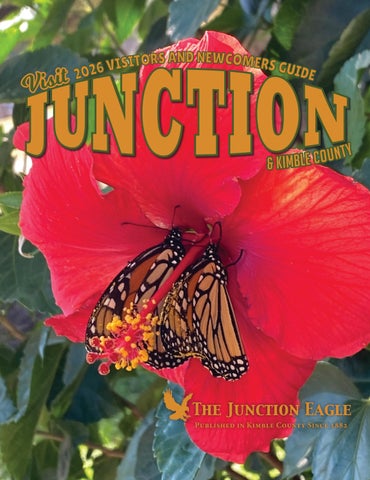
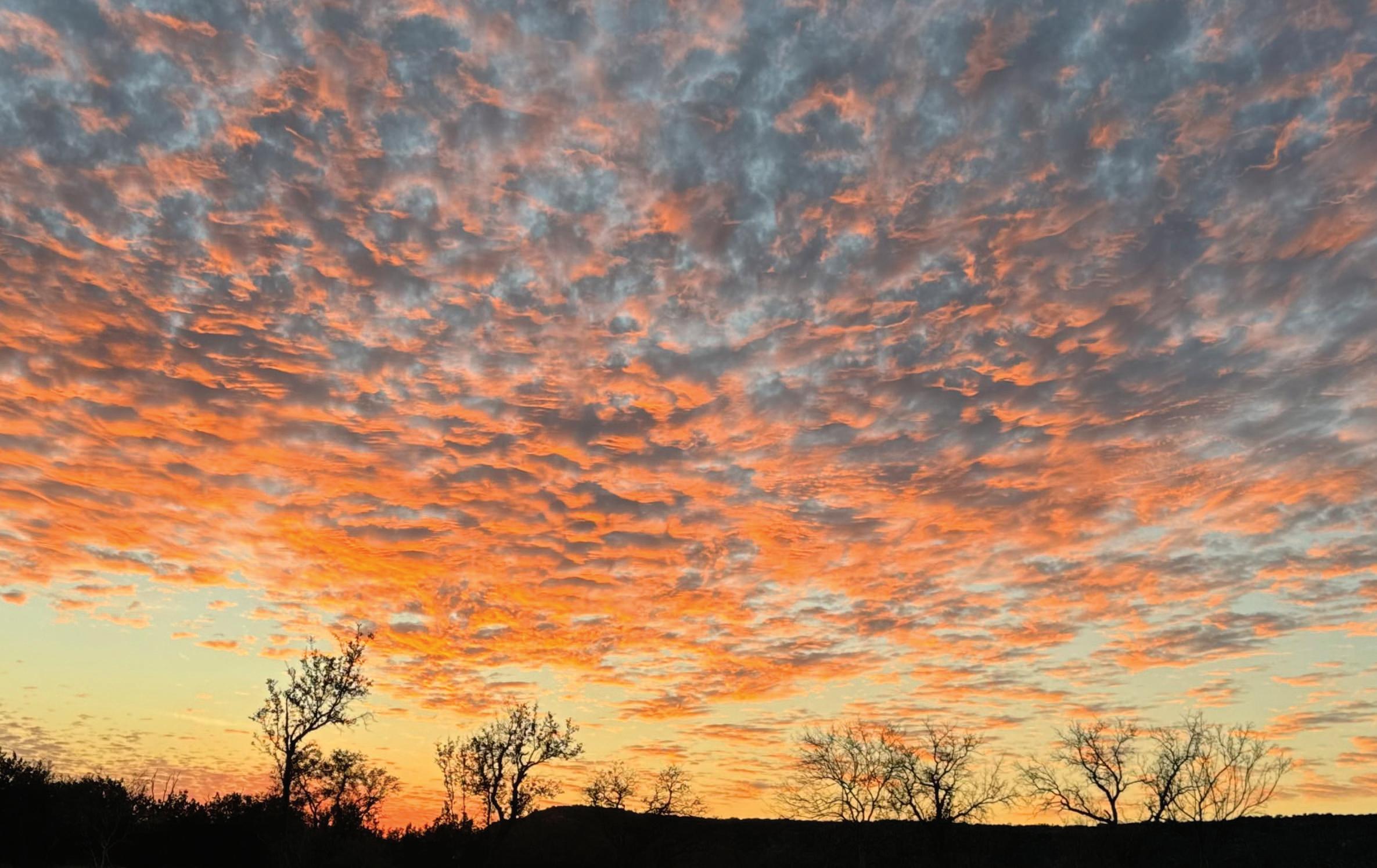
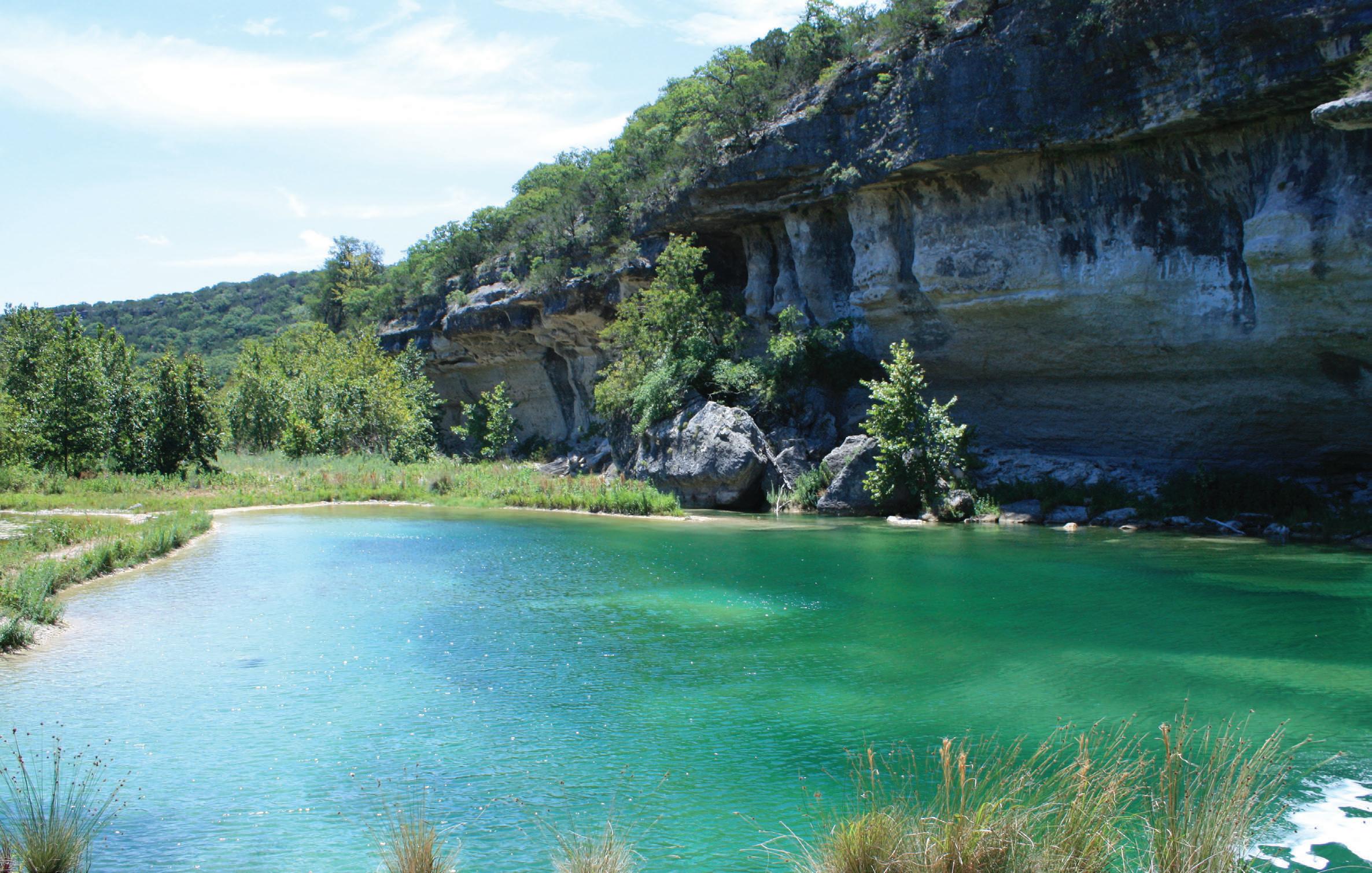
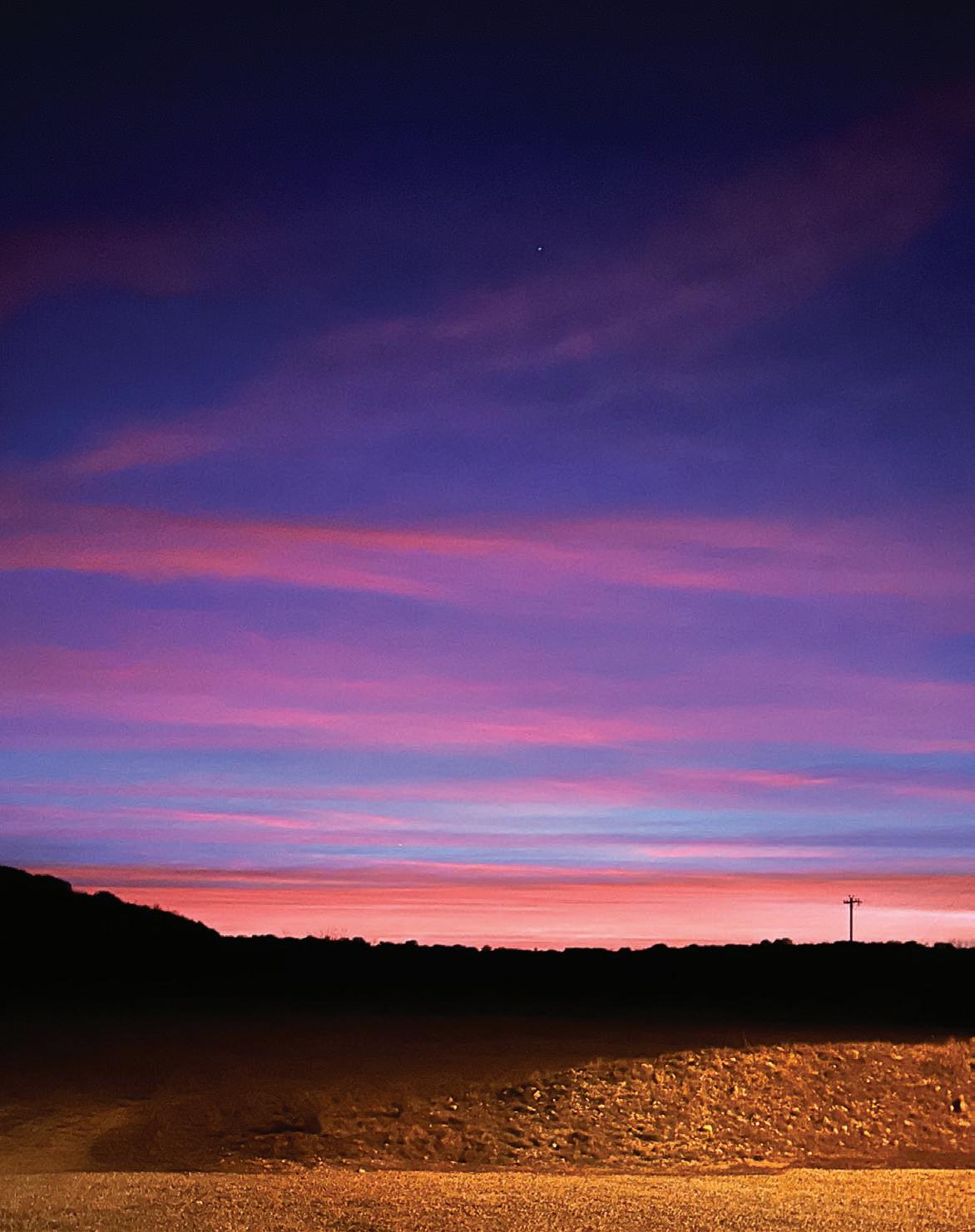
Our gorgeous cover photo, right, was submitted by Joyce Davis.
Welcome to beautiful Junction, Texas! In our humble opinion, you’ve just stepped foot into one of Texas’ friendliest towns. Here in our corner of the state, you will find gorgeous scenic landscapes, beautiful rivers, and numerous recreational opportunities. All of this, plus great shopping, amazing food, and a rich history. There is a little bit of everything for everyone in Junction. The stores in town offer a wide variety of clothing and jewelry to fit anyone’s taste, furniture and home furnishings, and there are some fantastic resale shops! Our merchants also have all your sporting goods and recreational equipment needs covered…just in case you run out of bait while fishing or misplace your kayak paddle. And
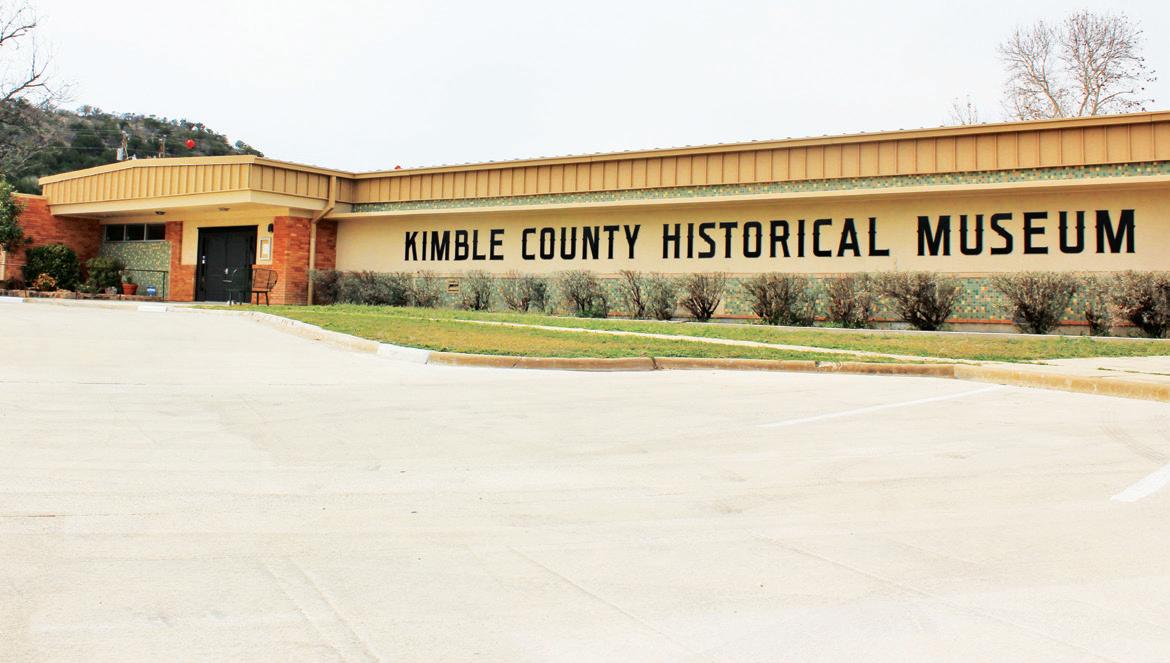
if history is your thing, our excellent Kimble County Historical Museum will fill that need for you. This wonderful museum is chock full of artifacts and all the information you need about Kimble County and Junction.
After all that touring, shopping, and fun on the river, you have probably worked up an appetite. Our town has several options for you. Most of our restaurants are locally owned and we also have a few franchises. From BBQ and Mexican food to all-American classics, Junction is bound to have food to meet your cravings.
If stargazing is your thing, we have you covered! Our night sky friendly community offers a great view of our galaxy. On a clear night, you’ll see stars you swear you have never seen before.
We’re so dedicated to this that our state park, South Llano River State Park, was designated as an IDA (International Dark-Sky Association) Dark Sky Park. We’re not kidding about our night sky around here.
Whether you are here to hunt, fish, swim, kayak, bike, hike, golf, birdwatch, play disc golf, shop, or take in scenic views, Junction has something for everyone. We’re glad you are here and hope you enjoy your stay. If you have any questions or are curious about what Junction has to offer, please drop by the Kimble County Chamber of Commerce office. We love meeting our visitors!
- Mark Arrazola, Kimble County Chamber of Commerce Executive Director
TEXAS PRESS ASSOCIATION
Chris
Put-in & Take-out Locations
RIVER
TPWD Day Parking
KC 150: text 325-446-3154
Cupgrass: text 512-407-9357
Day parking for paddling trail only (no fishing or hanging out). You must text make and model of vehicle to landowner number above.
* The only suitable stretch recommended for tubing.
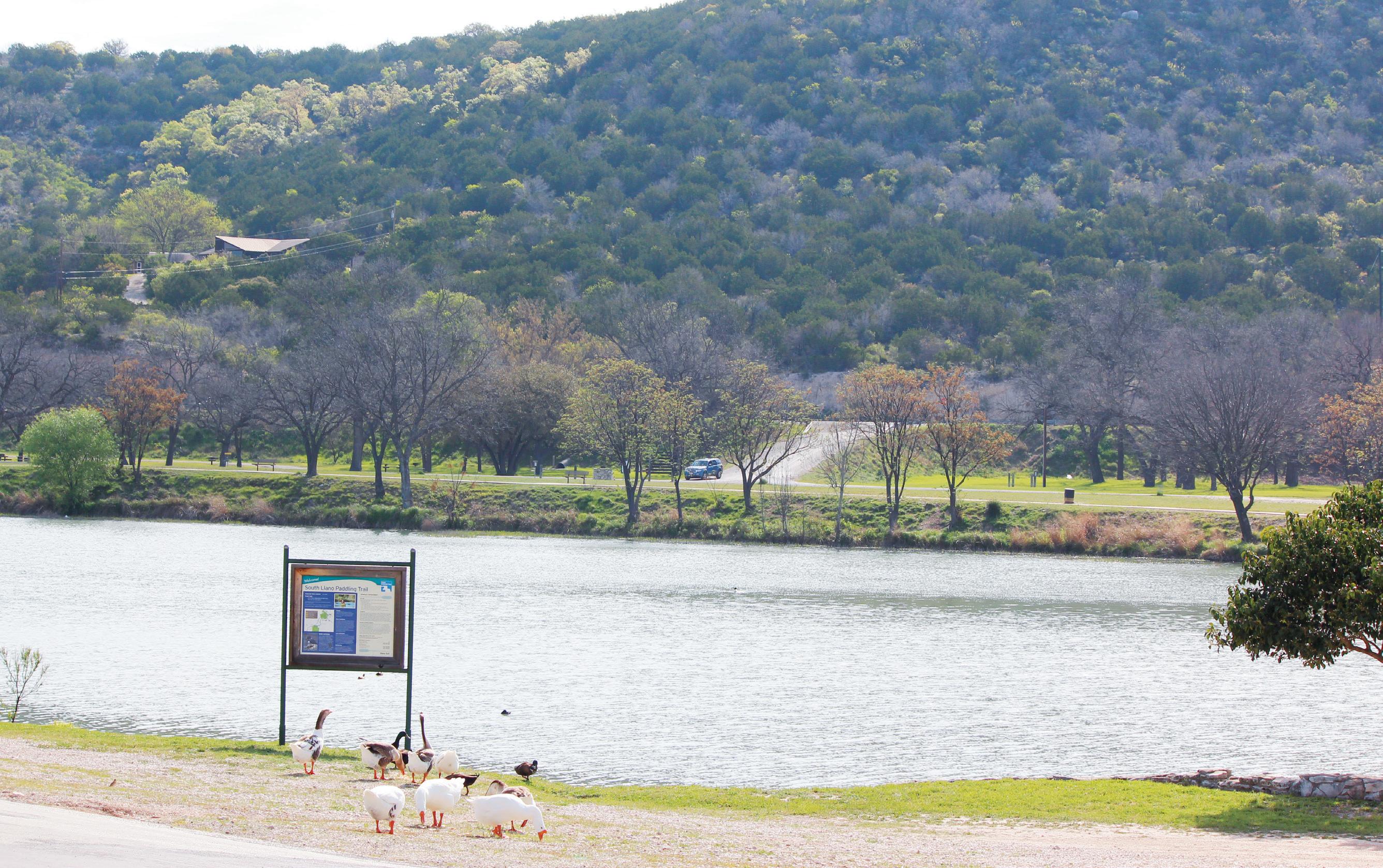
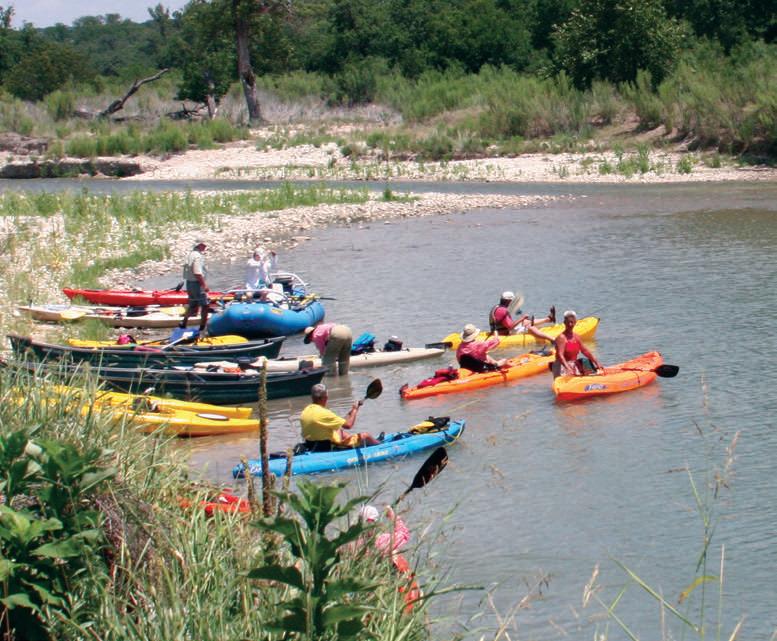
If tubing or kayaking is your heart’s desire, the South Llano Paddling Trail at Junction is one of 38 official Texas Paddling Trails. The views are spectacular!
The designated “trail” begins southwest of Junction at the South Llano River State Park, continues downstream to Flatrock Crossing and ends at Junction Schreiner Park (City Park) above the dam.
Kayakers or canoers can leave a vehicle downstream or hire a shuttle service for launch or pickup. Parking is available at the South Llano River
State Park for a small fee and is free at Schreiner Park.
Those planning to float or paddle the river are encouraged to visit the South Llano River State Park office for river condition information and cautions, approximate paddling times and fishing and current wildlife info.
There are small rapids, occasional riffles and runs, but the river is relatively flat. Groups of friends and families will have an enjoyable time floating one of the most pristine rivers in Texas.
A Birder’s Paradise in Kimble County!
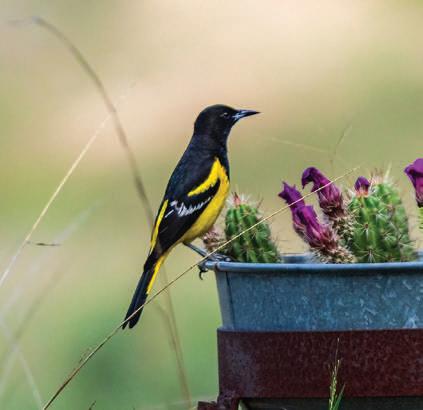
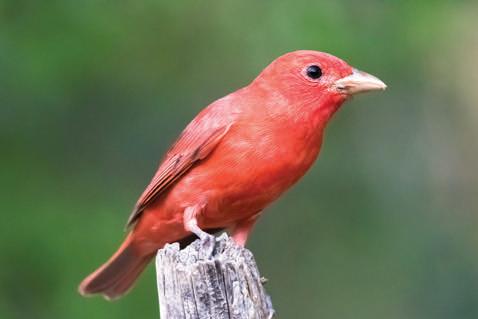
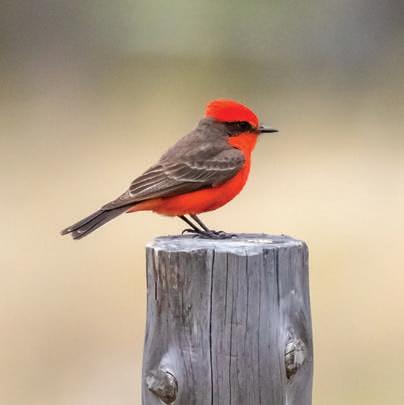
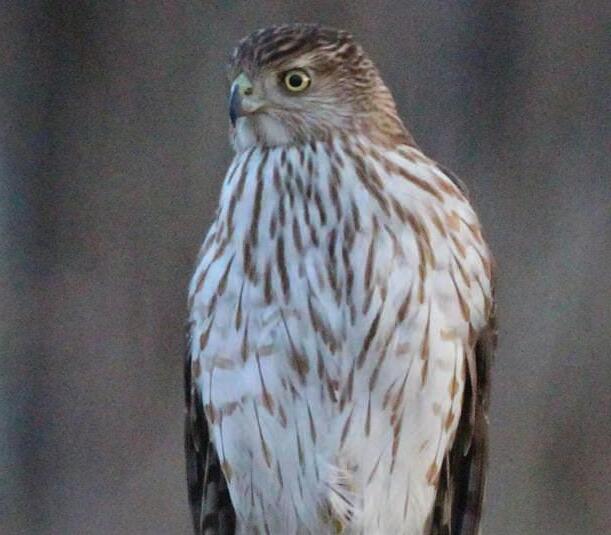
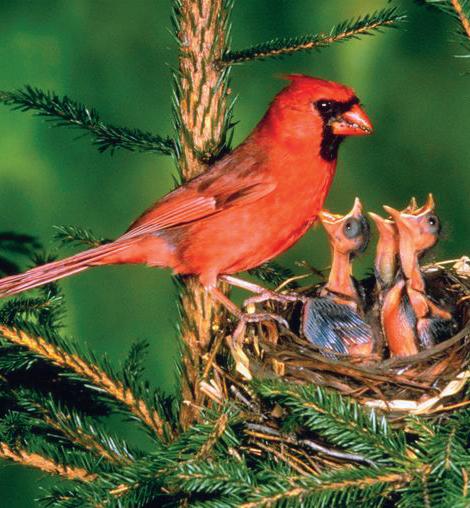
Whether you’re an experienced birder or simply a nature enthusiast, Kimble County is a must-visit destination for bird-watching. With several hundred species calling this area home throughout the year, the region’s lush rivers, rolling hills, and diverse ecosystems create the perfect backdrop for spotting stunning winged creatures.
Prime Birding Locations:
Kimble County is featured on the Heart of Texas Wildlife Trail West (Texas Parks & Wildlife),
with premier bird-watching sites along the Llano Loop, including:
* Junction Wastewater Treatment Ponds – A hidden gem for waterfowl and wading birds
* Schreiner Park (City Park) –Perfect for spotting migratory and resident species
* Texas Tech University at Junction (with advanced permission) – A research haven with unique habitats
* South Llano State Park & ter Buck Wildlife
KIMBLE COUNTY BIRDS
Eared Grebe (winter)
Pied-billed Grebe (winter)
Double-crested Cormorant
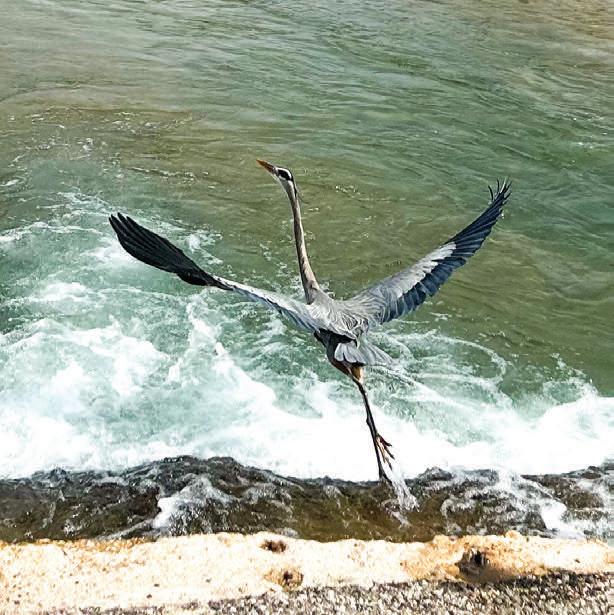
Great Blue Heron
Cattle Egret
Green Heron
Wood Duck
Green-winged Teal (winter)
Blue-winged Teal (migrant)
Northern Shoveler (winter)
Gadwall (winter)
American Wigeon (winter)
Ring-necked Duck (winter)
Lesser Scaup (winter)
Ruddy Duck (migrant)
Black Vulture
Turkey Vulture
Sharp-shinned Hawk
Red-shouldered Hawk
Red-tailed Hawk
American Kestrel (winter)
Wild Turkey
Northern Bobwhite
Management Area – Home to high-quality wildlife observation blinds, ensuring prime viewing of local and migratory birds
* A Birding Haven at South Llano River State Park
Just five miles southwest of Junction off Highway 377, park
Killdeer
Spotted Sandpiper
Various “peep” sandpipers (migrant)
Rock Dove
White-winged Dove
Mourning Dove
Inca Dove
Yellow-billed Cuckoo
Greater Roadrunner
Great Horned Owl
Common Nighthawk
Common Poorwill
Chuck-will’s-widow
Chimney Swift
Black-chinned Hummingbird
Belted Kingfisher
Green Kingfisher
Ringed Kingfisher
Golden-fronted Woodpecker
Ladder-backed Woodpecker
Downy Woodpecker (occasional)
hotspot for birding enthusiasts! The park’s maintained river habitat, coupled with strategically placed wildlife observation blinds and scheduled feedings, make it easy for any visitor to witness the incredible avian diversity of the area.
Pack your binoculars, camera, and sense of adventure—Kimble County is waiting to be explored!
Northern Flicker (winter)
Eastern Wood-Pewee
Vermilion Flycatcher
Ash-throated Flycatcher
Great Crested Flycatcher
Western Kingbird
Scissor-tailed Flycatcher
Loggerhead Shrike (winter)
White-eyed Vireo
Bell’s Vireo
Black-capped Vireo
Yellow-throated Vireo
Red-eyed Vireo
Blue Jay
Scrub Jay
Common Raven
Purple Martin
Northern Rough-winged Swallow
Cliff Swallow
Cave Swallow
Barn Swallow
Cedar Waxwing (winter)
Black-and-White Warbler
Wilson’s Warbler
Yellow-breasted Chat
Summer Tanager
Rufous-crowned Sparrow
Cassin’s Sparrow
Chipping Sparrow
Clay-colored Sparrow (migrant)
Field Sparrow
Lark Sparrow
Black-throated Sparrow
Savannah Sparrow (migrant)
Song Sparrow (winter)
Lincoln’s Sparrow (winter)
White-crowned Sparrow (winter)
Dark-eyed Junco (winter)
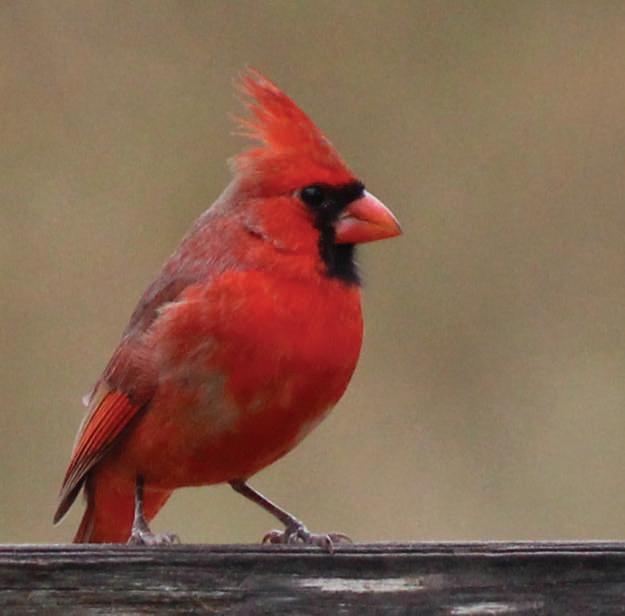
Northern Cardinal
Pyrrhuloxia
Blue Grosbeak
Indigo Bunting
Carolina Chickadee
Verdin
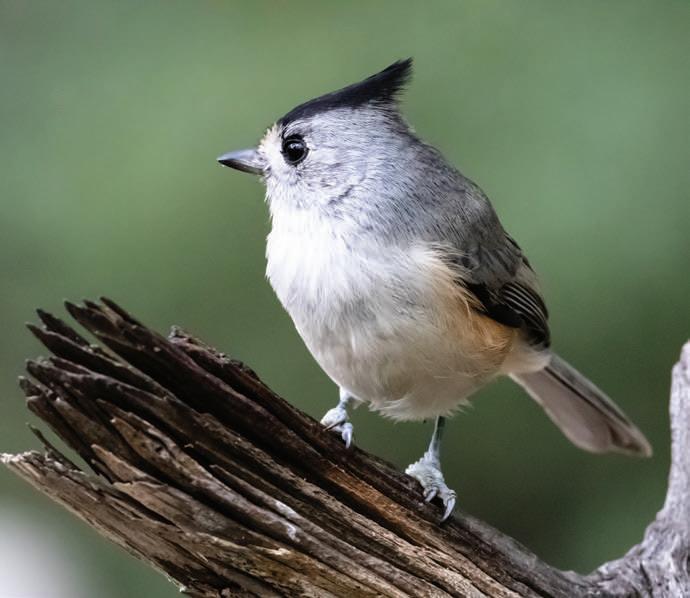
Black-crested Titmouse
Bushtit
Cactus Wren
Canyon Wren
Rock Wren
Carolina Wren
Bewick’s Wren
Ruby-crowned
Kinglet (winter)
Blue-gray Gnatcatcher
Eastern Bluebird
American Robin
Northern Mockingbird
European Starling
Yellow-rumped Warbler (winter)
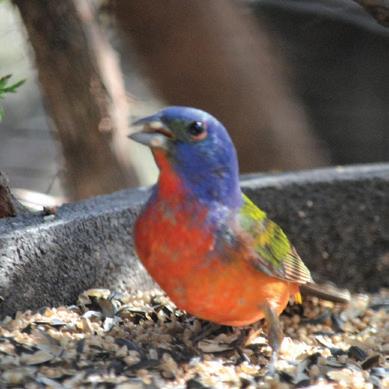
Painted Bunting
Rufous-sided Towhee
Canyon Towhee
Red-winged Blackbird
Eastern Meadowlark
Western Meadowlark (winter)
Yellow-headed Blackbird (migrant)
Great-tailed Grackle
Common Grackle
Bronzed Cowbird
Brown-headed Cowbird
Orchard Oriole
Scott’s Oriole
House Finch
Pine Siskin (winter)
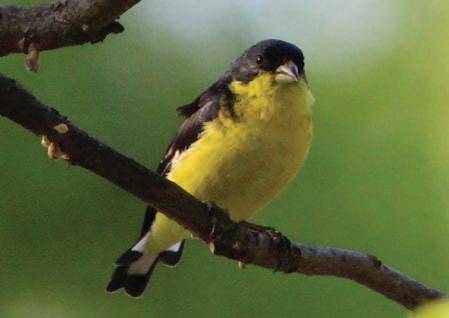
Lesser Goldfinch
House Sparrow
Birth of a county...
by the late Frederica Wyatt
The Texas Legislature, on January 22, 1858, enacted legislation to create Kimble County. Prior to that time, the area was a part of Bexar County.
The new county was named for Lt. George C. Kimble, who died at the Alamo. He was one of the “Immortal 32” from Gonzales, Texas.
In the interim between its creation and organization in 1876, the new county was attached to Gillespie County for judicial purposes.
Long before the white frontiersmen came, Apache and Jumano Indians claimed the land. Some historians believe the San Clemente Mission was located in the area now known as Kimble County.
In the eighteenth century, Spanish explorers came in an attempt to Christianize the Indians and impress them with the strength of imperial Spain.
In 1739, Joseph de Urrutia waged a campaign against the Indians, and in 1754, Pedro de Rabago y Teran explored the region. Five years later, Diego Oritz Parilla crossed the area. In July, 1767, Marquis de Rubi made an inspection tour of the southwest frontier, and in 1808, Don Francisco Amangual crossed the eastern part of the county in his journey to establish a route between San Antonio and Santa Fe.
Seven years before the county was created, Captain Henry McCulloch (later a Civil War general) was commander of a ranger post a short distance below the junction of the North and South Llano Rivers. Two military roads, one from San Antonio to Fort Terrett, and one from Fort McKavett to Fort Clark, crossed the county.
Few, if any, settlers came before the 1850’s. One of the first pioneers was Raleigh Gentry who moved to Bear Creek in about 1857.
Other settlers followed, and during the Civil War, ranchers from Burnet and other counties, brought livestock to Kimble County for grazing. Indian depredations forced them back to their home territories, and years later, they collected damages from the federal government for losses sustained in Comanche and Kiowa Indian raids.
After the war, the population steadily increased as word spread about the abundant water and lush valleys of the Llanos.
According to census records, there were 72 citizens in Kimble County in 1870. By 1880, the figure had increased to 1,343, and by 1890 the population was 2,243.
The Frontier Battalion of Rangers drove most of the Indians from the region in the 1870’s, and the last white men killed by Indians in the county were Isaac Kountz and Sam Speer on December 24, 1876.
The area was an ideal hideout for outlaws, and in 1877, Texas Rangers rounded up many desperadoes to be tried at Kimbleville.
On February 28, 1882, the Galveston Daily News reported that immigration into Kimble County was flowing at a great rate.
There were 18,516 head of cattle, 1,450 horses and mules, 19,670 sheep, 2,259 goats, and 1,562 hogs. Residents numbered approximately 1,800.
The newspaper further reported that Junction City had 300 inhabitants, a good courthouse and jail, two stores, two churches, and a good school.
The county population as of the 2010 census was 4,607 citizens. The estimate in 2013 was 4,438 residents.
... a city follows
“Kimble County has about 300 inhabitants and is located immediately at the junction of the North and South forks of the Llano, has a good courthouse and jail, two stores, general merchandise and a furniture store, all doing a profitable business. There is lumber now on the ground for the construction of a Christian church.
“The Methodists are also on the eve of building. A good school will be opened the first Monday of next month.
“The Texas Western is a new issue from Junction City with J. F. Lewis, editor and proprietor...”
By a deed of partition on his twenty-first birthday anniversary, William
McLane III of Concho County, Texas, became the owner of the odd numbered lots in Junction (Vol. A, Page:168, Deed Records of Kimble County, Texas). The same day, August 31, 1883, the young McLane sold the lots to G. W. Ragsdill, H. H. Allen and W. A. Williamson (Vol. A, Page 171, Deed Records of Kimble County, Texas).
By the late 1920’s, the progressive citizens felt a need for the benefits of municipal government; and on August 29, 1927, H. O. Denman and 152 others presented a petition to Kimble County Judge J. B. Randolph asking that an election be called for the sole purpose of submitting a vote on the question of whether or not the territory should be incorporated for municipal purposes.
Judge Randolph called the election, and 274 qualified votes were cast “for corporation” and 116 “against corporation”.
Name of the new city was to be “Junction”.
(Vol. 1, City Council Minutes of Junction, Texas).
A city officers’ election was duly held on October 13, 1927, and elected were E. Holekamp, mayor; Will Emsley, city marshal; Edgar Jordan, W. B. Buster, J. A. Heyman, Frank Bissett and N. C. Patterson, aldermen.
(Vol. 1, Page 5, City Council Minutes).
With the city government set in motion, the city council considered the needs of the people and passed a number of ordinances, many that are still in force and effect. The waterworks system was purchased from the Llano River Irrigation and Milling Company for the sum of $18,000.00. Improvements were made, and a sewer system was built in 1929.
In 1939 and 1940, a new municipal building and fire station was built on the block of land east of the courthouse square. W. N. Hardeman was engineer for the project, and D. C. Maddux was the architect.
A number of subdivisions have been annexed to the original city limits. A municipal swimming pool was built in 1955, and extensive improvements have been made to the waterworks, sewer system, parks and streets in the city. According to the 2014 estimates, the town has 2,498 residents.
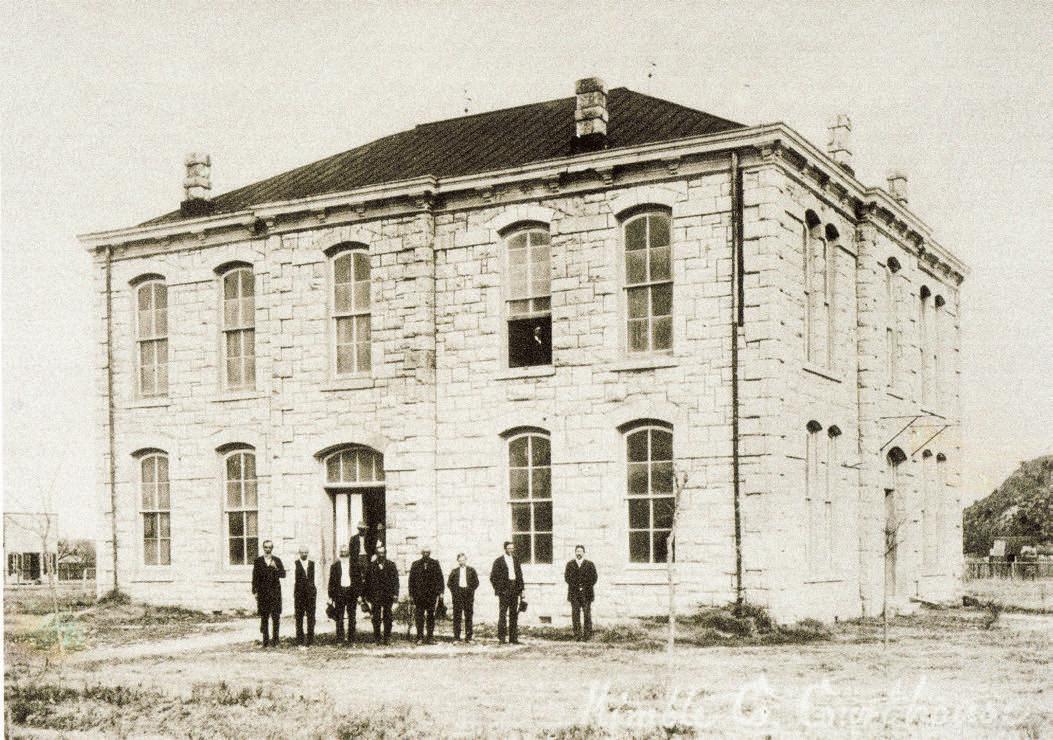
Kimble County Courthouse - 1905
In
Beginning
Indian problems plague pioneers
by the late Frederica Wyatt
Few areas of Texas had more Indian troubles than the picturesque Hill Country, and coincidence was interwoven into many of the fatal raids in Kimble County, in the heart of the area.
In the latter 1850’s, Raleigh Gentry built a wilderness home on the banks of Bear Creek and became Kimble County’s first white settler. The Gentry family consisted of several grown sons who helped their parents “prove up” a claim.
More settlers came in the 1860’s, and in 1862 Gentry sold his holdings to Rance Moore and moved a few miles away to the Teacup Mountain area.
Typical of many pioneers, the Gentrys met tragedy head-on. A son, William, marched away to war and died while in the Confederate Army.
In 1867, another son, Allen, was killed by Indians while hunting wild hogs on Little Saline Creek near the spot where the Henry Parks family was slain by Comanches on April 2, 1862. Allen’s body was interred in the Gentry Creek cemetery near the family home.
Over on Bear Creek, the Moore Colony continued to prosper. Among the newcomers was James Sewell, who had brought his young bride from Coleman County in 1868. Sewell was surprised by Indians while cutting wood some distance from the settlement. He was killed instantly and was the second person buried in the Bear Creek cemetery.
Some time earlier James Bradbury, Sr. had moved to Kimble County from Williamson County and had established a flourishing settlement on the banks of the South Llano River about two miles above the junction of the North and South Llanos.
When the news of Sewell’s death reached him, Bradbury eagerly joined a posse and followed the Indian trail. The redskins were overtaken near Teacup Mountain in the Gentry settlement.
In the ensuing Battle of Bradbury Hills, James Bradbury was mercilessly slain by the Indians. The other members of the posse carried his body back to the mourning village. He lies in an unknown grave near the North Llano River.
Sentiment of the Kimble County
Marker #2613-Visit the historical marker that marks the spot of Isaac Kountz’s death located on US 377 S about 2 miles SW of the Kimble County Courthouse.
Marker #5007-Sam Speer’s historical marker is located near the entrance to the Kimble County Airport on US 83/377 about a mile north of the I-10 near Junction.
settlers was expressed in this letter written to the San Antonio Daily Herald: “Kimball (sic) County, April 30, 1872-Editors, Herald:
“On this day at eleven o’clock a party of Indians, about fifty in number, passed through this county and found a man by the name of James Sewell making rails.
“They killed him, scalped him, took his horse and moved on down the country about five miles where they killed three cows and one yearling and were feasting on them when they were trailed and attacked by nine citizens.
“The fight was kept up but a short time as the citizens were so much outnumbered, and the Indians having the advantage in arms...all of them being armed with Winchester rifles. The attacking party think, or almost know, they killed four Indians, but as the Indians kept the ground, they would not know with certainty.
“One thing they do know, they lost one man, killed. The man killed was Mr. James Bradberry (sic), aged sixtyfive years; he had spent forty-nine years on the borders of Texas and was brave as could be. Mr. Rance Moore was the leader of the brave and intrepid nine who had the courage to attack fifty Indians, but of course they did not know that the Indians were so well armed.
“Now Messrs. Editors, what do you think of this style of business? Is it not a splendid government we have, to arm the Indians on the Reserves with the most improved guns and send them down to kill us? You may think it is all right, but we up here in Kimball (sic) County think different. Can you not do something in our aid? Tell President Grant that it is very, very wrong.
Respectfully, CHAS. S. JONES”
In 1875, Dr. Ezekiel Kountz moved his family from Kansas and purchased the Bradbury property. All went well until Christmas Eve, 1876, when the last Indian raid was chronicled in Kimble County.
On that eventful morning, Isaac Kountz, aged 16, and his eleven year old brother, Sebastian, were herding sheep on the mountainside near the home. Suddenly, a band of marauding Indians came upon them, shooting and killing Isaac with a Davy Crockett-type rifle. Sebastian escaped to tell the story. The band of Indians traveled on northward through the Llano River valley past Round Mountain.
After crossing the North Llano River at the foot of Doran’s Bluff, the Indians encountered two more young brothers, Tom and Sam Speer. Tom managed to escape, but Sam, aged 17, was killed.
The entire settlement was griefstricken and shocked by the killing of the Kountz and Speer boys. A company of Texas Rangers led by Captain Henry Moore and a posse of frontiersmen, consisting of John A. Miller, Jerry Roberts, Billie Waites, Dr. E.K. Kountz, N.Q. Patterson, Andrew Patterson, Billie Gilliland, and P.C. Lemons, took up the Indian’s trail. It was a difficult course to follow, as it led through cedar brakes and over rocks. The horses finally became too exhausted to go farther, and the Kimble County men gave up the pursuit at Wallace Creek, a tributary of the Medina River.
The Indians were not through with their trail of blood. Coming upon Bandera County Deputy Sheriff Jack Phillips in Seco Canyon, they shot and killed him.
In later years, Phillips’ nephew, T.B. Phillips, moved to Kimble County and became one of its leading citizens.
EXPERIENCE DISC GOLF IN SCENIC JUNCTION, TEXAS!
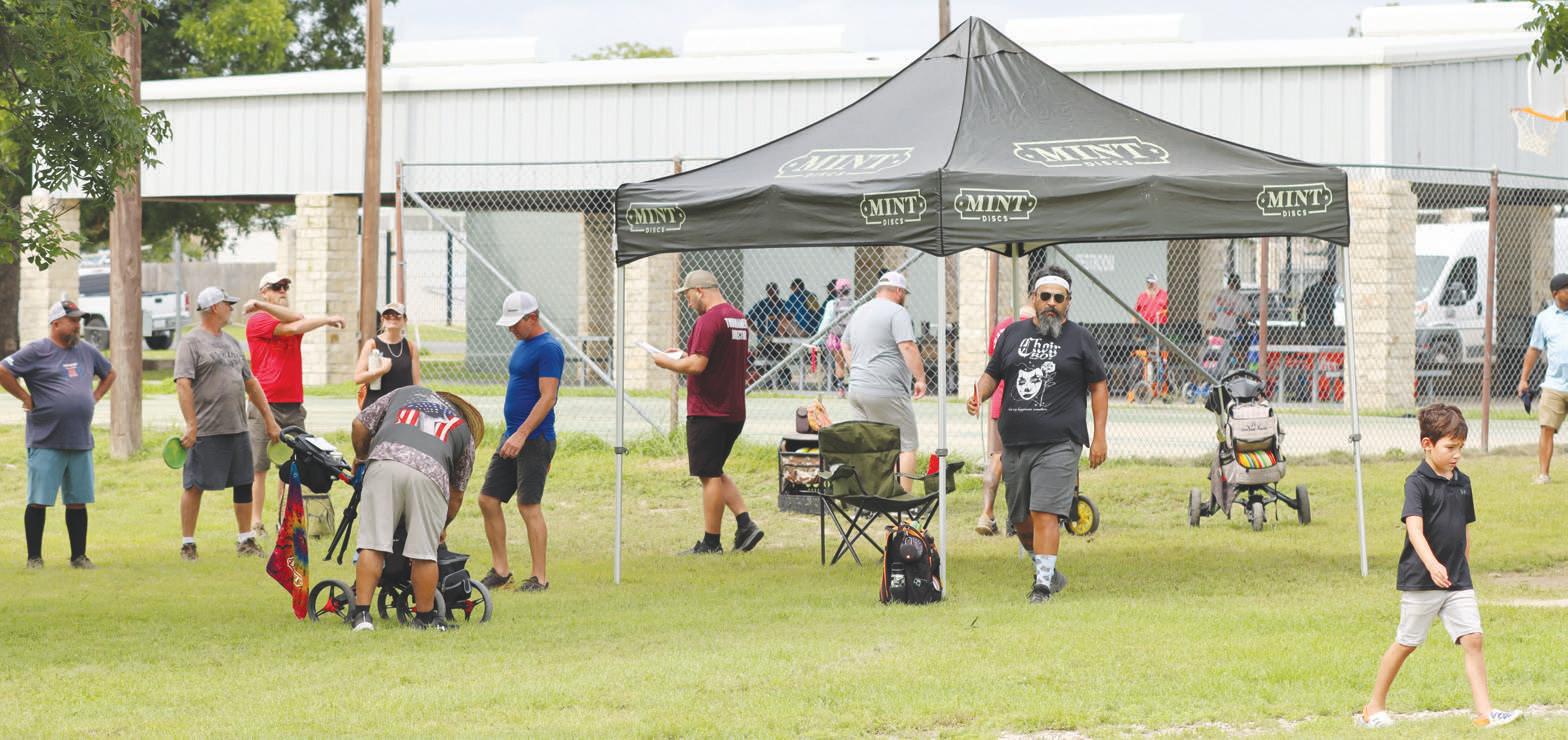
Over the past 16 years, disc golf in Junction has flourished, making it a mustvisit destination for enthusiasts of all skill levels. Kimble County boasts three full 18-basket courses, each offering a unique playing experience:
• City Park Course (Schreiner Park) – Enjoy a round of disc golf with stunning views of the South Llano River. This course offers free tent camping for up to three nights, along with walking paths, picnic areas, a playground, a basketball court, pavilions, and plenty of shade from towering pecan trees.
• County Park Course – A great spot for casual and competitive play.
• Junction Golf Course (ball) – For those looking to play in style, this course allows you to rent a golf cart and enjoy a relaxed round of disc golf.
Disc golfers are welcome year-round to experience these beautiful courses in the heart of the Texas Hill Country. Junction also hosts two exciting annual tournaments:
• The Junction Winter Classic (unsanctioned) – A fun and challenging winter event.
• The Junction Summer Classic (sanctioned) – A summertime competition with enticing payouts.
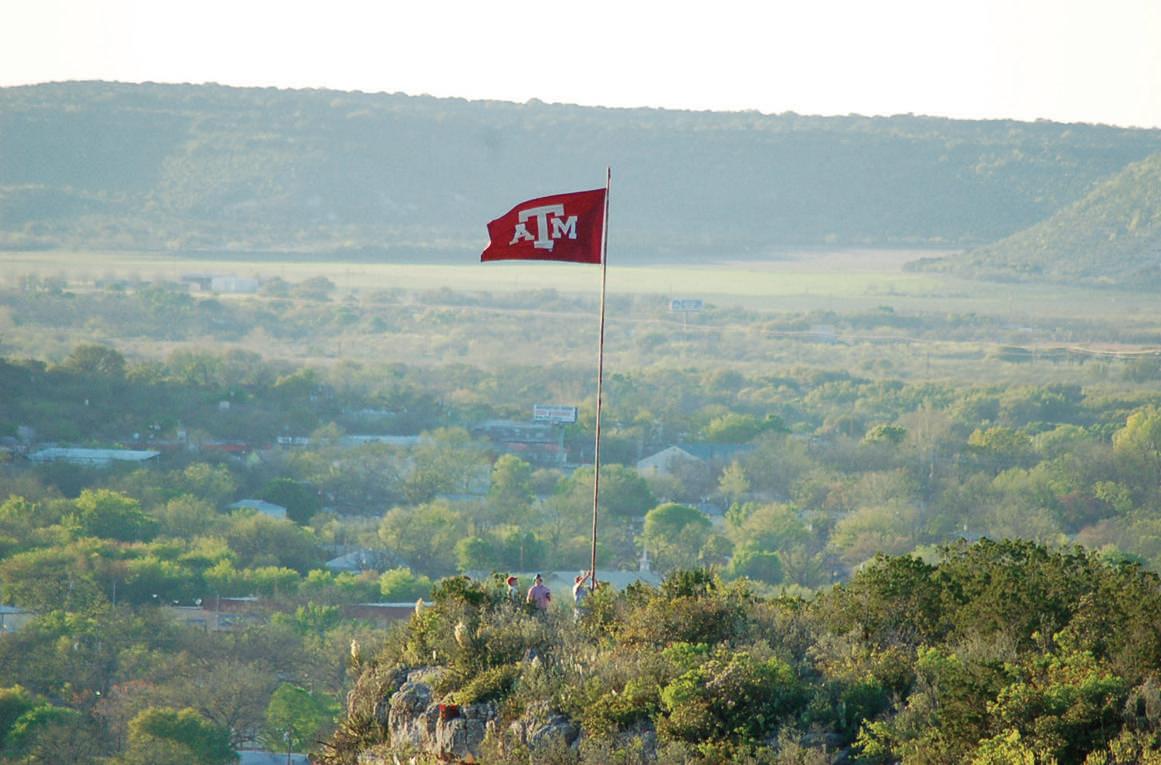
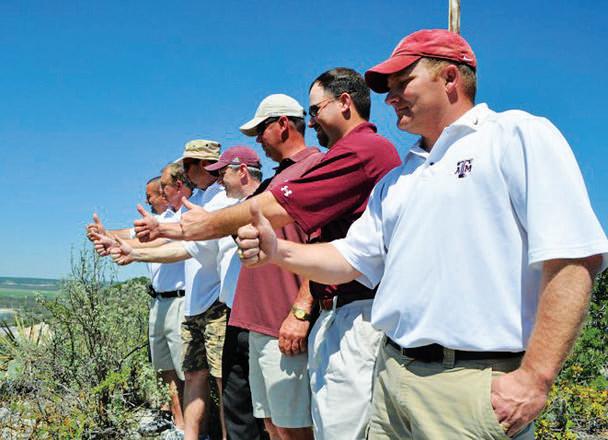
Adding to the excitement, the Junction Lions Club sponsors the legendary Top of Texas Throw, where tournament players launch discs from Lover’s Leap—a breathtaking 700-foot drop—toward three baskets below at the Easter Pageant grounds parking lot, competing for cash prizes. Proceeds benefit local charities and scholarship programs.
Welcome to Kimble county
sheriff Matt suttle
and
deputies:
Shelby Macha, K-9 Sergeant/SrO
Stephen Wherry, Sergeant
Will allen, inveStigatOr
terry chaney
MattheW chriStian
Will chapMan
SaKOta tOMlinSOn
randy Milican, eOc
traviS brOWn
Seth barclay
ricK daviS
blaKe MOrrOW
charlie WilSOn
traviS griffin
Come experience Junction’s incredible disc golf courses for yourself! For more details, visit the Junction Tourism Board’s website www.JunctionTexas.com.
Junction
Jailers:
KiMblery lOpez, Jail adMin JaKe biggS
ryan rOgerS brandOn leach
KeSley tOMlinSOn trent MacKie
dispatchers: clariSSa rOMO, SuperviSOr
bethany baKer
chriSti adaMS
sheriff adMin: Kelli Harames
brent KOehn
TEE
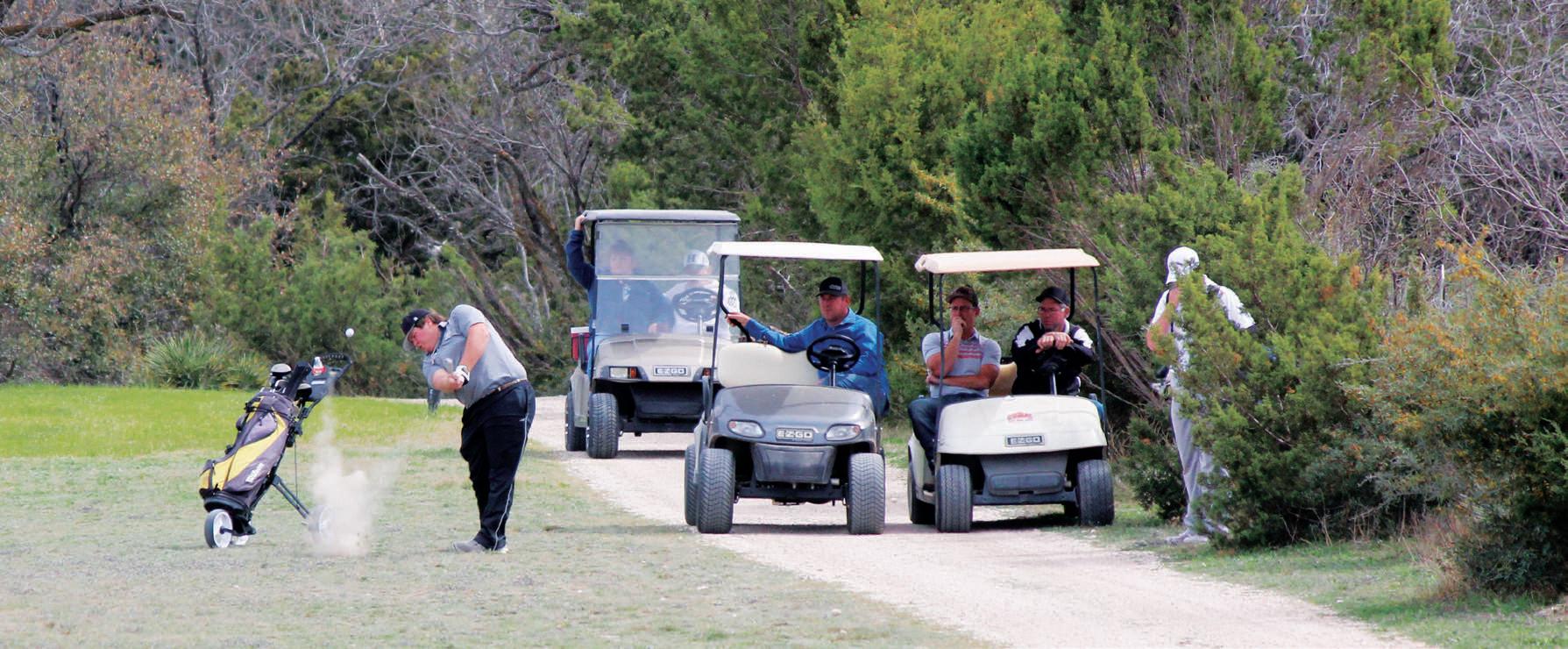
The Junction Golf Course is a hidden gem, offering breathtaking scenery, abundant wildlife, and a peaceful playing experience. Nestled at the foot of Lover’s Leap, a scenic overlook with stunning views of Junction, the Easter Pageant grounds, and the Hill Country Fair Association facilities, this historic course has been a local favorite since 1926.
Built through the dedication of volunteers—who tirelessly raised funds, cleared land, and built ponds—the course is now proudly maintained by the Junction Golf Club’s 50+ members.
Play at Your Own Pace
Golfers of all skill levels are welcome! Tee times are usually not required, but with a limited number of carts available, it’s recommended to call ahead at 325-446-2968 to reserve one.
The challenging course is surrounded by trees, ponds, and a
winding creek, providing a scenic yet exciting game. Men’s and women’s tee boxes are available on every hole.
• Hours: Open daily from 8:30 a.m. until dark.
• Weekly Scramble: Wednesdays at 5:30 p.m. (starting with Daylight Saving Time) – Join in for some friendly competition with the locals!
Golf Tournament Scholarship
Rates & Amenities
• Green Fees: $25 per person for 18 holes
• Cart Rentals: $15
• Disc Golf Access: $10 to play using the course’s baskets
• Clubhouse Snacks & Gear: Soft drinks, sports drinks, candy, ice cream, and snacks available, along with golf balls, gloves, and tees for purchase.
Come Prepared & Enjoy
• Players are welcome to bring their own adult beverages and ice chests.
• Golf or tennis shoes are required—no boots or shoes with “high” heels permitted. Are you ready to test your skills on the links? Grab your clubs (or discs!) and experience one of the most scenic and challenging courses in the Texas Hill Country!
EXPLORE THE BEAUTY AND RECREATION OF THE COUNTY PARK
Nestled along the scenic South Llano River, County Park offers the perfect setting for a day of relaxation, adventure, and family fun. Just a short drive from Schreiner Park—simply cross the South Llano River Bridge and take the first left— you’ll find a picturesque riverside escape waiting to be explored.
Park Features & Amenities
• Shaded Picnic Areas – Unwind beneath the canopy of majestic pecan trees, where BBQ pits and grills make for a perfect outdoor cookout.
• Sports & Recreation – Enjoy a friendly match on the basketball court, challenge your friends on the sand volleyball courts, or play a round of disc golf on part of the local course.
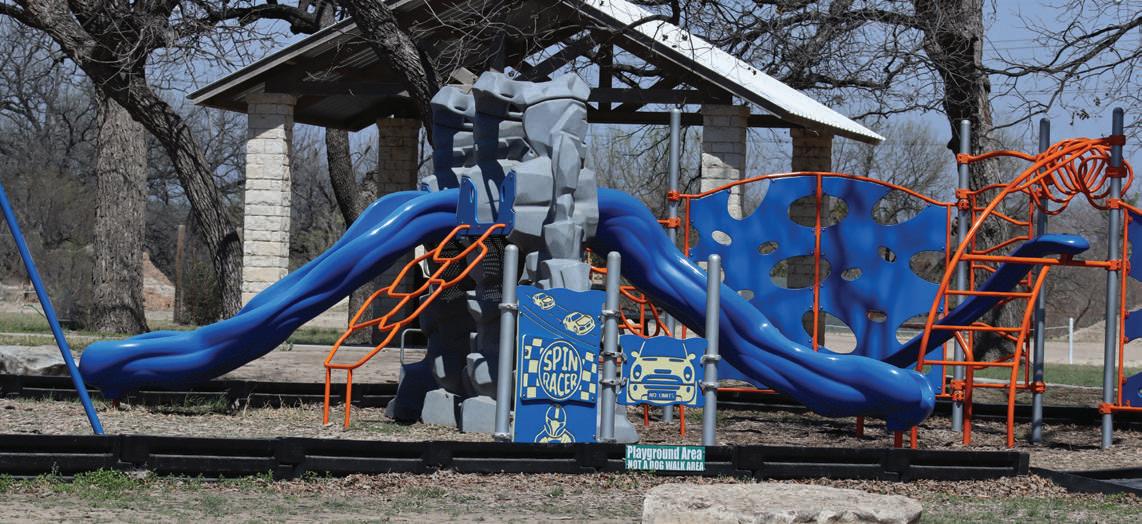
• Playgrounds for Kids – Let little adventurers burn off energy at the two playground areas, conveniently located at both the north and south ends of the park.
• Accessible Walkways – Wheelchair-friendly paths connect various park amenities, ensuring everyone
can enjoy the space.
• Canoe & Kayak Launch – Easily put in your watercraft and paddle around the serene lake, or head upstream to discover prime fishing spots.
A Peaceful Riverside Retreat With panoramic views of Junc-
tion across the calm waters of the lake, County Park is an ideal destination for a leisurely afternoon or a fun-filled family outing. Whether you’re grilling, playing, or paddling, you’ll find plenty of ways to enjoy the natural beauty of the Texas Hill Country.
Park Hours & Guidelines
• Open daily until 10 p.m. (no overnight camping).
• Public alcohol consumption is not permitted.
• Help us keep the park beautiful— please dispose of trash properly. Whether you’re seeking adventure or a peaceful escape, County Park is a must-visit destination in Kimble County!
DISCOVER THE CHARM OF SCHREINER PARK (CITY PARK)
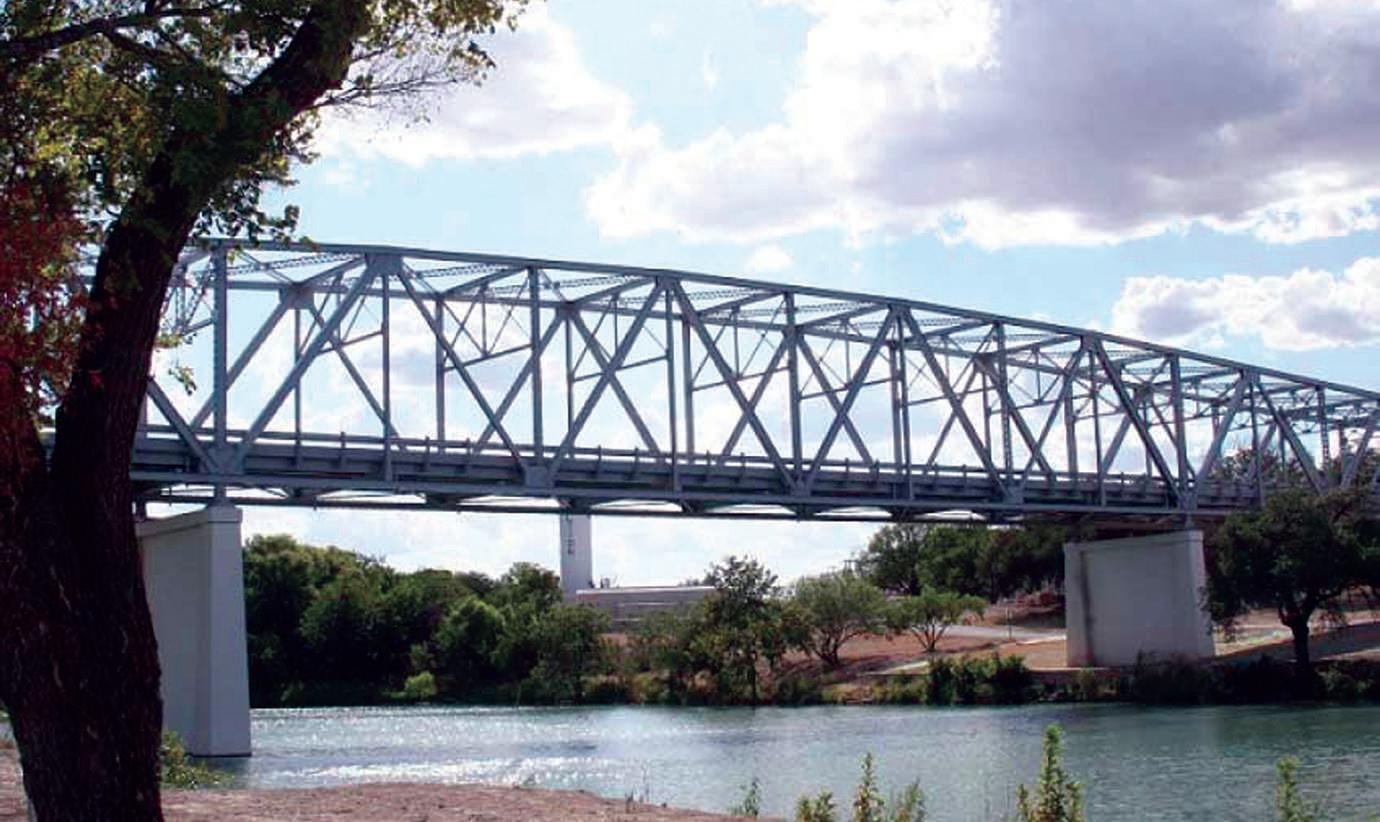
Nestled along the western bank of the South Llano River, just beneath the iconic metal suspension bridge, Schreiner Park—often called City Park—is a beloved destination for both locals and visitors. Whether you’re looking for a relaxing picnic spot, a day of fishing, or a place to gather with friends and family, this scenic park has something for everyone.
Park Features & Activities
• Fishing & Waterfront Relaxation – Cast a line into Lake Junction, the peaceful reservoir created by the park’s dam, and reel in a relaxing day by the water. Lawn chairs welcome!
offers a spacious setting to relax and socialize.
A Scenic & Inviting Atmosphere With lush trees, riverside views, and a welcoming atmosphere, Schreiner Park is the perfect outdoor escape in Junction. Whether you’re fishing, grilling, swimming, or simply unwinding by the river, you’ll find plenty of ways to enjoy the beauty of the Texas Hill Country. Park Rules & Hours
• Open daily for visitors to enjoy.
• Picnic & BBQ Areas – Scattered throughout the park, picnic tables and BBQ pits invite families and groups to gather for outdoor meals, reunions, and friendly games of washers.
• Sports & Recreation – Challenge friends to a pickup game on the basketball court, or test your skills on the disc golf course that winds through the park.
• Swimming Pool Complex – Cool off during the warmer months at the public pool, a favorite summer retreat for all ages.
• Large Pavilion for Gatherings –Whether it’s a family reunion, community event, or casual weekend get-together, the covered pavilion
• Public alcohol consumption is prohibited.
• Help keep the park clean—dispose of trash properly.
Make Schreiner Park part of your Kimble County adventure and experience the best of outdoor recreation in Junction!
MAKE A SPLASH AT SCHREINER PARK’S PUBLIC POOL!
Don’t let Junction’s small-town charm fool you—Schreiner Park (City Park) is home to a fantastic public pool and splash pad, perfect for cooling off and making summer memories!
Fun for All Ages
• Large Pool & Splash Pad –Whether you’re looking to swim laps, lounge in the water, or let the kids run through the splash pad, there’s something for everyone to enjoy.
• Seasonal Fun – The pool is open from late May through early August, making it the perfect place to beat the Texas heat.
• Swimming Lessons – From beginners to advanced swimmers, lessons are available to help build confidence and skills in the water.
• Family Night Swim – A couple of evenings per week are set aside for families to enjoy a relaxing, fun-filled night swim together.
• Private Pool Parties – Looking for a unique celebration spot? The pool and splash pad can be reserved for private parties, making it a great choice for birthdays, reunions, and special events.
Plan Your Visit
• Open Tuesday–Sunday (Closed on Mondays)
• Updated schedules & contact info will be available on the City of Junction website before each swim season.
Pack your swimsuits and sunscreen—Schreiner Park’s pool is waiting for you!
TOURING & KIMBLE COUNTY
by the late Frederica Wyatt
Miles upon miles of pristine waters meander through Kimble County, and the highways and byways along the streams and adjacent hills provide an unusual view of this area of the Hill Country.
The scenery is unsurpassed by any other part of the state. Wildflower drives boasted by neighboring counties pale in comparison to the panoramic countryside of the local area.
Although travelers catch a glimpse of the hills and streams as they travel hurriedly along the Interstate highway bisecting the county, those who opt for a relaxing motor trip can choose other routes via the many roads traversing the area.
A detailed map can be picked up at no cost at the Kimble County Chamber of Commerce, 801 Main. LOOP 481
Leaving the eastern limits of Junction, a drive along Loop 481 via the overhead suspension bridge, the traveler can view the waters forming Lake Junction as the river blends into a backdrop
of Lover’s Leap and Alta Vista Mountains. By-passing Farm-to Market 2169 and saving its surprises for another trip, the motorist accelerates to climb the steep road carved from the side a mountain named in memory of a legendary Indian couple who leapt to their deaths because their love was forbidden by their tribes.
Before reaching the summit of the hill, a sign beckons to the right to a scenic area, where a breathtaking view of the city and its
surroundings is an awesome sight. The concrete cross, erected many years ago by the Men’s Bible Class of Junction, and a gigantic Old Glory proudly flies in the breezes adding patriotic emotion to the site. This park area was donated in 1934 by Mrs. Frank L. Wilson in memory of her husband. For some, the access to the overlook is easier if they continue to the top of the hill, turn around, and approach the entrance from the east. Loop 481 continues on past a roadside park, where the right-of-way is bright with redbud blossoms in the springtime. Ultimately, the loop intersects the eastbound lanes of Interstate 10.
FARM TO MARKET 2169, WEST
If the motorist opts to turn right on 2169 after crossing the suspension bridge (South Llano River Bridge) over Lake Junction, his view will reveal the rugged face of the Lovers’ Leap mountain as the road continues over a bridge above Cedar Creek. The old Scudder Water Hole is at the mouth of the creek as it flows into the South Llano River to the right. To the left on Kimble County Road 181 is the site of the annual pageant staged by local
Clay Sterrett
talent each Easter Eve.
The paved FM 2169 is routed past the rodeo arena, where many horses were raced in days gone by. The facility was erected in 1935 by the Hill Country Fair Association and is still a popular site for staging rodeos. The excellent golf course is adjacent to the arena. The Boy Scout camp grounds, inaccessible to the general public, are next. The 2169 route then leads to the entrance of the Junction Campus of Texas Tech University.
FLAT ROCK LANE
Approaching the Tech entrance, turn right onto Flat Rock Lane and follow the road to the old crossing on the South Llano River.
This is one of the more spectacular views of the sparkling river. Flat Rock Lane will shortly intersect Highway 377.
US HIGHWAY 377, SOUTH
A left turn onto the highway leads to a scenic drive with meandering curves and water crossings. Before the days of modern highways, the river was forded every mile or so as the traveler made his way in a southerly direction.
By the time the southwestern city limits are reached on 377, historical markers will relate the histories of the pioneer Bradbury Settlement and the Christmas Eve killing of young Isaac Kountz by Comanche Indians in 1876. The historic ranch established by John J. Smith is along this route. At Crisp Creek, another marker tells of the early Four-Mile Dam.
South Llano River State Park and Walter Buck Wildlife Management Area are on the left on
Park Road 73.
Continuing along 377, the highway crosses Potter and Joy Creeks, and at a distance on the left, Chalk Bluff, at the mouth of the creek bearing the same name, is a familiar landmark. Long ago, tourist cottages were located along the banks of the river, offering a delightful respite for well-to-do tourists from the crowded cities. After crossing Fox Hollow, one arrives at the historical site where the pioneer R. M. Turner family established an early ranch.
Crossing Bailey Creek, one finds an historical marker on the left describing an early roundup of a lawless element who “holed up” in the area. The next creek crossing is at Cajac, site of the historic Wooten Cemetery.
A bit further, a crossing of the South Llano River provides a breathtaking glimpse of the beautiful stream. A restored Evergreen schoolhouse, now utilized as a residence, is on the left before crossing a murmuring streamlet known as Fleming Draw.
Another crossing of the South Llano River is imminent, and the view on either side is exceptional. To the right is the mouth of Little Paint Creek. The next surprise comes as the road dips, and there, historic Telegraph Store comes into view. A marker relates the legend and lore of the area. Nearby is the ranch homestead established by the late Governor Coke R. Stevenson, who served in the highest office of Texas from 1941 to 1947.
The motorist continuing on 377 reaches
Telegraph Hill, a steep and formidable ascent. KC 120 leads to the Watson Divide, but we advise the winding 377 for the most spectacular views. Home Draw and Christmus Hollow (so named for pioneer Theophilus Christmus — not “Christmas”) are to be approached with caution. In the distance, one can catch a glimpse of Paint Creek and its adjacent bluff. Further along, a deep canyon on either side of the road is Bowie Creek, for the legendary Jim Bowie of Alamo fame. Shortly, one approaches the dividing line
Ginger Frizzell
between Kimble and Edwards counties. For those wishing to continue their southward journey, sites in the next county include Seven Hundred Springs (inaccessible to the public except for one Saturday each year when Connie Sue Low, chairman of Kimble County Historical Commission, is privileged to host a “day at the Springs” for all interested persons).
Further along, there is a roadside park overlooking Contrary Creek as it unites with the South Llano River.
The Guthrie Crossing of the Llano is near the old Paint Rock Springs, a stop on the Fort McKavettFort Terrett-Fort Clark Military Road.
STATE HIGHWAY 41
As you near the “top of the world”, Highway 41 leads east to the Garvin Store area. Several dry crossings of the headwaters of Paint Creek are along this route. If you choose to continue on 377 to Rocksprings, you pass the entrance to the Devil’s Sinkhole.
We suggest you opt for Highway 41 and travel until you reach Highway 83, and then turn left to return to Interstate 10 east of Junction. A portion of the famous Y-O Ranch is along the 83 route, and the ranches along the way reflect a memory of the Old West. You will traverse a part of Kerr,
US HIGHWAY 83
Following Interstate-10 westbound into Junction, a right turn on US Highway 83 will lead into Menard County and on to the northern limits of the lower “48”.
As one passes the entrance to the airport, the Callan Graham Field, and the Coke R. Stevenson Memorial Center, an historical marker tells of the Christmas Eve killing of Sam Speer in the Indian attack of 1876.
An adjacent marker relates the history of the first court held in Kimble County. The site was in the distance, along the main waters of the Llano River.
The county seat, in 1876-77, was old Kimbleville,
but no courthouse had been built, so the court sessions were held under the spreading canopy of oak trees.
US Highway 377, northeast, directs a traveler to London, but that course can be earmarked for another trip!
A steep incline known as Foley Hill on 83 is ascended as the valley of the Llanos is left behind. The ranch country is scenic and a delight for sightseers, as wildflowers, blossoming redbud trees, and sumacs line the highway. Crossings of the headwater draws of Gentry Creek are some of the landmarks with informational signs erected by the Texas Department of Transportation. The roadside park along the way provides an invitation for a relaxing “break” for the traveler.
As the highway nears the northern limits of Kimble, a country lane (KC 370, popularly known as “Whiskey Road”) leads to London. But, continuing on 83, the head draws of Big Saline Creek are ahead.
FARM-TO-MARKET 1773
The next “fork in the road” is FM 1773, also known as Palmer School Road. That road leads to London, and if time permits, a traveler may want to return home via that route.
FARM TO MARKET 1221
Edwards, and Kimble counties as you pass this way.
Monica Barrera
At the intersection of 1773 and 1221, the Saline Community will be along the way. Several dry crossings of Little Saline Creek are encountered, and the historic cemetery and school are interesting landmarks of the Little Saline Community just over the line in Menard County.
US HIGHWAY 377, NORTHEAST
If the traveler chooses to take the 377 exit near Junction, he will find unexpected sites along the way. Gentry Creek, and the cemetery bearing the name of the pioneer Raleigh Gentry family, are landmarks along this route. Teacup Mountain, an unusual geological formation, is on the left as you view the Bradbury Mountains and Mesa Flats. A county road (KC 314) is on the right before reaching the ruins of the Teacup School. On 377, Reynolds (or Runnels) Peak is on the left, and Red Creek lies just ahead. To the right, FM 3480 crosses the creek and connects with FM 385. But continuing to travel in a northeasterly direction on 377, one reaches Reichenau Gap, where an historical marker relates the history of Adolph Reichenau and his namesake gap in the hills.
A short bridge spans the Big Saline Creek on the approach to London. The community cemetery is on the right, and signs mandate a slower pace through the little town. The post office was established in 1882, as related by an historical marker.
Churches, businesses, a dance hall, residences, a community hall and fire station are proof the town is alive and well. A capsule history of London is revealed on a marker at the community hall. A short distance away, Highway 377 passes the tri-county intersection of Kimble, Mason and Menard. The highway leads directly to Mason.
FARM TO MARKET 2169 East FM 2169 at Junction basically
follows the route known as the Old Spanish Trail.
It was a portion of the San Antonio to Fort Terrett Road. Near town, it is now a corridor leading to local industries. As one leaves the northeast limits of Junction on 2169, he finds an historical marker telling of “Old Oliver,” a pecan variety developed by the late Y. P. Oliver. The ancient river bed known as “The Bogs” is twice forded before the traveler reaches Cloud Point, halfway between St. Augustine, Florida, and San Diego, California, on the OST. To the left, on private property, is the 1879 rock home built by William J. Cloud. A marker adjacent to the one for Cloud Point, gives a brief history of the settlement established by Alfred P. Browning and John A. Miller.
On further, three low-water crossings provide a breath-taking vista of Johnson Fork Creek. The next intersection is at Segovia, a namesake of a city in Spain. A turn to the left will take one past a crossing of Sycamore Creek and on up the “big hill”. FM 479 is on the left, but for this time, we suggest staying with the 2169 route. The road crosses under Interstate 10 and leads past Joy Creek and other streams and draws.
US HIGHWAY 290
Signs will point the way until one reaches Highway 290, where an overpass on Interstate 10 will take one to the designated route eastward.
Bluff community is along this route
The road crosses Falls Prong, Little Devil’s River and James River, and the descent down Coffey Hill is exciting.
The Brown community and its cemetery is along the way. This is the route traveled by Don Francisco Amangual and his cortege in 1808 while mapping a road to Santa Fe. One of the more enchanting views along this passage is from Jones Hill, as travelers descend into the Llano River Valley.
Just before the crossing on the Llano (known today as Yates Crossing, but in an earlier time, as Beef Trail Crossing), FM 1871 winds into Mason. Along 385,
one continues a drive that will culminate at the intersection with Highway 377, three miles south of London. We suggest stopping south of Yates to read the legend of the Beef Trailing Crossing etched on an historical marker. A waterfall empties Red Creek into the Llano above Yates Crossing. During rainy seasons, when the creek is flowing, the waterfall is a captivating sight.
FARM TO MARKET 1871
FM 1871 is another scenic route, and it is reached by a turn from FM 385. Myriad creeks are crossed as one journeys toward Mason. Along this road is the site of the John L. Jones
Ranch, memorialized by an historical marker. A highway sign denotes the Blue Mountain community, and the road passes an intersection with the James River Road. In Mason County, another crossing of the Llano offers a splendid view. Known familiarly as White’s Crossing, the river is an enticement for sightseers and anglers.
FARM TO MARKET 479
Another distinctive route near Junction is FM 479 off Highway 2169, east. This course is within the bounds of the Blue Mountains, and the unpaved county route (KC 420) known as Blue Mountain Road, connects 479 with 385. However, if one continues eastward on 479, he will cross Jim Little Creek and enjoy glimpses of wildlife along the way. Just before reaching the James River, the road passes near the old homestead of frontiersman and Texas Independence veteran Creed Taylor. Immediately left, are the remains of a post office, known as Noxville since 1912. This was “new” Noxville, for the original Noxville is several miles further along this course. The communities were named for Noah Nox, who settled in the area long ago.
KC 443 is near “new” Noxville and connects FM 479 with US 290. The ranching country is scenic, and one leaves “old” Noxville to the left as the stream known as Little Devil’s River is spanned by a lowwater concrete bridge. The Noxville School, built in about 1880, is still standing (but is now on private property.) The Noxville Cemetery is some distance off the traveled road on KC 473. More ranches are traversed before travelers reach the intersection of 479 with 290, a short distance south of the town of Harper.
FARM TO MARKET 2291
Following another scenic road, the traveler is greeted by water crossings, mountain scenery, and historic sites along FM 2291, northwest of Junction. The route can be accessed via IH-10, about six miles west of Junction at the Cleo exit ramp.
After the first crossing of Bear Creek, what appears to be a “mirage” appears on the horizon. Actually, it is a three-story minicastle built by Englishman William Hall in the 1890’s. He named the structure “Brambletye,” and a capsule history is related on the
Clay Sterrett
historical marker there.
Nearby is the site of one of the first settlements in Kimble County, and an historic cemetery adjacent to the road has been in use since 1870. Another crossing of the creek is just ahead, and one will pass the site of the first Murr ranch in Kimble County. Henry and Adam Murr, natives of Pennsylvania, settled in Kimble after their discharges from the Army at Fort McKavett.
Shortly after again crossing historic Bear Creek (this is the west tributary of the creek and was once known as Viejo), a traveler will approach the site of the historic Morales Ranch. Nearby is Cleo, once a thriving post office. The Bear Creek schoolhouse still serves as a community gathering place.
Two more crossings of Bear Creek are ahead on 2291, as the traveler continues northward. Ranches are on either side of the road, and the old Spiller schoolhouse sits to the right of the paved road.
This route is the pre-1941 Junction-Menard Highway, and 2291 eventually leads into the town of Menard.
FARM TO MARKET 1674
FM 1674 follows a westerly direction out of Junction. This segment of highway was once a part of Highway 290, also known as a portion of the Old Spanish Trail. The road crosses Elm Slough, draining from the north, before one catches a glimpse of the North Llano River near Falls Creek. Two historical markers near the Bolt Ranch relate interesting history.
A campsite of Marquis de Rubi in 1767 was at the junction of Bear Creek with the North Llano River, and during the settlement of the county, a Texas Ranger camp was at the same location. The six-mile crossing of the North Llano on 1674 is a short distance past the turn off to 2291. Some creeks (dry except in the wet season) include Nixon Draw and Calf Creek. Ten-mile crossing of the Llano just past KC 2731 provides another scenic view. In an autobiography, Peregrinations of a Pioneer Printer, J. Marvin
Hunter wrote of a trip in 1898, “The distance to Sonora (from Junction) was sixty-five miles, and the road was not much more than a cow trail. I remember we went up the North Llano for twenty miles, crossing that beautiful stream many times. It was in the month of March, and while glorious Spring had not yet burst forth, the scenery along the route was entrancing, and the rippling waters and overhanging crags presented a grandeur that cannot be described by my pen.” FM 1674 forks as one leaves KC 274 to the left. The route of 1674, straight ahead, will ultimately lead to ranches located in the Bois d’Arc area of the county. We suggest a right turn, where an underpass on IH-10 allows the traveler to continue a journey past Stark Creek and on to the Copperas community. The historic cemetery, school, and the old Methodist Church are located there.
After a crossing of Copperas Creek, a sign on FM 1674 notes that Ft. McKavett is some miles to the north.
LOOP 291
Continuing on the route first taken, Loop 291 will take one to an overpass of the interstate highway and lead to the Buck Hollow community. A bridge spans the North Llano just above its confluence with Maynard Creek, and the traveler continues on to another interstate underpass, where the community of Roosevelt is on the horizon. The Presbyterian Church that doubles as a community center is on the left, as well as the remnants of the old schoolhouse. A
India Buscha
nearby marker relates the Fort McKavett-Fort Clark-Fort Terrett military road traversed the countryside at this location.
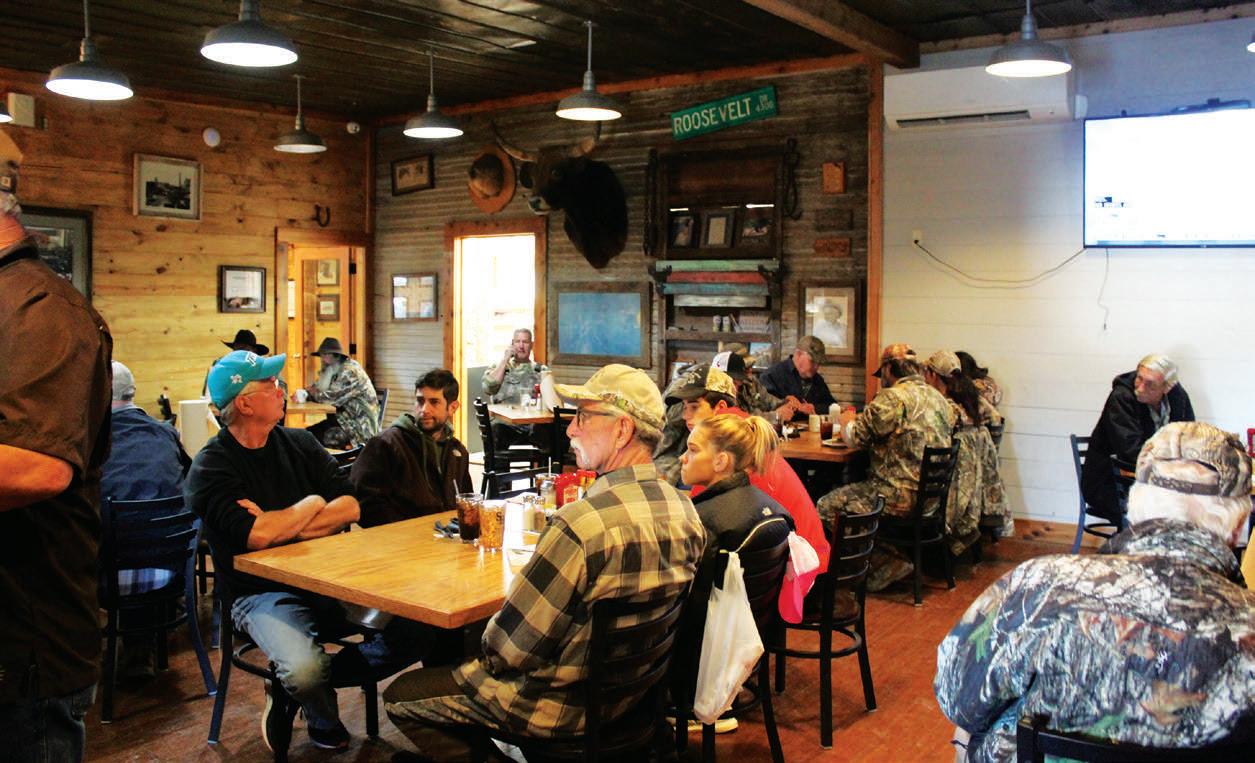
The historic Roosevelt post office, Lyssy and Eckel Feeds, Simon Brothers Mercantile, Backdoor Cafe and several residences are located at this townsite.
After leaving Roosevelt in the background, the River Road (KC 260) is on the right. The current route continues up the steep incline known as Roosevelt Hill. After reaching the summit, a left turn again takes the traveler over IH-10 and then the access road continues parallel to the Interstate in a westerly direction.
SUTTON COUNTY ROAD
Sutton County is just ahead, but a short drive a bit further will add a delight to the trip. Another overpass is negotiated, and the county road offers an outstanding vista of the landscape as the route dips into the North Llano River Valley near the Cedar Hill Church of Christ. Turning left, one finds the serenity of Camp Allison is phenomenal. Shortly, the road bypasses the Cedar Hill School just before another fording of the river. Eventually, the road will lead past old Fort Terrett, now a ranch headquarters. The fort is on private property and not open to the general public. The route leads back to the IH-10 access route, where a left turn will lead to the overpass, and one’s course is retraced back to Roosevelt.
KIMBLE COUNTY ROAD 260
Although KC 260 is unpaved, the drive is worth the effort of pacing to a slow speed and enjoying the surrounding beauty of the river and the hills. At the southwestern edge of Roosevelt, the road is accessed. It winds along the North Llano River; hence, the local name “River Road”. This was the old Junction-Sonora highway and was a part of the OST route in earlier days.
Along 260 is the Cedar Hill Cemetery, and we suggest returning to Roosevelt from this point. A river crossing just beyond the cemetery is a bit treacherous to the novice driver and to those unfamiliar with the riverbed’s eccentricities.
FARM TO MARKET 1674, NORTH
Still another interesting route is FM 1674 as it traverses the countryside on the way to old Fort McKavett, now a State Historical Park. That site is one of the best preserved frontier forts in the state.
Both East and West Copperas Creeks flow along 1674 on its northbound route.
A marker will tell of the site known as the Coalson-Pullen Settlement. The Murr Community, with its neighborhood church near the highway, is “out this way”.
After reaching the Fort, a left turn is toward Sonora, while a right turn will lead into Menard. KIMBLE COUNTY ROAD 370
In the northeastern part of Kimble, County Road 370 west of London between Highways 377 and 83 was dubbed “Whiskey Road,” probably because it was a direct route between London’s
Kathy Palladini
dance hall and the liquor store just over the line in Menard County. Today, the road has many crossings of Big Saline Creek before reaching a plateau. There are ranches and a subdivision of rural homes.
KIMBLE COUNTY ROAD 321
Nearer Junction, the Pipe Line Road, so named because the Texas-New Mexico Pipe Line’s facilities were erected along the route, is actually KC 321, off FM 2169.
A wondrous view of Johnson Fork Creek is along this route, and after a while, after winding past mountain peaks and crags, a spectacular view of the Llano River greets the eye. At the end of the road, a decision must be made whether to take the left or the right fork. If one turns left, the Grobe Crossing of the river is a short distance away. This route, KC 314, leads to an intersection with 377.
KIMBLE COUNTY ROAD 320
The right fork of the road will bring surprises. A wondrous view of the river is ahead as the road (KC 320) parallels the stream for a distance. Both Sycamore and another stream known as Cedar flow into the river along the way. The historic Ivy Chapel and School are along this route.
The county road eventually intersects FM 385.
KIMBLE COUNTY ROAD 210
The county road known as KC 210 off FM 2291 leaves Cleo behind as it meanders west with scenic crossings of West Bear Creek. Even the head draws are spectacular, although they are mostly devoid of water except during the rainy
seasons. Once upon a time, a post office serving the ranches of the area was located along the way and was known as Roca Springs. The road intersects the Fort McKavett Road (FM 1674).
KIMBLE COUNTY ROAD 450
An account of country lanes would be incomplete without mention of the old Segovia Road (KC 450) This was a part of the old Fort Terrett to San Antonio Road, and later a portion of the Old Spanish Trail. The road winds easterly from the Segovia Truck Stop complex, and first crosses Sycamore Creek. The Segovia schoolhouse, now a private residence, is on the right, and the remains of a once-thriving post office are adjacent to the road.
Two crossings of Johnson Fork Creek are along this course, and the Johnson Fork Settlement, founded by the Joys and other families, is commemorated by an historical marker near a Johnson Fork tributary known as Joy Branch. Remnants of old rock fences can be seen along the road. One can enjoy a panoramic view of Joy Valley as a steep hill is ascended. The end of the road intersects with FM 2169.
KIMBLE COUNTY ROAD 410
Another county road that bears mention is KC 410. It crosses Johnson Fork Creek and after meandering on a plateau, dips suddenly into the Sycamore Valley. KC 410 is a link between 2169 and the Blue Mountain Road.
Because of space constraints, this article has touched on only a few of the many country lanes in Kimble County.
They are maintained by the county, but they criss-cross private properties. It is well for each motorist and passenger to remember that all flora, fauna, driftwood, rocks and the like belong to and are under the control of the landowner and should not be taken from along the road. Some roads are dead-ends with no outlet, while others are a short-cut between heavier traveled roads.
Slow speeds and careful driving are a must, as many of these routes are caliche-based and unpaved. Their locations are along streams, for in bygone days, it was a must to have water nearby for weary travelers, for horses used for transportation and for livestock being driven overland.
Enjoy your drive “off the beaten path” in Kimble County.
BASH
Date: Saturday, June 6
Location: Hill Country Fairgrounds (temporary move due to courthouse renovation)
Time: 6:00 p.m.
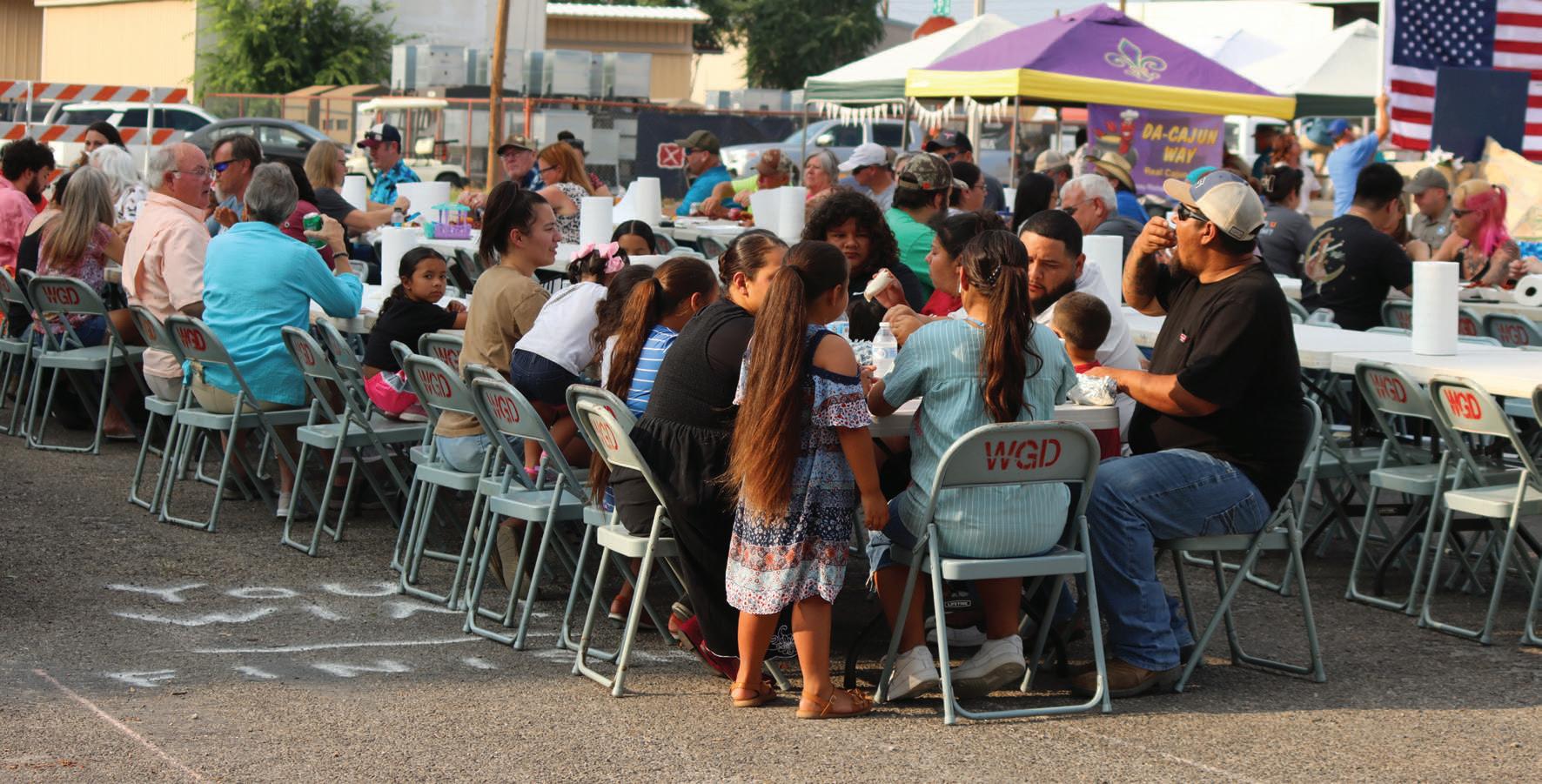
Get ready for an unforgettable evening where the Texas cowboy spirit meets the bold flavors and rhythms of Louisiana! The annual Cowboys & Cajuns, Together Again event is a one-of-a-kind fusion of Western tradition, mouthwatering Cajun cuisine, and toe-tapping live music—all in the heart of the Hill Country!
Authentic Cajun Feast!
Indulge in a delicious crawfish plate dinner straight from Hot to Trot Crawfish of Welch, Louisiana—a true taste of the Bayou! Dance for free, eat for a fee!
Live Music & Dancing Under the Texas Sky
Break out your boots and hats and get ready to two-step the night away to Fast Moving Train—a band guaranteed to keep the dance floor full all night!
Miss Kimble County Pageant Cheer on the contestants as Miss Kimble County and her court are crowned for the upcoming year—a cherished tradition celebrating the charm, grace, and spirit of Kimble County.
Seating & Refreshments
Tables & chairs provided, but bring a lawn chair or blanket if you prefer to relax under the open sky.
Coolers & bottles welcome –There is a $10 cooler/bottle charge, and drink set-ups will be available
for purchase. Don’t miss this lively celebration of food, music, and community! Come hungry, bring your dancing shoes, and experience the best of Cowboys & Cajuns—Texas style!
• Swimsuits
• Sandals & Water shoes
• Hats
• Outdoor Clothes & Cover-ups
• Sunscreen
• Tubes and Water Toys
• Child’s Floaties
• Life Jackets
• Fishing Gear
• Bait
• Proctor Silex products
• Outdoor Dutch Oven
• Cooking Utensils
• BBQ necessities
• Propane Cylinders
• Charcoal
• Lighter Fluid
• USDA Select Beef
• Tents
• Camping Gear
• Sleeping Bags
• Air Mattresses
• Beef Jerky
• Beer, Wine & Ice
• Deer Feeders
• Batteries
• Flashlights
• Dried Sausage
• Camouflage Gear
• Film & Cameras
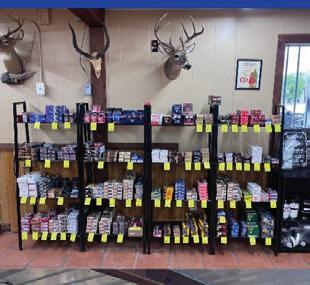
• Ammo
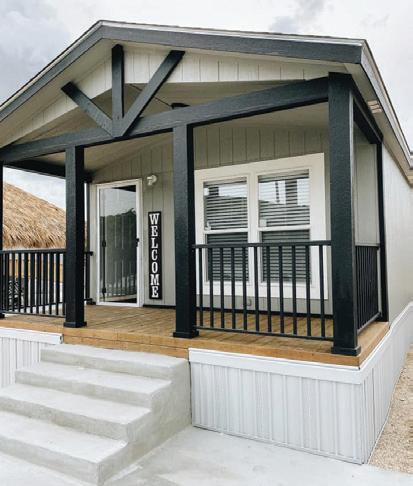
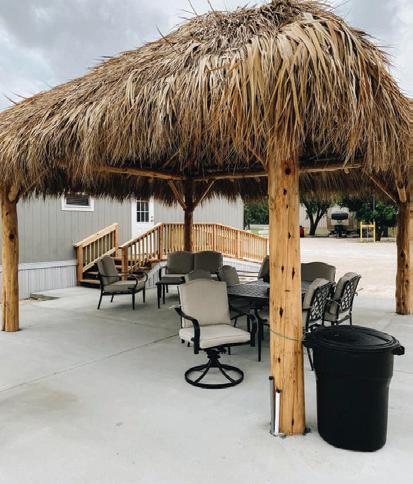
AREA CABINS, CAMP GROUNDS AND RV PARKS
BEAR CREEK PROPERTIES JUNCTION
Off the Cleo Highway, FM 2291, on KC 210 email: markell.rowe70@gmail.com 361.701.8059
BON TON ROULET CABINS ON THE RIVER
10 miles South of Junction on US Hwy 377 S. email: dearnol@yahoo.com 325.446.3154
CHARLIE’S BED ‘N’ BUNK
817.408.7329 or 214.649.1447 905 College email: d.r.h.hospitality@gmail.com
COOL RIVER CABINS
866.41-RIVER 4 Miles East of Junction on Hwy 377 N. on the Main Llano River www.seedsource.com/ecotourism/cabin.asp
COURTHOUSE CASITA
325.446.4620 419 College St. mollyholland1@gmail.com www.airbnb.com
NORTH LLANO RV PARK, 325.446.3138, 2145 N. Main on the N. Llano
SCHREINER PARK (JUNCTION CITY PARK)
Located Along the South Llano River in Town. Swimming, Tables, Bar-be-que Grills, Small Covered Pavilion. (NO RV camping) For Reunions or Large Parties, Please Reserve at City Hall 325.446.2622
Note: Tent Camping Limited to 3 Nights
CUPGRASS CABINS
512.407.9357 glen@southllano.com
THE OUTBACK GUEST HOUSE
817.408.7329 or 214.649.1447 905 College – Back Lot
email: d.r.h.hospitality@gmail.com
SOUTH LLANO RIVER STATE PARK www.tpwd.state.tx.us 325.446.3994 For Information 1.800.792.1112 For Reservations 512.389.8900
Five Miles from Junction on Hwy 377 S. on the South Llano River
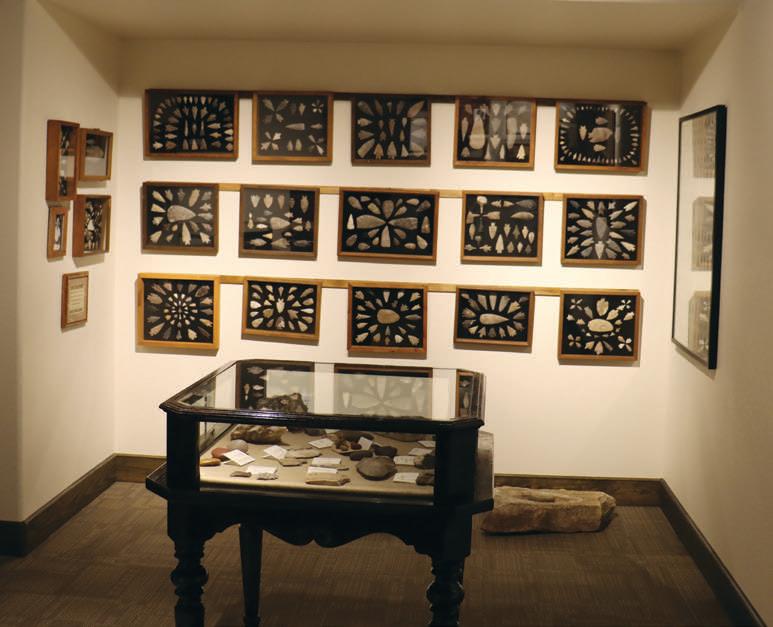
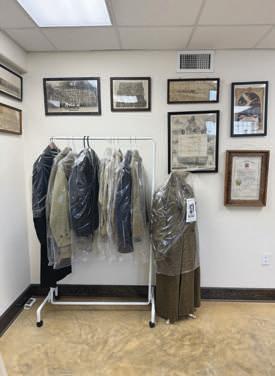
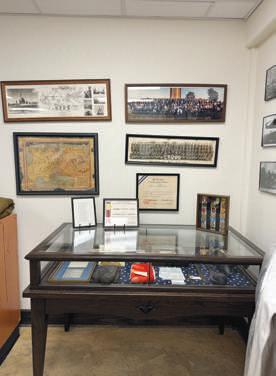
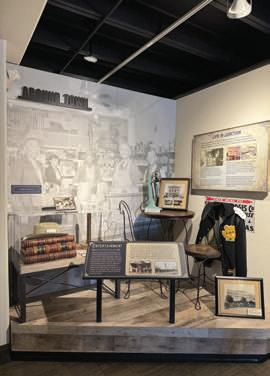
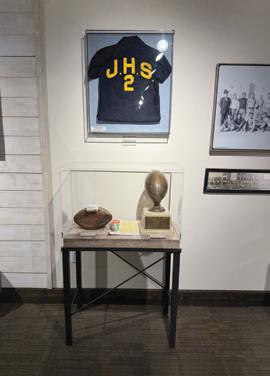
Kimble County proudly welcomes visitors to its spacious and beautiful Kimble County Historical Museum. Housed in the former county hospital, this thoughtfully restored facility has been transformed from an outdated, forgotten building into a vibrant center for local history and genealogy.
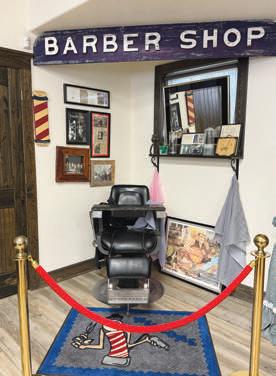
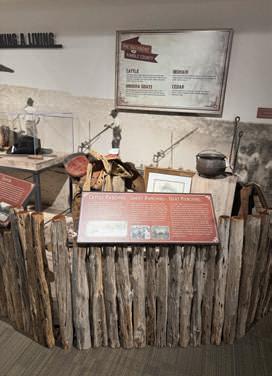
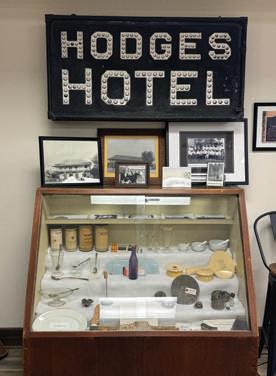
Step inside and immerse yourself in the fascinating past of Kimble County and the surrounding Texas Hill Country. The museum’s carefully curated exhibits feature historical artifacts, rare documents, vintage photographs, and preserved furnishings that bring the region’s rich heritage to life.
Museum Highlights:
• Governor Coke R. Stevenson Collection – Explore memorabilia honoring Kimble County’s native son and former Texas governor.
• Frederica Burt Wyatt Genealogical Section – A dual-room research space designed for history buffs and family ancestry enthusiasts.
No matter what brings you to Kimble County, be sure to stop by the Kimble County Library, a true hidden gem blending modern amenities with small-town charm. Recently remodeled, the library offers a welcoming atmosphere where visitors of all ages can relax, explore, and connect.
Why Visit the Kimble County Library?
• Stay Connected – With 17 public computers and free WiFi available daily from 5 a.m. to 10 p.m., you can catch up on work, browse the web, or stream your favorite content. Bring your own device or use one of the library’s high-speed terminals!
• Endless Reading Options – Whether you love print books, audiobooks, DVDs, or digital content, the library has you covered. With access to the CloudLibrary app, visitors can browse a massive statewide consortium of eBooks and eMagazines at their fingertips.
• Kimble Hospital Exhibit – A glimpse into the past with an original hospital room preserved in its near-original state, complete with Kimble Hospital memorabilia.
• Community History Displays – Engaging exhibits that showcase the people, events, and industries that shaped the area.
• Kitchen & Meeting Spaces – Designed for community gatherings, educational events, and visiting researchers.
This incredible achievement is the result of years of dedication and generous support from the community, bringing a shared vision to life. Whether you’re a history enthusiast, a genealogy researcher, or a curious traveler, the Kimble County Historical Museum offers a unique and enriching experience for all.
• Visit Us: 130 Hospital Dr., Junction, TX Come explore, discover, and connect with the legacy of Kimble County!
• Relax & Unwind – Enjoy a freshly brewed cup of coffee, tea, or bottled water at the library’s cozy coffee bar, perfectly situated near the newspaper section. Prefer the outdoors? Head to the charming patio area and read beneath the open sky.
• Fun for All Ages – Throughout the year, the library hosts a variety of
engaging programs and events, including:
• Puppet Shows & Storytime
• STEM Events & Read-a-thons
• Field Trips & Summer Performances
• The Epic Pumpkin Patch Festival
• Pictures with the Grinch & Seasonal Activities
• The Brand-New Gardening Club
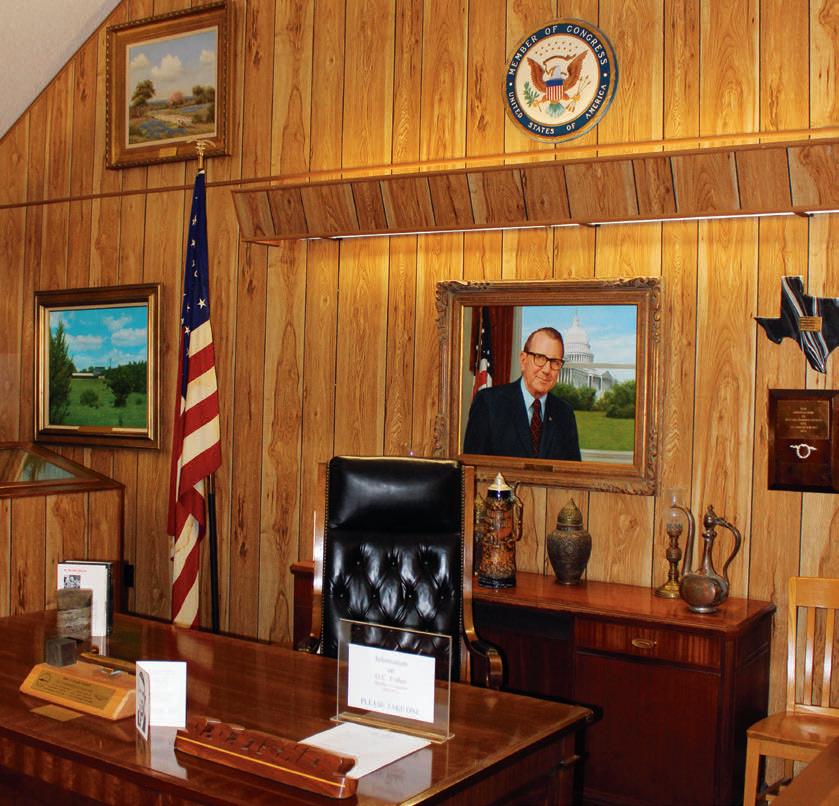
• Step Into History – Housed inside the library is the O.C. Fisher Museum, dedicated to the life and legacy of U.S. Congressman O.C. Fisher, a Kimble County native who served in Washington for 32 years. The museum showcases a replica of his D.C. office, political memorabilia, and writings from the man known as “Mr. States’ Rights”.
Whether you’re looking for a quiet place to read, a fun family activity, or a deep dive into Texas history, the Kimble County Library offers something for everyone. Come experience the best of literature, learning, and community in the heart of the Texas Hill Country!
• Visit Us at: Kimble County Library, 208 N. 10th, Junction, TX
• Hours: Monday, Tuesday and Thursday-9 a.m. to 6 p.m.; Wednesday-9 a.m. to 5 p.m.; Friday-9 a.m. to 4 p.m.
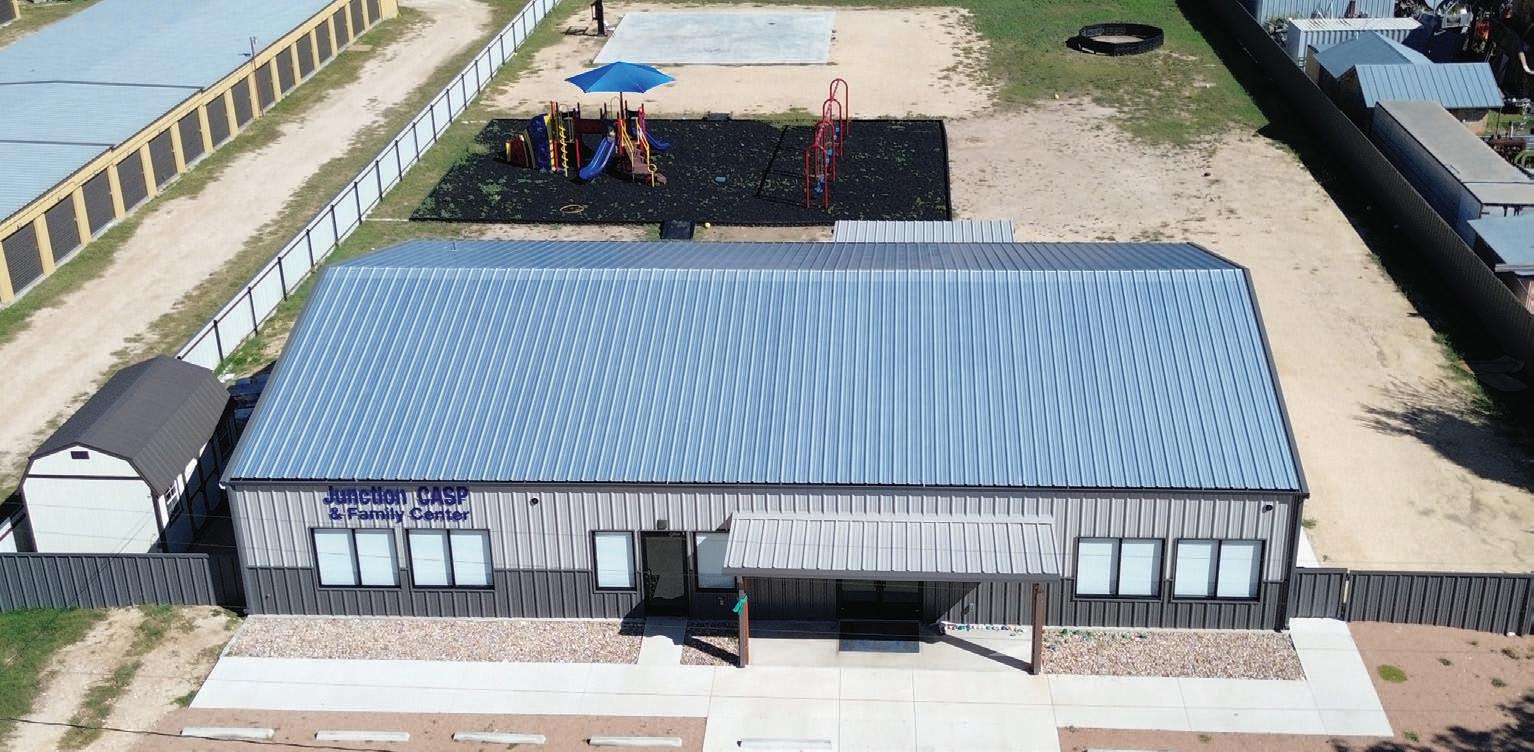
Unique, innovative, and a community blessing: C.A.S.P.
Every Monday through Thursday, amid the hustle and bustle of afterschool pickup, a line of elementary kids walks down the street to the new metal building sitting at the edge of the school property, where they’ll stay until 5:00 when the adult workday generally ends. While the unassuming exterior looks similar to many of the buildings in Junction, what’s housed inside is ground-breaking and a huge blessing to local parents. More than just providing muchneeded after-school childcare for students from Pre-K to fifth grade, the Junction Community After School Program and Family Center, or C.A.S.P. for short, has changed the way these children engage with the community and the school. Between homework time, outdoor play, and a snack, the students engage in something C.A.S.P. calls “enrichment time”. To Executive Director and founder of C.A.S.P., Erin Guerrero, this enrichment time is the cornerstone of the foundation. “My big thing from the
very beginning is positive exposure. What can we expose them to that is positive, that they may not have ever seen before?”
Whether it’s art lessons, gardening club, or all the various people and organizations that visit C.A.S.P. to showcase their hobbies, crafts, and jobs, every day brings a new experience to the students of the program. “I feel like there’s a limited knowledge when you live in a rural town,” Guerrero explained.
“[The students] know that there are teachers and doctors. Some kids might know that there are lawyers, but what else do they not know? Do they really understand what the police department does? Do they really understand what the state park does? Do they really understand what the banks do and some of the different hobbies and careers that people have? That’s what we’re trying to expose them to.” From doctor and banker to worm house wrangler and everything in between, C.A.S.P. has been proud to feature various
AUSTIN ACRES APIARY
LONDON, TX
careers and hobbies to the students within it’s walls. “There are so many community organizations in town that want to get out the word about what they do and also want to serve people. So I’m like, ‘let us help you serve people—cause we also want to serve people’. We have these awesome partnerships that we’re able to all meet needs and then along the way expose kids to new and exciting things that they may have never seen or known about before.”
Erin Guerrero wasn’t always the director of this successful non-profit. She wouldn’t even characterize herself as being “much of a dreamer”. Prior to starting C.A.S.P. in 2021, she was a third grade teacher at the Junction Elementary School. The inspiration for C.A.S.P. started with a list of community needs while driving the back roads of Junction. “My husband and I went back and forth with things that we needed to see in Junction or wanted to see—[things] that were a need. We started a big list
by Kendra McKinney
of things. We know that Medicaid comes to Junction and that SNAP comes to Junction, but do people have resources they need? Do they have support that they need? Do they have somewhere to go after school? We made an entire list of needs. So I started talking to people around the community, and they were like, ‘Erin, this is great; we definitely need this but you cant’t just start and have all of this. You’re going to have to focus on one part of it and grow from there’.” And that’s how C.A.S.P. was born. Erin and the board for directors she put together decided to focus on the absence of childcare in the area. According to the latest ALICE (Asset Limited, Income Constrained, Employed) assessment, 95% of fathers and 79% of mothers in Kimble County with children under the age of 18, work a full-time job. With reliable childcare severely limited in such a rural area, the C.A.S.P. program fulfilled an immediate need within the community. And the community response was strong.
At the 2023 Chamber of Commerce awards banquet, Erin Guerrero was invited up to accept an award for Non-Profit of the Year for the work that C.A.S.P. had done in the 2022 year. Then, at the culmination of the evening, Guerrero was called up to receive the ultimate award recognizing her, not as an executive director, but as an individual— the Citizen of the Year Award. “I knew C.A.S.P. was going to get nonprofit of the year. I was pretty sure they didn’t just invite people to come [to the banquet],” Guerrero laughed. “It is a great non-profit. We are meeting needs, but the citizen of the year was a total shock, and it is something that I’m proud of because this is something that was born out of blood, sweat, and tears, and leaving a career that I thought I would do forever. It was humbling and really exciting that people noticed. A lot of people in Junction do a lot of hard work, and it’s really amazing when people notice and you get a little bit of credit.”
Building the C.A.S.P. program from the ground up has been a labor of love for Guerrero, her employees, the board of directors, and the community as a whole. For the first few years,
C.A.S.P. was hosted in the Methodist Church gymnasium and students were bussed from the school to the program. With fundraising and an outpouring of support from the community, C.A.S.P. was able to construct a permanent building of its own in 2025. “I do not think we would still be here if it weren’t for this community,” said Guerrero. “Not just monetary. This community donated monetary—they gave and gave. [But] before the building campaign was a speck in our eye, people were like ‘this is something we want to give to and we want to support’. There are so many people in this community who have things to offer, and they want to.”
With the construction of the new building, the program was able to develop the family
service side of the nonprofit, offering new programs for parents, like Mother’s Day Out, providing care and enrichment to infants one-year old to fouryears old on Monday and Wednesday mornings, or Lunch and Learn, an in-person and virtual parenting class. The permanent building has also allowed them to expand their programs for students, like Summer Days classes for Pre-K through fifth grade for enrichment through the summer holiday. And due to popular demand, C.A.S.P. has started to offer limited programs and clubs to middle school age students throughout the school year.
C.A.S.P. has grown in size, now needing seven dedicated employees and seven board members to keep the program running. Despite the success of the after-school program and the development and growth of the family center, for Guerrero, the mission of the program rests on the maintaining the focus on positive exposure and experiences for children, “Kids are a product of their own raising, and this is a chance for us to take them and breath some life into them—give them something creative and plant a seed. That’s all we can do, plant a seed.”
Chris Melton
For years, driving through Junction at night be a quiet and dark experience. Most business restaurants were closed and shuttered by decades, with restrictive liquor laws in place, had little to no night life…no opportunities to brighten up the town. Through the work Economic Development Board (EDC), this about to change.
Historically, Junction and Kimble County a partially wet county and city. While liquor sell spirits, but no businesses could serve with over 5% alcohol to patrons. Functionally, has turned Junction into a veritable liquor and meant that beer has been the only option “adult” beverage in local restaurants and bars.
While these laws have deprived local citizens business of choices, it likely also deprived of income as well. Music venues, chain restaurants, and wineries haven’t been viable options in Kimble County with the restrictive laws. Kimble’s eastern neighbors are a sea of wineries, lush tasting rooms and booming coming second to Napa Valley in revenue, County has remained a dry island among booming businesses growing throughout the Texas Hill Country. The Wine America 2025 Economic Impact Study found that the Texas wine industry supports 136,700 jobs across the state with 2.64 million tourists visiting Texas wineries a year. In 2025, Texas wine industry contributed a whopping $24.39 billion in total economic activity. With so many agricultural industries in the area changing and production costs rising, many farmers and ranchers are being forced to diversify their businesses. Until now, Kimble County has been excluded from much of the wine tourism.
by Kendra McKinney
“We had that meeting in January. to formulate my talking points February and I went council in March. to submit to the of the State by order to be in November election. So March to August, it literally was just part of my routine of just checking things, getting word out media, and talking to people. It was just part for six months”.
November 2025 election, the proposition the liquor laws made it onto the ballot voter response was overwhelming. Around voters cast their ballots in favor of changing into a “wet” county and allowing liquor and be served by the glass. While change takes already rumblings in town suggest that change coming—with bars opening and business expressing interest in the long-vacant buildings in downtown.
For all of Bierschwale’s hard work for the county, her request is a simple one, “All I really want in recognition is for a restaurant to name a drink after me,” Bierschwale laughed. “I just want a margarita named “The Carmen’.” Due to all of her hard work, soon visitors may be able to enjoy an icy cold “Carmen” with their meals here in Junction.
Changing Kimble from a partially dry county into a wet one was not a simple task. Changing the local laws required two elections: one for the city of Junction and one for Kimble County, and a percentage of registered voters needed to sign a petition to even request such an election. Between filing paperwork, checking the registration status of petition signers, and collecting signatures, getting the issue to citizens for a formal vote involved a series of logistical hoops to jump through— a job that Carmen Bierschwale, a board member with the EDC, cheerfully volunteered for. “I look at it from a freedom and liberty perspective,” Bierschwale explained. “A restaurant does not have to sell alcohol. It’s actually very difficult to get your liquor license and follow all [of the rules]. And it’s expensive.” To her, the county and city allowing liquor by the glass was ultimately about giving local business owners the choices they needed to thrive. “It really gives business owners the freedom to select what they want to serve. There is a burden that restaurants do carry for serving alcohol, but it does give them the flexibility and the freedom to be competitive.”
Campaigns to change the liquor laws for both the county and the city have sprung up in the past, but none were successful. To ensure the best chance of success, Bierschwale took a methodical approach to requesting the election. “The petition part had failed a couple of times before in Kimble County, and I think the reason that we got enough signatures (and all were viable signatures) was because we were very detail oriented and organized with how we obtained the signatures. I was able to purchase a voter roll from the registrar’s office and no one was allowed to sign the petition until I verified that they were a registered voter in Kimble County.” Bierschwale had two petitions, one for city and one for county. Voters could sign the petition at the EDC office, but Bierschwale also took a proactive approach to getting signatures. She set up a table right outside the weekly Farmer’s Market, took the petition to local events like the Cinco De Mayo dance and left it in shops during the Women’s Gone Wild event. She also made a push to attend events in the surrounding communities in order to get signatures from voters in the outlying areas of the county. “It was a lot,” Bierschwale
Carmen Bierschwale is the driving force behind the liquor law change in Kimble County.
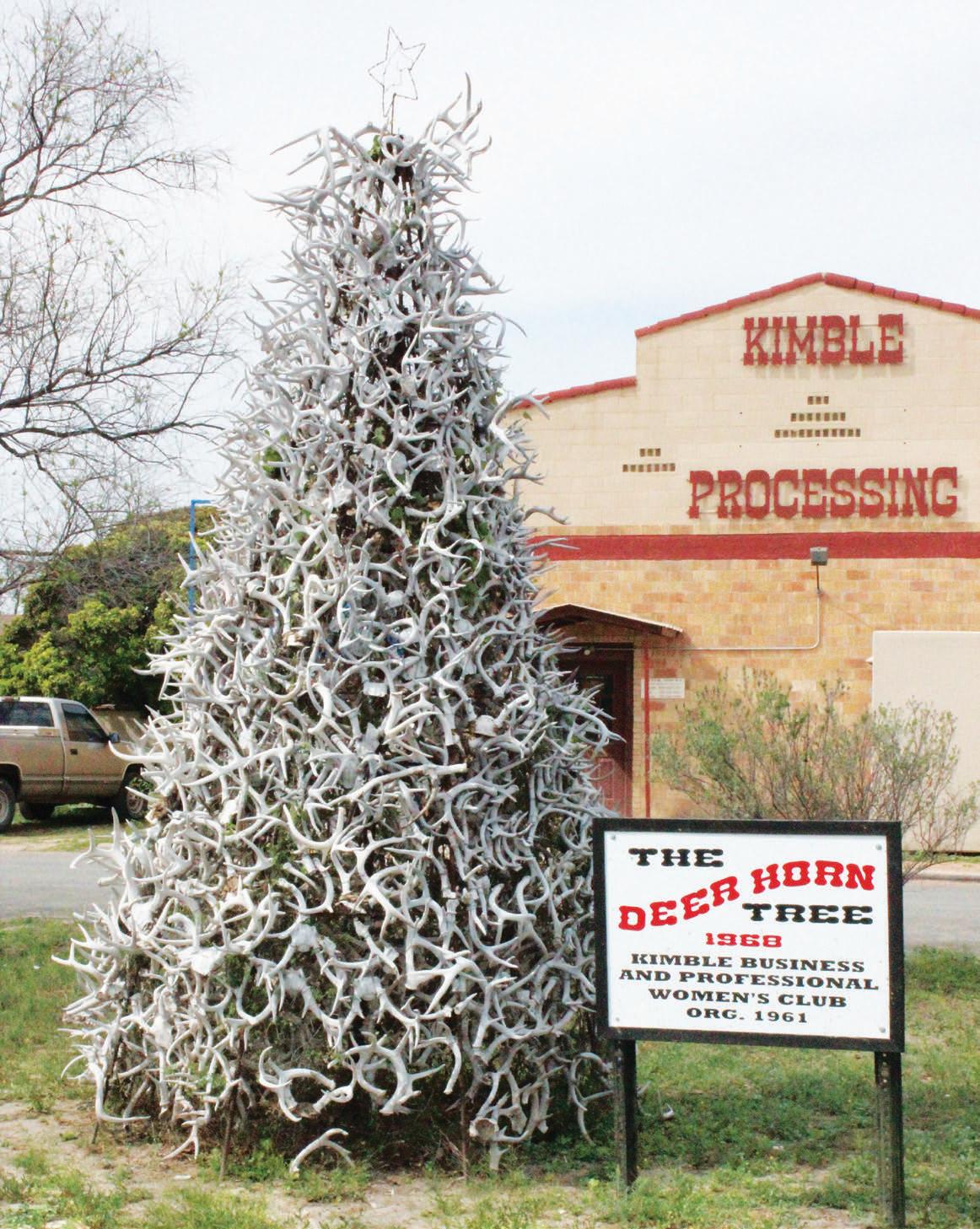
One of Junction’s most unique landmarks, the Deer Horn Tree (we know they are antlers), stands proudly in front of 1502 Main Street—a must-see and a perfect photo opportunity for visitors!
Originally constructed by the Business and Professional Women’s Club of Kimble County in 1968-69, this striking tree is made entirely of deer antlers, a tribute to the area’s rich hunting heritage. For more than half a century, club members have proudly maintained this local treasure.
A Festive Glow in Winter
During the holiday season, the Deer Horn Tree is adorned with twinkling Christmas lights, creating a magical nighttime display and adding to Junction’s holiday charm.
Don’t forget to take a picture with this one-of-a-kind Texas landmark!
Stan Marek
4TH OF JULY FREEDOM
Get ready to celebrate Independence Day, Junction-style! The 2026 4th of July Freedom Celebration kicks off with the annual Freedom Parade at 10 a.m. on Saturday, July 4. Line Main Street and enjoy a patriotic tradition filled with community spirit, smiling faces and plenty of red, white and blue.
Want to join the parade? Everyone is welcome! Decorate your bikes, saddle your horses, shine up your motorcycles and trucks, bring your ATVs, or just walk along and join the fun. Participants should gather at Schreiner Park (City Park) prior to the parade to line up.
The celebration will wrap up with a free fireworks show that won’t disappoint. For the best seats in town, grab a spot along the banks of the South Llano River at Schreiner Park and wait for the show to begin at “dark thirty.” Come early, bring your lawn chairs, and enjoy everything the park has to offer before the sky lights up over Junction.
For more information, contact the Kimble County Chamber of Commerce at (325) 446-3190.
Craig Meador
CELEBRATION
Summer Classic RODEO WEEKEND
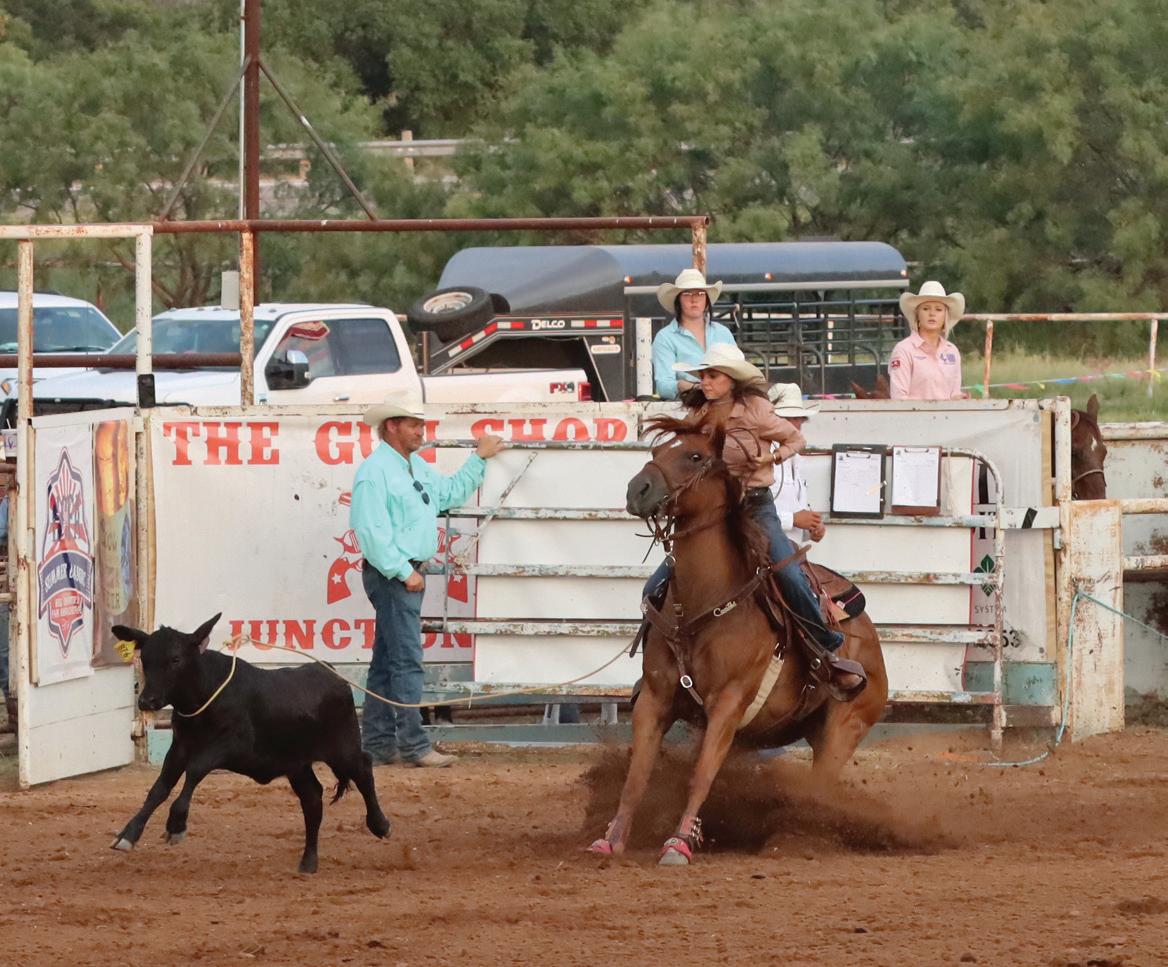
Experience the heart and soul of the Texas Hill Country at the Summer Classic Rodeo—a two-day celebration of rodeo action, live music, and small-town charm on August 7 & 8 in Junction, TX!
Weekend Festivities for the Whole Family:
• Class & Family Reunions – The perfect time to catch up and reminisce
• Parade on Main Street – Don’t miss the Summer Classic Rodeo Parade on Saturday, August 8, at 10:00 a.m.! See creative, homespun floats, class reunion entries, and more as they make their way down and back along historic Main Street.
The Main Event: Summer Classic Rodeo at the Hill Country Fairgrounds gates open at 6:30 p.m.
Rodeo action begins at 7:30 p.m., both Friday & Saturday nights.
After the last bull bucks, head to the Rodeo Pavilion for a concert and dance each night—where the music is hot, the drinks are cold, and the dance floor is ready for two-steppin’!
Stay Tuned for the Concert Lineup: Hill Country Fair Association Facebook
Whether you’re a rodeo fan, a music lover, or just looking for an authentic Texas experience, Junction’s Summer Classic Rodeo is a mustvisit event! See y’all there!
ROOSEVELT
Just 18 miles west of Junction off I-10, the small village of Roosevelt has a rich history and a lively spirit that keeps it thriving today. Locals pronounce it to rhyme with “blue,” just as its namesake, Teddy Roosevelt, once did when he visited long ago. Once a bustling town with a school, a dance hall, a mercantile store, a filling station, a hotel, and even a Masonic Lodge, many of these landmarks have faded into history—but traces of the past can still be found.
Roosevelt found new life in 1996 when the Simon family revived the historic Simon Brothers Mercantile, a general store once owned by their ancestors. In 2018, Lyssy and Eckel Feeds took ownership, but the Simon family remains deeply involved. Today, Simon Brothers Mercantile serves as the heart of the community, offering a little bit of everything—gasoline, feed, antiques, supplies, a post office, and plenty of small-town charm. Though Roosevelt’s population is fewer than 20, it’s a gathering place for locals and visitors alike. The unofficial “city council” convenes daily over coffee to discuss everything from local news to global affairs, and afternoon domino games bring people together for some friendly competition. At Simon Brothers Café, visitors can savor classic cheeseburgers, fries, and other delicious homemade dishes in a warm, welcoming atmosphere.
Roosevelt also knows how to celebrate! Simon Brothers Mercantile, Lyssy and Eckel Feeds, and the community host a variety of annual events, including a hunters’ lunch on opening day of deer season, the KC Chapter Mule Deer Foundation Banquet, a charming Christmas Eve parade, a lively New Year’s dance with a fireworks show, and more. Whether you’re passing through or looking for an authentic Hill Country experience, Roosevelt is a hidden gem worth discovering!
You’ll want to show up early or call in a reservation for the Simon Brothers Cafe Saturday dinner special. Tables fill up quickly!
Ginger Frizzell
Frizzell Laurrie Allen
MONDAY-SATURDAY
7:00 AM - 7:00 PM
Hunting license, gasoline, soft drinks, wine, all your grocery needs, and clean restrooms.
CAFE
W-Th 7 AM - 8 PM
F-S 7 AM - 9 PM Daily and weekly specials! Draft Beer!
LYSSY & ECKEL FEEDS
TGR BIG BUCK CONTEST SCORING STATION
Corn, deer pellets, deer block, bulk feed, milo, batteries and feeders, timers for deer feeders, and blinds.
Monday-Saturday 7:00 AM - 7:00 PM
HUNTING
Welcome Hunters to Kimble County – Your Ultimate Hunting Destination!
Kimble County is a hunter’s paradise, where rolling green hills, lush valleys, and winding streams set the stage for unforgettable hunting
JUNCTION HUNTERS’ GATHERINGS
FRIDAY, NOVEMBER 6
West Bear Creeks Hunters Lunch
11 a.m. - 2 p.m.
SATURDAY, NOVEMBER 7
London Community Hunters Breakfast
9:30 a.m. - 11 a.m.
SATURDAY, NOVEMBER 7
Simon Brothers Hunters Lunch in Roosevelt
11:30 a.m. - until food runs out!
SET YOUR SIGHTS O N KIMBLE COUNTY
experiences. Known for its abundant wildlife and warm hospitality, our community welcomes hunters year after year with open arms—and plenty of good targets!
Kick Off Hunting Season in True Texas Style
The excitement starts on Hunting Season Eve with a lively kickoff party at West Bear Creek General Store. Mark your calendar for November 6 at 11 a.m., when locals and out-of-town hunters come together for great food, cold drinks, and exciting prizes. The air buzzes with anticipation as hunters share stories and set their sights on a successful season.
Feast Before the Hunt
Before heading out, fuel up with a hearty Hunter’s Breakfast at 9:30 a.m. in downtown London, hosted by the London Community Association. The smell of fresh-cooked breakfast will guide you straight to the community center, where you can also stock up on homemade treats at the morning bake sale.
Then, make your way to Roosevelt for a legendary Hunter’s Lunch at Lyssy & Eckel Feeds and Simon Brothers Mercantile. Just 18
miles west of Junction off I-10, this gathering features delicious food, door prizes, raffles, and the chance to swap hunting stories with fellow outdoorsmen. Lunch is served from 11:30 a.m. until it’s gone—so get there early!
Wild Game Dinner – A Hunter’s Holiday Feast
The season’s most anticipated event is the Wild Game Dinner, hosted by the Chamber of Commerce and Junction Volunteer Fire Department. On Saturday, November 28, at 6:30 p.m. at the Stevenson Center, enjoy a feast of exotic game, enter to win incredible raffle prizes (including plenty of guns!), and trade hunting tales—some true, some a little stretched.
Why Kimble County?
✓ World-Class Hunting – Whitetail deer, axis, turkey, hogs, and more
✓ Friendly & Welcoming Community – You’re not just a visitor; you’re family
✓ Great Food & Fun Events – Because hunting season isn’t just about the hunt!
When planning your next hunting adventure, make sure Kimble County is on your map. Great hunts, good times, and full plates await!
SATURDAY, NOVEMBER 28
Kimble County Wild Game Dinner
6:30 p.m. at the Stevenson Center
Courtney Ahrns Thomas
Ginger Frizzell
Five ways to prevent negative encounters with snakes this spring
Texas A&M AgriLife experts share advice on how to avoid bites and coexist peacefully
- by Sarah Fuller
Springtime in Texas brings warmer temperatures, blooming wildflowers and more active snakes.
As these reptiles emerge from brumation — a state similar to hibernation in mammals — the chances of encountering them increase. However, understanding snake behaviors and basic safety tips can help prevent unnecessary fear and reduce the risk of a bite.
Experts from Texas A&M AgriLife share essential tips to help Texans stay safe while enjoying the outdoors.
Tip 1: Stay aware of your surroundings
In Texas, snakes typically begin to appear in search of food and shelter during February to March as temperatures warm.
“The best way to avoid snake bites is to be aware of your surroundings and recognize the scenar-
The vast majority of Texas’ native snake species are nonvenomous. Knowing how to properly identify snakes can help alleviate fears and increase appreciation of an area’s ecosystem. (Toby Hibbitts/Texas A&M AgriLife)
ios that lead to them,” said Toby Hibbitts, Ph.D., instructional assistant professor in the Texas A&M College of Agriculture and Life Sciences Department of Ecology and Conservation Biology. “If you spot one, the best thing to do is leave it alone and let it go its way.”
Hibbitts, also a research scientist with the Texas A&M Natural Resources Institute, said the rep-
tiles are commonly seen sunning on rocks and logs during the day, but they are more active at night or in the twilight hours as temperatures increase.
He recommends wearing closedtoe shoes and carrying a flashlight when walking outside at night to avoid a surprise encounter and to provide protection from bites.
SPRING BRANCH
Tip 2: Learn how to identify snakes in your area
Curious About Texas Snakes?
Know the difference between venomous and nonvenomous species and stay safe outdoors. Explore AgriLife Extension’s identification guide.
Out of the roughly 75 species native to Texas, only about a dozen are venomous.
“If you know which of these snakes live in your area, then it may ease your fears and increase appreciation for your ecosystem,” said Danielle Walkup, Ph.D., Texas A&M Natural Resources Institute research assistant professor in the Texas A&M Department of Rangeland, Wildlife and Fisheries Management.
Common nonvenomous species in Texas include:
• Garter snakes, often referred to as garden snakes.
• Rat snakes, also known as chicken snakes.
• Bull snakes.
Venomous species in Texas include:
• Copperheads.
• Cottonmouths, also known as water moccasins.
• Coral snakes.
• Several species of rattlesnakes, including western diamondback and timber rattlesnakes.
Many of the rattlesnake species found in Texas are in the Trans-Pecos region.
Tip 3: Make the area around your home less inviting to snakes
Hibbitts emphasized that while no chemical repellants have been proven to deter snakes, homeowners can reduce the likelihood of attracting them by maintaining a well-kept yard.
To discourage snakes from taking shelter in your yard:
• Keep grass short and trim overgrown vegetation.
• Remove woodpiles, debris or clutter where they could hide.
• Control rodents and insects, as they attract snakes looking for food.
Some species, like rat snakes, seek food in structures like chicken coops or outdoor sheds in search of prey. Keeping those areas secured can help prevent these unwanted visitors.
Tip 4: Don’t let snake myths lead to fear and learn to appreciate their benefits
Walkup emphasized that the animals are not naturally aggressive and prefer to avoid humans when possible.
“You may periodically hear stories about a snake ‘chasing’ someone, but in reality it is most likely trying to flee,” Walkup said. “The person may just be standing in the way of its closest cover.”
Snakes play an important role in Texas’ ecosystems by controlling insects and small mammal populations, and recognizing their benefits may ease common fears.
Tip 5: Understand snake behavior to prevent dangerous encounters for you and your pet
Hibbitts noted that learning where venomous snakes tend to live can help reduce the risk of bites.
Examples of where venomous snakes in Texas are commonly found:
• Copperheads blend into leaf litter and can be found in a range of environments, including woodlands and grasslands.
• Cottonmouths prefer to be near water, including creeks, ponds and springs.
Texans should also take precautions to reduce the chance of their pet encountering a snake, such as having them on a leash during walks. It is important to know that snakes typically only bite as a last resort when they feel threatened. Even in cases where a venomous snake does bite a person, the Texas Department of Health and Human Services reports that roughly half of all venomous bites are “dry.” A dry bite means no venom was injected, as snakes often prioritize their venom for prey.
Despite this fact, Hibbitts emphasized that all bites to pets and people should be taken seriously. If bitten, seek medical attention immediately, especially if you aren’t certain of the species.
Myghan
Junction Medical Clinic and Rocksprings Medical Clinic are complete family care clinics with medical staff, providing services for children all the senior adults. Most insurance is accepted. Nosotros español.
Jay Jackson, M.D.
Jennifer Johnson, PA-C
Payden Land, PA-C
Amanda Sattler, PA-C
Gregory Sattler, M.D.
Dub Smith: An unlikely story about the power of education
If you don’t think education is worth the time or money, consider the story of Dub Smith.
Dub’s dogged determination to finish college and become a teacher and coach not only changed his life, but it also changed the lives and expectations of generations to come within his family. Even future generations he’ll never meet or know.
Born in 1938 in Austin, Dub’s parents were migrant workers, and the family lived in a tent city near what is now Bee Cave. During World War II, Dub’s dad got a job at Camp Mabry, and the family rented a house in Oak Hill, which was out in the country west of Austin at the time.
Dub dropped out of school in the first grade at Oak Hill. He played hooky for most of the fall semester until his parents found out.
“I just didn’t like school,” he said. “Everybody walked to school in a big group, so it was easy to fall out and disappear in a pasture near the school. I’d play cowboys and Indians (by himself) or chase rabbits all day.”
The family – which included eight children – moved to Junction, where Dub’s dad was a custodian at the school and his mom cleaned houses. Dub restarted the first grade, and he loved school at Junction.
“School was hard for me until about the fourth grade,” Dub said. “Then the light came on. I was a late bloomer. In today’s school system, I would have been placed in special ed in the first grade and never have gone to college.”
Dub’s dad died from heart problems at age 54 when Dub was a sophomore in high school. While in high school, Dub worked multiple jobs to help his family. He cleaned a bank building and the local airport building; plus, he worked at an ice plant.
Dub’s three older brothers didn’t finish high school.
“Back then when you were from a poor white family,” Dub said, “you were expected to drop out of school and get a job to help support your family.”
The fifth of eight children, Dub became the first to graduate from high school in 1958, in part, because he excelled at sports. Afterward, he attended Schreiner College in Kerrville, a junior college at the time, on a track and basketball scholarship.
OFF TO COLLEGE
Dub never had a car during college. If he wanted to return to Junction from Schreiner, 55 miles away, for a weekend to see his mother or work at his brother’s gas station for extra money, Dub hitchhiked.
After junior college, Dub dropped out of school again. This time it was for a more honorable reason: His mom needed financial assistance, so Dub quit school for two years to help pay off some bills.
He was working at a 24-hour full-service truck stop in Junction when local rancher Boyce Hunger stopped for a fill up and asked Dub why he wasn’t in college. The
rancher returned the next day and said he and his brother Bobby would put up $250 apiece to help Dub get restarted in college.
The rancher told Dub he could repay the money after he finished college and got a job.
With his mom’s blessing, Dub took the offer and chose Sul Ross State University in Alpine because it “was affordable and isolated. I knew I wouldn’t be tempted to spend a lot of money.”
To help pay his way through two years at Sul Ross, Dub took an unglamourous job at the college.
“I was a roustabout. I worked in the athletic department, cleaning toilets, cleaning the field house and raking gravel around the cinder track,” he said.
He later worked a similar job with the Alpine school district and later was a nightshift security guard for the school. He eventually received some scholarship help by pole vaulting for Sul Ross. He mailed $20 home to his mother whenever he could.
A LIFE WITH EDUCATION
Dub eventually graduated from Sul Ross and repaid the $500 to the two rancher brothers. His college education enabled him to start a 42year career as a history teacher and high school coach of multiple sports.
While he was coaching at Balmorhea, Dub met and eventually married Karen Turnbough, who earned a bachelor’s degree and master’s in special education from Sul Ross.
by Mike Lee
“In my family, we were expected to go to college,” said Karen, who taught for 41 years. “There were six of us kids. We all went to college, and five of us finished.”
Dub and Karen’s coaching and teaching journey took them to Balmorhea, Alpine, Pecos, Morton, Marble Falls and Lubbock Christian. They retired as teachers in Texas and doubledipped by working in New Mexico. Dub was head coach at Class 2A Tucumcari, and in 2002 when he was 64 years old, his Rattlers won their first state championship in football since 1956.
Their careers as teachers enabled Dub and Karen to live a comfortable life and provide for their children. The power of education in the Smith family raised the bar of expectations for their three children, who didn’t have to worry about money to attend college.
Dr. Tammy Camp, the oldest daughter, is a pediatrician in Lubbock. Misty Boyles is a physical therapist in Colorado Springs. Shay Smith, their son, is a flight attendant in Dallas.
Six of Dub and Karen’s seven grandchildren have either graduated or are attending college. Lauren has a degree in music therapy and works in hospice care in Florida. Landon is a band director in Wolfforth (near Lubbock) and is pursuing a master’s degree.
Nathan is a youth minister in Shallowater (also near Lubbock). Ethan has a doctorate in physical therapy and works in Dallas. Autumn is a nurse in Florida, and Kaelen is a senior at Lubbock Christian University, studying to be a teacher and coach.
The seventh grandchild, Ashlyn, is a sophomore in high school.
Dub and Karen Smith
Dub Smith with the letter he won for pole vaulting at Sul Ross State University.
THE POWER OF EDUCATION
Consider the impact of education on the lives of Dub, his children and grandchildren. Had Dub not finished college and become a teacher/coach, he wouldn’t have met Karen and joined a family in which going to college was expected.
His children and grandchildren were expected to attend college. Odds are future generations from Dub’s family tree – people he will never meet – will be expected to attend college.
Education changed the direction and expectations of Dub’s family tree for generations to come.
Dub will be the first to tell you that people can be successful without college. Of his brothers who didn’t finish high school, one became a
sought-after mechanic, another became an electrician and another became a ranch foreman.
A younger brother, Bill, finished college at Sul Ross after serving a stint in the U.S. Navy. He became a coach and a housing contractor. They were all successful, self-reliant citizens.
But ask Dub now at age 86 what he would have done without high school or college and he said: “I probably would have been a manual laborer making $10-15 an hour.”
Dub and Karen are now retired and live in two-story home in the mountains of northern New Mexico. Their children, grandchildren and future generations will enjoy the mountain homestead and getaway for years to come.
People of strong faith, Dub and Karen believe the blessings in their lives were made possible by God’s grace and love. Many of those blessings began with one man’s dogged determination to gain an education.
“I really believe that in smaller towns like Junction, if they know that you’re a hard worker, they’ll take care of you,” Dub said. “You have to have the right attitude and a willingness to work. I always felt like I owed something back to Junction.
“I’m the luckiest guy in the world.”
Dub Smith and his family celebrate Tucumcari’s 2002 New Mexico state championship win in football over Santa Rosa.
Dub and Karen Smith’s mountain home near Las Vegas, New Mexico.