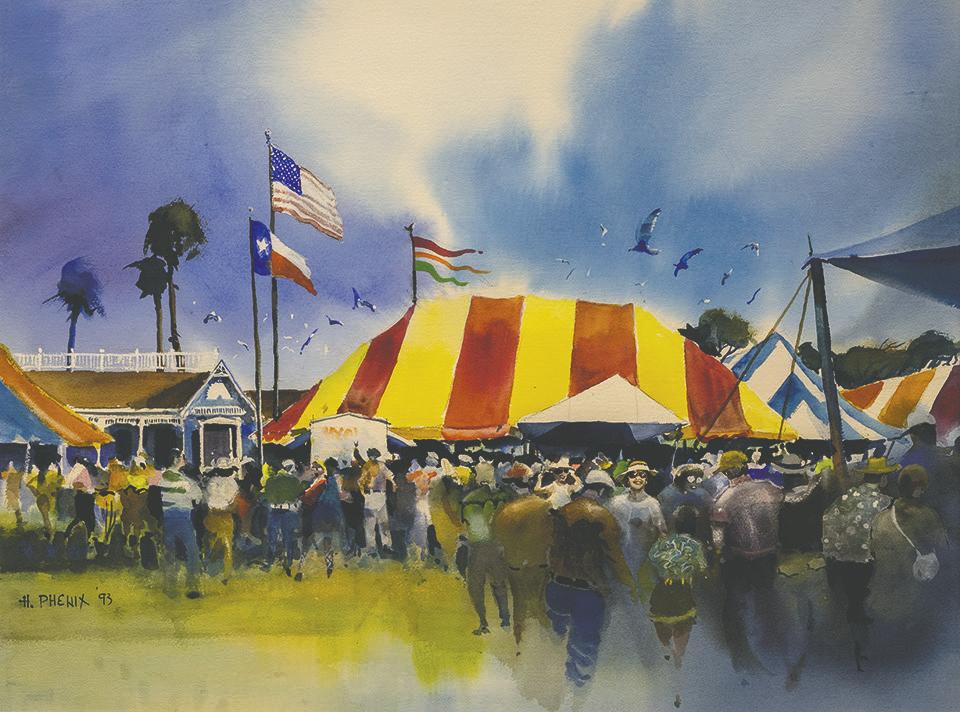
Founded in 1969, the Rockport Art Festival began as a celebration of creativity in Rockport, Texas—then an emerging art colony along the Texas Coast. Today, it has become a beloved summer tradition, bringing together more than 120 artists and over 10,000 collectors and visitors each year.
The festival plays an important role in supporting the mission of Rockport Center for the Arts. Proceeds help provide free youth art education programs, support local and
regional artists, and sustain exhibitions, outreach, and community events throughout the year. Through these e orts, the festival helps ensure that the arts remain accessible, vibrant, and deeply connected to the community.
Salemi’s Hardware
Presented by
A Nation’s Story How America Reached Its 250th Anniversary
The story of the United States spans 250 years of change, growth and adjustment.
From a small group of colonies along the Atlantic coast to a nation that stretches across a continent, America developed through choices made over generations.
Its history reflects continuity shaped by adaptation rather than a single defining moment.
The nation’s origins lie in the late 18th century, when colonists sought independence from British rule. The Declaration of Independence articulated shared principles, while the Constitution established a framework for self-government. Together, these documents balanced ideals with practical governance, creating a system designed to endure while allowing future revision.
Early national life required experimentation. Leaders tested approaches to finance, law and diplomacy, while citizens adjusted to a new civic identity. Establishing courts, regulating trade and organizing federal
departments helped stabilize the young republic. The admission of new states expanded both geography and political responsibility, drawing diverse communities into a shared national project.
Growth and Change
The 19th century brought rapid transformation.
Transportation improvements such as canals and railroads connected regions and supported commerce. Immigration increased population and cultural diversity, while industrialization altered work, cities and daily routines. These forces pushed institutions to evolve and required ongoing adjustment at local and national levels.
The Civil War tested the durability of the union and reshaped national priorities. Its aftermath
required reconstruction, reconciliation and rebuilding across large portions of the country. Despite deep disruption, the nation continued to grow economically and territorially, reinforcing a commitment to shared governance and continuity.
The 20th century introduced global engagement and internal change. World wars expanded America’s role on the world stage and accelerated technological development. Economic growth following World War II supported rising living standards, expanded access to education and increased homeownership, reshaping everyday life in communities across the country.
Shared Experience
In the la er half of the century, advances
in technology, transportation and communication further changed how Americans lived and worked. Interstate highways connected regions, air travel reduced distance and new media reshaped information sharing. These developments influenced commerce, culture and daily routines in lasting ways.
Entering the 21st century, Americans continued adjusting to rapid innovation, demographic change and evolving expectations. New technologies reshaped communication and work, while communities adapted to economic shifts and population movement. These changes reflected continuity with the nation’s long tradition of adjustment rather than departure from it.
As the nation reaches its 250th anniversary, its story reflects resilience built through adaptation. America’s history is not a single narrative but a collection of shared experiences linked by common principles. That balance of continuity and change remains central to understanding how the nation arrived at this milestone and how it continues forward.
The Promise of America: Celebrating 250 Years
What began as a fragile experiment—asking if a people could successfully govern themselves—is now a 250-year-old beacon of liberty. While political disagreements are a natural part of our republic, the fact that our system consistently upholds the peaceful, duly elected transfer of power is a magnificent testament to our Founders and the citizens who carry their legacy forward.
The American system works. It has fostered the greatest nation in human history, built on a foundation of unmatched innovation and triumph. Over the past 250 years, American ingenuity has
FROM THE PUBLISHER
by Dennis Wade
continuously redefined what is possible:
• Framing Constitutional Democracy: Pioneering a robust system of checks and balances that inspired free nations worldwide.
• Forging Industrial Might: Constructing the Transcontinental Railroad and launching the age of mass production.
• Defending Global
Freedom: Championing the Allied victory in World War II and drafting the post-war Marshall Plan.
• Expanding the Promise of Liberty: Marching for civil rights and continually striving to form a “more perfect union.”
• Conquering Disease: Developing mass-scale penicillin and eradicating polio globally.
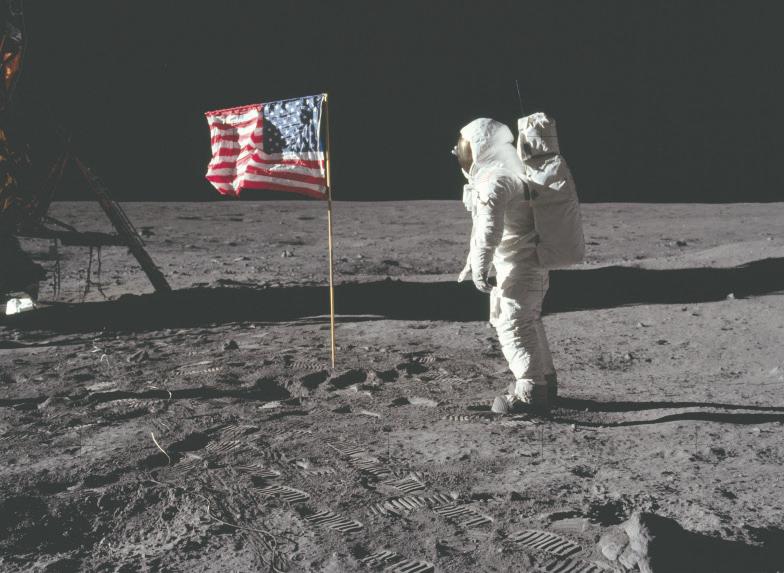
• Reaching for the Stars: Landing twelve Americans on the Moon and charting the deep cosmos.
• Connecting the Globe: Launching the Internet, inventing the smartphone, and building
the GPS network.
• Decoding Life: Sequencing the human genome to revolutionize modern medicine.
We have faced dark chapters, and we struggle with complex issues today. However, the resilience of a free people has always ensured that we rise above our challenges. We are more than conquerors.
Our heritage proves that there is no boundary we cannot cross. Let us pledge to make the next 250 years just as meaningful and enduring as the last.
We proudly salute America. HAPPY 250th BIRTHDAY!
Founders at Work How Early Leaders Built a Lasting System
The leaders who guided the United States through its earliest years faced an uncertain task.
Independence brought freedom, but it also required the creation of a functioning government capable of uniting diverse states.
The nation’s founders approached this challenge through debate, compromise and practical problem-solving rather than simple agreement.
Before independence was secured, the Continental Congress served as an early test of cooperation. Delegates coordinated military efforts, diplomacy and supplies while balancing regional interests. These early efforts revealed both the promise and limits of collective leadership across colonies with different priorities.
After the war, the Articles of Confederation provided a first a empt at national governance. While they preserved state authority, limited federal power and financial instability made coordination difficult. These shortcomings prompted reconsideration rather than abandonment of shared goals and highlighted the need for a
stronger framework.
Designing a Framework
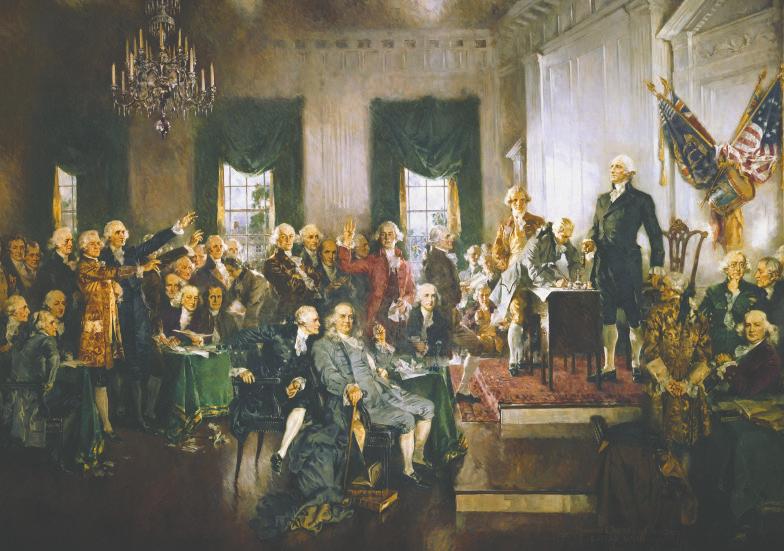
The Constitutional Convention of 1787 became a turning point. Delegates debated representation, executive power and the balance between state and federal authority. Compromises such as the Great Compromise addressed the concerns of both large and small states, while separation of powers created checks within government.
The resulting Constitution reflected practical judgment. It established mechanisms for lawmaking, enforcement and interpretation while allowing amendment. This flexibility acknowledged that future generations would face conditions the founders could not foresee.
Ratification required
public trust. Essays later known as The Federalist Papers explained the proposed system and encouraged informed discussion. The addition of the Bill of Rights addressed concerns about individual freedoms, reinforcing confidence in the new framework and encouraging widespread support across the states.
Putting Ideas Into Practice
Early leaders focused on making the system work. Establishing federal courts, organizing executive departments and managing national debt helped stabilize the young republic. Foreign policy decisions secured recognition and trade, strengthening economic independence and international standing.
Daily governance required patience and cooperation.
Disagreements emerged over finance, foreign relations and authority, but structured debate allowed resolution without dismantling the system. Elections and peaceful transfers of power reinforced legitimacy and set enduring precedents for leadership.
Lasting Legacy
The founders did not expect perfection. They understood governance as an ongoing process shaped by participation and revision. Their work emphasized responsibility as much as authority and encouraged civic engagement at all levels. Over time, the structures they created proved durable. Amendments, elections and evolving interpretation allowed the system to respond to new challenges while maintaining its core framework.
As the nation marks its 250th anniversary, the work of the founders continues through the system they created. Their emphasis on structure, debate and compromise provided continuity while allowing change, supporting a republic capable of enduring through changing times and circumstances for generations to come.
How Thirteen Colonies Became Fifty States Over 250 Years
When the United States declared independence in 1776, its borders stretched only along the Atlantic coast.
Thirteen colonies formed a loose union, uncertain whether their experiment in self-government would last. Over the next 250 years, the nation expanded steadily, shaped by migration, negotiation and se lement.
Early growth followed population movement. Se lers crossed the Appalachian Mountains in search of farmland and opportunity. New communities formed along rivers and trade routes, creating demand for roads, markets and local government. As populations grew, territories began seeking statehood and a voice in national affairs.
The process was deliberate. Territories drafted constitutions, organized governments and demonstrated readiness to join the union on equal footing with existing states. This approach helped maintain stability as the nation grew.
Paths to Expansion
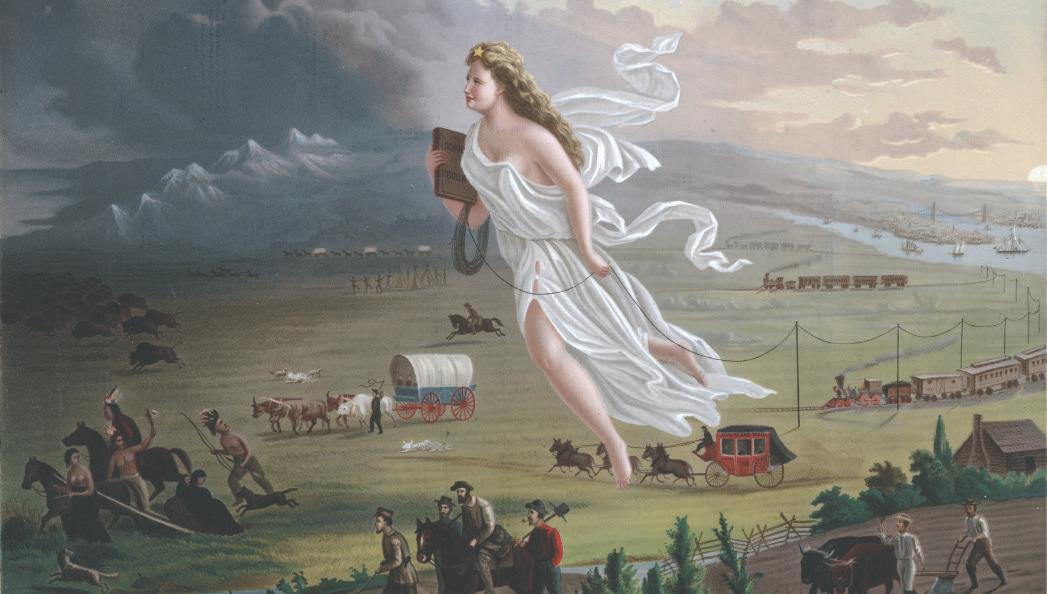
Some additions came through negotiation and purchase. The Louisiana Purchase of 1803 more than doubled the nation’s size, opening vast areas to se lement and trade. Later agreements added territory in the South and West, reshaping the national map without military conflict.
Other states emerged from organized territories as railroads, farms and towns took root.
California’s rapid growth during the Gold Rush led to statehood in 1850, while states across the Midwest followed as agriculture expanded and transportation improved.
Each new state brought its own economy and culture. Coastal states often relied on trade and shipping, while interior states developed around farming, mining and manufacturing. Together, they reflected a wide range of regional experiences.
Connecting the States
Expansion required connection. The National Road, canals and later transcontinental railroads linked distant regions and allowed goods and people to move efficiently. These networks strengthened commerce and helped create a national economy.
Communication improved alongside transportation. Newspapers, postal routes and telegraph lines reduced isolation and kept citizens informed. Shared information reinforced a sense of national identity even as
communities remained locally distinct.
By the early 20th century, the contiguous United States had taken shape. The addition of Alaska and Hawaii in 1959 brought new geography and cultures into the union, extending the nation’s reach from the Arctic to the Pacific.
A Shared Framework
Today, Americans often identify strongly with their home state while participating in a larger national system. State governments address local needs, while shared laws and institutions connect the country as a whole.
The journey from thirteen colonies to fifty states reflects more than territorial growth. It tells a story of communities seeking representation, stability and opportunity within a shared framework. After 250 years, that balance between local identity and national unity remains one of the country’s enduring strengths, shaping how Americans live, cooperate and govern together across generations.
A Nation of Strength
America’s Military Might and Fortitude Have Shaped Its Destiny
American strength has never rested in a single institution or moment.
From the nation’s earliest days, it developed through persistence, cooperation and the willingness of ordinary people to meet unfamiliar challenges.
Over 250 years, that pa ern has repeated across generations.
During the Revolutionary era, strength was measured less by resources than by resolve. Local militias formed from farmers, tradespeople and shopkeepers who balanced daily responsibilities with civic duty. Supply shortages, uncertainty and prolonged conflict tested endurance. Success depended on shared effort and the ability to persist without guarantees.
As independence took hold, national strength expanded beyond conflict. Roads, ports and early industries required sustained labor and coordination. Canals and railroads connected distant regions, allowing commerce and communication to grow. Communities adapted to new demands while maintaining local responsibility.
Growth Through Change
The 19th century brought industrialization, reshaping how Americans worked and lived. Factories increased production, farms adopted new tools and cities expanded. Strength emerged not only from output but from adjustment. Workers learned new skills, communities organized services and civic institutions grew alongside industry.
Periods of strain prompted reform and innovation. Labor movements, public education and local organizations developed as responses to changing conditions. These efforts reflected an understanding that national progress required balance as well as productivity.
The 20th century tested American strength on a global scale. Military
service and national defense became central during times of conflict, supported by widespread participation at home. Manufacturing shifted, research accelerated and communities organized to meet shared goals. Strength revealed itself as a collective undertaking rather than a single function.
Beyond Defense
Following global conflicts, the nation invested in discovery and growth. Advances in medicine, engineering and transportation reshaped daily life. The space program demonstrated how long-term planning, scientific expertise and coordination could produce outcomes that extended beyond immediate needs.
Strength also appeared in quieter ways. Teachers prepared students for changing economies. Farmers adapted
methods to feed growing populations. Researchers advanced knowledge incrementally, often outside public view. Communities rebuilt after natural disasters and economic downturns, relying on cooperation and continuity.
In recent decades, rapid technological change introduced new challenges. Work evolved, information moved faster and industries transformed. Adaptability remained central. People retrained, relocated and redefined how they contributed, reflecting a long tradition of adjustment.
Shared Capacity
Military readiness remains one element of national security, but it exists alongside infrastructure, education, public health and research. Strength rests in how these systems support one another rather than in any single measure.
As the nation marks its 250th anniversary, American strength appears as an ongoing process. It is visible in steady effort between crises and in moments when communities come together. That resilience, built over time, continues to shape a nation defined not by permanence but by its capacity to endure and adapt.
America’s National Symbols
How Shared Images Express National Identity
National symbols offer a way for Americans to recognize shared history and values without a single voice or message.
Over time, these symbols developed through custom, law and public use, reflecting continuity rather than deliberate design. Together, they provide a visual and cultural language understood across generations.
The American flag is among the most recognized national symbols. Its origins trace to the early years of independence, with stars and stripes representing unity among states. As the nation expanded, stars were added, allowing the flag to evolve alongside the country itself. Today, the flag appears at public buildings, community events and private homes, serving as a familiar presence in daily life.
The bald eagle became a national emblem in the late 18th century. Selected for the Great Seal of the United States, the eagle symbolized strength and independence drawn from classical imagery. Over time, it appeared on currency, official documents and public monuments, reinforcing its role as a visual marker of national identity.
Symbols in Everyday Life
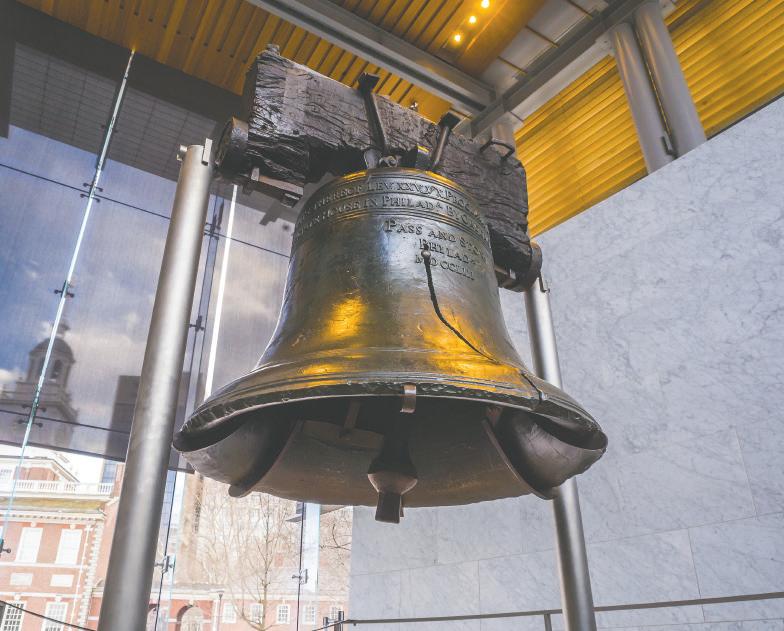
Other symbols developed through shared experience rather than formal selection. The Liberty Bell gained prominence in the 19th century, especially as abolitionists used it to represent freedom and justice. Though cracked, the bell became a lasting reminder of ideals expressed at the nation’s
founding.
The Statue of Liberty arrived in the late 19th century as a gift from France and gradually assumed deeper meaning. For many immigrants, it marked arrival and opportunity. Over time, it became associated with welcome, civic values and participation in national life.
National songs and mo os also shape shared identity. “The Star-Spangled Banner,” wri en during the War of 1812, became the national anthem in the 20th century. Phrases such as “E Pluribus Unum” emphasized unity among diverse states and people, reinforcing themes found throughout American history.
Changing Meaning
National symbols do not remain fixed. Their meanings shift as new generations interpret them through contemporary experience. The flag, monuments and national imagery have been present during moments of celebration, hardship and reflection.
Symbols are reinforced through
routine use. Schools, civic events and public ceremonies rely on familiar imagery to mark shared occasions. These repeated encounters help maintain continuity without requiring uniform interpretation.
National symbols also appear in everyday spaces such as courthouses, libraries and town squares. Their presence reflects shared reference points rather than directive messages, allowing individuals to engage on personal terms.
Together, these symbols form a shared visual language. They persist not because they demand agreement but because they allow recognition across differences.
As the nation marks its 250th anniversary, national symbols continue to serve as familiar reference points. They connect past and present without prescribing interpretation. In doing so, they reflect a country shaped by shared images, evolving meaning and ongoing participation across generations.
How America Celebrates
Traditions and Gatherings That Bring People Together
Celebration has always been part of American life. From small-town gatherings to national holidays, shared moments of joy helped communities mark time, honor milestones and strengthen social bonds.
Over 250 years, Americans developed traditions that reflect both local character and national identity.
Early celebrations often centered on seasonal rhythms and civic events. Independence Day quickly became a focal point, marked by public readings, parades and community meals. These gatherings reinforced shared ideals while giving people a reason to come together beyond daily work.
As towns grew, celebrations became more organized. Fairs, festivals and public ceremonies offered spaces for recreation and connection. These events helped establish traditions that endured across generations and gave communities a shared calendar to look forward to each year.
Holidays and Traditions
National holidays created common reference points across
a growing nation. Independence Day brought fireworks, speeches and music. Thanksgiving became a time for families and communities to gather, rooted in gratitude and reflection. Memorial Day and Veterans Day honored service and sacrifice through parades, ceremonies and moments of remembrance.
Local traditions developed alongside national ones. County fairs showcased agriculture and craftsmanship. Harvest festivals marked seasonal change. Homecoming events celebrated schools and community pride. These occasions varied from place to place, yet served the same purpose of bringing people together.
Food often played a central role. Shared meals, picnics and cookouts
turned celebrations into social experiences. Recipes and customs were passed down through families, linking generations through familiar tastes and routines.
Music, Sports and Parades
Music became a natural part of celebration. Marching bands led parades. Community concerts filled town squares and parks. Familiar songs helped create a sense of shared experience, even among people meeting for the first time.
Sports also shaped American celebration. Baseball games drew families together in the 19th century. Later generations gathered around football fields, gymnasiums and neighborhood leagues. Victories and rivalries added excitement and friendly competition to community life.
Parades combined many of these elements. Floats, uniforms and performances offered visual storytelling, allowing communities to express pride, humor and creativity in public spaces.
Changing Forms, Lasting Purpose
As transportation and communication improved, celebrations expanded. World’s fairs, national commemorations and major sporting events drew wide a ention. Radio and television later allowed millions to share experiences simultaneously, even when separated by distance.
Today, celebrations continue to evolve. Festivals incorporate new music and art. Digital tools help organize events and share memories. Despite these changes, the purpose remains familiar.
American celebrations are not only about entertainment. They create shared memories, reinforce connection and offer moments of pause in busy lives. As the nation approaches its 250th anniversary, these traditions continue to remind Americans that gathering together, in simple and meaningful ways, remains one of the most enduring parts of the national experience.
The Evolution of Transportation How Movement Shaped American Life and Connection
Transportation shaped how
Americans lived, worked and related to one another.
From footpaths and waterways to highways and air travel, the ability to move people and goods influenced se lement, commerce and culture. Over 250 years, transportation reflected changing needs and expanding possibility.
In the nation’s earliest years, travel was slow and local. Horses, wagons and boats carried people short distances along rough roads and rivers. Communities often developed near waterways, which offered the most reliable routes for trade and communication.
Movement required time and planning. Journeys that now take hours once took days or weeks, shaping daily routines and expectations.
Roads, Rivers and Rails
As the country expanded, transportation improved. Early roads connected towns and markets, while canals linked inland regions to coastal ports. The Erie Canal, completed in 1825, reduced shipping costs and strengthened trade
between regions.
Steamboats transformed river travel, allowing upstream movement and more predictable schedules. Rivers such as the Mississippi became vital corridors for commerce and migration.
Railroads brought the most dramatic change. By the mid-19th century, rail lines stretched across the country, connecting distant regions. The completion of the transcontinental railroad in 1869 reduced travel time across the continent and helped unify the national economy.
New Ways to Travel
The late 19th and early 20th centuries introduced personal mobility. Bicycles expanded individual travel, while automobiles soon reshaped towns and cities. Roads improved,
suburbs developed and daily life adjusted to faster movement.
Public transportation also grew. Streetcars and buses connected neighborhoods and supported urban growth. These systems made work, shopping and recreation more accessible within growing cities.
Aviation added a new dimension. In 1903, the Wright brothers’ first powered flight marked the beginning of air travel. Over time, airplanes shortened long-distance travel and connected the United States to the wider world.
Highways to Space
After World War II, highway construction accelerated. The interstate system improved safety and efficiency, supporting commerce and travel across states. Long-
distance driving became common, influencing vacation habits and business logistics.
Transportation continued evolving in the late 20th century. Container shipping improved global trade efficiency. Advances in aircraft technology expanded air travel access.
American transportation even reached beyond Earth. Space exploration relied on transportation technology to carry humans and equipment beyond the planet, reflecting the same curiosity that once drove road and rail expansion.
An Ongoing Journey Transportation shaped pa erns of opportunity and connection. It influenced where people lived, how communities formed and how ideas traveled.
As the nation approaches its 250th anniversary, movement remains essential to American life. While methods changed, the goal stayed consistent: connecting people and places. The evolution of transportation continues, carrying forward a long tradition of adapting movement to meet the needs of a changing nation.
In the tapestry of our nation, the words 'Proud to be an American' resonate with a profound sense of identity and shared history. This sentiment embodies a deep appreciation for the opportunities, liberties, and diverse heritage that make this country a unique and enduring project.
One of the cornerstones of this pride is the fundamental belief in democracy and individual freedoms. We cherish the right to voice our opinions, to practice our beliefs, and to participate in the democratic process. These liberties, hard-won and constantly defended, are the bedrock of our society.
Furthermore, being an American signifies being part of a vibrant and diverse community. Our nation is a melting pot of cultures, perspectives, and experiences, all contributing to the rich fabric of our national identity. This diversity is not only a source of strength but also a testament to our ongoing commitment to inclusion and equality. We also take pride in our nation's history of innovation, resilience, and compassion.
From the pioneering spirit that built this country to the humanitarian efforts that extend aid around the globe, Americans have
consistently demonstrated a capacity for greatness and a willingness to help others.
Ultimately, being an American is a privilege that carries with it a responsibility to uphold the values that define our nation. It is about working together to build a more just, equitable, and prosperous society for all. Amer a
The American Landscape Places and Environments That Shaped Life Across the Nation
The land itself played a central role in shaping the American experience.
From coastlines and rivers to plains, deserts and mountains, geography influenced where people se led, how communities formed and how the nation developed over 250 years.
Early se lements clustered near water. Rivers provided transportation, food and power, while coastlines connected colonies to trade routes. Fertile soil supported farming communities, allowing towns to grow around agriculture and commerce.
As Americans moved inland, they adapted to new environments.
Forests were cleared, prairies cultivated and arid regions se led through irrigation and careful planning. Each landscape presented challenges that required adjustment and cooperation.
Rivers, Plains and Mountains
Major rivers such as the Mississippi and Ohio shaped travel and trade. Steamboats carried goods and passengers, linking interior communities to distant markets. These
waterways became economic lifelines and cultural meeting points.
The Great Plains supported large-scale agriculture, contributing to food production that sustained growing cities. Farmers learned to work with changing weather and soil conditions, developing techniques suited to open land and seasonal cycles.
Mountain ranges influenced movement and se lement. The Appalachian Mountains slowed early westward travel, while later routes through the Rockies opened access to the Pacific coast. Railroads and roads carved pathways through difficult terrain, connecting regions once separated by distance.
Parks and Protected Lands
As se lement expanded, Americans also began to preserve natural spaces.
Yellowstone became the nation’s first national park in 1872, se ing a precedent for protecting landscapes for public use and enjoyment. Other parks followed, preserving forests, deserts and coastlines.
These protected lands offered recreation and reflection. National parks and monuments provided shared spaces where people could experience natural beauty regardless of background. Conservation efforts balanced development with stewardship.
Public lands also supported local economies through tourism and outdoor activity, linking preservation with community growth.
Cities and Countryside
The American landscape includes both urban and rural spaces. Cities rose around harbors, rail hubs and industry, becoming
centers of innovation and culture. Rural areas continued to support agriculture, resource production and smalltown life.
Movement between city and countryside shaped pa erns of work and living. Suburban growth after World War II reflected changing transportation and housing needs, while rural regions maintained traditions tied to land and community.
Together, these spaces formed an interconnected system rather than separate worlds.
A Lasting Relationship
Over 250 years, Americans developed a relationship with the land that combined use, adaptation and care. Landscapes shaped daily life, influenced opportunity and provided common reference points across regions.
As the nation approaches its 250th anniversary, the American landscape remains a unifying element. It offers continuity in a changing world and reminds people that place ma ers. From familiar hometown se ings to protected natural spaces, the land continues to shape how Americans live, work and connect with one another.
Kazimierz Pułaski (Casimir Pulaski) is known as the “Father of the American Cavalry.” He saved George Washington’s life at the Battle of Brandywine and reorganized the Continental Army’s horse-mounted forces. He remains one of only eight people in history to be granted honorary U.S. citizenship.
Engineering the Revolution
Tadeusz Kościuszko was a master military engineer whose fortifications were decisive in the American victory at Saratoga. He also designed the defenses for West Point, which later became the U.S. Military Academy. Upon his death, he left his estate to buy the freedom of enslaved people and provide for their education.
The Birth of American Labor Rights (1619)
Though it predates the 250-year mark slightly, its impact echoes through the centuries: Polish glassblowers and craftsmen in Jamestown organized the first recorded labor strike in American history to demand the right to vote. Their success established the precedent that “skill” deserved “representation.”
Civil War Strategic Leadership
Włodzimierz Krzyżanowski was a Polish immigrant who formed the “Polish Legion” during the Civil War. His leadership at the Battle of Gettysburg was instrumental in holding the Union line against the Confederates. He later served as the first American administrator of the Alaska Territory.
Revolutionizing the American Film Industry
The Warner Brothers (Harry, Albert, Sam, and Jack), immigrants from Poland, founded Warner Bros. Studios. They were pioneers in “talkies,” producing the first synchronized sound feature, The Jazz Singer, and essentially building the foundation of the modern Hollywood studio system.
UNITED STATES OF AMERICA
Happy 250 th ANNIVERSARY
1776 - 2026
Advancements in Nuclear Physics and Computing
Stanisław Ulam was a key mathematician in the Manhattan Project He solved the problem of how to initiate fusion in the hydrogen bomb (the Teller-Ulam design) and invented the Monte Carlo method, a mathematical technique still used today in everything from finance to physics and AI.
Eradicating Polio
Albert Sabin, a Polish-American medical researcher, developed the oral polio vaccine Unlike the earlier injectable version, Sabin’s vaccine was easier to administer and provided longerlasting immunity, leading to the near-total eradication of polio worldwide.
Architectural Landmarks and Bridges
Ralph Modjeski (Rudolf Modrzejewski) was one of the greatest bridge builders in U.S. history. He designed the Benjamin Franklin Bridge in Philadelphia, the San Francisco–Oakland Bay Bridge, and over 40 other major spans, literally linking the American landscape together.
Breaking the Sound Barrier and Space Exploration
The Polish-American community has contributed significantly to aviation, most notably with Scott Carpenter (of Polish descent through his mother), one of the original Mercury 7 astronauts. Additionally, many Polish-American engineers were crucial to the Apollo moon missions.
Cultural Identity and the “Great Migration”
Between 1870 and 1920, millions of Polish immigrants provided the industrial backbone for America’s Rise. In cities like Chicago, Detroit, and Milwaukee, Polish Americans built the steel mills and coal mines that fueled the Industrial Revolution, while establishing deep-rooted community networks, schools, and parishes that define the American Midwest today.
POLISH HERITAGE CENTER AT PANNA MARIA
The Power of Community How Local Institutions Supported American Life
Community in America has long depended on shared institutions rather than individual effort alone.
From early se lements to modern towns, Americans built structures that supported cooperation, decisionmaking and continuity. These institutions helped communities endure change while maintaining shared responsibility and local identity.
In colonial America, town meetings, churches and local governments formed the backbone of community life. Residents gathered to address shared needs, se le disputes and make decisions affecting daily routines. These early institutions created stability beyond individual households and encouraged participation in local affairs at a time when national structures were still developing.
As populations grew, community systems became more formal. Counties, municipalities and school districts developed clear roles, reflecting the increasing complexity of American life and the need for consistent local governance across expanding regions.
Institutions That Connect
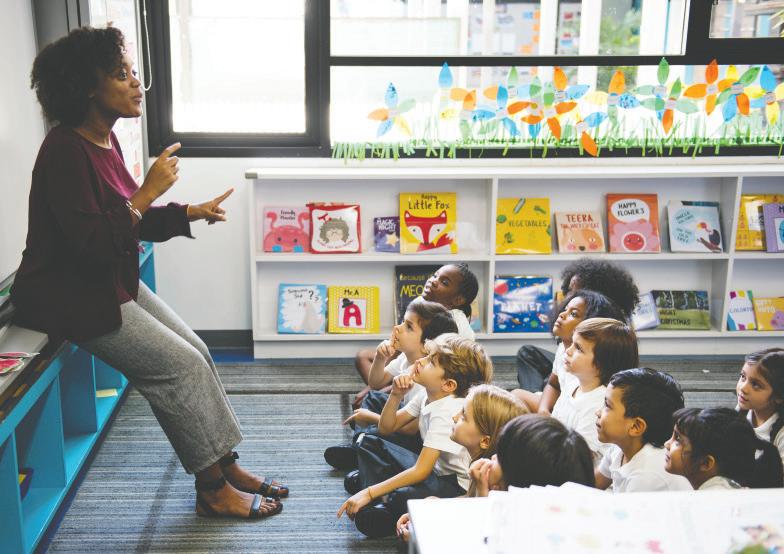
Schools served both educational and civic purposes. One-room schoolhouses often doubled as meeting spaces, hosting elections, public discussions and social events. Over time, public schools expanded access to education while continuing to serve as central community hubs that connected families and neighborhoods.
Libraries played a growing role in the 19th and early 20th centuries. Public libraries provided free access to books and information, supporting literacy and lifelong learning. They became trusted spaces for research, quiet study and civic engagement, reinforcing the idea that knowledge should be widely accessible regardless of income or background.
Volunteer organizations strengthened local response. Fire departments, service clubs and aid societies coordinated resources
and support during emergencies and everyday needs alike. Their effectiveness depended on organization, training and continuity rather than individual recognition, helping communities respond collectively to challenges.
Local newspapers also served as essential community institutions. By reporting on events, achievements and concerns, newspapers connected residents through shared information. They recorded milestones, announced gatherings and preserved local history, shaping a shared sense of place well into the 20th century.
Adapting Over Time
Community institutions adjusted as society changed. Industrial growth and urbanization required expanded services, including public transportation, utilities and public health systems. Local governments adapted policies and
infrastructure to support growing populations and shifting economic conditions.
After World War II, suburban expansion reshaped community organization. New schools, civic centers and local governments emerged to serve rapidly growing neighborhoods. Parent organizations, youth programs and neighborhood associations became part of everyday suburban life, reinforcing connection despite increased mobility and commuting.
In recent decades, communities adapted again as communication methods changed. While digital tools altered how people share information, physical spaces such as schools, libraries and civic centers remained important gathering points that supported in-person interaction and shared experience.
As the nation approaches its 250th anniversary, the strength of American communities can be traced to these enduring frameworks. Institutions built and maintained locally continue supporting cooperation, stability and shared responsibility across generations, providing continuity in a changing world.
American Firsts Milestones That Changed Life at Home and Beyond
Throughout its history, the United States marked progress through a series of notable rsts.
These moments reflected curiosity, persistence and a willingness to try what had not been done before. Over 250 years, American firsts often began as practical efforts to solve problems, then grew into developments that influenced daily life far beyond their origins.
One early example came in transportation. In 1807, Robert Fulton’s successful steamboat demonstrated that powered vessels could travel upstream reliably. This advance transformed river travel, supporting trade and se lement along major waterways and helping connect inland communities to coastal markets.
Other early firsts followed a similar pa ern. New tools and methods were tested locally, then adopted more widely as their usefulness became clear.
Breaking New Ground
In 1869, the completion of the first transcontinental railroad linked the eastern and western
United States by rail. This connection reduced travel time dramatically and strengthened the national economy. Goods, people and ideas moved more freely across the continent, reshaping commerce and migration.
Innovation continued into the skies. In 1903, Wilbur and Orville Wright achieved the first successful powered airplane flight at Ki y Hawk, North Carolina. Though brief, the flight demonstrated controlled, sustained air travel. Within decades, aviation became essential to transportation, commerce and national defense.
American firsts also appeared in communication.
Alexander Graham Bell’s telephone, patented in 1876, allowed voices to travel across distance.
This changed business, personal relationships and emergency response, bringing immediacy to everyday interaction.
Science and Service
The 20th century introduced firsts that reshaped health and science. The widespread use of antibiotics beginning in the 1940s improved survival rates and transformed medical treatment. These advances extended life expectancy and changed how communities approached public health.
In 1969, the Apollo 11 mission placed the first humans on the moon. This achievement required coordination across government, industry and education. While its se ing was distant, the effort produced technologies and skills that later found practical uses on Earth.
American firsts were not limited to exploration. They also included organizational achievements, such as large-scale manufacturing systems and coordinated emergency response, which improved safety and efficiency.
Everyday Impact
What unites these milestones is their effect on ordinary life. Firsts often moved from experiment to expectation, becoming part of daily routines. Steamboats, railroads, telephones and air travel all followed this path.
Many American firsts emerged through collaboration rather than individual effort alone. Engineers, workers, educators and communities contributed to their success, sharing knowledge and adapting ideas over time.
As the nation approaches its 250th anniversary, American firsts offer more than a list of accomplishments. They illustrate a pa ern of testing ideas, learning from results and building on what works. That approach continues to shape innovation, reminding Americans that progress often begins with a willingness to try something new.
Education in America Passing Knowledge Forward Across Generations
Education played a steady role in shaping American life from the nation’s earliest years.
Long before formal systems were widespread, learning happened in homes, churches and community se ings. Over 250 years, education evolved alongside the country, helping pass knowledge, skills and values from one generation to the next.
In the late 18th and early 19th centuries, schooling was often local and informal. Small schoolhouses served rural communities, while tutors and family members taught reading, writing and arithmetic. Education focused on practical skills needed for daily life and civic participation.
As communities grew, so did expectations for learning. Education became more organized and accessible, reflecting the needs of a developing nation and a growing population.
Schools and Opportunity
The 19th century saw the expansion of public education. States invested in school systems that aimed to serve broader populations. Public schools helped standardize instruction and offered children a
shared foundation of knowledge.
Higher education also expanded. Colleges and universities prepared students for professions such as teaching, law and medicine. Land-grant institutions, established beginning in the 1860s, emphasized agriculture, engineering and applied sciences, connecting education directly to community needs and local economies.
Education became a pathway to opportunity. Learning offered a way to improve skills, adapt to change and participate more fully in economic and civic life.
Libraries and Learning Beyond School
Learning extended beyond classrooms. Libraries played a vital role by providing free access to books and information. Public
libraries expanded in the 19th and early 20th centuries, becoming community centers for reading, research and selfimprovement.
Adult education programs, lectures and correspondence courses supported lifelong learning. These opportunities allowed individuals to continue developing skills outside formal schooling and formal degrees, often while balancing work and family responsibilities.
Education adapted as society changed. New subjects and teaching methods reflected advances in science, industry and communication, ensuring learning remained relevant to daily life.
Education Today and Tomorrow
In the 20th century, education adjusted to a
rapidly changing world. High school a endance increased, and vocational and technical programs prepared students for diverse careers. After World War II, expanded access to higher education supported workforce growth and innovation.
Technology later reshaped how learning occurred. Computers and digital tools added flexibility, allowing education to reach beyond physical classrooms. Distance learning and online resources broadened access while complementing traditional instruction.
A Continuing Commitment
Education in America has always been a shared responsibility. Families, teachers, communities and institutions contributed to learning across generations.
As the nation approaches its 250th anniversary, education remains a central investment in the future. By passing knowledge forward, Americans continue building skills, understanding and connection. That commitment ensures learning remains an enduring part of the national story, linking past experience with future possibility.
Little-Known Facts
Surprising Details From 250 Years of American
American history is often told through major dates and famous names, but many revealing details sit just outside the spotlight.
These lesserknown facts highlight how practical choices, quiet experiments and overlooked moments helped shape the nation over 250 years.
One early example involves voting rights. In the late 18th and early 19th centuries, several states allowed women to vote if they met property requirements. New Jersey permi ed this practice until 1807, when the law was changed. The episode shows how ideas about participation were tested, adjusted and debated from the beginning.
The nation’s capital also moved more than once. Before se ling in Washington, D.C., the federal government met in cities including Philadelphia, New York and Annapolis. Each temporary capital reflected regional influence and the challenge of balancing interests in a growing union.
Unexpected Details
The Liberty Bell was
not widely known by that name for decades. It gained symbolic status in the mid-19th century when abolitionist groups adopted it as an emblem, helping turn an ordinary statehouse bell into a national icon.
Early presidents lived relatively modestly by modern standards. Thomas Jefferson often hosted informal dinners at the White House, seating guests without strict protocol. These gatherings reflected a deliberate effort to reduce hierarchy in public life.
Even national borders were once uncertain. After the Louisiana Purchase, large portions of the territory were only loosely mapped. Expeditions such as the
Lewis and Clark journey were tasked not just with exploration, but with determining what had actually been acquired.
Quiet Innovations
Some developments unfolded without fanfare. In 1817, the Erie Canal began construction using largely hand labor, including picks and shovels. When completed, it reduced shipping costs dramatically and reshaped trade pa erns, yet its early planning a racted skepticism rather than celebration.
The first weather forecasts issued by the federal government appeared in the 1870s through the Army Signal Corps. These reports helped farmers and shippers plan ahead, laying groundwork for modern weather services.
History
American holidays also evolved through gradual decisions. Labor Day was first celebrated by local labor organizations in the 1880s before becoming a federal holiday in 1894. Its September placement was chosen partly to avoid overlap with other major observances.
Moments Easy to Miss
Some facts reveal how quickly life changed. When Abraham Lincoln was born in 1809, fewer than ten percent of Americans lived in cities. By the time of his presidency, urban populations were growing rapidly, reshaping work and daily life.
Another overlooked detail involves standard spelling. Noah Webster’s dictionary promoted simplified spellings in the early 19th century, influencing American English in subtle but lasting ways.
These lesser-known details remind readers that history is shaped not only by dramatic events, but by quiet decisions and experiments. As America marks its 250th anniversary, such moments offer a deeper appreciation of how the nation developed through trial, adjustment and everyday practicality.
America at Work How Labor Shaped the Nation’s Growth
Work has always been central to the American story. From early farms and workshops to factories, of ces and digital spaces, labor shaped daily life and national development.
The ways Americans worked reflected changing technology, geography and opportunity, while reinforcing shared expectations about effort and contribution.
In the nation’s earliest years, most Americans worked close to home. Agriculture dominated, supported by small trades such as blacksmithing, milling and carpentry. These occupations anchored local economies and fostered self-reliance, while trade networks connected communities to broader markets.
As the country expanded westward, work followed se lement. Farming adapted to new regions, while mining, logging and transportation supported growth. Canals and railroads created new jobs and allowed goods to move more efficiently, tying regional economies together and encouraging mobility.
Industrial Shifts
The 19th century brought industrialization.
Factories changed how goods were produced and how people earned wages. Urban centers grew as workers sought opportunity, while new industries created demand for specialized skills and training.
Labor organizations emerged as workers sought improved conditions and stability. Over time, laws addressed hours, safety and compensation, reflecting evolving expectations about work and responsibility. These changes occurred gradually, shaped by economic conditions and public discussion.
The 20th century introduced further transformation.
Manufacturing expanded during wartime production, while postwar prosperity supported growth in construction, education and service industries. Offices and professional roles
increased, reflecting changes in technology and organization.
Modern Economy
Late in the century, automation and computing altered workplaces again. Jobs shifted toward information, healthcare and technology, while traditional industries adapted to new tools. Global trade influenced production, distribution and employment pa erns.
Remote communication expanded where and how work could be done. Telephones, computers and internet-based tools reshaped collaboration and productivity. These changes affected both large organizations and independent workers across the country.
Small businesses continued to play a central role. Family-owned shops, farms and service providers remained economic anchors in towns and cities.
Entrepreneurship offered pathways for innovation, local investment and community stability.
Work also shaped civic life. Newspapers, unions, schools and civic organizations reflected occupational identity and shared responsibility. These institutions reinforced connections between labor, information and community participation at the local level.
Economic transitions required adaptation. Workers retrained, industries reorganized and communities adjusted to shifting demand, reflecting the nation’s long pa ern of responding to change.
Looking Ahead
As the nation reaches its 250th anniversary, work remains a defining feature of American life. Though tools and industries change, the emphasis on contribution and adaptability continues.
America’s work history shows a pa ern of adjustment rather than replacement. Each generation built on prior effort, responding to new conditions while sustaining economic participation. That tradition remains central to how the nation moves forward.
Famous Words on America A Quick Tour of Lines That Still Ring True
Few things travel as well as a good line. In the United States, memorable quotes have helped describe the country’s ambitions, its civic habits and its everyday hopes.
As America reaches its 250th birthday in 2026, these words offer a readable timeline, from the founding era to modern speeches, that many readers still recognize.
Some quotes are formal and public, delivered to Congress or to crowds. Others are shorter, meant to be repeated at kitchen tables, in classrooms and in ceremonies. Together they show how Americans have explained the idea of the nation in moments of uncertainty and in times of shared pride.
Founding Era Voices
In 1776, the Declaration of Independence set a tone that still anchors American public life, asserting that “all men are created equal” and are “endowed by their Creator with certain unalienable Rights.” The document, adopted by the Second Continental Congress on July 4, 1776, also names those rights: “Life, Liberty and the pursuit of Happiness.”
A li le more than a decade later, the Constitution opened with a statement that is both simple and durable: “We the People of the United States.” The Preamble’s opening words, drafted in 1787 and ratified in 1788, continue to appear in courthouses, textbooks and civic programs as a reminder that selfgovernment rests on citizens.
Liberty and Leadership
Abraham Lincoln, speaking at Ge ysburg on Nov. 19, 1863, offered one of the country’s best-known summaries of democratic purpose. He described “government of the people, by the people, for the people” as something that “shall not perish from the earth.” The address, delivered during the Civil War, linked national sacrifice to a practical idea: keeping representative government alive.
In 1941, Franklin D. Roosevelt used his State of the Union address to outline “Four Freedoms,” including “freedom of speech and expression” and “freedom of worship.” The speech came as war spread across Europe and Asia. The phrasing helped many Americans talk about civic values in clear terms that could be taught and remembered.
Everyday Aspirations
Not all well-known American
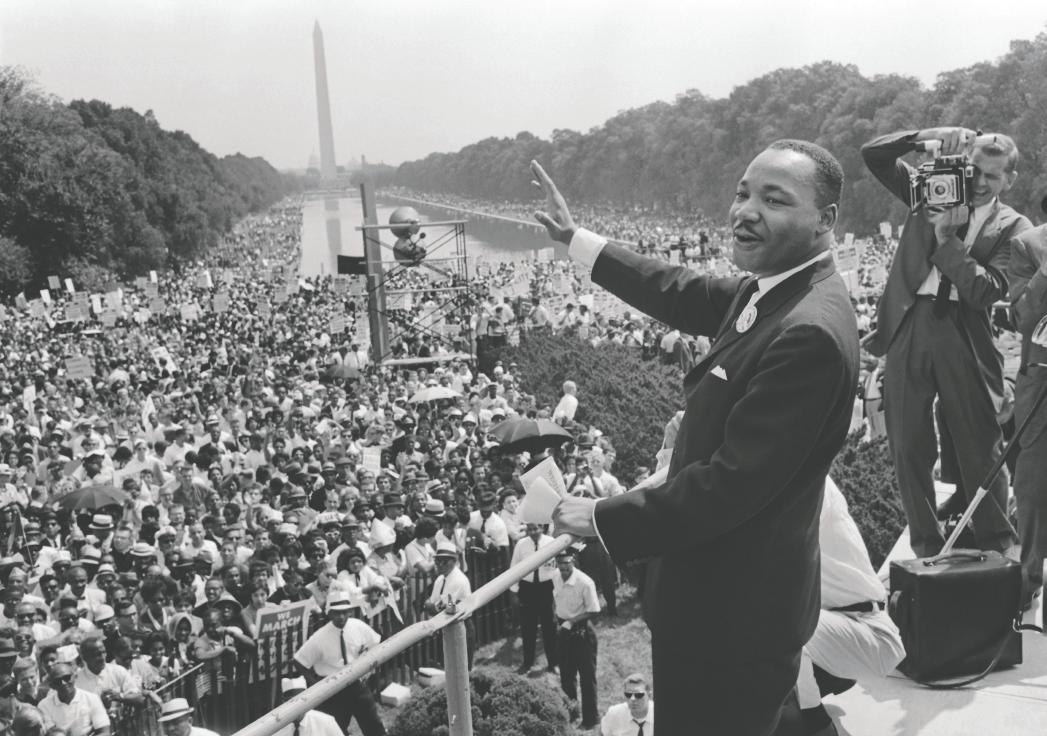
lines come from presidents. In 1963, the Rev. Martin Luther King Jr. told the March on Washington crowd, “I have a dream,” a refrain that has remained familiar because it points to achievable civic work, including fairness in daily life.
In 1989, novelist and essayist James Baldwin captured another lasting thought in “The Price of the Ticket”: “This is your home. Do not be driven from it.” The sentence is often quoted for its plainspoken encouragement to claim a place in the national story.
Quotes do not replace history, but they can help people enter it. Read closely, these lines show Americans describing ideals, responsibilities and belonging in words meant to carry beyond a single day.
In an anniversary year, they offer a reminder that the country’s story is also told one sentence at a time.
Proud of America
Made in America A Look at How Work Turned Into Useful Things Nationwide
From elds and rivers to shop oors and laboratories, Americans have long measured progress in things you can hold, harvest or use.
As the nation approaches its 250th birthday, the story of making remains a thread that runs through daily life: food on the table, tools in a garage, a package at the door.
The country’s earliest economy leaned on agriculture and trade, then steadily added mills, factories and research centers. What followed was not one single invention or one single industry, but a steady accumulation of practical know-how and production.
From Grain to Table
In 1862, Congress created the U.S. Department of Agriculture and passed the Morrill Act, which supported land-grant colleges that taught agriculture and mechanical arts. Those institutions helped spread tested methods for planting, soil management and animal husbandry, and they
trained engineers as well as farmers.
Food preservation also changed what Americans could buy and where it could travel. Canning became widely used in the 1800s, and refrigerated railcars expanded distribution late in the century. By 1906, the federal Pure Food and Drug Act set standards that helped build trust in packaged goods as national brands reached more communities.
Tools and Textiles
In manufacturing, the idea of making parts to common standards became a quiet revolution. Interchangeable parts were used in firearms production in the 19th century, and the broader “American system of manufactures” influenced factories that
produced clocks, sewing machines and farm equipment.
One everyday object tells the story well. Patents connected to the sewing machine were consolidated in 1856 in what is often cited as the first patent pool, allowing companies including Singer to scale production. A household machine turned fabric into clothing, quilts and repairs, and it supported a growing ready-to-wear industry.
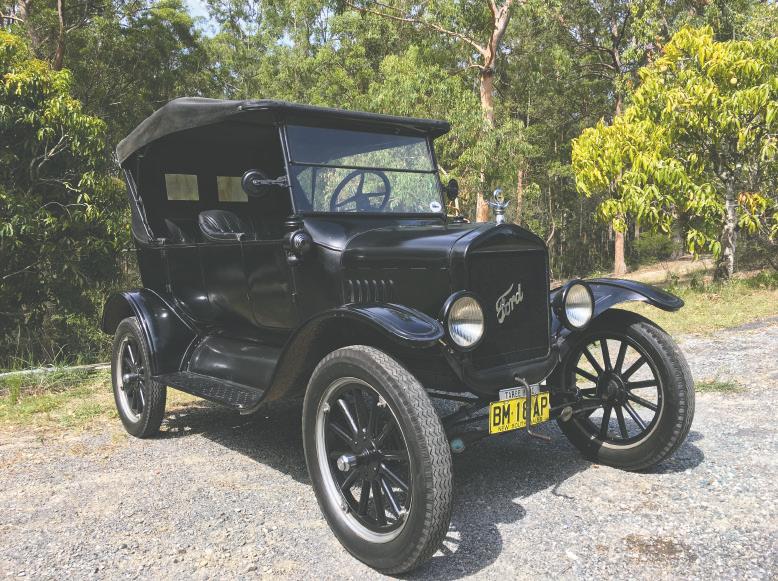
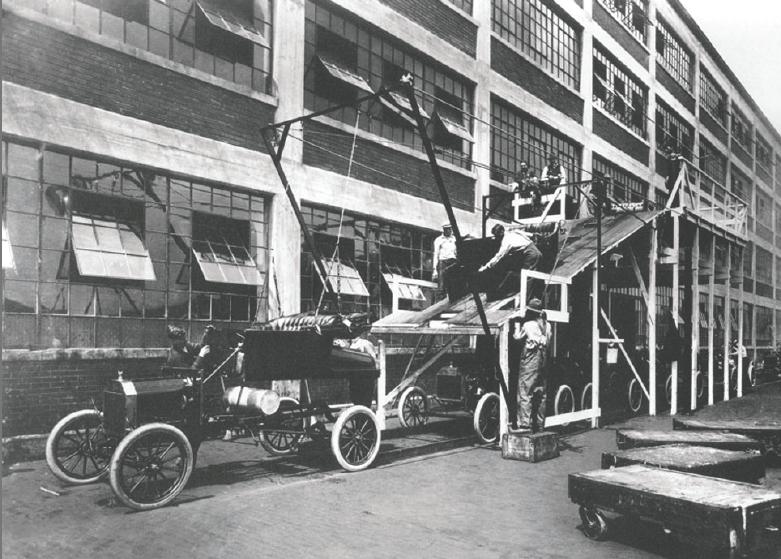
On the factory floor, the moving assembly line is closely associated with Ford Motor Co., which put it to use for the Model T in 1913. The impact was visible in cities that made parts, stamped steel and turned raw materials into vehicles that could be serviced with widely available components.
Ideas Into Objects
American invention often moved from workshop to marketplace through patents, public investment and mass production. The U.S. Patent and Trademark Office traces its roots to 1790, and its records show a steady stream of designs aimed at ordinary needs: be er fasteners, safer machinery, improved lighting.
The light bulb’s story includes Thomas Edison’s 1879 incandescent lamp, paired with the larger system of electric generation and distribution that made lighting practical in homes and businesses. Communications followed a similar path. Alexander Graham Bell received a telephone patent in 1876, and over time networks and switchboards turned a novel device into a standard utility.
Today, “Made in America” still shows up in places people see every day: a local bakery’s mixer, a pickup bed built from rolled steel, a medical device assembled under careful inspection. Craft and industry share a goal that is easy to recognize, turning skill and materials into things that work.
How Recent History Offers Clues About What Comes Next
Looking ahead has always involved uncertainty. Throughout American history, change arrived unevenly, shaped by innovation, migration and shifting expectations.
Rather than following a single plan, the nation has repeatedly adjusted course in response to new conditions. Recent decades provide useful context for understanding how that process continues.
After World War II, the United States experienced rapid growth that reshaped daily life. Suburban development expanded housing and changed transportation pa erns, while expanded access to education opened new opportunities for millions of families. The GI Bill helped veterans a end college and enter new professions, influencing long-term economic mobility. These changes unfolded gradually, influenced by economic conditions, public policy and personal choice rather than a single defining moment.
The second half of the 20th century brought additional transitions. Manufacturing remained
important, but service industries grew as offices, retail and professional services expanded.
Global trade increased, connecting American businesses and consumers more closely to international markets. These shifts altered how and where people worked, especially in urban and industrial regions.
Shifts in Society
Social change also influenced the national direction. The civil rights movement reshaped laws, institutions and expectations, expanding participation and opportunity in public life. Education systems, workplaces and communities adjusted over time, reflecting broader changes in who had access to economic and civic life.
Technology added another layer of change. The widespread
use of personal computers and later the internet transformed communication, commerce and information access. Businesses adopted digital tools, while households adjusted to faster communication and new forms of connection that reduced distance and time.
These developments did not affect every community in the same way. Geography, industry and local resources shaped how change was experienced across the country.
Recent Adjustments
In the early 21st century, new pa erns emerged. Advances in digital technology supported remote work and flexible schedules, changing how Americans balance work, home and community. Shifts in retail, logistics and media reflected new
consumer habits and expectations.
At the same time, supply chain disruptions and economic uncertainty renewed a ention to domestic production and trade policy.
In recent years, the United States moved toward a more protectionist approach in some areas of trade and manufacturing. This shift reflected concerns about resilience, security and economic stability rather than ideology alone.
Continuity and Choice History suggests that the future forms through response rather than prediction. Americans have repeatedly adjusted to changing circumstances without knowing their eventual outcomes.
Progress has often come through experimentation, revision and local adaptation rather than certainty.
As the nation approaches its 250th anniversary, looking ahead means recognizing pa erns already in motion. The next chapter will continue to emerge from choices shaped by experience, opportunity and changing conditions, carrying forward a long tradition of adjustment in an uncertain world.
The American Dream How Aspirations Shifted Across Generations
The idea often described as the American Dream has never held a single meaning. Instead, it evolved over time, shaped by economic conditions, social norms and personal expectations.
Across 250 years, the dream reflected how Americans imagined opportunity and progress in different eras.
In the nation’s earliest years, aspiration centered on independence. Land ownership and selfsufficiency represented security for many families. Owning property, sustaining a household and participating in local affairs defined success in a largely rural society. The dream focused less on advancement and more on stability within a new nation still forming its identity.
As the country expanded, those expectations began to change.
Shifting De nitions
During the 19th century, the American Dream increasingly included mobility and improvement. For some, this meant owning a
business or mastering a skilled trade. For others, it meant providing education or opportunity for the next generation. Westward expansion and industrial growth reshaped how Americans viewed progress, tying aspiration to movement and economic change.
The early 20th century brought further adjustment. Urbanization and factory work altered daily life, while public education expanded access to learning. Aspirations broadened beyond land ownership to include professional advancement and steady income in growing cities. The dream adapted to new forms of work and living.
After World War II, the American Dream shifted again. The GI
Bill expanded access to higher education and homeownership, helping millions of veterans enter new careers. Suburban growth reshaped housing and family life, while long-term employment became closely linked to stability and planning for the future.
Changing Expectations
In the la er half of the 20th century, the dream continued to evolve. Higher education became more common, and career paths diversified. Success was increasingly defined by personal goals as well as material security. Creative fulfillment, service and work-life balance gained importance alongside traditional measures of progress.
Economic shifts also influenced
expectations. As service industries expanded and manufacturing declined in some regions, Americans adjusted their definitions of opportunity. Technology and mobility opened new options, allowing individuals to pursue paths less tied to location or a single profession.
Rather than offering a fixed outcome, the American Dream provided a framework for imagining progress shaped by circumstance and choice.
An Enduring Idea
The American Dream has endured because it remains flexible. Each generation revised it in response to changing conditions rather than rigid standards. Its meaning expanded to accommodate new realities without losing its core focus on opportunity.
As the nation approaches its 250th anniversary, the American Dream continues as an evolving idea. It reflects the freedom to define success in personal terms while responding to broader social and economic change. Across generations, that adaptability has allowed the dream to remain part of the American story.
Freedom of Expression
How Americans Have Shared Ideas, Art and Stories Over 250 Years
From the nation’s earliest days, freedom of expression played a central role in American life.
The ability to speak, write, publish and create allowed ideas to circulate widely, shaping culture and community. This freedom supported conversation, creativity and a shared public life across generations.
During the Revolutionary era, pamphlets, newspapers and public speeches helped spread ideas about independence and self-government. Printers worked long hours se ing type by hand, producing materials that traveled from town to town. These early forms of expression connected people who might never meet, creating a common conversation.
That tradition continued as the nation grew. Printing presses multiplied, literacy increased and public reading rooms and libraries expanded access to information and ideas, especially in growing towns and cities.
Words and Ideas
The First Amendment protected freedoms of speech and the press, encouraging open exchange.
Newspapers became fixtures in American towns during the 19th century, reporting local news, national events and everyday concerns. Editors and correspondents helped communities stay informed and connected.
Expression also took many forms beyond print. Public lectures, sermons and debates drew large audiences in cities and small towns alike. These gatherings provided spaces where ideas could be shared openly, reinforcing civic participation and community dialogue.
Music, Art and Culture
Creative expression flourished alongside the wri en word. Folk songs reflected regional traditions and daily experience. In the
early 20th century, jazz emerged from African American communities, blending musical styles into a sound that influenced generations and carried American culture abroad.
Visual art and photography also shaped public understanding. Images captured daily life, historic moments and shared experiences, helping Americans see themselves reflected in the nation’s story. During the Great Depression, federal art programs supported murals, posters and performances that brought creativity into schools, post offices and town centers.
Film became another influential medium. Silent movies and later sound films reached wide
audiences, telling stories that reflected humor, hardship and hope. Movie theaters became shared spaces where Americans experienced storytelling together.
New Voices and New Media
Technology expanded expression in new directions. Radio brought news, music and storytelling into homes, creating shared national moments. Television later added visual storytelling, changing how Americans experienced events, sports and entertainment.
In recent decades, digital platforms transformed communication again. The internet made publishing tools widely available, allowing individuals to share ideas instantly across vast distances. Blogs, podcasts and online video became modern extensions of earlier traditions.
Freedom of expression in America has never belonged to a single era or medium. It adapted as tools evolved, reflecting the creativity of each generation. As the nation marks its 250th anniversary, this tradition continues through everyday acts of sharing and storytelling, linking past voices with those still emerging.
Words and Expressions That Reflected Shared Values Over Time
Across 250 years, Americans expressed who they were through words spoken, written and shared in public life.
These voices came from many places and in many forms. Together, they reflected values that helped communities understand themselves and their place in a growing nation.
In the early years, public expression often appeared in speeches, sermons and printed materials. Town meetings allowed citizens to speak openly about local concerns. Newspapers carried editorials, le ers and announcements that gave voice to everyday experience. These outlets helped shape conversation long before national media existed.
Expression did not require fame. Ordinary citizens contributed ideas, opinions and observations that influenced how communities functioned and how neighbors related to one another.
Public Words
Formal speeches played a visible role in American life. Leaders addressed communities during times of celebration, uncertainty
and transition. These moments offered reassurance, direction and reflection, helping people make sense of change.
Public documents also ma ered. Declarations, laws and charters expressed shared expectations about responsibility and participation. Their language emphasized collective effort and common purpose, reinforcing the idea that words could shape action.
Over time, public speaking expanded beyond official se ings. Lectures, debates and civic gatherings brought ideas into theaters, schools and community halls, making dialogue part of everyday life.
Written Voices
Writing offered another enduring outlet. Diaries, le ers and memoirs
recorded personal experience alongside major events. These private voices added depth to the public record, capturing how national moments affected individual lives.
Newspapers remained central well into the 20th century. Headlines reported events, while opinion columns reflected local a itudes and concerns. Editorial pages became spaces where communities worked through disagreement and consensus alike.
Literature also contributed to the national voice. Novels, essays and poetry explored themes of work, family and identity, offering reflection without instruction.
language. Songs passed along values and memory. Simple expressions appeared on signs, banners and bu ons, reinforcing belonging and pride.
In more recent decades, technology broadened who could be heard. Radio and television amplified voices across distance. Digital platforms later allowed individuals to share thoughts instantly, adding new layers to public conversation.
Despite changing formats, the purpose remained familiar. Americans continued using words to connect, persuade, comfort and celebrate.
Listening Forward
Voices of America were never singular. They overlapped, differed and evolved. What united them was participation. Expression invited response and encouraged involvement rather than silence.
As the nation approaches its 250th anniversary, listening remains as important as speaking. The ongoing exchange of ideas, stories and perspectives continues shaping American life. In a country defined by many experiences, its voices together tell a story still being wri en.
Everyday Americans How Daily Life Shaped the Nation Over Time
Much of American history unfolded far from famous landmarks and historic speeches.
Ordinary people shaped the nation through routine work, family responsibilities and local participation. Their names rarely appeared in records, yet their daily decisions formed the foundation of American society across generations.
In the colonial era, everyday life centered on survival and cooperation. Farming families planted, harvested and preserved food according to seasonal cycles. Craftspeople built tools, furniture and homes by hand. Merchants and shopkeepers connected towns through trade, allowing communities to sustain themselves beyond a single household. Work was physical, local and shared.
Daily routines followed predictable rhythms. Chores, meals and worship structured the week, while neighbors relied on one another for labor and support. These pa erns created stability in an uncertain environment and reinforced shared expectations about responsibility and cooperation.
Work and Family
As the nation expanded during the 19th century, everyday life adapted to new se ings. Rural families balanced farming with household production, while growing towns supported workshops, mills and small businesses. Many Americans lived close to where they worked, reinforcing strong neighborhood ties and shared routines that shaped local identity.
Industrialization introduced new pa erns. Factory schedules replaced seasonal pacing, and clocks became central to daily life. Railroads influenced where people lived and worked, connecting towns while encouraging movement between regions. Even with these changes, family life remained the anchor of daily experience.
Meals, chores and celebrations created continuity across generations. Skills passed
informally from parents to children through observation and practice. Education blended classroom instruction with practical learning at home, linking knowledge to daily needs and future opportunity.
Changing Patterns
The 20th century brought further adjustment. During World War II, civilians altered routines to support production, rationing and community drives. Daily life reflected national effort through small but consistent actions repeated across households.
After the war, suburban growth reshaped routines. Commuting became common, household technologies changed chores and neighborhoods expanded outward from city centers. Daily schedules adjusted to new pa erns of work, school and transportation.
Later decades
introduced additional changes. Service industries grew, office work became more common and technology influenced communication and time management. Families coordinated activities differently as tools and expectations evolved.
Despite these shifts, certain pa erns endured. Americans continued organizing life around work, family and community obligations, even as se ings and technologies changed.
Everyday Continuity
Routine choices accumulated into lasting impact. Where people lived, how they worked and how they spent time shaped neighborhoods, schools and local culture. These decisions influenced the nation gradually rather than through dramatic events.
As the nation approaches its 250th anniversary, everyday life remains central to the American story. Through ordinary routines and responsibilities, Americans continue shaping their communities. The repetition of daily life links generations, showing how small actions quietly build a shared national experience.
How Practical Ideas Helped Shape Daily Life in a Growing Nation
From the earliest years of the United States, Americans relied on ingenuity to solve everyday problems.
Se lers adapted tools and techniques from Europe, then modified them to fit new landscapes and conditions. That habit of practical problem solving became a defining feature of national life.
Early innovation focused on survival and efficiency. Improvements to plows, mills and irrigation supported farming communities and increased food production. Small workshops produced tools, furniture and textiles, helping towns become more selfsustaining as populations grew.
The young nation also encouraged invention through formal systems. The Patent Act of 1790 created a process for protecting new ideas, rewarding creativity while encouraging practical application. This structure helped spread improvements across regions and industries.
These advances were rarely dramatic on their own. Their impact came from steady use, shared knowledge and gradual
improvement over time.
Connecting a Continent
As the nation expanded, innovation followed movement and trade.
Canals such as the Erie Canal, completed in 1825, connected inland communities to coastal markets. Railroads soon followed, shrinking distance and allowing goods and people to move faster across the country.
Transportation advances helped unify a growing nation. Farmers shipped crops farther, manufacturers reached new customers and families relocated with greater ease. These connections supported economic growth while linking regions that once felt remote.
Communication evolved alongside transportation. The telegraph allowed messages to travel faster than physical mail,
changing commerce and news. Later, the telephone brought real-time conversation into homes and businesses, reshaping personal and professional life.
Changing Daily Life
The late 19th and early 20th centuries brought innovations that reshaped daily routines. Widespread electrification extended working hours, improved safety and transformed households. Electric lighting replaced candles and lamps, while powered machinery increased productivity in factories and farms.
Manufacturing methods also changed. Assembly line production increased output and reduced costs, making goods more accessible to a growing middle class. These efficiencies supported urban growth and expanding consumer
markets.
During World War II, American industry again demonstrated adaptability. Factories shifted quickly to produce aircraft, vehicles and supplies, showing how organization and technical skill could respond to urgent national needs.
New Frontiers American ingenuity also reached beyond the ground. In 1903, the Wright brothers achieved the first successful powered airplane flight. In the decades that followed, aviation became essential for travel, commerce and defense.
The mid-20th century brought advances in medicine, including antibiotics, that improved public health and extended life expectancy. Space exploration later expanded scientific knowledge and inspired new technologies that found practical uses back on Earth.
As America marks its 250th anniversary, its history of ingenuity reflects persistence more than flash. Progress came from people identifying problems and working toward solutions. That steady approach shaped daily life for generations and continues to guide how Americans meet new challenges today.