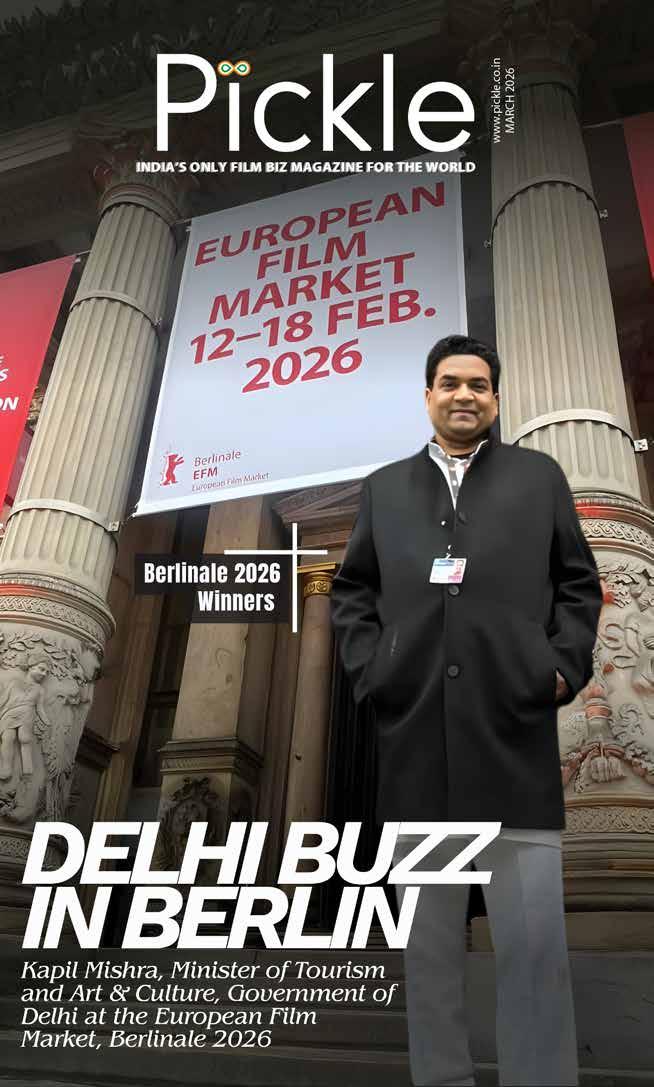
Welcome to Pickle’s special edition dedicated to Berlinale EFM 2026—a landmark moment as India takes center stage at one of the world’s most influential film markets. This year, India’s cinematic prowess is on full display, with Maharashtra promoted Film City, and Delhi promoted locales, film policy and IIFD, making waves with forward-thinking vision and global ambitions.
For the first time at Berlinale, Delhi has positioned itself boldly at the Bharat Pavilion, using this prime platform to showcase not only its world-class infrastructure but also the upcoming inaugural International Film Festival of Delhi (IFFD).
Delhi Tourism Minister Kapil Mishra’s message is clear and inviting: the red carpet is out for international filmmakers to shoot in Delhi. With the city’s film-friendly policies, streamlined permissions, and a rapidly growing creative ecosystem, Delhi is ready to become a preferred global filming destination.
Maharashtra, home to the Bollywood and Marathi film industry, launched an aggressive campaign at the 76th Berlin International Film Festival and European Film Market to court foreign productions, promising for a “red carpet” welcome. Ashish Shelar, the state’s Minister for Culture and IT, led the delegation
at EFM to showcase the Film City in Mumbai’s Goregaon, Karjat and Kolhapur
India’s presence at the Berlinale EFM is also marked by its strengths in AVGC (Animation, Visual Effects, Gaming, and Comics) and Indian Institute of Creative Technologies, that are rapidly redefining the global entertainment landscape. With these advantages, India continues to be an exciting destination for coproduction, talent, and innovation.
India’s “Advantage” has never been clearer: a unique blend of cultural diversity, a thriving creator economy, progressive policies, and world-class talent across AVGC-XR, digital, and traditional content verticals. The government’s focus on enabling infrastructure, supporting startups, and fostering innovation is fasttracking India’s creative economy.
As the sector outpaces global growth, 2026 is set to be the year when international collaboration and investment unlock new levels of innovation, scale, and global reach.
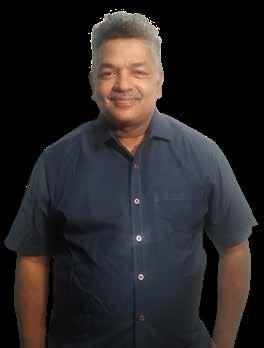
Published by Pickle Media Private Limited
Email: natvid@gmail.com l Mumbai l Chennai No.2, Habib Complex
Dr Durgabhai Deshmukh Road RA Puram CHENNAI 600 028
For advertising: natvid@gmail.com / pickle@pickle.co.in
Pickle Business Guide 2026 Copyright 2026 by
Pickle Media Pvt Ltd. All Rights Reserved.
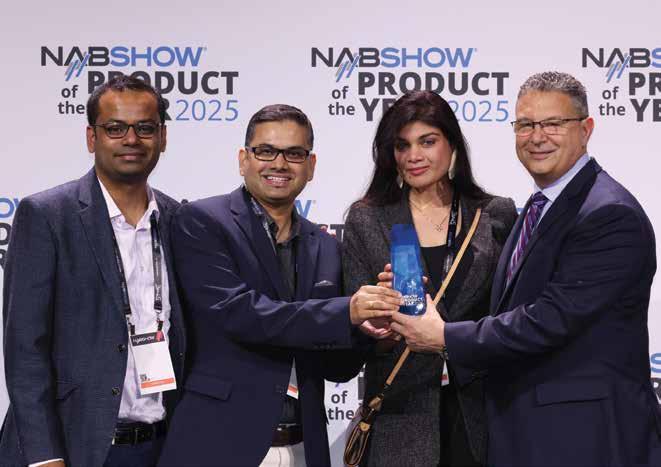
As Pickle tracks the dynamic developments at EFM, we are thrilled to announce our continued engagement with the global film industry—next at NABSHOW (April 2026), followed by the Cannes Film Festival and Cannes Film Market in May. Our mission remains unwavering: to champion India’s creative industries and connect the dots between talent, technology, and opportunity on the world stage.
Dive into this edition for exclusive insights, interviews, and industry trends from Berlinale EFM 2026.
n vidyasagar pickle media
nat@pickle.co.in, www.pickle.co.in
Senior Editor : Vivek Ratnakar
Editorial Coordinators : Maitreyi Vidyasagar, Shruti Sundaranand
Design: Jose J Reegan, James, D Sharma, S Lakshmanan
Photo Editor : K K Laskar
Admin & Operations : B Rajalakshmi
Email: natvid@gmail.com
Pickle is an ad supported business guide tracking the filmed entertainment business in India.


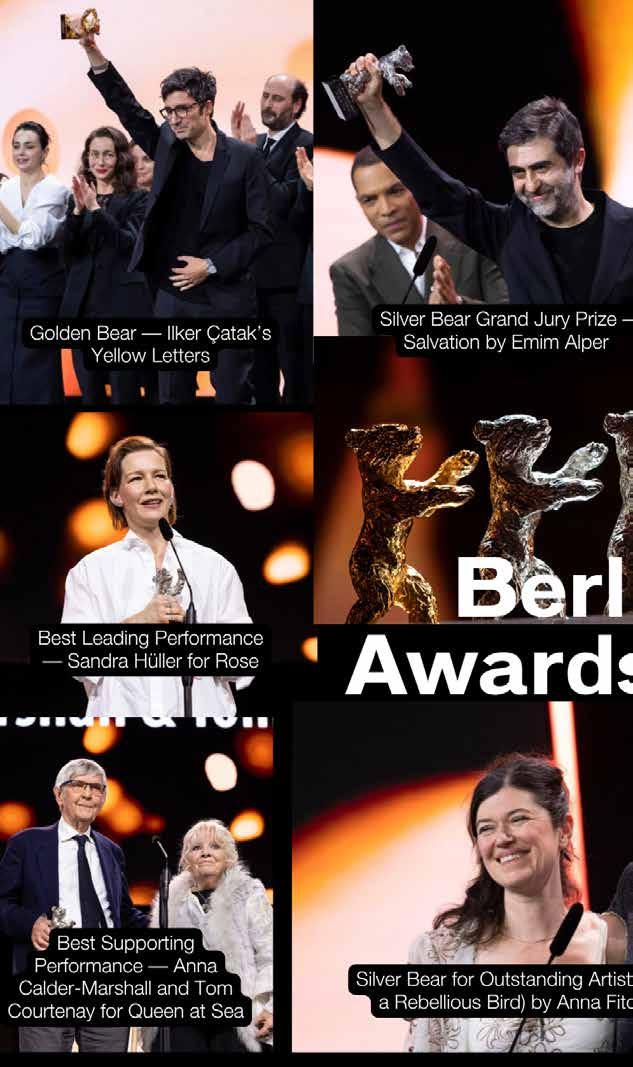
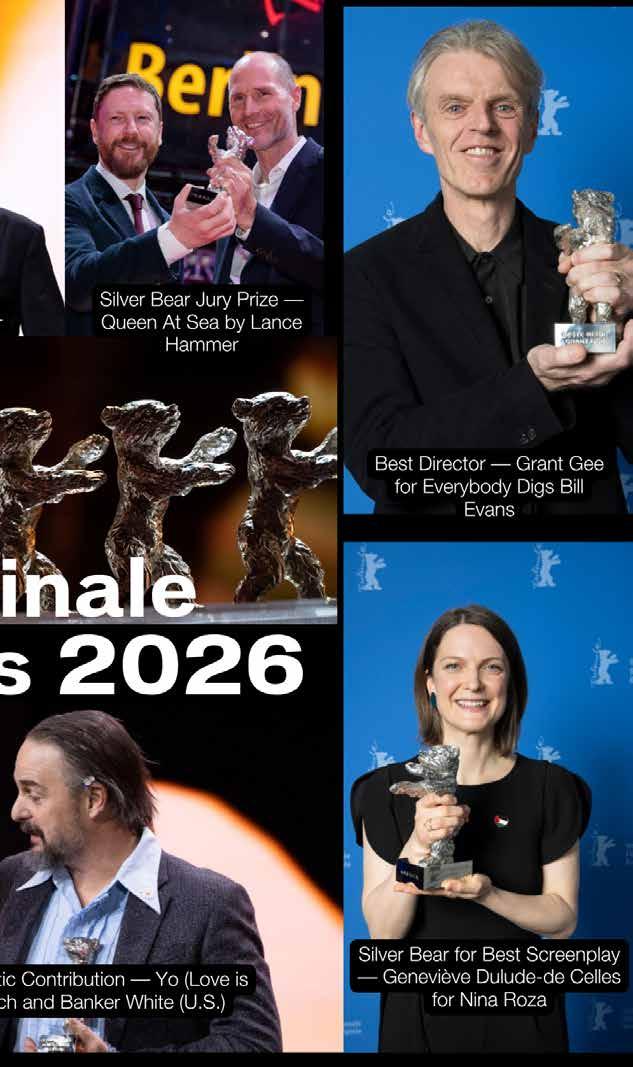
Berlin’s 2026 film festival sent a clear message to buyers and awards strategists as �lker Çatak’s Yellow Letters took the Golden Bear, underscoring the global appeal of political European drama. The winners’ list blends issue-driven stories, star power and strong craft, giving sales agents a slate that can move from the festival circuit to arthouse screens and awards runs.
Yellow Letters, about a theatre couple in Ankara forced out of their jobs by the state, gives German-Turkish director �lker Çatak a major career lift and puts the film in a strong position for worldwide sales. The drama, centred on state pressure and personal loss, is likely to attract distributors in Europe and North America, where political stories with clear emotional stakes tend to perform well in specialised cinemas.
The Golden Bear is also expected to boost the film’s chances in national awards in Germany and make it a leading candidate for the country’s submission in the international
feature category at the Oscars. With its European setting, international cast and timely subject, Yellow Letters is well placed for streamers and broadcasters that want prestige titles with a clear political angle.
The Silver Bear Grand Jury Prize for Salvation by Emin Alper strengthens his standing as a bankable name for festivals and niche distributors who focus on political thrillers. Its themes of state control and moral compromise should work well in markets where Alper has built an audience, especially in France and other parts of continental Europe.
Queen at Sea, winner of the Silver Bear Jury Prize, hits the market with an extra edge: two acting prizes for Anna Calder-Marshall and Tom Courtenay, plus the presence of Juliette Binoche. The story, which deals with dementia and family care, is likely to appeal to upscale distributors in Europe, the UK and possibly the US, where star-driven, mature dramas continue to draw older cinemagoers.
Best Director for Grant Gee’s Everybody Digs Bill Evans gives that film a clear label as a prestige music biopic, a genre that has proved attractive both in theatres and on platforms. The black-and-white story of jazz pianist Bill Evans, focused on grief and creativity, offers strong hooks for campaigns built around music fans, older audiences and awards voters in craft categories such as cinematography and sound.
Performance, writing and craft: extra sales hooks
Sandra Hüller’s award for Best Leading Performance in Rose will
attract buyers who watched her rise with Anatomy of a Fall and other festival hits. Even with limited plot details in circulation, her name is already a key marketing tool in German-speaking territories, France and the US arthouse market. The shared Best Supporting Performance award for Anna Calder-Marshall and Tom Courtenay for Queen at Sea gives the film added weight in English-language markets. Distributors can now present it as a multi-award-winning drama with a strong ensemble and cross-generational appeal.
Geneviève Dulude-de Celles’ Silver
6 Clear political edge: Top prizes for Yellow Letters and Salvation confirm strong demand for stories about state power, censorship and personal freedom.
6 Star-driven dramas: Queen at Sea and Rose offer recognised actors and awards-winning performances that help with marketing in mature markets.
6 Prestige music angle: Everybody Digs Bill Evans taps into the stable audience for music biopics, with strong craft and festival backing.
6 Hybrid and crafted non-fiction: Yo (Love is a Rebellious Bird) and If Pigeons Turned to Gold show that formally bold documentaries remain key buys for curated platforms and broadcasters.
6 New voices from conflict and periphery: Chronicles From the Siege and Someday a Child keep Berlin’s focus on emerging talent from conflict and crisis zones, giving early-stage financiers and partners a clear scouting list.
6 This year’s awards make one trend clear: political dramas, intimate family stories and formally inventive documentaries are the main bets for sellers and buyers looking to build awards and festival runs out of Berlin’s 2026 line-up.
Bear for Best Screenplay for Nina Roza marks the film out as a tightly written, character-driven piece moving between Montreal and Bulgaria. Script prizes often help specialised titles secure slots at second-tier festivals and support targeted releases in French-speaking territories and parts of Eastern Europe.
The Silver Bear for Outstanding Artistic Contribution for Yo (Love is a Rebellious Bird) by Anna Fitch and Banker White underlines the film’s value as a visually distinctive hybrid documentary. This makes it attractive to curated streaming services, festivals and broadcasters seeking formally inventive non-fiction about memory and grief, and gives programmers a simple sales line: a craft-driven, art-house documentary with a strong emotional frame.
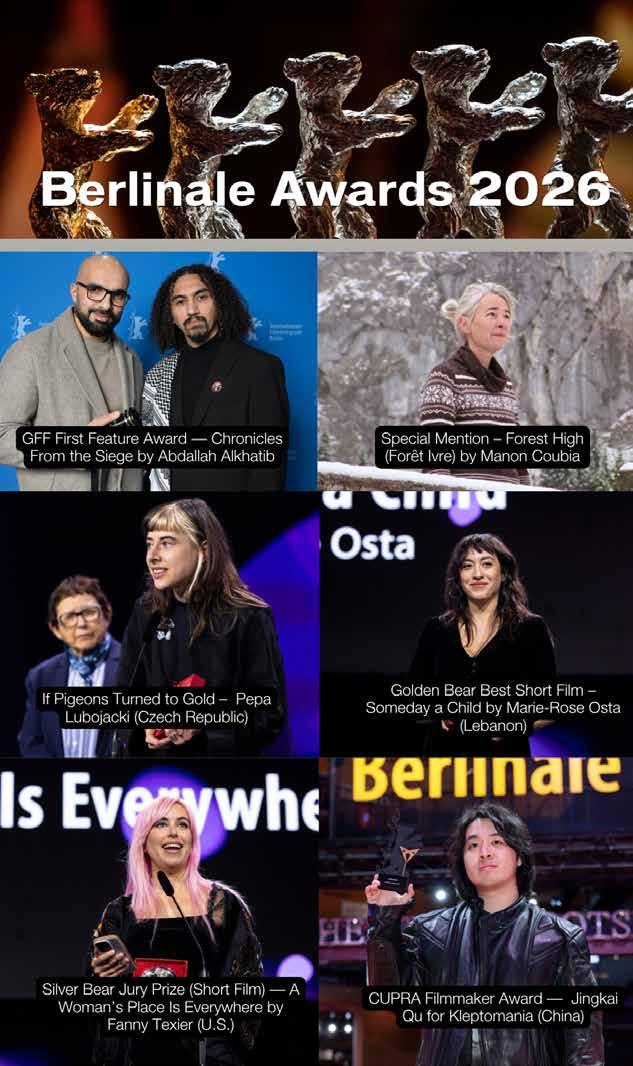
The GWFF First Feature Award for Chronicles From the Siege by Abdallah Alkhatib positions him as a key discovery for sales agents and producers looking for new voices from conflict zones. First-feature winners at Berlin often secure follow-up funding and co-production offers, making Alkhatib a likely candidate for European partners and development labs.
A Special Mention for Manon Coubia’s Forest High (Forêt Ivre) shows jury support for a poetic, landscape-driven style that can appeal to boutique distributors and festival programmers. While not a main prize, the mention still adds value to the film’s international pitch materials.
The Berlinale Documentary Award for If Pigeons Turned to Gold by Czech director Pepa Lubojacki gives that title a key edge in a crowded documentary marketplace. Buyers and broadcasters frequently use Berlin’s main documentary award as a guide for acquisitions, and the film’s metaphor-rich look at marginalised communities should play well with public broadcasters, cultural channels and curated documentary platforms.
MAKE IT A LEADING CANDIDATE FOR THE COUNTRY’S SUBMISSION IN THE
In shorts, the Golden Bear for Someday a Child by Lebanon’s Marie-Rose Osta puts the director on the radar of labs, residencies and first-feature funding schemes. Major festival wins in the shorts category are increasingly used by financiers and producers as early signs of talent ready for low-budget debuts.
The Silver Bear Jury Prize for A Woman’s Place Is Everywhere by Fanny Texier boosts the film’s chances of placement in themed short programmes on gender and social issues. Such packages are often acquired by educational services, cultural institutes and event-based exhibitors.
The CUPRA Filmmaker Award for Jingkai Qu’s Kleptomania points to the growing role of branded awards that link festivals and corporate sponsors. The award gives Qu visibility, industry access and may bring development or mentorship support tied to the sponsor, helping speed up the journey to a first or second feature.
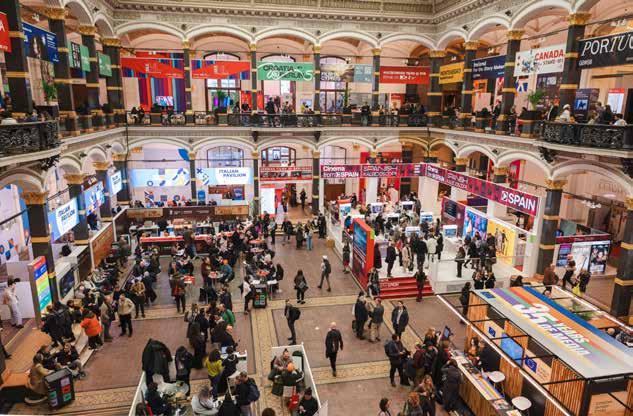
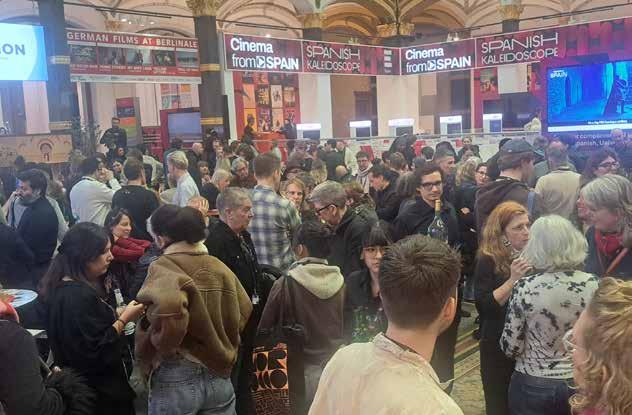
The European Film Market wrapped its 2026 edition on a high note, posting a 5% bump in participants and significant programme expansion that underscored the market’s enduring relevance as the year’s essential dealmaking and convening platform for the global industry.
More than 12,500 professionals attended EFM venues across the 76th Berlin International Film Festival, with Germany leading participation, followed by the U.S. as the second-largest group, then France, the UK and Italy.
The market screened 606 films, up from 2025, with an 83.17% market premiere rate that drew 1,794 buyers, reinforcing EFM’s centrality for international acquisition executives and distributors hunting for festival-validated content with commercial upside.
Industry engagement was evident from the opening bell: screening-guest scans jumped 20% on day one, while footfall rose across all major venues— Gropius Bau, the Marriott Hotel, and the
Documentation Centre for Displacement, Expulsion, Reconciliation Berlin each recorded gains between 10% and 18%.
This year’s market also marked a milestone in the integration between the Berlinale festival and EFM—a strategic priority for Berlinale festival director Tricia Tuttle, who has pushed for tighter synchronization to ensure festival films benefit from maximum industry attention and commercial activity during the event. The convergence was designed to create a seamless flow between premieres, dealmaking, and professional exchange, amplifying opportunities for filmmakers and distributors alike.
That alignment was reflected in the expanded breadth of programming across distribution, series, documentary, animation, games IP, immersive experiences, and industry training—all calibrated to keep attention and business activity circulating between screenings, pitches, and panels.
A major through-line at EFM 2026 was the traction around innovation-focused programming. “As in the previous year, the Producers Hub and Innovation Hub generated strong momentum, drawing consistent crowds and receiving strong positive feedback from tech-providing exhibitors, praising EFM as the leading platform for establishing long-term engagement with investors and prospective users,” organizers noted.
New programme strands also broke through strongly. The debut EFM Animation Days and Games IP Pitching Sessions “were met with amazingly strong industry interest,” broadening the deal pipeline beyond traditional feature acquisition into IP development and cross-sector partnerships—critical as studios and streamers hunt for franchise-ready content across media formats.
EFM Beyond, the market’s immersive and cross-IP accelerator, “recorded fully booked 60-minute sessions across the four VR stations,” driven by a new Immersive Zone that showcased VR, AR and spatial storytelling tools. The sellout sessions underscored growing industry appetite for experiential formats as theatrical and streaming platforms explore new revenue streams and audience engagement models.
The EFM Industry Programme expanded significantly, welcoming 369 international speakers, experts and hosts across more than 100 masterclasses, workshops and panels exploring new pathways in production and distribution, “ranging from innovative virtual workflows to AI supported audience engagement.” The programming reflected the market’s pivot toward tooldriven production and data-informed
distribution strategies as AI adoption accelerates across development, marketing and audience targeting.
Documentary activity also climbed: the DocSalon programme recorded a 10% attendance increase at the Documentation Centre compared to 2025, signaling sustained buyer interest in premium nonfiction content for theatrical, streaming and broadcast.
Education programming grew with the inaugural Berlinale Film School Summit, which brought together over 120 students from 18 film schools across 13 countries—a significant investment in the next generation of filmmakers and a bid to deepen EFM’s talent pipeline.
The Distributor Award, sponsored by Fintage House and launched in 2025, returned “to honour the crucial role of European arthouse distributors” and was presented to Romanian distribution company Bad Unicorn, recognizing the company’s commitment to championing EFM
challenging, culturally significant cinema in a consolidating marketplace.
Two new awards debuted this year. The EFM StartUps Award, in partnership with Screen International, went to Veronika Gamper, CEO of WeDaVinci, who “impressed both the jury and more than 100 industry professionals with her AI-storyboard pitch.” The win signals growing investor and industry interest in AI tools that streamline pre-production and pitch processes, potentially reshaping development workflows.
The Berlinale Series Market presented the Studio Babelsberg Production Excellence Award to Cláudio Torres, Márcio Maranhão and Andrucha Waddington, creators of Brazilian series Emergência 53, recognizing “creative vision, excellence in execution and strong international potential”—a nod to Latin America’s rising profile in premium scripted content for global platforms.
The Berlinale Series Market Selects featured 17 international scripted series and three documentary series, alongside “a new collaboration with Iberseries & Platino Industria through Series Match, an exclusive meeting format connecting ten companies from each region.” The partnership reflects EFM’s push to formalize co-production and financing pipelines between European and Latin American producers as streamers hunt for locally rooted, globally scalable IP.
The Berlinale Series Market is supported by Film- und Medienstiftung NRW as main partner, with additional backing from Medienboard Berlin-Brandenburg.
As this year’s Country in Focus, Morocco delivered what organizers called “an exceptionally strong and highly visible presence at the EFM. With a consistently well-attended pavilion at the Gropius Bau, the Moroccan film industry not only showcased its creative excellence, but also clearly demonstrated its capacity to host major international productions and large-scale shoots.”
The dynamic engagement with buyers, producers and financiers underscored Morocco’s appeal as a “competitive production hub offering experienced crews,
diverse locations and a highly efficient industry framework”—positioning the country as an alternative to traditional European and Middle Eastern shooting destinations as producers chase tax incentives, cost efficiencies and logistical infrastructure.
EFM’s digital presence expanded notably: the market gained 4,500 followers across social channels within 30 days and launched a new EFM app that streamlined scheduling, networking and venue navigation for participants.
For the first time, EFM also hosted live podcast recordings in partnership with PUBLIKUM, slated for release as a special edition of the EFM Industry Insights podcast after the market. The podcasts will feature conversations with filmmakers, distributors, tech providers and financiers, extending EFM’s reach beyond the February market window.
EFM 2026 drew support from national and international partners, with various initiatives co-funded by Creative Europe MEDIA. The EFM Animation Days received funding from MDM Mitteldeutsche Medienförderung and the BFI National Lottery UK Focus Fund; EFM Toolbox received additional support from Hessen Film & Medien and the Canada Media Fund; DocSalon from FFF Bayern; and EFM Beyond was co-financed by Medienboard Berlin-Brandenburg.
The European Film Market remains part of Berlinale Pro, which unites the European Film Market, Berlinale CoProduction Market, Berlinale Talents and the World Cinema Fund—the festival’s “full-circle industry infrastructure that serves the global film industry as incubator, enhancer and supporter in all stages of film development, production, sales and distribution.”
With attendance up, programming diversified, and innovation tracks drawing consistent crowds, EFM 2026 reinforced its position as the market where global dealmaking, technology adoption and creative discovery converge at the start of each calendar year.
Delhi took centre stage at the prestigious European Film Market (EFM) in Berlin this week, highlighting its rapidly evolving film facilitation framework and vibrant tourism ecosystem to an international audience of producers, studios, and industry stakeholders. Backed by the National Film Development Corporation (NFDC) and the Ministry of Information & Broadcasting, Government of India, Delhi’s presentation at Bharat Parv underscored the capital’s ambition to become a film-friendly global city.
The Delhi delegation, led by Kapil Mishra, Minister of Tourism and Art & Culture, alongside top officials from Delhi Tourism Cell and showcased Delhi’s unique blend of heritage, culture, and modern infrastructure. Their message was clear: Delhi is ready to welcome filmmakers with open arms and world-class support.
Delhi promoted the inaugural International Film Festival of Delhi (IFFD) at Berlinale and EFM,
building global visibility ahead of its launch at Bharat Mandapam from March 25-31.
At the heart of Delhi’s presentation was its reinvigorated film facilitation framework, designed to make shooting in the city easier than ever. A key highlight was the city’s robust Delhi Film Policy and the innovative “E-Film Clearance” system, designed to make shooting in Delhi fast, efficient, and filmmaker-centric. This single-window online portal allows for:
6 Quick and easy clearance for film shoots
6 A common application form
6 Seamless coordination across all nodal agencies
6 24×7 accessibility for both Indian and international filmmakers
6 Time-bound approvals
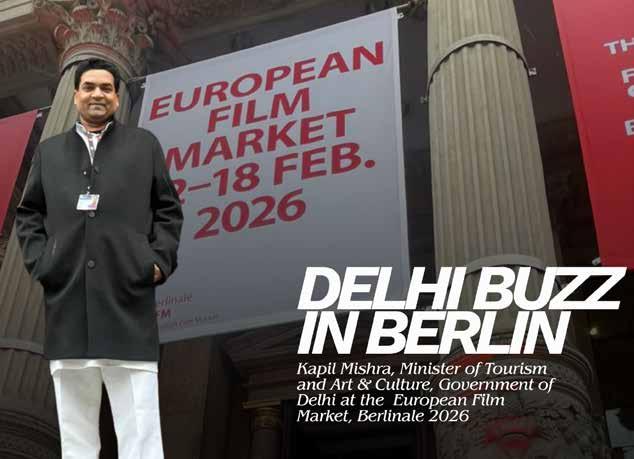
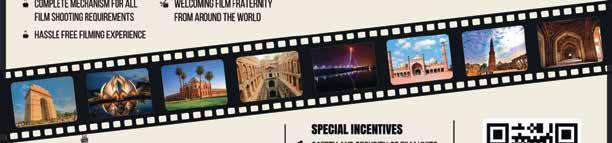
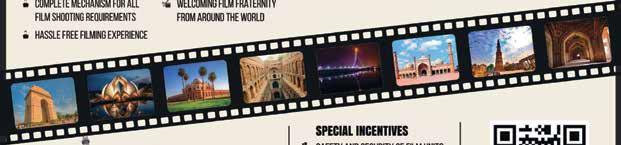
Delhi’s heritage-rich locales—ranging from historic monuments and bustling markets to verdant gardens and iconic government buildings—were showcased as “exquisite shooting locales.” The capital offers filmmakers a vibrant palette, blending Mughalera grandeur with modern urban backdrops, making it an unmatched destination for cinematic storytelling.
With a strong focus on ease-of-doingbusiness, Delhi aims to become the preferred destination for filmmakers seeking diverse locations—from iconic heritage monuments and bustling markets to contemporary convention centres and lush gardens.
“Delhi is committed to creating a film-friendly environment that matches the best in the world,” said Kapil Mishra, Minister of Tourism and Art & Culture. “We are leveraging our city’s rich history, vibrant culture, and modern infrastructure, supported by proactive policies and institutional coordination, to make Delhi a top choice for large-scale film projects.”
Delhi is also rolling out special incentives for filmmakers, including financial support through the Delhi Film Fund. These incentives are aimed at encouraging productions that highlight the city’s heritage, culture, and dynamic spirit, further cementing Delhi’s status as a worldclass film destination.
Tourism remains a major pillar in this strategy. In 2024 alone, Delhi welcomed more than 46 million domestic tourists, with tourism contributing nearly 5% to the city’s GDP. The city’s tourism leadership, represented at the Berlin event, positioned Delhi’s robust hospitality sector, accessibility, and support infrastructure as a natural fit for film tourism—a trend gaining traction worldwide.
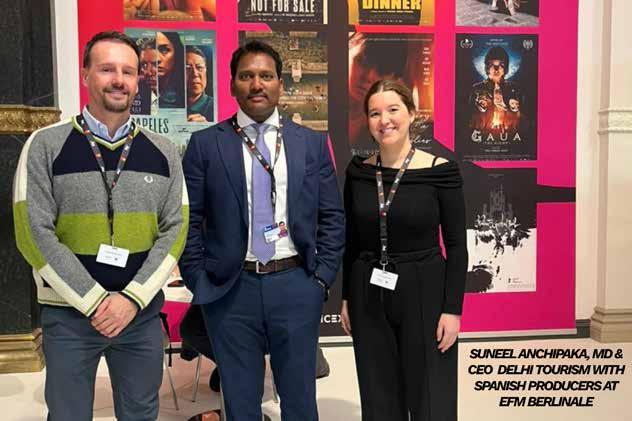
“The government’s approach is holistic—supporting not just film shoots, but the entire ecosystem that surrounds them,” said Suneel Anchipaka, Managing Director and CEO, Delhi Tourism.
“With the single-window clearance and time-bound approvals, filmmakers can spend less time on paperwork and more time creating magic on screen.”
Adding to the excitement, officials announced that the International Film Festival of Delhi will be held from March 25-31. This growing event is set to attract filmmakers, industry professionals, and audiences from around the globe, fostering cross-cultural dialogue and offering valuable exposure and networking opportunities for emerging talent.
Delhi’s presence at EFM Berlin marks a significant leap in advancing
DELHI’S PRESENCE AT EFM BERLIN MARKS A SIGNIFICANT LEAP IN ADVANCING FILM TOURISM, EXPANDING
film tourism, expanding international collaborations, and positioning India’s capital as a dynamic hub for cinema. With streamlined facilitation, spectacular locales, and a growing festival circuit, Delhi is set to script a new chapter in its cinematic journey.
THE DELHI DELEGATION, LED BY KAPIL MISHRA, MINISTER OF TOURISM AND ART & CULTURE, ALONGSIDE TOP OFFICIALS FROM DELHI TOURISM CELL SHOWCASED DELHI’S UNIQUE BLEND OF HERITAGE, CULTURE, AND MODERN INFRASTRUCTURE
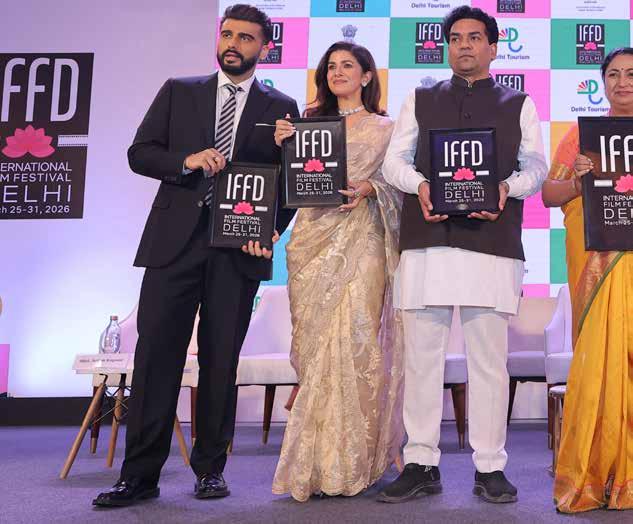
With over 2,000 entries from 100+ countries and a citywide showcase, the International Film Festival Delhi is more than a gathering—it’s the capital’s grand invitation to the world to experience its stories, culture, and creative energy firsthand
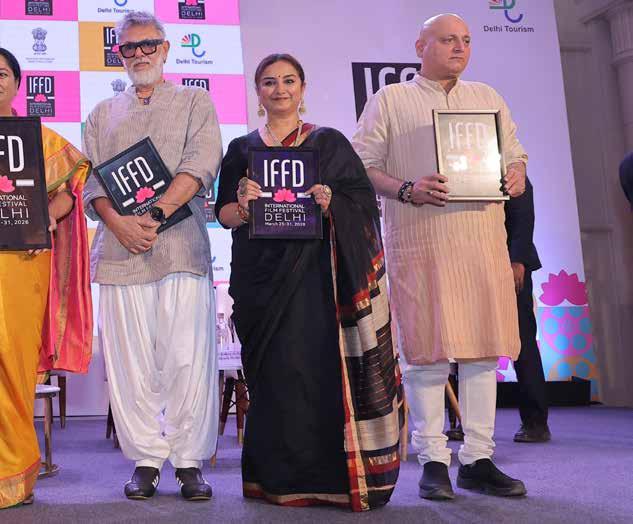
Anew cinematic era is dawning in India’s vibrant capital. This March, Delhi will host the inaugural edition of the International Film Festival Delhi (IFFD) from March 25 to 31, 2026, at the iconic Bharat Mandapam. This landmark cultural initiative by the Government of NCT of Delhi and the Delhi Tourism & Transport Development Corporation (DTTDC) is envisioned as a permanent global platform, positioning Delhi as South Asia’s gateway to world cinema.
The festival’s logo unveiling on February 25 set the tone, with Delhi Chief Minister Rekha Gupta and Tourism Minister Kapil Mishra joined by Bollywood luminaries such as Arjun Kapoor, Manoj Joshi, Rakeysh Omprakash Mehra, Divya Dutta, and Nimrat Kaur.
For Chief Minister Rekha Gupta, the festival is deeply personal. Reminiscing about her student days, she recalled the shooting of Aamir Khan’s “Sarfarosh” on Delhi University’s North Campus: “I
remember that when I was in college in 1996, a film was shot in our North Campus, ‘Sarfarosh’ with Aamir Khan and Sonali Bendre. Thousands of students gathered to watch. That feeling of joy is still within me,” said CM Gupta.
Now, the city is set for an even grander cinematic moment: “It is a matter of great joy that a grand film festival will be held in Delhi where more than a hundred countries have participated. We have received registrations for more than 2,000 movies. When these are presented across Delhi, it will be a different experience for the city. This is truly a part of the vision that respected Prime Minister Narendra Modi ji has, and with that vision, we want to make Delhi a creative capital.”
IFFD emerges at a time when global film festivals are seeking new voices, regions, and audiences. “Delhi has
all the ingredients to become a global film and cultural hub—diverse talent, world-class infrastructure, and a rich heritage,” said Tourism Minister Kapil Mishra. The festival aims to advance Delhi’s position on the international cultural map while supporting India’s creative and orange economy.
“Over 100 countries have participated in the film festival till now. Our advisory board and preview committee have already started watching the movies. It has already become the biggest film festival if the entries of movies are considered,” added Mishra.
6 Empowering the Creator Economy: IFFD provides a stage for emerging voices in cinema, theatre, animation, AI, and creative arts—offering global exposure and opportunity.
6 Showcasing World-Class Infrastructure: Delhi’s new landmarks—Bharat Mandapam, Yashobhoomi, the National War Memorial, and more—underscore its readiness for international events.
6 Making Delhi a Filmmaker’s Destination: With a robust film policy, streamlined permissions, and more than 50 filming locations, Delhi is rolling out the red carpet for global filmmakers.
IFFD is not about spectacle but substance. It is a curated, non-competitive festival, led by an advisory board of renowned filmmakers, actors, and cultural leaders such as Kabir Khan, Divya Dutta, Subhash Ghai, Vani Tripathi, and more. The programming philosophy emphasizes discovery, artistic context, and cinematic language—balancing international feature films, non-feature films, specially curated sections, retrospectives, and gala presentations.
Over 2,000 film submissions have poured in from across the globe, with 140 selected for screening—a blend of international gems, Bollywood
blockbusters, and a rich tapestry of Indian regional cinema, from Tamil and Telugu to Bengali and NorthEastern languages.
These span 221 international feature films, 147 Indian feature films, 1,151 international non-feature films, and 668 Indian non-feature films—a testament to IFFD’s broad appeal and ambition. The selection also includes documentaries, shorts, and animation, with special packages focusing on "Country in Focus," regional spotlights, retrospectives, tributes, gala premieres, and more.
The much-anticipated screening of “Dhurandhar 2” promises to be a festival highlight.
Delhi’s transformation into a cinematic global hub is rooted in strong policy support and a full-fledged tourism ecosystem.
Delhi’s evolving film policy has made it one of India’s most film-friendly cities, with streamlined permissions, fiscal incentives, and over 50 designated shooting locations. Since 2022, more than 44 film shoots have taken place here, with Bollywood productions like “12th Fail” and “Mardaani 3” availing these benefits.
According to a KPMG study, tourism now contributes 5% of Delhi’s GDP, with the city welcoming over 46 million domestic tourists and nearly 2 million foreign visitors in 2024.
The capital boasts over 150 historic
sites, 10+ famous places of worship, bustling food and market hubs, and lush green areas—making it a natural canvas for film and storytelling. Recent government interventions include:
6 Fiscal incentives and subsidies under the new AVGC-XR Policy.
6 Single-window clearance for film shoots, integrating 20+ agencies.
6 Dedicated film fund and talent development initiatives.
6 Expanded filming locations— over 44 film shoots since 2022.
Actress Nimrat Kaur, reflecting on her own Delhi journey, captured the spirit of the festival: “Delhi shaped me, from DPS Noida to Shri Ram College of Commerce and the city's endless, messy journeys on U-specials. It was there I found the stories I needed to tell. ‘The Lunchbox’ proved that the most intimate story can be the most universal; cinema carries feeling across languages to global audiences. As someone who has lived on both sides of the camera, I’m proud to be part of this festival and to champion the young storytellers of Delhi: tell your story honestly, unapologetically, and the world will listen.”
IFFD is more than just screenings at Bharat Mandapam. The festival will animate cinemas, cultural centres, and open-air venues across Delhi, embedding film culture into the city’s daily life. “Delhi as a living screening space” means multiplexes, pop-up theaters, and even university campuses will buzz with cinematic energy, democratizing access and expanding audiences.
At the heart of IFFD’s industry engagement is the Cine Xchange—a platform for collaboration among filmmakers, producers, funds, and sales agents. Its six core modules— co-production market, viewing rooms, work-in-progress labs, open pitch forums, script labs, and masterclasses—promise to spur innovation and cross-border partnerships,
with a special focus on South Asia’s creative talent.
Each year, IFFD will spotlight a partner country, curating film packages, special programs, and cultural exchanges. Embassies and institutions will play a key role, fostering dialogue between Indian and international film fraternities.
IFFD is designed as a long-term institution—government-backed, curator-led, and scalable. The vision is clear: annual continuity, global engagement, and a strong, independent South Asian cinematic presence. As Delhi gears up for this unprecedented celebration, the global film community is invited to submit films, curate sections, participate in Cine Xchange, and forge lasting collaborations.
With initiatives like IFFD, Delhi is not just hosting world cinema—it is shaping the future of global film culture, creative industries, and tourism. As the city prepares to welcome artists, storytellers, and cinephiles from across the world, IFFD stands as a testament to Delhi’s spirit: inclusive, innovative, and irresistibly cinematic.
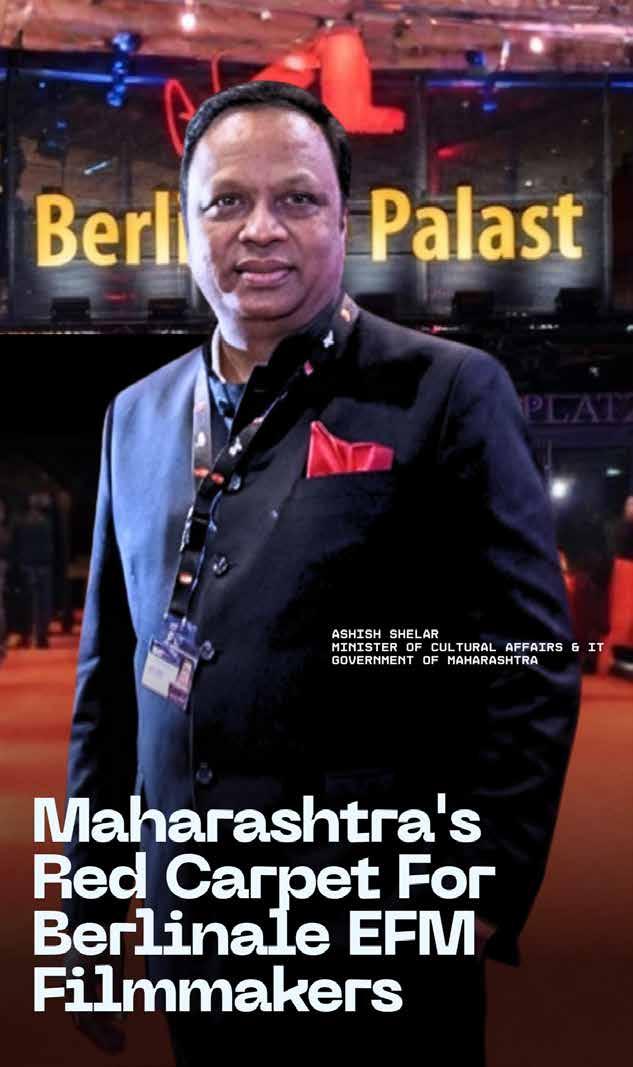
Maharashtra, home to the Bollywood and Marathi film industry, launched an aggressive campaign at the 76th Berlin International Film Festival and European Film Market to court foreign productions, promising for a “red carpet” welcome.
Ashish Shelar, the state’s Minister for Culture and IT, led the delegation at EFM to showcase the Film City in Mumbai’s Goregaon, Karjat and Kolhapur
Maharashtra Culture and IT
Minister Ashish Shelar announced new initiatives at Berlinale EFM 2026, committing to showcase Marathi films and support filmmakers in expanding their presence at Berlinale/EFM.
Maharashtra, home to the Bollywood film industry, launched an aggressive campaign at the 76th Berlin International Film Festival and European Film Market to court foreign productions, promising for a “red carpet” welcome.
Ashish Shelar, the state’s Minister for Culture and IT, led the delegation at the European Film Market (EFM), using the Bharat Pavilion as a launchpad to showcase the Film
City in Mumbai’s Goregaon, Karjat and Kolhapur. The pitch to global investors and studio executives was clear: India is open for business, and Maharashtra is its primary gateway.
“We are here to give, as uniquely stated, a red carpet, Shelar said. outlining a strategy that pivots on single-window clearances, financial subsidies, and rapid infrastructure growth. The other delegation members include Kiran Kulkarni, Culture Secretary, and Swati Mhase Patil, MD,Film City, Mumbai among others.
Infrastructure push
The minister’s pitch comes as India seeks to position itself as a
global content hub, a vision Shelar said aligns with Prime Minister Narendra Modi’s “WAVES ” initiative for the creative economy.
Shelar highlighted Maharashtra’s dual appeal of heritage and hightech modernization. He cited the state’s expanding metro network and new transport links—developed under the leadership of Chief Minister Devendra Fadnavis—as not just logistical assets but potential filming locations.
“If one has to have different locations in one place, be it a heritage structure, a new development, or a high-rise… Mumbai has it,” Shelar said. He noted that the state’s connectivity, anchored by two international airports and one near Film City, offers unrivaled access to the rest of the country.
The delegation promoted Maharashtra’s diversity of locales, ranging from the UNESCOrecognized Maratha Forts of Chhatrapati Shivaji Maharaj to the planned tech-forward expansion of Film City.
Following meetings at the World Economic Forum in Davos earlier this year where the state courted Hollywood studios, Shelar stated that Mumbai Film City will house the country’s largest campus for the Indian Institute of Creative Technologies (IICT), focusing on AVGC-XR (Animation, Visual Effects, Gaming, Comics, and Extended Reality).
Maharashtra, which topped India’s startup ecosystem in 2025, is now equipped with virtual production studios and AR/VR capabilities to match global standards.
Beyond attracting foreign productions, the state announced a strategic pivot for its regional cinema. Beginning in 2027, the government plans to subsidize and support delegations of Marathi filmmakers to attend the Berlinale, aiming to replicate the promotional success regional cinema has seen at the Cannes Film Market.
Shelar also extended an unusual offer to international producers: subsidies for foreign creators willing to produce films in the Marathi language, signaling an intent to broaden the cultural reach of the state’s native cinema.
“India, Bharat, is a land of opportunity,” Shelar said. “We have already put forward our steps to invite all the creative industries… please do come to Maharashtra.”
Maharashtra Culture and IT Minister Ashish Shelar announced new initiatives at Berlinale EFM 2026, committing to showcase Marathi films and support filmmakers in expanding their presence at Berlinale/EFM.
Maharashtra, home to the Bollywood film industry, launched an aggressive campaign at the 76th Berlin International Film Festival and European Film Market to court foreign productions, promising for a “red carpet” welcome.
Ashish Shelar, the state’s Minister for Culture and IT, led the delegation at the European Film Market (EFM), using the Bharat Pavilion as a launchpad to showcase the Film City in Mumbai’s Goregaon, Karjat and Kolhapur. The pitch to global investors and studio executives was clear: India is open for business, and Maharashtra is its primary gateway.
“We are here to give, as uniquely stated, a red carpet, Shelar said. outlining a strategy that pivots on
single-window clearances, financial subsidies, and rapid infrastructure growth. The other delegation members include Kiran Kulkarni, Culture Secretary, and Swati Mhase Patil, MD,Film City, Mumbai among others.
The minister’s pitch comes as India seeks to position itself as a global content hub, a vision Shelar said aligns with Prime Minister Narendra Modi’s “WAVES ” initiative for the creative economy.
Shelar highlighted Maharashtra’s dual appeal of heritage and hightech modernization. He cited the state’s expanding metro network and new transport links—developed under the leadership of Chief Minister Devendra Fadnavis—as not just logistical assets but potential filming locations.
“If one has to have different locations in one place, be it a heritage structure, a new development, or a high-rise… Mumbai has it,” Shelar said. He noted that the state’s connectivity, anchored by two international airports and one near Film City, offers unrivaled access to the rest of the country.
The delegation promoted Maharashtra’s diversity of locales, ranging from the UNESCOrecognized Maratha For of Chhatrapati Shivaji Maharaj to the planned tech-forward expansion of Film City.
Following meetings at the World Economic Forum in Davos earlier this year where the state courted Hollywood studios, Shelar confirmed that Film City will house the country’s largest campus for the Indian Institute of Creative Technologies (IICT), focusing on AVGC-XR (Animation, Visual Effects, Gaming, Comics, and Extended Reality).
Maharashtra, which topped India’s startup ecosystem in 2025, is now equipped with virtual production studios and AR/VR capabilities to match global standards.
Beyond attracting foreign productions, the state announced a strategic pivot for its regional cinema. Beginning in 2027, the government plans to subsidize and support delegations of Marathi filmmakers to attend the Berlinale, aiming to replicate the promotional success regional cinema has seen at the Cannes Film Market.
Shelar also extended an unusual offer to international producers: subsidies for foreign creators willing to produce films in the Marathi language, signaling an intent to broaden the cultural reach of the state’s native cinema.
“India, Bharat, is a land of opportunity,” Shelar said. “We have already put forward our steps to invite all the creative industries… please do come to Maharashtra.”
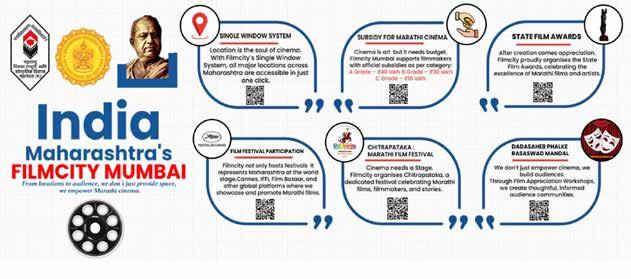
The
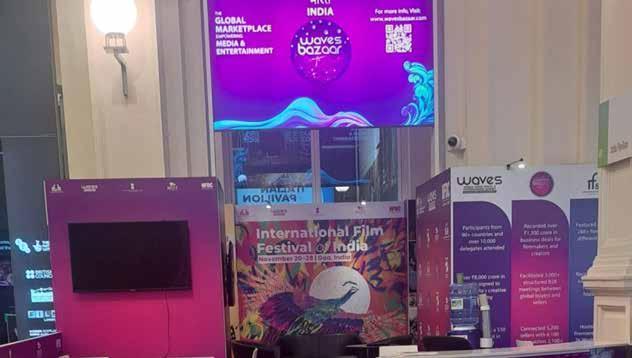
Anchored by the National Film Development Corporation (NFDC), the Bharat Pavilion—strategically positioned at the very entrance of the EFM— served as more than just a showcase; it was a launchpad. While the immediate buzz surrounded the Indian delegation in Berlin, NFDC successfully steered the market conversation toward its next major milestone: the Mumbai International Film Festival (MIFF) from 15-21 June 2026.
In a decisive move to institutionalize the festival and market for documentaries, animation, and short films, NFDC placed MIFF at the top of its Berlinale EFM agenda. Officials positioned the upcoming June festival not merely as a celebration of docs, but as South Asia’s premier market for non-feature content.
Breaking away from traditional protocols, NFDC used the Berlin platform to aggressively push for international submissions for MIFF, urging filmmakers to utilize FilmFreeway for festival entry.
The message was clear: MIFF 2026 is where the world will discover the “real” stories of the Global South. By highlighting the festival’s unique
focus on diverse, real-world narratives, NFDC effectively branded MIFF as a must-attend event for the global documentary community.
If MIFF was the destination, the WAVES Bazaar was the vehicle. NFDC’s strategy pivoted from mere representation to “handholding.” This was most visible in the curated delegation of nine filmmakers, handpicked to represent Indian storytelling beyond Bollywood.
The delegation, which became the talk of the market, included projects that spanned genres and geographies:
“Ade (On a Weekend)” by Theja Rio (Nagaland) – A tale of childhood resilience.
6 ”Echoes of the Herd” – A survival drama set in the Himalayan valleys of Himachal Pradesh.
6 ”Kabootar” by Ishan Sharma (Delhi) – A detective story blending folklore with urban reality.
6 ”Ice-Pice” by Aseem Sinha – A tender look at a child’s life inside an Indian prison.
6 ”Mr. Francis & The Last Standing PCO” by Divya Kharnare (Goa) – A magic realism narrative exploring love and loss.
6 ”Kahin Door (Still Somewhere)” – A mother’s desperate quest for her son.
6 ”THE G.O.A.T” – A hilarious animated feature inspired by real events.
6 ”White Guy” – A musical comedy about the South Asian diaspora in 1980s Birmingham.
6 ”Yeh Mera Ghar (My Home)” –An intimate exploration of migration set in Qatar.
6 NFDC facilitated targeted B2B meetings, ensuring these independent voices could navigate the complexities of international co-production and sales. Complementing them were the WAVES Startups—four winners of the “Create in India Challenge”—who pitched cutting-edge solutions in VFX and gaming, positioning India as a hub for both “content and tech”.
Reinforcing the “Film in India” mission, high-level delegations from Maharashtra and Delhi presented a united front. Maharashtra leveraged
the platform to market its mature infrastructure and single-window clearance for international shoots, while Delhi pitched its historical and political landscapes as unique filming backdrops. These state-level pushes were critical in promoting India’s co-production treaties, offering European producers concrete incentives to collaborate with Indian talent.
NFDC, as the nodal agency for India’s film promotion, played a pivotal role in curating India’s participation at EFM Berlinale. “NFDC is committed to supporting state-level film ecosystems in their global outreach, independent filmmakers and media tech start-ups” said Gautàm Bhanot, GM-Film Promotion & CEO IFFI NFDC. “Events like EFM are crucial in forging international industry linkages and showcasing MIFF, IFFI and India as a competitive, film-friendly destinatio”
While MIFF took the immediate spotlight, the roadmap extended to the end of the year. The Bharat Pavilion laid the groundwork for the International Film Festival of India (IFFI) in Goa (November 2028, 2026). By initiating conversations in Berlin, NFDC ensured a pipeline of global content and delegates for IFFI’s Film Bazaar, reinforcing the festival’s status as a key node in the international film calendar.
A key dimension of India’s participation at the EFM Innovation Hub, where four Indian tech start ‑ ups are presenting cutting ‑ edge tools and platforms that address emerging needs in immersive storytelling, digital production, and media ecosystems
India’s presence at Berlinale EFM 2026 stands out for its strong blend of storytelling excellence and innovation-led participation. A major highlight is the participation of nine Indian filmmakers, who are actively engaging with international producers, sales agents, distributors, and festival programmers. Their presence reflects India’s growing integration into global co-production networks and the rising international appetite for Indian stories across languages and genres. Through structured market meetings and project discussions, these filmmakers are exploring partnerships that extend beyond traditional film trade, into cross-border collaboration and long-term creative alliances.
Equally significant is the participation of a delegation of four emerging start-ups representing India’s rapidly expanding media-tech and creative-tech sectors. These companies bring forward solutions that intersect storytelling, technology, and digital production, demonstrating how India’s creative economy is
increasingly being shaped by innovation. Their presence at EFM signals India’s transition from being seen solely as a major content-producing nation to being recognized as a hub for technological advancement in the global entertainment ecosystem.
The delegation also includes two winners of the Create in India Challenge (CIC), spotlighting breakthrough ideas and young creative entrepreneurs whose work embodies the spirit of innovation-driven storytelling.
Their participation highlights the country’s emphasis on nurturing new talent and providing global exposure to emerging voices. A cultural delegation from Maharashtra is also present, showcasing the state’s commitment to supporting filmmakers through favorable policies, funding options, and an array of resources for film productions, while reinforcing Maharashtra’s position as a major player on the global film map. Delhi’s delegation is here to promote the Delhi International
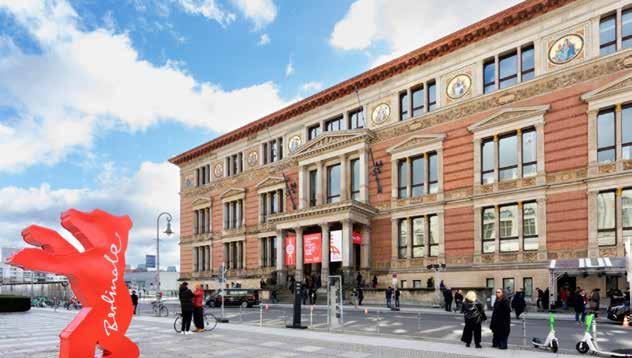
Film Festival, highlight special filming incentives and clearance processes, and showcase the city’s exquisite shooting locations to a global audience.
During interactions at the Pavilion, NFDC management also spoke about India’s upcoming flagship festivals, including the Mumbai International Film Festival (MIFF) 2026, scheduled for June 2026, and the International Film Festival of India (IFFI), held annually from 20th to 28th November. These festivals were positioned as key global platforms for cinematic exchange, co-production, and market engagement, inviting greater international participation and collaboration.
Organized by NFDC, the Bharat Pavilion serves as a dynamic meeting point for the international industry. Throughout the market, the Pavilion is hosting business meetings, co-production discussions, networking interactions, and industry dialogues, while also promoting India as a compelling filming destination and collaborative content partner. It acts as a central space where filmmakers, producers, technology innovators, cultural representatives, and global stakeholders converge to explore partnerships.
A key dimension of India’s participation this year is its presence at the EFM Innovation Hub, where four Indian tech start-ups are presenting cutting-edge tools and platforms that address emerging needs in immersive storytelling, digital production, and media ecosystems. Their engagement highlights India’s growing footprint in the AVGC-XR and creative innovation space, demonstrating how technological entrepreneurship is becoming integral to the future of storytelling. This reflects a broader national focus on supporting start-ups and fostering innovation across the creative industries.
India’s structured and forwardlooking participation at EFM 2026 reflects a clear strategic vision to position the country as a global leader not only in content creation but also in creative entrepreneurship, cultural exchange, and innovationdriven growth. By bringing together filmmakers, start-ups, cultural institutions, and international industry leaders, the Bharat Pavilion stands as a symbol of India’s expanding engagement with the global film and media landscape. As EFM continues, the Bharat Pavilion remains a vibrant hub of activity, dialogue, and collaboration, strengthening India’s connections with the international film community and reinforcing its role in shaping the future of global entertainment.
‑ time
By Natarajan Vidyasagar
Director R Gowtham’s debut feature “Members of the Problematic Family” has captivated audiences at the prestigious Berlinale Forum section, marking a significant milestone for Tamil independent cinema. The 105-minute film represents not just the arrival of a promising new director, but the debut production of Labyrinth Narratives, with producer Tamilarasan Kalidass backing his childhood friend’s uncompromising vision.
“This is not only about a debut director, but also about a debut producer who believed in the film,” Gowtham emphasized during an interview with Pickle in Berlin, his first-ever visit to Europe. The significance runs deeper—this is the first Tamil film from a debutant director to be selected for the Berlinale Forum,
following earlier Tamil entries like Alai Payuthey, Paruthiveeran, and the recent Kottukali.
While Gowtham received hospitality from Berlinale for his stay as the director, bringing his crew of six to Berlin required considerable financial effort. The team had to raise funds independently to ensure the producer, executive producer, cinematographer, editor, sound designer, and lead actor Prabha Ajit Kumar could attend the premiere. “I promised to bring the crew to the festival if selected,” Gowtham recalls.
The struggle to maintain half-adozen crew members in Berlin for ten days exposes a glaring gap in

how we support our filmmakers. These young artists represent Indian cinema at one of the world’s most prestigious film festivals, yet they must scramble for resources to even be present at their own triumph. However, It has to be greatly appreciated that the Ministry of Information & Broadcasting has approved Rs 10 lakh for Berlinale Forum Films and Gowtham’s crew must be relieved by this gesture.
What sets this production apart is the remarkable history shared by its core team. Gowtham and his crew represent friendships forged over decades, with many having studied together since elementary school. “We are all childhood buddies. We studied together from second standard… from sixth standard onwards, everybody is connected,” Gowtham explained, describing how they are all connected from schooldays. The producer himself is a long-time schoolmate, while the executive producer Kani is Gowtham’s cousin.
The director proudly describes his team as “a kind of problematic crew”—young, technically accomplished professionals from premier film institutes. The cinematographer Siddharth Kathir trained at SRFTI, while editor and sound designer Ganesh Nandhakumar studied at
FTII, Pune. Ganesh’s versatility is remarkable—he handled sound recording, editing, sound design, and even poster design for the film. Gowtham, a self-described “no film school guy,” brings a different credential to the table: he is a published poet in Tamil, with his collection titled ‘Maarvalayangal’ (Aerola).
Gowtham’s background as a poet profoundly shapes his approach to filmmaking. Influenced by master filmmakers Shaji N Karun and G Aravindan, as well as innumerable poets, Gowtham has developed a distinctive cinematic voice. “I won’t give any reference as a movie. I will give reference on poetry or for mood paintings,” he explains, emphasizing his commitment to originality in form rather than imitating other films. This poetic sensibility translates into a cinema focused on emotions and mood rather than conventional narrative structures.
The influence of Aravindan is particularly evident, with Gowtham citing how “Thampu’s introduction scene is somewhat similar to our opening”. The Potato Eaters Collective maintain restored versions of Aravindan’s films on their YouTube channel, which the team watches together. This deep engagement with cinematic masters, combined with
his immersion in Tamil poetry and literature, gives Gowtham’s work a unique layered quality.
Despite his literary pedigree and previous work heading content at Zee Tamil and working on director PS Vinothraj’s “Kottukali,” Gowtham and his team remain grounded. “We have already started shooting weddings and birthday events, so we will survive somehow,” he says matter-offactly, finding artistic value even in commercial work. “There is a mood and emotion in a wedding film,” he adds, revealing how he perceives storytelling potential in unexpected places.
His philosophy of cinema is deliberately provocative: “You watch the film and you don’t sleep. But I wanted to watch the film and you don’t get sleep and you have to go smoke or go somewhere else”. For Gowtham, cinema should disturb, provoke thought, and linger in the viewer’s consciousness long after the credits roll. This stands in stark contrast to streaming content where “you watch a film in half-sleep or sleep happily after watching a film” That’s what a film is to Gowtham.
Gowtham is passionate about changing how Indian regional cinemas are perceived globally. “Putting us in South Asia—India, Pakistan, Bangladesh, Sri Lanka—and there is Maharashtra, Mumbai, Kerala, we are all producing beautiful films. There is Marathi, Bengal, but putting them together in South Asia is an injustice,” he argued forcefully.
”We are equivalent to France, I would say,” Gowtham asserts, advocating for individual recognition for Tamil, Malayalam, Bengali, Hindi, Telugu, and Kannada cinemas—similar to how European national cinemas are treated distinctly by festival selectors globally. “We wanted individual Tamil pavilion presentation here at Berlin. We are competing with my brothers—some Bengali and Marathi film both are good and they were able to choose one right?”.
This perspective challenges the homogenization of Indian cinema under broad regional categories, arguing that each language cinema has its distinct aesthetic, cultural context,
Acclaimed filmmaker Rima Das has received a special jury mention at the Berlin International Film Festival for her latest film, Not A Hero, which premiered in the Generation Kplus Competition. This marks her third Berlinale screening and second special mention after Bulbul Can Sing in 2019.
Rima Das, known for her indie, Assamese-language stories, first broke out with her 2017 film Village Rockstars, which was India’s official Oscar entry and won the National Award for Best Film. Made on a modest budget of Rs 10 lakh, Village Rockstars earned Rs 1 crore in Assam alone, becoming the region’s highest-grossing film.
Rima continues her festival success with Not A Hero, a coming-of-age tale about a boy’s adventures in his ancestral village. Despite the critical acclaim of her films, Rima acknowledges the challenges of independent filmmaking and distribution, noting, “Making is not enough. How you’re promoting and marketing the film also matters... I just want to tell stories.”
Not A Hero stars Sukanya Boruah, Bhuman Bhargav Das, and Mrinmoy Das, and is poised to extend Rima Das’ reputation as a powerful voice in Indian and world cinema.

and cinematic traditions that deserve separate recognition on the world stage.
“Members of the Problematic Family” follows the aftermath of Prabha’s mysterious death, as his widowed mother Santhi, paternal uncle Sellam, and extended family navigate a 16-day funeral ritual. The raw, unflinching narrative weaves through a dozen characters, examining how grief manifests in unexpected moments and objects, embracing human nature with all its “mad outpourings, sordid habits, abusive love, misplaced pride and casual cruelty”.
With an anthropologist’s eye, Gowtham traces the complexities of bereavement, creating what the press materials describe as “a work of deep and uncompromising humanism”.
The producer’s immediate goal is pragmatic: recoup the investment to fund future films they believe in. “When we recover, that’s the plan, we will do another thing,” says Gowtham. Yet there’s also palpable anxiety about maintaining relevance in an unforgiving independent film landscape where “the first film has to be bigger”.
”The most important thing I am
telling people is that it’s not about me debuting. It’s about our company Labyrinth Narratives,” Gowtham emphasizes, highlighting how this Berlin selection validates not just him but the entire production house’s vision. The producer worked with meticulous professionalism, releasing funds before the 10th of each month for two and a half years, maintaining clear boundaries between friendship and business.
Still, having attended only one film festival before—MAMI in 2015, when his mentor Bramma’s “Kutram Kadithal” screened—Gowtham’s arrival at Berlinale represents a vow fulfilled: to attend festivals only with his own film. “I had a vow that we have to go to the festival only with the movie,” he recalls.
For this crew of childhood friends turned filmmaking collaborators, the future is bright, even as they acknowledge the pressures ahead. One hopes that “Members of the Problematic Family” finds acquisition deals, travels to more festivals, and eventually receives a theatrical release in India, allowing local audiences to experience the film that has captured Berlin’s attention. As Gowtham and his team navigate Berlinale and the European Film Market, they carry with them not just a film, but the collective dreams of a generation of independent Tamil filmmakers seeking to contribute to world cinema’s evolving form.
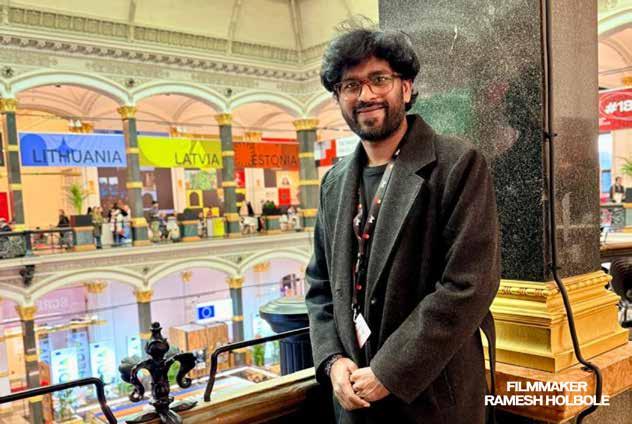
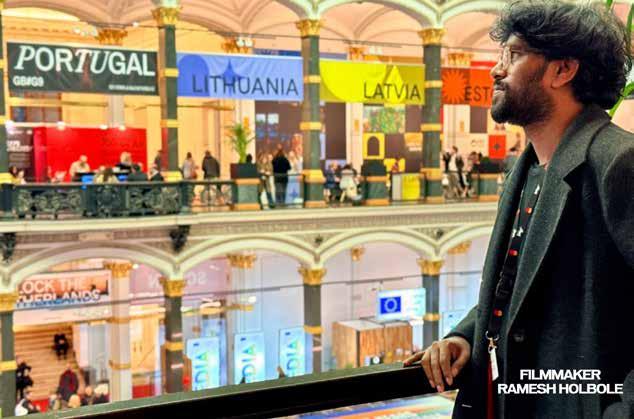
Ramesh Holbole’s, the 40 ‑ year‑ old Dalit filmmaker is on the cusp of history, helming This Side of Paradise, the first ‑ ever Indo ‑ German co ‑ production in the Marathi language. Here’s a discovery of the new voice of Indian cinema at Berlinale
Here’s a discovery of the new voice of Indian cinema at Berlinale. From the tinroofed shanties of Nanded to the pristine studios of Stuttgart, filmmaker Ramesh Holbole’s journey is a cinematic script in itself—one written with the ink of resilience and directed by an unwavering stubbornness to be heard.
Currently based in Germany, the 40-year-old Dalit filmmaker is on the cusp of history, helming This Side of Paradise, the first-ever Indo-German co-production in the Marathi language. While his location has changed, his lens remains fixed on the world he left behind: the invisible struggles of India’s working class.
The Long Road from Nanded
Ramesh Holbole’s story begins in a “tin-shed” home in Nanded, Maharashtra, where the sounds of heavy rain meant fear of destruction rather than romance. The son of a construction labourer, Lakshman Rao, Ramesh grew up surrounded by the harsh realities of physical labour and systemic neglect.
“I saw neighbours with concrete homes and wondered why we were like this,” Ramesh recalls. “Why was our destiny only hard physical work?”
His journey out of Nanded was paved by an education that came at a heavy price. He is the first graduate in his
family, a milestone achieved despite crushing financial constraints. With five sons to raise on daily wages, English schooling—and its higher fees—was out of reach. Ramesh studied entirely in the Marathi medium until his post-graduation, a linguistic divide that would haunt him later.
As a post-graduate student of Marathi literature at Pune’s prestigious Fergusson College (2007-2009), Ramesh Holbole initially found himself silenced by the city’s cultural gatekeeping. Alienated by his rural dialect and lack of “fashionable” clothes, he retreated into the college library for two years, reading voraciously to “get rid of this baggage” of inferiority. It was a silent incubation period that would eventually birth his unique voice.
The turning point came not in a classroom, but in a dark theatre at the Pune International Film Festival (PIFF). Long before he ever boarded a plane, Ramesh travelled to Europe through the screen.
“I travelled Europe without coming here… with the films,” he muses. “I was just seeing the pictures… I have seen already the Helsinki.”
It was at PIFF that he stumbled into a screening of The Man Without a Past by Finnish auteur Aki Kaurismäki. The theatre was nearly empty— most attendees had flocked to more commercial fare—but Holbole sat riveted.
“That film broke all my barriers,” he says. Seeing a story centered on garbage collectors, waiters, and the unemployed—treated with dignity and deadpan humor—was a revelation. He realized that the “superior” cinema he feared didn’t require stars or spectacle; it required truth. “I realized you don’t need a star. You can make films about people like us—the people society neglects.” He walked out of that empty theatre wiser, armed with the knowledge that his reality was worthy of the screen.
Inspired, he set his sights on the Film and Television Institute of India (FTII). It was a siege rather than an entry; Ramesh Holbole knocked on FTII’s doors for seven years, failing
four times before finally cracking the entrance exam on his fifth attempt in 2016.
Today, Ramesh Holbole navigates a surreal dual existence. In Stuttgart, he walks the halls of the Filmakademie Baden-Württemberg, where he completed his studies in the International Class program. It was here that he forged the partnerships for This Side of Paradise.
The film, produced by his own Volksfilms India and the German production house Lightning & Thunder and Film Crew Media, is a semi-autobiographical account of rural youth migrating to metropolitan slums. It explores the gritty
“hustle” of Mumbai life—labor exploitation, wage inequality, and the dehumanizing grind of the city.
The project is moving swiftly toward reality. Ramesh Holbole confirms that casting and location scouting are complete, with the team now finalizing permissions. The shoot is scheduled to begin in mid-May, specifically timed to capture the ferocious Mumbai monsoon. “Because in the Mumbai film there is a lots of monsoon… to show the real different city life,” he explains.
The project has attracted heavyweight support but not yet fully completed. Payal Kapadia, the Cannes Grand Prix-winning director and his senior from FTII, has stepped in as an Executive Producer, lending her global acclaim to amplify his voice.
The film features an Indian cast and editor, backed by a German technical crew handling color, sound, and music—a true cross-cultural synthesis.
Despite the international prestige, Ramesh Holbole remains grounded in a precarious reality. He speaks candidly about his “midlife crisis”— at 40, he has no house, no savings, and no insurance, a stark contrast to the stable lives of his peers.
“I am in a midlife crisis with no money, but I still follow my passion.
He credits his father, Lakshman Rao, for making this impossible journey possible. “He didn’t know what I was doing, but he gave me the freedom. Without him, I would still be a labourer in Nanded.”
Ramesh Holbole places himself proudly in the lineage of Dalit filmmakers like Pa. Ranjith, Mari Selvaraj, and his mentor Nagraj
Manjule. But for Ramesh, the ultimate architect of this possibility is Dr. B.R. Ambedkar.
“There is a like inspiration is Dr. Babasaheb Ambedkar,” he says with reverence. “He is the role model to open the whole life for us. Without him, we are nothing.”
For him, cinema is not just entertainment; it is an assertion of identity and a moral responsibility. “We have come from nothing,” he says. “Now that we have education and a voice, we want to show our identity to the world.”
Looking beyond his own debut, Ramesh Holbole is determined to build an alumni community for Dalit filmmakers—a network to support those whose stories are “close to reality” but who lack the privilege to tell them. As he prepares to shoot in the Mumbai monsoons, capturing the very rain that once terrified him as a child, Ramesh Holbole is no longer just watching the world from a tin shed. He is building a new one, frame by frame, where stories like his are finally the main attraction.
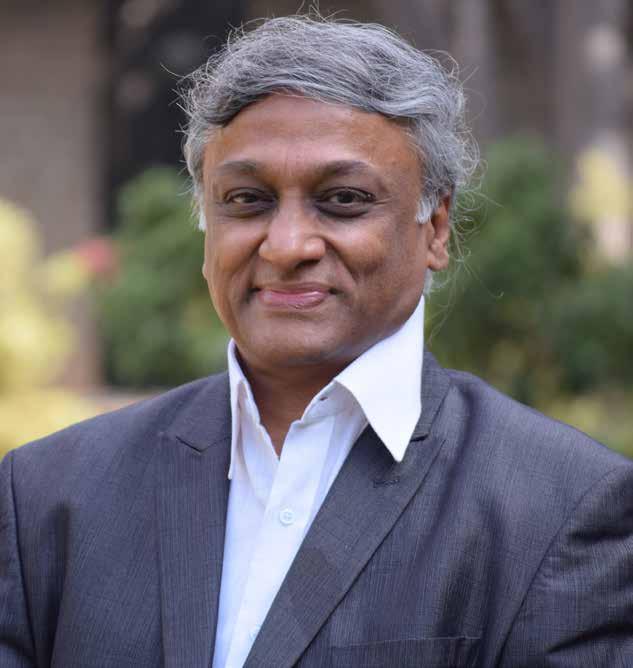
Authentic Indian storytelling, rooted in cultural depth and crafted with global standards, is key to scaling the M&E industry. By nurturing talent, production, and export strategies, India can transform local narratives into global cinematic powerhouses.
By Dr S. Raghunath
Film theory increasingly recognizes a paradox that is about how the more culturally grounded a story is, the more emotionally universal it becomes. I would like to allude to the work of anthropologist Clifford Geertz’s concept of “thick description,” which suggests that detailed cultural context invites empathy rather than alienation. Audiences decode meaning through recognizable human experiences such as longing, ambition, injustice, and love, even when expressed in unfamiliar settings.
Platforms report that subtitled, culturally dense series often retain high completion rates because emotional stakes override linguistic barriers. The success of Indian regional dramas such as Heeramandi, The Family Man, Dabba Cartel, Gullak, Patal Lok, Delhi Crime, and Maamla Legal Hai on global streaming charts illustrates how subtitles have transformed language barriers into a cultureinforming bridge for international audiences.
Contrary to early fears of cultural flattening, streaming platforms increasingly reward distinctive storytelling. Recommendation systems favor content that generates high engagement and word-of-mouth, traits often linked to novelty and specificity. Indian content that performs globally tends to exhibit strong narrative identity, clear cultural texture, and emotional stakes that encourage sharing.
A Tamil or Malayalam crime thriller with regional authenticity, such as Officer on Duty, Kishkindha Kaandam, Psycho, or Anjaam Pathira, becomes algorithmically visible precisely because it differs from dominant western templates. Distinctiveness turns into discoverability. Indian storytelling offers social complexity, moral ambiguity, and a hybrid of the modern-traditional worlds. These elements align with global audience curiosity about rapidly changing societies.
International co-productions increasingly value cultural authenticity as creative currency. For example, an Indo-European co-production retains an Indian narrative perspective while accessing international financing, post-production resources, and festival circuits. The result is a film that travels without cultural censor. This reflects cultural theorist Homi Bhabha’s idea of the “third space” representing creative hybridity where local identity engages global frameworks without losing integrity.
What is the way forward with scaling? Authentic storytelling requires creators who are culturally fluent and institutionally supported. Talent incubators, script
labs, and festival mentorship programs build what scholars call narrative confidence, the ability to tell culturally specific stories without external validation.
Writers’ rooms trained to prioritize lived experience over imitation produce stories that deeply resonate. This authenticity fuels both domestic loyalty and international intrigue. The strategic implication is that authenticity should not be treated as a niche segment but as a core export philosophy. Coordinated investment in talent incubation, festival pipelines, co-production frameworks, platform partnerships, and data-informed commissioning can transform episodic international success into sustained cultural presence. India’s opportunity is not merely to export films but to cultivate global narrative ecosystems where Indian creators consistently contribute to world cinema discourse.
Global scale emerges when a creative ecosystem deliberately builds authentic talent that drives culturally confident production through strategically designed export pathways. This is not accidental success. It is a carefully crafted pipeline.
We can structure the global scaling playbook in three integrated layers, each feeding the next.
The objective of this layer is to develop creators who trust their cultural voice and possess the craft to make it intelligible globally. This layer determines whether identity becomes an asset or source of insecurity. Most talent programs teach craft. Few teach cultural authorship. The intent should be to develop “Writers’ Rooms Focused on Lived Reality.” Train writers to mine regional social experience in family structures, labor realities, moral dilemmas, and urban/rural transitions. Encourage multilingual storytelling, and promote the view that dialect is texture, not a barrier.
Regional OTT hits emerged from writers deeply embedded in local contexts rather than imported templates. Develop “Cultural Story Labs,” which offer fellowship programs pairing creators with historians and sociologists with linguists.
Build “thick description” capacity that is storytelling grounded in social reality. The outcome will be narratives that travel because they feel lived-in, not fabricated. Offer showrunner & creative leadership training. Teach narrative architecture, pacing, and platform literacy. Focus on how to make local stories globally understood without dilution. The talent incentive must be designed to reward originality, not imitation. Offer development grants for regionally anchored scripts. Offer festival lab scholarships and mentorship pipelines with internationally exposed creators.
The objective is to transform culturally grounded scripts into globally competitive productions. This is where identity meets craft infrastructure. The production design philosophy is for global audiences to accept unfamiliar worlds. Invest in cinematography, sound design, and editing parity with global benchmarks. Authentic storytelling does not mean license to nurture low technical ambition. Focus on cultural production design. location authenticity, costume realism, language integrity, and socio-spatial accuracy. These increase immersion and emotional credibility.
Use co-production architecture and use it to scale. Maintain narrative authority in Indian hands. Utilize partners for financing post-production distribution access and festival strategy. Identity must remain local as scale becomes global. Treat platforms as ecosystem partners. Create joint development pipelines for culturally rich narratives. Platforms amplify stories that show strong engagement signals. Track production metrics such as completion rates, cross-market performance, critical reception, festival circulation, and social discourse intensity. This data can inform future commissioning.
Identity does not scale automatically; it must be curated into global circuits. The festival strategy offers market entry. Festivals are cultural translators. Dedicated festival campaign units, international PR narratives, and critic engagement are significant steps. A festival premiere reframes Indian storytelling within global discourse.
We must recognize that diaspora and curiosity markets are two separate audience engines. Diaspora consists of early adopters and amplifiers. Curiosity audiences seek distinctive global narratives. Design marketing to bridge both. Improve subtitling & localization excellence by supporting culturally intelligent subtitling, tone preservation, and rhythm-sensitive dialogue adaptation. We must be aware that poor localization might undermine emotional impact.
When the ecosystem deliberately builds talent confidence, production excellence, and export intelligence, authenticity becomes not a niche aesthetic but a scalable industry engine. That is how fascination turbocharges global presence.





















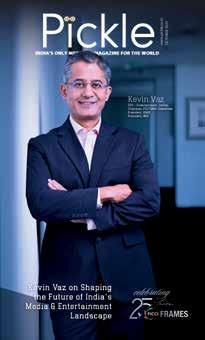

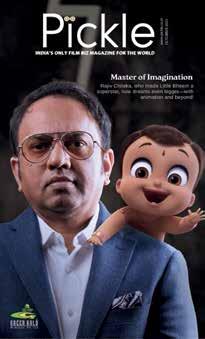
Pickle


Email : pickle@pickle.co.in
Web: www.pickle.co.in










DELHI TOURISM & TRANSPORTATION DEVELOPMENT CORPORATION LTD.
DELHI TOURISM & TRANSPORTATION DEVELOPMENT CORPORATION LTD.
Add: 18-A, D.D.A.SCO Complex, Defence Colony, New Delhi - 24 | Ph.: +91-11-24647005, 24698431, 24618026
DELHI TOURISM & TRANSPORTATION DEVELOPMENT CORPORATION LTD.
Add: 18-A, D.D.A.SCO Complex, Defence Colony, New Delhi - 24 | Ph.: +91-11-24647005, 24698431, 24618026
Email: | Website: www.delhitourism.gov.in delhifilm.policy@delhi.gov.in
DELHI TOURISM & TRANSPORTATION DEVELOPMENT CORPORATION LTD.
Add: 18-A, D.D.A.SCO Complex, Defence Colony, New Delhi - 24 | Ph.: +91-11-24647005, 24698431, 24618026
DELHI TOURISM & TRANSPORTATION DEVELOPMENT CORPORATION LTD.
Email:
| Website: www.delhitourism.gov.in delhifilm.policy@delhi.gov.in
Add: 18-A, D.D.A.SCO Complex, Defence Colony, New Delhi - 24 | Ph.: +91-11-24647005, 24698431, 24618026
Email:
www.delhitourism.gov.in
Add: 18-A, D.D.A.SCO Complex, Defence Colony, New Delhi - 24 | Ph.: +91-11-24647005, 24698431, 24618026
www.delhitourism.gov.in
www.delhitourism.gov.in
www.delhitourism.gov.in
www.delhitourism.gov.in
| Website: www.delhitourism.gov.in delhifilm.policy@delhi.gov.in
Email: | Website: www.delhitourism.gov.in delhifilm.policy@delhi.gov.in
Email: | Website: www.delhitourism.gov.in delhifilm.policy@delhi.gov.in